window.__IS_SSR__=true
window.__INITIAL_STATE__={
"attachmentsReducer": {
"audio_0": {
"type": "attachments",
"id": "audio_0",
"imgSizes": {
"kqedFullSize": {
"file": "https://ww2.kqed.org/news/wp-content/themes/KQED-unified/img/audio_bgs/background0.jpg"
}
}
},
"audio_1": {
"type": "attachments",
"id": "audio_1",
"imgSizes": {
"kqedFullSize": {
"file": "https://ww2.kqed.org/news/wp-content/themes/KQED-unified/img/audio_bgs/background1.jpg"
}
}
},
"audio_2": {
"type": "attachments",
"id": "audio_2",
"imgSizes": {
"kqedFullSize": {
"file": "https://ww2.kqed.org/news/wp-content/themes/KQED-unified/img/audio_bgs/background2.jpg"
}
}
},
"audio_3": {
"type": "attachments",
"id": "audio_3",
"imgSizes": {
"kqedFullSize": {
"file": "https://ww2.kqed.org/news/wp-content/themes/KQED-unified/img/audio_bgs/background3.jpg"
}
}
},
"audio_4": {
"type": "attachments",
"id": "audio_4",
"imgSizes": {
"kqedFullSize": {
"file": "https://ww2.kqed.org/news/wp-content/themes/KQED-unified/img/audio_bgs/background4.jpg"
}
}
},
"placeholder": {
"type": "attachments",
"id": "placeholder",
"imgSizes": {
"thumbnail": {
"file": "https://cdn.kqed.org/wp-content/uploads/2024/12/KQED-Default-Image-816638274-2000x1333-1-160x107.jpg",
"width": 160,
"height": 107,
"mimeType": "image/jpeg"
},
"medium": {
"file": "https://cdn.kqed.org/wp-content/uploads/2024/12/KQED-Default-Image-816638274-2000x1333-1-800x533.jpg",
"width": 800,
"height": 533,
"mimeType": "image/jpeg"
},
"medium_large": {
"file": "https://cdn.kqed.org/wp-content/uploads/2024/12/KQED-Default-Image-816638274-2000x1333-1-768x512.jpg",
"width": 768,
"height": 512,
"mimeType": "image/jpeg"
},
"large": {
"file": "https://cdn.kqed.org/wp-content/uploads/2024/12/KQED-Default-Image-816638274-2000x1333-1-1020x680.jpg",
"width": 1020,
"height": 680,
"mimeType": "image/jpeg"
},
"1536x1536": {
"file": "https://cdn.kqed.org/wp-content/uploads/2024/12/KQED-Default-Image-816638274-2000x1333-1-1536x1024.jpg",
"width": 1536,
"height": 1024,
"mimeType": "image/jpeg"
},
"fd-lrg": {
"file": "https://cdn.kqed.org/wp-content/uploads/2024/12/KQED-Default-Image-816638274-2000x1333-1-1536x1024.jpg",
"width": 1536,
"height": 1024,
"mimeType": "image/jpeg"
},
"fd-med": {
"file": "https://cdn.kqed.org/wp-content/uploads/2024/12/KQED-Default-Image-816638274-2000x1333-1-1020x680.jpg",
"width": 1020,
"height": 680,
"mimeType": "image/jpeg"
},
"fd-sm": {
"file": "https://cdn.kqed.org/wp-content/uploads/2024/12/KQED-Default-Image-816638274-2000x1333-1-800x533.jpg",
"width": 800,
"height": 533,
"mimeType": "image/jpeg"
},
"post-thumbnail": {
"file": "https://cdn.kqed.org/wp-content/uploads/2024/12/KQED-Default-Image-816638274-2000x1333-1-672x372.jpg",
"width": 672,
"height": 372,
"mimeType": "image/jpeg"
},
"twentyfourteen-full-width": {
"file": "https://cdn.kqed.org/wp-content/uploads/2024/12/KQED-Default-Image-816638274-2000x1333-1-1038x576.jpg",
"width": 1038,
"height": 576,
"mimeType": "image/jpeg"
},
"xxsmall": {
"file": "https://cdn.kqed.org/wp-content/uploads/2024/12/KQED-Default-Image-816638274-2000x1333-1-160x107.jpg",
"width": 160,
"height": 107,
"mimeType": "image/jpeg"
},
"xsmall": {
"file": "https://cdn.kqed.org/wp-content/uploads/2024/12/KQED-Default-Image-816638274-2000x1333-1-672x372.jpg",
"width": 672,
"height": 372,
"mimeType": "image/jpeg"
},
"small": {
"file": "https://cdn.kqed.org/wp-content/uploads/2024/12/KQED-Default-Image-816638274-2000x1333-1-672x372.jpg",
"width": 672,
"height": 372,
"mimeType": "image/jpeg"
},
"xlarge": {
"file": "https://cdn.kqed.org/wp-content/uploads/2024/12/KQED-Default-Image-816638274-2000x1333-1-1020x680.jpg",
"width": 1020,
"height": 680,
"mimeType": "image/jpeg"
},
"full-width": {
"file": "https://cdn.kqed.org/wp-content/uploads/2024/12/KQED-Default-Image-816638274-2000x1333-1-1920x1280.jpg",
"width": 1920,
"height": 1280,
"mimeType": "image/jpeg"
},
"guest-author-32": {
"file": "https://cdn.kqed.org/wp-content/uploads/2025/01/KQED-Default-Image-816638274-1333x1333-1-160x160.jpg",
"width": 32,
"height": 32,
"mimeType": "image/jpeg"
},
"guest-author-50": {
"file": "https://cdn.kqed.org/wp-content/uploads/2025/01/KQED-Default-Image-816638274-1333x1333-1-160x160.jpg",
"width": 50,
"height": 50,
"mimeType": "image/jpeg"
},
"guest-author-64": {
"file": "https://cdn.kqed.org/wp-content/uploads/2025/01/KQED-Default-Image-816638274-1333x1333-1-160x160.jpg",
"width": 64,
"height": 64,
"mimeType": "image/jpeg"
},
"guest-author-96": {
"file": "https://cdn.kqed.org/wp-content/uploads/2025/01/KQED-Default-Image-816638274-1333x1333-1-160x160.jpg",
"width": 96,
"height": 96,
"mimeType": "image/jpeg"
},
"guest-author-128": {
"file": "https://cdn.kqed.org/wp-content/uploads/2025/01/KQED-Default-Image-816638274-1333x1333-1-160x160.jpg",
"width": 128,
"height": 128,
"mimeType": "image/jpeg"
},
"detail": {
"file": "https://cdn.kqed.org/wp-content/uploads/2025/01/KQED-Default-Image-816638274-1333x1333-1-160x160.jpg",
"width": 160,
"height": 160,
"mimeType": "image/jpeg"
},
"kqedFullSize": {
"file": "https://cdn.kqed.org/wp-content/uploads/2024/12/KQED-Default-Image-816638274-2000x1333-1.jpg",
"width": 2000,
"height": 1333
}
}
},
"stateofhealth_362757": {
"type": "attachments",
"id": "stateofhealth_362757",
"meta": {
"index": "attachments_1716263798",
"site": "stateofhealth",
"id": "362757",
"found": true
},
"parent": 362754,
"imgSizes": {
"small": {
"file": "https://ww2.kqed.org/app/uploads/sites/27/2018/02/Getty-Joint-smoke-520x363.jpg",
"width": 520,
"mimeType": "image/jpeg",
"height": 363
},
"twentyfourteen-full-width": {
"file": "https://ww2.kqed.org/app/uploads/sites/27/2018/02/Getty-Joint-smoke-1024x576.jpg",
"width": 1024,
"mimeType": "image/jpeg",
"height": 576
},
"thumbnail": {
"file": "https://ww2.kqed.org/app/uploads/sites/27/2018/02/Getty-Joint-smoke-160x112.jpg",
"width": 160,
"mimeType": "image/jpeg",
"height": 112
},
"fd-sm": {
"file": "https://ww2.kqed.org/app/uploads/sites/27/2018/02/Getty-Joint-smoke-960x669.jpg",
"width": 960,
"mimeType": "image/jpeg",
"height": 669
},
"post-thumbnail": {
"file": "https://ww2.kqed.org/app/uploads/sites/27/2018/02/Getty-Joint-smoke-672x372.jpg",
"width": 672,
"mimeType": "image/jpeg",
"height": 372
},
"xsmall": {
"file": "https://ww2.kqed.org/app/uploads/sites/27/2018/02/Getty-Joint-smoke-375x261.jpg",
"width": 375,
"mimeType": "image/jpeg",
"height": 261
},
"kqedFullSize": {
"file": "https://ww2.kqed.org/app/uploads/sites/27/2018/02/Getty-Joint-smoke.jpg",
"width": 1024,
"height": 714
},
"large": {
"file": "https://ww2.kqed.org/app/uploads/sites/27/2018/02/Getty-Joint-smoke-1020x711.jpg",
"width": 1020,
"mimeType": "image/jpeg",
"height": 711
},
"guest-author-50": {
"file": "https://ww2.kqed.org/app/uploads/sites/27/2018/02/Getty-Joint-smoke-50x50.jpg",
"width": 50,
"mimeType": "image/jpeg",
"height": 50
},
"guest-author-96": {
"file": "https://ww2.kqed.org/app/uploads/sites/27/2018/02/Getty-Joint-smoke-96x96.jpg",
"width": 96,
"mimeType": "image/jpeg",
"height": 96
},
"medium": {
"file": "https://ww2.kqed.org/app/uploads/sites/27/2018/02/Getty-Joint-smoke-800x558.jpg",
"width": 800,
"mimeType": "image/jpeg",
"height": 558
},
"guest-author-64": {
"file": "https://ww2.kqed.org/app/uploads/sites/27/2018/02/Getty-Joint-smoke-64x64.jpg",
"width": 64,
"mimeType": "image/jpeg",
"height": 64
},
"guest-author-32": {
"file": "https://ww2.kqed.org/app/uploads/sites/27/2018/02/Getty-Joint-smoke-32x32.jpg",
"width": 32,
"mimeType": "image/jpeg",
"height": 32
},
"detail": {
"file": "https://ww2.kqed.org/app/uploads/sites/27/2018/02/Getty-Joint-smoke-150x150.jpg",
"width": 150,
"mimeType": "image/jpeg",
"height": 150
},
"medium_large": {
"file": "https://ww2.kqed.org/app/uploads/sites/27/2018/02/Getty-Joint-smoke-768x536.jpg",
"width": 768,
"mimeType": "image/jpeg",
"height": 536
},
"guest-author-128": {
"file": "https://ww2.kqed.org/app/uploads/sites/27/2018/02/Getty-Joint-smoke-128x128.jpg",
"width": 128,
"mimeType": "image/jpeg",
"height": 128
},
"xxsmall": {
"file": "https://ww2.kqed.org/app/uploads/sites/27/2018/02/Getty-Joint-smoke-240x167.jpg",
"width": 240,
"mimeType": "image/jpeg",
"height": 167
}
},
"publishDate": 1519159575,
"modified": 1519165840,
"caption": "A woman from Seattle smokes a joint at the first annual DOPE Cup, a cannabis competition in Portland, Oregon, on Oct. 4, 2015.",
"description": "A woman from Seattle, smokes a joint at the first annual DOPE Cup, a cannabis competition in Portland, Oregon, on October 4, 2015.",
"title": "US-DRUGS-OREGON",
"credit": "Josh Edelson/AFP/Getty Images",
"status": "inherit",
"isLoading": false,
"fetchFailed": false
},
"news_11651121": {
"type": "attachments",
"id": "news_11651121",
"meta": {
"index": "attachments_1716263798",
"site": "news",
"id": "11651121",
"found": true
},
"parent": 11651083,
"imgSizes": {
"small": {
"file": "https://ww2.kqed.org/app/uploads/sites/10/2018/02/hustle_final01-520x278.jpg",
"width": 520,
"mimeType": "image/jpeg",
"height": 278
},
"twentyfourteen-full-width": {
"file": "https://ww2.kqed.org/app/uploads/sites/10/2018/02/hustle_final01-1038x576.jpg",
"width": 1038,
"mimeType": "image/jpeg",
"height": 576
},
"thumbnail": {
"file": "https://ww2.kqed.org/app/uploads/sites/10/2018/02/hustle_final01-160x86.jpg",
"width": 160,
"mimeType": "image/jpeg",
"height": 86
},
"fd-sm": {
"file": "https://ww2.kqed.org/app/uploads/sites/10/2018/02/hustle_final01-960x514.jpg",
"width": 960,
"mimeType": "image/jpeg",
"height": 514
},
"post-thumbnail": {
"file": "https://ww2.kqed.org/app/uploads/sites/10/2018/02/hustle_final01-672x372.jpg",
"width": 672,
"mimeType": "image/jpeg",
"height": 372
},
"xsmall": {
"file": "https://ww2.kqed.org/app/uploads/sites/10/2018/02/hustle_final01-375x201.jpg",
"width": 375,
"mimeType": "image/jpeg",
"height": 201
},
"kqedFullSize": {
"file": "https://ww2.kqed.org/app/uploads/sites/10/2018/02/hustle_final01-e1519157649832.jpg",
"width": 1920,
"height": 1028
},
"large": {
"file": "https://ww2.kqed.org/app/uploads/sites/10/2018/02/hustle_final01-1020x546.jpg",
"width": 1020,
"mimeType": "image/jpeg",
"height": 546
},
"xlarge": {
"file": "https://ww2.kqed.org/app/uploads/sites/10/2018/02/hustle_final01-1180x632.jpg",
"width": 1180,
"mimeType": "image/jpeg",
"height": 632
},
"guest-author-50": {
"file": "https://ww2.kqed.org/app/uploads/sites/10/2018/02/hustle_final01-50x50.jpg",
"width": 50,
"mimeType": "image/jpeg",
"height": 50
},
"guest-author-96": {
"file": "https://ww2.kqed.org/app/uploads/sites/10/2018/02/hustle_final01-96x96.jpg",
"width": 96,
"mimeType": "image/jpeg",
"height": 96
},
"medium": {
"file": "https://ww2.kqed.org/app/uploads/sites/10/2018/02/hustle_final01-800x428.jpg",
"width": 800,
"mimeType": "image/jpeg",
"height": 428
},
"guest-author-64": {
"file": "https://ww2.kqed.org/app/uploads/sites/10/2018/02/hustle_final01-64x64.jpg",
"width": 64,
"mimeType": "image/jpeg",
"height": 64
},
"guest-author-32": {
"file": "https://ww2.kqed.org/app/uploads/sites/10/2018/02/hustle_final01-32x32.jpg",
"width": 32,
"mimeType": "image/jpeg",
"height": 32
},
"fd-lrg": {
"file": "https://ww2.kqed.org/app/uploads/sites/10/2018/02/hustle_final01-1920x1028.jpg",
"width": 1920,
"mimeType": "image/jpeg",
"height": 1028
},
"fd-med": {
"file": "https://ww2.kqed.org/app/uploads/sites/10/2018/02/hustle_final01-1180x632.jpg",
"width": 1180,
"mimeType": "image/jpeg",
"height": 632
},
"full-width": {
"file": "https://ww2.kqed.org/app/uploads/sites/10/2018/02/hustle_final01-1920x1028.jpg",
"width": 1920,
"mimeType": "image/jpeg",
"height": 1028
},
"detail": {
"file": "https://ww2.kqed.org/app/uploads/sites/10/2018/02/hustle_final01-150x150.jpg",
"width": 150,
"mimeType": "image/jpeg",
"height": 150
},
"guest-author-128": {
"file": "https://ww2.kqed.org/app/uploads/sites/10/2018/02/hustle_final01-128x128.jpg",
"width": 128,
"mimeType": "image/jpeg",
"height": 128
},
"xxsmall": {
"file": "https://ww2.kqed.org/app/uploads/sites/10/2018/02/hustle_final01-240x128.jpg",
"width": 240,
"mimeType": "image/jpeg",
"height": 128
}
},
"publishDate": 1519139367,
"modified": 1519157663,
"caption": null,
"description": null,
"title": "Hustle",
"credit": "Mark Fiore/KQED",
"status": "inherit",
"isLoading": false,
"fetchFailed": false
},
"news_11638820": {
"type": "attachments",
"id": "news_11638820",
"meta": {
"index": "attachments_1716263798",
"site": "news",
"id": "11638820",
"found": true
},
"parent": 11631064,
"imgSizes": {
"small": {
"file": "https://ww2.kqed.org/app/uploads/sites/10/2017/12/RS28698_fire_memorials_final01-qut-520x278.jpg",
"width": 520,
"mimeType": "image/jpeg",
"height": 278
},
"twentyfourteen-full-width": {
"file": "https://ww2.kqed.org/app/uploads/sites/10/2017/12/RS28698_fire_memorials_final01-qut-1038x576.jpg",
"width": 1038,
"mimeType": "image/jpeg",
"height": 576
},
"thumbnail": {
"file": "https://ww2.kqed.org/app/uploads/sites/10/2017/12/RS28698_fire_memorials_final01-qut-160x86.jpg",
"width": 160,
"mimeType": "image/jpeg",
"height": 86
},
"fd-sm": {
"file": "https://ww2.kqed.org/app/uploads/sites/10/2017/12/RS28698_fire_memorials_final01-qut-960x514.jpg",
"width": 960,
"mimeType": "image/jpeg",
"height": 514
},
"post-thumbnail": {
"file": "https://ww2.kqed.org/app/uploads/sites/10/2017/12/RS28698_fire_memorials_final01-qut-672x372.jpg",
"width": 672,
"mimeType": "image/jpeg",
"height": 372
},
"xsmall": {
"file": "https://ww2.kqed.org/app/uploads/sites/10/2017/12/RS28698_fire_memorials_final01-qut-375x201.jpg",
"width": 375,
"mimeType": "image/jpeg",
"height": 201
},
"kqedFullSize": {
"file": "https://ww2.kqed.org/app/uploads/sites/10/2017/12/RS28698_fire_memorials_final01-qut.jpg",
"width": 1920,
"height": 1028
},
"large": {
"file": "https://ww2.kqed.org/app/uploads/sites/10/2017/12/RS28698_fire_memorials_final01-qut-1020x546.jpg",
"width": 1020,
"mimeType": "image/jpeg",
"height": 546
},
"xlarge": {
"file": "https://ww2.kqed.org/app/uploads/sites/10/2017/12/RS28698_fire_memorials_final01-qut-1180x632.jpg",
"width": 1180,
"mimeType": "image/jpeg",
"height": 632
},
"guest-author-50": {
"file": "https://ww2.kqed.org/app/uploads/sites/10/2017/12/RS28698_fire_memorials_final01-qut-50x50.jpg",
"width": 50,
"mimeType": "image/jpeg",
"height": 50
},
"guest-author-96": {
"file": "https://ww2.kqed.org/app/uploads/sites/10/2017/12/RS28698_fire_memorials_final01-qut-96x96.jpg",
"width": 96,
"mimeType": "image/jpeg",
"height": 96
},
"medium": {
"file": "https://ww2.kqed.org/app/uploads/sites/10/2017/12/RS28698_fire_memorials_final01-qut-800x428.jpg",
"width": 800,
"mimeType": "image/jpeg",
"height": 428
},
"guest-author-64": {
"file": "https://ww2.kqed.org/app/uploads/sites/10/2017/12/RS28698_fire_memorials_final01-qut-64x64.jpg",
"width": 64,
"mimeType": "image/jpeg",
"height": 64
},
"guest-author-32": {
"file": "https://ww2.kqed.org/app/uploads/sites/10/2017/12/RS28698_fire_memorials_final01-qut-32x32.jpg",
"width": 32,
"mimeType": "image/jpeg",
"height": 32
},
"fd-lrg": {
"file": "https://ww2.kqed.org/app/uploads/sites/10/2017/12/RS28698_fire_memorials_final01-qut-1920x1028.jpg",
"width": 1920,
"mimeType": "image/jpeg",
"height": 1028
},
"fd-med": {
"file": "https://ww2.kqed.org/app/uploads/sites/10/2017/12/RS28698_fire_memorials_final01-qut-1180x632.jpg",
"width": 1180,
"mimeType": "image/jpeg",
"height": 632
},
"full-width": {
"file": "https://ww2.kqed.org/app/uploads/sites/10/2017/12/RS28698_fire_memorials_final01-qut-1920x1028.jpg",
"width": 1920,
"mimeType": "image/jpeg",
"height": 1028
},
"detail": {
"file": "https://ww2.kqed.org/app/uploads/sites/10/2017/12/RS28698_fire_memorials_final01-qut-150x150.jpg",
"width": 150,
"mimeType": "image/jpeg",
"height": 150
},
"guest-author-128": {
"file": "https://ww2.kqed.org/app/uploads/sites/10/2017/12/RS28698_fire_memorials_final01-qut-128x128.jpg",
"width": 128,
"mimeType": "image/jpeg",
"height": 128
},
"xxsmall": {
"file": "https://ww2.kqed.org/app/uploads/sites/10/2017/12/RS28698_fire_memorials_final01-qut-240x129.jpg",
"width": 240,
"mimeType": "image/jpeg",
"height": 129
}
},
"publishDate": 1513896543,
"modified": 1513896612,
"caption": "Forty-four people died in the Northern California fires that erupted in early October.",
"description": null,
"title": "RS28698_fire_memorials_final01-qut",
"credit": "Mark Fiore/KQED",
"status": "inherit",
"isLoading": false,
"fetchFailed": false
},
"news_11651162": {
"type": "attachments",
"id": "news_11651162",
"meta": {
"index": "attachments_1716263798",
"site": "news",
"id": "11651162",
"found": true
},
"parent": 11651161,
"imgSizes": {
"small": {
"file": "https://ww2.kqed.org/app/uploads/sites/10/2018/02/jenn-liv-opener_wide-f9863eb804b1ecf111b54e4ab78ac0e2a7ac36d1-520x292.png",
"width": 520,
"mimeType": "image/png",
"height": 292
},
"twentyfourteen-full-width": {
"file": "https://ww2.kqed.org/app/uploads/sites/10/2018/02/jenn-liv-opener_wide-f9863eb804b1ecf111b54e4ab78ac0e2a7ac36d1-1038x576.png",
"width": 1038,
"mimeType": "image/png",
"height": 576
},
"thumbnail": {
"file": "https://ww2.kqed.org/app/uploads/sites/10/2018/02/jenn-liv-opener_wide-f9863eb804b1ecf111b54e4ab78ac0e2a7ac36d1-160x90.png",
"width": 160,
"mimeType": "image/png",
"height": 90
},
"fd-sm": {
"file": "https://ww2.kqed.org/app/uploads/sites/10/2018/02/jenn-liv-opener_wide-f9863eb804b1ecf111b54e4ab78ac0e2a7ac36d1-960x540.png",
"width": 960,
"mimeType": "image/png",
"height": 540
},
"post-thumbnail": {
"file": "https://ww2.kqed.org/app/uploads/sites/10/2018/02/jenn-liv-opener_wide-f9863eb804b1ecf111b54e4ab78ac0e2a7ac36d1-672x372.png",
"width": 672,
"mimeType": "image/png",
"height": 372
},
"xsmall": {
"file": "https://ww2.kqed.org/app/uploads/sites/10/2018/02/jenn-liv-opener_wide-f9863eb804b1ecf111b54e4ab78ac0e2a7ac36d1-375x211.png",
"width": 375,
"mimeType": "image/png",
"height": 211
},
"kqedFullSize": {
"file": "https://ww2.kqed.org/app/uploads/sites/10/2018/02/jenn-liv-opener_wide-f9863eb804b1ecf111b54e4ab78ac0e2a7ac36d1.png",
"width": 1997,
"height": 1123
},
"large": {
"file": "https://ww2.kqed.org/app/uploads/sites/10/2018/02/jenn-liv-opener_wide-f9863eb804b1ecf111b54e4ab78ac0e2a7ac36d1-1020x574.png",
"width": 1020,
"mimeType": "image/png",
"height": 574
},
"xlarge": {
"file": "https://ww2.kqed.org/app/uploads/sites/10/2018/02/jenn-liv-opener_wide-f9863eb804b1ecf111b54e4ab78ac0e2a7ac36d1-1180x664.png",
"width": 1180,
"mimeType": "image/png",
"height": 664
},
"guest-author-50": {
"file": "https://ww2.kqed.org/app/uploads/sites/10/2018/02/jenn-liv-opener_wide-f9863eb804b1ecf111b54e4ab78ac0e2a7ac36d1-50x50.png",
"width": 50,
"mimeType": "image/png",
"height": 50
},
"guest-author-96": {
"file": "https://ww2.kqed.org/app/uploads/sites/10/2018/02/jenn-liv-opener_wide-f9863eb804b1ecf111b54e4ab78ac0e2a7ac36d1-96x96.png",
"width": 96,
"mimeType": "image/png",
"height": 96
},
"medium": {
"file": "https://ww2.kqed.org/app/uploads/sites/10/2018/02/jenn-liv-opener_wide-f9863eb804b1ecf111b54e4ab78ac0e2a7ac36d1-800x450.png",
"width": 800,
"mimeType": "image/png",
"height": 450
},
"guest-author-64": {
"file": "https://ww2.kqed.org/app/uploads/sites/10/2018/02/jenn-liv-opener_wide-f9863eb804b1ecf111b54e4ab78ac0e2a7ac36d1-64x64.png",
"width": 64,
"mimeType": "image/png",
"height": 64
},
"guest-author-32": {
"file": "https://ww2.kqed.org/app/uploads/sites/10/2018/02/jenn-liv-opener_wide-f9863eb804b1ecf111b54e4ab78ac0e2a7ac36d1-32x32.png",
"width": 32,
"mimeType": "image/png",
"height": 32
},
"fd-lrg": {
"file": "https://ww2.kqed.org/app/uploads/sites/10/2018/02/jenn-liv-opener_wide-f9863eb804b1ecf111b54e4ab78ac0e2a7ac36d1-1920x1080.png",
"width": 1920,
"mimeType": "image/png",
"height": 1080
},
"fd-med": {
"file": "https://ww2.kqed.org/app/uploads/sites/10/2018/02/jenn-liv-opener_wide-f9863eb804b1ecf111b54e4ab78ac0e2a7ac36d1-1180x664.png",
"width": 1180,
"mimeType": "image/png",
"height": 664
},
"full-width": {
"file": "https://ww2.kqed.org/app/uploads/sites/10/2018/02/jenn-liv-opener_wide-f9863eb804b1ecf111b54e4ab78ac0e2a7ac36d1-1920x1080.png",
"width": 1920,
"mimeType": "image/png",
"height": 1080
},
"detail": {
"file": "https://ww2.kqed.org/app/uploads/sites/10/2018/02/jenn-liv-opener_wide-f9863eb804b1ecf111b54e4ab78ac0e2a7ac36d1-150x150.png",
"width": 150,
"mimeType": "image/png",
"height": 150
},
"guest-author-128": {
"file": "https://ww2.kqed.org/app/uploads/sites/10/2018/02/jenn-liv-opener_wide-f9863eb804b1ecf111b54e4ab78ac0e2a7ac36d1-128x128.png",
"width": 128,
"mimeType": "image/png",
"height": 128
},
"xxsmall": {
"file": "https://ww2.kqed.org/app/uploads/sites/10/2018/02/jenn-liv-opener_wide-f9863eb804b1ecf111b54e4ab78ac0e2a7ac36d1-240x135.png",
"width": 240,
"mimeType": "image/png",
"height": 135
}
},
"publishDate": 1519158348,
"modified": 1519158454,
"caption": null,
"description": null,
"title": "Science fiction predictions",
"credit": "Jenn Liv for NPR",
"status": "inherit",
"isLoading": false,
"fetchFailed": false
},
"news_11633618": {
"type": "attachments",
"id": "news_11633618",
"meta": {
"index": "attachments_1716263798",
"site": "news",
"id": "11633618",
"found": true
},
"parent": 11633616,
"imgSizes": {
"small": {
"file": "https://ww2.kqed.org/app/uploads/sites/10/2017/11/GunsForSale-520x347.jpg",
"width": 520,
"mimeType": "image/jpeg",
"height": 347
},
"twentyfourteen-full-width": {
"file": "https://ww2.kqed.org/app/uploads/sites/10/2017/11/GunsForSale-1038x576.jpg",
"width": 1038,
"mimeType": "image/jpeg",
"height": 576
},
"thumbnail": {
"file": "https://ww2.kqed.org/app/uploads/sites/10/2017/11/GunsForSale-160x107.jpg",
"width": 160,
"mimeType": "image/jpeg",
"height": 107
},
"fd-sm": {
"file": "https://ww2.kqed.org/app/uploads/sites/10/2017/11/GunsForSale-960x641.jpg",
"width": 960,
"mimeType": "image/jpeg",
"height": 641
},
"post-thumbnail": {
"file": "https://ww2.kqed.org/app/uploads/sites/10/2017/11/GunsForSale-672x372.jpg",
"width": 672,
"mimeType": "image/jpeg",
"height": 372
},
"xsmall": {
"file": "https://ww2.kqed.org/app/uploads/sites/10/2017/11/GunsForSale-375x250.jpg",
"width": 375,
"mimeType": "image/jpeg",
"height": 250
},
"kqedFullSize": {
"file": "https://ww2.kqed.org/app/uploads/sites/10/2017/11/GunsForSale.jpg",
"width": 1920,
"height": 1281
},
"large": {
"file": "https://ww2.kqed.org/app/uploads/sites/10/2017/11/GunsForSale-1020x681.jpg",
"width": 1020,
"mimeType": "image/jpeg",
"height": 681
},
"xlarge": {
"file": "https://ww2.kqed.org/app/uploads/sites/10/2017/11/GunsForSale-1180x787.jpg",
"width": 1180,
"mimeType": "image/jpeg",
"height": 787
},
"guest-author-50": {
"file": "https://ww2.kqed.org/app/uploads/sites/10/2017/11/GunsForSale-50x50.jpg",
"width": 50,
"mimeType": "image/jpeg",
"height": 50
},
"guest-author-96": {
"file": "https://ww2.kqed.org/app/uploads/sites/10/2017/11/GunsForSale-96x96.jpg",
"width": 96,
"mimeType": "image/jpeg",
"height": 96
},
"medium": {
"file": "https://ww2.kqed.org/app/uploads/sites/10/2017/11/GunsForSale-800x534.jpg",
"width": 800,
"mimeType": "image/jpeg",
"height": 534
},
"guest-author-64": {
"file": "https://ww2.kqed.org/app/uploads/sites/10/2017/11/GunsForSale-64x64.jpg",
"width": 64,
"mimeType": "image/jpeg",
"height": 64
},
"guest-author-32": {
"file": "https://ww2.kqed.org/app/uploads/sites/10/2017/11/GunsForSale-32x32.jpg",
"width": 32,
"mimeType": "image/jpeg",
"height": 32
},
"fd-lrg": {
"file": "https://ww2.kqed.org/app/uploads/sites/10/2017/11/GunsForSale-1920x1281.jpg",
"width": 1920,
"mimeType": "image/jpeg",
"height": 1281
},
"fd-med": {
"file": "https://ww2.kqed.org/app/uploads/sites/10/2017/11/GunsForSale-1180x787.jpg",
"width": 1180,
"mimeType": "image/jpeg",
"height": 787
},
"full-width": {
"file": "https://ww2.kqed.org/app/uploads/sites/10/2017/11/GunsForSale-1920x1281.jpg",
"width": 1920,
"mimeType": "image/jpeg",
"height": 1281
},
"detail": {
"file": "https://ww2.kqed.org/app/uploads/sites/10/2017/11/GunsForSale-150x150.jpg",
"width": 150,
"mimeType": "image/jpeg",
"height": 150
},
"guest-author-128": {
"file": "https://ww2.kqed.org/app/uploads/sites/10/2017/11/GunsForSale-128x128.jpg",
"width": 128,
"mimeType": "image/jpeg",
"height": 128
},
"xxsmall": {
"file": "https://ww2.kqed.org/app/uploads/sites/10/2017/11/GunsForSale-240x160.jpg",
"width": 240,
"mimeType": "image/jpeg",
"height": 160
}
},
"publishDate": 1511889751,
"modified": 1519156426,
"caption": "Guns for sale at Bullseye Sport in Riverside. ",
"description": "Vincent Torres, owner of Bullseye Sport in Riverside, says sales in 2016 were \"out of the ordinary.\" More than 1 million guns were sold in California last year. The state is unlikely to reach that mark in 2017.",
"title": "GunsForSale",
"credit": "Maya Sugarman/KPCC",
"status": "inherit",
"isLoading": false,
"fetchFailed": false
},
"news_11650972": {
"type": "attachments",
"id": "news_11650972",
"meta": {
"index": "attachments_1716263798",
"site": "news",
"id": "11650972",
"found": true
},
"parent": 11650964,
"imgSizes": {
"small": {
"file": "https://ww2.kqed.org/app/uploads/sites/10/2018/02/Kenyatta_Retrieval-2-of-11-e1518988819820-520x320.jpg",
"width": 520,
"mimeType": "image/jpeg",
"height": 320
},
"twentyfourteen-full-width": {
"file": "https://ww2.kqed.org/app/uploads/sites/10/2018/02/Kenyatta_Retrieval-2-of-11-e1518988819820-1038x576.jpg",
"width": 1038,
"mimeType": "image/jpeg",
"height": 576
},
"thumbnail": {
"file": "https://ww2.kqed.org/app/uploads/sites/10/2018/02/Kenyatta_Retrieval-2-of-11-e1518988819820-160x98.jpg",
"width": 160,
"mimeType": "image/jpeg",
"height": 98
},
"fd-sm": {
"file": "https://ww2.kqed.org/app/uploads/sites/10/2018/02/Kenyatta_Retrieval-2-of-11-e1518988819820-960x590.jpg",
"width": 960,
"mimeType": "image/jpeg",
"height": 590
},
"post-thumbnail": {
"file": "https://ww2.kqed.org/app/uploads/sites/10/2018/02/Kenyatta_Retrieval-2-of-11-e1518988819820-672x372.jpg",
"width": 672,
"mimeType": "image/jpeg",
"height": 372
},
"xsmall": {
"file": "https://ww2.kqed.org/app/uploads/sites/10/2018/02/Kenyatta_Retrieval-2-of-11-e1518988819820-375x231.jpg",
"width": 375,
"mimeType": "image/jpeg",
"height": 231
},
"kqedFullSize": {
"file": "https://ww2.kqed.org/app/uploads/sites/10/2018/02/Kenyatta_Retrieval-2-of-11-e1518993033460.jpg",
"width": 1920,
"height": 1180
},
"large": {
"file": "https://ww2.kqed.org/app/uploads/sites/10/2018/02/Kenyatta_Retrieval-2-of-11-e1518988819820-1020x627.jpg",
"width": 1020,
"mimeType": "image/jpeg",
"height": 627
},
"xlarge": {
"file": "https://ww2.kqed.org/app/uploads/sites/10/2018/02/Kenyatta_Retrieval-2-of-11-e1518988819820-1180x726.jpg",
"width": 1180,
"mimeType": "image/jpeg",
"height": 726
},
"guest-author-50": {
"file": "https://ww2.kqed.org/app/uploads/sites/10/2018/02/Kenyatta_Retrieval-2-of-11-e1518988819820-50x50.jpg",
"width": 50,
"mimeType": "image/jpeg",
"height": 50
},
"guest-author-96": {
"file": "https://ww2.kqed.org/app/uploads/sites/10/2018/02/Kenyatta_Retrieval-2-of-11-e1518988819820-96x96.jpg",
"width": 96,
"mimeType": "image/jpeg",
"height": 96
},
"medium": {
"file": "https://ww2.kqed.org/app/uploads/sites/10/2018/02/Kenyatta_Retrieval-2-of-11-e1518988819820-800x492.jpg",
"width": 800,
"mimeType": "image/jpeg",
"height": 492
},
"guest-author-64": {
"file": "https://ww2.kqed.org/app/uploads/sites/10/2018/02/Kenyatta_Retrieval-2-of-11-e1518988819820-64x64.jpg",
"width": 64,
"mimeType": "image/jpeg",
"height": 64
},
"guest-author-32": {
"file": "https://ww2.kqed.org/app/uploads/sites/10/2018/02/Kenyatta_Retrieval-2-of-11-e1518988819820-32x32.jpg",
"width": 32,
"mimeType": "image/jpeg",
"height": 32
},
"fd-lrg": {
"file": "https://ww2.kqed.org/app/uploads/sites/10/2018/02/Kenyatta_Retrieval-2-of-11-e1518988819820-1920x1180.jpg",
"width": 1920,
"mimeType": "image/jpeg",
"height": 1180
},
"fd-med": {
"file": "https://ww2.kqed.org/app/uploads/sites/10/2018/02/Kenyatta_Retrieval-2-of-11-e1518988819820-1180x726.jpg",
"width": 1180,
"mimeType": "image/jpeg",
"height": 726
},
"full-width": {
"file": "https://ww2.kqed.org/app/uploads/sites/10/2018/02/Kenyatta_Retrieval-2-of-11-e1518988819820-1920x1180.jpg",
"width": 1920,
"mimeType": "image/jpeg",
"height": 1180
},
"detail": {
"file": "https://ww2.kqed.org/app/uploads/sites/10/2018/02/Kenyatta_Retrieval-2-of-11-e1518988819820-150x150.jpg",
"width": 150,
"mimeType": "image/jpeg",
"height": 150
},
"guest-author-128": {
"file": "https://ww2.kqed.org/app/uploads/sites/10/2018/02/Kenyatta_Retrieval-2-of-11-e1518988819820-128x128.jpg",
"width": 128,
"mimeType": "image/jpeg",
"height": 128
},
"xxsmall": {
"file": "https://ww2.kqed.org/app/uploads/sites/10/2018/02/Kenyatta_Retrieval-2-of-11-e1518988819820-240x148.jpg",
"width": 240,
"mimeType": "image/jpeg",
"height": 148
}
},
"publishDate": 1518986510,
"modified": 1518986594,
"caption": "The Retriever: Kentifrican Ashentee Healer Figure",
"description": null,
"title": "Kenyatta_Retrieval (2 of 11)",
"credit": "Angelica Ekeke/courtesy",
"status": "inherit",
"isLoading": false,
"fetchFailed": false
},
"news_11651003": {
"type": "attachments",
"id": "news_11651003",
"meta": {
"index": "attachments_1716263798",
"site": "news",
"id": "11651003",
"found": true
},
"parent": 11651002,
"imgSizes": {
"small": {
"file": "https://ww2.kqed.org/app/uploads/sites/10/2018/02/chen-520x347.jpg",
"width": 520,
"mimeType": "image/jpeg",
"height": 347
},
"twentyfourteen-full-width": {
"file": "https://ww2.kqed.org/app/uploads/sites/10/2018/02/chen-1024x576.jpg",
"width": 1024,
"mimeType": "image/jpeg",
"height": 576
},
"thumbnail": {
"file": "https://ww2.kqed.org/app/uploads/sites/10/2018/02/chen-160x107.jpg",
"width": 160,
"mimeType": "image/jpeg",
"height": 107
},
"fd-sm": {
"file": "https://ww2.kqed.org/app/uploads/sites/10/2018/02/chen-960x640.jpg",
"width": 960,
"mimeType": "image/jpeg",
"height": 640
},
"post-thumbnail": {
"file": "https://ww2.kqed.org/app/uploads/sites/10/2018/02/chen-672x372.jpg",
"width": 672,
"mimeType": "image/jpeg",
"height": 372
},
"xsmall": {
"file": "https://ww2.kqed.org/app/uploads/sites/10/2018/02/chen-375x250.jpg",
"width": 375,
"mimeType": "image/jpeg",
"height": 250
},
"kqedFullSize": {
"file": "https://ww2.kqed.org/app/uploads/sites/10/2018/02/chen.jpg",
"width": 1024,
"height": 683
},
"large": {
"file": "https://ww2.kqed.org/app/uploads/sites/10/2018/02/chen-1020x680.jpg",
"width": 1020,
"mimeType": "image/jpeg",
"height": 680
},
"guest-author-50": {
"file": "https://ww2.kqed.org/app/uploads/sites/10/2018/02/chen-50x50.jpg",
"width": 50,
"mimeType": "image/jpeg",
"height": 50
},
"guest-author-96": {
"file": "https://ww2.kqed.org/app/uploads/sites/10/2018/02/chen-96x96.jpg",
"width": 96,
"mimeType": "image/jpeg",
"height": 96
},
"medium": {
"file": "https://ww2.kqed.org/app/uploads/sites/10/2018/02/chen-800x534.jpg",
"width": 800,
"mimeType": "image/jpeg",
"height": 534
},
"guest-author-64": {
"file": "https://ww2.kqed.org/app/uploads/sites/10/2018/02/chen-64x64.jpg",
"width": 64,
"mimeType": "image/jpeg",
"height": 64
},
"guest-author-32": {
"file": "https://ww2.kqed.org/app/uploads/sites/10/2018/02/chen-32x32.jpg",
"width": 32,
"mimeType": "image/jpeg",
"height": 32
},
"detail": {
"file": "https://ww2.kqed.org/app/uploads/sites/10/2018/02/chen-150x150.jpg",
"width": 150,
"mimeType": "image/jpeg",
"height": 150
},
"guest-author-128": {
"file": "https://ww2.kqed.org/app/uploads/sites/10/2018/02/chen-128x128.jpg",
"width": 128,
"mimeType": "image/jpeg",
"height": 128
},
"xxsmall": {
"file": "https://ww2.kqed.org/app/uploads/sites/10/2018/02/chen-240x160.jpg",
"width": 240,
"mimeType": "image/jpeg",
"height": 160
}
},
"publishDate": 1518994560,
"modified": 1518994603,
"caption": "Karen Chen competes in the Ladies Free Skate during the 2018 Prudential U.S. Figure Skating Championships at the SAP Center on January 5, 2018 in San Jose, California. ",
"description": "Karen Chen competes in the Ladies Free Skate during the 2018 Prudential U.S. Figure Skating Championships at the SAP Center on January 5, 2018 in San Jose, California. ",
"title": "chen",
"credit": "Matthew Stockman/GETTY IMAGES",
"status": "inherit",
"isLoading": false,
"fetchFailed": false
},
"news_11650993": {
"type": "attachments",
"id": "news_11650993",
"meta": {
"index": "attachments_1716263798",
"site": "news",
"id": "11650993",
"found": true
},
"parent": 11650989,
"imgSizes": {
"small": {
"file": "https://ww2.kqed.org/app/uploads/sites/10/2018/02/RS9182_144717349-520x347.jpg",
"width": 520,
"mimeType": "image/jpeg",
"height": 347
},
"twentyfourteen-full-width": {
"file": "https://ww2.kqed.org/app/uploads/sites/10/2018/02/RS9182_144717349-1038x576.jpg",
"width": 1038,
"mimeType": "image/jpeg",
"height": 576
},
"thumbnail": {
"file": "https://ww2.kqed.org/app/uploads/sites/10/2018/02/RS9182_144717349-160x107.jpg",
"width": 160,
"mimeType": "image/jpeg",
"height": 107
},
"fd-sm": {
"file": "https://ww2.kqed.org/app/uploads/sites/10/2018/02/RS9182_144717349-960x640.jpg",
"width": 960,
"mimeType": "image/jpeg",
"height": 640
},
"post-thumbnail": {
"file": "https://ww2.kqed.org/app/uploads/sites/10/2018/02/RS9182_144717349-672x372.jpg",
"width": 672,
"mimeType": "image/jpeg",
"height": 372
},
"xsmall": {
"file": "https://ww2.kqed.org/app/uploads/sites/10/2018/02/RS9182_144717349-375x250.jpg",
"width": 375,
"mimeType": "image/jpeg",
"height": 250
},
"kqedFullSize": {
"file": "https://ww2.kqed.org/app/uploads/sites/10/2018/02/RS9182_144717349.jpg",
"width": 5616,
"height": 3744
},
"large": {
"file": "https://ww2.kqed.org/app/uploads/sites/10/2018/02/RS9182_144717349-1020x680.jpg",
"width": 1020,
"mimeType": "image/jpeg",
"height": 680
},
"xlarge": {
"file": "https://ww2.kqed.org/app/uploads/sites/10/2018/02/RS9182_144717349-1180x787.jpg",
"width": 1180,
"mimeType": "image/jpeg",
"height": 787
},
"guest-author-50": {
"file": "https://ww2.kqed.org/app/uploads/sites/10/2018/02/RS9182_144717349-50x50.jpg",
"width": 50,
"mimeType": "image/jpeg",
"height": 50
},
"guest-author-96": {
"file": "https://ww2.kqed.org/app/uploads/sites/10/2018/02/RS9182_144717349-96x96.jpg",
"width": 96,
"mimeType": "image/jpeg",
"height": 96
},
"medium": {
"file": "https://ww2.kqed.org/app/uploads/sites/10/2018/02/RS9182_144717349-800x533.jpg",
"width": 800,
"mimeType": "image/jpeg",
"height": 533
},
"guest-author-64": {
"file": "https://ww2.kqed.org/app/uploads/sites/10/2018/02/RS9182_144717349-64x64.jpg",
"width": 64,
"mimeType": "image/jpeg",
"height": 64
},
"guest-author-32": {
"file": "https://ww2.kqed.org/app/uploads/sites/10/2018/02/RS9182_144717349-32x32.jpg",
"width": 32,
"mimeType": "image/jpeg",
"height": 32
},
"fd-lrg": {
"file": "https://ww2.kqed.org/app/uploads/sites/10/2018/02/RS9182_144717349-1920x1280.jpg",
"width": 1920,
"mimeType": "image/jpeg",
"height": 1280
},
"fd-med": {
"file": "https://ww2.kqed.org/app/uploads/sites/10/2018/02/RS9182_144717349-1180x787.jpg",
"width": 1180,
"mimeType": "image/jpeg",
"height": 787
},
"full-width": {
"file": "https://ww2.kqed.org/app/uploads/sites/10/2018/02/RS9182_144717349-1920x1280.jpg",
"width": 1920,
"mimeType": "image/jpeg",
"height": 1280
},
"detail": {
"file": "https://ww2.kqed.org/app/uploads/sites/10/2018/02/RS9182_144717349-150x150.jpg",
"width": 150,
"mimeType": "image/jpeg",
"height": 150
},
"guest-author-128": {
"file": "https://ww2.kqed.org/app/uploads/sites/10/2018/02/RS9182_144717349-128x128.jpg",
"width": 128,
"mimeType": "image/jpeg",
"height": 128
},
"xxsmall": {
"file": "https://ww2.kqed.org/app/uploads/sites/10/2018/02/RS9182_144717349-240x160.jpg",
"width": 240,
"mimeType": "image/jpeg",
"height": 160
}
},
"publishDate": 1518989945,
"modified": 1518990021,
"caption": "Baffled in 2016 by Russian agents who bought ads in an attempt to sway the U.S. presidential campaign, Facebook told the National Association of Secretaries of State on Saturday, Feb. 17, 2018, that the company would send postcards to potential buyers of political ads to confirm they reside in the U.S. The plan was unveiled a day after special counsel Robert Mueller charged 13 Russians with interfering in the presidential election.",
"description": null,
"title": "Facebook Debuts As Public Company With Initial Public Offering On NASDAQ Exchange",
"credit": "Stephen Lam/Getty Images",
"status": "inherit",
"isLoading": false,
"fetchFailed": false
},
"news_11650965": {
"type": "attachments",
"id": "news_11650965",
"meta": {
"index": "attachments_1716263798",
"site": "news",
"id": "11650965",
"found": true
},
"parent": 11650961,
"imgSizes": {
"small": {
"file": "https://ww2.kqed.org/app/uploads/sites/10/2018/02/RS25430_20170515_StateCapitol_AG_XavierBecerra_credit_BertJohnson-3-qut-520x347.jpg",
"width": 520,
"mimeType": "image/jpeg",
"height": 347
},
"twentyfourteen-full-width": {
"file": "https://ww2.kqed.org/app/uploads/sites/10/2018/02/RS25430_20170515_StateCapitol_AG_XavierBecerra_credit_BertJohnson-3-qut-1038x576.jpg",
"width": 1038,
"mimeType": "image/jpeg",
"height": 576
},
"thumbnail": {
"file": "https://ww2.kqed.org/app/uploads/sites/10/2018/02/RS25430_20170515_StateCapitol_AG_XavierBecerra_credit_BertJohnson-3-qut-160x107.jpg",
"width": 160,
"mimeType": "image/jpeg",
"height": 107
},
"fd-sm": {
"file": "https://ww2.kqed.org/app/uploads/sites/10/2018/02/RS25430_20170515_StateCapitol_AG_XavierBecerra_credit_BertJohnson-3-qut-960x640.jpg",
"width": 960,
"mimeType": "image/jpeg",
"height": 640
},
"post-thumbnail": {
"file": "https://ww2.kqed.org/app/uploads/sites/10/2018/02/RS25430_20170515_StateCapitol_AG_XavierBecerra_credit_BertJohnson-3-qut-672x372.jpg",
"width": 672,
"mimeType": "image/jpeg",
"height": 372
},
"xsmall": {
"file": "https://ww2.kqed.org/app/uploads/sites/10/2018/02/RS25430_20170515_StateCapitol_AG_XavierBecerra_credit_BertJohnson-3-qut-375x250.jpg",
"width": 375,
"mimeType": "image/jpeg",
"height": 250
},
"kqedFullSize": {
"file": "https://ww2.kqed.org/app/uploads/sites/10/2018/02/RS25430_20170515_StateCapitol_AG_XavierBecerra_credit_BertJohnson-3-qut.jpg",
"width": 1920,
"height": 1280
},
"large": {
"file": "https://ww2.kqed.org/app/uploads/sites/10/2018/02/RS25430_20170515_StateCapitol_AG_XavierBecerra_credit_BertJohnson-3-qut-1020x680.jpg",
"width": 1020,
"mimeType": "image/jpeg",
"height": 680
},
"xlarge": {
"file": "https://ww2.kqed.org/app/uploads/sites/10/2018/02/RS25430_20170515_StateCapitol_AG_XavierBecerra_credit_BertJohnson-3-qut-1180x787.jpg",
"width": 1180,
"mimeType": "image/jpeg",
"height": 787
},
"guest-author-50": {
"file": "https://ww2.kqed.org/app/uploads/sites/10/2018/02/RS25430_20170515_StateCapitol_AG_XavierBecerra_credit_BertJohnson-3-qut-50x50.jpg",
"width": 50,
"mimeType": "image/jpeg",
"height": 50
},
"guest-author-96": {
"file": "https://ww2.kqed.org/app/uploads/sites/10/2018/02/RS25430_20170515_StateCapitol_AG_XavierBecerra_credit_BertJohnson-3-qut-96x96.jpg",
"width": 96,
"mimeType": "image/jpeg",
"height": 96
},
"medium": {
"file": "https://ww2.kqed.org/app/uploads/sites/10/2018/02/RS25430_20170515_StateCapitol_AG_XavierBecerra_credit_BertJohnson-3-qut-800x533.jpg",
"width": 800,
"mimeType": "image/jpeg",
"height": 533
},
"guest-author-64": {
"file": "https://ww2.kqed.org/app/uploads/sites/10/2018/02/RS25430_20170515_StateCapitol_AG_XavierBecerra_credit_BertJohnson-3-qut-64x64.jpg",
"width": 64,
"mimeType": "image/jpeg",
"height": 64
},
"guest-author-32": {
"file": "https://ww2.kqed.org/app/uploads/sites/10/2018/02/RS25430_20170515_StateCapitol_AG_XavierBecerra_credit_BertJohnson-3-qut-32x32.jpg",
"width": 32,
"mimeType": "image/jpeg",
"height": 32
},
"fd-lrg": {
"file": "https://ww2.kqed.org/app/uploads/sites/10/2018/02/RS25430_20170515_StateCapitol_AG_XavierBecerra_credit_BertJohnson-3-qut-1920x1280.jpg",
"width": 1920,
"mimeType": "image/jpeg",
"height": 1280
},
"fd-med": {
"file": "https://ww2.kqed.org/app/uploads/sites/10/2018/02/RS25430_20170515_StateCapitol_AG_XavierBecerra_credit_BertJohnson-3-qut-1180x787.jpg",
"width": 1180,
"mimeType": "image/jpeg",
"height": 787
},
"full-width": {
"file": "https://ww2.kqed.org/app/uploads/sites/10/2018/02/RS25430_20170515_StateCapitol_AG_XavierBecerra_credit_BertJohnson-3-qut-1920x1280.jpg",
"width": 1920,
"mimeType": "image/jpeg",
"height": 1280
},
"detail": {
"file": "https://ww2.kqed.org/app/uploads/sites/10/2018/02/RS25430_20170515_StateCapitol_AG_XavierBecerra_credit_BertJohnson-3-qut-150x150.jpg",
"width": 150,
"mimeType": "image/jpeg",
"height": 150
},
"guest-author-128": {
"file": "https://ww2.kqed.org/app/uploads/sites/10/2018/02/RS25430_20170515_StateCapitol_AG_XavierBecerra_credit_BertJohnson-3-qut-128x128.jpg",
"width": 128,
"mimeType": "image/jpeg",
"height": 128
},
"xxsmall": {
"file": "https://ww2.kqed.org/app/uploads/sites/10/2018/02/RS25430_20170515_StateCapitol_AG_XavierBecerra_credit_BertJohnson-3-qut-240x160.jpg",
"width": 240,
"mimeType": "image/jpeg",
"height": 160
}
},
"publishDate": 1518985603,
"modified": 1518987244,
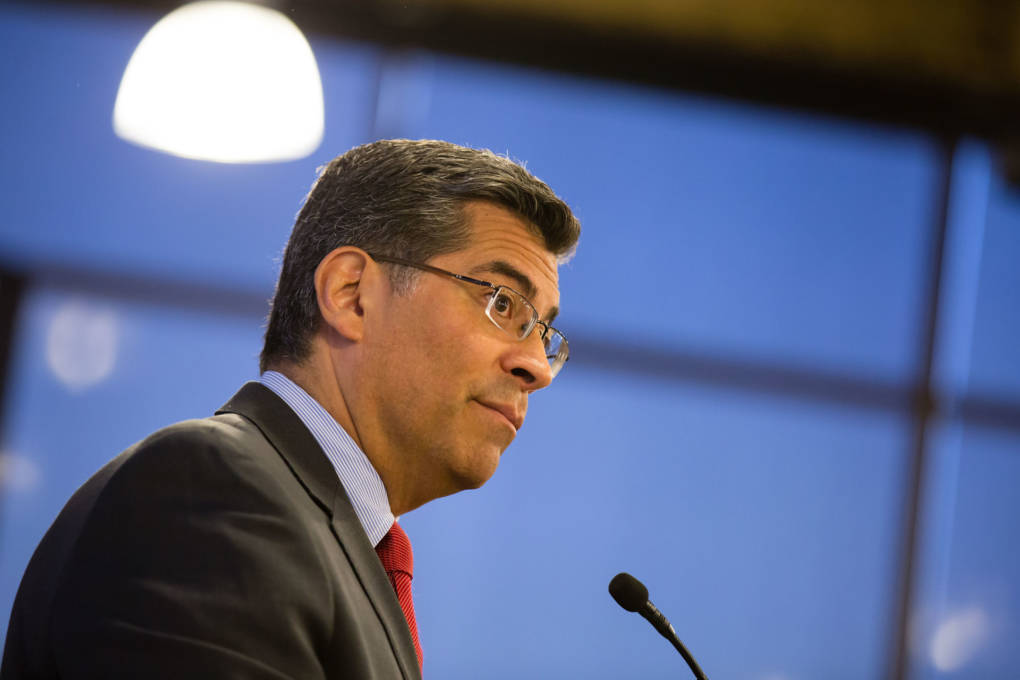
"caption": "FILE PHOTO: California Attorney General Xavier Becerra spoke to journalists in Sacramento in May of 2017. Becerra sued the Trump administration in October challenging the new rules and on Friday, Feb. 16, 2018, he said that the changes unjustly target women. ",
"description": "FILE PHOTO: California Attorney General Xavier Becerra spoke to journalists in Sacramento in May of 2017. Becerra sued the Trump administration in October challenging the new rules and on Friday, Feb. 16, 2018, he said that the changes unjustly target women. ",
"title": "RS25430_20170515_StateCapitol_AG_XavierBecerra_credit_BertJohnson-3-qut",
"credit": "Bert Johnson/KQED",
"status": "inherit",
"isLoading": false,
"fetchFailed": false
},
"news_11650945": {
"type": "attachments",
"id": "news_11650945",
"meta": {
"index": "attachments_1716263798",
"site": "news",
"id": "11650945",
"found": true
},
"parent": 11650943,
"imgSizes": {
"small": {
"file": "https://ww2.kqed.org/app/uploads/sites/10/2018/02/GettyImages-919653670-520x341.jpg",
"width": 520,
"mimeType": "image/jpeg",
"height": 341
},
"twentyfourteen-full-width": {
"file": "https://ww2.kqed.org/app/uploads/sites/10/2018/02/GettyImages-919653670-1038x576.jpg",
"width": 1038,
"mimeType": "image/jpeg",
"height": 576
},
"thumbnail": {
"file": "https://ww2.kqed.org/app/uploads/sites/10/2018/02/GettyImages-919653670-160x105.jpg",
"width": 160,
"mimeType": "image/jpeg",
"height": 105
},
"fd-sm": {
"file": "https://ww2.kqed.org/app/uploads/sites/10/2018/02/GettyImages-919653670-960x629.jpg",
"width": 960,
"mimeType": "image/jpeg",
"height": 629
},
"post-thumbnail": {
"file": "https://ww2.kqed.org/app/uploads/sites/10/2018/02/GettyImages-919653670-672x372.jpg",
"width": 672,
"mimeType": "image/jpeg",
"height": 372
},
"xsmall": {
"file": "https://ww2.kqed.org/app/uploads/sites/10/2018/02/GettyImages-919653670-375x246.jpg",
"width": 375,
"mimeType": "image/jpeg",
"height": 246
},
"kqedFullSize": {
"file": "https://ww2.kqed.org/app/uploads/sites/10/2018/02/GettyImages-919653670-e1518974536624.jpg",
"width": 1920,
"height": 1258
},
"large": {
"file": "https://ww2.kqed.org/app/uploads/sites/10/2018/02/GettyImages-919653670-1020x668.jpg",
"width": 1020,
"mimeType": "image/jpeg",
"height": 668
},
"xlarge": {
"file": "https://ww2.kqed.org/app/uploads/sites/10/2018/02/GettyImages-919653670-1180x773.jpg",
"width": 1180,
"mimeType": "image/jpeg",
"height": 773
},
"guest-author-50": {
"file": "https://ww2.kqed.org/app/uploads/sites/10/2018/02/GettyImages-919653670-50x50.jpg",
"width": 50,
"mimeType": "image/jpeg",
"height": 50
},
"guest-author-96": {
"file": "https://ww2.kqed.org/app/uploads/sites/10/2018/02/GettyImages-919653670-96x96.jpg",
"width": 96,
"mimeType": "image/jpeg",
"height": 96
},
"medium": {
"file": "https://ww2.kqed.org/app/uploads/sites/10/2018/02/GettyImages-919653670-800x524.jpg",
"width": 800,
"mimeType": "image/jpeg",
"height": 524
},
"guest-author-64": {
"file": "https://ww2.kqed.org/app/uploads/sites/10/2018/02/GettyImages-919653670-64x64.jpg",
"width": 64,
"mimeType": "image/jpeg",
"height": 64
},
"guest-author-32": {
"file": "https://ww2.kqed.org/app/uploads/sites/10/2018/02/GettyImages-919653670-32x32.jpg",
"width": 32,
"mimeType": "image/jpeg",
"height": 32
},
"fd-lrg": {
"file": "https://ww2.kqed.org/app/uploads/sites/10/2018/02/GettyImages-919653670-1920x1258.jpg",
"width": 1920,
"mimeType": "image/jpeg",
"height": 1258
},
"fd-med": {
"file": "https://ww2.kqed.org/app/uploads/sites/10/2018/02/GettyImages-919653670-1180x773.jpg",
"width": 1180,
"mimeType": "image/jpeg",
"height": 773
},
"full-width": {
"file": "https://ww2.kqed.org/app/uploads/sites/10/2018/02/GettyImages-919653670-1920x1258.jpg",
"width": 1920,
"mimeType": "image/jpeg",
"height": 1258
},
"detail": {
"file": "https://ww2.kqed.org/app/uploads/sites/10/2018/02/GettyImages-919653670-150x150.jpg",
"width": 150,
"mimeType": "image/jpeg",
"height": 150
},
"guest-author-128": {
"file": "https://ww2.kqed.org/app/uploads/sites/10/2018/02/GettyImages-919653670-128x128.jpg",
"width": 128,
"mimeType": "image/jpeg",
"height": 128
},
"xxsmall": {
"file": "https://ww2.kqed.org/app/uploads/sites/10/2018/02/GettyImages-919653670-240x157.jpg",
"width": 240,
"mimeType": "image/jpeg",
"height": 157
}
},
"publishDate": 1518974456,
"modified": 1518974529,
"caption": "Marjory Stoneman Douglas High School student Emma Gonzalez speaks at a rally for gun control at the Broward County Federal Courthouse in Fort Lauderdale, Florida on February 17, 2018. Seventeen perished and more than a dozen were wounded in the hail of bullets at Marjory Stoneman Douglas High School in Parkland,Florida the latest mass shooting to devastate a small US community and renew calls for gun control.",
"description": "Marjory Stoneman Douglas High School student Emma Gonzalez speaks at a rally for gun control at the Broward County Federal Courthouse in Fort Lauderdale, Florida on February 17, 2018. Seventeen perished and more than a dozen were wounded in the hail of bullets at Marjory Stoneman Douglas High School in Parkland,Florida the latest mass shooting to devastate a small US community and renew calls for gun control.",
"title": "US-SCHOOL-SHOOTING-PROTEST",
"credit": "RHONA WISE/AFP/Getty Images",
"status": "inherit",
"isLoading": false,
"fetchFailed": false
},
"news_11650940": {
"type": "attachments",
"id": "news_11650940",
"meta": {
"index": "attachments_1716263798",
"site": "news",
"id": "11650940",
"found": true
},
"parent": 11650938,
"imgSizes": {
"small": {
"file": "https://ww2.kqed.org/app/uploads/sites/10/2018/02/RS25357_GettyImages-682660750-qut-520x346.jpg",
"width": 520,
"mimeType": "image/jpeg",
"height": 346
},
"twentyfourteen-full-width": {
"file": "https://ww2.kqed.org/app/uploads/sites/10/2018/02/RS25357_GettyImages-682660750-qut-1038x576.jpg",
"width": 1038,
"mimeType": "image/jpeg",
"height": 576
},
"thumbnail": {
"file": "https://ww2.kqed.org/app/uploads/sites/10/2018/02/RS25357_GettyImages-682660750-qut-160x107.jpg",
"width": 160,
"mimeType": "image/jpeg",
"height": 107
},
"fd-sm": {
"file": "https://ww2.kqed.org/app/uploads/sites/10/2018/02/RS25357_GettyImages-682660750-qut-960x640.jpg",
"width": 960,
"mimeType": "image/jpeg",
"height": 640
},
"post-thumbnail": {
"file": "https://ww2.kqed.org/app/uploads/sites/10/2018/02/RS25357_GettyImages-682660750-qut-672x372.jpg",
"width": 672,
"mimeType": "image/jpeg",
"height": 372
},
"xsmall": {
"file": "https://ww2.kqed.org/app/uploads/sites/10/2018/02/RS25357_GettyImages-682660750-qut-375x250.jpg",
"width": 375,
"mimeType": "image/jpeg",
"height": 250
},
"kqedFullSize": {
"file": "https://ww2.kqed.org/app/uploads/sites/10/2018/02/RS25357_GettyImages-682660750-qut.jpg",
"width": 1920,
"height": 1279
},
"large": {
"file": "https://ww2.kqed.org/app/uploads/sites/10/2018/02/RS25357_GettyImages-682660750-qut-1020x679.jpg",
"width": 1020,
"mimeType": "image/jpeg",
"height": 679
},
"xlarge": {
"file": "https://ww2.kqed.org/app/uploads/sites/10/2018/02/RS25357_GettyImages-682660750-qut-1180x786.jpg",
"width": 1180,
"mimeType": "image/jpeg",
"height": 786
},
"guest-author-50": {
"file": "https://ww2.kqed.org/app/uploads/sites/10/2018/02/RS25357_GettyImages-682660750-qut-50x50.jpg",
"width": 50,
"mimeType": "image/jpeg",
"height": 50
},
"guest-author-96": {
"file": "https://ww2.kqed.org/app/uploads/sites/10/2018/02/RS25357_GettyImages-682660750-qut-96x96.jpg",
"width": 96,
"mimeType": "image/jpeg",
"height": 96
},
"medium": {
"file": "https://ww2.kqed.org/app/uploads/sites/10/2018/02/RS25357_GettyImages-682660750-qut-800x533.jpg",
"width": 800,
"mimeType": "image/jpeg",
"height": 533
},
"guest-author-64": {
"file": "https://ww2.kqed.org/app/uploads/sites/10/2018/02/RS25357_GettyImages-682660750-qut-64x64.jpg",
"width": 64,
"mimeType": "image/jpeg",
"height": 64
},
"guest-author-32": {
"file": "https://ww2.kqed.org/app/uploads/sites/10/2018/02/RS25357_GettyImages-682660750-qut-32x32.jpg",
"width": 32,
"mimeType": "image/jpeg",
"height": 32
},
"fd-lrg": {
"file": "https://ww2.kqed.org/app/uploads/sites/10/2018/02/RS25357_GettyImages-682660750-qut-1920x1279.jpg",
"width": 1920,
"mimeType": "image/jpeg",
"height": 1279
},
"fd-med": {
"file": "https://ww2.kqed.org/app/uploads/sites/10/2018/02/RS25357_GettyImages-682660750-qut-1180x786.jpg",
"width": 1180,
"mimeType": "image/jpeg",
"height": 786
},
"full-width": {
"file": "https://ww2.kqed.org/app/uploads/sites/10/2018/02/RS25357_GettyImages-682660750-qut-1920x1279.jpg",
"width": 1920,
"mimeType": "image/jpeg",
"height": 1279
},
"detail": {
"file": "https://ww2.kqed.org/app/uploads/sites/10/2018/02/RS25357_GettyImages-682660750-qut-150x150.jpg",
"width": 150,
"mimeType": "image/jpeg",
"height": 150
},
"guest-author-128": {
"file": "https://ww2.kqed.org/app/uploads/sites/10/2018/02/RS25357_GettyImages-682660750-qut-128x128.jpg",
"width": 128,
"mimeType": "image/jpeg",
"height": 128
},
"xxsmall": {
"file": "https://ww2.kqed.org/app/uploads/sites/10/2018/02/RS25357_GettyImages-682660750-qut-240x160.jpg",
"width": 240,
"mimeType": "image/jpeg",
"height": 160
}
},
"publishDate": 1518970396,
"modified": 1518970470,
"caption": "In a rapid-fire series of tweets from his Palm Beach estate, President Donald Trump unloaded over the Russia investigation. ",
"description": "In a rapid-fire series of tweets from his Palm Beach estate, President Donald Trump unloaded over the Russia investigation. ",
"title": "US-POLITICS-TRUMP",
"credit": "OLIVIER DOULIERY/AFP/Getty Images",
"status": "inherit",
"isLoading": false,
"fetchFailed": false
},
"news_11650867": {
"type": "attachments",
"id": "news_11650867",
"meta": {
"index": "attachments_1716263798",
"site": "news",
"id": "11650867",
"found": true
},
"parent": 11650863,
"imgSizes": {
"small": {
"file": "https://ww2.kqed.org/app/uploads/sites/10/2018/02/Image-uploaded-from-iOS-20-520x355.jpg",
"width": 520,
"mimeType": "image/jpeg",
"height": 355
},
"twentyfourteen-full-width": {
"file": "https://ww2.kqed.org/app/uploads/sites/10/2018/02/Image-uploaded-from-iOS-20-1038x576.jpg",
"width": 1038,
"mimeType": "image/jpeg",
"height": 576
},
"thumbnail": {
"file": "https://ww2.kqed.org/app/uploads/sites/10/2018/02/Image-uploaded-from-iOS-20-160x109.jpg",
"width": 160,
"mimeType": "image/jpeg",
"height": 109
},
"fd-sm": {
"file": "https://ww2.kqed.org/app/uploads/sites/10/2018/02/Image-uploaded-from-iOS-20-960x656.jpg",
"width": 960,
"mimeType": "image/jpeg",
"height": 656
},
"post-thumbnail": {
"file": "https://ww2.kqed.org/app/uploads/sites/10/2018/02/Image-uploaded-from-iOS-20-672x372.jpg",
"width": 672,
"mimeType": "image/jpeg",
"height": 372
},
"xsmall": {
"file": "https://ww2.kqed.org/app/uploads/sites/10/2018/02/Image-uploaded-from-iOS-20-375x256.jpg",
"width": 375,
"mimeType": "image/jpeg",
"height": 256
},
"kqedFullSize": {
"file": "https://ww2.kqed.org/app/uploads/sites/10/2018/02/Image-uploaded-from-iOS-20-e1518903806987.jpg",
"width": 1920,
"height": 1311
},
"large": {
"file": "https://ww2.kqed.org/app/uploads/sites/10/2018/02/Image-uploaded-from-iOS-20-1020x697.jpg",
"width": 1020,
"mimeType": "image/jpeg",
"height": 697
},
"xlarge": {
"file": "https://ww2.kqed.org/app/uploads/sites/10/2018/02/Image-uploaded-from-iOS-20-1180x806.jpg",
"width": 1180,
"mimeType": "image/jpeg",
"height": 806
},
"guest-author-50": {
"file": "https://ww2.kqed.org/app/uploads/sites/10/2018/02/Image-uploaded-from-iOS-20-50x50.jpg",
"width": 50,
"mimeType": "image/jpeg",
"height": 50
},
"guest-author-96": {
"file": "https://ww2.kqed.org/app/uploads/sites/10/2018/02/Image-uploaded-from-iOS-20-96x96.jpg",
"width": 96,
"mimeType": "image/jpeg",
"height": 96
},
"medium": {
"file": "https://ww2.kqed.org/app/uploads/sites/10/2018/02/Image-uploaded-from-iOS-20-800x546.jpg",
"width": 800,
"mimeType": "image/jpeg",
"height": 546
},
"guest-author-64": {
"file": "https://ww2.kqed.org/app/uploads/sites/10/2018/02/Image-uploaded-from-iOS-20-64x64.jpg",
"width": 64,
"mimeType": "image/jpeg",
"height": 64
},
"guest-author-32": {
"file": "https://ww2.kqed.org/app/uploads/sites/10/2018/02/Image-uploaded-from-iOS-20-32x32.jpg",
"width": 32,
"mimeType": "image/jpeg",
"height": 32
},
"fd-lrg": {
"file": "https://ww2.kqed.org/app/uploads/sites/10/2018/02/Image-uploaded-from-iOS-20-1920x1311.jpg",
"width": 1920,
"mimeType": "image/jpeg",
"height": 1311
},
"fd-med": {
"file": "https://ww2.kqed.org/app/uploads/sites/10/2018/02/Image-uploaded-from-iOS-20-1180x806.jpg",
"width": 1180,
"mimeType": "image/jpeg",
"height": 806
},
"full-width": {
"file": "https://ww2.kqed.org/app/uploads/sites/10/2018/02/Image-uploaded-from-iOS-20-1920x1311.jpg",
"width": 1920,
"mimeType": "image/jpeg",
"height": 1311
},
"detail": {
"file": "https://ww2.kqed.org/app/uploads/sites/10/2018/02/Image-uploaded-from-iOS-20-150x150.jpg",
"width": 150,
"mimeType": "image/jpeg",
"height": 150
},
"guest-author-128": {
"file": "https://ww2.kqed.org/app/uploads/sites/10/2018/02/Image-uploaded-from-iOS-20-128x128.jpg",
"width": 128,
"mimeType": "image/jpeg",
"height": 128
},
"xxsmall": {
"file": "https://ww2.kqed.org/app/uploads/sites/10/2018/02/Image-uploaded-from-iOS-20-240x164.jpg",
"width": 240,
"mimeType": "image/jpeg",
"height": 164
}
},
"publishDate": 1518903650,
"modified": 1518903918,
"caption": "The Tet Festival is being held in San Jose this weekend as part of local Vietnamese New Year celebrations. ",
"description": "The Tet Festival is being held in San Jose this weekend as part of local Vietnamese New Year celebrations. ",
"title": "Image uploaded from iOS (20)",
"credit": "Guy Marzorati/KQED",
"status": "inherit",
"isLoading": false,
"fetchFailed": false
}
},
"audioPlayerReducer": {
"postId": "stream_live",
"isPaused": true,
"isPlaying": false,
"pfsActive": false,
"pledgeModalIsOpen": true,
"playerDrawerIsOpen": false,
"liveAudioPlayStartedAt": 0,
"liveAudioPlayContext": ""
},
"authorsReducer": {
"byline_stateofhealth_362754": {
"type": "authors",
"id": "byline_stateofhealth_362754",
"meta": {
"override": true
},
"slug": "byline_stateofhealth_362754",
"name": "Marissa Ortega-Welch",
"isLoading": false
},
"byline_news_11651161": {
"type": "authors",
"id": "byline_news_11651161",
"meta": {
"override": true
},
"slug": "byline_news_11651161",
"name": "Laura Sydell",
"isLoading": false
},
"byline_news_11651002": {
"type": "authors",
"id": "byline_news_11651002",
"meta": {
"override": true
},
"slug": "byline_news_11651002",
"name": "\u003cstrong/>Elizabeth Muñoz\u003c/strong> and \u003ca href=\"https://www.scpr.org/about/people/staff/elina-shatkin\" target=\"_blank\">Elina Shatkin\u003c/a>\u003cbr/>KPCC\u003c/br>",
"isLoading": false
},
"byline_news_11650989": {
"type": "authors",
"id": "byline_news_11650989",
"meta": {
"override": true
},
"slug": "byline_news_11650989",
"name": "\u003cstrong>Associated Press\u003c/strong>",
"isLoading": false
},
"byline_news_11650961": {
"type": "authors",
"id": "byline_news_11650961",
"meta": {
"override": true
},
"slug": "byline_news_11650961",
"name": "Associated Press",
"isLoading": false
},
"byline_news_11650943": {
"type": "authors",
"id": "byline_news_11650943",
"meta": {
"override": true
},
"slug": "byline_news_11650943",
"name": "\u003cstrong>Jason Dearen, Allen G. Breed \u003c/strong> and \u003cstrong>Tamara Lush\u003c/strong>\u003c/br> Associated Press",
"isLoading": false
},
"byline_news_11650938": {
"type": "authors",
"id": "byline_news_11650938",
"meta": {
"override": true
},
"slug": "byline_news_11650938",
"name": "\u003cstrong>Catherine Lucey\u003c/strong> \u003c/br> Associated Press",
"isLoading": false
},
"danbrekke": {
"type": "authors",
"id": "222",
"meta": {
"index": "authors_1716337520",
"id": "222",
"found": true
},
"name": "Dan Brekke",
"firstName": "Dan",
"lastName": "Brekke",
"slug": "danbrekke",
"email": "dbrekke@kqed.org",
"display_author_email": true,
"staff_mastheads": [
"news",
"science"
],
"title": "KQED Editor and Reporter",
"bio": "Dan Brekke is a reporter and editor for KQED News, responsible for coverage of topics ranging from California water issues to the Bay Area's transportation challenges. In a newsroom career that began in Chicago in 1972, Dan has worked for \u003cem>The San Francisco Examiner,\u003c/em> Wired and TechTV and has been published in The New York Times, The New York Times Magazine, Business 2.0, Salon and elsewhere.\r\n\r\nSince joining KQED in 2007, Dan has reported, edited and produced both radio and online features and breaking news pieces. He has shared as both editor and reporter in four Society of Professional Journalists Norcal Excellence in Journalism awards and one Edward R. Murrow regional award. He was chosen for a spring 2017 residency at the Mesa Refuge to advance his research on California salmon.\r\n\r\nEmail Dan at: \u003ca href=\"mailto:dbrekke@kqed.org\">dbrekke@kqed.org\u003c/a>\r\n\r\n\u003cstrong>Twitter:\u003c/strong> \u003ca href=\"https://twitter.com/danbrekke\" rel=\"noopener noreferrer\">twitter.com/danbrekke\u003c/a>\r\n\u003cstrong>Facebook:\u003c/strong> \u003ca href=\"https://www.facebook.com/danbrekke\" rel=\"noopener noreferrer\">www.facebook.com/danbrekke\u003c/a>\r\n\u003cstrong>LinkedIn:\u003c/strong> \u003ca href=\"https://www.linkedin.com/in/danbrekke\" rel=\"noopener noreferrer\">www.linkedin.com/in/danbrekke\u003c/a>",
"avatar": "https://secure.gravatar.com/avatar/8f1f0d2a978fb3b23426c922c7e2af558fa36905b49c4ce76a97dc3c72d27226?s=600&d=mm&r=g",
"twitter": "danbrekke",
"bluesky": null,
"facebook": null,
"instagram": "https://www.instagram.com/dan.brekke/",
"linkedin": "https://www.linkedin.com/in/danbrekke/",
"sites": [
{
"site": "news",
"roles": [
"administrator",
"create_posts"
]
},
{
"site": "stateofhealth",
"roles": [
"editor"
]
},
{
"site": "science",
"roles": [
"editor"
]
},
{
"site": "quest",
"roles": [
"contributor"
]
},
{
"site": "food",
"roles": [
"contributor"
]
},
{
"site": "forum",
"roles": [
"contributor"
]
},
{
"site": "elections",
"roles": [
"editor"
]
},
{
"site": "liveblog",
"roles": [
"editor"
]
}
],
"headData": {
"title": "Dan Brekke | KQED",
"description": "KQED Editor and Reporter",
"ogImgSrc": "https://secure.gravatar.com/avatar/8f1f0d2a978fb3b23426c922c7e2af558fa36905b49c4ce76a97dc3c72d27226?s=600&d=mm&r=g",
"twImgSrc": "https://secure.gravatar.com/avatar/8f1f0d2a978fb3b23426c922c7e2af558fa36905b49c4ce76a97dc3c72d27226?s=600&d=mm&r=g"
},
"isLoading": false,
"link": "/author/danbrekke"
},
"gmarzorati": {
"type": "authors",
"id": "227",
"meta": {
"index": "authors_1716337520",
"id": "227",
"found": true
},
"name": "Guy Marzorati",
"firstName": "Guy",
"lastName": "Marzorati",
"slug": "gmarzorati",
"email": "gmarzorati@KQED.org",
"display_author_email": true,
"staff_mastheads": [
"news"
],
"title": "Correspondent",
"bio": "Guy Marzorati is a correspondent on KQED's California Politics and Government Desk, based in San Jose. A graduate of Santa Clara University, Guy joined KQED in 2013. He reports on state and local politics and produces KQED's digital voter guide.",
"avatar": "https://secure.gravatar.com/avatar/e7038b8dbfd55b104369b76b1cd0b9de?s=600&d=blank&r=g",
"twitter": "guymarzorati",
"facebook": null,
"instagram": null,
"linkedin": null,
"sites": [
{
"site": "",
"roles": [
"editor"
]
},
{
"site": "news",
"roles": [
"editor"
]
},
{
"site": "science",
"roles": [
"editor"
]
},
{
"site": "forum",
"roles": [
"editor"
]
},
{
"site": "elections",
"roles": [
"editor"
]
},
{
"site": "liveblog",
"roles": [
"editor"
]
}
],
"headData": {
"title": "Guy Marzorati | KQED",
"description": "Correspondent",
"ogImgSrc": "https://secure.gravatar.com/avatar/e7038b8dbfd55b104369b76b1cd0b9de?s=600&d=blank&r=g",
"twImgSrc": "https://secure.gravatar.com/avatar/e7038b8dbfd55b104369b76b1cd0b9de?s=600&d=blank&r=g"
},
"isLoading": false,
"link": "/author/gmarzorati"
},
"kqed": {
"type": "authors",
"id": "236",
"meta": {
"index": "authors_1716337520",
"id": "236",
"found": true
},
"name": "KQED News Staff",
"firstName": "KQED News Staff",
"lastName": null,
"slug": "kqed",
"email": "faq@kqed.org",
"display_author_email": false,
"staff_mastheads": [],
"title": null,
"bio": null,
"avatar": "https://secure.gravatar.com/avatar/ef0e801a68c4c54afa9180db14084167?s=600&d=blank&r=g",
"twitter": null,
"facebook": null,
"instagram": null,
"linkedin": null,
"sites": [
{
"site": "arts",
"roles": [
"contributor"
]
},
{
"site": "news",
"roles": [
"editor"
]
},
{
"site": "futureofyou",
"roles": [
"author"
]
}
],
"headData": {
"title": "KQED News Staff | KQED",
"description": null,
"ogImgSrc": "https://secure.gravatar.com/avatar/ef0e801a68c4c54afa9180db14084167?s=600&d=blank&r=g",
"twImgSrc": "https://secure.gravatar.com/avatar/ef0e801a68c4c54afa9180db14084167?s=600&d=blank&r=g"
},
"isLoading": false,
"link": "/author/kqed"
},
"samharnett": {
"type": "authors",
"id": "253",
"meta": {
"index": "authors_1716337520",
"id": "253",
"found": true
},
"name": "Sam Harnett",
"firstName": "Sam",
"lastName": "Harnett",
"slug": "samharnett",
"email": "samharnett@gmail.com",
"display_author_email": false,
"staff_mastheads": [],
"title": "KQED Contributor",
"bio": "Sam Harnett covered tech and work at KQED. He is the co-creator of \u003cem>\u003ca href=\"http://www.theworldaccordingtosound.org\">The World According to Sound\u003c/a>,\u003c/em> a 90-second podcast that features different sounds and the stories behind them.\r\n\r\nBefore coming to KQED, Sam worked as an independent reporter who contributed regularly to \u003cem>The California Report, Marketplace,\u003c/em> \u003cem>The World \u003c/em>and NPR.",
"avatar": "https://secure.gravatar.com/avatar/2538b972ac02f2b9546c7a6c59a0f3d0?s=600&d=blank&r=g",
"twitter": "Samwharnett",
"facebook": null,
"instagram": null,
"linkedin": null,
"sites": [
{
"site": "news",
"roles": [
"edit_others_posts",
"subscriber"
]
},
{
"site": "stateofhealth",
"roles": [
"author"
]
},
{
"site": "science",
"roles": [
"editor"
]
},
{
"site": "quest",
"roles": [
"subscriber"
]
}
],
"headData": {
"title": "Sam Harnett | KQED",
"description": "KQED Contributor",
"ogImgSrc": "https://secure.gravatar.com/avatar/2538b972ac02f2b9546c7a6c59a0f3d0?s=600&d=blank&r=g",
"twImgSrc": "https://secure.gravatar.com/avatar/2538b972ac02f2b9546c7a6c59a0f3d0?s=600&d=blank&r=g"
},
"isLoading": false,
"link": "/author/samharnett"
},
"jeremysiegel": {
"type": "authors",
"id": "11258",
"meta": {
"index": "authors_1716337520",
"id": "11258",
"found": true
},
"name": "Jeremy Siegel",
"firstName": "Jeremy",
"lastName": "Siegel",
"slug": "jeremysiegel",
"email": "jsiegel@kqed.org",
"display_author_email": false,
"staff_mastheads": [],
"title": "KQED Contributor",
"bio": "Jeremy Siegel is is the weekend afternoon news anchor for KQED. His reporting can be heard on KQED News, Morning Edition, All Things Considered and The California Report. Jeremy's coverage of the Camp Fire in Butte County won the 2019 Society of Professional Journalists, Northern California Chapter, Excellence in Journalism Award for Breaking News. Jeremy grew up in Cincinnati, Ohio, and graduated from UC Berkeley.",
"avatar": "https://secure.gravatar.com/avatar/3921a64ceb9ed5d0ba47d9ae9782f1ab?s=600&d=blank&r=g",
"twitter": "jersiegel",
"facebook": null,
"instagram": null,
"linkedin": null,
"sites": [
{
"site": "arts",
"roles": []
},
{
"site": "news",
"roles": [
"subscriber"
]
},
{
"site": "science",
"roles": []
}
],
"headData": {
"title": "Jeremy Siegel | KQED",
"description": "KQED Contributor",
"ogImgSrc": "https://secure.gravatar.com/avatar/3921a64ceb9ed5d0ba47d9ae9782f1ab?s=600&d=blank&r=g",
"twImgSrc": "https://secure.gravatar.com/avatar/3921a64ceb9ed5d0ba47d9ae9782f1ab?s=600&d=blank&r=g"
},
"isLoading": false,
"link": "/author/jeremysiegel"
}
},
"pagesReducer": {
"news_program_news-fix": {
"type": "terms",
"id": "news_6944",
"meta": {
"index": "terms_1716263798",
"site": "news",
"id": "6944",
"score": 16.377514
},
"featImg": "https://ww2.kqed.org/app/uploads/sites/10/2014/10/News-Fix-Logo-Web-Banners-04.png",
"name": "News Fix",
"description": null,
"taxonomy": "program",
"headData": {
"twImgId": null,
"twTitle": null,
"ogTitle": null,
"ogImgId": null,
"twDescription": null,
"description": "The News Fix is a daily news podcast from KQED that breaks down the latest headlines and provides in-depth analysis of the stories that matter to the Bay Area.",
"title": "News Fix - Daily Dose of Bay Area News | KQED",
"ogDescription": null
},
"ttid": 6968,
"slug": "news-fix",
"isLoading": false,
"title": "News Fix",
"pageMeta": {
"site": "news",
"WpPageTemplate": "page-topic-editorial",
"currentPage": 19
},
"blocks": [
{
"blockName": "kqed/post-list",
"attrs": {
"layout": "cardArticle2",
"query": "posts/news?program=news-fix",
"seeMore": false,
"paginated": true,
"page": 19
}
},
{
"blockName": "kqed/ad"
}
]
}
},
"pfsSessionReducer": {},
"postsReducer": {
"stream_live": {
"type": "live",
"id": "stream_live",
"audioUrl": "https://streams.kqed.org/kqedradio",
"title": "Live Stream",
"excerpt": "Live Stream information currently unavailable.",
"link": "/radio",
"featImg": "",
"label": {
"name": "KQED Live",
"link": "/"
}
},
"stream_kqedNewscast": {
"type": "posts",
"id": "stream_kqedNewscast",
"audioUrl": "https://www.kqed.org/.stream/anon/radio/RDnews/newscast.mp3?_=1",
"title": "KQED Newscast",
"featImg": "",
"label": {
"name": "88.5 FM",
"link": "/"
}
},
"stateofhealth_362754": {
"type": "posts",
"id": "stateofhealth_362754",
"meta": {
"index": "posts_1716263798",
"site": "stateofhealth",
"id": "362754",
"score": null,
"sort": [
1519166050000
]
},
"parent": 0,
"labelTerm": {
"site": "stateofhealth"
},
"blocks": [],
"publishDate": 1519166050,
"format": "audio",
"disqusTitle": "Now That Pot Is Legal, Should You Worry About Secondhand Smoke? California Scientist Says Yes",
"title": "Now That Pot Is Legal, Should You Worry About Secondhand Smoke? California Scientist Says Yes",
"headTitle": "State of Health | KQED News",
"content": "\u003cp>Commercial sales of cannabis to recreational users began Jan. 1 in California. It hasn't been even two months in this brave new world, but new questions about marijuana's health impacts are already popping up. Is smoking cannabis bad for your health? If so, how bad? And are we talking physically or mentally? What about secondhand smoke?\u003c/p>\n\u003cp>One scientist at University of California San Francisco decided to tackle that last question after attending a Paul McCartney concert a few years ago.\u003c/p>\n\u003cp>Matthew Springer doesn't remember what song the former Beatle was playing when he had a research epiphany, but he does remember that it happened when dozens of fans decided it was that time during the concert when it might be good to \"toke up.\"\u003c/p>\n\u003cp>A visible haze of pot smoke rose above the audience.\u003c/p>\n\u003cp>\"People in front of me started lighting up and then other people started lighting up. And for a few naive split seconds I was thinking to myself, 'Hey, they can't smoke in the AT&T Park! I'm sure that's not allowed.' And then I realized that it was all marijuana.\"\u003c/p>\n\u003cp>[ad fullwidth]\u003c/p>\n\u003cp>“Paul McCartney actually stopped between numbers and sniffed the air and said, ‘There's something in the air — must be San Francisco!’ ” he recalled.\u003c/p>\n\u003cp>And that’s when Springer started thinking: San Franciscans would \u003cem>never \u003c/em>tolerate those levels of cigarette smoke anymore. So why were they OK with pot smoke? Did people just assume that cannabis smoke isn’t harmful the way tobacco smoke is?\u003c/p>\n\u003cp>Like any good scientist, he wondered: Is that true? Or is secondhand smoke from cannabis bad for us?\u003c/p>\n\u003cp>While anyone might have been able to ask these questions, Dr. Springer is one of the few people in the world who could actually answer them.\u003c/p>\n\u003cp>He’s a pre-eminent researcher on the \u003ca href=\"https://www.cdc.gov/tobacco/data_statistics/fact_sheets/secondhand_smoke/health_effects/index.htm\" target=\"_blank\" rel=\"noopener\">health effects of secondhand tobacco smoke\u003c/a>. He was already running tests on rats, using cigarettes, at \u003ca href=\"http://cardiolab.ucsf.edu/molcardiolab/lab.html\" target=\"_blank\" rel=\"noopener\">his lab\u003c/a> at UCSF. Maybe he could run the same tests using joints.\u003c/p>\n\u003cp>“By the time I left the concert, I was resolved to at least try to make this happen,” he said.\u003c/p>\n\u003cp>He knew it wouldn’t be easy. Because pot is still illegal under federal law, and Springer's research uses federal funds, he can’t just stroll down the hill and buy some from a dispensary, or from someone in Golden Gate Park. He has to purchase specially approved government cannabis and he can’t test on humans; hence, the rats.\u003c/p>\n\u003cp>In the lab, Springer puts a cigarette or joint in a plexiglass box. Then he lights it, and the chamber fills with smoke. An anesthetized rat, laying with its head sticking just inside the chamber, is exposed to the smoke.\u003c/p>\n\u003cp>(If you’re wondering if the rodents ever get stoned, Springer said he doesn’t know, and anyway, they're asleep.)\u003c/p>\n\u003cp>So far, Springer and his colleagues have published research demonstrating that secondhand smoke makes it harder for the rats’ arteries to expand and allow a healthy flow of blood.\u003c/p>\n\u003cp>With tobacco products, this effect lasts about 30 minutes, and then the arteries recover their normal function. But if it happens over and over, because a person is smoking cigarette after cigarette, the arterial walls can become permanently damaged, and that damage can cause blood clots, heart attack or stroke.\u003c/p>\n\u003cp>Springer demonstrated that the exact same physiological effect occurs after inhaling secondhand smoke from marijuana. Not only that, the arteries take 90 minutes to recover -- \u003cem>three times as long\u003c/em>, compared to the 30 minutes with cigarette smoke.\u003c/p>\n\u003cp>Springer's discovery describes just one harmful impact for non-smokers exposed to marijuana smoke. Statewide sampling surveys of cannabis products sold in marijuana dispensaries have shown that cannabis products may contain \u003ca href=\"http://www.sacbee.com/news/local/health-and-medicine/article131391629.html\" target=\"_blank\" rel=\"noopener\">dangerous bacteria or mold\u003c/a>, or residues from \u003ca href=\"http://www.montereyherald.com/article/NF/20170926/NEWS/170929857\" target=\"_blank\" rel=\"noopener\">pesticides and solvents\u003c/a>.\u003c/p>\n\u003cp>California law does requires testing for these contaminants, but the regulations are being rolled out in \u003ca href=\"http://bcc.ca.gov/about_us/documents/17-261_required_testing_chart.pdf\" target=\"_blank\" rel=\"noopener\">three phases\u003c/a> over the course of 2018. And since much of the marijuana being sold now was harvested last fall, consumers will have to wait until early 2019 before they can purchase products that have been fully tested according to state standards.\u003c/p>\n\u003cp>“People think cannabis is fine because it's 'natural,' ” Springer said. “I hear this a lot. I don't know what it means.” He concedes that tightly regulated marijuana, which has been fully tested, doesn’t have as many chemical additives as cigarettes.\u003c/p>\n\u003cp>But even if the cannabis tests clean, you’re still inhaling smoke, Spring emphasized, and smoke itself is bad for your lungs, heart and blood vessels. And that's just cardiovascular effects -- other researchers are still exploring the relationship between marijuana smoke and long-term cancer risk.\u003c/p>\n\u003cp>“People should think of this not as an anti-THC conclusion, but an anti-smoke conclusion,” Springer said.\u003c/p>\n\u003cp>So is the solution simply to avoid smoke from combustion \u003cem>per se\u003c/em>, by eating cannabis-infused products, or using \"smokeless\" e-cigarette or vaping devices?\u003c/p>\n\u003cp>Springer still urges caution, because vaping can have its own health effects. Even though vaping devices don’t produce smoke from combustion, they do release a cloud of aerosolized chemicals. Springer is studying the health effects of those chemicals, too.\u003c/p>\n\u003cp>All this research takes time. Meanwhile, Springer worries that people might come to the wrong conclusion, that \"no news is good news.\"\u003c/p>\n\u003cp>“We in the public health community have been telling them for decades to avoid inhaling secondhand smoke from tobacco,” Springer says. “We have not been telling them to avoid inhaling secondhand smoke for marijuana, and that's not because it's not bad for you, it's because we just haven't known. The experiments haven't been done.”\u003c/p>\n\u003cp>Anti-smoking campaigners say we can’t afford to wait until the research is complete. Recreational pot is already a reality.\u003c/p>\n\u003cp>Cynthia Hallett is the president of \u003ca href=\"http://Americans%20for%20Nonsmokers%20Rights\" target=\"_blank\" rel=\"noopener\">Americans for Nonsmokers' Rights\u003c/a>, based in Berkeley. The organization was established in 1976, before there was a lot known about the health effects of secondhand smoke from tobacco.\u003c/p>\n\u003cp>Now that cannabis is becoming more common across the country, her organization is taking it on.\u003c/p>\n\u003cp>Hallett said some of the arguments being made in support of cannabis remind her of the arguments made on behalf of tobacco decades ago.\u003c/p>\n\u003cp>“I'm seeing a parallel between this argument that, ‘Gee, we just don't have a lot of science and so therefore let's wait and see,’ ” Hallett told me. “The tobacco companies used to say the same thing about tobacco cigarettes.”\u003c/p>\n\u003cp>In California, you are prohibited from smoking cannabis anywhere where you’re not allowed to smoke tobacco -- that includes schools, airplanes and most workplaces. But Hallett is worried that the legalization of pot could be used to erode those rules.\u003c/p>\n\u003cp>“It starts on the premise of decriminalization,” she said, and then over time there’s “a chipping away at strong policies.”\u003c/p>\n\u003cp>A lot of cannabis advocates want to see pot regulated like alcohol. They want cities to issue permits for specialized smoking lounges, similar to wine bars.\u003c/p>\n\u003cp>But Hallett pointed out that smoke drifts and affects workers in a way that alcohol doesn’t.\u003c/p>\n\u003cp>\"The difference is, if I were to spill my beer on you in a bar, it wouldn’t affect your long-term health. If I choose to smoke, it can affect the health of the person near me.\"\u003c/p>\n\u003cp>Pot is more like tobacco in that respect — and Hallett said it should be regulated that way, at all times.\u003c/p>\n\u003cp>Hallett believes many pot smokers are still in denial -- after fighting so hard for legalization, it’s hard to admit there are potential harms. She said this time in California culture brings to mind a similar time in the 1970s and '80s, when Americans started demanding more regulations for secondhand smoke, and a new etiquette around smoking took form.\u003c/p>\n\u003cp>When it comes to marijuana, Hallett said, “it is \u003cem>still\u003c/em> polite for you to say: ‘Would you mind not smoking around me?' \"\u003c/p>\n\u003cp>At \u003ca href=\"http://www.magnoliawellness.org/menu\" target=\"_blank\" rel=\"noopener\">Magnolia\u003c/a>, a cannabis dispensary in Oakland, a reporter asked some regular pot smokers about what responsibilities -- if any -- they should have when it came to nearby nonsmokers.\u003c/p>\n\u003cp>“This is the first time that I have heard secondhand smoke in reference to cannabis,” admitted Lee Crow, a patient-services clerk at Magnolia. “I’ve tried to be courteous, just common courtesy like with anything.”\u003c/p>\n\u003cp>That was the case for most of the people I talked to at Magnolia. Even the dispensary’s director of clinical services, Barbara Blaser, admits she thinks a lot about secondhand smoke from cigarettes, but not pot.\u003c/p>\n\u003cp>“Both of my parents died of lung cancer!” she said. “I will stop a stranger and say, 'You shouldn’t be smoking. My dad died of that!' ”\u003c/p>\n\u003cp>But Blaser, like many cannabis consumers, hasn't really started thinking about the health impacts of cannabis smoke -- much less its secondhand smoke -- in quite the same way.\u003c/p>\n\u003cp>Proposition 64 calls for some of the state tax revenue from the sale of pot to be distributed to cannabis researchers. In addition, the state Occupational Safety and Health Standards Board is examining workplace hazards that are specific to the cannabis industry.\u003c/p>\n\u003cp>\u003cspan style=\"font-weight: 400\">Californians might have already legalized pot, but have only just begun to explore the science behind the smoke and to create a new etiquette for how to handle it. \u003c/span>\u003c/p>\n\u003cp>\u003cem>Additional reporting by KQED Health Editor Carrie Feibel. \u003c/em>\u003c/p>\n\u003cp>[ad floatright]\u003c/p>\n\u003cp>\u003cem>A version of this story first aired on \u003ca href=\"http://kalw.org/programs/crosscurrents\" target=\"_blank\" rel=\"noopener\">KALW’s Crosscurrents.\u003c/a>\u003c/em>\u003c/p>\n\n",
"disqusIdentifier": "362754 https://ww2.kqed.org/stateofhealth/?p=362754",
"disqusUrl": "https://ww2.kqed.org/stateofhealth/2018/02/20/now-that-pot-is-legal-should-you-worry-about-secondhand-smoke-california-scientist-says-yes/",
"stats": {
"hasVideo": false,
"hasChartOrMap": false,
"hasAudio": false,
"hasPolis": false,
"wordCount": 1643,
"hasGoogleForm": false,
"hasGallery": false,
"hasHearkenModule": false,
"iframeSrcs": [],
"paragraphCount": 50
},
"modified": 1519166050,
"excerpt": "In the lab, secondhand marijuana smoke looks even worse for arterial function than secondhand tobacco smoke. ",
"headData": {
"twImgId": "",
"twTitle": "",
"ogTitle": "",
"ogImgId": "",
"twDescription": "",
"description": "In the lab, secondhand marijuana smoke looks even worse for arterial function than secondhand tobacco smoke. ",
"title": "Now That Pot Is Legal, Should You Worry About Secondhand Smoke? California Scientist Says Yes | KQED",
"ogDescription": "",
"schema": {
"@context": "https://schema.org",
"@type": "Article",
"headline": "Now That Pot Is Legal, Should You Worry About Secondhand Smoke? California Scientist Says Yes",
"datePublished": "2018-02-20T14:34:10-08:00",
"dateModified": "2018-02-20T14:34:10-08:00",
"image": "https://cdn.kqed.org/wp-content/uploads/2020/02/KQED-OG-Image@1x.png"
}
},
"guestAuthors": [],
"slug": "now-that-pot-is-legal-should-you-worry-about-secondhand-smoke-california-scientist-says-yes",
"status": "publish",
"audioUrl": "https://www.kqed.org/.stream/anon/radio/tcr/2018/02/OrtegaWelchSecondhandSmoke.mp3",
"nprByline": "Marissa Ortega-Welch",
"path": "/stateofhealth/362754/now-that-pot-is-legal-should-you-worry-about-secondhand-smoke-california-scientist-says-yes",
"audioDuration": null,
"audioTrackLength": null,
"parsedContent": [
{
"type": "contentString",
"content": "\u003cdiv class=\"post-body\">\u003cp>\u003cp>Commercial sales of cannabis to recreational users began Jan. 1 in California. It hasn't been even two months in this brave new world, but new questions about marijuana's health impacts are already popping up. Is smoking cannabis bad for your health? If so, how bad? And are we talking physically or mentally? What about secondhand smoke?\u003c/p>\n\u003cp>One scientist at University of California San Francisco decided to tackle that last question after attending a Paul McCartney concert a few years ago.\u003c/p>\n\u003cp>Matthew Springer doesn't remember what song the former Beatle was playing when he had a research epiphany, but he does remember that it happened when dozens of fans decided it was that time during the concert when it might be good to \"toke up.\"\u003c/p>\n\u003cp>A visible haze of pot smoke rose above the audience.\u003c/p>\n\u003cp>\"People in front of me started lighting up and then other people started lighting up. And for a few naive split seconds I was thinking to myself, 'Hey, they can't smoke in the AT&T Park! I'm sure that's not allowed.' And then I realized that it was all marijuana.\"\u003c/p>\n\u003cp>\u003c/p>\u003c/div>",
"attributes": {
"named": {},
"numeric": []
}
},
{
"type": "component",
"content": "",
"name": "ad",
"attributes": {
"named": {
"label": "fullwidth"
},
"numeric": [
"fullwidth"
]
}
},
{
"type": "contentString",
"content": "\u003cdiv class=\"post-body\">\u003cp>\u003c/p>\n\u003cp>“Paul McCartney actually stopped between numbers and sniffed the air and said, ‘There's something in the air — must be San Francisco!’ ” he recalled.\u003c/p>\n\u003cp>And that’s when Springer started thinking: San Franciscans would \u003cem>never \u003c/em>tolerate those levels of cigarette smoke anymore. So why were they OK with pot smoke? Did people just assume that cannabis smoke isn’t harmful the way tobacco smoke is?\u003c/p>\n\u003cp>Like any good scientist, he wondered: Is that true? Or is secondhand smoke from cannabis bad for us?\u003c/p>\n\u003cp>While anyone might have been able to ask these questions, Dr. Springer is one of the few people in the world who could actually answer them.\u003c/p>\n\u003cp>He’s a pre-eminent researcher on the \u003ca href=\"https://www.cdc.gov/tobacco/data_statistics/fact_sheets/secondhand_smoke/health_effects/index.htm\" target=\"_blank\" rel=\"noopener\">health effects of secondhand tobacco smoke\u003c/a>. He was already running tests on rats, using cigarettes, at \u003ca href=\"http://cardiolab.ucsf.edu/molcardiolab/lab.html\" target=\"_blank\" rel=\"noopener\">his lab\u003c/a> at UCSF. Maybe he could run the same tests using joints.\u003c/p>\n\u003cp>“By the time I left the concert, I was resolved to at least try to make this happen,” he said.\u003c/p>\n\u003cp>He knew it wouldn’t be easy. Because pot is still illegal under federal law, and Springer's research uses federal funds, he can’t just stroll down the hill and buy some from a dispensary, or from someone in Golden Gate Park. He has to purchase specially approved government cannabis and he can’t test on humans; hence, the rats.\u003c/p>\n\u003cp>In the lab, Springer puts a cigarette or joint in a plexiglass box. Then he lights it, and the chamber fills with smoke. An anesthetized rat, laying with its head sticking just inside the chamber, is exposed to the smoke.\u003c/p>\n\u003cp>(If you’re wondering if the rodents ever get stoned, Springer said he doesn’t know, and anyway, they're asleep.)\u003c/p>\n\u003cp>So far, Springer and his colleagues have published research demonstrating that secondhand smoke makes it harder for the rats’ arteries to expand and allow a healthy flow of blood.\u003c/p>\n\u003cp>With tobacco products, this effect lasts about 30 minutes, and then the arteries recover their normal function. But if it happens over and over, because a person is smoking cigarette after cigarette, the arterial walls can become permanently damaged, and that damage can cause blood clots, heart attack or stroke.\u003c/p>\n\u003cp>Springer demonstrated that the exact same physiological effect occurs after inhaling secondhand smoke from marijuana. Not only that, the arteries take 90 minutes to recover -- \u003cem>three times as long\u003c/em>, compared to the 30 minutes with cigarette smoke.\u003c/p>\n\u003cp>Springer's discovery describes just one harmful impact for non-smokers exposed to marijuana smoke. Statewide sampling surveys of cannabis products sold in marijuana dispensaries have shown that cannabis products may contain \u003ca href=\"http://www.sacbee.com/news/local/health-and-medicine/article131391629.html\" target=\"_blank\" rel=\"noopener\">dangerous bacteria or mold\u003c/a>, or residues from \u003ca href=\"http://www.montereyherald.com/article/NF/20170926/NEWS/170929857\" target=\"_blank\" rel=\"noopener\">pesticides and solvents\u003c/a>.\u003c/p>\n\u003cp>California law does requires testing for these contaminants, but the regulations are being rolled out in \u003ca href=\"http://bcc.ca.gov/about_us/documents/17-261_required_testing_chart.pdf\" target=\"_blank\" rel=\"noopener\">three phases\u003c/a> over the course of 2018. And since much of the marijuana being sold now was harvested last fall, consumers will have to wait until early 2019 before they can purchase products that have been fully tested according to state standards.\u003c/p>\n\u003cp>“People think cannabis is fine because it's 'natural,' ” Springer said. “I hear this a lot. I don't know what it means.” He concedes that tightly regulated marijuana, which has been fully tested, doesn’t have as many chemical additives as cigarettes.\u003c/p>\n\u003cp>But even if the cannabis tests clean, you’re still inhaling smoke, Spring emphasized, and smoke itself is bad for your lungs, heart and blood vessels. And that's just cardiovascular effects -- other researchers are still exploring the relationship between marijuana smoke and long-term cancer risk.\u003c/p>\n\u003cp>“People should think of this not as an anti-THC conclusion, but an anti-smoke conclusion,” Springer said.\u003c/p>\n\u003cp>So is the solution simply to avoid smoke from combustion \u003cem>per se\u003c/em>, by eating cannabis-infused products, or using \"smokeless\" e-cigarette or vaping devices?\u003c/p>\n\u003cp>Springer still urges caution, because vaping can have its own health effects. Even though vaping devices don’t produce smoke from combustion, they do release a cloud of aerosolized chemicals. Springer is studying the health effects of those chemicals, too.\u003c/p>\n\u003cp>All this research takes time. Meanwhile, Springer worries that people might come to the wrong conclusion, that \"no news is good news.\"\u003c/p>\n\u003cp>“We in the public health community have been telling them for decades to avoid inhaling secondhand smoke from tobacco,” Springer says. “We have not been telling them to avoid inhaling secondhand smoke for marijuana, and that's not because it's not bad for you, it's because we just haven't known. The experiments haven't been done.”\u003c/p>\n\u003cp>Anti-smoking campaigners say we can’t afford to wait until the research is complete. Recreational pot is already a reality.\u003c/p>\n\u003cp>Cynthia Hallett is the president of \u003ca href=\"http://Americans%20for%20Nonsmokers%20Rights\" target=\"_blank\" rel=\"noopener\">Americans for Nonsmokers' Rights\u003c/a>, based in Berkeley. The organization was established in 1976, before there was a lot known about the health effects of secondhand smoke from tobacco.\u003c/p>\n\u003cp>Now that cannabis is becoming more common across the country, her organization is taking it on.\u003c/p>\n\u003cp>Hallett said some of the arguments being made in support of cannabis remind her of the arguments made on behalf of tobacco decades ago.\u003c/p>\n\u003cp>“I'm seeing a parallel between this argument that, ‘Gee, we just don't have a lot of science and so therefore let's wait and see,’ ” Hallett told me. “The tobacco companies used to say the same thing about tobacco cigarettes.”\u003c/p>\n\u003cp>In California, you are prohibited from smoking cannabis anywhere where you’re not allowed to smoke tobacco -- that includes schools, airplanes and most workplaces. But Hallett is worried that the legalization of pot could be used to erode those rules.\u003c/p>\n\u003cp>“It starts on the premise of decriminalization,” she said, and then over time there’s “a chipping away at strong policies.”\u003c/p>\n\u003cp>A lot of cannabis advocates want to see pot regulated like alcohol. They want cities to issue permits for specialized smoking lounges, similar to wine bars.\u003c/p>\n\u003cp>But Hallett pointed out that smoke drifts and affects workers in a way that alcohol doesn’t.\u003c/p>\n\u003cp>\"The difference is, if I were to spill my beer on you in a bar, it wouldn’t affect your long-term health. If I choose to smoke, it can affect the health of the person near me.\"\u003c/p>\n\u003cp>Pot is more like tobacco in that respect — and Hallett said it should be regulated that way, at all times.\u003c/p>\n\u003cp>Hallett believes many pot smokers are still in denial -- after fighting so hard for legalization, it’s hard to admit there are potential harms. She said this time in California culture brings to mind a similar time in the 1970s and '80s, when Americans started demanding more regulations for secondhand smoke, and a new etiquette around smoking took form.\u003c/p>\n\u003cp>When it comes to marijuana, Hallett said, “it is \u003cem>still\u003c/em> polite for you to say: ‘Would you mind not smoking around me?' \"\u003c/p>\n\u003cp>At \u003ca href=\"http://www.magnoliawellness.org/menu\" target=\"_blank\" rel=\"noopener\">Magnolia\u003c/a>, a cannabis dispensary in Oakland, a reporter asked some regular pot smokers about what responsibilities -- if any -- they should have when it came to nearby nonsmokers.\u003c/p>\n\u003cp>“This is the first time that I have heard secondhand smoke in reference to cannabis,” admitted Lee Crow, a patient-services clerk at Magnolia. “I’ve tried to be courteous, just common courtesy like with anything.”\u003c/p>\n\u003cp>That was the case for most of the people I talked to at Magnolia. Even the dispensary’s director of clinical services, Barbara Blaser, admits she thinks a lot about secondhand smoke from cigarettes, but not pot.\u003c/p>\n\u003cp>“Both of my parents died of lung cancer!” she said. “I will stop a stranger and say, 'You shouldn’t be smoking. My dad died of that!' ”\u003c/p>\n\u003cp>But Blaser, like many cannabis consumers, hasn't really started thinking about the health impacts of cannabis smoke -- much less its secondhand smoke -- in quite the same way.\u003c/p>\n\u003cp>Proposition 64 calls for some of the state tax revenue from the sale of pot to be distributed to cannabis researchers. In addition, the state Occupational Safety and Health Standards Board is examining workplace hazards that are specific to the cannabis industry.\u003c/p>\n\u003cp>\u003cspan style=\"font-weight: 400\">Californians might have already legalized pot, but have only just begun to explore the science behind the smoke and to create a new etiquette for how to handle it. \u003c/span>\u003c/p>\n\u003cp>\u003cem>Additional reporting by KQED Health Editor Carrie Feibel. \u003c/em>\u003c/p>\n\u003cp>\u003c/p>\u003c/div>",
"attributes": {
"named": {},
"numeric": []
}
},
{
"type": "component",
"content": "",
"name": "ad",
"attributes": {
"named": {
"label": "floatright"
},
"numeric": [
"floatright"
]
}
},
{
"type": "contentString",
"content": "\u003cdiv class=\"post-body\">\u003cp>\u003c/p>\n\u003cp>\u003cem>A version of this story first aired on \u003ca href=\"http://kalw.org/programs/crosscurrents\" target=\"_blank\" rel=\"noopener\">KALW’s Crosscurrents.\u003c/a>\u003c/em>\u003c/p>\n\n\u003c/div>\u003c/p>",
"attributes": {
"named": {},
"numeric": []
}
}
],
"link": "/stateofhealth/362754/now-that-pot-is-legal-should-you-worry-about-secondhand-smoke-california-scientist-says-yes",
"authors": [
"byline_stateofhealth_362754"
],
"categories": [
"stateofhealth_11",
"stateofhealth_2746",
"stateofhealth_1"
],
"tags": [
"stateofhealth_3223",
"stateofhealth_2808",
"stateofhealth_2519",
"stateofhealth_3222"
],
"featImg": "stateofhealth_362757",
"label": "stateofhealth"
},
"news_11651083": {
"type": "posts",
"id": "news_11651083",
"meta": {
"index": "posts_1716263798",
"site": "news",
"id": "11651083",
"score": null,
"sort": [
1519167702000
]
},
"guestAuthors": [],
"slug": "how-we-learned-to-stop-worrying-and-love-the-side-hustle",
"title": "How We Learned to Stop Worrying and Love the Side Hustle",
"publishDate": 1519167702,
"format": "audio",
"headTitle": "How We Learned to Stop Worrying and Love the Side Hustle | KQED",
"labelTerm": {
"term": 72,
"site": "news"
},
"content": "\u003cp>When someone asks Katherine Peik that age-old question, “So, what do you do?” Peik doesn’t have a simple answer.\u003c/p>\n\u003cp>Peik has two actual jobs — substitute teaching and waiting tables. To make extra money, she also sells \u003ca href=\"https://www.etsy.com/shop/GlitterandLiterature?social_invites=1&si_uuid=626dbc42-2a7a-4990-9ca5-ed69515bc17d&user_id=20730134&si_time=1518506356&si_page=shop_home&si_trigger=ss&si_object_id=ui.core.CoreActivity&platform=android\">handmade resin baubles on Etsy\u003c/a>. It’s her “side hustle.” Peik doesn’t like to admit it, but she sometimes needs the income from that side hustle to buy groceries. At 30 years old, Peik expected at this point in her life to have a predictable stream of grocery money.\u003c/p>\n\u003cp>As people like Peik rely on side hustles to get by, long-term stable jobs with benefits like a pension and robust health care are becoming harder to come by. At the same time this kind of employment is disappearing, we’re being encouraged to embrace the hustle by everyone from gig companies like Lyft and Uber to pop culture figures like Jay-Z and media organizations like Forbes.\u003c/p>\n\u003cp>Since its start, Uber has run marketing campaigns that entice drivers with the prospect of becoming entrepreneurs. More recently, the company has adopted the term “side hustle,” which features prominently in the video ad below.\u003c/p>\n\u003cp>https://www.ispot.tv/ad/wOYe/uber-side-hustle-earning-song-by-saint-motel\u003c/p>\n\u003cp>[ad fullwidth]\u003c/p>\n\u003cp>Fiverr, a company where people get paid for small tasks, has promoted an extreme vision of the side-hustle life. It has run ads glorifying those who “eat coffee for lunch” and who consider sleep deprivation their “drug of choice.” The online ad from Fiverr below shows a woman checking her phone for a gig while she is in bed having sex.\u003c/p>\n\u003cp>[youtube https://www.youtube.com/watch?v=9t0UckyNTsQ]\u003c/p>\n\u003cp>News outlets like Forbes post how-to and promotional articles about side hustles, with headlines like “15 Easy Side Hustles Millennials Can Start This Weekend” or “How Starting a Side Hustle Could Be Your Best Investment Yet.” On Etsy, there is an entire genre of gifts branded with the saying: “Good things come to those who hustle.”\u003c/p>\n\u003cp>In addition to gig and media companies, there is a whole cottage industry of entrepreneurship gurus who stoke the hustle culture. They self-publish books and take to YouTube, expounding about how anyone can make it if they have enough hustle. Below is one such guru who has a theory about the existence of a “hustle muscle.”\u003c/p>\n\u003cp>https://youtu.be/ZlY2aDQOjMo?t=28s\u003c/p>\n\u003cp>Having to hustle has not always been so celebrated. In the past it has been looked down on or even vilified. You can see some of the transition in how our culture views work in the etymological history and changing perception of the word “hustle” itself.\u003c/p>\n\u003cp>To get a better picture of how we view hustle, we spoke to several linguists and requested a survey from Wakefield Research. The market research firm questioned 2,000 people to get a sense of how they think about both “hustle” and “side hustles.” Excerpts from the study are posted throughout this article, but you can \u003ca href=\"http://www.wakefieldresearch.com/blog/2018/02/21/side-hustle-who-and-why\">see the full results here\u003c/a>. One of the most interesting findings is that a majority of Americans believe that it’s hard to succeed in the US if you don’t have a side hustle.\u003c/p>\n\u003caside class=\"pullquote alignright\">Sixty percent of Americans familiar with the phrase “side hustle” feel it is used positively when they hear others saying the term.\u003ccite>Wakefield Research survey\u003c/cite>\u003c/aside>\n\u003cp>University of Florida linguist Diana Boxer said “hustle” has undergone a shift — a “semantic amelioration” to use the fancy linguistic phrase. This is when a word goes from having a negative connotation to a more positive one.\u003c/p>\n\u003cp>The word “hustle” has come a long way. Here’s the pocket etymology. In the late 17th century, the verb crossed over from the Dutch word “husselen.” When it was first adopted into English, it was a verb that meant to shake or toss. Over time “hustle” evolved to mean hurrying, elbowing one’s way in, and later, to sell aggressively. By the early 20th century, “hustling” came to refer to illegal activities: drug dealing, prostitution and street scams.\u003c/p>\n\u003cp>Who is hustling or exhibiting hustle has an impact on how we feel about the word and the activity. This is a general linguistic principle.\u003c/p>\n\u003cp>“Words and terms and expressions tend to have negative or positive meaning, depending upon on the groups with which they are associated,” Boxer said.\u003c/p>\n\u003caside class=\"pullquote alignright\">The top three most common side hustles are jobs in sales/retail, manual labor/landscaping or office work.\u003ccite>Wakefield Research survey\u003c/cite>\u003c/aside>\n\u003cp>“Side hustle” did not start popping up until the middle of the 20th century. According to University of Michigan linguist Sarah Thomason, the term was first used in the African-American community. It appeared in the 1950s to describe both legit and shady jobs. Here is a representative quote from 1958 that Thomason found in the Pittsburgh Courier, an African-American newspaper:\u003c/p>\n\u003cp>“That well-known Chicago scoutmaster and church official whose friends are unaware of his lucrative side hustle. Once he’s away from his boy scouts and church cronies he dons a colorful costume, pulls out a crystal ball, and becomes a “prophet” who sells numbers and gives spiritual advice to all who pay his fat fee.”\u003c/p>\n\u003cp>Since the early ’90s, hustling to survive has been a big theme in hip-hop culture. It appears in songs by Jay-Z, Notorious B.I.G., Lil Wayne, 50 Cent and others. Rappers have reclaimed the hustle, and they are celebrating it, said Eric Davis, a sociologist at Bellevue College.\u003c/p>\n\u003cp>“The interesting thing is that on one level, it is this idea of doing something illegal,” Davis said. “But they’re saying at the same time, you don’t give me other options, and I have to take care of my kids and family and take care of myself. So I am going to get my hustle on.”\u003c/p>\n\u003caside class=\"pullquote alignright\">On average, Americans keep their side hustles secret from 55 percent of their family, friends and co-workers.\u003ccite>Wakefield Research survey\u003c/cite>\u003c/aside>\n\u003cp>Davis said companies are now co-opting “side hustle” from the African-American community, and they’re using it to market to everyone.\u003c/p>\n\u003cp>“This corporation is using that slang, hip-hop culture in a way to say here’s something that the young people and people coming up in this generation can relate to,” Davis said.\u003c/p>\n\u003cp>Katherine Peik can relate. But the substitute-teaching, table-waiting, Etsy-selling 30-year-old has a different term for side hustling: “The grind.”\u003c/p>\n\u003cp>[ad floatright]\u003c/p>\n\u003cp>Peik said she’d like to stop hustling and settle down into a long-term, stable teaching job. But she has $75,000 in college debt, and right now she’s busy juggling side hustles to try to pay it all off.\u003c/p>\n\n",
"blocks": [],
"excerpt": "We are being encouraged to embrace side hustles by everyone from gig companies like Uber and Lyft to media organizations like Forbes.",
"status": "publish",
"parent": 0,
"modified": 1729029313,
"stats": {
"hasAudio": false,
"hasVideo": true,
"hasChartOrMap": false,
"iframeSrcs": [],
"hasGoogleForm": false,
"hasGallery": false,
"hasHearkenModule": false,
"hasPolis": false,
"paragraphCount": 24,
"wordCount": 1192
},
"headData": {
"title": "How We Learned to Stop Worrying and Love the Side Hustle | KQED",
"description": "We are being encouraged to embrace side hustles by everyone from gig companies like Uber and Lyft to media organizations like Forbes.",
"ogTitle": "",
"ogDescription": "",
"ogImgId": "",
"twTitle": "",
"twDescription": "",
"twImgId": "",
"schema": {
"@context": "https://schema.org",
"@type": "NewsArticle",
"headline": "How We Learned to Stop Worrying and Love the Side Hustle",
"datePublished": "2018-02-20T15:01:42-08:00",
"dateModified": "2024-10-15T14:55:13-07:00",
"image": "https://cdn.kqed.org/wp-content/uploads/2020/02/KQED-OG-Image@1x.png",
"isAccessibleForFree": "True",
"publisher": {
"@type": "NewsMediaOrganization",
"@id": "https://www.kqed.org/#organization",
"name": "KQED",
"logo": "https://cdn.kqed.org/wp-content/uploads/2020/02/KQED-OG-Image@1x.png",
"url": "https://www.kqed.org",
"sameAs": [
"https://www.facebook.com/KQED",
"https://twitter.com/KQED",
"https://www.instagram.com/kqed/",
"https://www.tiktok.com/@kqedofficial",
"https://www.linkedin.com/company/kqed",
"https://www.youtube.com/channel/UCeC0IOo7i1P_61zVUWbJ4nw"
]
}
}
},
"audioUrl": "https://www.kqed.org/.stream/anon/radio/RDnews/2018/02/HarnettTheHustle.mp3",
"sticky": false,
"path": "/news/11651083/how-we-learned-to-stop-worrying-and-love-the-side-hustle",
"audioTrackLength": null,
"parsedContent": [
{
"type": "contentString",
"content": "\u003cdiv class=\"post-body\">\u003cp>\u003cp>When someone asks Katherine Peik that age-old question, “So, what do you do?” Peik doesn’t have a simple answer.\u003c/p>\n\u003cp>Peik has two actual jobs — substitute teaching and waiting tables. To make extra money, she also sells \u003ca href=\"https://www.etsy.com/shop/GlitterandLiterature?social_invites=1&si_uuid=626dbc42-2a7a-4990-9ca5-ed69515bc17d&user_id=20730134&si_time=1518506356&si_page=shop_home&si_trigger=ss&si_object_id=ui.core.CoreActivity&platform=android\">handmade resin baubles on Etsy\u003c/a>. It’s her “side hustle.” Peik doesn’t like to admit it, but she sometimes needs the income from that side hustle to buy groceries. At 30 years old, Peik expected at this point in her life to have a predictable stream of grocery money.\u003c/p>\n\u003cp>As people like Peik rely on side hustles to get by, long-term stable jobs with benefits like a pension and robust health care are becoming harder to come by. At the same time this kind of employment is disappearing, we’re being encouraged to embrace the hustle by everyone from gig companies like Lyft and Uber to pop culture figures like Jay-Z and media organizations like Forbes.\u003c/p>\n\u003cp>Since its start, Uber has run marketing campaigns that entice drivers with the prospect of becoming entrepreneurs. More recently, the company has adopted the term “side hustle,” which features prominently in the video ad below.\u003c/p>\n\u003cp>https://www.ispot.tv/ad/wOYe/uber-side-hustle-earning-song-by-saint-motel\u003c/p>\n\u003cp>\u003c/p>\u003c/div>",
"attributes": {
"named": {},
"numeric": []
}
},
{
"type": "component",
"content": "",
"name": "ad",
"attributes": {
"named": {
"label": "fullwidth"
},
"numeric": [
"fullwidth"
]
}
},
{
"type": "contentString",
"content": "\u003cdiv class=\"post-body\">\u003cp>\u003c/p>\n\u003cp>Fiverr, a company where people get paid for small tasks, has promoted an extreme vision of the side-hustle life. It has run ads glorifying those who “eat coffee for lunch” and who consider sleep deprivation their “drug of choice.” The online ad from Fiverr below shows a woman checking her phone for a gig while she is in bed having sex.\u003c/p>\n\u003cp>\u003c/p>\u003cp>\u003cspan class='utils-parseShortcode-shortcodes-__youtubeShortcode__embedYoutube'>\n \u003cspan class='utils-parseShortcode-shortcodes-__youtubeShortcode__embedYoutubeInside'>\n \u003ciframe\n loading='lazy'\n class='utils-parseShortcode-shortcodes-__youtubeShortcode__youtubePlayer'\n type='text/html'\n src='//www.youtube.com/embed/9t0UckyNTsQ'\n title='//www.youtube.com/embed/9t0UckyNTsQ'\n allowfullscreen='true'\n style='border:0;'>\u003c/iframe>\n \u003c/span>\n \u003c/span>\u003c/p>\u003cp>\u003c/p>\n\u003cp>News outlets like Forbes post how-to and promotional articles about side hustles, with headlines like “15 Easy Side Hustles Millennials Can Start This Weekend” or “How Starting a Side Hustle Could Be Your Best Investment Yet.” On Etsy, there is an entire genre of gifts branded with the saying: “Good things come to those who hustle.”\u003c/p>\n\u003cp>In addition to gig and media companies, there is a whole cottage industry of entrepreneurship gurus who stoke the hustle culture. They self-publish books and take to YouTube, expounding about how anyone can make it if they have enough hustle. Below is one such guru who has a theory about the existence of a “hustle muscle.”\u003c/p>\u003c/p>\u003cp>\u003cspan class='utils-parseShortcode-shortcodes-__youtubeShortcode__embedYoutube'>\n \u003cspan class='utils-parseShortcode-shortcodes-__youtubeShortcode__embedYoutubeInside'>\n \u003ciframe\n loading='lazy'\n class='utils-parseShortcode-shortcodes-__youtubeShortcode__youtubePlayer'\n type='text/html'\n src='//www.youtube.com/embed/ZlY2aDQOjMo'\n title='//www.youtube.com/embed/ZlY2aDQOjMo'\n allowfullscreen='true'\n style='border:0;'>\u003c/iframe>\n \u003c/span>\n \u003c/span>\u003c/p>\u003cp>\u003cp>Having to hustle has not always been so celebrated. In the past it has been looked down on or even vilified. You can see some of the transition in how our culture views work in the etymological history and changing perception of the word “hustle” itself.\u003c/p>\n\u003cp>To get a better picture of how we view hustle, we spoke to several linguists and requested a survey from Wakefield Research. The market research firm questioned 2,000 people to get a sense of how they think about both “hustle” and “side hustles.” Excerpts from the study are posted throughout this article, but you can \u003ca href=\"http://www.wakefieldresearch.com/blog/2018/02/21/side-hustle-who-and-why\">see the full results here\u003c/a>. One of the most interesting findings is that a majority of Americans believe that it’s hard to succeed in the US if you don’t have a side hustle.\u003c/p>\n\u003caside class=\"pullquote alignright\">Sixty percent of Americans familiar with the phrase “side hustle” feel it is used positively when they hear others saying the term.\u003ccite>Wakefield Research survey\u003c/cite>\u003c/aside>\n\u003cp>University of Florida linguist Diana Boxer said “hustle” has undergone a shift — a “semantic amelioration” to use the fancy linguistic phrase. This is when a word goes from having a negative connotation to a more positive one.\u003c/p>\n\u003cp>The word “hustle” has come a long way. Here’s the pocket etymology. In the late 17th century, the verb crossed over from the Dutch word “husselen.” When it was first adopted into English, it was a verb that meant to shake or toss. Over time “hustle” evolved to mean hurrying, elbowing one’s way in, and later, to sell aggressively. By the early 20th century, “hustling” came to refer to illegal activities: drug dealing, prostitution and street scams.\u003c/p>\n\u003cp>Who is hustling or exhibiting hustle has an impact on how we feel about the word and the activity. This is a general linguistic principle.\u003c/p>\n\u003cp>“Words and terms and expressions tend to have negative or positive meaning, depending upon on the groups with which they are associated,” Boxer said.\u003c/p>\n\u003caside class=\"pullquote alignright\">The top three most common side hustles are jobs in sales/retail, manual labor/landscaping or office work.\u003ccite>Wakefield Research survey\u003c/cite>\u003c/aside>\n\u003cp>“Side hustle” did not start popping up until the middle of the 20th century. According to University of Michigan linguist Sarah Thomason, the term was first used in the African-American community. It appeared in the 1950s to describe both legit and shady jobs. Here is a representative quote from 1958 that Thomason found in the Pittsburgh Courier, an African-American newspaper:\u003c/p>\n\u003cp>“That well-known Chicago scoutmaster and church official whose friends are unaware of his lucrative side hustle. Once he’s away from his boy scouts and church cronies he dons a colorful costume, pulls out a crystal ball, and becomes a “prophet” who sells numbers and gives spiritual advice to all who pay his fat fee.”\u003c/p>\n\u003cp>Since the early ’90s, hustling to survive has been a big theme in hip-hop culture. It appears in songs by Jay-Z, Notorious B.I.G., Lil Wayne, 50 Cent and others. Rappers have reclaimed the hustle, and they are celebrating it, said Eric Davis, a sociologist at Bellevue College.\u003c/p>\n\u003cp>“The interesting thing is that on one level, it is this idea of doing something illegal,” Davis said. “But they’re saying at the same time, you don’t give me other options, and I have to take care of my kids and family and take care of myself. So I am going to get my hustle on.”\u003c/p>\n\u003caside class=\"pullquote alignright\">On average, Americans keep their side hustles secret from 55 percent of their family, friends and co-workers.\u003ccite>Wakefield Research survey\u003c/cite>\u003c/aside>\n\u003cp>Davis said companies are now co-opting “side hustle” from the African-American community, and they’re using it to market to everyone.\u003c/p>\n\u003cp>“This corporation is using that slang, hip-hop culture in a way to say here’s something that the young people and people coming up in this generation can relate to,” Davis said.\u003c/p>\n\u003cp>Katherine Peik can relate. But the substitute-teaching, table-waiting, Etsy-selling 30-year-old has a different term for side hustling: “The grind.”\u003c/p>\n\u003cp>\u003c/p>\u003c/div>",
"attributes": {
"named": {},
"numeric": []
}
},
{
"type": "component",
"content": "",
"name": "ad",
"attributes": {
"named": {
"label": "floatright"
},
"numeric": [
"floatright"
]
}
},
{
"type": "contentString",
"content": "\u003cdiv class=\"post-body\">\u003cp>\u003c/p>\n\u003cp>Peik said she’d like to stop hustling and settle down into a long-term, stable teaching job. But she has $75,000 in college debt, and right now she’s busy juggling side hustles to try to pay it all off.\u003c/p>\n\n\u003c/div>\u003c/p>",
"attributes": {
"named": {},
"numeric": []
}
}
],
"link": "/news/11651083/how-we-learned-to-stop-worrying-and-love-the-side-hustle",
"authors": [
"253"
],
"programs": [
"news_6944",
"news_72"
],
"categories": [
"news_1758",
"news_8",
"news_33520",
"news_248"
],
"tags": [
"news_17994",
"news_4524",
"news_22800",
"news_1631",
"news_4523"
],
"featImg": "news_11651121",
"label": "news_72"
},
"news_11651196": {
"type": "posts",
"id": "news_11651196",
"meta": {
"index": "posts_1716263798",
"site": "news",
"id": "11651196",
"score": null,
"sort": [
1519161510000
]
},
"guestAuthors": [],
"slug": "remembering-those-lost-in-northern-californias-october-fires",
"title": "Remembering Those Lost in Northern California's October Fires",
"publishDate": 1519161510,
"format": "image",
"headTitle": "Remembering Those Lost in Northern California’s October Fires | KQED",
"labelTerm": {
"term": 72,
"site": "news"
},
"content": "\u003cp>A beloved volunteer at an adult assisted-living center. A dad who would always “find the funny” in tough situations. A volunteer firefighter who died far from home while battling a blaze in the North Bay. A couple who had celebrated 75 years together.\u003c/p>\n\u003cp>They were among the 44 people who perished in the series of monstrous, wind-driven wildfires that brought death and destruction to huge swaths of Northern California, devastating communities in Mendocino, Napa, Sonoma and Yuba counties. On this final day of 2017, as we look back on the year and a tragedy that touched so many, we remember those who died, the lives they lived and those they touched along the way. \u003c/p>\n\u003cp>Here are their stories.\u003c/p>\n\u003caside id=\"top\" class=\"aligncenter noborder\">\n\u003ch2>Click on the person’s name to read more about the victims of the fires\u003c/h2>\n\u003ctable>\n\u003ctr>\n\u003ctd width=\"50%\">\n– \u003ca href=\"#aycock\">Karen Aycock\u003c/a>\u003cbr>\n– \u003ca href=\"#azarian\">Michel Azarian\u003c/a>\u003cbr>\n– \u003ca href=\"#berriz\">Carmen Caldentey Berriz\u003c/a>\u003cbr>\n– \u003ca href=\"#bowman\">Roy and Irma Bowman\u003c/a>\u003cbr>\n– \u003ca href=\"#chaney\">George Chaney and Edward Stone\u003c/a>\u003cbr>\n– \u003ca href=\"#collinsswasey\">Carol Collins-Swasey\u003c/a>\u003cbr>\n– \u003ca href=\"#coolidge\">Stanley Coolidge\u003c/a>\u003cbr>\n– \u003ca href=\"#costanzo\">Janet Costanzo\u003c/a>\u003cbr>\n– \u003ca href=\"#culp\">David Culp\u003c/a>\u003cbr>\n– \u003ca href=\"#dornbach\">Michael Dornbach\u003c/a>\u003cbr>\n– \u003ca href=\"#evans\">Valerie Lynn Evans\u003c/a>\u003cbr>\n– \u003ca href=\"#gardiner\">Barbara Jane Gardiner and Elizabeth Charlene Foster\u003c/a>\u003cbr>\n– \u003ca href=\"#grabow\">Mike Grabow\u003c/a>\u003cbr>\n– \u003ca href=\"#grant\">Arthur Tasman Grant and Suiko Grant\u003c/a>\u003cbr>\n– \u003ca href=\"#halbur\">Donna and Leroy Halbur\u003c/a>\u003cbr>\n– \u003ca href=\"#hannah\">Roseann Hannah\u003c/a>\u003cbr>\n– \u003ca href=\"#hanson\">Christina Hanson\u003c/a>\u003cbr>\n– \u003ca href=\"#hung\">Tak-Fu Hung\u003c/a>\n\u003c/td>\n\u003ctd width=\"50%\">\n– \u003ca href=\"#kirven\">Monte Kirven\u003c/a>\u003cbr>\n– \u003ca href=\"#lewis\">Sally Lewis and Teresa Santos\u003c/a>\u003cbr>\n– \u003ca href=\"#mccombs\">Veronica McCombs\u003c/a>\u003cbr>\n– \u003ca href=\"#mcreynolds\">Carmen McReynolds\u003c/a>\u003cbr>\n– \u003ca href=\"#paiz\">Garrett Paiz\u003c/a>\u003cbr>\n– \u003ca href=\"#picciano\">Sandra Picciano\u003c/a>\u003cbr>\n– \u003ca href=\"#powell\">Lynne Anderson Powell\u003c/a>\u003cbr>\n– \u003ca href=\"#ress\">Marilyn Ress\u003c/a>\u003cbr>\n– \u003ca href=\"#rippey\">Charles and Sara Rippey\u003c/a>\u003cbr>\n– \u003ca href=\"#robinson\">Sharon Robinson\u003c/a>\u003cbr>\n– \u003ca href=\"#rogers\">Lee Chadwick Rogers\u003c/a>\u003cbr>\n– \u003ca href=\"#schwartz\">Marnie Schwartz\u003c/a>\u003cbr>\n– \u003ca href=\"#shepherd\">Kai Shepherd\u003c/a>\u003cbr>\n– \u003ca href=\"#kressa\">Kressa Shepherd\u003c/a>\u003cbr>\n– \u003ca href=\"#southard\">Daniel Southard\u003c/a>\u003cbr>\n– \u003ca href=\"#stelter\">Steve Stelter\u003c/a>\u003cbr>\n– \u003ca href=\"#stephenson\">Margaret Stephenson\u003c/a>\u003cbr>\n– \u003ca href=\"#thomas\">Tamara Latrice Thomas\u003c/a>\u003cbr>\n– \u003ca href=\"#tunis\">Linda Tunis\u003c/a>\u003c/td>\n\u003c/tr>\n\u003c/table>\n\u003c/aside>\n\u003cp>\u003ca id=\"aycock\">\u003c/a>\u003c/p>\n\u003ch3>Karen Aycock: ‘She Had a Big Heart, Was Always There to Help’\u003c/h3>\n\u003cp>Karen Aycock, a former construction worker who lived alone in Santa Rosa in her Coffey Park home with her cats, died in the Tubbs Fire that devastated the neighborhood. \u003c/p>\n\u003cp>[ad fullwidth]\u003c/p>\n\u003cp>When Aycock’s niece, Victoria Rilling, learned of her aunt’s death, she felt “heartbreak, utter dismay,” she told \u003ca href=\"http://www.pressdemocrat.com/news/7519692-181/victims-identified-in-deadly-sonoma?artslide=0\">The Press Democrat\u003c/a>. She was also thankful for the efforts to locate Aycock. “They didn’t give up. Their perseverance is phenomenal.”\u003c/p>\n\u003cp>Aycock volunteered with animal rescue groups and her cats meant the world to her, Chad Hinden, a former roommate, told the \u003ca href=\"http://www.sfgate.com/bayarea/article/California-wildfires-Karen-Aycock-54-dead-in-12280011.php\">San Francisco Chronicle\u003c/a>. She was shy “but she had a big heart,” he said. “If you needed anything, she’d always be there to help you.”\u003ca id=\"azarian\">\u003cbr>\u003c/a>\u003c/p>\n\u003ch3>Michel Azarian: A Creative, Globetrotting Engineer With ‘the Kindest Heart’\u003c/h3>\n\u003cfigure id=\"attachment_11633811\" class=\"wp-caption aligncenter\" style=\"max-width: 576px\">\u003cimg loading=\"lazy\" decoding=\"async\" src=\"https://ww2.kqed.org/news/wp-content/uploads/sites/10/2017/11/michelazarian.jpg\" alt=\"\" width=\"576\" height=\"669\" class=\"size-full wp-image-11633811\" srcset=\"https://cdn.kqed.org/wp-content/uploads/sites/10/2017/11/michelazarian.jpg 576w, https://cdn.kqed.org/wp-content/uploads/sites/10/2017/11/michelazarian-160x186.jpg 160w, https://cdn.kqed.org/wp-content/uploads/sites/10/2017/11/michelazarian-240x279.jpg 240w, https://cdn.kqed.org/wp-content/uploads/sites/10/2017/11/michelazarian-375x436.jpg 375w, https://cdn.kqed.org/wp-content/uploads/sites/10/2017/11/michelazarian-520x604.jpg 520w\" sizes=\"(max-width: 576px) 100vw, 576px\">\u003cfigcaption class=\"wp-caption-text\">Michel Azarian, photographed during a recent trip. Azarian lived outside Santa Rosa and died Nov. 26 as the result of burns suffered during the Tubbs Fire in October. \u003ccite>(Courtesy of Khachik Papanyan)\u003c/cite>\u003c/figcaption>\u003c/figure>\n\u003cp>Michel Azarian, 41, died on Nov. 26 at UC Davis Medical Center from extensive burns he suffered when the Tubbs Fire trapped him outside his home on the outskirts of Santa Rosa.\u003c/p>\n\u003cp>People who knew him describe Azarian as a natural engineer — his mind was the right mix of creative and analytical. His talents brought him from tragedy in war-torn Lebanon to the United States, Silicon Valley and eventually Santa Rosa.\u003c/p>\n\u003cp>Azarian’s father and uncle were killed in the mid-1980s during the Lebanese civil war, his friend Khachik Papanyan said in a phone interview. The family business was destroyed in a bombing.\u003c/p>\n\u003cp>[ad floatright]\u003c/p>\n\u003cp>Azarian helped his mother rebuild and worked in a shop selling bedding in his hometown of Zahle, Lebanon, but he dreamed of attending the American University of Beirut.\u003c/p>\n\u003cdiv class=\"aligncenter\">\n\u003cdetails>\n\u003csummary>\u003cstrong>Read more about Michel Azarian\u003c/strong>\u003c/summary>\n\u003cp>He found out the only way he’d have a shot at getting in was an exceptionally high SAT score.\u003c/p>\n\u003cp>“He was a smart enough guy where he was able to get an amazing score on the test and get admitted,” Papanyan said. “However, that wasn’t enough. They didn’t have enough funds to cover the tuition for the first year.”\u003c/p>\n\u003cp>Azarian sold land left to him by his father, invested, and sold again, eventually generating enough money to cover his first year’s tuition. He majored in electrical engineering and started earning scholarships.\u003c/p>\n\u003cp>In 2002, Azarian was recruited to work for National Instruments in Austin, Texas, where he met Papanyan.\u003c/p>\n\u003cp>“We went to an event, actually a lecture about Greek architecture, and somehow I think I asked a question related to Armenia,” Papanyan said. Azarian, whose father was Armenian, approached Papanyan after the lecture. “That’s how we struck our friendship in Austin, and we’ve been best friends since then.”\u003c/p>\n\u003cp>Azarian spent eight years in Austin, designing radio technology and other wireless circuitry.\u003c/p>\n\u003cp>“He was extremely gifted when it came to problem-solving,” said Papanyan, who worked for Dell at the time. “The regular puzzles it would take me a day to solve, he could solve it in the blink of an eye.”\u003c/p>\n\u003cp>Outside of work, Azarian’s passions led him away from circuit boards and into nature. Papanyan said his friend was elated when he got a new job — for Linear Technology — and moved to San Jose in 2014.\u003c/p>\n\u003cp>“He loved to travel. He loved photography. He loved hiking quite a bit,” Papanyan said. He added that Azarian told him he’d hiked almost every weekend in Silicon Valley and “never had to repeat a trail.”\u003c/p>\n\u003cp>But he left a community of friends in Texas, including one associated with the Armenian Church of Austin.\u003c/p>\n\u003cp>“For those of you who had the pleasure of knowing Michel, he had the kindest heart and an incredible lust for life,” wrote Mihran Aroian, parish council chairman for the church, in an announcement of Azarian’s death. “He was also an active globetrotter and a brilliant photographer. He had a robust appreciation both for the quiet beauty in nature, along with fun adventures and laughter with friends.”\u003c/p>\n\u003cp>Azarian’s Instagram feed contains a mix of landscape photography, vibrant natural close-ups and some urban/architectural shots. Papanyan said the bulk of Azarian’s photos are believed to have been stored on his home computer, destroyed in the fire.\u003c/p>\n\u003cp>https://www.instagram.com/p/BYH4U11F9tM/\u003c/p>\n\u003cp>He moved to Santa Rosa about two years ago, Papanyan said, and took a new job with Keysight Technologies there.\u003c/p>\n\u003cp>Papanyan said he wasn’t sure whether Azarian was at home on Oct. 8, the night the fires hit Santa Rosa, or if he was outdoors and trapped by the wind-whipped wall of flames that roared across the hills from Calistoga.\u003c/p>\n\u003cp>Either way, he couldn’t get out, and appears to have tried to take shelter in a small clearing near his home. That’s where he was discovered the next day, with severe burns on more than half his body.\u003c/p>\n\u003cp>“It’s just amazing that he was able to survive the whole night being surrounded by the firestorm,” Papanyan said.\u003c/p>\n\u003cp>Thus began some six weeks of hospital visits to Azarian’s bedside at the UC Davis Medical Center in Sacramento. Azarian couldn’t talk — his throat was blocked by a ventilator.\u003c/p>\n\u003cp>“The only way he could communicate was with his hand,” Papanyan said. “He would actually write out the letters and we would try to decode what he was saying.”\u003c/p>\n\u003cp>A family friend went to Lebanon to bring Azarian’s mother to his bedside. She had been with him for the past few weeks, Papanyan said.\u003c/p>\n\u003cp>Keysight Technologies helped support his mother’s room and travel, according to friends and high-ranking executives, who joined her in Azarian’s hospital room many times.\u003c/p>\n\u003cp>He died Sunday, according to information from Cal Fire, UC Davis Medical Center and the Sacramento County Coroner’s Office.\u003c/p>\n\u003cp>“He was an intelligent, fun-loving, nature-loving guy that always had a broad smile on his face, was always there for his friends,” Papanyan said. “He’s now in the heavens, and he will be with us in our memories forever. It was an honor, a great honor, knowing him.”\u003c/p>\n\u003cp>\u003cem>\u003cstrong>\u003ca href=\"#top\">Return to top\u003c/a>\u003c/strong>\u003c/em>\u003c/p>\u003c/details>\n\u003cp>\u003ca id=\"berriz\">\u003cbr>\u003c/a>\u003c/p>\n\u003ch3>Carmen Caldentey Berriz: Beloved Mother and Grandmother\u003c/h3>\n\u003cp>Carmen Caldentey Berriz, 75, died in the arms of her husband, Armando Berriz, a man from whom she’d been inseparable since they met in Cuba when they were young. The couple, married 55 years, had been on vacation with family in Santa Rosa when the Tubbs Fire erupted. \u003c/p>\n\u003cp>When their car got stuck on a fallen tree as they fled, the pair decided to seek shelter in a swimming pool at the vacation home where they’d been staying. Carmen held onto Armando, who was keeping them afloat by hanging onto the sides of the pool, KTVU reported. She died in the pool.\u003c/p>\n\u003cp>“Everything they did was as a team,” daughter Monica Ocon told \u003ca href=\"http://www.ktvu.com/news/woman-dies-in-husbands-arms-seeking-shelter-in-pool-during-santa-rosa-fire\">KTVU\u003c/a>. “They had this bond and this strength that literally lasted a lifetime.”\u003c/p>\n\u003cp>Berriz, from Apple Valley in San Bernardino County, is survived by her husband; daughter Monica Ocon and her son-in-law, Luis Ocon; daughter Carmen T. Berriz; son Armando J. Berriz and daughter-in-law Catherine Berriz; and seven grandchildren, the \u003ca href=\"http://www.sfgate.com/bayarea/article/Carmen-Berriz-died-in-her-husband-s-arms-trying-12277372.php\">San Francisco Chronicle reported\u003c/a>.\u003c/p>\n\u003cp>“I talked to her every day,” Monica Ocon told the Chronicle. “It’s an amazing bond that I had with her. I will forever try to be like her.”\u003c/p>\n\u003cp>\u003cem>\u003cstrong>\u003ca href=\"#top\">Return to top\u003c/a>\u003c/strong>\u003c/em>\u003ca id=\"bowman\">\u003cbr>\u003c/a>\u003c/p>\n\u003ch3>‘They Were Holding Each Other’: Roy and Irma Bowman of Redwood Valley\u003c/h3>\n\u003cfigure id=\"attachment_11629165\" class=\"wp-caption aligncenter\" style=\"max-width: 640px\">\u003ca href=\"https://ww2.kqed.org/news/wp-content/uploads/sites/10/2017/11/bowmans1-2.jpg\">\u003cimg loading=\"lazy\" decoding=\"async\" class=\"size-large wp-image-11629165\" src=\"https://ww2.kqed.org/news/wp-content/uploads/sites/10/2017/11/bowmans1-2-1020x934.jpg\" alt=\"\" width=\"640\" height=\"586\">\u003c/a>\u003cfigcaption class=\"wp-caption-text\">Irma and Roy Bowman in 2015 with a plaque commemorating their 50th wedding anniversary.\u003c/figcaption>\u003c/figure>\n\u003cp>The past two years were not the easiest of Roy and Irma Bowman’s more than half-century together. Roy needed triple-bypass heart surgery early in 2016, a procedure that required a long convalescence. Family members had to persuade Irma to leave his bedside to eat and sleep.\u003c/p>\n\u003cp>“She would spend the night there if we wouldn’t have made her go home,” said Elizabeth Bowman, who is married to the Bowmans’ son, Gary, and lives in Medford, Oregon.\u003c/p>\n\u003cdiv class=\"aligncenter\">\n\u003cdetails>\n\u003csummary>\u003cstrong>Read more about Irma and Roy Bowman\u003c/strong>\u003c/summary>\n\u003cp>Earlier this year, Roy Bowman suffered a stroke that put him back in the hospital and left him struggling to speak.\u003c/p>\n\u003cp>“He knew who we were and would try to say our names,” said Elizabeth Bowman. “The fact he couldn’t talk was very rough on him. He would get agitated, so he worked very hard on regaining his speech.\u003c/p>\n\u003cp>The Bowmans — Irma was 88, Roy was 87 — were still emerging from that crisis last month when a wildfire charged across a nearby ridge and toward their home in a development set amid vineyards and oak woodlands in the Mendocino County community of Redwood Valley, north of Ukiah.\u003c/p>\n\u003cp>All 22 homes in the development burned in the fire early Oct. 9. The Bowmans were among nine people killed or fatally injured in a 1.5-mile-long corridor along Tomki and West roads.\u003c/p>\n\u003cp>“They must have been in bed,” Elizabeth Bowman said. “The fire marshal told us that they were holding each other when they found their remains.”\u003c/p>\n\u003cp>The Bowmans are remembered as intensely devoted to their family, to their churches and to each other. They had been members of the Assembly of God congregations in both Ukiah and Redwood Valley and were well-known and loved for their usually unadvertised generosity.\u003c/p>\n\u003cp>“They were very dedicated to the Lord and very dedicated to their church,” said the Rev. Jack McMilin, pastor of the Redwood Valley Assembly of God. “Any time there was a need or any time there was a campaign for something, they always wanted to be involved as far as supporting it financially.”\u003c/p>\n\u003cp>McMilin said that at a memorial service for the Bowmans, members of the congregation talked about how the couple had helped them with various needs — in one case, for instance, paying the tuition for a family that was otherwise unable to send its children to a local religious school.\u003c/p>\n\u003cp>“When I pass away, I’d like to be that well spoken of,” McMilin said. “It was pretty amazing the things people said.”\u003c/p>\n\u003cp>Roy Howard Bowman was born in 1930, the descendant of Oregon pioneers, and graduated from Oregon State University in 1954 with a bachelor of science degree in general agriculture. He served in the Air Force, retiring with the rank of lieutenant colonel. After his military service, he worked as a soil scientist for the U.S. Department of Agriculture. He’s listed as the author and editor of several Soil Conservation Service studies of California counties, including San Diego, Santa Cruz, Placer and eastern Mendocino.\u003c/p>\n\u003cp>Irma Elsie Wobschall was born to a German-American family in Milwaukee, Wisconsin, in 1929. She emigrated to San Diego by 1950, married, had two sons, and divorced. She later studied art at Palomar Junior College, in the northern San Diego County town of San Marcos.\u003c/p>\n\u003cp>Elizabeth Bowman said Irma met Roy at a square dance in San Marcos. They dated for a year or so and were married June 13, 1965. After the wedding, Roy formally adopted Irma’s sons — Gary and Mark — “and gave them his name,” Bowman said.\u003c/p>\n\u003cp>She added that her late mother-in-law was a creative force — a skilled visual artist and an accomplished baker and chef.\u003c/p>\n\u003cp>When Elizabeth and Gary Bowman married, “She made our wedding cake — a four-tier wedding cake. It was wonderful — she was very artistic and could bake anything.”\u003c/p>\n\u003cp>Elizabeth Bowman said the family is still grappling with its grief over the deaths — a process she doesn’t expect to end anytime soon.\u003c/p>\n\u003cp>“It’s going to take time,” she said. “It’s going to take a long time.”\u003c/p>\n\u003cp>\u003cem>\u003cstrong>\u003ca href=\"#top\">Return to top\u003c/a>\u003c/strong>\u003c/em>\u003c/p>\u003c/details>\n\u003cp>\u003ca id=\"chaney\">\u003cbr>\u003c/a>\u003c/p>\n\u003ch3>George Chaney and Edward Stone Loved Traveling and Collecting Art\u003c/h3>\n\u003cp>Napa Valley resident Don Judah said he was out on his deck sometime between 9:30 and 10 p.m. on Oct. 8 when he noticed fire coming down the ridgeline across the valley.\u003c/p>\n\u003cp>“I told my wife, ‘Call George to get his ass out of there now,’ ” Judah said.\u003c/p>\n\u003cp>Judah’s wife, Margaret, called their good friend George Chaney, 89, who lived with his lifelong partner, Edward Stone, 79, on Atlas Peak Road. \u003c/p>\n\u003cp>The area has a history of fires. Chaney’s shed had burned down in swept the countryside in 1981, but his house survived.\u003c/p>\n\u003cp>Margaret Judah got through to Chaney on the phone. He told her he couldn’t see anything. She said he and Edward would come to their house.\u003c/p>\n\u003cp>Fifteen minutes later, she phoned again to see if he’d left the house yet.\u003c/p>\n\u003cp>“He says, ‘Margaret, my house is on fire,’ ” Don said. Then the line went dead.\u003c/p>\n\u003cp>Don and Margaret tried to get up the hill to see if they could help Chaney and Stone, their friends of nearly half a century, get out. Within a mile of their house, the fire was so intense the two had to turn back.\u003c/p>\n\u003cp>On Thursday, Oct. 12, Don got word from officials that George Chaney and Edward Stone had died in their home. \u003c/p>\n\u003cdiv class=\"aligncenter\">\n\u003cdetails>\n\u003csummary>\u003cstrong>Read more about George Chaney and Edward Stone\u003c/strong>\u003c/summary>\n\u003cp>Originally from Texas, Chaney moved to Napa in 1958 to work as a radiologist at the newly opened \u003ca href=\"https://www.thequeen.org/\">Queen of the Valley Medical Center\u003c/a> in Napa. Don met Chaney in 1960, when Chaney hired him to work in the radiology department.\u003c/p>\n\u003cp>“He was an excellent physician and radiologist,” Don remembered. “He just had a manner about him that was always kind of calm. He wasn’t a volatile person at all.”\u003c/p>\n\u003cp>Don said Chaney’s leadership helped keep Queen of the Valley’s radiology department on the cutting edge of medical imaging technology.\u003c/p>\n\u003cp>“He knew where we were going, and he wanted to do the best he could for the patients,” Don said.\u003c/p>\n\u003cp>Chaney’s partner, Stone, worked for Wells Fargo Bank in San Francisco.\u003c/p>\n\u003cp>After Chaney and Stone retired, Don said, they spent a lot of time traveling together to Europe, Asia and Africa. Don and his wife often joined them.\u003c/p>\n\u003cp>“I know they really enjoyed travel,” he said. “I would say the two enjoyed classical music and artwork. George had an Asian art collection with Chinese screens and Japanese sculptures.”\u003c/p>\n\u003cp>Don said the pair had excellent senses of humor.\u003c/p>\n\u003cp>“The thing about most of the dear friends I have is there’s a bond you have,” Don said. “Humor is what hangs us together and keeps us together.”\u003c/p>\n\u003cp>\u003cem>\u003cstrong>\u003ca href=\"#top\">Return to top\u003c/a>\u003c/strong>\u003c/em>\u003c/p>\u003c/details>\n\u003cp>\u003ca id=\"collinsswasey\">\u003cbr>\u003c/a>\u003c/p>\n\u003ch3>Carol Collins-Swasey Remembered for Her ‘Wicked Sense of Irreverent Humor’\u003c/h3>\n\u003cp>Carol Collins-Swasey was known by close family and friends as an independent, strong-willed woman with a “wicked sense of irreverent humor.”\u003c/p>\n\u003cp>And in typical fashion, she insisted on writing her own obituary.\u003c/p>\n\u003cp>“She didn’t want them saying a bunch of flowery crap about her,” said Staci Peyer-Reupke, a close friend. “She just wanted it to be funny.”\u003c/p>\n\u003cp>“If you are reading this, I am dead,” she wrote in the obituary that her family incorporated into a \u003ca href=\"http://www.legacy.com/obituaries/pressdemocrat/obituary.aspx?n=carol-h-collins&pid=187019168\" target=\"_blank\" rel=\"noopener\">larger one\u003c/a> published in the Santa Rosa Press Democrat. “And no, I did not look this good when I checked out.”\u003c/p>\n\u003cdiv class=\"aligncenter\">\n\u003cdetails>\n\u003csummary>\u003cstrong>Read more about Carol Collins-Swasey\u003c/strong>\u003c/summary>\n\u003cp>Collins-Swasey, 76, a Santa Rosa real estate agent and former journalist, died on Oct. 9 in her Hemlock Street home near Coffey Park in the Tubbs Fire that devastated her neighborhood. Her husband of 27 years, Jim Swasey, was out of town.\u003c/p>\n\u003cp>Born in January 1941 in Louisville, Kentucky, Collins-Swasey grew up with three brothers, and bounced between her divorced parents’ homes in Georgia and Chicago.\u003c/p>\n\u003cp>In the obituary the family published, one brother remembered her as “a bit glamorous and a bit demanding, but always magic.”\u003c/p>\n\u003cp>Collins-Swasey went on to study journalism at the University of Iowa, and after working briefly as a journalist in Los Angeles, headed north, She eventually settled in Santa Rosa, where she lived for the remaining 30 years of her life, working as a Century 21 residential real estate agent.\u003c/p>\n\u003cp>“I was blessed with some talents and was successful in several professional fields,” she said in her obituary notes. But she added: “I never stayed long with anything — jobs, houses, husbands or friends — until moving to Sonoma County.”\u003c/p>\n\u003cp>Collins-Swasey was an avid traveler and a committed community volunteer, most recently helping out at Sutter Hospice Thrift Store on Sundays.\u003c/p>\n\u003cp>Her friend Peyer-Reupke, a regular at the thrift store, said she was drawn to Collins-Swasey’s giving nature and fun-loving personality. “I think that’s what I’m really going to miss the most,” she said. “She once told me she didn’t want a memorial service when she died. She wanted a party.”\u003c/p>\n\u003cp>Collins-Swasey underscored that wish in her obituary notes: “Instead of feeling obligated to attend a memorial service — and there won’t be one — contribute to a charity of your choice, and give a friend an extra hug today.”\u003c/p>\n\u003cp>In addition to her husband and brothers, Collins-Swasey is survived by a son and multiple stepchildren.\u003c/p>\n\u003cp>\u003cem>\u003cstrong>\u003ca href=\"#top\">Return to top\u003c/a>\u003c/strong>\u003c/em>\u003c/p>\u003c/details>\n\u003cp>\u003ca id=\"coolidge\">\u003cbr>\u003c/a>\u003c/p>\n\u003ch3>Stanley Coolidge, a Noted Attorney Who Loved Riding a Motorcycle\u003c/h3>\n\u003cfigure id=\"attachment_11636547\" class=\"wp-caption alignright\" style=\"max-width: 130px\">\u003ca href=\"https://ww2.kqed.org/news/wp-content/uploads/sites/10/2017/12/RS28508_stanleycoolidge-qut.jpg\">\u003cimg loading=\"lazy\" decoding=\"async\" src=\"https://ww2.kqed.org/news/wp-content/uploads/sites/10/2017/12/RS28508_stanleycoolidge-qut.jpg\" alt=\"\" width=\"130\" height=\"152\" class=\"size-full wp-image-11636547\">\u003c/a>\u003cfigcaption class=\"wp-caption-text\">Stanley Coolidge loved volunteering and riding his motorcycle. He passed away at age 78 in the Cascade Fire. \u003ccite>(Courtesy of Appeal Democrat)\u003c/cite>\u003c/figcaption>\u003c/figure>\n\u003cp> Stanley Coolidge leaves behind a legacy as a noted attorney, loving father and grandfather, short story writer and prolific volunteer. \u003c/p>\n\u003cp>According to his obituary in Marysville’s \u003ca href=\"http://www.legacy.com/obituaries/appealdemocrat/obituary.aspx?pid=187076634\" target=\"_blank\" rel=\"noopener\">Appeal Democrat\u003c/a>, Coolidge was 78 when he died at his Yuba County home in Loma Rica on Oct. 9 during the Cascade Fire. His obit reports that he was with his fiancee, \u003ca href=\"http://www.legacy.com/obituaries/appealdemocrat/obituary.aspx?page=lifestory&pid=187076628\" target=\"_blank\" rel=\"noopener\">Roseann Hannah\u003c/a>, who also died in the fire.\u003c/p>\n\u003cdiv class=\"aligncenter\">\n\u003cdetails>\n\u003csummary>\u003cstrong>Read more about Stanley Coolidge\u003c/strong>\u003c/summary>\n\u003cp>Born in San Francisco on May 17, 1939, Coolidge, who went by “Stan,” earned his law degree from UC Berkeley’s Boalt Hall and was admitted to the bar in 1965. \u003c/p>\n\u003cp>Coolidge had three children. One son, Andrew Coolidge, told \u003ca href=\"http://www.krcrtv.com/news/father-of-chico-city-councilman-presumed-dead-in-fire/635873925\" target=\"_blank\" rel=\"noopener\">KRCR News\u003c/a> that he and his father spoke nearly every other day.\u003c/p>\n\u003cp>“This fire was a complete tragedy,” Andrew Coolidge told the television station. “It was fast and it was terrible and I know a lot of people are concerned about the property damage, but when you’re dealing with losing someone close to you, losing a loved one, it really makes all of that other stuff very much not important.”\u003c/p>\n\u003cp>Stanley Coolidge’s \u003ca href=\"http://www.legacy.com/obituaries/appealdemocrat/obituary.aspx?pid=187076634\" target=\"_blank\" rel=\"noopener\">obituary\u003c/a> tells the story of a man who dedicated his life to volunteering and giving back to others. According to his \u003ca href=\"http://www.legacy.com/obituaries/appealdemocrat/obituary.aspx?pid=187076634\" target=\"_blank\" rel=\"noopener\">obituary\u003c/a>, he also loved to ride his Harley-Davidson motorcycle and was a longtime member of \u003ca href=\"http://www.theamericansmc.com/\" rel=\"noopener\" target=\"_blank\">The Americans Motorcycle Club\u003c/a>, which raises funds to cure childhood cancer.\u003c/p>\n\u003cp>A joint service was held for Coolidge and \u003ca href=\"#hannah\">Hannah\u003c/a> on Nov. 3 at Veterans Memorial Hall in Yuba City.\u003c/p>\n\u003cp>\u003cem>\u003cstrong>\u003ca href=\"#top\">Return to top\u003c/a>\u003c/strong>\u003c/em>\u003c/p>\u003c/details>\n\u003cp>\u003ca id=\"costanzo\">\u003cbr>\u003c/a>\u003c/p>\n\u003ch3>Friends Were Like Family to Janet Costanzo\u003c/h3>\n\u003cp>Janet Kay Costanzo was warm, smart, spunky and a real trailblazer, her friends said.\u003c/p>\n\u003cp>“She wanted to work a man’s job so she could make a man’s wage,” said Reeah Winkle, who was 8 years old when she met Costanzo. “And that’s what she did. She drove trucks at Pac Bell, just like my dad.”\u003c/p>\n\u003cp>Costanzo lived in the Mendocino County community of Redwood Valley with \u003ca href=\"#stelter\">Steve Stelter\u003c/a>, Winkle’s father. Both died in the October wildfires that swept through Mendocino County.\u003c/p>\n\u003cdiv class=\"aligncenter\">\n\u003cdetails>\n\u003csummary>\u003cstrong>Read more about Janet Kay Costanzo\u003c/strong>\u003c/summary>\n\u003cp>Costanzo, 71, was found inside her home in Redwood Valley. Stelter, 56, was found near a vehicle. The Mendocino County Sheriff’s Office said it appears he was attempting to evacuate.\u003c/p>\n\u003cp>Costanzo had lived in the valley for about 10 years and it suited her outdoorsy personality, Winkle said. “She was a very smart woman; she knew a lot about everything.”\u003c/p>\n\u003cp>One of Winkle’s first memories of Costanzo was the time she was allowed to ride her horse.\u003c/p>\n\u003cp>“She was around horses all of her life,” said Robert Costanzo, who dated Janet in the 1970s.\u003c/p>\n\u003cp>He remembers Janet as a “warm, friendly, outgoing person.” The two lived together in her mother’s house on Coolidge Avenue in Oakland. She took Robert’s last name in order to get health insurance at the time, he said. She kept the name for the rest of her life.\u003c/p>\n\u003cfigure id=\"attachment_11627604\" class=\"wp-caption aligncenter\" style=\"max-width: 646px\">\u003cimg loading=\"lazy\" decoding=\"async\" class=\"wp-image-11627604 size-full\" src=\"https://ww2.kqed.org/news/wp-content/uploads/sites/10/2017/11/1970s.jpg\" alt=\"\" width=\"646\" height=\"622\" srcset=\"https://cdn.kqed.org/wp-content/uploads/sites/10/2017/11/1970s.jpg 646w, https://cdn.kqed.org/wp-content/uploads/sites/10/2017/11/1970s-160x154.jpg 160w, https://cdn.kqed.org/wp-content/uploads/sites/10/2017/11/1970s-240x231.jpg 240w, https://cdn.kqed.org/wp-content/uploads/sites/10/2017/11/1970s-375x361.jpg 375w, https://cdn.kqed.org/wp-content/uploads/sites/10/2017/11/1970s-520x501.jpg 520w, https://cdn.kqed.org/wp-content/uploads/sites/10/2017/11/1970s-32x32.jpg 32w\" sizes=\"(max-width: 646px) 100vw, 646px\">\u003cfigcaption class=\"wp-caption-text\">Janet Costanzo and Robert Costanzo dated in the 1970s. The two never married but Janet took his last name in order to get health insurance. Robert remembers Janet as warm, friendly and outgoing. \u003ccite>(Courtesy of Robert Costanzo)\u003c/cite>\u003c/figcaption>\u003c/figure>\n\u003cp>Her dad lived in Southern California on several acres of land and had a few horses, Robert recalls. “She used to like to do dressage and trail rides,” he said.\u003c/p>\n\u003cp>Janet Costanzo also bred cats. She had a parrot and two dogs, Riot and Annie.\u003c/p>\n\u003cp>She and Stelter moved from Oakland to her aunt’s property in Redwood Valley roughly 10 years ago. “They had a lot of land up there,” said Steve’s brother, Doug Stelter.\u003c/p>\n\u003cp>Doug moved into a trailer on the property about five years ago. The three of them would go on walks together, watch television — “American Pickers” and “Deadliest Catch” were favorites — and they would take turns cooking dinner and then eat together almost every night, said Doug.\u003c/p>\n\u003cp>“She was a good person,” he said.\u003c/p>\n\u003cp>“They were taken from our lives too soon,” said Winkle. “We love them very much and they remain in our hearts.”\u003c/p>\u003c/details>\n\u003cp>\u003c/p>\n\u003cp>\u003cem>\u003cstrong>\u003ca href=\"#top\">Return to top\u003c/a>\u003c/strong>\u003c/em>\n\u003c/p>\u003cp>\u003ca id=\"culp\">\u003cbr>\u003c/a>\u003c/p>\n\u003ch3>Vietnam Vet David Culp Leaves an Empty Spot\u003c/h3>\n\u003cfigure id=\"attachment_11637505\" class=\"wp-caption alignright\" style=\"max-width: 242px\">\u003cimg loading=\"lazy\" decoding=\"async\" src=\"https://ww2.kqed.org/news/wp-content/uploads/sites/10/2017/12/RS28581_David-Culp-qut.jpg\" alt=\"\" width=\"242\" height=\"326\" class=\"size-full wp-image-11637505\" srcset=\"https://cdn.kqed.org/wp-content/uploads/sites/10/2017/12/RS28581_David-Culp-qut.jpg 242w, https://cdn.kqed.org/wp-content/uploads/sites/10/2017/12/RS28581_David-Culp-qut-160x216.jpg 160w, https://cdn.kqed.org/wp-content/uploads/sites/10/2017/12/RS28581_David-Culp-qut-240x323.jpg 240w\" sizes=\"(max-width: 242px) 100vw, 242px\">\u003cfigcaption class=\"wp-caption-text\">Fire victim David Culp was a member of the Foothill Lions Club. \u003ccite>(Foothill Lions Club)\u003c/cite>\u003c/figcaption>\u003c/figure>\n\u003cp>David Patrick Culp, 76, a Vietnam veteran, died on Oct. 10 in the Cascade Fire that swept through his Loma Rica neighborhood in Yuba County.\u003c/p>\n\u003cp>“People came by and told him it’s getting too close, he had to leave, but being the stubborn vet that he was, he decided to stay with his equipment, figuring he could stop it,” Mike Saala, a friend, told \u003ca href=\"http://sacramento.cbslocal.com/2017/10/19/yuba-county-mourns-4-killed-by-devastating-cascade-fire/\" target=\"_blank\" rel=\"noopener\">CBS Sacramento\u003c/a>. \u003c/p>\n\u003cp>Culp piloted UH-1 “Huey” helicopters during the Vietnam War, according to an obituary on the website of the \u003ca href=\"http://www.foothill-lions.net/index_files/Page682.htm\" target=\"_blank\" rel=\"noopener\">Foothill Lions and Lioness Club\u003c/a> in Marysville. He was a regular at the club on Thursday nights.\u003c/p>\n\u003cp>“He will be missed … there will be a vacant spot,” Saala said. \u003ca id=\"dornbach\">\u003cbr>\u003c/a>\u003c/p>\n\u003ch3>Michael Dornbach Was Searching for His ‘Little Piece of Heaven’\u003c/h3>\n\u003cfigure id=\"attachment_11631075\" class=\"wp-caption aligncenter\" style=\"max-width: 800px\">\u003cimg loading=\"lazy\" decoding=\"async\" src=\"https://ww2.kqed.org/news/wp-content/uploads/sites/10/2017/11/RS27977_Uncle-Michael-qut-800x589.jpg\" alt=\"\" width=\"800\" height=\"589\" class=\"size-medium wp-image-11631075\" srcset=\"https://cdn.kqed.org/wp-content/uploads/sites/10/2017/11/RS27977_Uncle-Michael-qut-800x589.jpg 800w, https://cdn.kqed.org/wp-content/uploads/sites/10/2017/11/RS27977_Uncle-Michael-qut-160x118.jpg 160w, https://cdn.kqed.org/wp-content/uploads/sites/10/2017/11/RS27977_Uncle-Michael-qut-1020x750.jpg 1020w, https://cdn.kqed.org/wp-content/uploads/sites/10/2017/11/RS27977_Uncle-Michael-qut-1180x868.jpg 1180w, https://cdn.kqed.org/wp-content/uploads/sites/10/2017/11/RS27977_Uncle-Michael-qut-960x706.jpg 960w, https://cdn.kqed.org/wp-content/uploads/sites/10/2017/11/RS27977_Uncle-Michael-qut-240x177.jpg 240w, https://cdn.kqed.org/wp-content/uploads/sites/10/2017/11/RS27977_Uncle-Michael-qut-375x276.jpg 375w, https://cdn.kqed.org/wp-content/uploads/sites/10/2017/11/RS27977_Uncle-Michael-qut-520x383.jpg 520w, https://cdn.kqed.org/wp-content/uploads/sites/10/2017/11/RS27977_Uncle-Michael-qut.jpg 1392w\" sizes=\"(max-width: 800px) 100vw, 800px\">\u003cfigcaption class=\"wp-caption-text\">Michael Dornbach, 57, died Oct. 9 in Calistoga. \u003ccite>(Photo courtesy of Maria Triliegi)\u003c/cite>\u003c/figcaption>\u003c/figure>\n\u003cp>Michael Dornbach came to California with his family when he was just 10 years old. They settled in the small West Marin town of Inverness, where he learned how to fish for salmon on Tomales Bay. His mother, Maria Triliegi, said he became a great fisherman, always winning the jackpot in any competition he entered.\u003c/p>\n\u003cp>Triliegi remembered how much her son loved the water. Not just the ocean, but lakes and rivers, too.\u003c/p>\n\u003cp>“That’s why he was so anxious to get his little piece of heaven,” she said.\u003c/p>\n\u003cp>Dornbach, 57, lived in San Pedro but came to Northern California in October, searching for that piece of heaven. The family was hoping to buy a small piece of land close to the Klamath River, someplace where he could build a cabin, fish, plant a garden and watch the stars at night.\u003c/p>\n\u003cp>Triliegi said he wanted to live out in the open, like the guys in his favorite movie, “Lonesome Dove.” But he didn’t want to be all alone out there.\u003c/p>\n\u003cp>“The cabin would have enough room for his mom and family members to come and stay,” Triliegi said. “His family was everything to him.”\u003c/p>\n\u003cp>Dornbach was staying with family on an 18-acre property in rural Calistoga when the October Tubbs Fire tore through and claimed his life. Triliegi said. “My biggest sadness is that the land he loved so much, in the finality of it all, took him.”\u003c/p>\n\u003cp>Dornbach is survived by his mother; a brother, Joshua Triliegi; a sister, Laura Dornbach; as well as aunts, uncles and cousins.\u003c/p>\n\u003cp>\u003cem>\u003cstrong>\u003ca href=\"#top\">Return to top\u003c/a>\u003c/strong>\u003c/em>\u003ca id=\"evans\">\u003cbr>\u003c/a>\u003c/p>\n\u003ch3>Valerie Lynn Evans: ‘A Real Cowboy-Type Girl’\u003c/h3>\n\u003cfigure id=\"attachment_11627475\" class=\"wp-caption aligncenter\" style=\"max-width: 800px\">\u003cimg loading=\"lazy\" decoding=\"async\" src=\"https://ww2.kqed.org/news/wp-content/uploads/sites/10/2017/11/Valerie-Evans-800x450.jpg\" alt=\"Valerie Lynn Evans, right, with her son, Houston Evans Jr.\" width=\"800\" height=\"450\" class=\"size-medium wp-image-11627475\" srcset=\"https://cdn.kqed.org/wp-content/uploads/sites/10/2017/11/Valerie-Evans-800x450.jpg 800w, https://cdn.kqed.org/wp-content/uploads/sites/10/2017/11/Valerie-Evans-160x90.jpg 160w, https://cdn.kqed.org/wp-content/uploads/sites/10/2017/11/Valerie-Evans-1020x574.jpg 1020w, https://cdn.kqed.org/wp-content/uploads/sites/10/2017/11/Valerie-Evans-1920x1080.jpg 1920w, https://cdn.kqed.org/wp-content/uploads/sites/10/2017/11/Valerie-Evans-1180x664.jpg 1180w, https://cdn.kqed.org/wp-content/uploads/sites/10/2017/11/Valerie-Evans-960x540.jpg 960w, https://cdn.kqed.org/wp-content/uploads/sites/10/2017/11/Valerie-Evans-240x135.jpg 240w, https://cdn.kqed.org/wp-content/uploads/sites/10/2017/11/Valerie-Evans-375x211.jpg 375w, https://cdn.kqed.org/wp-content/uploads/sites/10/2017/11/Valerie-Evans-520x293.jpg 520w\" sizes=\"(max-width: 800px) 100vw, 800px\">\u003cfigcaption class=\"wp-caption-text\">Valerie Lynn Evans, right, shares a treat with her son, Houston Evans Jr. \u003ccite>(Courtesy Victoria Evans)\u003c/cite>\u003c/figcaption>\u003c/figure>\n\u003cp>Valerie Lynn Evans loved horses. She grew up around them as a child and continued to raise and show horses as an adult. That was one reason she was so happy in her home on Coffey Lane in Santa Rosa — she had space for her horses and plenty of beautiful places to ride.\u003c/p>\n\u003cp>“She was a real cowboy-type girl,” said her husband, Houston G. Evans Sr., who himself spent time working as a rodeo cowboy. In fact, that’s how the two met.\u003c/p>\n\u003cp>It was Nov. 22, 1963, the day John F. Kennedy was shot. Houston was scheduled for a rodeo in Las Vegas that was canceled because of the assassination, so he drove to Los Angeles to see if he could work a rodeo there instead. He approached a group of people talking out front, one of whom he knew, and met Valerie. They went to a party together and were soon dating, marrying a few years later.\u003c/p>\n\u003cdiv class=\"aligncenter\">\n\u003cdetails>\n\u003csummary>\u003cstrong>Read more about Valerie Lynn Evans\u003c/strong>\u003c/summary>\n\u003cp>In the early morning hours of Oct. 9, the couple woke to a fire outside their window. Houston said they had only a few minutes to get out of the house.\u003c/p>\n\u003cp>Valerie wanted to save the horse trailer parked in the yard, so her husband, who is 88 years old and suffers from gout, went down the road to get the tractor. When he turned around, the house was an inferno. He rushed back, but Valerie wasn’t where she said she’d be waiting.\u003c/p>\n\u003cp>“I almost knew instantly that she went back into the house to get the dogs,” Houston said. He fled, barely escaping with his own life. Their son, Houston Evans Jr., and his wife, Victoria, used their knowledge of the back roads around his parents’ house to find a way around closures, eventually reaching Evans Sr., who had taken cover behind a shed down the road.\u003c/p>\n\u003cp>“I haven’t seen anything like this since I was in the war,” the elder Houston said.\u003c/p>\n\u003cp>Valerie, who was 75 when she died, loved their home in Santa Rosa, working “every kind of dirty lousy job you can think of to pay for this place.”\u003c/p>\n\u003cp>She operated a Caterpillar tractor at the dump and drove trucks for several companies in the area. She even worked as a dispatcher in Santa Rosa, a job her husband said she had to quit. “It was too much for her to handle, people getting killed and murdered. It would give her nightmares.”\u003c/p>\n\u003cp>Raising and showing horses was Valerie’s passion. The couple traveled all over the country to compete in horse shows, often bringing home ribbons and trophies. She loved to ride in the beautiful countryside around Santa Rosa and in the Southern California mountains when the couple lived there.\u003c/p>\n\u003cp>“She enjoyed life,” her husband said. “She enjoyed friends; she enjoyed nature.”\u003c/p>\n\u003cp>Valerie Lynn Evans is survived by her husband, Houston G. Evans Sr.; a son, Houston G. Evans Jr.; and her daughter-in-law, Victoria Evans. The family plans to hold a memorial service for Valerie sometime in the spring.\u003c/p>\n\u003cp>\u003cem>\u003cstrong>\u003ca href=\"#top\">Return to top\u003c/a>\u003c/strong>\u003c/em>\u003c/p>\u003c/details>\n\u003cp>\u003ca id=\"gardiner\">\u003cbr>\u003c/a>\u003c/p>\n\u003ch3>Barbara Jane Gardiner and Elizabeth Charlene Foster: A Creative Soul and Her Caregiver\u003c/h3>\n\u003cp>The walls and halls of Barbara Jane Gardiner’s Mendocino County home in Redwood Valley were her museum.\u003c/p>\n\u003cfigure id=\"attachment_11635940\" class=\"wp-caption alignleft\" style=\"max-width: 324px\">\u003ca href=\"https://ww2.kqed.org/news/wp-content/uploads/sites/10/2017/12/JaneGardiner1.eps_20171101.jpg\">\u003cimg loading=\"lazy\" decoding=\"async\" src=\"https://ww2.kqed.org/news/wp-content/uploads/sites/10/2017/12/JaneGardiner1.eps_20171101.jpg\" alt=\"\" width=\"324\" height=\"471\" class=\"size-full wp-image-11635940\" srcset=\"https://cdn.kqed.org/wp-content/uploads/sites/10/2017/12/JaneGardiner1.eps_20171101.jpg 324w, https://cdn.kqed.org/wp-content/uploads/sites/10/2017/12/JaneGardiner1.eps_20171101-160x233.jpg 160w, https://cdn.kqed.org/wp-content/uploads/sites/10/2017/12/JaneGardiner1.eps_20171101-240x349.jpg 240w\" sizes=\"(max-width: 324px) 100vw, 324px\">\u003c/a>\u003cfigcaption class=\"wp-caption-text\">Photo is from the Ukiah Daily Journal obituary page\u003c/figcaption>\u003c/figure>\n\u003cp>Gardiner was a creative soul, according to her obituary in the \u003ca href=\"http://www.legacy.com/obituaries/ukiahdailyjournal/obituary.aspx?n=barbara-jane-gardiner&pid=187113806\" target=\"_blank\" rel=\"noopener\">Ukiah Daily Journal\u003c/a>. From the beaded earrings to the knitted crafts, her personality was as vibrant as the colors she chose in her personal art pieces. She collect painted glass art and fashionable handbags. Her needlework was intricate, along with the never-conforming art she made.\u003c/p>\n\u003cp>According to \u003ca href=\"http://www.pressdemocrat.com/news/7809163-181/remembering-northern-california-fire-victims?sba=AAS\" rel=\"noopener\" target=\"_blank\">her obituary\u003c/a> in the Santa Rosa Press Democrat, Barbara Jane Gardiner moved to Redwood Valley with her husband Eugene Vincent Gardiner about 1980. \u003c/p>\n\u003cp>On Oct. 9 at 1 a.m., she called her stepson, according to \u003ca href=\"https://www.mendovoice.com/2017/10/names-of-deceased-redwood-fire/\" target=\"_blank\" rel=\"noopener\">the Mendocino County Sheriff’s Department\u003c/a>, to tell him that fire had surrounded her home. She was with her caregiver, Elizabeth Charlene Foster.\u003c/p>\n\u003cp>Foster was 64 years old. The two lived together on Tomki Road in Redwood Valley.\u003c/p>\n\u003cp>According to the county sheriff’s department, Gardiner told her stepson that she and Foster were waiting for the fire department to evacuated them from their home. They didn’t survive.\u003c/p>\n\u003cp>“Her signature smile and high-pitch, jolly laugh will echo in the hearts of those who loved her,” said Barbara Jane Gardiner’s Ukiah Daily Journal obituary.\u003c/p>\n\u003cp>\u003cem>\u003cstrong>\u003ca href=\"#top\">Return to top\u003c/a>\u003c/strong>\u003c/em>\u003ca id=\"grabow\">\u003cbr>\u003c/a>\u003c/p>\n\u003ch3>Mike Grabow ‘Instantly Made People Feel Better About Themselves’\u003c/h3>\n\u003cfigure id=\"attachment_11628766\" class=\"wp-caption aligncenter\" style=\"max-width: 800px\">\u003cimg loading=\"lazy\" decoding=\"async\" class=\"size-medium wp-image-11628766\" src=\"https://ww2.kqed.org/news/wp-content/uploads/sites/10/2017/11/RS27896_22489993_10208498866384214_2692149478615782517_n-qut-800x800.jpg\" alt=\"Mike Grabow, 40, and his French bulldog, Stax, died when the Tubbs Fire hit their neighborhood in Santa Rosa on Oct. 9.\" width=\"800\" height=\"800\" srcset=\"https://cdn.kqed.org/wp-content/uploads/sites/10/2017/11/RS27896_22489993_10208498866384214_2692149478615782517_n-qut-800x800.jpg 800w, https://cdn.kqed.org/wp-content/uploads/sites/10/2017/11/RS27896_22489993_10208498866384214_2692149478615782517_n-qut-160x160.jpg 160w, https://cdn.kqed.org/wp-content/uploads/sites/10/2017/11/RS27896_22489993_10208498866384214_2692149478615782517_n-qut.jpg 960w, https://cdn.kqed.org/wp-content/uploads/sites/10/2017/11/RS27896_22489993_10208498866384214_2692149478615782517_n-qut-240x240.jpg 240w, https://cdn.kqed.org/wp-content/uploads/sites/10/2017/11/RS27896_22489993_10208498866384214_2692149478615782517_n-qut-375x375.jpg 375w, https://cdn.kqed.org/wp-content/uploads/sites/10/2017/11/RS27896_22489993_10208498866384214_2692149478615782517_n-qut-520x520.jpg 520w, https://cdn.kqed.org/wp-content/uploads/sites/10/2017/11/RS27896_22489993_10208498866384214_2692149478615782517_n-qut-32x32.jpg 32w, https://cdn.kqed.org/wp-content/uploads/sites/10/2017/11/RS27896_22489993_10208498866384214_2692149478615782517_n-qut-50x50.jpg 50w, https://cdn.kqed.org/wp-content/uploads/sites/10/2017/11/RS27896_22489993_10208498866384214_2692149478615782517_n-qut-64x64.jpg 64w, https://cdn.kqed.org/wp-content/uploads/sites/10/2017/11/RS27896_22489993_10208498866384214_2692149478615782517_n-qut-96x96.jpg 96w, https://cdn.kqed.org/wp-content/uploads/sites/10/2017/11/RS27896_22489993_10208498866384214_2692149478615782517_n-qut-128x128.jpg 128w, https://cdn.kqed.org/wp-content/uploads/sites/10/2017/11/RS27896_22489993_10208498866384214_2692149478615782517_n-qut-150x150.jpg 150w\" sizes=\"(max-width: 800px) 100vw, 800px\">\u003cfigcaption class=\"wp-caption-text\">Mike Grabow, 40, and his French bulldog, Stax, died when the Tubbs Fire hit their neighborhood in Santa Rosa on Oct. 9. \u003ccite>(Courtesy of Rachael Ingram)\u003c/cite>\u003c/figcaption>\u003c/figure>\n\u003cp>The morning before the Tubbs Fire swept through Santa Rosa, Mike Charles Grabow was in a local bar giving away hope bracelets. He’d bought them for friends as a way to donate to breast cancer research.\u003c/p>\n\u003cp>Grabow’s sister, Lindsay Osier, said he often gave generously to those around him.\u003c/p>\n\u003cdiv class=\"aligncenter\">\n\u003cdetails>\n\u003csummary>\u003cstrong>Read more about Mike Grabow\u003c/strong>\u003c/summary>\n\u003cp>“He was always giving money to charities and wherever he could find ways to help out,” Osier said. “He didn’t require anything back. It was all freely given.”\u003c/p>\n\u003cp>Grabow was 40 when he died. Osier misses her brother’s hugs.\u003c/p>\n\u003cp>“The hugs that he gave me would take all of the problems away,” she said. “He just instantly made people feel better about themselves and encouraged you to be a better human being.”\u003c/p>\n\u003cfigure id=\"attachment_11628765\" class=\"wp-caption alignright\" style=\"max-width: 437px\">\u003cimg loading=\"lazy\" decoding=\"async\" class=\"size-full wp-image-11628765\" src=\"https://ww2.kqed.org/news/wp-content/uploads/sites/10/2017/11/RS27895_23115093_10210794951373989_1858367344_n-qut-e1510955812607.jpg\" alt=\"\" width=\"437\" height=\"633\" srcset=\"https://cdn.kqed.org/wp-content/uploads/sites/10/2017/11/RS27895_23115093_10210794951373989_1858367344_n-qut-e1510955812607.jpg 437w, https://cdn.kqed.org/wp-content/uploads/sites/10/2017/11/RS27895_23115093_10210794951373989_1858367344_n-qut-e1510955812607-160x232.jpg 160w, https://cdn.kqed.org/wp-content/uploads/sites/10/2017/11/RS27895_23115093_10210794951373989_1858367344_n-qut-e1510955812607-240x348.jpg 240w, https://cdn.kqed.org/wp-content/uploads/sites/10/2017/11/RS27895_23115093_10210794951373989_1858367344_n-qut-e1510955812607-375x543.jpg 375w\" sizes=\"(max-width: 437px) 100vw, 437px\">\u003cfigcaption class=\"wp-caption-text\">Mike Grabow, 40, passed away when the Tubbs Fire hit his Santa Rosa neighborhood early the morning of Oct. 9. \u003ccite>(Courtesy of Lindsay Osier)\u003c/cite>\u003c/figcaption>\u003c/figure>\n\u003cp>Grabow lived in Northern California for the past five years and had a tight-knit circle of friends. They remember his energy and his love of craft beer.\u003c/p>\n\u003cp>“I’ll remember him for how much he loved everyone around him and how fully he lived his life,” said Rachael Ingram, one of his friends.\u003c/p>\n\u003cp>Earlier in his life, Grabow lived in the Pacific Northwest. He eventually moved back to Idaho, where he was born and lived for most of his adult life.\u003c/p>\n\u003cp>He loved the outdoors and found lots of opportunities to enjoy it around Boise. Osier said that when Grabow was young, his grandfather took him fishing a lot, and that is when he was truly the happiest. Grabow also liked to snowboard, hunt and golf.\u003c/p>\n\u003cp>As for work, he showed his independence by being self-employed in jobs that allowed him to be outside, such as landscaping and construction.\u003c/p>\n\u003cfigure id=\"attachment_11628769\" class=\"wp-caption aligncenter\" style=\"max-width: 800px\">\u003ca href=\"https://ww2.kqed.org/news/wp-content/uploads/sites/10/2017/11/22780678_10208545187702218_6620350318759447796_n.jpg\">\u003cimg loading=\"lazy\" decoding=\"async\" class=\"size-medium wp-image-11628769\" src=\"https://ww2.kqed.org/news/wp-content/uploads/sites/10/2017/11/22780678_10208545187702218_6620350318759447796_n-800x600.jpg\" alt=\"\" width=\"800\" height=\"600\" srcset=\"https://cdn.kqed.org/wp-content/uploads/sites/10/2017/11/22780678_10208545187702218_6620350318759447796_n-800x600.jpg 800w, https://cdn.kqed.org/wp-content/uploads/sites/10/2017/11/22780678_10208545187702218_6620350318759447796_n-160x120.jpg 160w, https://cdn.kqed.org/wp-content/uploads/sites/10/2017/11/22780678_10208545187702218_6620350318759447796_n.jpg 960w, https://cdn.kqed.org/wp-content/uploads/sites/10/2017/11/22780678_10208545187702218_6620350318759447796_n-240x180.jpg 240w, https://cdn.kqed.org/wp-content/uploads/sites/10/2017/11/22780678_10208545187702218_6620350318759447796_n-375x281.jpg 375w, https://cdn.kqed.org/wp-content/uploads/sites/10/2017/11/22780678_10208545187702218_6620350318759447796_n-520x390.jpg 520w\" sizes=\"(max-width: 800px) 100vw, 800px\">\u003c/a>\u003cfigcaption class=\"wp-caption-text\">Friends and family of Mike Grabow, 40, celebrate his life at Cooperage Brewing Co. in Santa Rosa on Oct. 25, 2017. \u003ccite>(Courtesy of Rachael Ingram)\u003c/cite>\u003c/figcaption>\u003c/figure>\n\u003cp>On Oct. 26, friends and family celebrated Grabow at one of his favorite places to grab a beer, Cooperage Brewing Co. in Santa Rosa. They raised money for fire relief efforts in his name.\u003c/p>\n\u003cp>“There’s a huge community of people that are missing him right now,” Ingram says.\u003c/p>\n\u003cp>\u003cem>\u003cstrong>\u003ca href=\"#top\">Return to top\u003c/a>\u003c/strong>\u003c/em>\u003c/p>\u003c/details>\n\u003cp>\u003ca id=\"grant\">\u003cbr>\u003c/a>\u003c/p>\n\u003ch3>Retired Navy Pilot Arthur Tasman Grant ‘Would Do Anything to Help Somebody Out’\u003c/h3>\n\u003cp>Like his wife, Suiko Grant, Arthur Tasman Grant loved spending time with his granddaughter, Sloane.\u003c/p>\n\u003cfigure id=\"attachment_11627332\" class=\"wp-caption alignleft\" style=\"max-width: 236px\">\u003cimg loading=\"lazy\" decoding=\"async\" src=\"https://ww2.kqed.org/news/wp-content/uploads/sites/10/2017/10/Arthur-Grant-e1509496770485.jpg\" alt=\"Arthur Grant of Santa Rosa as a young man.\" width=\"236\" height=\"133\" class=\"size-full wp-image-11627332\" srcset=\"https://cdn.kqed.org/wp-content/uploads/sites/10/2017/10/Arthur-Grant-e1509496770485.jpg 236w, https://cdn.kqed.org/wp-content/uploads/sites/10/2017/10/Arthur-Grant-e1509496770485-160x90.jpg 160w\" sizes=\"(max-width: 236px) 100vw, 236px\">\u003cfigcaption class=\"wp-caption-text\">Arthur Grant of Santa Rosa as a young man. \u003ccite>(Photo: Courtesy of Trina Grant)\u003c/cite>\u003c/figcaption>\u003c/figure>\n\u003cp>The retired Navy lieutenant and Pan Am Airlines captain also relished sitting in the sun watching the birds ride the updrafts, having a beer and sharing his stories about all the years he spent flying airplanes. “Those little things, and his garden, which really was his realm,” says Grant’s daughter, Trina Grant, of her father’s many favorite pastimes.\u003c/p>\n\u003cp>Grant was 95 at the time of his death in the Tubbs Fire. He and his wife, who also died in the blaze, fled to the wine cellar of their hilltop Santa Rosa home to escape the flames.\u003c/p>\n\u003cp>He is survived by daughters Tasman Grant of San Francisco and Trina Grant of Denver, as well as his granddaughter. \u003c/p>\n\u003cdiv class=\"aligncenter\">\n\u003cdetails>\n\u003csummary>\u003cstrong>Read more about Arthur Tasman and Suiko Grant\u003c/strong>\u003c/summary>\n\u003cfigure id=\"attachment_11627316\" class=\"wp-caption alignright\" style=\"max-width: 217px\">\u003cimg loading=\"lazy\" decoding=\"async\" src=\"https://ww2.kqed.org/news/wp-content/uploads/sites/10/2017/10/The-Grants-e1509494914613.jpg\" alt=\"\" width=\"217\" height=\"123\" class=\"size-full wp-image-11627316\" srcset=\"https://cdn.kqed.org/wp-content/uploads/sites/10/2017/10/The-Grants-e1509494914613.jpg 217w, https://cdn.kqed.org/wp-content/uploads/sites/10/2017/10/The-Grants-e1509494914613-160x91.jpg 160w\" sizes=\"(max-width: 217px) 100vw, 217px\">\u003cfigcaption class=\"wp-caption-text\">Trina, Suiko and Arthur Grant at Trina and Arthur’s home in Santa Rosa. \u003ccite>(Photo: Courtesy of Trina Grant)\u003c/cite>\u003c/figcaption>\u003c/figure>\n\u003cp>Grant grew up in Point Arena on a dairy farm. He had 12 siblings. He joined the Navy during World War II, where he trained as a fighter pilot. After retiring from the military, he worked for Pan Am for 25 years.\u003c/p>\n\u003cp>Trina Grant remembers her father’s innate kindness. “He would do anything to help somebody out,” Trina Grant says.” In addition to being an accomplished aviator, Trina Grant said, her father was an extraordinary artist.\u003c/p>\n\u003cp>But cooking wasn’t among his many skills.\u003c/p>\n\u003cp>Trina Grant fondly remembered the time she was home from college, grievously sick, at age 18. This was before cellphones. Her mom was away, and she needed her father’s help.\u003c/p>\n\u003cp>“It took me two hours to drag myself along the floor from the bed to the phone, whereupon I finally called him,” Trina Grant said. “He leapt into action, bringing me microwaved mushroom soup that was barely lukewarm and not particularly appetizing. But he came and brought it to me with such good intention, that despite how horrid the soup was, at that moment, it was the best meal I’d ever had.”\u003c/p>\n\u003cp>The family asks that donations be made to veterans support organizations or to the \u003ca href=\"https://www.youcaring.com/arthursuikotrinagrant-979411\" target=\"_blank\" rel=\"noopener\">Arthur and Suiko Grant Memorial Fund\u003c/a>. \u003c/p>\n\u003cp>\u003cem>\u003cstrong>\u003ca href=\"#top\">Return to top\u003c/a>\u003c/strong>\u003c/em>\u003c/p>\u003c/details>\n\u003cp> \u003ca id=\"halbur\">\u003cbr>\u003c/a>\u003c/p>\n\u003ch3>Donna and Leroy Halbur Were Always Prepared for an Extra Guest\u003c/h3>\n\u003cfigure id=\"attachment_11634271\" class=\"wp-caption aligncenter\" style=\"max-width: 800px\">\u003cimg loading=\"lazy\" decoding=\"async\" src=\"https://ww2.kqed.org/news/wp-content/uploads/sites/10/2017/11/Halbur2-1020x680-1-800x533.jpg\" alt=\"\" width=\"800\" height=\"533\" class=\"size-medium wp-image-11634271\" srcset=\"https://cdn.kqed.org/wp-content/uploads/sites/10/2017/11/Halbur2-1020x680-1-800x533.jpg 800w, https://cdn.kqed.org/wp-content/uploads/sites/10/2017/11/Halbur2-1020x680-1-160x107.jpg 160w, https://cdn.kqed.org/wp-content/uploads/sites/10/2017/11/Halbur2-1020x680-1.jpg 1020w, https://cdn.kqed.org/wp-content/uploads/sites/10/2017/11/Halbur2-1020x680-1-960x640.jpg 960w, https://cdn.kqed.org/wp-content/uploads/sites/10/2017/11/Halbur2-1020x680-1-240x160.jpg 240w, https://cdn.kqed.org/wp-content/uploads/sites/10/2017/11/Halbur2-1020x680-1-375x250.jpg 375w, https://cdn.kqed.org/wp-content/uploads/sites/10/2017/11/Halbur2-1020x680-1-520x347.jpg 520w\" sizes=\"(max-width: 800px) 100vw, 800px\">\u003cfigcaption class=\"wp-caption-text\">Donna and LeRoy Halbur, Aug. 4, 2017. \u003ccite>(Michelle Halbur)\u003c/cite>\u003c/figcaption>\u003c/figure>\n\u003cp>Donna Mae Kearney was born Aug. 10, 1937, in Iowa City, Iowa. Four days later, LeRoy Halbur came into the world in Roselle, almost due east and 200 miles across the state. They died together, Oct. 9, at their home in the Larkfield area of Santa Rosa, at the age of 80.\u003c/p>\n\u003cp>In between, they married, had careers, two sons and two grandchildren. Over the years they welcomed many people into their home.\u003c/p>\n\u003cp>They first met in Iowa, after Leroy was out of the Army and Donna had graduated from college, which she had left a Catholic religious order to attend. They married on Aug. 12, 1967. Some 40 years ago, they moved into the hillside house on Angela Drive, next to a vineyard.\u003c/p>\n\u003cdiv class=\"aligncenter\">\n\u003cdetails>\n\u003csummary>\u003cstrong>Read more about Donna and Leroy Halbur\u003c/strong>\u003c/summary>\n\u003cp>LeRoy was a CPA and worked for over 30 years at the real estate company Codding Enterprises, becoming a vice president. Donna, with her degree in education, worked as a substitute teacher in elementary schools and later as a reading specialist. He was the serious financial guy, she the creative free spirit, says their son, Tim Halbur.\u003c/p>\n\u003cp>“They were both Depression-era kids,” he says. “So they always had a full pantry and full freezer and were ready to feed people.” LeRoy, too, had Catholic roots, and he practiced rather than preached a life of service. Three nights a week, he delivered food to the poor.\u003c/p>\n\u003cp>The couple loved to travel and once a year took the family on a big trip — Mongolia, the Nile, China. At home, they played pinochle. That was the family game. “Every time we got together, it was the rhythm of our house,” says Halbur. “Eat a meal, clear the table, play some games.”\u003c/p>\n\u003cp>In August, Donna and LeRoy celebrated their 50th wedding anniversary, and for the occasion Tim created a video tribute, in which you can see snapshots of their life together. The song is Glenn Miller’s“ Moonlight Serenade.”\u003c/p>\n\u003cp>https://www.youtube.com/watch?v=i1VRk8JTd-0&feature=youtu.be\u003c/p>\n\u003cp>They are survived by their two sons, Tim and David Halbur; their daughters-in-law, Michelle Halbur and Amy Heibel; their grandsons, Travion Jackson and Rowan Halbur; and siblings, Jolene, Linda, Ken, Duane and Glen Halbur; and Cecil, Paul and Marcella Kearney.\u003c/p>\n\u003cp>\u003cem>\u003cstrong>\u003ca href=\"#top\">Return to top\u003c/a>\u003c/strong>\u003c/em>\u003c/p>\u003c/details>\n\u003cp>\u003ca id=\"hannah\">\u003cbr>\u003c/a>\u003c/p>\n\u003ch3>Roseann Hannah, Cascade Fire Victim, ‘Prided Herself on Being a Great Mom’\u003c/h3>\n\u003cp>\u003ca href=\"https://ww2.kqed.org/news/wp-content/uploads/sites/10/2017/12/RS28510_Roseann-qut.jpg\">\u003cimg loading=\"lazy\" decoding=\"async\" src=\"https://ww2.kqed.org/news/wp-content/uploads/sites/10/2017/12/RS28510_Roseann-qut.jpg\" alt=\"\" width=\"171\" height=\"200\" class=\"alignleft size-full wp-image-11636684\" srcset=\"https://cdn.kqed.org/wp-content/uploads/sites/10/2017/12/RS28510_Roseann-qut.jpg 171w, https://cdn.kqed.org/wp-content/uploads/sites/10/2017/12/RS28510_Roseann-qut-160x187.jpg 160w\" sizes=\"(max-width: 171px) 100vw, 171px\">\u003c/a>Roseann Hannah died in Yuba County’s Cascade Fire on Oct. 9. She and her fiance, Stanley Coolidge, loved adventuring together. According to the \u003ca href=\"http://www.sfgate.com/bayarea/article/Engaged-couple-who-loved-motorcycle-rides-die-12312065.php#next\" target=\"_blank\" rel=\"noopener\">San Francisco Chronicle\u003c/a>, they would ride Coolidge’s motorcycle from his home in the community of Loma Rica up the coast to Oregon or to the beach in Mendocino County, where Hannah enjoyed spending time.\u003c/p>\n\u003cp>The newspaper tribute said Hannah was visiting \u003ca href=\"#coolidge\">Coolidge\u003c/a> in Loma Rica when they both died in the Cascade Fire. She was 53 years old. \u003c/p>\n\u003cp>Hannah lived in Grass Valley with her 26-year-old twin sons, Jeffrey and Jordan Hannah. Her \u003ca href=\"http://www.legacy.com/obituaries/appealdemocrat/obituary.aspx?page=lifestory&pid=187076628\" rel=\"noopener\" target=\"_blank\">obituary\u003c/a> said she was a loving mother and friend who “loved her boys and doing things with them and for them.”\u003c/p>\n\u003cp>In addition to her two sons, Hannah is survived by a grandson, Aleczander Hannah.\u003c/p>\n\u003cp>\u003cem>\u003cstrong>\u003ca href=\"#top\">Return to top\u003c/a>\u003c/strong>\u003c/em>\u003ca id=\"hanson\">\u003cbr>\u003c/a>\u003c/p>\n\u003ch3>Christina Hanson Shared Her Smile with Santa Rosa\u003c/h3>\n\u003cfigure id=\"attachment_11629022\" class=\"wp-caption aligncenter\" style=\"max-width: 800px\">\u003cimg loading=\"lazy\" decoding=\"async\" class=\"size-medium wp-image-11629022\" src=\"https://ww2.kqed.org/news/wp-content/uploads/sites/10/2017/11/brittney-frankie-846-800x533.jpg\" alt=\"Christina Hanson of Santa Rosa was known as the life of every party. Here she is on the dance floor enjoying a family wedding with her father, Michael Hanson, left, and cousin, Shane Riordan, right. Christina Hanson died in the Tubbs Fire on Oct. 9, a month shy of her 28th birthday.\" width=\"800\" height=\"533\">\u003cfigcaption class=\"wp-caption-text\">Christina Hanson of Santa Rosa was known as the life of every party. Here she is on the dance floor enjoying a family wedding with her father, Michael Hanson, left, and cousin, Shane Riordan, right, Christina Hanson died in the Tubbs Fire on Oct. 9, a month shy of her 28th birthday.\u003c/figcaption>\u003c/figure>\n\u003cp>Christina Hanson shared one thing with everyone — her smile.\u003c/p>\n\u003cp>“Your smile was infectious,” wrote Santa Rosa resident Meg Barry in one of many \u003ca href=\"http://memorialwebsites.legacy.com/ChristinaHanson/homepage.aspx\" target=\"_blank\" rel=\"noopener\">tributes\u003c/a> posted online for the 27-year-old Hanson. “You made my babies laugh, and we relaxed in the sunshine sharing jokes with one another. It was one of those moments where I felt like we’d known each other for a long time even though we’d just met.”\u003c/p>\n\u003cdiv class=\"aligncenter\">\n\u003cdetails>\n\u003csummary>\u003cstrong>Read more about Christina Hanson\u003c/strong>\u003c/summary>\n\u003cp>Hanson was well known in her community and was close with her spiritual family at Spring Hills Community Church in Santa Rosa.\u003c/p>\n\u003cp>Hanson died Oct. 9 at her home on Wikiup Bridge Way in Santa Rosa, a month shy of her 28th birthday. Hanson’s apartment in the Mark West Springs neighborhood was overrrun by the Tubbs Fire.\u003c/p>\n\u003cp>For days she was listed among the missing as her family and friends circulated photos asking for help in locating her.\u003c/p>\n\u003cp>She was a much loved volunteer at Primrose, a local adult assisted living center specializing in memory care.\u003c/p>\n\u003cp>“She had a connection with seniors her whole life,” said her cousin, Brittney Vinculado. “Maybe it was because of her own mobility issues.”\u003c/p>\n\u003cp>Hanson was born with \u003ca href=\"http://spinabifidaassociation.org/what-is-sb/\" target=\"_blank\" rel=\"noopener\">spina bifida\u003c/a>, a spinal condition that affected her mobility and caused her to spend a lot of time in the hospital as a child. She was also very close to her grandmother, Vera Hanson, who passed away earlier this year, and Vinculado said talking and enjoying time with elders came naturally to Hanson.\u003c/p>\n\u003cp>Her father, Michael Hanson, lived in a separate apartment on the property. He was badly burned in the fire and his family believes he was trying to rescue his daughter when he was overcome by smoke and collapsed outside. He \u003ca href=\"http://www.sfchronicle.com/news/article/The-fight-after-the-fires-Loved-ones-keep-vigil-12332531.php\" rel=\"noopener\" target=\"_blank\">is still recovering\u003c/a> from his injuries.\u003c/p>\n\u003cp>“The fire came down the road and it was in the middle of the night, so people were sleeping and unaware and no evacuations had started. And they were one of the first neighborhoods hit,” said Vinculado.\u003c/p>\n\u003cfigure id=\"attachment_11629026\" class=\"wp-caption alignright\" style=\"max-width: 800px\">\u003cimg loading=\"lazy\" decoding=\"async\" class=\"wp-image-11629026 size-medium\" src=\"https://ww2.kqed.org/news/wp-content/uploads/sites/10/2017/11/IMG_5174-800x1066.jpg\" alt=\"\" width=\"800\" height=\"1066\">\u003cfigcaption class=\"wp-caption-text\">Christina Hanson, 27, of Santa Rosa always had a smile to share with friends and family. She was especially close with her grandfather, Richard Hanson, left, and father Michael Hanson, right.\u003c/figcaption>\u003c/figure>\n\u003cp>Hanson was very fond of animals and for many years was seen with her guide dog, Zulu, at the side of the wheelchair she used to help her move around.\u003c/p>\n\u003cp>Most recently she adopted Joey, a terrier mix. The dog managed to make it out of the fire with minor burns on his paws.\u003c/p>\n\u003cp>In middle school Hanson enjoyed playing basketball on an adaptive sports team. She was known for her love of singing, especially anything by Celine Dion.\u003c/p>\n\u003cp>“She had a great sense of humor and a very positive attitude,” Vinculado said.\u003c/p>\n\u003cp>Hanson was a talented craftswoman, especially with intricate work involving her hands. She loved making beaded jewelry to give as gifts for friends and family. She also learned American Sign Language, and her family says she was very good at interpreting for people with hearing impairments.\u003c/p>\n\u003cp>On the online tribute page, Christine O’Neil Frazier wrote: Your wit and wisdom touched everyone. You taught us all how to be better people. The world needed your love and kindness, but heaven needed you more.”\u003c/p>\n\u003cp>Christina Hanson is survived by her father, Michael Hanson of Santa Rosa; her stepmother, Jennifer Watson of Santa Rosa; a grandfather, Richard Hanson of Oakley; and a grandmother, Rose Diaz of Dublin.\u003c/p>\n\u003cp>The family suggests donations to the Shriners Hospitals for Children.\u003c/p>\u003c/details>\n\u003cp>\u003c/p>\n\u003cp>\u003cem>\u003cstrong>\u003ca href=\"#top\">Return to top\u003c/a>\u003c/strong>\u003c/em>\u003ca id=\"hung\">\u003cbr>\u003c/a>\u003c/p>\n\u003ch3>At 101 Years Old, Tak-Fu Hung Could Still Command a Room\u003c/h3>\n\u003cp>By all accounts, Tak-Fu Hung was a remarkable man. He would have turned 102 on Nov. 25, but instead, his family held his funeral on that day. \u003c/p>\n\u003cp>Hung died in his Fountaingrove home, on the eastern side of Santa Rosa, a victim of the Tubbs Fire. According to accounts by his family (in the \u003ca href=\"http://www.pressdemocrat.com/news/7649296-181/101-year-old-santa-rosa-man-now?artslide=0&sba=AAS\" target=\"_blank\" rel=\"noopener\">Santa Rosa Press Democrat)\u003c/a>, he couldn’t get out of his house fast enough as the flames approached. He told his wife of 46 years to flee, and he perished in the fire. She sustained burns but survived.\u003c/p>\n\u003cp>Born in 1915, Hung held the rank of general with the Chinese Nationalist army defeated by Chinese Communist forces after World War II. Hung fled to Hong Kong and then Taiwan, where he worked as a civil engineer, before moving to the Bay Area, according to his family. \u003c/p>\n\u003cp>They described him to the \u003ca href=\"http://www.pressdemocrat.com/news/7649296-181/101-year-old-santa-rosa-man-now?artslide=0&sba=AAS\" target=\"_blank\" rel=\"noopener\">Santa Rosa Press Democrat\u003c/a> as a man who loved his children and grandchildren and “was really good at commanding a room.” He only recently began using a cane to walk, and “liked a party” according to his daughter, Anne O’Hara. \u003c/p>\n\u003cp>He is survived by his wife, six children, 12 grandchildren and seven great-grandchildren.\u003c/p>\n\u003cp>\u003cem>\u003cstrong>\u003ca href=\"#top\">Return to top\u003c/a>\u003c/strong>\u003c/em>\u003ca id=\"kirven\">\u003cbr>\u003c/a>\u003c/p>\n\u003ch3>How Monte Kirven Helped Save the Peregrine Falcon\u003c/h3>\n\u003cfigure id=\"attachment_11627460\" class=\"wp-caption aligncenter\" style=\"max-width: 800px\">\u003cimg loading=\"lazy\" decoding=\"async\" src=\"https://ww2.kqed.org/news/wp-content/uploads/sites/10/2017/11/IMG_10561-800x534.jpg\" alt=\"Monte Kirven holding a peregrine falcon. Kirven was a lifelong falconer and lover of the outdoors. He died in the Tubbs Fire.\" width=\"800\" height=\"534\" class=\"size-medium wp-image-11627460\">\u003cfigcaption class=\"wp-caption-text\">Monte Kirven holding a peregrine falcon. Kirven was a life-long falconer and lover of the outdoors. He died in the Tubbs Fire.\u003c/figcaption>\u003c/figure>\n\u003cp>Sitting around a dinner table with Monte Kirven meant an evening of entertaining tales. Maybe he’d talk about the time he scaled cliffs to reach peregrine falcon nests in his efforts to conserve the species.\u003c/p>\n\u003cp>Or he’d talk about the trips he led to Baja California in Mexico to see gray whales — including the time he had to patch a car tire using a lighter, tequila and a tooth from a plastic comb.\u003c/p>\n\u003cp>Sometimes he’d talk about his time in the military, or the birding trips he led to Africa.\u003c/p>\n\u003cdiv class=\"aligncenter\">\n\u003cdetails>\n\u003csummary>\u003cstrong>Read more about Monte Kirven\u003c/strong>\u003c/summary>\n\u003cp>Whatever his tale, whatever his task, Kirven approached all things with passion and intensity.\u003c/p>\n\u003cp>Kirven died in his home in the Mark Springs West neighborhood in Santa Rosa on Oct. 9, when the Tubbs Fire consumed his house. He was 81.\u003c/p>\n\u003cp>Kirven’s love for nature began during his childhood in rural Indiana, where he spent much of his time outdoors. He fished and hunted from a young age. He later turned these passions into his academic focus: He majored in biology at the University of Mississippi, got a master’s degree focusing on Caspian and elegant terns at San Diego State University, and later got a Ph.D. in biology from the University of Colorado.\u003c/p>\n\u003cp>In 1961, he married Valerie Quate and they had three children, raising them mostly in San Diego. His daughter, Kathleen Groppe, recalls a childhood full of adventure. She says her father always spearheaded wildlife rescue projects — and used their house as a base camp.\u003c/p>\n\u003cp>She remembers injured ducks, falcons and other birds. Sometimes the animals would be in the backyard, other times they’d take up residence in the bathtub. The goal was to release them back to the wild, but if that couldn’t happen, Kirven would pass the healed animals off to the San Diego Zoo.\u003c/p>\n\u003cp>Groppe remembers his passion for falcons especially. He worked with them tirelessly and always had one or two of the birds. These experiences sparked Groppe’s own academic pursuits in ecology.\u003c/p>\n\u003cfigure id=\"attachment_11627504\" class=\"wp-caption aligncenter\" style=\"max-width: 800px\">\u003cimg loading=\"lazy\" decoding=\"async\" src=\"https://ww2.kqed.org/news/wp-content/uploads/sites/10/2017/11/IMG_6253-e1509576539433-800x600.jpg\" alt=\"\" width=\"800\" height=\"600\" class=\"size-medium wp-image-11627504\">\u003cfigcaption class=\"wp-caption-text\">Monte Kirven with his children and former wife at daughter Kathleen Groppe’s 1992 wedding. From left to right: Brian Kirven, Valerie Quate, Kathleen Groppe, Monte Kirven, and Kenneth Kirven.\u003c/figcaption>\u003c/figure>\n\u003cp>Notably, Kirven was part of a team of scientists who helped show that the use of insecticide DDT led to the thinning of peregrine falcon eggshells. DDT was subsequently banned in 1972.\u003c/p>\n\u003cp>Still, in 1978, there were only 19 known pairs of these falcons in California.\u003c/p>\n\u003cp>Kirven’s former employer, the Bureau of Land Management, quotes him saying: “Humans brought these birds to near extinction, and we have a moral obligation to bring them back.”\u003c/p>\n\u003cp>To rebuild the population, Kirven and colleagues would take peregrine falcon eggs from nests, and replace them with porcelain fakes. The real eggs were hatched at UC Santa Cruz, and then cautiously returned to their home nests and mothers.\u003c/p>\n\u003cp>Accessing these nests often required scaling steep cliffs, which Kirven did enthusiastically. Through these efforts, the American peregrine falcon was removed from the federal list of endangered and threatened wildlife in 1999.\u003c/p>\n\u003cp>Through the years, Kirven became increasingly passionate about environmental conservation and efforts to curb climate change. He funneled this energy into teaching undergraduates at Sonoma State University and Santa Rosa Junior College.\u003c/p>\n\u003cp>It’s ironic, his daughter Kathleen Groppe notes, that something he worked to combat — climate change — could have contributed to his demise.\u003c/p>\n\u003cfigure id=\"attachment_11627500\" class=\"wp-caption aligncenter\" style=\"max-width: 800px\">\u003cimg loading=\"lazy\" decoding=\"async\" src=\"https://ww2.kqed.org/news/wp-content/uploads/sites/10/2017/11/Monte-800x1226.jpeg\" alt=\"Monte Kirven displays the trout he caught at the White Tail Ranch in Montana.\" width=\"800\" height=\"1226\" class=\"size-medium wp-image-11627500\">\u003cfigcaption class=\"wp-caption-text\">Monte Kirven displays the trout he caught at the White Tail Ranch in Montana.\u003c/figcaption>\u003c/figure>\n\u003cp>Beyond nature, Kirven had an extraordinary love of people. He’d host dinners after returning from fishing or hunting to share his goods. The evening before his death, he threw a celebratory party for friends and workers who had just finished construction of his new roof.\u003c/p>\n\u003cp>He made them steaks and turkey with stuffing, and he opened a fancy bottle of wine to share. He went to sleep that night content, having lived another day to its fullest.\u003c/p>\n\u003cp>Monte Kirven is survived by daughter Kathleen Groppe of Lancaster, Texas; sons Kenneth Kirven of San Diego and Brian Kirven of Point Reyes Station; sister Marcia Gray of Helena, Montana; ex-wife Valerie Quate of Poway (San Diego County); and grandchildren Patrick Kirven, Caroline Groppe, Andy Arredondo and Chinzia Pinnamonti.\u003c/p>\n\u003cp>\u003cem>\u003cstrong>\u003ca href=\"#top\">Return to top\u003c/a>\u003c/strong>\u003c/em>\u003c/p>\u003c/details>\n\u003cp>\u003ca id=\"lewis\">\u003cbr>\u003c/a>\u003c/p>\n\u003ch3>Sally Lewis, a Napa Native With a Pioneer Spirit, and Her Caregiver, Teresa Santos\u003c/h3>\n\u003cp>A native of the Napa Valley, Sally Lewis died on Oct. 8, when a fire engulfed her Soda Canyon home.\u003c/p>\n\u003cp>Lewis lived with a pioneer spirit that fit her surroundings. According to the \u003ca href=\"http://napavalleyregister.com/news/local/families-and-friends-of-napa-s-fire-victims-remember-the/article_2ebb83a4-9bfb-59e9-80d4-e3132bc57cfb.html\" rel=\"noopener\" target=\"_blank\">Napa Valley Register\u003c/a>, she was an active fisher and hunter. Lewis raised two daughters by herself after the sudden death of her husband. She took over his school bus business and became one of just two female auto dealers in California at the time, the newspaper reported.\u003c/p>\n\u003cp>Lewis is survived by two daughters, Windermere Tirados and Dixie Lewis. Tirados told the \u003ca href=\"http://www.sfchronicle.com/news/article/California-fire-takes-Sally-Lewis-90-12282443.php\" rel=\"noopener\" target=\"_blank\">San Francisco Chronicle\u003c/a> that her mother was “a down-to-earth person who loved everybody.”\u003c/p>\n\u003cp>The Chronicle reports that the Soda Canyon Road home where Lewis died at the age of 90 was constructed by her grandparents in 1920 and had been her home for most of her life. In the last year of her life, Lewis received in-home care from Teresa Santos, a native of the Philippines who lived in Fairfield. She also died in the fire at the age of 50 years old. Her family told the Chronicle they wanted privacy to grieve and little was reported about her life and work, but Tirados called her a “fantastic” woman who took good care of her mother.\u003c/p>\n\u003cp>\u003cem>\u003cstrong>\u003ca href=\"#top\">Return to top\u003c/a>\u003c/strong>\u003c/em>\u003ca id=\"mccombs\">\u003cbr>\u003c/a>\u003c/p>\n\u003ch3>Family Mourns the Loss of Veronica McCombs\u003c/h3>\n\u003cfigure id=\"attachment_11636875\" class=\"wp-caption alignleft\" style=\"max-width: 123px\">\u003cimg loading=\"lazy\" decoding=\"async\" class=\"size-full wp-image-11636875\" src=\"https://ww2.kqed.org/news/wp-content/uploads/sites/10/2017/12/RS28559_veronica-qut.jpg\" alt=\"\" width=\"123\" height=\"180\">\u003cfigcaption class=\"wp-caption-text\">Veronica McCombs died in the Tubbs Fire in Santa Rosa. \u003ccite>(San Jose Mercury News/San Mateo County Times )\u003c/cite>\u003c/figcaption>\u003c/figure>\n\u003cp>Veronica McCombs was the oldest of six children, and her siblings say that her imprint on them “will live on forever.”\u003c/p>\n\u003cp>The \u003ca href=\"http://www.sfgate.com/bayarea/article/Veronica-McCombs-67-died-in-Tubbs-Fire-12280409.php#photo-14354955\" target=\"_blank\" rel=\"noopener\">San Francisco Chronicle\u003c/a> reported that McCombs died in her home on Oct. 9 during the Tubbs Fire in Santa Rosa. She was 67 years old. \u003c/p>\n\u003cp>In her \u003ca href=\"http://www.legacy.com/obituaries/mercurynews/obituary.aspx?pid=187196889\" target=\"_blank\" rel=\"noopener\">obituary\u003c/a>, her siblings write that “throughout her life, Veronica was always there to listen and help her family, siblings, and others who needed the wisdom and care that she gave unconditionally.”\u003c/p>\n\u003cp>McCombs’ family is mourning the loss of what her son, Brandon McCombs, calls the family’s “foundation” (according to his statement to the \u003ca href=\"http://www.sfgate.com/bayarea/article/Veronica-McCombs-67-died-in-Tubbs-Fire-12280409.php#photo-14354955\" target=\"_blank\" rel=\"noopener\">Chronicle\u003c/a>).\u003c/p>\n\u003cp>“She devoted her life to the love and care of our family and her community,” Brandon McCombs wrote. “As a family we are grieving deeply and she will be missed forever.”\u003c/p>\n\u003cp>\u003cem>\u003cstrong>\u003ca href=\"#top\">Return to top\u003c/a>\u003c/strong>\u003c/em>\u003ca id=\"mcreynolds\">\u003cbr>\u003c/a>\u003c/p>\n\u003ch3>Carmen Colleen McReynolds: ‘Gutsy and Self-Reliant’\u003c/h3>\n\u003cfigure id=\"attachment_11638311\" class=\"wp-caption aligncenter\" style=\"max-width: 800px\">\u003cimg loading=\"lazy\" decoding=\"async\" src=\"https://ww2.kqed.org/news/wp-content/uploads/sites/10/2017/12/22489832_1425225550925577_6703254919008924703_n-800x800.jpg\" alt=\"\" width=\"800\" height=\"800\" class=\"size-medium wp-image-11638311\" srcset=\"https://cdn.kqed.org/wp-content/uploads/sites/10/2017/12/22489832_1425225550925577_6703254919008924703_n-800x800.jpg 800w, https://cdn.kqed.org/wp-content/uploads/sites/10/2017/12/22489832_1425225550925577_6703254919008924703_n-160x160.jpg 160w, https://cdn.kqed.org/wp-content/uploads/sites/10/2017/12/22489832_1425225550925577_6703254919008924703_n.jpg 960w, https://cdn.kqed.org/wp-content/uploads/sites/10/2017/12/22489832_1425225550925577_6703254919008924703_n-240x240.jpg 240w, https://cdn.kqed.org/wp-content/uploads/sites/10/2017/12/22489832_1425225550925577_6703254919008924703_n-375x375.jpg 375w, https://cdn.kqed.org/wp-content/uploads/sites/10/2017/12/22489832_1425225550925577_6703254919008924703_n-520x520.jpg 520w, https://cdn.kqed.org/wp-content/uploads/sites/10/2017/12/22489832_1425225550925577_6703254919008924703_n-32x32.jpg 32w, https://cdn.kqed.org/wp-content/uploads/sites/10/2017/12/22489832_1425225550925577_6703254919008924703_n-50x50.jpg 50w, https://cdn.kqed.org/wp-content/uploads/sites/10/2017/12/22489832_1425225550925577_6703254919008924703_n-64x64.jpg 64w, https://cdn.kqed.org/wp-content/uploads/sites/10/2017/12/22489832_1425225550925577_6703254919008924703_n-96x96.jpg 96w, https://cdn.kqed.org/wp-content/uploads/sites/10/2017/12/22489832_1425225550925577_6703254919008924703_n-128x128.jpg 128w, https://cdn.kqed.org/wp-content/uploads/sites/10/2017/12/22489832_1425225550925577_6703254919008924703_n-150x150.jpg 150w\" sizes=\"(max-width: 800px) 100vw, 800px\">\u003cfigcaption class=\"wp-caption-text\">Carmen Colleen McReynolds \u003ccite>(Courtesy of Jonathan Gabriel Coke)\u003c/cite>\u003c/figcaption>\u003c/figure>\n\u003cp>When Carmen Colleen McReynolds was born on Jan. 30, 1935, her father, Joseph McKinley, wasn’t present. He had to be quarantined after contracting tuberculosis. He wouldn’t meet Carmen until she was 9 months old.\u003c/p>\n\u003cp>“My grandfather is an important part of my aunt’s story,” says Gabriel Coke, McReynolds’ nephew. It was her father, according to Coke, who inspired McReynolds to become a doctor. “My grandfather became a doctor after his own mother died of tuberculosis, and my Aunt Carmen went on to be a doctor because of my grandfather. She looked up to him.”\u003c/p>\n\u003cp>McReynolds graduated from medical school at the University of Colorado in Denver. She worked as an internist for Kaiser until 1995, when she retired and moved to the Fountaingrove area of Santa Rosa.\u003c/p>\n\u003cdiv class=\"aligncenter\">\n\u003cdetails>\n\u003csummary>\u003cstrong>Read more about Carmen Colleen McReynolds\u003c/strong>\u003c/summary>\n\u003cp>“She was very gutsy and self-reliant,” remembered Coke. “She liked to have friends that were also independent. She loved to play the guitar and the piano. She was a big Hank Williams fan, she knew how to shoot a rifle, and she rode a motorcycle until she was in her 70s.”\u003c/p>\n\u003cp>McReynolds, 82, was so tough that her family held out hope that, even with her failing health, maybe she had escaped the Tubbs Fire that swept her neighborhood and destroyed her home.\u003c/p>\n\u003cp>But nearly a week after the fire, a search team found McReynolds’ remains in her garage, inside her 1973 Mercedes convertible.\u003c/p>\n\u003cp>Coke said his aunt was a trailblazer and a dignified woman who valued her independence. She was married for seven years in the 1960s, he said, but later divorced. McReynolds cared a lot for her family, and although he didn’t see her often in later years, Coke said she was always a strong presence in their lives. “She came to my wedding in France,” Coke said. “That meant a lot to me because she was very frugal. She spent money on experiences, she wasn’t frivolous.”\u003c/p>\n\u003cp>After McReynolds’ death. Coke learned that she was deeply committed to charities like the \u003ca href=\"http://www.earlebaum.org/\" rel=\"noopener\" target=\"_blank\">Earle Baum Center\u003c/a> for the blind. “There’s still so much I’m learning about her extraordinary life.” \u003c/p>\n\u003cp>\u003cem>\u003cstrong>\u003ca href=\"#top\">Return to top\u003c/a>\u003c/strong>\u003c/em>\u003c/p>\u003c/details>\n\u003cp>\u003ca id=\"paiz\">\u003cbr>\u003c/a>\u003c/p>\n\u003ch3>Firefighting ‘Was His Passion’: Garrett Angel Paiz\u003c/h3>\n\u003cfigure id=\"attachment_11627393\" class=\"wp-caption aligncenter\" style=\"max-width: 720px\">\u003cimg loading=\"lazy\" decoding=\"async\" class=\"size-full wp-image-11627393\" src=\"https://ww2.kqed.org/news/wp-content/uploads/sites/10/2017/11/Paiz3-e1510697723437.jpg\" alt=\"Garrett Angel Paiz, a volunteer firefighter from Noel, Missouri, was killed on Oct. 16, 2017, when his water truck crashed in Napa County as he helped fight the Northern California fires.\" width=\"720\" height=\"628\" srcset=\"https://cdn.kqed.org/wp-content/uploads/sites/10/2017/11/Paiz3-e1510697723437.jpg 720w, https://cdn.kqed.org/wp-content/uploads/sites/10/2017/11/Paiz3-e1510697723437-160x140.jpg 160w, https://cdn.kqed.org/wp-content/uploads/sites/10/2017/11/Paiz3-e1510697723437-240x209.jpg 240w, https://cdn.kqed.org/wp-content/uploads/sites/10/2017/11/Paiz3-e1510697723437-375x327.jpg 375w, https://cdn.kqed.org/wp-content/uploads/sites/10/2017/11/Paiz3-e1510697723437-520x454.jpg 520w\" sizes=\"(max-width: 720px) 100vw, 720px\">\u003cfigcaption class=\"wp-caption-text\">Garrett Angel Paiz, a volunteer firefighter from Noel, Missouri, was killed on Oct. 16 when his water truck crashed in Napa County as he helped fight the Northern California fires. \u003ccite>(Courtesy of Cinthia Ann-Marie Paiz)\u003c/cite>\u003c/figcaption>\u003c/figure>\n\u003cp>From the time he was a boy, there were two things Garrett Angel Paiz wanted to be when he grew up: a cowboy and a firefighter.\u003c/p>\n\u003cp>Before his death on Oct. 16, while helping to battle the Northern California fires in Napa County, Paiz, 38, had fulfilled those dreams.\u003c/p>\n\u003cp>“A cowboy he became by working several ranches across the United States, herding cattle, branding and roping,” said his big sister, Cinthia Ann-Marie Paiz of Palm Springs. “Anything a cowboy did, Garrett did. He was also a trail supervisor in Mammoth.”\u003c/p>\n\u003cdiv class=\"aligncenter\">\n\u003cdetails>\n\u003csummary>\u003cstrong>Read more about Garrett Angel Paiz\u003c/strong>\u003c/summary>\n\u003cp>Paiz served as a volunteer firefighter in Noel, Missouri, too, and was assisting with fires in Washington state when he was called to help fight the Northern California blazes.\u003c/p>\n\u003cfigure id=\"attachment_11627396\" class=\"wp-caption alignright\" style=\"max-width: 400px\">\u003cimg loading=\"lazy\" decoding=\"async\" class=\"wp-image-11627396\" src=\"https://ww2.kqed.org/news/wp-content/uploads/sites/10/2017/11/Paiz2.jpg\" alt=\"Garrett Angel Paiz traveled throughout the country helping to fight wildfires. \" width=\"400\" height=\"533\" srcset=\"https://cdn.kqed.org/wp-content/uploads/sites/10/2017/11/Paiz2.jpg 720w, https://cdn.kqed.org/wp-content/uploads/sites/10/2017/11/Paiz2-160x213.jpg 160w, https://cdn.kqed.org/wp-content/uploads/sites/10/2017/11/Paiz2-240x320.jpg 240w, https://cdn.kqed.org/wp-content/uploads/sites/10/2017/11/Paiz2-375x500.jpg 375w, https://cdn.kqed.org/wp-content/uploads/sites/10/2017/11/Paiz2-520x693.jpg 520w\" sizes=\"(max-width: 400px) 100vw, 400px\">\u003cfigcaption class=\"wp-caption-text\">Garrett Angel Paiz traveled throughout the country helping to fight wildfires. \u003ccite>(Courtesy of Cinthia Ann-Marie Paiz)\u003c/cite>\u003c/figcaption>\u003c/figure>\n\u003cp>“He loved to help and did whatever was needed,” his sister said. “Firefighting was not a job. It was his passion. Serving others was his passion.”\u003c/p>\n\u003cp>Early on Oct. 16, Paiz was driving a tanker truck designed to bring water to the scene of the fire when the rig crashed on the Oakville Grade in Napa County. His truck went down an embankment, turning over and landing on its roof. Authorities aren’t certain what caused the accident but say fatigue might have been a factor.\u003c/p>\n\u003cp>Paiz was born in Indio, California, and raised in the town of Mecca. He came from a large family that loved to spend time together and play pranks on one another.\u003c/p>\n\u003cp>“I will always remember my baby brother as the funny kid who was always up to something,” said Cinthia Paiz. “You just never knew what he would get into next.”\u003c/p>\n\u003cp>Paiz graduated from Coachella Valley High School and studied agriculture at College of the Desert in Palm Desert. He came from a long line of men and women who served as first responders and in the armed forces, said his brother, Carlos Paiz.\u003c/p>\n\u003cfigure id=\"attachment_11627395\" class=\"wp-caption aligncenter\" style=\"max-width: 640px\">\u003cimg loading=\"lazy\" decoding=\"async\" class=\"wp-image-11627395 size-large\" src=\"https://ww2.kqed.org/news/wp-content/uploads/sites/10/2017/11/Paiz1-e1510955224717-1020x1388.jpg\" alt=\"Garrett Angel Paiz fulfilled his dream of being cowboy at a young age.\" width=\"640\" height=\"871\" srcset=\"https://cdn.kqed.org/wp-content/uploads/sites/10/2017/11/Paiz1-e1510955224717-1020x1388.jpg 1020w, https://cdn.kqed.org/wp-content/uploads/sites/10/2017/11/Paiz1-e1510955224717-160x218.jpg 160w, https://cdn.kqed.org/wp-content/uploads/sites/10/2017/11/Paiz1-e1510955224717-800x1088.jpg 800w, https://cdn.kqed.org/wp-content/uploads/sites/10/2017/11/Paiz1-e1510955224717-1180x1605.jpg 1180w, https://cdn.kqed.org/wp-content/uploads/sites/10/2017/11/Paiz1-e1510955224717-960x1306.jpg 960w, https://cdn.kqed.org/wp-content/uploads/sites/10/2017/11/Paiz1-e1510955224717-240x327.jpg 240w, https://cdn.kqed.org/wp-content/uploads/sites/10/2017/11/Paiz1-e1510955224717-375x510.jpg 375w, https://cdn.kqed.org/wp-content/uploads/sites/10/2017/11/Paiz1-e1510955224717-520x707.jpg 520w, https://cdn.kqed.org/wp-content/uploads/sites/10/2017/11/Paiz1-e1510955224717.jpg 1811w\" sizes=\"(max-width: 640px) 100vw, 640px\">\u003cfigcaption class=\"wp-caption-text\">Garrett Angel Paiz fulfilled his dream of being cowboy at a young age. \u003ccite>(Courtesy of Cinthia Ann-Marie Paiz)\u003c/cite>\u003c/figcaption>\u003c/figure>\n\u003cp>“We believe that helping others is paramount in life. Standing up for others is just what you do,” he said in a statement.\u003c/p>\n\u003cp>Paiz is survived by his wife, Bobbie Paiz of Noel, Missouri; parents, Judi and Armando Paiz of Coachella; sister, Cinthia Paiz; brother, Carlos Paiz of Coachella; and a daughter, Terri Ann Paiz of Tehachapi.\u003c/p>\n\u003cp>Carlos Paiz said there were three things he wanted people to do to honor his brother: “Love your family, follow your dreams and serve your community.”\u003c/p>\u003c/details>\n\u003cp>\u003c/p>\n\u003cp>\u003cem>\u003cstrong>\u003ca href=\"#top\">Return to top\u003c/a>\u003c/strong>\u003c/em>\u003ca id=\"picciano\">\u003cbr>\u003c/a>\u003c/p>\n\u003ch3>Sandra Picciano, Cascade Fire Victim, Loved Animals and Always Helped Her Neighbors\u003c/h3>\n\u003cp>Those who lived near Sandra Picciano in the Yuba County hamlet of Loma Rica remember her as a compassionate woman who always lent a helping hand.\u003c/p>\n\u003cp>“She helped out with neighbors, taking them to doctor appointments and checking on them when they were sick,” said Nadine Webb, Picciano’s neighbor of 17 years.\u003c/p>\n\u003cp>According to the \u003ca href=\"http://m.sfgate.com/bayarea/article/Neighborly-woman-dies-in-Cascade-Fire-trying-to-12335627.php#photo-14357930\" target=\"_blank\" rel=\"noopener\">San Francisco Chronicle\u003c/a>, Picciano was 77 years old and had no living relatives. She did have several horses, which she cared for through their old age.\u003c/p>\n\u003cp>When the Cascade Fire started to blaze, Picciano was quick to leave her home. Authorities said she was killed when she crashed into a tree along the road. \u003c/p>\n\u003cp>Another Loma Rica neighbor, John Billingsley, told \u003ca href=\"http://www.sacbee.com/news/state/california/fires/article178046466.html\" target=\"_blank\" rel=\"noopener\">The Sacramento Bee\u003c/a> that the smoke from the fire that night was so thick “you could just see a little bit in front of your hood.”\u003c/p>\n\u003cp>\u003cem>\u003cstrong>\u003ca href=\"#top\">Return to top\u003c/a>\u003c/strong>\u003c/em>\u003ca id=\"powell\">\u003cbr>\u003c/a>\u003c/p>\n\u003ch3>Lynne Anderson Powell Thrived on Music, Quilting and Her Dogs\u003c/h3>\n\u003cp>\u003ca href=\"https://ww2.kqed.org/news/wp-content/uploads/sites/10/2017/11/20861810_111117646276007_5886828533173973108_o.jpg\">\u003cimg loading=\"lazy\" decoding=\"async\" src=\"https://ww2.kqed.org/news/wp-content/uploads/sites/10/2017/11/20861810_111117646276007_5886828533173973108_o-800x800.jpg\" alt=\"\" width=\"800\" height=\"800\" class=\"aligncenter size-medium wp-image-11633685\">\u003c/a>\u003c/p>\n\u003cp>Lynne Anderson Powell woke up every morning at 5 a.m, no matter what. Her border collies, four of them total, needed to go hiking. So she and her husband, George, would take them for a walk in the hills of northeast Santa Rosa, near their home on Blue Ridge Trail, right up to the day before the fire.\u003c/p>\n\u003cp>Lynne and George were married for 33 years. They met at a holiday party thrown by someone at El Camino Community College in Southern California, where her mother, artist Jean Jenkins, taught. George was a staff photographer there.\u003c/p>\n\u003cdiv class=\"aligncenter\">\n\u003cdetails>\n\u003csummary>\u003cstrong>Read more about Lynne Anderson Powell\u003c/strong>\u003c/summary>\n\u003cp>George said they had an instant connection.\u003c/p>\n\u003cp>“It was just incredible,” he said. They married just weeks after meeting, over Presidents Day weekend in 1984.\u003c/p>\n\u003cp>Lynne played the flute throughout her life, starting at age 7. She majored in flute performance and music education at Carnegie Tech (later renamed Carnegie Mellon) in Pittsburgh. She was a roommate with lifelong friend Joan Sextro, and they took part in each other’s weddings. Sextro said she always admired Lynne’s strength, honesty and kindness.\u003c/p>\n\u003cp>“Lynne was a very upfront person,” said Sextro. “You know where you stand with her, yet she was a very kind, warm person.”\u003c/p>\n\u003cp>When she and George met and fell in love, Lynne was first chair flute in the New Mexico Symphony Orchestra. George joined her in Albuquerque so that she could continue to play. After 17 years in the symphony, Lynne began working an office job at Sandia National Laboratories, also in Albuquerque.\u003c/p>\n\u003cp>The couple retired to Eugene, Oregon, but soon moved to Northern California to be closer to Lynne’s aging parents.\u003c/p>\n\u003cp>Lynne was devoted to her dogs and trained them for agility trials. She was also an avid quilter, a hobby well-suited to her meticulous and intelligent nature.\u003c/p>\n\u003cp>“She was the most brilliant person on the planet — there was nothing she couldn’t figure out,” said George.\u003c/p>\n\u003cp>For the past year and a half, Lynne had been undergoing intensive treatment for salivary gland cancer. Even though the chemotherapy and radiation took a heavy toll, George remembers her strong determination in the face of discomfort. “She was my rock. She took care of me, no matter how much pain she was in.”\u003c/p>\n\u003cp>Sextro said Lynne was just beginning to get back to normal life, after her cancer treatments, making her death “a double sadness.”\u003c/p>\n\u003cp>On the night of the fire, the couple woke to smoke and the red glow of the Tubbs Fire sweeping toward their house. George told Lynne to leave with her dog, who slept next to her. He would follow in another car with his three dogs. They planned an escape route, but Lynne did not make it to their meeting place. Apparently blinded by smoke and flames, she drove off the road and crashed down a ravine. Her car and body, along with the body of her dog, were found days later.\u003c/p>\n\u003cp>If he had known Lynne was down in the ravine, George would have tried to find her and would have been satisfied to die next to her, he said. The fire destroyed their home, her quilting studio and George’s photography collection.\u003c/p>\n\u003cp>George said he’d like people to know “how loving and kind she was.” When a new person moved into the neighborhood, he said, “she’d be the first person to welcome them and ask what she could do for them.”\u003c/p>\n\u003cp>Lynne was 72 when she died. George remembers her as being the best spouse he could have hoped for. “She’s still with me,” he said.\u003c/p>\n\u003cp>\u003cem>\u003cstrong>\u003ca href=\"#top\">Return to top\u003c/a>\u003c/strong>\u003c/em>\u003c/p>\u003c/details>\n\u003cp>\u003ca id=\"ress\">\u003cbr>\u003c/a>\u003c/p>\n\u003ch3>A Box of Chocolates and an Infectious Smile: The Big Heart of Marilyn Ress\u003c/h3>\n\u003cp>Once a week, Marilyn Ress would board a city bus from her home at Journey’s End Mobile Home Park and ride 35 minutes to the Montgomery Village Shopping Center on the east side of Santa Rosa. From there, Ress would walk into See’s Candies.\u003c/p>\n\u003cp>“She would easily buy $100 worth of peanut brittle, chocolate and gift cards,” said manager Susan Murphy.\u003c/p>\n\u003cp>But the gift cards and candies were not for herself. Ress bought them as gifts for others. One box of chocolates would go to the bus drivers who took her around town. One would go to her doctor’s office. Another would end up with a neighbor who was having a bad day.\u003c/p>\n\u003cp>“She would even give chocolates to the landscapers,” said her best friend, Cynthia Conners.\u003c/p>\n\u003cp>Ress died in the Tubbs Fire. She was 71.\u003c/p>\n\u003cdiv class=\"aligncenter\">\n\u003cdetails>\n\u003csummary>\u003cstrong>Read more about Marilyn Ress\u003c/strong>\u003c/summary>\n\u003cp>Conners said Ress was the epitome of selflessness. “I never saw her do anything for herself, not even go to the salon.”\u003c/p>\n\u003cp>Ress was known to pay for strangers’ groceries and cups of coffee. Once, on a trip to Fisherman’s Wharf in San Francisco with Conners, Ress paid for several drivers’ tolls on the Golden Gate Bridge.\u003c/p>\n\u003cp>“She handed the toll booth clerk a $50 bill and said, ‘Pay for all the cars behind us that this covers,’ ” Conners said. “She lived and breathed ‘pay it forward.’ ”\u003c/p>\n\u003cp>Conners and Ress met in the late 1970s, when they both worked at Santa Rosa’s Creekside Hospital. Ress was a certified nursing assistant and Conners was the activities director. Conners said Ress had a goofy sense of humor and an infectious smile.\u003c/p>\n\u003cp>Ress grew up in the Sonoma County town of Penngrove and attended Petaluma High School. She led a simple life with her two cats at Journey’s End. Conners would sometimes take her on rides through the Sonoma County countryside or to the coast. They would go to Fosters Freeze, where Ress would order her favorite meal: a chili cheeseburger, fries and a vanilla malt.\u003c/p>\n\u003cp>Ress spent holidays with Conners. A more recent tradition involved hours of holiday cooking in Conners’ small apartment.\u003c/p>\n\u003cp>“She’d get a list of people that had nowhere to go on Thanksgiving and then show up at my house and tell me I was cooking dinner,” Conners said. “I didn’t have a choice. I had to make fresh cranberries, stuffing, turkey, I mean the whole nine yards.”\u003c/p>\n\u003cp>Ress would then deliver foil-wrapped meals, two plates at a time, to her neighbors.\u003c/p>\n\u003cp>Conners and Ress talked over the phone at least once a week. So when she didn’t hear from Ress the week of the fires, she knew something was wrong. But Conners believes Ress is at peace now.\u003c/p>\n\u003cp>“I just have a funny feeling that she would be happy in heaven,” Conners said. “I can just see her smiling and dancing.”\u003c/p>\u003c/details>\n\u003cp>\u003c/p>\n\u003cp>\u003cem>\u003cstrong>\u003ca href=\"#top\">Return to top\u003c/a>\u003c/strong>\u003c/em>\u003ca id=\"rippey\">\u003cbr>\u003c/a>\u003c/p>\n\u003ch3>‘Together All the Time’: Sara and Charles Rippey\u003c/h3>\n\u003cfigure id=\"attachment_11637438\" class=\"wp-caption aligncenter\" style=\"max-width: 1200px\">\u003ca href=\"https://ww2.kqed.org/news/wp-content/uploads/sites/10/2017/12/Sara-and-Charles-Rippey.jpg\">\u003cimg loading=\"lazy\" decoding=\"async\" src=\"https://ww2.kqed.org/news/wp-content/uploads/sites/10/2017/12/Sara-and-Charles-Rippey.jpg\" alt=\"\" width=\"1200\" height=\"1075\" class=\"size-full wp-image-11637438\" srcset=\"https://cdn.kqed.org/wp-content/uploads/sites/10/2017/12/Sara-and-Charles-Rippey.jpg 1200w, https://cdn.kqed.org/wp-content/uploads/sites/10/2017/12/Sara-and-Charles-Rippey-160x143.jpg 160w, https://cdn.kqed.org/wp-content/uploads/sites/10/2017/12/Sara-and-Charles-Rippey-800x717.jpg 800w, https://cdn.kqed.org/wp-content/uploads/sites/10/2017/12/Sara-and-Charles-Rippey-1020x914.jpg 1020w, https://cdn.kqed.org/wp-content/uploads/sites/10/2017/12/Sara-and-Charles-Rippey-1180x1057.jpg 1180w, https://cdn.kqed.org/wp-content/uploads/sites/10/2017/12/Sara-and-Charles-Rippey-960x860.jpg 960w, https://cdn.kqed.org/wp-content/uploads/sites/10/2017/12/Sara-and-Charles-Rippey-240x215.jpg 240w, https://cdn.kqed.org/wp-content/uploads/sites/10/2017/12/Sara-and-Charles-Rippey-375x336.jpg 375w, https://cdn.kqed.org/wp-content/uploads/sites/10/2017/12/Sara-and-Charles-Rippey-520x466.jpg 520w\" sizes=\"(max-width: 1200px) 100vw, 1200px\">\u003c/a>\u003cfigcaption class=\"wp-caption-text\">Sara and Charles Rippey in 1946. \u003ccite>(submitted photo via Napa Valley Register)\u003c/cite>\u003c/figcaption>\u003c/figure>\n\u003cp>Charles Rippey — nicknamed “Peach” as a child for his fuzzy cheeks — and his wife, Sara Rippey, celebrated their 75th wedding anniversary in March. Four months later, Charles celebrated his 100th birthday.\u003c/p>\n\u003cp>Just three months after that, he died, apparently trying to reach his wife as flames engulfed their home in Napa.\u003c/p>\n\u003cp>“My father certainly wouldn’t have left her,” his son, Mike Rippey, told the Associated Press. \u003c/p>\n\u003cdiv class=\"aligncenter\">\n\u003cdetails>\n\u003csummary>\u003cstrong>Read more about Sara and Charles Rippey\u003c/strong>\u003c/summary>\n\u003cp>Charles Rippey grew up in Hartford, Wisconsin, where he met Sara in grade school. According to the \u003ca href=\"http://napavalleyregister.com/news/local/families-and-friends-of-napa-s-fire-victims-remember-the/article_2ebb83a4-9bfb-59e9-80d4-e3132bc57cfb.html\" rel=\"noopener\" target=\"_blank\">Napa Valley Register\u003c/a>, the two attended the University of Wisconsin, Madison, together. Charles graduated with a degree in mechanical engineering in 1939.\u003c/p>\n\u003cp>The Register reported the couple married in 1942, just before Charles joined the Army for World War II service in North Africa, France, Italy and Germany. After the war, Charles and Sara Rippey had three daughters and two sons, and Charles went on to work for the Firestone tire company.\u003c/p>\n\u003cp>Rippey spent 30 years with Firestone, the Register reports, leading three different divisions and working in Sweden, Argentina and across the Midwest.\u003c/p>\n\u003cp>In 1978, when most of their adult children moved to California, the elder Rippeys followed, with Charles going to work with Southern California’s Norris Industries.\u003c/p>\n\u003cp>The Rippeys’ children say their parents delighted in each other’s company. \u003c/p>\n\u003cp>“Every Sunday night they went dancing,” Mike Rippey told the Register. “They loved to do stuff together; they’d always come home laughing and giggling. Neither ever vacationed alone or went anywhere alone. They were together all the time.”\u003c/p>\n\u003cp>That remained true until their final moments, when Charles apparently tried to reach Sara, who had been partially paralyzed since suffering a stroke in 2012.\u003c/p>\n\u003cp>In an interview with the AP, Mike Rippey said his brother discovered their parents’ bodies in the remains of their home in Napa. His father, Rippey said, appeared to be heading to his mother’s room when he was overcome by smoke and flames.\u003c/p>\n\u003cp>“If he’d survived and she was gone, he would be the most miserable person alive,” Mike Rippey said in an interview with the Register. “If you had asked them if they wanted to go out together, they would have said yes.”\u003c/p>\u003c/details>\n\u003cp>\u003c/p>\n\u003cp>\u003cem>\u003cstrong>\u003ca href=\"#top\">Return to top\u003c/a>\u003c/strong>\u003c/em>\u003ca id=\"robinson\">\u003cbr>\u003c/a>\u003c/p>\n\u003ch3>Loving Mom, Generous Artist: Sharon Robinson\u003c/h3>\n\u003cfigure id=\"attachment_11627679\" class=\"wp-caption alignright\" style=\"max-width: 525px\">\u003cimg loading=\"lazy\" decoding=\"async\" class=\"size-full wp-image-11627679\" src=\"https://ww2.kqed.org/news/wp-content/uploads/sites/10/2017/11/22448120_10210923817400136_3298257612672619342_n-2-e1510879015873.jpg\" alt=\"Sharon Rae Robinson, 79, of Santa Rosa.\" width=\"525\" height=\"538\">\u003cfigcaption class=\"wp-caption-text\">Sharon Rae Robinson, 79, of Santa Rosa. \u003ccite>(Courtesy of Cathie Merkel)\u003c/cite>\u003c/figcaption>\u003c/figure>\n\u003cp>Sharon Robinson, a 79-year-old artist and antiques collector, died in when the Tubbs Fire engulfed her Santa Rosa neighborhood. \u003c/p>\n\u003cp>In the immediate aftermath of the fires, Robinson’s daughter, Cathie Merkel, searched for her mom. She posted recent photos of her on Facebook, along with a photo of the lot where Robinson’s home had been reduced to ashes. Robinson’s car remained in what was left of the garage.\u003c/p>\n\u003cp>After days of searching, Merkel posted a message on her \u003ca href=\"https://www.facebook.com/cathie.merkel?fref=search\" target=\"_blank\" rel=\"noopener\">Facebook page\u003c/a> to let loved ones know Robinson had not survived:\u003c/p>\n\u003cblockquote>\u003cp>“To my dear friends, thank you all for your efforts in trying to find my mom. We received the news today that she did not make it out of her home the night of the fire. During the next few days I won’t be returning any messages as we deal with the effects of this tragedy. We know she found peace in her passing. Thank you for understanding, stay safe.”\u003c/p>\u003c/blockquote>\n\u003cfigure id=\"attachment_11627678\" class=\"wp-caption aligncenter\" style=\"max-width: 800px\">\u003cimg loading=\"lazy\" decoding=\"async\" class=\"size-medium wp-image-11627678\" src=\"https://ww2.kqed.org/news/wp-content/uploads/sites/10/2017/11/22339056_10210918337023130_7427437482030700905_o-800x450.jpg\" alt=\"Nothing was left but the car and ashes after the Tubbs Fire engulfed Sharon Robinson's home.\" width=\"800\" height=\"450\" srcset=\"https://cdn.kqed.org/wp-content/uploads/sites/10/2017/11/22339056_10210918337023130_7427437482030700905_o-800x450.jpg 800w, https://cdn.kqed.org/wp-content/uploads/sites/10/2017/11/22339056_10210918337023130_7427437482030700905_o-160x90.jpg 160w, https://cdn.kqed.org/wp-content/uploads/sites/10/2017/11/22339056_10210918337023130_7427437482030700905_o-1020x574.jpg 1020w, https://cdn.kqed.org/wp-content/uploads/sites/10/2017/11/22339056_10210918337023130_7427437482030700905_o-1180x664.jpg 1180w, https://cdn.kqed.org/wp-content/uploads/sites/10/2017/11/22339056_10210918337023130_7427437482030700905_o-960x540.jpg 960w, https://cdn.kqed.org/wp-content/uploads/sites/10/2017/11/22339056_10210918337023130_7427437482030700905_o-240x135.jpg 240w, https://cdn.kqed.org/wp-content/uploads/sites/10/2017/11/22339056_10210918337023130_7427437482030700905_o-375x211.jpg 375w, https://cdn.kqed.org/wp-content/uploads/sites/10/2017/11/22339056_10210918337023130_7427437482030700905_o-520x293.jpg 520w, https://cdn.kqed.org/wp-content/uploads/sites/10/2017/11/22339056_10210918337023130_7427437482030700905_o.jpg 1440w\" sizes=\"(max-width: 800px) 100vw, 800px\">\u003cfigcaption class=\"wp-caption-text\">Nothing was left but the car and ashes after the Tubbs Fire engulfed Sharon Robinson’s home. \u003ccite>(Courtesy of Cathie Merkel)\u003c/cite>\u003c/figcaption>\u003c/figure>\n\u003cp>Merkel told \u003ca href=\"http://www.mercurynews.com/2017/10/11/hundreds-missing-in-wine-country-fires-here-are-some-of-their-stories/\" target=\"_blank\" rel=\"noopener\">the San Jose Mercury News\u003c/a> that she visited her mother shortly before the fire with her daughter, who suffers from terminal brain cancer. “It was a very happy visit, very friendly.”\u003c/p>\n\u003cp>“She was really a warm and lovely woman, absolutely,” Jeri Sprague, a former neighbor of Robinson who knew her for decades, told the\u003ca href=\"http://www.sfgate.com/bayarea/article/California-wildfires-Sharon-Robinson-79-named-12280042.php\" target=\"_blank\" rel=\"noopener\"> San Francisco Chronicle\u003c/a>.\u003c/p>\n\u003cp>\u003cem>\u003cstrong>\u003ca href=\"#top\">Return to top\u003c/a>\u003c/strong>\u003c/em>\u003ca id=\"rogers\">\u003cbr>\u003c/a>\u003c/p>\n\u003ch3>Lee Chadwick Rogers, 72\u003c/h3>\n\u003cp>Lee Chadwick Rogers, 72, died in her Sonoma County home on Cavedale Road as the Nuns Fire burned near the town of Glen Ellen. She lived east of Highway 12 near Mountain Terraces Winery and Vineyard. \u003ca id=\"schwartz\">\u003cbr>\u003c/a>\u003c/p>\n\u003ch3>Marnie Schwartz Devoted Herself to Activism and Teaching\u003c/h3>\n\u003cfigure id=\"attachment_11636960\" class=\"wp-caption aligncenter\" style=\"max-width: 800px\">\u003ca href=\"https://ww2.kqed.org/news/wp-content/uploads/sites/10/2017/12/Marnie.jpg\">\u003cimg loading=\"lazy\" decoding=\"async\" src=\"https://ww2.kqed.org/news/wp-content/uploads/sites/10/2017/12/Marnie-800x800.jpg\" alt=\"\" width=\"800\" height=\"800\" class=\"size-medium wp-image-11636960\" srcset=\"https://cdn.kqed.org/wp-content/uploads/sites/10/2017/12/Marnie-800x800.jpg 800w, https://cdn.kqed.org/wp-content/uploads/sites/10/2017/12/Marnie-160x160.jpg 160w, https://cdn.kqed.org/wp-content/uploads/sites/10/2017/12/Marnie-240x240.jpg 240w, https://cdn.kqed.org/wp-content/uploads/sites/10/2017/12/Marnie-375x375.jpg 375w, https://cdn.kqed.org/wp-content/uploads/sites/10/2017/12/Marnie-520x520.jpg 520w, https://cdn.kqed.org/wp-content/uploads/sites/10/2017/12/Marnie-32x32.jpg 32w, https://cdn.kqed.org/wp-content/uploads/sites/10/2017/12/Marnie-50x50.jpg 50w, https://cdn.kqed.org/wp-content/uploads/sites/10/2017/12/Marnie-64x64.jpg 64w, https://cdn.kqed.org/wp-content/uploads/sites/10/2017/12/Marnie-96x96.jpg 96w, https://cdn.kqed.org/wp-content/uploads/sites/10/2017/12/Marnie-128x128.jpg 128w, https://cdn.kqed.org/wp-content/uploads/sites/10/2017/12/Marnie-150x150.jpg 150w, https://cdn.kqed.org/wp-content/uploads/sites/10/2017/12/Marnie.jpg 920w\" sizes=\"(max-width: 800px) 100vw, 800px\">\u003c/a>\u003cfigcaption class=\"wp-caption-text\">Marnie Schwartz passed away in the Tubbs Fire. \u003ccite>(Courtesy of the San Francisco Chronicle)\u003c/cite>\u003c/figcaption>\u003c/figure>\n\u003cp>Marjorie Schwartz was her real name, but everyone called her Marnie.\u003c/p>\n\u003cp>And everyone remembers that she called them “sweetie.” Denise Harrison, a friend of Schwartz, told the \u003ca href=\"http://www.sfgate.com/bayarea/article/Marjorie-Schwartz-teacher-killed-in-Tubbs-Fire-12367366.php\" target=\"_blank\" rel=\"noopener\">San Francisco Chronicle\u003c/a>, “I don’t ever remember her calling me ‘Denise.’ I remember her calling me ‘sweetie.’ I can hear it in my head now: ‘Hi, sweetie.’ ”\u003c/p>\n\u003cdiv class=\"aligncenter\">\n\u003cdetails>\n\u003csummary>\u003cstrong>Read more about Marjorie Schwartz\u003c/strong>\u003c/summary>\n\u003cp>Schwartz, 68, died in the Tubbs Fire.\u003c/p>\n\u003cp>Schwartz’ spirit will live on in the memories of those she taught, which spanned students in Walnut Creek, San Rafael, Santa Rosa and English-language learners, according to the \u003ca href=\"http://www.pressdemocrat.com/news/7578851-181/family-former-santa-rosa-teacher?sba=AAS\" target=\"_blank\" rel=\"noopener\"> Santa Rosa Press Democrat\u003c/a>.\u003c/p>\n\u003cp>She was also active in her religious community, serving as president of the Congregation Shomrei Torah in Santa Rosa at one point, according to the Chronicle.\u003c/p>\n\u003cp>Rabbi George Gittleman told the paper that Schwartz loved to study and discuss Jewish texts of all kinds, and she was very literate, well-read and well-educated.\u003c/p>\n\u003cp>\u003cem>\u003cstrong>\u003ca href=\"#top\">Return to top\u003c/a>\u003c/strong>\u003c/em>\u003c/p>\u003c/details>\n\u003cp>\u003ca id=\"shepherd\">\u003cbr>\u003c/a>\u003c/p>\n\u003ch3>Touch Football and a Middle School Crush: After the Fire, 8th-Graders Remember Classmate Kai Shepherd\u003c/h3>\n\u003cp>\u003ca href=\"https://ww2.kqed.org/news/wp-content/uploads/sites/10/2017/11/KaiMain.jpg\">\u003cimg loading=\"lazy\" decoding=\"async\" src=\"https://ww2.kqed.org/news/wp-content/uploads/sites/10/2017/11/KaiMain-800x647.jpg\" alt=\"Kai Logan Shepherd, 14, was the youngest person to die in the Northern California Wildfires in October.\" width=\"800\" height=\"647\" class=\"size-medium wp-image-11629618\" srcset=\"https://cdn.kqed.org/wp-content/uploads/sites/10/2017/11/KaiMain-800x647.jpg 800w, https://cdn.kqed.org/wp-content/uploads/sites/10/2017/11/KaiMain-160x129.jpg 160w, https://cdn.kqed.org/wp-content/uploads/sites/10/2017/11/KaiMain-1020x825.jpg 1020w, https://cdn.kqed.org/wp-content/uploads/sites/10/2017/11/KaiMain.jpg 1920w, https://cdn.kqed.org/wp-content/uploads/sites/10/2017/11/KaiMain-1180x954.jpg 1180w, https://cdn.kqed.org/wp-content/uploads/sites/10/2017/11/KaiMain-960x777.jpg 960w, https://cdn.kqed.org/wp-content/uploads/sites/10/2017/11/KaiMain-240x194.jpg 240w, https://cdn.kqed.org/wp-content/uploads/sites/10/2017/11/KaiMain-375x303.jpg 375w, https://cdn.kqed.org/wp-content/uploads/sites/10/2017/11/KaiMain-520x421.jpg 520w\" sizes=\"(max-width: 800px) 100vw, 800px\">\u003c/a> \u003c/p>\n\u003cp>Kai Logan Shepherd, 14, was the youngest person to die in the October wildfires. But in the weeks after the tragedy, he was still a presence among his classmates at Redwood Valley’s Eagle Peak Middle School.\u003c/p>\n\u003cp>Eagle Peak’s Spirit Week, which features a different dress-up theme every day, was delayed by three weeks after the fire that devastated the Mendocino County community and killed nine people, including Kai’s 17-year-old sister, \u003ca href=\"#kressa\">Kressa\u003c/a>.\u003c/p>\n\u003cp>Eagle Peak Principal Dan Stearns, shuffling down a school hallway on wear-your-pajamas-to-school day in slippers and a plaid bathrobe, says he remembers Kai as a kid “constantly running from group to group, interacting, laughing, joking around.”\u003c/p>\n\u003cdiv class=\"aligncenter\">\n\u003cdetails>\n\u003csummary>\u003cstrong>Read more about Kai Shepherd\u003c/strong>\u003c/summary>\n\u003cp>Stearns stops at a classroom on the second floor where a group of eighth-grade students are hunched over their laptops, scrolling through photos: Kai at the beach, Kai playing baseball, Kai goofing around with his friends.\u003c/p>\n\u003cp>School was closed for a week after the fire, but the first day back, students asked their digital media teacher if they could make a dedication page for Kai in the yearbook.\u003c/p>\n\u003cp>“They’ve been working nonstop on it since then,” says Elizabeth DeVinny, who taught Kai in her honors English class last year. “They’ve been gathering photos and even asking if they could have extra space, because they have so much that their classmates want to say and their teachers want to say.”\u003c/p>\n\u003cfigure id=\"attachment_11629210\" class=\"wp-caption aligncenter\" style=\"max-width: 800px\">\u003ca href=\"https://ww2.kqed.org/news/wp-content/uploads/sites/10/2017/11/IMG_3030-e1510177623777.jpg\">\u003cimg loading=\"lazy\" decoding=\"async\" src=\"https://ww2.kqed.org/news/wp-content/uploads/sites/10/2017/11/IMG_3030-800x600.jpg\" alt=\"\" width=\"800\" height=\"600\" class=\"size-medium wp-image-11629210\">\u003c/a>\u003cfigcaption class=\"wp-caption-text\">Janeane Higdon (left) and Joshua Harding work on the yearbook dedication page for Kai. \u003ccite>(April Dembosky)\u003c/cite>\u003c/figcaption>\u003c/figure>\n\u003cp>Kai loved sports. One of his best friends, Brenton Wheeler, took a video of Kai competing in a wrestling match last year.\u003c/p>\n\u003cp>“After he was done wrestling … he kinda … he smiled. Even though he lost, he smiled, and, kept his chin up,” Brenton remembers.\u003c/p>\n\u003cp>Winning or losing, he always walked off the mat with a smile, says Shane Stearns, another of Kai’s friends.\u003c/p>\n\u003cp>The three boys played touch football every morning on the blacktop at school, he says. Kai was the quarterback.\u003c/p>\n\u003cp>“He would get frustrated easily, but …,” Brenton says.\u003c/p>\n\u003cp>“He’d always be laughing when he was arguing, though,” Shane finishes.\u003c/p>\n\u003cfigure id=\"attachment_11629205\" class=\"wp-caption alignright\" style=\"max-width: 640px\">\u003ca href=\"https://ww2.kqed.org/news/wp-content/uploads/sites/10/2017/11/Brenton-and-Shane-e1510177341493.jpg\">\u003cimg loading=\"lazy\" decoding=\"async\" src=\"https://ww2.kqed.org/news/wp-content/uploads/sites/10/2017/11/Brenton-and-Shane-1020x765.jpg\" alt=\"\" width=\"640\" height=\"480\" class=\"size-large wp-image-11629205\">\u003c/a>\u003cfigcaption class=\"wp-caption-text\">Shane Stearns, foreground, and Brenton Wheeler, friends of Kai’s, edit photos of Kai they plan to use in the yearbook. \u003ccite>(April Dembosky)\u003c/cite>\u003c/figcaption>\u003c/figure>\n\u003cp>Kai had other dimensions, and Janeane Higdon, 13, wants to show the side of him that she knew in the yearbook.\u003c/p>\n\u003cp>“On the outside, I know he was very athletic. But on Instagram, he’d just act like a totally different person. He would talk about nerd stuff like Magic and video games,” she says. “Deep down inside, I think he was a nerd.”\u003c/p>\n\u003cp>For their celebration of Dia de los Muertos, or Day of the Dead, students put together an altar for Kai. It has a baseball and football on it. And a box of Kai’s favorite cereal: Golden Grahams. Janeane draped a special necklace over the box.\u003c/p>\n\u003cfigure id=\"attachment_11629206\" class=\"wp-caption aligncenter\" style=\"max-width: 800px\">\u003ca href=\"https://ww2.kqed.org/news/wp-content/uploads/sites/10/2017/11/IMG_3051-1.jpg\">\u003cimg loading=\"lazy\" decoding=\"async\" src=\"https://ww2.kqed.org/news/wp-content/uploads/sites/10/2017/11/IMG_3051-1-800x600.jpg\" alt=\"\" width=\"800\" height=\"600\" class=\"size-medium wp-image-11629206\" srcset=\"https://cdn.kqed.org/wp-content/uploads/sites/10/2017/11/IMG_3051-1-800x600.jpg 800w, https://cdn.kqed.org/wp-content/uploads/sites/10/2017/11/IMG_3051-1-160x120.jpg 160w, https://cdn.kqed.org/wp-content/uploads/sites/10/2017/11/IMG_3051-1-1020x765.jpg 1020w, https://cdn.kqed.org/wp-content/uploads/sites/10/2017/11/IMG_3051-1-1920x1440.jpg 1920w, https://cdn.kqed.org/wp-content/uploads/sites/10/2017/11/IMG_3051-1-1180x885.jpg 1180w, https://cdn.kqed.org/wp-content/uploads/sites/10/2017/11/IMG_3051-1-960x720.jpg 960w, https://cdn.kqed.org/wp-content/uploads/sites/10/2017/11/IMG_3051-1-240x180.jpg 240w, https://cdn.kqed.org/wp-content/uploads/sites/10/2017/11/IMG_3051-1-375x281.jpg 375w, https://cdn.kqed.org/wp-content/uploads/sites/10/2017/11/IMG_3051-1-520x390.jpg 520w\" sizes=\"(max-width: 800px) 100vw, 800px\">\u003c/a>\u003cfigcaption class=\"wp-caption-text\">Students at Eagle Peak Middle School built an altar in Kai’s memory for Day of the Dead. \u003ccite>(April Dembosky)\u003c/cite>\u003c/figcaption>\u003c/figure>\n\u003cp>“We had matching shark-tooth necklaces from Six Flags,” she says, the kind that are sold in pairs.\u003c/p>\n\u003cp>Janeane kept one, and gave the other one to Kai.\u003c/p>\n\u003cp>“I had a crush on Kai last year,” she says. “So I brought him back a necklace. And he wore it, I think, twice. And then he put it on his shelf, I’m pretty sure he told me. So I had one of his best friends deliver it to him, ’cause I was kind of scared to.”\u003c/p>\n\u003cp>They started messaging over Instagram. Janeane wrote poems about him in her honors English class, including an ode to Kai’s blue eyes.\u003c/p>\n\u003cblockquote>\u003cp>Because your eyes are as blue as the sky,\u003cbr>\nthey make me get butterflies.\u003cbr>\nBecause your eyes are as blue as the sky,\u003cbr>\naround you they make me feel shy.\u003cbr>\nBecause your eyes are as blue as the sky,\u003cbr>\nthey make me feel high.\u003cbr>\nBecause your eyes are as blue as the sky,\u003cbr>\nthey make me love the plain dull sky\u003cbr>\nBecause your eyes are as blue as the sky,\u003cbr>\nthoughts of you preoccupy my mind\u003cbr>\nBecause your eyes are as blue as the sky,\u003cbr>\nthey’re prettier than a dragon’s eye….\u003c/p>\u003c/blockquote>\n\u003cfigure id=\"attachment_11629207\" class=\"wp-caption alignright\" style=\"max-width: 640px\">\u003ca href=\"https://ww2.kqed.org/news/wp-content/uploads/sites/10/2017/11/IMG_3041.jpg\">\u003cimg loading=\"lazy\" decoding=\"async\" src=\"https://ww2.kqed.org/news/wp-content/uploads/sites/10/2017/11/IMG_3041-1020x765.jpg\" alt=\"\" width=\"480\" height=\"360\" class=\"size-large wp-image-11629207\" srcset=\"https://cdn.kqed.org/wp-content/uploads/sites/10/2017/11/IMG_3041-1020x765.jpg 1020w, https://cdn.kqed.org/wp-content/uploads/sites/10/2017/11/IMG_3041-160x120.jpg 160w, https://cdn.kqed.org/wp-content/uploads/sites/10/2017/11/IMG_3041-800x600.jpg 800w, https://cdn.kqed.org/wp-content/uploads/sites/10/2017/11/IMG_3041-1920x1440.jpg 1920w, https://cdn.kqed.org/wp-content/uploads/sites/10/2017/11/IMG_3041-1180x885.jpg 1180w, https://cdn.kqed.org/wp-content/uploads/sites/10/2017/11/IMG_3041-960x720.jpg 960w, https://cdn.kqed.org/wp-content/uploads/sites/10/2017/11/IMG_3041-240x180.jpg 240w, https://cdn.kqed.org/wp-content/uploads/sites/10/2017/11/IMG_3041-375x281.jpg 375w, https://cdn.kqed.org/wp-content/uploads/sites/10/2017/11/IMG_3041-520x390.jpg 520w\" sizes=\"(max-width: 480px) 100vw, 480px\">\u003c/a>\u003cfigcaption class=\"wp-caption-text\">Janeane Higdon looks at a selfie she took during Spirit Week last year. She is in the front with red hair. Kai is in the back row on the left. \u003ccite>(April Dembosky)\u003c/cite>\u003c/figcaption>\u003c/figure>\n\u003cp>Janeane gave a couple of her poems to Kai, and he told her he liked them because they reminded him of rap music. She was never really sure, though, what Kai thought about her.\u003c/p>\n\u003cp>But Brenton and Shane did.\u003c/p>\n\u003cp>“I remember Kai kinda liked Janeane, too, at one point,” Shane says. “I remember him talking about that.”\u003c/p>\n\u003cp>“Kai would say, ‘It’s kinda nice knowing that Janeane likes me,’ ” Brenton says. “And how he kinda liked her back.”\u003c/p>\n\u003cp>Janeane didn’t know this.\u003c/p>\n\u003cp>“It kinda makes me sad now. Because we could have gotten closer,” she says. “And now that he’s dead, I know that we won’t be able to replay that.”\u003c/p>\u003c/details>\n\u003cp>\u003c/p>\n\u003cp>\u003cem>\u003cstrong>\u003ca href=\"#top\">Return to top\u003c/a>\u003c/strong>\u003c/em>\u003ca id=\"kressa\">\u003cbr>\u003c/a>\u003c/p>\n\u003ch3>Ukiah High School Students Mourn the Death of Kressa Shepherd and Celebrate Homecoming in the Same Week\u003c/h3>\n\u003cfigure id=\"attachment_11629956\" class=\"wp-caption aligncenter\" style=\"max-width: 640px\">\u003ca href=\"https://ww2.kqed.org/news/wp-content/uploads/sites/10/2017/11/Kressa-self-portrait-e1510283178339.jpg\">\u003cimg loading=\"lazy\" decoding=\"async\" src=\"https://ww2.kqed.org/news/wp-content/uploads/sites/10/2017/11/Kressa-self-portrait-1020x1275.jpg\" alt=\"\" width=\"640\" height=\"800\" class=\"size-large wp-image-11629956\">\u003c/a>\u003cfigcaption class=\"wp-caption-text\">Kressa Shepherd took this self-portrait in a photography class at Ukiah High School. \u003ccite>(Kressa Shepherd)\u003c/cite>\u003c/figcaption>\u003c/figure>\n\u003cp>Homecoming is not a day at Ukiah High School; it’s a weeklong series of events. After a wildfire tore through Redwood Valley in October, the school district postponed the football game and festivities to give the town some time to recover.\u003c/p>\n\u003cp>Three weeks later, the night before the rescheduled events were about to start, high school junior Kressa Shepherd died in the hospital. She was 17.\u003c/p>\n\u003cp>“The mood is definitely complicated and complex,” said Gordon Oslund, the school principal, as he watched students milling in the courtyard. “It’s people trying to figure out, how do you deal with a community tragedy and then carry on and have a community celebration all at the same time?”\u003c/p>\n\u003cp>Kressa and her parents were found in the road near their home the night of the fire and flown to hospitals for treatment of severe burns. Kressa’s \u003ca href=\"#shepherd\">younger brother, Kai,\u003c/a> 14, died before help arrived. Both of Kressa’s legs were amputated in the hospital, and she suffered cardiac arrest and multiple infections before she also died.\u003c/p>\n\u003cdiv class=\"aligncenter\">\n\u003cdetails>\n\u003csummary>\u003cstrong>Read more about Kressa Shepherd\u003c/strong>\u003c/summary>\n\u003cp>On the morning of the big football game, Nov. 3, students packed the bleachers in the gym for a homecoming rally, one of several held throughout the week. The juniors wore all shades of pink, their class color. Hanging on the wall above them, gold balloons shimmered in the fluorescent light, spelling out K-R-E-S-S-A and K-A-I.\u003c/p>\n\u003cfigure id=\"attachment_11629957\" class=\"wp-caption aligncenter\" style=\"max-width: 640px\">\u003ca href=\"https://ww2.kqed.org/news/wp-content/uploads/sites/10/2017/11/Ukiah-Homecoming-Rally-e1510283499991.jpg\">\u003cimg loading=\"lazy\" decoding=\"async\" src=\"https://ww2.kqed.org/news/wp-content/uploads/sites/10/2017/11/Ukiah-Homecoming-Rally-e1510283499991-1020x765.jpg\" alt=\"\" width=\"640\" height=\"480\" class=\"size-large wp-image-11629957\" srcset=\"https://cdn.kqed.org/wp-content/uploads/sites/10/2017/11/Ukiah-Homecoming-Rally-e1510283499991-1020x765.jpg 1020w, https://cdn.kqed.org/wp-content/uploads/sites/10/2017/11/Ukiah-Homecoming-Rally-e1510283499991-160x120.jpg 160w, https://cdn.kqed.org/wp-content/uploads/sites/10/2017/11/Ukiah-Homecoming-Rally-e1510283499991-800x600.jpg 800w, https://cdn.kqed.org/wp-content/uploads/sites/10/2017/11/Ukiah-Homecoming-Rally-e1510283499991.jpg 1920w, https://cdn.kqed.org/wp-content/uploads/sites/10/2017/11/Ukiah-Homecoming-Rally-e1510283499991-1180x885.jpg 1180w, https://cdn.kqed.org/wp-content/uploads/sites/10/2017/11/Ukiah-Homecoming-Rally-e1510283499991-960x720.jpg 960w, https://cdn.kqed.org/wp-content/uploads/sites/10/2017/11/Ukiah-Homecoming-Rally-e1510283499991-240x180.jpg 240w, https://cdn.kqed.org/wp-content/uploads/sites/10/2017/11/Ukiah-Homecoming-Rally-e1510283499991-375x281.jpg 375w, https://cdn.kqed.org/wp-content/uploads/sites/10/2017/11/Ukiah-Homecoming-Rally-e1510283499991-520x390.jpg 520w\" sizes=\"(max-width: 640px) 100vw, 640px\">\u003c/a>\u003cfigcaption class=\"wp-caption-text\">Juniors cheer at a homecoming rally at Ukiah High School. \u003ccite>(April Dembosky)\u003c/cite>\u003c/figcaption>\u003c/figure>\n\u003cp>For some of Kressa’s friends, the ones who made it to school that week, the whole scene was just weird.\u003c/p>\n\u003cp>“It was just like, ‘Wow, like how can you be happy right now?’ ” said Sasha Wilkins, a sophomore.\u003c/p>\n\u003cp>The class period right before, she had been to a grief circle for Kressa’s friends and classmates.\u003c/p>\n\u003cp>“It was weird being in a group of everyone having such strong emotions, of being sad and down. And then going to another group of people who’s so excited and so happy,” Wilkins said. “But then I realized not everyone’s thinking about that all the time, but that’s OK.”\u003c/p>\n\u003cp>Before Ukiah high, Kressa went to a Waldorf school. From fourth grade through eighth, she was in the same class with the same teacher and the same 23 kids. The high school counselors gathered them, and the class of sophomores below hers, to talk and share memories of Kressa.\u003c/p>\n\u003cp>Wilkins remembered feeling intimidated last year about becoming a sophomore. She was confiding in her friends about it when Kressa walked by.\u003c/p>\n\u003cp>“She overheard that and came up to me later and we just sat down and talked about it, and she comforted me,” she said. “She was like, ‘Yeah I was really nervous as well, but it’s going to be OK and it’s not as hard as you think it is.’ It was a wonderful moment.”\u003c/p>\n\u003cfigure id=\"attachment_11629958\" class=\"wp-caption alignright\" style=\"max-width: 640px\">\u003ca href=\"https://ww2.kqed.org/news/wp-content/uploads/sites/10/2017/11/Voltaire-person-of-the-year-e1510283675349.jpg\">\u003cimg loading=\"lazy\" decoding=\"async\" src=\"https://ww2.kqed.org/news/wp-content/uploads/sites/10/2017/11/Voltaire-person-of-the-year-1020x765.jpg\" alt=\"\" width=\"320\" height=\"240\" class=\"size-large wp-image-11629958\">\u003c/a>\u003cfigcaption class=\"wp-caption-text\">Kressa turned in this homework assignment to her history teacher last year. \u003ccite>(April Dembosky)\u003c/cite>\u003c/figcaption>\u003c/figure>\n\u003cp>Kressa’s teachers embodied the mixed emotions of the week. Some cried openly in front of their classrooms, then dressed up days later in purple and gold for homecoming. Across the board, they remember Kressa as a star student who kept a 4.0 GPA.\u003c/p>\n\u003cp>“She’s the rock in the classroom,” said Meagan Davis, her English teacher. “To have at least one student in the class be there for you. You look up and you see them fully enveloped in what you’re teaching – she was that student in my class.”\u003c/p>\n\u003cp>A peacemaker, is how Liz Johnson, Kressa’s U.S. history teacher, described her.\u003c/p>\n\u003cp>“She had a lot of compassion for multiple points of view,” Johnson said. “She had a deeper understanding of the world around her.”\u003c/p>\n\u003cfigure id=\"attachment_11629959\" class=\"wp-caption alignright\" style=\"max-width: 640px\">\u003ca href=\"https://ww2.kqed.org/news/wp-content/uploads/sites/10/2017/11/Kressa-drawing-e1510283824939.jpg\">\u003cimg loading=\"lazy\" decoding=\"async\" src=\"https://ww2.kqed.org/news/wp-content/uploads/sites/10/2017/11/Kressa-drawing-e1510283804287-1020x1360.jpg\" alt=\"\" width=\"320\" height=\"426\" class=\"size-large wp-image-11629959\">\u003c/a>\u003cfigcaption class=\"wp-caption-text\">Kressa was working on a series of illustrations when she died. \u003ccite>(Courtesy of Gordon Oslund)\u003c/cite>\u003c/figcaption>\u003c/figure>\n\u003cp>And she was a natural-born artist, according to her art teacher, Rose Easterbrook.\u003c/p>\n\u003cp>“She wanted to be an illustrator someday, and she truly could have done that,” she said.\u003c/p>\n\u003cp>Kressa had been working on a series of drawings of a young girl with blond hair frolicking in a meadow. She carried them everywhere with her. For her photography class, she took a similar picture of her cousin picking flowers, and photo-shopped fairy wings into it.\u003c/p>\n\u003cp>“That was her: innocent and sincere,” said Lech Slocinski, her photography teacher, as he hung a collection of Kressa’s black-and-white prints in the school lobby. “There was nothing fake about her. Everything was just real. And kind. And it shows in her pictures.”\u003c/p>\n\u003cfigure id=\"attachment_11629960\" class=\"wp-caption alignright\" style=\"max-width: 640px\">\u003ca href=\"https://ww2.kqed.org/news/wp-content/uploads/sites/10/2017/11/Kressa-cousin-e1510283977514.jpg\">\u003cimg loading=\"lazy\" decoding=\"async\" src=\"https://ww2.kqed.org/news/wp-content/uploads/sites/10/2017/11/Kressa-cousin-1020x680.jpg\" alt=\"\" width=\"320\" height=\"213\" class=\"size-large wp-image-11629960\">\u003c/a>\u003cfigcaption class=\"wp-caption-text\">Kressa took this picture of her cousin for her photography class in high school. \u003ccite>(Kressa Shepherd)\u003c/cite>\u003c/figcaption>\u003c/figure>\n\u003cp>Her work often portrayed a calm world, he said, removed from madness and conflict.\u003c/p>\n\u003cp>And that was the kind of scene the school tried to recreate in her memory the night of the homecoming game.\u003c/p>\n\u003cp>“This evening, we pay tribute to the lives of Ukiah High School junior, Kressa Shepherd, and her brother, Kai Logan Shepherd,” principal Gordon Oslund said to the crowd, asking them to join him in a moment of silence.\u003c/p>\n\u003cp>Before the marching band came on, before the football players took the field, and before screaming erupted in the stands, more than a thousand people stood up and went completely quiet.\u003c/p>\u003c/details>\n\u003cp>\u003c/p>\n\u003cp>\u003cem>\u003cstrong>\u003ca href=\"#top\">Return to top\u003c/a>\u003c/strong>\u003c/em>\u003ca id=\"southard\">\u003cbr>\u003c/a>\u003c/p>\n\u003ch3>Even at 71, Daniel Martin Southard Hadn’t Lost His Love of Football\u003c/h3>\n\u003cfigure id=\"attachment_11637203\" class=\"wp-caption alignright\" style=\"max-width: 458px\">\u003ca href=\"https://ww2.kqed.org/news/wp-content/uploads/sites/10/2017/12/RS28572_DanSouthard-qut.jpg\">\u003cimg loading=\"lazy\" decoding=\"async\" src=\"https://ww2.kqed.org/news/wp-content/uploads/sites/10/2017/12/RS28572_DanSouthard-qut.jpg\" alt=\"\" width=\"458\" height=\"500\" class=\"size-full wp-image-11637203\" srcset=\"https://cdn.kqed.org/wp-content/uploads/sites/10/2017/12/RS28572_DanSouthard-qut.jpg 458w, https://cdn.kqed.org/wp-content/uploads/sites/10/2017/12/RS28572_DanSouthard-qut-160x175.jpg 160w, https://cdn.kqed.org/wp-content/uploads/sites/10/2017/12/RS28572_DanSouthard-qut-240x262.jpg 240w, https://cdn.kqed.org/wp-content/uploads/sites/10/2017/12/RS28572_DanSouthard-qut-375x409.jpg 375w\" sizes=\"(max-width: 458px) 100vw, 458px\">\u003c/a>\u003cfigcaption class=\"wp-caption-text\">Daniel Southard was 71 when he died in the Tubbs Fire. \u003ccite>(Courtesy The Press Democrat)\u003c/cite>\u003c/figcaption>\u003c/figure>\n\u003cp>Daniel Martin Southard, 71, one of those who died in the Tubbs Fire in Santa Rosa, was known for his love of football. According to the \u003ca href=\"http://www.legacy.com/obituaries/pressdemocrat/obituary.aspx?pid=187361346\" target=\"_blank\" rel=\"noopener\">Santa Rosa Press Democrat\u003c/a>, when he graduated Southern California’s Crescenta Valley High School in 1964, he received special awards in athletics.\u003c/p>\n\u003cp>That love of sports athleticism and love of the sport never left him. The\u003ca href=\"http://www.legacy.com/obituaries/pressdemocrat/obituary.aspx?pid=187361346\" target=\"_blank\" rel=\"noopener\"> Press Democrat \u003c/a>reports that he went on to become a personal trainer and eventually bought a Gold’s Gym in Santa Rosa.\u003c/p>\n\u003cp>Daniel Southard’s son Derek told the \u003ca href=\"http://www.mercurynews.com/2017/10/11/hundreds-missing-in-wine-country-fires-here-are-some-of-their-stories/\" target=\"_blank\" rel=\"noopener\">Mercury News in San Jose\u003c/a> that his father “was just a very loving guy. He was very sweet and very kind.”\u003c/p>\n\u003cp>\u003cem>\u003cstrong>\u003ca href=\"#top\">Return to top\u003c/a>\u003c/strong>\u003c/em>\u003ca id=\"stelter\">\u003cbr>\u003c/a>\u003c/p>\n\u003ch3>Steve Stelter ‘Would Find the Funny in It’\u003c/h3>\n\u003cfigure id=\"attachment_11627298\" class=\"wp-caption aligncenter\" style=\"max-width: 693px\">\u003cimg loading=\"lazy\" decoding=\"async\" class=\"wp-image-11627298 size-full\" src=\"https://ww2.kqed.org/news/wp-content/uploads/sites/10/2017/10/Dad-and-Janet.png\" alt=\"\" width=\"693\" height=\"539\">\u003cfigcaption class=\"wp-caption-text\">Steve Stelter and Janet Costanzo were longtime partners and lived together in the Mendocino County community of Redwood Valley. Both died in the fire that swept the area early the morning of Oct. 9.\u003c/figcaption>\u003c/figure>\n\u003cp>A photograph of Steve Stelter shows him wearing a shirt of “Beavis and Butt-Head,” who are themselves wearing “Ren & Stimpy” costumes. It helps to be familiar with the crude hilarity of these shows to better understand what Stelter’s daughter, Reeah Winkle, means when she says her dad was playful.\u003c/p>\n\u003cp>But along with his love of irreverent, fart-joke humor was his witty, softer side, she said. “If there was a hard situation, he would find the funny in it,” said Winkle, who gave him the shirt as a birthday present. “You could laugh with him even when you were having a hard time.”\u003c/p>\n\u003cdiv class=\"aligncenter\">\n\u003cdetails>\n\u003csummary>\u003cstrong>Read more about Steve Stelter\u003c/strong>\u003c/summary>\n\u003cfigure id=\"attachment_11627297\" class=\"wp-caption aligncenter\" style=\"max-width: 500px\">\u003cimg loading=\"lazy\" decoding=\"async\" class=\"wp-image-11627297\" src=\"https://ww2.kqed.org/news/wp-content/uploads/sites/10/2017/10/Aunt-Shelia-Dad-Mac-and-Me.png\" alt=\"\" width=\"500\" height=\"458\">\u003cfigcaption class=\"wp-caption-text\">Steve Stelter (center) loved being a grandfather. He poses with daughter, Reeah Winkle, left, and sister, Shelia Garoni, right, while holding Winkle’s son, Mac. Stelter died on Oct. 8 in Redwood Valley.\u003c/figcaption>\u003c/figure>\n\u003cp>Winkle laughs thinking about memories she has of her dad: trips to the movies or the flea market or an amusement park. Winkle said that even though she didn’t live with her dad, he was very present.\u003c/p>\n\u003cp>“He was the kind of person that if you needed anything, he was there to help you any way he could,” she said.\u003c/p>\n\u003cp>Stelter helped neighbors clear iced-over driveways on cold winter days. He helped family with plumbing problems or with cars that needed fixing (his specialty). He was a handyman.\u003c/p>\n\u003cp>“He would be right over to fix it,” said Winkle.\u003c/p>\n\u003cp>Stelter drove trucks for a number of companies, but it was at Pacific Bell that he met his longtime partner, Janet Costanzo, who also died in the fire.\u003c/p>\n\u003cp>The pair lived on a large parcel where they’d take their dogs for walks and where Steve could shoot his guns and work on cars, Winkle said.\u003c/p>\n\u003cfigure id=\"attachment_11627301\" class=\"wp-caption alignleft\" style=\"max-width: 800px\">\u003cimg loading=\"lazy\" decoding=\"async\" class=\"wp-image-11627301 size-medium\" src=\"https://ww2.kqed.org/news/wp-content/uploads/sites/10/2017/10/Dad-1-800x1065.png\" alt=\"\" width=\"800\" height=\"1065\">\u003cfigcaption class=\"wp-caption-text\">A young Steve Stelter poses for the camera.\u003c/figcaption>\u003c/figure>\n\u003cp>Steve’s brother, Doug Stelter, eventually moved into a trailer on their property. The three of them would eat dinner together most nights: more meat and fewer vegetables, said Doug Stelter.\u003c/p>\n\u003cp>“We’d all sit around and watch TV,” he said. “They liked ‘[American] Pickers.’ ” And “Deadliest Catch” was also a favorite.\u003c/p>\n\u003cp>Steve loved the holidays, too. Winkle remembers fireworks on the Fourth of July, trick-or-treating on Halloween and how her father loved being around family for Thanksgiving and Christmas. But more than anything, he loved being a grandpa to his two grandchildren, Winkle said.\u003c/p>\n\u003cp>“He’d be down on the ground playing with them,” she said. “He was that kind of grandfather.”\u003c/p>\n\u003cp>Steve Stelter, 56, is survived by his brother Doug, his daughter Reeah Winkle, and his grandchildren, Mac and Sunny Mortensen.\u003c/p>\u003c/details>\n\u003cp>\u003c/p>\n\u003cp>\u003cem>\u003cstrong>\u003ca href=\"#top\">Return to top\u003c/a>\u003c/strong>\u003c/em>\u003ca id=\"stephenson\">\u003cbr>\u003c/a>\u003c/p>\n\u003ch3>Margaret Stephenson Spread Joy With Huge Heart and Love of Parties\u003c/h3>\n\u003cfigure id=\"attachment_11638786\" class=\"wp-caption aligncenter\" style=\"max-width: 800px\">\u003cimg loading=\"lazy\" decoding=\"async\" src=\"https://ww2.kqed.org/news/wp-content/uploads/sites/10/2017/12/Stephenson-qut-800x450.jpg\" alt=\"\" width=\"800\" height=\"450\" class=\"size-medium wp-image-11638786\" srcset=\"https://cdn.kqed.org/wp-content/uploads/sites/10/2017/12/Stephenson-qut-800x450.jpg 800w, https://cdn.kqed.org/wp-content/uploads/sites/10/2017/12/Stephenson-qut-160x90.jpg 160w, https://cdn.kqed.org/wp-content/uploads/sites/10/2017/12/Stephenson-qut-1020x574.jpg 1020w, https://cdn.kqed.org/wp-content/uploads/sites/10/2017/12/Stephenson-qut.jpg 1920w, https://cdn.kqed.org/wp-content/uploads/sites/10/2017/12/Stephenson-qut-1180x664.jpg 1180w, https://cdn.kqed.org/wp-content/uploads/sites/10/2017/12/Stephenson-qut-960x540.jpg 960w, https://cdn.kqed.org/wp-content/uploads/sites/10/2017/12/Stephenson-qut-240x135.jpg 240w, https://cdn.kqed.org/wp-content/uploads/sites/10/2017/12/Stephenson-qut-375x211.jpg 375w, https://cdn.kqed.org/wp-content/uploads/sites/10/2017/12/Stephenson-qut-520x293.jpg 520w\" sizes=\"(max-width: 800px) 100vw, 800px\">\u003cfigcaption class=\"wp-caption-text\">Margaret Stephenson, left, celebrated her 86th birthday in March with friend Drew Wallace. (Courtesy of Mandi Hamilton)\u003c/figcaption>\u003c/figure>\n\u003cp>Margaret Stephenson, 86, was a vibrant and tenacious British transplant to Mendocino County’s Redwood Valley who lived alone on 2 rural acres, loved animals and never shied away from a good party.\u003c/p>\n\u003cp>“She was very proud of her British heritage and a person that loved to celebrate festivities,” said Mendocino County Sheriff Tom Allman, who received Halloween and Christmas cards from her every year. “I can’t imagine ever not having fun if Margaret was at an event.”\u003c/p>\n\u003cp>Stephenson was the last victim found after the fire.\u003c/p>\n\u003cdiv class=\"aligncenter\">\n\u003cdetails>\n\u003csummary>\u003cstrong>Read more about Margaret Stephenson\u003c/strong>\u003c/summary>\n\u003cp>Stephenson moved to Mendocino County in the 1970s with her husband, Raymond, who took a job as a manager at Mendo Mill & Lumber Co.. She briefly worked as a schoolteacher but devoted most of her life to helping her husband and maintaining their land. The couple were married roughly 60 years. They had no children.\u003c/p>\n\u003cp>“She and her husband came over with nothing, essentially,” said Mandi Hamilton, who became Margaret’s insurance agent and close friend after her husband died in 2015. “They worked hard, joined clubs and became an integral part of community.”\u003c/p>\n\u003cp>“She spoke so openly of her husband, Raymond, and how much she loved him,” Hamilton added.\u003c/p>\n\u003cp>Soon after she met Stephenson, Hamilton said, the two of them hit it off and began calling each other every morning. About six months before the fire, Stephenson was diagnosed with cancer, but was responding well to treatment and remained very independent. Last summer, Hamilton taught her how to drive her husband’s truck, which she had previously refused to touch. And to boost her spirits, Hamilton also recently gave her a cat, which she instantly fell in love with.\u003c/p>\n\u003cp>\u003cem>\u003cstrong>\u003ca href=\"#top\">Return to top\u003c/a>\u003c/strong>\u003c/em>\u003c/p>\u003c/details>\n\u003cp>\u003ca id=\"thomas\">\u003cbr>\u003c/a>\u003c/p>\n\u003ch3>Tamara Latrice Thomas, a San Francisco Native Who Perished in Assisted-Care Home\u003c/h3>\n\u003cp>Tamara Latrice Thomas, 47, was a native of San Francisco who split her time between her hometown and a board-and-care facility in the Coffey Park neighborhood of Santa Rosa, one of the areas ravaged by the Tubbs Fire early Oct. 9. \u003c/p>\n\u003cp>The \u003ca href=\"http://www.pressdemocrat.com/news/7593757-181/pge-sued-in-santa-rosa?artslide=1\" rel=\"noopener\" target=\"_blank\">Santa Rosa Press Democrat reported\u003c/a> Thomas, who was paralyzed, died after being unable to get out of her second-floor bedroom at the Crestview Court Residential Care Home. \u003c/p>\n\u003cp>KQED was unable to reach Thomas’s family members for comment, but the Press Democrat reported her brother is suing PG&E for wrongful death, alleging the utility failed to maintain power lines that could have sparked the wind-whipped fire. The case was filed in Sonoma County Superior Court and seeks unspecified damages for pain and suffering. \u003c/p>\n\u003cp>\u003cem>\u003cstrong>\u003ca href=\"#top\">Return to top\u003c/a>\u003c/strong>\u003c/em>\u003ca id=\"tunis\">\u003cbr>\u003c/a>\u003c/p>\n\u003ch3>Linda Tunis Was Close to Her Daughter Until the End\u003c/h3>\n\u003cp>In January 2017, Linda Tunis moved from Florida to Santa Rosa to be closer to her daughter, Jessica.\u003c/p>\n\u003cp>Their time together in California was cut short. According to the \u003ca href=\"http://www.sfgate.com/news/article/Tubbs-Fire-claims-life-of-Linda-Tunis-a-recent-12271331.php\" target=\"_blank\" rel=\"noopener\">San Francisco Chronicle\u003c/a>, Linda Tunis called her daughter early the morning of Oct. 9 as the Tubbs Fire began burning her mobile home. “I was telling her I love her when the phone died,” Jessica Tunis said.\u003c/p>\n\u003cp>According to an obituary published in \u003ca href=\"http://www.legacy.com/obituaries/bostonglobe/obituary.aspx?pid=187042018\" target=\"_blank\" rel=\"noopener\">The Boston Globe\u003c/a>, Tunis loved going to the beach, playing bingo, traveling and going to the theater.\u003c/p>\n\u003cp>\u003cem>\u003cstrong>\u003ca href=\"#top\">Return to top\u003c/a>\u003c/strong>\u003c/em>\u003c/p>\n\u003c/div>\u003c/div>\u003c/div>\u003c/div>\u003c/div>\u003c/div>\u003c/div>\u003c/div>\u003c/div>\u003c/div>\u003c/div>\u003c/div>\u003c/div>\u003c/div>\u003c/div>\u003c/div>\u003c/div>\u003c/div>\u003c/div>\u003c/div>\u003c/div>\u003c/div>\n",
"blocks": [],
"excerpt": "We look back on the tragedy that visited so many communities and remember those who died, the lives they lived and the people they touched. \r\n",
"status": "publish",
"parent": 0,
"modified": 1722634230,
"stats": {
"hasAudio": false,
"hasVideo": true,
"hasChartOrMap": false,
"iframeSrcs": [],
"hasGoogleForm": false,
"hasGallery": false,
"hasHearkenModule": false,
"hasPolis": false,
"paragraphCount": 445,
"wordCount": 15198
},
"headData": {
"title": "Remembering Those Lost in Northern California's October Fires | KQED",
"description": "We look back on the tragedy that visited so many communities and remember those who died, the lives they lived and the people they touched. \r\n",
"ogTitle": "",
"ogDescription": "",
"ogImgId": "",
"twTitle": "",
"twDescription": "",
"twImgId": "",
"schema": {
"@context": "https://schema.org",
"@type": "NewsArticle",
"headline": "Remembering Those Lost in Northern California's October Fires",
"datePublished": "2018-02-20T13:18:30-08:00",
"dateModified": "2024-08-02T14:30:30-07:00",
"image": "https://cdn.kqed.org/wp-content/uploads/2020/02/KQED-OG-Image@1x.png",
"isAccessibleForFree": "True",
"publisher": {
"@type": "NewsMediaOrganization",
"@id": "https://www.kqed.org/#organization",
"name": "KQED",
"logo": "https://cdn.kqed.org/wp-content/uploads/2020/02/KQED-OG-Image@1x.png",
"url": "https://www.kqed.org",
"sameAs": [
"https://www.facebook.com/KQED",
"https://twitter.com/KQED",
"https://www.instagram.com/kqed/",
"https://www.tiktok.com/@kqedofficial",
"https://www.linkedin.com/company/kqed",
"https://www.youtube.com/channel/UCeC0IOo7i1P_61zVUWbJ4nw"
]
}
}
},
"sticky": false,
"path": "/news/11651196/remembering-those-lost-in-northern-californias-october-fires",
"audioTrackLength": null,
"parsedContent": [
{
"type": "contentString",
"content": "\u003cdiv class=\"post-body\">\u003cp>\u003cp>A beloved volunteer at an adult assisted-living center. A dad who would always “find the funny” in tough situations. A volunteer firefighter who died far from home while battling a blaze in the North Bay. A couple who had celebrated 75 years together.\u003c/p>\n\u003cp>They were among the 44 people who perished in the series of monstrous, wind-driven wildfires that brought death and destruction to huge swaths of Northern California, devastating communities in Mendocino, Napa, Sonoma and Yuba counties. On this final day of 2017, as we look back on the year and a tragedy that touched so many, we remember those who died, the lives they lived and those they touched along the way. \u003c/p>\n\u003cp>Here are their stories.\u003c/p>\n\u003caside id=\"top\" class=\"aligncenter noborder\">\n\u003ch2>Click on the person’s name to read more about the victims of the fires\u003c/h2>\n\u003ctable>\n\u003ctr>\n\u003ctd width=\"50%\">\n– \u003ca href=\"#aycock\">Karen Aycock\u003c/a>\u003cbr>\n– \u003ca href=\"#azarian\">Michel Azarian\u003c/a>\u003cbr>\n– \u003ca href=\"#berriz\">Carmen Caldentey Berriz\u003c/a>\u003cbr>\n– \u003ca href=\"#bowman\">Roy and Irma Bowman\u003c/a>\u003cbr>\n– \u003ca href=\"#chaney\">George Chaney and Edward Stone\u003c/a>\u003cbr>\n– \u003ca href=\"#collinsswasey\">Carol Collins-Swasey\u003c/a>\u003cbr>\n– \u003ca href=\"#coolidge\">Stanley Coolidge\u003c/a>\u003cbr>\n– \u003ca href=\"#costanzo\">Janet Costanzo\u003c/a>\u003cbr>\n– \u003ca href=\"#culp\">David Culp\u003c/a>\u003cbr>\n– \u003ca href=\"#dornbach\">Michael Dornbach\u003c/a>\u003cbr>\n– \u003ca href=\"#evans\">Valerie Lynn Evans\u003c/a>\u003cbr>\n– \u003ca href=\"#gardiner\">Barbara Jane Gardiner and Elizabeth Charlene Foster\u003c/a>\u003cbr>\n– \u003ca href=\"#grabow\">Mike Grabow\u003c/a>\u003cbr>\n– \u003ca href=\"#grant\">Arthur Tasman Grant and Suiko Grant\u003c/a>\u003cbr>\n– \u003ca href=\"#halbur\">Donna and Leroy Halbur\u003c/a>\u003cbr>\n– \u003ca href=\"#hannah\">Roseann Hannah\u003c/a>\u003cbr>\n– \u003ca href=\"#hanson\">Christina Hanson\u003c/a>\u003cbr>\n– \u003ca href=\"#hung\">Tak-Fu Hung\u003c/a>\n\u003c/td>\n\u003ctd width=\"50%\">\n– \u003ca href=\"#kirven\">Monte Kirven\u003c/a>\u003cbr>\n– \u003ca href=\"#lewis\">Sally Lewis and Teresa Santos\u003c/a>\u003cbr>\n– \u003ca href=\"#mccombs\">Veronica McCombs\u003c/a>\u003cbr>\n– \u003ca href=\"#mcreynolds\">Carmen McReynolds\u003c/a>\u003cbr>\n– \u003ca href=\"#paiz\">Garrett Paiz\u003c/a>\u003cbr>\n– \u003ca href=\"#picciano\">Sandra Picciano\u003c/a>\u003cbr>\n– \u003ca href=\"#powell\">Lynne Anderson Powell\u003c/a>\u003cbr>\n– \u003ca href=\"#ress\">Marilyn Ress\u003c/a>\u003cbr>\n– \u003ca href=\"#rippey\">Charles and Sara Rippey\u003c/a>\u003cbr>\n– \u003ca href=\"#robinson\">Sharon Robinson\u003c/a>\u003cbr>\n– \u003ca href=\"#rogers\">Lee Chadwick Rogers\u003c/a>\u003cbr>\n– \u003ca href=\"#schwartz\">Marnie Schwartz\u003c/a>\u003cbr>\n– \u003ca href=\"#shepherd\">Kai Shepherd\u003c/a>\u003cbr>\n– \u003ca href=\"#kressa\">Kressa Shepherd\u003c/a>\u003cbr>\n– \u003ca href=\"#southard\">Daniel Southard\u003c/a>\u003cbr>\n– \u003ca href=\"#stelter\">Steve Stelter\u003c/a>\u003cbr>\n– \u003ca href=\"#stephenson\">Margaret Stephenson\u003c/a>\u003cbr>\n– \u003ca href=\"#thomas\">Tamara Latrice Thomas\u003c/a>\u003cbr>\n– \u003ca href=\"#tunis\">Linda Tunis\u003c/a>\u003c/td>\n\u003c/tr>\n\u003c/table>\n\u003c/aside>\n\u003cp>\u003ca id=\"aycock\">\u003c/a>\u003c/p>\n\u003ch3>Karen Aycock: ‘She Had a Big Heart, Was Always There to Help’\u003c/h3>\n\u003cp>Karen Aycock, a former construction worker who lived alone in Santa Rosa in her Coffey Park home with her cats, died in the Tubbs Fire that devastated the neighborhood. \u003c/p>\n\u003cp>\u003c/p>\u003c/div>",
"attributes": {
"named": {},
"numeric": []
}
},
{
"type": "component",
"content": "",
"name": "ad",
"attributes": {
"named": {
"label": "fullwidth"
},
"numeric": [
"fullwidth"
]
}
},
{
"type": "contentString",
"content": "\u003cdiv class=\"post-body\">\u003cp>\u003c/p>\n\u003cp>When Aycock’s niece, Victoria Rilling, learned of her aunt’s death, she felt “heartbreak, utter dismay,” she told \u003ca href=\"http://www.pressdemocrat.com/news/7519692-181/victims-identified-in-deadly-sonoma?artslide=0\">The Press Democrat\u003c/a>. She was also thankful for the efforts to locate Aycock. “They didn’t give up. Their perseverance is phenomenal.”\u003c/p>\n\u003cp>Aycock volunteered with animal rescue groups and her cats meant the world to her, Chad Hinden, a former roommate, told the \u003ca href=\"http://www.sfgate.com/bayarea/article/California-wildfires-Karen-Aycock-54-dead-in-12280011.php\">San Francisco Chronicle\u003c/a>. She was shy “but she had a big heart,” he said. “If you needed anything, she’d always be there to help you.”\u003ca id=\"azarian\">\u003cbr>\u003c/a>\u003c/p>\n\u003ch3>Michel Azarian: A Creative, Globetrotting Engineer With ‘the Kindest Heart’\u003c/h3>\n\u003cfigure id=\"attachment_11633811\" class=\"wp-caption aligncenter\" style=\"max-width: 576px\">\u003cimg loading=\"lazy\" decoding=\"async\" src=\"https://ww2.kqed.org/news/wp-content/uploads/sites/10/2017/11/michelazarian.jpg\" alt=\"\" width=\"576\" height=\"669\" class=\"size-full wp-image-11633811\" srcset=\"https://cdn.kqed.org/wp-content/uploads/sites/10/2017/11/michelazarian.jpg 576w, https://cdn.kqed.org/wp-content/uploads/sites/10/2017/11/michelazarian-160x186.jpg 160w, https://cdn.kqed.org/wp-content/uploads/sites/10/2017/11/michelazarian-240x279.jpg 240w, https://cdn.kqed.org/wp-content/uploads/sites/10/2017/11/michelazarian-375x436.jpg 375w, https://cdn.kqed.org/wp-content/uploads/sites/10/2017/11/michelazarian-520x604.jpg 520w\" sizes=\"(max-width: 576px) 100vw, 576px\">\u003cfigcaption class=\"wp-caption-text\">Michel Azarian, photographed during a recent trip. Azarian lived outside Santa Rosa and died Nov. 26 as the result of burns suffered during the Tubbs Fire in October. \u003ccite>(Courtesy of Khachik Papanyan)\u003c/cite>\u003c/figcaption>\u003c/figure>\n\u003cp>Michel Azarian, 41, died on Nov. 26 at UC Davis Medical Center from extensive burns he suffered when the Tubbs Fire trapped him outside his home on the outskirts of Santa Rosa.\u003c/p>\n\u003cp>People who knew him describe Azarian as a natural engineer — his mind was the right mix of creative and analytical. His talents brought him from tragedy in war-torn Lebanon to the United States, Silicon Valley and eventually Santa Rosa.\u003c/p>\n\u003cp>Azarian’s father and uncle were killed in the mid-1980s during the Lebanese civil war, his friend Khachik Papanyan said in a phone interview. The family business was destroyed in a bombing.\u003c/p>\n\u003cp>\u003c/p>\u003c/div>",
"attributes": {
"named": {},
"numeric": []
}
},
{
"type": "component",
"content": "",
"name": "ad",
"attributes": {
"named": {
"label": "floatright"
},
"numeric": [
"floatright"
]
}
},
{
"type": "contentString",
"content": "\u003cdiv class=\"post-body\">\u003cp>\u003c/p>\n\u003cp>Azarian helped his mother rebuild and worked in a shop selling bedding in his hometown of Zahle, Lebanon, but he dreamed of attending the American University of Beirut.\u003c/p>\n\u003cdiv class=\"aligncenter\">\n\u003cdetails>\n\u003csummary>\u003cstrong>Read more about Michel Azarian\u003c/strong>\u003c/summary>\n\u003cp>He found out the only way he’d have a shot at getting in was an exceptionally high SAT score.\u003c/p>\n\u003cp>“He was a smart enough guy where he was able to get an amazing score on the test and get admitted,” Papanyan said. “However, that wasn’t enough. They didn’t have enough funds to cover the tuition for the first year.”\u003c/p>\n\u003cp>Azarian sold land left to him by his father, invested, and sold again, eventually generating enough money to cover his first year’s tuition. He majored in electrical engineering and started earning scholarships.\u003c/p>\n\u003cp>In 2002, Azarian was recruited to work for National Instruments in Austin, Texas, where he met Papanyan.\u003c/p>\n\u003cp>“We went to an event, actually a lecture about Greek architecture, and somehow I think I asked a question related to Armenia,” Papanyan said. Azarian, whose father was Armenian, approached Papanyan after the lecture. “That’s how we struck our friendship in Austin, and we’ve been best friends since then.”\u003c/p>\n\u003cp>Azarian spent eight years in Austin, designing radio technology and other wireless circuitry.\u003c/p>\n\u003cp>“He was extremely gifted when it came to problem-solving,” said Papanyan, who worked for Dell at the time. “The regular puzzles it would take me a day to solve, he could solve it in the blink of an eye.”\u003c/p>\n\u003cp>Outside of work, Azarian’s passions led him away from circuit boards and into nature. Papanyan said his friend was elated when he got a new job — for Linear Technology — and moved to San Jose in 2014.\u003c/p>\n\u003cp>“He loved to travel. He loved photography. He loved hiking quite a bit,” Papanyan said. He added that Azarian told him he’d hiked almost every weekend in Silicon Valley and “never had to repeat a trail.”\u003c/p>\n\u003cp>But he left a community of friends in Texas, including one associated with the Armenian Church of Austin.\u003c/p>\n\u003cp>“For those of you who had the pleasure of knowing Michel, he had the kindest heart and an incredible lust for life,” wrote Mihran Aroian, parish council chairman for the church, in an announcement of Azarian’s death. “He was also an active globetrotter and a brilliant photographer. He had a robust appreciation both for the quiet beauty in nature, along with fun adventures and laughter with friends.”\u003c/p>\n\u003cp>Azarian’s Instagram feed contains a mix of landscape photography, vibrant natural close-ups and some urban/architectural shots. Papanyan said the bulk of Azarian’s photos are believed to have been stored on his home computer, destroyed in the fire.\u003c/p>\u003c/p>\u003c/div>",
"attributes": {
"named": {},
"numeric": []
}
},
{
"type": "component",
"content": "",
"name": "instagramLink",
"attributes": {
"named": {
"instagramUrl": "https://www.instagram.com/p/BYH4U11F9tM/"
},
"numeric": []
}
},
{
"type": "contentString",
"content": "\u003cdiv class=\"post-body\">\u003cp>\u003cp>He moved to Santa Rosa about two years ago, Papanyan said, and took a new job with Keysight Technologies there.\u003c/p>\n\u003cp>Papanyan said he wasn’t sure whether Azarian was at home on Oct. 8, the night the fires hit Santa Rosa, or if he was outdoors and trapped by the wind-whipped wall of flames that roared across the hills from Calistoga.\u003c/p>\n\u003cp>Either way, he couldn’t get out, and appears to have tried to take shelter in a small clearing near his home. That’s where he was discovered the next day, with severe burns on more than half his body.\u003c/p>\n\u003cp>“It’s just amazing that he was able to survive the whole night being surrounded by the firestorm,” Papanyan said.\u003c/p>\n\u003cp>Thus began some six weeks of hospital visits to Azarian’s bedside at the UC Davis Medical Center in Sacramento. Azarian couldn’t talk — his throat was blocked by a ventilator.\u003c/p>\n\u003cp>“The only way he could communicate was with his hand,” Papanyan said. “He would actually write out the letters and we would try to decode what he was saying.”\u003c/p>\n\u003cp>A family friend went to Lebanon to bring Azarian’s mother to his bedside. She had been with him for the past few weeks, Papanyan said.\u003c/p>\n\u003cp>Keysight Technologies helped support his mother’s room and travel, according to friends and high-ranking executives, who joined her in Azarian’s hospital room many times.\u003c/p>\n\u003cp>He died Sunday, according to information from Cal Fire, UC Davis Medical Center and the Sacramento County Coroner’s Office.\u003c/p>\n\u003cp>“He was an intelligent, fun-loving, nature-loving guy that always had a broad smile on his face, was always there for his friends,” Papanyan said. “He’s now in the heavens, and he will be with us in our memories forever. It was an honor, a great honor, knowing him.”\u003c/p>\n\u003cp>\u003cem>\u003cstrong>\u003ca href=\"#top\">Return to top\u003c/a>\u003c/strong>\u003c/em>\u003c/p>\u003c/details>\n\u003cp>\u003ca id=\"berriz\">\u003cbr>\u003c/a>\u003c/p>\n\u003ch3>Carmen Caldentey Berriz: Beloved Mother and Grandmother\u003c/h3>\n\u003cp>Carmen Caldentey Berriz, 75, died in the arms of her husband, Armando Berriz, a man from whom she’d been inseparable since they met in Cuba when they were young. The couple, married 55 years, had been on vacation with family in Santa Rosa when the Tubbs Fire erupted. \u003c/p>\n\u003cp>When their car got stuck on a fallen tree as they fled, the pair decided to seek shelter in a swimming pool at the vacation home where they’d been staying. Carmen held onto Armando, who was keeping them afloat by hanging onto the sides of the pool, KTVU reported. She died in the pool.\u003c/p>\n\u003cp>“Everything they did was as a team,” daughter Monica Ocon told \u003ca href=\"http://www.ktvu.com/news/woman-dies-in-husbands-arms-seeking-shelter-in-pool-during-santa-rosa-fire\">KTVU\u003c/a>. “They had this bond and this strength that literally lasted a lifetime.”\u003c/p>\n\u003cp>Berriz, from Apple Valley in San Bernardino County, is survived by her husband; daughter Monica Ocon and her son-in-law, Luis Ocon; daughter Carmen T. Berriz; son Armando J. Berriz and daughter-in-law Catherine Berriz; and seven grandchildren, the \u003ca href=\"http://www.sfgate.com/bayarea/article/Carmen-Berriz-died-in-her-husband-s-arms-trying-12277372.php\">San Francisco Chronicle reported\u003c/a>.\u003c/p>\n\u003cp>“I talked to her every day,” Monica Ocon told the Chronicle. “It’s an amazing bond that I had with her. I will forever try to be like her.”\u003c/p>\n\u003cp>\u003cem>\u003cstrong>\u003ca href=\"#top\">Return to top\u003c/a>\u003c/strong>\u003c/em>\u003ca id=\"bowman\">\u003cbr>\u003c/a>\u003c/p>\n\u003ch3>‘They Were Holding Each Other’: Roy and Irma Bowman of Redwood Valley\u003c/h3>\n\u003cfigure id=\"attachment_11629165\" class=\"wp-caption aligncenter\" style=\"max-width: 640px\">\u003ca href=\"https://ww2.kqed.org/news/wp-content/uploads/sites/10/2017/11/bowmans1-2.jpg\">\u003cimg loading=\"lazy\" decoding=\"async\" class=\"size-large wp-image-11629165\" src=\"https://ww2.kqed.org/news/wp-content/uploads/sites/10/2017/11/bowmans1-2-1020x934.jpg\" alt=\"\" width=\"640\" height=\"586\">\u003c/a>\u003cfigcaption class=\"wp-caption-text\">Irma and Roy Bowman in 2015 with a plaque commemorating their 50th wedding anniversary.\u003c/figcaption>\u003c/figure>\n\u003cp>The past two years were not the easiest of Roy and Irma Bowman’s more than half-century together. Roy needed triple-bypass heart surgery early in 2016, a procedure that required a long convalescence. Family members had to persuade Irma to leave his bedside to eat and sleep.\u003c/p>\n\u003cp>“She would spend the night there if we wouldn’t have made her go home,” said Elizabeth Bowman, who is married to the Bowmans’ son, Gary, and lives in Medford, Oregon.\u003c/p>\n\u003cdiv class=\"aligncenter\">\n\u003cdetails>\n\u003csummary>\u003cstrong>Read more about Irma and Roy Bowman\u003c/strong>\u003c/summary>\n\u003cp>Earlier this year, Roy Bowman suffered a stroke that put him back in the hospital and left him struggling to speak.\u003c/p>\n\u003cp>“He knew who we were and would try to say our names,” said Elizabeth Bowman. “The fact he couldn’t talk was very rough on him. He would get agitated, so he worked very hard on regaining his speech.\u003c/p>\n\u003cp>The Bowmans — Irma was 88, Roy was 87 — were still emerging from that crisis last month when a wildfire charged across a nearby ridge and toward their home in a development set amid vineyards and oak woodlands in the Mendocino County community of Redwood Valley, north of Ukiah.\u003c/p>\n\u003cp>All 22 homes in the development burned in the fire early Oct. 9. The Bowmans were among nine people killed or fatally injured in a 1.5-mile-long corridor along Tomki and West roads.\u003c/p>\n\u003cp>“They must have been in bed,” Elizabeth Bowman said. “The fire marshal told us that they were holding each other when they found their remains.”\u003c/p>\n\u003cp>The Bowmans are remembered as intensely devoted to their family, to their churches and to each other. They had been members of the Assembly of God congregations in both Ukiah and Redwood Valley and were well-known and loved for their usually unadvertised generosity.\u003c/p>\n\u003cp>“They were very dedicated to the Lord and very dedicated to their church,” said the Rev. Jack McMilin, pastor of the Redwood Valley Assembly of God. “Any time there was a need or any time there was a campaign for something, they always wanted to be involved as far as supporting it financially.”\u003c/p>\n\u003cp>McMilin said that at a memorial service for the Bowmans, members of the congregation talked about how the couple had helped them with various needs — in one case, for instance, paying the tuition for a family that was otherwise unable to send its children to a local religious school.\u003c/p>\n\u003cp>“When I pass away, I’d like to be that well spoken of,” McMilin said. “It was pretty amazing the things people said.”\u003c/p>\n\u003cp>Roy Howard Bowman was born in 1930, the descendant of Oregon pioneers, and graduated from Oregon State University in 1954 with a bachelor of science degree in general agriculture. He served in the Air Force, retiring with the rank of lieutenant colonel. After his military service, he worked as a soil scientist for the U.S. Department of Agriculture. He’s listed as the author and editor of several Soil Conservation Service studies of California counties, including San Diego, Santa Cruz, Placer and eastern Mendocino.\u003c/p>\n\u003cp>Irma Elsie Wobschall was born to a German-American family in Milwaukee, Wisconsin, in 1929. She emigrated to San Diego by 1950, married, had two sons, and divorced. She later studied art at Palomar Junior College, in the northern San Diego County town of San Marcos.\u003c/p>\n\u003cp>Elizabeth Bowman said Irma met Roy at a square dance in San Marcos. They dated for a year or so and were married June 13, 1965. After the wedding, Roy formally adopted Irma’s sons — Gary and Mark — “and gave them his name,” Bowman said.\u003c/p>\n\u003cp>She added that her late mother-in-law was a creative force — a skilled visual artist and an accomplished baker and chef.\u003c/p>\n\u003cp>When Elizabeth and Gary Bowman married, “She made our wedding cake — a four-tier wedding cake. It was wonderful — she was very artistic and could bake anything.”\u003c/p>\n\u003cp>Elizabeth Bowman said the family is still grappling with its grief over the deaths — a process she doesn’t expect to end anytime soon.\u003c/p>\n\u003cp>“It’s going to take time,” she said. “It’s going to take a long time.”\u003c/p>\n\u003cp>\u003cem>\u003cstrong>\u003ca href=\"#top\">Return to top\u003c/a>\u003c/strong>\u003c/em>\u003c/p>\u003c/details>\n\u003cp>\u003ca id=\"chaney\">\u003cbr>\u003c/a>\u003c/p>\n\u003ch3>George Chaney and Edward Stone Loved Traveling and Collecting Art\u003c/h3>\n\u003cp>Napa Valley resident Don Judah said he was out on his deck sometime between 9:30 and 10 p.m. on Oct. 8 when he noticed fire coming down the ridgeline across the valley.\u003c/p>\n\u003cp>“I told my wife, ‘Call George to get his ass out of there now,’ ” Judah said.\u003c/p>\n\u003cp>Judah’s wife, Margaret, called their good friend George Chaney, 89, who lived with his lifelong partner, Edward Stone, 79, on Atlas Peak Road. \u003c/p>\n\u003cp>The area has a history of fires. Chaney’s shed had burned down in swept the countryside in 1981, but his house survived.\u003c/p>\n\u003cp>Margaret Judah got through to Chaney on the phone. He told her he couldn’t see anything. She said he and Edward would come to their house.\u003c/p>\n\u003cp>Fifteen minutes later, she phoned again to see if he’d left the house yet.\u003c/p>\n\u003cp>“He says, ‘Margaret, my house is on fire,’ ” Don said. Then the line went dead.\u003c/p>\n\u003cp>Don and Margaret tried to get up the hill to see if they could help Chaney and Stone, their friends of nearly half a century, get out. Within a mile of their house, the fire was so intense the two had to turn back.\u003c/p>\n\u003cp>On Thursday, Oct. 12, Don got word from officials that George Chaney and Edward Stone had died in their home. \u003c/p>\n\u003cdiv class=\"aligncenter\">\n\u003cdetails>\n\u003csummary>\u003cstrong>Read more about George Chaney and Edward Stone\u003c/strong>\u003c/summary>\n\u003cp>Originally from Texas, Chaney moved to Napa in 1958 to work as a radiologist at the newly opened \u003ca href=\"https://www.thequeen.org/\">Queen of the Valley Medical Center\u003c/a> in Napa. Don met Chaney in 1960, when Chaney hired him to work in the radiology department.\u003c/p>\n\u003cp>“He was an excellent physician and radiologist,” Don remembered. “He just had a manner about him that was always kind of calm. He wasn’t a volatile person at all.”\u003c/p>\n\u003cp>Don said Chaney’s leadership helped keep Queen of the Valley’s radiology department on the cutting edge of medical imaging technology.\u003c/p>\n\u003cp>“He knew where we were going, and he wanted to do the best he could for the patients,” Don said.\u003c/p>\n\u003cp>Chaney’s partner, Stone, worked for Wells Fargo Bank in San Francisco.\u003c/p>\n\u003cp>After Chaney and Stone retired, Don said, they spent a lot of time traveling together to Europe, Asia and Africa. Don and his wife often joined them.\u003c/p>\n\u003cp>“I know they really enjoyed travel,” he said. “I would say the two enjoyed classical music and artwork. George had an Asian art collection with Chinese screens and Japanese sculptures.”\u003c/p>\n\u003cp>Don said the pair had excellent senses of humor.\u003c/p>\n\u003cp>“The thing about most of the dear friends I have is there’s a bond you have,” Don said. “Humor is what hangs us together and keeps us together.”\u003c/p>\n\u003cp>\u003cem>\u003cstrong>\u003ca href=\"#top\">Return to top\u003c/a>\u003c/strong>\u003c/em>\u003c/p>\u003c/details>\n\u003cp>\u003ca id=\"collinsswasey\">\u003cbr>\u003c/a>\u003c/p>\n\u003ch3>Carol Collins-Swasey Remembered for Her ‘Wicked Sense of Irreverent Humor’\u003c/h3>\n\u003cp>Carol Collins-Swasey was known by close family and friends as an independent, strong-willed woman with a “wicked sense of irreverent humor.”\u003c/p>\n\u003cp>And in typical fashion, she insisted on writing her own obituary.\u003c/p>\n\u003cp>“She didn’t want them saying a bunch of flowery crap about her,” said Staci Peyer-Reupke, a close friend. “She just wanted it to be funny.”\u003c/p>\n\u003cp>“If you are reading this, I am dead,” she wrote in the obituary that her family incorporated into a \u003ca href=\"http://www.legacy.com/obituaries/pressdemocrat/obituary.aspx?n=carol-h-collins&pid=187019168\" target=\"_blank\" rel=\"noopener\">larger one\u003c/a> published in the Santa Rosa Press Democrat. “And no, I did not look this good when I checked out.”\u003c/p>\n\u003cdiv class=\"aligncenter\">\n\u003cdetails>\n\u003csummary>\u003cstrong>Read more about Carol Collins-Swasey\u003c/strong>\u003c/summary>\n\u003cp>Collins-Swasey, 76, a Santa Rosa real estate agent and former journalist, died on Oct. 9 in her Hemlock Street home near Coffey Park in the Tubbs Fire that devastated her neighborhood. Her husband of 27 years, Jim Swasey, was out of town.\u003c/p>\n\u003cp>Born in January 1941 in Louisville, Kentucky, Collins-Swasey grew up with three brothers, and bounced between her divorced parents’ homes in Georgia and Chicago.\u003c/p>\n\u003cp>In the obituary the family published, one brother remembered her as “a bit glamorous and a bit demanding, but always magic.”\u003c/p>\n\u003cp>Collins-Swasey went on to study journalism at the University of Iowa, and after working briefly as a journalist in Los Angeles, headed north, She eventually settled in Santa Rosa, where she lived for the remaining 30 years of her life, working as a Century 21 residential real estate agent.\u003c/p>\n\u003cp>“I was blessed with some talents and was successful in several professional fields,” she said in her obituary notes. But she added: “I never stayed long with anything — jobs, houses, husbands or friends — until moving to Sonoma County.”\u003c/p>\n\u003cp>Collins-Swasey was an avid traveler and a committed community volunteer, most recently helping out at Sutter Hospice Thrift Store on Sundays.\u003c/p>\n\u003cp>Her friend Peyer-Reupke, a regular at the thrift store, said she was drawn to Collins-Swasey’s giving nature and fun-loving personality. “I think that’s what I’m really going to miss the most,” she said. “She once told me she didn’t want a memorial service when she died. She wanted a party.”\u003c/p>\n\u003cp>Collins-Swasey underscored that wish in her obituary notes: “Instead of feeling obligated to attend a memorial service — and there won’t be one — contribute to a charity of your choice, and give a friend an extra hug today.”\u003c/p>\n\u003cp>In addition to her husband and brothers, Collins-Swasey is survived by a son and multiple stepchildren.\u003c/p>\n\u003cp>\u003cem>\u003cstrong>\u003ca href=\"#top\">Return to top\u003c/a>\u003c/strong>\u003c/em>\u003c/p>\u003c/details>\n\u003cp>\u003ca id=\"coolidge\">\u003cbr>\u003c/a>\u003c/p>\n\u003ch3>Stanley Coolidge, a Noted Attorney Who Loved Riding a Motorcycle\u003c/h3>\n\u003cfigure id=\"attachment_11636547\" class=\"wp-caption alignright\" style=\"max-width: 130px\">\u003ca href=\"https://ww2.kqed.org/news/wp-content/uploads/sites/10/2017/12/RS28508_stanleycoolidge-qut.jpg\">\u003cimg loading=\"lazy\" decoding=\"async\" src=\"https://ww2.kqed.org/news/wp-content/uploads/sites/10/2017/12/RS28508_stanleycoolidge-qut.jpg\" alt=\"\" width=\"130\" height=\"152\" class=\"size-full wp-image-11636547\">\u003c/a>\u003cfigcaption class=\"wp-caption-text\">Stanley Coolidge loved volunteering and riding his motorcycle. He passed away at age 78 in the Cascade Fire. \u003ccite>(Courtesy of Appeal Democrat)\u003c/cite>\u003c/figcaption>\u003c/figure>\n\u003cp> Stanley Coolidge leaves behind a legacy as a noted attorney, loving father and grandfather, short story writer and prolific volunteer. \u003c/p>\n\u003cp>According to his obituary in Marysville’s \u003ca href=\"http://www.legacy.com/obituaries/appealdemocrat/obituary.aspx?pid=187076634\" target=\"_blank\" rel=\"noopener\">Appeal Democrat\u003c/a>, Coolidge was 78 when he died at his Yuba County home in Loma Rica on Oct. 9 during the Cascade Fire. His obit reports that he was with his fiancee, \u003ca href=\"http://www.legacy.com/obituaries/appealdemocrat/obituary.aspx?page=lifestory&pid=187076628\" target=\"_blank\" rel=\"noopener\">Roseann Hannah\u003c/a>, who also died in the fire.\u003c/p>\n\u003cdiv class=\"aligncenter\">\n\u003cdetails>\n\u003csummary>\u003cstrong>Read more about Stanley Coolidge\u003c/strong>\u003c/summary>\n\u003cp>Born in San Francisco on May 17, 1939, Coolidge, who went by “Stan,” earned his law degree from UC Berkeley’s Boalt Hall and was admitted to the bar in 1965. \u003c/p>\n\u003cp>Coolidge had three children. One son, Andrew Coolidge, told \u003ca href=\"http://www.krcrtv.com/news/father-of-chico-city-councilman-presumed-dead-in-fire/635873925\" target=\"_blank\" rel=\"noopener\">KRCR News\u003c/a> that he and his father spoke nearly every other day.\u003c/p>\n\u003cp>“This fire was a complete tragedy,” Andrew Coolidge told the television station. “It was fast and it was terrible and I know a lot of people are concerned about the property damage, but when you’re dealing with losing someone close to you, losing a loved one, it really makes all of that other stuff very much not important.”\u003c/p>\n\u003cp>Stanley Coolidge’s \u003ca href=\"http://www.legacy.com/obituaries/appealdemocrat/obituary.aspx?pid=187076634\" target=\"_blank\" rel=\"noopener\">obituary\u003c/a> tells the story of a man who dedicated his life to volunteering and giving back to others. According to his \u003ca href=\"http://www.legacy.com/obituaries/appealdemocrat/obituary.aspx?pid=187076634\" target=\"_blank\" rel=\"noopener\">obituary\u003c/a>, he also loved to ride his Harley-Davidson motorcycle and was a longtime member of \u003ca href=\"http://www.theamericansmc.com/\" rel=\"noopener\" target=\"_blank\">The Americans Motorcycle Club\u003c/a>, which raises funds to cure childhood cancer.\u003c/p>\n\u003cp>A joint service was held for Coolidge and \u003ca href=\"#hannah\">Hannah\u003c/a> on Nov. 3 at Veterans Memorial Hall in Yuba City.\u003c/p>\n\u003cp>\u003cem>\u003cstrong>\u003ca href=\"#top\">Return to top\u003c/a>\u003c/strong>\u003c/em>\u003c/p>\u003c/details>\n\u003cp>\u003ca id=\"costanzo\">\u003cbr>\u003c/a>\u003c/p>\n\u003ch3>Friends Were Like Family to Janet Costanzo\u003c/h3>\n\u003cp>Janet Kay Costanzo was warm, smart, spunky and a real trailblazer, her friends said.\u003c/p>\n\u003cp>“She wanted to work a man’s job so she could make a man’s wage,” said Reeah Winkle, who was 8 years old when she met Costanzo. “And that’s what she did. She drove trucks at Pac Bell, just like my dad.”\u003c/p>\n\u003cp>Costanzo lived in the Mendocino County community of Redwood Valley with \u003ca href=\"#stelter\">Steve Stelter\u003c/a>, Winkle’s father. Both died in the October wildfires that swept through Mendocino County.\u003c/p>\n\u003cdiv class=\"aligncenter\">\n\u003cdetails>\n\u003csummary>\u003cstrong>Read more about Janet Kay Costanzo\u003c/strong>\u003c/summary>\n\u003cp>Costanzo, 71, was found inside her home in Redwood Valley. Stelter, 56, was found near a vehicle. The Mendocino County Sheriff’s Office said it appears he was attempting to evacuate.\u003c/p>\n\u003cp>Costanzo had lived in the valley for about 10 years and it suited her outdoorsy personality, Winkle said. “She was a very smart woman; she knew a lot about everything.”\u003c/p>\n\u003cp>One of Winkle’s first memories of Costanzo was the time she was allowed to ride her horse.\u003c/p>\n\u003cp>“She was around horses all of her life,” said Robert Costanzo, who dated Janet in the 1970s.\u003c/p>\n\u003cp>He remembers Janet as a “warm, friendly, outgoing person.” The two lived together in her mother’s house on Coolidge Avenue in Oakland. She took Robert’s last name in order to get health insurance at the time, he said. She kept the name for the rest of her life.\u003c/p>\n\u003cfigure id=\"attachment_11627604\" class=\"wp-caption aligncenter\" style=\"max-width: 646px\">\u003cimg loading=\"lazy\" decoding=\"async\" class=\"wp-image-11627604 size-full\" src=\"https://ww2.kqed.org/news/wp-content/uploads/sites/10/2017/11/1970s.jpg\" alt=\"\" width=\"646\" height=\"622\" srcset=\"https://cdn.kqed.org/wp-content/uploads/sites/10/2017/11/1970s.jpg 646w, https://cdn.kqed.org/wp-content/uploads/sites/10/2017/11/1970s-160x154.jpg 160w, https://cdn.kqed.org/wp-content/uploads/sites/10/2017/11/1970s-240x231.jpg 240w, https://cdn.kqed.org/wp-content/uploads/sites/10/2017/11/1970s-375x361.jpg 375w, https://cdn.kqed.org/wp-content/uploads/sites/10/2017/11/1970s-520x501.jpg 520w, https://cdn.kqed.org/wp-content/uploads/sites/10/2017/11/1970s-32x32.jpg 32w\" sizes=\"(max-width: 646px) 100vw, 646px\">\u003cfigcaption class=\"wp-caption-text\">Janet Costanzo and Robert Costanzo dated in the 1970s. The two never married but Janet took his last name in order to get health insurance. Robert remembers Janet as warm, friendly and outgoing. \u003ccite>(Courtesy of Robert Costanzo)\u003c/cite>\u003c/figcaption>\u003c/figure>\n\u003cp>Her dad lived in Southern California on several acres of land and had a few horses, Robert recalls. “She used to like to do dressage and trail rides,” he said.\u003c/p>\n\u003cp>Janet Costanzo also bred cats. She had a parrot and two dogs, Riot and Annie.\u003c/p>\n\u003cp>She and Stelter moved from Oakland to her aunt’s property in Redwood Valley roughly 10 years ago. “They had a lot of land up there,” said Steve’s brother, Doug Stelter.\u003c/p>\n\u003cp>Doug moved into a trailer on the property about five years ago. The three of them would go on walks together, watch television — “American Pickers” and “Deadliest Catch” were favorites — and they would take turns cooking dinner and then eat together almost every night, said Doug.\u003c/p>\n\u003cp>“She was a good person,” he said.\u003c/p>\n\u003cp>“They were taken from our lives too soon,” said Winkle. “We love them very much and they remain in our hearts.”\u003c/p>\u003c/details>\n\u003cp>\u003c/p>\n\u003cp>\u003cem>\u003cstrong>\u003ca href=\"#top\">Return to top\u003c/a>\u003c/strong>\u003c/em>\n\u003c/p>\u003cp>\u003ca id=\"culp\">\u003cbr>\u003c/a>\u003c/p>\n\u003ch3>Vietnam Vet David Culp Leaves an Empty Spot\u003c/h3>\n\u003cfigure id=\"attachment_11637505\" class=\"wp-caption alignright\" style=\"max-width: 242px\">\u003cimg loading=\"lazy\" decoding=\"async\" src=\"https://ww2.kqed.org/news/wp-content/uploads/sites/10/2017/12/RS28581_David-Culp-qut.jpg\" alt=\"\" width=\"242\" height=\"326\" class=\"size-full wp-image-11637505\" srcset=\"https://cdn.kqed.org/wp-content/uploads/sites/10/2017/12/RS28581_David-Culp-qut.jpg 242w, https://cdn.kqed.org/wp-content/uploads/sites/10/2017/12/RS28581_David-Culp-qut-160x216.jpg 160w, https://cdn.kqed.org/wp-content/uploads/sites/10/2017/12/RS28581_David-Culp-qut-240x323.jpg 240w\" sizes=\"(max-width: 242px) 100vw, 242px\">\u003cfigcaption class=\"wp-caption-text\">Fire victim David Culp was a member of the Foothill Lions Club. \u003ccite>(Foothill Lions Club)\u003c/cite>\u003c/figcaption>\u003c/figure>\n\u003cp>David Patrick Culp, 76, a Vietnam veteran, died on Oct. 10 in the Cascade Fire that swept through his Loma Rica neighborhood in Yuba County.\u003c/p>\n\u003cp>“People came by and told him it’s getting too close, he had to leave, but being the stubborn vet that he was, he decided to stay with his equipment, figuring he could stop it,” Mike Saala, a friend, told \u003ca href=\"http://sacramento.cbslocal.com/2017/10/19/yuba-county-mourns-4-killed-by-devastating-cascade-fire/\" target=\"_blank\" rel=\"noopener\">CBS Sacramento\u003c/a>. \u003c/p>\n\u003cp>Culp piloted UH-1 “Huey” helicopters during the Vietnam War, according to an obituary on the website of the \u003ca href=\"http://www.foothill-lions.net/index_files/Page682.htm\" target=\"_blank\" rel=\"noopener\">Foothill Lions and Lioness Club\u003c/a> in Marysville. He was a regular at the club on Thursday nights.\u003c/p>\n\u003cp>“He will be missed … there will be a vacant spot,” Saala said. \u003ca id=\"dornbach\">\u003cbr>\u003c/a>\u003c/p>\n\u003ch3>Michael Dornbach Was Searching for His ‘Little Piece of Heaven’\u003c/h3>\n\u003cfigure id=\"attachment_11631075\" class=\"wp-caption aligncenter\" style=\"max-width: 800px\">\u003cimg loading=\"lazy\" decoding=\"async\" src=\"https://ww2.kqed.org/news/wp-content/uploads/sites/10/2017/11/RS27977_Uncle-Michael-qut-800x589.jpg\" alt=\"\" width=\"800\" height=\"589\" class=\"size-medium wp-image-11631075\" srcset=\"https://cdn.kqed.org/wp-content/uploads/sites/10/2017/11/RS27977_Uncle-Michael-qut-800x589.jpg 800w, https://cdn.kqed.org/wp-content/uploads/sites/10/2017/11/RS27977_Uncle-Michael-qut-160x118.jpg 160w, https://cdn.kqed.org/wp-content/uploads/sites/10/2017/11/RS27977_Uncle-Michael-qut-1020x750.jpg 1020w, https://cdn.kqed.org/wp-content/uploads/sites/10/2017/11/RS27977_Uncle-Michael-qut-1180x868.jpg 1180w, https://cdn.kqed.org/wp-content/uploads/sites/10/2017/11/RS27977_Uncle-Michael-qut-960x706.jpg 960w, https://cdn.kqed.org/wp-content/uploads/sites/10/2017/11/RS27977_Uncle-Michael-qut-240x177.jpg 240w, https://cdn.kqed.org/wp-content/uploads/sites/10/2017/11/RS27977_Uncle-Michael-qut-375x276.jpg 375w, https://cdn.kqed.org/wp-content/uploads/sites/10/2017/11/RS27977_Uncle-Michael-qut-520x383.jpg 520w, https://cdn.kqed.org/wp-content/uploads/sites/10/2017/11/RS27977_Uncle-Michael-qut.jpg 1392w\" sizes=\"(max-width: 800px) 100vw, 800px\">\u003cfigcaption class=\"wp-caption-text\">Michael Dornbach, 57, died Oct. 9 in Calistoga. \u003ccite>(Photo courtesy of Maria Triliegi)\u003c/cite>\u003c/figcaption>\u003c/figure>\n\u003cp>Michael Dornbach came to California with his family when he was just 10 years old. They settled in the small West Marin town of Inverness, where he learned how to fish for salmon on Tomales Bay. His mother, Maria Triliegi, said he became a great fisherman, always winning the jackpot in any competition he entered.\u003c/p>\n\u003cp>Triliegi remembered how much her son loved the water. Not just the ocean, but lakes and rivers, too.\u003c/p>\n\u003cp>“That’s why he was so anxious to get his little piece of heaven,” she said.\u003c/p>\n\u003cp>Dornbach, 57, lived in San Pedro but came to Northern California in October, searching for that piece of heaven. The family was hoping to buy a small piece of land close to the Klamath River, someplace where he could build a cabin, fish, plant a garden and watch the stars at night.\u003c/p>\n\u003cp>Triliegi said he wanted to live out in the open, like the guys in his favorite movie, “Lonesome Dove.” But he didn’t want to be all alone out there.\u003c/p>\n\u003cp>“The cabin would have enough room for his mom and family members to come and stay,” Triliegi said. “His family was everything to him.”\u003c/p>\n\u003cp>Dornbach was staying with family on an 18-acre property in rural Calistoga when the October Tubbs Fire tore through and claimed his life. Triliegi said. “My biggest sadness is that the land he loved so much, in the finality of it all, took him.”\u003c/p>\n\u003cp>Dornbach is survived by his mother; a brother, Joshua Triliegi; a sister, Laura Dornbach; as well as aunts, uncles and cousins.\u003c/p>\n\u003cp>\u003cem>\u003cstrong>\u003ca href=\"#top\">Return to top\u003c/a>\u003c/strong>\u003c/em>\u003ca id=\"evans\">\u003cbr>\u003c/a>\u003c/p>\n\u003ch3>Valerie Lynn Evans: ‘A Real Cowboy-Type Girl’\u003c/h3>\n\u003cfigure id=\"attachment_11627475\" class=\"wp-caption aligncenter\" style=\"max-width: 800px\">\u003cimg loading=\"lazy\" decoding=\"async\" src=\"https://ww2.kqed.org/news/wp-content/uploads/sites/10/2017/11/Valerie-Evans-800x450.jpg\" alt=\"Valerie Lynn Evans, right, with her son, Houston Evans Jr.\" width=\"800\" height=\"450\" class=\"size-medium wp-image-11627475\" srcset=\"https://cdn.kqed.org/wp-content/uploads/sites/10/2017/11/Valerie-Evans-800x450.jpg 800w, https://cdn.kqed.org/wp-content/uploads/sites/10/2017/11/Valerie-Evans-160x90.jpg 160w, https://cdn.kqed.org/wp-content/uploads/sites/10/2017/11/Valerie-Evans-1020x574.jpg 1020w, https://cdn.kqed.org/wp-content/uploads/sites/10/2017/11/Valerie-Evans-1920x1080.jpg 1920w, https://cdn.kqed.org/wp-content/uploads/sites/10/2017/11/Valerie-Evans-1180x664.jpg 1180w, https://cdn.kqed.org/wp-content/uploads/sites/10/2017/11/Valerie-Evans-960x540.jpg 960w, https://cdn.kqed.org/wp-content/uploads/sites/10/2017/11/Valerie-Evans-240x135.jpg 240w, https://cdn.kqed.org/wp-content/uploads/sites/10/2017/11/Valerie-Evans-375x211.jpg 375w, https://cdn.kqed.org/wp-content/uploads/sites/10/2017/11/Valerie-Evans-520x293.jpg 520w\" sizes=\"(max-width: 800px) 100vw, 800px\">\u003cfigcaption class=\"wp-caption-text\">Valerie Lynn Evans, right, shares a treat with her son, Houston Evans Jr. \u003ccite>(Courtesy Victoria Evans)\u003c/cite>\u003c/figcaption>\u003c/figure>\n\u003cp>Valerie Lynn Evans loved horses. She grew up around them as a child and continued to raise and show horses as an adult. That was one reason she was so happy in her home on Coffey Lane in Santa Rosa — she had space for her horses and plenty of beautiful places to ride.\u003c/p>\n\u003cp>“She was a real cowboy-type girl,” said her husband, Houston G. Evans Sr., who himself spent time working as a rodeo cowboy. In fact, that’s how the two met.\u003c/p>\n\u003cp>It was Nov. 22, 1963, the day John F. Kennedy was shot. Houston was scheduled for a rodeo in Las Vegas that was canceled because of the assassination, so he drove to Los Angeles to see if he could work a rodeo there instead. He approached a group of people talking out front, one of whom he knew, and met Valerie. They went to a party together and were soon dating, marrying a few years later.\u003c/p>\n\u003cdiv class=\"aligncenter\">\n\u003cdetails>\n\u003csummary>\u003cstrong>Read more about Valerie Lynn Evans\u003c/strong>\u003c/summary>\n\u003cp>In the early morning hours of Oct. 9, the couple woke to a fire outside their window. Houston said they had only a few minutes to get out of the house.\u003c/p>\n\u003cp>Valerie wanted to save the horse trailer parked in the yard, so her husband, who is 88 years old and suffers from gout, went down the road to get the tractor. When he turned around, the house was an inferno. He rushed back, but Valerie wasn’t where she said she’d be waiting.\u003c/p>\n\u003cp>“I almost knew instantly that she went back into the house to get the dogs,” Houston said. He fled, barely escaping with his own life. Their son, Houston Evans Jr., and his wife, Victoria, used their knowledge of the back roads around his parents’ house to find a way around closures, eventually reaching Evans Sr., who had taken cover behind a shed down the road.\u003c/p>\n\u003cp>“I haven’t seen anything like this since I was in the war,” the elder Houston said.\u003c/p>\n\u003cp>Valerie, who was 75 when she died, loved their home in Santa Rosa, working “every kind of dirty lousy job you can think of to pay for this place.”\u003c/p>\n\u003cp>She operated a Caterpillar tractor at the dump and drove trucks for several companies in the area. She even worked as a dispatcher in Santa Rosa, a job her husband said she had to quit. “It was too much for her to handle, people getting killed and murdered. It would give her nightmares.”\u003c/p>\n\u003cp>Raising and showing horses was Valerie’s passion. The couple traveled all over the country to compete in horse shows, often bringing home ribbons and trophies. She loved to ride in the beautiful countryside around Santa Rosa and in the Southern California mountains when the couple lived there.\u003c/p>\n\u003cp>“She enjoyed life,” her husband said. “She enjoyed friends; she enjoyed nature.”\u003c/p>\n\u003cp>Valerie Lynn Evans is survived by her husband, Houston G. Evans Sr.; a son, Houston G. Evans Jr.; and her daughter-in-law, Victoria Evans. The family plans to hold a memorial service for Valerie sometime in the spring.\u003c/p>\n\u003cp>\u003cem>\u003cstrong>\u003ca href=\"#top\">Return to top\u003c/a>\u003c/strong>\u003c/em>\u003c/p>\u003c/details>\n\u003cp>\u003ca id=\"gardiner\">\u003cbr>\u003c/a>\u003c/p>\n\u003ch3>Barbara Jane Gardiner and Elizabeth Charlene Foster: A Creative Soul and Her Caregiver\u003c/h3>\n\u003cp>The walls and halls of Barbara Jane Gardiner’s Mendocino County home in Redwood Valley were her museum.\u003c/p>\n\u003cfigure id=\"attachment_11635940\" class=\"wp-caption alignleft\" style=\"max-width: 324px\">\u003ca href=\"https://ww2.kqed.org/news/wp-content/uploads/sites/10/2017/12/JaneGardiner1.eps_20171101.jpg\">\u003cimg loading=\"lazy\" decoding=\"async\" src=\"https://ww2.kqed.org/news/wp-content/uploads/sites/10/2017/12/JaneGardiner1.eps_20171101.jpg\" alt=\"\" width=\"324\" height=\"471\" class=\"size-full wp-image-11635940\" srcset=\"https://cdn.kqed.org/wp-content/uploads/sites/10/2017/12/JaneGardiner1.eps_20171101.jpg 324w, https://cdn.kqed.org/wp-content/uploads/sites/10/2017/12/JaneGardiner1.eps_20171101-160x233.jpg 160w, https://cdn.kqed.org/wp-content/uploads/sites/10/2017/12/JaneGardiner1.eps_20171101-240x349.jpg 240w\" sizes=\"(max-width: 324px) 100vw, 324px\">\u003c/a>\u003cfigcaption class=\"wp-caption-text\">Photo is from the Ukiah Daily Journal obituary page\u003c/figcaption>\u003c/figure>\n\u003cp>Gardiner was a creative soul, according to her obituary in the \u003ca href=\"http://www.legacy.com/obituaries/ukiahdailyjournal/obituary.aspx?n=barbara-jane-gardiner&pid=187113806\" target=\"_blank\" rel=\"noopener\">Ukiah Daily Journal\u003c/a>. From the beaded earrings to the knitted crafts, her personality was as vibrant as the colors she chose in her personal art pieces. She collect painted glass art and fashionable handbags. Her needlework was intricate, along with the never-conforming art she made.\u003c/p>\n\u003cp>According to \u003ca href=\"http://www.pressdemocrat.com/news/7809163-181/remembering-northern-california-fire-victims?sba=AAS\" rel=\"noopener\" target=\"_blank\">her obituary\u003c/a> in the Santa Rosa Press Democrat, Barbara Jane Gardiner moved to Redwood Valley with her husband Eugene Vincent Gardiner about 1980. \u003c/p>\n\u003cp>On Oct. 9 at 1 a.m., she called her stepson, according to \u003ca href=\"https://www.mendovoice.com/2017/10/names-of-deceased-redwood-fire/\" target=\"_blank\" rel=\"noopener\">the Mendocino County Sheriff’s Department\u003c/a>, to tell him that fire had surrounded her home. She was with her caregiver, Elizabeth Charlene Foster.\u003c/p>\n\u003cp>Foster was 64 years old. The two lived together on Tomki Road in Redwood Valley.\u003c/p>\n\u003cp>According to the county sheriff’s department, Gardiner told her stepson that she and Foster were waiting for the fire department to evacuated them from their home. They didn’t survive.\u003c/p>\n\u003cp>“Her signature smile and high-pitch, jolly laugh will echo in the hearts of those who loved her,” said Barbara Jane Gardiner’s Ukiah Daily Journal obituary.\u003c/p>\n\u003cp>\u003cem>\u003cstrong>\u003ca href=\"#top\">Return to top\u003c/a>\u003c/strong>\u003c/em>\u003ca id=\"grabow\">\u003cbr>\u003c/a>\u003c/p>\n\u003ch3>Mike Grabow ‘Instantly Made People Feel Better About Themselves’\u003c/h3>\n\u003cfigure id=\"attachment_11628766\" class=\"wp-caption aligncenter\" style=\"max-width: 800px\">\u003cimg loading=\"lazy\" decoding=\"async\" class=\"size-medium wp-image-11628766\" src=\"https://ww2.kqed.org/news/wp-content/uploads/sites/10/2017/11/RS27896_22489993_10208498866384214_2692149478615782517_n-qut-800x800.jpg\" alt=\"Mike Grabow, 40, and his French bulldog, Stax, died when the Tubbs Fire hit their neighborhood in Santa Rosa on Oct. 9.\" width=\"800\" height=\"800\" srcset=\"https://cdn.kqed.org/wp-content/uploads/sites/10/2017/11/RS27896_22489993_10208498866384214_2692149478615782517_n-qut-800x800.jpg 800w, https://cdn.kqed.org/wp-content/uploads/sites/10/2017/11/RS27896_22489993_10208498866384214_2692149478615782517_n-qut-160x160.jpg 160w, https://cdn.kqed.org/wp-content/uploads/sites/10/2017/11/RS27896_22489993_10208498866384214_2692149478615782517_n-qut.jpg 960w, https://cdn.kqed.org/wp-content/uploads/sites/10/2017/11/RS27896_22489993_10208498866384214_2692149478615782517_n-qut-240x240.jpg 240w, https://cdn.kqed.org/wp-content/uploads/sites/10/2017/11/RS27896_22489993_10208498866384214_2692149478615782517_n-qut-375x375.jpg 375w, https://cdn.kqed.org/wp-content/uploads/sites/10/2017/11/RS27896_22489993_10208498866384214_2692149478615782517_n-qut-520x520.jpg 520w, https://cdn.kqed.org/wp-content/uploads/sites/10/2017/11/RS27896_22489993_10208498866384214_2692149478615782517_n-qut-32x32.jpg 32w, https://cdn.kqed.org/wp-content/uploads/sites/10/2017/11/RS27896_22489993_10208498866384214_2692149478615782517_n-qut-50x50.jpg 50w, https://cdn.kqed.org/wp-content/uploads/sites/10/2017/11/RS27896_22489993_10208498866384214_2692149478615782517_n-qut-64x64.jpg 64w, https://cdn.kqed.org/wp-content/uploads/sites/10/2017/11/RS27896_22489993_10208498866384214_2692149478615782517_n-qut-96x96.jpg 96w, https://cdn.kqed.org/wp-content/uploads/sites/10/2017/11/RS27896_22489993_10208498866384214_2692149478615782517_n-qut-128x128.jpg 128w, https://cdn.kqed.org/wp-content/uploads/sites/10/2017/11/RS27896_22489993_10208498866384214_2692149478615782517_n-qut-150x150.jpg 150w\" sizes=\"(max-width: 800px) 100vw, 800px\">\u003cfigcaption class=\"wp-caption-text\">Mike Grabow, 40, and his French bulldog, Stax, died when the Tubbs Fire hit their neighborhood in Santa Rosa on Oct. 9. \u003ccite>(Courtesy of Rachael Ingram)\u003c/cite>\u003c/figcaption>\u003c/figure>\n\u003cp>The morning before the Tubbs Fire swept through Santa Rosa, Mike Charles Grabow was in a local bar giving away hope bracelets. He’d bought them for friends as a way to donate to breast cancer research.\u003c/p>\n\u003cp>Grabow’s sister, Lindsay Osier, said he often gave generously to those around him.\u003c/p>\n\u003cdiv class=\"aligncenter\">\n\u003cdetails>\n\u003csummary>\u003cstrong>Read more about Mike Grabow\u003c/strong>\u003c/summary>\n\u003cp>“He was always giving money to charities and wherever he could find ways to help out,” Osier said. “He didn’t require anything back. It was all freely given.”\u003c/p>\n\u003cp>Grabow was 40 when he died. Osier misses her brother’s hugs.\u003c/p>\n\u003cp>“The hugs that he gave me would take all of the problems away,” she said. “He just instantly made people feel better about themselves and encouraged you to be a better human being.”\u003c/p>\n\u003cfigure id=\"attachment_11628765\" class=\"wp-caption alignright\" style=\"max-width: 437px\">\u003cimg loading=\"lazy\" decoding=\"async\" class=\"size-full wp-image-11628765\" src=\"https://ww2.kqed.org/news/wp-content/uploads/sites/10/2017/11/RS27895_23115093_10210794951373989_1858367344_n-qut-e1510955812607.jpg\" alt=\"\" width=\"437\" height=\"633\" srcset=\"https://cdn.kqed.org/wp-content/uploads/sites/10/2017/11/RS27895_23115093_10210794951373989_1858367344_n-qut-e1510955812607.jpg 437w, https://cdn.kqed.org/wp-content/uploads/sites/10/2017/11/RS27895_23115093_10210794951373989_1858367344_n-qut-e1510955812607-160x232.jpg 160w, https://cdn.kqed.org/wp-content/uploads/sites/10/2017/11/RS27895_23115093_10210794951373989_1858367344_n-qut-e1510955812607-240x348.jpg 240w, https://cdn.kqed.org/wp-content/uploads/sites/10/2017/11/RS27895_23115093_10210794951373989_1858367344_n-qut-e1510955812607-375x543.jpg 375w\" sizes=\"(max-width: 437px) 100vw, 437px\">\u003cfigcaption class=\"wp-caption-text\">Mike Grabow, 40, passed away when the Tubbs Fire hit his Santa Rosa neighborhood early the morning of Oct. 9. \u003ccite>(Courtesy of Lindsay Osier)\u003c/cite>\u003c/figcaption>\u003c/figure>\n\u003cp>Grabow lived in Northern California for the past five years and had a tight-knit circle of friends. They remember his energy and his love of craft beer.\u003c/p>\n\u003cp>“I’ll remember him for how much he loved everyone around him and how fully he lived his life,” said Rachael Ingram, one of his friends.\u003c/p>\n\u003cp>Earlier in his life, Grabow lived in the Pacific Northwest. He eventually moved back to Idaho, where he was born and lived for most of his adult life.\u003c/p>\n\u003cp>He loved the outdoors and found lots of opportunities to enjoy it around Boise. Osier said that when Grabow was young, his grandfather took him fishing a lot, and that is when he was truly the happiest. Grabow also liked to snowboard, hunt and golf.\u003c/p>\n\u003cp>As for work, he showed his independence by being self-employed in jobs that allowed him to be outside, such as landscaping and construction.\u003c/p>\n\u003cfigure id=\"attachment_11628769\" class=\"wp-caption aligncenter\" style=\"max-width: 800px\">\u003ca href=\"https://ww2.kqed.org/news/wp-content/uploads/sites/10/2017/11/22780678_10208545187702218_6620350318759447796_n.jpg\">\u003cimg loading=\"lazy\" decoding=\"async\" class=\"size-medium wp-image-11628769\" src=\"https://ww2.kqed.org/news/wp-content/uploads/sites/10/2017/11/22780678_10208545187702218_6620350318759447796_n-800x600.jpg\" alt=\"\" width=\"800\" height=\"600\" srcset=\"https://cdn.kqed.org/wp-content/uploads/sites/10/2017/11/22780678_10208545187702218_6620350318759447796_n-800x600.jpg 800w, https://cdn.kqed.org/wp-content/uploads/sites/10/2017/11/22780678_10208545187702218_6620350318759447796_n-160x120.jpg 160w, https://cdn.kqed.org/wp-content/uploads/sites/10/2017/11/22780678_10208545187702218_6620350318759447796_n.jpg 960w, https://cdn.kqed.org/wp-content/uploads/sites/10/2017/11/22780678_10208545187702218_6620350318759447796_n-240x180.jpg 240w, https://cdn.kqed.org/wp-content/uploads/sites/10/2017/11/22780678_10208545187702218_6620350318759447796_n-375x281.jpg 375w, https://cdn.kqed.org/wp-content/uploads/sites/10/2017/11/22780678_10208545187702218_6620350318759447796_n-520x390.jpg 520w\" sizes=\"(max-width: 800px) 100vw, 800px\">\u003c/a>\u003cfigcaption class=\"wp-caption-text\">Friends and family of Mike Grabow, 40, celebrate his life at Cooperage Brewing Co. in Santa Rosa on Oct. 25, 2017. \u003ccite>(Courtesy of Rachael Ingram)\u003c/cite>\u003c/figcaption>\u003c/figure>\n\u003cp>On Oct. 26, friends and family celebrated Grabow at one of his favorite places to grab a beer, Cooperage Brewing Co. in Santa Rosa. They raised money for fire relief efforts in his name.\u003c/p>\n\u003cp>“There’s a huge community of people that are missing him right now,” Ingram says.\u003c/p>\n\u003cp>\u003cem>\u003cstrong>\u003ca href=\"#top\">Return to top\u003c/a>\u003c/strong>\u003c/em>\u003c/p>\u003c/details>\n\u003cp>\u003ca id=\"grant\">\u003cbr>\u003c/a>\u003c/p>\n\u003ch3>Retired Navy Pilot Arthur Tasman Grant ‘Would Do Anything to Help Somebody Out’\u003c/h3>\n\u003cp>Like his wife, Suiko Grant, Arthur Tasman Grant loved spending time with his granddaughter, Sloane.\u003c/p>\n\u003cfigure id=\"attachment_11627332\" class=\"wp-caption alignleft\" style=\"max-width: 236px\">\u003cimg loading=\"lazy\" decoding=\"async\" src=\"https://ww2.kqed.org/news/wp-content/uploads/sites/10/2017/10/Arthur-Grant-e1509496770485.jpg\" alt=\"Arthur Grant of Santa Rosa as a young man.\" width=\"236\" height=\"133\" class=\"size-full wp-image-11627332\" srcset=\"https://cdn.kqed.org/wp-content/uploads/sites/10/2017/10/Arthur-Grant-e1509496770485.jpg 236w, https://cdn.kqed.org/wp-content/uploads/sites/10/2017/10/Arthur-Grant-e1509496770485-160x90.jpg 160w\" sizes=\"(max-width: 236px) 100vw, 236px\">\u003cfigcaption class=\"wp-caption-text\">Arthur Grant of Santa Rosa as a young man. \u003ccite>(Photo: Courtesy of Trina Grant)\u003c/cite>\u003c/figcaption>\u003c/figure>\n\u003cp>The retired Navy lieutenant and Pan Am Airlines captain also relished sitting in the sun watching the birds ride the updrafts, having a beer and sharing his stories about all the years he spent flying airplanes. “Those little things, and his garden, which really was his realm,” says Grant’s daughter, Trina Grant, of her father’s many favorite pastimes.\u003c/p>\n\u003cp>Grant was 95 at the time of his death in the Tubbs Fire. He and his wife, who also died in the blaze, fled to the wine cellar of their hilltop Santa Rosa home to escape the flames.\u003c/p>\n\u003cp>He is survived by daughters Tasman Grant of San Francisco and Trina Grant of Denver, as well as his granddaughter. \u003c/p>\n\u003cdiv class=\"aligncenter\">\n\u003cdetails>\n\u003csummary>\u003cstrong>Read more about Arthur Tasman and Suiko Grant\u003c/strong>\u003c/summary>\n\u003cfigure id=\"attachment_11627316\" class=\"wp-caption alignright\" style=\"max-width: 217px\">\u003cimg loading=\"lazy\" decoding=\"async\" src=\"https://ww2.kqed.org/news/wp-content/uploads/sites/10/2017/10/The-Grants-e1509494914613.jpg\" alt=\"\" width=\"217\" height=\"123\" class=\"size-full wp-image-11627316\" srcset=\"https://cdn.kqed.org/wp-content/uploads/sites/10/2017/10/The-Grants-e1509494914613.jpg 217w, https://cdn.kqed.org/wp-content/uploads/sites/10/2017/10/The-Grants-e1509494914613-160x91.jpg 160w\" sizes=\"(max-width: 217px) 100vw, 217px\">\u003cfigcaption class=\"wp-caption-text\">Trina, Suiko and Arthur Grant at Trina and Arthur’s home in Santa Rosa. \u003ccite>(Photo: Courtesy of Trina Grant)\u003c/cite>\u003c/figcaption>\u003c/figure>\n\u003cp>Grant grew up in Point Arena on a dairy farm. He had 12 siblings. He joined the Navy during World War II, where he trained as a fighter pilot. After retiring from the military, he worked for Pan Am for 25 years.\u003c/p>\n\u003cp>Trina Grant remembers her father’s innate kindness. “He would do anything to help somebody out,” Trina Grant says.” In addition to being an accomplished aviator, Trina Grant said, her father was an extraordinary artist.\u003c/p>\n\u003cp>But cooking wasn’t among his many skills.\u003c/p>\n\u003cp>Trina Grant fondly remembered the time she was home from college, grievously sick, at age 18. This was before cellphones. Her mom was away, and she needed her father’s help.\u003c/p>\n\u003cp>“It took me two hours to drag myself along the floor from the bed to the phone, whereupon I finally called him,” Trina Grant said. “He leapt into action, bringing me microwaved mushroom soup that was barely lukewarm and not particularly appetizing. But he came and brought it to me with such good intention, that despite how horrid the soup was, at that moment, it was the best meal I’d ever had.”\u003c/p>\n\u003cp>The family asks that donations be made to veterans support organizations or to the \u003ca href=\"https://www.youcaring.com/arthursuikotrinagrant-979411\" target=\"_blank\" rel=\"noopener\">Arthur and Suiko Grant Memorial Fund\u003c/a>. \u003c/p>\n\u003cp>\u003cem>\u003cstrong>\u003ca href=\"#top\">Return to top\u003c/a>\u003c/strong>\u003c/em>\u003c/p>\u003c/details>\n\u003cp> \u003ca id=\"halbur\">\u003cbr>\u003c/a>\u003c/p>\n\u003ch3>Donna and Leroy Halbur Were Always Prepared for an Extra Guest\u003c/h3>\n\u003cfigure id=\"attachment_11634271\" class=\"wp-caption aligncenter\" style=\"max-width: 800px\">\u003cimg loading=\"lazy\" decoding=\"async\" src=\"https://ww2.kqed.org/news/wp-content/uploads/sites/10/2017/11/Halbur2-1020x680-1-800x533.jpg\" alt=\"\" width=\"800\" height=\"533\" class=\"size-medium wp-image-11634271\" srcset=\"https://cdn.kqed.org/wp-content/uploads/sites/10/2017/11/Halbur2-1020x680-1-800x533.jpg 800w, https://cdn.kqed.org/wp-content/uploads/sites/10/2017/11/Halbur2-1020x680-1-160x107.jpg 160w, https://cdn.kqed.org/wp-content/uploads/sites/10/2017/11/Halbur2-1020x680-1.jpg 1020w, https://cdn.kqed.org/wp-content/uploads/sites/10/2017/11/Halbur2-1020x680-1-960x640.jpg 960w, https://cdn.kqed.org/wp-content/uploads/sites/10/2017/11/Halbur2-1020x680-1-240x160.jpg 240w, https://cdn.kqed.org/wp-content/uploads/sites/10/2017/11/Halbur2-1020x680-1-375x250.jpg 375w, https://cdn.kqed.org/wp-content/uploads/sites/10/2017/11/Halbur2-1020x680-1-520x347.jpg 520w\" sizes=\"(max-width: 800px) 100vw, 800px\">\u003cfigcaption class=\"wp-caption-text\">Donna and LeRoy Halbur, Aug. 4, 2017. \u003ccite>(Michelle Halbur)\u003c/cite>\u003c/figcaption>\u003c/figure>\n\u003cp>Donna Mae Kearney was born Aug. 10, 1937, in Iowa City, Iowa. Four days later, LeRoy Halbur came into the world in Roselle, almost due east and 200 miles across the state. They died together, Oct. 9, at their home in the Larkfield area of Santa Rosa, at the age of 80.\u003c/p>\n\u003cp>In between, they married, had careers, two sons and two grandchildren. Over the years they welcomed many people into their home.\u003c/p>\n\u003cp>They first met in Iowa, after Leroy was out of the Army and Donna had graduated from college, which she had left a Catholic religious order to attend. They married on Aug. 12, 1967. Some 40 years ago, they moved into the hillside house on Angela Drive, next to a vineyard.\u003c/p>\n\u003cdiv class=\"aligncenter\">\n\u003cdetails>\n\u003csummary>\u003cstrong>Read more about Donna and Leroy Halbur\u003c/strong>\u003c/summary>\n\u003cp>LeRoy was a CPA and worked for over 30 years at the real estate company Codding Enterprises, becoming a vice president. Donna, with her degree in education, worked as a substitute teacher in elementary schools and later as a reading specialist. He was the serious financial guy, she the creative free spirit, says their son, Tim Halbur.\u003c/p>\n\u003cp>“They were both Depression-era kids,” he says. “So they always had a full pantry and full freezer and were ready to feed people.” LeRoy, too, had Catholic roots, and he practiced rather than preached a life of service. Three nights a week, he delivered food to the poor.\u003c/p>\n\u003cp>The couple loved to travel and once a year took the family on a big trip — Mongolia, the Nile, China. At home, they played pinochle. That was the family game. “Every time we got together, it was the rhythm of our house,” says Halbur. “Eat a meal, clear the table, play some games.”\u003c/p>\n\u003cp>In August, Donna and LeRoy celebrated their 50th wedding anniversary, and for the occasion Tim created a video tribute, in which you can see snapshots of their life together. The song is Glenn Miller’s“ Moonlight Serenade.”\u003c/p>\u003c/p>\u003cp>\u003cspan class='utils-parseShortcode-shortcodes-__youtubeShortcode__embedYoutube'>\n \u003cspan class='utils-parseShortcode-shortcodes-__youtubeShortcode__embedYoutubeInside'>\n \u003ciframe\n loading='lazy'\n class='utils-parseShortcode-shortcodes-__youtubeShortcode__youtubePlayer'\n type='text/html'\n src='//www.youtube.com/embed/i1VRk8JTd-0'\n title='//www.youtube.com/embed/i1VRk8JTd-0'\n allowfullscreen='true'\n style='border:0;'>\u003c/iframe>\n \u003c/span>\n \u003c/span>\u003c/p>\u003cp>\u003cp>They are survived by their two sons, Tim and David Halbur; their daughters-in-law, Michelle Halbur and Amy Heibel; their grandsons, Travion Jackson and Rowan Halbur; and siblings, Jolene, Linda, Ken, Duane and Glen Halbur; and Cecil, Paul and Marcella Kearney.\u003c/p>\n\u003cp>\u003cem>\u003cstrong>\u003ca href=\"#top\">Return to top\u003c/a>\u003c/strong>\u003c/em>\u003c/p>\u003c/details>\n\u003cp>\u003ca id=\"hannah\">\u003cbr>\u003c/a>\u003c/p>\n\u003ch3>Roseann Hannah, Cascade Fire Victim, ‘Prided Herself on Being a Great Mom’\u003c/h3>\n\u003cp>\u003ca href=\"https://ww2.kqed.org/news/wp-content/uploads/sites/10/2017/12/RS28510_Roseann-qut.jpg\">\u003cimg loading=\"lazy\" decoding=\"async\" src=\"https://ww2.kqed.org/news/wp-content/uploads/sites/10/2017/12/RS28510_Roseann-qut.jpg\" alt=\"\" width=\"171\" height=\"200\" class=\"alignleft size-full wp-image-11636684\" srcset=\"https://cdn.kqed.org/wp-content/uploads/sites/10/2017/12/RS28510_Roseann-qut.jpg 171w, https://cdn.kqed.org/wp-content/uploads/sites/10/2017/12/RS28510_Roseann-qut-160x187.jpg 160w\" sizes=\"(max-width: 171px) 100vw, 171px\">\u003c/a>Roseann Hannah died in Yuba County’s Cascade Fire on Oct. 9. She and her fiance, Stanley Coolidge, loved adventuring together. According to the \u003ca href=\"http://www.sfgate.com/bayarea/article/Engaged-couple-who-loved-motorcycle-rides-die-12312065.php#next\" target=\"_blank\" rel=\"noopener\">San Francisco Chronicle\u003c/a>, they would ride Coolidge’s motorcycle from his home in the community of Loma Rica up the coast to Oregon or to the beach in Mendocino County, where Hannah enjoyed spending time.\u003c/p>\n\u003cp>The newspaper tribute said Hannah was visiting \u003ca href=\"#coolidge\">Coolidge\u003c/a> in Loma Rica when they both died in the Cascade Fire. She was 53 years old. \u003c/p>\n\u003cp>Hannah lived in Grass Valley with her 26-year-old twin sons, Jeffrey and Jordan Hannah. Her \u003ca href=\"http://www.legacy.com/obituaries/appealdemocrat/obituary.aspx?page=lifestory&pid=187076628\" rel=\"noopener\" target=\"_blank\">obituary\u003c/a> said she was a loving mother and friend who “loved her boys and doing things with them and for them.”\u003c/p>\n\u003cp>In addition to her two sons, Hannah is survived by a grandson, Aleczander Hannah.\u003c/p>\n\u003cp>\u003cem>\u003cstrong>\u003ca href=\"#top\">Return to top\u003c/a>\u003c/strong>\u003c/em>\u003ca id=\"hanson\">\u003cbr>\u003c/a>\u003c/p>\n\u003ch3>Christina Hanson Shared Her Smile with Santa Rosa\u003c/h3>\n\u003cfigure id=\"attachment_11629022\" class=\"wp-caption aligncenter\" style=\"max-width: 800px\">\u003cimg loading=\"lazy\" decoding=\"async\" class=\"size-medium wp-image-11629022\" src=\"https://ww2.kqed.org/news/wp-content/uploads/sites/10/2017/11/brittney-frankie-846-800x533.jpg\" alt=\"Christina Hanson of Santa Rosa was known as the life of every party. Here she is on the dance floor enjoying a family wedding with her father, Michael Hanson, left, and cousin, Shane Riordan, right. Christina Hanson died in the Tubbs Fire on Oct. 9, a month shy of her 28th birthday.\" width=\"800\" height=\"533\">\u003cfigcaption class=\"wp-caption-text\">Christina Hanson of Santa Rosa was known as the life of every party. Here she is on the dance floor enjoying a family wedding with her father, Michael Hanson, left, and cousin, Shane Riordan, right, Christina Hanson died in the Tubbs Fire on Oct. 9, a month shy of her 28th birthday.\u003c/figcaption>\u003c/figure>\n\u003cp>Christina Hanson shared one thing with everyone — her smile.\u003c/p>\n\u003cp>“Your smile was infectious,” wrote Santa Rosa resident Meg Barry in one of many \u003ca href=\"http://memorialwebsites.legacy.com/ChristinaHanson/homepage.aspx\" target=\"_blank\" rel=\"noopener\">tributes\u003c/a> posted online for the 27-year-old Hanson. “You made my babies laugh, and we relaxed in the sunshine sharing jokes with one another. It was one of those moments where I felt like we’d known each other for a long time even though we’d just met.”\u003c/p>\n\u003cdiv class=\"aligncenter\">\n\u003cdetails>\n\u003csummary>\u003cstrong>Read more about Christina Hanson\u003c/strong>\u003c/summary>\n\u003cp>Hanson was well known in her community and was close with her spiritual family at Spring Hills Community Church in Santa Rosa.\u003c/p>\n\u003cp>Hanson died Oct. 9 at her home on Wikiup Bridge Way in Santa Rosa, a month shy of her 28th birthday. Hanson’s apartment in the Mark West Springs neighborhood was overrrun by the Tubbs Fire.\u003c/p>\n\u003cp>For days she was listed among the missing as her family and friends circulated photos asking for help in locating her.\u003c/p>\n\u003cp>She was a much loved volunteer at Primrose, a local adult assisted living center specializing in memory care.\u003c/p>\n\u003cp>“She had a connection with seniors her whole life,” said her cousin, Brittney Vinculado. “Maybe it was because of her own mobility issues.”\u003c/p>\n\u003cp>Hanson was born with \u003ca href=\"http://spinabifidaassociation.org/what-is-sb/\" target=\"_blank\" rel=\"noopener\">spina bifida\u003c/a>, a spinal condition that affected her mobility and caused her to spend a lot of time in the hospital as a child. She was also very close to her grandmother, Vera Hanson, who passed away earlier this year, and Vinculado said talking and enjoying time with elders came naturally to Hanson.\u003c/p>\n\u003cp>Her father, Michael Hanson, lived in a separate apartment on the property. He was badly burned in the fire and his family believes he was trying to rescue his daughter when he was overcome by smoke and collapsed outside. He \u003ca href=\"http://www.sfchronicle.com/news/article/The-fight-after-the-fires-Loved-ones-keep-vigil-12332531.php\" rel=\"noopener\" target=\"_blank\">is still recovering\u003c/a> from his injuries.\u003c/p>\n\u003cp>“The fire came down the road and it was in the middle of the night, so people were sleeping and unaware and no evacuations had started. And they were one of the first neighborhoods hit,” said Vinculado.\u003c/p>\n\u003cfigure id=\"attachment_11629026\" class=\"wp-caption alignright\" style=\"max-width: 800px\">\u003cimg loading=\"lazy\" decoding=\"async\" class=\"wp-image-11629026 size-medium\" src=\"https://ww2.kqed.org/news/wp-content/uploads/sites/10/2017/11/IMG_5174-800x1066.jpg\" alt=\"\" width=\"800\" height=\"1066\">\u003cfigcaption class=\"wp-caption-text\">Christina Hanson, 27, of Santa Rosa always had a smile to share with friends and family. She was especially close with her grandfather, Richard Hanson, left, and father Michael Hanson, right.\u003c/figcaption>\u003c/figure>\n\u003cp>Hanson was very fond of animals and for many years was seen with her guide dog, Zulu, at the side of the wheelchair she used to help her move around.\u003c/p>\n\u003cp>Most recently she adopted Joey, a terrier mix. The dog managed to make it out of the fire with minor burns on his paws.\u003c/p>\n\u003cp>In middle school Hanson enjoyed playing basketball on an adaptive sports team. She was known for her love of singing, especially anything by Celine Dion.\u003c/p>\n\u003cp>“She had a great sense of humor and a very positive attitude,” Vinculado said.\u003c/p>\n\u003cp>Hanson was a talented craftswoman, especially with intricate work involving her hands. She loved making beaded jewelry to give as gifts for friends and family. She also learned American Sign Language, and her family says she was very good at interpreting for people with hearing impairments.\u003c/p>\n\u003cp>On the online tribute page, Christine O’Neil Frazier wrote: Your wit and wisdom touched everyone. You taught us all how to be better people. The world needed your love and kindness, but heaven needed you more.”\u003c/p>\n\u003cp>Christina Hanson is survived by her father, Michael Hanson of Santa Rosa; her stepmother, Jennifer Watson of Santa Rosa; a grandfather, Richard Hanson of Oakley; and a grandmother, Rose Diaz of Dublin.\u003c/p>\n\u003cp>The family suggests donations to the Shriners Hospitals for Children.\u003c/p>\u003c/details>\n\u003cp>\u003c/p>\n\u003cp>\u003cem>\u003cstrong>\u003ca href=\"#top\">Return to top\u003c/a>\u003c/strong>\u003c/em>\u003ca id=\"hung\">\u003cbr>\u003c/a>\u003c/p>\n\u003ch3>At 101 Years Old, Tak-Fu Hung Could Still Command a Room\u003c/h3>\n\u003cp>By all accounts, Tak-Fu Hung was a remarkable man. He would have turned 102 on Nov. 25, but instead, his family held his funeral on that day. \u003c/p>\n\u003cp>Hung died in his Fountaingrove home, on the eastern side of Santa Rosa, a victim of the Tubbs Fire. According to accounts by his family (in the \u003ca href=\"http://www.pressdemocrat.com/news/7649296-181/101-year-old-santa-rosa-man-now?artslide=0&sba=AAS\" target=\"_blank\" rel=\"noopener\">Santa Rosa Press Democrat)\u003c/a>, he couldn’t get out of his house fast enough as the flames approached. He told his wife of 46 years to flee, and he perished in the fire. She sustained burns but survived.\u003c/p>\n\u003cp>Born in 1915, Hung held the rank of general with the Chinese Nationalist army defeated by Chinese Communist forces after World War II. Hung fled to Hong Kong and then Taiwan, where he worked as a civil engineer, before moving to the Bay Area, according to his family. \u003c/p>\n\u003cp>They described him to the \u003ca href=\"http://www.pressdemocrat.com/news/7649296-181/101-year-old-santa-rosa-man-now?artslide=0&sba=AAS\" target=\"_blank\" rel=\"noopener\">Santa Rosa Press Democrat\u003c/a> as a man who loved his children and grandchildren and “was really good at commanding a room.” He only recently began using a cane to walk, and “liked a party” according to his daughter, Anne O’Hara. \u003c/p>\n\u003cp>He is survived by his wife, six children, 12 grandchildren and seven great-grandchildren.\u003c/p>\n\u003cp>\u003cem>\u003cstrong>\u003ca href=\"#top\">Return to top\u003c/a>\u003c/strong>\u003c/em>\u003ca id=\"kirven\">\u003cbr>\u003c/a>\u003c/p>\n\u003ch3>How Monte Kirven Helped Save the Peregrine Falcon\u003c/h3>\n\u003cfigure id=\"attachment_11627460\" class=\"wp-caption aligncenter\" style=\"max-width: 800px\">\u003cimg loading=\"lazy\" decoding=\"async\" src=\"https://ww2.kqed.org/news/wp-content/uploads/sites/10/2017/11/IMG_10561-800x534.jpg\" alt=\"Monte Kirven holding a peregrine falcon. Kirven was a lifelong falconer and lover of the outdoors. He died in the Tubbs Fire.\" width=\"800\" height=\"534\" class=\"size-medium wp-image-11627460\">\u003cfigcaption class=\"wp-caption-text\">Monte Kirven holding a peregrine falcon. Kirven was a life-long falconer and lover of the outdoors. He died in the Tubbs Fire.\u003c/figcaption>\u003c/figure>\n\u003cp>Sitting around a dinner table with Monte Kirven meant an evening of entertaining tales. Maybe he’d talk about the time he scaled cliffs to reach peregrine falcon nests in his efforts to conserve the species.\u003c/p>\n\u003cp>Or he’d talk about the trips he led to Baja California in Mexico to see gray whales — including the time he had to patch a car tire using a lighter, tequila and a tooth from a plastic comb.\u003c/p>\n\u003cp>Sometimes he’d talk about his time in the military, or the birding trips he led to Africa.\u003c/p>\n\u003cdiv class=\"aligncenter\">\n\u003cdetails>\n\u003csummary>\u003cstrong>Read more about Monte Kirven\u003c/strong>\u003c/summary>\n\u003cp>Whatever his tale, whatever his task, Kirven approached all things with passion and intensity.\u003c/p>\n\u003cp>Kirven died in his home in the Mark Springs West neighborhood in Santa Rosa on Oct. 9, when the Tubbs Fire consumed his house. He was 81.\u003c/p>\n\u003cp>Kirven’s love for nature began during his childhood in rural Indiana, where he spent much of his time outdoors. He fished and hunted from a young age. He later turned these passions into his academic focus: He majored in biology at the University of Mississippi, got a master’s degree focusing on Caspian and elegant terns at San Diego State University, and later got a Ph.D. in biology from the University of Colorado.\u003c/p>\n\u003cp>In 1961, he married Valerie Quate and they had three children, raising them mostly in San Diego. His daughter, Kathleen Groppe, recalls a childhood full of adventure. She says her father always spearheaded wildlife rescue projects — and used their house as a base camp.\u003c/p>\n\u003cp>She remembers injured ducks, falcons and other birds. Sometimes the animals would be in the backyard, other times they’d take up residence in the bathtub. The goal was to release them back to the wild, but if that couldn’t happen, Kirven would pass the healed animals off to the San Diego Zoo.\u003c/p>\n\u003cp>Groppe remembers his passion for falcons especially. He worked with them tirelessly and always had one or two of the birds. These experiences sparked Groppe’s own academic pursuits in ecology.\u003c/p>\n\u003cfigure id=\"attachment_11627504\" class=\"wp-caption aligncenter\" style=\"max-width: 800px\">\u003cimg loading=\"lazy\" decoding=\"async\" src=\"https://ww2.kqed.org/news/wp-content/uploads/sites/10/2017/11/IMG_6253-e1509576539433-800x600.jpg\" alt=\"\" width=\"800\" height=\"600\" class=\"size-medium wp-image-11627504\">\u003cfigcaption class=\"wp-caption-text\">Monte Kirven with his children and former wife at daughter Kathleen Groppe’s 1992 wedding. From left to right: Brian Kirven, Valerie Quate, Kathleen Groppe, Monte Kirven, and Kenneth Kirven.\u003c/figcaption>\u003c/figure>\n\u003cp>Notably, Kirven was part of a team of scientists who helped show that the use of insecticide DDT led to the thinning of peregrine falcon eggshells. DDT was subsequently banned in 1972.\u003c/p>\n\u003cp>Still, in 1978, there were only 19 known pairs of these falcons in California.\u003c/p>\n\u003cp>Kirven’s former employer, the Bureau of Land Management, quotes him saying: “Humans brought these birds to near extinction, and we have a moral obligation to bring them back.”\u003c/p>\n\u003cp>To rebuild the population, Kirven and colleagues would take peregrine falcon eggs from nests, and replace them with porcelain fakes. The real eggs were hatched at UC Santa Cruz, and then cautiously returned to their home nests and mothers.\u003c/p>\n\u003cp>Accessing these nests often required scaling steep cliffs, which Kirven did enthusiastically. Through these efforts, the American peregrine falcon was removed from the federal list of endangered and threatened wildlife in 1999.\u003c/p>\n\u003cp>Through the years, Kirven became increasingly passionate about environmental conservation and efforts to curb climate change. He funneled this energy into teaching undergraduates at Sonoma State University and Santa Rosa Junior College.\u003c/p>\n\u003cp>It’s ironic, his daughter Kathleen Groppe notes, that something he worked to combat — climate change — could have contributed to his demise.\u003c/p>\n\u003cfigure id=\"attachment_11627500\" class=\"wp-caption aligncenter\" style=\"max-width: 800px\">\u003cimg loading=\"lazy\" decoding=\"async\" src=\"https://ww2.kqed.org/news/wp-content/uploads/sites/10/2017/11/Monte-800x1226.jpeg\" alt=\"Monte Kirven displays the trout he caught at the White Tail Ranch in Montana.\" width=\"800\" height=\"1226\" class=\"size-medium wp-image-11627500\">\u003cfigcaption class=\"wp-caption-text\">Monte Kirven displays the trout he caught at the White Tail Ranch in Montana.\u003c/figcaption>\u003c/figure>\n\u003cp>Beyond nature, Kirven had an extraordinary love of people. He’d host dinners after returning from fishing or hunting to share his goods. The evening before his death, he threw a celebratory party for friends and workers who had just finished construction of his new roof.\u003c/p>\n\u003cp>He made them steaks and turkey with stuffing, and he opened a fancy bottle of wine to share. He went to sleep that night content, having lived another day to its fullest.\u003c/p>\n\u003cp>Monte Kirven is survived by daughter Kathleen Groppe of Lancaster, Texas; sons Kenneth Kirven of San Diego and Brian Kirven of Point Reyes Station; sister Marcia Gray of Helena, Montana; ex-wife Valerie Quate of Poway (San Diego County); and grandchildren Patrick Kirven, Caroline Groppe, Andy Arredondo and Chinzia Pinnamonti.\u003c/p>\n\u003cp>\u003cem>\u003cstrong>\u003ca href=\"#top\">Return to top\u003c/a>\u003c/strong>\u003c/em>\u003c/p>\u003c/details>\n\u003cp>\u003ca id=\"lewis\">\u003cbr>\u003c/a>\u003c/p>\n\u003ch3>Sally Lewis, a Napa Native With a Pioneer Spirit, and Her Caregiver, Teresa Santos\u003c/h3>\n\u003cp>A native of the Napa Valley, Sally Lewis died on Oct. 8, when a fire engulfed her Soda Canyon home.\u003c/p>\n\u003cp>Lewis lived with a pioneer spirit that fit her surroundings. According to the \u003ca href=\"http://napavalleyregister.com/news/local/families-and-friends-of-napa-s-fire-victims-remember-the/article_2ebb83a4-9bfb-59e9-80d4-e3132bc57cfb.html\" rel=\"noopener\" target=\"_blank\">Napa Valley Register\u003c/a>, she was an active fisher and hunter. Lewis raised two daughters by herself after the sudden death of her husband. She took over his school bus business and became one of just two female auto dealers in California at the time, the newspaper reported.\u003c/p>\n\u003cp>Lewis is survived by two daughters, Windermere Tirados and Dixie Lewis. Tirados told the \u003ca href=\"http://www.sfchronicle.com/news/article/California-fire-takes-Sally-Lewis-90-12282443.php\" rel=\"noopener\" target=\"_blank\">San Francisco Chronicle\u003c/a> that her mother was “a down-to-earth person who loved everybody.”\u003c/p>\n\u003cp>The Chronicle reports that the Soda Canyon Road home where Lewis died at the age of 90 was constructed by her grandparents in 1920 and had been her home for most of her life. In the last year of her life, Lewis received in-home care from Teresa Santos, a native of the Philippines who lived in Fairfield. She also died in the fire at the age of 50 years old. Her family told the Chronicle they wanted privacy to grieve and little was reported about her life and work, but Tirados called her a “fantastic” woman who took good care of her mother.\u003c/p>\n\u003cp>\u003cem>\u003cstrong>\u003ca href=\"#top\">Return to top\u003c/a>\u003c/strong>\u003c/em>\u003ca id=\"mccombs\">\u003cbr>\u003c/a>\u003c/p>\n\u003ch3>Family Mourns the Loss of Veronica McCombs\u003c/h3>\n\u003cfigure id=\"attachment_11636875\" class=\"wp-caption alignleft\" style=\"max-width: 123px\">\u003cimg loading=\"lazy\" decoding=\"async\" class=\"size-full wp-image-11636875\" src=\"https://ww2.kqed.org/news/wp-content/uploads/sites/10/2017/12/RS28559_veronica-qut.jpg\" alt=\"\" width=\"123\" height=\"180\">\u003cfigcaption class=\"wp-caption-text\">Veronica McCombs died in the Tubbs Fire in Santa Rosa. \u003ccite>(San Jose Mercury News/San Mateo County Times )\u003c/cite>\u003c/figcaption>\u003c/figure>\n\u003cp>Veronica McCombs was the oldest of six children, and her siblings say that her imprint on them “will live on forever.”\u003c/p>\n\u003cp>The \u003ca href=\"http://www.sfgate.com/bayarea/article/Veronica-McCombs-67-died-in-Tubbs-Fire-12280409.php#photo-14354955\" target=\"_blank\" rel=\"noopener\">San Francisco Chronicle\u003c/a> reported that McCombs died in her home on Oct. 9 during the Tubbs Fire in Santa Rosa. She was 67 years old. \u003c/p>\n\u003cp>In her \u003ca href=\"http://www.legacy.com/obituaries/mercurynews/obituary.aspx?pid=187196889\" target=\"_blank\" rel=\"noopener\">obituary\u003c/a>, her siblings write that “throughout her life, Veronica was always there to listen and help her family, siblings, and others who needed the wisdom and care that she gave unconditionally.”\u003c/p>\n\u003cp>McCombs’ family is mourning the loss of what her son, Brandon McCombs, calls the family’s “foundation” (according to his statement to the \u003ca href=\"http://www.sfgate.com/bayarea/article/Veronica-McCombs-67-died-in-Tubbs-Fire-12280409.php#photo-14354955\" target=\"_blank\" rel=\"noopener\">Chronicle\u003c/a>).\u003c/p>\n\u003cp>“She devoted her life to the love and care of our family and her community,” Brandon McCombs wrote. “As a family we are grieving deeply and she will be missed forever.”\u003c/p>\n\u003cp>\u003cem>\u003cstrong>\u003ca href=\"#top\">Return to top\u003c/a>\u003c/strong>\u003c/em>\u003ca id=\"mcreynolds\">\u003cbr>\u003c/a>\u003c/p>\n\u003ch3>Carmen Colleen McReynolds: ‘Gutsy and Self-Reliant’\u003c/h3>\n\u003cfigure id=\"attachment_11638311\" class=\"wp-caption aligncenter\" style=\"max-width: 800px\">\u003cimg loading=\"lazy\" decoding=\"async\" src=\"https://ww2.kqed.org/news/wp-content/uploads/sites/10/2017/12/22489832_1425225550925577_6703254919008924703_n-800x800.jpg\" alt=\"\" width=\"800\" height=\"800\" class=\"size-medium wp-image-11638311\" srcset=\"https://cdn.kqed.org/wp-content/uploads/sites/10/2017/12/22489832_1425225550925577_6703254919008924703_n-800x800.jpg 800w, https://cdn.kqed.org/wp-content/uploads/sites/10/2017/12/22489832_1425225550925577_6703254919008924703_n-160x160.jpg 160w, https://cdn.kqed.org/wp-content/uploads/sites/10/2017/12/22489832_1425225550925577_6703254919008924703_n.jpg 960w, https://cdn.kqed.org/wp-content/uploads/sites/10/2017/12/22489832_1425225550925577_6703254919008924703_n-240x240.jpg 240w, https://cdn.kqed.org/wp-content/uploads/sites/10/2017/12/22489832_1425225550925577_6703254919008924703_n-375x375.jpg 375w, https://cdn.kqed.org/wp-content/uploads/sites/10/2017/12/22489832_1425225550925577_6703254919008924703_n-520x520.jpg 520w, https://cdn.kqed.org/wp-content/uploads/sites/10/2017/12/22489832_1425225550925577_6703254919008924703_n-32x32.jpg 32w, https://cdn.kqed.org/wp-content/uploads/sites/10/2017/12/22489832_1425225550925577_6703254919008924703_n-50x50.jpg 50w, https://cdn.kqed.org/wp-content/uploads/sites/10/2017/12/22489832_1425225550925577_6703254919008924703_n-64x64.jpg 64w, https://cdn.kqed.org/wp-content/uploads/sites/10/2017/12/22489832_1425225550925577_6703254919008924703_n-96x96.jpg 96w, https://cdn.kqed.org/wp-content/uploads/sites/10/2017/12/22489832_1425225550925577_6703254919008924703_n-128x128.jpg 128w, https://cdn.kqed.org/wp-content/uploads/sites/10/2017/12/22489832_1425225550925577_6703254919008924703_n-150x150.jpg 150w\" sizes=\"(max-width: 800px) 100vw, 800px\">\u003cfigcaption class=\"wp-caption-text\">Carmen Colleen McReynolds \u003ccite>(Courtesy of Jonathan Gabriel Coke)\u003c/cite>\u003c/figcaption>\u003c/figure>\n\u003cp>When Carmen Colleen McReynolds was born on Jan. 30, 1935, her father, Joseph McKinley, wasn’t present. He had to be quarantined after contracting tuberculosis. He wouldn’t meet Carmen until she was 9 months old.\u003c/p>\n\u003cp>“My grandfather is an important part of my aunt’s story,” says Gabriel Coke, McReynolds’ nephew. It was her father, according to Coke, who inspired McReynolds to become a doctor. “My grandfather became a doctor after his own mother died of tuberculosis, and my Aunt Carmen went on to be a doctor because of my grandfather. She looked up to him.”\u003c/p>\n\u003cp>McReynolds graduated from medical school at the University of Colorado in Denver. She worked as an internist for Kaiser until 1995, when she retired and moved to the Fountaingrove area of Santa Rosa.\u003c/p>\n\u003cdiv class=\"aligncenter\">\n\u003cdetails>\n\u003csummary>\u003cstrong>Read more about Carmen Colleen McReynolds\u003c/strong>\u003c/summary>\n\u003cp>“She was very gutsy and self-reliant,” remembered Coke. “She liked to have friends that were also independent. She loved to play the guitar and the piano. She was a big Hank Williams fan, she knew how to shoot a rifle, and she rode a motorcycle until she was in her 70s.”\u003c/p>\n\u003cp>McReynolds, 82, was so tough that her family held out hope that, even with her failing health, maybe she had escaped the Tubbs Fire that swept her neighborhood and destroyed her home.\u003c/p>\n\u003cp>But nearly a week after the fire, a search team found McReynolds’ remains in her garage, inside her 1973 Mercedes convertible.\u003c/p>\n\u003cp>Coke said his aunt was a trailblazer and a dignified woman who valued her independence. She was married for seven years in the 1960s, he said, but later divorced. McReynolds cared a lot for her family, and although he didn’t see her often in later years, Coke said she was always a strong presence in their lives. “She came to my wedding in France,” Coke said. “That meant a lot to me because she was very frugal. She spent money on experiences, she wasn’t frivolous.”\u003c/p>\n\u003cp>After McReynolds’ death. Coke learned that she was deeply committed to charities like the \u003ca href=\"http://www.earlebaum.org/\" rel=\"noopener\" target=\"_blank\">Earle Baum Center\u003c/a> for the blind. “There’s still so much I’m learning about her extraordinary life.” \u003c/p>\n\u003cp>\u003cem>\u003cstrong>\u003ca href=\"#top\">Return to top\u003c/a>\u003c/strong>\u003c/em>\u003c/p>\u003c/details>\n\u003cp>\u003ca id=\"paiz\">\u003cbr>\u003c/a>\u003c/p>\n\u003ch3>Firefighting ‘Was His Passion’: Garrett Angel Paiz\u003c/h3>\n\u003cfigure id=\"attachment_11627393\" class=\"wp-caption aligncenter\" style=\"max-width: 720px\">\u003cimg loading=\"lazy\" decoding=\"async\" class=\"size-full wp-image-11627393\" src=\"https://ww2.kqed.org/news/wp-content/uploads/sites/10/2017/11/Paiz3-e1510697723437.jpg\" alt=\"Garrett Angel Paiz, a volunteer firefighter from Noel, Missouri, was killed on Oct. 16, 2017, when his water truck crashed in Napa County as he helped fight the Northern California fires.\" width=\"720\" height=\"628\" srcset=\"https://cdn.kqed.org/wp-content/uploads/sites/10/2017/11/Paiz3-e1510697723437.jpg 720w, https://cdn.kqed.org/wp-content/uploads/sites/10/2017/11/Paiz3-e1510697723437-160x140.jpg 160w, https://cdn.kqed.org/wp-content/uploads/sites/10/2017/11/Paiz3-e1510697723437-240x209.jpg 240w, https://cdn.kqed.org/wp-content/uploads/sites/10/2017/11/Paiz3-e1510697723437-375x327.jpg 375w, https://cdn.kqed.org/wp-content/uploads/sites/10/2017/11/Paiz3-e1510697723437-520x454.jpg 520w\" sizes=\"(max-width: 720px) 100vw, 720px\">\u003cfigcaption class=\"wp-caption-text\">Garrett Angel Paiz, a volunteer firefighter from Noel, Missouri, was killed on Oct. 16 when his water truck crashed in Napa County as he helped fight the Northern California fires. \u003ccite>(Courtesy of Cinthia Ann-Marie Paiz)\u003c/cite>\u003c/figcaption>\u003c/figure>\n\u003cp>From the time he was a boy, there were two things Garrett Angel Paiz wanted to be when he grew up: a cowboy and a firefighter.\u003c/p>\n\u003cp>Before his death on Oct. 16, while helping to battle the Northern California fires in Napa County, Paiz, 38, had fulfilled those dreams.\u003c/p>\n\u003cp>“A cowboy he became by working several ranches across the United States, herding cattle, branding and roping,” said his big sister, Cinthia Ann-Marie Paiz of Palm Springs. “Anything a cowboy did, Garrett did. He was also a trail supervisor in Mammoth.”\u003c/p>\n\u003cdiv class=\"aligncenter\">\n\u003cdetails>\n\u003csummary>\u003cstrong>Read more about Garrett Angel Paiz\u003c/strong>\u003c/summary>\n\u003cp>Paiz served as a volunteer firefighter in Noel, Missouri, too, and was assisting with fires in Washington state when he was called to help fight the Northern California blazes.\u003c/p>\n\u003cfigure id=\"attachment_11627396\" class=\"wp-caption alignright\" style=\"max-width: 400px\">\u003cimg loading=\"lazy\" decoding=\"async\" class=\"wp-image-11627396\" src=\"https://ww2.kqed.org/news/wp-content/uploads/sites/10/2017/11/Paiz2.jpg\" alt=\"Garrett Angel Paiz traveled throughout the country helping to fight wildfires. \" width=\"400\" height=\"533\" srcset=\"https://cdn.kqed.org/wp-content/uploads/sites/10/2017/11/Paiz2.jpg 720w, https://cdn.kqed.org/wp-content/uploads/sites/10/2017/11/Paiz2-160x213.jpg 160w, https://cdn.kqed.org/wp-content/uploads/sites/10/2017/11/Paiz2-240x320.jpg 240w, https://cdn.kqed.org/wp-content/uploads/sites/10/2017/11/Paiz2-375x500.jpg 375w, https://cdn.kqed.org/wp-content/uploads/sites/10/2017/11/Paiz2-520x693.jpg 520w\" sizes=\"(max-width: 400px) 100vw, 400px\">\u003cfigcaption class=\"wp-caption-text\">Garrett Angel Paiz traveled throughout the country helping to fight wildfires. \u003ccite>(Courtesy of Cinthia Ann-Marie Paiz)\u003c/cite>\u003c/figcaption>\u003c/figure>\n\u003cp>“He loved to help and did whatever was needed,” his sister said. “Firefighting was not a job. It was his passion. Serving others was his passion.”\u003c/p>\n\u003cp>Early on Oct. 16, Paiz was driving a tanker truck designed to bring water to the scene of the fire when the rig crashed on the Oakville Grade in Napa County. His truck went down an embankment, turning over and landing on its roof. Authorities aren’t certain what caused the accident but say fatigue might have been a factor.\u003c/p>\n\u003cp>Paiz was born in Indio, California, and raised in the town of Mecca. He came from a large family that loved to spend time together and play pranks on one another.\u003c/p>\n\u003cp>“I will always remember my baby brother as the funny kid who was always up to something,” said Cinthia Paiz. “You just never knew what he would get into next.”\u003c/p>\n\u003cp>Paiz graduated from Coachella Valley High School and studied agriculture at College of the Desert in Palm Desert. He came from a long line of men and women who served as first responders and in the armed forces, said his brother, Carlos Paiz.\u003c/p>\n\u003cfigure id=\"attachment_11627395\" class=\"wp-caption aligncenter\" style=\"max-width: 640px\">\u003cimg loading=\"lazy\" decoding=\"async\" class=\"wp-image-11627395 size-large\" src=\"https://ww2.kqed.org/news/wp-content/uploads/sites/10/2017/11/Paiz1-e1510955224717-1020x1388.jpg\" alt=\"Garrett Angel Paiz fulfilled his dream of being cowboy at a young age.\" width=\"640\" height=\"871\" srcset=\"https://cdn.kqed.org/wp-content/uploads/sites/10/2017/11/Paiz1-e1510955224717-1020x1388.jpg 1020w, https://cdn.kqed.org/wp-content/uploads/sites/10/2017/11/Paiz1-e1510955224717-160x218.jpg 160w, https://cdn.kqed.org/wp-content/uploads/sites/10/2017/11/Paiz1-e1510955224717-800x1088.jpg 800w, https://cdn.kqed.org/wp-content/uploads/sites/10/2017/11/Paiz1-e1510955224717-1180x1605.jpg 1180w, https://cdn.kqed.org/wp-content/uploads/sites/10/2017/11/Paiz1-e1510955224717-960x1306.jpg 960w, https://cdn.kqed.org/wp-content/uploads/sites/10/2017/11/Paiz1-e1510955224717-240x327.jpg 240w, https://cdn.kqed.org/wp-content/uploads/sites/10/2017/11/Paiz1-e1510955224717-375x510.jpg 375w, https://cdn.kqed.org/wp-content/uploads/sites/10/2017/11/Paiz1-e1510955224717-520x707.jpg 520w, https://cdn.kqed.org/wp-content/uploads/sites/10/2017/11/Paiz1-e1510955224717.jpg 1811w\" sizes=\"(max-width: 640px) 100vw, 640px\">\u003cfigcaption class=\"wp-caption-text\">Garrett Angel Paiz fulfilled his dream of being cowboy at a young age. \u003ccite>(Courtesy of Cinthia Ann-Marie Paiz)\u003c/cite>\u003c/figcaption>\u003c/figure>\n\u003cp>“We believe that helping others is paramount in life. Standing up for others is just what you do,” he said in a statement.\u003c/p>\n\u003cp>Paiz is survived by his wife, Bobbie Paiz of Noel, Missouri; parents, Judi and Armando Paiz of Coachella; sister, Cinthia Paiz; brother, Carlos Paiz of Coachella; and a daughter, Terri Ann Paiz of Tehachapi.\u003c/p>\n\u003cp>Carlos Paiz said there were three things he wanted people to do to honor his brother: “Love your family, follow your dreams and serve your community.”\u003c/p>\u003c/details>\n\u003cp>\u003c/p>\n\u003cp>\u003cem>\u003cstrong>\u003ca href=\"#top\">Return to top\u003c/a>\u003c/strong>\u003c/em>\u003ca id=\"picciano\">\u003cbr>\u003c/a>\u003c/p>\n\u003ch3>Sandra Picciano, Cascade Fire Victim, Loved Animals and Always Helped Her Neighbors\u003c/h3>\n\u003cp>Those who lived near Sandra Picciano in the Yuba County hamlet of Loma Rica remember her as a compassionate woman who always lent a helping hand.\u003c/p>\n\u003cp>“She helped out with neighbors, taking them to doctor appointments and checking on them when they were sick,” said Nadine Webb, Picciano’s neighbor of 17 years.\u003c/p>\n\u003cp>According to the \u003ca href=\"http://m.sfgate.com/bayarea/article/Neighborly-woman-dies-in-Cascade-Fire-trying-to-12335627.php#photo-14357930\" target=\"_blank\" rel=\"noopener\">San Francisco Chronicle\u003c/a>, Picciano was 77 years old and had no living relatives. She did have several horses, which she cared for through their old age.\u003c/p>\n\u003cp>When the Cascade Fire started to blaze, Picciano was quick to leave her home. Authorities said she was killed when she crashed into a tree along the road. \u003c/p>\n\u003cp>Another Loma Rica neighbor, John Billingsley, told \u003ca href=\"http://www.sacbee.com/news/state/california/fires/article178046466.html\" target=\"_blank\" rel=\"noopener\">The Sacramento Bee\u003c/a> that the smoke from the fire that night was so thick “you could just see a little bit in front of your hood.”\u003c/p>\n\u003cp>\u003cem>\u003cstrong>\u003ca href=\"#top\">Return to top\u003c/a>\u003c/strong>\u003c/em>\u003ca id=\"powell\">\u003cbr>\u003c/a>\u003c/p>\n\u003ch3>Lynne Anderson Powell Thrived on Music, Quilting and Her Dogs\u003c/h3>\n\u003cp>\u003ca href=\"https://ww2.kqed.org/news/wp-content/uploads/sites/10/2017/11/20861810_111117646276007_5886828533173973108_o.jpg\">\u003cimg loading=\"lazy\" decoding=\"async\" src=\"https://ww2.kqed.org/news/wp-content/uploads/sites/10/2017/11/20861810_111117646276007_5886828533173973108_o-800x800.jpg\" alt=\"\" width=\"800\" height=\"800\" class=\"aligncenter size-medium wp-image-11633685\">\u003c/a>\u003c/p>\n\u003cp>Lynne Anderson Powell woke up every morning at 5 a.m, no matter what. Her border collies, four of them total, needed to go hiking. So she and her husband, George, would take them for a walk in the hills of northeast Santa Rosa, near their home on Blue Ridge Trail, right up to the day before the fire.\u003c/p>\n\u003cp>Lynne and George were married for 33 years. They met at a holiday party thrown by someone at El Camino Community College in Southern California, where her mother, artist Jean Jenkins, taught. George was a staff photographer there.\u003c/p>\n\u003cdiv class=\"aligncenter\">\n\u003cdetails>\n\u003csummary>\u003cstrong>Read more about Lynne Anderson Powell\u003c/strong>\u003c/summary>\n\u003cp>George said they had an instant connection.\u003c/p>\n\u003cp>“It was just incredible,” he said. They married just weeks after meeting, over Presidents Day weekend in 1984.\u003c/p>\n\u003cp>Lynne played the flute throughout her life, starting at age 7. She majored in flute performance and music education at Carnegie Tech (later renamed Carnegie Mellon) in Pittsburgh. She was a roommate with lifelong friend Joan Sextro, and they took part in each other’s weddings. Sextro said she always admired Lynne’s strength, honesty and kindness.\u003c/p>\n\u003cp>“Lynne was a very upfront person,” said Sextro. “You know where you stand with her, yet she was a very kind, warm person.”\u003c/p>\n\u003cp>When she and George met and fell in love, Lynne was first chair flute in the New Mexico Symphony Orchestra. George joined her in Albuquerque so that she could continue to play. After 17 years in the symphony, Lynne began working an office job at Sandia National Laboratories, also in Albuquerque.\u003c/p>\n\u003cp>The couple retired to Eugene, Oregon, but soon moved to Northern California to be closer to Lynne’s aging parents.\u003c/p>\n\u003cp>Lynne was devoted to her dogs and trained them for agility trials. She was also an avid quilter, a hobby well-suited to her meticulous and intelligent nature.\u003c/p>\n\u003cp>“She was the most brilliant person on the planet — there was nothing she couldn’t figure out,” said George.\u003c/p>\n\u003cp>For the past year and a half, Lynne had been undergoing intensive treatment for salivary gland cancer. Even though the chemotherapy and radiation took a heavy toll, George remembers her strong determination in the face of discomfort. “She was my rock. She took care of me, no matter how much pain she was in.”\u003c/p>\n\u003cp>Sextro said Lynne was just beginning to get back to normal life, after her cancer treatments, making her death “a double sadness.”\u003c/p>\n\u003cp>On the night of the fire, the couple woke to smoke and the red glow of the Tubbs Fire sweeping toward their house. George told Lynne to leave with her dog, who slept next to her. He would follow in another car with his three dogs. They planned an escape route, but Lynne did not make it to their meeting place. Apparently blinded by smoke and flames, she drove off the road and crashed down a ravine. Her car and body, along with the body of her dog, were found days later.\u003c/p>\n\u003cp>If he had known Lynne was down in the ravine, George would have tried to find her and would have been satisfied to die next to her, he said. The fire destroyed their home, her quilting studio and George’s photography collection.\u003c/p>\n\u003cp>George said he’d like people to know “how loving and kind she was.” When a new person moved into the neighborhood, he said, “she’d be the first person to welcome them and ask what she could do for them.”\u003c/p>\n\u003cp>Lynne was 72 when she died. George remembers her as being the best spouse he could have hoped for. “She’s still with me,” he said.\u003c/p>\n\u003cp>\u003cem>\u003cstrong>\u003ca href=\"#top\">Return to top\u003c/a>\u003c/strong>\u003c/em>\u003c/p>\u003c/details>\n\u003cp>\u003ca id=\"ress\">\u003cbr>\u003c/a>\u003c/p>\n\u003ch3>A Box of Chocolates and an Infectious Smile: The Big Heart of Marilyn Ress\u003c/h3>\n\u003cp>Once a week, Marilyn Ress would board a city bus from her home at Journey’s End Mobile Home Park and ride 35 minutes to the Montgomery Village Shopping Center on the east side of Santa Rosa. From there, Ress would walk into See’s Candies.\u003c/p>\n\u003cp>“She would easily buy $100 worth of peanut brittle, chocolate and gift cards,” said manager Susan Murphy.\u003c/p>\n\u003cp>But the gift cards and candies were not for herself. Ress bought them as gifts for others. One box of chocolates would go to the bus drivers who took her around town. One would go to her doctor’s office. Another would end up with a neighbor who was having a bad day.\u003c/p>\n\u003cp>“She would even give chocolates to the landscapers,” said her best friend, Cynthia Conners.\u003c/p>\n\u003cp>Ress died in the Tubbs Fire. She was 71.\u003c/p>\n\u003cdiv class=\"aligncenter\">\n\u003cdetails>\n\u003csummary>\u003cstrong>Read more about Marilyn Ress\u003c/strong>\u003c/summary>\n\u003cp>Conners said Ress was the epitome of selflessness. “I never saw her do anything for herself, not even go to the salon.”\u003c/p>\n\u003cp>Ress was known to pay for strangers’ groceries and cups of coffee. Once, on a trip to Fisherman’s Wharf in San Francisco with Conners, Ress paid for several drivers’ tolls on the Golden Gate Bridge.\u003c/p>\n\u003cp>“She handed the toll booth clerk a $50 bill and said, ‘Pay for all the cars behind us that this covers,’ ” Conners said. “She lived and breathed ‘pay it forward.’ ”\u003c/p>\n\u003cp>Conners and Ress met in the late 1970s, when they both worked at Santa Rosa’s Creekside Hospital. Ress was a certified nursing assistant and Conners was the activities director. Conners said Ress had a goofy sense of humor and an infectious smile.\u003c/p>\n\u003cp>Ress grew up in the Sonoma County town of Penngrove and attended Petaluma High School. She led a simple life with her two cats at Journey’s End. Conners would sometimes take her on rides through the Sonoma County countryside or to the coast. They would go to Fosters Freeze, where Ress would order her favorite meal: a chili cheeseburger, fries and a vanilla malt.\u003c/p>\n\u003cp>Ress spent holidays with Conners. A more recent tradition involved hours of holiday cooking in Conners’ small apartment.\u003c/p>\n\u003cp>“She’d get a list of people that had nowhere to go on Thanksgiving and then show up at my house and tell me I was cooking dinner,” Conners said. “I didn’t have a choice. I had to make fresh cranberries, stuffing, turkey, I mean the whole nine yards.”\u003c/p>\n\u003cp>Ress would then deliver foil-wrapped meals, two plates at a time, to her neighbors.\u003c/p>\n\u003cp>Conners and Ress talked over the phone at least once a week. So when she didn’t hear from Ress the week of the fires, she knew something was wrong. But Conners believes Ress is at peace now.\u003c/p>\n\u003cp>“I just have a funny feeling that she would be happy in heaven,” Conners said. “I can just see her smiling and dancing.”\u003c/p>\u003c/details>\n\u003cp>\u003c/p>\n\u003cp>\u003cem>\u003cstrong>\u003ca href=\"#top\">Return to top\u003c/a>\u003c/strong>\u003c/em>\u003ca id=\"rippey\">\u003cbr>\u003c/a>\u003c/p>\n\u003ch3>‘Together All the Time’: Sara and Charles Rippey\u003c/h3>\n\u003cfigure id=\"attachment_11637438\" class=\"wp-caption aligncenter\" style=\"max-width: 1200px\">\u003ca href=\"https://ww2.kqed.org/news/wp-content/uploads/sites/10/2017/12/Sara-and-Charles-Rippey.jpg\">\u003cimg loading=\"lazy\" decoding=\"async\" src=\"https://ww2.kqed.org/news/wp-content/uploads/sites/10/2017/12/Sara-and-Charles-Rippey.jpg\" alt=\"\" width=\"1200\" height=\"1075\" class=\"size-full wp-image-11637438\" srcset=\"https://cdn.kqed.org/wp-content/uploads/sites/10/2017/12/Sara-and-Charles-Rippey.jpg 1200w, https://cdn.kqed.org/wp-content/uploads/sites/10/2017/12/Sara-and-Charles-Rippey-160x143.jpg 160w, https://cdn.kqed.org/wp-content/uploads/sites/10/2017/12/Sara-and-Charles-Rippey-800x717.jpg 800w, https://cdn.kqed.org/wp-content/uploads/sites/10/2017/12/Sara-and-Charles-Rippey-1020x914.jpg 1020w, https://cdn.kqed.org/wp-content/uploads/sites/10/2017/12/Sara-and-Charles-Rippey-1180x1057.jpg 1180w, https://cdn.kqed.org/wp-content/uploads/sites/10/2017/12/Sara-and-Charles-Rippey-960x860.jpg 960w, https://cdn.kqed.org/wp-content/uploads/sites/10/2017/12/Sara-and-Charles-Rippey-240x215.jpg 240w, https://cdn.kqed.org/wp-content/uploads/sites/10/2017/12/Sara-and-Charles-Rippey-375x336.jpg 375w, https://cdn.kqed.org/wp-content/uploads/sites/10/2017/12/Sara-and-Charles-Rippey-520x466.jpg 520w\" sizes=\"(max-width: 1200px) 100vw, 1200px\">\u003c/a>\u003cfigcaption class=\"wp-caption-text\">Sara and Charles Rippey in 1946. \u003ccite>(submitted photo via Napa Valley Register)\u003c/cite>\u003c/figcaption>\u003c/figure>\n\u003cp>Charles Rippey — nicknamed “Peach” as a child for his fuzzy cheeks — and his wife, Sara Rippey, celebrated their 75th wedding anniversary in March. Four months later, Charles celebrated his 100th birthday.\u003c/p>\n\u003cp>Just three months after that, he died, apparently trying to reach his wife as flames engulfed their home in Napa.\u003c/p>\n\u003cp>“My father certainly wouldn’t have left her,” his son, Mike Rippey, told the Associated Press. \u003c/p>\n\u003cdiv class=\"aligncenter\">\n\u003cdetails>\n\u003csummary>\u003cstrong>Read more about Sara and Charles Rippey\u003c/strong>\u003c/summary>\n\u003cp>Charles Rippey grew up in Hartford, Wisconsin, where he met Sara in grade school. According to the \u003ca href=\"http://napavalleyregister.com/news/local/families-and-friends-of-napa-s-fire-victims-remember-the/article_2ebb83a4-9bfb-59e9-80d4-e3132bc57cfb.html\" rel=\"noopener\" target=\"_blank\">Napa Valley Register\u003c/a>, the two attended the University of Wisconsin, Madison, together. Charles graduated with a degree in mechanical engineering in 1939.\u003c/p>\n\u003cp>The Register reported the couple married in 1942, just before Charles joined the Army for World War II service in North Africa, France, Italy and Germany. After the war, Charles and Sara Rippey had three daughters and two sons, and Charles went on to work for the Firestone tire company.\u003c/p>\n\u003cp>Rippey spent 30 years with Firestone, the Register reports, leading three different divisions and working in Sweden, Argentina and across the Midwest.\u003c/p>\n\u003cp>In 1978, when most of their adult children moved to California, the elder Rippeys followed, with Charles going to work with Southern California’s Norris Industries.\u003c/p>\n\u003cp>The Rippeys’ children say their parents delighted in each other’s company. \u003c/p>\n\u003cp>“Every Sunday night they went dancing,” Mike Rippey told the Register. “They loved to do stuff together; they’d always come home laughing and giggling. Neither ever vacationed alone or went anywhere alone. They were together all the time.”\u003c/p>\n\u003cp>That remained true until their final moments, when Charles apparently tried to reach Sara, who had been partially paralyzed since suffering a stroke in 2012.\u003c/p>\n\u003cp>In an interview with the AP, Mike Rippey said his brother discovered their parents’ bodies in the remains of their home in Napa. His father, Rippey said, appeared to be heading to his mother’s room when he was overcome by smoke and flames.\u003c/p>\n\u003cp>“If he’d survived and she was gone, he would be the most miserable person alive,” Mike Rippey said in an interview with the Register. “If you had asked them if they wanted to go out together, they would have said yes.”\u003c/p>\u003c/details>\n\u003cp>\u003c/p>\n\u003cp>\u003cem>\u003cstrong>\u003ca href=\"#top\">Return to top\u003c/a>\u003c/strong>\u003c/em>\u003ca id=\"robinson\">\u003cbr>\u003c/a>\u003c/p>\n\u003ch3>Loving Mom, Generous Artist: Sharon Robinson\u003c/h3>\n\u003cfigure id=\"attachment_11627679\" class=\"wp-caption alignright\" style=\"max-width: 525px\">\u003cimg loading=\"lazy\" decoding=\"async\" class=\"size-full wp-image-11627679\" src=\"https://ww2.kqed.org/news/wp-content/uploads/sites/10/2017/11/22448120_10210923817400136_3298257612672619342_n-2-e1510879015873.jpg\" alt=\"Sharon Rae Robinson, 79, of Santa Rosa.\" width=\"525\" height=\"538\">\u003cfigcaption class=\"wp-caption-text\">Sharon Rae Robinson, 79, of Santa Rosa. \u003ccite>(Courtesy of Cathie Merkel)\u003c/cite>\u003c/figcaption>\u003c/figure>\n\u003cp>Sharon Robinson, a 79-year-old artist and antiques collector, died in when the Tubbs Fire engulfed her Santa Rosa neighborhood. \u003c/p>\n\u003cp>In the immediate aftermath of the fires, Robinson’s daughter, Cathie Merkel, searched for her mom. She posted recent photos of her on Facebook, along with a photo of the lot where Robinson’s home had been reduced to ashes. Robinson’s car remained in what was left of the garage.\u003c/p>\n\u003cp>After days of searching, Merkel posted a message on her \u003ca href=\"https://www.facebook.com/cathie.merkel?fref=search\" target=\"_blank\" rel=\"noopener\">Facebook page\u003c/a> to let loved ones know Robinson had not survived:\u003c/p>\n\u003cblockquote>\u003cp>“To my dear friends, thank you all for your efforts in trying to find my mom. We received the news today that she did not make it out of her home the night of the fire. During the next few days I won’t be returning any messages as we deal with the effects of this tragedy. We know she found peace in her passing. Thank you for understanding, stay safe.”\u003c/p>\u003c/blockquote>\n\u003cfigure id=\"attachment_11627678\" class=\"wp-caption aligncenter\" style=\"max-width: 800px\">\u003cimg loading=\"lazy\" decoding=\"async\" class=\"size-medium wp-image-11627678\" src=\"https://ww2.kqed.org/news/wp-content/uploads/sites/10/2017/11/22339056_10210918337023130_7427437482030700905_o-800x450.jpg\" alt=\"Nothing was left but the car and ashes after the Tubbs Fire engulfed Sharon Robinson's home.\" width=\"800\" height=\"450\" srcset=\"https://cdn.kqed.org/wp-content/uploads/sites/10/2017/11/22339056_10210918337023130_7427437482030700905_o-800x450.jpg 800w, https://cdn.kqed.org/wp-content/uploads/sites/10/2017/11/22339056_10210918337023130_7427437482030700905_o-160x90.jpg 160w, https://cdn.kqed.org/wp-content/uploads/sites/10/2017/11/22339056_10210918337023130_7427437482030700905_o-1020x574.jpg 1020w, https://cdn.kqed.org/wp-content/uploads/sites/10/2017/11/22339056_10210918337023130_7427437482030700905_o-1180x664.jpg 1180w, https://cdn.kqed.org/wp-content/uploads/sites/10/2017/11/22339056_10210918337023130_7427437482030700905_o-960x540.jpg 960w, https://cdn.kqed.org/wp-content/uploads/sites/10/2017/11/22339056_10210918337023130_7427437482030700905_o-240x135.jpg 240w, https://cdn.kqed.org/wp-content/uploads/sites/10/2017/11/22339056_10210918337023130_7427437482030700905_o-375x211.jpg 375w, https://cdn.kqed.org/wp-content/uploads/sites/10/2017/11/22339056_10210918337023130_7427437482030700905_o-520x293.jpg 520w, https://cdn.kqed.org/wp-content/uploads/sites/10/2017/11/22339056_10210918337023130_7427437482030700905_o.jpg 1440w\" sizes=\"(max-width: 800px) 100vw, 800px\">\u003cfigcaption class=\"wp-caption-text\">Nothing was left but the car and ashes after the Tubbs Fire engulfed Sharon Robinson’s home. \u003ccite>(Courtesy of Cathie Merkel)\u003c/cite>\u003c/figcaption>\u003c/figure>\n\u003cp>Merkel told \u003ca href=\"http://www.mercurynews.com/2017/10/11/hundreds-missing-in-wine-country-fires-here-are-some-of-their-stories/\" target=\"_blank\" rel=\"noopener\">the San Jose Mercury News\u003c/a> that she visited her mother shortly before the fire with her daughter, who suffers from terminal brain cancer. “It was a very happy visit, very friendly.”\u003c/p>\n\u003cp>“She was really a warm and lovely woman, absolutely,” Jeri Sprague, a former neighbor of Robinson who knew her for decades, told the\u003ca href=\"http://www.sfgate.com/bayarea/article/California-wildfires-Sharon-Robinson-79-named-12280042.php\" target=\"_blank\" rel=\"noopener\"> San Francisco Chronicle\u003c/a>.\u003c/p>\n\u003cp>\u003cem>\u003cstrong>\u003ca href=\"#top\">Return to top\u003c/a>\u003c/strong>\u003c/em>\u003ca id=\"rogers\">\u003cbr>\u003c/a>\u003c/p>\n\u003ch3>Lee Chadwick Rogers, 72\u003c/h3>\n\u003cp>Lee Chadwick Rogers, 72, died in her Sonoma County home on Cavedale Road as the Nuns Fire burned near the town of Glen Ellen. She lived east of Highway 12 near Mountain Terraces Winery and Vineyard. \u003ca id=\"schwartz\">\u003cbr>\u003c/a>\u003c/p>\n\u003ch3>Marnie Schwartz Devoted Herself to Activism and Teaching\u003c/h3>\n\u003cfigure id=\"attachment_11636960\" class=\"wp-caption aligncenter\" style=\"max-width: 800px\">\u003ca href=\"https://ww2.kqed.org/news/wp-content/uploads/sites/10/2017/12/Marnie.jpg\">\u003cimg loading=\"lazy\" decoding=\"async\" src=\"https://ww2.kqed.org/news/wp-content/uploads/sites/10/2017/12/Marnie-800x800.jpg\" alt=\"\" width=\"800\" height=\"800\" class=\"size-medium wp-image-11636960\" srcset=\"https://cdn.kqed.org/wp-content/uploads/sites/10/2017/12/Marnie-800x800.jpg 800w, https://cdn.kqed.org/wp-content/uploads/sites/10/2017/12/Marnie-160x160.jpg 160w, https://cdn.kqed.org/wp-content/uploads/sites/10/2017/12/Marnie-240x240.jpg 240w, https://cdn.kqed.org/wp-content/uploads/sites/10/2017/12/Marnie-375x375.jpg 375w, https://cdn.kqed.org/wp-content/uploads/sites/10/2017/12/Marnie-520x520.jpg 520w, https://cdn.kqed.org/wp-content/uploads/sites/10/2017/12/Marnie-32x32.jpg 32w, https://cdn.kqed.org/wp-content/uploads/sites/10/2017/12/Marnie-50x50.jpg 50w, https://cdn.kqed.org/wp-content/uploads/sites/10/2017/12/Marnie-64x64.jpg 64w, https://cdn.kqed.org/wp-content/uploads/sites/10/2017/12/Marnie-96x96.jpg 96w, https://cdn.kqed.org/wp-content/uploads/sites/10/2017/12/Marnie-128x128.jpg 128w, https://cdn.kqed.org/wp-content/uploads/sites/10/2017/12/Marnie-150x150.jpg 150w, https://cdn.kqed.org/wp-content/uploads/sites/10/2017/12/Marnie.jpg 920w\" sizes=\"(max-width: 800px) 100vw, 800px\">\u003c/a>\u003cfigcaption class=\"wp-caption-text\">Marnie Schwartz passed away in the Tubbs Fire. \u003ccite>(Courtesy of the San Francisco Chronicle)\u003c/cite>\u003c/figcaption>\u003c/figure>\n\u003cp>Marjorie Schwartz was her real name, but everyone called her Marnie.\u003c/p>\n\u003cp>And everyone remembers that she called them “sweetie.” Denise Harrison, a friend of Schwartz, told the \u003ca href=\"http://www.sfgate.com/bayarea/article/Marjorie-Schwartz-teacher-killed-in-Tubbs-Fire-12367366.php\" target=\"_blank\" rel=\"noopener\">San Francisco Chronicle\u003c/a>, “I don’t ever remember her calling me ‘Denise.’ I remember her calling me ‘sweetie.’ I can hear it in my head now: ‘Hi, sweetie.’ ”\u003c/p>\n\u003cdiv class=\"aligncenter\">\n\u003cdetails>\n\u003csummary>\u003cstrong>Read more about Marjorie Schwartz\u003c/strong>\u003c/summary>\n\u003cp>Schwartz, 68, died in the Tubbs Fire.\u003c/p>\n\u003cp>Schwartz’ spirit will live on in the memories of those she taught, which spanned students in Walnut Creek, San Rafael, Santa Rosa and English-language learners, according to the \u003ca href=\"http://www.pressdemocrat.com/news/7578851-181/family-former-santa-rosa-teacher?sba=AAS\" target=\"_blank\" rel=\"noopener\"> Santa Rosa Press Democrat\u003c/a>.\u003c/p>\n\u003cp>She was also active in her religious community, serving as president of the Congregation Shomrei Torah in Santa Rosa at one point, according to the Chronicle.\u003c/p>\n\u003cp>Rabbi George Gittleman told the paper that Schwartz loved to study and discuss Jewish texts of all kinds, and she was very literate, well-read and well-educated.\u003c/p>\n\u003cp>\u003cem>\u003cstrong>\u003ca href=\"#top\">Return to top\u003c/a>\u003c/strong>\u003c/em>\u003c/p>\u003c/details>\n\u003cp>\u003ca id=\"shepherd\">\u003cbr>\u003c/a>\u003c/p>\n\u003ch3>Touch Football and a Middle School Crush: After the Fire, 8th-Graders Remember Classmate Kai Shepherd\u003c/h3>\n\u003cp>\u003ca href=\"https://ww2.kqed.org/news/wp-content/uploads/sites/10/2017/11/KaiMain.jpg\">\u003cimg loading=\"lazy\" decoding=\"async\" src=\"https://ww2.kqed.org/news/wp-content/uploads/sites/10/2017/11/KaiMain-800x647.jpg\" alt=\"Kai Logan Shepherd, 14, was the youngest person to die in the Northern California Wildfires in October.\" width=\"800\" height=\"647\" class=\"size-medium wp-image-11629618\" srcset=\"https://cdn.kqed.org/wp-content/uploads/sites/10/2017/11/KaiMain-800x647.jpg 800w, https://cdn.kqed.org/wp-content/uploads/sites/10/2017/11/KaiMain-160x129.jpg 160w, https://cdn.kqed.org/wp-content/uploads/sites/10/2017/11/KaiMain-1020x825.jpg 1020w, https://cdn.kqed.org/wp-content/uploads/sites/10/2017/11/KaiMain.jpg 1920w, https://cdn.kqed.org/wp-content/uploads/sites/10/2017/11/KaiMain-1180x954.jpg 1180w, https://cdn.kqed.org/wp-content/uploads/sites/10/2017/11/KaiMain-960x777.jpg 960w, https://cdn.kqed.org/wp-content/uploads/sites/10/2017/11/KaiMain-240x194.jpg 240w, https://cdn.kqed.org/wp-content/uploads/sites/10/2017/11/KaiMain-375x303.jpg 375w, https://cdn.kqed.org/wp-content/uploads/sites/10/2017/11/KaiMain-520x421.jpg 520w\" sizes=\"(max-width: 800px) 100vw, 800px\">\u003c/a> \u003c/p>\n\u003cp>Kai Logan Shepherd, 14, was the youngest person to die in the October wildfires. But in the weeks after the tragedy, he was still a presence among his classmates at Redwood Valley’s Eagle Peak Middle School.\u003c/p>\n\u003cp>Eagle Peak’s Spirit Week, which features a different dress-up theme every day, was delayed by three weeks after the fire that devastated the Mendocino County community and killed nine people, including Kai’s 17-year-old sister, \u003ca href=\"#kressa\">Kressa\u003c/a>.\u003c/p>\n\u003cp>Eagle Peak Principal Dan Stearns, shuffling down a school hallway on wear-your-pajamas-to-school day in slippers and a plaid bathrobe, says he remembers Kai as a kid “constantly running from group to group, interacting, laughing, joking around.”\u003c/p>\n\u003cdiv class=\"aligncenter\">\n\u003cdetails>\n\u003csummary>\u003cstrong>Read more about Kai Shepherd\u003c/strong>\u003c/summary>\n\u003cp>Stearns stops at a classroom on the second floor where a group of eighth-grade students are hunched over their laptops, scrolling through photos: Kai at the beach, Kai playing baseball, Kai goofing around with his friends.\u003c/p>\n\u003cp>School was closed for a week after the fire, but the first day back, students asked their digital media teacher if they could make a dedication page for Kai in the yearbook.\u003c/p>\n\u003cp>“They’ve been working nonstop on it since then,” says Elizabeth DeVinny, who taught Kai in her honors English class last year. “They’ve been gathering photos and even asking if they could have extra space, because they have so much that their classmates want to say and their teachers want to say.”\u003c/p>\n\u003cfigure id=\"attachment_11629210\" class=\"wp-caption aligncenter\" style=\"max-width: 800px\">\u003ca href=\"https://ww2.kqed.org/news/wp-content/uploads/sites/10/2017/11/IMG_3030-e1510177623777.jpg\">\u003cimg loading=\"lazy\" decoding=\"async\" src=\"https://ww2.kqed.org/news/wp-content/uploads/sites/10/2017/11/IMG_3030-800x600.jpg\" alt=\"\" width=\"800\" height=\"600\" class=\"size-medium wp-image-11629210\">\u003c/a>\u003cfigcaption class=\"wp-caption-text\">Janeane Higdon (left) and Joshua Harding work on the yearbook dedication page for Kai. \u003ccite>(April Dembosky)\u003c/cite>\u003c/figcaption>\u003c/figure>\n\u003cp>Kai loved sports. One of his best friends, Brenton Wheeler, took a video of Kai competing in a wrestling match last year.\u003c/p>\n\u003cp>“After he was done wrestling … he kinda … he smiled. Even though he lost, he smiled, and, kept his chin up,” Brenton remembers.\u003c/p>\n\u003cp>Winning or losing, he always walked off the mat with a smile, says Shane Stearns, another of Kai’s friends.\u003c/p>\n\u003cp>The three boys played touch football every morning on the blacktop at school, he says. Kai was the quarterback.\u003c/p>\n\u003cp>“He would get frustrated easily, but …,” Brenton says.\u003c/p>\n\u003cp>“He’d always be laughing when he was arguing, though,” Shane finishes.\u003c/p>\n\u003cfigure id=\"attachment_11629205\" class=\"wp-caption alignright\" style=\"max-width: 640px\">\u003ca href=\"https://ww2.kqed.org/news/wp-content/uploads/sites/10/2017/11/Brenton-and-Shane-e1510177341493.jpg\">\u003cimg loading=\"lazy\" decoding=\"async\" src=\"https://ww2.kqed.org/news/wp-content/uploads/sites/10/2017/11/Brenton-and-Shane-1020x765.jpg\" alt=\"\" width=\"640\" height=\"480\" class=\"size-large wp-image-11629205\">\u003c/a>\u003cfigcaption class=\"wp-caption-text\">Shane Stearns, foreground, and Brenton Wheeler, friends of Kai’s, edit photos of Kai they plan to use in the yearbook. \u003ccite>(April Dembosky)\u003c/cite>\u003c/figcaption>\u003c/figure>\n\u003cp>Kai had other dimensions, and Janeane Higdon, 13, wants to show the side of him that she knew in the yearbook.\u003c/p>\n\u003cp>“On the outside, I know he was very athletic. But on Instagram, he’d just act like a totally different person. He would talk about nerd stuff like Magic and video games,” she says. “Deep down inside, I think he was a nerd.”\u003c/p>\n\u003cp>For their celebration of Dia de los Muertos, or Day of the Dead, students put together an altar for Kai. It has a baseball and football on it. And a box of Kai’s favorite cereal: Golden Grahams. Janeane draped a special necklace over the box.\u003c/p>\n\u003cfigure id=\"attachment_11629206\" class=\"wp-caption aligncenter\" style=\"max-width: 800px\">\u003ca href=\"https://ww2.kqed.org/news/wp-content/uploads/sites/10/2017/11/IMG_3051-1.jpg\">\u003cimg loading=\"lazy\" decoding=\"async\" src=\"https://ww2.kqed.org/news/wp-content/uploads/sites/10/2017/11/IMG_3051-1-800x600.jpg\" alt=\"\" width=\"800\" height=\"600\" class=\"size-medium wp-image-11629206\" srcset=\"https://cdn.kqed.org/wp-content/uploads/sites/10/2017/11/IMG_3051-1-800x600.jpg 800w, https://cdn.kqed.org/wp-content/uploads/sites/10/2017/11/IMG_3051-1-160x120.jpg 160w, https://cdn.kqed.org/wp-content/uploads/sites/10/2017/11/IMG_3051-1-1020x765.jpg 1020w, https://cdn.kqed.org/wp-content/uploads/sites/10/2017/11/IMG_3051-1-1920x1440.jpg 1920w, https://cdn.kqed.org/wp-content/uploads/sites/10/2017/11/IMG_3051-1-1180x885.jpg 1180w, https://cdn.kqed.org/wp-content/uploads/sites/10/2017/11/IMG_3051-1-960x720.jpg 960w, https://cdn.kqed.org/wp-content/uploads/sites/10/2017/11/IMG_3051-1-240x180.jpg 240w, https://cdn.kqed.org/wp-content/uploads/sites/10/2017/11/IMG_3051-1-375x281.jpg 375w, https://cdn.kqed.org/wp-content/uploads/sites/10/2017/11/IMG_3051-1-520x390.jpg 520w\" sizes=\"(max-width: 800px) 100vw, 800px\">\u003c/a>\u003cfigcaption class=\"wp-caption-text\">Students at Eagle Peak Middle School built an altar in Kai’s memory for Day of the Dead. \u003ccite>(April Dembosky)\u003c/cite>\u003c/figcaption>\u003c/figure>\n\u003cp>“We had matching shark-tooth necklaces from Six Flags,” she says, the kind that are sold in pairs.\u003c/p>\n\u003cp>Janeane kept one, and gave the other one to Kai.\u003c/p>\n\u003cp>“I had a crush on Kai last year,” she says. “So I brought him back a necklace. And he wore it, I think, twice. And then he put it on his shelf, I’m pretty sure he told me. So I had one of his best friends deliver it to him, ’cause I was kind of scared to.”\u003c/p>\n\u003cp>They started messaging over Instagram. Janeane wrote poems about him in her honors English class, including an ode to Kai’s blue eyes.\u003c/p>\n\u003cblockquote>\u003cp>Because your eyes are as blue as the sky,\u003cbr>\nthey make me get butterflies.\u003cbr>\nBecause your eyes are as blue as the sky,\u003cbr>\naround you they make me feel shy.\u003cbr>\nBecause your eyes are as blue as the sky,\u003cbr>\nthey make me feel high.\u003cbr>\nBecause your eyes are as blue as the sky,\u003cbr>\nthey make me love the plain dull sky\u003cbr>\nBecause your eyes are as blue as the sky,\u003cbr>\nthoughts of you preoccupy my mind\u003cbr>\nBecause your eyes are as blue as the sky,\u003cbr>\nthey’re prettier than a dragon’s eye….\u003c/p>\u003c/blockquote>\n\u003cfigure id=\"attachment_11629207\" class=\"wp-caption alignright\" style=\"max-width: 640px\">\u003ca href=\"https://ww2.kqed.org/news/wp-content/uploads/sites/10/2017/11/IMG_3041.jpg\">\u003cimg loading=\"lazy\" decoding=\"async\" src=\"https://ww2.kqed.org/news/wp-content/uploads/sites/10/2017/11/IMG_3041-1020x765.jpg\" alt=\"\" width=\"480\" height=\"360\" class=\"size-large wp-image-11629207\" srcset=\"https://cdn.kqed.org/wp-content/uploads/sites/10/2017/11/IMG_3041-1020x765.jpg 1020w, https://cdn.kqed.org/wp-content/uploads/sites/10/2017/11/IMG_3041-160x120.jpg 160w, https://cdn.kqed.org/wp-content/uploads/sites/10/2017/11/IMG_3041-800x600.jpg 800w, https://cdn.kqed.org/wp-content/uploads/sites/10/2017/11/IMG_3041-1920x1440.jpg 1920w, https://cdn.kqed.org/wp-content/uploads/sites/10/2017/11/IMG_3041-1180x885.jpg 1180w, https://cdn.kqed.org/wp-content/uploads/sites/10/2017/11/IMG_3041-960x720.jpg 960w, https://cdn.kqed.org/wp-content/uploads/sites/10/2017/11/IMG_3041-240x180.jpg 240w, https://cdn.kqed.org/wp-content/uploads/sites/10/2017/11/IMG_3041-375x281.jpg 375w, https://cdn.kqed.org/wp-content/uploads/sites/10/2017/11/IMG_3041-520x390.jpg 520w\" sizes=\"(max-width: 480px) 100vw, 480px\">\u003c/a>\u003cfigcaption class=\"wp-caption-text\">Janeane Higdon looks at a selfie she took during Spirit Week last year. She is in the front with red hair. Kai is in the back row on the left. \u003ccite>(April Dembosky)\u003c/cite>\u003c/figcaption>\u003c/figure>\n\u003cp>Janeane gave a couple of her poems to Kai, and he told her he liked them because they reminded him of rap music. She was never really sure, though, what Kai thought about her.\u003c/p>\n\u003cp>But Brenton and Shane did.\u003c/p>\n\u003cp>“I remember Kai kinda liked Janeane, too, at one point,” Shane says. “I remember him talking about that.”\u003c/p>\n\u003cp>“Kai would say, ‘It’s kinda nice knowing that Janeane likes me,’ ” Brenton says. “And how he kinda liked her back.”\u003c/p>\n\u003cp>Janeane didn’t know this.\u003c/p>\n\u003cp>“It kinda makes me sad now. Because we could have gotten closer,” she says. “And now that he’s dead, I know that we won’t be able to replay that.”\u003c/p>\u003c/details>\n\u003cp>\u003c/p>\n\u003cp>\u003cem>\u003cstrong>\u003ca href=\"#top\">Return to top\u003c/a>\u003c/strong>\u003c/em>\u003ca id=\"kressa\">\u003cbr>\u003c/a>\u003c/p>\n\u003ch3>Ukiah High School Students Mourn the Death of Kressa Shepherd and Celebrate Homecoming in the Same Week\u003c/h3>\n\u003cfigure id=\"attachment_11629956\" class=\"wp-caption aligncenter\" style=\"max-width: 640px\">\u003ca href=\"https://ww2.kqed.org/news/wp-content/uploads/sites/10/2017/11/Kressa-self-portrait-e1510283178339.jpg\">\u003cimg loading=\"lazy\" decoding=\"async\" src=\"https://ww2.kqed.org/news/wp-content/uploads/sites/10/2017/11/Kressa-self-portrait-1020x1275.jpg\" alt=\"\" width=\"640\" height=\"800\" class=\"size-large wp-image-11629956\">\u003c/a>\u003cfigcaption class=\"wp-caption-text\">Kressa Shepherd took this self-portrait in a photography class at Ukiah High School. \u003ccite>(Kressa Shepherd)\u003c/cite>\u003c/figcaption>\u003c/figure>\n\u003cp>Homecoming is not a day at Ukiah High School; it’s a weeklong series of events. After a wildfire tore through Redwood Valley in October, the school district postponed the football game and festivities to give the town some time to recover.\u003c/p>\n\u003cp>Three weeks later, the night before the rescheduled events were about to start, high school junior Kressa Shepherd died in the hospital. She was 17.\u003c/p>\n\u003cp>“The mood is definitely complicated and complex,” said Gordon Oslund, the school principal, as he watched students milling in the courtyard. “It’s people trying to figure out, how do you deal with a community tragedy and then carry on and have a community celebration all at the same time?”\u003c/p>\n\u003cp>Kressa and her parents were found in the road near their home the night of the fire and flown to hospitals for treatment of severe burns. Kressa’s \u003ca href=\"#shepherd\">younger brother, Kai,\u003c/a> 14, died before help arrived. Both of Kressa’s legs were amputated in the hospital, and she suffered cardiac arrest and multiple infections before she also died.\u003c/p>\n\u003cdiv class=\"aligncenter\">\n\u003cdetails>\n\u003csummary>\u003cstrong>Read more about Kressa Shepherd\u003c/strong>\u003c/summary>\n\u003cp>On the morning of the big football game, Nov. 3, students packed the bleachers in the gym for a homecoming rally, one of several held throughout the week. The juniors wore all shades of pink, their class color. Hanging on the wall above them, gold balloons shimmered in the fluorescent light, spelling out K-R-E-S-S-A and K-A-I.\u003c/p>\n\u003cfigure id=\"attachment_11629957\" class=\"wp-caption aligncenter\" style=\"max-width: 640px\">\u003ca href=\"https://ww2.kqed.org/news/wp-content/uploads/sites/10/2017/11/Ukiah-Homecoming-Rally-e1510283499991.jpg\">\u003cimg loading=\"lazy\" decoding=\"async\" src=\"https://ww2.kqed.org/news/wp-content/uploads/sites/10/2017/11/Ukiah-Homecoming-Rally-e1510283499991-1020x765.jpg\" alt=\"\" width=\"640\" height=\"480\" class=\"size-large wp-image-11629957\" srcset=\"https://cdn.kqed.org/wp-content/uploads/sites/10/2017/11/Ukiah-Homecoming-Rally-e1510283499991-1020x765.jpg 1020w, https://cdn.kqed.org/wp-content/uploads/sites/10/2017/11/Ukiah-Homecoming-Rally-e1510283499991-160x120.jpg 160w, https://cdn.kqed.org/wp-content/uploads/sites/10/2017/11/Ukiah-Homecoming-Rally-e1510283499991-800x600.jpg 800w, https://cdn.kqed.org/wp-content/uploads/sites/10/2017/11/Ukiah-Homecoming-Rally-e1510283499991.jpg 1920w, https://cdn.kqed.org/wp-content/uploads/sites/10/2017/11/Ukiah-Homecoming-Rally-e1510283499991-1180x885.jpg 1180w, https://cdn.kqed.org/wp-content/uploads/sites/10/2017/11/Ukiah-Homecoming-Rally-e1510283499991-960x720.jpg 960w, https://cdn.kqed.org/wp-content/uploads/sites/10/2017/11/Ukiah-Homecoming-Rally-e1510283499991-240x180.jpg 240w, https://cdn.kqed.org/wp-content/uploads/sites/10/2017/11/Ukiah-Homecoming-Rally-e1510283499991-375x281.jpg 375w, https://cdn.kqed.org/wp-content/uploads/sites/10/2017/11/Ukiah-Homecoming-Rally-e1510283499991-520x390.jpg 520w\" sizes=\"(max-width: 640px) 100vw, 640px\">\u003c/a>\u003cfigcaption class=\"wp-caption-text\">Juniors cheer at a homecoming rally at Ukiah High School. \u003ccite>(April Dembosky)\u003c/cite>\u003c/figcaption>\u003c/figure>\n\u003cp>For some of Kressa’s friends, the ones who made it to school that week, the whole scene was just weird.\u003c/p>\n\u003cp>“It was just like, ‘Wow, like how can you be happy right now?’ ” said Sasha Wilkins, a sophomore.\u003c/p>\n\u003cp>The class period right before, she had been to a grief circle for Kressa’s friends and classmates.\u003c/p>\n\u003cp>“It was weird being in a group of everyone having such strong emotions, of being sad and down. And then going to another group of people who’s so excited and so happy,” Wilkins said. “But then I realized not everyone’s thinking about that all the time, but that’s OK.”\u003c/p>\n\u003cp>Before Ukiah high, Kressa went to a Waldorf school. From fourth grade through eighth, she was in the same class with the same teacher and the same 23 kids. The high school counselors gathered them, and the class of sophomores below hers, to talk and share memories of Kressa.\u003c/p>\n\u003cp>Wilkins remembered feeling intimidated last year about becoming a sophomore. She was confiding in her friends about it when Kressa walked by.\u003c/p>\n\u003cp>“She overheard that and came up to me later and we just sat down and talked about it, and she comforted me,” she said. “She was like, ‘Yeah I was really nervous as well, but it’s going to be OK and it’s not as hard as you think it is.’ It was a wonderful moment.”\u003c/p>\n\u003cfigure id=\"attachment_11629958\" class=\"wp-caption alignright\" style=\"max-width: 640px\">\u003ca href=\"https://ww2.kqed.org/news/wp-content/uploads/sites/10/2017/11/Voltaire-person-of-the-year-e1510283675349.jpg\">\u003cimg loading=\"lazy\" decoding=\"async\" src=\"https://ww2.kqed.org/news/wp-content/uploads/sites/10/2017/11/Voltaire-person-of-the-year-1020x765.jpg\" alt=\"\" width=\"320\" height=\"240\" class=\"size-large wp-image-11629958\">\u003c/a>\u003cfigcaption class=\"wp-caption-text\">Kressa turned in this homework assignment to her history teacher last year. \u003ccite>(April Dembosky)\u003c/cite>\u003c/figcaption>\u003c/figure>\n\u003cp>Kressa’s teachers embodied the mixed emotions of the week. Some cried openly in front of their classrooms, then dressed up days later in purple and gold for homecoming. Across the board, they remember Kressa as a star student who kept a 4.0 GPA.\u003c/p>\n\u003cp>“She’s the rock in the classroom,” said Meagan Davis, her English teacher. “To have at least one student in the class be there for you. You look up and you see them fully enveloped in what you’re teaching – she was that student in my class.”\u003c/p>\n\u003cp>A peacemaker, is how Liz Johnson, Kressa’s U.S. history teacher, described her.\u003c/p>\n\u003cp>“She had a lot of compassion for multiple points of view,” Johnson said. “She had a deeper understanding of the world around her.”\u003c/p>\n\u003cfigure id=\"attachment_11629959\" class=\"wp-caption alignright\" style=\"max-width: 640px\">\u003ca href=\"https://ww2.kqed.org/news/wp-content/uploads/sites/10/2017/11/Kressa-drawing-e1510283824939.jpg\">\u003cimg loading=\"lazy\" decoding=\"async\" src=\"https://ww2.kqed.org/news/wp-content/uploads/sites/10/2017/11/Kressa-drawing-e1510283804287-1020x1360.jpg\" alt=\"\" width=\"320\" height=\"426\" class=\"size-large wp-image-11629959\">\u003c/a>\u003cfigcaption class=\"wp-caption-text\">Kressa was working on a series of illustrations when she died. \u003ccite>(Courtesy of Gordon Oslund)\u003c/cite>\u003c/figcaption>\u003c/figure>\n\u003cp>And she was a natural-born artist, according to her art teacher, Rose Easterbrook.\u003c/p>\n\u003cp>“She wanted to be an illustrator someday, and she truly could have done that,” she said.\u003c/p>\n\u003cp>Kressa had been working on a series of drawings of a young girl with blond hair frolicking in a meadow. She carried them everywhere with her. For her photography class, she took a similar picture of her cousin picking flowers, and photo-shopped fairy wings into it.\u003c/p>\n\u003cp>“That was her: innocent and sincere,” said Lech Slocinski, her photography teacher, as he hung a collection of Kressa’s black-and-white prints in the school lobby. “There was nothing fake about her. Everything was just real. And kind. And it shows in her pictures.”\u003c/p>\n\u003cfigure id=\"attachment_11629960\" class=\"wp-caption alignright\" style=\"max-width: 640px\">\u003ca href=\"https://ww2.kqed.org/news/wp-content/uploads/sites/10/2017/11/Kressa-cousin-e1510283977514.jpg\">\u003cimg loading=\"lazy\" decoding=\"async\" src=\"https://ww2.kqed.org/news/wp-content/uploads/sites/10/2017/11/Kressa-cousin-1020x680.jpg\" alt=\"\" width=\"320\" height=\"213\" class=\"size-large wp-image-11629960\">\u003c/a>\u003cfigcaption class=\"wp-caption-text\">Kressa took this picture of her cousin for her photography class in high school. \u003ccite>(Kressa Shepherd)\u003c/cite>\u003c/figcaption>\u003c/figure>\n\u003cp>Her work often portrayed a calm world, he said, removed from madness and conflict.\u003c/p>\n\u003cp>And that was the kind of scene the school tried to recreate in her memory the night of the homecoming game.\u003c/p>\n\u003cp>“This evening, we pay tribute to the lives of Ukiah High School junior, Kressa Shepherd, and her brother, Kai Logan Shepherd,” principal Gordon Oslund said to the crowd, asking them to join him in a moment of silence.\u003c/p>\n\u003cp>Before the marching band came on, before the football players took the field, and before screaming erupted in the stands, more than a thousand people stood up and went completely quiet.\u003c/p>\u003c/details>\n\u003cp>\u003c/p>\n\u003cp>\u003cem>\u003cstrong>\u003ca href=\"#top\">Return to top\u003c/a>\u003c/strong>\u003c/em>\u003ca id=\"southard\">\u003cbr>\u003c/a>\u003c/p>\n\u003ch3>Even at 71, Daniel Martin Southard Hadn’t Lost His Love of Football\u003c/h3>\n\u003cfigure id=\"attachment_11637203\" class=\"wp-caption alignright\" style=\"max-width: 458px\">\u003ca href=\"https://ww2.kqed.org/news/wp-content/uploads/sites/10/2017/12/RS28572_DanSouthard-qut.jpg\">\u003cimg loading=\"lazy\" decoding=\"async\" src=\"https://ww2.kqed.org/news/wp-content/uploads/sites/10/2017/12/RS28572_DanSouthard-qut.jpg\" alt=\"\" width=\"458\" height=\"500\" class=\"size-full wp-image-11637203\" srcset=\"https://cdn.kqed.org/wp-content/uploads/sites/10/2017/12/RS28572_DanSouthard-qut.jpg 458w, https://cdn.kqed.org/wp-content/uploads/sites/10/2017/12/RS28572_DanSouthard-qut-160x175.jpg 160w, https://cdn.kqed.org/wp-content/uploads/sites/10/2017/12/RS28572_DanSouthard-qut-240x262.jpg 240w, https://cdn.kqed.org/wp-content/uploads/sites/10/2017/12/RS28572_DanSouthard-qut-375x409.jpg 375w\" sizes=\"(max-width: 458px) 100vw, 458px\">\u003c/a>\u003cfigcaption class=\"wp-caption-text\">Daniel Southard was 71 when he died in the Tubbs Fire. \u003ccite>(Courtesy The Press Democrat)\u003c/cite>\u003c/figcaption>\u003c/figure>\n\u003cp>Daniel Martin Southard, 71, one of those who died in the Tubbs Fire in Santa Rosa, was known for his love of football. According to the \u003ca href=\"http://www.legacy.com/obituaries/pressdemocrat/obituary.aspx?pid=187361346\" target=\"_blank\" rel=\"noopener\">Santa Rosa Press Democrat\u003c/a>, when he graduated Southern California’s Crescenta Valley High School in 1964, he received special awards in athletics.\u003c/p>\n\u003cp>That love of sports athleticism and love of the sport never left him. The\u003ca href=\"http://www.legacy.com/obituaries/pressdemocrat/obituary.aspx?pid=187361346\" target=\"_blank\" rel=\"noopener\"> Press Democrat \u003c/a>reports that he went on to become a personal trainer and eventually bought a Gold’s Gym in Santa Rosa.\u003c/p>\n\u003cp>Daniel Southard’s son Derek told the \u003ca href=\"http://www.mercurynews.com/2017/10/11/hundreds-missing-in-wine-country-fires-here-are-some-of-their-stories/\" target=\"_blank\" rel=\"noopener\">Mercury News in San Jose\u003c/a> that his father “was just a very loving guy. He was very sweet and very kind.”\u003c/p>\n\u003cp>\u003cem>\u003cstrong>\u003ca href=\"#top\">Return to top\u003c/a>\u003c/strong>\u003c/em>\u003ca id=\"stelter\">\u003cbr>\u003c/a>\u003c/p>\n\u003ch3>Steve Stelter ‘Would Find the Funny in It’\u003c/h3>\n\u003cfigure id=\"attachment_11627298\" class=\"wp-caption aligncenter\" style=\"max-width: 693px\">\u003cimg loading=\"lazy\" decoding=\"async\" class=\"wp-image-11627298 size-full\" src=\"https://ww2.kqed.org/news/wp-content/uploads/sites/10/2017/10/Dad-and-Janet.png\" alt=\"\" width=\"693\" height=\"539\">\u003cfigcaption class=\"wp-caption-text\">Steve Stelter and Janet Costanzo were longtime partners and lived together in the Mendocino County community of Redwood Valley. Both died in the fire that swept the area early the morning of Oct. 9.\u003c/figcaption>\u003c/figure>\n\u003cp>A photograph of Steve Stelter shows him wearing a shirt of “Beavis and Butt-Head,” who are themselves wearing “Ren & Stimpy” costumes. It helps to be familiar with the crude hilarity of these shows to better understand what Stelter’s daughter, Reeah Winkle, means when she says her dad was playful.\u003c/p>\n\u003cp>But along with his love of irreverent, fart-joke humor was his witty, softer side, she said. “If there was a hard situation, he would find the funny in it,” said Winkle, who gave him the shirt as a birthday present. “You could laugh with him even when you were having a hard time.”\u003c/p>\n\u003cdiv class=\"aligncenter\">\n\u003cdetails>\n\u003csummary>\u003cstrong>Read more about Steve Stelter\u003c/strong>\u003c/summary>\n\u003cfigure id=\"attachment_11627297\" class=\"wp-caption aligncenter\" style=\"max-width: 500px\">\u003cimg loading=\"lazy\" decoding=\"async\" class=\"wp-image-11627297\" src=\"https://ww2.kqed.org/news/wp-content/uploads/sites/10/2017/10/Aunt-Shelia-Dad-Mac-and-Me.png\" alt=\"\" width=\"500\" height=\"458\">\u003cfigcaption class=\"wp-caption-text\">Steve Stelter (center) loved being a grandfather. He poses with daughter, Reeah Winkle, left, and sister, Shelia Garoni, right, while holding Winkle’s son, Mac. Stelter died on Oct. 8 in Redwood Valley.\u003c/figcaption>\u003c/figure>\n\u003cp>Winkle laughs thinking about memories she has of her dad: trips to the movies or the flea market or an amusement park. Winkle said that even though she didn’t live with her dad, he was very present.\u003c/p>\n\u003cp>“He was the kind of person that if you needed anything, he was there to help you any way he could,” she said.\u003c/p>\n\u003cp>Stelter helped neighbors clear iced-over driveways on cold winter days. He helped family with plumbing problems or with cars that needed fixing (his specialty). He was a handyman.\u003c/p>\n\u003cp>“He would be right over to fix it,” said Winkle.\u003c/p>\n\u003cp>Stelter drove trucks for a number of companies, but it was at Pacific Bell that he met his longtime partner, Janet Costanzo, who also died in the fire.\u003c/p>\n\u003cp>The pair lived on a large parcel where they’d take their dogs for walks and where Steve could shoot his guns and work on cars, Winkle said.\u003c/p>\n\u003cfigure id=\"attachment_11627301\" class=\"wp-caption alignleft\" style=\"max-width: 800px\">\u003cimg loading=\"lazy\" decoding=\"async\" class=\"wp-image-11627301 size-medium\" src=\"https://ww2.kqed.org/news/wp-content/uploads/sites/10/2017/10/Dad-1-800x1065.png\" alt=\"\" width=\"800\" height=\"1065\">\u003cfigcaption class=\"wp-caption-text\">A young Steve Stelter poses for the camera.\u003c/figcaption>\u003c/figure>\n\u003cp>Steve’s brother, Doug Stelter, eventually moved into a trailer on their property. The three of them would eat dinner together most nights: more meat and fewer vegetables, said Doug Stelter.\u003c/p>\n\u003cp>“We’d all sit around and watch TV,” he said. “They liked ‘[American] Pickers.’ ” And “Deadliest Catch” was also a favorite.\u003c/p>\n\u003cp>Steve loved the holidays, too. Winkle remembers fireworks on the Fourth of July, trick-or-treating on Halloween and how her father loved being around family for Thanksgiving and Christmas. But more than anything, he loved being a grandpa to his two grandchildren, Winkle said.\u003c/p>\n\u003cp>“He’d be down on the ground playing with them,” she said. “He was that kind of grandfather.”\u003c/p>\n\u003cp>Steve Stelter, 56, is survived by his brother Doug, his daughter Reeah Winkle, and his grandchildren, Mac and Sunny Mortensen.\u003c/p>\u003c/details>\n\u003cp>\u003c/p>\n\u003cp>\u003cem>\u003cstrong>\u003ca href=\"#top\">Return to top\u003c/a>\u003c/strong>\u003c/em>\u003ca id=\"stephenson\">\u003cbr>\u003c/a>\u003c/p>\n\u003ch3>Margaret Stephenson Spread Joy With Huge Heart and Love of Parties\u003c/h3>\n\u003cfigure id=\"attachment_11638786\" class=\"wp-caption aligncenter\" style=\"max-width: 800px\">\u003cimg loading=\"lazy\" decoding=\"async\" src=\"https://ww2.kqed.org/news/wp-content/uploads/sites/10/2017/12/Stephenson-qut-800x450.jpg\" alt=\"\" width=\"800\" height=\"450\" class=\"size-medium wp-image-11638786\" srcset=\"https://cdn.kqed.org/wp-content/uploads/sites/10/2017/12/Stephenson-qut-800x450.jpg 800w, https://cdn.kqed.org/wp-content/uploads/sites/10/2017/12/Stephenson-qut-160x90.jpg 160w, https://cdn.kqed.org/wp-content/uploads/sites/10/2017/12/Stephenson-qut-1020x574.jpg 1020w, https://cdn.kqed.org/wp-content/uploads/sites/10/2017/12/Stephenson-qut.jpg 1920w, https://cdn.kqed.org/wp-content/uploads/sites/10/2017/12/Stephenson-qut-1180x664.jpg 1180w, https://cdn.kqed.org/wp-content/uploads/sites/10/2017/12/Stephenson-qut-960x540.jpg 960w, https://cdn.kqed.org/wp-content/uploads/sites/10/2017/12/Stephenson-qut-240x135.jpg 240w, https://cdn.kqed.org/wp-content/uploads/sites/10/2017/12/Stephenson-qut-375x211.jpg 375w, https://cdn.kqed.org/wp-content/uploads/sites/10/2017/12/Stephenson-qut-520x293.jpg 520w\" sizes=\"(max-width: 800px) 100vw, 800px\">\u003cfigcaption class=\"wp-caption-text\">Margaret Stephenson, left, celebrated her 86th birthday in March with friend Drew Wallace. (Courtesy of Mandi Hamilton)\u003c/figcaption>\u003c/figure>\n\u003cp>Margaret Stephenson, 86, was a vibrant and tenacious British transplant to Mendocino County’s Redwood Valley who lived alone on 2 rural acres, loved animals and never shied away from a good party.\u003c/p>\n\u003cp>“She was very proud of her British heritage and a person that loved to celebrate festivities,” said Mendocino County Sheriff Tom Allman, who received Halloween and Christmas cards from her every year. “I can’t imagine ever not having fun if Margaret was at an event.”\u003c/p>\n\u003cp>Stephenson was the last victim found after the fire.\u003c/p>\n\u003cdiv class=\"aligncenter\">\n\u003cdetails>\n\u003csummary>\u003cstrong>Read more about Margaret Stephenson\u003c/strong>\u003c/summary>\n\u003cp>Stephenson moved to Mendocino County in the 1970s with her husband, Raymond, who took a job as a manager at Mendo Mill & Lumber Co.. She briefly worked as a schoolteacher but devoted most of her life to helping her husband and maintaining their land. The couple were married roughly 60 years. They had no children.\u003c/p>\n\u003cp>“She and her husband came over with nothing, essentially,” said Mandi Hamilton, who became Margaret’s insurance agent and close friend after her husband died in 2015. “They worked hard, joined clubs and became an integral part of community.”\u003c/p>\n\u003cp>“She spoke so openly of her husband, Raymond, and how much she loved him,” Hamilton added.\u003c/p>\n\u003cp>Soon after she met Stephenson, Hamilton said, the two of them hit it off and began calling each other every morning. About six months before the fire, Stephenson was diagnosed with cancer, but was responding well to treatment and remained very independent. Last summer, Hamilton taught her how to drive her husband’s truck, which she had previously refused to touch. And to boost her spirits, Hamilton also recently gave her a cat, which she instantly fell in love with.\u003c/p>\n\u003cp>\u003cem>\u003cstrong>\u003ca href=\"#top\">Return to top\u003c/a>\u003c/strong>\u003c/em>\u003c/p>\u003c/details>\n\u003cp>\u003ca id=\"thomas\">\u003cbr>\u003c/a>\u003c/p>\n\u003ch3>Tamara Latrice Thomas, a San Francisco Native Who Perished in Assisted-Care Home\u003c/h3>\n\u003cp>Tamara Latrice Thomas, 47, was a native of San Francisco who split her time between her hometown and a board-and-care facility in the Coffey Park neighborhood of Santa Rosa, one of the areas ravaged by the Tubbs Fire early Oct. 9. \u003c/p>\n\u003cp>The \u003ca href=\"http://www.pressdemocrat.com/news/7593757-181/pge-sued-in-santa-rosa?artslide=1\" rel=\"noopener\" target=\"_blank\">Santa Rosa Press Democrat reported\u003c/a> Thomas, who was paralyzed, died after being unable to get out of her second-floor bedroom at the Crestview Court Residential Care Home. \u003c/p>\n\u003cp>KQED was unable to reach Thomas’s family members for comment, but the Press Democrat reported her brother is suing PG&E for wrongful death, alleging the utility failed to maintain power lines that could have sparked the wind-whipped fire. The case was filed in Sonoma County Superior Court and seeks unspecified damages for pain and suffering. \u003c/p>\n\u003cp>\u003cem>\u003cstrong>\u003ca href=\"#top\">Return to top\u003c/a>\u003c/strong>\u003c/em>\u003ca id=\"tunis\">\u003cbr>\u003c/a>\u003c/p>\n\u003ch3>Linda Tunis Was Close to Her Daughter Until the End\u003c/h3>\n\u003cp>In January 2017, Linda Tunis moved from Florida to Santa Rosa to be closer to her daughter, Jessica.\u003c/p>\n\u003cp>Their time together in California was cut short. According to the \u003ca href=\"http://www.sfgate.com/news/article/Tubbs-Fire-claims-life-of-Linda-Tunis-a-recent-12271331.php\" target=\"_blank\" rel=\"noopener\">San Francisco Chronicle\u003c/a>, Linda Tunis called her daughter early the morning of Oct. 9 as the Tubbs Fire began burning her mobile home. “I was telling her I love her when the phone died,” Jessica Tunis said.\u003c/p>\n\u003cp>According to an obituary published in \u003ca href=\"http://www.legacy.com/obituaries/bostonglobe/obituary.aspx?pid=187042018\" target=\"_blank\" rel=\"noopener\">The Boston Globe\u003c/a>, Tunis loved going to the beach, playing bingo, traveling and going to the theater.\u003c/p>\n\u003cp>\u003cem>\u003cstrong>\u003ca href=\"#top\">Return to top\u003c/a>\u003c/strong>\u003c/em>\u003c/p>\n\u003c/div>\u003c/div>\u003c/div>\u003c/div>\u003c/div>\u003c/div>\u003c/div>\u003c/div>\u003c/div>\u003c/div>\u003c/div>\u003c/div>\u003c/div>\u003c/div>\u003c/div>\u003c/div>\u003c/div>\u003c/div>\u003c/div>\u003c/div>\u003c/div>\u003c/div>\n\u003c/div>\u003c/p>",
"attributes": {
"named": {},
"numeric": []
}
}
],
"link": "/news/11651196/remembering-those-lost-in-northern-californias-october-fires",
"authors": [
"236"
],
"programs": [
"news_6944",
"news_72"
],
"categories": [
"news_8"
],
"tags": [
"news_21774",
"news_22012",
"news_17286",
"news_4463"
],
"featImg": "news_11638820",
"label": "news_72"
},
"news_11651161": {
"type": "posts",
"id": "news_11651161",
"meta": {
"index": "posts_1716263798",
"site": "news",
"id": "11651161",
"score": null,
"sort": [
1519159123000
]
},
"guestAuthors": [],
"slug": "the-father-of-the-internet-sees-his-invention-reflected-back-through-a-black-mirror",
"title": "The Father of the Internet Sees His Invention Reflected Back Through a 'Black Mirror'",
"publishDate": 1519159123,
"format": "image",
"headTitle": "The Father of the Internet Sees His Invention Reflected Back Through a ‘Black Mirror’ | KQED",
"labelTerm": {},
"content": "\u003cp>In 1984, two men were thinking a lot about the Internet. One of them invented it. The other is an artist who would see its impact on society with uncanny prescience.\u003c/p>\n\u003cp>First is the man often called “the father of the Internet,” Vint Cerf. Between the early 1970s and early ’80s, he led a team of scientists supported by research from the Defense Department.\u003c/p>\n\u003cp>Initially, Cerf was trying to create an Internet through which scientists and academics from all over the world could share data and research.\u003c/p>\n\u003cp>Then, one day in 1988, Cerf says he went to a conference for commercial vendors where they were selling products for the Internet.\u003c/p>\n\u003cp>“I just stood there thinking, ‘My God! Somebody thinks they’re going to make money out of the Internet.’ ” Cerf was surprised and happy. “I was a big proponent of that. My friends in the community thought I was nuts. ‘Why would you let the unwashed masses get access to the Internet?’ And I said, ‘Because I want everybody to take advantage of its capability.’ ”\u003c/p>\n\u003cp>[ad fullwidth]\u003c/p>\n\u003cp>\u003c!-- iframe plugin v.4.3 wordpress.org/plugins/iframe/ -->\u003cbr>\n\u003ciframe loading=\"lazy\" src=\"https://www.npr.org/player/embed/583682937/587195961\" width=\"100%\" height=\"290\" frameborder=\"0\" scrolling=\"no\" title=\"NPR embedded audio player\" class=\"iframe-class\">\u003c/iframe>\u003c/p>\n\u003cp>Clearly, Cerf is an optimist. That is what allowed him to dream big. But, in retrospect, some of the decisions his team made seem hopelessly naive, especially for a bunch of geniuses.\u003c/p>\n\u003cp>They made it possible to surf the Internet anonymously — unlike a telephone, you don’t have a unique number that announces who you are. We know how that turned out. People with less lofty ambitions than Cerf used that loophole for cybercrime, international espionage and online harassment.\u003c/p>\n\u003cp>Cerf admits all that dark stuff never crossed his mind. “And we have to cope with that — I mean, welcome to the real world,” he says.\u003c/p>\n\u003cp>And in a way, why would Cerf have imagined all this? He was a scientist deeply engaged in solving a great technical problem.\u003c/p>\n\u003cfigure id=\"attachment_11651166\" class=\"wp-caption aligncenter\" style=\"max-width: 800px\">\u003cimg loading=\"lazy\" decoding=\"async\" src=\"https://ww2.kqed.org/news/wp-content/uploads/sites/10/2018/02/gettyimages-461078056_custom-eff51ac1e90995ec05aa2ae8a30b54a1c560df5e-s1600-c85-800x533.jpg\" alt='Vint Cerf, now a Google vice president, is often called the \"father of the Internet.\" He admits that when he and his team created the Internet, he never imagined how it would turn out.' width=\"800\" height=\"533\" class=\"size-medium wp-image-11651166\" srcset=\"https://cdn.kqed.org/wp-content/uploads/sites/10/2018/02/gettyimages-461078056_custom-eff51ac1e90995ec05aa2ae8a30b54a1c560df5e-s1600-c85-800x533.jpg 800w, https://cdn.kqed.org/wp-content/uploads/sites/10/2018/02/gettyimages-461078056_custom-eff51ac1e90995ec05aa2ae8a30b54a1c560df5e-s1600-c85-160x107.jpg 160w, https://cdn.kqed.org/wp-content/uploads/sites/10/2018/02/gettyimages-461078056_custom-eff51ac1e90995ec05aa2ae8a30b54a1c560df5e-s1600-c85-1020x679.jpg 1020w, https://cdn.kqed.org/wp-content/uploads/sites/10/2018/02/gettyimages-461078056_custom-eff51ac1e90995ec05aa2ae8a30b54a1c560df5e-s1600-c85-1180x785.jpg 1180w, https://cdn.kqed.org/wp-content/uploads/sites/10/2018/02/gettyimages-461078056_custom-eff51ac1e90995ec05aa2ae8a30b54a1c560df5e-s1600-c85-960x639.jpg 960w, https://cdn.kqed.org/wp-content/uploads/sites/10/2018/02/gettyimages-461078056_custom-eff51ac1e90995ec05aa2ae8a30b54a1c560df5e-s1600-c85-240x160.jpg 240w, https://cdn.kqed.org/wp-content/uploads/sites/10/2018/02/gettyimages-461078056_custom-eff51ac1e90995ec05aa2ae8a30b54a1c560df5e-s1600-c85-375x250.jpg 375w, https://cdn.kqed.org/wp-content/uploads/sites/10/2018/02/gettyimages-461078056_custom-eff51ac1e90995ec05aa2ae8a30b54a1c560df5e-s1600-c85-520x346.jpg 520w, https://cdn.kqed.org/wp-content/uploads/sites/10/2018/02/gettyimages-461078056_custom-eff51ac1e90995ec05aa2ae8a30b54a1c560df5e-s1600-c85.jpg 1600w\" sizes=\"(max-width: 800px) 100vw, 800px\">\u003cfigcaption class=\"wp-caption-text\">Vint Cerf, now a Google vice president, is often called the “father of the Internet.” He admits that when he and his team created the Internet, he never imagined how it would turn out. \u003ccite>(Chandan Khanna/AFP/Getty Images)\u003c/cite>\u003c/figcaption>\u003c/figure>\n\u003cp>While Cerf and his colleagues were busy inventing, the young aspiring science fiction writer William Gibson was looking for a place to set his first novel. Gibson was living in Seattle, and he had friends who worked in the budding tech industry. They told him about computers and the Internet, “and I was sitting with a yellow legal pad trying to come up with trippy names for a new arena in which science fiction could be staged.”\u003c/p>\n\u003cp>The name Gibson came up with: cyberspace. And for a guy who had never seen it, he did a great job describing it in that 1984 book, \u003cem>Neuromancer\u003c/em>: “A graphic representation of data abstracted from the banks of every computer in the human system. Unthinkable complexity. Lines of light ranged in the nonspace of the mind, clusters and constellations of data. Like city lights, receding.”\u003c/p>\n\u003cp>Somehow Gibson was able to imagine the potential scale of it — all those computers connected together.\u003c/p>\n\u003cp>[contextly_sidebar id=”ksesNCAmwR6qaXhjyHE0yRJ34BYVJ0Ab”]\u003c/p>\n\u003cp>But, it isn’t just the Internet that Gibson saw coming. In \u003cem>Neuromancer\u003c/em>, the Internet has become dominated by huge multinational corporations fighting off hackers. The main character is a washed-up criminal hacker who goes to work for an ex-military officer to regain his glory. And get this: The ex-military guy is deeply involved in cyber-espionage between the U.S. and Russia.\u003c/p>\n\u003cp>Gibson says he didn’t need to try a computer or see the Internet to imagine this future. “The first people to embrace a technology are the first to lose the ability to see it objectively,” he says.\u003c/p>\n\u003cp>He says he’s more interested in how people behave around new technologies. He likes to tell a story about how TV changed New York City neighborhoods in the 1940s.\u003c/p>\n\u003cp>“Fewer people sat out on the stoops at night and talked to their neighbors, and it was because everyone was inside watching television,” he says. “No one really noticed it at the time as a kind of epochal event, which I think it was.”\u003c/p>\n\u003cp>After years of covering Silicon Valley and speaking with brilliant inventors, I found Gibson’s point a revelation. Our tech entrepreneurs are focused almost exclusively on how their devices will be used by individuals — not how those devices will change society. They want to make things that are addictive and entertaining. That is why I’ve started to take science fiction more seriously.\u003c/p>\n\u003cp>Among the sci-fi artists looking at today’s latest technologies is \u003ca href=\"https://www.npr.org/2016/10/20/498683379/black-mirror-creator-dramatizes-our-worst-nightmares-about-technology\">Charlie Brooker\u003c/a>, the creator and writer of the Netflix show \u003cem>Black Mirror\u003c/em>.\u003c/p>\n\u003cp>[contextly_sidebar id=”pRj5t3aSlyGPaGOIkkU8A5fxKRS3WLQb”]\u003c/p>\n\u003cp>Brooker has a certain amount of frustration with the leaders in tech. “It’s felt like tech companies have for years just put this stuff out there,” he says. “And they distance themselves from the effects of their product effectively by saying, ‘Oh, we’re just offering a service.’ ”\u003c/p>\n\u003cp>Brooker sees each new technology more like an untested drug waiting to launch us on a very bad trip. Each episode of \u003cem>Black Mirror\u003c/em> is like its own laboratory testing a technology that is already out, but pushing it by mixing in common human behaviors and desires.\u003c/p>\n\u003cp>In one episode, everyone \u003ca href=\"https://www.theverge.com/2016/10/24/13379204/black-mirror-season-3-episode-1-nosedive-recap\">ranks one another\u003c/a> on how well they interact socially in real time. It’s like Yelp on steroids. The result is a nightmare society — every smile is forced; it’s impossible to be honest with anyone.\u003c/p>\n\u003cp>In another episode, a grieving women hires a service that scans social media and other accounts of her deceased lover. It uses the information to bring him back as a humanoid robot. He speaks and responds almost exactly like the man she lost. And in case you’re wondering: Such technology is \u003ca href=\"https://qz.com/896207/death-technology-will-allow-grieving-people-to-bring-back-their-loved-ones-from-the-dead-digitally/\">already in the works\u003c/a>.\u003c/p>\n\u003cp>[contextly_sidebar id=”egwQHUAix0ujlZTr6aUl9EJRXPpDPD38″]\u003c/p>\n\u003cp>Brooker says he does admire inventors. He knows he could never be one.\u003c/p>\n\u003cp>“I could scarcely have invented the shoe,” Brooker says. “I’d be worrying that that would restrict your feet.”\u003c/p>\n\u003cp>There is a kind of optimism that it takes to be an inventor. But the father of the Internet thinks inventors need the artists.\u003c/p>\n\u003cp>“It’s the mind-stretching practice of trying to think what the implications of technology will be that makes me enjoy science fiction,” Cerf says. “It teaches me that when you’re inventing something you should try to think about what the consequences might be.”\u003c/p>\n\u003cp>[ad floatright]\u003c/p>\n\u003cp>The artists are the ones who recognize a fundamental truth: Human nature hasn’t changed much since Shakespeare’s time, no matter what fancy new tools you give us. \u003c/p>\n\u003cdiv class=\"fullattribution\">Copyright 2018 NPR. To see more, visit http://www.npr.org/.\u003cimg decoding=\"async\" src=\"https://www.google-analytics.com/__utm.gif?utmac=UA-5828686-4&utmdt=The+Father+Of+The+Internet+Sees+His+Invention+Reflected+Back+Through+A+%27Black+Mirror%27&utme=8(APIKey)9(MDAxOTAwOTE4MDEyMTkxMDAzNjczZDljZA004)\">\u003c/div>\n\n",
"blocks": [],
"excerpt": "The titans of Silicon Valley have a grand vision of the future. But they have a tendency to miss the downside of their inventions — think cybercrime and online harassment.",
"status": "publish",
"parent": 0,
"modified": 1729029316,
"stats": {
"hasAudio": false,
"hasVideo": false,
"hasChartOrMap": false,
"iframeSrcs": [],
"hasGoogleForm": false,
"hasGallery": false,
"hasHearkenModule": false,
"hasPolis": false,
"paragraphCount": 33,
"wordCount": 1181
},
"headData": {
"title": "The Father of the Internet Sees His Invention Reflected Back Through a 'Black Mirror' | KQED",
"description": "The titans of Silicon Valley have a grand vision of the future. But they have a tendency to miss the downside of their inventions — think cybercrime and online harassment.",
"ogTitle": "",
"ogDescription": "",
"ogImgId": "",
"twTitle": "",
"twDescription": "",
"twImgId": "",
"schema": {
"@context": "https://schema.org",
"@type": "NewsArticle",
"headline": "The Father of the Internet Sees His Invention Reflected Back Through a 'Black Mirror'",
"datePublished": "2018-02-20T12:38:43-08:00",
"dateModified": "2024-10-15T14:55:16-07:00",
"image": "https://cdn.kqed.org/wp-content/uploads/2020/02/KQED-OG-Image@1x.png",
"isAccessibleForFree": "True",
"publisher": {
"@type": "NewsMediaOrganization",
"@id": "https://www.kqed.org/#organization",
"name": "KQED",
"logo": "https://cdn.kqed.org/wp-content/uploads/2020/02/KQED-OG-Image@1x.png",
"url": "https://www.kqed.org",
"sameAs": [
"https://www.facebook.com/KQED",
"https://twitter.com/KQED",
"https://www.instagram.com/kqed/",
"https://www.tiktok.com/@kqedofficial",
"https://www.linkedin.com/company/kqed",
"https://www.youtube.com/channel/UCeC0IOo7i1P_61zVUWbJ4nw"
]
}
}
},
"source": "NPR",
"sourceUrl": "https://www.npr.org/",
"sticky": false,
"nprByline": "Laura Sydell",
"nprImageAgency": "Jenn Liv for NPR",
"nprStoryId": "583682937",
"nprApiLink": "http://api.npr.org/query?id=583682937&apiKey=MDAxOTAwOTE4MDEyMTkxMDAzNjczZDljZA004",
"nprHtmlLink": "https://www.npr.org/sections/alltechconsidered/2018/02/20/583682937/the-father-of-the-internet-sees-his-invention-reflected-back-through-a-black-mir?ft=nprml&f=583682937",
"nprRetrievedStory": "1",
"nprPubDate": "Tue, 20 Feb 2018 13:45:00 -0500",
"nprStoryDate": "Tue, 20 Feb 2018 04:59:00 -0500",
"nprLastModifiedDate": "Tue, 20 Feb 2018 10:42:43 -0500",
"nprAudio": "https://ondemand.npr.org/anon.npr-mp3/npr/me/2018/02/20180220_me_the_father_of_the_internet_sees_his_invention_reflected_back_through_a_black_mirror.mp3?orgId=1&topicId=1019&aggIds=587233380&d=438&p=3&story=583682937&ft=nprml&f=583682937",
"nprAudioM3u": "http://api.npr.org/m3u/1587195961-aa67b4.m3u?orgId=1&topicId=1019&aggIds=587233380&d=438&p=3&story=583682937&ft=nprml&f=583682937",
"path": "/news/11651161/the-father-of-the-internet-sees-his-invention-reflected-back-through-a-black-mirror",
"audioUrl": "https://ondemand.npr.org/anon.npr-mp3/npr/me/2018/02/20180220_me_the_father_of_the_internet_sees_his_invention_reflected_back_through_a_black_mirror.mp3?orgId=1&topicId=1019&aggIds=587233380&d=438&p=3&story=583682937&ft=nprml&f=583682937",
"audioTrackLength": null,
"parsedContent": [
{
"type": "contentString",
"content": "\u003cdiv class=\"post-body\">\u003cp>\u003cp>In 1984, two men were thinking a lot about the Internet. One of them invented it. The other is an artist who would see its impact on society with uncanny prescience.\u003c/p>\n\u003cp>First is the man often called “the father of the Internet,” Vint Cerf. Between the early 1970s and early ’80s, he led a team of scientists supported by research from the Defense Department.\u003c/p>\n\u003cp>Initially, Cerf was trying to create an Internet through which scientists and academics from all over the world could share data and research.\u003c/p>\n\u003cp>Then, one day in 1988, Cerf says he went to a conference for commercial vendors where they were selling products for the Internet.\u003c/p>\n\u003cp>“I just stood there thinking, ‘My God! Somebody thinks they’re going to make money out of the Internet.’ ” Cerf was surprised and happy. “I was a big proponent of that. My friends in the community thought I was nuts. ‘Why would you let the unwashed masses get access to the Internet?’ And I said, ‘Because I want everybody to take advantage of its capability.’ ”\u003c/p>\n\u003cp>\u003c/p>\u003c/div>",
"attributes": {
"named": {},
"numeric": []
}
},
{
"type": "component",
"content": "",
"name": "ad",
"attributes": {
"named": {
"label": "fullwidth"
},
"numeric": [
"fullwidth"
]
}
},
{
"type": "contentString",
"content": "\u003cdiv class=\"post-body\">\u003cp>\u003c/p>\n\u003cp>\u003c!-- iframe plugin v.4.3 wordpress.org/plugins/iframe/ -->\u003cbr>\n\u003ciframe loading=\"lazy\" src=\"https://www.npr.org/player/embed/583682937/587195961\" width=\"100%\" height=\"290\" frameborder=\"0\" scrolling=\"no\" title=\"NPR embedded audio player\" class=\"iframe-class\">\u003c/iframe>\u003c/p>\n\u003cp>Clearly, Cerf is an optimist. That is what allowed him to dream big. But, in retrospect, some of the decisions his team made seem hopelessly naive, especially for a bunch of geniuses.\u003c/p>\n\u003cp>They made it possible to surf the Internet anonymously — unlike a telephone, you don’t have a unique number that announces who you are. We know how that turned out. People with less lofty ambitions than Cerf used that loophole for cybercrime, international espionage and online harassment.\u003c/p>\n\u003cp>Cerf admits all that dark stuff never crossed his mind. “And we have to cope with that — I mean, welcome to the real world,” he says.\u003c/p>\n\u003cp>And in a way, why would Cerf have imagined all this? He was a scientist deeply engaged in solving a great technical problem.\u003c/p>\n\u003cfigure id=\"attachment_11651166\" class=\"wp-caption aligncenter\" style=\"max-width: 800px\">\u003cimg loading=\"lazy\" decoding=\"async\" src=\"https://ww2.kqed.org/news/wp-content/uploads/sites/10/2018/02/gettyimages-461078056_custom-eff51ac1e90995ec05aa2ae8a30b54a1c560df5e-s1600-c85-800x533.jpg\" alt='Vint Cerf, now a Google vice president, is often called the \"father of the Internet.\" He admits that when he and his team created the Internet, he never imagined how it would turn out.' width=\"800\" height=\"533\" class=\"size-medium wp-image-11651166\" srcset=\"https://cdn.kqed.org/wp-content/uploads/sites/10/2018/02/gettyimages-461078056_custom-eff51ac1e90995ec05aa2ae8a30b54a1c560df5e-s1600-c85-800x533.jpg 800w, https://cdn.kqed.org/wp-content/uploads/sites/10/2018/02/gettyimages-461078056_custom-eff51ac1e90995ec05aa2ae8a30b54a1c560df5e-s1600-c85-160x107.jpg 160w, https://cdn.kqed.org/wp-content/uploads/sites/10/2018/02/gettyimages-461078056_custom-eff51ac1e90995ec05aa2ae8a30b54a1c560df5e-s1600-c85-1020x679.jpg 1020w, https://cdn.kqed.org/wp-content/uploads/sites/10/2018/02/gettyimages-461078056_custom-eff51ac1e90995ec05aa2ae8a30b54a1c560df5e-s1600-c85-1180x785.jpg 1180w, https://cdn.kqed.org/wp-content/uploads/sites/10/2018/02/gettyimages-461078056_custom-eff51ac1e90995ec05aa2ae8a30b54a1c560df5e-s1600-c85-960x639.jpg 960w, https://cdn.kqed.org/wp-content/uploads/sites/10/2018/02/gettyimages-461078056_custom-eff51ac1e90995ec05aa2ae8a30b54a1c560df5e-s1600-c85-240x160.jpg 240w, https://cdn.kqed.org/wp-content/uploads/sites/10/2018/02/gettyimages-461078056_custom-eff51ac1e90995ec05aa2ae8a30b54a1c560df5e-s1600-c85-375x250.jpg 375w, https://cdn.kqed.org/wp-content/uploads/sites/10/2018/02/gettyimages-461078056_custom-eff51ac1e90995ec05aa2ae8a30b54a1c560df5e-s1600-c85-520x346.jpg 520w, https://cdn.kqed.org/wp-content/uploads/sites/10/2018/02/gettyimages-461078056_custom-eff51ac1e90995ec05aa2ae8a30b54a1c560df5e-s1600-c85.jpg 1600w\" sizes=\"(max-width: 800px) 100vw, 800px\">\u003cfigcaption class=\"wp-caption-text\">Vint Cerf, now a Google vice president, is often called the “father of the Internet.” He admits that when he and his team created the Internet, he never imagined how it would turn out. \u003ccite>(Chandan Khanna/AFP/Getty Images)\u003c/cite>\u003c/figcaption>\u003c/figure>\n\u003cp>While Cerf and his colleagues were busy inventing, the young aspiring science fiction writer William Gibson was looking for a place to set his first novel. Gibson was living in Seattle, and he had friends who worked in the budding tech industry. They told him about computers and the Internet, “and I was sitting with a yellow legal pad trying to come up with trippy names for a new arena in which science fiction could be staged.”\u003c/p>\n\u003cp>The name Gibson came up with: cyberspace. And for a guy who had never seen it, he did a great job describing it in that 1984 book, \u003cem>Neuromancer\u003c/em>: “A graphic representation of data abstracted from the banks of every computer in the human system. Unthinkable complexity. Lines of light ranged in the nonspace of the mind, clusters and constellations of data. Like city lights, receding.”\u003c/p>\n\u003cp>Somehow Gibson was able to imagine the potential scale of it — all those computers connected together.\u003c/p>\n\u003cp>\u003c/p>\u003cp>\u003c/p>\u003cp>\u003c/p>\n\u003cp>But, it isn’t just the Internet that Gibson saw coming. In \u003cem>Neuromancer\u003c/em>, the Internet has become dominated by huge multinational corporations fighting off hackers. The main character is a washed-up criminal hacker who goes to work for an ex-military officer to regain his glory. And get this: The ex-military guy is deeply involved in cyber-espionage between the U.S. and Russia.\u003c/p>\n\u003cp>Gibson says he didn’t need to try a computer or see the Internet to imagine this future. “The first people to embrace a technology are the first to lose the ability to see it objectively,” he says.\u003c/p>\n\u003cp>He says he’s more interested in how people behave around new technologies. He likes to tell a story about how TV changed New York City neighborhoods in the 1940s.\u003c/p>\n\u003cp>“Fewer people sat out on the stoops at night and talked to their neighbors, and it was because everyone was inside watching television,” he says. “No one really noticed it at the time as a kind of epochal event, which I think it was.”\u003c/p>\n\u003cp>After years of covering Silicon Valley and speaking with brilliant inventors, I found Gibson’s point a revelation. Our tech entrepreneurs are focused almost exclusively on how their devices will be used by individuals — not how those devices will change society. They want to make things that are addictive and entertaining. That is why I’ve started to take science fiction more seriously.\u003c/p>\n\u003cp>Among the sci-fi artists looking at today’s latest technologies is \u003ca href=\"https://www.npr.org/2016/10/20/498683379/black-mirror-creator-dramatizes-our-worst-nightmares-about-technology\">Charlie Brooker\u003c/a>, the creator and writer of the Netflix show \u003cem>Black Mirror\u003c/em>.\u003c/p>\n\u003cp>\u003c/p>\u003cp>\u003c/p>\u003cp>\u003c/p>\n\u003cp>Brooker has a certain amount of frustration with the leaders in tech. “It’s felt like tech companies have for years just put this stuff out there,” he says. “And they distance themselves from the effects of their product effectively by saying, ‘Oh, we’re just offering a service.’ ”\u003c/p>\n\u003cp>Brooker sees each new technology more like an untested drug waiting to launch us on a very bad trip. Each episode of \u003cem>Black Mirror\u003c/em> is like its own laboratory testing a technology that is already out, but pushing it by mixing in common human behaviors and desires.\u003c/p>\n\u003cp>In one episode, everyone \u003ca href=\"https://www.theverge.com/2016/10/24/13379204/black-mirror-season-3-episode-1-nosedive-recap\">ranks one another\u003c/a> on how well they interact socially in real time. It’s like Yelp on steroids. The result is a nightmare society — every smile is forced; it’s impossible to be honest with anyone.\u003c/p>\n\u003cp>In another episode, a grieving women hires a service that scans social media and other accounts of her deceased lover. It uses the information to bring him back as a humanoid robot. He speaks and responds almost exactly like the man she lost. And in case you’re wondering: Such technology is \u003ca href=\"https://qz.com/896207/death-technology-will-allow-grieving-people-to-bring-back-their-loved-ones-from-the-dead-digitally/\">already in the works\u003c/a>.\u003c/p>\n\u003cp>\u003c/p>\u003cp>\u003c/p>\u003cp>\u003c/p>\n\u003cp>Brooker says he does admire inventors. He knows he could never be one.\u003c/p>\n\u003cp>“I could scarcely have invented the shoe,” Brooker says. “I’d be worrying that that would restrict your feet.”\u003c/p>\n\u003cp>There is a kind of optimism that it takes to be an inventor. But the father of the Internet thinks inventors need the artists.\u003c/p>\n\u003cp>“It’s the mind-stretching practice of trying to think what the implications of technology will be that makes me enjoy science fiction,” Cerf says. “It teaches me that when you’re inventing something you should try to think about what the consequences might be.”\u003c/p>\n\u003cp>\u003c/p>\u003c/div>",
"attributes": {
"named": {},
"numeric": []
}
},
{
"type": "component",
"content": "",
"name": "ad",
"attributes": {
"named": {
"label": "floatright"
},
"numeric": [
"floatright"
]
}
},
{
"type": "contentString",
"content": "\u003cdiv class=\"post-body\">\u003cp>\u003c/p>\n\u003cp>The artists are the ones who recognize a fundamental truth: Human nature hasn’t changed much since Shakespeare’s time, no matter what fancy new tools you give us. \u003c/p>\n\u003cdiv class=\"fullattribution\">Copyright 2018 NPR. To see more, visit http://www.npr.org/.\u003cimg decoding=\"async\" src=\"https://www.google-analytics.com/__utm.gif?utmac=UA-5828686-4&utmdt=The+Father+Of+The+Internet+Sees+His+Invention+Reflected+Back+Through+A+%27Black+Mirror%27&utme=8(APIKey)9(MDAxOTAwOTE4MDEyMTkxMDAzNjczZDljZA004)\">\u003c/div>\n\n\u003c/div>\u003c/p>",
"attributes": {
"named": {},
"numeric": []
}
}
],
"link": "/news/11651161/the-father-of-the-internet-sees-his-invention-reflected-back-through-a-black-mirror",
"authors": [
"byline_news_11651161"
],
"programs": [
"news_6944",
"news_72"
],
"categories": [
"news_223",
"news_8",
"news_33520",
"news_248"
],
"tags": [
"news_17619",
"news_3137",
"news_17286",
"news_1631"
],
"affiliates": [
"news_253"
],
"featImg": "news_11651162",
"label": "source_news_11651161"
},
"news_11651134": {
"type": "posts",
"id": "news_11651134",
"meta": {
"index": "posts_1716263798",
"site": "news",
"id": "11651134",
"score": null,
"sort": [
1519156703000
]
},
"parent": 0,
"labelTerm": {
"site": "news",
"term": 72
},
"blocks": [],
"publishDate": 1519156703,
"format": "audio",
"disqusTitle": "High Court Refusal to Hear California Gun Case Provokes Bitter Dissent From Clarence Thomas",
"title": "High Court Refusal to Hear California Gun Case Provokes Bitter Dissent From Clarence Thomas",
"headTitle": "The California Report | KQED News",
"content": "\u003cp>The U.S. Supreme Court on Tuesday declined to hear a case challenging a California law that imposes a 10-day waiting period for gun purchases, whether or not a background check on buyers has already been completed or they've bought firearms previously.\u003c/p>\n\u003cp>The court's decision not to hear the case drew \u003ca href=\"https://assets.documentcloud.org/documents/4383125/Silvester-v-Becerra.pdf\" target=\"_blank\" rel=\"noopener\">a 14-page dissent\u003c/a> from Associate Justice Clarence Thomas, who accused his high court colleagues of failing to give Second Amendment rights the same weight as other civil liberties.\u003c/p>\n\u003cp>\"If a lower court treated another right so cavalierly, I have little doubt that this court would intervene,\" Thomas wrote. \"But as evidenced by our continued inaction in this area, the Second Amendment is a disfavored right in this court.\"\u003c/p>\n\u003cp>Under the Supreme Court's rules, four of its nine judges must agree before a case is accepted for consideration. It's not known how many other justices, if any, voted to hear the case.\u003c/p>\n\u003cfigure id=\"attachment_11651146\" class=\"wp-caption alignright\" style=\"max-width: 640px\">\u003ca href=\"https://ww2.kqed.org/news/wp-content/uploads/sites/10/2018/02/GettyImages-691161322-e1519156239708.jpg\">\u003cimg class=\"size-large wp-image-11651146\" src=\"https://ww2.kqed.org/news/wp-content/uploads/sites/10/2018/02/GettyImages-691161322-1020x743.jpg\" alt=\"\" width=\"640\" height=\"466\">\u003c/a>\u003cfigcaption class=\"wp-caption-text\">Supreme Court Associate Justice Clarence Thomas during official portrait session in June 2017. \u003ccite>(Saul Loeb/AFP-Getty Images)\u003c/cite>\u003c/figcaption>\u003c/figure>\n\u003cp>The plaintiffs in the case -- three California gun owners joined by the pro-gun rights Calguns Foundation and Second Amendment Foundation -- originally prevailed in \u003ca href=\"https://d3n8a8pro7vhmx.cloudfront.net/thecalgunsfoundation/pages/41/attachments/original/1483731865/Sylvester-v.-Harris_Complaint.pdf?1483731865\" target=\"_blank\" rel=\"noopener\">a suit filed in 2011\u003c/a> in U.S. District Court in Fresno.\u003c/p>\n\u003cp>[ad fullwidth]\u003c/p>\n\u003cp>The district court said the state failed to show that the waiting period was too broad to serve an important government interest -- specifically finding that the state failed to show that the cooling-off requirement was actually effective in deterring gun violence.\u003c/p>\n\u003cp>A unanimous three-judge panel of the 9th U.S. Circuit Court of Appeals \u003ca href=\"https://cdn.ca9.uscourts.gov/datastore/opinions/2016/12/14/14-16840.pdf\" target=\"_blank\" rel=\"noopener\">overturned the lower court's decision\u003c/a>, ruling that the 10-day waiting period was \"a reasonable precaution for the purchase of a second or third weapon, as well as for a first purchase.\"\u003c/p>\n\u003cp>\"This case was really about whether or not it was even rational to have a waiting period that extended beyond the background check up to 10 days or even more in some cases,\" said Brandon Combs, executive director of the Calguns Foundation.\u003c/p>\n\u003cp>\"The trial court found based on the [California] Department of Justice's own testimony that most background checks for existing gun owners who don't have any criminal history or problems are instantly approved or nearly instantly approved, and certainly done well before the end of the 10-day waiting period,\" Combs said. \"So the trial court said, 'Hey, you know they passed the background check and they already have a gun, there's no rationale to prevent them from taking possession of the property.' \"\u003c/p>\n\u003cp>Hannah Shearer, staff attorney at the Giffords Law Center to Prevent Gun Violence, said the original lawsuit and subsequent challenges \"were efforts by extremists to push an extremely expansive version of the Second Amendment.\"\u003c/p>\n\u003cp>\"The particular people challenging the waiting-period law were gun owners who already had one firearm and they were objecting to having to wait to get additional firearms,\" Shearer said. \"And in that case, it’s clear that their right to self-defense is hardly burdened -- because they already have one gun. It’s not exactly surprising that even the conservative justices thought this isn’t that big of a deal, it’s not a burden on people’s Second Amendment right to self-defense.\"\u003c/p>\n\u003cp>In his dissent Tuesday, Thomas dwelled on what he called the appeals panel's \"dismissive treatment\" of the Second Amendment claims in the case. He criticized the 9th Circuit, which includes 41 judges and handles appeals for California and eight other Western states, for allegedly applying less stringent standards when weighing other rights.\u003c/p>\n\u003cblockquote>\u003cp>The Ninth Circuit struck down a county’s 5-day waiting period for nude-dancing licenses because it “unreasonably prevent[ed] a dancer from exercising first amendment rights while an application [was] pending.” The Ninth Circuit found it dispositive there, but not here, that the county “failed to demonstrate a need for [the] five-day delay period.” In another case, the Ninth Circuit held that laws embracing traditional marriage failed heightened scrutiny because the states presented “no evidence” other than “speculation and conclusory assertions” to support them. While those laws reflected the wisdom of “thousands of years of human history in every society known to have populated the planet,” they faced a much tougher time in the Ninth Circuit than California’s new and unusual waiting period for firearms. In the Ninth Circuit, it seems, rights that have no basis in the Constitution receive greater protection than the Second Amendment, which is enumerated in the text.\u003c/p>\u003c/blockquote>\n\u003cp>Thomas concluded by noting that the court has agreed during its current term to hear five First Amendment cases and several others involving the Fourth Amendment. Under court rules, four of the nine justices must vote to accept a case and grant a \u003ca href=\"http://www.uscourts.gov/about-federal-courts/educational-resources/about-educational-outreach/activity-resources/supreme-1\" target=\"_blank\" rel=\"noopener\">writ of certiorari\u003c/a>.\u003c/p>\n\u003cp>\"If this case involved one of the Court’s more favored rights, I sincerely doubt we would have denied certiorari,\" Thomas wrote. \"I suspect that four members of this court would vote to review a 10-day waiting period for abortions, notwithstanding a state’s purported interest in creating a 'cooling off' period.\"\u003c/p>\n\u003cp>The Supreme Court also declined to hear a second California firearms case, involving a National Rifle Association challenge to the state's $19 fee for sales and transfers of guns.\u003c/p>\n\u003cp>The Giffords Center's Shearer called the state's fee \"really modest.\"\u003c/p>\n\u003cp>\"By denying review in this case, the court was signaling that it doesn’t see such a minor fee as being a Second Amendment problem,\" she said. \"Both of these challenges are objecting to pretty reasonable regulations that don’t affect people’s core right to defend themselves in their home.\"\u003c/p>\n\u003cp>Combs, of the Calguns Foundation, said, \"It was disappointing that the Supreme Court didn't right a wrong\" by hearing the fee case.\u003c/p>\n\u003cp>[ad floatright]\u003c/p>\n\u003cp>\"I think it's clear at this point that the court in its current composition is probably not inclined to take on a Second Amendment case,\" Combs said. \"It took many decades for the First Amendment to be the robustly protected right that it is today. So we think it's probably similar for the Second Amendment and maybe even more so. It's probably going to be a really long-term process, but we're confident that the Second Amendment will eventually be among its peers in fundamental human rights.\"\u003c/p>\n\n",
"disqusIdentifier": "11651134 https://ww2.kqed.org/news/?p=11651134",
"disqusUrl": "https://ww2.kqed.org/news/2018/02/20/high-court-refusal-to-hear-california-gun-case-provokes-bitter-dissent-from-clarence-thomas/",
"stats": {
"hasVideo": false,
"hasChartOrMap": false,
"hasAudio": false,
"hasPolis": false,
"wordCount": 1088,
"hasGoogleForm": false,
"hasGallery": false,
"hasHearkenModule": false,
"iframeSrcs": [],
"paragraphCount": 22
},
"modified": 1519242264,
"excerpt": "Conservative justice blasts high court for refusing to hear challenge to constitutionality of state's 10-day waiting period for firearms purchases. ",
"headData": {
"twImgId": "",
"twTitle": "",
"ogTitle": "",
"ogImgId": "",
"twDescription": "",
"description": "Conservative justice blasts high court for refusing to hear challenge to constitutionality of state's 10-day waiting period for firearms purchases. ",
"title": "High Court Refusal to Hear California Gun Case Provokes Bitter Dissent From Clarence Thomas | KQED",
"ogDescription": "",
"schema": {
"@context": "https://schema.org",
"@type": "NewsArticle",
"headline": "High Court Refusal to Hear California Gun Case Provokes Bitter Dissent From Clarence Thomas",
"datePublished": "2018-02-20T11:58:23-08:00",
"dateModified": "2018-02-21T11:44:24-08:00",
"image": "https://cdn.kqed.org/wp-content/uploads/2020/02/KQED-OG-Image@1x.png",
"isAccessibleForFree": "True",
"publisher": {
"@type": "NewsMediaOrganization",
"@id": "https://www.kqed.org/#organization",
"name": "KQED",
"logo": "https://cdn.kqed.org/wp-content/uploads/2020/02/KQED-OG-Image@1x.png",
"url": "https://www.kqed.org",
"sameAs": [
"https://www.facebook.com/KQED",
"https://twitter.com/KQED",
"https://www.instagram.com/kqed/",
"https://www.tiktok.com/@kqedofficial",
"https://www.linkedin.com/company/kqed",
"https://www.youtube.com/channel/UCeC0IOo7i1P_61zVUWbJ4nw"
]
}
}
},
"guestAuthors": [],
"slug": "high-court-refusal-to-hear-california-gun-case-provokes-bitter-dissent-from-clarence-thomas",
"status": "publish",
"audioUrl": "https://www.kqed.org/.stream/anon/radio/tcr/2018/02/CAGunsMarzorati.mp3",
"path": "/news/11651134/high-court-refusal-to-hear-california-gun-case-provokes-bitter-dissent-from-clarence-thomas",
"audioDuration": 98000,
"audioTrackLength": null,
"parsedContent": [
{
"type": "contentString",
"content": "\u003cdiv class=\"post-body\">\u003cp>\u003cp>The U.S. Supreme Court on Tuesday declined to hear a case challenging a California law that imposes a 10-day waiting period for gun purchases, whether or not a background check on buyers has already been completed or they've bought firearms previously.\u003c/p>\n\u003cp>The court's decision not to hear the case drew \u003ca href=\"https://assets.documentcloud.org/documents/4383125/Silvester-v-Becerra.pdf\" target=\"_blank\" rel=\"noopener\">a 14-page dissent\u003c/a> from Associate Justice Clarence Thomas, who accused his high court colleagues of failing to give Second Amendment rights the same weight as other civil liberties.\u003c/p>\n\u003cp>\"If a lower court treated another right so cavalierly, I have little doubt that this court would intervene,\" Thomas wrote. \"But as evidenced by our continued inaction in this area, the Second Amendment is a disfavored right in this court.\"\u003c/p>\n\u003cp>Under the Supreme Court's rules, four of its nine judges must agree before a case is accepted for consideration. It's not known how many other justices, if any, voted to hear the case.\u003c/p>\n\u003cfigure id=\"attachment_11651146\" class=\"wp-caption alignright\" style=\"max-width: 640px\">\u003ca href=\"https://ww2.kqed.org/news/wp-content/uploads/sites/10/2018/02/GettyImages-691161322-e1519156239708.jpg\">\u003cimg class=\"size-large wp-image-11651146\" src=\"https://ww2.kqed.org/news/wp-content/uploads/sites/10/2018/02/GettyImages-691161322-1020x743.jpg\" alt=\"\" width=\"640\" height=\"466\">\u003c/a>\u003cfigcaption class=\"wp-caption-text\">Supreme Court Associate Justice Clarence Thomas during official portrait session in June 2017. \u003ccite>(Saul Loeb/AFP-Getty Images)\u003c/cite>\u003c/figcaption>\u003c/figure>\n\u003cp>The plaintiffs in the case -- three California gun owners joined by the pro-gun rights Calguns Foundation and Second Amendment Foundation -- originally prevailed in \u003ca href=\"https://d3n8a8pro7vhmx.cloudfront.net/thecalgunsfoundation/pages/41/attachments/original/1483731865/Sylvester-v.-Harris_Complaint.pdf?1483731865\" target=\"_blank\" rel=\"noopener\">a suit filed in 2011\u003c/a> in U.S. District Court in Fresno.\u003c/p>\n\u003cp>\u003c/p>\u003c/div>",
"attributes": {
"named": {},
"numeric": []
}
},
{
"type": "component",
"content": "",
"name": "ad",
"attributes": {
"named": {
"label": "fullwidth"
},
"numeric": [
"fullwidth"
]
}
},
{
"type": "contentString",
"content": "\u003cdiv class=\"post-body\">\u003cp>\u003c/p>\n\u003cp>The district court said the state failed to show that the waiting period was too broad to serve an important government interest -- specifically finding that the state failed to show that the cooling-off requirement was actually effective in deterring gun violence.\u003c/p>\n\u003cp>A unanimous three-judge panel of the 9th U.S. Circuit Court of Appeals \u003ca href=\"https://cdn.ca9.uscourts.gov/datastore/opinions/2016/12/14/14-16840.pdf\" target=\"_blank\" rel=\"noopener\">overturned the lower court's decision\u003c/a>, ruling that the 10-day waiting period was \"a reasonable precaution for the purchase of a second or third weapon, as well as for a first purchase.\"\u003c/p>\n\u003cp>\"This case was really about whether or not it was even rational to have a waiting period that extended beyond the background check up to 10 days or even more in some cases,\" said Brandon Combs, executive director of the Calguns Foundation.\u003c/p>\n\u003cp>\"The trial court found based on the [California] Department of Justice's own testimony that most background checks for existing gun owners who don't have any criminal history or problems are instantly approved or nearly instantly approved, and certainly done well before the end of the 10-day waiting period,\" Combs said. \"So the trial court said, 'Hey, you know they passed the background check and they already have a gun, there's no rationale to prevent them from taking possession of the property.' \"\u003c/p>\n\u003cp>Hannah Shearer, staff attorney at the Giffords Law Center to Prevent Gun Violence, said the original lawsuit and subsequent challenges \"were efforts by extremists to push an extremely expansive version of the Second Amendment.\"\u003c/p>\n\u003cp>\"The particular people challenging the waiting-period law were gun owners who already had one firearm and they were objecting to having to wait to get additional firearms,\" Shearer said. \"And in that case, it’s clear that their right to self-defense is hardly burdened -- because they already have one gun. It’s not exactly surprising that even the conservative justices thought this isn’t that big of a deal, it’s not a burden on people’s Second Amendment right to self-defense.\"\u003c/p>\n\u003cp>In his dissent Tuesday, Thomas dwelled on what he called the appeals panel's \"dismissive treatment\" of the Second Amendment claims in the case. He criticized the 9th Circuit, which includes 41 judges and handles appeals for California and eight other Western states, for allegedly applying less stringent standards when weighing other rights.\u003c/p>\n\u003cblockquote>\u003cp>The Ninth Circuit struck down a county’s 5-day waiting period for nude-dancing licenses because it “unreasonably prevent[ed] a dancer from exercising first amendment rights while an application [was] pending.” The Ninth Circuit found it dispositive there, but not here, that the county “failed to demonstrate a need for [the] five-day delay period.” In another case, the Ninth Circuit held that laws embracing traditional marriage failed heightened scrutiny because the states presented “no evidence” other than “speculation and conclusory assertions” to support them. While those laws reflected the wisdom of “thousands of years of human history in every society known to have populated the planet,” they faced a much tougher time in the Ninth Circuit than California’s new and unusual waiting period for firearms. In the Ninth Circuit, it seems, rights that have no basis in the Constitution receive greater protection than the Second Amendment, which is enumerated in the text.\u003c/p>\u003c/blockquote>\n\u003cp>Thomas concluded by noting that the court has agreed during its current term to hear five First Amendment cases and several others involving the Fourth Amendment. Under court rules, four of the nine justices must vote to accept a case and grant a \u003ca href=\"http://www.uscourts.gov/about-federal-courts/educational-resources/about-educational-outreach/activity-resources/supreme-1\" target=\"_blank\" rel=\"noopener\">writ of certiorari\u003c/a>.\u003c/p>\n\u003cp>\"If this case involved one of the Court’s more favored rights, I sincerely doubt we would have denied certiorari,\" Thomas wrote. \"I suspect that four members of this court would vote to review a 10-day waiting period for abortions, notwithstanding a state’s purported interest in creating a 'cooling off' period.\"\u003c/p>\n\u003cp>The Supreme Court also declined to hear a second California firearms case, involving a National Rifle Association challenge to the state's $19 fee for sales and transfers of guns.\u003c/p>\n\u003cp>The Giffords Center's Shearer called the state's fee \"really modest.\"\u003c/p>\n\u003cp>\"By denying review in this case, the court was signaling that it doesn’t see such a minor fee as being a Second Amendment problem,\" she said. \"Both of these challenges are objecting to pretty reasonable regulations that don’t affect people’s core right to defend themselves in their home.\"\u003c/p>\n\u003cp>Combs, of the Calguns Foundation, said, \"It was disappointing that the Supreme Court didn't right a wrong\" by hearing the fee case.\u003c/p>\n\u003cp>\u003c/p>\u003c/div>",
"attributes": {
"named": {},
"numeric": []
}
},
{
"type": "component",
"content": "",
"name": "ad",
"attributes": {
"named": {
"label": "floatright"
},
"numeric": [
"floatright"
]
}
},
{
"type": "contentString",
"content": "\u003cdiv class=\"post-body\">\u003cp>\u003c/p>\n\u003cp>\"I think it's clear at this point that the court in its current composition is probably not inclined to take on a Second Amendment case,\" Combs said. \"It took many decades for the First Amendment to be the robustly protected right that it is today. So we think it's probably similar for the Second Amendment and maybe even more so. It's probably going to be a really long-term process, but we're confident that the Second Amendment will eventually be among its peers in fundamental human rights.\"\u003c/p>\n\n\u003c/div>\u003c/p>",
"attributes": {
"named": {},
"numeric": []
}
}
],
"link": "/news/11651134/high-court-refusal-to-hear-california-gun-case-provokes-bitter-dissent-from-clarence-thomas",
"authors": [
"222",
"227"
],
"programs": [
"news_6944",
"news_72"
],
"categories": [
"news_6188",
"news_8",
"news_13"
],
"tags": [
"news_22623",
"news_3058",
"news_17286",
"news_17041"
],
"featImg": "news_11633618",
"label": "news_72"
},
"news_11650964": {
"type": "posts",
"id": "news_11650964",
"meta": {
"index": "posts_1716263798",
"site": "news",
"id": "11650964",
"score": null,
"sort": [
1519030807000
]
},
"guestAuthors": [],
"slug": "bay-area-artist-retrieves-missing-young-black-women",
"title": "Bay Area Artist ‘Retrieves’ Missing Young Black Women",
"publishDate": 1519030807,
"format": "audio",
"headTitle": "Bay Area Artist ‘Retrieves’ Missing Young Black Women | KQED",
"labelTerm": {
"term": 6944,
"site": "news"
},
"content": "\u003cp>“How can we go from pretending this isn’t an issue to actually doing something about it?”\u003c/p>\n\u003cp>That’s the central question Oakland and Los Angeles-based artist Kenyatta A.C. Hinkle poses in “The Retrieval,” a new solo exhibition at the \u003ca href=\"http://www.sfartscommission.org/\" target=\"_blank\" rel=\"noopener\">San Francisco Arts Commission’s\u003c/a> main gallery, featuring a series of works inspired by young black women who have gone missing due to human trafficking.\u003c/p>\n\u003cp>“It’s a global issue, it’s a historical issue and it’s present issue,” Hinkle says, “And hopefully, it’s not a future issue.”\u003c/p>\n\u003cp>According to the \u003ca href=\"http://blackandmissing.org/\" target=\"_blank\" rel=\"noopener\">Black and Missing Foundation\u003c/a>, 64,000 black women were missing in the U.S. in 2014. “The Retrieval” marks an attempt to shed light on the issue, and to conjure up the presences of those missing women through ghostly impressions.\u003c/p>\n\u003cp>“Each time a woman or presence appears, I don’t judge whatever’s coming out,” Hinkle says. “I just do what I need to do to help them have whatever they need. Whether they want 70 legs or five breasts — I just try to make it happen.”\u003c/p>\n\u003cp>[ad fullwidth]\u003c/p>\n\u003cp>Hinkle calls her paper and ink pieces “unportraits,” meaning they’re not literal depictions of missing or trafficked women; they’re inspired by them.\u003c/p>\n\u003cfigure id=\"attachment_11650970\" class=\"wp-caption aligncenter\" style=\"max-width: 800px\">\u003cimg loading=\"lazy\" decoding=\"async\" class=\"wp-image-11650970 size-medium\" src=\"https://ww2.kqed.org/news/wp-content/uploads/sites/10/2018/02/The-Evanesced-Transformer-800x1334.jpg\" alt=\"\" width=\"800\" height=\"1334\" srcset=\"https://cdn.kqed.org/wp-content/uploads/sites/10/2018/02/The-Evanesced-Transformer-800x1334.jpg 800w, https://cdn.kqed.org/wp-content/uploads/sites/10/2018/02/The-Evanesced-Transformer-160x267.jpg 160w, https://cdn.kqed.org/wp-content/uploads/sites/10/2018/02/The-Evanesced-Transformer-1020x1700.jpg 1020w, https://cdn.kqed.org/wp-content/uploads/sites/10/2018/02/The-Evanesced-Transformer-1920x3201.jpg 1920w, https://cdn.kqed.org/wp-content/uploads/sites/10/2018/02/The-Evanesced-Transformer-1180x1967.jpg 1180w, https://cdn.kqed.org/wp-content/uploads/sites/10/2018/02/The-Evanesced-Transformer-960x1600.jpg 960w, https://cdn.kqed.org/wp-content/uploads/sites/10/2018/02/The-Evanesced-Transformer-240x400.jpg 240w, https://cdn.kqed.org/wp-content/uploads/sites/10/2018/02/The-Evanesced-Transformer-375x625.jpg 375w, https://cdn.kqed.org/wp-content/uploads/sites/10/2018/02/The-Evanesced-Transformer-520x867.jpg 520w\" sizes=\"(max-width: 800px) 100vw, 800px\">\u003cfigcaption class=\"wp-caption-text\">The Retrieval: The Evanesced: Transformer \u003ccite>(Courtesy of Kenyatta A.C. Hinkle)\u003c/cite>\u003c/figcaption>\u003c/figure>\n\u003cp>“They’re not here for our gaze,” she says. “They’re joyful, they’re having their own moments, and the ink is like blood, just flowing onto the page.”\u003c/p>\n\u003cp>To channel the presences of her subjects, Hinkle says she danced to music from the African diaspora and used handmade brushes — sometimes “as big as her body” — built from found materials.\u003c/p>\n\u003cfigure id=\"attachment_11650971\" class=\"wp-caption alignright\" style=\"max-width: 800px\">\u003cimg loading=\"lazy\" decoding=\"async\" class=\"wp-image-11650971 size-medium\" src=\"https://ww2.kqed.org/news/wp-content/uploads/sites/10/2018/02/The-Evanesced-Smoulder-800x1403.jpg\" alt=\"\" width=\"800\" height=\"1403\" srcset=\"https://cdn.kqed.org/wp-content/uploads/sites/10/2018/02/The-Evanesced-Smoulder-800x1403.jpg 800w, https://cdn.kqed.org/wp-content/uploads/sites/10/2018/02/The-Evanesced-Smoulder-160x281.jpg 160w, https://cdn.kqed.org/wp-content/uploads/sites/10/2018/02/The-Evanesced-Smoulder-1020x1788.jpg 1020w, https://cdn.kqed.org/wp-content/uploads/sites/10/2018/02/The-Evanesced-Smoulder-1920x3367.jpg 1920w, https://cdn.kqed.org/wp-content/uploads/sites/10/2018/02/The-Evanesced-Smoulder-1180x2069.jpg 1180w, https://cdn.kqed.org/wp-content/uploads/sites/10/2018/02/The-Evanesced-Smoulder-960x1683.jpg 960w, https://cdn.kqed.org/wp-content/uploads/sites/10/2018/02/The-Evanesced-Smoulder-240x421.jpg 240w, https://cdn.kqed.org/wp-content/uploads/sites/10/2018/02/The-Evanesced-Smoulder-375x658.jpg 375w, https://cdn.kqed.org/wp-content/uploads/sites/10/2018/02/The-Evanesced-Smoulder-520x912.jpg 520w\" sizes=\"(max-width: 800px) 100vw, 800px\">\u003cfigcaption class=\"wp-caption-text\">The Retrieval: The Evanesced: Smoulder \u003ccite>(Courtesy of Kenyatta A.C. Hinkle)\u003c/cite>\u003c/figcaption>\u003c/figure>\n\u003cp>61 unportraits line the walls of the SFAC gallery — each unique, marked by varied strokes of cloudy ink. And, as Hinkle notes, the ink — like blood — extends beyond the confines of each page, breathing a sort of collective life into her body of work.\u003c/p>\n\u003cp>“These presences, they’re uncodified,” Hinkle says. “They oscillate between flesh and not flesh. And I really wanted them to be these vessels of energy … this bursting out of certain different forms, slipping in and out, so you can’t quite pin them down.”\u003c/p>\n\u003cp>While Hinkle’s unportraits are primarily composed of black, gray and white brushstrokes, the centerpiece of the exhibition is a three-dimensional figure, coated in a vibrant, multi-colored costume.\u003c/p>\n\u003cp>It’s a healer, inspired by Hinkle’s time spent in Nigeria as part of the \u003ca href=\"https://us.fulbrightonline.org/\">Fullbright Program\u003c/a>.\u003c/p>\n\u003cfigure id=\"attachment_11650986\" class=\"wp-caption alignnone\" style=\"max-width: 800px\">\u003cimg loading=\"lazy\" decoding=\"async\" class=\"wp-image-11650986 size-medium\" src=\"https://ww2.kqed.org/news/wp-content/uploads/sites/10/2018/02/Kenyatta_Retrieval-2-of-11-1-800x1200.jpg\" alt=\"\" width=\"800\" height=\"1200\" srcset=\"https://cdn.kqed.org/wp-content/uploads/sites/10/2018/02/Kenyatta_Retrieval-2-of-11-1-800x1200.jpg 800w, https://cdn.kqed.org/wp-content/uploads/sites/10/2018/02/Kenyatta_Retrieval-2-of-11-1-160x240.jpg 160w, https://cdn.kqed.org/wp-content/uploads/sites/10/2018/02/Kenyatta_Retrieval-2-of-11-1-1020x1530.jpg 1020w, https://cdn.kqed.org/wp-content/uploads/sites/10/2018/02/Kenyatta_Retrieval-2-of-11-1-1920x2880.jpg 1920w, https://cdn.kqed.org/wp-content/uploads/sites/10/2018/02/Kenyatta_Retrieval-2-of-11-1-1180x1770.jpg 1180w, https://cdn.kqed.org/wp-content/uploads/sites/10/2018/02/Kenyatta_Retrieval-2-of-11-1-960x1440.jpg 960w, https://cdn.kqed.org/wp-content/uploads/sites/10/2018/02/Kenyatta_Retrieval-2-of-11-1-240x360.jpg 240w, https://cdn.kqed.org/wp-content/uploads/sites/10/2018/02/Kenyatta_Retrieval-2-of-11-1-375x562.jpg 375w, https://cdn.kqed.org/wp-content/uploads/sites/10/2018/02/Kenyatta_Retrieval-2-of-11-1-520x780.jpg 520w\" sizes=\"(max-width: 800px) 100vw, 800px\">\u003cfigcaption class=\"wp-caption-text\">The Retriever: Kentifrican Ashentee Healer Figure \u003ccite>(Angelica Ekeke/courtesy)\u003c/cite>\u003c/figcaption>\u003c/figure>\n\u003cp>“I studied a lot of Nigerian sculpture and customs,” Hinkle says. “And this figure is inspired by the \u003ca href=\"https://www.youtube.com/watch?v=sCjOzZdzdi8\" target=\"_blank\" rel=\"noopener\">Engungun Masquerade of the Yoruba\u003c/a>.”\u003c/p>\n\u003cp>The figure, Hinkle says, is a protector — a living ghost of an ancestor that comes to impart wisdom and knowledge. It’s part of her ongoing “\u003ca href=\"http://www.kachstudio.com/kentifrica\">Kentifrica\u003c/a>” project, a cultural study of a contested African geography.\u003c/p>\n\u003cp>“They’re able to go into the psyche of young women and girls who are being trafficked in order to make them harder targets for manipulation,” she says. “And this figure can also get into the minds of policymakers to see what we can do about protecting these young women.”\u003c/p>\n\u003cp>The garment piece is also paired with a video (made in collaboration with Bay Area filmmaker \u003ca href=\"http://www.oneworldjournalist.com/\" target=\"_blank\" rel=\"noopener\">Angelica Ekeke\u003c/a>), projected onto a gallery wall, in which Hinkle brings the healer figure to life, wearing the colorful textiles herself.\u003c/p>\n\u003cp>In the film, a costumed Hinkle can be seen moving through some known Bay Area trafficking centers, like \u003ca href=\"https://www.eastbaytimes.com/2017/01/10/spotlight-oaklands-child-sex-trafficking-epidemic/\" target=\"_blank\" rel=\"noopener\">Oakland’s International Boulevard\u003c/a>, “activating” the spaces through ritual.\u003c/p>\n\u003cp>“We were very aware that we definitely wanted to situate this body of work within issues that were happening within this very community in San Francisco and Oakland,” Hinkle says. “So the Bay Area is very much a part of this piece.”\u003c/p>\n\u003cdiv class=\"mceTemp\">\u003c/div>\n\u003cfigure id=\"attachment_11650974\" class=\"wp-caption alignright\" style=\"max-width: 800px\">\u003cimg loading=\"lazy\" decoding=\"async\" class=\"wp-image-11650974 size-medium\" src=\"https://ww2.kqed.org/news/wp-content/uploads/sites/10/2018/02/The-Evanesced-Commander-800x1335.jpg\" alt=\"\" width=\"800\" height=\"1335\" srcset=\"https://cdn.kqed.org/wp-content/uploads/sites/10/2018/02/The-Evanesced-Commander-800x1335.jpg 800w, https://cdn.kqed.org/wp-content/uploads/sites/10/2018/02/The-Evanesced-Commander-160x267.jpg 160w, https://cdn.kqed.org/wp-content/uploads/sites/10/2018/02/The-Evanesced-Commander-1020x1702.jpg 1020w, https://cdn.kqed.org/wp-content/uploads/sites/10/2018/02/The-Evanesced-Commander-1920x3204.jpg 1920w, https://cdn.kqed.org/wp-content/uploads/sites/10/2018/02/The-Evanesced-Commander-1180x1969.jpg 1180w, https://cdn.kqed.org/wp-content/uploads/sites/10/2018/02/The-Evanesced-Commander-960x1602.jpg 960w, https://cdn.kqed.org/wp-content/uploads/sites/10/2018/02/The-Evanesced-Commander-240x400.jpg 240w, https://cdn.kqed.org/wp-content/uploads/sites/10/2018/02/The-Evanesced-Commander-375x626.jpg 375w, https://cdn.kqed.org/wp-content/uploads/sites/10/2018/02/The-Evanesced-Commander-520x868.jpg 520w\" sizes=\"(max-width: 800px) 100vw, 800px\">\u003cfigcaption class=\"wp-caption-text\">The Retrieval: The Evanesced: Commander \u003ccite>(Courtesy of Kenyatta A.C. Hinkle)\u003c/cite>\u003c/figcaption>\u003c/figure>\n\u003cp>“The Retrieval” marks the first solo exhibition at the SFAC’s main gallery, which first opened its doors in January 2016.\u003c/p>\n\u003cp>“It became a solo show,” gallery director Meg Shiffler says. “I don’t know that we set out from the beginning to create a solo show with Kenyatta, but as our relationship grew, and as our understanding of the work grew, it grew into this project.”\u003c/p>\n\u003cp>Shiffler says she hopes viewers grasp the multifaceted nature of the exhibition. “We can really dig into the subject matter of the visibility and the perception of black women and the black female body,” she says. “But there is also process — and the process that Kenyatta undertakes to create this work is complex and full of joy and full of connection.”\u003c/p>\n\u003cp>And for Hinkle, that process and the subject matter are inextricably linked. By conjuring the presences of missing women through dance, ink and ritual, she hopes to inspire viewers to become agents of social change.\u003c/p>\n\u003cp>“The exhibition is a call to action,” Hinkle says. “So I really want us think about how we can all be retrievers within our communities.”\u003c/p>\n\u003cp>\u003c/p>\n\u003cp>\u003cem>“The Retrieval” is on display at the San Francisco Arts Commission Main Gallery through April 7 and is free to the public.\u003c/em>\u003c/p>\n\n",
"blocks": [],
"excerpt": "A new solo exhibition at the San Francisco Arts Commission’s main gallery features of works inspired by young black women who have gone missing due to human trafficking.",
"status": "publish",
"parent": 0,
"modified": 1721114414,
"stats": {
"hasAudio": false,
"hasVideo": false,
"hasChartOrMap": false,
"iframeSrcs": [],
"hasGoogleForm": false,
"hasGallery": false,
"hasHearkenModule": false,
"hasPolis": false,
"paragraphCount": 26,
"wordCount": 963
},
"headData": {
"title": "Bay Area Artist ‘Retrieves’ Missing Young Black Women | KQED",
"description": "A new solo exhibition at the San Francisco Arts Commission’s main gallery features of works inspired by young black women who have gone missing due to human trafficking.",
"ogTitle": "",
"ogDescription": "",
"ogImgId": "",
"twTitle": "",
"twDescription": "",
"twImgId": "",
"schema": {
"@context": "https://schema.org",
"@type": "NewsArticle",
"headline": "Bay Area Artist ‘Retrieves’ Missing Young Black Women",
"datePublished": "2018-02-19T01:00:07-08:00",
"dateModified": "2024-07-16T00:20:14-07:00",
"image": "https://cdn.kqed.org/wp-content/uploads/2020/02/KQED-OG-Image@1x.png",
"isAccessibleForFree": "True",
"publisher": {
"@type": "NewsMediaOrganization",
"@id": "https://www.kqed.org/#organization",
"name": "KQED",
"logo": "https://cdn.kqed.org/wp-content/uploads/2020/02/KQED-OG-Image@1x.png",
"url": "https://www.kqed.org",
"sameAs": [
"https://www.facebook.com/KQED",
"https://twitter.com/KQED",
"https://www.instagram.com/kqed/",
"https://www.tiktok.com/@kqedofficial",
"https://www.linkedin.com/company/kqed",
"https://www.youtube.com/channel/UCeC0IOo7i1P_61zVUWbJ4nw"
]
}
}
},
"audioUrl": "https://www.kqed.org/.stream/anon/radio/RDnews/2018/02/ArtistRetrievesMissingYoungBlackWomen.mp3",
"sticky": false,
"path": "/news/11650964/bay-area-artist-retrieves-missing-young-black-women",
"audioTrackLength": null,
"parsedContent": [
{
"type": "contentString",
"content": "\u003cdiv class=\"post-body\">\u003cp>\u003cp>“How can we go from pretending this isn’t an issue to actually doing something about it?”\u003c/p>\n\u003cp>That’s the central question Oakland and Los Angeles-based artist Kenyatta A.C. Hinkle poses in “The Retrieval,” a new solo exhibition at the \u003ca href=\"http://www.sfartscommission.org/\" target=\"_blank\" rel=\"noopener\">San Francisco Arts Commission’s\u003c/a> main gallery, featuring a series of works inspired by young black women who have gone missing due to human trafficking.\u003c/p>\n\u003cp>“It’s a global issue, it’s a historical issue and it’s present issue,” Hinkle says, “And hopefully, it’s not a future issue.”\u003c/p>\n\u003cp>According to the \u003ca href=\"http://blackandmissing.org/\" target=\"_blank\" rel=\"noopener\">Black and Missing Foundation\u003c/a>, 64,000 black women were missing in the U.S. in 2014. “The Retrieval” marks an attempt to shed light on the issue, and to conjure up the presences of those missing women through ghostly impressions.\u003c/p>\n\u003cp>“Each time a woman or presence appears, I don’t judge whatever’s coming out,” Hinkle says. “I just do what I need to do to help them have whatever they need. Whether they want 70 legs or five breasts — I just try to make it happen.”\u003c/p>\n\u003cp>\u003c/p>\u003c/div>",
"attributes": {
"named": {},
"numeric": []
}
},
{
"type": "component",
"content": "",
"name": "ad",
"attributes": {
"named": {
"label": "fullwidth"
},
"numeric": [
"fullwidth"
]
}
},
{
"type": "contentString",
"content": "\u003cdiv class=\"post-body\">\u003cp>\u003c/p>\n\u003cp>Hinkle calls her paper and ink pieces “unportraits,” meaning they’re not literal depictions of missing or trafficked women; they’re inspired by them.\u003c/p>\n\u003cfigure id=\"attachment_11650970\" class=\"wp-caption aligncenter\" style=\"max-width: 800px\">\u003cimg loading=\"lazy\" decoding=\"async\" class=\"wp-image-11650970 size-medium\" src=\"https://ww2.kqed.org/news/wp-content/uploads/sites/10/2018/02/The-Evanesced-Transformer-800x1334.jpg\" alt=\"\" width=\"800\" height=\"1334\" srcset=\"https://cdn.kqed.org/wp-content/uploads/sites/10/2018/02/The-Evanesced-Transformer-800x1334.jpg 800w, https://cdn.kqed.org/wp-content/uploads/sites/10/2018/02/The-Evanesced-Transformer-160x267.jpg 160w, https://cdn.kqed.org/wp-content/uploads/sites/10/2018/02/The-Evanesced-Transformer-1020x1700.jpg 1020w, https://cdn.kqed.org/wp-content/uploads/sites/10/2018/02/The-Evanesced-Transformer-1920x3201.jpg 1920w, https://cdn.kqed.org/wp-content/uploads/sites/10/2018/02/The-Evanesced-Transformer-1180x1967.jpg 1180w, https://cdn.kqed.org/wp-content/uploads/sites/10/2018/02/The-Evanesced-Transformer-960x1600.jpg 960w, https://cdn.kqed.org/wp-content/uploads/sites/10/2018/02/The-Evanesced-Transformer-240x400.jpg 240w, https://cdn.kqed.org/wp-content/uploads/sites/10/2018/02/The-Evanesced-Transformer-375x625.jpg 375w, https://cdn.kqed.org/wp-content/uploads/sites/10/2018/02/The-Evanesced-Transformer-520x867.jpg 520w\" sizes=\"(max-width: 800px) 100vw, 800px\">\u003cfigcaption class=\"wp-caption-text\">The Retrieval: The Evanesced: Transformer \u003ccite>(Courtesy of Kenyatta A.C. Hinkle)\u003c/cite>\u003c/figcaption>\u003c/figure>\n\u003cp>“They’re not here for our gaze,” she says. “They’re joyful, they’re having their own moments, and the ink is like blood, just flowing onto the page.”\u003c/p>\n\u003cp>To channel the presences of her subjects, Hinkle says she danced to music from the African diaspora and used handmade brushes — sometimes “as big as her body” — built from found materials.\u003c/p>\n\u003cfigure id=\"attachment_11650971\" class=\"wp-caption alignright\" style=\"max-width: 800px\">\u003cimg loading=\"lazy\" decoding=\"async\" class=\"wp-image-11650971 size-medium\" src=\"https://ww2.kqed.org/news/wp-content/uploads/sites/10/2018/02/The-Evanesced-Smoulder-800x1403.jpg\" alt=\"\" width=\"800\" height=\"1403\" srcset=\"https://cdn.kqed.org/wp-content/uploads/sites/10/2018/02/The-Evanesced-Smoulder-800x1403.jpg 800w, https://cdn.kqed.org/wp-content/uploads/sites/10/2018/02/The-Evanesced-Smoulder-160x281.jpg 160w, https://cdn.kqed.org/wp-content/uploads/sites/10/2018/02/The-Evanesced-Smoulder-1020x1788.jpg 1020w, https://cdn.kqed.org/wp-content/uploads/sites/10/2018/02/The-Evanesced-Smoulder-1920x3367.jpg 1920w, https://cdn.kqed.org/wp-content/uploads/sites/10/2018/02/The-Evanesced-Smoulder-1180x2069.jpg 1180w, https://cdn.kqed.org/wp-content/uploads/sites/10/2018/02/The-Evanesced-Smoulder-960x1683.jpg 960w, https://cdn.kqed.org/wp-content/uploads/sites/10/2018/02/The-Evanesced-Smoulder-240x421.jpg 240w, https://cdn.kqed.org/wp-content/uploads/sites/10/2018/02/The-Evanesced-Smoulder-375x658.jpg 375w, https://cdn.kqed.org/wp-content/uploads/sites/10/2018/02/The-Evanesced-Smoulder-520x912.jpg 520w\" sizes=\"(max-width: 800px) 100vw, 800px\">\u003cfigcaption class=\"wp-caption-text\">The Retrieval: The Evanesced: Smoulder \u003ccite>(Courtesy of Kenyatta A.C. Hinkle)\u003c/cite>\u003c/figcaption>\u003c/figure>\n\u003cp>61 unportraits line the walls of the SFAC gallery — each unique, marked by varied strokes of cloudy ink. And, as Hinkle notes, the ink — like blood — extends beyond the confines of each page, breathing a sort of collective life into her body of work.\u003c/p>\n\u003cp>“These presences, they’re uncodified,” Hinkle says. “They oscillate between flesh and not flesh. And I really wanted them to be these vessels of energy … this bursting out of certain different forms, slipping in and out, so you can’t quite pin them down.”\u003c/p>\n\u003cp>While Hinkle’s unportraits are primarily composed of black, gray and white brushstrokes, the centerpiece of the exhibition is a three-dimensional figure, coated in a vibrant, multi-colored costume.\u003c/p>\n\u003cp>It’s a healer, inspired by Hinkle’s time spent in Nigeria as part of the \u003ca href=\"https://us.fulbrightonline.org/\">Fullbright Program\u003c/a>.\u003c/p>\n\u003cfigure id=\"attachment_11650986\" class=\"wp-caption alignnone\" style=\"max-width: 800px\">\u003cimg loading=\"lazy\" decoding=\"async\" class=\"wp-image-11650986 size-medium\" src=\"https://ww2.kqed.org/news/wp-content/uploads/sites/10/2018/02/Kenyatta_Retrieval-2-of-11-1-800x1200.jpg\" alt=\"\" width=\"800\" height=\"1200\" srcset=\"https://cdn.kqed.org/wp-content/uploads/sites/10/2018/02/Kenyatta_Retrieval-2-of-11-1-800x1200.jpg 800w, https://cdn.kqed.org/wp-content/uploads/sites/10/2018/02/Kenyatta_Retrieval-2-of-11-1-160x240.jpg 160w, https://cdn.kqed.org/wp-content/uploads/sites/10/2018/02/Kenyatta_Retrieval-2-of-11-1-1020x1530.jpg 1020w, https://cdn.kqed.org/wp-content/uploads/sites/10/2018/02/Kenyatta_Retrieval-2-of-11-1-1920x2880.jpg 1920w, https://cdn.kqed.org/wp-content/uploads/sites/10/2018/02/Kenyatta_Retrieval-2-of-11-1-1180x1770.jpg 1180w, https://cdn.kqed.org/wp-content/uploads/sites/10/2018/02/Kenyatta_Retrieval-2-of-11-1-960x1440.jpg 960w, https://cdn.kqed.org/wp-content/uploads/sites/10/2018/02/Kenyatta_Retrieval-2-of-11-1-240x360.jpg 240w, https://cdn.kqed.org/wp-content/uploads/sites/10/2018/02/Kenyatta_Retrieval-2-of-11-1-375x562.jpg 375w, https://cdn.kqed.org/wp-content/uploads/sites/10/2018/02/Kenyatta_Retrieval-2-of-11-1-520x780.jpg 520w\" sizes=\"(max-width: 800px) 100vw, 800px\">\u003cfigcaption class=\"wp-caption-text\">The Retriever: Kentifrican Ashentee Healer Figure \u003ccite>(Angelica Ekeke/courtesy)\u003c/cite>\u003c/figcaption>\u003c/figure>\n\u003cp>“I studied a lot of Nigerian sculpture and customs,” Hinkle says. “And this figure is inspired by the \u003ca href=\"https://www.youtube.com/watch?v=sCjOzZdzdi8\" target=\"_blank\" rel=\"noopener\">Engungun Masquerade of the Yoruba\u003c/a>.”\u003c/p>\n\u003cp>The figure, Hinkle says, is a protector — a living ghost of an ancestor that comes to impart wisdom and knowledge. It’s part of her ongoing “\u003ca href=\"http://www.kachstudio.com/kentifrica\">Kentifrica\u003c/a>” project, a cultural study of a contested African geography.\u003c/p>\n\u003cp>“They’re able to go into the psyche of young women and girls who are being trafficked in order to make them harder targets for manipulation,” she says. “And this figure can also get into the minds of policymakers to see what we can do about protecting these young women.”\u003c/p>\n\u003cp>The garment piece is also paired with a video (made in collaboration with Bay Area filmmaker \u003ca href=\"http://www.oneworldjournalist.com/\" target=\"_blank\" rel=\"noopener\">Angelica Ekeke\u003c/a>), projected onto a gallery wall, in which Hinkle brings the healer figure to life, wearing the colorful textiles herself.\u003c/p>\n\u003cp>In the film, a costumed Hinkle can be seen moving through some known Bay Area trafficking centers, like \u003ca href=\"https://www.eastbaytimes.com/2017/01/10/spotlight-oaklands-child-sex-trafficking-epidemic/\" target=\"_blank\" rel=\"noopener\">Oakland’s International Boulevard\u003c/a>, “activating” the spaces through ritual.\u003c/p>\n\u003cp>“We were very aware that we definitely wanted to situate this body of work within issues that were happening within this very community in San Francisco and Oakland,” Hinkle says. “So the Bay Area is very much a part of this piece.”\u003c/p>\n\u003cdiv class=\"mceTemp\">\u003c/div>\n\u003cfigure id=\"attachment_11650974\" class=\"wp-caption alignright\" style=\"max-width: 800px\">\u003cimg loading=\"lazy\" decoding=\"async\" class=\"wp-image-11650974 size-medium\" src=\"https://ww2.kqed.org/news/wp-content/uploads/sites/10/2018/02/The-Evanesced-Commander-800x1335.jpg\" alt=\"\" width=\"800\" height=\"1335\" srcset=\"https://cdn.kqed.org/wp-content/uploads/sites/10/2018/02/The-Evanesced-Commander-800x1335.jpg 800w, https://cdn.kqed.org/wp-content/uploads/sites/10/2018/02/The-Evanesced-Commander-160x267.jpg 160w, https://cdn.kqed.org/wp-content/uploads/sites/10/2018/02/The-Evanesced-Commander-1020x1702.jpg 1020w, https://cdn.kqed.org/wp-content/uploads/sites/10/2018/02/The-Evanesced-Commander-1920x3204.jpg 1920w, https://cdn.kqed.org/wp-content/uploads/sites/10/2018/02/The-Evanesced-Commander-1180x1969.jpg 1180w, https://cdn.kqed.org/wp-content/uploads/sites/10/2018/02/The-Evanesced-Commander-960x1602.jpg 960w, https://cdn.kqed.org/wp-content/uploads/sites/10/2018/02/The-Evanesced-Commander-240x400.jpg 240w, https://cdn.kqed.org/wp-content/uploads/sites/10/2018/02/The-Evanesced-Commander-375x626.jpg 375w, https://cdn.kqed.org/wp-content/uploads/sites/10/2018/02/The-Evanesced-Commander-520x868.jpg 520w\" sizes=\"(max-width: 800px) 100vw, 800px\">\u003cfigcaption class=\"wp-caption-text\">The Retrieval: The Evanesced: Commander \u003ccite>(Courtesy of Kenyatta A.C. Hinkle)\u003c/cite>\u003c/figcaption>\u003c/figure>\n\u003cp>“The Retrieval” marks the first solo exhibition at the SFAC’s main gallery, which first opened its doors in January 2016.\u003c/p>\n\u003cp>“It became a solo show,” gallery director Meg Shiffler says. “I don’t know that we set out from the beginning to create a solo show with Kenyatta, but as our relationship grew, and as our understanding of the work grew, it grew into this project.”\u003c/p>\n\u003cp>Shiffler says she hopes viewers grasp the multifaceted nature of the exhibition. “We can really dig into the subject matter of the visibility and the perception of black women and the black female body,” she says. “But there is also process — and the process that Kenyatta undertakes to create this work is complex and full of joy and full of connection.”\u003c/p>\n\u003cp>And for Hinkle, that process and the subject matter are inextricably linked. By conjuring the presences of missing women through dance, ink and ritual, she hopes to inspire viewers to become agents of social change.\u003c/p>\n\u003cp>“The exhibition is a call to action,” Hinkle says. “So I really want us think about how we can all be retrievers within our communities.”\u003c/p>\n\u003cp>\u003c/p>\n\u003cp>\u003cem>“The Retrieval” is on display at the San Francisco Arts Commission Main Gallery through April 7 and is free to the public.\u003c/em>\u003c/p>\n\n\u003c/div>\u003c/p>",
"attributes": {
"named": {},
"numeric": []
}
}
],
"link": "/news/11650964/bay-area-artist-retrieves-missing-young-black-women",
"authors": [
"11258"
],
"programs": [
"news_6944"
],
"categories": [
"news_223",
"news_8"
],
"tags": [
"news_19133",
"news_685"
],
"featImg": "news_11650972",
"label": "news_6944"
},
"news_11651002": {
"type": "posts",
"id": "news_11651002",
"meta": {
"index": "posts_1716263798",
"site": "news",
"id": "11651002",
"score": null,
"sort": [
1519001037000
]
},
"guestAuthors": [],
"slug": "quiet-assassin-karen-chen-gears-up-for-olympic-figure-skating",
"title": "'Quiet Assassin' Karen Chen Gears Up for Olympic Figure Skating",
"publishDate": 1519001037,
"format": "standard",
"headTitle": "‘Quiet Assassin’ Karen Chen Gears Up for Olympic Figure Skating | KQED",
"labelTerm": {},
"content": "\u003cp>There’s another Chen preparing to take the ice at the Pyeongchang Winter Olympics. Karen Chen is 18-years-old and a first-time Olympian — just like American men’s champ Nathan Chen. Beyond that, the two have no relation.\u003c/p>\n\u003cp>https://twitter.com/Karebearsk8/status/961473036539998209\u003c/p>\n\u003cp>Chen, a Fremont native who trains in Riverside, has earned the nickname the “Quiet Assassin.” In her personal life, she’s soft-spoken and shy but on the ice she transforms into a powerhouse.\u003c/p>\n\u003cp>Chen won gold at the U.S. National Championship in San Jose in 2017, but it didn’t come easy.\u003c/p>\n\u003cp>She was battling a virus the day before the competition, and skating was “pretty brutal,” she told KQED.\u003c/p>\n\u003cfigure id=\"attachment_11651006\" class=\"wp-caption aligncenter\" style=\"max-width: 1024px\">\u003cimg loading=\"lazy\" decoding=\"async\" class=\"size-full wp-image-11651006\" src=\"https://ww2.kqed.org/news/wp-content/uploads/sites/10/2018/02/chen2.jpg\" alt=\"Karen Chen competes in the Ladies Short Program during the 2018 Prudential U.S. Figure Skating Championships at the SAP Center on January 3, 2018 in San Jose, California.\" width=\"1024\" height=\"683\" srcset=\"https://cdn.kqed.org/wp-content/uploads/sites/10/2018/02/chen2.jpg 1024w, https://cdn.kqed.org/wp-content/uploads/sites/10/2018/02/chen2-160x107.jpg 160w, https://cdn.kqed.org/wp-content/uploads/sites/10/2018/02/chen2-800x534.jpg 800w, https://cdn.kqed.org/wp-content/uploads/sites/10/2018/02/chen2-1020x680.jpg 1020w, https://cdn.kqed.org/wp-content/uploads/sites/10/2018/02/chen2-960x640.jpg 960w, https://cdn.kqed.org/wp-content/uploads/sites/10/2018/02/chen2-240x160.jpg 240w, https://cdn.kqed.org/wp-content/uploads/sites/10/2018/02/chen2-375x250.jpg 375w, https://cdn.kqed.org/wp-content/uploads/sites/10/2018/02/chen2-520x347.jpg 520w\" sizes=\"(max-width: 1024px) 100vw, 1024px\">\u003cfigcaption class=\"wp-caption-text\">Karen Chen competes in the Ladies Short Program during the 2018 Prudential U.S. Figure Skating Championships at the SAP Center on January 3, 2018 in San Jose, California. \u003ccite>(Matthew Stockman/GETTY IMAGES)\u003c/cite>\u003c/figcaption>\u003c/figure>\n\u003cp>“I just stayed really focused,” Chen said. “I just thought that this is the moment that means the most to me. I’m not gonna let this little virus win. I have to fight. I have to win. I’m going to do this.”\u003c/p>\n\u003cp>[ad fullwidth]\u003c/p>\n\u003cp>[contextly_sidebar id=”hJW8XIMoAvXnNvwXpHWDVU4SNRGWknAE”]\u003c/p>\n\u003cp>In these Winter Games, some of Chen’s stiffest competition will likely come from her teammate Mirai Nagasu, who last week became the \u003ca href=\"https://www.scpr.org/news/2018/02/12/80714/with-nagasu-and-rippon-wowing-crowd-us-figure-skat/\" target=\"_blank\" rel=\"noopener\">first American woman to land a triple axel\u003c/a> in Olympic competition.\u003c/p>\n\u003cp>“I truly look up to Mirai Nagasu,” Chen told KQED. “I remember when she made the team in 2010. And I was watching TV, and I was her biggest fan. I cheered her on, and I told all my friends that she was gonna get a medal at the Olympics. I believed in her so much. And it’s just so amazing that I’ve come this far and I’m going to the Olympics with her.”\u003c/p>\n\u003cfigure id=\"attachment_11651007\" class=\"wp-caption aligncenter\" style=\"max-width: 1024px\">\u003cimg loading=\"lazy\" decoding=\"async\" class=\"size-full wp-image-11651007\" src=\"https://ww2.kqed.org/news/wp-content/uploads/sites/10/2018/02/chen3.jpg\" alt=\"Karen Chen competes in the Ladies Free Skate during the 2018 Prudential U.S. Figure Skating Championships at the SAP Center on January 5, 2018 in San Jose, California.\" width=\"1024\" height=\"683\" srcset=\"https://cdn.kqed.org/wp-content/uploads/sites/10/2018/02/chen3.jpg 1024w, https://cdn.kqed.org/wp-content/uploads/sites/10/2018/02/chen3-160x107.jpg 160w, https://cdn.kqed.org/wp-content/uploads/sites/10/2018/02/chen3-800x534.jpg 800w, https://cdn.kqed.org/wp-content/uploads/sites/10/2018/02/chen3-1020x680.jpg 1020w, https://cdn.kqed.org/wp-content/uploads/sites/10/2018/02/chen3-960x640.jpg 960w, https://cdn.kqed.org/wp-content/uploads/sites/10/2018/02/chen3-240x160.jpg 240w, https://cdn.kqed.org/wp-content/uploads/sites/10/2018/02/chen3-375x250.jpg 375w, https://cdn.kqed.org/wp-content/uploads/sites/10/2018/02/chen3-520x347.jpg 520w\" sizes=\"(max-width: 1024px) 100vw, 1024px\">\u003cfigcaption class=\"wp-caption-text\">Karen Chen competes in the Ladies Free Skate during the 2018 Prudential U.S. Figure Skating Championships at the SAP Center on January 5, 2018 in San Jose, California. \u003ccite>(Matthew Stockman/GETTY IMAGES)\u003c/cite>\u003c/figcaption>\u003c/figure>\n\u003cp>Hopefully, Karen Chen will do better than Nathan Chen. He had a disastrous short program, stumbling on all of his required jumps and finishing 17th. With nothing to lose, he skated a fiery long program, \u003ca href=\"https://www.scpr.org/news/2018/02/17/80884/nathan-chen-makes-olympic-history-by-landing-6-qua/\" target=\"_blank\" rel=\"noopener\">landing a historic six quads\u003c/a> and bringing him up to fifth place.\u003c/p>\n\u003cp>https://twitter.com/Karebearsk8/status/964696780809035777\u003c/p>\n\u003cp>Some observers think Karen Chen could be a dominant force in women’s figure skating in four years, at the 2022 Olympics.\u003c/p>\n\u003cp>Coverage of the ladies’ short program, in which Chen is competing, kicks off at 5 p.m. PST on Tuesday.\u003c/p>\n\u003cp>\u003c/p>\n\u003cp>\u003cem>Jeremy Siegel at KQED contributed reporting to this story.\u003c/em>\u003c/p>\n\n",
"blocks": [],
"excerpt": "There’s another Chen, besides Nathan, preparing to take the ice at the Pyeongchang Winter Olympics. Karen Chen, 18, is a first-time Olympian.",
"status": "publish",
"parent": 0,
"modified": 1721113743,
"stats": {
"hasAudio": false,
"hasVideo": false,
"hasChartOrMap": false,
"iframeSrcs": [],
"hasGoogleForm": false,
"hasGallery": false,
"hasHearkenModule": false,
"hasPolis": false,
"paragraphCount": 14,
"wordCount": 481
},
"headData": {
"title": "'Quiet Assassin' Karen Chen Gears Up for Olympic Figure Skating | KQED",
"description": "There’s another Chen, besides Nathan, preparing to take the ice at the Pyeongchang Winter Olympics. Karen Chen, 18, is a first-time Olympian.",
"ogTitle": "",
"ogDescription": "",
"ogImgId": "",
"twTitle": "",
"twDescription": "",
"twImgId": "",
"schema": {
"@context": "https://schema.org",
"@type": "NewsArticle",
"headline": "'Quiet Assassin' Karen Chen Gears Up for Olympic Figure Skating",
"datePublished": "2018-02-18T16:43:57-08:00",
"dateModified": "2024-07-16T00:09:03-07:00",
"image": "https://cdn.kqed.org/wp-content/uploads/2020/02/KQED-OG-Image@1x.png",
"isAccessibleForFree": "True",
"publisher": {
"@type": "NewsMediaOrganization",
"@id": "https://www.kqed.org/#organization",
"name": "KQED",
"logo": "https://cdn.kqed.org/wp-content/uploads/2020/02/KQED-OG-Image@1x.png",
"url": "https://www.kqed.org",
"sameAs": [
"https://www.facebook.com/KQED",
"https://twitter.com/KQED",
"https://www.instagram.com/kqed/",
"https://www.tiktok.com/@kqedofficial",
"https://www.linkedin.com/company/kqed",
"https://www.youtube.com/channel/UCeC0IOo7i1P_61zVUWbJ4nw"
]
}
}
},
"source": "KPCC",
"sourceUrl": "www.scpr.org",
"sticky": false,
"nprByline": "\u003cstrong/>Elizabeth Muñoz\u003c/strong> and \u003ca href=\"https://www.scpr.org/about/people/staff/elina-shatkin\" target=\"_blank\">Elina Shatkin\u003c/a>\u003cbr/>KPCC\u003c/br>",
"path": "/news/11651002/quiet-assassin-karen-chen-gears-up-for-olympic-figure-skating",
"audioTrackLength": null,
"parsedContent": [
{
"type": "contentString",
"content": "\u003cdiv class=\"post-body\">\u003cp>\u003cp>There’s another Chen preparing to take the ice at the Pyeongchang Winter Olympics. Karen Chen is 18-years-old and a first-time Olympian — just like American men’s champ Nathan Chen. Beyond that, the two have no relation.\u003c/p>\u003c/p>\u003c/div>",
"attributes": {
"named": {},
"numeric": []
}
},
{
"type": "component",
"content": "",
"name": "singleTwitterStatus",
"attributes": {
"named": {
"id": "961473036539998209"
},
"numeric": []
}
},
{
"type": "contentString",
"content": "\u003cdiv class=\"post-body\">\u003cp>\n\u003cp>Chen, a Fremont native who trains in Riverside, has earned the nickname the “Quiet Assassin.” In her personal life, she’s soft-spoken and shy but on the ice she transforms into a powerhouse.\u003c/p>\n\u003cp>Chen won gold at the U.S. National Championship in San Jose in 2017, but it didn’t come easy.\u003c/p>\n\u003cp>She was battling a virus the day before the competition, and skating was “pretty brutal,” she told KQED.\u003c/p>\n\u003cfigure id=\"attachment_11651006\" class=\"wp-caption aligncenter\" style=\"max-width: 1024px\">\u003cimg loading=\"lazy\" decoding=\"async\" class=\"size-full wp-image-11651006\" src=\"https://ww2.kqed.org/news/wp-content/uploads/sites/10/2018/02/chen2.jpg\" alt=\"Karen Chen competes in the Ladies Short Program during the 2018 Prudential U.S. Figure Skating Championships at the SAP Center on January 3, 2018 in San Jose, California.\" width=\"1024\" height=\"683\" srcset=\"https://cdn.kqed.org/wp-content/uploads/sites/10/2018/02/chen2.jpg 1024w, https://cdn.kqed.org/wp-content/uploads/sites/10/2018/02/chen2-160x107.jpg 160w, https://cdn.kqed.org/wp-content/uploads/sites/10/2018/02/chen2-800x534.jpg 800w, https://cdn.kqed.org/wp-content/uploads/sites/10/2018/02/chen2-1020x680.jpg 1020w, https://cdn.kqed.org/wp-content/uploads/sites/10/2018/02/chen2-960x640.jpg 960w, https://cdn.kqed.org/wp-content/uploads/sites/10/2018/02/chen2-240x160.jpg 240w, https://cdn.kqed.org/wp-content/uploads/sites/10/2018/02/chen2-375x250.jpg 375w, https://cdn.kqed.org/wp-content/uploads/sites/10/2018/02/chen2-520x347.jpg 520w\" sizes=\"(max-width: 1024px) 100vw, 1024px\">\u003cfigcaption class=\"wp-caption-text\">Karen Chen competes in the Ladies Short Program during the 2018 Prudential U.S. Figure Skating Championships at the SAP Center on January 3, 2018 in San Jose, California. \u003ccite>(Matthew Stockman/GETTY IMAGES)\u003c/cite>\u003c/figcaption>\u003c/figure>\n\u003cp>“I just stayed really focused,” Chen said. “I just thought that this is the moment that means the most to me. I’m not gonna let this little virus win. I have to fight. I have to win. I’m going to do this.”\u003c/p>\n\u003cp>\u003c/p>\u003c/div>",
"attributes": {
"named": {},
"numeric": []
}
},
{
"type": "component",
"content": "",
"name": "ad",
"attributes": {
"named": {
"label": "fullwidth"
},
"numeric": [
"fullwidth"
]
}
},
{
"type": "contentString",
"content": "\u003cdiv class=\"post-body\">\u003cp>\u003c/p>\n\u003cp>\u003c/p>\u003cp>\u003c/p>\u003cp>\u003c/p>\n\u003cp>In these Winter Games, some of Chen’s stiffest competition will likely come from her teammate Mirai Nagasu, who last week became the \u003ca href=\"https://www.scpr.org/news/2018/02/12/80714/with-nagasu-and-rippon-wowing-crowd-us-figure-skat/\" target=\"_blank\" rel=\"noopener\">first American woman to land a triple axel\u003c/a> in Olympic competition.\u003c/p>\n\u003cp>“I truly look up to Mirai Nagasu,” Chen told KQED. “I remember when she made the team in 2010. And I was watching TV, and I was her biggest fan. I cheered her on, and I told all my friends that she was gonna get a medal at the Olympics. I believed in her so much. And it’s just so amazing that I’ve come this far and I’m going to the Olympics with her.”\u003c/p>\n\u003cfigure id=\"attachment_11651007\" class=\"wp-caption aligncenter\" style=\"max-width: 1024px\">\u003cimg loading=\"lazy\" decoding=\"async\" class=\"size-full wp-image-11651007\" src=\"https://ww2.kqed.org/news/wp-content/uploads/sites/10/2018/02/chen3.jpg\" alt=\"Karen Chen competes in the Ladies Free Skate during the 2018 Prudential U.S. Figure Skating Championships at the SAP Center on January 5, 2018 in San Jose, California.\" width=\"1024\" height=\"683\" srcset=\"https://cdn.kqed.org/wp-content/uploads/sites/10/2018/02/chen3.jpg 1024w, https://cdn.kqed.org/wp-content/uploads/sites/10/2018/02/chen3-160x107.jpg 160w, https://cdn.kqed.org/wp-content/uploads/sites/10/2018/02/chen3-800x534.jpg 800w, https://cdn.kqed.org/wp-content/uploads/sites/10/2018/02/chen3-1020x680.jpg 1020w, https://cdn.kqed.org/wp-content/uploads/sites/10/2018/02/chen3-960x640.jpg 960w, https://cdn.kqed.org/wp-content/uploads/sites/10/2018/02/chen3-240x160.jpg 240w, https://cdn.kqed.org/wp-content/uploads/sites/10/2018/02/chen3-375x250.jpg 375w, https://cdn.kqed.org/wp-content/uploads/sites/10/2018/02/chen3-520x347.jpg 520w\" sizes=\"(max-width: 1024px) 100vw, 1024px\">\u003cfigcaption class=\"wp-caption-text\">Karen Chen competes in the Ladies Free Skate during the 2018 Prudential U.S. Figure Skating Championships at the SAP Center on January 5, 2018 in San Jose, California. \u003ccite>(Matthew Stockman/GETTY IMAGES)\u003c/cite>\u003c/figcaption>\u003c/figure>\n\u003cp>Hopefully, Karen Chen will do better than Nathan Chen. He had a disastrous short program, stumbling on all of his required jumps and finishing 17th. With nothing to lose, he skated a fiery long program, \u003ca href=\"https://www.scpr.org/news/2018/02/17/80884/nathan-chen-makes-olympic-history-by-landing-6-qua/\" target=\"_blank\" rel=\"noopener\">landing a historic six quads\u003c/a> and bringing him up to fifth place.\u003c/p>\u003c/p>\u003c/div>",
"attributes": {
"named": {},
"numeric": []
}
},
{
"type": "component",
"content": "",
"name": "singleTwitterStatus",
"attributes": {
"named": {
"id": "964696780809035777"
},
"numeric": []
}
},
{
"type": "contentString",
"content": "\u003cdiv class=\"post-body\">\u003cp>\n\u003cp>Some observers think Karen Chen could be a dominant force in women’s figure skating in four years, at the 2022 Olympics.\u003c/p>\n\u003cp>Coverage of the ladies’ short program, in which Chen is competing, kicks off at 5 p.m. PST on Tuesday.\u003c/p>\n\u003cp>\u003c/p>\n\u003cp>\u003cem>Jeremy Siegel at KQED contributed reporting to this story.\u003c/em>\u003c/p>\n\n\u003c/div>\u003c/p>",
"attributes": {
"named": {},
"numeric": []
}
}
],
"link": "/news/11651002/quiet-assassin-karen-chen-gears-up-for-olympic-figure-skating",
"authors": [
"byline_news_11651002"
],
"programs": [
"news_6944",
"news_72"
],
"categories": [
"news_8",
"news_10"
],
"tags": [
"news_22526",
"news_17968",
"news_34078"
],
"featImg": "news_11651003",
"label": "source_news_11651002"
},
"news_11650989": {
"type": "posts",
"id": "news_11650989",
"meta": {
"index": "posts_1716263798",
"site": "news",
"id": "11650989",
"score": null,
"sort": [
1518994280000
]
},
"parent": 0,
"labelTerm": {},
"blocks": [],
"publishDate": 1518994280,
"format": "standard",
"disqusTitle": "Facebook to Verify Ads With Postcards After Russian Meddling",
"title": "Facebook to Verify Ads With Postcards After Russian Meddling",
"headTitle": "News Fix | KQED News",
"content": "\u003cp>Facebook will soon rely on centuries-old technology to try to prevent foreign meddling in U.S. elections: the post office.\u003c/p>\n\u003cp>Baffled in 2016 by Russian agents who bought ads to sway the U.S. presidential campaign, Facebook's global politics and government outreach director, Katie Harbath, told a meeting of the National Association of Secretaries of State in Washington on Saturday that the company would send postcards to potential buyers of political ads to confirm they reside in the U.S. [contextly_sidebar id=\"YMLyNv3k1EtrOoBr9khg8VQ2kEba5d8y\"]\u003c/p>\n\u003cp>The recipient would then have to enter a code in Facebook to continue buying the ad. The method will first apply to ads that name candidates ahead of the midterm elections in November, said Facebook spokesman Andy Stone.\u003c/p>\n\u003cp>The plan was unveiled a day after special counsel Robert Mueller charged 13 Russians with interfering in the presidential election. Mueller's indictment described how Russian agents stole social security numbers and other information from real Americans and used them to create bank and PayPal accounts in order to buy online ads. Agents also recruited Americans to do things such as hold up signs at rallies organized to create content for Russian-created social media posts.\u003c/p>\n\u003cp>Facebook uncovered some 3,000 Russian-linked ads on Facebook and Instagram bought before and after the November 2016 election that it says may have been seen by as many as 150 million users. But ads were only part of the problem, as the Mueller indictments say that Russian agents also set up fake pages with names such as \"Secured Borders,\" ''Blacktivist\" and \"United Muslims of America\" that had hundreds of thousands of followers.\u003c/p>\n\u003cp>[ad fullwidth]\u003c/p>\n\u003cp>Facebook did not say how the new postcard method of verification would prevent foreign agents from setting up local mailing addresses and hiring people in the U.S. to check them. But Stone said the method was \"one piece of a much larger effort to address foreign electoral influence on our platform.\" [contextly_sidebar id=\"G8UZgjpkcFansQRvfKEpA4zony3qMqvf\"]\u003c/p>\n\u003cp>Facebook's efforts largely center around verifying people on the platform are who they say they are. To catch duplicitous ad-buyers, for instance, it is now testing out in Canada a system that allows people to see which ads are being bought by a Facebook page — say, a candidate's — even if the person checking the ad is not in the group to whom the ad was intended to be shown. \u003c/p>\n\u003cp>Stone said Facebook was also able to detect and remove \"tens of thousands\" of fake Facebook pages in advance of French, German and British elections last year using improved machine learning techniques.\u003c/p>\n\u003cp>\u003c/p>\n\u003cp>The company has said it would double the number of people working on its safety and security team to 20,000 this year and add 1,000 people to review advertising content.\u003c/p>\n\n",
"disqusIdentifier": "11650989 https://ww2.kqed.org/news/?p=11650989",
"disqusUrl": "https://ww2.kqed.org/news/2018/02/18/facebook-to-verify-ads-with-postcards-after-russian-meddling/",
"stats": {
"hasVideo": false,
"hasChartOrMap": false,
"hasAudio": false,
"hasPolis": false,
"wordCount": 468,
"hasGoogleForm": false,
"hasGallery": false,
"hasHearkenModule": false,
"iframeSrcs": [],
"paragraphCount": 11
},
"modified": 1518994257,
"excerpt": "The social media company will rely on old technology to try to prevent foreign meddling in U.S. elections. ",
"headData": {
"twImgId": "",
"twTitle": "",
"ogTitle": "",
"ogImgId": "",
"twDescription": "",
"description": "The social media company will rely on old technology to try to prevent foreign meddling in U.S. elections. ",
"title": "Facebook to Verify Ads With Postcards After Russian Meddling | KQED",
"ogDescription": "",
"schema": {
"@context": "https://schema.org",
"@type": "NewsArticle",
"headline": "Facebook to Verify Ads With Postcards After Russian Meddling",
"datePublished": "2018-02-18T14:51:20-08:00",
"dateModified": "2018-02-18T14:50:57-08:00",
"image": "https://cdn.kqed.org/wp-content/uploads/2020/02/KQED-OG-Image@1x.png",
"isAccessibleForFree": "True",
"publisher": {
"@type": "NewsMediaOrganization",
"@id": "https://www.kqed.org/#organization",
"name": "KQED",
"logo": "https://cdn.kqed.org/wp-content/uploads/2020/02/KQED-OG-Image@1x.png",
"url": "https://www.kqed.org",
"sameAs": [
"https://www.facebook.com/KQED",
"https://twitter.com/KQED",
"https://www.instagram.com/kqed/",
"https://www.tiktok.com/@kqedofficial",
"https://www.linkedin.com/company/kqed",
"https://www.youtube.com/channel/UCeC0IOo7i1P_61zVUWbJ4nw"
]
}
}
},
"guestAuthors": [],
"slug": "facebook-to-verify-ads-with-postcards-after-russian-meddling",
"status": "publish",
"nprByline": "\u003cstrong>Associated Press\u003c/strong>",
"source": "Associated Press",
"path": "/news/11650989/facebook-to-verify-ads-with-postcards-after-russian-meddling",
"audioTrackLength": null,
"parsedContent": [
{
"type": "contentString",
"content": "\u003cdiv class=\"post-body\">\u003cp>\u003cp>Facebook will soon rely on centuries-old technology to try to prevent foreign meddling in U.S. elections: the post office.\u003c/p>\n\u003cp>Baffled in 2016 by Russian agents who bought ads to sway the U.S. presidential campaign, Facebook's global politics and government outreach director, Katie Harbath, told a meeting of the National Association of Secretaries of State in Washington on Saturday that the company would send postcards to potential buyers of political ads to confirm they reside in the U.S. \u003c/p>\u003cp>\u003c/p>\u003cp>\u003c/p>\n\u003cp>The recipient would then have to enter a code in Facebook to continue buying the ad. The method will first apply to ads that name candidates ahead of the midterm elections in November, said Facebook spokesman Andy Stone.\u003c/p>\n\u003cp>The plan was unveiled a day after special counsel Robert Mueller charged 13 Russians with interfering in the presidential election. Mueller's indictment described how Russian agents stole social security numbers and other information from real Americans and used them to create bank and PayPal accounts in order to buy online ads. Agents also recruited Americans to do things such as hold up signs at rallies organized to create content for Russian-created social media posts.\u003c/p>\n\u003cp>Facebook uncovered some 3,000 Russian-linked ads on Facebook and Instagram bought before and after the November 2016 election that it says may have been seen by as many as 150 million users. But ads were only part of the problem, as the Mueller indictments say that Russian agents also set up fake pages with names such as \"Secured Borders,\" ''Blacktivist\" and \"United Muslims of America\" that had hundreds of thousands of followers.\u003c/p>\n\u003cp>\u003c/p>\u003c/div>",
"attributes": {
"named": {},
"numeric": []
}
},
{
"type": "component",
"content": "",
"name": "ad",
"attributes": {
"named": {
"label": "fullwidth"
},
"numeric": [
"fullwidth"
]
}
},
{
"type": "contentString",
"content": "\u003cdiv class=\"post-body\">\u003cp>\u003c/p>\n\u003cp>Facebook did not say how the new postcard method of verification would prevent foreign agents from setting up local mailing addresses and hiring people in the U.S. to check them. But Stone said the method was \"one piece of a much larger effort to address foreign electoral influence on our platform.\" \u003c/p>\u003cp>\u003c/p>\u003cp>\u003c/p>\n\u003cp>Facebook's efforts largely center around verifying people on the platform are who they say they are. To catch duplicitous ad-buyers, for instance, it is now testing out in Canada a system that allows people to see which ads are being bought by a Facebook page — say, a candidate's — even if the person checking the ad is not in the group to whom the ad was intended to be shown. \u003c/p>\n\u003cp>Stone said Facebook was also able to detect and remove \"tens of thousands\" of fake Facebook pages in advance of French, German and British elections last year using improved machine learning techniques.\u003c/p>\n\u003cp>\u003c/p>\n\u003cp>The company has said it would double the number of people working on its safety and security team to 20,000 this year and add 1,000 people to review advertising content.\u003c/p>\n\n\u003c/div>\u003c/p>",
"attributes": {
"named": {},
"numeric": []
}
}
],
"link": "/news/11650989/facebook-to-verify-ads-with-postcards-after-russian-meddling",
"authors": [
"byline_news_11650989"
],
"programs": [
"news_6944"
],
"categories": [
"news_8",
"news_248"
],
"tags": [
"news_249",
"news_20279",
"news_21120",
"news_1631"
],
"featImg": "news_11650993",
"label": "source_news_11650989"
},
"news_11650961": {
"type": "posts",
"id": "news_11650961",
"meta": {
"index": "posts_1716263798",
"site": "news",
"id": "11650961",
"score": null,
"sort": [
1518987293000
]
},
"parent": 0,
"labelTerm": {
"site": "news",
"term": 72
},
"blocks": [],
"publishDate": 1518987293,
"format": "standard",
"disqusTitle": "Trump Appeals California Judge's Curb on Birth Control Rules",
"title": "Trump Appeals California Judge's Curb on Birth Control Rules",
"headTitle": "The California Report | KQED News",
"content": "\u003cp>The U.S. Department of Justice is appealing a California judge's decision to temporarily block new Trump administration rules allowing more employers to opt out of providing no-cost birth control to women.\u003c/p>\n\u003cp>Lawyers filed the notice of appeal to the 9th District Court of Appeals on Friday, nearly two months after Oakland-based U.S. District Judge Haywood Gilliam blocked the changes to President Barack Obama's health care law.\u003c/p>\n\u003cp>The Obama appointee said the Trump administration failed to follow notice and public comment requirements before implementing the changes. A federal judge in Philadelphia cited similar reasons in issuing her nationwide injunction, also in December.\u003c/p>\n\u003cp>[contextly_sidebar id=\"YSELrFiO1PEbWIzYRl7HAlNgPIq5eQyq\"]\u003c/p>\n\u003cp>The Affordable Care Act required most companies to cover birth control at no additional cost, though it included exemptions for religious organizations. The new policy would allow more categories of employers to opt out of providing contraception by claiming religious objections.\u003c/p>\n\u003cp>[ad fullwidth]\u003c/p>\n\u003cp>California Attorney General Xavier Becerra sued the Trump administration in October challenging the new rules, saying the policy discriminated against women.\u003c/p>\n\u003cp>His lawsuit was joined by attorneys general in Delaware, Maryland, New York and Virginia.\u003c/p>\n\u003cp>California argued that the change could result in millions of women losing free birth control services and lead to unintended pregnancies that would tax the state's health care and other social programs.\u003c/p>\n\u003cp>A lawyer with the U.S. Department of Justice, Ethan Davis, said at a hearing that it was not clear that any women would lose no-cost contraception coverage.\u003c/p>\n\u003cp>\u003c/p>\n\u003cp>But in issuing the injunction, Gilliam said the rule changes transform contraceptive coverage from an entitlement to a benefit subject to employer discretion.\u003c/p>\n\n",
"disqusIdentifier": "11650961 https://ww2.kqed.org/news/?p=11650961",
"disqusUrl": "https://ww2.kqed.org/news/2018/02/18/trump-appeals-california-judges-curb-on-birth-control-rules/",
"stats": {
"hasVideo": false,
"hasChartOrMap": false,
"hasAudio": false,
"hasPolis": false,
"wordCount": 274,
"hasGoogleForm": false,
"hasGallery": false,
"hasHearkenModule": false,
"iframeSrcs": [],
"paragraphCount": 12
},
"modified": 1518987293,
"excerpt": "Attorney General Xavier Becerra sued the Trump administration last year, saying the birth control rules discriminated against women.",
"headData": {
"twImgId": "",
"twTitle": "",
"ogTitle": "",
"ogImgId": "",
"twDescription": "",
"description": "Attorney General Xavier Becerra sued the Trump administration last year, saying the birth control rules discriminated against women.",
"title": "Trump Appeals California Judge's Curb on Birth Control Rules | KQED",
"ogDescription": "",
"schema": {
"@context": "https://schema.org",
"@type": "NewsArticle",
"headline": "Trump Appeals California Judge's Curb on Birth Control Rules",
"datePublished": "2018-02-18T12:54:53-08:00",
"dateModified": "2018-02-18T12:54:53-08:00",
"image": "https://cdn.kqed.org/wp-content/uploads/2020/02/KQED-OG-Image@1x.png",
"isAccessibleForFree": "True",
"publisher": {
"@type": "NewsMediaOrganization",
"@id": "https://www.kqed.org/#organization",
"name": "KQED",
"logo": "https://cdn.kqed.org/wp-content/uploads/2020/02/KQED-OG-Image@1x.png",
"url": "https://www.kqed.org",
"sameAs": [
"https://www.facebook.com/KQED",
"https://twitter.com/KQED",
"https://www.instagram.com/kqed/",
"https://www.tiktok.com/@kqedofficial",
"https://www.linkedin.com/company/kqed",
"https://www.youtube.com/channel/UCeC0IOo7i1P_61zVUWbJ4nw"
]
}
}
},
"guestAuthors": [],
"slug": "trump-appeals-california-judges-curb-on-birth-control-rules",
"status": "publish",
"nprByline": "Associated Press",
"path": "/news/11650961/trump-appeals-california-judges-curb-on-birth-control-rules",
"audioTrackLength": null,
"parsedContent": [
{
"type": "contentString",
"content": "\u003cdiv class=\"post-body\">\u003cp>\u003cp>The U.S. Department of Justice is appealing a California judge's decision to temporarily block new Trump administration rules allowing more employers to opt out of providing no-cost birth control to women.\u003c/p>\n\u003cp>Lawyers filed the notice of appeal to the 9th District Court of Appeals on Friday, nearly two months after Oakland-based U.S. District Judge Haywood Gilliam blocked the changes to President Barack Obama's health care law.\u003c/p>\n\u003cp>The Obama appointee said the Trump administration failed to follow notice and public comment requirements before implementing the changes. A federal judge in Philadelphia cited similar reasons in issuing her nationwide injunction, also in December.\u003c/p>\n\u003cp>\u003c/p>\u003cp>\u003c/p>\u003cp>\u003c/p>\n\u003cp>The Affordable Care Act required most companies to cover birth control at no additional cost, though it included exemptions for religious organizations. The new policy would allow more categories of employers to opt out of providing contraception by claiming religious objections.\u003c/p>\n\u003cp>\u003c/p>\u003c/div>",
"attributes": {
"named": {},
"numeric": []
}
},
{
"type": "component",
"content": "",
"name": "ad",
"attributes": {
"named": {
"label": "fullwidth"
},
"numeric": [
"fullwidth"
]
}
},
{
"type": "contentString",
"content": "\u003cdiv class=\"post-body\">\u003cp>\u003c/p>\n\u003cp>California Attorney General Xavier Becerra sued the Trump administration in October challenging the new rules, saying the policy discriminated against women.\u003c/p>\n\u003cp>His lawsuit was joined by attorneys general in Delaware, Maryland, New York and Virginia.\u003c/p>\n\u003cp>California argued that the change could result in millions of women losing free birth control services and lead to unintended pregnancies that would tax the state's health care and other social programs.\u003c/p>\n\u003cp>A lawyer with the U.S. Department of Justice, Ethan Davis, said at a hearing that it was not clear that any women would lose no-cost contraception coverage.\u003c/p>\n\u003cp>\u003c/p>\n\u003cp>But in issuing the injunction, Gilliam said the rule changes transform contraceptive coverage from an entitlement to a benefit subject to employer discretion.\u003c/p>\n\n\u003c/div>\u003c/p>",
"attributes": {
"named": {},
"numeric": []
}
}
],
"link": "/news/11650961/trump-appeals-california-judges-curb-on-birth-control-rules",
"authors": [
"byline_news_11650961"
],
"programs": [
"news_6944",
"news_72"
],
"categories": [
"news_457",
"news_8"
],
"tags": [
"news_2409",
"news_19985",
"news_17286",
"news_20378"
],
"featImg": "news_11650965",
"label": "news_72"
},
"news_11650943": {
"type": "posts",
"id": "news_11650943",
"meta": {
"index": "posts_1716263798",
"site": "news",
"id": "11650943",
"score": null,
"sort": [
1518975537000
]
},
"guestAuthors": [],
"slug": "survivors-of-deadly-school-shooting-lash-out-at-trump",
"title": "Survivors of Deadly School Shooting Lash Out at Trump",
"publishDate": 1518975537,
"format": "standard",
"headTitle": "Survivors of Deadly School Shooting Lash Out at Trump | KQED",
"labelTerm": {},
"content": "\u003cp>Students who escaped the deadly school shooting in Florida focused their anger Sunday at President Donald Trump, contending that his response to the attack has been needlessly divisive.\u003c/p>\n\u003cp>“You’re the president. You’re supposed to bring this nation together, not divide us,” said David Hogg, a 17-year-old student at Marjory Stoneman Douglas High School in South Florida, speaking on NBC’s “Meet the Press.”\u003c/p>\n\u003cp>“How dare you,” he added.\u003c/p>\n\u003cp>Hogg was responding to Trump’s tweet Saturday that Democrats hadn’t passed any gun control measures during the brief time they controlled Congress with a supermajority in the Senate. Trump also alluded to the FBI’s failure to act on tips that the suspect was dangerous while bemoaning the bureau’s focus on Russian meddling in the 2016 election.\u003c/p>\n\u003cp>Trump was at his Florida estate Sunday but did not mention the attack in a series of morning tweets.\u003c/p>\n\u003cp>[ad fullwidth]\u003c/p>\n\u003cp>Florida politicians, meanwhile, scrambled to produce legislation in response to Wednesday’s attack that killed 17 people.\u003c/p>\n\u003cp>In a TV interview, Republican Sen. Marco Rubio embraced a Democratic bill in the Florida legislature to allow courts to temporarily prevent people from having guns if they are determined to be a threat to themselves or others.\u003c/p>\n\u003cp>Gov. Rick Scott, also a Republican, attended a prayer vigil near the school and is expected to announce a legislative package with GOP leaders of the legislature this week.\u003c/p>\n\u003cp>Emma Gonzalez, another student who survived the attack, cited Trump, Rubio and Scott by name in a warning to politicians who are supported by the National Rifle Association.\u003c/p>\n\u003cp>“Now is the time to get on the right side of this, because this is not something that we are going to let sweep under the carpet,” she said on “Meet the Press.”\u003c/p>\n\u003cp>The pointed comments by the students are the latest sign of increased pressure for gun control after the massacre.\u003c/p>\n\u003cp>The students have vowed to become the face of a movement for tighter firearm regulations and plan to visit the state capitol in Tallahassee this week to demand immediate action.\u003c/p>\n\u003cp>Organizers behind the Women’s March, an anti-Trump and female empowerment protest, \u003ca href=\"https://www.facebook.com/events/1767175080245694/\" rel=\"noopener\" target=\"_blank\">called for a 17-minute, nationwide walkout by teachers and students\u003c/a> on March 14. The Network for Public Education, an advocacy organization for public schools, \u003ca href=\"https://www.facebook.com/events/773137909560145/\" rel=\"noopener\" target=\"_blank\">announced a day of walkouts, sit-ins and other events\u003c/a> on school campuses on April 20, the anniversary of the 1999 shooting at Columbine High School in Colorado that left 12 students and one teacher dead.\u003c/p>\n\u003cfigure id=\"attachment_11650946\" class=\"wp-caption aligncenter\" style=\"max-width: 800px\">\u003cimg loading=\"lazy\" decoding=\"async\" src=\"https://ww2.kqed.org/news/wp-content/uploads/sites/10/2018/02/GettyImages-919901272-800x533.jpg\" alt=\"People look on at the Marjory Stoneman Douglas High School on February 18, 2018 in Parkland, Florida. Police arrested 19 year old former student Nikolas Cruz for the mass shooting that killed 17 people on February 14.\" width=\"800\" height=\"533\" class=\"size-medium wp-image-11650946\" srcset=\"https://cdn.kqed.org/wp-content/uploads/sites/10/2018/02/GettyImages-919901272-800x533.jpg 800w, https://cdn.kqed.org/wp-content/uploads/sites/10/2018/02/GettyImages-919901272-160x107.jpg 160w, https://cdn.kqed.org/wp-content/uploads/sites/10/2018/02/GettyImages-919901272-1020x680.jpg 1020w, https://cdn.kqed.org/wp-content/uploads/sites/10/2018/02/GettyImages-919901272-1920x1280.jpg 1920w, https://cdn.kqed.org/wp-content/uploads/sites/10/2018/02/GettyImages-919901272-1180x787.jpg 1180w, https://cdn.kqed.org/wp-content/uploads/sites/10/2018/02/GettyImages-919901272-960x640.jpg 960w, https://cdn.kqed.org/wp-content/uploads/sites/10/2018/02/GettyImages-919901272-240x160.jpg 240w, https://cdn.kqed.org/wp-content/uploads/sites/10/2018/02/GettyImages-919901272-375x250.jpg 375w, https://cdn.kqed.org/wp-content/uploads/sites/10/2018/02/GettyImages-919901272-520x347.jpg 520w\" sizes=\"(max-width: 800px) 100vw, 800px\">\u003cfigcaption class=\"wp-caption-text\">People look on at the Marjory Stoneman Douglas High School on February 18, 2018 in Parkland, Florida. Police arrested 19 year old former student Nikolas Cruz for the mass shooting that killed 17 people on February 14. \u003ccite>(Joe Raedle/Getty Images)\u003c/cite>\u003c/figcaption>\u003c/figure>\n\u003cp>Meanwhile, school and other government records obtained Sunday show the suspect, 19-year-old Nikolas Cruz, was diagnosed as developmentally delayed at age 3 and had disciplinary issues dating back to middle school. In February 2014, while in 8th grade, Cruz was transferred to a special school for children with emotional and behavioral issues. He stayed there until 10th grade, when he was transferred to Stoneman Douglas. A month after arriving, Cruz was written up for using profanity. Last year, Cruz was expelled.\u003c/p>\n\u003cp>On Sept. 28, 2016, an investigator from the Florida Department of Children and Families visited Cruz and his mother, Lynda Cruz, after he posted video on Snapchat showing him cutting himself. The report showed that Cruz had written a racial epithet against African-Americans and a Nazi symbol on his book bag, which his mother had forced him to erase. The investigator said Cruz was suffering from depression and on medication and had told Lynda Cruz he planned to buy a gun, but she couldn’t determine why.\u003c/p>\n\u003cp>She said he had been depressed after breaking up with a girlfriend who had been cheating on him, the investigator said. A school counselor told the investigator that Lynda Cruz had always tried to help her son and followed through on his therapy and medication, but the counselor was concerned about the youth’s desire to buy a gun.\u003c/p>\n\u003cp>A crisis counselor told the DCF investigator he had visited the school and that he did not believe Cruz was a danger to himself or others. The case was closed, with the investigator concluding that Cruz was receiving help from his mother and counselors, and “no other referrals or services were needed.”\u003c/p>\n\u003cp>After Lynda Cruz died in November, Cruz moved into the home of a teenage friend. The friend’s parents told the Sun-Sentinel newspaper they had no idea the extent of Cruz’s issues.\u003c/p>\n\u003cp>“We had this monster living under our roof and we didn’t know,” Kimberly Snead told the newspaper in an interview published Sunday. “We didn’t see this side of him.”\u003c/p>\n\u003cp>James Snead added: “Everything everybody seems to know, we didn’t know. It’s as simple as that.”\u003c/p>\n\u003cp>The Sneads said Cruz seemed ill-adapted to life on his own, unable to do simple tasks like laundry or use the microwave.\u003c/p>\n\u003cp>He kept the AR-15 he allegedly used in the massacre locked in a gun safe along with a few other firearms. James Snead thought he had the only key to the cabinet but has figured out Cruz must have kept another key. The family kept their own rifles, bought after a burglary a few years ago, in a separate locked cabinet.\u003c/p>\n\u003cp>They told Cruz he needed to ask permission to take out the guns. He had asked only twice since November. They said “yes” once and “no” once.\u003c/p>\n\u003cp>On Wednesday morning, Cruz told them he didn’t need a ride to school: “It’s Valentine’s Day and I don’t go to school on Valentine’s Day,” he said.\u003c/p>\n\u003cp>Cruz sent their son a few texts that day. In one, he asked what classroom the boy was in. He said he was going to see a movie.\u003c/p>\n\u003cp>\u003c/p>\n\u003cp>Later he texted he had “something important” he wanted to tell the teen. Then he wrote: “Nothing man.”\u003c/p>\n\n",
"blocks": [],
"excerpt": "Pointed comments by the students who survived the deadly school shooting in Florida are the latest sign of increased pressure for gun control in response to the massacre.",
"status": "publish",
"parent": 0,
"modified": 1721114394,
"stats": {
"hasAudio": false,
"hasVideo": false,
"hasChartOrMap": false,
"iframeSrcs": [],
"hasGoogleForm": false,
"hasGallery": false,
"hasHearkenModule": false,
"hasPolis": false,
"paragraphCount": 28,
"wordCount": 1067
},
"headData": {
"title": "Survivors of Deadly School Shooting Lash Out at Trump | KQED",
"description": "Pointed comments by the students who survived the deadly school shooting in Florida are the latest sign of increased pressure for gun control in response to the massacre.",
"ogTitle": "",
"ogDescription": "",
"ogImgId": "",
"twTitle": "",
"twDescription": "",
"twImgId": "",
"schema": {
"@context": "https://schema.org",
"@type": "NewsArticle",
"headline": "Survivors of Deadly School Shooting Lash Out at Trump",
"datePublished": "2018-02-18T09:38:57-08:00",
"dateModified": "2024-07-16T00:19:54-07:00",
"image": "https://cdn.kqed.org/wp-content/uploads/2020/02/KQED-OG-Image@1x.png",
"isAccessibleForFree": "True",
"publisher": {
"@type": "NewsMediaOrganization",
"@id": "https://www.kqed.org/#organization",
"name": "KQED",
"logo": "https://cdn.kqed.org/wp-content/uploads/2020/02/KQED-OG-Image@1x.png",
"url": "https://www.kqed.org",
"sameAs": [
"https://www.facebook.com/KQED",
"https://twitter.com/KQED",
"https://www.instagram.com/kqed/",
"https://www.tiktok.com/@kqedofficial",
"https://www.linkedin.com/company/kqed",
"https://www.youtube.com/channel/UCeC0IOo7i1P_61zVUWbJ4nw"
]
}
}
},
"source": "Associated Press",
"sticky": false,
"nprByline": "\u003cstrong>Jason Dearen, Allen G. Breed \u003c/strong> and \u003cstrong>Tamara Lush\u003c/strong>\u003c/br> Associated Press",
"path": "/news/11650943/survivors-of-deadly-school-shooting-lash-out-at-trump",
"audioTrackLength": null,
"parsedContent": [
{
"type": "contentString",
"content": "\u003cdiv class=\"post-body\">\u003cp>\u003cp>Students who escaped the deadly school shooting in Florida focused their anger Sunday at President Donald Trump, contending that his response to the attack has been needlessly divisive.\u003c/p>\n\u003cp>“You’re the president. You’re supposed to bring this nation together, not divide us,” said David Hogg, a 17-year-old student at Marjory Stoneman Douglas High School in South Florida, speaking on NBC’s “Meet the Press.”\u003c/p>\n\u003cp>“How dare you,” he added.\u003c/p>\n\u003cp>Hogg was responding to Trump’s tweet Saturday that Democrats hadn’t passed any gun control measures during the brief time they controlled Congress with a supermajority in the Senate. Trump also alluded to the FBI’s failure to act on tips that the suspect was dangerous while bemoaning the bureau’s focus on Russian meddling in the 2016 election.\u003c/p>\n\u003cp>Trump was at his Florida estate Sunday but did not mention the attack in a series of morning tweets.\u003c/p>\n\u003cp>\u003c/p>\u003c/div>",
"attributes": {
"named": {},
"numeric": []
}
},
{
"type": "component",
"content": "",
"name": "ad",
"attributes": {
"named": {
"label": "fullwidth"
},
"numeric": [
"fullwidth"
]
}
},
{
"type": "contentString",
"content": "\u003cdiv class=\"post-body\">\u003cp>\u003c/p>\n\u003cp>Florida politicians, meanwhile, scrambled to produce legislation in response to Wednesday’s attack that killed 17 people.\u003c/p>\n\u003cp>In a TV interview, Republican Sen. Marco Rubio embraced a Democratic bill in the Florida legislature to allow courts to temporarily prevent people from having guns if they are determined to be a threat to themselves or others.\u003c/p>\n\u003cp>Gov. Rick Scott, also a Republican, attended a prayer vigil near the school and is expected to announce a legislative package with GOP leaders of the legislature this week.\u003c/p>\n\u003cp>Emma Gonzalez, another student who survived the attack, cited Trump, Rubio and Scott by name in a warning to politicians who are supported by the National Rifle Association.\u003c/p>\n\u003cp>“Now is the time to get on the right side of this, because this is not something that we are going to let sweep under the carpet,” she said on “Meet the Press.”\u003c/p>\n\u003cp>The pointed comments by the students are the latest sign of increased pressure for gun control after the massacre.\u003c/p>\n\u003cp>The students have vowed to become the face of a movement for tighter firearm regulations and plan to visit the state capitol in Tallahassee this week to demand immediate action.\u003c/p>\n\u003cp>Organizers behind the Women’s March, an anti-Trump and female empowerment protest, \u003ca href=\"https://www.facebook.com/events/1767175080245694/\" rel=\"noopener\" target=\"_blank\">called for a 17-minute, nationwide walkout by teachers and students\u003c/a> on March 14. The Network for Public Education, an advocacy organization for public schools, \u003ca href=\"https://www.facebook.com/events/773137909560145/\" rel=\"noopener\" target=\"_blank\">announced a day of walkouts, sit-ins and other events\u003c/a> on school campuses on April 20, the anniversary of the 1999 shooting at Columbine High School in Colorado that left 12 students and one teacher dead.\u003c/p>\n\u003cfigure id=\"attachment_11650946\" class=\"wp-caption aligncenter\" style=\"max-width: 800px\">\u003cimg loading=\"lazy\" decoding=\"async\" src=\"https://ww2.kqed.org/news/wp-content/uploads/sites/10/2018/02/GettyImages-919901272-800x533.jpg\" alt=\"People look on at the Marjory Stoneman Douglas High School on February 18, 2018 in Parkland, Florida. Police arrested 19 year old former student Nikolas Cruz for the mass shooting that killed 17 people on February 14.\" width=\"800\" height=\"533\" class=\"size-medium wp-image-11650946\" srcset=\"https://cdn.kqed.org/wp-content/uploads/sites/10/2018/02/GettyImages-919901272-800x533.jpg 800w, https://cdn.kqed.org/wp-content/uploads/sites/10/2018/02/GettyImages-919901272-160x107.jpg 160w, https://cdn.kqed.org/wp-content/uploads/sites/10/2018/02/GettyImages-919901272-1020x680.jpg 1020w, https://cdn.kqed.org/wp-content/uploads/sites/10/2018/02/GettyImages-919901272-1920x1280.jpg 1920w, https://cdn.kqed.org/wp-content/uploads/sites/10/2018/02/GettyImages-919901272-1180x787.jpg 1180w, https://cdn.kqed.org/wp-content/uploads/sites/10/2018/02/GettyImages-919901272-960x640.jpg 960w, https://cdn.kqed.org/wp-content/uploads/sites/10/2018/02/GettyImages-919901272-240x160.jpg 240w, https://cdn.kqed.org/wp-content/uploads/sites/10/2018/02/GettyImages-919901272-375x250.jpg 375w, https://cdn.kqed.org/wp-content/uploads/sites/10/2018/02/GettyImages-919901272-520x347.jpg 520w\" sizes=\"(max-width: 800px) 100vw, 800px\">\u003cfigcaption class=\"wp-caption-text\">People look on at the Marjory Stoneman Douglas High School on February 18, 2018 in Parkland, Florida. Police arrested 19 year old former student Nikolas Cruz for the mass shooting that killed 17 people on February 14. \u003ccite>(Joe Raedle/Getty Images)\u003c/cite>\u003c/figcaption>\u003c/figure>\n\u003cp>Meanwhile, school and other government records obtained Sunday show the suspect, 19-year-old Nikolas Cruz, was diagnosed as developmentally delayed at age 3 and had disciplinary issues dating back to middle school. In February 2014, while in 8th grade, Cruz was transferred to a special school for children with emotional and behavioral issues. He stayed there until 10th grade, when he was transferred to Stoneman Douglas. A month after arriving, Cruz was written up for using profanity. Last year, Cruz was expelled.\u003c/p>\n\u003cp>On Sept. 28, 2016, an investigator from the Florida Department of Children and Families visited Cruz and his mother, Lynda Cruz, after he posted video on Snapchat showing him cutting himself. The report showed that Cruz had written a racial epithet against African-Americans and a Nazi symbol on his book bag, which his mother had forced him to erase. The investigator said Cruz was suffering from depression and on medication and had told Lynda Cruz he planned to buy a gun, but she couldn’t determine why.\u003c/p>\n\u003cp>She said he had been depressed after breaking up with a girlfriend who had been cheating on him, the investigator said. A school counselor told the investigator that Lynda Cruz had always tried to help her son and followed through on his therapy and medication, but the counselor was concerned about the youth’s desire to buy a gun.\u003c/p>\n\u003cp>A crisis counselor told the DCF investigator he had visited the school and that he did not believe Cruz was a danger to himself or others. The case was closed, with the investigator concluding that Cruz was receiving help from his mother and counselors, and “no other referrals or services were needed.”\u003c/p>\n\u003cp>After Lynda Cruz died in November, Cruz moved into the home of a teenage friend. The friend’s parents told the Sun-Sentinel newspaper they had no idea the extent of Cruz’s issues.\u003c/p>\n\u003cp>“We had this monster living under our roof and we didn’t know,” Kimberly Snead told the newspaper in an interview published Sunday. “We didn’t see this side of him.”\u003c/p>\n\u003cp>James Snead added: “Everything everybody seems to know, we didn’t know. It’s as simple as that.”\u003c/p>\n\u003cp>The Sneads said Cruz seemed ill-adapted to life on his own, unable to do simple tasks like laundry or use the microwave.\u003c/p>\n\u003cp>He kept the AR-15 he allegedly used in the massacre locked in a gun safe along with a few other firearms. James Snead thought he had the only key to the cabinet but has figured out Cruz must have kept another key. The family kept their own rifles, bought after a burglary a few years ago, in a separate locked cabinet.\u003c/p>\n\u003cp>They told Cruz he needed to ask permission to take out the guns. He had asked only twice since November. They said “yes” once and “no” once.\u003c/p>\n\u003cp>On Wednesday morning, Cruz told them he didn’t need a ride to school: “It’s Valentine’s Day and I don’t go to school on Valentine’s Day,” he said.\u003c/p>\n\u003cp>Cruz sent their son a few texts that day. In one, he asked what classroom the boy was in. He said he was going to see a movie.\u003c/p>\n\u003cp>\u003c/p>\n\u003cp>Later he texted he had “something important” he wanted to tell the teen. Then he wrote: “Nothing man.”\u003c/p>\n\n\u003c/div>\u003c/p>",
"attributes": {
"named": {},
"numeric": []
}
}
],
"link": "/news/11650943/survivors-of-deadly-school-shooting-lash-out-at-trump",
"authors": [
"byline_news_11650943"
],
"programs": [
"news_6944"
],
"categories": [
"news_8",
"news_13"
],
"tags": [
"news_20013",
"news_22608",
"news_2795",
"news_22610",
"news_20357"
],
"featImg": "news_11650945",
"label": "source_news_11650943"
},
"news_11650938": {
"type": "posts",
"id": "news_11650938",
"meta": {
"index": "posts_1716263798",
"site": "news",
"id": "11650938",
"score": null,
"sort": [
1518970981000
]
},
"guestAuthors": [],
"slug": "trump-vents-frustration-over-russia-probe-rails-against-fbi",
"title": "Trump Vents Frustration Over Russia Probe, Rails Against FBI",
"publishDate": 1518970981,
"format": "standard",
"headTitle": "Trump Vents Frustration Over Russia Probe, Rails Against FBI | KQED",
"labelTerm": {},
"content": "\u003cp>Venting his fury over the Russia investigation, President Donald Trump on Sunday asserted that the Obama administration bears some blame for the election meddling, insisted he never denied that the Kremlin interfered in the 2016 U.S. campaign and said “they are laughing their asses off in Moscow.”\u003c/p>\n\u003cp>https://twitter.com/realDonaldTrump/status/965212168449941505\u003c/p>\n\u003cp>In a rapid-fire series of tweets from his Palm Beach estate, the president unloaded over the Russia investigation, days after \u003ca href=\"https://ww2.kqed.org/news/2018/02/17/five-takeaways-from-the-russia-indictments/\" rel=\"noopener\" target=\"_blank\">an indictment from special counsel Robert Mueller charged 13 Russians with a plot to interfere in the U.S. presidential election\u003c/a>.\u003c/p>\n\u003cp>While the nearby town of Parkland, Florida, continues to mourn a school shooting that left 17 dead, Russia was clearly top of mind for the president. The administration has focused on the fact that the Russian effort began in 2014, before Trump announced his White House run, and Trump continued that argument Sunday.\u003c/p>\n\u003cp>He said the top Democrat on the House Intelligence Committee, California Rep. Adam Schiff — calling him “Liddle’ Adam Schiff, the leakin’ monster of no control” — “is now blaming the Obama Administration for Russian meddling in the 2016 Election.”\u003c/p>\n\u003cp>[ad fullwidth]\u003c/p>\n\u003cp>https://twitter.com/realDonaldTrump/status/965199840471810049\u003c/p>\n\u003cp>Trump appeared to be referring to an interview Schiff did with NBC in which the lawmaker said the previous administration should have set up a “more forceful deterrent” against cyberattacks after the 2014 hack of Sony Pictures.\u003c/p>\n\u003cp>Obama in late 2016 defended his administration’s response to the Russian meddling, also saying he had confronted Russian President Vladimir Putin that September, telling him to “cut it out.”\u003c/p>\n\u003cp>Trump has not been seen in public since he arrived at his Florida club late Friday, after a visit to the community shattered by the shooting. That evening, he met with first responders, medical personnel and some victims. He skipped his usual stop at his nearby golf course Saturday, but planned to meet with House Speaker Paul Ryan, R-Wis., on Sunday at Mar-a-Lago to discuss legislative priorities.\u003c/p>\n\u003cp>Trump did find time to use the Florida shooting to criticize the FBI, saying in a tweet late Saturday that the bureau “missed all of the many signals” sent by the suspect and arguing that agents are “spending too much time trying to prove Russian collusion with the Trump campaign.”\u003c/p>\n\u003cp>https://twitter.com/realDonaldTrump/status/965075589274177536\u003c/p>\n\u003cp>“Get back to the basics and make us all proud!” he said.\u003c/p>\n\u003cp>The FBI received a tip last month that the man now charged in the school shooting had a “desire to kill” and access to guns and could be plotting an attack. But the agency said Friday that agents failed to investigate.\u003c/p>\n\u003cp>In his Russia-related posts Sunday, Trump asserted that he “never said Russia did not meddle in the election,” and added: “The Russian ‘hoax’ was that the Trump campaign colluded with Russia – it never did!”\u003c/p>\n\u003cp>https://twitter.com/realDonaldTrump/status/965202556204003328\u003c/p>\n\u003cp>The president has repeatedly expressed skepticism over the Russian election meddling. In November, he said he believed the conclusion of U.S. intelligence agencies that there had been meddling. But Trump also said he believed Putin was sincere when he said Russia didn’t interfere.\u003c/p>\n\u003cp>Trump also argued Sunday that the ongoing investigations are just what the Russians want, saying: “Investigations and Party hatred, they have succeeded beyond their wildest dreams. They are laughing their asses off in Moscow. Get smart America!”\u003c/p>\n\u003cp>On Saturday, Trump undercut his national security adviser, H.R. McMaster, after he said evidence of Russian meddling in the 2016 American election is beyond dispute.\u003c/p>\n\u003cp>https://twitter.com/realDonaldTrump/status/965079126829871104\u003c/p>\n\u003cp>Trump tweeted that McMaster left out some details: “General McMaster forgot to say that the results of the 2016 election were not impacted or changed by the Russians and that the only Collusion was between Russia and Crooked H, the DNC and the Dems. Remember the Dirty Dossier, Uranium, Speeches, Emails and the Podesta Company!”\u003c/p>\n\u003cp>Trump was continuing his efforts to pin Russian collusion on the Democrats and their nominee Hillary Clinton. On Sunday morning he continued along those lines, stressing his 2016 victory.\u003c/p>\n\u003cp>“Crooked Hillary Clinton, lost the 2016 election,” Trump said. “But wasn’t I a great candidate?”\u003c/p>\n\u003cp>https://twitter.com/realDonaldTrump/status/965205208191168512\u003c/p>\n\u003cp>Trump also raged against law enforcement over an Obama-era payment to Iran. He tweeted that he’s “never gotten over the fact that Obama was able to send $1.7 Billion Dollars in CASH to Iran and nobody in Congress, the FBI or Justice called for an investigation!”\u003c/p>\n\u003cp>https://twitter.com/realDonaldTrump/status/965194903142719489\u003c/p>\n\u003cp>The Obama administration transferred the money to Iran in 2016, using non-U.S. currency. The administration said it was the settlement of a decades-old arbitration claim between the countries. An initial payment was delivered the same day Tehran agreed to release four American prisoners.\u003c/p>\n\u003cp>\u003c/p>\n\u003cp>The Obama administration eventually acknowledged the cash was used as leverage until the Americans were allowed to leave Iran. Congressional Republicans decried the payment as ransom, which the Obama administration denied.\u003c/p>\n\n",
"blocks": [],
"excerpt": "In a rapid-fire series of tweets President Donald Trump unloaded over the Russia investigation, days after an indictment charged 13 Russians with a plot to interfere in the 2016 U.S. presidential election.",
"status": "publish",
"parent": 0,
"modified": 1727476222,
"stats": {
"hasAudio": false,
"hasVideo": false,
"hasChartOrMap": false,
"iframeSrcs": [],
"hasGoogleForm": false,
"hasGallery": false,
"hasHearkenModule": false,
"hasPolis": false,
"paragraphCount": 22,
"wordCount": 877
},
"headData": {
"title": "Trump Vents Frustration Over Russia Probe, Rails Against FBI | KQED",
"description": "In a rapid-fire series of tweets President Donald Trump unloaded over the Russia investigation, days after an indictment charged 13 Russians with a plot to interfere in the 2016 U.S. presidential election.",
"ogTitle": "",
"ogDescription": "",
"ogImgId": "",
"twTitle": "",
"twDescription": "",
"twImgId": "",
"schema": {
"@context": "https://schema.org",
"@type": "NewsArticle",
"headline": "Trump Vents Frustration Over Russia Probe, Rails Against FBI",
"datePublished": "2018-02-18T08:23:01-08:00",
"dateModified": "2024-09-27T15:30:22-07:00",
"image": "https://cdn.kqed.org/wp-content/uploads/2020/02/KQED-OG-Image@1x.png",
"isAccessibleForFree": "True",
"publisher": {
"@type": "NewsMediaOrganization",
"@id": "https://www.kqed.org/#organization",
"name": "KQED",
"logo": "https://cdn.kqed.org/wp-content/uploads/2020/02/KQED-OG-Image@1x.png",
"url": "https://www.kqed.org",
"sameAs": [
"https://www.facebook.com/KQED",
"https://twitter.com/KQED",
"https://www.instagram.com/kqed/",
"https://www.tiktok.com/@kqedofficial",
"https://www.linkedin.com/company/kqed",
"https://www.youtube.com/channel/UCeC0IOo7i1P_61zVUWbJ4nw"
]
}
}
},
"source": "Associated Press",
"sticky": false,
"nprByline": "\u003cstrong>Catherine Lucey\u003c/strong> \u003c/br> Associated Press",
"path": "/news/11650938/trump-vents-frustration-over-russia-probe-rails-against-fbi",
"audioTrackLength": null,
"parsedContent": [
{
"type": "contentString",
"content": "\u003cdiv class=\"post-body\">\u003cp>\u003cp>Venting his fury over the Russia investigation, President Donald Trump on Sunday asserted that the Obama administration bears some blame for the election meddling, insisted he never denied that the Kremlin interfered in the 2016 U.S. campaign and said “they are laughing their asses off in Moscow.”\u003c/p>\u003c/p>\u003c/div>",
"attributes": {
"named": {},
"numeric": []
}
},
{
"type": "component",
"content": "",
"name": "singleTwitterStatus",
"attributes": {
"named": {
"id": "965212168449941505"
},
"numeric": []
}
},
{
"type": "contentString",
"content": "\u003cdiv class=\"post-body\">\u003cp>\n\u003cp>In a rapid-fire series of tweets from his Palm Beach estate, the president unloaded over the Russia investigation, days after \u003ca href=\"https://ww2.kqed.org/news/2018/02/17/five-takeaways-from-the-russia-indictments/\" rel=\"noopener\" target=\"_blank\">an indictment from special counsel Robert Mueller charged 13 Russians with a plot to interfere in the U.S. presidential election\u003c/a>.\u003c/p>\n\u003cp>While the nearby town of Parkland, Florida, continues to mourn a school shooting that left 17 dead, Russia was clearly top of mind for the president. The administration has focused on the fact that the Russian effort began in 2014, before Trump announced his White House run, and Trump continued that argument Sunday.\u003c/p>\n\u003cp>He said the top Democrat on the House Intelligence Committee, California Rep. Adam Schiff — calling him “Liddle’ Adam Schiff, the leakin’ monster of no control” — “is now blaming the Obama Administration for Russian meddling in the 2016 Election.”\u003c/p>\n\u003cp>\u003c/p>\u003c/div>",
"attributes": {
"named": {},
"numeric": []
}
},
{
"type": "component",
"content": "",
"name": "ad",
"attributes": {
"named": {
"label": "fullwidth"
},
"numeric": [
"fullwidth"
]
}
},
{
"type": "contentString",
"content": "\u003cdiv class=\"post-body\">\u003cp>\u003c/p>\u003c/p>\u003c/div>",
"attributes": {
"named": {},
"numeric": []
}
},
{
"type": "component",
"content": "",
"name": "singleTwitterStatus",
"attributes": {
"named": {
"id": "965199840471810049"
},
"numeric": []
}
},
{
"type": "contentString",
"content": "\u003cdiv class=\"post-body\">\u003cp>\n\u003cp>Trump appeared to be referring to an interview Schiff did with NBC in which the lawmaker said the previous administration should have set up a “more forceful deterrent” against cyberattacks after the 2014 hack of Sony Pictures.\u003c/p>\n\u003cp>Obama in late 2016 defended his administration’s response to the Russian meddling, also saying he had confronted Russian President Vladimir Putin that September, telling him to “cut it out.”\u003c/p>\n\u003cp>Trump has not been seen in public since he arrived at his Florida club late Friday, after a visit to the community shattered by the shooting. That evening, he met with first responders, medical personnel and some victims. He skipped his usual stop at his nearby golf course Saturday, but planned to meet with House Speaker Paul Ryan, R-Wis., on Sunday at Mar-a-Lago to discuss legislative priorities.\u003c/p>\n\u003cp>Trump did find time to use the Florida shooting to criticize the FBI, saying in a tweet late Saturday that the bureau “missed all of the many signals” sent by the suspect and arguing that agents are “spending too much time trying to prove Russian collusion with the Trump campaign.”\u003c/p>\u003c/p>\u003c/div>",
"attributes": {
"named": {},
"numeric": []
}
},
{
"type": "component",
"content": "",
"name": "singleTwitterStatus",
"attributes": {
"named": {
"id": "965075589274177536"
},
"numeric": []
}
},
{
"type": "contentString",
"content": "\u003cdiv class=\"post-body\">\u003cp>\n\u003cp>“Get back to the basics and make us all proud!” he said.\u003c/p>\n\u003cp>The FBI received a tip last month that the man now charged in the school shooting had a “desire to kill” and access to guns and could be plotting an attack. But the agency said Friday that agents failed to investigate.\u003c/p>\n\u003cp>In his Russia-related posts Sunday, Trump asserted that he “never said Russia did not meddle in the election,” and added: “The Russian ‘hoax’ was that the Trump campaign colluded with Russia – it never did!”\u003c/p>\u003c/p>\u003c/div>",
"attributes": {
"named": {},
"numeric": []
}
},
{
"type": "component",
"content": "",
"name": "singleTwitterStatus",
"attributes": {
"named": {
"id": "965202556204003328"
},
"numeric": []
}
},
{
"type": "contentString",
"content": "\u003cdiv class=\"post-body\">\u003cp>\n\u003cp>The president has repeatedly expressed skepticism over the Russian election meddling. In November, he said he believed the conclusion of U.S. intelligence agencies that there had been meddling. But Trump also said he believed Putin was sincere when he said Russia didn’t interfere.\u003c/p>\n\u003cp>Trump also argued Sunday that the ongoing investigations are just what the Russians want, saying: “Investigations and Party hatred, they have succeeded beyond their wildest dreams. They are laughing their asses off in Moscow. Get smart America!”\u003c/p>\n\u003cp>On Saturday, Trump undercut his national security adviser, H.R. McMaster, after he said evidence of Russian meddling in the 2016 American election is beyond dispute.\u003c/p>\u003c/p>\u003c/div>",
"attributes": {
"named": {},
"numeric": []
}
},
{
"type": "component",
"content": "",
"name": "singleTwitterStatus",
"attributes": {
"named": {
"id": "965079126829871104"
},
"numeric": []
}
},
{
"type": "contentString",
"content": "\u003cdiv class=\"post-body\">\u003cp>\n\u003cp>Trump tweeted that McMaster left out some details: “General McMaster forgot to say that the results of the 2016 election were not impacted or changed by the Russians and that the only Collusion was between Russia and Crooked H, the DNC and the Dems. Remember the Dirty Dossier, Uranium, Speeches, Emails and the Podesta Company!”\u003c/p>\n\u003cp>Trump was continuing his efforts to pin Russian collusion on the Democrats and their nominee Hillary Clinton. On Sunday morning he continued along those lines, stressing his 2016 victory.\u003c/p>\n\u003cp>“Crooked Hillary Clinton, lost the 2016 election,” Trump said. “But wasn’t I a great candidate?”\u003c/p>\u003c/p>\u003c/div>",
"attributes": {
"named": {},
"numeric": []
}
},
{
"type": "component",
"content": "",
"name": "singleTwitterStatus",
"attributes": {
"named": {
"id": "965205208191168512"
},
"numeric": []
}
},
{
"type": "contentString",
"content": "\u003cdiv class=\"post-body\">\u003cp>\n\u003cp>Trump also raged against law enforcement over an Obama-era payment to Iran. He tweeted that he’s “never gotten over the fact that Obama was able to send $1.7 Billion Dollars in CASH to Iran and nobody in Congress, the FBI or Justice called for an investigation!”\u003c/p>\u003c/p>\u003c/div>",
"attributes": {
"named": {},
"numeric": []
}
},
{
"type": "component",
"content": "",
"name": "singleTwitterStatus",
"attributes": {
"named": {
"id": "965194903142719489"
},
"numeric": []
}
},
{
"type": "contentString",
"content": "\u003cdiv class=\"post-body\">\u003cp>\n\u003cp>The Obama administration transferred the money to Iran in 2016, using non-U.S. currency. The administration said it was the settlement of a decades-old arbitration claim between the countries. An initial payment was delivered the same day Tehran agreed to release four American prisoners.\u003c/p>\n\u003cp>\u003c/p>\n\u003cp>The Obama administration eventually acknowledged the cash was used as leverage until the Americans were allowed to leave Iran. Congressional Republicans decried the payment as ransom, which the Obama administration denied.\u003c/p>\n\n\u003c/div>\u003c/p>",
"attributes": {
"named": {},
"numeric": []
}
}
],
"link": "/news/11650938/trump-vents-frustration-over-russia-probe-rails-against-fbi",
"authors": [
"byline_news_11650938"
],
"programs": [
"news_6944"
],
"categories": [
"news_8",
"news_13"
],
"tags": [
"news_1323",
"news_21120",
"news_346"
],
"featImg": "news_11650940",
"label": "source_news_11650938"
},
"news_11650863": {
"type": "posts",
"id": "news_11650863",
"meta": {
"index": "posts_1716263798",
"site": "news",
"id": "11650863",
"score": null,
"sort": [
1518916912000
]
},
"guestAuthors": [],
"slug": "photos-celebrating-the-vietnamese-new-year-in-san-jose",
"title": "PHOTOS: Celebrating the Vietnamese New Year in San Jose",
"publishDate": 1518916912,
"format": "audio",
"headTitle": "PHOTOS: Celebrating the Vietnamese New Year in San Jose | KQED",
"labelTerm": {
"term": 6944,
"site": "news"
},
"content": "\u003cp>Lunar New Year may have been yesterday, but celebrations ringing in the Year of the Dog are just getting started around the Bay Area.\u003c/p>\n\u003cp>This weekend, the \u003ca href=\"https://www.facebook.com/events/1642131902513298/\" target=\"_blank\" rel=\"noopener\">San Jose Tet Festival at the Eastridge Mall\u003c/a> celebrates the Vietnamese New Year.\u003c/p>\n\u003cp>\u003cspan style=\"font-weight: 400\">“The Tet festival is the most significant holiday in our culture,” said event organizer Tony Saemai. “It’s the equivalent of Christmas in America, in the sense that it’s time for family friends and loved ones.”\u003c/span>\u003c/p>\n\u003cp>https://twitter.com/GuyMarzorati/status/964974063062937600\u003c/p>\n\u003cp>The event is family-oriented and includes food, carnival rides and performances. A major attraction is the lion dance, which involves multiple performers coordinating in one costume. Red envelopes with cash are typically given out to children as a sign of good luck.\u003c/p>\n\u003cp>[ad fullwidth]\u003c/p>\n\u003cp>\u003cspan style=\"font-weight: 400\">“We don’t celebrate the American new year like we do the Vietnamese new year,” said Linda Tran, who came from Hayward with her two sons. “That’s with friends, this is more for family and friends.” \u003c/span>\u003c/p>\n\u003cp>https://twitter.com/GuyMarzorati/status/964980405714657280\u003c/p>\n\u003cp>\u003c/p>\n\u003cp>Because of the President’s Day holiday on Monday, organizers say they expect between 30,000 and 50,000 visitors this weekend.\u003c/p>\n\u003cfigure id=\"attachment_11650866\" class=\"wp-caption aligncenter\" style=\"max-width: 800px\">\u003cimg loading=\"lazy\" decoding=\"async\" class=\"size-medium wp-image-11650866\" src=\"https://ww2.kqed.org/news/wp-content/uploads/sites/10/2018/02/Image-uploaded-from-iOS-19-800x600.jpg\" alt=\"The San Jose Tet Festival featured performances. Above, a traditional Vietnamese dance symbolizing the mother-daughter relationship was put on by performers with Viet Entertainment. \" width=\"800\" height=\"600\" srcset=\"https://cdn.kqed.org/wp-content/uploads/sites/10/2018/02/Image-uploaded-from-iOS-19-800x600.jpg 800w, https://cdn.kqed.org/wp-content/uploads/sites/10/2018/02/Image-uploaded-from-iOS-19-160x120.jpg 160w, https://cdn.kqed.org/wp-content/uploads/sites/10/2018/02/Image-uploaded-from-iOS-19-1020x765.jpg 1020w, https://cdn.kqed.org/wp-content/uploads/sites/10/2018/02/Image-uploaded-from-iOS-19-1920x1440.jpg 1920w, https://cdn.kqed.org/wp-content/uploads/sites/10/2018/02/Image-uploaded-from-iOS-19-1180x885.jpg 1180w, https://cdn.kqed.org/wp-content/uploads/sites/10/2018/02/Image-uploaded-from-iOS-19-960x720.jpg 960w, https://cdn.kqed.org/wp-content/uploads/sites/10/2018/02/Image-uploaded-from-iOS-19-240x180.jpg 240w, https://cdn.kqed.org/wp-content/uploads/sites/10/2018/02/Image-uploaded-from-iOS-19-375x281.jpg 375w, https://cdn.kqed.org/wp-content/uploads/sites/10/2018/02/Image-uploaded-from-iOS-19-520x390.jpg 520w\" sizes=\"(max-width: 800px) 100vw, 800px\">\u003cfigcaption class=\"wp-caption-text\">The San Jose Tet Festival featured many performances. Above, a traditional Vietnamese dance symbolizing the mother-daughter relationship was put on by performers with Viet Entertainment. \u003ccite>(Guy Marzorati/KQED)\u003c/cite>\u003c/figcaption>\u003c/figure>\n\u003cfigure id=\"attachment_11650865\" class=\"wp-caption aligncenter\" style=\"max-width: 800px\">\u003cimg loading=\"lazy\" decoding=\"async\" class=\"size-medium wp-image-11650865\" src=\"https://ww2.kqed.org/news/wp-content/uploads/sites/10/2018/02/Image-uploaded-from-iOS-18-800x600.jpg\" alt=\"Lanterns were one of the many items being sold by vendors at the festival. \" width=\"800\" height=\"600\" srcset=\"https://cdn.kqed.org/wp-content/uploads/sites/10/2018/02/Image-uploaded-from-iOS-18-800x600.jpg 800w, https://cdn.kqed.org/wp-content/uploads/sites/10/2018/02/Image-uploaded-from-iOS-18-160x120.jpg 160w, https://cdn.kqed.org/wp-content/uploads/sites/10/2018/02/Image-uploaded-from-iOS-18-1020x765.jpg 1020w, https://cdn.kqed.org/wp-content/uploads/sites/10/2018/02/Image-uploaded-from-iOS-18-1920x1440.jpg 1920w, https://cdn.kqed.org/wp-content/uploads/sites/10/2018/02/Image-uploaded-from-iOS-18-1180x885.jpg 1180w, https://cdn.kqed.org/wp-content/uploads/sites/10/2018/02/Image-uploaded-from-iOS-18-960x720.jpg 960w, https://cdn.kqed.org/wp-content/uploads/sites/10/2018/02/Image-uploaded-from-iOS-18-240x180.jpg 240w, https://cdn.kqed.org/wp-content/uploads/sites/10/2018/02/Image-uploaded-from-iOS-18-375x281.jpg 375w, https://cdn.kqed.org/wp-content/uploads/sites/10/2018/02/Image-uploaded-from-iOS-18-520x390.jpg 520w\" sizes=\"(max-width: 800px) 100vw, 800px\">\u003cfigcaption class=\"wp-caption-text\">Lanterns were one of the many items being sold by vendors at the festival. \u003ccite>(Guy Marzorati/KQED)\u003c/cite>\u003c/figcaption>\u003c/figure>\n\u003cfigure id=\"attachment_11650864\" class=\"wp-caption aligncenter\" style=\"max-width: 800px\">\u003cimg loading=\"lazy\" decoding=\"async\" class=\"size-medium wp-image-11650864\" src=\"https://ww2.kqed.org/news/wp-content/uploads/sites/10/2018/02/Image-uploaded-from-iOS-17-800x600.jpg\" alt=\"Spin drums were being sold by a vendor at the Tet Festival. The New Year celebration is family-focused, so there were activities and items for people of all ages. \" width=\"800\" height=\"600\" srcset=\"https://cdn.kqed.org/wp-content/uploads/sites/10/2018/02/Image-uploaded-from-iOS-17-800x600.jpg 800w, https://cdn.kqed.org/wp-content/uploads/sites/10/2018/02/Image-uploaded-from-iOS-17-160x120.jpg 160w, https://cdn.kqed.org/wp-content/uploads/sites/10/2018/02/Image-uploaded-from-iOS-17-1020x765.jpg 1020w, https://cdn.kqed.org/wp-content/uploads/sites/10/2018/02/Image-uploaded-from-iOS-17-1920x1440.jpg 1920w, https://cdn.kqed.org/wp-content/uploads/sites/10/2018/02/Image-uploaded-from-iOS-17-1180x885.jpg 1180w, https://cdn.kqed.org/wp-content/uploads/sites/10/2018/02/Image-uploaded-from-iOS-17-960x720.jpg 960w, https://cdn.kqed.org/wp-content/uploads/sites/10/2018/02/Image-uploaded-from-iOS-17-240x180.jpg 240w, https://cdn.kqed.org/wp-content/uploads/sites/10/2018/02/Image-uploaded-from-iOS-17-375x281.jpg 375w, https://cdn.kqed.org/wp-content/uploads/sites/10/2018/02/Image-uploaded-from-iOS-17-520x390.jpg 520w\" sizes=\"(max-width: 800px) 100vw, 800px\">\u003cfigcaption class=\"wp-caption-text\">Spin drums were being sold by a vendor at the Tet Festival. The New Year celebration is family-focused, so there were activities and items for people of all ages. \u003ccite>(Guy Marzorati/KQED)\u003c/cite>\u003c/figcaption>\u003c/figure>\n\u003cfigure id=\"attachment_11650883\" class=\"wp-caption aligncenter\" style=\"max-width: 800px\">\u003cimg loading=\"lazy\" decoding=\"async\" class=\"size-medium wp-image-11650883\" src=\"https://ww2.kqed.org/news/wp-content/uploads/sites/10/2018/02/Image-uploaded-from-iOS-22-800x600.jpg\" alt=\"The lion dance and dragon dances was one of the highlights of the event, with multiple performers in each costume coordinating to move around the crowd. \" width=\"800\" height=\"600\" srcset=\"https://cdn.kqed.org/wp-content/uploads/sites/10/2018/02/Image-uploaded-from-iOS-22-800x600.jpg 800w, https://cdn.kqed.org/wp-content/uploads/sites/10/2018/02/Image-uploaded-from-iOS-22-160x120.jpg 160w, https://cdn.kqed.org/wp-content/uploads/sites/10/2018/02/Image-uploaded-from-iOS-22-1020x765.jpg 1020w, https://cdn.kqed.org/wp-content/uploads/sites/10/2018/02/Image-uploaded-from-iOS-22-1920x1440.jpg 1920w, https://cdn.kqed.org/wp-content/uploads/sites/10/2018/02/Image-uploaded-from-iOS-22-1180x885.jpg 1180w, https://cdn.kqed.org/wp-content/uploads/sites/10/2018/02/Image-uploaded-from-iOS-22-960x720.jpg 960w, https://cdn.kqed.org/wp-content/uploads/sites/10/2018/02/Image-uploaded-from-iOS-22-240x180.jpg 240w, https://cdn.kqed.org/wp-content/uploads/sites/10/2018/02/Image-uploaded-from-iOS-22-375x281.jpg 375w, https://cdn.kqed.org/wp-content/uploads/sites/10/2018/02/Image-uploaded-from-iOS-22-520x390.jpg 520w\" sizes=\"(max-width: 800px) 100vw, 800px\">\u003cfigcaption class=\"wp-caption-text\">The lion dance and dragon dances were one of the highlights of the event, with multiple performers in each costume coordinating to move around the crowd. \u003ccite>(Guy Marzorati/KQED)\u003c/cite>\u003c/figcaption>\u003c/figure>\n\u003cfigure id=\"attachment_11650868\" class=\"wp-caption aligncenter\" style=\"max-width: 800px\">\u003cimg loading=\"lazy\" decoding=\"async\" class=\"size-medium wp-image-11650868\" src=\"https://ww2.kqed.org/news/wp-content/uploads/sites/10/2018/02/Image-uploaded-from-iOS-21-800x600.jpg\" alt=\"The Miss Vietnam California contestants took to the stage at the Tet Festival. The organization is one of many that came together to put on this free community event. \" width=\"800\" height=\"600\" srcset=\"https://cdn.kqed.org/wp-content/uploads/sites/10/2018/02/Image-uploaded-from-iOS-21-800x600.jpg 800w, https://cdn.kqed.org/wp-content/uploads/sites/10/2018/02/Image-uploaded-from-iOS-21-160x120.jpg 160w, https://cdn.kqed.org/wp-content/uploads/sites/10/2018/02/Image-uploaded-from-iOS-21-1020x765.jpg 1020w, https://cdn.kqed.org/wp-content/uploads/sites/10/2018/02/Image-uploaded-from-iOS-21-1920x1440.jpg 1920w, https://cdn.kqed.org/wp-content/uploads/sites/10/2018/02/Image-uploaded-from-iOS-21-1180x885.jpg 1180w, https://cdn.kqed.org/wp-content/uploads/sites/10/2018/02/Image-uploaded-from-iOS-21-960x720.jpg 960w, https://cdn.kqed.org/wp-content/uploads/sites/10/2018/02/Image-uploaded-from-iOS-21-240x180.jpg 240w, https://cdn.kqed.org/wp-content/uploads/sites/10/2018/02/Image-uploaded-from-iOS-21-375x281.jpg 375w, https://cdn.kqed.org/wp-content/uploads/sites/10/2018/02/Image-uploaded-from-iOS-21-520x390.jpg 520w\" sizes=\"(max-width: 800px) 100vw, 800px\">\u003cfigcaption class=\"wp-caption-text\">The Miss Vietnam California contestants took to the stage at the Tet Festival. The organization is one of many that came together to put on this free community event. \u003ccite>(Guy Marzorati/KQED)\u003c/cite>\u003c/figcaption>\u003c/figure>\n\n",
"blocks": [],
"excerpt": "This weekend, the San Jose Tet Festival at the Eastridge Mall celebrates the Vietnamese New Year. ",
"status": "publish",
"parent": 0,
"modified": 1721153560,
"stats": {
"hasAudio": false,
"hasVideo": false,
"hasChartOrMap": false,
"iframeSrcs": [],
"hasGoogleForm": false,
"hasGallery": false,
"hasHearkenModule": false,
"hasPolis": false,
"paragraphCount": 8,
"wordCount": 347
},
"headData": {
"title": "PHOTOS: Celebrating the Vietnamese New Year in San Jose | KQED",
"description": "This weekend, the San Jose Tet Festival at the Eastridge Mall celebrates the Vietnamese New Year. ",
"ogTitle": "",
"ogDescription": "",
"ogImgId": "",
"twTitle": "",
"twDescription": "",
"twImgId": "",
"schema": {
"@context": "https://schema.org",
"@type": "NewsArticle",
"headline": "PHOTOS: Celebrating the Vietnamese New Year in San Jose",
"datePublished": "2018-02-17T17:21:52-08:00",
"dateModified": "2024-07-16T11:12:40-07:00",
"image": "https://cdn.kqed.org/wp-content/uploads/2020/02/KQED-OG-Image@1x.png",
"isAccessibleForFree": "True",
"publisher": {
"@type": "NewsMediaOrganization",
"@id": "https://www.kqed.org/#organization",
"name": "KQED",
"logo": "https://cdn.kqed.org/wp-content/uploads/2020/02/KQED-OG-Image@1x.png",
"url": "https://www.kqed.org",
"sameAs": [
"https://www.facebook.com/KQED",
"https://twitter.com/KQED",
"https://www.instagram.com/kqed/",
"https://www.tiktok.com/@kqedofficial",
"https://www.linkedin.com/company/kqed",
"https://www.youtube.com/channel/UCeC0IOo7i1P_61zVUWbJ4nw"
]
}
}
},
"audioUrl": "https://www.kqed.org/.stream/anon/radio/RDnews/2018/02/MarzoratiTet.mp3",
"sticky": false,
"path": "/news/11650863/photos-celebrating-the-vietnamese-new-year-in-san-jose",
"audioTrackLength": null,
"parsedContent": [
{
"type": "contentString",
"content": "\u003cdiv class=\"post-body\">\u003cp>\u003cp>Lunar New Year may have been yesterday, but celebrations ringing in the Year of the Dog are just getting started around the Bay Area.\u003c/p>\n\u003cp>This weekend, the \u003ca href=\"https://www.facebook.com/events/1642131902513298/\" target=\"_blank\" rel=\"noopener\">San Jose Tet Festival at the Eastridge Mall\u003c/a> celebrates the Vietnamese New Year.\u003c/p>\n\u003cp>\u003cspan style=\"font-weight: 400\">“The Tet festival is the most significant holiday in our culture,” said event organizer Tony Saemai. “It’s the equivalent of Christmas in America, in the sense that it’s time for family friends and loved ones.”\u003c/span>\u003c/p>\u003c/p>\u003c/div>",
"attributes": {
"named": {},
"numeric": []
}
},
{
"type": "component",
"content": "",
"name": "singleTwitterStatus",
"attributes": {
"named": {
"id": "964974063062937600"
},
"numeric": []
}
},
{
"type": "contentString",
"content": "\u003cdiv class=\"post-body\">\u003cp>\n\u003cp>The event is family-oriented and includes food, carnival rides and performances. A major attraction is the lion dance, which involves multiple performers coordinating in one costume. Red envelopes with cash are typically given out to children as a sign of good luck.\u003c/p>\n\u003cp>\u003c/p>\u003c/div>",
"attributes": {
"named": {},
"numeric": []
}
},
{
"type": "component",
"content": "",
"name": "ad",
"attributes": {
"named": {
"label": "fullwidth"
},
"numeric": [
"fullwidth"
]
}
},
{
"type": "contentString",
"content": "\u003cdiv class=\"post-body\">\u003cp>\u003c/p>\n\u003cp>\u003cspan style=\"font-weight: 400\">“We don’t celebrate the American new year like we do the Vietnamese new year,” said Linda Tran, who came from Hayward with her two sons. “That’s with friends, this is more for family and friends.” \u003c/span>\u003c/p>\u003c/p>\u003c/div>",
"attributes": {
"named": {},
"numeric": []
}
},
{
"type": "component",
"content": "",
"name": "singleTwitterStatus",
"attributes": {
"named": {
"id": "964980405714657280"
},
"numeric": []
}
},
{
"type": "contentString",
"content": "\u003cdiv class=\"post-body\">\u003cp>\n\u003cp>\u003c/p>\n\u003cp>Because of the President’s Day holiday on Monday, organizers say they expect between 30,000 and 50,000 visitors this weekend.\u003c/p>\n\u003cfigure id=\"attachment_11650866\" class=\"wp-caption aligncenter\" style=\"max-width: 800px\">\u003cimg loading=\"lazy\" decoding=\"async\" class=\"size-medium wp-image-11650866\" src=\"https://ww2.kqed.org/news/wp-content/uploads/sites/10/2018/02/Image-uploaded-from-iOS-19-800x600.jpg\" alt=\"The San Jose Tet Festival featured performances. Above, a traditional Vietnamese dance symbolizing the mother-daughter relationship was put on by performers with Viet Entertainment. \" width=\"800\" height=\"600\" srcset=\"https://cdn.kqed.org/wp-content/uploads/sites/10/2018/02/Image-uploaded-from-iOS-19-800x600.jpg 800w, https://cdn.kqed.org/wp-content/uploads/sites/10/2018/02/Image-uploaded-from-iOS-19-160x120.jpg 160w, https://cdn.kqed.org/wp-content/uploads/sites/10/2018/02/Image-uploaded-from-iOS-19-1020x765.jpg 1020w, https://cdn.kqed.org/wp-content/uploads/sites/10/2018/02/Image-uploaded-from-iOS-19-1920x1440.jpg 1920w, https://cdn.kqed.org/wp-content/uploads/sites/10/2018/02/Image-uploaded-from-iOS-19-1180x885.jpg 1180w, https://cdn.kqed.org/wp-content/uploads/sites/10/2018/02/Image-uploaded-from-iOS-19-960x720.jpg 960w, https://cdn.kqed.org/wp-content/uploads/sites/10/2018/02/Image-uploaded-from-iOS-19-240x180.jpg 240w, https://cdn.kqed.org/wp-content/uploads/sites/10/2018/02/Image-uploaded-from-iOS-19-375x281.jpg 375w, https://cdn.kqed.org/wp-content/uploads/sites/10/2018/02/Image-uploaded-from-iOS-19-520x390.jpg 520w\" sizes=\"(max-width: 800px) 100vw, 800px\">\u003cfigcaption class=\"wp-caption-text\">The San Jose Tet Festival featured many performances. Above, a traditional Vietnamese dance symbolizing the mother-daughter relationship was put on by performers with Viet Entertainment. \u003ccite>(Guy Marzorati/KQED)\u003c/cite>\u003c/figcaption>\u003c/figure>\n\u003cfigure id=\"attachment_11650865\" class=\"wp-caption aligncenter\" style=\"max-width: 800px\">\u003cimg loading=\"lazy\" decoding=\"async\" class=\"size-medium wp-image-11650865\" src=\"https://ww2.kqed.org/news/wp-content/uploads/sites/10/2018/02/Image-uploaded-from-iOS-18-800x600.jpg\" alt=\"Lanterns were one of the many items being sold by vendors at the festival. \" width=\"800\" height=\"600\" srcset=\"https://cdn.kqed.org/wp-content/uploads/sites/10/2018/02/Image-uploaded-from-iOS-18-800x600.jpg 800w, https://cdn.kqed.org/wp-content/uploads/sites/10/2018/02/Image-uploaded-from-iOS-18-160x120.jpg 160w, https://cdn.kqed.org/wp-content/uploads/sites/10/2018/02/Image-uploaded-from-iOS-18-1020x765.jpg 1020w, https://cdn.kqed.org/wp-content/uploads/sites/10/2018/02/Image-uploaded-from-iOS-18-1920x1440.jpg 1920w, https://cdn.kqed.org/wp-content/uploads/sites/10/2018/02/Image-uploaded-from-iOS-18-1180x885.jpg 1180w, https://cdn.kqed.org/wp-content/uploads/sites/10/2018/02/Image-uploaded-from-iOS-18-960x720.jpg 960w, https://cdn.kqed.org/wp-content/uploads/sites/10/2018/02/Image-uploaded-from-iOS-18-240x180.jpg 240w, https://cdn.kqed.org/wp-content/uploads/sites/10/2018/02/Image-uploaded-from-iOS-18-375x281.jpg 375w, https://cdn.kqed.org/wp-content/uploads/sites/10/2018/02/Image-uploaded-from-iOS-18-520x390.jpg 520w\" sizes=\"(max-width: 800px) 100vw, 800px\">\u003cfigcaption class=\"wp-caption-text\">Lanterns were one of the many items being sold by vendors at the festival. \u003ccite>(Guy Marzorati/KQED)\u003c/cite>\u003c/figcaption>\u003c/figure>\n\u003cfigure id=\"attachment_11650864\" class=\"wp-caption aligncenter\" style=\"max-width: 800px\">\u003cimg loading=\"lazy\" decoding=\"async\" class=\"size-medium wp-image-11650864\" src=\"https://ww2.kqed.org/news/wp-content/uploads/sites/10/2018/02/Image-uploaded-from-iOS-17-800x600.jpg\" alt=\"Spin drums were being sold by a vendor at the Tet Festival. The New Year celebration is family-focused, so there were activities and items for people of all ages. \" width=\"800\" height=\"600\" srcset=\"https://cdn.kqed.org/wp-content/uploads/sites/10/2018/02/Image-uploaded-from-iOS-17-800x600.jpg 800w, https://cdn.kqed.org/wp-content/uploads/sites/10/2018/02/Image-uploaded-from-iOS-17-160x120.jpg 160w, https://cdn.kqed.org/wp-content/uploads/sites/10/2018/02/Image-uploaded-from-iOS-17-1020x765.jpg 1020w, https://cdn.kqed.org/wp-content/uploads/sites/10/2018/02/Image-uploaded-from-iOS-17-1920x1440.jpg 1920w, https://cdn.kqed.org/wp-content/uploads/sites/10/2018/02/Image-uploaded-from-iOS-17-1180x885.jpg 1180w, https://cdn.kqed.org/wp-content/uploads/sites/10/2018/02/Image-uploaded-from-iOS-17-960x720.jpg 960w, https://cdn.kqed.org/wp-content/uploads/sites/10/2018/02/Image-uploaded-from-iOS-17-240x180.jpg 240w, https://cdn.kqed.org/wp-content/uploads/sites/10/2018/02/Image-uploaded-from-iOS-17-375x281.jpg 375w, https://cdn.kqed.org/wp-content/uploads/sites/10/2018/02/Image-uploaded-from-iOS-17-520x390.jpg 520w\" sizes=\"(max-width: 800px) 100vw, 800px\">\u003cfigcaption class=\"wp-caption-text\">Spin drums were being sold by a vendor at the Tet Festival. The New Year celebration is family-focused, so there were activities and items for people of all ages. \u003ccite>(Guy Marzorati/KQED)\u003c/cite>\u003c/figcaption>\u003c/figure>\n\u003cfigure id=\"attachment_11650883\" class=\"wp-caption aligncenter\" style=\"max-width: 800px\">\u003cimg loading=\"lazy\" decoding=\"async\" class=\"size-medium wp-image-11650883\" src=\"https://ww2.kqed.org/news/wp-content/uploads/sites/10/2018/02/Image-uploaded-from-iOS-22-800x600.jpg\" alt=\"The lion dance and dragon dances was one of the highlights of the event, with multiple performers in each costume coordinating to move around the crowd. \" width=\"800\" height=\"600\" srcset=\"https://cdn.kqed.org/wp-content/uploads/sites/10/2018/02/Image-uploaded-from-iOS-22-800x600.jpg 800w, https://cdn.kqed.org/wp-content/uploads/sites/10/2018/02/Image-uploaded-from-iOS-22-160x120.jpg 160w, https://cdn.kqed.org/wp-content/uploads/sites/10/2018/02/Image-uploaded-from-iOS-22-1020x765.jpg 1020w, https://cdn.kqed.org/wp-content/uploads/sites/10/2018/02/Image-uploaded-from-iOS-22-1920x1440.jpg 1920w, https://cdn.kqed.org/wp-content/uploads/sites/10/2018/02/Image-uploaded-from-iOS-22-1180x885.jpg 1180w, https://cdn.kqed.org/wp-content/uploads/sites/10/2018/02/Image-uploaded-from-iOS-22-960x720.jpg 960w, https://cdn.kqed.org/wp-content/uploads/sites/10/2018/02/Image-uploaded-from-iOS-22-240x180.jpg 240w, https://cdn.kqed.org/wp-content/uploads/sites/10/2018/02/Image-uploaded-from-iOS-22-375x281.jpg 375w, https://cdn.kqed.org/wp-content/uploads/sites/10/2018/02/Image-uploaded-from-iOS-22-520x390.jpg 520w\" sizes=\"(max-width: 800px) 100vw, 800px\">\u003cfigcaption class=\"wp-caption-text\">The lion dance and dragon dances were one of the highlights of the event, with multiple performers in each costume coordinating to move around the crowd. \u003ccite>(Guy Marzorati/KQED)\u003c/cite>\u003c/figcaption>\u003c/figure>\n\u003cfigure id=\"attachment_11650868\" class=\"wp-caption aligncenter\" style=\"max-width: 800px\">\u003cimg loading=\"lazy\" decoding=\"async\" class=\"size-medium wp-image-11650868\" src=\"https://ww2.kqed.org/news/wp-content/uploads/sites/10/2018/02/Image-uploaded-from-iOS-21-800x600.jpg\" alt=\"The Miss Vietnam California contestants took to the stage at the Tet Festival. The organization is one of many that came together to put on this free community event. \" width=\"800\" height=\"600\" srcset=\"https://cdn.kqed.org/wp-content/uploads/sites/10/2018/02/Image-uploaded-from-iOS-21-800x600.jpg 800w, https://cdn.kqed.org/wp-content/uploads/sites/10/2018/02/Image-uploaded-from-iOS-21-160x120.jpg 160w, https://cdn.kqed.org/wp-content/uploads/sites/10/2018/02/Image-uploaded-from-iOS-21-1020x765.jpg 1020w, https://cdn.kqed.org/wp-content/uploads/sites/10/2018/02/Image-uploaded-from-iOS-21-1920x1440.jpg 1920w, https://cdn.kqed.org/wp-content/uploads/sites/10/2018/02/Image-uploaded-from-iOS-21-1180x885.jpg 1180w, https://cdn.kqed.org/wp-content/uploads/sites/10/2018/02/Image-uploaded-from-iOS-21-960x720.jpg 960w, https://cdn.kqed.org/wp-content/uploads/sites/10/2018/02/Image-uploaded-from-iOS-21-240x180.jpg 240w, https://cdn.kqed.org/wp-content/uploads/sites/10/2018/02/Image-uploaded-from-iOS-21-375x281.jpg 375w, https://cdn.kqed.org/wp-content/uploads/sites/10/2018/02/Image-uploaded-from-iOS-21-520x390.jpg 520w\" sizes=\"(max-width: 800px) 100vw, 800px\">\u003cfigcaption class=\"wp-caption-text\">The Miss Vietnam California contestants took to the stage at the Tet Festival. The organization is one of many that came together to put on this free community event. \u003ccite>(Guy Marzorati/KQED)\u003c/cite>\u003c/figcaption>\u003c/figure>\n\n\u003c/div>\u003c/p>",
"attributes": {
"named": {},
"numeric": []
}
}
],
"link": "/news/11650863/photos-celebrating-the-vietnamese-new-year-in-san-jose",
"authors": [
"227"
],
"programs": [
"news_6944"
],
"categories": [
"news_223",
"news_8"
],
"tags": [
"news_22973",
"news_333",
"news_18541"
],
"featImg": "news_11650867",
"label": "news_6944"
}
},
"podcastsReducer": {
"isFetching": false,
"fetchFailed": false,
"hasFetched": false,
"podcasts": {}
},
"radioProgramsReducer": {
"isFetching": false,
"fetchFailed": false,
"hasFetched": false,
"radioPrograms": {}
},
"radioSearchSegmentsReducer": {},
"programsReducer": {
"all-things-considered": {
"id": "all-things-considered",
"title": "All Things Considered",
"info": "Every weekday, \u003cem>All Things Considered\u003c/em> hosts Robert Siegel, Audie Cornish, Ari Shapiro, and Kelly McEvers present the program's trademark mix of news, interviews, commentaries, reviews, and offbeat features. Michel Martin hosts on the weekends.",
"airtime": "MON-FRI 1pm-2pm, 4:30pm-6:30pm\u003cbr />SAT-SUN 5pm-6pm",
"imageSrc": "https://cdn.kqed.org/wp-content/uploads/2024/04/All-Things-Considered-Podcast-Tile-360x360-1.jpg",
"officialWebsiteLink": "https://www.npr.org/programs/all-things-considered/",
"meta": {
"site": "news",
"source": "npr"
},
"link": "/radio/program/all-things-considered"
},
"american-suburb-podcast": {
"id": "american-suburb-podcast",
"title": "American Suburb: The Podcast",
"tagline": "The flip side of gentrification, told through one town",
"info": "Gentrification is changing cities across America, forcing people from neighborhoods they have long called home. Call them the displaced. Now those priced out of the Bay Area are looking for a better life in an unlikely place. American Suburb follows this migration to one California town along the Delta, 45 miles from San Francisco. But is this once sleepy suburb ready for them?",
"imageSrc": "https://cdn.kqed.org/wp-content/uploads/2024/04/American-Suburb-Podcast-Tile-703x703-1.jpg",
"officialWebsiteLink": "/news/series/american-suburb-podcast",
"meta": {
"site": "news",
"source": "kqed",
"order": 19
},
"link": "/news/series/american-suburb-podcast/",
"subscribe": {
"npr": "https://rpb3r.app.goo.gl/RBrW",
"apple": "https://itunes.apple.com/WebObjects/MZStore.woa/wa/viewPodcast?mt=2&id=1287748328",
"tuneIn": "https://tunein.com/radio/American-Suburb-p1086805/",
"rss": "https://ww2.kqed.org/news/series/american-suburb-podcast/feed/podcast",
"google": "https://podcasts.google.com/feed/aHR0cHM6Ly9mZWVkcy5tZWdhcGhvbmUuZm0vS1FJTkMzMDExODgxNjA5"
}
},
"baycurious": {
"id": "baycurious",
"title": "Bay Curious",
"tagline": "Exploring the Bay Area, one question at a time",
"info": "KQED’s new podcast, Bay Curious, gets to the bottom of the mysteries — both profound and peculiar — that give the Bay Area its unique identity. And we’ll do it with your help! You ask the questions. You decide what Bay Curious investigates. And you join us on the journey to find the answers.",
"imageSrc": "https://cdn.kqed.org/wp-content/uploads/2024/04/Bay-Curious-Podcast-Tile-703x703-1.jpg",
"imageAlt": "KQED Bay Curious",
"officialWebsiteLink": "/news/series/baycurious",
"meta": {
"site": "news",
"source": "kqed",
"order": 3
},
"link": "/podcasts/baycurious",
"subscribe": {
"apple": "https://podcasts.apple.com/us/podcast/bay-curious/id1172473406",
"npr": "https://www.npr.org/podcasts/500557090/bay-curious",
"rss": "https://ww2.kqed.org/news/category/bay-curious-podcast/feed/podcast",
"amazon": "https://music.amazon.com/podcasts/9a90d476-aa04-455d-9a4c-0871ed6216d4/bay-curious",
"stitcher": "https://www.stitcher.com/podcast/kqed/bay-curious",
"spotify": "https://open.spotify.com/show/6O76IdmhixfijmhTZLIJ8k"
}
},
"bbc-world-service": {
"id": "bbc-world-service",
"title": "BBC World Service",
"info": "The day's top stories from BBC News compiled twice daily in the week, once at weekends.",
"airtime": "MON-FRI 9pm-10pm, TUE-FRI 1am-2am",
"imageSrc": "https://cdn.kqed.org/wp-content/uploads/2024/04/BBC-World-Service-Podcast-Tile-360x360-1.jpg",
"officialWebsiteLink": "https://www.bbc.co.uk/sounds/play/live:bbc_world_service",
"meta": {
"site": "news",
"source": "BBC World Service"
},
"link": "/radio/program/bbc-world-service",
"subscribe": {
"apple": "https://itunes.apple.com/us/podcast/global-news-podcast/id135067274?mt=2",
"tuneIn": "https://tunein.com/radio/BBC-World-Service-p455581/",
"rss": "https://podcasts.files.bbci.co.uk/p02nq0gn.rss"
}
},
"californiareport": {
"id": "californiareport",
"title": "The California Report",
"tagline": "California, day by day",
"info": "KQED’s statewide radio news program providing daily coverage of issues, trends and public policy decisions.",
"imageSrc": "https://cdn.kqed.org/wp-content/uploads/2024/04/The-California-Report-Podcast-Tile-703x703-1.jpg",
"imageAlt": "KQED The California Report",
"officialWebsiteLink": "/californiareport",
"meta": {
"site": "news",
"source": "kqed",
"order": 8
},
"link": "/californiareport",
"subscribe": {
"apple": "https://podcasts.apple.com/us/podcast/kqeds-the-california-report/id79681292",
"amazon": "https://music.amazon.com/podcasts/26099305-72af-4542-9dde-ac1807fe36d5/kqed-s-the-california-report",
"npr": "https://www.npr.org/podcasts/432285393/the-california-report",
"stitcher": "https://www.stitcher.com/podcast/kqedfm-kqeds-the-california-report-podcast-8838",
"rss": "https://ww2.kqed.org/news/tag/tcram/feed/podcast"
}
},
"californiareportmagazine": {
"id": "californiareportmagazine",
"title": "The California Report Magazine",
"tagline": "Your state, your stories",
"info": "Every week, The California Report Magazine takes you on a road trip for the ears: to visit the places and meet the people who make California unique. The in-depth storytelling podcast from the California Report.",
"airtime": "FRI 4:30pm-5pm, 6:30pm-7pm, 11pm-11:30pm",
"imageSrc": "https://cdn.kqed.org/wp-content/uploads/2024/04/The-California-Report-Magazine-Podcast-Tile-703x703-1.jpg",
"imageAlt": "KQED The California Report Magazine",
"officialWebsiteLink": "/californiareportmagazine",
"meta": {
"site": "news",
"source": "kqed",
"order": 10
},
"link": "/californiareportmagazine",
"subscribe": {
"apple": "https://podcasts.apple.com/us/podcast/the-california-report-magazine/id1314750545",
"google": "https://podcasts.google.com/feed/aHR0cHM6Ly9mZWVkcy5tZWdhcGhvbmUuZm0vS1FJTkM3NjkwNjk1OTAz",
"npr": "https://www.npr.org/podcasts/564733126/the-california-report-magazine",
"stitcher": "https://www.stitcher.com/podcast/kqed/the-california-report-magazine",
"rss": "https://ww2.kqed.org/news/tag/tcrmag/feed/podcast"
}
},
"city-arts": {
"id": "city-arts",
"title": "City Arts & Lectures",
"info": "A one-hour radio program to hear celebrated writers, artists and thinkers address contemporary ideas and values, often discussing the creative process. Please note: tapes or transcripts are not available",
"imageSrc": "https://ww2.kqed.org/radio/wp-content/uploads/sites/50/2018/05/cityartsandlecture-300x300.jpg",
"officialWebsiteLink": "https://www.cityarts.net/",
"airtime": "SUN 1pm-2pm, TUE 10pm, WED 1am",
"meta": {
"site": "news",
"source": "City Arts & Lectures"
},
"link": "https://www.cityarts.net",
"subscribe": {
"tuneIn": "https://tunein.com/radio/City-Arts-and-Lectures-p692/",
"rss": "https://www.cityarts.net/feed/"
}
},
"closealltabs": {
"id": "closealltabs",
"title": "Close All Tabs",
"tagline": "Your irreverent guide to the trends redefining our world",
"info": "Close All Tabs breaks down how digital culture shapes our world through thoughtful insights and irreverent humor.",
"imageSrc": "https://cdn.kqed.org/wp-content/uploads/2025/02/CAT_2_Tile-scaled.jpg",
"imageAlt": "KQED Close All Tabs",
"officialWebsiteLink": "/podcasts/closealltabs",
"meta": {
"site": "news",
"source": "kqed",
"order": 1
},
"link": "/podcasts/closealltabs",
"subscribe": {
"apple": "https://podcasts.apple.com/us/podcast/close-all-tabs/id214663465",
"rss": "https://feeds.megaphone.fm/KQINC6993880386",
"amazon": "https://music.amazon.com/podcasts/92d9d4ac-67a3-4eed-b10a-fb45d45b1ef2/close-all-tabs",
"spotify": "https://open.spotify.com/show/6LAJFHnGK1pYXYzv6SIol6?si=deb0cae19813417c"
}
},
"code-switch-life-kit": {
"id": "code-switch-life-kit",
"title": "Code Switch / Life Kit",
"info": "\u003cem>Code Switch\u003c/em>, which listeners will hear in the first part of the hour, has fearless and much-needed conversations about race. Hosted by journalists of color, the show tackles the subject of race head-on, exploring how it impacts every part of society — from politics and pop culture to history, sports and more.\u003cbr />\u003cbr />\u003cem>Life Kit\u003c/em>, which will be in the second part of the hour, guides you through spaces and feelings no one prepares you for — from finances to mental health, from workplace microaggressions to imposter syndrome, from relationships to parenting. The show features experts with real world experience and shares their knowledge. Because everyone needs a little help being human.\u003cbr />\u003cbr />\u003ca href=\"https://www.npr.org/podcasts/510312/codeswitch\">\u003cem>Code Switch\u003c/em> offical site and podcast\u003c/a>\u003cbr />\u003ca href=\"https://www.npr.org/lifekit\">\u003cem>Life Kit\u003c/em> offical site and podcast\u003c/a>\u003cbr />",
"airtime": "SUN 9pm-10pm",
"imageSrc": "https://cdn.kqed.org/wp-content/uploads/2024/04/Code-Switch-Life-Kit-Podcast-Tile-360x360-1.jpg",
"meta": {
"site": "radio",
"source": "npr"
},
"link": "/radio/program/code-switch-life-kit",
"subscribe": {
"apple": "https://podcasts.apple.com/podcast/1112190608?mt=2&at=11l79Y&ct=nprdirectory",
"google": "https://podcasts.google.com/feed/aHR0cHM6Ly93d3cubnByLm9yZy9yc3MvcG9kY2FzdC5waHA_aWQ9NTEwMzEy",
"spotify": "https://open.spotify.com/show/3bExJ9JQpkwNhoHvaIIuyV",
"rss": "https://feeds.npr.org/510312/podcast.xml"
}
},
"commonwealth-club": {
"id": "commonwealth-club",
"title": "Commonwealth Club of California Podcast",
"info": "The Commonwealth Club of California is the nation's oldest and largest public affairs forum. As a non-partisan forum, The Club brings to the public airwaves diverse viewpoints on important topics. The Club's weekly radio broadcast - the oldest in the U.S., dating back to 1924 - is carried across the nation on public radio stations and is now podcasting. Our website archive features audio of our recent programs, as well as selected speeches from our long and distinguished history. This podcast feed is usually updated twice a week and is always un-edited.",
"airtime": "THU 10pm, FRI 1am",
"imageSrc": "https://cdn.kqed.org/wp-content/uploads/2024/04/Commonwealth-Club-Podcast-Tile-360x360-1.jpg",
"officialWebsiteLink": "https://www.commonwealthclub.org/podcasts",
"meta": {
"site": "news",
"source": "Commonwealth Club of California"
},
"link": "/radio/program/commonwealth-club",
"subscribe": {
"apple": "https://itunes.apple.com/us/podcast/commonwealth-club-of-california-podcast/id976334034?mt=2",
"google": "https://podcasts.google.com/feed/aHR0cDovL3d3dy5jb21tb253ZWFsdGhjbHViLm9yZy9hdWRpby9wb2RjYXN0L3dlZWtseS54bWw",
"tuneIn": "https://tunein.com/radio/Commonwealth-Club-of-California-p1060/"
}
},
"forum": {
"id": "forum",
"title": "Forum",
"tagline": "The conversation starts here",
"info": "KQED’s live call-in program discussing local, state, national and international issues, as well as in-depth interviews.",
"airtime": "MON-FRI 9am-11am, 10pm-11pm",
"imageSrc": "https://cdn.kqed.org/wp-content/uploads/2024/04/Forum-Podcast-Tile-703x703-1.jpg",
"imageAlt": "KQED Forum with Mina Kim and Alexis Madrigal",
"officialWebsiteLink": "/forum",
"meta": {
"site": "news",
"source": "kqed",
"order": 9
},
"link": "/forum",
"subscribe": {
"apple": "https://podcasts.apple.com/us/podcast/kqeds-forum/id73329719",
"google": "https://podcasts.google.com/feed/aHR0cHM6Ly9mZWVkcy5tZWdhcGhvbmUuZm0vS1FJTkM5NTU3MzgxNjMz",
"npr": "https://www.npr.org/podcasts/432307980/forum",
"stitcher": "https://www.stitcher.com/podcast/kqedfm-kqeds-forum-podcast",
"rss": "https://feeds.megaphone.fm/KQINC9557381633"
}
},
"freakonomics-radio": {
"id": "freakonomics-radio",
"title": "Freakonomics Radio",
"info": "Freakonomics Radio is a one-hour award-winning podcast and public-radio project hosted by Stephen Dubner, with co-author Steve Levitt as a regular guest. It is produced in partnership with WNYC.",
"imageSrc": "https://ww2.kqed.org/news/wp-content/uploads/sites/10/2018/05/freakonomicsRadio.png",
"officialWebsiteLink": "http://freakonomics.com/",
"airtime": "SUN 1am-2am, SAT 3pm-4pm",
"meta": {
"site": "radio",
"source": "WNYC"
},
"link": "/radio/program/freakonomics-radio",
"subscribe": {
"npr": "https://rpb3r.app.goo.gl/4s8b",
"apple": "https://itunes.apple.com/us/podcast/freakonomics-radio/id354668519",
"tuneIn": "https://tunein.com/podcasts/WNYC-Podcasts/Freakonomics-Radio-p272293/",
"rss": "https://feeds.feedburner.com/freakonomicsradio"
}
},
"fresh-air": {
"id": "fresh-air",
"title": "Fresh Air",
"info": "Hosted by Terry Gross, \u003cem>Fresh Air from WHYY\u003c/em> is the Peabody Award-winning weekday magazine of contemporary arts and issues. One of public radio's most popular programs, Fresh Air features intimate conversations with today's biggest luminaries.",
"airtime": "MON-FRI 7pm-8pm",
"imageSrc": "https://cdn.kqed.org/wp-content/uploads/2024/04/Fresh-Air-Podcast-Tile-360x360-1.jpg",
"officialWebsiteLink": "https://www.npr.org/programs/fresh-air/",
"meta": {
"site": "radio",
"source": "npr"
},
"link": "/radio/program/fresh-air",
"subscribe": {
"npr": "https://rpb3r.app.goo.gl/4s8b",
"apple": "https://itunes.apple.com/WebObjects/MZStore.woa/wa/viewPodcast?s=143441&mt=2&id=214089682&at=11l79Y&ct=nprdirectory",
"tuneIn": "https://tunein.com/radio/Fresh-Air-p17/",
"rss": "https://feeds.npr.org/381444908/podcast.xml"
}
},
"here-and-now": {
"id": "here-and-now",
"title": "Here & Now",
"info": "A live production of NPR and WBUR Boston, in collaboration with stations across the country, Here & Now reflects the fluid world of news as it's happening in the middle of the day, with timely, in-depth news, interviews and conversation. Hosted by Robin Young, Jeremy Hobson and Tonya Mosley.",
"airtime": "MON-THU 11am-12pm",
"imageSrc": "https://cdn.kqed.org/wp-content/uploads/2024/04/Here-And-Now-Podcast-Tile-360x360-1.jpg",
"officialWebsiteLink": "http://www.wbur.org/hereandnow",
"meta": {
"site": "news",
"source": "npr"
},
"link": "/radio/program/here-and-now",
"subsdcribe": {
"apple": "https://itunes.apple.com/WebObjects/MZStore.woa/wa/viewPodcast?mt=2&id=426698661",
"tuneIn": "https://tunein.com/radio/Here--Now-p211/",
"rss": "https://feeds.npr.org/510051/podcast.xml"
}
},
"hidden-brain": {
"id": "hidden-brain",
"title": "Hidden Brain",
"info": "Shankar Vedantam uses science and storytelling to reveal the unconscious patterns that drive human behavior, shape our choices and direct our relationships.",
"imageSrc": "https://ww2.kqed.org/radio/wp-content/uploads/sites/50/2018/05/hiddenbrain.jpg",
"officialWebsiteLink": "https://www.npr.org/series/423302056/hidden-brain",
"airtime": "SUN 7pm-8pm",
"meta": {
"site": "news",
"source": "NPR"
},
"link": "/radio/program/hidden-brain",
"subscribe": {
"apple": "https://itunes.apple.com/us/podcast/hidden-brain/id1028908750?mt=2",
"tuneIn": "https://tunein.com/podcasts/Science-Podcasts/Hidden-Brain-p787503/",
"rss": "https://feeds.npr.org/510308/podcast.xml"
}
},
"how-i-built-this": {
"id": "how-i-built-this",
"title": "How I Built This with Guy Raz",
"info": "Guy Raz dives into the stories behind some of the world's best known companies. How I Built This weaves a narrative journey about innovators, entrepreneurs and idealists—and the movements they built.",
"imageSrc": "https://ww2.kqed.org/news/wp-content/uploads/sites/10/2018/05/howIBuiltThis.png",
"officialWebsiteLink": "https://www.npr.org/podcasts/510313/how-i-built-this",
"airtime": "SUN 7:30pm-8pm",
"meta": {
"site": "news",
"source": "npr"
},
"link": "/radio/program/how-i-built-this",
"subscribe": {
"npr": "https://rpb3r.app.goo.gl/3zxy",
"apple": "https://itunes.apple.com/us/podcast/how-i-built-this-with-guy-raz/id1150510297?mt=2",
"tuneIn": "https://tunein.com/podcasts/Arts--Culture-Podcasts/How-I-Built-This-p910896/",
"rss": "https://feeds.npr.org/510313/podcast.xml"
}
},
"hyphenacion": {
"id": "hyphenacion",
"title": "Hyphenación",
"tagline": "Where conversation and cultura meet",
"info": "What kind of no sabo word is Hyphenación? For us, it’s about living within a hyphenation. Like being a third-gen Mexican-American from the Texas border now living that Bay Area Chicano life. Like Xorje! Each week we bring together a couple of hyphenated Latinos to talk all about personal life choices: family, careers, relationships, belonging … everything is on the table. ",
"imageSrc": "https://cdn.kqed.org/wp-content/uploads/2025/03/Hyphenacion_FinalAssets_PodcastTile.png",
"imageAlt": "KQED Hyphenación",
"officialWebsiteLink": "/podcasts/hyphenacion",
"meta": {
"site": "news",
"source": "kqed",
"order": 15
},
"link": "/podcasts/hyphenacion",
"subscribe": {
"apple": "https://podcasts.apple.com/us/podcast/hyphenaci%C3%B3n/id1191591838",
"spotify": "https://open.spotify.com/show/2p3Fifq96nw9BPcmFdIq0o?si=39209f7b25774f38",
"youtube": "https://www.youtube.com/c/kqedarts",
"amazon": "https://music.amazon.com/podcasts/6c3dd23c-93fb-4aab-97ba-1725fa6315f1/hyphenaci%C3%B3n",
"rss": "https://feeds.megaphone.fm/KQINC2275451163"
}
},
"jerrybrown": {
"id": "jerrybrown",
"title": "The Political Mind of Jerry Brown",
"tagline": "Lessons from a lifetime in politics",
"info": "The Political Mind of Jerry Brown brings listeners the wisdom of the former Governor, Mayor, and presidential candidate. Scott Shafer interviewed Brown for more than 40 hours, covering the former governor's life and half-century in the political game – and Brown has some lessons he'd like to share. ",
"imageSrc": "https://cdn.kqed.org/wp-content/uploads/2024/04/The-Political-Mind-of-Jerry-Brown-Podcast-Tile-703x703-1.jpg",
"imageAlt": "KQED The Political Mind of Jerry Brown",
"officialWebsiteLink": "/podcasts/jerrybrown",
"meta": {
"site": "news",
"source": "kqed",
"order": 18
},
"link": "/podcasts/jerrybrown",
"subscribe": {
"npr": "https://www.npr.org/podcasts/790253322/the-political-mind-of-jerry-brown",
"apple": "https://itunes.apple.com/us/podcast/id1492194549",
"rss": "https://ww2.kqed.org/news/series/jerrybrown/feed/podcast/",
"tuneIn": "http://tun.in/pjGcK",
"stitcher": "https://www.stitcher.com/podcast/kqed/the-political-mind-of-jerry-brown",
"spotify": "https://open.spotify.com/show/54C1dmuyFyKMFttY6X2j6r?si=K8SgRCoISNK6ZbjpXrX5-w",
"amazon": "https://music.amazon.com/podcasts/44420f75-3b0e-4301-ab3b-16da6b09e543/the-political-mind-of-jerry-brown"
}
},
"latino-usa": {
"id": "latino-usa",
"title": "Latino USA",
"airtime": "MON 1am-2am, SUN 6pm-7pm",
"info": "Latino USA, the radio journal of news and culture, is the only national, English-language radio program produced from a Latino perspective.",
"imageSrc": "https://ww2.kqed.org/radio/wp-content/uploads/sites/50/2018/04/latinoUsa.jpg",
"officialWebsiteLink": "http://latinousa.org/",
"meta": {
"site": "news",
"source": "npr"
},
"link": "/radio/program/latino-usa",
"subscribe": {
"npr": "https://rpb3r.app.goo.gl/xtTd",
"apple": "https://itunes.apple.com/WebObjects/MZStore.woa/wa/viewPodcast?s=143441&mt=2&id=79681317&at=11l79Y&ct=nprdirectory",
"tuneIn": "https://tunein.com/radio/Latino-USA-p621/",
"rss": "https://feeds.npr.org/510016/podcast.xml"
}
},
"marketplace": {
"id": "marketplace",
"title": "Marketplace",
"info": "Our flagship program, helmed by Kai Ryssdal, examines what the day in money delivered, through stories, conversations, newsworthy numbers and more. Updated Monday through Friday at about 3:30 p.m. PT.",
"airtime": "MON-FRI 4pm-4:30pm, MON-WED 6:30pm-7pm",
"imageSrc": "https://cdn.kqed.org/wp-content/uploads/2024/04/Marketplace-Podcast-Tile-360x360-1.jpg",
"officialWebsiteLink": "https://www.marketplace.org/",
"meta": {
"site": "news",
"source": "American Public Media"
},
"link": "/radio/program/marketplace",
"subscribe": {
"apple": "https://itunes.apple.com/WebObjects/MZStore.woa/wa/viewPodcast?s=143441&mt=2&id=201853034&at=11l79Y&ct=nprdirectory",
"tuneIn": "https://tunein.com/radio/APM-Marketplace-p88/",
"rss": "https://feeds.publicradio.org/public_feeds/marketplace-pm/rss/rss"
}
},
"masters-of-scale": {
"id": "masters-of-scale",
"title": "Masters of Scale",
"info": "Masters of Scale is an original podcast in which LinkedIn co-founder and Greylock Partner Reid Hoffman sets out to describe and prove theories that explain how great entrepreneurs take their companies from zero to a gazillion in ingenious fashion.",
"airtime": "Every other Wednesday June 12 through October 16 at 8pm (repeats Thursdays at 2am)",
"imageSrc": "https://cdn.kqed.org/wp-content/uploads/2024/04/Masters-of-Scale-Podcast-Tile-360x360-1.jpg",
"officialWebsiteLink": "https://mastersofscale.com/",
"meta": {
"site": "radio",
"source": "WaitWhat"
},
"link": "/radio/program/masters-of-scale",
"subscribe": {
"apple": "http://mastersofscale.app.link/",
"rss": "https://rss.art19.com/masters-of-scale"
}
},
"mindshift": {
"id": "mindshift",
"title": "MindShift",
"tagline": "A podcast about the future of learning and how we raise our kids",
"info": "The MindShift podcast explores the innovations in education that are shaping how kids learn. Hosts Ki Sung and Katrina Schwartz introduce listeners to educators, researchers, parents and students who are developing effective ways to improve how kids learn. We cover topics like how fed-up administrators are developing surprising tactics to deal with classroom disruptions; how listening to podcasts are helping kids develop reading skills; the consequences of overparenting; and why interdisciplinary learning can engage students on all ends of the traditional achievement spectrum. This podcast is part of the MindShift education site, a division of KQED News. KQED is an NPR/PBS member station based in San Francisco. You can also visit the MindShift website for episodes and supplemental blog posts or tweet us \u003ca href=\"https://twitter.com/MindShiftKQED\">@MindShiftKQED\u003c/a> or visit us at \u003ca href=\"/mindshift\">MindShift.KQED.org\u003c/a>",
"imageSrc": "https://cdn.kqed.org/wp-content/uploads/2024/04/Mindshift-Podcast-Tile-703x703-1.jpg",
"imageAlt": "KQED MindShift: How We Will Learn",
"officialWebsiteLink": "/mindshift/",
"meta": {
"site": "news",
"source": "kqed",
"order": 12
},
"link": "/podcasts/mindshift",
"subscribe": {
"apple": "https://podcasts.apple.com/us/podcast/mindshift-podcast/id1078765985",
"google": "https://podcasts.google.com/feed/aHR0cHM6Ly9mZWVkcy5tZWdhcGhvbmUuZm0vS1FJTkM1NzY0NjAwNDI5",
"npr": "https://www.npr.org/podcasts/464615685/mind-shift-podcast",
"stitcher": "https://www.stitcher.com/podcast/kqed/stories-teachers-share",
"spotify": "https://open.spotify.com/show/0MxSpNYZKNprFLCl7eEtyx"
}
},
"morning-edition": {
"id": "morning-edition",
"title": "Morning Edition",
"info": "\u003cem>Morning Edition\u003c/em> takes listeners around the country and the world with multi-faceted stories and commentaries every weekday. Hosts Steve Inskeep, David Greene and Rachel Martin bring you the latest breaking news and features to prepare you for the day.",
"airtime": "MON-FRI 3am-9am",
"imageSrc": "https://cdn.kqed.org/wp-content/uploads/2024/04/Morning-Edition-Podcast-Tile-360x360-1.jpg",
"officialWebsiteLink": "https://www.npr.org/programs/morning-edition/",
"meta": {
"site": "news",
"source": "npr"
},
"link": "/radio/program/morning-edition"
},
"onourwatch": {
"id": "onourwatch",
"title": "On Our Watch",
"tagline": "Deeply-reported investigative journalism",
"info": "For decades, the process for how police police themselves has been inconsistent – if not opaque. In some states, like California, these proceedings were completely hidden. After a new police transparency law unsealed scores of internal affairs files, our reporters set out to examine these cases and the shadow world of police discipline. On Our Watch brings listeners into the rooms where officers are questioned and witnesses are interrogated to find out who this system is really protecting. Is it the officers, or the public they've sworn to serve?",
"imageSrc": "https://cdn.kqed.org/wp-content/uploads/2024/04/On-Our-Watch-Podcast-Tile-703x703-1.jpg",
"imageAlt": "On Our Watch from NPR and KQED",
"officialWebsiteLink": "/podcasts/onourwatch",
"meta": {
"site": "news",
"source": "kqed",
"order": 11
},
"link": "/podcasts/onourwatch",
"subscribe": {
"apple": "https://podcasts.apple.com/podcast/id1567098962",
"google": "https://podcasts.google.com/feed/aHR0cHM6Ly9mZWVkcy5ucHIub3JnLzUxMDM2MC9wb2RjYXN0LnhtbD9zYz1nb29nbGVwb2RjYXN0cw",
"npr": "https://rpb3r.app.goo.gl/onourwatch",
"spotify": "https://open.spotify.com/show/0OLWoyizopu6tY1XiuX70x",
"tuneIn": "https://tunein.com/radio/On-Our-Watch-p1436229/",
"stitcher": "https://www.stitcher.com/show/on-our-watch",
"rss": "https://feeds.npr.org/510360/podcast.xml"
}
},
"on-the-media": {
"id": "on-the-media",
"title": "On The Media",
"info": "Our weekly podcast explores how the media 'sausage' is made, casts an incisive eye on fluctuations in the marketplace of ideas, and examines threats to the freedom of information and expression in America and abroad. For one hour a week, the show tries to lift the veil from the process of \"making media,\" especially news media, because it's through that lens that we see the world and the world sees us",
"airtime": "SUN 2pm-3pm, MON 12am-1am",
"imageSrc": "https://ww2.kqed.org/radio/wp-content/uploads/sites/50/2018/04/onTheMedia.png",
"officialWebsiteLink": "https://www.wnycstudios.org/shows/otm",
"meta": {
"site": "news",
"source": "wnyc"
},
"link": "/radio/program/on-the-media",
"subscribe": {
"apple": "https://itunes.apple.com/us/podcast/on-the-media/id73330715?mt=2",
"tuneIn": "https://tunein.com/radio/On-the-Media-p69/",
"rss": "http://feeds.wnyc.org/onthemedia"
}
},
"pbs-newshour": {
"id": "pbs-newshour",
"title": "PBS NewsHour",
"info": "Analysis, background reports and updates from the PBS NewsHour putting today's news in context.",
"airtime": "MON-FRI 3pm-4pm",
"imageSrc": "https://cdn.kqed.org/wp-content/uploads/2024/04/PBS-News-Hour-Podcast-Tile-360x360-1.jpg",
"officialWebsiteLink": "https://www.pbs.org/newshour/",
"meta": {
"site": "news",
"source": "pbs"
},
"link": "/radio/program/pbs-newshour",
"subscribe": {
"apple": "https://itunes.apple.com/us/podcast/pbs-newshour-full-show/id394432287?mt=2",
"tuneIn": "https://tunein.com/radio/PBS-NewsHour---Full-Show-p425698/",
"rss": "https://www.pbs.org/newshour/feeds/rss/podcasts/show"
}
},
"perspectives": {
"id": "perspectives",
"title": "Perspectives",
"tagline": "KQED's series of daily listener commentaries since 1991",
"info": "KQED's series of daily listener commentaries since 1991.",
"imageSrc": "https://cdn.kqed.org/wp-content/uploads/2025/01/Perspectives_Tile_Final.jpg",
"imageAlt": "KQED Perspectives",
"officialWebsiteLink": "/perspectives/",
"meta": {
"site": "radio",
"source": "kqed",
"order": 14
},
"link": "/perspectives",
"subscribe": {
"apple": "https://podcasts.apple.com/us/podcast/id73801135",
"npr": "https://www.npr.org/podcasts/432309616/perspectives",
"rss": "https://ww2.kqed.org/perspectives/category/perspectives/feed/",
"google": "https://podcasts.google.com/feed/aHR0cHM6Ly93dzIua3FlZC5vcmcvcGVyc3BlY3RpdmVzL2NhdGVnb3J5L3BlcnNwZWN0aXZlcy9mZWVkLw"
}
},
"planet-money": {
"id": "planet-money",
"title": "Planet Money",
"info": "The economy explained. Imagine you could call up a friend and say, Meet me at the bar and tell me what's going on with the economy. Now imagine that's actually a fun evening.",
"airtime": "SUN 3pm-4pm",
"imageSrc": "https://ww2.kqed.org/radio/wp-content/uploads/sites/50/2018/04/planetmoney.jpg",
"officialWebsiteLink": "https://www.npr.org/sections/money/",
"meta": {
"site": "news",
"source": "npr"
},
"link": "/radio/program/planet-money",
"subscribe": {
"npr": "https://rpb3r.app.goo.gl/M4f5",
"apple": "https://itunes.apple.com/us/podcast/planet-money/id290783428?mt=2",
"tuneIn": "https://tunein.com/podcasts/Business--Economics-Podcasts/Planet-Money-p164680/",
"rss": "https://feeds.npr.org/510289/podcast.xml"
}
},
"politicalbreakdown": {
"id": "politicalbreakdown",
"title": "Political Breakdown",
"tagline": "Politics from a personal perspective",
"info": "Political Breakdown is a new series that explores the political intersection of California and the nation. Each week hosts Scott Shafer and Marisa Lagos are joined with a new special guest to unpack politics -- with personality — and offer an insider’s glimpse at how politics happens.",
"airtime": "THU 6:30pm-7pm",
"imageSrc": "https://cdn.kqed.org/wp-content/uploads/2024/04/Political-Breakdown-2024-Podcast-Tile-703x703-1.jpg",
"imageAlt": "KQED Political Breakdown",
"officialWebsiteLink": "/podcasts/politicalbreakdown",
"meta": {
"site": "radio",
"source": "kqed",
"order": 5
},
"link": "/podcasts/politicalbreakdown",
"subscribe": {
"apple": "https://podcasts.apple.com/us/podcast/political-breakdown/id1327641087",
"amazon": "https://music.amazon.com/podcasts/e0c2d153-ad36-4c8d-901d-f1da6a724824/political-breakdown",
"npr": "https://www.npr.org/podcasts/572155894/political-breakdown",
"stitcher": "https://www.stitcher.com/podcast/kqed/political-breakdown",
"spotify": "https://open.spotify.com/show/07RVyIjIdk2WDuVehvBMoN",
"rss": "https://ww2.kqed.org/news/tag/political-breakdown/feed/podcast"
}
},
"possible": {
"id": "possible",
"title": "Possible",
"info": "Possible is hosted by entrepreneur Reid Hoffman and writer Aria Finger. Together in Possible, Hoffman and Finger lead enlightening discussions about building a brighter collective future. The show features interviews with visionary guests like Trevor Noah, Sam Altman and Janette Sadik-Khan. Possible paints an optimistic portrait of the world we can create through science, policy, business, art and our shared humanity. It asks: What if everything goes right for once? How can we get there? Each episode also includes a short fiction story generated by advanced AI GPT-4, serving as a thought-provoking springboard to speculate how humanity could leverage technology for good.",
"airtime": "SUN 2pm",
"imageSrc": "https://cdn.kqed.org/wp-content/uploads/2024/04/Possible-Podcast-Tile-360x360-1.jpg",
"officialWebsiteLink": "https://www.possible.fm/",
"meta": {
"site": "news",
"source": "Possible"
},
"link": "/radio/program/possible",
"subscribe": {
"apple": "https://podcasts.apple.com/us/podcast/possible/id1677184070",
"spotify": "https://open.spotify.com/show/730YpdUSNlMyPQwNnyjp4k"
}
},
"pri-the-world": {
"id": "pri-the-world",
"title": "PRI's The World: Latest Edition",
"info": "Each weekday, host Marco Werman and his team of producers bring you the world's most interesting stories in an hour of radio that reminds us just how small our planet really is.",
"airtime": "MON-FRI 2pm-3pm",
"imageSrc": "https://cdn.kqed.org/wp-content/uploads/2024/04/The-World-Podcast-Tile-360x360-1.jpg",
"officialWebsiteLink": "https://www.pri.org/programs/the-world",
"meta": {
"site": "news",
"source": "PRI"
},
"link": "/radio/program/pri-the-world",
"subscribe": {
"apple": "https://itunes.apple.com/us/podcast/pris-the-world-latest-edition/id278196007?mt=2",
"tuneIn": "https://tunein.com/podcasts/News--Politics-Podcasts/PRIs-The-World-p24/",
"rss": "http://feeds.feedburner.com/pri/theworld"
}
},
"radiolab": {
"id": "radiolab",
"title": "Radiolab",
"info": "A two-time Peabody Award-winner, Radiolab is an investigation told through sounds and stories, and centered around one big idea. In the Radiolab world, information sounds like music and science and culture collide. Hosted by Jad Abumrad and Robert Krulwich, the show is designed for listeners who demand skepticism, but appreciate wonder. WNYC Studios is the producer of other leading podcasts including Freakonomics Radio, Death, Sex & Money, On the Media and many more.",
"airtime": "SUN 12am-1am, SAT 2pm-3pm",
"imageSrc": "https://ww2.kqed.org/radio/wp-content/uploads/sites/50/2018/04/radiolab1400.png",
"officialWebsiteLink": "https://www.wnycstudios.org/shows/radiolab/",
"meta": {
"site": "science",
"source": "WNYC"
},
"link": "/radio/program/radiolab",
"subscribe": {
"apple": "https://itunes.apple.com/us/podcast/radiolab/id152249110?mt=2",
"tuneIn": "https://tunein.com/radio/RadioLab-p68032/",
"rss": "https://feeds.wnyc.org/radiolab"
}
},
"reveal": {
"id": "reveal",
"title": "Reveal",
"info": "Created by The Center for Investigative Reporting and PRX, Reveal is public radios first one-hour weekly radio show and podcast dedicated to investigative reporting. Credible, fact based and without a partisan agenda, Reveal combines the power and artistry of driveway moment storytelling with data-rich reporting on critically important issues. The result is stories that inform and inspire, arming our listeners with information to right injustices, hold the powerful accountable and improve lives.Reveal is hosted by Al Letson and showcases the award-winning work of CIR and newsrooms large and small across the nation. In a radio and podcast market crowded with choices, Reveal focuses on important and often surprising stories that illuminate the world for our listeners.",
"airtime": "SAT 4pm-5pm",
"imageSrc": "https://ww2.kqed.org/radio/wp-content/uploads/sites/50/2018/04/reveal300px.png",
"officialWebsiteLink": "https://www.revealnews.org/episodes/",
"meta": {
"site": "news",
"source": "npr"
},
"link": "/radio/program/reveal",
"subscribe": {
"apple": "https://itunes.apple.com/us/podcast/reveal/id886009669",
"tuneIn": "https://tunein.com/radio/Reveal-p679597/",
"rss": "http://feeds.revealradio.org/revealpodcast"
}
},
"rightnowish": {
"id": "rightnowish",
"title": "Rightnowish",
"tagline": "Art is where you find it",
"info": "Rightnowish digs into life in the Bay Area right now… ish. Journalist Pendarvis Harshaw takes us to galleries painted on the sides of liquor stores in West Oakland. We'll dance in warehouses in the Bayview, make smoothies with kids in South Berkeley, and listen to classical music in a 1984 Cutlass Supreme in Richmond. Every week, Pen talks to movers and shakers about how the Bay Area shapes what they create, and how they shape the place we call home.",
"imageSrc": "https://cdn.kqed.org/wp-content/uploads/2024/04/Rightnowish-Podcast-Tile-500x500-1.jpg",
"imageAlt": "KQED Rightnowish with Pendarvis Harshaw",
"officialWebsiteLink": "/podcasts/rightnowish",
"meta": {
"site": "arts",
"source": "kqed",
"order": 16
},
"link": "/podcasts/rightnowish",
"subscribe": {
"npr": "https://www.npr.org/podcasts/721590300/rightnowish",
"rss": "https://ww2.kqed.org/arts/programs/rightnowish/feed/podcast",
"apple": "https://podcasts.apple.com/us/podcast/rightnowish/id1482187648",
"stitcher": "https://www.stitcher.com/podcast/kqed/rightnowish",
"google": "https://podcasts.google.com/feed/aHR0cHM6Ly9mZWVkcy5tZWdhcGhvbmUuZm0vS1FJTkMxMjU5MTY3NDc4",
"spotify": "https://open.spotify.com/show/7kEJuafTzTVan7B78ttz1I"
}
},
"science-friday": {
"id": "science-friday",
"title": "Science Friday",
"info": "Science Friday is a weekly science talk show, broadcast live over public radio stations nationwide. Each week, the show focuses on science topics that are in the news and tries to bring an educated, balanced discussion to bear on the scientific issues at hand. Panels of expert guests join host Ira Flatow, a veteran science journalist, to discuss science and to take questions from listeners during the call-in portion of the program.",
"airtime": "FRI 11am-1pm",
"imageSrc": "https://cdn.kqed.org/wp-content/uploads/2024/04/Science-Friday-Podcast-Tile-360x360-1.jpg",
"officialWebsiteLink": "https://www.wnycstudios.org/shows/science-friday",
"meta": {
"site": "news",
"source": "npr"
},
"link": "/radio/program/science-friday",
"subscribe": {
"apple": "https://itunes.apple.com/WebObjects/MZStore.woa/wa/viewPodcast?s=143441&mt=2&id=73329284&at=11l79Y&ct=nprdirectory",
"tuneIn": "https://tunein.com/radio/Science-Friday-p394/",
"rss": "http://feeds.wnyc.org/science-friday"
}
},
"snap-judgment": {
"id": "snap-judgment",
"title": "Snap Judgment",
"tagline": "Real stories with killer beats",
"info": "The Snap Judgment radio show and podcast mixes real stories with killer beats to produce cinematic, dramatic radio. Snap's musical brand of storytelling dares listeners to see the world through the eyes of another. This is storytelling... with a BEAT!! Snap first aired on public radio stations nationwide in July 2010. Today, Snap Judgment airs on over 450 public radio stations and is brought to the airwaves by KQED & PRX.",
"airtime": "SAT 1pm-2pm, 9pm-10pm",
"imageSrc": "https://cdn.kqed.org/wp-content/uploads/2024/05/Snap-Judgment-Podcast-Tile-703x703-1.jpg",
"imageAlt": "KQED Snap Judgment",
"officialWebsiteLink": "https://snapjudgment.org",
"meta": {
"site": "arts",
"source": "kqed",
"order": 4
},
"link": "https://snapjudgment.org",
"subscribe": {
"apple": "https://podcasts.apple.com/us/podcast/snap-judgment/id283657561",
"npr": "https://www.npr.org/podcasts/449018144/snap-judgment",
"stitcher": "https://www.pandora.com/podcast/snap-judgment/PC:241?source=stitcher-sunset",
"spotify": "https://open.spotify.com/show/3Cct7ZWmxHNAtLgBTqjC5v",
"rss": "https://snap.feed.snapjudgment.org/"
}
},
"soldout": {
"id": "soldout",
"title": "SOLD OUT: Rethinking Housing in America",
"tagline": "A new future for housing",
"info": "Sold Out: Rethinking Housing in America",
"imageSrc": "https://cdn.kqed.org/wp-content/uploads/2024/04/Sold-Out-Podcast-Tile-703x703-1.jpg",
"imageAlt": "KQED Sold Out: Rethinking Housing in America",
"officialWebsiteLink": "/podcasts/soldout",
"meta": {
"site": "news",
"source": "kqed",
"order": 13
},
"link": "/podcasts/soldout",
"subscribe": {
"npr": "https://www.npr.org/podcasts/911586047/s-o-l-d-o-u-t-a-new-future-for-housing",
"apple": "https://podcasts.apple.com/us/podcast/introducing-sold-out-rethinking-housing-in-america/id1531354937",
"rss": "https://feeds.megaphone.fm/soldout",
"spotify": "https://open.spotify.com/show/38dTBSk2ISFoPiyYNoKn1X",
"stitcher": "https://www.stitcher.com/podcast/kqed/sold-out-rethinking-housing-in-america",
"tunein": "https://tunein.com/radio/SOLD-OUT-Rethinking-Housing-in-America-p1365871/"
}
},
"spooked": {
"id": "spooked",
"title": "Spooked",
"tagline": "True-life supernatural stories",
"info": "",
"imageSrc": "https://cdn.kqed.org/wp-content/uploads/2024/10/Spooked-Podcast-Tile-703x703-1.jpg",
"imageAlt": "KQED Spooked",
"officialWebsiteLink": "https://spookedpodcast.org/",
"meta": {
"site": "news",
"source": "kqed",
"order": 7
},
"link": "https://spookedpodcast.org/",
"subscribe": {
"apple": "https://podcasts.apple.com/us/podcast/spooked/id1279361017",
"npr": "https://www.npr.org/podcasts/549547848/snap-judgment-presents-spooked",
"spotify": "https://open.spotify.com/show/76571Rfl3m7PLJQZKQIGCT",
"rss": "https://feeds.simplecast.com/TBotaapn"
}
},
"tech-nation": {
"id": "tech-nation",
"title": "Tech Nation Radio Podcast",
"info": "Tech Nation is a weekly public radio program, hosted by Dr. Moira Gunn. Founded in 1993, it has grown from a simple interview show to a multi-faceted production, featuring conversations with noted technology and science leaders, and a weekly science and technology-related commentary.",
"airtime": "FRI 10pm",
"imageSrc": "https://cdn.kqed.org/wp-content/uploads/2024/04/Tech-Nation-Radio-Podcast-Tile-360x360-1.jpg",
"officialWebsiteLink": "http://technation.podomatic.com/",
"meta": {
"site": "science",
"source": "Tech Nation Media"
},
"link": "/radio/program/tech-nation",
"subscribe": {
"rss": "https://technation.podomatic.com/rss2.xml"
}
},
"ted-radio-hour": {
"id": "ted-radio-hour",
"title": "TED Radio Hour",
"info": "The TED Radio Hour is a journey through fascinating ideas, astonishing inventions, fresh approaches to old problems, and new ways to think and create.",
"airtime": "SUN 3pm-4pm, SAT 10pm-11pm",
"imageSrc": "https://ww2.kqed.org/radio/wp-content/uploads/sites/50/2018/04/tedRadioHour.jpg",
"officialWebsiteLink": "https://www.npr.org/programs/ted-radio-hour/?showDate=2018-06-22",
"meta": {
"site": "news",
"source": "npr"
},
"link": "/radio/program/ted-radio-hour",
"subscribe": {
"npr": "https://rpb3r.app.goo.gl/8vsS",
"apple": "https://itunes.apple.com/WebObjects/MZStore.woa/wa/viewPodcast?s=143441&mt=2&id=523121474&at=11l79Y&ct=nprdirectory",
"tuneIn": "https://tunein.com/radio/TED-Radio-Hour-p418021/",
"rss": "https://feeds.npr.org/510298/podcast.xml"
}
},
"thebay": {
"id": "thebay",
"title": "The Bay",
"tagline": "Local news to keep you rooted",
"info": "Host Devin Katayama walks you through the biggest story of the day with reporters and newsmakers.",
"imageSrc": "https://cdn.kqed.org/wp-content/uploads/2024/04/The-Bay-Podcast-Tile-703x703-1.jpg",
"imageAlt": "KQED The Bay",
"officialWebsiteLink": "/podcasts/thebay",
"meta": {
"site": "radio",
"source": "kqed",
"order": 2
},
"link": "/podcasts/thebay",
"subscribe": {
"apple": "https://podcasts.apple.com/us/podcast/the-bay/id1350043452",
"amazon": "https://music.amazon.com/podcasts/d800ea4c-7a2c-42f2-b861-edaf78a5db0b/the-bay",
"npr": "https://www.npr.org/podcasts/586725995/the-bay",
"stitcher": "https://www.stitcher.com/podcast/kqed/the-bay",
"spotify": "https://open.spotify.com/show/4BIKBKIujizLHlIlBNaAqQ",
"rss": "https://feeds.megaphone.fm/KQINC8259786327"
}
},
"thelatest": {
"id": "thelatest",
"title": "The Latest",
"tagline": "Trusted local news in real time",
"info": "",
"imageSrc": "https://cdn.kqed.org/wp-content/uploads/2025/05/The-Latest-2025-Podcast-Tile-703x703-1.jpg",
"imageAlt": "KQED The Latest",
"officialWebsiteLink": "/thelatest",
"meta": {
"site": "news",
"source": "kqed",
"order": 6
},
"link": "/thelatest",
"subscribe": {
"apple": "https://podcasts.apple.com/us/podcast/the-latest-from-kqed/id1197721799",
"npr": "https://www.npr.org/podcasts/1257949365/the-latest-from-k-q-e-d",
"spotify": "https://open.spotify.com/show/5KIIXMgM9GTi5AepwOYvIZ?si=bd3053fec7244dba",
"rss": "https://feeds.megaphone.fm/KQINC9137121918"
}
},
"theleap": {
"id": "theleap",
"title": "The Leap",
"tagline": "What if you closed your eyes, and jumped?",
"info": "Stories about people making dramatic, risky changes, told by award-winning public radio reporter Judy Campbell.",
"imageSrc": "https://cdn.kqed.org/wp-content/uploads/2024/04/The-Leap-Podcast-Tile-703x703-1.jpg",
"imageAlt": "KQED The Leap",
"officialWebsiteLink": "/podcasts/theleap",
"meta": {
"site": "news",
"source": "kqed",
"order": 17
},
"link": "/podcasts/theleap",
"subscribe": {
"apple": "https://podcasts.apple.com/us/podcast/the-leap/id1046668171",
"npr": "https://www.npr.org/podcasts/447248267/the-leap",
"stitcher": "https://www.stitcher.com/podcast/kqed/the-leap",
"spotify": "https://open.spotify.com/show/3sSlVHHzU0ytLwuGs1SD1U",
"rss": "https://ww2.kqed.org/news/programs/the-leap/feed/podcast"
}
},
"the-moth-radio-hour": {
"id": "the-moth-radio-hour",
"title": "The Moth Radio Hour",
"info": "Since its launch in 1997, The Moth has presented thousands of true stories, told live and without notes, to standing-room-only crowds worldwide. Moth storytellers stand alone, under a spotlight, with only a microphone and a roomful of strangers. The storyteller and the audience embark on a high-wire act of shared experience which is both terrifying and exhilarating. Since 2008, The Moth podcast has featured many of our favorite stories told live on Moth stages around the country. For information on all of our programs and live events, visit themoth.org.",
"airtime": "SAT 8pm-9pm and SUN 11am-12pm",
"imageSrc": "https://ww2.kqed.org/radio/wp-content/uploads/sites/50/2018/04/theMoth.jpg",
"officialWebsiteLink": "https://themoth.org/",
"meta": {
"site": "arts",
"source": "prx"
},
"link": "/radio/program/the-moth-radio-hour",
"subscribe": {
"apple": "https://itunes.apple.com/us/podcast/the-moth-podcast/id275699983?mt=2",
"tuneIn": "https://tunein.com/radio/The-Moth-p273888/",
"rss": "http://feeds.themoth.org/themothpodcast"
}
},
"the-new-yorker-radio-hour": {
"id": "the-new-yorker-radio-hour",
"title": "The New Yorker Radio Hour",
"info": "The New Yorker Radio Hour is a weekly program presented by the magazine's editor, David Remnick, and produced by WNYC Studios and The New Yorker. Each episode features a diverse mix of interviews, profiles, storytelling, and an occasional burst of humor inspired by the magazine, and shaped by its writers, artists, and editors. This isn't a radio version of a magazine, but something all its own, reflecting the rich possibilities of audio storytelling and conversation. Theme music for the show was composed and performed by Merrill Garbus of tUnE-YArDs.",
"airtime": "SAT 10am-11am",
"imageSrc": "https://cdn.kqed.org/wp-content/uploads/2024/04/The-New-Yorker-Podcast-Tile-360x360-1.jpg",
"officialWebsiteLink": "https://www.wnycstudios.org/shows/tnyradiohour",
"meta": {
"site": "arts",
"source": "WNYC"
},
"link": "/radio/program/the-new-yorker-radio-hour",
"subscribe": {
"apple": "https://itunes.apple.com/us/podcast/id1050430296",
"tuneIn": "https://tunein.com/podcasts/WNYC-Podcasts/New-Yorker-Radio-Hour-p803804/",
"rss": "https://feeds.feedburner.com/newyorkerradiohour"
}
},
"the-sam-sanders-show": {
"id": "the-sam-sanders-show",
"title": "The Sam Sanders Show",
"info": "One of public radio's most dynamic voices, Sam Sanders helped launch The NPR Politics Podcast and hosted NPR's hit show It's Been A Minute. Now, the award-winning host returns with something brand new, The Sam Sanders Show. Every week, Sam Sanders and friends dig into the culture that shapes our lives: what's driving the biggest trends, how artists really think, and even the memes you can't stop scrolling past. Sam is beloved for his way of unpacking the world and bringing you up close to fresh currents and engaging conversations. The Sam Sanders Show is smart, funny and always a good time.",
"airtime": "FRI 12-1pm AND SAT 11am-12pm",
"imageSrc": "https://cdn.kqed.org/wp-content/uploads/2025/11/The-Sam-Sanders-Show-Podcast-Tile-400x400-1.jpg",
"officialWebsiteLink": "https://www.kcrw.com/shows/the-sam-sanders-show/latest",
"meta": {
"site": "arts",
"source": "KCRW"
},
"link": "https://www.kcrw.com/shows/the-sam-sanders-show/latest",
"subscribe": {
"rss": "https://feed.cdnstream1.com/zjb/feed/download/ac/28/59/ac28594c-e1d0-4231-8728-61865cdc80e8.xml"
}
},
"the-splendid-table": {
"id": "the-splendid-table",
"title": "The Splendid Table",
"info": "\u003cem>The Splendid Table\u003c/em> hosts our nation's conversations about cooking, sustainability and food culture.",
"imageSrc": "https://cdn.kqed.org/wp-content/uploads/2024/04/The-Splendid-Table-Podcast-Tile-360x360-1.jpg",
"officialWebsiteLink": "https://www.splendidtable.org/",
"airtime": "SUN 10-11 pm",
"meta": {
"site": "radio",
"source": "npr"
},
"link": "/radio/program/the-splendid-table"
},
"this-american-life": {
"id": "this-american-life",
"title": "This American Life",
"info": "This American Life is a weekly public radio show, heard by 2.2 million people on more than 500 stations. Another 2.5 million people download the weekly podcast. It is hosted by Ira Glass, produced in collaboration with Chicago Public Media, delivered to stations by PRX The Public Radio Exchange, and has won all of the major broadcasting awards.",
"airtime": "SAT 12pm-1pm, 7pm-8pm",
"imageSrc": "https://ww2.kqed.org/radio/wp-content/uploads/sites/50/2018/04/thisAmericanLife.png",
"officialWebsiteLink": "https://www.thisamericanlife.org/",
"meta": {
"site": "news",
"source": "wbez"
},
"link": "/radio/program/this-american-life",
"subscribe": {
"apple": "https://itunes.apple.com/WebObjects/MZStore.woa/wa/viewPodcast?s=143441&mt=2&id=201671138&at=11l79Y&ct=nprdirectory",
"rss": "https://www.thisamericanlife.org/podcast/rss.xml"
}
},
"tinydeskradio": {
"id": "tinydeskradio",
"title": "Tiny Desk Radio",
"info": "We're bringing the best of Tiny Desk to the airwaves, only on public radio.",
"airtime": "SUN 8pm and SAT 9pm",
"imageSrc": "https://cdn.kqed.org/wp-content/uploads/2025/04/300x300-For-Member-Station-Logo-Tiny-Desk-Radio-@2x.png",
"officialWebsiteLink": "https://www.npr.org/series/g-s1-52030/tiny-desk-radio",
"meta": {
"site": "news",
"source": "npr"
},
"link": "/radio/program/tinydeskradio",
"subscribe": {
"rss": "https://feeds.npr.org/g-s1-52030/rss.xml"
}
},
"wait-wait-dont-tell-me": {
"id": "wait-wait-dont-tell-me",
"title": "Wait Wait... Don't Tell Me!",
"info": "Peter Sagal and Bill Kurtis host the weekly NPR News quiz show alongside some of the best and brightest news and entertainment personalities.",
"airtime": "SUN 10am-11am, SAT 11am-12pm, SAT 6pm-7pm",
"imageSrc": "https://cdn.kqed.org/wp-content/uploads/2024/04/Wait-Wait-Podcast-Tile-300x300-1.jpg",
"officialWebsiteLink": "https://www.npr.org/programs/wait-wait-dont-tell-me/",
"meta": {
"site": "news",
"source": "npr"
},
"link": "/radio/program/wait-wait-dont-tell-me",
"subscribe": {
"npr": "https://rpb3r.app.goo.gl/Xogv",
"apple": "https://itunes.apple.com/WebObjects/MZStore.woa/wa/viewPodcast?s=143441&mt=2&id=121493804&at=11l79Y&ct=nprdirectory",
"tuneIn": "https://tunein.com/radio/Wait-Wait-Dont-Tell-Me-p46/",
"rss": "https://feeds.npr.org/344098539/podcast.xml"
}
},
"weekend-edition-saturday": {
"id": "weekend-edition-saturday",
"title": "Weekend Edition Saturday",
"info": "Weekend Edition Saturday wraps up the week's news and offers a mix of analysis and features on a wide range of topics, including arts, sports, entertainment, and human interest stories. The two-hour program is hosted by NPR's Peabody Award-winning Scott Simon.",
"airtime": "SAT 5am-10am",
"imageSrc": "https://cdn.kqed.org/wp-content/uploads/2024/04/Weekend-Edition-Podcast-Tile-360x360-1.jpg",
"officialWebsiteLink": "https://www.npr.org/programs/weekend-edition-saturday/",
"meta": {
"site": "news",
"source": "npr"
},
"link": "/radio/program/weekend-edition-saturday"
},
"weekend-edition-sunday": {
"id": "weekend-edition-sunday",
"title": "Weekend Edition Sunday",
"info": "Weekend Edition Sunday features interviews with newsmakers, artists, scientists, politicians, musicians, writers, theologians and historians. The program has covered news events from Nelson Mandela's 1990 release from a South African prison to the capture of Saddam Hussein.",
"airtime": "SUN 5am-10am",
"imageSrc": "https://cdn.kqed.org/wp-content/uploads/2024/04/Weekend-Edition-Podcast-Tile-360x360-1.jpg",
"officialWebsiteLink": "https://www.npr.org/programs/weekend-edition-sunday/",
"meta": {
"site": "news",
"source": "npr"
},
"link": "/radio/program/weekend-edition-sunday"
}
},
"racesReducer": {},
"racesGenElectionReducer": {},
"racesGenElection2026Reducer": {},
"racesGenElection2026PresidentialReducer": {},
"radioSchedulesReducer": {},
"listsReducer": {
"posts/news?program=news-fix": {
"isFetching": false,
"latestQuery": {
"from": 216,
"size": 12
},
"vitalsOnly": false,
"totalRequested": 12,
"isLoading": false,
"isLoadingMore": true,
"total": {
"value": 10000,
"relation": "gte"
},
"items": [
"stateofhealth_362754",
"news_11651083",
"news_11651196",
"news_11651161",
"news_11651134",
"news_11650964",
"news_11651002",
"news_11650989",
"news_11650961",
"news_11650943",
"news_11650938",
"news_11650863"
],
"complete": true
}
},
"recallGuideReducer": {
"intros": {},
"policy": {},
"candidates": {}
},
"savedArticleReducer": {
"articles": [],
"status": {}
},
"newslettersReducer": {
"isFetching": false,
"fetchFailed": false,
"hasFetched": false,
"newsletters": {},
"isSubscribing": false,
"isUnsubscribing": false,
"subscribedNewsletters": {}
},
"termsReducer": {
"about": {
"name": "About",
"type": "terms",
"id": "about",
"slug": "about",
"link": "/about",
"taxonomy": "site"
},
"arts": {
"name": "Arts & Culture",
"grouping": [
"arts",
"pop",
"trulyca"
],
"description": "KQED Arts provides daily in-depth coverage of the Bay Area's music, art, film, performing arts, literature and arts news, as well as cultural commentary and criticism.",
"type": "terms",
"id": "arts",
"slug": "arts",
"link": "/arts",
"taxonomy": "site"
},
"artschool": {
"name": "Art School",
"parent": "arts",
"type": "terms",
"id": "artschool",
"slug": "artschool",
"link": "/artschool",
"taxonomy": "site"
},
"bayareabites": {
"name": "KQED food",
"grouping": [
"food",
"bayareabites",
"checkplease"
],
"parent": "food",
"type": "terms",
"id": "bayareabites",
"slug": "bayareabites",
"link": "/food",
"taxonomy": "site"
},
"bayareahiphop": {
"name": "Bay Area Hiphop",
"type": "terms",
"id": "bayareahiphop",
"slug": "bayareahiphop",
"link": "/bayareahiphop",
"taxonomy": "site"
},
"campaign21": {
"name": "Campaign 21",
"type": "terms",
"id": "campaign21",
"slug": "campaign21",
"link": "/campaign21",
"taxonomy": "site"
},
"careers": {
"name": "Careers",
"type": "terms",
"id": "careers",
"slug": "careers",
"link": "/careers",
"taxonomy": "site"
},
"checkplease": {
"name": "KQED food",
"grouping": [
"food",
"bayareabites",
"checkplease"
],
"parent": "food",
"type": "terms",
"id": "checkplease",
"slug": "checkplease",
"link": "/food",
"taxonomy": "site"
},
"education": {
"name": "Education",
"grouping": [
"education"
],
"type": "terms",
"id": "education",
"slug": "education",
"link": "/education",
"taxonomy": "site"
},
"elections": {
"name": "Elections",
"type": "terms",
"id": "elections",
"slug": "elections",
"link": "/elections",
"taxonomy": "site"
},
"events": {
"name": "Events",
"type": "terms",
"id": "events",
"slug": "events",
"link": "/events",
"taxonomy": "site"
},
"event": {
"name": "Event",
"alias": "events",
"type": "terms",
"id": "event",
"slug": "event",
"link": "/event",
"taxonomy": "site"
},
"filmschoolshorts": {
"name": "Film School Shorts",
"type": "terms",
"id": "filmschoolshorts",
"slug": "filmschoolshorts",
"link": "/filmschoolshorts",
"taxonomy": "site"
},
"food": {
"name": "KQED food",
"grouping": [
"food",
"bayareabites",
"checkplease"
],
"type": "terms",
"id": "food",
"slug": "food",
"link": "/food",
"taxonomy": "site"
},
"forum": {
"name": "Forum",
"relatedContentQuery": "posts/forum?",
"parent": "news",
"type": "terms",
"id": "forum",
"slug": "forum",
"link": "/forum",
"taxonomy": "site"
},
"futureofyou": {
"name": "Future of You",
"grouping": [
"science",
"futureofyou"
],
"parent": "science",
"type": "terms",
"id": "futureofyou",
"slug": "futureofyou",
"link": "/futureofyou",
"taxonomy": "site"
},
"jpepinheart": {
"name": "KQED food",
"relatedContentQuery": "posts/food,bayareabites,checkplease",
"parent": "food",
"type": "terms",
"id": "jpepinheart",
"slug": "jpepinheart",
"link": "/food",
"taxonomy": "site"
},
"liveblog": {
"name": "Live Blog",
"type": "terms",
"id": "liveblog",
"slug": "liveblog",
"link": "/liveblog",
"taxonomy": "site"
},
"livetv": {
"name": "Live TV",
"parent": "tv",
"type": "terms",
"id": "livetv",
"slug": "livetv",
"link": "/livetv",
"taxonomy": "site"
},
"lowdown": {
"name": "The Lowdown",
"relatedContentQuery": "posts/lowdown?",
"parent": "news",
"type": "terms",
"id": "lowdown",
"slug": "lowdown",
"link": "/lowdown",
"taxonomy": "site"
},
"mindshift": {
"name": "Mindshift",
"parent": "news",
"description": "MindShift explores the future of education by highlighting the innovative – and sometimes counterintuitive – ways educators and parents are helping all children succeed.",
"type": "terms",
"id": "mindshift",
"slug": "mindshift",
"link": "/mindshift",
"taxonomy": "site"
},
"news": {
"name": "News",
"grouping": [
"news",
"forum"
],
"type": "terms",
"id": "news",
"slug": "news",
"link": "/news",
"taxonomy": "site"
},
"newsletters": {
"name": "newsletters",
"type": "terms",
"id": "newsletters",
"slug": "newsletters",
"link": "/newsletters",
"taxonomy": "site"
},
"perspectives": {
"name": "Perspectives",
"parent": "radio",
"type": "terms",
"id": "perspectives",
"slug": "perspectives",
"link": "/perspectives",
"taxonomy": "site"
},
"podcasts": {
"name": "Podcasts",
"type": "terms",
"id": "podcasts",
"slug": "podcasts",
"link": "/podcasts",
"taxonomy": "site"
},
"pop": {
"name": "Pop",
"parent": "arts",
"type": "terms",
"id": "pop",
"slug": "pop",
"link": "/pop",
"taxonomy": "site"
},
"pressroom": {
"name": "Pressroom",
"type": "terms",
"id": "pressroom",
"slug": "pressroom",
"link": "/pressroom",
"taxonomy": "site"
},
"quest": {
"name": "Quest",
"parent": "science",
"type": "terms",
"id": "quest",
"slug": "quest",
"link": "/quest",
"taxonomy": "site"
},
"radio": {
"name": "Radio",
"grouping": [
"forum",
"perspectives"
],
"description": "Listen to KQED Public Radio – home of Forum and The California Report – on 88.5 FM in San Francisco, 89.3 FM in Sacramento, 88.3 FM in Santa Rosa and 88.1 FM in Martinez.",
"type": "terms",
"id": "radio",
"slug": "radio",
"link": "/radio",
"taxonomy": "site"
},
"root": {
"name": "KQED",
"image": "https://ww2.kqed.org/app/uploads/2020/02/KQED-OG-Image@1x.png",
"imageWidth": 1200,
"imageHeight": 630,
"headData": {
"title": "KQED | News, Radio, Podcasts, TV | Public Media for Northern California",
"description": "KQED provides public radio, television, and independent reporting on issues that matter to the Bay Area. We’re the NPR and PBS member station for Northern California."
},
"type": "terms",
"id": "root",
"slug": "root",
"link": "/root",
"taxonomy": "site"
},
"science": {
"name": "Science",
"grouping": [
"science",
"futureofyou"
],
"description": "KQED Science brings you award-winning science and environment coverage from the Bay Area and beyond.",
"type": "terms",
"id": "science",
"slug": "science",
"link": "/science",
"taxonomy": "site"
},
"stateofhealth": {
"name": "State of Health",
"parent": "science",
"type": "terms",
"id": "stateofhealth",
"slug": "stateofhealth",
"link": "/stateofhealth",
"taxonomy": "site"
},
"support": {
"name": "Support",
"type": "terms",
"id": "support",
"slug": "support",
"link": "/support",
"taxonomy": "site"
},
"thedolist": {
"name": "The Do List",
"parent": "arts",
"type": "terms",
"id": "thedolist",
"slug": "thedolist",
"link": "/thedolist",
"taxonomy": "site"
},
"trulyca": {
"name": "Truly CA",
"grouping": [
"arts",
"pop",
"trulyca"
],
"parent": "arts",
"type": "terms",
"id": "trulyca",
"slug": "trulyca",
"link": "/trulyca",
"taxonomy": "site"
},
"tv": {
"name": "TV",
"type": "terms",
"id": "tv",
"slug": "tv",
"link": "/tv",
"taxonomy": "site"
},
"voterguide": {
"name": "Voter Guide",
"parent": "elections",
"alias": "elections",
"type": "terms",
"id": "voterguide",
"slug": "voterguide",
"link": "/voterguide",
"taxonomy": "site"
},
"guiaelectoral": {
"name": "Guia Electoral",
"parent": "elections",
"alias": "elections",
"type": "terms",
"id": "guiaelectoral",
"slug": "guiaelectoral",
"link": "/guiaelectoral",
"taxonomy": "site"
},
"news_program_news-fix": {
"isLoading": true
},
"news_6944": {
"type": "terms",
"id": "news_6944",
"meta": {
"index": "terms_1716263798",
"site": "news",
"id": "6944",
"found": true
},
"relationships": {},
"featImg": "https://ww2.kqed.org/app/uploads/sites/10/2014/10/News-Fix-Logo-Web-Banners-04.png",
"name": "News Fix",
"description": null,
"taxonomy": "program",
"headData": {
"twImgId": null,
"twTitle": null,
"ogTitle": null,
"ogImgId": null,
"twDescription": null,
"description": "The News Fix is a daily news podcast from KQED that breaks down the latest headlines and provides in-depth analysis of the stories that matter to the Bay Area.",
"title": "News Fix - Daily Dose of Bay Area News | KQED",
"ogDescription": null
},
"ttid": 6968,
"slug": "news-fix",
"isLoading": false,
"link": "/news/program/news-fix"
},
"source_news_11651161": {
"type": "terms",
"id": "source_news_11651161",
"meta": {
"override": true
},
"name": "NPR",
"link": "https://www.npr.org/",
"isLoading": false
},
"source_news_11651002": {
"type": "terms",
"id": "source_news_11651002",
"meta": {
"override": true
},
"name": "KPCC",
"link": "www.scpr.org",
"isLoading": false
},
"source_news_11650989": {
"type": "terms",
"id": "source_news_11650989",
"meta": {
"override": true
},
"name": "Associated Press",
"isLoading": false
},
"source_news_11650943": {
"type": "terms",
"id": "source_news_11650943",
"meta": {
"override": true
},
"name": "Associated Press",
"isLoading": false
},
"source_news_11650938": {
"type": "terms",
"id": "source_news_11650938",
"meta": {
"override": true
},
"name": "Associated Press",
"isLoading": false
},
"stateofhealth_11": {
"type": "terms",
"id": "stateofhealth_11",
"meta": {
"index": "terms_1716263798",
"site": "stateofhealth",
"id": "11",
"found": true
},
"relationships": {},
"featImg": null,
"name": "Community Health",
"description": "\r\n\r\nFrom rural California to urban neighborhoods, where you live affects your health",
"taxonomy": "category",
"headData": {
"twImgId": null,
"twTitle": null,
"ogTitle": null,
"ogImgId": null,
"twDescription": null,
"description": "From rural California to urban neighborhoods, where you live affects your health",
"title": "Community Health Archives | KQED Arts",
"ogDescription": null
},
"ttid": 11,
"slug": "place-matters",
"isLoading": false,
"link": "/stateofhealth/category/place-matters"
},
"stateofhealth_2746": {
"type": "terms",
"id": "stateofhealth_2746",
"meta": {
"index": "terms_1716263798",
"site": "stateofhealth",
"id": "2746",
"found": true
},
"relationships": {},
"featImg": null,
"name": "Public Health",
"description": null,
"taxonomy": "category",
"headData": {
"twImgId": null,
"twTitle": null,
"ogTitle": null,
"ogImgId": null,
"twDescription": null,
"description": null,
"title": "Public Health Archives | KQED Arts",
"ogDescription": null
},
"ttid": 2755,
"slug": "public-health",
"isLoading": false,
"link": "/stateofhealth/category/public-health"
},
"stateofhealth_1": {
"type": "terms",
"id": "stateofhealth_1",
"meta": {
"index": "terms_1716263798",
"site": "stateofhealth",
"id": "1",
"found": true
},
"relationships": {},
"featImg": null,
"name": "Uncategorized",
"description": null,
"taxonomy": "category",
"headData": {
"twImgId": null,
"twTitle": null,
"ogTitle": null,
"ogImgId": null,
"twDescription": null,
"description": null,
"title": "Uncategorized Archives | KQED Arts",
"ogDescription": null
},
"ttid": 1,
"slug": "uncategorized",
"isLoading": false,
"link": "/stateofhealth/category/uncategorized"
},
"stateofhealth_3223": {
"type": "terms",
"id": "stateofhealth_3223",
"meta": {
"index": "terms_1716263798",
"site": "stateofhealth",
"id": "3223",
"found": true
},
"relationships": {},
"featImg": null,
"name": "California cannabis",
"description": null,
"taxonomy": "tag",
"headData": {
"twImgId": null,
"twTitle": null,
"ogTitle": null,
"ogImgId": null,
"twDescription": null,
"description": null,
"title": "California cannabis Archives | KQED Arts",
"ogDescription": null
},
"ttid": 3232,
"slug": "california-cannabis",
"isLoading": false,
"link": "/stateofhealth/tag/california-cannabis"
},
"stateofhealth_2808": {
"type": "terms",
"id": "stateofhealth_2808",
"meta": {
"index": "terms_1716263798",
"site": "stateofhealth",
"id": "2808",
"found": true
},
"relationships": {},
"featImg": null,
"name": "featured",
"description": null,
"taxonomy": "tag",
"headData": {
"twImgId": null,
"twTitle": null,
"ogTitle": null,
"ogImgId": null,
"twDescription": null,
"description": null,
"title": "featured Archives | KQED Arts",
"ogDescription": null
},
"ttid": 2817,
"slug": "featured",
"isLoading": false,
"link": "/stateofhealth/tag/featured"
},
"stateofhealth_2519": {
"type": "terms",
"id": "stateofhealth_2519",
"meta": {
"index": "terms_1716263798",
"site": "stateofhealth",
"id": "2519",
"found": true
},
"relationships": {},
"featImg": null,
"name": "News",
"description": null,
"taxonomy": "tag",
"headData": {
"twImgId": null,
"twTitle": null,
"ogTitle": null,
"ogImgId": null,
"twDescription": null,
"description": null,
"title": "News Archives | KQED Arts",
"ogDescription": null
},
"ttid": 2528,
"slug": "news",
"isLoading": false,
"link": "/stateofhealth/tag/news"
},
"stateofhealth_3222": {
"type": "terms",
"id": "stateofhealth_3222",
"meta": {
"index": "terms_1716263798",
"site": "stateofhealth",
"id": "3222",
"found": true
},
"relationships": {},
"featImg": null,
"name": "recreational marijuana",
"description": null,
"taxonomy": "tag",
"headData": {
"twImgId": null,
"twTitle": null,
"ogTitle": null,
"ogImgId": null,
"twDescription": null,
"description": null,
"title": "recreational marijuana Archives | KQED Arts",
"ogDescription": null
},
"ttid": 3231,
"slug": "recreational-marijuana",
"isLoading": false,
"link": "/stateofhealth/tag/recreational-marijuana"
},
"news_72": {
"type": "terms",
"id": "news_72",
"meta": {
"index": "terms_1716263798",
"site": "news",
"id": "72",
"found": true
},
"relationships": {},
"featImg": "https://ww2.kqed.org/app/uploads/sites/10/2014/10/TCR-2-Logo-Web-Banners-03.png",
"name": "The California Report",
"description": null,
"taxonomy": "program",
"headData": {
"twImgId": null,
"twTitle": null,
"ogTitle": null,
"ogImgId": null,
"twDescription": null,
"description": null,
"title": "The California Report Archives | KQED News",
"ogDescription": null
},
"ttid": 6969,
"slug": "the-california-report",
"isLoading": false,
"link": "/news/program/the-california-report"
},
"news_1758": {
"type": "terms",
"id": "news_1758",
"meta": {
"index": "terms_1716263798",
"site": "news",
"id": "1758",
"found": true
},
"relationships": {},
"featImg": null,
"name": "Economy",
"description": null,
"taxonomy": "category",
"headData": {
"twImgId": null,
"twTitle": null,
"ogTitle": null,
"ogImgId": null,
"twDescription": null,
"description": "Full coverage of the economy",
"title": "Economy Archives | KQED News",
"ogDescription": null
},
"ttid": 2648,
"slug": "economy",
"isLoading": false,
"link": "/news/category/economy"
},
"news_8": {
"type": "terms",
"id": "news_8",
"meta": {
"index": "terms_1716263798",
"site": "news",
"id": "8",
"found": true
},
"relationships": {},
"featImg": null,
"name": "News",
"description": null,
"taxonomy": "category",
"headData": {
"twImgId": null,
"twTitle": null,
"ogTitle": null,
"ogImgId": null,
"twDescription": null,
"description": null,
"title": "News Archives | KQED News",
"ogDescription": null
},
"ttid": 8,
"slug": "news",
"isLoading": false,
"link": "/news/category/news"
},
"news_33520": {
"type": "terms",
"id": "news_33520",
"meta": {
"index": "terms_1716263798",
"site": "news",
"id": "33520",
"found": true
},
"relationships": {},
"featImg": null,
"name": "Podcast",
"description": null,
"taxonomy": "category",
"headData": {
"twImgId": null,
"twTitle": null,
"ogTitle": null,
"ogImgId": null,
"twDescription": null,
"description": null,
"title": "Podcast Archives | KQED News",
"ogDescription": null
},
"ttid": 33537,
"slug": "podcast",
"isLoading": false,
"link": "/news/category/podcast"
},
"news_248": {
"type": "terms",
"id": "news_248",
"meta": {
"index": "terms_1716263798",
"site": "news",
"id": "248",
"found": true
},
"relationships": {},
"featImg": null,
"name": "Technology",
"description": null,
"taxonomy": "category",
"headData": {
"twImgId": null,
"twTitle": null,
"ogTitle": null,
"ogImgId": null,
"twDescription": null,
"description": null,
"title": "Technology Archives | KQED News",
"ogDescription": null
},
"ttid": 256,
"slug": "technology",
"isLoading": false,
"link": "/news/category/technology"
},
"news_17994": {
"type": "terms",
"id": "news_17994",
"meta": {
"index": "terms_1716263798",
"site": "news",
"id": "17994",
"found": true
},
"relationships": {},
"featImg": null,
"name": "gig economy",
"description": null,
"taxonomy": "tag",
"headData": {
"twImgId": null,
"twTitle": null,
"ogTitle": null,
"ogImgId": null,
"twDescription": null,
"description": null,
"title": "gig economy Archives | KQED News",
"ogDescription": null
},
"ttid": 18028,
"slug": "gig-economy",
"isLoading": false,
"link": "/news/tag/gig-economy"
},
"news_4524": {
"type": "terms",
"id": "news_4524",
"meta": {
"index": "terms_1716263798",
"site": "news",
"id": "4524",
"found": true
},
"relationships": {},
"featImg": null,
"name": "Lyft",
"description": null,
"taxonomy": "tag",
"headData": {
"twImgId": null,
"twTitle": null,
"ogTitle": null,
"ogImgId": null,
"twDescription": null,
"description": null,
"title": "Lyft Archives | KQED News",
"ogDescription": null
},
"ttid": 4543,
"slug": "lyft",
"isLoading": false,
"link": "/news/tag/lyft"
},
"news_22800": {
"type": "terms",
"id": "news_22800",
"meta": {
"index": "terms_1716263798",
"site": "news",
"id": "22800",
"found": true
},
"relationships": {},
"featImg": null,
"name": "Sam Harnett",
"description": null,
"taxonomy": "tag",
"headData": {
"twImgId": null,
"twTitle": null,
"ogTitle": null,
"ogImgId": null,
"twDescription": null,
"description": null,
"title": "Sam Harnett Archives | KQED News",
"ogDescription": null
},
"ttid": 22817,
"slug": "sam-harnett",
"isLoading": false,
"link": "/news/tag/sam-harnett"
},
"news_1631": {
"type": "terms",
"id": "news_1631",
"meta": {
"index": "terms_1716263798",
"site": "news",
"id": "1631",
"found": true
},
"relationships": {},
"name": "Technology",
"slug": "technology",
"taxonomy": "tag",
"description": null,
"featImg": null,
"headData": {
"title": "Technology | KQED News",
"description": null,
"ogTitle": null,
"ogDescription": null,
"ogImgId": null,
"twTitle": null,
"twDescription": null,
"twImgId": null
},
"ttid": 1643,
"isLoading": false,
"link": "/news/tag/technology"
},
"news_4523": {
"type": "terms",
"id": "news_4523",
"meta": {
"index": "terms_1716263798",
"site": "news",
"id": "4523",
"found": true
},
"relationships": {},
"featImg": null,
"name": "Uber",
"description": null,
"taxonomy": "tag",
"headData": {
"twImgId": null,
"twTitle": null,
"ogTitle": null,
"ogImgId": null,
"twDescription": null,
"description": null,
"title": "Uber Archives | KQED News",
"ogDescription": null
},
"ttid": 4542,
"slug": "uber",
"isLoading": false,
"link": "/news/tag/uber"
},
"news_21774": {
"type": "terms",
"id": "news_21774",
"meta": {
"index": "terms_1716263798",
"site": "news",
"id": "21774",
"found": true
},
"relationships": {},
"featImg": null,
"name": "North Bay Fires Information",
"description": "Follow the below articles to find shelters, track the fires, official updates, how to protect your health and how to donate.",
"taxonomy": "tag",
"headData": {
"twImgId": null,
"twTitle": null,
"ogTitle": null,
"ogImgId": null,
"twDescription": null,
"description": "Follow the below articles to find shelters, track the fires, official updates, how to protect your health and how to donate.",
"title": "North Bay Fires Information Archives | KQED News",
"ogDescription": null
},
"ttid": 21791,
"slug": "north-bay-fires-information",
"isLoading": false,
"link": "/news/tag/north-bay-fires-information"
},
"news_22012": {
"type": "terms",
"id": "news_22012",
"meta": {
"index": "terms_1716263798",
"site": "news",
"id": "22012",
"found": true
},
"relationships": {},
"featImg": null,
"name": "obituaries",
"description": null,
"taxonomy": "tag",
"headData": {
"twImgId": null,
"twTitle": null,
"ogTitle": null,
"ogImgId": null,
"twDescription": null,
"description": null,
"title": "obituaries Archives | KQED News",
"ogDescription": null
},
"ttid": 22029,
"slug": "obituaries",
"isLoading": false,
"link": "/news/tag/obituaries"
},
"news_17286": {
"type": "terms",
"id": "news_17286",
"meta": {
"index": "terms_1716263798",
"site": "news",
"id": "17286",
"found": true
},
"relationships": {},
"featImg": null,
"name": "tcr",
"description": null,
"taxonomy": "tag",
"headData": {
"twImgId": null,
"twTitle": null,
"ogTitle": null,
"ogImgId": null,
"twDescription": null,
"description": null,
"title": "tcr Archives | KQED News",
"ogDescription": null
},
"ttid": 17318,
"slug": "tcr",
"isLoading": false,
"link": "/news/tag/tcr"
},
"news_4463": {
"type": "terms",
"id": "news_4463",
"meta": {
"index": "terms_1716263798",
"site": "news",
"id": "4463",
"found": true
},
"relationships": {},
"featImg": null,
"name": "wildfires",
"description": null,
"taxonomy": "tag",
"headData": {
"twImgId": null,
"twTitle": null,
"ogTitle": null,
"ogImgId": null,
"twDescription": null,
"description": null,
"title": "wildfires Archives | KQED News",
"ogDescription": null
},
"ttid": 4482,
"slug": "wildfires",
"isLoading": false,
"link": "/news/tag/wildfires"
},
"news_223": {
"type": "terms",
"id": "news_223",
"meta": {
"index": "terms_1716263798",
"site": "news",
"id": "223",
"found": true
},
"relationships": {},
"featImg": null,
"name": "Arts and Culture",
"description": null,
"taxonomy": "category",
"headData": {
"twImgId": null,
"twTitle": null,
"ogTitle": null,
"ogImgId": null,
"twDescription": null,
"description": null,
"title": "Arts and Culture Archives | KQED News",
"ogDescription": null
},
"ttid": 231,
"slug": "arts-and-culture",
"isLoading": false,
"link": "/news/category/arts-and-culture"
},
"news_17619": {
"type": "terms",
"id": "news_17619",
"meta": {
"index": "terms_1716263798",
"site": "news",
"id": "17619",
"found": true
},
"relationships": {},
"featImg": null,
"name": "cybersecurity",
"description": null,
"taxonomy": "tag",
"headData": {
"twImgId": null,
"twTitle": null,
"ogTitle": null,
"ogImgId": null,
"twDescription": null,
"description": null,
"title": "cybersecurity Archives | KQED News",
"ogDescription": null
},
"ttid": 17653,
"slug": "cybersecurity",
"isLoading": false,
"link": "/news/tag/cybersecurity"
},
"news_3137": {
"type": "terms",
"id": "news_3137",
"meta": {
"index": "terms_1716263798",
"site": "news",
"id": "3137",
"found": true
},
"relationships": {},
"featImg": null,
"name": "internet",
"description": null,
"taxonomy": "tag",
"headData": {
"twImgId": null,
"twTitle": null,
"ogTitle": null,
"ogImgId": null,
"twDescription": null,
"description": null,
"title": "internet Archives | KQED News",
"ogDescription": null
},
"ttid": 3155,
"slug": "internet",
"isLoading": false,
"link": "/news/tag/internet"
},
"news_253": {
"type": "terms",
"id": "news_253",
"meta": {
"index": "terms_1716263798",
"site": "news",
"id": "253",
"found": true
},
"relationships": {},
"featImg": null,
"name": "NPR",
"description": null,
"taxonomy": "affiliate",
"headData": {
"twImgId": null,
"twTitle": null,
"ogTitle": null,
"ogImgId": null,
"twDescription": null,
"description": "KQED is the NPR station for the Bay Area, providing award-winning news, programming, and community engagement.",
"title": "NPR Archives - Get the Latest News and Reports from California | KQED",
"ogDescription": null
},
"ttid": 7083,
"slug": "npr",
"isLoading": false,
"link": "/news/affiliate/npr"
},
"news_6188": {
"type": "terms",
"id": "news_6188",
"meta": {
"index": "terms_1716263798",
"site": "news",
"id": "6188",
"found": true
},
"relationships": {},
"featImg": null,
"name": "Law and Justice",
"description": null,
"taxonomy": "category",
"headData": {
"twImgId": null,
"twTitle": null,
"ogTitle": null,
"ogImgId": null,
"twDescription": null,
"description": null,
"title": "Law and Justice Archives | KQED News",
"ogDescription": null
},
"ttid": 6212,
"slug": "law-and-justice",
"isLoading": false,
"link": "/news/category/law-and-justice"
},
"news_13": {
"type": "terms",
"id": "news_13",
"meta": {
"index": "terms_1716263798",
"site": "news",
"id": "13",
"found": true
},
"relationships": {},
"name": "Politics",
"slug": "politics",
"taxonomy": "category",
"description": null,
"featImg": null,
"headData": {
"title": "Politics | KQED News",
"description": null,
"ogTitle": null,
"ogDescription": null,
"ogImgId": null,
"twTitle": null,
"twDescription": null,
"twImgId": null
},
"ttid": 13,
"isLoading": false,
"link": "/news/category/politics"
},
"news_22623": {
"type": "terms",
"id": "news_22623",
"meta": {
"index": "terms_1716263798",
"site": "news",
"id": "22623",
"found": true
},
"relationships": {},
"featImg": null,
"name": "Clarence Thomas",
"description": null,
"taxonomy": "tag",
"headData": {
"twImgId": null,
"twTitle": null,
"ogTitle": null,
"ogImgId": null,
"twDescription": null,
"description": null,
"title": "Clarence Thomas Archives | KQED News",
"ogDescription": null
},
"ttid": 22640,
"slug": "clarence-thomas",
"isLoading": false,
"link": "/news/tag/clarence-thomas"
},
"news_3058": {
"type": "terms",
"id": "news_3058",
"meta": {
"index": "terms_1716263798",
"site": "news",
"id": "3058",
"found": true
},
"relationships": {},
"featImg": null,
"name": "second amendment",
"description": null,
"taxonomy": "tag",
"headData": {
"twImgId": null,
"twTitle": null,
"ogTitle": null,
"ogImgId": null,
"twDescription": null,
"description": null,
"title": "second amendment Archives | KQED News",
"ogDescription": null
},
"ttid": 3076,
"slug": "second-amendment",
"isLoading": false,
"link": "/news/tag/second-amendment"
},
"news_17041": {
"type": "terms",
"id": "news_17041",
"meta": {
"index": "terms_1716263798",
"site": "news",
"id": "17041",
"found": true
},
"relationships": {},
"featImg": null,
"name": "the-california-report-featured",
"description": null,
"taxonomy": "tag",
"headData": {
"twImgId": null,
"twTitle": null,
"ogTitle": null,
"ogImgId": null,
"twDescription": null,
"description": null,
"title": "the-california-report-featured Archives | KQED News",
"ogDescription": null
},
"ttid": 17067,
"slug": "the-california-report-featured",
"isLoading": false,
"link": "/news/tag/the-california-report-featured"
},
"news_19133": {
"type": "terms",
"id": "news_19133",
"meta": {
"index": "terms_1716263798",
"site": "news",
"id": "19133",
"found": true
},
"relationships": {},
"featImg": null,
"name": "Arts",
"description": null,
"taxonomy": "tag",
"headData": {
"twImgId": null,
"twTitle": null,
"ogTitle": null,
"ogImgId": null,
"twDescription": null,
"description": null,
"title": "Arts Archives | KQED News",
"ogDescription": null
},
"ttid": 19150,
"slug": "arts",
"isLoading": false,
"link": "/news/tag/arts"
},
"news_685": {
"type": "terms",
"id": "news_685",
"meta": {
"index": "terms_1716263798",
"site": "news",
"id": "685",
"found": true
},
"relationships": {},
"featImg": null,
"name": "human trafficking",
"description": null,
"taxonomy": "tag",
"headData": {
"twImgId": null,
"twTitle": null,
"ogTitle": null,
"ogImgId": null,
"twDescription": null,
"description": null,
"title": "human trafficking Archives | KQED News",
"ogDescription": null
},
"ttid": 694,
"slug": "human-trafficking",
"isLoading": false,
"link": "/news/tag/human-trafficking"
},
"news_10": {
"type": "terms",
"id": "news_10",
"meta": {
"index": "terms_1716263798",
"site": "news",
"id": "10",
"found": true
},
"relationships": {},
"featImg": null,
"name": "Sports",
"description": null,
"taxonomy": "category",
"headData": {
"twImgId": null,
"twTitle": null,
"ogTitle": null,
"ogImgId": null,
"twDescription": null,
"description": null,
"title": "Sports Archives | KQED News",
"ogDescription": null
},
"ttid": 10,
"slug": "sports",
"isLoading": false,
"link": "/news/category/sports"
},
"news_22526": {
"type": "terms",
"id": "news_22526",
"meta": {
"index": "terms_1716263798",
"site": "news",
"id": "22526",
"found": true
},
"relationships": {},
"name": "2018 olympics",
"slug": "2018-olympics",
"taxonomy": "tag",
"description": null,
"featImg": null,
"headData": {
"title": "2018 olympics | KQED News",
"description": null,
"ogTitle": null,
"ogDescription": null,
"ogImgId": null,
"twTitle": null,
"twDescription": null,
"twImgId": null,
"metaRobotsNoIndex": "noindex"
},
"ttid": 22543,
"isLoading": false,
"link": "/news/tag/2018-olympics"
},
"news_17968": {
"type": "terms",
"id": "news_17968",
"meta": {
"index": "terms_1716263798",
"site": "news",
"id": "17968",
"found": true
},
"relationships": {},
"name": "Politics",
"slug": "politics",
"taxonomy": "tag",
"description": null,
"featImg": null,
"headData": {
"title": "Politics | KQED News",
"description": null,
"ogTitle": null,
"ogDescription": null,
"ogImgId": null,
"twTitle": null,
"twDescription": null,
"twImgId": null
},
"ttid": 18002,
"isLoading": false,
"link": "/news/tag/politics"
},
"news_34078": {
"type": "terms",
"id": "news_34078",
"meta": {
"index": "terms_1716263798",
"site": "news",
"id": "34078",
"found": true
},
"relationships": {},
"featImg": null,
"name": "sports",
"description": null,
"taxonomy": "tag",
"headData": {
"twImgId": null,
"twTitle": null,
"ogTitle": null,
"ogImgId": null,
"twDescription": null,
"description": null,
"title": "sports Archives | KQED News",
"ogDescription": null
},
"ttid": 34095,
"slug": "sports",
"isLoading": false,
"link": "/news/tag/sports"
},
"news_249": {
"type": "terms",
"id": "news_249",
"meta": {
"index": "terms_1716263798",
"site": "news",
"id": "249",
"found": true
},
"relationships": {},
"featImg": null,
"name": "Facebook",
"description": null,
"taxonomy": "tag",
"headData": {
"twImgId": null,
"twTitle": null,
"ogTitle": null,
"ogImgId": null,
"twDescription": null,
"description": null,
"title": "Facebook Archives | KQED News",
"ogDescription": null
},
"ttid": 257,
"slug": "facebook",
"isLoading": false,
"link": "/news/tag/facebook"
},
"news_20279": {
"type": "terms",
"id": "news_20279",
"meta": {
"index": "terms_1716263798",
"site": "news",
"id": "20279",
"found": true
},
"relationships": {},
"featImg": null,
"name": "Russia",
"description": null,
"taxonomy": "tag",
"headData": {
"twImgId": null,
"twTitle": null,
"ogTitle": null,
"ogImgId": null,
"twDescription": null,
"description": null,
"title": "Russia Archives | KQED News",
"ogDescription": null
},
"ttid": 20296,
"slug": "russia",
"isLoading": false,
"link": "/news/tag/russia"
},
"news_21120": {
"type": "terms",
"id": "news_21120",
"meta": {
"index": "terms_1716263798",
"site": "news",
"id": "21120",
"found": true
},
"relationships": {},
"featImg": null,
"name": "Russia investigation",
"description": null,
"taxonomy": "tag",
"headData": {
"twImgId": null,
"twTitle": null,
"ogTitle": null,
"ogImgId": null,
"twDescription": null,
"description": null,
"title": "Russia investigation Archives | KQED News",
"ogDescription": null
},
"ttid": 21137,
"slug": "russia-investigation",
"isLoading": false,
"link": "/news/tag/russia-investigation"
},
"news_457": {
"type": "terms",
"id": "news_457",
"meta": {
"index": "terms_1716263798",
"site": "news",
"id": "457",
"found": true
},
"relationships": {},
"featImg": null,
"name": "Health",
"description": null,
"taxonomy": "category",
"headData": {
"twImgId": null,
"twTitle": null,
"ogTitle": null,
"ogImgId": null,
"twDescription": null,
"description": null,
"title": "Health Archives | KQED News",
"ogDescription": null
},
"ttid": 16998,
"slug": "health",
"isLoading": false,
"link": "/news/category/health"
},
"news_2409": {
"type": "terms",
"id": "news_2409",
"meta": {
"index": "terms_1716263798",
"site": "news",
"id": "2409",
"found": true
},
"relationships": {},
"featImg": null,
"name": "Affordable Care Act",
"description": null,
"taxonomy": "tag",
"headData": {
"twImgId": null,
"twTitle": null,
"ogTitle": null,
"ogImgId": null,
"twDescription": null,
"description": null,
"title": "Affordable Care Act Archives | KQED News",
"ogDescription": null
},
"ttid": 2424,
"slug": "affordable-care-act",
"isLoading": false,
"link": "/news/tag/affordable-care-act"
},
"news_19985": {
"type": "terms",
"id": "news_19985",
"meta": {
"index": "terms_1716263798",
"site": "news",
"id": "19985",
"found": true
},
"relationships": {},
"featImg": null,
"name": "birth control",
"description": null,
"taxonomy": "tag",
"headData": {
"twImgId": null,
"twTitle": null,
"ogTitle": null,
"ogImgId": null,
"twDescription": null,
"description": null,
"title": "birth control Archives | KQED News",
"ogDescription": null
},
"ttid": 20002,
"slug": "birth-control",
"isLoading": false,
"link": "/news/tag/birth-control"
},
"news_20378": {
"type": "terms",
"id": "news_20378",
"meta": {
"index": "terms_1716263798",
"site": "news",
"id": "20378",
"found": true
},
"relationships": {},
"featImg": null,
"name": "Xavier Becerra",
"description": null,
"taxonomy": "tag",
"headData": {
"twImgId": null,
"twTitle": null,
"ogTitle": null,
"ogImgId": null,
"twDescription": null,
"description": null,
"title": "Xavier Becerra Archives | KQED News",
"ogDescription": null
},
"ttid": 20395,
"slug": "xavier-becerra",
"isLoading": false,
"link": "/news/tag/xavier-becerra"
},
"news_20013": {
"type": "terms",
"id": "news_20013",
"meta": {
"index": "terms_1716263798",
"site": "news",
"id": "20013",
"found": true
},
"relationships": {},
"featImg": null,
"name": "education",
"description": null,
"taxonomy": "tag",
"headData": {
"twImgId": null,
"twTitle": null,
"ogTitle": null,
"ogImgId": null,
"twDescription": null,
"description": null,
"title": "education Archives | KQED News",
"ogDescription": null
},
"ttid": 20030,
"slug": "education",
"isLoading": false,
"link": "/news/tag/education"
},
"news_22608": {
"type": "terms",
"id": "news_22608",
"meta": {
"index": "terms_1716263798",
"site": "news",
"id": "22608",
"found": true
},
"relationships": {},
"featImg": null,
"name": "Florida",
"description": null,
"taxonomy": "tag",
"headData": {
"twImgId": null,
"twTitle": null,
"ogTitle": null,
"ogImgId": null,
"twDescription": null,
"description": null,
"title": "Florida Archives | KQED News",
"ogDescription": null
},
"ttid": 22625,
"slug": "florida",
"isLoading": false,
"link": "/news/tag/florida"
},
"news_2795": {
"type": "terms",
"id": "news_2795",
"meta": {
"index": "terms_1716263798",
"site": "news",
"id": "2795",
"found": true
},
"relationships": {},
"featImg": null,
"name": "gun control",
"description": null,
"taxonomy": "tag",
"headData": {
"twImgId": null,
"twTitle": null,
"ogTitle": null,
"ogImgId": null,
"twDescription": null,
"description": null,
"title": "gun control Archives | KQED News",
"ogDescription": null
},
"ttid": 2813,
"slug": "gun-control",
"isLoading": false,
"link": "/news/tag/gun-control"
},
"news_22610": {
"type": "terms",
"id": "news_22610",
"meta": {
"index": "terms_1716263798",
"site": "news",
"id": "22610",
"found": true
},
"relationships": {},
"featImg": null,
"name": "National Rifle Association",
"description": null,
"taxonomy": "tag",
"headData": {
"twImgId": null,
"twTitle": null,
"ogTitle": null,
"ogImgId": null,
"twDescription": null,
"description": null,
"title": "National Rifle Association Archives | KQED News",
"ogDescription": null
},
"ttid": 22627,
"slug": "national-rifle-association",
"isLoading": false,
"link": "/news/tag/national-rifle-association"
},
"news_20357": {
"type": "terms",
"id": "news_20357",
"meta": {
"index": "terms_1716263798",
"site": "news",
"id": "20357",
"found": true
},
"relationships": {},
"featImg": null,
"name": "women's march",
"description": null,
"taxonomy": "tag",
"headData": {
"twImgId": null,
"twTitle": null,
"ogTitle": null,
"ogImgId": null,
"twDescription": null,
"description": null,
"title": "women's march Archives | KQED News",
"ogDescription": null
},
"ttid": 20374,
"slug": "womens-march",
"isLoading": false,
"link": "/news/tag/womens-march"
},
"news_1323": {
"type": "terms",
"id": "news_1323",
"meta": {
"index": "terms_1716263798",
"site": "news",
"id": "1323",
"found": true
},
"relationships": {},
"featImg": null,
"name": "Donald Trump",
"description": null,
"taxonomy": "tag",
"headData": {
"twImgId": null,
"twTitle": null,
"ogTitle": null,
"ogImgId": null,
"twDescription": null,
"description": null,
"title": "Donald Trump Archives | KQED News",
"ogDescription": null
},
"ttid": 1335,
"slug": "donald-trump",
"isLoading": false,
"link": "/news/tag/donald-trump"
},
"news_346": {
"type": "terms",
"id": "news_346",
"meta": {
"index": "terms_1716263798",
"site": "news",
"id": "346",
"found": true
},
"relationships": {},
"featImg": null,
"name": "Twitter",
"description": null,
"taxonomy": "tag",
"headData": {
"twImgId": null,
"twTitle": null,
"ogTitle": null,
"ogImgId": null,
"twDescription": null,
"description": null,
"title": "Twitter Archives | KQED News",
"ogDescription": null
},
"ttid": 354,
"slug": "twitter",
"isLoading": false,
"link": "/news/tag/twitter"
},
"news_22973": {
"type": "terms",
"id": "news_22973",
"meta": {
"index": "terms_1716263798",
"site": "news",
"id": "22973",
"found": true
},
"relationships": {},
"featImg": null,
"name": "culture",
"description": null,
"taxonomy": "tag",
"headData": {
"twImgId": null,
"twTitle": null,
"ogTitle": null,
"ogImgId": null,
"twDescription": null,
"description": null,
"title": "culture Archives | KQED News",
"ogDescription": null
},
"ttid": 22990,
"slug": "culture",
"isLoading": false,
"link": "/news/tag/culture"
},
"news_333": {
"type": "terms",
"id": "news_333",
"meta": {
"index": "terms_1716263798",
"site": "news",
"id": "333",
"found": true
},
"relationships": {},
"featImg": null,
"name": "Food",
"description": null,
"taxonomy": "tag",
"headData": {
"twImgId": null,
"twTitle": null,
"ogTitle": null,
"ogImgId": null,
"twDescription": null,
"description": null,
"title": "Food Archives | KQED News",
"ogDescription": null
},
"ttid": 341,
"slug": "food",
"isLoading": false,
"link": "/news/tag/food"
},
"news_18541": {
"type": "terms",
"id": "news_18541",
"meta": {
"index": "terms_1716263798",
"site": "news",
"id": "18541",
"found": true
},
"relationships": {},
"featImg": null,
"name": "San Jose",
"description": null,
"taxonomy": "tag",
"headData": {
"twImgId": null,
"twTitle": null,
"ogTitle": null,
"ogImgId": null,
"twDescription": null,
"description": null,
"title": "San Jose Archives | KQED News",
"ogDescription": null
},
"ttid": 91,
"slug": "san-jose",
"isLoading": false,
"link": "/news/tag/san-jose"
}
},
"userPermissionsReducer": {
"wpLoggedIn": false
},
"eventsReducer": {},
"fssReducer": {},
"tvDailyScheduleReducer": {},
"tvWeeklyScheduleReducer": {},
"tvPrimetimeScheduleReducer": {},
"tvMonthlyScheduleReducer": {},
"userAccountReducer": {
"user": {
"email": null,
"emailStatus": "EMAIL_UNVALIDATED",
"loggedStatus": "LOGGED_OUT",
"loggingChecked": false,
"articles": [],
"firstName": null,
"lastName": null,
"phoneNumber": null,
"fetchingMembership": false,
"membershipError": false,
"memberships": [
{
"id": null,
"startDate": null,
"firstName": null,
"lastName": null,
"familyNumber": null,
"memberNumber": null,
"memberSince": null,
"expirationDate": null,
"pfsEligible": false,
"isSustaining": false,
"membershipLevel": "Prospect",
"membershipStatus": "Non Member",
"lastGiftDate": null,
"renewalDate": null,
"lastDonationAmount": null
}
]
},
"authModal": {
"isOpen": false,
"view": "LANDING_VIEW"
},
"error": null
},
"youthMediaReducer": {},
"checkPleaseReducer": {
"filterData": {
"region": {
"key": "Restaurant Region",
"filters": [
"Any Region"
]
},
"cuisine": {
"key": "Restaurant Cuisine",
"filters": [
"Any Cuisine"
]
}
},
"restaurantDataById": {},
"restaurantIdsSorted": [],
"error": null
},
"userAgentReducer": {
"userAgent": "Mozilla/5.0 AppleWebKit/537.36 (KHTML, like Gecko; compatible; ClaudeBot/1.0; +claudebot@anthropic.com)",
"isBot": true
},
"requestOutcomesReducer": {
"notFound": []
}
}