window.__IS_SSR__=true
window.__INITIAL_STATE__={
"attachmentsReducer": {
"audio_0": {
"type": "attachments",
"id": "audio_0",
"imgSizes": {
"kqedFullSize": {
"file": "https://ww2.kqed.org/news/wp-content/themes/KQED-unified/img/audio_bgs/background0.jpg"
}
}
},
"audio_1": {
"type": "attachments",
"id": "audio_1",
"imgSizes": {
"kqedFullSize": {
"file": "https://ww2.kqed.org/news/wp-content/themes/KQED-unified/img/audio_bgs/background1.jpg"
}
}
},
"audio_2": {
"type": "attachments",
"id": "audio_2",
"imgSizes": {
"kqedFullSize": {
"file": "https://ww2.kqed.org/news/wp-content/themes/KQED-unified/img/audio_bgs/background2.jpg"
}
}
},
"audio_3": {
"type": "attachments",
"id": "audio_3",
"imgSizes": {
"kqedFullSize": {
"file": "https://ww2.kqed.org/news/wp-content/themes/KQED-unified/img/audio_bgs/background3.jpg"
}
}
},
"audio_4": {
"type": "attachments",
"id": "audio_4",
"imgSizes": {
"kqedFullSize": {
"file": "https://ww2.kqed.org/news/wp-content/themes/KQED-unified/img/audio_bgs/background4.jpg"
}
}
},
"placeholder": {
"type": "attachments",
"id": "placeholder",
"imgSizes": {
"thumbnail": {
"file": "https://cdn.kqed.org/wp-content/uploads/2024/12/KQED-Default-Image-816638274-2000x1333-1-160x107.jpg",
"width": 160,
"height": 107,
"mimeType": "image/jpeg"
},
"medium": {
"file": "https://cdn.kqed.org/wp-content/uploads/2024/12/KQED-Default-Image-816638274-2000x1333-1-800x533.jpg",
"width": 800,
"height": 533,
"mimeType": "image/jpeg"
},
"medium_large": {
"file": "https://cdn.kqed.org/wp-content/uploads/2024/12/KQED-Default-Image-816638274-2000x1333-1-768x512.jpg",
"width": 768,
"height": 512,
"mimeType": "image/jpeg"
},
"large": {
"file": "https://cdn.kqed.org/wp-content/uploads/2024/12/KQED-Default-Image-816638274-2000x1333-1-1020x680.jpg",
"width": 1020,
"height": 680,
"mimeType": "image/jpeg"
},
"1536x1536": {
"file": "https://cdn.kqed.org/wp-content/uploads/2024/12/KQED-Default-Image-816638274-2000x1333-1-1536x1024.jpg",
"width": 1536,
"height": 1024,
"mimeType": "image/jpeg"
},
"fd-lrg": {
"file": "https://cdn.kqed.org/wp-content/uploads/2024/12/KQED-Default-Image-816638274-2000x1333-1-1536x1024.jpg",
"width": 1536,
"height": 1024,
"mimeType": "image/jpeg"
},
"fd-med": {
"file": "https://cdn.kqed.org/wp-content/uploads/2024/12/KQED-Default-Image-816638274-2000x1333-1-1020x680.jpg",
"width": 1020,
"height": 680,
"mimeType": "image/jpeg"
},
"fd-sm": {
"file": "https://cdn.kqed.org/wp-content/uploads/2024/12/KQED-Default-Image-816638274-2000x1333-1-800x533.jpg",
"width": 800,
"height": 533,
"mimeType": "image/jpeg"
},
"post-thumbnail": {
"file": "https://cdn.kqed.org/wp-content/uploads/2024/12/KQED-Default-Image-816638274-2000x1333-1-672x372.jpg",
"width": 672,
"height": 372,
"mimeType": "image/jpeg"
},
"twentyfourteen-full-width": {
"file": "https://cdn.kqed.org/wp-content/uploads/2024/12/KQED-Default-Image-816638274-2000x1333-1-1038x576.jpg",
"width": 1038,
"height": 576,
"mimeType": "image/jpeg"
},
"xxsmall": {
"file": "https://cdn.kqed.org/wp-content/uploads/2024/12/KQED-Default-Image-816638274-2000x1333-1-160x107.jpg",
"width": 160,
"height": 107,
"mimeType": "image/jpeg"
},
"xsmall": {
"file": "https://cdn.kqed.org/wp-content/uploads/2024/12/KQED-Default-Image-816638274-2000x1333-1-672x372.jpg",
"width": 672,
"height": 372,
"mimeType": "image/jpeg"
},
"small": {
"file": "https://cdn.kqed.org/wp-content/uploads/2024/12/KQED-Default-Image-816638274-2000x1333-1-672x372.jpg",
"width": 672,
"height": 372,
"mimeType": "image/jpeg"
},
"xlarge": {
"file": "https://cdn.kqed.org/wp-content/uploads/2024/12/KQED-Default-Image-816638274-2000x1333-1-1020x680.jpg",
"width": 1020,
"height": 680,
"mimeType": "image/jpeg"
},
"full-width": {
"file": "https://cdn.kqed.org/wp-content/uploads/2024/12/KQED-Default-Image-816638274-2000x1333-1-1920x1280.jpg",
"width": 1920,
"height": 1280,
"mimeType": "image/jpeg"
},
"guest-author-32": {
"file": "https://cdn.kqed.org/wp-content/uploads/2025/01/KQED-Default-Image-816638274-1333x1333-1-160x160.jpg",
"width": 32,
"height": 32,
"mimeType": "image/jpeg"
},
"guest-author-50": {
"file": "https://cdn.kqed.org/wp-content/uploads/2025/01/KQED-Default-Image-816638274-1333x1333-1-160x160.jpg",
"width": 50,
"height": 50,
"mimeType": "image/jpeg"
},
"guest-author-64": {
"file": "https://cdn.kqed.org/wp-content/uploads/2025/01/KQED-Default-Image-816638274-1333x1333-1-160x160.jpg",
"width": 64,
"height": 64,
"mimeType": "image/jpeg"
},
"guest-author-96": {
"file": "https://cdn.kqed.org/wp-content/uploads/2025/01/KQED-Default-Image-816638274-1333x1333-1-160x160.jpg",
"width": 96,
"height": 96,
"mimeType": "image/jpeg"
},
"guest-author-128": {
"file": "https://cdn.kqed.org/wp-content/uploads/2025/01/KQED-Default-Image-816638274-1333x1333-1-160x160.jpg",
"width": 128,
"height": 128,
"mimeType": "image/jpeg"
},
"detail": {
"file": "https://cdn.kqed.org/wp-content/uploads/2025/01/KQED-Default-Image-816638274-1333x1333-1-160x160.jpg",
"width": 160,
"height": 160,
"mimeType": "image/jpeg"
},
"kqedFullSize": {
"file": "https://cdn.kqed.org/wp-content/uploads/2024/12/KQED-Default-Image-816638274-2000x1333-1.jpg",
"width": 2000,
"height": 1333
}
}
},
"news_11524191": {
"type": "attachments",
"id": "news_11524191",
"meta": {
"index": "attachments_1716263798",
"site": "news",
"id": "11524191",
"found": true
},
"parent": 11524190,
"imgSizes": {
"small": {
"file": "https://ww2.kqed.org/app/uploads/sites/10/2017/06/disruptive_062117_final-520x520.jpg",
"width": 520,
"mimeType": "image/jpeg",
"height": 520
},
"twentyfourteen-full-width": {
"file": "https://ww2.kqed.org/app/uploads/sites/10/2017/06/disruptive_062117_final-1038x576.jpg",
"width": 1038,
"mimeType": "image/jpeg",
"height": 576
},
"thumbnail": {
"file": "https://ww2.kqed.org/app/uploads/sites/10/2017/06/disruptive_062117_final-160x160.jpg",
"width": 160,
"mimeType": "image/jpeg",
"height": 160
},
"fd-sm": {
"file": "https://ww2.kqed.org/app/uploads/sites/10/2017/06/disruptive_062117_final-960x960.jpg",
"width": 960,
"mimeType": "image/jpeg",
"height": 960
},
"post-thumbnail": {
"file": "https://ww2.kqed.org/app/uploads/sites/10/2017/06/disruptive_062117_final-672x372.jpg",
"width": 672,
"mimeType": "image/jpeg",
"height": 372
},
"xsmall": {
"file": "https://ww2.kqed.org/app/uploads/sites/10/2017/06/disruptive_062117_final-375x375.jpg",
"width": 375,
"mimeType": "image/jpeg",
"height": 375
},
"kqedFullSize": {
"file": "https://ww2.kqed.org/app/uploads/sites/10/2017/06/disruptive_062117_final.jpg",
"width": 1920,
"height": 1920
},
"large": {
"file": "https://ww2.kqed.org/app/uploads/sites/10/2017/06/disruptive_062117_final-1020x1020.jpg",
"width": 1020,
"mimeType": "image/jpeg",
"height": 1020
},
"xlarge": {
"file": "https://ww2.kqed.org/app/uploads/sites/10/2017/06/disruptive_062117_final-1180x1180.jpg",
"width": 1180,
"mimeType": "image/jpeg",
"height": 1180
},
"guest-author-50": {
"file": "https://ww2.kqed.org/app/uploads/sites/10/2017/06/disruptive_062117_final-50x50.jpg",
"width": 50,
"mimeType": "image/jpeg",
"height": 50
},
"guest-author-96": {
"file": "https://ww2.kqed.org/app/uploads/sites/10/2017/06/disruptive_062117_final-96x96.jpg",
"width": 96,
"mimeType": "image/jpeg",
"height": 96
},
"medium": {
"file": "https://ww2.kqed.org/app/uploads/sites/10/2017/06/disruptive_062117_final-800x800.jpg",
"width": 800,
"mimeType": "image/jpeg",
"height": 800
},
"guest-author-64": {
"file": "https://ww2.kqed.org/app/uploads/sites/10/2017/06/disruptive_062117_final-64x64.jpg",
"width": 64,
"mimeType": "image/jpeg",
"height": 64
},
"guest-author-32": {
"file": "https://ww2.kqed.org/app/uploads/sites/10/2017/06/disruptive_062117_final-32x32.jpg",
"width": 32,
"mimeType": "image/jpeg",
"height": 32
},
"fd-lrg": {
"file": "https://ww2.kqed.org/app/uploads/sites/10/2017/06/disruptive_062117_final-1920x1920.jpg",
"width": 1920,
"mimeType": "image/jpeg",
"height": 1920
},
"fd-med": {
"file": "https://ww2.kqed.org/app/uploads/sites/10/2017/06/disruptive_062117_final-1180x1180.jpg",
"width": 1180,
"mimeType": "image/jpeg",
"height": 1180
},
"full-width": {
"file": "https://ww2.kqed.org/app/uploads/sites/10/2017/06/disruptive_062117_final-1920x1920.jpg",
"width": 1920,
"mimeType": "image/jpeg",
"height": 1920
},
"detail": {
"file": "https://ww2.kqed.org/app/uploads/sites/10/2017/06/disruptive_062117_final-150x150.jpg",
"width": 150,
"mimeType": "image/jpeg",
"height": 150
},
"guest-author-128": {
"file": "https://ww2.kqed.org/app/uploads/sites/10/2017/06/disruptive_062117_final-128x128.jpg",
"width": 128,
"mimeType": "image/jpeg",
"height": 128
},
"xxsmall": {
"file": "https://ww2.kqed.org/app/uploads/sites/10/2017/06/disruptive_062117_final-240x240.jpg",
"width": 240,
"mimeType": "image/jpeg",
"height": 240
}
},
"publishDate": 1498065268,
"modified": 1498065306,
"caption": null,
"description": null,
"title": "disruptive_062117_final",
"credit": null,
"status": "inherit",
"isLoading": false,
"fetchFailed": false
},
"news_11506019": {
"type": "attachments",
"id": "news_11506019",
"meta": {
"index": "attachments_1716263798",
"site": "news",
"id": "11506019",
"found": true
},
"parent": 11505956,
"imgSizes": {
"small": {
"file": "https://ww2.kqed.org/app/uploads/sites/10/2017/06/GettyImages-461766194-520x349.jpg",
"width": 520,
"mimeType": "image/jpeg",
"height": 349
},
"twentyfourteen-full-width": {
"file": "https://ww2.kqed.org/app/uploads/sites/10/2017/06/GettyImages-461766194-1038x576.jpg",
"width": 1038,
"mimeType": "image/jpeg",
"height": 576
},
"thumbnail": {
"file": "https://ww2.kqed.org/app/uploads/sites/10/2017/06/GettyImages-461766194-160x107.jpg",
"width": 160,
"mimeType": "image/jpeg",
"height": 107
},
"fd-sm": {
"file": "https://ww2.kqed.org/app/uploads/sites/10/2017/06/GettyImages-461766194-960x644.jpg",
"width": 960,
"mimeType": "image/jpeg",
"height": 644
},
"post-thumbnail": {
"file": "https://ww2.kqed.org/app/uploads/sites/10/2017/06/GettyImages-461766194-672x372.jpg",
"width": 672,
"mimeType": "image/jpeg",
"height": 372
},
"xsmall": {
"file": "https://ww2.kqed.org/app/uploads/sites/10/2017/06/GettyImages-461766194-375x251.jpg",
"width": 375,
"mimeType": "image/jpeg",
"height": 251
},
"kqedFullSize": {
"file": "https://ww2.kqed.org/app/uploads/sites/10/2017/06/GettyImages-461766194-e1497283309793.jpg",
"width": 1920,
"height": 1287
},
"large": {
"file": "https://ww2.kqed.org/app/uploads/sites/10/2017/06/GettyImages-461766194-1020x684.jpg",
"width": 1020,
"mimeType": "image/jpeg",
"height": 684
},
"xlarge": {
"file": "https://ww2.kqed.org/app/uploads/sites/10/2017/06/GettyImages-461766194-1180x791.jpg",
"width": 1180,
"mimeType": "image/jpeg",
"height": 791
},
"guest-author-50": {
"file": "https://ww2.kqed.org/app/uploads/sites/10/2017/06/GettyImages-461766194-50x50.jpg",
"width": 50,
"mimeType": "image/jpeg",
"height": 50
},
"guest-author-96": {
"file": "https://ww2.kqed.org/app/uploads/sites/10/2017/06/GettyImages-461766194-96x96.jpg",
"width": 96,
"mimeType": "image/jpeg",
"height": 96
},
"medium": {
"file": "https://ww2.kqed.org/app/uploads/sites/10/2017/06/GettyImages-461766194-800x536.jpg",
"width": 800,
"mimeType": "image/jpeg",
"height": 536
},
"guest-author-64": {
"file": "https://ww2.kqed.org/app/uploads/sites/10/2017/06/GettyImages-461766194-64x64.jpg",
"width": 64,
"mimeType": "image/jpeg",
"height": 64
},
"guest-author-32": {
"file": "https://ww2.kqed.org/app/uploads/sites/10/2017/06/GettyImages-461766194-32x32.jpg",
"width": 32,
"mimeType": "image/jpeg",
"height": 32
},
"fd-lrg": {
"file": "https://ww2.kqed.org/app/uploads/sites/10/2017/06/GettyImages-461766194-1920x1287.jpg",
"width": 1920,
"mimeType": "image/jpeg",
"height": 1287
},
"fd-med": {
"file": "https://ww2.kqed.org/app/uploads/sites/10/2017/06/GettyImages-461766194-1180x791.jpg",
"width": 1180,
"mimeType": "image/jpeg",
"height": 791
},
"full-width": {
"file": "https://ww2.kqed.org/app/uploads/sites/10/2017/06/GettyImages-461766194-1920x1287.jpg",
"width": 1920,
"mimeType": "image/jpeg",
"height": 1287
},
"detail": {
"file": "https://ww2.kqed.org/app/uploads/sites/10/2017/06/GettyImages-461766194-150x150.jpg",
"width": 150,
"mimeType": "image/jpeg",
"height": 150
},
"guest-author-128": {
"file": "https://ww2.kqed.org/app/uploads/sites/10/2017/06/GettyImages-461766194-128x128.jpg",
"width": 128,
"mimeType": "image/jpeg",
"height": 128
},
"xxsmall": {
"file": "https://ww2.kqed.org/app/uploads/sites/10/2017/06/GettyImages-461766194-240x161.jpg",
"width": 240,
"mimeType": "image/jpeg",
"height": 161
}
},
"publishDate": 1497283223,
"modified": 1497283298,
"caption": "Uber CEO Travis Kalanick speaking at a 2015 conference in Germany.",
"description": null,
"title": "Travis Kalanick",
"credit": "Tobias Hase/AFP-Getty Images",
"status": "inherit",
"isLoading": false,
"fetchFailed": false
},
"news_11522582": {
"type": "attachments",
"id": "news_11522582",
"meta": {
"index": "attachments_1716263798",
"site": "news",
"id": "11522582",
"found": true
},
"parent": 11514963,
"imgSizes": {
"small": {
"file": "https://ww2.kqed.org/app/uploads/sites/10/2017/06/GettyImages-176645511-520x350.jpg",
"width": 520,
"mimeType": "image/jpeg",
"height": 350
},
"twentyfourteen-full-width": {
"file": "https://ww2.kqed.org/app/uploads/sites/10/2017/06/GettyImages-176645511-1038x576.jpg",
"width": 1038,
"mimeType": "image/jpeg",
"height": 576
},
"thumbnail": {
"file": "https://ww2.kqed.org/app/uploads/sites/10/2017/06/GettyImages-176645511-160x108.jpg",
"width": 160,
"mimeType": "image/jpeg",
"height": 108
},
"fd-sm": {
"file": "https://ww2.kqed.org/app/uploads/sites/10/2017/06/GettyImages-176645511-960x647.jpg",
"width": 960,
"mimeType": "image/jpeg",
"height": 647
},
"post-thumbnail": {
"file": "https://ww2.kqed.org/app/uploads/sites/10/2017/06/GettyImages-176645511-672x372.jpg",
"width": 672,
"mimeType": "image/jpeg",
"height": 372
},
"xsmall": {
"file": "https://ww2.kqed.org/app/uploads/sites/10/2017/06/GettyImages-176645511-375x253.jpg",
"width": 375,
"mimeType": "image/jpeg",
"height": 253
},
"kqedFullSize": {
"file": "https://ww2.kqed.org/app/uploads/sites/10/2017/06/GettyImages-176645511-e1497989472175.jpg",
"width": 1920,
"height": 1294
},
"large": {
"file": "https://ww2.kqed.org/app/uploads/sites/10/2017/06/GettyImages-176645511-1020x687.jpg",
"width": 1020,
"mimeType": "image/jpeg",
"height": 687
},
"xlarge": {
"file": "https://ww2.kqed.org/app/uploads/sites/10/2017/06/GettyImages-176645511-1180x795.jpg",
"width": 1180,
"mimeType": "image/jpeg",
"height": 795
},
"guest-author-50": {
"file": "https://ww2.kqed.org/app/uploads/sites/10/2017/06/GettyImages-176645511-50x50.jpg",
"width": 50,
"mimeType": "image/jpeg",
"height": 50
},
"guest-author-96": {
"file": "https://ww2.kqed.org/app/uploads/sites/10/2017/06/GettyImages-176645511-96x96.jpg",
"width": 96,
"mimeType": "image/jpeg",
"height": 96
},
"medium": {
"file": "https://ww2.kqed.org/app/uploads/sites/10/2017/06/GettyImages-176645511-800x539.jpg",
"width": 800,
"mimeType": "image/jpeg",
"height": 539
},
"guest-author-64": {
"file": "https://ww2.kqed.org/app/uploads/sites/10/2017/06/GettyImages-176645511-64x64.jpg",
"width": 64,
"mimeType": "image/jpeg",
"height": 64
},
"guest-author-32": {
"file": "https://ww2.kqed.org/app/uploads/sites/10/2017/06/GettyImages-176645511-32x32.jpg",
"width": 32,
"mimeType": "image/jpeg",
"height": 32
},
"fd-lrg": {
"file": "https://ww2.kqed.org/app/uploads/sites/10/2017/06/GettyImages-176645511-1920x1294.jpg",
"width": 1920,
"mimeType": "image/jpeg",
"height": 1294
},
"fd-med": {
"file": "https://ww2.kqed.org/app/uploads/sites/10/2017/06/GettyImages-176645511-1180x795.jpg",
"width": 1180,
"mimeType": "image/jpeg",
"height": 795
},
"full-width": {
"file": "https://ww2.kqed.org/app/uploads/sites/10/2017/06/GettyImages-176645511-1920x1294.jpg",
"width": 1920,
"mimeType": "image/jpeg",
"height": 1294
},
"detail": {
"file": "https://ww2.kqed.org/app/uploads/sites/10/2017/06/GettyImages-176645511-150x150.jpg",
"width": 150,
"mimeType": "image/jpeg",
"height": 150
},
"guest-author-128": {
"file": "https://ww2.kqed.org/app/uploads/sites/10/2017/06/GettyImages-176645511-128x128.jpg",
"width": 128,
"mimeType": "image/jpeg",
"height": 128
},
"xxsmall": {
"file": "https://ww2.kqed.org/app/uploads/sites/10/2017/06/GettyImages-176645511-240x162.jpg",
"width": 240,
"mimeType": "image/jpeg",
"height": 162
}
},
"publishDate": 1497989404,
"modified": 1497989466,
"caption": "Tesla Model S sedans parked in front of the Tesla Factory in Fremont. ",
"description": null,
"title": "Telsa Motors Opens New \"Supercharger\" Station In Fremont, California",
"credit": "Justin Sullivan/Getty Images",
"status": "inherit",
"isLoading": false,
"fetchFailed": false
},
"news_11514787": {
"type": "attachments",
"id": "news_11514787",
"meta": {
"index": "attachments_1716263798",
"site": "news",
"id": "11514787",
"found": true
},
"parent": 11514415,
"imgSizes": {
"small": {
"file": "https://ww2.kqed.org/app/uploads/sites/10/2017/06/DCX92XrXoAAKy2E-520x390.jpg",
"width": 520,
"mimeType": "image/jpeg",
"height": 390
},
"twentyfourteen-full-width": {
"file": "https://ww2.kqed.org/app/uploads/sites/10/2017/06/DCX92XrXoAAKy2E-1038x576.jpg",
"width": 1038,
"mimeType": "image/jpeg",
"height": 576
},
"thumbnail": {
"file": "https://ww2.kqed.org/app/uploads/sites/10/2017/06/DCX92XrXoAAKy2E-160x120.jpg",
"width": 160,
"mimeType": "image/jpeg",
"height": 120
},
"fd-sm": {
"file": "https://ww2.kqed.org/app/uploads/sites/10/2017/06/DCX92XrXoAAKy2E-960x720.jpg",
"width": 960,
"mimeType": "image/jpeg",
"height": 720
},
"post-thumbnail": {
"file": "https://ww2.kqed.org/app/uploads/sites/10/2017/06/DCX92XrXoAAKy2E-672x372.jpg",
"width": 672,
"mimeType": "image/jpeg",
"height": 372
},
"xsmall": {
"file": "https://ww2.kqed.org/app/uploads/sites/10/2017/06/DCX92XrXoAAKy2E-375x281.jpg",
"width": 375,
"mimeType": "image/jpeg",
"height": 281
},
"kqedFullSize": {
"file": "https://ww2.kqed.org/app/uploads/sites/10/2017/06/DCX92XrXoAAKy2E.jpg",
"width": 1200,
"height": 900
},
"large": {
"file": "https://ww2.kqed.org/app/uploads/sites/10/2017/06/DCX92XrXoAAKy2E-1020x765.jpg",
"width": 1020,
"mimeType": "image/jpeg",
"height": 765
},
"xlarge": {
"file": "https://ww2.kqed.org/app/uploads/sites/10/2017/06/DCX92XrXoAAKy2E-1180x885.jpg",
"width": 1180,
"mimeType": "image/jpeg",
"height": 885
},
"guest-author-50": {
"file": "https://ww2.kqed.org/app/uploads/sites/10/2017/06/DCX92XrXoAAKy2E-50x50.jpg",
"width": 50,
"mimeType": "image/jpeg",
"height": 50
},
"guest-author-96": {
"file": "https://ww2.kqed.org/app/uploads/sites/10/2017/06/DCX92XrXoAAKy2E-96x96.jpg",
"width": 96,
"mimeType": "image/jpeg",
"height": 96
},
"medium": {
"file": "https://ww2.kqed.org/app/uploads/sites/10/2017/06/DCX92XrXoAAKy2E-800x600.jpg",
"width": 800,
"mimeType": "image/jpeg",
"height": 600
},
"guest-author-64": {
"file": "https://ww2.kqed.org/app/uploads/sites/10/2017/06/DCX92XrXoAAKy2E-64x64.jpg",
"width": 64,
"mimeType": "image/jpeg",
"height": 64
},
"guest-author-32": {
"file": "https://ww2.kqed.org/app/uploads/sites/10/2017/06/DCX92XrXoAAKy2E-32x32.jpg",
"width": 32,
"mimeType": "image/jpeg",
"height": 32
},
"fd-med": {
"file": "https://ww2.kqed.org/app/uploads/sites/10/2017/06/DCX92XrXoAAKy2E-1180x885.jpg",
"width": 1180,
"mimeType": "image/jpeg",
"height": 885
},
"detail": {
"file": "https://ww2.kqed.org/app/uploads/sites/10/2017/06/DCX92XrXoAAKy2E-150x150.jpg",
"width": 150,
"mimeType": "image/jpeg",
"height": 150
},
"guest-author-128": {
"file": "https://ww2.kqed.org/app/uploads/sites/10/2017/06/DCX92XrXoAAKy2E-128x128.jpg",
"width": 128,
"mimeType": "image/jpeg",
"height": 128
},
"xxsmall": {
"file": "https://ww2.kqed.org/app/uploads/sites/10/2017/06/DCX92XrXoAAKy2E-240x180.jpg",
"width": 240,
"mimeType": "image/jpeg",
"height": 180
}
},
"publishDate": 1497647355,
"modified": 1497651981,
"caption": "BART patrons exit the system's 19th Street Station Thursday morning on their way to the Golden State Warriors parade in downtown Oakland.",
"description": null,
"title": "BART-Warriors Parade",
"credit": "BART via Twitter",
"status": "inherit",
"isLoading": false,
"fetchFailed": false
},
"news_11098607": {
"type": "attachments",
"id": "news_11098607",
"meta": {
"index": "attachments_1716263798",
"site": "news",
"id": "11098607",
"found": true
},
"parent": 11097157,
"imgSizes": {
"twentyfourteen-full-width": {
"file": "https://ww2.kqed.org/app/uploads/sites/10/2016/09/RS21192_IMG_0698-qut-1038x576.jpg",
"width": 1038,
"mimeType": "image/jpeg",
"height": 576
},
"thumbnail": {
"file": "https://ww2.kqed.org/app/uploads/sites/10/2016/09/RS21192_IMG_0698-qut-400x267.jpg",
"width": 400,
"mimeType": "image/jpeg",
"height": 267
},
"fd-sm": {
"file": "https://ww2.kqed.org/app/uploads/sites/10/2016/09/RS21192_IMG_0698-qut-960x640.jpg",
"width": 960,
"mimeType": "image/jpeg",
"height": 640
},
"post-thumbnail": {
"file": "https://ww2.kqed.org/app/uploads/sites/10/2016/09/RS21192_IMG_0698-qut-672x372.jpg",
"width": 672,
"mimeType": "image/jpeg",
"height": 372
},
"kqedFullSize": {
"file": "https://ww2.kqed.org/app/uploads/sites/10/2016/09/RS21192_IMG_0698-qut.jpg",
"width": 1920,
"height": 1280
},
"large": {
"file": "https://ww2.kqed.org/app/uploads/sites/10/2016/09/RS21192_IMG_0698-qut-1920x1280.jpg",
"width": 1920,
"mimeType": "image/jpeg",
"height": 1280
},
"guest-author-50": {
"file": "https://ww2.kqed.org/app/uploads/sites/10/2016/09/RS21192_IMG_0698-qut-50x50.jpg",
"width": 50,
"mimeType": "image/jpeg",
"height": 50
},
"guest-author-96": {
"file": "https://ww2.kqed.org/app/uploads/sites/10/2016/09/RS21192_IMG_0698-qut-96x96.jpg",
"width": 96,
"mimeType": "image/jpeg",
"height": 96
},
"medium": {
"file": "https://ww2.kqed.org/app/uploads/sites/10/2016/09/RS21192_IMG_0698-qut-800x533.jpg",
"width": 800,
"mimeType": "image/jpeg",
"height": 533
},
"guest-author-64": {
"file": "https://ww2.kqed.org/app/uploads/sites/10/2016/09/RS21192_IMG_0698-qut-64x64.jpg",
"width": 64,
"mimeType": "image/jpeg",
"height": 64
},
"guest-author-32": {
"file": "https://ww2.kqed.org/app/uploads/sites/10/2016/09/RS21192_IMG_0698-qut-32x32.jpg",
"width": 32,
"mimeType": "image/jpeg",
"height": 32
},
"jmtc-small-thumb": {
"file": "https://ww2.kqed.org/app/uploads/sites/10/2016/09/RS21192_IMG_0698-qut-280x150.jpg",
"width": 280,
"mimeType": "image/jpeg",
"height": 150
},
"fd-lrg": {
"file": "https://ww2.kqed.org/app/uploads/sites/10/2016/09/RS21192_IMG_0698-qut-1920x1280.jpg",
"width": 1920,
"mimeType": "image/jpeg",
"height": 1280
},
"fd-med": {
"file": "https://ww2.kqed.org/app/uploads/sites/10/2016/09/RS21192_IMG_0698-qut-1180x787.jpg",
"width": 1180,
"mimeType": "image/jpeg",
"height": 787
},
"detail": {
"file": "https://ww2.kqed.org/app/uploads/sites/10/2016/09/RS21192_IMG_0698-qut-150x150.jpg",
"width": 150,
"mimeType": "image/jpeg",
"height": 150
},
"guest-author-128": {
"file": "https://ww2.kqed.org/app/uploads/sites/10/2016/09/RS21192_IMG_0698-qut-128x128.jpg",
"width": 128,
"mimeType": "image/jpeg",
"height": 128
}
},
"publishDate": 1474560405,
"modified": 1477089296,
"caption": "A containment boom (seen as red line) is deployed around the tanker Yamuna Spirit at the Phillips 66 refinery in Rodeo.",
"description": null,
"title": "San Pablo Oil Spill",
"credit": "Heidemarie Carle",
"status": "inherit",
"isLoading": false,
"fetchFailed": false
},
"news_11513100": {
"type": "attachments",
"id": "news_11513100",
"meta": {
"index": "attachments_1716263798",
"site": "news",
"id": "11513100",
"found": true
},
"parent": 11513098,
"imgSizes": {
"small": {
"file": "https://ww2.kqed.org/app/uploads/sites/10/2017/06/n0a5489-edit_custom-43572905f41edcf8a2b853b01bfdde851c1e8464-520x346.jpg",
"width": 520,
"mimeType": "image/jpeg",
"height": 346
},
"twentyfourteen-full-width": {
"file": "https://ww2.kqed.org/app/uploads/sites/10/2017/06/n0a5489-edit_custom-43572905f41edcf8a2b853b01bfdde851c1e8464-1038x576.jpg",
"width": 1038,
"mimeType": "image/jpeg",
"height": 576
},
"thumbnail": {
"file": "https://ww2.kqed.org/app/uploads/sites/10/2017/06/n0a5489-edit_custom-43572905f41edcf8a2b853b01bfdde851c1e8464-160x107.jpg",
"width": 160,
"mimeType": "image/jpeg",
"height": 107
},
"fd-sm": {
"file": "https://ww2.kqed.org/app/uploads/sites/10/2017/06/n0a5489-edit_custom-43572905f41edcf8a2b853b01bfdde851c1e8464-960x639.jpg",
"width": 960,
"mimeType": "image/jpeg",
"height": 639
},
"post-thumbnail": {
"file": "https://ww2.kqed.org/app/uploads/sites/10/2017/06/n0a5489-edit_custom-43572905f41edcf8a2b853b01bfdde851c1e8464-672x372.jpg",
"width": 672,
"mimeType": "image/jpeg",
"height": 372
},
"xsmall": {
"file": "https://ww2.kqed.org/app/uploads/sites/10/2017/06/n0a5489-edit_custom-43572905f41edcf8a2b853b01bfdde851c1e8464-375x250.jpg",
"width": 375,
"mimeType": "image/jpeg",
"height": 250
},
"kqedFullSize": {
"file": "https://ww2.kqed.org/app/uploads/sites/10/2017/06/n0a5489-edit_custom-43572905f41edcf8a2b853b01bfdde851c1e8464-e1497572151132.jpg",
"width": 1920,
"height": 1279
},
"large": {
"file": "https://ww2.kqed.org/app/uploads/sites/10/2017/06/n0a5489-edit_custom-43572905f41edcf8a2b853b01bfdde851c1e8464-1020x679.jpg",
"width": 1020,
"mimeType": "image/jpeg",
"height": 679
},
"xlarge": {
"file": "https://ww2.kqed.org/app/uploads/sites/10/2017/06/n0a5489-edit_custom-43572905f41edcf8a2b853b01bfdde851c1e8464-1180x786.jpg",
"width": 1180,
"mimeType": "image/jpeg",
"height": 786
},
"guest-author-50": {
"file": "https://ww2.kqed.org/app/uploads/sites/10/2017/06/n0a5489-edit_custom-43572905f41edcf8a2b853b01bfdde851c1e8464-50x50.jpg",
"width": 50,
"mimeType": "image/jpeg",
"height": 50
},
"guest-author-96": {
"file": "https://ww2.kqed.org/app/uploads/sites/10/2017/06/n0a5489-edit_custom-43572905f41edcf8a2b853b01bfdde851c1e8464-96x96.jpg",
"width": 96,
"mimeType": "image/jpeg",
"height": 96
},
"medium": {
"file": "https://ww2.kqed.org/app/uploads/sites/10/2017/06/n0a5489-edit_custom-43572905f41edcf8a2b853b01bfdde851c1e8464-800x533.jpg",
"width": 800,
"mimeType": "image/jpeg",
"height": 533
},
"guest-author-64": {
"file": "https://ww2.kqed.org/app/uploads/sites/10/2017/06/n0a5489-edit_custom-43572905f41edcf8a2b853b01bfdde851c1e8464-64x64.jpg",
"width": 64,
"mimeType": "image/jpeg",
"height": 64
},
"guest-author-32": {
"file": "https://ww2.kqed.org/app/uploads/sites/10/2017/06/n0a5489-edit_custom-43572905f41edcf8a2b853b01bfdde851c1e8464-32x32.jpg",
"width": 32,
"mimeType": "image/jpeg",
"height": 32
},
"fd-lrg": {
"file": "https://ww2.kqed.org/app/uploads/sites/10/2017/06/n0a5489-edit_custom-43572905f41edcf8a2b853b01bfdde851c1e8464-1920x1279.jpg",
"width": 1920,
"mimeType": "image/jpeg",
"height": 1279
},
"fd-med": {
"file": "https://ww2.kqed.org/app/uploads/sites/10/2017/06/n0a5489-edit_custom-43572905f41edcf8a2b853b01bfdde851c1e8464-1180x786.jpg",
"width": 1180,
"mimeType": "image/jpeg",
"height": 786
},
"full-width": {
"file": "https://ww2.kqed.org/app/uploads/sites/10/2017/06/n0a5489-edit_custom-43572905f41edcf8a2b853b01bfdde851c1e8464-1920x1279.jpg",
"width": 1920,
"mimeType": "image/jpeg",
"height": 1279
},
"detail": {
"file": "https://ww2.kqed.org/app/uploads/sites/10/2017/06/n0a5489-edit_custom-43572905f41edcf8a2b853b01bfdde851c1e8464-150x150.jpg",
"width": 150,
"mimeType": "image/jpeg",
"height": 150
},
"guest-author-128": {
"file": "https://ww2.kqed.org/app/uploads/sites/10/2017/06/n0a5489-edit_custom-43572905f41edcf8a2b853b01bfdde851c1e8464-128x128.jpg",
"width": 128,
"mimeType": "image/jpeg",
"height": 128
},
"xxsmall": {
"file": "https://ww2.kqed.org/app/uploads/sites/10/2017/06/n0a5489-edit_custom-43572905f41edcf8a2b853b01bfdde851c1e8464-240x160.jpg",
"width": 240,
"mimeType": "image/jpeg",
"height": 160
}
},
"publishDate": 1497572032,
"modified": 1497656605,
"caption": "Freada Kapor Klein stands on a staircase at the Kapor Center for Social Impact in Oakland, California. She is a high-profile investor, who invested early on with Uber. She has used her voice and her money in a decades-long effort to promote more diversity in Silicon Valley.",
"description": null,
"title": "n0a5489-edit_custom-43572905f41edcf8a2b853b01bfdde851c1e8464",
"credit": "Talia Herman for NPR",
"status": "inherit",
"isLoading": false,
"fetchFailed": false
},
"news_11508385": {
"type": "attachments",
"id": "news_11508385",
"meta": {
"index": "attachments_1716263798",
"site": "news",
"id": "11508385",
"found": true
},
"parent": 11508374,
"imgSizes": {
"small": {
"file": "https://ww2.kqed.org/app/uploads/sites/10/2017/06/Reninger1920-520x346.jpg",
"width": 520,
"mimeType": "image/jpeg",
"height": 346
},
"twentyfourteen-full-width": {
"file": "https://ww2.kqed.org/app/uploads/sites/10/2017/06/Reninger1920-1038x576.jpg",
"width": 1038,
"mimeType": "image/jpeg",
"height": 576
},
"thumbnail": {
"file": "https://ww2.kqed.org/app/uploads/sites/10/2017/06/Reninger1920-160x107.jpg",
"width": 160,
"mimeType": "image/jpeg",
"height": 107
},
"fd-sm": {
"file": "https://ww2.kqed.org/app/uploads/sites/10/2017/06/Reninger1920-960x640.jpg",
"width": 960,
"mimeType": "image/jpeg",
"height": 640
},
"post-thumbnail": {
"file": "https://ww2.kqed.org/app/uploads/sites/10/2017/06/Reninger1920-672x372.jpg",
"width": 672,
"mimeType": "image/jpeg",
"height": 372
},
"xsmall": {
"file": "https://ww2.kqed.org/app/uploads/sites/10/2017/06/Reninger1920-375x250.jpg",
"width": 375,
"mimeType": "image/jpeg",
"height": 250
},
"kqedFullSize": {
"file": "https://ww2.kqed.org/app/uploads/sites/10/2017/06/Reninger1920.jpg",
"width": 1920,
"height": 1279
},
"large": {
"file": "https://ww2.kqed.org/app/uploads/sites/10/2017/06/Reninger1920-1020x679.jpg",
"width": 1020,
"mimeType": "image/jpeg",
"height": 679
},
"xlarge": {
"file": "https://ww2.kqed.org/app/uploads/sites/10/2017/06/Reninger1920-1180x786.jpg",
"width": 1180,
"mimeType": "image/jpeg",
"height": 786
},
"guest-author-50": {
"file": "https://ww2.kqed.org/app/uploads/sites/10/2017/06/Reninger1920-50x50.jpg",
"width": 50,
"mimeType": "image/jpeg",
"height": 50
},
"guest-author-96": {
"file": "https://ww2.kqed.org/app/uploads/sites/10/2017/06/Reninger1920-96x96.jpg",
"width": 96,
"mimeType": "image/jpeg",
"height": 96
},
"medium": {
"file": "https://ww2.kqed.org/app/uploads/sites/10/2017/06/Reninger1920-800x533.jpg",
"width": 800,
"mimeType": "image/jpeg",
"height": 533
},
"guest-author-64": {
"file": "https://ww2.kqed.org/app/uploads/sites/10/2017/06/Reninger1920-64x64.jpg",
"width": 64,
"mimeType": "image/jpeg",
"height": 64
},
"guest-author-32": {
"file": "https://ww2.kqed.org/app/uploads/sites/10/2017/06/Reninger1920-32x32.jpg",
"width": 32,
"mimeType": "image/jpeg",
"height": 32
},
"fd-lrg": {
"file": "https://ww2.kqed.org/app/uploads/sites/10/2017/06/Reninger1920-1920x1279.jpg",
"width": 1920,
"mimeType": "image/jpeg",
"height": 1279
},
"fd-med": {
"file": "https://ww2.kqed.org/app/uploads/sites/10/2017/06/Reninger1920-1180x786.jpg",
"width": 1180,
"mimeType": "image/jpeg",
"height": 786
},
"full-width": {
"file": "https://ww2.kqed.org/app/uploads/sites/10/2017/06/Reninger1920-1920x1279.jpg",
"width": 1920,
"mimeType": "image/jpeg",
"height": 1279
},
"detail": {
"file": "https://ww2.kqed.org/app/uploads/sites/10/2017/06/Reninger1920-150x150.jpg",
"width": 150,
"mimeType": "image/jpeg",
"height": 150
},
"guest-author-128": {
"file": "https://ww2.kqed.org/app/uploads/sites/10/2017/06/Reninger1920-128x128.jpg",
"width": 128,
"mimeType": "image/jpeg",
"height": 128
},
"xxsmall": {
"file": "https://ww2.kqed.org/app/uploads/sites/10/2017/06/Reninger1920-240x160.jpg",
"width": 240,
"mimeType": "image/jpeg",
"height": 160
}
},
"publishDate": 1497388834,
"modified": 1497388882,
"caption": "Kyle Reninger drives for Uber part time, typically on weekend nights, so he is more likely to pick up surge prices, which earn him more money. He also drives for Lyft, an Uber competitor.",
"description": "Kyle Reninger drives for Uber part time, typically on weekend nights, so he is more likely to pick up surge prices, which earn him more money. He also drives for Lyft, an Uber competitor.",
"title": "Reninger1920",
"credit": "Lucas Carter for NPR",
"status": "inherit",
"isLoading": false,
"fetchFailed": false
},
"news_11507993": {
"type": "attachments",
"id": "news_11507993",
"meta": {
"index": "attachments_1716263798",
"site": "news",
"id": "11507993",
"found": true
},
"parent": 11507988,
"imgSizes": {
"small": {
"file": "https://ww2.kqed.org/app/uploads/sites/10/2017/06/454963848-1440x958-768x511-520x346.jpg",
"width": 520,
"mimeType": "image/jpeg",
"height": 346
},
"thumbnail": {
"file": "https://ww2.kqed.org/app/uploads/sites/10/2017/06/454963848-1440x958-768x511-160x106.jpg",
"width": 160,
"mimeType": "image/jpeg",
"height": 106
},
"post-thumbnail": {
"file": "https://ww2.kqed.org/app/uploads/sites/10/2017/06/454963848-1440x958-768x511-672x372.jpg",
"width": 672,
"mimeType": "image/jpeg",
"height": 372
},
"xsmall": {
"file": "https://ww2.kqed.org/app/uploads/sites/10/2017/06/454963848-1440x958-768x511-375x250.jpg",
"width": 375,
"mimeType": "image/jpeg",
"height": 250
},
"kqedFullSize": {
"file": "https://ww2.kqed.org/app/uploads/sites/10/2017/06/454963848-1440x958-768x511.jpg",
"width": 768,
"height": 511
},
"guest-author-50": {
"file": "https://ww2.kqed.org/app/uploads/sites/10/2017/06/454963848-1440x958-768x511-50x50.jpg",
"width": 50,
"mimeType": "image/jpeg",
"height": 50
},
"guest-author-96": {
"file": "https://ww2.kqed.org/app/uploads/sites/10/2017/06/454963848-1440x958-768x511-96x96.jpg",
"width": 96,
"mimeType": "image/jpeg",
"height": 96
},
"guest-author-64": {
"file": "https://ww2.kqed.org/app/uploads/sites/10/2017/06/454963848-1440x958-768x511-64x64.jpg",
"width": 64,
"mimeType": "image/jpeg",
"height": 64
},
"detail": {
"file": "https://ww2.kqed.org/app/uploads/sites/10/2017/06/454963848-1440x958-768x511-150x150.jpg",
"width": 150,
"mimeType": "image/jpeg",
"height": 150
},
"guest-author-32": {
"file": "https://ww2.kqed.org/app/uploads/sites/10/2017/06/454963848-1440x958-768x511-32x32.jpg",
"width": 32,
"mimeType": "image/jpeg",
"height": 32
},
"guest-author-128": {
"file": "https://ww2.kqed.org/app/uploads/sites/10/2017/06/454963848-1440x958-768x511-128x128.jpg",
"width": 128,
"mimeType": "image/jpeg",
"height": 128
},
"xxsmall": {
"file": "https://ww2.kqed.org/app/uploads/sites/10/2017/06/454963848-1440x958-768x511-240x160.jpg",
"width": 240,
"mimeType": "image/jpeg",
"height": 160
}
},
"publishDate": 1497375090,
"modified": 1497375149,
"caption": "Uber CEO Travis Kalanick speaks onstage at TechCrunch Discrupt in 2014.",
"description": null,
"title": "TechCrunch Disrupt SF 2014 - Day 1",
"credit": "Steve Jennings/Getty Images",
"status": "inherit",
"isLoading": false,
"fetchFailed": false
},
"news_11502204": {
"type": "attachments",
"id": "news_11502204",
"meta": {
"index": "attachments_1716263798",
"site": "news",
"id": "11502204",
"found": true
},
"parent": 11502198,
"imgSizes": {
"small": {
"file": "https://ww2.kqed.org/app/uploads/sites/10/2017/06/SMART-train-520x305.jpg",
"width": 520,
"mimeType": "image/jpeg",
"height": 305
},
"thumbnail": {
"file": "https://ww2.kqed.org/app/uploads/sites/10/2017/06/SMART-train-160x94.jpg",
"width": 160,
"mimeType": "image/jpeg",
"height": 94
},
"post-thumbnail": {
"file": "https://ww2.kqed.org/app/uploads/sites/10/2017/06/SMART-train-672x372.jpg",
"width": 672,
"mimeType": "image/jpeg",
"height": 372
},
"xsmall": {
"file": "https://ww2.kqed.org/app/uploads/sites/10/2017/06/SMART-train-375x220.jpg",
"width": 375,
"mimeType": "image/jpeg",
"height": 220
},
"kqedFullSize": {
"file": "https://ww2.kqed.org/app/uploads/sites/10/2017/06/SMART-train.jpg",
"width": 920,
"height": 540
},
"guest-author-50": {
"file": "https://ww2.kqed.org/app/uploads/sites/10/2017/06/SMART-train-50x50.jpg",
"width": 50,
"mimeType": "image/jpeg",
"height": 50
},
"guest-author-96": {
"file": "https://ww2.kqed.org/app/uploads/sites/10/2017/06/SMART-train-96x96.jpg",
"width": 96,
"mimeType": "image/jpeg",
"height": 96
},
"medium": {
"file": "https://ww2.kqed.org/app/uploads/sites/10/2017/06/SMART-train-800x470.jpg",
"width": 800,
"mimeType": "image/jpeg",
"height": 470
},
"guest-author-64": {
"file": "https://ww2.kqed.org/app/uploads/sites/10/2017/06/SMART-train-64x64.jpg",
"width": 64,
"mimeType": "image/jpeg",
"height": 64
},
"guest-author-32": {
"file": "https://ww2.kqed.org/app/uploads/sites/10/2017/06/SMART-train-32x32.jpg",
"width": 32,
"mimeType": "image/jpeg",
"height": 32
},
"detail": {
"file": "https://ww2.kqed.org/app/uploads/sites/10/2017/06/SMART-train-150x150.jpg",
"width": 150,
"mimeType": "image/jpeg",
"height": 150
},
"guest-author-128": {
"file": "https://ww2.kqed.org/app/uploads/sites/10/2017/06/SMART-train-128x128.jpg",
"width": 128,
"mimeType": "image/jpeg",
"height": 128
},
"xxsmall": {
"file": "https://ww2.kqed.org/app/uploads/sites/10/2017/06/SMART-train-240x141.jpg",
"width": 240,
"mimeType": "image/jpeg",
"height": 141
}
},
"publishDate": 1497055101,
"modified": 1497055185,
"caption": null,
"description": null,
"title": null,
"credit": "Courtesy of Metropolitan Transportation Commission",
"status": "inherit",
"isLoading": false,
"fetchFailed": false
},
"news_11489815": {
"type": "attachments",
"id": "news_11489815",
"meta": {
"index": "attachments_1716263798",
"site": "news",
"id": "11489815",
"found": true
},
"parent": 11487846,
"imgSizes": {
"small": {
"file": "https://ww2.kqed.org/app/uploads/sites/10/2017/06/BigSurreal1-520x300.jpg",
"width": 520,
"mimeType": "image/jpeg",
"height": 300
},
"twentyfourteen-full-width": {
"file": "https://ww2.kqed.org/app/uploads/sites/10/2017/06/BigSurreal1-1038x576.jpg",
"width": 1038,
"mimeType": "image/jpeg",
"height": 576
},
"thumbnail": {
"file": "https://ww2.kqed.org/app/uploads/sites/10/2017/06/BigSurreal1-160x92.jpg",
"width": 160,
"mimeType": "image/jpeg",
"height": 92
},
"fd-sm": {
"file": "https://ww2.kqed.org/app/uploads/sites/10/2017/06/BigSurreal1-960x554.jpg",
"width": 960,
"mimeType": "image/jpeg",
"height": 554
},
"post-thumbnail": {
"file": "https://ww2.kqed.org/app/uploads/sites/10/2017/06/BigSurreal1-672x372.jpg",
"width": 672,
"mimeType": "image/jpeg",
"height": 372
},
"xsmall": {
"file": "https://ww2.kqed.org/app/uploads/sites/10/2017/06/BigSurreal1-375x216.jpg",
"width": 375,
"mimeType": "image/jpeg",
"height": 216
},
"kqedFullSize": {
"file": "https://ww2.kqed.org/app/uploads/sites/10/2017/06/BigSurreal1.jpg",
"width": 1920,
"height": 1108
},
"large": {
"file": "https://ww2.kqed.org/app/uploads/sites/10/2017/06/BigSurreal1-1020x589.jpg",
"width": 1020,
"mimeType": "image/jpeg",
"height": 589
},
"xlarge": {
"file": "https://ww2.kqed.org/app/uploads/sites/10/2017/06/BigSurreal1-1180x681.jpg",
"width": 1180,
"mimeType": "image/jpeg",
"height": 681
},
"guest-author-50": {
"file": "https://ww2.kqed.org/app/uploads/sites/10/2017/06/BigSurreal1-50x50.jpg",
"width": 50,
"mimeType": "image/jpeg",
"height": 50
},
"guest-author-96": {
"file": "https://ww2.kqed.org/app/uploads/sites/10/2017/06/BigSurreal1-96x96.jpg",
"width": 96,
"mimeType": "image/jpeg",
"height": 96
},
"medium": {
"file": "https://ww2.kqed.org/app/uploads/sites/10/2017/06/BigSurreal1-800x462.jpg",
"width": 800,
"mimeType": "image/jpeg",
"height": 462
},
"guest-author-64": {
"file": "https://ww2.kqed.org/app/uploads/sites/10/2017/06/BigSurreal1-64x64.jpg",
"width": 64,
"mimeType": "image/jpeg",
"height": 64
},
"guest-author-32": {
"file": "https://ww2.kqed.org/app/uploads/sites/10/2017/06/BigSurreal1-32x32.jpg",
"width": 32,
"mimeType": "image/jpeg",
"height": 32
},
"fd-lrg": {
"file": "https://ww2.kqed.org/app/uploads/sites/10/2017/06/BigSurreal1-1920x1108.jpg",
"width": 1920,
"mimeType": "image/jpeg",
"height": 1108
},
"fd-med": {
"file": "https://ww2.kqed.org/app/uploads/sites/10/2017/06/BigSurreal1-1180x681.jpg",
"width": 1180,
"mimeType": "image/jpeg",
"height": 681
},
"full-width": {
"file": "https://ww2.kqed.org/app/uploads/sites/10/2017/06/BigSurreal1-1920x1108.jpg",
"width": 1920,
"mimeType": "image/jpeg",
"height": 1108
},
"detail": {
"file": "https://ww2.kqed.org/app/uploads/sites/10/2017/06/BigSurreal1-150x150.jpg",
"width": 150,
"mimeType": "image/jpeg",
"height": 150
},
"guest-author-128": {
"file": "https://ww2.kqed.org/app/uploads/sites/10/2017/06/BigSurreal1-128x128.jpg",
"width": 128,
"mimeType": "image/jpeg",
"height": 128
},
"xxsmall": {
"file": "https://ww2.kqed.org/app/uploads/sites/10/2017/06/BigSurreal1-240x139.jpg",
"width": 240,
"mimeType": "image/jpeg",
"height": 139
}
},
"publishDate": 1496369967,
"modified": 1497294479,
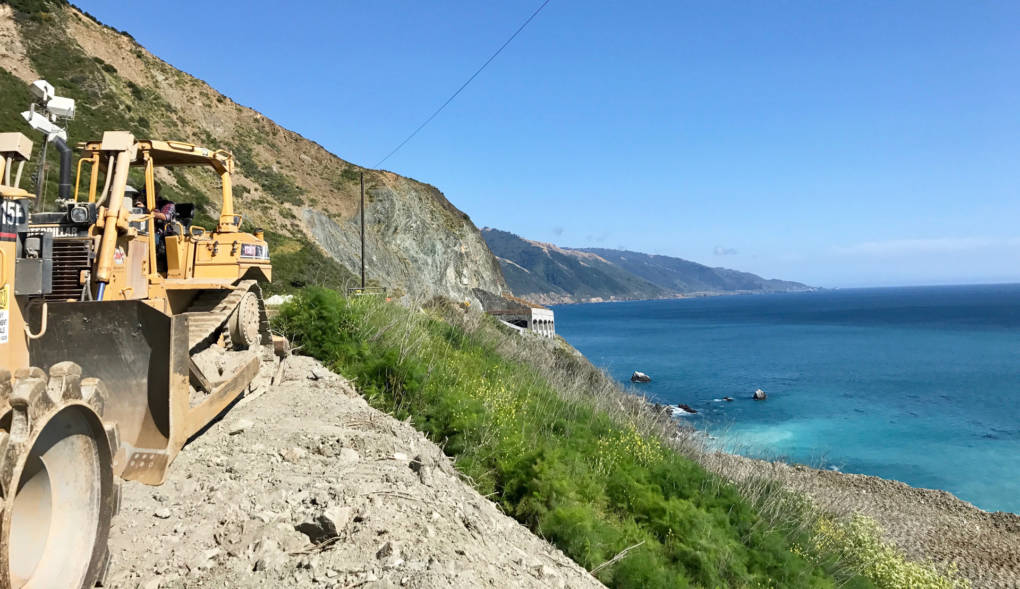
"caption": "Heavy equipment sits near Paul's Slide on Highway 1.",
"description": "Heavy equipment sits near the landslide on Highway 1 near the Bg Sur hamlet of Gorda.",
"title": "BigSurreal1",
"credit": "John Sepulvado/KQED",
"status": "inherit",
"isLoading": false,
"fetchFailed": false
},
"news_11498372": {
"type": "attachments",
"id": "news_11498372",
"meta": {
"index": "attachments_1716263798",
"site": "news",
"id": "11498372",
"found": true
},
"parent": 11496939,
"imgSizes": {
"small": {
"file": "https://ww2.kqed.org/app/uploads/sites/10/2017/06/nuisance_060617_final-520x520.jpg",
"width": 520,
"mimeType": "image/jpeg",
"height": 520
},
"twentyfourteen-full-width": {
"file": "https://ww2.kqed.org/app/uploads/sites/10/2017/06/nuisance_060617_final-1038x576.jpg",
"width": 1038,
"mimeType": "image/jpeg",
"height": 576
},
"thumbnail": {
"file": "https://ww2.kqed.org/app/uploads/sites/10/2017/06/nuisance_060617_final-160x160.jpg",
"width": 160,
"mimeType": "image/jpeg",
"height": 160
},
"fd-sm": {
"file": "https://ww2.kqed.org/app/uploads/sites/10/2017/06/nuisance_060617_final-960x960.jpg",
"width": 960,
"mimeType": "image/jpeg",
"height": 960
},
"post-thumbnail": {
"file": "https://ww2.kqed.org/app/uploads/sites/10/2017/06/nuisance_060617_final-672x372.jpg",
"width": 672,
"mimeType": "image/jpeg",
"height": 372
},
"xsmall": {
"file": "https://ww2.kqed.org/app/uploads/sites/10/2017/06/nuisance_060617_final-375x375.jpg",
"width": 375,
"mimeType": "image/jpeg",
"height": 375
},
"kqedFullSize": {
"file": "https://ww2.kqed.org/app/uploads/sites/10/2017/06/nuisance_060617_final.jpg",
"width": 1920,
"height": 1920
},
"large": {
"file": "https://ww2.kqed.org/app/uploads/sites/10/2017/06/nuisance_060617_final-1020x1020.jpg",
"width": 1020,
"mimeType": "image/jpeg",
"height": 1020
},
"xlarge": {
"file": "https://ww2.kqed.org/app/uploads/sites/10/2017/06/nuisance_060617_final-1180x1180.jpg",
"width": 1180,
"mimeType": "image/jpeg",
"height": 1180
},
"guest-author-50": {
"file": "https://ww2.kqed.org/app/uploads/sites/10/2017/06/nuisance_060617_final-50x50.jpg",
"width": 50,
"mimeType": "image/jpeg",
"height": 50
},
"guest-author-96": {
"file": "https://ww2.kqed.org/app/uploads/sites/10/2017/06/nuisance_060617_final-96x96.jpg",
"width": 96,
"mimeType": "image/jpeg",
"height": 96
},
"medium": {
"file": "https://ww2.kqed.org/app/uploads/sites/10/2017/06/nuisance_060617_final-800x800.jpg",
"width": 800,
"mimeType": "image/jpeg",
"height": 800
},
"guest-author-64": {
"file": "https://ww2.kqed.org/app/uploads/sites/10/2017/06/nuisance_060617_final-64x64.jpg",
"width": 64,
"mimeType": "image/jpeg",
"height": 64
},
"guest-author-32": {
"file": "https://ww2.kqed.org/app/uploads/sites/10/2017/06/nuisance_060617_final-32x32.jpg",
"width": 32,
"mimeType": "image/jpeg",
"height": 32
},
"fd-lrg": {
"file": "https://ww2.kqed.org/app/uploads/sites/10/2017/06/nuisance_060617_final-1920x1920.jpg",
"width": 1920,
"mimeType": "image/jpeg",
"height": 1920
},
"fd-med": {
"file": "https://ww2.kqed.org/app/uploads/sites/10/2017/06/nuisance_060617_final-1180x1180.jpg",
"width": 1180,
"mimeType": "image/jpeg",
"height": 1180
},
"full-width": {
"file": "https://ww2.kqed.org/app/uploads/sites/10/2017/06/nuisance_060617_final-1920x1920.jpg",
"width": 1920,
"mimeType": "image/jpeg",
"height": 1920
},
"detail": {
"file": "https://ww2.kqed.org/app/uploads/sites/10/2017/06/nuisance_060617_final-150x150.jpg",
"width": 150,
"mimeType": "image/jpeg",
"height": 150
},
"guest-author-128": {
"file": "https://ww2.kqed.org/app/uploads/sites/10/2017/06/nuisance_060617_final-128x128.jpg",
"width": 128,
"mimeType": "image/jpeg",
"height": 128
},
"xxsmall": {
"file": "https://ww2.kqed.org/app/uploads/sites/10/2017/06/nuisance_060617_final-240x240.jpg",
"width": 240,
"mimeType": "image/jpeg",
"height": 240
}
},
"publishDate": 1496854704,
"modified": 1496854737,
"caption": null,
"description": null,
"title": "nuisance_060617_final",
"credit": null,
"status": "inherit",
"isLoading": false,
"fetchFailed": false
}
},
"audioPlayerReducer": {
"postId": "stream_live",
"isPaused": true,
"isPlaying": false,
"pfsActive": false,
"pledgeModalIsOpen": true,
"playerDrawerIsOpen": false,
"liveAudioPlayStartedAt": 0,
"liveAudioPlayContext": ""
},
"authorsReducer": {
"byline_news_11513098": {
"type": "authors",
"id": "byline_news_11513098",
"meta": {
"override": true
},
"slug": "byline_news_11513098",
"name": "Aarti Shahani",
"isLoading": false
},
"byline_news_11508374": {
"type": "authors",
"id": "byline_news_11508374",
"meta": {
"override": true
},
"slug": "byline_news_11508374",
"name": "Aarti Shahani",
"isLoading": false
},
"byline_news_11507988": {
"type": "authors",
"id": "byline_news_11507988",
"meta": {
"override": true
},
"slug": "byline_news_11507988",
"name": "Bill Chappell\u003cbr>\u003cstrong>\u003ca href=\"http://www.npr.org/sections/thetwo-way/2017/06/13/532751641/ubers-travis-kalanick-announces-leave-of-absence-company-adopts-harassment-polic\">NPR\u003c/a>\u003c/strong>",
"isLoading": false
},
"byline_news_11505956": {
"type": "authors",
"id": "byline_news_11505956",
"meta": {
"override": true
},
"slug": "byline_news_11505956",
"name": "\u003cstrong>Tom Krisher and Bernard Condon\u003cbr />Associated Press\u003c/strong>",
"isLoading": false
},
"danbrekke": {
"type": "authors",
"id": "222",
"meta": {
"index": "authors_1716337520",
"id": "222",
"found": true
},
"name": "Dan Brekke",
"firstName": "Dan",
"lastName": "Brekke",
"slug": "danbrekke",
"email": "dbrekke@kqed.org",
"display_author_email": true,
"staff_mastheads": [
"news",
"science"
],
"title": "KQED Editor and Reporter",
"bio": "Dan Brekke is a reporter and editor for KQED News, responsible for coverage of topics ranging from California water issues to the Bay Area's transportation challenges. In a newsroom career that began in Chicago in 1972, Dan has worked for \u003cem>The San Francisco Examiner,\u003c/em> Wired and TechTV and has been published in The New York Times, The New York Times Magazine, Business 2.0, Salon and elsewhere.\r\n\r\nSince joining KQED in 2007, Dan has reported, edited and produced both radio and online features and breaking news pieces. He has shared as both editor and reporter in four Society of Professional Journalists Norcal Excellence in Journalism awards and one Edward R. Murrow regional award. He was chosen for a spring 2017 residency at the Mesa Refuge to advance his research on California salmon.\r\n\r\nEmail Dan at: \u003ca href=\"mailto:dbrekke@kqed.org\">dbrekke@kqed.org\u003c/a>\r\n\r\n\u003cstrong>Twitter:\u003c/strong> \u003ca href=\"https://twitter.com/danbrekke\" rel=\"noopener noreferrer\">twitter.com/danbrekke\u003c/a>\r\n\u003cstrong>Facebook:\u003c/strong> \u003ca href=\"https://www.facebook.com/danbrekke\" rel=\"noopener noreferrer\">www.facebook.com/danbrekke\u003c/a>\r\n\u003cstrong>LinkedIn:\u003c/strong> \u003ca href=\"https://www.linkedin.com/in/danbrekke\" rel=\"noopener noreferrer\">www.linkedin.com/in/danbrekke\u003c/a>",
"avatar": "https://secure.gravatar.com/avatar/8f1f0d2a978fb3b23426c922c7e2af558fa36905b49c4ce76a97dc3c72d27226?s=600&d=mm&r=g",
"twitter": "danbrekke",
"bluesky": null,
"facebook": null,
"instagram": "https://www.instagram.com/dan.brekke/",
"linkedin": "https://www.linkedin.com/in/danbrekke/",
"sites": [
{
"site": "news",
"roles": [
"administrator",
"create_posts"
]
},
{
"site": "stateofhealth",
"roles": [
"editor"
]
},
{
"site": "science",
"roles": [
"editor"
]
},
{
"site": "quest",
"roles": [
"contributor"
]
},
{
"site": "food",
"roles": [
"contributor"
]
},
{
"site": "forum",
"roles": [
"contributor"
]
},
{
"site": "elections",
"roles": [
"editor"
]
},
{
"site": "liveblog",
"roles": [
"editor"
]
}
],
"headData": {
"title": "Dan Brekke | KQED",
"description": "KQED Editor and Reporter",
"ogImgSrc": "https://secure.gravatar.com/avatar/8f1f0d2a978fb3b23426c922c7e2af558fa36905b49c4ce76a97dc3c72d27226?s=600&d=mm&r=g",
"twImgSrc": "https://secure.gravatar.com/avatar/8f1f0d2a978fb3b23426c922c7e2af558fa36905b49c4ce76a97dc3c72d27226?s=600&d=mm&r=g"
},
"isLoading": false,
"link": "/author/danbrekke"
},
"kqednewsstaffandwires": {
"type": "authors",
"id": "237",
"meta": {
"index": "authors_1716337520",
"id": "237",
"found": true
},
"name": "KQED News Staff and Wires",
"firstName": "KQED News Staff and Wires",
"lastName": null,
"slug": "kqednewsstaffandwires",
"email": "onlinenewsstaff@kqed.org",
"display_author_email": false,
"staff_mastheads": [],
"title": null,
"bio": null,
"avatar": "https://secure.gravatar.com/avatar/72295af8ebbfbd19a4948f5271285664?s=600&d=blank&r=g",
"twitter": null,
"facebook": null,
"instagram": null,
"linkedin": null,
"sites": [
{
"site": "arts",
"roles": [
"contributor"
]
},
{
"site": "news",
"roles": [
"contributor"
]
},
{
"site": "lowdown",
"roles": [
"author"
]
},
{
"site": "stateofhealth",
"roles": [
"contributor"
]
},
{
"site": "food",
"roles": [
"author"
]
}
],
"headData": {
"title": "KQED News Staff and Wires | KQED",
"description": null,
"ogImgSrc": "https://secure.gravatar.com/avatar/72295af8ebbfbd19a4948f5271285664?s=600&d=blank&r=g",
"twImgSrc": "https://secure.gravatar.com/avatar/72295af8ebbfbd19a4948f5271285664?s=600&d=blank&r=g"
},
"isLoading": false,
"link": "/author/kqednewsstaffandwires"
},
"tgoldberg": {
"type": "authors",
"id": "258",
"meta": {
"index": "authors_1716337520",
"id": "258",
"found": true
},
"name": "Ted Goldberg",
"firstName": "Ted",
"lastName": "Goldberg",
"slug": "tgoldberg",
"email": "tgoldberg@kqed.org",
"display_author_email": true,
"staff_mastheads": [
"news"
],
"title": "KQED Managing Editor, News and Newscasts",
"bio": "Ted Goldberg is Managing Editor of News and Newscasts at KQED. His main reporting beat is the Bay Area's oil refining industry.\r\n\r\nPrior to joining KQED in 2014, Ted worked at CBS News and WCBS AM in New York and Bay City News and KCBS Radio in San Francisco. He graduated from Oberlin College in Ohio in 1998.",
"avatar": "https://secure.gravatar.com/avatar/30ce2e4fe89135e104f89be2394d16225b9d36c121b5b3cb7651ce642978b96f?s=600&d=blank&r=g",
"twitter": "TedrickG",
"bluesky": null,
"facebook": null,
"instagram": null,
"linkedin": null,
"sites": [
{
"site": "news",
"roles": [
"editor"
]
},
{
"site": "science",
"roles": [
"editor"
]
}
],
"headData": {
"title": "Ted Goldberg | KQED",
"description": "KQED Managing Editor, News and Newscasts",
"ogImgSrc": "https://secure.gravatar.com/avatar/30ce2e4fe89135e104f89be2394d16225b9d36c121b5b3cb7651ce642978b96f?s=600&d=blank&r=g",
"twImgSrc": "https://secure.gravatar.com/avatar/30ce2e4fe89135e104f89be2394d16225b9d36c121b5b3cb7651ce642978b96f?s=600&d=blank&r=g"
},
"isLoading": false,
"link": "/author/tgoldberg"
},
"markfiore": {
"type": "authors",
"id": "3236",
"meta": {
"index": "authors_1716337520",
"id": "3236",
"found": true
},
"name": "Mark Fiore",
"firstName": "Mark",
"lastName": "Fiore",
"slug": "markfiore",
"email": "mark@markfiore.com",
"display_author_email": false,
"staff_mastheads": [
"news"
],
"title": "KQED News Cartoonist",
"bio": "\u003ca href=\"http://www.MarkFiore.com\">MarkFiore.com\u003c/a> | \u003ca href=\"https://twitter.com/markfiore\">Follow on Twitter\u003c/a> | \u003ca href=\"https://www.facebook.com/pages/Mark-Fiore-Animated-Political-Cartoons/94451707396?ref=bookmarks\">Facebook\u003c/a> | \u003ca href=\"mailto:mark@markfiore.com\">email\u003c/a>\r\n\r\nPulitzer Prize-winner, Mark Fiore, who the Wall Street Journal has called “the undisputed guru of the form,” creates animated political cartoons in San Francisco, where his work has been featured regularly on the San Francisco Chronicle’s web site, SFGate.com. His work has appeared on Newsweek.com, Slate.com, CBSNews.com, MotherJones.com, DailyKos.com and NPR’s web site. Fiore’s political animation has appeared on CNN, Frontline, Bill Moyers Journal, Salon.com and cable and broadcast outlets across the globe.\r\n\r\nBeginning his professional life by drawing traditional political cartoons for newspapers, Fiore’s work appeared in publications ranging from the Washington Post to the Los Angeles Times. In the late 1990s, he began to experiment with animating political cartoons and, after a short stint at the San Jose Mercury News as their staff cartoonist, Fiore devoted all his energies to animation.\r\nGrowing up in California, Fiore also spent a good portion of his life in the backwoods of Idaho. It was this combination that shaped him politically. Mark majored in political science at Colorado College, where, in a perfect send-off for a cartoonist, he received his diploma in 1991 as commencement speaker Dick Cheney smiled approvingly.\r\nMark Fiore was awarded the Pulitzer Prize for political cartooning in 2010, a Robert F. Kennedy Journalism Award in 2004 and has twice received an Online Journalism Award for commentary from the Online News Association (2002, 2008). Fiore has received two awards for his work in new media from the National Cartoonists Society (2001, 2002), and in 2006 received The James Madison Freedom of Information Award from The Society of Professional Journalists.",
"avatar": "https://secure.gravatar.com/avatar/fc4e2a612b15b67bad0c6f0e1db4ca9b?s=600&d=blank&r=g",
"twitter": "MarkFiore",
"facebook": null,
"instagram": "https://www.instagram.com/markfiore/?hl=en",
"linkedin": null,
"sites": [
{
"site": "arts",
"roles": [
"contributor"
]
},
{
"site": "news",
"roles": [
"editor"
]
},
{
"site": "futureofyou",
"roles": [
"editor"
]
},
{
"site": "science",
"roles": [
"editor"
]
}
],
"headData": {
"title": "Mark Fiore | KQED",
"description": "KQED News Cartoonist",
"ogImgSrc": "https://secure.gravatar.com/avatar/fc4e2a612b15b67bad0c6f0e1db4ca9b?s=600&d=blank&r=g",
"twImgSrc": "https://secure.gravatar.com/avatar/fc4e2a612b15b67bad0c6f0e1db4ca9b?s=600&d=blank&r=g"
},
"isLoading": false,
"link": "/author/markfiore"
},
"csaldana": {
"type": "authors",
"id": "11301",
"meta": {
"index": "authors_1716337520",
"id": "11301",
"found": true
},
"name": "Cesar Saldaña",
"firstName": "Cesar",
"lastName": "Saldaña",
"slug": "csaldana",
"email": "csaldana@kqed.org",
"display_author_email": false,
"staff_mastheads": [
"news"
],
"title": "KQED Contributor",
"bio": null,
"avatar": "https://secure.gravatar.com/avatar/04e89425007fe7102f750c79e76274bc?s=600&d=mm&r=g",
"twitter": null,
"facebook": null,
"instagram": null,
"linkedin": null,
"sites": [
{
"site": "news",
"roles": []
},
{
"site": "perspectives",
"roles": []
}
],
"headData": {
"title": "Cesar Saldaña | KQED",
"description": "KQED Contributor",
"ogImgSrc": "https://secure.gravatar.com/avatar/04e89425007fe7102f750c79e76274bc?s=600&d=mm&r=g",
"twImgSrc": "https://secure.gravatar.com/avatar/04e89425007fe7102f750c79e76274bc?s=600&d=mm&r=g"
},
"isLoading": false,
"link": "/author/csaldana"
},
"ajperry": {
"type": "authors",
"id": "11334",
"meta": {
"index": "authors_1716337520",
"id": "11334",
"found": true
},
"name": "Alyssa Jeong Perry",
"firstName": "Alyssa",
"lastName": "Perry",
"slug": "ajperry",
"email": "AlyssaPerry@KQED.org",
"display_author_email": false,
"staff_mastheads": [],
"title": "KQED Contributor",
"bio": "Alyssa Jeong Perry is a on-call reporter at KQED. She's had stories air on NPR and WBUR's \u003cem>Here & Now,\u003c/em> PRI's The World and WNYC's \u003cem>The Takeaway.\u003c/em> And her written stories have been published in \u003cem>The Guardian \u003c/em>and \u003cem>The Nation. \u003c/em> For her reporting on immigration, Alyssa was honored as a 2015 Ford Foundation fellow through International Center for Journalists and a 2016 Mark Felt fellow with the UC Berkeley's Investigative Reporting Program. She's also interned at \u003cem>Oregon Public Broadcasting \u003c/em>and has her masters in journalism from the UC Berkeley. Before diving deep into journalism, she lived in Korea for almost four years and traveled extensively through Central America and Asia.",
"avatar": "https://secure.gravatar.com/avatar/8601b3e2995177110a6b5beb3aaea2f3?s=600&d=blank&r=g",
"twitter": "alyssajperry",
"facebook": null,
"instagram": null,
"linkedin": null,
"sites": [
{
"site": "news",
"roles": [
"author"
]
}
],
"headData": {
"title": "Alyssa Jeong Perry | KQED",
"description": "KQED Contributor",
"ogImgSrc": "https://secure.gravatar.com/avatar/8601b3e2995177110a6b5beb3aaea2f3?s=600&d=blank&r=g",
"twImgSrc": "https://secure.gravatar.com/avatar/8601b3e2995177110a6b5beb3aaea2f3?s=600&d=blank&r=g"
},
"isLoading": false,
"link": "/author/ajperry"
}
},
"pagesReducer": {
"news_category_transportation": {
"type": "terms",
"id": "news_1397",
"meta": {
"index": "terms_1716263798",
"site": "news",
"id": "1397",
"score": 12.940577
},
"featImg": null,
"name": "Transportation",
"description": null,
"taxonomy": "category",
"headData": {
"twImgId": null,
"twTitle": null,
"ogTitle": null,
"ogImgId": null,
"twDescription": null,
"description": null,
"title": "Transportation Archives | KQED News",
"ogDescription": null
},
"ttid": 1409,
"slug": "transportation",
"isLoading": false,
"title": "Transportation",
"pageMeta": {
"site": "news",
"WpPageTemplate": "page-topic-editorial",
"currentPage": 76
},
"blocks": [
{
"blockName": "kqed/post-list",
"attrs": {
"layout": "cardArticle2",
"query": "posts/news?category=transportation",
"seeMore": false,
"paginated": true,
"page": 76
}
},
{
"blockName": "kqed/ad"
}
]
}
},
"pfsSessionReducer": {},
"postsReducer": {
"stream_live": {
"type": "live",
"id": "stream_live",
"audioUrl": "https://streams.kqed.org/kqedradio",
"title": "Live Stream",
"excerpt": "Live Stream information currently unavailable.",
"link": "/radio",
"featImg": "",
"label": {
"name": "KQED Live",
"link": "/"
}
},
"stream_kqedNewscast": {
"type": "posts",
"id": "stream_kqedNewscast",
"audioUrl": "https://www.kqed.org/.stream/anon/radio/RDnews/newscast.mp3?_=1",
"title": "KQED Newscast",
"featImg": "",
"label": {
"name": "88.5 FM",
"link": "/"
}
},
"news_11524190": {
"type": "posts",
"id": "news_11524190",
"meta": {
"index": "posts_1716263798",
"site": "news",
"id": "11524190",
"score": null,
"sort": [
1498068056000
]
},
"parent": 0,
"labelTerm": {
"site": "news",
"term": 72
},
"blocks": [],
"publishDate": 1498068056,
"format": "standard",
"disqusTitle": "Uber's Disruptive Disruptor Resigns",
"title": "Uber's Disruptive Disruptor Resigns",
"headTitle": "Mark Fiore: Drawn to the Bay | The California Report | KQED News",
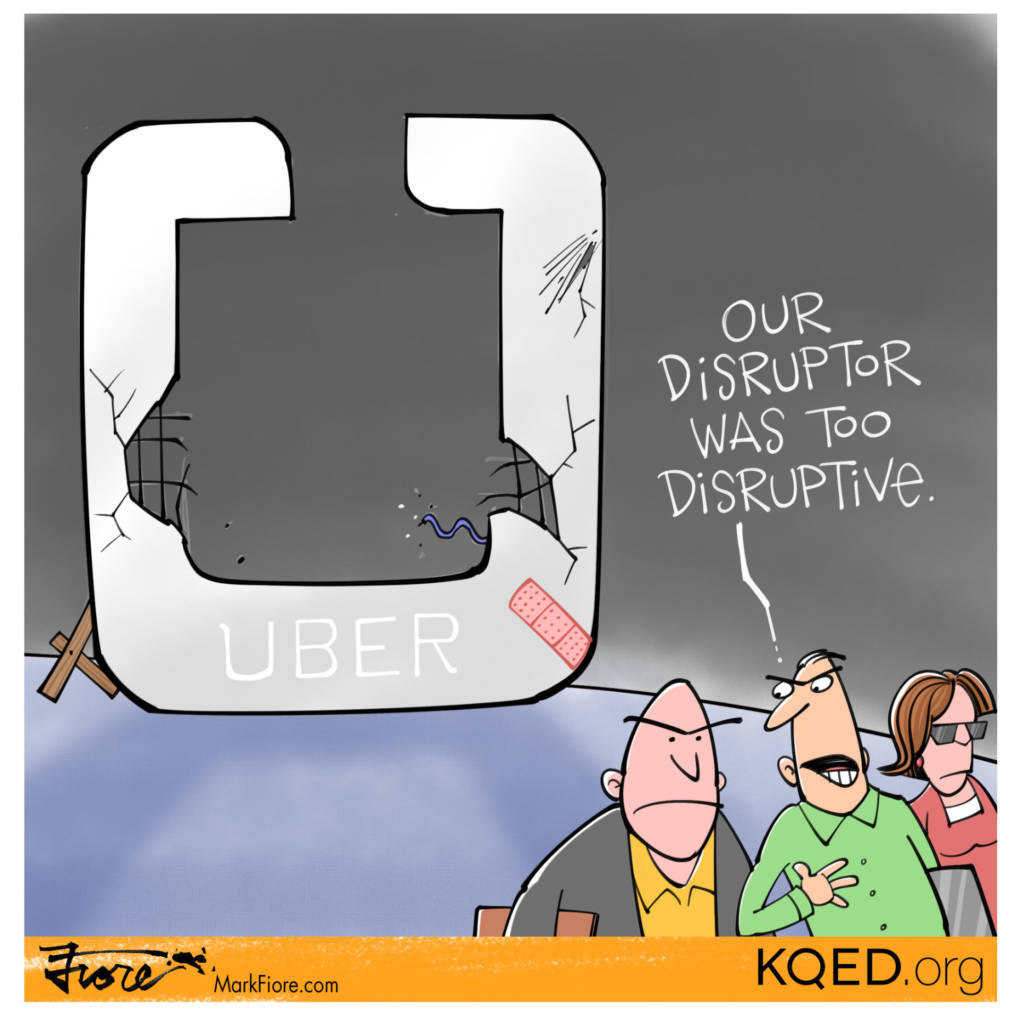
"content": "\u003cp>\u003ca href=\"https://ww2.kqed.org/news/2017/06/21/uber-investors-force-ceo-travis-kalanick-to-quit-post/\">Uber investors have forced embattled CEO Travis Kalanick to resign\u003c/a>.\u003c/p>\n\u003cp>The famously \"disruptive\" tech company faces mounting legal troubles for issues ranging from \u003ca href=\"https://ww2.kqed.org/news/2017/06/06/uber-fires-20-employees-after-investigation-of-harassment-and-bias-claims/\">sexual harassment\u003c/a> to \u003ca href=\"https://ww2.kqed.org/news/2017/05/15/judge-orders-uber-not-to-use-technology-taken-from-waymo/\">stealing trade secrets\u003c/a>. Apparently, there is a limit to the amount of disruption investors will tolerate.\u003c/p>\n\u003cp>[ad fullwidth]\u003c/p>\u003cp>\u003c/p>\n",
"disqusIdentifier": "11524190 https://ww2.kqed.org/news/?p=11524190",
"disqusUrl": "https://ww2.kqed.org/news/2017/06/21/ubers-disruptive-disruptor-resigns/",
"stats": {
"hasVideo": false,
"hasChartOrMap": false,
"hasAudio": false,
"hasPolis": false,
"wordCount": 47,
"hasGoogleForm": false,
"hasGallery": false,
"hasHearkenModule": false,
"iframeSrcs": [],
"paragraphCount": 4
},
"modified": 1498070432,
"excerpt": "Investors forced embattled CEO, Travis Kalanick, to resign. The famously 'disruptive' tech company faces mounting legal troubles for issues ranging from sexual harassment to stealing trade secrets.",
"headData": {
"twImgId": "",
"twTitle": "",
"ogTitle": "",
"ogImgId": "",
"twDescription": "",
"description": "Investors forced embattled CEO, Travis Kalanick, to resign. The famously 'disruptive' tech company faces mounting legal troubles for issues ranging from sexual harassment to stealing trade secrets.",
"title": "Uber's Disruptive Disruptor Resigns | KQED",
"ogDescription": "",
"schema": {
"@context": "https://schema.org",
"@type": "NewsArticle",
"headline": "Uber's Disruptive Disruptor Resigns",
"datePublished": "2017-06-21T11:00:56-07:00",
"dateModified": "2017-06-21T11:40:32-07:00",
"image": "https://cdn.kqed.org/wp-content/uploads/2020/02/KQED-OG-Image@1x.png",
"isAccessibleForFree": "True",
"publisher": {
"@type": "NewsMediaOrganization",
"@id": "https://www.kqed.org/#organization",
"name": "KQED",
"logo": "https://cdn.kqed.org/wp-content/uploads/2020/02/KQED-OG-Image@1x.png",
"url": "https://www.kqed.org",
"sameAs": [
"https://www.facebook.com/KQED",
"https://twitter.com/KQED",
"https://www.instagram.com/kqed/",
"https://www.tiktok.com/@kqedofficial",
"https://www.linkedin.com/company/kqed",
"https://www.youtube.com/channel/UCeC0IOo7i1P_61zVUWbJ4nw"
]
}
}
},
"guestAuthors": [],
"slug": "ubers-disruptive-disruptor-resigns",
"status": "publish",
"path": "/news/11524190/ubers-disruptive-disruptor-resigns",
"audioTrackLength": null,
"parsedContent": [
{
"type": "contentString",
"content": "\u003cdiv class=\"post-body\">\u003cp>\u003cp>\u003ca href=\"https://ww2.kqed.org/news/2017/06/21/uber-investors-force-ceo-travis-kalanick-to-quit-post/\">Uber investors have forced embattled CEO Travis Kalanick to resign\u003c/a>.\u003c/p>\n\u003cp>The famously \"disruptive\" tech company faces mounting legal troubles for issues ranging from \u003ca href=\"https://ww2.kqed.org/news/2017/06/06/uber-fires-20-employees-after-investigation-of-harassment-and-bias-claims/\">sexual harassment\u003c/a> to \u003ca href=\"https://ww2.kqed.org/news/2017/05/15/judge-orders-uber-not-to-use-technology-taken-from-waymo/\">stealing trade secrets\u003c/a>. Apparently, there is a limit to the amount of disruption investors will tolerate.\u003c/p>\n\u003cp>\u003c/p>\u003c/div>",
"attributes": {
"named": {},
"numeric": []
}
},
{
"type": "component",
"content": "",
"name": "ad",
"attributes": {
"named": {
"label": "fullwidth"
},
"numeric": [
"fullwidth"
]
}
},
{
"type": "contentString",
"content": "\u003cdiv class=\"post-body\">\u003cp>\u003c/p>\u003cp>\u003c/p>\n\u003c/div>\u003c/p>",
"attributes": {
"named": {},
"numeric": []
}
}
],
"link": "/news/11524190/ubers-disruptive-disruptor-resigns",
"authors": [
"3236"
],
"programs": [
"news_6944",
"news_72"
],
"series": [
"news_18515"
],
"categories": [
"news_1758",
"news_8",
"news_248",
"news_1397"
],
"tags": [
"news_20150",
"news_20949",
"news_18183",
"news_20602",
"news_4523"
],
"featImg": "news_11524191",
"label": "news_72"
},
"news_11523448": {
"type": "posts",
"id": "news_11523448",
"meta": {
"index": "posts_1716263798",
"site": "news",
"id": "11523448",
"score": null,
"sort": [
1498031235000
]
},
"parent": 0,
"labelTerm": {
"site": "news",
"term": 72
},
"blocks": [],
"publishDate": 1498031235,
"format": "standard",
"disqusTitle": "Uber Investors Force CEO Travis Kalanick to Quit Post",
"title": "Uber Investors Force CEO Travis Kalanick to Quit Post",
"headTitle": "The California Report | KQED News",
"content": "\u003cp>Travis Kalanick, the combative and troubled CEO of San Francisco-based ride-service company Uber, resigned Tuesday under pressure from investors.\u003c/p>\n\u003cp>\u003ca href=\"https://www.nytimes.com/2017/06/21/technology/uber-ceo-travis-kalanick.html?_r=0\" target=\"_blank\">According to The New York Times\u003c/a>:\u003c/p>\n\u003cblockquote>\u003cp>\nMr. Kalanick’s exit came under pressure after hours of drama involving Uber’s investors, according to two people with knowledge of the situation, who asked to remain anonymous because the details were confidential.\u003c/p>\n\u003cp>Earlier on Tuesday, five of Uber’s major investors demanded that the chief executive resign immediately. The investors included one of Uber’s biggest shareholders, the venture capital firm Benchmark, which has one of its partners, Bill Gurley, on Uber’s board. The investors made their demand for Mr. Kalanick to step down in a letter delivered to the chief executive while he was in Chicago, said the people with knowledge of the situation.\u003c/p>\n\u003cp>In the letter, titled “Moving Uber Forward” and obtained by The New York Times, the investors wrote to Mr. Kalanick that he must immediately leave and that the company needed a change in leadership. Mr. Kalanick, 40, consulted with at least one Uber board member, and after long discussions with some of the investors, he agreed to step down. He will remain on Uber’s board of directors.\u003c/p>\u003c/blockquote>\n\u003cp>The Times reported that in his own statement, Kalanick said: \"I love Uber more than anything in the world and at this difficult moment in my personal life I have accepted the investors request to step aside so that Uber can go back to building rather than be distracted with another fight.\"\u003c/p>\n\u003cp>[contextly_sidebar id=\"Lw7lvxFLS5Een9Kk1zkSdxmD8KWZp2XC\"]\u003c/p>\n\u003cp>The board's move came less than a week after Kalanick had announced he would take an indefinite leave of absence amid professional and personal crises. \u003c/p>\n\u003cp>[ad fullwidth]\u003c/p>\n\u003cp>The Uber cofounder's mother was killed last month in a boating accident on Pine Flat Lake, east of Fresno. Kalanick said his leave was intended in part to give him time to grieve. \u003c/p>\n\u003cp>Meantime, his leadership of the company had come under intensifying fire in the wake of charges that Uber management tolerated sexual harassment of and discrimination against the few women in its ranks. The allegations led the company to hire the law firm of former Attorney General Eric Holder to investigate. \u003c/p>\n\u003cp>That inquiry led to the firing of 20 employees and \u003ca href=\"https://www.nytimes.com/2017/06/12/technology/uber-travis-kalanick-emil-michael.html\" target=\"_blank\">the forced departure \u003c/a>of one of Kalanick's closest lieutentants, Emil Michael. He was the company's senior vice president for business and \u003ca href=\"https://ww2.kqed.org/news/2014/11/18/uber-ceo-tries-to-outrace-avalanche-of-criticism-after-execs-remarks-about-reporters/\" target=\"_blank\">was notorious\u003c/a> for once suggesting Uber could spy on and discredit journalists critical of the company. \u003c/p>\n\u003cp>[contextly_sidebar id=\"CkzJyu2ox3SPWHB6SDcDcIzXCAz0EKXQ\"]\u003c/p>\n\u003cp>Kalanick's resignation came after a series of costly missteps by the fast-growing company that he helped found eight years ago. Uber on Monday embarked on a 180-day program to change its image by allowing riders to give drivers tips through the Uber app, something the company had resisted under Kalanick.\u003c/p>\n\u003cp>While building the world's biggest ride-hailing service, Uber developed a reputation for ruthless tactics that have occasionally outraged government regulators, drivers, riders and its employees.\u003c/p>\n\u003cp>The company's hard-charging style has led to legal trouble. The U.S. Justice Department is investigating Uber's past usage of phony software designed to thwart regulators.\u003c/p>\n\u003cp>Uber also is fighting allegations that it relies on a key piece of technology stolen from Google spin-off Waymo to build self-driving cars.\u003c/p>\n\u003cp>\u003c/p>\n\u003cp>\u003cem>This post contains reporting from The Associated Press.\u003c/em> \u003c/p>\n\n",
"disqusIdentifier": "11523448 https://ww2.kqed.org/news/?p=11523448",
"disqusUrl": "https://ww2.kqed.org/news/2017/06/21/uber-investors-force-ceo-travis-kalanick-to-quit-post/",
"stats": {
"hasVideo": false,
"hasChartOrMap": false,
"hasAudio": false,
"hasPolis": false,
"wordCount": 572,
"hasGoogleForm": false,
"hasGallery": false,
"hasHearkenModule": false,
"iframeSrcs": [],
"paragraphCount": 19
},
"modified": 1498086950,
"excerpt": "Backers reportedly wanted ride-hailing firm's cofounder out to speed change in company culture. ",
"headData": {
"twImgId": "",
"twTitle": "",
"ogTitle": "",
"ogImgId": "",
"twDescription": "",
"description": "Backers reportedly wanted ride-hailing firm's cofounder out to speed change in company culture. ",
"title": "Uber Investors Force CEO Travis Kalanick to Quit Post | KQED",
"ogDescription": "",
"schema": {
"@context": "https://schema.org",
"@type": "NewsArticle",
"headline": "Uber Investors Force CEO Travis Kalanick to Quit Post",
"datePublished": "2017-06-21T00:47:15-07:00",
"dateModified": "2017-06-21T16:15:50-07:00",
"image": "https://cdn.kqed.org/wp-content/uploads/2020/02/KQED-OG-Image@1x.png",
"isAccessibleForFree": "True",
"publisher": {
"@type": "NewsMediaOrganization",
"@id": "https://www.kqed.org/#organization",
"name": "KQED",
"logo": "https://cdn.kqed.org/wp-content/uploads/2020/02/KQED-OG-Image@1x.png",
"url": "https://www.kqed.org",
"sameAs": [
"https://www.facebook.com/KQED",
"https://twitter.com/KQED",
"https://www.instagram.com/kqed/",
"https://www.tiktok.com/@kqedofficial",
"https://www.linkedin.com/company/kqed",
"https://www.youtube.com/channel/UCeC0IOo7i1P_61zVUWbJ4nw"
]
}
}
},
"guestAuthors": [],
"slug": "uber-investors-force-ceo-travis-kalanick-to-quit-post",
"status": "publish",
"path": "/news/11523448/uber-investors-force-ceo-travis-kalanick-to-quit-post",
"audioTrackLength": null,
"parsedContent": [
{
"type": "contentString",
"content": "\u003cdiv class=\"post-body\">\u003cp>\u003cp>Travis Kalanick, the combative and troubled CEO of San Francisco-based ride-service company Uber, resigned Tuesday under pressure from investors.\u003c/p>\n\u003cp>\u003ca href=\"https://www.nytimes.com/2017/06/21/technology/uber-ceo-travis-kalanick.html?_r=0\" target=\"_blank\">According to The New York Times\u003c/a>:\u003c/p>\n\u003cblockquote>\u003cp>\nMr. Kalanick’s exit came under pressure after hours of drama involving Uber’s investors, according to two people with knowledge of the situation, who asked to remain anonymous because the details were confidential.\u003c/p>\n\u003cp>Earlier on Tuesday, five of Uber’s major investors demanded that the chief executive resign immediately. The investors included one of Uber’s biggest shareholders, the venture capital firm Benchmark, which has one of its partners, Bill Gurley, on Uber’s board. The investors made their demand for Mr. Kalanick to step down in a letter delivered to the chief executive while he was in Chicago, said the people with knowledge of the situation.\u003c/p>\n\u003cp>In the letter, titled “Moving Uber Forward” and obtained by The New York Times, the investors wrote to Mr. Kalanick that he must immediately leave and that the company needed a change in leadership. Mr. Kalanick, 40, consulted with at least one Uber board member, and after long discussions with some of the investors, he agreed to step down. He will remain on Uber’s board of directors.\u003c/p>\u003c/blockquote>\n\u003cp>The Times reported that in his own statement, Kalanick said: \"I love Uber more than anything in the world and at this difficult moment in my personal life I have accepted the investors request to step aside so that Uber can go back to building rather than be distracted with another fight.\"\u003c/p>\n\u003cp>\u003c/p>\u003cp>\u003c/p>\u003cp>\u003c/p>\n\u003cp>The board's move came less than a week after Kalanick had announced he would take an indefinite leave of absence amid professional and personal crises. \u003c/p>\n\u003cp>\u003c/p>\u003c/div>",
"attributes": {
"named": {},
"numeric": []
}
},
{
"type": "component",
"content": "",
"name": "ad",
"attributes": {
"named": {
"label": "fullwidth"
},
"numeric": [
"fullwidth"
]
}
},
{
"type": "contentString",
"content": "\u003cdiv class=\"post-body\">\u003cp>\u003c/p>\n\u003cp>The Uber cofounder's mother was killed last month in a boating accident on Pine Flat Lake, east of Fresno. Kalanick said his leave was intended in part to give him time to grieve. \u003c/p>\n\u003cp>Meantime, his leadership of the company had come under intensifying fire in the wake of charges that Uber management tolerated sexual harassment of and discrimination against the few women in its ranks. The allegations led the company to hire the law firm of former Attorney General Eric Holder to investigate. \u003c/p>\n\u003cp>That inquiry led to the firing of 20 employees and \u003ca href=\"https://www.nytimes.com/2017/06/12/technology/uber-travis-kalanick-emil-michael.html\" target=\"_blank\">the forced departure \u003c/a>of one of Kalanick's closest lieutentants, Emil Michael. He was the company's senior vice president for business and \u003ca href=\"https://ww2.kqed.org/news/2014/11/18/uber-ceo-tries-to-outrace-avalanche-of-criticism-after-execs-remarks-about-reporters/\" target=\"_blank\">was notorious\u003c/a> for once suggesting Uber could spy on and discredit journalists critical of the company. \u003c/p>\n\u003cp>\u003c/p>\u003cp>\u003c/p>\u003cp>\u003c/p>\n\u003cp>Kalanick's resignation came after a series of costly missteps by the fast-growing company that he helped found eight years ago. Uber on Monday embarked on a 180-day program to change its image by allowing riders to give drivers tips through the Uber app, something the company had resisted under Kalanick.\u003c/p>\n\u003cp>While building the world's biggest ride-hailing service, Uber developed a reputation for ruthless tactics that have occasionally outraged government regulators, drivers, riders and its employees.\u003c/p>\n\u003cp>The company's hard-charging style has led to legal trouble. The U.S. Justice Department is investigating Uber's past usage of phony software designed to thwart regulators.\u003c/p>\n\u003cp>Uber also is fighting allegations that it relies on a key piece of technology stolen from Google spin-off Waymo to build self-driving cars.\u003c/p>\n\u003cp>\u003c/p>\n\u003cp>\u003cem>This post contains reporting from The Associated Press.\u003c/em> \u003c/p>\n\n\u003c/div>\u003c/p>",
"attributes": {
"named": {},
"numeric": []
}
}
],
"link": "/news/11523448/uber-investors-force-ceo-travis-kalanick-to-quit-post",
"authors": [
"237"
],
"programs": [
"news_6944",
"news_72"
],
"categories": [
"news_1758",
"news_8",
"news_1397"
],
"tags": [
"news_19542",
"news_17041",
"news_20602",
"news_4523"
],
"featImg": "news_11506019",
"label": "news_72"
},
"news_11514963": {
"type": "posts",
"id": "news_11514963",
"meta": {
"index": "posts_1716263798",
"site": "news",
"id": "11514963",
"score": null,
"sort": [
1497998308000
]
},
"parent": 0,
"labelTerm": {
"site": "news",
"term": 72
},
"blocks": [],
"publishDate": 1497998308,
"format": "standard",
"disqusTitle": "State Regulators Investigate Burn Injury at Tesla's Fremont Plant",
"title": "State Regulators Investigate Burn Injury at Tesla's Fremont Plant",
"headTitle": "The California Report | KQED News",
"content": "\u003cp>Cal/OSHA is investigating an injury involving an outside contractor working at the Tesla plant in Fremont as the electric car maker faces scrutiny over workplace safety by labor activists.\u003c/p>\n\u003cp>The state occupational safety and health regulator said the injured employee was working at the factory when he sustained second and third degree burns from an electrical explosion. The worker is still recovering in a burn center at a Bay Area hospital.\u003c/p>\n\u003cp>Now Cal/OSHA is \u003ca href=\"https://www.osha.gov/pls/imis/establishment.inspection_detail?id=1237433.015\" target=\"_blank\">investigating\u003c/a> Mark III Construction, the company that employed the injured contract worker. No investigation has been opened against Tesla.[contextly_sidebar id=\"gq7SgnS16udFFrY30bgaJb86s87AJT9j\"]\u003c/p>\n\u003cp>This incident comes at a time when Tesla employees make moves toward unionizing as a response to the company's workplace safety record. Some Tesla employees are working with the United Auto Workers Union to organize the Fremont plant. Those workers cite \u003ca href=\"https://ww2.kqed.org/news/2017/05/31/workers-report-injuries-at-tesla-factory/\" target=\"_blank\">poor work safety conditions\u003c/a> as one of their reasons for unionizing.\u003c/p>\n\u003cp>The number of recorded injuries at Tesla's Fremont plant was 31 percent higher than the industry average, according to a \u003ca href=\"http://www.worksafe.org/2017/05/test-title.html\" target=\"_blank\">report\u003c/a> issued by Worksafe, a labor advocacy group. Worksafe analysed incident rates reported to the U.S. Bureau of Labor Statistics in 2015. Statistics for 2016 haven't been released.\u003c/p>\n\u003cp>[ad fullwidth]\u003c/p>\n\u003cp>\u003c/p>\n\u003cp>The car maker disputed the claim in a \u003ca href=\"https://www.tesla.com/blog/creating-the-safest-car-factory-in-the-world\" target=\"_blank\">blog post\u003c/a>, saying it's improved safety at its Fremont plant. Tesla says its injury rates are now significantly lower than the industry average.\u003c/p>\n\n",
"disqusIdentifier": "11514963 https://ww2.kqed.org/news/?p=11514963",
"disqusUrl": "https://ww2.kqed.org/news/2017/06/20/state-regulators-investigate-burn-injury-at-teslas-fremont-plant/",
"stats": {
"hasVideo": false,
"hasChartOrMap": false,
"hasAudio": false,
"hasPolis": false,
"wordCount": 249,
"hasGoogleForm": false,
"hasGallery": false,
"hasHearkenModule": false,
"iframeSrcs": [],
"paragraphCount": 8
},
"modified": 1497998308,
"excerpt": "Probe comes as the electric car maker faces scrutiny over workplace safety by labor activists.",
"headData": {
"twImgId": "",
"twTitle": "",
"ogTitle": "",
"ogImgId": "",
"twDescription": "",
"description": "Probe comes as the electric car maker faces scrutiny over workplace safety by labor activists.",
"title": "State Regulators Investigate Burn Injury at Tesla's Fremont Plant | KQED",
"ogDescription": "",
"schema": {
"@context": "https://schema.org",
"@type": "NewsArticle",
"headline": "State Regulators Investigate Burn Injury at Tesla's Fremont Plant",
"datePublished": "2017-06-20T15:38:28-07:00",
"dateModified": "2017-06-20T15:38:28-07:00",
"image": "https://cdn.kqed.org/wp-content/uploads/2020/02/KQED-OG-Image@1x.png",
"isAccessibleForFree": "True",
"publisher": {
"@type": "NewsMediaOrganization",
"@id": "https://www.kqed.org/#organization",
"name": "KQED",
"logo": "https://cdn.kqed.org/wp-content/uploads/2020/02/KQED-OG-Image@1x.png",
"url": "https://www.kqed.org",
"sameAs": [
"https://www.facebook.com/KQED",
"https://twitter.com/KQED",
"https://www.instagram.com/kqed/",
"https://www.tiktok.com/@kqedofficial",
"https://www.linkedin.com/company/kqed",
"https://www.youtube.com/channel/UCeC0IOo7i1P_61zVUWbJ4nw"
]
}
}
},
"guestAuthors": [],
"slug": "state-regulators-investigate-burn-injury-at-teslas-fremont-plant",
"status": "publish",
"customPermalink": "2017/06/16/cal-osha-investigating-a-burned-contractor-at-teslas-fremont-plant/",
"path": "/news/11514963/state-regulators-investigate-burn-injury-at-teslas-fremont-plant",
"audioTrackLength": null,
"parsedContent": [
{
"type": "contentString",
"content": "\u003cdiv class=\"post-body\">\u003cp>\u003cp>Cal/OSHA is investigating an injury involving an outside contractor working at the Tesla plant in Fremont as the electric car maker faces scrutiny over workplace safety by labor activists.\u003c/p>\n\u003cp>The state occupational safety and health regulator said the injured employee was working at the factory when he sustained second and third degree burns from an electrical explosion. The worker is still recovering in a burn center at a Bay Area hospital.\u003c/p>\n\u003cp>Now Cal/OSHA is \u003ca href=\"https://www.osha.gov/pls/imis/establishment.inspection_detail?id=1237433.015\" target=\"_blank\">investigating\u003c/a> Mark III Construction, the company that employed the injured contract worker. No investigation has been opened against Tesla.\u003c/p>\u003cp>\u003c/p>\u003cp>\u003c/p>\n\u003cp>This incident comes at a time when Tesla employees make moves toward unionizing as a response to the company's workplace safety record. Some Tesla employees are working with the United Auto Workers Union to organize the Fremont plant. Those workers cite \u003ca href=\"https://ww2.kqed.org/news/2017/05/31/workers-report-injuries-at-tesla-factory/\" target=\"_blank\">poor work safety conditions\u003c/a> as one of their reasons for unionizing.\u003c/p>\n\u003cp>The number of recorded injuries at Tesla's Fremont plant was 31 percent higher than the industry average, according to a \u003ca href=\"http://www.worksafe.org/2017/05/test-title.html\" target=\"_blank\">report\u003c/a> issued by Worksafe, a labor advocacy group. Worksafe analysed incident rates reported to the U.S. Bureau of Labor Statistics in 2015. Statistics for 2016 haven't been released.\u003c/p>\n\u003cp>\u003c/p>\u003c/div>",
"attributes": {
"named": {},
"numeric": []
}
},
{
"type": "component",
"content": "",
"name": "ad",
"attributes": {
"named": {
"label": "fullwidth"
},
"numeric": [
"fullwidth"
]
}
},
{
"type": "contentString",
"content": "\u003cdiv class=\"post-body\">\u003cp>\u003c/p>\n\u003cp>\u003c/p>\n\u003cp>The car maker disputed the claim in a \u003ca href=\"https://www.tesla.com/blog/creating-the-safest-car-factory-in-the-world\" target=\"_blank\">blog post\u003c/a>, saying it's improved safety at its Fremont plant. Tesla says its injury rates are now significantly lower than the industry average.\u003c/p>\n\n\u003c/div>\u003c/p>",
"attributes": {
"named": {},
"numeric": []
}
}
],
"link": "/news/11514963/state-regulators-investigate-burn-injury-at-teslas-fremont-plant",
"authors": [
"11334"
],
"programs": [
"news_6944",
"news_72"
],
"categories": [
"news_8",
"news_248",
"news_1397"
],
"tags": [
"news_5043",
"news_57"
],
"featImg": "news_11522582",
"label": "news_72"
},
"news_11514415": {
"type": "posts",
"id": "news_11514415",
"meta": {
"index": "posts_1716263798",
"site": "news",
"id": "11514415",
"score": null,
"sort": [
1497647796000
]
},
"parent": 0,
"labelTerm": {
"site": "news",
"term": 6944
},
"blocks": [],
"publishDate": 1497647796,
"format": "standard",
"disqusTitle": "Warriors Parade Gives BART Another Banner Ridership Day",
"title": "Warriors Parade Gives BART Another Banner Ridership Day",
"headTitle": "News Fix | KQED News",
"content": "\u003cp>No one really knows exactly how many members of #DubNation turned out for the Golden State Warriors championship parade Thursday in Oakland -- though we've heard the number \"1 million\" thrown around.\u003c/p>\n\u003cp>But if you're looking for an exact number that gives some idea of how big the crowd was relative to similar events in the past, here's one: BART reports that it recorded 518,744 fare-gate exits on Thursday. That's 23 percent higher than the system's average weekday ridership in May, 421,000 exits.\u003c/p>\n\u003cp>The transit system wasn't quite as busy as it was June 19, 2015 -- the last time the Warriors and their fans partied on the streets of Oakland. BART reported 548,000 exits that day.\u003c/p>\n\u003cp>Unsurprisingly, the biggest surge in activity on Thursday occurred at the three downtown Oakland stations: 19th Street, 12th Street and Lake Merritt. Those three stations together averaged 34,125 exits on weekdays last month. Thursday, nearly 91,000 people came through the stations' fare gates. That's a 166 percent increase over the May average.\u003c/p>\n\u003cp>In longer-term BART history, Thursday was BART's fifth-busiest day ever and only the sixth time in the system's 45-year history that it has exceeded a half-million fare-gate exits in a day. Nine of BART's top 10 ridership days (see the table below) are connected to Bay Area sports events.\u003c/p>\n\u003cp>[ad fullwidth]\u003c/p>\n\u003cp>The single exception was Aug. 29, 2013. That was the Thursday leading into Labor Day weekend 2013, when the Bay Bridge was closed while Caltrans prepared to open the new eastern span.\u003c/p>\n\u003cp>BART's biggest day ever is still Oct. 31, 2012, the date of the Giants World Series victory parade, when 568,061 exits were recorded.\u003c/p>\n\u003cp>\u003c/p>\n\u003cp>\u003c!-- iframe plugin v.4.3 wordpress.org/plugins/iframe/ -->\u003cbr>\n\u003ciframe src=\"//datawrapper.dwcdn.net/3gdxf/1/\" scrolling=\"no\" frameborder=\"0\" allowtransparency=\"true\" width=\"600\" height=\"584\" class=\"iframe-class\">\u003c/iframe>\u003c/p>\n\n",
"disqusIdentifier": "11514415 https://ww2.kqed.org/news/?p=11514415",
"disqusUrl": "https://ww2.kqed.org/news/2017/06/16/warriors-parade-gives-bart-another-banner-ridership-day/",
"stats": {
"hasVideo": false,
"hasChartOrMap": false,
"hasAudio": false,
"hasPolis": false,
"wordCount": 296,
"hasGoogleForm": false,
"hasGallery": false,
"hasHearkenModule": false,
"iframeSrcs": [],
"paragraphCount": 10
},
"modified": 1528823355,
"excerpt": "The agency counted 518,000 fare-gate exits -- less than for 2015 Dubs celebration but still its fifth-busiest day ever. ",
"headData": {
"twImgId": "",
"twTitle": "",
"ogTitle": "",
"ogImgId": "",
"twDescription": "",
"description": "The agency counted 518,000 fare-gate exits -- less than for 2015 Dubs celebration but still its fifth-busiest day ever. ",
"title": "Warriors Parade Gives BART Another Banner Ridership Day | KQED",
"ogDescription": "",
"schema": {
"@context": "https://schema.org",
"@type": "NewsArticle",
"headline": "Warriors Parade Gives BART Another Banner Ridership Day",
"datePublished": "2017-06-16T14:16:36-07:00",
"dateModified": "2018-06-12T10:09:15-07:00",
"image": "https://cdn.kqed.org/wp-content/uploads/2020/02/KQED-OG-Image@1x.png",
"isAccessibleForFree": "True",
"publisher": {
"@type": "NewsMediaOrganization",
"@id": "https://www.kqed.org/#organization",
"name": "KQED",
"logo": "https://cdn.kqed.org/wp-content/uploads/2020/02/KQED-OG-Image@1x.png",
"url": "https://www.kqed.org",
"sameAs": [
"https://www.facebook.com/KQED",
"https://twitter.com/KQED",
"https://www.instagram.com/kqed/",
"https://www.tiktok.com/@kqedofficial",
"https://www.linkedin.com/company/kqed",
"https://www.youtube.com/channel/UCeC0IOo7i1P_61zVUWbJ4nw"
]
}
}
},
"guestAuthors": [],
"slug": "warriors-parade-gives-bart-another-banner-ridership-day",
"status": "publish",
"path": "/news/11514415/warriors-parade-gives-bart-another-banner-ridership-day",
"audioTrackLength": null,
"parsedContent": [
{
"type": "contentString",
"content": "\u003cdiv class=\"post-body\">\u003cp>\u003cp>No one really knows exactly how many members of #DubNation turned out for the Golden State Warriors championship parade Thursday in Oakland -- though we've heard the number \"1 million\" thrown around.\u003c/p>\n\u003cp>But if you're looking for an exact number that gives some idea of how big the crowd was relative to similar events in the past, here's one: BART reports that it recorded 518,744 fare-gate exits on Thursday. That's 23 percent higher than the system's average weekday ridership in May, 421,000 exits.\u003c/p>\n\u003cp>The transit system wasn't quite as busy as it was June 19, 2015 -- the last time the Warriors and their fans partied on the streets of Oakland. BART reported 548,000 exits that day.\u003c/p>\n\u003cp>Unsurprisingly, the biggest surge in activity on Thursday occurred at the three downtown Oakland stations: 19th Street, 12th Street and Lake Merritt. Those three stations together averaged 34,125 exits on weekdays last month. Thursday, nearly 91,000 people came through the stations' fare gates. That's a 166 percent increase over the May average.\u003c/p>\n\u003cp>In longer-term BART history, Thursday was BART's fifth-busiest day ever and only the sixth time in the system's 45-year history that it has exceeded a half-million fare-gate exits in a day. Nine of BART's top 10 ridership days (see the table below) are connected to Bay Area sports events.\u003c/p>\n\u003cp>\u003c/p>\u003c/div>",
"attributes": {
"named": {},
"numeric": []
}
},
{
"type": "component",
"content": "",
"name": "ad",
"attributes": {
"named": {
"label": "fullwidth"
},
"numeric": [
"fullwidth"
]
}
},
{
"type": "contentString",
"content": "\u003cdiv class=\"post-body\">\u003cp>\u003c/p>\n\u003cp>The single exception was Aug. 29, 2013. That was the Thursday leading into Labor Day weekend 2013, when the Bay Bridge was closed while Caltrans prepared to open the new eastern span.\u003c/p>\n\u003cp>BART's biggest day ever is still Oct. 31, 2012, the date of the Giants World Series victory parade, when 568,061 exits were recorded.\u003c/p>\n\u003cp>\u003c/p>\n\u003cp>\u003c!-- iframe plugin v.4.3 wordpress.org/plugins/iframe/ -->\u003cbr>\n\u003ciframe src=\"//datawrapper.dwcdn.net/3gdxf/1/\" scrolling=\"no\" frameborder=\"0\" allowtransparency=\"true\" width=\"600\" height=\"584\" class=\"iframe-class\">\u003c/iframe>\u003c/p>\n\n\u003c/div>\u003c/p>",
"attributes": {
"named": {},
"numeric": []
}
}
],
"link": "/news/11514415/warriors-parade-gives-bart-another-banner-ridership-day",
"authors": [
"222"
],
"programs": [
"news_6944"
],
"categories": [
"news_8",
"news_1397"
],
"tags": [
"news_269",
"news_935"
],
"featImg": "news_11514787",
"label": "news_6944"
},
"news_11514480": {
"type": "posts",
"id": "news_11514480",
"meta": {
"index": "posts_1716263798",
"site": "news",
"id": "11514480",
"score": null,
"sort": [
1497639452000
]
},
"parent": 0,
"labelTerm": {
"site": "news",
"term": 72
},
"blocks": [],
"publishDate": 1497639452,
"format": "standard",
"disqusTitle": "Refinery, Tanker Firm Cited for Fumes That Sickened Scores in Vallejo",
"title": "Refinery, Tanker Firm Cited for Fumes That Sickened Scores in Vallejo",
"headTitle": "The California Report | KQED News",
"content": "\u003cp>Local air regulators have issued notices of violation to the Phillips 66 refinery in Rodeo and to the operator of an oil tanker for spilling crude oil they say caused an overpowering odor that sickened Vallejo residents last September.\u003c/p>\n\u003cp>The Bay Area Air Quality Management District says it has concluded its investigation into the incident and now believes the spill near the refinery's marine terminal is to blame for fumes that prompted more than 1,400 odor complaints.\u003c/p>\n\u003cp>The fumes and resulting odor led Vallejo officials to impose a shelter-in-place order for the city of 120,000. Some residents sought medical attention after suffering breathing problems, and the air district said Friday the incident led to 100 hospital visits.\u003c/p>\n\u003cp>The Sept. 20 oil spill in San Pablo Bay led to investigations by the Coast Guard and the state's Office of Spill Prevention and Response. The Coast Guard probe blamed Phillips 66 and the operators of the tanker, the Yamuna Spirit, for the oil spill. Both companies rejected those findings.\u003c/p>\n\u003cp>But until now, no investigation had definitively linked the oil spill to the fumes that wafted over Vallejo.\u003c/p>\n\u003cp>[ad fullwidth]\u003c/p>\n\u003cp>\"The air district thoroughly investigated this incident and determined the Phillips 66 refinery and the Yamuna Spirit oil tanker operator played a role in this event and both parties will be held accountable,\" said Jack Broadbent, the agency's executive officer, in a statement Friday.\u003c/p>\n\u003cp>The public nuisance violations issued Friday carry monetary penalties. The fines will likely be the subject of settlement talks involving the district, the refinery and the shipping company, air regulators said.\u003c/p>\n\u003cp>\u003c/p>\n\u003cp>In February, the air district told KQED it had completed its probe, though its staff had not produced a report or even written anything down concerning the incident. That disclosure prompted questions from state legislators, Vallejo residents and environmental advocates who had been seeking answers about the episode. The agency later \u003ca href=\"https://ww2.kqed.org/news/2017/03/09/bay-area-air-district-baaqmd-says-it-is-still-investigating-vallejo-fumes/\" target=\"_blank\" rel=\"noopener noreferrer\">backtracked\u003c/a> and said its investigation was continuing.\u003c/p>\n\n",
"disqusIdentifier": "11514480 https://ww2.kqed.org/news/?p=11514480",
"disqusUrl": "https://ww2.kqed.org/news/2017/06/16/refinery-tanker-firm-cited-for-fumes-that-sickened-scores-in-vallejo/",
"stats": {
"hasVideo": false,
"hasChartOrMap": false,
"hasAudio": false,
"hasPolis": false,
"wordCount": 327,
"hasGoogleForm": false,
"hasGallery": false,
"hasHearkenModule": false,
"iframeSrcs": [],
"paragraphCount": 10
},
"modified": 1497653126,
"excerpt": "Air district's finding is the first that officially links an oil spill in San Pablo Bay to overpowering odor that spread over nearby communities.",
"headData": {
"twImgId": "",
"twTitle": "",
"ogTitle": "",
"ogImgId": "",
"twDescription": "",
"description": "Air district's finding is the first that officially links an oil spill in San Pablo Bay to overpowering odor that spread over nearby communities.",
"title": "Refinery, Tanker Firm Cited for Fumes That Sickened Scores in Vallejo | KQED",
"ogDescription": "",
"schema": {
"@context": "https://schema.org",
"@type": "NewsArticle",
"headline": "Refinery, Tanker Firm Cited for Fumes That Sickened Scores in Vallejo",
"datePublished": "2017-06-16T11:57:32-07:00",
"dateModified": "2017-06-16T15:45:26-07:00",
"image": "https://cdn.kqed.org/wp-content/uploads/2020/02/KQED-OG-Image@1x.png",
"isAccessibleForFree": "True",
"publisher": {
"@type": "NewsMediaOrganization",
"@id": "https://www.kqed.org/#organization",
"name": "KQED",
"logo": "https://cdn.kqed.org/wp-content/uploads/2020/02/KQED-OG-Image@1x.png",
"url": "https://www.kqed.org",
"sameAs": [
"https://www.facebook.com/KQED",
"https://twitter.com/KQED",
"https://www.instagram.com/kqed/",
"https://www.tiktok.com/@kqedofficial",
"https://www.linkedin.com/company/kqed",
"https://www.youtube.com/channel/UCeC0IOo7i1P_61zVUWbJ4nw"
]
}
}
},
"guestAuthors": [],
"slug": "refinery-tanker-firm-cited-for-fumes-that-sickened-scores-in-vallejo",
"status": "publish",
"path": "/news/11514480/refinery-tanker-firm-cited-for-fumes-that-sickened-scores-in-vallejo",
"audioTrackLength": null,
"parsedContent": [
{
"type": "contentString",
"content": "\u003cdiv class=\"post-body\">\u003cp>\u003cp>Local air regulators have issued notices of violation to the Phillips 66 refinery in Rodeo and to the operator of an oil tanker for spilling crude oil they say caused an overpowering odor that sickened Vallejo residents last September.\u003c/p>\n\u003cp>The Bay Area Air Quality Management District says it has concluded its investigation into the incident and now believes the spill near the refinery's marine terminal is to blame for fumes that prompted more than 1,400 odor complaints.\u003c/p>\n\u003cp>The fumes and resulting odor led Vallejo officials to impose a shelter-in-place order for the city of 120,000. Some residents sought medical attention after suffering breathing problems, and the air district said Friday the incident led to 100 hospital visits.\u003c/p>\n\u003cp>The Sept. 20 oil spill in San Pablo Bay led to investigations by the Coast Guard and the state's Office of Spill Prevention and Response. The Coast Guard probe blamed Phillips 66 and the operators of the tanker, the Yamuna Spirit, for the oil spill. Both companies rejected those findings.\u003c/p>\n\u003cp>But until now, no investigation had definitively linked the oil spill to the fumes that wafted over Vallejo.\u003c/p>\n\u003cp>\u003c/p>\u003c/div>",
"attributes": {
"named": {},
"numeric": []
}
},
{
"type": "component",
"content": "",
"name": "ad",
"attributes": {
"named": {
"label": "fullwidth"
},
"numeric": [
"fullwidth"
]
}
},
{
"type": "contentString",
"content": "\u003cdiv class=\"post-body\">\u003cp>\u003c/p>\n\u003cp>\"The air district thoroughly investigated this incident and determined the Phillips 66 refinery and the Yamuna Spirit oil tanker operator played a role in this event and both parties will be held accountable,\" said Jack Broadbent, the agency's executive officer, in a statement Friday.\u003c/p>\n\u003cp>The public nuisance violations issued Friday carry monetary penalties. The fines will likely be the subject of settlement talks involving the district, the refinery and the shipping company, air regulators said.\u003c/p>\n\u003cp>\u003c/p>\n\u003cp>In February, the air district told KQED it had completed its probe, though its staff had not produced a report or even written anything down concerning the incident. That disclosure prompted questions from state legislators, Vallejo residents and environmental advocates who had been seeking answers about the episode. The agency later \u003ca href=\"https://ww2.kqed.org/news/2017/03/09/bay-area-air-district-baaqmd-says-it-is-still-investigating-vallejo-fumes/\" target=\"_blank\" rel=\"noopener noreferrer\">backtracked\u003c/a> and said its investigation was continuing.\u003c/p>\n\n\u003c/div>\u003c/p>",
"attributes": {
"named": {},
"numeric": []
}
}
],
"link": "/news/11514480/refinery-tanker-firm-cited-for-fumes-that-sickened-scores-in-vallejo",
"authors": [
"258"
],
"programs": [
"news_6944",
"news_72"
],
"categories": [
"news_19906",
"news_457",
"news_8",
"news_356",
"news_1397"
],
"tags": [
"news_19542",
"news_17663",
"news_20084",
"news_273"
],
"featImg": "news_11098607",
"label": "news_72"
},
"news_11513098": {
"type": "posts",
"id": "news_11513098",
"meta": {
"index": "posts_1716263798",
"site": "news",
"id": "11513098",
"score": null,
"sort": [
1497625253000
]
},
"parent": 0,
"labelTerm": {},
"blocks": [],
"publishDate": 1497625253,
"format": "standard",
"disqusTitle": "The Investor Who Took on Uber and Silicon Valley",
"title": "The Investor Who Took on Uber and Silicon Valley",
"headTitle": "The California Report | KQED News",
"content": "\u003cp>Uber is a mess — the \"bad boy\" ethos shattered, a nervous breakdown in its place. This week, the CEO announced he is taking a sudden leave of absence. A former U.S. attorney general released a brutal audit of the startup's culture. It's a terrifying moment for many investors who want that $70 billion unicorn to make them rich or richer — not implode.\u003c/p>\n\u003cp>But there is one Uber investor who stands out for how she decided to speak up. It was not very Silicon Valley-like of her, but Freada Kapor Klein wanted to turn the crisis into a teachable moment. And while \u003ca href=\"http://www.npr.org/sections/thetwo-way/2017/06/13/532751641/ubers-travis-kalanick-announces-leave-of-absence-company-adopts-harassment-polic\">this week's events\u003c/a> could lead her to say \"I told you so,\" she has a different takeaway.\u003c/p>\n\u003cp>Let's rewind a few months. Kapor Klein decided to write an \u003ca href=\"https://shift.newco.co/an-open-letter-to-the-uber-board-and-investors-2dc0c48c3a7\">open letter\u003c/a> to Uber — which she published with her husband — after a young woman shared an \u003ca href=\"https://www.susanjfowler.com/blog/2017/2/19/reflecting-on-one-very-strange-year-at-uber\">explosive account\u003c/a> of sexual harassment at Uber headquarters.\u003c/p>\n\u003cp>\u003c!-- iframe plugin v.4.3 wordpress.org/plugins/iframe/ -->\u003cbr>\n\u003ciframe src=\"https://www.npr.org/player/embed/532973451/533102658\" width=\"100%\" height=\"290\" frameborder=\"0\" scrolling=\"no\" title=\"NPR embedded audio player\" class=\"iframe-class\">\u003c/iframe>\u003c/p>\n\u003cp>Kapor Klein is a venture capitalist, or a VC. That means she makes money by betting on technology startups. Uber is one of those startups. She has committed to \"impact investment\" — businesses that can turn a profit while also making the world a better place. For too many years, she says, critics would question her on Uber, and she stayed silent. She tried to influence the company from the inside, though she didn't see a real will among leadership to change. While \"Silicon Valley prides itself on pattern recognition,\" the letter said, Uber had \"toxic patterns\" that needed to stop.\u003c/p>\n\u003cp>[ad fullwidth]\u003c/p>\n\u003cp>Kapor Klein thought she was just saying what insiders knew: This is not a one-off. Turns out, her peers didn't like that and wanted her to pay for it.\u003c/p>\n\u003cp>\"I could imagine that they wouldn't love the Uber letter,\" Kapor Klein said in an interview with NPR in mid-March. \"But then that they would decide the next step they ought to do is go after our high growth, hot startups and try to get them away from us!\"\u003c/p>\n\u003cfigure id=\"attachment_11513101\" class=\"wp-caption aligncenter\" style=\"max-width: 800px\">\u003cimg class=\"size-medium wp-image-11513101\" src=\"https://ww2.kqed.org/news/wp-content/uploads/sites/10/2017/06/n0a5168-edit_slide-50509cc390e992a3208786f2193a75d5b1a65bc5-800x533.jpg\" alt=\"\" width=\"800\" height=\"533\">\u003cfigcaption class=\"wp-caption-text\">Anthony Heckman, an associate at Kapor Capital, speaks with Kapor Klein. She wrote an open letter to Uber after an engineer shared an instance of sexual harassment at the ride-hailing startup. \u003ccite>(Talia Herman for NPR)\u003c/cite>\u003c/figcaption>\u003c/figure>\n\u003cp>She's just learned that other VCs are trying to poach one of her hottest investments, and they're citing the Uber letter to do it, basically saying: this investor throws her own people under the bus.\u003c/p>\n\u003cp>\"I mean, it's one thing to go pitch them. It's another to say, 'Get away from Kapor. See, they're going to do this to you,' \" she says.\u003c/p>\n\u003cp>It may be counterintuitive, but in Silicon Valley, the land that created tweeting, there is a code of silence among the rich. People are here to make money, not to agitate. She violated that code.\u003c/p>\n\u003cp>But she won't back down. She tells me I should call a shortlist of her most powerful peers and demand they respond on the record. \"Go to Sequoia, go to Benchmark, go to Kleiner, go to Accel, go to Andreessen, go to Khosla,\" she says, naming the kings of much-storied Sand Hill Road in Menlo Park, California.\u003c/p>\n\u003cp>She's sitting inside the Kapor Center for Social Impact — a name that spells out the intent of the place. Kapor Klein and her husband bought this four-story building in central Oakland — what's become the edge of Silicon Valley as tech expands beyond Cupertino, Mountain View and San Francisco — and it houses an investment arm, research and philanthropic projects.\u003c/p>\n\u003cp>Kapor Klein is 64 years old, petite with jet black eyes and curly hair to match. She is tense as she recounts the blowback, her folded hands resting on a conference table made of reclaimed wood. Meanwhile, her dog is napping by her feet, sprawled on a gray carpet made of recycled fishing nets. (She designed the building to be green.)\u003c/p>\n\u003cp>Dudley's snoring breaks her concentration, and she lets out a laugh. He's a rescue dog, but sometimes she claims he's a therapy dog. \"You can see why. Doesn't he make you feel better?\"\u003c/p>\n\u003cp>She wakes him up and the two go in search of her husband and business partner, \u003ca href=\"Mitch%20Kapor\">Mitch Kapor\u003c/a>. When they find him, he happens to be meeting with the president of Silicon Valley Bank — who is trying to not get in the middle of the couple's conversation. But Kapor Klein reels him in, telling him about the letter and the response. Greg Becker politely offers his take: \"Yeah, people compete ... any way they can, right? That's — unfortunately it's human nature ... .\"\u003c/p>\n\u003cp>Kapor Klein points to her dog, who is now rubbing his enormous cream coat against the banker's leg, and she teases: \"I thought it was just dogs that did that. Dogs, not humans.\" Her husband ends the conversation by saying: \"It's a dog-eat-dog world.\"\u003c/p>\n\u003cp>This is his way of acting as her buffer — she, the one who pushes; he, the one who moderates.\u003c/p>\n\u003cfigure id=\"attachment_11513102\" class=\"wp-caption aligncenter\" style=\"max-width: 800px\">\u003cimg class=\"wp-image-11513102 size-medium\" src=\"https://ww2.kqed.org/news/wp-content/uploads/sites/10/2017/06/n0a5709-edit_custom-c10baff1931470d9f2f3c51cc3ee444654b0d2f2-800x533.jpg\" alt=\"\" width=\"800\" height=\"533\" srcset=\"https://ww2.kqed.org/app/uploads/sites/10/2017/06/n0a5709-edit_custom-c10baff1931470d9f2f3c51cc3ee444654b0d2f2-800x533.jpg 800w, https://ww2.kqed.org/app/uploads/sites/10/2017/06/n0a5709-edit_custom-c10baff1931470d9f2f3c51cc3ee444654b0d2f2-160x107.jpg 160w, https://ww2.kqed.org/app/uploads/sites/10/2017/06/n0a5709-edit_custom-c10baff1931470d9f2f3c51cc3ee444654b0d2f2-1020x679.jpg 1020w, https://ww2.kqed.org/app/uploads/sites/10/2017/06/n0a5709-edit_custom-c10baff1931470d9f2f3c51cc3ee444654b0d2f2-1920x1279.jpg 1920w, https://ww2.kqed.org/app/uploads/sites/10/2017/06/n0a5709-edit_custom-c10baff1931470d9f2f3c51cc3ee444654b0d2f2-1180x786.jpg 1180w, https://ww2.kqed.org/app/uploads/sites/10/2017/06/n0a5709-edit_custom-c10baff1931470d9f2f3c51cc3ee444654b0d2f2-960x639.jpg 960w, https://ww2.kqed.org/app/uploads/sites/10/2017/06/n0a5709-edit_custom-c10baff1931470d9f2f3c51cc3ee444654b0d2f2-240x160.jpg 240w, https://ww2.kqed.org/app/uploads/sites/10/2017/06/n0a5709-edit_custom-c10baff1931470d9f2f3c51cc3ee444654b0d2f2-375x250.jpg 375w, https://ww2.kqed.org/app/uploads/sites/10/2017/06/n0a5709-edit_custom-c10baff1931470d9f2f3c51cc3ee444654b0d2f2-520x346.jpg 520w\" sizes=\"(max-width: 800px) 100vw, 800px\">\u003cfigcaption class=\"wp-caption-text\">Kapor Klein talks with her husband, Mitch Kapor, in their shared office space. He founded Lotus, the database company, and is a legend in Silicon Valley. \u003ccite>(Talia Herman for NPR)\u003c/cite>\u003c/figcaption>\u003c/figure>\n\u003cp>Mitch Kapor is a bit of a legend, by the way. In the 1980s he founded Lotus, the famous spreadsheet maker. Some compare him to Steve Jobs and Bill Gates.\u003c/p>\n\u003cp>He pulled Kapor Klein into the tech world when he hired her to fix Lotus' culture in 1984, to make it the most progressive employer in the U.S. Quite the job description. She would lecture her boss about how he carried himself at work, how he should be \"more sensitive\" about his power, how he could make or break an employee's day just with eye contact.\u003c/p>\n\u003cp>The couple didn't get together until years later, when she sought him out for career advice, and his first marriage fell apart. He asked her out on a date. He had a son. She was 43 and didn't have kids. She assumed it was a summer fling and warned him, date two, that she's not \"stepmom material.\"\u003c/p>\n\u003cp>Turns out, it wasn't a fling.\u003c/p>\n\u003cp>Her life's work is to change the culture of Silicon Valley — a place she feels has gone backward in time. There are \u003ca href=\"http://www.npr.org/sections/money/2014/10/21/357629765/when-women-stopped-coding\">far fewer women in computer science\u003c/a> today than in the 1980s. Blacks and Latinos are missing, too. Kapor Klein faults the investor class, which holds on to the myth of meritocracy, that they are the hyper-rational conduits of capital and it so just happens that white men are the most worthy.\u003c/p>\n\u003cp>She shares a hokey saying she's heard one too many times: \"We don't care if you're orange or blue; the only color we care about is green.\"\u003c/p>\n\u003cfigure id=\"attachment_11513103\" class=\"wp-caption aligncenter\" style=\"max-width: 800px\">\u003cimg class=\"size-medium wp-image-11513103\" src=\"https://ww2.kqed.org/news/wp-content/uploads/sites/10/2017/06/n0a5383-edit_custom-4ce66b07a564a299f156d21191f74ceb83bb9da3-800x533.jpg\" alt=\"\" width=\"800\" height=\"533\">\u003cfigcaption class=\"wp-caption-text\">Kapor Klein talks with communications manager Ashleigh Richelle (left) and the summer associates at the Kapor Center for Social Impact. Kapor Klein's life work is to change the culture of Silicon Valley. \u003ccite>(Talia Herman for NPR)\u003c/cite>\u003c/figcaption>\u003c/figure>\n\u003cp>If all Kapor Klein did was critique, she'd be irrelevant here. This place values people who build things. And that is what she is doing. The building feels like an alternate universe — one where tech somehow looks like the rest of America.\u003c/p>\n\u003cp>On one floor, there's the investment team. Their portfolio includes Genius Plaza — the hot startup that others now want to poach. It's an online education platform founded by Ana Roca-Castro, a woman from the Dominican Republic (which is exotic in these parts). She's landed major contracts with national agencies throughout Latin America, and is working to get into more U.S. schools.\u003c/p>\n\u003cp>Castro, who is based in Albany, New York, describes Kapor Klein as \"protective,\" an early investor who tries to shoo away others who don't share their values. Asked if that could mean \u003cem>possessive, \u003c/em>the tech founder disagrees. \"When someone is territorial they want nobody around,\" but in multiple instances, Kapor Klein has opened doors she didn't know to knock. \"She'll be the first to push me, saying, 'Don't be afraid.' \"\u003c/p>\n\u003cp>Kapor Klein keeps an eclectic inner circle. It includes a former head of the NAACP; the woman who filed (and lost) a high-profile sexual harassment lawsuit against a leading venture capital fund; and Ulili Onovakpuri. The 32-year-old advises the health care portfolio, deciding which startups get money. But their relationship started when Onovakpuri was a teenager. Her now longtime mentor gave her a scholarship to UC Berkeley. (Kapor Klein launched the IDEAL Scholars Fund, for high-achieving minority students, after California ended affirmative action in schools.)\u003c/p>\n\u003cfigure id=\"attachment_11513099\" class=\"wp-caption aligncenter\" style=\"max-width: 800px\">\u003cimg class=\"size-medium wp-image-11513099\" src=\"https://ww2.kqed.org/news/wp-content/uploads/sites/10/2017/06/n0a5123-edit_custom-fa5b02a52b3feb72944deb6965ef280ca63c27bd-800x533.jpg\" alt=\"\" width=\"800\" height=\"533\">\u003cfigcaption class=\"wp-caption-text\">Pictures of Kapor Klein's SMASH scholars and which college they will attend are on display in the office. \u003ccite>(Talia Herman for NPR)\u003c/cite>\u003c/figcaption>\u003c/figure>\n\u003cp>Around the corner, social scientists are running data on why people leave tech, looking for holes in the leaky pipeline, so to speak. (They later published \u003ca href=\"http://www.kaporcenter.org/tech-leavers/\">this study\u003c/a>.)\u003c/p>\n\u003cp>Downstairs, Gabriel Chaparro — who ran the center's SMASH \u003ca href=\"http://www.lpfi.org/programs/smash/\">math and science program\u003c/a> for students of color at Stanford — shares the lesson he wants to drill into young minds.\u003c/p>\n\u003cp>\"You're going to step into places where there's a line of people and none of them look like you. But you've earned your space. So get in that line, push them aside,\" he says. \"You can't just look at that line and say I don't fit in there. \u003cem>Make\u003c/em> your fit.\"\u003c/p>\n\u003cp>It's a very Silicon Valley way of being. It's how Uber CEO Travis Kalanick broke the yellow cab industry in city after city.\u003c/p>\n\u003cp>In some ways, Kapor Klein wants young people who grew up poor to channel Silicon Valley's sense of entitlement — the idea that it's OK to fail; that failure is necessary; and that one deserves support anyway. She herself doesn't come from money. She grew up on a U.S. Air Force base in Biloxi, Mississippi, and one of her earliest memories was seeing, at age 3, her 7-year-old brother bloodied, beaten for being a Jew. She knew then that the world isn't fair.\u003c/p>\n\u003cp>The Uber row isn't her first in Silicon Valley. To some extent, she's used to it. She is rich (she won't disclose how rich) and travels in wealthy circles, where people have strong feelings about money. She remembers a billionaire who suggested she's spending too much on her do-gooder education programs. She recollects telling him, \"Well, you probably write a check that's somewhere between five and 10 times that amount of money for private kindergarten for your child.\"\u003c/p>\n\u003cp>She's quick to point out, though, that she jabbed because she was asking him to donate. If there wasn't a specific ask, a concrete step she was advocating, she said she would hold back.\u003c/p>\n\u003cfigure id=\"attachment_11513104\" class=\"wp-caption aligncenter\" style=\"max-width: 800px\">\u003cimg class=\"size-medium wp-image-11513104\" src=\"https://ww2.kqed.org/news/wp-content/uploads/sites/10/2017/06/n0a5656-edit_custom-d39a56a9b50ad6ef4870823c4bf22e6be11b1006-800x533.jpg\" alt=\"\" width=\"800\" height=\"533\">\u003cfigcaption class=\"wp-caption-text\">Kapor Klein sits with her rescue dog, Dudley. He acts as the office's therapy dog and follows her throughout the day. \u003ccite>(Talia Herman for NPR)\u003c/cite>\u003c/figcaption>\u003c/figure>\n\u003cp>NPR did approach leading investors (as Kapor Klein suggested) to get their take on Uber, her letter, and what's the real problem. One was willing to go on the record.\u003c/p>\n\u003cp>\"If you are a shareholder in a company and a stakeholder in a company, you would want to speak with one voice and you would want to work on the problem primarily,\" says Jason Calacanis. \"To kind of blindside a company with a post like that means now the company not only has to solve the problem, they have to react to that position publicly.\"\u003c/p>\n\u003cp>Calacanis is an influential angel investor, and author of \u003ca href=\"https://www.harpercollins.com/9780062560711/angel\">a new book\u003c/a> on how to invest. While he respects Kapor Klein's work with the underprivileged (he's invited her to speak about it to his startups), he says that the way she spoke out created a \"negative atmosphere\" — a media circus.\u003c/p>\n\u003cp>And, Calacanis adds, it takes a hard-charging CEO to build the Uber empire. Soft questions around culture, an inclusive culture — those come later. \"After you've won, or won a decent amount of market share or won the early fights, I think you have to shift gears a bit. And I think that's what Uber's going through.\"\u003c/p>\n\u003cp>Kapor Klein disagrees — and Uber's monumental meltdown is arguably proof she was right. But when I sit down with her in April, as the drama continues to unfold, she's become hesitant. Uber reached out to her for help, after her letter. Now, as I ask questions about it, she's being tight-lipped.\u003c/p>\n\u003cp>Asked if she is uncomfortable, she says she is, \"because my goal now is to help Uber and any other company that really genuinely wants to change. I don't know what snippets you might use, how they might hear that, and whether that's going to hamper the efforts.\"\u003c/p>\n\u003cp>[ad floatright]\u003c/p>\n\u003cp>Kapor Klein wants the world to understand: Yes, she spoke out when others would not. But no, Uber isn't the only problem child in Silicon Valley. They just happened to get caught. This week she and her husband issued \u003ca href=\"http://www.kaporcenter.org/press-release-posts/statement-from-mitch-kapor-and-freada-kapor-klein-re-eric-holders-uber-investigation-report/\">a statement\u003c/a> to that effect, saying \"the company deserves some room\" to work on itself.\u003c/p>\n\u003cdiv class=\"fullattribution\">Copyright 2017 NPR. To see more, visit http://www.npr.org/.\u003cimg src=\"https://www.google-analytics.com/__utm.gif?utmac=UA-5828686-4&utmdt=The+Investor+Who+Took+On+Uber%2C+And+Silicon+Valley&utme=8(APIKey)9(MDAxOTAwOTE4MDEyMTkxMDAzNjczZDljZA004)\">\u003c/div>\n\n",
"disqusIdentifier": "11513098 https://ww2.kqed.org/news/?p=11513098",
"disqusUrl": "https://ww2.kqed.org/news/2017/06/16/the-investor-who-took-on-uber-and-silicon-valley/",
"stats": {
"hasVideo": false,
"hasChartOrMap": false,
"hasAudio": false,
"hasPolis": false,
"wordCount": 2256,
"hasGoogleForm": false,
"hasGallery": false,
"hasHearkenModule": false,
"iframeSrcs": [],
"paragraphCount": 43
},
"modified": 1497656736,
"excerpt": "In Silicon Valley, you're supposed to build businesses unapologetically, not speak out against injustice. Freada Kapor Klein breaks those rules.",
"headData": {
"twImgId": "",
"twTitle": "",
"ogTitle": "",
"ogImgId": "",
"twDescription": "",
"description": "In Silicon Valley, you're supposed to build businesses unapologetically, not speak out against injustice. Freada Kapor Klein breaks those rules.",
"title": "The Investor Who Took on Uber and Silicon Valley | KQED",
"ogDescription": "",
"schema": {
"@context": "https://schema.org",
"@type": "NewsArticle",
"headline": "The Investor Who Took on Uber and Silicon Valley",
"datePublished": "2017-06-16T08:00:53-07:00",
"dateModified": "2017-06-16T16:45:36-07:00",
"image": "https://cdn.kqed.org/wp-content/uploads/2020/02/KQED-OG-Image@1x.png",
"isAccessibleForFree": "True",
"publisher": {
"@type": "NewsMediaOrganization",
"@id": "https://www.kqed.org/#organization",
"name": "KQED",
"logo": "https://cdn.kqed.org/wp-content/uploads/2020/02/KQED-OG-Image@1x.png",
"url": "https://www.kqed.org",
"sameAs": [
"https://www.facebook.com/KQED",
"https://twitter.com/KQED",
"https://www.instagram.com/kqed/",
"https://www.tiktok.com/@kqedofficial",
"https://www.linkedin.com/company/kqed",
"https://www.youtube.com/channel/UCeC0IOo7i1P_61zVUWbJ4nw"
]
}
}
},
"guestAuthors": [
{
"lastName": "Shahani",
"yahooim": "",
"website": "",
"jabber": "",
"aim": "",
"displayName": "Aarti Shahani",
"linkedAccount": "aartishahani",
"description": "",
"type": "guest-author",
"userNicename": "aarti-shahani",
"userLogin": "aarti-shahani",
"firstName": "Aarti",
"userEmail": "ashahani@kqed.org",
"ID": "98603"
}
],
"slug": "the-investor-who-took-on-uber-and-silicon-valley",
"status": "publish",
"nprApiLink": "http://api.npr.org/query?id=532973451&apiKey=MDAxOTAwOTE4MDEyMTkxMDAzNjczZDljZA004",
"nprStoryDate": "Thu, 15 Jun 2017 17:52:00 -0400",
"nprLastModifiedDate": "Thu, 15 Jun 2017 18:07:40 -0400",
"nprHtmlLink": "http://www.npr.org/sections/alltechconsidered/2017/06/15/532973451/the-investor-who-took-on-uber-and-silicon-valley?ft=nprml&f=532973451",
"nprAudio": "https://ondemand.npr.org/anon.npr-mp3/npr/atc/2017/06/20170615_atc_the_investor_who_took_on_uber_and_silicon_valley.mp3?orgId=1&topicId=1006&d=374&p=2&story=532973451&t=progseg&e=533042663&seg=17&ft=nprml&f=532973451",
"nprImageAgency": "Talia Herman for NPR",
"source": "NPR",
"nprAudioM3u": "http://api.npr.org/m3u/1533102658-bfb034.m3u?orgId=1&topicId=1006&d=374&p=2&story=532973451&t=progseg&e=533042663&seg=17&ft=nprml&f=532973451",
"nprStoryId": "532973451",
"sourceUrl": "www.npr.org",
"nprByline": "Aarti Shahani",
"nprRetrievedStory": "1",
"nprPubDate": "Thu, 15 Jun 2017 18:07:00 -0400",
"path": "/news/11513098/the-investor-who-took-on-uber-and-silicon-valley",
"audioUrl": "https://ondemand.npr.org/anon.npr-mp3/npr/atc/2017/06/20170615_atc_the_investor_who_took_on_uber_and_silicon_valley.mp3?orgId=1&topicId=1006&d=374&p=2&story=532973451&t=progseg&e=533042663&seg=17&ft=nprml&f=532973451",
"audioTrackLength": null,
"parsedContent": [
{
"type": "contentString",
"content": "\u003cdiv class=\"post-body\">\u003cp>\u003cp>Uber is a mess — the \"bad boy\" ethos shattered, a nervous breakdown in its place. This week, the CEO announced he is taking a sudden leave of absence. A former U.S. attorney general released a brutal audit of the startup's culture. It's a terrifying moment for many investors who want that $70 billion unicorn to make them rich or richer — not implode.\u003c/p>\n\u003cp>But there is one Uber investor who stands out for how she decided to speak up. It was not very Silicon Valley-like of her, but Freada Kapor Klein wanted to turn the crisis into a teachable moment. And while \u003ca href=\"http://www.npr.org/sections/thetwo-way/2017/06/13/532751641/ubers-travis-kalanick-announces-leave-of-absence-company-adopts-harassment-polic\">this week's events\u003c/a> could lead her to say \"I told you so,\" she has a different takeaway.\u003c/p>\n\u003cp>Let's rewind a few months. Kapor Klein decided to write an \u003ca href=\"https://shift.newco.co/an-open-letter-to-the-uber-board-and-investors-2dc0c48c3a7\">open letter\u003c/a> to Uber — which she published with her husband — after a young woman shared an \u003ca href=\"https://www.susanjfowler.com/blog/2017/2/19/reflecting-on-one-very-strange-year-at-uber\">explosive account\u003c/a> of sexual harassment at Uber headquarters.\u003c/p>\n\u003cp>\u003c!-- iframe plugin v.4.3 wordpress.org/plugins/iframe/ -->\u003cbr>\n\u003ciframe src=\"https://www.npr.org/player/embed/532973451/533102658\" width=\"100%\" height=\"290\" frameborder=\"0\" scrolling=\"no\" title=\"NPR embedded audio player\" class=\"iframe-class\">\u003c/iframe>\u003c/p>\n\u003cp>Kapor Klein is a venture capitalist, or a VC. That means she makes money by betting on technology startups. Uber is one of those startups. She has committed to \"impact investment\" — businesses that can turn a profit while also making the world a better place. For too many years, she says, critics would question her on Uber, and she stayed silent. She tried to influence the company from the inside, though she didn't see a real will among leadership to change. While \"Silicon Valley prides itself on pattern recognition,\" the letter said, Uber had \"toxic patterns\" that needed to stop.\u003c/p>\n\u003cp>\u003c/p>\u003c/div>",
"attributes": {
"named": {},
"numeric": []
}
},
{
"type": "component",
"content": "",
"name": "ad",
"attributes": {
"named": {
"label": "fullwidth"
},
"numeric": [
"fullwidth"
]
}
},
{
"type": "contentString",
"content": "\u003cdiv class=\"post-body\">\u003cp>\u003c/p>\n\u003cp>Kapor Klein thought she was just saying what insiders knew: This is not a one-off. Turns out, her peers didn't like that and wanted her to pay for it.\u003c/p>\n\u003cp>\"I could imagine that they wouldn't love the Uber letter,\" Kapor Klein said in an interview with NPR in mid-March. \"But then that they would decide the next step they ought to do is go after our high growth, hot startups and try to get them away from us!\"\u003c/p>\n\u003cfigure id=\"attachment_11513101\" class=\"wp-caption aligncenter\" style=\"max-width: 800px\">\u003cimg class=\"size-medium wp-image-11513101\" src=\"https://ww2.kqed.org/news/wp-content/uploads/sites/10/2017/06/n0a5168-edit_slide-50509cc390e992a3208786f2193a75d5b1a65bc5-800x533.jpg\" alt=\"\" width=\"800\" height=\"533\">\u003cfigcaption class=\"wp-caption-text\">Anthony Heckman, an associate at Kapor Capital, speaks with Kapor Klein. She wrote an open letter to Uber after an engineer shared an instance of sexual harassment at the ride-hailing startup. \u003ccite>(Talia Herman for NPR)\u003c/cite>\u003c/figcaption>\u003c/figure>\n\u003cp>She's just learned that other VCs are trying to poach one of her hottest investments, and they're citing the Uber letter to do it, basically saying: this investor throws her own people under the bus.\u003c/p>\n\u003cp>\"I mean, it's one thing to go pitch them. It's another to say, 'Get away from Kapor. See, they're going to do this to you,' \" she says.\u003c/p>\n\u003cp>It may be counterintuitive, but in Silicon Valley, the land that created tweeting, there is a code of silence among the rich. People are here to make money, not to agitate. She violated that code.\u003c/p>\n\u003cp>But she won't back down. She tells me I should call a shortlist of her most powerful peers and demand they respond on the record. \"Go to Sequoia, go to Benchmark, go to Kleiner, go to Accel, go to Andreessen, go to Khosla,\" she says, naming the kings of much-storied Sand Hill Road in Menlo Park, California.\u003c/p>\n\u003cp>She's sitting inside the Kapor Center for Social Impact — a name that spells out the intent of the place. Kapor Klein and her husband bought this four-story building in central Oakland — what's become the edge of Silicon Valley as tech expands beyond Cupertino, Mountain View and San Francisco — and it houses an investment arm, research and philanthropic projects.\u003c/p>\n\u003cp>Kapor Klein is 64 years old, petite with jet black eyes and curly hair to match. She is tense as she recounts the blowback, her folded hands resting on a conference table made of reclaimed wood. Meanwhile, her dog is napping by her feet, sprawled on a gray carpet made of recycled fishing nets. (She designed the building to be green.)\u003c/p>\n\u003cp>Dudley's snoring breaks her concentration, and she lets out a laugh. He's a rescue dog, but sometimes she claims he's a therapy dog. \"You can see why. Doesn't he make you feel better?\"\u003c/p>\n\u003cp>She wakes him up and the two go in search of her husband and business partner, \u003ca href=\"Mitch%20Kapor\">Mitch Kapor\u003c/a>. When they find him, he happens to be meeting with the president of Silicon Valley Bank — who is trying to not get in the middle of the couple's conversation. But Kapor Klein reels him in, telling him about the letter and the response. Greg Becker politely offers his take: \"Yeah, people compete ... any way they can, right? That's — unfortunately it's human nature ... .\"\u003c/p>\n\u003cp>Kapor Klein points to her dog, who is now rubbing his enormous cream coat against the banker's leg, and she teases: \"I thought it was just dogs that did that. Dogs, not humans.\" Her husband ends the conversation by saying: \"It's a dog-eat-dog world.\"\u003c/p>\n\u003cp>This is his way of acting as her buffer — she, the one who pushes; he, the one who moderates.\u003c/p>\n\u003cfigure id=\"attachment_11513102\" class=\"wp-caption aligncenter\" style=\"max-width: 800px\">\u003cimg class=\"wp-image-11513102 size-medium\" src=\"https://ww2.kqed.org/news/wp-content/uploads/sites/10/2017/06/n0a5709-edit_custom-c10baff1931470d9f2f3c51cc3ee444654b0d2f2-800x533.jpg\" alt=\"\" width=\"800\" height=\"533\" srcset=\"https://ww2.kqed.org/app/uploads/sites/10/2017/06/n0a5709-edit_custom-c10baff1931470d9f2f3c51cc3ee444654b0d2f2-800x533.jpg 800w, https://ww2.kqed.org/app/uploads/sites/10/2017/06/n0a5709-edit_custom-c10baff1931470d9f2f3c51cc3ee444654b0d2f2-160x107.jpg 160w, https://ww2.kqed.org/app/uploads/sites/10/2017/06/n0a5709-edit_custom-c10baff1931470d9f2f3c51cc3ee444654b0d2f2-1020x679.jpg 1020w, https://ww2.kqed.org/app/uploads/sites/10/2017/06/n0a5709-edit_custom-c10baff1931470d9f2f3c51cc3ee444654b0d2f2-1920x1279.jpg 1920w, https://ww2.kqed.org/app/uploads/sites/10/2017/06/n0a5709-edit_custom-c10baff1931470d9f2f3c51cc3ee444654b0d2f2-1180x786.jpg 1180w, https://ww2.kqed.org/app/uploads/sites/10/2017/06/n0a5709-edit_custom-c10baff1931470d9f2f3c51cc3ee444654b0d2f2-960x639.jpg 960w, https://ww2.kqed.org/app/uploads/sites/10/2017/06/n0a5709-edit_custom-c10baff1931470d9f2f3c51cc3ee444654b0d2f2-240x160.jpg 240w, https://ww2.kqed.org/app/uploads/sites/10/2017/06/n0a5709-edit_custom-c10baff1931470d9f2f3c51cc3ee444654b0d2f2-375x250.jpg 375w, https://ww2.kqed.org/app/uploads/sites/10/2017/06/n0a5709-edit_custom-c10baff1931470d9f2f3c51cc3ee444654b0d2f2-520x346.jpg 520w\" sizes=\"(max-width: 800px) 100vw, 800px\">\u003cfigcaption class=\"wp-caption-text\">Kapor Klein talks with her husband, Mitch Kapor, in their shared office space. He founded Lotus, the database company, and is a legend in Silicon Valley. \u003ccite>(Talia Herman for NPR)\u003c/cite>\u003c/figcaption>\u003c/figure>\n\u003cp>Mitch Kapor is a bit of a legend, by the way. In the 1980s he founded Lotus, the famous spreadsheet maker. Some compare him to Steve Jobs and Bill Gates.\u003c/p>\n\u003cp>He pulled Kapor Klein into the tech world when he hired her to fix Lotus' culture in 1984, to make it the most progressive employer in the U.S. Quite the job description. She would lecture her boss about how he carried himself at work, how he should be \"more sensitive\" about his power, how he could make or break an employee's day just with eye contact.\u003c/p>\n\u003cp>The couple didn't get together until years later, when she sought him out for career advice, and his first marriage fell apart. He asked her out on a date. He had a son. She was 43 and didn't have kids. She assumed it was a summer fling and warned him, date two, that she's not \"stepmom material.\"\u003c/p>\n\u003cp>Turns out, it wasn't a fling.\u003c/p>\n\u003cp>Her life's work is to change the culture of Silicon Valley — a place she feels has gone backward in time. There are \u003ca href=\"http://www.npr.org/sections/money/2014/10/21/357629765/when-women-stopped-coding\">far fewer women in computer science\u003c/a> today than in the 1980s. Blacks and Latinos are missing, too. Kapor Klein faults the investor class, which holds on to the myth of meritocracy, that they are the hyper-rational conduits of capital and it so just happens that white men are the most worthy.\u003c/p>\n\u003cp>She shares a hokey saying she's heard one too many times: \"We don't care if you're orange or blue; the only color we care about is green.\"\u003c/p>\n\u003cfigure id=\"attachment_11513103\" class=\"wp-caption aligncenter\" style=\"max-width: 800px\">\u003cimg class=\"size-medium wp-image-11513103\" src=\"https://ww2.kqed.org/news/wp-content/uploads/sites/10/2017/06/n0a5383-edit_custom-4ce66b07a564a299f156d21191f74ceb83bb9da3-800x533.jpg\" alt=\"\" width=\"800\" height=\"533\">\u003cfigcaption class=\"wp-caption-text\">Kapor Klein talks with communications manager Ashleigh Richelle (left) and the summer associates at the Kapor Center for Social Impact. Kapor Klein's life work is to change the culture of Silicon Valley. \u003ccite>(Talia Herman for NPR)\u003c/cite>\u003c/figcaption>\u003c/figure>\n\u003cp>If all Kapor Klein did was critique, she'd be irrelevant here. This place values people who build things. And that is what she is doing. The building feels like an alternate universe — one where tech somehow looks like the rest of America.\u003c/p>\n\u003cp>On one floor, there's the investment team. Their portfolio includes Genius Plaza — the hot startup that others now want to poach. It's an online education platform founded by Ana Roca-Castro, a woman from the Dominican Republic (which is exotic in these parts). She's landed major contracts with national agencies throughout Latin America, and is working to get into more U.S. schools.\u003c/p>\n\u003cp>Castro, who is based in Albany, New York, describes Kapor Klein as \"protective,\" an early investor who tries to shoo away others who don't share their values. Asked if that could mean \u003cem>possessive, \u003c/em>the tech founder disagrees. \"When someone is territorial they want nobody around,\" but in multiple instances, Kapor Klein has opened doors she didn't know to knock. \"She'll be the first to push me, saying, 'Don't be afraid.' \"\u003c/p>\n\u003cp>Kapor Klein keeps an eclectic inner circle. It includes a former head of the NAACP; the woman who filed (and lost) a high-profile sexual harassment lawsuit against a leading venture capital fund; and Ulili Onovakpuri. The 32-year-old advises the health care portfolio, deciding which startups get money. But their relationship started when Onovakpuri was a teenager. Her now longtime mentor gave her a scholarship to UC Berkeley. (Kapor Klein launched the IDEAL Scholars Fund, for high-achieving minority students, after California ended affirmative action in schools.)\u003c/p>\n\u003cfigure id=\"attachment_11513099\" class=\"wp-caption aligncenter\" style=\"max-width: 800px\">\u003cimg class=\"size-medium wp-image-11513099\" src=\"https://ww2.kqed.org/news/wp-content/uploads/sites/10/2017/06/n0a5123-edit_custom-fa5b02a52b3feb72944deb6965ef280ca63c27bd-800x533.jpg\" alt=\"\" width=\"800\" height=\"533\">\u003cfigcaption class=\"wp-caption-text\">Pictures of Kapor Klein's SMASH scholars and which college they will attend are on display in the office. \u003ccite>(Talia Herman for NPR)\u003c/cite>\u003c/figcaption>\u003c/figure>\n\u003cp>Around the corner, social scientists are running data on why people leave tech, looking for holes in the leaky pipeline, so to speak. (They later published \u003ca href=\"http://www.kaporcenter.org/tech-leavers/\">this study\u003c/a>.)\u003c/p>\n\u003cp>Downstairs, Gabriel Chaparro — who ran the center's SMASH \u003ca href=\"http://www.lpfi.org/programs/smash/\">math and science program\u003c/a> for students of color at Stanford — shares the lesson he wants to drill into young minds.\u003c/p>\n\u003cp>\"You're going to step into places where there's a line of people and none of them look like you. But you've earned your space. So get in that line, push them aside,\" he says. \"You can't just look at that line and say I don't fit in there. \u003cem>Make\u003c/em> your fit.\"\u003c/p>\n\u003cp>It's a very Silicon Valley way of being. It's how Uber CEO Travis Kalanick broke the yellow cab industry in city after city.\u003c/p>\n\u003cp>In some ways, Kapor Klein wants young people who grew up poor to channel Silicon Valley's sense of entitlement — the idea that it's OK to fail; that failure is necessary; and that one deserves support anyway. She herself doesn't come from money. She grew up on a U.S. Air Force base in Biloxi, Mississippi, and one of her earliest memories was seeing, at age 3, her 7-year-old brother bloodied, beaten for being a Jew. She knew then that the world isn't fair.\u003c/p>\n\u003cp>The Uber row isn't her first in Silicon Valley. To some extent, she's used to it. She is rich (she won't disclose how rich) and travels in wealthy circles, where people have strong feelings about money. She remembers a billionaire who suggested she's spending too much on her do-gooder education programs. She recollects telling him, \"Well, you probably write a check that's somewhere between five and 10 times that amount of money for private kindergarten for your child.\"\u003c/p>\n\u003cp>She's quick to point out, though, that she jabbed because she was asking him to donate. If there wasn't a specific ask, a concrete step she was advocating, she said she would hold back.\u003c/p>\n\u003cfigure id=\"attachment_11513104\" class=\"wp-caption aligncenter\" style=\"max-width: 800px\">\u003cimg class=\"size-medium wp-image-11513104\" src=\"https://ww2.kqed.org/news/wp-content/uploads/sites/10/2017/06/n0a5656-edit_custom-d39a56a9b50ad6ef4870823c4bf22e6be11b1006-800x533.jpg\" alt=\"\" width=\"800\" height=\"533\">\u003cfigcaption class=\"wp-caption-text\">Kapor Klein sits with her rescue dog, Dudley. He acts as the office's therapy dog and follows her throughout the day. \u003ccite>(Talia Herman for NPR)\u003c/cite>\u003c/figcaption>\u003c/figure>\n\u003cp>NPR did approach leading investors (as Kapor Klein suggested) to get their take on Uber, her letter, and what's the real problem. One was willing to go on the record.\u003c/p>\n\u003cp>\"If you are a shareholder in a company and a stakeholder in a company, you would want to speak with one voice and you would want to work on the problem primarily,\" says Jason Calacanis. \"To kind of blindside a company with a post like that means now the company not only has to solve the problem, they have to react to that position publicly.\"\u003c/p>\n\u003cp>Calacanis is an influential angel investor, and author of \u003ca href=\"https://www.harpercollins.com/9780062560711/angel\">a new book\u003c/a> on how to invest. While he respects Kapor Klein's work with the underprivileged (he's invited her to speak about it to his startups), he says that the way she spoke out created a \"negative atmosphere\" — a media circus.\u003c/p>\n\u003cp>And, Calacanis adds, it takes a hard-charging CEO to build the Uber empire. Soft questions around culture, an inclusive culture — those come later. \"After you've won, or won a decent amount of market share or won the early fights, I think you have to shift gears a bit. And I think that's what Uber's going through.\"\u003c/p>\n\u003cp>Kapor Klein disagrees — and Uber's monumental meltdown is arguably proof she was right. But when I sit down with her in April, as the drama continues to unfold, she's become hesitant. Uber reached out to her for help, after her letter. Now, as I ask questions about it, she's being tight-lipped.\u003c/p>\n\u003cp>Asked if she is uncomfortable, she says she is, \"because my goal now is to help Uber and any other company that really genuinely wants to change. I don't know what snippets you might use, how they might hear that, and whether that's going to hamper the efforts.\"\u003c/p>\n\u003cp>\u003c/p>\u003c/div>",
"attributes": {
"named": {},
"numeric": []
}
},
{
"type": "component",
"content": "",
"name": "ad",
"attributes": {
"named": {
"label": "floatright"
},
"numeric": [
"floatright"
]
}
},
{
"type": "contentString",
"content": "\u003cdiv class=\"post-body\">\u003cp>\u003c/p>\n\u003cp>Kapor Klein wants the world to understand: Yes, she spoke out when others would not. But no, Uber isn't the only problem child in Silicon Valley. They just happened to get caught. This week she and her husband issued \u003ca href=\"http://www.kaporcenter.org/press-release-posts/statement-from-mitch-kapor-and-freada-kapor-klein-re-eric-holders-uber-investigation-report/\">a statement\u003c/a> to that effect, saying \"the company deserves some room\" to work on itself.\u003c/p>\n\u003cdiv class=\"fullattribution\">Copyright 2017 NPR. To see more, visit http://www.npr.org/.\u003cimg src=\"https://www.google-analytics.com/__utm.gif?utmac=UA-5828686-4&utmdt=The+Investor+Who+Took+On+Uber%2C+And+Silicon+Valley&utme=8(APIKey)9(MDAxOTAwOTE4MDEyMTkxMDAzNjczZDljZA004)\">\u003c/div>\n\n\u003c/div>\u003c/p>",
"attributes": {
"named": {},
"numeric": []
}
}
],
"link": "/news/11513098/the-investor-who-took-on-uber-and-silicon-valley",
"authors": [
"byline_news_11513098"
],
"programs": [
"news_6944",
"news_72"
],
"categories": [
"news_8",
"news_248",
"news_1397"
],
"tags": [
"news_17286",
"news_4523"
],
"featImg": "news_11513100",
"label": "source_news_11513098"
},
"news_11508374": {
"type": "posts",
"id": "news_11508374",
"meta": {
"index": "posts_1716263798",
"site": "news",
"id": "11508374",
"score": null,
"sort": [
1497511837000
]
},
"parent": 0,
"labelTerm": {},
"blocks": [],
"publishDate": 1497511837,
"format": "image",
"disqusTitle": "The Faceless Boss: A Look Into the Uber Driver Workplace",
"title": "The Faceless Boss: A Look Into the Uber Driver Workplace",
"headTitle": "The California Report | KQED News",
"content": "\u003cp>You probably never want to hear you've been fired. If you've heard those words, you know they feel like a punch in the gut. Now, imagine that instead of your boss telling you face to face, you get the news from a pop-up alert on your smartphone. That's how it works at Uber.\u003c/p>\n\u003cp>Eric Huestis didn't realize that, until it happened to him. At first, there was nothing unusual about that day in April. He took his Chrysler 300 to a Burlington, Vermont, car wash. He bought the used car specifically to drive for Uber. After the car wash, he slid into the front seat and tried to open his Uber app. Nothing. He'd been \"deactivated,\" as Uber calls it.\u003c/p>\n\u003cp>Uber has created one of the fastest-growing workforces in American history. And to recruit drivers, company leaders are fond of saying you can \"Be Your Own Boss.\" But through dozens of interviews and an informal survey, NPR found that hundreds of drivers feel the company is not living up to that promise. They say the San Francisco-based startup sets strict rules and punishments, just as other bosses do, but it's eerily distant. Even in dire situations — like when you've been axed — it's impossible to reach a human in charge. This facelessness is decidedly unlike other workplaces.\u003c/p>\n\u003cp>In interviews with NPR, Uber officials acknowledge that the company has to improve its communication with drivers and that in the initial years of growth, it was not a top priority. Now, they say, that's going to change.\u003c/p>\n\u003cp>\u003c!-- iframe plugin v.4.3 wordpress.org/plugins/iframe/ -->\u003cbr>\n\u003ciframe src=\"https://www.npr.org/player/embed/531642304/532100148\" width=\"100%\" height=\"290\" frameborder=\"0\" scrolling=\"no\" title=\"NPR embedded audio player\" class=\"iframe-class\">\u003c/iframe>\u003c/p>\n\u003cp>[ad fullwidth]\u003c/p>\n\u003cp>When Huestis found himself locked out, he wasn't sure if it was just a software glitch. He recalls the app alert told him to \"please contact customer support.\" It's counterintuitive, but again in Uber-speak, the driver is the \"customer.\" Drivers rely on the company's service — the now iconic black app — to match them with riders.\u003c/p>\n\u003cp>Huestis hit the button on the Uber app, which directed him to a form (not a person). Moments after hitting \"submit,\" he got a message from a company Uber uses to do criminal background checks. Checkr, another Silicon Valley startup, told him he had a marijuana record that needed to be reviewed before he could drive again.\u003c/p>\n\u003cp>The timing threw Huestis off.\u003c/p>\n\u003cp>The 42-year-old, who lives with his girlfriend and her child, indeed \u003cem>had\u003c/em> a record for three marijuana possessions — spanning from 1993 to 2010. He says when he started driving for Uber in early 2016, he passed the background check. The only thing that has changed since is that on New Year's Day, Jan. 1, 2017, Huestis \u003ca href=\"https://www.sec.state.vt.us/media/821533/shumlin_pardons.pdf\">was pardoned\u003c/a> by the governor of Vermont, clearing his record.\u003c/p>\n\u003cp>\"It wasn't a DWI. It wasn't a felony. It wasn't a rape charge. It wasn't a kidnapping,\" Huestis says. \"It was nothing violent or anything that would stop me from being a Uber driver. So I was like, 'Why is this happening?'\"\u003c/p>\n\u003cfigure id=\"attachment_11508376\" class=\"wp-caption aligncenter\" style=\"max-width: 800px\">\u003cimg class=\"size-medium wp-image-11508376\" src=\"https://ww2.kqed.org/news/wp-content/uploads/sites/10/2017/06/eric_custom-98cf0648b2c68232d42fa5956e58d1577c07b7c2-800x800.jpe\" alt=\"Eric Huestis was blocked from driving for Uber in Burlington, Vt., after he received a governor's pardon for past marijuana possession convictions. Uber later restored Huestis.\" width=\"800\" height=\"800\" srcset=\"https://ww2.kqed.org/app/uploads/sites/10/2017/06/eric_custom-98cf0648b2c68232d42fa5956e58d1577c07b7c2.jpe 800w, https://ww2.kqed.org/app/uploads/sites/10/2017/06/eric_custom-98cf0648b2c68232d42fa5956e58d1577c07b7c2-160x160.jpe 160w, https://ww2.kqed.org/app/uploads/sites/10/2017/06/eric_custom-98cf0648b2c68232d42fa5956e58d1577c07b7c2-240x240.jpe 240w, https://ww2.kqed.org/app/uploads/sites/10/2017/06/eric_custom-98cf0648b2c68232d42fa5956e58d1577c07b7c2-375x375.jpe 375w, https://ww2.kqed.org/app/uploads/sites/10/2017/06/eric_custom-98cf0648b2c68232d42fa5956e58d1577c07b7c2-520x520.jpe 520w, https://ww2.kqed.org/app/uploads/sites/10/2017/06/eric_custom-98cf0648b2c68232d42fa5956e58d1577c07b7c2-32x32.jpe 32w, https://ww2.kqed.org/app/uploads/sites/10/2017/06/eric_custom-98cf0648b2c68232d42fa5956e58d1577c07b7c2-50x50.jpe 50w, https://ww2.kqed.org/app/uploads/sites/10/2017/06/eric_custom-98cf0648b2c68232d42fa5956e58d1577c07b7c2-64x64.jpe 64w, https://ww2.kqed.org/app/uploads/sites/10/2017/06/eric_custom-98cf0648b2c68232d42fa5956e58d1577c07b7c2-96x96.jpe 96w, https://ww2.kqed.org/app/uploads/sites/10/2017/06/eric_custom-98cf0648b2c68232d42fa5956e58d1577c07b7c2-128x128.jpe 128w, https://ww2.kqed.org/app/uploads/sites/10/2017/06/eric_custom-98cf0648b2c68232d42fa5956e58d1577c07b7c2-150x150.jpe 150w\" sizes=\"(max-width: 800px) 100vw, 800px\">\u003cfigcaption class=\"wp-caption-text\">Eric Huestis was blocked from driving for Uber in Burlington, Vermont, after he received a governor's pardon for past marijuana possession convictions. Uber later restored Huestis. \u003ccite>(Courtesy of Eric Huestis)\u003c/cite>\u003c/figcaption>\u003c/figure>\n\u003cp>Huestis felt like he was invested in Uber — he even runs a Facebook page for local Uber drivers to bond — but the company isn't invested in him. Uber is among the largest private companies on earth and is currently valued at about $70 billion. But it didn't even have a number for him to call. Uber doesn't offer that kind of customer support. Huestis did manage to contact state officials, he says, but they didn't have a way to call Uber either.\u003c/p>\n\u003cp>So Huestis found himself trapped in a maze of online forms and generic emails. At first, the notifications told him it would take 15 days to review his case; then, 30 days. If that doesn't sound like a big deal, he puts it in perspective: \"What if you got booted off your cellphone provider? That [would] change everything. I mean, I got booted off my income provider, for no reason.\"\u003c/p>\n\u003cp>The experience of this Uber driver may be a window into the future of work. For years, workers have enjoyed the way technology creates distance from the boss. You can join meetings from home, or from Hawaii. But with Uber, we are coming to a strange inflection point. The company has designed an app that is so efficient, cheap and scalable that it manages 600,000 drivers in the U.S. Yet there's an underside to distance. It can create a system that lacks the most basic sympathy.\u003c/p>\n\u003cp>NPR conducted \u003ca href=\"#methodology\">an informal survey\u003c/a> of Uber drivers, using email lists and social media. It's not a scientific poll. Respondents are self-selected, and possibly more negative toward Uber than the average driver. Still, it's a window into how hundreds of drivers feel; and an Uber spokesman says many of NPR's survey results track the company's own findings about its driver workforce.\u003c/p>\n\u003cp>Huestis' experience is clearly not unique. Of the respondents, 193 said they were able to speak with a person at Uber to get the help they needed. But 688 said they were not — no human was available. In phone interviews with NPR, drivers shared examples of how they couldn't reach Uber after an accident on the job (one man contacted Uber's insurance company, which then became the conduit to Uber), or after being kicked off the platform (drivers typically don't get a hearing).\u003c/p>\n\u003cp>\u003c!-- iframe plugin v.4.3 wordpress.org/plugins/iframe/ -->\u003cbr>\n\u003ciframe src=\"https://www.npr.org/player/embed/532120218/532120219\" width=\"100%\" height=\"290\" frameborder=\"0\" scrolling=\"no\" title=\"NPR embedded audio player\" class=\"iframe-class\">\u003c/iframe>\u003c/p>\n\u003cp>Huestis lives week to week. After his deactivation, he managed to make a bit of money by picking up scrap metal from nearby farms and recycling it. Only he can't do that work alone. He needs a friend to help because he's an amputee. He lost his left leg in a motorcycle accident.\u003c/p>\n\u003cp>Huestis contacted NPR the same day he was axed and, over the weeks, we followed his ups and downs. On May 1 he texted, \"i'm in tears today, rents due, no income from uber in over 20 days.\" He spent day and night checking his Uber app, waiting to learn the fate of his career the way some people check Facebook to see if a selfie got liked.\u003c/p>\n\u003cp>Uber says the proper appeals procedures were followed with the third-party background check company in Huestis' case. After nearly a month, he was allowed to drive for Uber again. He says he would like to sue Uber for about $3,000 in lost wages. That's a lot of money for him, but not enough for a lawyer to bother with his case.\u003c/p>\n\u003ch3>'Be Your Own Boss' or 'Do What I Say'?\u003c/h3>\n\u003cp>Uber's tagline — \"Be Your Own Boss\" — is an invitation as empowering as Nike's \"Just Do it\" and Apple's \"Think Different.\"\u003c/p>\n\u003cp>In Uber's case, though, it's more than just savvy marketing. Being one's own boss is the legal argument that underlies Uber's entire business. The company says drivers are independent contractors — not employees entitled to expensive benefits. An Uber-commissioned \u003ca href=\"https://s3.amazonaws.com/uber-static/comms/PDF/Uber_Driver-Partners_Hall_Kreuger_2015.pdf\">study says\u003c/a> 87 percent of drivers joined because that's what they want: to be their own boss and set their own schedule. Uber lawyers cite that statistic in court as evidence when drivers sue the company for employee benefits.\u003c/p>\n\u003cp>But Uber leaders have not publicly asked an obvious follow-up question: At Uber, do you feel like your own boss? So NPR asked drivers, in the informal survey. A little more than half of respondents — 491 total — said they did; and, perhaps unexpectedly, nearly half — 436 — said they did not.\u003c/p>\n\u003cp>\"You don't feel like your own boss at all,\" says driver David McKee from Vista, California. \"The only thing you control is the time when you sign on and sign off. Other than that, Uber controls everything. It's 'Be Your Own Boss' and 'do what I say.'\"\u003c/p>\n\u003cp>[contextly_sidebar id=\"9aG9dyMgkpsf2wBJ47tLcYLs9BmJY9xx\"]\u003c/p>\n\u003cp>Few workers can drop their kids off at school every morning and then run errands as needed before clocking in. The power to set one's own hours is rare.\u003c/p>\n\u003cp>While McKee and other Uber drivers appreciate that flexibility, they say it is important to not overestimate it. A total of 779 survey respondents — more than 80 percent — say that to make enough money as an Uber driver, they have to work peak hours, like morning rush or weekend nights.\u003c/p>\n\u003cp>It's not unparalleled freedom, which is hardly surprising. After all, Uber is a transportation service that relies on customer demand, not a coding job where you can flip open your laptop and work anytime.\u003c/p>\n\u003cp>But drivers go a step further and say they are not just subject to market forces. At Uber, they are also bound by the company's determination to protect the brand by tightly controlling driver performance.\u003c/p>\n\u003cp>Uber uses the sensors in drivers' own smartphones to monitor their turns and lane changes and rolling stops. Of the survey respondents, 116 (more than 10 percent), say they didn't realize Uber was doing that (they may have missed that line in the very long contract) and 433 (nearly half) would like Uber to stop it. Uber's competitor. Lyft, does not do such tracking.\u003c/p>\n\u003cp>McKee says it is the job of the government to license you, penalize you and take away your license if warranted. He says Uber is making a power grab and \"becoming the police.\" He and other drivers also don't trust the company's intentions with their private data. Many Uber drivers work for more than one ride-hailing service, and they fear the tracking is a way for Uber to collect intelligence on smaller competitors like Lyft.\u003c/p>\n\u003cp>Uber says smartphone tracking is good for safety and protects drivers against unfair complaints from passengers. If you want to drive, opting out is not an option.\u003c/p>\n\u003cp>[contextly_sidebar id=\"dQ5lL0oOaXahUFQ949zsUdQXDUtUIcTA\"]\u003c/p>\n\u003cp>Drivers also don't have a choice when it comes to UberPool — the service where you can share a car with others. Drivers say they feel Uber is coercing them into offering it. They say while passengers get to pay much less, drivers also make much less — it is a money loser. In the NPR survey, 7 out of every 10 respondents who offer UberPool say they do not like it and wish they didn't have to provide it.\u003c/p>\n\u003cp>But they do. Uber has bundled its products, so if you want to drive for Uber's standard service (UberX), you have to offer Pool, too. For many, that doesn't feel very being-your-own-boss-like.\u003c/p>\n\u003ch3>Dynamic pricing: Keep 'em guessing, and driving\u003c/h3>\n\u003cp>The way pricing works at Uber also subjects drivers to a kind of control that's novel. While people who are independent contractors typically set their own price for services, at Uber the company sets the price. And it's dynamic, able to change second by second according to a calculation that is secret.\u003c/p>\n\u003cp>While economists marvel at dynamic pricing — it's a superpower that the smartphone and algorithms make possible — drivers scratch their heads. It leaves Uber all-knowing, and drivers clueless.\u003c/p>\n\u003cp>Unlike in other jobs, they're not sure what they'll make per hour, and so they can end up on the road far longer than expected. Seventy-nine drivers tell NPR they have driven shifts 14 hours or longer. That means being in the car, Uber app on, either driving a passenger or waiting for work. Three people showed NPR documentation for driving 20 hours in a single day. Uber does not limit how many hours a driver can work.\u003c/p>\n\u003cp>This is clearly a public safety hazard. But at Uber, drivers talk about it as though it is normal.\u003c/p>\n\u003cfigure id=\"attachment_11510928\" class=\"wp-caption aligncenter\" style=\"max-width: 800px\">\u003cimg src=\"https://ww2.kqed.org/news/wp-content/uploads/sites/10/2018/06/ReningerCar-800x533.jpg\" alt=\"\" width=\"800\" height=\"533\" class=\"size-medium wp-image-11510928\" srcset=\"https://ww2.kqed.org/app/uploads/sites/10/2018/06/ReningerCar.jpg 800w, https://ww2.kqed.org/app/uploads/sites/10/2018/06/ReningerCar-160x107.jpg 160w, https://ww2.kqed.org/app/uploads/sites/10/2018/06/ReningerCar-240x160.jpg 240w, https://ww2.kqed.org/app/uploads/sites/10/2018/06/ReningerCar-375x250.jpg 375w, https://ww2.kqed.org/app/uploads/sites/10/2018/06/ReningerCar-520x346.jpg 520w\" sizes=\"(max-width: 800px) 100vw, 800px\">\u003cfigcaption class=\"wp-caption-text\">Kyle Reninger sits in his car in Muncie. He drives for Uber part time, typically on weekend nights, so he is more likely to pick up surge prices, which earn him more money. He also drives for Lyft, an Uber competitor. \u003ccite>(Lucas Carter/NPR)\u003c/cite>\u003c/figcaption>\u003c/figure>\n\u003cp>Kyle Reninger is an Uber driver from Muncie, Indiana. The 32-year-old works weekend nights because, he says, that's when he is most likely to pick up surge fares — the higher prices (two, three, five times the regular rate) that passengers hate to pay and that drivers live by. They are the nuggets of the Uber gold rush.\u003c/p>\n\u003cp>Over the course of several weeks, he kept an audio diary for NPR, sending WhatsApp messages and screenshots between rides. His voice memos become a way to peer into his modern workplace and observe how the nights stretch out.\u003c/p>\n\u003cp>Reninger says he feels like his own boss: He chooses when to turn the Uber app on and off. And it's a side gig. He and his wife run a vegan bakery. As that business gets off the ground, Uber is a way to make quick money and also advertise to his passengers. He keeps vegan cookies in the car. (An Uber spokesman says it's OK for drivers to advertise another business in their own cars, so long as it is not an Uber competitor.)\u003c/p>\n\u003cfigure id=\"attachment_11510929\" class=\"wp-caption aligncenter\" style=\"max-width: 800px\">\u003cimg src=\"https://ww2.kqed.org/news/wp-content/uploads/sites/10/2018/06/uber-trio_custom-8f4071e98b70220ebcfd6a5c8062a7fe0cd54663-s800-c85-800x800.jpg\" alt=\"Reninger and his wife, Amanda, prepare baked goods for their vegan bakery business. (Right) Reninger stocks homemade cookies in his car and gives them out while he is driving for Uber.\" width=\"800\" height=\"800\" class=\"size-medium wp-image-11510929\" srcset=\"https://ww2.kqed.org/app/uploads/sites/10/2018/06/uber-trio_custom-8f4071e98b70220ebcfd6a5c8062a7fe0cd54663-s800-c85.jpg 800w, https://ww2.kqed.org/app/uploads/sites/10/2018/06/uber-trio_custom-8f4071e98b70220ebcfd6a5c8062a7fe0cd54663-s800-c85-160x160.jpg 160w, https://ww2.kqed.org/app/uploads/sites/10/2018/06/uber-trio_custom-8f4071e98b70220ebcfd6a5c8062a7fe0cd54663-s800-c85-240x240.jpg 240w, https://ww2.kqed.org/app/uploads/sites/10/2018/06/uber-trio_custom-8f4071e98b70220ebcfd6a5c8062a7fe0cd54663-s800-c85-375x375.jpg 375w, https://ww2.kqed.org/app/uploads/sites/10/2018/06/uber-trio_custom-8f4071e98b70220ebcfd6a5c8062a7fe0cd54663-s800-c85-520x520.jpg 520w, https://ww2.kqed.org/app/uploads/sites/10/2018/06/uber-trio_custom-8f4071e98b70220ebcfd6a5c8062a7fe0cd54663-s800-c85-32x32.jpg 32w, https://ww2.kqed.org/app/uploads/sites/10/2018/06/uber-trio_custom-8f4071e98b70220ebcfd6a5c8062a7fe0cd54663-s800-c85-50x50.jpg 50w, https://ww2.kqed.org/app/uploads/sites/10/2018/06/uber-trio_custom-8f4071e98b70220ebcfd6a5c8062a7fe0cd54663-s800-c85-64x64.jpg 64w, https://ww2.kqed.org/app/uploads/sites/10/2018/06/uber-trio_custom-8f4071e98b70220ebcfd6a5c8062a7fe0cd54663-s800-c85-96x96.jpg 96w, https://ww2.kqed.org/app/uploads/sites/10/2018/06/uber-trio_custom-8f4071e98b70220ebcfd6a5c8062a7fe0cd54663-s800-c85-128x128.jpg 128w, https://ww2.kqed.org/app/uploads/sites/10/2018/06/uber-trio_custom-8f4071e98b70220ebcfd6a5c8062a7fe0cd54663-s800-c85-150x150.jpg 150w\" sizes=\"(max-width: 800px) 100vw, 800px\">\u003cfigcaption class=\"wp-caption-text\">Reninger and his wife, Amanda, prepare baked goods for their vegan bakery business. (Right) Reninger stocks homemade cookies in his car and gives them out while he is driving for Uber. \u003ccite>(Lucas Carter/NPR)\u003c/cite>\u003c/figcaption>\u003c/figure>\n\u003cp>One Friday, Reninger sets out to make $200, not counting the cost of gas. He is on Uber and competitor Lyft, though the vast majority of his business comes from Uber.\u003c/p>\n\u003cp>Business is slower than he would like. It takes him 98 minutes on the road to get his first payment of $14.14.\u003c/p>\n\u003cp>That amount is less than he expected. The Uber app estimated he should bring in $7 more. He says he is used to Uber playing this game — suggesting one fare, then paying another. He sends a message in the app basically saying: I got underpaid; fix that. Then, he keeps waiting for his next passenger.\u003c/p>\n\u003cp>\"This is the hard part, the in between,\" he says in his voice memo. \"Not really sure, you know, if I should drive around, hope to get another ping. Or if I should head back north.\" He had driven down to Indianapolis, a little more than an hour from home, hoping for a busier night.\u003c/p>\n\u003cp>In between the waiting, the passengers he does get make him laugh, think or sometimes cringe. One man is a globe-trotter who talks about his forays in Europe. Another sneaks an open beer can into the car, even though it's against the law and Reninger asked him not to. \"That was kind of a jerk move,\" the driver says. By 1:42 a.m., nearly nine hours into his shift, he is only about halfway to his $200 goal.\u003c/p>\n\u003cp>An hour later, he gets another passenger who says over and over, \"I'm so drunk; I'm so drunk, man.\" The passenger wants to go to IHOP, which is typical. A bit less typical, Reninger says in another voice memo, is that the drunk man got out of the car, \"zipped down his pants and started to urinate, right in front of IHOP. Then walked in, like nothing happened.\"\u003c/p>\n\u003cfigure id=\"attachment_11510931\" class=\"wp-caption aligncenter\" style=\"max-width: 800px\">\u003cimg src=\"https://ww2.kqed.org/news/wp-content/uploads/sites/10/2018/06/06062017_reninger_uber_npr_1369-edit_custom-a51ec29fb68147aa4acd4dbe12a5f03e5c52ce54-s800-c85-800x532.jpg\" alt=\"Cars drive through Muncie at dusk.\" width=\"800\" height=\"532\" class=\"size-medium wp-image-11510931\" srcset=\"https://ww2.kqed.org/app/uploads/sites/10/2018/06/06062017_reninger_uber_npr_1369-edit_custom-a51ec29fb68147aa4acd4dbe12a5f03e5c52ce54-s800-c85.jpg 800w, https://ww2.kqed.org/app/uploads/sites/10/2018/06/06062017_reninger_uber_npr_1369-edit_custom-a51ec29fb68147aa4acd4dbe12a5f03e5c52ce54-s800-c85-160x106.jpg 160w, https://ww2.kqed.org/app/uploads/sites/10/2018/06/06062017_reninger_uber_npr_1369-edit_custom-a51ec29fb68147aa4acd4dbe12a5f03e5c52ce54-s800-c85-240x160.jpg 240w, https://ww2.kqed.org/app/uploads/sites/10/2018/06/06062017_reninger_uber_npr_1369-edit_custom-a51ec29fb68147aa4acd4dbe12a5f03e5c52ce54-s800-c85-375x249.jpg 375w, https://ww2.kqed.org/app/uploads/sites/10/2018/06/06062017_reninger_uber_npr_1369-edit_custom-a51ec29fb68147aa4acd4dbe12a5f03e5c52ce54-s800-c85-520x346.jpg 520w\" sizes=\"(max-width: 800px) 100vw, 800px\">\u003cfigcaption class=\"wp-caption-text\">Cars drive through Muncie at dusk. \u003ccite>(Lucas Carter/NPR)\u003c/cite>\u003c/figcaption>\u003c/figure>\n\u003cp>By 6:11 a.m., you can start to hear Reninger's voice fading. And there is something he doesn't admit in his voice memos while he is on the road: He is having a hard time staying awake. He sips water and rolls down his window to help him. He waits until he gets home to mention this.\u003c/p>\n\u003cp>All told, the Uber driver was in his car 14 hours, 9 minutes, and covered 401.2 miles. He got only one small surge fare. If you put aside the cost of gas, he made $165.30. Including tips, he nearly hit his goal. It just took a couple of more hours than he had hoped (and it was by no means his longest shift).\u003c/p>\n\u003cp>And so it goes. Each night for the Uber driver is a gamble. The hours go by — just like in a casino. Only here, you could get tired and kill someone.\u003c/p>\n\u003cp>This is a problem that Uber could solve. It designed the app to lock out drivers if they don't accept a certain number of passengers (kind of like being put in the digital corner). It could design a safety feature to lock out drivers after a certain number of hours. (Lyft does that.)\u003c/p>\n\u003cp>But Uber lacks the will to do so. A company spokesman says in an email, \"Uber is a flexible work opportunity, so people can drive whenever they want.\" Also, according to Uber data, more than half of U.S. drivers use the app less than 10 hours a week. (Uber declined to disclose data on how long full-time drivers have the app on.) And finally, the spokesman says, Uber is testing out a new app alert in some cities, to remind drivers about the importance of getting enough rest.\u003c/p>\n\u003ch3>Uber's awakening\u003c/h3>\n\u003cp>The hype around Uber is that the company doesn't need drivers because it is \u003ca href=\"http://www.npr.org/sections/alltechconsidered/2017/04/03/522099560/pittsburgh-offers-driving-lessons-for-ubers-autonomous-cars\">developing self-driving cars\u003c/a>; and the biggest workplace crisis is \u003ca href=\"http://www.npr.org/sections/thetwo-way/2017/06/06/531806891/uber-fires-20-employees-after-sexual-harassment-claim-investigation\">sexual harassment\u003c/a> — the way women in the corporate office are treated. But according to current and former employees as well as investors, Uber feels far more threatened by its broken relationship with drivers. This is the existential threat to the business, because self-driving fleets won't be ready anytime soon. Uber needs the human workforce now.\u003c/p>\n\u003cp>Last year, Uber hired Janelle Sallenave to improve the way it responds to drivers' and riders' needs, disputes and accidents. \"How could my job not exist? How could there not be somebody whose job it would be to oversee the support of our drivers?\" she says in a phone interview with NPR.\u003c/p>\n\u003cp>Sallenave says Uber, which began service in 2010, has grown so fast, it just didn't have the time to \"marinate\" — like older companies — on some of the basics. The focus has been on launching in more cities.\u003c/p>\n\u003cp>But now, she says, drivers are a top priority and Uber will be announcing changes. \"I think in the coming months some of the improvements we are making directly address feedback that our drivers have been giving us for the last year plus.\"\u003c/p>\n\u003cp>Sallenave acknowledges that getting an Uber representative on the phone six months ago was a feat that, she says, \"frankly I don't know I would be able to do.\" She says Uber has a lot of work to do to improve communication with drivers, and the company is doing that. It's staffing more than 200 physical drop-in centers (called \"green light hubs\") and introducing new dedicated phone lines.\u003c/p>\n\u003cp>Drivers' complaints about poor communication are no surprise to Sallenave. She says Uber needs to revamp the way it \"deactivates\" drivers and that the company faces \"some serious work\" in how it handles those situations. Sallenave says Uber is undertaking significant policy changes, though she declined to provide details.\u003c/p>\n\u003cp>She also maintains that drivers are their own boss; that Uber is a digital platform (like eBay), not an employer; and that drivers are a lot like her own husband, who recently started a consultancy business.\u003c/p>\n\u003cp>\"He doesn't get benefits. He doesn't exactly know what he's going to make. I mean, that to me is all of the risks, but also the potential reward, of being an individual small-business owner,\" she says.\u003c/p>\n\u003ch3>A case study in disruption\u003c/h3>\n\u003cp>A former federal regulator strongly disagrees with the Uber official's position.\u003c/p>\n\u003cp>\"You know, I can't just declare a pigeon a duck because I think it should be a duck,\" says David Weil. He was head of the Department of Labor's wage-and-hour division under President Barack Obama. It was Weil's job to investigate companies that misclassify workers.\u003c/p>\n\u003cfigure id=\"attachment_11510933\" class=\"wp-caption alignright\" style=\"max-width: 400px\">\u003cimg src=\"https://ww2.kqed.org/news/wp-content/uploads/sites/10/2018/06/kyle-driver-app_custom-d35e2f6f448a4b993aa78c730e096ea2bb48a190-s400-c85.jpg\" alt=\"A screenshot of the driver's view of the Uber app measures brakes and accelerations while Reninger drives.\" width=\"400\" height=\"711\" class=\"size-full wp-image-11510933\" srcset=\"https://ww2.kqed.org/app/uploads/sites/10/2018/06/kyle-driver-app_custom-d35e2f6f448a4b993aa78c730e096ea2bb48a190-s400-c85.jpg 400w, https://ww2.kqed.org/app/uploads/sites/10/2018/06/kyle-driver-app_custom-d35e2f6f448a4b993aa78c730e096ea2bb48a190-s400-c85-160x284.jpg 160w, https://ww2.kqed.org/app/uploads/sites/10/2018/06/kyle-driver-app_custom-d35e2f6f448a4b993aa78c730e096ea2bb48a190-s400-c85-240x427.jpg 240w, https://ww2.kqed.org/app/uploads/sites/10/2018/06/kyle-driver-app_custom-d35e2f6f448a4b993aa78c730e096ea2bb48a190-s400-c85-375x667.jpg 375w\" sizes=\"(max-width: 400px) 100vw, 400px\">\u003cfigcaption class=\"wp-caption-text\">A screenshot of the driver's view of the Uber app measures brakes and accelerations while Reninger drives. \u003ccite>(Courtesy of Kyle Reninger)\u003c/cite>\u003c/figcaption>\u003c/figure>\n\u003cp>In 2016, Weil visited Silicon Valley. He came with then-Labor Secretary Tom Perez (who is now head of the Democratic National Committee). And something struck Weil: While people in tech talked like they were all disruptors in the same boat, they weren't. At a startup like TaskRabbit, for example, the people providing a service set their own price and define what work they'll do. The company doesn't control those things. But at Uber, the company sets the price and designs the services (like Uber Black, X and Pool), \u003cem>and \u003c/em>those services are core to the brand.\u003c/p>\n\u003cp>\"Yeah, it looks a lot like an employment relationship. It looks like a very sophisticated, branded product provider,\" Weil says.\u003c/p>\n\u003cp>Weil's opinion, which is not based on inside knowledge, strikes at the heart of a number of legal battles and court cases in which workers are suing Uber, saying they are employees entitled to benefits.\u003c/p>\n\u003cp>But Weil didn't publicly express his opinion about Uber as a regulator; and he didn't put resources into investigations or outreach to Uber drivers. He says that is because although these drivers were a rapidly growing workforce, they were still a tiny sector, compared with janitors or nurses aides.\u003c/p>\n\u003cp>\"As the head of the agency, I every day dealt with this reality. We were responsible for 130 million workers in 7.3 million workplaces,\" he says. \"When you face those kinds of numbers you have to think every day very strategically about, where will you put your very limited resources?\"\u003c/p>\n\u003cp>In this respect, Uber becomes a fascinating case study in how disruption works. While the tech startup pursued aggressive growth — move fast, think later — public officials describe their collective response as cautious. \"You don't want to be seen as stopping progress,\" another former federal labor official told NPR.\u003c/p>\n\u003cp>\u003ca name=\"methodology\">\u003c/a>\u003c/p>\n\u003chr>\n\u003cp>\u003cstrong>About the survey\u003c/strong>\u003c/p>\n\u003cp>NPR conducted an informal survey of Uber drivers from May 20-21, 2017, based on questions developed in consultation with a nationally recognized survey company. NPR distributed survey invitations to Uber drivers through an email list and through popular and active general online forums. We avoided recruiting from any forum focused on complaints or negative topics to avoid unduly biasing the responses. The survey respondents are not a scientific sample and not representative of all Uber drivers nationwide. They are self-selected and therefore represent the views of drivers who chose to participate. For example, drivers may be more likely to respond if they are more comfortable filling out an online survey or if they have more negative feelings toward the company.\u003c/p>\n\u003cp>To verify that survey takers were indeed Uber drivers, NPR included questions in the survey that require intimate knowledge of how the company pays drivers. Of the 1,158 respondents, NPR determined 943 responses valid. This is just a fraction of the hundreds of thousands of people who drive for Uber. Not all respondents replied to every question. Percentages may not total 100 because of rounding. NPR asked about length of service, to ensure a diversity of driver experiences with Uber. NPR solicited contact information of drivers surveyed and called dozens of drivers for follow-up interviews. The drivers were almost all still active; a handful had stopped driving in the last three months.\u003c/p>\n\u003cp>[ad floatright]\u003c/p>\n\u003cp>\u003cem>NPR Business Desk intern Mollie Simon, Senior Research Director Lori Kaplan and News Apps Developer Brittany Mayes contributed to this story. \u003c/em>\u003c/p>\n\u003cdiv class=\"fullattribution\">Copyright 2017 NPR. To see more, visit http://www.npr.org/.\u003cimg src=\"https://www.google-analytics.com/__utm.gif?utmac=UA-5828686-4&utmdt=The+Faceless+Boss%3A+A+Look+Into+The+Uber+Driver+Workplace&utme=8(APIKey)9(MDAxOTAwOTE4MDEyMTkxMDAzNjczZDljZA004)\">\u003c/div>\n\n",
"disqusIdentifier": "11508374 https://ww2.kqed.org/news/?p=11508374",
"disqusUrl": "https://ww2.kqed.org/news/2017/06/15/the-faceless-boss-a-look-into-the-uber-driver-workplace/",
"stats": {
"hasVideo": false,
"hasChartOrMap": false,
"hasAudio": false,
"hasPolis": false,
"wordCount": 3972,
"hasGoogleForm": false,
"hasGallery": false,
"hasHearkenModule": false,
"iframeSrcs": [],
"paragraphCount": 75
},
"modified": 1497491306,
"excerpt": "To recruit drivers, Uber leaders are fond of saying you can 'Be Your Own Boss.' But NPR found that many Uber drivers feel controlled by a boss that is both always there, yet faceless.",
"headData": {
"twImgId": "",
"twTitle": "",
"ogTitle": "",
"ogImgId": "",
"twDescription": "",
"description": "To recruit drivers, Uber leaders are fond of saying you can 'Be Your Own Boss.' But NPR found that many Uber drivers feel controlled by a boss that is both always there, yet faceless.",
"title": "The Faceless Boss: A Look Into the Uber Driver Workplace | KQED",
"ogDescription": "",
"schema": {
"@context": "https://schema.org",
"@type": "NewsArticle",
"headline": "The Faceless Boss: A Look Into the Uber Driver Workplace",
"datePublished": "2017-06-15T00:30:37-07:00",
"dateModified": "2017-06-14T18:48:26-07:00",
"image": "https://cdn.kqed.org/wp-content/uploads/2020/02/KQED-OG-Image@1x.png",
"isAccessibleForFree": "True",
"publisher": {
"@type": "NewsMediaOrganization",
"@id": "https://www.kqed.org/#organization",
"name": "KQED",
"logo": "https://cdn.kqed.org/wp-content/uploads/2020/02/KQED-OG-Image@1x.png",
"url": "https://www.kqed.org",
"sameAs": [
"https://www.facebook.com/KQED",
"https://twitter.com/KQED",
"https://www.instagram.com/kqed/",
"https://www.tiktok.com/@kqedofficial",
"https://www.linkedin.com/company/kqed",
"https://www.youtube.com/channel/UCeC0IOo7i1P_61zVUWbJ4nw"
]
}
}
},
"guestAuthors": [
{
"lastName": "Shahani",
"yahooim": "",
"website": "",
"jabber": "",
"aim": "",
"displayName": "Aarti Shahani",
"linkedAccount": "aartishahani",
"description": "",
"type": "guest-author",
"userNicename": "aarti-shahani",
"userLogin": "aarti-shahani",
"firstName": "Aarti",
"userEmail": "ashahani@kqed.org",
"ID": "98603"
}
],
"slug": "the-faceless-boss-a-look-into-the-uber-driver-workplace",
"status": "publish",
"nprApiLink": "http://api.npr.org/query?id=531642304&apiKey=MDAxOTAwOTE4MDEyMTkxMDAzNjczZDljZA004",
"nprStoryDate": "Fri, 09 Jun 2017 07:10:00 -0400",
"nprLastModifiedDate": "Fri, 09 Jun 2017 19:46:11 -0400",
"nprHtmlLink": "http://www.npr.org/sections/alltechconsidered/2017/06/09/531642304/the-faceless-boss-a-look-into-the-uber-driver-workplace?ft=nprml&f=531642304",
"nprAudio": "https://ondemand.npr.org/anon.npr-mp3/npr/me/2017/06/20170608_me_uber_drivers_dont_feel_like_their_own_bosses.mp3?orgId=1&topicId=1006&d=337&story=531642304&ft=nprml&f=531642304",
"nprImageAgency": "Lucas Carter for NPR",
"source": "NPR",
"nprAudioM3u": "http://api.npr.org/m3u/1532100148-919482.m3u?orgId=1&topicId=1006&d=337&story=531642304&ft=nprml&f=531642304",
"nprStoryId": "531642304",
"sourceUrl": "http://www.npr.org/",
"nprByline": "Aarti Shahani",
"nprRetrievedStory": "1",
"nprPubDate": "Fri, 09 Jun 2017 19:46:00 -0400",
"path": "/news/11508374/the-faceless-boss-a-look-into-the-uber-driver-workplace",
"audioUrl": "https://ondemand.npr.org/anon.npr-mp3/npr/me/2017/06/20170608_me_uber_drivers_dont_feel_like_their_own_bosses.mp3?orgId=1&topicId=1006&d=337&story=531642304&ft=nprml&f=531642304",
"audioTrackLength": null,
"parsedContent": [
{
"type": "contentString",
"content": "\u003cdiv class=\"post-body\">\u003cp>\u003cp>You probably never want to hear you've been fired. If you've heard those words, you know they feel like a punch in the gut. Now, imagine that instead of your boss telling you face to face, you get the news from a pop-up alert on your smartphone. That's how it works at Uber.\u003c/p>\n\u003cp>Eric Huestis didn't realize that, until it happened to him. At first, there was nothing unusual about that day in April. He took his Chrysler 300 to a Burlington, Vermont, car wash. He bought the used car specifically to drive for Uber. After the car wash, he slid into the front seat and tried to open his Uber app. Nothing. He'd been \"deactivated,\" as Uber calls it.\u003c/p>\n\u003cp>Uber has created one of the fastest-growing workforces in American history. And to recruit drivers, company leaders are fond of saying you can \"Be Your Own Boss.\" But through dozens of interviews and an informal survey, NPR found that hundreds of drivers feel the company is not living up to that promise. They say the San Francisco-based startup sets strict rules and punishments, just as other bosses do, but it's eerily distant. Even in dire situations — like when you've been axed — it's impossible to reach a human in charge. This facelessness is decidedly unlike other workplaces.\u003c/p>\n\u003cp>In interviews with NPR, Uber officials acknowledge that the company has to improve its communication with drivers and that in the initial years of growth, it was not a top priority. Now, they say, that's going to change.\u003c/p>\n\u003cp>\u003c!-- iframe plugin v.4.3 wordpress.org/plugins/iframe/ -->\u003cbr>\n\u003ciframe src=\"https://www.npr.org/player/embed/531642304/532100148\" width=\"100%\" height=\"290\" frameborder=\"0\" scrolling=\"no\" title=\"NPR embedded audio player\" class=\"iframe-class\">\u003c/iframe>\u003c/p>\n\u003cp>\u003c/p>\u003c/div>",
"attributes": {
"named": {},
"numeric": []
}
},
{
"type": "component",
"content": "",
"name": "ad",
"attributes": {
"named": {
"label": "fullwidth"
},
"numeric": [
"fullwidth"
]
}
},
{
"type": "contentString",
"content": "\u003cdiv class=\"post-body\">\u003cp>\u003c/p>\n\u003cp>When Huestis found himself locked out, he wasn't sure if it was just a software glitch. He recalls the app alert told him to \"please contact customer support.\" It's counterintuitive, but again in Uber-speak, the driver is the \"customer.\" Drivers rely on the company's service — the now iconic black app — to match them with riders.\u003c/p>\n\u003cp>Huestis hit the button on the Uber app, which directed him to a form (not a person). Moments after hitting \"submit,\" he got a message from a company Uber uses to do criminal background checks. Checkr, another Silicon Valley startup, told him he had a marijuana record that needed to be reviewed before he could drive again.\u003c/p>\n\u003cp>The timing threw Huestis off.\u003c/p>\n\u003cp>The 42-year-old, who lives with his girlfriend and her child, indeed \u003cem>had\u003c/em> a record for three marijuana possessions — spanning from 1993 to 2010. He says when he started driving for Uber in early 2016, he passed the background check. The only thing that has changed since is that on New Year's Day, Jan. 1, 2017, Huestis \u003ca href=\"https://www.sec.state.vt.us/media/821533/shumlin_pardons.pdf\">was pardoned\u003c/a> by the governor of Vermont, clearing his record.\u003c/p>\n\u003cp>\"It wasn't a DWI. It wasn't a felony. It wasn't a rape charge. It wasn't a kidnapping,\" Huestis says. \"It was nothing violent or anything that would stop me from being a Uber driver. So I was like, 'Why is this happening?'\"\u003c/p>\n\u003cfigure id=\"attachment_11508376\" class=\"wp-caption aligncenter\" style=\"max-width: 800px\">\u003cimg class=\"size-medium wp-image-11508376\" src=\"https://ww2.kqed.org/news/wp-content/uploads/sites/10/2017/06/eric_custom-98cf0648b2c68232d42fa5956e58d1577c07b7c2-800x800.jpe\" alt=\"Eric Huestis was blocked from driving for Uber in Burlington, Vt., after he received a governor's pardon for past marijuana possession convictions. Uber later restored Huestis.\" width=\"800\" height=\"800\" srcset=\"https://ww2.kqed.org/app/uploads/sites/10/2017/06/eric_custom-98cf0648b2c68232d42fa5956e58d1577c07b7c2.jpe 800w, https://ww2.kqed.org/app/uploads/sites/10/2017/06/eric_custom-98cf0648b2c68232d42fa5956e58d1577c07b7c2-160x160.jpe 160w, https://ww2.kqed.org/app/uploads/sites/10/2017/06/eric_custom-98cf0648b2c68232d42fa5956e58d1577c07b7c2-240x240.jpe 240w, https://ww2.kqed.org/app/uploads/sites/10/2017/06/eric_custom-98cf0648b2c68232d42fa5956e58d1577c07b7c2-375x375.jpe 375w, https://ww2.kqed.org/app/uploads/sites/10/2017/06/eric_custom-98cf0648b2c68232d42fa5956e58d1577c07b7c2-520x520.jpe 520w, https://ww2.kqed.org/app/uploads/sites/10/2017/06/eric_custom-98cf0648b2c68232d42fa5956e58d1577c07b7c2-32x32.jpe 32w, https://ww2.kqed.org/app/uploads/sites/10/2017/06/eric_custom-98cf0648b2c68232d42fa5956e58d1577c07b7c2-50x50.jpe 50w, https://ww2.kqed.org/app/uploads/sites/10/2017/06/eric_custom-98cf0648b2c68232d42fa5956e58d1577c07b7c2-64x64.jpe 64w, https://ww2.kqed.org/app/uploads/sites/10/2017/06/eric_custom-98cf0648b2c68232d42fa5956e58d1577c07b7c2-96x96.jpe 96w, https://ww2.kqed.org/app/uploads/sites/10/2017/06/eric_custom-98cf0648b2c68232d42fa5956e58d1577c07b7c2-128x128.jpe 128w, https://ww2.kqed.org/app/uploads/sites/10/2017/06/eric_custom-98cf0648b2c68232d42fa5956e58d1577c07b7c2-150x150.jpe 150w\" sizes=\"(max-width: 800px) 100vw, 800px\">\u003cfigcaption class=\"wp-caption-text\">Eric Huestis was blocked from driving for Uber in Burlington, Vermont, after he received a governor's pardon for past marijuana possession convictions. Uber later restored Huestis. \u003ccite>(Courtesy of Eric Huestis)\u003c/cite>\u003c/figcaption>\u003c/figure>\n\u003cp>Huestis felt like he was invested in Uber — he even runs a Facebook page for local Uber drivers to bond — but the company isn't invested in him. Uber is among the largest private companies on earth and is currently valued at about $70 billion. But it didn't even have a number for him to call. Uber doesn't offer that kind of customer support. Huestis did manage to contact state officials, he says, but they didn't have a way to call Uber either.\u003c/p>\n\u003cp>So Huestis found himself trapped in a maze of online forms and generic emails. At first, the notifications told him it would take 15 days to review his case; then, 30 days. If that doesn't sound like a big deal, he puts it in perspective: \"What if you got booted off your cellphone provider? That [would] change everything. I mean, I got booted off my income provider, for no reason.\"\u003c/p>\n\u003cp>The experience of this Uber driver may be a window into the future of work. For years, workers have enjoyed the way technology creates distance from the boss. You can join meetings from home, or from Hawaii. But with Uber, we are coming to a strange inflection point. The company has designed an app that is so efficient, cheap and scalable that it manages 600,000 drivers in the U.S. Yet there's an underside to distance. It can create a system that lacks the most basic sympathy.\u003c/p>\n\u003cp>NPR conducted \u003ca href=\"#methodology\">an informal survey\u003c/a> of Uber drivers, using email lists and social media. It's not a scientific poll. Respondents are self-selected, and possibly more negative toward Uber than the average driver. Still, it's a window into how hundreds of drivers feel; and an Uber spokesman says many of NPR's survey results track the company's own findings about its driver workforce.\u003c/p>\n\u003cp>Huestis' experience is clearly not unique. Of the respondents, 193 said they were able to speak with a person at Uber to get the help they needed. But 688 said they were not — no human was available. In phone interviews with NPR, drivers shared examples of how they couldn't reach Uber after an accident on the job (one man contacted Uber's insurance company, which then became the conduit to Uber), or after being kicked off the platform (drivers typically don't get a hearing).\u003c/p>\n\u003cp>\u003c!-- iframe plugin v.4.3 wordpress.org/plugins/iframe/ -->\u003cbr>\n\u003ciframe src=\"https://www.npr.org/player/embed/532120218/532120219\" width=\"100%\" height=\"290\" frameborder=\"0\" scrolling=\"no\" title=\"NPR embedded audio player\" class=\"iframe-class\">\u003c/iframe>\u003c/p>\n\u003cp>Huestis lives week to week. After his deactivation, he managed to make a bit of money by picking up scrap metal from nearby farms and recycling it. Only he can't do that work alone. He needs a friend to help because he's an amputee. He lost his left leg in a motorcycle accident.\u003c/p>\n\u003cp>Huestis contacted NPR the same day he was axed and, over the weeks, we followed his ups and downs. On May 1 he texted, \"i'm in tears today, rents due, no income from uber in over 20 days.\" He spent day and night checking his Uber app, waiting to learn the fate of his career the way some people check Facebook to see if a selfie got liked.\u003c/p>\n\u003cp>Uber says the proper appeals procedures were followed with the third-party background check company in Huestis' case. After nearly a month, he was allowed to drive for Uber again. He says he would like to sue Uber for about $3,000 in lost wages. That's a lot of money for him, but not enough for a lawyer to bother with his case.\u003c/p>\n\u003ch3>'Be Your Own Boss' or 'Do What I Say'?\u003c/h3>\n\u003cp>Uber's tagline — \"Be Your Own Boss\" — is an invitation as empowering as Nike's \"Just Do it\" and Apple's \"Think Different.\"\u003c/p>\n\u003cp>In Uber's case, though, it's more than just savvy marketing. Being one's own boss is the legal argument that underlies Uber's entire business. The company says drivers are independent contractors — not employees entitled to expensive benefits. An Uber-commissioned \u003ca href=\"https://s3.amazonaws.com/uber-static/comms/PDF/Uber_Driver-Partners_Hall_Kreuger_2015.pdf\">study says\u003c/a> 87 percent of drivers joined because that's what they want: to be their own boss and set their own schedule. Uber lawyers cite that statistic in court as evidence when drivers sue the company for employee benefits.\u003c/p>\n\u003cp>But Uber leaders have not publicly asked an obvious follow-up question: At Uber, do you feel like your own boss? So NPR asked drivers, in the informal survey. A little more than half of respondents — 491 total — said they did; and, perhaps unexpectedly, nearly half — 436 — said they did not.\u003c/p>\n\u003cp>\"You don't feel like your own boss at all,\" says driver David McKee from Vista, California. \"The only thing you control is the time when you sign on and sign off. Other than that, Uber controls everything. It's 'Be Your Own Boss' and 'do what I say.'\"\u003c/p>\n\u003cp>\u003c/p>\u003cp>\u003c/p>\u003cp>\u003c/p>\n\u003cp>Few workers can drop their kids off at school every morning and then run errands as needed before clocking in. The power to set one's own hours is rare.\u003c/p>\n\u003cp>While McKee and other Uber drivers appreciate that flexibility, they say it is important to not overestimate it. A total of 779 survey respondents — more than 80 percent — say that to make enough money as an Uber driver, they have to work peak hours, like morning rush or weekend nights.\u003c/p>\n\u003cp>It's not unparalleled freedom, which is hardly surprising. After all, Uber is a transportation service that relies on customer demand, not a coding job where you can flip open your laptop and work anytime.\u003c/p>\n\u003cp>But drivers go a step further and say they are not just subject to market forces. At Uber, they are also bound by the company's determination to protect the brand by tightly controlling driver performance.\u003c/p>\n\u003cp>Uber uses the sensors in drivers' own smartphones to monitor their turns and lane changes and rolling stops. Of the survey respondents, 116 (more than 10 percent), say they didn't realize Uber was doing that (they may have missed that line in the very long contract) and 433 (nearly half) would like Uber to stop it. Uber's competitor. Lyft, does not do such tracking.\u003c/p>\n\u003cp>McKee says it is the job of the government to license you, penalize you and take away your license if warranted. He says Uber is making a power grab and \"becoming the police.\" He and other drivers also don't trust the company's intentions with their private data. Many Uber drivers work for more than one ride-hailing service, and they fear the tracking is a way for Uber to collect intelligence on smaller competitors like Lyft.\u003c/p>\n\u003cp>Uber says smartphone tracking is good for safety and protects drivers against unfair complaints from passengers. If you want to drive, opting out is not an option.\u003c/p>\n\u003cp>\u003c/p>\u003cp>\u003c/p>\u003cp>\u003c/p>\n\u003cp>Drivers also don't have a choice when it comes to UberPool — the service where you can share a car with others. Drivers say they feel Uber is coercing them into offering it. They say while passengers get to pay much less, drivers also make much less — it is a money loser. In the NPR survey, 7 out of every 10 respondents who offer UberPool say they do not like it and wish they didn't have to provide it.\u003c/p>\n\u003cp>But they do. Uber has bundled its products, so if you want to drive for Uber's standard service (UberX), you have to offer Pool, too. For many, that doesn't feel very being-your-own-boss-like.\u003c/p>\n\u003ch3>Dynamic pricing: Keep 'em guessing, and driving\u003c/h3>\n\u003cp>The way pricing works at Uber also subjects drivers to a kind of control that's novel. While people who are independent contractors typically set their own price for services, at Uber the company sets the price. And it's dynamic, able to change second by second according to a calculation that is secret.\u003c/p>\n\u003cp>While economists marvel at dynamic pricing — it's a superpower that the smartphone and algorithms make possible — drivers scratch their heads. It leaves Uber all-knowing, and drivers clueless.\u003c/p>\n\u003cp>Unlike in other jobs, they're not sure what they'll make per hour, and so they can end up on the road far longer than expected. Seventy-nine drivers tell NPR they have driven shifts 14 hours or longer. That means being in the car, Uber app on, either driving a passenger or waiting for work. Three people showed NPR documentation for driving 20 hours in a single day. Uber does not limit how many hours a driver can work.\u003c/p>\n\u003cp>This is clearly a public safety hazard. But at Uber, drivers talk about it as though it is normal.\u003c/p>\n\u003cfigure id=\"attachment_11510928\" class=\"wp-caption aligncenter\" style=\"max-width: 800px\">\u003cimg src=\"https://ww2.kqed.org/news/wp-content/uploads/sites/10/2018/06/ReningerCar-800x533.jpg\" alt=\"\" width=\"800\" height=\"533\" class=\"size-medium wp-image-11510928\" srcset=\"https://ww2.kqed.org/app/uploads/sites/10/2018/06/ReningerCar.jpg 800w, https://ww2.kqed.org/app/uploads/sites/10/2018/06/ReningerCar-160x107.jpg 160w, https://ww2.kqed.org/app/uploads/sites/10/2018/06/ReningerCar-240x160.jpg 240w, https://ww2.kqed.org/app/uploads/sites/10/2018/06/ReningerCar-375x250.jpg 375w, https://ww2.kqed.org/app/uploads/sites/10/2018/06/ReningerCar-520x346.jpg 520w\" sizes=\"(max-width: 800px) 100vw, 800px\">\u003cfigcaption class=\"wp-caption-text\">Kyle Reninger sits in his car in Muncie. He drives for Uber part time, typically on weekend nights, so he is more likely to pick up surge prices, which earn him more money. He also drives for Lyft, an Uber competitor. \u003ccite>(Lucas Carter/NPR)\u003c/cite>\u003c/figcaption>\u003c/figure>\n\u003cp>Kyle Reninger is an Uber driver from Muncie, Indiana. The 32-year-old works weekend nights because, he says, that's when he is most likely to pick up surge fares — the higher prices (two, three, five times the regular rate) that passengers hate to pay and that drivers live by. They are the nuggets of the Uber gold rush.\u003c/p>\n\u003cp>Over the course of several weeks, he kept an audio diary for NPR, sending WhatsApp messages and screenshots between rides. His voice memos become a way to peer into his modern workplace and observe how the nights stretch out.\u003c/p>\n\u003cp>Reninger says he feels like his own boss: He chooses when to turn the Uber app on and off. And it's a side gig. He and his wife run a vegan bakery. As that business gets off the ground, Uber is a way to make quick money and also advertise to his passengers. He keeps vegan cookies in the car. (An Uber spokesman says it's OK for drivers to advertise another business in their own cars, so long as it is not an Uber competitor.)\u003c/p>\n\u003cfigure id=\"attachment_11510929\" class=\"wp-caption aligncenter\" style=\"max-width: 800px\">\u003cimg src=\"https://ww2.kqed.org/news/wp-content/uploads/sites/10/2018/06/uber-trio_custom-8f4071e98b70220ebcfd6a5c8062a7fe0cd54663-s800-c85-800x800.jpg\" alt=\"Reninger and his wife, Amanda, prepare baked goods for their vegan bakery business. (Right) Reninger stocks homemade cookies in his car and gives them out while he is driving for Uber.\" width=\"800\" height=\"800\" class=\"size-medium wp-image-11510929\" srcset=\"https://ww2.kqed.org/app/uploads/sites/10/2018/06/uber-trio_custom-8f4071e98b70220ebcfd6a5c8062a7fe0cd54663-s800-c85.jpg 800w, https://ww2.kqed.org/app/uploads/sites/10/2018/06/uber-trio_custom-8f4071e98b70220ebcfd6a5c8062a7fe0cd54663-s800-c85-160x160.jpg 160w, https://ww2.kqed.org/app/uploads/sites/10/2018/06/uber-trio_custom-8f4071e98b70220ebcfd6a5c8062a7fe0cd54663-s800-c85-240x240.jpg 240w, https://ww2.kqed.org/app/uploads/sites/10/2018/06/uber-trio_custom-8f4071e98b70220ebcfd6a5c8062a7fe0cd54663-s800-c85-375x375.jpg 375w, https://ww2.kqed.org/app/uploads/sites/10/2018/06/uber-trio_custom-8f4071e98b70220ebcfd6a5c8062a7fe0cd54663-s800-c85-520x520.jpg 520w, https://ww2.kqed.org/app/uploads/sites/10/2018/06/uber-trio_custom-8f4071e98b70220ebcfd6a5c8062a7fe0cd54663-s800-c85-32x32.jpg 32w, https://ww2.kqed.org/app/uploads/sites/10/2018/06/uber-trio_custom-8f4071e98b70220ebcfd6a5c8062a7fe0cd54663-s800-c85-50x50.jpg 50w, https://ww2.kqed.org/app/uploads/sites/10/2018/06/uber-trio_custom-8f4071e98b70220ebcfd6a5c8062a7fe0cd54663-s800-c85-64x64.jpg 64w, https://ww2.kqed.org/app/uploads/sites/10/2018/06/uber-trio_custom-8f4071e98b70220ebcfd6a5c8062a7fe0cd54663-s800-c85-96x96.jpg 96w, https://ww2.kqed.org/app/uploads/sites/10/2018/06/uber-trio_custom-8f4071e98b70220ebcfd6a5c8062a7fe0cd54663-s800-c85-128x128.jpg 128w, https://ww2.kqed.org/app/uploads/sites/10/2018/06/uber-trio_custom-8f4071e98b70220ebcfd6a5c8062a7fe0cd54663-s800-c85-150x150.jpg 150w\" sizes=\"(max-width: 800px) 100vw, 800px\">\u003cfigcaption class=\"wp-caption-text\">Reninger and his wife, Amanda, prepare baked goods for their vegan bakery business. (Right) Reninger stocks homemade cookies in his car and gives them out while he is driving for Uber. \u003ccite>(Lucas Carter/NPR)\u003c/cite>\u003c/figcaption>\u003c/figure>\n\u003cp>One Friday, Reninger sets out to make $200, not counting the cost of gas. He is on Uber and competitor Lyft, though the vast majority of his business comes from Uber.\u003c/p>\n\u003cp>Business is slower than he would like. It takes him 98 minutes on the road to get his first payment of $14.14.\u003c/p>\n\u003cp>That amount is less than he expected. The Uber app estimated he should bring in $7 more. He says he is used to Uber playing this game — suggesting one fare, then paying another. He sends a message in the app basically saying: I got underpaid; fix that. Then, he keeps waiting for his next passenger.\u003c/p>\n\u003cp>\"This is the hard part, the in between,\" he says in his voice memo. \"Not really sure, you know, if I should drive around, hope to get another ping. Or if I should head back north.\" He had driven down to Indianapolis, a little more than an hour from home, hoping for a busier night.\u003c/p>\n\u003cp>In between the waiting, the passengers he does get make him laugh, think or sometimes cringe. One man is a globe-trotter who talks about his forays in Europe. Another sneaks an open beer can into the car, even though it's against the law and Reninger asked him not to. \"That was kind of a jerk move,\" the driver says. By 1:42 a.m., nearly nine hours into his shift, he is only about halfway to his $200 goal.\u003c/p>\n\u003cp>An hour later, he gets another passenger who says over and over, \"I'm so drunk; I'm so drunk, man.\" The passenger wants to go to IHOP, which is typical. A bit less typical, Reninger says in another voice memo, is that the drunk man got out of the car, \"zipped down his pants and started to urinate, right in front of IHOP. Then walked in, like nothing happened.\"\u003c/p>\n\u003cfigure id=\"attachment_11510931\" class=\"wp-caption aligncenter\" style=\"max-width: 800px\">\u003cimg src=\"https://ww2.kqed.org/news/wp-content/uploads/sites/10/2018/06/06062017_reninger_uber_npr_1369-edit_custom-a51ec29fb68147aa4acd4dbe12a5f03e5c52ce54-s800-c85-800x532.jpg\" alt=\"Cars drive through Muncie at dusk.\" width=\"800\" height=\"532\" class=\"size-medium wp-image-11510931\" srcset=\"https://ww2.kqed.org/app/uploads/sites/10/2018/06/06062017_reninger_uber_npr_1369-edit_custom-a51ec29fb68147aa4acd4dbe12a5f03e5c52ce54-s800-c85.jpg 800w, https://ww2.kqed.org/app/uploads/sites/10/2018/06/06062017_reninger_uber_npr_1369-edit_custom-a51ec29fb68147aa4acd4dbe12a5f03e5c52ce54-s800-c85-160x106.jpg 160w, https://ww2.kqed.org/app/uploads/sites/10/2018/06/06062017_reninger_uber_npr_1369-edit_custom-a51ec29fb68147aa4acd4dbe12a5f03e5c52ce54-s800-c85-240x160.jpg 240w, https://ww2.kqed.org/app/uploads/sites/10/2018/06/06062017_reninger_uber_npr_1369-edit_custom-a51ec29fb68147aa4acd4dbe12a5f03e5c52ce54-s800-c85-375x249.jpg 375w, https://ww2.kqed.org/app/uploads/sites/10/2018/06/06062017_reninger_uber_npr_1369-edit_custom-a51ec29fb68147aa4acd4dbe12a5f03e5c52ce54-s800-c85-520x346.jpg 520w\" sizes=\"(max-width: 800px) 100vw, 800px\">\u003cfigcaption class=\"wp-caption-text\">Cars drive through Muncie at dusk. \u003ccite>(Lucas Carter/NPR)\u003c/cite>\u003c/figcaption>\u003c/figure>\n\u003cp>By 6:11 a.m., you can start to hear Reninger's voice fading. And there is something he doesn't admit in his voice memos while he is on the road: He is having a hard time staying awake. He sips water and rolls down his window to help him. He waits until he gets home to mention this.\u003c/p>\n\u003cp>All told, the Uber driver was in his car 14 hours, 9 minutes, and covered 401.2 miles. He got only one small surge fare. If you put aside the cost of gas, he made $165.30. Including tips, he nearly hit his goal. It just took a couple of more hours than he had hoped (and it was by no means his longest shift).\u003c/p>\n\u003cp>And so it goes. Each night for the Uber driver is a gamble. The hours go by — just like in a casino. Only here, you could get tired and kill someone.\u003c/p>\n\u003cp>This is a problem that Uber could solve. It designed the app to lock out drivers if they don't accept a certain number of passengers (kind of like being put in the digital corner). It could design a safety feature to lock out drivers after a certain number of hours. (Lyft does that.)\u003c/p>\n\u003cp>But Uber lacks the will to do so. A company spokesman says in an email, \"Uber is a flexible work opportunity, so people can drive whenever they want.\" Also, according to Uber data, more than half of U.S. drivers use the app less than 10 hours a week. (Uber declined to disclose data on how long full-time drivers have the app on.) And finally, the spokesman says, Uber is testing out a new app alert in some cities, to remind drivers about the importance of getting enough rest.\u003c/p>\n\u003ch3>Uber's awakening\u003c/h3>\n\u003cp>The hype around Uber is that the company doesn't need drivers because it is \u003ca href=\"http://www.npr.org/sections/alltechconsidered/2017/04/03/522099560/pittsburgh-offers-driving-lessons-for-ubers-autonomous-cars\">developing self-driving cars\u003c/a>; and the biggest workplace crisis is \u003ca href=\"http://www.npr.org/sections/thetwo-way/2017/06/06/531806891/uber-fires-20-employees-after-sexual-harassment-claim-investigation\">sexual harassment\u003c/a> — the way women in the corporate office are treated. But according to current and former employees as well as investors, Uber feels far more threatened by its broken relationship with drivers. This is the existential threat to the business, because self-driving fleets won't be ready anytime soon. Uber needs the human workforce now.\u003c/p>\n\u003cp>Last year, Uber hired Janelle Sallenave to improve the way it responds to drivers' and riders' needs, disputes and accidents. \"How could my job not exist? How could there not be somebody whose job it would be to oversee the support of our drivers?\" she says in a phone interview with NPR.\u003c/p>\n\u003cp>Sallenave says Uber, which began service in 2010, has grown so fast, it just didn't have the time to \"marinate\" — like older companies — on some of the basics. The focus has been on launching in more cities.\u003c/p>\n\u003cp>But now, she says, drivers are a top priority and Uber will be announcing changes. \"I think in the coming months some of the improvements we are making directly address feedback that our drivers have been giving us for the last year plus.\"\u003c/p>\n\u003cp>Sallenave acknowledges that getting an Uber representative on the phone six months ago was a feat that, she says, \"frankly I don't know I would be able to do.\" She says Uber has a lot of work to do to improve communication with drivers, and the company is doing that. It's staffing more than 200 physical drop-in centers (called \"green light hubs\") and introducing new dedicated phone lines.\u003c/p>\n\u003cp>Drivers' complaints about poor communication are no surprise to Sallenave. She says Uber needs to revamp the way it \"deactivates\" drivers and that the company faces \"some serious work\" in how it handles those situations. Sallenave says Uber is undertaking significant policy changes, though she declined to provide details.\u003c/p>\n\u003cp>She also maintains that drivers are their own boss; that Uber is a digital platform (like eBay), not an employer; and that drivers are a lot like her own husband, who recently started a consultancy business.\u003c/p>\n\u003cp>\"He doesn't get benefits. He doesn't exactly know what he's going to make. I mean, that to me is all of the risks, but also the potential reward, of being an individual small-business owner,\" she says.\u003c/p>\n\u003ch3>A case study in disruption\u003c/h3>\n\u003cp>A former federal regulator strongly disagrees with the Uber official's position.\u003c/p>\n\u003cp>\"You know, I can't just declare a pigeon a duck because I think it should be a duck,\" says David Weil. He was head of the Department of Labor's wage-and-hour division under President Barack Obama. It was Weil's job to investigate companies that misclassify workers.\u003c/p>\n\u003cfigure id=\"attachment_11510933\" class=\"wp-caption alignright\" style=\"max-width: 400px\">\u003cimg src=\"https://ww2.kqed.org/news/wp-content/uploads/sites/10/2018/06/kyle-driver-app_custom-d35e2f6f448a4b993aa78c730e096ea2bb48a190-s400-c85.jpg\" alt=\"A screenshot of the driver's view of the Uber app measures brakes and accelerations while Reninger drives.\" width=\"400\" height=\"711\" class=\"size-full wp-image-11510933\" srcset=\"https://ww2.kqed.org/app/uploads/sites/10/2018/06/kyle-driver-app_custom-d35e2f6f448a4b993aa78c730e096ea2bb48a190-s400-c85.jpg 400w, https://ww2.kqed.org/app/uploads/sites/10/2018/06/kyle-driver-app_custom-d35e2f6f448a4b993aa78c730e096ea2bb48a190-s400-c85-160x284.jpg 160w, https://ww2.kqed.org/app/uploads/sites/10/2018/06/kyle-driver-app_custom-d35e2f6f448a4b993aa78c730e096ea2bb48a190-s400-c85-240x427.jpg 240w, https://ww2.kqed.org/app/uploads/sites/10/2018/06/kyle-driver-app_custom-d35e2f6f448a4b993aa78c730e096ea2bb48a190-s400-c85-375x667.jpg 375w\" sizes=\"(max-width: 400px) 100vw, 400px\">\u003cfigcaption class=\"wp-caption-text\">A screenshot of the driver's view of the Uber app measures brakes and accelerations while Reninger drives. \u003ccite>(Courtesy of Kyle Reninger)\u003c/cite>\u003c/figcaption>\u003c/figure>\n\u003cp>In 2016, Weil visited Silicon Valley. He came with then-Labor Secretary Tom Perez (who is now head of the Democratic National Committee). And something struck Weil: While people in tech talked like they were all disruptors in the same boat, they weren't. At a startup like TaskRabbit, for example, the people providing a service set their own price and define what work they'll do. The company doesn't control those things. But at Uber, the company sets the price and designs the services (like Uber Black, X and Pool), \u003cem>and \u003c/em>those services are core to the brand.\u003c/p>\n\u003cp>\"Yeah, it looks a lot like an employment relationship. It looks like a very sophisticated, branded product provider,\" Weil says.\u003c/p>\n\u003cp>Weil's opinion, which is not based on inside knowledge, strikes at the heart of a number of legal battles and court cases in which workers are suing Uber, saying they are employees entitled to benefits.\u003c/p>\n\u003cp>But Weil didn't publicly express his opinion about Uber as a regulator; and he didn't put resources into investigations or outreach to Uber drivers. He says that is because although these drivers were a rapidly growing workforce, they were still a tiny sector, compared with janitors or nurses aides.\u003c/p>\n\u003cp>\"As the head of the agency, I every day dealt with this reality. We were responsible for 130 million workers in 7.3 million workplaces,\" he says. \"When you face those kinds of numbers you have to think every day very strategically about, where will you put your very limited resources?\"\u003c/p>\n\u003cp>In this respect, Uber becomes a fascinating case study in how disruption works. While the tech startup pursued aggressive growth — move fast, think later — public officials describe their collective response as cautious. \"You don't want to be seen as stopping progress,\" another former federal labor official told NPR.\u003c/p>\n\u003cp>\u003ca name=\"methodology\">\u003c/a>\u003c/p>\n\u003chr>\n\u003cp>\u003cstrong>About the survey\u003c/strong>\u003c/p>\n\u003cp>NPR conducted an informal survey of Uber drivers from May 20-21, 2017, based on questions developed in consultation with a nationally recognized survey company. NPR distributed survey invitations to Uber drivers through an email list and through popular and active general online forums. We avoided recruiting from any forum focused on complaints or negative topics to avoid unduly biasing the responses. The survey respondents are not a scientific sample and not representative of all Uber drivers nationwide. They are self-selected and therefore represent the views of drivers who chose to participate. For example, drivers may be more likely to respond if they are more comfortable filling out an online survey or if they have more negative feelings toward the company.\u003c/p>\n\u003cp>To verify that survey takers were indeed Uber drivers, NPR included questions in the survey that require intimate knowledge of how the company pays drivers. Of the 1,158 respondents, NPR determined 943 responses valid. This is just a fraction of the hundreds of thousands of people who drive for Uber. Not all respondents replied to every question. Percentages may not total 100 because of rounding. NPR asked about length of service, to ensure a diversity of driver experiences with Uber. NPR solicited contact information of drivers surveyed and called dozens of drivers for follow-up interviews. The drivers were almost all still active; a handful had stopped driving in the last three months.\u003c/p>\n\u003cp>\u003c/p>\u003c/div>",
"attributes": {
"named": {},
"numeric": []
}
},
{
"type": "component",
"content": "",
"name": "ad",
"attributes": {
"named": {
"label": "floatright"
},
"numeric": [
"floatright"
]
}
},
{
"type": "contentString",
"content": "\u003cdiv class=\"post-body\">\u003cp>\u003c/p>\n\u003cp>\u003cem>NPR Business Desk intern Mollie Simon, Senior Research Director Lori Kaplan and News Apps Developer Brittany Mayes contributed to this story. \u003c/em>\u003c/p>\n\u003cdiv class=\"fullattribution\">Copyright 2017 NPR. To see more, visit http://www.npr.org/.\u003cimg src=\"https://www.google-analytics.com/__utm.gif?utmac=UA-5828686-4&utmdt=The+Faceless+Boss%3A+A+Look+Into+The+Uber+Driver+Workplace&utme=8(APIKey)9(MDAxOTAwOTE4MDEyMTkxMDAzNjczZDljZA004)\">\u003c/div>\n\n\u003c/div>\u003c/p>",
"attributes": {
"named": {},
"numeric": []
}
}
],
"link": "/news/11508374/the-faceless-boss-a-look-into-the-uber-driver-workplace",
"authors": [
"byline_news_11508374"
],
"programs": [
"news_6944",
"news_72"
],
"categories": [
"news_8",
"news_248",
"news_1397"
],
"tags": [
"news_19904",
"news_17286",
"news_4523"
],
"affiliates": [
"news_253"
],
"featImg": "news_11508385",
"label": "source_news_11508374"
},
"news_11507988": {
"type": "posts",
"id": "news_11507988",
"meta": {
"index": "posts_1716263798",
"site": "news",
"id": "11507988",
"score": null,
"sort": [
1497375179000
]
},
"parent": 0,
"labelTerm": {},
"blocks": [],
"publishDate": 1497375179,
"format": "standard",
"disqusTitle": "Uber CEO to Take Leave of Absence",
"title": "Uber CEO to Take Leave of Absence",
"headTitle": "The California Report | KQED News",
"content": "\u003cp>Uber made two big announcements Tuesday, adopting new policies to improve its workplace environment and saying CEO Travis Kalanick is going on a leave of absence for personal reasons.\u003c/p>\n\u003cp>Kalanick said he needs time to grieve the recent death of his mother. He also said he's responsible for \u003ca href=\"https://ww2.kqed.org/news/2017/06/12/uber-board-adopts-new-policies-kalanick-leave-of-absence/\" target=\"_blank\" rel=\"noopener noreferrer\">the company's current issues \u003c/a>and that he needs to become a better leader.\u003c/p>\n\u003cp>\"The ultimate responsibility, for where we've gotten and how we've gotten here rests on my shoulders,\" said Kalanick. \"There is of course much to be proud of but there is much to improve.\"\u003c/p>\n\u003cp>Kalanick said he would be working on a team that could lead \"Uber 2.0.\"\u003c/p>\n\u003cp>\"But if we are going to work on Uber 2.0, I also need to work on Travis 2.0 to become the leader that this company needs and that you deserve,\" he added.\u003c/p>\n\u003cp>[ad fullwidth]\u003c/p>\n\u003cp>The statement was included in Uber's note announcing new policies that are meant to help it fight sexual harassment and change a corporate culture that has been blamed for allowing workplace misconduct to flourish. Uber's board unanimously accepted former Attorney General Eric Holder's recommendations for improving the company.\u003c/p>\n\u003cp>Holder's firm was hired to investigate Uber's workplace after a former engineer exposed \u003ca href=\"https://ww2.kqed.org/news/2017/02/21/under-fire-for-gender-discrimination-uber-hires-eric-holder/\" target=\"_blank\" rel=\"noopener noreferrer\">rampant sexual harassment\u003c/a> within Uber's ranks.\u003c/p>\n\u003cp>Former Uber engineer Susan Fowler \u003ca href=\"http://www.npr.org/sections/thetwo-way/2017/02/20/516260638/uber-will-investigate-sexual-harassment-claims-by-engineer\">published a blog post\u003c/a> in February in which she said that she was sexually harassed at the company and that both managers and the human resources unit ignored her complaints.\u003c/p>\n\u003cp>In response to that and similar accusations, Uber fired \u003ca href=\"https://ww2.kqed.org/news/2017/06/06/uber-fires-20-employees-after-investigation-of-harassment-and-bias-claims/\" target=\"_blank\" rel=\"noopener noreferrer\">20 employees\u003c/a>, including senior executives, and reprimanded 40 more employees. Those moves came last week, after the outside firm was hired to investigate more than 200 misconduct claims against the company.\u003c/p>\n\u003cp>The first recommendation in the report, according to \u003ca href=\"https://apps.npr.org/documents/document.html?id=3863793-Uber-Covington-Recommendations\" target=\"_blank\" rel=\"noopener noreferrer\">a 13-page summary\u003c/a>, is titled \"Changes to Senior Leadership.\" It calls for some of Kalanick's duties to be reallocated and emphasizes the importance of the company's plan to hire a chief operating officer.\u003c/p>\n\u003cp>Other recommendations ranged from improving accountability and training at the company to bolstering both Uber's human resources department and its employee complaint process. The plan also calls for increasing diversity and establishing a version of the NFL's \"Rooney Rule\" that would require Uber to include at least one female and one minority candidate in hiring for jobs and to include a woman and/or a minority on hiring panels.\u003c/p>\n\u003cp>As Uber released details of the plan to its roughly 12,000 employees Tuesday, Chief Human Resources Officer Liane Hornsey said:\u003c/p>\n\u003cblockquote class=\"edTag\">\n\u003cdiv>\n\u003cp>\"Implementing these recommendations will improve our culture, promote fairness and accountability, and establish processes and systems to ensure the mistakes of the past will not be repeated.\u003c/p>\n\u003cp>\"While change does not happen overnight, we're committed to rebuilding trust with our employees, riders and drivers.\"\u003c/p>\n\u003c/div>\n\u003c/blockquote>\n\u003cp>Another recommendation in the new plan calls for Uber to forbid \"any type of romantic or intimate relationship between individuals in a reporting relationship.\" It also calls on the company to prohibit the consumption of alcohol during core work hours and to ban the use of controlled substances.\u003c/p>\n\u003cp>The final item in the summary that Uber released Tuesday calls for a review of the company's pay practices to make sure it complies with state and federal equal pay laws.\u003c/p>\n\u003cp>The new plan is emerging at a time of turmoil for Uber's top executives. Its president, \u003ca href=\"https://ww2.kqed.org/news/2017/03/20/after-short-lived-tenure-uber-president-quits-amid-company-turmoil/\" target=\"_blank\" rel=\"noopener noreferrer\">Jeff Jones\u003c/a>, quit in March after less than six months.\u003c/p>\n\u003cp>Thanks to an aggressive growth strategy, Uber now operates in cities on six continents. Valued at around $70 billion, it's one of the largest private companies in the world. But its reputation has suffered over the harassment reports, and the company has also faced challenges to its labor and competition practices, as well as a lawsuit from Google's parent company over its self-driving vehicle program.\u003c/p>\n\u003cp>Here is how \u003ca href=\"http://www.npr.org/2017/06/12/532645968/uber-considers-leave-of-absence-for-ceo-travis-kalanack\">NPR's Aarti Shahani\u003c/a> described perceptions about Kalanick, after news of his leave of absence began to circulate Monday:\u003c/p>\n\u003cblockquote class=\"edTag\">\n\u003cdiv>\n\u003cp>\"We really don't know too much about this yet, but a couple weeks ago, his mom died in a boating accident, and his dad landed in the hospital — so I mean really horrible personal loss. And it could be he just needs a break. It could also be that leadership is losing faith in his ability to pivot the company.\"\u003c/p>\n\u003c/div>\n\u003c/blockquote>\n\u003cp>The board first announced it had adopted the proposals in Holder's report on Sunday; hours afterward, the company saw another high-profile departure, as senior vice president for business Emil Michael announced his resignation.\u003c/p>\n\u003cp>\u003c/p>\n\u003cp>\u003cem>Additional reporting from the Associated Press\u003c/em>\u003c/p>\n\n",
"disqusIdentifier": "11507988 https://ww2.kqed.org/news/?p=11507988",
"disqusUrl": "https://ww2.kqed.org/news/2017/06/13/uber-ceo-to-take-leave-of-absence/",
"stats": {
"hasVideo": false,
"hasChartOrMap": false,
"hasAudio": false,
"hasPolis": false,
"wordCount": 778,
"hasGoogleForm": false,
"hasGallery": false,
"hasHearkenModule": false,
"iframeSrcs": [],
"paragraphCount": 24
},
"modified": 1497401880,
"excerpt": "A leadership team will run the company, while it attempts to deal with a 'toxic culture.'",
"headData": {
"twImgId": "",
"twTitle": "",
"ogTitle": "",
"ogImgId": "",
"twDescription": "",
"description": "A leadership team will run the company, while it attempts to deal with a 'toxic culture.'",
"title": "Uber CEO to Take Leave of Absence | KQED",
"ogDescription": "",
"schema": {
"@context": "https://schema.org",
"@type": "NewsArticle",
"headline": "Uber CEO to Take Leave of Absence",
"datePublished": "2017-06-13T10:32:59-07:00",
"dateModified": "2017-06-13T17:58:00-07:00",
"image": "https://cdn.kqed.org/wp-content/uploads/2020/02/KQED-OG-Image@1x.png",
"isAccessibleForFree": "True",
"publisher": {
"@type": "NewsMediaOrganization",
"@id": "https://www.kqed.org/#organization",
"name": "KQED",
"logo": "https://cdn.kqed.org/wp-content/uploads/2020/02/KQED-OG-Image@1x.png",
"url": "https://www.kqed.org",
"sameAs": [
"https://www.facebook.com/KQED",
"https://twitter.com/KQED",
"https://www.instagram.com/kqed/",
"https://www.tiktok.com/@kqedofficial",
"https://www.linkedin.com/company/kqed",
"https://www.youtube.com/channel/UCeC0IOo7i1P_61zVUWbJ4nw"
]
}
}
},
"guestAuthors": [],
"slug": "uber-ceo-to-take-leave-of-absence",
"status": "publish",
"sourceUrl": "http://www.npr.org/sections/thetwo-way/2017/06/13/532751641/ubers-travis-kalanick-announces-leave-of-absence-company-adopts-harassment-polic",
"nprByline": "Bill Chappell\u003cbr>\u003cstrong>\u003ca href=\"http://www.npr.org/sections/thetwo-way/2017/06/13/532751641/ubers-travis-kalanick-announces-leave-of-absence-company-adopts-harassment-polic\">NPR\u003c/a>\u003c/strong>",
"source": "NPR",
"path": "/news/11507988/uber-ceo-to-take-leave-of-absence",
"audioTrackLength": null,
"parsedContent": [
{
"type": "contentString",
"content": "\u003cdiv class=\"post-body\">\u003cp>\u003cp>Uber made two big announcements Tuesday, adopting new policies to improve its workplace environment and saying CEO Travis Kalanick is going on a leave of absence for personal reasons.\u003c/p>\n\u003cp>Kalanick said he needs time to grieve the recent death of his mother. He also said he's responsible for \u003ca href=\"https://ww2.kqed.org/news/2017/06/12/uber-board-adopts-new-policies-kalanick-leave-of-absence/\" target=\"_blank\" rel=\"noopener noreferrer\">the company's current issues \u003c/a>and that he needs to become a better leader.\u003c/p>\n\u003cp>\"The ultimate responsibility, for where we've gotten and how we've gotten here rests on my shoulders,\" said Kalanick. \"There is of course much to be proud of but there is much to improve.\"\u003c/p>\n\u003cp>Kalanick said he would be working on a team that could lead \"Uber 2.0.\"\u003c/p>\n\u003cp>\"But if we are going to work on Uber 2.0, I also need to work on Travis 2.0 to become the leader that this company needs and that you deserve,\" he added.\u003c/p>\n\u003cp>\u003c/p>\u003c/div>",
"attributes": {
"named": {},
"numeric": []
}
},
{
"type": "component",
"content": "",
"name": "ad",
"attributes": {
"named": {
"label": "fullwidth"
},
"numeric": [
"fullwidth"
]
}
},
{
"type": "contentString",
"content": "\u003cdiv class=\"post-body\">\u003cp>\u003c/p>\n\u003cp>The statement was included in Uber's note announcing new policies that are meant to help it fight sexual harassment and change a corporate culture that has been blamed for allowing workplace misconduct to flourish. Uber's board unanimously accepted former Attorney General Eric Holder's recommendations for improving the company.\u003c/p>\n\u003cp>Holder's firm was hired to investigate Uber's workplace after a former engineer exposed \u003ca href=\"https://ww2.kqed.org/news/2017/02/21/under-fire-for-gender-discrimination-uber-hires-eric-holder/\" target=\"_blank\" rel=\"noopener noreferrer\">rampant sexual harassment\u003c/a> within Uber's ranks.\u003c/p>\n\u003cp>Former Uber engineer Susan Fowler \u003ca href=\"http://www.npr.org/sections/thetwo-way/2017/02/20/516260638/uber-will-investigate-sexual-harassment-claims-by-engineer\">published a blog post\u003c/a> in February in which she said that she was sexually harassed at the company and that both managers and the human resources unit ignored her complaints.\u003c/p>\n\u003cp>In response to that and similar accusations, Uber fired \u003ca href=\"https://ww2.kqed.org/news/2017/06/06/uber-fires-20-employees-after-investigation-of-harassment-and-bias-claims/\" target=\"_blank\" rel=\"noopener noreferrer\">20 employees\u003c/a>, including senior executives, and reprimanded 40 more employees. Those moves came last week, after the outside firm was hired to investigate more than 200 misconduct claims against the company.\u003c/p>\n\u003cp>The first recommendation in the report, according to \u003ca href=\"https://apps.npr.org/documents/document.html?id=3863793-Uber-Covington-Recommendations\" target=\"_blank\" rel=\"noopener noreferrer\">a 13-page summary\u003c/a>, is titled \"Changes to Senior Leadership.\" It calls for some of Kalanick's duties to be reallocated and emphasizes the importance of the company's plan to hire a chief operating officer.\u003c/p>\n\u003cp>Other recommendations ranged from improving accountability and training at the company to bolstering both Uber's human resources department and its employee complaint process. The plan also calls for increasing diversity and establishing a version of the NFL's \"Rooney Rule\" that would require Uber to include at least one female and one minority candidate in hiring for jobs and to include a woman and/or a minority on hiring panels.\u003c/p>\n\u003cp>As Uber released details of the plan to its roughly 12,000 employees Tuesday, Chief Human Resources Officer Liane Hornsey said:\u003c/p>\n\u003cblockquote class=\"edTag\">\n\u003cdiv>\n\u003cp>\"Implementing these recommendations will improve our culture, promote fairness and accountability, and establish processes and systems to ensure the mistakes of the past will not be repeated.\u003c/p>\n\u003cp>\"While change does not happen overnight, we're committed to rebuilding trust with our employees, riders and drivers.\"\u003c/p>\n\u003c/div>\n\u003c/blockquote>\n\u003cp>Another recommendation in the new plan calls for Uber to forbid \"any type of romantic or intimate relationship between individuals in a reporting relationship.\" It also calls on the company to prohibit the consumption of alcohol during core work hours and to ban the use of controlled substances.\u003c/p>\n\u003cp>The final item in the summary that Uber released Tuesday calls for a review of the company's pay practices to make sure it complies with state and federal equal pay laws.\u003c/p>\n\u003cp>The new plan is emerging at a time of turmoil for Uber's top executives. Its president, \u003ca href=\"https://ww2.kqed.org/news/2017/03/20/after-short-lived-tenure-uber-president-quits-amid-company-turmoil/\" target=\"_blank\" rel=\"noopener noreferrer\">Jeff Jones\u003c/a>, quit in March after less than six months.\u003c/p>\n\u003cp>Thanks to an aggressive growth strategy, Uber now operates in cities on six continents. Valued at around $70 billion, it's one of the largest private companies in the world. But its reputation has suffered over the harassment reports, and the company has also faced challenges to its labor and competition practices, as well as a lawsuit from Google's parent company over its self-driving vehicle program.\u003c/p>\n\u003cp>Here is how \u003ca href=\"http://www.npr.org/2017/06/12/532645968/uber-considers-leave-of-absence-for-ceo-travis-kalanack\">NPR's Aarti Shahani\u003c/a> described perceptions about Kalanick, after news of his leave of absence began to circulate Monday:\u003c/p>\n\u003cblockquote class=\"edTag\">\n\u003cdiv>\n\u003cp>\"We really don't know too much about this yet, but a couple weeks ago, his mom died in a boating accident, and his dad landed in the hospital — so I mean really horrible personal loss. And it could be he just needs a break. It could also be that leadership is losing faith in his ability to pivot the company.\"\u003c/p>\n\u003c/div>\n\u003c/blockquote>\n\u003cp>The board first announced it had adopted the proposals in Holder's report on Sunday; hours afterward, the company saw another high-profile departure, as senior vice president for business Emil Michael announced his resignation.\u003c/p>\n\u003cp>\u003c/p>\n\u003cp>\u003cem>Additional reporting from the Associated Press\u003c/em>\u003c/p>\n\n\u003c/div>\u003c/p>",
"attributes": {
"named": {},
"numeric": []
}
}
],
"link": "/news/11507988/uber-ceo-to-take-leave-of-absence",
"authors": [
"byline_news_11507988"
],
"programs": [
"news_6944",
"news_72"
],
"categories": [
"news_8",
"news_248",
"news_1397"
],
"tags": [
"news_20602",
"news_4523"
],
"affiliates": [
"news_253"
],
"featImg": "news_11507993",
"label": "source_news_11507988"
},
"news_11502198": {
"type": "posts",
"id": "news_11502198",
"meta": {
"index": "posts_1716263798",
"site": "news",
"id": "11502198",
"score": null,
"sort": [
1497305158000
]
},
"guestAuthors": [],
"slug": "smart-train-to-launch-soon-in-north-bay",
"title": "SMART Train to Launch 'Soon' in North Bay",
"publishDate": 1497305158,
"format": "standard",
"headTitle": "SMART Train to Launch ‘Soon’ in North Bay | KQED",
"labelTerm": {
"term": 6944,
"site": "news"
},
"content": "\u003cp>Sonoma-Marin Area Rail Transit, nicknamed \u003ca href=\"http://www.sonomamarintrain.org/\" target=\"_blank\" rel=\"noopener noreferrer\">SMART\u003c/a>, is entering its final stages of testing this week before an expected soon-to-come soft opening. SMART officials say they just need the OK from a federal audit that begins today, but they were hesitant to set a firm launch date \u003ca href=\"http://www.marinij.com/article/NO/20170607/news/170609829\" target=\"_blank\" rel=\"noopener noreferrer\">at a media event last week\u003c/a>.\u003c/p>\n\u003cp>The North Bay’s first passenger train in nearly 60 years, SMART will initially run 43 miles between the Sonoma County Airport and downtown San Rafael. Two more phases will later complete the full route from Larkspur to Cloverdale.\u003c/p>\n\u003cp>This final audit by the Federal Railroad Administration, which begins today and will run until Thursday, will test the train operations and ensure the service is safe to ride.\u003c/p>\n\u003cp>The system will also be tested for positive train control, or \u003ca href=\"http://www.up.com/media/media_kit/ptc/about-ptc/\" target=\"_blank\" rel=\"noopener noreferrer\">PTC\u003c/a>, which will be required by all passenger train services by 2018. PTC is a safety mechanism that notifies conductors if their train exceeds a set speed limit, and will automatically stop the train if the conductor doesn’t jump into action.\u003c/p>\n\u003cp>SMART officials say they are planning a soft launch of service soon, possibly as early as June 16, though they have not settled on dates and times. During the soft launch period, rides will be free, but passengers shouldn’t expect a fully fleshed-out commute schedule.\u003c/p>\n\u003cp>[ad fullwidth]\u003c/p>\n\u003cp>A full SMART launch is expected within the next two months, possibly by late July. At that point, the train will make stops at\u003ca href=\"http://www.sonomamarintrain.org/stations\"> all the stations\u003c/a> along the initial route, including in Santa Rosa, Petaluma, Rohnert Park and Novato. Officials had previously aimed for “late spring 2017” as a launch date for the train, after \u003ca href=\"http://sanfrancisco.cbslocal.com/2016/10/15/delay-launch-smart-train/\" target=\"_blank\" rel=\"noopener noreferrer\">a design flaw delayed the planned 2016 launch\u003c/a>.\u003c/p>\n\u003cp>Fares are expected to be half-price until Labor Day, as the service gets up to speed. Eventually, one-way \u003ca href=\"http://www.sonomamarintrain.org/fares\" target=\"_blank\" rel=\"noopener noreferrer\">tickets \u003c/a>will cost between $3.50 for the shortest trip and $11.50 for the longest trip, with senior and youth discounts, as well as Clipper Card compatibility.\u003c/p>\n\u003cp>A preliminary schedule was also released last month and was then \u003ca href=\"http://www.sonomamarintrain.org/schedules-fares\" target=\"_blank\" rel=\"noopener noreferrer\">revised\u003c/a>, following \u003ca href=\"http://www.sonomacountygazette.com/sonoma-county-news/smart-train-is-ready-to-roll-with-passenger-schedule\" target=\"_blank\" rel=\"noopener noreferrer\">criticisms \u003c/a>about gaps during commute times.\u003c/p>\n\u003cp>This first phase of the project — the 43-mile stretch of train and some of the accompanying bike paths — cost around $500 million, according to spokeswoman Jeanne Mariani-Belding. In 2008, voters approved a quarter-cent sales tax to fund the train and bike and pedestrian paths, but a downturn in the economy left the agency with insufficient funds to launch the train by the original 2014 date.\u003c/p>\n\u003cp>Mariani-Belding said the agency has already raised the funds for the second phase and will begin construction this summer. That phase will extend the service 2 miles south to Larkspur where passengers can catch the ferry into San Francisco. In the meantime, there will be a free shuttle from the downtown San Rafael station to the Larkspur ferry terminal.\u003c/p>\n\u003cp>\u003c/p>\n\u003cp>The third and final phase will complete the 70-mile train system and will extend north into Cloverdale, with stops in Windsor and Healdsburg. The agency is still in the process of finding funds for this final stretch.\u003c/p>\n\n",
"blocks": [],
"excerpt": "Sonoma-Marin Area Rail Transit is entering its final federal testing this week, with a possible soft launch to come.",
"status": "publish",
"parent": 0,
"modified": 1721110535,
"stats": {
"hasAudio": false,
"hasVideo": false,
"hasChartOrMap": false,
"iframeSrcs": [],
"hasGoogleForm": false,
"hasGallery": false,
"hasHearkenModule": false,
"hasPolis": false,
"paragraphCount": 13,
"wordCount": 545
},
"headData": {
"title": "SMART Train to Launch 'Soon' in North Bay | KQED",
"description": "Sonoma-Marin Area Rail Transit is entering its final federal testing this week, with a possible soft launch to come.",
"ogTitle": "",
"ogDescription": "",
"ogImgId": "",
"twTitle": "",
"twDescription": "",
"twImgId": "",
"schema": {
"@context": "https://schema.org",
"@type": "NewsArticle",
"headline": "SMART Train to Launch 'Soon' in North Bay",
"datePublished": "2017-06-12T15:05:58-07:00",
"dateModified": "2024-07-15T23:15:35-07:00",
"image": "https://cdn.kqed.org/wp-content/uploads/2020/02/KQED-OG-Image@1x.png",
"isAccessibleForFree": "True",
"publisher": {
"@type": "NewsMediaOrganization",
"@id": "https://www.kqed.org/#organization",
"name": "KQED",
"logo": "https://cdn.kqed.org/wp-content/uploads/2020/02/KQED-OG-Image@1x.png",
"url": "https://www.kqed.org",
"sameAs": [
"https://www.facebook.com/KQED",
"https://twitter.com/KQED",
"https://www.instagram.com/kqed/",
"https://www.tiktok.com/@kqedofficial",
"https://www.linkedin.com/company/kqed",
"https://www.youtube.com/channel/UCeC0IOo7i1P_61zVUWbJ4nw"
]
}
}
},
"sticky": false,
"path": "/news/11502198/smart-train-to-launch-soon-in-north-bay",
"audioTrackLength": null,
"parsedContent": [
{
"type": "contentString",
"content": "\u003cdiv class=\"post-body\">\u003cp>\u003cp>Sonoma-Marin Area Rail Transit, nicknamed \u003ca href=\"http://www.sonomamarintrain.org/\" target=\"_blank\" rel=\"noopener noreferrer\">SMART\u003c/a>, is entering its final stages of testing this week before an expected soon-to-come soft opening. SMART officials say they just need the OK from a federal audit that begins today, but they were hesitant to set a firm launch date \u003ca href=\"http://www.marinij.com/article/NO/20170607/news/170609829\" target=\"_blank\" rel=\"noopener noreferrer\">at a media event last week\u003c/a>.\u003c/p>\n\u003cp>The North Bay’s first passenger train in nearly 60 years, SMART will initially run 43 miles between the Sonoma County Airport and downtown San Rafael. Two more phases will later complete the full route from Larkspur to Cloverdale.\u003c/p>\n\u003cp>This final audit by the Federal Railroad Administration, which begins today and will run until Thursday, will test the train operations and ensure the service is safe to ride.\u003c/p>\n\u003cp>The system will also be tested for positive train control, or \u003ca href=\"http://www.up.com/media/media_kit/ptc/about-ptc/\" target=\"_blank\" rel=\"noopener noreferrer\">PTC\u003c/a>, which will be required by all passenger train services by 2018. PTC is a safety mechanism that notifies conductors if their train exceeds a set speed limit, and will automatically stop the train if the conductor doesn’t jump into action.\u003c/p>\n\u003cp>SMART officials say they are planning a soft launch of service soon, possibly as early as June 16, though they have not settled on dates and times. During the soft launch period, rides will be free, but passengers shouldn’t expect a fully fleshed-out commute schedule.\u003c/p>\n\u003cp>\u003c/p>\u003c/div>",
"attributes": {
"named": {},
"numeric": []
}
},
{
"type": "component",
"content": "",
"name": "ad",
"attributes": {
"named": {
"label": "fullwidth"
},
"numeric": [
"fullwidth"
]
}
},
{
"type": "contentString",
"content": "\u003cdiv class=\"post-body\">\u003cp>\u003c/p>\n\u003cp>A full SMART launch is expected within the next two months, possibly by late July. At that point, the train will make stops at\u003ca href=\"http://www.sonomamarintrain.org/stations\"> all the stations\u003c/a> along the initial route, including in Santa Rosa, Petaluma, Rohnert Park and Novato. Officials had previously aimed for “late spring 2017” as a launch date for the train, after \u003ca href=\"http://sanfrancisco.cbslocal.com/2016/10/15/delay-launch-smart-train/\" target=\"_blank\" rel=\"noopener noreferrer\">a design flaw delayed the planned 2016 launch\u003c/a>.\u003c/p>\n\u003cp>Fares are expected to be half-price until Labor Day, as the service gets up to speed. Eventually, one-way \u003ca href=\"http://www.sonomamarintrain.org/fares\" target=\"_blank\" rel=\"noopener noreferrer\">tickets \u003c/a>will cost between $3.50 for the shortest trip and $11.50 for the longest trip, with senior and youth discounts, as well as Clipper Card compatibility.\u003c/p>\n\u003cp>A preliminary schedule was also released last month and was then \u003ca href=\"http://www.sonomamarintrain.org/schedules-fares\" target=\"_blank\" rel=\"noopener noreferrer\">revised\u003c/a>, following \u003ca href=\"http://www.sonomacountygazette.com/sonoma-county-news/smart-train-is-ready-to-roll-with-passenger-schedule\" target=\"_blank\" rel=\"noopener noreferrer\">criticisms \u003c/a>about gaps during commute times.\u003c/p>\n\u003cp>This first phase of the project — the 43-mile stretch of train and some of the accompanying bike paths — cost around $500 million, according to spokeswoman Jeanne Mariani-Belding. In 2008, voters approved a quarter-cent sales tax to fund the train and bike and pedestrian paths, but a downturn in the economy left the agency with insufficient funds to launch the train by the original 2014 date.\u003c/p>\n\u003cp>Mariani-Belding said the agency has already raised the funds for the second phase and will begin construction this summer. That phase will extend the service 2 miles south to Larkspur where passengers can catch the ferry into San Francisco. In the meantime, there will be a free shuttle from the downtown San Rafael station to the Larkspur ferry terminal.\u003c/p>\n\u003cp>\u003c/p>\n\u003cp>The third and final phase will complete the 70-mile train system and will extend north into Cloverdale, with stops in Windsor and Healdsburg. The agency is still in the process of finding funds for this final stretch.\u003c/p>\n\n\u003c/div>\u003c/p>",
"attributes": {
"named": {},
"numeric": []
}
}
],
"link": "/news/11502198/smart-train-to-launch-soon-in-north-bay",
"authors": [
"11301"
],
"programs": [
"news_6944"
],
"categories": [
"news_1397"
],
"tags": [
"news_3729",
"news_4981",
"news_20517"
],
"featImg": "news_11502204",
"label": "news_6944"
},
"news_11488191": {
"type": "posts",
"id": "news_11488191",
"meta": {
"index": "posts_1716263798",
"site": "news",
"id": "11488191",
"score": null,
"sort": [
1497294889000
]
},
"guestAuthors": [],
"slug": "map-a-history-of-big-sur-landslides-and-highway-1-closures",
"title": "A History of Big Sur Landslides and Highway 1 Closures",
"publishDate": 1497294889,
"format": "image",
"headTitle": "A History of Big Sur Landslides and Highway 1 Closures | KQED",
"labelTerm": {
"term": 72,
"site": "news"
},
"content": "\u003cp>[dropcap]A[/dropcap]long the Big Sur coast, residents coexist with certain facts of life: a landscape of unparalleled beauty, tourist traffic, spotty cellphone and internet service — and slides that will shut down Highway 1.\u003c/p>\n\u003cp>“The only question we ever have is where it’s going to close, when and for how long,” says Kathleen Woods Novoa — known as Big Sur Kate to readers of her \u003ca href=\"https://bigsurkate.blog/\" target=\"_blank\" rel=\"noopener noreferrer\">indispensably newsy blog\u003c/a>. “We never question that it’s going to close somewhere every single winter. And it does, just about.”\u003c/p>\n\u003cp>Caltrans records bear that out.\u003c/p>\n\u003cp>A 2001 Caltrans report — “\u003ca href=\"https://s3.documentcloud.org/documents/3701691/History-Road-Closures.pdf\" target=\"_blank\" rel=\"noopener noreferrer\">A History of Road Closures Along Highway 1, Big Sur (PDF)\u003c/a>” — has gotten a lot of attention in the last few weeks as one landslide after another has turned Big Sur into \u003ca href=\"https://ww2.kqed.org/news/2017/06/02/into-the-big-surreal-36-hours-in-californias-isolated-lonely-island/\" target=\"_blank\" rel=\"noopener noreferrer\">an isolated, lonely island\u003c/a>.\u003c/p>\n\u003cp>The report documents dozens of highway closures from the 1930s through the year 2000 along the 75 miles from the San Luis Obispo County line north to the Monterey County town of Carmel.\u003c/p>\n\u003cp>[ad fullwidth]\u003c/p>\n\u003cp>When you really delve into the chronology of Big Sur slides and road closures, you find out that Highway 1 goes through periods where it’s subject to nearly constant blockages because of moving earth and falling rocks. Most of these episodes don’t come to the attention of the outside world. Caltrans responds quickly and closures typically last less than a day.\u003c/p>\n\u003cp>Several of this year’s closures, however, are of the marathon variety:\u003c/p>\n\u003cul>\n\u003cli>One was caused by the February failure of a bridge near the village of Big Sur, just north of Pfeiffer Big Sur State Park. Caltrans says a new bridge will be in place by the end of September.\u003c/li>\n\u003cli>An area called Paul’s Slide, about 25 south of the village of Big Sur, has been subject to on-and-off closures — including several total shutdowns — since December. Caltrans has said the area could be restored to “normal” traffic by the end of July.\u003c/li>\n\u003cli>And finally, another 13 miles down the road from Paul’s Slide is Mud Creek, just south of the community of Gorda. \u003ca href=\"https://ww2.kqed.org/news/2017/05/26/before-and-after-the-historic-big-sur-landslide/\" target=\"_blank\" rel=\"noopener noreferrer\">Highway 1 was buried\u003c/a> there by a mountainside that had begun moving in December and finally collapsed on May 20. There’s no estimate on when the road will be restored there, though local speculation has it that it will take a year or more.\u003c/li>\n\u003c/ul>\n\u003cp>The closures have disrupted life all through Big Sur, forcing tourist-oriented businesses like resorts, inns and restaurants to lay off employees and making it tough for residents to reach the outside world.\u003c/p>\n\u003cp>[contextly_sidebar id=”QzISdb8857KQRNYolMA3EaXfS7fZBI7D”]\u003c/p>\n\u003cp>Along the 35-mile stretch of Highway 1 between the village of Big Sur and Mud Creek, the only way to drive in or out is over Nacimiento-Fergusson Road. That’s a steep, narrow, twisting byway — now frequented by more than its share of inexperienced mountain drivers and big trucks in construction convoys — that crosses the Santa Lucia range and connects with other rural roads that connect to U.S. 101 in the Salinas Valley.\u003c/p>\n\u003cp>Just last week, Novoa said Friday, she had to take her sick dog to a veterinarian in Morro Bay — a trip that’s now roughly double its normal 60-mile one-way distance. The drive took four hours each way. A recent shopping trip to San Luis Obispo — usually about 150 miles round trip — turned into a 250-mile drive and consumed 12 hours.\u003c/p>\n\u003cp>\u003c/p>\n\u003cp>“After doing that, we decided we can’t go that far a distance without doing an overnight,” Novoa said. “So now we’re planning everything around convoys, staying overnight. … Tuesday, we have to go to Paso Robles for an appointment to get some vehicle work done. So we’ll be spending the night in Paso Robles for a 9 o’clock appointment.”\u003c/p>\n\n",
"blocks": [],
"excerpt": "As one longtime resident says, it's not a question of whether a slide will close the road, but where, when and for how long. ",
"status": "publish",
"parent": 0,
"modified": 1718756815,
"stats": {
"hasAudio": false,
"hasVideo": false,
"hasChartOrMap": false,
"iframeSrcs": [],
"hasGoogleForm": false,
"hasGallery": false,
"hasHearkenModule": false,
"hasPolis": false,
"paragraphCount": 14,
"wordCount": 670
},
"headData": {
"title": "A History of Big Sur Landslides and Highway 1 Closures | KQED",
"description": "As one longtime resident says, it's not a question of whether a slide will close the road, but where, when and for how long. ",
"ogTitle": "",
"ogDescription": "",
"ogImgId": "",
"twTitle": "",
"twDescription": "",
"twImgId": "",
"schema": {
"@context": "https://schema.org",
"@type": "NewsArticle",
"headline": "A History of Big Sur Landslides and Highway 1 Closures",
"datePublished": "2017-06-12T12:14:49-07:00",
"dateModified": "2024-06-18T17:26:55-07:00",
"image": "https://cdn.kqed.org/wp-content/uploads/2020/02/KQED-OG-Image@1x.png",
"isAccessibleForFree": "True",
"publisher": {
"@type": "NewsMediaOrganization",
"@id": "https://www.kqed.org/#organization",
"name": "KQED",
"logo": "https://cdn.kqed.org/wp-content/uploads/2020/02/KQED-OG-Image@1x.png",
"url": "https://www.kqed.org",
"sameAs": [
"https://www.facebook.com/KQED",
"https://twitter.com/KQED",
"https://www.instagram.com/kqed/",
"https://www.tiktok.com/@kqedofficial",
"https://www.linkedin.com/company/kqed",
"https://www.youtube.com/channel/UCeC0IOo7i1P_61zVUWbJ4nw"
]
}
}
},
"sticky": false,
"excludeFromSiteSearch": "Include",
"articleAge": "0",
"path": "/news/11488191/map-a-history-of-big-sur-landslides-and-highway-1-closures",
"audioTrackLength": null,
"parsedContent": [
{
"type": "contentString",
"content": "\u003cdiv class=\"post-body\">\u003cp>\u003cp>\u003c/p>\u003cp>\u003cspan class=\"utils-parseShortcode-shortcodes-__dropcapShortcode__dropcap\">A\u003c/span>\u003c/p>\u003cp>long the Big Sur coast, residents coexist with certain facts of life: a landscape of unparalleled beauty, tourist traffic, spotty cellphone and internet service — and slides that will shut down Highway 1.\u003c/p>\n\u003cp>“The only question we ever have is where it’s going to close, when and for how long,” says Kathleen Woods Novoa — known as Big Sur Kate to readers of her \u003ca href=\"https://bigsurkate.blog/\" target=\"_blank\" rel=\"noopener noreferrer\">indispensably newsy blog\u003c/a>. “We never question that it’s going to close somewhere every single winter. And it does, just about.”\u003c/p>\n\u003cp>Caltrans records bear that out.\u003c/p>\n\u003cp>A 2001 Caltrans report — “\u003ca href=\"https://s3.documentcloud.org/documents/3701691/History-Road-Closures.pdf\" target=\"_blank\" rel=\"noopener noreferrer\">A History of Road Closures Along Highway 1, Big Sur (PDF)\u003c/a>” — has gotten a lot of attention in the last few weeks as one landslide after another has turned Big Sur into \u003ca href=\"https://ww2.kqed.org/news/2017/06/02/into-the-big-surreal-36-hours-in-californias-isolated-lonely-island/\" target=\"_blank\" rel=\"noopener noreferrer\">an isolated, lonely island\u003c/a>.\u003c/p>\n\u003cp>The report documents dozens of highway closures from the 1930s through the year 2000 along the 75 miles from the San Luis Obispo County line north to the Monterey County town of Carmel.\u003c/p>\n\u003cp>\u003c/p>\u003c/div>",
"attributes": {
"named": {},
"numeric": []
}
},
{
"type": "component",
"content": "",
"name": "ad",
"attributes": {
"named": {
"label": "fullwidth"
},
"numeric": [
"fullwidth"
]
}
},
{
"type": "contentString",
"content": "\u003cdiv class=\"post-body\">\u003cp>\u003c/p>\n\u003cp>When you really delve into the chronology of Big Sur slides and road closures, you find out that Highway 1 goes through periods where it’s subject to nearly constant blockages because of moving earth and falling rocks. Most of these episodes don’t come to the attention of the outside world. Caltrans responds quickly and closures typically last less than a day.\u003c/p>\n\u003cp>Several of this year’s closures, however, are of the marathon variety:\u003c/p>\n\u003cul>\n\u003cli>One was caused by the February failure of a bridge near the village of Big Sur, just north of Pfeiffer Big Sur State Park. Caltrans says a new bridge will be in place by the end of September.\u003c/li>\n\u003cli>An area called Paul’s Slide, about 25 south of the village of Big Sur, has been subject to on-and-off closures — including several total shutdowns — since December. Caltrans has said the area could be restored to “normal” traffic by the end of July.\u003c/li>\n\u003cli>And finally, another 13 miles down the road from Paul’s Slide is Mud Creek, just south of the community of Gorda. \u003ca href=\"https://ww2.kqed.org/news/2017/05/26/before-and-after-the-historic-big-sur-landslide/\" target=\"_blank\" rel=\"noopener noreferrer\">Highway 1 was buried\u003c/a> there by a mountainside that had begun moving in December and finally collapsed on May 20. There’s no estimate on when the road will be restored there, though local speculation has it that it will take a year or more.\u003c/li>\n\u003c/ul>\n\u003cp>The closures have disrupted life all through Big Sur, forcing tourist-oriented businesses like resorts, inns and restaurants to lay off employees and making it tough for residents to reach the outside world.\u003c/p>\n\u003cp>\u003c/p>\u003cp>\u003c/p>\u003cp>\u003c/p>\n\u003cp>Along the 35-mile stretch of Highway 1 between the village of Big Sur and Mud Creek, the only way to drive in or out is over Nacimiento-Fergusson Road. That’s a steep, narrow, twisting byway — now frequented by more than its share of inexperienced mountain drivers and big trucks in construction convoys — that crosses the Santa Lucia range and connects with other rural roads that connect to U.S. 101 in the Salinas Valley.\u003c/p>\n\u003cp>Just last week, Novoa said Friday, she had to take her sick dog to a veterinarian in Morro Bay — a trip that’s now roughly double its normal 60-mile one-way distance. The drive took four hours each way. A recent shopping trip to San Luis Obispo — usually about 150 miles round trip — turned into a 250-mile drive and consumed 12 hours.\u003c/p>\n\u003cp>\u003c/p>\n\u003cp>“After doing that, we decided we can’t go that far a distance without doing an overnight,” Novoa said. “So now we’re planning everything around convoys, staying overnight. … Tuesday, we have to go to Paso Robles for an appointment to get some vehicle work done. So we’ll be spending the night in Paso Robles for a 9 o’clock appointment.”\u003c/p>\n\n\u003c/div>\u003c/p>",
"attributes": {
"named": {},
"numeric": []
}
}
],
"link": "/news/11488191/map-a-history-of-big-sur-landslides-and-highway-1-closures",
"authors": [
"222"
],
"programs": [
"news_6944",
"news_72"
],
"categories": [
"news_356",
"news_1397"
],
"tags": [
"news_5369",
"news_20397",
"news_20116",
"news_17286",
"news_17041"
],
"featImg": "news_11489815",
"label": "news_72"
},
"news_11505956": {
"type": "posts",
"id": "news_11505956",
"meta": {
"index": "posts_1716263798",
"site": "news",
"id": "11505956",
"score": null,
"sort": [
1497283425000
]
},
"parent": 0,
"labelTerm": {
"site": "news",
"term": 72
},
"blocks": [],
"publishDate": 1497283425,
"format": "standard",
"disqusTitle": "Amid Changes at Uber, No Word on Whether Kalanick Will Step Aside",
"title": "Amid Changes at Uber, No Word on Whether Kalanick Will Step Aside",
"headTitle": "The California Report | KQED News",
"content": "\u003cp>Uber's board of directors has adopted a series of recommendations about the company's corporate culture from former Attorney General Eric Holder, but it remained silent early Monday on whether it would approve a leave of absence for the ride service's embattled CEO.\u003c/p>\n\u003cp>A spokesman for the San Francisco ride-service firm confirmed that the board met with Holder and Tammy Albarrán, both partners with Covington & Burling, a law firm hired to investigate complaints of widespread sexual harassment and other deep-seated cultural problems at Uber.\u003c/p>\n\u003cp>Board members voted unanimously to adopt all of the firm's recommendations, which were to be released to employees on Tuesday, the spokesman said.\u003c/p>\n\u003cp>[Details of the recommendations were unknown early Monday. Reuters reported: \"The recommendations in Holder's firm's report are expected to force greater controls on spending, human resources and other areas where executives led by Chief Executive Travis Kalanick have had a surprising amount of autonomy for a company with more than 12,000 employees, a source familiar with the matter said.\"]\u003c/p>\n\u003cp>He would not comment on any further actions taken by the board, including whether it discussed the future of CEO Travis Kalanick. Multiple media outlets reported Sunday that the board was considering a leave of absence for Kalanick.\u003c/p>\n\u003cp>[ad fullwidth]\u003c/p>\n\u003cp>Uber Technologies Inc. has been rocked by accusations that its management has fostered a workplace environment where harassment, discrimination and bullying are left unchecked.\u003c/p>\n\u003cp>Uber announced last week that it fired 20 employees for harassment problems after a separate investigation by a different law firm.\u003c/p>\n\u003cp>Under Kalanick, Uber has shaken up the taxi industry in hundreds of cities and turned the San Francisco-based company into the world's most valuable startup. Uber's valuation has climbed to nearly $70 billion.\u003c/p>\n\u003cp>But Kalanick has acknowledged his management style needs improvement. The 40-year-old CEO said earlier this year that he needed to \"fundamentally change and grow up.\"\u003c/p>\n\u003cp>In February, former Uber engineer Susan Fowler wrote on a blog that she had been propositioned by her boss in a series of messages on her first day of work and that superiors ignored her complaints. Uber set up a hotline for complaints after that and hired the law firm of Perkins Coie to investigate.\u003c/p>\n\u003cp>That firm checked into 215 complaints, with 57 still under investigation.\u003c/p>\n\u003cp>Uber has been plagued by more than sexual harassment complaints in recent months. It has been threatened by boycotts, sued and subject to a federal investigation that it used a fake version of its app to thwart authorities looking into whether it is breaking local laws.\u003c/p>\n\u003cp>Kalanick lost his temper earlier this year in an argument with an Uber driver who was complaining about pay, and Kalanick's profanity-laced comments were \u003ca href=\"https://ww2.kqed.org/news/2017/03/01/uber-ceo-travis-kalanick-argues-with-uber-black-driver/\" target=\"_blank\" rel=\"noopener noreferrer\">caught on video.\u003c/a>\u003c/p>\n\u003cp>In a March conference call with reporters after that incident, board member Arianna Huffington expressed confidence that Kalanick would evolve into a better leader. But Huffington, a founder of Huffington Post, suggested time might be running out.\u003c/p>\n\u003cp>He's a \"scrappy entrepreneur,\" she said during the call, but one who needed to bring \"changes in himself and in the way he leads.\"\u003c/p>\n\u003cp>The board meeting comes fresh on personal tragedy in Kalanick's life. His mother was killed in late May after the boat she and her husband were piloting on Pine Flat Lake, east of Fresno, hit a rock. Kalanick's father was seriously injured.\u003c/p>\n\u003cp>The Wall Street Journal reported Sunday that Chief Business Officer Emil Michael is planning to resign as soon as Monday.\u003cbr>\nThe company has faced high turnover in its top ranks. Michael may be best known outside the company for \u003ca href=\"https://ww2.kqed.org/news/2014/11/18/uber-ceo-tries-to-outrace-avalanche-of-criticism-after-execs-remarks-about-reporters/\" target=\"_blank\" rel=\"noopener noreferrer\">suggesting in 2014\u003c/a> that the company could hire researchers and reporters to target journalists who were critical of the company.\u003c/p>\n\u003cp>In March, Uber's president, Jeff Jones, \u003ca href=\"https://www.recode.net/2017/3/19/14976110/uber-president-jeff-jones-quits\" target=\"_blank\" rel=\"noopener noreferrer\">resigned\u003c/a> after less than a year on the job. He said his \"beliefs and approach to leadership\" were \"inconsistent\" with those of the company.\u003c/p>\n\u003cp>\u003c/p>\n\u003cp>In addition to firing 20 employees, Uber said Tuesday that it was hiring an Apple marketing executive, Bozoma Saint John, to help improve its tarnished brand. Saint John most recently was head of global consumer marketing for Apple Music and iTunes.\u003c/p>\n\n",
"disqusIdentifier": "11505956 https://ww2.kqed.org/news/?p=11505956",
"disqusUrl": "https://ww2.kqed.org/news/2017/06/12/amid-changes-at-uber-no-word-on-whether-kalanick-will-step-aside/",
"stats": {
"hasVideo": false,
"hasChartOrMap": false,
"hasAudio": false,
"hasPolis": false,
"wordCount": 703,
"hasGoogleForm": false,
"hasGallery": false,
"hasHearkenModule": false,
"iframeSrcs": [],
"paragraphCount": 21
},
"modified": 1497310151,
"excerpt": "Company board adopts recommendations from former Attorney General Eric Holder, but stays silent on a leave of absence for embattled CEO.",
"headData": {
"twImgId": "",
"twTitle": "",
"ogTitle": "",
"ogImgId": "",
"twDescription": "",
"description": "Company board adopts recommendations from former Attorney General Eric Holder, but stays silent on a leave of absence for embattled CEO.",
"title": "Amid Changes at Uber, No Word on Whether Kalanick Will Step Aside | KQED",
"ogDescription": "",
"schema": {
"@context": "https://schema.org",
"@type": "NewsArticle",
"headline": "Amid Changes at Uber, No Word on Whether Kalanick Will Step Aside",
"datePublished": "2017-06-12T09:03:45-07:00",
"dateModified": "2017-06-12T16:29:11-07:00",
"image": "https://cdn.kqed.org/wp-content/uploads/2020/02/KQED-OG-Image@1x.png",
"isAccessibleForFree": "True",
"publisher": {
"@type": "NewsMediaOrganization",
"@id": "https://www.kqed.org/#organization",
"name": "KQED",
"logo": "https://cdn.kqed.org/wp-content/uploads/2020/02/KQED-OG-Image@1x.png",
"url": "https://www.kqed.org",
"sameAs": [
"https://www.facebook.com/KQED",
"https://twitter.com/KQED",
"https://www.instagram.com/kqed/",
"https://www.tiktok.com/@kqedofficial",
"https://www.linkedin.com/company/kqed",
"https://www.youtube.com/channel/UCeC0IOo7i1P_61zVUWbJ4nw"
]
}
}
},
"guestAuthors": [],
"slug": "amid-changes-at-uber-no-word-on-whether-kalanick-will-step-aside",
"status": "publish",
"customPermalink": "2017/06/12/uber-board-adopts-new-policies-kalanick-leave-of-absence/",
"nprByline": "\u003cstrong>Tom Krisher and Bernard Condon\u003cbr />Associated Press\u003c/strong>",
"path": "/news/11505956/amid-changes-at-uber-no-word-on-whether-kalanick-will-step-aside",
"audioTrackLength": null,
"parsedContent": [
{
"type": "contentString",
"content": "\u003cdiv class=\"post-body\">\u003cp>\u003cp>Uber's board of directors has adopted a series of recommendations about the company's corporate culture from former Attorney General Eric Holder, but it remained silent early Monday on whether it would approve a leave of absence for the ride service's embattled CEO.\u003c/p>\n\u003cp>A spokesman for the San Francisco ride-service firm confirmed that the board met with Holder and Tammy Albarrán, both partners with Covington & Burling, a law firm hired to investigate complaints of widespread sexual harassment and other deep-seated cultural problems at Uber.\u003c/p>\n\u003cp>Board members voted unanimously to adopt all of the firm's recommendations, which were to be released to employees on Tuesday, the spokesman said.\u003c/p>\n\u003cp>[Details of the recommendations were unknown early Monday. Reuters reported: \"The recommendations in Holder's firm's report are expected to force greater controls on spending, human resources and other areas where executives led by Chief Executive Travis Kalanick have had a surprising amount of autonomy for a company with more than 12,000 employees, a source familiar with the matter said.\"]\u003c/p>\n\u003cp>He would not comment on any further actions taken by the board, including whether it discussed the future of CEO Travis Kalanick. Multiple media outlets reported Sunday that the board was considering a leave of absence for Kalanick.\u003c/p>\n\u003cp>\u003c/p>\u003c/div>",
"attributes": {
"named": {},
"numeric": []
}
},
{
"type": "component",
"content": "",
"name": "ad",
"attributes": {
"named": {
"label": "fullwidth"
},
"numeric": [
"fullwidth"
]
}
},
{
"type": "contentString",
"content": "\u003cdiv class=\"post-body\">\u003cp>\u003c/p>\n\u003cp>Uber Technologies Inc. has been rocked by accusations that its management has fostered a workplace environment where harassment, discrimination and bullying are left unchecked.\u003c/p>\n\u003cp>Uber announced last week that it fired 20 employees for harassment problems after a separate investigation by a different law firm.\u003c/p>\n\u003cp>Under Kalanick, Uber has shaken up the taxi industry in hundreds of cities and turned the San Francisco-based company into the world's most valuable startup. Uber's valuation has climbed to nearly $70 billion.\u003c/p>\n\u003cp>But Kalanick has acknowledged his management style needs improvement. The 40-year-old CEO said earlier this year that he needed to \"fundamentally change and grow up.\"\u003c/p>\n\u003cp>In February, former Uber engineer Susan Fowler wrote on a blog that she had been propositioned by her boss in a series of messages on her first day of work and that superiors ignored her complaints. Uber set up a hotline for complaints after that and hired the law firm of Perkins Coie to investigate.\u003c/p>\n\u003cp>That firm checked into 215 complaints, with 57 still under investigation.\u003c/p>\n\u003cp>Uber has been plagued by more than sexual harassment complaints in recent months. It has been threatened by boycotts, sued and subject to a federal investigation that it used a fake version of its app to thwart authorities looking into whether it is breaking local laws.\u003c/p>\n\u003cp>Kalanick lost his temper earlier this year in an argument with an Uber driver who was complaining about pay, and Kalanick's profanity-laced comments were \u003ca href=\"https://ww2.kqed.org/news/2017/03/01/uber-ceo-travis-kalanick-argues-with-uber-black-driver/\" target=\"_blank\" rel=\"noopener noreferrer\">caught on video.\u003c/a>\u003c/p>\n\u003cp>In a March conference call with reporters after that incident, board member Arianna Huffington expressed confidence that Kalanick would evolve into a better leader. But Huffington, a founder of Huffington Post, suggested time might be running out.\u003c/p>\n\u003cp>He's a \"scrappy entrepreneur,\" she said during the call, but one who needed to bring \"changes in himself and in the way he leads.\"\u003c/p>\n\u003cp>The board meeting comes fresh on personal tragedy in Kalanick's life. His mother was killed in late May after the boat she and her husband were piloting on Pine Flat Lake, east of Fresno, hit a rock. Kalanick's father was seriously injured.\u003c/p>\n\u003cp>The Wall Street Journal reported Sunday that Chief Business Officer Emil Michael is planning to resign as soon as Monday.\u003cbr>\nThe company has faced high turnover in its top ranks. Michael may be best known outside the company for \u003ca href=\"https://ww2.kqed.org/news/2014/11/18/uber-ceo-tries-to-outrace-avalanche-of-criticism-after-execs-remarks-about-reporters/\" target=\"_blank\" rel=\"noopener noreferrer\">suggesting in 2014\u003c/a> that the company could hire researchers and reporters to target journalists who were critical of the company.\u003c/p>\n\u003cp>In March, Uber's president, Jeff Jones, \u003ca href=\"https://www.recode.net/2017/3/19/14976110/uber-president-jeff-jones-quits\" target=\"_blank\" rel=\"noopener noreferrer\">resigned\u003c/a> after less than a year on the job. He said his \"beliefs and approach to leadership\" were \"inconsistent\" with those of the company.\u003c/p>\n\u003cp>\u003c/p>\n\u003cp>In addition to firing 20 employees, Uber said Tuesday that it was hiring an Apple marketing executive, Bozoma Saint John, to help improve its tarnished brand. Saint John most recently was head of global consumer marketing for Apple Music and iTunes.\u003c/p>\n\n\u003c/div>\u003c/p>",
"attributes": {
"named": {},
"numeric": []
}
}
],
"link": "/news/11505956/amid-changes-at-uber-no-word-on-whether-kalanick-will-step-aside",
"authors": [
"byline_news_11505956"
],
"programs": [
"news_6944",
"news_72"
],
"categories": [
"news_8",
"news_248",
"news_1397"
],
"tags": [
"news_17911",
"news_20602",
"news_4523"
],
"featImg": "news_11506019",
"label": "news_72"
},
"news_11496939": {
"type": "posts",
"id": "news_11496939",
"meta": {
"index": "posts_1716263798",
"site": "news",
"id": "11496939",
"score": null,
"sort": [
1497021311000
]
},
"parent": 0,
"labelTerm": {
"site": "news",
"term": 18515
},
"blocks": [],
"publishDate": 1497021311,
"format": "standard",
"disqusTitle": "Are Uber and Lyft Public Nuisances?",
"title": "Are Uber and Lyft Public Nuisances?",
"headTitle": "Mark Fiore: Drawn to the Bay | KQED News",
"content": "\u003cp>City Attorney Dennis Herrera announced he is seeking a wide range of records to determine if Uber and Lyft have become a public nuisance in San Francisco. Herrera is trying to get records from the ride service companies ranging from hours and miles logged to tickets and zip codes served. Something tells me this one is headed for the courts.\u003c/p>\n\u003cp>[ad fullwidth]\u003c/p>\u003cp>\u003c/p>\n",
"disqusIdentifier": "11496939 https://ww2.kqed.org/news/?p=11496939",
"disqusUrl": "https://ww2.kqed.org/news/2017/06/09/are-uber-and-lyft-public-nusiances/",
"stats": {
"hasVideo": false,
"hasChartOrMap": false,
"hasAudio": false,
"hasPolis": false,
"wordCount": 64,
"hasGoogleForm": false,
"hasGallery": false,
"hasHearkenModule": false,
"iframeSrcs": [],
"paragraphCount": 3
},
"modified": 1496862349,
"excerpt": "City Attorney Dennis Herrera announced he is seeking a wide range of records to determine if Uber and Lyft have become a public nuisance in San Francisco. ",
"headData": {
"twImgId": "",
"twTitle": "",
"ogTitle": "",
"ogImgId": "",
"twDescription": "",
"description": "City Attorney Dennis Herrera announced he is seeking a wide range of records to determine if Uber and Lyft have become a public nuisance in San Francisco. ",
"title": "Are Uber and Lyft Public Nuisances? | KQED",
"ogDescription": "",
"schema": {
"@context": "https://schema.org",
"@type": "NewsArticle",
"headline": "Are Uber and Lyft Public Nuisances?",
"datePublished": "2017-06-09T08:15:11-07:00",
"dateModified": "2017-06-07T12:05:49-07:00",
"image": "https://cdn.kqed.org/wp-content/uploads/2020/02/KQED-OG-Image@1x.png",
"isAccessibleForFree": "True",
"publisher": {
"@type": "NewsMediaOrganization",
"@id": "https://www.kqed.org/#organization",
"name": "KQED",
"logo": "https://cdn.kqed.org/wp-content/uploads/2020/02/KQED-OG-Image@1x.png",
"url": "https://www.kqed.org",
"sameAs": [
"https://www.facebook.com/KQED",
"https://twitter.com/KQED",
"https://www.instagram.com/kqed/",
"https://www.tiktok.com/@kqedofficial",
"https://www.linkedin.com/company/kqed",
"https://www.youtube.com/channel/UCeC0IOo7i1P_61zVUWbJ4nw"
]
}
}
},
"guestAuthors": [],
"slug": "are-uber-and-lyft-public-nusiances",
"status": "publish",
"customPermalink": "2017/06/06/are-uber-and-lyft-public-nusiances/",
"path": "/news/11496939/are-uber-and-lyft-public-nusiances",
"audioTrackLength": null,
"parsedContent": [
{
"type": "contentString",
"content": "\u003cdiv class=\"post-body\">\u003cp>\u003cp>City Attorney Dennis Herrera announced he is seeking a wide range of records to determine if Uber and Lyft have become a public nuisance in San Francisco. Herrera is trying to get records from the ride service companies ranging from hours and miles logged to tickets and zip codes served. Something tells me this one is headed for the courts.\u003c/p>\n\u003cp>\u003c/p>\u003c/div>",
"attributes": {
"named": {},
"numeric": []
}
},
{
"type": "component",
"content": "",
"name": "ad",
"attributes": {
"named": {
"label": "fullwidth"
},
"numeric": [
"fullwidth"
]
}
},
{
"type": "contentString",
"content": "\u003cdiv class=\"post-body\">\u003cp>\u003c/p>\u003cp>\u003c/p>\n\u003c/div>\u003c/p>",
"attributes": {
"named": {},
"numeric": []
}
}
],
"link": "/news/11496939/are-uber-and-lyft-public-nusiances",
"authors": [
"3236"
],
"series": [
"news_18515"
],
"categories": [
"news_1758",
"news_19906",
"news_1397"
],
"tags": [
"news_1692",
"news_20150",
"news_4524",
"news_20949",
"news_18183",
"news_4523"
],
"featImg": "news_11498372",
"label": "news_18515"
}
},
"podcastsReducer": {
"isFetching": false,
"fetchFailed": false,
"hasFetched": false,
"podcasts": {}
},
"radioProgramsReducer": {
"isFetching": false,
"fetchFailed": false,
"hasFetched": false,
"radioPrograms": {}
},
"radioSearchSegmentsReducer": {},
"programsReducer": {
"all-things-considered": {
"id": "all-things-considered",
"title": "All Things Considered",
"info": "Every weekday, \u003cem>All Things Considered\u003c/em> hosts Robert Siegel, Audie Cornish, Ari Shapiro, and Kelly McEvers present the program's trademark mix of news, interviews, commentaries, reviews, and offbeat features. Michel Martin hosts on the weekends.",
"airtime": "MON-FRI 1pm-2pm, 4:30pm-6:30pm\u003cbr />SAT-SUN 5pm-6pm",
"imageSrc": "https://cdn.kqed.org/wp-content/uploads/2024/04/All-Things-Considered-Podcast-Tile-360x360-1.jpg",
"officialWebsiteLink": "https://www.npr.org/programs/all-things-considered/",
"meta": {
"site": "news",
"source": "npr"
},
"link": "/radio/program/all-things-considered"
},
"american-suburb-podcast": {
"id": "american-suburb-podcast",
"title": "American Suburb: The Podcast",
"tagline": "The flip side of gentrification, told through one town",
"info": "Gentrification is changing cities across America, forcing people from neighborhoods they have long called home. Call them the displaced. Now those priced out of the Bay Area are looking for a better life in an unlikely place. American Suburb follows this migration to one California town along the Delta, 45 miles from San Francisco. But is this once sleepy suburb ready for them?",
"imageSrc": "https://cdn.kqed.org/wp-content/uploads/2024/04/American-Suburb-Podcast-Tile-703x703-1.jpg",
"officialWebsiteLink": "/news/series/american-suburb-podcast",
"meta": {
"site": "news",
"source": "kqed",
"order": 19
},
"link": "/news/series/american-suburb-podcast/",
"subscribe": {
"npr": "https://rpb3r.app.goo.gl/RBrW",
"apple": "https://itunes.apple.com/WebObjects/MZStore.woa/wa/viewPodcast?mt=2&id=1287748328",
"tuneIn": "https://tunein.com/radio/American-Suburb-p1086805/",
"rss": "https://ww2.kqed.org/news/series/american-suburb-podcast/feed/podcast",
"google": "https://podcasts.google.com/feed/aHR0cHM6Ly9mZWVkcy5tZWdhcGhvbmUuZm0vS1FJTkMzMDExODgxNjA5"
}
},
"baycurious": {
"id": "baycurious",
"title": "Bay Curious",
"tagline": "Exploring the Bay Area, one question at a time",
"info": "KQED’s new podcast, Bay Curious, gets to the bottom of the mysteries — both profound and peculiar — that give the Bay Area its unique identity. And we’ll do it with your help! You ask the questions. You decide what Bay Curious investigates. And you join us on the journey to find the answers.",
"imageSrc": "https://cdn.kqed.org/wp-content/uploads/2024/04/Bay-Curious-Podcast-Tile-703x703-1.jpg",
"imageAlt": "KQED Bay Curious",
"officialWebsiteLink": "/news/series/baycurious",
"meta": {
"site": "news",
"source": "kqed",
"order": 3
},
"link": "/podcasts/baycurious",
"subscribe": {
"apple": "https://podcasts.apple.com/us/podcast/bay-curious/id1172473406",
"npr": "https://www.npr.org/podcasts/500557090/bay-curious",
"rss": "https://ww2.kqed.org/news/category/bay-curious-podcast/feed/podcast",
"amazon": "https://music.amazon.com/podcasts/9a90d476-aa04-455d-9a4c-0871ed6216d4/bay-curious",
"stitcher": "https://www.stitcher.com/podcast/kqed/bay-curious",
"spotify": "https://open.spotify.com/show/6O76IdmhixfijmhTZLIJ8k"
}
},
"bbc-world-service": {
"id": "bbc-world-service",
"title": "BBC World Service",
"info": "The day's top stories from BBC News compiled twice daily in the week, once at weekends.",
"airtime": "MON-FRI 9pm-10pm, TUE-FRI 1am-2am",
"imageSrc": "https://cdn.kqed.org/wp-content/uploads/2024/04/BBC-World-Service-Podcast-Tile-360x360-1.jpg",
"officialWebsiteLink": "https://www.bbc.co.uk/sounds/play/live:bbc_world_service",
"meta": {
"site": "news",
"source": "BBC World Service"
},
"link": "/radio/program/bbc-world-service",
"subscribe": {
"apple": "https://itunes.apple.com/us/podcast/global-news-podcast/id135067274?mt=2",
"tuneIn": "https://tunein.com/radio/BBC-World-Service-p455581/",
"rss": "https://podcasts.files.bbci.co.uk/p02nq0gn.rss"
}
},
"californiareport": {
"id": "californiareport",
"title": "The California Report",
"tagline": "California, day by day",
"info": "KQED’s statewide radio news program providing daily coverage of issues, trends and public policy decisions.",
"imageSrc": "https://cdn.kqed.org/wp-content/uploads/2024/04/The-California-Report-Podcast-Tile-703x703-1.jpg",
"imageAlt": "KQED The California Report",
"officialWebsiteLink": "/californiareport",
"meta": {
"site": "news",
"source": "kqed",
"order": 8
},
"link": "/californiareport",
"subscribe": {
"apple": "https://podcasts.apple.com/us/podcast/kqeds-the-california-report/id79681292",
"amazon": "https://music.amazon.com/podcasts/26099305-72af-4542-9dde-ac1807fe36d5/kqed-s-the-california-report",
"npr": "https://www.npr.org/podcasts/432285393/the-california-report",
"stitcher": "https://www.stitcher.com/podcast/kqedfm-kqeds-the-california-report-podcast-8838",
"rss": "https://ww2.kqed.org/news/tag/tcram/feed/podcast"
}
},
"californiareportmagazine": {
"id": "californiareportmagazine",
"title": "The California Report Magazine",
"tagline": "Your state, your stories",
"info": "Every week, The California Report Magazine takes you on a road trip for the ears: to visit the places and meet the people who make California unique. The in-depth storytelling podcast from the California Report.",
"airtime": "FRI 4:30pm-5pm, 6:30pm-7pm, 11pm-11:30pm",
"imageSrc": "https://cdn.kqed.org/wp-content/uploads/2024/04/The-California-Report-Magazine-Podcast-Tile-703x703-1.jpg",
"imageAlt": "KQED The California Report Magazine",
"officialWebsiteLink": "/californiareportmagazine",
"meta": {
"site": "news",
"source": "kqed",
"order": 10
},
"link": "/californiareportmagazine",
"subscribe": {
"apple": "https://podcasts.apple.com/us/podcast/the-california-report-magazine/id1314750545",
"google": "https://podcasts.google.com/feed/aHR0cHM6Ly9mZWVkcy5tZWdhcGhvbmUuZm0vS1FJTkM3NjkwNjk1OTAz",
"npr": "https://www.npr.org/podcasts/564733126/the-california-report-magazine",
"stitcher": "https://www.stitcher.com/podcast/kqed/the-california-report-magazine",
"rss": "https://ww2.kqed.org/news/tag/tcrmag/feed/podcast"
}
},
"city-arts": {
"id": "city-arts",
"title": "City Arts & Lectures",
"info": "A one-hour radio program to hear celebrated writers, artists and thinkers address contemporary ideas and values, often discussing the creative process. Please note: tapes or transcripts are not available",
"imageSrc": "https://ww2.kqed.org/radio/wp-content/uploads/sites/50/2018/05/cityartsandlecture-300x300.jpg",
"officialWebsiteLink": "https://www.cityarts.net/",
"airtime": "SUN 1pm-2pm, TUE 10pm, WED 1am",
"meta": {
"site": "news",
"source": "City Arts & Lectures"
},
"link": "https://www.cityarts.net",
"subscribe": {
"tuneIn": "https://tunein.com/radio/City-Arts-and-Lectures-p692/",
"rss": "https://www.cityarts.net/feed/"
}
},
"closealltabs": {
"id": "closealltabs",
"title": "Close All Tabs",
"tagline": "Your irreverent guide to the trends redefining our world",
"info": "Close All Tabs breaks down how digital culture shapes our world through thoughtful insights and irreverent humor.",
"imageSrc": "https://cdn.kqed.org/wp-content/uploads/2025/02/CAT_2_Tile-scaled.jpg",
"imageAlt": "KQED Close All Tabs",
"officialWebsiteLink": "/podcasts/closealltabs",
"meta": {
"site": "news",
"source": "kqed",
"order": 1
},
"link": "/podcasts/closealltabs",
"subscribe": {
"apple": "https://podcasts.apple.com/us/podcast/close-all-tabs/id214663465",
"rss": "https://feeds.megaphone.fm/KQINC6993880386",
"amazon": "https://music.amazon.com/podcasts/92d9d4ac-67a3-4eed-b10a-fb45d45b1ef2/close-all-tabs",
"spotify": "https://open.spotify.com/show/6LAJFHnGK1pYXYzv6SIol6?si=deb0cae19813417c"
}
},
"code-switch-life-kit": {
"id": "code-switch-life-kit",
"title": "Code Switch / Life Kit",
"info": "\u003cem>Code Switch\u003c/em>, which listeners will hear in the first part of the hour, has fearless and much-needed conversations about race. Hosted by journalists of color, the show tackles the subject of race head-on, exploring how it impacts every part of society — from politics and pop culture to history, sports and more.\u003cbr />\u003cbr />\u003cem>Life Kit\u003c/em>, which will be in the second part of the hour, guides you through spaces and feelings no one prepares you for — from finances to mental health, from workplace microaggressions to imposter syndrome, from relationships to parenting. The show features experts with real world experience and shares their knowledge. Because everyone needs a little help being human.\u003cbr />\u003cbr />\u003ca href=\"https://www.npr.org/podcasts/510312/codeswitch\">\u003cem>Code Switch\u003c/em> offical site and podcast\u003c/a>\u003cbr />\u003ca href=\"https://www.npr.org/lifekit\">\u003cem>Life Kit\u003c/em> offical site and podcast\u003c/a>\u003cbr />",
"airtime": "SUN 9pm-10pm",
"imageSrc": "https://cdn.kqed.org/wp-content/uploads/2024/04/Code-Switch-Life-Kit-Podcast-Tile-360x360-1.jpg",
"meta": {
"site": "radio",
"source": "npr"
},
"link": "/radio/program/code-switch-life-kit",
"subscribe": {
"apple": "https://podcasts.apple.com/podcast/1112190608?mt=2&at=11l79Y&ct=nprdirectory",
"google": "https://podcasts.google.com/feed/aHR0cHM6Ly93d3cubnByLm9yZy9yc3MvcG9kY2FzdC5waHA_aWQ9NTEwMzEy",
"spotify": "https://open.spotify.com/show/3bExJ9JQpkwNhoHvaIIuyV",
"rss": "https://feeds.npr.org/510312/podcast.xml"
}
},
"commonwealth-club": {
"id": "commonwealth-club",
"title": "Commonwealth Club of California Podcast",
"info": "The Commonwealth Club of California is the nation's oldest and largest public affairs forum. As a non-partisan forum, The Club brings to the public airwaves diverse viewpoints on important topics. The Club's weekly radio broadcast - the oldest in the U.S., dating back to 1924 - is carried across the nation on public radio stations and is now podcasting. Our website archive features audio of our recent programs, as well as selected speeches from our long and distinguished history. This podcast feed is usually updated twice a week and is always un-edited.",
"airtime": "THU 10pm, FRI 1am",
"imageSrc": "https://cdn.kqed.org/wp-content/uploads/2024/04/Commonwealth-Club-Podcast-Tile-360x360-1.jpg",
"officialWebsiteLink": "https://www.commonwealthclub.org/podcasts",
"meta": {
"site": "news",
"source": "Commonwealth Club of California"
},
"link": "/radio/program/commonwealth-club",
"subscribe": {
"apple": "https://itunes.apple.com/us/podcast/commonwealth-club-of-california-podcast/id976334034?mt=2",
"google": "https://podcasts.google.com/feed/aHR0cDovL3d3dy5jb21tb253ZWFsdGhjbHViLm9yZy9hdWRpby9wb2RjYXN0L3dlZWtseS54bWw",
"tuneIn": "https://tunein.com/radio/Commonwealth-Club-of-California-p1060/"
}
},
"forum": {
"id": "forum",
"title": "Forum",
"tagline": "The conversation starts here",
"info": "KQED’s live call-in program discussing local, state, national and international issues, as well as in-depth interviews.",
"airtime": "MON-FRI 9am-11am, 10pm-11pm",
"imageSrc": "https://cdn.kqed.org/wp-content/uploads/2024/04/Forum-Podcast-Tile-703x703-1.jpg",
"imageAlt": "KQED Forum with Mina Kim and Alexis Madrigal",
"officialWebsiteLink": "/forum",
"meta": {
"site": "news",
"source": "kqed",
"order": 9
},
"link": "/forum",
"subscribe": {
"apple": "https://podcasts.apple.com/us/podcast/kqeds-forum/id73329719",
"google": "https://podcasts.google.com/feed/aHR0cHM6Ly9mZWVkcy5tZWdhcGhvbmUuZm0vS1FJTkM5NTU3MzgxNjMz",
"npr": "https://www.npr.org/podcasts/432307980/forum",
"stitcher": "https://www.stitcher.com/podcast/kqedfm-kqeds-forum-podcast",
"rss": "https://feeds.megaphone.fm/KQINC9557381633"
}
},
"freakonomics-radio": {
"id": "freakonomics-radio",
"title": "Freakonomics Radio",
"info": "Freakonomics Radio is a one-hour award-winning podcast and public-radio project hosted by Stephen Dubner, with co-author Steve Levitt as a regular guest. It is produced in partnership with WNYC.",
"imageSrc": "https://ww2.kqed.org/news/wp-content/uploads/sites/10/2018/05/freakonomicsRadio.png",
"officialWebsiteLink": "http://freakonomics.com/",
"airtime": "SUN 1am-2am, SAT 3pm-4pm",
"meta": {
"site": "radio",
"source": "WNYC"
},
"link": "/radio/program/freakonomics-radio",
"subscribe": {
"npr": "https://rpb3r.app.goo.gl/4s8b",
"apple": "https://itunes.apple.com/us/podcast/freakonomics-radio/id354668519",
"tuneIn": "https://tunein.com/podcasts/WNYC-Podcasts/Freakonomics-Radio-p272293/",
"rss": "https://feeds.feedburner.com/freakonomicsradio"
}
},
"fresh-air": {
"id": "fresh-air",
"title": "Fresh Air",
"info": "Hosted by Terry Gross, \u003cem>Fresh Air from WHYY\u003c/em> is the Peabody Award-winning weekday magazine of contemporary arts and issues. One of public radio's most popular programs, Fresh Air features intimate conversations with today's biggest luminaries.",
"airtime": "MON-FRI 7pm-8pm",
"imageSrc": "https://cdn.kqed.org/wp-content/uploads/2024/04/Fresh-Air-Podcast-Tile-360x360-1.jpg",
"officialWebsiteLink": "https://www.npr.org/programs/fresh-air/",
"meta": {
"site": "radio",
"source": "npr"
},
"link": "/radio/program/fresh-air",
"subscribe": {
"npr": "https://rpb3r.app.goo.gl/4s8b",
"apple": "https://itunes.apple.com/WebObjects/MZStore.woa/wa/viewPodcast?s=143441&mt=2&id=214089682&at=11l79Y&ct=nprdirectory",
"tuneIn": "https://tunein.com/radio/Fresh-Air-p17/",
"rss": "https://feeds.npr.org/381444908/podcast.xml"
}
},
"here-and-now": {
"id": "here-and-now",
"title": "Here & Now",
"info": "A live production of NPR and WBUR Boston, in collaboration with stations across the country, Here & Now reflects the fluid world of news as it's happening in the middle of the day, with timely, in-depth news, interviews and conversation. Hosted by Robin Young, Jeremy Hobson and Tonya Mosley.",
"airtime": "MON-THU 11am-12pm",
"imageSrc": "https://cdn.kqed.org/wp-content/uploads/2024/04/Here-And-Now-Podcast-Tile-360x360-1.jpg",
"officialWebsiteLink": "http://www.wbur.org/hereandnow",
"meta": {
"site": "news",
"source": "npr"
},
"link": "/radio/program/here-and-now",
"subsdcribe": {
"apple": "https://itunes.apple.com/WebObjects/MZStore.woa/wa/viewPodcast?mt=2&id=426698661",
"tuneIn": "https://tunein.com/radio/Here--Now-p211/",
"rss": "https://feeds.npr.org/510051/podcast.xml"
}
},
"hidden-brain": {
"id": "hidden-brain",
"title": "Hidden Brain",
"info": "Shankar Vedantam uses science and storytelling to reveal the unconscious patterns that drive human behavior, shape our choices and direct our relationships.",
"imageSrc": "https://ww2.kqed.org/radio/wp-content/uploads/sites/50/2018/05/hiddenbrain.jpg",
"officialWebsiteLink": "https://www.npr.org/series/423302056/hidden-brain",
"airtime": "SUN 7pm-8pm",
"meta": {
"site": "news",
"source": "NPR"
},
"link": "/radio/program/hidden-brain",
"subscribe": {
"apple": "https://itunes.apple.com/us/podcast/hidden-brain/id1028908750?mt=2",
"tuneIn": "https://tunein.com/podcasts/Science-Podcasts/Hidden-Brain-p787503/",
"rss": "https://feeds.npr.org/510308/podcast.xml"
}
},
"how-i-built-this": {
"id": "how-i-built-this",
"title": "How I Built This with Guy Raz",
"info": "Guy Raz dives into the stories behind some of the world's best known companies. How I Built This weaves a narrative journey about innovators, entrepreneurs and idealists—and the movements they built.",
"imageSrc": "https://ww2.kqed.org/news/wp-content/uploads/sites/10/2018/05/howIBuiltThis.png",
"officialWebsiteLink": "https://www.npr.org/podcasts/510313/how-i-built-this",
"airtime": "SUN 7:30pm-8pm",
"meta": {
"site": "news",
"source": "npr"
},
"link": "/radio/program/how-i-built-this",
"subscribe": {
"npr": "https://rpb3r.app.goo.gl/3zxy",
"apple": "https://itunes.apple.com/us/podcast/how-i-built-this-with-guy-raz/id1150510297?mt=2",
"tuneIn": "https://tunein.com/podcasts/Arts--Culture-Podcasts/How-I-Built-This-p910896/",
"rss": "https://feeds.npr.org/510313/podcast.xml"
}
},
"hyphenacion": {
"id": "hyphenacion",
"title": "Hyphenación",
"tagline": "Where conversation and cultura meet",
"info": "What kind of no sabo word is Hyphenación? For us, it’s about living within a hyphenation. Like being a third-gen Mexican-American from the Texas border now living that Bay Area Chicano life. Like Xorje! Each week we bring together a couple of hyphenated Latinos to talk all about personal life choices: family, careers, relationships, belonging … everything is on the table. ",
"imageSrc": "https://cdn.kqed.org/wp-content/uploads/2025/03/Hyphenacion_FinalAssets_PodcastTile.png",
"imageAlt": "KQED Hyphenación",
"officialWebsiteLink": "/podcasts/hyphenacion",
"meta": {
"site": "news",
"source": "kqed",
"order": 15
},
"link": "/podcasts/hyphenacion",
"subscribe": {
"apple": "https://podcasts.apple.com/us/podcast/hyphenaci%C3%B3n/id1191591838",
"spotify": "https://open.spotify.com/show/2p3Fifq96nw9BPcmFdIq0o?si=39209f7b25774f38",
"youtube": "https://www.youtube.com/c/kqedarts",
"amazon": "https://music.amazon.com/podcasts/6c3dd23c-93fb-4aab-97ba-1725fa6315f1/hyphenaci%C3%B3n",
"rss": "https://feeds.megaphone.fm/KQINC2275451163"
}
},
"jerrybrown": {
"id": "jerrybrown",
"title": "The Political Mind of Jerry Brown",
"tagline": "Lessons from a lifetime in politics",
"info": "The Political Mind of Jerry Brown brings listeners the wisdom of the former Governor, Mayor, and presidential candidate. Scott Shafer interviewed Brown for more than 40 hours, covering the former governor's life and half-century in the political game – and Brown has some lessons he'd like to share. ",
"imageSrc": "https://cdn.kqed.org/wp-content/uploads/2024/04/The-Political-Mind-of-Jerry-Brown-Podcast-Tile-703x703-1.jpg",
"imageAlt": "KQED The Political Mind of Jerry Brown",
"officialWebsiteLink": "/podcasts/jerrybrown",
"meta": {
"site": "news",
"source": "kqed",
"order": 18
},
"link": "/podcasts/jerrybrown",
"subscribe": {
"npr": "https://www.npr.org/podcasts/790253322/the-political-mind-of-jerry-brown",
"apple": "https://itunes.apple.com/us/podcast/id1492194549",
"rss": "https://ww2.kqed.org/news/series/jerrybrown/feed/podcast/",
"tuneIn": "http://tun.in/pjGcK",
"stitcher": "https://www.stitcher.com/podcast/kqed/the-political-mind-of-jerry-brown",
"spotify": "https://open.spotify.com/show/54C1dmuyFyKMFttY6X2j6r?si=K8SgRCoISNK6ZbjpXrX5-w",
"amazon": "https://music.amazon.com/podcasts/44420f75-3b0e-4301-ab3b-16da6b09e543/the-political-mind-of-jerry-brown"
}
},
"latino-usa": {
"id": "latino-usa",
"title": "Latino USA",
"airtime": "MON 1am-2am, SUN 6pm-7pm",
"info": "Latino USA, the radio journal of news and culture, is the only national, English-language radio program produced from a Latino perspective.",
"imageSrc": "https://ww2.kqed.org/radio/wp-content/uploads/sites/50/2018/04/latinoUsa.jpg",
"officialWebsiteLink": "http://latinousa.org/",
"meta": {
"site": "news",
"source": "npr"
},
"link": "/radio/program/latino-usa",
"subscribe": {
"npr": "https://rpb3r.app.goo.gl/xtTd",
"apple": "https://itunes.apple.com/WebObjects/MZStore.woa/wa/viewPodcast?s=143441&mt=2&id=79681317&at=11l79Y&ct=nprdirectory",
"tuneIn": "https://tunein.com/radio/Latino-USA-p621/",
"rss": "https://feeds.npr.org/510016/podcast.xml"
}
},
"marketplace": {
"id": "marketplace",
"title": "Marketplace",
"info": "Our flagship program, helmed by Kai Ryssdal, examines what the day in money delivered, through stories, conversations, newsworthy numbers and more. Updated Monday through Friday at about 3:30 p.m. PT.",
"airtime": "MON-FRI 4pm-4:30pm, MON-WED 6:30pm-7pm",
"imageSrc": "https://cdn.kqed.org/wp-content/uploads/2024/04/Marketplace-Podcast-Tile-360x360-1.jpg",
"officialWebsiteLink": "https://www.marketplace.org/",
"meta": {
"site": "news",
"source": "American Public Media"
},
"link": "/radio/program/marketplace",
"subscribe": {
"apple": "https://itunes.apple.com/WebObjects/MZStore.woa/wa/viewPodcast?s=143441&mt=2&id=201853034&at=11l79Y&ct=nprdirectory",
"tuneIn": "https://tunein.com/radio/APM-Marketplace-p88/",
"rss": "https://feeds.publicradio.org/public_feeds/marketplace-pm/rss/rss"
}
},
"masters-of-scale": {
"id": "masters-of-scale",
"title": "Masters of Scale",
"info": "Masters of Scale is an original podcast in which LinkedIn co-founder and Greylock Partner Reid Hoffman sets out to describe and prove theories that explain how great entrepreneurs take their companies from zero to a gazillion in ingenious fashion.",
"airtime": "Every other Wednesday June 12 through October 16 at 8pm (repeats Thursdays at 2am)",
"imageSrc": "https://cdn.kqed.org/wp-content/uploads/2024/04/Masters-of-Scale-Podcast-Tile-360x360-1.jpg",
"officialWebsiteLink": "https://mastersofscale.com/",
"meta": {
"site": "radio",
"source": "WaitWhat"
},
"link": "/radio/program/masters-of-scale",
"subscribe": {
"apple": "http://mastersofscale.app.link/",
"rss": "https://rss.art19.com/masters-of-scale"
}
},
"mindshift": {
"id": "mindshift",
"title": "MindShift",
"tagline": "A podcast about the future of learning and how we raise our kids",
"info": "The MindShift podcast explores the innovations in education that are shaping how kids learn. Hosts Ki Sung and Katrina Schwartz introduce listeners to educators, researchers, parents and students who are developing effective ways to improve how kids learn. We cover topics like how fed-up administrators are developing surprising tactics to deal with classroom disruptions; how listening to podcasts are helping kids develop reading skills; the consequences of overparenting; and why interdisciplinary learning can engage students on all ends of the traditional achievement spectrum. This podcast is part of the MindShift education site, a division of KQED News. KQED is an NPR/PBS member station based in San Francisco. You can also visit the MindShift website for episodes and supplemental blog posts or tweet us \u003ca href=\"https://twitter.com/MindShiftKQED\">@MindShiftKQED\u003c/a> or visit us at \u003ca href=\"/mindshift\">MindShift.KQED.org\u003c/a>",
"imageSrc": "https://cdn.kqed.org/wp-content/uploads/2024/04/Mindshift-Podcast-Tile-703x703-1.jpg",
"imageAlt": "KQED MindShift: How We Will Learn",
"officialWebsiteLink": "/mindshift/",
"meta": {
"site": "news",
"source": "kqed",
"order": 12
},
"link": "/podcasts/mindshift",
"subscribe": {
"apple": "https://podcasts.apple.com/us/podcast/mindshift-podcast/id1078765985",
"google": "https://podcasts.google.com/feed/aHR0cHM6Ly9mZWVkcy5tZWdhcGhvbmUuZm0vS1FJTkM1NzY0NjAwNDI5",
"npr": "https://www.npr.org/podcasts/464615685/mind-shift-podcast",
"stitcher": "https://www.stitcher.com/podcast/kqed/stories-teachers-share",
"spotify": "https://open.spotify.com/show/0MxSpNYZKNprFLCl7eEtyx"
}
},
"morning-edition": {
"id": "morning-edition",
"title": "Morning Edition",
"info": "\u003cem>Morning Edition\u003c/em> takes listeners around the country and the world with multi-faceted stories and commentaries every weekday. Hosts Steve Inskeep, David Greene and Rachel Martin bring you the latest breaking news and features to prepare you for the day.",
"airtime": "MON-FRI 3am-9am",
"imageSrc": "https://cdn.kqed.org/wp-content/uploads/2024/04/Morning-Edition-Podcast-Tile-360x360-1.jpg",
"officialWebsiteLink": "https://www.npr.org/programs/morning-edition/",
"meta": {
"site": "news",
"source": "npr"
},
"link": "/radio/program/morning-edition"
},
"onourwatch": {
"id": "onourwatch",
"title": "On Our Watch",
"tagline": "Deeply-reported investigative journalism",
"info": "For decades, the process for how police police themselves has been inconsistent – if not opaque. In some states, like California, these proceedings were completely hidden. After a new police transparency law unsealed scores of internal affairs files, our reporters set out to examine these cases and the shadow world of police discipline. On Our Watch brings listeners into the rooms where officers are questioned and witnesses are interrogated to find out who this system is really protecting. Is it the officers, or the public they've sworn to serve?",
"imageSrc": "https://cdn.kqed.org/wp-content/uploads/2024/04/On-Our-Watch-Podcast-Tile-703x703-1.jpg",
"imageAlt": "On Our Watch from NPR and KQED",
"officialWebsiteLink": "/podcasts/onourwatch",
"meta": {
"site": "news",
"source": "kqed",
"order": 11
},
"link": "/podcasts/onourwatch",
"subscribe": {
"apple": "https://podcasts.apple.com/podcast/id1567098962",
"google": "https://podcasts.google.com/feed/aHR0cHM6Ly9mZWVkcy5ucHIub3JnLzUxMDM2MC9wb2RjYXN0LnhtbD9zYz1nb29nbGVwb2RjYXN0cw",
"npr": "https://rpb3r.app.goo.gl/onourwatch",
"spotify": "https://open.spotify.com/show/0OLWoyizopu6tY1XiuX70x",
"tuneIn": "https://tunein.com/radio/On-Our-Watch-p1436229/",
"stitcher": "https://www.stitcher.com/show/on-our-watch",
"rss": "https://feeds.npr.org/510360/podcast.xml"
}
},
"on-the-media": {
"id": "on-the-media",
"title": "On The Media",
"info": "Our weekly podcast explores how the media 'sausage' is made, casts an incisive eye on fluctuations in the marketplace of ideas, and examines threats to the freedom of information and expression in America and abroad. For one hour a week, the show tries to lift the veil from the process of \"making media,\" especially news media, because it's through that lens that we see the world and the world sees us",
"airtime": "SUN 2pm-3pm, MON 12am-1am",
"imageSrc": "https://ww2.kqed.org/radio/wp-content/uploads/sites/50/2018/04/onTheMedia.png",
"officialWebsiteLink": "https://www.wnycstudios.org/shows/otm",
"meta": {
"site": "news",
"source": "wnyc"
},
"link": "/radio/program/on-the-media",
"subscribe": {
"apple": "https://itunes.apple.com/us/podcast/on-the-media/id73330715?mt=2",
"tuneIn": "https://tunein.com/radio/On-the-Media-p69/",
"rss": "http://feeds.wnyc.org/onthemedia"
}
},
"pbs-newshour": {
"id": "pbs-newshour",
"title": "PBS NewsHour",
"info": "Analysis, background reports and updates from the PBS NewsHour putting today's news in context.",
"airtime": "MON-FRI 3pm-4pm",
"imageSrc": "https://cdn.kqed.org/wp-content/uploads/2024/04/PBS-News-Hour-Podcast-Tile-360x360-1.jpg",
"officialWebsiteLink": "https://www.pbs.org/newshour/",
"meta": {
"site": "news",
"source": "pbs"
},
"link": "/radio/program/pbs-newshour",
"subscribe": {
"apple": "https://itunes.apple.com/us/podcast/pbs-newshour-full-show/id394432287?mt=2",
"tuneIn": "https://tunein.com/radio/PBS-NewsHour---Full-Show-p425698/",
"rss": "https://www.pbs.org/newshour/feeds/rss/podcasts/show"
}
},
"perspectives": {
"id": "perspectives",
"title": "Perspectives",
"tagline": "KQED's series of daily listener commentaries since 1991",
"info": "KQED's series of daily listener commentaries since 1991.",
"imageSrc": "https://cdn.kqed.org/wp-content/uploads/2025/01/Perspectives_Tile_Final.jpg",
"imageAlt": "KQED Perspectives",
"officialWebsiteLink": "/perspectives/",
"meta": {
"site": "radio",
"source": "kqed",
"order": 14
},
"link": "/perspectives",
"subscribe": {
"apple": "https://podcasts.apple.com/us/podcast/id73801135",
"npr": "https://www.npr.org/podcasts/432309616/perspectives",
"rss": "https://ww2.kqed.org/perspectives/category/perspectives/feed/",
"google": "https://podcasts.google.com/feed/aHR0cHM6Ly93dzIua3FlZC5vcmcvcGVyc3BlY3RpdmVzL2NhdGVnb3J5L3BlcnNwZWN0aXZlcy9mZWVkLw"
}
},
"planet-money": {
"id": "planet-money",
"title": "Planet Money",
"info": "The economy explained. Imagine you could call up a friend and say, Meet me at the bar and tell me what's going on with the economy. Now imagine that's actually a fun evening.",
"airtime": "SUN 3pm-4pm",
"imageSrc": "https://ww2.kqed.org/radio/wp-content/uploads/sites/50/2018/04/planetmoney.jpg",
"officialWebsiteLink": "https://www.npr.org/sections/money/",
"meta": {
"site": "news",
"source": "npr"
},
"link": "/radio/program/planet-money",
"subscribe": {
"npr": "https://rpb3r.app.goo.gl/M4f5",
"apple": "https://itunes.apple.com/us/podcast/planet-money/id290783428?mt=2",
"tuneIn": "https://tunein.com/podcasts/Business--Economics-Podcasts/Planet-Money-p164680/",
"rss": "https://feeds.npr.org/510289/podcast.xml"
}
},
"politicalbreakdown": {
"id": "politicalbreakdown",
"title": "Political Breakdown",
"tagline": "Politics from a personal perspective",
"info": "Political Breakdown is a new series that explores the political intersection of California and the nation. Each week hosts Scott Shafer and Marisa Lagos are joined with a new special guest to unpack politics -- with personality — and offer an insider’s glimpse at how politics happens.",
"airtime": "THU 6:30pm-7pm",
"imageSrc": "https://cdn.kqed.org/wp-content/uploads/2024/04/Political-Breakdown-2024-Podcast-Tile-703x703-1.jpg",
"imageAlt": "KQED Political Breakdown",
"officialWebsiteLink": "/podcasts/politicalbreakdown",
"meta": {
"site": "radio",
"source": "kqed",
"order": 5
},
"link": "/podcasts/politicalbreakdown",
"subscribe": {
"apple": "https://podcasts.apple.com/us/podcast/political-breakdown/id1327641087",
"amazon": "https://music.amazon.com/podcasts/e0c2d153-ad36-4c8d-901d-f1da6a724824/political-breakdown",
"npr": "https://www.npr.org/podcasts/572155894/political-breakdown",
"stitcher": "https://www.stitcher.com/podcast/kqed/political-breakdown",
"spotify": "https://open.spotify.com/show/07RVyIjIdk2WDuVehvBMoN",
"rss": "https://ww2.kqed.org/news/tag/political-breakdown/feed/podcast"
}
},
"possible": {
"id": "possible",
"title": "Possible",
"info": "Possible is hosted by entrepreneur Reid Hoffman and writer Aria Finger. Together in Possible, Hoffman and Finger lead enlightening discussions about building a brighter collective future. The show features interviews with visionary guests like Trevor Noah, Sam Altman and Janette Sadik-Khan. Possible paints an optimistic portrait of the world we can create through science, policy, business, art and our shared humanity. It asks: What if everything goes right for once? How can we get there? Each episode also includes a short fiction story generated by advanced AI GPT-4, serving as a thought-provoking springboard to speculate how humanity could leverage technology for good.",
"airtime": "SUN 2pm",
"imageSrc": "https://cdn.kqed.org/wp-content/uploads/2024/04/Possible-Podcast-Tile-360x360-1.jpg",
"officialWebsiteLink": "https://www.possible.fm/",
"meta": {
"site": "news",
"source": "Possible"
},
"link": "/radio/program/possible",
"subscribe": {
"apple": "https://podcasts.apple.com/us/podcast/possible/id1677184070",
"spotify": "https://open.spotify.com/show/730YpdUSNlMyPQwNnyjp4k"
}
},
"pri-the-world": {
"id": "pri-the-world",
"title": "PRI's The World: Latest Edition",
"info": "Each weekday, host Marco Werman and his team of producers bring you the world's most interesting stories in an hour of radio that reminds us just how small our planet really is.",
"airtime": "MON-FRI 2pm-3pm",
"imageSrc": "https://cdn.kqed.org/wp-content/uploads/2024/04/The-World-Podcast-Tile-360x360-1.jpg",
"officialWebsiteLink": "https://www.pri.org/programs/the-world",
"meta": {
"site": "news",
"source": "PRI"
},
"link": "/radio/program/pri-the-world",
"subscribe": {
"apple": "https://itunes.apple.com/us/podcast/pris-the-world-latest-edition/id278196007?mt=2",
"tuneIn": "https://tunein.com/podcasts/News--Politics-Podcasts/PRIs-The-World-p24/",
"rss": "http://feeds.feedburner.com/pri/theworld"
}
},
"radiolab": {
"id": "radiolab",
"title": "Radiolab",
"info": "A two-time Peabody Award-winner, Radiolab is an investigation told through sounds and stories, and centered around one big idea. In the Radiolab world, information sounds like music and science and culture collide. Hosted by Jad Abumrad and Robert Krulwich, the show is designed for listeners who demand skepticism, but appreciate wonder. WNYC Studios is the producer of other leading podcasts including Freakonomics Radio, Death, Sex & Money, On the Media and many more.",
"airtime": "SUN 12am-1am, SAT 2pm-3pm",
"imageSrc": "https://ww2.kqed.org/radio/wp-content/uploads/sites/50/2018/04/radiolab1400.png",
"officialWebsiteLink": "https://www.wnycstudios.org/shows/radiolab/",
"meta": {
"site": "science",
"source": "WNYC"
},
"link": "/radio/program/radiolab",
"subscribe": {
"apple": "https://itunes.apple.com/us/podcast/radiolab/id152249110?mt=2",
"tuneIn": "https://tunein.com/radio/RadioLab-p68032/",
"rss": "https://feeds.wnyc.org/radiolab"
}
},
"reveal": {
"id": "reveal",
"title": "Reveal",
"info": "Created by The Center for Investigative Reporting and PRX, Reveal is public radios first one-hour weekly radio show and podcast dedicated to investigative reporting. Credible, fact based and without a partisan agenda, Reveal combines the power and artistry of driveway moment storytelling with data-rich reporting on critically important issues. The result is stories that inform and inspire, arming our listeners with information to right injustices, hold the powerful accountable and improve lives.Reveal is hosted by Al Letson and showcases the award-winning work of CIR and newsrooms large and small across the nation. In a radio and podcast market crowded with choices, Reveal focuses on important and often surprising stories that illuminate the world for our listeners.",
"airtime": "SAT 4pm-5pm",
"imageSrc": "https://ww2.kqed.org/radio/wp-content/uploads/sites/50/2018/04/reveal300px.png",
"officialWebsiteLink": "https://www.revealnews.org/episodes/",
"meta": {
"site": "news",
"source": "npr"
},
"link": "/radio/program/reveal",
"subscribe": {
"apple": "https://itunes.apple.com/us/podcast/reveal/id886009669",
"tuneIn": "https://tunein.com/radio/Reveal-p679597/",
"rss": "http://feeds.revealradio.org/revealpodcast"
}
},
"rightnowish": {
"id": "rightnowish",
"title": "Rightnowish",
"tagline": "Art is where you find it",
"info": "Rightnowish digs into life in the Bay Area right now… ish. Journalist Pendarvis Harshaw takes us to galleries painted on the sides of liquor stores in West Oakland. We'll dance in warehouses in the Bayview, make smoothies with kids in South Berkeley, and listen to classical music in a 1984 Cutlass Supreme in Richmond. Every week, Pen talks to movers and shakers about how the Bay Area shapes what they create, and how they shape the place we call home.",
"imageSrc": "https://cdn.kqed.org/wp-content/uploads/2024/04/Rightnowish-Podcast-Tile-500x500-1.jpg",
"imageAlt": "KQED Rightnowish with Pendarvis Harshaw",
"officialWebsiteLink": "/podcasts/rightnowish",
"meta": {
"site": "arts",
"source": "kqed",
"order": 16
},
"link": "/podcasts/rightnowish",
"subscribe": {
"npr": "https://www.npr.org/podcasts/721590300/rightnowish",
"rss": "https://ww2.kqed.org/arts/programs/rightnowish/feed/podcast",
"apple": "https://podcasts.apple.com/us/podcast/rightnowish/id1482187648",
"stitcher": "https://www.stitcher.com/podcast/kqed/rightnowish",
"google": "https://podcasts.google.com/feed/aHR0cHM6Ly9mZWVkcy5tZWdhcGhvbmUuZm0vS1FJTkMxMjU5MTY3NDc4",
"spotify": "https://open.spotify.com/show/7kEJuafTzTVan7B78ttz1I"
}
},
"science-friday": {
"id": "science-friday",
"title": "Science Friday",
"info": "Science Friday is a weekly science talk show, broadcast live over public radio stations nationwide. Each week, the show focuses on science topics that are in the news and tries to bring an educated, balanced discussion to bear on the scientific issues at hand. Panels of expert guests join host Ira Flatow, a veteran science journalist, to discuss science and to take questions from listeners during the call-in portion of the program.",
"airtime": "FRI 11am-1pm",
"imageSrc": "https://cdn.kqed.org/wp-content/uploads/2024/04/Science-Friday-Podcast-Tile-360x360-1.jpg",
"officialWebsiteLink": "https://www.wnycstudios.org/shows/science-friday",
"meta": {
"site": "news",
"source": "npr"
},
"link": "/radio/program/science-friday",
"subscribe": {
"apple": "https://itunes.apple.com/WebObjects/MZStore.woa/wa/viewPodcast?s=143441&mt=2&id=73329284&at=11l79Y&ct=nprdirectory",
"tuneIn": "https://tunein.com/radio/Science-Friday-p394/",
"rss": "http://feeds.wnyc.org/science-friday"
}
},
"snap-judgment": {
"id": "snap-judgment",
"title": "Snap Judgment",
"tagline": "Real stories with killer beats",
"info": "The Snap Judgment radio show and podcast mixes real stories with killer beats to produce cinematic, dramatic radio. Snap's musical brand of storytelling dares listeners to see the world through the eyes of another. This is storytelling... with a BEAT!! Snap first aired on public radio stations nationwide in July 2010. Today, Snap Judgment airs on over 450 public radio stations and is brought to the airwaves by KQED & PRX.",
"airtime": "SAT 1pm-2pm, 9pm-10pm",
"imageSrc": "https://cdn.kqed.org/wp-content/uploads/2024/05/Snap-Judgment-Podcast-Tile-703x703-1.jpg",
"imageAlt": "KQED Snap Judgment",
"officialWebsiteLink": "https://snapjudgment.org",
"meta": {
"site": "arts",
"source": "kqed",
"order": 4
},
"link": "https://snapjudgment.org",
"subscribe": {
"apple": "https://podcasts.apple.com/us/podcast/snap-judgment/id283657561",
"npr": "https://www.npr.org/podcasts/449018144/snap-judgment",
"stitcher": "https://www.pandora.com/podcast/snap-judgment/PC:241?source=stitcher-sunset",
"spotify": "https://open.spotify.com/show/3Cct7ZWmxHNAtLgBTqjC5v",
"rss": "https://snap.feed.snapjudgment.org/"
}
},
"soldout": {
"id": "soldout",
"title": "SOLD OUT: Rethinking Housing in America",
"tagline": "A new future for housing",
"info": "Sold Out: Rethinking Housing in America",
"imageSrc": "https://cdn.kqed.org/wp-content/uploads/2024/04/Sold-Out-Podcast-Tile-703x703-1.jpg",
"imageAlt": "KQED Sold Out: Rethinking Housing in America",
"officialWebsiteLink": "/podcasts/soldout",
"meta": {
"site": "news",
"source": "kqed",
"order": 13
},
"link": "/podcasts/soldout",
"subscribe": {
"npr": "https://www.npr.org/podcasts/911586047/s-o-l-d-o-u-t-a-new-future-for-housing",
"apple": "https://podcasts.apple.com/us/podcast/introducing-sold-out-rethinking-housing-in-america/id1531354937",
"rss": "https://feeds.megaphone.fm/soldout",
"spotify": "https://open.spotify.com/show/38dTBSk2ISFoPiyYNoKn1X",
"stitcher": "https://www.stitcher.com/podcast/kqed/sold-out-rethinking-housing-in-america",
"tunein": "https://tunein.com/radio/SOLD-OUT-Rethinking-Housing-in-America-p1365871/"
}
},
"spooked": {
"id": "spooked",
"title": "Spooked",
"tagline": "True-life supernatural stories",
"info": "",
"imageSrc": "https://cdn.kqed.org/wp-content/uploads/2024/10/Spooked-Podcast-Tile-703x703-1.jpg",
"imageAlt": "KQED Spooked",
"officialWebsiteLink": "https://spookedpodcast.org/",
"meta": {
"site": "news",
"source": "kqed",
"order": 7
},
"link": "https://spookedpodcast.org/",
"subscribe": {
"apple": "https://podcasts.apple.com/us/podcast/spooked/id1279361017",
"npr": "https://www.npr.org/podcasts/549547848/snap-judgment-presents-spooked",
"spotify": "https://open.spotify.com/show/76571Rfl3m7PLJQZKQIGCT",
"rss": "https://feeds.simplecast.com/TBotaapn"
}
},
"tech-nation": {
"id": "tech-nation",
"title": "Tech Nation Radio Podcast",
"info": "Tech Nation is a weekly public radio program, hosted by Dr. Moira Gunn. Founded in 1993, it has grown from a simple interview show to a multi-faceted production, featuring conversations with noted technology and science leaders, and a weekly science and technology-related commentary.",
"airtime": "FRI 10pm",
"imageSrc": "https://cdn.kqed.org/wp-content/uploads/2024/04/Tech-Nation-Radio-Podcast-Tile-360x360-1.jpg",
"officialWebsiteLink": "http://technation.podomatic.com/",
"meta": {
"site": "science",
"source": "Tech Nation Media"
},
"link": "/radio/program/tech-nation",
"subscribe": {
"rss": "https://technation.podomatic.com/rss2.xml"
}
},
"ted-radio-hour": {
"id": "ted-radio-hour",
"title": "TED Radio Hour",
"info": "The TED Radio Hour is a journey through fascinating ideas, astonishing inventions, fresh approaches to old problems, and new ways to think and create.",
"airtime": "SUN 3pm-4pm, SAT 10pm-11pm",
"imageSrc": "https://ww2.kqed.org/radio/wp-content/uploads/sites/50/2018/04/tedRadioHour.jpg",
"officialWebsiteLink": "https://www.npr.org/programs/ted-radio-hour/?showDate=2018-06-22",
"meta": {
"site": "news",
"source": "npr"
},
"link": "/radio/program/ted-radio-hour",
"subscribe": {
"npr": "https://rpb3r.app.goo.gl/8vsS",
"apple": "https://itunes.apple.com/WebObjects/MZStore.woa/wa/viewPodcast?s=143441&mt=2&id=523121474&at=11l79Y&ct=nprdirectory",
"tuneIn": "https://tunein.com/radio/TED-Radio-Hour-p418021/",
"rss": "https://feeds.npr.org/510298/podcast.xml"
}
},
"thebay": {
"id": "thebay",
"title": "The Bay",
"tagline": "Local news to keep you rooted",
"info": "Host Devin Katayama walks you through the biggest story of the day with reporters and newsmakers.",
"imageSrc": "https://cdn.kqed.org/wp-content/uploads/2024/04/The-Bay-Podcast-Tile-703x703-1.jpg",
"imageAlt": "KQED The Bay",
"officialWebsiteLink": "/podcasts/thebay",
"meta": {
"site": "radio",
"source": "kqed",
"order": 2
},
"link": "/podcasts/thebay",
"subscribe": {
"apple": "https://podcasts.apple.com/us/podcast/the-bay/id1350043452",
"amazon": "https://music.amazon.com/podcasts/d800ea4c-7a2c-42f2-b861-edaf78a5db0b/the-bay",
"npr": "https://www.npr.org/podcasts/586725995/the-bay",
"stitcher": "https://www.stitcher.com/podcast/kqed/the-bay",
"spotify": "https://open.spotify.com/show/4BIKBKIujizLHlIlBNaAqQ",
"rss": "https://feeds.megaphone.fm/KQINC8259786327"
}
},
"thelatest": {
"id": "thelatest",
"title": "The Latest",
"tagline": "Trusted local news in real time",
"info": "",
"imageSrc": "https://cdn.kqed.org/wp-content/uploads/2025/05/The-Latest-2025-Podcast-Tile-703x703-1.jpg",
"imageAlt": "KQED The Latest",
"officialWebsiteLink": "/thelatest",
"meta": {
"site": "news",
"source": "kqed",
"order": 6
},
"link": "/thelatest",
"subscribe": {
"apple": "https://podcasts.apple.com/us/podcast/the-latest-from-kqed/id1197721799",
"npr": "https://www.npr.org/podcasts/1257949365/the-latest-from-k-q-e-d",
"spotify": "https://open.spotify.com/show/5KIIXMgM9GTi5AepwOYvIZ?si=bd3053fec7244dba",
"rss": "https://feeds.megaphone.fm/KQINC9137121918"
}
},
"theleap": {
"id": "theleap",
"title": "The Leap",
"tagline": "What if you closed your eyes, and jumped?",
"info": "Stories about people making dramatic, risky changes, told by award-winning public radio reporter Judy Campbell.",
"imageSrc": "https://cdn.kqed.org/wp-content/uploads/2024/04/The-Leap-Podcast-Tile-703x703-1.jpg",
"imageAlt": "KQED The Leap",
"officialWebsiteLink": "/podcasts/theleap",
"meta": {
"site": "news",
"source": "kqed",
"order": 17
},
"link": "/podcasts/theleap",
"subscribe": {
"apple": "https://podcasts.apple.com/us/podcast/the-leap/id1046668171",
"npr": "https://www.npr.org/podcasts/447248267/the-leap",
"stitcher": "https://www.stitcher.com/podcast/kqed/the-leap",
"spotify": "https://open.spotify.com/show/3sSlVHHzU0ytLwuGs1SD1U",
"rss": "https://ww2.kqed.org/news/programs/the-leap/feed/podcast"
}
},
"the-moth-radio-hour": {
"id": "the-moth-radio-hour",
"title": "The Moth Radio Hour",
"info": "Since its launch in 1997, The Moth has presented thousands of true stories, told live and without notes, to standing-room-only crowds worldwide. Moth storytellers stand alone, under a spotlight, with only a microphone and a roomful of strangers. The storyteller and the audience embark on a high-wire act of shared experience which is both terrifying and exhilarating. Since 2008, The Moth podcast has featured many of our favorite stories told live on Moth stages around the country. For information on all of our programs and live events, visit themoth.org.",
"airtime": "SAT 8pm-9pm and SUN 11am-12pm",
"imageSrc": "https://ww2.kqed.org/radio/wp-content/uploads/sites/50/2018/04/theMoth.jpg",
"officialWebsiteLink": "https://themoth.org/",
"meta": {
"site": "arts",
"source": "prx"
},
"link": "/radio/program/the-moth-radio-hour",
"subscribe": {
"apple": "https://itunes.apple.com/us/podcast/the-moth-podcast/id275699983?mt=2",
"tuneIn": "https://tunein.com/radio/The-Moth-p273888/",
"rss": "http://feeds.themoth.org/themothpodcast"
}
},
"the-new-yorker-radio-hour": {
"id": "the-new-yorker-radio-hour",
"title": "The New Yorker Radio Hour",
"info": "The New Yorker Radio Hour is a weekly program presented by the magazine's editor, David Remnick, and produced by WNYC Studios and The New Yorker. Each episode features a diverse mix of interviews, profiles, storytelling, and an occasional burst of humor inspired by the magazine, and shaped by its writers, artists, and editors. This isn't a radio version of a magazine, but something all its own, reflecting the rich possibilities of audio storytelling and conversation. Theme music for the show was composed and performed by Merrill Garbus of tUnE-YArDs.",
"airtime": "SAT 10am-11am",
"imageSrc": "https://cdn.kqed.org/wp-content/uploads/2024/04/The-New-Yorker-Podcast-Tile-360x360-1.jpg",
"officialWebsiteLink": "https://www.wnycstudios.org/shows/tnyradiohour",
"meta": {
"site": "arts",
"source": "WNYC"
},
"link": "/radio/program/the-new-yorker-radio-hour",
"subscribe": {
"apple": "https://itunes.apple.com/us/podcast/id1050430296",
"tuneIn": "https://tunein.com/podcasts/WNYC-Podcasts/New-Yorker-Radio-Hour-p803804/",
"rss": "https://feeds.feedburner.com/newyorkerradiohour"
}
},
"the-sam-sanders-show": {
"id": "the-sam-sanders-show",
"title": "The Sam Sanders Show",
"info": "One of public radio's most dynamic voices, Sam Sanders helped launch The NPR Politics Podcast and hosted NPR's hit show It's Been A Minute. Now, the award-winning host returns with something brand new, The Sam Sanders Show. Every week, Sam Sanders and friends dig into the culture that shapes our lives: what's driving the biggest trends, how artists really think, and even the memes you can't stop scrolling past. Sam is beloved for his way of unpacking the world and bringing you up close to fresh currents and engaging conversations. The Sam Sanders Show is smart, funny and always a good time.",
"airtime": "FRI 12-1pm AND SAT 11am-12pm",
"imageSrc": "https://cdn.kqed.org/wp-content/uploads/2025/11/The-Sam-Sanders-Show-Podcast-Tile-400x400-1.jpg",
"officialWebsiteLink": "https://www.kcrw.com/shows/the-sam-sanders-show/latest",
"meta": {
"site": "arts",
"source": "KCRW"
},
"link": "https://www.kcrw.com/shows/the-sam-sanders-show/latest",
"subscribe": {
"rss": "https://feed.cdnstream1.com/zjb/feed/download/ac/28/59/ac28594c-e1d0-4231-8728-61865cdc80e8.xml"
}
},
"the-splendid-table": {
"id": "the-splendid-table",
"title": "The Splendid Table",
"info": "\u003cem>The Splendid Table\u003c/em> hosts our nation's conversations about cooking, sustainability and food culture.",
"imageSrc": "https://cdn.kqed.org/wp-content/uploads/2024/04/The-Splendid-Table-Podcast-Tile-360x360-1.jpg",
"officialWebsiteLink": "https://www.splendidtable.org/",
"airtime": "SUN 10-11 pm",
"meta": {
"site": "radio",
"source": "npr"
},
"link": "/radio/program/the-splendid-table"
},
"this-american-life": {
"id": "this-american-life",
"title": "This American Life",
"info": "This American Life is a weekly public radio show, heard by 2.2 million people on more than 500 stations. Another 2.5 million people download the weekly podcast. It is hosted by Ira Glass, produced in collaboration with Chicago Public Media, delivered to stations by PRX The Public Radio Exchange, and has won all of the major broadcasting awards.",
"airtime": "SAT 12pm-1pm, 7pm-8pm",
"imageSrc": "https://ww2.kqed.org/radio/wp-content/uploads/sites/50/2018/04/thisAmericanLife.png",
"officialWebsiteLink": "https://www.thisamericanlife.org/",
"meta": {
"site": "news",
"source": "wbez"
},
"link": "/radio/program/this-american-life",
"subscribe": {
"apple": "https://itunes.apple.com/WebObjects/MZStore.woa/wa/viewPodcast?s=143441&mt=2&id=201671138&at=11l79Y&ct=nprdirectory",
"rss": "https://www.thisamericanlife.org/podcast/rss.xml"
}
},
"tinydeskradio": {
"id": "tinydeskradio",
"title": "Tiny Desk Radio",
"info": "We're bringing the best of Tiny Desk to the airwaves, only on public radio.",
"airtime": "SUN 8pm and SAT 9pm",
"imageSrc": "https://cdn.kqed.org/wp-content/uploads/2025/04/300x300-For-Member-Station-Logo-Tiny-Desk-Radio-@2x.png",
"officialWebsiteLink": "https://www.npr.org/series/g-s1-52030/tiny-desk-radio",
"meta": {
"site": "news",
"source": "npr"
},
"link": "/radio/program/tinydeskradio",
"subscribe": {
"rss": "https://feeds.npr.org/g-s1-52030/rss.xml"
}
},
"wait-wait-dont-tell-me": {
"id": "wait-wait-dont-tell-me",
"title": "Wait Wait... Don't Tell Me!",
"info": "Peter Sagal and Bill Kurtis host the weekly NPR News quiz show alongside some of the best and brightest news and entertainment personalities.",
"airtime": "SUN 10am-11am, SAT 11am-12pm, SAT 6pm-7pm",
"imageSrc": "https://cdn.kqed.org/wp-content/uploads/2024/04/Wait-Wait-Podcast-Tile-300x300-1.jpg",
"officialWebsiteLink": "https://www.npr.org/programs/wait-wait-dont-tell-me/",
"meta": {
"site": "news",
"source": "npr"
},
"link": "/radio/program/wait-wait-dont-tell-me",
"subscribe": {
"npr": "https://rpb3r.app.goo.gl/Xogv",
"apple": "https://itunes.apple.com/WebObjects/MZStore.woa/wa/viewPodcast?s=143441&mt=2&id=121493804&at=11l79Y&ct=nprdirectory",
"tuneIn": "https://tunein.com/radio/Wait-Wait-Dont-Tell-Me-p46/",
"rss": "https://feeds.npr.org/344098539/podcast.xml"
}
},
"weekend-edition-saturday": {
"id": "weekend-edition-saturday",
"title": "Weekend Edition Saturday",
"info": "Weekend Edition Saturday wraps up the week's news and offers a mix of analysis and features on a wide range of topics, including arts, sports, entertainment, and human interest stories. The two-hour program is hosted by NPR's Peabody Award-winning Scott Simon.",
"airtime": "SAT 5am-10am",
"imageSrc": "https://cdn.kqed.org/wp-content/uploads/2024/04/Weekend-Edition-Podcast-Tile-360x360-1.jpg",
"officialWebsiteLink": "https://www.npr.org/programs/weekend-edition-saturday/",
"meta": {
"site": "news",
"source": "npr"
},
"link": "/radio/program/weekend-edition-saturday"
},
"weekend-edition-sunday": {
"id": "weekend-edition-sunday",
"title": "Weekend Edition Sunday",
"info": "Weekend Edition Sunday features interviews with newsmakers, artists, scientists, politicians, musicians, writers, theologians and historians. The program has covered news events from Nelson Mandela's 1990 release from a South African prison to the capture of Saddam Hussein.",
"airtime": "SUN 5am-10am",
"imageSrc": "https://cdn.kqed.org/wp-content/uploads/2024/04/Weekend-Edition-Podcast-Tile-360x360-1.jpg",
"officialWebsiteLink": "https://www.npr.org/programs/weekend-edition-sunday/",
"meta": {
"site": "news",
"source": "npr"
},
"link": "/radio/program/weekend-edition-sunday"
}
},
"racesReducer": {},
"racesGenElectionReducer": {},
"racesGenElection2026Reducer": {},
"racesGenElection2026PresidentialReducer": {},
"radioSchedulesReducer": {},
"listsReducer": {
"posts/news?category=transportation": {
"isFetching": false,
"latestQuery": {
"from": 900,
"size": 12
},
"vitalsOnly": false,
"totalRequested": 12,
"isLoading": false,
"isLoadingMore": true,
"total": {
"value": 1951,
"relation": "eq"
},
"items": [
"news_11524190",
"news_11523448",
"news_11514963",
"news_11514415",
"news_11514480",
"news_11513098",
"news_11508374",
"news_11507988",
"news_11502198",
"news_11488191",
"news_11505956",
"news_11496939"
],
"complete": true
}
},
"recallGuideReducer": {
"intros": {},
"policy": {},
"candidates": {}
},
"savedArticleReducer": {
"articles": [],
"status": {}
},
"newslettersReducer": {
"isFetching": false,
"fetchFailed": false,
"hasFetched": false,
"newsletters": {},
"isSubscribing": false,
"isUnsubscribing": false,
"subscribedNewsletters": {}
},
"termsReducer": {
"about": {
"name": "About",
"type": "terms",
"id": "about",
"slug": "about",
"link": "/about",
"taxonomy": "site"
},
"arts": {
"name": "Arts & Culture",
"grouping": [
"arts",
"pop",
"trulyca"
],
"description": "KQED Arts provides daily in-depth coverage of the Bay Area's music, art, film, performing arts, literature and arts news, as well as cultural commentary and criticism.",
"type": "terms",
"id": "arts",
"slug": "arts",
"link": "/arts",
"taxonomy": "site"
},
"artschool": {
"name": "Art School",
"parent": "arts",
"type": "terms",
"id": "artschool",
"slug": "artschool",
"link": "/artschool",
"taxonomy": "site"
},
"bayareabites": {
"name": "KQED food",
"grouping": [
"food",
"bayareabites",
"checkplease"
],
"parent": "food",
"type": "terms",
"id": "bayareabites",
"slug": "bayareabites",
"link": "/food",
"taxonomy": "site"
},
"bayareahiphop": {
"name": "Bay Area Hiphop",
"type": "terms",
"id": "bayareahiphop",
"slug": "bayareahiphop",
"link": "/bayareahiphop",
"taxonomy": "site"
},
"campaign21": {
"name": "Campaign 21",
"type": "terms",
"id": "campaign21",
"slug": "campaign21",
"link": "/campaign21",
"taxonomy": "site"
},
"careers": {
"name": "Careers",
"type": "terms",
"id": "careers",
"slug": "careers",
"link": "/careers",
"taxonomy": "site"
},
"checkplease": {
"name": "KQED food",
"grouping": [
"food",
"bayareabites",
"checkplease"
],
"parent": "food",
"type": "terms",
"id": "checkplease",
"slug": "checkplease",
"link": "/food",
"taxonomy": "site"
},
"education": {
"name": "Education",
"grouping": [
"education"
],
"type": "terms",
"id": "education",
"slug": "education",
"link": "/education",
"taxonomy": "site"
},
"elections": {
"name": "Elections",
"type": "terms",
"id": "elections",
"slug": "elections",
"link": "/elections",
"taxonomy": "site"
},
"events": {
"name": "Events",
"type": "terms",
"id": "events",
"slug": "events",
"link": "/events",
"taxonomy": "site"
},
"event": {
"name": "Event",
"alias": "events",
"type": "terms",
"id": "event",
"slug": "event",
"link": "/event",
"taxonomy": "site"
},
"filmschoolshorts": {
"name": "Film School Shorts",
"type": "terms",
"id": "filmschoolshorts",
"slug": "filmschoolshorts",
"link": "/filmschoolshorts",
"taxonomy": "site"
},
"food": {
"name": "KQED food",
"grouping": [
"food",
"bayareabites",
"checkplease"
],
"type": "terms",
"id": "food",
"slug": "food",
"link": "/food",
"taxonomy": "site"
},
"forum": {
"name": "Forum",
"relatedContentQuery": "posts/forum?",
"parent": "news",
"type": "terms",
"id": "forum",
"slug": "forum",
"link": "/forum",
"taxonomy": "site"
},
"futureofyou": {
"name": "Future of You",
"grouping": [
"science",
"futureofyou"
],
"parent": "science",
"type": "terms",
"id": "futureofyou",
"slug": "futureofyou",
"link": "/futureofyou",
"taxonomy": "site"
},
"jpepinheart": {
"name": "KQED food",
"relatedContentQuery": "posts/food,bayareabites,checkplease",
"parent": "food",
"type": "terms",
"id": "jpepinheart",
"slug": "jpepinheart",
"link": "/food",
"taxonomy": "site"
},
"liveblog": {
"name": "Live Blog",
"type": "terms",
"id": "liveblog",
"slug": "liveblog",
"link": "/liveblog",
"taxonomy": "site"
},
"livetv": {
"name": "Live TV",
"parent": "tv",
"type": "terms",
"id": "livetv",
"slug": "livetv",
"link": "/livetv",
"taxonomy": "site"
},
"lowdown": {
"name": "The Lowdown",
"relatedContentQuery": "posts/lowdown?",
"parent": "news",
"type": "terms",
"id": "lowdown",
"slug": "lowdown",
"link": "/lowdown",
"taxonomy": "site"
},
"mindshift": {
"name": "Mindshift",
"parent": "news",
"description": "MindShift explores the future of education by highlighting the innovative – and sometimes counterintuitive – ways educators and parents are helping all children succeed.",
"type": "terms",
"id": "mindshift",
"slug": "mindshift",
"link": "/mindshift",
"taxonomy": "site"
},
"news": {
"name": "News",
"grouping": [
"news",
"forum"
],
"type": "terms",
"id": "news",
"slug": "news",
"link": "/news",
"taxonomy": "site"
},
"newsletters": {
"name": "newsletters",
"type": "terms",
"id": "newsletters",
"slug": "newsletters",
"link": "/newsletters",
"taxonomy": "site"
},
"perspectives": {
"name": "Perspectives",
"parent": "radio",
"type": "terms",
"id": "perspectives",
"slug": "perspectives",
"link": "/perspectives",
"taxonomy": "site"
},
"podcasts": {
"name": "Podcasts",
"type": "terms",
"id": "podcasts",
"slug": "podcasts",
"link": "/podcasts",
"taxonomy": "site"
},
"pop": {
"name": "Pop",
"parent": "arts",
"type": "terms",
"id": "pop",
"slug": "pop",
"link": "/pop",
"taxonomy": "site"
},
"pressroom": {
"name": "Pressroom",
"type": "terms",
"id": "pressroom",
"slug": "pressroom",
"link": "/pressroom",
"taxonomy": "site"
},
"quest": {
"name": "Quest",
"parent": "science",
"type": "terms",
"id": "quest",
"slug": "quest",
"link": "/quest",
"taxonomy": "site"
},
"radio": {
"name": "Radio",
"grouping": [
"forum",
"perspectives"
],
"description": "Listen to KQED Public Radio – home of Forum and The California Report – on 88.5 FM in San Francisco, 89.3 FM in Sacramento, 88.3 FM in Santa Rosa and 88.1 FM in Martinez.",
"type": "terms",
"id": "radio",
"slug": "radio",
"link": "/radio",
"taxonomy": "site"
},
"root": {
"name": "KQED",
"image": "https://ww2.kqed.org/app/uploads/2020/02/KQED-OG-Image@1x.png",
"imageWidth": 1200,
"imageHeight": 630,
"headData": {
"title": "KQED | News, Radio, Podcasts, TV | Public Media for Northern California",
"description": "KQED provides public radio, television, and independent reporting on issues that matter to the Bay Area. We’re the NPR and PBS member station for Northern California."
},
"type": "terms",
"id": "root",
"slug": "root",
"link": "/root",
"taxonomy": "site"
},
"science": {
"name": "Science",
"grouping": [
"science",
"futureofyou"
],
"description": "KQED Science brings you award-winning science and environment coverage from the Bay Area and beyond.",
"type": "terms",
"id": "science",
"slug": "science",
"link": "/science",
"taxonomy": "site"
},
"stateofhealth": {
"name": "State of Health",
"parent": "science",
"type": "terms",
"id": "stateofhealth",
"slug": "stateofhealth",
"link": "/stateofhealth",
"taxonomy": "site"
},
"support": {
"name": "Support",
"type": "terms",
"id": "support",
"slug": "support",
"link": "/support",
"taxonomy": "site"
},
"thedolist": {
"name": "The Do List",
"parent": "arts",
"type": "terms",
"id": "thedolist",
"slug": "thedolist",
"link": "/thedolist",
"taxonomy": "site"
},
"trulyca": {
"name": "Truly CA",
"grouping": [
"arts",
"pop",
"trulyca"
],
"parent": "arts",
"type": "terms",
"id": "trulyca",
"slug": "trulyca",
"link": "/trulyca",
"taxonomy": "site"
},
"tv": {
"name": "TV",
"type": "terms",
"id": "tv",
"slug": "tv",
"link": "/tv",
"taxonomy": "site"
},
"voterguide": {
"name": "Voter Guide",
"parent": "elections",
"alias": "elections",
"type": "terms",
"id": "voterguide",
"slug": "voterguide",
"link": "/voterguide",
"taxonomy": "site"
},
"guiaelectoral": {
"name": "Guia Electoral",
"parent": "elections",
"alias": "elections",
"type": "terms",
"id": "guiaelectoral",
"slug": "guiaelectoral",
"link": "/guiaelectoral",
"taxonomy": "site"
},
"news_category_transportation": {
"isLoading": true
},
"news_1397": {
"type": "terms",
"id": "news_1397",
"meta": {
"index": "terms_1716263798",
"site": "news",
"id": "1397",
"found": true
},
"relationships": {},
"featImg": null,
"name": "Transportation",
"description": null,
"taxonomy": "category",
"headData": {
"twImgId": null,
"twTitle": null,
"ogTitle": null,
"ogImgId": null,
"twDescription": null,
"description": null,
"title": "Transportation Archives | KQED News",
"ogDescription": null
},
"ttid": 1409,
"slug": "transportation",
"isLoading": false,
"link": "/news/category/transportation"
},
"source_news_11513098": {
"type": "terms",
"id": "source_news_11513098",
"meta": {
"override": true
},
"name": "NPR",
"link": "www.npr.org",
"isLoading": false
},
"source_news_11508374": {
"type": "terms",
"id": "source_news_11508374",
"meta": {
"override": true
},
"name": "NPR",
"link": "http://www.npr.org/",
"isLoading": false
},
"source_news_11507988": {
"type": "terms",
"id": "source_news_11507988",
"meta": {
"override": true
},
"name": "NPR",
"link": "http://www.npr.org/sections/thetwo-way/2017/06/13/532751641/ubers-travis-kalanick-announces-leave-of-absence-company-adopts-harassment-polic",
"isLoading": false
},
"news_6944": {
"type": "terms",
"id": "news_6944",
"meta": {
"index": "terms_1716263798",
"site": "news",
"id": "6944",
"found": true
},
"relationships": {},
"featImg": "https://ww2.kqed.org/app/uploads/sites/10/2014/10/News-Fix-Logo-Web-Banners-04.png",
"name": "News Fix",
"description": null,
"taxonomy": "program",
"headData": {
"twImgId": null,
"twTitle": null,
"ogTitle": null,
"ogImgId": null,
"twDescription": null,
"description": "The News Fix is a daily news podcast from KQED that breaks down the latest headlines and provides in-depth analysis of the stories that matter to the Bay Area.",
"title": "News Fix - Daily Dose of Bay Area News | KQED",
"ogDescription": null
},
"ttid": 6968,
"slug": "news-fix",
"isLoading": false,
"link": "/news/program/news-fix"
},
"news_72": {
"type": "terms",
"id": "news_72",
"meta": {
"index": "terms_1716263798",
"site": "news",
"id": "72",
"found": true
},
"relationships": {},
"featImg": "https://ww2.kqed.org/app/uploads/sites/10/2014/10/TCR-2-Logo-Web-Banners-03.png",
"name": "The California Report",
"description": null,
"taxonomy": "program",
"headData": {
"twImgId": null,
"twTitle": null,
"ogTitle": null,
"ogImgId": null,
"twDescription": null,
"description": null,
"title": "The California Report Archives | KQED News",
"ogDescription": null
},
"ttid": 6969,
"slug": "the-california-report",
"isLoading": false,
"link": "/news/program/the-california-report"
},
"news_18515": {
"type": "terms",
"id": "news_18515",
"meta": {
"index": "terms_1716263798",
"site": "news",
"id": "18515",
"found": true
},
"relationships": {},
"featImg": "https://ww2.kqed.org/app/uploads/sites/10/2015/09/DrawnBayHeader.jpg",
"name": "Mark Fiore: Drawn to the Bay",
"description": "\"Mark Fiore: Drawn to the Bay\" is a look at the Bay Area through the eyes of a longtime local cartoonist. Sometimes current, sometimes quirky, always interesting and engaging, you can find Drawn to the Bay here and on KQED’s Facebook, Twitter and Instagram feeds Monday through Friday. Mark Fiore is a Pulitzer Prize-winning political animator and cartoonist who hatched in California before the Intertubes were even invented.\r\n",
"taxonomy": "series",
"headData": {
"twImgId": null,
"twTitle": null,
"ogTitle": null,
"ogImgId": null,
"twDescription": null,
"description": "\"Mark Fiore: Drawn to the Bay\" is a look at the Bay Area through the eyes of a longtime local cartoonist. Sometimes current, sometimes quirky, always interesting and engaging, you can find Drawn to the Bay here and on KQED’s Facebook, Twitter and Instagram feeds Monday through Friday. Mark Fiore is a Pulitzer Prize-winning political animator and cartoonist who hatched in California before the Intertubes were even invented.",
"title": "Mark Fiore: Drawn to the Bay Archives | KQED News",
"ogDescription": null
},
"ttid": 18549,
"slug": "mark-fiore-drawn-to-the-bay",
"isLoading": false,
"link": "/news/series/mark-fiore-drawn-to-the-bay"
},
"news_1758": {
"type": "terms",
"id": "news_1758",
"meta": {
"index": "terms_1716263798",
"site": "news",
"id": "1758",
"found": true
},
"relationships": {},
"featImg": null,
"name": "Economy",
"description": null,
"taxonomy": "category",
"headData": {
"twImgId": null,
"twTitle": null,
"ogTitle": null,
"ogImgId": null,
"twDescription": null,
"description": "Full coverage of the economy",
"title": "Economy Archives | KQED News",
"ogDescription": null
},
"ttid": 2648,
"slug": "economy",
"isLoading": false,
"link": "/news/category/economy"
},
"news_8": {
"type": "terms",
"id": "news_8",
"meta": {
"index": "terms_1716263798",
"site": "news",
"id": "8",
"found": true
},
"relationships": {},
"featImg": null,
"name": "News",
"description": null,
"taxonomy": "category",
"headData": {
"twImgId": null,
"twTitle": null,
"ogTitle": null,
"ogImgId": null,
"twDescription": null,
"description": null,
"title": "News Archives | KQED News",
"ogDescription": null
},
"ttid": 8,
"slug": "news",
"isLoading": false,
"link": "/news/category/news"
},
"news_248": {
"type": "terms",
"id": "news_248",
"meta": {
"index": "terms_1716263798",
"site": "news",
"id": "248",
"found": true
},
"relationships": {},
"featImg": null,
"name": "Technology",
"description": null,
"taxonomy": "category",
"headData": {
"twImgId": null,
"twTitle": null,
"ogTitle": null,
"ogImgId": null,
"twDescription": null,
"description": null,
"title": "Technology Archives | KQED News",
"ogDescription": null
},
"ttid": 256,
"slug": "technology",
"isLoading": false,
"link": "/news/category/technology"
},
"news_20150": {
"type": "terms",
"id": "news_20150",
"meta": {
"index": "terms_1716263798",
"site": "news",
"id": "20150",
"found": true
},
"relationships": {},
"featImg": null,
"name": "exclude",
"description": null,
"taxonomy": "tag",
"headData": {
"twImgId": null,
"twTitle": null,
"ogTitle": null,
"ogImgId": null,
"twDescription": null,
"description": null,
"title": "exclude Archives | KQED News",
"ogDescription": null
},
"ttid": 20167,
"slug": "exclude",
"isLoading": false,
"link": "/news/tag/exclude"
},
"news_20949": {
"type": "terms",
"id": "news_20949",
"meta": {
"index": "terms_1716263798",
"site": "news",
"id": "20949",
"found": true
},
"relationships": {},
"featImg": null,
"name": "mark-fiore-drawn-to-the-bay-featured",
"description": null,
"taxonomy": "tag",
"headData": {
"twImgId": null,
"twTitle": null,
"ogTitle": null,
"ogImgId": null,
"twDescription": null,
"description": null,
"title": "mark-fiore-drawn-to-the-bay-featured Archives | KQED News",
"ogDescription": null
},
"ttid": 20966,
"slug": "mark-fiore-drawn-to-the-bay-featured",
"isLoading": false,
"link": "/news/tag/mark-fiore-drawn-to-the-bay-featured"
},
"news_18183": {
"type": "terms",
"id": "news_18183",
"meta": {
"index": "terms_1716263798",
"site": "news",
"id": "18183",
"found": true
},
"relationships": {},
"featImg": null,
"name": "ride services",
"description": null,
"taxonomy": "tag",
"headData": {
"twImgId": null,
"twTitle": null,
"ogTitle": null,
"ogImgId": null,
"twDescription": null,
"description": null,
"title": "ride services Archives | KQED News",
"ogDescription": null
},
"ttid": 18217,
"slug": "ride-services",
"isLoading": false,
"link": "/news/tag/ride-services"
},
"news_20602": {
"type": "terms",
"id": "news_20602",
"meta": {
"index": "terms_1716263798",
"site": "news",
"id": "20602",
"found": true
},
"relationships": {},
"featImg": null,
"name": "Travis Kalanick",
"description": null,
"taxonomy": "tag",
"headData": {
"twImgId": null,
"twTitle": null,
"ogTitle": null,
"ogImgId": null,
"twDescription": null,
"description": null,
"title": "Travis Kalanick Archives | KQED News",
"ogDescription": null
},
"ttid": 20619,
"slug": "travis-kalanick",
"isLoading": false,
"link": "/news/tag/travis-kalanick"
},
"news_4523": {
"type": "terms",
"id": "news_4523",
"meta": {
"index": "terms_1716263798",
"site": "news",
"id": "4523",
"found": true
},
"relationships": {},
"featImg": null,
"name": "Uber",
"description": null,
"taxonomy": "tag",
"headData": {
"twImgId": null,
"twTitle": null,
"ogTitle": null,
"ogImgId": null,
"twDescription": null,
"description": null,
"title": "Uber Archives | KQED News",
"ogDescription": null
},
"ttid": 4542,
"slug": "uber",
"isLoading": false,
"link": "/news/tag/uber"
},
"news_19542": {
"type": "terms",
"id": "news_19542",
"meta": {
"index": "terms_1716263798",
"site": "news",
"id": "19542",
"found": true
},
"relationships": {},
"featImg": null,
"name": "featured",
"description": null,
"taxonomy": "tag",
"headData": {
"twImgId": null,
"twTitle": null,
"ogTitle": null,
"ogImgId": null,
"twDescription": null,
"description": null,
"title": "featured Archives | KQED News",
"ogDescription": null
},
"ttid": 19559,
"slug": "featured",
"isLoading": false,
"link": "/news/tag/featured"
},
"news_17041": {
"type": "terms",
"id": "news_17041",
"meta": {
"index": "terms_1716263798",
"site": "news",
"id": "17041",
"found": true
},
"relationships": {},
"featImg": null,
"name": "the-california-report-featured",
"description": null,
"taxonomy": "tag",
"headData": {
"twImgId": null,
"twTitle": null,
"ogTitle": null,
"ogImgId": null,
"twDescription": null,
"description": null,
"title": "the-california-report-featured Archives | KQED News",
"ogDescription": null
},
"ttid": 17067,
"slug": "the-california-report-featured",
"isLoading": false,
"link": "/news/tag/the-california-report-featured"
},
"news_5043": {
"type": "terms",
"id": "news_5043",
"meta": {
"index": "terms_1716263798",
"site": "news",
"id": "5043",
"found": true
},
"relationships": {},
"featImg": null,
"name": "CalOSHA",
"description": null,
"taxonomy": "tag",
"headData": {
"twImgId": null,
"twTitle": null,
"ogTitle": null,
"ogImgId": null,
"twDescription": null,
"description": null,
"title": "CalOSHA Archives | KQED News",
"ogDescription": null
},
"ttid": 5063,
"slug": "calosha",
"isLoading": false,
"link": "/news/tag/calosha"
},
"news_57": {
"type": "terms",
"id": "news_57",
"meta": {
"index": "terms_1716263798",
"site": "news",
"id": "57",
"found": true
},
"relationships": {},
"featImg": null,
"name": "Tesla",
"description": null,
"taxonomy": "tag",
"headData": {
"twImgId": null,
"twTitle": null,
"ogTitle": null,
"ogImgId": null,
"twDescription": null,
"description": null,
"title": "Tesla Archives | KQED News",
"ogDescription": null
},
"ttid": 57,
"slug": "tesla",
"isLoading": false,
"link": "/news/tag/tesla"
},
"news_269": {
"type": "terms",
"id": "news_269",
"meta": {
"index": "terms_1716263798",
"site": "news",
"id": "269",
"found": true
},
"relationships": {},
"featImg": null,
"name": "BART",
"description": null,
"taxonomy": "tag",
"headData": {
"twImgId": null,
"twTitle": null,
"ogTitle": null,
"ogImgId": null,
"twDescription": null,
"description": null,
"title": "BART Archives | KQED News",
"ogDescription": null
},
"ttid": 277,
"slug": "bart",
"isLoading": false,
"link": "/news/tag/bart"
},
"news_935": {
"type": "terms",
"id": "news_935",
"meta": {
"index": "terms_1716263798",
"site": "news",
"id": "935",
"found": true
},
"relationships": {},
"featImg": null,
"name": "golden state warriors",
"description": null,
"taxonomy": "tag",
"headData": {
"twImgId": null,
"twTitle": null,
"ogTitle": null,
"ogImgId": null,
"twDescription": null,
"description": null,
"title": "golden state warriors Archives | KQED News",
"ogDescription": null
},
"ttid": 945,
"slug": "golden-state-warriors",
"isLoading": false,
"link": "/news/tag/golden-state-warriors"
},
"news_19906": {
"type": "terms",
"id": "news_19906",
"meta": {
"index": "terms_1716263798",
"site": "news",
"id": "19906",
"found": true
},
"relationships": {},
"featImg": null,
"name": "Environment",
"description": null,
"taxonomy": "category",
"headData": {
"twImgId": null,
"twTitle": null,
"ogTitle": null,
"ogImgId": null,
"twDescription": null,
"description": null,
"title": "Environment Archives | KQED News",
"ogDescription": null
},
"ttid": 19923,
"slug": "environment",
"isLoading": false,
"link": "/news/category/environment"
},
"news_457": {
"type": "terms",
"id": "news_457",
"meta": {
"index": "terms_1716263798",
"site": "news",
"id": "457",
"found": true
},
"relationships": {},
"featImg": null,
"name": "Health",
"description": null,
"taxonomy": "category",
"headData": {
"twImgId": null,
"twTitle": null,
"ogTitle": null,
"ogImgId": null,
"twDescription": null,
"description": null,
"title": "Health Archives | KQED News",
"ogDescription": null
},
"ttid": 16998,
"slug": "health",
"isLoading": false,
"link": "/news/category/health"
},
"news_356": {
"type": "terms",
"id": "news_356",
"meta": {
"index": "terms_1716263798",
"site": "news",
"id": "356",
"found": true
},
"relationships": {},
"featImg": null,
"name": "Science",
"description": null,
"taxonomy": "category",
"headData": {
"twImgId": null,
"twTitle": null,
"ogTitle": null,
"ogImgId": null,
"twDescription": null,
"description": null,
"title": "Science Archives | KQED News",
"ogDescription": null
},
"ttid": 364,
"slug": "science",
"isLoading": false,
"link": "/news/category/science"
},
"news_17663": {
"type": "terms",
"id": "news_17663",
"meta": {
"index": "terms_1716263798",
"site": "news",
"id": "17663",
"found": true
},
"relationships": {},
"featImg": null,
"name": "oil spill",
"description": null,
"taxonomy": "tag",
"headData": {
"twImgId": null,
"twTitle": null,
"ogTitle": null,
"ogImgId": null,
"twDescription": null,
"description": null,
"title": "oil spill Archives | KQED News",
"ogDescription": null
},
"ttid": 17697,
"slug": "oil-spill",
"isLoading": false,
"link": "/news/tag/oil-spill"
},
"news_20084": {
"type": "terms",
"id": "news_20084",
"meta": {
"index": "terms_1716263798",
"site": "news",
"id": "20084",
"found": true
},
"relationships": {},
"featImg": null,
"name": "Phillips 66",
"description": null,
"taxonomy": "tag",
"headData": {
"twImgId": null,
"twTitle": null,
"ogTitle": null,
"ogImgId": null,
"twDescription": null,
"description": null,
"title": "Phillips 66 Archives | KQED News",
"ogDescription": null
},
"ttid": 20101,
"slug": "phillips-66",
"isLoading": false,
"link": "/news/tag/phillips-66"
},
"news_273": {
"type": "terms",
"id": "news_273",
"meta": {
"index": "terms_1716263798",
"site": "news",
"id": "273",
"found": true
},
"relationships": {},
"featImg": null,
"name": "Vallejo",
"description": null,
"taxonomy": "tag",
"headData": {
"twImgId": null,
"twTitle": null,
"ogTitle": null,
"ogImgId": null,
"twDescription": null,
"description": null,
"title": "Vallejo Archives | KQED News",
"ogDescription": null
},
"ttid": 281,
"slug": "vallejo",
"isLoading": false,
"link": "/news/tag/vallejo"
},
"news_17286": {
"type": "terms",
"id": "news_17286",
"meta": {
"index": "terms_1716263798",
"site": "news",
"id": "17286",
"found": true
},
"relationships": {},
"featImg": null,
"name": "tcr",
"description": null,
"taxonomy": "tag",
"headData": {
"twImgId": null,
"twTitle": null,
"ogTitle": null,
"ogImgId": null,
"twDescription": null,
"description": null,
"title": "tcr Archives | KQED News",
"ogDescription": null
},
"ttid": 17318,
"slug": "tcr",
"isLoading": false,
"link": "/news/tag/tcr"
},
"news_19904": {
"type": "terms",
"id": "news_19904",
"meta": {
"index": "terms_1716263798",
"site": "news",
"id": "19904",
"found": true
},
"relationships": {},
"name": "Labor",
"slug": "labor",
"taxonomy": "tag",
"description": null,
"featImg": null,
"headData": {
"title": "Labor | KQED News",
"description": null,
"ogTitle": null,
"ogDescription": null,
"ogImgId": null,
"twTitle": null,
"twDescription": null,
"twImgId": null
},
"ttid": 19921,
"isLoading": false,
"link": "/news/tag/labor"
},
"news_253": {
"type": "terms",
"id": "news_253",
"meta": {
"index": "terms_1716263798",
"site": "news",
"id": "253",
"found": true
},
"relationships": {},
"featImg": null,
"name": "NPR",
"description": null,
"taxonomy": "affiliate",
"headData": {
"twImgId": null,
"twTitle": null,
"ogTitle": null,
"ogImgId": null,
"twDescription": null,
"description": "KQED is the NPR station for the Bay Area, providing award-winning news, programming, and community engagement.",
"title": "NPR Archives - Get the Latest News and Reports from California | KQED",
"ogDescription": null
},
"ttid": 7083,
"slug": "npr",
"isLoading": false,
"link": "/news/affiliate/npr"
},
"news_3729": {
"type": "terms",
"id": "news_3729",
"meta": {
"index": "terms_1716263798",
"site": "news",
"id": "3729",
"found": true
},
"relationships": {},
"featImg": null,
"name": "Marin County",
"description": null,
"taxonomy": "tag",
"headData": {
"twImgId": null,
"twTitle": null,
"ogTitle": null,
"ogImgId": null,
"twDescription": null,
"description": null,
"title": "Marin County Archives | KQED News",
"ogDescription": null
},
"ttid": 3747,
"slug": "marin-county",
"isLoading": false,
"link": "/news/tag/marin-county"
},
"news_4981": {
"type": "terms",
"id": "news_4981",
"meta": {
"index": "terms_1716263798",
"site": "news",
"id": "4981",
"found": true
},
"relationships": {},
"featImg": null,
"name": "Sonoma County",
"description": null,
"taxonomy": "tag",
"headData": {
"twImgId": null,
"twTitle": null,
"ogTitle": null,
"ogImgId": null,
"twDescription": null,
"description": null,
"title": "Sonoma County Archives | KQED News",
"ogDescription": null
},
"ttid": 5000,
"slug": "sonoma-county",
"isLoading": false,
"link": "/news/tag/sonoma-county"
},
"news_20517": {
"type": "terms",
"id": "news_20517",
"meta": {
"index": "terms_1716263798",
"site": "news",
"id": "20517",
"found": true
},
"relationships": {},
"featImg": null,
"name": "transportation",
"description": null,
"taxonomy": "tag",
"headData": {
"twImgId": null,
"twTitle": null,
"ogTitle": null,
"ogImgId": null,
"twDescription": null,
"description": null,
"title": "transportation Archives | KQED News",
"ogDescription": null
},
"ttid": 20534,
"slug": "transportation",
"isLoading": false,
"link": "/news/tag/transportation"
},
"news_5369": {
"type": "terms",
"id": "news_5369",
"meta": {
"index": "terms_1716263798",
"site": "news",
"id": "5369",
"found": true
},
"relationships": {},
"featImg": null,
"name": "Big Sur",
"description": null,
"taxonomy": "tag",
"headData": {
"twImgId": null,
"twTitle": null,
"ogTitle": null,
"ogImgId": null,
"twDescription": null,
"description": null,
"title": "Big Sur Archives | KQED News",
"ogDescription": null
},
"ttid": 5391,
"slug": "big-sur",
"isLoading": false,
"link": "/news/tag/big-sur"
},
"news_20397": {
"type": "terms",
"id": "news_20397",
"meta": {
"index": "terms_1716263798",
"site": "news",
"id": "20397",
"found": true
},
"relationships": {},
"featImg": null,
"name": "California history",
"description": null,
"taxonomy": "tag",
"headData": {
"twImgId": null,
"twTitle": null,
"ogTitle": null,
"ogImgId": null,
"twDescription": null,
"description": null,
"title": "California history Archives | KQED News",
"ogDescription": null
},
"ttid": 20414,
"slug": "california-history",
"isLoading": false,
"link": "/news/tag/california-history"
},
"news_20116": {
"type": "terms",
"id": "news_20116",
"meta": {
"index": "terms_1716263798",
"site": "news",
"id": "20116",
"found": true
},
"relationships": {},
"featImg": null,
"name": "Highway 1",
"description": null,
"taxonomy": "tag",
"headData": {
"twImgId": null,
"twTitle": null,
"ogTitle": null,
"ogImgId": null,
"twDescription": null,
"description": null,
"title": "Highway 1 Archives | KQED News",
"ogDescription": null
},
"ttid": 20133,
"slug": "highway-1",
"isLoading": false,
"link": "/news/tag/highway-1"
},
"news_17911": {
"type": "terms",
"id": "news_17911",
"meta": {
"index": "terms_1716263798",
"site": "news",
"id": "17911",
"found": true
},
"relationships": {},
"featImg": null,
"name": "gender discrimination",
"description": null,
"taxonomy": "tag",
"headData": {
"twImgId": null,
"twTitle": null,
"ogTitle": null,
"ogImgId": null,
"twDescription": null,
"description": null,
"title": "gender discrimination Archives | KQED News",
"ogDescription": null
},
"ttid": 17945,
"slug": "gender-discrimination",
"isLoading": false,
"link": "/news/tag/gender-discrimination"
},
"news_1692": {
"type": "terms",
"id": "news_1692",
"meta": {
"index": "terms_1716263798",
"site": "news",
"id": "1692",
"found": true
},
"relationships": {},
"featImg": null,
"name": "Dennis Herrera",
"description": null,
"taxonomy": "tag",
"headData": {
"twImgId": null,
"twTitle": null,
"ogTitle": null,
"ogImgId": null,
"twDescription": null,
"description": null,
"title": "Dennis Herrera Archives | KQED News",
"ogDescription": null
},
"ttid": 1704,
"slug": "dennis-herrera",
"isLoading": false,
"link": "/news/tag/dennis-herrera"
},
"news_4524": {
"type": "terms",
"id": "news_4524",
"meta": {
"index": "terms_1716263798",
"site": "news",
"id": "4524",
"found": true
},
"relationships": {},
"featImg": null,
"name": "Lyft",
"description": null,
"taxonomy": "tag",
"headData": {
"twImgId": null,
"twTitle": null,
"ogTitle": null,
"ogImgId": null,
"twDescription": null,
"description": null,
"title": "Lyft Archives | KQED News",
"ogDescription": null
},
"ttid": 4543,
"slug": "lyft",
"isLoading": false,
"link": "/news/tag/lyft"
}
},
"userPermissionsReducer": {
"wpLoggedIn": false
},
"eventsReducer": {},
"fssReducer": {},
"tvDailyScheduleReducer": {},
"tvWeeklyScheduleReducer": {},
"tvPrimetimeScheduleReducer": {},
"tvMonthlyScheduleReducer": {},
"userAccountReducer": {
"user": {
"email": null,
"emailStatus": "EMAIL_UNVALIDATED",
"loggedStatus": "LOGGED_OUT",
"loggingChecked": false,
"articles": [],
"firstName": null,
"lastName": null,
"phoneNumber": null,
"fetchingMembership": false,
"membershipError": false,
"memberships": [
{
"id": null,
"startDate": null,
"firstName": null,
"lastName": null,
"familyNumber": null,
"memberNumber": null,
"memberSince": null,
"expirationDate": null,
"pfsEligible": false,
"isSustaining": false,
"membershipLevel": "Prospect",
"membershipStatus": "Non Member",
"lastGiftDate": null,
"renewalDate": null,
"lastDonationAmount": null
}
]
},
"authModal": {
"isOpen": false,
"view": "LANDING_VIEW"
},
"error": null
},
"youthMediaReducer": {},
"checkPleaseReducer": {
"filterData": {
"region": {
"key": "Restaurant Region",
"filters": [
"Any Region"
]
},
"cuisine": {
"key": "Restaurant Cuisine",
"filters": [
"Any Cuisine"
]
}
},
"restaurantDataById": {},
"restaurantIdsSorted": [],
"error": null
},
"userAgentReducer": {
"userAgent": "Mozilla/5.0 AppleWebKit/537.36 (KHTML, like Gecko; compatible; ClaudeBot/1.0; +claudebot@anthropic.com)",
"isBot": true
},
"requestOutcomesReducer": {
"notFound": []
}
}