window.__IS_SSR__=true
window.__INITIAL_STATE__={
"attachmentsReducer": {
"audio_0": {
"type": "attachments",
"id": "audio_0",
"imgSizes": {
"kqedFullSize": {
"file": "https://ww2.kqed.org/news/wp-content/themes/KQED-unified/img/audio_bgs/background0.jpg"
}
}
},
"audio_1": {
"type": "attachments",
"id": "audio_1",
"imgSizes": {
"kqedFullSize": {
"file": "https://ww2.kqed.org/news/wp-content/themes/KQED-unified/img/audio_bgs/background1.jpg"
}
}
},
"audio_2": {
"type": "attachments",
"id": "audio_2",
"imgSizes": {
"kqedFullSize": {
"file": "https://ww2.kqed.org/news/wp-content/themes/KQED-unified/img/audio_bgs/background2.jpg"
}
}
},
"audio_3": {
"type": "attachments",
"id": "audio_3",
"imgSizes": {
"kqedFullSize": {
"file": "https://ww2.kqed.org/news/wp-content/themes/KQED-unified/img/audio_bgs/background3.jpg"
}
}
},
"audio_4": {
"type": "attachments",
"id": "audio_4",
"imgSizes": {
"kqedFullSize": {
"file": "https://ww2.kqed.org/news/wp-content/themes/KQED-unified/img/audio_bgs/background4.jpg"
}
}
},
"placeholder": {
"type": "attachments",
"id": "placeholder",
"imgSizes": {
"thumbnail": {
"file": "https://cdn.kqed.org/wp-content/uploads/2024/12/KQED-Default-Image-816638274-2000x1333-1-160x107.jpg",
"width": 160,
"height": 107,
"mimeType": "image/jpeg"
},
"medium": {
"file": "https://cdn.kqed.org/wp-content/uploads/2024/12/KQED-Default-Image-816638274-2000x1333-1-800x533.jpg",
"width": 800,
"height": 533,
"mimeType": "image/jpeg"
},
"medium_large": {
"file": "https://cdn.kqed.org/wp-content/uploads/2024/12/KQED-Default-Image-816638274-2000x1333-1-768x512.jpg",
"width": 768,
"height": 512,
"mimeType": "image/jpeg"
},
"large": {
"file": "https://cdn.kqed.org/wp-content/uploads/2024/12/KQED-Default-Image-816638274-2000x1333-1-1020x680.jpg",
"width": 1020,
"height": 680,
"mimeType": "image/jpeg"
},
"1536x1536": {
"file": "https://cdn.kqed.org/wp-content/uploads/2024/12/KQED-Default-Image-816638274-2000x1333-1-1536x1024.jpg",
"width": 1536,
"height": 1024,
"mimeType": "image/jpeg"
},
"fd-lrg": {
"file": "https://cdn.kqed.org/wp-content/uploads/2024/12/KQED-Default-Image-816638274-2000x1333-1-1536x1024.jpg",
"width": 1536,
"height": 1024,
"mimeType": "image/jpeg"
},
"fd-med": {
"file": "https://cdn.kqed.org/wp-content/uploads/2024/12/KQED-Default-Image-816638274-2000x1333-1-1020x680.jpg",
"width": 1020,
"height": 680,
"mimeType": "image/jpeg"
},
"fd-sm": {
"file": "https://cdn.kqed.org/wp-content/uploads/2024/12/KQED-Default-Image-816638274-2000x1333-1-800x533.jpg",
"width": 800,
"height": 533,
"mimeType": "image/jpeg"
},
"post-thumbnail": {
"file": "https://cdn.kqed.org/wp-content/uploads/2024/12/KQED-Default-Image-816638274-2000x1333-1-672x372.jpg",
"width": 672,
"height": 372,
"mimeType": "image/jpeg"
},
"twentyfourteen-full-width": {
"file": "https://cdn.kqed.org/wp-content/uploads/2024/12/KQED-Default-Image-816638274-2000x1333-1-1038x576.jpg",
"width": 1038,
"height": 576,
"mimeType": "image/jpeg"
},
"xxsmall": {
"file": "https://cdn.kqed.org/wp-content/uploads/2024/12/KQED-Default-Image-816638274-2000x1333-1-160x107.jpg",
"width": 160,
"height": 107,
"mimeType": "image/jpeg"
},
"xsmall": {
"file": "https://cdn.kqed.org/wp-content/uploads/2024/12/KQED-Default-Image-816638274-2000x1333-1-672x372.jpg",
"width": 672,
"height": 372,
"mimeType": "image/jpeg"
},
"small": {
"file": "https://cdn.kqed.org/wp-content/uploads/2024/12/KQED-Default-Image-816638274-2000x1333-1-672x372.jpg",
"width": 672,
"height": 372,
"mimeType": "image/jpeg"
},
"xlarge": {
"file": "https://cdn.kqed.org/wp-content/uploads/2024/12/KQED-Default-Image-816638274-2000x1333-1-1020x680.jpg",
"width": 1020,
"height": 680,
"mimeType": "image/jpeg"
},
"full-width": {
"file": "https://cdn.kqed.org/wp-content/uploads/2024/12/KQED-Default-Image-816638274-2000x1333-1-1920x1280.jpg",
"width": 1920,
"height": 1280,
"mimeType": "image/jpeg"
},
"guest-author-32": {
"file": "https://cdn.kqed.org/wp-content/uploads/2025/01/KQED-Default-Image-816638274-1333x1333-1-160x160.jpg",
"width": 32,
"height": 32,
"mimeType": "image/jpeg"
},
"guest-author-50": {
"file": "https://cdn.kqed.org/wp-content/uploads/2025/01/KQED-Default-Image-816638274-1333x1333-1-160x160.jpg",
"width": 50,
"height": 50,
"mimeType": "image/jpeg"
},
"guest-author-64": {
"file": "https://cdn.kqed.org/wp-content/uploads/2025/01/KQED-Default-Image-816638274-1333x1333-1-160x160.jpg",
"width": 64,
"height": 64,
"mimeType": "image/jpeg"
},
"guest-author-96": {
"file": "https://cdn.kqed.org/wp-content/uploads/2025/01/KQED-Default-Image-816638274-1333x1333-1-160x160.jpg",
"width": 96,
"height": 96,
"mimeType": "image/jpeg"
},
"guest-author-128": {
"file": "https://cdn.kqed.org/wp-content/uploads/2025/01/KQED-Default-Image-816638274-1333x1333-1-160x160.jpg",
"width": 128,
"height": 128,
"mimeType": "image/jpeg"
},
"detail": {
"file": "https://cdn.kqed.org/wp-content/uploads/2025/01/KQED-Default-Image-816638274-1333x1333-1-160x160.jpg",
"width": 160,
"height": 160,
"mimeType": "image/jpeg"
},
"kqedFullSize": {
"file": "https://cdn.kqed.org/wp-content/uploads/2024/12/KQED-Default-Image-816638274-2000x1333-1.jpg",
"width": 2000,
"height": 1333
}
}
},
"news_11654395": {
"type": "attachments",
"id": "news_11654395",
"meta": {
"index": "attachments_1716263798",
"site": "news",
"id": "11654395",
"found": true
},
"parent": 11654394,
"imgSizes": {
"small": {
"file": "https://ww2.kqed.org/app/uploads/sites/10/2018/03/gettyimages-514681952_wide-73a5956a8dfedd95161fa30f3efb6ea754c80dfe-520x292.jpg",
"width": 520,
"mimeType": "image/jpeg",
"height": 292
},
"twentyfourteen-full-width": {
"file": "https://ww2.kqed.org/app/uploads/sites/10/2018/03/gettyimages-514681952_wide-73a5956a8dfedd95161fa30f3efb6ea754c80dfe-1038x576.jpg",
"width": 1038,
"mimeType": "image/jpeg",
"height": 576
},
"thumbnail": {
"file": "https://ww2.kqed.org/app/uploads/sites/10/2018/03/gettyimages-514681952_wide-73a5956a8dfedd95161fa30f3efb6ea754c80dfe-160x90.jpg",
"width": 160,
"mimeType": "image/jpeg",
"height": 90
},
"fd-sm": {
"file": "https://ww2.kqed.org/app/uploads/sites/10/2018/03/gettyimages-514681952_wide-73a5956a8dfedd95161fa30f3efb6ea754c80dfe-960x540.jpg",
"width": 960,
"mimeType": "image/jpeg",
"height": 540
},
"post-thumbnail": {
"file": "https://ww2.kqed.org/app/uploads/sites/10/2018/03/gettyimages-514681952_wide-73a5956a8dfedd95161fa30f3efb6ea754c80dfe-672x372.jpg",
"width": 672,
"mimeType": "image/jpeg",
"height": 372
},
"xsmall": {
"file": "https://ww2.kqed.org/app/uploads/sites/10/2018/03/gettyimages-514681952_wide-73a5956a8dfedd95161fa30f3efb6ea754c80dfe-375x211.jpg",
"width": 375,
"mimeType": "image/jpeg",
"height": 211
},
"kqedFullSize": {
"file": "https://ww2.kqed.org/app/uploads/sites/10/2018/03/gettyimages-514681952_wide-73a5956a8dfedd95161fa30f3efb6ea754c80dfe-e1520453042529.jpg",
"width": 1920,
"height": 1080
},
"large": {
"file": "https://ww2.kqed.org/app/uploads/sites/10/2018/03/gettyimages-514681952_wide-73a5956a8dfedd95161fa30f3efb6ea754c80dfe-1020x574.jpg",
"width": 1020,
"mimeType": "image/jpeg",
"height": 574
},
"xlarge": {
"file": "https://ww2.kqed.org/app/uploads/sites/10/2018/03/gettyimages-514681952_wide-73a5956a8dfedd95161fa30f3efb6ea754c80dfe-1180x664.jpg",
"width": 1180,
"mimeType": "image/jpeg",
"height": 664
},
"guest-author-50": {
"file": "https://ww2.kqed.org/app/uploads/sites/10/2018/03/gettyimages-514681952_wide-73a5956a8dfedd95161fa30f3efb6ea754c80dfe-50x50.jpg",
"width": 50,
"mimeType": "image/jpeg",
"height": 50
},
"guest-author-96": {
"file": "https://ww2.kqed.org/app/uploads/sites/10/2018/03/gettyimages-514681952_wide-73a5956a8dfedd95161fa30f3efb6ea754c80dfe-96x96.jpg",
"width": 96,
"mimeType": "image/jpeg",
"height": 96
},
"medium": {
"file": "https://ww2.kqed.org/app/uploads/sites/10/2018/03/gettyimages-514681952_wide-73a5956a8dfedd95161fa30f3efb6ea754c80dfe-800x450.jpg",
"width": 800,
"mimeType": "image/jpeg",
"height": 450
},
"guest-author-64": {
"file": "https://ww2.kqed.org/app/uploads/sites/10/2018/03/gettyimages-514681952_wide-73a5956a8dfedd95161fa30f3efb6ea754c80dfe-64x64.jpg",
"width": 64,
"mimeType": "image/jpeg",
"height": 64
},
"guest-author-32": {
"file": "https://ww2.kqed.org/app/uploads/sites/10/2018/03/gettyimages-514681952_wide-73a5956a8dfedd95161fa30f3efb6ea754c80dfe-32x32.jpg",
"width": 32,
"mimeType": "image/jpeg",
"height": 32
},
"fd-lrg": {
"file": "https://ww2.kqed.org/app/uploads/sites/10/2018/03/gettyimages-514681952_wide-73a5956a8dfedd95161fa30f3efb6ea754c80dfe-1920x1080.jpg",
"width": 1920,
"mimeType": "image/jpeg",
"height": 1080
},
"fd-med": {
"file": "https://ww2.kqed.org/app/uploads/sites/10/2018/03/gettyimages-514681952_wide-73a5956a8dfedd95161fa30f3efb6ea754c80dfe-1180x664.jpg",
"width": 1180,
"mimeType": "image/jpeg",
"height": 664
},
"full-width": {
"file": "https://ww2.kqed.org/app/uploads/sites/10/2018/03/gettyimages-514681952_wide-73a5956a8dfedd95161fa30f3efb6ea754c80dfe-1920x1080.jpg",
"width": 1920,
"mimeType": "image/jpeg",
"height": 1080
},
"detail": {
"file": "https://ww2.kqed.org/app/uploads/sites/10/2018/03/gettyimages-514681952_wide-73a5956a8dfedd95161fa30f3efb6ea754c80dfe-150x150.jpg",
"width": 150,
"mimeType": "image/jpeg",
"height": 150
},
"guest-author-128": {
"file": "https://ww2.kqed.org/app/uploads/sites/10/2018/03/gettyimages-514681952_wide-73a5956a8dfedd95161fa30f3efb6ea754c80dfe-128x128.jpg",
"width": 128,
"mimeType": "image/jpeg",
"height": 128
},
"xxsmall": {
"file": "https://ww2.kqed.org/app/uploads/sites/10/2018/03/gettyimages-514681952_wide-73a5956a8dfedd95161fa30f3efb6ea754c80dfe-240x135.jpg",
"width": 240,
"mimeType": "image/jpeg",
"height": 135
}
},
"publishDate": 1520452882,
"modified": 1520453062,
"caption": "An Uber logo is seen on a vehicle in 2016. MIT researchers say they underestimated the median hourly profit that Uber and Lyft drivers are making.",
"description": "An Uber logo is seen on a vehicle in 2016. MIT researchers say they underestimated the median hourly profit that Uber and Lyft drivers are making.",
"title": "An Uber logo is seen on a vehicle in 2016. MIT researchers say they underestimated the median hourly profit that Uber and Lyft drivers are making.",
"credit": "Mark Ralston/AFP/Getty Images",
"status": "inherit",
"isLoading": false,
"fetchFailed": false
},
"news_11653927": {
"type": "attachments",
"id": "news_11653927",
"meta": {
"index": "attachments_1716263798",
"site": "news",
"id": "11653927",
"found": true
},
"parent": 11653914,
"imgSizes": {
"small": {
"file": "https://ww2.kqed.org/app/uploads/sites/10/2018/03/Screen-Shot-2018-03-05-at-10.59.14-AM-520x344.png",
"width": 520,
"mimeType": "image/png",
"height": 344
},
"twentyfourteen-full-width": {
"file": "https://ww2.kqed.org/app/uploads/sites/10/2018/03/Screen-Shot-2018-03-05-at-10.59.14-AM-1038x576.png",
"width": 1038,
"mimeType": "image/png",
"height": 576
},
"thumbnail": {
"file": "https://ww2.kqed.org/app/uploads/sites/10/2018/03/Screen-Shot-2018-03-05-at-10.59.14-AM-160x106.png",
"width": 160,
"mimeType": "image/png",
"height": 106
},
"fd-sm": {
"file": "https://ww2.kqed.org/app/uploads/sites/10/2018/03/Screen-Shot-2018-03-05-at-10.59.14-AM-960x635.png",
"width": 960,
"mimeType": "image/png",
"height": 635
},
"post-thumbnail": {
"file": "https://ww2.kqed.org/app/uploads/sites/10/2018/03/Screen-Shot-2018-03-05-at-10.59.14-AM-672x372.png",
"width": 672,
"mimeType": "image/png",
"height": 372
},
"xsmall": {
"file": "https://ww2.kqed.org/app/uploads/sites/10/2018/03/Screen-Shot-2018-03-05-at-10.59.14-AM-375x248.png",
"width": 375,
"mimeType": "image/png",
"height": 248
},
"kqedFullSize": {
"file": "https://ww2.kqed.org/app/uploads/sites/10/2018/03/Screen-Shot-2018-03-05-at-10.59.14-AM-e1520278173738.png",
"width": 1920,
"height": 1271
},
"large": {
"file": "https://ww2.kqed.org/app/uploads/sites/10/2018/03/Screen-Shot-2018-03-05-at-10.59.14-AM-1020x675.png",
"width": 1020,
"mimeType": "image/png",
"height": 675
},
"xlarge": {
"file": "https://ww2.kqed.org/app/uploads/sites/10/2018/03/Screen-Shot-2018-03-05-at-10.59.14-AM-1180x781.png",
"width": 1180,
"mimeType": "image/png",
"height": 781
},
"guest-author-50": {
"file": "https://ww2.kqed.org/app/uploads/sites/10/2018/03/Screen-Shot-2018-03-05-at-10.59.14-AM-50x50.png",
"width": 50,
"mimeType": "image/png",
"height": 50
},
"guest-author-96": {
"file": "https://ww2.kqed.org/app/uploads/sites/10/2018/03/Screen-Shot-2018-03-05-at-10.59.14-AM-96x96.png",
"width": 96,
"mimeType": "image/png",
"height": 96
},
"medium": {
"file": "https://ww2.kqed.org/app/uploads/sites/10/2018/03/Screen-Shot-2018-03-05-at-10.59.14-AM-800x529.png",
"width": 800,
"mimeType": "image/png",
"height": 529
},
"guest-author-64": {
"file": "https://ww2.kqed.org/app/uploads/sites/10/2018/03/Screen-Shot-2018-03-05-at-10.59.14-AM-64x64.png",
"width": 64,
"mimeType": "image/png",
"height": 64
},
"guest-author-32": {
"file": "https://ww2.kqed.org/app/uploads/sites/10/2018/03/Screen-Shot-2018-03-05-at-10.59.14-AM-32x32.png",
"width": 32,
"mimeType": "image/png",
"height": 32
},
"fd-lrg": {
"file": "https://ww2.kqed.org/app/uploads/sites/10/2018/03/Screen-Shot-2018-03-05-at-10.59.14-AM-1920x1271.png",
"width": 1920,
"mimeType": "image/png",
"height": 1271
},
"fd-med": {
"file": "https://ww2.kqed.org/app/uploads/sites/10/2018/03/Screen-Shot-2018-03-05-at-10.59.14-AM-1180x781.png",
"width": 1180,
"mimeType": "image/png",
"height": 781
},
"full-width": {
"file": "https://ww2.kqed.org/app/uploads/sites/10/2018/03/Screen-Shot-2018-03-05-at-10.59.14-AM-1920x1271.png",
"width": 1920,
"mimeType": "image/png",
"height": 1271
},
"detail": {
"file": "https://ww2.kqed.org/app/uploads/sites/10/2018/03/Screen-Shot-2018-03-05-at-10.59.14-AM-150x150.png",
"width": 150,
"mimeType": "image/png",
"height": 150
},
"guest-author-128": {
"file": "https://ww2.kqed.org/app/uploads/sites/10/2018/03/Screen-Shot-2018-03-05-at-10.59.14-AM-128x128.png",
"width": 128,
"mimeType": "image/png",
"height": 128
},
"xxsmall": {
"file": "https://ww2.kqed.org/app/uploads/sites/10/2018/03/Screen-Shot-2018-03-05-at-10.59.14-AM-240x159.png",
"width": 240,
"mimeType": "image/png",
"height": 159
}
},
"publishDate": 1520277742,
"modified": 1535507483,
"caption": "The North Berkeley BART Station and parking lot, one of the transit district sites that could see future development under AB 2923. ",
"description": null,
"title": "North Berkeley BART",
"credit": "Google Earth ",
"status": "inherit",
"isLoading": false,
"fetchFailed": false
},
"news_11653498": {
"type": "attachments",
"id": "news_11653498",
"meta": {
"index": "attachments_1716263798",
"site": "news",
"id": "11653498",
"found": true
},
"parent": 11653127,
"imgSizes": {
"thumbnail": {
"file": "https://ww2.kqed.org/app/uploads/sites/10/2018/03/hqdefault-160x120.jpg",
"width": 160,
"mimeType": "image/jpeg",
"height": 120
},
"xsmall": {
"file": "https://ww2.kqed.org/app/uploads/sites/10/2018/03/hqdefault-375x281.jpg",
"width": 375,
"mimeType": "image/jpeg",
"height": 281
},
"kqedFullSize": {
"file": "https://ww2.kqed.org/app/uploads/sites/10/2018/03/hqdefault.jpg",
"width": 480,
"height": 360
},
"guest-author-50": {
"file": "https://ww2.kqed.org/app/uploads/sites/10/2018/03/hqdefault-50x50.jpg",
"width": 50,
"mimeType": "image/jpeg",
"height": 50
},
"guest-author-96": {
"file": "https://ww2.kqed.org/app/uploads/sites/10/2018/03/hqdefault-96x96.jpg",
"width": 96,
"mimeType": "image/jpeg",
"height": 96
},
"guest-author-64": {
"file": "https://ww2.kqed.org/app/uploads/sites/10/2018/03/hqdefault-64x64.jpg",
"width": 64,
"mimeType": "image/jpeg",
"height": 64
},
"detail": {
"file": "https://ww2.kqed.org/app/uploads/sites/10/2018/03/hqdefault-150x150.jpg",
"width": 150,
"mimeType": "image/jpeg",
"height": 150
},
"guest-author-32": {
"file": "https://ww2.kqed.org/app/uploads/sites/10/2018/03/hqdefault-32x32.jpg",
"width": 32,
"mimeType": "image/jpeg",
"height": 32
},
"guest-author-128": {
"file": "https://ww2.kqed.org/app/uploads/sites/10/2018/03/hqdefault-128x128.jpg",
"width": 128,
"mimeType": "image/jpeg",
"height": 128
},
"xxsmall": {
"file": "https://ww2.kqed.org/app/uploads/sites/10/2018/03/hqdefault-240x180.jpg",
"width": 240,
"mimeType": "image/jpeg",
"height": 180
}
},
"publishDate": 1520035755,
"modified": 1520038605,
"caption": "Uber's \"Rolling With A Champion\" Ad",
"description": null,
"title": "Uber \"Rolling With A Champion\" Ad",
"credit": "Uber",
"status": "inherit",
"isLoading": false,
"fetchFailed": false
},
"news_11651108": {
"type": "attachments",
"id": "news_11651108",
"meta": {
"index": "attachments_1716263798",
"site": "news",
"id": "11651108",
"found": true
},
"parent": 11651103,
"imgSizes": {
"small": {
"file": "https://ww2.kqed.org/app/uploads/sites/10/2018/02/Mark-1-e1519088151805-520x390.jpg",
"width": 520,
"mimeType": "image/jpeg",
"height": 390
},
"twentyfourteen-full-width": {
"file": "https://ww2.kqed.org/app/uploads/sites/10/2018/02/Mark-1-e1519088151805-1038x576.jpg",
"width": 1038,
"mimeType": "image/jpeg",
"height": 576
},
"thumbnail": {
"file": "https://ww2.kqed.org/app/uploads/sites/10/2018/02/Mark-1-e1519088151805-160x120.jpg",
"width": 160,
"mimeType": "image/jpeg",
"height": 120
},
"fd-sm": {
"file": "https://ww2.kqed.org/app/uploads/sites/10/2018/02/Mark-1-e1519088151805-960x720.jpg",
"width": 960,
"mimeType": "image/jpeg",
"height": 720
},
"post-thumbnail": {
"file": "https://ww2.kqed.org/app/uploads/sites/10/2018/02/Mark-1-e1519088151805-672x372.jpg",
"width": 672,
"mimeType": "image/jpeg",
"height": 372
},
"xsmall": {
"file": "https://ww2.kqed.org/app/uploads/sites/10/2018/02/Mark-1-e1519088151805-375x281.jpg",
"width": 375,
"mimeType": "image/jpeg",
"height": 281
},
"kqedFullSize": {
"file": "https://ww2.kqed.org/app/uploads/sites/10/2018/02/Mark-1-e1520039012602.jpg",
"width": 1920,
"height": 1440
},
"large": {
"file": "https://ww2.kqed.org/app/uploads/sites/10/2018/02/Mark-1-e1519088151805-1020x765.jpg",
"width": 1020,
"mimeType": "image/jpeg",
"height": 765
},
"xlarge": {
"file": "https://ww2.kqed.org/app/uploads/sites/10/2018/02/Mark-1-e1519088151805-1180x885.jpg",
"width": 1180,
"mimeType": "image/jpeg",
"height": 885
},
"guest-author-50": {
"file": "https://ww2.kqed.org/app/uploads/sites/10/2018/02/Mark-1-e1519088151805-50x50.jpg",
"width": 50,
"mimeType": "image/jpeg",
"height": 50
},
"guest-author-96": {
"file": "https://ww2.kqed.org/app/uploads/sites/10/2018/02/Mark-1-e1519088151805-96x96.jpg",
"width": 96,
"mimeType": "image/jpeg",
"height": 96
},
"medium": {
"file": "https://ww2.kqed.org/app/uploads/sites/10/2018/02/Mark-1-e1519088151805-800x600.jpg",
"width": 800,
"mimeType": "image/jpeg",
"height": 600
},
"guest-author-64": {
"file": "https://ww2.kqed.org/app/uploads/sites/10/2018/02/Mark-1-e1519088151805-64x64.jpg",
"width": 64,
"mimeType": "image/jpeg",
"height": 64
},
"guest-author-32": {
"file": "https://ww2.kqed.org/app/uploads/sites/10/2018/02/Mark-1-e1519088151805-32x32.jpg",
"width": 32,
"mimeType": "image/jpeg",
"height": 32
},
"fd-lrg": {
"file": "https://ww2.kqed.org/app/uploads/sites/10/2018/02/Mark-1-e1519088151805-1920x1440.jpg",
"width": 1920,
"mimeType": "image/jpeg",
"height": 1440
},
"fd-med": {
"file": "https://ww2.kqed.org/app/uploads/sites/10/2018/02/Mark-1-e1519088151805-1180x885.jpg",
"width": 1180,
"mimeType": "image/jpeg",
"height": 885
},
"full-width": {
"file": "https://ww2.kqed.org/app/uploads/sites/10/2018/02/Mark-1-e1519088151805-1920x1440.jpg",
"width": 1920,
"mimeType": "image/jpeg",
"height": 1440
},
"detail": {
"file": "https://ww2.kqed.org/app/uploads/sites/10/2018/02/Mark-1-e1519088151805-150x150.jpg",
"width": 150,
"mimeType": "image/jpeg",
"height": 150
},
"guest-author-128": {
"file": "https://ww2.kqed.org/app/uploads/sites/10/2018/02/Mark-1-e1519088151805-128x128.jpg",
"width": 128,
"mimeType": "image/jpeg",
"height": 128
},
"xxsmall": {
"file": "https://ww2.kqed.org/app/uploads/sites/10/2018/02/Mark-1-e1519088151805-240x180.jpg",
"width": 240,
"mimeType": "image/jpeg",
"height": 180
}
},
"publishDate": 1519088128,
"modified": 1519508839,
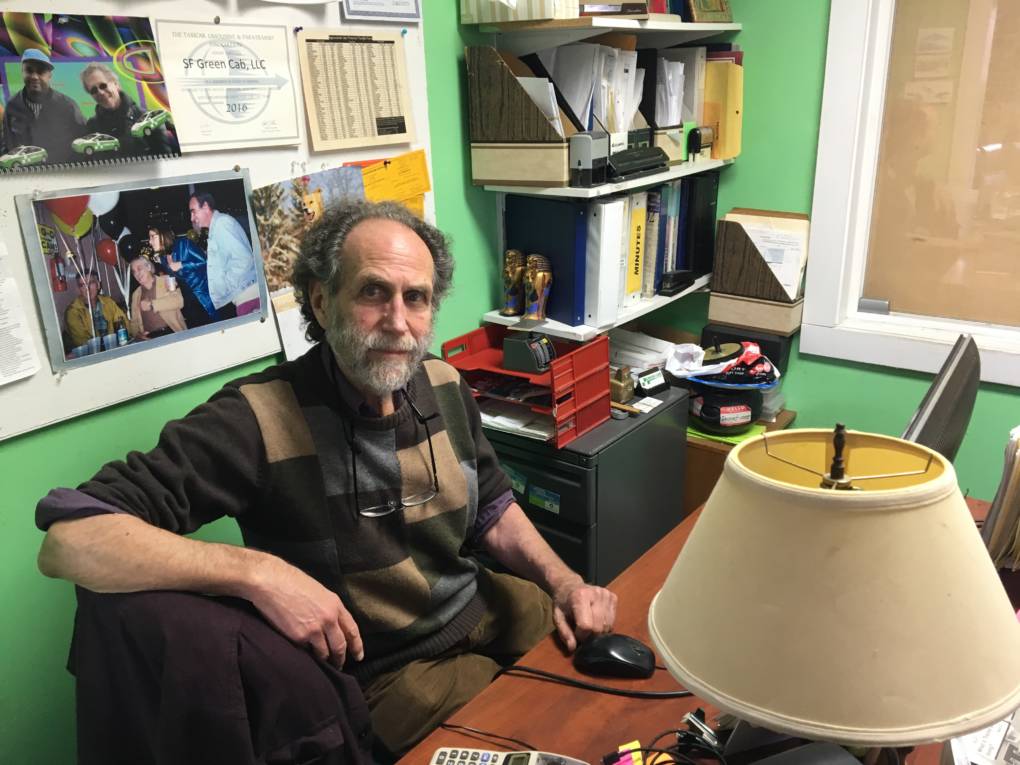
"caption": "Mark Gruberg says Uber and Lyft have even taken away the biggest taxi paydays, like Valentines Day, Halloween, and New Years Eve.",
"description": "Mark Gruberg says Uber and Lyft have even taken away the biggest taxi paydays, like Valentines Day, Halloween, and New Years Eve.",
"title": "Mark 1",
"credit": "Sam Harnett/KQED",
"status": "inherit",
"isLoading": false,
"fetchFailed": false
},
"news_11653353": {
"type": "attachments",
"id": "news_11653353",
"meta": {
"index": "attachments_1716263798",
"site": "news",
"id": "11653353",
"found": true
},
"parent": 11653352,
"imgSizes": {
"small": {
"file": "https://ww2.kqed.org/app/uploads/sites/10/2018/03/gettyimages-696041476_wide-75a4b39a28d9972b0ab887150b4a28b5efd56555-520x293.jpg",
"width": 520,
"mimeType": "image/jpeg",
"height": 293
},
"twentyfourteen-full-width": {
"file": "https://ww2.kqed.org/app/uploads/sites/10/2018/03/gettyimages-696041476_wide-75a4b39a28d9972b0ab887150b4a28b5efd56555-1038x576.jpg",
"width": 1038,
"mimeType": "image/jpeg",
"height": 576
},
"thumbnail": {
"file": "https://ww2.kqed.org/app/uploads/sites/10/2018/03/gettyimages-696041476_wide-75a4b39a28d9972b0ab887150b4a28b5efd56555-160x90.jpg",
"width": 160,
"mimeType": "image/jpeg",
"height": 90
},
"fd-sm": {
"file": "https://ww2.kqed.org/app/uploads/sites/10/2018/03/gettyimages-696041476_wide-75a4b39a28d9972b0ab887150b4a28b5efd56555-960x540.jpg",
"width": 960,
"mimeType": "image/jpeg",
"height": 540
},
"post-thumbnail": {
"file": "https://ww2.kqed.org/app/uploads/sites/10/2018/03/gettyimages-696041476_wide-75a4b39a28d9972b0ab887150b4a28b5efd56555-672x372.jpg",
"width": 672,
"mimeType": "image/jpeg",
"height": 372
},
"xsmall": {
"file": "https://ww2.kqed.org/app/uploads/sites/10/2018/03/gettyimages-696041476_wide-75a4b39a28d9972b0ab887150b4a28b5efd56555-375x211.jpg",
"width": 375,
"mimeType": "image/jpeg",
"height": 211
},
"kqedFullSize": {
"file": "https://ww2.kqed.org/app/uploads/sites/10/2018/03/gettyimages-696041476_wide-75a4b39a28d9972b0ab887150b4a28b5efd56555-e1520010443656.jpg",
"width": 1920,
"height": 1080
},
"large": {
"file": "https://ww2.kqed.org/app/uploads/sites/10/2018/03/gettyimages-696041476_wide-75a4b39a28d9972b0ab887150b4a28b5efd56555-1020x574.jpg",
"width": 1020,
"mimeType": "image/jpeg",
"height": 574
},
"xlarge": {
"file": "https://ww2.kqed.org/app/uploads/sites/10/2018/03/gettyimages-696041476_wide-75a4b39a28d9972b0ab887150b4a28b5efd56555-1180x664.jpg",
"width": 1180,
"mimeType": "image/jpeg",
"height": 664
},
"guest-author-50": {
"file": "https://ww2.kqed.org/app/uploads/sites/10/2018/03/gettyimages-696041476_wide-75a4b39a28d9972b0ab887150b4a28b5efd56555-50x50.jpg",
"width": 50,
"mimeType": "image/jpeg",
"height": 50
},
"guest-author-96": {
"file": "https://ww2.kqed.org/app/uploads/sites/10/2018/03/gettyimages-696041476_wide-75a4b39a28d9972b0ab887150b4a28b5efd56555-96x96.jpg",
"width": 96,
"mimeType": "image/jpeg",
"height": 96
},
"medium": {
"file": "https://ww2.kqed.org/app/uploads/sites/10/2018/03/gettyimages-696041476_wide-75a4b39a28d9972b0ab887150b4a28b5efd56555-800x450.jpg",
"width": 800,
"mimeType": "image/jpeg",
"height": 450
},
"guest-author-64": {
"file": "https://ww2.kqed.org/app/uploads/sites/10/2018/03/gettyimages-696041476_wide-75a4b39a28d9972b0ab887150b4a28b5efd56555-64x64.jpg",
"width": 64,
"mimeType": "image/jpeg",
"height": 64
},
"guest-author-32": {
"file": "https://ww2.kqed.org/app/uploads/sites/10/2018/03/gettyimages-696041476_wide-75a4b39a28d9972b0ab887150b4a28b5efd56555-32x32.jpg",
"width": 32,
"mimeType": "image/jpeg",
"height": 32
},
"fd-lrg": {
"file": "https://ww2.kqed.org/app/uploads/sites/10/2018/03/gettyimages-696041476_wide-75a4b39a28d9972b0ab887150b4a28b5efd56555-1920x1080.jpg",
"width": 1920,
"mimeType": "image/jpeg",
"height": 1080
},
"fd-med": {
"file": "https://ww2.kqed.org/app/uploads/sites/10/2018/03/gettyimages-696041476_wide-75a4b39a28d9972b0ab887150b4a28b5efd56555-1180x664.jpg",
"width": 1180,
"mimeType": "image/jpeg",
"height": 664
},
"full-width": {
"file": "https://ww2.kqed.org/app/uploads/sites/10/2018/03/gettyimages-696041476_wide-75a4b39a28d9972b0ab887150b4a28b5efd56555-1920x1080.jpg",
"width": 1920,
"mimeType": "image/jpeg",
"height": 1080
},
"detail": {
"file": "https://ww2.kqed.org/app/uploads/sites/10/2018/03/gettyimages-696041476_wide-75a4b39a28d9972b0ab887150b4a28b5efd56555-150x150.jpg",
"width": 150,
"mimeType": "image/jpeg",
"height": 150
},
"guest-author-128": {
"file": "https://ww2.kqed.org/app/uploads/sites/10/2018/03/gettyimages-696041476_wide-75a4b39a28d9972b0ab887150b4a28b5efd56555-128x128.jpg",
"width": 128,
"mimeType": "image/jpeg",
"height": 128
},
"xxsmall": {
"file": "https://ww2.kqed.org/app/uploads/sites/10/2018/03/gettyimages-696041476_wide-75a4b39a28d9972b0ab887150b4a28b5efd56555-240x135.jpg",
"width": 240,
"mimeType": "image/jpeg",
"height": 135
}
},
"publishDate": 1520009879,
"modified": 1520010433,
"caption": "An Uber car waits for a client in Manhattan in June 2017. A study from MIT says most drivers are making less than minimum wage.",
"description": "An Uber car waits for a client in Manhattan in June 2017. A study from MIT says most drivers are making less than minimum wage.",
"title": "An Uber car waits for a client in Manhattan in June 2017. A study from MIT says most drivers are making less than minimum wage.",
"credit": "Spencer Platt/Getty Images",
"status": "inherit",
"isLoading": false,
"fetchFailed": false
},
"news_11653293": {
"type": "attachments",
"id": "news_11653293",
"meta": {
"index": "attachments_1716263798",
"site": "news",
"id": "11653293",
"found": true
},
"parent": 11653232,
"imgSizes": {
"small": {
"file": "https://ww2.kqed.org/app/uploads/sites/10/2018/03/bart180301-520x394.jpg",
"width": 520,
"mimeType": "image/jpeg",
"height": 394
},
"twentyfourteen-full-width": {
"file": "https://ww2.kqed.org/app/uploads/sites/10/2018/03/bart180301-1038x576.jpg",
"width": 1038,
"mimeType": "image/jpeg",
"height": 576
},
"thumbnail": {
"file": "https://ww2.kqed.org/app/uploads/sites/10/2018/03/bart180301-160x121.jpg",
"width": 160,
"mimeType": "image/jpeg",
"height": 121
},
"fd-sm": {
"file": "https://ww2.kqed.org/app/uploads/sites/10/2018/03/bart180301-960x727.jpg",
"width": 960,
"mimeType": "image/jpeg",
"height": 727
},
"post-thumbnail": {
"file": "https://ww2.kqed.org/app/uploads/sites/10/2018/03/bart180301-672x372.jpg",
"width": 672,
"mimeType": "image/jpeg",
"height": 372
},
"xsmall": {
"file": "https://ww2.kqed.org/app/uploads/sites/10/2018/03/bart180301-375x284.jpg",
"width": 375,
"mimeType": "image/jpeg",
"height": 284
},
"kqedFullSize": {
"file": "https://ww2.kqed.org/app/uploads/sites/10/2018/03/bart180301.jpg",
"width": 1919,
"height": 1453
},
"large": {
"file": "https://ww2.kqed.org/app/uploads/sites/10/2018/03/bart180301-1020x772.jpg",
"width": 1020,
"mimeType": "image/jpeg",
"height": 772
},
"xlarge": {
"file": "https://ww2.kqed.org/app/uploads/sites/10/2018/03/bart180301-1180x893.jpg",
"width": 1180,
"mimeType": "image/jpeg",
"height": 893
},
"guest-author-50": {
"file": "https://ww2.kqed.org/app/uploads/sites/10/2018/03/bart180301-50x50.jpg",
"width": 50,
"mimeType": "image/jpeg",
"height": 50
},
"guest-author-96": {
"file": "https://ww2.kqed.org/app/uploads/sites/10/2018/03/bart180301-96x96.jpg",
"width": 96,
"mimeType": "image/jpeg",
"height": 96
},
"medium": {
"file": "https://ww2.kqed.org/app/uploads/sites/10/2018/03/bart180301-800x606.jpg",
"width": 800,
"mimeType": "image/jpeg",
"height": 606
},
"guest-author-64": {
"file": "https://ww2.kqed.org/app/uploads/sites/10/2018/03/bart180301-64x64.jpg",
"width": 64,
"mimeType": "image/jpeg",
"height": 64
},
"guest-author-32": {
"file": "https://ww2.kqed.org/app/uploads/sites/10/2018/03/bart180301-32x32.jpg",
"width": 32,
"mimeType": "image/jpeg",
"height": 32
},
"fd-med": {
"file": "https://ww2.kqed.org/app/uploads/sites/10/2018/03/bart180301-1180x893.jpg",
"width": 1180,
"mimeType": "image/jpeg",
"height": 893
},
"detail": {
"file": "https://ww2.kqed.org/app/uploads/sites/10/2018/03/bart180301-150x150.jpg",
"width": 150,
"mimeType": "image/jpeg",
"height": 150
},
"guest-author-128": {
"file": "https://ww2.kqed.org/app/uploads/sites/10/2018/03/bart180301-128x128.jpg",
"width": 128,
"mimeType": "image/jpeg",
"height": 128
},
"xxsmall": {
"file": "https://ww2.kqed.org/app/uploads/sites/10/2018/03/bart180301-240x182.jpg",
"width": 240,
"mimeType": "image/jpeg",
"height": 182
}
},
"publishDate": 1519953984,
"modified": 1520029972,
"caption": "A BART fare inspector checks a passenger's ticket during a media show-and-tell at the Powell Street Station.",
"description": null,
"title": "BART-Fares",
"credit": "Dan Brekke/KQED",
"status": "inherit",
"isLoading": false,
"fetchFailed": false
},
"news_11653029": {
"type": "attachments",
"id": "news_11653029",
"meta": {
"index": "attachments_1716263798",
"site": "news",
"id": "11653029",
"found": true
},
"parent": 11653028,
"imgSizes": {
"small": {
"file": "https://ww2.kqed.org/app/uploads/sites/10/2018/03/gettyimages-696041456-1-e1a78318c1188af66e90c489234fe87681ffe3aa-520x390.jpg",
"width": 520,
"mimeType": "image/jpeg",
"height": 390
},
"twentyfourteen-full-width": {
"file": "https://ww2.kqed.org/app/uploads/sites/10/2018/03/gettyimages-696041456-1-e1a78318c1188af66e90c489234fe87681ffe3aa-1038x576.jpg",
"width": 1038,
"mimeType": "image/jpeg",
"height": 576
},
"thumbnail": {
"file": "https://ww2.kqed.org/app/uploads/sites/10/2018/03/gettyimages-696041456-1-e1a78318c1188af66e90c489234fe87681ffe3aa-160x120.jpg",
"width": 160,
"mimeType": "image/jpeg",
"height": 120
},
"fd-sm": {
"file": "https://ww2.kqed.org/app/uploads/sites/10/2018/03/gettyimages-696041456-1-e1a78318c1188af66e90c489234fe87681ffe3aa-960x720.jpg",
"width": 960,
"mimeType": "image/jpeg",
"height": 720
},
"post-thumbnail": {
"file": "https://ww2.kqed.org/app/uploads/sites/10/2018/03/gettyimages-696041456-1-e1a78318c1188af66e90c489234fe87681ffe3aa-672x372.jpg",
"width": 672,
"mimeType": "image/jpeg",
"height": 372
},
"xsmall": {
"file": "https://ww2.kqed.org/app/uploads/sites/10/2018/03/gettyimages-696041456-1-e1a78318c1188af66e90c489234fe87681ffe3aa-375x281.jpg",
"width": 375,
"mimeType": "image/jpeg",
"height": 281
},
"kqedFullSize": {
"file": "https://ww2.kqed.org/app/uploads/sites/10/2018/03/gettyimages-696041456-1-e1a78318c1188af66e90c489234fe87681ffe3aa.jpg",
"width": 1497,
"height": 1123
},
"large": {
"file": "https://ww2.kqed.org/app/uploads/sites/10/2018/03/gettyimages-696041456-1-e1a78318c1188af66e90c489234fe87681ffe3aa-1020x765.jpg",
"width": 1020,
"mimeType": "image/jpeg",
"height": 765
},
"xlarge": {
"file": "https://ww2.kqed.org/app/uploads/sites/10/2018/03/gettyimages-696041456-1-e1a78318c1188af66e90c489234fe87681ffe3aa-1180x885.jpg",
"width": 1180,
"mimeType": "image/jpeg",
"height": 885
},
"guest-author-50": {
"file": "https://ww2.kqed.org/app/uploads/sites/10/2018/03/gettyimages-696041456-1-e1a78318c1188af66e90c489234fe87681ffe3aa-50x50.jpg",
"width": 50,
"mimeType": "image/jpeg",
"height": 50
},
"guest-author-96": {
"file": "https://ww2.kqed.org/app/uploads/sites/10/2018/03/gettyimages-696041456-1-e1a78318c1188af66e90c489234fe87681ffe3aa-96x96.jpg",
"width": 96,
"mimeType": "image/jpeg",
"height": 96
},
"medium": {
"file": "https://ww2.kqed.org/app/uploads/sites/10/2018/03/gettyimages-696041456-1-e1a78318c1188af66e90c489234fe87681ffe3aa-800x600.jpg",
"width": 800,
"mimeType": "image/jpeg",
"height": 600
},
"guest-author-64": {
"file": "https://ww2.kqed.org/app/uploads/sites/10/2018/03/gettyimages-696041456-1-e1a78318c1188af66e90c489234fe87681ffe3aa-64x64.jpg",
"width": 64,
"mimeType": "image/jpeg",
"height": 64
},
"guest-author-32": {
"file": "https://ww2.kqed.org/app/uploads/sites/10/2018/03/gettyimages-696041456-1-e1a78318c1188af66e90c489234fe87681ffe3aa-32x32.jpg",
"width": 32,
"mimeType": "image/jpeg",
"height": 32
},
"fd-med": {
"file": "https://ww2.kqed.org/app/uploads/sites/10/2018/03/gettyimages-696041456-1-e1a78318c1188af66e90c489234fe87681ffe3aa-1180x885.jpg",
"width": 1180,
"mimeType": "image/jpeg",
"height": 885
},
"detail": {
"file": "https://ww2.kqed.org/app/uploads/sites/10/2018/03/gettyimages-696041456-1-e1a78318c1188af66e90c489234fe87681ffe3aa-150x150.jpg",
"width": 150,
"mimeType": "image/jpeg",
"height": 150
},
"guest-author-128": {
"file": "https://ww2.kqed.org/app/uploads/sites/10/2018/03/gettyimages-696041456-1-e1a78318c1188af66e90c489234fe87681ffe3aa-128x128.jpg",
"width": 128,
"mimeType": "image/jpeg",
"height": 128
},
"xxsmall": {
"file": "https://ww2.kqed.org/app/uploads/sites/10/2018/03/gettyimages-696041456-1-e1a78318c1188af66e90c489234fe87681ffe3aa-240x180.jpg",
"width": 240,
"mimeType": "image/jpeg",
"height": 180
}
},
"publishDate": 1519933402,
"modified": 1519933567,
"caption": "An Uber waits for a client in New York City. The company is partnering with health care organizations to provide patients with reliable transportation.",
"description": "An Uber waits for a client in New York City. The company is partnering with health care organizations to provide patients with reliable transportation.",
"title": "An Uber waits for a client in New York City. The company is partnering with health care organizations to provide patients with reliable transportation.",
"credit": "Spencer Platt/Getty Images",
"status": "inherit",
"isLoading": false,
"fetchFailed": false
},
"news_11652603": {
"type": "attachments",
"id": "news_11652603",
"meta": {
"index": "attachments_1716263798",
"site": "news",
"id": "11652603",
"found": true
},
"parent": 11652593,
"imgSizes": {
"small": {
"file": "https://ww2.kqed.org/app/uploads/sites/10/2018/02/student_022718_final-520x520.jpg",
"width": 520,
"mimeType": "image/jpeg",
"height": 520
},
"twentyfourteen-full-width": {
"file": "https://ww2.kqed.org/app/uploads/sites/10/2018/02/student_022718_final-1038x576.jpg",
"width": 1038,
"mimeType": "image/jpeg",
"height": 576
},
"thumbnail": {
"file": "https://ww2.kqed.org/app/uploads/sites/10/2018/02/student_022718_final-160x160.jpg",
"width": 160,
"mimeType": "image/jpeg",
"height": 160
},
"fd-sm": {
"file": "https://ww2.kqed.org/app/uploads/sites/10/2018/02/student_022718_final-960x960.jpg",
"width": 960,
"mimeType": "image/jpeg",
"height": 960
},
"post-thumbnail": {
"file": "https://ww2.kqed.org/app/uploads/sites/10/2018/02/student_022718_final-672x372.jpg",
"width": 672,
"mimeType": "image/jpeg",
"height": 372
},
"xsmall": {
"file": "https://ww2.kqed.org/app/uploads/sites/10/2018/02/student_022718_final-375x375.jpg",
"width": 375,
"mimeType": "image/jpeg",
"height": 375
},
"kqedFullSize": {
"file": "https://ww2.kqed.org/app/uploads/sites/10/2018/02/student_022718_final.jpg",
"width": 1920,
"height": 1920
},
"large": {
"file": "https://ww2.kqed.org/app/uploads/sites/10/2018/02/student_022718_final-1020x1020.jpg",
"width": 1020,
"mimeType": "image/jpeg",
"height": 1020
},
"xlarge": {
"file": "https://ww2.kqed.org/app/uploads/sites/10/2018/02/student_022718_final-1180x1180.jpg",
"width": 1180,
"mimeType": "image/jpeg",
"height": 1180
},
"guest-author-50": {
"file": "https://ww2.kqed.org/app/uploads/sites/10/2018/02/student_022718_final-50x50.jpg",
"width": 50,
"mimeType": "image/jpeg",
"height": 50
},
"guest-author-96": {
"file": "https://ww2.kqed.org/app/uploads/sites/10/2018/02/student_022718_final-96x96.jpg",
"width": 96,
"mimeType": "image/jpeg",
"height": 96
},
"medium": {
"file": "https://ww2.kqed.org/app/uploads/sites/10/2018/02/student_022718_final-800x800.jpg",
"width": 800,
"mimeType": "image/jpeg",
"height": 800
},
"guest-author-64": {
"file": "https://ww2.kqed.org/app/uploads/sites/10/2018/02/student_022718_final-64x64.jpg",
"width": 64,
"mimeType": "image/jpeg",
"height": 64
},
"guest-author-32": {
"file": "https://ww2.kqed.org/app/uploads/sites/10/2018/02/student_022718_final-32x32.jpg",
"width": 32,
"mimeType": "image/jpeg",
"height": 32
},
"fd-lrg": {
"file": "https://ww2.kqed.org/app/uploads/sites/10/2018/02/student_022718_final-1920x1920.jpg",
"width": 1920,
"mimeType": "image/jpeg",
"height": 1920
},
"fd-med": {
"file": "https://ww2.kqed.org/app/uploads/sites/10/2018/02/student_022718_final-1180x1180.jpg",
"width": 1180,
"mimeType": "image/jpeg",
"height": 1180
},
"full-width": {
"file": "https://ww2.kqed.org/app/uploads/sites/10/2018/02/student_022718_final-1920x1920.jpg",
"width": 1920,
"mimeType": "image/jpeg",
"height": 1920
},
"detail": {
"file": "https://ww2.kqed.org/app/uploads/sites/10/2018/02/student_022718_final-150x150.jpg",
"width": 150,
"mimeType": "image/jpeg",
"height": 150
},
"guest-author-128": {
"file": "https://ww2.kqed.org/app/uploads/sites/10/2018/02/student_022718_final-128x128.jpg",
"width": 128,
"mimeType": "image/jpeg",
"height": 128
},
"xxsmall": {
"file": "https://ww2.kqed.org/app/uploads/sites/10/2018/02/student_022718_final-240x240.jpg",
"width": 240,
"mimeType": "image/jpeg",
"height": 240
}
},
"publishDate": 1519771411,
"modified": 1519771433,
"caption": null,
"description": null,
"title": "student_022718_final",
"credit": null,
"status": "inherit",
"isLoading": false,
"fetchFailed": false
},
"news_11652469": {
"type": "attachments",
"id": "news_11652469",
"meta": {
"index": "attachments_1716263798",
"site": "news",
"id": "11652469",
"found": true
},
"parent": 11652468,
"imgSizes": {
"small": {
"file": "https://ww2.kqed.org/app/uploads/sites/10/2018/02/gettyimages-875631678_wide-3956b65e0c7031e796f553a303da8382f9c9f51b-520x293.jpg",
"width": 520,
"mimeType": "image/jpeg",
"height": 293
},
"twentyfourteen-full-width": {
"file": "https://ww2.kqed.org/app/uploads/sites/10/2018/02/gettyimages-875631678_wide-3956b65e0c7031e796f553a303da8382f9c9f51b-1038x576.jpg",
"width": 1038,
"mimeType": "image/jpeg",
"height": 576
},
"thumbnail": {
"file": "https://ww2.kqed.org/app/uploads/sites/10/2018/02/gettyimages-875631678_wide-3956b65e0c7031e796f553a303da8382f9c9f51b-160x90.jpg",
"width": 160,
"mimeType": "image/jpeg",
"height": 90
},
"fd-sm": {
"file": "https://ww2.kqed.org/app/uploads/sites/10/2018/02/gettyimages-875631678_wide-3956b65e0c7031e796f553a303da8382f9c9f51b-960x540.jpg",
"width": 960,
"mimeType": "image/jpeg",
"height": 540
},
"post-thumbnail": {
"file": "https://ww2.kqed.org/app/uploads/sites/10/2018/02/gettyimages-875631678_wide-3956b65e0c7031e796f553a303da8382f9c9f51b-672x372.jpg",
"width": 672,
"mimeType": "image/jpeg",
"height": 372
},
"xsmall": {
"file": "https://ww2.kqed.org/app/uploads/sites/10/2018/02/gettyimages-875631678_wide-3956b65e0c7031e796f553a303da8382f9c9f51b-375x211.jpg",
"width": 375,
"mimeType": "image/jpeg",
"height": 211
},
"kqedFullSize": {
"file": "https://ww2.kqed.org/app/uploads/sites/10/2018/02/gettyimages-875631678_wide-3956b65e0c7031e796f553a303da8382f9c9f51b-e1519751878440.jpg",
"width": 1920,
"height": 1080
},
"large": {
"file": "https://ww2.kqed.org/app/uploads/sites/10/2018/02/gettyimages-875631678_wide-3956b65e0c7031e796f553a303da8382f9c9f51b-1020x574.jpg",
"width": 1020,
"mimeType": "image/jpeg",
"height": 574
},
"xlarge": {
"file": "https://ww2.kqed.org/app/uploads/sites/10/2018/02/gettyimages-875631678_wide-3956b65e0c7031e796f553a303da8382f9c9f51b-1180x664.jpg",
"width": 1180,
"mimeType": "image/jpeg",
"height": 664
},
"guest-author-50": {
"file": "https://ww2.kqed.org/app/uploads/sites/10/2018/02/gettyimages-875631678_wide-3956b65e0c7031e796f553a303da8382f9c9f51b-50x50.jpg",
"width": 50,
"mimeType": "image/jpeg",
"height": 50
},
"guest-author-96": {
"file": "https://ww2.kqed.org/app/uploads/sites/10/2018/02/gettyimages-875631678_wide-3956b65e0c7031e796f553a303da8382f9c9f51b-96x96.jpg",
"width": 96,
"mimeType": "image/jpeg",
"height": 96
},
"medium": {
"file": "https://ww2.kqed.org/app/uploads/sites/10/2018/02/gettyimages-875631678_wide-3956b65e0c7031e796f553a303da8382f9c9f51b-800x450.jpg",
"width": 800,
"mimeType": "image/jpeg",
"height": 450
},
"guest-author-64": {
"file": "https://ww2.kqed.org/app/uploads/sites/10/2018/02/gettyimages-875631678_wide-3956b65e0c7031e796f553a303da8382f9c9f51b-64x64.jpg",
"width": 64,
"mimeType": "image/jpeg",
"height": 64
},
"guest-author-32": {
"file": "https://ww2.kqed.org/app/uploads/sites/10/2018/02/gettyimages-875631678_wide-3956b65e0c7031e796f553a303da8382f9c9f51b-32x32.jpg",
"width": 32,
"mimeType": "image/jpeg",
"height": 32
},
"fd-lrg": {
"file": "https://ww2.kqed.org/app/uploads/sites/10/2018/02/gettyimages-875631678_wide-3956b65e0c7031e796f553a303da8382f9c9f51b-1920x1080.jpg",
"width": 1920,
"mimeType": "image/jpeg",
"height": 1080
},
"fd-med": {
"file": "https://ww2.kqed.org/app/uploads/sites/10/2018/02/gettyimages-875631678_wide-3956b65e0c7031e796f553a303da8382f9c9f51b-1180x664.jpg",
"width": 1180,
"mimeType": "image/jpeg",
"height": 664
},
"full-width": {
"file": "https://ww2.kqed.org/app/uploads/sites/10/2018/02/gettyimages-875631678_wide-3956b65e0c7031e796f553a303da8382f9c9f51b-1920x1080.jpg",
"width": 1920,
"mimeType": "image/jpeg",
"height": 1080
},
"detail": {
"file": "https://ww2.kqed.org/app/uploads/sites/10/2018/02/gettyimages-875631678_wide-3956b65e0c7031e796f553a303da8382f9c9f51b-150x150.jpg",
"width": 150,
"mimeType": "image/jpeg",
"height": 150
},
"guest-author-128": {
"file": "https://ww2.kqed.org/app/uploads/sites/10/2018/02/gettyimages-875631678_wide-3956b65e0c7031e796f553a303da8382f9c9f51b-128x128.jpg",
"width": 128,
"mimeType": "image/jpeg",
"height": 128
},
"xxsmall": {
"file": "https://ww2.kqed.org/app/uploads/sites/10/2018/02/gettyimages-875631678_wide-3956b65e0c7031e796f553a303da8382f9c9f51b-240x135.jpg",
"width": 240,
"mimeType": "image/jpeg",
"height": 135
}
},
"publishDate": 1519751544,
"modified": 1519751869,
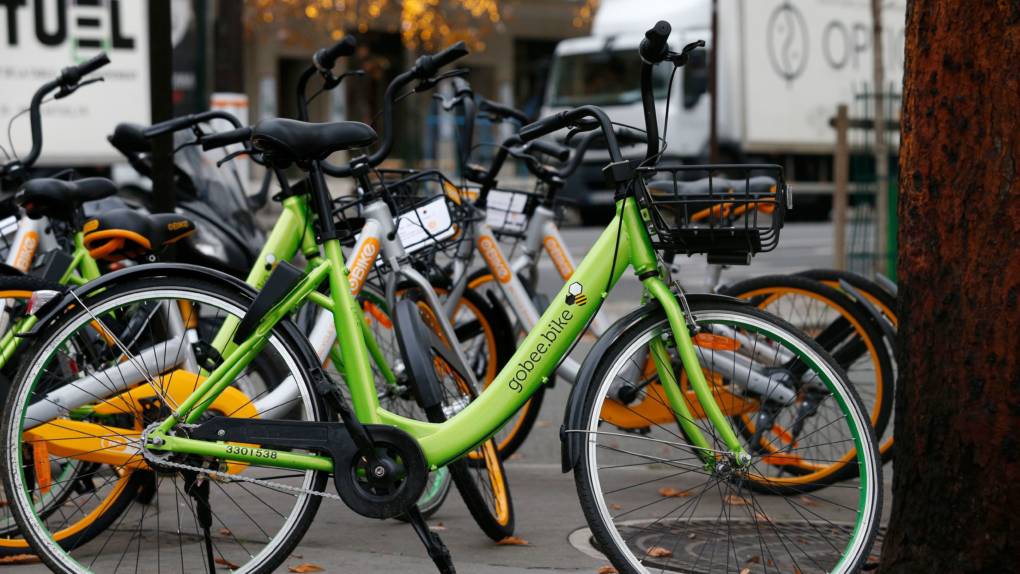
"caption": "A Gobee bike sits near other bikeshare rental options in Paris on Nov. 18, 2017.",
"description": "A Gobee bike sits near other bikeshare rental options in Paris on Nov. 18, 201",
"title": "gettyimages-875631678_wide-3956b65e0c7031e796f553a303da8382f9c9f51b",
"credit": "Geoffroy Van Der Hasselt/AFP-Getty Images",
"status": "inherit",
"isLoading": false,
"fetchFailed": false
},
"news_11652445": {
"type": "attachments",
"id": "news_11652445",
"meta": {
"index": "attachments_1716263798",
"site": "news",
"id": "11652445",
"found": true
},
"parent": 11652443,
"imgSizes": {
"small": {
"file": "https://ww2.kqed.org/app/uploads/sites/10/2018/02/GettyImages-631033266-520x299.jpg",
"width": 520,
"mimeType": "image/jpeg",
"height": 299
},
"twentyfourteen-full-width": {
"file": "https://ww2.kqed.org/app/uploads/sites/10/2018/02/GettyImages-631033266-1038x576.jpg",
"width": 1038,
"mimeType": "image/jpeg",
"height": 576
},
"thumbnail": {
"file": "https://ww2.kqed.org/app/uploads/sites/10/2018/02/GettyImages-631033266-160x92.jpg",
"width": 160,
"mimeType": "image/jpeg",
"height": 92
},
"fd-sm": {
"file": "https://ww2.kqed.org/app/uploads/sites/10/2018/02/GettyImages-631033266-960x552.jpg",
"width": 960,
"mimeType": "image/jpeg",
"height": 552
},
"post-thumbnail": {
"file": "https://ww2.kqed.org/app/uploads/sites/10/2018/02/GettyImages-631033266-672x372.jpg",
"width": 672,
"mimeType": "image/jpeg",
"height": 372
},
"xsmall": {
"file": "https://ww2.kqed.org/app/uploads/sites/10/2018/02/GettyImages-631033266-375x216.jpg",
"width": 375,
"mimeType": "image/jpeg",
"height": 216
},
"kqedFullSize": {
"file": "https://ww2.kqed.org/app/uploads/sites/10/2018/02/GettyImages-631033266-e1519744575936.jpg",
"width": 1920,
"height": 1105
},
"large": {
"file": "https://ww2.kqed.org/app/uploads/sites/10/2018/02/GettyImages-631033266-1020x587.jpg",
"width": 1020,
"mimeType": "image/jpeg",
"height": 587
},
"xlarge": {
"file": "https://ww2.kqed.org/app/uploads/sites/10/2018/02/GettyImages-631033266-1180x679.jpg",
"width": 1180,
"mimeType": "image/jpeg",
"height": 679
},
"guest-author-50": {
"file": "https://ww2.kqed.org/app/uploads/sites/10/2018/02/GettyImages-631033266-50x50.jpg",
"width": 50,
"mimeType": "image/jpeg",
"height": 50
},
"guest-author-96": {
"file": "https://ww2.kqed.org/app/uploads/sites/10/2018/02/GettyImages-631033266-96x96.jpg",
"width": 96,
"mimeType": "image/jpeg",
"height": 96
},
"medium": {
"file": "https://ww2.kqed.org/app/uploads/sites/10/2018/02/GettyImages-631033266-800x460.jpg",
"width": 800,
"mimeType": "image/jpeg",
"height": 460
},
"guest-author-64": {
"file": "https://ww2.kqed.org/app/uploads/sites/10/2018/02/GettyImages-631033266-64x64.jpg",
"width": 64,
"mimeType": "image/jpeg",
"height": 64
},
"guest-author-32": {
"file": "https://ww2.kqed.org/app/uploads/sites/10/2018/02/GettyImages-631033266-32x32.jpg",
"width": 32,
"mimeType": "image/jpeg",
"height": 32
},
"fd-lrg": {
"file": "https://ww2.kqed.org/app/uploads/sites/10/2018/02/GettyImages-631033266-1920x1105.jpg",
"width": 1920,
"mimeType": "image/jpeg",
"height": 1105
},
"fd-med": {
"file": "https://ww2.kqed.org/app/uploads/sites/10/2018/02/GettyImages-631033266-1180x679.jpg",
"width": 1180,
"mimeType": "image/jpeg",
"height": 679
},
"full-width": {
"file": "https://ww2.kqed.org/app/uploads/sites/10/2018/02/GettyImages-631033266-1920x1105.jpg",
"width": 1920,
"mimeType": "image/jpeg",
"height": 1105
},
"detail": {
"file": "https://ww2.kqed.org/app/uploads/sites/10/2018/02/GettyImages-631033266-150x150.jpg",
"width": 150,
"mimeType": "image/jpeg",
"height": 150
},
"guest-author-128": {
"file": "https://ww2.kqed.org/app/uploads/sites/10/2018/02/GettyImages-631033266-128x128.jpg",
"width": 128,
"mimeType": "image/jpeg",
"height": 128
},
"xxsmall": {
"file": "https://ww2.kqed.org/app/uploads/sites/10/2018/02/GettyImages-631033266-240x138.jpg",
"width": 240,
"mimeType": "image/jpeg",
"height": 138
}
},
"publishDate": 1519744499,
"modified": 1519744953,
"caption": "Volkswagen's I.D., an autonomous self-driving concept vehicle, is displayed at the Volkswagen booth at CES 2017 in Las Vegas. ",
"description": null,
"title": "Latest Consumer Technology Products On Display At CES 2017",
"credit": "David Becker/Getty Images",
"status": "inherit",
"isLoading": false,
"fetchFailed": false
},
"news_11650321": {
"type": "attachments",
"id": "news_11650321",
"meta": {
"index": "attachments_1716263798",
"site": "news",
"id": "11650321",
"found": true
},
"parent": 11650255,
"imgSizes": {
"small": {
"file": "https://ww2.kqed.org/app/uploads/sites/10/2018/02/35010928045_a79df0adf2_k-520x347.jpg",
"width": 520,
"mimeType": "image/jpeg",
"height": 347
},
"twentyfourteen-full-width": {
"file": "https://ww2.kqed.org/app/uploads/sites/10/2018/02/35010928045_a79df0adf2_k-1038x576.jpg",
"width": 1038,
"mimeType": "image/jpeg",
"height": 576
},
"thumbnail": {
"file": "https://ww2.kqed.org/app/uploads/sites/10/2018/02/35010928045_a79df0adf2_k-160x107.jpg",
"width": 160,
"mimeType": "image/jpeg",
"height": 107
},
"fd-sm": {
"file": "https://ww2.kqed.org/app/uploads/sites/10/2018/02/35010928045_a79df0adf2_k-960x640.jpg",
"width": 960,
"mimeType": "image/jpeg",
"height": 640
},
"post-thumbnail": {
"file": "https://ww2.kqed.org/app/uploads/sites/10/2018/02/35010928045_a79df0adf2_k-672x372.jpg",
"width": 672,
"mimeType": "image/jpeg",
"height": 372
},
"xsmall": {
"file": "https://ww2.kqed.org/app/uploads/sites/10/2018/02/35010928045_a79df0adf2_k-375x250.jpg",
"width": 375,
"mimeType": "image/jpeg",
"height": 250
},
"kqedFullSize": {
"file": "https://ww2.kqed.org/app/uploads/sites/10/2018/02/35010928045_a79df0adf2_k-e1518727510374.jpg",
"width": 1920,
"height": 1280
},
"large": {
"file": "https://ww2.kqed.org/app/uploads/sites/10/2018/02/35010928045_a79df0adf2_k-1020x680.jpg",
"width": 1020,
"mimeType": "image/jpeg",
"height": 680
},
"xlarge": {
"file": "https://ww2.kqed.org/app/uploads/sites/10/2018/02/35010928045_a79df0adf2_k-1180x786.jpg",
"width": 1180,
"mimeType": "image/jpeg",
"height": 786
},
"guest-author-50": {
"file": "https://ww2.kqed.org/app/uploads/sites/10/2018/02/35010928045_a79df0adf2_k-50x50.jpg",
"width": 50,
"mimeType": "image/jpeg",
"height": 50
},
"guest-author-96": {
"file": "https://ww2.kqed.org/app/uploads/sites/10/2018/02/35010928045_a79df0adf2_k-96x96.jpg",
"width": 96,
"mimeType": "image/jpeg",
"height": 96
},
"medium": {
"file": "https://ww2.kqed.org/app/uploads/sites/10/2018/02/35010928045_a79df0adf2_k-800x533.jpg",
"width": 800,
"mimeType": "image/jpeg",
"height": 533
},
"guest-author-64": {
"file": "https://ww2.kqed.org/app/uploads/sites/10/2018/02/35010928045_a79df0adf2_k-64x64.jpg",
"width": 64,
"mimeType": "image/jpeg",
"height": 64
},
"guest-author-32": {
"file": "https://ww2.kqed.org/app/uploads/sites/10/2018/02/35010928045_a79df0adf2_k-32x32.jpg",
"width": 32,
"mimeType": "image/jpeg",
"height": 32
},
"fd-lrg": {
"file": "https://ww2.kqed.org/app/uploads/sites/10/2018/02/35010928045_a79df0adf2_k-1920x1280.jpg",
"width": 1920,
"mimeType": "image/jpeg",
"height": 1280
},
"fd-med": {
"file": "https://ww2.kqed.org/app/uploads/sites/10/2018/02/35010928045_a79df0adf2_k-1180x786.jpg",
"width": 1180,
"mimeType": "image/jpeg",
"height": 786
},
"full-width": {
"file": "https://ww2.kqed.org/app/uploads/sites/10/2018/02/35010928045_a79df0adf2_k-1920x1280.jpg",
"width": 1920,
"mimeType": "image/jpeg",
"height": 1280
},
"detail": {
"file": "https://ww2.kqed.org/app/uploads/sites/10/2018/02/35010928045_a79df0adf2_k-150x150.jpg",
"width": 150,
"mimeType": "image/jpeg",
"height": 150
},
"guest-author-128": {
"file": "https://ww2.kqed.org/app/uploads/sites/10/2018/02/35010928045_a79df0adf2_k-128x128.jpg",
"width": 128,
"mimeType": "image/jpeg",
"height": 128
},
"xxsmall": {
"file": "https://ww2.kqed.org/app/uploads/sites/10/2018/02/35010928045_a79df0adf2_k-240x160.jpg",
"width": 240,
"mimeType": "image/jpeg",
"height": 160
}
},
"publishDate": 1518727398,
"modified": 1518727502,
"caption": "Sign at BART's 16th and Mission station.",
"description": null,
"title": "16th and Mission, San Francisco",
"credit": "\u003ca href=\"https://flic.kr/p/VkNa9r\" target=\"_blank\">Thomas Hawk/Flickr\u003c/a>",
"status": "inherit",
"isLoading": false,
"fetchFailed": false
},
"news_11649567": {
"type": "attachments",
"id": "news_11649567",
"meta": {
"index": "attachments_1716263798",
"site": "news",
"id": "11649567",
"found": true
},
"parent": 11649557,
"imgSizes": {
"small": {
"file": "https://ww2.kqed.org/app/uploads/sites/10/2018/02/plan_021218_final-520x520.jpg",
"width": 520,
"mimeType": "image/jpeg",
"height": 520
},
"twentyfourteen-full-width": {
"file": "https://ww2.kqed.org/app/uploads/sites/10/2018/02/plan_021218_final-1038x576.jpg",
"width": 1038,
"mimeType": "image/jpeg",
"height": 576
},
"thumbnail": {
"file": "https://ww2.kqed.org/app/uploads/sites/10/2018/02/plan_021218_final-160x160.jpg",
"width": 160,
"mimeType": "image/jpeg",
"height": 160
},
"fd-sm": {
"file": "https://ww2.kqed.org/app/uploads/sites/10/2018/02/plan_021218_final-960x960.jpg",
"width": 960,
"mimeType": "image/jpeg",
"height": 960
},
"post-thumbnail": {
"file": "https://ww2.kqed.org/app/uploads/sites/10/2018/02/plan_021218_final-672x372.jpg",
"width": 672,
"mimeType": "image/jpeg",
"height": 372
},
"xsmall": {
"file": "https://ww2.kqed.org/app/uploads/sites/10/2018/02/plan_021218_final-375x375.jpg",
"width": 375,
"mimeType": "image/jpeg",
"height": 375
},
"kqedFullSize": {
"file": "https://ww2.kqed.org/app/uploads/sites/10/2018/02/plan_021218_final.jpg",
"width": 1920,
"height": 1920
},
"large": {
"file": "https://ww2.kqed.org/app/uploads/sites/10/2018/02/plan_021218_final-1020x1020.jpg",
"width": 1020,
"mimeType": "image/jpeg",
"height": 1020
},
"xlarge": {
"file": "https://ww2.kqed.org/app/uploads/sites/10/2018/02/plan_021218_final-1180x1180.jpg",
"width": 1180,
"mimeType": "image/jpeg",
"height": 1180
},
"guest-author-50": {
"file": "https://ww2.kqed.org/app/uploads/sites/10/2018/02/plan_021218_final-50x50.jpg",
"width": 50,
"mimeType": "image/jpeg",
"height": 50
},
"guest-author-96": {
"file": "https://ww2.kqed.org/app/uploads/sites/10/2018/02/plan_021218_final-96x96.jpg",
"width": 96,
"mimeType": "image/jpeg",
"height": 96
},
"medium": {
"file": "https://ww2.kqed.org/app/uploads/sites/10/2018/02/plan_021218_final-800x800.jpg",
"width": 800,
"mimeType": "image/jpeg",
"height": 800
},
"guest-author-64": {
"file": "https://ww2.kqed.org/app/uploads/sites/10/2018/02/plan_021218_final-64x64.jpg",
"width": 64,
"mimeType": "image/jpeg",
"height": 64
},
"guest-author-32": {
"file": "https://ww2.kqed.org/app/uploads/sites/10/2018/02/plan_021218_final-32x32.jpg",
"width": 32,
"mimeType": "image/jpeg",
"height": 32
},
"fd-lrg": {
"file": "https://ww2.kqed.org/app/uploads/sites/10/2018/02/plan_021218_final-1920x1920.jpg",
"width": 1920,
"mimeType": "image/jpeg",
"height": 1920
},
"fd-med": {
"file": "https://ww2.kqed.org/app/uploads/sites/10/2018/02/plan_021218_final-1180x1180.jpg",
"width": 1180,
"mimeType": "image/jpeg",
"height": 1180
},
"full-width": {
"file": "https://ww2.kqed.org/app/uploads/sites/10/2018/02/plan_021218_final-1920x1920.jpg",
"width": 1920,
"mimeType": "image/jpeg",
"height": 1920
},
"detail": {
"file": "https://ww2.kqed.org/app/uploads/sites/10/2018/02/plan_021218_final-150x150.jpg",
"width": 150,
"mimeType": "image/jpeg",
"height": 150
},
"guest-author-128": {
"file": "https://ww2.kqed.org/app/uploads/sites/10/2018/02/plan_021218_final-128x128.jpg",
"width": 128,
"mimeType": "image/jpeg",
"height": 128
},
"xxsmall": {
"file": "https://ww2.kqed.org/app/uploads/sites/10/2018/02/plan_021218_final-240x240.jpg",
"width": 240,
"mimeType": "image/jpeg",
"height": 240
}
},
"publishDate": 1518472628,
"modified": 1518472651,
"caption": null,
"description": null,
"title": "plan_021218_final",
"credit": null,
"status": "inherit",
"isLoading": false,
"fetchFailed": false
}
},
"audioPlayerReducer": {
"postId": "stream_live",
"isPaused": true,
"isPlaying": false,
"pfsActive": false,
"pledgeModalIsOpen": true,
"playerDrawerIsOpen": false,
"liveAudioPlayStartedAt": 0,
"liveAudioPlayContext": ""
},
"authorsReducer": {
"byline_news_11654394": {
"type": "authors",
"id": "byline_news_11654394",
"meta": {
"override": true
},
"slug": "byline_news_11654394",
"name": "James Doubek",
"isLoading": false
},
"byline_news_11653352": {
"type": "authors",
"id": "byline_news_11653352",
"meta": {
"override": true
},
"slug": "byline_news_11653352",
"name": "\u003cstrong>James Doubek\u003cbr />NPR\u003c/strong>",
"isLoading": false
},
"byline_news_11653028": {
"type": "authors",
"id": "byline_news_11653028",
"meta": {
"override": true
},
"slug": "byline_news_11653028",
"name": "\u003cstrong>Emily Sullivan\u003cbr />NPR\u003c/strong>",
"isLoading": false
},
"byline_news_11652468": {
"type": "authors",
"id": "byline_news_11652468",
"meta": {
"override": true
},
"slug": "byline_news_11652468",
"name": "Camila Domonoske",
"isLoading": false
},
"byline_news_11652443": {
"type": "authors",
"id": "byline_news_11652443",
"meta": {
"override": true
},
"slug": "byline_news_11652443",
"name": "\u003cstrong>Christopher Weber\u003cbr />Associated Press\u003c/strong>",
"isLoading": false
},
"danbrekke": {
"type": "authors",
"id": "222",
"meta": {
"index": "authors_1716337520",
"id": "222",
"found": true
},
"name": "Dan Brekke",
"firstName": "Dan",
"lastName": "Brekke",
"slug": "danbrekke",
"email": "dbrekke@kqed.org",
"display_author_email": true,
"staff_mastheads": [
"news",
"science"
],
"title": "KQED Editor and Reporter",
"bio": "Dan Brekke is a reporter and editor for KQED News, responsible for coverage of topics ranging from California water issues to the Bay Area's transportation challenges. In a newsroom career that began in Chicago in 1972, Dan has worked for \u003cem>The San Francisco Examiner,\u003c/em> Wired and TechTV and has been published in The New York Times, The New York Times Magazine, Business 2.0, Salon and elsewhere.\r\n\r\nSince joining KQED in 2007, Dan has reported, edited and produced both radio and online features and breaking news pieces. He has shared as both editor and reporter in four Society of Professional Journalists Norcal Excellence in Journalism awards and one Edward R. Murrow regional award. He was chosen for a spring 2017 residency at the Mesa Refuge to advance his research on California salmon.\r\n\r\nEmail Dan at: \u003ca href=\"mailto:dbrekke@kqed.org\">dbrekke@kqed.org\u003c/a>\r\n\r\n\u003cstrong>Twitter:\u003c/strong> \u003ca href=\"https://twitter.com/danbrekke\" rel=\"noopener noreferrer\">twitter.com/danbrekke\u003c/a>\r\n\u003cstrong>Facebook:\u003c/strong> \u003ca href=\"https://www.facebook.com/danbrekke\" rel=\"noopener noreferrer\">www.facebook.com/danbrekke\u003c/a>\r\n\u003cstrong>LinkedIn:\u003c/strong> \u003ca href=\"https://www.linkedin.com/in/danbrekke\" rel=\"noopener noreferrer\">www.linkedin.com/in/danbrekke\u003c/a>",
"avatar": "https://secure.gravatar.com/avatar/8f1f0d2a978fb3b23426c922c7e2af558fa36905b49c4ce76a97dc3c72d27226?s=600&d=mm&r=g",
"twitter": "danbrekke",
"bluesky": null,
"facebook": null,
"instagram": "https://www.instagram.com/dan.brekke/",
"linkedin": "https://www.linkedin.com/in/danbrekke/",
"sites": [
{
"site": "news",
"roles": [
"administrator",
"create_posts"
]
},
{
"site": "stateofhealth",
"roles": [
"editor"
]
},
{
"site": "science",
"roles": [
"editor"
]
},
{
"site": "quest",
"roles": [
"contributor"
]
},
{
"site": "food",
"roles": [
"contributor"
]
},
{
"site": "forum",
"roles": [
"contributor"
]
},
{
"site": "elections",
"roles": [
"editor"
]
},
{
"site": "liveblog",
"roles": [
"editor"
]
}
],
"headData": {
"title": "Dan Brekke | KQED",
"description": "KQED Editor and Reporter",
"ogImgSrc": "https://secure.gravatar.com/avatar/8f1f0d2a978fb3b23426c922c7e2af558fa36905b49c4ce76a97dc3c72d27226?s=600&d=mm&r=g",
"twImgSrc": "https://secure.gravatar.com/avatar/8f1f0d2a978fb3b23426c922c7e2af558fa36905b49c4ce76a97dc3c72d27226?s=600&d=mm&r=g"
},
"isLoading": false,
"link": "/author/danbrekke"
},
"samharnett": {
"type": "authors",
"id": "253",
"meta": {
"index": "authors_1716337520",
"id": "253",
"found": true
},
"name": "Sam Harnett",
"firstName": "Sam",
"lastName": "Harnett",
"slug": "samharnett",
"email": "samharnett@gmail.com",
"display_author_email": false,
"staff_mastheads": [],
"title": "KQED Contributor",
"bio": "Sam Harnett covered tech and work at KQED. He is the co-creator of \u003cem>\u003ca href=\"http://www.theworldaccordingtosound.org\">The World According to Sound\u003c/a>,\u003c/em> a 90-second podcast that features different sounds and the stories behind them.\r\n\r\nBefore coming to KQED, Sam worked as an independent reporter who contributed regularly to \u003cem>The California Report, Marketplace,\u003c/em> \u003cem>The World \u003c/em>and NPR.",
"avatar": "https://secure.gravatar.com/avatar/2538b972ac02f2b9546c7a6c59a0f3d0?s=600&d=blank&r=g",
"twitter": "Samwharnett",
"facebook": null,
"instagram": null,
"linkedin": null,
"sites": [
{
"site": "news",
"roles": [
"edit_others_posts",
"subscriber"
]
},
{
"site": "stateofhealth",
"roles": [
"author"
]
},
{
"site": "science",
"roles": [
"editor"
]
},
{
"site": "quest",
"roles": [
"subscriber"
]
}
],
"headData": {
"title": "Sam Harnett | KQED",
"description": "KQED Contributor",
"ogImgSrc": "https://secure.gravatar.com/avatar/2538b972ac02f2b9546c7a6c59a0f3d0?s=600&d=blank&r=g",
"twImgSrc": "https://secure.gravatar.com/avatar/2538b972ac02f2b9546c7a6c59a0f3d0?s=600&d=blank&r=g"
},
"isLoading": false,
"link": "/author/samharnett"
},
"markfiore": {
"type": "authors",
"id": "3236",
"meta": {
"index": "authors_1716337520",
"id": "3236",
"found": true
},
"name": "Mark Fiore",
"firstName": "Mark",
"lastName": "Fiore",
"slug": "markfiore",
"email": "mark@markfiore.com",
"display_author_email": false,
"staff_mastheads": [
"news"
],
"title": "KQED News Cartoonist",
"bio": "\u003ca href=\"http://www.MarkFiore.com\">MarkFiore.com\u003c/a> | \u003ca href=\"https://twitter.com/markfiore\">Follow on Twitter\u003c/a> | \u003ca href=\"https://www.facebook.com/pages/Mark-Fiore-Animated-Political-Cartoons/94451707396?ref=bookmarks\">Facebook\u003c/a> | \u003ca href=\"mailto:mark@markfiore.com\">email\u003c/a>\r\n\r\nPulitzer Prize-winner, Mark Fiore, who the Wall Street Journal has called “the undisputed guru of the form,” creates animated political cartoons in San Francisco, where his work has been featured regularly on the San Francisco Chronicle’s web site, SFGate.com. His work has appeared on Newsweek.com, Slate.com, CBSNews.com, MotherJones.com, DailyKos.com and NPR’s web site. Fiore’s political animation has appeared on CNN, Frontline, Bill Moyers Journal, Salon.com and cable and broadcast outlets across the globe.\r\n\r\nBeginning his professional life by drawing traditional political cartoons for newspapers, Fiore’s work appeared in publications ranging from the Washington Post to the Los Angeles Times. In the late 1990s, he began to experiment with animating political cartoons and, after a short stint at the San Jose Mercury News as their staff cartoonist, Fiore devoted all his energies to animation.\r\nGrowing up in California, Fiore also spent a good portion of his life in the backwoods of Idaho. It was this combination that shaped him politically. Mark majored in political science at Colorado College, where, in a perfect send-off for a cartoonist, he received his diploma in 1991 as commencement speaker Dick Cheney smiled approvingly.\r\nMark Fiore was awarded the Pulitzer Prize for political cartooning in 2010, a Robert F. Kennedy Journalism Award in 2004 and has twice received an Online Journalism Award for commentary from the Online News Association (2002, 2008). Fiore has received two awards for his work in new media from the National Cartoonists Society (2001, 2002), and in 2006 received The James Madison Freedom of Information Award from The Society of Professional Journalists.",
"avatar": "https://secure.gravatar.com/avatar/fc4e2a612b15b67bad0c6f0e1db4ca9b?s=600&d=blank&r=g",
"twitter": "MarkFiore",
"facebook": null,
"instagram": "https://www.instagram.com/markfiore/?hl=en",
"linkedin": null,
"sites": [
{
"site": "arts",
"roles": [
"contributor"
]
},
{
"site": "news",
"roles": [
"editor"
]
},
{
"site": "futureofyou",
"roles": [
"editor"
]
},
{
"site": "science",
"roles": [
"editor"
]
}
],
"headData": {
"title": "Mark Fiore | KQED",
"description": "KQED News Cartoonist",
"ogImgSrc": "https://secure.gravatar.com/avatar/fc4e2a612b15b67bad0c6f0e1db4ca9b?s=600&d=blank&r=g",
"twImgSrc": "https://secure.gravatar.com/avatar/fc4e2a612b15b67bad0c6f0e1db4ca9b?s=600&d=blank&r=g"
},
"isLoading": false,
"link": "/author/markfiore"
}
},
"pagesReducer": {
"news_category_transportation": {
"type": "terms",
"id": "news_1397",
"meta": {
"index": "terms_1716263798",
"site": "news",
"id": "1397",
"score": 12.940577
},
"featImg": null,
"name": "Transportation",
"description": null,
"taxonomy": "category",
"headData": {
"twImgId": null,
"twTitle": null,
"ogTitle": null,
"ogImgId": null,
"twDescription": null,
"description": null,
"title": "Transportation Archives | KQED News",
"ogDescription": null
},
"ttid": 1409,
"slug": "transportation",
"isLoading": false,
"title": "Transportation",
"pageMeta": {
"site": "news",
"WpPageTemplate": "page-topic-editorial",
"currentPage": 68
},
"blocks": [
{
"blockName": "kqed/post-list",
"attrs": {
"layout": "cardArticle2",
"query": "posts/news?category=transportation",
"seeMore": false,
"paginated": true,
"page": 68
}
},
{
"blockName": "kqed/ad"
}
]
}
},
"pfsSessionReducer": {},
"postsReducer": {
"stream_live": {
"type": "live",
"id": "stream_live",
"audioUrl": "https://streams.kqed.org/kqedradio",
"title": "Live Stream",
"excerpt": "Live Stream information currently unavailable.",
"link": "/radio",
"featImg": "",
"label": {
"name": "KQED Live",
"link": "/"
}
},
"stream_kqedNewscast": {
"type": "posts",
"id": "stream_kqedNewscast",
"audioUrl": "https://www.kqed.org/.stream/anon/radio/RDnews/newscast.mp3?_=1",
"title": "KQED Newscast",
"featImg": "",
"label": {
"name": "88.5 FM",
"link": "/"
}
},
"news_11654394": {
"type": "posts",
"id": "news_11654394",
"meta": {
"index": "posts_1716263798",
"site": "news",
"id": "11654394",
"score": null,
"sort": [
1520453459000
]
},
"parent": 0,
"labelTerm": {},
"blocks": [],
"publishDate": 1520453459,
"format": "standard",
"disqusTitle": "Researcher Says 'Criticism Is Valid,' Will Revise Study Finding Low Uber and Lyft Pay",
"title": "Researcher Says 'Criticism Is Valid,' Will Revise Study Finding Low Uber and Lyft Pay",
"headTitle": "The California Report | KQED News",
"content": "\u003cp>A researcher at the Massachusetts Institute of Technology says he's revising a \u003ca href=\"https://www.kqed.org/news/11653352/uber-lyft-drivers-earning-a-median-profit-of-3-37-per-hour-study-says\" target=\"_blank\" rel=\"noopener\">study he co-authored\u003c/a> after admitting that \"criticism is valid\" of initial findings that Uber and Lyft drivers are making a median pretax profit of $3.37 an hour and a vast majority are making less than minimum wage.\u003c/p>\n\u003cp>Uber said the working paper had \"a major error in the authors' methodology.\"\u003c/p>\n\u003cp>Using one new method of calculating the median profit that incorporates Uber's criticism, the figure \"rises to $8.55/hour from the $3.37 initially reported,\" lead author \u003ca href=\"https://twitter.com/StephenZoepf/status/970754550968676352\">Stephen Zoepf wrote in a statement\u003c/a> posted to Twitter on Monday. And using another alternate method, the median profit goes up to $10 an hour.\u003c/p>\n\u003cp>In each new calculation method a significant percentage of drivers are still earning less than minimum wage in their state -- 54 percent in the first case or 41 percent in the second case, according to Zoepf. That is down from 74 percent of drivers the researchers originally said were making less than minimum wage.\u003c/p>\n\u003cp>The new results significantly change the percentage of drivers who are losing money by driving. The MIT authors originally said 30 percent of drivers were losing money after taking into account vehicle expenses. Now, Zoepf says that number is either 8 percent or 4 percent.\u003c/p>\n\u003cp>[ad fullwidth]\u003c/p>\n\u003cp>The MIT study was based on a survey of more than 1,100 drivers who answered questions, including how much money they made and how many miles they drove.\u003c/p>\n\u003cp>Uber Chief Economist Jonathan Hall \u003ca href=\"https://medium.com/uber-under-the-hood/an-analysis-of-ceeprs-paper-on-the-economics-of-ride-hailing-1c8bfbf1081d\">wrote in a blog post\u003c/a> on March 2 that ways the authors interpreted answers to certain questions from the survey have \"inconsistent logic\" pertaining to how income is calculated from driving versus other sources of income.\u003c/p>\n\u003cp>\"This inconsistency leads to flawed methodology that results in hourly earnings numbers that are far, far below what any previous study has found,\" he wrote.\u003c/p>\n\u003cp>Lyft says the study, even after adjustments, \"continues to understate driver earnings.\"\u003c/p>\n\u003cp>[contextly_sidebar id=\"S3gpEV9POnfGXBoEzuy8OcjBmZMWhtgt\"]\u003c/p>\n\u003cp>\"When an academic study changes so dramatically in just a matter of days, that's a real flag,\" Lyft Director of Communications Adrian Durbin says in an email to NPR. \"While the revised results are not as inaccurate as the original findings, driver earnings are still understated. MIT's study has fundamental methodology problems.\"\u003c/p>\n\u003cp>Uber's Hall points to a different paper published in January by \u003ca href=\"https://web.stanford.edu/~diamondr/UberPayGap.pdf\">researchers from Stanford University,\u003c/a> who said hourly gross pay for all drivers in the U.S. averaged $21.07 an hour from January 2015 to March 2017. He also noted a 2017 survey by the website \u003ca href=\"https://therideshareguy.com/rsg-2017-survey-results-driver-earnings-satisfaction-and-demographics/\">The Rideshare Guy,\u003c/a> which said Uber drivers gross an average of $15.68 an hour and Lyft drivers $17.50 per hour.\u003c/p>\n\u003cp>Both the Stanford and Rideshare Guy estimates, however, are before expenses — like gas and vehicle maintenance — are taken into account. Stanford researchers say they also did not account for Uber's service fee. And none of these studies compare earnings by region, even though variations from city to city are significant. (For instance, San Francisco drivers see much higher demand, and therefore higher average hourly rates, than many Midwestern cities.)\u003c/p>\n\u003cp>[audio src=\"https://www.kqed.org/.stream/anon/radio/tcrmag/2018/03/HarnettUberLyft.mp3\" title=\"The Human Cost of Uber and Lyft: Life in the Dying Taxi Industry\" program=\"The California Report\" image=\"https://ww2.kqed.org/wp-content/uploads/sites/10/2018/02/Mark-1-e1519088151805-1180x885.jpg\"]\u003c/p>\n\u003cp>MIT's study differs from those by attempting to take many expenses into account. It's also the median income — not the average.\u003c/p>\n\u003cp>Zoepf said he made \"an assumption about revenue ... in the absence of public ride-hailing data and a paucity of independent studies outside Uber's own analyses.\" In his statement he asked Uber to \" [h]elp make an open, honest and public assessment of the range of ride-hailing driver profit \u003cem>after\u003c/em> the cost of acquiring, operating and maintaining a vehicle\" and \"[t]ransparently present the difference between actual and tax-reportable expenses used in the business.\"\u003c/p>\n\u003cp>He said he would be \"conducting a thorough revision of the paper,\" which will take \"a few weeks.\"\u003c/p>\n\u003cp>\u003c/p>\n\u003cp>As \u003ca href=\"https://www.npr.org/sections/thetwo-way/2018/03/02/590168381/uber-lyft-drivers-earning-a-median-profit-of-3-37-per-hour-study-says\">The Two-Way reported last week,\u003c/a> Uber and Lyft both have high amounts of driver turnover and have fought \"legal battles for years against initiatives to classify their drivers as 'employees' instead of 'independent contractors' — meaning drivers don't receive benefits like health care or sick leave.\"\u003c/p>\n\u003cdiv class=\"fullattribution\">Copyright 2018 NPR. To see more, visit http://www.npr.org/.\u003cimg src=\"https://www.google-analytics.com/__utm.gif?utmac=UA-5828686-4&utmdt=Researcher+Says+%27Criticism+Is+Valid%2C%27+Will+Revise+Study+Finding+Low+Uber+And+Lyft+Pay&utme=8(APIKey)9(MDAxOTAwOTE4MDEyMTkxMDAzNjczZDljZA004)\">\u003c/div>\n\n",
"disqusIdentifier": "11654394 https://ww2.kqed.org/news/?p=11654394",
"disqusUrl": "https://ww2.kqed.org/news/2018/03/07/researcher-says-criticism-is-valid-will-revise-study-finding-low-uber-and-lyft-pay/",
"stats": {
"hasVideo": false,
"hasChartOrMap": false,
"hasAudio": true,
"hasPolis": false,
"wordCount": 754,
"hasGoogleForm": false,
"hasGallery": false,
"hasHearkenModule": false,
"iframeSrcs": [],
"paragraphCount": 19
},
"modified": 1520552657,
"excerpt": "MIT researchers initially said Uber and Lyft drivers were earning a median profit of $3.37 an hour. After Uber criticized the methodology, a co-author says it could actually be $8.55 to $10 an hour.",
"headData": {
"twImgId": "",
"twTitle": "",
"ogTitle": "",
"ogImgId": "",
"twDescription": "",
"description": "MIT researchers initially said Uber and Lyft drivers were earning a median profit of $3.37 an hour. After Uber criticized the methodology, a co-author says it could actually be $8.55 to $10 an hour.",
"title": "Researcher Says 'Criticism Is Valid,' Will Revise Study Finding Low Uber and Lyft Pay | KQED",
"ogDescription": "",
"schema": {
"@context": "https://schema.org",
"@type": "NewsArticle",
"headline": "Researcher Says 'Criticism Is Valid,' Will Revise Study Finding Low Uber and Lyft Pay",
"datePublished": "2018-03-07T12:10:59-08:00",
"dateModified": "2018-03-08T15:44:17-08:00",
"image": "https://cdn.kqed.org/wp-content/uploads/2020/02/KQED-OG-Image@1x.png",
"isAccessibleForFree": "True",
"publisher": {
"@type": "NewsMediaOrganization",
"@id": "https://www.kqed.org/#organization",
"name": "KQED",
"logo": "https://cdn.kqed.org/wp-content/uploads/2020/02/KQED-OG-Image@1x.png",
"url": "https://www.kqed.org",
"sameAs": [
"https://www.facebook.com/KQED",
"https://twitter.com/KQED",
"https://www.instagram.com/kqed/",
"https://www.tiktok.com/@kqedofficial",
"https://www.linkedin.com/company/kqed",
"https://www.youtube.com/channel/UCeC0IOo7i1P_61zVUWbJ4nw"
]
}
}
},
"guestAuthors": [],
"slug": "researcher-says-criticism-is-valid-will-revise-study-finding-low-uber-and-lyft-pay",
"status": "publish",
"sourceUrl": "https://www.npr.org/",
"nprApiLink": "http://api.npr.org/query?id=591430857&apiKey=MDAxOTAwOTE4MDEyMTkxMDAzNjczZDljZA004",
"nprByline": "James Doubek",
"nprStoryDate": "Wed, 07 Mar 2018 11:41:00 -0500",
"nprLastModifiedDate": "Wed, 07 Mar 2018 12:56:22 -0500",
"nprHtmlLink": "https://www.npr.org/sections/thetwo-way/2018/03/07/591430857/researcher-says-criticism-is-valid-will-revise-study-finding-low-uber-and-lyft-p?ft=nprml&f=591430857",
"nprImageAgency": "AFP/Getty Images",
"nprImageCredit": "Mark Ralston",
"source": "NPR",
"nprStoryId": "591430857",
"nprRetrievedStory": "1",
"nprPubDate": "Wed, 07 Mar 2018 12:56:00 -0500",
"path": "/news/11654394/researcher-says-criticism-is-valid-will-revise-study-finding-low-uber-and-lyft-pay",
"audioTrackLength": null,
"parsedContent": [
{
"type": "contentString",
"content": "\u003cdiv class=\"post-body\">\u003cp>\u003cp>A researcher at the Massachusetts Institute of Technology says he's revising a \u003ca href=\"https://www.kqed.org/news/11653352/uber-lyft-drivers-earning-a-median-profit-of-3-37-per-hour-study-says\" target=\"_blank\" rel=\"noopener\">study he co-authored\u003c/a> after admitting that \"criticism is valid\" of initial findings that Uber and Lyft drivers are making a median pretax profit of $3.37 an hour and a vast majority are making less than minimum wage.\u003c/p>\n\u003cp>Uber said the working paper had \"a major error in the authors' methodology.\"\u003c/p>\n\u003cp>Using one new method of calculating the median profit that incorporates Uber's criticism, the figure \"rises to $8.55/hour from the $3.37 initially reported,\" lead author \u003ca href=\"https://twitter.com/StephenZoepf/status/970754550968676352\">Stephen Zoepf wrote in a statement\u003c/a> posted to Twitter on Monday. And using another alternate method, the median profit goes up to $10 an hour.\u003c/p>\n\u003cp>In each new calculation method a significant percentage of drivers are still earning less than minimum wage in their state -- 54 percent in the first case or 41 percent in the second case, according to Zoepf. That is down from 74 percent of drivers the researchers originally said were making less than minimum wage.\u003c/p>\n\u003cp>The new results significantly change the percentage of drivers who are losing money by driving. The MIT authors originally said 30 percent of drivers were losing money after taking into account vehicle expenses. Now, Zoepf says that number is either 8 percent or 4 percent.\u003c/p>\n\u003cp>\u003c/p>\u003c/div>",
"attributes": {
"named": {},
"numeric": []
}
},
{
"type": "component",
"content": "",
"name": "ad",
"attributes": {
"named": {
"label": "fullwidth"
},
"numeric": [
"fullwidth"
]
}
},
{
"type": "contentString",
"content": "\u003cdiv class=\"post-body\">\u003cp>\u003c/p>\n\u003cp>The MIT study was based on a survey of more than 1,100 drivers who answered questions, including how much money they made and how many miles they drove.\u003c/p>\n\u003cp>Uber Chief Economist Jonathan Hall \u003ca href=\"https://medium.com/uber-under-the-hood/an-analysis-of-ceeprs-paper-on-the-economics-of-ride-hailing-1c8bfbf1081d\">wrote in a blog post\u003c/a> on March 2 that ways the authors interpreted answers to certain questions from the survey have \"inconsistent logic\" pertaining to how income is calculated from driving versus other sources of income.\u003c/p>\n\u003cp>\"This inconsistency leads to flawed methodology that results in hourly earnings numbers that are far, far below what any previous study has found,\" he wrote.\u003c/p>\n\u003cp>Lyft says the study, even after adjustments, \"continues to understate driver earnings.\"\u003c/p>\n\u003cp>\u003c/p>\u003cp>\u003c/p>\u003cp>\u003c/p>\n\u003cp>\"When an academic study changes so dramatically in just a matter of days, that's a real flag,\" Lyft Director of Communications Adrian Durbin says in an email to NPR. \"While the revised results are not as inaccurate as the original findings, driver earnings are still understated. MIT's study has fundamental methodology problems.\"\u003c/p>\n\u003cp>Uber's Hall points to a different paper published in January by \u003ca href=\"https://web.stanford.edu/~diamondr/UberPayGap.pdf\">researchers from Stanford University,\u003c/a> who said hourly gross pay for all drivers in the U.S. averaged $21.07 an hour from January 2015 to March 2017. He also noted a 2017 survey by the website \u003ca href=\"https://therideshareguy.com/rsg-2017-survey-results-driver-earnings-satisfaction-and-demographics/\">The Rideshare Guy,\u003c/a> which said Uber drivers gross an average of $15.68 an hour and Lyft drivers $17.50 per hour.\u003c/p>\n\u003cp>Both the Stanford and Rideshare Guy estimates, however, are before expenses — like gas and vehicle maintenance — are taken into account. Stanford researchers say they also did not account for Uber's service fee. And none of these studies compare earnings by region, even though variations from city to city are significant. (For instance, San Francisco drivers see much higher demand, and therefore higher average hourly rates, than many Midwestern cities.)\u003c/p>\n\u003cp>\u003c/p>\u003c/div>",
"attributes": {
"named": {},
"numeric": []
}
},
{
"type": "component",
"content": "",
"name": "audio",
"attributes": {
"named": {
"src": "https://www.kqed.org/.stream/anon/radio/tcrmag/2018/03/HarnettUberLyft.mp3",
"title": "The Human Cost of Uber and Lyft: Life in the Dying Taxi Industry",
"program": "The California Report",
"image": "https://ww2.kqed.org/wp-content/uploads/sites/10/2018/02/Mark-1-e1519088151805-1180x885.jpg",
"label": ""
},
"numeric": []
}
},
{
"type": "contentString",
"content": "\u003cdiv class=\"post-body\">\u003cp>\u003c/p>\n\u003cp>MIT's study differs from those by attempting to take many expenses into account. It's also the median income — not the average.\u003c/p>\n\u003cp>Zoepf said he made \"an assumption about revenue ... in the absence of public ride-hailing data and a paucity of independent studies outside Uber's own analyses.\" In his statement he asked Uber to \" [h]elp make an open, honest and public assessment of the range of ride-hailing driver profit \u003cem>after\u003c/em> the cost of acquiring, operating and maintaining a vehicle\" and \"[t]ransparently present the difference between actual and tax-reportable expenses used in the business.\"\u003c/p>\n\u003cp>He said he would be \"conducting a thorough revision of the paper,\" which will take \"a few weeks.\"\u003c/p>\n\u003cp>\u003c/p>\n\u003cp>As \u003ca href=\"https://www.npr.org/sections/thetwo-way/2018/03/02/590168381/uber-lyft-drivers-earning-a-median-profit-of-3-37-per-hour-study-says\">The Two-Way reported last week,\u003c/a> Uber and Lyft both have high amounts of driver turnover and have fought \"legal battles for years against initiatives to classify their drivers as 'employees' instead of 'independent contractors' — meaning drivers don't receive benefits like health care or sick leave.\"\u003c/p>\n\u003cdiv class=\"fullattribution\">Copyright 2018 NPR. To see more, visit http://www.npr.org/.\u003cimg src=\"https://www.google-analytics.com/__utm.gif?utmac=UA-5828686-4&utmdt=Researcher+Says+%27Criticism+Is+Valid%2C%27+Will+Revise+Study+Finding+Low+Uber+And+Lyft+Pay&utme=8(APIKey)9(MDAxOTAwOTE4MDEyMTkxMDAzNjczZDljZA004)\">\u003c/div>\n\n\u003c/div>\u003c/p>",
"attributes": {
"named": {},
"numeric": []
}
}
],
"link": "/news/11654394/researcher-says-criticism-is-valid-will-revise-study-finding-low-uber-and-lyft-pay",
"authors": [
"byline_news_11654394"
],
"programs": [
"news_6944",
"news_72"
],
"categories": [
"news_8",
"news_248",
"news_1397"
],
"tags": [
"news_19904",
"news_4524",
"news_17286",
"news_4523"
],
"featImg": "news_11654395",
"label": "source_news_11654394"
},
"news_11653914": {
"type": "posts",
"id": "news_11653914",
"meta": {
"index": "posts_1716263798",
"site": "news",
"id": "11653914",
"score": null,
"sort": [
1520278625000
]
},
"parent": 0,
"labelTerm": {
"site": "news",
"term": 72
},
"blocks": [],
"publishDate": 1520278625,
"format": "standard",
"disqusTitle": "New Bill Would Give BART Power to Set Zoning Rules at Stations",
"title": "New Bill Would Give BART Power to Set Zoning Rules at Stations",
"headTitle": "The California Report | KQED News",
"content": "\u003cp>Two Bay Area lawmakers are promoting a bill that aims to spur more housing construction at BART stations -- by essentially putting the BART board of directors in charge of zoning on agency-owned land near the transit district's stations in San Francisco, Alameda and Contra Costa counties.\u003c/p>\n\u003cp>Assembly members David Chiu, D-San Francisco, and Tim Grayson, D-Concord, introduced \u003ca href=\"http://leginfo.legislature.ca.gov/faces/billNavClient.xhtml?bill_id=201720180AB2923\" target=\"_blank\" rel=\"noopener\">AB 2923\u003c/a> last month. It would set new rules for development on BART property -- mostly on parking lots that surround many of the agency's stations.\u003c/p>\n\u003cp>The measure would require the BART board to review the agency's current \"transit-oriented development\" policies, formalize those policies as formal zoning standards and adopt a streamlined approval process for new development.\u003c/p>\n\u003cp>The bill would require local governments to change their zoning laws to conform to BART's guidelines and give BART the power to override local laws that are inconsistent with the agency's development standards. The bill also mandates that 20 percent of units in the BART-centered developments be affordable to moderate, low-income and very-low-income residents for a period of 55 years.\u003c/p>\n\u003cp>\"We have too many BART stations surrounded by parking lots,\" Chiu said in an interview Sunday. \"Acres of asphalt and parked cars. ... Part of our point is it's much more effective to build a couple floors of housing on top of what is an open parking lot than the use that we see today.\"\u003c/p>\n\u003cp>[ad fullwidth]\u003c/p>\n\u003cp>Chiu said that although BART has worked for years to encourage transit-oriented development -- often abbreviated as TOD -- some local jurisdictions are very slow to grant construction approvals.\u003c/p>\n\u003cp>\"We're trying to jump-start these conversation in every locality that has a BART station,\" Chiu said. \"... I think building vibrant, affordable, walkable communities on undeveloped land next to BART is the best way to deliver housing without disrupting existing communities.\"\u003c/p>\n\u003cp>BART spokeswoman Alicia Trost said in an email that the BART board has taken no position on the bill and will discuss it later this week. San Francisco BART board member Nick Josefowitz is one of the measure's proponents.\u003c/p>\n\u003cp>AB 2923 would apply to BART-owned parcels of at least one-quarter acre and within a half-mile of a BART station entrance. If BART fails to enact new standards for transit-oriented development by April 2019, the bill would use the \u003ca href=\"https://www.bart.gov/sites/default/files/docs/BART_TODGuidelinesFinal2017.pdf\" target=\"_blank\" rel=\"noopener\">zoning guidelines\u003c/a> the agency put in place last year.\u003c/p>\n\u003cp>Those guidelines categorize BART stations as one of three place types: regional center stations, like those in downtown Oakland and San Francisco; urban neighborhood/city center stations, such as Glen Park, North Berkeley and Fruitvale; and neighborhood or town center stations, such as those along the Pittsburg-Bay Point line in Contra Costa County.\u003c/p>\n\u003cp>BART's current guidelines call for developments of at least 12 stories for regional centers; at least seven stories around stations like North Berkeley (pictured above), and at least five stories around the suburban Contra Costa County stations. For future developments, the guidelines call for a minimum of 75 units of housing per acre.\u003c/p>\n\u003cp>BART is already dealing with high demand for parking spots, with long waiting lists for reserved parking at every station. But the agency's TOD guidelines, in line with the view of many urban planners, contemplate a future in which private automobile use is reduced drastically as more housing and offices are built near transit hubs, more people walk or bike to work, and technological breakthroughs such as autonomous vehicles come online.\u003c/p>\n\u003cp>AB 2923 is the latest in a series of high-profile legislative efforts to intensify development near transit corridors as a response to the region's affordable housing crunch. Among them: SB 35, a measure by state Sen. Scott Wiener, D-San Francisco, signed into law last fall that offers a dramatically streamlined permit-approval process for affordable housing; and SB 827, a proposal introduced in January by Wiener that would require local governments to permit much denser housing within a half-mile of transit hubs like BART stations and within a quarter-mile of busy commuter-bus stops.\u003c/p>\n\u003cp>\u003c/p>\n\u003cp>\u003cem>\u003cbr>\nKQED's Guy Marzorati contributed to this report. \u003c/em>\u003c/p>\n\n",
"disqusIdentifier": "11653914 https://ww2.kqed.org/news/?p=11653914",
"disqusUrl": "https://ww2.kqed.org/news/2018/03/05/new-bill-would-give-bart-power-to-set-zoning-rules-at-stations/",
"stats": {
"hasVideo": false,
"hasChartOrMap": false,
"hasAudio": false,
"hasPolis": false,
"wordCount": 692,
"hasGoogleForm": false,
"hasGallery": false,
"hasHearkenModule": false,
"iframeSrcs": [],
"paragraphCount": 16
},
"modified": 1520300370,
"excerpt": "Proposal by Assemblymen David Chiu and Tim Grayson would streamline development on BART parking lots and other agency-owned property near stations.",
"headData": {
"twImgId": "",
"twTitle": "",
"ogTitle": "",
"ogImgId": "",
"twDescription": "",
"description": "Proposal by Assemblymen David Chiu and Tim Grayson would streamline development on BART parking lots and other agency-owned property near stations.",
"title": "New Bill Would Give BART Power to Set Zoning Rules at Stations | KQED",
"ogDescription": "",
"schema": {
"@context": "https://schema.org",
"@type": "NewsArticle",
"headline": "New Bill Would Give BART Power to Set Zoning Rules at Stations",
"datePublished": "2018-03-05T11:37:05-08:00",
"dateModified": "2018-03-05T17:39:30-08:00",
"image": "https://cdn.kqed.org/wp-content/uploads/2020/02/KQED-OG-Image@1x.png",
"isAccessibleForFree": "True",
"publisher": {
"@type": "NewsMediaOrganization",
"@id": "https://www.kqed.org/#organization",
"name": "KQED",
"logo": "https://cdn.kqed.org/wp-content/uploads/2020/02/KQED-OG-Image@1x.png",
"url": "https://www.kqed.org",
"sameAs": [
"https://www.facebook.com/KQED",
"https://twitter.com/KQED",
"https://www.instagram.com/kqed/",
"https://www.tiktok.com/@kqedofficial",
"https://www.linkedin.com/company/kqed",
"https://www.youtube.com/channel/UCeC0IOo7i1P_61zVUWbJ4nw"
]
}
}
},
"guestAuthors": [],
"slug": "new-bill-would-give-bart-power-to-set-zoning-rules-at-stations",
"status": "publish",
"path": "/news/11653914/new-bill-would-give-bart-power-to-set-zoning-rules-at-stations",
"audioTrackLength": null,
"parsedContent": [
{
"type": "contentString",
"content": "\u003cdiv class=\"post-body\">\u003cp>\u003cp>Two Bay Area lawmakers are promoting a bill that aims to spur more housing construction at BART stations -- by essentially putting the BART board of directors in charge of zoning on agency-owned land near the transit district's stations in San Francisco, Alameda and Contra Costa counties.\u003c/p>\n\u003cp>Assembly members David Chiu, D-San Francisco, and Tim Grayson, D-Concord, introduced \u003ca href=\"http://leginfo.legislature.ca.gov/faces/billNavClient.xhtml?bill_id=201720180AB2923\" target=\"_blank\" rel=\"noopener\">AB 2923\u003c/a> last month. It would set new rules for development on BART property -- mostly on parking lots that surround many of the agency's stations.\u003c/p>\n\u003cp>The measure would require the BART board to review the agency's current \"transit-oriented development\" policies, formalize those policies as formal zoning standards and adopt a streamlined approval process for new development.\u003c/p>\n\u003cp>The bill would require local governments to change their zoning laws to conform to BART's guidelines and give BART the power to override local laws that are inconsistent with the agency's development standards. The bill also mandates that 20 percent of units in the BART-centered developments be affordable to moderate, low-income and very-low-income residents for a period of 55 years.\u003c/p>\n\u003cp>\"We have too many BART stations surrounded by parking lots,\" Chiu said in an interview Sunday. \"Acres of asphalt and parked cars. ... Part of our point is it's much more effective to build a couple floors of housing on top of what is an open parking lot than the use that we see today.\"\u003c/p>\n\u003cp>\u003c/p>\u003c/div>",
"attributes": {
"named": {},
"numeric": []
}
},
{
"type": "component",
"content": "",
"name": "ad",
"attributes": {
"named": {
"label": "fullwidth"
},
"numeric": [
"fullwidth"
]
}
},
{
"type": "contentString",
"content": "\u003cdiv class=\"post-body\">\u003cp>\u003c/p>\n\u003cp>Chiu said that although BART has worked for years to encourage transit-oriented development -- often abbreviated as TOD -- some local jurisdictions are very slow to grant construction approvals.\u003c/p>\n\u003cp>\"We're trying to jump-start these conversation in every locality that has a BART station,\" Chiu said. \"... I think building vibrant, affordable, walkable communities on undeveloped land next to BART is the best way to deliver housing without disrupting existing communities.\"\u003c/p>\n\u003cp>BART spokeswoman Alicia Trost said in an email that the BART board has taken no position on the bill and will discuss it later this week. San Francisco BART board member Nick Josefowitz is one of the measure's proponents.\u003c/p>\n\u003cp>AB 2923 would apply to BART-owned parcels of at least one-quarter acre and within a half-mile of a BART station entrance. If BART fails to enact new standards for transit-oriented development by April 2019, the bill would use the \u003ca href=\"https://www.bart.gov/sites/default/files/docs/BART_TODGuidelinesFinal2017.pdf\" target=\"_blank\" rel=\"noopener\">zoning guidelines\u003c/a> the agency put in place last year.\u003c/p>\n\u003cp>Those guidelines categorize BART stations as one of three place types: regional center stations, like those in downtown Oakland and San Francisco; urban neighborhood/city center stations, such as Glen Park, North Berkeley and Fruitvale; and neighborhood or town center stations, such as those along the Pittsburg-Bay Point line in Contra Costa County.\u003c/p>\n\u003cp>BART's current guidelines call for developments of at least 12 stories for regional centers; at least seven stories around stations like North Berkeley (pictured above), and at least five stories around the suburban Contra Costa County stations. For future developments, the guidelines call for a minimum of 75 units of housing per acre.\u003c/p>\n\u003cp>BART is already dealing with high demand for parking spots, with long waiting lists for reserved parking at every station. But the agency's TOD guidelines, in line with the view of many urban planners, contemplate a future in which private automobile use is reduced drastically as more housing and offices are built near transit hubs, more people walk or bike to work, and technological breakthroughs such as autonomous vehicles come online.\u003c/p>\n\u003cp>AB 2923 is the latest in a series of high-profile legislative efforts to intensify development near transit corridors as a response to the region's affordable housing crunch. Among them: SB 35, a measure by state Sen. Scott Wiener, D-San Francisco, signed into law last fall that offers a dramatically streamlined permit-approval process for affordable housing; and SB 827, a proposal introduced in January by Wiener that would require local governments to permit much denser housing within a half-mile of transit hubs like BART stations and within a quarter-mile of busy commuter-bus stops.\u003c/p>\n\u003cp>\u003c/p>\n\u003cp>\u003cem>\u003cbr>\nKQED's Guy Marzorati contributed to this report. \u003c/em>\u003c/p>\n\n\u003c/div>\u003c/p>",
"attributes": {
"named": {},
"numeric": []
}
}
],
"link": "/news/11653914/new-bill-would-give-bart-power-to-set-zoning-rules-at-stations",
"authors": [
"222"
],
"programs": [
"news_6944",
"news_72"
],
"categories": [
"news_6266",
"news_1397"
],
"tags": [
"news_3921",
"news_269",
"news_167"
],
"featImg": "news_11653927",
"label": "news_72"
},
"news_11653127": {
"type": "posts",
"id": "news_11653127",
"meta": {
"index": "posts_1716263798",
"site": "news",
"id": "11653127",
"score": null,
"sort": [
1520179213000
]
},
"guestAuthors": [],
"slug": "in-the-land-of-corporate-virtue-signaling-lebron-james-is-king",
"title": "In the Land of Corporate Virtue Signaling, LeBron James Is King",
"publishDate": 1520179213,
"format": "standard",
"headTitle": "In the Land of Corporate Virtue Signaling, LeBron James Is King | KQED",
"labelTerm": {
"term": 72,
"site": "news"
},
"content": "\u003cp>Forget the debate about who is the better basketball player. When it comes to politics, one thing is certain — LeBron James is far more vocal than Michael Jordan. While Jordan notoriously avoided getting involved in anything political during his heyday, James has taken to publicly criticizing President Trump.\u003c/p>\n\u003cp>James’ latest rebuke came alongside fellow basketball star Kevin Durant in a video co-produced by Uber.\u003c/p>\n\u003cp>This is part of a relatively new advertising campaign that features candid interviews with NBA stars in the backseat of Uber cars. The video is an example of how sports stars and corporations have become more political — the former by choice and the latter, some argue, under pressure from customers.\u003c/p>\n\u003cp>Consumer demand for companies to take a political stance has become especially acute in the battle between Uber and Lyft. (More on that below.)\u003c/p>\n\u003cp>Or just listen! I talked this all over with KQED Radio’s morning host, and North Carolina Tar Heel fan, Brian Watt.\u003c/p>\n\u003cp>[ad fullwidth]\u003c/p>\n\u003cp>[audio src=\"https://ww2.kqed.org/news/wp-content/uploads/sites/10/2018/03/2wayHarnettUberAd.mp3\" Image=\"https://ww2.kqed.org/news/wp-content/uploads/sites/10/2018/03/gettyimages-696041476_wide-75a4b39a28d9972b0ab887150b4a28b5efd56555-e1520010443656.jpg\" Title=\"In the Land of Corporate Virtue Signaling, LeBron James Is King\" program=\"News Fix\"]\u003c/p>\n\u003cp>There has been a shift in the world of sports and business marketing since the era of Jordan. Many thought the NBA star often shied away from politics because he didn’t want to risk \u003ca href=\"https://www.foxsports.com/nba/story/michael-jordan-kareem-abdul-jabbar-commerce-over-conscience-republicans-buy-sneakers-shoes-jordan-brand-110415\" target=\"_blank\" rel=\"noopener\">his multi-million dollar endorsement\u003c/a> deals.\u003c/p>\n\u003cp>Today, companies like Uber are using a heated political moment to provide a platform for sports stars, the most recent being the ad campaign with James and Durant.\u003c/p>\n\u003cp>\u003ca href=\"https://www.vox.com/identities/2017/8/17/16162226/corporations-replacing-churches-americas-conscience\" target=\"_blank\" rel=\"noopener\">Today, customers are increasingly pushing companies\u003c/a> to take a stance, or “virtue signal,” that is, to appear to be on a particular side or represent certain ideals that consumers identify with. James is a particularly powerful signaler. He throws \u003ca href=\"https://twitter.com/kingjames/status/911610455877021697?lang=en\" target=\"_blank\" rel=\"noopener\">jabs at Trump on Twitter.\u003c/a> He publicly endorsed Hillary Clinton for president.\u003c/p>\n\u003cp>Uber tapped into all that when it recently released the ad of LeBron James and Kevin Durant talking candidly about everything from basketball to being black in America. At around the 6-minute mark the pair start talking about President Trump, and what they had to say has garnered a lot of attention.\u003c/p>\n\u003cp>https://www.youtube.com/watch?v=HtNWc1AIU20\u003c/p>\n\u003cp>Here’s the backstory on Uber’s marketing move. Last year the company \u003ca href=\"https://www.theatlantic.com/business/archive/2017/01/lyft-and-ubers-immigration-ban/514889/\" target=\"_blank\" rel=\"noopener\">lost a lot of customers\u003c/a> to its smaller competitor Lyft, in part because Uber failed to appear that it was distancing itself from Trump and his administration’s travel ban. In the moment, Lyft donated $1 million to the ACLU, and it launched an ad campaign with the central message “it matters how you get there.”\u003c/p>\n\u003cp>There’s an implication by these companies that the decision of which ride app to take is in part a moral choice. I produced a story about Lyft’s messaging and appeal to liberals, which you can read about \u003ca href=\"https://ww2.kqed.org/news/2018/01/24/lyft-gains-on-uber-by-appealing-to-progressive-political-ideals/\" target=\"_blank\" rel=\"noopener\">here\u003c/a>.\u003c/p>\n\u003cp>One important thing to remember is that Uber and Lyft often operate in cities, where there’s a large population of liberal consumers. In the age of Trump, these companies have to be particularly careful in how they craft their brand, and that crafting requires attention to politics and prominent social issues.\u003c/p>\n\u003cp>Uber has taken lots of steps to try and clean up its image since its disastrous year in 2017. It replaced its much criticized CEO Travis Kalanick with Dara Khosrowshahi,\u003ca href=\"http://money.cnn.com/2017/08/29/technology/business/uber-ceo-trump/index.html\" target=\"_blank\" rel=\"noopener\"> an outspoken critic of Trump\u003c/a>.\u003c/p>\n\u003cp>Last July, Uber hired \u003ca href=\"http://adage.com/article/cmo-strategy/bozoma-uber-chief-brand-officer-bozoma-saint-john-makes-big-mark-nba-themed-national-campaign/311089/\" target=\"_blank\" rel=\"noopener\">Bozoma Saint John\u003c/a> as its first chief brand officer, with the goal of becoming the “official ride of pop culture.” And in October, the company started rolling out the NBA interview ad campaign, the latest of which has become fodder for cable news commentators.\u003c/p>\n\u003cp>Fox host Laura Ingraham said James should just \u003ca href=\"https://www.washingtonpost.com/news/the-fix/wp/2018/02/17/shut-up-and-dribble-fox-news-host-extends-trumps-efforts-to-silence-political-athletes/?utm_term=.30abf0d833c1\" target=\"_blank\" rel=\"noopener\">“shut up and dribble.”\u003c/a> Spurs Coach Gregg Popovich, another vocal critic of the Trump administration, came to LeBron’s defense.\u003c/p>\n\u003cp>All of the media attention brought a lot of eyeballs to the video, many of them liberals who are drawn to the critical remarks these two prominent sports stars have to make about Trump.\u003c/p>\n\u003cp>\u003c/p>\n\u003cp>In the end, the sports stars get a platform to air their political opinions, and a company like Uber tags along for the ride.\u003c/p>\n\n",
"blocks": [],
"excerpt": "Today, companies like Uber are using a heated political moment to provide a platform for sports stars, the most recent being the ad campaign with LeBron James and Kevin Durant.",
"status": "publish",
"parent": 0,
"modified": 1729029299,
"stats": {
"hasAudio": true,
"hasVideo": true,
"hasChartOrMap": false,
"iframeSrcs": [],
"hasGoogleForm": false,
"hasGallery": false,
"hasHearkenModule": false,
"hasPolis": false,
"paragraphCount": 19,
"wordCount": 749
},
"headData": {
"title": "In the Land of Corporate Virtue Signaling, LeBron James Is King | KQED",
"description": "Today, companies like Uber are using a heated political moment to provide a platform for sports stars, the most recent being the ad campaign with LeBron James and Kevin Durant.",
"ogTitle": "",
"ogDescription": "",
"ogImgId": "",
"twTitle": "",
"twDescription": "",
"twImgId": "",
"schema": {
"@context": "https://schema.org",
"@type": "NewsArticle",
"headline": "In the Land of Corporate Virtue Signaling, LeBron James Is King",
"datePublished": "2018-03-04T08:00:13-08:00",
"dateModified": "2024-10-15T14:54:59-07:00",
"image": "https://cdn.kqed.org/wp-content/uploads/2020/02/KQED-OG-Image@1x.png",
"isAccessibleForFree": "True",
"publisher": {
"@type": "NewsMediaOrganization",
"@id": "https://www.kqed.org/#organization",
"name": "KQED",
"logo": "https://cdn.kqed.org/wp-content/uploads/2020/02/KQED-OG-Image@1x.png",
"url": "https://www.kqed.org",
"sameAs": [
"https://www.facebook.com/KQED",
"https://twitter.com/KQED",
"https://www.instagram.com/kqed/",
"https://www.tiktok.com/@kqedofficial",
"https://www.linkedin.com/company/kqed",
"https://www.youtube.com/channel/UCeC0IOo7i1P_61zVUWbJ4nw"
]
}
}
},
"sticky": false,
"path": "/news/11653127/in-the-land-of-corporate-virtue-signaling-lebron-james-is-king",
"audioUrl": "https://ww2.kqed.org/news/wp-content/uploads/sites/10/2018/03/2wayHarnettUberAd.mp3",
"audioDuration": null,
"audioTrackLength": null,
"parsedContent": [
{
"type": "contentString",
"content": "\u003cdiv class=\"post-body\">\u003cp>\u003cp>Forget the debate about who is the better basketball player. When it comes to politics, one thing is certain — LeBron James is far more vocal than Michael Jordan. While Jordan notoriously avoided getting involved in anything political during his heyday, James has taken to publicly criticizing President Trump.\u003c/p>\n\u003cp>James’ latest rebuke came alongside fellow basketball star Kevin Durant in a video co-produced by Uber.\u003c/p>\n\u003cp>This is part of a relatively new advertising campaign that features candid interviews with NBA stars in the backseat of Uber cars. The video is an example of how sports stars and corporations have become more political — the former by choice and the latter, some argue, under pressure from customers.\u003c/p>\n\u003cp>Consumer demand for companies to take a political stance has become especially acute in the battle between Uber and Lyft. (More on that below.)\u003c/p>\n\u003cp>Or just listen! I talked this all over with KQED Radio’s morning host, and North Carolina Tar Heel fan, Brian Watt.\u003c/p>\n\u003cp>\u003c/p>\u003c/div>",
"attributes": {
"named": {},
"numeric": []
}
},
{
"type": "component",
"content": "",
"name": "ad",
"attributes": {
"named": {
"label": "fullwidth"
},
"numeric": [
"fullwidth"
]
}
},
{
"type": "contentString",
"content": "\u003cdiv class=\"post-body\">\u003cp>\u003c/p>\n\u003cp>\u003c/p>\u003c/div>",
"attributes": {
"named": {},
"numeric": []
}
},
{
"type": "component",
"content": "",
"name": "audio",
"attributes": {
"named": {
"src": "https://ww2.kqed.org/news/wp-content/uploads/sites/10/2018/03/2wayHarnettUberAd.mp3",
"image": "https://ww2.kqed.org/news/wp-content/uploads/sites/10/2018/03/gettyimages-696041476_wide-75a4b39a28d9972b0ab887150b4a28b5efd56555-e1520010443656.jpg",
"title": "In the Land of Corporate Virtue Signaling, LeBron James Is King",
"program": "News Fix",
"label": ""
},
"numeric": []
}
},
{
"type": "contentString",
"content": "\u003cdiv class=\"post-body\">\u003cp>\u003c/p>\n\u003cp>There has been a shift in the world of sports and business marketing since the era of Jordan. Many thought the NBA star often shied away from politics because he didn’t want to risk \u003ca href=\"https://www.foxsports.com/nba/story/michael-jordan-kareem-abdul-jabbar-commerce-over-conscience-republicans-buy-sneakers-shoes-jordan-brand-110415\" target=\"_blank\" rel=\"noopener\">his multi-million dollar endorsement\u003c/a> deals.\u003c/p>\n\u003cp>Today, companies like Uber are using a heated political moment to provide a platform for sports stars, the most recent being the ad campaign with James and Durant.\u003c/p>\n\u003cp>\u003ca href=\"https://www.vox.com/identities/2017/8/17/16162226/corporations-replacing-churches-americas-conscience\" target=\"_blank\" rel=\"noopener\">Today, customers are increasingly pushing companies\u003c/a> to take a stance, or “virtue signal,” that is, to appear to be on a particular side or represent certain ideals that consumers identify with. James is a particularly powerful signaler. He throws \u003ca href=\"https://twitter.com/kingjames/status/911610455877021697?lang=en\" target=\"_blank\" rel=\"noopener\">jabs at Trump on Twitter.\u003c/a> He publicly endorsed Hillary Clinton for president.\u003c/p>\n\u003cp>Uber tapped into all that when it recently released the ad of LeBron James and Kevin Durant talking candidly about everything from basketball to being black in America. At around the 6-minute mark the pair start talking about President Trump, and what they had to say has garnered a lot of attention.\u003c/p>\u003c/p>\u003cp>\u003cspan class='utils-parseShortcode-shortcodes-__youtubeShortcode__embedYoutube'>\n \u003cspan class='utils-parseShortcode-shortcodes-__youtubeShortcode__embedYoutubeInside'>\n \u003ciframe\n loading='lazy'\n class='utils-parseShortcode-shortcodes-__youtubeShortcode__youtubePlayer'\n type='text/html'\n src='//www.youtube.com/embed/HtNWc1AIU20'\n title='//www.youtube.com/embed/HtNWc1AIU20'\n allowfullscreen='true'\n style='border:0;'>\u003c/iframe>\n \u003c/span>\n \u003c/span>\u003c/p>\u003cp>\u003cp>Here’s the backstory on Uber’s marketing move. Last year the company \u003ca href=\"https://www.theatlantic.com/business/archive/2017/01/lyft-and-ubers-immigration-ban/514889/\" target=\"_blank\" rel=\"noopener\">lost a lot of customers\u003c/a> to its smaller competitor Lyft, in part because Uber failed to appear that it was distancing itself from Trump and his administration’s travel ban. In the moment, Lyft donated $1 million to the ACLU, and it launched an ad campaign with the central message “it matters how you get there.”\u003c/p>\n\u003cp>There’s an implication by these companies that the decision of which ride app to take is in part a moral choice. I produced a story about Lyft’s messaging and appeal to liberals, which you can read about \u003ca href=\"https://ww2.kqed.org/news/2018/01/24/lyft-gains-on-uber-by-appealing-to-progressive-political-ideals/\" target=\"_blank\" rel=\"noopener\">here\u003c/a>.\u003c/p>\n\u003cp>One important thing to remember is that Uber and Lyft often operate in cities, where there’s a large population of liberal consumers. In the age of Trump, these companies have to be particularly careful in how they craft their brand, and that crafting requires attention to politics and prominent social issues.\u003c/p>\n\u003cp>Uber has taken lots of steps to try and clean up its image since its disastrous year in 2017. It replaced its much criticized CEO Travis Kalanick with Dara Khosrowshahi,\u003ca href=\"http://money.cnn.com/2017/08/29/technology/business/uber-ceo-trump/index.html\" target=\"_blank\" rel=\"noopener\"> an outspoken critic of Trump\u003c/a>.\u003c/p>\n\u003cp>Last July, Uber hired \u003ca href=\"http://adage.com/article/cmo-strategy/bozoma-uber-chief-brand-officer-bozoma-saint-john-makes-big-mark-nba-themed-national-campaign/311089/\" target=\"_blank\" rel=\"noopener\">Bozoma Saint John\u003c/a> as its first chief brand officer, with the goal of becoming the “official ride of pop culture.” And in October, the company started rolling out the NBA interview ad campaign, the latest of which has become fodder for cable news commentators.\u003c/p>\n\u003cp>Fox host Laura Ingraham said James should just \u003ca href=\"https://www.washingtonpost.com/news/the-fix/wp/2018/02/17/shut-up-and-dribble-fox-news-host-extends-trumps-efforts-to-silence-political-athletes/?utm_term=.30abf0d833c1\" target=\"_blank\" rel=\"noopener\">“shut up and dribble.”\u003c/a> Spurs Coach Gregg Popovich, another vocal critic of the Trump administration, came to LeBron’s defense.\u003c/p>\n\u003cp>All of the media attention brought a lot of eyeballs to the video, many of them liberals who are drawn to the critical remarks these two prominent sports stars have to make about Trump.\u003c/p>\n\u003cp>\u003c/p>\n\u003cp>In the end, the sports stars get a platform to air their political opinions, and a company like Uber tags along for the ride.\u003c/p>\n\n\u003c/div>\u003c/p>",
"attributes": {
"named": {},
"numeric": []
}
}
],
"link": "/news/11653127/in-the-land-of-corporate-virtue-signaling-lebron-james-is-king",
"authors": [
"253"
],
"programs": [
"news_6944",
"news_72"
],
"categories": [
"news_8",
"news_33520",
"news_248",
"news_1397"
],
"tags": [
"news_4524",
"news_22800",
"news_23370",
"news_1631",
"news_4523"
],
"featImg": "news_11653498",
"label": "news_72"
},
"news_11651103": {
"type": "posts",
"id": "news_11651103",
"meta": {
"index": "posts_1716263798",
"site": "news",
"id": "11651103",
"score": null,
"sort": [
1520037111000
]
},
"guestAuthors": [],
"slug": "the-human-cost-of-uber-and-lyft-life-in-the-dying-taxi-industry",
"title": "The Human Cost of Uber and Lyft: Life in the Dying Taxi Industry",
"publishDate": 1520037111,
"format": "standard",
"headTitle": "The Human Cost of Uber and Lyft: Life in the Dying Taxi Industry | KQED",
"labelTerm": {
"term": 72,
"site": "news"
},
"content": "\u003cp>Carl Ditlefsen vacuums out his car as the sun sets on the Green Cab taxi lot. He’s the only cab driver here. Next to the lot is a cluttered two-person office and a tarp lean-to. It covers a portable toilet with a sign that reads “Taxi Driver Parking Only.”\u003c/p>\n\u003cp>Ditlefsen just finished a slow 11-hour shift, and he’s had only one good ride all day. His pay will be less than minimum wage, and these days, that’s normal.\u003c/p>\n\u003caside class=\"pullquote alignright\">‘If you keep me busy that’s all I ask.’ \u003ccite>Carl Ditlefsen, Cab driver\u003c/cite>\u003c/aside>\n\u003cp>“I used to work four or five days a week, and you were able to survive,” Ditlefsen said. “You weren’t on easy street by any means, but you were able to survive. If you keep me busy that’s all I ask.”\u003c/p>\n\u003cp>Ditlefsen is wearing a blue hoodie that’s worn and pilled. One of his black sneakers has partially separated from the sole. I asked him if he thought he’d retire anytime soon.\u003c/p>\n\u003cp>“Oh, I don’t think there’s retirement in sight,” Ditlefsen said. “You drive until you die. Whether you like it or not, a lot of us don’t have retirements to fall onto.”\u003c/p>\n\u003cp>[ad fullwidth]\u003c/p>\n\u003cp>[audio src=\"https://www.kqed.org/.stream/anon/radio/tcrmag/2018/03/HarnettUberLyft.mp3\" title=\"The Human Cost of Uber and Lyft: Life in the Dying Taxi Industry\" program=\"The California Report\" image=\"https://ww2.kqed.org/news/wp-content/uploads/sites/10/2018/02/Office-e1519254145353.jpg\"]\u003c/p>\n\u003cp>Taxi drivers like Ditlefsen are being sent to the brink by Uber and Lyft. Over the years, the companies have pushed down the cost of a ride and the earnings for drivers. Cab drivers have tried to fight back, protesting and forming unions. But Uber and Lyft’s footprints continue to expand.\u003c/p>\n\u003cp>Recently, Doug Schifter, a for-hire black-car driver in New York City, went to the steps of City Hall and shot himself to protest the industry’s decimation. Before taking his life, \u003ca href=\"https://www.npr.org/2018/02/10/584757778/taxi-drivers-face-financial-crisis\">Schifter posted on Facebook\u003c/a> about the financial pressure put on drivers like him by services like Uber.\u003c/p>\n\u003cp>The taxi companies themselves are imploding. In San Francisco, \u003ca href=\"http://www.sfexaminer.com/sf-yellow-cab-sold-competitor-810000/\" target=\"_blank\" rel=\"noopener noreferrer\">Yellow Cab went bankrupt in 2016\u003c/a>. Yellow Cab had around 500 medallions, which the city sold for $250,000 apiece. The company ended up selling for around $810,000, a little more than the sticker price for just three medallions.\u003c/p>\n\u003cp>Yellow Cab, Luxor and Citywide have all been consolidated into one company. Green Cab, Ditlefsen’s company used to have 19 members. Now it’s down to six. And they don’t even drive full time.\u003c/p>\n\u003cp>Mark Gruberg is a taxi driver and co-founder of Green Cab, which is driver-owned. Gruberg said many younger drivers have left the industry and those who remain are mostly career drivers. Many of them are stuck with medallions, \u003ca href=\"http://ww2.kqed.org/news/2015/09/24/for-san-francisco-cab-drivers-once-treasured-medallions-now-a-burden/\" target=\"_blank\" rel=\"noopener noreferrer\">which can be a big financial burden\u003c/a>. The upshot of all this is that there are fewer cabs on the road.\u003c/p>\n\u003cfigure id=\"attachment_11651107\" class=\"wp-caption aligncenter\" style=\"max-width: 800px\">\u003cimg loading=\"lazy\" decoding=\"async\" class=\"size-medium wp-image-11651107\" src=\"https://ww2.kqed.org/news/wp-content/uploads/sites/10/2018/02/Office-e1519088025430-800x600.jpg\" alt=\"The office for Green Cab, which has been downsized from 19 to six members.\" width=\"800\" height=\"600\">\u003cfigcaption class=\"wp-caption-text\">The office for Green Cab, which has been downsized from 19 to six members. \u003ccite>(Sam Harnett/KQED)\u003c/cite>\u003c/figcaption>\u003c/figure>\n\u003cp>Gruberg shows me the company’s shift schedule. It used to be filled all the time. Now the schedule is shot through with yellow, the color for unfilled shifts.\u003c/p>\n\u003cp>Gruberg says Uber and Lyft have taken away cab drivers’ biggest paydays: Valentine’s Day, Halloween, St Patrick’s Day, even New Year’s Eve. None of these days bring in the business they used to. Gruberg says drivers have lost between a third and half of their income.\u003c/p>\n\u003cp>At the end of every shift, Deborah Sears, the office manager, adds up what drivers earned.\u003c/p>\n\u003cp>“There’s days when some guy will come in and say, I had three fares today,’ ” Sears said. “It’s like going out there and playing Russian roulette.”\u003c/p>\n\u003cp>Veena Dubal, a professor of law at UC Hastings, recently conducted an ethnographic study, comparing cab drivers with those for Uber and Lyft. Dubal says identity plays a huge role in the lives of these drivers. “The sort of dignity that people got from their work when they were full-time professional drivers is just not possible with Uber and Lyft.”\u003c/p>\n\u003cp>Dubal said ride apps like Uber and Lyft are not only destroying the stable long-term jobs of the taxi industry, but also the sense of community in the industry.\u003c/p>\n\u003cp>“Because of how low the fares are they have to drive and drive and drive and drive for an inordinate amount of time in order to eke out a living,” Dubal said. “So there isn’t an opportunity to build community in the same way that there was in the taxi industry.”\u003c/p>\n\u003caside class=\"pullquote alignleft\">‘Consumers who use these ride services are absolutely complicit.’ \u003ccite>Veena Dubal, Lawyer at UC Hastings\u003c/cite>\u003c/aside>\n\u003cp>Dubal says the “app drivers” are way more atomized, isolated. There’s no taxi lot, less of a sense of community. They just flip on the app and drive, feeding customer demand for cheap, convenient rides. Dubal said “consumers who use these ride services are absolutely complicit” in the destruction of the taxi industry.\u003c/p>\n\u003cp>Joe Disalvo just arrived at the Green Cab office for his shift. He has a bright, bushy, white mustache and bifocal lenses.\u003c/p>\n\u003cp>“I’ve heard drivers say things like, ‘If I don’t die of old age soon, I’m going to go crazy,’ ” Disalvo said.\u003c/p>\n\u003caside class=\"pullquote alignright\">‘I’ve heard drivers say things like, ‘If I don’t die of old age soon, I’m going to go crazy.’ ” \u003ccite>Joe Disalvo\u003cbr>\nTaxi driver\u003c/cite>\u003c/aside>\n\u003cp>Disalvo has been driving since 1984. He’s one of the career drivers who is locked into the job.\u003c/p>\n\u003cp>“I’m 74, and if I was younger I’d just leave,” Disalvo said. “I’d get a second job or go do something else, but my time has passed for that. I have to do what I am doing for as long as I can and make it work somehow.”\u003c/p>\n\u003cp>Disalvo is also stuck financially. He took out a loan to buy a medallion. For Disalvo and many others, it was the de facto taxi retirement plan. Now Disalvo says a medallion is pretty much a worthless piece of tin and a huge financial burden.\u003c/p>\n\u003cp>“There are drivers who are applying for food stamps and welfare,” Disalvo said, “I haven’t done it, I haven’t had to, but this is the first year I’ve been underwater.”\u003c/p>\n\u003cp>[ad floatright]\u003c/p>\n\u003cp>Disalvo finishes the tiny paper cup of water he’s drinking, crunches it and drops it in the trash. He thanks me for letting him vent. That, he said, will at least keep him going for a little while longer.\u003c/p>\n\n",
"blocks": [],
"excerpt": "Many of those remaining in the taxi industry are career drivers, some of whom are financially committed because of their medallions.",
"status": "publish",
"parent": 0,
"modified": 1729029306,
"stats": {
"hasAudio": true,
"hasVideo": false,
"hasChartOrMap": false,
"iframeSrcs": [],
"hasGoogleForm": false,
"hasGallery": false,
"hasHearkenModule": false,
"hasPolis": false,
"paragraphCount": 27,
"wordCount": 1208
},
"headData": {
"title": "The Human Cost of Uber and Lyft: Life in the Dying Taxi Industry | KQED",
"description": "Many of those remaining in the taxi industry are career drivers, some of whom are financially committed because of their medallions.",
"ogTitle": "",
"ogDescription": "",
"ogImgId": "",
"twTitle": "",
"twDescription": "",
"twImgId": "",
"schema": {
"@context": "https://schema.org",
"@type": "NewsArticle",
"headline": "The Human Cost of Uber and Lyft: Life in the Dying Taxi Industry",
"datePublished": "2018-03-02T16:31:51-08:00",
"dateModified": "2024-10-15T14:55:06-07:00",
"image": "https://cdn.kqed.org/wp-content/uploads/2020/02/KQED-OG-Image@1x.png",
"isAccessibleForFree": "True",
"publisher": {
"@type": "NewsMediaOrganization",
"@id": "https://www.kqed.org/#organization",
"name": "KQED",
"logo": "https://cdn.kqed.org/wp-content/uploads/2020/02/KQED-OG-Image@1x.png",
"url": "https://www.kqed.org",
"sameAs": [
"https://www.facebook.com/KQED",
"https://twitter.com/KQED",
"https://www.instagram.com/kqed/",
"https://www.tiktok.com/@kqedofficial",
"https://www.linkedin.com/company/kqed",
"https://www.youtube.com/channel/UCeC0IOo7i1P_61zVUWbJ4nw"
]
}
}
},
"sticky": false,
"path": "/news/11651103/the-human-cost-of-uber-and-lyft-life-in-the-dying-taxi-industry",
"audioUrl": "https://www.kqed.org/.stream/anon/radio/tcrmag/2018/03/HarnettUberLyft.mp3",
"audioDuration": null,
"audioTrackLength": null,
"parsedContent": [
{
"type": "contentString",
"content": "\u003cdiv class=\"post-body\">\u003cp>\u003cp>Carl Ditlefsen vacuums out his car as the sun sets on the Green Cab taxi lot. He’s the only cab driver here. Next to the lot is a cluttered two-person office and a tarp lean-to. It covers a portable toilet with a sign that reads “Taxi Driver Parking Only.”\u003c/p>\n\u003cp>Ditlefsen just finished a slow 11-hour shift, and he’s had only one good ride all day. His pay will be less than minimum wage, and these days, that’s normal.\u003c/p>\n\u003caside class=\"pullquote alignright\">‘If you keep me busy that’s all I ask.’ \u003ccite>Carl Ditlefsen, Cab driver\u003c/cite>\u003c/aside>\n\u003cp>“I used to work four or five days a week, and you were able to survive,” Ditlefsen said. “You weren’t on easy street by any means, but you were able to survive. If you keep me busy that’s all I ask.”\u003c/p>\n\u003cp>Ditlefsen is wearing a blue hoodie that’s worn and pilled. One of his black sneakers has partially separated from the sole. I asked him if he thought he’d retire anytime soon.\u003c/p>\n\u003cp>“Oh, I don’t think there’s retirement in sight,” Ditlefsen said. “You drive until you die. Whether you like it or not, a lot of us don’t have retirements to fall onto.”\u003c/p>\n\u003cp>\u003c/p>\u003c/div>",
"attributes": {
"named": {},
"numeric": []
}
},
{
"type": "component",
"content": "",
"name": "ad",
"attributes": {
"named": {
"label": "fullwidth"
},
"numeric": [
"fullwidth"
]
}
},
{
"type": "contentString",
"content": "\u003cdiv class=\"post-body\">\u003cp>\u003c/p>\n\u003cp>\u003c/p>\u003c/div>",
"attributes": {
"named": {},
"numeric": []
}
},
{
"type": "component",
"content": "",
"name": "audio",
"attributes": {
"named": {
"src": "https://www.kqed.org/.stream/anon/radio/tcrmag/2018/03/HarnettUberLyft.mp3",
"title": "The Human Cost of Uber and Lyft: Life in the Dying Taxi Industry",
"program": "The California Report",
"image": "https://ww2.kqed.org/news/wp-content/uploads/sites/10/2018/02/Office-e1519254145353.jpg",
"label": ""
},
"numeric": []
}
},
{
"type": "contentString",
"content": "\u003cdiv class=\"post-body\">\u003cp>\u003c/p>\n\u003cp>Taxi drivers like Ditlefsen are being sent to the brink by Uber and Lyft. Over the years, the companies have pushed down the cost of a ride and the earnings for drivers. Cab drivers have tried to fight back, protesting and forming unions. But Uber and Lyft’s footprints continue to expand.\u003c/p>\n\u003cp>Recently, Doug Schifter, a for-hire black-car driver in New York City, went to the steps of City Hall and shot himself to protest the industry’s decimation. Before taking his life, \u003ca href=\"https://www.npr.org/2018/02/10/584757778/taxi-drivers-face-financial-crisis\">Schifter posted on Facebook\u003c/a> about the financial pressure put on drivers like him by services like Uber.\u003c/p>\n\u003cp>The taxi companies themselves are imploding. In San Francisco, \u003ca href=\"http://www.sfexaminer.com/sf-yellow-cab-sold-competitor-810000/\" target=\"_blank\" rel=\"noopener noreferrer\">Yellow Cab went bankrupt in 2016\u003c/a>. Yellow Cab had around 500 medallions, which the city sold for $250,000 apiece. The company ended up selling for around $810,000, a little more than the sticker price for just three medallions.\u003c/p>\n\u003cp>Yellow Cab, Luxor and Citywide have all been consolidated into one company. Green Cab, Ditlefsen’s company used to have 19 members. Now it’s down to six. And they don’t even drive full time.\u003c/p>\n\u003cp>Mark Gruberg is a taxi driver and co-founder of Green Cab, which is driver-owned. Gruberg said many younger drivers have left the industry and those who remain are mostly career drivers. Many of them are stuck with medallions, \u003ca href=\"http://ww2.kqed.org/news/2015/09/24/for-san-francisco-cab-drivers-once-treasured-medallions-now-a-burden/\" target=\"_blank\" rel=\"noopener noreferrer\">which can be a big financial burden\u003c/a>. The upshot of all this is that there are fewer cabs on the road.\u003c/p>\n\u003cfigure id=\"attachment_11651107\" class=\"wp-caption aligncenter\" style=\"max-width: 800px\">\u003cimg loading=\"lazy\" decoding=\"async\" class=\"size-medium wp-image-11651107\" src=\"https://ww2.kqed.org/news/wp-content/uploads/sites/10/2018/02/Office-e1519088025430-800x600.jpg\" alt=\"The office for Green Cab, which has been downsized from 19 to six members.\" width=\"800\" height=\"600\">\u003cfigcaption class=\"wp-caption-text\">The office for Green Cab, which has been downsized from 19 to six members. \u003ccite>(Sam Harnett/KQED)\u003c/cite>\u003c/figcaption>\u003c/figure>\n\u003cp>Gruberg shows me the company’s shift schedule. It used to be filled all the time. Now the schedule is shot through with yellow, the color for unfilled shifts.\u003c/p>\n\u003cp>Gruberg says Uber and Lyft have taken away cab drivers’ biggest paydays: Valentine’s Day, Halloween, St Patrick’s Day, even New Year’s Eve. None of these days bring in the business they used to. Gruberg says drivers have lost between a third and half of their income.\u003c/p>\n\u003cp>At the end of every shift, Deborah Sears, the office manager, adds up what drivers earned.\u003c/p>\n\u003cp>“There’s days when some guy will come in and say, I had three fares today,’ ” Sears said. “It’s like going out there and playing Russian roulette.”\u003c/p>\n\u003cp>Veena Dubal, a professor of law at UC Hastings, recently conducted an ethnographic study, comparing cab drivers with those for Uber and Lyft. Dubal says identity plays a huge role in the lives of these drivers. “The sort of dignity that people got from their work when they were full-time professional drivers is just not possible with Uber and Lyft.”\u003c/p>\n\u003cp>Dubal said ride apps like Uber and Lyft are not only destroying the stable long-term jobs of the taxi industry, but also the sense of community in the industry.\u003c/p>\n\u003cp>“Because of how low the fares are they have to drive and drive and drive and drive for an inordinate amount of time in order to eke out a living,” Dubal said. “So there isn’t an opportunity to build community in the same way that there was in the taxi industry.”\u003c/p>\n\u003caside class=\"pullquote alignleft\">‘Consumers who use these ride services are absolutely complicit.’ \u003ccite>Veena Dubal, Lawyer at UC Hastings\u003c/cite>\u003c/aside>\n\u003cp>Dubal says the “app drivers” are way more atomized, isolated. There’s no taxi lot, less of a sense of community. They just flip on the app and drive, feeding customer demand for cheap, convenient rides. Dubal said “consumers who use these ride services are absolutely complicit” in the destruction of the taxi industry.\u003c/p>\n\u003cp>Joe Disalvo just arrived at the Green Cab office for his shift. He has a bright, bushy, white mustache and bifocal lenses.\u003c/p>\n\u003cp>“I’ve heard drivers say things like, ‘If I don’t die of old age soon, I’m going to go crazy,’ ” Disalvo said.\u003c/p>\n\u003caside class=\"pullquote alignright\">‘I’ve heard drivers say things like, ‘If I don’t die of old age soon, I’m going to go crazy.’ ” \u003ccite>Joe Disalvo\u003cbr>\nTaxi driver\u003c/cite>\u003c/aside>\n\u003cp>Disalvo has been driving since 1984. He’s one of the career drivers who is locked into the job.\u003c/p>\n\u003cp>“I’m 74, and if I was younger I’d just leave,” Disalvo said. “I’d get a second job or go do something else, but my time has passed for that. I have to do what I am doing for as long as I can and make it work somehow.”\u003c/p>\n\u003cp>Disalvo is also stuck financially. He took out a loan to buy a medallion. For Disalvo and many others, it was the de facto taxi retirement plan. Now Disalvo says a medallion is pretty much a worthless piece of tin and a huge financial burden.\u003c/p>\n\u003cp>“There are drivers who are applying for food stamps and welfare,” Disalvo said, “I haven’t done it, I haven’t had to, but this is the first year I’ve been underwater.”\u003c/p>\n\u003cp>\u003c/p>\u003c/div>",
"attributes": {
"named": {},
"numeric": []
}
},
{
"type": "component",
"content": "",
"name": "ad",
"attributes": {
"named": {
"label": "floatright"
},
"numeric": [
"floatright"
]
}
},
{
"type": "contentString",
"content": "\u003cdiv class=\"post-body\">\u003cp>\u003c/p>\n\u003cp>Disalvo finishes the tiny paper cup of water he’s drinking, crunches it and drops it in the trash. He thanks me for letting him vent. That, he said, will at least keep him going for a little while longer.\u003c/p>\n\n\u003c/div>\u003c/p>",
"attributes": {
"named": {},
"numeric": []
}
}
],
"link": "/news/11651103/the-human-cost-of-uber-and-lyft-life-in-the-dying-taxi-industry",
"authors": [
"253"
],
"programs": [
"news_6944",
"news_72"
],
"categories": [
"news_1758",
"news_8",
"news_33520",
"news_248",
"news_1397"
],
"tags": [
"news_4524",
"news_22800",
"news_23370",
"news_22620",
"news_2024",
"news_1631",
"news_4523"
],
"featImg": "news_11651108",
"label": "news_72"
},
"news_11653352": {
"type": "posts",
"id": "news_11653352",
"meta": {
"index": "posts_1716263798",
"site": "news",
"id": "11653352",
"score": null,
"sort": [
1520010594000
]
},
"parent": 0,
"labelTerm": {},
"blocks": [],
"publishDate": 1520010594,
"format": "audio",
"disqusTitle": "Uber, Lyft Drivers Earning a Median Profit of $3.37 Per Hour, Study Says",
"title": "Uber, Lyft Drivers Earning a Median Profit of $3.37 Per Hour, Study Says",
"headTitle": "The California Report | KQED News",
"content": "\u003cp>The vast majority of Uber and Lyft drivers are earning less than minimum wage and almost a third of them are actually losing money by driving, according to researchers at the Massachusetts Institute of Technology.\u003c/p>\n\u003cp>\u003ca href=\"http://ceepr.mit.edu/files/papers/2018-005-Brief.pdf\" target=\"_blank\">A working paper\u003c/a> by Stephen M. Zoepf, Stella Chen, Paa Adu and Gonzalo Pozo at MIT's Center for Energy and Environmental Policy Research says the median pretax profit earned from driving is $3.37 per hour after taking expenses into account. Seventy-four percent of drivers earn less than their state's minimum wage, the researchers say.\u003c/p>\n\u003cp>Thirty percent of drivers \"are actually losing money once vehicle expenses are included,\" the authors found.\u003c/p>\n\u003cp>The conclusions are based on surveys of more than 1,100 drivers who told researchers about their revenue, how many miles they drove and what type of car they used. The study's authors then combined that with typical costs associated with a certain car's insurance, maintenance, gas and depreciation, which was gathered in data from Edmunds, Kelley Blue Book and the Environmental Protection Agency.\u003c/p>\n\u003cp>Drivers earning the median amount of revenue are getting $0.59 per mile driven, researchers say, but expenses work out to $0.30 per mile, meaning a driver makes a median profit of $0.29 for each mile.\u003c/p>\n\u003cp>[ad fullwidth]\u003c/p>\n\u003cp>An Uber spokesperson responded to the finding in a \u003ca href=\"https://www.theguardian.com/technology/2018/mar/01/uber-lyft-driver-wages-median-report\" target=\"_blank\">statement to The Guardian:\u003c/a>\u003c/p>\n\u003cblockquote>\n\u003cp>\"While the paper is certainly attention grabbing, its methodology and findings are deeply flawed. We've reached out to the paper's authors to share our concerns and suggest ways we might work together to refine their approach.\"\u003c/p>\n\u003c/blockquote>\n\u003cp>The newspaper also noted, \"Other \u003ca href=\"https://web.stanford.edu/~diamondr/UberPayGap.pdf\" target=\"_blank\">studies\u003c/a> and \u003ca href=\"https://therideshareguy.com/2018-uber-and-lyft-driver-survey-results-the-rideshare-guy/\" target=\"_blank\">surveys\u003c/a> have found higher hourly earnings for Uber drivers, in part because there are numerous ways to report income and to calculate costs and time and miles spent on the job.\"\u003c/p>\n\u003cp>MIT authors also calculated that it's possible for billions of dollars in driver profits to be untaxed because \"nearly half of drivers can declare a loss on their taxes.\" Drivers are able to use the IRS standard mileage rate deduction to write off some of the costs of using a car for business. In 2016, that number was \u003ca href=\"https://www.irs.gov/tax-professionals/standard-mileage-rates\" target=\"_blank\">$0.54 per mile.\u003c/a> \"Because of this deduction, most ride-hailing drivers are able to declare profits that are substantially lower,\" researchers write.\u003c/p>\n\u003cp>\"If drivers are fully able to capitalize on these losses for tax purposes, 73.5% of an estimated U.S. market $4.8B in annual ride-hailing driver profit is untaxed,\" they add.\u003c/p>\n\u003cp>According to MIT researchers, 80 percent of drivers said they work less than 40 hours per week. An NPR/Marist poll in January found that 1 in 5 jobs in the U.S. is \u003ca href=\"https://www.npr.org/series/579833363/the-rise-of-the-contract-workers\" target=\"_blank\">held by a contract worker;\u003c/a> contractors often juggle multiple part-time jobs.\u003c/p>\n\u003cp>Uber and Lyft both have \u003ca href=\"https://www.npr.org/2017/12/11/569462645/in-effort-to-court-drivers-lyft-offering-education-discounts\" target=\"_blank\">\"notoriously high\"\u003c/a> turnover rates among drivers. A report last year said just \u003ca href=\"https://www.cnbc.com/2017/04/20/only-4-percent-of-uber-drivers-remain-after-a-year-says-report.html\">4 percent\u003c/a> of Uber drivers work for the company for at least a year.\u003c/p>\n\u003cp>NPR's \u003ca href=\"https://www.npr.org/2017/12/11/569462645/in-effort-to-court-drivers-lyft-offering-education-discounts\" target=\"_blank\">Aarti Shahani reported\u003c/a> in December that Lyft began a program to give drivers \"access to discounted GED and college courses online\" in a recruiting effort.\u003c/p>\n\u003cp>It was only last year that Uber introduced the option to tip drivers into its app for customers. \u003ca href=\"https://www.recode.net/2017/10/7/16363448/uber-lyft-driver-features-app\" target=\"_blank\">Recode listed\u003c/a> the initiatives Uber rolled out in 2017 in order to appeal to drivers, including 24-hour phone support, paid wait time and paying drivers if customers cancel after a certain amount of time.\u003c/p>\n\u003cp>Both Uber and Lyft have been fighting legal battles for years against initiatives to classify their drivers as \"employees\" instead of \"independent contractors\" — meaning drivers don't receive benefits like health care or sick leave.\u003c/p>\n\u003cp>\u003c/p>\n\u003cp>Copyright 2018 NPR. To see more, visit http://www.npr.org/.\u003c/p>\n\n",
"disqusIdentifier": "11653352 https://ww2.kqed.org/news/?p=11653352",
"disqusUrl": "https://ww2.kqed.org/news/2018/03/02/uber-lyft-drivers-earning-a-median-profit-of-3-37-per-hour-study-says/",
"stats": {
"hasVideo": false,
"hasChartOrMap": false,
"hasAudio": false,
"hasPolis": false,
"wordCount": 619,
"hasGoogleForm": false,
"hasGallery": false,
"hasHearkenModule": false,
"iframeSrcs": [],
"paragraphCount": 18
},
"modified": 1520044604,
"excerpt": "Researchers at MIT said 30 percent of Uber and Lyft drivers are actually losing money after taking car expenses into account, while most drivers earn less than minimum wage.",
"headData": {
"twImgId": "",
"twTitle": "",
"ogTitle": "",
"ogImgId": "",
"twDescription": "",
"description": "Researchers at MIT said 30 percent of Uber and Lyft drivers are actually losing money after taking car expenses into account, while most drivers earn less than minimum wage.",
"title": "Uber, Lyft Drivers Earning a Median Profit of $3.37 Per Hour, Study Says | KQED",
"ogDescription": "",
"schema": {
"@context": "https://schema.org",
"@type": "NewsArticle",
"headline": "Uber, Lyft Drivers Earning a Median Profit of $3.37 Per Hour, Study Says",
"datePublished": "2018-03-02T09:09:54-08:00",
"dateModified": "2018-03-02T18:36:44-08:00",
"image": "https://cdn.kqed.org/wp-content/uploads/2020/02/KQED-OG-Image@1x.png",
"isAccessibleForFree": "True",
"publisher": {
"@type": "NewsMediaOrganization",
"@id": "https://www.kqed.org/#organization",
"name": "KQED",
"logo": "https://cdn.kqed.org/wp-content/uploads/2020/02/KQED-OG-Image@1x.png",
"url": "https://www.kqed.org",
"sameAs": [
"https://www.facebook.com/KQED",
"https://twitter.com/KQED",
"https://www.instagram.com/kqed/",
"https://www.tiktok.com/@kqedofficial",
"https://www.linkedin.com/company/kqed",
"https://www.youtube.com/channel/UCeC0IOo7i1P_61zVUWbJ4nw"
]
}
}
},
"guestAuthors": [],
"slug": "uber-lyft-drivers-earning-a-median-profit-of-3-37-per-hour-study-says",
"status": "publish",
"nprApiLink": "http://api.npr.org/query?id=590168381&apiKey=MDAxOTAwOTE4MDEyMTkxMDAzNjczZDljZA004",
"nprStoryDate": "Fri, 02 Mar 2018 06:25:00 -0500",
"nprLastModifiedDate": "Fri, 02 Mar 2018 10:41:21 -0500",
"nprHtmlLink": "https://www.npr.org/sections/thetwo-way/2018/03/02/590168381/uber-lyft-drivers-earning-a-median-profit-of-3-37-per-hour-study-says?ft=nprml&f=590168381",
"nprImageAgency": "Getty Images",
"source": "NPR",
"nprStoryId": "590168381",
"sourceUrl": "https://www.npr.org/",
"audioUrl": "https://www.kqed.org/.stream/anon/radio/RDnews/2018/03/2wayHarnettUberWages.mp3",
"nprByline": "\u003cstrong>James Doubek\u003cbr />NPR\u003c/strong>",
"nprImageCredit": "Spencer Platt",
"nprRetrievedStory": "1",
"nprPubDate": "Fri, 02 Mar 2018 10:41:00 -0500",
"path": "/news/11653352/uber-lyft-drivers-earning-a-median-profit-of-3-37-per-hour-study-says",
"audioTrackLength": null,
"parsedContent": [
{
"type": "contentString",
"content": "\u003cdiv class=\"post-body\">\u003cp>\u003cp>The vast majority of Uber and Lyft drivers are earning less than minimum wage and almost a third of them are actually losing money by driving, according to researchers at the Massachusetts Institute of Technology.\u003c/p>\n\u003cp>\u003ca href=\"http://ceepr.mit.edu/files/papers/2018-005-Brief.pdf\" target=\"_blank\">A working paper\u003c/a> by Stephen M. Zoepf, Stella Chen, Paa Adu and Gonzalo Pozo at MIT's Center for Energy and Environmental Policy Research says the median pretax profit earned from driving is $3.37 per hour after taking expenses into account. Seventy-four percent of drivers earn less than their state's minimum wage, the researchers say.\u003c/p>\n\u003cp>Thirty percent of drivers \"are actually losing money once vehicle expenses are included,\" the authors found.\u003c/p>\n\u003cp>The conclusions are based on surveys of more than 1,100 drivers who told researchers about their revenue, how many miles they drove and what type of car they used. The study's authors then combined that with typical costs associated with a certain car's insurance, maintenance, gas and depreciation, which was gathered in data from Edmunds, Kelley Blue Book and the Environmental Protection Agency.\u003c/p>\n\u003cp>Drivers earning the median amount of revenue are getting $0.59 per mile driven, researchers say, but expenses work out to $0.30 per mile, meaning a driver makes a median profit of $0.29 for each mile.\u003c/p>\n\u003cp>\u003c/p>\u003c/div>",
"attributes": {
"named": {},
"numeric": []
}
},
{
"type": "component",
"content": "",
"name": "ad",
"attributes": {
"named": {
"label": "fullwidth"
},
"numeric": [
"fullwidth"
]
}
},
{
"type": "contentString",
"content": "\u003cdiv class=\"post-body\">\u003cp>\u003c/p>\n\u003cp>An Uber spokesperson responded to the finding in a \u003ca href=\"https://www.theguardian.com/technology/2018/mar/01/uber-lyft-driver-wages-median-report\" target=\"_blank\">statement to The Guardian:\u003c/a>\u003c/p>\n\u003cblockquote>\n\u003cp>\"While the paper is certainly attention grabbing, its methodology and findings are deeply flawed. We've reached out to the paper's authors to share our concerns and suggest ways we might work together to refine their approach.\"\u003c/p>\n\u003c/blockquote>\n\u003cp>The newspaper also noted, \"Other \u003ca href=\"https://web.stanford.edu/~diamondr/UberPayGap.pdf\" target=\"_blank\">studies\u003c/a> and \u003ca href=\"https://therideshareguy.com/2018-uber-and-lyft-driver-survey-results-the-rideshare-guy/\" target=\"_blank\">surveys\u003c/a> have found higher hourly earnings for Uber drivers, in part because there are numerous ways to report income and to calculate costs and time and miles spent on the job.\"\u003c/p>\n\u003cp>MIT authors also calculated that it's possible for billions of dollars in driver profits to be untaxed because \"nearly half of drivers can declare a loss on their taxes.\" Drivers are able to use the IRS standard mileage rate deduction to write off some of the costs of using a car for business. In 2016, that number was \u003ca href=\"https://www.irs.gov/tax-professionals/standard-mileage-rates\" target=\"_blank\">$0.54 per mile.\u003c/a> \"Because of this deduction, most ride-hailing drivers are able to declare profits that are substantially lower,\" researchers write.\u003c/p>\n\u003cp>\"If drivers are fully able to capitalize on these losses for tax purposes, 73.5% of an estimated U.S. market $4.8B in annual ride-hailing driver profit is untaxed,\" they add.\u003c/p>\n\u003cp>According to MIT researchers, 80 percent of drivers said they work less than 40 hours per week. An NPR/Marist poll in January found that 1 in 5 jobs in the U.S. is \u003ca href=\"https://www.npr.org/series/579833363/the-rise-of-the-contract-workers\" target=\"_blank\">held by a contract worker;\u003c/a> contractors often juggle multiple part-time jobs.\u003c/p>\n\u003cp>Uber and Lyft both have \u003ca href=\"https://www.npr.org/2017/12/11/569462645/in-effort-to-court-drivers-lyft-offering-education-discounts\" target=\"_blank\">\"notoriously high\"\u003c/a> turnover rates among drivers. A report last year said just \u003ca href=\"https://www.cnbc.com/2017/04/20/only-4-percent-of-uber-drivers-remain-after-a-year-says-report.html\">4 percent\u003c/a> of Uber drivers work for the company for at least a year.\u003c/p>\n\u003cp>NPR's \u003ca href=\"https://www.npr.org/2017/12/11/569462645/in-effort-to-court-drivers-lyft-offering-education-discounts\" target=\"_blank\">Aarti Shahani reported\u003c/a> in December that Lyft began a program to give drivers \"access to discounted GED and college courses online\" in a recruiting effort.\u003c/p>\n\u003cp>It was only last year that Uber introduced the option to tip drivers into its app for customers. \u003ca href=\"https://www.recode.net/2017/10/7/16363448/uber-lyft-driver-features-app\" target=\"_blank\">Recode listed\u003c/a> the initiatives Uber rolled out in 2017 in order to appeal to drivers, including 24-hour phone support, paid wait time and paying drivers if customers cancel after a certain amount of time.\u003c/p>\n\u003cp>Both Uber and Lyft have been fighting legal battles for years against initiatives to classify their drivers as \"employees\" instead of \"independent contractors\" — meaning drivers don't receive benefits like health care or sick leave.\u003c/p>\n\u003cp>\u003c/p>\n\u003cp>Copyright 2018 NPR. To see more, visit http://www.npr.org/.\u003c/p>\n\n\u003c/div>\u003c/p>",
"attributes": {
"named": {},
"numeric": []
}
}
],
"link": "/news/11653352/uber-lyft-drivers-earning-a-median-profit-of-3-37-per-hour-study-says",
"authors": [
"byline_news_11653352"
],
"programs": [
"news_6944",
"news_72"
],
"categories": [
"news_1758",
"news_8",
"news_1397"
],
"tags": [
"news_4524",
"news_17041",
"news_4523"
],
"featImg": "news_11653353",
"label": "source_news_11653352"
},
"news_11653232": {
"type": "posts",
"id": "news_11653232",
"meta": {
"index": "posts_1716263798",
"site": "news",
"id": "11653232",
"score": null,
"sort": [
1519958797000
]
},
"parent": 0,
"labelTerm": {
"site": "news",
"term": 6944
},
"blocks": [],
"publishDate": 1519958797,
"format": "standard",
"disqusTitle": "BART Ticket Inspectors to Start Citing Fare Cheaters",
"title": "BART Ticket Inspectors to Start Citing Fare Cheaters",
"headTitle": "News Fix | KQED News",
"content": "\u003cp>It might be a little hard to believe, but it could be we're near the beginning of the end of the Virtually Unchecked Fare Evasion Era at BART.\u003c/p>\n\u003cp>After a hiccup or two involving new electronic fare readers, a small squad of BART fare inspectors will be roving the system and, starting Friday, issuing citations to those who can't show they've paid their fares.\u003c/p>\n\u003cp>BART invited the media to the Powell Street Station in downtown San Francisco to see how the new fare enforcement system is supposed to work.\u003c/p>\n\u003cp>The inspectors, with reporters carrying cameras, mobile phones and microphones to record the proceedings, gathered at the foot of one of the escalators leading down to the station platform.\u003c/p>\n\u003cp>Amid sparse late-morning ridership, passengers descended one or two at a time, encountering the blue-uniformed inspectors waiting below.\u003c/p>\n\u003cp>[ad fullwidth]\u003c/p>\n\u003cp>\"I need to see a ticket or Clipper card, please, sir,\" inspector Carlos Escobar told one passenger. The patron complied and Escobar's Clipper card reader emitted a cheerful chime, indicating the passenger was all paid up.\u003c/p>\n\u003cp>Justin Groom, 22, of Hercules, was one of the first to undergo proof-of-payment scrutiny in full view of the media contingent.\u003c/p>\n\u003cp>\"It's a little bit excessive,\" he said. \"I feel like there are probably other ways we could do it better. ... Maybe just have people stationed here all the time whose job it is to wait outside and catch people.\"\u003c/p>\n\u003cp>Groom, who says he's been riding the system for three years, says he sees people entering and leaving stations without paying \"every day -- constantly. It's really, really easy for them to do it, too, so they get away with it.\"\u003c/p>\n\u003cfigure id=\"attachment_11653294\" class=\"wp-caption alignright\" style=\"max-width: 800px\">\u003ca href=\"https://ww2.kqed.org/news/wp-content/uploads/sites/10/2018/03/bart180301a.jpg\">\u003cimg class=\"wp-image-11653294 size-medium\" src=\"https://ww2.kqed.org/news/wp-content/uploads/sites/10/2018/03/bart180301a-800x570.jpg\" alt=\"\" width=\"800\" height=\"570\" srcset=\"https://ww2.kqed.org/app/uploads/sites/10/2018/03/bart180301a-800x570.jpg 800w, https://ww2.kqed.org/app/uploads/sites/10/2018/03/bart180301a-160x114.jpg 160w, https://ww2.kqed.org/app/uploads/sites/10/2018/03/bart180301a-1020x727.jpg 1020w, https://ww2.kqed.org/app/uploads/sites/10/2018/03/bart180301a.jpg 1920w, https://ww2.kqed.org/app/uploads/sites/10/2018/03/bart180301a-1180x841.jpg 1180w, https://ww2.kqed.org/app/uploads/sites/10/2018/03/bart180301a-960x684.jpg 960w, https://ww2.kqed.org/app/uploads/sites/10/2018/03/bart180301a-240x171.jpg 240w, https://ww2.kqed.org/app/uploads/sites/10/2018/03/bart180301a-375x267.jpg 375w, https://ww2.kqed.org/app/uploads/sites/10/2018/03/bart180301a-520x371.jpg 520w\" sizes=\"(max-width: 800px) 100vw, 800px\">\u003c/a>\u003cfigcaption class=\"wp-caption-text\">BART Deputy Police Chief Lance Haight demonstrates one of the agency's new electronic fare readers during a media availability Thursday at Powell Street Station. \u003ccite>(Dan Brekke/KQED)\u003c/cite>\u003c/figcaption>\u003c/figure>\n\u003cp>The inspection system on display at Powell Street Thursday is the result of a fare evasion ordinance that BART's board of directors approved last fall in an attempt to recoup some of the cash the agency misses out on every year because of fare cheaters.\u003c/p>\n\u003cp>How much revenue is lost? BART's ballpark estimate is $15 million to $25 million a year, the equivalent of 15,000 to 20,000 people pushing into stations without paying every weekday.\u003c/p>\n\u003cp>The enforcement effort relies on the six new fare inspectors, who are tasked with checking patrons' Clipper cards or paper tickets. The inspectors, community service officers hired by the BART Police Department, carry hand-held fare readers that can tell whether tickets are valid. \u003c/p>\n\u003cp>Their marching orders are to proceed from passenger to passenger throughout a car or on station platforms -- a measure to avoid targeting people based on their appearance -- and they wear body cameras to record their interactions with customers. \u003c/p>\n\u003cp>There was one glitch in the launch. Although the proof-of-payment ordinance took effect Jan. 1 and BART said inspectors would issue warnings for the first month of the new regime before issuing citations, the fare-reading devices didn't always work as expected.\u003c/p>\n\u003cp>So the inspectors were limited to issuing warnings. BART Police Deputy Chief Lance Haight said the inspection team handed out 1,300 courtesy notices or formal warnings in January and February.\u003c/p>\n\u003cp>BART's regular sworn officers also enforce the new proof-of- payment ordinance -- as well as the existing state law governing fare evasion. The agency says BART police issued 3,634 fare evasion citations in 2017, more than doubling the number handed out the previous year.\u003c/p>\n\u003cp>How effective will a single team of fare inspectors be on a system that spans 110 miles with something like 420,000 people going in and out of its 46 stations every day?\u003c/p>\n\u003cp>Haight said the team is designed for deterrence.\u003c/p>\n\u003cp>\"The intent is that people, knowing that at any point along their ride they could be stopped and asked to show their ticket, this should be a discouragement for those who might otherwise fare evade,\" he said.\u003c/p>\n\u003cp>What will happen if you can’t prove you’ve paid to get on a train?\u003c/p>\n\u003cp>The first two offenses in any 12-month period will result in a non-criminal citation and fine of $75 for adults and $55 for minors. Adults who rack up a third offense in that 12-month period will face a possible criminal citation and a fine of as much as $250. Minors, who under state law may not be given a criminal citation for fare evasion, would face continued lower-level fines.\u003c/p>\n\u003cp>The district’s fare-evasion ordinance also allows all minors and low-income adults to perform community service in lieu of paying the fines.\u003c/p>\n\u003cp>\u003c/p>\n\u003cp>BART's also trying other measures, like raising barriers around the paid areas of stations and improving video monitoring of fare gates. The agency says it hopes that by spending about $1.8 million on such measures it can recover $8 million to $11 million in fare revenue.\u003c/p>\n\n",
"disqusIdentifier": "11653232 https://ww2.kqed.org/news/?p=11653232",
"disqusUrl": "https://ww2.kqed.org/news/2018/03/01/bart-ticket-inspectors-to-start-citing-fare-cheaters/",
"stats": {
"hasVideo": false,
"hasChartOrMap": false,
"hasAudio": false,
"hasPolis": false,
"wordCount": 838,
"hasGoogleForm": false,
"hasGallery": false,
"hasHearkenModule": false,
"iframeSrcs": [],
"paragraphCount": 25
},
"modified": 1520038767,
"excerpt": "It's too early to say the free ride is over for those who won't or can't pay their BART fare. But the agency hopes presence of inspectors will deter many who are tempted to fare evade. ",
"headData": {
"twImgId": "",
"twTitle": "",
"ogTitle": "",
"ogImgId": "",
"twDescription": "",
"description": "It's too early to say the free ride is over for those who won't or can't pay their BART fare. But the agency hopes presence of inspectors will deter many who are tempted to fare evade. ",
"title": "BART Ticket Inspectors to Start Citing Fare Cheaters | KQED",
"ogDescription": "",
"schema": {
"@context": "https://schema.org",
"@type": "NewsArticle",
"headline": "BART Ticket Inspectors to Start Citing Fare Cheaters",
"datePublished": "2018-03-01T18:46:37-08:00",
"dateModified": "2018-03-02T16:59:27-08:00",
"image": "https://cdn.kqed.org/wp-content/uploads/2020/02/KQED-OG-Image@1x.png",
"isAccessibleForFree": "True",
"publisher": {
"@type": "NewsMediaOrganization",
"@id": "https://www.kqed.org/#organization",
"name": "KQED",
"logo": "https://cdn.kqed.org/wp-content/uploads/2020/02/KQED-OG-Image@1x.png",
"url": "https://www.kqed.org",
"sameAs": [
"https://www.facebook.com/KQED",
"https://twitter.com/KQED",
"https://www.instagram.com/kqed/",
"https://www.tiktok.com/@kqedofficial",
"https://www.linkedin.com/company/kqed",
"https://www.youtube.com/channel/UCeC0IOo7i1P_61zVUWbJ4nw"
]
}
}
},
"guestAuthors": [],
"slug": "bart-ticket-inspectors-to-start-citing-fare-cheaters",
"status": "publish",
"path": "/news/11653232/bart-ticket-inspectors-to-start-citing-fare-cheaters",
"audioTrackLength": null,
"parsedContent": [
{
"type": "contentString",
"content": "\u003cdiv class=\"post-body\">\u003cp>\u003cp>It might be a little hard to believe, but it could be we're near the beginning of the end of the Virtually Unchecked Fare Evasion Era at BART.\u003c/p>\n\u003cp>After a hiccup or two involving new electronic fare readers, a small squad of BART fare inspectors will be roving the system and, starting Friday, issuing citations to those who can't show they've paid their fares.\u003c/p>\n\u003cp>BART invited the media to the Powell Street Station in downtown San Francisco to see how the new fare enforcement system is supposed to work.\u003c/p>\n\u003cp>The inspectors, with reporters carrying cameras, mobile phones and microphones to record the proceedings, gathered at the foot of one of the escalators leading down to the station platform.\u003c/p>\n\u003cp>Amid sparse late-morning ridership, passengers descended one or two at a time, encountering the blue-uniformed inspectors waiting below.\u003c/p>\n\u003cp>\u003c/p>\u003c/div>",
"attributes": {
"named": {},
"numeric": []
}
},
{
"type": "component",
"content": "",
"name": "ad",
"attributes": {
"named": {
"label": "fullwidth"
},
"numeric": [
"fullwidth"
]
}
},
{
"type": "contentString",
"content": "\u003cdiv class=\"post-body\">\u003cp>\u003c/p>\n\u003cp>\"I need to see a ticket or Clipper card, please, sir,\" inspector Carlos Escobar told one passenger. The patron complied and Escobar's Clipper card reader emitted a cheerful chime, indicating the passenger was all paid up.\u003c/p>\n\u003cp>Justin Groom, 22, of Hercules, was one of the first to undergo proof-of-payment scrutiny in full view of the media contingent.\u003c/p>\n\u003cp>\"It's a little bit excessive,\" he said. \"I feel like there are probably other ways we could do it better. ... Maybe just have people stationed here all the time whose job it is to wait outside and catch people.\"\u003c/p>\n\u003cp>Groom, who says he's been riding the system for three years, says he sees people entering and leaving stations without paying \"every day -- constantly. It's really, really easy for them to do it, too, so they get away with it.\"\u003c/p>\n\u003cfigure id=\"attachment_11653294\" class=\"wp-caption alignright\" style=\"max-width: 800px\">\u003ca href=\"https://ww2.kqed.org/news/wp-content/uploads/sites/10/2018/03/bart180301a.jpg\">\u003cimg class=\"wp-image-11653294 size-medium\" src=\"https://ww2.kqed.org/news/wp-content/uploads/sites/10/2018/03/bart180301a-800x570.jpg\" alt=\"\" width=\"800\" height=\"570\" srcset=\"https://ww2.kqed.org/app/uploads/sites/10/2018/03/bart180301a-800x570.jpg 800w, https://ww2.kqed.org/app/uploads/sites/10/2018/03/bart180301a-160x114.jpg 160w, https://ww2.kqed.org/app/uploads/sites/10/2018/03/bart180301a-1020x727.jpg 1020w, https://ww2.kqed.org/app/uploads/sites/10/2018/03/bart180301a.jpg 1920w, https://ww2.kqed.org/app/uploads/sites/10/2018/03/bart180301a-1180x841.jpg 1180w, https://ww2.kqed.org/app/uploads/sites/10/2018/03/bart180301a-960x684.jpg 960w, https://ww2.kqed.org/app/uploads/sites/10/2018/03/bart180301a-240x171.jpg 240w, https://ww2.kqed.org/app/uploads/sites/10/2018/03/bart180301a-375x267.jpg 375w, https://ww2.kqed.org/app/uploads/sites/10/2018/03/bart180301a-520x371.jpg 520w\" sizes=\"(max-width: 800px) 100vw, 800px\">\u003c/a>\u003cfigcaption class=\"wp-caption-text\">BART Deputy Police Chief Lance Haight demonstrates one of the agency's new electronic fare readers during a media availability Thursday at Powell Street Station. \u003ccite>(Dan Brekke/KQED)\u003c/cite>\u003c/figcaption>\u003c/figure>\n\u003cp>The inspection system on display at Powell Street Thursday is the result of a fare evasion ordinance that BART's board of directors approved last fall in an attempt to recoup some of the cash the agency misses out on every year because of fare cheaters.\u003c/p>\n\u003cp>How much revenue is lost? BART's ballpark estimate is $15 million to $25 million a year, the equivalent of 15,000 to 20,000 people pushing into stations without paying every weekday.\u003c/p>\n\u003cp>The enforcement effort relies on the six new fare inspectors, who are tasked with checking patrons' Clipper cards or paper tickets. The inspectors, community service officers hired by the BART Police Department, carry hand-held fare readers that can tell whether tickets are valid. \u003c/p>\n\u003cp>Their marching orders are to proceed from passenger to passenger throughout a car or on station platforms -- a measure to avoid targeting people based on their appearance -- and they wear body cameras to record their interactions with customers. \u003c/p>\n\u003cp>There was one glitch in the launch. Although the proof-of-payment ordinance took effect Jan. 1 and BART said inspectors would issue warnings for the first month of the new regime before issuing citations, the fare-reading devices didn't always work as expected.\u003c/p>\n\u003cp>So the inspectors were limited to issuing warnings. BART Police Deputy Chief Lance Haight said the inspection team handed out 1,300 courtesy notices or formal warnings in January and February.\u003c/p>\n\u003cp>BART's regular sworn officers also enforce the new proof-of- payment ordinance -- as well as the existing state law governing fare evasion. The agency says BART police issued 3,634 fare evasion citations in 2017, more than doubling the number handed out the previous year.\u003c/p>\n\u003cp>How effective will a single team of fare inspectors be on a system that spans 110 miles with something like 420,000 people going in and out of its 46 stations every day?\u003c/p>\n\u003cp>Haight said the team is designed for deterrence.\u003c/p>\n\u003cp>\"The intent is that people, knowing that at any point along their ride they could be stopped and asked to show their ticket, this should be a discouragement for those who might otherwise fare evade,\" he said.\u003c/p>\n\u003cp>What will happen if you can’t prove you’ve paid to get on a train?\u003c/p>\n\u003cp>The first two offenses in any 12-month period will result in a non-criminal citation and fine of $75 for adults and $55 for minors. Adults who rack up a third offense in that 12-month period will face a possible criminal citation and a fine of as much as $250. Minors, who under state law may not be given a criminal citation for fare evasion, would face continued lower-level fines.\u003c/p>\n\u003cp>The district’s fare-evasion ordinance also allows all minors and low-income adults to perform community service in lieu of paying the fines.\u003c/p>\n\u003cp>\u003c/p>\n\u003cp>BART's also trying other measures, like raising barriers around the paid areas of stations and improving video monitoring of fare gates. The agency says it hopes that by spending about $1.8 million on such measures it can recover $8 million to $11 million in fare revenue.\u003c/p>\n\n\u003c/div>\u003c/p>",
"attributes": {
"named": {},
"numeric": []
}
}
],
"link": "/news/11653232/bart-ticket-inspectors-to-start-citing-fare-cheaters",
"authors": [
"222"
],
"programs": [
"news_6944"
],
"categories": [
"news_1397"
],
"tags": [
"news_269",
"news_19542",
"news_2684"
],
"featImg": "news_11653293",
"label": "news_6944"
},
"news_11653028": {
"type": "posts",
"id": "news_11653028",
"meta": {
"index": "posts_1716263798",
"site": "news",
"id": "11653028",
"score": null,
"sort": [
1519933964000
]
},
"parent": 0,
"labelTerm": {},
"blocks": [],
"publishDate": 1519933964,
"format": "standard",
"disqusTitle": "Uber Launches Service to Get People to the Doctor's Office",
"title": "Uber Launches Service to Get People to the Doctor's Office",
"headTitle": "The California Report | KQED News",
"content": "\u003cp>Uber wants to get you from your home to your doctor's office -- and you won't even need to open the Uber app. The company announced Thursday that it's teaming up with health care organizations to provide transportation for patients going to and from medical appointments. \u003c/p>\n\u003cp>The rides can be scheduled for patients through doctor's offices, by receptionists or other staffers. And they can be booked for immediate pickup or up to 30 days in advance. That means patients without a smartphone -- who wouldn't be able to use Uber otherwise -- can become Uber customers.\u003c/p>\n\u003cp>Instead of operating through an app, Uber Health will send its passengers' ride information through an SMS text message. The company also plans to introduce the option for passengers to receive a call with trip details to their landline instead. Drivers will still use the Uber smartphone app to pick up these passengers. \u003c/p>\n\u003cp>\"Transportation barriers are the greatest for vulnerable populations,\" says Chris Weber, the general manager of Uber Health. \"This service will provide reliable, comfortable transportation for patients.\" \u003c/p>\n\u003cp>Transportation is, indeed, a barrier to good health care. Affordable access to a vehicle is consistently associated with increased access to medical care, according to \u003ca href=\"https://www.ncbi.nlm.nih.gov/pmc/articles/PMC4265215/\" target=\"_blank\">a study\u003c/a>. Around 3.6 million Americans miss doctor's appointments or delay medical care due to a lack of transportation every year, according to the \u003ca href=\"http://www.ncsl.org/research/transportation/non-emergency-medical-transportation-a-vital-lifeline-for-a-healthy-community.aspx\" target=\"_blank\">National Conference of State Legislatures\u003c/a>.\u003c/p>\n\u003cp>[ad fullwidth]\u003c/p>\n\u003cp>To meet the medical privacy standards outlined in the federal HIPAA law, drivers won't know which of their passengers are using Uber Health. Like a typical Uber ride, only a passenger's name, pickup and drop-off addresses will be given to the driver. So Uber drivers won't be able to opt into the health service the same way that they opt into Uber Eats, a food delivery service.\u003c/p>\n\u003cp>Peter Whorley, who drives a Honda Odyssey minivan for Uber in Fort Lauderdale, Florida, often picks up passengers who need the extra space, including patients traveling to and from doctor's offices.\u003c/p>\n\u003cp>\"I just picked up someone with back surgery the other day,\" he says. \"I like to help people, if they need extra assistance, I personally don't have that problem. But some people might be squeamish, and not want to.\"\u003c/p>\n\u003cp>Whorley, who has been driving for Uber for more than two years, is more skeptical about picking up people without smartphones. He thinks location tracking on smartphones is vital to the efficiency of the ride-hailing service. \"When you're a good passenger, you should be able to have your phone out to communicate with your driver,\" he says.\u003c/p>\n\u003cp>Uber's Weber says that because health care providers will use their best discretion in scheduling the rides, they won't call Ubers for people in need of urgent medical attention. \"It's not a replacement to ambulances,\" he says, but a reliable means of transportation to non-urgent medical services that he hopes will curb missed appointments. \u003c/p>\n\u003cp>One hundred health care organizations in the U.S., including hospitals, clinics, rehab centers, senior care facilities, home care centers, and physical therapy centers have already used Uber Health's test program. The service will be rolled out to health care organizations gradually. \u003c/p>\n\u003cp>\u003c/p>\n\u003cp>Copyright 2018 NPR. To see more, visit http://www.npr.org/.\u003c/p>\n\n",
"disqusIdentifier": "11653028 https://ww2.kqed.org/news/?p=11653028",
"disqusUrl": "https://ww2.kqed.org/news/2018/03/01/uber-launches-service-to-get-people-to-the-doctors-office/",
"stats": {
"hasVideo": false,
"hasChartOrMap": false,
"hasAudio": false,
"hasPolis": false,
"wordCount": 549,
"hasGoogleForm": false,
"hasGallery": false,
"hasHearkenModule": false,
"iframeSrcs": [],
"paragraphCount": 14
},
"modified": 1519934202,
"excerpt": "Studies show millions miss out on health care because of transportation problems. Uber is partnering with health care organizations to provide rides for patients going to medical appointments. ",
"headData": {
"twImgId": "",
"twTitle": "",
"ogTitle": "",
"ogImgId": "",
"twDescription": "",
"description": "Studies show millions miss out on health care because of transportation problems. Uber is partnering with health care organizations to provide rides for patients going to medical appointments. ",
"title": "Uber Launches Service to Get People to the Doctor's Office | KQED",
"ogDescription": "",
"schema": {
"@context": "https://schema.org",
"@type": "NewsArticle",
"headline": "Uber Launches Service to Get People to the Doctor's Office",
"datePublished": "2018-03-01T11:52:44-08:00",
"dateModified": "2018-03-01T11:56:42-08:00",
"image": "https://cdn.kqed.org/wp-content/uploads/2020/02/KQED-OG-Image@1x.png",
"isAccessibleForFree": "True",
"publisher": {
"@type": "NewsMediaOrganization",
"@id": "https://www.kqed.org/#organization",
"name": "KQED",
"logo": "https://cdn.kqed.org/wp-content/uploads/2020/02/KQED-OG-Image@1x.png",
"url": "https://www.kqed.org",
"sameAs": [
"https://www.facebook.com/KQED",
"https://twitter.com/KQED",
"https://www.instagram.com/kqed/",
"https://www.tiktok.com/@kqedofficial",
"https://www.linkedin.com/company/kqed",
"https://www.youtube.com/channel/UCeC0IOo7i1P_61zVUWbJ4nw"
]
}
}
},
"guestAuthors": [],
"slug": "uber-launches-service-to-get-people-to-the-doctors-office",
"status": "publish",
"sourceUrl": "https://www.npr.org/",
"nprApiLink": "http://api.npr.org/query?id=589464779&apiKey=MDAxOTAwOTE4MDEyMTkxMDAzNjczZDljZA004",
"nprByline": "\u003cstrong>Emily Sullivan\u003cbr />NPR\u003c/strong>",
"nprStoryDate": "Thu, 01 Mar 2018 09:00:15 -0500",
"nprLastModifiedDate": "Thu, 01 Mar 2018 12:45:24 -0500",
"nprHtmlLink": "https://www.npr.org/2018/03/01/589464779/uber-launches-service-to-get-people-to-their-doctors-offices?ft=nprml&f=589464779",
"nprImageAgency": "Getty Images",
"nprImageCredit": "Spencer Platt",
"source": "NPR",
"nprStoryId": "589464779",
"nprRetrievedStory": "1",
"nprPubDate": "Thu, 01 Mar 2018 12:45:00 -0500",
"path": "/news/11653028/uber-launches-service-to-get-people-to-the-doctors-office",
"audioTrackLength": null,
"parsedContent": [
{
"type": "contentString",
"content": "\u003cdiv class=\"post-body\">\u003cp>\u003cp>Uber wants to get you from your home to your doctor's office -- and you won't even need to open the Uber app. The company announced Thursday that it's teaming up with health care organizations to provide transportation for patients going to and from medical appointments. \u003c/p>\n\u003cp>The rides can be scheduled for patients through doctor's offices, by receptionists or other staffers. And they can be booked for immediate pickup or up to 30 days in advance. That means patients without a smartphone -- who wouldn't be able to use Uber otherwise -- can become Uber customers.\u003c/p>\n\u003cp>Instead of operating through an app, Uber Health will send its passengers' ride information through an SMS text message. The company also plans to introduce the option for passengers to receive a call with trip details to their landline instead. Drivers will still use the Uber smartphone app to pick up these passengers. \u003c/p>\n\u003cp>\"Transportation barriers are the greatest for vulnerable populations,\" says Chris Weber, the general manager of Uber Health. \"This service will provide reliable, comfortable transportation for patients.\" \u003c/p>\n\u003cp>Transportation is, indeed, a barrier to good health care. Affordable access to a vehicle is consistently associated with increased access to medical care, according to \u003ca href=\"https://www.ncbi.nlm.nih.gov/pmc/articles/PMC4265215/\" target=\"_blank\">a study\u003c/a>. Around 3.6 million Americans miss doctor's appointments or delay medical care due to a lack of transportation every year, according to the \u003ca href=\"http://www.ncsl.org/research/transportation/non-emergency-medical-transportation-a-vital-lifeline-for-a-healthy-community.aspx\" target=\"_blank\">National Conference of State Legislatures\u003c/a>.\u003c/p>\n\u003cp>\u003c/p>\u003c/div>",
"attributes": {
"named": {},
"numeric": []
}
},
{
"type": "component",
"content": "",
"name": "ad",
"attributes": {
"named": {
"label": "fullwidth"
},
"numeric": [
"fullwidth"
]
}
},
{
"type": "contentString",
"content": "\u003cdiv class=\"post-body\">\u003cp>\u003c/p>\n\u003cp>To meet the medical privacy standards outlined in the federal HIPAA law, drivers won't know which of their passengers are using Uber Health. Like a typical Uber ride, only a passenger's name, pickup and drop-off addresses will be given to the driver. So Uber drivers won't be able to opt into the health service the same way that they opt into Uber Eats, a food delivery service.\u003c/p>\n\u003cp>Peter Whorley, who drives a Honda Odyssey minivan for Uber in Fort Lauderdale, Florida, often picks up passengers who need the extra space, including patients traveling to and from doctor's offices.\u003c/p>\n\u003cp>\"I just picked up someone with back surgery the other day,\" he says. \"I like to help people, if they need extra assistance, I personally don't have that problem. But some people might be squeamish, and not want to.\"\u003c/p>\n\u003cp>Whorley, who has been driving for Uber for more than two years, is more skeptical about picking up people without smartphones. He thinks location tracking on smartphones is vital to the efficiency of the ride-hailing service. \"When you're a good passenger, you should be able to have your phone out to communicate with your driver,\" he says.\u003c/p>\n\u003cp>Uber's Weber says that because health care providers will use their best discretion in scheduling the rides, they won't call Ubers for people in need of urgent medical attention. \"It's not a replacement to ambulances,\" he says, but a reliable means of transportation to non-urgent medical services that he hopes will curb missed appointments. \u003c/p>\n\u003cp>One hundred health care organizations in the U.S., including hospitals, clinics, rehab centers, senior care facilities, home care centers, and physical therapy centers have already used Uber Health's test program. The service will be rolled out to health care organizations gradually. \u003c/p>\n\u003cp>\u003c/p>\n\u003cp>Copyright 2018 NPR. To see more, visit http://www.npr.org/.\u003c/p>\n\n\u003c/div>\u003c/p>",
"attributes": {
"named": {},
"numeric": []
}
}
],
"link": "/news/11653028/uber-launches-service-to-get-people-to-the-doctors-office",
"authors": [
"byline_news_11653028"
],
"programs": [
"news_6944",
"news_72"
],
"categories": [
"news_457",
"news_8",
"news_1397"
],
"affiliates": [
"news_253"
],
"featImg": "news_11653029",
"label": "source_news_11653028"
},
"news_11652593": {
"type": "posts",
"id": "news_11652593",
"meta": {
"index": "posts_1716263798",
"site": "news",
"id": "11652593",
"score": null,
"sort": [
1519772956000
]
},
"guestAuthors": [],
"slug": "hands-off-the-wheel",
"title": "Hands Off the Wheel",
"publishDate": 1519772956,
"format": "standard",
"headTitle": "Hands Off the Wheel | KQED",
"labelTerm": {
"term": 18515,
"site": "news"
},
"content": "\u003cp>Get ready to see more driverless cars on the road now that the \u003ca href=\"http://bit.ly/fiorestudent\">California Department of Motor Vehicles has approved testing\u003c/a> without a person behind the steering wheel.\u003c/p>\n\u003cp>This is the first time autonomous vehicles will be tested on California roads without a human being in the driver’s seat.\u003c/p>\n\u003cp>Under the new state rules, a human driver no longer has to be inside the car during tests, but a remote operator must be ready to take the controls from afar in the event of an emergency.\u003c/p>\n\u003cp>[ad fullwidth]\u003c/p>\u003cp>\u003c/p>\n",
"blocks": [],
"excerpt": "Get ready to see more driverless cars on the road now that the California DMV has approved testing without a person behind the steering wheel. ",
"status": "publish",
"parent": 0,
"modified": 1721109390,
"stats": {
"hasAudio": false,
"hasVideo": false,
"hasChartOrMap": false,
"iframeSrcs": [],
"hasGoogleForm": false,
"hasGallery": false,
"hasHearkenModule": false,
"hasPolis": false,
"paragraphCount": 5,
"wordCount": 90
},
"headData": {
"title": "Hands Off the Wheel | KQED",
"description": "Get ready to see more driverless cars on the road now that the California DMV has approved testing without a person behind the steering wheel. ",
"ogTitle": "",
"ogDescription": "",
"ogImgId": "",
"twTitle": "",
"twDescription": "",
"twImgId": "",
"schema": {
"@context": "https://schema.org",
"@type": "NewsArticle",
"headline": "Hands Off the Wheel",
"datePublished": "2018-02-27T15:09:16-08:00",
"dateModified": "2024-07-15T22:56:30-07:00",
"image": "https://cdn.kqed.org/wp-content/uploads/2020/02/KQED-OG-Image@1x.png",
"isAccessibleForFree": "True",
"publisher": {
"@type": "NewsMediaOrganization",
"@id": "https://www.kqed.org/#organization",
"name": "KQED",
"logo": "https://cdn.kqed.org/wp-content/uploads/2020/02/KQED-OG-Image@1x.png",
"url": "https://www.kqed.org",
"sameAs": [
"https://www.facebook.com/KQED",
"https://twitter.com/KQED",
"https://www.instagram.com/kqed/",
"https://www.tiktok.com/@kqedofficial",
"https://www.linkedin.com/company/kqed",
"https://www.youtube.com/channel/UCeC0IOo7i1P_61zVUWbJ4nw"
]
}
}
},
"sticky": false,
"path": "/news/11652593/hands-off-the-wheel",
"audioTrackLength": null,
"parsedContent": [
{
"type": "contentString",
"content": "\u003cdiv class=\"post-body\">\u003cp>\u003cp>Get ready to see more driverless cars on the road now that the \u003ca href=\"http://bit.ly/fiorestudent\">California Department of Motor Vehicles has approved testing\u003c/a> without a person behind the steering wheel.\u003c/p>\n\u003cp>This is the first time autonomous vehicles will be tested on California roads without a human being in the driver’s seat.\u003c/p>\n\u003cp>Under the new state rules, a human driver no longer has to be inside the car during tests, but a remote operator must be ready to take the controls from afar in the event of an emergency.\u003c/p>\n\u003cp>\u003c/p>\u003c/div>",
"attributes": {
"named": {},
"numeric": []
}
},
{
"type": "component",
"content": "",
"name": "ad",
"attributes": {
"named": {
"label": "fullwidth"
},
"numeric": [
"fullwidth"
]
}
},
{
"type": "contentString",
"content": "\u003cdiv class=\"post-body\">\u003cp>\u003c/p>\u003cp>\u003c/p>\n\u003c/div>\u003c/p>",
"attributes": {
"named": {},
"numeric": []
}
}
],
"link": "/news/11652593/hands-off-the-wheel",
"authors": [
"3236"
],
"series": [
"news_18515"
],
"categories": [
"news_8",
"news_248",
"news_1397"
],
"tags": [
"news_17636",
"news_20150",
"news_20949",
"news_18078",
"news_20517"
],
"featImg": "news_11652603",
"label": "news_18515"
},
"news_11652468": {
"type": "posts",
"id": "news_11652468",
"meta": {
"index": "posts_1716263798",
"site": "news",
"id": "11652468",
"score": null,
"sort": [
1519752121000
]
},
"guestAuthors": [],
"slug": "dockless-bike-firm-pulls-out-of-paris-after-mass-destruction-of-its-cycles",
"title": "Dockless Bike Firm Pulls Out of Paris After 'Mass Destruction' of Its Cycles",
"publishDate": 1519752121,
"format": "standard",
"headTitle": "Dockless Bike Firm Pulls Out of Paris After ‘Mass Destruction’ of Its Cycles | KQED",
"labelTerm": {
"term": 6944,
"site": "news"
},
"content": "\u003cp>Gobee is a no-go — at least in France.\u003c/p>\n\u003cp>France’s first dockless bike-sharing program, which launched in October, has shut down operations across the country, citing “the mass destruction” of its fleet.\u003c/p>\n\u003cp>The decision to shut down on Saturday was “disappointing and extremely frustrating,” the Hong Kong-based company wrote in its \u003ca href=\"http://gobee.bike/goodbye-en/\">announcement\u003c/a>. “We hoped for the best. But we were wrong … In 4 months, 60% of our fleet was destroyed, stolen or privatized, making the whole European project no longer sustainable.”\u003c/p>\n\u003cp>Dockless bike-share programs allow users to rent bikes using a smartphone app, usually by scanning a code on the bike to trigger it to unlock. At the end of the trip, bicycles can be parked anywhere; more established bike-share systems, like Paris’ Velib program, require bikes to be returned to “docking stations” set up around the city.\u003c/p>\n\u003cp>Docklessness appealed to some users, like Alexandre Jacques, a 23-year-old computer science student in Paris who spoke to NPR’s Eleanor Beardsley about the service.\u003c/p>\n\u003cp>[ad fullwidth]\u003c/p>\n\u003cp>“I discovered Gobee bikes in December and I really liked it,” Jacques said. “With the app and GPS you could always find a bike near you. I rode it to school every day. It was better than Velib because you didn’t have to find a bike stand to return the bike — you could just leave it anywhere.\u003c/p>\n\u003cp>“It’s too bad it’s not working anymore,” he said.\u003c/p>\n\u003cp>Reuters \u003ca href=\"https://www.reuters.com/article/us-france-paris-bicycles/dockless-bike-share-pioneer-gobee-quits-paris-idUSKCN1G723V\">reports\u003c/a> that are other dockless bike options in Paris, at least for now:\u003c/p>\n\u003cblockquote>\u003cp>“Gobee’s exit leaves Paris with three remaining Asian-owned operators, Singapore’s oBike, with about 1,800 grey-orange bikes, and two major Chinese firms: Ofo, with about 1,000 yellow bikes, and Mobike, with several thousand red bikes.”\u003c/p>\u003c/blockquote>\n\u003cp>Dockless bikes first caught on in Asia, particularly in \u003ca href=\"https://www.theguardian.com/cities/2017/mar/22/bike-wars-dockless-china-millions-bicycles-hangzhou\">large cities in China\u003c/a>, where multiple startups are competing in a crowded market.\u003c/p>\n\u003cp>NPR’s Steve Inskeep and Miranda Kennedy reported from Beijing this past November:\u003c/p>\n\u003cblockquote>\u003cp>“China’s push to lower emissions, and the sheer impracticality of driving on traffic-clogged streets, means that in some places bikes are having a second coming — in the form of bike-shares. The new image of the streets of Beijing is a millennial riding a sturdy, brightly colored bicycle — orange, yellow or green, depending on the brand. More than two dozen bike-share companies are operating in China now.\u003c/p>\n\u003cp>“There are between 16 million and 18 million shared bikes on China’s streets — dockless, with an automatic electronic wheel lock. Once locked, the bikes can be safely left unattended, and they are — thousands at a time.”\u003c/p>\u003c/blockquote>\n\u003cp>In October, Gobee became the first dockless bike program to launch in France, with a soft launch in Lille and a big debut in Paris. As the company’s\u003ca href=\"https://gobee.bike/gobee-to-become-the-first-dockless-bike-sharing-operator-in-france/\"> extremely cheerful press release\u003c/a> put it at the time, “The City of Lights greeted our eco-friendly fleet with boundless joy and enthusiasm. Amidst the excitement of being the first dockless bikeshare operator in town, adoption was rapid, with Parisians signing up and registering for a Gobee account the very same day.”\u003c/p>\n\u003cp>“We hope to instill a greater conscience for sustainability and clean living amongst city dwellers,” the company wrote.\u003c/p>\n\u003cp>But a lack of conscience among city dwellers took the company down. Gobee wrote in their less-joyful au revoir this past weekend:\u003c/p>\n\u003cblockquote>\u003cp>“Over the months of December and January, the mass destruction of our fleet has become the new entertainment of underaged individuals, encouraged by content broadly shared on social media. In total, it is more than a thousand bikes stolen or privatized, nearly 3,400 bikes broken nationwide, around 280 complaints filed to the French Municipal Police and close to 6,500 repairs performed by our on-the-ground agents and repair partners.”\u003c/p>\u003c/blockquote>\n\u003cp>France has been home to several groundbreaking bike-sharing efforts, as the Atlantic’s CityLab \u003ca href=\"https://www.citylab.com/city-makers-connections/bike-share/\">detailed\u003c/a> a few years ago. The first city-scale bike-share program to use RFID technology was in Rennes, France; the first smart bike-share system with 1,500 bikes was in Lyon; and Velib set a new record when it launched in Paris in 2007 with 6,000 bikes.\u003c/p>\n\u003cp>Now, even as Gobee is shuttering, the once-revolutionary Velib programs is facing problems of its own.\u003c/p>\n\u003cp>\u003c/p>\n\u003cp>Paris is switching to a new operator for the program, as \u003ca href=\"http://www.telegraph.co.uk/news/2018/02/25/wheels-fall-latest-paris-bike-scheme-thefts-vandalism/\">The Telegraph reports\u003c/a>:\u003c/p>\n\u003cblockquote>\u003cp>“The switchover, which involves replacing all of the bikes with new ones, a third of which will be electric, has been largely seen as a fiasco.\u003c/p>\n\u003cp>“By early February only 200 of about 1,400 planned docking stations were up and running, leaving only a fraction of the planned fleet of 20,000 bikes in operation.\u003c/p>\n\u003cp>“Smovengo, the new operator, has blamed the delays on electrical problems and a legal dispute with JCDecaux, the firm that has run the scheme since it was launched in 2007.”\u003c/p>\u003c/blockquote>\n\u003cdiv class=\"fullattribution\">Copyright 2018 NPR. To see more, visit http://www.npr.org/.\u003cimg decoding=\"async\" src=\"https://www.google-analytics.com/__utm.gif?utmac=UA-5828686-4&utmdt=Bike-Share+Firm+Hits+The+Brakes+In+France+After+%27Mass+Destruction%27+Of+Dockless+Bikes&utme=8(APIKey)9(MDAxOTAwOTE4MDEyMTkxMDAzNjczZDljZA004)\">\u003c/div>\n\n",
"blocks": [],
"excerpt": "Gobee is a no-go, at least in France: The first dockless bike-sharing program to launch in that country has shut down French operations after thousands of bikes were stolen or destroyed. ",
"status": "publish",
"parent": 0,
"modified": 1721113896,
"stats": {
"hasAudio": false,
"hasVideo": false,
"hasChartOrMap": false,
"iframeSrcs": [],
"hasGoogleForm": false,
"hasGallery": false,
"hasHearkenModule": false,
"hasPolis": false,
"paragraphCount": 25,
"wordCount": 872
},
"headData": {
"title": "Dockless Bike Firm Pulls Out of Paris After 'Mass Destruction' of Its Cycles | KQED",
"description": "Gobee is a no-go, at least in France: The first dockless bike-sharing program to launch in that country has shut down French operations after thousands of bikes were stolen or destroyed. ",
"ogTitle": "",
"ogDescription": "",
"ogImgId": "",
"twTitle": "",
"twDescription": "",
"twImgId": "",
"schema": {
"@context": "https://schema.org",
"@type": "NewsArticle",
"headline": "Dockless Bike Firm Pulls Out of Paris After 'Mass Destruction' of Its Cycles",
"datePublished": "2018-02-27T09:22:01-08:00",
"dateModified": "2024-07-16T00:11:36-07:00",
"image": "https://cdn.kqed.org/wp-content/uploads/2020/02/KQED-OG-Image@1x.png",
"isAccessibleForFree": "True",
"publisher": {
"@type": "NewsMediaOrganization",
"@id": "https://www.kqed.org/#organization",
"name": "KQED",
"logo": "https://cdn.kqed.org/wp-content/uploads/2020/02/KQED-OG-Image@1x.png",
"url": "https://www.kqed.org",
"sameAs": [
"https://www.facebook.com/KQED",
"https://twitter.com/KQED",
"https://www.instagram.com/kqed/",
"https://www.tiktok.com/@kqedofficial",
"https://www.linkedin.com/company/kqed",
"https://www.youtube.com/channel/UCeC0IOo7i1P_61zVUWbJ4nw"
]
}
}
},
"sticky": false,
"nprImageCredit": "Geoffroy Van Der Hasselt",
"nprByline": "Camila Domonoske",
"nprImageAgency": "AFP/Getty Images",
"nprStoryId": "588901870",
"nprApiLink": "http://api.npr.org/query?id=588901870&apiKey=MDAxOTAwOTE4MDEyMTkxMDAzNjczZDljZA004",
"nprHtmlLink": "https://www.npr.org/sections/thetwo-way/2018/02/26/588901870/bike-share-firm-hits-the-brakes-in-france-after-mass-destruction-of-dockless-bik?ft=nprml&f=588901870",
"nprRetrievedStory": "1",
"nprPubDate": "Mon, 26 Feb 2018 18:11:00 -0500",
"nprStoryDate": "Mon, 26 Feb 2018 18:11:46 -0500",
"nprLastModifiedDate": "Mon, 26 Feb 2018 18:11:59 -0500",
"path": "/news/11652468/dockless-bike-firm-pulls-out-of-paris-after-mass-destruction-of-its-cycles",
"audioTrackLength": null,
"parsedContent": [
{
"type": "contentString",
"content": "\u003cdiv class=\"post-body\">\u003cp>\u003cp>Gobee is a no-go — at least in France.\u003c/p>\n\u003cp>France’s first dockless bike-sharing program, which launched in October, has shut down operations across the country, citing “the mass destruction” of its fleet.\u003c/p>\n\u003cp>The decision to shut down on Saturday was “disappointing and extremely frustrating,” the Hong Kong-based company wrote in its \u003ca href=\"http://gobee.bike/goodbye-en/\">announcement\u003c/a>. “We hoped for the best. But we were wrong … In 4 months, 60% of our fleet was destroyed, stolen or privatized, making the whole European project no longer sustainable.”\u003c/p>\n\u003cp>Dockless bike-share programs allow users to rent bikes using a smartphone app, usually by scanning a code on the bike to trigger it to unlock. At the end of the trip, bicycles can be parked anywhere; more established bike-share systems, like Paris’ Velib program, require bikes to be returned to “docking stations” set up around the city.\u003c/p>\n\u003cp>Docklessness appealed to some users, like Alexandre Jacques, a 23-year-old computer science student in Paris who spoke to NPR’s Eleanor Beardsley about the service.\u003c/p>\n\u003cp>\u003c/p>\u003c/div>",
"attributes": {
"named": {},
"numeric": []
}
},
{
"type": "component",
"content": "",
"name": "ad",
"attributes": {
"named": {
"label": "fullwidth"
},
"numeric": [
"fullwidth"
]
}
},
{
"type": "contentString",
"content": "\u003cdiv class=\"post-body\">\u003cp>\u003c/p>\n\u003cp>“I discovered Gobee bikes in December and I really liked it,” Jacques said. “With the app and GPS you could always find a bike near you. I rode it to school every day. It was better than Velib because you didn’t have to find a bike stand to return the bike — you could just leave it anywhere.\u003c/p>\n\u003cp>“It’s too bad it’s not working anymore,” he said.\u003c/p>\n\u003cp>Reuters \u003ca href=\"https://www.reuters.com/article/us-france-paris-bicycles/dockless-bike-share-pioneer-gobee-quits-paris-idUSKCN1G723V\">reports\u003c/a> that are other dockless bike options in Paris, at least for now:\u003c/p>\n\u003cblockquote>\u003cp>“Gobee’s exit leaves Paris with three remaining Asian-owned operators, Singapore’s oBike, with about 1,800 grey-orange bikes, and two major Chinese firms: Ofo, with about 1,000 yellow bikes, and Mobike, with several thousand red bikes.”\u003c/p>\u003c/blockquote>\n\u003cp>Dockless bikes first caught on in Asia, particularly in \u003ca href=\"https://www.theguardian.com/cities/2017/mar/22/bike-wars-dockless-china-millions-bicycles-hangzhou\">large cities in China\u003c/a>, where multiple startups are competing in a crowded market.\u003c/p>\n\u003cp>NPR’s Steve Inskeep and Miranda Kennedy reported from Beijing this past November:\u003c/p>\n\u003cblockquote>\u003cp>“China’s push to lower emissions, and the sheer impracticality of driving on traffic-clogged streets, means that in some places bikes are having a second coming — in the form of bike-shares. The new image of the streets of Beijing is a millennial riding a sturdy, brightly colored bicycle — orange, yellow or green, depending on the brand. More than two dozen bike-share companies are operating in China now.\u003c/p>\n\u003cp>“There are between 16 million and 18 million shared bikes on China’s streets — dockless, with an automatic electronic wheel lock. Once locked, the bikes can be safely left unattended, and they are — thousands at a time.”\u003c/p>\u003c/blockquote>\n\u003cp>In October, Gobee became the first dockless bike program to launch in France, with a soft launch in Lille and a big debut in Paris. As the company’s\u003ca href=\"https://gobee.bike/gobee-to-become-the-first-dockless-bike-sharing-operator-in-france/\"> extremely cheerful press release\u003c/a> put it at the time, “The City of Lights greeted our eco-friendly fleet with boundless joy and enthusiasm. Amidst the excitement of being the first dockless bikeshare operator in town, adoption was rapid, with Parisians signing up and registering for a Gobee account the very same day.”\u003c/p>\n\u003cp>“We hope to instill a greater conscience for sustainability and clean living amongst city dwellers,” the company wrote.\u003c/p>\n\u003cp>But a lack of conscience among city dwellers took the company down. Gobee wrote in their less-joyful au revoir this past weekend:\u003c/p>\n\u003cblockquote>\u003cp>“Over the months of December and January, the mass destruction of our fleet has become the new entertainment of underaged individuals, encouraged by content broadly shared on social media. In total, it is more than a thousand bikes stolen or privatized, nearly 3,400 bikes broken nationwide, around 280 complaints filed to the French Municipal Police and close to 6,500 repairs performed by our on-the-ground agents and repair partners.”\u003c/p>\u003c/blockquote>\n\u003cp>France has been home to several groundbreaking bike-sharing efforts, as the Atlantic’s CityLab \u003ca href=\"https://www.citylab.com/city-makers-connections/bike-share/\">detailed\u003c/a> a few years ago. The first city-scale bike-share program to use RFID technology was in Rennes, France; the first smart bike-share system with 1,500 bikes was in Lyon; and Velib set a new record when it launched in Paris in 2007 with 6,000 bikes.\u003c/p>\n\u003cp>Now, even as Gobee is shuttering, the once-revolutionary Velib programs is facing problems of its own.\u003c/p>\n\u003cp>\u003c/p>\n\u003cp>Paris is switching to a new operator for the program, as \u003ca href=\"http://www.telegraph.co.uk/news/2018/02/25/wheels-fall-latest-paris-bike-scheme-thefts-vandalism/\">The Telegraph reports\u003c/a>:\u003c/p>\n\u003cblockquote>\u003cp>“The switchover, which involves replacing all of the bikes with new ones, a third of which will be electric, has been largely seen as a fiasco.\u003c/p>\n\u003cp>“By early February only 200 of about 1,400 planned docking stations were up and running, leaving only a fraction of the planned fleet of 20,000 bikes in operation.\u003c/p>\n\u003cp>“Smovengo, the new operator, has blamed the delays on electrical problems and a legal dispute with JCDecaux, the firm that has run the scheme since it was launched in 2007.”\u003c/p>\u003c/blockquote>\n\u003cdiv class=\"fullattribution\">Copyright 2018 NPR. To see more, visit http://www.npr.org/.\u003cimg decoding=\"async\" src=\"https://www.google-analytics.com/__utm.gif?utmac=UA-5828686-4&utmdt=Bike-Share+Firm+Hits+The+Brakes+In+France+After+%27Mass+Destruction%27+Of+Dockless+Bikes&utme=8(APIKey)9(MDAxOTAwOTE4MDEyMTkxMDAzNjczZDljZA004)\">\u003c/div>\n\n\u003c/div>\u003c/p>",
"attributes": {
"named": {},
"numeric": []
}
}
],
"link": "/news/11652468/dockless-bike-firm-pulls-out-of-paris-after-mass-destruction-of-its-cycles",
"authors": [
"byline_news_11652468"
],
"programs": [
"news_6944"
],
"categories": [
"news_19906",
"news_8",
"news_1397"
],
"tags": [
"news_578",
"news_20517"
],
"featImg": "news_11652469",
"label": "news_6944"
},
"news_11652443": {
"type": "posts",
"id": "news_11652443",
"meta": {
"index": "posts_1716263798",
"site": "news",
"id": "11652443",
"score": null,
"sort": [
1519744885000
]
},
"parent": 0,
"labelTerm": {
"site": "news",
"term": 72
},
"blocks": [],
"publishDate": 1519744885,
"format": "standard",
"disqusTitle": "DMV Greenlights Testing of Driverless Cars on California Roads",
"title": "DMV Greenlights Testing of Driverless Cars on California Roads",
"headTitle": "The California Report | KQED News",
"content": "\u003cp>LOS ANGELES — Driverless cars will be tested in California for the first time without a person behind a steering wheel under new rules that state regulators approved Monday for the fast-developing technology.\u003c/p>\n\u003cp>The \u003ca href=\"https://www.dmv.ca.gov/portal/wcm/connect/a6ea01e0-072f-4f93-aa6c-e12b844443cc/DriverlessAV_Adopted_Regulatory_Text.pdf?MOD=AJPERES\" target=\"_blank\" rel=\"noopener\">new regulations\u003c/a> from the Department of Motor Vehicles are a major step toward getting autonomous vehicles to dealerships and onto the public roads. Until now, driverless cars could only be tested on public roads in the state if a person could take the wheel in an emergency.\u003c/p>\n\u003cp>\"I think this is a move that had to happen for California to stay competitive in this field,\" said Nidhi Kalra, a Rand Corp. senior scientist who has been studying the issue for a decade.\u003c/p>\n\u003cp>Although the technology is being developed in California, companies such as Google's Waymo have already been testing in other states such as neighboring Arizona because requiring a human driver limits the kind of car that can be tested, she said.\u003c/p>\n\u003cp>\"You can't test what true, full autonomy looks like\" unless there's no driver at all, Kalra said. \"To be able to test it right in your backyard is a really big deal.\"\u003c/p>\n\u003cp>[ad fullwidth]\u003c/p>\n\u003cp>But the advocacy group Consumer Watchdog slammed the new rules, claiming autonomous cars have not yet been proveD safe enough to be deployed without a human backup driver.\u003c/p>\n\u003cp>\"It will be just like playing a video game, except lives will be at stake,\" said John Simpson, the group's privacy and technology project director.\u003c/p>\n\u003cp>Fifty companies already have permits to test on public roads and highways in California, a prime proving ground given its size as the most populous state, its clout as the nation's biggest car market and its longtime role as a cultural trendsetter.\u003c/p>\n\u003cp>The vehicles will no longer need to have drivers inside during tests, but people will still be in charge. Under the regulations, driverless cars being tested on public roads must have a remote operator monitoring at all times, ready to take over as needed. The remote operator must also be able to communicate with police as well as any passengers in the event of an accident.\u003c/p>\n\u003cp>Law enforcement must provide permission to test on local roads and be provided with routes the cars will take.\u003c/p>\n\u003cp>Manufacturers can apply for permits allowing driverless testing when the regulations go into effect April 2.\u003c/p>\n\u003cp>The rules, written by the DMV and approved by the state's Office of Administrative Law, also create the framework under which consumers can eventually buy driverless cars.\u003c/p>\n\u003cp>DMV Director Jean Shiomoto said it's a big boost for regulations in the works for years and that \"safety is our top concern.\"\u003c/p>\n\u003cp>Major automakers like Mercedes, BMW, Ford, Nissan and Volvo have all said it will likely be at least 2020 before their driverless vehicles are available, and even then, they could be confined to ride-hailing fleets and other shared applications.\u003c/p>\n\u003cp>Tesla said last year that the cars it's making have the hardware they need for full self-driving. The company is still testing the software and won't make it available to owners without regulatory approval.\u003c/p>\n\u003cp>\u003c/p>\n\u003cp>\u003cem>Associated Press writers Justin Pritchard and Robert Jablon contributed.\u003c/em>\u003c/p>\n\n",
"disqusIdentifier": "11652443 https://ww2.kqed.org/news/?p=11652443",
"disqusUrl": "https://ww2.kqed.org/news/2018/02/27/dmv-greenlights-testing-of-driverless-cars-on-california-roads/",
"stats": {
"hasVideo": false,
"hasChartOrMap": false,
"hasAudio": false,
"hasPolis": false,
"wordCount": 530,
"hasGoogleForm": false,
"hasGallery": false,
"hasHearkenModule": false,
"iframeSrcs": [],
"paragraphCount": 18
},
"modified": 1519775791,
"excerpt": "New regulations, seen as major step toward introduction of self-driving technology, still require humans to monitor autonomous vehicles remotely.",
"headData": {
"twImgId": "",
"twTitle": "",
"ogTitle": "",
"ogImgId": "",
"twDescription": "",
"description": "New regulations, seen as major step toward introduction of self-driving technology, still require humans to monitor autonomous vehicles remotely.",
"title": "DMV Greenlights Testing of Driverless Cars on California Roads | KQED",
"ogDescription": "",
"schema": {
"@context": "https://schema.org",
"@type": "NewsArticle",
"headline": "DMV Greenlights Testing of Driverless Cars on California Roads",
"datePublished": "2018-02-27T07:21:25-08:00",
"dateModified": "2018-02-27T15:56:31-08:00",
"image": "https://cdn.kqed.org/wp-content/uploads/2020/02/KQED-OG-Image@1x.png",
"isAccessibleForFree": "True",
"publisher": {
"@type": "NewsMediaOrganization",
"@id": "https://www.kqed.org/#organization",
"name": "KQED",
"logo": "https://cdn.kqed.org/wp-content/uploads/2020/02/KQED-OG-Image@1x.png",
"url": "https://www.kqed.org",
"sameAs": [
"https://www.facebook.com/KQED",
"https://twitter.com/KQED",
"https://www.instagram.com/kqed/",
"https://www.tiktok.com/@kqedofficial",
"https://www.linkedin.com/company/kqed",
"https://www.youtube.com/channel/UCeC0IOo7i1P_61zVUWbJ4nw"
]
}
}
},
"guestAuthors": [],
"slug": "dmv-greenlights-testing-of-driverless-cars-on-california-roads",
"status": "publish",
"nprByline": "\u003cstrong>Christopher Weber\u003cbr />Associated Press\u003c/strong>",
"path": "/news/11652443/dmv-greenlights-testing-of-driverless-cars-on-california-roads",
"audioTrackLength": null,
"parsedContent": [
{
"type": "contentString",
"content": "\u003cdiv class=\"post-body\">\u003cp>\u003cp>LOS ANGELES — Driverless cars will be tested in California for the first time without a person behind a steering wheel under new rules that state regulators approved Monday for the fast-developing technology.\u003c/p>\n\u003cp>The \u003ca href=\"https://www.dmv.ca.gov/portal/wcm/connect/a6ea01e0-072f-4f93-aa6c-e12b844443cc/DriverlessAV_Adopted_Regulatory_Text.pdf?MOD=AJPERES\" target=\"_blank\" rel=\"noopener\">new regulations\u003c/a> from the Department of Motor Vehicles are a major step toward getting autonomous vehicles to dealerships and onto the public roads. Until now, driverless cars could only be tested on public roads in the state if a person could take the wheel in an emergency.\u003c/p>\n\u003cp>\"I think this is a move that had to happen for California to stay competitive in this field,\" said Nidhi Kalra, a Rand Corp. senior scientist who has been studying the issue for a decade.\u003c/p>\n\u003cp>Although the technology is being developed in California, companies such as Google's Waymo have already been testing in other states such as neighboring Arizona because requiring a human driver limits the kind of car that can be tested, she said.\u003c/p>\n\u003cp>\"You can't test what true, full autonomy looks like\" unless there's no driver at all, Kalra said. \"To be able to test it right in your backyard is a really big deal.\"\u003c/p>\n\u003cp>\u003c/p>\u003c/div>",
"attributes": {
"named": {},
"numeric": []
}
},
{
"type": "component",
"content": "",
"name": "ad",
"attributes": {
"named": {
"label": "fullwidth"
},
"numeric": [
"fullwidth"
]
}
},
{
"type": "contentString",
"content": "\u003cdiv class=\"post-body\">\u003cp>\u003c/p>\n\u003cp>But the advocacy group Consumer Watchdog slammed the new rules, claiming autonomous cars have not yet been proveD safe enough to be deployed without a human backup driver.\u003c/p>\n\u003cp>\"It will be just like playing a video game, except lives will be at stake,\" said John Simpson, the group's privacy and technology project director.\u003c/p>\n\u003cp>Fifty companies already have permits to test on public roads and highways in California, a prime proving ground given its size as the most populous state, its clout as the nation's biggest car market and its longtime role as a cultural trendsetter.\u003c/p>\n\u003cp>The vehicles will no longer need to have drivers inside during tests, but people will still be in charge. Under the regulations, driverless cars being tested on public roads must have a remote operator monitoring at all times, ready to take over as needed. The remote operator must also be able to communicate with police as well as any passengers in the event of an accident.\u003c/p>\n\u003cp>Law enforcement must provide permission to test on local roads and be provided with routes the cars will take.\u003c/p>\n\u003cp>Manufacturers can apply for permits allowing driverless testing when the regulations go into effect April 2.\u003c/p>\n\u003cp>The rules, written by the DMV and approved by the state's Office of Administrative Law, also create the framework under which consumers can eventually buy driverless cars.\u003c/p>\n\u003cp>DMV Director Jean Shiomoto said it's a big boost for regulations in the works for years and that \"safety is our top concern.\"\u003c/p>\n\u003cp>Major automakers like Mercedes, BMW, Ford, Nissan and Volvo have all said it will likely be at least 2020 before their driverless vehicles are available, and even then, they could be confined to ride-hailing fleets and other shared applications.\u003c/p>\n\u003cp>Tesla said last year that the cars it's making have the hardware they need for full self-driving. The company is still testing the software and won't make it available to owners without regulatory approval.\u003c/p>\n\u003cp>\u003c/p>\n\u003cp>\u003cem>Associated Press writers Justin Pritchard and Robert Jablon contributed.\u003c/em>\u003c/p>\n\n\u003c/div>\u003c/p>",
"attributes": {
"named": {},
"numeric": []
}
}
],
"link": "/news/11652443/dmv-greenlights-testing-of-driverless-cars-on-california-roads",
"authors": [
"byline_news_11652443"
],
"programs": [
"news_6944",
"news_72"
],
"categories": [
"news_8",
"news_248",
"news_1397"
],
"tags": [
"news_20291",
"news_17636",
"news_17286"
],
"featImg": "news_11652445",
"label": "news_72"
},
"news_11650255": {
"type": "posts",
"id": "news_11650255",
"meta": {
"index": "posts_1716263798",
"site": "news",
"id": "11650255",
"score": null,
"sort": [
1518727774000
]
},
"parent": 0,
"labelTerm": {
"site": "news",
"term": 6944
},
"blocks": [],
"publishDate": 1518727774,
"format": "standard",
"disqusTitle": "Chaos, Filth -- and Good News? -- at BART's 16th and Mission Station",
"title": "Chaos, Filth -- and Good News? -- at BART's 16th and Mission Station",
"headTitle": "News Fix | KQED News",
"content": "\u003cp>Hillary Ronen says she has used BART's 16th and Mission Station for 15 years, but what she confronted the morning after last Halloween still shocked her.\u003c/p>\n\u003cp>Ronen, who represents the Mission on the San Francisco Board of Supervisors, was joining BART board member Bevan Dufty for his weekly cleanup of the station's street-level plazas.\u003c/p>\n\u003cp>\"We know things are a little worse after Halloween,\" Ronen said during a meeting Wednesday of the board's Public Safety and Neighborhood Services Committee. \"But it was one of the most obscene and unhealthy situations that I had ever seen. ... There were used needles, there was human waste, the stench of urine was overwhelming, heaps of clothing, dead animals. I could go on and on, but I'll spare you all.\"\u003c/p>\n\u003cp>That anecdote was her preamble to a hearing on conditions at the plazas, which serve both as a commute hub and as a sort of outdoor living space for residents of \u003ca href=\"https://48hills.org/2014/03/battle-16th-mission-inside-campaign-clean-plaza-build-luxury-housing/\" target=\"_blank\" rel=\"noopener\">a neighborhood long known\u003c/a> for a high level of need: poverty, homelessness, substance abuse, mental illness and crime. And yes, the plazas and station complex have been notorious for their general air of chaos and filth.\u003c/p>\n\u003cp>Ronen said that she and Dufty \"have made it a crusade to change conditions at the station,\" and announced that BART was about to deliver some \"really good news.\"\u003c/p>\n\u003cp>[ad fullwidth]\u003c/p>\n\u003cp>She turned the proceedings over to Paul Oversier, BART's assistant general manager for operations, who started by saying the system's riders \"have been speaking loud and clear over the last couple of years about some of the conditions they find in our stations and even on some of our trains.\"\u003c/p>\n\u003cp>Oversier said that has led the agency to revamp its cleaning department, hire more workers and reassign some from outlying, relatively low-traffic stations to the system's busy San Francisco core, including 16th Street. The net result -- and the \"really good news\" that Ronen mentioned -- was that by April the agency will have filled all 14 cleaning shifts at the station and that two cleaners will be working simultaneously during six of those 14 shifts.\u003c/p>\n\u003cp>Oversier also told the committee BART has expanded steam cleaning of the plazas from one hour to four hours a night, seven nights a week. In April, he said, the agency will pay to have the plaza surfaces deep-cleaned and sealed. That will make the nightly cleanings \"much more effective in dealing with the smells and some of the other issues that are there.\"\u003c/p>\n\u003cp>Supervisor Jeff Sheehy, the committee chair, said he was thankful for the steps Dufty, Ronen and BART are taking to improve things at 16th and Mission. But he said the transit agency has a much bigger problem on its hands with the large population of destitute people, including many drug users, who have taken up daytime residence in and around the Civic Center and Powell Street stations.\u003c/p>\n\u003cp>\"I wonder what the thinking is at BART about addressing this issue of homelessness more holistically,\" he said. \"You know, my daughter will not get out at Powell Street to go skating at Yerba Buena because it's disgusting. ... And what's even worse is that it's heart-wrenching just as a human being when you have bodies, some of them partially dressed, passed out, injecting ...\"\u003c/p>\n\u003cp>Sheehy said some BART trains now resembled \"a moving homeless shelter.\"\u003c/p>\n\u003cp>\"What's missing is a coordinated response,\" Sheehy said, adding that he thought BART should set up its own formal homeless response program or work better with the cities it serves to provide services.\u003c/p>\n\u003cp>\"I can tell you both from my own experience and from my constituents that what you're doing is not working, and the trajectory is downward, not upward,\" Sheehy said. \"... What is the plan? You've got this great plan for one station ... and just cleaning when the root of the problem is this homelessness problem.\"\u003c/p>\n\u003cp>\"Respectfully, we're a transportation agency,\" Oversier answered. \"That's our charter, that's why the state created us. That said, our customers are telling us, just us you told me, that what they're encountering on our system is not acceptable to them. And frankly, they don't care whose responsibility it is. They're encountering it in our stations and on our trains and they expect us to deal with it.\"\u003c/p>\n\u003cp>Dufty, a former member of the Board of Supervisors who later directed the city's homeless services, acknowledged Sheehy's concerns but said BART is working both within the agency and with other jurisdictions to address the issues he raised.\u003c/p>\n\u003cp>\"The plan that's been presented [within BART] is very comprehensive,\" Dufty said, adding later: \"BART is not unlike anyone else. Law enforcement is not an effective response to homelessness. Housing is how you have to respond to homelessness, and that's where we really have to partner with the city and be more effective.\"\u003c/p>\n\u003cp>The hearing's public comment segment swung to yet another of the many issues swirling around the corner of 16th and Mission -- gentrification.\u003c/p>\n\u003cp>The northeast corner of the intersection -- now occupied by one of the BART plazas, a Walgreen's, a defunct Burger King, a produce market, a Chinese restaurant and a bar -- is the proposed site of a massive market-rate condominium development dubbed the \u003ca href=\"https://ww2.kqed.org/news/2016/06/10/the-monster-is-back-updated-proposal-for-project-at-16th-and-mission/\" target=\"_blank\" rel=\"noopener\">Monster in the Mission\u003c/a> by neighborhood opponents.\u003c/p>\n\u003cp>Many of the public comments came from people who said they're part of the \u003ca href=\"https://plaza16.org/\" target=\"_blank\" rel=\"noopener\">Plaza 16 Coalition\u003c/a>, a group organized five years ago to head off the condo development.\u003c/p>\n\u003cp>Katie Selcraig, the hearing's first public commenter, told the hearing the issues at play at 16th and Mission go far beyond the plazas' cleanliness.\u003c/p>\n\u003cp>Selcraig, who said she works with the Mission SRO Collaborative, Dolores Street Community Services and Plaza 16, said while she welcomes the steps to improve conditions at the BART station, a history of government neglect has worked to open the door for gentrification in the neighborhood.\u003c/p>\n\u003cp>That neglect has fueled prejudice against the poor, she said, and \"allows people who have never been homeless to say and believe that homeless people are dirty and disrespectful of the environment -- which are offensive and derogatory statements.\"\u003c/p>\n\u003cp>[ad floatright]\u003c/p>\n\u003cp>\"BART and the city of San Francisco would never be this neglectful in a majority white area,\" Selcraig said. \"Wealthy white people trash Dolores Park\" -- just a few blocks from 16th and Mission -- \"and it's immediately cleaned. This is a conversation about disparate government services and the fix that is needed for that.\"\u003c/p>\n\n",
"disqusIdentifier": "11650255 https://ww2.kqed.org/news/?p=11650255",
"disqusUrl": "https://ww2.kqed.org/news/2018/02/15/chaos-filth-and-good-news-at-barts-16th-and-mission-station/",
"stats": {
"hasVideo": false,
"hasChartOrMap": false,
"hasAudio": false,
"hasPolis": false,
"wordCount": 1091,
"hasGoogleForm": false,
"hasGallery": false,
"hasHearkenModule": false,
"iframeSrcs": [],
"paragraphCount": 25
},
"modified": 1518825082,
"excerpt": "Board of Supervisors committee reviews steps being taken to improve conditions at a spot central to a neighborhood afflicted by poverty, homelessness, substance abuse, mental illness and crime. ",
"headData": {
"twImgId": "",
"twTitle": "",
"ogTitle": "",
"ogImgId": "",
"twDescription": "",
"description": "Board of Supervisors committee reviews steps being taken to improve conditions at a spot central to a neighborhood afflicted by poverty, homelessness, substance abuse, mental illness and crime. ",
"title": "Chaos, Filth -- and Good News? -- at BART's 16th and Mission Station | KQED",
"ogDescription": "",
"schema": {
"@context": "https://schema.org",
"@type": "NewsArticle",
"headline": "Chaos, Filth -- and Good News? -- at BART's 16th and Mission Station",
"datePublished": "2018-02-15T12:49:34-08:00",
"dateModified": "2018-02-16T15:51:22-08:00",
"image": "https://cdn.kqed.org/wp-content/uploads/2020/02/KQED-OG-Image@1x.png",
"isAccessibleForFree": "True",
"publisher": {
"@type": "NewsMediaOrganization",
"@id": "https://www.kqed.org/#organization",
"name": "KQED",
"logo": "https://cdn.kqed.org/wp-content/uploads/2020/02/KQED-OG-Image@1x.png",
"url": "https://www.kqed.org",
"sameAs": [
"https://www.facebook.com/KQED",
"https://twitter.com/KQED",
"https://www.instagram.com/kqed/",
"https://www.tiktok.com/@kqedofficial",
"https://www.linkedin.com/company/kqed",
"https://www.youtube.com/channel/UCeC0IOo7i1P_61zVUWbJ4nw"
]
}
}
},
"guestAuthors": [],
"slug": "chaos-filth-and-good-news-at-barts-16th-and-mission-station",
"status": "publish",
"path": "/news/11650255/chaos-filth-and-good-news-at-barts-16th-and-mission-station",
"audioTrackLength": null,
"parsedContent": [
{
"type": "contentString",
"content": "\u003cdiv class=\"post-body\">\u003cp>\u003cp>Hillary Ronen says she has used BART's 16th and Mission Station for 15 years, but what she confronted the morning after last Halloween still shocked her.\u003c/p>\n\u003cp>Ronen, who represents the Mission on the San Francisco Board of Supervisors, was joining BART board member Bevan Dufty for his weekly cleanup of the station's street-level plazas.\u003c/p>\n\u003cp>\"We know things are a little worse after Halloween,\" Ronen said during a meeting Wednesday of the board's Public Safety and Neighborhood Services Committee. \"But it was one of the most obscene and unhealthy situations that I had ever seen. ... There were used needles, there was human waste, the stench of urine was overwhelming, heaps of clothing, dead animals. I could go on and on, but I'll spare you all.\"\u003c/p>\n\u003cp>That anecdote was her preamble to a hearing on conditions at the plazas, which serve both as a commute hub and as a sort of outdoor living space for residents of \u003ca href=\"https://48hills.org/2014/03/battle-16th-mission-inside-campaign-clean-plaza-build-luxury-housing/\" target=\"_blank\" rel=\"noopener\">a neighborhood long known\u003c/a> for a high level of need: poverty, homelessness, substance abuse, mental illness and crime. And yes, the plazas and station complex have been notorious for their general air of chaos and filth.\u003c/p>\n\u003cp>Ronen said that she and Dufty \"have made it a crusade to change conditions at the station,\" and announced that BART was about to deliver some \"really good news.\"\u003c/p>\n\u003cp>\u003c/p>\u003c/div>",
"attributes": {
"named": {},
"numeric": []
}
},
{
"type": "component",
"content": "",
"name": "ad",
"attributes": {
"named": {
"label": "fullwidth"
},
"numeric": [
"fullwidth"
]
}
},
{
"type": "contentString",
"content": "\u003cdiv class=\"post-body\">\u003cp>\u003c/p>\n\u003cp>She turned the proceedings over to Paul Oversier, BART's assistant general manager for operations, who started by saying the system's riders \"have been speaking loud and clear over the last couple of years about some of the conditions they find in our stations and even on some of our trains.\"\u003c/p>\n\u003cp>Oversier said that has led the agency to revamp its cleaning department, hire more workers and reassign some from outlying, relatively low-traffic stations to the system's busy San Francisco core, including 16th Street. The net result -- and the \"really good news\" that Ronen mentioned -- was that by April the agency will have filled all 14 cleaning shifts at the station and that two cleaners will be working simultaneously during six of those 14 shifts.\u003c/p>\n\u003cp>Oversier also told the committee BART has expanded steam cleaning of the plazas from one hour to four hours a night, seven nights a week. In April, he said, the agency will pay to have the plaza surfaces deep-cleaned and sealed. That will make the nightly cleanings \"much more effective in dealing with the smells and some of the other issues that are there.\"\u003c/p>\n\u003cp>Supervisor Jeff Sheehy, the committee chair, said he was thankful for the steps Dufty, Ronen and BART are taking to improve things at 16th and Mission. But he said the transit agency has a much bigger problem on its hands with the large population of destitute people, including many drug users, who have taken up daytime residence in and around the Civic Center and Powell Street stations.\u003c/p>\n\u003cp>\"I wonder what the thinking is at BART about addressing this issue of homelessness more holistically,\" he said. \"You know, my daughter will not get out at Powell Street to go skating at Yerba Buena because it's disgusting. ... And what's even worse is that it's heart-wrenching just as a human being when you have bodies, some of them partially dressed, passed out, injecting ...\"\u003c/p>\n\u003cp>Sheehy said some BART trains now resembled \"a moving homeless shelter.\"\u003c/p>\n\u003cp>\"What's missing is a coordinated response,\" Sheehy said, adding that he thought BART should set up its own formal homeless response program or work better with the cities it serves to provide services.\u003c/p>\n\u003cp>\"I can tell you both from my own experience and from my constituents that what you're doing is not working, and the trajectory is downward, not upward,\" Sheehy said. \"... What is the plan? You've got this great plan for one station ... and just cleaning when the root of the problem is this homelessness problem.\"\u003c/p>\n\u003cp>\"Respectfully, we're a transportation agency,\" Oversier answered. \"That's our charter, that's why the state created us. That said, our customers are telling us, just us you told me, that what they're encountering on our system is not acceptable to them. And frankly, they don't care whose responsibility it is. They're encountering it in our stations and on our trains and they expect us to deal with it.\"\u003c/p>\n\u003cp>Dufty, a former member of the Board of Supervisors who later directed the city's homeless services, acknowledged Sheehy's concerns but said BART is working both within the agency and with other jurisdictions to address the issues he raised.\u003c/p>\n\u003cp>\"The plan that's been presented [within BART] is very comprehensive,\" Dufty said, adding later: \"BART is not unlike anyone else. Law enforcement is not an effective response to homelessness. Housing is how you have to respond to homelessness, and that's where we really have to partner with the city and be more effective.\"\u003c/p>\n\u003cp>The hearing's public comment segment swung to yet another of the many issues swirling around the corner of 16th and Mission -- gentrification.\u003c/p>\n\u003cp>The northeast corner of the intersection -- now occupied by one of the BART plazas, a Walgreen's, a defunct Burger King, a produce market, a Chinese restaurant and a bar -- is the proposed site of a massive market-rate condominium development dubbed the \u003ca href=\"https://ww2.kqed.org/news/2016/06/10/the-monster-is-back-updated-proposal-for-project-at-16th-and-mission/\" target=\"_blank\" rel=\"noopener\">Monster in the Mission\u003c/a> by neighborhood opponents.\u003c/p>\n\u003cp>Many of the public comments came from people who said they're part of the \u003ca href=\"https://plaza16.org/\" target=\"_blank\" rel=\"noopener\">Plaza 16 Coalition\u003c/a>, a group organized five years ago to head off the condo development.\u003c/p>\n\u003cp>Katie Selcraig, the hearing's first public commenter, told the hearing the issues at play at 16th and Mission go far beyond the plazas' cleanliness.\u003c/p>\n\u003cp>Selcraig, who said she works with the Mission SRO Collaborative, Dolores Street Community Services and Plaza 16, said while she welcomes the steps to improve conditions at the BART station, a history of government neglect has worked to open the door for gentrification in the neighborhood.\u003c/p>\n\u003cp>That neglect has fueled prejudice against the poor, she said, and \"allows people who have never been homeless to say and believe that homeless people are dirty and disrespectful of the environment -- which are offensive and derogatory statements.\"\u003c/p>\n\u003cp>\u003c/p>\u003c/div>",
"attributes": {
"named": {},
"numeric": []
}
},
{
"type": "component",
"content": "",
"name": "ad",
"attributes": {
"named": {
"label": "floatright"
},
"numeric": [
"floatright"
]
}
},
{
"type": "contentString",
"content": "\u003cdiv class=\"post-body\">\u003cp>\u003c/p>\n\u003cp>\"BART and the city of San Francisco would never be this neglectful in a majority white area,\" Selcraig said. \"Wealthy white people trash Dolores Park\" -- just a few blocks from 16th and Mission -- \"and it's immediately cleaned. This is a conversation about disparate government services and the fix that is needed for that.\"\u003c/p>\n\n\u003c/div>\u003c/p>",
"attributes": {
"named": {},
"numeric": []
}
}
],
"link": "/news/11650255/chaos-filth-and-good-news-at-barts-16th-and-mission-station",
"authors": [
"222"
],
"programs": [
"news_6944"
],
"categories": [
"news_6266",
"news_13",
"news_1397"
],
"tags": [
"news_269",
"news_19542",
"news_5270",
"news_38"
],
"featImg": "news_11650321",
"label": "news_6944"
},
"news_11649557": {
"type": "posts",
"id": "news_11649557",
"meta": {
"index": "posts_1716263798",
"site": "news",
"id": "11649557",
"score": null,
"sort": [
1518474602000
]
},
"parent": 0,
"labelTerm": {
"site": "news",
"term": 18515
},
"blocks": [],
"publishDate": 1518474602,
"format": "standard",
"disqusTitle": "Full Speed Ahead-ish",
"title": "Full Speed Ahead-ish",
"headTitle": "Mark Fiore: Drawn to the Bay | KQED News",
"content": "\u003cp>The White House plan for U.S. infrastructure \u003ca href=\"http://bit.ly/fioreinfrastructure\">dramatically shifts financial responsibility\u003c/a> from the federal government to states and local jurisdictions.\u003c/p>\n\u003cp>Even though the administration is touting the \u003ca href=\"https://www.whitehouse.gov/wp-content/uploads/2018/02/INFRASTRUCTURE-211.pdf\">$1.5 trillion infrastructure plan\u003c/a>, much of that investment is dependent on states and uncertain private sector funding.\u003c/p>\n\u003cp>President Trump's infrastructure plan was released on the same day as his proposed budget that expands military funding while \u003ca href=\"https://www.npr.org/sections/thesalt/2018/02/12/585130274/trump-administration-wants-to-decide-what-food-snap-recipients-will-get\">slashing food stamp funding by billions of dollars\u003c/a>.\u003c/p>\n\u003cp>[ad fullwidth]\u003c/p>\u003cp>\u003c/p>\n",
"disqusIdentifier": "11649557 https://ww2.kqed.org/news/?p=11649557",
"disqusUrl": "https://ww2.kqed.org/news/2018/02/12/full-speed-ahead-ish/",
"stats": {
"hasVideo": false,
"hasChartOrMap": false,
"hasAudio": false,
"hasPolis": false,
"wordCount": 76,
"hasGoogleForm": false,
"hasGallery": false,
"hasHearkenModule": false,
"iframeSrcs": [],
"paragraphCount": 5
},
"modified": 1518474602,
"excerpt": "The White House plan for U.S. infrastructure dramatically shifts financial responsibility from the federal government to states and local jurisdictions. ",
"headData": {
"twImgId": "",
"twTitle": "",
"ogTitle": "",
"ogImgId": "",
"twDescription": "",
"description": "The White House plan for U.S. infrastructure dramatically shifts financial responsibility from the federal government to states and local jurisdictions. ",
"title": "Full Speed Ahead-ish | KQED",
"ogDescription": "",
"schema": {
"@context": "https://schema.org",
"@type": "NewsArticle",
"headline": "Full Speed Ahead-ish",
"datePublished": "2018-02-12T14:30:02-08:00",
"dateModified": "2018-02-12T14:30:02-08:00",
"image": "https://cdn.kqed.org/wp-content/uploads/2020/02/KQED-OG-Image@1x.png",
"isAccessibleForFree": "True",
"publisher": {
"@type": "NewsMediaOrganization",
"@id": "https://www.kqed.org/#organization",
"name": "KQED",
"logo": "https://cdn.kqed.org/wp-content/uploads/2020/02/KQED-OG-Image@1x.png",
"url": "https://www.kqed.org",
"sameAs": [
"https://www.facebook.com/KQED",
"https://twitter.com/KQED",
"https://www.instagram.com/kqed/",
"https://www.tiktok.com/@kqedofficial",
"https://www.linkedin.com/company/kqed",
"https://www.youtube.com/channel/UCeC0IOo7i1P_61zVUWbJ4nw"
]
}
}
},
"guestAuthors": [],
"slug": "full-speed-ahead-ish",
"status": "publish",
"path": "/news/11649557/full-speed-ahead-ish",
"audioTrackLength": null,
"parsedContent": [
{
"type": "contentString",
"content": "\u003cdiv class=\"post-body\">\u003cp>\u003cp>The White House plan for U.S. infrastructure \u003ca href=\"http://bit.ly/fioreinfrastructure\">dramatically shifts financial responsibility\u003c/a> from the federal government to states and local jurisdictions.\u003c/p>\n\u003cp>Even though the administration is touting the \u003ca href=\"https://www.whitehouse.gov/wp-content/uploads/2018/02/INFRASTRUCTURE-211.pdf\">$1.5 trillion infrastructure plan\u003c/a>, much of that investment is dependent on states and uncertain private sector funding.\u003c/p>\n\u003cp>President Trump's infrastructure plan was released on the same day as his proposed budget that expands military funding while \u003ca href=\"https://www.npr.org/sections/thesalt/2018/02/12/585130274/trump-administration-wants-to-decide-what-food-snap-recipients-will-get\">slashing food stamp funding by billions of dollars\u003c/a>.\u003c/p>\n\u003cp>\u003c/p>\u003c/div>",
"attributes": {
"named": {},
"numeric": []
}
},
{
"type": "component",
"content": "",
"name": "ad",
"attributes": {
"named": {
"label": "fullwidth"
},
"numeric": [
"fullwidth"
]
}
},
{
"type": "contentString",
"content": "\u003cdiv class=\"post-body\">\u003cp>\u003c/p>\u003cp>\u003c/p>\n\u003c/div>\u003c/p>",
"attributes": {
"named": {},
"numeric": []
}
}
],
"link": "/news/11649557/full-speed-ahead-ish",
"authors": [
"3236"
],
"series": [
"news_18515"
],
"categories": [
"news_1758",
"news_8",
"news_13",
"news_1397"
],
"tags": [
"news_1323",
"news_20150",
"news_1730",
"news_20949",
"news_20449"
],
"featImg": "news_11649567",
"label": "news_18515"
}
},
"podcastsReducer": {
"isFetching": false,
"fetchFailed": false,
"hasFetched": false,
"podcasts": {}
},
"radioProgramsReducer": {
"isFetching": false,
"fetchFailed": false,
"hasFetched": false,
"radioPrograms": {}
},
"radioSearchSegmentsReducer": {},
"programsReducer": {
"all-things-considered": {
"id": "all-things-considered",
"title": "All Things Considered",
"info": "Every weekday, \u003cem>All Things Considered\u003c/em> hosts Robert Siegel, Audie Cornish, Ari Shapiro, and Kelly McEvers present the program's trademark mix of news, interviews, commentaries, reviews, and offbeat features. Michel Martin hosts on the weekends.",
"airtime": "MON-FRI 1pm-2pm, 4:30pm-6:30pm\u003cbr />SAT-SUN 5pm-6pm",
"imageSrc": "https://cdn.kqed.org/wp-content/uploads/2024/04/All-Things-Considered-Podcast-Tile-360x360-1.jpg",
"officialWebsiteLink": "https://www.npr.org/programs/all-things-considered/",
"meta": {
"site": "news",
"source": "npr"
},
"link": "/radio/program/all-things-considered"
},
"american-suburb-podcast": {
"id": "american-suburb-podcast",
"title": "American Suburb: The Podcast",
"tagline": "The flip side of gentrification, told through one town",
"info": "Gentrification is changing cities across America, forcing people from neighborhoods they have long called home. Call them the displaced. Now those priced out of the Bay Area are looking for a better life in an unlikely place. American Suburb follows this migration to one California town along the Delta, 45 miles from San Francisco. But is this once sleepy suburb ready for them?",
"imageSrc": "https://cdn.kqed.org/wp-content/uploads/2024/04/American-Suburb-Podcast-Tile-703x703-1.jpg",
"officialWebsiteLink": "/news/series/american-suburb-podcast",
"meta": {
"site": "news",
"source": "kqed",
"order": 19
},
"link": "/news/series/american-suburb-podcast/",
"subscribe": {
"npr": "https://rpb3r.app.goo.gl/RBrW",
"apple": "https://itunes.apple.com/WebObjects/MZStore.woa/wa/viewPodcast?mt=2&id=1287748328",
"tuneIn": "https://tunein.com/radio/American-Suburb-p1086805/",
"rss": "https://ww2.kqed.org/news/series/american-suburb-podcast/feed/podcast",
"google": "https://podcasts.google.com/feed/aHR0cHM6Ly9mZWVkcy5tZWdhcGhvbmUuZm0vS1FJTkMzMDExODgxNjA5"
}
},
"baycurious": {
"id": "baycurious",
"title": "Bay Curious",
"tagline": "Exploring the Bay Area, one question at a time",
"info": "KQED’s new podcast, Bay Curious, gets to the bottom of the mysteries — both profound and peculiar — that give the Bay Area its unique identity. And we’ll do it with your help! You ask the questions. You decide what Bay Curious investigates. And you join us on the journey to find the answers.",
"imageSrc": "https://cdn.kqed.org/wp-content/uploads/2024/04/Bay-Curious-Podcast-Tile-703x703-1.jpg",
"imageAlt": "KQED Bay Curious",
"officialWebsiteLink": "/news/series/baycurious",
"meta": {
"site": "news",
"source": "kqed",
"order": 3
},
"link": "/podcasts/baycurious",
"subscribe": {
"apple": "https://podcasts.apple.com/us/podcast/bay-curious/id1172473406",
"npr": "https://www.npr.org/podcasts/500557090/bay-curious",
"rss": "https://ww2.kqed.org/news/category/bay-curious-podcast/feed/podcast",
"amazon": "https://music.amazon.com/podcasts/9a90d476-aa04-455d-9a4c-0871ed6216d4/bay-curious",
"stitcher": "https://www.stitcher.com/podcast/kqed/bay-curious",
"spotify": "https://open.spotify.com/show/6O76IdmhixfijmhTZLIJ8k"
}
},
"bbc-world-service": {
"id": "bbc-world-service",
"title": "BBC World Service",
"info": "The day's top stories from BBC News compiled twice daily in the week, once at weekends.",
"airtime": "MON-FRI 9pm-10pm, TUE-FRI 1am-2am",
"imageSrc": "https://cdn.kqed.org/wp-content/uploads/2024/04/BBC-World-Service-Podcast-Tile-360x360-1.jpg",
"officialWebsiteLink": "https://www.bbc.co.uk/sounds/play/live:bbc_world_service",
"meta": {
"site": "news",
"source": "BBC World Service"
},
"link": "/radio/program/bbc-world-service",
"subscribe": {
"apple": "https://itunes.apple.com/us/podcast/global-news-podcast/id135067274?mt=2",
"tuneIn": "https://tunein.com/radio/BBC-World-Service-p455581/",
"rss": "https://podcasts.files.bbci.co.uk/p02nq0gn.rss"
}
},
"californiareport": {
"id": "californiareport",
"title": "The California Report",
"tagline": "California, day by day",
"info": "KQED’s statewide radio news program providing daily coverage of issues, trends and public policy decisions.",
"imageSrc": "https://cdn.kqed.org/wp-content/uploads/2024/04/The-California-Report-Podcast-Tile-703x703-1.jpg",
"imageAlt": "KQED The California Report",
"officialWebsiteLink": "/californiareport",
"meta": {
"site": "news",
"source": "kqed",
"order": 8
},
"link": "/californiareport",
"subscribe": {
"apple": "https://podcasts.apple.com/us/podcast/kqeds-the-california-report/id79681292",
"amazon": "https://music.amazon.com/podcasts/26099305-72af-4542-9dde-ac1807fe36d5/kqed-s-the-california-report",
"npr": "https://www.npr.org/podcasts/432285393/the-california-report",
"stitcher": "https://www.stitcher.com/podcast/kqedfm-kqeds-the-california-report-podcast-8838",
"rss": "https://ww2.kqed.org/news/tag/tcram/feed/podcast"
}
},
"californiareportmagazine": {
"id": "californiareportmagazine",
"title": "The California Report Magazine",
"tagline": "Your state, your stories",
"info": "Every week, The California Report Magazine takes you on a road trip for the ears: to visit the places and meet the people who make California unique. The in-depth storytelling podcast from the California Report.",
"airtime": "FRI 4:30pm-5pm, 6:30pm-7pm, 11pm-11:30pm",
"imageSrc": "https://cdn.kqed.org/wp-content/uploads/2024/04/The-California-Report-Magazine-Podcast-Tile-703x703-1.jpg",
"imageAlt": "KQED The California Report Magazine",
"officialWebsiteLink": "/californiareportmagazine",
"meta": {
"site": "news",
"source": "kqed",
"order": 10
},
"link": "/californiareportmagazine",
"subscribe": {
"apple": "https://podcasts.apple.com/us/podcast/the-california-report-magazine/id1314750545",
"google": "https://podcasts.google.com/feed/aHR0cHM6Ly9mZWVkcy5tZWdhcGhvbmUuZm0vS1FJTkM3NjkwNjk1OTAz",
"npr": "https://www.npr.org/podcasts/564733126/the-california-report-magazine",
"stitcher": "https://www.stitcher.com/podcast/kqed/the-california-report-magazine",
"rss": "https://ww2.kqed.org/news/tag/tcrmag/feed/podcast"
}
},
"city-arts": {
"id": "city-arts",
"title": "City Arts & Lectures",
"info": "A one-hour radio program to hear celebrated writers, artists and thinkers address contemporary ideas and values, often discussing the creative process. Please note: tapes or transcripts are not available",
"imageSrc": "https://ww2.kqed.org/radio/wp-content/uploads/sites/50/2018/05/cityartsandlecture-300x300.jpg",
"officialWebsiteLink": "https://www.cityarts.net/",
"airtime": "SUN 1pm-2pm, TUE 10pm, WED 1am",
"meta": {
"site": "news",
"source": "City Arts & Lectures"
},
"link": "https://www.cityarts.net",
"subscribe": {
"tuneIn": "https://tunein.com/radio/City-Arts-and-Lectures-p692/",
"rss": "https://www.cityarts.net/feed/"
}
},
"closealltabs": {
"id": "closealltabs",
"title": "Close All Tabs",
"tagline": "Your irreverent guide to the trends redefining our world",
"info": "Close All Tabs breaks down how digital culture shapes our world through thoughtful insights and irreverent humor.",
"imageSrc": "https://cdn.kqed.org/wp-content/uploads/2025/02/CAT_2_Tile-scaled.jpg",
"imageAlt": "KQED Close All Tabs",
"officialWebsiteLink": "/podcasts/closealltabs",
"meta": {
"site": "news",
"source": "kqed",
"order": 1
},
"link": "/podcasts/closealltabs",
"subscribe": {
"apple": "https://podcasts.apple.com/us/podcast/close-all-tabs/id214663465",
"rss": "https://feeds.megaphone.fm/KQINC6993880386",
"amazon": "https://music.amazon.com/podcasts/92d9d4ac-67a3-4eed-b10a-fb45d45b1ef2/close-all-tabs",
"spotify": "https://open.spotify.com/show/6LAJFHnGK1pYXYzv6SIol6?si=deb0cae19813417c"
}
},
"code-switch-life-kit": {
"id": "code-switch-life-kit",
"title": "Code Switch / Life Kit",
"info": "\u003cem>Code Switch\u003c/em>, which listeners will hear in the first part of the hour, has fearless and much-needed conversations about race. Hosted by journalists of color, the show tackles the subject of race head-on, exploring how it impacts every part of society — from politics and pop culture to history, sports and more.\u003cbr />\u003cbr />\u003cem>Life Kit\u003c/em>, which will be in the second part of the hour, guides you through spaces and feelings no one prepares you for — from finances to mental health, from workplace microaggressions to imposter syndrome, from relationships to parenting. The show features experts with real world experience and shares their knowledge. Because everyone needs a little help being human.\u003cbr />\u003cbr />\u003ca href=\"https://www.npr.org/podcasts/510312/codeswitch\">\u003cem>Code Switch\u003c/em> offical site and podcast\u003c/a>\u003cbr />\u003ca href=\"https://www.npr.org/lifekit\">\u003cem>Life Kit\u003c/em> offical site and podcast\u003c/a>\u003cbr />",
"airtime": "SUN 9pm-10pm",
"imageSrc": "https://cdn.kqed.org/wp-content/uploads/2024/04/Code-Switch-Life-Kit-Podcast-Tile-360x360-1.jpg",
"meta": {
"site": "radio",
"source": "npr"
},
"link": "/radio/program/code-switch-life-kit",
"subscribe": {
"apple": "https://podcasts.apple.com/podcast/1112190608?mt=2&at=11l79Y&ct=nprdirectory",
"google": "https://podcasts.google.com/feed/aHR0cHM6Ly93d3cubnByLm9yZy9yc3MvcG9kY2FzdC5waHA_aWQ9NTEwMzEy",
"spotify": "https://open.spotify.com/show/3bExJ9JQpkwNhoHvaIIuyV",
"rss": "https://feeds.npr.org/510312/podcast.xml"
}
},
"commonwealth-club": {
"id": "commonwealth-club",
"title": "Commonwealth Club of California Podcast",
"info": "The Commonwealth Club of California is the nation's oldest and largest public affairs forum. As a non-partisan forum, The Club brings to the public airwaves diverse viewpoints on important topics. The Club's weekly radio broadcast - the oldest in the U.S., dating back to 1924 - is carried across the nation on public radio stations and is now podcasting. Our website archive features audio of our recent programs, as well as selected speeches from our long and distinguished history. This podcast feed is usually updated twice a week and is always un-edited.",
"airtime": "THU 10pm, FRI 1am",
"imageSrc": "https://cdn.kqed.org/wp-content/uploads/2024/04/Commonwealth-Club-Podcast-Tile-360x360-1.jpg",
"officialWebsiteLink": "https://www.commonwealthclub.org/podcasts",
"meta": {
"site": "news",
"source": "Commonwealth Club of California"
},
"link": "/radio/program/commonwealth-club",
"subscribe": {
"apple": "https://itunes.apple.com/us/podcast/commonwealth-club-of-california-podcast/id976334034?mt=2",
"google": "https://podcasts.google.com/feed/aHR0cDovL3d3dy5jb21tb253ZWFsdGhjbHViLm9yZy9hdWRpby9wb2RjYXN0L3dlZWtseS54bWw",
"tuneIn": "https://tunein.com/radio/Commonwealth-Club-of-California-p1060/"
}
},
"forum": {
"id": "forum",
"title": "Forum",
"tagline": "The conversation starts here",
"info": "KQED’s live call-in program discussing local, state, national and international issues, as well as in-depth interviews.",
"airtime": "MON-FRI 9am-11am, 10pm-11pm",
"imageSrc": "https://cdn.kqed.org/wp-content/uploads/2024/04/Forum-Podcast-Tile-703x703-1.jpg",
"imageAlt": "KQED Forum with Mina Kim and Alexis Madrigal",
"officialWebsiteLink": "/forum",
"meta": {
"site": "news",
"source": "kqed",
"order": 9
},
"link": "/forum",
"subscribe": {
"apple": "https://podcasts.apple.com/us/podcast/kqeds-forum/id73329719",
"google": "https://podcasts.google.com/feed/aHR0cHM6Ly9mZWVkcy5tZWdhcGhvbmUuZm0vS1FJTkM5NTU3MzgxNjMz",
"npr": "https://www.npr.org/podcasts/432307980/forum",
"stitcher": "https://www.stitcher.com/podcast/kqedfm-kqeds-forum-podcast",
"rss": "https://feeds.megaphone.fm/KQINC9557381633"
}
},
"freakonomics-radio": {
"id": "freakonomics-radio",
"title": "Freakonomics Radio",
"info": "Freakonomics Radio is a one-hour award-winning podcast and public-radio project hosted by Stephen Dubner, with co-author Steve Levitt as a regular guest. It is produced in partnership with WNYC.",
"imageSrc": "https://ww2.kqed.org/news/wp-content/uploads/sites/10/2018/05/freakonomicsRadio.png",
"officialWebsiteLink": "http://freakonomics.com/",
"airtime": "SUN 1am-2am, SAT 3pm-4pm",
"meta": {
"site": "radio",
"source": "WNYC"
},
"link": "/radio/program/freakonomics-radio",
"subscribe": {
"npr": "https://rpb3r.app.goo.gl/4s8b",
"apple": "https://itunes.apple.com/us/podcast/freakonomics-radio/id354668519",
"tuneIn": "https://tunein.com/podcasts/WNYC-Podcasts/Freakonomics-Radio-p272293/",
"rss": "https://feeds.feedburner.com/freakonomicsradio"
}
},
"fresh-air": {
"id": "fresh-air",
"title": "Fresh Air",
"info": "Hosted by Terry Gross, \u003cem>Fresh Air from WHYY\u003c/em> is the Peabody Award-winning weekday magazine of contemporary arts and issues. One of public radio's most popular programs, Fresh Air features intimate conversations with today's biggest luminaries.",
"airtime": "MON-FRI 7pm-8pm",
"imageSrc": "https://cdn.kqed.org/wp-content/uploads/2024/04/Fresh-Air-Podcast-Tile-360x360-1.jpg",
"officialWebsiteLink": "https://www.npr.org/programs/fresh-air/",
"meta": {
"site": "radio",
"source": "npr"
},
"link": "/radio/program/fresh-air",
"subscribe": {
"npr": "https://rpb3r.app.goo.gl/4s8b",
"apple": "https://itunes.apple.com/WebObjects/MZStore.woa/wa/viewPodcast?s=143441&mt=2&id=214089682&at=11l79Y&ct=nprdirectory",
"tuneIn": "https://tunein.com/radio/Fresh-Air-p17/",
"rss": "https://feeds.npr.org/381444908/podcast.xml"
}
},
"here-and-now": {
"id": "here-and-now",
"title": "Here & Now",
"info": "A live production of NPR and WBUR Boston, in collaboration with stations across the country, Here & Now reflects the fluid world of news as it's happening in the middle of the day, with timely, in-depth news, interviews and conversation. Hosted by Robin Young, Jeremy Hobson and Tonya Mosley.",
"airtime": "MON-THU 11am-12pm",
"imageSrc": "https://cdn.kqed.org/wp-content/uploads/2024/04/Here-And-Now-Podcast-Tile-360x360-1.jpg",
"officialWebsiteLink": "http://www.wbur.org/hereandnow",
"meta": {
"site": "news",
"source": "npr"
},
"link": "/radio/program/here-and-now",
"subsdcribe": {
"apple": "https://itunes.apple.com/WebObjects/MZStore.woa/wa/viewPodcast?mt=2&id=426698661",
"tuneIn": "https://tunein.com/radio/Here--Now-p211/",
"rss": "https://feeds.npr.org/510051/podcast.xml"
}
},
"hidden-brain": {
"id": "hidden-brain",
"title": "Hidden Brain",
"info": "Shankar Vedantam uses science and storytelling to reveal the unconscious patterns that drive human behavior, shape our choices and direct our relationships.",
"imageSrc": "https://ww2.kqed.org/radio/wp-content/uploads/sites/50/2018/05/hiddenbrain.jpg",
"officialWebsiteLink": "https://www.npr.org/series/423302056/hidden-brain",
"airtime": "SUN 7pm-8pm",
"meta": {
"site": "news",
"source": "NPR"
},
"link": "/radio/program/hidden-brain",
"subscribe": {
"apple": "https://itunes.apple.com/us/podcast/hidden-brain/id1028908750?mt=2",
"tuneIn": "https://tunein.com/podcasts/Science-Podcasts/Hidden-Brain-p787503/",
"rss": "https://feeds.npr.org/510308/podcast.xml"
}
},
"how-i-built-this": {
"id": "how-i-built-this",
"title": "How I Built This with Guy Raz",
"info": "Guy Raz dives into the stories behind some of the world's best known companies. How I Built This weaves a narrative journey about innovators, entrepreneurs and idealists—and the movements they built.",
"imageSrc": "https://ww2.kqed.org/news/wp-content/uploads/sites/10/2018/05/howIBuiltThis.png",
"officialWebsiteLink": "https://www.npr.org/podcasts/510313/how-i-built-this",
"airtime": "SUN 7:30pm-8pm",
"meta": {
"site": "news",
"source": "npr"
},
"link": "/radio/program/how-i-built-this",
"subscribe": {
"npr": "https://rpb3r.app.goo.gl/3zxy",
"apple": "https://itunes.apple.com/us/podcast/how-i-built-this-with-guy-raz/id1150510297?mt=2",
"tuneIn": "https://tunein.com/podcasts/Arts--Culture-Podcasts/How-I-Built-This-p910896/",
"rss": "https://feeds.npr.org/510313/podcast.xml"
}
},
"hyphenacion": {
"id": "hyphenacion",
"title": "Hyphenación",
"tagline": "Where conversation and cultura meet",
"info": "What kind of no sabo word is Hyphenación? For us, it’s about living within a hyphenation. Like being a third-gen Mexican-American from the Texas border now living that Bay Area Chicano life. Like Xorje! Each week we bring together a couple of hyphenated Latinos to talk all about personal life choices: family, careers, relationships, belonging … everything is on the table. ",
"imageSrc": "https://cdn.kqed.org/wp-content/uploads/2025/03/Hyphenacion_FinalAssets_PodcastTile.png",
"imageAlt": "KQED Hyphenación",
"officialWebsiteLink": "/podcasts/hyphenacion",
"meta": {
"site": "news",
"source": "kqed",
"order": 15
},
"link": "/podcasts/hyphenacion",
"subscribe": {
"apple": "https://podcasts.apple.com/us/podcast/hyphenaci%C3%B3n/id1191591838",
"spotify": "https://open.spotify.com/show/2p3Fifq96nw9BPcmFdIq0o?si=39209f7b25774f38",
"youtube": "https://www.youtube.com/c/kqedarts",
"amazon": "https://music.amazon.com/podcasts/6c3dd23c-93fb-4aab-97ba-1725fa6315f1/hyphenaci%C3%B3n",
"rss": "https://feeds.megaphone.fm/KQINC2275451163"
}
},
"jerrybrown": {
"id": "jerrybrown",
"title": "The Political Mind of Jerry Brown",
"tagline": "Lessons from a lifetime in politics",
"info": "The Political Mind of Jerry Brown brings listeners the wisdom of the former Governor, Mayor, and presidential candidate. Scott Shafer interviewed Brown for more than 40 hours, covering the former governor's life and half-century in the political game – and Brown has some lessons he'd like to share. ",
"imageSrc": "https://cdn.kqed.org/wp-content/uploads/2024/04/The-Political-Mind-of-Jerry-Brown-Podcast-Tile-703x703-1.jpg",
"imageAlt": "KQED The Political Mind of Jerry Brown",
"officialWebsiteLink": "/podcasts/jerrybrown",
"meta": {
"site": "news",
"source": "kqed",
"order": 18
},
"link": "/podcasts/jerrybrown",
"subscribe": {
"npr": "https://www.npr.org/podcasts/790253322/the-political-mind-of-jerry-brown",
"apple": "https://itunes.apple.com/us/podcast/id1492194549",
"rss": "https://ww2.kqed.org/news/series/jerrybrown/feed/podcast/",
"tuneIn": "http://tun.in/pjGcK",
"stitcher": "https://www.stitcher.com/podcast/kqed/the-political-mind-of-jerry-brown",
"spotify": "https://open.spotify.com/show/54C1dmuyFyKMFttY6X2j6r?si=K8SgRCoISNK6ZbjpXrX5-w",
"amazon": "https://music.amazon.com/podcasts/44420f75-3b0e-4301-ab3b-16da6b09e543/the-political-mind-of-jerry-brown"
}
},
"latino-usa": {
"id": "latino-usa",
"title": "Latino USA",
"airtime": "MON 1am-2am, SUN 6pm-7pm",
"info": "Latino USA, the radio journal of news and culture, is the only national, English-language radio program produced from a Latino perspective.",
"imageSrc": "https://ww2.kqed.org/radio/wp-content/uploads/sites/50/2018/04/latinoUsa.jpg",
"officialWebsiteLink": "http://latinousa.org/",
"meta": {
"site": "news",
"source": "npr"
},
"link": "/radio/program/latino-usa",
"subscribe": {
"npr": "https://rpb3r.app.goo.gl/xtTd",
"apple": "https://itunes.apple.com/WebObjects/MZStore.woa/wa/viewPodcast?s=143441&mt=2&id=79681317&at=11l79Y&ct=nprdirectory",
"tuneIn": "https://tunein.com/radio/Latino-USA-p621/",
"rss": "https://feeds.npr.org/510016/podcast.xml"
}
},
"marketplace": {
"id": "marketplace",
"title": "Marketplace",
"info": "Our flagship program, helmed by Kai Ryssdal, examines what the day in money delivered, through stories, conversations, newsworthy numbers and more. Updated Monday through Friday at about 3:30 p.m. PT.",
"airtime": "MON-FRI 4pm-4:30pm, MON-WED 6:30pm-7pm",
"imageSrc": "https://cdn.kqed.org/wp-content/uploads/2024/04/Marketplace-Podcast-Tile-360x360-1.jpg",
"officialWebsiteLink": "https://www.marketplace.org/",
"meta": {
"site": "news",
"source": "American Public Media"
},
"link": "/radio/program/marketplace",
"subscribe": {
"apple": "https://itunes.apple.com/WebObjects/MZStore.woa/wa/viewPodcast?s=143441&mt=2&id=201853034&at=11l79Y&ct=nprdirectory",
"tuneIn": "https://tunein.com/radio/APM-Marketplace-p88/",
"rss": "https://feeds.publicradio.org/public_feeds/marketplace-pm/rss/rss"
}
},
"masters-of-scale": {
"id": "masters-of-scale",
"title": "Masters of Scale",
"info": "Masters of Scale is an original podcast in which LinkedIn co-founder and Greylock Partner Reid Hoffman sets out to describe and prove theories that explain how great entrepreneurs take their companies from zero to a gazillion in ingenious fashion.",
"airtime": "Every other Wednesday June 12 through October 16 at 8pm (repeats Thursdays at 2am)",
"imageSrc": "https://cdn.kqed.org/wp-content/uploads/2024/04/Masters-of-Scale-Podcast-Tile-360x360-1.jpg",
"officialWebsiteLink": "https://mastersofscale.com/",
"meta": {
"site": "radio",
"source": "WaitWhat"
},
"link": "/radio/program/masters-of-scale",
"subscribe": {
"apple": "http://mastersofscale.app.link/",
"rss": "https://rss.art19.com/masters-of-scale"
}
},
"mindshift": {
"id": "mindshift",
"title": "MindShift",
"tagline": "A podcast about the future of learning and how we raise our kids",
"info": "The MindShift podcast explores the innovations in education that are shaping how kids learn. Hosts Ki Sung and Katrina Schwartz introduce listeners to educators, researchers, parents and students who are developing effective ways to improve how kids learn. We cover topics like how fed-up administrators are developing surprising tactics to deal with classroom disruptions; how listening to podcasts are helping kids develop reading skills; the consequences of overparenting; and why interdisciplinary learning can engage students on all ends of the traditional achievement spectrum. This podcast is part of the MindShift education site, a division of KQED News. KQED is an NPR/PBS member station based in San Francisco. You can also visit the MindShift website for episodes and supplemental blog posts or tweet us \u003ca href=\"https://twitter.com/MindShiftKQED\">@MindShiftKQED\u003c/a> or visit us at \u003ca href=\"/mindshift\">MindShift.KQED.org\u003c/a>",
"imageSrc": "https://cdn.kqed.org/wp-content/uploads/2024/04/Mindshift-Podcast-Tile-703x703-1.jpg",
"imageAlt": "KQED MindShift: How We Will Learn",
"officialWebsiteLink": "/mindshift/",
"meta": {
"site": "news",
"source": "kqed",
"order": 12
},
"link": "/podcasts/mindshift",
"subscribe": {
"apple": "https://podcasts.apple.com/us/podcast/mindshift-podcast/id1078765985",
"google": "https://podcasts.google.com/feed/aHR0cHM6Ly9mZWVkcy5tZWdhcGhvbmUuZm0vS1FJTkM1NzY0NjAwNDI5",
"npr": "https://www.npr.org/podcasts/464615685/mind-shift-podcast",
"stitcher": "https://www.stitcher.com/podcast/kqed/stories-teachers-share",
"spotify": "https://open.spotify.com/show/0MxSpNYZKNprFLCl7eEtyx"
}
},
"morning-edition": {
"id": "morning-edition",
"title": "Morning Edition",
"info": "\u003cem>Morning Edition\u003c/em> takes listeners around the country and the world with multi-faceted stories and commentaries every weekday. Hosts Steve Inskeep, David Greene and Rachel Martin bring you the latest breaking news and features to prepare you for the day.",
"airtime": "MON-FRI 3am-9am",
"imageSrc": "https://cdn.kqed.org/wp-content/uploads/2024/04/Morning-Edition-Podcast-Tile-360x360-1.jpg",
"officialWebsiteLink": "https://www.npr.org/programs/morning-edition/",
"meta": {
"site": "news",
"source": "npr"
},
"link": "/radio/program/morning-edition"
},
"onourwatch": {
"id": "onourwatch",
"title": "On Our Watch",
"tagline": "Deeply-reported investigative journalism",
"info": "For decades, the process for how police police themselves has been inconsistent – if not opaque. In some states, like California, these proceedings were completely hidden. After a new police transparency law unsealed scores of internal affairs files, our reporters set out to examine these cases and the shadow world of police discipline. On Our Watch brings listeners into the rooms where officers are questioned and witnesses are interrogated to find out who this system is really protecting. Is it the officers, or the public they've sworn to serve?",
"imageSrc": "https://cdn.kqed.org/wp-content/uploads/2024/04/On-Our-Watch-Podcast-Tile-703x703-1.jpg",
"imageAlt": "On Our Watch from NPR and KQED",
"officialWebsiteLink": "/podcasts/onourwatch",
"meta": {
"site": "news",
"source": "kqed",
"order": 11
},
"link": "/podcasts/onourwatch",
"subscribe": {
"apple": "https://podcasts.apple.com/podcast/id1567098962",
"google": "https://podcasts.google.com/feed/aHR0cHM6Ly9mZWVkcy5ucHIub3JnLzUxMDM2MC9wb2RjYXN0LnhtbD9zYz1nb29nbGVwb2RjYXN0cw",
"npr": "https://rpb3r.app.goo.gl/onourwatch",
"spotify": "https://open.spotify.com/show/0OLWoyizopu6tY1XiuX70x",
"tuneIn": "https://tunein.com/radio/On-Our-Watch-p1436229/",
"stitcher": "https://www.stitcher.com/show/on-our-watch",
"rss": "https://feeds.npr.org/510360/podcast.xml"
}
},
"on-the-media": {
"id": "on-the-media",
"title": "On The Media",
"info": "Our weekly podcast explores how the media 'sausage' is made, casts an incisive eye on fluctuations in the marketplace of ideas, and examines threats to the freedom of information and expression in America and abroad. For one hour a week, the show tries to lift the veil from the process of \"making media,\" especially news media, because it's through that lens that we see the world and the world sees us",
"airtime": "SUN 2pm-3pm, MON 12am-1am",
"imageSrc": "https://ww2.kqed.org/radio/wp-content/uploads/sites/50/2018/04/onTheMedia.png",
"officialWebsiteLink": "https://www.wnycstudios.org/shows/otm",
"meta": {
"site": "news",
"source": "wnyc"
},
"link": "/radio/program/on-the-media",
"subscribe": {
"apple": "https://itunes.apple.com/us/podcast/on-the-media/id73330715?mt=2",
"tuneIn": "https://tunein.com/radio/On-the-Media-p69/",
"rss": "http://feeds.wnyc.org/onthemedia"
}
},
"pbs-newshour": {
"id": "pbs-newshour",
"title": "PBS NewsHour",
"info": "Analysis, background reports and updates from the PBS NewsHour putting today's news in context.",
"airtime": "MON-FRI 3pm-4pm",
"imageSrc": "https://cdn.kqed.org/wp-content/uploads/2024/04/PBS-News-Hour-Podcast-Tile-360x360-1.jpg",
"officialWebsiteLink": "https://www.pbs.org/newshour/",
"meta": {
"site": "news",
"source": "pbs"
},
"link": "/radio/program/pbs-newshour",
"subscribe": {
"apple": "https://itunes.apple.com/us/podcast/pbs-newshour-full-show/id394432287?mt=2",
"tuneIn": "https://tunein.com/radio/PBS-NewsHour---Full-Show-p425698/",
"rss": "https://www.pbs.org/newshour/feeds/rss/podcasts/show"
}
},
"perspectives": {
"id": "perspectives",
"title": "Perspectives",
"tagline": "KQED's series of daily listener commentaries since 1991",
"info": "KQED's series of daily listener commentaries since 1991.",
"imageSrc": "https://cdn.kqed.org/wp-content/uploads/2025/01/Perspectives_Tile_Final.jpg",
"imageAlt": "KQED Perspectives",
"officialWebsiteLink": "/perspectives/",
"meta": {
"site": "radio",
"source": "kqed",
"order": 14
},
"link": "/perspectives",
"subscribe": {
"apple": "https://podcasts.apple.com/us/podcast/id73801135",
"npr": "https://www.npr.org/podcasts/432309616/perspectives",
"rss": "https://ww2.kqed.org/perspectives/category/perspectives/feed/",
"google": "https://podcasts.google.com/feed/aHR0cHM6Ly93dzIua3FlZC5vcmcvcGVyc3BlY3RpdmVzL2NhdGVnb3J5L3BlcnNwZWN0aXZlcy9mZWVkLw"
}
},
"planet-money": {
"id": "planet-money",
"title": "Planet Money",
"info": "The economy explained. Imagine you could call up a friend and say, Meet me at the bar and tell me what's going on with the economy. Now imagine that's actually a fun evening.",
"airtime": "SUN 3pm-4pm",
"imageSrc": "https://ww2.kqed.org/radio/wp-content/uploads/sites/50/2018/04/planetmoney.jpg",
"officialWebsiteLink": "https://www.npr.org/sections/money/",
"meta": {
"site": "news",
"source": "npr"
},
"link": "/radio/program/planet-money",
"subscribe": {
"npr": "https://rpb3r.app.goo.gl/M4f5",
"apple": "https://itunes.apple.com/us/podcast/planet-money/id290783428?mt=2",
"tuneIn": "https://tunein.com/podcasts/Business--Economics-Podcasts/Planet-Money-p164680/",
"rss": "https://feeds.npr.org/510289/podcast.xml"
}
},
"politicalbreakdown": {
"id": "politicalbreakdown",
"title": "Political Breakdown",
"tagline": "Politics from a personal perspective",
"info": "Political Breakdown is a new series that explores the political intersection of California and the nation. Each week hosts Scott Shafer and Marisa Lagos are joined with a new special guest to unpack politics -- with personality — and offer an insider’s glimpse at how politics happens.",
"airtime": "THU 6:30pm-7pm",
"imageSrc": "https://cdn.kqed.org/wp-content/uploads/2024/04/Political-Breakdown-2024-Podcast-Tile-703x703-1.jpg",
"imageAlt": "KQED Political Breakdown",
"officialWebsiteLink": "/podcasts/politicalbreakdown",
"meta": {
"site": "radio",
"source": "kqed",
"order": 5
},
"link": "/podcasts/politicalbreakdown",
"subscribe": {
"apple": "https://podcasts.apple.com/us/podcast/political-breakdown/id1327641087",
"amazon": "https://music.amazon.com/podcasts/e0c2d153-ad36-4c8d-901d-f1da6a724824/political-breakdown",
"npr": "https://www.npr.org/podcasts/572155894/political-breakdown",
"stitcher": "https://www.stitcher.com/podcast/kqed/political-breakdown",
"spotify": "https://open.spotify.com/show/07RVyIjIdk2WDuVehvBMoN",
"rss": "https://ww2.kqed.org/news/tag/political-breakdown/feed/podcast"
}
},
"possible": {
"id": "possible",
"title": "Possible",
"info": "Possible is hosted by entrepreneur Reid Hoffman and writer Aria Finger. Together in Possible, Hoffman and Finger lead enlightening discussions about building a brighter collective future. The show features interviews with visionary guests like Trevor Noah, Sam Altman and Janette Sadik-Khan. Possible paints an optimistic portrait of the world we can create through science, policy, business, art and our shared humanity. It asks: What if everything goes right for once? How can we get there? Each episode also includes a short fiction story generated by advanced AI GPT-4, serving as a thought-provoking springboard to speculate how humanity could leverage technology for good.",
"airtime": "SUN 2pm",
"imageSrc": "https://cdn.kqed.org/wp-content/uploads/2024/04/Possible-Podcast-Tile-360x360-1.jpg",
"officialWebsiteLink": "https://www.possible.fm/",
"meta": {
"site": "news",
"source": "Possible"
},
"link": "/radio/program/possible",
"subscribe": {
"apple": "https://podcasts.apple.com/us/podcast/possible/id1677184070",
"spotify": "https://open.spotify.com/show/730YpdUSNlMyPQwNnyjp4k"
}
},
"pri-the-world": {
"id": "pri-the-world",
"title": "PRI's The World: Latest Edition",
"info": "Each weekday, host Marco Werman and his team of producers bring you the world's most interesting stories in an hour of radio that reminds us just how small our planet really is.",
"airtime": "MON-FRI 2pm-3pm",
"imageSrc": "https://cdn.kqed.org/wp-content/uploads/2024/04/The-World-Podcast-Tile-360x360-1.jpg",
"officialWebsiteLink": "https://www.pri.org/programs/the-world",
"meta": {
"site": "news",
"source": "PRI"
},
"link": "/radio/program/pri-the-world",
"subscribe": {
"apple": "https://itunes.apple.com/us/podcast/pris-the-world-latest-edition/id278196007?mt=2",
"tuneIn": "https://tunein.com/podcasts/News--Politics-Podcasts/PRIs-The-World-p24/",
"rss": "http://feeds.feedburner.com/pri/theworld"
}
},
"radiolab": {
"id": "radiolab",
"title": "Radiolab",
"info": "A two-time Peabody Award-winner, Radiolab is an investigation told through sounds and stories, and centered around one big idea. In the Radiolab world, information sounds like music and science and culture collide. Hosted by Jad Abumrad and Robert Krulwich, the show is designed for listeners who demand skepticism, but appreciate wonder. WNYC Studios is the producer of other leading podcasts including Freakonomics Radio, Death, Sex & Money, On the Media and many more.",
"airtime": "SUN 12am-1am, SAT 2pm-3pm",
"imageSrc": "https://ww2.kqed.org/radio/wp-content/uploads/sites/50/2018/04/radiolab1400.png",
"officialWebsiteLink": "https://www.wnycstudios.org/shows/radiolab/",
"meta": {
"site": "science",
"source": "WNYC"
},
"link": "/radio/program/radiolab",
"subscribe": {
"apple": "https://itunes.apple.com/us/podcast/radiolab/id152249110?mt=2",
"tuneIn": "https://tunein.com/radio/RadioLab-p68032/",
"rss": "https://feeds.wnyc.org/radiolab"
}
},
"reveal": {
"id": "reveal",
"title": "Reveal",
"info": "Created by The Center for Investigative Reporting and PRX, Reveal is public radios first one-hour weekly radio show and podcast dedicated to investigative reporting. Credible, fact based and without a partisan agenda, Reveal combines the power and artistry of driveway moment storytelling with data-rich reporting on critically important issues. The result is stories that inform and inspire, arming our listeners with information to right injustices, hold the powerful accountable and improve lives.Reveal is hosted by Al Letson and showcases the award-winning work of CIR and newsrooms large and small across the nation. In a radio and podcast market crowded with choices, Reveal focuses on important and often surprising stories that illuminate the world for our listeners.",
"airtime": "SAT 4pm-5pm",
"imageSrc": "https://ww2.kqed.org/radio/wp-content/uploads/sites/50/2018/04/reveal300px.png",
"officialWebsiteLink": "https://www.revealnews.org/episodes/",
"meta": {
"site": "news",
"source": "npr"
},
"link": "/radio/program/reveal",
"subscribe": {
"apple": "https://itunes.apple.com/us/podcast/reveal/id886009669",
"tuneIn": "https://tunein.com/radio/Reveal-p679597/",
"rss": "http://feeds.revealradio.org/revealpodcast"
}
},
"rightnowish": {
"id": "rightnowish",
"title": "Rightnowish",
"tagline": "Art is where you find it",
"info": "Rightnowish digs into life in the Bay Area right now… ish. Journalist Pendarvis Harshaw takes us to galleries painted on the sides of liquor stores in West Oakland. We'll dance in warehouses in the Bayview, make smoothies with kids in South Berkeley, and listen to classical music in a 1984 Cutlass Supreme in Richmond. Every week, Pen talks to movers and shakers about how the Bay Area shapes what they create, and how they shape the place we call home.",
"imageSrc": "https://cdn.kqed.org/wp-content/uploads/2024/04/Rightnowish-Podcast-Tile-500x500-1.jpg",
"imageAlt": "KQED Rightnowish with Pendarvis Harshaw",
"officialWebsiteLink": "/podcasts/rightnowish",
"meta": {
"site": "arts",
"source": "kqed",
"order": 16
},
"link": "/podcasts/rightnowish",
"subscribe": {
"npr": "https://www.npr.org/podcasts/721590300/rightnowish",
"rss": "https://ww2.kqed.org/arts/programs/rightnowish/feed/podcast",
"apple": "https://podcasts.apple.com/us/podcast/rightnowish/id1482187648",
"stitcher": "https://www.stitcher.com/podcast/kqed/rightnowish",
"google": "https://podcasts.google.com/feed/aHR0cHM6Ly9mZWVkcy5tZWdhcGhvbmUuZm0vS1FJTkMxMjU5MTY3NDc4",
"spotify": "https://open.spotify.com/show/7kEJuafTzTVan7B78ttz1I"
}
},
"science-friday": {
"id": "science-friday",
"title": "Science Friday",
"info": "Science Friday is a weekly science talk show, broadcast live over public radio stations nationwide. Each week, the show focuses on science topics that are in the news and tries to bring an educated, balanced discussion to bear on the scientific issues at hand. Panels of expert guests join host Ira Flatow, a veteran science journalist, to discuss science and to take questions from listeners during the call-in portion of the program.",
"airtime": "FRI 11am-1pm",
"imageSrc": "https://cdn.kqed.org/wp-content/uploads/2024/04/Science-Friday-Podcast-Tile-360x360-1.jpg",
"officialWebsiteLink": "https://www.wnycstudios.org/shows/science-friday",
"meta": {
"site": "news",
"source": "npr"
},
"link": "/radio/program/science-friday",
"subscribe": {
"apple": "https://itunes.apple.com/WebObjects/MZStore.woa/wa/viewPodcast?s=143441&mt=2&id=73329284&at=11l79Y&ct=nprdirectory",
"tuneIn": "https://tunein.com/radio/Science-Friday-p394/",
"rss": "http://feeds.wnyc.org/science-friday"
}
},
"snap-judgment": {
"id": "snap-judgment",
"title": "Snap Judgment",
"tagline": "Real stories with killer beats",
"info": "The Snap Judgment radio show and podcast mixes real stories with killer beats to produce cinematic, dramatic radio. Snap's musical brand of storytelling dares listeners to see the world through the eyes of another. This is storytelling... with a BEAT!! Snap first aired on public radio stations nationwide in July 2010. Today, Snap Judgment airs on over 450 public radio stations and is brought to the airwaves by KQED & PRX.",
"airtime": "SAT 1pm-2pm, 9pm-10pm",
"imageSrc": "https://cdn.kqed.org/wp-content/uploads/2024/05/Snap-Judgment-Podcast-Tile-703x703-1.jpg",
"imageAlt": "KQED Snap Judgment",
"officialWebsiteLink": "https://snapjudgment.org",
"meta": {
"site": "arts",
"source": "kqed",
"order": 4
},
"link": "https://snapjudgment.org",
"subscribe": {
"apple": "https://podcasts.apple.com/us/podcast/snap-judgment/id283657561",
"npr": "https://www.npr.org/podcasts/449018144/snap-judgment",
"stitcher": "https://www.pandora.com/podcast/snap-judgment/PC:241?source=stitcher-sunset",
"spotify": "https://open.spotify.com/show/3Cct7ZWmxHNAtLgBTqjC5v",
"rss": "https://snap.feed.snapjudgment.org/"
}
},
"soldout": {
"id": "soldout",
"title": "SOLD OUT: Rethinking Housing in America",
"tagline": "A new future for housing",
"info": "Sold Out: Rethinking Housing in America",
"imageSrc": "https://cdn.kqed.org/wp-content/uploads/2024/04/Sold-Out-Podcast-Tile-703x703-1.jpg",
"imageAlt": "KQED Sold Out: Rethinking Housing in America",
"officialWebsiteLink": "/podcasts/soldout",
"meta": {
"site": "news",
"source": "kqed",
"order": 13
},
"link": "/podcasts/soldout",
"subscribe": {
"npr": "https://www.npr.org/podcasts/911586047/s-o-l-d-o-u-t-a-new-future-for-housing",
"apple": "https://podcasts.apple.com/us/podcast/introducing-sold-out-rethinking-housing-in-america/id1531354937",
"rss": "https://feeds.megaphone.fm/soldout",
"spotify": "https://open.spotify.com/show/38dTBSk2ISFoPiyYNoKn1X",
"stitcher": "https://www.stitcher.com/podcast/kqed/sold-out-rethinking-housing-in-america",
"tunein": "https://tunein.com/radio/SOLD-OUT-Rethinking-Housing-in-America-p1365871/"
}
},
"spooked": {
"id": "spooked",
"title": "Spooked",
"tagline": "True-life supernatural stories",
"info": "",
"imageSrc": "https://cdn.kqed.org/wp-content/uploads/2024/10/Spooked-Podcast-Tile-703x703-1.jpg",
"imageAlt": "KQED Spooked",
"officialWebsiteLink": "https://spookedpodcast.org/",
"meta": {
"site": "news",
"source": "kqed",
"order": 7
},
"link": "https://spookedpodcast.org/",
"subscribe": {
"apple": "https://podcasts.apple.com/us/podcast/spooked/id1279361017",
"npr": "https://www.npr.org/podcasts/549547848/snap-judgment-presents-spooked",
"spotify": "https://open.spotify.com/show/76571Rfl3m7PLJQZKQIGCT",
"rss": "https://feeds.simplecast.com/TBotaapn"
}
},
"tech-nation": {
"id": "tech-nation",
"title": "Tech Nation Radio Podcast",
"info": "Tech Nation is a weekly public radio program, hosted by Dr. Moira Gunn. Founded in 1993, it has grown from a simple interview show to a multi-faceted production, featuring conversations with noted technology and science leaders, and a weekly science and technology-related commentary.",
"airtime": "FRI 10pm",
"imageSrc": "https://cdn.kqed.org/wp-content/uploads/2024/04/Tech-Nation-Radio-Podcast-Tile-360x360-1.jpg",
"officialWebsiteLink": "http://technation.podomatic.com/",
"meta": {
"site": "science",
"source": "Tech Nation Media"
},
"link": "/radio/program/tech-nation",
"subscribe": {
"rss": "https://technation.podomatic.com/rss2.xml"
}
},
"ted-radio-hour": {
"id": "ted-radio-hour",
"title": "TED Radio Hour",
"info": "The TED Radio Hour is a journey through fascinating ideas, astonishing inventions, fresh approaches to old problems, and new ways to think and create.",
"airtime": "SUN 3pm-4pm, SAT 10pm-11pm",
"imageSrc": "https://ww2.kqed.org/radio/wp-content/uploads/sites/50/2018/04/tedRadioHour.jpg",
"officialWebsiteLink": "https://www.npr.org/programs/ted-radio-hour/?showDate=2018-06-22",
"meta": {
"site": "news",
"source": "npr"
},
"link": "/radio/program/ted-radio-hour",
"subscribe": {
"npr": "https://rpb3r.app.goo.gl/8vsS",
"apple": "https://itunes.apple.com/WebObjects/MZStore.woa/wa/viewPodcast?s=143441&mt=2&id=523121474&at=11l79Y&ct=nprdirectory",
"tuneIn": "https://tunein.com/radio/TED-Radio-Hour-p418021/",
"rss": "https://feeds.npr.org/510298/podcast.xml"
}
},
"thebay": {
"id": "thebay",
"title": "The Bay",
"tagline": "Local news to keep you rooted",
"info": "Host Devin Katayama walks you through the biggest story of the day with reporters and newsmakers.",
"imageSrc": "https://cdn.kqed.org/wp-content/uploads/2024/04/The-Bay-Podcast-Tile-703x703-1.jpg",
"imageAlt": "KQED The Bay",
"officialWebsiteLink": "/podcasts/thebay",
"meta": {
"site": "radio",
"source": "kqed",
"order": 2
},
"link": "/podcasts/thebay",
"subscribe": {
"apple": "https://podcasts.apple.com/us/podcast/the-bay/id1350043452",
"amazon": "https://music.amazon.com/podcasts/d800ea4c-7a2c-42f2-b861-edaf78a5db0b/the-bay",
"npr": "https://www.npr.org/podcasts/586725995/the-bay",
"stitcher": "https://www.stitcher.com/podcast/kqed/the-bay",
"spotify": "https://open.spotify.com/show/4BIKBKIujizLHlIlBNaAqQ",
"rss": "https://feeds.megaphone.fm/KQINC8259786327"
}
},
"thelatest": {
"id": "thelatest",
"title": "The Latest",
"tagline": "Trusted local news in real time",
"info": "",
"imageSrc": "https://cdn.kqed.org/wp-content/uploads/2025/05/The-Latest-2025-Podcast-Tile-703x703-1.jpg",
"imageAlt": "KQED The Latest",
"officialWebsiteLink": "/thelatest",
"meta": {
"site": "news",
"source": "kqed",
"order": 6
},
"link": "/thelatest",
"subscribe": {
"apple": "https://podcasts.apple.com/us/podcast/the-latest-from-kqed/id1197721799",
"npr": "https://www.npr.org/podcasts/1257949365/the-latest-from-k-q-e-d",
"spotify": "https://open.spotify.com/show/5KIIXMgM9GTi5AepwOYvIZ?si=bd3053fec7244dba",
"rss": "https://feeds.megaphone.fm/KQINC9137121918"
}
},
"theleap": {
"id": "theleap",
"title": "The Leap",
"tagline": "What if you closed your eyes, and jumped?",
"info": "Stories about people making dramatic, risky changes, told by award-winning public radio reporter Judy Campbell.",
"imageSrc": "https://cdn.kqed.org/wp-content/uploads/2024/04/The-Leap-Podcast-Tile-703x703-1.jpg",
"imageAlt": "KQED The Leap",
"officialWebsiteLink": "/podcasts/theleap",
"meta": {
"site": "news",
"source": "kqed",
"order": 17
},
"link": "/podcasts/theleap",
"subscribe": {
"apple": "https://podcasts.apple.com/us/podcast/the-leap/id1046668171",
"npr": "https://www.npr.org/podcasts/447248267/the-leap",
"stitcher": "https://www.stitcher.com/podcast/kqed/the-leap",
"spotify": "https://open.spotify.com/show/3sSlVHHzU0ytLwuGs1SD1U",
"rss": "https://ww2.kqed.org/news/programs/the-leap/feed/podcast"
}
},
"the-moth-radio-hour": {
"id": "the-moth-radio-hour",
"title": "The Moth Radio Hour",
"info": "Since its launch in 1997, The Moth has presented thousands of true stories, told live and without notes, to standing-room-only crowds worldwide. Moth storytellers stand alone, under a spotlight, with only a microphone and a roomful of strangers. The storyteller and the audience embark on a high-wire act of shared experience which is both terrifying and exhilarating. Since 2008, The Moth podcast has featured many of our favorite stories told live on Moth stages around the country. For information on all of our programs and live events, visit themoth.org.",
"airtime": "SAT 8pm-9pm and SUN 11am-12pm",
"imageSrc": "https://ww2.kqed.org/radio/wp-content/uploads/sites/50/2018/04/theMoth.jpg",
"officialWebsiteLink": "https://themoth.org/",
"meta": {
"site": "arts",
"source": "prx"
},
"link": "/radio/program/the-moth-radio-hour",
"subscribe": {
"apple": "https://itunes.apple.com/us/podcast/the-moth-podcast/id275699983?mt=2",
"tuneIn": "https://tunein.com/radio/The-Moth-p273888/",
"rss": "http://feeds.themoth.org/themothpodcast"
}
},
"the-new-yorker-radio-hour": {
"id": "the-new-yorker-radio-hour",
"title": "The New Yorker Radio Hour",
"info": "The New Yorker Radio Hour is a weekly program presented by the magazine's editor, David Remnick, and produced by WNYC Studios and The New Yorker. Each episode features a diverse mix of interviews, profiles, storytelling, and an occasional burst of humor inspired by the magazine, and shaped by its writers, artists, and editors. This isn't a radio version of a magazine, but something all its own, reflecting the rich possibilities of audio storytelling and conversation. Theme music for the show was composed and performed by Merrill Garbus of tUnE-YArDs.",
"airtime": "SAT 10am-11am",
"imageSrc": "https://cdn.kqed.org/wp-content/uploads/2024/04/The-New-Yorker-Podcast-Tile-360x360-1.jpg",
"officialWebsiteLink": "https://www.wnycstudios.org/shows/tnyradiohour",
"meta": {
"site": "arts",
"source": "WNYC"
},
"link": "/radio/program/the-new-yorker-radio-hour",
"subscribe": {
"apple": "https://itunes.apple.com/us/podcast/id1050430296",
"tuneIn": "https://tunein.com/podcasts/WNYC-Podcasts/New-Yorker-Radio-Hour-p803804/",
"rss": "https://feeds.feedburner.com/newyorkerradiohour"
}
},
"the-sam-sanders-show": {
"id": "the-sam-sanders-show",
"title": "The Sam Sanders Show",
"info": "One of public radio's most dynamic voices, Sam Sanders helped launch The NPR Politics Podcast and hosted NPR's hit show It's Been A Minute. Now, the award-winning host returns with something brand new, The Sam Sanders Show. Every week, Sam Sanders and friends dig into the culture that shapes our lives: what's driving the biggest trends, how artists really think, and even the memes you can't stop scrolling past. Sam is beloved for his way of unpacking the world and bringing you up close to fresh currents and engaging conversations. The Sam Sanders Show is smart, funny and always a good time.",
"airtime": "FRI 12-1pm AND SAT 11am-12pm",
"imageSrc": "https://cdn.kqed.org/wp-content/uploads/2025/11/The-Sam-Sanders-Show-Podcast-Tile-400x400-1.jpg",
"officialWebsiteLink": "https://www.kcrw.com/shows/the-sam-sanders-show/latest",
"meta": {
"site": "arts",
"source": "KCRW"
},
"link": "https://www.kcrw.com/shows/the-sam-sanders-show/latest",
"subscribe": {
"rss": "https://feed.cdnstream1.com/zjb/feed/download/ac/28/59/ac28594c-e1d0-4231-8728-61865cdc80e8.xml"
}
},
"the-splendid-table": {
"id": "the-splendid-table",
"title": "The Splendid Table",
"info": "\u003cem>The Splendid Table\u003c/em> hosts our nation's conversations about cooking, sustainability and food culture.",
"imageSrc": "https://cdn.kqed.org/wp-content/uploads/2024/04/The-Splendid-Table-Podcast-Tile-360x360-1.jpg",
"officialWebsiteLink": "https://www.splendidtable.org/",
"airtime": "SUN 10-11 pm",
"meta": {
"site": "radio",
"source": "npr"
},
"link": "/radio/program/the-splendid-table"
},
"this-american-life": {
"id": "this-american-life",
"title": "This American Life",
"info": "This American Life is a weekly public radio show, heard by 2.2 million people on more than 500 stations. Another 2.5 million people download the weekly podcast. It is hosted by Ira Glass, produced in collaboration with Chicago Public Media, delivered to stations by PRX The Public Radio Exchange, and has won all of the major broadcasting awards.",
"airtime": "SAT 12pm-1pm, 7pm-8pm",
"imageSrc": "https://ww2.kqed.org/radio/wp-content/uploads/sites/50/2018/04/thisAmericanLife.png",
"officialWebsiteLink": "https://www.thisamericanlife.org/",
"meta": {
"site": "news",
"source": "wbez"
},
"link": "/radio/program/this-american-life",
"subscribe": {
"apple": "https://itunes.apple.com/WebObjects/MZStore.woa/wa/viewPodcast?s=143441&mt=2&id=201671138&at=11l79Y&ct=nprdirectory",
"rss": "https://www.thisamericanlife.org/podcast/rss.xml"
}
},
"tinydeskradio": {
"id": "tinydeskradio",
"title": "Tiny Desk Radio",
"info": "We're bringing the best of Tiny Desk to the airwaves, only on public radio.",
"airtime": "SUN 8pm and SAT 9pm",
"imageSrc": "https://cdn.kqed.org/wp-content/uploads/2025/04/300x300-For-Member-Station-Logo-Tiny-Desk-Radio-@2x.png",
"officialWebsiteLink": "https://www.npr.org/series/g-s1-52030/tiny-desk-radio",
"meta": {
"site": "news",
"source": "npr"
},
"link": "/radio/program/tinydeskradio",
"subscribe": {
"rss": "https://feeds.npr.org/g-s1-52030/rss.xml"
}
},
"wait-wait-dont-tell-me": {
"id": "wait-wait-dont-tell-me",
"title": "Wait Wait... Don't Tell Me!",
"info": "Peter Sagal and Bill Kurtis host the weekly NPR News quiz show alongside some of the best and brightest news and entertainment personalities.",
"airtime": "SUN 10am-11am, SAT 11am-12pm, SAT 6pm-7pm",
"imageSrc": "https://cdn.kqed.org/wp-content/uploads/2024/04/Wait-Wait-Podcast-Tile-300x300-1.jpg",
"officialWebsiteLink": "https://www.npr.org/programs/wait-wait-dont-tell-me/",
"meta": {
"site": "news",
"source": "npr"
},
"link": "/radio/program/wait-wait-dont-tell-me",
"subscribe": {
"npr": "https://rpb3r.app.goo.gl/Xogv",
"apple": "https://itunes.apple.com/WebObjects/MZStore.woa/wa/viewPodcast?s=143441&mt=2&id=121493804&at=11l79Y&ct=nprdirectory",
"tuneIn": "https://tunein.com/radio/Wait-Wait-Dont-Tell-Me-p46/",
"rss": "https://feeds.npr.org/344098539/podcast.xml"
}
},
"weekend-edition-saturday": {
"id": "weekend-edition-saturday",
"title": "Weekend Edition Saturday",
"info": "Weekend Edition Saturday wraps up the week's news and offers a mix of analysis and features on a wide range of topics, including arts, sports, entertainment, and human interest stories. The two-hour program is hosted by NPR's Peabody Award-winning Scott Simon.",
"airtime": "SAT 5am-10am",
"imageSrc": "https://cdn.kqed.org/wp-content/uploads/2024/04/Weekend-Edition-Podcast-Tile-360x360-1.jpg",
"officialWebsiteLink": "https://www.npr.org/programs/weekend-edition-saturday/",
"meta": {
"site": "news",
"source": "npr"
},
"link": "/radio/program/weekend-edition-saturday"
},
"weekend-edition-sunday": {
"id": "weekend-edition-sunday",
"title": "Weekend Edition Sunday",
"info": "Weekend Edition Sunday features interviews with newsmakers, artists, scientists, politicians, musicians, writers, theologians and historians. The program has covered news events from Nelson Mandela's 1990 release from a South African prison to the capture of Saddam Hussein.",
"airtime": "SUN 5am-10am",
"imageSrc": "https://cdn.kqed.org/wp-content/uploads/2024/04/Weekend-Edition-Podcast-Tile-360x360-1.jpg",
"officialWebsiteLink": "https://www.npr.org/programs/weekend-edition-sunday/",
"meta": {
"site": "news",
"source": "npr"
},
"link": "/radio/program/weekend-edition-sunday"
}
},
"racesReducer": {},
"racesGenElectionReducer": {},
"racesGenElection2026Reducer": {},
"racesGenElection2026PresidentialReducer": {},
"radioSchedulesReducer": {},
"listsReducer": {
"posts/news?category=transportation": {
"isFetching": false,
"latestQuery": {
"from": 804,
"size": 12
},
"vitalsOnly": false,
"totalRequested": 12,
"isLoading": false,
"isLoadingMore": true,
"total": {
"value": 1951,
"relation": "eq"
},
"items": [
"news_11654394",
"news_11653914",
"news_11653127",
"news_11651103",
"news_11653352",
"news_11653232",
"news_11653028",
"news_11652593",
"news_11652468",
"news_11652443",
"news_11650255",
"news_11649557"
],
"complete": true
}
},
"recallGuideReducer": {
"intros": {},
"policy": {},
"candidates": {}
},
"savedArticleReducer": {
"articles": [],
"status": {}
},
"newslettersReducer": {
"isFetching": false,
"fetchFailed": false,
"hasFetched": false,
"newsletters": {},
"isSubscribing": false,
"isUnsubscribing": false,
"subscribedNewsletters": {}
},
"termsReducer": {
"about": {
"name": "About",
"type": "terms",
"id": "about",
"slug": "about",
"link": "/about",
"taxonomy": "site"
},
"arts": {
"name": "Arts & Culture",
"grouping": [
"arts",
"pop",
"trulyca"
],
"description": "KQED Arts provides daily in-depth coverage of the Bay Area's music, art, film, performing arts, literature and arts news, as well as cultural commentary and criticism.",
"type": "terms",
"id": "arts",
"slug": "arts",
"link": "/arts",
"taxonomy": "site"
},
"artschool": {
"name": "Art School",
"parent": "arts",
"type": "terms",
"id": "artschool",
"slug": "artschool",
"link": "/artschool",
"taxonomy": "site"
},
"bayareabites": {
"name": "KQED food",
"grouping": [
"food",
"bayareabites",
"checkplease"
],
"parent": "food",
"type": "terms",
"id": "bayareabites",
"slug": "bayareabites",
"link": "/food",
"taxonomy": "site"
},
"bayareahiphop": {
"name": "Bay Area Hiphop",
"type": "terms",
"id": "bayareahiphop",
"slug": "bayareahiphop",
"link": "/bayareahiphop",
"taxonomy": "site"
},
"campaign21": {
"name": "Campaign 21",
"type": "terms",
"id": "campaign21",
"slug": "campaign21",
"link": "/campaign21",
"taxonomy": "site"
},
"careers": {
"name": "Careers",
"type": "terms",
"id": "careers",
"slug": "careers",
"link": "/careers",
"taxonomy": "site"
},
"checkplease": {
"name": "KQED food",
"grouping": [
"food",
"bayareabites",
"checkplease"
],
"parent": "food",
"type": "terms",
"id": "checkplease",
"slug": "checkplease",
"link": "/food",
"taxonomy": "site"
},
"education": {
"name": "Education",
"grouping": [
"education"
],
"type": "terms",
"id": "education",
"slug": "education",
"link": "/education",
"taxonomy": "site"
},
"elections": {
"name": "Elections",
"type": "terms",
"id": "elections",
"slug": "elections",
"link": "/elections",
"taxonomy": "site"
},
"events": {
"name": "Events",
"type": "terms",
"id": "events",
"slug": "events",
"link": "/events",
"taxonomy": "site"
},
"event": {
"name": "Event",
"alias": "events",
"type": "terms",
"id": "event",
"slug": "event",
"link": "/event",
"taxonomy": "site"
},
"filmschoolshorts": {
"name": "Film School Shorts",
"type": "terms",
"id": "filmschoolshorts",
"slug": "filmschoolshorts",
"link": "/filmschoolshorts",
"taxonomy": "site"
},
"food": {
"name": "KQED food",
"grouping": [
"food",
"bayareabites",
"checkplease"
],
"type": "terms",
"id": "food",
"slug": "food",
"link": "/food",
"taxonomy": "site"
},
"forum": {
"name": "Forum",
"relatedContentQuery": "posts/forum?",
"parent": "news",
"type": "terms",
"id": "forum",
"slug": "forum",
"link": "/forum",
"taxonomy": "site"
},
"futureofyou": {
"name": "Future of You",
"grouping": [
"science",
"futureofyou"
],
"parent": "science",
"type": "terms",
"id": "futureofyou",
"slug": "futureofyou",
"link": "/futureofyou",
"taxonomy": "site"
},
"jpepinheart": {
"name": "KQED food",
"relatedContentQuery": "posts/food,bayareabites,checkplease",
"parent": "food",
"type": "terms",
"id": "jpepinheart",
"slug": "jpepinheart",
"link": "/food",
"taxonomy": "site"
},
"liveblog": {
"name": "Live Blog",
"type": "terms",
"id": "liveblog",
"slug": "liveblog",
"link": "/liveblog",
"taxonomy": "site"
},
"livetv": {
"name": "Live TV",
"parent": "tv",
"type": "terms",
"id": "livetv",
"slug": "livetv",
"link": "/livetv",
"taxonomy": "site"
},
"lowdown": {
"name": "The Lowdown",
"relatedContentQuery": "posts/lowdown?",
"parent": "news",
"type": "terms",
"id": "lowdown",
"slug": "lowdown",
"link": "/lowdown",
"taxonomy": "site"
},
"mindshift": {
"name": "Mindshift",
"parent": "news",
"description": "MindShift explores the future of education by highlighting the innovative – and sometimes counterintuitive – ways educators and parents are helping all children succeed.",
"type": "terms",
"id": "mindshift",
"slug": "mindshift",
"link": "/mindshift",
"taxonomy": "site"
},
"news": {
"name": "News",
"grouping": [
"news",
"forum"
],
"type": "terms",
"id": "news",
"slug": "news",
"link": "/news",
"taxonomy": "site"
},
"newsletters": {
"name": "newsletters",
"type": "terms",
"id": "newsletters",
"slug": "newsletters",
"link": "/newsletters",
"taxonomy": "site"
},
"perspectives": {
"name": "Perspectives",
"parent": "radio",
"type": "terms",
"id": "perspectives",
"slug": "perspectives",
"link": "/perspectives",
"taxonomy": "site"
},
"podcasts": {
"name": "Podcasts",
"type": "terms",
"id": "podcasts",
"slug": "podcasts",
"link": "/podcasts",
"taxonomy": "site"
},
"pop": {
"name": "Pop",
"parent": "arts",
"type": "terms",
"id": "pop",
"slug": "pop",
"link": "/pop",
"taxonomy": "site"
},
"pressroom": {
"name": "Pressroom",
"type": "terms",
"id": "pressroom",
"slug": "pressroom",
"link": "/pressroom",
"taxonomy": "site"
},
"quest": {
"name": "Quest",
"parent": "science",
"type": "terms",
"id": "quest",
"slug": "quest",
"link": "/quest",
"taxonomy": "site"
},
"radio": {
"name": "Radio",
"grouping": [
"forum",
"perspectives"
],
"description": "Listen to KQED Public Radio – home of Forum and The California Report – on 88.5 FM in San Francisco, 89.3 FM in Sacramento, 88.3 FM in Santa Rosa and 88.1 FM in Martinez.",
"type": "terms",
"id": "radio",
"slug": "radio",
"link": "/radio",
"taxonomy": "site"
},
"root": {
"name": "KQED",
"image": "https://ww2.kqed.org/app/uploads/2020/02/KQED-OG-Image@1x.png",
"imageWidth": 1200,
"imageHeight": 630,
"headData": {
"title": "KQED | News, Radio, Podcasts, TV | Public Media for Northern California",
"description": "KQED provides public radio, television, and independent reporting on issues that matter to the Bay Area. We’re the NPR and PBS member station for Northern California."
},
"type": "terms",
"id": "root",
"slug": "root",
"link": "/root",
"taxonomy": "site"
},
"science": {
"name": "Science",
"grouping": [
"science",
"futureofyou"
],
"description": "KQED Science brings you award-winning science and environment coverage from the Bay Area and beyond.",
"type": "terms",
"id": "science",
"slug": "science",
"link": "/science",
"taxonomy": "site"
},
"stateofhealth": {
"name": "State of Health",
"parent": "science",
"type": "terms",
"id": "stateofhealth",
"slug": "stateofhealth",
"link": "/stateofhealth",
"taxonomy": "site"
},
"support": {
"name": "Support",
"type": "terms",
"id": "support",
"slug": "support",
"link": "/support",
"taxonomy": "site"
},
"thedolist": {
"name": "The Do List",
"parent": "arts",
"type": "terms",
"id": "thedolist",
"slug": "thedolist",
"link": "/thedolist",
"taxonomy": "site"
},
"trulyca": {
"name": "Truly CA",
"grouping": [
"arts",
"pop",
"trulyca"
],
"parent": "arts",
"type": "terms",
"id": "trulyca",
"slug": "trulyca",
"link": "/trulyca",
"taxonomy": "site"
},
"tv": {
"name": "TV",
"type": "terms",
"id": "tv",
"slug": "tv",
"link": "/tv",
"taxonomy": "site"
},
"voterguide": {
"name": "Voter Guide",
"parent": "elections",
"alias": "elections",
"type": "terms",
"id": "voterguide",
"slug": "voterguide",
"link": "/voterguide",
"taxonomy": "site"
},
"guiaelectoral": {
"name": "Guia Electoral",
"parent": "elections",
"alias": "elections",
"type": "terms",
"id": "guiaelectoral",
"slug": "guiaelectoral",
"link": "/guiaelectoral",
"taxonomy": "site"
},
"news_category_transportation": {
"isLoading": true
},
"news_1397": {
"type": "terms",
"id": "news_1397",
"meta": {
"index": "terms_1716263798",
"site": "news",
"id": "1397",
"found": true
},
"relationships": {},
"featImg": null,
"name": "Transportation",
"description": null,
"taxonomy": "category",
"headData": {
"twImgId": null,
"twTitle": null,
"ogTitle": null,
"ogImgId": null,
"twDescription": null,
"description": null,
"title": "Transportation Archives | KQED News",
"ogDescription": null
},
"ttid": 1409,
"slug": "transportation",
"isLoading": false,
"link": "/news/category/transportation"
},
"source_news_11654394": {
"type": "terms",
"id": "source_news_11654394",
"meta": {
"override": true
},
"name": "NPR",
"link": "https://www.npr.org/",
"isLoading": false
},
"source_news_11653352": {
"type": "terms",
"id": "source_news_11653352",
"meta": {
"override": true
},
"name": "NPR",
"link": "https://www.npr.org/",
"isLoading": false
},
"source_news_11653028": {
"type": "terms",
"id": "source_news_11653028",
"meta": {
"override": true
},
"name": "NPR",
"link": "https://www.npr.org/",
"isLoading": false
},
"news_6944": {
"type": "terms",
"id": "news_6944",
"meta": {
"index": "terms_1716263798",
"site": "news",
"id": "6944",
"found": true
},
"relationships": {},
"featImg": "https://ww2.kqed.org/app/uploads/sites/10/2014/10/News-Fix-Logo-Web-Banners-04.png",
"name": "News Fix",
"description": null,
"taxonomy": "program",
"headData": {
"twImgId": null,
"twTitle": null,
"ogTitle": null,
"ogImgId": null,
"twDescription": null,
"description": "The News Fix is a daily news podcast from KQED that breaks down the latest headlines and provides in-depth analysis of the stories that matter to the Bay Area.",
"title": "News Fix - Daily Dose of Bay Area News | KQED",
"ogDescription": null
},
"ttid": 6968,
"slug": "news-fix",
"isLoading": false,
"link": "/news/program/news-fix"
},
"news_72": {
"type": "terms",
"id": "news_72",
"meta": {
"index": "terms_1716263798",
"site": "news",
"id": "72",
"found": true
},
"relationships": {},
"featImg": "https://ww2.kqed.org/app/uploads/sites/10/2014/10/TCR-2-Logo-Web-Banners-03.png",
"name": "The California Report",
"description": null,
"taxonomy": "program",
"headData": {
"twImgId": null,
"twTitle": null,
"ogTitle": null,
"ogImgId": null,
"twDescription": null,
"description": null,
"title": "The California Report Archives | KQED News",
"ogDescription": null
},
"ttid": 6969,
"slug": "the-california-report",
"isLoading": false,
"link": "/news/program/the-california-report"
},
"news_8": {
"type": "terms",
"id": "news_8",
"meta": {
"index": "terms_1716263798",
"site": "news",
"id": "8",
"found": true
},
"relationships": {},
"featImg": null,
"name": "News",
"description": null,
"taxonomy": "category",
"headData": {
"twImgId": null,
"twTitle": null,
"ogTitle": null,
"ogImgId": null,
"twDescription": null,
"description": null,
"title": "News Archives | KQED News",
"ogDescription": null
},
"ttid": 8,
"slug": "news",
"isLoading": false,
"link": "/news/category/news"
},
"news_248": {
"type": "terms",
"id": "news_248",
"meta": {
"index": "terms_1716263798",
"site": "news",
"id": "248",
"found": true
},
"relationships": {},
"featImg": null,
"name": "Technology",
"description": null,
"taxonomy": "category",
"headData": {
"twImgId": null,
"twTitle": null,
"ogTitle": null,
"ogImgId": null,
"twDescription": null,
"description": null,
"title": "Technology Archives | KQED News",
"ogDescription": null
},
"ttid": 256,
"slug": "technology",
"isLoading": false,
"link": "/news/category/technology"
},
"news_19904": {
"type": "terms",
"id": "news_19904",
"meta": {
"index": "terms_1716263798",
"site": "news",
"id": "19904",
"found": true
},
"relationships": {},
"name": "Labor",
"slug": "labor",
"taxonomy": "tag",
"description": null,
"featImg": null,
"headData": {
"title": "Labor | KQED News",
"description": null,
"ogTitle": null,
"ogDescription": null,
"ogImgId": null,
"twTitle": null,
"twDescription": null,
"twImgId": null
},
"ttid": 19921,
"isLoading": false,
"link": "/news/tag/labor"
},
"news_4524": {
"type": "terms",
"id": "news_4524",
"meta": {
"index": "terms_1716263798",
"site": "news",
"id": "4524",
"found": true
},
"relationships": {},
"featImg": null,
"name": "Lyft",
"description": null,
"taxonomy": "tag",
"headData": {
"twImgId": null,
"twTitle": null,
"ogTitle": null,
"ogImgId": null,
"twDescription": null,
"description": null,
"title": "Lyft Archives | KQED News",
"ogDescription": null
},
"ttid": 4543,
"slug": "lyft",
"isLoading": false,
"link": "/news/tag/lyft"
},
"news_17286": {
"type": "terms",
"id": "news_17286",
"meta": {
"index": "terms_1716263798",
"site": "news",
"id": "17286",
"found": true
},
"relationships": {},
"featImg": null,
"name": "tcr",
"description": null,
"taxonomy": "tag",
"headData": {
"twImgId": null,
"twTitle": null,
"ogTitle": null,
"ogImgId": null,
"twDescription": null,
"description": null,
"title": "tcr Archives | KQED News",
"ogDescription": null
},
"ttid": 17318,
"slug": "tcr",
"isLoading": false,
"link": "/news/tag/tcr"
},
"news_4523": {
"type": "terms",
"id": "news_4523",
"meta": {
"index": "terms_1716263798",
"site": "news",
"id": "4523",
"found": true
},
"relationships": {},
"featImg": null,
"name": "Uber",
"description": null,
"taxonomy": "tag",
"headData": {
"twImgId": null,
"twTitle": null,
"ogTitle": null,
"ogImgId": null,
"twDescription": null,
"description": null,
"title": "Uber Archives | KQED News",
"ogDescription": null
},
"ttid": 4542,
"slug": "uber",
"isLoading": false,
"link": "/news/tag/uber"
},
"news_6266": {
"type": "terms",
"id": "news_6266",
"meta": {
"index": "terms_1716263798",
"site": "news",
"id": "6266",
"found": true
},
"relationships": {},
"featImg": null,
"name": "Housing",
"description": null,
"taxonomy": "category",
"headData": {
"twImgId": null,
"twTitle": null,
"ogTitle": null,
"ogImgId": null,
"twDescription": null,
"description": null,
"title": "Housing Archives | KQED News",
"ogDescription": null
},
"ttid": 6290,
"slug": "housing",
"isLoading": false,
"link": "/news/category/housing"
},
"news_3921": {
"type": "terms",
"id": "news_3921",
"meta": {
"index": "terms_1716263798",
"site": "news",
"id": "3921",
"found": true
},
"relationships": {},
"featImg": null,
"name": "affordable housing",
"description": null,
"taxonomy": "tag",
"headData": {
"twImgId": null,
"twTitle": null,
"ogTitle": null,
"ogImgId": null,
"twDescription": null,
"description": null,
"title": "affordable housing Archives | KQED News",
"ogDescription": null
},
"ttid": 3940,
"slug": "affordable-housing",
"isLoading": false,
"link": "/news/tag/affordable-housing"
},
"news_269": {
"type": "terms",
"id": "news_269",
"meta": {
"index": "terms_1716263798",
"site": "news",
"id": "269",
"found": true
},
"relationships": {},
"featImg": null,
"name": "BART",
"description": null,
"taxonomy": "tag",
"headData": {
"twImgId": null,
"twTitle": null,
"ogTitle": null,
"ogImgId": null,
"twDescription": null,
"description": null,
"title": "BART Archives | KQED News",
"ogDescription": null
},
"ttid": 277,
"slug": "bart",
"isLoading": false,
"link": "/news/tag/bart"
},
"news_167": {
"type": "terms",
"id": "news_167",
"meta": {
"index": "terms_1716263798",
"site": "news",
"id": "167",
"found": true
},
"relationships": {},
"featImg": null,
"name": "David Chiu",
"description": null,
"taxonomy": "tag",
"headData": {
"twImgId": null,
"twTitle": null,
"ogTitle": null,
"ogImgId": null,
"twDescription": null,
"description": null,
"title": "David Chiu Archives | KQED News",
"ogDescription": null
},
"ttid": 174,
"slug": "david-chiu",
"isLoading": false,
"link": "/news/tag/david-chiu"
},
"news_33520": {
"type": "terms",
"id": "news_33520",
"meta": {
"index": "terms_1716263798",
"site": "news",
"id": "33520",
"found": true
},
"relationships": {},
"featImg": null,
"name": "Podcast",
"description": null,
"taxonomy": "category",
"headData": {
"twImgId": null,
"twTitle": null,
"ogTitle": null,
"ogImgId": null,
"twDescription": null,
"description": null,
"title": "Podcast Archives | KQED News",
"ogDescription": null
},
"ttid": 33537,
"slug": "podcast",
"isLoading": false,
"link": "/news/category/podcast"
},
"news_22800": {
"type": "terms",
"id": "news_22800",
"meta": {
"index": "terms_1716263798",
"site": "news",
"id": "22800",
"found": true
},
"relationships": {},
"featImg": null,
"name": "Sam Harnett",
"description": null,
"taxonomy": "tag",
"headData": {
"twImgId": null,
"twTitle": null,
"ogTitle": null,
"ogImgId": null,
"twDescription": null,
"description": null,
"title": "Sam Harnett Archives | KQED News",
"ogDescription": null
},
"ttid": 22817,
"slug": "sam-harnett",
"isLoading": false,
"link": "/news/tag/sam-harnett"
},
"news_23370": {
"type": "terms",
"id": "news_23370",
"meta": {
"index": "terms_1716263798",
"site": "news",
"id": "23370",
"found": true
},
"relationships": {},
"featImg": null,
"name": "SVidentity",
"description": null,
"taxonomy": "tag",
"headData": {
"twImgId": null,
"twTitle": null,
"ogTitle": null,
"ogImgId": null,
"twDescription": null,
"description": null,
"title": "SVidentity Archives | KQED News",
"ogDescription": null
},
"ttid": 23387,
"slug": "svidentity",
"isLoading": false,
"link": "/news/tag/svidentity"
},
"news_1631": {
"type": "terms",
"id": "news_1631",
"meta": {
"index": "terms_1716263798",
"site": "news",
"id": "1631",
"found": true
},
"relationships": {},
"name": "Technology",
"slug": "technology",
"taxonomy": "tag",
"description": null,
"featImg": null,
"headData": {
"title": "Technology | KQED News",
"description": null,
"ogTitle": null,
"ogDescription": null,
"ogImgId": null,
"twTitle": null,
"twDescription": null,
"twImgId": null
},
"ttid": 1643,
"isLoading": false,
"link": "/news/tag/technology"
},
"news_1758": {
"type": "terms",
"id": "news_1758",
"meta": {
"index": "terms_1716263798",
"site": "news",
"id": "1758",
"found": true
},
"relationships": {},
"featImg": null,
"name": "Economy",
"description": null,
"taxonomy": "category",
"headData": {
"twImgId": null,
"twTitle": null,
"ogTitle": null,
"ogImgId": null,
"twDescription": null,
"description": "Full coverage of the economy",
"title": "Economy Archives | KQED News",
"ogDescription": null
},
"ttid": 2648,
"slug": "economy",
"isLoading": false,
"link": "/news/category/economy"
},
"news_22620": {
"type": "terms",
"id": "news_22620",
"meta": {
"index": "terms_1716263798",
"site": "news",
"id": "22620",
"found": true
},
"relationships": {},
"featImg": null,
"name": "Taxi",
"description": null,
"taxonomy": "tag",
"headData": {
"twImgId": null,
"twTitle": null,
"ogTitle": null,
"ogImgId": null,
"twDescription": null,
"description": null,
"title": "Taxi Archives | KQED News",
"ogDescription": null
},
"ttid": 22637,
"slug": "taxi",
"isLoading": false,
"link": "/news/tag/taxi"
},
"news_2024": {
"type": "terms",
"id": "news_2024",
"meta": {
"index": "terms_1716263798",
"site": "news",
"id": "2024",
"found": true
},
"relationships": {},
"featImg": null,
"name": "taxis",
"description": null,
"taxonomy": "tag",
"headData": {
"twImgId": null,
"twTitle": null,
"ogTitle": null,
"ogImgId": null,
"twDescription": null,
"description": null,
"title": "taxis Archives | KQED News",
"ogDescription": null
},
"ttid": 2039,
"slug": "taxis",
"isLoading": false,
"link": "/news/tag/taxis"
},
"news_17041": {
"type": "terms",
"id": "news_17041",
"meta": {
"index": "terms_1716263798",
"site": "news",
"id": "17041",
"found": true
},
"relationships": {},
"featImg": null,
"name": "the-california-report-featured",
"description": null,
"taxonomy": "tag",
"headData": {
"twImgId": null,
"twTitle": null,
"ogTitle": null,
"ogImgId": null,
"twDescription": null,
"description": null,
"title": "the-california-report-featured Archives | KQED News",
"ogDescription": null
},
"ttid": 17067,
"slug": "the-california-report-featured",
"isLoading": false,
"link": "/news/tag/the-california-report-featured"
},
"news_19542": {
"type": "terms",
"id": "news_19542",
"meta": {
"index": "terms_1716263798",
"site": "news",
"id": "19542",
"found": true
},
"relationships": {},
"featImg": null,
"name": "featured",
"description": null,
"taxonomy": "tag",
"headData": {
"twImgId": null,
"twTitle": null,
"ogTitle": null,
"ogImgId": null,
"twDescription": null,
"description": null,
"title": "featured Archives | KQED News",
"ogDescription": null
},
"ttid": 19559,
"slug": "featured",
"isLoading": false,
"link": "/news/tag/featured"
},
"news_2684": {
"type": "terms",
"id": "news_2684",
"meta": {
"index": "terms_1716263798",
"site": "news",
"id": "2684",
"found": true
},
"relationships": {},
"featImg": null,
"name": "transit",
"description": null,
"taxonomy": "tag",
"headData": {
"twImgId": null,
"twTitle": null,
"ogTitle": null,
"ogImgId": null,
"twDescription": null,
"description": null,
"title": "transit Archives | KQED News",
"ogDescription": null
},
"ttid": 2701,
"slug": "transit",
"isLoading": false,
"link": "/news/tag/transit"
},
"news_457": {
"type": "terms",
"id": "news_457",
"meta": {
"index": "terms_1716263798",
"site": "news",
"id": "457",
"found": true
},
"relationships": {},
"featImg": null,
"name": "Health",
"description": null,
"taxonomy": "category",
"headData": {
"twImgId": null,
"twTitle": null,
"ogTitle": null,
"ogImgId": null,
"twDescription": null,
"description": null,
"title": "Health Archives | KQED News",
"ogDescription": null
},
"ttid": 16998,
"slug": "health",
"isLoading": false,
"link": "/news/category/health"
},
"news_253": {
"type": "terms",
"id": "news_253",
"meta": {
"index": "terms_1716263798",
"site": "news",
"id": "253",
"found": true
},
"relationships": {},
"featImg": null,
"name": "NPR",
"description": null,
"taxonomy": "affiliate",
"headData": {
"twImgId": null,
"twTitle": null,
"ogTitle": null,
"ogImgId": null,
"twDescription": null,
"description": "KQED is the NPR station for the Bay Area, providing award-winning news, programming, and community engagement.",
"title": "NPR Archives - Get the Latest News and Reports from California | KQED",
"ogDescription": null
},
"ttid": 7083,
"slug": "npr",
"isLoading": false,
"link": "/news/affiliate/npr"
},
"news_18515": {
"type": "terms",
"id": "news_18515",
"meta": {
"index": "terms_1716263798",
"site": "news",
"id": "18515",
"found": true
},
"relationships": {},
"featImg": "https://ww2.kqed.org/app/uploads/sites/10/2015/09/DrawnBayHeader.jpg",
"name": "Mark Fiore: Drawn to the Bay",
"description": "\"Mark Fiore: Drawn to the Bay\" is a look at the Bay Area through the eyes of a longtime local cartoonist. Sometimes current, sometimes quirky, always interesting and engaging, you can find Drawn to the Bay here and on KQED’s Facebook, Twitter and Instagram feeds Monday through Friday. Mark Fiore is a Pulitzer Prize-winning political animator and cartoonist who hatched in California before the Intertubes were even invented.\r\n",
"taxonomy": "series",
"headData": {
"twImgId": null,
"twTitle": null,
"ogTitle": null,
"ogImgId": null,
"twDescription": null,
"description": "\"Mark Fiore: Drawn to the Bay\" is a look at the Bay Area through the eyes of a longtime local cartoonist. Sometimes current, sometimes quirky, always interesting and engaging, you can find Drawn to the Bay here and on KQED’s Facebook, Twitter and Instagram feeds Monday through Friday. Mark Fiore is a Pulitzer Prize-winning political animator and cartoonist who hatched in California before the Intertubes were even invented.",
"title": "Mark Fiore: Drawn to the Bay Archives | KQED News",
"ogDescription": null
},
"ttid": 18549,
"slug": "mark-fiore-drawn-to-the-bay",
"isLoading": false,
"link": "/news/series/mark-fiore-drawn-to-the-bay"
},
"news_17636": {
"type": "terms",
"id": "news_17636",
"meta": {
"index": "terms_1716263798",
"site": "news",
"id": "17636",
"found": true
},
"relationships": {},
"featImg": null,
"name": "DMV",
"description": null,
"taxonomy": "tag",
"headData": {
"twImgId": null,
"twTitle": null,
"ogTitle": null,
"ogImgId": null,
"twDescription": null,
"description": null,
"title": "DMV Archives | KQED News",
"ogDescription": null
},
"ttid": 17670,
"slug": "dmv",
"isLoading": false,
"link": "/news/tag/dmv"
},
"news_20150": {
"type": "terms",
"id": "news_20150",
"meta": {
"index": "terms_1716263798",
"site": "news",
"id": "20150",
"found": true
},
"relationships": {},
"featImg": null,
"name": "exclude",
"description": null,
"taxonomy": "tag",
"headData": {
"twImgId": null,
"twTitle": null,
"ogTitle": null,
"ogImgId": null,
"twDescription": null,
"description": null,
"title": "exclude Archives | KQED News",
"ogDescription": null
},
"ttid": 20167,
"slug": "exclude",
"isLoading": false,
"link": "/news/tag/exclude"
},
"news_20949": {
"type": "terms",
"id": "news_20949",
"meta": {
"index": "terms_1716263798",
"site": "news",
"id": "20949",
"found": true
},
"relationships": {},
"featImg": null,
"name": "mark-fiore-drawn-to-the-bay-featured",
"description": null,
"taxonomy": "tag",
"headData": {
"twImgId": null,
"twTitle": null,
"ogTitle": null,
"ogImgId": null,
"twDescription": null,
"description": null,
"title": "mark-fiore-drawn-to-the-bay-featured Archives | KQED News",
"ogDescription": null
},
"ttid": 20966,
"slug": "mark-fiore-drawn-to-the-bay-featured",
"isLoading": false,
"link": "/news/tag/mark-fiore-drawn-to-the-bay-featured"
},
"news_18078": {
"type": "terms",
"id": "news_18078",
"meta": {
"index": "terms_1716263798",
"site": "news",
"id": "18078",
"found": true
},
"relationships": {},
"featImg": null,
"name": "self-driving cars",
"description": null,
"taxonomy": "tag",
"headData": {
"twImgId": null,
"twTitle": null,
"ogTitle": null,
"ogImgId": null,
"twDescription": null,
"description": null,
"title": "self-driving cars Archives | KQED News",
"ogDescription": null
},
"ttid": 18112,
"slug": "self-driving-cars",
"isLoading": false,
"link": "/news/tag/self-driving-cars"
},
"news_20517": {
"type": "terms",
"id": "news_20517",
"meta": {
"index": "terms_1716263798",
"site": "news",
"id": "20517",
"found": true
},
"relationships": {},
"featImg": null,
"name": "transportation",
"description": null,
"taxonomy": "tag",
"headData": {
"twImgId": null,
"twTitle": null,
"ogTitle": null,
"ogImgId": null,
"twDescription": null,
"description": null,
"title": "transportation Archives | KQED News",
"ogDescription": null
},
"ttid": 20534,
"slug": "transportation",
"isLoading": false,
"link": "/news/tag/transportation"
},
"news_19906": {
"type": "terms",
"id": "news_19906",
"meta": {
"index": "terms_1716263798",
"site": "news",
"id": "19906",
"found": true
},
"relationships": {},
"featImg": null,
"name": "Environment",
"description": null,
"taxonomy": "category",
"headData": {
"twImgId": null,
"twTitle": null,
"ogTitle": null,
"ogImgId": null,
"twDescription": null,
"description": null,
"title": "Environment Archives | KQED News",
"ogDescription": null
},
"ttid": 19923,
"slug": "environment",
"isLoading": false,
"link": "/news/category/environment"
},
"news_578": {
"type": "terms",
"id": "news_578",
"meta": {
"index": "terms_1716263798",
"site": "news",
"id": "578",
"found": true
},
"relationships": {},
"featImg": null,
"name": "bicycles",
"description": null,
"taxonomy": "tag",
"headData": {
"twImgId": null,
"twTitle": null,
"ogTitle": null,
"ogImgId": null,
"twDescription": null,
"description": null,
"title": "bicycles Archives | KQED News",
"ogDescription": null
},
"ttid": 587,
"slug": "bicycles",
"isLoading": false,
"link": "/news/tag/bicycles"
},
"news_13": {
"type": "terms",
"id": "news_13",
"meta": {
"index": "terms_1716263798",
"site": "news",
"id": "13",
"found": true
},
"relationships": {},
"name": "Politics",
"slug": "politics",
"taxonomy": "category",
"description": null,
"featImg": null,
"headData": {
"title": "Politics | KQED News",
"description": null,
"ogTitle": null,
"ogDescription": null,
"ogImgId": null,
"twTitle": null,
"twDescription": null,
"twImgId": null
},
"ttid": 13,
"isLoading": false,
"link": "/news/category/politics"
},
"news_5270": {
"type": "terms",
"id": "news_5270",
"meta": {
"index": "terms_1716263798",
"site": "news",
"id": "5270",
"found": true
},
"relationships": {},
"featImg": null,
"name": "Mission District",
"description": null,
"taxonomy": "tag",
"headData": {
"twImgId": null,
"twTitle": null,
"ogTitle": null,
"ogImgId": null,
"twDescription": null,
"description": null,
"title": "Mission District Archives | KQED News",
"ogDescription": null
},
"ttid": 5292,
"slug": "mission-district",
"isLoading": false,
"link": "/news/tag/mission-district"
},
"news_38": {
"type": "terms",
"id": "news_38",
"meta": {
"index": "terms_1716263798",
"site": "news",
"id": "38",
"found": true
},
"relationships": {},
"featImg": null,
"name": "San Francisco",
"description": null,
"taxonomy": "tag",
"headData": {
"twImgId": null,
"twTitle": null,
"ogTitle": null,
"ogImgId": null,
"twDescription": null,
"description": null,
"title": "San Francisco Archives | KQED News",
"ogDescription": null
},
"ttid": 58,
"slug": "san-francisco",
"isLoading": false,
"link": "/news/tag/san-francisco"
},
"news_1323": {
"type": "terms",
"id": "news_1323",
"meta": {
"index": "terms_1716263798",
"site": "news",
"id": "1323",
"found": true
},
"relationships": {},
"featImg": null,
"name": "Donald Trump",
"description": null,
"taxonomy": "tag",
"headData": {
"twImgId": null,
"twTitle": null,
"ogTitle": null,
"ogImgId": null,
"twDescription": null,
"description": null,
"title": "Donald Trump Archives | KQED News",
"ogDescription": null
},
"ttid": 1335,
"slug": "donald-trump",
"isLoading": false,
"link": "/news/tag/donald-trump"
},
"news_1730": {
"type": "terms",
"id": "news_1730",
"meta": {
"index": "terms_1716263798",
"site": "news",
"id": "1730",
"found": true
},
"relationships": {},
"featImg": null,
"name": "infrastructure",
"description": null,
"taxonomy": "tag",
"headData": {
"twImgId": null,
"twTitle": null,
"ogTitle": null,
"ogImgId": null,
"twDescription": null,
"description": null,
"title": "infrastructure Archives | KQED News",
"ogDescription": null
},
"ttid": 1742,
"slug": "infrastructure",
"isLoading": false,
"link": "/news/tag/infrastructure"
},
"news_20449": {
"type": "terms",
"id": "news_20449",
"meta": {
"index": "terms_1716263798",
"site": "news",
"id": "20449",
"found": true
},
"relationships": {},
"featImg": null,
"name": "White House",
"description": null,
"taxonomy": "tag",
"headData": {
"twImgId": null,
"twTitle": null,
"ogTitle": null,
"ogImgId": null,
"twDescription": null,
"description": null,
"title": "White House Archives | KQED News",
"ogDescription": null
},
"ttid": 20466,
"slug": "white-house",
"isLoading": false,
"link": "/news/tag/white-house"
}
},
"userPermissionsReducer": {
"wpLoggedIn": false
},
"eventsReducer": {},
"fssReducer": {},
"tvDailyScheduleReducer": {},
"tvWeeklyScheduleReducer": {},
"tvPrimetimeScheduleReducer": {},
"tvMonthlyScheduleReducer": {},
"userAccountReducer": {
"user": {
"email": null,
"emailStatus": "EMAIL_UNVALIDATED",
"loggedStatus": "LOGGED_OUT",
"loggingChecked": false,
"articles": [],
"firstName": null,
"lastName": null,
"phoneNumber": null,
"fetchingMembership": false,
"membershipError": false,
"memberships": [
{
"id": null,
"startDate": null,
"firstName": null,
"lastName": null,
"familyNumber": null,
"memberNumber": null,
"memberSince": null,
"expirationDate": null,
"pfsEligible": false,
"isSustaining": false,
"membershipLevel": "Prospect",
"membershipStatus": "Non Member",
"lastGiftDate": null,
"renewalDate": null,
"lastDonationAmount": null
}
]
},
"authModal": {
"isOpen": false,
"view": "LANDING_VIEW"
},
"error": null
},
"youthMediaReducer": {},
"checkPleaseReducer": {
"filterData": {
"region": {
"key": "Restaurant Region",
"filters": [
"Any Region"
]
},
"cuisine": {
"key": "Restaurant Cuisine",
"filters": [
"Any Cuisine"
]
}
},
"restaurantDataById": {},
"restaurantIdsSorted": [],
"error": null
},
"userAgentReducer": {
"userAgent": "Mozilla/5.0 AppleWebKit/537.36 (KHTML, like Gecko; compatible; ClaudeBot/1.0; +claudebot@anthropic.com)",
"isBot": true
},
"requestOutcomesReducer": {
"notFound": []
}
}