window.__IS_SSR__=true
window.__INITIAL_STATE__={
"attachmentsReducer": {
"audio_0": {
"type": "attachments",
"id": "audio_0",
"imgSizes": {
"kqedFullSize": {
"file": "https://ww2.kqed.org/news/wp-content/themes/KQED-unified/img/audio_bgs/background0.jpg"
}
}
},
"audio_1": {
"type": "attachments",
"id": "audio_1",
"imgSizes": {
"kqedFullSize": {
"file": "https://ww2.kqed.org/news/wp-content/themes/KQED-unified/img/audio_bgs/background1.jpg"
}
}
},
"audio_2": {
"type": "attachments",
"id": "audio_2",
"imgSizes": {
"kqedFullSize": {
"file": "https://ww2.kqed.org/news/wp-content/themes/KQED-unified/img/audio_bgs/background2.jpg"
}
}
},
"audio_3": {
"type": "attachments",
"id": "audio_3",
"imgSizes": {
"kqedFullSize": {
"file": "https://ww2.kqed.org/news/wp-content/themes/KQED-unified/img/audio_bgs/background3.jpg"
}
}
},
"audio_4": {
"type": "attachments",
"id": "audio_4",
"imgSizes": {
"kqedFullSize": {
"file": "https://ww2.kqed.org/news/wp-content/themes/KQED-unified/img/audio_bgs/background4.jpg"
}
}
},
"placeholder": {
"type": "attachments",
"id": "placeholder",
"imgSizes": {
"thumbnail": {
"file": "https://cdn.kqed.org/wp-content/uploads/2024/12/KQED-Default-Image-816638274-2000x1333-1-160x107.jpg",
"width": 160,
"height": 107,
"mimeType": "image/jpeg"
},
"medium": {
"file": "https://cdn.kqed.org/wp-content/uploads/2024/12/KQED-Default-Image-816638274-2000x1333-1-800x533.jpg",
"width": 800,
"height": 533,
"mimeType": "image/jpeg"
},
"medium_large": {
"file": "https://cdn.kqed.org/wp-content/uploads/2024/12/KQED-Default-Image-816638274-2000x1333-1-768x512.jpg",
"width": 768,
"height": 512,
"mimeType": "image/jpeg"
},
"large": {
"file": "https://cdn.kqed.org/wp-content/uploads/2024/12/KQED-Default-Image-816638274-2000x1333-1-1020x680.jpg",
"width": 1020,
"height": 680,
"mimeType": "image/jpeg"
},
"1536x1536": {
"file": "https://cdn.kqed.org/wp-content/uploads/2024/12/KQED-Default-Image-816638274-2000x1333-1-1536x1024.jpg",
"width": 1536,
"height": 1024,
"mimeType": "image/jpeg"
},
"fd-lrg": {
"file": "https://cdn.kqed.org/wp-content/uploads/2024/12/KQED-Default-Image-816638274-2000x1333-1-1536x1024.jpg",
"width": 1536,
"height": 1024,
"mimeType": "image/jpeg"
},
"fd-med": {
"file": "https://cdn.kqed.org/wp-content/uploads/2024/12/KQED-Default-Image-816638274-2000x1333-1-1020x680.jpg",
"width": 1020,
"height": 680,
"mimeType": "image/jpeg"
},
"fd-sm": {
"file": "https://cdn.kqed.org/wp-content/uploads/2024/12/KQED-Default-Image-816638274-2000x1333-1-800x533.jpg",
"width": 800,
"height": 533,
"mimeType": "image/jpeg"
},
"post-thumbnail": {
"file": "https://cdn.kqed.org/wp-content/uploads/2024/12/KQED-Default-Image-816638274-2000x1333-1-672x372.jpg",
"width": 672,
"height": 372,
"mimeType": "image/jpeg"
},
"twentyfourteen-full-width": {
"file": "https://cdn.kqed.org/wp-content/uploads/2024/12/KQED-Default-Image-816638274-2000x1333-1-1038x576.jpg",
"width": 1038,
"height": 576,
"mimeType": "image/jpeg"
},
"xxsmall": {
"file": "https://cdn.kqed.org/wp-content/uploads/2024/12/KQED-Default-Image-816638274-2000x1333-1-160x107.jpg",
"width": 160,
"height": 107,
"mimeType": "image/jpeg"
},
"xsmall": {
"file": "https://cdn.kqed.org/wp-content/uploads/2024/12/KQED-Default-Image-816638274-2000x1333-1-672x372.jpg",
"width": 672,
"height": 372,
"mimeType": "image/jpeg"
},
"small": {
"file": "https://cdn.kqed.org/wp-content/uploads/2024/12/KQED-Default-Image-816638274-2000x1333-1-672x372.jpg",
"width": 672,
"height": 372,
"mimeType": "image/jpeg"
},
"xlarge": {
"file": "https://cdn.kqed.org/wp-content/uploads/2024/12/KQED-Default-Image-816638274-2000x1333-1-1020x680.jpg",
"width": 1020,
"height": 680,
"mimeType": "image/jpeg"
},
"full-width": {
"file": "https://cdn.kqed.org/wp-content/uploads/2024/12/KQED-Default-Image-816638274-2000x1333-1-1920x1280.jpg",
"width": 1920,
"height": 1280,
"mimeType": "image/jpeg"
},
"guest-author-32": {
"file": "https://cdn.kqed.org/wp-content/uploads/2025/01/KQED-Default-Image-816638274-1333x1333-1-160x160.jpg",
"width": 32,
"height": 32,
"mimeType": "image/jpeg"
},
"guest-author-50": {
"file": "https://cdn.kqed.org/wp-content/uploads/2025/01/KQED-Default-Image-816638274-1333x1333-1-160x160.jpg",
"width": 50,
"height": 50,
"mimeType": "image/jpeg"
},
"guest-author-64": {
"file": "https://cdn.kqed.org/wp-content/uploads/2025/01/KQED-Default-Image-816638274-1333x1333-1-160x160.jpg",
"width": 64,
"height": 64,
"mimeType": "image/jpeg"
},
"guest-author-96": {
"file": "https://cdn.kqed.org/wp-content/uploads/2025/01/KQED-Default-Image-816638274-1333x1333-1-160x160.jpg",
"width": 96,
"height": 96,
"mimeType": "image/jpeg"
},
"guest-author-128": {
"file": "https://cdn.kqed.org/wp-content/uploads/2025/01/KQED-Default-Image-816638274-1333x1333-1-160x160.jpg",
"width": 128,
"height": 128,
"mimeType": "image/jpeg"
},
"detail": {
"file": "https://cdn.kqed.org/wp-content/uploads/2025/01/KQED-Default-Image-816638274-1333x1333-1-160x160.jpg",
"width": 160,
"height": 160,
"mimeType": "image/jpeg"
},
"kqedFullSize": {
"file": "https://cdn.kqed.org/wp-content/uploads/2024/12/KQED-Default-Image-816638274-2000x1333-1.jpg",
"width": 2000,
"height": 1333
}
}
},
"news_12043558": {
"type": "attachments",
"id": "news_12043558",
"meta": {
"index": "attachments_1716263798",
"site": "news",
"id": "12043558",
"found": true
},
"title": "20241204-BART-JY-003_qed",
"publishDate": 1749582885,
"status": "inherit",
"parent": 12043556,
"modified": 1763760942,
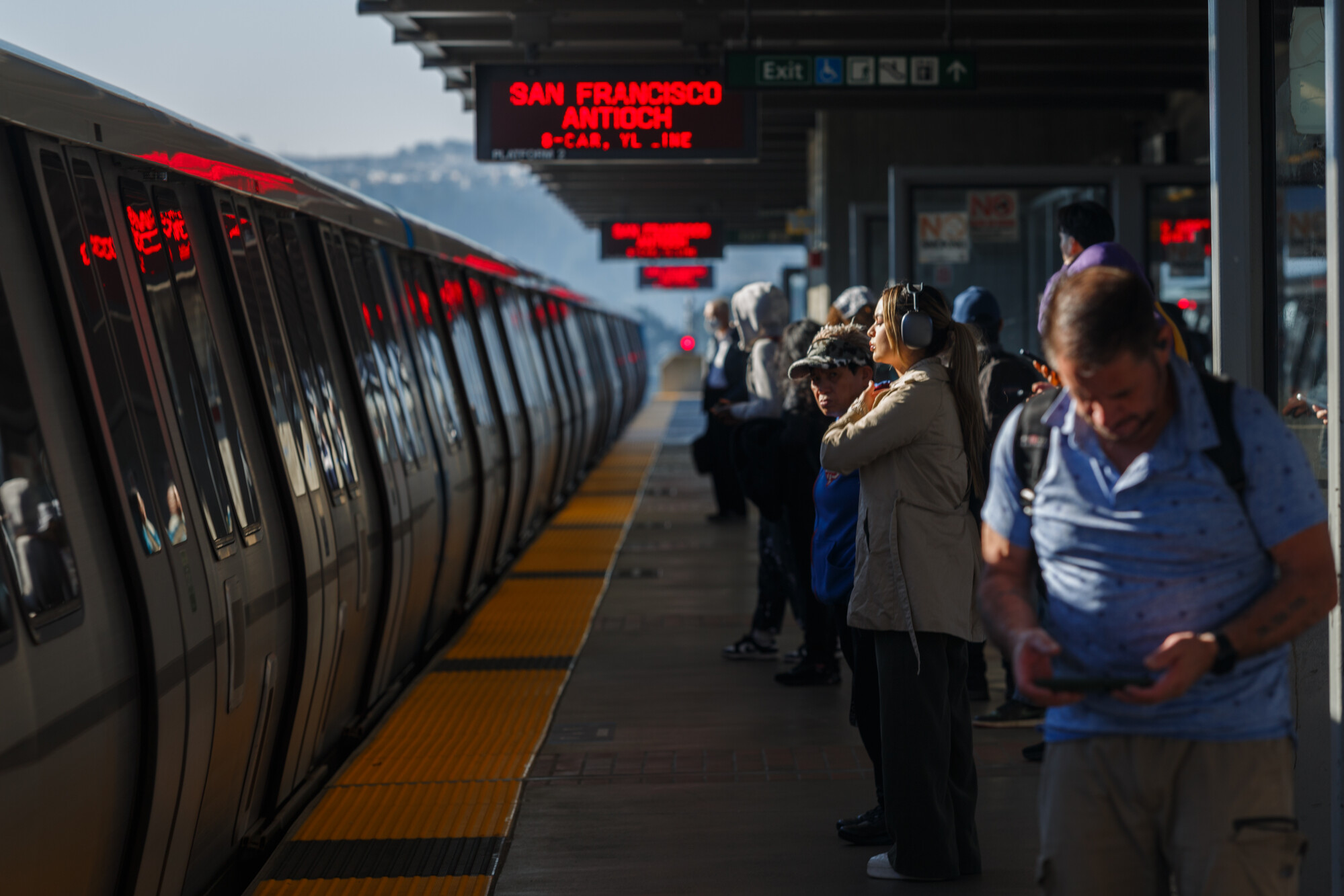
"caption": "Passengers wait to board BART at Daly City Station in Daly City, California, on Dec. 4, 2024. A new budget blueprint would reverse Gov. Newsom's proposal for a $1.1 billion cut in transit funding and offer emergency loans to BART, Muni and others. ",
"credit": "Juliana Yamada/KQED",
"altTag": null,
"description": null,
"imgSizes": {
"thumbnail": {
"file": "https://cdn.kqed.org/wp-content/uploads/sites/10/2025/06/20241204-BART-JY-003_qed-160x107.jpg",
"width": 160,
"height": 107,
"mimeType": "image/jpeg"
},
"1536x1536": {
"file": "https://cdn.kqed.org/wp-content/uploads/sites/10/2025/06/20241204-BART-JY-003_qed-1536x1024.jpg",
"width": 1536,
"height": 1024,
"mimeType": "image/jpeg"
},
"post-thumbnail": {
"file": "https://cdn.kqed.org/wp-content/uploads/sites/10/2025/06/20241204-BART-JY-003_qed-672x372.jpg",
"width": 672,
"height": 372,
"mimeType": "image/jpeg"
},
"twentyfourteen-full-width": {
"file": "https://cdn.kqed.org/wp-content/uploads/sites/10/2025/06/20241204-BART-JY-003_qed-1038x576.jpg",
"width": 1038,
"height": 576,
"mimeType": "image/jpeg"
},
"kqedFullSize": {
"file": "https://cdn.kqed.org/wp-content/uploads/sites/10/2025/06/20241204-BART-JY-003_qed.jpg",
"width": 1999,
"height": 1333
}
},
"isLoading": false,
"fetchFailed": false
},
"news_11990515": {
"type": "attachments",
"id": "news_11990515",
"meta": {
"index": "attachments_1716263798",
"site": "news",
"id": "11990515",
"found": true
},
"title": "240614-VTAGROUNDBREAKING-JG-01_qut",
"publishDate": 1718404276,
"status": "inherit",
"parent": 0,
"modified": 1749491424,
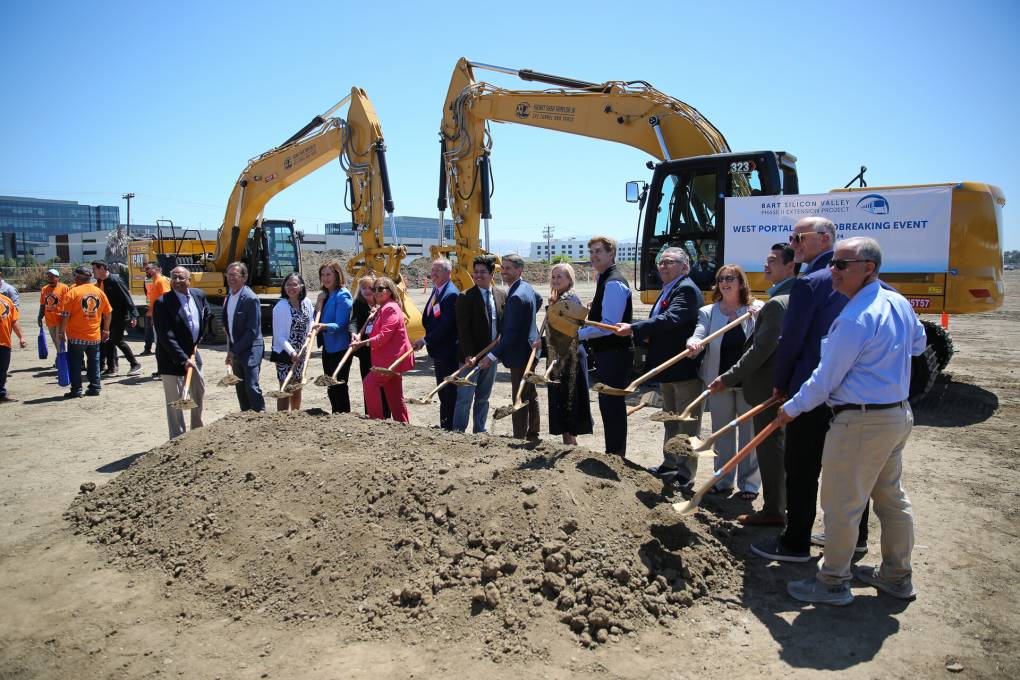
"caption": "South Bay leaders, transit officials and regional boosters take part in a ceremonial groundbreaking for VTA's BART Silicon Valley Phase II project in Santa Clara in June 2024.",
"credit": "Joseph Geha/KQED",
"altTag": null,
"description": null,
"imgSizes": {
"medium": {
"file": "https://cdn.kqed.org/wp-content/uploads/sites/10/2024/06/240614-VTAGROUNDBREAKING-JG-01_qut-800x533.jpg",
"width": 800,
"height": 533,
"mimeType": "image/jpeg"
},
"large": {
"file": "https://cdn.kqed.org/wp-content/uploads/sites/10/2024/06/240614-VTAGROUNDBREAKING-JG-01_qut-1020x680.jpg",
"width": 1020,
"height": 680,
"mimeType": "image/jpeg"
},
"thumbnail": {
"file": "https://cdn.kqed.org/wp-content/uploads/sites/10/2024/06/240614-VTAGROUNDBREAKING-JG-01_qut-160x107.jpg",
"width": 160,
"height": 107,
"mimeType": "image/jpeg"
},
"1536x1536": {
"file": "https://cdn.kqed.org/wp-content/uploads/sites/10/2024/06/240614-VTAGROUNDBREAKING-JG-01_qut-1536x1024.jpg",
"width": 1536,
"height": 1024,
"mimeType": "image/jpeg"
},
"post-thumbnail": {
"file": "https://cdn.kqed.org/wp-content/uploads/sites/10/2024/06/240614-VTAGROUNDBREAKING-JG-01_qut-672x372.jpg",
"width": 672,
"height": 372,
"mimeType": "image/jpeg"
},
"twentyfourteen-full-width": {
"file": "https://cdn.kqed.org/wp-content/uploads/sites/10/2024/06/240614-VTAGROUNDBREAKING-JG-01_qut-1038x576.jpg",
"width": 1038,
"height": 576,
"mimeType": "image/jpeg"
},
"kqedFullSize": {
"file": "https://cdn.kqed.org/wp-content/uploads/sites/10/2024/06/240614-VTAGROUNDBREAKING-JG-01_qut.jpg",
"width": 1920,
"height": 1280
}
},
"isLoading": false,
"fetchFailed": false
},
"news_11913625": {
"type": "attachments",
"id": "news_11913625",
"meta": {
"index": "attachments_1716263798",
"site": "news",
"id": "11913625",
"found": true
},
"parent": 11913317,
"imgSizes": {
"twentyfourteen-full-width": {
"file": "https://ww2.kqed.org/app/uploads/sites/10/2022/05/IMG_7164-1038x576.jpeg",
"width": 1038,
"mimeType": "image/jpeg",
"height": 576
},
"thumbnail": {
"file": "https://ww2.kqed.org/app/uploads/sites/10/2022/05/IMG_7164-160x120.jpeg",
"width": 160,
"mimeType": "image/jpeg",
"height": 120
},
"post-thumbnail": {
"file": "https://ww2.kqed.org/app/uploads/sites/10/2022/05/IMG_7164-672x372.jpeg",
"width": 672,
"mimeType": "image/jpeg",
"height": 372
},
"kqedFullSize": {
"file": "https://ww2.kqed.org/app/uploads/sites/10/2022/05/IMG_7164-scaled-e1652127989772.jpeg",
"width": 1920,
"height": 1440
},
"2048x2048": {
"file": "https://ww2.kqed.org/app/uploads/sites/10/2022/05/IMG_7164-2048x1536.jpeg",
"width": 2048,
"mimeType": "image/jpeg",
"height": 1536
},
"large": {
"file": "https://ww2.kqed.org/app/uploads/sites/10/2022/05/IMG_7164-1020x765.jpeg",
"width": 1020,
"mimeType": "image/jpeg",
"height": 765
},
"1536x1536": {
"file": "https://ww2.kqed.org/app/uploads/sites/10/2022/05/IMG_7164-1536x1152.jpeg",
"width": 1536,
"mimeType": "image/jpeg",
"height": 1152
},
"full-width": {
"file": "https://ww2.kqed.org/app/uploads/sites/10/2022/05/IMG_7164-1920x1440.jpeg",
"width": 1920,
"mimeType": "image/jpeg",
"height": 1440
},
"medium": {
"file": "https://ww2.kqed.org/app/uploads/sites/10/2022/05/IMG_7164-800x600.jpeg",
"width": 800,
"mimeType": "image/jpeg",
"height": 600
}
},
"publishDate": 1652127841,
"modified": 1652133540,
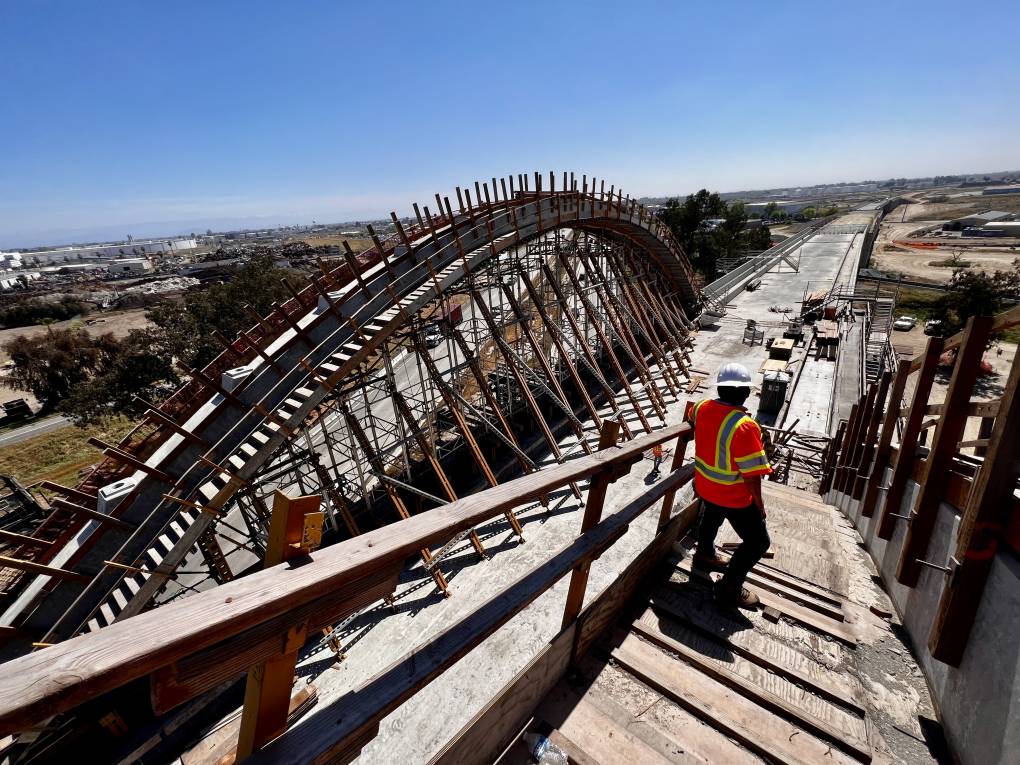
"caption": "A worker on the partially constructed Cedar Viaduct in Fresno in March. The 3,700-foot-long structure, with four massive arches, is part of California's high-speed rail project.",
"description": null,
"title": "IMG_7164",
"credit": "Saul Gonzalez/KQED",
"status": "inherit",
"altTag": "A construction worker walks down a steep bridge arch.",
"isLoading": false,
"fetchFailed": false
},
"news_12032416": {
"type": "attachments",
"id": "news_12032416",
"meta": {
"index": "attachments_1716263798",
"site": "news",
"id": "12032416",
"found": true
},
"title": "20250311_VTAStrikeDay2_GC-6_qed",
"publishDate": 1742573597,
"status": "inherit",
"parent": 12032033,
"modified": 1749057788,
"caption": "Hundreds of Santa Clara Valley Transportation Authority workers, represented by the Amalgamated Transit Union Local 265, raise fists during a second-day strike in front of the VTA headquarters on North First Street in San José, demanding a better contract and an increase in wages on March 11, 2025. ",
"credit": "Gina Castro/KQED",
"altTag": null,
"description": null,
"imgSizes": {
"medium": {
"file": "https://cdn.kqed.org/wp-content/uploads/sites/10/2025/03/20250311_VTAStrikeDay2_GC-6_qed-800x533.jpg",
"width": 800,
"height": 533,
"mimeType": "image/jpeg"
},
"large": {
"file": "https://cdn.kqed.org/wp-content/uploads/sites/10/2025/03/20250311_VTAStrikeDay2_GC-6_qed-1020x680.jpg",
"width": 1020,
"height": 680,
"mimeType": "image/jpeg"
},
"thumbnail": {
"file": "https://cdn.kqed.org/wp-content/uploads/sites/10/2025/03/20250311_VTAStrikeDay2_GC-6_qed-160x107.jpg",
"width": 160,
"height": 107,
"mimeType": "image/jpeg"
},
"1536x1536": {
"file": "https://cdn.kqed.org/wp-content/uploads/sites/10/2025/03/20250311_VTAStrikeDay2_GC-6_qed-1536x1024.jpg",
"width": 1536,
"height": 1024,
"mimeType": "image/jpeg"
},
"post-thumbnail": {
"file": "https://cdn.kqed.org/wp-content/uploads/sites/10/2025/03/20250311_VTAStrikeDay2_GC-6_qed-672x372.jpg",
"width": 672,
"height": 372,
"mimeType": "image/jpeg"
},
"twentyfourteen-full-width": {
"file": "https://cdn.kqed.org/wp-content/uploads/sites/10/2025/03/20250311_VTAStrikeDay2_GC-6_qed-1038x576.jpg",
"width": 1038,
"height": 576,
"mimeType": "image/jpeg"
},
"full-width": {
"file": "https://cdn.kqed.org/wp-content/uploads/sites/10/2025/03/20250311_VTAStrikeDay2_GC-6_qed-1920x1280.jpg",
"width": 1920,
"height": 1280,
"mimeType": "image/jpeg"
},
"kqedFullSize": {
"file": "https://cdn.kqed.org/wp-content/uploads/sites/10/2025/03/20250311_VTAStrikeDay2_GC-6_qed.jpg",
"width": 2000,
"height": 1333
}
},
"isLoading": false,
"fetchFailed": false
},
"news_12042429": {
"type": "attachments",
"id": "news_12042429",
"meta": {
"index": "attachments_1716263798",
"site": "news",
"id": "12042429",
"found": true
},
"title": "240409-VTAfile-02-BL_qed (1)",
"publishDate": 1748901974,
"status": "inherit",
"parent": 12042427,
"modified": 1748903172,
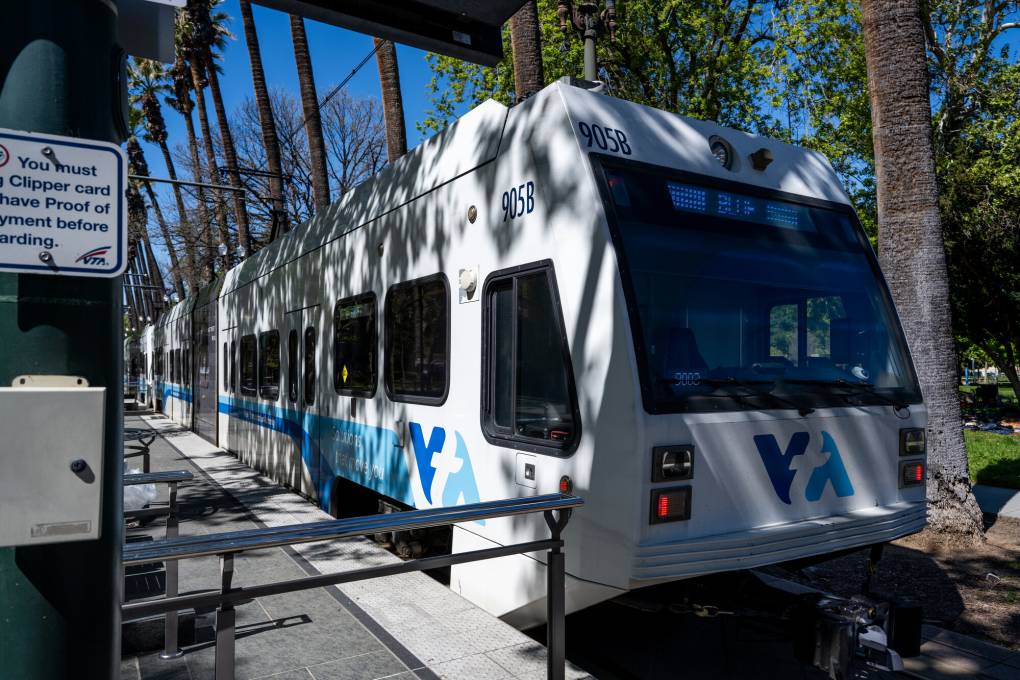
"caption": "A Santa Clara Valley Transportation Authority light rail train stops in downtown San José on June 17, 2024.",
"credit": "Beth LaBerge/KQED",
"altTag": null,
"description": null,
"imgSizes": {
"medium": {
"file": "https://cdn.kqed.org/wp-content/uploads/sites/10/2025/06/240409-VTAfile-02-BL_qed-1-800x533.jpg",
"width": 800,
"height": 533,
"mimeType": "image/jpeg"
},
"large": {
"file": "https://cdn.kqed.org/wp-content/uploads/sites/10/2025/06/240409-VTAfile-02-BL_qed-1-1020x680.jpg",
"width": 1020,
"height": 680,
"mimeType": "image/jpeg"
},
"thumbnail": {
"file": "https://cdn.kqed.org/wp-content/uploads/sites/10/2025/06/240409-VTAfile-02-BL_qed-1-160x107.jpg",
"width": 160,
"height": 107,
"mimeType": "image/jpeg"
},
"1536x1536": {
"file": "https://cdn.kqed.org/wp-content/uploads/sites/10/2025/06/240409-VTAfile-02-BL_qed-1-1536x1024.jpg",
"width": 1536,
"height": 1024,
"mimeType": "image/jpeg"
},
"post-thumbnail": {
"file": "https://cdn.kqed.org/wp-content/uploads/sites/10/2025/06/240409-VTAfile-02-BL_qed-1-672x372.jpg",
"width": 672,
"height": 372,
"mimeType": "image/jpeg"
},
"twentyfourteen-full-width": {
"file": "https://cdn.kqed.org/wp-content/uploads/sites/10/2025/06/240409-VTAfile-02-BL_qed-1-1038x576.jpg",
"width": 1038,
"height": 576,
"mimeType": "image/jpeg"
},
"full-width": {
"file": "https://cdn.kqed.org/wp-content/uploads/sites/10/2025/06/240409-VTAfile-02-BL_qed-1-1920x1280.jpg",
"width": 1920,
"height": 1280,
"mimeType": "image/jpeg"
},
"kqedFullSize": {
"file": "https://cdn.kqed.org/wp-content/uploads/sites/10/2025/06/240409-VTAfile-02-BL_qed-1.jpg",
"width": 1999,
"height": 1333
}
},
"isLoading": false,
"fetchFailed": false
},
"news_12041827": {
"type": "attachments",
"id": "news_12041827",
"meta": {
"index": "attachments_1716263798",
"site": "news",
"id": "12041827",
"found": true
},
"title": "006_KQED_SanFrancisco_Muni_04062020_qed",
"publishDate": 1748456618,
"status": "inherit",
"parent": 12041824,
"modified": 1748807984,
"caption": "A fleet of Muni buses in San Francisco on April 6, 2020.",
"credit": "Beth LaBerge/KQED",
"altTag": "A fleet of buses with red stripes in a parking lot.",
"description": null,
"imgSizes": {
"medium": {
"file": "https://cdn.kqed.org/wp-content/uploads/sites/10/2025/05/006_KQED_SanFrancisco_Muni_04062020_qed-800x533.jpg",
"width": 800,
"height": 533,
"mimeType": "image/jpeg"
},
"large": {
"file": "https://cdn.kqed.org/wp-content/uploads/sites/10/2025/05/006_KQED_SanFrancisco_Muni_04062020_qed-1020x680.jpg",
"width": 1020,
"height": 680,
"mimeType": "image/jpeg"
},
"thumbnail": {
"file": "https://cdn.kqed.org/wp-content/uploads/sites/10/2025/05/006_KQED_SanFrancisco_Muni_04062020_qed-160x107.jpg",
"width": 160,
"height": 107,
"mimeType": "image/jpeg"
},
"1536x1536": {
"file": "https://cdn.kqed.org/wp-content/uploads/sites/10/2025/05/006_KQED_SanFrancisco_Muni_04062020_qed-1536x1024.jpg",
"width": 1536,
"height": 1024,
"mimeType": "image/jpeg"
},
"post-thumbnail": {
"file": "https://cdn.kqed.org/wp-content/uploads/sites/10/2025/05/006_KQED_SanFrancisco_Muni_04062020_qed-672x372.jpg",
"width": 672,
"height": 372,
"mimeType": "image/jpeg"
},
"twentyfourteen-full-width": {
"file": "https://cdn.kqed.org/wp-content/uploads/sites/10/2025/05/006_KQED_SanFrancisco_Muni_04062020_qed-1038x576.jpg",
"width": 1038,
"height": 576,
"mimeType": "image/jpeg"
},
"full-width": {
"file": "https://cdn.kqed.org/wp-content/uploads/sites/10/2025/05/006_KQED_SanFrancisco_Muni_04062020_qed-1920x1280.jpg",
"width": 1920,
"height": 1280,
"mimeType": "image/jpeg"
},
"kqedFullSize": {
"file": "https://cdn.kqed.org/wp-content/uploads/sites/10/2025/05/006_KQED_SanFrancisco_Muni_04062020_qed.jpg",
"width": 2000,
"height": 1333
}
},
"isLoading": false,
"fetchFailed": false
},
"news_12041273": {
"type": "attachments",
"id": "news_12041273",
"meta": {
"index": "attachments_1716263798",
"site": "news",
"id": "12041273",
"found": true
},
"title": "APTOPIX Plane-Crash-San-Diego",
"publishDate": 1747935465,
"status": "inherit",
"parent": 12041261,
"modified": 1747935544,
"caption": "Authorities work the scene where a small plane crashed into a San Diego neighborhood, setting several homes on fire and forcing evacuations along many blocks early Thursday, May 22, 2025.",
"credit": "Gregory Bull/AP Photo",
"altTag": null,
"description": null,
"imgSizes": {
"medium": {
"file": "https://cdn.kqed.org/wp-content/uploads/sites/10/2025/05/SanDiegoCrashAP1-800x533.jpg",
"width": 800,
"height": 533,
"mimeType": "image/jpeg"
},
"large": {
"file": "https://cdn.kqed.org/wp-content/uploads/sites/10/2025/05/SanDiegoCrashAP1-1020x680.jpg",
"width": 1020,
"height": 680,
"mimeType": "image/jpeg"
},
"thumbnail": {
"file": "https://cdn.kqed.org/wp-content/uploads/sites/10/2025/05/SanDiegoCrashAP1-160x107.jpg",
"width": 160,
"height": 107,
"mimeType": "image/jpeg"
},
"1536x1536": {
"file": "https://cdn.kqed.org/wp-content/uploads/sites/10/2025/05/SanDiegoCrashAP1-1536x1024.jpg",
"width": 1536,
"height": 1024,
"mimeType": "image/jpeg"
},
"post-thumbnail": {
"file": "https://cdn.kqed.org/wp-content/uploads/sites/10/2025/05/SanDiegoCrashAP1-672x372.jpg",
"width": 672,
"height": 372,
"mimeType": "image/jpeg"
},
"twentyfourteen-full-width": {
"file": "https://cdn.kqed.org/wp-content/uploads/sites/10/2025/05/SanDiegoCrashAP1-1038x576.jpg",
"width": 1038,
"height": 576,
"mimeType": "image/jpeg"
},
"full-width": {
"file": "https://cdn.kqed.org/wp-content/uploads/sites/10/2025/05/SanDiegoCrashAP1-1920x1280.jpg",
"width": 1920,
"height": 1280,
"mimeType": "image/jpeg"
},
"kqedFullSize": {
"file": "https://cdn.kqed.org/wp-content/uploads/sites/10/2025/05/SanDiegoCrashAP1.jpg",
"width": 2000,
"height": 1333
}
},
"isLoading": false,
"fetchFailed": false
},
"news_12040954": {
"type": "attachments",
"id": "news_12040954",
"meta": {
"index": "attachments_1716263798",
"site": "news",
"id": "12040954",
"found": true
},
"title": "20241204-BART-JY-028_qed",
"publishDate": 1747772322,
"status": "inherit",
"parent": 12040951,
"modified": 1747772344,
"caption": "A passenger tags their Clipper card at Montgomery BART Station in San Francisco on Dec. 4, 2024.",
"credit": "Juliana Yamada/KQED",
"altTag": null,
"description": null,
"imgSizes": {
"medium": {
"file": "https://cdn.kqed.org/wp-content/uploads/sites/10/2025/05/20241204-BART-JY-028_qed-800x533.jpg",
"width": 800,
"height": 533,
"mimeType": "image/jpeg"
},
"large": {
"file": "https://cdn.kqed.org/wp-content/uploads/sites/10/2025/05/20241204-BART-JY-028_qed-1020x680.jpg",
"width": 1020,
"height": 680,
"mimeType": "image/jpeg"
},
"thumbnail": {
"file": "https://cdn.kqed.org/wp-content/uploads/sites/10/2025/05/20241204-BART-JY-028_qed-160x107.jpg",
"width": 160,
"height": 107,
"mimeType": "image/jpeg"
},
"1536x1536": {
"file": "https://cdn.kqed.org/wp-content/uploads/sites/10/2025/05/20241204-BART-JY-028_qed-1536x1024.jpg",
"width": 1536,
"height": 1024,
"mimeType": "image/jpeg"
},
"post-thumbnail": {
"file": "https://cdn.kqed.org/wp-content/uploads/sites/10/2025/05/20241204-BART-JY-028_qed-672x372.jpg",
"width": 672,
"height": 372,
"mimeType": "image/jpeg"
},
"twentyfourteen-full-width": {
"file": "https://cdn.kqed.org/wp-content/uploads/sites/10/2025/05/20241204-BART-JY-028_qed-1038x576.jpg",
"width": 1038,
"height": 576,
"mimeType": "image/jpeg"
},
"full-width": {
"file": "https://cdn.kqed.org/wp-content/uploads/sites/10/2025/05/20241204-BART-JY-028_qed-1920x1280.jpg",
"width": 1920,
"height": 1280,
"mimeType": "image/jpeg"
},
"kqedFullSize": {
"file": "https://cdn.kqed.org/wp-content/uploads/sites/10/2025/05/20241204-BART-JY-028_qed.jpg",
"width": 1999,
"height": 1333
}
},
"isLoading": false,
"fetchFailed": false
},
"news_11993195": {
"type": "attachments",
"id": "news_11993195",
"meta": {
"index": "attachments_1716263798",
"site": "news",
"id": "11993195",
"found": true
},
"title": "240313-BART CRISIS INTERVENTION UNIT-MD-16_qed",
"publishDate": 1720461197,
"status": "inherit",
"parent": 11993189,
"modified": 1747766652,
"caption": "A train approaches the San Leandro BART station on March 13, 2024.",
"credit": "Martin do Nascimento/KQED",
"altTag": null,
"description": null,
"imgSizes": {
"medium": {
"file": "https://cdn.kqed.org/wp-content/uploads/sites/10/2024/07/240313-BART-CRISIS-INTERVENTION-UNIT-MD-16_qed-800x533.jpg",
"width": 800,
"height": 533,
"mimeType": "image/jpeg"
},
"large": {
"file": "https://cdn.kqed.org/wp-content/uploads/sites/10/2024/07/240313-BART-CRISIS-INTERVENTION-UNIT-MD-16_qed-1020x680.jpg",
"width": 1020,
"height": 680,
"mimeType": "image/jpeg"
},
"thumbnail": {
"file": "https://cdn.kqed.org/wp-content/uploads/sites/10/2024/07/240313-BART-CRISIS-INTERVENTION-UNIT-MD-16_qed-160x107.jpg",
"width": 160,
"height": 107,
"mimeType": "image/jpeg"
},
"1536x1536": {
"file": "https://cdn.kqed.org/wp-content/uploads/sites/10/2024/07/240313-BART-CRISIS-INTERVENTION-UNIT-MD-16_qed-1536x1024.jpg",
"width": 1536,
"height": 1024,
"mimeType": "image/jpeg"
},
"post-thumbnail": {
"file": "https://cdn.kqed.org/wp-content/uploads/sites/10/2024/07/240313-BART-CRISIS-INTERVENTION-UNIT-MD-16_qed-672x372.jpg",
"width": 672,
"height": 372,
"mimeType": "image/jpeg"
},
"twentyfourteen-full-width": {
"file": "https://cdn.kqed.org/wp-content/uploads/sites/10/2024/07/240313-BART-CRISIS-INTERVENTION-UNIT-MD-16_qed-1038x576.jpg",
"width": 1038,
"height": 576,
"mimeType": "image/jpeg"
},
"full-width": {
"file": "https://cdn.kqed.org/wp-content/uploads/sites/10/2024/07/240313-BART-CRISIS-INTERVENTION-UNIT-MD-16_qed-1920x1280.jpg",
"width": 1920,
"height": 1280,
"mimeType": "image/jpeg"
},
"kqedFullSize": {
"file": "https://cdn.kqed.org/wp-content/uploads/sites/10/2024/07/240313-BART-CRISIS-INTERVENTION-UNIT-MD-16_qed.jpg",
"width": 1999,
"height": 1333
}
},
"isLoading": false,
"fetchFailed": false
},
"news_11992098": {
"type": "attachments",
"id": "news_11992098",
"meta": {
"index": "attachments_1716263798",
"site": "news",
"id": "11992098",
"found": true
},
"title": "240313-BART CRISIS INTERVENTION UNIT-MD-15",
"publishDate": 1719434084,
"status": "inherit",
"parent": 11992041,
"modified": 1726695343,
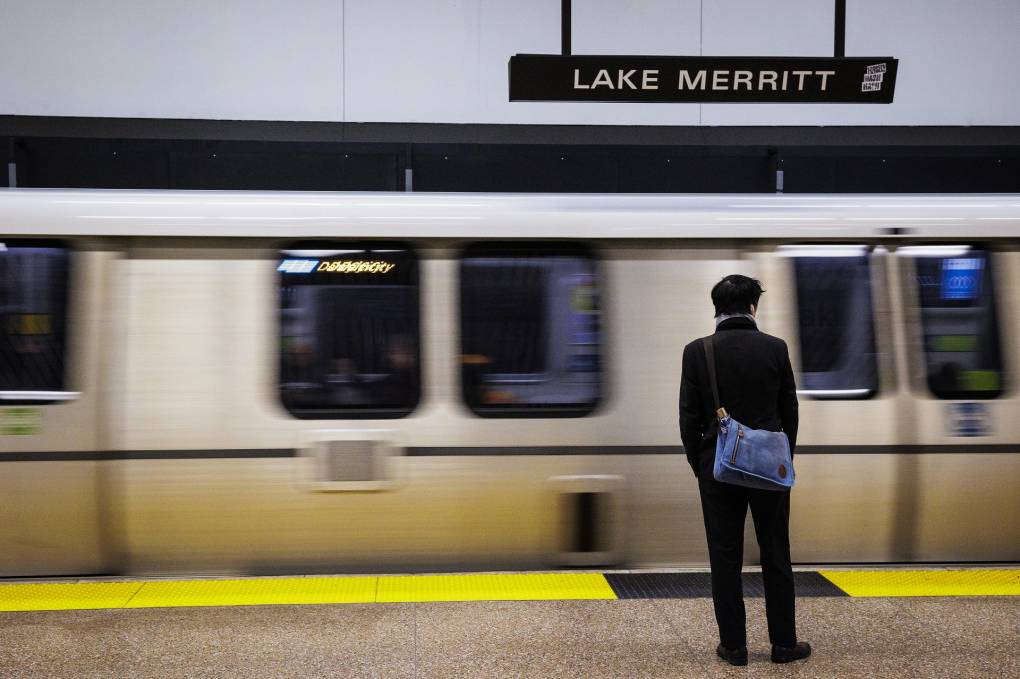
"caption": "A passenger watches a train go by at the Lake Merritt BART station on March 13, 2024.",
"credit": "Martin do Nascimento/KQED",
"altTag": "A man stands at a train platform as a train leaves the station. A sign above says \"Lake Merritt.\"",
"description": null,
"imgSizes": {
"medium": {
"file": "https://cdn.kqed.org/wp-content/uploads/sites/10/2024/06/240313-BART-CRISIS-INTERVENTION-UNIT-MD-15-800x533.jpg",
"width": 800,
"height": 533,
"mimeType": "image/jpeg"
},
"large": {
"file": "https://cdn.kqed.org/wp-content/uploads/sites/10/2024/06/240313-BART-CRISIS-INTERVENTION-UNIT-MD-15-1020x679.jpg",
"width": 1020,
"height": 679,
"mimeType": "image/jpeg"
},
"thumbnail": {
"file": "https://cdn.kqed.org/wp-content/uploads/sites/10/2024/06/240313-BART-CRISIS-INTERVENTION-UNIT-MD-15-160x107.jpg",
"width": 160,
"height": 107,
"mimeType": "image/jpeg"
},
"1536x1536": {
"file": "https://cdn.kqed.org/wp-content/uploads/sites/10/2024/06/240313-BART-CRISIS-INTERVENTION-UNIT-MD-15-1536x1023.jpg",
"width": 1536,
"height": 1023,
"mimeType": "image/jpeg"
},
"post-thumbnail": {
"file": "https://cdn.kqed.org/wp-content/uploads/sites/10/2024/06/240313-BART-CRISIS-INTERVENTION-UNIT-MD-15-672x372.jpg",
"width": 672,
"height": 372,
"mimeType": "image/jpeg"
},
"twentyfourteen-full-width": {
"file": "https://cdn.kqed.org/wp-content/uploads/sites/10/2024/06/240313-BART-CRISIS-INTERVENTION-UNIT-MD-15-1038x576.jpg",
"width": 1038,
"height": 576,
"mimeType": "image/jpeg"
},
"kqedFullSize": {
"file": "https://cdn.kqed.org/wp-content/uploads/sites/10/2024/06/240313-BART-CRISIS-INTERVENTION-UNIT-MD-15.jpg",
"width": 1920,
"height": 1279
}
},
"isLoading": false,
"fetchFailed": false
},
"news_12040902": {
"type": "attachments",
"id": "news_12040902",
"meta": {
"index": "attachments_1716263798",
"site": "news",
"id": "12040902",
"found": true
},
"title": "US-AUTOMOBILE-LIFESTYLE-WAYMO",
"publishDate": 1747762015,
"status": "inherit",
"parent": 12074861,
"modified": 1772219111,
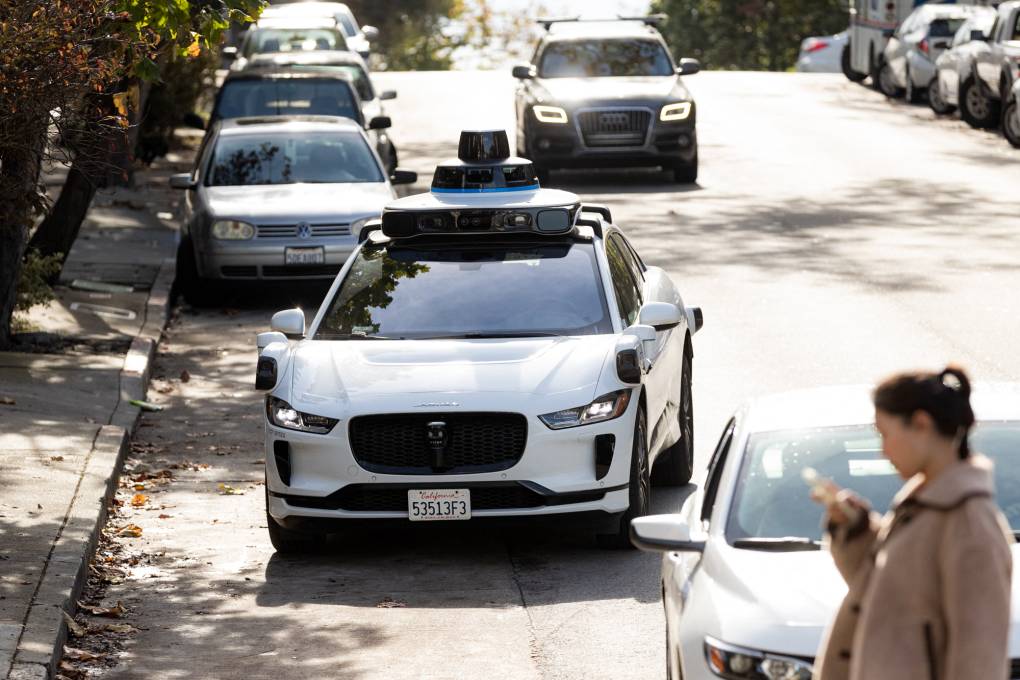
"caption": "A Waymo autonomous vehicle on Steiner Street in San Francisco on Nov. 17, 2023. ",
"credit": "Jason Henry/AFP via Getty Images",
"altTag": null,
"description": null,
"imgSizes": {
"medium": {
"file": "https://cdn.kqed.org/wp-content/uploads/sites/10/2025/05/GETTYIMAGES-1788126569-KQED-800x533.jpg",
"width": 800,
"height": 533,
"mimeType": "image/jpeg"
},
"large": {
"file": "https://cdn.kqed.org/wp-content/uploads/sites/10/2025/05/GETTYIMAGES-1788126569-KQED-1020x680.jpg",
"width": 1020,
"height": 680,
"mimeType": "image/jpeg"
},
"thumbnail": {
"file": "https://cdn.kqed.org/wp-content/uploads/sites/10/2025/05/GETTYIMAGES-1788126569-KQED-160x107.jpg",
"width": 160,
"height": 107,
"mimeType": "image/jpeg"
},
"1536x1536": {
"file": "https://cdn.kqed.org/wp-content/uploads/sites/10/2025/05/GETTYIMAGES-1788126569-KQED-1536x1024.jpg",
"width": 1536,
"height": 1024,
"mimeType": "image/jpeg"
},
"post-thumbnail": {
"file": "https://cdn.kqed.org/wp-content/uploads/sites/10/2025/05/GETTYIMAGES-1788126569-KQED-672x372.jpg",
"width": 672,
"height": 372,
"mimeType": "image/jpeg"
},
"twentyfourteen-full-width": {
"file": "https://cdn.kqed.org/wp-content/uploads/sites/10/2025/05/GETTYIMAGES-1788126569-KQED-1038x576.jpg",
"width": 1038,
"height": 576,
"mimeType": "image/jpeg"
},
"full-width": {
"file": "https://cdn.kqed.org/wp-content/uploads/sites/10/2025/05/GETTYIMAGES-1788126569-KQED-1920x1280.jpg",
"width": 1920,
"height": 1280,
"mimeType": "image/jpeg"
},
"kqedFullSize": {
"file": "https://cdn.kqed.org/wp-content/uploads/sites/10/2025/05/GETTYIMAGES-1788126569-KQED.jpg",
"width": 2000,
"height": 1333
}
},
"isLoading": false,
"fetchFailed": false
}
},
"audioPlayerReducer": {
"postId": "stream_live",
"isPaused": true,
"isPlaying": false,
"pfsActive": false,
"pledgeModalIsOpen": true,
"playerDrawerIsOpen": false,
"liveAudioPlayStartedAt": 0,
"liveAudioPlayContext": ""
},
"authorsReducer": {
"byline_news_12042348": {
"type": "authors",
"id": "byline_news_12042348",
"meta": {
"override": true
},
"slug": "byline_news_12042348",
"name": "\u003ca href=\"https://calmatters.org/author/ben-christopher/\">Ben Christopher, \u003c/a>CalMatters",
"isLoading": false
},
"byline_news_12041261": {
"type": "authors",
"id": "byline_news_12041261",
"meta": {
"override": true
},
"slug": "byline_news_12041261",
"name": "Julie Watson, Associated Press",
"isLoading": false
},
"danbrekke": {
"type": "authors",
"id": "222",
"meta": {
"index": "authors_1716337520",
"id": "222",
"found": true
},
"name": "Dan Brekke",
"firstName": "Dan",
"lastName": "Brekke",
"slug": "danbrekke",
"email": "dbrekke@kqed.org",
"display_author_email": true,
"staff_mastheads": [
"news",
"science"
],
"title": "KQED Editor and Reporter",
"bio": "Dan Brekke is a reporter and editor for KQED News, responsible for coverage of topics ranging from California water issues to the Bay Area's transportation challenges. In a newsroom career that began in Chicago in 1972, Dan has worked for \u003cem>The San Francisco Examiner,\u003c/em> Wired and TechTV and has been published in The New York Times, The New York Times Magazine, Business 2.0, Salon and elsewhere.\r\n\r\nSince joining KQED in 2007, Dan has reported, edited and produced both radio and online features and breaking news pieces. He has shared as both editor and reporter in four Society of Professional Journalists Norcal Excellence in Journalism awards and one Edward R. Murrow regional award. He was chosen for a spring 2017 residency at the Mesa Refuge to advance his research on California salmon.\r\n\r\nEmail Dan at: \u003ca href=\"mailto:dbrekke@kqed.org\">dbrekke@kqed.org\u003c/a>\r\n\r\n\u003cstrong>Twitter:\u003c/strong> \u003ca href=\"https://twitter.com/danbrekke\" rel=\"noopener noreferrer\">twitter.com/danbrekke\u003c/a>\r\n\u003cstrong>Facebook:\u003c/strong> \u003ca href=\"https://www.facebook.com/danbrekke\" rel=\"noopener noreferrer\">www.facebook.com/danbrekke\u003c/a>\r\n\u003cstrong>LinkedIn:\u003c/strong> \u003ca href=\"https://www.linkedin.com/in/danbrekke\" rel=\"noopener noreferrer\">www.linkedin.com/in/danbrekke\u003c/a>",
"avatar": "https://secure.gravatar.com/avatar/8f1f0d2a978fb3b23426c922c7e2af558fa36905b49c4ce76a97dc3c72d27226?s=600&d=mm&r=g",
"twitter": "danbrekke",
"bluesky": null,
"facebook": null,
"instagram": "https://www.instagram.com/dan.brekke/",
"linkedin": "https://www.linkedin.com/in/danbrekke/",
"sites": [
{
"site": "news",
"roles": [
"administrator",
"create_posts"
]
},
{
"site": "stateofhealth",
"roles": [
"editor"
]
},
{
"site": "science",
"roles": [
"editor"
]
},
{
"site": "quest",
"roles": [
"contributor"
]
},
{
"site": "food",
"roles": [
"contributor"
]
},
{
"site": "forum",
"roles": [
"contributor"
]
},
{
"site": "elections",
"roles": [
"editor"
]
},
{
"site": "liveblog",
"roles": [
"editor"
]
}
],
"headData": {
"title": "Dan Brekke | KQED",
"description": "KQED Editor and Reporter",
"ogImgSrc": "https://secure.gravatar.com/avatar/8f1f0d2a978fb3b23426c922c7e2af558fa36905b49c4ce76a97dc3c72d27226?s=600&d=mm&r=g",
"twImgSrc": "https://secure.gravatar.com/avatar/8f1f0d2a978fb3b23426c922c7e2af558fa36905b49c4ce76a97dc3c72d27226?s=600&d=mm&r=g"
},
"isLoading": false,
"link": "/author/danbrekke"
},
"matthewgreen": {
"type": "authors",
"id": "1263",
"meta": {
"index": "authors_1716337520",
"id": "1263",
"found": true
},
"name": "Matthew Green",
"firstName": "Matthew",
"lastName": "Green",
"slug": "matthewgreen",
"email": "mgreen@kqed.org",
"display_author_email": false,
"staff_mastheads": [],
"title": "KQED Editor/Reporter",
"bio": "Matthew Green is a digital media producer for KQED News. He previously produced \u003ca href=\"http://www.kqed.org/lowdown\">The Lowdown\u003c/a>, KQED’s multimedia news education blog. Matthew's written for numerous Bay Area publications, including the Oakland Tribune and San Francisco Chronicle. He also taught journalism classes at Fremont High School in East Oakland.\r\n\r\nEmail: mgreen@kqed.org; Twitter: @MGreenKQED",
"avatar": "https://secure.gravatar.com/avatar/3bf498d1267ca02c8494f33d8cfc575e?s=600&d=blank&r=g",
"twitter": "MGreenKQED",
"facebook": null,
"instagram": null,
"linkedin": null,
"sites": [
{
"site": "news",
"roles": []
},
{
"site": "lowdown",
"roles": []
},
{
"site": "science",
"roles": []
},
{
"site": "education",
"roles": []
},
{
"site": "quest",
"roles": []
},
{
"site": "liveblog",
"roles": []
}
],
"headData": {
"title": "Matthew Green | KQED",
"description": "KQED Editor/Reporter",
"ogImgSrc": "https://secure.gravatar.com/avatar/3bf498d1267ca02c8494f33d8cfc575e?s=600&d=blank&r=g",
"twImgSrc": "https://secure.gravatar.com/avatar/3bf498d1267ca02c8494f33d8cfc575e?s=600&d=blank&r=g"
},
"isLoading": false,
"link": "/author/matthewgreen"
},
"jgeha": {
"type": "authors",
"id": "11906",
"meta": {
"index": "authors_1716337520",
"id": "11906",
"found": true
},
"name": "Joseph Geha",
"firstName": "Joseph",
"lastName": "Geha",
"slug": "jgeha",
"email": "jgeha@kqed.org",
"display_author_email": false,
"staff_mastheads": [
"news",
"science"
],
"title": "KQED Contributor",
"bio": null,
"avatar": "https://secure.gravatar.com/avatar/ea84d2b6dd93d6369d453edf19dd583f117cd1759d2d9c9c92f9de77017354fe?s=600&d=blank&r=g",
"twitter": null,
"bluesky": null,
"facebook": null,
"instagram": null,
"linkedin": null,
"sites": [
{
"site": "news",
"roles": [
"editor"
]
},
{
"site": "liveblog",
"roles": [
"author"
]
}
],
"headData": {
"title": "Joseph Geha | KQED",
"description": "KQED Contributor",
"ogImgSrc": "https://secure.gravatar.com/avatar/ea84d2b6dd93d6369d453edf19dd583f117cd1759d2d9c9c92f9de77017354fe?s=600&d=blank&r=g",
"twImgSrc": "https://secure.gravatar.com/avatar/ea84d2b6dd93d6369d453edf19dd583f117cd1759d2d9c9c92f9de77017354fe?s=600&d=blank&r=g"
},
"isLoading": false,
"link": "/author/jgeha"
}
},
"pagesReducer": {
"news_category_transportation": {
"type": "terms",
"id": "news_1397",
"meta": {
"index": "terms_1716263798",
"site": "news",
"id": "1397",
"score": 12.939901
},
"featImg": null,
"name": "Transportation",
"description": null,
"taxonomy": "category",
"headData": {
"twImgId": null,
"twTitle": null,
"ogTitle": null,
"ogImgId": null,
"twDescription": null,
"description": null,
"title": "Transportation Archives | KQED News",
"ogDescription": null
},
"ttid": 1409,
"slug": "transportation",
"isLoading": false,
"title": "Transportation",
"pageMeta": {
"site": "news",
"WpPageTemplate": "page-topic-editorial",
"currentPage": 17
},
"blocks": [
{
"blockName": "kqed/post-list",
"attrs": {
"layout": "cardArticle2",
"query": "posts/news?category=transportation",
"seeMore": false,
"paginated": true,
"page": 17
}
},
{
"blockName": "kqed/ad"
}
]
}
},
"pfsSessionReducer": {},
"postsReducer": {
"stream_live": {
"type": "live",
"id": "stream_live",
"audioUrl": "https://streams.kqed.org/kqedradio",
"title": "Live Stream",
"excerpt": "Live Stream information currently unavailable.",
"link": "/radio",
"featImg": "",
"label": {
"name": "KQED Live",
"link": "/"
}
},
"stream_kqedNewscast": {
"type": "posts",
"id": "stream_kqedNewscast",
"audioUrl": "https://www.kqed.org/.stream/anon/radio/RDnews/newscast.mp3?_=1",
"title": "KQED Newscast",
"featImg": "",
"label": {
"name": "88.5 FM",
"link": "/"
}
},
"news_12043556": {
"type": "posts",
"id": "news_12043556",
"meta": {
"index": "posts_1716263798",
"site": "news",
"id": "12043556",
"score": null,
"sort": [
1749591536000
]
},
"guestAuthors": [],
"slug": "california-lawmakers-plan-would-help-bay-area-transit-avoid-fiscal-disaster-for-now",
"title": "California Lawmakers' Plan Would Help Bay Area Transit Avoid Fiscal Disaster — for Now",
"publishDate": 1749591536,
"format": "standard",
"headTitle": "California Lawmakers’ Plan Would Help Bay Area Transit Avoid Fiscal Disaster — for Now | KQED",
"labelTerm": {
"site": "news"
},
"content": "\u003cp>\u003cem>Updated 4:56 p.m.\u003c/em>\u003c/p>\n\u003cp>State lawmakers have come up with a plan that offers temporary relief to \u003ca href=\"https://www.kqed.org/news/tag/bay-area\">Bay Area\u003c/a> transit agencies on the verge of a fiscal crisis that could force drastic service cuts as early as next summer.\u003c/p>\n\u003cp>State Sens. Scott Wiener, D-San Francisco, and Jesse Arreguín, D-Berkeley, \u003ca href=\"https://sd11.senate.ca.gov/news/senate-and-assembly-reach-agreement-fund-public-transit-avert-mass-service-cuts\">announced Monday\u003c/a> that the budget blueprint drawn up by Assembly and Senate budget negotiators would reverse \u003ca href=\"https://www.kqed.org/news/12041824/bay-area-transit-faces-a-fiscal-crisis-newsoms-budget-plan-could-make-it-worse\">a $1.1 billion cut in transit funding\u003c/a> that Gov. Newsom proposed last month.\u003c/p>\n\u003cp>The Legislature’s budget, which must be approved by next Sunday, would also provide as much as $750 million in interest-free loans to Bay Area transit operators who are staring down devastating budget deficits in the fiscal year beginning July 1, 2026.\u003c/p>\n\u003cp>[ad fullwidth]\u003c/p>\n\u003cp>Arreguín and Wiener issued a joint statement that warned “allowing [public transit] to collapse would devastate California’s economic recovery and quality of life.”\u003c/p>\n\u003cp>But the senators, who have worked for the last several months with Assemblymember Mark Gonzalez, D-Los Angeles, to craft a transit relief package, acknowledged the Legislature’s plan will provide only a temporary respite from transit agencies’ long-term budget problems. Those challenges arise mostly from the pandemic-driven loss of ridership and fare revenue and a downturn in tax receipts that bus and train operators rely on.\u003c/p>\n\u003cfigure id=\"attachment_12043149\" class=\"wp-caption aligncenter\" style=\"max-width: 2000px\">\u003cimg loading=\"lazy\" decoding=\"async\" class=\"size-full wp-image-12043149\" src=\"https://cdn.kqed.org/wp-content/uploads/sites/10/2025/06/HarveyMilkFolo2.jpg\" alt=\"\" width=\"2000\" height=\"1500\" srcset=\"https://cdn.kqed.org/wp-content/uploads/sites/10/2025/06/HarveyMilkFolo2.jpg 2000w, https://cdn.kqed.org/wp-content/uploads/sites/10/2025/06/HarveyMilkFolo2-160x120.jpg 160w, https://cdn.kqed.org/wp-content/uploads/sites/10/2025/06/HarveyMilkFolo2-1536x1152.jpg 1536w\" sizes=\"auto, (max-width: 2000px) 100vw, 2000px\">\u003cfigcaption class=\"wp-caption-text\">Sen. Scott Wiener speaks at a press conference at Jane Warner Plaza in San Francisco on June 6, 2025. \u003ccite>(Samantha Kennedy/KQED)\u003c/cite>\u003c/figcaption>\u003c/figure>\n\u003cp>“Our public transportation systems’ future is still far from secure, and they require greater engagement and prioritization from our leaders to avert disaster,” Arreguín and Wiener said. “Even with this one-time relief package, systems across the state continue to face large budget shortfalls that threaten devastating service cuts.”\u003c/p>\n\u003cp>The lawmakers’ solution to the transit crisis, which rejects the governor’s proposal to redirect $1.5 billion of revenue in the state’s cap-and-trade fund to Cal Fire instead of transit, will need Newsom’s approval to take effect. The governor’s office says it’s still reviewing the proposal.\u003c/p>\n\u003cp>Parisa Safarzadeh, director of communications for the San Francisco Municipal Transportation Agency, said in an email statement that city officials will work with community members “to make sure this package is part of the final budget with the governor. We are working to make Muni more efficient and accountable, but our city’s economy cannot withstand the severe Muni service cuts that would result without this state support.”[aside postID=news_12042706 hero='https://ww2.kqed.org/app/uploads/sites/10/2022/05/IMG_7164-1020x765.jpeg']\u003ca href=\"https://www.documentcloud.org/documents/25970156-shortfalls-and-fair-share-analysis-mtc-250523/#document/p1\">A recent analysis\u003c/a> for the Metropolitan Transportation Commission found that collectively, BART, Muni, AC Transit, Caltrain and Golden Gate Transit face a total deficit of $3.7 billion in the five fiscal years beginning in July 2026. \u003c/p>\n\u003cp>BART and San Francisco’s Muni system account for $2.9 billion of that total, with both facing staggering shortfalls — $380 million for BART, $320 million for Muni — in fiscal 2026–27.\u003c/p>\n\u003cp>If those deficits are not solved, BART said that it might have to suspend service on two of its five lines, reduce service on those runs to just one or two trains every 60 minutes, shorten daily service hours and shut down some stations as a result. Muni leaders \u003ca href=\"https://www.kqed.org/news/12014573/sf-muni-dire-need-funding-without-cuts-could-be-devastating\">have warned\u003c/a> that the agency might need to suspend service on 20 bus lines, cut the frequency of service by 50% and end service at 9 p.m.\u003c/p>\n\u003cp>To avert those cuts, Wiener, Arreguín and Assemblymember Catherine Stefani, D-San Francisco, are working with the MTC and officials across the Bay Area \u003ca href=\"https://www.kqed.org/news/12039394/last-ditch-effort-fund-bay-area-transit-tries-pick-up-support\">to craft legislation\u003c/a> to authorize a November 2026 ballot measure that would aid BART, Muni, AC Transit, Caltrain and other operators.\u003c/p>\n\u003cp>The bill, \u003ca href=\"https://leginfo.legislature.ca.gov/faces/billTextClient.xhtml?bill_id=202520260SB63\">SB 63\u003c/a>, recently passed the Senate and will be taken up next by the Assembly Transportation Committee. It would impose additional sales taxes in San Francisco, Alameda and Contra Costa counties to support day-to-day operations and to improve regional transit connections. The MTC has estimated that the sales taxes — a half-cent in Alameda and Contra counties and up to one cent in San Francisco — would raise up to $550 million a year.\u003c/p>\n\u003cp>The bill also allows San Mateo and Santa Clara counties to opt in to the ballot measure, a decision each county would have to make by Aug. 11.\u003c/p>\n\u003cp>\u003c/p>\n",
"blocks": [],
"excerpt": "The budget blueprint would reverse Gov. Newsom's proposal for a $1.1 billion cut in transit funding and offer emergency loans to BART, Muni and others. ",
"status": "publish",
"parent": 0,
"modified": 1749599911,
"stats": {
"hasAudio": false,
"hasVideo": false,
"hasChartOrMap": false,
"iframeSrcs": [],
"hasGoogleForm": false,
"hasGallery": false,
"hasHearkenModule": false,
"hasPolis": false,
"paragraphCount": 16,
"wordCount": 759
},
"headData": {
"title": "California Lawmakers' Plan Would Help Bay Area Transit Avoid Fiscal Disaster — for Now | KQED",
"description": "The budget blueprint would reverse Gov. Newsom's proposal for a $1.1 billion cut in transit funding and offer emergency loans to BART, Muni and others. ",
"ogTitle": "",
"ogDescription": "",
"ogImgId": "",
"twTitle": "",
"twDescription": "",
"twImgId": "",
"schema": {
"@context": "https://schema.org",
"@type": "NewsArticle",
"headline": "California Lawmakers' Plan Would Help Bay Area Transit Avoid Fiscal Disaster — for Now",
"datePublished": "2025-06-10T14:38:56-07:00",
"dateModified": "2025-06-10T16:58:31-07:00",
"image": "https://cdn.kqed.org/wp-content/uploads/2020/02/KQED-OG-Image@1x.png",
"isAccessibleForFree": "True",
"publisher": {
"@type": "NewsMediaOrganization",
"@id": "https://www.kqed.org/#organization",
"name": "KQED",
"logo": "https://cdn.kqed.org/wp-content/uploads/2020/02/KQED-OG-Image@1x.png",
"url": "https://www.kqed.org",
"sameAs": [
"https://www.facebook.com/KQED",
"https://twitter.com/KQED",
"https://www.instagram.com/kqed/",
"https://www.tiktok.com/@kqedofficial",
"https://www.linkedin.com/company/kqed",
"https://www.youtube.com/channel/UCeC0IOo7i1P_61zVUWbJ4nw"
]
}
}
},
"sticky": false,
"nprStoryId": "kqed-12043556",
"templateType": "standard",
"featuredImageType": "standard",
"excludeFromSiteSearch": "Include",
"articleAge": "0",
"path": "/news/12043556/california-lawmakers-plan-would-help-bay-area-transit-avoid-fiscal-disaster-for-now",
"audioTrackLength": null,
"parsedContent": [
{
"type": "contentString",
"content": "\u003cdiv class=\"post-body\">\u003cp>\u003cp>\u003cem>Updated 4:56 p.m.\u003c/em>\u003c/p>\n\u003cp>State lawmakers have come up with a plan that offers temporary relief to \u003ca href=\"https://www.kqed.org/news/tag/bay-area\">Bay Area\u003c/a> transit agencies on the verge of a fiscal crisis that could force drastic service cuts as early as next summer.\u003c/p>\n\u003cp>State Sens. Scott Wiener, D-San Francisco, and Jesse Arreguín, D-Berkeley, \u003ca href=\"https://sd11.senate.ca.gov/news/senate-and-assembly-reach-agreement-fund-public-transit-avert-mass-service-cuts\">announced Monday\u003c/a> that the budget blueprint drawn up by Assembly and Senate budget negotiators would reverse \u003ca href=\"https://www.kqed.org/news/12041824/bay-area-transit-faces-a-fiscal-crisis-newsoms-budget-plan-could-make-it-worse\">a $1.1 billion cut in transit funding\u003c/a> that Gov. Newsom proposed last month.\u003c/p>\n\u003cp>The Legislature’s budget, which must be approved by next Sunday, would also provide as much as $750 million in interest-free loans to Bay Area transit operators who are staring down devastating budget deficits in the fiscal year beginning July 1, 2026.\u003c/p>\n\u003cp>\u003c/p>\u003c/div>",
"attributes": {
"named": {},
"numeric": []
}
},
{
"type": "component",
"content": "",
"name": "ad",
"attributes": {
"named": {
"label": "fullwidth"
},
"numeric": [
"fullwidth"
]
}
},
{
"type": "contentString",
"content": "\u003cdiv class=\"post-body\">\u003cp>\u003c/p>\n\u003cp>Arreguín and Wiener issued a joint statement that warned “allowing [public transit] to collapse would devastate California’s economic recovery and quality of life.”\u003c/p>\n\u003cp>But the senators, who have worked for the last several months with Assemblymember Mark Gonzalez, D-Los Angeles, to craft a transit relief package, acknowledged the Legislature’s plan will provide only a temporary respite from transit agencies’ long-term budget problems. Those challenges arise mostly from the pandemic-driven loss of ridership and fare revenue and a downturn in tax receipts that bus and train operators rely on.\u003c/p>\n\u003cfigure id=\"attachment_12043149\" class=\"wp-caption aligncenter\" style=\"max-width: 2000px\">\u003cimg loading=\"lazy\" decoding=\"async\" class=\"size-full wp-image-12043149\" src=\"https://cdn.kqed.org/wp-content/uploads/sites/10/2025/06/HarveyMilkFolo2.jpg\" alt=\"\" width=\"2000\" height=\"1500\" srcset=\"https://cdn.kqed.org/wp-content/uploads/sites/10/2025/06/HarveyMilkFolo2.jpg 2000w, https://cdn.kqed.org/wp-content/uploads/sites/10/2025/06/HarveyMilkFolo2-160x120.jpg 160w, https://cdn.kqed.org/wp-content/uploads/sites/10/2025/06/HarveyMilkFolo2-1536x1152.jpg 1536w\" sizes=\"auto, (max-width: 2000px) 100vw, 2000px\">\u003cfigcaption class=\"wp-caption-text\">Sen. Scott Wiener speaks at a press conference at Jane Warner Plaza in San Francisco on June 6, 2025. \u003ccite>(Samantha Kennedy/KQED)\u003c/cite>\u003c/figcaption>\u003c/figure>\n\u003cp>“Our public transportation systems’ future is still far from secure, and they require greater engagement and prioritization from our leaders to avert disaster,” Arreguín and Wiener said. “Even with this one-time relief package, systems across the state continue to face large budget shortfalls that threaten devastating service cuts.”\u003c/p>\n\u003cp>The lawmakers’ solution to the transit crisis, which rejects the governor’s proposal to redirect $1.5 billion of revenue in the state’s cap-and-trade fund to Cal Fire instead of transit, will need Newsom’s approval to take effect. The governor’s office says it’s still reviewing the proposal.\u003c/p>\n\u003cp>Parisa Safarzadeh, director of communications for the San Francisco Municipal Transportation Agency, said in an email statement that city officials will work with community members “to make sure this package is part of the final budget with the governor. We are working to make Muni more efficient and accountable, but our city’s economy cannot withstand the severe Muni service cuts that would result without this state support.”\u003c/p>\u003c/div>",
"attributes": {
"named": {},
"numeric": []
}
},
{
"type": "component",
"content": "",
"name": "aside",
"attributes": {
"named": {
"postid": "news_12042706",
"hero": "https://ww2.kqed.org/app/uploads/sites/10/2022/05/IMG_7164-1020x765.jpeg",
"label": ""
},
"numeric": []
}
},
{
"type": "contentString",
"content": "\u003cdiv class=\"post-body\">\u003cp>\u003ca href=\"https://www.documentcloud.org/documents/25970156-shortfalls-and-fair-share-analysis-mtc-250523/#document/p1\">A recent analysis\u003c/a> for the Metropolitan Transportation Commission found that collectively, BART, Muni, AC Transit, Caltrain and Golden Gate Transit face a total deficit of $3.7 billion in the five fiscal years beginning in July 2026. \u003c/p>\n\u003cp>BART and San Francisco’s Muni system account for $2.9 billion of that total, with both facing staggering shortfalls — $380 million for BART, $320 million for Muni — in fiscal 2026–27.\u003c/p>\n\u003cp>If those deficits are not solved, BART said that it might have to suspend service on two of its five lines, reduce service on those runs to just one or two trains every 60 minutes, shorten daily service hours and shut down some stations as a result. Muni leaders \u003ca href=\"https://www.kqed.org/news/12014573/sf-muni-dire-need-funding-without-cuts-could-be-devastating\">have warned\u003c/a> that the agency might need to suspend service on 20 bus lines, cut the frequency of service by 50% and end service at 9 p.m.\u003c/p>\n\u003cp>To avert those cuts, Wiener, Arreguín and Assemblymember Catherine Stefani, D-San Francisco, are working with the MTC and officials across the Bay Area \u003ca href=\"https://www.kqed.org/news/12039394/last-ditch-effort-fund-bay-area-transit-tries-pick-up-support\">to craft legislation\u003c/a> to authorize a November 2026 ballot measure that would aid BART, Muni, AC Transit, Caltrain and other operators.\u003c/p>\n\u003cp>The bill, \u003ca href=\"https://leginfo.legislature.ca.gov/faces/billTextClient.xhtml?bill_id=202520260SB63\">SB 63\u003c/a>, recently passed the Senate and will be taken up next by the Assembly Transportation Committee. It would impose additional sales taxes in San Francisco, Alameda and Contra Costa counties to support day-to-day operations and to improve regional transit connections. The MTC has estimated that the sales taxes — a half-cent in Alameda and Contra counties and up to one cent in San Francisco — would raise up to $550 million a year.\u003c/p>\n\u003cp>The bill also allows San Mateo and Santa Clara counties to opt in to the ballot measure, a decision each county would have to make by Aug. 11.\u003c/p>\n\u003cp>\u003c/p>\n\u003c/div>\u003c/p>",
"attributes": {
"named": {},
"numeric": []
}
}
],
"link": "/news/12043556/california-lawmakers-plan-would-help-bay-area-transit-avoid-fiscal-disaster-for-now",
"authors": [
"222"
],
"categories": [
"news_28250",
"news_8",
"news_1397"
],
"tags": [
"news_269",
"news_1386",
"news_16",
"news_320",
"news_1764",
"news_1533",
"news_20517"
],
"featImg": "news_12043558",
"label": "news"
},
"news_12043328": {
"type": "posts",
"id": "news_12043328",
"meta": {
"index": "posts_1716263798",
"site": "news",
"id": "12043328",
"score": null,
"sort": [
1749499042000
]
},
"guestAuthors": [],
"slug": "vta-officials-want-to-ditch-contractor-on-south-bay-bart-extension",
"title": "VTA Officials Want to Ditch Contractor on South Bay BART Extension",
"publishDate": 1749499042,
"format": "standard",
"headTitle": "VTA Officials Want to Ditch Contractor on South Bay BART Extension | KQED",
"labelTerm": {
"site": "news"
},
"content": "\u003cp>\u003cem>Updated 5:19 p.m. Monday\u003c/em>\u003c/p>\n\u003cp>South Bay transit officials overseeing the $12.7 billion \u003ca href=\"https://www.kqed.org/news/11998646/feds-commit-5-1-billion-to-south-bay-bart-extension\">BART extension\u003c/a> through downtown San José are looking to cut ties with the project’s primary contractor due to a dispute over cost, a move that could cause even more delays for the backed-up public works project.\u003c/p>\n\u003cp>Leadership of Santa Clara Valley Transportation Authority will recommend to its board of directors in upcoming meetings that the public transit agency take an “offramp” out of the contract it has in place with Kiewit Shea Traylor — a joint venture of three large and well known contractors charged with the major tunneling and track work of the massive project — and find a new one.\u003c/p>\n\u003cp>“We believe it’s time to explore a fresh start,” Tom Maguire, VTA’s head of megaprojects, told reporters on Monday during a briefing of the plans. The VTA is responsible for planning and building the extension project.\u003c/p>\n\u003cp>[ad fullwidth]\u003c/p>\n\u003cp>The contractor has been on the project since 2022, and is responsible for large portions of work that are already underway, including the building of a $76 million tunnel boring machine, and the preparation of a launch structure where the boring machine would be put into the ground in Santa Clara.\u003c/p>\n\u003cp>Agency officials said KST would be owed a maximum of about $1 billion for the work it has already begun and would still plan to complete if the VTA board decides to end the contract.\u003c/p>\n\u003cp>But Maguire said VTA and KST have not been able to come to an agreement about the “lump sum” cost of the rest of the planned work, including the tunneling and excavation needed for underground stations, and the tracking and creation of entrances and exits, despite negotiating since last summer.\u003c/p>\n\u003cfigure id=\"attachment_11998675\" class=\"wp-caption aligncenter\" style=\"max-width: 1920px\">\u003cimg loading=\"lazy\" decoding=\"async\" class=\"size-full wp-image-11998675\" src=\"https://cdn.kqed.org/wp-content/uploads/sites/10/2024/08/240802-VTAFEDFUND-JG-1.jpg\" alt=\"The mayor of San Jose stands behind a podium. A poster breaking down the project budget is displayed next to the speaker.\" width=\"1920\" height=\"1280\" srcset=\"https://cdn.kqed.org/wp-content/uploads/sites/10/2024/08/240802-VTAFEDFUND-JG-1.jpg 1920w, https://cdn.kqed.org/wp-content/uploads/sites/10/2024/08/240802-VTAFEDFUND-JG-1-800x533.jpg 800w, https://cdn.kqed.org/wp-content/uploads/sites/10/2024/08/240802-VTAFEDFUND-JG-1-1020x680.jpg 1020w, https://cdn.kqed.org/wp-content/uploads/sites/10/2024/08/240802-VTAFEDFUND-JG-1-160x107.jpg 160w, https://cdn.kqed.org/wp-content/uploads/sites/10/2024/08/240802-VTAFEDFUND-JG-1-1536x1024.jpg 1536w\" sizes=\"auto, (max-width: 1920px) 100vw, 1920px\">\u003cfigcaption class=\"wp-caption-text\">San José Mayor Matt Mahan speaks during a gathering in Santa Clara on Aug. 2, 2024, to announce a nearly $5.1 billion funding commitment from federal transit officials toward the VTA BART Silicon Valley Phase II extension project. \u003ccite>(Joseph Geha/KQED)\u003c/cite>\u003c/figcaption>\u003c/figure>\n\u003cp>“This is about making sure that a contractor who can’t give us a price that is within our budget, that we hold them accountable,” Maguire said.\u003c/p>\n\u003cp>The agency created an internal task force to seek out other contracting opportunities and has begun conversations with 10 national tunnelling contractors that have shown “strong interest in taking this project on in a way that fits within VTA’s budget and model,” Maguire said.\u003c/p>\n\u003cp>A spokesperson for KST declined an interview Monday, but in an emailed statement to KQED said, “KST remains focused on safely and successfully delivering its current scope of work” on the project.\u003c/p>\n\u003cp>The cost of the project’s second phase — which is planned to extend BART six miles from its current end of the line at Berryessa Station in North San José and run west to create four new stations ending in Santa Clara — has been a major stumbling block for transit officials and local and regional leaders almost since its inception.\u003c/p>\n\u003cp>While originally pegged at a budget of $4.7 billion in 2014, with an intended completion date in 2026, the entire project is currently estimated to cost $12.7 billion and is expected to be completed in 2037.\u003c/p>\n\u003cp>With the potential change of contractors, Maguire said tunneling work, which was expected to start this year in recent estimates, is likely to be pushed out to 2027. However, Maguire said the completion date for the project overall is not being changed for the moment, and that a potential redesign with a new contractor could accelerate the timeline.[aside postID=news_12043139 hero='https://cdn.kqed.org/wp-content/uploads/sites/10/2025/06/250606-SJICEPROTEST-JG-2-KQED.jpg']The BART extension notched a major milestone in August when the Federal Transit Administration said it would commit \u003ca href=\"https://www.kqed.org/news/11998646/feds-commit-5-1-billion-to-south-bay-bart-extension\">$5.1 billion\u003c/a> to help pay for the project. While significant, the pledge also left a roughly $1.2 billion gap in funding for the project, which is also being largely paid for with regional tax measures.\u003c/p>\n\u003cp>Transit officials and local leaders said at the time they were confident the budget hole could be addressed, in part by allocating $500 million more from a regional tax measure into the project than was previously committed. The remaining gap of roughly $700 million is still pending.\u003c/p>\n\u003cp>While the federal funds were pledged under President Joe Biden’s administration, the agency would need to apply for a grant agreement to access the money from the government.\u003c/p>\n\u003cp>While officials said the agency is confident the project will still be a viable one in the eyes of the federal government as it works through balancing its budget, Maguire noted that VTA “has gotten some pretty clear advice” against asking for $5 billion from a Trump-controlled Federal Transportation Administration right now.\u003c/p>\n\u003cp>Trump’s administration has recently pulled back billions for the state’s long-delayed \u003ca href=\"https://www.kqed.org/news/12042706/california-high-speed-rail-is-a-track-to-nowhere-us-says-in-move-to-pull-funding\">High Speed Rail project\u003c/a>, and a $20 million grant to improve transit between \u003ca href=\"https://www.kqed.org/science/1997068/sf-planned-to-improve-treasure-islands-transit-trump-took-back-the-funds\">Treasure Island and San Francisco\u003c/a>.\u003c/p>\n\u003cp>VTA General Manager Carolyn Gonot said the decision to hold off on applying for the funds is largely based on needing to cut costs, but acknowledged it is partially political.\u003c/p>\n\u003cp>“We also need to get a clear and better understanding about what the administration wants to see,” Gonot said.\u003c/p>\n\u003cp>Campbell Mayor Sergio Lopez, the chair of the VTA board and the vice chair of the oversight committee, said that by evaluating tough decisions like this one, the agency is showing the leadership necessary to keep the project going.\u003c/p>\n\u003cp>He acknowledged that there haven’t been major problems with KST’s work to date.\u003c/p>\n\u003cp>“It’s not about quality, it’s not about safety. There’s complete alignment on those. It’s really just disagreements about the costs and the services,” Lopez told KQED Monday. “But when we went out to multiple respected independent cost estimators, there was just a stark gulf in terms of the expected cost.”\u003c/p>\n\u003cp>Maguire didn’t share details about how much the agency expects to save through finding a new contractor, but said it would be one part of an overall price reduction strategy.\u003c/p>\n\u003cp>In addition to shopping around, the agency is looking at reshaping the tunneling contract package, as well as changing the risk-sharing agreement between VTA and a potential new contractor, and adjusting the schedule of the work.\u003c/p>\n\u003cp>“We remain fully committed to finding ways to cut costs and reduce the overall program schedule to ensure that we stay within our overall funding and budget,” Maguire said. “We do think that the offramp and restructuring the tunnel contract is going to give us a better price, and that better price is going to help us secure the long-term viability of the project.”\u003c/p>\n\u003cp>The oversight committee and board will also hear more details about other potential cost-saving measures in upcoming meetings, including a value engineering report. The agency also plans to share long-awaited results of an independent consultant’s analysis of the VTA’s twin-bore construction alternative and cost estimates.\u003c/p>\n\u003cp>The agency has long been committed to a huge, single tunnel design that would be deeper underground than standard BART tunnels, but has faced increasing criticism for previously dismissing a shallower, two-tunnel approach, which could disrupt businesses and traffic on city streets for years.\u003c/p>\n\u003cp>It’s unclear if KST would sue VTA over the ending of the contract or other aspects of the agreement with the agency. Maguire acknowledged “you can never say never,” about being sued, but said the agency is confident “we’ve got a very, very strong case moving forward, and we’re not deeply concerned about an action from [KST].”\u003c/p>\n\u003cp>San José Mayor Matt Mahan, the chair of the oversight committee, said in a statement he supports VTA’s efforts to control costs on this “once in a generation” project.\u003c/p>\n\u003cp>“We don’t have a blank check for this project, and it’s important that everyone — from the agency to its contractors — is held accountable for staying within budget,” he said.\u003c/p>\n\u003cp>VTA officials will first make the offramp recommendation to the BART Silicon Valley Phase II Oversight Committee at its meeting on June 12 at noon. The full VTA Board of Directors, who have the final say on the decision, will consider the recommendation at its meeting on June 27 at 9 a.m.\u003c/p>\n\u003cp>“VTA remains unwavering in its commitment to complete this extension of the BART service to Silicon Valley and produce these last six miles in a way that is financially responsible, technically sound, and fully accountable to the public,” Gonot said Monday.\u003c/p>\n\u003cp>“So every decision we make is rooted in our responsibility to deliver a project that transforms our region with transparency, efficiency and lasting benefits.”\u003c/p>\n\u003cp>[ad floatright]\u003c/p>\n",
"blocks": [],
"excerpt": "VTA officials are recommending that transit agency leaders find a new contractor to head up major tunneling and track work due to a dispute over cost.",
"status": "publish",
"parent": 0,
"modified": 1749515043,
"stats": {
"hasAudio": false,
"hasVideo": false,
"hasChartOrMap": false,
"iframeSrcs": [],
"hasGoogleForm": false,
"hasGallery": false,
"hasHearkenModule": false,
"hasPolis": false,
"paragraphCount": 35,
"wordCount": 1528
},
"headData": {
"title": "VTA Officials Want to Ditch Contractor on South Bay BART Extension | KQED",
"description": "VTA officials are recommending that transit agency leaders find a new contractor to head up major tunneling and track work due to a dispute over cost.",
"ogTitle": "",
"ogDescription": "",
"ogImgId": "",
"twTitle": "",
"twDescription": "",
"twImgId": "",
"schema": {
"@context": "https://schema.org",
"@type": "NewsArticle",
"headline": "VTA Officials Want to Ditch Contractor on South Bay BART Extension",
"datePublished": "2025-06-09T12:57:22-07:00",
"dateModified": "2025-06-09T17:24:03-07:00",
"image": "https://cdn.kqed.org/wp-content/uploads/2020/02/KQED-OG-Image@1x.png",
"isAccessibleForFree": "True",
"publisher": {
"@type": "NewsMediaOrganization",
"@id": "https://www.kqed.org/#organization",
"name": "KQED",
"logo": "https://cdn.kqed.org/wp-content/uploads/2020/02/KQED-OG-Image@1x.png",
"url": "https://www.kqed.org",
"sameAs": [
"https://www.facebook.com/KQED",
"https://twitter.com/KQED",
"https://www.instagram.com/kqed/",
"https://www.tiktok.com/@kqedofficial",
"https://www.linkedin.com/company/kqed",
"https://www.youtube.com/channel/UCeC0IOo7i1P_61zVUWbJ4nw"
]
}
}
},
"sticky": false,
"nprStoryId": "kqed-12043328",
"templateType": "standard",
"featuredImageType": "standard",
"excludeFromSiteSearch": "Include",
"articleAge": "0",
"path": "/news/12043328/vta-officials-want-to-ditch-contractor-on-south-bay-bart-extension",
"audioTrackLength": null,
"parsedContent": [
{
"type": "contentString",
"content": "\u003cdiv class=\"post-body\">\u003cp>\u003cp>\u003cem>Updated 5:19 p.m. Monday\u003c/em>\u003c/p>\n\u003cp>South Bay transit officials overseeing the $12.7 billion \u003ca href=\"https://www.kqed.org/news/11998646/feds-commit-5-1-billion-to-south-bay-bart-extension\">BART extension\u003c/a> through downtown San José are looking to cut ties with the project’s primary contractor due to a dispute over cost, a move that could cause even more delays for the backed-up public works project.\u003c/p>\n\u003cp>Leadership of Santa Clara Valley Transportation Authority will recommend to its board of directors in upcoming meetings that the public transit agency take an “offramp” out of the contract it has in place with Kiewit Shea Traylor — a joint venture of three large and well known contractors charged with the major tunneling and track work of the massive project — and find a new one.\u003c/p>\n\u003cp>“We believe it’s time to explore a fresh start,” Tom Maguire, VTA’s head of megaprojects, told reporters on Monday during a briefing of the plans. The VTA is responsible for planning and building the extension project.\u003c/p>\n\u003cp>\u003c/p>\u003c/div>",
"attributes": {
"named": {},
"numeric": []
}
},
{
"type": "component",
"content": "",
"name": "ad",
"attributes": {
"named": {
"label": "fullwidth"
},
"numeric": [
"fullwidth"
]
}
},
{
"type": "contentString",
"content": "\u003cdiv class=\"post-body\">\u003cp>\u003c/p>\n\u003cp>The contractor has been on the project since 2022, and is responsible for large portions of work that are already underway, including the building of a $76 million tunnel boring machine, and the preparation of a launch structure where the boring machine would be put into the ground in Santa Clara.\u003c/p>\n\u003cp>Agency officials said KST would be owed a maximum of about $1 billion for the work it has already begun and would still plan to complete if the VTA board decides to end the contract.\u003c/p>\n\u003cp>But Maguire said VTA and KST have not been able to come to an agreement about the “lump sum” cost of the rest of the planned work, including the tunneling and excavation needed for underground stations, and the tracking and creation of entrances and exits, despite negotiating since last summer.\u003c/p>\n\u003cfigure id=\"attachment_11998675\" class=\"wp-caption aligncenter\" style=\"max-width: 1920px\">\u003cimg loading=\"lazy\" decoding=\"async\" class=\"size-full wp-image-11998675\" src=\"https://cdn.kqed.org/wp-content/uploads/sites/10/2024/08/240802-VTAFEDFUND-JG-1.jpg\" alt=\"The mayor of San Jose stands behind a podium. A poster breaking down the project budget is displayed next to the speaker.\" width=\"1920\" height=\"1280\" srcset=\"https://cdn.kqed.org/wp-content/uploads/sites/10/2024/08/240802-VTAFEDFUND-JG-1.jpg 1920w, https://cdn.kqed.org/wp-content/uploads/sites/10/2024/08/240802-VTAFEDFUND-JG-1-800x533.jpg 800w, https://cdn.kqed.org/wp-content/uploads/sites/10/2024/08/240802-VTAFEDFUND-JG-1-1020x680.jpg 1020w, https://cdn.kqed.org/wp-content/uploads/sites/10/2024/08/240802-VTAFEDFUND-JG-1-160x107.jpg 160w, https://cdn.kqed.org/wp-content/uploads/sites/10/2024/08/240802-VTAFEDFUND-JG-1-1536x1024.jpg 1536w\" sizes=\"auto, (max-width: 1920px) 100vw, 1920px\">\u003cfigcaption class=\"wp-caption-text\">San José Mayor Matt Mahan speaks during a gathering in Santa Clara on Aug. 2, 2024, to announce a nearly $5.1 billion funding commitment from federal transit officials toward the VTA BART Silicon Valley Phase II extension project. \u003ccite>(Joseph Geha/KQED)\u003c/cite>\u003c/figcaption>\u003c/figure>\n\u003cp>“This is about making sure that a contractor who can’t give us a price that is within our budget, that we hold them accountable,” Maguire said.\u003c/p>\n\u003cp>The agency created an internal task force to seek out other contracting opportunities and has begun conversations with 10 national tunnelling contractors that have shown “strong interest in taking this project on in a way that fits within VTA’s budget and model,” Maguire said.\u003c/p>\n\u003cp>A spokesperson for KST declined an interview Monday, but in an emailed statement to KQED said, “KST remains focused on safely and successfully delivering its current scope of work” on the project.\u003c/p>\n\u003cp>The cost of the project’s second phase — which is planned to extend BART six miles from its current end of the line at Berryessa Station in North San José and run west to create four new stations ending in Santa Clara — has been a major stumbling block for transit officials and local and regional leaders almost since its inception.\u003c/p>\n\u003cp>While originally pegged at a budget of $4.7 billion in 2014, with an intended completion date in 2026, the entire project is currently estimated to cost $12.7 billion and is expected to be completed in 2037.\u003c/p>\n\u003cp>With the potential change of contractors, Maguire said tunneling work, which was expected to start this year in recent estimates, is likely to be pushed out to 2027. However, Maguire said the completion date for the project overall is not being changed for the moment, and that a potential redesign with a new contractor could accelerate the timeline.\u003c/p>\u003c/div>",
"attributes": {
"named": {},
"numeric": []
}
},
{
"type": "component",
"content": "",
"name": "aside",
"attributes": {
"named": {
"postid": "news_12043139",
"hero": "https://cdn.kqed.org/wp-content/uploads/sites/10/2025/06/250606-SJICEPROTEST-JG-2-KQED.jpg",
"label": ""
},
"numeric": []
}
},
{
"type": "contentString",
"content": "\u003cdiv class=\"post-body\">\u003cp>The BART extension notched a major milestone in August when the Federal Transit Administration said it would commit \u003ca href=\"https://www.kqed.org/news/11998646/feds-commit-5-1-billion-to-south-bay-bart-extension\">$5.1 billion\u003c/a> to help pay for the project. While significant, the pledge also left a roughly $1.2 billion gap in funding for the project, which is also being largely paid for with regional tax measures.\u003c/p>\n\u003cp>Transit officials and local leaders said at the time they were confident the budget hole could be addressed, in part by allocating $500 million more from a regional tax measure into the project than was previously committed. The remaining gap of roughly $700 million is still pending.\u003c/p>\n\u003cp>While the federal funds were pledged under President Joe Biden’s administration, the agency would need to apply for a grant agreement to access the money from the government.\u003c/p>\n\u003cp>While officials said the agency is confident the project will still be a viable one in the eyes of the federal government as it works through balancing its budget, Maguire noted that VTA “has gotten some pretty clear advice” against asking for $5 billion from a Trump-controlled Federal Transportation Administration right now.\u003c/p>\n\u003cp>Trump’s administration has recently pulled back billions for the state’s long-delayed \u003ca href=\"https://www.kqed.org/news/12042706/california-high-speed-rail-is-a-track-to-nowhere-us-says-in-move-to-pull-funding\">High Speed Rail project\u003c/a>, and a $20 million grant to improve transit between \u003ca href=\"https://www.kqed.org/science/1997068/sf-planned-to-improve-treasure-islands-transit-trump-took-back-the-funds\">Treasure Island and San Francisco\u003c/a>.\u003c/p>\n\u003cp>VTA General Manager Carolyn Gonot said the decision to hold off on applying for the funds is largely based on needing to cut costs, but acknowledged it is partially political.\u003c/p>\n\u003cp>“We also need to get a clear and better understanding about what the administration wants to see,” Gonot said.\u003c/p>\n\u003cp>Campbell Mayor Sergio Lopez, the chair of the VTA board and the vice chair of the oversight committee, said that by evaluating tough decisions like this one, the agency is showing the leadership necessary to keep the project going.\u003c/p>\n\u003cp>He acknowledged that there haven’t been major problems with KST’s work to date.\u003c/p>\n\u003cp>“It’s not about quality, it’s not about safety. There’s complete alignment on those. It’s really just disagreements about the costs and the services,” Lopez told KQED Monday. “But when we went out to multiple respected independent cost estimators, there was just a stark gulf in terms of the expected cost.”\u003c/p>\n\u003cp>Maguire didn’t share details about how much the agency expects to save through finding a new contractor, but said it would be one part of an overall price reduction strategy.\u003c/p>\n\u003cp>In addition to shopping around, the agency is looking at reshaping the tunneling contract package, as well as changing the risk-sharing agreement between VTA and a potential new contractor, and adjusting the schedule of the work.\u003c/p>\n\u003cp>“We remain fully committed to finding ways to cut costs and reduce the overall program schedule to ensure that we stay within our overall funding and budget,” Maguire said. “We do think that the offramp and restructuring the tunnel contract is going to give us a better price, and that better price is going to help us secure the long-term viability of the project.”\u003c/p>\n\u003cp>The oversight committee and board will also hear more details about other potential cost-saving measures in upcoming meetings, including a value engineering report. The agency also plans to share long-awaited results of an independent consultant’s analysis of the VTA’s twin-bore construction alternative and cost estimates.\u003c/p>\n\u003cp>The agency has long been committed to a huge, single tunnel design that would be deeper underground than standard BART tunnels, but has faced increasing criticism for previously dismissing a shallower, two-tunnel approach, which could disrupt businesses and traffic on city streets for years.\u003c/p>\n\u003cp>It’s unclear if KST would sue VTA over the ending of the contract or other aspects of the agreement with the agency. Maguire acknowledged “you can never say never,” about being sued, but said the agency is confident “we’ve got a very, very strong case moving forward, and we’re not deeply concerned about an action from [KST].”\u003c/p>\n\u003cp>San José Mayor Matt Mahan, the chair of the oversight committee, said in a statement he supports VTA’s efforts to control costs on this “once in a generation” project.\u003c/p>\n\u003cp>“We don’t have a blank check for this project, and it’s important that everyone — from the agency to its contractors — is held accountable for staying within budget,” he said.\u003c/p>\n\u003cp>VTA officials will first make the offramp recommendation to the BART Silicon Valley Phase II Oversight Committee at its meeting on June 12 at noon. The full VTA Board of Directors, who have the final say on the decision, will consider the recommendation at its meeting on June 27 at 9 a.m.\u003c/p>\n\u003cp>“VTA remains unwavering in its commitment to complete this extension of the BART service to Silicon Valley and produce these last six miles in a way that is financially responsible, technically sound, and fully accountable to the public,” Gonot said Monday.\u003c/p>\n\u003cp>“So every decision we make is rooted in our responsibility to deliver a project that transforms our region with transparency, efficiency and lasting benefits.”\u003c/p>\n\u003cp>\u003c/p>\u003c/div>",
"attributes": {
"named": {},
"numeric": []
}
},
{
"type": "component",
"content": "",
"name": "ad",
"attributes": {
"named": {
"label": "floatright"
},
"numeric": [
"floatright"
]
}
},
{
"type": "contentString",
"content": "\u003cdiv class=\"post-body\">\u003cp>\u003c/p>\n\u003c/div>\u003c/p>",
"attributes": {
"named": {},
"numeric": []
}
}
],
"link": "/news/12043328/vta-officials-want-to-ditch-contractor-on-south-bay-bart-extension",
"authors": [
"11906"
],
"categories": [
"news_31795",
"news_8",
"news_1397"
],
"tags": [
"news_269",
"news_1764",
"news_1533",
"news_29087",
"news_34586",
"news_21285",
"news_20517",
"news_20675"
],
"featImg": "news_11990515",
"label": "news"
},
"news_12042706": {
"type": "posts",
"id": "news_12042706",
"meta": {
"index": "posts_1716263798",
"site": "news",
"id": "12042706",
"score": null,
"sort": [
1749074390000
]
},
"guestAuthors": [],
"slug": "california-high-speed-rail-is-a-track-to-nowhere-us-says-in-move-to-pull-funding",
"title": "California High-Speed Rail Is a ‘Track to Nowhere,’ US Says in Move to Pull Funding",
"publishDate": 1749074390,
"format": "standard",
"headTitle": "California High-Speed Rail Is a ‘Track to Nowhere,’ US Says in Move to Pull Funding | KQED",
"labelTerm": {
"site": "news"
},
"content": "\u003cp>California’s \u003ca href=\"https://www.kqed.org/news/tag/california-high-speed-rail\">high-speed rail project\u003c/a> is a “story of broken promises,” a “waste of Federal taxpayer dollars” and a “Sisyphean endeavor.”\u003c/p>\n\u003cp>Or so the Trump administration’s Transportation Department said, which on Wednesday announced it was pulling $4 billion in federal funding from the woefully protracted, over-budget project that the state \u003ca href=\"https://www.kqed.org/news/10400360/brown-history-will-affirm-wisdom-of-building-bullet-train\">first broke ground on\u003c/a> more than a decade ago.\u003c/p>\n\u003cp>“What started as a proposed 800-mile system was first reduced to 500 miles, then became a 171-mile segment, and is now very likely ended as a 119-mile track to nowhere,” Drew Feeley, acting administrator of the Federal Railroad Administration, wrote in his scathing \u003ca href=\"https://www.transportation.gov/sites/dot.gov/files/2025-06/FRA%20Letter%20%20Enclosure%20to%20Mr.%20Ian%20Choudri%206.4.25.pdf\">report\u003c/a> to the state’s high-speed rail authority. “In essence, [the project] has conned the taxpayer out of its $4 billion investment, with no viable plan to deliver even that partial segment on time.”\u003c/p>\n\u003cp>[ad fullwidth]\u003c/p>\n\u003cp>The clawback of high-speed rail funding, originally granted by the Biden administration, should come as little surprise to state officials. Republicans have excoriated the massive infrastructure project almost since its inception in 1996, casting it as the epitome of government waste and inefficiency.\u003c/p>\n\u003cp>After unsuccessfully attempting to cut its funding during his first term, President Trump in February vowed to \u003ca href=\"https://www.sfchronicle.com/california/article/high-speed-rail-trump-20148959.php\">personally investigate the project\u003c/a>, directing transportation officials to \u003ca href=\"https://www.kqed.org/news/12028135/the-future-for-california-high-speed-rail-just-got-even-more-uncertain\">conduct a compliance review\u003c/a>.\u003c/p>\n\u003cp>As expected, the subsequent report didn’t pull any punches, concluding that the California High-Speed Rail Authority has failed to comply with the terms of the federal grant.\u003c/p>\n\u003cfigure id=\"attachment_12034292\" class=\"wp-caption aligncenter\" style=\"max-width: 2000px\">\u003cimg loading=\"lazy\" decoding=\"async\" class=\"size-full wp-image-12034292\" src=\"https://cdn.kqed.org/wp-content/uploads/sites/10/2025/04/AP25092726973833-scaled-e1745005220186.jpg\" alt=\"\" width=\"2000\" height=\"1334\">\u003cfigcaption class=\"wp-caption-text\">President Donald Trump speaks during an event to announce new tariffs in the Rose Garden at the White House, Wednesday, April 2, 2025, in Washington. \u003ccite>(Mark Schiefelbein/AP Photo)\u003c/cite>\u003c/figcaption>\u003c/figure>\n\u003cp>“There is no viable path,” it asserted, for the state to complete the first 171-mile segment of the project, between Merced and Bakersfield, by the 2033 deadline — let alone to ever realize its original goal of an 800-mile system transporting riders from San Francisco to Los Angeles and San Diego at speeds of up to 220 mph.\u003c/p>\n\u003cp>“This 2025 compliance review demonstrates that CHSRA has not learned from its mistakes and mismanagement and has therefore failed to create an organization capable of effectively and efficiently managing project delivery,” the report stated.\u003c/p>\n\u003cp>Transportation Secretary Sean Duffy on Wednesday said he supports the concept of high-speed rail, but stressed that the administration doesn’t want to “invest in boondoggles.”[aside postID=news_12028135 hero='https://cdn.kqed.org/wp-content/uploads/sites/10/2024/04/2024_01-Fresno-1020x680.jpg']“I want to see high-speed rail in America,” \u003ca href=\"https://x.com/atrupar/status/1930270198675689949\">he told Fox News\u003c/a>. “Why it can’t be built in America and why it can’t be built within time frames that work for the people that invest in these projects makes no sense to me.”\u003c/p>\n\u003cp>Before the administration can terminate the funding, California has 30 days to take any corrective action and make the case that it has complied with the terms of the grant.\u003c/p>\n\u003cp>CHSRA on Wednesday said the report’s conclusions were “misguided and do not reflect the substantial progress made to deliver high-speed rail in California.”\u003c/p>\n\u003cp>“We remain firmly committed to completing the nation’s first true high-speed rail system connecting the major population centers in the state,” CHSRA spokesperson Daniela Contreras said in a statement to KQED. She noted that while ongoing federal support is important, the majority of the project’s funding has come from the state.\u003c/p>\n\u003cp>“To that end, the Governor’s budget proposal, which is currently before the Legislature, extends at least $1 billion per year in funding for the next 20 years, providing the necessary resources to complete the project’s initial operating segment,” Contreras said.\u003c/p>\n\u003cp>When California voters \u003ca href=\"https://eastbayexpress.com/who-said-building-a-railroad-was-easy-1/\">approved a $10 billion high-speed rail bond measure\u003c/a> in 2008, the project’s promoters suggested the entire system could be completed in just over a decade, for under $40 billion. But those timelines have been repeatedly extended, and costs have skyrocketed — with CHSRA’s \u003ca href=\"https://hsr.ca.gov/about/high-speed-rail-business-plans/2024-business-plan/chapter-3/\">estimates\u003c/a> now ranging from $89 billion to $128 billion.\u003c/p>\n\u003cfigure id=\"attachment_12040027\" class=\"wp-caption aligncenter\" style=\"max-width: 2000px\">\u003cimg loading=\"lazy\" decoding=\"async\" class=\"size-full wp-image-12040027\" src=\"https://cdn.kqed.org/wp-content/uploads/sites/10/2025/05/GavinNewsom2025AP2.jpg\" alt=\"\" width=\"2000\" height=\"1333\" srcset=\"https://cdn.kqed.org/wp-content/uploads/sites/10/2025/05/GavinNewsom2025AP2.jpg 2000w, https://cdn.kqed.org/wp-content/uploads/sites/10/2025/05/GavinNewsom2025AP2-800x533.jpg 800w, https://cdn.kqed.org/wp-content/uploads/sites/10/2025/05/GavinNewsom2025AP2-1020x680.jpg 1020w, https://cdn.kqed.org/wp-content/uploads/sites/10/2025/05/GavinNewsom2025AP2-160x107.jpg 160w, https://cdn.kqed.org/wp-content/uploads/sites/10/2025/05/GavinNewsom2025AP2-1536x1024.jpg 1536w, https://cdn.kqed.org/wp-content/uploads/sites/10/2025/05/GavinNewsom2025AP2-1920x1280.jpg 1920w\" sizes=\"auto, (max-width: 2000px) 100vw, 2000px\">\u003cfigcaption class=\"wp-caption-text\">Gov. Gavin Newsom stands in front of a state flag during a press conference about President Donald Trump’s tariffs on Wednesday, April 16, 2025, at an almond farm in Ceres, California. \u003ccite>(Noah Berger/AP Photo)\u003c/cite>\u003c/figcaption>\u003c/figure>\n\u003cp>Nevertheless, Gov. Gavin Newsom and state Democrats have continued to fund the project in previous budgets, and are expected to do so again this year, even as the state now faces a \u003ca href=\"https://www.kqed.org/news/12040637/newsoms-plan-to-balance-budget-could-face-tough-going-in-sacramento\">$12 billion shortfall\u003c/a>.\u003c/p>\n\u003cp>The governor, who is already challenging multiple other threats by the administration to withhold health care and education funding from the state, has also vowed to fight any effort to revoke rail funding.\u003c/p>\n\u003cp>But even if the $4 billion in federal funding is preserved, the state would still need to come up with as much as $6.5 billion more to finish the Central Valley segment, prompting the inspector general for CHSRA to \u003ca href=\"https://hsr.ca.gov/wp-content/uploads/2024/10/Funding-Review-24-R-01-A11Y.pdf\">recently cast doubt\u003c/a> on whether the agency can line up all the necessary funding to meet its 2033 service launch date.[aside postID=news_12041824 hero='https://cdn.kqed.org/wp-content/uploads/sites/10/2025/05/006_KQED_SanFrancisco_Muni_04062020_qed-1020x680.jpg']State Sen. Scott Wiener, D-San Francisco, a staunch advocate for the bullet train, conceded that the state “struggles with project delivery.”\u003c/p>\n\u003cp>“We need to be very clear that we have work to do in California to turn this project around, and we do have self-inflicted wounds,” he said, noting that sluggish, prohibitively costly transit development is a national problem, not just one in California. “It takes too long. It’s too expensive. The permitting is too difficult.”\u003c/p>\n\u003cp>But he said the state is working to streamline those permitting and development processes, and has recently hired new leaders to steer the project.\u003c/p>\n\u003cp>“We absolutely need to do better,” he said. “But that doesn’t mean we should give up on projects that will make people’s lives better and more affordable. And that’s what the high-speed rail will do.”\u003c/p>\n\u003cp>A statewide rail network would transform California’s economy, connect its many disparate regions, and dramatically reduce traffic congestion and carbon emissions, Wiener said.\u003c/p>\n\u003cp>“Trump and his minions are hostile to rail, and to public transportation,” he said. “They want to get everyone in a car and maximize traffic congestion. And it’s really tragic that he’s politicizing this.”\u003c/p>\n\u003cp>\u003cem>KQED’s \u003c/em>\u003ca href=\"https://www.kqed.org/author/danbrekke\">\u003cem>Dan Brekke\u003c/em>\u003c/a>\u003cem> contributed to this report.\u003c/em>\u003c/p>\n\u003cp>[ad floatright]\u003c/p>\n",
"blocks": [],
"excerpt": "The Trump administration said it was pulling $4 billion in funding from the woefully protracted, over-budget project that the state first broke ground on more than a decade ago. ",
"status": "publish",
"parent": 0,
"modified": 1749075747,
"stats": {
"hasAudio": false,
"hasVideo": false,
"hasChartOrMap": false,
"iframeSrcs": [],
"hasGoogleForm": false,
"hasGallery": false,
"hasHearkenModule": false,
"hasPolis": false,
"paragraphCount": 25,
"wordCount": 1129
},
"headData": {
"title": "California High-Speed Rail Is a ‘Track to Nowhere,’ US Says in Move to Pull Funding | KQED",
"description": "The Trump administration said it was pulling $4 billion in funding from the woefully protracted, over-budget project that the state first broke ground on more than a decade ago. ",
"ogTitle": "",
"ogDescription": "",
"ogImgId": "",
"twTitle": "",
"twDescription": "",
"twImgId": "",
"schema": {
"@context": "https://schema.org",
"@type": "NewsArticle",
"headline": "California High-Speed Rail Is a ‘Track to Nowhere,’ US Says in Move to Pull Funding",
"datePublished": "2025-06-04T14:59:50-07:00",
"dateModified": "2025-06-04T15:22:27-07:00",
"image": "https://cdn.kqed.org/wp-content/uploads/2020/02/KQED-OG-Image@1x.png",
"isAccessibleForFree": "True",
"publisher": {
"@type": "NewsMediaOrganization",
"@id": "https://www.kqed.org/#organization",
"name": "KQED",
"logo": "https://cdn.kqed.org/wp-content/uploads/2020/02/KQED-OG-Image@1x.png",
"url": "https://www.kqed.org",
"sameAs": [
"https://www.facebook.com/KQED",
"https://twitter.com/KQED",
"https://www.instagram.com/kqed/",
"https://www.tiktok.com/@kqedofficial",
"https://www.linkedin.com/company/kqed",
"https://www.youtube.com/channel/UCeC0IOo7i1P_61zVUWbJ4nw"
]
}
}
},
"sticky": false,
"nprStoryId": "kqed-12042706",
"templateType": "standard",
"featuredImageType": "standard",
"excludeFromSiteSearch": "Include",
"articleAge": "0",
"path": "/news/12042706/california-high-speed-rail-is-a-track-to-nowhere-us-says-in-move-to-pull-funding",
"audioTrackLength": null,
"parsedContent": [
{
"type": "contentString",
"content": "\u003cdiv class=\"post-body\">\u003cp>\u003cp>California’s \u003ca href=\"https://www.kqed.org/news/tag/california-high-speed-rail\">high-speed rail project\u003c/a> is a “story of broken promises,” a “waste of Federal taxpayer dollars” and a “Sisyphean endeavor.”\u003c/p>\n\u003cp>Or so the Trump administration’s Transportation Department said, which on Wednesday announced it was pulling $4 billion in federal funding from the woefully protracted, over-budget project that the state \u003ca href=\"https://www.kqed.org/news/10400360/brown-history-will-affirm-wisdom-of-building-bullet-train\">first broke ground on\u003c/a> more than a decade ago.\u003c/p>\n\u003cp>“What started as a proposed 800-mile system was first reduced to 500 miles, then became a 171-mile segment, and is now very likely ended as a 119-mile track to nowhere,” Drew Feeley, acting administrator of the Federal Railroad Administration, wrote in his scathing \u003ca href=\"https://www.transportation.gov/sites/dot.gov/files/2025-06/FRA%20Letter%20%20Enclosure%20to%20Mr.%20Ian%20Choudri%206.4.25.pdf\">report\u003c/a> to the state’s high-speed rail authority. “In essence, [the project] has conned the taxpayer out of its $4 billion investment, with no viable plan to deliver even that partial segment on time.”\u003c/p>\n\u003cp>\u003c/p>\u003c/div>",
"attributes": {
"named": {},
"numeric": []
}
},
{
"type": "component",
"content": "",
"name": "ad",
"attributes": {
"named": {
"label": "fullwidth"
},
"numeric": [
"fullwidth"
]
}
},
{
"type": "contentString",
"content": "\u003cdiv class=\"post-body\">\u003cp>\u003c/p>\n\u003cp>The clawback of high-speed rail funding, originally granted by the Biden administration, should come as little surprise to state officials. Republicans have excoriated the massive infrastructure project almost since its inception in 1996, casting it as the epitome of government waste and inefficiency.\u003c/p>\n\u003cp>After unsuccessfully attempting to cut its funding during his first term, President Trump in February vowed to \u003ca href=\"https://www.sfchronicle.com/california/article/high-speed-rail-trump-20148959.php\">personally investigate the project\u003c/a>, directing transportation officials to \u003ca href=\"https://www.kqed.org/news/12028135/the-future-for-california-high-speed-rail-just-got-even-more-uncertain\">conduct a compliance review\u003c/a>.\u003c/p>\n\u003cp>As expected, the subsequent report didn’t pull any punches, concluding that the California High-Speed Rail Authority has failed to comply with the terms of the federal grant.\u003c/p>\n\u003cfigure id=\"attachment_12034292\" class=\"wp-caption aligncenter\" style=\"max-width: 2000px\">\u003cimg loading=\"lazy\" decoding=\"async\" class=\"size-full wp-image-12034292\" src=\"https://cdn.kqed.org/wp-content/uploads/sites/10/2025/04/AP25092726973833-scaled-e1745005220186.jpg\" alt=\"\" width=\"2000\" height=\"1334\">\u003cfigcaption class=\"wp-caption-text\">President Donald Trump speaks during an event to announce new tariffs in the Rose Garden at the White House, Wednesday, April 2, 2025, in Washington. \u003ccite>(Mark Schiefelbein/AP Photo)\u003c/cite>\u003c/figcaption>\u003c/figure>\n\u003cp>“There is no viable path,” it asserted, for the state to complete the first 171-mile segment of the project, between Merced and Bakersfield, by the 2033 deadline — let alone to ever realize its original goal of an 800-mile system transporting riders from San Francisco to Los Angeles and San Diego at speeds of up to 220 mph.\u003c/p>\n\u003cp>“This 2025 compliance review demonstrates that CHSRA has not learned from its mistakes and mismanagement and has therefore failed to create an organization capable of effectively and efficiently managing project delivery,” the report stated.\u003c/p>\n\u003cp>Transportation Secretary Sean Duffy on Wednesday said he supports the concept of high-speed rail, but stressed that the administration doesn’t want to “invest in boondoggles.”\u003c/p>\u003c/div>",
"attributes": {
"named": {},
"numeric": []
}
},
{
"type": "component",
"content": "",
"name": "aside",
"attributes": {
"named": {
"postid": "news_12028135",
"hero": "https://cdn.kqed.org/wp-content/uploads/sites/10/2024/04/2024_01-Fresno-1020x680.jpg",
"label": ""
},
"numeric": []
}
},
{
"type": "contentString",
"content": "\u003cdiv class=\"post-body\">\u003cp>“I want to see high-speed rail in America,” \u003ca href=\"https://x.com/atrupar/status/1930270198675689949\">he told Fox News\u003c/a>. “Why it can’t be built in America and why it can’t be built within time frames that work for the people that invest in these projects makes no sense to me.”\u003c/p>\n\u003cp>Before the administration can terminate the funding, California has 30 days to take any corrective action and make the case that it has complied with the terms of the grant.\u003c/p>\n\u003cp>CHSRA on Wednesday said the report’s conclusions were “misguided and do not reflect the substantial progress made to deliver high-speed rail in California.”\u003c/p>\n\u003cp>“We remain firmly committed to completing the nation’s first true high-speed rail system connecting the major population centers in the state,” CHSRA spokesperson Daniela Contreras said in a statement to KQED. She noted that while ongoing federal support is important, the majority of the project’s funding has come from the state.\u003c/p>\n\u003cp>“To that end, the Governor’s budget proposal, which is currently before the Legislature, extends at least $1 billion per year in funding for the next 20 years, providing the necessary resources to complete the project’s initial operating segment,” Contreras said.\u003c/p>\n\u003cp>When California voters \u003ca href=\"https://eastbayexpress.com/who-said-building-a-railroad-was-easy-1/\">approved a $10 billion high-speed rail bond measure\u003c/a> in 2008, the project’s promoters suggested the entire system could be completed in just over a decade, for under $40 billion. But those timelines have been repeatedly extended, and costs have skyrocketed — with CHSRA’s \u003ca href=\"https://hsr.ca.gov/about/high-speed-rail-business-plans/2024-business-plan/chapter-3/\">estimates\u003c/a> now ranging from $89 billion to $128 billion.\u003c/p>\n\u003cfigure id=\"attachment_12040027\" class=\"wp-caption aligncenter\" style=\"max-width: 2000px\">\u003cimg loading=\"lazy\" decoding=\"async\" class=\"size-full wp-image-12040027\" src=\"https://cdn.kqed.org/wp-content/uploads/sites/10/2025/05/GavinNewsom2025AP2.jpg\" alt=\"\" width=\"2000\" height=\"1333\" srcset=\"https://cdn.kqed.org/wp-content/uploads/sites/10/2025/05/GavinNewsom2025AP2.jpg 2000w, https://cdn.kqed.org/wp-content/uploads/sites/10/2025/05/GavinNewsom2025AP2-800x533.jpg 800w, https://cdn.kqed.org/wp-content/uploads/sites/10/2025/05/GavinNewsom2025AP2-1020x680.jpg 1020w, https://cdn.kqed.org/wp-content/uploads/sites/10/2025/05/GavinNewsom2025AP2-160x107.jpg 160w, https://cdn.kqed.org/wp-content/uploads/sites/10/2025/05/GavinNewsom2025AP2-1536x1024.jpg 1536w, https://cdn.kqed.org/wp-content/uploads/sites/10/2025/05/GavinNewsom2025AP2-1920x1280.jpg 1920w\" sizes=\"auto, (max-width: 2000px) 100vw, 2000px\">\u003cfigcaption class=\"wp-caption-text\">Gov. Gavin Newsom stands in front of a state flag during a press conference about President Donald Trump’s tariffs on Wednesday, April 16, 2025, at an almond farm in Ceres, California. \u003ccite>(Noah Berger/AP Photo)\u003c/cite>\u003c/figcaption>\u003c/figure>\n\u003cp>Nevertheless, Gov. Gavin Newsom and state Democrats have continued to fund the project in previous budgets, and are expected to do so again this year, even as the state now faces a \u003ca href=\"https://www.kqed.org/news/12040637/newsoms-plan-to-balance-budget-could-face-tough-going-in-sacramento\">$12 billion shortfall\u003c/a>.\u003c/p>\n\u003cp>The governor, who is already challenging multiple other threats by the administration to withhold health care and education funding from the state, has also vowed to fight any effort to revoke rail funding.\u003c/p>\n\u003cp>But even if the $4 billion in federal funding is preserved, the state would still need to come up with as much as $6.5 billion more to finish the Central Valley segment, prompting the inspector general for CHSRA to \u003ca href=\"https://hsr.ca.gov/wp-content/uploads/2024/10/Funding-Review-24-R-01-A11Y.pdf\">recently cast doubt\u003c/a> on whether the agency can line up all the necessary funding to meet its 2033 service launch date.\u003c/p>\u003c/div>",
"attributes": {
"named": {},
"numeric": []
}
},
{
"type": "component",
"content": "",
"name": "aside",
"attributes": {
"named": {
"postid": "news_12041824",
"hero": "https://cdn.kqed.org/wp-content/uploads/sites/10/2025/05/006_KQED_SanFrancisco_Muni_04062020_qed-1020x680.jpg",
"label": ""
},
"numeric": []
}
},
{
"type": "contentString",
"content": "\u003cdiv class=\"post-body\">\u003cp>State Sen. Scott Wiener, D-San Francisco, a staunch advocate for the bullet train, conceded that the state “struggles with project delivery.”\u003c/p>\n\u003cp>“We need to be very clear that we have work to do in California to turn this project around, and we do have self-inflicted wounds,” he said, noting that sluggish, prohibitively costly transit development is a national problem, not just one in California. “It takes too long. It’s too expensive. The permitting is too difficult.”\u003c/p>\n\u003cp>But he said the state is working to streamline those permitting and development processes, and has recently hired new leaders to steer the project.\u003c/p>\n\u003cp>“We absolutely need to do better,” he said. “But that doesn’t mean we should give up on projects that will make people’s lives better and more affordable. And that’s what the high-speed rail will do.”\u003c/p>\n\u003cp>A statewide rail network would transform California’s economy, connect its many disparate regions, and dramatically reduce traffic congestion and carbon emissions, Wiener said.\u003c/p>\n\u003cp>“Trump and his minions are hostile to rail, and to public transportation,” he said. “They want to get everyone in a car and maximize traffic congestion. And it’s really tragic that he’s politicizing this.”\u003c/p>\n\u003cp>\u003cem>KQED’s \u003c/em>\u003ca href=\"https://www.kqed.org/author/danbrekke\">\u003cem>Dan Brekke\u003c/em>\u003c/a>\u003cem> contributed to this report.\u003c/em>\u003c/p>\n\u003cp>\u003c/p>\u003c/div>",
"attributes": {
"named": {},
"numeric": []
}
},
{
"type": "component",
"content": "",
"name": "ad",
"attributes": {
"named": {
"label": "floatright"
},
"numeric": [
"floatright"
]
}
},
{
"type": "contentString",
"content": "\u003cdiv class=\"post-body\">\u003cp>\u003c/p>\n\u003c/div>\u003c/p>",
"attributes": {
"named": {},
"numeric": []
}
}
],
"link": "/news/12042706/california-high-speed-rail-is-a-track-to-nowhere-us-says-in-move-to-pull-funding",
"authors": [
"1263"
],
"categories": [
"news_31795",
"news_8",
"news_1397"
],
"tags": [
"news_308",
"news_18538",
"news_1323",
"news_16",
"news_17968",
"news_20517"
],
"featImg": "news_11913625",
"label": "news"
},
"news_12042546": {
"type": "posts",
"id": "news_12042546",
"meta": {
"index": "posts_1716263798",
"site": "news",
"id": "12042546",
"score": null,
"sort": [
1749056429000
]
},
"guestAuthors": [],
"slug": "south-bay-transit-workers-approve-new-vta-contract-ending-stalemate",
"title": "South Bay Transit Workers Approve New VTA Contract, Ending Stalemate",
"publishDate": 1749056429,
"format": "standard",
"headTitle": "South Bay Transit Workers Approve New VTA Contract, Ending Stalemate | KQED",
"labelTerm": {
"site": "news"
},
"content": "\u003cp>\u003cem>Updated 12:19 p.m. Wednesday\u003c/em>\u003c/p>\n\u003cp>The \u003ca href=\"https://www.kqed.org/news/tag/santa-clara-valley-transportation-authority\">Santa Clara Valley Transportation Authority\u003c/a>‘s largest labor union has approved the transit agency’s latest contract offer, bringing an end to nearly a year of negotiations that included a historic and disruptive 17-day strike in March.\u003c/p>\n\u003cp>Members of the Amalgamated Transit Union Local 265, including bus drivers, light rail operators, maintenance workers and dispatchers, voted 689-298 to ratify the \u003ca href=\"https://www.kqed.org/news/12042427/south-bay-transit-workers-to-vote-on-new-vta-contract-offer-after-historic-strike\">new proposal from the VTA\u003c/a>, which includes a 14.5% wage increase spread over four years. The voting took place all of Tuesday, and the results were tallied by the early morning hours on Wednesday.\u003c/p>\n\u003cp>Per the agreement, if the union returns the signed version of the contract to the agency by noon Wednesday, the VTA will present the contract to the agency’s board of directors for final approval at their meeting on Thursday afternoon.\u003c/p>\n\u003cp>[ad fullwidth]\u003c/p>\n\u003cp>Once approved by the board, the contract would go into effect on June 9 and run through June 4, 2029.\u003c/p>\n\u003cp>Greg Richardson, VTA’s deputy general manager, said at a press conference Wednesday morning that officials are “delighted” that the union supported the contract, which he said will allow for the agency to predictably manage labor costs.\u003c/p>\n\u003cp>“This agreement achieves an important and necessary balance to allow VTA to operate within the financial limits of declining sales tax-based revenue, while also providing meaningful wage increases that reflect the vital contributions of our employees,” Richardson said.\u003c/p>\n\u003cp>ATU Local 265 President Raj Singh was not immediately available for comment Wednesday morning.\u003c/p>\n\u003cp>In a letter to the union, Singh thanked members for voting and sharing their voices.\u003c/p>\n\u003cp>“We acknowledge and recognize that these past several months have been really difficult, that this offer did not completely address all of our needs. However, you, the majority, have spoken and the democratic process must be recognized,” Singh wrote.\u003c/p>\n\u003cfigure id=\"attachment_12032853\" class=\"wp-caption aligncenter\" style=\"max-width: 1999px\">\u003cimg loading=\"lazy\" decoding=\"async\" class=\"size-full wp-image-12032853\" src=\"https://cdn.kqed.org/wp-content/uploads/sites/10/2025/03/VTA-Day-15-Singh_qed.jpg\" alt=\"\" width=\"1999\" height=\"1333\" srcset=\"https://cdn.kqed.org/wp-content/uploads/sites/10/2025/03/VTA-Day-15-Singh_qed.jpg 1999w, https://cdn.kqed.org/wp-content/uploads/sites/10/2025/03/VTA-Day-15-Singh_qed-800x533.jpg 800w, https://cdn.kqed.org/wp-content/uploads/sites/10/2025/03/VTA-Day-15-Singh_qed-1020x680.jpg 1020w, https://cdn.kqed.org/wp-content/uploads/sites/10/2025/03/VTA-Day-15-Singh_qed-160x107.jpg 160w, https://cdn.kqed.org/wp-content/uploads/sites/10/2025/03/VTA-Day-15-Singh_qed-1536x1024.jpg 1536w, https://cdn.kqed.org/wp-content/uploads/sites/10/2025/03/VTA-Day-15-Singh_qed-1920x1280.jpg 1920w\" sizes=\"auto, (max-width: 1999px) 100vw, 1999px\">\u003cfigcaption class=\"wp-caption-text\">Amalgamated Transit Union Local 265 President Raj Singh shares the results of a vote on a contract offer from the Santa Clara Valley Transportation Authority in San José on March 24, 2025. \u003ccite>(Joseph Geha/KQED)\u003c/cite>\u003c/figcaption>\u003c/figure>\n\u003cp>The pact puts an end to months of tense and at times bitter contract talks between the agency and the union that began in August but didn’t result in a contract, leading to \u003ca href=\"https://www.kqed.org/news/12030584/santa-clara-county-transit-grinds-to-a-halt-as-vta-workers-strike\">a historic strike\u003c/a> on March 10.\u003c/p>\n\u003cp>The work stoppage by roughly 1,500 ATU members ground VTA services to a halt, leaving tens of thousands of riders across Santa Clara County without the buses and trains they rely on. Large proportions of VTA riders represent populations with fewer options for transportation, including many who \u003ca href=\"https://www.kqed.org/news/12030951/vta-strike-underscores-silicon-valleys-widening-income-inequality\">earn very low incomes\u003c/a> or are students.\u003c/p>\n\u003cp>The VTA almost immediately \u003ca href=\"https://www.kqed.org/news/12030759/vta-sues-to-end-historic-south-bay-transit-workers-strike\">sued the union\u003c/a>, claiming the action violated their contract’s “no-strike” clause. A county judge initially denied the agency’s request for \u003ca href=\"https://www.kqed.org/news/12031632/vtas-legal-challenge-ongoing-transit-strike-hits-snag\">a temporary restraining order\u003c/a> against the union, but he approved a preliminary injunction on March 26 that abruptly \u003ca href=\"https://www.kqed.org/news/12033248/vta-strike-will-end-after-judges-order\">brought the strike to an end\u003c/a>.\u003c/p>\n\u003cp>Following the ruling, workers were quickly ordered back to their roles, and service has run as normal for the past two months while negotiations continued.[aside postID=news_12042427 hero='https://cdn.kqed.org/wp-content/uploads/sites/10/2025/06/240409-VTAfile-02-BL_qed-1-1020x680.jpg']The union later filed an appeal of the county court’s decision, which is still pending. However, under the new contract, the VTA and the ATU agreed to drop their respective legal actions.\u003c/p>\n\u003cp>Prior to the court ruling, the union had \u003ca href=\"https://www.kqed.org/news/12032851/transit-standoff-continues-union-vta-blame-each-other-as-riders-struggle\">rejected the agency’s previous offer\u003c/a> on March 24, which proposed 11% raises spread over three years. The newly approved contract adds a fourth year but no additional increase in pay over each year of the deal, compared to the prior offer.\u003c/p>\n\u003cp>Sergio Lopez, the VTA’s board chair and the mayor of Campbell, acknowledged Wednesday that the drawn-out labor dispute and negotiations showed there is still work to be done on employee relations.\u003c/p>\n\u003cp>“I think it unearthed underlying tensions that came out through this process, and in my perspective, that added to some of the challenges in getting to resolution in the time that we would have hoped,” Lopez said.\u003c/p>\n\u003cp>Lopez noted there are complex issues from past grievances that won’t all be solved by one contract deal.\u003c/p>\n\u003cp>He said the agency is working to address the tensions on multiple fronts, including through a Culture and Climate Change Committee that will include board members, VTA management and union leadership collaborating to solve workplace issues.\u003c/p>\n\u003cp>VTA officials have emphasized throughout negotiations that the agency is contending with financial difficulties that don’t allow for higher increases, and characterized the current deal as competitive and fair, maintaining workers as the second-highest paid transit employees in the region.\u003c/p>\n\u003cp>VTA spokesperson Stacey Hendler Ross said Monday that the agency is dealing with a roughly $800,000 deficit in the coming year but could be facing a deficit as high as $14 million in the 2027 budget year, with sales tax revenue projections lagging.\u003c/p>\n\u003cp>In the new contract, the agency and union also agreed that VTA wouldn’t seek punishments or charges against the union members for their strike actions, which the prior contract offer didn’t include.\u003c/p>\n\u003cp>Singh, in his letter to members, also thanked them for their “perseverance” and their patience through the lengthy labor dispute.\u003c/p>\n\u003cp>“As we move forward, our hope is that the VTA and the Board of Directors appreciate our commitment, dedication and the value we all have brought and continue to bring to this Agency,” he wrote. “We are the backbone of this organization, we demand and deserve respect!”\u003c/p>\n\u003cp>\u003c/p>\n",
"blocks": [],
"excerpt": "Nearly a year after contract negotiations between the VTA and its largest labor union began, an agreement has been reached.",
"status": "publish",
"parent": 0,
"modified": 1749064851,
"stats": {
"hasAudio": false,
"hasVideo": false,
"hasChartOrMap": false,
"iframeSrcs": [],
"hasGoogleForm": false,
"hasGallery": false,
"hasHearkenModule": false,
"hasPolis": false,
"paragraphCount": 26,
"wordCount": 965
},
"headData": {
"title": "South Bay Transit Workers Approve New VTA Contract, Ending Stalemate | KQED",
"description": "Nearly a year after contract negotiations between the VTA and its largest labor union began, an agreement has been reached.",
"ogTitle": "",
"ogDescription": "",
"ogImgId": "",
"twTitle": "",
"twDescription": "",
"twImgId": "",
"schema": {
"@context": "https://schema.org",
"@type": "NewsArticle",
"headline": "South Bay Transit Workers Approve New VTA Contract, Ending Stalemate",
"datePublished": "2025-06-04T10:00:29-07:00",
"dateModified": "2025-06-04T12:20:51-07:00",
"image": "https://cdn.kqed.org/wp-content/uploads/2020/02/KQED-OG-Image@1x.png",
"isAccessibleForFree": "True",
"publisher": {
"@type": "NewsMediaOrganization",
"@id": "https://www.kqed.org/#organization",
"name": "KQED",
"logo": "https://cdn.kqed.org/wp-content/uploads/2020/02/KQED-OG-Image@1x.png",
"url": "https://www.kqed.org",
"sameAs": [
"https://www.facebook.com/KQED",
"https://twitter.com/KQED",
"https://www.instagram.com/kqed/",
"https://www.tiktok.com/@kqedofficial",
"https://www.linkedin.com/company/kqed",
"https://www.youtube.com/channel/UCeC0IOo7i1P_61zVUWbJ4nw"
]
}
}
},
"sticky": false,
"nprStoryId": "kqed-12042546",
"templateType": "standard",
"featuredImageType": "standard",
"excludeFromSiteSearch": "Include",
"articleAge": "0",
"path": "/news/12042546/south-bay-transit-workers-approve-new-vta-contract-ending-stalemate",
"audioTrackLength": null,
"parsedContent": [
{
"type": "contentString",
"content": "\u003cdiv class=\"post-body\">\u003cp>\u003cp>\u003cem>Updated 12:19 p.m. Wednesday\u003c/em>\u003c/p>\n\u003cp>The \u003ca href=\"https://www.kqed.org/news/tag/santa-clara-valley-transportation-authority\">Santa Clara Valley Transportation Authority\u003c/a>‘s largest labor union has approved the transit agency’s latest contract offer, bringing an end to nearly a year of negotiations that included a historic and disruptive 17-day strike in March.\u003c/p>\n\u003cp>Members of the Amalgamated Transit Union Local 265, including bus drivers, light rail operators, maintenance workers and dispatchers, voted 689-298 to ratify the \u003ca href=\"https://www.kqed.org/news/12042427/south-bay-transit-workers-to-vote-on-new-vta-contract-offer-after-historic-strike\">new proposal from the VTA\u003c/a>, which includes a 14.5% wage increase spread over four years. The voting took place all of Tuesday, and the results were tallied by the early morning hours on Wednesday.\u003c/p>\n\u003cp>Per the agreement, if the union returns the signed version of the contract to the agency by noon Wednesday, the VTA will present the contract to the agency’s board of directors for final approval at their meeting on Thursday afternoon.\u003c/p>\n\u003cp>\u003c/p>\u003c/div>",
"attributes": {
"named": {},
"numeric": []
}
},
{
"type": "component",
"content": "",
"name": "ad",
"attributes": {
"named": {
"label": "fullwidth"
},
"numeric": [
"fullwidth"
]
}
},
{
"type": "contentString",
"content": "\u003cdiv class=\"post-body\">\u003cp>\u003c/p>\n\u003cp>Once approved by the board, the contract would go into effect on June 9 and run through June 4, 2029.\u003c/p>\n\u003cp>Greg Richardson, VTA’s deputy general manager, said at a press conference Wednesday morning that officials are “delighted” that the union supported the contract, which he said will allow for the agency to predictably manage labor costs.\u003c/p>\n\u003cp>“This agreement achieves an important and necessary balance to allow VTA to operate within the financial limits of declining sales tax-based revenue, while also providing meaningful wage increases that reflect the vital contributions of our employees,” Richardson said.\u003c/p>\n\u003cp>ATU Local 265 President Raj Singh was not immediately available for comment Wednesday morning.\u003c/p>\n\u003cp>In a letter to the union, Singh thanked members for voting and sharing their voices.\u003c/p>\n\u003cp>“We acknowledge and recognize that these past several months have been really difficult, that this offer did not completely address all of our needs. However, you, the majority, have spoken and the democratic process must be recognized,” Singh wrote.\u003c/p>\n\u003cfigure id=\"attachment_12032853\" class=\"wp-caption aligncenter\" style=\"max-width: 1999px\">\u003cimg loading=\"lazy\" decoding=\"async\" class=\"size-full wp-image-12032853\" src=\"https://cdn.kqed.org/wp-content/uploads/sites/10/2025/03/VTA-Day-15-Singh_qed.jpg\" alt=\"\" width=\"1999\" height=\"1333\" srcset=\"https://cdn.kqed.org/wp-content/uploads/sites/10/2025/03/VTA-Day-15-Singh_qed.jpg 1999w, https://cdn.kqed.org/wp-content/uploads/sites/10/2025/03/VTA-Day-15-Singh_qed-800x533.jpg 800w, https://cdn.kqed.org/wp-content/uploads/sites/10/2025/03/VTA-Day-15-Singh_qed-1020x680.jpg 1020w, https://cdn.kqed.org/wp-content/uploads/sites/10/2025/03/VTA-Day-15-Singh_qed-160x107.jpg 160w, https://cdn.kqed.org/wp-content/uploads/sites/10/2025/03/VTA-Day-15-Singh_qed-1536x1024.jpg 1536w, https://cdn.kqed.org/wp-content/uploads/sites/10/2025/03/VTA-Day-15-Singh_qed-1920x1280.jpg 1920w\" sizes=\"auto, (max-width: 1999px) 100vw, 1999px\">\u003cfigcaption class=\"wp-caption-text\">Amalgamated Transit Union Local 265 President Raj Singh shares the results of a vote on a contract offer from the Santa Clara Valley Transportation Authority in San José on March 24, 2025. \u003ccite>(Joseph Geha/KQED)\u003c/cite>\u003c/figcaption>\u003c/figure>\n\u003cp>The pact puts an end to months of tense and at times bitter contract talks between the agency and the union that began in August but didn’t result in a contract, leading to \u003ca href=\"https://www.kqed.org/news/12030584/santa-clara-county-transit-grinds-to-a-halt-as-vta-workers-strike\">a historic strike\u003c/a> on March 10.\u003c/p>\n\u003cp>The work stoppage by roughly 1,500 ATU members ground VTA services to a halt, leaving tens of thousands of riders across Santa Clara County without the buses and trains they rely on. Large proportions of VTA riders represent populations with fewer options for transportation, including many who \u003ca href=\"https://www.kqed.org/news/12030951/vta-strike-underscores-silicon-valleys-widening-income-inequality\">earn very low incomes\u003c/a> or are students.\u003c/p>\n\u003cp>The VTA almost immediately \u003ca href=\"https://www.kqed.org/news/12030759/vta-sues-to-end-historic-south-bay-transit-workers-strike\">sued the union\u003c/a>, claiming the action violated their contract’s “no-strike” clause. A county judge initially denied the agency’s request for \u003ca href=\"https://www.kqed.org/news/12031632/vtas-legal-challenge-ongoing-transit-strike-hits-snag\">a temporary restraining order\u003c/a> against the union, but he approved a preliminary injunction on March 26 that abruptly \u003ca href=\"https://www.kqed.org/news/12033248/vta-strike-will-end-after-judges-order\">brought the strike to an end\u003c/a>.\u003c/p>\n\u003cp>Following the ruling, workers were quickly ordered back to their roles, and service has run as normal for the past two months while negotiations continued.\u003c/p>\u003c/div>",
"attributes": {
"named": {},
"numeric": []
}
},
{
"type": "component",
"content": "",
"name": "aside",
"attributes": {
"named": {
"postid": "news_12042427",
"hero": "https://cdn.kqed.org/wp-content/uploads/sites/10/2025/06/240409-VTAfile-02-BL_qed-1-1020x680.jpg",
"label": ""
},
"numeric": []
}
},
{
"type": "contentString",
"content": "\u003cdiv class=\"post-body\">\u003cp>The union later filed an appeal of the county court’s decision, which is still pending. However, under the new contract, the VTA and the ATU agreed to drop their respective legal actions.\u003c/p>\n\u003cp>Prior to the court ruling, the union had \u003ca href=\"https://www.kqed.org/news/12032851/transit-standoff-continues-union-vta-blame-each-other-as-riders-struggle\">rejected the agency’s previous offer\u003c/a> on March 24, which proposed 11% raises spread over three years. The newly approved contract adds a fourth year but no additional increase in pay over each year of the deal, compared to the prior offer.\u003c/p>\n\u003cp>Sergio Lopez, the VTA’s board chair and the mayor of Campbell, acknowledged Wednesday that the drawn-out labor dispute and negotiations showed there is still work to be done on employee relations.\u003c/p>\n\u003cp>“I think it unearthed underlying tensions that came out through this process, and in my perspective, that added to some of the challenges in getting to resolution in the time that we would have hoped,” Lopez said.\u003c/p>\n\u003cp>Lopez noted there are complex issues from past grievances that won’t all be solved by one contract deal.\u003c/p>\n\u003cp>He said the agency is working to address the tensions on multiple fronts, including through a Culture and Climate Change Committee that will include board members, VTA management and union leadership collaborating to solve workplace issues.\u003c/p>\n\u003cp>VTA officials have emphasized throughout negotiations that the agency is contending with financial difficulties that don’t allow for higher increases, and characterized the current deal as competitive and fair, maintaining workers as the second-highest paid transit employees in the region.\u003c/p>\n\u003cp>VTA spokesperson Stacey Hendler Ross said Monday that the agency is dealing with a roughly $800,000 deficit in the coming year but could be facing a deficit as high as $14 million in the 2027 budget year, with sales tax revenue projections lagging.\u003c/p>\n\u003cp>In the new contract, the agency and union also agreed that VTA wouldn’t seek punishments or charges against the union members for their strike actions, which the prior contract offer didn’t include.\u003c/p>\n\u003cp>Singh, in his letter to members, also thanked them for their “perseverance” and their patience through the lengthy labor dispute.\u003c/p>\n\u003cp>“As we move forward, our hope is that the VTA and the Board of Directors appreciate our commitment, dedication and the value we all have brought and continue to bring to this Agency,” he wrote. “We are the backbone of this organization, we demand and deserve respect!”\u003c/p>\n\u003cp>\u003c/p>\n\u003c/div>\u003c/p>",
"attributes": {
"named": {},
"numeric": []
}
}
],
"link": "/news/12042546/south-bay-transit-workers-approve-new-vta-contract-ending-stalemate",
"authors": [
"11906"
],
"categories": [
"news_34551",
"news_28250",
"news_8",
"news_1397"
],
"tags": [
"news_19904",
"news_20482",
"news_18188",
"news_29087",
"news_21285",
"news_20517",
"news_794",
"news_20675"
],
"featImg": "news_12032416",
"label": "news"
},
"news_12042427": {
"type": "posts",
"id": "news_12042427",
"meta": {
"index": "posts_1716263798",
"site": "news",
"id": "12042427",
"score": null,
"sort": [
1748908025000
]
},
"guestAuthors": [],
"slug": "south-bay-transit-workers-to-vote-on-new-vta-contract-offer-after-historic-strike",
"title": "South Bay Transit Workers to Vote on New VTA Contract Offer After Historic Strike",
"publishDate": 1748908025,
"format": "standard",
"headTitle": "South Bay Transit Workers to Vote on New VTA Contract Offer After Historic Strike | KQED",
"labelTerm": {
"site": "news"
},
"content": "\u003cp>More than 1,500 transit workers in the \u003ca href=\"https://www.kqed.org/news/tag/south-bay\">South Bay\u003c/a> — who staged a historic 17-day strike in March over wages and benefits negotiations with the Valley Transportation Authority — are set to vote on a new contract offer from the agency on Tuesday.\u003c/p>\n\u003cp>The Amalgamated Transit Union Local 265, which represents bus drivers, light rail operators, maintenance workers and dispatchers, confirmed its members will vote on the latest offer from the VTA, which includes a 14.5% wage increase over a period of four years.\u003c/p>\n\u003cp>“I couldn’t even tell you confidently which way the vote’s going to go,” Raj Singh, the president of ATU Local 265, said Monday afternoon. “I think it’s going to be a very divided vote.”\u003c/p>\n\u003cp>[ad fullwidth]\u003c/p>\n\u003cp>The vote comes more than two months after Santa Clara County Superior Court Judge Daniel T. Nishigaya issued a preliminary injunction to \u003ca href=\"https://www.kqed.org/news/12033248/vta-strike-will-end-after-judges-order\">end the union’s strike\u003c/a>. The VTA had sought the injunction, claiming the union breached the “no-strike” clause of their contract by walking off the job.\u003c/p>\n\u003cp>The ruling brought an abrupt end to a grueling work stoppage that left tens of thousands of daily riders in the region without transportation and was marked by bitter exchanges between the union and the agency, which often blamed each other for the dispute.\u003c/p>\n\u003cfigure id=\"attachment_12032416\" class=\"wp-caption aligncenter\" style=\"max-width: 2000px\">\u003ca href=\"https://cdn.kqed.org/wp-content/uploads/sites/10/2025/03/20250311_VTAStrikeDay2_GC-6_qed.jpg\">\u003cimg loading=\"lazy\" decoding=\"async\" class=\"size-full wp-image-12032416\" src=\"https://cdn.kqed.org/wp-content/uploads/sites/10/2025/03/20250311_VTAStrikeDay2_GC-6_qed.jpg\" alt=\"\" width=\"2000\" height=\"1333\" srcset=\"https://cdn.kqed.org/wp-content/uploads/sites/10/2025/03/20250311_VTAStrikeDay2_GC-6_qed.jpg 2000w, https://cdn.kqed.org/wp-content/uploads/sites/10/2025/03/20250311_VTAStrikeDay2_GC-6_qed-800x533.jpg 800w, https://cdn.kqed.org/wp-content/uploads/sites/10/2025/03/20250311_VTAStrikeDay2_GC-6_qed-1020x680.jpg 1020w, https://cdn.kqed.org/wp-content/uploads/sites/10/2025/03/20250311_VTAStrikeDay2_GC-6_qed-160x107.jpg 160w, https://cdn.kqed.org/wp-content/uploads/sites/10/2025/03/20250311_VTAStrikeDay2_GC-6_qed-1536x1024.jpg 1536w, https://cdn.kqed.org/wp-content/uploads/sites/10/2025/03/20250311_VTAStrikeDay2_GC-6_qed-1920x1280.jpg 1920w\" sizes=\"auto, (max-width: 2000px) 100vw, 2000px\">\u003c/a>\u003cfigcaption class=\"wp-caption-text\">Hundreds of Santa Clara Valley Transportation Authority workers and represented by the Amalgamated Transit Union Local 265 raise fists during their historic 17-day strike in early March, in front of the VTA headquarters, on N First St, in San José, to demand a better contract and an increase in wages, on March 11, 2025. \u003ccite>(Gina Castro/KQED)\u003c/cite>\u003c/figcaption>\u003c/figure>\n\u003cp>Workers were \u003ca href=\"https://www.kqed.org/news/12033549/all-vta-bus-routes-rolling-after-strike-some-light-rail-returns-monday\">forced back to their jobs on March 27\u003c/a>. Singh said the agency and the union leadership had met three times since early April to continue contract negotiations.\u003c/p>\n\u003cp>Stacey Hendler Ross, a spokesperson for VTA, said Monday the agency is hopeful for a positive vote.\u003c/p>\n\u003cp>“It’s been several months now that employees have gone without a contract. We are eager to get this settled and have people move on and get the raises they deserve and kind of put this behind us,” she said.\u003c/p>\n\u003cp>She added that the contract offer is based on the agency’s “financial realities,” as the VTA, which is primarily funded by sales taxes, is facing a potential $14 million budget deficit in 2027.\u003c/p>\n\u003cp>“These financial constraints have made it essential for all labor agreements, not just ATUs, to remain within sustainable budget limits,” she said. “We want to be able to pay employees a fair, competitive contract and, at the same time, we need to be able to continue to serve our customers.”\u003c/p>\n\u003cp>[aside postID=news_12033248 hero='https://cdn.kqed.org/wp-content/uploads/sites/10/2025/03/250326-VTACOURT.-JG-05-KQED-1020x680.jpg']\u003c/p>\n\u003cp>Prior to the court ruling, union members overwhelmingly rejected the agency’s previous contract offer, which included an 11% raise over a period of three years. The current offer adds a fourth year onto the deal, which matches the contract lengths of other VTA labor groups.\u003c/p>\n\u003cp>Singh said the agency and union also negotiated terms ensuring the agency won’t seek punishments or retaliation against the union members for their strike actions, which the prior offer didn’t include.\u003c/p>\n\u003cp>While it includes some positive changes, Singh said he doesn’t feel the wage proposal is a fair deal for the union, but felt compelled to bring the latest offer to a vote so members can voice their opinion.\u003c/p>\n\u003cp>He accused VTA of “politely threatening” the union by noting there might not be another chance to get a deal approved by the agency’s board of directors for a month or more because of the Fourth of July holiday.\u003c/p>\n\u003cp>“We are at the point where we’ve been negotiating over eight months, and the agency is using the time and the injunction against us at this point,” Singh said. “They want to continue dragging their feet, and we owe it to our members to put this offer in front of them and let them decide if they are acceptable to the terms.”\u003c/p>\n\u003cp>Hendler Ross said the agency has “been eager and open” to negotiating the entire length of the contract dispute.\u003c/p>\n\u003cp>“There is nothing that VTA has done or would do to drag its feet or to draw this out. It’s not to anyone’s benefit to do that,” she said.\u003c/p>\n\u003cp>Singh said voting will likely take place all day Tuesday to give members on different shifts a chance to cast their vote, and results could be ready by early Wednesday.\u003c/p>\n\u003cp>\u003c/p>\n",
"blocks": [],
"excerpt": "Amalgamated Transit Union Local 265 members will vote on a new contract proposal from the Valley Transportation Authority. ",
"status": "publish",
"parent": 0,
"modified": 1748910601,
"stats": {
"hasAudio": false,
"hasVideo": false,
"hasChartOrMap": false,
"iframeSrcs": [],
"hasGoogleForm": false,
"hasGallery": false,
"hasHearkenModule": false,
"hasPolis": false,
"paragraphCount": 21,
"wordCount": 809
},
"headData": {
"title": "South Bay Transit Workers to Vote on New VTA Contract Offer After Historic Strike | KQED",
"description": "Amalgamated Transit Union Local 265 members will vote on a new contract proposal from the Valley Transportation Authority. ",
"ogTitle": "",
"ogDescription": "",
"ogImgId": "",
"twTitle": "",
"twDescription": "",
"twImgId": "",
"schema": {
"@context": "https://schema.org",
"@type": "NewsArticle",
"headline": "South Bay Transit Workers to Vote on New VTA Contract Offer After Historic Strike",
"datePublished": "2025-06-02T16:47:05-07:00",
"dateModified": "2025-06-02T17:30:01-07:00",
"image": "https://cdn.kqed.org/wp-content/uploads/2020/02/KQED-OG-Image@1x.png",
"isAccessibleForFree": "True",
"publisher": {
"@type": "NewsMediaOrganization",
"@id": "https://www.kqed.org/#organization",
"name": "KQED",
"logo": "https://cdn.kqed.org/wp-content/uploads/2020/02/KQED-OG-Image@1x.png",
"url": "https://www.kqed.org",
"sameAs": [
"https://www.facebook.com/KQED",
"https://twitter.com/KQED",
"https://www.instagram.com/kqed/",
"https://www.tiktok.com/@kqedofficial",
"https://www.linkedin.com/company/kqed",
"https://www.youtube.com/channel/UCeC0IOo7i1P_61zVUWbJ4nw"
]
}
}
},
"sticky": false,
"nprStoryId": "kqed-12042427",
"templateType": "standard",
"featuredImageType": "standard",
"excludeFromSiteSearch": "Include",
"articleAge": "0",
"path": "/news/12042427/south-bay-transit-workers-to-vote-on-new-vta-contract-offer-after-historic-strike",
"audioTrackLength": null,
"parsedContent": [
{
"type": "contentString",
"content": "\u003cdiv class=\"post-body\">\u003cp>\u003cp>More than 1,500 transit workers in the \u003ca href=\"https://www.kqed.org/news/tag/south-bay\">South Bay\u003c/a> — who staged a historic 17-day strike in March over wages and benefits negotiations with the Valley Transportation Authority — are set to vote on a new contract offer from the agency on Tuesday.\u003c/p>\n\u003cp>The Amalgamated Transit Union Local 265, which represents bus drivers, light rail operators, maintenance workers and dispatchers, confirmed its members will vote on the latest offer from the VTA, which includes a 14.5% wage increase over a period of four years.\u003c/p>\n\u003cp>“I couldn’t even tell you confidently which way the vote’s going to go,” Raj Singh, the president of ATU Local 265, said Monday afternoon. “I think it’s going to be a very divided vote.”\u003c/p>\n\u003cp>\u003c/p>\u003c/div>",
"attributes": {
"named": {},
"numeric": []
}
},
{
"type": "component",
"content": "",
"name": "ad",
"attributes": {
"named": {
"label": "fullwidth"
},
"numeric": [
"fullwidth"
]
}
},
{
"type": "contentString",
"content": "\u003cdiv class=\"post-body\">\u003cp>\u003c/p>\n\u003cp>The vote comes more than two months after Santa Clara County Superior Court Judge Daniel T. Nishigaya issued a preliminary injunction to \u003ca href=\"https://www.kqed.org/news/12033248/vta-strike-will-end-after-judges-order\">end the union’s strike\u003c/a>. The VTA had sought the injunction, claiming the union breached the “no-strike” clause of their contract by walking off the job.\u003c/p>\n\u003cp>The ruling brought an abrupt end to a grueling work stoppage that left tens of thousands of daily riders in the region without transportation and was marked by bitter exchanges between the union and the agency, which often blamed each other for the dispute.\u003c/p>\n\u003cfigure id=\"attachment_12032416\" class=\"wp-caption aligncenter\" style=\"max-width: 2000px\">\u003ca href=\"https://cdn.kqed.org/wp-content/uploads/sites/10/2025/03/20250311_VTAStrikeDay2_GC-6_qed.jpg\">\u003cimg loading=\"lazy\" decoding=\"async\" class=\"size-full wp-image-12032416\" src=\"https://cdn.kqed.org/wp-content/uploads/sites/10/2025/03/20250311_VTAStrikeDay2_GC-6_qed.jpg\" alt=\"\" width=\"2000\" height=\"1333\" srcset=\"https://cdn.kqed.org/wp-content/uploads/sites/10/2025/03/20250311_VTAStrikeDay2_GC-6_qed.jpg 2000w, https://cdn.kqed.org/wp-content/uploads/sites/10/2025/03/20250311_VTAStrikeDay2_GC-6_qed-800x533.jpg 800w, https://cdn.kqed.org/wp-content/uploads/sites/10/2025/03/20250311_VTAStrikeDay2_GC-6_qed-1020x680.jpg 1020w, https://cdn.kqed.org/wp-content/uploads/sites/10/2025/03/20250311_VTAStrikeDay2_GC-6_qed-160x107.jpg 160w, https://cdn.kqed.org/wp-content/uploads/sites/10/2025/03/20250311_VTAStrikeDay2_GC-6_qed-1536x1024.jpg 1536w, https://cdn.kqed.org/wp-content/uploads/sites/10/2025/03/20250311_VTAStrikeDay2_GC-6_qed-1920x1280.jpg 1920w\" sizes=\"auto, (max-width: 2000px) 100vw, 2000px\">\u003c/a>\u003cfigcaption class=\"wp-caption-text\">Hundreds of Santa Clara Valley Transportation Authority workers and represented by the Amalgamated Transit Union Local 265 raise fists during their historic 17-day strike in early March, in front of the VTA headquarters, on N First St, in San José, to demand a better contract and an increase in wages, on March 11, 2025. \u003ccite>(Gina Castro/KQED)\u003c/cite>\u003c/figcaption>\u003c/figure>\n\u003cp>Workers were \u003ca href=\"https://www.kqed.org/news/12033549/all-vta-bus-routes-rolling-after-strike-some-light-rail-returns-monday\">forced back to their jobs on March 27\u003c/a>. Singh said the agency and the union leadership had met three times since early April to continue contract negotiations.\u003c/p>\n\u003cp>Stacey Hendler Ross, a spokesperson for VTA, said Monday the agency is hopeful for a positive vote.\u003c/p>\n\u003cp>“It’s been several months now that employees have gone without a contract. We are eager to get this settled and have people move on and get the raises they deserve and kind of put this behind us,” she said.\u003c/p>\n\u003cp>She added that the contract offer is based on the agency’s “financial realities,” as the VTA, which is primarily funded by sales taxes, is facing a potential $14 million budget deficit in 2027.\u003c/p>\n\u003cp>“These financial constraints have made it essential for all labor agreements, not just ATUs, to remain within sustainable budget limits,” she said. “We want to be able to pay employees a fair, competitive contract and, at the same time, we need to be able to continue to serve our customers.”\u003c/p>\n\u003cp>\u003c/p>\u003c/div>",
"attributes": {
"named": {},
"numeric": []
}
},
{
"type": "component",
"content": "",
"name": "aside",
"attributes": {
"named": {
"postid": "news_12033248",
"hero": "https://cdn.kqed.org/wp-content/uploads/sites/10/2025/03/250326-VTACOURT.-JG-05-KQED-1020x680.jpg",
"label": ""
},
"numeric": []
}
},
{
"type": "contentString",
"content": "\u003cdiv class=\"post-body\">\u003cp>\u003c/p>\n\u003cp>Prior to the court ruling, union members overwhelmingly rejected the agency’s previous contract offer, which included an 11% raise over a period of three years. The current offer adds a fourth year onto the deal, which matches the contract lengths of other VTA labor groups.\u003c/p>\n\u003cp>Singh said the agency and union also negotiated terms ensuring the agency won’t seek punishments or retaliation against the union members for their strike actions, which the prior offer didn’t include.\u003c/p>\n\u003cp>While it includes some positive changes, Singh said he doesn’t feel the wage proposal is a fair deal for the union, but felt compelled to bring the latest offer to a vote so members can voice their opinion.\u003c/p>\n\u003cp>He accused VTA of “politely threatening” the union by noting there might not be another chance to get a deal approved by the agency’s board of directors for a month or more because of the Fourth of July holiday.\u003c/p>\n\u003cp>“We are at the point where we’ve been negotiating over eight months, and the agency is using the time and the injunction against us at this point,” Singh said. “They want to continue dragging their feet, and we owe it to our members to put this offer in front of them and let them decide if they are acceptable to the terms.”\u003c/p>\n\u003cp>Hendler Ross said the agency has “been eager and open” to negotiating the entire length of the contract dispute.\u003c/p>\n\u003cp>“There is nothing that VTA has done or would do to drag its feet or to draw this out. It’s not to anyone’s benefit to do that,” she said.\u003c/p>\n\u003cp>Singh said voting will likely take place all day Tuesday to give members on different shifts a chance to cast their vote, and results could be ready by early Wednesday.\u003c/p>\n\u003cp>\u003c/p>\n\u003c/div>\u003c/p>",
"attributes": {
"named": {},
"numeric": []
}
}
],
"link": "/news/12042427/south-bay-transit-workers-to-vote-on-new-vta-contract-offer-after-historic-strike",
"authors": [
"11906"
],
"categories": [
"news_31795",
"news_8",
"news_1397"
],
"tags": [
"news_27626",
"news_19904",
"news_29087",
"news_21285",
"news_20517",
"news_794",
"news_20675"
],
"featImg": "news_12042429",
"label": "news"
},
"news_12042348": {
"type": "posts",
"id": "news_12042348",
"meta": {
"index": "posts_1716263798",
"site": "news",
"id": "12042348",
"score": null,
"sort": [
1748811653000
]
},
"guestAuthors": [],
"slug": "california-rent-hikes-drive-down-bus-ridership",
"title": "California Rent Hikes Drive Down Bus Ridership",
"publishDate": 1748811653,
"format": "standard",
"headTitle": "California Rent Hikes Drive Down Bus Ridership | KQED",
"labelTerm": {
"term": 18481,
"site": "news"
},
"content": "\u003cp>The northern tip of the Vermont Square neighborhood in South Los Angeles gentrified in many of the usual ways over the last decade.\u003c/p>\n\u003cp>Median incomes shot up. The neighborhood’s share of Black residents declined. On the list of fastest growing home prices across the region, \u003ca href=\"https://la.curbed.com/2019/12/23/21031672/los-angeles-home-prices-highland-park\">Vermont Square cracked the top ten.\u003c/a> Along Western Avenue, new apartment buildings popped up as visible markers of change.\u003c/p>\n\u003cp>But there is a less obvious, if no less profound, marker: Fewer people began riding the bus.\u003c/p>\n\u003cp>Between 2012 and 2017, public transit ridership fell in \u003ca href=\"https://censusreporter.org/profiles/14000US06037231500-census-tract-2315-los-angeles-ca/\">this Census designated tract\u003c/a> — a roughly half-square mile neighborhood spanning Western — by 24%. In that same period, the neighborhood-wide rent increased by an average of $468 per month.\u003c/p>\n\u003cp>That, according to UCLA researchers, is probably not a coincidence. A \u003ca href=\"https://www.sciencedirect.com/science/article/pii/S0966692324002576?ref=pdf_download&fr=RR-2&rr=94702006b85db976\">study published late last year\u003c/a> compared changes in transit ridership numbers to rental market trends in neighborhoods across Los Angeles and Orange counties. It found that in neighborhoods well-served by buses and trains, transit ridership tended to fall in places where the rents were rising.\u003c/p>\n\u003cp>[ad fullwidth]\u003c/p>\n\u003cp>At the south end of Chinatown, average rents went up $379 and transit use fell by 21%. In a sliver of Pacoima in the San Fernando Valley, rent was up $305, ridership was down 28%. Across the region, a neighborhood-wide rental hike of an extra $230 per month predicted a 22% decline in bus and train boardings.\u003c/p>\n\u003cp>The most likely explanation, according to the researchers, is that as dense urban neighborhoods grow more costly, lower- and moderate-income renters, the very people most likely to ride the bus, are pushed out and replaced by a more affluent set who, on the whole, tend to favor getting around by car.\u003c/p>\n\u003cp>The findings suggest gentrification isn’t just bad for residents displaced by rising rents and scarce affordable units: It’s also bad for the transit systems those displaced residents rely upon.\u003c/p>\n\u003ch2>Twin crises: Housing and transit\u003c/h2>\n\u003cp>California’s public bus and rail agencies are in a decade-long slump. For that, there’s plenty of blame to go around.\u003c/p>\n\u003cp>COVID-19 steered commuters \u003ca href=\"https://escholarship.org/uc/item/29k730kk\">away from crowded buses and train cars\u003c/a> and ridership numbers have \u003ca href=\"https://www.apta.com/wp-content/uploads/APTA-Policy-Brief-Transit-Ridership-May-2025.pdf\">yet to fully recover\u003c/a>. Federal rescue funding passed by Congress in 2020 and 2021 propped up these systems for a time but has now mostly dried up. Inflation, supply chain snags and now tariffs have made the cost of maintaining aging, legacy infrastructure even costlier. Even before the pandemic-era tumult, the \u003ca href=\"https://www.sciencedirect.com/science/article/pii/S0965856422000945\">advent of rideshare apps\u003c/a> and a steady nationwide \u003ca href=\"https://link.springer.com/article/10.1007/s11116-021-10245-w\">rise in car ownership rates\u003c/a> resulted in a \u003ca href=\"https://sbud.senate.ca.gov/system/files/2025-02/cal-transit-fiscal-outlook_ucla_6-feb-25.pdf\">slow and steady decline\u003c/a> of transit ridership.\u003c/p>\n\u003cp>The UCLA study points to yet another culprit behind the state’s public transit woes: California’s housing affordability crisis.\u003c/p>\n\u003cp>“The basic premise of the paper is, ‘Can rising rents help explain why you’re losing transit ridership?’ And it seems to be that they can, because they reduce the likelihood that very high transit riders will live near transit stops,” said urban planning professor Michael Manville, lead author of the paper. [aside postID=\"arts_13972877,news_12030792,news_12036934\" label=\"Related Stories\"]\u003c/p>\n\u003cp>Manville and his fellow researchers weren’t able to track where displaced transit riders wound up. But given the relatively few number of transit-friendly neighborhoods in the Los Angeles and Orange County metro area, it’s likely most settled in neighborhoods with fewer public transportation options. Some may have felt compelled to lease or buy a car, at considerable expense to their own finances and to the environment. For others, unwilling or unable to incur that expense, being priced out of a neighborhood with steady bus and rail service might simply mean having fewer travel options.\u003c/p>\n\u003cp>That latter outcome might be more likely these days. The study uses data collected before the pandemic. Now, with higher interest rates, \u003ca href=\"https://www.latimes.com/business/story/2025-02-19/uber-lyft-risk-losing-customers-as-fares-jump-7-2-report-says\">higher ride-share costs\u003c/a> and higher auto prices — which could sail higher still if high tariffs remain in place — “you might actually see people not being able to switch to driving as much,” said Manville. Instead, displaced renters may simply be forced to move and rely on “transit in neighborhoods where the transit isn’t as good.”\u003c/p>\n\u003cp>Fewer transportation options have been found to \u003ca href=\"https://www.urban.org/urban-wire/how-commuters-low-incomes-use-public-transit-and-how-one-city-expanded-ridership\">put a person at risk\u003c/a> of higher unemployment, poorer health and more pronounced social isolation.\u003c/p>\n\u003cp>The findings in and around the L.A. Basin are consistent with a general trend across California and North America, in which higher rents and prices push lower income residents further and further out of many dense, urban job centers. This “suburbanization of poverty” has changed who has access to public transit in cities as different and far apart as \u003ca href=\"https://www.sciencedirect.com/science/article/abs/pii/S0966692323001072\">Toronto, Canada\u003c/a> and \u003ca href=\"https://www.sciencedirect.com/science/article/abs/pii/S0966692320310073\">Durham, North Carolina\u003c/a>.\u003c/p>\n\u003cp>The desperate unaffordability of housing in California has a way of making \u003ca href=\"https://worksinprogress.co/issue/the-housing-theory-of-everything/\">virtually every other statewide problem worse\u003c/a>. Higher rents swell the state’s population of homeless. Higher home prices widen economic inequality and put \u003ca href=\"https://eric.ed.gov/?id=ED558178\">wealth accumulation out of reach\u003c/a> for millions. Shortages of housing in urban cores push people further away from their jobs, snarling traffic and pumping more carbon dioxide into the atmosphere.\u003c/p>\n\u003cp>The story of Vermont Square, and hundreds of other similar neighborhoods across the region, shows that California’s housing crisis is also making its transit crisis harder to solve.\u003c/p>\n\u003ch2>Will California beef up housing near transit?\u003c/h2>\n\u003cp>That double-whammy is top of mind for many legislators in Sacramento this year. San Francisco Sen. Scott Wiener, a Democrat and prominent author of bills to boost housing production and support public transit agencies, is pushing legislation this year that is supposed to do both. \u003ca href=\"https://calmatters.digitaldemocracy.org/bills/ca_202520260sb79\">Senate Bill 79\u003c/a> would allow for dense apartment construction around major public transit stops, including on land owned by transit agencies.\u003c/p>\n\u003cp>“If we’re going to make big public investments in public transportation, which of course I support and I know many of us support, we need to make sure that people can actually live near those stations and ride on those trains or those high-quality bus lines,” Wiener said at a \u003ca href=\"https://calmatters.digitaldemocracy.org/hearings/258774?t=355&f=318ed5cda9bc25d17899a11dffac3547\">legislative hearing\u003c/a> late last month.\u003c/p>\n\u003cp>The bill has survived three committee hearings, but only barely, overcoming the \u003ca href=\"https://calmatters.org/housing/2025/04/committee-chairs-housing-policy/\">opposition of two committee chairs\u003c/a>. Supported by advocates for denser housing development and public transportation, it is fiercely opposed by construction labor unions, an array of city governments, anti-density activists and some advocates who argue the state should prioritize new housing set aside for low-income residents over market rate development.\u003c/p>\n\u003cp>The committee chairs who oppose the bill said they support more housing construction but think legislation like Wiener’s should come with more terms and conditions for private developers.\u003c/p>\n\u003cp>In an opposition letter written to a Senate committee last month, a coalition of anti-poverty and environmental justice groups led by the California Rural Legal Assistance Foundation wrote that California law should “ensure that the existing low-income households and people of color who disproportionately use transit daily benefit from transit-oriented development.”\u003c/p>\n\u003cp>By allowing for more dense housing around transit stops without explicit affordability requirements the bill “risks accelerating displacement of these core transit users,” the letter reads.\u003c/p>\n\u003cp>The bill now awaits a vote before the entire Senate. The vote is expected next week.\u003c/p>\n\u003cp>The debate \u003ca href=\"https://calmatters.org/housing/2025/04/committee-chairs-housing-policy/\">represents a broader rift\u003c/a> within the California Democratic Party between those who believe the best way to alleviate gentrification is to build additional housing to accommodate an influx of new, higher earning residents and those who see market-rate development as, at best, a poor substitute for affordable housing and, at worst, something that makes the problem worse.\u003c/p>\n\u003cp>Manville said he has not been following the legislative debate closely, but argued that building more housing near transit stops is likely to boost ridership in two ways.\u003c/p>\n\u003cp>First, he said, incoming residents will be \u003ca href=\"https://journals.sagepub.com/doi/10.1177/0739456X19872255\">more\u003c/a> \u003ca href=\"https://journals.sagepub.com/doi/10.1177/0042098021995139\">likely\u003c/a> to take the bus or train. Higher income gentrifiers may not ride transit as much as the lower income residents, but at least from a pollution and climate perspective, “one reduced trip by a high-income person eliminates so many more miles of driving than a trip by a low-income person, because rich people drive more.”\u003c/p>\n\u003cp>[ad floatright]\u003c/p>\n\u003cp>Second, and more importantly, building more apartment units diverts some of the feverish competition for existing units and eases pressure on rents. Slowing rent hikes will make it “easier for lower income people to stay in that neighborhood and continue to ride,” he said.\u003c/p>\n\n",
"blocks": [],
"excerpt": "Rent hikes have led to fewer bus and train riders in an example of how California’s housing crisis is also making its transit crisis harder to solve.",
"status": "publish",
"parent": 0,
"modified": 1748809910,
"stats": {
"hasAudio": false,
"hasVideo": false,
"hasChartOrMap": false,
"iframeSrcs": [],
"hasGoogleForm": false,
"hasGallery": false,
"hasHearkenModule": false,
"hasPolis": false,
"paragraphCount": 31,
"wordCount": 1436
},
"headData": {
"title": "California Rent Hikes Drive Down Bus Ridership | KQED",
"description": "Rent hikes have led to fewer bus and train riders in an example of how California’s housing crisis is also making its transit crisis harder to solve.",
"ogTitle": "",
"ogDescription": "",
"ogImgId": "",
"twTitle": "",
"twDescription": "",
"twImgId": "",
"schema": {
"@context": "https://schema.org",
"@type": "NewsArticle",
"headline": "California Rent Hikes Drive Down Bus Ridership",
"datePublished": "2025-06-01T14:00:53-07:00",
"dateModified": "2025-06-01T13:31:50-07:00",
"image": "https://cdn.kqed.org/wp-content/uploads/2020/02/KQED-OG-Image@1x.png",
"isAccessibleForFree": "True",
"publisher": {
"@type": "NewsMediaOrganization",
"@id": "https://www.kqed.org/#organization",
"name": "KQED",
"logo": "https://cdn.kqed.org/wp-content/uploads/2020/02/KQED-OG-Image@1x.png",
"url": "https://www.kqed.org",
"sameAs": [
"https://www.facebook.com/KQED",
"https://twitter.com/KQED",
"https://www.instagram.com/kqed/",
"https://www.tiktok.com/@kqedofficial",
"https://www.linkedin.com/company/kqed",
"https://www.youtube.com/channel/UCeC0IOo7i1P_61zVUWbJ4nw"
]
}
}
},
"sticky": false,
"nprByline": "\u003ca href=\"https://calmatters.org/author/ben-christopher/\">Ben Christopher, \u003c/a>CalMatters",
"templateType": "standard",
"featuredImageType": "standard",
"excludeFromSiteSearch": "Include",
"showOnAuthorArchivePages": "No",
"articleAge": "0",
"path": "/news/12042348/california-rent-hikes-drive-down-bus-ridership",
"audioTrackLength": null,
"parsedContent": [
{
"type": "contentString",
"content": "\u003cdiv class=\"post-body\">\u003cp>\u003cp>The northern tip of the Vermont Square neighborhood in South Los Angeles gentrified in many of the usual ways over the last decade.\u003c/p>\n\u003cp>Median incomes shot up. The neighborhood’s share of Black residents declined. On the list of fastest growing home prices across the region, \u003ca href=\"https://la.curbed.com/2019/12/23/21031672/los-angeles-home-prices-highland-park\">Vermont Square cracked the top ten.\u003c/a> Along Western Avenue, new apartment buildings popped up as visible markers of change.\u003c/p>\n\u003cp>But there is a less obvious, if no less profound, marker: Fewer people began riding the bus.\u003c/p>\n\u003cp>Between 2012 and 2017, public transit ridership fell in \u003ca href=\"https://censusreporter.org/profiles/14000US06037231500-census-tract-2315-los-angeles-ca/\">this Census designated tract\u003c/a> — a roughly half-square mile neighborhood spanning Western — by 24%. In that same period, the neighborhood-wide rent increased by an average of $468 per month.\u003c/p>\n\u003cp>That, according to UCLA researchers, is probably not a coincidence. A \u003ca href=\"https://www.sciencedirect.com/science/article/pii/S0966692324002576?ref=pdf_download&fr=RR-2&rr=94702006b85db976\">study published late last year\u003c/a> compared changes in transit ridership numbers to rental market trends in neighborhoods across Los Angeles and Orange counties. It found that in neighborhoods well-served by buses and trains, transit ridership tended to fall in places where the rents were rising.\u003c/p>\n\u003cp>\u003c/p>\u003c/div>",
"attributes": {
"named": {},
"numeric": []
}
},
{
"type": "component",
"content": "",
"name": "ad",
"attributes": {
"named": {
"label": "fullwidth"
},
"numeric": [
"fullwidth"
]
}
},
{
"type": "contentString",
"content": "\u003cdiv class=\"post-body\">\u003cp>\u003c/p>\n\u003cp>At the south end of Chinatown, average rents went up $379 and transit use fell by 21%. In a sliver of Pacoima in the San Fernando Valley, rent was up $305, ridership was down 28%. Across the region, a neighborhood-wide rental hike of an extra $230 per month predicted a 22% decline in bus and train boardings.\u003c/p>\n\u003cp>The most likely explanation, according to the researchers, is that as dense urban neighborhoods grow more costly, lower- and moderate-income renters, the very people most likely to ride the bus, are pushed out and replaced by a more affluent set who, on the whole, tend to favor getting around by car.\u003c/p>\n\u003cp>The findings suggest gentrification isn’t just bad for residents displaced by rising rents and scarce affordable units: It’s also bad for the transit systems those displaced residents rely upon.\u003c/p>\n\u003ch2>Twin crises: Housing and transit\u003c/h2>\n\u003cp>California’s public bus and rail agencies are in a decade-long slump. For that, there’s plenty of blame to go around.\u003c/p>\n\u003cp>COVID-19 steered commuters \u003ca href=\"https://escholarship.org/uc/item/29k730kk\">away from crowded buses and train cars\u003c/a> and ridership numbers have \u003ca href=\"https://www.apta.com/wp-content/uploads/APTA-Policy-Brief-Transit-Ridership-May-2025.pdf\">yet to fully recover\u003c/a>. Federal rescue funding passed by Congress in 2020 and 2021 propped up these systems for a time but has now mostly dried up. Inflation, supply chain snags and now tariffs have made the cost of maintaining aging, legacy infrastructure even costlier. Even before the pandemic-era tumult, the \u003ca href=\"https://www.sciencedirect.com/science/article/pii/S0965856422000945\">advent of rideshare apps\u003c/a> and a steady nationwide \u003ca href=\"https://link.springer.com/article/10.1007/s11116-021-10245-w\">rise in car ownership rates\u003c/a> resulted in a \u003ca href=\"https://sbud.senate.ca.gov/system/files/2025-02/cal-transit-fiscal-outlook_ucla_6-feb-25.pdf\">slow and steady decline\u003c/a> of transit ridership.\u003c/p>\n\u003cp>The UCLA study points to yet another culprit behind the state’s public transit woes: California’s housing affordability crisis.\u003c/p>\n\u003cp>“The basic premise of the paper is, ‘Can rising rents help explain why you’re losing transit ridership?’ And it seems to be that they can, because they reduce the likelihood that very high transit riders will live near transit stops,” said urban planning professor Michael Manville, lead author of the paper. \u003c/p>\u003c/div>",
"attributes": {
"named": {},
"numeric": []
}
},
{
"type": "component",
"content": "",
"name": "aside",
"attributes": {
"named": {
"postid": "arts_13972877,news_12030792,news_12036934",
"label": "Related Stories "
},
"numeric": []
}
},
{
"type": "contentString",
"content": "\u003cdiv class=\"post-body\">\u003cp>\u003c/p>\n\u003cp>Manville and his fellow researchers weren’t able to track where displaced transit riders wound up. But given the relatively few number of transit-friendly neighborhoods in the Los Angeles and Orange County metro area, it’s likely most settled in neighborhoods with fewer public transportation options. Some may have felt compelled to lease or buy a car, at considerable expense to their own finances and to the environment. For others, unwilling or unable to incur that expense, being priced out of a neighborhood with steady bus and rail service might simply mean having fewer travel options.\u003c/p>\n\u003cp>That latter outcome might be more likely these days. The study uses data collected before the pandemic. Now, with higher interest rates, \u003ca href=\"https://www.latimes.com/business/story/2025-02-19/uber-lyft-risk-losing-customers-as-fares-jump-7-2-report-says\">higher ride-share costs\u003c/a> and higher auto prices — which could sail higher still if high tariffs remain in place — “you might actually see people not being able to switch to driving as much,” said Manville. Instead, displaced renters may simply be forced to move and rely on “transit in neighborhoods where the transit isn’t as good.”\u003c/p>\n\u003cp>Fewer transportation options have been found to \u003ca href=\"https://www.urban.org/urban-wire/how-commuters-low-incomes-use-public-transit-and-how-one-city-expanded-ridership\">put a person at risk\u003c/a> of higher unemployment, poorer health and more pronounced social isolation.\u003c/p>\n\u003cp>The findings in and around the L.A. Basin are consistent with a general trend across California and North America, in which higher rents and prices push lower income residents further and further out of many dense, urban job centers. This “suburbanization of poverty” has changed who has access to public transit in cities as different and far apart as \u003ca href=\"https://www.sciencedirect.com/science/article/abs/pii/S0966692323001072\">Toronto, Canada\u003c/a> and \u003ca href=\"https://www.sciencedirect.com/science/article/abs/pii/S0966692320310073\">Durham, North Carolina\u003c/a>.\u003c/p>\n\u003cp>The desperate unaffordability of housing in California has a way of making \u003ca href=\"https://worksinprogress.co/issue/the-housing-theory-of-everything/\">virtually every other statewide problem worse\u003c/a>. Higher rents swell the state’s population of homeless. Higher home prices widen economic inequality and put \u003ca href=\"https://eric.ed.gov/?id=ED558178\">wealth accumulation out of reach\u003c/a> for millions. Shortages of housing in urban cores push people further away from their jobs, snarling traffic and pumping more carbon dioxide into the atmosphere.\u003c/p>\n\u003cp>The story of Vermont Square, and hundreds of other similar neighborhoods across the region, shows that California’s housing crisis is also making its transit crisis harder to solve.\u003c/p>\n\u003ch2>Will California beef up housing near transit?\u003c/h2>\n\u003cp>That double-whammy is top of mind for many legislators in Sacramento this year. San Francisco Sen. Scott Wiener, a Democrat and prominent author of bills to boost housing production and support public transit agencies, is pushing legislation this year that is supposed to do both. \u003ca href=\"https://calmatters.digitaldemocracy.org/bills/ca_202520260sb79\">Senate Bill 79\u003c/a> would allow for dense apartment construction around major public transit stops, including on land owned by transit agencies.\u003c/p>\n\u003cp>“If we’re going to make big public investments in public transportation, which of course I support and I know many of us support, we need to make sure that people can actually live near those stations and ride on those trains or those high-quality bus lines,” Wiener said at a \u003ca href=\"https://calmatters.digitaldemocracy.org/hearings/258774?t=355&f=318ed5cda9bc25d17899a11dffac3547\">legislative hearing\u003c/a> late last month.\u003c/p>\n\u003cp>The bill has survived three committee hearings, but only barely, overcoming the \u003ca href=\"https://calmatters.org/housing/2025/04/committee-chairs-housing-policy/\">opposition of two committee chairs\u003c/a>. Supported by advocates for denser housing development and public transportation, it is fiercely opposed by construction labor unions, an array of city governments, anti-density activists and some advocates who argue the state should prioritize new housing set aside for low-income residents over market rate development.\u003c/p>\n\u003cp>The committee chairs who oppose the bill said they support more housing construction but think legislation like Wiener’s should come with more terms and conditions for private developers.\u003c/p>\n\u003cp>In an opposition letter written to a Senate committee last month, a coalition of anti-poverty and environmental justice groups led by the California Rural Legal Assistance Foundation wrote that California law should “ensure that the existing low-income households and people of color who disproportionately use transit daily benefit from transit-oriented development.”\u003c/p>\n\u003cp>By allowing for more dense housing around transit stops without explicit affordability requirements the bill “risks accelerating displacement of these core transit users,” the letter reads.\u003c/p>\n\u003cp>The bill now awaits a vote before the entire Senate. The vote is expected next week.\u003c/p>\n\u003cp>The debate \u003ca href=\"https://calmatters.org/housing/2025/04/committee-chairs-housing-policy/\">represents a broader rift\u003c/a> within the California Democratic Party between those who believe the best way to alleviate gentrification is to build additional housing to accommodate an influx of new, higher earning residents and those who see market-rate development as, at best, a poor substitute for affordable housing and, at worst, something that makes the problem worse.\u003c/p>\n\u003cp>Manville said he has not been following the legislative debate closely, but argued that building more housing near transit stops is likely to boost ridership in two ways.\u003c/p>\n\u003cp>First, he said, incoming residents will be \u003ca href=\"https://journals.sagepub.com/doi/10.1177/0739456X19872255\">more\u003c/a> \u003ca href=\"https://journals.sagepub.com/doi/10.1177/0042098021995139\">likely\u003c/a> to take the bus or train. Higher income gentrifiers may not ride transit as much as the lower income residents, but at least from a pollution and climate perspective, “one reduced trip by a high-income person eliminates so many more miles of driving than a trip by a low-income person, because rich people drive more.”\u003c/p>\n\u003cp>\u003c/p>\u003c/div>",
"attributes": {
"named": {},
"numeric": []
}
},
{
"type": "component",
"content": "",
"name": "ad",
"attributes": {
"named": {
"label": "floatright"
},
"numeric": [
"floatright"
]
}
},
{
"type": "contentString",
"content": "\u003cdiv class=\"post-body\">\u003cp>\u003c/p>\n\u003cp>Second, and more importantly, building more apartment units diverts some of the feverish competition for existing units and eases pressure on rents. Slowing rent hikes will make it “easier for lower income people to stay in that neighborhood and continue to ride,” he said.\u003c/p>\n\n\u003c/div>\u003c/p>",
"attributes": {
"named": {},
"numeric": []
}
}
],
"link": "/news/12042348/california-rent-hikes-drive-down-bus-ridership",
"authors": [
"byline_news_12042348"
],
"categories": [
"news_8",
"news_1397"
],
"tags": [
"news_24805",
"news_34342",
"news_17768",
"news_4613"
],
"affiliates": [
"news_18481"
],
"featImg": "news_12041827",
"label": "news_18481"
},
"news_12041824": {
"type": "posts",
"id": "news_12041824",
"meta": {
"index": "posts_1716263798",
"site": "news",
"id": "12041824",
"score": null,
"sort": [
1748696455000
]
},
"guestAuthors": [],
"slug": "bay-area-transit-faces-a-fiscal-crisis-newsoms-budget-plan-could-make-it-worse",
"title": "Bay Area Transit Faces a Fiscal Crisis. Newsom’s Budget Plan Could Make It Worse",
"publishDate": 1748696455,
"format": "standard",
"headTitle": "Bay Area Transit Faces a Fiscal Crisis. Newsom’s Budget Plan Could Make It Worse | KQED",
"labelTerm": {
"site": "news"
},
"content": "\u003cp>Bay Area transportation officials, advocates and elected leaders are expressing concern about Gov. Gavin Newsom’s latest \u003ca href=\"https://www.kqed.org/news/12040025/newsom-blames-trump-california-budget-deficit-aims-cap-undocumented-health-care\">budget proposal\u003c/a>, which they say could deepen the imminent financial crisis facing transit operators across the region.\u003c/p>\n\u003cp>At issue is \u003ca href=\"https://www.kqed.org/news/12041217/cap-and-trade-debate-includes-controversial-proposals\">Newsom’s move\u003c/a> to shift $1.5 billion in revenue from the state’s cap-and-trade climate program to Cal Fire, while omitting funds that had been committed to both day-to-day transit operations and longer-term capital projects under previous budget agreements.\u003c/p>\n\u003cp>State Sen. Scott Wiener, D-San Francisco, sounded the alarm on the proposal in \u003ca href=\"https://bsky.app/profile/scottwiener.bsky.social/post/3lps2m3ezec2h\">a social media post\u003c/a>, warning that the state’s biggest transit agencies, including BART and San Francisco’s Muni, could each be big losers if the governor’s proposal stands.\u003c/p>\n\u003cp>[ad fullwidth]\u003c/p>\n\u003cp>“Diverting this money will take hundreds of millions of dollars away from Muni, hundreds of millions of dollars away from BART, and it’ll take money away from transit systems around the state,” Wiener said in an interview. “And that is going in the opposite direction that we’ve been trying to go, which is to increase support for transit so that we avoid service cuts.”\u003c/p>\n\u003cp>The California Transit Association estimates $3 billion in transit funding could be at risk over the next five years. Most of that would have gone to a range of projects to improve service over the long run, including a program that pays for agencies to purchase zero-emission vehicles.\u003c/p>\n\u003cfigure id=\"attachment_12040953\" class=\"wp-caption aligncenter\" style=\"max-width: 2000px\">\u003cimg loading=\"lazy\" decoding=\"async\" class=\"size-full wp-image-12040953\" src=\"https://cdn.kqed.org/wp-content/uploads/sites/10/2025/05/20241204-BART-JY-033_qed.jpg\" alt=\"\" width=\"2000\" height=\"1333\" srcset=\"https://cdn.kqed.org/wp-content/uploads/sites/10/2025/05/20241204-BART-JY-033_qed.jpg 2000w, https://cdn.kqed.org/wp-content/uploads/sites/10/2025/05/20241204-BART-JY-033_qed-800x533.jpg 800w, https://cdn.kqed.org/wp-content/uploads/sites/10/2025/05/20241204-BART-JY-033_qed-1020x680.jpg 1020w, https://cdn.kqed.org/wp-content/uploads/sites/10/2025/05/20241204-BART-JY-033_qed-160x107.jpg 160w, https://cdn.kqed.org/wp-content/uploads/sites/10/2025/05/20241204-BART-JY-033_qed-1536x1024.jpg 1536w, https://cdn.kqed.org/wp-content/uploads/sites/10/2025/05/20241204-BART-JY-033_qed-1920x1280.jpg 1920w\" sizes=\"auto, (max-width: 2000px) 100vw, 2000px\">\u003cfigcaption class=\"wp-caption-text\">People walk through Montgomery BART Station in San Francisco on Dec. 4, 2024. \u003ccite>(Juliana Yamada/KQED)\u003c/cite>\u003c/figcaption>\u003c/figure>\n\u003cp>The potential loss of funds comes as the Bay Area’s largest transit agencies face deficits that, if unsolved, will result in \u003ca href=\"https://www.kqed.org/news/12039394/last-ditch-effort-fund-bay-area-transit-tries-pick-up-support\">major service cuts\u003c/a>.\u003c/p>\n\u003cp>An analysis presented to the Metropolitan Transportation Commission this week reported that five of the agencies — BART, Muni, AC Transit, Caltrain and Golden Gate Transit — face a combined $3.7 billion deficit between mid-2026 and mid-2030. Muni and BART account for the majority of that total, each forecasting total deficits of more than $1.4 billion during that period.\u003c/p>\n\u003cp>The deficits are a legacy of the pandemic, which triggered steep declines in ridership and fare revenue, and also lowered the sales tax revenue that flows to many transit operators.[aside postID=news_12040951 hero='https://cdn.kqed.org/wp-content/uploads/sites/10/2025/05/20241204-BART-JY-028_qed-1020x680.jpg']As part of a budget presentation last week, BART finance official Pamela Herhold said the cuts in Newsom’s proposal could involve funds that the agency is counting on to balance its budget in the coming year.\u003c/p>\n\u003cp>BART had been planning to use $350 million of the capital funding that’s now at risk for its core-capacity project. That’s a program that’s been years in the making to modernize its train-control system and significantly increase the frequency of trains. An additional $375 million that could now disappear had been committed to the BART-VTA extension through downtown San José.\u003c/p>\n\u003cp>“So, a lot is up in the air right now, and we’re actively monitoring the situation,” Herhold said. “It’s concerning, but it’s not a done deal.”\u003c/p>\n\u003cp>Wiener, serving this session as chair of the Senate Budget Committee, said, “There’s a lot of support for reversing this cut” through negotiations with the governor’s office.\u003c/p>\n\u003cp>Newsom’s latest budget proposal also ignored \u003ca href=\"https://www.kqed.org/news/12026627/with-bay-area-transit-crisis-looming-lawmaker-pushes-for-urgent-state-funding\">an urgent request\u003c/a> from Bay Area lawmakers for an additional $2 billion in emergency funding that could be used by transit agencies facing hundreds of millions of dollars in deficits beginning in mid-2026.\u003c/p>\n\u003cfigure id=\"attachment_12027563\" class=\"wp-caption aligncenter\" style=\"max-width: 2000px\">\u003cimg loading=\"lazy\" decoding=\"async\" class=\"size-full wp-image-12027563\" src=\"https://cdn.kqed.org/wp-content/uploads/sites/10/2025/02/250218-SFDowntown-04-BL.jpg\" alt=\"\" width=\"2000\" height=\"1333\" srcset=\"https://cdn.kqed.org/wp-content/uploads/sites/10/2025/02/250218-SFDowntown-04-BL.jpg 2000w, https://cdn.kqed.org/wp-content/uploads/sites/10/2025/02/250218-SFDowntown-04-BL-800x533.jpg 800w, https://cdn.kqed.org/wp-content/uploads/sites/10/2025/02/250218-SFDowntown-04-BL-1020x680.jpg 1020w, https://cdn.kqed.org/wp-content/uploads/sites/10/2025/02/250218-SFDowntown-04-BL-160x107.jpg 160w, https://cdn.kqed.org/wp-content/uploads/sites/10/2025/02/250218-SFDowntown-04-BL-1536x1024.jpg 1536w, https://cdn.kqed.org/wp-content/uploads/sites/10/2025/02/250218-SFDowntown-04-BL-1920x1280.jpg 1920w\" sizes=\"auto, (max-width: 2000px) 100vw, 2000px\">\u003cfigcaption class=\"wp-caption-text\">Senator Scott Wiener speaks during a press conference announcing legislation to increase nightlife in Downtown San Francisco to help the recovery of the neighborhood, in Union Square, San Francisco, on Tuesday, Feb. 18, 2025. \u003ccite>(Beth LaBerge/KQED)\u003c/cite>\u003c/figcaption>\u003c/figure>\n\u003cp>Wiener said that the proposal isn’t dead, though getting emergency aid will be a struggle given the state’s need to address crises in health care, \u003ca href=\"https://www.kqed.org/news/12041926/newsom-local-leaders-scuffle-over-homelessness-solutions\">housing and homelessness\u003c/a> funding.\u003c/p>\n\u003cp>Newsom’s proposal to cancel transit funding from the cap-and-trade program “makes it more challenging, because now you’re digging out of a hole, because that was a cut to existing funds,” Wiener said. “But there is definitely a lot of support in California for making sure that we have strong public transportation systems.”\u003c/p>\n\u003cp>In response to a request for comment from the governor’s office, California State Transportation Agency spokesperson Kimberly Erickson acknowledged challenges facing transit and said the administration is committed to negotiations with the Legislature.\u003c/p>\n\u003cp>“Transit ridership in California has been declining for many years, and the lingering impacts of COVID-19 have only heightened this challenge,” Erickson said in an emailed statement. “Despite substantial investments, increasing ridership remains the most pressing challenge for many transit agencies across the state.”\u003c/p>\n\u003cp>She said the goal of negotiations over cap-and-trade resources “is to align limited funding with shared statewide priorities while considering regional differences in need and fiscal capacity.”\u003c/p>\n\u003cp>The Legislature faces a June 15 deadline to approve a balanced budget.\u003c/p>\n\u003cp>\u003c/p>\n",
"blocks": [],
"excerpt": "Gov. Gavin Newsom's latest budget plan omits funding from cap-and-trade revenue that train, bus and ferry operators are depending on.",
"status": "publish",
"parent": 0,
"modified": 1748647025,
"stats": {
"hasAudio": false,
"hasVideo": false,
"hasChartOrMap": false,
"iframeSrcs": [],
"hasGoogleForm": false,
"hasGallery": false,
"hasHearkenModule": false,
"hasPolis": false,
"paragraphCount": 20,
"wordCount": 889
},
"headData": {
"title": "Bay Area Transit Faces a Fiscal Crisis. Newsom’s Budget Plan Could Make It Worse | KQED",
"description": "Gov. Gavin Newsom's latest budget plan omits funding from cap-and-trade revenue that train, bus and ferry operators are depending on.",
"ogTitle": "",
"ogDescription": "",
"ogImgId": "",
"twTitle": "",
"twDescription": "",
"twImgId": "",
"schema": {
"@context": "https://schema.org",
"@type": "NewsArticle",
"headline": "Bay Area Transit Faces a Fiscal Crisis. Newsom’s Budget Plan Could Make It Worse",
"datePublished": "2025-05-31T06:00:55-07:00",
"dateModified": "2025-05-30T16:17:05-07:00",
"image": "https://cdn.kqed.org/wp-content/uploads/2020/02/KQED-OG-Image@1x.png",
"isAccessibleForFree": "True",
"publisher": {
"@type": "NewsMediaOrganization",
"@id": "https://www.kqed.org/#organization",
"name": "KQED",
"logo": "https://cdn.kqed.org/wp-content/uploads/2020/02/KQED-OG-Image@1x.png",
"url": "https://www.kqed.org",
"sameAs": [
"https://www.facebook.com/KQED",
"https://twitter.com/KQED",
"https://www.instagram.com/kqed/",
"https://www.tiktok.com/@kqedofficial",
"https://www.linkedin.com/company/kqed",
"https://www.youtube.com/channel/UCeC0IOo7i1P_61zVUWbJ4nw"
]
}
}
},
"sticky": false,
"templateType": "standard",
"featuredImageType": "standard",
"excludeFromSiteSearch": "Include",
"articleAge": "0",
"path": "/news/12041824/bay-area-transit-faces-a-fiscal-crisis-newsoms-budget-plan-could-make-it-worse",
"audioTrackLength": null,
"parsedContent": [
{
"type": "contentString",
"content": "\u003cdiv class=\"post-body\">\u003cp>\u003cp>Bay Area transportation officials, advocates and elected leaders are expressing concern about Gov. Gavin Newsom’s latest \u003ca href=\"https://www.kqed.org/news/12040025/newsom-blames-trump-california-budget-deficit-aims-cap-undocumented-health-care\">budget proposal\u003c/a>, which they say could deepen the imminent financial crisis facing transit operators across the region.\u003c/p>\n\u003cp>At issue is \u003ca href=\"https://www.kqed.org/news/12041217/cap-and-trade-debate-includes-controversial-proposals\">Newsom’s move\u003c/a> to shift $1.5 billion in revenue from the state’s cap-and-trade climate program to Cal Fire, while omitting funds that had been committed to both day-to-day transit operations and longer-term capital projects under previous budget agreements.\u003c/p>\n\u003cp>State Sen. Scott Wiener, D-San Francisco, sounded the alarm on the proposal in \u003ca href=\"https://bsky.app/profile/scottwiener.bsky.social/post/3lps2m3ezec2h\">a social media post\u003c/a>, warning that the state’s biggest transit agencies, including BART and San Francisco’s Muni, could each be big losers if the governor’s proposal stands.\u003c/p>\n\u003cp>\u003c/p>\u003c/div>",
"attributes": {
"named": {},
"numeric": []
}
},
{
"type": "component",
"content": "",
"name": "ad",
"attributes": {
"named": {
"label": "fullwidth"
},
"numeric": [
"fullwidth"
]
}
},
{
"type": "contentString",
"content": "\u003cdiv class=\"post-body\">\u003cp>\u003c/p>\n\u003cp>“Diverting this money will take hundreds of millions of dollars away from Muni, hundreds of millions of dollars away from BART, and it’ll take money away from transit systems around the state,” Wiener said in an interview. “And that is going in the opposite direction that we’ve been trying to go, which is to increase support for transit so that we avoid service cuts.”\u003c/p>\n\u003cp>The California Transit Association estimates $3 billion in transit funding could be at risk over the next five years. Most of that would have gone to a range of projects to improve service over the long run, including a program that pays for agencies to purchase zero-emission vehicles.\u003c/p>\n\u003cfigure id=\"attachment_12040953\" class=\"wp-caption aligncenter\" style=\"max-width: 2000px\">\u003cimg loading=\"lazy\" decoding=\"async\" class=\"size-full wp-image-12040953\" src=\"https://cdn.kqed.org/wp-content/uploads/sites/10/2025/05/20241204-BART-JY-033_qed.jpg\" alt=\"\" width=\"2000\" height=\"1333\" srcset=\"https://cdn.kqed.org/wp-content/uploads/sites/10/2025/05/20241204-BART-JY-033_qed.jpg 2000w, https://cdn.kqed.org/wp-content/uploads/sites/10/2025/05/20241204-BART-JY-033_qed-800x533.jpg 800w, https://cdn.kqed.org/wp-content/uploads/sites/10/2025/05/20241204-BART-JY-033_qed-1020x680.jpg 1020w, https://cdn.kqed.org/wp-content/uploads/sites/10/2025/05/20241204-BART-JY-033_qed-160x107.jpg 160w, https://cdn.kqed.org/wp-content/uploads/sites/10/2025/05/20241204-BART-JY-033_qed-1536x1024.jpg 1536w, https://cdn.kqed.org/wp-content/uploads/sites/10/2025/05/20241204-BART-JY-033_qed-1920x1280.jpg 1920w\" sizes=\"auto, (max-width: 2000px) 100vw, 2000px\">\u003cfigcaption class=\"wp-caption-text\">People walk through Montgomery BART Station in San Francisco on Dec. 4, 2024. \u003ccite>(Juliana Yamada/KQED)\u003c/cite>\u003c/figcaption>\u003c/figure>\n\u003cp>The potential loss of funds comes as the Bay Area’s largest transit agencies face deficits that, if unsolved, will result in \u003ca href=\"https://www.kqed.org/news/12039394/last-ditch-effort-fund-bay-area-transit-tries-pick-up-support\">major service cuts\u003c/a>.\u003c/p>\n\u003cp>An analysis presented to the Metropolitan Transportation Commission this week reported that five of the agencies — BART, Muni, AC Transit, Caltrain and Golden Gate Transit — face a combined $3.7 billion deficit between mid-2026 and mid-2030. Muni and BART account for the majority of that total, each forecasting total deficits of more than $1.4 billion during that period.\u003c/p>\n\u003cp>The deficits are a legacy of the pandemic, which triggered steep declines in ridership and fare revenue, and also lowered the sales tax revenue that flows to many transit operators.\u003c/p>\u003c/div>",
"attributes": {
"named": {},
"numeric": []
}
},
{
"type": "component",
"content": "",
"name": "aside",
"attributes": {
"named": {
"postid": "news_12040951",
"hero": "https://cdn.kqed.org/wp-content/uploads/sites/10/2025/05/20241204-BART-JY-028_qed-1020x680.jpg",
"label": ""
},
"numeric": []
}
},
{
"type": "contentString",
"content": "\u003cdiv class=\"post-body\">\u003cp>As part of a budget presentation last week, BART finance official Pamela Herhold said the cuts in Newsom’s proposal could involve funds that the agency is counting on to balance its budget in the coming year.\u003c/p>\n\u003cp>BART had been planning to use $350 million of the capital funding that’s now at risk for its core-capacity project. That’s a program that’s been years in the making to modernize its train-control system and significantly increase the frequency of trains. An additional $375 million that could now disappear had been committed to the BART-VTA extension through downtown San José.\u003c/p>\n\u003cp>“So, a lot is up in the air right now, and we’re actively monitoring the situation,” Herhold said. “It’s concerning, but it’s not a done deal.”\u003c/p>\n\u003cp>Wiener, serving this session as chair of the Senate Budget Committee, said, “There’s a lot of support for reversing this cut” through negotiations with the governor’s office.\u003c/p>\n\u003cp>Newsom’s latest budget proposal also ignored \u003ca href=\"https://www.kqed.org/news/12026627/with-bay-area-transit-crisis-looming-lawmaker-pushes-for-urgent-state-funding\">an urgent request\u003c/a> from Bay Area lawmakers for an additional $2 billion in emergency funding that could be used by transit agencies facing hundreds of millions of dollars in deficits beginning in mid-2026.\u003c/p>\n\u003cfigure id=\"attachment_12027563\" class=\"wp-caption aligncenter\" style=\"max-width: 2000px\">\u003cimg loading=\"lazy\" decoding=\"async\" class=\"size-full wp-image-12027563\" src=\"https://cdn.kqed.org/wp-content/uploads/sites/10/2025/02/250218-SFDowntown-04-BL.jpg\" alt=\"\" width=\"2000\" height=\"1333\" srcset=\"https://cdn.kqed.org/wp-content/uploads/sites/10/2025/02/250218-SFDowntown-04-BL.jpg 2000w, https://cdn.kqed.org/wp-content/uploads/sites/10/2025/02/250218-SFDowntown-04-BL-800x533.jpg 800w, https://cdn.kqed.org/wp-content/uploads/sites/10/2025/02/250218-SFDowntown-04-BL-1020x680.jpg 1020w, https://cdn.kqed.org/wp-content/uploads/sites/10/2025/02/250218-SFDowntown-04-BL-160x107.jpg 160w, https://cdn.kqed.org/wp-content/uploads/sites/10/2025/02/250218-SFDowntown-04-BL-1536x1024.jpg 1536w, https://cdn.kqed.org/wp-content/uploads/sites/10/2025/02/250218-SFDowntown-04-BL-1920x1280.jpg 1920w\" sizes=\"auto, (max-width: 2000px) 100vw, 2000px\">\u003cfigcaption class=\"wp-caption-text\">Senator Scott Wiener speaks during a press conference announcing legislation to increase nightlife in Downtown San Francisco to help the recovery of the neighborhood, in Union Square, San Francisco, on Tuesday, Feb. 18, 2025. \u003ccite>(Beth LaBerge/KQED)\u003c/cite>\u003c/figcaption>\u003c/figure>\n\u003cp>Wiener said that the proposal isn’t dead, though getting emergency aid will be a struggle given the state’s need to address crises in health care, \u003ca href=\"https://www.kqed.org/news/12041926/newsom-local-leaders-scuffle-over-homelessness-solutions\">housing and homelessness\u003c/a> funding.\u003c/p>\n\u003cp>Newsom’s proposal to cancel transit funding from the cap-and-trade program “makes it more challenging, because now you’re digging out of a hole, because that was a cut to existing funds,” Wiener said. “But there is definitely a lot of support in California for making sure that we have strong public transportation systems.”\u003c/p>\n\u003cp>In response to a request for comment from the governor’s office, California State Transportation Agency spokesperson Kimberly Erickson acknowledged challenges facing transit and said the administration is committed to negotiations with the Legislature.\u003c/p>\n\u003cp>“Transit ridership in California has been declining for many years, and the lingering impacts of COVID-19 have only heightened this challenge,” Erickson said in an emailed statement. “Despite substantial investments, increasing ridership remains the most pressing challenge for many transit agencies across the state.”\u003c/p>\n\u003cp>She said the goal of negotiations over cap-and-trade resources “is to align limited funding with shared statewide priorities while considering regional differences in need and fiscal capacity.”\u003c/p>\n\u003cp>The Legislature faces a June 15 deadline to approve a balanced budget.\u003c/p>\n\u003cp>\u003c/p>\n\u003c/div>\u003c/p>",
"attributes": {
"named": {},
"numeric": []
}
}
],
"link": "/news/12041824/bay-area-transit-faces-a-fiscal-crisis-newsoms-budget-plan-could-make-it-worse",
"authors": [
"222"
],
"categories": [
"news_28250",
"news_8",
"news_1397"
],
"tags": [
"news_269",
"news_1386",
"news_34186",
"news_27626",
"news_320",
"news_1764",
"news_1533",
"news_1334",
"news_20517"
],
"featImg": "news_12041827",
"label": "news"
},
"news_12041261": {
"type": "posts",
"id": "news_12041261",
"meta": {
"index": "posts_1716263798",
"site": "news",
"id": "12041261",
"score": null,
"sort": [
1747935741000
]
},
"guestAuthors": [],
"slug": "fatal-san-diego-jet-crash-sparks-fire-in-military-housing-area",
"title": "Fatal San Diego Jet Crash Sparks Fire in Military Housing Area",
"publishDate": 1747935741,
"format": "standard",
"headTitle": "Fatal San Diego Jet Crash Sparks Fire in Military Housing Area | KQED",
"labelTerm": {
"site": "news"
},
"content": "\u003cp>A private jet crashed into military housing in \u003ca href=\"https://www.kqed.org/news/tag/san-diego\">San Diego\u003c/a> during foggy weather early Thursday, igniting cars parked along a suburban neighborhood block and killing multiple people on board the plane, authorities said.\u003c/p>\n\u003cp>The plane could hold eight to 10 people, but it’s not yet known how many were on the aircraft, Assistant San Diego Fire Chief Dan Eddy said at a news conference. Authorities will be investigating whether the plane hit a power line, he said.\u003c/p>\n\u003cp>The aircraft crashed just before 4 a.m. into the U.S. military’s largest housing neighborhood. It appeared to strike at least one home that had a charred and collapsed roof and smash through half a dozen vehicles. About 10 homes suffered damage.\u003c/p>\n\u003cp>[ad fullwidth]\u003c/p>\n\u003cp>Authorities initially said no one was transported by emergency crews from the military housing. But after a morning news conference, San Diego police officer Anthony Carrasco said five people from a single family were hospitalized for smoke inhalation. Another person was treated at a hospital for injuries sustained while climbing out of a window trying to flee. Two others were treated for minor injuries at the scene, Carrasco said.\u003c/p>\n\u003cp>San Diego officials haven’t released details about the plane but said it was a flight from the Midwest. The flight tracking site FlightAware lists a Cessna Citation II jet scheduled to arrive at the Montgomery-Gibbs Executive airport in San Diego at 3:47 a.m. from the small Colonel James Jabara Airport in Wichita, Kansas. Officials at the Kansas airport said it made a fueling stop in Wichita. The flight originated Wednesday night in Teterboro, New Jersey, according to FlightAware.\u003c/p>\n\u003cfigure id=\"attachment_12041274\" class=\"wp-caption aligncenter\" style=\"max-width: 2000px\">\u003cimg loading=\"lazy\" decoding=\"async\" class=\"size-full wp-image-12041274\" src=\"https://cdn.kqed.org/wp-content/uploads/sites/10/2025/05/SanDiegoCrashAP2.jpg\" alt=\"\" width=\"2000\" height=\"1333\" srcset=\"https://cdn.kqed.org/wp-content/uploads/sites/10/2025/05/SanDiegoCrashAP2.jpg 2000w, https://cdn.kqed.org/wp-content/uploads/sites/10/2025/05/SanDiegoCrashAP2-800x533.jpg 800w, https://cdn.kqed.org/wp-content/uploads/sites/10/2025/05/SanDiegoCrashAP2-1020x680.jpg 1020w, https://cdn.kqed.org/wp-content/uploads/sites/10/2025/05/SanDiegoCrashAP2-160x107.jpg 160w, https://cdn.kqed.org/wp-content/uploads/sites/10/2025/05/SanDiegoCrashAP2-1536x1024.jpg 1536w, https://cdn.kqed.org/wp-content/uploads/sites/10/2025/05/SanDiegoCrashAP2-1920x1280.jpg 1920w\" sizes=\"auto, (max-width: 2000px) 100vw, 2000px\">\u003cfigcaption class=\"wp-caption-text\">Authorities work the scene where a small plane crashed into a San Diego neighborhood, setting several homes on fire and forcing evacuations on May 22, 2025. \u003ccite>(Gregory Bull/AP Photo)\u003c/cite>\u003c/figcaption>\u003c/figure>\n\u003cp>The airport in Teterboro is about 6 miles from Manhattan and is frequently used by private and corporate jets.\u003c/p>\n\u003cp>In the San Diego neighborhood, the smell of jet fuel lingered in the air hours after the crash while authorities worked to extinguish one stubborn car fire. They described a frightening scene in the aftermath of the crash.\u003c/p>\n\u003cp>“I can’t quite put words to describe what the scene looks like, but with the jet fuel going down the street, and everything on fire all at once, it was pretty horrific to see,” San Diego Police Chief Scott Wahl said.\u003c/p>\n\u003cp>Chunks of metal from the aircraft littered the street, but no discernible part of the plane could be seen. Half a dozen fully charred cars sat on the street, and tree limbs, glass and pieces of white and blue metal were scattered around. At the end of the street, black smoke billowed as a car continued to burn.\u003c/p>\n\u003cp>Wahl said more than 50 police officers were on the scene within minutes and began evacuating homes. At least 100 residents were displaced to an evacuation center at a nearby elementary school.\u003c/p>\n\u003cp>Christopher Moore, who lives one street over from the crash site, said he and his wife were awakened by a loud bang. He saw smoke out the window.[aside postID=news_12033338 hero='https://cdn.kqed.org/wp-content/uploads/sites/10/2025/03/GettyImages-1243270396-1-1020x680.jpg']They grabbed their three young boys and ran out of the house. On their way out of the neighborhood, they saw a car engulfed in flames.\u003c/p>\n\u003cp>“It was definitely horrifying for sure, but sometimes you’ve just got to drop your head and get to safety,” he said.\u003c/p>\n\u003cp>Police officers were rescuing multiple animals, including three husky puppies that were rolled away from the crash scene in a wagon. A few blocks away, families, including Moore’s, stood in their pajamas in a parking lot waiting for word on when they could return to their homes.\u003c/p>\n\u003cp>The neighborhood is made up of single-family homes and townhomes. Montgomery-Gibbs airport is about 2 miles away.\u003c/p>\n\u003cp>Eddy said it was very foggy at the time the private plane crashed. “You could barely see in front of you,” he said. Officials were looking into whether the plane clipped a power line before crashing into the neighborhood on land owned by the U.S. Navy.\u003c/p>\n\u003cp>The Federal Aviation Administration said the National Transportation Safety Board will lead the investigation.\u003c/p>\n\u003cp>In October 2021, a twin-engine plane \u003ca href=\"https://apnews.com/article/san-diego-yuma-arizona-california-air-traffic-control-7907d92abae8e3bb50ebfa64da18a669\">plowed into a San Diego suburb\u003c/a>, killing the pilot and a UPS delivery driver on the ground and burning homes. It was preparing to land at the airport.\u003c/p>\n\u003cp>In December 2008, a U.S. Marine Corps fighter jet slammed into a house in San Diego’s University City neighborhood, causing an explosion that killed four people inside. The Marine Corps blamed the crash on mechanical failure and human error.\u003c/p>\n\u003cp>\u003cem>Associated Press writers Christopher Weber in Los Angeles; Kathy McCormack in Concord, New Hampshire; and Josh Funk in Omaha, Nebraska, contributed to this report.\u003c/em>\u003c/p>\n\u003cp>\u003c/p>\n",
"blocks": [],
"excerpt": "A private jet crashed into military housing in San Diego during heavy fog, killing several on board. Authorities are investigating whether it hit a power line.",
"status": "publish",
"parent": 0,
"modified": 1747935741,
"stats": {
"hasAudio": false,
"hasVideo": false,
"hasChartOrMap": false,
"iframeSrcs": [],
"hasGoogleForm": false,
"hasGallery": false,
"hasHearkenModule": false,
"hasPolis": false,
"paragraphCount": 21,
"wordCount": 832
},
"headData": {
"title": "Fatal San Diego Jet Crash Sparks Fire in Military Housing Area | KQED",
"description": "A private jet crashed into military housing in San Diego during heavy fog, killing several on board. Authorities are investigating whether it hit a power line.",
"ogTitle": "",
"ogDescription": "",
"ogImgId": "",
"twTitle": "",
"twDescription": "",
"twImgId": "",
"schema": {
"@context": "https://schema.org",
"@type": "NewsArticle",
"headline": "Fatal San Diego Jet Crash Sparks Fire in Military Housing Area",
"datePublished": "2025-05-22T10:42:21-07:00",
"dateModified": "2025-05-22T10:42:21-07:00",
"image": "https://cdn.kqed.org/wp-content/uploads/2020/02/KQED-OG-Image@1x.png",
"isAccessibleForFree": "True",
"publisher": {
"@type": "NewsMediaOrganization",
"@id": "https://www.kqed.org/#organization",
"name": "KQED",
"logo": "https://cdn.kqed.org/wp-content/uploads/2020/02/KQED-OG-Image@1x.png",
"url": "https://www.kqed.org",
"sameAs": [
"https://www.facebook.com/KQED",
"https://twitter.com/KQED",
"https://www.instagram.com/kqed/",
"https://www.tiktok.com/@kqedofficial",
"https://www.linkedin.com/company/kqed",
"https://www.youtube.com/channel/UCeC0IOo7i1P_61zVUWbJ4nw"
]
}
}
},
"sticky": false,
"nprByline": "Julie Watson, Associated Press",
"nprStoryId": "kqed-12041261",
"templateType": "standard",
"featuredImageType": "standard",
"excludeFromSiteSearch": "Include",
"showOnAuthorArchivePages": "No",
"articleAge": "0",
"path": "/news/12041261/fatal-san-diego-jet-crash-sparks-fire-in-military-housing-area",
"audioTrackLength": null,
"parsedContent": [
{
"type": "contentString",
"content": "\u003cdiv class=\"post-body\">\u003cp>\u003cp>A private jet crashed into military housing in \u003ca href=\"https://www.kqed.org/news/tag/san-diego\">San Diego\u003c/a> during foggy weather early Thursday, igniting cars parked along a suburban neighborhood block and killing multiple people on board the plane, authorities said.\u003c/p>\n\u003cp>The plane could hold eight to 10 people, but it’s not yet known how many were on the aircraft, Assistant San Diego Fire Chief Dan Eddy said at a news conference. Authorities will be investigating whether the plane hit a power line, he said.\u003c/p>\n\u003cp>The aircraft crashed just before 4 a.m. into the U.S. military’s largest housing neighborhood. It appeared to strike at least one home that had a charred and collapsed roof and smash through half a dozen vehicles. About 10 homes suffered damage.\u003c/p>\n\u003cp>\u003c/p>\u003c/div>",
"attributes": {
"named": {},
"numeric": []
}
},
{
"type": "component",
"content": "",
"name": "ad",
"attributes": {
"named": {
"label": "fullwidth"
},
"numeric": [
"fullwidth"
]
}
},
{
"type": "contentString",
"content": "\u003cdiv class=\"post-body\">\u003cp>\u003c/p>\n\u003cp>Authorities initially said no one was transported by emergency crews from the military housing. But after a morning news conference, San Diego police officer Anthony Carrasco said five people from a single family were hospitalized for smoke inhalation. Another person was treated at a hospital for injuries sustained while climbing out of a window trying to flee. Two others were treated for minor injuries at the scene, Carrasco said.\u003c/p>\n\u003cp>San Diego officials haven’t released details about the plane but said it was a flight from the Midwest. The flight tracking site FlightAware lists a Cessna Citation II jet scheduled to arrive at the Montgomery-Gibbs Executive airport in San Diego at 3:47 a.m. from the small Colonel James Jabara Airport in Wichita, Kansas. Officials at the Kansas airport said it made a fueling stop in Wichita. The flight originated Wednesday night in Teterboro, New Jersey, according to FlightAware.\u003c/p>\n\u003cfigure id=\"attachment_12041274\" class=\"wp-caption aligncenter\" style=\"max-width: 2000px\">\u003cimg loading=\"lazy\" decoding=\"async\" class=\"size-full wp-image-12041274\" src=\"https://cdn.kqed.org/wp-content/uploads/sites/10/2025/05/SanDiegoCrashAP2.jpg\" alt=\"\" width=\"2000\" height=\"1333\" srcset=\"https://cdn.kqed.org/wp-content/uploads/sites/10/2025/05/SanDiegoCrashAP2.jpg 2000w, https://cdn.kqed.org/wp-content/uploads/sites/10/2025/05/SanDiegoCrashAP2-800x533.jpg 800w, https://cdn.kqed.org/wp-content/uploads/sites/10/2025/05/SanDiegoCrashAP2-1020x680.jpg 1020w, https://cdn.kqed.org/wp-content/uploads/sites/10/2025/05/SanDiegoCrashAP2-160x107.jpg 160w, https://cdn.kqed.org/wp-content/uploads/sites/10/2025/05/SanDiegoCrashAP2-1536x1024.jpg 1536w, https://cdn.kqed.org/wp-content/uploads/sites/10/2025/05/SanDiegoCrashAP2-1920x1280.jpg 1920w\" sizes=\"auto, (max-width: 2000px) 100vw, 2000px\">\u003cfigcaption class=\"wp-caption-text\">Authorities work the scene where a small plane crashed into a San Diego neighborhood, setting several homes on fire and forcing evacuations on May 22, 2025. \u003ccite>(Gregory Bull/AP Photo)\u003c/cite>\u003c/figcaption>\u003c/figure>\n\u003cp>The airport in Teterboro is about 6 miles from Manhattan and is frequently used by private and corporate jets.\u003c/p>\n\u003cp>In the San Diego neighborhood, the smell of jet fuel lingered in the air hours after the crash while authorities worked to extinguish one stubborn car fire. They described a frightening scene in the aftermath of the crash.\u003c/p>\n\u003cp>“I can’t quite put words to describe what the scene looks like, but with the jet fuel going down the street, and everything on fire all at once, it was pretty horrific to see,” San Diego Police Chief Scott Wahl said.\u003c/p>\n\u003cp>Chunks of metal from the aircraft littered the street, but no discernible part of the plane could be seen. Half a dozen fully charred cars sat on the street, and tree limbs, glass and pieces of white and blue metal were scattered around. At the end of the street, black smoke billowed as a car continued to burn.\u003c/p>\n\u003cp>Wahl said more than 50 police officers were on the scene within minutes and began evacuating homes. At least 100 residents were displaced to an evacuation center at a nearby elementary school.\u003c/p>\n\u003cp>Christopher Moore, who lives one street over from the crash site, said he and his wife were awakened by a loud bang. He saw smoke out the window.\u003c/p>\u003c/div>",
"attributes": {
"named": {},
"numeric": []
}
},
{
"type": "component",
"content": "",
"name": "aside",
"attributes": {
"named": {
"postid": "news_12033338",
"hero": "https://cdn.kqed.org/wp-content/uploads/sites/10/2025/03/GettyImages-1243270396-1-1020x680.jpg",
"label": ""
},
"numeric": []
}
},
{
"type": "contentString",
"content": "\u003cdiv class=\"post-body\">\u003cp>They grabbed their three young boys and ran out of the house. On their way out of the neighborhood, they saw a car engulfed in flames.\u003c/p>\n\u003cp>“It was definitely horrifying for sure, but sometimes you’ve just got to drop your head and get to safety,” he said.\u003c/p>\n\u003cp>Police officers were rescuing multiple animals, including three husky puppies that were rolled away from the crash scene in a wagon. A few blocks away, families, including Moore’s, stood in their pajamas in a parking lot waiting for word on when they could return to their homes.\u003c/p>\n\u003cp>The neighborhood is made up of single-family homes and townhomes. Montgomery-Gibbs airport is about 2 miles away.\u003c/p>\n\u003cp>Eddy said it was very foggy at the time the private plane crashed. “You could barely see in front of you,” he said. Officials were looking into whether the plane clipped a power line before crashing into the neighborhood on land owned by the U.S. Navy.\u003c/p>\n\u003cp>The Federal Aviation Administration said the National Transportation Safety Board will lead the investigation.\u003c/p>\n\u003cp>In October 2021, a twin-engine plane \u003ca href=\"https://apnews.com/article/san-diego-yuma-arizona-california-air-traffic-control-7907d92abae8e3bb50ebfa64da18a669\">plowed into a San Diego suburb\u003c/a>, killing the pilot and a UPS delivery driver on the ground and burning homes. It was preparing to land at the airport.\u003c/p>\n\u003cp>In December 2008, a U.S. Marine Corps fighter jet slammed into a house in San Diego’s University City neighborhood, causing an explosion that killed four people inside. The Marine Corps blamed the crash on mechanical failure and human error.\u003c/p>\n\u003cp>\u003cem>Associated Press writers Christopher Weber in Los Angeles; Kathy McCormack in Concord, New Hampshire; and Josh Funk in Omaha, Nebraska, contributed to this report.\u003c/em>\u003c/p>\n\u003cp>\u003c/p>\n\u003c/div>\u003c/p>",
"attributes": {
"named": {},
"numeric": []
}
}
],
"link": "/news/12041261/fatal-san-diego-jet-crash-sparks-fire-in-military-housing-area",
"authors": [
"byline_news_12041261"
],
"categories": [
"news_31795",
"news_34165",
"news_8",
"news_1397"
],
"tags": [
"news_20281",
"news_18538",
"news_22434",
"news_22456",
"news_4486",
"news_18355"
],
"featImg": "news_12041273",
"label": "news"
},
"news_12040951": {
"type": "posts",
"id": "news_12040951",
"meta": {
"index": "posts_1716263798",
"site": "news",
"id": "12040951",
"score": null,
"sort": [
1747839640000
]
},
"guestAuthors": [],
"slug": "bart-raise-fares-again-deficit-looms",
"title": "BART to Raise Fares Again as Deficit Looms",
"publishDate": 1747839640,
"format": "standard",
"headTitle": "BART to Raise Fares Again as Deficit Looms | KQED",
"labelTerm": {
"site": "news"
},
"content": "\u003cp>\u003ca href=\"https://www.kqed.org/news/tag/bart\">BART\u003c/a> is moving forward with the latest in a series of \u003ca href=\"https://www.kqed.org/news/tag/bart-fares\">fare hikes\u003c/a> designed to keep up with inflation as it faces a future of major deficits and potential service cuts.\u003c/p>\n\u003cp>The 6.2% increase is scheduled to take effect Jan. 1. The surge continues a program of inflation-based increases the agency has imposed every two years since 2004.\u003c/p>\n\u003cp>The one-way cost for the shortest trips on the system, such as those between stops in downtown San Francisco and Oakland, will rise from $2.45 to $2.60. A moderate-length commute — from El Cerrito Plaza to San Francisco’s Civic Center station — will go up 35 cents to $5.70 each way. BART calculates that the average passenger fare will rise from about 30 cents to $5.\u003c/p>\n\u003cp>[ad fullwidth]\u003c/p>\n\u003cp>The latest hike is detailed in \u003ca href=\"https://www.documentcloud.org/documents/25949336-title-vi-analysis-for-2026-inflation-based-fare-increase-report/\">a federally required analysis\u003c/a> of the equity impact on minority and low-income riders that the BART board of directors is slated to approve Thursday.\u003c/p>\n\u003cp>The 106-page report, which includes dozens of pages of largely critical comments from people surveyed about the proposed increase earlier this year, concludes that higher fares will have no disparate impact on BART’s substantial number of customers who are people of color or who have lower incomes.\u003c/p>\n\u003cp>\u003c!-- iframe plugin v.4.3 wordpress.org/plugins/iframe/ -->\u003cbr>\n\u003ciframe loading=\"lazy\" title=\"BART Fare Increases, 1972-2026\" aria-label=\"Table\" id=\"datawrapper-chart-20HRx\" src=\"https://datawrapper.dwcdn.net/20HRx/2/\" scrolling=\"no\" frameborder=\"0\" style=\"width: 0; min-width: 100% !important; border: none;\" height=\"1020\" data-external=\"1\" width=\"100%\" class=\"iframe-class\">\u003c/iframe>\u003c/p>\n\u003cp>Survey respondents who supported the higher fares said they understand the need, as the agency faces a budget crisis that could lead to service cuts as soon as mid-2026.\u003c/p>\n\u003cp>“Look, no one wants to have to pay more for things,” one of those surveyed wrote. “But I’d rather BART double fares than cut service. BART is essential to my ability to live, work, and have fun in the Bay Area.”\u003c/p>\n\u003cp>But those saying they were willing to pay more were outnumbered about two to one by people saying the agency’s fares are high enough.\u003c/p>\n\u003cfigure id=\"attachment_12040953\" class=\"wp-caption aligncenter\" style=\"max-width: 2000px\">\u003cimg loading=\"lazy\" decoding=\"async\" class=\"wp-image-12040953 size-full\" src=\"https://cdn.kqed.org/wp-content/uploads/sites/10/2025/05/20241204-BART-JY-033_qed.jpg\" alt=\"\" width=\"2000\" height=\"1333\" srcset=\"https://cdn.kqed.org/wp-content/uploads/sites/10/2025/05/20241204-BART-JY-033_qed.jpg 2000w, https://cdn.kqed.org/wp-content/uploads/sites/10/2025/05/20241204-BART-JY-033_qed-800x533.jpg 800w, https://cdn.kqed.org/wp-content/uploads/sites/10/2025/05/20241204-BART-JY-033_qed-1020x680.jpg 1020w, https://cdn.kqed.org/wp-content/uploads/sites/10/2025/05/20241204-BART-JY-033_qed-160x107.jpg 160w, https://cdn.kqed.org/wp-content/uploads/sites/10/2025/05/20241204-BART-JY-033_qed-1536x1024.jpg 1536w, https://cdn.kqed.org/wp-content/uploads/sites/10/2025/05/20241204-BART-JY-033_qed-1920x1280.jpg 1920w\" sizes=\"auto, (max-width: 2000px) 100vw, 2000px\">\u003cfigcaption class=\"wp-caption-text\">People walk through Montgomery BART Station in San Francisco on Dec. 4, 2024. \u003ccite>(Juliana Yamada/KQED)\u003c/cite>\u003c/figcaption>\u003c/figure>\n\u003cp>“The more you increase the prices, the less likely people will want to even ride the BART, which will lower your revenue,” one commenter wrote. “… Y’all are just making Bart less and less accessible at this point.”\u003c/p>\n\u003cp>Because the BART board elected to phase in the previous inflation-related increase \u003ca href=\"https://www.kqed.org/news/12016154/bart-fare-increase-january-second-year-in-a-row\">over the past two years\u003c/a>, the next hike will mark the third straight year fares have gone up for the first time in the agency’s history.\u003c/p>\n\u003cp>BART offers a 50% discount for lower-income riders through the regional \u003ca href=\"https://www.clipperstartcard.com/s/\">Clipper Start\u003c/a> program. The initiative, which the Metropolitan Transportation Commission launched in 2020, offers reduced fares on more than 20 Bay Area transit operators and is available to those with household income of less than 200% of the region’s federally defined poverty level.[aside postID=news_12040762 hero='https://cdn.kqed.org/wp-content/uploads/sites/10/2024/06/240313-BART-CRISIS-INTERVENTION-UNIT-MD-15-1020x679.jpg']BART management has already baked the 6.2% increase into its revenue projections for the next two fiscal years. The agency is forecasting a balanced budget this year, thanks largely to one-time state aid for its day-to-day operations and to a lesser extent, on a series of cost-cutting moves such as a partial hiring freeze.\u003c/p>\n\u003cp>However, additional revenue from the new fare hike — somewhere between $15 million and $20 million a year — will do little to solve BART deficits projected to total more than $1 billion by the end of the decade.\u003c/p>\n\u003cp>The fiscal crisis is driven mostly by the continuing loss of ridership and fare revenue triggered by the COVID-19 pandemic five years ago.\u003c/p>\n\u003cp>BART is among several Bay Area transit agencies, including Muni, AC Transit and Caltrain, that are banking on a regional tax measure planned for the November 2026 ballot to reduce their funding shortfalls.\u003c/p>\n\u003cp>Without revenue from such a measure, BART has warned that a range of draconian service cuts are likely. Those could include shutting down two of its five lines, closing stations, reducing operating hours and running trains just once an hour.\u003c/p>\n\u003cp>\u003c/p>\n",
"blocks": [],
"excerpt": "The Bay Area transit agency plans a 6.2% increase starting Jan. 1, marking the third consecutive year of rising fares.",
"status": "publish",
"parent": 0,
"modified": 1747783476,
"stats": {
"hasAudio": false,
"hasVideo": false,
"hasChartOrMap": true,
"iframeSrcs": [
"https://datawrapper.dwcdn.net/20HRx/2/"
],
"hasGoogleForm": false,
"hasGallery": false,
"hasHearkenModule": false,
"hasPolis": false,
"paragraphCount": 18,
"wordCount": 696
},
"headData": {
"title": "BART to Raise Fares Again as Deficit Looms | KQED",
"description": "The Bay Area transit agency plans a 6.2% increase starting Jan. 1, marking the third consecutive year of rising fares.",
"ogTitle": "",
"ogDescription": "",
"ogImgId": "",
"twTitle": "",
"twDescription": "",
"twImgId": "",
"schema": {
"@context": "https://schema.org",
"@type": "NewsArticle",
"headline": "BART to Raise Fares Again as Deficit Looms",
"datePublished": "2025-05-21T08:00:40-07:00",
"dateModified": "2025-05-20T16:24:36-07:00",
"image": "https://cdn.kqed.org/wp-content/uploads/2020/02/KQED-OG-Image@1x.png",
"isAccessibleForFree": "True",
"publisher": {
"@type": "NewsMediaOrganization",
"@id": "https://www.kqed.org/#organization",
"name": "KQED",
"logo": "https://cdn.kqed.org/wp-content/uploads/2020/02/KQED-OG-Image@1x.png",
"url": "https://www.kqed.org",
"sameAs": [
"https://www.facebook.com/KQED",
"https://twitter.com/KQED",
"https://www.instagram.com/kqed/",
"https://www.tiktok.com/@kqedofficial",
"https://www.linkedin.com/company/kqed",
"https://www.youtube.com/channel/UCeC0IOo7i1P_61zVUWbJ4nw"
]
}
}
},
"sticky": false,
"templateType": "standard",
"featuredImageType": "standard",
"excludeFromSiteSearch": "Include",
"articleAge": "0",
"path": "/news/12040951/bart-raise-fares-again-deficit-looms",
"audioTrackLength": null,
"parsedContent": [
{
"type": "contentString",
"content": "\u003cdiv class=\"post-body\">\u003cp>\u003cp>\u003ca href=\"https://www.kqed.org/news/tag/bart\">BART\u003c/a> is moving forward with the latest in a series of \u003ca href=\"https://www.kqed.org/news/tag/bart-fares\">fare hikes\u003c/a> designed to keep up with inflation as it faces a future of major deficits and potential service cuts.\u003c/p>\n\u003cp>The 6.2% increase is scheduled to take effect Jan. 1. The surge continues a program of inflation-based increases the agency has imposed every two years since 2004.\u003c/p>\n\u003cp>The one-way cost for the shortest trips on the system, such as those between stops in downtown San Francisco and Oakland, will rise from $2.45 to $2.60. A moderate-length commute — from El Cerrito Plaza to San Francisco’s Civic Center station — will go up 35 cents to $5.70 each way. BART calculates that the average passenger fare will rise from about 30 cents to $5.\u003c/p>\n\u003cp>\u003c/p>\u003c/div>",
"attributes": {
"named": {},
"numeric": []
}
},
{
"type": "component",
"content": "",
"name": "ad",
"attributes": {
"named": {
"label": "fullwidth"
},
"numeric": [
"fullwidth"
]
}
},
{
"type": "contentString",
"content": "\u003cdiv class=\"post-body\">\u003cp>\u003c/p>\n\u003cp>The latest hike is detailed in \u003ca href=\"https://www.documentcloud.org/documents/25949336-title-vi-analysis-for-2026-inflation-based-fare-increase-report/\">a federally required analysis\u003c/a> of the equity impact on minority and low-income riders that the BART board of directors is slated to approve Thursday.\u003c/p>\n\u003cp>The 106-page report, which includes dozens of pages of largely critical comments from people surveyed about the proposed increase earlier this year, concludes that higher fares will have no disparate impact on BART’s substantial number of customers who are people of color or who have lower incomes.\u003c/p>\n\u003cp>\u003c!-- iframe plugin v.4.3 wordpress.org/plugins/iframe/ -->\u003cbr>\n\u003ciframe loading=\"lazy\" title=\"BART Fare Increases, 1972-2026\" aria-label=\"Table\" id=\"datawrapper-chart-20HRx\" src=\"https://datawrapper.dwcdn.net/20HRx/2/\" scrolling=\"no\" frameborder=\"0\" style=\"width: 0; min-width: 100% !important; border: none;\" height=\"1020\" data-external=\"1\" width=\"100%\" class=\"iframe-class\">\u003c/iframe>\u003c/p>\n\u003cp>Survey respondents who supported the higher fares said they understand the need, as the agency faces a budget crisis that could lead to service cuts as soon as mid-2026.\u003c/p>\n\u003cp>“Look, no one wants to have to pay more for things,” one of those surveyed wrote. “But I’d rather BART double fares than cut service. BART is essential to my ability to live, work, and have fun in the Bay Area.”\u003c/p>\n\u003cp>But those saying they were willing to pay more were outnumbered about two to one by people saying the agency’s fares are high enough.\u003c/p>\n\u003cfigure id=\"attachment_12040953\" class=\"wp-caption aligncenter\" style=\"max-width: 2000px\">\u003cimg loading=\"lazy\" decoding=\"async\" class=\"wp-image-12040953 size-full\" src=\"https://cdn.kqed.org/wp-content/uploads/sites/10/2025/05/20241204-BART-JY-033_qed.jpg\" alt=\"\" width=\"2000\" height=\"1333\" srcset=\"https://cdn.kqed.org/wp-content/uploads/sites/10/2025/05/20241204-BART-JY-033_qed.jpg 2000w, https://cdn.kqed.org/wp-content/uploads/sites/10/2025/05/20241204-BART-JY-033_qed-800x533.jpg 800w, https://cdn.kqed.org/wp-content/uploads/sites/10/2025/05/20241204-BART-JY-033_qed-1020x680.jpg 1020w, https://cdn.kqed.org/wp-content/uploads/sites/10/2025/05/20241204-BART-JY-033_qed-160x107.jpg 160w, https://cdn.kqed.org/wp-content/uploads/sites/10/2025/05/20241204-BART-JY-033_qed-1536x1024.jpg 1536w, https://cdn.kqed.org/wp-content/uploads/sites/10/2025/05/20241204-BART-JY-033_qed-1920x1280.jpg 1920w\" sizes=\"auto, (max-width: 2000px) 100vw, 2000px\">\u003cfigcaption class=\"wp-caption-text\">People walk through Montgomery BART Station in San Francisco on Dec. 4, 2024. \u003ccite>(Juliana Yamada/KQED)\u003c/cite>\u003c/figcaption>\u003c/figure>\n\u003cp>“The more you increase the prices, the less likely people will want to even ride the BART, which will lower your revenue,” one commenter wrote. “… Y’all are just making Bart less and less accessible at this point.”\u003c/p>\n\u003cp>Because the BART board elected to phase in the previous inflation-related increase \u003ca href=\"https://www.kqed.org/news/12016154/bart-fare-increase-january-second-year-in-a-row\">over the past two years\u003c/a>, the next hike will mark the third straight year fares have gone up for the first time in the agency’s history.\u003c/p>\n\u003cp>BART offers a 50% discount for lower-income riders through the regional \u003ca href=\"https://www.clipperstartcard.com/s/\">Clipper Start\u003c/a> program. The initiative, which the Metropolitan Transportation Commission launched in 2020, offers reduced fares on more than 20 Bay Area transit operators and is available to those with household income of less than 200% of the region’s federally defined poverty level.\u003c/p>\u003c/div>",
"attributes": {
"named": {},
"numeric": []
}
},
{
"type": "component",
"content": "",
"name": "aside",
"attributes": {
"named": {
"postid": "news_12040762",
"hero": "https://cdn.kqed.org/wp-content/uploads/sites/10/2024/06/240313-BART-CRISIS-INTERVENTION-UNIT-MD-15-1020x679.jpg",
"label": ""
},
"numeric": []
}
},
{
"type": "contentString",
"content": "\u003cdiv class=\"post-body\">\u003cp>BART management has already baked the 6.2% increase into its revenue projections for the next two fiscal years. The agency is forecasting a balanced budget this year, thanks largely to one-time state aid for its day-to-day operations and to a lesser extent, on a series of cost-cutting moves such as a partial hiring freeze.\u003c/p>\n\u003cp>However, additional revenue from the new fare hike — somewhere between $15 million and $20 million a year — will do little to solve BART deficits projected to total more than $1 billion by the end of the decade.\u003c/p>\n\u003cp>The fiscal crisis is driven mostly by the continuing loss of ridership and fare revenue triggered by the COVID-19 pandemic five years ago.\u003c/p>\n\u003cp>BART is among several Bay Area transit agencies, including Muni, AC Transit and Caltrain, that are banking on a regional tax measure planned for the November 2026 ballot to reduce their funding shortfalls.\u003c/p>\n\u003cp>Without revenue from such a measure, BART has warned that a range of draconian service cuts are likely. Those could include shutting down two of its five lines, closing stations, reducing operating hours and running trains just once an hour.\u003c/p>\n\u003cp>\u003c/p>\n\u003c/div>\u003c/p>",
"attributes": {
"named": {},
"numeric": []
}
}
],
"link": "/news/12040951/bart-raise-fares-again-deficit-looms",
"authors": [
"222"
],
"categories": [
"news_28250",
"news_8",
"news_1397"
],
"tags": [
"news_269",
"news_31530",
"news_1386",
"news_17768",
"news_1764",
"news_1533",
"news_20517"
],
"featImg": "news_12040954",
"label": "news"
},
"news_12040881": {
"type": "posts",
"id": "news_12040881",
"meta": {
"index": "posts_1716263798",
"site": "news",
"id": "12040881",
"score": null,
"sort": [
1747759608000
]
},
"guestAuthors": [],
"slug": "fire-barts-san-leandro-station-causes-widespread-service-disruptions",
"title": "Fire at BART’s San Leandro Station Causes Widespread Service Disruptions",
"publishDate": 1747759608,
"format": "standard",
"headTitle": "Fire at BART’s San Leandro Station Causes Widespread Service Disruptions | KQED",
"labelTerm": {
"site": "news"
},
"content": "\u003cp>\u003cem>Updated 3:45 p.m. Tuesday\u003c/em>\u003c/p>\n\u003cp>A fire at \u003ca href=\"https://www.kqed.org/news/tag/bart\">BART\u003c/a>‘s San Leandro station early Tuesday triggered the system’s second major service disruption this month, halting trains in much of the East Bay and South Bay.\u003c/p>\n\u003cp>BART didn’t immediately provide details about the blaze, but \u003ca href=\"https://x.com/mattbiglerradio/status/1924824585448652964\">video posted on social media\u003c/a> showed what appeared to be an electrical fire along the trackway at the station shortly before 5 a.m.\u003c/p>\n\u003cp>Spokesperson Chris Filippi told reporters at the San Leandro station that the fire had damaged train control equipment and a high-voltage electrical cable that feeds power to the system’s third rail.\u003c/p>\n\u003cp>[ad fullwidth]\u003c/p>\n\u003cp>The fire shut down all BART service south of Oakland’s Lake Merritt station, stranding passengers on the Green Line between San Jose’s Berryessa station and Daly City, on the Blue Line between Dublin/Pleasanton and Daly City, and on the Orange Line between Richmond and Berryessa.[aside postID=news_12040762 hero='https://cdn.kqed.org/wp-content/uploads/sites/10/2024/06/240313-BART-CRISIS-INTERVENTION-UNIT-MD-15-1020x679.jpg']\u003c/p>\n\u003cp>Into the early afternoon, the smell of burnt plastic hung in the air at the San Leandro station as police cordoned off the area with yellow tape. Crews were working on removing burned insulation and cables from under the track when Jonathan Woods walked up to the station, only for members of BART’s Crisis Intervention Team to turn him away because the power was off.\u003c/p>\n\u003cp>Woods was there to put money on his Clipper card ahead of a trip to San Francisco on Wednesday.\u003c/p>\n\u003cp>“I only take Bart when I go to the city, and so I can leave my car parked here,” he said.\u003c/p>\n\u003cp>The agency \u003ca href=\"https://x.com/SFBART/status/1924867958662431049\">said on social media\u003c/a> just before 10 a.m. that it could still take six to eight hours to restore normal service. It advised customers to seek alternate transportation.\u003c/p>\n\u003cp>Hali Shannon of Oakland tugged on the Lake Merritt BART station doors only to discover they were locked. She was running late for a business appointment in San Francisco, so a KQED reporter gave her a ride to West Oakland BART, which was open.\u003c/p>\n\u003cp>“I’m working on getting a new car,” she said. “So recently, I have been depending on Bart and a few other means of transportation, like Uber and things like that.”\u003c/p>\n\u003cp>Shannon said she primarily uses BART to avoid traffic when traveling to San Francisco, where she was headed to Powell Station. She’s experienced BART disruptions before.\u003c/p>\n\u003cp>“In the past when I used to take it all the time, but normally I drive so I haven’t had any major issues since I’ve been taking BART,” she said.\u003c/p>\n\u003cp>The agency said \u003ca href=\"https://x.com/SFBART/status/1924867958662431049\">on social media\u003c/a> just before 10 a.m. that it could still take six to eight hours to restore normal service. It advised customers to seek alternate transportation.\u003c/p>\n\u003cp>AC Transit is offering replacement service between the Lake Merritt and Fremont stations. VTA is running substitute service between the Milpitas and Berryessa stations.\u003c/p>\n\u003cp>Tuesday’s incident marked the second time in recent weeks that BART has suffered a service meltdown. On May 9, \u003ca href=\"https://www.kqed.org/news/12039472/bart-shuts-down-entire-train-service-due-to-computer-networking-problem\">a still-unexplained computer network failure\u003c/a> shut down the system for several hours.\u003c/p>\n\u003cp>\u003cem>KQED’s \u003ca href=\"https://www.kqed.org/author/bkrans\">Brian Krans\u003c/a> contributed to this report.\u003c/em>\u003c/p>\n\u003cp>\u003c/p>\n",
"blocks": [],
"excerpt": "Trains were halted in much of the East Bay and South Bay on Tuesday morning, marking the system’s second major service disruption this month.",
"status": "publish",
"parent": 0,
"modified": 1747781152,
"stats": {
"hasAudio": false,
"hasVideo": false,
"hasChartOrMap": false,
"iframeSrcs": [],
"hasGoogleForm": false,
"hasGallery": false,
"hasHearkenModule": false,
"hasPolis": false,
"paragraphCount": 19,
"wordCount": 566
},
"headData": {
"title": "Fire at BART’s San Leandro Station Causes Widespread Service Disruptions | KQED",
"description": "Trains were halted in much of the East Bay and South Bay on Tuesday morning, marking the system’s second major service disruption this month.",
"ogTitle": "",
"ogDescription": "",
"ogImgId": "",
"twTitle": "",
"twDescription": "",
"twImgId": "",
"schema": {
"@context": "https://schema.org",
"@type": "NewsArticle",
"headline": "Fire at BART’s San Leandro Station Causes Widespread Service Disruptions",
"datePublished": "2025-05-20T09:46:48-07:00",
"dateModified": "2025-05-20T15:45:52-07:00",
"image": "https://cdn.kqed.org/wp-content/uploads/2020/02/KQED-OG-Image@1x.png",
"isAccessibleForFree": "True",
"publisher": {
"@type": "NewsMediaOrganization",
"@id": "https://www.kqed.org/#organization",
"name": "KQED",
"logo": "https://cdn.kqed.org/wp-content/uploads/2020/02/KQED-OG-Image@1x.png",
"url": "https://www.kqed.org",
"sameAs": [
"https://www.facebook.com/KQED",
"https://twitter.com/KQED",
"https://www.instagram.com/kqed/",
"https://www.tiktok.com/@kqedofficial",
"https://www.linkedin.com/company/kqed",
"https://www.youtube.com/channel/UCeC0IOo7i1P_61zVUWbJ4nw"
]
}
}
},
"sticky": false,
"nprStoryId": "kqed-12040881",
"templateType": "standard",
"featuredImageType": "standard",
"excludeFromSiteSearch": "Include",
"articleAge": "0",
"path": "/news/12040881/fire-barts-san-leandro-station-causes-widespread-service-disruptions",
"audioTrackLength": null,
"parsedContent": [
{
"type": "contentString",
"content": "\u003cdiv class=\"post-body\">\u003cp>\u003cp>\u003cem>Updated 3:45 p.m. Tuesday\u003c/em>\u003c/p>\n\u003cp>A fire at \u003ca href=\"https://www.kqed.org/news/tag/bart\">BART\u003c/a>‘s San Leandro station early Tuesday triggered the system’s second major service disruption this month, halting trains in much of the East Bay and South Bay.\u003c/p>\n\u003cp>BART didn’t immediately provide details about the blaze, but \u003ca href=\"https://x.com/mattbiglerradio/status/1924824585448652964\">video posted on social media\u003c/a> showed what appeared to be an electrical fire along the trackway at the station shortly before 5 a.m.\u003c/p>\n\u003cp>Spokesperson Chris Filippi told reporters at the San Leandro station that the fire had damaged train control equipment and a high-voltage electrical cable that feeds power to the system’s third rail.\u003c/p>\n\u003cp>\u003c/p>\u003c/div>",
"attributes": {
"named": {},
"numeric": []
}
},
{
"type": "component",
"content": "",
"name": "ad",
"attributes": {
"named": {
"label": "fullwidth"
},
"numeric": [
"fullwidth"
]
}
},
{
"type": "contentString",
"content": "\u003cdiv class=\"post-body\">\u003cp>\u003c/p>\n\u003cp>The fire shut down all BART service south of Oakland’s Lake Merritt station, stranding passengers on the Green Line between San Jose’s Berryessa station and Daly City, on the Blue Line between Dublin/Pleasanton and Daly City, and on the Orange Line between Richmond and Berryessa.\u003c/p>\u003c/div>",
"attributes": {
"named": {},
"numeric": []
}
},
{
"type": "component",
"content": "",
"name": "aside",
"attributes": {
"named": {
"postid": "news_12040762",
"hero": "https://cdn.kqed.org/wp-content/uploads/sites/10/2024/06/240313-BART-CRISIS-INTERVENTION-UNIT-MD-15-1020x679.jpg",
"label": ""
},
"numeric": []
}
},
{
"type": "contentString",
"content": "\u003cdiv class=\"post-body\">\u003cp>\u003c/p>\n\u003cp>Into the early afternoon, the smell of burnt plastic hung in the air at the San Leandro station as police cordoned off the area with yellow tape. Crews were working on removing burned insulation and cables from under the track when Jonathan Woods walked up to the station, only for members of BART’s Crisis Intervention Team to turn him away because the power was off.\u003c/p>\n\u003cp>Woods was there to put money on his Clipper card ahead of a trip to San Francisco on Wednesday.\u003c/p>\n\u003cp>“I only take Bart when I go to the city, and so I can leave my car parked here,” he said.\u003c/p>\n\u003cp>The agency \u003ca href=\"https://x.com/SFBART/status/1924867958662431049\">said on social media\u003c/a> just before 10 a.m. that it could still take six to eight hours to restore normal service. It advised customers to seek alternate transportation.\u003c/p>\n\u003cp>Hali Shannon of Oakland tugged on the Lake Merritt BART station doors only to discover they were locked. She was running late for a business appointment in San Francisco, so a KQED reporter gave her a ride to West Oakland BART, which was open.\u003c/p>\n\u003cp>“I’m working on getting a new car,” she said. “So recently, I have been depending on Bart and a few other means of transportation, like Uber and things like that.”\u003c/p>\n\u003cp>Shannon said she primarily uses BART to avoid traffic when traveling to San Francisco, where she was headed to Powell Station. She’s experienced BART disruptions before.\u003c/p>\n\u003cp>“In the past when I used to take it all the time, but normally I drive so I haven’t had any major issues since I’ve been taking BART,” she said.\u003c/p>\n\u003cp>The agency said \u003ca href=\"https://x.com/SFBART/status/1924867958662431049\">on social media\u003c/a> just before 10 a.m. that it could still take six to eight hours to restore normal service. It advised customers to seek alternate transportation.\u003c/p>\n\u003cp>AC Transit is offering replacement service between the Lake Merritt and Fremont stations. VTA is running substitute service between the Milpitas and Berryessa stations.\u003c/p>\n\u003cp>Tuesday’s incident marked the second time in recent weeks that BART has suffered a service meltdown. On May 9, \u003ca href=\"https://www.kqed.org/news/12039472/bart-shuts-down-entire-train-service-due-to-computer-networking-problem\">a still-unexplained computer network failure\u003c/a> shut down the system for several hours.\u003c/p>\n\u003cp>\u003cem>KQED’s \u003ca href=\"https://www.kqed.org/author/bkrans\">Brian Krans\u003c/a> contributed to this report.\u003c/em>\u003c/p>\n\u003cp>\u003c/p>\n\u003c/div>\u003c/p>",
"attributes": {
"named": {},
"numeric": []
}
}
],
"link": "/news/12040881/fire-barts-san-leandro-station-causes-widespread-service-disruptions",
"authors": [
"222"
],
"categories": [
"news_28250",
"news_8",
"news_1397"
],
"tags": [
"news_269",
"news_5226",
"news_33084",
"news_1386",
"news_17768",
"news_18352",
"news_34054",
"news_1764",
"news_1533",
"news_38",
"news_23276",
"news_20517"
],
"featImg": "news_11993195",
"label": "news"
},
"news_12040762": {
"type": "posts",
"id": "news_12040762",
"meta": {
"index": "posts_1716263798",
"site": "news",
"id": "12040762",
"score": null,
"sort": [
1747751448000
]
},
"guestAuthors": [],
"slug": "bart-fare-evasion-crackdown-largely-ineffective-new-report-suggests",
"title": "BART Fare Evasion Crackdown Is Largely Ineffective, New Report Suggests",
"publishDate": 1747751448,
"format": "standard",
"headTitle": "BART Fare Evasion Crackdown Is Largely Ineffective, New Report Suggests | KQED",
"labelTerm": {
"site": "news"
},
"content": "\u003cp>\u003ca href=\"https://www.kqed.org/news/tag/bart\">BART\u003c/a>’s fare enforcement efforts have neither led to significant revenue recovery nor made riders feel all that much safer, according to a new report.\u003c/p>\n\u003cp>The \u003ca href=\"https://policingequity.org/wp-content/uploads/2025/05/CPE-BART-Report.pdf?utm_source=press&utm_medium=release&utm_campaign=bart\">report\u003c/a> published last week by the Center for Policing Equity, an found that the transit agency’s efforts to curb fare evasion have also disproportionately affected marginalized groups of riders, including people of color, unhoused people and those experiencing mental health challenges. It also recommends that BART expand its non-police responses to public nuisances.\u003c/p>\n\u003cp>“BART’s focus on fare evasion recovers minimal revenue, may be addressing an overstated problem, and is not effective at curbing incidents that make riders feel uneasy in the system,” the analysis concluded.\u003c/p>\n\u003cp>[ad fullwidth]\u003c/p>\n\u003cp>Findings from the BART-funded report, conducted in partnership with the agency and its police department, the Office of the Independent Police Auditor and several local nonprofits, is based on a trove of public safety and financial data, as well as short interviews with commuters at eight stations with the highest rates of fare evasion stops by BART police — including El Cerrito Plaza, Lake Merritt, Civic Center and West Oakland stations. The study’s authors also held focus groups with 95 riders from the five counties the transit agency serves.\u003c/p>\n\u003cp>Most riders shared similar safety concerns, ranging from quality-of-life issues to fear of serious violence, with the most commonly reported complaints being related to nonviolent nuisances and the presence of people who are unhoused or are suffering from mental illness.\u003c/p>\n\u003cp>Most riders, however, said BART’s heightened efforts to crack down on fare evasion have done little to improve public safety. That is backed by available data, despite the agency’s assertions to the contrary, the report said.\u003c/p>\n\u003cfigure id=\"attachment_11958827\" class=\"wp-caption aligncenter\" style=\"max-width: 2000px\">\u003cimg loading=\"lazy\" decoding=\"async\" class=\"size-full wp-image-11958827\" src=\"https://cdn.kqed.org/wp-content/uploads/sites/10/2023/08/230822-BART-TRAIN-GETTY-PC-KQED.jpg\" alt=\"A train car pulls into an outdoor station with several passengers waiting on the platform.\" width=\"2000\" height=\"1333\" srcset=\"https://cdn.kqed.org/wp-content/uploads/sites/10/2023/08/230822-BART-TRAIN-GETTY-PC-KQED.jpg 2000w, https://cdn.kqed.org/wp-content/uploads/sites/10/2023/08/230822-BART-TRAIN-GETTY-PC-KQED-800x533.jpg 800w, https://cdn.kqed.org/wp-content/uploads/sites/10/2023/08/230822-BART-TRAIN-GETTY-PC-KQED-1020x680.jpg 1020w, https://cdn.kqed.org/wp-content/uploads/sites/10/2023/08/230822-BART-TRAIN-GETTY-PC-KQED-160x107.jpg 160w, https://cdn.kqed.org/wp-content/uploads/sites/10/2023/08/230822-BART-TRAIN-GETTY-PC-KQED-1536x1024.jpg 1536w, https://cdn.kqed.org/wp-content/uploads/sites/10/2023/08/230822-BART-TRAIN-GETTY-PC-KQED-1920x1280.jpg 1920w\" sizes=\"auto, (max-width: 2000px) 100vw, 2000px\">\u003cfigcaption class=\"wp-caption-text\">A train destined for Warm Springs arrives at the West Oakland BART station in Oakland on Aug. 2, 2018. \u003ccite>(Paul Chinn/The San Francisco Chronicle via Getty Images)\u003c/cite>\u003c/figcaption>\u003c/figure>\n\u003cp>“They suggest that their fare enforcement policies and practices will improve public safety,” said Price Nyland, CPE’s impact and engagement manager. “But within this report and the data we were given access to and did use, there was not a consistent or meaningful link between punitive fare enforcement and increased safety.”\u003c/p>\n\u003cp>Researchers were also unable to verify the accuracy of BART’s estimate that fare evasion costs the financially struggling agency an estimated $25 million a year, the report said, arguing that the figure is likely overstated. It also noted that BART denied researchers access to data that could have been used to support that estimate and accused the agency of failing to clearly explain how its efforts would reduce crime.\u003c/p>\n\u003cp>The report comes as BART faces significant financial challenges due, in large part, to significantly decreased ridership since the pandemic. The agency is grappling with ongoing structural deficits ranging from $350 million to $400 million per year beginning in fiscal year 2027, the agency \u003ca href=\"https://www.bart.gov/about/financials/crisis\">reported in a post\u003c/a> titled “BART is facing a fiscal cliff.”\u003c/p>\n\u003cp>BART said its leadership had not been given sufficient time to read the report or weigh in on the findings, but the agency touted its efforts to install taller fare gates at 30 stations and uphold its code of conduct, including fare enforcement and “an increase in the visible safety presence in the system.”[aside postID=news_11985965 hero='https://cdn.kqed.org/wp-content/uploads/sites/10/2024/03/240313-BART-CRISIS-INTERVENTION-UNIT-MD-05-KQED-1020x680.jpg']“These strategies are improving the rider experience and are key to our 17% drop in crime last year,” BART spokesperson Christopher Filippi said in an email to KQED. He said BART riders are seeing “revitalized station environments,” better access for riders in wheelchairs, and a 1/3 drop in the number of riders who reported seeing fare evasion on their trip.\u003c/p>\n\u003cp>“These new gates serve as a powerful deterrent against fare evasion and as a result will reduce the number of interactions between BART PD and would-be fare evaders,” Filippi said, adding that BART plans to install the new gates at all 50 stations by the end of this year, at a cost of \u003ca href=\"https://www.bart.gov/about/projects/fare-gate\">roughly $90 million\u003c/a>.\u003c/p>\n\u003cp>Filippi also noted that the $25 million annual fare evasion cost estimate is a pre-pandemic figure that BART has not used in at least six years, and said CPE’s analysis was completed when the old, easy-to-hurdle orange slice gates were still in place.\u003c/p>\n\u003cp>“We believe the findings are no longer valid as the BART station environment is now very different,” Filippi said, adding that fare inspectors are instructed to check every single person on a train to eliminate disparities.\u003c/p>\n\u003cp>Filippi also said the agency has expanded the use of \u003ca href=\"https://www.kqed.org/news/11985965/we-approach-in-peace-are-barts-outreach-efforts-to-help-people-in-crisis-working\">ambassadors and crisis intervention specialists\u003c/a>, and is budgeting to add more crisis intervention positions next year.\u003c/p>\n\u003cp>He disputed the assertion that BART withheld some data from the report’s authors.\u003c/p>\n\u003cp>“We provided all available data,” Filippi said. “We don’t know what they are referencing.”\u003c/p>\n\u003cfigure id=\"attachment_11997867\" class=\"wp-caption aligncenter\" style=\"max-width: 2000px\">\u003cimg loading=\"lazy\" decoding=\"async\" class=\"size-full wp-image-11997867\" src=\"https://cdn.kqed.org/wp-content/uploads/sites/10/2024/07/007_KQED_PublicTransit_03102020_6511_qed.jpg\" alt=\"\" width=\"2000\" height=\"1333\" srcset=\"https://cdn.kqed.org/wp-content/uploads/sites/10/2024/07/007_KQED_PublicTransit_03102020_6511_qed.jpg 2000w, https://cdn.kqed.org/wp-content/uploads/sites/10/2024/07/007_KQED_PublicTransit_03102020_6511_qed-800x533.jpg 800w, https://cdn.kqed.org/wp-content/uploads/sites/10/2024/07/007_KQED_PublicTransit_03102020_6511_qed-1020x680.jpg 1020w, https://cdn.kqed.org/wp-content/uploads/sites/10/2024/07/007_KQED_PublicTransit_03102020_6511_qed-160x107.jpg 160w, https://cdn.kqed.org/wp-content/uploads/sites/10/2024/07/007_KQED_PublicTransit_03102020_6511_qed-1536x1024.jpg 1536w, https://cdn.kqed.org/wp-content/uploads/sites/10/2024/07/007_KQED_PublicTransit_03102020_6511_qed-1920x1280.jpg 1920w\" sizes=\"auto, (max-width: 2000px) 100vw, 2000px\">\u003cfigcaption class=\"wp-caption-text\">BART’s new fare gates are up at Civic Center, the second station after West Oakland to get the gates. \u003ccite>(Beth LaBerge/KQED)\u003c/cite>\u003c/figcaption>\u003c/figure>\n\u003cp>Meanwhile, the agency’s efforts to prevent fare evasion have furthered racial disparities, according to the report. Black people accounted for more than 43% of the nearly 21,000 fare evasion stops and nearly half of all citations issued from 2021 to 2023, despite making up only about 10% of BART’s ridership. And in the focus groups, many Black and brown participants said they felt racially profiled during fare checks.\u003c/p>\n\u003cp>One study participant, a Black man in his late 30s, described two encounters that started as a “welfare check” because he had fallen asleep on BART after working a double shift, but quickly turned into a fare enforcement stop because he was asked to provide proof of payment and was subsequently searched, he said.\u003c/p>\n\u003cp>The report also found that BART police often used fare evasion checks to target unhoused people and escalated such stops into full ID checks and searches, frequently resulting in arrests for unrelated offenses.\u003c/p>\n\u003cp>The authors recommended that BART expand efforts, such as its transit ambassador and crisis intervention teams, which are largely based on non-punitive approaches to helping people who appear to be in distress. It further advocates for separating those programs from the BART Police Department to maintain full independence.[aside postID=news_12040042 hero='https://cdn.kqed.org/wp-content/uploads/sites/10/2025/05/20241204-BART-JY-002_qed-1020x680.jpg']Additional recommendations for BART include working closely with community-based social service providers to address the needs of vulnerable populations, improving access to discounted fares for eligible riders, and implementing data auditing procedures to ensure accurate and comprehensive recording of incidents. It also urges the agency to clearly articulate the rationale for its enforcement strategies to the public.\u003c/p>\n\u003cp>“BART riders and Bay Area community residents deserve to see an evidence-based and a metrics-based plan” for their enforcement strategies, Nyland said. “It’s one thing to just implement something because it worked in another city, but you should have research to back your plan in your own community.”\u003c/p>\n\u003cp>CPE’s report follows its \u003ca href=\"https://www.bart.gov/sites/default/files/docs/CPE%20Report.pdf\">2020 analysis\u003c/a> examining the impact of policing throughout the BART system, which found significant issues related to racial equity and use of force. BART leadership accepted 12 specific recommendations from the report, its authors said, while also committing to analyzing the root causes of those disparities.\u003c/p>\n\u003cp>Nyland emphasized that this new report found multiple examples of BART taking positive steps to address disparities in its system, but she said the evidence makes clear that BART should adopt additional community-informed strategies that rely less on punitive fare enforcement.\u003c/p>\n\u003cp>“I think that their decision to participate in this evaluation reflects a willingness to engage with the issues at hand. But the process is not without its challenges,” she said. “This is really intended to be a starting point for BART as an agency to better understand the range of experiences that its riders are having on the system.”\u003c/p>\n\u003cp>The report, Nyland said, is meant to support the idea that the diverse experience of riders should be central to the approach that BART is taking in its enforcement efforts.\u003c/p>\n\u003cp>“Especially when you’re talking about the racial impacts, I mean, the realities are that these practices and these policies are disproportionately impacting Black riders, and the community deserves to know that,” she said. “BART has indicated in the past and continues to indicate an investment in addressing those types of issues. So we’re very hopeful that this report and these recommendations can empower the community and the agency itself to improve in those ways.”\u003c/p>\n\u003cp>[ad floatright]\u003c/p>\n",
"blocks": [],
"excerpt": "The Bay Area transit agency’s fare enforcement efforts have recovered minimal revenue, furthered racial disparities and largely failed to make riders feel safer, the report found.",
"status": "publish",
"parent": 0,
"modified": 1747762391,
"stats": {
"hasAudio": false,
"hasVideo": false,
"hasChartOrMap": false,
"iframeSrcs": [],
"hasGoogleForm": false,
"hasGallery": false,
"hasHearkenModule": false,
"hasPolis": false,
"paragraphCount": 28,
"wordCount": 1501
},
"headData": {
"title": "BART Fare Evasion Crackdown Is Largely Ineffective, New Report Suggests | KQED",
"description": "The Bay Area transit agency’s fare enforcement efforts have recovered minimal revenue, furthered racial disparities and largely failed to make riders feel safer, the report found.",
"ogTitle": "",
"ogDescription": "",
"ogImgId": "",
"twTitle": "",
"twDescription": "",
"twImgId": "",
"schema": {
"@context": "https://schema.org",
"@type": "NewsArticle",
"headline": "BART Fare Evasion Crackdown Is Largely Ineffective, New Report Suggests",
"datePublished": "2025-05-20T07:30:48-07:00",
"dateModified": "2025-05-20T10:33:11-07:00",
"image": "https://cdn.kqed.org/wp-content/uploads/2020/02/KQED-OG-Image@1x.png",
"isAccessibleForFree": "True",
"publisher": {
"@type": "NewsMediaOrganization",
"@id": "https://www.kqed.org/#organization",
"name": "KQED",
"logo": "https://cdn.kqed.org/wp-content/uploads/2020/02/KQED-OG-Image@1x.png",
"url": "https://www.kqed.org",
"sameAs": [
"https://www.facebook.com/KQED",
"https://twitter.com/KQED",
"https://www.instagram.com/kqed/",
"https://www.tiktok.com/@kqedofficial",
"https://www.linkedin.com/company/kqed",
"https://www.youtube.com/channel/UCeC0IOo7i1P_61zVUWbJ4nw"
]
}
}
},
"sticky": false,
"nprStoryId": "kqed-12040762",
"templateType": "standard",
"featuredImageType": "standard",
"excludeFromSiteSearch": "Include",
"articleAge": "0",
"path": "/news/12040762/bart-fare-evasion-crackdown-largely-ineffective-new-report-suggests",
"audioTrackLength": null,
"parsedContent": [
{
"type": "contentString",
"content": "\u003cdiv class=\"post-body\">\u003cp>\u003cp>\u003ca href=\"https://www.kqed.org/news/tag/bart\">BART\u003c/a>’s fare enforcement efforts have neither led to significant revenue recovery nor made riders feel all that much safer, according to a new report.\u003c/p>\n\u003cp>The \u003ca href=\"https://policingequity.org/wp-content/uploads/2025/05/CPE-BART-Report.pdf?utm_source=press&utm_medium=release&utm_campaign=bart\">report\u003c/a> published last week by the Center for Policing Equity, an found that the transit agency’s efforts to curb fare evasion have also disproportionately affected marginalized groups of riders, including people of color, unhoused people and those experiencing mental health challenges. It also recommends that BART expand its non-police responses to public nuisances.\u003c/p>\n\u003cp>“BART’s focus on fare evasion recovers minimal revenue, may be addressing an overstated problem, and is not effective at curbing incidents that make riders feel uneasy in the system,” the analysis concluded.\u003c/p>\n\u003cp>\u003c/p>\u003c/div>",
"attributes": {
"named": {},
"numeric": []
}
},
{
"type": "component",
"content": "",
"name": "ad",
"attributes": {
"named": {
"label": "fullwidth"
},
"numeric": [
"fullwidth"
]
}
},
{
"type": "contentString",
"content": "\u003cdiv class=\"post-body\">\u003cp>\u003c/p>\n\u003cp>Findings from the BART-funded report, conducted in partnership with the agency and its police department, the Office of the Independent Police Auditor and several local nonprofits, is based on a trove of public safety and financial data, as well as short interviews with commuters at eight stations with the highest rates of fare evasion stops by BART police — including El Cerrito Plaza, Lake Merritt, Civic Center and West Oakland stations. The study’s authors also held focus groups with 95 riders from the five counties the transit agency serves.\u003c/p>\n\u003cp>Most riders shared similar safety concerns, ranging from quality-of-life issues to fear of serious violence, with the most commonly reported complaints being related to nonviolent nuisances and the presence of people who are unhoused or are suffering from mental illness.\u003c/p>\n\u003cp>Most riders, however, said BART’s heightened efforts to crack down on fare evasion have done little to improve public safety. That is backed by available data, despite the agency’s assertions to the contrary, the report said.\u003c/p>\n\u003cfigure id=\"attachment_11958827\" class=\"wp-caption aligncenter\" style=\"max-width: 2000px\">\u003cimg loading=\"lazy\" decoding=\"async\" class=\"size-full wp-image-11958827\" src=\"https://cdn.kqed.org/wp-content/uploads/sites/10/2023/08/230822-BART-TRAIN-GETTY-PC-KQED.jpg\" alt=\"A train car pulls into an outdoor station with several passengers waiting on the platform.\" width=\"2000\" height=\"1333\" srcset=\"https://cdn.kqed.org/wp-content/uploads/sites/10/2023/08/230822-BART-TRAIN-GETTY-PC-KQED.jpg 2000w, https://cdn.kqed.org/wp-content/uploads/sites/10/2023/08/230822-BART-TRAIN-GETTY-PC-KQED-800x533.jpg 800w, https://cdn.kqed.org/wp-content/uploads/sites/10/2023/08/230822-BART-TRAIN-GETTY-PC-KQED-1020x680.jpg 1020w, https://cdn.kqed.org/wp-content/uploads/sites/10/2023/08/230822-BART-TRAIN-GETTY-PC-KQED-160x107.jpg 160w, https://cdn.kqed.org/wp-content/uploads/sites/10/2023/08/230822-BART-TRAIN-GETTY-PC-KQED-1536x1024.jpg 1536w, https://cdn.kqed.org/wp-content/uploads/sites/10/2023/08/230822-BART-TRAIN-GETTY-PC-KQED-1920x1280.jpg 1920w\" sizes=\"auto, (max-width: 2000px) 100vw, 2000px\">\u003cfigcaption class=\"wp-caption-text\">A train destined for Warm Springs arrives at the West Oakland BART station in Oakland on Aug. 2, 2018. \u003ccite>(Paul Chinn/The San Francisco Chronicle via Getty Images)\u003c/cite>\u003c/figcaption>\u003c/figure>\n\u003cp>“They suggest that their fare enforcement policies and practices will improve public safety,” said Price Nyland, CPE’s impact and engagement manager. “But within this report and the data we were given access to and did use, there was not a consistent or meaningful link between punitive fare enforcement and increased safety.”\u003c/p>\n\u003cp>Researchers were also unable to verify the accuracy of BART’s estimate that fare evasion costs the financially struggling agency an estimated $25 million a year, the report said, arguing that the figure is likely overstated. It also noted that BART denied researchers access to data that could have been used to support that estimate and accused the agency of failing to clearly explain how its efforts would reduce crime.\u003c/p>\n\u003cp>The report comes as BART faces significant financial challenges due, in large part, to significantly decreased ridership since the pandemic. The agency is grappling with ongoing structural deficits ranging from $350 million to $400 million per year beginning in fiscal year 2027, the agency \u003ca href=\"https://www.bart.gov/about/financials/crisis\">reported in a post\u003c/a> titled “BART is facing a fiscal cliff.”\u003c/p>\n\u003cp>BART said its leadership had not been given sufficient time to read the report or weigh in on the findings, but the agency touted its efforts to install taller fare gates at 30 stations and uphold its code of conduct, including fare enforcement and “an increase in the visible safety presence in the system.”\u003c/p>\u003c/div>",
"attributes": {
"named": {},
"numeric": []
}
},
{
"type": "component",
"content": "",
"name": "aside",
"attributes": {
"named": {
"postid": "news_11985965",
"hero": "https://cdn.kqed.org/wp-content/uploads/sites/10/2024/03/240313-BART-CRISIS-INTERVENTION-UNIT-MD-05-KQED-1020x680.jpg",
"label": ""
},
"numeric": []
}
},
{
"type": "contentString",
"content": "\u003cdiv class=\"post-body\">\u003cp>“These strategies are improving the rider experience and are key to our 17% drop in crime last year,” BART spokesperson Christopher Filippi said in an email to KQED. He said BART riders are seeing “revitalized station environments,” better access for riders in wheelchairs, and a 1/3 drop in the number of riders who reported seeing fare evasion on their trip.\u003c/p>\n\u003cp>“These new gates serve as a powerful deterrent against fare evasion and as a result will reduce the number of interactions between BART PD and would-be fare evaders,” Filippi said, adding that BART plans to install the new gates at all 50 stations by the end of this year, at a cost of \u003ca href=\"https://www.bart.gov/about/projects/fare-gate\">roughly $90 million\u003c/a>.\u003c/p>\n\u003cp>Filippi also noted that the $25 million annual fare evasion cost estimate is a pre-pandemic figure that BART has not used in at least six years, and said CPE’s analysis was completed when the old, easy-to-hurdle orange slice gates were still in place.\u003c/p>\n\u003cp>“We believe the findings are no longer valid as the BART station environment is now very different,” Filippi said, adding that fare inspectors are instructed to check every single person on a train to eliminate disparities.\u003c/p>\n\u003cp>Filippi also said the agency has expanded the use of \u003ca href=\"https://www.kqed.org/news/11985965/we-approach-in-peace-are-barts-outreach-efforts-to-help-people-in-crisis-working\">ambassadors and crisis intervention specialists\u003c/a>, and is budgeting to add more crisis intervention positions next year.\u003c/p>\n\u003cp>He disputed the assertion that BART withheld some data from the report’s authors.\u003c/p>\n\u003cp>“We provided all available data,” Filippi said. “We don’t know what they are referencing.”\u003c/p>\n\u003cfigure id=\"attachment_11997867\" class=\"wp-caption aligncenter\" style=\"max-width: 2000px\">\u003cimg loading=\"lazy\" decoding=\"async\" class=\"size-full wp-image-11997867\" src=\"https://cdn.kqed.org/wp-content/uploads/sites/10/2024/07/007_KQED_PublicTransit_03102020_6511_qed.jpg\" alt=\"\" width=\"2000\" height=\"1333\" srcset=\"https://cdn.kqed.org/wp-content/uploads/sites/10/2024/07/007_KQED_PublicTransit_03102020_6511_qed.jpg 2000w, https://cdn.kqed.org/wp-content/uploads/sites/10/2024/07/007_KQED_PublicTransit_03102020_6511_qed-800x533.jpg 800w, https://cdn.kqed.org/wp-content/uploads/sites/10/2024/07/007_KQED_PublicTransit_03102020_6511_qed-1020x680.jpg 1020w, https://cdn.kqed.org/wp-content/uploads/sites/10/2024/07/007_KQED_PublicTransit_03102020_6511_qed-160x107.jpg 160w, https://cdn.kqed.org/wp-content/uploads/sites/10/2024/07/007_KQED_PublicTransit_03102020_6511_qed-1536x1024.jpg 1536w, https://cdn.kqed.org/wp-content/uploads/sites/10/2024/07/007_KQED_PublicTransit_03102020_6511_qed-1920x1280.jpg 1920w\" sizes=\"auto, (max-width: 2000px) 100vw, 2000px\">\u003cfigcaption class=\"wp-caption-text\">BART’s new fare gates are up at Civic Center, the second station after West Oakland to get the gates. \u003ccite>(Beth LaBerge/KQED)\u003c/cite>\u003c/figcaption>\u003c/figure>\n\u003cp>Meanwhile, the agency’s efforts to prevent fare evasion have furthered racial disparities, according to the report. Black people accounted for more than 43% of the nearly 21,000 fare evasion stops and nearly half of all citations issued from 2021 to 2023, despite making up only about 10% of BART’s ridership. And in the focus groups, many Black and brown participants said they felt racially profiled during fare checks.\u003c/p>\n\u003cp>One study participant, a Black man in his late 30s, described two encounters that started as a “welfare check” because he had fallen asleep on BART after working a double shift, but quickly turned into a fare enforcement stop because he was asked to provide proof of payment and was subsequently searched, he said.\u003c/p>\n\u003cp>The report also found that BART police often used fare evasion checks to target unhoused people and escalated such stops into full ID checks and searches, frequently resulting in arrests for unrelated offenses.\u003c/p>\n\u003cp>The authors recommended that BART expand efforts, such as its transit ambassador and crisis intervention teams, which are largely based on non-punitive approaches to helping people who appear to be in distress. It further advocates for separating those programs from the BART Police Department to maintain full independence.\u003c/p>\u003c/div>",
"attributes": {
"named": {},
"numeric": []
}
},
{
"type": "component",
"content": "",
"name": "aside",
"attributes": {
"named": {
"postid": "news_12040042",
"hero": "https://cdn.kqed.org/wp-content/uploads/sites/10/2025/05/20241204-BART-JY-002_qed-1020x680.jpg",
"label": ""
},
"numeric": []
}
},
{
"type": "contentString",
"content": "\u003cdiv class=\"post-body\">\u003cp>Additional recommendations for BART include working closely with community-based social service providers to address the needs of vulnerable populations, improving access to discounted fares for eligible riders, and implementing data auditing procedures to ensure accurate and comprehensive recording of incidents. It also urges the agency to clearly articulate the rationale for its enforcement strategies to the public.\u003c/p>\n\u003cp>“BART riders and Bay Area community residents deserve to see an evidence-based and a metrics-based plan” for their enforcement strategies, Nyland said. “It’s one thing to just implement something because it worked in another city, but you should have research to back your plan in your own community.”\u003c/p>\n\u003cp>CPE’s report follows its \u003ca href=\"https://www.bart.gov/sites/default/files/docs/CPE%20Report.pdf\">2020 analysis\u003c/a> examining the impact of policing throughout the BART system, which found significant issues related to racial equity and use of force. BART leadership accepted 12 specific recommendations from the report, its authors said, while also committing to analyzing the root causes of those disparities.\u003c/p>\n\u003cp>Nyland emphasized that this new report found multiple examples of BART taking positive steps to address disparities in its system, but she said the evidence makes clear that BART should adopt additional community-informed strategies that rely less on punitive fare enforcement.\u003c/p>\n\u003cp>“I think that their decision to participate in this evaluation reflects a willingness to engage with the issues at hand. But the process is not without its challenges,” she said. “This is really intended to be a starting point for BART as an agency to better understand the range of experiences that its riders are having on the system.”\u003c/p>\n\u003cp>The report, Nyland said, is meant to support the idea that the diverse experience of riders should be central to the approach that BART is taking in its enforcement efforts.\u003c/p>\n\u003cp>“Especially when you’re talking about the racial impacts, I mean, the realities are that these practices and these policies are disproportionately impacting Black riders, and the community deserves to know that,” she said. “BART has indicated in the past and continues to indicate an investment in addressing those types of issues. So we’re very hopeful that this report and these recommendations can empower the community and the agency itself to improve in those ways.”\u003c/p>\n\u003cp>\u003c/p>\u003c/div>",
"attributes": {
"named": {},
"numeric": []
}
},
{
"type": "component",
"content": "",
"name": "ad",
"attributes": {
"named": {
"label": "floatright"
},
"numeric": [
"floatright"
]
}
},
{
"type": "contentString",
"content": "\u003cdiv class=\"post-body\">\u003cp>\u003c/p>\n\u003c/div>\u003c/p>",
"attributes": {
"named": {},
"numeric": []
}
}
],
"link": "/news/12040762/bart-fare-evasion-crackdown-largely-ineffective-new-report-suggests",
"authors": [
"1263"
],
"categories": [
"news_28250",
"news_8",
"news_1397"
],
"tags": [
"news_269",
"news_1386",
"news_1764",
"news_1533",
"news_20517"
],
"featImg": "news_11992098",
"label": "news"
},
"news_12040828": {
"type": "posts",
"id": "news_12040828",
"meta": {
"index": "posts_1716263798",
"site": "news",
"id": "12040828",
"score": null,
"sort": [
1747701278000
]
},
"guestAuthors": [],
"slug": "waymo-gets-green-light-for-driverless-taxis-in-san-jose",
"title": "Waymo Gets Green Light for Driverless Taxis in San José",
"publishDate": 1747701278,
"format": "standard",
"headTitle": "Waymo Gets Green Light for Driverless Taxis in San José | KQED",
"labelTerm": {
"site": "news"
},
"content": "\u003cp>They’re coming.\u003c/p>\n\u003cp>Waymo, the driverless taxi company owned by Google, has received approvals from a state regulator allowing its autonomous vehicles to begin operating in \u003ca href=\"https://www.kqed.org/news/tag/san-jose\">San José\u003c/a> and other nearby cities.\u003c/p>\n\u003cp>The California Public Utilities Commission, which regulates power, telecommunication and transportation industries, gave the green light for the robotaxis that have \u003ca href=\"https://www.kqed.org/news/12035725/waymo-robotaxis-are-everywhere-how-do-we-feel-about-that\">flooded San Francisco’s streets\u003c/a> to begin rolling in the South Bay, according to a letter from the state to the company.\u003c/p>\n\u003cp>[ad fullwidth]\u003c/p>\n\u003cp>Mayor Matt Mahan, in a statement, said it’s about time robotaxis came to San José.\u003c/p>\n\u003cp>“For decades, our region has shaped the future — and now, the ride to work is as forward-thinking as the breakthroughs happening at the office,” Mahan said.\u003c/p>\n\u003cfigure id=\"attachment_12040834\" class=\"wp-caption aligncenter\" style=\"max-width: 1593px\">\u003ca href=\"https://cdn.kqed.org/wp-content/uploads/sites/10/2025/05/Waymo-map-2025-.jpeg\">\u003cimg loading=\"lazy\" decoding=\"async\" class=\"size-full wp-image-12040834\" src=\"https://cdn.kqed.org/wp-content/uploads/sites/10/2025/05/Waymo-map-2025-.jpeg\" alt=\"\" width=\"1593\" height=\"1427\" srcset=\"https://cdn.kqed.org/wp-content/uploads/sites/10/2025/05/Waymo-map-2025-.jpeg 1593w, https://cdn.kqed.org/wp-content/uploads/sites/10/2025/05/Waymo-map-2025--800x717.jpeg 800w, https://cdn.kqed.org/wp-content/uploads/sites/10/2025/05/Waymo-map-2025--1020x914.jpeg 1020w, https://cdn.kqed.org/wp-content/uploads/sites/10/2025/05/Waymo-map-2025--160x143.jpeg 160w, https://cdn.kqed.org/wp-content/uploads/sites/10/2025/05/Waymo-map-2025--1536x1376.jpeg 1536w\" sizes=\"auto, (max-width: 1593px) 100vw, 1593px\">\u003c/a>\u003cfigcaption class=\"wp-caption-text\">This map shows an expansion area where Waymo is now cleared to operate its autonomous taxis in more of the Bay Area, including nearly all of San José. \u003ccite>(Courtesy of Waymo/CPUC)\u003c/cite>\u003c/figcaption>\u003c/figure>\n\u003cp>Mahan also posted on the social media platform \u003ca href=\"https://x.com/MattMahanSJ/status/1901815502571466825\">X\u003c/a> that Waymo will “fit right in” as the company “embodies our region’s spirit of innovation.” However, it’s unclear when the driverless taxis will arrive in the South Bay.\u003c/p>\n\u003cp>“While this won’t change our operations in the near-term, we’re looking forward to bringing the benefits of Waymo One to more of the Bay Area in the future,” Waymo said on \u003ca href=\"https://x.com/Waymo/status/1924595146089496654\">X\u003c/a> on Monday afternoon.\u003c/p>\n\u003cp>A company spokesperson told KQED in an email on Monday that there is no timeline to share.\u003c/p>\n\u003cp>“Any expansion of our service will happen methodically over time, and as we grow, we’ll work with local communities, officials, and first responders every step of the way,” the statement said.\u003c/p>\n\u003cp>[aside postID=news_12035348 hero='https://cdn.kqed.org/wp-content/uploads/sites/10/2023/11/230921-TaxiDriver-10-BL-1020x680.jpg']\u003c/p>\n\u003cp>The company received approval for the South Bay expansion from the DMV, which regulates the operation of autonomous vehicles on public roads, on March 17.\u003c/p>\n\u003cp>Waymo applied for an amendment to its current CPUC permit in late March, including an updated passenger safety plan, to gain approval to sell rides to passengers. Waymo is providing “more than one million driverless rides each quarter across the San Francisco Peninsula and in the greater Los Angeles area,” the company said in its application letter.\u003c/p>\n\u003cp>Waymo’s Bay Area service boundary previously extended from San Francisco south to parts of Sunnyvale. With Monday’s approval, the company will be allowed to operate in nearly all of San José, as well as Los Gatos, Milpitas and larger portions of the Peninsula.\u003c/p>\n\u003cp>The company’s application to the CPUC for a permit amendment was supported by 23 individuals and organizations, including Rep. Sam Liccardo, D-Santa Clara, the San José Sharks, the Hispanic Foundation of Silicon Valley and the San José Downtown Association.\u003c/p>\n\u003cp>\u003c/p>\n",
"blocks": [],
"excerpt": "Waymo’s driverless taxis will soon be able to operate in San José and other South Bay cities after a state regulator approved the expansion.\r\n",
"status": "publish",
"parent": 0,
"modified": 1747762142,
"stats": {
"hasAudio": false,
"hasVideo": false,
"hasChartOrMap": false,
"iframeSrcs": [],
"hasGoogleForm": false,
"hasGallery": false,
"hasHearkenModule": false,
"hasPolis": false,
"paragraphCount": 16,
"wordCount": 497
},
"headData": {
"title": "Waymo Gets Green Light for Driverless Taxis in San José | KQED",
"description": "Waymo’s driverless taxis will soon be able to operate in San José and other South Bay cities after a state regulator approved the expansion.\r\n",
"ogTitle": "",
"ogDescription": "",
"ogImgId": "",
"twTitle": "",
"twDescription": "",
"twImgId": "",
"schema": {
"@context": "https://schema.org",
"@type": "NewsArticle",
"headline": "Waymo Gets Green Light for Driverless Taxis in San José",
"datePublished": "2025-05-19T17:34:38-07:00",
"dateModified": "2025-05-20T10:29:02-07:00",
"image": "https://cdn.kqed.org/wp-content/uploads/2020/02/KQED-OG-Image@1x.png",
"isAccessibleForFree": "True",
"publisher": {
"@type": "NewsMediaOrganization",
"@id": "https://www.kqed.org/#organization",
"name": "KQED",
"logo": "https://cdn.kqed.org/wp-content/uploads/2020/02/KQED-OG-Image@1x.png",
"url": "https://www.kqed.org",
"sameAs": [
"https://www.facebook.com/KQED",
"https://twitter.com/KQED",
"https://www.instagram.com/kqed/",
"https://www.tiktok.com/@kqedofficial",
"https://www.linkedin.com/company/kqed",
"https://www.youtube.com/channel/UCeC0IOo7i1P_61zVUWbJ4nw"
]
}
}
},
"sticky": false,
"nprStoryId": "kqed-12040828",
"templateType": "standard",
"featuredImageType": "standard",
"excludeFromSiteSearch": "Include",
"articleAge": "0",
"path": "/news/12040828/waymo-gets-green-light-for-driverless-taxis-in-san-jose",
"audioTrackLength": null,
"parsedContent": [
{
"type": "contentString",
"content": "\u003cdiv class=\"post-body\">\u003cp>\u003cp>They’re coming.\u003c/p>\n\u003cp>Waymo, the driverless taxi company owned by Google, has received approvals from a state regulator allowing its autonomous vehicles to begin operating in \u003ca href=\"https://www.kqed.org/news/tag/san-jose\">San José\u003c/a> and other nearby cities.\u003c/p>\n\u003cp>The California Public Utilities Commission, which regulates power, telecommunication and transportation industries, gave the green light for the robotaxis that have \u003ca href=\"https://www.kqed.org/news/12035725/waymo-robotaxis-are-everywhere-how-do-we-feel-about-that\">flooded San Francisco’s streets\u003c/a> to begin rolling in the South Bay, according to a letter from the state to the company.\u003c/p>\n\u003cp>\u003c/p>\u003c/div>",
"attributes": {
"named": {},
"numeric": []
}
},
{
"type": "component",
"content": "",
"name": "ad",
"attributes": {
"named": {
"label": "fullwidth"
},
"numeric": [
"fullwidth"
]
}
},
{
"type": "contentString",
"content": "\u003cdiv class=\"post-body\">\u003cp>\u003c/p>\n\u003cp>Mayor Matt Mahan, in a statement, said it’s about time robotaxis came to San José.\u003c/p>\n\u003cp>“For decades, our region has shaped the future — and now, the ride to work is as forward-thinking as the breakthroughs happening at the office,” Mahan said.\u003c/p>\n\u003cfigure id=\"attachment_12040834\" class=\"wp-caption aligncenter\" style=\"max-width: 1593px\">\u003ca href=\"https://cdn.kqed.org/wp-content/uploads/sites/10/2025/05/Waymo-map-2025-.jpeg\">\u003cimg loading=\"lazy\" decoding=\"async\" class=\"size-full wp-image-12040834\" src=\"https://cdn.kqed.org/wp-content/uploads/sites/10/2025/05/Waymo-map-2025-.jpeg\" alt=\"\" width=\"1593\" height=\"1427\" srcset=\"https://cdn.kqed.org/wp-content/uploads/sites/10/2025/05/Waymo-map-2025-.jpeg 1593w, https://cdn.kqed.org/wp-content/uploads/sites/10/2025/05/Waymo-map-2025--800x717.jpeg 800w, https://cdn.kqed.org/wp-content/uploads/sites/10/2025/05/Waymo-map-2025--1020x914.jpeg 1020w, https://cdn.kqed.org/wp-content/uploads/sites/10/2025/05/Waymo-map-2025--160x143.jpeg 160w, https://cdn.kqed.org/wp-content/uploads/sites/10/2025/05/Waymo-map-2025--1536x1376.jpeg 1536w\" sizes=\"auto, (max-width: 1593px) 100vw, 1593px\">\u003c/a>\u003cfigcaption class=\"wp-caption-text\">This map shows an expansion area where Waymo is now cleared to operate its autonomous taxis in more of the Bay Area, including nearly all of San José. \u003ccite>(Courtesy of Waymo/CPUC)\u003c/cite>\u003c/figcaption>\u003c/figure>\n\u003cp>Mahan also posted on the social media platform \u003ca href=\"https://x.com/MattMahanSJ/status/1901815502571466825\">X\u003c/a> that Waymo will “fit right in” as the company “embodies our region’s spirit of innovation.” However, it’s unclear when the driverless taxis will arrive in the South Bay.\u003c/p>\n\u003cp>“While this won’t change our operations in the near-term, we’re looking forward to bringing the benefits of Waymo One to more of the Bay Area in the future,” Waymo said on \u003ca href=\"https://x.com/Waymo/status/1924595146089496654\">X\u003c/a> on Monday afternoon.\u003c/p>\n\u003cp>A company spokesperson told KQED in an email on Monday that there is no timeline to share.\u003c/p>\n\u003cp>“Any expansion of our service will happen methodically over time, and as we grow, we’ll work with local communities, officials, and first responders every step of the way,” the statement said.\u003c/p>\n\u003cp>\u003c/p>\u003c/div>",
"attributes": {
"named": {},
"numeric": []
}
},
{
"type": "component",
"content": "",
"name": "aside",
"attributes": {
"named": {
"postid": "news_12035348",
"hero": "https://cdn.kqed.org/wp-content/uploads/sites/10/2023/11/230921-TaxiDriver-10-BL-1020x680.jpg",
"label": ""
},
"numeric": []
}
},
{
"type": "contentString",
"content": "\u003cdiv class=\"post-body\">\u003cp>\u003c/p>\n\u003cp>The company received approval for the South Bay expansion from the DMV, which regulates the operation of autonomous vehicles on public roads, on March 17.\u003c/p>\n\u003cp>Waymo applied for an amendment to its current CPUC permit in late March, including an updated passenger safety plan, to gain approval to sell rides to passengers. Waymo is providing “more than one million driverless rides each quarter across the San Francisco Peninsula and in the greater Los Angeles area,” the company said in its application letter.\u003c/p>\n\u003cp>Waymo’s Bay Area service boundary previously extended from San Francisco south to parts of Sunnyvale. With Monday’s approval, the company will be allowed to operate in nearly all of San José, as well as Los Gatos, Milpitas and larger portions of the Peninsula.\u003c/p>\n\u003cp>The company’s application to the CPUC for a permit amendment was supported by 23 individuals and organizations, including Rep. Sam Liccardo, D-Santa Clara, the San José Sharks, the Hispanic Foundation of Silicon Valley and the San José Downtown Association.\u003c/p>\n\u003cp>\u003c/p>\n\u003c/div>\u003c/p>",
"attributes": {
"named": {},
"numeric": []
}
}
],
"link": "/news/12040828/waymo-gets-green-light-for-driverless-taxis-in-san-jose",
"authors": [
"11906"
],
"categories": [
"news_28250",
"news_8",
"news_1397"
],
"tags": [
"news_34043",
"news_1386",
"news_33010",
"news_27626",
"news_18541",
"news_34586",
"news_21285",
"news_1631",
"news_20517",
"news_20576"
],
"featImg": "news_12040902",
"label": "news"
}
},
"podcastsReducer": {
"isFetching": false,
"fetchFailed": false,
"hasFetched": false,
"podcasts": {}
},
"radioProgramsReducer": {
"isFetching": false,
"fetchFailed": false,
"hasFetched": false,
"radioPrograms": {}
},
"radioSearchSegmentsReducer": {},
"programsReducer": {
"all-things-considered": {
"id": "all-things-considered",
"title": "All Things Considered",
"info": "Every weekday, \u003cem>All Things Considered\u003c/em> hosts Robert Siegel, Audie Cornish, Ari Shapiro, and Kelly McEvers present the program's trademark mix of news, interviews, commentaries, reviews, and offbeat features. Michel Martin hosts on the weekends.",
"airtime": "MON-FRI 1pm-2pm, 4:30pm-6:30pm\u003cbr />SAT-SUN 5pm-6pm",
"imageSrc": "https://cdn.kqed.org/wp-content/uploads/2024/04/All-Things-Considered-Podcast-Tile-360x360-1.jpg",
"officialWebsiteLink": "https://www.npr.org/programs/all-things-considered/",
"meta": {
"site": "news",
"source": "npr"
},
"link": "/radio/program/all-things-considered"
},
"american-suburb-podcast": {
"id": "american-suburb-podcast",
"title": "American Suburb: The Podcast",
"tagline": "The flip side of gentrification, told through one town",
"info": "Gentrification is changing cities across America, forcing people from neighborhoods they have long called home. Call them the displaced. Now those priced out of the Bay Area are looking for a better life in an unlikely place. American Suburb follows this migration to one California town along the Delta, 45 miles from San Francisco. But is this once sleepy suburb ready for them?",
"imageSrc": "https://cdn.kqed.org/wp-content/uploads/2024/04/American-Suburb-Podcast-Tile-703x703-1.jpg",
"officialWebsiteLink": "/news/series/american-suburb-podcast",
"meta": {
"site": "news",
"source": "kqed",
"order": 19
},
"link": "/news/series/american-suburb-podcast/",
"subscribe": {
"npr": "https://rpb3r.app.goo.gl/RBrW",
"apple": "https://itunes.apple.com/WebObjects/MZStore.woa/wa/viewPodcast?mt=2&id=1287748328",
"tuneIn": "https://tunein.com/radio/American-Suburb-p1086805/",
"rss": "https://ww2.kqed.org/news/series/american-suburb-podcast/feed/podcast",
"google": "https://podcasts.google.com/feed/aHR0cHM6Ly9mZWVkcy5tZWdhcGhvbmUuZm0vS1FJTkMzMDExODgxNjA5"
}
},
"baycurious": {
"id": "baycurious",
"title": "Bay Curious",
"tagline": "Exploring the Bay Area, one question at a time",
"info": "KQED’s new podcast, Bay Curious, gets to the bottom of the mysteries — both profound and peculiar — that give the Bay Area its unique identity. And we’ll do it with your help! You ask the questions. You decide what Bay Curious investigates. And you join us on the journey to find the answers.",
"imageSrc": "https://cdn.kqed.org/wp-content/uploads/2024/04/Bay-Curious-Podcast-Tile-703x703-1.jpg",
"imageAlt": "KQED Bay Curious",
"officialWebsiteLink": "/news/series/baycurious",
"meta": {
"site": "news",
"source": "kqed",
"order": 3
},
"link": "/podcasts/baycurious",
"subscribe": {
"apple": "https://podcasts.apple.com/us/podcast/bay-curious/id1172473406",
"npr": "https://www.npr.org/podcasts/500557090/bay-curious",
"rss": "https://ww2.kqed.org/news/category/bay-curious-podcast/feed/podcast",
"amazon": "https://music.amazon.com/podcasts/9a90d476-aa04-455d-9a4c-0871ed6216d4/bay-curious",
"stitcher": "https://www.stitcher.com/podcast/kqed/bay-curious",
"spotify": "https://open.spotify.com/show/6O76IdmhixfijmhTZLIJ8k"
}
},
"bbc-world-service": {
"id": "bbc-world-service",
"title": "BBC World Service",
"info": "The day's top stories from BBC News compiled twice daily in the week, once at weekends.",
"airtime": "MON-FRI 9pm-10pm, TUE-FRI 1am-2am",
"imageSrc": "https://cdn.kqed.org/wp-content/uploads/2024/04/BBC-World-Service-Podcast-Tile-360x360-1.jpg",
"officialWebsiteLink": "https://www.bbc.co.uk/sounds/play/live:bbc_world_service",
"meta": {
"site": "news",
"source": "BBC World Service"
},
"link": "/radio/program/bbc-world-service",
"subscribe": {
"apple": "https://itunes.apple.com/us/podcast/global-news-podcast/id135067274?mt=2",
"tuneIn": "https://tunein.com/radio/BBC-World-Service-p455581/",
"rss": "https://podcasts.files.bbci.co.uk/p02nq0gn.rss"
}
},
"californiareport": {
"id": "californiareport",
"title": "The California Report",
"tagline": "California, day by day",
"info": "KQED’s statewide radio news program providing daily coverage of issues, trends and public policy decisions.",
"imageSrc": "https://cdn.kqed.org/wp-content/uploads/2024/04/The-California-Report-Podcast-Tile-703x703-1.jpg",
"imageAlt": "KQED The California Report",
"officialWebsiteLink": "/californiareport",
"meta": {
"site": "news",
"source": "kqed",
"order": 8
},
"link": "/californiareport",
"subscribe": {
"apple": "https://podcasts.apple.com/us/podcast/kqeds-the-california-report/id79681292",
"amazon": "https://music.amazon.com/podcasts/26099305-72af-4542-9dde-ac1807fe36d5/kqed-s-the-california-report",
"npr": "https://www.npr.org/podcasts/432285393/the-california-report",
"stitcher": "https://www.stitcher.com/podcast/kqedfm-kqeds-the-california-report-podcast-8838",
"rss": "https://ww2.kqed.org/news/tag/tcram/feed/podcast"
}
},
"californiareportmagazine": {
"id": "californiareportmagazine",
"title": "The California Report Magazine",
"tagline": "Your state, your stories",
"info": "Every week, The California Report Magazine takes you on a road trip for the ears: to visit the places and meet the people who make California unique. The in-depth storytelling podcast from the California Report.",
"airtime": "FRI 4:30pm-5pm, 6:30pm-7pm, 11pm-11:30pm",
"imageSrc": "https://cdn.kqed.org/wp-content/uploads/2024/04/The-California-Report-Magazine-Podcast-Tile-703x703-1.jpg",
"imageAlt": "KQED The California Report Magazine",
"officialWebsiteLink": "/californiareportmagazine",
"meta": {
"site": "news",
"source": "kqed",
"order": 10
},
"link": "/californiareportmagazine",
"subscribe": {
"apple": "https://podcasts.apple.com/us/podcast/the-california-report-magazine/id1314750545",
"google": "https://podcasts.google.com/feed/aHR0cHM6Ly9mZWVkcy5tZWdhcGhvbmUuZm0vS1FJTkM3NjkwNjk1OTAz",
"npr": "https://www.npr.org/podcasts/564733126/the-california-report-magazine",
"stitcher": "https://www.stitcher.com/podcast/kqed/the-california-report-magazine",
"rss": "https://ww2.kqed.org/news/tag/tcrmag/feed/podcast"
}
},
"city-arts": {
"id": "city-arts",
"title": "City Arts & Lectures",
"info": "A one-hour radio program to hear celebrated writers, artists and thinkers address contemporary ideas and values, often discussing the creative process. Please note: tapes or transcripts are not available",
"imageSrc": "https://ww2.kqed.org/radio/wp-content/uploads/sites/50/2018/05/cityartsandlecture-300x300.jpg",
"officialWebsiteLink": "https://www.cityarts.net/",
"airtime": "SUN 1pm-2pm, TUE 10pm, WED 1am",
"meta": {
"site": "news",
"source": "City Arts & Lectures"
},
"link": "https://www.cityarts.net",
"subscribe": {
"tuneIn": "https://tunein.com/radio/City-Arts-and-Lectures-p692/",
"rss": "https://www.cityarts.net/feed/"
}
},
"closealltabs": {
"id": "closealltabs",
"title": "Close All Tabs",
"tagline": "Your irreverent guide to the trends redefining our world",
"info": "Close All Tabs breaks down how digital culture shapes our world through thoughtful insights and irreverent humor.",
"imageSrc": "https://cdn.kqed.org/wp-content/uploads/2025/02/CAT_2_Tile-scaled.jpg",
"imageAlt": "KQED Close All Tabs",
"officialWebsiteLink": "/podcasts/closealltabs",
"meta": {
"site": "news",
"source": "kqed",
"order": 1
},
"link": "/podcasts/closealltabs",
"subscribe": {
"apple": "https://podcasts.apple.com/us/podcast/close-all-tabs/id214663465",
"rss": "https://feeds.megaphone.fm/KQINC6993880386",
"amazon": "https://music.amazon.com/podcasts/92d9d4ac-67a3-4eed-b10a-fb45d45b1ef2/close-all-tabs",
"spotify": "https://open.spotify.com/show/6LAJFHnGK1pYXYzv6SIol6?si=deb0cae19813417c"
}
},
"code-switch-life-kit": {
"id": "code-switch-life-kit",
"title": "Code Switch / Life Kit",
"info": "\u003cem>Code Switch\u003c/em>, which listeners will hear in the first part of the hour, has fearless and much-needed conversations about race. Hosted by journalists of color, the show tackles the subject of race head-on, exploring how it impacts every part of society — from politics and pop culture to history, sports and more.\u003cbr />\u003cbr />\u003cem>Life Kit\u003c/em>, which will be in the second part of the hour, guides you through spaces and feelings no one prepares you for — from finances to mental health, from workplace microaggressions to imposter syndrome, from relationships to parenting. The show features experts with real world experience and shares their knowledge. Because everyone needs a little help being human.\u003cbr />\u003cbr />\u003ca href=\"https://www.npr.org/podcasts/510312/codeswitch\">\u003cem>Code Switch\u003c/em> offical site and podcast\u003c/a>\u003cbr />\u003ca href=\"https://www.npr.org/lifekit\">\u003cem>Life Kit\u003c/em> offical site and podcast\u003c/a>\u003cbr />",
"airtime": "SUN 9pm-10pm",
"imageSrc": "https://cdn.kqed.org/wp-content/uploads/2024/04/Code-Switch-Life-Kit-Podcast-Tile-360x360-1.jpg",
"meta": {
"site": "radio",
"source": "npr"
},
"link": "/radio/program/code-switch-life-kit",
"subscribe": {
"apple": "https://podcasts.apple.com/podcast/1112190608?mt=2&at=11l79Y&ct=nprdirectory",
"google": "https://podcasts.google.com/feed/aHR0cHM6Ly93d3cubnByLm9yZy9yc3MvcG9kY2FzdC5waHA_aWQ9NTEwMzEy",
"spotify": "https://open.spotify.com/show/3bExJ9JQpkwNhoHvaIIuyV",
"rss": "https://feeds.npr.org/510312/podcast.xml"
}
},
"commonwealth-club": {
"id": "commonwealth-club",
"title": "Commonwealth Club of California Podcast",
"info": "The Commonwealth Club of California is the nation's oldest and largest public affairs forum. As a non-partisan forum, The Club brings to the public airwaves diverse viewpoints on important topics. The Club's weekly radio broadcast - the oldest in the U.S., dating back to 1924 - is carried across the nation on public radio stations and is now podcasting. Our website archive features audio of our recent programs, as well as selected speeches from our long and distinguished history. This podcast feed is usually updated twice a week and is always un-edited.",
"airtime": "THU 10pm, FRI 1am",
"imageSrc": "https://cdn.kqed.org/wp-content/uploads/2024/04/Commonwealth-Club-Podcast-Tile-360x360-1.jpg",
"officialWebsiteLink": "https://www.commonwealthclub.org/podcasts",
"meta": {
"site": "news",
"source": "Commonwealth Club of California"
},
"link": "/radio/program/commonwealth-club",
"subscribe": {
"apple": "https://itunes.apple.com/us/podcast/commonwealth-club-of-california-podcast/id976334034?mt=2",
"google": "https://podcasts.google.com/feed/aHR0cDovL3d3dy5jb21tb253ZWFsdGhjbHViLm9yZy9hdWRpby9wb2RjYXN0L3dlZWtseS54bWw",
"tuneIn": "https://tunein.com/radio/Commonwealth-Club-of-California-p1060/"
}
},
"forum": {
"id": "forum",
"title": "Forum",
"tagline": "The conversation starts here",
"info": "KQED’s live call-in program discussing local, state, national and international issues, as well as in-depth interviews.",
"airtime": "MON-FRI 9am-11am, 10pm-11pm",
"imageSrc": "https://cdn.kqed.org/wp-content/uploads/2024/04/Forum-Podcast-Tile-703x703-1.jpg",
"imageAlt": "KQED Forum with Mina Kim and Alexis Madrigal",
"officialWebsiteLink": "/forum",
"meta": {
"site": "news",
"source": "kqed",
"order": 9
},
"link": "/forum",
"subscribe": {
"apple": "https://podcasts.apple.com/us/podcast/kqeds-forum/id73329719",
"google": "https://podcasts.google.com/feed/aHR0cHM6Ly9mZWVkcy5tZWdhcGhvbmUuZm0vS1FJTkM5NTU3MzgxNjMz",
"npr": "https://www.npr.org/podcasts/432307980/forum",
"stitcher": "https://www.stitcher.com/podcast/kqedfm-kqeds-forum-podcast",
"rss": "https://feeds.megaphone.fm/KQINC9557381633"
}
},
"freakonomics-radio": {
"id": "freakonomics-radio",
"title": "Freakonomics Radio",
"info": "Freakonomics Radio is a one-hour award-winning podcast and public-radio project hosted by Stephen Dubner, with co-author Steve Levitt as a regular guest. It is produced in partnership with WNYC.",
"imageSrc": "https://ww2.kqed.org/news/wp-content/uploads/sites/10/2018/05/freakonomicsRadio.png",
"officialWebsiteLink": "http://freakonomics.com/",
"airtime": "SUN 1am-2am, SAT 3pm-4pm",
"meta": {
"site": "radio",
"source": "WNYC"
},
"link": "/radio/program/freakonomics-radio",
"subscribe": {
"npr": "https://rpb3r.app.goo.gl/4s8b",
"apple": "https://itunes.apple.com/us/podcast/freakonomics-radio/id354668519",
"tuneIn": "https://tunein.com/podcasts/WNYC-Podcasts/Freakonomics-Radio-p272293/",
"rss": "https://feeds.feedburner.com/freakonomicsradio"
}
},
"fresh-air": {
"id": "fresh-air",
"title": "Fresh Air",
"info": "Hosted by Terry Gross, \u003cem>Fresh Air from WHYY\u003c/em> is the Peabody Award-winning weekday magazine of contemporary arts and issues. One of public radio's most popular programs, Fresh Air features intimate conversations with today's biggest luminaries.",
"airtime": "MON-FRI 7pm-8pm",
"imageSrc": "https://cdn.kqed.org/wp-content/uploads/2024/04/Fresh-Air-Podcast-Tile-360x360-1.jpg",
"officialWebsiteLink": "https://www.npr.org/programs/fresh-air/",
"meta": {
"site": "radio",
"source": "npr"
},
"link": "/radio/program/fresh-air",
"subscribe": {
"npr": "https://rpb3r.app.goo.gl/4s8b",
"apple": "https://itunes.apple.com/WebObjects/MZStore.woa/wa/viewPodcast?s=143441&mt=2&id=214089682&at=11l79Y&ct=nprdirectory",
"tuneIn": "https://tunein.com/radio/Fresh-Air-p17/",
"rss": "https://feeds.npr.org/381444908/podcast.xml"
}
},
"here-and-now": {
"id": "here-and-now",
"title": "Here & Now",
"info": "A live production of NPR and WBUR Boston, in collaboration with stations across the country, Here & Now reflects the fluid world of news as it's happening in the middle of the day, with timely, in-depth news, interviews and conversation. Hosted by Robin Young, Jeremy Hobson and Tonya Mosley.",
"airtime": "MON-THU 11am-12pm",
"imageSrc": "https://cdn.kqed.org/wp-content/uploads/2024/04/Here-And-Now-Podcast-Tile-360x360-1.jpg",
"officialWebsiteLink": "http://www.wbur.org/hereandnow",
"meta": {
"site": "news",
"source": "npr"
},
"link": "/radio/program/here-and-now",
"subsdcribe": {
"apple": "https://itunes.apple.com/WebObjects/MZStore.woa/wa/viewPodcast?mt=2&id=426698661",
"tuneIn": "https://tunein.com/radio/Here--Now-p211/",
"rss": "https://feeds.npr.org/510051/podcast.xml"
}
},
"hidden-brain": {
"id": "hidden-brain",
"title": "Hidden Brain",
"info": "Shankar Vedantam uses science and storytelling to reveal the unconscious patterns that drive human behavior, shape our choices and direct our relationships.",
"imageSrc": "https://ww2.kqed.org/radio/wp-content/uploads/sites/50/2018/05/hiddenbrain.jpg",
"officialWebsiteLink": "https://www.npr.org/series/423302056/hidden-brain",
"airtime": "SUN 7pm-8pm",
"meta": {
"site": "news",
"source": "NPR"
},
"link": "/radio/program/hidden-brain",
"subscribe": {
"apple": "https://itunes.apple.com/us/podcast/hidden-brain/id1028908750?mt=2",
"tuneIn": "https://tunein.com/podcasts/Science-Podcasts/Hidden-Brain-p787503/",
"rss": "https://feeds.npr.org/510308/podcast.xml"
}
},
"how-i-built-this": {
"id": "how-i-built-this",
"title": "How I Built This with Guy Raz",
"info": "Guy Raz dives into the stories behind some of the world's best known companies. How I Built This weaves a narrative journey about innovators, entrepreneurs and idealists—and the movements they built.",
"imageSrc": "https://ww2.kqed.org/news/wp-content/uploads/sites/10/2018/05/howIBuiltThis.png",
"officialWebsiteLink": "https://www.npr.org/podcasts/510313/how-i-built-this",
"airtime": "SUN 7:30pm-8pm",
"meta": {
"site": "news",
"source": "npr"
},
"link": "/radio/program/how-i-built-this",
"subscribe": {
"npr": "https://rpb3r.app.goo.gl/3zxy",
"apple": "https://itunes.apple.com/us/podcast/how-i-built-this-with-guy-raz/id1150510297?mt=2",
"tuneIn": "https://tunein.com/podcasts/Arts--Culture-Podcasts/How-I-Built-This-p910896/",
"rss": "https://feeds.npr.org/510313/podcast.xml"
}
},
"hyphenacion": {
"id": "hyphenacion",
"title": "Hyphenación",
"tagline": "Where conversation and cultura meet",
"info": "What kind of no sabo word is Hyphenación? For us, it’s about living within a hyphenation. Like being a third-gen Mexican-American from the Texas border now living that Bay Area Chicano life. Like Xorje! Each week we bring together a couple of hyphenated Latinos to talk all about personal life choices: family, careers, relationships, belonging … everything is on the table. ",
"imageSrc": "https://cdn.kqed.org/wp-content/uploads/2025/03/Hyphenacion_FinalAssets_PodcastTile.png",
"imageAlt": "KQED Hyphenación",
"officialWebsiteLink": "/podcasts/hyphenacion",
"meta": {
"site": "news",
"source": "kqed",
"order": 15
},
"link": "/podcasts/hyphenacion",
"subscribe": {
"apple": "https://podcasts.apple.com/us/podcast/hyphenaci%C3%B3n/id1191591838",
"spotify": "https://open.spotify.com/show/2p3Fifq96nw9BPcmFdIq0o?si=39209f7b25774f38",
"youtube": "https://www.youtube.com/c/kqedarts",
"amazon": "https://music.amazon.com/podcasts/6c3dd23c-93fb-4aab-97ba-1725fa6315f1/hyphenaci%C3%B3n",
"rss": "https://feeds.megaphone.fm/KQINC2275451163"
}
},
"jerrybrown": {
"id": "jerrybrown",
"title": "The Political Mind of Jerry Brown",
"tagline": "Lessons from a lifetime in politics",
"info": "The Political Mind of Jerry Brown brings listeners the wisdom of the former Governor, Mayor, and presidential candidate. Scott Shafer interviewed Brown for more than 40 hours, covering the former governor's life and half-century in the political game – and Brown has some lessons he'd like to share. ",
"imageSrc": "https://cdn.kqed.org/wp-content/uploads/2024/04/The-Political-Mind-of-Jerry-Brown-Podcast-Tile-703x703-1.jpg",
"imageAlt": "KQED The Political Mind of Jerry Brown",
"officialWebsiteLink": "/podcasts/jerrybrown",
"meta": {
"site": "news",
"source": "kqed",
"order": 18
},
"link": "/podcasts/jerrybrown",
"subscribe": {
"npr": "https://www.npr.org/podcasts/790253322/the-political-mind-of-jerry-brown",
"apple": "https://itunes.apple.com/us/podcast/id1492194549",
"rss": "https://ww2.kqed.org/news/series/jerrybrown/feed/podcast/",
"tuneIn": "http://tun.in/pjGcK",
"stitcher": "https://www.stitcher.com/podcast/kqed/the-political-mind-of-jerry-brown",
"spotify": "https://open.spotify.com/show/54C1dmuyFyKMFttY6X2j6r?si=K8SgRCoISNK6ZbjpXrX5-w",
"amazon": "https://music.amazon.com/podcasts/44420f75-3b0e-4301-ab3b-16da6b09e543/the-political-mind-of-jerry-brown"
}
},
"latino-usa": {
"id": "latino-usa",
"title": "Latino USA",
"airtime": "MON 1am-2am, SUN 6pm-7pm",
"info": "Latino USA, the radio journal of news and culture, is the only national, English-language radio program produced from a Latino perspective.",
"imageSrc": "https://ww2.kqed.org/radio/wp-content/uploads/sites/50/2018/04/latinoUsa.jpg",
"officialWebsiteLink": "http://latinousa.org/",
"meta": {
"site": "news",
"source": "npr"
},
"link": "/radio/program/latino-usa",
"subscribe": {
"npr": "https://rpb3r.app.goo.gl/xtTd",
"apple": "https://itunes.apple.com/WebObjects/MZStore.woa/wa/viewPodcast?s=143441&mt=2&id=79681317&at=11l79Y&ct=nprdirectory",
"tuneIn": "https://tunein.com/radio/Latino-USA-p621/",
"rss": "https://feeds.npr.org/510016/podcast.xml"
}
},
"marketplace": {
"id": "marketplace",
"title": "Marketplace",
"info": "Our flagship program, helmed by Kai Ryssdal, examines what the day in money delivered, through stories, conversations, newsworthy numbers and more. Updated Monday through Friday at about 3:30 p.m. PT.",
"airtime": "MON-FRI 4pm-4:30pm, MON-WED 6:30pm-7pm",
"imageSrc": "https://cdn.kqed.org/wp-content/uploads/2024/04/Marketplace-Podcast-Tile-360x360-1.jpg",
"officialWebsiteLink": "https://www.marketplace.org/",
"meta": {
"site": "news",
"source": "American Public Media"
},
"link": "/radio/program/marketplace",
"subscribe": {
"apple": "https://itunes.apple.com/WebObjects/MZStore.woa/wa/viewPodcast?s=143441&mt=2&id=201853034&at=11l79Y&ct=nprdirectory",
"tuneIn": "https://tunein.com/radio/APM-Marketplace-p88/",
"rss": "https://feeds.publicradio.org/public_feeds/marketplace-pm/rss/rss"
}
},
"masters-of-scale": {
"id": "masters-of-scale",
"title": "Masters of Scale",
"info": "Masters of Scale is an original podcast in which LinkedIn co-founder and Greylock Partner Reid Hoffman sets out to describe and prove theories that explain how great entrepreneurs take their companies from zero to a gazillion in ingenious fashion.",
"airtime": "Every other Wednesday June 12 through October 16 at 8pm (repeats Thursdays at 2am)",
"imageSrc": "https://cdn.kqed.org/wp-content/uploads/2024/04/Masters-of-Scale-Podcast-Tile-360x360-1.jpg",
"officialWebsiteLink": "https://mastersofscale.com/",
"meta": {
"site": "radio",
"source": "WaitWhat"
},
"link": "/radio/program/masters-of-scale",
"subscribe": {
"apple": "http://mastersofscale.app.link/",
"rss": "https://rss.art19.com/masters-of-scale"
}
},
"mindshift": {
"id": "mindshift",
"title": "MindShift",
"tagline": "A podcast about the future of learning and how we raise our kids",
"info": "The MindShift podcast explores the innovations in education that are shaping how kids learn. Hosts Ki Sung and Katrina Schwartz introduce listeners to educators, researchers, parents and students who are developing effective ways to improve how kids learn. We cover topics like how fed-up administrators are developing surprising tactics to deal with classroom disruptions; how listening to podcasts are helping kids develop reading skills; the consequences of overparenting; and why interdisciplinary learning can engage students on all ends of the traditional achievement spectrum. This podcast is part of the MindShift education site, a division of KQED News. KQED is an NPR/PBS member station based in San Francisco. You can also visit the MindShift website for episodes and supplemental blog posts or tweet us \u003ca href=\"https://twitter.com/MindShiftKQED\">@MindShiftKQED\u003c/a> or visit us at \u003ca href=\"/mindshift\">MindShift.KQED.org\u003c/a>",
"imageSrc": "https://cdn.kqed.org/wp-content/uploads/2024/04/Mindshift-Podcast-Tile-703x703-1.jpg",
"imageAlt": "KQED MindShift: How We Will Learn",
"officialWebsiteLink": "/mindshift/",
"meta": {
"site": "news",
"source": "kqed",
"order": 12
},
"link": "/podcasts/mindshift",
"subscribe": {
"apple": "https://podcasts.apple.com/us/podcast/mindshift-podcast/id1078765985",
"google": "https://podcasts.google.com/feed/aHR0cHM6Ly9mZWVkcy5tZWdhcGhvbmUuZm0vS1FJTkM1NzY0NjAwNDI5",
"npr": "https://www.npr.org/podcasts/464615685/mind-shift-podcast",
"stitcher": "https://www.stitcher.com/podcast/kqed/stories-teachers-share",
"spotify": "https://open.spotify.com/show/0MxSpNYZKNprFLCl7eEtyx"
}
},
"morning-edition": {
"id": "morning-edition",
"title": "Morning Edition",
"info": "\u003cem>Morning Edition\u003c/em> takes listeners around the country and the world with multi-faceted stories and commentaries every weekday. Hosts Steve Inskeep, David Greene and Rachel Martin bring you the latest breaking news and features to prepare you for the day.",
"airtime": "MON-FRI 3am-9am",
"imageSrc": "https://cdn.kqed.org/wp-content/uploads/2024/04/Morning-Edition-Podcast-Tile-360x360-1.jpg",
"officialWebsiteLink": "https://www.npr.org/programs/morning-edition/",
"meta": {
"site": "news",
"source": "npr"
},
"link": "/radio/program/morning-edition"
},
"onourwatch": {
"id": "onourwatch",
"title": "On Our Watch",
"tagline": "Deeply-reported investigative journalism",
"info": "For decades, the process for how police police themselves has been inconsistent – if not opaque. In some states, like California, these proceedings were completely hidden. After a new police transparency law unsealed scores of internal affairs files, our reporters set out to examine these cases and the shadow world of police discipline. On Our Watch brings listeners into the rooms where officers are questioned and witnesses are interrogated to find out who this system is really protecting. Is it the officers, or the public they've sworn to serve?",
"imageSrc": "https://cdn.kqed.org/wp-content/uploads/2024/04/On-Our-Watch-Podcast-Tile-703x703-1.jpg",
"imageAlt": "On Our Watch from NPR and KQED",
"officialWebsiteLink": "/podcasts/onourwatch",
"meta": {
"site": "news",
"source": "kqed",
"order": 11
},
"link": "/podcasts/onourwatch",
"subscribe": {
"apple": "https://podcasts.apple.com/podcast/id1567098962",
"google": "https://podcasts.google.com/feed/aHR0cHM6Ly9mZWVkcy5ucHIub3JnLzUxMDM2MC9wb2RjYXN0LnhtbD9zYz1nb29nbGVwb2RjYXN0cw",
"npr": "https://rpb3r.app.goo.gl/onourwatch",
"spotify": "https://open.spotify.com/show/0OLWoyizopu6tY1XiuX70x",
"tuneIn": "https://tunein.com/radio/On-Our-Watch-p1436229/",
"stitcher": "https://www.stitcher.com/show/on-our-watch",
"rss": "https://feeds.npr.org/510360/podcast.xml"
}
},
"on-the-media": {
"id": "on-the-media",
"title": "On The Media",
"info": "Our weekly podcast explores how the media 'sausage' is made, casts an incisive eye on fluctuations in the marketplace of ideas, and examines threats to the freedom of information and expression in America and abroad. For one hour a week, the show tries to lift the veil from the process of \"making media,\" especially news media, because it's through that lens that we see the world and the world sees us",
"airtime": "SUN 2pm-3pm, MON 12am-1am",
"imageSrc": "https://ww2.kqed.org/radio/wp-content/uploads/sites/50/2018/04/onTheMedia.png",
"officialWebsiteLink": "https://www.wnycstudios.org/shows/otm",
"meta": {
"site": "news",
"source": "wnyc"
},
"link": "/radio/program/on-the-media",
"subscribe": {
"apple": "https://itunes.apple.com/us/podcast/on-the-media/id73330715?mt=2",
"tuneIn": "https://tunein.com/radio/On-the-Media-p69/",
"rss": "http://feeds.wnyc.org/onthemedia"
}
},
"pbs-newshour": {
"id": "pbs-newshour",
"title": "PBS NewsHour",
"info": "Analysis, background reports and updates from the PBS NewsHour putting today's news in context.",
"airtime": "MON-FRI 3pm-4pm",
"imageSrc": "https://cdn.kqed.org/wp-content/uploads/2024/04/PBS-News-Hour-Podcast-Tile-360x360-1.jpg",
"officialWebsiteLink": "https://www.pbs.org/newshour/",
"meta": {
"site": "news",
"source": "pbs"
},
"link": "/radio/program/pbs-newshour",
"subscribe": {
"apple": "https://itunes.apple.com/us/podcast/pbs-newshour-full-show/id394432287?mt=2",
"tuneIn": "https://tunein.com/radio/PBS-NewsHour---Full-Show-p425698/",
"rss": "https://www.pbs.org/newshour/feeds/rss/podcasts/show"
}
},
"perspectives": {
"id": "perspectives",
"title": "Perspectives",
"tagline": "KQED's series of daily listener commentaries since 1991",
"info": "KQED's series of daily listener commentaries since 1991.",
"imageSrc": "https://cdn.kqed.org/wp-content/uploads/2025/01/Perspectives_Tile_Final.jpg",
"imageAlt": "KQED Perspectives",
"officialWebsiteLink": "/perspectives/",
"meta": {
"site": "radio",
"source": "kqed",
"order": 14
},
"link": "/perspectives",
"subscribe": {
"apple": "https://podcasts.apple.com/us/podcast/id73801135",
"npr": "https://www.npr.org/podcasts/432309616/perspectives",
"rss": "https://ww2.kqed.org/perspectives/category/perspectives/feed/",
"google": "https://podcasts.google.com/feed/aHR0cHM6Ly93dzIua3FlZC5vcmcvcGVyc3BlY3RpdmVzL2NhdGVnb3J5L3BlcnNwZWN0aXZlcy9mZWVkLw"
}
},
"planet-money": {
"id": "planet-money",
"title": "Planet Money",
"info": "The economy explained. Imagine you could call up a friend and say, Meet me at the bar and tell me what's going on with the economy. Now imagine that's actually a fun evening.",
"airtime": "SUN 3pm-4pm",
"imageSrc": "https://ww2.kqed.org/radio/wp-content/uploads/sites/50/2018/04/planetmoney.jpg",
"officialWebsiteLink": "https://www.npr.org/sections/money/",
"meta": {
"site": "news",
"source": "npr"
},
"link": "/radio/program/planet-money",
"subscribe": {
"npr": "https://rpb3r.app.goo.gl/M4f5",
"apple": "https://itunes.apple.com/us/podcast/planet-money/id290783428?mt=2",
"tuneIn": "https://tunein.com/podcasts/Business--Economics-Podcasts/Planet-Money-p164680/",
"rss": "https://feeds.npr.org/510289/podcast.xml"
}
},
"politicalbreakdown": {
"id": "politicalbreakdown",
"title": "Political Breakdown",
"tagline": "Politics from a personal perspective",
"info": "Political Breakdown is a new series that explores the political intersection of California and the nation. Each week hosts Scott Shafer and Marisa Lagos are joined with a new special guest to unpack politics -- with personality — and offer an insider’s glimpse at how politics happens.",
"airtime": "THU 6:30pm-7pm",
"imageSrc": "https://cdn.kqed.org/wp-content/uploads/2024/04/Political-Breakdown-2024-Podcast-Tile-703x703-1.jpg",
"imageAlt": "KQED Political Breakdown",
"officialWebsiteLink": "/podcasts/politicalbreakdown",
"meta": {
"site": "radio",
"source": "kqed",
"order": 5
},
"link": "/podcasts/politicalbreakdown",
"subscribe": {
"apple": "https://podcasts.apple.com/us/podcast/political-breakdown/id1327641087",
"amazon": "https://music.amazon.com/podcasts/e0c2d153-ad36-4c8d-901d-f1da6a724824/political-breakdown",
"npr": "https://www.npr.org/podcasts/572155894/political-breakdown",
"stitcher": "https://www.stitcher.com/podcast/kqed/political-breakdown",
"spotify": "https://open.spotify.com/show/07RVyIjIdk2WDuVehvBMoN",
"rss": "https://ww2.kqed.org/news/tag/political-breakdown/feed/podcast"
}
},
"possible": {
"id": "possible",
"title": "Possible",
"info": "Possible is hosted by entrepreneur Reid Hoffman and writer Aria Finger. Together in Possible, Hoffman and Finger lead enlightening discussions about building a brighter collective future. The show features interviews with visionary guests like Trevor Noah, Sam Altman and Janette Sadik-Khan. Possible paints an optimistic portrait of the world we can create through science, policy, business, art and our shared humanity. It asks: What if everything goes right for once? How can we get there? Each episode also includes a short fiction story generated by advanced AI GPT-4, serving as a thought-provoking springboard to speculate how humanity could leverage technology for good.",
"airtime": "SUN 2pm",
"imageSrc": "https://cdn.kqed.org/wp-content/uploads/2024/04/Possible-Podcast-Tile-360x360-1.jpg",
"officialWebsiteLink": "https://www.possible.fm/",
"meta": {
"site": "news",
"source": "Possible"
},
"link": "/radio/program/possible",
"subscribe": {
"apple": "https://podcasts.apple.com/us/podcast/possible/id1677184070",
"spotify": "https://open.spotify.com/show/730YpdUSNlMyPQwNnyjp4k"
}
},
"pri-the-world": {
"id": "pri-the-world",
"title": "PRI's The World: Latest Edition",
"info": "Each weekday, host Marco Werman and his team of producers bring you the world's most interesting stories in an hour of radio that reminds us just how small our planet really is.",
"airtime": "MON-FRI 2pm-3pm",
"imageSrc": "https://cdn.kqed.org/wp-content/uploads/2024/04/The-World-Podcast-Tile-360x360-1.jpg",
"officialWebsiteLink": "https://www.pri.org/programs/the-world",
"meta": {
"site": "news",
"source": "PRI"
},
"link": "/radio/program/pri-the-world",
"subscribe": {
"apple": "https://itunes.apple.com/us/podcast/pris-the-world-latest-edition/id278196007?mt=2",
"tuneIn": "https://tunein.com/podcasts/News--Politics-Podcasts/PRIs-The-World-p24/",
"rss": "http://feeds.feedburner.com/pri/theworld"
}
},
"radiolab": {
"id": "radiolab",
"title": "Radiolab",
"info": "A two-time Peabody Award-winner, Radiolab is an investigation told through sounds and stories, and centered around one big idea. In the Radiolab world, information sounds like music and science and culture collide. Hosted by Jad Abumrad and Robert Krulwich, the show is designed for listeners who demand skepticism, but appreciate wonder. WNYC Studios is the producer of other leading podcasts including Freakonomics Radio, Death, Sex & Money, On the Media and many more.",
"airtime": "SUN 12am-1am, SAT 2pm-3pm",
"imageSrc": "https://ww2.kqed.org/radio/wp-content/uploads/sites/50/2018/04/radiolab1400.png",
"officialWebsiteLink": "https://www.wnycstudios.org/shows/radiolab/",
"meta": {
"site": "science",
"source": "WNYC"
},
"link": "/radio/program/radiolab",
"subscribe": {
"apple": "https://itunes.apple.com/us/podcast/radiolab/id152249110?mt=2",
"tuneIn": "https://tunein.com/radio/RadioLab-p68032/",
"rss": "https://feeds.wnyc.org/radiolab"
}
},
"reveal": {
"id": "reveal",
"title": "Reveal",
"info": "Created by The Center for Investigative Reporting and PRX, Reveal is public radios first one-hour weekly radio show and podcast dedicated to investigative reporting. Credible, fact based and without a partisan agenda, Reveal combines the power and artistry of driveway moment storytelling with data-rich reporting on critically important issues. The result is stories that inform and inspire, arming our listeners with information to right injustices, hold the powerful accountable and improve lives.Reveal is hosted by Al Letson and showcases the award-winning work of CIR and newsrooms large and small across the nation. In a radio and podcast market crowded with choices, Reveal focuses on important and often surprising stories that illuminate the world for our listeners.",
"airtime": "SAT 4pm-5pm",
"imageSrc": "https://ww2.kqed.org/radio/wp-content/uploads/sites/50/2018/04/reveal300px.png",
"officialWebsiteLink": "https://www.revealnews.org/episodes/",
"meta": {
"site": "news",
"source": "npr"
},
"link": "/radio/program/reveal",
"subscribe": {
"apple": "https://itunes.apple.com/us/podcast/reveal/id886009669",
"tuneIn": "https://tunein.com/radio/Reveal-p679597/",
"rss": "http://feeds.revealradio.org/revealpodcast"
}
},
"rightnowish": {
"id": "rightnowish",
"title": "Rightnowish",
"tagline": "Art is where you find it",
"info": "Rightnowish digs into life in the Bay Area right now… ish. Journalist Pendarvis Harshaw takes us to galleries painted on the sides of liquor stores in West Oakland. We'll dance in warehouses in the Bayview, make smoothies with kids in South Berkeley, and listen to classical music in a 1984 Cutlass Supreme in Richmond. Every week, Pen talks to movers and shakers about how the Bay Area shapes what they create, and how they shape the place we call home.",
"imageSrc": "https://cdn.kqed.org/wp-content/uploads/2024/04/Rightnowish-Podcast-Tile-500x500-1.jpg",
"imageAlt": "KQED Rightnowish with Pendarvis Harshaw",
"officialWebsiteLink": "/podcasts/rightnowish",
"meta": {
"site": "arts",
"source": "kqed",
"order": 16
},
"link": "/podcasts/rightnowish",
"subscribe": {
"npr": "https://www.npr.org/podcasts/721590300/rightnowish",
"rss": "https://ww2.kqed.org/arts/programs/rightnowish/feed/podcast",
"apple": "https://podcasts.apple.com/us/podcast/rightnowish/id1482187648",
"stitcher": "https://www.stitcher.com/podcast/kqed/rightnowish",
"google": "https://podcasts.google.com/feed/aHR0cHM6Ly9mZWVkcy5tZWdhcGhvbmUuZm0vS1FJTkMxMjU5MTY3NDc4",
"spotify": "https://open.spotify.com/show/7kEJuafTzTVan7B78ttz1I"
}
},
"science-friday": {
"id": "science-friday",
"title": "Science Friday",
"info": "Science Friday is a weekly science talk show, broadcast live over public radio stations nationwide. Each week, the show focuses on science topics that are in the news and tries to bring an educated, balanced discussion to bear on the scientific issues at hand. Panels of expert guests join host Ira Flatow, a veteran science journalist, to discuss science and to take questions from listeners during the call-in portion of the program.",
"airtime": "FRI 11am-1pm",
"imageSrc": "https://cdn.kqed.org/wp-content/uploads/2024/04/Science-Friday-Podcast-Tile-360x360-1.jpg",
"officialWebsiteLink": "https://www.wnycstudios.org/shows/science-friday",
"meta": {
"site": "news",
"source": "npr"
},
"link": "/radio/program/science-friday",
"subscribe": {
"apple": "https://itunes.apple.com/WebObjects/MZStore.woa/wa/viewPodcast?s=143441&mt=2&id=73329284&at=11l79Y&ct=nprdirectory",
"tuneIn": "https://tunein.com/radio/Science-Friday-p394/",
"rss": "http://feeds.wnyc.org/science-friday"
}
},
"snap-judgment": {
"id": "snap-judgment",
"title": "Snap Judgment",
"tagline": "Real stories with killer beats",
"info": "The Snap Judgment radio show and podcast mixes real stories with killer beats to produce cinematic, dramatic radio. Snap's musical brand of storytelling dares listeners to see the world through the eyes of another. This is storytelling... with a BEAT!! Snap first aired on public radio stations nationwide in July 2010. Today, Snap Judgment airs on over 450 public radio stations and is brought to the airwaves by KQED & PRX.",
"airtime": "SAT 1pm-2pm, 9pm-10pm",
"imageSrc": "https://cdn.kqed.org/wp-content/uploads/2024/05/Snap-Judgment-Podcast-Tile-703x703-1.jpg",
"imageAlt": "KQED Snap Judgment",
"officialWebsiteLink": "https://snapjudgment.org",
"meta": {
"site": "arts",
"source": "kqed",
"order": 4
},
"link": "https://snapjudgment.org",
"subscribe": {
"apple": "https://podcasts.apple.com/us/podcast/snap-judgment/id283657561",
"npr": "https://www.npr.org/podcasts/449018144/snap-judgment",
"stitcher": "https://www.pandora.com/podcast/snap-judgment/PC:241?source=stitcher-sunset",
"spotify": "https://open.spotify.com/show/3Cct7ZWmxHNAtLgBTqjC5v",
"rss": "https://snap.feed.snapjudgment.org/"
}
},
"soldout": {
"id": "soldout",
"title": "SOLD OUT: Rethinking Housing in America",
"tagline": "A new future for housing",
"info": "Sold Out: Rethinking Housing in America",
"imageSrc": "https://cdn.kqed.org/wp-content/uploads/2024/04/Sold-Out-Podcast-Tile-703x703-1.jpg",
"imageAlt": "KQED Sold Out: Rethinking Housing in America",
"officialWebsiteLink": "/podcasts/soldout",
"meta": {
"site": "news",
"source": "kqed",
"order": 13
},
"link": "/podcasts/soldout",
"subscribe": {
"npr": "https://www.npr.org/podcasts/911586047/s-o-l-d-o-u-t-a-new-future-for-housing",
"apple": "https://podcasts.apple.com/us/podcast/introducing-sold-out-rethinking-housing-in-america/id1531354937",
"rss": "https://feeds.megaphone.fm/soldout",
"spotify": "https://open.spotify.com/show/38dTBSk2ISFoPiyYNoKn1X",
"stitcher": "https://www.stitcher.com/podcast/kqed/sold-out-rethinking-housing-in-america",
"tunein": "https://tunein.com/radio/SOLD-OUT-Rethinking-Housing-in-America-p1365871/"
}
},
"spooked": {
"id": "spooked",
"title": "Spooked",
"tagline": "True-life supernatural stories",
"info": "",
"imageSrc": "https://cdn.kqed.org/wp-content/uploads/2024/10/Spooked-Podcast-Tile-703x703-1.jpg",
"imageAlt": "KQED Spooked",
"officialWebsiteLink": "https://spookedpodcast.org/",
"meta": {
"site": "news",
"source": "kqed",
"order": 7
},
"link": "https://spookedpodcast.org/",
"subscribe": {
"apple": "https://podcasts.apple.com/us/podcast/spooked/id1279361017",
"npr": "https://www.npr.org/podcasts/549547848/snap-judgment-presents-spooked",
"spotify": "https://open.spotify.com/show/76571Rfl3m7PLJQZKQIGCT",
"rss": "https://feeds.simplecast.com/TBotaapn"
}
},
"tech-nation": {
"id": "tech-nation",
"title": "Tech Nation Radio Podcast",
"info": "Tech Nation is a weekly public radio program, hosted by Dr. Moira Gunn. Founded in 1993, it has grown from a simple interview show to a multi-faceted production, featuring conversations with noted technology and science leaders, and a weekly science and technology-related commentary.",
"airtime": "FRI 10pm",
"imageSrc": "https://cdn.kqed.org/wp-content/uploads/2024/04/Tech-Nation-Radio-Podcast-Tile-360x360-1.jpg",
"officialWebsiteLink": "http://technation.podomatic.com/",
"meta": {
"site": "science",
"source": "Tech Nation Media"
},
"link": "/radio/program/tech-nation",
"subscribe": {
"rss": "https://technation.podomatic.com/rss2.xml"
}
},
"ted-radio-hour": {
"id": "ted-radio-hour",
"title": "TED Radio Hour",
"info": "The TED Radio Hour is a journey through fascinating ideas, astonishing inventions, fresh approaches to old problems, and new ways to think and create.",
"airtime": "SUN 3pm-4pm, SAT 10pm-11pm",
"imageSrc": "https://ww2.kqed.org/radio/wp-content/uploads/sites/50/2018/04/tedRadioHour.jpg",
"officialWebsiteLink": "https://www.npr.org/programs/ted-radio-hour/?showDate=2018-06-22",
"meta": {
"site": "news",
"source": "npr"
},
"link": "/radio/program/ted-radio-hour",
"subscribe": {
"npr": "https://rpb3r.app.goo.gl/8vsS",
"apple": "https://itunes.apple.com/WebObjects/MZStore.woa/wa/viewPodcast?s=143441&mt=2&id=523121474&at=11l79Y&ct=nprdirectory",
"tuneIn": "https://tunein.com/radio/TED-Radio-Hour-p418021/",
"rss": "https://feeds.npr.org/510298/podcast.xml"
}
},
"thebay": {
"id": "thebay",
"title": "The Bay",
"tagline": "Local news to keep you rooted",
"info": "Host Devin Katayama walks you through the biggest story of the day with reporters and newsmakers.",
"imageSrc": "https://cdn.kqed.org/wp-content/uploads/2024/04/The-Bay-Podcast-Tile-703x703-1.jpg",
"imageAlt": "KQED The Bay",
"officialWebsiteLink": "/podcasts/thebay",
"meta": {
"site": "radio",
"source": "kqed",
"order": 2
},
"link": "/podcasts/thebay",
"subscribe": {
"apple": "https://podcasts.apple.com/us/podcast/the-bay/id1350043452",
"amazon": "https://music.amazon.com/podcasts/d800ea4c-7a2c-42f2-b861-edaf78a5db0b/the-bay",
"npr": "https://www.npr.org/podcasts/586725995/the-bay",
"stitcher": "https://www.stitcher.com/podcast/kqed/the-bay",
"spotify": "https://open.spotify.com/show/4BIKBKIujizLHlIlBNaAqQ",
"rss": "https://feeds.megaphone.fm/KQINC8259786327"
}
},
"thelatest": {
"id": "thelatest",
"title": "The Latest",
"tagline": "Trusted local news in real time",
"info": "",
"imageSrc": "https://cdn.kqed.org/wp-content/uploads/2025/05/The-Latest-2025-Podcast-Tile-703x703-1.jpg",
"imageAlt": "KQED The Latest",
"officialWebsiteLink": "/thelatest",
"meta": {
"site": "news",
"source": "kqed",
"order": 6
},
"link": "/thelatest",
"subscribe": {
"apple": "https://podcasts.apple.com/us/podcast/the-latest-from-kqed/id1197721799",
"npr": "https://www.npr.org/podcasts/1257949365/the-latest-from-k-q-e-d",
"spotify": "https://open.spotify.com/show/5KIIXMgM9GTi5AepwOYvIZ?si=bd3053fec7244dba",
"rss": "https://feeds.megaphone.fm/KQINC9137121918"
}
},
"theleap": {
"id": "theleap",
"title": "The Leap",
"tagline": "What if you closed your eyes, and jumped?",
"info": "Stories about people making dramatic, risky changes, told by award-winning public radio reporter Judy Campbell.",
"imageSrc": "https://cdn.kqed.org/wp-content/uploads/2024/04/The-Leap-Podcast-Tile-703x703-1.jpg",
"imageAlt": "KQED The Leap",
"officialWebsiteLink": "/podcasts/theleap",
"meta": {
"site": "news",
"source": "kqed",
"order": 17
},
"link": "/podcasts/theleap",
"subscribe": {
"apple": "https://podcasts.apple.com/us/podcast/the-leap/id1046668171",
"npr": "https://www.npr.org/podcasts/447248267/the-leap",
"stitcher": "https://www.stitcher.com/podcast/kqed/the-leap",
"spotify": "https://open.spotify.com/show/3sSlVHHzU0ytLwuGs1SD1U",
"rss": "https://ww2.kqed.org/news/programs/the-leap/feed/podcast"
}
},
"the-moth-radio-hour": {
"id": "the-moth-radio-hour",
"title": "The Moth Radio Hour",
"info": "Since its launch in 1997, The Moth has presented thousands of true stories, told live and without notes, to standing-room-only crowds worldwide. Moth storytellers stand alone, under a spotlight, with only a microphone and a roomful of strangers. The storyteller and the audience embark on a high-wire act of shared experience which is both terrifying and exhilarating. Since 2008, The Moth podcast has featured many of our favorite stories told live on Moth stages around the country. For information on all of our programs and live events, visit themoth.org.",
"airtime": "SAT 8pm-9pm and SUN 11am-12pm",
"imageSrc": "https://ww2.kqed.org/radio/wp-content/uploads/sites/50/2018/04/theMoth.jpg",
"officialWebsiteLink": "https://themoth.org/",
"meta": {
"site": "arts",
"source": "prx"
},
"link": "/radio/program/the-moth-radio-hour",
"subscribe": {
"apple": "https://itunes.apple.com/us/podcast/the-moth-podcast/id275699983?mt=2",
"tuneIn": "https://tunein.com/radio/The-Moth-p273888/",
"rss": "http://feeds.themoth.org/themothpodcast"
}
},
"the-new-yorker-radio-hour": {
"id": "the-new-yorker-radio-hour",
"title": "The New Yorker Radio Hour",
"info": "The New Yorker Radio Hour is a weekly program presented by the magazine's editor, David Remnick, and produced by WNYC Studios and The New Yorker. Each episode features a diverse mix of interviews, profiles, storytelling, and an occasional burst of humor inspired by the magazine, and shaped by its writers, artists, and editors. This isn't a radio version of a magazine, but something all its own, reflecting the rich possibilities of audio storytelling and conversation. Theme music for the show was composed and performed by Merrill Garbus of tUnE-YArDs.",
"airtime": "SAT 10am-11am",
"imageSrc": "https://cdn.kqed.org/wp-content/uploads/2024/04/The-New-Yorker-Podcast-Tile-360x360-1.jpg",
"officialWebsiteLink": "https://www.wnycstudios.org/shows/tnyradiohour",
"meta": {
"site": "arts",
"source": "WNYC"
},
"link": "/radio/program/the-new-yorker-radio-hour",
"subscribe": {
"apple": "https://itunes.apple.com/us/podcast/id1050430296",
"tuneIn": "https://tunein.com/podcasts/WNYC-Podcasts/New-Yorker-Radio-Hour-p803804/",
"rss": "https://feeds.feedburner.com/newyorkerradiohour"
}
},
"the-sam-sanders-show": {
"id": "the-sam-sanders-show",
"title": "The Sam Sanders Show",
"info": "One of public radio's most dynamic voices, Sam Sanders helped launch The NPR Politics Podcast and hosted NPR's hit show It's Been A Minute. Now, the award-winning host returns with something brand new, The Sam Sanders Show. Every week, Sam Sanders and friends dig into the culture that shapes our lives: what's driving the biggest trends, how artists really think, and even the memes you can't stop scrolling past. Sam is beloved for his way of unpacking the world and bringing you up close to fresh currents and engaging conversations. The Sam Sanders Show is smart, funny and always a good time.",
"airtime": "FRI 12-1pm AND SAT 11am-12pm",
"imageSrc": "https://cdn.kqed.org/wp-content/uploads/2025/11/The-Sam-Sanders-Show-Podcast-Tile-400x400-1.jpg",
"officialWebsiteLink": "https://www.kcrw.com/shows/the-sam-sanders-show/latest",
"meta": {
"site": "arts",
"source": "KCRW"
},
"link": "https://www.kcrw.com/shows/the-sam-sanders-show/latest",
"subscribe": {
"rss": "https://feed.cdnstream1.com/zjb/feed/download/ac/28/59/ac28594c-e1d0-4231-8728-61865cdc80e8.xml"
}
},
"the-splendid-table": {
"id": "the-splendid-table",
"title": "The Splendid Table",
"info": "\u003cem>The Splendid Table\u003c/em> hosts our nation's conversations about cooking, sustainability and food culture.",
"imageSrc": "https://cdn.kqed.org/wp-content/uploads/2024/04/The-Splendid-Table-Podcast-Tile-360x360-1.jpg",
"officialWebsiteLink": "https://www.splendidtable.org/",
"airtime": "SUN 10-11 pm",
"meta": {
"site": "radio",
"source": "npr"
},
"link": "/radio/program/the-splendid-table"
},
"this-american-life": {
"id": "this-american-life",
"title": "This American Life",
"info": "This American Life is a weekly public radio show, heard by 2.2 million people on more than 500 stations. Another 2.5 million people download the weekly podcast. It is hosted by Ira Glass, produced in collaboration with Chicago Public Media, delivered to stations by PRX The Public Radio Exchange, and has won all of the major broadcasting awards.",
"airtime": "SAT 12pm-1pm, 7pm-8pm",
"imageSrc": "https://ww2.kqed.org/radio/wp-content/uploads/sites/50/2018/04/thisAmericanLife.png",
"officialWebsiteLink": "https://www.thisamericanlife.org/",
"meta": {
"site": "news",
"source": "wbez"
},
"link": "/radio/program/this-american-life",
"subscribe": {
"apple": "https://itunes.apple.com/WebObjects/MZStore.woa/wa/viewPodcast?s=143441&mt=2&id=201671138&at=11l79Y&ct=nprdirectory",
"rss": "https://www.thisamericanlife.org/podcast/rss.xml"
}
},
"tinydeskradio": {
"id": "tinydeskradio",
"title": "Tiny Desk Radio",
"info": "We're bringing the best of Tiny Desk to the airwaves, only on public radio.",
"airtime": "SUN 8pm and SAT 9pm",
"imageSrc": "https://cdn.kqed.org/wp-content/uploads/2025/04/300x300-For-Member-Station-Logo-Tiny-Desk-Radio-@2x.png",
"officialWebsiteLink": "https://www.npr.org/series/g-s1-52030/tiny-desk-radio",
"meta": {
"site": "news",
"source": "npr"
},
"link": "/radio/program/tinydeskradio",
"subscribe": {
"rss": "https://feeds.npr.org/g-s1-52030/rss.xml"
}
},
"wait-wait-dont-tell-me": {
"id": "wait-wait-dont-tell-me",
"title": "Wait Wait... Don't Tell Me!",
"info": "Peter Sagal and Bill Kurtis host the weekly NPR News quiz show alongside some of the best and brightest news and entertainment personalities.",
"airtime": "SUN 10am-11am, SAT 11am-12pm, SAT 6pm-7pm",
"imageSrc": "https://cdn.kqed.org/wp-content/uploads/2024/04/Wait-Wait-Podcast-Tile-300x300-1.jpg",
"officialWebsiteLink": "https://www.npr.org/programs/wait-wait-dont-tell-me/",
"meta": {
"site": "news",
"source": "npr"
},
"link": "/radio/program/wait-wait-dont-tell-me",
"subscribe": {
"npr": "https://rpb3r.app.goo.gl/Xogv",
"apple": "https://itunes.apple.com/WebObjects/MZStore.woa/wa/viewPodcast?s=143441&mt=2&id=121493804&at=11l79Y&ct=nprdirectory",
"tuneIn": "https://tunein.com/radio/Wait-Wait-Dont-Tell-Me-p46/",
"rss": "https://feeds.npr.org/344098539/podcast.xml"
}
},
"weekend-edition-saturday": {
"id": "weekend-edition-saturday",
"title": "Weekend Edition Saturday",
"info": "Weekend Edition Saturday wraps up the week's news and offers a mix of analysis and features on a wide range of topics, including arts, sports, entertainment, and human interest stories. The two-hour program is hosted by NPR's Peabody Award-winning Scott Simon.",
"airtime": "SAT 5am-10am",
"imageSrc": "https://cdn.kqed.org/wp-content/uploads/2024/04/Weekend-Edition-Podcast-Tile-360x360-1.jpg",
"officialWebsiteLink": "https://www.npr.org/programs/weekend-edition-saturday/",
"meta": {
"site": "news",
"source": "npr"
},
"link": "/radio/program/weekend-edition-saturday"
},
"weekend-edition-sunday": {
"id": "weekend-edition-sunday",
"title": "Weekend Edition Sunday",
"info": "Weekend Edition Sunday features interviews with newsmakers, artists, scientists, politicians, musicians, writers, theologians and historians. The program has covered news events from Nelson Mandela's 1990 release from a South African prison to the capture of Saddam Hussein.",
"airtime": "SUN 5am-10am",
"imageSrc": "https://cdn.kqed.org/wp-content/uploads/2024/04/Weekend-Edition-Podcast-Tile-360x360-1.jpg",
"officialWebsiteLink": "https://www.npr.org/programs/weekend-edition-sunday/",
"meta": {
"site": "news",
"source": "npr"
},
"link": "/radio/program/weekend-edition-sunday"
}
},
"racesReducer": {},
"racesGenElectionReducer": {},
"racesGenElection2026Reducer": {},
"racesGenElection2026PresidentialReducer": {},
"radioSchedulesReducer": {},
"listsReducer": {
"posts/news?category=transportation": {
"isFetching": false,
"latestQuery": {
"from": 192,
"size": 12
},
"vitalsOnly": false,
"totalRequested": 12,
"isLoading": false,
"isLoadingMore": true,
"total": {
"value": 1950,
"relation": "eq"
},
"items": [
"news_12043556",
"news_12043328",
"news_12042706",
"news_12042546",
"news_12042427",
"news_12042348",
"news_12041824",
"news_12041261",
"news_12040951",
"news_12040881",
"news_12040762",
"news_12040828"
],
"complete": true
}
},
"recallGuideReducer": {
"intros": {},
"policy": {},
"candidates": {}
},
"savedArticleReducer": {
"articles": [],
"status": {}
},
"newslettersReducer": {
"isFetching": false,
"fetchFailed": false,
"hasFetched": false,
"newsletters": {},
"isSubscribing": false,
"isUnsubscribing": false,
"subscribedNewsletters": {}
},
"termsReducer": {
"about": {
"name": "About",
"type": "terms",
"id": "about",
"slug": "about",
"link": "/about",
"taxonomy": "site"
},
"arts": {
"name": "Arts & Culture",
"grouping": [
"arts",
"pop",
"trulyca"
],
"description": "KQED Arts provides daily in-depth coverage of the Bay Area's music, art, film, performing arts, literature and arts news, as well as cultural commentary and criticism.",
"type": "terms",
"id": "arts",
"slug": "arts",
"link": "/arts",
"taxonomy": "site"
},
"artschool": {
"name": "Art School",
"parent": "arts",
"type": "terms",
"id": "artschool",
"slug": "artschool",
"link": "/artschool",
"taxonomy": "site"
},
"bayareabites": {
"name": "KQED food",
"grouping": [
"food",
"bayareabites",
"checkplease"
],
"parent": "food",
"type": "terms",
"id": "bayareabites",
"slug": "bayareabites",
"link": "/food",
"taxonomy": "site"
},
"bayareahiphop": {
"name": "Bay Area Hiphop",
"type": "terms",
"id": "bayareahiphop",
"slug": "bayareahiphop",
"link": "/bayareahiphop",
"taxonomy": "site"
},
"campaign21": {
"name": "Campaign 21",
"type": "terms",
"id": "campaign21",
"slug": "campaign21",
"link": "/campaign21",
"taxonomy": "site"
},
"careers": {
"name": "Careers",
"type": "terms",
"id": "careers",
"slug": "careers",
"link": "/careers",
"taxonomy": "site"
},
"checkplease": {
"name": "KQED food",
"grouping": [
"food",
"bayareabites",
"checkplease"
],
"parent": "food",
"type": "terms",
"id": "checkplease",
"slug": "checkplease",
"link": "/food",
"taxonomy": "site"
},
"education": {
"name": "Education",
"grouping": [
"education"
],
"type": "terms",
"id": "education",
"slug": "education",
"link": "/education",
"taxonomy": "site"
},
"elections": {
"name": "Elections",
"type": "terms",
"id": "elections",
"slug": "elections",
"link": "/elections",
"taxonomy": "site"
},
"events": {
"name": "Events",
"type": "terms",
"id": "events",
"slug": "events",
"link": "/events",
"taxonomy": "site"
},
"event": {
"name": "Event",
"alias": "events",
"type": "terms",
"id": "event",
"slug": "event",
"link": "/event",
"taxonomy": "site"
},
"filmschoolshorts": {
"name": "Film School Shorts",
"type": "terms",
"id": "filmschoolshorts",
"slug": "filmschoolshorts",
"link": "/filmschoolshorts",
"taxonomy": "site"
},
"food": {
"name": "KQED food",
"grouping": [
"food",
"bayareabites",
"checkplease"
],
"type": "terms",
"id": "food",
"slug": "food",
"link": "/food",
"taxonomy": "site"
},
"forum": {
"name": "Forum",
"relatedContentQuery": "posts/forum?",
"parent": "news",
"type": "terms",
"id": "forum",
"slug": "forum",
"link": "/forum",
"taxonomy": "site"
},
"futureofyou": {
"name": "Future of You",
"grouping": [
"science",
"futureofyou"
],
"parent": "science",
"type": "terms",
"id": "futureofyou",
"slug": "futureofyou",
"link": "/futureofyou",
"taxonomy": "site"
},
"jpepinheart": {
"name": "KQED food",
"relatedContentQuery": "posts/food,bayareabites,checkplease",
"parent": "food",
"type": "terms",
"id": "jpepinheart",
"slug": "jpepinheart",
"link": "/food",
"taxonomy": "site"
},
"liveblog": {
"name": "Live Blog",
"type": "terms",
"id": "liveblog",
"slug": "liveblog",
"link": "/liveblog",
"taxonomy": "site"
},
"livetv": {
"name": "Live TV",
"parent": "tv",
"type": "terms",
"id": "livetv",
"slug": "livetv",
"link": "/livetv",
"taxonomy": "site"
},
"lowdown": {
"name": "The Lowdown",
"relatedContentQuery": "posts/lowdown?",
"parent": "news",
"type": "terms",
"id": "lowdown",
"slug": "lowdown",
"link": "/lowdown",
"taxonomy": "site"
},
"mindshift": {
"name": "Mindshift",
"parent": "news",
"description": "MindShift explores the future of education by highlighting the innovative – and sometimes counterintuitive – ways educators and parents are helping all children succeed.",
"type": "terms",
"id": "mindshift",
"slug": "mindshift",
"link": "/mindshift",
"taxonomy": "site"
},
"news": {
"name": "News",
"grouping": [
"news",
"forum"
],
"type": "terms",
"id": "news",
"slug": "news",
"link": "/news",
"taxonomy": "site"
},
"newsletters": {
"name": "newsletters",
"type": "terms",
"id": "newsletters",
"slug": "newsletters",
"link": "/newsletters",
"taxonomy": "site"
},
"perspectives": {
"name": "Perspectives",
"parent": "radio",
"type": "terms",
"id": "perspectives",
"slug": "perspectives",
"link": "/perspectives",
"taxonomy": "site"
},
"podcasts": {
"name": "Podcasts",
"type": "terms",
"id": "podcasts",
"slug": "podcasts",
"link": "/podcasts",
"taxonomy": "site"
},
"pop": {
"name": "Pop",
"parent": "arts",
"type": "terms",
"id": "pop",
"slug": "pop",
"link": "/pop",
"taxonomy": "site"
},
"pressroom": {
"name": "Pressroom",
"type": "terms",
"id": "pressroom",
"slug": "pressroom",
"link": "/pressroom",
"taxonomy": "site"
},
"quest": {
"name": "Quest",
"parent": "science",
"type": "terms",
"id": "quest",
"slug": "quest",
"link": "/quest",
"taxonomy": "site"
},
"radio": {
"name": "Radio",
"grouping": [
"forum",
"perspectives"
],
"description": "Listen to KQED Public Radio – home of Forum and The California Report – on 88.5 FM in San Francisco, 89.3 FM in Sacramento, 88.3 FM in Santa Rosa and 88.1 FM in Martinez.",
"type": "terms",
"id": "radio",
"slug": "radio",
"link": "/radio",
"taxonomy": "site"
},
"root": {
"name": "KQED",
"image": "https://ww2.kqed.org/app/uploads/2020/02/KQED-OG-Image@1x.png",
"imageWidth": 1200,
"imageHeight": 630,
"headData": {
"title": "KQED | News, Radio, Podcasts, TV | Public Media for Northern California",
"description": "KQED provides public radio, television, and independent reporting on issues that matter to the Bay Area. We’re the NPR and PBS member station for Northern California."
},
"type": "terms",
"id": "root",
"slug": "root",
"link": "/root",
"taxonomy": "site"
},
"science": {
"name": "Science",
"grouping": [
"science",
"futureofyou"
],
"description": "KQED Science brings you award-winning science and environment coverage from the Bay Area and beyond.",
"type": "terms",
"id": "science",
"slug": "science",
"link": "/science",
"taxonomy": "site"
},
"stateofhealth": {
"name": "State of Health",
"parent": "science",
"type": "terms",
"id": "stateofhealth",
"slug": "stateofhealth",
"link": "/stateofhealth",
"taxonomy": "site"
},
"support": {
"name": "Support",
"type": "terms",
"id": "support",
"slug": "support",
"link": "/support",
"taxonomy": "site"
},
"thedolist": {
"name": "The Do List",
"parent": "arts",
"type": "terms",
"id": "thedolist",
"slug": "thedolist",
"link": "/thedolist",
"taxonomy": "site"
},
"trulyca": {
"name": "Truly CA",
"grouping": [
"arts",
"pop",
"trulyca"
],
"parent": "arts",
"type": "terms",
"id": "trulyca",
"slug": "trulyca",
"link": "/trulyca",
"taxonomy": "site"
},
"tv": {
"name": "TV",
"type": "terms",
"id": "tv",
"slug": "tv",
"link": "/tv",
"taxonomy": "site"
},
"voterguide": {
"name": "Voter Guide",
"parent": "elections",
"alias": "elections",
"type": "terms",
"id": "voterguide",
"slug": "voterguide",
"link": "/voterguide",
"taxonomy": "site"
},
"guiaelectoral": {
"name": "Guia Electoral",
"parent": "elections",
"alias": "elections",
"type": "terms",
"id": "guiaelectoral",
"slug": "guiaelectoral",
"link": "/guiaelectoral",
"taxonomy": "site"
},
"news_category_transportation": {
"isLoading": true
},
"news_1397": {
"type": "terms",
"id": "news_1397",
"meta": {
"index": "terms_1716263798",
"site": "news",
"id": "1397",
"found": true
},
"relationships": {},
"featImg": null,
"name": "Transportation",
"description": null,
"taxonomy": "category",
"headData": {
"twImgId": null,
"twTitle": null,
"ogTitle": null,
"ogImgId": null,
"twDescription": null,
"description": null,
"title": "Transportation Archives | KQED News",
"ogDescription": null
},
"ttid": 1409,
"slug": "transportation",
"isLoading": false,
"link": "/news/category/transportation"
},
"news_28250": {
"type": "terms",
"id": "news_28250",
"meta": {
"index": "terms_1716263798",
"site": "news",
"id": "28250",
"found": true
},
"relationships": {},
"featImg": null,
"name": "Local",
"description": null,
"taxonomy": "category",
"headData": {
"twImgId": null,
"twTitle": null,
"ogTitle": null,
"ogImgId": null,
"twDescription": null,
"description": null,
"title": "Local Archives | KQED News",
"ogDescription": null
},
"ttid": 28267,
"slug": "local",
"isLoading": false,
"link": "/news/category/local"
},
"news_8": {
"type": "terms",
"id": "news_8",
"meta": {
"index": "terms_1716263798",
"site": "news",
"id": "8",
"found": true
},
"relationships": {},
"featImg": null,
"name": "News",
"description": null,
"taxonomy": "category",
"headData": {
"twImgId": null,
"twTitle": null,
"ogTitle": null,
"ogImgId": null,
"twDescription": null,
"description": null,
"title": "News Archives | KQED News",
"ogDescription": null
},
"ttid": 8,
"slug": "news",
"isLoading": false,
"link": "/news/category/news"
},
"news_269": {
"type": "terms",
"id": "news_269",
"meta": {
"index": "terms_1716263798",
"site": "news",
"id": "269",
"found": true
},
"relationships": {},
"featImg": null,
"name": "BART",
"description": null,
"taxonomy": "tag",
"headData": {
"twImgId": null,
"twTitle": null,
"ogTitle": null,
"ogImgId": null,
"twDescription": null,
"description": null,
"title": "BART Archives | KQED News",
"ogDescription": null
},
"ttid": 277,
"slug": "bart",
"isLoading": false,
"link": "/news/tag/bart"
},
"news_1386": {
"type": "terms",
"id": "news_1386",
"meta": {
"index": "terms_1716263798",
"site": "news",
"id": "1386",
"found": true
},
"relationships": {},
"featImg": null,
"name": "Bay Area",
"description": null,
"taxonomy": "tag",
"headData": {
"twImgId": null,
"twTitle": null,
"ogTitle": null,
"ogImgId": null,
"twDescription": null,
"description": null,
"title": "Bay Area Archives | KQED News",
"ogDescription": null
},
"ttid": 1398,
"slug": "bay-area",
"isLoading": false,
"link": "/news/tag/bay-area"
},
"news_16": {
"type": "terms",
"id": "news_16",
"meta": {
"index": "terms_1716263798",
"site": "news",
"id": "16",
"found": true
},
"relationships": {},
"featImg": null,
"name": "Gavin Newsom",
"description": null,
"taxonomy": "tag",
"headData": {
"twImgId": null,
"twTitle": null,
"ogTitle": null,
"ogImgId": null,
"twDescription": null,
"description": null,
"title": "Gavin Newsom Archives | KQED News",
"ogDescription": null
},
"ttid": 16,
"slug": "gavin-newsom",
"isLoading": false,
"link": "/news/tag/gavin-newsom"
},
"news_320": {
"type": "terms",
"id": "news_320",
"meta": {
"index": "terms_1716263798",
"site": "news",
"id": "320",
"found": true
},
"relationships": {},
"featImg": null,
"name": "Muni",
"description": null,
"taxonomy": "tag",
"headData": {
"twImgId": null,
"twTitle": null,
"ogTitle": null,
"ogImgId": null,
"twDescription": null,
"description": null,
"title": "Muni Archives | KQED News",
"ogDescription": null
},
"ttid": 328,
"slug": "muni",
"isLoading": false,
"link": "/news/tag/muni"
},
"news_1764": {
"type": "terms",
"id": "news_1764",
"meta": {
"index": "terms_1716263798",
"site": "news",
"id": "1764",
"found": true
},
"relationships": {},
"featImg": null,
"name": "public transit",
"description": null,
"taxonomy": "tag",
"headData": {
"twImgId": null,
"twTitle": null,
"ogTitle": null,
"ogImgId": null,
"twDescription": null,
"description": null,
"title": "public transit Archives | KQED News",
"ogDescription": null
},
"ttid": 1777,
"slug": "public-transit",
"isLoading": false,
"link": "/news/tag/public-transit"
},
"news_1533": {
"type": "terms",
"id": "news_1533",
"meta": {
"index": "terms_1716263798",
"site": "news",
"id": "1533",
"found": true
},
"relationships": {},
"featImg": null,
"name": "public transportation",
"description": null,
"taxonomy": "tag",
"headData": {
"twImgId": null,
"twTitle": null,
"ogTitle": null,
"ogImgId": null,
"twDescription": null,
"description": null,
"title": "public transportation Archives | KQED News",
"ogDescription": null
},
"ttid": 1545,
"slug": "public-transportation",
"isLoading": false,
"link": "/news/tag/public-transportation"
},
"news_20517": {
"type": "terms",
"id": "news_20517",
"meta": {
"index": "terms_1716263798",
"site": "news",
"id": "20517",
"found": true
},
"relationships": {},
"featImg": null,
"name": "transportation",
"description": null,
"taxonomy": "tag",
"headData": {
"twImgId": null,
"twTitle": null,
"ogTitle": null,
"ogImgId": null,
"twDescription": null,
"description": null,
"title": "transportation Archives | KQED News",
"ogDescription": null
},
"ttid": 20534,
"slug": "transportation",
"isLoading": false,
"link": "/news/tag/transportation"
},
"news_33738": {
"type": "terms",
"id": "news_33738",
"meta": {
"index": "terms_1716263798",
"site": "news",
"id": "33738",
"found": true
},
"relationships": {},
"featImg": null,
"name": "California",
"description": null,
"taxonomy": "interest",
"headData": {
"twImgId": null,
"twTitle": null,
"ogTitle": null,
"ogImgId": null,
"twDescription": null,
"description": null,
"title": "California Archives | KQED News",
"ogDescription": null
},
"ttid": 33755,
"slug": "california",
"isLoading": false,
"link": "/news/interest/california"
},
"news_33733": {
"type": "terms",
"id": "news_33733",
"meta": {
"index": "terms_1716263798",
"site": "news",
"id": "33733",
"found": true
},
"relationships": {},
"featImg": null,
"name": "News",
"description": null,
"taxonomy": "interest",
"headData": {
"twImgId": null,
"twTitle": null,
"ogTitle": null,
"ogImgId": null,
"twDescription": null,
"description": null,
"title": "News Archives | KQED News",
"ogDescription": null
},
"ttid": 33750,
"slug": "news",
"isLoading": false,
"link": "/news/interest/news"
},
"news_31795": {
"type": "terms",
"id": "news_31795",
"meta": {
"index": "terms_1716263798",
"site": "news",
"id": "31795",
"found": true
},
"relationships": {},
"featImg": null,
"name": "California",
"description": null,
"taxonomy": "category",
"headData": {
"twImgId": null,
"twTitle": null,
"ogTitle": null,
"ogImgId": null,
"twDescription": null,
"description": null,
"title": "California Archives | KQED News",
"ogDescription": null
},
"ttid": 31812,
"slug": "california",
"isLoading": false,
"link": "/news/category/california"
},
"news_29087": {
"type": "terms",
"id": "news_29087",
"meta": {
"index": "terms_1716263798",
"site": "news",
"id": "29087",
"found": true
},
"relationships": {},
"featImg": null,
"name": "Santa Clara Valley Transportation Authority",
"description": null,
"taxonomy": "tag",
"headData": {
"twImgId": null,
"twTitle": null,
"ogTitle": null,
"ogImgId": null,
"twDescription": null,
"description": null,
"title": "Santa Clara Valley Transportation Authority Archives | KQED News",
"ogDescription": null
},
"ttid": 29104,
"slug": "santa-clara-valley-transportation-authority",
"isLoading": false,
"link": "/news/tag/santa-clara-valley-transportation-authority"
},
"news_34586": {
"type": "terms",
"id": "news_34586",
"meta": {
"index": "terms_1716263798",
"site": "news",
"id": "34586",
"found": true
},
"relationships": {},
"name": "Silicon Valley",
"slug": "silicon-valley",
"taxonomy": "tag",
"description": null,
"featImg": null,
"headData": {
"title": "Silicon Valley | KQED News",
"description": null,
"ogTitle": null,
"ogDescription": null,
"ogImgId": null,
"twTitle": null,
"twDescription": null,
"twImgId": null
},
"ttid": 34603,
"isLoading": false,
"link": "/news/tag/silicon-valley"
},
"news_21285": {
"type": "terms",
"id": "news_21285",
"meta": {
"index": "terms_1716263798",
"site": "news",
"id": "21285",
"found": true
},
"relationships": {},
"featImg": null,
"name": "South Bay",
"description": null,
"taxonomy": "tag",
"headData": {
"twImgId": null,
"twTitle": null,
"ogTitle": null,
"ogImgId": null,
"twDescription": null,
"description": null,
"title": "South Bay Archives | KQED News",
"ogDescription": null
},
"ttid": 21302,
"slug": "south-bay",
"isLoading": false,
"link": "/news/tag/south-bay"
},
"news_20675": {
"type": "terms",
"id": "news_20675",
"meta": {
"index": "terms_1716263798",
"site": "news",
"id": "20675",
"found": true
},
"relationships": {},
"featImg": null,
"name": "VTA",
"description": null,
"taxonomy": "tag",
"headData": {
"twImgId": null,
"twTitle": null,
"ogTitle": null,
"ogImgId": null,
"twDescription": null,
"description": null,
"title": "VTA Archives | KQED News",
"ogDescription": null
},
"ttid": 20692,
"slug": "vta",
"isLoading": false,
"link": "/news/tag/vta"
},
"news_33731": {
"type": "terms",
"id": "news_33731",
"meta": {
"index": "terms_1716263798",
"site": "news",
"id": "33731",
"found": true
},
"relationships": {},
"featImg": null,
"name": "South Bay",
"description": null,
"taxonomy": "interest",
"headData": {
"twImgId": null,
"twTitle": null,
"ogTitle": null,
"ogImgId": null,
"twDescription": null,
"description": null,
"title": "South Bay Archives | KQED News",
"ogDescription": null
},
"ttid": 33748,
"slug": "south-bay",
"isLoading": false,
"link": "/news/interest/south-bay"
},
"news_308": {
"type": "terms",
"id": "news_308",
"meta": {
"index": "terms_1716263798",
"site": "news",
"id": "308",
"found": true
},
"relationships": {},
"featImg": null,
"name": "bullet train",
"description": null,
"taxonomy": "tag",
"headData": {
"twImgId": null,
"twTitle": null,
"ogTitle": null,
"ogImgId": null,
"twDescription": null,
"description": null,
"title": "bullet train Archives | KQED News",
"ogDescription": null
},
"ttid": 316,
"slug": "bullet-train",
"isLoading": false,
"link": "/news/tag/bullet-train"
},
"news_18538": {
"type": "terms",
"id": "news_18538",
"meta": {
"index": "terms_1716263798",
"site": "news",
"id": "18538",
"found": true
},
"relationships": {},
"featImg": null,
"name": "California",
"description": null,
"taxonomy": "tag",
"headData": {
"twImgId": null,
"twTitle": null,
"ogTitle": null,
"ogImgId": null,
"twDescription": null,
"description": null,
"title": "California Archives | KQED News",
"ogDescription": null
},
"ttid": 31,
"slug": "california",
"isLoading": false,
"link": "/news/tag/california"
},
"news_1323": {
"type": "terms",
"id": "news_1323",
"meta": {
"index": "terms_1716263798",
"site": "news",
"id": "1323",
"found": true
},
"relationships": {},
"featImg": null,
"name": "Donald Trump",
"description": null,
"taxonomy": "tag",
"headData": {
"twImgId": null,
"twTitle": null,
"ogTitle": null,
"ogImgId": null,
"twDescription": null,
"description": null,
"title": "Donald Trump Archives | KQED News",
"ogDescription": null
},
"ttid": 1335,
"slug": "donald-trump",
"isLoading": false,
"link": "/news/tag/donald-trump"
},
"news_17968": {
"type": "terms",
"id": "news_17968",
"meta": {
"index": "terms_1716263798",
"site": "news",
"id": "17968",
"found": true
},
"relationships": {},
"name": "Politics",
"slug": "politics",
"taxonomy": "tag",
"description": null,
"featImg": null,
"headData": {
"title": "Politics | KQED News",
"description": null,
"ogTitle": null,
"ogDescription": null,
"ogImgId": null,
"twTitle": null,
"twDescription": null,
"twImgId": null
},
"ttid": 18002,
"isLoading": false,
"link": "/news/tag/politics"
},
"news_33734": {
"type": "terms",
"id": "news_33734",
"meta": {
"index": "terms_1716263798",
"site": "news",
"id": "33734",
"found": true
},
"relationships": {},
"featImg": null,
"name": "Local Politics",
"description": null,
"taxonomy": "interest",
"headData": {
"twImgId": null,
"twTitle": null,
"ogTitle": null,
"ogImgId": null,
"twDescription": null,
"description": null,
"title": "Local Politics Archives | KQED News",
"ogDescription": null
},
"ttid": 33751,
"slug": "local-politics",
"isLoading": false,
"link": "/news/interest/local-politics"
},
"news_34551": {
"type": "terms",
"id": "news_34551",
"meta": {
"index": "terms_1716263798",
"site": "news",
"id": "34551",
"found": true
},
"relationships": {},
"name": "Labor",
"slug": "labor",
"taxonomy": "category",
"description": "We examine worker safety, workplace regulation, employment trends and union organizing.",
"featImg": null,
"headData": {
"title": "Labor | KQED News",
"description": "We examine worker safety, workplace regulation, employment trends and union organizing.",
"ogTitle": null,
"ogDescription": null,
"ogImgId": null,
"twTitle": null,
"twDescription": null,
"twImgId": null
},
"ttid": 34568,
"isLoading": false,
"link": "/news/category/labor"
},
"news_19904": {
"type": "terms",
"id": "news_19904",
"meta": {
"index": "terms_1716263798",
"site": "news",
"id": "19904",
"found": true
},
"relationships": {},
"name": "Labor",
"slug": "labor",
"taxonomy": "tag",
"description": null,
"featImg": null,
"headData": {
"title": "Labor | KQED News",
"description": null,
"ogTitle": null,
"ogDescription": null,
"ogImgId": null,
"twTitle": null,
"twDescription": null,
"twImgId": null
},
"ttid": 19921,
"isLoading": false,
"link": "/news/tag/labor"
},
"news_20482": {
"type": "terms",
"id": "news_20482",
"meta": {
"index": "terms_1716263798",
"site": "news",
"id": "20482",
"found": true
},
"relationships": {},
"featImg": null,
"name": "labor unions",
"description": null,
"taxonomy": "tag",
"headData": {
"twImgId": null,
"twTitle": null,
"ogTitle": null,
"ogImgId": null,
"twDescription": null,
"description": null,
"title": "labor unions Archives | KQED News",
"ogDescription": null
},
"ttid": 20499,
"slug": "labor-unions",
"isLoading": false,
"link": "/news/tag/labor-unions"
},
"news_18188": {
"type": "terms",
"id": "news_18188",
"meta": {
"index": "terms_1716263798",
"site": "news",
"id": "18188",
"found": true
},
"relationships": {},
"featImg": null,
"name": "Santa Clara County",
"description": null,
"taxonomy": "tag",
"headData": {
"twImgId": null,
"twTitle": null,
"ogTitle": null,
"ogImgId": null,
"twDescription": null,
"description": null,
"title": "Santa Clara County Archives | KQED News",
"ogDescription": null
},
"ttid": 18222,
"slug": "santa-clara-county",
"isLoading": false,
"link": "/news/tag/santa-clara-county"
},
"news_794": {
"type": "terms",
"id": "news_794",
"meta": {
"index": "terms_1716263798",
"site": "news",
"id": "794",
"found": true
},
"relationships": {},
"name": "Unions",
"slug": "unions",
"taxonomy": "tag",
"description": null,
"featImg": null,
"headData": {
"title": "Unions | KQED News",
"description": null,
"ogTitle": null,
"ogDescription": null,
"ogImgId": null,
"twTitle": null,
"twDescription": null,
"twImgId": null
},
"ttid": 804,
"isLoading": false,
"link": "/news/tag/unions"
},
"news_27626": {
"type": "terms",
"id": "news_27626",
"meta": {
"index": "terms_1716263798",
"site": "news",
"id": "27626",
"found": true
},
"relationships": {},
"featImg": null,
"name": "featured-news",
"description": null,
"taxonomy": "tag",
"headData": {
"twImgId": null,
"twTitle": null,
"ogTitle": null,
"ogImgId": null,
"twDescription": null,
"description": null,
"title": "featured-news Archives | KQED News",
"ogDescription": null
},
"ttid": 27643,
"slug": "featured-news",
"isLoading": false,
"link": "/news/tag/featured-news"
},
"news_24805": {
"type": "terms",
"id": "news_24805",
"meta": {
"index": "terms_1716263798",
"site": "news",
"id": "24805",
"found": true
},
"relationships": {},
"featImg": null,
"name": "affordable housing crisis",
"description": null,
"taxonomy": "tag",
"headData": {
"twImgId": null,
"twTitle": null,
"ogTitle": null,
"ogImgId": null,
"twDescription": null,
"description": null,
"title": "affordable housing crisis Archives | KQED News",
"ogDescription": null
},
"ttid": 24822,
"slug": "affordable-housing-crisis",
"isLoading": false,
"link": "/news/tag/affordable-housing-crisis"
},
"news_34342": {
"type": "terms",
"id": "news_34342",
"meta": {
"index": "terms_1716263798",
"site": "news",
"id": "34342",
"found": true
},
"relationships": {},
"name": "bus stops",
"slug": "bus-stops",
"taxonomy": "tag",
"description": null,
"featImg": null,
"headData": {
"title": "bus stops Archives | KQED News",
"description": null,
"ogTitle": null,
"ogDescription": null,
"ogImgId": null,
"twTitle": null,
"twDescription": null,
"twImgId": null
},
"ttid": 34359,
"isLoading": false,
"link": "/news/tag/bus-stops"
},
"news_17768": {
"type": "terms",
"id": "news_17768",
"meta": {
"index": "terms_1716263798",
"site": "news",
"id": "17768",
"found": true
},
"relationships": {},
"featImg": null,
"name": "commuting",
"description": null,
"taxonomy": "tag",
"headData": {
"twImgId": null,
"twTitle": null,
"ogTitle": null,
"ogImgId": null,
"twDescription": null,
"description": null,
"title": "commuting Archives | KQED News",
"ogDescription": null
},
"ttid": 17802,
"slug": "commuting",
"isLoading": false,
"link": "/news/tag/commuting"
},
"news_4613": {
"type": "terms",
"id": "news_4613",
"meta": {
"index": "terms_1716263798",
"site": "news",
"id": "4613",
"found": true
},
"relationships": {},
"featImg": null,
"name": "gentrification",
"description": null,
"taxonomy": "tag",
"headData": {
"twImgId": null,
"twTitle": null,
"ogTitle": null,
"ogImgId": null,
"twDescription": null,
"description": null,
"title": "gentrification Archives | KQED News",
"ogDescription": null
},
"ttid": 4632,
"slug": "gentrification",
"isLoading": false,
"link": "/news/tag/gentrification"
},
"news_18481": {
"type": "terms",
"id": "news_18481",
"meta": {
"index": "terms_1716263798",
"site": "news",
"id": "18481",
"found": true
},
"relationships": {},
"featImg": null,
"name": "CALmatters",
"description": null,
"taxonomy": "affiliate",
"headData": {
"twImgId": null,
"twTitle": null,
"ogTitle": null,
"ogImgId": null,
"twDescription": null,
"description": null,
"title": "CALmatters Archives | KQED Arts",
"ogDescription": null
},
"ttid": 18515,
"slug": "calmatters",
"isLoading": false,
"link": "/news/affiliate/calmatters"
},
"news_34186": {
"type": "terms",
"id": "news_34186",
"meta": {
"index": "terms_1716263798",
"site": "news",
"id": "34186",
"found": true
},
"relationships": {},
"name": "budget deficit",
"slug": "budget-deficit",
"taxonomy": "tag",
"description": null,
"featImg": null,
"headData": {
"title": "budget deficit Archives | KQED News",
"description": null,
"ogTitle": null,
"ogDescription": null,
"ogImgId": null,
"twTitle": null,
"twDescription": null,
"twImgId": null
},
"ttid": 34203,
"isLoading": false,
"link": "/news/tag/budget-deficit"
},
"news_1334": {
"type": "terms",
"id": "news_1334",
"meta": {
"index": "terms_1716263798",
"site": "news",
"id": "1334",
"found": true
},
"relationships": {},
"featImg": null,
"name": "SFMTA",
"description": null,
"taxonomy": "tag",
"headData": {
"twImgId": null,
"twTitle": null,
"ogTitle": null,
"ogImgId": null,
"twDescription": null,
"description": null,
"title": "SFMTA Archives | KQED News",
"ogDescription": null
},
"ttid": 1346,
"slug": "sfmta",
"isLoading": false,
"link": "/news/tag/sfmta"
},
"news_33729": {
"type": "terms",
"id": "news_33729",
"meta": {
"index": "terms_1716263798",
"site": "news",
"id": "33729",
"found": true
},
"relationships": {},
"featImg": null,
"name": "San Francisco",
"description": null,
"taxonomy": "interest",
"headData": {
"twImgId": null,
"twTitle": null,
"ogTitle": null,
"ogImgId": null,
"twDescription": null,
"description": null,
"title": "San Francisco Archives | KQED News",
"ogDescription": null
},
"ttid": 33746,
"slug": "san-francisco",
"isLoading": false,
"link": "/news/interest/san-francisco"
},
"news_34165": {
"type": "terms",
"id": "news_34165",
"meta": {
"index": "terms_1716263798",
"site": "news",
"id": "34165",
"found": true
},
"relationships": {},
"name": "Climate",
"slug": "climate",
"taxonomy": "category",
"description": null,
"featImg": null,
"headData": {
"title": "Climate Archives | KQED News",
"description": null,
"ogTitle": null,
"ogDescription": null,
"ogImgId": null,
"twTitle": null,
"twDescription": null,
"twImgId": null
},
"ttid": 34182,
"isLoading": false,
"link": "/news/category/climate"
},
"news_20281": {
"type": "terms",
"id": "news_20281",
"meta": {
"index": "terms_1716263798",
"site": "news",
"id": "20281",
"found": true
},
"relationships": {},
"featImg": null,
"name": "air travel",
"description": null,
"taxonomy": "tag",
"headData": {
"twImgId": null,
"twTitle": null,
"ogTitle": null,
"ogImgId": null,
"twDescription": null,
"description": null,
"title": "air travel Archives | KQED News",
"ogDescription": null
},
"ttid": 20298,
"slug": "air-travel",
"isLoading": false,
"link": "/news/tag/air-travel"
},
"news_22434": {
"type": "terms",
"id": "news_22434",
"meta": {
"index": "terms_1716263798",
"site": "news",
"id": "22434",
"found": true
},
"relationships": {},
"featImg": null,
"name": "death",
"description": null,
"taxonomy": "tag",
"headData": {
"twImgId": null,
"twTitle": null,
"ogTitle": null,
"ogImgId": null,
"twDescription": null,
"description": null,
"title": "death Archives | KQED News",
"ogDescription": null
},
"ttid": 22451,
"slug": "death",
"isLoading": false,
"link": "/news/tag/death"
},
"news_22456": {
"type": "terms",
"id": "news_22456",
"meta": {
"index": "terms_1716263798",
"site": "news",
"id": "22456",
"found": true
},
"relationships": {},
"featImg": null,
"name": "public safety",
"description": null,
"taxonomy": "tag",
"headData": {
"twImgId": null,
"twTitle": null,
"ogTitle": null,
"ogImgId": null,
"twDescription": null,
"description": null,
"title": "public safety Archives | KQED News",
"ogDescription": null
},
"ttid": 22473,
"slug": "public-safety",
"isLoading": false,
"link": "/news/tag/public-safety"
},
"news_4486": {
"type": "terms",
"id": "news_4486",
"meta": {
"index": "terms_1716263798",
"site": "news",
"id": "4486",
"found": true
},
"relationships": {},
"featImg": null,
"name": "San Diego",
"description": null,
"taxonomy": "tag",
"headData": {
"twImgId": null,
"twTitle": null,
"ogTitle": null,
"ogImgId": null,
"twDescription": null,
"description": null,
"title": "San Diego Archives | KQED News",
"ogDescription": null
},
"ttid": 4505,
"slug": "san-diego",
"isLoading": false,
"link": "/news/tag/san-diego"
},
"news_18355": {
"type": "terms",
"id": "news_18355",
"meta": {
"index": "terms_1716263798",
"site": "news",
"id": "18355",
"found": true
},
"relationships": {},
"featImg": null,
"name": "Southern California",
"description": null,
"taxonomy": "tag",
"headData": {
"twImgId": null,
"twTitle": null,
"ogTitle": null,
"ogImgId": null,
"twDescription": null,
"description": null,
"title": "Southern California Archives | KQED News",
"ogDescription": null
},
"ttid": 18389,
"slug": "southern-california",
"isLoading": false,
"link": "/news/tag/southern-california"
},
"news_33750": {
"type": "terms",
"id": "news_33750",
"meta": {
"index": "terms_1716263798",
"site": "news",
"id": "33750",
"found": true
},
"relationships": {},
"featImg": null,
"name": "Climate",
"description": null,
"taxonomy": "interest",
"headData": {
"twImgId": null,
"twTitle": null,
"ogTitle": null,
"ogImgId": null,
"twDescription": null,
"description": null,
"title": "Climate Archives | KQED News",
"ogDescription": null
},
"ttid": 33767,
"slug": "climate",
"isLoading": false,
"link": "/news/interest/climate"
},
"news_31530": {
"type": "terms",
"id": "news_31530",
"meta": {
"index": "terms_1716263798",
"site": "news",
"id": "31530",
"found": true
},
"relationships": {},
"featImg": null,
"name": "BART fares",
"description": null,
"taxonomy": "tag",
"headData": {
"twImgId": null,
"twTitle": null,
"ogTitle": null,
"ogImgId": null,
"twDescription": null,
"description": null,
"title": "BART fares Archives | KQED News",
"ogDescription": null
},
"ttid": 31547,
"slug": "bart-fares",
"isLoading": false,
"link": "/news/tag/bart-fares"
},
"news_33741": {
"type": "terms",
"id": "news_33741",
"meta": {
"index": "terms_1716263798",
"site": "news",
"id": "33741",
"found": true
},
"relationships": {},
"featImg": null,
"name": "East Bay",
"description": null,
"taxonomy": "interest",
"headData": {
"twImgId": null,
"twTitle": null,
"ogTitle": null,
"ogImgId": null,
"twDescription": null,
"description": null,
"title": "East Bay Archives | KQED News",
"ogDescription": null
},
"ttid": 33758,
"slug": "east-bay",
"isLoading": false,
"link": "/news/interest/east-bay"
},
"news_5226": {
"type": "terms",
"id": "news_5226",
"meta": {
"index": "terms_1716263798",
"site": "news",
"id": "5226",
"found": true
},
"relationships": {},
"featImg": null,
"name": "BART delays",
"description": null,
"taxonomy": "tag",
"headData": {
"twImgId": null,
"twTitle": null,
"ogTitle": null,
"ogImgId": null,
"twDescription": null,
"description": null,
"title": "BART delays Archives | KQED News",
"ogDescription": null
},
"ttid": 5247,
"slug": "bart-delays",
"isLoading": false,
"link": "/news/tag/bart-delays"
},
"news_33084": {
"type": "terms",
"id": "news_33084",
"meta": {
"index": "terms_1716263798",
"site": "news",
"id": "33084",
"found": true
},
"relationships": {},
"featImg": null,
"name": "BART schedule",
"description": null,
"taxonomy": "tag",
"headData": {
"twImgId": null,
"twTitle": null,
"ogTitle": null,
"ogImgId": null,
"twDescription": null,
"description": null,
"title": "BART schedule Archives | KQED News",
"ogDescription": null
},
"ttid": 33101,
"slug": "bart-schedule",
"isLoading": false,
"link": "/news/tag/bart-schedule"
},
"news_18352": {
"type": "terms",
"id": "news_18352",
"meta": {
"index": "terms_1716263798",
"site": "news",
"id": "18352",
"found": true
},
"relationships": {},
"featImg": null,
"name": "East Bay",
"description": null,
"taxonomy": "tag",
"headData": {
"twImgId": null,
"twTitle": null,
"ogTitle": null,
"ogImgId": null,
"twDescription": null,
"description": null,
"title": "East Bay Archives | KQED News",
"ogDescription": null
},
"ttid": 18386,
"slug": "east-bay",
"isLoading": false,
"link": "/news/tag/east-bay"
},
"news_34054": {
"type": "terms",
"id": "news_34054",
"meta": {
"index": "terms_1716263798",
"site": "news",
"id": "34054",
"found": true
},
"relationships": {},
"featImg": null,
"name": "oakland",
"description": null,
"taxonomy": "tag",
"headData": {
"twImgId": null,
"twTitle": null,
"ogTitle": null,
"ogImgId": null,
"twDescription": null,
"description": null,
"title": "oakland Archives | KQED News",
"ogDescription": null
},
"ttid": 34071,
"slug": "oakland",
"isLoading": false,
"link": "/news/tag/oakland"
},
"news_38": {
"type": "terms",
"id": "news_38",
"meta": {
"index": "terms_1716263798",
"site": "news",
"id": "38",
"found": true
},
"relationships": {},
"featImg": null,
"name": "San Francisco",
"description": null,
"taxonomy": "tag",
"headData": {
"twImgId": null,
"twTitle": null,
"ogTitle": null,
"ogImgId": null,
"twDescription": null,
"description": null,
"title": "San Francisco Archives | KQED News",
"ogDescription": null
},
"ttid": 58,
"slug": "san-francisco",
"isLoading": false,
"link": "/news/tag/san-francisco"
},
"news_23276": {
"type": "terms",
"id": "news_23276",
"meta": {
"index": "terms_1716263798",
"site": "news",
"id": "23276",
"found": true
},
"relationships": {},
"featImg": null,
"name": "San Leandro",
"description": null,
"taxonomy": "tag",
"headData": {
"twImgId": null,
"twTitle": null,
"ogTitle": null,
"ogImgId": null,
"twDescription": null,
"description": null,
"title": "San Leandro Archives | KQED News",
"ogDescription": null
},
"ttid": 23293,
"slug": "san-leandro",
"isLoading": false,
"link": "/news/tag/san-leandro"
},
"news_34043": {
"type": "terms",
"id": "news_34043",
"meta": {
"index": "terms_1716263798",
"site": "news",
"id": "34043",
"found": true
},
"relationships": {},
"featImg": null,
"name": "autonomous vehicles",
"description": null,
"taxonomy": "tag",
"headData": {
"twImgId": null,
"twTitle": null,
"ogTitle": null,
"ogImgId": null,
"twDescription": null,
"description": null,
"title": "autonomous vehicles Archives | KQED News",
"ogDescription": null
},
"ttid": 34060,
"slug": "autonomous-vehicles",
"isLoading": false,
"link": "/news/tag/autonomous-vehicles"
},
"news_33010": {
"type": "terms",
"id": "news_33010",
"meta": {
"index": "terms_1716263798",
"site": "news",
"id": "33010",
"found": true
},
"relationships": {},
"featImg": null,
"name": "driverless taxis",
"description": null,
"taxonomy": "tag",
"headData": {
"twImgId": null,
"twTitle": null,
"ogTitle": null,
"ogImgId": null,
"twDescription": null,
"description": null,
"title": "driverless taxis Archives | KQED News",
"ogDescription": null
},
"ttid": 33027,
"slug": "driverless-taxis",
"isLoading": false,
"link": "/news/tag/driverless-taxis"
},
"news_18541": {
"type": "terms",
"id": "news_18541",
"meta": {
"index": "terms_1716263798",
"site": "news",
"id": "18541",
"found": true
},
"relationships": {},
"featImg": null,
"name": "San Jose",
"description": null,
"taxonomy": "tag",
"headData": {
"twImgId": null,
"twTitle": null,
"ogTitle": null,
"ogImgId": null,
"twDescription": null,
"description": null,
"title": "San Jose Archives | KQED News",
"ogDescription": null
},
"ttid": 91,
"slug": "san-jose",
"isLoading": false,
"link": "/news/tag/san-jose"
},
"news_1631": {
"type": "terms",
"id": "news_1631",
"meta": {
"index": "terms_1716263798",
"site": "news",
"id": "1631",
"found": true
},
"relationships": {},
"name": "Technology",
"slug": "technology",
"taxonomy": "tag",
"description": null,
"featImg": null,
"headData": {
"title": "Technology | KQED News",
"description": null,
"ogTitle": null,
"ogDescription": null,
"ogImgId": null,
"twTitle": null,
"twDescription": null,
"twImgId": null
},
"ttid": 1643,
"isLoading": false,
"link": "/news/tag/technology"
},
"news_20576": {
"type": "terms",
"id": "news_20576",
"meta": {
"index": "terms_1716263798",
"site": "news",
"id": "20576",
"found": true
},
"relationships": {},
"featImg": null,
"name": "Waymo",
"description": null,
"taxonomy": "tag",
"headData": {
"twImgId": null,
"twTitle": null,
"ogTitle": null,
"ogImgId": null,
"twDescription": null,
"description": null,
"title": "Waymo Archives | KQED News",
"ogDescription": null
},
"ttid": 20593,
"slug": "waymo",
"isLoading": false,
"link": "/news/tag/waymo"
},
"news_33732": {
"type": "terms",
"id": "news_33732",
"meta": {
"index": "terms_1716263798",
"site": "news",
"id": "33732",
"found": true
},
"relationships": {},
"featImg": null,
"name": "Technology",
"description": null,
"taxonomy": "interest",
"headData": {
"twImgId": null,
"twTitle": null,
"ogTitle": null,
"ogImgId": null,
"twDescription": null,
"description": null,
"title": "Technology Archives | KQED News",
"ogDescription": null
},
"ttid": 33749,
"slug": "technology",
"isLoading": false,
"link": "/news/interest/technology"
}
},
"userPermissionsReducer": {
"wpLoggedIn": false
},
"eventsReducer": {},
"fssReducer": {},
"tvDailyScheduleReducer": {},
"tvWeeklyScheduleReducer": {},
"tvPrimetimeScheduleReducer": {},
"tvMonthlyScheduleReducer": {},
"userAccountReducer": {
"user": {
"email": null,
"emailStatus": "EMAIL_UNVALIDATED",
"loggedStatus": "LOGGED_OUT",
"loggingChecked": false,
"articles": [],
"firstName": null,
"lastName": null,
"phoneNumber": null,
"fetchingMembership": false,
"membershipError": false,
"memberships": [
{
"id": null,
"startDate": null,
"firstName": null,
"lastName": null,
"familyNumber": null,
"memberNumber": null,
"memberSince": null,
"expirationDate": null,
"pfsEligible": false,
"isSustaining": false,
"membershipLevel": "Prospect",
"membershipStatus": "Non Member",
"lastGiftDate": null,
"renewalDate": null,
"lastDonationAmount": null
}
]
},
"authModal": {
"isOpen": false,
"view": "LANDING_VIEW"
},
"error": null
},
"youthMediaReducer": {},
"checkPleaseReducer": {
"filterData": {
"region": {
"key": "Restaurant Region",
"filters": [
"Any Region"
]
},
"cuisine": {
"key": "Restaurant Cuisine",
"filters": [
"Any Cuisine"
]
}
},
"restaurantDataById": {},
"restaurantIdsSorted": [],
"error": null
},
"userAgentReducer": {
"userAgent": "Mozilla/5.0 AppleWebKit/537.36 (KHTML, like Gecko; compatible; ClaudeBot/1.0; +claudebot@anthropic.com)",
"isBot": true
},
"requestOutcomesReducer": {
"notFound": []
}
}