window.__IS_SSR__=true
window.__INITIAL_STATE__={
"attachmentsReducer": {
"audio_0": {
"type": "attachments",
"id": "audio_0",
"imgSizes": {
"kqedFullSize": {
"file": "https://ww2.kqed.org/news/wp-content/themes/KQED-unified/img/audio_bgs/background0.jpg"
}
}
},
"audio_1": {
"type": "attachments",
"id": "audio_1",
"imgSizes": {
"kqedFullSize": {
"file": "https://ww2.kqed.org/news/wp-content/themes/KQED-unified/img/audio_bgs/background1.jpg"
}
}
},
"audio_2": {
"type": "attachments",
"id": "audio_2",
"imgSizes": {
"kqedFullSize": {
"file": "https://ww2.kqed.org/news/wp-content/themes/KQED-unified/img/audio_bgs/background2.jpg"
}
}
},
"audio_3": {
"type": "attachments",
"id": "audio_3",
"imgSizes": {
"kqedFullSize": {
"file": "https://ww2.kqed.org/news/wp-content/themes/KQED-unified/img/audio_bgs/background3.jpg"
}
}
},
"audio_4": {
"type": "attachments",
"id": "audio_4",
"imgSizes": {
"kqedFullSize": {
"file": "https://ww2.kqed.org/news/wp-content/themes/KQED-unified/img/audio_bgs/background4.jpg"
}
}
},
"placeholder": {
"type": "attachments",
"id": "placeholder",
"imgSizes": {
"thumbnail": {
"file": "https://cdn.kqed.org/wp-content/uploads/2024/12/KQED-Default-Image-816638274-2000x1333-1-160x107.jpg",
"width": 160,
"height": 107,
"mimeType": "image/jpeg"
},
"medium": {
"file": "https://cdn.kqed.org/wp-content/uploads/2024/12/KQED-Default-Image-816638274-2000x1333-1-800x533.jpg",
"width": 800,
"height": 533,
"mimeType": "image/jpeg"
},
"medium_large": {
"file": "https://cdn.kqed.org/wp-content/uploads/2024/12/KQED-Default-Image-816638274-2000x1333-1-768x512.jpg",
"width": 768,
"height": 512,
"mimeType": "image/jpeg"
},
"large": {
"file": "https://cdn.kqed.org/wp-content/uploads/2024/12/KQED-Default-Image-816638274-2000x1333-1-1020x680.jpg",
"width": 1020,
"height": 680,
"mimeType": "image/jpeg"
},
"1536x1536": {
"file": "https://cdn.kqed.org/wp-content/uploads/2024/12/KQED-Default-Image-816638274-2000x1333-1-1536x1024.jpg",
"width": 1536,
"height": 1024,
"mimeType": "image/jpeg"
},
"fd-lrg": {
"file": "https://cdn.kqed.org/wp-content/uploads/2024/12/KQED-Default-Image-816638274-2000x1333-1-1536x1024.jpg",
"width": 1536,
"height": 1024,
"mimeType": "image/jpeg"
},
"fd-med": {
"file": "https://cdn.kqed.org/wp-content/uploads/2024/12/KQED-Default-Image-816638274-2000x1333-1-1020x680.jpg",
"width": 1020,
"height": 680,
"mimeType": "image/jpeg"
},
"fd-sm": {
"file": "https://cdn.kqed.org/wp-content/uploads/2024/12/KQED-Default-Image-816638274-2000x1333-1-800x533.jpg",
"width": 800,
"height": 533,
"mimeType": "image/jpeg"
},
"post-thumbnail": {
"file": "https://cdn.kqed.org/wp-content/uploads/2024/12/KQED-Default-Image-816638274-2000x1333-1-672x372.jpg",
"width": 672,
"height": 372,
"mimeType": "image/jpeg"
},
"twentyfourteen-full-width": {
"file": "https://cdn.kqed.org/wp-content/uploads/2024/12/KQED-Default-Image-816638274-2000x1333-1-1038x576.jpg",
"width": 1038,
"height": 576,
"mimeType": "image/jpeg"
},
"xxsmall": {
"file": "https://cdn.kqed.org/wp-content/uploads/2024/12/KQED-Default-Image-816638274-2000x1333-1-160x107.jpg",
"width": 160,
"height": 107,
"mimeType": "image/jpeg"
},
"xsmall": {
"file": "https://cdn.kqed.org/wp-content/uploads/2024/12/KQED-Default-Image-816638274-2000x1333-1-672x372.jpg",
"width": 672,
"height": 372,
"mimeType": "image/jpeg"
},
"small": {
"file": "https://cdn.kqed.org/wp-content/uploads/2024/12/KQED-Default-Image-816638274-2000x1333-1-672x372.jpg",
"width": 672,
"height": 372,
"mimeType": "image/jpeg"
},
"xlarge": {
"file": "https://cdn.kqed.org/wp-content/uploads/2024/12/KQED-Default-Image-816638274-2000x1333-1-1020x680.jpg",
"width": 1020,
"height": 680,
"mimeType": "image/jpeg"
},
"full-width": {
"file": "https://cdn.kqed.org/wp-content/uploads/2024/12/KQED-Default-Image-816638274-2000x1333-1-1920x1280.jpg",
"width": 1920,
"height": 1280,
"mimeType": "image/jpeg"
},
"guest-author-32": {
"file": "https://cdn.kqed.org/wp-content/uploads/2025/01/KQED-Default-Image-816638274-1333x1333-1-160x160.jpg",
"width": 32,
"height": 32,
"mimeType": "image/jpeg"
},
"guest-author-50": {
"file": "https://cdn.kqed.org/wp-content/uploads/2025/01/KQED-Default-Image-816638274-1333x1333-1-160x160.jpg",
"width": 50,
"height": 50,
"mimeType": "image/jpeg"
},
"guest-author-64": {
"file": "https://cdn.kqed.org/wp-content/uploads/2025/01/KQED-Default-Image-816638274-1333x1333-1-160x160.jpg",
"width": 64,
"height": 64,
"mimeType": "image/jpeg"
},
"guest-author-96": {
"file": "https://cdn.kqed.org/wp-content/uploads/2025/01/KQED-Default-Image-816638274-1333x1333-1-160x160.jpg",
"width": 96,
"height": 96,
"mimeType": "image/jpeg"
},
"guest-author-128": {
"file": "https://cdn.kqed.org/wp-content/uploads/2025/01/KQED-Default-Image-816638274-1333x1333-1-160x160.jpg",
"width": 128,
"height": 128,
"mimeType": "image/jpeg"
},
"detail": {
"file": "https://cdn.kqed.org/wp-content/uploads/2025/01/KQED-Default-Image-816638274-1333x1333-1-160x160.jpg",
"width": 160,
"height": 160,
"mimeType": "image/jpeg"
},
"kqedFullSize": {
"file": "https://cdn.kqed.org/wp-content/uploads/2024/12/KQED-Default-Image-816638274-2000x1333-1.jpg",
"width": 2000,
"height": 1333
}
}
},
"news_12050974": {
"type": "attachments",
"id": "news_12050974",
"meta": {
"index": "attachments_1716263798",
"site": "news",
"id": "12050974",
"found": true
},
"title": "250805_SPEED CAMERAS FOLO_ 0003_GH-KQED",
"publishDate": 1754421293,
"status": "inherit",
"parent": 0,
"modified": 1754437461,
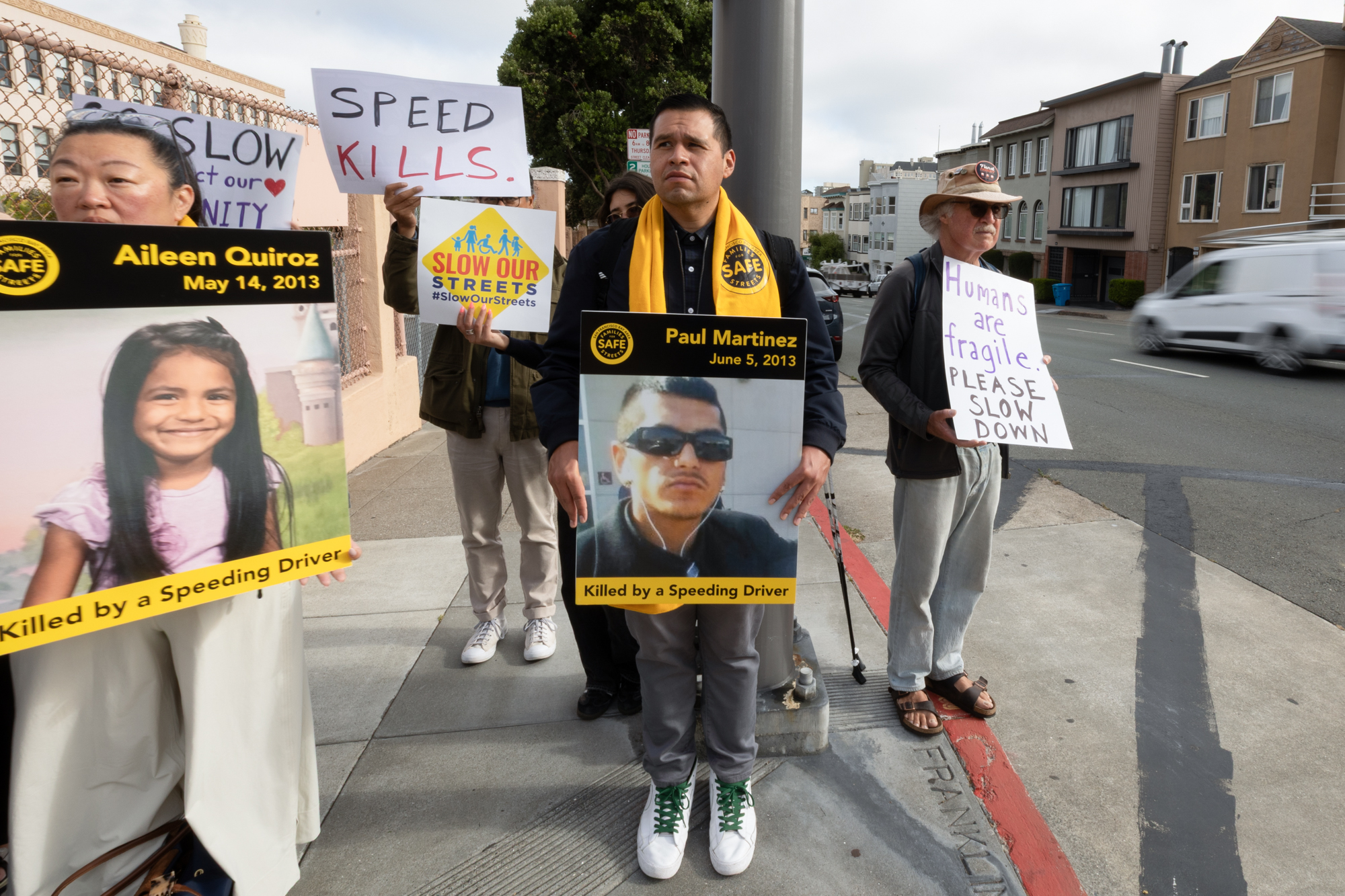
"caption": "Walk SF members, crash victims’ families and neighbors rally at the site where 30-year-old paraeducator Andrew Zieman was killed by a speeding driver in 2021 at the intersection of Green and Franklin streets in San Francisco on Aug. 5, 2025. ",
"credit": "Gustavo Hernandez/KQED",
"altTag": null,
"description": null,
"imgSizes": {
"thumbnail": {
"file": "https://cdn.kqed.org/wp-content/uploads/sites/10/2025/08/250805_SPEED-CAMERAS-FOLO_-0003_GH-KQED-160x107.jpg",
"width": 160,
"height": 107,
"mimeType": "image/jpeg"
},
"1536x1536": {
"file": "https://cdn.kqed.org/wp-content/uploads/sites/10/2025/08/250805_SPEED-CAMERAS-FOLO_-0003_GH-KQED-1536x1024.jpg",
"width": 1536,
"height": 1024,
"mimeType": "image/jpeg"
},
"post-thumbnail": {
"file": "https://cdn.kqed.org/wp-content/uploads/sites/10/2025/08/250805_SPEED-CAMERAS-FOLO_-0003_GH-KQED-672x372.jpg",
"width": 672,
"height": 372,
"mimeType": "image/jpeg"
},
"twentyfourteen-full-width": {
"file": "https://cdn.kqed.org/wp-content/uploads/sites/10/2025/08/250805_SPEED-CAMERAS-FOLO_-0003_GH-KQED-1038x576.jpg",
"width": 1038,
"height": 576,
"mimeType": "image/jpeg"
},
"kqedFullSize": {
"file": "https://cdn.kqed.org/wp-content/uploads/sites/10/2025/08/250805_SPEED-CAMERAS-FOLO_-0003_GH-KQED.jpg",
"width": 2000,
"height": 1333
}
},
"isLoading": false,
"fetchFailed": false
},
"news_12050261": {
"type": "attachments",
"id": "news_12050261",
"meta": {
"index": "attachments_1716263798",
"site": "news",
"id": "12050261",
"found": true
},
"title": "A speed camera on Geary St. in San Francisco on March 19, 2025.",
"publishDate": 1753903074,
"status": "inherit",
"parent": 12050256,
"modified": 1753903102,
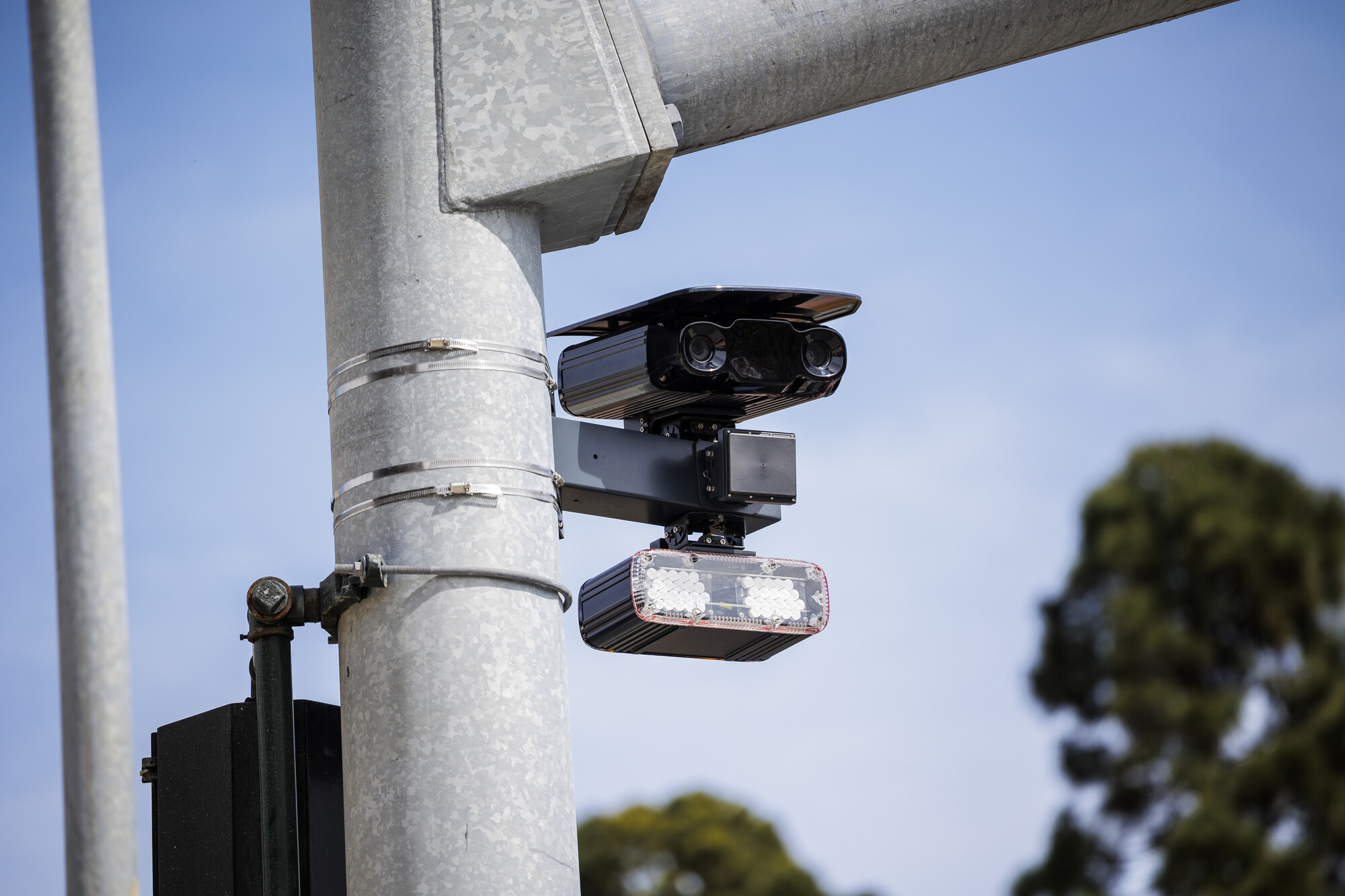
"caption": "A speed camera on Geary Street in San Francisco on March 19, 2025.",
"credit": "Martin do Nascimento/KQED",
"altTag": null,
"description": null,
"imgSizes": {
"thumbnail": {
"file": "https://cdn.kqed.org/wp-content/uploads/sites/10/2025/07/250319-SF-SPEED-CAMERAS-MD-06_qed-160x107.jpg",
"width": 160,
"height": 107,
"mimeType": "image/jpeg"
},
"1536x1536": {
"file": "https://cdn.kqed.org/wp-content/uploads/sites/10/2025/07/250319-SF-SPEED-CAMERAS-MD-06_qed-1536x1024.jpg",
"width": 1536,
"height": 1024,
"mimeType": "image/jpeg"
},
"post-thumbnail": {
"file": "https://cdn.kqed.org/wp-content/uploads/sites/10/2025/07/250319-SF-SPEED-CAMERAS-MD-06_qed-672x372.jpg",
"width": 672,
"height": 372,
"mimeType": "image/jpeg"
},
"twentyfourteen-full-width": {
"file": "https://cdn.kqed.org/wp-content/uploads/sites/10/2025/07/250319-SF-SPEED-CAMERAS-MD-06_qed-1038x576.jpg",
"width": 1038,
"height": 576,
"mimeType": "image/jpeg"
},
"kqedFullSize": {
"file": "https://cdn.kqed.org/wp-content/uploads/sites/10/2025/07/250319-SF-SPEED-CAMERAS-MD-06_qed.jpg",
"width": 2000,
"height": 1333
}
},
"isLoading": false,
"fetchFailed": false
},
"news_12050041": {
"type": "attachments",
"id": "news_12050041",
"meta": {
"index": "attachments_1716263798",
"site": "news",
"id": "12050041",
"found": true
},
"title": "Planes at San Francisco International Airport (SFO)",
"publishDate": 1753737069,
"status": "inherit",
"parent": 12050036,
"modified": 1753737789,
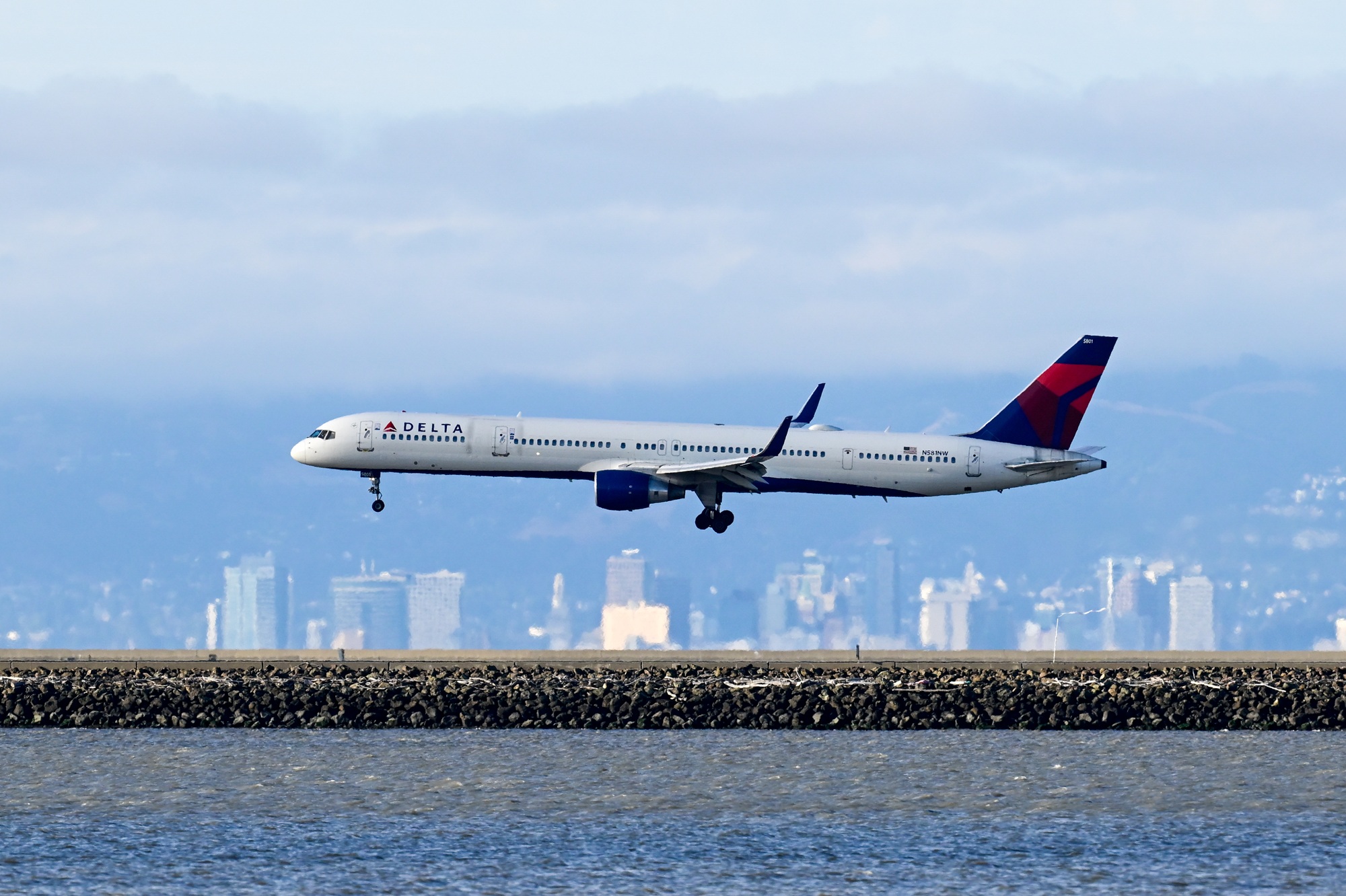
"caption": "A Delta Airlines plane lands at San Francisco International Airport (SFO) in San Francisco, California, on July 24, 2025. ",
"credit": "Tayfun Coskun/Anadolu via Getty Images",
"altTag": null,
"description": null,
"imgSizes": {
"thumbnail": {
"file": "https://cdn.kqed.org/wp-content/uploads/sites/10/2025/07/DeltaSFOGetty-160x107.jpg",
"width": 160,
"height": 107,
"mimeType": "image/jpeg"
},
"1536x1536": {
"file": "https://cdn.kqed.org/wp-content/uploads/sites/10/2025/07/DeltaSFOGetty-1536x1023.jpg",
"width": 1536,
"height": 1023,
"mimeType": "image/jpeg"
},
"post-thumbnail": {
"file": "https://cdn.kqed.org/wp-content/uploads/sites/10/2025/07/DeltaSFOGetty-672x372.jpg",
"width": 672,
"height": 372,
"mimeType": "image/jpeg"
},
"twentyfourteen-full-width": {
"file": "https://cdn.kqed.org/wp-content/uploads/sites/10/2025/07/DeltaSFOGetty-1038x576.jpg",
"width": 1038,
"height": 576,
"mimeType": "image/jpeg"
},
"kqedFullSize": {
"file": "https://cdn.kqed.org/wp-content/uploads/sites/10/2025/07/DeltaSFOGetty.jpg",
"width": 2000,
"height": 1332
}
},
"isLoading": false,
"fetchFailed": false
},
"news_12049486": {
"type": "attachments",
"id": "news_12049486",
"meta": {
"index": "attachments_1716263798",
"site": "news",
"id": "12049486",
"found": true
},
"title": "250723_EVCHARGERS_GH-9-KQED",
"publishDate": 1753313125,
"status": "inherit",
"parent": 12049202,
"modified": 1753313158,
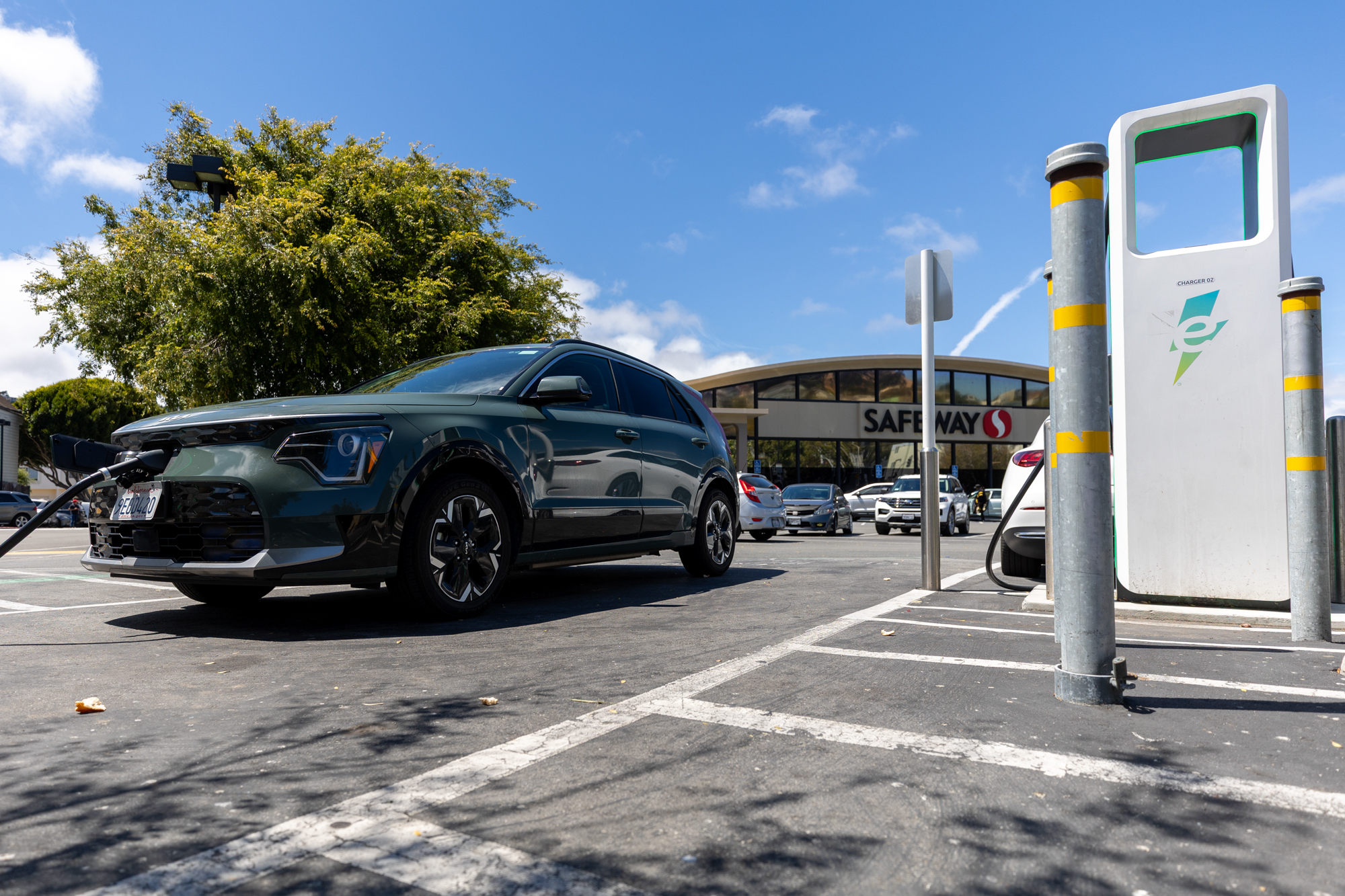
"caption": "An electric vehicle charges in San Francisco’s Bernal Heights neighborhood on July 23, 2025. ",
"credit": "Gustavo Hernandez/KQED",
"altTag": null,
"description": null,
"imgSizes": {
"thumbnail": {
"file": "https://cdn.kqed.org/wp-content/uploads/sites/10/2025/07/250723_EVCHARGERS_GH-9-KQED-160x107.jpg",
"width": 160,
"height": 107,
"mimeType": "image/jpeg"
},
"1536x1536": {
"file": "https://cdn.kqed.org/wp-content/uploads/sites/10/2025/07/250723_EVCHARGERS_GH-9-KQED-1536x1024.jpg",
"width": 1536,
"height": 1024,
"mimeType": "image/jpeg"
},
"post-thumbnail": {
"file": "https://cdn.kqed.org/wp-content/uploads/sites/10/2025/07/250723_EVCHARGERS_GH-9-KQED-672x372.jpg",
"width": 672,
"height": 372,
"mimeType": "image/jpeg"
},
"twentyfourteen-full-width": {
"file": "https://cdn.kqed.org/wp-content/uploads/sites/10/2025/07/250723_EVCHARGERS_GH-9-KQED-1038x576.jpg",
"width": 1038,
"height": 576,
"mimeType": "image/jpeg"
},
"kqedFullSize": {
"file": "https://cdn.kqed.org/wp-content/uploads/sites/10/2025/07/250723_EVCHARGERS_GH-9-KQED.jpg",
"width": 2000,
"height": 1333
}
},
"isLoading": false,
"fetchFailed": false
},
"news_12049213": {
"type": "attachments",
"id": "news_12049213",
"meta": {
"index": "attachments_1716263798",
"site": "news",
"id": "12049213",
"found": true
},
"title": "250722-DEADCOMUNI_00014_TV-KQED",
"publishDate": 1753213865,
"status": "inherit",
"parent": 0,
"modified": 1753222205,
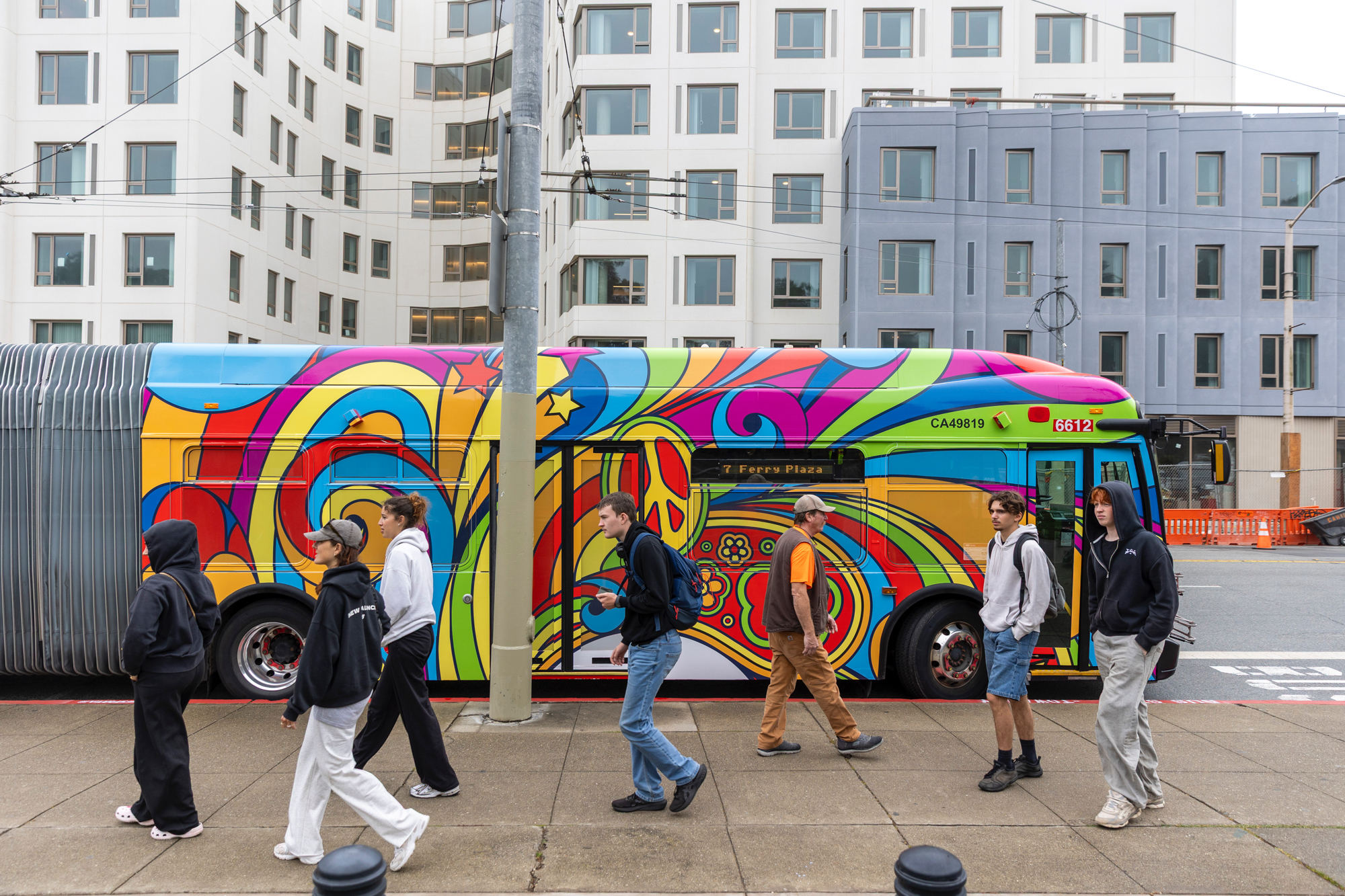
"caption": "Pedestrians walk past one of the psychedelic-themed buses in the Haight Ashbury District in San Francisco on July 22, 2025. Mayor Daniel Lurie and the SFMTA unveil one of several tie-dye Muni buses in celebration of the Dead & Company 60th anniversary concert.",
"credit": "Tâm Vũ/KQED",
"altTag": null,
"description": null,
"imgSizes": {
"thumbnail": {
"file": "https://cdn.kqed.org/wp-content/uploads/sites/10/2025/07/250722-DEADCOMUNI_00014_TV-KQED-160x107.jpg",
"width": 160,
"height": 107,
"mimeType": "image/jpeg"
},
"1536x1536": {
"file": "https://cdn.kqed.org/wp-content/uploads/sites/10/2025/07/250722-DEADCOMUNI_00014_TV-KQED-1536x1024.jpg",
"width": 1536,
"height": 1024,
"mimeType": "image/jpeg"
},
"post-thumbnail": {
"file": "https://cdn.kqed.org/wp-content/uploads/sites/10/2025/07/250722-DEADCOMUNI_00014_TV-KQED-672x372.jpg",
"width": 672,
"height": 372,
"mimeType": "image/jpeg"
},
"twentyfourteen-full-width": {
"file": "https://cdn.kqed.org/wp-content/uploads/sites/10/2025/07/250722-DEADCOMUNI_00014_TV-KQED-1038x576.jpg",
"width": 1038,
"height": 576,
"mimeType": "image/jpeg"
},
"kqedFullSize": {
"file": "https://cdn.kqed.org/wp-content/uploads/sites/10/2025/07/250722-DEADCOMUNI_00014_TV-KQED.jpg",
"width": 2000,
"height": 1333
}
},
"isLoading": false,
"fetchFailed": false
},
"news_12048869": {
"type": "attachments",
"id": "news_12048869",
"meta": {
"index": "attachments_1716263798",
"site": "news",
"id": "12048869",
"found": true
},
"title": "npr.brightspotcdn copy",
"publishDate": 1752873669,
"status": "inherit",
"parent": 12048860,
"modified": 1752873692,
"caption": "While air traffic controllers welcome an infusion of more than $12 billion to modernize their equipment, some controllers say they are under pressure due to other issues, such as grueling schedules, mandatory overtime and stagnating pay.",
"credit": "Glenn Harvey for NPR",
"altTag": null,
"description": null,
"imgSizes": {
"medium": {
"file": "https://cdn.kqed.org/wp-content/uploads/sites/10/2025/07/npr.brightspotcdn-copy-14-2000x1333.jpg",
"width": 2000,
"height": 1333,
"mimeType": "image/jpeg"
},
"large": {
"file": "https://cdn.kqed.org/wp-content/uploads/sites/10/2025/07/npr.brightspotcdn-copy-14-2000x1333.jpg",
"width": 2000,
"height": 1333,
"mimeType": "image/jpeg"
},
"thumbnail": {
"file": "https://cdn.kqed.org/wp-content/uploads/sites/10/2025/07/npr.brightspotcdn-copy-14-160x107.jpg",
"width": 160,
"height": 107,
"mimeType": "image/jpeg"
},
"1536x1536": {
"file": "https://cdn.kqed.org/wp-content/uploads/sites/10/2025/07/npr.brightspotcdn-copy-14-1536x1024.jpg",
"width": 1536,
"height": 1024,
"mimeType": "image/jpeg"
},
"2048x2048": {
"file": "https://cdn.kqed.org/wp-content/uploads/sites/10/2025/07/npr.brightspotcdn-copy-14-2048x1365.jpg",
"width": 2048,
"height": 1365,
"mimeType": "image/jpeg"
},
"post-thumbnail": {
"file": "https://cdn.kqed.org/wp-content/uploads/sites/10/2025/07/npr.brightspotcdn-copy-14-672x372.jpg",
"width": 672,
"height": 372,
"mimeType": "image/jpeg"
},
"twentyfourteen-full-width": {
"file": "https://cdn.kqed.org/wp-content/uploads/sites/10/2025/07/npr.brightspotcdn-copy-14-1038x576.jpg",
"width": 1038,
"height": 576,
"mimeType": "image/jpeg"
},
"full-width": {
"file": "https://cdn.kqed.org/wp-content/uploads/sites/10/2025/07/npr.brightspotcdn-copy-14-2000x1333.jpg",
"width": 2000,
"height": 1333,
"mimeType": "image/jpeg"
},
"kqedFullSize": {
"file": "https://cdn.kqed.org/wp-content/uploads/sites/10/2025/07/npr.brightspotcdn-copy-14.jpg",
"width": 2400,
"height": 1600
}
},
"isLoading": false,
"fetchFailed": false
},
"news_12048392": {
"type": "attachments",
"id": "news_12048392",
"meta": {
"index": "attachments_1716263798",
"site": "news",
"id": "12048392",
"found": true
},
"title": "Wheels Up: Avelo Airlines Takes Flight",
"publishDate": 1752703394,
"status": "inherit",
"parent": 12048388,
"modified": 1752704632,
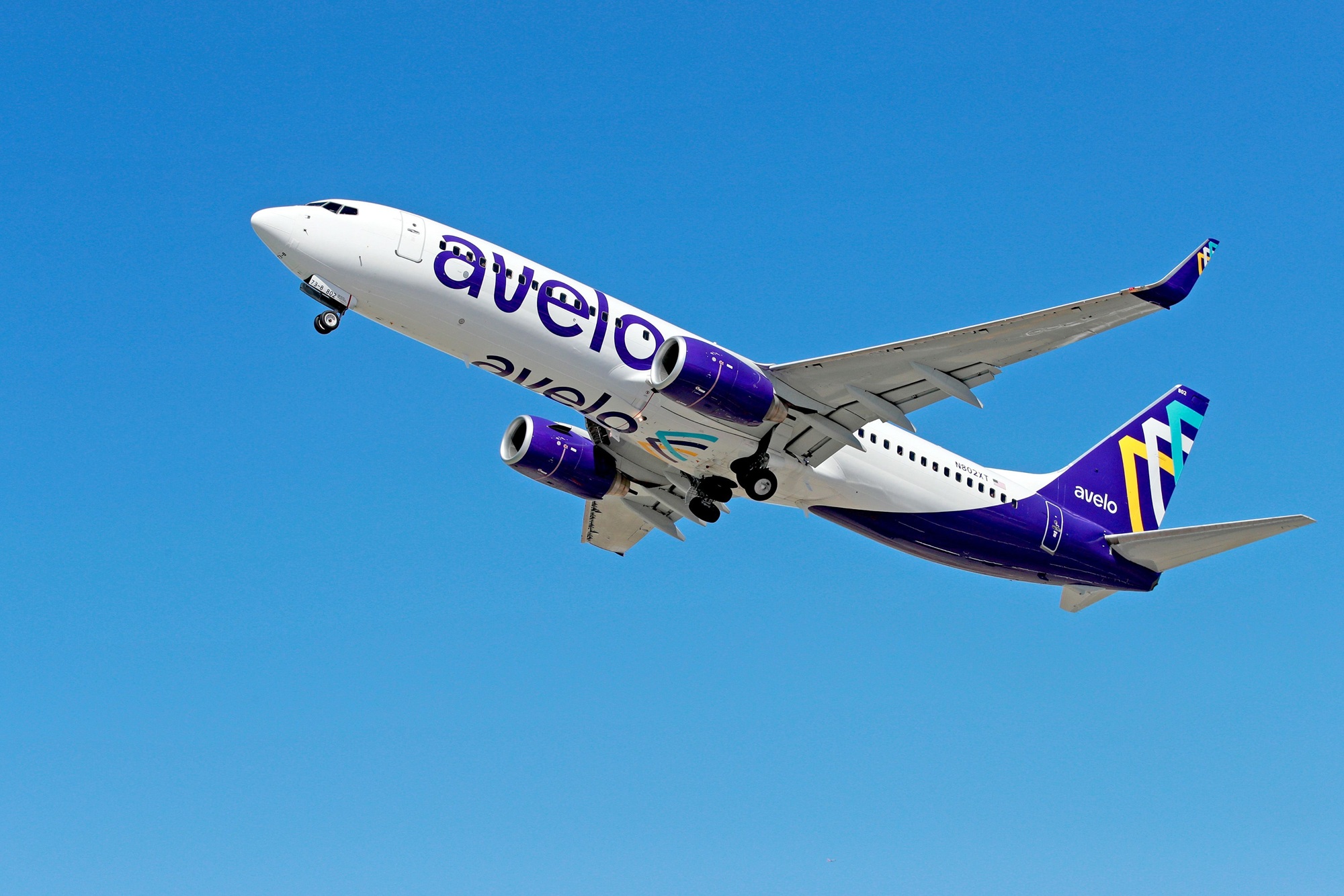
"caption": "Avelo Airlines takes off with its first flight between Burbank and Santa Rosa at Hollywood Burbank Airport on April 28, 2021, in Burbank, California. ",
"credit": "Joe Scarnici/Getty Images for Avelo Air",
"altTag": null,
"description": null,
"imgSizes": {
"thumbnail": {
"file": "https://cdn.kqed.org/wp-content/uploads/sites/10/2025/07/AveloAirlinesGetty-160x107.jpg",
"width": 160,
"height": 107,
"mimeType": "image/jpeg"
},
"1536x1536": {
"file": "https://cdn.kqed.org/wp-content/uploads/sites/10/2025/07/AveloAirlinesGetty-1536x1025.jpg",
"width": 1536,
"height": 1025,
"mimeType": "image/jpeg"
},
"post-thumbnail": {
"file": "https://cdn.kqed.org/wp-content/uploads/sites/10/2025/07/AveloAirlinesGetty-672x372.jpg",
"width": 672,
"height": 372,
"mimeType": "image/jpeg"
},
"twentyfourteen-full-width": {
"file": "https://cdn.kqed.org/wp-content/uploads/sites/10/2025/07/AveloAirlinesGetty-1038x576.jpg",
"width": 1038,
"height": 576,
"mimeType": "image/jpeg"
},
"kqedFullSize": {
"file": "https://cdn.kqed.org/wp-content/uploads/sites/10/2025/07/AveloAirlinesGetty.jpg",
"width": 2000,
"height": 1334
}
},
"isLoading": false,
"fetchFailed": false
},
"news_12047651": {
"type": "attachments",
"id": "news_12047651",
"meta": {
"index": "attachments_1716263798",
"site": "news",
"id": "12047651",
"found": true
},
"title": "Oakland International Airport on April 14, 2020.",
"publishDate": 1752255952,
"status": "inherit",
"parent": 12047645,
"modified": 1752255969,
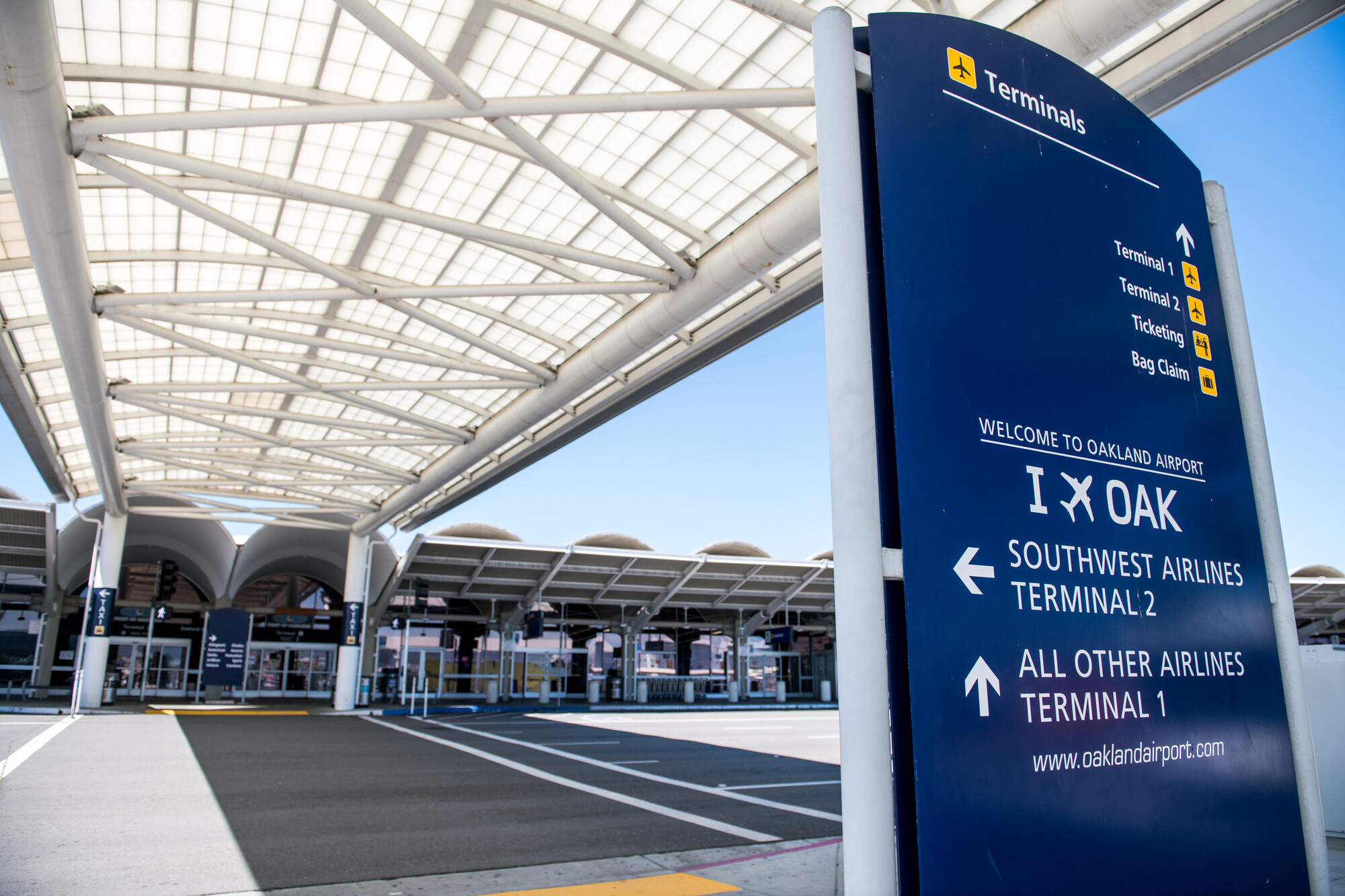
"caption": "Oakland International Airport on April 14, 2020.",
"credit": "Beth LaBerge/KQED",
"altTag": null,
"description": null,
"imgSizes": {
"thumbnail": {
"file": "https://cdn.kqed.org/wp-content/uploads/sites/10/2025/07/003_KQED_Oakland_Airport_04142020_qed-160x107.jpg",
"width": 160,
"height": 107,
"mimeType": "image/jpeg"
},
"1536x1536": {
"file": "https://cdn.kqed.org/wp-content/uploads/sites/10/2025/07/003_KQED_Oakland_Airport_04142020_qed-1536x1024.jpg",
"width": 1536,
"height": 1024,
"mimeType": "image/jpeg"
},
"post-thumbnail": {
"file": "https://cdn.kqed.org/wp-content/uploads/sites/10/2025/07/003_KQED_Oakland_Airport_04142020_qed-672x372.jpg",
"width": 672,
"height": 372,
"mimeType": "image/jpeg"
},
"twentyfourteen-full-width": {
"file": "https://cdn.kqed.org/wp-content/uploads/sites/10/2025/07/003_KQED_Oakland_Airport_04142020_qed-1038x576.jpg",
"width": 1038,
"height": 576,
"mimeType": "image/jpeg"
},
"kqedFullSize": {
"file": "https://cdn.kqed.org/wp-content/uploads/sites/10/2025/07/003_KQED_Oakland_Airport_04142020_qed.jpg",
"width": 2000,
"height": 1333
}
},
"isLoading": false,
"fetchFailed": false
},
"news_12046682": {
"type": "attachments",
"id": "news_12046682",
"meta": {
"index": "attachments_1716263798",
"site": "news",
"id": "12046682",
"found": true
},
"title": "20241204-BART-JY-024_qed",
"publishDate": 1751388604,
"status": "inherit",
"parent": 12046678,
"modified": 1751388636,
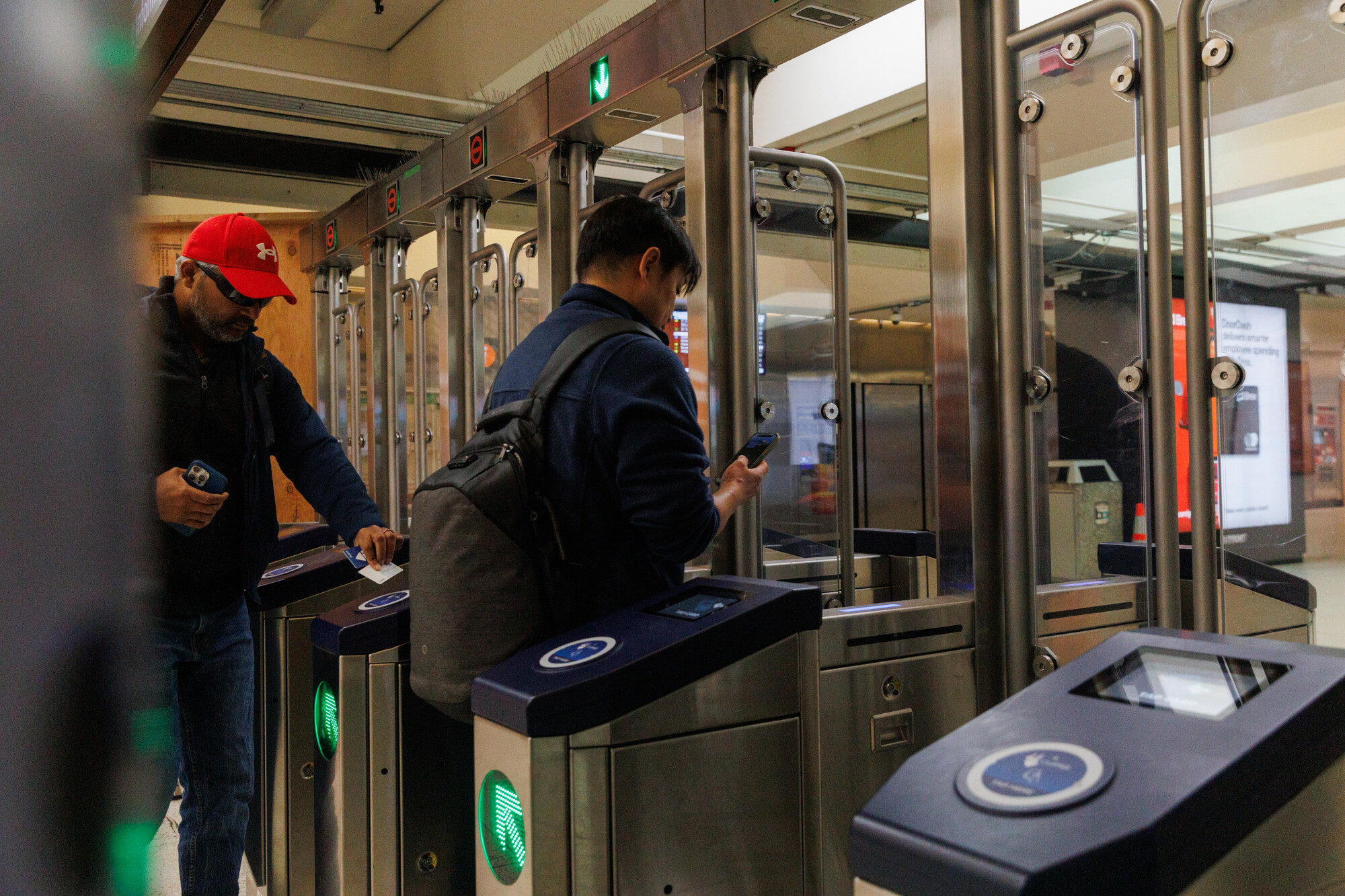
"caption": "Passengers tag their Clipper cards at Montgomery BART Station in San Francisco on Dec. 4, 2024.",
"credit": "Juliana Yamada/KQED",
"altTag": null,
"description": null,
"imgSizes": {
"thumbnail": {
"file": "https://cdn.kqed.org/wp-content/uploads/sites/10/2025/07/20241204-BART-JY-024_qed-160x107.jpg",
"width": 160,
"height": 107,
"mimeType": "image/jpeg"
},
"1536x1536": {
"file": "https://cdn.kqed.org/wp-content/uploads/sites/10/2025/07/20241204-BART-JY-024_qed-1536x1024.jpg",
"width": 1536,
"height": 1024,
"mimeType": "image/jpeg"
},
"post-thumbnail": {
"file": "https://cdn.kqed.org/wp-content/uploads/sites/10/2025/07/20241204-BART-JY-024_qed-672x372.jpg",
"width": 672,
"height": 372,
"mimeType": "image/jpeg"
},
"twentyfourteen-full-width": {
"file": "https://cdn.kqed.org/wp-content/uploads/sites/10/2025/07/20241204-BART-JY-024_qed-1038x576.jpg",
"width": 1038,
"height": 576,
"mimeType": "image/jpeg"
},
"kqedFullSize": {
"file": "https://cdn.kqed.org/wp-content/uploads/sites/10/2025/07/20241204-BART-JY-024_qed.jpg",
"width": 2000,
"height": 1333
}
},
"isLoading": false,
"fetchFailed": false
},
"news_12046383": {
"type": "attachments",
"id": "news_12046383",
"meta": {
"index": "attachments_1716263798",
"site": "news",
"id": "12046383",
"found": true
},
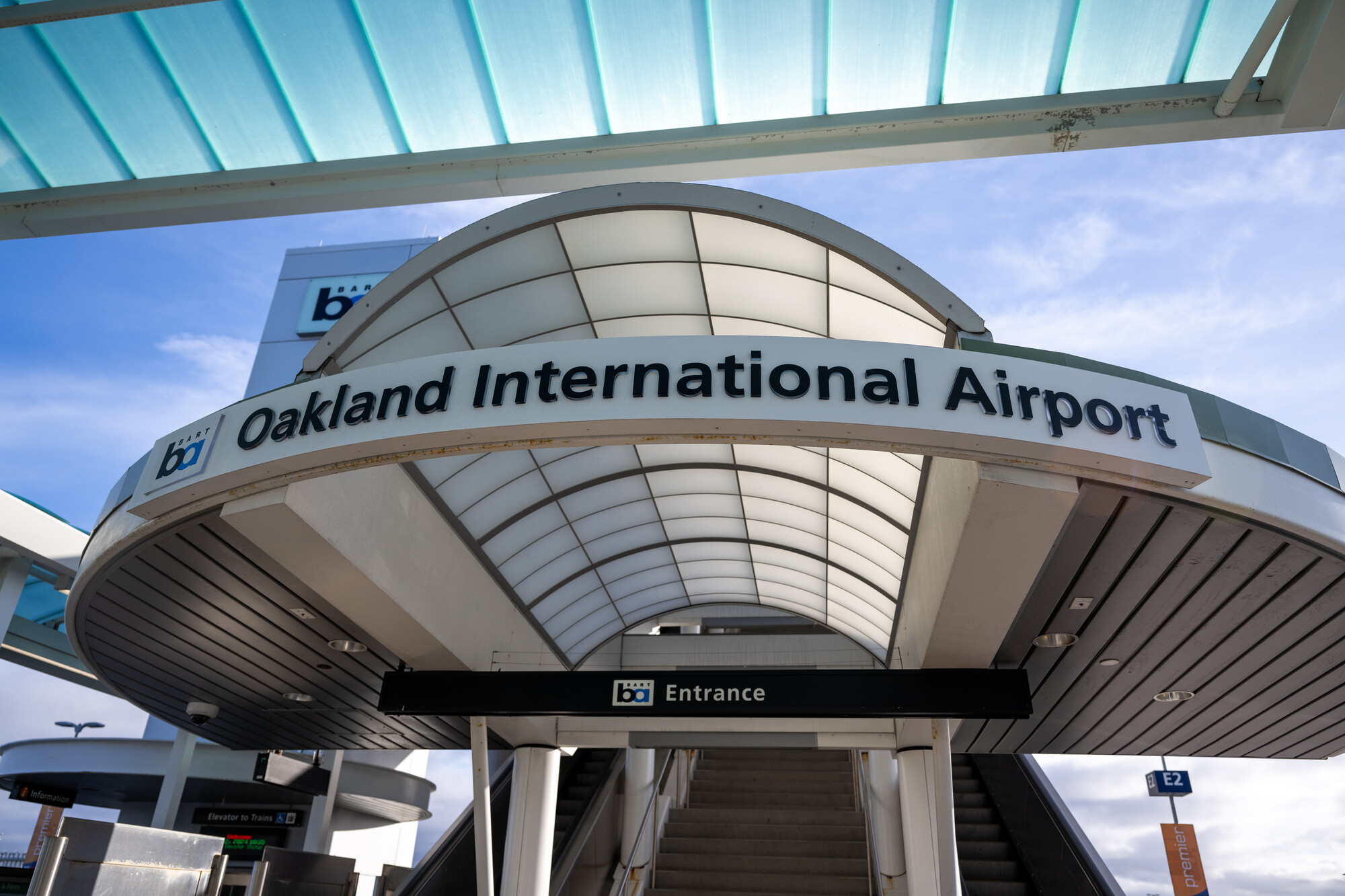
"title": "240412-OAKAirport-009-BL_qed",
"publishDate": 1751057311,
"status": "inherit",
"parent": 12046379,
"modified": 1751057324,
"caption": "A sign for the Oakland International Airport hangs above a BART station at the airport in Oakland on April 12, 2024.",
"credit": "Beth LaBerge/KQED",
"altTag": null,
"description": null,
"imgSizes": {
"thumbnail": {
"file": "https://cdn.kqed.org/wp-content/uploads/sites/10/2025/06/240412-OAKAirport-009-BL_qed-160x107.jpg",
"width": 160,
"height": 107,
"mimeType": "image/jpeg"
},
"1536x1536": {
"file": "https://cdn.kqed.org/wp-content/uploads/sites/10/2025/06/240412-OAKAirport-009-BL_qed-1536x1024.jpg",
"width": 1536,
"height": 1024,
"mimeType": "image/jpeg"
},
"post-thumbnail": {
"file": "https://cdn.kqed.org/wp-content/uploads/sites/10/2025/06/240412-OAKAirport-009-BL_qed-672x372.jpg",
"width": 672,
"height": 372,
"mimeType": "image/jpeg"
},
"twentyfourteen-full-width": {
"file": "https://cdn.kqed.org/wp-content/uploads/sites/10/2025/06/240412-OAKAirport-009-BL_qed-1038x576.jpg",
"width": 1038,
"height": 576,
"mimeType": "image/jpeg"
},
"kqedFullSize": {
"file": "https://cdn.kqed.org/wp-content/uploads/sites/10/2025/06/240412-OAKAirport-009-BL_qed.jpg",
"width": 2000,
"height": 1333
}
},
"isLoading": false,
"fetchFailed": false
},
"news_12045967": {
"type": "attachments",
"id": "news_12045967",
"meta": {
"index": "attachments_1716263798",
"site": "news",
"id": "12045967",
"found": true
},
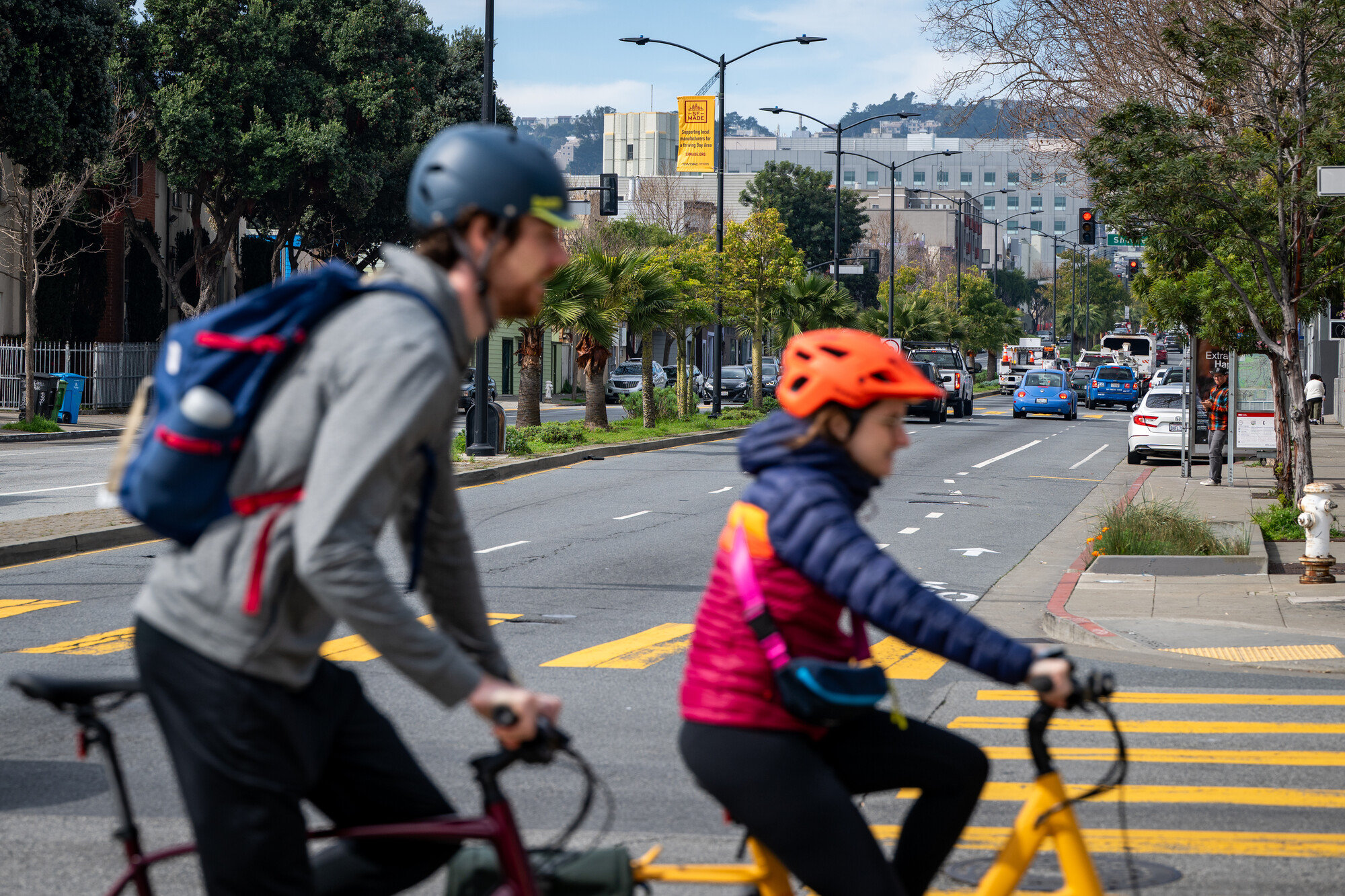
"title": "250228-WaterCitiesSF-06-BL_qed",
"publishDate": 1750878560,
"status": "inherit",
"parent": 12067175,
"modified": 1765845734,
"caption": "Trees line the center median on Cesar Chavez Street in San Francisco on Feb. 28, 2025. A streetscape project added trees, widened sidewalks, introduced stormwater planters, and improved pedestrian safety with redesigned intersections.",
"credit": "Beth LaBerge/KQED",
"altTag": null,
"description": null,
"imgSizes": {
"thumbnail": {
"file": "https://cdn.kqed.org/wp-content/uploads/sites/10/2025/06/250228-WaterCitiesSF-06-BL_qed-160x107.jpg",
"width": 160,
"height": 107,
"mimeType": "image/jpeg"
},
"1536x1536": {
"file": "https://cdn.kqed.org/wp-content/uploads/sites/10/2025/06/250228-WaterCitiesSF-06-BL_qed-1536x1024.jpg",
"width": 1536,
"height": 1024,
"mimeType": "image/jpeg"
},
"post-thumbnail": {
"file": "https://cdn.kqed.org/wp-content/uploads/sites/10/2025/06/250228-WaterCitiesSF-06-BL_qed-672x372.jpg",
"width": 672,
"height": 372,
"mimeType": "image/jpeg"
},
"twentyfourteen-full-width": {
"file": "https://cdn.kqed.org/wp-content/uploads/sites/10/2025/06/250228-WaterCitiesSF-06-BL_qed-1038x576.jpg",
"width": 1038,
"height": 576,
"mimeType": "image/jpeg"
},
"kqedFullSize": {
"file": "https://cdn.kqed.org/wp-content/uploads/sites/10/2025/06/250228-WaterCitiesSF-06-BL_qed.jpg",
"width": 2000,
"height": 1333
}
},
"isLoading": false,
"fetchFailed": false
},
"news_12044953": {
"type": "attachments",
"id": "news_12044953",
"meta": {
"index": "attachments_1716263798",
"site": "news",
"id": "12044953",
"found": true
},
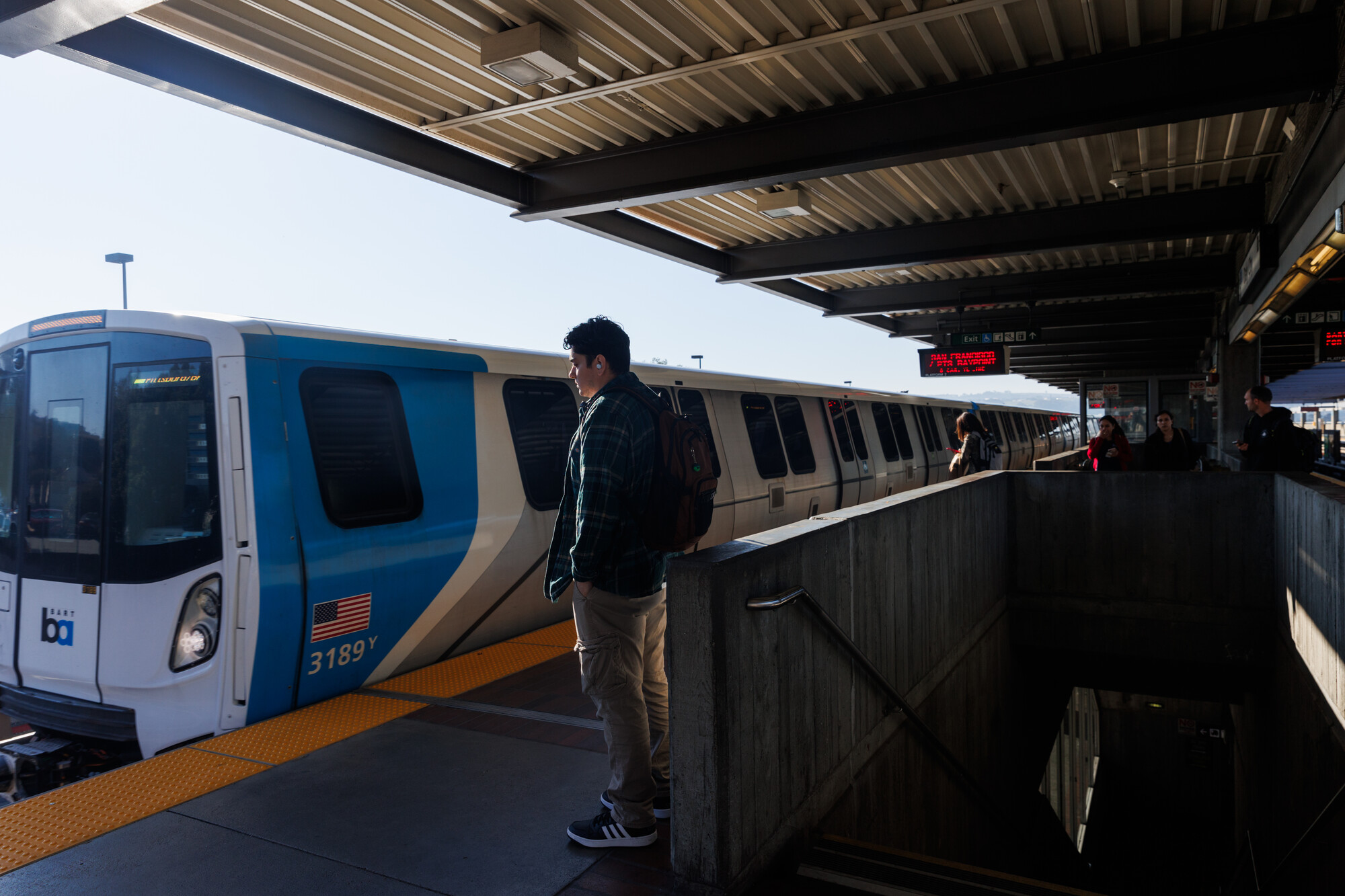
"title": "20241204-BART-JY-009_qed",
"publishDate": 1750277536,
"status": "inherit",
"parent": 12044945,
"modified": 1757191512,
"caption": "Passengers wait to board BART at Daly City Station in Daly City, on Dec. 4, 2024.",
"credit": "Juliana Yamada/KQED",
"altTag": null,
"description": null,
"imgSizes": {
"thumbnail": {
"file": "https://cdn.kqed.org/wp-content/uploads/sites/10/2025/06/20241204-BART-JY-009_qed-160x107.jpg",
"width": 160,
"height": 107,
"mimeType": "image/jpeg"
},
"1536x1536": {
"file": "https://cdn.kqed.org/wp-content/uploads/sites/10/2025/06/20241204-BART-JY-009_qed-1536x1024.jpg",
"width": 1536,
"height": 1024,
"mimeType": "image/jpeg"
},
"post-thumbnail": {
"file": "https://cdn.kqed.org/wp-content/uploads/sites/10/2025/06/20241204-BART-JY-009_qed-672x372.jpg",
"width": 672,
"height": 372,
"mimeType": "image/jpeg"
},
"twentyfourteen-full-width": {
"file": "https://cdn.kqed.org/wp-content/uploads/sites/10/2025/06/20241204-BART-JY-009_qed-1038x576.jpg",
"width": 1038,
"height": 576,
"mimeType": "image/jpeg"
},
"kqedFullSize": {
"file": "https://cdn.kqed.org/wp-content/uploads/sites/10/2025/06/20241204-BART-JY-009_qed.jpg",
"width": 2000,
"height": 1333
}
},
"isLoading": false,
"fetchFailed": false
}
},
"audioPlayerReducer": {
"postId": "stream_live",
"isPaused": true,
"isPlaying": false,
"pfsActive": false,
"pledgeModalIsOpen": true,
"playerDrawerIsOpen": false,
"liveAudioPlayStartedAt": 0,
"liveAudioPlayContext": ""
},
"authorsReducer": {
"byline_news_12048860": {
"type": "authors",
"id": "byline_news_12048860",
"meta": {
"override": true
},
"slug": "byline_news_12048860",
"name": "Joe Hernandez and Joel Rose, NPR",
"isLoading": false
},
"danbrekke": {
"type": "authors",
"id": "222",
"meta": {
"index": "authors_1716337520",
"id": "222",
"found": true
},
"name": "Dan Brekke",
"firstName": "Dan",
"lastName": "Brekke",
"slug": "danbrekke",
"email": "dbrekke@kqed.org",
"display_author_email": true,
"staff_mastheads": [
"news",
"science"
],
"title": "KQED Editor and Reporter",
"bio": "Dan Brekke is a reporter and editor for KQED News, responsible for coverage of topics ranging from California water issues to the Bay Area's transportation challenges. In a newsroom career that began in Chicago in 1972, Dan has worked for \u003cem>The San Francisco Examiner,\u003c/em> Wired and TechTV and has been published in The New York Times, The New York Times Magazine, Business 2.0, Salon and elsewhere.\r\n\r\nSince joining KQED in 2007, Dan has reported, edited and produced both radio and online features and breaking news pieces. He has shared as both editor and reporter in four Society of Professional Journalists Norcal Excellence in Journalism awards and one Edward R. Murrow regional award. He was chosen for a spring 2017 residency at the Mesa Refuge to advance his research on California salmon.\r\n\r\nEmail Dan at: \u003ca href=\"mailto:dbrekke@kqed.org\">dbrekke@kqed.org\u003c/a>\r\n\r\n\u003cstrong>Twitter:\u003c/strong> \u003ca href=\"https://twitter.com/danbrekke\" rel=\"noopener noreferrer\">twitter.com/danbrekke\u003c/a>\r\n\u003cstrong>Facebook:\u003c/strong> \u003ca href=\"https://www.facebook.com/danbrekke\" rel=\"noopener noreferrer\">www.facebook.com/danbrekke\u003c/a>\r\n\u003cstrong>LinkedIn:\u003c/strong> \u003ca href=\"https://www.linkedin.com/in/danbrekke\" rel=\"noopener noreferrer\">www.linkedin.com/in/danbrekke\u003c/a>",
"avatar": "https://secure.gravatar.com/avatar/8f1f0d2a978fb3b23426c922c7e2af558fa36905b49c4ce76a97dc3c72d27226?s=600&d=mm&r=g",
"twitter": "danbrekke",
"bluesky": null,
"facebook": null,
"instagram": "https://www.instagram.com/dan.brekke/",
"linkedin": "https://www.linkedin.com/in/danbrekke/",
"sites": [
{
"site": "news",
"roles": [
"administrator",
"create_posts"
]
},
{
"site": "stateofhealth",
"roles": [
"editor"
]
},
{
"site": "science",
"roles": [
"editor"
]
},
{
"site": "quest",
"roles": [
"contributor"
]
},
{
"site": "food",
"roles": [
"contributor"
]
},
{
"site": "forum",
"roles": [
"contributor"
]
},
{
"site": "elections",
"roles": [
"editor"
]
},
{
"site": "liveblog",
"roles": [
"editor"
]
}
],
"headData": {
"title": "Dan Brekke | KQED",
"description": "KQED Editor and Reporter",
"ogImgSrc": "https://secure.gravatar.com/avatar/8f1f0d2a978fb3b23426c922c7e2af558fa36905b49c4ce76a97dc3c72d27226?s=600&d=mm&r=g",
"twImgSrc": "https://secure.gravatar.com/avatar/8f1f0d2a978fb3b23426c922c7e2af558fa36905b49c4ce76a97dc3c72d27226?s=600&d=mm&r=g"
},
"isLoading": false,
"link": "/author/danbrekke"
},
"matthewgreen": {
"type": "authors",
"id": "1263",
"meta": {
"index": "authors_1716337520",
"id": "1263",
"found": true
},
"name": "Matthew Green",
"firstName": "Matthew",
"lastName": "Green",
"slug": "matthewgreen",
"email": "mgreen@kqed.org",
"display_author_email": false,
"staff_mastheads": [],
"title": "KQED Editor/Reporter",
"bio": "Matthew Green is a digital media producer for KQED News. He previously produced \u003ca href=\"http://www.kqed.org/lowdown\">The Lowdown\u003c/a>, KQED’s multimedia news education blog. Matthew's written for numerous Bay Area publications, including the Oakland Tribune and San Francisco Chronicle. He also taught journalism classes at Fremont High School in East Oakland.\r\n\r\nEmail: mgreen@kqed.org; Twitter: @MGreenKQED",
"avatar": "https://secure.gravatar.com/avatar/3bf498d1267ca02c8494f33d8cfc575e?s=600&d=blank&r=g",
"twitter": "MGreenKQED",
"facebook": null,
"instagram": null,
"linkedin": null,
"sites": [
{
"site": "news",
"roles": []
},
{
"site": "lowdown",
"roles": []
},
{
"site": "science",
"roles": []
},
{
"site": "education",
"roles": []
},
{
"site": "quest",
"roles": []
},
{
"site": "liveblog",
"roles": []
}
],
"headData": {
"title": "Matthew Green | KQED",
"description": "KQED Editor/Reporter",
"ogImgSrc": "https://secure.gravatar.com/avatar/3bf498d1267ca02c8494f33d8cfc575e?s=600&d=blank&r=g",
"twImgSrc": "https://secure.gravatar.com/avatar/3bf498d1267ca02c8494f33d8cfc575e?s=600&d=blank&r=g"
},
"isLoading": false,
"link": "/author/matthewgreen"
},
"adahlstromeckman": {
"type": "authors",
"id": "11785",
"meta": {
"index": "authors_1716337520",
"id": "11785",
"found": true
},
"name": "Azul Dahlstrom-Eckman",
"firstName": "Azul",
"lastName": "Dahlstrom-Eckman",
"slug": "adahlstromeckman",
"email": "adahlstrom-eckman@kqed.org",
"display_author_email": true,
"staff_mastheads": [],
"title": "Reporter",
"bio": "Azul is a reporter for KQED focusing on transportation and features. He joined KQED in 2021 as an alumna of KALW's Audio Academy radio journalism training program.",
"avatar": "https://secure.gravatar.com/avatar/9cb750298435add7815a777f55bf1f46845c1386bb8452555c60a7b820b5aba3?s=600&d=blank&r=g",
"twitter": "@zuliemann",
"bluesky": "@azul415.bsky.social",
"facebook": null,
"instagram": null,
"linkedin": null,
"sites": [
{
"site": "arts",
"roles": [
"editor"
]
},
{
"site": "news",
"roles": [
"editor"
]
},
{
"site": "science",
"roles": [
"editor"
]
},
{
"site": "liveblog",
"roles": [
"author"
]
}
],
"headData": {
"title": "Azul Dahlstrom-Eckman | KQED",
"description": "Reporter",
"ogImgSrc": "https://secure.gravatar.com/avatar/9cb750298435add7815a777f55bf1f46845c1386bb8452555c60a7b820b5aba3?s=600&d=blank&r=g",
"twImgSrc": "https://secure.gravatar.com/avatar/9cb750298435add7815a777f55bf1f46845c1386bb8452555c60a7b820b5aba3?s=600&d=blank&r=g"
},
"isLoading": false,
"link": "/author/adahlstromeckman"
},
"rvasquez": {
"type": "authors",
"id": "11860",
"meta": {
"index": "authors_1716337520",
"id": "11860",
"found": true
},
"name": "Rachael Vasquez",
"firstName": "Rachael",
"lastName": "Vasquez",
"slug": "rvasquez",
"email": "rvasquez@KQED.org",
"display_author_email": false,
"staff_mastheads": [
"news"
],
"title": "KQED Contributor",
"bio": "Rachael Vasquez is a weekend host and editor at KQED. She’s worked in public radio for years, most recently at Wisconsin Public Radio in Madison, Wis. where she woke up very early as a producer for the network’s statewide \"Morning Edition\" broadcast, later serving as a producer for the stations’s afternoon talk show \"Central Time,\" and going on to report on business and economics during the coronavirus pandemic. In addition to hearing her anchor the afternoon newscasts every weekend at KQED, you can find her working with a number of different teams including the weekday newsroom and \"Forum.\" Rachael is an East Bay native who loves watching old movies and cooking her abuelita’s recipes.",
"avatar": "https://secure.gravatar.com/avatar/a1defdae97cbdde04c13baacacd7c94a?s=600&d=blank&r=g",
"twitter": null,
"facebook": null,
"instagram": null,
"linkedin": null,
"sites": [
{
"site": "news",
"roles": [
"editor"
]
}
],
"headData": {
"title": "Rachael Vasquez | KQED",
"description": "KQED Contributor",
"ogImgSrc": "https://secure.gravatar.com/avatar/a1defdae97cbdde04c13baacacd7c94a?s=600&d=blank&r=g",
"twImgSrc": "https://secure.gravatar.com/avatar/a1defdae97cbdde04c13baacacd7c94a?s=600&d=blank&r=g"
},
"isLoading": false,
"link": "/author/rvasquez"
},
"kdebenedetti": {
"type": "authors",
"id": "11913",
"meta": {
"index": "authors_1716337520",
"id": "11913",
"found": true
},
"name": "Katie DeBenedetti",
"firstName": "Katie",
"lastName": "DeBenedetti",
"slug": "kdebenedetti",
"email": "kdebenedetti@kqed.org",
"display_author_email": false,
"staff_mastheads": [
"news",
"science"
],
"title": "KQED Contributor",
"bio": "Katie DeBenedetti is a digital reporter covering daily news for the Express Desk. Prior to joining KQED as a culture reporting intern in January 2024, she covered education and city government for the Napa Valley Register.",
"avatar": "https://secure.gravatar.com/avatar/6e31073cb8f7e4214ab03f42771d0f45?s=600&d=blank&r=g",
"twitter": null,
"facebook": null,
"instagram": null,
"linkedin": null,
"sites": [
{
"site": "news",
"roles": [
"author"
]
},
{
"site": "science",
"roles": [
"author"
]
},
{
"site": "liveblog",
"roles": [
"author"
]
}
],
"headData": {
"title": "Katie DeBenedetti | KQED",
"description": "KQED Contributor",
"ogImgSrc": "https://secure.gravatar.com/avatar/6e31073cb8f7e4214ab03f42771d0f45?s=600&d=blank&r=g",
"twImgSrc": "https://secure.gravatar.com/avatar/6e31073cb8f7e4214ab03f42771d0f45?s=600&d=blank&r=g"
},
"isLoading": false,
"link": "/author/kdebenedetti"
},
"slim": {
"type": "authors",
"id": "11920",
"meta": {
"index": "authors_1716337520",
"id": "11920",
"found": true
},
"name": "Samantha Lim",
"firstName": "Samantha",
"lastName": "Lim",
"slug": "slim",
"email": "slim@KQED.org",
"display_author_email": false,
"staff_mastheads": [],
"title": "KQED Contributor",
"bio": null,
"avatar": "https://secure.gravatar.com/avatar/82e592e6c15fe1a04d385e8ad0fb0b4e?s=600&d=blank&r=g",
"twitter": null,
"facebook": null,
"instagram": null,
"linkedin": null,
"sites": [
{
"site": "news",
"roles": []
}
],
"headData": {
"title": "Samantha Lim | KQED",
"description": "KQED Contributor",
"ogImgSrc": "https://secure.gravatar.com/avatar/82e592e6c15fe1a04d385e8ad0fb0b4e?s=600&d=blank&r=g",
"twImgSrc": "https://secure.gravatar.com/avatar/82e592e6c15fe1a04d385e8ad0fb0b4e?s=600&d=blank&r=g"
},
"isLoading": false,
"link": "/author/slim"
},
"emanoukian": {
"type": "authors",
"id": "11925",
"meta": {
"index": "authors_1716337520",
"id": "11925",
"found": true
},
"name": "Elize Manoukian",
"firstName": "Elize",
"lastName": "Manoukian",
"slug": "emanoukian",
"email": "emanoukian@KQED.org",
"display_author_email": false,
"staff_mastheads": [
"news"
],
"title": "Digital News Editor",
"bio": "Elize Manoukian is an award-winning audio producer and Senior Editor on the Express Desk, KQED's digital news platform. Her work has appeared on KPFA, Interlochen Public Radio, Oregon Public Broadcast, the New York Daily News, LA Times and the San Diego Union-Tribune.",
"avatar": "https://secure.gravatar.com/avatar/4525f1a8e46ccb30933b32653d9772064cfefe3fa655eb45b3b3a80341f6bdad?s=600&d=blank&r=g",
"twitter": null,
"bluesky": null,
"facebook": null,
"instagram": null,
"linkedin": null,
"sites": [
{
"site": "arts",
"roles": [
"editor"
]
},
{
"site": "news",
"roles": [
"editor"
]
},
{
"site": "science",
"roles": [
"editor"
]
}
],
"headData": {
"title": "Elize Manoukian | KQED",
"description": "Digital News Editor",
"ogImgSrc": "https://secure.gravatar.com/avatar/4525f1a8e46ccb30933b32653d9772064cfefe3fa655eb45b3b3a80341f6bdad?s=600&d=blank&r=g",
"twImgSrc": "https://secure.gravatar.com/avatar/4525f1a8e46ccb30933b32653d9772064cfefe3fa655eb45b3b3a80341f6bdad?s=600&d=blank&r=g"
},
"isLoading": false,
"link": "/author/emanoukian"
},
"gzada": {
"type": "authors",
"id": "11929",
"meta": {
"index": "authors_1716337520",
"id": "11929",
"found": true
},
"name": "Gilare Zada",
"firstName": "Gilare",
"lastName": "Zada",
"slug": "gzada",
"email": "gzada@kqed.org",
"display_author_email": true,
"staff_mastheads": [
"news"
],
"title": null,
"bio": "Gilare Zada is a Kurdish-American from San Diego, CA. Storytelling, fitness, and binge reading are some of her passions outside of news reporting. Her work has appeared in Mission Local, the Peninsula Press, the San Francisco Press Club, and more. She also writes as a class correspondent for the Stanford Magazine - go Card!",
"avatar": "https://secure.gravatar.com/avatar/33a75f2b947669a488a805edec3fbf3838c1cedaedda710e983770633b4d6a75?s=600&d=blank&r=g",
"twitter": null,
"bluesky": null,
"facebook": null,
"instagram": null,
"linkedin": null,
"sites": [
{
"site": "",
"roles": [
"editor"
]
},
{
"site": "arts",
"roles": [
"editor"
]
},
{
"site": "news",
"roles": [
"administrator"
]
},
{
"site": "science",
"roles": [
"editor"
]
}
],
"headData": {
"title": "Gilare Zada | KQED",
"description": null,
"ogImgSrc": "https://secure.gravatar.com/avatar/33a75f2b947669a488a805edec3fbf3838c1cedaedda710e983770633b4d6a75?s=600&d=blank&r=g",
"twImgSrc": "https://secure.gravatar.com/avatar/33a75f2b947669a488a805edec3fbf3838c1cedaedda710e983770633b4d6a75?s=600&d=blank&r=g"
},
"isLoading": false,
"link": "/author/gzada"
}
},
"pagesReducer": {
"news_category_transportation": {
"type": "terms",
"id": "news_1397",
"meta": {
"index": "terms_1716263798",
"site": "news",
"id": "1397",
"score": 12.939901
},
"featImg": null,
"name": "Transportation",
"description": null,
"taxonomy": "category",
"headData": {
"twImgId": null,
"twTitle": null,
"ogTitle": null,
"ogImgId": null,
"twDescription": null,
"description": null,
"title": "Transportation Archives | KQED News",
"ogDescription": null
},
"ttid": 1409,
"slug": "transportation",
"isLoading": false,
"title": "Transportation",
"pageMeta": {
"site": "news",
"WpPageTemplate": "page-topic-editorial",
"currentPage": 16
},
"blocks": [
{
"blockName": "kqed/post-list",
"attrs": {
"layout": "cardArticle2",
"query": "posts/news?category=transportation",
"seeMore": false,
"paginated": true,
"page": 16
}
},
{
"blockName": "kqed/ad"
}
]
}
},
"pfsSessionReducer": {},
"postsReducer": {
"stream_live": {
"type": "live",
"id": "stream_live",
"audioUrl": "https://streams.kqed.org/kqedradio",
"title": "Live Stream",
"excerpt": "Live Stream information currently unavailable.",
"link": "/radio",
"featImg": "",
"label": {
"name": "KQED Live",
"link": "/"
}
},
"stream_kqedNewscast": {
"type": "posts",
"id": "stream_kqedNewscast",
"audioUrl": "https://www.kqed.org/.stream/anon/radio/RDnews/newscast.mp3?_=1",
"title": "KQED Newscast",
"featImg": "",
"label": {
"name": "88.5 FM",
"link": "/"
}
},
"news_12050882": {
"type": "posts",
"id": "news_12050882",
"meta": {
"index": "posts_1716263798",
"site": "news",
"id": "12050882",
"score": null,
"sort": [
1754434876000
]
},
"guestAuthors": [],
"slug": "sfs-speed-cameras-a-good-first-step-but-bittersweet-for-families-of-speeding-victims",
"title": "SF’s Speed Cameras a Good First Step, but Bittersweet for Families of Speeding Victims",
"publishDate": 1754434876,
"format": "standard",
"headTitle": "SF’s Speed Cameras a Good First Step, but Bittersweet for Families of Speeding Victims | KQED",
"labelTerm": {
"site": "news"
},
"content": "\u003cp>Every time Jenny Yu crosses the street with her mother, Judy, she can see how the collision still affects her, almost 15 years later.\u003c/p>\n\u003cp>“At any intersection, she grabs my hand really hard. When she sees cars, I can literally see her body tense up. And that’s because it triggers her,” Jenny Yu said.\u003c/p>\n\u003cp>When a speeding SUV making a left turn struck her then-nearly 60-year-old mother in 2011, it flung Judy across the intersection. She landed against a curb and suffered a traumatic brain injury. The collision occurred at the intersection of Anza Street and Park Presidio Boulevard, a six-lane road that doubles as State Highway 1, which cuts through the city with a 35 mph speed limit.\u003c/p>\n\u003cp>[ad fullwidth]\u003c/p>\n\u003cp>It’s a moment that changed both Jenny’s and Judy’s lives forever. Jenny is now a full-time caregiver for her mother, who also suffers from post-traumatic stress disorder from the crash and Alzheimer’s disease.\u003c/p>\n\u003cp>“ So she is physically here, but mentally she’s not anywhere near our mother,” Yu said, as tears rolled down her cheeks.\u003c/p>\n\u003cp>Yu and others, whose loved ones have been hit by speeding drivers, gathered Tuesday at another notoriously dangerous street to mark a moment they could only describe as “bittersweet”: San Francisco’s \u003ca href=\"https://www.kqed.org/news/12050256/sf-speed-cameras-are-about-to-start-ticketing-theyve-already-helped-officials-say\">long-anticipated \u003c/a>speed camera program began issuing tickets to drivers at \u003ca href=\"https://www.sfmta.com/projects/speed-safety-cameras\">33 locations\u003c/a> throughout the city.\u003c/p>\n\u003cfigure id=\"attachment_12050977\" class=\"wp-caption aligncenter\" style=\"max-width: 2000px\">\u003cimg loading=\"lazy\" decoding=\"async\" class=\"size-full wp-image-12050977\" src=\"https://cdn.kqed.org/wp-content/uploads/sites/10/2025/08/250805_SPEED-CAMERAS-FOLO_-0007_GH-KQED.jpg\" alt=\"\" width=\"2000\" height=\"1333\" srcset=\"https://cdn.kqed.org/wp-content/uploads/sites/10/2025/08/250805_SPEED-CAMERAS-FOLO_-0007_GH-KQED.jpg 2000w, https://cdn.kqed.org/wp-content/uploads/sites/10/2025/08/250805_SPEED-CAMERAS-FOLO_-0007_GH-KQED-160x107.jpg 160w, https://cdn.kqed.org/wp-content/uploads/sites/10/2025/08/250805_SPEED-CAMERAS-FOLO_-0007_GH-KQED-1536x1024.jpg 1536w\" sizes=\"auto, (max-width: 2000px) 100vw, 2000px\">\u003cfigcaption class=\"wp-caption-text\">A speed camera on Franklin Street between Union and Green streets is one of 33 locations in San Francisco where cameras are now issuing citations to drivers traveling more than 10 mph over the speed limit, as of Aug. 5, 2025. \u003ccite>(Gustavo Hernandez/KQED)\u003c/cite>\u003c/figcaption>\u003c/figure>\n\u003cp>Until March 2030, drivers traveling more than 11 mph or more over the speed limit at certain locations can expect to receive a ticket starting at $50.\u003c/p>\n\u003cp>The program comes as part of a 2023 bill that authorized six cities in the state, including San José and Oakland, to pilot automated speed enforcement cameras in a bid to make streets safer. Speeding is the number one cause of serious and fatal traffic collisions in the city, according to the San Francisco Municipal Transportation Agency.\u003c/p>\n\u003cp>The first of the cameras was installed in March, and until now, it has only been sending out $0 warning citations to speeding drivers. Over 350,000 of those warnings have gone out since March, according to SFMTA, which said they have already been effective, citing a statistic that 70% of vehicles that were issued a warning citation did not get a second one.[aside postID=news_12050256 hero='https://cdn.kqed.org/wp-content/uploads/sites/10/2025/07/250319-SF-SPEED-CAMERAS-MD-06_qed.jpg']“It is encouraging to see the program live up to its goal: educating drivers to shift to slower, safer speeds,” said Erica Kato, SFMTA’s chief spokesperson.\u003c/p>\n\u003cp>Tuesday’s gathering of family members of those killed or injured by speeding drivers occurred at the intersection of Franklin and Green streets, where one of the city’s speed cameras was installed. A block away, Richard Zieman’s son, Andrew, was struck and killed in 2021 in an accident related to speeding.\u003c/p>\n\u003cp>“ I’m not gonna pat them on the back. I’m glad it’s here, and I hope it helps,” Zieman said, “but they could have been doing this kind of stuff years ago because speeding down Franklin didn’t just start happening. That’s been a years-long problem.”\u003c/p>\n\u003cp>Franklin Street is a three-lane, one-way thoroughfare with a 25 mph speed limit. A section of the street between Broadway and Lombard, which has a steep downhill slope, saw \u003ca href=\"https://www.sfmta.com/blog/enhancing-safety-franklin-street\">38 collisions\u003c/a> between 2017 and 2021, including the one that killed Andrew.\u003c/p>\n\u003cp>“ The person that killed Andrew was doing almost 40 [miles per hour],” Zieman said. “Andrew wasn’t in the crosswalk, he wasn’t in one of the cars, he was crushed against a building just before 8 a.m. on a school day. Without speed, Andrew witnesses an accident and tells us about it. That’s the difference.”\u003c/p>\n\u003cfigure id=\"attachment_12050979\" class=\"wp-caption aligncenter\" style=\"max-width: 2000px\">\u003cimg loading=\"lazy\" decoding=\"async\" class=\"size-full wp-image-12050979\" src=\"https://cdn.kqed.org/wp-content/uploads/sites/10/2025/08/250805_Speed-Cameras-Folo_-0004_GH_qed.jpg\" alt=\"\" width=\"2000\" height=\"1333\" srcset=\"https://cdn.kqed.org/wp-content/uploads/sites/10/2025/08/250805_Speed-Cameras-Folo_-0004_GH_qed.jpg 2000w, https://cdn.kqed.org/wp-content/uploads/sites/10/2025/08/250805_Speed-Cameras-Folo_-0004_GH_qed-160x107.jpg 160w, https://cdn.kqed.org/wp-content/uploads/sites/10/2025/08/250805_Speed-Cameras-Folo_-0004_GH_qed-1536x1024.jpg 1536w\" sizes=\"auto, (max-width: 2000px) 100vw, 2000px\">\u003cfigcaption class=\"wp-caption-text\">Richard Zieman, father of 30-year-old Andrew Zieman, stands with Walk SF members and North Beach neighbors at the intersection of Green and Franklin streets on Aug. 5, 2025 — the site where his son was fatally struck by a speeding driver in 2021. \u003ccite>(Gustavo Hernandez/KQED)\u003c/cite>\u003c/figcaption>\u003c/figure>\n\u003cp>Zieman said the city took action to discourage speeding in the area only after his son was killed, by doing things like installing curb bulbouts and adjusting stoplight timing.\u003c/p>\n\u003cp>“ But they had to wait for a level of carnage to do it,” Zieman said. “[The speed cameras are] a good move, but they’re way too late.”\u003c/p>\n\u003cp>Elias Batshon, the owner of Sherman Market, a corner store on Franklin and Union streets, said things have improved since the speed camera up the street was installed.\u003c/p>\n\u003cp>“ I’ve seen people slowing down,” said Batshon, who has owned the market for the last 35 years. “I mean, I’ve started to slow down.”\u003c/p>\n\u003cp>That’s welcome news to Batshon, who has seen his fair share of crashes in his decades in the store, including the one that killed Andrew Zieman.\u003c/p>\n\u003cfigure id=\"attachment_12050975\" class=\"wp-caption aligncenter\" style=\"max-width: 2000px\">\u003cimg loading=\"lazy\" decoding=\"async\" class=\"size-full wp-image-12050975\" src=\"https://cdn.kqed.org/wp-content/uploads/sites/10/2025/08/250805_SPEED-CAMERAS-FOLO_-0005_GH-KQED.jpg\" alt=\"\" width=\"2000\" height=\"1333\" srcset=\"https://cdn.kqed.org/wp-content/uploads/sites/10/2025/08/250805_SPEED-CAMERAS-FOLO_-0005_GH-KQED.jpg 2000w, https://cdn.kqed.org/wp-content/uploads/sites/10/2025/08/250805_SPEED-CAMERAS-FOLO_-0005_GH-KQED-160x107.jpg 160w, https://cdn.kqed.org/wp-content/uploads/sites/10/2025/08/250805_SPEED-CAMERAS-FOLO_-0005_GH-KQED-1536x1024.jpg 1536w\" sizes=\"auto, (max-width: 2000px) 100vw, 2000px\">\u003cfigcaption class=\"wp-caption-text\">Elias Batshon, owner of Sherman Market, poses inside his shop near Union and Franklin streets on Aug. 5, 2025. Batshon said Andrew Zieman was a frequent customer and that he was one of the last people to see the 30-year-old paraeducator on the day of the fatal crash. \u003ccite>(Gustavo Hernandez/KQED)\u003c/cite>\u003c/figcaption>\u003c/figure>\n\u003cp>Marta Lindsey, with the group Walk SF, wants to see the program expand both within San Francisco and to other cities.\u003c/p>\n\u003cp>“ The program’s success is quickly going to be speaking for itself,” Lindsey said. ”I think we will be quickly wanting to push for more legislation at the state level to allow an expansion.”\u003c/p>\n\u003cp>Walk SF is also supporting the Street Safety Act, a resolution introduced by Supervisor Myrna Melgar last week to improve traffic safety in the city, including expanding the use of speed cameras.\u003c/p>\n\u003cp>SFMTA is uploading speed camera citations data to an online \u003ca href=\"https://data.sfgov.org/Transportation/Automated-Speed-Enforcement-Citations/d5uh-bk84/about_data\">portal\u003c/a>. The most recent data is current through May and was last updated on June 30.\u003c/p>\n\u003cp>Kato told KQED in an email that the agency is not publishing citation data in real time and that the “next data batch upload will be closer to the end of August.”\u003c/p>\n\u003cp>[ad floatright]\u003c/p>\n",
"blocks": [],
"excerpt": "Families gathered near the site of a 2021 traffic death caused by speeding on Tuesday to draw attention to the new program, and call for more policy to make streets safer.",
"status": "publish",
"parent": 0,
"modified": 1754672969,
"stats": {
"hasAudio": false,
"hasVideo": false,
"hasChartOrMap": false,
"iframeSrcs": [],
"hasGoogleForm": false,
"hasGallery": false,
"hasHearkenModule": false,
"hasPolis": false,
"paragraphCount": 25,
"wordCount": 1126
},
"headData": {
"title": "SF’s Speed Cameras a Good First Step, but Bittersweet for Families of Speeding Victims | KQED",
"description": "Families gathered near the site of a 2021 traffic death caused by speeding on Tuesday to draw attention to the new program, and call for more policy to make streets safer.",
"ogTitle": "",
"ogDescription": "",
"ogImgId": "",
"twTitle": "",
"twDescription": "",
"twImgId": "",
"schema": {
"@context": "https://schema.org",
"@type": "NewsArticle",
"headline": "SF’s Speed Cameras a Good First Step, but Bittersweet for Families of Speeding Victims",
"datePublished": "2025-08-05T16:01:16-07:00",
"dateModified": "2025-08-08T10:09:29-07:00",
"image": "https://cdn.kqed.org/wp-content/uploads/2020/02/KQED-OG-Image@1x.png",
"isAccessibleForFree": "True",
"publisher": {
"@type": "NewsMediaOrganization",
"@id": "https://www.kqed.org/#organization",
"name": "KQED",
"logo": "https://cdn.kqed.org/wp-content/uploads/2020/02/KQED-OG-Image@1x.png",
"url": "https://www.kqed.org",
"sameAs": [
"https://www.facebook.com/KQED",
"https://twitter.com/KQED",
"https://www.instagram.com/kqed/",
"https://www.tiktok.com/@kqedofficial",
"https://www.linkedin.com/company/kqed",
"https://www.youtube.com/channel/UCeC0IOo7i1P_61zVUWbJ4nw"
]
}
}
},
"primaryCategory": {
"termId": 8,
"slug": "news",
"name": "News"
},
"audioUrl": "https://traffic.omny.fm/d/clips/0af137ef-751e-4b19-a055-aaef00d2d578/ffca7e9f-6831-41c5-bcaf-aaef00f5a073/0688974b-ba4a-49ee-bd59-b333010154b9/audio.mp3",
"sticky": false,
"nprStoryId": "kqed-12050882",
"templateType": "standard",
"featuredImageType": "standard",
"excludeFromSiteSearch": "Include",
"articleAge": "0",
"path": "/news/12050882/sfs-speed-cameras-a-good-first-step-but-bittersweet-for-families-of-speeding-victims",
"audioTrackLength": null,
"parsedContent": [
{
"type": "contentString",
"content": "\u003cdiv class=\"post-body\">\u003cp>\u003cp>Every time Jenny Yu crosses the street with her mother, Judy, she can see how the collision still affects her, almost 15 years later.\u003c/p>\n\u003cp>“At any intersection, she grabs my hand really hard. When she sees cars, I can literally see her body tense up. And that’s because it triggers her,” Jenny Yu said.\u003c/p>\n\u003cp>When a speeding SUV making a left turn struck her then-nearly 60-year-old mother in 2011, it flung Judy across the intersection. She landed against a curb and suffered a traumatic brain injury. The collision occurred at the intersection of Anza Street and Park Presidio Boulevard, a six-lane road that doubles as State Highway 1, which cuts through the city with a 35 mph speed limit.\u003c/p>\n\u003cp>\u003c/p>\u003c/div>",
"attributes": {
"named": {},
"numeric": []
}
},
{
"type": "component",
"content": "",
"name": "ad",
"attributes": {
"named": {
"label": "fullwidth"
},
"numeric": [
"fullwidth"
]
}
},
{
"type": "contentString",
"content": "\u003cdiv class=\"post-body\">\u003cp>\u003c/p>\n\u003cp>It’s a moment that changed both Jenny’s and Judy’s lives forever. Jenny is now a full-time caregiver for her mother, who also suffers from post-traumatic stress disorder from the crash and Alzheimer’s disease.\u003c/p>\n\u003cp>“ So she is physically here, but mentally she’s not anywhere near our mother,” Yu said, as tears rolled down her cheeks.\u003c/p>\n\u003cp>Yu and others, whose loved ones have been hit by speeding drivers, gathered Tuesday at another notoriously dangerous street to mark a moment they could only describe as “bittersweet”: San Francisco’s \u003ca href=\"https://www.kqed.org/news/12050256/sf-speed-cameras-are-about-to-start-ticketing-theyve-already-helped-officials-say\">long-anticipated \u003c/a>speed camera program began issuing tickets to drivers at \u003ca href=\"https://www.sfmta.com/projects/speed-safety-cameras\">33 locations\u003c/a> throughout the city.\u003c/p>\n\u003cfigure id=\"attachment_12050977\" class=\"wp-caption aligncenter\" style=\"max-width: 2000px\">\u003cimg loading=\"lazy\" decoding=\"async\" class=\"size-full wp-image-12050977\" src=\"https://cdn.kqed.org/wp-content/uploads/sites/10/2025/08/250805_SPEED-CAMERAS-FOLO_-0007_GH-KQED.jpg\" alt=\"\" width=\"2000\" height=\"1333\" srcset=\"https://cdn.kqed.org/wp-content/uploads/sites/10/2025/08/250805_SPEED-CAMERAS-FOLO_-0007_GH-KQED.jpg 2000w, https://cdn.kqed.org/wp-content/uploads/sites/10/2025/08/250805_SPEED-CAMERAS-FOLO_-0007_GH-KQED-160x107.jpg 160w, https://cdn.kqed.org/wp-content/uploads/sites/10/2025/08/250805_SPEED-CAMERAS-FOLO_-0007_GH-KQED-1536x1024.jpg 1536w\" sizes=\"auto, (max-width: 2000px) 100vw, 2000px\">\u003cfigcaption class=\"wp-caption-text\">A speed camera on Franklin Street between Union and Green streets is one of 33 locations in San Francisco where cameras are now issuing citations to drivers traveling more than 10 mph over the speed limit, as of Aug. 5, 2025. \u003ccite>(Gustavo Hernandez/KQED)\u003c/cite>\u003c/figcaption>\u003c/figure>\n\u003cp>Until March 2030, drivers traveling more than 11 mph or more over the speed limit at certain locations can expect to receive a ticket starting at $50.\u003c/p>\n\u003cp>The program comes as part of a 2023 bill that authorized six cities in the state, including San José and Oakland, to pilot automated speed enforcement cameras in a bid to make streets safer. Speeding is the number one cause of serious and fatal traffic collisions in the city, according to the San Francisco Municipal Transportation Agency.\u003c/p>\n\u003cp>The first of the cameras was installed in March, and until now, it has only been sending out $0 warning citations to speeding drivers. Over 350,000 of those warnings have gone out since March, according to SFMTA, which said they have already been effective, citing a statistic that 70% of vehicles that were issued a warning citation did not get a second one.\u003c/p>\u003c/div>",
"attributes": {
"named": {},
"numeric": []
}
},
{
"type": "component",
"content": "",
"name": "aside",
"attributes": {
"named": {
"postid": "news_12050256",
"hero": "https://cdn.kqed.org/wp-content/uploads/sites/10/2025/07/250319-SF-SPEED-CAMERAS-MD-06_qed.jpg",
"label": ""
},
"numeric": []
}
},
{
"type": "contentString",
"content": "\u003cdiv class=\"post-body\">\u003cp>“It is encouraging to see the program live up to its goal: educating drivers to shift to slower, safer speeds,” said Erica Kato, SFMTA’s chief spokesperson.\u003c/p>\n\u003cp>Tuesday’s gathering of family members of those killed or injured by speeding drivers occurred at the intersection of Franklin and Green streets, where one of the city’s speed cameras was installed. A block away, Richard Zieman’s son, Andrew, was struck and killed in 2021 in an accident related to speeding.\u003c/p>\n\u003cp>“ I’m not gonna pat them on the back. I’m glad it’s here, and I hope it helps,” Zieman said, “but they could have been doing this kind of stuff years ago because speeding down Franklin didn’t just start happening. That’s been a years-long problem.”\u003c/p>\n\u003cp>Franklin Street is a three-lane, one-way thoroughfare with a 25 mph speed limit. A section of the street between Broadway and Lombard, which has a steep downhill slope, saw \u003ca href=\"https://www.sfmta.com/blog/enhancing-safety-franklin-street\">38 collisions\u003c/a> between 2017 and 2021, including the one that killed Andrew.\u003c/p>\n\u003cp>“ The person that killed Andrew was doing almost 40 [miles per hour],” Zieman said. “Andrew wasn’t in the crosswalk, he wasn’t in one of the cars, he was crushed against a building just before 8 a.m. on a school day. Without speed, Andrew witnesses an accident and tells us about it. That’s the difference.”\u003c/p>\n\u003cfigure id=\"attachment_12050979\" class=\"wp-caption aligncenter\" style=\"max-width: 2000px\">\u003cimg loading=\"lazy\" decoding=\"async\" class=\"size-full wp-image-12050979\" src=\"https://cdn.kqed.org/wp-content/uploads/sites/10/2025/08/250805_Speed-Cameras-Folo_-0004_GH_qed.jpg\" alt=\"\" width=\"2000\" height=\"1333\" srcset=\"https://cdn.kqed.org/wp-content/uploads/sites/10/2025/08/250805_Speed-Cameras-Folo_-0004_GH_qed.jpg 2000w, https://cdn.kqed.org/wp-content/uploads/sites/10/2025/08/250805_Speed-Cameras-Folo_-0004_GH_qed-160x107.jpg 160w, https://cdn.kqed.org/wp-content/uploads/sites/10/2025/08/250805_Speed-Cameras-Folo_-0004_GH_qed-1536x1024.jpg 1536w\" sizes=\"auto, (max-width: 2000px) 100vw, 2000px\">\u003cfigcaption class=\"wp-caption-text\">Richard Zieman, father of 30-year-old Andrew Zieman, stands with Walk SF members and North Beach neighbors at the intersection of Green and Franklin streets on Aug. 5, 2025 — the site where his son was fatally struck by a speeding driver in 2021. \u003ccite>(Gustavo Hernandez/KQED)\u003c/cite>\u003c/figcaption>\u003c/figure>\n\u003cp>Zieman said the city took action to discourage speeding in the area only after his son was killed, by doing things like installing curb bulbouts and adjusting stoplight timing.\u003c/p>\n\u003cp>“ But they had to wait for a level of carnage to do it,” Zieman said. “[The speed cameras are] a good move, but they’re way too late.”\u003c/p>\n\u003cp>Elias Batshon, the owner of Sherman Market, a corner store on Franklin and Union streets, said things have improved since the speed camera up the street was installed.\u003c/p>\n\u003cp>“ I’ve seen people slowing down,” said Batshon, who has owned the market for the last 35 years. “I mean, I’ve started to slow down.”\u003c/p>\n\u003cp>That’s welcome news to Batshon, who has seen his fair share of crashes in his decades in the store, including the one that killed Andrew Zieman.\u003c/p>\n\u003cfigure id=\"attachment_12050975\" class=\"wp-caption aligncenter\" style=\"max-width: 2000px\">\u003cimg loading=\"lazy\" decoding=\"async\" class=\"size-full wp-image-12050975\" src=\"https://cdn.kqed.org/wp-content/uploads/sites/10/2025/08/250805_SPEED-CAMERAS-FOLO_-0005_GH-KQED.jpg\" alt=\"\" width=\"2000\" height=\"1333\" srcset=\"https://cdn.kqed.org/wp-content/uploads/sites/10/2025/08/250805_SPEED-CAMERAS-FOLO_-0005_GH-KQED.jpg 2000w, https://cdn.kqed.org/wp-content/uploads/sites/10/2025/08/250805_SPEED-CAMERAS-FOLO_-0005_GH-KQED-160x107.jpg 160w, https://cdn.kqed.org/wp-content/uploads/sites/10/2025/08/250805_SPEED-CAMERAS-FOLO_-0005_GH-KQED-1536x1024.jpg 1536w\" sizes=\"auto, (max-width: 2000px) 100vw, 2000px\">\u003cfigcaption class=\"wp-caption-text\">Elias Batshon, owner of Sherman Market, poses inside his shop near Union and Franklin streets on Aug. 5, 2025. Batshon said Andrew Zieman was a frequent customer and that he was one of the last people to see the 30-year-old paraeducator on the day of the fatal crash. \u003ccite>(Gustavo Hernandez/KQED)\u003c/cite>\u003c/figcaption>\u003c/figure>\n\u003cp>Marta Lindsey, with the group Walk SF, wants to see the program expand both within San Francisco and to other cities.\u003c/p>\n\u003cp>“ The program’s success is quickly going to be speaking for itself,” Lindsey said. ”I think we will be quickly wanting to push for more legislation at the state level to allow an expansion.”\u003c/p>\n\u003cp>Walk SF is also supporting the Street Safety Act, a resolution introduced by Supervisor Myrna Melgar last week to improve traffic safety in the city, including expanding the use of speed cameras.\u003c/p>\n\u003cp>SFMTA is uploading speed camera citations data to an online \u003ca href=\"https://data.sfgov.org/Transportation/Automated-Speed-Enforcement-Citations/d5uh-bk84/about_data\">portal\u003c/a>. The most recent data is current through May and was last updated on June 30.\u003c/p>\n\u003cp>Kato told KQED in an email that the agency is not publishing citation data in real time and that the “next data batch upload will be closer to the end of August.”\u003c/p>\n\u003cp>\u003c/p>\u003c/div>",
"attributes": {
"named": {},
"numeric": []
}
},
{
"type": "component",
"content": "",
"name": "ad",
"attributes": {
"named": {
"label": "floatright"
},
"numeric": [
"floatright"
]
}
},
{
"type": "contentString",
"content": "\u003cdiv class=\"post-body\">\u003cp>\u003c/p>\n\u003c/div>\u003c/p>",
"attributes": {
"named": {},
"numeric": []
}
}
],
"link": "/news/12050882/sfs-speed-cameras-a-good-first-step-but-bittersweet-for-families-of-speeding-victims",
"authors": [
"11785"
],
"categories": [
"news_34167",
"news_28250",
"news_8",
"news_1397"
],
"tags": [
"news_32939",
"news_1386",
"news_17725",
"news_27626",
"news_5535",
"news_22456",
"news_34535",
"news_38",
"news_545"
],
"featImg": "news_12050974",
"label": "news"
},
"news_12050256": {
"type": "posts",
"id": "news_12050256",
"meta": {
"index": "posts_1716263798",
"site": "news",
"id": "12050256",
"score": null,
"sort": [
1753910938000
]
},
"guestAuthors": [],
"slug": "sf-speed-cameras-are-about-to-start-ticketing-theyve-already-helped-officials-say",
"title": "SF Speed Cameras Are About to Start Ticketing. They’ve Already Helped, Officials Say",
"publishDate": 1753910938,
"format": "standard",
"headTitle": "SF Speed Cameras Are About to Start Ticketing. They’ve Already Helped, Officials Say | KQED",
"labelTerm": {
"site": "news"
},
"content": "\u003cp>\u003ca href=\"https://www.kqed.org/news/12020110/sf-speed-cameras-coming-march-will-they-help-cut-traffic-deaths\">A first-in-the-state program\u003c/a> designed to make drivers slow down is finally coming up to speed.\u003c/p>\n\u003cp>The San Francisco Municipal Transportation Agency announced Wednesday that the city’s 33 automated speed enforcement cameras, which have been operating on a warning-only basis so far, will begin issuing citations on Tuesday.\u003c/p>\n\u003cp>Even with only those $0 warning citations, the cameras have already been effective in reducing speeding, SFMTA Director of Streets Viktoriya Wise said Wednesday.\u003c/p>\n\u003cp>[ad fullwidth]\u003c/p>\n\u003cp>“Over 70% of vehicles that received a warning did not speed past our cameras again,” Wise said.\u003c/p>\n\u003cp>There are other early promising signs, Wise said.\u003c/p>\n\u003cp>\u003cspan style=\"background-color: transparent\">After seven weeks with all cameras activated across the entire system, incidents of speeding declined by 31%. At Fulton Street between Arguello Boulevard and Second Avenue, which Wise said recorded a particularly high volume of speeding incidents, SFMTA observed a 63% reduction in speeding after 13 weeks of a camera operating there.\u003c/span>\u003c/p>\n\u003cfigure id=\"attachment_12020112\" class=\"wp-caption aligncenter\" style=\"max-width: 2000px\">\u003cimg loading=\"lazy\" decoding=\"async\" class=\"size-full wp-image-12020112\" src=\"https://cdn.kqed.org/wp-content/uploads/sites/10/2025/01/SpeedCamerasSFGetty.jpg\" alt=\"\" width=\"2000\" height=\"1333\" srcset=\"https://cdn.kqed.org/wp-content/uploads/sites/10/2025/01/SpeedCamerasSFGetty.jpg 2000w, https://cdn.kqed.org/wp-content/uploads/sites/10/2025/01/SpeedCamerasSFGetty-800x533.jpg 800w, https://cdn.kqed.org/wp-content/uploads/sites/10/2025/01/SpeedCamerasSFGetty-1020x680.jpg 1020w, https://cdn.kqed.org/wp-content/uploads/sites/10/2025/01/SpeedCamerasSFGetty-160x107.jpg 160w, https://cdn.kqed.org/wp-content/uploads/sites/10/2025/01/SpeedCamerasSFGetty-1536x1024.jpg 1536w, https://cdn.kqed.org/wp-content/uploads/sites/10/2025/01/SpeedCamerasSFGetty-1920x1280.jpg 1920w\" sizes=\"auto, (max-width: 2000px) 100vw, 2000px\">\u003cfigcaption class=\"wp-caption-text\">Drivers course along the Embarcadero in San Francisco, on Nov. 12, 2015. The city of San Francisco is considering installing new speed cameras on several major thoroughfares. \u003ccite>(Carlos Avila Gonzalez/The San Francisco Chronicle via Getty Images)\u003c/cite>\u003c/figcaption>\u003c/figure>\n\u003cp>An SFMTA spokesperson told KQED that from March 20 to July 20, the cameras issued over 300,000 warnings total to speeding drivers. Most speeding in the city occurs between 6:00 a.m. and 8:00 a.m., Wise said.\u003c/p>\n\u003cp>The speed cameras are a major part of the city’s efforts to reduce traffic collisions and make streets safer, given that speeding is the leading cause of severe injuries and deaths on San Francisco streets.\u003c/p>\n\u003cp>The same day that SFMTA officials announced the cameras’ full rollout, city Supervisor Myrna Melgar introduced legislation to recommit the city to its failed Vision Zero goal of eliminating traffic deaths. When the 10-year campaign officially ended in 2024, San Francisco saw 42 traffic deaths — the deadliest year in a decade.\u003c/p>\n\u003cp>“Speed safety cameras are just one component of making sure that our streets are safe,” Wise said. “For example, treatments to slow down left turns are just part of the overall approach that this agency has to reducing the number of severe injuries and fatalities in the city and making everybody feel comfortable on our streets.”\u003c/p>\n\u003cp>The cameras are all \u003ca href=\"https://www.kqed.org/news/12032036/sf-speed-cameras-first-in-state-turn-on-today-heres-where-they-are\">on San Francisco’s High Injury Network\u003c/a>, the 12% of streets across the city that account for more than 68% of traffic-related severe injuries or fatalities.\u003c/p>\n\u003cp>Here’s what a driver caught speeding by a camera can expect to pay:\u003c/p>\n\u003cul>\n\u003cli>A $50 fee for going 11–15 mph over the posted speed limit;\u003c/li>\n\u003cli>$100 for going 16–25 mph over;\u003c/li>\n\u003cli>$200 for going 26 mph or more over the speed limit.\u003c/li>\n\u003cli>Additionally, any driver traveling more than 100 mph on city streets can expect a $500 ticket from the cameras.\u003c/li>\n\u003cli>The fees are reduced for low-income drivers and those on public assistance programs like SNAP, CalWorks and Medi-Cal.\u003c/li>\n\u003c/ul>\n\u003cp>Verra Mobility, a smart transportation company based in Mesa, Arizona, will be responsible for maintaining the cameras, as well as processing the tickets.\u003c/p>\n\u003cp>SFMTA officials don’t have an estimate yet on how much revenue the program will generate, but it will go toward covering administrative costs, and any leftover funds will go to other traffic calming projects or the state’s Active Transportation Fund.[aside postID=news_12041243 hero='https://cdn.kqed.org/wp-content/uploads/sites/10/2025/05/250519-VISIONZEROACTIVISM-15-BL-KQED-1020x680.jpg']The program is a five-year pilot made possible by \u003ca href=\"https://leginfo.legislature.ca.gov/faces/billNavClient.xhtml?bill_id=202320240AB645\">Assembly Bill 645\u003c/a>, which Gov. Gavin Newsom signed in 2023 to authorize Los Angeles, San José, Oakland, Glendale, Long Beach and San Francisco to test the effectiveness of speed cameras on road safety.\u003c/p>\n\u003cp>San Francisco is \u003ca href=\"https://www.kqed.org/news/12039914/just-over-half-sfs-speed-cameras-operational-whats-with-slowdown\">the first city of the six\u003c/a> selected for the pilot to make its cameras operational, and cities in the Bay Area generally appear to be further along in the process than those in Southern California.\u003c/p>\n\u003cp>\u003ca href=\"https://www.oaklandca.gov/Public-Safety-Streets/Traffic-Safety/Speed-Safety-Cameras-Pilot-Program\">Oakland\u003c/a> plans to install cameras in fall or winter of this year, and San José said it expects its program to begin in 2025 but has not \u003ca href=\"https://www.sanjoseca.gov/your-government/departments-offices/transportation/projects/speed-cameras-project\">posted an update to its website\u003c/a> since September 2024, noting that it is “a new program that is being built from the ground up.”\u003c/p>\n\u003cp>In Southern California, Glendale is in the process of collecting \u003ca href=\"https://engagekh.mysocialpinpoint.com/GlendaleSpeedSafety\">community feedback\u003c/a>, Long Beach had no information posted on its website about the project, and \u003ca href=\"https://ladot.lacity.gov/speed-safety-system\">Los Angeles\u003c/a> expects its system to become operational in mid-2026.\u003c/p>\n\u003cp>Speed cameras have been effective in other cities. \u003ca href=\"https://visionzerophl.com/wp-content/uploads/2024/05/Automated-Speed-Enforcement-Expansion-Report-05-2024.pdf\">Officials in Philadelphia\u003c/a> said speed cameras installed on a dangerous corridor reduced speeding by 95%.\u003c/p>\n\u003cp>SFMTA plans to issue an 18-month evaluation on the program in September 2026. The five-year pilot is set to end March 2030.\u003c/p>\n\u003cp>\u003c/p>\n",
"blocks": [],
"excerpt": "San Francisco’s 33 automated cameras have so far only given out warnings, but city transportation officials say they have already been effective in reducing speeding. ",
"status": "publish",
"parent": 0,
"modified": 1753985086,
"stats": {
"hasAudio": false,
"hasVideo": false,
"hasChartOrMap": false,
"iframeSrcs": [],
"hasGoogleForm": false,
"hasGallery": false,
"hasHearkenModule": false,
"hasPolis": false,
"paragraphCount": 21,
"wordCount": 813
},
"headData": {
"title": "SF Speed Cameras Are About to Start Ticketing. They’ve Already Helped, Officials Say | KQED",
"description": "San Francisco’s 33 automated cameras have so far only given out warnings, but city transportation officials say they have already been effective in reducing speeding. ",
"ogTitle": "",
"ogDescription": "",
"ogImgId": "",
"twTitle": "",
"twDescription": "",
"twImgId": "",
"schema": {
"@context": "https://schema.org",
"@type": "NewsArticle",
"headline": "SF Speed Cameras Are About to Start Ticketing. They’ve Already Helped, Officials Say",
"datePublished": "2025-07-30T14:28:58-07:00",
"dateModified": "2025-07-31T11:04:46-07:00",
"image": "https://cdn.kqed.org/wp-content/uploads/2020/02/KQED-OG-Image@1x.png",
"isAccessibleForFree": "True",
"publisher": {
"@type": "NewsMediaOrganization",
"@id": "https://www.kqed.org/#organization",
"name": "KQED",
"logo": "https://cdn.kqed.org/wp-content/uploads/2020/02/KQED-OG-Image@1x.png",
"url": "https://www.kqed.org",
"sameAs": [
"https://www.facebook.com/KQED",
"https://twitter.com/KQED",
"https://www.instagram.com/kqed/",
"https://www.tiktok.com/@kqedofficial",
"https://www.linkedin.com/company/kqed",
"https://www.youtube.com/channel/UCeC0IOo7i1P_61zVUWbJ4nw"
]
}
}
},
"primaryCategory": {
"termId": 8,
"slug": "news",
"name": "News"
},
"audioUrl": "https://traffic.omny.fm/d/clips/0af137ef-751e-4b19-a055-aaef00d2d578/ffca7e9f-6831-41c5-bcaf-aaef00f5a073/73a7a4a2-07a8-4354-9043-b32b012260cb/audio.mp3",
"sticky": false,
"nprStoryId": "kqed-12050256",
"templateType": "standard",
"featuredImageType": "standard",
"excludeFromSiteSearch": "Include",
"articleAge": "0",
"path": "/news/12050256/sf-speed-cameras-are-about-to-start-ticketing-theyve-already-helped-officials-say",
"audioTrackLength": null,
"parsedContent": [
{
"type": "contentString",
"content": "\u003cdiv class=\"post-body\">\u003cp>\u003cp>\u003ca href=\"https://www.kqed.org/news/12020110/sf-speed-cameras-coming-march-will-they-help-cut-traffic-deaths\">A first-in-the-state program\u003c/a> designed to make drivers slow down is finally coming up to speed.\u003c/p>\n\u003cp>The San Francisco Municipal Transportation Agency announced Wednesday that the city’s 33 automated speed enforcement cameras, which have been operating on a warning-only basis so far, will begin issuing citations on Tuesday.\u003c/p>\n\u003cp>Even with only those $0 warning citations, the cameras have already been effective in reducing speeding, SFMTA Director of Streets Viktoriya Wise said Wednesday.\u003c/p>\n\u003cp>\u003c/p>\u003c/div>",
"attributes": {
"named": {},
"numeric": []
}
},
{
"type": "component",
"content": "",
"name": "ad",
"attributes": {
"named": {
"label": "fullwidth"
},
"numeric": [
"fullwidth"
]
}
},
{
"type": "contentString",
"content": "\u003cdiv class=\"post-body\">\u003cp>\u003c/p>\n\u003cp>“Over 70% of vehicles that received a warning did not speed past our cameras again,” Wise said.\u003c/p>\n\u003cp>There are other early promising signs, Wise said.\u003c/p>\n\u003cp>\u003cspan style=\"background-color: transparent\">After seven weeks with all cameras activated across the entire system, incidents of speeding declined by 31%. At Fulton Street between Arguello Boulevard and Second Avenue, which Wise said recorded a particularly high volume of speeding incidents, SFMTA observed a 63% reduction in speeding after 13 weeks of a camera operating there.\u003c/span>\u003c/p>\n\u003cfigure id=\"attachment_12020112\" class=\"wp-caption aligncenter\" style=\"max-width: 2000px\">\u003cimg loading=\"lazy\" decoding=\"async\" class=\"size-full wp-image-12020112\" src=\"https://cdn.kqed.org/wp-content/uploads/sites/10/2025/01/SpeedCamerasSFGetty.jpg\" alt=\"\" width=\"2000\" height=\"1333\" srcset=\"https://cdn.kqed.org/wp-content/uploads/sites/10/2025/01/SpeedCamerasSFGetty.jpg 2000w, https://cdn.kqed.org/wp-content/uploads/sites/10/2025/01/SpeedCamerasSFGetty-800x533.jpg 800w, https://cdn.kqed.org/wp-content/uploads/sites/10/2025/01/SpeedCamerasSFGetty-1020x680.jpg 1020w, https://cdn.kqed.org/wp-content/uploads/sites/10/2025/01/SpeedCamerasSFGetty-160x107.jpg 160w, https://cdn.kqed.org/wp-content/uploads/sites/10/2025/01/SpeedCamerasSFGetty-1536x1024.jpg 1536w, https://cdn.kqed.org/wp-content/uploads/sites/10/2025/01/SpeedCamerasSFGetty-1920x1280.jpg 1920w\" sizes=\"auto, (max-width: 2000px) 100vw, 2000px\">\u003cfigcaption class=\"wp-caption-text\">Drivers course along the Embarcadero in San Francisco, on Nov. 12, 2015. The city of San Francisco is considering installing new speed cameras on several major thoroughfares. \u003ccite>(Carlos Avila Gonzalez/The San Francisco Chronicle via Getty Images)\u003c/cite>\u003c/figcaption>\u003c/figure>\n\u003cp>An SFMTA spokesperson told KQED that from March 20 to July 20, the cameras issued over 300,000 warnings total to speeding drivers. Most speeding in the city occurs between 6:00 a.m. and 8:00 a.m., Wise said.\u003c/p>\n\u003cp>The speed cameras are a major part of the city’s efforts to reduce traffic collisions and make streets safer, given that speeding is the leading cause of severe injuries and deaths on San Francisco streets.\u003c/p>\n\u003cp>The same day that SFMTA officials announced the cameras’ full rollout, city Supervisor Myrna Melgar introduced legislation to recommit the city to its failed Vision Zero goal of eliminating traffic deaths. When the 10-year campaign officially ended in 2024, San Francisco saw 42 traffic deaths — the deadliest year in a decade.\u003c/p>\n\u003cp>“Speed safety cameras are just one component of making sure that our streets are safe,” Wise said. “For example, treatments to slow down left turns are just part of the overall approach that this agency has to reducing the number of severe injuries and fatalities in the city and making everybody feel comfortable on our streets.”\u003c/p>\n\u003cp>The cameras are all \u003ca href=\"https://www.kqed.org/news/12032036/sf-speed-cameras-first-in-state-turn-on-today-heres-where-they-are\">on San Francisco’s High Injury Network\u003c/a>, the 12% of streets across the city that account for more than 68% of traffic-related severe injuries or fatalities.\u003c/p>\n\u003cp>Here’s what a driver caught speeding by a camera can expect to pay:\u003c/p>\n\u003cul>\n\u003cli>A $50 fee for going 11–15 mph over the posted speed limit;\u003c/li>\n\u003cli>$100 for going 16–25 mph over;\u003c/li>\n\u003cli>$200 for going 26 mph or more over the speed limit.\u003c/li>\n\u003cli>Additionally, any driver traveling more than 100 mph on city streets can expect a $500 ticket from the cameras.\u003c/li>\n\u003cli>The fees are reduced for low-income drivers and those on public assistance programs like SNAP, CalWorks and Medi-Cal.\u003c/li>\n\u003c/ul>\n\u003cp>Verra Mobility, a smart transportation company based in Mesa, Arizona, will be responsible for maintaining the cameras, as well as processing the tickets.\u003c/p>\n\u003cp>SFMTA officials don’t have an estimate yet on how much revenue the program will generate, but it will go toward covering administrative costs, and any leftover funds will go to other traffic calming projects or the state’s Active Transportation Fund.\u003c/p>\u003c/div>",
"attributes": {
"named": {},
"numeric": []
}
},
{
"type": "component",
"content": "",
"name": "aside",
"attributes": {
"named": {
"postid": "news_12041243",
"hero": "https://cdn.kqed.org/wp-content/uploads/sites/10/2025/05/250519-VISIONZEROACTIVISM-15-BL-KQED-1020x680.jpg",
"label": ""
},
"numeric": []
}
},
{
"type": "contentString",
"content": "\u003cdiv class=\"post-body\">\u003cp>The program is a five-year pilot made possible by \u003ca href=\"https://leginfo.legislature.ca.gov/faces/billNavClient.xhtml?bill_id=202320240AB645\">Assembly Bill 645\u003c/a>, which Gov. Gavin Newsom signed in 2023 to authorize Los Angeles, San José, Oakland, Glendale, Long Beach and San Francisco to test the effectiveness of speed cameras on road safety.\u003c/p>\n\u003cp>San Francisco is \u003ca href=\"https://www.kqed.org/news/12039914/just-over-half-sfs-speed-cameras-operational-whats-with-slowdown\">the first city of the six\u003c/a> selected for the pilot to make its cameras operational, and cities in the Bay Area generally appear to be further along in the process than those in Southern California.\u003c/p>\n\u003cp>\u003ca href=\"https://www.oaklandca.gov/Public-Safety-Streets/Traffic-Safety/Speed-Safety-Cameras-Pilot-Program\">Oakland\u003c/a> plans to install cameras in fall or winter of this year, and San José said it expects its program to begin in 2025 but has not \u003ca href=\"https://www.sanjoseca.gov/your-government/departments-offices/transportation/projects/speed-cameras-project\">posted an update to its website\u003c/a> since September 2024, noting that it is “a new program that is being built from the ground up.”\u003c/p>\n\u003cp>In Southern California, Glendale is in the process of collecting \u003ca href=\"https://engagekh.mysocialpinpoint.com/GlendaleSpeedSafety\">community feedback\u003c/a>, Long Beach had no information posted on its website about the project, and \u003ca href=\"https://ladot.lacity.gov/speed-safety-system\">Los Angeles\u003c/a> expects its system to become operational in mid-2026.\u003c/p>\n\u003cp>Speed cameras have been effective in other cities. \u003ca href=\"https://visionzerophl.com/wp-content/uploads/2024/05/Automated-Speed-Enforcement-Expansion-Report-05-2024.pdf\">Officials in Philadelphia\u003c/a> said speed cameras installed on a dangerous corridor reduced speeding by 95%.\u003c/p>\n\u003cp>SFMTA plans to issue an 18-month evaluation on the program in September 2026. The five-year pilot is set to end March 2030.\u003c/p>\n\u003cp>\u003c/p>\n\u003c/div>\u003c/p>",
"attributes": {
"named": {},
"numeric": []
}
}
],
"link": "/news/12050256/sf-speed-cameras-are-about-to-start-ticketing-theyve-already-helped-officials-say",
"authors": [
"11785"
],
"categories": [
"news_34167",
"news_28250",
"news_8",
"news_1397"
],
"tags": [
"news_32939",
"news_1386",
"news_5535",
"news_22456",
"news_38",
"news_545",
"news_20331",
"news_20517"
],
"featImg": "news_12050261",
"label": "news"
},
"news_12050036": {
"type": "posts",
"id": "news_12050036",
"meta": {
"index": "posts_1716263798",
"site": "news",
"id": "12050036",
"score": null,
"sort": [
1753737215000
]
},
"guestAuthors": [],
"slug": "delta-pilot-arrested-at-sfo-is-identified-as-suspect-in-child-sex-abuse-case",
"title": "Delta Pilot Arrested at SFO Is Identified as Suspect in Child Sex Abuse Case",
"publishDate": 1753737215,
"format": "standard",
"headTitle": "Delta Pilot Arrested at SFO Is Identified as Suspect in Child Sex Abuse Case | KQED",
"labelTerm": {
"site": "news"
},
"content": "\u003cp>A Delta Air Lines copilot was arrested and dragged off a plane by federal agents on suspicion of child sexual abuse just moments after landing in \u003ca href=\"https://www.kqed.org/news/tag/san-francisco\">San Francisco\u003c/a> on Saturday night, the Contra Costa County Sheriff’s Office confirmed Monday.\u003c/p>\n\u003cp>Rustom Bhagwagar, 34, a former San Ramon resident who currently lives in Florida, was detained just after 9:30 p.m. Saturday after the flight from Minneapolis landed and passengers were preparing to deplane.\u003c/p>\n\u003cp>The Contra Costa County Sheriff’s Office said in a statement that it had been investigating Bhagwagar as the primary suspect in a case related to sex crimes against a child since April 2025, when authorities learned he was an airline pilot due to fly into San Francisco International Airport on July 26.\u003c/p>\n\u003cp>[ad fullwidth]\u003c/p>\n\u003cp>Detectives obtained a Ramey warrant — a court-ordered arrest warrant issued before a suspect is charged, usually obtained when time is of the essence or evidence needs to be preserved — and boarded the plane with the assistance of Homeland Security Investigations.\u003c/p>\n\u003cp>In an email to KQED, a passenger described a group of law enforcement officers who “stormed the cockpit,” pushing their way through the aisles wearing HSI and sheriff’s badges and carrying guns, before handcuffing the copilot and removing him from the plane. A second set of officers retrieved Bhagwagar’s luggage and personal belongings.[aside postID=news_12049532 hero='https://cdn.kqed.org/wp-content/uploads/sites/10/2025/07/RodrigoSantosSFGetty.jpg']Stunned witnesses initially thought the officers on the scene with HSI badges were immigration enforcement.\u003c/p>\n\u003cp>“Everyone was confused and in disbelief at what was happening,” Sarah Christianson, a passenger seated in first class, wrote to KQED. “The 10 people that forced their way to the cockpit didn’t say much aside from ‘clear the aisle, sit down,’ but we did hear a few of them say they were there for ‘immigration.’”\u003c/p>\n\u003cp>The remaining pilot and the flight crew also appeared “shocked” and told passengers that they didn’t know what was happening, Christianson said.\u003c/p>\n\u003cp>In a statement, a Delta Air Lines spokesperson said the company has “zero tolerance for unlawful conduct” and will fully cooperate with law enforcement.\u003c/p>\n\u003cp>“We are appalled by reports of the charges related to the arrest and the individual in question has been suspended pending an investigation,” the spokesperson said.\u003c/p>\n\u003cp>SF Gate reported that Bhagwagar previously \u003ca href=\"https://www.city-data.com/pilots/san-ramon-city-california.html\">registered\u003c/a> as a pilot with an address in San Ramon on his license.\u003c/p>\n\u003cp>Bhagwagar is being held at the Martinez Detention Facility on five counts of oral copulation with a child under 10, in lieu of $5 million bail.\u003c/p>\n\u003cp>\u003c/p>\n",
"blocks": [],
"excerpt": "Rustom Bhagwagar, 34, a former San Ramon resident who currently lives in Florida, was arrested and dragged off a plane by federal agents just after landing in San Francisco on Saturday.",
"status": "publish",
"parent": 0,
"modified": 1753738219,
"stats": {
"hasAudio": false,
"hasVideo": false,
"hasChartOrMap": false,
"iframeSrcs": [],
"hasGoogleForm": false,
"hasGallery": false,
"hasHearkenModule": false,
"hasPolis": false,
"paragraphCount": 13,
"wordCount": 455
},
"headData": {
"title": "Delta Pilot Arrested at SFO Is Identified as Suspect in Child Sex Abuse Case | KQED",
"description": "Rustom Bhagwagar, 34, a former San Ramon resident who currently lives in Florida, was arrested and dragged off a plane by federal agents just after landing in San Francisco on Saturday.",
"ogTitle": "",
"ogDescription": "",
"ogImgId": "",
"twTitle": "",
"twDescription": "",
"twImgId": "",
"schema": {
"@context": "https://schema.org",
"@type": "NewsArticle",
"headline": "Delta Pilot Arrested at SFO Is Identified as Suspect in Child Sex Abuse Case",
"datePublished": "2025-07-28T14:13:35-07:00",
"dateModified": "2025-07-28T14:30:19-07:00",
"image": "https://cdn.kqed.org/wp-content/uploads/2020/02/KQED-OG-Image@1x.png",
"isAccessibleForFree": "True",
"publisher": {
"@type": "NewsMediaOrganization",
"@id": "https://www.kqed.org/#organization",
"name": "KQED",
"logo": "https://cdn.kqed.org/wp-content/uploads/2020/02/KQED-OG-Image@1x.png",
"url": "https://www.kqed.org",
"sameAs": [
"https://www.facebook.com/KQED",
"https://twitter.com/KQED",
"https://www.instagram.com/kqed/",
"https://www.tiktok.com/@kqedofficial",
"https://www.linkedin.com/company/kqed",
"https://www.youtube.com/channel/UCeC0IOo7i1P_61zVUWbJ4nw"
]
}
}
},
"primaryCategory": {
"termId": 8,
"slug": "news",
"name": "News"
},
"sticky": false,
"nprStoryId": "kqed-12050036",
"templateType": "standard",
"featuredImageType": "standard",
"excludeFromSiteSearch": "Include",
"articleAge": "0",
"path": "/news/12050036/delta-pilot-arrested-at-sfo-is-identified-as-suspect-in-child-sex-abuse-case",
"audioTrackLength": null,
"parsedContent": [
{
"type": "contentString",
"content": "\u003cdiv class=\"post-body\">\u003cp>\u003cp>A Delta Air Lines copilot was arrested and dragged off a plane by federal agents on suspicion of child sexual abuse just moments after landing in \u003ca href=\"https://www.kqed.org/news/tag/san-francisco\">San Francisco\u003c/a> on Saturday night, the Contra Costa County Sheriff’s Office confirmed Monday.\u003c/p>\n\u003cp>Rustom Bhagwagar, 34, a former San Ramon resident who currently lives in Florida, was detained just after 9:30 p.m. Saturday after the flight from Minneapolis landed and passengers were preparing to deplane.\u003c/p>\n\u003cp>The Contra Costa County Sheriff’s Office said in a statement that it had been investigating Bhagwagar as the primary suspect in a case related to sex crimes against a child since April 2025, when authorities learned he was an airline pilot due to fly into San Francisco International Airport on July 26.\u003c/p>\n\u003cp>\u003c/p>\u003c/div>",
"attributes": {
"named": {},
"numeric": []
}
},
{
"type": "component",
"content": "",
"name": "ad",
"attributes": {
"named": {
"label": "fullwidth"
},
"numeric": [
"fullwidth"
]
}
},
{
"type": "contentString",
"content": "\u003cdiv class=\"post-body\">\u003cp>\u003c/p>\n\u003cp>Detectives obtained a Ramey warrant — a court-ordered arrest warrant issued before a suspect is charged, usually obtained when time is of the essence or evidence needs to be preserved — and boarded the plane with the assistance of Homeland Security Investigations.\u003c/p>\n\u003cp>In an email to KQED, a passenger described a group of law enforcement officers who “stormed the cockpit,” pushing their way through the aisles wearing HSI and sheriff’s badges and carrying guns, before handcuffing the copilot and removing him from the plane. A second set of officers retrieved Bhagwagar’s luggage and personal belongings.\u003c/p>\u003c/div>",
"attributes": {
"named": {},
"numeric": []
}
},
{
"type": "component",
"content": "",
"name": "aside",
"attributes": {
"named": {
"postid": "news_12049532",
"hero": "https://cdn.kqed.org/wp-content/uploads/sites/10/2025/07/RodrigoSantosSFGetty.jpg",
"label": ""
},
"numeric": []
}
},
{
"type": "contentString",
"content": "\u003cdiv class=\"post-body\">\u003cp>Stunned witnesses initially thought the officers on the scene with HSI badges were immigration enforcement.\u003c/p>\n\u003cp>“Everyone was confused and in disbelief at what was happening,” Sarah Christianson, a passenger seated in first class, wrote to KQED. “The 10 people that forced their way to the cockpit didn’t say much aside from ‘clear the aisle, sit down,’ but we did hear a few of them say they were there for ‘immigration.’”\u003c/p>\n\u003cp>The remaining pilot and the flight crew also appeared “shocked” and told passengers that they didn’t know what was happening, Christianson said.\u003c/p>\n\u003cp>In a statement, a Delta Air Lines spokesperson said the company has “zero tolerance for unlawful conduct” and will fully cooperate with law enforcement.\u003c/p>\n\u003cp>“We are appalled by reports of the charges related to the arrest and the individual in question has been suspended pending an investigation,” the spokesperson said.\u003c/p>\n\u003cp>SF Gate reported that Bhagwagar previously \u003ca href=\"https://www.city-data.com/pilots/san-ramon-city-california.html\">registered\u003c/a> as a pilot with an address in San Ramon on his license.\u003c/p>\n\u003cp>Bhagwagar is being held at the Martinez Detention Facility on five counts of oral copulation with a child under 10, in lieu of $5 million bail.\u003c/p>\n\u003cp>\u003c/p>\n\u003c/div>\u003c/p>",
"attributes": {
"named": {},
"numeric": []
}
}
],
"link": "/news/12050036/delta-pilot-arrested-at-sfo-is-identified-as-suspect-in-child-sex-abuse-case",
"authors": [
"11860",
"11925"
],
"categories": [
"news_31795",
"news_34167",
"news_28250",
"news_8",
"news_1397"
],
"tags": [
"news_5559",
"news_2043",
"news_17725",
"news_18863",
"news_18352",
"news_22608",
"news_19954",
"news_22456",
"news_38",
"news_2767",
"news_2700",
"news_1527",
"news_451",
"news_20517"
],
"featImg": "news_12050041",
"label": "news"
},
"news_12049202": {
"type": "posts",
"id": "news_12049202",
"meta": {
"index": "posts_1716263798",
"site": "news",
"id": "12049202",
"score": null,
"sort": [
1753289248000
]
},
"guestAuthors": [],
"slug": "san-francisco-approves-plan-to-add-hundreds-of-ev-chargers-at-city-facilities",
"title": "San Francisco Approves Plan to Add Hundreds of EV Chargers at City Facilities",
"publishDate": 1753289248,
"format": "standard",
"headTitle": "San Francisco Approves Plan to Add Hundreds of EV Chargers at City Facilities | KQED",
"labelTerm": {
"site": "news"
},
"content": "\u003cp>\u003ca href=\"https://www.kqed.org/news/tag/san-francisco\">San Francisco\u003c/a> is one step closer to transitioning to a green fleet on Tuesday, after the Board of Supervisors unanimously approved a plan to install roughly 400 electric vehicle chargers at city-owned facilities.\u003c/p>\n\u003cp>The initiative, which draws on a $5 million California Energy Commission grant and $3 million in city funds, is part of a larger push to \u003ca href=\"https://www.kqed.org/news/12020242/san-francisco-1st-curbside-ev-charging-stations-debut-these-2-neighborhoods\">expand\u003c/a> electric vehicle infrastructure and expedite progress toward the city’s goal of becoming 100% zero-emission by 2040.\u003c/p>\n\u003cp>Mayor Daniel Lurie’s office and City Administrator Carmen Chu estimate the new chargers will power around 800 vehicles, about 40% of what is needed to transition the city’s cars, vans and trucks to electric.\u003c/p>\n\u003cp>[ad fullwidth]\u003c/p>\n\u003cp>The lack of chargers has been a major barrier to the transition, Chu said.\u003c/p>\n\u003cp>“Now, with this grant, we’ll be able to have the infrastructure in place,” Chu said.\u003c/p>\n\u003cp>With more chargers in place, the city will be able to move ahead with new EV purchases.\u003c/p>\n\u003cp>William Riggs, a USF professor and director of the Autonomous Vehicles and the City Initiative, said the grant is a good step toward meeting the city’s zero-emission benchmark but added that other considerations remain.\u003c/p>\n\u003cp>“You can’t just invest in EV infrastructure for private automobiles,” he said. “You have to invest in EV and infrastructure for transit vehicles, and invest in walking and cycling infrastructure alongside that.”[aside postID=news_12023483 hero='https://cdn.kqed.org/wp-content/uploads/sites/10/2025/01/ElectricVehicleChargingStatonSFGetty-1020x680.jpg']Ted Lamm, an associate director at UC Berkeley’s Center for Law, Energy, & the Environment, echoed the sentiment, noting that the next step should be to ensure that public transportation services like BART are also powered by clean electricity.\u003c/p>\n\u003cp>“As more and more vehicles become electrified and are plugging into the electric grid — that has the real long-term potential to lower electricity costs for everyone,” he said.\u003c/p>\n\u003cp>Lamm also raised concerns about the city’s broader plan to install over 1,500 public chargers citywide for residents, pointing out that underserved communities often rely on street parking.\u003c/p>\n\u003cp>“At the end of the day, the best place for electric vehicle charging is in private garages,” Lamm said. “It needs to be done in areas where we know there’s sufficient need, or there will be sufficient need, for that curbside charging.”\u003c/p>\n\u003cp>Riggs reiterated Lamm’s concerns. “Execution is everything, but we have to guard against this idea of EVs being the one and only answer,” he said.\u003c/p>\n\u003cp>City officials said they expect the new chargers to be fully installed by 2027.\u003c/p>\n\u003cp>\u003c/p>\n",
"blocks": [],
"excerpt": "San Francisco is investing $8 million to install 400 EV chargers at city sites, accelerating its push toward a 100% zero-emission vehicle fleet by 2040.",
"status": "publish",
"parent": 0,
"modified": 1753313179,
"stats": {
"hasAudio": false,
"hasVideo": false,
"hasChartOrMap": false,
"iframeSrcs": [],
"hasGoogleForm": false,
"hasGallery": false,
"hasHearkenModule": false,
"hasPolis": false,
"paragraphCount": 15,
"wordCount": 457
},
"headData": {
"title": "San Francisco Approves Plan to Add Hundreds of EV Chargers at City Facilities | KQED",
"description": "San Francisco is investing $8 million to install 400 EV chargers at city sites, accelerating its push toward a 100% zero-emission vehicle fleet by 2040.",
"ogTitle": "",
"ogDescription": "",
"ogImgId": "",
"twTitle": "",
"twDescription": "",
"twImgId": "",
"schema": {
"@context": "https://schema.org",
"@type": "NewsArticle",
"headline": "San Francisco Approves Plan to Add Hundreds of EV Chargers at City Facilities",
"datePublished": "2025-07-23T09:47:28-07:00",
"dateModified": "2025-07-23T16:26:19-07:00",
"image": "https://cdn.kqed.org/wp-content/uploads/2020/02/KQED-OG-Image@1x.png",
"isAccessibleForFree": "True",
"publisher": {
"@type": "NewsMediaOrganization",
"@id": "https://www.kqed.org/#organization",
"name": "KQED",
"logo": "https://cdn.kqed.org/wp-content/uploads/2020/02/KQED-OG-Image@1x.png",
"url": "https://www.kqed.org",
"sameAs": [
"https://www.facebook.com/KQED",
"https://twitter.com/KQED",
"https://www.instagram.com/kqed/",
"https://www.tiktok.com/@kqedofficial",
"https://www.linkedin.com/company/kqed",
"https://www.youtube.com/channel/UCeC0IOo7i1P_61zVUWbJ4nw"
]
}
}
},
"primaryCategory": {
"termId": 8,
"slug": "news",
"name": "News"
},
"sticky": false,
"nprStoryId": "kqed-12049202",
"templateType": "standard",
"featuredImageType": "standard",
"excludeFromSiteSearch": "Include",
"articleAge": "0",
"path": "/news/12049202/san-francisco-approves-plan-to-add-hundreds-of-ev-chargers-at-city-facilities",
"audioTrackLength": null,
"parsedContent": [
{
"type": "contentString",
"content": "\u003cdiv class=\"post-body\">\u003cp>\u003cp>\u003ca href=\"https://www.kqed.org/news/tag/san-francisco\">San Francisco\u003c/a> is one step closer to transitioning to a green fleet on Tuesday, after the Board of Supervisors unanimously approved a plan to install roughly 400 electric vehicle chargers at city-owned facilities.\u003c/p>\n\u003cp>The initiative, which draws on a $5 million California Energy Commission grant and $3 million in city funds, is part of a larger push to \u003ca href=\"https://www.kqed.org/news/12020242/san-francisco-1st-curbside-ev-charging-stations-debut-these-2-neighborhoods\">expand\u003c/a> electric vehicle infrastructure and expedite progress toward the city’s goal of becoming 100% zero-emission by 2040.\u003c/p>\n\u003cp>Mayor Daniel Lurie’s office and City Administrator Carmen Chu estimate the new chargers will power around 800 vehicles, about 40% of what is needed to transition the city’s cars, vans and trucks to electric.\u003c/p>\n\u003cp>\u003c/p>\u003c/div>",
"attributes": {
"named": {},
"numeric": []
}
},
{
"type": "component",
"content": "",
"name": "ad",
"attributes": {
"named": {
"label": "fullwidth"
},
"numeric": [
"fullwidth"
]
}
},
{
"type": "contentString",
"content": "\u003cdiv class=\"post-body\">\u003cp>\u003c/p>\n\u003cp>The lack of chargers has been a major barrier to the transition, Chu said.\u003c/p>\n\u003cp>“Now, with this grant, we’ll be able to have the infrastructure in place,” Chu said.\u003c/p>\n\u003cp>With more chargers in place, the city will be able to move ahead with new EV purchases.\u003c/p>\n\u003cp>William Riggs, a USF professor and director of the Autonomous Vehicles and the City Initiative, said the grant is a good step toward meeting the city’s zero-emission benchmark but added that other considerations remain.\u003c/p>\n\u003cp>“You can’t just invest in EV infrastructure for private automobiles,” he said. “You have to invest in EV and infrastructure for transit vehicles, and invest in walking and cycling infrastructure alongside that.”\u003c/p>\u003c/div>",
"attributes": {
"named": {},
"numeric": []
}
},
{
"type": "component",
"content": "",
"name": "aside",
"attributes": {
"named": {
"postid": "news_12023483",
"hero": "https://cdn.kqed.org/wp-content/uploads/sites/10/2025/01/ElectricVehicleChargingStatonSFGetty-1020x680.jpg",
"label": ""
},
"numeric": []
}
},
{
"type": "contentString",
"content": "\u003cdiv class=\"post-body\">\u003cp>Ted Lamm, an associate director at UC Berkeley’s Center for Law, Energy, & the Environment, echoed the sentiment, noting that the next step should be to ensure that public transportation services like BART are also powered by clean electricity.\u003c/p>\n\u003cp>“As more and more vehicles become electrified and are plugging into the electric grid — that has the real long-term potential to lower electricity costs for everyone,” he said.\u003c/p>\n\u003cp>Lamm also raised concerns about the city’s broader plan to install over 1,500 public chargers citywide for residents, pointing out that underserved communities often rely on street parking.\u003c/p>\n\u003cp>“At the end of the day, the best place for electric vehicle charging is in private garages,” Lamm said. “It needs to be done in areas where we know there’s sufficient need, or there will be sufficient need, for that curbside charging.”\u003c/p>\n\u003cp>Riggs reiterated Lamm’s concerns. “Execution is everything, but we have to guard against this idea of EVs being the one and only answer,” he said.\u003c/p>\n\u003cp>City officials said they expect the new chargers to be fully installed by 2027.\u003c/p>\n\u003cp>\u003c/p>\n\u003c/div>\u003c/p>",
"attributes": {
"named": {},
"numeric": []
}
}
],
"link": "/news/12049202/san-francisco-approves-plan-to-add-hundreds-of-ev-chargers-at-city-facilities",
"authors": [
"11929"
],
"categories": [
"news_31795",
"news_19906",
"news_28250",
"news_8",
"news_248",
"news_1397"
],
"tags": [
"news_20591",
"news_22457",
"news_35477",
"news_34146",
"news_2582",
"news_38",
"news_196",
"news_1631",
"news_20517"
],
"featImg": "news_12049486",
"label": "news"
},
"news_12049174": {
"type": "posts",
"id": "news_12049174",
"meta": {
"index": "posts_1716263798",
"site": "news",
"id": "12049174",
"score": null,
"sort": [
1753221902000
]
},
"guestAuthors": [],
"slug": "catch-them-if-you-can-man-sfmta-rolls-out-grateful-dead-inspired-muni-buses",
"title": "Catch Them If You Can, Man: SFMTA Rolls Out Grateful Dead-Inspired Muni Buses",
"publishDate": 1753221902,
"format": "standard",
"headTitle": "Catch Them If You Can, Man: SFMTA Rolls Out Grateful Dead-Inspired Muni Buses | KQED",
"labelTerm": {
"site": "news"
},
"content": "\u003cp>All aboard the “Trippy Train.”\u003c/p>\n\u003cp>Beginning Tuesday, the San Francisco Municipal Transit Agency is rolling out three Grateful Dead-inspired Muni vehicles, wrapped in fluorescent florals and psychedelic-inspired graphics, ready to transport riders back to the Summer of Love.\u003c/p>\n\u003cp>“There’s no better place to celebrate 60 years of the Grateful Dead than right here in San Francisco, and now that legacy is rolling through our neighborhoods literally,” Mayor Daniel Lurie said at a press conference on Tuesday morning.\u003c/p>\n\u003cp>[ad fullwidth]\u003c/p>\n\u003cp>San Franciscans riding the 5 Fulton, 7 Haight/Noriega or N Judah routes might get lucky enough to take a long, strange trip on one of the ‘60s-inspired, tie-dye vehicles now through the end of the Dead & Company’s highly-anticipated run of outdoor concerts at Golden Gate Park’s Polo Fields Aug. 1–3.\u003c/p>\n\u003cp>The two “Psychedeli-Buses” and the “Trippy” Metro Train will be a part of the fleets on those standard routes for the next three weeks, and a few of the dozens of vehicles Muni plans to run to and from the shows, which are expected to draw tens of thousands to the city per night.\u003c/p>\n\u003cfigure id=\"attachment_12049214\" class=\"wp-caption aligncenter\" style=\"max-width: 2000px\">\u003ca href=\"https://cdn.kqed.org/wp-content/uploads/sites/10/2025/07/250722-DEADCOMUNI_00045_TV-KQED.jpg\">\u003cimg loading=\"lazy\" decoding=\"async\" class=\"size-full wp-image-12049214\" src=\"https://cdn.kqed.org/wp-content/uploads/sites/10/2025/07/250722-DEADCOMUNI_00045_TV-KQED.jpg\" alt=\"\" width=\"2000\" height=\"1333\" srcset=\"https://cdn.kqed.org/wp-content/uploads/sites/10/2025/07/250722-DEADCOMUNI_00045_TV-KQED.jpg 2000w, https://cdn.kqed.org/wp-content/uploads/sites/10/2025/07/250722-DEADCOMUNI_00045_TV-KQED-160x107.jpg 160w, https://cdn.kqed.org/wp-content/uploads/sites/10/2025/07/250722-DEADCOMUNI_00045_TV-KQED-1536x1024.jpg 1536w\" sizes=\"auto, (max-width: 2000px) 100vw, 2000px\">\u003c/a>\u003cfigcaption class=\"wp-caption-text\">Captain and Field Operations Bureau of the Golden Gate Division Angela Wilhelm (left) and Mayor Daniel Lurie (right) chat before boarding one of the psychedelic-themed buses in the Haight Ashbury District in San Francisco on July 22, 2025. Mayor Daniel Lurie and the SFMTA unveil one of several tie-dye Muni buses in celebration of the Dead & Company 60th anniversary concert. \u003ccite>(Tâm Vũ/KQED)\u003c/cite>\u003c/figcaption>\u003c/figure>\n\u003cp>Most Muni wrap campaigns are targeted advertising — Kraft Heinz ran a more-than-$300,000 campaign in 2022 to cover 30 buses in Lunchable-inspired stacks of crackers, ham and cheese, according to a report by the \u003ca href=\"https://www.sfexaminer.com/news/the-city/how-much-money-muni-gets-for-those-lunchables-ads-and-why-it-matters/article_975e9704-4355-11ed-b1fb-ab8d1fce0497.html\">\u003cem>San Francisco Examiner\u003c/em>\u003c/a>.\u003c/p>\n\u003cp>Muni is financing these Grateful Dead vehicles from the agency’s own marketing budget. SFMTA did not respond to questions about how much the three-bus campaign will cost, which comes as Muni is in a tight position financially. The transit agency is currently projecting annual deficits above \u003ca href=\"https://www.kqed.org/news/12037653/sfmta-launches-major-reorganization-to-address-mounting-budget-shortfall\">$300 million \u003c/a>beginning in 2026, fueled by low post-pandemic ridership and decreased funding sources, as it makes cuts to staff and services.[aside postID=arts_13978193 hero='https://cdn.kqed.org/wp-content/uploads/sites/2/2025/07/0-2000x1333.jpg']The funky additions to the fleet may be a part of a push to reach younger residents, a strategy that has included the launch of \u003ca href=\"https://themunistore.com/\">merchandise\u003c/a> with its iconic worm logo earlier this year and partnering with the \u003ca href=\"https://shop.sfcityfc.com/collections/jerseys\">SF City FC soccer club\u003c/a> on a new line of jerseys with the signature emblem across the chest. A special tie-dye Muni shirt is available in honor of the wrapped buses and shows.\u003c/p>\n\u003cp>Lurie said the concerts — and multitude of city events built up around them — are bringing visitors, and Muni riders, to the city, boosting the city’s economy and tourism industry.\u003c/p>\n\u003cp>“This is not just about the music,” he said. “These events are going to generate major economic revenue for the city of San Francisco … Hotel demand for Thursday, July 31 to Sunday, Aug. 3rd, is up an average of 53%, tourism industry leaders are reporting bookings from fans across the country and the world and small business owners right here on Haight say their sales have already seen a noticeable increase in foot traffic.”\u003c/p>\n\u003cp>With their limited run, a ride on the hippie bus may be as coveted as concert passes themselves. With three-day tickets starting at $635, VIP passes to the festival — which will also feature special guests Sturgill Simpson, Billy Strings and the Trey Anastasio Band — are listed \u003ca href=\"https://www.stubhub.com/dead-company-san-francisco-tickets-8-1-2025/event/158351685/?quantity=2\">for as much as $10,000\u003c/a> apiece on the resale site StubHub.\u003c/p>\n\u003cp>\u003c/p>\n",
"blocks": [],
"excerpt": "Deadheads rejoice: a trio of Grateful Dead-themed MUNI vehicles are hitting San Francisco streets. ",
"status": "publish",
"parent": 0,
"modified": 1753224213,
"stats": {
"hasAudio": false,
"hasVideo": false,
"hasChartOrMap": false,
"iframeSrcs": [],
"hasGoogleForm": false,
"hasGallery": false,
"hasHearkenModule": false,
"hasPolis": false,
"paragraphCount": 12,
"wordCount": 652
},
"headData": {
"title": "Catch Them If You Can, Man: SFMTA Rolls Out Grateful Dead-Inspired Muni Buses | KQED",
"description": "Deadheads rejoice: a trio of Grateful Dead-themed MUNI vehicles are hitting San Francisco streets. ",
"ogTitle": "",
"ogDescription": "",
"ogImgId": "",
"twTitle": "",
"twDescription": "",
"twImgId": "",
"schema": {
"@context": "https://schema.org",
"@type": "NewsArticle",
"headline": "Catch Them If You Can, Man: SFMTA Rolls Out Grateful Dead-Inspired Muni Buses",
"datePublished": "2025-07-22T15:05:02-07:00",
"dateModified": "2025-07-22T15:43:33-07:00",
"image": "https://cdn.kqed.org/wp-content/uploads/2020/02/KQED-OG-Image@1x.png",
"isAccessibleForFree": "True",
"publisher": {
"@type": "NewsMediaOrganization",
"@id": "https://www.kqed.org/#organization",
"name": "KQED",
"logo": "https://cdn.kqed.org/wp-content/uploads/2020/02/KQED-OG-Image@1x.png",
"url": "https://www.kqed.org",
"sameAs": [
"https://www.facebook.com/KQED",
"https://twitter.com/KQED",
"https://www.instagram.com/kqed/",
"https://www.tiktok.com/@kqedofficial",
"https://www.linkedin.com/company/kqed",
"https://www.youtube.com/channel/UCeC0IOo7i1P_61zVUWbJ4nw"
]
}
}
},
"primaryCategory": {
"termId": 8,
"slug": "news",
"name": "News"
},
"sticky": false,
"nprStoryId": "kqed-12049174",
"templateType": "standard",
"featuredImageType": "standard",
"excludeFromSiteSearch": "Include",
"articleAge": "0",
"path": "/news/12049174/catch-them-if-you-can-man-sfmta-rolls-out-grateful-dead-inspired-muni-buses",
"audioTrackLength": null,
"parsedContent": [
{
"type": "contentString",
"content": "\u003cdiv class=\"post-body\">\u003cp>\u003cp>All aboard the “Trippy Train.”\u003c/p>\n\u003cp>Beginning Tuesday, the San Francisco Municipal Transit Agency is rolling out three Grateful Dead-inspired Muni vehicles, wrapped in fluorescent florals and psychedelic-inspired graphics, ready to transport riders back to the Summer of Love.\u003c/p>\n\u003cp>“There’s no better place to celebrate 60 years of the Grateful Dead than right here in San Francisco, and now that legacy is rolling through our neighborhoods literally,” Mayor Daniel Lurie said at a press conference on Tuesday morning.\u003c/p>\n\u003cp>\u003c/p>\u003c/div>",
"attributes": {
"named": {},
"numeric": []
}
},
{
"type": "component",
"content": "",
"name": "ad",
"attributes": {
"named": {
"label": "fullwidth"
},
"numeric": [
"fullwidth"
]
}
},
{
"type": "contentString",
"content": "\u003cdiv class=\"post-body\">\u003cp>\u003c/p>\n\u003cp>San Franciscans riding the 5 Fulton, 7 Haight/Noriega or N Judah routes might get lucky enough to take a long, strange trip on one of the ‘60s-inspired, tie-dye vehicles now through the end of the Dead & Company’s highly-anticipated run of outdoor concerts at Golden Gate Park’s Polo Fields Aug. 1–3.\u003c/p>\n\u003cp>The two “Psychedeli-Buses” and the “Trippy” Metro Train will be a part of the fleets on those standard routes for the next three weeks, and a few of the dozens of vehicles Muni plans to run to and from the shows, which are expected to draw tens of thousands to the city per night.\u003c/p>\n\u003cfigure id=\"attachment_12049214\" class=\"wp-caption aligncenter\" style=\"max-width: 2000px\">\u003ca href=\"https://cdn.kqed.org/wp-content/uploads/sites/10/2025/07/250722-DEADCOMUNI_00045_TV-KQED.jpg\">\u003cimg loading=\"lazy\" decoding=\"async\" class=\"size-full wp-image-12049214\" src=\"https://cdn.kqed.org/wp-content/uploads/sites/10/2025/07/250722-DEADCOMUNI_00045_TV-KQED.jpg\" alt=\"\" width=\"2000\" height=\"1333\" srcset=\"https://cdn.kqed.org/wp-content/uploads/sites/10/2025/07/250722-DEADCOMUNI_00045_TV-KQED.jpg 2000w, https://cdn.kqed.org/wp-content/uploads/sites/10/2025/07/250722-DEADCOMUNI_00045_TV-KQED-160x107.jpg 160w, https://cdn.kqed.org/wp-content/uploads/sites/10/2025/07/250722-DEADCOMUNI_00045_TV-KQED-1536x1024.jpg 1536w\" sizes=\"auto, (max-width: 2000px) 100vw, 2000px\">\u003c/a>\u003cfigcaption class=\"wp-caption-text\">Captain and Field Operations Bureau of the Golden Gate Division Angela Wilhelm (left) and Mayor Daniel Lurie (right) chat before boarding one of the psychedelic-themed buses in the Haight Ashbury District in San Francisco on July 22, 2025. Mayor Daniel Lurie and the SFMTA unveil one of several tie-dye Muni buses in celebration of the Dead & Company 60th anniversary concert. \u003ccite>(Tâm Vũ/KQED)\u003c/cite>\u003c/figcaption>\u003c/figure>\n\u003cp>Most Muni wrap campaigns are targeted advertising — Kraft Heinz ran a more-than-$300,000 campaign in 2022 to cover 30 buses in Lunchable-inspired stacks of crackers, ham and cheese, according to a report by the \u003ca href=\"https://www.sfexaminer.com/news/the-city/how-much-money-muni-gets-for-those-lunchables-ads-and-why-it-matters/article_975e9704-4355-11ed-b1fb-ab8d1fce0497.html\">\u003cem>San Francisco Examiner\u003c/em>\u003c/a>.\u003c/p>\n\u003cp>Muni is financing these Grateful Dead vehicles from the agency’s own marketing budget. SFMTA did not respond to questions about how much the three-bus campaign will cost, which comes as Muni is in a tight position financially. The transit agency is currently projecting annual deficits above \u003ca href=\"https://www.kqed.org/news/12037653/sfmta-launches-major-reorganization-to-address-mounting-budget-shortfall\">$300 million \u003c/a>beginning in 2026, fueled by low post-pandemic ridership and decreased funding sources, as it makes cuts to staff and services.\u003c/p>\u003c/div>",
"attributes": {
"named": {},
"numeric": []
}
},
{
"type": "component",
"content": "",
"name": "aside",
"attributes": {
"named": {
"postid": "arts_13978193",
"hero": "https://cdn.kqed.org/wp-content/uploads/sites/2/2025/07/0-2000x1333.jpg",
"label": ""
},
"numeric": []
}
},
{
"type": "contentString",
"content": "\u003cdiv class=\"post-body\">\u003cp>The funky additions to the fleet may be a part of a push to reach younger residents, a strategy that has included the launch of \u003ca href=\"https://themunistore.com/\">merchandise\u003c/a> with its iconic worm logo earlier this year and partnering with the \u003ca href=\"https://shop.sfcityfc.com/collections/jerseys\">SF City FC soccer club\u003c/a> on a new line of jerseys with the signature emblem across the chest. A special tie-dye Muni shirt is available in honor of the wrapped buses and shows.\u003c/p>\n\u003cp>Lurie said the concerts — and multitude of city events built up around them — are bringing visitors, and Muni riders, to the city, boosting the city’s economy and tourism industry.\u003c/p>\n\u003cp>“This is not just about the music,” he said. “These events are going to generate major economic revenue for the city of San Francisco … Hotel demand for Thursday, July 31 to Sunday, Aug. 3rd, is up an average of 53%, tourism industry leaders are reporting bookings from fans across the country and the world and small business owners right here on Haight say their sales have already seen a noticeable increase in foot traffic.”\u003c/p>\n\u003cp>With their limited run, a ride on the hippie bus may be as coveted as concert passes themselves. With three-day tickets starting at $635, VIP passes to the festival — which will also feature special guests Sturgill Simpson, Billy Strings and the Trey Anastasio Band — are listed \u003ca href=\"https://www.stubhub.com/dead-company-san-francisco-tickets-8-1-2025/event/158351685/?quantity=2\">for as much as $10,000\u003c/a> apiece on the resale site StubHub.\u003c/p>\n\u003cp>\u003c/p>\n\u003c/div>\u003c/p>",
"attributes": {
"named": {},
"numeric": []
}
}
],
"link": "/news/12049174/catch-them-if-you-can-man-sfmta-rolls-out-grateful-dead-inspired-muni-buses",
"authors": [
"11913"
],
"categories": [
"news_29992",
"news_8",
"news_1397"
],
"tags": [
"news_1386",
"news_17768",
"news_823",
"news_2472",
"news_320",
"news_1425",
"news_1764",
"news_1533",
"news_38",
"news_4096",
"news_1334",
"news_21156",
"news_20517"
],
"featImg": "news_12049213",
"label": "news"
},
"news_12048860": {
"type": "posts",
"id": "news_12048860",
"meta": {
"index": "posts_1716263798",
"site": "news",
"id": "12048860",
"score": null,
"sort": [
1753030816000
]
},
"guestAuthors": [],
"slug": "air-traffic-controllers-say-a-push-to-modernize-equipment-wont-fix-deeper-problems",
"title": "Air Traffic Controllers Say a Push to Modernize Equipment Won't Fix Deeper Problems",
"publishDate": 1753030816,
"format": "standard",
"headTitle": "Air Traffic Controllers Say a Push to Modernize Equipment Won’t Fix Deeper Problems | KQED",
"labelTerm": {
"term": 253,
"site": "news"
},
"content": "\u003cp>When a \u003ca href=\"https://www.npr.org/2025/03/11/nx-s1-5324543/ntsb-dca-mid-air-collision-american-black-hawk\">midair collision\u003c/a> and a \u003ca href=\"https://www.npr.org/2025/05/22/g-s1-68333/newark-air-traffic-controller-atc\">series of radar outages\u003c/a> captured attention in the United States this year, some air traffic controllers thought it might finally lead to solutions for a nationwide staffing shortage and other longstanding problems at the country’s air traffic facilities.\u003c/p>\n\u003cp>“Everybody’s talking about us,” said one controller who works at a facility in the Midwest that handles high-altitude traffic. “You have that one moment of like, ‘oh, some hope. Hey, they see us out here.'”\u003c/p>\n\u003cp>But that controller watched with growing dismay as the response from federal officials and union leaders coalesced around an effort to upgrade equipment and ramp up hiring. The plan failed to address some other long-held concerns of many air traffic controllers, such as grueling schedules, stagnating pay and an onerous process for taking paid time off, the controller said.\u003c/p>\n\u003cp>[ad fullwidth]\u003c/p>\n\u003cp>“The morale just really plummets at that point,” said the controller, who asked NPR not to use their name because they’re not authorized to speak publicly and are worried about retaliation from the Federal Aviation Administration.\u003c/p>\n\u003cp>“Not a word of it is about anything that’s going to actually help controllers in the not even just short term, but the mid-term,” they said. “Honestly, it’s more demoralizing than if they weren’t talking about us at all.”\u003c/p>\n\u003cfigure id=\"attachment_12048863\" class=\"wp-caption aligncenter\" style=\"max-width: 1800px\">\u003cimg loading=\"lazy\" decoding=\"async\" class=\"size-full wp-image-12048863\" src=\"https://cdn.kqed.org/wp-content/uploads/sites/10/2025/07/npr.brightspotcdn-1-copy.jpg\" alt=\"\" width=\"1800\" height=\"1201\" srcset=\"https://cdn.kqed.org/wp-content/uploads/sites/10/2025/07/npr.brightspotcdn-1-copy.jpg 1800w, https://cdn.kqed.org/wp-content/uploads/sites/10/2025/07/npr.brightspotcdn-1-copy-160x107.jpg 160w, https://cdn.kqed.org/wp-content/uploads/sites/10/2025/07/npr.brightspotcdn-1-copy-1536x1025.jpg 1536w\" sizes=\"auto, (max-width: 1800px) 100vw, 1800px\">\u003cfigcaption class=\"wp-caption-text\">Transportation Secretary Sean Duffy holds a news conference at Newark Liberty International Airport, where he announced the reopening of a major runway at the airport, nearly 2 weeks ahead of schedule in Newark, N.J., on June 2.\u003c/figcaption>\u003c/figure>\n\u003cp>U.S. Transportation Secretary Sean Duffy has made rebuilding the national air traffic control system a priority in his first few months on the job. He’s vowed to “supercharge” the hiring of new controllers, and the Trump administration is also seeking to \u003ca href=\"https://www.npr.org/2025/05/08/nx-s1-5391297/air-traffic-control-system-overhaul-modernization\">completely overhaul the technology\u003c/a> used in air traffic facilities across the country, including radar and telecommunications equipment.\u003c/p>\n\u003cp>This month, Congress approved $12.5 billion for that purpose in the budget reconciliation law.\u003cstrong> \u003c/strong>Duffy called that funding an important “down payment,” though he said it would ultimately take a total of roughly $31 billion to finish the job.\u003c/p>\n\u003cp>[aside postID=news_12033338 hero='https://cdn.kqed.org/wp-content/uploads/sites/10/2025/03/GettyImages-1243270396-1-1020x680.jpg']\u003c/p>\n\u003cp>“Our goal is to make air travel not just safer, but also more efficient,” Duffy said Wednesday during \u003ca href=\"https://transportation.house.gov/calendar/eventsingle.aspx?EventID=408886\">a hearing\u003c/a> of the House Transportation and Infrastructure Committee. “State of the art, gold-plated, best in the world.”\u003c/p>\n\u003cp>Still, many air traffic controllers say problems with the U.S. air traffic system run deeper than outdated equipment. Some have vented their frustrations anonymously on social media platforms \u003ca href=\"https://www.tiktok.com/@doaviation/video/7506983705282596142\">like TikTok\u003c/a>, and \u003ca href=\"https://www.reddit.com/r/atc2/\">Reddit\u003c/a>.\u003c/p>\n\u003cp>NPR spoke to five current and former air traffic controllers for this story. (Most requested anonymity because they are also worried about retaliation from the FAA.) While several controllers welcomed the additional investment in modernized equipment, they were also skeptical that the Trump administration could achieve its goals as quickly as promised. All of them said the FAA is overlooking\u003cstrong> \u003c/strong>critical quality-of-life concerns among controllers.\u003c/p>\n\u003cp>Meanwhile, they say they’re expected to work under stressful conditions each day to keep the complex U.S. air travel system operating, in part by working mandatory overtime and six-day workweeks.\u003c/p>\n\u003cp>“[Passengers] get to go where they want to go because controllers are showing up to work six days a week. And they’re tired, they’re exhausted,” said the controller who works in the Midwest center. “But they’re still showing up and doing an amazing job.”\u003c/p>\n\u003ch2>Staffing shortages squeeze controllers\u003c/h2>\n\u003cfigure id=\"attachment_12048864\" class=\"wp-caption aligncenter\" style=\"max-width: 1800px\">\u003cimg loading=\"lazy\" decoding=\"async\" class=\"size-full wp-image-12048864\" src=\"https://cdn.kqed.org/wp-content/uploads/sites/10/2025/07/npr.brightspotcdn-2-copy.jpg\" alt=\"\" width=\"1800\" height=\"1201\" srcset=\"https://cdn.kqed.org/wp-content/uploads/sites/10/2025/07/npr.brightspotcdn-2-copy.jpg 1800w, https://cdn.kqed.org/wp-content/uploads/sites/10/2025/07/npr.brightspotcdn-2-copy-160x107.jpg 160w, https://cdn.kqed.org/wp-content/uploads/sites/10/2025/07/npr.brightspotcdn-2-copy-1536x1025.jpg 1536w\" sizes=\"auto, (max-width: 1800px) 100vw, 1800px\">\u003cfigcaption class=\"wp-caption-text\">The air traffic control tower at Ronald Reagan Washington National Airport in Arlington, Va., several days after an American Airlines jet collided in midair with a military Black Hawk helicopter, killing 67 people. \u003ccite>(Kayla Bartkowski/Getty Images)\u003c/cite>\u003c/figcaption>\u003c/figure>\n\u003cp>Problems in the nation’s air traffic system were well known within the aviation industry. But they burst into public view in January, when an American Airlines regional jet and an U.S. Army Black Hawk helicopter \u003ca href=\"https://www.npr.org/2025/01/30/nx-s1-5280403/map-plane-helicopter-crash-washington-dc\">collided in midair\u003c/a> near Ronald Reagan Washington National Airport.\u003c/p>\n\u003cp>According to \u003ca href=\"https://www.ntsb.gov/investigations/Documents/DCA25MA108%20Prelim.pdf\" target=\"_blank\" rel=\"noopener\">a preliminary report\u003c/a> from the National Transportation Safety Board, the duties of several air traffic controllers in the local control tower had been combined at the time of the incident, though it’s not clear if that played any role in the collision. Still, the accident focused national attention on the controller staffing shortages.\u003c/p>\n\u003cp>Then the facility that handles traffic around Newark Liberty International Airport in New Jersey suffered \u003ca href=\"https://www.npr.org/2025/05/22/g-s1-68333/newark-air-traffic-controller-atc\">a series of radar and telecommunication outages\u003c/a> in April and May, forcing thousands of delays, diversions and cancellations at one of the nation’s busiest airports. When some controllers took trauma leave to recover from the impact of those outages, that only \u003ca href=\"https://www.npr.org/2025/05/13/nx-s1-5396838/newark-airport-three-radar-controllers-monitored-airspace-faa\">exacerbated the staffing shortage\u003c/a>.[aside postID=news_12027050 hero='https://cdn.kqed.org/wp-content/uploads/sites/10/2025/05/GettyImages-1940010763-1-1020x680.jpg']The roots of the air traffic controller shortage go all the way back to 1981, when then-President Ronald Reagan \u003ca href=\"https://www.npr.org/2021/08/05/1025018833/looking-back-on-when-president-reagan-fired-air-traffic-controllers\">fired more than 11,000 controllers\u003c/a> who had gone on strike to protest what they considered to be unfair wages and long work hours.\u003c/p>\n\u003cp>That set off a scramble to hire and train thousands of new air traffic controllers. In some areas, the effort succeeded, but facilities that handle some of the busiest and most complex airspace in the world have always been difficult to staff.\u003c/p>\n\u003cp>Over the past decade, the FAA has struggled to hire enough controllers to keep pace with retirements — hiring only two-thirds of the controllers called for by its own staffing models, \u003ca href=\"https://nap.nationalacademies.org/catalog/29112/the-air-traffic-controller-workforce-imperative-staffing-models-and-their\">according to a recent study\u003c/a> by the National Academies of Sciences, Engineering, and Medicine. The problem was made more acute by the COVID-19 pandemic, which disrupted in-person training at the FAA’s academy in Oklahoma.\u003c/p>\n\u003cp>The FAA currently has \u003ca href=\"https://www.faa.gov/about/office_org/headquarters_offices/afn/offices/finance/offices/office-financial-labor-analysis/plans/controller-workforce\">fewer than 11,000 certified controllers\u003c/a>, more than 3,000 short of its nationwide target. As a result, many are regularly assigned to work a sixth workday. \u003ca href=\"https://www.natca.org/2025/06/18/national-academies-of-sciences-report-doubles-down-on-failed-controller-staffing-model/\">According to the National Air Traffic Controllers Association\u003c/a>, over 41% of certified air traffic controllers work “10-hour days, six days a week.”\u003c/p>\n\u003cp>That’s in addition to the taxing schedules many controllers already work, including weekend, overnight and rotating shifts. An \u003ca href=\"https://www.faa.gov/newsroom/media/Fatigue_Report.pdf\" target=\"_blank\" rel=\"noopener\">independent report\u003c/a> commissioned by the FAA found last year that a common controller schedule known as the “rattler” can create “known fatigue risks” and should be eliminated.\u003c/p>\n\u003cfigure id=\"attachment_12048865\" class=\"wp-caption aligncenter\" style=\"max-width: 1800px\">\u003cimg loading=\"lazy\" decoding=\"async\" class=\"size-full wp-image-12048865\" src=\"https://cdn.kqed.org/wp-content/uploads/sites/10/2025/07/npr.brightspotcdn-3-copy.jpg\" alt=\"\" width=\"1800\" height=\"1200\" srcset=\"https://cdn.kqed.org/wp-content/uploads/sites/10/2025/07/npr.brightspotcdn-3-copy.jpg 1800w, https://cdn.kqed.org/wp-content/uploads/sites/10/2025/07/npr.brightspotcdn-3-copy-160x107.jpg 160w, https://cdn.kqed.org/wp-content/uploads/sites/10/2025/07/npr.brightspotcdn-3-copy-1536x1024.jpg 1536w\" sizes=\"auto, (max-width: 1800px) 100vw, 1800px\">\u003cfigcaption class=\"wp-caption-text\">People wait in line at Newark Liberty International Airport in Newark, N.J. Air traffic control outages, runway construction and staffing shortages contributed to hundreds of delays and cancellations. \u003ccite>(Spencer Platt/Getty Images)\u003c/cite>\u003c/figcaption>\u003c/figure>\n\u003cp>Staying alert at work is critical for controllers tasked with ensuring planes don’t collide and sequencing them for takeoff and landing, said one current air traffic controller at a terminal radar approach control facility (or TRACON) in the central U.S.\u003c/p>\n\u003cp>“We can’t have an off day. We can’t have a day where we come in and say, ‘oh, I’m just kind of not feeling it today. I’m just going to, you know, kind of cruise through the day.’ We don’t get that chance,” they said. “You walk into work and you have to be 100% mistake-free essentially in your entire career or, you know, people die.”[aside postID=news_12033814 hero='https://cdn.kqed.org/wp-content/uploads/sites/10/2025/03/250211-SkyDaddy-08-BL_qed-1020x680.jpg']Controllers also report that it can be difficult to take paid time off. They “bid” for leave in the fall for the following year based on seniority, and requests for time off on shorter notice — what’s known as “spot leave” — may be denied due to a lack of staffing.\u003c/p>\n\u003cp>“It became harder and harder to take leave, to plan family vacations, to even get spot leave if you needed time off for your kid’s baseball game or soccer game,” said one retired air traffic controller.\u003c/p>\n\u003cp>“It just became more of a shift towards spot leave being denied and feeling like, ‘OK, I need this time off because family is important, so I’m going to take sick leave now,'” they said.\u003c/p>\n\u003cp>The head of the union that represents controllers across the country said he understands how hard they’re being pushed.\u003c/p>\n\u003cp>“We are asking the world of them right now,” said Nick Daniels, president of the National Air Traffic Controllers Association, in an NPR interview. “Every single person has a right to be frustrated right now. When you are extremely short-staffed, you don’t have working equipment.”\u003c/p>\n\u003cp>In a statement, the FAA said it was making it a priority to bolster the air traffic controller ranks by “taking a multi-pronged approach to recruit new controllers, improve training success rates and reduce overall training times.”\u003c/p>\n\u003cp>The FAA is expanding academy training by nearly 30%, shortening the hiring process by five months and partnering with colleges and universities to prepare more students for careers in air traffic control, the agency said.\u003c/p>\n\u003ch2>‘Nobody’s talking about pay’\u003c/h2>\n\u003cp>Still, some controllers argue they should be paid more to compensate for the grueling working conditions.\u003c/p>\n\u003cp>“We’re missing huge chunks of the prime time of our lives with our families to keep airplanes moving,” said the controller who works high-altitude traffic. “We love our job. But, you know, I want to be paid fairly.”\u003c/p>\n\u003cp>Daniels said he has heard that message, too. “I go visit facilities every single week,” said the union president. “One of the main topics is pay.”\u003c/p>\n\u003cfigure id=\"attachment_12048866\" class=\"wp-caption aligncenter\" style=\"max-width: 1800px\">\u003cimg loading=\"lazy\" decoding=\"async\" class=\"size-full wp-image-12048866\" src=\"https://cdn.kqed.org/wp-content/uploads/sites/10/2025/07/npr.brightspotcdn-4-copy.jpg\" alt=\"\" width=\"1800\" height=\"1201\" srcset=\"https://cdn.kqed.org/wp-content/uploads/sites/10/2025/07/npr.brightspotcdn-4-copy.jpg 1800w, https://cdn.kqed.org/wp-content/uploads/sites/10/2025/07/npr.brightspotcdn-4-copy-160x107.jpg 160w, https://cdn.kqed.org/wp-content/uploads/sites/10/2025/07/npr.brightspotcdn-4-copy-1536x1025.jpg 1536w\" sizes=\"auto, (max-width: 1800px) 100vw, 1800px\">\u003cfigcaption class=\"wp-caption-text\">Nick Daniels, the president of the National Air Traffic Controllers Association, speaks at a news conference at the U.S. Department of Transportation headquarters in Washington, D.C., on May 1. \u003ccite>(Chip Somodevilla/Getty Images)\u003c/cite>\u003c/figcaption>\u003c/figure>\n\u003cp>With the Trump administration slashing staffing across the federal government, the union has not pushed publicly for a raise. Still, Daniels said the union is looking to find areas of agreement with the administration, which is why the union has supported the effort to modernize equipment and hire more staff.\u003c/p>\n\u003cp>“The equipment has to be addressed,” Daniels said. “12 and a half billion dollars is a good start to where we need to go.”\u003c/p>\n\u003cp>Daniels said he expects that the administration’s push to hire more controllers will yield tangible results, possibly ending the staffing shortage within four to five years. “Those things will start to reduce the stresses and pressures of the mandatory overtime,” he said.\u003c/p>\n\u003cp>But at least one union member said that does little to ease the pressure on controllers right now — even as many in the government and the general public praise them for doing a critical job.\u003c/p>\n\u003cp>“All you’re hearing in the news is staffing [and] equipment, staffing [and] equipment, staffing [and] equipment. Nobody’s talking about pay,” said the high-altitude controller. “The union should be out here every single day talking about pay.”\u003c/p>\n\u003cp>FAA air traffic controllers have been working under the same contract since 2016. It’s been extended twice since then — once in 2021 and again \u003ca href=\"https://www.natca.org/wp-content/uploads/2024/12/NATCA_MOU_Executed_121824.pdf\" target=\"_blank\" rel=\"noopener\">last December\u003c/a> — which means their salary ranges haven’t been renegotiated in nearly a decade and won’t be again for at least four more years.\u003c/p>\n\u003cp>That’s not to say that air traffic controller pay hasn’t gone up. \u003ca href=\"https://www.natca.org/wp-content/uploads/2016/05/2016NATCACBABookmarks.pdf\" target=\"_blank\" rel=\"noopener\">Their contract\u003c/a> gives controllers a 1.6% “length of service adjustment” each June. They also receive the \u003ca href=\"https://www.federalpay.org/gs/raises\">raises given to most federal employees\u003c/a> at the beginning of each year at the discretion of the president and Congress. President Trump \u003ca href=\"https://www.fedweek.com/fedweek/trump-proposes-no-2026-raise-for-employees-cuts-in-non-defense-agencies/\">has proposed no raise\u003c/a> for federal workers next year.\u003c/p>\n\u003cp>Certified controllers receive a starting salary between $70,876 and $152,426 or higher, based on the facility where they work. In the last fiscal year, the average certified controller earned a salary of about $155,000, according to the FAA, plus overtime and other premiums that push the total cash compensation to an average of $193,000.\u003c/p>\n\u003cp>But a pay raise would help compensate for rising inflation and the added pressures of the job, controllers say, and give a much-needed boost to controllers working at lower-level facilities in high-cost-of-living areas.\u003c/p>\n\u003cp>When he was running for NATCA president last summer, \u003ca href=\"https://www.youtube.com/watch?v=-cgtyKrFAc0\">Daniels said\u003c/a> he would work to reset controllers’ pay bands “in 2026 when we go to the negotiating table,” but as president he extended the contract to 2029.\u003c/p>\n\u003cp>In an interview, Daniels said circumstances had changed since the Trump administration came to power and began slashing the federal workforce. The union stood to lose more than it would gain from reopening the contract, Daniels said. So it’s taking a more cautious approach.\u003c/p>\n\u003cp>“It has to be very strategic, and it has to be in conjunction with this administration and the direction that they’re going to go,” he said. “You can’t be short-sighted when you’re talking about 15,000 peoples’ lives. And just screaming pay to scream pay is short-sighted.”\u003c/p>\n\u003cp>The union could also push for other financial benefits besides raises, such as premium pay for working Saturdays and changes to overtime pay, the controller added.\u003c/p>\n\u003ch2>What’s next for U.S. air traffic controllers\u003c/h2>\n\u003cfigure id=\"attachment_12048867\" class=\"wp-caption aligncenter\" style=\"max-width: 1800px\">\u003cimg loading=\"lazy\" decoding=\"async\" class=\"size-full wp-image-12048867\" src=\"https://cdn.kqed.org/wp-content/uploads/sites/10/2025/07/npr.brightspotcdn-5-copy.jpg\" alt=\"\" width=\"1800\" height=\"1200\" srcset=\"https://cdn.kqed.org/wp-content/uploads/sites/10/2025/07/npr.brightspotcdn-5-copy.jpg 1800w, https://cdn.kqed.org/wp-content/uploads/sites/10/2025/07/npr.brightspotcdn-5-copy-160x107.jpg 160w, https://cdn.kqed.org/wp-content/uploads/sites/10/2025/07/npr.brightspotcdn-5-copy-1536x1024.jpg 1536w\" sizes=\"auto, (max-width: 1800px) 100vw, 1800px\">\u003cfigcaption class=\"wp-caption-text\">Planes are parked at Newark Liberty International Airport on May 6. Hundreds of flights were delayed or canceled because of equipment malfunctions at the facility that handles traffic around the airport. \u003ccite>(Andres Kudacki/Getty Images)\u003c/cite>\u003c/figcaption>\u003c/figure>\n\u003cp>Controllers who spoke to NPR offered mixed reviews of the steps being taken by the Trump administration to address problems at U.S. air traffic control facilities.\u003c/p>\n\u003cp>Part of Transportation Secretary \u003ca href=\"https://www.faa.gov/newsroom/us-transportation-secretary-sean-p-duffy-unveils-new-package-boost-air-traffic-controller\">Duffy’s plan to staff up\u003c/a> the workforce includes $5,000 bonuses for recent academy graduates and lump sum payments to encourage controllers eligible for retirement to stay on the job longer.\u003c/p>\n\u003cp>“There’s not one silver bullet to shoot on air traffic control,” Duffy told lawmakers on Wednesday. “We have to take all of these multiple steps to move as quickly as possible, to get more young people into the business of air traffic control, and keep more of those experienced controllers on the payroll.”\u003c/p>\n\u003cp>But controllers lament that no similar incentives are being offered to the rest of the air traffic controller workforce, the career employees responsible for the day-to-day task of maintaining order in U.S. skies.\u003c/p>\n\u003cp>“I am happy for them. I’m glad they’re getting it. They deserve every penny of it,” the TRACON controller said of academy graduates and those eligible for retirement. “But it should’ve been for the entire workforce.”\u003c/p>\n\u003cp>On the equipment upgrades, one controller said they were glad the FAA was finally replacing faulty and outdated gear, while another criticized the decision to pay for new technology before wage increases. The retired controller questioned the wisdom of swapping the paper strips controllers use to sequence planes with a digital alternative. “It’s a great system. It doesn’t need to be fixed,” they said. “If it’s not broke, why fix it? It’s not broke at all.”\u003c/p>\n\u003cp>The FAA said in a statement that the new air traffic control system will “enhance safety in the sky, reduce delays, and unlock the future of air travel” and would also ensure that “hard-working air traffic controllers have a system they can rely on and one they deserve.”\u003c/p>\n\u003cp>For some controllers, though, the long-standing problems at the FAA have pushed them to look for work elsewhere.\u003c/p>\n\u003cp>Former U.S. air traffic controller Chris Dickinson recently left the FAA after feeling burnt out at the agency. He found a job with Airservices Australia, and he and his family moved to the country in May.\u003c/p>\n\u003cp>Dickinson said he understands the stresses facing his friends and former colleagues back in the U.S. “I hope it changes for them, because it’s a fantastic job, a wonderful, wonderful career,” he said. “But it just sucks right now because there’s no staffing, morale’s crap.”\u003c/p>\n\u003cp>It was after a family vacation to Sydney two years ago that Dickinson began to consider the move. While on the trip, he told several Australian air traffic controllers he met that he had never had weekends off during his career except for a few holidays.\u003c/p>\n\u003cp>“They were just completely blown away at the fact that anyone could go, like, more than six months without having weekends off, let alone 12 and a half years at that point,” Dickinson said. “And it really made me kind of look back and go, ‘What is it that I’m willing to accept in my short amount of time on this Earth?'”\u003c/p>\n\u003cp>[ad floatright]\u003c/p>\n",
"blocks": [],
"excerpt": "While there have been efforts to upgrade equipment and ramp up hiring, grueling schedules, stagnating pay and an onerous process for taking paid time off have also been concerns for air traffic controllers.",
"status": "publish",
"parent": 0,
"modified": 1752874700,
"stats": {
"hasAudio": false,
"hasVideo": false,
"hasChartOrMap": false,
"iframeSrcs": [],
"hasGoogleForm": false,
"hasGallery": false,
"hasHearkenModule": false,
"hasPolis": false,
"paragraphCount": 58,
"wordCount": 2976
},
"headData": {
"title": "Air Traffic Controllers Say a Push to Modernize Equipment Won't Fix Deeper Problems | KQED",
"description": "While there have been efforts to upgrade equipment and ramp up hiring, grueling schedules, stagnating pay and an onerous process for taking paid time off have also been concerns for air traffic controllers.",
"ogTitle": "",
"ogDescription": "",
"ogImgId": "",
"twTitle": "",
"twDescription": "",
"twImgId": "",
"schema": {
"@context": "https://schema.org",
"@type": "NewsArticle",
"headline": "Air Traffic Controllers Say a Push to Modernize Equipment Won't Fix Deeper Problems",
"datePublished": "2025-07-20T10:00:16-07:00",
"dateModified": "2025-07-18T14:38:20-07:00",
"image": "https://cdn.kqed.org/wp-content/uploads/2020/02/KQED-OG-Image@1x.png",
"isAccessibleForFree": "True",
"publisher": {
"@type": "NewsMediaOrganization",
"@id": "https://www.kqed.org/#organization",
"name": "KQED",
"logo": "https://cdn.kqed.org/wp-content/uploads/2020/02/KQED-OG-Image@1x.png",
"url": "https://www.kqed.org",
"sameAs": [
"https://www.facebook.com/KQED",
"https://twitter.com/KQED",
"https://www.instagram.com/kqed/",
"https://www.tiktok.com/@kqedofficial",
"https://www.linkedin.com/company/kqed",
"https://www.youtube.com/channel/UCeC0IOo7i1P_61zVUWbJ4nw"
]
}
}
},
"primaryCategory": {
"termId": 8,
"slug": "news",
"name": "News"
},
"sticky": false,
"nprByline": "Joe Hernandez and Joel Rose, NPR",
"templateType": "standard",
"featuredImageType": "standard",
"excludeFromSiteSearch": "Include",
"showOnAuthorArchivePages": "No",
"articleAge": "0",
"path": "/news/12048860/air-traffic-controllers-say-a-push-to-modernize-equipment-wont-fix-deeper-problems",
"audioTrackLength": null,
"parsedContent": [
{
"type": "contentString",
"content": "\u003cdiv class=\"post-body\">\u003cp>\u003cp>When a \u003ca href=\"https://www.npr.org/2025/03/11/nx-s1-5324543/ntsb-dca-mid-air-collision-american-black-hawk\">midair collision\u003c/a> and a \u003ca href=\"https://www.npr.org/2025/05/22/g-s1-68333/newark-air-traffic-controller-atc\">series of radar outages\u003c/a> captured attention in the United States this year, some air traffic controllers thought it might finally lead to solutions for a nationwide staffing shortage and other longstanding problems at the country’s air traffic facilities.\u003c/p>\n\u003cp>“Everybody’s talking about us,” said one controller who works at a facility in the Midwest that handles high-altitude traffic. “You have that one moment of like, ‘oh, some hope. Hey, they see us out here.'”\u003c/p>\n\u003cp>But that controller watched with growing dismay as the response from federal officials and union leaders coalesced around an effort to upgrade equipment and ramp up hiring. The plan failed to address some other long-held concerns of many air traffic controllers, such as grueling schedules, stagnating pay and an onerous process for taking paid time off, the controller said.\u003c/p>\n\u003cp>\u003c/p>\u003c/div>",
"attributes": {
"named": {},
"numeric": []
}
},
{
"type": "component",
"content": "",
"name": "ad",
"attributes": {
"named": {
"label": "fullwidth"
},
"numeric": [
"fullwidth"
]
}
},
{
"type": "contentString",
"content": "\u003cdiv class=\"post-body\">\u003cp>\u003c/p>\n\u003cp>“The morale just really plummets at that point,” said the controller, who asked NPR not to use their name because they’re not authorized to speak publicly and are worried about retaliation from the Federal Aviation Administration.\u003c/p>\n\u003cp>“Not a word of it is about anything that’s going to actually help controllers in the not even just short term, but the mid-term,” they said. “Honestly, it’s more demoralizing than if they weren’t talking about us at all.”\u003c/p>\n\u003cfigure id=\"attachment_12048863\" class=\"wp-caption aligncenter\" style=\"max-width: 1800px\">\u003cimg loading=\"lazy\" decoding=\"async\" class=\"size-full wp-image-12048863\" src=\"https://cdn.kqed.org/wp-content/uploads/sites/10/2025/07/npr.brightspotcdn-1-copy.jpg\" alt=\"\" width=\"1800\" height=\"1201\" srcset=\"https://cdn.kqed.org/wp-content/uploads/sites/10/2025/07/npr.brightspotcdn-1-copy.jpg 1800w, https://cdn.kqed.org/wp-content/uploads/sites/10/2025/07/npr.brightspotcdn-1-copy-160x107.jpg 160w, https://cdn.kqed.org/wp-content/uploads/sites/10/2025/07/npr.brightspotcdn-1-copy-1536x1025.jpg 1536w\" sizes=\"auto, (max-width: 1800px) 100vw, 1800px\">\u003cfigcaption class=\"wp-caption-text\">Transportation Secretary Sean Duffy holds a news conference at Newark Liberty International Airport, where he announced the reopening of a major runway at the airport, nearly 2 weeks ahead of schedule in Newark, N.J., on June 2.\u003c/figcaption>\u003c/figure>\n\u003cp>U.S. Transportation Secretary Sean Duffy has made rebuilding the national air traffic control system a priority in his first few months on the job. He’s vowed to “supercharge” the hiring of new controllers, and the Trump administration is also seeking to \u003ca href=\"https://www.npr.org/2025/05/08/nx-s1-5391297/air-traffic-control-system-overhaul-modernization\">completely overhaul the technology\u003c/a> used in air traffic facilities across the country, including radar and telecommunications equipment.\u003c/p>\n\u003cp>This month, Congress approved $12.5 billion for that purpose in the budget reconciliation law.\u003cstrong> \u003c/strong>Duffy called that funding an important “down payment,” though he said it would ultimately take a total of roughly $31 billion to finish the job.\u003c/p>\n\u003cp>\u003c/p>\u003c/div>",
"attributes": {
"named": {},
"numeric": []
}
},
{
"type": "component",
"content": "",
"name": "aside",
"attributes": {
"named": {
"postid": "news_12033338",
"hero": "https://cdn.kqed.org/wp-content/uploads/sites/10/2025/03/GettyImages-1243270396-1-1020x680.jpg",
"label": ""
},
"numeric": []
}
},
{
"type": "contentString",
"content": "\u003cdiv class=\"post-body\">\u003cp>\u003c/p>\n\u003cp>“Our goal is to make air travel not just safer, but also more efficient,” Duffy said Wednesday during \u003ca href=\"https://transportation.house.gov/calendar/eventsingle.aspx?EventID=408886\">a hearing\u003c/a> of the House Transportation and Infrastructure Committee. “State of the art, gold-plated, best in the world.”\u003c/p>\n\u003cp>Still, many air traffic controllers say problems with the U.S. air traffic system run deeper than outdated equipment. Some have vented their frustrations anonymously on social media platforms \u003ca href=\"https://www.tiktok.com/@doaviation/video/7506983705282596142\">like TikTok\u003c/a>, and \u003ca href=\"https://www.reddit.com/r/atc2/\">Reddit\u003c/a>.\u003c/p>\n\u003cp>NPR spoke to five current and former air traffic controllers for this story. (Most requested anonymity because they are also worried about retaliation from the FAA.) While several controllers welcomed the additional investment in modernized equipment, they were also skeptical that the Trump administration could achieve its goals as quickly as promised. All of them said the FAA is overlooking\u003cstrong> \u003c/strong>critical quality-of-life concerns among controllers.\u003c/p>\n\u003cp>Meanwhile, they say they’re expected to work under stressful conditions each day to keep the complex U.S. air travel system operating, in part by working mandatory overtime and six-day workweeks.\u003c/p>\n\u003cp>“[Passengers] get to go where they want to go because controllers are showing up to work six days a week. And they’re tired, they’re exhausted,” said the controller who works in the Midwest center. “But they’re still showing up and doing an amazing job.”\u003c/p>\n\u003ch2>Staffing shortages squeeze controllers\u003c/h2>\n\u003cfigure id=\"attachment_12048864\" class=\"wp-caption aligncenter\" style=\"max-width: 1800px\">\u003cimg loading=\"lazy\" decoding=\"async\" class=\"size-full wp-image-12048864\" src=\"https://cdn.kqed.org/wp-content/uploads/sites/10/2025/07/npr.brightspotcdn-2-copy.jpg\" alt=\"\" width=\"1800\" height=\"1201\" srcset=\"https://cdn.kqed.org/wp-content/uploads/sites/10/2025/07/npr.brightspotcdn-2-copy.jpg 1800w, https://cdn.kqed.org/wp-content/uploads/sites/10/2025/07/npr.brightspotcdn-2-copy-160x107.jpg 160w, https://cdn.kqed.org/wp-content/uploads/sites/10/2025/07/npr.brightspotcdn-2-copy-1536x1025.jpg 1536w\" sizes=\"auto, (max-width: 1800px) 100vw, 1800px\">\u003cfigcaption class=\"wp-caption-text\">The air traffic control tower at Ronald Reagan Washington National Airport in Arlington, Va., several days after an American Airlines jet collided in midair with a military Black Hawk helicopter, killing 67 people. \u003ccite>(Kayla Bartkowski/Getty Images)\u003c/cite>\u003c/figcaption>\u003c/figure>\n\u003cp>Problems in the nation’s air traffic system were well known within the aviation industry. But they burst into public view in January, when an American Airlines regional jet and an U.S. Army Black Hawk helicopter \u003ca href=\"https://www.npr.org/2025/01/30/nx-s1-5280403/map-plane-helicopter-crash-washington-dc\">collided in midair\u003c/a> near Ronald Reagan Washington National Airport.\u003c/p>\n\u003cp>According to \u003ca href=\"https://www.ntsb.gov/investigations/Documents/DCA25MA108%20Prelim.pdf\" target=\"_blank\" rel=\"noopener\">a preliminary report\u003c/a> from the National Transportation Safety Board, the duties of several air traffic controllers in the local control tower had been combined at the time of the incident, though it’s not clear if that played any role in the collision. Still, the accident focused national attention on the controller staffing shortages.\u003c/p>\n\u003cp>Then the facility that handles traffic around Newark Liberty International Airport in New Jersey suffered \u003ca href=\"https://www.npr.org/2025/05/22/g-s1-68333/newark-air-traffic-controller-atc\">a series of radar and telecommunication outages\u003c/a> in April and May, forcing thousands of delays, diversions and cancellations at one of the nation’s busiest airports. When some controllers took trauma leave to recover from the impact of those outages, that only \u003ca href=\"https://www.npr.org/2025/05/13/nx-s1-5396838/newark-airport-three-radar-controllers-monitored-airspace-faa\">exacerbated the staffing shortage\u003c/a>.\u003c/p>\u003c/div>",
"attributes": {
"named": {},
"numeric": []
}
},
{
"type": "component",
"content": "",
"name": "aside",
"attributes": {
"named": {
"postid": "news_12027050",
"hero": "https://cdn.kqed.org/wp-content/uploads/sites/10/2025/05/GettyImages-1940010763-1-1020x680.jpg",
"label": ""
},
"numeric": []
}
},
{
"type": "contentString",
"content": "\u003cdiv class=\"post-body\">\u003cp>The roots of the air traffic controller shortage go all the way back to 1981, when then-President Ronald Reagan \u003ca href=\"https://www.npr.org/2021/08/05/1025018833/looking-back-on-when-president-reagan-fired-air-traffic-controllers\">fired more than 11,000 controllers\u003c/a> who had gone on strike to protest what they considered to be unfair wages and long work hours.\u003c/p>\n\u003cp>That set off a scramble to hire and train thousands of new air traffic controllers. In some areas, the effort succeeded, but facilities that handle some of the busiest and most complex airspace in the world have always been difficult to staff.\u003c/p>\n\u003cp>Over the past decade, the FAA has struggled to hire enough controllers to keep pace with retirements — hiring only two-thirds of the controllers called for by its own staffing models, \u003ca href=\"https://nap.nationalacademies.org/catalog/29112/the-air-traffic-controller-workforce-imperative-staffing-models-and-their\">according to a recent study\u003c/a> by the National Academies of Sciences, Engineering, and Medicine. The problem was made more acute by the COVID-19 pandemic, which disrupted in-person training at the FAA’s academy in Oklahoma.\u003c/p>\n\u003cp>The FAA currently has \u003ca href=\"https://www.faa.gov/about/office_org/headquarters_offices/afn/offices/finance/offices/office-financial-labor-analysis/plans/controller-workforce\">fewer than 11,000 certified controllers\u003c/a>, more than 3,000 short of its nationwide target. As a result, many are regularly assigned to work a sixth workday. \u003ca href=\"https://www.natca.org/2025/06/18/national-academies-of-sciences-report-doubles-down-on-failed-controller-staffing-model/\">According to the National Air Traffic Controllers Association\u003c/a>, over 41% of certified air traffic controllers work “10-hour days, six days a week.”\u003c/p>\n\u003cp>That’s in addition to the taxing schedules many controllers already work, including weekend, overnight and rotating shifts. An \u003ca href=\"https://www.faa.gov/newsroom/media/Fatigue_Report.pdf\" target=\"_blank\" rel=\"noopener\">independent report\u003c/a> commissioned by the FAA found last year that a common controller schedule known as the “rattler” can create “known fatigue risks” and should be eliminated.\u003c/p>\n\u003cfigure id=\"attachment_12048865\" class=\"wp-caption aligncenter\" style=\"max-width: 1800px\">\u003cimg loading=\"lazy\" decoding=\"async\" class=\"size-full wp-image-12048865\" src=\"https://cdn.kqed.org/wp-content/uploads/sites/10/2025/07/npr.brightspotcdn-3-copy.jpg\" alt=\"\" width=\"1800\" height=\"1200\" srcset=\"https://cdn.kqed.org/wp-content/uploads/sites/10/2025/07/npr.brightspotcdn-3-copy.jpg 1800w, https://cdn.kqed.org/wp-content/uploads/sites/10/2025/07/npr.brightspotcdn-3-copy-160x107.jpg 160w, https://cdn.kqed.org/wp-content/uploads/sites/10/2025/07/npr.brightspotcdn-3-copy-1536x1024.jpg 1536w\" sizes=\"auto, (max-width: 1800px) 100vw, 1800px\">\u003cfigcaption class=\"wp-caption-text\">People wait in line at Newark Liberty International Airport in Newark, N.J. Air traffic control outages, runway construction and staffing shortages contributed to hundreds of delays and cancellations. \u003ccite>(Spencer Platt/Getty Images)\u003c/cite>\u003c/figcaption>\u003c/figure>\n\u003cp>Staying alert at work is critical for controllers tasked with ensuring planes don’t collide and sequencing them for takeoff and landing, said one current air traffic controller at a terminal radar approach control facility (or TRACON) in the central U.S.\u003c/p>\n\u003cp>“We can’t have an off day. We can’t have a day where we come in and say, ‘oh, I’m just kind of not feeling it today. I’m just going to, you know, kind of cruise through the day.’ We don’t get that chance,” they said. “You walk into work and you have to be 100% mistake-free essentially in your entire career or, you know, people die.”\u003c/p>\u003c/div>",
"attributes": {
"named": {},
"numeric": []
}
},
{
"type": "component",
"content": "",
"name": "aside",
"attributes": {
"named": {
"postid": "news_12033814",
"hero": "https://cdn.kqed.org/wp-content/uploads/sites/10/2025/03/250211-SkyDaddy-08-BL_qed-1020x680.jpg",
"label": ""
},
"numeric": []
}
},
{
"type": "contentString",
"content": "\u003cdiv class=\"post-body\">\u003cp>Controllers also report that it can be difficult to take paid time off. They “bid” for leave in the fall for the following year based on seniority, and requests for time off on shorter notice — what’s known as “spot leave” — may be denied due to a lack of staffing.\u003c/p>\n\u003cp>“It became harder and harder to take leave, to plan family vacations, to even get spot leave if you needed time off for your kid’s baseball game or soccer game,” said one retired air traffic controller.\u003c/p>\n\u003cp>“It just became more of a shift towards spot leave being denied and feeling like, ‘OK, I need this time off because family is important, so I’m going to take sick leave now,'” they said.\u003c/p>\n\u003cp>The head of the union that represents controllers across the country said he understands how hard they’re being pushed.\u003c/p>\n\u003cp>“We are asking the world of them right now,” said Nick Daniels, president of the National Air Traffic Controllers Association, in an NPR interview. “Every single person has a right to be frustrated right now. When you are extremely short-staffed, you don’t have working equipment.”\u003c/p>\n\u003cp>In a statement, the FAA said it was making it a priority to bolster the air traffic controller ranks by “taking a multi-pronged approach to recruit new controllers, improve training success rates and reduce overall training times.”\u003c/p>\n\u003cp>The FAA is expanding academy training by nearly 30%, shortening the hiring process by five months and partnering with colleges and universities to prepare more students for careers in air traffic control, the agency said.\u003c/p>\n\u003ch2>‘Nobody’s talking about pay’\u003c/h2>\n\u003cp>Still, some controllers argue they should be paid more to compensate for the grueling working conditions.\u003c/p>\n\u003cp>“We’re missing huge chunks of the prime time of our lives with our families to keep airplanes moving,” said the controller who works high-altitude traffic. “We love our job. But, you know, I want to be paid fairly.”\u003c/p>\n\u003cp>Daniels said he has heard that message, too. “I go visit facilities every single week,” said the union president. “One of the main topics is pay.”\u003c/p>\n\u003cfigure id=\"attachment_12048866\" class=\"wp-caption aligncenter\" style=\"max-width: 1800px\">\u003cimg loading=\"lazy\" decoding=\"async\" class=\"size-full wp-image-12048866\" src=\"https://cdn.kqed.org/wp-content/uploads/sites/10/2025/07/npr.brightspotcdn-4-copy.jpg\" alt=\"\" width=\"1800\" height=\"1201\" srcset=\"https://cdn.kqed.org/wp-content/uploads/sites/10/2025/07/npr.brightspotcdn-4-copy.jpg 1800w, https://cdn.kqed.org/wp-content/uploads/sites/10/2025/07/npr.brightspotcdn-4-copy-160x107.jpg 160w, https://cdn.kqed.org/wp-content/uploads/sites/10/2025/07/npr.brightspotcdn-4-copy-1536x1025.jpg 1536w\" sizes=\"auto, (max-width: 1800px) 100vw, 1800px\">\u003cfigcaption class=\"wp-caption-text\">Nick Daniels, the president of the National Air Traffic Controllers Association, speaks at a news conference at the U.S. Department of Transportation headquarters in Washington, D.C., on May 1. \u003ccite>(Chip Somodevilla/Getty Images)\u003c/cite>\u003c/figcaption>\u003c/figure>\n\u003cp>With the Trump administration slashing staffing across the federal government, the union has not pushed publicly for a raise. Still, Daniels said the union is looking to find areas of agreement with the administration, which is why the union has supported the effort to modernize equipment and hire more staff.\u003c/p>\n\u003cp>“The equipment has to be addressed,” Daniels said. “12 and a half billion dollars is a good start to where we need to go.”\u003c/p>\n\u003cp>Daniels said he expects that the administration’s push to hire more controllers will yield tangible results, possibly ending the staffing shortage within four to five years. “Those things will start to reduce the stresses and pressures of the mandatory overtime,” he said.\u003c/p>\n\u003cp>But at least one union member said that does little to ease the pressure on controllers right now — even as many in the government and the general public praise them for doing a critical job.\u003c/p>\n\u003cp>“All you’re hearing in the news is staffing [and] equipment, staffing [and] equipment, staffing [and] equipment. Nobody’s talking about pay,” said the high-altitude controller. “The union should be out here every single day talking about pay.”\u003c/p>\n\u003cp>FAA air traffic controllers have been working under the same contract since 2016. It’s been extended twice since then — once in 2021 and again \u003ca href=\"https://www.natca.org/wp-content/uploads/2024/12/NATCA_MOU_Executed_121824.pdf\" target=\"_blank\" rel=\"noopener\">last December\u003c/a> — which means their salary ranges haven’t been renegotiated in nearly a decade and won’t be again for at least four more years.\u003c/p>\n\u003cp>That’s not to say that air traffic controller pay hasn’t gone up. \u003ca href=\"https://www.natca.org/wp-content/uploads/2016/05/2016NATCACBABookmarks.pdf\" target=\"_blank\" rel=\"noopener\">Their contract\u003c/a> gives controllers a 1.6% “length of service adjustment” each June. They also receive the \u003ca href=\"https://www.federalpay.org/gs/raises\">raises given to most federal employees\u003c/a> at the beginning of each year at the discretion of the president and Congress. President Trump \u003ca href=\"https://www.fedweek.com/fedweek/trump-proposes-no-2026-raise-for-employees-cuts-in-non-defense-agencies/\">has proposed no raise\u003c/a> for federal workers next year.\u003c/p>\n\u003cp>Certified controllers receive a starting salary between $70,876 and $152,426 or higher, based on the facility where they work. In the last fiscal year, the average certified controller earned a salary of about $155,000, according to the FAA, plus overtime and other premiums that push the total cash compensation to an average of $193,000.\u003c/p>\n\u003cp>But a pay raise would help compensate for rising inflation and the added pressures of the job, controllers say, and give a much-needed boost to controllers working at lower-level facilities in high-cost-of-living areas.\u003c/p>\n\u003cp>When he was running for NATCA president last summer, \u003ca href=\"https://www.youtube.com/watch?v=-cgtyKrFAc0\">Daniels said\u003c/a> he would work to reset controllers’ pay bands “in 2026 when we go to the negotiating table,” but as president he extended the contract to 2029.\u003c/p>\n\u003cp>In an interview, Daniels said circumstances had changed since the Trump administration came to power and began slashing the federal workforce. The union stood to lose more than it would gain from reopening the contract, Daniels said. So it’s taking a more cautious approach.\u003c/p>\n\u003cp>“It has to be very strategic, and it has to be in conjunction with this administration and the direction that they’re going to go,” he said. “You can’t be short-sighted when you’re talking about 15,000 peoples’ lives. And just screaming pay to scream pay is short-sighted.”\u003c/p>\n\u003cp>The union could also push for other financial benefits besides raises, such as premium pay for working Saturdays and changes to overtime pay, the controller added.\u003c/p>\n\u003ch2>What’s next for U.S. air traffic controllers\u003c/h2>\n\u003cfigure id=\"attachment_12048867\" class=\"wp-caption aligncenter\" style=\"max-width: 1800px\">\u003cimg loading=\"lazy\" decoding=\"async\" class=\"size-full wp-image-12048867\" src=\"https://cdn.kqed.org/wp-content/uploads/sites/10/2025/07/npr.brightspotcdn-5-copy.jpg\" alt=\"\" width=\"1800\" height=\"1200\" srcset=\"https://cdn.kqed.org/wp-content/uploads/sites/10/2025/07/npr.brightspotcdn-5-copy.jpg 1800w, https://cdn.kqed.org/wp-content/uploads/sites/10/2025/07/npr.brightspotcdn-5-copy-160x107.jpg 160w, https://cdn.kqed.org/wp-content/uploads/sites/10/2025/07/npr.brightspotcdn-5-copy-1536x1024.jpg 1536w\" sizes=\"auto, (max-width: 1800px) 100vw, 1800px\">\u003cfigcaption class=\"wp-caption-text\">Planes are parked at Newark Liberty International Airport on May 6. Hundreds of flights were delayed or canceled because of equipment malfunctions at the facility that handles traffic around the airport. \u003ccite>(Andres Kudacki/Getty Images)\u003c/cite>\u003c/figcaption>\u003c/figure>\n\u003cp>Controllers who spoke to NPR offered mixed reviews of the steps being taken by the Trump administration to address problems at U.S. air traffic control facilities.\u003c/p>\n\u003cp>Part of Transportation Secretary \u003ca href=\"https://www.faa.gov/newsroom/us-transportation-secretary-sean-p-duffy-unveils-new-package-boost-air-traffic-controller\">Duffy’s plan to staff up\u003c/a> the workforce includes $5,000 bonuses for recent academy graduates and lump sum payments to encourage controllers eligible for retirement to stay on the job longer.\u003c/p>\n\u003cp>“There’s not one silver bullet to shoot on air traffic control,” Duffy told lawmakers on Wednesday. “We have to take all of these multiple steps to move as quickly as possible, to get more young people into the business of air traffic control, and keep more of those experienced controllers on the payroll.”\u003c/p>\n\u003cp>But controllers lament that no similar incentives are being offered to the rest of the air traffic controller workforce, the career employees responsible for the day-to-day task of maintaining order in U.S. skies.\u003c/p>\n\u003cp>“I am happy for them. I’m glad they’re getting it. They deserve every penny of it,” the TRACON controller said of academy graduates and those eligible for retirement. “But it should’ve been for the entire workforce.”\u003c/p>\n\u003cp>On the equipment upgrades, one controller said they were glad the FAA was finally replacing faulty and outdated gear, while another criticized the decision to pay for new technology before wage increases. The retired controller questioned the wisdom of swapping the paper strips controllers use to sequence planes with a digital alternative. “It’s a great system. It doesn’t need to be fixed,” they said. “If it’s not broke, why fix it? It’s not broke at all.”\u003c/p>\n\u003cp>The FAA said in a statement that the new air traffic control system will “enhance safety in the sky, reduce delays, and unlock the future of air travel” and would also ensure that “hard-working air traffic controllers have a system they can rely on and one they deserve.”\u003c/p>\n\u003cp>For some controllers, though, the long-standing problems at the FAA have pushed them to look for work elsewhere.\u003c/p>\n\u003cp>Former U.S. air traffic controller Chris Dickinson recently left the FAA after feeling burnt out at the agency. He found a job with Airservices Australia, and he and his family moved to the country in May.\u003c/p>\n\u003cp>Dickinson said he understands the stresses facing his friends and former colleagues back in the U.S. “I hope it changes for them, because it’s a fantastic job, a wonderful, wonderful career,” he said. “But it just sucks right now because there’s no staffing, morale’s crap.”\u003c/p>\n\u003cp>It was after a family vacation to Sydney two years ago that Dickinson began to consider the move. While on the trip, he told several Australian air traffic controllers he met that he had never had weekends off during his career except for a few holidays.\u003c/p>\n\u003cp>“They were just completely blown away at the fact that anyone could go, like, more than six months without having weekends off, let alone 12 and a half years at that point,” Dickinson said. “And it really made me kind of look back and go, ‘What is it that I’m willing to accept in my short amount of time on this Earth?'”\u003c/p>\n\u003cp>\u003c/p>\u003c/div>",
"attributes": {
"named": {},
"numeric": []
}
},
{
"type": "component",
"content": "",
"name": "ad",
"attributes": {
"named": {
"label": "floatright"
},
"numeric": [
"floatright"
]
}
},
{
"type": "contentString",
"content": "\u003cdiv class=\"post-body\">\u003cp>\u003c/p>\n\u003c/div>\u003c/p>",
"attributes": {
"named": {},
"numeric": []
}
}
],
"link": "/news/12048860/air-traffic-controllers-say-a-push-to-modernize-equipment-wont-fix-deeper-problems",
"authors": [
"byline_news_12048860"
],
"categories": [
"news_34551",
"news_8",
"news_1397"
],
"tags": [
"news_20281",
"news_949",
"news_22456",
"news_20517"
],
"affiliates": [
"news_253"
],
"featImg": "news_12048869",
"label": "news_253"
},
"news_12048388": {
"type": "posts",
"id": "news_12048388",
"meta": {
"index": "posts_1716263798",
"site": "news",
"id": "12048388",
"score": null,
"sort": [
1752703628000
]
},
"guestAuthors": [],
"slug": "heres-why-avelo-airlines-is-ending-california-and-west-coast-flights-amid-controversy",
"title": "Here’s Why Avelo Airlines Is Ending California and West Coast Flights Amid Controversy",
"publishDate": 1752703628,
"format": "standard",
"headTitle": "Here’s Why Avelo Airlines Is Ending California and West Coast Flights Amid Controversy | KQED",
"labelTerm": {
"site": "news"
},
"content": "\u003cp>A low-budget airline that made headlines earlier this year for conducting \u003ca href=\"https://www.kqed.org/news/12035318/border-patrol-arrest-claims-from-bakersfield-raid-dont-match-records\">deportation flights\u003c/a> in partnership with the Trump administration has announced it will end flights to and from California starting next month.\u003c/p>\n\u003cp>\u003ca href=\"https://www.npr.org/2025/04/30/g-s1-63572/avelo-airlines-deportation-flights-backlash\">Avelo Airlines\u003c/a> will begin reducing operations at its West Coast base at Hollywood Burbank Airport next month. The company previously shuttered its Bay Area hub at Sonoma County’s Charles M. Schulz Airport in May, citing issues with profitability.\u003c/p>\n\u003cp>“We believe the continuation service from [Hollywood Burbank Airport] in the current operating environment will not deliver adequate financial returns in a highly competitive backdrop,” said Courtney Goff, an Avelo Airlines spokesperson, in a statement. “Despite the investment of significant time, resources and efforts, our West Coast operations have not produced the results necessary to continue our presence there.”\u003c/p>\n\u003cp>[ad fullwidth]\u003c/p>\n\u003cp>\u003cstrong>Catch up fast: \u003c/strong>In April, Avelo Airlines announced that it had signed a long-term contract with the U.S. Immigration and Customs Enforcement to conduct deportation flights nationwide. The first of those flights was carried out of Mesa Gateway Airport in Arizona, sparking mass protests and calls for a boycott.\u003c/p>\n\u003cp>Grassroots organizations such as the \u003ca href=\"https://www.stopavelo.org/\">Coalition to Stop Avelo\u003c/a> arranged demonstrations at airports across the United States. Avelo Airlines is one of several air travel companies selected by the Trump administration to carry out its deportation strategy. Others include CSI Aviation and Global Crossing Airlines.\u003c/p>\n\u003cp>\u003cstrong>By the numbers: \u003c/strong>The airline plans to reduce its Burbank operations to a single aircraft starting Aug. 1. The base will fully close Dec. 2, and all aircraft will be transferred to its East Coast locations. The closures will mark the end of Avelo Airlines’ West Coast operations, with the last of its Santa Rosa flights landing in Las Vegas and Burbank.[aside postID=news_12037889 hero='https://cdn.kqed.org/wp-content/uploads/sites/10/2025/04/TravisAirForceBaseGetty-1020x602.jpg']“The aircraft in BUR are expected to support growth in our East coast bases, where we have significantly more opportunity to continue our path to sustainable cash flow generation,” Goff said.\u003c/p>\n\u003cp>Avelo Airlines has previously denied that the decision to reduce operations is connected to its Department of Homeland Security contract.\u003c/p>\n\u003cp>\u003cstrong>The context: \u003c/strong>Since January, President Donald Trump has followed through on his campaign pledge to crack down on immigrant communities and expand immigration enforcement. ICE raids have been carried out across California, and \u003ca href=\"https://www.kqed.org/news/12047018/how-legal-experts-advocates-are-responding-to-the-detention-of-asylum-seekers\">immigration agents\u003c/a> have been spotted detaining people at their immigration court hearings. Trump’s tax and spending package — the so-called “One Big Beautiful Bill” — allocates $170 billion for immigration detention and border security.\u003c/p>\n\u003cp>Immigrant advocacy groups, as well as California Attorney General Rob Bonta, have filed \u003ca href=\"https://www.kqed.org/news/12039912/california-sues-trump-over-efforts-link-federal-grants-immigration-enforcement\">lawsuits\u003c/a> against the Trump administration for its aggressive immigration raids and attempts to withhold federal dollars from states that refuse to cooperate with ICE.\u003c/p>\n\u003cp>\u003cstrong>The bottom line: \u003c/strong>Avelo Airlines is ending its operations in California and across the West Coast due to what it described as inadequate financial returns. Meanwhile, the airline continues to conduct domestic and international deportation flights as part of its contract with the Department of Homeland Security.\u003c/p>\n\u003cp>\u003c/p>\n",
"blocks": [],
"excerpt": "Avelo Airlines is ending its California and West Coast flights following backlash over its deportation flight contracts with the Department of Homeland Security, citing financial challenges and operational changes.",
"status": "publish",
"parent": 0,
"modified": 1752705538,
"stats": {
"hasAudio": false,
"hasVideo": false,
"hasChartOrMap": false,
"iframeSrcs": [],
"hasGoogleForm": false,
"hasGallery": false,
"hasHearkenModule": false,
"hasPolis": false,
"paragraphCount": 12,
"wordCount": 524
},
"headData": {
"title": "Here’s Why Avelo Airlines Is Ending California and West Coast Flights Amid Controversy | KQED",
"description": "Avelo Airlines is ending its California and West Coast flights following backlash over its deportation flight contracts with the Department of Homeland Security, citing financial challenges and operational changes.",
"ogTitle": "",
"ogDescription": "",
"ogImgId": "",
"twTitle": "",
"twDescription": "",
"twImgId": "",
"schema": {
"@context": "https://schema.org",
"@type": "NewsArticle",
"headline": "Here’s Why Avelo Airlines Is Ending California and West Coast Flights Amid Controversy",
"datePublished": "2025-07-16T15:07:08-07:00",
"dateModified": "2025-07-16T15:38:58-07:00",
"image": "https://cdn.kqed.org/wp-content/uploads/2020/02/KQED-OG-Image@1x.png",
"isAccessibleForFree": "True",
"publisher": {
"@type": "NewsMediaOrganization",
"@id": "https://www.kqed.org/#organization",
"name": "KQED",
"logo": "https://cdn.kqed.org/wp-content/uploads/2020/02/KQED-OG-Image@1x.png",
"url": "https://www.kqed.org",
"sameAs": [
"https://www.facebook.com/KQED",
"https://twitter.com/KQED",
"https://www.instagram.com/kqed/",
"https://www.tiktok.com/@kqedofficial",
"https://www.linkedin.com/company/kqed",
"https://www.youtube.com/channel/UCeC0IOo7i1P_61zVUWbJ4nw"
]
}
}
},
"primaryCategory": {
"termId": 8,
"slug": "news",
"name": "News"
},
"sticky": false,
"nprStoryId": "kqed-12048388",
"templateType": "standard",
"featuredImageType": "standard",
"excludeFromSiteSearch": "Include",
"articleAge": "0",
"path": "/news/12048388/heres-why-avelo-airlines-is-ending-california-and-west-coast-flights-amid-controversy",
"audioTrackLength": null,
"parsedContent": [
{
"type": "contentString",
"content": "\u003cdiv class=\"post-body\">\u003cp>\u003cp>A low-budget airline that made headlines earlier this year for conducting \u003ca href=\"https://www.kqed.org/news/12035318/border-patrol-arrest-claims-from-bakersfield-raid-dont-match-records\">deportation flights\u003c/a> in partnership with the Trump administration has announced it will end flights to and from California starting next month.\u003c/p>\n\u003cp>\u003ca href=\"https://www.npr.org/2025/04/30/g-s1-63572/avelo-airlines-deportation-flights-backlash\">Avelo Airlines\u003c/a> will begin reducing operations at its West Coast base at Hollywood Burbank Airport next month. The company previously shuttered its Bay Area hub at Sonoma County’s Charles M. Schulz Airport in May, citing issues with profitability.\u003c/p>\n\u003cp>“We believe the continuation service from [Hollywood Burbank Airport] in the current operating environment will not deliver adequate financial returns in a highly competitive backdrop,” said Courtney Goff, an Avelo Airlines spokesperson, in a statement. “Despite the investment of significant time, resources and efforts, our West Coast operations have not produced the results necessary to continue our presence there.”\u003c/p>\n\u003cp>\u003c/p>\u003c/div>",
"attributes": {
"named": {},
"numeric": []
}
},
{
"type": "component",
"content": "",
"name": "ad",
"attributes": {
"named": {
"label": "fullwidth"
},
"numeric": [
"fullwidth"
]
}
},
{
"type": "contentString",
"content": "\u003cdiv class=\"post-body\">\u003cp>\u003c/p>\n\u003cp>\u003cstrong>Catch up fast: \u003c/strong>In April, Avelo Airlines announced that it had signed a long-term contract with the U.S. Immigration and Customs Enforcement to conduct deportation flights nationwide. The first of those flights was carried out of Mesa Gateway Airport in Arizona, sparking mass protests and calls for a boycott.\u003c/p>\n\u003cp>Grassroots organizations such as the \u003ca href=\"https://www.stopavelo.org/\">Coalition to Stop Avelo\u003c/a> arranged demonstrations at airports across the United States. Avelo Airlines is one of several air travel companies selected by the Trump administration to carry out its deportation strategy. Others include CSI Aviation and Global Crossing Airlines.\u003c/p>\n\u003cp>\u003cstrong>By the numbers: \u003c/strong>The airline plans to reduce its Burbank operations to a single aircraft starting Aug. 1. The base will fully close Dec. 2, and all aircraft will be transferred to its East Coast locations. The closures will mark the end of Avelo Airlines’ West Coast operations, with the last of its Santa Rosa flights landing in Las Vegas and Burbank.\u003c/p>\u003c/div>",
"attributes": {
"named": {},
"numeric": []
}
},
{
"type": "component",
"content": "",
"name": "aside",
"attributes": {
"named": {
"postid": "news_12037889",
"hero": "https://cdn.kqed.org/wp-content/uploads/sites/10/2025/04/TravisAirForceBaseGetty-1020x602.jpg",
"label": ""
},
"numeric": []
}
},
{
"type": "contentString",
"content": "\u003cdiv class=\"post-body\">\u003cp>“The aircraft in BUR are expected to support growth in our East coast bases, where we have significantly more opportunity to continue our path to sustainable cash flow generation,” Goff said.\u003c/p>\n\u003cp>Avelo Airlines has previously denied that the decision to reduce operations is connected to its Department of Homeland Security contract.\u003c/p>\n\u003cp>\u003cstrong>The context: \u003c/strong>Since January, President Donald Trump has followed through on his campaign pledge to crack down on immigrant communities and expand immigration enforcement. ICE raids have been carried out across California, and \u003ca href=\"https://www.kqed.org/news/12047018/how-legal-experts-advocates-are-responding-to-the-detention-of-asylum-seekers\">immigration agents\u003c/a> have been spotted detaining people at their immigration court hearings. Trump’s tax and spending package — the so-called “One Big Beautiful Bill” — allocates $170 billion for immigration detention and border security.\u003c/p>\n\u003cp>Immigrant advocacy groups, as well as California Attorney General Rob Bonta, have filed \u003ca href=\"https://www.kqed.org/news/12039912/california-sues-trump-over-efforts-link-federal-grants-immigration-enforcement\">lawsuits\u003c/a> against the Trump administration for its aggressive immigration raids and attempts to withhold federal dollars from states that refuse to cooperate with ICE.\u003c/p>\n\u003cp>\u003cstrong>The bottom line: \u003c/strong>Avelo Airlines is ending its operations in California and across the West Coast due to what it described as inadequate financial returns. Meanwhile, the airline continues to conduct domestic and international deportation flights as part of its contract with the Department of Homeland Security.\u003c/p>\n\u003cp>\u003c/p>\n\u003c/div>\u003c/p>",
"attributes": {
"named": {},
"numeric": []
}
}
],
"link": "/news/12048388/heres-why-avelo-airlines-is-ending-california-and-west-coast-flights-amid-controversy",
"authors": [
"11920"
],
"categories": [
"news_31795",
"news_1169",
"news_8",
"news_13",
"news_1397"
],
"tags": [
"news_3716",
"news_1323",
"news_34377",
"news_17708",
"news_20202",
"news_17968",
"news_20517",
"news_22226",
"news_20529",
"news_244"
],
"featImg": "news_12048392",
"label": "news"
},
"news_12047645": {
"type": "posts",
"id": "news_12047645",
"meta": {
"index": "posts_1716263798",
"site": "news",
"id": "12047645",
"score": null,
"sort": [
1752266638000
]
},
"guestAuthors": [],
"slug": "now-its-the-oakland-san-francisco-bay-airport-sfo-still-isnt-happy",
"title": "Now It’s the Oakland San Francisco Bay Airport? SFO Still Isn’t Happy",
"publishDate": 1752266638,
"format": "standard",
"headTitle": "Now It’s the Oakland San Francisco Bay Airport? SFO Still Isn’t Happy | KQED",
"labelTerm": {
"site": "news"
},
"content": "\u003cp>They say imitation is the highest form of flattery, but \u003ca href=\"https://www.kqed.org/news/tag/san-francisco-international-airport\">SFO\u003c/a> is not buying it.\u003c/p>\n\u003cp>After Oakland’s airport announced last month it would \u003ca href=\"https://www.kqed.org/news/12046379/oakland-airport-renamed-again-in-ongoing-legal-dispute-with-san-francisco\">change its name for a second time\u003c/a> in just over a year amid a legal battle with San Francisco, the city across the bay still isn’t satisfied.\u003c/p>\n\u003cp>Port of Oakland officials say the latest rebrand — which changes its official title from “\u003ca href=\"https://www.kqed.org/news/11983384/san-francisco-sues-oakland-over-plan-to-change-airport-name\">San Francisco Bay Oakland International Airport\u003c/a>” to “Oakland San Francisco Bay Airport” — puts its East Bay roots first. The city of San Francisco, however, has the same problem with the new name as it did with the one Oakland adopted last year, which it alleges infringes on SFO’s trademark privileges.\u003c/p>\n\u003cp>[ad fullwidth]\u003c/p>\n\u003cp>“The Oakland San Francisco Bay name is just more of the same,” San Francisco International Airport spokesperson Doug Yakel said during public comment at a heated Oakland port commissioners meeting on Thursday afternoon, where the board unanimously approved the second name change.\u003c/p>\n\u003cp>“Once again, the port has chosen to ignore the city’s rights and the interests of travelers, and the end result will be detrimental to the public,” Yakel said. “Once again, the port has chosen to surprise the city of San Francisco with this latest renaming announcement barely over a week before voting on it.”\u003c/p>\n\u003cfigure id=\"attachment_11985763\" class=\"wp-caption aligncenter\" style=\"max-width: 1920px\">\u003cimg loading=\"lazy\" decoding=\"async\" class=\"size-full wp-image-11985763\" src=\"https://cdn.kqed.org/wp-content/uploads/sites/10/2024/05/240412-OAKAirport-011-BL_qut.jpg\" alt=\"\" width=\"1920\" height=\"1280\" srcset=\"https://cdn.kqed.org/wp-content/uploads/sites/10/2024/05/240412-OAKAirport-011-BL_qut.jpg 1920w, https://cdn.kqed.org/wp-content/uploads/sites/10/2024/05/240412-OAKAirport-011-BL_qut-800x533.jpg 800w, https://cdn.kqed.org/wp-content/uploads/sites/10/2024/05/240412-OAKAirport-011-BL_qut-1020x680.jpg 1020w, https://cdn.kqed.org/wp-content/uploads/sites/10/2024/05/240412-OAKAirport-011-BL_qut-160x107.jpg 160w, https://cdn.kqed.org/wp-content/uploads/sites/10/2024/05/240412-OAKAirport-011-BL_qut-1536x1024.jpg 1536w\" sizes=\"auto, (max-width: 1920px) 100vw, 1920px\">\u003cfigcaption class=\"wp-caption-text\">Passengers walk into Oakland International Airport in Oakland on April 12, 2024. \u003ccite>(Beth LaBerge/KQED)\u003c/cite>\u003c/figcaption>\u003c/figure>\n\u003cp>Yakel’s comments came after San Francisco City Attorney David Chiu’s office released a statement accusing the Port of Oakland of continuing to try to capitalize on SFO’s international reputation. When he took the public comment podium, commission president Michael Colbruno shot back, welcoming him with faux niceties.\u003c/p>\n\u003cp>“Welcome across San Francisco Bay,” he said to laughs from around the meeting room.\u003c/p>\n\u003cp>In his comments before the vote, Colbruno slammed SFO as hypocritical and disingenuous, reminding meeting attendees that San Francisco International is actually located in Millbrae — which, he said, is only considered inside the bounds of San Francisco “because you guys got a little carve-out.”[aside postID=news_12046379 hero='https://cdn.kqed.org/wp-content/uploads/sites/10/2025/06/240412-OAKAirport-009-BL_qed.jpg']“In 1927, the San Francisco airport in Millbrae was named Mills Field,” Colbruno said. “They changed the name because people didn’t know where Mills Field and Millbrae was.\u003c/p>\n\u003cp>“I just want to be crystal clear, so you can come here and ask about our name change when you did the exact same thing,” he continued. “It’s really upsetting to me … to bring that kind of elitism over here and to talk about us, when you think you’re special and privileged.”\u003c/p>\n\u003cp>Tension between the airports has built since the Port of Oakland, which operates the city’s airport, announced in a video message last March that the “Metropolitan Oakland International Airport” would be \u003ca href=\"https://www.kqed.org/news/11982744/oakland-officials-to-proceed-with-controversial-move-to-rename-airport\">renamed the “San Francisco Bay Oakland International Airport.\u003c/a>” The move was meant to improve the public’s geographic awareness and increase the number of flights in and out of the East Bay airport, port officials said.\u003c/p>\n\u003cp>After the first name change was approved by Port of Oakland commissioners in April 2024, it was \u003ca href=\"https://www.kqed.org/news/11983384/san-francisco-sues-oakland-over-plan-to-change-airport-name\">quickly slapped with a lawsuit\u003c/a> from Chiu and the city of San Francisco, which operates SFO.\u003c/p>\n\u003cp>In the suit, Chiu wrote that the Port of Oakland failed to give San Francisco officials reasonable notice of the coming change and said the move was an escalation of years of “jabs” Oakland’s airport has made toward SFO.\u003c/p>\n\u003cfigure id=\"attachment_12009320\" class=\"wp-caption aligncenter\" style=\"max-width: 1999px\">\u003cimg loading=\"lazy\" decoding=\"async\" class=\"size-full wp-image-12009320\" src=\"https://cdn.kqed.org/wp-content/uploads/sites/10/2024/10/240815-CityAttorneyDeepfakes-10-BL_qed.jpg\" alt=\"\" width=\"1999\" height=\"1333\" srcset=\"https://cdn.kqed.org/wp-content/uploads/sites/10/2024/10/240815-CityAttorneyDeepfakes-10-BL_qed.jpg 1999w, https://cdn.kqed.org/wp-content/uploads/sites/10/2024/10/240815-CityAttorneyDeepfakes-10-BL_qed-800x533.jpg 800w, https://cdn.kqed.org/wp-content/uploads/sites/10/2024/10/240815-CityAttorneyDeepfakes-10-BL_qed-1020x680.jpg 1020w, https://cdn.kqed.org/wp-content/uploads/sites/10/2024/10/240815-CityAttorneyDeepfakes-10-BL_qed-160x107.jpg 160w, https://cdn.kqed.org/wp-content/uploads/sites/10/2024/10/240815-CityAttorneyDeepfakes-10-BL_qed-1536x1024.jpg 1536w, https://cdn.kqed.org/wp-content/uploads/sites/10/2024/10/240815-CityAttorneyDeepfakes-10-BL_qed-1920x1280.jpg 1920w\" sizes=\"auto, (max-width: 1999px) 100vw, 1999px\">\u003cfigcaption class=\"wp-caption-text\">City Attorney David Chiu speaks during a press conference at City Hall in San Francisco on Aug. 15, 2024. \u003ccite>(Beth LaBerge/KQED)\u003c/cite>\u003c/figcaption>\u003c/figure>\n\u003cp>“Oakland has perceived itself to be in a rivalry with [San Francisco] over airlines and passengers,” Chiu wrote in legal documents. “Oakland’s fixation on and negativity toward SFO is exemplified by a pre-pandemic video ad campaign titled ‘Inferiority Complex,’ which features ‘stereotypical’ San Franciscans touting the superiority of the Oakland airport.”\u003c/p>\n\u003cp>For another event with airline partners, OAK also made custom fortune cookies containing paper slips that read “SFO? Just say no,” according to the suit.\u003c/p>\n\u003cp>The Port of Oakland counter-sued San Francisco in May, asking a judge to rule that its new name was not a trademark infringement.[aside postID=news_12043328 hero='https://cdn.kqed.org/wp-content/uploads/sites/10/2024/06/240614-VTAGROUNDBREAKING-JG-01_qut-1020x680.jpg']Both of those suits are pending, and in the meantime, each side is growing increasingly hostile.\u003c/p>\n\u003cp>The Oakland airport was\u003ca href=\"https://www.kqed.org/news/12014130/judge-blocks-oakland-from-using-san-francisco-bay-in-airport-name\"> temporarily blocked from calling itself “San Francisco Bay Oakland International”\u003c/a> after a judge granted SFO a preliminary injunction in November. While the Port of Oakland\u003ca href=\"https://www.kqed.org/news/12018113/oakland-airport-puts-up-fight-keep-san-francisco-bay-new-name\"> continues to appeal that injunction\u003c/a>, officials last month unveiled the second name change.\u003c/p>\n\u003cp>“This year’s name, like last year’s name, invites traveler confusion and risks jeopardizing the brand identity we have built through decades of investment and service to the region,” Jen Kwart, spokesperson for the San Francisco city attorney’s office, said in a statement ahead of the Port of Oakland’s Thursday meeting.\u003c/p>\n\u003cp>It’s unclear whether San Francisco plans to pursue further litigation in response to the now-approved name.\u003c/p>\n\u003cp>Kwart said the office was still assessing next steps, adding that since the city’s original suit is now tied up with a preliminary injunction appeal, “we can’t drop the lawsuit right now even if we wanted to.”\u003c/p>\n\u003cp>A trial for that suit is set for August 2026.\u003c/p>\n\u003cp>“My advice to you is let it be for the benefit of the whole region,” Colbruno said to Yakel. “It’s a benefit to travelers; it’s to the benefit of people coming to the East Bay, who may be going to Livermore or Berkeley or Napa — or San Francisco, which is actually closer [to Oakland] than Millbrae.”\u003c/p>\n\u003cp>\u003c/p>\n",
"blocks": [],
"excerpt": "Oakland port commissioners approved the airport’s second name change in just over a year amid a legal battle with San Francisco, accusing SFO of “elitism” over its reaction to the rebrand.",
"status": "publish",
"parent": 0,
"modified": 1752704047,
"stats": {
"hasAudio": false,
"hasVideo": false,
"hasChartOrMap": false,
"iframeSrcs": [],
"hasGoogleForm": false,
"hasGallery": false,
"hasHearkenModule": false,
"hasPolis": false,
"paragraphCount": 23,
"wordCount": 1041
},
"headData": {
"title": "Now It’s the Oakland San Francisco Bay Airport? SFO Still Isn’t Happy | KQED",
"description": "Oakland port commissioners approved the airport’s second name change in just over a year amid a legal battle with San Francisco, accusing SFO of “elitism” over its reaction to the rebrand.",
"ogTitle": "",
"ogDescription": "",
"ogImgId": "",
"twTitle": "",
"twDescription": "",
"twImgId": "",
"schema": {
"@context": "https://schema.org",
"@type": "NewsArticle",
"headline": "Now It’s the Oakland San Francisco Bay Airport? SFO Still Isn’t Happy",
"datePublished": "2025-07-11T13:43:58-07:00",
"dateModified": "2025-07-16T15:14:07-07:00",
"image": "https://cdn.kqed.org/wp-content/uploads/2020/02/KQED-OG-Image@1x.png",
"isAccessibleForFree": "True",
"publisher": {
"@type": "NewsMediaOrganization",
"@id": "https://www.kqed.org/#organization",
"name": "KQED",
"logo": "https://cdn.kqed.org/wp-content/uploads/2020/02/KQED-OG-Image@1x.png",
"url": "https://www.kqed.org",
"sameAs": [
"https://www.facebook.com/KQED",
"https://twitter.com/KQED",
"https://www.instagram.com/kqed/",
"https://www.tiktok.com/@kqedofficial",
"https://www.linkedin.com/company/kqed",
"https://www.youtube.com/channel/UCeC0IOo7i1P_61zVUWbJ4nw"
]
}
}
},
"primaryCategory": {
"termId": 8,
"slug": "news",
"name": "News"
},
"audioUrl": "https://traffic.omny.fm/d/clips/0af137ef-751e-4b19-a055-aaef00d2d578/ffca7e9f-6831-41c5-bcaf-aaef00f5a073/9ed19b2c-1354-475d-8479-b31c0111dfcb/audio.mp3",
"sticky": false,
"nprStoryId": "kqed-12047645",
"templateType": "standard",
"featuredImageType": "standard",
"excludeFromSiteSearch": "Include",
"articleAge": "0",
"path": "/news/12047645/now-its-the-oakland-san-francisco-bay-airport-sfo-still-isnt-happy",
"audioTrackLength": null,
"parsedContent": [
{
"type": "contentString",
"content": "\u003cdiv class=\"post-body\">\u003cp>\u003cp>They say imitation is the highest form of flattery, but \u003ca href=\"https://www.kqed.org/news/tag/san-francisco-international-airport\">SFO\u003c/a> is not buying it.\u003c/p>\n\u003cp>After Oakland’s airport announced last month it would \u003ca href=\"https://www.kqed.org/news/12046379/oakland-airport-renamed-again-in-ongoing-legal-dispute-with-san-francisco\">change its name for a second time\u003c/a> in just over a year amid a legal battle with San Francisco, the city across the bay still isn’t satisfied.\u003c/p>\n\u003cp>Port of Oakland officials say the latest rebrand — which changes its official title from “\u003ca href=\"https://www.kqed.org/news/11983384/san-francisco-sues-oakland-over-plan-to-change-airport-name\">San Francisco Bay Oakland International Airport\u003c/a>” to “Oakland San Francisco Bay Airport” — puts its East Bay roots first. The city of San Francisco, however, has the same problem with the new name as it did with the one Oakland adopted last year, which it alleges infringes on SFO’s trademark privileges.\u003c/p>\n\u003cp>\u003c/p>\u003c/div>",
"attributes": {
"named": {},
"numeric": []
}
},
{
"type": "component",
"content": "",
"name": "ad",
"attributes": {
"named": {
"label": "fullwidth"
},
"numeric": [
"fullwidth"
]
}
},
{
"type": "contentString",
"content": "\u003cdiv class=\"post-body\">\u003cp>\u003c/p>\n\u003cp>“The Oakland San Francisco Bay name is just more of the same,” San Francisco International Airport spokesperson Doug Yakel said during public comment at a heated Oakland port commissioners meeting on Thursday afternoon, where the board unanimously approved the second name change.\u003c/p>\n\u003cp>“Once again, the port has chosen to ignore the city’s rights and the interests of travelers, and the end result will be detrimental to the public,” Yakel said. “Once again, the port has chosen to surprise the city of San Francisco with this latest renaming announcement barely over a week before voting on it.”\u003c/p>\n\u003cfigure id=\"attachment_11985763\" class=\"wp-caption aligncenter\" style=\"max-width: 1920px\">\u003cimg loading=\"lazy\" decoding=\"async\" class=\"size-full wp-image-11985763\" src=\"https://cdn.kqed.org/wp-content/uploads/sites/10/2024/05/240412-OAKAirport-011-BL_qut.jpg\" alt=\"\" width=\"1920\" height=\"1280\" srcset=\"https://cdn.kqed.org/wp-content/uploads/sites/10/2024/05/240412-OAKAirport-011-BL_qut.jpg 1920w, https://cdn.kqed.org/wp-content/uploads/sites/10/2024/05/240412-OAKAirport-011-BL_qut-800x533.jpg 800w, https://cdn.kqed.org/wp-content/uploads/sites/10/2024/05/240412-OAKAirport-011-BL_qut-1020x680.jpg 1020w, https://cdn.kqed.org/wp-content/uploads/sites/10/2024/05/240412-OAKAirport-011-BL_qut-160x107.jpg 160w, https://cdn.kqed.org/wp-content/uploads/sites/10/2024/05/240412-OAKAirport-011-BL_qut-1536x1024.jpg 1536w\" sizes=\"auto, (max-width: 1920px) 100vw, 1920px\">\u003cfigcaption class=\"wp-caption-text\">Passengers walk into Oakland International Airport in Oakland on April 12, 2024. \u003ccite>(Beth LaBerge/KQED)\u003c/cite>\u003c/figcaption>\u003c/figure>\n\u003cp>Yakel’s comments came after San Francisco City Attorney David Chiu’s office released a statement accusing the Port of Oakland of continuing to try to capitalize on SFO’s international reputation. When he took the public comment podium, commission president Michael Colbruno shot back, welcoming him with faux niceties.\u003c/p>\n\u003cp>“Welcome across San Francisco Bay,” he said to laughs from around the meeting room.\u003c/p>\n\u003cp>In his comments before the vote, Colbruno slammed SFO as hypocritical and disingenuous, reminding meeting attendees that San Francisco International is actually located in Millbrae — which, he said, is only considered inside the bounds of San Francisco “because you guys got a little carve-out.”\u003c/p>\u003c/div>",
"attributes": {
"named": {},
"numeric": []
}
},
{
"type": "component",
"content": "",
"name": "aside",
"attributes": {
"named": {
"postid": "news_12046379",
"hero": "https://cdn.kqed.org/wp-content/uploads/sites/10/2025/06/240412-OAKAirport-009-BL_qed.jpg",
"label": ""
},
"numeric": []
}
},
{
"type": "contentString",
"content": "\u003cdiv class=\"post-body\">\u003cp>“In 1927, the San Francisco airport in Millbrae was named Mills Field,” Colbruno said. “They changed the name because people didn’t know where Mills Field and Millbrae was.\u003c/p>\n\u003cp>“I just want to be crystal clear, so you can come here and ask about our name change when you did the exact same thing,” he continued. “It’s really upsetting to me … to bring that kind of elitism over here and to talk about us, when you think you’re special and privileged.”\u003c/p>\n\u003cp>Tension between the airports has built since the Port of Oakland, which operates the city’s airport, announced in a video message last March that the “Metropolitan Oakland International Airport” would be \u003ca href=\"https://www.kqed.org/news/11982744/oakland-officials-to-proceed-with-controversial-move-to-rename-airport\">renamed the “San Francisco Bay Oakland International Airport.\u003c/a>” The move was meant to improve the public’s geographic awareness and increase the number of flights in and out of the East Bay airport, port officials said.\u003c/p>\n\u003cp>After the first name change was approved by Port of Oakland commissioners in April 2024, it was \u003ca href=\"https://www.kqed.org/news/11983384/san-francisco-sues-oakland-over-plan-to-change-airport-name\">quickly slapped with a lawsuit\u003c/a> from Chiu and the city of San Francisco, which operates SFO.\u003c/p>\n\u003cp>In the suit, Chiu wrote that the Port of Oakland failed to give San Francisco officials reasonable notice of the coming change and said the move was an escalation of years of “jabs” Oakland’s airport has made toward SFO.\u003c/p>\n\u003cfigure id=\"attachment_12009320\" class=\"wp-caption aligncenter\" style=\"max-width: 1999px\">\u003cimg loading=\"lazy\" decoding=\"async\" class=\"size-full wp-image-12009320\" src=\"https://cdn.kqed.org/wp-content/uploads/sites/10/2024/10/240815-CityAttorneyDeepfakes-10-BL_qed.jpg\" alt=\"\" width=\"1999\" height=\"1333\" srcset=\"https://cdn.kqed.org/wp-content/uploads/sites/10/2024/10/240815-CityAttorneyDeepfakes-10-BL_qed.jpg 1999w, https://cdn.kqed.org/wp-content/uploads/sites/10/2024/10/240815-CityAttorneyDeepfakes-10-BL_qed-800x533.jpg 800w, https://cdn.kqed.org/wp-content/uploads/sites/10/2024/10/240815-CityAttorneyDeepfakes-10-BL_qed-1020x680.jpg 1020w, https://cdn.kqed.org/wp-content/uploads/sites/10/2024/10/240815-CityAttorneyDeepfakes-10-BL_qed-160x107.jpg 160w, https://cdn.kqed.org/wp-content/uploads/sites/10/2024/10/240815-CityAttorneyDeepfakes-10-BL_qed-1536x1024.jpg 1536w, https://cdn.kqed.org/wp-content/uploads/sites/10/2024/10/240815-CityAttorneyDeepfakes-10-BL_qed-1920x1280.jpg 1920w\" sizes=\"auto, (max-width: 1999px) 100vw, 1999px\">\u003cfigcaption class=\"wp-caption-text\">City Attorney David Chiu speaks during a press conference at City Hall in San Francisco on Aug. 15, 2024. \u003ccite>(Beth LaBerge/KQED)\u003c/cite>\u003c/figcaption>\u003c/figure>\n\u003cp>“Oakland has perceived itself to be in a rivalry with [San Francisco] over airlines and passengers,” Chiu wrote in legal documents. “Oakland’s fixation on and negativity toward SFO is exemplified by a pre-pandemic video ad campaign titled ‘Inferiority Complex,’ which features ‘stereotypical’ San Franciscans touting the superiority of the Oakland airport.”\u003c/p>\n\u003cp>For another event with airline partners, OAK also made custom fortune cookies containing paper slips that read “SFO? Just say no,” according to the suit.\u003c/p>\n\u003cp>The Port of Oakland counter-sued San Francisco in May, asking a judge to rule that its new name was not a trademark infringement.\u003c/p>\u003c/div>",
"attributes": {
"named": {},
"numeric": []
}
},
{
"type": "component",
"content": "",
"name": "aside",
"attributes": {
"named": {
"postid": "news_12043328",
"hero": "https://cdn.kqed.org/wp-content/uploads/sites/10/2024/06/240614-VTAGROUNDBREAKING-JG-01_qut-1020x680.jpg",
"label": ""
},
"numeric": []
}
},
{
"type": "contentString",
"content": "\u003cdiv class=\"post-body\">\u003cp>Both of those suits are pending, and in the meantime, each side is growing increasingly hostile.\u003c/p>\n\u003cp>The Oakland airport was\u003ca href=\"https://www.kqed.org/news/12014130/judge-blocks-oakland-from-using-san-francisco-bay-in-airport-name\"> temporarily blocked from calling itself “San Francisco Bay Oakland International”\u003c/a> after a judge granted SFO a preliminary injunction in November. While the Port of Oakland\u003ca href=\"https://www.kqed.org/news/12018113/oakland-airport-puts-up-fight-keep-san-francisco-bay-new-name\"> continues to appeal that injunction\u003c/a>, officials last month unveiled the second name change.\u003c/p>\n\u003cp>“This year’s name, like last year’s name, invites traveler confusion and risks jeopardizing the brand identity we have built through decades of investment and service to the region,” Jen Kwart, spokesperson for the San Francisco city attorney’s office, said in a statement ahead of the Port of Oakland’s Thursday meeting.\u003c/p>\n\u003cp>It’s unclear whether San Francisco plans to pursue further litigation in response to the now-approved name.\u003c/p>\n\u003cp>Kwart said the office was still assessing next steps, adding that since the city’s original suit is now tied up with a preliminary injunction appeal, “we can’t drop the lawsuit right now even if we wanted to.”\u003c/p>\n\u003cp>A trial for that suit is set for August 2026.\u003c/p>\n\u003cp>“My advice to you is let it be for the benefit of the whole region,” Colbruno said to Yakel. “It’s a benefit to travelers; it’s to the benefit of people coming to the East Bay, who may be going to Livermore or Berkeley or Napa — or San Francisco, which is actually closer [to Oakland] than Millbrae.”\u003c/p>\n\u003cp>\u003c/p>\n\u003c/div>\u003c/p>",
"attributes": {
"named": {},
"numeric": []
}
}
],
"link": "/news/12047645/now-its-the-oakland-san-francisco-bay-airport-sfo-still-isnt-happy",
"authors": [
"11913"
],
"categories": [
"news_31795",
"news_28250",
"news_8",
"news_1397"
],
"tags": [
"news_18352",
"news_34054",
"news_33915",
"news_38",
"news_34040",
"news_20517"
],
"featImg": "news_12047651",
"label": "news"
},
"news_12046678": {
"type": "posts",
"id": "news_12046678",
"meta": {
"index": "posts_1716263798",
"site": "news",
"id": "12046678",
"score": null,
"sort": [
1751388678000
]
},
"guestAuthors": [],
"slug": "bay-area-transit-agencies-open-fare-gates-after-total-clipper-system-outage",
"title": "Clipper Outage Fixed After Forcing Bay Area Transit Agencies to Go Fare-Free for Hours",
"publishDate": 1751388678,
"format": "standard",
"headTitle": "Clipper Outage Fixed After Forcing Bay Area Transit Agencies to Go Fare-Free for Hours | KQED",
"labelTerm": {
"site": "news"
},
"content": "\u003cp>\u003cem>Updated 1:32 p.m. Tuesday\u003c/em>\u003c/p>\n\u003cp>The Clipper system that allows hundreds of thousands of \u003ca href=\"https://www.kqed.org/news/12043556/california-lawmakers-plan-would-help-bay-area-transit-avoid-fiscal-disaster-for-now\">Bay Area commuters\u003c/a> to pay transit fares suffered a total network failure on Tuesday morning, forcing bus, train and ferry agencies across the region to suspend fare collections for several hours.\u003c/p>\n\u003cp>Just before 5 a.m., \u003ca href=\"https://www.kqed.org/news/tag/bart\">BART\u003c/a> alerted station agents across its 50-station network that the Clipper system was down. The agency opened all fare gates, a move followed by Muni and other agencies to allow commuters to make their trips.\u003c/p>\n\u003cp>Metropolitan Transportation Commission spokesperson John Goodwin said the cause of the outage wasn’t immediately known. Although it came on the same day that fare increases took effect for agencies including Muni, AC Transit, Caltrain and San Francisco Bay Ferry, Goodwin said the outage was unrelated.\u003c/p>\n\u003cp>[ad fullwidth]\u003c/p>\n\u003cp>Cubic Transportation Systems, the contractor that runs Clipper, told the MTC at 10 a.m. that it was rolling out a fix to the system’s software, a painstaking, operator-by-operator process it completed by noon.\u003c/p>\n\u003cp>The MTC will make an effort to compensate transit operators for fares they’re missing during the outage, Goodwin said. The exact mechanism for doing that is unknown at this point.\u003c/p>\n\u003cfigure id=\"attachment_12037658\" class=\"wp-caption aligncenter\" style=\"max-width: 2000px\">\u003cimg loading=\"lazy\" decoding=\"async\" class=\"size-full wp-image-12037658\" src=\"https://cdn.kqed.org/wp-content/uploads/sites/10/2025/04/20231128-Muni-013-JY_qed-1.jpg\" alt=\"\" width=\"2000\" height=\"1333\" srcset=\"https://cdn.kqed.org/wp-content/uploads/sites/10/2025/04/20231128-Muni-013-JY_qed-1.jpg 2000w, https://cdn.kqed.org/wp-content/uploads/sites/10/2025/04/20231128-Muni-013-JY_qed-1-800x533.jpg 800w, https://cdn.kqed.org/wp-content/uploads/sites/10/2025/04/20231128-Muni-013-JY_qed-1-1020x680.jpg 1020w, https://cdn.kqed.org/wp-content/uploads/sites/10/2025/04/20231128-Muni-013-JY_qed-1-160x107.jpg 160w, https://cdn.kqed.org/wp-content/uploads/sites/10/2025/04/20231128-Muni-013-JY_qed-1-1536x1024.jpg 1536w, https://cdn.kqed.org/wp-content/uploads/sites/10/2025/04/20231128-Muni-013-JY_qed-1-1920x1280.jpg 1920w\" sizes=\"auto, (max-width: 2000px) 100vw, 2000px\">\u003cfigcaption class=\"wp-caption-text\">Passengers wait to board the L Bus outside of West Portal Station in San Francisco on Tuesday, Nov. 28, 2023. \u003ccite>(Juliana Yamada/KQED)\u003c/cite>\u003c/figcaption>\u003c/figure>\n\u003cp>The Clipper payment system, initially called TransLink, was launched in 2006. The system has been criticized over the years for being slow to incorporate features like phone and smartwatch payments.\u003c/p>\n\u003cp>The MTC has been preparing for a next-generation system, dubbed Clipper 2.0, \u003ca href=\"https://web.archive.org/web/20141224210546/https:/www.futureofclipper.com/\">since 2013\u003c/a>. In 2018, the commission awarded a $461 million contract to Cubic to develop and operate the new system[aside postID=news_12044945 hero='https://cdn.kqed.org/wp-content/uploads/sites/10/2025/06/20241204-BART-JY-009_qed.jpg']By 2020, MTC and Cubic were promising a full transition to Clipper 2.0 by the end of 2023. The date was moved back to the spring of 2024, then the spring of 2025.\u003c/p>\n\u003cp>The MTC and operators have promised that the new system will make it possible to offer a wide range of fare programs designed to make transit more attractive: credit and debit card payments; free transfers between bus and rail agencies; and “fare-capping,” a system that sets a maximum daily or weekly cost for users regardless of how many times they ride.\u003c/p>\n\u003cp>The repeated delays in introducing the new card have prompted sharp criticism from a committee of transit executives appointed to monitor the work.\u003c/p>\n\u003cp>“We get close to the milestone, we get close to the goalpost, the goalpost moves to the right,” BART General Manager Robert Powers complained to project managers in January. “Then we get closer, closer, closer — the goalposts moved again.”\u003c/p>\n\u003cp>At the committee’s meeting last month, Powers blasted Cubic for failing to meet the latest delivery date.\u003c/p>\n\u003cp>“You have zero credibility,” Powers said. “I mean, you’re talking about building confidence. You’ve got zero, you, meaning Cubic.”\u003c/p>\n\u003cp>\u003c/p>\n",
"blocks": [],
"excerpt": "The Clipper system that allows hundreds of thousands of Bay Area commuters to pay transit fares suffered a total network failure on Tuesday morning.",
"status": "publish",
"parent": 0,
"modified": 1751401970,
"stats": {
"hasAudio": false,
"hasVideo": false,
"hasChartOrMap": false,
"iframeSrcs": [],
"hasGoogleForm": false,
"hasGallery": false,
"hasHearkenModule": false,
"hasPolis": false,
"paragraphCount": 15,
"wordCount": 522
},
"headData": {
"title": "Clipper Outage Fixed After Forcing Bay Area Transit Agencies to Go Fare-Free for Hours | KQED",
"description": "The Clipper system that allows hundreds of thousands of Bay Area commuters to pay transit fares suffered a total network failure on Tuesday morning.",
"ogTitle": "",
"ogDescription": "",
"ogImgId": "",
"twTitle": "",
"twDescription": "",
"twImgId": "",
"schema": {
"@context": "https://schema.org",
"@type": "NewsArticle",
"headline": "Clipper Outage Fixed After Forcing Bay Area Transit Agencies to Go Fare-Free for Hours",
"datePublished": "2025-07-01T09:51:18-07:00",
"dateModified": "2025-07-01T13:32:50-07:00",
"image": "https://cdn.kqed.org/wp-content/uploads/2020/02/KQED-OG-Image@1x.png",
"isAccessibleForFree": "True",
"publisher": {
"@type": "NewsMediaOrganization",
"@id": "https://www.kqed.org/#organization",
"name": "KQED",
"logo": "https://cdn.kqed.org/wp-content/uploads/2020/02/KQED-OG-Image@1x.png",
"url": "https://www.kqed.org",
"sameAs": [
"https://www.facebook.com/KQED",
"https://twitter.com/KQED",
"https://www.instagram.com/kqed/",
"https://www.tiktok.com/@kqedofficial",
"https://www.linkedin.com/company/kqed",
"https://www.youtube.com/channel/UCeC0IOo7i1P_61zVUWbJ4nw"
]
}
}
},
"primaryCategory": {
"termId": 8,
"slug": "news",
"name": "News"
},
"sticky": false,
"nprStoryId": "kqed-12046678",
"templateType": "standard",
"featuredImageType": "standard",
"excludeFromSiteSearch": "Include",
"articleAge": "0",
"path": "/news/12046678/bay-area-transit-agencies-open-fare-gates-after-total-clipper-system-outage",
"audioTrackLength": null,
"parsedContent": [
{
"type": "contentString",
"content": "\u003cdiv class=\"post-body\">\u003cp>\u003cp>\u003cem>Updated 1:32 p.m. Tuesday\u003c/em>\u003c/p>\n\u003cp>The Clipper system that allows hundreds of thousands of \u003ca href=\"https://www.kqed.org/news/12043556/california-lawmakers-plan-would-help-bay-area-transit-avoid-fiscal-disaster-for-now\">Bay Area commuters\u003c/a> to pay transit fares suffered a total network failure on Tuesday morning, forcing bus, train and ferry agencies across the region to suspend fare collections for several hours.\u003c/p>\n\u003cp>Just before 5 a.m., \u003ca href=\"https://www.kqed.org/news/tag/bart\">BART\u003c/a> alerted station agents across its 50-station network that the Clipper system was down. The agency opened all fare gates, a move followed by Muni and other agencies to allow commuters to make their trips.\u003c/p>\n\u003cp>Metropolitan Transportation Commission spokesperson John Goodwin said the cause of the outage wasn’t immediately known. Although it came on the same day that fare increases took effect for agencies including Muni, AC Transit, Caltrain and San Francisco Bay Ferry, Goodwin said the outage was unrelated.\u003c/p>\n\u003cp>\u003c/p>\u003c/div>",
"attributes": {
"named": {},
"numeric": []
}
},
{
"type": "component",
"content": "",
"name": "ad",
"attributes": {
"named": {
"label": "fullwidth"
},
"numeric": [
"fullwidth"
]
}
},
{
"type": "contentString",
"content": "\u003cdiv class=\"post-body\">\u003cp>\u003c/p>\n\u003cp>Cubic Transportation Systems, the contractor that runs Clipper, told the MTC at 10 a.m. that it was rolling out a fix to the system’s software, a painstaking, operator-by-operator process it completed by noon.\u003c/p>\n\u003cp>The MTC will make an effort to compensate transit operators for fares they’re missing during the outage, Goodwin said. The exact mechanism for doing that is unknown at this point.\u003c/p>\n\u003cfigure id=\"attachment_12037658\" class=\"wp-caption aligncenter\" style=\"max-width: 2000px\">\u003cimg loading=\"lazy\" decoding=\"async\" class=\"size-full wp-image-12037658\" src=\"https://cdn.kqed.org/wp-content/uploads/sites/10/2025/04/20231128-Muni-013-JY_qed-1.jpg\" alt=\"\" width=\"2000\" height=\"1333\" srcset=\"https://cdn.kqed.org/wp-content/uploads/sites/10/2025/04/20231128-Muni-013-JY_qed-1.jpg 2000w, https://cdn.kqed.org/wp-content/uploads/sites/10/2025/04/20231128-Muni-013-JY_qed-1-800x533.jpg 800w, https://cdn.kqed.org/wp-content/uploads/sites/10/2025/04/20231128-Muni-013-JY_qed-1-1020x680.jpg 1020w, https://cdn.kqed.org/wp-content/uploads/sites/10/2025/04/20231128-Muni-013-JY_qed-1-160x107.jpg 160w, https://cdn.kqed.org/wp-content/uploads/sites/10/2025/04/20231128-Muni-013-JY_qed-1-1536x1024.jpg 1536w, https://cdn.kqed.org/wp-content/uploads/sites/10/2025/04/20231128-Muni-013-JY_qed-1-1920x1280.jpg 1920w\" sizes=\"auto, (max-width: 2000px) 100vw, 2000px\">\u003cfigcaption class=\"wp-caption-text\">Passengers wait to board the L Bus outside of West Portal Station in San Francisco on Tuesday, Nov. 28, 2023. \u003ccite>(Juliana Yamada/KQED)\u003c/cite>\u003c/figcaption>\u003c/figure>\n\u003cp>The Clipper payment system, initially called TransLink, was launched in 2006. The system has been criticized over the years for being slow to incorporate features like phone and smartwatch payments.\u003c/p>\n\u003cp>The MTC has been preparing for a next-generation system, dubbed Clipper 2.0, \u003ca href=\"https://web.archive.org/web/20141224210546/https:/www.futureofclipper.com/\">since 2013\u003c/a>. In 2018, the commission awarded a $461 million contract to Cubic to develop and operate the new system\u003c/p>\u003c/div>",
"attributes": {
"named": {},
"numeric": []
}
},
{
"type": "component",
"content": "",
"name": "aside",
"attributes": {
"named": {
"postid": "news_12044945",
"hero": "https://cdn.kqed.org/wp-content/uploads/sites/10/2025/06/20241204-BART-JY-009_qed.jpg",
"label": ""
},
"numeric": []
}
},
{
"type": "contentString",
"content": "\u003cdiv class=\"post-body\">\u003cp>By 2020, MTC and Cubic were promising a full transition to Clipper 2.0 by the end of 2023. The date was moved back to the spring of 2024, then the spring of 2025.\u003c/p>\n\u003cp>The MTC and operators have promised that the new system will make it possible to offer a wide range of fare programs designed to make transit more attractive: credit and debit card payments; free transfers between bus and rail agencies; and “fare-capping,” a system that sets a maximum daily or weekly cost for users regardless of how many times they ride.\u003c/p>\n\u003cp>The repeated delays in introducing the new card have prompted sharp criticism from a committee of transit executives appointed to monitor the work.\u003c/p>\n\u003cp>“We get close to the milestone, we get close to the goalpost, the goalpost moves to the right,” BART General Manager Robert Powers complained to project managers in January. “Then we get closer, closer, closer — the goalposts moved again.”\u003c/p>\n\u003cp>At the committee’s meeting last month, Powers blasted Cubic for failing to meet the latest delivery date.\u003c/p>\n\u003cp>“You have zero credibility,” Powers said. “I mean, you’re talking about building confidence. You’ve got zero, you, meaning Cubic.”\u003c/p>\n\u003cp>\u003c/p>\n\u003c/div>\u003c/p>",
"attributes": {
"named": {},
"numeric": []
}
}
],
"link": "/news/12046678/bay-area-transit-agencies-open-fare-gates-after-total-clipper-system-outage",
"authors": [
"222"
],
"categories": [
"news_31795",
"news_28250",
"news_8",
"news_248",
"news_1397"
],
"tags": [
"news_269",
"news_5226",
"news_31530",
"news_1386",
"news_510",
"news_17768",
"news_17795",
"news_20008",
"news_3532",
"news_320",
"news_1764",
"news_1533",
"news_20887",
"news_20517"
],
"featImg": "news_12046682",
"label": "news"
},
"news_12046379": {
"type": "posts",
"id": "news_12046379",
"meta": {
"index": "posts_1716263798",
"site": "news",
"id": "12046379",
"score": null,
"sort": [
1751062675000
]
},
"guestAuthors": [],
"slug": "oakland-airport-renamed-again-in-ongoing-legal-dispute-with-san-francisco",
"title": "Oakland Airport Renamed Again in Ongoing Legal Dispute With San Francisco",
"publishDate": 1751062675,
"format": "standard",
"headTitle": "Oakland Airport Renamed Again in Ongoing Legal Dispute With San Francisco | KQED",
"labelTerm": {
"site": "news"
},
"content": "\u003cp>After the airport’s rebrand from Metropolitan Oakland International Airport to \u003ca href=\"https://www.kqed.org/news/11983384/san-francisco-sues-oakland-over-plan-to-change-airport-name\">San Francisco Bay Oakland International Airport\u003c/a> prompted a lawsuit from San Francisco, the Port of Oakland is asking its board to approve another name change as the case makes its way through the court.\u003c/p>\n\u003cp>If approved, OAK airport will be called the “Oakland San Francisco Bay Airport,” which Port of Oakland Director of Aviation Craig Simon said highlights its position in the city and the larger East Bay.\u003c/p>\n\u003cp>“We’re proud to embrace a name that reflects both our local roots and regional reach,” he said in a letter to SFO on Friday. “‘Oakland San Francisco Bay Airport’ does both, putting Oakland first and highlighting our central location in the Bay Area for all visitors.”\u003c/p>\n\u003cp>[ad fullwidth]\u003c/p>\n\u003cp>The Port’s board will consider the new name at its meeting on July 10. Last April, the body officially \u003ca href=\"https://www.kqed.org/news/11982744/oakland-officials-to-proceed-with-controversial-move-to-rename-airport\">approved the change to “Oakland San Francisco Bay Airport\u003c/a>,” which officials said aimed to raise visitors’ geographic awareness of the airport.\u003c/p>\n\u003cp>It was \u003ca href=\"https://www.kqed.org/news/11985760/oakland-airport-new-name-lawsuit-against-san-francisco\">swiftly slapped with a lawsuit\u003c/a> from the city of San Francisco, which argued that the new name infringed on the trademark for San Francisco International (SFO) Airport, which it owns. City Attorney David Chiu said the change confused travellers and, in some cases, led them to the wrong airport.\u003c/p>\n\u003cfigure id=\"attachment_12000413\" class=\"wp-caption aligncenter\" style=\"max-width: 2000px\">\u003cimg loading=\"lazy\" decoding=\"async\" class=\"size-full wp-image-12000413\" src=\"https://cdn.kqed.org/wp-content/uploads/sites/10/2024/08/240815-CITYATTORNEYDEEPFAKES-06-BL-KQED.jpg\" alt=\"\" width=\"2000\" height=\"1333\" srcset=\"https://cdn.kqed.org/wp-content/uploads/sites/10/2024/08/240815-CITYATTORNEYDEEPFAKES-06-BL-KQED.jpg 2000w, https://cdn.kqed.org/wp-content/uploads/sites/10/2024/08/240815-CITYATTORNEYDEEPFAKES-06-BL-KQED-800x533.jpg 800w, https://cdn.kqed.org/wp-content/uploads/sites/10/2024/08/240815-CITYATTORNEYDEEPFAKES-06-BL-KQED-1020x680.jpg 1020w, https://cdn.kqed.org/wp-content/uploads/sites/10/2024/08/240815-CITYATTORNEYDEEPFAKES-06-BL-KQED-160x107.jpg 160w, https://cdn.kqed.org/wp-content/uploads/sites/10/2024/08/240815-CITYATTORNEYDEEPFAKES-06-BL-KQED-1536x1024.jpg 1536w, https://cdn.kqed.org/wp-content/uploads/sites/10/2024/08/240815-CITYATTORNEYDEEPFAKES-06-BL-KQED-1920x1280.jpg 1920w\" sizes=\"auto, (max-width: 2000px) 100vw, 2000px\">\u003cfigcaption class=\"wp-caption-text\">City Attorney David Chiu speaks during a press conference at City Hall in San Francisco on Aug. 15, 2024. \u003ccite>(Beth LaBerge/KQED)\u003c/cite>\u003c/figcaption>\u003c/figure>\n\u003cp>“We believe that Oakland intentionally designed their new rename to divert those who were unfamiliar with Bay Area geography, and also is trying to mislead the public in suggesting that Oakland might have a business relationship with SFO, which it does not,” Chiu told KQED at the time.\u003c/p>\n\u003cp>Simon pushed back on the assertion, saying the decision wasn’t intended to stoke confusion, but to improve marketing for the airport.\u003c/p>\n\u003cp>“Really, we were not seeing a significant amount of confusion happening whatsoever,” he said. “The intent of this is to really get our airline partners to put more operations and more flights into Oakland and get us the ability to have more flights that stick going towards the East Coast.”[aside postID=news_12018113 hero='https://cdn.kqed.org/wp-content/uploads/sites/10/2024/12/240412-OAKAirport-007-BL_qed-1-1020x680.jpg']A district judge awarded San Francisco a \u003ca href=\"https://www.kqed.org/news/12005052/san-francisco-seeks-court-order-to-block-oakland-airports-new-name\">preliminary injunction\u003c/a> in November, which requires Oakland to halt its name change until a trial is held. Right now, that’s scheduled for next August.\u003c/p>\n\u003cp>The Port of Oakland has filed an appeal to San Francisco’s suit, and Simon said he’s confident the original name change doesn’t infringe on San Francisco’s trademark.\u003c/p>\n\u003cp>“In the meantime, however, the port needs to implement a new name for OAK while we wait for final legal resolution,” he said.\u003c/p>\n\u003cp>Chiu’s office said in a statement it was just learning about the development, and would assess any steps necessary to protect SFO’s trademark.\u003c/p>\n\u003cp>Oakland officials say the new name responds to concerns in the court’s injunction by removing the entirety of SFO’s name and reordering the title not to lead with “San Francisco.”\u003c/p>\n\u003cp>“This really puts Oakland first and increases the already immense economic value that the airport brings to the region,” Simon told KQED.\u003c/p>\n\u003cp>\u003c/p>\n",
"blocks": [],
"excerpt": "Following a legal challenge from San Francisco, Oakland’s airport will be re-renamed Oakland San Francisco Bay Airport.",
"status": "publish",
"parent": 0,
"modified": 1751065719,
"stats": {
"hasAudio": false,
"hasVideo": false,
"hasChartOrMap": false,
"iframeSrcs": [],
"hasGoogleForm": false,
"hasGallery": false,
"hasHearkenModule": false,
"hasPolis": false,
"paragraphCount": 15,
"wordCount": 585
},
"headData": {
"title": "Oakland Airport Renamed Again in Ongoing Legal Dispute With San Francisco | KQED",
"description": "Following a legal challenge from San Francisco, Oakland’s airport will be re-renamed Oakland San Francisco Bay Airport.",
"ogTitle": "",
"ogDescription": "",
"ogImgId": "",
"twTitle": "",
"twDescription": "",
"twImgId": "",
"schema": {
"@context": "https://schema.org",
"@type": "NewsArticle",
"headline": "Oakland Airport Renamed Again in Ongoing Legal Dispute With San Francisco",
"datePublished": "2025-06-27T15:17:55-07:00",
"dateModified": "2025-06-27T16:08:39-07:00",
"image": "https://cdn.kqed.org/wp-content/uploads/2020/02/KQED-OG-Image@1x.png",
"isAccessibleForFree": "True",
"publisher": {
"@type": "NewsMediaOrganization",
"@id": "https://www.kqed.org/#organization",
"name": "KQED",
"logo": "https://cdn.kqed.org/wp-content/uploads/2020/02/KQED-OG-Image@1x.png",
"url": "https://www.kqed.org",
"sameAs": [
"https://www.facebook.com/KQED",
"https://twitter.com/KQED",
"https://www.instagram.com/kqed/",
"https://www.tiktok.com/@kqedofficial",
"https://www.linkedin.com/company/kqed",
"https://www.youtube.com/channel/UCeC0IOo7i1P_61zVUWbJ4nw"
]
}
}
},
"primaryCategory": {
"termId": 8,
"slug": "news",
"name": "News"
},
"sticky": false,
"nprStoryId": "kqed-12046379",
"templateType": "standard",
"featuredImageType": "standard",
"excludeFromSiteSearch": "Include",
"articleAge": "0",
"path": "/news/12046379/oakland-airport-renamed-again-in-ongoing-legal-dispute-with-san-francisco",
"audioTrackLength": null,
"parsedContent": [
{
"type": "contentString",
"content": "\u003cdiv class=\"post-body\">\u003cp>\u003cp>After the airport’s rebrand from Metropolitan Oakland International Airport to \u003ca href=\"https://www.kqed.org/news/11983384/san-francisco-sues-oakland-over-plan-to-change-airport-name\">San Francisco Bay Oakland International Airport\u003c/a> prompted a lawsuit from San Francisco, the Port of Oakland is asking its board to approve another name change as the case makes its way through the court.\u003c/p>\n\u003cp>If approved, OAK airport will be called the “Oakland San Francisco Bay Airport,” which Port of Oakland Director of Aviation Craig Simon said highlights its position in the city and the larger East Bay.\u003c/p>\n\u003cp>“We’re proud to embrace a name that reflects both our local roots and regional reach,” he said in a letter to SFO on Friday. “‘Oakland San Francisco Bay Airport’ does both, putting Oakland first and highlighting our central location in the Bay Area for all visitors.”\u003c/p>\n\u003cp>\u003c/p>\u003c/div>",
"attributes": {
"named": {},
"numeric": []
}
},
{
"type": "component",
"content": "",
"name": "ad",
"attributes": {
"named": {
"label": "fullwidth"
},
"numeric": [
"fullwidth"
]
}
},
{
"type": "contentString",
"content": "\u003cdiv class=\"post-body\">\u003cp>\u003c/p>\n\u003cp>The Port’s board will consider the new name at its meeting on July 10. Last April, the body officially \u003ca href=\"https://www.kqed.org/news/11982744/oakland-officials-to-proceed-with-controversial-move-to-rename-airport\">approved the change to “Oakland San Francisco Bay Airport\u003c/a>,” which officials said aimed to raise visitors’ geographic awareness of the airport.\u003c/p>\n\u003cp>It was \u003ca href=\"https://www.kqed.org/news/11985760/oakland-airport-new-name-lawsuit-against-san-francisco\">swiftly slapped with a lawsuit\u003c/a> from the city of San Francisco, which argued that the new name infringed on the trademark for San Francisco International (SFO) Airport, which it owns. City Attorney David Chiu said the change confused travellers and, in some cases, led them to the wrong airport.\u003c/p>\n\u003cfigure id=\"attachment_12000413\" class=\"wp-caption aligncenter\" style=\"max-width: 2000px\">\u003cimg loading=\"lazy\" decoding=\"async\" class=\"size-full wp-image-12000413\" src=\"https://cdn.kqed.org/wp-content/uploads/sites/10/2024/08/240815-CITYATTORNEYDEEPFAKES-06-BL-KQED.jpg\" alt=\"\" width=\"2000\" height=\"1333\" srcset=\"https://cdn.kqed.org/wp-content/uploads/sites/10/2024/08/240815-CITYATTORNEYDEEPFAKES-06-BL-KQED.jpg 2000w, https://cdn.kqed.org/wp-content/uploads/sites/10/2024/08/240815-CITYATTORNEYDEEPFAKES-06-BL-KQED-800x533.jpg 800w, https://cdn.kqed.org/wp-content/uploads/sites/10/2024/08/240815-CITYATTORNEYDEEPFAKES-06-BL-KQED-1020x680.jpg 1020w, https://cdn.kqed.org/wp-content/uploads/sites/10/2024/08/240815-CITYATTORNEYDEEPFAKES-06-BL-KQED-160x107.jpg 160w, https://cdn.kqed.org/wp-content/uploads/sites/10/2024/08/240815-CITYATTORNEYDEEPFAKES-06-BL-KQED-1536x1024.jpg 1536w, https://cdn.kqed.org/wp-content/uploads/sites/10/2024/08/240815-CITYATTORNEYDEEPFAKES-06-BL-KQED-1920x1280.jpg 1920w\" sizes=\"auto, (max-width: 2000px) 100vw, 2000px\">\u003cfigcaption class=\"wp-caption-text\">City Attorney David Chiu speaks during a press conference at City Hall in San Francisco on Aug. 15, 2024. \u003ccite>(Beth LaBerge/KQED)\u003c/cite>\u003c/figcaption>\u003c/figure>\n\u003cp>“We believe that Oakland intentionally designed their new rename to divert those who were unfamiliar with Bay Area geography, and also is trying to mislead the public in suggesting that Oakland might have a business relationship with SFO, which it does not,” Chiu told KQED at the time.\u003c/p>\n\u003cp>Simon pushed back on the assertion, saying the decision wasn’t intended to stoke confusion, but to improve marketing for the airport.\u003c/p>\n\u003cp>“Really, we were not seeing a significant amount of confusion happening whatsoever,” he said. “The intent of this is to really get our airline partners to put more operations and more flights into Oakland and get us the ability to have more flights that stick going towards the East Coast.”\u003c/p>\u003c/div>",
"attributes": {
"named": {},
"numeric": []
}
},
{
"type": "component",
"content": "",
"name": "aside",
"attributes": {
"named": {
"postid": "news_12018113",
"hero": "https://cdn.kqed.org/wp-content/uploads/sites/10/2024/12/240412-OAKAirport-007-BL_qed-1-1020x680.jpg",
"label": ""
},
"numeric": []
}
},
{
"type": "contentString",
"content": "\u003cdiv class=\"post-body\">\u003cp>A district judge awarded San Francisco a \u003ca href=\"https://www.kqed.org/news/12005052/san-francisco-seeks-court-order-to-block-oakland-airports-new-name\">preliminary injunction\u003c/a> in November, which requires Oakland to halt its name change until a trial is held. Right now, that’s scheduled for next August.\u003c/p>\n\u003cp>The Port of Oakland has filed an appeal to San Francisco’s suit, and Simon said he’s confident the original name change doesn’t infringe on San Francisco’s trademark.\u003c/p>\n\u003cp>“In the meantime, however, the port needs to implement a new name for OAK while we wait for final legal resolution,” he said.\u003c/p>\n\u003cp>Chiu’s office said in a statement it was just learning about the development, and would assess any steps necessary to protect SFO’s trademark.\u003c/p>\n\u003cp>Oakland officials say the new name responds to concerns in the court’s injunction by removing the entirety of SFO’s name and reordering the title not to lead with “San Francisco.”\u003c/p>\n\u003cp>“This really puts Oakland first and increases the already immense economic value that the airport brings to the region,” Simon told KQED.\u003c/p>\n\u003cp>\u003c/p>\n\u003c/div>\u003c/p>",
"attributes": {
"named": {},
"numeric": []
}
}
],
"link": "/news/12046379/oakland-airport-renamed-again-in-ongoing-legal-dispute-with-san-francisco",
"authors": [
"11913"
],
"categories": [
"news_31795",
"news_28250",
"news_8",
"news_1397"
],
"tags": [
"news_1386",
"news_34054",
"news_33915",
"news_38",
"news_34040",
"news_451",
"news_20517"
],
"featImg": "news_12046383",
"label": "news"
},
"news_12045959": {
"type": "posts",
"id": "news_12045959",
"meta": {
"index": "posts_1716263798",
"site": "news",
"id": "12045959",
"score": null,
"sort": [
1750896167000
]
},
"guestAuthors": [],
"slug": "sf-ends-program-allowing-residents-to-request-street-safety-improvements",
"title": "SF Ends Program Allowing Residents to Request Street Safety Improvements",
"publishDate": 1750896167,
"format": "standard",
"headTitle": "SF Ends Program Allowing Residents to Request Street Safety Improvements | KQED",
"labelTerm": {
"site": "news"
},
"content": "\u003cp>If you’ve been hoping for a new speed bump on your street, don’t hold your breath.\u003c/p>\n\u003cp>\u003ca href=\"https://www.kqed.org/news/tag/sfmta\">San Francisco transportation officials \u003c/a>are suspending a popular, long-running program that allows residents to request street safety improvements in their neighborhoods.\u003c/p>\n\u003cp>The San Francisco Municipal Transportation Agency this week said it would be “temporarily pausing” its Residential Traffic Calming Program, citing “rising construction costs, record demand, and a challenging fiscal landscape.”\u003c/p>\n\u003cp>[ad fullwidth]\u003c/p>\n\u003cp>The move comes as the agency faces an \u003ca href=\"https://www.kqed.org/news/12037653/sfmta-launches-major-reorganization-to-address-mounting-budget-shortfall\">anticipated $322 million budget deficit\u003c/a> next year when federal and state one-time relief funds run out.\u003c/p>\n\u003cp>Since the launch of the traffic calming program in 2013, residents have been able to ask the city to install new speed-reducing devices, such as concrete islands, speed bumps (and humps), road markings and rubber road cushions, in their neighborhoods.\u003c/p>\n\u003cfigure id=\"attachment_12015012\" class=\"wp-caption aligncenter\" style=\"max-width: 1695px\">\u003ca href=\"https://cdn.kqed.org/wp-content/uploads/sites/10/2024/11/MUNI-with-GBUS.png\">\u003cimg loading=\"lazy\" decoding=\"async\" class=\"size-full wp-image-12015012\" src=\"https://cdn.kqed.org/wp-content/uploads/sites/10/2024/11/MUNI-with-GBUS.png\" alt=\"\" width=\"1695\" height=\"1158\" srcset=\"https://cdn.kqed.org/wp-content/uploads/sites/10/2024/11/MUNI-with-GBUS.png 1695w, https://cdn.kqed.org/wp-content/uploads/sites/10/2024/11/MUNI-with-GBUS-800x547.png 800w, https://cdn.kqed.org/wp-content/uploads/sites/10/2024/11/MUNI-with-GBUS-1020x697.png 1020w, https://cdn.kqed.org/wp-content/uploads/sites/10/2024/11/MUNI-with-GBUS-160x109.png 160w, https://cdn.kqed.org/wp-content/uploads/sites/10/2024/11/MUNI-with-GBUS-1536x1049.png 1536w\" sizes=\"auto, (max-width: 1695px) 100vw, 1695px\">\u003c/a>\u003cfigcaption class=\"wp-caption-text\">SFMTA is talking about huge cuts to service to help close a $300 million budget deficit by next year. \u003ccite>(Mark Wilson/Getty Images)\u003c/cite>\u003c/figcaption>\u003c/figure>\n\u003cp>“A surge in applications during the pandemic — when the SFMTA made the process more accessible — has left a significant backlog of projects, many of which are now ready for construction,” the agency said in a statement, noting it would stop taking applications on July 1.\u003c/p>\n\u003cp>SFMTA has installed over 1,200 traffic-calming devices throughout the city since 2018, including more than 500 directly requested by residents, according to the agency.\u003c/p>\n\u003cp>“This work has helped advance\u003ca href=\"https://www.kqed.org/news/12010882/tragic-sf-pedestrian-death-raises-question-vision-zero-failure\"> San Francisco’s Vision Zero goals \u003c/a>— and that effort continues, even as new residential applications are temporarily paused,” it added, referring to \u003ca href=\"https://www.sfmta.com/vision-zero-sf\">an initiative\u003c/a> the city launched in 2014 to end traffic fatalities within a decade.[aside postID=news_12020559 hero='https://cdn.kqed.org/wp-content/uploads/sites/10/2025/01/250107-PedestrianDeathStepback-26-1020x680.jpg']The policy \u003ca href=\"https://www.kqed.org/news/12041243/san-franciscos-streets-still-deadly-advocates-want-lurie-to-do-more\">officially expired\u003c/a> in 2024, the city’s deadliest \u003ca href=\"https://www.sfchronicle.com/bayarea/article/more-people-died-sf-crashes-homicides-19998860.php\">year\u003c/a> in at least two decades, when \u003ca href=\"https://www.sf.gov/data--traffic-fatalities\">42 people, \u003c/a>including 24 pedestrians, were killed in crashes.\u003c/p>\n\u003cp>The city’s Civil Grand Jury, a government watchdog group, last week released a \u003ca href=\"https://media.api.sf.gov/documents/2025_CGJ_Report_Failed_Vision.pdf\">scathing report\u003c/a> — dubbed “Failed Vision”— that attributed the rise in fatalities in part to “critical failures” in traffic enforcement by the city’s police department, which in recent years has issued significantly fewer traffic tickets amid staffing shortages and new regulations.\u003c/p>\n\u003cp>The number of traffic citations issued by police in the city declined by nearly 90% from 2014 to 2024, \u003ca href=\"https://www.sanfranciscopolice.org/stay-safe/crime-data/traffic-violation-reports\">according to department data\u003c/a>.\u003c/p>\n\u003cp>“There’s a sense of lawlessness on the city streets, due to the almost complete lack of \u003ca href=\"https://www.kqed.org/news/11929172/sf-on-track-for-deadliest-year-in-traffic-deaths-and-new-report-blames-inadequate-misdirected-police-enforcement\">enforcement in recent years\u003c/a>,” Jury Foreperson Michael Carboy said in a \u003ca href=\"https://media.api.sf.gov/documents/2025_CGJ_Report_Failed_Vision_Press_Release.pdf\">statement\u003c/a>.\u003c/p>\n\u003cp>With eight \u003ca href=\"https://www.sf.gov/data--traffic-fatalities\">pedestrian deaths\u003c/a> in San Francisco so far this year, safety advocates urged the city not to give up on Vision Zero.[aside postID=news_12041243 hero='https://cdn.kqed.org/wp-content/uploads/sites/10/2025/05/250519-VISIONZEROACTIVISM-15-BL-KQED-1020x680.jpg']Marta Lindsey, a spokesperson for Walk San Francisco, a pedestrian advocacy group, said that while the city’s crowd-sourced traffic calming program was well-intentioned, the piecemeal approach was inefficient.\u003c/p>\n\u003cp>“I hope SFMTA catches up on this backlog, but then comes back with a better program that can be proactive and bring speed humps to entire neighborhoods where they’re needed instead of this ‘speed hump by speed-hump’ approach.”\u003c/p>\n\u003cp>Speed, she said, continues to be the number one cause of severe and fatal crashes in San Francisco.\u003c/p>\n\u003cp>“This threat is real. It’s outside our windows every day,” she said. \u003cstrong>“\u003c/strong>People are really seeing and feeling how out of control speeding is on our streets. And they want something to be done that’s concrete. Literally concrete.”\u003c/p>\n\u003cp>\u003cem>This report includes reporting from KQED’s \u003c/em>\u003ca href=\"https://www.kqed.org/author/jasminegarnett\">\u003cem>Jasmine Garnett\u003c/em>\u003c/a>\u003c/p>\n\u003cp>\u003c/p>\n",
"blocks": [],
"excerpt": "The move comes as the agency faces an anticipated $322 million budget deficit next year when federal and state one-time relief funds run out.",
"status": "publish",
"parent": 0,
"modified": 1750910748,
"stats": {
"hasAudio": false,
"hasVideo": false,
"hasChartOrMap": false,
"iframeSrcs": [],
"hasGoogleForm": false,
"hasGallery": false,
"hasHearkenModule": false,
"hasPolis": false,
"paragraphCount": 18,
"wordCount": 649
},
"headData": {
"title": "SF Ends Program Allowing Residents to Request Street Safety Improvements | KQED",
"description": "The move comes as the agency faces an anticipated $322 million budget deficit next year when federal and state one-time relief funds run out.",
"ogTitle": "",
"ogDescription": "",
"ogImgId": "",
"twTitle": "",
"twDescription": "",
"twImgId": "",
"schema": {
"@context": "https://schema.org",
"@type": "NewsArticle",
"headline": "SF Ends Program Allowing Residents to Request Street Safety Improvements",
"datePublished": "2025-06-25T17:02:47-07:00",
"dateModified": "2025-06-25T21:05:48-07:00",
"image": "https://cdn.kqed.org/wp-content/uploads/2020/02/KQED-OG-Image@1x.png",
"isAccessibleForFree": "True",
"publisher": {
"@type": "NewsMediaOrganization",
"@id": "https://www.kqed.org/#organization",
"name": "KQED",
"logo": "https://cdn.kqed.org/wp-content/uploads/2020/02/KQED-OG-Image@1x.png",
"url": "https://www.kqed.org",
"sameAs": [
"https://www.facebook.com/KQED",
"https://twitter.com/KQED",
"https://www.instagram.com/kqed/",
"https://www.tiktok.com/@kqedofficial",
"https://www.linkedin.com/company/kqed",
"https://www.youtube.com/channel/UCeC0IOo7i1P_61zVUWbJ4nw"
]
}
}
},
"primaryCategory": {
"termId": 8,
"slug": "news",
"name": "News"
},
"sticky": false,
"nprStoryId": "kqed-12045959",
"templateType": "standard",
"featuredImageType": "standard",
"excludeFromSiteSearch": "Include",
"articleAge": "0",
"path": "/news/12045959/sf-ends-program-allowing-residents-to-request-street-safety-improvements",
"audioTrackLength": null,
"parsedContent": [
{
"type": "contentString",
"content": "\u003cdiv class=\"post-body\">\u003cp>\u003cp>If you’ve been hoping for a new speed bump on your street, don’t hold your breath.\u003c/p>\n\u003cp>\u003ca href=\"https://www.kqed.org/news/tag/sfmta\">San Francisco transportation officials \u003c/a>are suspending a popular, long-running program that allows residents to request street safety improvements in their neighborhoods.\u003c/p>\n\u003cp>The San Francisco Municipal Transportation Agency this week said it would be “temporarily pausing” its Residential Traffic Calming Program, citing “rising construction costs, record demand, and a challenging fiscal landscape.”\u003c/p>\n\u003cp>\u003c/p>\u003c/div>",
"attributes": {
"named": {},
"numeric": []
}
},
{
"type": "component",
"content": "",
"name": "ad",
"attributes": {
"named": {
"label": "fullwidth"
},
"numeric": [
"fullwidth"
]
}
},
{
"type": "contentString",
"content": "\u003cdiv class=\"post-body\">\u003cp>\u003c/p>\n\u003cp>The move comes as the agency faces an \u003ca href=\"https://www.kqed.org/news/12037653/sfmta-launches-major-reorganization-to-address-mounting-budget-shortfall\">anticipated $322 million budget deficit\u003c/a> next year when federal and state one-time relief funds run out.\u003c/p>\n\u003cp>Since the launch of the traffic calming program in 2013, residents have been able to ask the city to install new speed-reducing devices, such as concrete islands, speed bumps (and humps), road markings and rubber road cushions, in their neighborhoods.\u003c/p>\n\u003cfigure id=\"attachment_12015012\" class=\"wp-caption aligncenter\" style=\"max-width: 1695px\">\u003ca href=\"https://cdn.kqed.org/wp-content/uploads/sites/10/2024/11/MUNI-with-GBUS.png\">\u003cimg loading=\"lazy\" decoding=\"async\" class=\"size-full wp-image-12015012\" src=\"https://cdn.kqed.org/wp-content/uploads/sites/10/2024/11/MUNI-with-GBUS.png\" alt=\"\" width=\"1695\" height=\"1158\" srcset=\"https://cdn.kqed.org/wp-content/uploads/sites/10/2024/11/MUNI-with-GBUS.png 1695w, https://cdn.kqed.org/wp-content/uploads/sites/10/2024/11/MUNI-with-GBUS-800x547.png 800w, https://cdn.kqed.org/wp-content/uploads/sites/10/2024/11/MUNI-with-GBUS-1020x697.png 1020w, https://cdn.kqed.org/wp-content/uploads/sites/10/2024/11/MUNI-with-GBUS-160x109.png 160w, https://cdn.kqed.org/wp-content/uploads/sites/10/2024/11/MUNI-with-GBUS-1536x1049.png 1536w\" sizes=\"auto, (max-width: 1695px) 100vw, 1695px\">\u003c/a>\u003cfigcaption class=\"wp-caption-text\">SFMTA is talking about huge cuts to service to help close a $300 million budget deficit by next year. \u003ccite>(Mark Wilson/Getty Images)\u003c/cite>\u003c/figcaption>\u003c/figure>\n\u003cp>“A surge in applications during the pandemic — when the SFMTA made the process more accessible — has left a significant backlog of projects, many of which are now ready for construction,” the agency said in a statement, noting it would stop taking applications on July 1.\u003c/p>\n\u003cp>SFMTA has installed over 1,200 traffic-calming devices throughout the city since 2018, including more than 500 directly requested by residents, according to the agency.\u003c/p>\n\u003cp>“This work has helped advance\u003ca href=\"https://www.kqed.org/news/12010882/tragic-sf-pedestrian-death-raises-question-vision-zero-failure\"> San Francisco’s Vision Zero goals \u003c/a>— and that effort continues, even as new residential applications are temporarily paused,” it added, referring to \u003ca href=\"https://www.sfmta.com/vision-zero-sf\">an initiative\u003c/a> the city launched in 2014 to end traffic fatalities within a decade.\u003c/p>\u003c/div>",
"attributes": {
"named": {},
"numeric": []
}
},
{
"type": "component",
"content": "",
"name": "aside",
"attributes": {
"named": {
"postid": "news_12020559",
"hero": "https://cdn.kqed.org/wp-content/uploads/sites/10/2025/01/250107-PedestrianDeathStepback-26-1020x680.jpg",
"label": ""
},
"numeric": []
}
},
{
"type": "contentString",
"content": "\u003cdiv class=\"post-body\">\u003cp>The policy \u003ca href=\"https://www.kqed.org/news/12041243/san-franciscos-streets-still-deadly-advocates-want-lurie-to-do-more\">officially expired\u003c/a> in 2024, the city’s deadliest \u003ca href=\"https://www.sfchronicle.com/bayarea/article/more-people-died-sf-crashes-homicides-19998860.php\">year\u003c/a> in at least two decades, when \u003ca href=\"https://www.sf.gov/data--traffic-fatalities\">42 people, \u003c/a>including 24 pedestrians, were killed in crashes.\u003c/p>\n\u003cp>The city’s Civil Grand Jury, a government watchdog group, last week released a \u003ca href=\"https://media.api.sf.gov/documents/2025_CGJ_Report_Failed_Vision.pdf\">scathing report\u003c/a> — dubbed “Failed Vision”— that attributed the rise in fatalities in part to “critical failures” in traffic enforcement by the city’s police department, which in recent years has issued significantly fewer traffic tickets amid staffing shortages and new regulations.\u003c/p>\n\u003cp>The number of traffic citations issued by police in the city declined by nearly 90% from 2014 to 2024, \u003ca href=\"https://www.sanfranciscopolice.org/stay-safe/crime-data/traffic-violation-reports\">according to department data\u003c/a>.\u003c/p>\n\u003cp>“There’s a sense of lawlessness on the city streets, due to the almost complete lack of \u003ca href=\"https://www.kqed.org/news/11929172/sf-on-track-for-deadliest-year-in-traffic-deaths-and-new-report-blames-inadequate-misdirected-police-enforcement\">enforcement in recent years\u003c/a>,” Jury Foreperson Michael Carboy said in a \u003ca href=\"https://media.api.sf.gov/documents/2025_CGJ_Report_Failed_Vision_Press_Release.pdf\">statement\u003c/a>.\u003c/p>\n\u003cp>With eight \u003ca href=\"https://www.sf.gov/data--traffic-fatalities\">pedestrian deaths\u003c/a> in San Francisco so far this year, safety advocates urged the city not to give up on Vision Zero.\u003c/p>\u003c/div>",
"attributes": {
"named": {},
"numeric": []
}
},
{
"type": "component",
"content": "",
"name": "aside",
"attributes": {
"named": {
"postid": "news_12041243",
"hero": "https://cdn.kqed.org/wp-content/uploads/sites/10/2025/05/250519-VISIONZEROACTIVISM-15-BL-KQED-1020x680.jpg",
"label": ""
},
"numeric": []
}
},
{
"type": "contentString",
"content": "\u003cdiv class=\"post-body\">\u003cp>Marta Lindsey, a spokesperson for Walk San Francisco, a pedestrian advocacy group, said that while the city’s crowd-sourced traffic calming program was well-intentioned, the piecemeal approach was inefficient.\u003c/p>\n\u003cp>“I hope SFMTA catches up on this backlog, but then comes back with a better program that can be proactive and bring speed humps to entire neighborhoods where they’re needed instead of this ‘speed hump by speed-hump’ approach.”\u003c/p>\n\u003cp>Speed, she said, continues to be the number one cause of severe and fatal crashes in San Francisco.\u003c/p>\n\u003cp>“This threat is real. It’s outside our windows every day,” she said. \u003cstrong>“\u003c/strong>People are really seeing and feeling how out of control speeding is on our streets. And they want something to be done that’s concrete. Literally concrete.”\u003c/p>\n\u003cp>\u003cem>This report includes reporting from KQED’s \u003c/em>\u003ca href=\"https://www.kqed.org/author/jasminegarnett\">\u003cem>Jasmine Garnett\u003c/em>\u003c/a>\u003c/p>\n\u003cp>\u003c/p>\n\u003c/div>\u003c/p>",
"attributes": {
"named": {},
"numeric": []
}
}
],
"link": "/news/12045959/sf-ends-program-allowing-residents-to-request-street-safety-improvements",
"authors": [
"1263"
],
"categories": [
"news_28250",
"news_8",
"news_1397"
],
"tags": [
"news_34055",
"news_5535",
"news_22456",
"news_38",
"news_18120",
"news_31838",
"news_3029"
],
"featImg": "news_12045967",
"label": "news"
},
"news_12044945": {
"type": "posts",
"id": "news_12044945",
"meta": {
"index": "posts_1716263798",
"site": "news",
"id": "12044945",
"score": null,
"sort": [
1750345223000
]
},
"guestAuthors": [],
"slug": "proposed-transit-tax-should-be-paid-by-businesses-not-people-progressive-group-says",
"title": "Proposed Transit Tax Should Be Paid by Businesses, Not People, Progressive Group Says",
"publishDate": 1750345223,
"format": "standard",
"headTitle": "Proposed Transit Tax Should Be Paid by Businesses, Not People, Progressive Group Says | KQED",
"labelTerm": {
"site": "news"
},
"content": "\u003cp>As state lawmakers weigh a proposed regional tax measure designed to \u003ca href=\"https://www.kqed.org/news/12043556/california-lawmakers-plan-would-help-bay-area-transit-avoid-fiscal-disaster-for-now\">bail out deficit-ridden Bay Area transit agencies\u003c/a>, a coalition of progressive labor and public transportation advocates has launched a campaign aimed at rewriting a key provision and shifting the tax burden.\u003c/p>\n\u003cp>Bay Area Forward, which includes union locals representing workers at BART, Muni and AC Transit and the advocacy group \u003ca href=\"https://www.voicesforpublictransportation.org/\">Voices for Public Transportation\u003c/a>, wants legislators to drop the proposed measure’s sales tax in favor of a gross receipts tax on the region’s businesses.\u003c/p>\n\u003cp>The group argues that a sales tax would impose an unfair burden on Bay Area residents and transit riders who pay high fares and already support public transportation with a variety of sales and parcel taxes.\u003c/p>\n\u003cp>[ad fullwidth]\u003c/p>\n\u003cp>The coalition also points to recent polling that it says shows voters would be more receptive to a business tax than a sales tax. It also says a business tax measure could raise more money for transit operators who are \u003ca href=\"https://www.kqed.org/news/12041824/bay-area-transit-faces-a-fiscal-crisis-newsoms-budget-plan-could-make-it-worse\">facing billions in deficits\u003c/a> over the next several years.\u003c/p>\n\u003cp>“At the end of the day, we have a choice,” said Ryan Williams, a political organizer with Service Employees International Union Local 1021 and campaign director for Bay Area Forward. “Do we want a regressive sales tax that would increase the cost of living for folks and that doesn’t quite fund the amount needed for transit, or do you all want a progressive business tax where big businesses pay their fair share and we can have thriving public transit agencies?”\u003c/p>\n\u003cp>But the group’s proposal has drawn a cool response from the lawmakers leading the effort to pass \u003ca href=\"https://leginfo.legislature.ca.gov/faces/billTextClient.xhtml?bill_id=202520260SB63\">a bill\u003c/a> to authorize the ballot measure. And the gross receipts tax has provoked outright hostility from a host of business groups across the region.\u003c/p>\n\u003cfigure id=\"attachment_12023544\" class=\"wp-caption aligncenter\" style=\"max-width: 2000px\">\u003cimg loading=\"lazy\" decoding=\"async\" class=\"size-full wp-image-12023544\" src=\"https://cdn.kqed.org/wp-content/uploads/sites/10/2025/01/250122-OaklandImmigrants-22-BL.jpg\" alt=\"\" width=\"2000\" height=\"1333\" srcset=\"https://cdn.kqed.org/wp-content/uploads/sites/10/2025/01/250122-OaklandImmigrants-22-BL.jpg 2000w, https://cdn.kqed.org/wp-content/uploads/sites/10/2025/01/250122-OaklandImmigrants-22-BL-800x533.jpg 800w, https://cdn.kqed.org/wp-content/uploads/sites/10/2025/01/250122-OaklandImmigrants-22-BL-1020x680.jpg 1020w, https://cdn.kqed.org/wp-content/uploads/sites/10/2025/01/250122-OaklandImmigrants-22-BL-160x107.jpg 160w, https://cdn.kqed.org/wp-content/uploads/sites/10/2025/01/250122-OaklandImmigrants-22-BL-1536x1024.jpg 1536w, https://cdn.kqed.org/wp-content/uploads/sites/10/2025/01/250122-OaklandImmigrants-22-BL-1920x1280.jpg 1920w\" sizes=\"auto, (max-width: 2000px) 100vw, 2000px\">\u003cfigcaption class=\"wp-caption-text\">Sen. Jesse Arreguín speaks during a press conference with leaders from community groups throughout Alameda County in the Fruitvale neighborhood of Oakland on Jan. 22, 2025, to discuss support for immigrant families in the Bay Area after President Donald Trump promised mass deportations. \u003ccite>(Beth LaBerge/KQED)\u003c/cite>\u003c/figcaption>\u003c/figure>\n\u003cp>“We understand and respect that there are diverse views about the best funding source to shore up and strengthen our transit systems,” state Sens. Scott Wiener (D–San Francisco) and Jesse Arreguín (D-Berkeley) said in a joint statement. “There are pros and cons to any funding source. We are very late in this multi-year process, and changing the funding source at this point will be difficult.”\u003c/p>\n\u003cp>Earlier this week, 13 business groups, including the Bay Area Council, Silicon Valley Leadership Group and the San Francisco and San José chambers of commerce, sent \u003ca href=\"https://www.documentcloud.org/documents/25978965-061625-business-coalition-letter-re-sb-63-revenue-mechanism/\" target=\"_blank\" rel=\"noopener\">a joint letter\u003c/a> to leaders of the Legislature’s Bay Area caucus promising “strong and sustained opposition” to a gross receipts tax.\u003c/p>\n\u003cp>“Introducing new business taxes would undercut our current efforts to make our regional economy more competitive and would not support a vibrant economy,” the groups said.[aside postID=news_12043556 hero='https://cdn.kqed.org/wp-content/uploads/sites/10/2025/06/20241204-BART-JY-003_qed.jpg']“That labor is proposing this now at the 11th hour after a more than yearlong process in which they participated is frustrating, to say the least,” the Bay Area Council business group said in a separate statement. “We would not play any role, other than possibly an opposition role, in a campaign in which a payroll, gross receipts or other business tax represented the funding mechanism.”\u003c/p>\n\u003cp>The Bay Area Forward proposal comes several months after Wiener and Arreguin introduced \u003ca href=\"https://leginfo.legislature.ca.gov/faces/billTextClient.xhtml?bill_id=202520260SB63\">SB 63\u003c/a>, which would authorize a transit tax measure for the November 2026 ballot in as many as five Bay Area counties. The measure passed the state Senate earlier this month and will get its first Assembly committee hearing in early July.\u003c/p>\n\u003cp>The group’s plan is the latest twist in a process that began early last year, when Wiener introduced \u003ca href=\"https://www.kqed.org/news/11988365/a-bill-to-save-bay-area-transit-from-fiscal-disaster-is-dead-at-least-for-now\">an ambitious bill\u003c/a> that would have authorized a nine-county vote and raised as much as $1.5 billion a year for transit and other regional transportation needs. The bill included several potential tax options: a payroll tax, parcel tax and sales tax.\u003c/p>\n\u003cp>Wiener pulled the bill, \u003ca href=\"https://leginfo.legislature.ca.gov/faces/billNavClient.xhtml?bill_id=202320240SB1031\">SB 1031\u003c/a>, amid disagreements about how much of the measure’s funding would be returned directly to the counties where it was raised. The Metropolitan Transportation Commission then appointed \u003ca href=\"https://mtc.ca.gov/about-mtc/committees/interagency-committees/transportation-revenue-measure-select-committee\">a select panel\u003c/a> of local officials, transit advocates and labor and business representatives from across the region to develop a framework for the 2026 ballot measure.\u003c/p>\n\u003cfigure id=\"attachment_12016156\" class=\"wp-caption aligncenter\" style=\"max-width: 2000px\">\u003cimg loading=\"lazy\" decoding=\"async\" class=\"size-full wp-image-12016156\" src=\"https://cdn.kqed.org/wp-content/uploads/sites/10/2024/11/240111-TransitFile-02-BL_qed.jpg\" alt=\"\" width=\"2000\" height=\"1333\" srcset=\"https://cdn.kqed.org/wp-content/uploads/sites/10/2024/11/240111-TransitFile-02-BL_qed.jpg 2000w, https://cdn.kqed.org/wp-content/uploads/sites/10/2024/11/240111-TransitFile-02-BL_qed-800x533.jpg 800w, https://cdn.kqed.org/wp-content/uploads/sites/10/2024/11/240111-TransitFile-02-BL_qed-1020x680.jpg 1020w, https://cdn.kqed.org/wp-content/uploads/sites/10/2024/11/240111-TransitFile-02-BL_qed-160x107.jpg 160w, https://cdn.kqed.org/wp-content/uploads/sites/10/2024/11/240111-TransitFile-02-BL_qed-1536x1024.jpg 1536w, https://cdn.kqed.org/wp-content/uploads/sites/10/2024/11/240111-TransitFile-02-BL_qed-1920x1280.jpg 1920w\" sizes=\"auto, (max-width: 2000px) 100vw, 2000px\">\u003cfigcaption class=\"wp-caption-text\">People enter and exit the BART fare gate at the Embarcadero Station in San Francisco on Jan. 11, 2024. \u003ccite>(Beth LaBerge/KQED)\u003c/cite>\u003c/figcaption>\u003c/figure>\n\u003cp>Although the select committee considered a range of different tax options, disagreements on the panel led the Metropolitan Transportation Commission to recommend that legislators adopt a sales tax as the revenue mechanism in SB 63.\u003c/p>\n\u003cp>San Francisco-based urban policy research organization SPUR says it has “\u003ca href=\"https://www.spur.org/news/2025-04-18/why-spur-supporting-sb-63-tax-measure-keep-transit-alive\">deep-seated reservations\u003c/a>” about a new sales tax because of its regressive nature — it poses a heavier relative burden on the limited resources of lower-income taxpayers than on the more affluent. But the group says it supports the tax in this case because the money it raises will go to fund day-to-day operations of transit services that lower-income people rely on.\u003c/p>\n\u003cp>Polls conducted by the MTC and BART over the past six months have shown that a new transit sales tax attracts just over 50% support after respondents hear both positive and negative arguments for the levy. Bay Area Forward’s polling on its gross receipts tax proposal gains 57% backing after respondents hear the pros and cons.\u003c/p>\n\u003cp>Key details of SB 63 are still under negotiation. Currently, the ballot measure that the bill would authorize would take place in only three counties: Alameda, Contra Costa and San Francisco. But the legislation also expresses a preference for San Mateo County to participate and gives Santa Clara County the option of joining. A decision on which counties will be included is due in early August.\u003c/p>\n\u003cp>\u003c/p>\n",
"blocks": [],
"excerpt": "Bay Area public transportation advocates have joined with transit labor groups in an attempt to get lawmakers to drop a sales tax proposal in favor of a new levy on businesses.",
"status": "publish",
"parent": 0,
"modified": 1750289774,
"stats": {
"hasAudio": false,
"hasVideo": false,
"hasChartOrMap": false,
"iframeSrcs": [],
"hasGoogleForm": false,
"hasGallery": false,
"hasHearkenModule": false,
"hasPolis": false,
"paragraphCount": 18,
"wordCount": 1038
},
"headData": {
"title": "Proposed Transit Tax Should Be Paid by Businesses, Not People, Progressive Group Says | KQED",
"description": "Bay Area public transportation advocates have joined with transit labor groups in an attempt to get lawmakers to drop a sales tax proposal in favor of a new levy on businesses.",
"ogTitle": "",
"ogDescription": "",
"ogImgId": "",
"twTitle": "",
"twDescription": "",
"twImgId": "",
"schema": {
"@context": "https://schema.org",
"@type": "NewsArticle",
"headline": "Proposed Transit Tax Should Be Paid by Businesses, Not People, Progressive Group Says",
"datePublished": "2025-06-19T08:00:23-07:00",
"dateModified": "2025-06-18T16:36:14-07:00",
"image": "https://cdn.kqed.org/wp-content/uploads/2020/02/KQED-OG-Image@1x.png",
"isAccessibleForFree": "True",
"publisher": {
"@type": "NewsMediaOrganization",
"@id": "https://www.kqed.org/#organization",
"name": "KQED",
"logo": "https://cdn.kqed.org/wp-content/uploads/2020/02/KQED-OG-Image@1x.png",
"url": "https://www.kqed.org",
"sameAs": [
"https://www.facebook.com/KQED",
"https://twitter.com/KQED",
"https://www.instagram.com/kqed/",
"https://www.tiktok.com/@kqedofficial",
"https://www.linkedin.com/company/kqed",
"https://www.youtube.com/channel/UCeC0IOo7i1P_61zVUWbJ4nw"
]
}
}
},
"sticky": false,
"templateType": "standard",
"featuredImageType": "standard",
"excludeFromSiteSearch": "Include",
"articleAge": "0",
"path": "/news/12044945/proposed-transit-tax-should-be-paid-by-businesses-not-people-progressive-group-says",
"audioTrackLength": null,
"parsedContent": [
{
"type": "contentString",
"content": "\u003cdiv class=\"post-body\">\u003cp>\u003cp>As state lawmakers weigh a proposed regional tax measure designed to \u003ca href=\"https://www.kqed.org/news/12043556/california-lawmakers-plan-would-help-bay-area-transit-avoid-fiscal-disaster-for-now\">bail out deficit-ridden Bay Area transit agencies\u003c/a>, a coalition of progressive labor and public transportation advocates has launched a campaign aimed at rewriting a key provision and shifting the tax burden.\u003c/p>\n\u003cp>Bay Area Forward, which includes union locals representing workers at BART, Muni and AC Transit and the advocacy group \u003ca href=\"https://www.voicesforpublictransportation.org/\">Voices for Public Transportation\u003c/a>, wants legislators to drop the proposed measure’s sales tax in favor of a gross receipts tax on the region’s businesses.\u003c/p>\n\u003cp>The group argues that a sales tax would impose an unfair burden on Bay Area residents and transit riders who pay high fares and already support public transportation with a variety of sales and parcel taxes.\u003c/p>\n\u003cp>\u003c/p>\u003c/div>",
"attributes": {
"named": {},
"numeric": []
}
},
{
"type": "component",
"content": "",
"name": "ad",
"attributes": {
"named": {
"label": "fullwidth"
},
"numeric": [
"fullwidth"
]
}
},
{
"type": "contentString",
"content": "\u003cdiv class=\"post-body\">\u003cp>\u003c/p>\n\u003cp>The coalition also points to recent polling that it says shows voters would be more receptive to a business tax than a sales tax. It also says a business tax measure could raise more money for transit operators who are \u003ca href=\"https://www.kqed.org/news/12041824/bay-area-transit-faces-a-fiscal-crisis-newsoms-budget-plan-could-make-it-worse\">facing billions in deficits\u003c/a> over the next several years.\u003c/p>\n\u003cp>“At the end of the day, we have a choice,” said Ryan Williams, a political organizer with Service Employees International Union Local 1021 and campaign director for Bay Area Forward. “Do we want a regressive sales tax that would increase the cost of living for folks and that doesn’t quite fund the amount needed for transit, or do you all want a progressive business tax where big businesses pay their fair share and we can have thriving public transit agencies?”\u003c/p>\n\u003cp>But the group’s proposal has drawn a cool response from the lawmakers leading the effort to pass \u003ca href=\"https://leginfo.legislature.ca.gov/faces/billTextClient.xhtml?bill_id=202520260SB63\">a bill\u003c/a> to authorize the ballot measure. And the gross receipts tax has provoked outright hostility from a host of business groups across the region.\u003c/p>\n\u003cfigure id=\"attachment_12023544\" class=\"wp-caption aligncenter\" style=\"max-width: 2000px\">\u003cimg loading=\"lazy\" decoding=\"async\" class=\"size-full wp-image-12023544\" src=\"https://cdn.kqed.org/wp-content/uploads/sites/10/2025/01/250122-OaklandImmigrants-22-BL.jpg\" alt=\"\" width=\"2000\" height=\"1333\" srcset=\"https://cdn.kqed.org/wp-content/uploads/sites/10/2025/01/250122-OaklandImmigrants-22-BL.jpg 2000w, https://cdn.kqed.org/wp-content/uploads/sites/10/2025/01/250122-OaklandImmigrants-22-BL-800x533.jpg 800w, https://cdn.kqed.org/wp-content/uploads/sites/10/2025/01/250122-OaklandImmigrants-22-BL-1020x680.jpg 1020w, https://cdn.kqed.org/wp-content/uploads/sites/10/2025/01/250122-OaklandImmigrants-22-BL-160x107.jpg 160w, https://cdn.kqed.org/wp-content/uploads/sites/10/2025/01/250122-OaklandImmigrants-22-BL-1536x1024.jpg 1536w, https://cdn.kqed.org/wp-content/uploads/sites/10/2025/01/250122-OaklandImmigrants-22-BL-1920x1280.jpg 1920w\" sizes=\"auto, (max-width: 2000px) 100vw, 2000px\">\u003cfigcaption class=\"wp-caption-text\">Sen. Jesse Arreguín speaks during a press conference with leaders from community groups throughout Alameda County in the Fruitvale neighborhood of Oakland on Jan. 22, 2025, to discuss support for immigrant families in the Bay Area after President Donald Trump promised mass deportations. \u003ccite>(Beth LaBerge/KQED)\u003c/cite>\u003c/figcaption>\u003c/figure>\n\u003cp>“We understand and respect that there are diverse views about the best funding source to shore up and strengthen our transit systems,” state Sens. Scott Wiener (D–San Francisco) and Jesse Arreguín (D-Berkeley) said in a joint statement. “There are pros and cons to any funding source. We are very late in this multi-year process, and changing the funding source at this point will be difficult.”\u003c/p>\n\u003cp>Earlier this week, 13 business groups, including the Bay Area Council, Silicon Valley Leadership Group and the San Francisco and San José chambers of commerce, sent \u003ca href=\"https://www.documentcloud.org/documents/25978965-061625-business-coalition-letter-re-sb-63-revenue-mechanism/\" target=\"_blank\" rel=\"noopener\">a joint letter\u003c/a> to leaders of the Legislature’s Bay Area caucus promising “strong and sustained opposition” to a gross receipts tax.\u003c/p>\n\u003cp>“Introducing new business taxes would undercut our current efforts to make our regional economy more competitive and would not support a vibrant economy,” the groups said.\u003c/p>\u003c/div>",
"attributes": {
"named": {},
"numeric": []
}
},
{
"type": "component",
"content": "",
"name": "aside",
"attributes": {
"named": {
"postid": "news_12043556",
"hero": "https://cdn.kqed.org/wp-content/uploads/sites/10/2025/06/20241204-BART-JY-003_qed.jpg",
"label": ""
},
"numeric": []
}
},
{
"type": "contentString",
"content": "\u003cdiv class=\"post-body\">\u003cp>“That labor is proposing this now at the 11th hour after a more than yearlong process in which they participated is frustrating, to say the least,” the Bay Area Council business group said in a separate statement. “We would not play any role, other than possibly an opposition role, in a campaign in which a payroll, gross receipts or other business tax represented the funding mechanism.”\u003c/p>\n\u003cp>The Bay Area Forward proposal comes several months after Wiener and Arreguin introduced \u003ca href=\"https://leginfo.legislature.ca.gov/faces/billTextClient.xhtml?bill_id=202520260SB63\">SB 63\u003c/a>, which would authorize a transit tax measure for the November 2026 ballot in as many as five Bay Area counties. The measure passed the state Senate earlier this month and will get its first Assembly committee hearing in early July.\u003c/p>\n\u003cp>The group’s plan is the latest twist in a process that began early last year, when Wiener introduced \u003ca href=\"https://www.kqed.org/news/11988365/a-bill-to-save-bay-area-transit-from-fiscal-disaster-is-dead-at-least-for-now\">an ambitious bill\u003c/a> that would have authorized a nine-county vote and raised as much as $1.5 billion a year for transit and other regional transportation needs. The bill included several potential tax options: a payroll tax, parcel tax and sales tax.\u003c/p>\n\u003cp>Wiener pulled the bill, \u003ca href=\"https://leginfo.legislature.ca.gov/faces/billNavClient.xhtml?bill_id=202320240SB1031\">SB 1031\u003c/a>, amid disagreements about how much of the measure’s funding would be returned directly to the counties where it was raised. The Metropolitan Transportation Commission then appointed \u003ca href=\"https://mtc.ca.gov/about-mtc/committees/interagency-committees/transportation-revenue-measure-select-committee\">a select panel\u003c/a> of local officials, transit advocates and labor and business representatives from across the region to develop a framework for the 2026 ballot measure.\u003c/p>\n\u003cfigure id=\"attachment_12016156\" class=\"wp-caption aligncenter\" style=\"max-width: 2000px\">\u003cimg loading=\"lazy\" decoding=\"async\" class=\"size-full wp-image-12016156\" src=\"https://cdn.kqed.org/wp-content/uploads/sites/10/2024/11/240111-TransitFile-02-BL_qed.jpg\" alt=\"\" width=\"2000\" height=\"1333\" srcset=\"https://cdn.kqed.org/wp-content/uploads/sites/10/2024/11/240111-TransitFile-02-BL_qed.jpg 2000w, https://cdn.kqed.org/wp-content/uploads/sites/10/2024/11/240111-TransitFile-02-BL_qed-800x533.jpg 800w, https://cdn.kqed.org/wp-content/uploads/sites/10/2024/11/240111-TransitFile-02-BL_qed-1020x680.jpg 1020w, https://cdn.kqed.org/wp-content/uploads/sites/10/2024/11/240111-TransitFile-02-BL_qed-160x107.jpg 160w, https://cdn.kqed.org/wp-content/uploads/sites/10/2024/11/240111-TransitFile-02-BL_qed-1536x1024.jpg 1536w, https://cdn.kqed.org/wp-content/uploads/sites/10/2024/11/240111-TransitFile-02-BL_qed-1920x1280.jpg 1920w\" sizes=\"auto, (max-width: 2000px) 100vw, 2000px\">\u003cfigcaption class=\"wp-caption-text\">People enter and exit the BART fare gate at the Embarcadero Station in San Francisco on Jan. 11, 2024. \u003ccite>(Beth LaBerge/KQED)\u003c/cite>\u003c/figcaption>\u003c/figure>\n\u003cp>Although the select committee considered a range of different tax options, disagreements on the panel led the Metropolitan Transportation Commission to recommend that legislators adopt a sales tax as the revenue mechanism in SB 63.\u003c/p>\n\u003cp>San Francisco-based urban policy research organization SPUR says it has “\u003ca href=\"https://www.spur.org/news/2025-04-18/why-spur-supporting-sb-63-tax-measure-keep-transit-alive\">deep-seated reservations\u003c/a>” about a new sales tax because of its regressive nature — it poses a heavier relative burden on the limited resources of lower-income taxpayers than on the more affluent. But the group says it supports the tax in this case because the money it raises will go to fund day-to-day operations of transit services that lower-income people rely on.\u003c/p>\n\u003cp>Polls conducted by the MTC and BART over the past six months have shown that a new transit sales tax attracts just over 50% support after respondents hear both positive and negative arguments for the levy. Bay Area Forward’s polling on its gross receipts tax proposal gains 57% backing after respondents hear the pros and cons.\u003c/p>\n\u003cp>Key details of SB 63 are still under negotiation. Currently, the ballot measure that the bill would authorize would take place in only three counties: Alameda, Contra Costa and San Francisco. But the legislation also expresses a preference for San Mateo County to participate and gives Santa Clara County the option of joining. A decision on which counties will be included is due in early August.\u003c/p>\n\u003cp>\u003c/p>\n\u003c/div>\u003c/p>",
"attributes": {
"named": {},
"numeric": []
}
}
],
"link": "/news/12044945/proposed-transit-tax-should-be-paid-by-businesses-not-people-progressive-group-says",
"authors": [
"222"
],
"categories": [
"news_31795",
"news_8",
"news_1397"
],
"tags": [
"news_269",
"news_1386",
"news_18538",
"news_17768",
"news_16",
"news_320",
"news_1764",
"news_20517"
],
"featImg": "news_12044953",
"label": "news"
}
},
"podcastsReducer": {
"isFetching": false,
"fetchFailed": false,
"hasFetched": false,
"podcasts": {}
},
"radioProgramsReducer": {
"isFetching": false,
"fetchFailed": false,
"hasFetched": false,
"radioPrograms": {}
},
"radioSearchSegmentsReducer": {},
"programsReducer": {
"all-things-considered": {
"id": "all-things-considered",
"title": "All Things Considered",
"info": "Every weekday, \u003cem>All Things Considered\u003c/em> hosts Robert Siegel, Audie Cornish, Ari Shapiro, and Kelly McEvers present the program's trademark mix of news, interviews, commentaries, reviews, and offbeat features. Michel Martin hosts on the weekends.",
"airtime": "MON-FRI 1pm-2pm, 4:30pm-6:30pm\u003cbr />SAT-SUN 5pm-6pm",
"imageSrc": "https://cdn.kqed.org/wp-content/uploads/2024/04/All-Things-Considered-Podcast-Tile-360x360-1.jpg",
"officialWebsiteLink": "https://www.npr.org/programs/all-things-considered/",
"meta": {
"site": "news",
"source": "npr"
},
"link": "/radio/program/all-things-considered"
},
"american-suburb-podcast": {
"id": "american-suburb-podcast",
"title": "American Suburb: The Podcast",
"tagline": "The flip side of gentrification, told through one town",
"info": "Gentrification is changing cities across America, forcing people from neighborhoods they have long called home. Call them the displaced. Now those priced out of the Bay Area are looking for a better life in an unlikely place. American Suburb follows this migration to one California town along the Delta, 45 miles from San Francisco. But is this once sleepy suburb ready for them?",
"imageSrc": "https://cdn.kqed.org/wp-content/uploads/2024/04/American-Suburb-Podcast-Tile-703x703-1.jpg",
"officialWebsiteLink": "/news/series/american-suburb-podcast",
"meta": {
"site": "news",
"source": "kqed",
"order": 19
},
"link": "/news/series/american-suburb-podcast/",
"subscribe": {
"npr": "https://rpb3r.app.goo.gl/RBrW",
"apple": "https://itunes.apple.com/WebObjects/MZStore.woa/wa/viewPodcast?mt=2&id=1287748328",
"tuneIn": "https://tunein.com/radio/American-Suburb-p1086805/",
"rss": "https://ww2.kqed.org/news/series/american-suburb-podcast/feed/podcast",
"google": "https://podcasts.google.com/feed/aHR0cHM6Ly9mZWVkcy5tZWdhcGhvbmUuZm0vS1FJTkMzMDExODgxNjA5"
}
},
"baycurious": {
"id": "baycurious",
"title": "Bay Curious",
"tagline": "Exploring the Bay Area, one question at a time",
"info": "KQED’s new podcast, Bay Curious, gets to the bottom of the mysteries — both profound and peculiar — that give the Bay Area its unique identity. And we’ll do it with your help! You ask the questions. You decide what Bay Curious investigates. And you join us on the journey to find the answers.",
"imageSrc": "https://cdn.kqed.org/wp-content/uploads/2024/04/Bay-Curious-Podcast-Tile-703x703-1.jpg",
"imageAlt": "KQED Bay Curious",
"officialWebsiteLink": "/news/series/baycurious",
"meta": {
"site": "news",
"source": "kqed",
"order": 3
},
"link": "/podcasts/baycurious",
"subscribe": {
"apple": "https://podcasts.apple.com/us/podcast/bay-curious/id1172473406",
"npr": "https://www.npr.org/podcasts/500557090/bay-curious",
"rss": "https://ww2.kqed.org/news/category/bay-curious-podcast/feed/podcast",
"amazon": "https://music.amazon.com/podcasts/9a90d476-aa04-455d-9a4c-0871ed6216d4/bay-curious",
"stitcher": "https://www.stitcher.com/podcast/kqed/bay-curious",
"spotify": "https://open.spotify.com/show/6O76IdmhixfijmhTZLIJ8k"
}
},
"bbc-world-service": {
"id": "bbc-world-service",
"title": "BBC World Service",
"info": "The day's top stories from BBC News compiled twice daily in the week, once at weekends.",
"airtime": "MON-FRI 9pm-10pm, TUE-FRI 1am-2am",
"imageSrc": "https://cdn.kqed.org/wp-content/uploads/2024/04/BBC-World-Service-Podcast-Tile-360x360-1.jpg",
"officialWebsiteLink": "https://www.bbc.co.uk/sounds/play/live:bbc_world_service",
"meta": {
"site": "news",
"source": "BBC World Service"
},
"link": "/radio/program/bbc-world-service",
"subscribe": {
"apple": "https://itunes.apple.com/us/podcast/global-news-podcast/id135067274?mt=2",
"tuneIn": "https://tunein.com/radio/BBC-World-Service-p455581/",
"rss": "https://podcasts.files.bbci.co.uk/p02nq0gn.rss"
}
},
"californiareport": {
"id": "californiareport",
"title": "The California Report",
"tagline": "California, day by day",
"info": "KQED’s statewide radio news program providing daily coverage of issues, trends and public policy decisions.",
"imageSrc": "https://cdn.kqed.org/wp-content/uploads/2024/04/The-California-Report-Podcast-Tile-703x703-1.jpg",
"imageAlt": "KQED The California Report",
"officialWebsiteLink": "/californiareport",
"meta": {
"site": "news",
"source": "kqed",
"order": 8
},
"link": "/californiareport",
"subscribe": {
"apple": "https://podcasts.apple.com/us/podcast/kqeds-the-california-report/id79681292",
"amazon": "https://music.amazon.com/podcasts/26099305-72af-4542-9dde-ac1807fe36d5/kqed-s-the-california-report",
"npr": "https://www.npr.org/podcasts/432285393/the-california-report",
"stitcher": "https://www.stitcher.com/podcast/kqedfm-kqeds-the-california-report-podcast-8838",
"rss": "https://ww2.kqed.org/news/tag/tcram/feed/podcast"
}
},
"californiareportmagazine": {
"id": "californiareportmagazine",
"title": "The California Report Magazine",
"tagline": "Your state, your stories",
"info": "Every week, The California Report Magazine takes you on a road trip for the ears: to visit the places and meet the people who make California unique. The in-depth storytelling podcast from the California Report.",
"airtime": "FRI 4:30pm-5pm, 6:30pm-7pm, 11pm-11:30pm",
"imageSrc": "https://cdn.kqed.org/wp-content/uploads/2024/04/The-California-Report-Magazine-Podcast-Tile-703x703-1.jpg",
"imageAlt": "KQED The California Report Magazine",
"officialWebsiteLink": "/californiareportmagazine",
"meta": {
"site": "news",
"source": "kqed",
"order": 10
},
"link": "/californiareportmagazine",
"subscribe": {
"apple": "https://podcasts.apple.com/us/podcast/the-california-report-magazine/id1314750545",
"google": "https://podcasts.google.com/feed/aHR0cHM6Ly9mZWVkcy5tZWdhcGhvbmUuZm0vS1FJTkM3NjkwNjk1OTAz",
"npr": "https://www.npr.org/podcasts/564733126/the-california-report-magazine",
"stitcher": "https://www.stitcher.com/podcast/kqed/the-california-report-magazine",
"rss": "https://ww2.kqed.org/news/tag/tcrmag/feed/podcast"
}
},
"city-arts": {
"id": "city-arts",
"title": "City Arts & Lectures",
"info": "A one-hour radio program to hear celebrated writers, artists and thinkers address contemporary ideas and values, often discussing the creative process. Please note: tapes or transcripts are not available",
"imageSrc": "https://ww2.kqed.org/radio/wp-content/uploads/sites/50/2018/05/cityartsandlecture-300x300.jpg",
"officialWebsiteLink": "https://www.cityarts.net/",
"airtime": "SUN 1pm-2pm, TUE 10pm, WED 1am",
"meta": {
"site": "news",
"source": "City Arts & Lectures"
},
"link": "https://www.cityarts.net",
"subscribe": {
"tuneIn": "https://tunein.com/radio/City-Arts-and-Lectures-p692/",
"rss": "https://www.cityarts.net/feed/"
}
},
"closealltabs": {
"id": "closealltabs",
"title": "Close All Tabs",
"tagline": "Your irreverent guide to the trends redefining our world",
"info": "Close All Tabs breaks down how digital culture shapes our world through thoughtful insights and irreverent humor.",
"imageSrc": "https://cdn.kqed.org/wp-content/uploads/2025/02/CAT_2_Tile-scaled.jpg",
"imageAlt": "KQED Close All Tabs",
"officialWebsiteLink": "/podcasts/closealltabs",
"meta": {
"site": "news",
"source": "kqed",
"order": 1
},
"link": "/podcasts/closealltabs",
"subscribe": {
"apple": "https://podcasts.apple.com/us/podcast/close-all-tabs/id214663465",
"rss": "https://feeds.megaphone.fm/KQINC6993880386",
"amazon": "https://music.amazon.com/podcasts/92d9d4ac-67a3-4eed-b10a-fb45d45b1ef2/close-all-tabs",
"spotify": "https://open.spotify.com/show/6LAJFHnGK1pYXYzv6SIol6?si=deb0cae19813417c"
}
},
"code-switch-life-kit": {
"id": "code-switch-life-kit",
"title": "Code Switch / Life Kit",
"info": "\u003cem>Code Switch\u003c/em>, which listeners will hear in the first part of the hour, has fearless and much-needed conversations about race. Hosted by journalists of color, the show tackles the subject of race head-on, exploring how it impacts every part of society — from politics and pop culture to history, sports and more.\u003cbr />\u003cbr />\u003cem>Life Kit\u003c/em>, which will be in the second part of the hour, guides you through spaces and feelings no one prepares you for — from finances to mental health, from workplace microaggressions to imposter syndrome, from relationships to parenting. The show features experts with real world experience and shares their knowledge. Because everyone needs a little help being human.\u003cbr />\u003cbr />\u003ca href=\"https://www.npr.org/podcasts/510312/codeswitch\">\u003cem>Code Switch\u003c/em> offical site and podcast\u003c/a>\u003cbr />\u003ca href=\"https://www.npr.org/lifekit\">\u003cem>Life Kit\u003c/em> offical site and podcast\u003c/a>\u003cbr />",
"airtime": "SUN 9pm-10pm",
"imageSrc": "https://cdn.kqed.org/wp-content/uploads/2024/04/Code-Switch-Life-Kit-Podcast-Tile-360x360-1.jpg",
"meta": {
"site": "radio",
"source": "npr"
},
"link": "/radio/program/code-switch-life-kit",
"subscribe": {
"apple": "https://podcasts.apple.com/podcast/1112190608?mt=2&at=11l79Y&ct=nprdirectory",
"google": "https://podcasts.google.com/feed/aHR0cHM6Ly93d3cubnByLm9yZy9yc3MvcG9kY2FzdC5waHA_aWQ9NTEwMzEy",
"spotify": "https://open.spotify.com/show/3bExJ9JQpkwNhoHvaIIuyV",
"rss": "https://feeds.npr.org/510312/podcast.xml"
}
},
"commonwealth-club": {
"id": "commonwealth-club",
"title": "Commonwealth Club of California Podcast",
"info": "The Commonwealth Club of California is the nation's oldest and largest public affairs forum. As a non-partisan forum, The Club brings to the public airwaves diverse viewpoints on important topics. The Club's weekly radio broadcast - the oldest in the U.S., dating back to 1924 - is carried across the nation on public radio stations and is now podcasting. Our website archive features audio of our recent programs, as well as selected speeches from our long and distinguished history. This podcast feed is usually updated twice a week and is always un-edited.",
"airtime": "THU 10pm, FRI 1am",
"imageSrc": "https://cdn.kqed.org/wp-content/uploads/2024/04/Commonwealth-Club-Podcast-Tile-360x360-1.jpg",
"officialWebsiteLink": "https://www.commonwealthclub.org/podcasts",
"meta": {
"site": "news",
"source": "Commonwealth Club of California"
},
"link": "/radio/program/commonwealth-club",
"subscribe": {
"apple": "https://itunes.apple.com/us/podcast/commonwealth-club-of-california-podcast/id976334034?mt=2",
"google": "https://podcasts.google.com/feed/aHR0cDovL3d3dy5jb21tb253ZWFsdGhjbHViLm9yZy9hdWRpby9wb2RjYXN0L3dlZWtseS54bWw",
"tuneIn": "https://tunein.com/radio/Commonwealth-Club-of-California-p1060/"
}
},
"forum": {
"id": "forum",
"title": "Forum",
"tagline": "The conversation starts here",
"info": "KQED’s live call-in program discussing local, state, national and international issues, as well as in-depth interviews.",
"airtime": "MON-FRI 9am-11am, 10pm-11pm",
"imageSrc": "https://cdn.kqed.org/wp-content/uploads/2024/04/Forum-Podcast-Tile-703x703-1.jpg",
"imageAlt": "KQED Forum with Mina Kim and Alexis Madrigal",
"officialWebsiteLink": "/forum",
"meta": {
"site": "news",
"source": "kqed",
"order": 9
},
"link": "/forum",
"subscribe": {
"apple": "https://podcasts.apple.com/us/podcast/kqeds-forum/id73329719",
"google": "https://podcasts.google.com/feed/aHR0cHM6Ly9mZWVkcy5tZWdhcGhvbmUuZm0vS1FJTkM5NTU3MzgxNjMz",
"npr": "https://www.npr.org/podcasts/432307980/forum",
"stitcher": "https://www.stitcher.com/podcast/kqedfm-kqeds-forum-podcast",
"rss": "https://feeds.megaphone.fm/KQINC9557381633"
}
},
"freakonomics-radio": {
"id": "freakonomics-radio",
"title": "Freakonomics Radio",
"info": "Freakonomics Radio is a one-hour award-winning podcast and public-radio project hosted by Stephen Dubner, with co-author Steve Levitt as a regular guest. It is produced in partnership with WNYC.",
"imageSrc": "https://ww2.kqed.org/news/wp-content/uploads/sites/10/2018/05/freakonomicsRadio.png",
"officialWebsiteLink": "http://freakonomics.com/",
"airtime": "SUN 1am-2am, SAT 3pm-4pm",
"meta": {
"site": "radio",
"source": "WNYC"
},
"link": "/radio/program/freakonomics-radio",
"subscribe": {
"npr": "https://rpb3r.app.goo.gl/4s8b",
"apple": "https://itunes.apple.com/us/podcast/freakonomics-radio/id354668519",
"tuneIn": "https://tunein.com/podcasts/WNYC-Podcasts/Freakonomics-Radio-p272293/",
"rss": "https://feeds.feedburner.com/freakonomicsradio"
}
},
"fresh-air": {
"id": "fresh-air",
"title": "Fresh Air",
"info": "Hosted by Terry Gross, \u003cem>Fresh Air from WHYY\u003c/em> is the Peabody Award-winning weekday magazine of contemporary arts and issues. One of public radio's most popular programs, Fresh Air features intimate conversations with today's biggest luminaries.",
"airtime": "MON-FRI 7pm-8pm",
"imageSrc": "https://cdn.kqed.org/wp-content/uploads/2024/04/Fresh-Air-Podcast-Tile-360x360-1.jpg",
"officialWebsiteLink": "https://www.npr.org/programs/fresh-air/",
"meta": {
"site": "radio",
"source": "npr"
},
"link": "/radio/program/fresh-air",
"subscribe": {
"npr": "https://rpb3r.app.goo.gl/4s8b",
"apple": "https://itunes.apple.com/WebObjects/MZStore.woa/wa/viewPodcast?s=143441&mt=2&id=214089682&at=11l79Y&ct=nprdirectory",
"tuneIn": "https://tunein.com/radio/Fresh-Air-p17/",
"rss": "https://feeds.npr.org/381444908/podcast.xml"
}
},
"here-and-now": {
"id": "here-and-now",
"title": "Here & Now",
"info": "A live production of NPR and WBUR Boston, in collaboration with stations across the country, Here & Now reflects the fluid world of news as it's happening in the middle of the day, with timely, in-depth news, interviews and conversation. Hosted by Robin Young, Jeremy Hobson and Tonya Mosley.",
"airtime": "MON-THU 11am-12pm",
"imageSrc": "https://cdn.kqed.org/wp-content/uploads/2024/04/Here-And-Now-Podcast-Tile-360x360-1.jpg",
"officialWebsiteLink": "http://www.wbur.org/hereandnow",
"meta": {
"site": "news",
"source": "npr"
},
"link": "/radio/program/here-and-now",
"subsdcribe": {
"apple": "https://itunes.apple.com/WebObjects/MZStore.woa/wa/viewPodcast?mt=2&id=426698661",
"tuneIn": "https://tunein.com/radio/Here--Now-p211/",
"rss": "https://feeds.npr.org/510051/podcast.xml"
}
},
"hidden-brain": {
"id": "hidden-brain",
"title": "Hidden Brain",
"info": "Shankar Vedantam uses science and storytelling to reveal the unconscious patterns that drive human behavior, shape our choices and direct our relationships.",
"imageSrc": "https://ww2.kqed.org/radio/wp-content/uploads/sites/50/2018/05/hiddenbrain.jpg",
"officialWebsiteLink": "https://www.npr.org/series/423302056/hidden-brain",
"airtime": "SUN 7pm-8pm",
"meta": {
"site": "news",
"source": "NPR"
},
"link": "/radio/program/hidden-brain",
"subscribe": {
"apple": "https://itunes.apple.com/us/podcast/hidden-brain/id1028908750?mt=2",
"tuneIn": "https://tunein.com/podcasts/Science-Podcasts/Hidden-Brain-p787503/",
"rss": "https://feeds.npr.org/510308/podcast.xml"
}
},
"how-i-built-this": {
"id": "how-i-built-this",
"title": "How I Built This with Guy Raz",
"info": "Guy Raz dives into the stories behind some of the world's best known companies. How I Built This weaves a narrative journey about innovators, entrepreneurs and idealists—and the movements they built.",
"imageSrc": "https://ww2.kqed.org/news/wp-content/uploads/sites/10/2018/05/howIBuiltThis.png",
"officialWebsiteLink": "https://www.npr.org/podcasts/510313/how-i-built-this",
"airtime": "SUN 7:30pm-8pm",
"meta": {
"site": "news",
"source": "npr"
},
"link": "/radio/program/how-i-built-this",
"subscribe": {
"npr": "https://rpb3r.app.goo.gl/3zxy",
"apple": "https://itunes.apple.com/us/podcast/how-i-built-this-with-guy-raz/id1150510297?mt=2",
"tuneIn": "https://tunein.com/podcasts/Arts--Culture-Podcasts/How-I-Built-This-p910896/",
"rss": "https://feeds.npr.org/510313/podcast.xml"
}
},
"hyphenacion": {
"id": "hyphenacion",
"title": "Hyphenación",
"tagline": "Where conversation and cultura meet",
"info": "What kind of no sabo word is Hyphenación? For us, it’s about living within a hyphenation. Like being a third-gen Mexican-American from the Texas border now living that Bay Area Chicano life. Like Xorje! Each week we bring together a couple of hyphenated Latinos to talk all about personal life choices: family, careers, relationships, belonging … everything is on the table. ",
"imageSrc": "https://cdn.kqed.org/wp-content/uploads/2025/03/Hyphenacion_FinalAssets_PodcastTile.png",
"imageAlt": "KQED Hyphenación",
"officialWebsiteLink": "/podcasts/hyphenacion",
"meta": {
"site": "news",
"source": "kqed",
"order": 15
},
"link": "/podcasts/hyphenacion",
"subscribe": {
"apple": "https://podcasts.apple.com/us/podcast/hyphenaci%C3%B3n/id1191591838",
"spotify": "https://open.spotify.com/show/2p3Fifq96nw9BPcmFdIq0o?si=39209f7b25774f38",
"youtube": "https://www.youtube.com/c/kqedarts",
"amazon": "https://music.amazon.com/podcasts/6c3dd23c-93fb-4aab-97ba-1725fa6315f1/hyphenaci%C3%B3n",
"rss": "https://feeds.megaphone.fm/KQINC2275451163"
}
},
"jerrybrown": {
"id": "jerrybrown",
"title": "The Political Mind of Jerry Brown",
"tagline": "Lessons from a lifetime in politics",
"info": "The Political Mind of Jerry Brown brings listeners the wisdom of the former Governor, Mayor, and presidential candidate. Scott Shafer interviewed Brown for more than 40 hours, covering the former governor's life and half-century in the political game – and Brown has some lessons he'd like to share. ",
"imageSrc": "https://cdn.kqed.org/wp-content/uploads/2024/04/The-Political-Mind-of-Jerry-Brown-Podcast-Tile-703x703-1.jpg",
"imageAlt": "KQED The Political Mind of Jerry Brown",
"officialWebsiteLink": "/podcasts/jerrybrown",
"meta": {
"site": "news",
"source": "kqed",
"order": 18
},
"link": "/podcasts/jerrybrown",
"subscribe": {
"npr": "https://www.npr.org/podcasts/790253322/the-political-mind-of-jerry-brown",
"apple": "https://itunes.apple.com/us/podcast/id1492194549",
"rss": "https://ww2.kqed.org/news/series/jerrybrown/feed/podcast/",
"tuneIn": "http://tun.in/pjGcK",
"stitcher": "https://www.stitcher.com/podcast/kqed/the-political-mind-of-jerry-brown",
"spotify": "https://open.spotify.com/show/54C1dmuyFyKMFttY6X2j6r?si=K8SgRCoISNK6ZbjpXrX5-w",
"amazon": "https://music.amazon.com/podcasts/44420f75-3b0e-4301-ab3b-16da6b09e543/the-political-mind-of-jerry-brown"
}
},
"latino-usa": {
"id": "latino-usa",
"title": "Latino USA",
"airtime": "MON 1am-2am, SUN 6pm-7pm",
"info": "Latino USA, the radio journal of news and culture, is the only national, English-language radio program produced from a Latino perspective.",
"imageSrc": "https://ww2.kqed.org/radio/wp-content/uploads/sites/50/2018/04/latinoUsa.jpg",
"officialWebsiteLink": "http://latinousa.org/",
"meta": {
"site": "news",
"source": "npr"
},
"link": "/radio/program/latino-usa",
"subscribe": {
"npr": "https://rpb3r.app.goo.gl/xtTd",
"apple": "https://itunes.apple.com/WebObjects/MZStore.woa/wa/viewPodcast?s=143441&mt=2&id=79681317&at=11l79Y&ct=nprdirectory",
"tuneIn": "https://tunein.com/radio/Latino-USA-p621/",
"rss": "https://feeds.npr.org/510016/podcast.xml"
}
},
"marketplace": {
"id": "marketplace",
"title": "Marketplace",
"info": "Our flagship program, helmed by Kai Ryssdal, examines what the day in money delivered, through stories, conversations, newsworthy numbers and more. Updated Monday through Friday at about 3:30 p.m. PT.",
"airtime": "MON-FRI 4pm-4:30pm, MON-WED 6:30pm-7pm",
"imageSrc": "https://cdn.kqed.org/wp-content/uploads/2024/04/Marketplace-Podcast-Tile-360x360-1.jpg",
"officialWebsiteLink": "https://www.marketplace.org/",
"meta": {
"site": "news",
"source": "American Public Media"
},
"link": "/radio/program/marketplace",
"subscribe": {
"apple": "https://itunes.apple.com/WebObjects/MZStore.woa/wa/viewPodcast?s=143441&mt=2&id=201853034&at=11l79Y&ct=nprdirectory",
"tuneIn": "https://tunein.com/radio/APM-Marketplace-p88/",
"rss": "https://feeds.publicradio.org/public_feeds/marketplace-pm/rss/rss"
}
},
"masters-of-scale": {
"id": "masters-of-scale",
"title": "Masters of Scale",
"info": "Masters of Scale is an original podcast in which LinkedIn co-founder and Greylock Partner Reid Hoffman sets out to describe and prove theories that explain how great entrepreneurs take their companies from zero to a gazillion in ingenious fashion.",
"airtime": "Every other Wednesday June 12 through October 16 at 8pm (repeats Thursdays at 2am)",
"imageSrc": "https://cdn.kqed.org/wp-content/uploads/2024/04/Masters-of-Scale-Podcast-Tile-360x360-1.jpg",
"officialWebsiteLink": "https://mastersofscale.com/",
"meta": {
"site": "radio",
"source": "WaitWhat"
},
"link": "/radio/program/masters-of-scale",
"subscribe": {
"apple": "http://mastersofscale.app.link/",
"rss": "https://rss.art19.com/masters-of-scale"
}
},
"mindshift": {
"id": "mindshift",
"title": "MindShift",
"tagline": "A podcast about the future of learning and how we raise our kids",
"info": "The MindShift podcast explores the innovations in education that are shaping how kids learn. Hosts Ki Sung and Katrina Schwartz introduce listeners to educators, researchers, parents and students who are developing effective ways to improve how kids learn. We cover topics like how fed-up administrators are developing surprising tactics to deal with classroom disruptions; how listening to podcasts are helping kids develop reading skills; the consequences of overparenting; and why interdisciplinary learning can engage students on all ends of the traditional achievement spectrum. This podcast is part of the MindShift education site, a division of KQED News. KQED is an NPR/PBS member station based in San Francisco. You can also visit the MindShift website for episodes and supplemental blog posts or tweet us \u003ca href=\"https://twitter.com/MindShiftKQED\">@MindShiftKQED\u003c/a> or visit us at \u003ca href=\"/mindshift\">MindShift.KQED.org\u003c/a>",
"imageSrc": "https://cdn.kqed.org/wp-content/uploads/2024/04/Mindshift-Podcast-Tile-703x703-1.jpg",
"imageAlt": "KQED MindShift: How We Will Learn",
"officialWebsiteLink": "/mindshift/",
"meta": {
"site": "news",
"source": "kqed",
"order": 12
},
"link": "/podcasts/mindshift",
"subscribe": {
"apple": "https://podcasts.apple.com/us/podcast/mindshift-podcast/id1078765985",
"google": "https://podcasts.google.com/feed/aHR0cHM6Ly9mZWVkcy5tZWdhcGhvbmUuZm0vS1FJTkM1NzY0NjAwNDI5",
"npr": "https://www.npr.org/podcasts/464615685/mind-shift-podcast",
"stitcher": "https://www.stitcher.com/podcast/kqed/stories-teachers-share",
"spotify": "https://open.spotify.com/show/0MxSpNYZKNprFLCl7eEtyx"
}
},
"morning-edition": {
"id": "morning-edition",
"title": "Morning Edition",
"info": "\u003cem>Morning Edition\u003c/em> takes listeners around the country and the world with multi-faceted stories and commentaries every weekday. Hosts Steve Inskeep, David Greene and Rachel Martin bring you the latest breaking news and features to prepare you for the day.",
"airtime": "MON-FRI 3am-9am",
"imageSrc": "https://cdn.kqed.org/wp-content/uploads/2024/04/Morning-Edition-Podcast-Tile-360x360-1.jpg",
"officialWebsiteLink": "https://www.npr.org/programs/morning-edition/",
"meta": {
"site": "news",
"source": "npr"
},
"link": "/radio/program/morning-edition"
},
"onourwatch": {
"id": "onourwatch",
"title": "On Our Watch",
"tagline": "Deeply-reported investigative journalism",
"info": "For decades, the process for how police police themselves has been inconsistent – if not opaque. In some states, like California, these proceedings were completely hidden. After a new police transparency law unsealed scores of internal affairs files, our reporters set out to examine these cases and the shadow world of police discipline. On Our Watch brings listeners into the rooms where officers are questioned and witnesses are interrogated to find out who this system is really protecting. Is it the officers, or the public they've sworn to serve?",
"imageSrc": "https://cdn.kqed.org/wp-content/uploads/2024/04/On-Our-Watch-Podcast-Tile-703x703-1.jpg",
"imageAlt": "On Our Watch from NPR and KQED",
"officialWebsiteLink": "/podcasts/onourwatch",
"meta": {
"site": "news",
"source": "kqed",
"order": 11
},
"link": "/podcasts/onourwatch",
"subscribe": {
"apple": "https://podcasts.apple.com/podcast/id1567098962",
"google": "https://podcasts.google.com/feed/aHR0cHM6Ly9mZWVkcy5ucHIub3JnLzUxMDM2MC9wb2RjYXN0LnhtbD9zYz1nb29nbGVwb2RjYXN0cw",
"npr": "https://rpb3r.app.goo.gl/onourwatch",
"spotify": "https://open.spotify.com/show/0OLWoyizopu6tY1XiuX70x",
"tuneIn": "https://tunein.com/radio/On-Our-Watch-p1436229/",
"stitcher": "https://www.stitcher.com/show/on-our-watch",
"rss": "https://feeds.npr.org/510360/podcast.xml"
}
},
"on-the-media": {
"id": "on-the-media",
"title": "On The Media",
"info": "Our weekly podcast explores how the media 'sausage' is made, casts an incisive eye on fluctuations in the marketplace of ideas, and examines threats to the freedom of information and expression in America and abroad. For one hour a week, the show tries to lift the veil from the process of \"making media,\" especially news media, because it's through that lens that we see the world and the world sees us",
"airtime": "SUN 2pm-3pm, MON 12am-1am",
"imageSrc": "https://ww2.kqed.org/radio/wp-content/uploads/sites/50/2018/04/onTheMedia.png",
"officialWebsiteLink": "https://www.wnycstudios.org/shows/otm",
"meta": {
"site": "news",
"source": "wnyc"
},
"link": "/radio/program/on-the-media",
"subscribe": {
"apple": "https://itunes.apple.com/us/podcast/on-the-media/id73330715?mt=2",
"tuneIn": "https://tunein.com/radio/On-the-Media-p69/",
"rss": "http://feeds.wnyc.org/onthemedia"
}
},
"pbs-newshour": {
"id": "pbs-newshour",
"title": "PBS NewsHour",
"info": "Analysis, background reports and updates from the PBS NewsHour putting today's news in context.",
"airtime": "MON-FRI 3pm-4pm",
"imageSrc": "https://cdn.kqed.org/wp-content/uploads/2024/04/PBS-News-Hour-Podcast-Tile-360x360-1.jpg",
"officialWebsiteLink": "https://www.pbs.org/newshour/",
"meta": {
"site": "news",
"source": "pbs"
},
"link": "/radio/program/pbs-newshour",
"subscribe": {
"apple": "https://itunes.apple.com/us/podcast/pbs-newshour-full-show/id394432287?mt=2",
"tuneIn": "https://tunein.com/radio/PBS-NewsHour---Full-Show-p425698/",
"rss": "https://www.pbs.org/newshour/feeds/rss/podcasts/show"
}
},
"perspectives": {
"id": "perspectives",
"title": "Perspectives",
"tagline": "KQED's series of daily listener commentaries since 1991",
"info": "KQED's series of daily listener commentaries since 1991.",
"imageSrc": "https://cdn.kqed.org/wp-content/uploads/2025/01/Perspectives_Tile_Final.jpg",
"imageAlt": "KQED Perspectives",
"officialWebsiteLink": "/perspectives/",
"meta": {
"site": "radio",
"source": "kqed",
"order": 14
},
"link": "/perspectives",
"subscribe": {
"apple": "https://podcasts.apple.com/us/podcast/id73801135",
"npr": "https://www.npr.org/podcasts/432309616/perspectives",
"rss": "https://ww2.kqed.org/perspectives/category/perspectives/feed/",
"google": "https://podcasts.google.com/feed/aHR0cHM6Ly93dzIua3FlZC5vcmcvcGVyc3BlY3RpdmVzL2NhdGVnb3J5L3BlcnNwZWN0aXZlcy9mZWVkLw"
}
},
"planet-money": {
"id": "planet-money",
"title": "Planet Money",
"info": "The economy explained. Imagine you could call up a friend and say, Meet me at the bar and tell me what's going on with the economy. Now imagine that's actually a fun evening.",
"airtime": "SUN 3pm-4pm",
"imageSrc": "https://ww2.kqed.org/radio/wp-content/uploads/sites/50/2018/04/planetmoney.jpg",
"officialWebsiteLink": "https://www.npr.org/sections/money/",
"meta": {
"site": "news",
"source": "npr"
},
"link": "/radio/program/planet-money",
"subscribe": {
"npr": "https://rpb3r.app.goo.gl/M4f5",
"apple": "https://itunes.apple.com/us/podcast/planet-money/id290783428?mt=2",
"tuneIn": "https://tunein.com/podcasts/Business--Economics-Podcasts/Planet-Money-p164680/",
"rss": "https://feeds.npr.org/510289/podcast.xml"
}
},
"politicalbreakdown": {
"id": "politicalbreakdown",
"title": "Political Breakdown",
"tagline": "Politics from a personal perspective",
"info": "Political Breakdown is a new series that explores the political intersection of California and the nation. Each week hosts Scott Shafer and Marisa Lagos are joined with a new special guest to unpack politics -- with personality — and offer an insider’s glimpse at how politics happens.",
"airtime": "THU 6:30pm-7pm",
"imageSrc": "https://cdn.kqed.org/wp-content/uploads/2024/04/Political-Breakdown-2024-Podcast-Tile-703x703-1.jpg",
"imageAlt": "KQED Political Breakdown",
"officialWebsiteLink": "/podcasts/politicalbreakdown",
"meta": {
"site": "radio",
"source": "kqed",
"order": 5
},
"link": "/podcasts/politicalbreakdown",
"subscribe": {
"apple": "https://podcasts.apple.com/us/podcast/political-breakdown/id1327641087",
"amazon": "https://music.amazon.com/podcasts/e0c2d153-ad36-4c8d-901d-f1da6a724824/political-breakdown",
"npr": "https://www.npr.org/podcasts/572155894/political-breakdown",
"stitcher": "https://www.stitcher.com/podcast/kqed/political-breakdown",
"spotify": "https://open.spotify.com/show/07RVyIjIdk2WDuVehvBMoN",
"rss": "https://ww2.kqed.org/news/tag/political-breakdown/feed/podcast"
}
},
"possible": {
"id": "possible",
"title": "Possible",
"info": "Possible is hosted by entrepreneur Reid Hoffman and writer Aria Finger. Together in Possible, Hoffman and Finger lead enlightening discussions about building a brighter collective future. The show features interviews with visionary guests like Trevor Noah, Sam Altman and Janette Sadik-Khan. Possible paints an optimistic portrait of the world we can create through science, policy, business, art and our shared humanity. It asks: What if everything goes right for once? How can we get there? Each episode also includes a short fiction story generated by advanced AI GPT-4, serving as a thought-provoking springboard to speculate how humanity could leverage technology for good.",
"airtime": "SUN 2pm",
"imageSrc": "https://cdn.kqed.org/wp-content/uploads/2024/04/Possible-Podcast-Tile-360x360-1.jpg",
"officialWebsiteLink": "https://www.possible.fm/",
"meta": {
"site": "news",
"source": "Possible"
},
"link": "/radio/program/possible",
"subscribe": {
"apple": "https://podcasts.apple.com/us/podcast/possible/id1677184070",
"spotify": "https://open.spotify.com/show/730YpdUSNlMyPQwNnyjp4k"
}
},
"pri-the-world": {
"id": "pri-the-world",
"title": "PRI's The World: Latest Edition",
"info": "Each weekday, host Marco Werman and his team of producers bring you the world's most interesting stories in an hour of radio that reminds us just how small our planet really is.",
"airtime": "MON-FRI 2pm-3pm",
"imageSrc": "https://cdn.kqed.org/wp-content/uploads/2024/04/The-World-Podcast-Tile-360x360-1.jpg",
"officialWebsiteLink": "https://www.pri.org/programs/the-world",
"meta": {
"site": "news",
"source": "PRI"
},
"link": "/radio/program/pri-the-world",
"subscribe": {
"apple": "https://itunes.apple.com/us/podcast/pris-the-world-latest-edition/id278196007?mt=2",
"tuneIn": "https://tunein.com/podcasts/News--Politics-Podcasts/PRIs-The-World-p24/",
"rss": "http://feeds.feedburner.com/pri/theworld"
}
},
"radiolab": {
"id": "radiolab",
"title": "Radiolab",
"info": "A two-time Peabody Award-winner, Radiolab is an investigation told through sounds and stories, and centered around one big idea. In the Radiolab world, information sounds like music and science and culture collide. Hosted by Jad Abumrad and Robert Krulwich, the show is designed for listeners who demand skepticism, but appreciate wonder. WNYC Studios is the producer of other leading podcasts including Freakonomics Radio, Death, Sex & Money, On the Media and many more.",
"airtime": "SUN 12am-1am, SAT 2pm-3pm",
"imageSrc": "https://ww2.kqed.org/radio/wp-content/uploads/sites/50/2018/04/radiolab1400.png",
"officialWebsiteLink": "https://www.wnycstudios.org/shows/radiolab/",
"meta": {
"site": "science",
"source": "WNYC"
},
"link": "/radio/program/radiolab",
"subscribe": {
"apple": "https://itunes.apple.com/us/podcast/radiolab/id152249110?mt=2",
"tuneIn": "https://tunein.com/radio/RadioLab-p68032/",
"rss": "https://feeds.wnyc.org/radiolab"
}
},
"reveal": {
"id": "reveal",
"title": "Reveal",
"info": "Created by The Center for Investigative Reporting and PRX, Reveal is public radios first one-hour weekly radio show and podcast dedicated to investigative reporting. Credible, fact based and without a partisan agenda, Reveal combines the power and artistry of driveway moment storytelling with data-rich reporting on critically important issues. The result is stories that inform and inspire, arming our listeners with information to right injustices, hold the powerful accountable and improve lives.Reveal is hosted by Al Letson and showcases the award-winning work of CIR and newsrooms large and small across the nation. In a radio and podcast market crowded with choices, Reveal focuses on important and often surprising stories that illuminate the world for our listeners.",
"airtime": "SAT 4pm-5pm",
"imageSrc": "https://ww2.kqed.org/radio/wp-content/uploads/sites/50/2018/04/reveal300px.png",
"officialWebsiteLink": "https://www.revealnews.org/episodes/",
"meta": {
"site": "news",
"source": "npr"
},
"link": "/radio/program/reveal",
"subscribe": {
"apple": "https://itunes.apple.com/us/podcast/reveal/id886009669",
"tuneIn": "https://tunein.com/radio/Reveal-p679597/",
"rss": "http://feeds.revealradio.org/revealpodcast"
}
},
"rightnowish": {
"id": "rightnowish",
"title": "Rightnowish",
"tagline": "Art is where you find it",
"info": "Rightnowish digs into life in the Bay Area right now… ish. Journalist Pendarvis Harshaw takes us to galleries painted on the sides of liquor stores in West Oakland. We'll dance in warehouses in the Bayview, make smoothies with kids in South Berkeley, and listen to classical music in a 1984 Cutlass Supreme in Richmond. Every week, Pen talks to movers and shakers about how the Bay Area shapes what they create, and how they shape the place we call home.",
"imageSrc": "https://cdn.kqed.org/wp-content/uploads/2024/04/Rightnowish-Podcast-Tile-500x500-1.jpg",
"imageAlt": "KQED Rightnowish with Pendarvis Harshaw",
"officialWebsiteLink": "/podcasts/rightnowish",
"meta": {
"site": "arts",
"source": "kqed",
"order": 16
},
"link": "/podcasts/rightnowish",
"subscribe": {
"npr": "https://www.npr.org/podcasts/721590300/rightnowish",
"rss": "https://ww2.kqed.org/arts/programs/rightnowish/feed/podcast",
"apple": "https://podcasts.apple.com/us/podcast/rightnowish/id1482187648",
"stitcher": "https://www.stitcher.com/podcast/kqed/rightnowish",
"google": "https://podcasts.google.com/feed/aHR0cHM6Ly9mZWVkcy5tZWdhcGhvbmUuZm0vS1FJTkMxMjU5MTY3NDc4",
"spotify": "https://open.spotify.com/show/7kEJuafTzTVan7B78ttz1I"
}
},
"science-friday": {
"id": "science-friday",
"title": "Science Friday",
"info": "Science Friday is a weekly science talk show, broadcast live over public radio stations nationwide. Each week, the show focuses on science topics that are in the news and tries to bring an educated, balanced discussion to bear on the scientific issues at hand. Panels of expert guests join host Ira Flatow, a veteran science journalist, to discuss science and to take questions from listeners during the call-in portion of the program.",
"airtime": "FRI 11am-1pm",
"imageSrc": "https://cdn.kqed.org/wp-content/uploads/2024/04/Science-Friday-Podcast-Tile-360x360-1.jpg",
"officialWebsiteLink": "https://www.wnycstudios.org/shows/science-friday",
"meta": {
"site": "news",
"source": "npr"
},
"link": "/radio/program/science-friday",
"subscribe": {
"apple": "https://itunes.apple.com/WebObjects/MZStore.woa/wa/viewPodcast?s=143441&mt=2&id=73329284&at=11l79Y&ct=nprdirectory",
"tuneIn": "https://tunein.com/radio/Science-Friday-p394/",
"rss": "http://feeds.wnyc.org/science-friday"
}
},
"snap-judgment": {
"id": "snap-judgment",
"title": "Snap Judgment",
"tagline": "Real stories with killer beats",
"info": "The Snap Judgment radio show and podcast mixes real stories with killer beats to produce cinematic, dramatic radio. Snap's musical brand of storytelling dares listeners to see the world through the eyes of another. This is storytelling... with a BEAT!! Snap first aired on public radio stations nationwide in July 2010. Today, Snap Judgment airs on over 450 public radio stations and is brought to the airwaves by KQED & PRX.",
"airtime": "SAT 1pm-2pm, 9pm-10pm",
"imageSrc": "https://cdn.kqed.org/wp-content/uploads/2024/05/Snap-Judgment-Podcast-Tile-703x703-1.jpg",
"imageAlt": "KQED Snap Judgment",
"officialWebsiteLink": "https://snapjudgment.org",
"meta": {
"site": "arts",
"source": "kqed",
"order": 4
},
"link": "https://snapjudgment.org",
"subscribe": {
"apple": "https://podcasts.apple.com/us/podcast/snap-judgment/id283657561",
"npr": "https://www.npr.org/podcasts/449018144/snap-judgment",
"stitcher": "https://www.pandora.com/podcast/snap-judgment/PC:241?source=stitcher-sunset",
"spotify": "https://open.spotify.com/show/3Cct7ZWmxHNAtLgBTqjC5v",
"rss": "https://snap.feed.snapjudgment.org/"
}
},
"soldout": {
"id": "soldout",
"title": "SOLD OUT: Rethinking Housing in America",
"tagline": "A new future for housing",
"info": "Sold Out: Rethinking Housing in America",
"imageSrc": "https://cdn.kqed.org/wp-content/uploads/2024/04/Sold-Out-Podcast-Tile-703x703-1.jpg",
"imageAlt": "KQED Sold Out: Rethinking Housing in America",
"officialWebsiteLink": "/podcasts/soldout",
"meta": {
"site": "news",
"source": "kqed",
"order": 13
},
"link": "/podcasts/soldout",
"subscribe": {
"npr": "https://www.npr.org/podcasts/911586047/s-o-l-d-o-u-t-a-new-future-for-housing",
"apple": "https://podcasts.apple.com/us/podcast/introducing-sold-out-rethinking-housing-in-america/id1531354937",
"rss": "https://feeds.megaphone.fm/soldout",
"spotify": "https://open.spotify.com/show/38dTBSk2ISFoPiyYNoKn1X",
"stitcher": "https://www.stitcher.com/podcast/kqed/sold-out-rethinking-housing-in-america",
"tunein": "https://tunein.com/radio/SOLD-OUT-Rethinking-Housing-in-America-p1365871/"
}
},
"spooked": {
"id": "spooked",
"title": "Spooked",
"tagline": "True-life supernatural stories",
"info": "",
"imageSrc": "https://cdn.kqed.org/wp-content/uploads/2024/10/Spooked-Podcast-Tile-703x703-1.jpg",
"imageAlt": "KQED Spooked",
"officialWebsiteLink": "https://spookedpodcast.org/",
"meta": {
"site": "news",
"source": "kqed",
"order": 7
},
"link": "https://spookedpodcast.org/",
"subscribe": {
"apple": "https://podcasts.apple.com/us/podcast/spooked/id1279361017",
"npr": "https://www.npr.org/podcasts/549547848/snap-judgment-presents-spooked",
"spotify": "https://open.spotify.com/show/76571Rfl3m7PLJQZKQIGCT",
"rss": "https://feeds.simplecast.com/TBotaapn"
}
},
"tech-nation": {
"id": "tech-nation",
"title": "Tech Nation Radio Podcast",
"info": "Tech Nation is a weekly public radio program, hosted by Dr. Moira Gunn. Founded in 1993, it has grown from a simple interview show to a multi-faceted production, featuring conversations with noted technology and science leaders, and a weekly science and technology-related commentary.",
"airtime": "FRI 10pm",
"imageSrc": "https://cdn.kqed.org/wp-content/uploads/2024/04/Tech-Nation-Radio-Podcast-Tile-360x360-1.jpg",
"officialWebsiteLink": "http://technation.podomatic.com/",
"meta": {
"site": "science",
"source": "Tech Nation Media"
},
"link": "/radio/program/tech-nation",
"subscribe": {
"rss": "https://technation.podomatic.com/rss2.xml"
}
},
"ted-radio-hour": {
"id": "ted-radio-hour",
"title": "TED Radio Hour",
"info": "The TED Radio Hour is a journey through fascinating ideas, astonishing inventions, fresh approaches to old problems, and new ways to think and create.",
"airtime": "SUN 3pm-4pm, SAT 10pm-11pm",
"imageSrc": "https://ww2.kqed.org/radio/wp-content/uploads/sites/50/2018/04/tedRadioHour.jpg",
"officialWebsiteLink": "https://www.npr.org/programs/ted-radio-hour/?showDate=2018-06-22",
"meta": {
"site": "news",
"source": "npr"
},
"link": "/radio/program/ted-radio-hour",
"subscribe": {
"npr": "https://rpb3r.app.goo.gl/8vsS",
"apple": "https://itunes.apple.com/WebObjects/MZStore.woa/wa/viewPodcast?s=143441&mt=2&id=523121474&at=11l79Y&ct=nprdirectory",
"tuneIn": "https://tunein.com/radio/TED-Radio-Hour-p418021/",
"rss": "https://feeds.npr.org/510298/podcast.xml"
}
},
"thebay": {
"id": "thebay",
"title": "The Bay",
"tagline": "Local news to keep you rooted",
"info": "Host Devin Katayama walks you through the biggest story of the day with reporters and newsmakers.",
"imageSrc": "https://cdn.kqed.org/wp-content/uploads/2024/04/The-Bay-Podcast-Tile-703x703-1.jpg",
"imageAlt": "KQED The Bay",
"officialWebsiteLink": "/podcasts/thebay",
"meta": {
"site": "radio",
"source": "kqed",
"order": 2
},
"link": "/podcasts/thebay",
"subscribe": {
"apple": "https://podcasts.apple.com/us/podcast/the-bay/id1350043452",
"amazon": "https://music.amazon.com/podcasts/d800ea4c-7a2c-42f2-b861-edaf78a5db0b/the-bay",
"npr": "https://www.npr.org/podcasts/586725995/the-bay",
"stitcher": "https://www.stitcher.com/podcast/kqed/the-bay",
"spotify": "https://open.spotify.com/show/4BIKBKIujizLHlIlBNaAqQ",
"rss": "https://feeds.megaphone.fm/KQINC8259786327"
}
},
"thelatest": {
"id": "thelatest",
"title": "The Latest",
"tagline": "Trusted local news in real time",
"info": "",
"imageSrc": "https://cdn.kqed.org/wp-content/uploads/2025/05/The-Latest-2025-Podcast-Tile-703x703-1.jpg",
"imageAlt": "KQED The Latest",
"officialWebsiteLink": "/thelatest",
"meta": {
"site": "news",
"source": "kqed",
"order": 6
},
"link": "/thelatest",
"subscribe": {
"apple": "https://podcasts.apple.com/us/podcast/the-latest-from-kqed/id1197721799",
"npr": "https://www.npr.org/podcasts/1257949365/the-latest-from-k-q-e-d",
"spotify": "https://open.spotify.com/show/5KIIXMgM9GTi5AepwOYvIZ?si=bd3053fec7244dba",
"rss": "https://feeds.megaphone.fm/KQINC9137121918"
}
},
"theleap": {
"id": "theleap",
"title": "The Leap",
"tagline": "What if you closed your eyes, and jumped?",
"info": "Stories about people making dramatic, risky changes, told by award-winning public radio reporter Judy Campbell.",
"imageSrc": "https://cdn.kqed.org/wp-content/uploads/2024/04/The-Leap-Podcast-Tile-703x703-1.jpg",
"imageAlt": "KQED The Leap",
"officialWebsiteLink": "/podcasts/theleap",
"meta": {
"site": "news",
"source": "kqed",
"order": 17
},
"link": "/podcasts/theleap",
"subscribe": {
"apple": "https://podcasts.apple.com/us/podcast/the-leap/id1046668171",
"npr": "https://www.npr.org/podcasts/447248267/the-leap",
"stitcher": "https://www.stitcher.com/podcast/kqed/the-leap",
"spotify": "https://open.spotify.com/show/3sSlVHHzU0ytLwuGs1SD1U",
"rss": "https://ww2.kqed.org/news/programs/the-leap/feed/podcast"
}
},
"the-moth-radio-hour": {
"id": "the-moth-radio-hour",
"title": "The Moth Radio Hour",
"info": "Since its launch in 1997, The Moth has presented thousands of true stories, told live and without notes, to standing-room-only crowds worldwide. Moth storytellers stand alone, under a spotlight, with only a microphone and a roomful of strangers. The storyteller and the audience embark on a high-wire act of shared experience which is both terrifying and exhilarating. Since 2008, The Moth podcast has featured many of our favorite stories told live on Moth stages around the country. For information on all of our programs and live events, visit themoth.org.",
"airtime": "SAT 8pm-9pm and SUN 11am-12pm",
"imageSrc": "https://ww2.kqed.org/radio/wp-content/uploads/sites/50/2018/04/theMoth.jpg",
"officialWebsiteLink": "https://themoth.org/",
"meta": {
"site": "arts",
"source": "prx"
},
"link": "/radio/program/the-moth-radio-hour",
"subscribe": {
"apple": "https://itunes.apple.com/us/podcast/the-moth-podcast/id275699983?mt=2",
"tuneIn": "https://tunein.com/radio/The-Moth-p273888/",
"rss": "http://feeds.themoth.org/themothpodcast"
}
},
"the-new-yorker-radio-hour": {
"id": "the-new-yorker-radio-hour",
"title": "The New Yorker Radio Hour",
"info": "The New Yorker Radio Hour is a weekly program presented by the magazine's editor, David Remnick, and produced by WNYC Studios and The New Yorker. Each episode features a diverse mix of interviews, profiles, storytelling, and an occasional burst of humor inspired by the magazine, and shaped by its writers, artists, and editors. This isn't a radio version of a magazine, but something all its own, reflecting the rich possibilities of audio storytelling and conversation. Theme music for the show was composed and performed by Merrill Garbus of tUnE-YArDs.",
"airtime": "SAT 10am-11am",
"imageSrc": "https://cdn.kqed.org/wp-content/uploads/2024/04/The-New-Yorker-Podcast-Tile-360x360-1.jpg",
"officialWebsiteLink": "https://www.wnycstudios.org/shows/tnyradiohour",
"meta": {
"site": "arts",
"source": "WNYC"
},
"link": "/radio/program/the-new-yorker-radio-hour",
"subscribe": {
"apple": "https://itunes.apple.com/us/podcast/id1050430296",
"tuneIn": "https://tunein.com/podcasts/WNYC-Podcasts/New-Yorker-Radio-Hour-p803804/",
"rss": "https://feeds.feedburner.com/newyorkerradiohour"
}
},
"the-sam-sanders-show": {
"id": "the-sam-sanders-show",
"title": "The Sam Sanders Show",
"info": "One of public radio's most dynamic voices, Sam Sanders helped launch The NPR Politics Podcast and hosted NPR's hit show It's Been A Minute. Now, the award-winning host returns with something brand new, The Sam Sanders Show. Every week, Sam Sanders and friends dig into the culture that shapes our lives: what's driving the biggest trends, how artists really think, and even the memes you can't stop scrolling past. Sam is beloved for his way of unpacking the world and bringing you up close to fresh currents and engaging conversations. The Sam Sanders Show is smart, funny and always a good time.",
"airtime": "FRI 12-1pm AND SAT 11am-12pm",
"imageSrc": "https://cdn.kqed.org/wp-content/uploads/2025/11/The-Sam-Sanders-Show-Podcast-Tile-400x400-1.jpg",
"officialWebsiteLink": "https://www.kcrw.com/shows/the-sam-sanders-show/latest",
"meta": {
"site": "arts",
"source": "KCRW"
},
"link": "https://www.kcrw.com/shows/the-sam-sanders-show/latest",
"subscribe": {
"rss": "https://feed.cdnstream1.com/zjb/feed/download/ac/28/59/ac28594c-e1d0-4231-8728-61865cdc80e8.xml"
}
},
"the-splendid-table": {
"id": "the-splendid-table",
"title": "The Splendid Table",
"info": "\u003cem>The Splendid Table\u003c/em> hosts our nation's conversations about cooking, sustainability and food culture.",
"imageSrc": "https://cdn.kqed.org/wp-content/uploads/2024/04/The-Splendid-Table-Podcast-Tile-360x360-1.jpg",
"officialWebsiteLink": "https://www.splendidtable.org/",
"airtime": "SUN 10-11 pm",
"meta": {
"site": "radio",
"source": "npr"
},
"link": "/radio/program/the-splendid-table"
},
"this-american-life": {
"id": "this-american-life",
"title": "This American Life",
"info": "This American Life is a weekly public radio show, heard by 2.2 million people on more than 500 stations. Another 2.5 million people download the weekly podcast. It is hosted by Ira Glass, produced in collaboration with Chicago Public Media, delivered to stations by PRX The Public Radio Exchange, and has won all of the major broadcasting awards.",
"airtime": "SAT 12pm-1pm, 7pm-8pm",
"imageSrc": "https://ww2.kqed.org/radio/wp-content/uploads/sites/50/2018/04/thisAmericanLife.png",
"officialWebsiteLink": "https://www.thisamericanlife.org/",
"meta": {
"site": "news",
"source": "wbez"
},
"link": "/radio/program/this-american-life",
"subscribe": {
"apple": "https://itunes.apple.com/WebObjects/MZStore.woa/wa/viewPodcast?s=143441&mt=2&id=201671138&at=11l79Y&ct=nprdirectory",
"rss": "https://www.thisamericanlife.org/podcast/rss.xml"
}
},
"tinydeskradio": {
"id": "tinydeskradio",
"title": "Tiny Desk Radio",
"info": "We're bringing the best of Tiny Desk to the airwaves, only on public radio.",
"airtime": "SUN 8pm and SAT 9pm",
"imageSrc": "https://cdn.kqed.org/wp-content/uploads/2025/04/300x300-For-Member-Station-Logo-Tiny-Desk-Radio-@2x.png",
"officialWebsiteLink": "https://www.npr.org/series/g-s1-52030/tiny-desk-radio",
"meta": {
"site": "news",
"source": "npr"
},
"link": "/radio/program/tinydeskradio",
"subscribe": {
"rss": "https://feeds.npr.org/g-s1-52030/rss.xml"
}
},
"wait-wait-dont-tell-me": {
"id": "wait-wait-dont-tell-me",
"title": "Wait Wait... Don't Tell Me!",
"info": "Peter Sagal and Bill Kurtis host the weekly NPR News quiz show alongside some of the best and brightest news and entertainment personalities.",
"airtime": "SUN 10am-11am, SAT 11am-12pm, SAT 6pm-7pm",
"imageSrc": "https://cdn.kqed.org/wp-content/uploads/2024/04/Wait-Wait-Podcast-Tile-300x300-1.jpg",
"officialWebsiteLink": "https://www.npr.org/programs/wait-wait-dont-tell-me/",
"meta": {
"site": "news",
"source": "npr"
},
"link": "/radio/program/wait-wait-dont-tell-me",
"subscribe": {
"npr": "https://rpb3r.app.goo.gl/Xogv",
"apple": "https://itunes.apple.com/WebObjects/MZStore.woa/wa/viewPodcast?s=143441&mt=2&id=121493804&at=11l79Y&ct=nprdirectory",
"tuneIn": "https://tunein.com/radio/Wait-Wait-Dont-Tell-Me-p46/",
"rss": "https://feeds.npr.org/344098539/podcast.xml"
}
},
"weekend-edition-saturday": {
"id": "weekend-edition-saturday",
"title": "Weekend Edition Saturday",
"info": "Weekend Edition Saturday wraps up the week's news and offers a mix of analysis and features on a wide range of topics, including arts, sports, entertainment, and human interest stories. The two-hour program is hosted by NPR's Peabody Award-winning Scott Simon.",
"airtime": "SAT 5am-10am",
"imageSrc": "https://cdn.kqed.org/wp-content/uploads/2024/04/Weekend-Edition-Podcast-Tile-360x360-1.jpg",
"officialWebsiteLink": "https://www.npr.org/programs/weekend-edition-saturday/",
"meta": {
"site": "news",
"source": "npr"
},
"link": "/radio/program/weekend-edition-saturday"
},
"weekend-edition-sunday": {
"id": "weekend-edition-sunday",
"title": "Weekend Edition Sunday",
"info": "Weekend Edition Sunday features interviews with newsmakers, artists, scientists, politicians, musicians, writers, theologians and historians. The program has covered news events from Nelson Mandela's 1990 release from a South African prison to the capture of Saddam Hussein.",
"airtime": "SUN 5am-10am",
"imageSrc": "https://cdn.kqed.org/wp-content/uploads/2024/04/Weekend-Edition-Podcast-Tile-360x360-1.jpg",
"officialWebsiteLink": "https://www.npr.org/programs/weekend-edition-sunday/",
"meta": {
"site": "news",
"source": "npr"
},
"link": "/radio/program/weekend-edition-sunday"
}
},
"racesReducer": {},
"racesGenElectionReducer": {},
"racesGenElection2026Reducer": {},
"racesGenElection2026PresidentialReducer": {},
"radioSchedulesReducer": {},
"listsReducer": {
"posts/news?category=transportation": {
"isFetching": false,
"latestQuery": {
"from": 180,
"size": 12
},
"vitalsOnly": false,
"totalRequested": 12,
"isLoading": false,
"isLoadingMore": true,
"total": {
"value": 1950,
"relation": "eq"
},
"items": [
"news_12050882",
"news_12050256",
"news_12050036",
"news_12049202",
"news_12049174",
"news_12048860",
"news_12048388",
"news_12047645",
"news_12046678",
"news_12046379",
"news_12045959",
"news_12044945"
],
"complete": true
}
},
"recallGuideReducer": {
"intros": {},
"policy": {},
"candidates": {}
},
"savedArticleReducer": {
"articles": [],
"status": {}
},
"newslettersReducer": {
"isFetching": false,
"fetchFailed": false,
"hasFetched": false,
"newsletters": {},
"isSubscribing": false,
"isUnsubscribing": false,
"subscribedNewsletters": {}
},
"termsReducer": {
"about": {
"name": "About",
"type": "terms",
"id": "about",
"slug": "about",
"link": "/about",
"taxonomy": "site"
},
"arts": {
"name": "Arts & Culture",
"grouping": [
"arts",
"pop",
"trulyca"
],
"description": "KQED Arts provides daily in-depth coverage of the Bay Area's music, art, film, performing arts, literature and arts news, as well as cultural commentary and criticism.",
"type": "terms",
"id": "arts",
"slug": "arts",
"link": "/arts",
"taxonomy": "site"
},
"artschool": {
"name": "Art School",
"parent": "arts",
"type": "terms",
"id": "artschool",
"slug": "artschool",
"link": "/artschool",
"taxonomy": "site"
},
"bayareabites": {
"name": "KQED food",
"grouping": [
"food",
"bayareabites",
"checkplease"
],
"parent": "food",
"type": "terms",
"id": "bayareabites",
"slug": "bayareabites",
"link": "/food",
"taxonomy": "site"
},
"bayareahiphop": {
"name": "Bay Area Hiphop",
"type": "terms",
"id": "bayareahiphop",
"slug": "bayareahiphop",
"link": "/bayareahiphop",
"taxonomy": "site"
},
"campaign21": {
"name": "Campaign 21",
"type": "terms",
"id": "campaign21",
"slug": "campaign21",
"link": "/campaign21",
"taxonomy": "site"
},
"careers": {
"name": "Careers",
"type": "terms",
"id": "careers",
"slug": "careers",
"link": "/careers",
"taxonomy": "site"
},
"checkplease": {
"name": "KQED food",
"grouping": [
"food",
"bayareabites",
"checkplease"
],
"parent": "food",
"type": "terms",
"id": "checkplease",
"slug": "checkplease",
"link": "/food",
"taxonomy": "site"
},
"education": {
"name": "Education",
"grouping": [
"education"
],
"type": "terms",
"id": "education",
"slug": "education",
"link": "/education",
"taxonomy": "site"
},
"elections": {
"name": "Elections",
"type": "terms",
"id": "elections",
"slug": "elections",
"link": "/elections",
"taxonomy": "site"
},
"events": {
"name": "Events",
"type": "terms",
"id": "events",
"slug": "events",
"link": "/events",
"taxonomy": "site"
},
"event": {
"name": "Event",
"alias": "events",
"type": "terms",
"id": "event",
"slug": "event",
"link": "/event",
"taxonomy": "site"
},
"filmschoolshorts": {
"name": "Film School Shorts",
"type": "terms",
"id": "filmschoolshorts",
"slug": "filmschoolshorts",
"link": "/filmschoolshorts",
"taxonomy": "site"
},
"food": {
"name": "KQED food",
"grouping": [
"food",
"bayareabites",
"checkplease"
],
"type": "terms",
"id": "food",
"slug": "food",
"link": "/food",
"taxonomy": "site"
},
"forum": {
"name": "Forum",
"relatedContentQuery": "posts/forum?",
"parent": "news",
"type": "terms",
"id": "forum",
"slug": "forum",
"link": "/forum",
"taxonomy": "site"
},
"futureofyou": {
"name": "Future of You",
"grouping": [
"science",
"futureofyou"
],
"parent": "science",
"type": "terms",
"id": "futureofyou",
"slug": "futureofyou",
"link": "/futureofyou",
"taxonomy": "site"
},
"jpepinheart": {
"name": "KQED food",
"relatedContentQuery": "posts/food,bayareabites,checkplease",
"parent": "food",
"type": "terms",
"id": "jpepinheart",
"slug": "jpepinheart",
"link": "/food",
"taxonomy": "site"
},
"liveblog": {
"name": "Live Blog",
"type": "terms",
"id": "liveblog",
"slug": "liveblog",
"link": "/liveblog",
"taxonomy": "site"
},
"livetv": {
"name": "Live TV",
"parent": "tv",
"type": "terms",
"id": "livetv",
"slug": "livetv",
"link": "/livetv",
"taxonomy": "site"
},
"lowdown": {
"name": "The Lowdown",
"relatedContentQuery": "posts/lowdown?",
"parent": "news",
"type": "terms",
"id": "lowdown",
"slug": "lowdown",
"link": "/lowdown",
"taxonomy": "site"
},
"mindshift": {
"name": "Mindshift",
"parent": "news",
"description": "MindShift explores the future of education by highlighting the innovative – and sometimes counterintuitive – ways educators and parents are helping all children succeed.",
"type": "terms",
"id": "mindshift",
"slug": "mindshift",
"link": "/mindshift",
"taxonomy": "site"
},
"news": {
"name": "News",
"grouping": [
"news",
"forum"
],
"type": "terms",
"id": "news",
"slug": "news",
"link": "/news",
"taxonomy": "site"
},
"newsletters": {
"name": "newsletters",
"type": "terms",
"id": "newsletters",
"slug": "newsletters",
"link": "/newsletters",
"taxonomy": "site"
},
"perspectives": {
"name": "Perspectives",
"parent": "radio",
"type": "terms",
"id": "perspectives",
"slug": "perspectives",
"link": "/perspectives",
"taxonomy": "site"
},
"podcasts": {
"name": "Podcasts",
"type": "terms",
"id": "podcasts",
"slug": "podcasts",
"link": "/podcasts",
"taxonomy": "site"
},
"pop": {
"name": "Pop",
"parent": "arts",
"type": "terms",
"id": "pop",
"slug": "pop",
"link": "/pop",
"taxonomy": "site"
},
"pressroom": {
"name": "Pressroom",
"type": "terms",
"id": "pressroom",
"slug": "pressroom",
"link": "/pressroom",
"taxonomy": "site"
},
"quest": {
"name": "Quest",
"parent": "science",
"type": "terms",
"id": "quest",
"slug": "quest",
"link": "/quest",
"taxonomy": "site"
},
"radio": {
"name": "Radio",
"grouping": [
"forum",
"perspectives"
],
"description": "Listen to KQED Public Radio – home of Forum and The California Report – on 88.5 FM in San Francisco, 89.3 FM in Sacramento, 88.3 FM in Santa Rosa and 88.1 FM in Martinez.",
"type": "terms",
"id": "radio",
"slug": "radio",
"link": "/radio",
"taxonomy": "site"
},
"root": {
"name": "KQED",
"image": "https://ww2.kqed.org/app/uploads/2020/02/KQED-OG-Image@1x.png",
"imageWidth": 1200,
"imageHeight": 630,
"headData": {
"title": "KQED | News, Radio, Podcasts, TV | Public Media for Northern California",
"description": "KQED provides public radio, television, and independent reporting on issues that matter to the Bay Area. We’re the NPR and PBS member station for Northern California."
},
"type": "terms",
"id": "root",
"slug": "root",
"link": "/root",
"taxonomy": "site"
},
"science": {
"name": "Science",
"grouping": [
"science",
"futureofyou"
],
"description": "KQED Science brings you award-winning science and environment coverage from the Bay Area and beyond.",
"type": "terms",
"id": "science",
"slug": "science",
"link": "/science",
"taxonomy": "site"
},
"stateofhealth": {
"name": "State of Health",
"parent": "science",
"type": "terms",
"id": "stateofhealth",
"slug": "stateofhealth",
"link": "/stateofhealth",
"taxonomy": "site"
},
"support": {
"name": "Support",
"type": "terms",
"id": "support",
"slug": "support",
"link": "/support",
"taxonomy": "site"
},
"thedolist": {
"name": "The Do List",
"parent": "arts",
"type": "terms",
"id": "thedolist",
"slug": "thedolist",
"link": "/thedolist",
"taxonomy": "site"
},
"trulyca": {
"name": "Truly CA",
"grouping": [
"arts",
"pop",
"trulyca"
],
"parent": "arts",
"type": "terms",
"id": "trulyca",
"slug": "trulyca",
"link": "/trulyca",
"taxonomy": "site"
},
"tv": {
"name": "TV",
"type": "terms",
"id": "tv",
"slug": "tv",
"link": "/tv",
"taxonomy": "site"
},
"voterguide": {
"name": "Voter Guide",
"parent": "elections",
"alias": "elections",
"type": "terms",
"id": "voterguide",
"slug": "voterguide",
"link": "/voterguide",
"taxonomy": "site"
},
"guiaelectoral": {
"name": "Guia Electoral",
"parent": "elections",
"alias": "elections",
"type": "terms",
"id": "guiaelectoral",
"slug": "guiaelectoral",
"link": "/guiaelectoral",
"taxonomy": "site"
},
"news_category_transportation": {
"isLoading": true
},
"news_1397": {
"type": "terms",
"id": "news_1397",
"meta": {
"index": "terms_1716263798",
"site": "news",
"id": "1397",
"found": true
},
"relationships": {},
"featImg": null,
"name": "Transportation",
"description": null,
"taxonomy": "category",
"headData": {
"twImgId": null,
"twTitle": null,
"ogTitle": null,
"ogImgId": null,
"twDescription": null,
"description": null,
"title": "Transportation Archives | KQED News",
"ogDescription": null
},
"ttid": 1409,
"slug": "transportation",
"isLoading": false,
"link": "/news/category/transportation"
},
"news_34167": {
"type": "terms",
"id": "news_34167",
"meta": {
"index": "terms_1716263798",
"site": "news",
"id": "34167",
"found": true
},
"relationships": {},
"name": "Criminal Justice",
"slug": "criminal-justice",
"taxonomy": "category",
"description": null,
"featImg": null,
"headData": {
"title": "Criminal Justice Archives | KQED News",
"description": null,
"ogTitle": null,
"ogDescription": null,
"ogImgId": null,
"twTitle": null,
"twDescription": null,
"twImgId": null
},
"ttid": 34184,
"isLoading": false,
"link": "/news/category/criminal-justice"
},
"news_28250": {
"type": "terms",
"id": "news_28250",
"meta": {
"index": "terms_1716263798",
"site": "news",
"id": "28250",
"found": true
},
"relationships": {},
"featImg": null,
"name": "Local",
"description": null,
"taxonomy": "category",
"headData": {
"twImgId": null,
"twTitle": null,
"ogTitle": null,
"ogImgId": null,
"twDescription": null,
"description": null,
"title": "Local Archives | KQED News",
"ogDescription": null
},
"ttid": 28267,
"slug": "local",
"isLoading": false,
"link": "/news/category/local"
},
"news_8": {
"type": "terms",
"id": "news_8",
"meta": {
"index": "terms_1716263798",
"site": "news",
"id": "8",
"found": true
},
"relationships": {},
"featImg": null,
"name": "News",
"description": null,
"taxonomy": "category",
"headData": {
"twImgId": null,
"twTitle": null,
"ogTitle": null,
"ogImgId": null,
"twDescription": null,
"description": null,
"title": "News Archives | KQED News",
"ogDescription": null
},
"ttid": 8,
"slug": "news",
"isLoading": false,
"link": "/news/category/news"
},
"news_32939": {
"type": "terms",
"id": "news_32939",
"meta": {
"index": "terms_1716263798",
"site": "news",
"id": "32939",
"found": true
},
"relationships": {},
"featImg": null,
"name": "automated speeding tickets",
"description": null,
"taxonomy": "tag",
"headData": {
"twImgId": null,
"twTitle": null,
"ogTitle": null,
"ogImgId": null,
"twDescription": null,
"description": null,
"title": "automated speeding tickets Archives | KQED News",
"ogDescription": null
},
"ttid": 32956,
"slug": "automated-speeding-tickets",
"isLoading": false,
"link": "/news/tag/automated-speeding-tickets"
},
"news_1386": {
"type": "terms",
"id": "news_1386",
"meta": {
"index": "terms_1716263798",
"site": "news",
"id": "1386",
"found": true
},
"relationships": {},
"featImg": null,
"name": "Bay Area",
"description": null,
"taxonomy": "tag",
"headData": {
"twImgId": null,
"twTitle": null,
"ogTitle": null,
"ogImgId": null,
"twDescription": null,
"description": null,
"title": "Bay Area Archives | KQED News",
"ogDescription": null
},
"ttid": 1398,
"slug": "bay-area",
"isLoading": false,
"link": "/news/tag/bay-area"
},
"news_17725": {
"type": "terms",
"id": "news_17725",
"meta": {
"index": "terms_1716263798",
"site": "news",
"id": "17725",
"found": true
},
"relationships": {},
"featImg": null,
"name": "criminal justice",
"description": null,
"taxonomy": "tag",
"headData": {
"twImgId": null,
"twTitle": null,
"ogTitle": null,
"ogImgId": null,
"twDescription": null,
"description": null,
"title": "criminal justice Archives | KQED News",
"ogDescription": null
},
"ttid": 17759,
"slug": "criminal-justice",
"isLoading": false,
"link": "/news/tag/criminal-justice"
},
"news_27626": {
"type": "terms",
"id": "news_27626",
"meta": {
"index": "terms_1716263798",
"site": "news",
"id": "27626",
"found": true
},
"relationships": {},
"featImg": null,
"name": "featured-news",
"description": null,
"taxonomy": "tag",
"headData": {
"twImgId": null,
"twTitle": null,
"ogTitle": null,
"ogImgId": null,
"twDescription": null,
"description": null,
"title": "featured-news Archives | KQED News",
"ogDescription": null
},
"ttid": 27643,
"slug": "featured-news",
"isLoading": false,
"link": "/news/tag/featured-news"
},
"news_5535": {
"type": "terms",
"id": "news_5535",
"meta": {
"index": "terms_1716263798",
"site": "news",
"id": "5535",
"found": true
},
"relationships": {},
"featImg": null,
"name": "pedestrian safety",
"description": null,
"taxonomy": "tag",
"headData": {
"twImgId": null,
"twTitle": null,
"ogTitle": null,
"ogImgId": null,
"twDescription": null,
"description": null,
"title": "pedestrian safety Archives | KQED News",
"ogDescription": null
},
"ttid": 5558,
"slug": "pedestrian-safety",
"isLoading": false,
"link": "/news/tag/pedestrian-safety"
},
"news_22456": {
"type": "terms",
"id": "news_22456",
"meta": {
"index": "terms_1716263798",
"site": "news",
"id": "22456",
"found": true
},
"relationships": {},
"featImg": null,
"name": "public safety",
"description": null,
"taxonomy": "tag",
"headData": {
"twImgId": null,
"twTitle": null,
"ogTitle": null,
"ogImgId": null,
"twDescription": null,
"description": null,
"title": "public safety Archives | KQED News",
"ogDescription": null
},
"ttid": 22473,
"slug": "public-safety",
"isLoading": false,
"link": "/news/tag/public-safety"
},
"news_34535": {
"type": "terms",
"id": "news_34535",
"meta": {
"index": "terms_1716263798",
"site": "news",
"id": "34535",
"found": true
},
"relationships": {},
"name": "road safety",
"slug": "road-safety",
"taxonomy": "tag",
"description": null,
"featImg": null,
"headData": {
"title": "road safety | KQED News",
"description": null,
"ogTitle": null,
"ogDescription": null,
"ogImgId": null,
"twTitle": null,
"twDescription": null,
"twImgId": null,
"metaRobotsNoIndex": "noindex"
},
"ttid": 34552,
"isLoading": false,
"link": "/news/tag/road-safety"
},
"news_38": {
"type": "terms",
"id": "news_38",
"meta": {
"index": "terms_1716263798",
"site": "news",
"id": "38",
"found": true
},
"relationships": {},
"featImg": null,
"name": "San Francisco",
"description": null,
"taxonomy": "tag",
"headData": {
"twImgId": null,
"twTitle": null,
"ogTitle": null,
"ogImgId": null,
"twDescription": null,
"description": null,
"title": "San Francisco Archives | KQED News",
"ogDescription": null
},
"ttid": 58,
"slug": "san-francisco",
"isLoading": false,
"link": "/news/tag/san-francisco"
},
"news_545": {
"type": "terms",
"id": "news_545",
"meta": {
"index": "terms_1716263798",
"site": "news",
"id": "545",
"found": true
},
"relationships": {},
"featImg": null,
"name": "San Francisco Police Department",
"description": null,
"taxonomy": "tag",
"headData": {
"twImgId": null,
"twTitle": null,
"ogTitle": null,
"ogImgId": null,
"twDescription": null,
"description": null,
"title": "San Francisco Police Department Archives | KQED News",
"ogDescription": null
},
"ttid": 554,
"slug": "san-francisco-police-department",
"isLoading": false,
"link": "/news/tag/san-francisco-police-department"
},
"news_33745": {
"type": "terms",
"id": "news_33745",
"meta": {
"index": "terms_1716263798",
"site": "news",
"id": "33745",
"found": true
},
"relationships": {},
"featImg": null,
"name": "Criminal Justice",
"description": null,
"taxonomy": "interest",
"headData": {
"twImgId": null,
"twTitle": null,
"ogTitle": null,
"ogImgId": null,
"twDescription": null,
"description": null,
"title": "Criminal Justice Archives | KQED News",
"ogDescription": null
},
"ttid": 33762,
"slug": "criminal-justice",
"isLoading": false,
"link": "/news/interest/criminal-justice"
},
"news_33733": {
"type": "terms",
"id": "news_33733",
"meta": {
"index": "terms_1716263798",
"site": "news",
"id": "33733",
"found": true
},
"relationships": {},
"featImg": null,
"name": "News",
"description": null,
"taxonomy": "interest",
"headData": {
"twImgId": null,
"twTitle": null,
"ogTitle": null,
"ogImgId": null,
"twDescription": null,
"description": null,
"title": "News Archives | KQED News",
"ogDescription": null
},
"ttid": 33750,
"slug": "news",
"isLoading": false,
"link": "/news/interest/news"
},
"news_33729": {
"type": "terms",
"id": "news_33729",
"meta": {
"index": "terms_1716263798",
"site": "news",
"id": "33729",
"found": true
},
"relationships": {},
"featImg": null,
"name": "San Francisco",
"description": null,
"taxonomy": "interest",
"headData": {
"twImgId": null,
"twTitle": null,
"ogTitle": null,
"ogImgId": null,
"twDescription": null,
"description": null,
"title": "San Francisco Archives | KQED News",
"ogDescription": null
},
"ttid": 33746,
"slug": "san-francisco",
"isLoading": false,
"link": "/news/interest/san-francisco"
},
"news_20331": {
"type": "terms",
"id": "news_20331",
"meta": {
"index": "terms_1716263798",
"site": "news",
"id": "20331",
"found": true
},
"relationships": {},
"featImg": null,
"name": "SFPD",
"description": null,
"taxonomy": "tag",
"headData": {
"twImgId": null,
"twTitle": null,
"ogTitle": null,
"ogImgId": null,
"twDescription": null,
"description": null,
"title": "SFPD Archives | KQED News",
"ogDescription": null
},
"ttid": 20348,
"slug": "sfpd",
"isLoading": false,
"link": "/news/tag/sfpd"
},
"news_20517": {
"type": "terms",
"id": "news_20517",
"meta": {
"index": "terms_1716263798",
"site": "news",
"id": "20517",
"found": true
},
"relationships": {},
"featImg": null,
"name": "transportation",
"description": null,
"taxonomy": "tag",
"headData": {
"twImgId": null,
"twTitle": null,
"ogTitle": null,
"ogImgId": null,
"twDescription": null,
"description": null,
"title": "transportation Archives | KQED News",
"ogDescription": null
},
"ttid": 20534,
"slug": "transportation",
"isLoading": false,
"link": "/news/tag/transportation"
},
"news_31795": {
"type": "terms",
"id": "news_31795",
"meta": {
"index": "terms_1716263798",
"site": "news",
"id": "31795",
"found": true
},
"relationships": {},
"featImg": null,
"name": "California",
"description": null,
"taxonomy": "category",
"headData": {
"twImgId": null,
"twTitle": null,
"ogTitle": null,
"ogImgId": null,
"twDescription": null,
"description": null,
"title": "California Archives | KQED News",
"ogDescription": null
},
"ttid": 31812,
"slug": "california",
"isLoading": false,
"link": "/news/category/california"
},
"news_5559": {
"type": "terms",
"id": "news_5559",
"meta": {
"index": "terms_1716263798",
"site": "news",
"id": "5559",
"found": true
},
"relationships": {},
"featImg": null,
"name": "child abuse",
"description": null,
"taxonomy": "tag",
"headData": {
"twImgId": null,
"twTitle": null,
"ogTitle": null,
"ogImgId": null,
"twDescription": null,
"description": null,
"title": "child abuse Archives | KQED News",
"ogDescription": null
},
"ttid": 5582,
"slug": "child-abuse",
"isLoading": false,
"link": "/news/tag/child-abuse"
},
"news_2043": {
"type": "terms",
"id": "news_2043",
"meta": {
"index": "terms_1716263798",
"site": "news",
"id": "2043",
"found": true
},
"relationships": {},
"featImg": null,
"name": "children",
"description": null,
"taxonomy": "tag",
"headData": {
"twImgId": null,
"twTitle": null,
"ogTitle": null,
"ogImgId": null,
"twDescription": null,
"description": null,
"title": "children Archives | KQED News",
"ogDescription": null
},
"ttid": 2058,
"slug": "children",
"isLoading": false,
"link": "/news/tag/children"
},
"news_18863": {
"type": "terms",
"id": "news_18863",
"meta": {
"index": "terms_1716263798",
"site": "news",
"id": "18863",
"found": true
},
"relationships": {},
"featImg": null,
"name": "Delta",
"description": null,
"taxonomy": "tag",
"headData": {
"twImgId": null,
"twTitle": null,
"ogTitle": null,
"ogImgId": null,
"twDescription": null,
"description": null,
"title": "Delta Archives | KQED News",
"ogDescription": null
},
"ttid": 18880,
"slug": "delta",
"isLoading": false,
"link": "/news/tag/delta"
},
"news_18352": {
"type": "terms",
"id": "news_18352",
"meta": {
"index": "terms_1716263798",
"site": "news",
"id": "18352",
"found": true
},
"relationships": {},
"featImg": null,
"name": "East Bay",
"description": null,
"taxonomy": "tag",
"headData": {
"twImgId": null,
"twTitle": null,
"ogTitle": null,
"ogImgId": null,
"twDescription": null,
"description": null,
"title": "East Bay Archives | KQED News",
"ogDescription": null
},
"ttid": 18386,
"slug": "east-bay",
"isLoading": false,
"link": "/news/tag/east-bay"
},
"news_22608": {
"type": "terms",
"id": "news_22608",
"meta": {
"index": "terms_1716263798",
"site": "news",
"id": "22608",
"found": true
},
"relationships": {},
"featImg": null,
"name": "Florida",
"description": null,
"taxonomy": "tag",
"headData": {
"twImgId": null,
"twTitle": null,
"ogTitle": null,
"ogImgId": null,
"twDescription": null,
"description": null,
"title": "Florida Archives | KQED News",
"ogDescription": null
},
"ttid": 22625,
"slug": "florida",
"isLoading": false,
"link": "/news/tag/florida"
},
"news_19954": {
"type": "terms",
"id": "news_19954",
"meta": {
"index": "terms_1716263798",
"site": "news",
"id": "19954",
"found": true
},
"relationships": {},
"featImg": null,
"name": "Law and Justice",
"description": null,
"taxonomy": "tag",
"headData": {
"twImgId": null,
"twTitle": null,
"ogTitle": null,
"ogImgId": null,
"twDescription": null,
"description": null,
"title": "Law and Justice Archives | KQED News",
"ogDescription": null
},
"ttid": 19971,
"slug": "law-and-justice",
"isLoading": false,
"link": "/news/tag/law-and-justice"
},
"news_2767": {
"type": "terms",
"id": "news_2767",
"meta": {
"index": "terms_1716263798",
"site": "news",
"id": "2767",
"found": true
},
"relationships": {},
"featImg": null,
"name": "San Francisco international Airport",
"description": null,
"taxonomy": "tag",
"headData": {
"twImgId": null,
"twTitle": null,
"ogTitle": null,
"ogImgId": null,
"twDescription": null,
"description": null,
"title": "San Francisco international Airport Archives | KQED News",
"ogDescription": null
},
"ttid": 2785,
"slug": "san-francisco-international-airport",
"isLoading": false,
"link": "/news/tag/san-francisco-international-airport"
},
"news_2700": {
"type": "terms",
"id": "news_2700",
"meta": {
"index": "terms_1716263798",
"site": "news",
"id": "2700",
"found": true
},
"relationships": {},
"featImg": null,
"name": "sexual abuse",
"description": null,
"taxonomy": "tag",
"headData": {
"twImgId": null,
"twTitle": null,
"ogTitle": null,
"ogImgId": null,
"twDescription": null,
"description": null,
"title": "sexual abuse Archives | KQED News",
"ogDescription": null
},
"ttid": 2718,
"slug": "sexual-abuse",
"isLoading": false,
"link": "/news/tag/sexual-abuse"
},
"news_1527": {
"type": "terms",
"id": "news_1527",
"meta": {
"index": "terms_1716263798",
"site": "news",
"id": "1527",
"found": true
},
"relationships": {},
"featImg": null,
"name": "sexual assault",
"description": null,
"taxonomy": "tag",
"headData": {
"twImgId": null,
"twTitle": null,
"ogTitle": null,
"ogImgId": null,
"twDescription": null,
"description": null,
"title": "sexual assault Archives | KQED News",
"ogDescription": null
},
"ttid": 1539,
"slug": "sexual-assault",
"isLoading": false,
"link": "/news/tag/sexual-assault"
},
"news_451": {
"type": "terms",
"id": "news_451",
"meta": {
"index": "terms_1716263798",
"site": "news",
"id": "451",
"found": true
},
"relationships": {},
"featImg": null,
"name": "SFO",
"description": null,
"taxonomy": "tag",
"headData": {
"twImgId": null,
"twTitle": null,
"ogTitle": null,
"ogImgId": null,
"twDescription": null,
"description": null,
"title": "SFO Archives | KQED News",
"ogDescription": null
},
"ttid": 460,
"slug": "sfo",
"isLoading": false,
"link": "/news/tag/sfo"
},
"news_19906": {
"type": "terms",
"id": "news_19906",
"meta": {
"index": "terms_1716263798",
"site": "news",
"id": "19906",
"found": true
},
"relationships": {},
"featImg": null,
"name": "Environment",
"description": null,
"taxonomy": "category",
"headData": {
"twImgId": null,
"twTitle": null,
"ogTitle": null,
"ogImgId": null,
"twDescription": null,
"description": null,
"title": "Environment Archives | KQED News",
"ogDescription": null
},
"ttid": 19923,
"slug": "environment",
"isLoading": false,
"link": "/news/category/environment"
},
"news_248": {
"type": "terms",
"id": "news_248",
"meta": {
"index": "terms_1716263798",
"site": "news",
"id": "248",
"found": true
},
"relationships": {},
"featImg": null,
"name": "Technology",
"description": null,
"taxonomy": "category",
"headData": {
"twImgId": null,
"twTitle": null,
"ogTitle": null,
"ogImgId": null,
"twDescription": null,
"description": null,
"title": "Technology Archives | KQED News",
"ogDescription": null
},
"ttid": 256,
"slug": "technology",
"isLoading": false,
"link": "/news/category/technology"
},
"news_20591": {
"type": "terms",
"id": "news_20591",
"meta": {
"index": "terms_1716263798",
"site": "news",
"id": "20591",
"found": true
},
"relationships": {},
"featImg": null,
"name": "California Energy Commission",
"description": null,
"taxonomy": "tag",
"headData": {
"twImgId": null,
"twTitle": null,
"ogTitle": null,
"ogImgId": null,
"twDescription": null,
"description": null,
"title": "California Energy Commission Archives | KQED News",
"ogDescription": null
},
"ttid": 20608,
"slug": "california-energy-commission",
"isLoading": false,
"link": "/news/tag/california-energy-commission"
},
"news_22457": {
"type": "terms",
"id": "news_22457",
"meta": {
"index": "terms_1716263798",
"site": "news",
"id": "22457",
"found": true
},
"relationships": {},
"featImg": null,
"name": "electric cars",
"description": null,
"taxonomy": "tag",
"headData": {
"twImgId": null,
"twTitle": null,
"ogTitle": null,
"ogImgId": null,
"twDescription": null,
"description": null,
"title": "electric cars Archives | KQED News",
"ogDescription": null
},
"ttid": 22474,
"slug": "electric-cars",
"isLoading": false,
"link": "/news/tag/electric-cars"
},
"news_35477": {
"type": "terms",
"id": "news_35477",
"meta": {
"index": "terms_1716263798",
"site": "news",
"id": "35477",
"found": true
},
"relationships": {},
"name": "electric vehicle",
"slug": "electric-vehicle",
"taxonomy": "tag",
"description": null,
"featImg": null,
"headData": {
"title": "electric vehicle | KQED News",
"description": null,
"ogTitle": null,
"ogDescription": null,
"ogImgId": null,
"twTitle": null,
"twDescription": null,
"twImgId": null
},
"ttid": 35494,
"isLoading": false,
"link": "/news/tag/electric-vehicle"
},
"news_34146": {
"type": "terms",
"id": "news_34146",
"meta": {
"index": "terms_1716263798",
"site": "news",
"id": "34146",
"found": true
},
"relationships": {},
"name": "EVs",
"slug": "evs",
"taxonomy": "tag",
"description": null,
"featImg": null,
"headData": {
"title": "EVs Archives | KQED News",
"description": null,
"ogTitle": null,
"ogDescription": null,
"ogImgId": null,
"twTitle": null,
"twDescription": null,
"twImgId": null
},
"ttid": 34163,
"isLoading": false,
"link": "/news/tag/evs"
},
"news_2582": {
"type": "terms",
"id": "news_2582",
"meta": {
"index": "terms_1716263798",
"site": "news",
"id": "2582",
"found": true
},
"relationships": {},
"featImg": null,
"name": "government",
"description": null,
"taxonomy": "tag",
"headData": {
"twImgId": null,
"twTitle": null,
"ogTitle": null,
"ogImgId": null,
"twDescription": null,
"description": null,
"title": "government Archives | KQED News",
"ogDescription": null
},
"ttid": 2598,
"slug": "government-2",
"isLoading": false,
"link": "/news/tag/government-2"
},
"news_196": {
"type": "terms",
"id": "news_196",
"meta": {
"index": "terms_1716263798",
"site": "news",
"id": "196",
"found": true
},
"relationships": {},
"featImg": null,
"name": "San Francisco Board of Supervisors",
"description": null,
"taxonomy": "tag",
"headData": {
"twImgId": null,
"twTitle": null,
"ogTitle": null,
"ogImgId": null,
"twDescription": null,
"description": null,
"title": "San Francisco Board of Supervisors Archives | KQED News",
"ogDescription": null
},
"ttid": 204,
"slug": "san-francisco-board-of-supervisors",
"isLoading": false,
"link": "/news/tag/san-francisco-board-of-supervisors"
},
"news_1631": {
"type": "terms",
"id": "news_1631",
"meta": {
"index": "terms_1716263798",
"site": "news",
"id": "1631",
"found": true
},
"relationships": {},
"name": "Technology",
"slug": "technology",
"taxonomy": "tag",
"description": null,
"featImg": null,
"headData": {
"title": "Technology | KQED News",
"description": null,
"ogTitle": null,
"ogDescription": null,
"ogImgId": null,
"twTitle": null,
"twDescription": null,
"twImgId": null
},
"ttid": 1643,
"isLoading": false,
"link": "/news/tag/technology"
},
"news_33732": {
"type": "terms",
"id": "news_33732",
"meta": {
"index": "terms_1716263798",
"site": "news",
"id": "33732",
"found": true
},
"relationships": {},
"featImg": null,
"name": "Technology",
"description": null,
"taxonomy": "interest",
"headData": {
"twImgId": null,
"twTitle": null,
"ogTitle": null,
"ogImgId": null,
"twDescription": null,
"description": null,
"title": "Technology Archives | KQED News",
"ogDescription": null
},
"ttid": 33749,
"slug": "technology",
"isLoading": false,
"link": "/news/interest/technology"
},
"news_29992": {
"type": "terms",
"id": "news_29992",
"meta": {
"index": "terms_1716263798",
"site": "news",
"id": "29992",
"found": true
},
"relationships": {},
"featImg": null,
"name": "Arts",
"description": null,
"taxonomy": "category",
"headData": {
"twImgId": null,
"twTitle": null,
"ogTitle": null,
"ogImgId": null,
"twDescription": null,
"description": null,
"title": "Arts Archives | KQED News",
"ogDescription": null
},
"ttid": 30009,
"slug": "arts",
"isLoading": false,
"link": "/news/category/arts"
},
"news_17768": {
"type": "terms",
"id": "news_17768",
"meta": {
"index": "terms_1716263798",
"site": "news",
"id": "17768",
"found": true
},
"relationships": {},
"featImg": null,
"name": "commuting",
"description": null,
"taxonomy": "tag",
"headData": {
"twImgId": null,
"twTitle": null,
"ogTitle": null,
"ogImgId": null,
"twDescription": null,
"description": null,
"title": "commuting Archives | KQED News",
"ogDescription": null
},
"ttid": 17802,
"slug": "commuting",
"isLoading": false,
"link": "/news/tag/commuting"
},
"news_823": {
"type": "terms",
"id": "news_823",
"meta": {
"index": "terms_1716263798",
"site": "news",
"id": "823",
"found": true
},
"relationships": {},
"featImg": null,
"name": "Golden Gate Park",
"description": null,
"taxonomy": "tag",
"headData": {
"twImgId": null,
"twTitle": null,
"ogTitle": null,
"ogImgId": null,
"twDescription": null,
"description": null,
"title": "Golden Gate Park Archives | KQED News",
"ogDescription": null
},
"ttid": 833,
"slug": "golden-gate-park",
"isLoading": false,
"link": "/news/tag/golden-gate-park"
},
"news_2472": {
"type": "terms",
"id": "news_2472",
"meta": {
"index": "terms_1716263798",
"site": "news",
"id": "2472",
"found": true
},
"relationships": {},
"featImg": null,
"name": "Grateful Dead",
"description": null,
"taxonomy": "tag",
"headData": {
"twImgId": null,
"twTitle": null,
"ogTitle": null,
"ogImgId": null,
"twDescription": null,
"description": null,
"title": "Grateful Dead Archives | KQED News",
"ogDescription": null
},
"ttid": 2487,
"slug": "grateful-dead",
"isLoading": false,
"link": "/news/tag/grateful-dead"
},
"news_320": {
"type": "terms",
"id": "news_320",
"meta": {
"index": "terms_1716263798",
"site": "news",
"id": "320",
"found": true
},
"relationships": {},
"featImg": null,
"name": "Muni",
"description": null,
"taxonomy": "tag",
"headData": {
"twImgId": null,
"twTitle": null,
"ogTitle": null,
"ogImgId": null,
"twDescription": null,
"description": null,
"title": "Muni Archives | KQED News",
"ogDescription": null
},
"ttid": 328,
"slug": "muni",
"isLoading": false,
"link": "/news/tag/muni"
},
"news_1425": {
"type": "terms",
"id": "news_1425",
"meta": {
"index": "terms_1716263798",
"site": "news",
"id": "1425",
"found": true
},
"relationships": {},
"featImg": null,
"name": "music",
"description": null,
"taxonomy": "tag",
"headData": {
"twImgId": null,
"twTitle": null,
"ogTitle": null,
"ogImgId": null,
"twDescription": null,
"description": null,
"title": "music Archives | KQED News",
"ogDescription": null
},
"ttid": 1437,
"slug": "music",
"isLoading": false,
"link": "/news/tag/music"
},
"news_1764": {
"type": "terms",
"id": "news_1764",
"meta": {
"index": "terms_1716263798",
"site": "news",
"id": "1764",
"found": true
},
"relationships": {},
"featImg": null,
"name": "public transit",
"description": null,
"taxonomy": "tag",
"headData": {
"twImgId": null,
"twTitle": null,
"ogTitle": null,
"ogImgId": null,
"twDescription": null,
"description": null,
"title": "public transit Archives | KQED News",
"ogDescription": null
},
"ttid": 1777,
"slug": "public-transit",
"isLoading": false,
"link": "/news/tag/public-transit"
},
"news_1533": {
"type": "terms",
"id": "news_1533",
"meta": {
"index": "terms_1716263798",
"site": "news",
"id": "1533",
"found": true
},
"relationships": {},
"featImg": null,
"name": "public transportation",
"description": null,
"taxonomy": "tag",
"headData": {
"twImgId": null,
"twTitle": null,
"ogTitle": null,
"ogImgId": null,
"twDescription": null,
"description": null,
"title": "public transportation Archives | KQED News",
"ogDescription": null
},
"ttid": 1545,
"slug": "public-transportation",
"isLoading": false,
"link": "/news/tag/public-transportation"
},
"news_4096": {
"type": "terms",
"id": "news_4096",
"meta": {
"index": "terms_1716263798",
"site": "news",
"id": "4096",
"found": true
},
"relationships": {},
"featImg": null,
"name": "San Francisco Municipal Transportation Agency",
"description": null,
"taxonomy": "tag",
"headData": {
"twImgId": null,
"twTitle": null,
"ogTitle": null,
"ogImgId": null,
"twDescription": null,
"description": null,
"title": "San Francisco Municipal Transportation Agency Archives | KQED News",
"ogDescription": null
},
"ttid": 4115,
"slug": "san-francisco-municipal-transportation-agency",
"isLoading": false,
"link": "/news/tag/san-francisco-municipal-transportation-agency"
},
"news_1334": {
"type": "terms",
"id": "news_1334",
"meta": {
"index": "terms_1716263798",
"site": "news",
"id": "1334",
"found": true
},
"relationships": {},
"featImg": null,
"name": "SFMTA",
"description": null,
"taxonomy": "tag",
"headData": {
"twImgId": null,
"twTitle": null,
"ogTitle": null,
"ogImgId": null,
"twDescription": null,
"description": null,
"title": "SFMTA Archives | KQED News",
"ogDescription": null
},
"ttid": 1346,
"slug": "sfmta",
"isLoading": false,
"link": "/news/tag/sfmta"
},
"news_21156": {
"type": "terms",
"id": "news_21156",
"meta": {
"index": "terms_1716263798",
"site": "news",
"id": "21156",
"found": true
},
"relationships": {},
"featImg": null,
"name": "The Grateful Dead",
"description": null,
"taxonomy": "tag",
"headData": {
"twImgId": null,
"twTitle": null,
"ogTitle": null,
"ogImgId": null,
"twDescription": null,
"description": null,
"title": "The Grateful Dead Archives | KQED News",
"ogDescription": null
},
"ttid": 21173,
"slug": "the-grateful-dead",
"isLoading": false,
"link": "/news/tag/the-grateful-dead"
},
"news_33736": {
"type": "terms",
"id": "news_33736",
"meta": {
"index": "terms_1716263798",
"site": "news",
"id": "33736",
"found": true
},
"relationships": {},
"featImg": null,
"name": "Arts and Culture",
"description": null,
"taxonomy": "interest",
"headData": {
"twImgId": null,
"twTitle": null,
"ogTitle": null,
"ogImgId": null,
"twDescription": null,
"description": null,
"title": "Arts and Culture Archives | KQED News",
"ogDescription": null
},
"ttid": 33753,
"slug": "arts-and-culture",
"isLoading": false,
"link": "/news/interest/arts-and-culture"
},
"news_33749": {
"type": "terms",
"id": "news_33749",
"meta": {
"index": "terms_1716263798",
"site": "news",
"id": "33749",
"found": true
},
"relationships": {},
"featImg": null,
"name": "Entertainment",
"description": null,
"taxonomy": "interest",
"headData": {
"twImgId": null,
"twTitle": null,
"ogTitle": null,
"ogImgId": null,
"twDescription": null,
"description": null,
"title": "Entertainment Archives | KQED News",
"ogDescription": null
},
"ttid": 33766,
"slug": "entertainment",
"isLoading": false,
"link": "/news/interest/entertainment"
},
"news_34551": {
"type": "terms",
"id": "news_34551",
"meta": {
"index": "terms_1716263798",
"site": "news",
"id": "34551",
"found": true
},
"relationships": {},
"name": "Labor",
"slug": "labor",
"taxonomy": "category",
"description": "We examine worker safety, workplace regulation, employment trends and union organizing.",
"featImg": null,
"headData": {
"title": "Labor | KQED News",
"description": "We examine worker safety, workplace regulation, employment trends and union organizing.",
"ogTitle": null,
"ogDescription": null,
"ogImgId": null,
"twTitle": null,
"twDescription": null,
"twImgId": null
},
"ttid": 34568,
"isLoading": false,
"link": "/news/category/labor"
},
"news_20281": {
"type": "terms",
"id": "news_20281",
"meta": {
"index": "terms_1716263798",
"site": "news",
"id": "20281",
"found": true
},
"relationships": {},
"featImg": null,
"name": "air travel",
"description": null,
"taxonomy": "tag",
"headData": {
"twImgId": null,
"twTitle": null,
"ogTitle": null,
"ogImgId": null,
"twDescription": null,
"description": null,
"title": "air travel Archives | KQED News",
"ogDescription": null
},
"ttid": 20298,
"slug": "air-travel",
"isLoading": false,
"link": "/news/tag/air-travel"
},
"news_949": {
"type": "terms",
"id": "news_949",
"meta": {
"index": "terms_1716263798",
"site": "news",
"id": "949",
"found": true
},
"relationships": {},
"featImg": null,
"name": "National Transportation Safety Board",
"description": null,
"taxonomy": "tag",
"headData": {
"twImgId": null,
"twTitle": null,
"ogTitle": null,
"ogImgId": null,
"twDescription": null,
"description": null,
"title": "National Transportation Safety Board Archives | KQED News",
"ogDescription": null
},
"ttid": 959,
"slug": "national-transportation-safety-board",
"isLoading": false,
"link": "/news/tag/national-transportation-safety-board"
},
"news_253": {
"type": "terms",
"id": "news_253",
"meta": {
"index": "terms_1716263798",
"site": "news",
"id": "253",
"found": true
},
"relationships": {},
"featImg": null,
"name": "NPR",
"description": null,
"taxonomy": "affiliate",
"headData": {
"twImgId": null,
"twTitle": null,
"ogTitle": null,
"ogImgId": null,
"twDescription": null,
"description": "KQED is the NPR station for the Bay Area, providing award-winning news, programming, and community engagement.",
"title": "NPR Archives - Get the Latest News and Reports from California | KQED",
"ogDescription": null
},
"ttid": 7083,
"slug": "npr",
"isLoading": false,
"link": "/news/affiliate/npr"
},
"news_1169": {
"type": "terms",
"id": "news_1169",
"meta": {
"index": "terms_1716263798",
"site": "news",
"id": "1169",
"found": true
},
"relationships": {},
"featImg": null,
"name": "Immigration",
"description": null,
"taxonomy": "category",
"headData": {
"twImgId": null,
"twTitle": null,
"ogTitle": null,
"ogImgId": null,
"twDescription": null,
"description": null,
"title": "Immigration Archives | KQED News",
"ogDescription": null
},
"ttid": 1180,
"slug": "immigration",
"isLoading": false,
"link": "/news/category/immigration"
},
"news_13": {
"type": "terms",
"id": "news_13",
"meta": {
"index": "terms_1716263798",
"site": "news",
"id": "13",
"found": true
},
"relationships": {},
"name": "Politics",
"slug": "politics",
"taxonomy": "category",
"description": null,
"featImg": null,
"headData": {
"title": "Politics | KQED News",
"description": null,
"ogTitle": null,
"ogDescription": null,
"ogImgId": null,
"twTitle": null,
"twDescription": null,
"twImgId": null
},
"ttid": 13,
"isLoading": false,
"link": "/news/category/politics"
},
"news_3716": {
"type": "terms",
"id": "news_3716",
"meta": {
"index": "terms_1716263798",
"site": "news",
"id": "3716",
"found": true
},
"relationships": {},
"featImg": null,
"name": "Department of Homeland Security",
"description": null,
"taxonomy": "tag",
"headData": {
"twImgId": null,
"twTitle": null,
"ogTitle": null,
"ogImgId": null,
"twDescription": null,
"description": null,
"title": "Department of Homeland Security Archives | KQED News",
"ogDescription": null
},
"ttid": 3734,
"slug": "department-of-homeland-security",
"isLoading": false,
"link": "/news/tag/department-of-homeland-security"
},
"news_1323": {
"type": "terms",
"id": "news_1323",
"meta": {
"index": "terms_1716263798",
"site": "news",
"id": "1323",
"found": true
},
"relationships": {},
"featImg": null,
"name": "Donald Trump",
"description": null,
"taxonomy": "tag",
"headData": {
"twImgId": null,
"twTitle": null,
"ogTitle": null,
"ogImgId": null,
"twDescription": null,
"description": null,
"title": "Donald Trump Archives | KQED News",
"ogDescription": null
},
"ttid": 1335,
"slug": "donald-trump",
"isLoading": false,
"link": "/news/tag/donald-trump"
},
"news_34377": {
"type": "terms",
"id": "news_34377",
"meta": {
"index": "terms_1716263798",
"site": "news",
"id": "34377",
"found": true
},
"relationships": {},
"name": "featured-politics",
"slug": "featured-politics",
"taxonomy": "tag",
"description": null,
"featImg": null,
"headData": {
"title": "featured-politics Archives | KQED News",
"description": null,
"ogTitle": null,
"ogDescription": null,
"ogImgId": null,
"twTitle": null,
"twDescription": null,
"twImgId": null
},
"ttid": 34394,
"isLoading": false,
"link": "/news/tag/featured-politics"
},
"news_17708": {
"type": "terms",
"id": "news_17708",
"meta": {
"index": "terms_1716263798",
"site": "news",
"id": "17708",
"found": true
},
"relationships": {},
"featImg": null,
"name": "immigrants",
"description": null,
"taxonomy": "tag",
"headData": {
"twImgId": null,
"twTitle": null,
"ogTitle": null,
"ogImgId": null,
"twDescription": null,
"description": null,
"title": "immigrants Archives | KQED News",
"ogDescription": null
},
"ttid": 17742,
"slug": "immigrants",
"isLoading": false,
"link": "/news/tag/immigrants"
},
"news_20202": {
"type": "terms",
"id": "news_20202",
"meta": {
"index": "terms_1716263798",
"site": "news",
"id": "20202",
"found": true
},
"relationships": {},
"featImg": null,
"name": "immigration",
"description": null,
"taxonomy": "tag",
"headData": {
"twImgId": null,
"twTitle": null,
"ogTitle": null,
"ogImgId": null,
"twDescription": null,
"description": null,
"title": "immigration Archives | KQED News",
"ogDescription": null
},
"ttid": 20219,
"slug": "immigration",
"isLoading": false,
"link": "/news/tag/immigration"
},
"news_17968": {
"type": "terms",
"id": "news_17968",
"meta": {
"index": "terms_1716263798",
"site": "news",
"id": "17968",
"found": true
},
"relationships": {},
"name": "Politics",
"slug": "politics",
"taxonomy": "tag",
"description": null,
"featImg": null,
"headData": {
"title": "Politics | KQED News",
"description": null,
"ogTitle": null,
"ogDescription": null,
"ogImgId": null,
"twTitle": null,
"twDescription": null,
"twImgId": null
},
"ttid": 18002,
"isLoading": false,
"link": "/news/tag/politics"
},
"news_22226": {
"type": "terms",
"id": "news_22226",
"meta": {
"index": "terms_1716263798",
"site": "news",
"id": "22226",
"found": true
},
"relationships": {},
"featImg": null,
"name": "U.S. Department of Homeland Security",
"description": null,
"taxonomy": "tag",
"headData": {
"twImgId": null,
"twTitle": null,
"ogTitle": null,
"ogImgId": null,
"twDescription": null,
"description": null,
"title": "U.S. Department of Homeland Security Archives | KQED News",
"ogDescription": null
},
"ttid": 22243,
"slug": "u-s-department-of-homeland-security",
"isLoading": false,
"link": "/news/tag/u-s-department-of-homeland-security"
},
"news_20529": {
"type": "terms",
"id": "news_20529",
"meta": {
"index": "terms_1716263798",
"site": "news",
"id": "20529",
"found": true
},
"relationships": {},
"featImg": null,
"name": "U.S. Immigration and Customs Enforcement",
"description": null,
"taxonomy": "tag",
"headData": {
"twImgId": null,
"twTitle": null,
"ogTitle": null,
"ogImgId": null,
"twDescription": null,
"description": null,
"title": "U.S. Immigration and Customs Enforcement Archives | KQED News",
"ogDescription": null
},
"ttid": 20546,
"slug": "u-s-immigration-and-customs-enforcement",
"isLoading": false,
"link": "/news/tag/u-s-immigration-and-customs-enforcement"
},
"news_244": {
"type": "terms",
"id": "news_244",
"meta": {
"index": "terms_1716263798",
"site": "news",
"id": "244",
"found": true
},
"relationships": {},
"featImg": null,
"name": "undocumented immigrants",
"description": null,
"taxonomy": "tag",
"headData": {
"twImgId": null,
"twTitle": null,
"ogTitle": null,
"ogImgId": null,
"twDescription": null,
"description": null,
"title": "undocumented immigrants Archives | KQED News",
"ogDescription": null
},
"ttid": 252,
"slug": "undocumented-immigrants",
"isLoading": false,
"link": "/news/tag/undocumented-immigrants"
},
"news_33748": {
"type": "terms",
"id": "news_33748",
"meta": {
"index": "terms_1716263798",
"site": "news",
"id": "33748",
"found": true
},
"relationships": {},
"featImg": null,
"name": "Immigration",
"description": null,
"taxonomy": "interest",
"headData": {
"twImgId": null,
"twTitle": null,
"ogTitle": null,
"ogImgId": null,
"twDescription": null,
"description": null,
"title": "Immigration Archives | KQED News",
"ogDescription": null
},
"ttid": 33765,
"slug": "immigration",
"isLoading": false,
"link": "/news/interest/immigration"
},
"news_33734": {
"type": "terms",
"id": "news_33734",
"meta": {
"index": "terms_1716263798",
"site": "news",
"id": "33734",
"found": true
},
"relationships": {},
"featImg": null,
"name": "Local Politics",
"description": null,
"taxonomy": "interest",
"headData": {
"twImgId": null,
"twTitle": null,
"ogTitle": null,
"ogImgId": null,
"twDescription": null,
"description": null,
"title": "Local Politics Archives | KQED News",
"ogDescription": null
},
"ttid": 33751,
"slug": "local-politics",
"isLoading": false,
"link": "/news/interest/local-politics"
},
"news_34054": {
"type": "terms",
"id": "news_34054",
"meta": {
"index": "terms_1716263798",
"site": "news",
"id": "34054",
"found": true
},
"relationships": {},
"featImg": null,
"name": "oakland",
"description": null,
"taxonomy": "tag",
"headData": {
"twImgId": null,
"twTitle": null,
"ogTitle": null,
"ogImgId": null,
"twDescription": null,
"description": null,
"title": "oakland Archives | KQED News",
"ogDescription": null
},
"ttid": 34071,
"slug": "oakland",
"isLoading": false,
"link": "/news/tag/oakland"
},
"news_33915": {
"type": "terms",
"id": "news_33915",
"meta": {
"index": "terms_1716263798",
"site": "news",
"id": "33915",
"found": true
},
"relationships": {},
"featImg": null,
"name": "Oakland Airport",
"description": null,
"taxonomy": "tag",
"headData": {
"twImgId": null,
"twTitle": null,
"ogTitle": null,
"ogImgId": null,
"twDescription": null,
"description": null,
"title": "Oakland Airport Archives | KQED News",
"ogDescription": null
},
"ttid": 33932,
"slug": "oakland-airport",
"isLoading": false,
"link": "/news/tag/oakland-airport"
},
"news_34040": {
"type": "terms",
"id": "news_34040",
"meta": {
"index": "terms_1716263798",
"site": "news",
"id": "34040",
"found": true
},
"relationships": {},
"featImg": null,
"name": "San Francisco Bay Oakland International Airport",
"description": null,
"taxonomy": "tag",
"headData": {
"twImgId": null,
"twTitle": null,
"ogTitle": null,
"ogImgId": null,
"twDescription": null,
"description": null,
"title": "San Francisco Bay Oakland International Airport Archives | KQED News",
"ogDescription": null
},
"ttid": 34057,
"slug": "san-francisco-bay-oakland-international-airport",
"isLoading": false,
"link": "/news/tag/san-francisco-bay-oakland-international-airport"
},
"news_33730": {
"type": "terms",
"id": "news_33730",
"meta": {
"index": "terms_1716263798",
"site": "news",
"id": "33730",
"found": true
},
"relationships": {},
"featImg": null,
"name": "Oakland",
"description": null,
"taxonomy": "interest",
"headData": {
"twImgId": null,
"twTitle": null,
"ogTitle": null,
"ogImgId": null,
"twDescription": null,
"description": null,
"title": "Oakland Archives | KQED News",
"ogDescription": null
},
"ttid": 33747,
"slug": "oakland",
"isLoading": false,
"link": "/news/interest/oakland"
},
"news_269": {
"type": "terms",
"id": "news_269",
"meta": {
"index": "terms_1716263798",
"site": "news",
"id": "269",
"found": true
},
"relationships": {},
"featImg": null,
"name": "BART",
"description": null,
"taxonomy": "tag",
"headData": {
"twImgId": null,
"twTitle": null,
"ogTitle": null,
"ogImgId": null,
"twDescription": null,
"description": null,
"title": "BART Archives | KQED News",
"ogDescription": null
},
"ttid": 277,
"slug": "bart",
"isLoading": false,
"link": "/news/tag/bart"
},
"news_5226": {
"type": "terms",
"id": "news_5226",
"meta": {
"index": "terms_1716263798",
"site": "news",
"id": "5226",
"found": true
},
"relationships": {},
"featImg": null,
"name": "BART delays",
"description": null,
"taxonomy": "tag",
"headData": {
"twImgId": null,
"twTitle": null,
"ogTitle": null,
"ogImgId": null,
"twDescription": null,
"description": null,
"title": "BART delays Archives | KQED News",
"ogDescription": null
},
"ttid": 5247,
"slug": "bart-delays",
"isLoading": false,
"link": "/news/tag/bart-delays"
},
"news_31530": {
"type": "terms",
"id": "news_31530",
"meta": {
"index": "terms_1716263798",
"site": "news",
"id": "31530",
"found": true
},
"relationships": {},
"featImg": null,
"name": "BART fares",
"description": null,
"taxonomy": "tag",
"headData": {
"twImgId": null,
"twTitle": null,
"ogTitle": null,
"ogImgId": null,
"twDescription": null,
"description": null,
"title": "BART fares Archives | KQED News",
"ogDescription": null
},
"ttid": 31547,
"slug": "bart-fares",
"isLoading": false,
"link": "/news/tag/bart-fares"
},
"news_510": {
"type": "terms",
"id": "news_510",
"meta": {
"index": "terms_1716263798",
"site": "news",
"id": "510",
"found": true
},
"relationships": {},
"featImg": null,
"name": "Caltrain",
"description": null,
"taxonomy": "tag",
"headData": {
"twImgId": null,
"twTitle": null,
"ogTitle": null,
"ogImgId": null,
"twDescription": null,
"description": null,
"title": "Caltrain Archives | KQED News",
"ogDescription": null
},
"ttid": 519,
"slug": "caltrain",
"isLoading": false,
"link": "/news/tag/caltrain"
},
"news_17795": {
"type": "terms",
"id": "news_17795",
"meta": {
"index": "terms_1716263798",
"site": "news",
"id": "17795",
"found": true
},
"relationships": {},
"featImg": null,
"name": "ferries",
"description": null,
"taxonomy": "tag",
"headData": {
"twImgId": null,
"twTitle": null,
"ogTitle": null,
"ogImgId": null,
"twDescription": null,
"description": null,
"title": "ferries Archives | KQED News",
"ogDescription": null
},
"ttid": 17829,
"slug": "ferries",
"isLoading": false,
"link": "/news/tag/ferries"
},
"news_20008": {
"type": "terms",
"id": "news_20008",
"meta": {
"index": "terms_1716263798",
"site": "news",
"id": "20008",
"found": true
},
"relationships": {},
"featImg": null,
"name": "Metropolitan Transportation Commission",
"description": null,
"taxonomy": "tag",
"headData": {
"twImgId": null,
"twTitle": null,
"ogTitle": null,
"ogImgId": null,
"twDescription": null,
"description": null,
"title": "Metropolitan Transportation Commission Archives | KQED News",
"ogDescription": null
},
"ttid": 20025,
"slug": "metropolitan-transportation-commission",
"isLoading": false,
"link": "/news/tag/metropolitan-transportation-commission"
},
"news_3532": {
"type": "terms",
"id": "news_3532",
"meta": {
"index": "terms_1716263798",
"site": "news",
"id": "3532",
"found": true
},
"relationships": {},
"featImg": null,
"name": "MTC",
"description": null,
"taxonomy": "tag",
"headData": {
"twImgId": null,
"twTitle": null,
"ogTitle": null,
"ogImgId": null,
"twDescription": null,
"description": null,
"title": "MTC Archives | KQED News",
"ogDescription": null
},
"ttid": 3550,
"slug": "mtc",
"isLoading": false,
"link": "/news/tag/mtc"
},
"news_20887": {
"type": "terms",
"id": "news_20887",
"meta": {
"index": "terms_1716263798",
"site": "news",
"id": "20887",
"found": true
},
"relationships": {},
"featImg": null,
"name": "San Francisco Bay Ferry",
"description": null,
"taxonomy": "tag",
"headData": {
"twImgId": null,
"twTitle": null,
"ogTitle": null,
"ogImgId": null,
"twDescription": null,
"description": null,
"title": "San Francisco Bay Ferry Archives | KQED News",
"ogDescription": null
},
"ttid": 20904,
"slug": "san-francisco-bay-ferry",
"isLoading": false,
"link": "/news/tag/san-francisco-bay-ferry"
},
"news_34055": {
"type": "terms",
"id": "news_34055",
"meta": {
"index": "terms_1716263798",
"site": "news",
"id": "34055",
"found": true
},
"relationships": {},
"name": "Daniel Lurie",
"slug": "daniel-lurie",
"taxonomy": "tag",
"description": null,
"featImg": null,
"headData": {
"title": "Daniel Lurie | KQED News",
"description": null,
"ogTitle": null,
"ogDescription": null,
"ogImgId": null,
"twTitle": null,
"twDescription": null,
"twImgId": null
},
"ttid": 34072,
"isLoading": false,
"link": "/news/tag/daniel-lurie"
},
"news_18120": {
"type": "terms",
"id": "news_18120",
"meta": {
"index": "terms_1716263798",
"site": "news",
"id": "18120",
"found": true
},
"relationships": {},
"featImg": null,
"name": "Vision Zero",
"description": null,
"taxonomy": "tag",
"headData": {
"twImgId": null,
"twTitle": null,
"ogTitle": null,
"ogImgId": null,
"twDescription": null,
"description": null,
"title": "Vision Zero Archives | KQED News",
"ogDescription": null
},
"ttid": 18154,
"slug": "vision-zero",
"isLoading": false,
"link": "/news/tag/vision-zero"
},
"news_31838": {
"type": "terms",
"id": "news_31838",
"meta": {
"index": "terms_1716263798",
"site": "news",
"id": "31838",
"found": true
},
"relationships": {},
"featImg": null,
"name": "Vision Zero SF",
"description": null,
"taxonomy": "tag",
"headData": {
"twImgId": null,
"twTitle": null,
"ogTitle": null,
"ogImgId": null,
"twDescription": null,
"description": null,
"title": "Vision Zero SF Archives | KQED News",
"ogDescription": null
},
"ttid": 31855,
"slug": "vision-zero-sf",
"isLoading": false,
"link": "/news/tag/vision-zero-sf"
},
"news_3029": {
"type": "terms",
"id": "news_3029",
"meta": {
"index": "terms_1716263798",
"site": "news",
"id": "3029",
"found": true
},
"relationships": {},
"featImg": null,
"name": "walking",
"description": null,
"taxonomy": "tag",
"headData": {
"twImgId": null,
"twTitle": null,
"ogTitle": null,
"ogImgId": null,
"twDescription": null,
"description": null,
"title": "walking Archives | KQED News",
"ogDescription": null
},
"ttid": 3047,
"slug": "walking",
"isLoading": false,
"link": "/news/tag/walking"
},
"news_18538": {
"type": "terms",
"id": "news_18538",
"meta": {
"index": "terms_1716263798",
"site": "news",
"id": "18538",
"found": true
},
"relationships": {},
"featImg": null,
"name": "California",
"description": null,
"taxonomy": "tag",
"headData": {
"twImgId": null,
"twTitle": null,
"ogTitle": null,
"ogImgId": null,
"twDescription": null,
"description": null,
"title": "California Archives | KQED News",
"ogDescription": null
},
"ttid": 31,
"slug": "california",
"isLoading": false,
"link": "/news/tag/california"
},
"news_16": {
"type": "terms",
"id": "news_16",
"meta": {
"index": "terms_1716263798",
"site": "news",
"id": "16",
"found": true
},
"relationships": {},
"featImg": null,
"name": "Gavin Newsom",
"description": null,
"taxonomy": "tag",
"headData": {
"twImgId": null,
"twTitle": null,
"ogTitle": null,
"ogImgId": null,
"twDescription": null,
"description": null,
"title": "Gavin Newsom Archives | KQED News",
"ogDescription": null
},
"ttid": 16,
"slug": "gavin-newsom",
"isLoading": false,
"link": "/news/tag/gavin-newsom"
},
"news_33738": {
"type": "terms",
"id": "news_33738",
"meta": {
"index": "terms_1716263798",
"site": "news",
"id": "33738",
"found": true
},
"relationships": {},
"featImg": null,
"name": "California",
"description": null,
"taxonomy": "interest",
"headData": {
"twImgId": null,
"twTitle": null,
"ogTitle": null,
"ogImgId": null,
"twDescription": null,
"description": null,
"title": "California Archives | KQED News",
"ogDescription": null
},
"ttid": 33755,
"slug": "california",
"isLoading": false,
"link": "/news/interest/california"
}
},
"userPermissionsReducer": {
"wpLoggedIn": false
},
"eventsReducer": {},
"fssReducer": {},
"tvDailyScheduleReducer": {},
"tvWeeklyScheduleReducer": {},
"tvPrimetimeScheduleReducer": {},
"tvMonthlyScheduleReducer": {},
"userAccountReducer": {
"user": {
"email": null,
"emailStatus": "EMAIL_UNVALIDATED",
"loggedStatus": "LOGGED_OUT",
"loggingChecked": false,
"articles": [],
"firstName": null,
"lastName": null,
"phoneNumber": null,
"fetchingMembership": false,
"membershipError": false,
"memberships": [
{
"id": null,
"startDate": null,
"firstName": null,
"lastName": null,
"familyNumber": null,
"memberNumber": null,
"memberSince": null,
"expirationDate": null,
"pfsEligible": false,
"isSustaining": false,
"membershipLevel": "Prospect",
"membershipStatus": "Non Member",
"lastGiftDate": null,
"renewalDate": null,
"lastDonationAmount": null
}
]
},
"authModal": {
"isOpen": false,
"view": "LANDING_VIEW"
},
"error": null
},
"youthMediaReducer": {},
"checkPleaseReducer": {
"filterData": {
"region": {
"key": "Restaurant Region",
"filters": [
"Any Region"
]
},
"cuisine": {
"key": "Restaurant Cuisine",
"filters": [
"Any Cuisine"
]
}
},
"restaurantDataById": {},
"restaurantIdsSorted": [],
"error": null
},
"userAgentReducer": {
"userAgent": "Mozilla/5.0 AppleWebKit/537.36 (KHTML, like Gecko; compatible; ClaudeBot/1.0; +claudebot@anthropic.com)",
"isBot": true
},
"requestOutcomesReducer": {
"notFound": []
}
}