window.__IS_SSR__=true
window.__INITIAL_STATE__={
"attachmentsReducer": {
"audio_0": {
"type": "attachments",
"id": "audio_0",
"imgSizes": {
"kqedFullSize": {
"file": "https://ww2.kqed.org/news/wp-content/themes/KQED-unified/img/audio_bgs/background0.jpg"
}
}
},
"audio_1": {
"type": "attachments",
"id": "audio_1",
"imgSizes": {
"kqedFullSize": {
"file": "https://ww2.kqed.org/news/wp-content/themes/KQED-unified/img/audio_bgs/background1.jpg"
}
}
},
"audio_2": {
"type": "attachments",
"id": "audio_2",
"imgSizes": {
"kqedFullSize": {
"file": "https://ww2.kqed.org/news/wp-content/themes/KQED-unified/img/audio_bgs/background2.jpg"
}
}
},
"audio_3": {
"type": "attachments",
"id": "audio_3",
"imgSizes": {
"kqedFullSize": {
"file": "https://ww2.kqed.org/news/wp-content/themes/KQED-unified/img/audio_bgs/background3.jpg"
}
}
},
"audio_4": {
"type": "attachments",
"id": "audio_4",
"imgSizes": {
"kqedFullSize": {
"file": "https://ww2.kqed.org/news/wp-content/themes/KQED-unified/img/audio_bgs/background4.jpg"
}
}
},
"placeholder": {
"type": "attachments",
"id": "placeholder",
"imgSizes": {
"thumbnail": {
"file": "https://cdn.kqed.org/wp-content/uploads/2024/12/KQED-Default-Image-816638274-2000x1333-1-160x107.jpg",
"width": 160,
"height": 107,
"mimeType": "image/jpeg"
},
"medium": {
"file": "https://cdn.kqed.org/wp-content/uploads/2024/12/KQED-Default-Image-816638274-2000x1333-1-800x533.jpg",
"width": 800,
"height": 533,
"mimeType": "image/jpeg"
},
"medium_large": {
"file": "https://cdn.kqed.org/wp-content/uploads/2024/12/KQED-Default-Image-816638274-2000x1333-1-768x512.jpg",
"width": 768,
"height": 512,
"mimeType": "image/jpeg"
},
"large": {
"file": "https://cdn.kqed.org/wp-content/uploads/2024/12/KQED-Default-Image-816638274-2000x1333-1-1020x680.jpg",
"width": 1020,
"height": 680,
"mimeType": "image/jpeg"
},
"1536x1536": {
"file": "https://cdn.kqed.org/wp-content/uploads/2024/12/KQED-Default-Image-816638274-2000x1333-1-1536x1024.jpg",
"width": 1536,
"height": 1024,
"mimeType": "image/jpeg"
},
"fd-lrg": {
"file": "https://cdn.kqed.org/wp-content/uploads/2024/12/KQED-Default-Image-816638274-2000x1333-1-1536x1024.jpg",
"width": 1536,
"height": 1024,
"mimeType": "image/jpeg"
},
"fd-med": {
"file": "https://cdn.kqed.org/wp-content/uploads/2024/12/KQED-Default-Image-816638274-2000x1333-1-1020x680.jpg",
"width": 1020,
"height": 680,
"mimeType": "image/jpeg"
},
"fd-sm": {
"file": "https://cdn.kqed.org/wp-content/uploads/2024/12/KQED-Default-Image-816638274-2000x1333-1-800x533.jpg",
"width": 800,
"height": 533,
"mimeType": "image/jpeg"
},
"post-thumbnail": {
"file": "https://cdn.kqed.org/wp-content/uploads/2024/12/KQED-Default-Image-816638274-2000x1333-1-672x372.jpg",
"width": 672,
"height": 372,
"mimeType": "image/jpeg"
},
"twentyfourteen-full-width": {
"file": "https://cdn.kqed.org/wp-content/uploads/2024/12/KQED-Default-Image-816638274-2000x1333-1-1038x576.jpg",
"width": 1038,
"height": 576,
"mimeType": "image/jpeg"
},
"xxsmall": {
"file": "https://cdn.kqed.org/wp-content/uploads/2024/12/KQED-Default-Image-816638274-2000x1333-1-160x107.jpg",
"width": 160,
"height": 107,
"mimeType": "image/jpeg"
},
"xsmall": {
"file": "https://cdn.kqed.org/wp-content/uploads/2024/12/KQED-Default-Image-816638274-2000x1333-1-672x372.jpg",
"width": 672,
"height": 372,
"mimeType": "image/jpeg"
},
"small": {
"file": "https://cdn.kqed.org/wp-content/uploads/2024/12/KQED-Default-Image-816638274-2000x1333-1-672x372.jpg",
"width": 672,
"height": 372,
"mimeType": "image/jpeg"
},
"xlarge": {
"file": "https://cdn.kqed.org/wp-content/uploads/2024/12/KQED-Default-Image-816638274-2000x1333-1-1020x680.jpg",
"width": 1020,
"height": 680,
"mimeType": "image/jpeg"
},
"full-width": {
"file": "https://cdn.kqed.org/wp-content/uploads/2024/12/KQED-Default-Image-816638274-2000x1333-1-1920x1280.jpg",
"width": 1920,
"height": 1280,
"mimeType": "image/jpeg"
},
"guest-author-32": {
"file": "https://cdn.kqed.org/wp-content/uploads/2025/01/KQED-Default-Image-816638274-1333x1333-1-160x160.jpg",
"width": 32,
"height": 32,
"mimeType": "image/jpeg"
},
"guest-author-50": {
"file": "https://cdn.kqed.org/wp-content/uploads/2025/01/KQED-Default-Image-816638274-1333x1333-1-160x160.jpg",
"width": 50,
"height": 50,
"mimeType": "image/jpeg"
},
"guest-author-64": {
"file": "https://cdn.kqed.org/wp-content/uploads/2025/01/KQED-Default-Image-816638274-1333x1333-1-160x160.jpg",
"width": 64,
"height": 64,
"mimeType": "image/jpeg"
},
"guest-author-96": {
"file": "https://cdn.kqed.org/wp-content/uploads/2025/01/KQED-Default-Image-816638274-1333x1333-1-160x160.jpg",
"width": 96,
"height": 96,
"mimeType": "image/jpeg"
},
"guest-author-128": {
"file": "https://cdn.kqed.org/wp-content/uploads/2025/01/KQED-Default-Image-816638274-1333x1333-1-160x160.jpg",
"width": 128,
"height": 128,
"mimeType": "image/jpeg"
},
"detail": {
"file": "https://cdn.kqed.org/wp-content/uploads/2025/01/KQED-Default-Image-816638274-1333x1333-1-160x160.jpg",
"width": 160,
"height": 160,
"mimeType": "image/jpeg"
},
"kqedFullSize": {
"file": "https://cdn.kqed.org/wp-content/uploads/2024/12/KQED-Default-Image-816638274-2000x1333-1.jpg",
"width": 2000,
"height": 1333
}
}
},
"news_12057602": {
"type": "attachments",
"id": "news_12057602",
"meta": {
"index": "attachments_1716263798",
"site": "news",
"id": "12057602",
"found": true
},
"title": "BART employees stand outside a damaged 3-car train at the Fruitvale station in Oakland, Calif. on Thursday, July 9, 2015 after an early morning fire below the train between the Coliseum and Fruitvale stations disrupted the morning commute. At least three",
"publishDate": 1758821425,
"status": "inherit",
"parent": 12057594,
"modified": 1769128187,
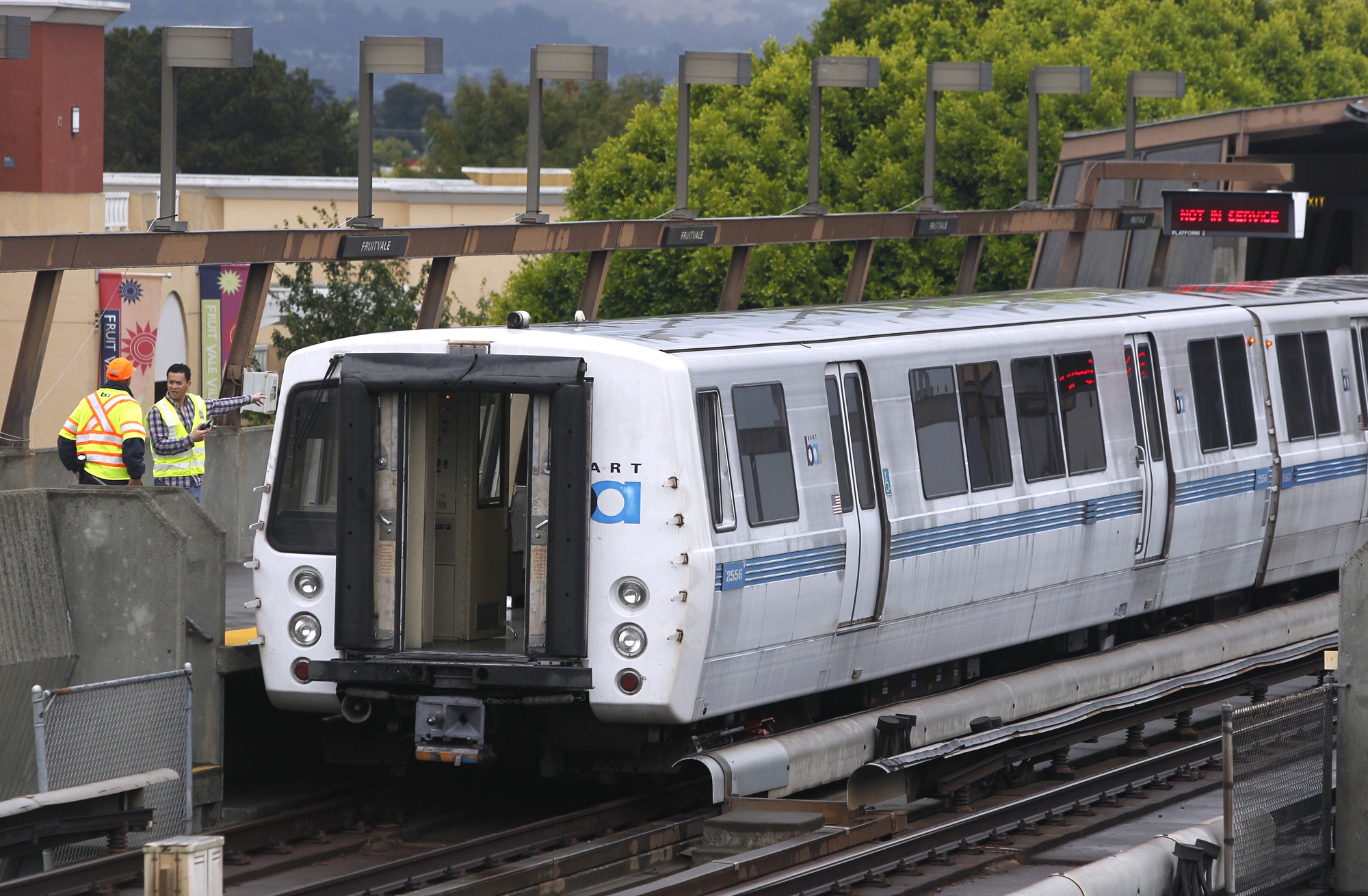
"caption": "BART employees stand outside a damaged 3-car train at the Fruitvale station in Oakland, California, on July 9, 2015. A new watchdog report reveals BART spent nearly $100 million on overtime in recent years, raising concerns about staffing, weak data systems and long-term financial management.",
"credit": "Paul Chinn/The San Francisco Chronicle via Getty Images",
"altTag": null,
"description": null,
"imgSizes": {
"thumbnail": {
"file": "https://cdn.kqed.org/wp-content/uploads/sites/10/2025/09/BARTEmployeesGetty-160x105.jpg",
"width": 160,
"height": 105,
"mimeType": "image/jpeg"
},
"1536x1536": {
"file": "https://cdn.kqed.org/wp-content/uploads/sites/10/2025/09/BARTEmployeesGetty-1536x1006.jpg",
"width": 1536,
"height": 1006,
"mimeType": "image/jpeg"
},
"post-thumbnail": {
"file": "https://cdn.kqed.org/wp-content/uploads/sites/10/2025/09/BARTEmployeesGetty-672x372.jpg",
"width": 672,
"height": 372,
"mimeType": "image/jpeg"
},
"twentyfourteen-full-width": {
"file": "https://cdn.kqed.org/wp-content/uploads/sites/10/2025/09/BARTEmployeesGetty-1038x576.jpg",
"width": 1038,
"height": 576,
"mimeType": "image/jpeg"
},
"kqedFullSize": {
"file": "https://cdn.kqed.org/wp-content/uploads/sites/10/2025/09/BARTEmployeesGetty.jpg",
"width": 2000,
"height": 1310
}
},
"isLoading": false,
"fetchFailed": false
},
"news_12057475": {
"type": "attachments",
"id": "news_12057475",
"meta": {
"index": "attachments_1716263798",
"site": "news",
"id": "12057475",
"found": true
},
"title": "250325-ApartmentsonWestside-21-BL_qed",
"publishDate": 1758749930,
"status": "inherit",
"parent": 12057465,
"modified": 1758749939,
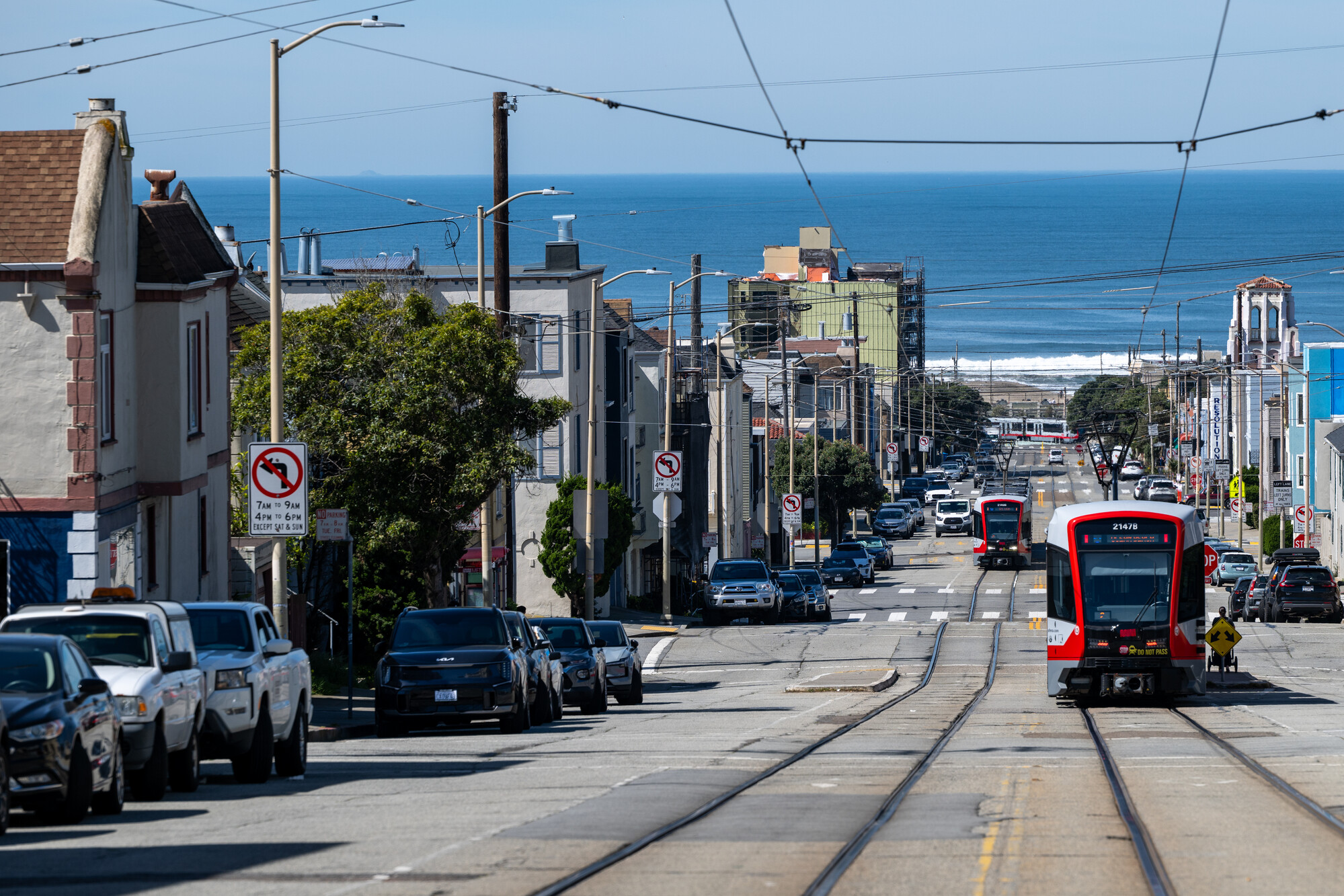
"caption": "Muni Metro cars runs along Judah Street in San Francisco’s Sunset District on March 25, 2025.",
"credit": "Beth LaBerge/KQED",
"altTag": null,
"description": null,
"imgSizes": {
"thumbnail": {
"file": "https://cdn.kqed.org/wp-content/uploads/sites/10/2025/09/250325-ApartmentsonWestside-21-BL_qed-160x107.jpg",
"width": 160,
"height": 107,
"mimeType": "image/jpeg"
},
"1536x1536": {
"file": "https://cdn.kqed.org/wp-content/uploads/sites/10/2025/09/250325-ApartmentsonWestside-21-BL_qed-1536x1024.jpg",
"width": 1536,
"height": 1024,
"mimeType": "image/jpeg"
},
"post-thumbnail": {
"file": "https://cdn.kqed.org/wp-content/uploads/sites/10/2025/09/250325-ApartmentsonWestside-21-BL_qed-672x372.jpg",
"width": 672,
"height": 372,
"mimeType": "image/jpeg"
},
"twentyfourteen-full-width": {
"file": "https://cdn.kqed.org/wp-content/uploads/sites/10/2025/09/250325-ApartmentsonWestside-21-BL_qed-1038x576.jpg",
"width": 1038,
"height": 576,
"mimeType": "image/jpeg"
},
"kqedFullSize": {
"file": "https://cdn.kqed.org/wp-content/uploads/sites/10/2025/09/250325-ApartmentsonWestside-21-BL_qed.jpg",
"width": 1999,
"height": 1333
}
},
"isLoading": false,
"fetchFailed": false
},
"news_12057256": {
"type": "attachments",
"id": "news_12057256",
"meta": {
"index": "attachments_1716263798",
"site": "news",
"id": "12057256",
"found": true
},
"title": "Redistributing Rail Grants",
"publishDate": 1758650398,
"status": "inherit",
"parent": 12057238,
"modified": 1770154122,
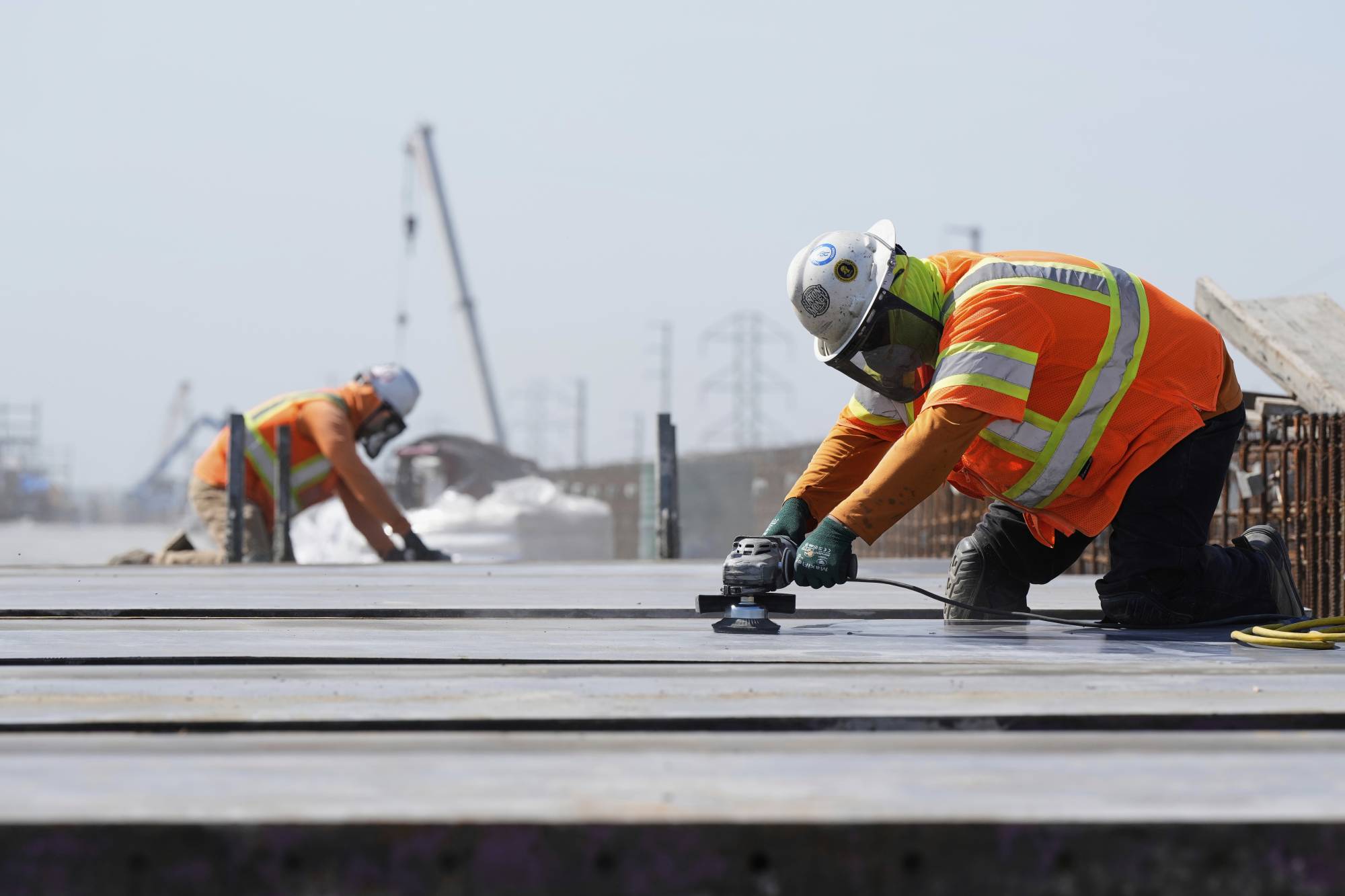
"caption": "Ironworkers with the California High-Speed Rail Authority work on the Hanford Viaduct, April 15, 2025, in Kings County, California. ",
"credit": "Godofredo A. Vásquez/AP Photo",
"altTag": null,
"description": null,
"imgSizes": {
"medium": {
"file": "https://cdn.kqed.org/wp-content/uploads/sites/10/2025/09/AP25265725194713-1-2000x1333.jpg",
"width": 2000,
"height": 1333,
"mimeType": "image/jpeg"
},
"large": {
"file": "https://cdn.kqed.org/wp-content/uploads/sites/10/2025/09/AP25265725194713-1-2000x1333.jpg",
"width": 2000,
"height": 1333,
"mimeType": "image/jpeg"
},
"thumbnail": {
"file": "https://cdn.kqed.org/wp-content/uploads/sites/10/2025/09/AP25265725194713-1-160x107.jpg",
"width": 160,
"height": 107,
"mimeType": "image/jpeg"
},
"1536x1536": {
"file": "https://cdn.kqed.org/wp-content/uploads/sites/10/2025/09/AP25265725194713-1-1536x1024.jpg",
"width": 1536,
"height": 1024,
"mimeType": "image/jpeg"
},
"2048x2048": {
"file": "https://cdn.kqed.org/wp-content/uploads/sites/10/2025/09/AP25265725194713-1-2048x1365.jpg",
"width": 2048,
"height": 1365,
"mimeType": "image/jpeg"
},
"post-thumbnail": {
"file": "https://cdn.kqed.org/wp-content/uploads/sites/10/2025/09/AP25265725194713-1-672x372.jpg",
"width": 672,
"height": 372,
"mimeType": "image/jpeg"
},
"twentyfourteen-full-width": {
"file": "https://cdn.kqed.org/wp-content/uploads/sites/10/2025/09/AP25265725194713-1-1038x576.jpg",
"width": 1038,
"height": 576,
"mimeType": "image/jpeg"
},
"full-width": {
"file": "https://cdn.kqed.org/wp-content/uploads/sites/10/2025/09/AP25265725194713-1-2000x1333.jpg",
"width": 2000,
"height": 1333,
"mimeType": "image/jpeg"
},
"kqedFullSize": {
"file": "https://cdn.kqed.org/wp-content/uploads/sites/10/2025/09/AP25265725194713-1-scaled-e1758650487810.jpg",
"width": 2000,
"height": 1333
}
},
"isLoading": false,
"fetchFailed": false
},
"news_12057152": {
"type": "attachments",
"id": "news_12057152",
"meta": {
"index": "attachments_1716263798",
"site": "news",
"id": "12057152",
"found": true
},
"title": "250626-VTAFILE-JG-4_qed",
"publishDate": 1758577878,
"status": "inherit",
"parent": 12057095,
"modified": 1758577955,
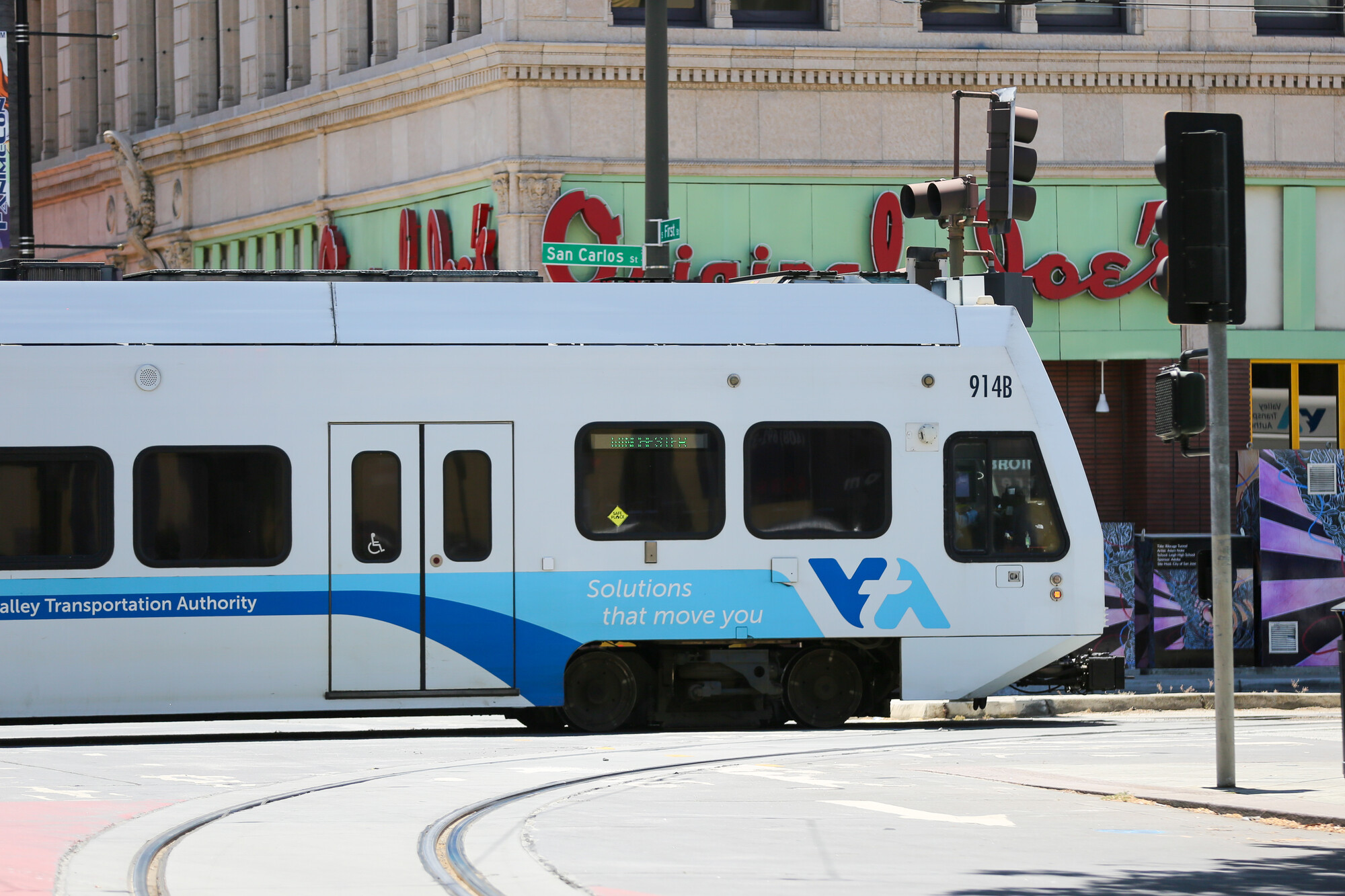
"caption": "A VTA light rail train rolls down the tracks on San Carlos Street in San José on June 26, 2025.",
"credit": "Joseph Geha/ KQED",
"altTag": null,
"description": null,
"imgSizes": {
"thumbnail": {
"file": "https://cdn.kqed.org/wp-content/uploads/sites/10/2025/09/250626-VTAFILE-JG-4_qed-160x107.jpg",
"width": 160,
"height": 107,
"mimeType": "image/jpeg"
},
"1536x1536": {
"file": "https://cdn.kqed.org/wp-content/uploads/sites/10/2025/09/250626-VTAFILE-JG-4_qed-1536x1024.jpg",
"width": 1536,
"height": 1024,
"mimeType": "image/jpeg"
},
"post-thumbnail": {
"file": "https://cdn.kqed.org/wp-content/uploads/sites/10/2025/09/250626-VTAFILE-JG-4_qed-672x372.jpg",
"width": 672,
"height": 372,
"mimeType": "image/jpeg"
},
"twentyfourteen-full-width": {
"file": "https://cdn.kqed.org/wp-content/uploads/sites/10/2025/09/250626-VTAFILE-JG-4_qed-1038x576.jpg",
"width": 1038,
"height": 576,
"mimeType": "image/jpeg"
},
"kqedFullSize": {
"file": "https://cdn.kqed.org/wp-content/uploads/sites/10/2025/09/250626-VTAFILE-JG-4_qed.jpg",
"width": 2000,
"height": 1333
}
},
"isLoading": false,
"fetchFailed": false
},
"news_12056587": {
"type": "attachments",
"id": "news_12056587",
"meta": {
"index": "attachments_1716263798",
"site": "news",
"id": "12056587",
"found": true
},
"title": "California Is Ending The Clean Air Vehicle Decal Allowing Electric Vehicle Drivers To Go Solo In Carpool Lane",
"publishDate": 1758217049,
"status": "inherit",
"parent": 12056576,
"modified": 1758221120,
"caption": "A driver rides the carpool lane in a Tesla on the 405 Freeway in Los Angeles on Tuesday, Sept. 9, 2025. The Clean Air Vehicle decal program, an incentive for people to buy electric cars in California, expires on Sept. 30.",
"credit": "Sarah Reingewirtz/MediaNews Group/Los Angeles Daily News via Getty Images",
"altTag": null,
"description": null,
"imgSizes": {
"thumbnail": {
"file": "https://cdn.kqed.org/wp-content/uploads/sites/10/2025/09/EV-Carpool_GettyImages-2234597020-160x107.jpg",
"width": 160,
"height": 107,
"mimeType": "image/jpeg"
},
"1536x1536": {
"file": "https://cdn.kqed.org/wp-content/uploads/sites/10/2025/09/EV-Carpool_GettyImages-2234597020-1536x1024.jpg",
"width": 1536,
"height": 1024,
"mimeType": "image/jpeg"
},
"post-thumbnail": {
"file": "https://cdn.kqed.org/wp-content/uploads/sites/10/2025/09/EV-Carpool_GettyImages-2234597020-672x372.jpg",
"width": 672,
"height": 372,
"mimeType": "image/jpeg"
},
"twentyfourteen-full-width": {
"file": "https://cdn.kqed.org/wp-content/uploads/sites/10/2025/09/EV-Carpool_GettyImages-2234597020-1038x576.jpg",
"width": 1038,
"height": 576,
"mimeType": "image/jpeg"
},
"kqedFullSize": {
"file": "https://cdn.kqed.org/wp-content/uploads/sites/10/2025/09/EV-Carpool_GettyImages-2234597020.jpg",
"width": 2000,
"height": 1333
}
},
"isLoading": false,
"fetchFailed": false
},
"news_12040902": {
"type": "attachments",
"id": "news_12040902",
"meta": {
"index": "attachments_1716263798",
"site": "news",
"id": "12040902",
"found": true
},
"title": "US-AUTOMOBILE-LIFESTYLE-WAYMO",
"publishDate": 1747762015,
"status": "inherit",
"parent": 12074861,
"modified": 1772219111,
"caption": "A Waymo autonomous vehicle on Steiner Street in San Francisco on Nov. 17, 2023. ",
"credit": "Jason Henry/AFP via Getty Images",
"altTag": null,
"description": null,
"imgSizes": {
"medium": {
"file": "https://cdn.kqed.org/wp-content/uploads/sites/10/2025/05/GETTYIMAGES-1788126569-KQED-800x533.jpg",
"width": 800,
"height": 533,
"mimeType": "image/jpeg"
},
"large": {
"file": "https://cdn.kqed.org/wp-content/uploads/sites/10/2025/05/GETTYIMAGES-1788126569-KQED-1020x680.jpg",
"width": 1020,
"height": 680,
"mimeType": "image/jpeg"
},
"thumbnail": {
"file": "https://cdn.kqed.org/wp-content/uploads/sites/10/2025/05/GETTYIMAGES-1788126569-KQED-160x107.jpg",
"width": 160,
"height": 107,
"mimeType": "image/jpeg"
},
"1536x1536": {
"file": "https://cdn.kqed.org/wp-content/uploads/sites/10/2025/05/GETTYIMAGES-1788126569-KQED-1536x1024.jpg",
"width": 1536,
"height": 1024,
"mimeType": "image/jpeg"
},
"post-thumbnail": {
"file": "https://cdn.kqed.org/wp-content/uploads/sites/10/2025/05/GETTYIMAGES-1788126569-KQED-672x372.jpg",
"width": 672,
"height": 372,
"mimeType": "image/jpeg"
},
"twentyfourteen-full-width": {
"file": "https://cdn.kqed.org/wp-content/uploads/sites/10/2025/05/GETTYIMAGES-1788126569-KQED-1038x576.jpg",
"width": 1038,
"height": 576,
"mimeType": "image/jpeg"
},
"full-width": {
"file": "https://cdn.kqed.org/wp-content/uploads/sites/10/2025/05/GETTYIMAGES-1788126569-KQED-1920x1280.jpg",
"width": 1920,
"height": 1280,
"mimeType": "image/jpeg"
},
"kqedFullSize": {
"file": "https://cdn.kqed.org/wp-content/uploads/sites/10/2025/05/GETTYIMAGES-1788126569-KQED.jpg",
"width": 2000,
"height": 1333
}
},
"isLoading": false,
"fetchFailed": false
},
"news_11941203": {
"type": "attachments",
"id": "news_11941203",
"meta": {
"index": "attachments_1716263798",
"site": "news",
"id": "11941203",
"found": true
},
"parent": 11941191,
"imgSizes": {
"twentyfourteen-full-width": {
"file": "https://ww2.kqed.org/app/uploads/sites/10/2023/02/GettyImages-1298460702-1024x576.jpg",
"width": 1024,
"mimeType": "image/jpeg",
"height": 576
},
"thumbnail": {
"file": "https://ww2.kqed.org/app/uploads/sites/10/2023/02/GettyImages-1298460702-160x107.jpg",
"width": 160,
"mimeType": "image/jpeg",
"height": 107
},
"post-thumbnail": {
"file": "https://ww2.kqed.org/app/uploads/sites/10/2023/02/GettyImages-1298460702-672x372.jpg",
"width": 672,
"mimeType": "image/jpeg",
"height": 372
},
"kqedFullSize": {
"file": "https://ww2.kqed.org/app/uploads/sites/10/2023/02/GettyImages-1298460702.jpg",
"width": 1024,
"height": 683
},
"large": {
"file": "https://ww2.kqed.org/app/uploads/sites/10/2023/02/GettyImages-1298460702-1020x680.jpg",
"width": 1020,
"mimeType": "image/jpeg",
"height": 680
},
"medium": {
"file": "https://ww2.kqed.org/app/uploads/sites/10/2023/02/GettyImages-1298460702-800x534.jpg",
"width": 800,
"mimeType": "image/jpeg",
"height": 534
}
},
"publishDate": 1676573338,
"modified": 1677009696,
"caption": "A partially filled train readies to leave the BART Powell Street station in San Francisco, on Feb. 11, 2020.",
"description": null,
"title": "A partially filled train readies to leave BART Powell Street station in San Francisco, Calif., on Tuesday, February 11, 2020.",
"credit": "Scott Strazzante/San Francisco Chronicle via Getty Images",
"status": "inherit",
"altTag": "A BART train at a platform with sliding doors open and a passenger sitting inside.",
"isLoading": false,
"fetchFailed": false
},
"news_12055625": {
"type": "attachments",
"id": "news_12055625",
"meta": {
"index": "attachments_1716263798",
"site": "news",
"id": "12055625",
"found": true
},
"title": "BART-Speedrun_2",
"publishDate": 1757616690,
"status": "inherit",
"parent": 12055296,
"modified": 1757616752,
"caption": "Speedrunning takes its name from video gaming culture, when a player attempts to complete an entire game as quickly as possible. Transit nerds have co-opted the trend and turned it into a real-life game, visiting every train or bus station as fast as they can.",
"credit": "Illustration by Darren Tu/KQED",
"altTag": null,
"description": null,
"imgSizes": {
"thumbnail": {
"file": "https://cdn.kqed.org/wp-content/uploads/sites/10/2025/09/BART-Speedrun_2-160x103.jpg",
"width": 160,
"height": 103,
"mimeType": "image/jpeg"
},
"1536x1536": {
"file": "https://cdn.kqed.org/wp-content/uploads/sites/10/2025/09/BART-Speedrun_2-1536x992.jpg",
"width": 1536,
"height": 992,
"mimeType": "image/jpeg"
},
"post-thumbnail": {
"file": "https://cdn.kqed.org/wp-content/uploads/sites/10/2025/09/BART-Speedrun_2-672x372.jpg",
"width": 672,
"height": 372,
"mimeType": "image/jpeg"
},
"twentyfourteen-full-width": {
"file": "https://cdn.kqed.org/wp-content/uploads/sites/10/2025/09/BART-Speedrun_2-1038x576.jpg",
"width": 1038,
"height": 576,
"mimeType": "image/jpeg"
},
"kqedFullSize": {
"file": "https://cdn.kqed.org/wp-content/uploads/sites/10/2025/09/BART-Speedrun_2.jpg",
"width": 1920,
"height": 1240
}
},
"isLoading": false,
"fetchFailed": false
},
"news_12055313": {
"type": "attachments",
"id": "news_12055313",
"meta": {
"index": "attachments_1716263798",
"site": "news",
"id": "12055313",
"found": true
},
"title": "IMG_5059_qed",
"publishDate": 1757447693,
"status": "inherit",
"parent": 12055304,
"modified": 1757447753,
"caption": "A pedestrian crosses 16th Street in the Mission in San Francisco on May 20, 2014.",
"credit": "Mark Andrew Boyer/KQED",
"altTag": null,
"description": null,
"imgSizes": {
"thumbnail": {
"file": "https://cdn.kqed.org/wp-content/uploads/sites/10/2025/09/IMG_5059_qed-160x107.jpg",
"width": 160,
"height": 107,
"mimeType": "image/jpeg"
},
"1536x1536": {
"file": "https://cdn.kqed.org/wp-content/uploads/sites/10/2025/09/IMG_5059_qed-1536x1024.jpg",
"width": 1536,
"height": 1024,
"mimeType": "image/jpeg"
},
"post-thumbnail": {
"file": "https://cdn.kqed.org/wp-content/uploads/sites/10/2025/09/IMG_5059_qed-672x372.jpg",
"width": 672,
"height": 372,
"mimeType": "image/jpeg"
},
"twentyfourteen-full-width": {
"file": "https://cdn.kqed.org/wp-content/uploads/sites/10/2025/09/IMG_5059_qed-1038x576.jpg",
"width": 1038,
"height": 576,
"mimeType": "image/jpeg"
},
"kqedFullSize": {
"file": "https://cdn.kqed.org/wp-content/uploads/sites/10/2025/09/IMG_5059_qed.jpg",
"width": 1999,
"height": 1333
}
},
"isLoading": false,
"fetchFailed": false
},
"news_12055199": {
"type": "attachments",
"id": "news_12055199",
"meta": {
"index": "attachments_1716263798",
"site": "news",
"id": "12055199",
"found": true
},
"title": "TransitFundingKQED3",
"publishDate": 1757365914,
"status": "inherit",
"parent": 12055129,
"modified": 1757365953,
"caption": "More than a hundred people gathered at San Francisco’s Civic Center Plaza on Sept. 8, 2025, in support of an emergency state loan for Bay Area public transit agencies. ",
"credit": "Farida Jhabvala Romero/KQED",
"altTag": null,
"description": null,
"imgSizes": {
"thumbnail": {
"file": "https://cdn.kqed.org/wp-content/uploads/sites/10/2025/09/TransitFundingKQED3-160x120.jpg",
"width": 160,
"height": 120,
"mimeType": "image/jpeg"
},
"1536x1536": {
"file": "https://cdn.kqed.org/wp-content/uploads/sites/10/2025/09/TransitFundingKQED3-1536x1152.jpg",
"width": 1536,
"height": 1152,
"mimeType": "image/jpeg"
},
"post-thumbnail": {
"file": "https://cdn.kqed.org/wp-content/uploads/sites/10/2025/09/TransitFundingKQED3-672x372.jpg",
"width": 672,
"height": 372,
"mimeType": "image/jpeg"
},
"twentyfourteen-full-width": {
"file": "https://cdn.kqed.org/wp-content/uploads/sites/10/2025/09/TransitFundingKQED3-1038x576.jpg",
"width": 1038,
"height": 576,
"mimeType": "image/jpeg"
},
"kqedFullSize": {
"file": "https://cdn.kqed.org/wp-content/uploads/sites/10/2025/09/TransitFundingKQED3.jpg",
"width": 2000,
"height": 1500
}
},
"isLoading": false,
"fetchFailed": false
},
"news_11999606": {
"type": "attachments",
"id": "news_11999606",
"meta": {
"index": "attachments_1716263798",
"site": "news",
"id": "11999606",
"found": true
},
"title": "240313-BART-Train-arrives",
"publishDate": 1723226703,
"status": "inherit",
"parent": 11999596,
"modified": 1746824991,
"caption": "A BART train approaches a station on March 13, 2024. ",
"credit": "Martin do Nascimento/KQED",
"altTag": null,
"description": null,
"imgSizes": {
"medium": {
"file": "https://cdn.kqed.org/wp-content/uploads/sites/10/2024/08/240313-BART-Train-arrives-800x533.jpg",
"width": 800,
"height": 533,
"mimeType": "image/jpeg"
},
"large": {
"file": "https://cdn.kqed.org/wp-content/uploads/sites/10/2024/08/240313-BART-Train-arrives-1020x680.jpg",
"width": 1020,
"height": 680,
"mimeType": "image/jpeg"
},
"thumbnail": {
"file": "https://cdn.kqed.org/wp-content/uploads/sites/10/2024/08/240313-BART-Train-arrives-160x107.jpg",
"width": 160,
"height": 107,
"mimeType": "image/jpeg"
},
"1536x1536": {
"file": "https://cdn.kqed.org/wp-content/uploads/sites/10/2024/08/240313-BART-Train-arrives-1536x1024.jpg",
"width": 1536,
"height": 1024,
"mimeType": "image/jpeg"
},
"post-thumbnail": {
"file": "https://cdn.kqed.org/wp-content/uploads/sites/10/2024/08/240313-BART-Train-arrives-672x372.jpg",
"width": 672,
"height": 372,
"mimeType": "image/jpeg"
},
"twentyfourteen-full-width": {
"file": "https://cdn.kqed.org/wp-content/uploads/sites/10/2024/08/240313-BART-Train-arrives-1038x576.jpg",
"width": 1038,
"height": 576,
"mimeType": "image/jpeg"
},
"kqedFullSize": {
"file": "https://cdn.kqed.org/wp-content/uploads/sites/10/2024/08/240313-BART-Train-arrives.jpg",
"width": 1920,
"height": 1280
}
},
"isLoading": false,
"fetchFailed": false
},
"news_12054818": {
"type": "attachments",
"id": "news_12054818",
"meta": {
"index": "attachments_1716263798",
"site": "news",
"id": "12054818",
"found": true
},
"title": "250905-bartoutage00435_TV_qed",
"publishDate": 1757095692,
"status": "inherit",
"parent": 12054754,
"modified": 1757095717,
"caption": "A person walks away from Powell Bart station as it is not in service due to an electrical outage in San Francisco on Sept. 5, 2025.",
"credit": "Tâm Vũ/KQED",
"altTag": null,
"description": null,
"imgSizes": {
"thumbnail": {
"file": "https://cdn.kqed.org/wp-content/uploads/sites/10/2025/09/250905-bartoutage00435_TV_qed-160x107.jpg",
"width": 160,
"height": 107,
"mimeType": "image/jpeg"
},
"1536x1536": {
"file": "https://cdn.kqed.org/wp-content/uploads/sites/10/2025/09/250905-bartoutage00435_TV_qed-1536x1024.jpg",
"width": 1536,
"height": 1024,
"mimeType": "image/jpeg"
},
"post-thumbnail": {
"file": "https://cdn.kqed.org/wp-content/uploads/sites/10/2025/09/250905-bartoutage00435_TV_qed-672x372.jpg",
"width": 672,
"height": 372,
"mimeType": "image/jpeg"
},
"twentyfourteen-full-width": {
"file": "https://cdn.kqed.org/wp-content/uploads/sites/10/2025/09/250905-bartoutage00435_TV_qed-1038x576.jpg",
"width": 1038,
"height": 576,
"mimeType": "image/jpeg"
},
"kqedFullSize": {
"file": "https://cdn.kqed.org/wp-content/uploads/sites/10/2025/09/250905-bartoutage00435_TV_qed.jpg",
"width": 2000,
"height": 1333
}
},
"isLoading": false,
"fetchFailed": false
}
},
"audioPlayerReducer": {
"postId": "stream_live",
"isPaused": true,
"isPlaying": false,
"pfsActive": false,
"pledgeModalIsOpen": true,
"playerDrawerIsOpen": false,
"liveAudioPlayStartedAt": 0,
"liveAudioPlayContext": ""
},
"authorsReducer": {
"byline_news_12057238": {
"type": "authors",
"id": "byline_news_12057238",
"meta": {
"override": true
},
"slug": "byline_news_12057238",
"name": "Josh Funk, The Associated Press",
"isLoading": false
},
"danbrekke": {
"type": "authors",
"id": "222",
"meta": {
"index": "authors_1716337520",
"id": "222",
"found": true
},
"name": "Dan Brekke",
"firstName": "Dan",
"lastName": "Brekke",
"slug": "danbrekke",
"email": "dbrekke@kqed.org",
"display_author_email": true,
"staff_mastheads": [
"news",
"science"
],
"title": "KQED Editor and Reporter",
"bio": "Dan Brekke is a reporter and editor for KQED News, responsible for coverage of topics ranging from California water issues to the Bay Area's transportation challenges. In a newsroom career that began in Chicago in 1972, Dan has worked for \u003cem>The San Francisco Examiner,\u003c/em> Wired and TechTV and has been published in The New York Times, The New York Times Magazine, Business 2.0, Salon and elsewhere.\r\n\r\nSince joining KQED in 2007, Dan has reported, edited and produced both radio and online features and breaking news pieces. He has shared as both editor and reporter in four Society of Professional Journalists Norcal Excellence in Journalism awards and one Edward R. Murrow regional award. He was chosen for a spring 2017 residency at the Mesa Refuge to advance his research on California salmon.\r\n\r\nEmail Dan at: \u003ca href=\"mailto:dbrekke@kqed.org\">dbrekke@kqed.org\u003c/a>\r\n\r\n\u003cstrong>Twitter:\u003c/strong> \u003ca href=\"https://twitter.com/danbrekke\" rel=\"noopener noreferrer\">twitter.com/danbrekke\u003c/a>\r\n\u003cstrong>Facebook:\u003c/strong> \u003ca href=\"https://www.facebook.com/danbrekke\" rel=\"noopener noreferrer\">www.facebook.com/danbrekke\u003c/a>\r\n\u003cstrong>LinkedIn:\u003c/strong> \u003ca href=\"https://www.linkedin.com/in/danbrekke\" rel=\"noopener noreferrer\">www.linkedin.com/in/danbrekke\u003c/a>",
"avatar": "https://secure.gravatar.com/avatar/8f1f0d2a978fb3b23426c922c7e2af558fa36905b49c4ce76a97dc3c72d27226?s=600&d=mm&r=g",
"twitter": "danbrekke",
"bluesky": null,
"facebook": null,
"instagram": "https://www.instagram.com/dan.brekke/",
"linkedin": "https://www.linkedin.com/in/danbrekke/",
"sites": [
{
"site": "news",
"roles": [
"administrator",
"create_posts"
]
},
{
"site": "stateofhealth",
"roles": [
"editor"
]
},
{
"site": "science",
"roles": [
"editor"
]
},
{
"site": "quest",
"roles": [
"contributor"
]
},
{
"site": "food",
"roles": [
"contributor"
]
},
{
"site": "forum",
"roles": [
"contributor"
]
},
{
"site": "elections",
"roles": [
"editor"
]
},
{
"site": "liveblog",
"roles": [
"editor"
]
}
],
"headData": {
"title": "Dan Brekke | KQED",
"description": "KQED Editor and Reporter",
"ogImgSrc": "https://secure.gravatar.com/avatar/8f1f0d2a978fb3b23426c922c7e2af558fa36905b49c4ce76a97dc3c72d27226?s=600&d=mm&r=g",
"twImgSrc": "https://secure.gravatar.com/avatar/8f1f0d2a978fb3b23426c922c7e2af558fa36905b49c4ce76a97dc3c72d27226?s=600&d=mm&r=g"
},
"isLoading": false,
"link": "/author/danbrekke"
},
"abandlamudi": {
"type": "authors",
"id": "11672",
"meta": {
"index": "authors_1716337520",
"id": "11672",
"found": true
},
"name": "Adhiti Bandlamudi",
"firstName": "Adhiti",
"lastName": "Bandlamudi",
"slug": "abandlamudi",
"email": "abandlamudi@kqed.org",
"display_author_email": false,
"staff_mastheads": [
"news"
],
"title": "KQED Housing Reporter",
"bio": "Adhiti Bandlamudi reports for KQED's Housing desk. She focuses on how housing gets built across the Bay Area. Before joining KQED in 2020, she reported for WUNC in Durham, North Carolina, WABE in Atlanta, Georgia and Capital Public Radio in Sacramento. In 2017, she was awarded a Kroc Fellowship at NPR where she reported on everything from sprinkles to the Golden State Killer's arrest. When she's not reporting, she's baking new recipes in her kitchen or watching movies with friends and family. She's originally from Georgia and has strong opinions about Great British Bake Off.",
"avatar": "https://secure.gravatar.com/avatar/868129c8b257bb99a3500e2c86a65400?s=600&d=mm&r=g",
"twitter": "oddity_adhiti",
"facebook": null,
"instagram": null,
"linkedin": null,
"sites": [
{
"site": "arts",
"roles": [
"author"
]
},
{
"site": "news",
"roles": [
"editor"
]
},
{
"site": "liveblog",
"roles": [
"author"
]
}
],
"headData": {
"title": "Adhiti Bandlamudi | KQED",
"description": "KQED Housing Reporter",
"ogImgSrc": "https://secure.gravatar.com/avatar/868129c8b257bb99a3500e2c86a65400?s=600&d=mm&r=g",
"twImgSrc": "https://secure.gravatar.com/avatar/868129c8b257bb99a3500e2c86a65400?s=600&d=mm&r=g"
},
"isLoading": false,
"link": "/author/abandlamudi"
},
"jlara": {
"type": "authors",
"id": "11761",
"meta": {
"index": "authors_1716337520",
"id": "11761",
"found": true
},
"name": "Juan Carlos Lara",
"firstName": "Juan Carlos",
"lastName": "Lara",
"slug": "jlara",
"email": "jlara@kqed.org",
"display_author_email": false,
"staff_mastheads": [],
"title": "KQED Contributor",
"bio": null,
"avatar": "https://secure.gravatar.com/avatar/19e2052b9b05657c5ff2af2121846e9c?s=600&d=blank&r=g",
"twitter": null,
"facebook": null,
"instagram": null,
"linkedin": null,
"sites": [
{
"site": "arts",
"roles": [
"editor"
]
},
{
"site": "news",
"roles": [
"editor"
]
},
{
"site": "forum",
"roles": [
"editor"
]
},
{
"site": "liveblog",
"roles": [
"contributor"
]
}
],
"headData": {
"title": "Juan Carlos Lara | KQED",
"description": "KQED Contributor",
"ogImgSrc": "https://secure.gravatar.com/avatar/19e2052b9b05657c5ff2af2121846e9c?s=600&d=blank&r=g",
"twImgSrc": "https://secure.gravatar.com/avatar/19e2052b9b05657c5ff2af2121846e9c?s=600&d=blank&r=g"
},
"isLoading": false,
"link": "/author/jlara"
},
"adahlstromeckman": {
"type": "authors",
"id": "11785",
"meta": {
"index": "authors_1716337520",
"id": "11785",
"found": true
},
"name": "Azul Dahlstrom-Eckman",
"firstName": "Azul",
"lastName": "Dahlstrom-Eckman",
"slug": "adahlstromeckman",
"email": "adahlstrom-eckman@kqed.org",
"display_author_email": true,
"staff_mastheads": [],
"title": "Reporter",
"bio": "Azul is a reporter for KQED focusing on transportation and features. He joined KQED in 2021 as an alumna of KALW's Audio Academy radio journalism training program.",
"avatar": "https://secure.gravatar.com/avatar/9cb750298435add7815a777f55bf1f46845c1386bb8452555c60a7b820b5aba3?s=600&d=blank&r=g",
"twitter": "@zuliemann",
"bluesky": "@azul415.bsky.social",
"facebook": null,
"instagram": null,
"linkedin": null,
"sites": [
{
"site": "arts",
"roles": [
"editor"
]
},
{
"site": "news",
"roles": [
"editor"
]
},
{
"site": "science",
"roles": [
"editor"
]
},
{
"site": "liveblog",
"roles": [
"author"
]
}
],
"headData": {
"title": "Azul Dahlstrom-Eckman | KQED",
"description": "Reporter",
"ogImgSrc": "https://secure.gravatar.com/avatar/9cb750298435add7815a777f55bf1f46845c1386bb8452555c60a7b820b5aba3?s=600&d=blank&r=g",
"twImgSrc": "https://secure.gravatar.com/avatar/9cb750298435add7815a777f55bf1f46845c1386bb8452555c60a7b820b5aba3?s=600&d=blank&r=g"
},
"isLoading": false,
"link": "/author/adahlstromeckman"
},
"jgeha": {
"type": "authors",
"id": "11906",
"meta": {
"index": "authors_1716337520",
"id": "11906",
"found": true
},
"name": "Joseph Geha",
"firstName": "Joseph",
"lastName": "Geha",
"slug": "jgeha",
"email": "jgeha@kqed.org",
"display_author_email": false,
"staff_mastheads": [
"news",
"science"
],
"title": "KQED Contributor",
"bio": null,
"avatar": "https://secure.gravatar.com/avatar/ea84d2b6dd93d6369d453edf19dd583f117cd1759d2d9c9c92f9de77017354fe?s=600&d=blank&r=g",
"twitter": null,
"bluesky": null,
"facebook": null,
"instagram": null,
"linkedin": null,
"sites": [
{
"site": "news",
"roles": [
"editor"
]
},
{
"site": "liveblog",
"roles": [
"author"
]
}
],
"headData": {
"title": "Joseph Geha | KQED",
"description": "KQED Contributor",
"ogImgSrc": "https://secure.gravatar.com/avatar/ea84d2b6dd93d6369d453edf19dd583f117cd1759d2d9c9c92f9de77017354fe?s=600&d=blank&r=g",
"twImgSrc": "https://secure.gravatar.com/avatar/ea84d2b6dd93d6369d453edf19dd583f117cd1759d2d9c9c92f9de77017354fe?s=600&d=blank&r=g"
},
"isLoading": false,
"link": "/author/jgeha"
},
"kdebenedetti": {
"type": "authors",
"id": "11913",
"meta": {
"index": "authors_1716337520",
"id": "11913",
"found": true
},
"name": "Katie DeBenedetti",
"firstName": "Katie",
"lastName": "DeBenedetti",
"slug": "kdebenedetti",
"email": "kdebenedetti@kqed.org",
"display_author_email": false,
"staff_mastheads": [
"news",
"science"
],
"title": "KQED Contributor",
"bio": "Katie DeBenedetti is a digital reporter covering daily news for the Express Desk. Prior to joining KQED as a culture reporting intern in January 2024, she covered education and city government for the Napa Valley Register.",
"avatar": "https://secure.gravatar.com/avatar/6e31073cb8f7e4214ab03f42771d0f45?s=600&d=blank&r=g",
"twitter": null,
"facebook": null,
"instagram": null,
"linkedin": null,
"sites": [
{
"site": "news",
"roles": [
"author"
]
},
{
"site": "science",
"roles": [
"author"
]
},
{
"site": "liveblog",
"roles": [
"author"
]
}
],
"headData": {
"title": "Katie DeBenedetti | KQED",
"description": "KQED Contributor",
"ogImgSrc": "https://secure.gravatar.com/avatar/6e31073cb8f7e4214ab03f42771d0f45?s=600&d=blank&r=g",
"twImgSrc": "https://secure.gravatar.com/avatar/6e31073cb8f7e4214ab03f42771d0f45?s=600&d=blank&r=g"
},
"isLoading": false,
"link": "/author/kdebenedetti"
}
},
"pagesReducer": {
"news_category_transportation": {
"type": "terms",
"id": "news_1397",
"meta": {
"index": "terms_1716263798",
"site": "news",
"id": "1397",
"score": 12.939859
},
"featImg": null,
"name": "Transportation",
"description": null,
"taxonomy": "category",
"headData": {
"twImgId": null,
"twTitle": null,
"ogTitle": null,
"ogImgId": null,
"twDescription": null,
"description": null,
"title": "Transportation Archives | KQED News",
"ogDescription": null
},
"ttid": 1409,
"slug": "transportation",
"isLoading": false,
"title": "Transportation",
"pageMeta": {
"site": "news",
"WpPageTemplate": "page-topic-editorial",
"currentPage": 14
},
"blocks": [
{
"blockName": "kqed/post-list",
"attrs": {
"layout": "cardArticle2",
"query": "posts/news?category=transportation",
"seeMore": false,
"paginated": true,
"page": 14
}
},
{
"blockName": "kqed/ad"
}
]
}
},
"pfsSessionReducer": {},
"postsReducer": {
"stream_live": {
"type": "live",
"id": "stream_live",
"audioUrl": "https://streams.kqed.org/kqedradio",
"title": "Live Stream",
"excerpt": "Live Stream information currently unavailable.",
"link": "/radio",
"featImg": "",
"label": {
"name": "KQED Live",
"link": "/"
}
},
"stream_kqedNewscast": {
"type": "posts",
"id": "stream_kqedNewscast",
"audioUrl": "https://www.kqed.org/.stream/anon/radio/RDnews/newscast.mp3?_=1",
"title": "KQED Newscast",
"featImg": "",
"label": {
"name": "88.5 FM",
"link": "/"
}
},
"news_12057594": {
"type": "posts",
"id": "news_12057594",
"meta": {
"index": "posts_1716263798",
"site": "news",
"id": "12057594",
"score": null,
"sort": [
1758847425000
]
},
"guestAuthors": [],
"slug": "bart-audit-flags-overtime-costs-weak-controls-as-agency-spends-96-million",
"title": "BART Audit Flags Overtime Costs, Weak Controls as Agency Spends $96 Million",
"publishDate": 1758847425,
"format": "standard",
"headTitle": "BART Audit Flags Overtime Costs, Weak Controls as Agency Spends $96 Million | KQED",
"labelTerm": {
"site": "news"
},
"content": "\u003cp>Rigid union rules. Persistent staffing gaps. Outdated timekeeping systems.\u003c/p>\n\u003cp>Those are among the factors \u003ca href=\"https://www.kqed.org/news/tag/bart\">BART’s\u003c/a> inspector general pointed to in explaining why the transit agency continues to spend a growing share of its budget on overtime.\u003c/p>\n\u003cp>According to the watchdog office’s \u003ca href=\"https://www.bartoig.org/files/d8c036b58/BART+Overtime+Risks+Can+be+Reduced+by+Strategic+Improvements+in+Oversight+and+Management+June+13+-+2025.pdf\">recently published report\u003c/a>, overtime accounted for 14% of BART’s budget last year, with 57 employees doubling their base salaries through extra hours. While the trend dipped slightly last year, the report showed spending escalated from 2021 to 2023, when the agency paid about $96 million in overtime.\u003c/p>\n\u003cp>[ad fullwidth]\u003c/p>\n\u003cp>“Overtime is gonna happen — you can’t run BART without overtime,” Inspector General Claudette Biemeret told the Board of Directors on Wednesday. “But at the end of the fiscal year, you wanna have your costs pretty close to what your budget was and not having these huge variances.”\u003c/p>\n\u003cp>BART staff said the pandemic played a large role in the staffing shortages. In 2021 alone, the agency lost 567 employees, 287 of whom retired after an incentive program was approved by the board. Others left after the agency implemented a \u003ca href=\"https://www.bart.gov/sites/default/files/docs/Memo%20Vaccine%20Mandate%20for%20Consultants%20%20Contractors_10.29.2021.pdf\">COVID-19 vaccine mandate\u003c/a>. Since then, however, BART has steadily hired, growing its workforce by 11.5%.\u003c/p>\n\u003cp>Still, overtime spending grew through 2023.\u003c/p>\n\u003cfigure id=\"attachment_12054821\" class=\"wp-caption aligncenter\" style=\"max-width: 2000px\">\u003cimg loading=\"lazy\" decoding=\"async\" class=\"size-full wp-image-12054821\" src=\"https://cdn.kqed.org/wp-content/uploads/sites/10/2025/09/250905-BARTOutage-03-BL_qed.jpg\" alt=\"\" width=\"2000\" height=\"1333\" srcset=\"https://cdn.kqed.org/wp-content/uploads/sites/10/2025/09/250905-BARTOutage-03-BL_qed.jpg 2000w, https://cdn.kqed.org/wp-content/uploads/sites/10/2025/09/250905-BARTOutage-03-BL_qed-160x107.jpg 160w, https://cdn.kqed.org/wp-content/uploads/sites/10/2025/09/250905-BARTOutage-03-BL_qed-1536x1024.jpg 1536w\" sizes=\"auto, (max-width: 2000px) 100vw, 2000px\">\u003cfigcaption class=\"wp-caption-text\">Tape blocks the entrance to the 24th Street BART Station in San Francisco during an outage on Sept. 5, 2025. \u003ccite>(Beth LaBerge/KQED)\u003c/cite>\u003c/figcaption>\u003c/figure>\n\u003cp>Biemeret said her office tried to identify the root causes but struggled to access key information in BART’s timekeeping system. Employees are required to file timesheets with overtime codes.\u003c/p>\n\u003cp>“But there is one field that [is] just a basic comment field — it’s freeform — you can type whatever you want in it, where people might put in the reason why they worked overtime,” she said. “Someone called out sick, there was an emergency, there was some sort of unexpected problem, whatever that may be. We could not get that information out of the system.”\u003c/p>\n\u003cp>Later in Wednesday’s meeting, BART’s Chief Financial Officer Joseph Beach contradicted Biemeret.[aside postID=news_12052690 hero='https://cdn.kqed.org/wp-content/uploads/sites/10/2025/08/20241204-BART-JY-023_qed.jpg']“Actually, we do have that information available that can come out of the system,” he said. “It’s just data in the system; there should be no reason we shouldn’t get that for you.”\u003c/p>\n\u003cp>Biemeret said it was a surprise to hear that, since her staff had worked extensively to obtain the data, but were told it was inaccessible.\u003c/p>\n\u003cp>The report recommended several reforms, including stronger data collection, tighter overtime approval controls and better anti-fraud tools.\u003c/p>\n\u003cp>Although the audit did not uncover fraud, Biemeret said BART’s current data collection system was not robust enough to detect inconsistencies or red flags.\u003c/p>\n\u003cp>During public comment, SEIU 1021 President John Arantes, who represents 1,700 BART employees, blasted the report as “totally slanderous” to workers.\u003c/p>\n\u003cp>\u003cstrong>“\u003c/strong>If you gave us enough [of a] raise to live in the Bay Area, we [would] not need to work overtime,” he said. “We are not slaves or indentured servants. We have rights. We work overtime, and you shall pay us for the work that we do.”\u003c/p>\n\u003cp>Biemeret and board members stressed the audit was not to determine whether overtime should be allowed or paid, but rather to help BART manage costs.\u003c/p>\n\u003cp>The board instructed staff to begin implementing some recommendations while the inspector general’s office continues its review.\u003c/p>\n\u003cp>\u003cem>\u003cstrong>Clarification:\u003c/strong> A photo in a Sept. 25 story about a BART audit was miscaptioned. The image showed SFMTA employees assisting passengers at the 24th Street BART station on Sept. 5, not BART employees as originally stated.\u003c/em>\u003c/p>\n\u003cp>\u003c/p>\n",
"blocks": [],
"excerpt": "A new watchdog report reveals BART spent nearly $100 million on overtime in recent years, raising concerns about staffing, weak data systems and long-term financial management.",
"status": "publish",
"parent": 0,
"modified": 1759341625,
"stats": {
"hasAudio": false,
"hasVideo": false,
"hasChartOrMap": false,
"iframeSrcs": [],
"hasGoogleForm": false,
"hasGallery": false,
"hasHearkenModule": false,
"hasPolis": false,
"paragraphCount": 19,
"wordCount": 641
},
"headData": {
"title": "BART Audit Flags Overtime Costs, Weak Controls as Agency Spends $96 Million | KQED",
"description": "A new watchdog report reveals BART spent nearly $100 million on overtime in recent years, raising concerns about staffing, weak data systems and long-term financial management.",
"ogTitle": "",
"ogDescription": "",
"ogImgId": "",
"twTitle": "",
"twDescription": "",
"twImgId": "",
"schema": {
"@context": "https://schema.org",
"@type": "NewsArticle",
"headline": "BART Audit Flags Overtime Costs, Weak Controls as Agency Spends $96 Million",
"datePublished": "2025-09-25T17:43:45-07:00",
"dateModified": "2025-10-01T11:00:25-07:00",
"image": "https://cdn.kqed.org/wp-content/uploads/2020/02/KQED-OG-Image@1x.png",
"isAccessibleForFree": "True",
"publisher": {
"@type": "NewsMediaOrganization",
"@id": "https://www.kqed.org/#organization",
"name": "KQED",
"logo": "https://cdn.kqed.org/wp-content/uploads/2020/02/KQED-OG-Image@1x.png",
"url": "https://www.kqed.org",
"sameAs": [
"https://www.facebook.com/KQED",
"https://twitter.com/KQED",
"https://www.instagram.com/kqed/",
"https://www.tiktok.com/@kqedofficial",
"https://www.linkedin.com/company/kqed",
"https://www.youtube.com/channel/UCeC0IOo7i1P_61zVUWbJ4nw"
]
}
}
},
"primaryCategory": {
"termId": 34551,
"slug": "labor",
"name": "Labor"
},
"sticky": false,
"nprStoryId": "kqed-12057594",
"templateType": "standard",
"featuredImageType": "standard",
"excludeFromSiteSearch": "Include",
"articleAge": "0",
"path": "/news/12057594/bart-audit-flags-overtime-costs-weak-controls-as-agency-spends-96-million",
"audioTrackLength": null,
"parsedContent": [
{
"type": "contentString",
"content": "\u003cdiv class=\"post-body\">\u003cp>\u003cp>Rigid union rules. Persistent staffing gaps. Outdated timekeeping systems.\u003c/p>\n\u003cp>Those are among the factors \u003ca href=\"https://www.kqed.org/news/tag/bart\">BART’s\u003c/a> inspector general pointed to in explaining why the transit agency continues to spend a growing share of its budget on overtime.\u003c/p>\n\u003cp>According to the watchdog office’s \u003ca href=\"https://www.bartoig.org/files/d8c036b58/BART+Overtime+Risks+Can+be+Reduced+by+Strategic+Improvements+in+Oversight+and+Management+June+13+-+2025.pdf\">recently published report\u003c/a>, overtime accounted for 14% of BART’s budget last year, with 57 employees doubling their base salaries through extra hours. While the trend dipped slightly last year, the report showed spending escalated from 2021 to 2023, when the agency paid about $96 million in overtime.\u003c/p>\n\u003cp>\u003c/p>\u003c/div>",
"attributes": {
"named": {},
"numeric": []
}
},
{
"type": "component",
"content": "",
"name": "ad",
"attributes": {
"named": {
"label": "fullwidth"
},
"numeric": [
"fullwidth"
]
}
},
{
"type": "contentString",
"content": "\u003cdiv class=\"post-body\">\u003cp>\u003c/p>\n\u003cp>“Overtime is gonna happen — you can’t run BART without overtime,” Inspector General Claudette Biemeret told the Board of Directors on Wednesday. “But at the end of the fiscal year, you wanna have your costs pretty close to what your budget was and not having these huge variances.”\u003c/p>\n\u003cp>BART staff said the pandemic played a large role in the staffing shortages. In 2021 alone, the agency lost 567 employees, 287 of whom retired after an incentive program was approved by the board. Others left after the agency implemented a \u003ca href=\"https://www.bart.gov/sites/default/files/docs/Memo%20Vaccine%20Mandate%20for%20Consultants%20%20Contractors_10.29.2021.pdf\">COVID-19 vaccine mandate\u003c/a>. Since then, however, BART has steadily hired, growing its workforce by 11.5%.\u003c/p>\n\u003cp>Still, overtime spending grew through 2023.\u003c/p>\n\u003cfigure id=\"attachment_12054821\" class=\"wp-caption aligncenter\" style=\"max-width: 2000px\">\u003cimg loading=\"lazy\" decoding=\"async\" class=\"size-full wp-image-12054821\" src=\"https://cdn.kqed.org/wp-content/uploads/sites/10/2025/09/250905-BARTOutage-03-BL_qed.jpg\" alt=\"\" width=\"2000\" height=\"1333\" srcset=\"https://cdn.kqed.org/wp-content/uploads/sites/10/2025/09/250905-BARTOutage-03-BL_qed.jpg 2000w, https://cdn.kqed.org/wp-content/uploads/sites/10/2025/09/250905-BARTOutage-03-BL_qed-160x107.jpg 160w, https://cdn.kqed.org/wp-content/uploads/sites/10/2025/09/250905-BARTOutage-03-BL_qed-1536x1024.jpg 1536w\" sizes=\"auto, (max-width: 2000px) 100vw, 2000px\">\u003cfigcaption class=\"wp-caption-text\">Tape blocks the entrance to the 24th Street BART Station in San Francisco during an outage on Sept. 5, 2025. \u003ccite>(Beth LaBerge/KQED)\u003c/cite>\u003c/figcaption>\u003c/figure>\n\u003cp>Biemeret said her office tried to identify the root causes but struggled to access key information in BART’s timekeeping system. Employees are required to file timesheets with overtime codes.\u003c/p>\n\u003cp>“But there is one field that [is] just a basic comment field — it’s freeform — you can type whatever you want in it, where people might put in the reason why they worked overtime,” she said. “Someone called out sick, there was an emergency, there was some sort of unexpected problem, whatever that may be. We could not get that information out of the system.”\u003c/p>\n\u003cp>Later in Wednesday’s meeting, BART’s Chief Financial Officer Joseph Beach contradicted Biemeret.\u003c/p>\u003c/div>",
"attributes": {
"named": {},
"numeric": []
}
},
{
"type": "component",
"content": "",
"name": "aside",
"attributes": {
"named": {
"postid": "news_12052690",
"hero": "https://cdn.kqed.org/wp-content/uploads/sites/10/2025/08/20241204-BART-JY-023_qed.jpg",
"label": ""
},
"numeric": []
}
},
{
"type": "contentString",
"content": "\u003cdiv class=\"post-body\">\u003cp>“Actually, we do have that information available that can come out of the system,” he said. “It’s just data in the system; there should be no reason we shouldn’t get that for you.”\u003c/p>\n\u003cp>Biemeret said it was a surprise to hear that, since her staff had worked extensively to obtain the data, but were told it was inaccessible.\u003c/p>\n\u003cp>The report recommended several reforms, including stronger data collection, tighter overtime approval controls and better anti-fraud tools.\u003c/p>\n\u003cp>Although the audit did not uncover fraud, Biemeret said BART’s current data collection system was not robust enough to detect inconsistencies or red flags.\u003c/p>\n\u003cp>During public comment, SEIU 1021 President John Arantes, who represents 1,700 BART employees, blasted the report as “totally slanderous” to workers.\u003c/p>\n\u003cp>\u003cstrong>“\u003c/strong>If you gave us enough [of a] raise to live in the Bay Area, we [would] not need to work overtime,” he said. “We are not slaves or indentured servants. We have rights. We work overtime, and you shall pay us for the work that we do.”\u003c/p>\n\u003cp>Biemeret and board members stressed the audit was not to determine whether overtime should be allowed or paid, but rather to help BART manage costs.\u003c/p>\n\u003cp>The board instructed staff to begin implementing some recommendations while the inspector general’s office continues its review.\u003c/p>\n\u003cp>\u003cem>\u003cstrong>Clarification:\u003c/strong> A photo in a Sept. 25 story about a BART audit was miscaptioned. The image showed SFMTA employees assisting passengers at the 24th Street BART station on Sept. 5, not BART employees as originally stated.\u003c/em>\u003c/p>\n\u003cp>\u003c/p>\n\u003c/div>\u003c/p>",
"attributes": {
"named": {},
"numeric": []
}
}
],
"link": "/news/12057594/bart-audit-flags-overtime-costs-weak-controls-as-agency-spends-96-million",
"authors": [
"11672"
],
"categories": [
"news_34551",
"news_28250",
"news_8",
"news_1397"
],
"tags": [
"news_269",
"news_1386",
"news_27626",
"news_19904",
"news_1764",
"news_20517"
],
"featImg": "news_12057602",
"label": "news"
},
"news_12057465": {
"type": "posts",
"id": "news_12057465",
"meta": {
"index": "posts_1716263798",
"site": "news",
"id": "12057465",
"score": null,
"sort": [
1758750118000
]
},
"guestAuthors": [],
"slug": "sf-muni-riders-say-morning-train-barreled-through-stop-felt-like-it-could-derail",
"title": "SF Muni Riders Say Morning Train Barreled Through Stop, Felt Like It Could Derail",
"publishDate": 1758750118,
"format": "standard",
"headTitle": "SF Muni Riders Say Morning Train Barreled Through Stop, Felt Like It Could Derail | KQED",
"labelTerm": {
"site": "news"
},
"content": "\u003cp>\u003ca href=\"https://www.kqed.org/news/tag/san-francisco-muni\">San Francisco’s Muni\u003c/a> is investigating after riders on the N Judah train reported a frightening Wednesday morning commute that they said seemed to go largely unaddressed.\u003c/p>\n\u003cp>About 8:38 a.m., a train headed east coming out of the Sunset Tunnel barreled through its usual stop at Duboce Avenue and Noe Street, making multiple S curves along the track at abnormal speeds. Many passengers standing in its packed aisles were knocked over, according to people on the train.\u003c/p>\n\u003cp>“It was definitely scary. I had people fall on me as we were going around the first curve. There were a couple loud yells, but then the train didn’t really stop immediately,” said Jack Logar, whose usual work commute on the N Judah was interrupted by the incident. “It definitely seemed like for at least five seconds, maybe longer, the train was just flying.”\u003c/p>\n\u003cp>[ad fullwidth]\u003c/p>\n\u003cp>Logar and other riders said the train came to an abrupt stop about half a block past its usual drop-off point, where all of the passengers exited. After it was cleared, the train moved a bit farther toward the station at Duboce and Church Street, where Muni attendants were seen boarding and assessing it.\u003c/p>\n\u003cp>The train was put on hold, and Muni was investigating, according to spokesperson Erica Kato. She said there were no reports of injuries.\u003c/p>\n\u003cfigure id=\"attachment_12057471\" class=\"wp-caption aligncenter\" style=\"max-width: 1999px\">\u003cimg loading=\"lazy\" decoding=\"async\" class=\"size-full wp-image-12057471\" src=\"https://cdn.kqed.org/wp-content/uploads/sites/10/2025/09/20231128-Muni-011-JY_qed.jpg\" alt=\"\" width=\"1999\" height=\"1333\" srcset=\"https://cdn.kqed.org/wp-content/uploads/sites/10/2025/09/20231128-Muni-011-JY_qed.jpg 1999w, https://cdn.kqed.org/wp-content/uploads/sites/10/2025/09/20231128-Muni-011-JY_qed-160x107.jpg 160w, https://cdn.kqed.org/wp-content/uploads/sites/10/2025/09/20231128-Muni-011-JY_qed-1536x1024.jpg 1536w\" sizes=\"auto, (max-width: 1999px) 100vw, 1999px\">\u003cfigcaption class=\"wp-caption-text\">Passengers wait for the train at West Portal Station in San Francisco on Nov. 28, 2023. \u003ccite>(Juliana Yamada/KQED)\u003c/cite>\u003c/figcaption>\u003c/figure>\n\u003cp>Logar said it felt like the driver didn’t apply any brakes until about 100 yards past the station, in front of Duboce Park Cafe. Another rider said that as the train was going through the tunnel, they heard a loud sound and the train picked up speed rapidly as it went downhill. It took two curves at high speeds, jerking and knocking people forward.\u003c/p>\n\u003cp>“It seems like we were pretty close to derailing, and it seems like we narrowly avoided what could have been a major accident,” Logar said. “It was definitely out of control.”\u003c/p>\n\u003cp>As the train came out of the tunnel, it blew past its usual stop onto Duboce Avenue. Kenny Sandon, another rider en route to work, wrote via email, “thank goodness no pedestrians or cars were hit as that is a shared roadway.”[aside postID=news_12056134 hero='https://cdn.kqed.org/wp-content/uploads/sites/10/2025/05/GETTYIMAGES-1788126569-KQED-1020x680.jpg']One person commenting on a \u003ca href=\"https://www.reddit.com/r/sanfrancisco/comments/1npg9xs/anyone_know_what_happened_with_the_muni_n_at/\">Reddit thread about the morning’s incident\u003c/a> said that given the busy intersection where the close call occurred, “I’m surprised someone’s Tesla didn’t get t-boned.”\u003c/p>\n\u003cp>“Perhaps SF needs more funding for Muni maintenance and less free concerts,” another said.\u003c/p>\n\u003cp>Logar and other riders told KQED that there wasn’t any announcement from a train attendant when the vehicle came to a stop, but when the doors opened, riders took it as a cue to get off. One said they smelled burning plastic.\u003c/p>\n\u003cp>Sandon said the driver exited the vehicle, visibly shaken and was saying in passing that the train wouldn’t stop.\u003c/p>\n\u003cp>As of midday, there hadn’t been any report on the Muni Alert website, but a number of riders said they had submitted complaints to the agency. Logar said he didn’t expect any acknowledgement from the Municipal Transportation Agency.\u003c/p>\n\u003cp>“A lot of people would agree that San Francisco city departments have a lot of trouble self-regulating,” he told KQED. “I was very doubtful about any reports to Muni actually leading to any change or removing a driver if they acted inappropriately. This is clearly a very unsafe event, and I honestly doubt Muni and [San Francisco’s] ability to self-police.”\u003c/p>\n\u003cp>\u003c/p>\n",
"blocks": [],
"excerpt": "San Francisco’s Muni is investigating after riders on an eastbound N Judah train said it sped through the Sunset Tunnel, missed its station and then came to an abrupt stop.",
"status": "publish",
"parent": 0,
"modified": 1758753831,
"stats": {
"hasAudio": false,
"hasVideo": false,
"hasChartOrMap": false,
"iframeSrcs": [],
"hasGoogleForm": false,
"hasGallery": false,
"hasHearkenModule": false,
"hasPolis": false,
"paragraphCount": 15,
"wordCount": 645
},
"headData": {
"title": "SF Muni Riders Say Morning Train Barreled Through Stop, Felt Like It Could Derail | KQED",
"description": "San Francisco’s Muni is investigating after riders on an eastbound N Judah train said it sped through the Sunset Tunnel, missed its station and then came to an abrupt stop.",
"ogTitle": "",
"ogDescription": "",
"ogImgId": "",
"twTitle": "",
"twDescription": "",
"twImgId": "",
"schema": {
"@context": "https://schema.org",
"@type": "NewsArticle",
"headline": "SF Muni Riders Say Morning Train Barreled Through Stop, Felt Like It Could Derail",
"datePublished": "2025-09-24T14:41:58-07:00",
"dateModified": "2025-09-24T15:43:51-07:00",
"image": "https://cdn.kqed.org/wp-content/uploads/2020/02/KQED-OG-Image@1x.png",
"isAccessibleForFree": "True",
"publisher": {
"@type": "NewsMediaOrganization",
"@id": "https://www.kqed.org/#organization",
"name": "KQED",
"logo": "https://cdn.kqed.org/wp-content/uploads/2020/02/KQED-OG-Image@1x.png",
"url": "https://www.kqed.org",
"sameAs": [
"https://www.facebook.com/KQED",
"https://twitter.com/KQED",
"https://www.instagram.com/kqed/",
"https://www.tiktok.com/@kqedofficial",
"https://www.linkedin.com/company/kqed",
"https://www.youtube.com/channel/UCeC0IOo7i1P_61zVUWbJ4nw"
]
}
}
},
"primaryCategory": {
"termId": 1397,
"slug": "transportation",
"name": "Transportation"
},
"sticky": false,
"nprStoryId": "kqed-12057465",
"templateType": "standard",
"featuredImageType": "standard",
"excludeFromSiteSearch": "Include",
"articleAge": "0",
"path": "/news/12057465/sf-muni-riders-say-morning-train-barreled-through-stop-felt-like-it-could-derail",
"audioTrackLength": null,
"parsedContent": [
{
"type": "contentString",
"content": "\u003cdiv class=\"post-body\">\u003cp>\u003cp>\u003ca href=\"https://www.kqed.org/news/tag/san-francisco-muni\">San Francisco’s Muni\u003c/a> is investigating after riders on the N Judah train reported a frightening Wednesday morning commute that they said seemed to go largely unaddressed.\u003c/p>\n\u003cp>About 8:38 a.m., a train headed east coming out of the Sunset Tunnel barreled through its usual stop at Duboce Avenue and Noe Street, making multiple S curves along the track at abnormal speeds. Many passengers standing in its packed aisles were knocked over, according to people on the train.\u003c/p>\n\u003cp>“It was definitely scary. I had people fall on me as we were going around the first curve. There were a couple loud yells, but then the train didn’t really stop immediately,” said Jack Logar, whose usual work commute on the N Judah was interrupted by the incident. “It definitely seemed like for at least five seconds, maybe longer, the train was just flying.”\u003c/p>\n\u003cp>\u003c/p>\u003c/div>",
"attributes": {
"named": {},
"numeric": []
}
},
{
"type": "component",
"content": "",
"name": "ad",
"attributes": {
"named": {
"label": "fullwidth"
},
"numeric": [
"fullwidth"
]
}
},
{
"type": "contentString",
"content": "\u003cdiv class=\"post-body\">\u003cp>\u003c/p>\n\u003cp>Logar and other riders said the train came to an abrupt stop about half a block past its usual drop-off point, where all of the passengers exited. After it was cleared, the train moved a bit farther toward the station at Duboce and Church Street, where Muni attendants were seen boarding and assessing it.\u003c/p>\n\u003cp>The train was put on hold, and Muni was investigating, according to spokesperson Erica Kato. She said there were no reports of injuries.\u003c/p>\n\u003cfigure id=\"attachment_12057471\" class=\"wp-caption aligncenter\" style=\"max-width: 1999px\">\u003cimg loading=\"lazy\" decoding=\"async\" class=\"size-full wp-image-12057471\" src=\"https://cdn.kqed.org/wp-content/uploads/sites/10/2025/09/20231128-Muni-011-JY_qed.jpg\" alt=\"\" width=\"1999\" height=\"1333\" srcset=\"https://cdn.kqed.org/wp-content/uploads/sites/10/2025/09/20231128-Muni-011-JY_qed.jpg 1999w, https://cdn.kqed.org/wp-content/uploads/sites/10/2025/09/20231128-Muni-011-JY_qed-160x107.jpg 160w, https://cdn.kqed.org/wp-content/uploads/sites/10/2025/09/20231128-Muni-011-JY_qed-1536x1024.jpg 1536w\" sizes=\"auto, (max-width: 1999px) 100vw, 1999px\">\u003cfigcaption class=\"wp-caption-text\">Passengers wait for the train at West Portal Station in San Francisco on Nov. 28, 2023. \u003ccite>(Juliana Yamada/KQED)\u003c/cite>\u003c/figcaption>\u003c/figure>\n\u003cp>Logar said it felt like the driver didn’t apply any brakes until about 100 yards past the station, in front of Duboce Park Cafe. Another rider said that as the train was going through the tunnel, they heard a loud sound and the train picked up speed rapidly as it went downhill. It took two curves at high speeds, jerking and knocking people forward.\u003c/p>\n\u003cp>“It seems like we were pretty close to derailing, and it seems like we narrowly avoided what could have been a major accident,” Logar said. “It was definitely out of control.”\u003c/p>\n\u003cp>As the train came out of the tunnel, it blew past its usual stop onto Duboce Avenue. Kenny Sandon, another rider en route to work, wrote via email, “thank goodness no pedestrians or cars were hit as that is a shared roadway.”\u003c/p>\u003c/div>",
"attributes": {
"named": {},
"numeric": []
}
},
{
"type": "component",
"content": "",
"name": "aside",
"attributes": {
"named": {
"postid": "news_12056134",
"hero": "https://cdn.kqed.org/wp-content/uploads/sites/10/2025/05/GETTYIMAGES-1788126569-KQED-1020x680.jpg",
"label": ""
},
"numeric": []
}
},
{
"type": "contentString",
"content": "\u003cdiv class=\"post-body\">\u003cp>One person commenting on a \u003ca href=\"https://www.reddit.com/r/sanfrancisco/comments/1npg9xs/anyone_know_what_happened_with_the_muni_n_at/\">Reddit thread about the morning’s incident\u003c/a> said that given the busy intersection where the close call occurred, “I’m surprised someone’s Tesla didn’t get t-boned.”\u003c/p>\n\u003cp>“Perhaps SF needs more funding for Muni maintenance and less free concerts,” another said.\u003c/p>\n\u003cp>Logar and other riders told KQED that there wasn’t any announcement from a train attendant when the vehicle came to a stop, but when the doors opened, riders took it as a cue to get off. One said they smelled burning plastic.\u003c/p>\n\u003cp>Sandon said the driver exited the vehicle, visibly shaken and was saying in passing that the train wouldn’t stop.\u003c/p>\n\u003cp>As of midday, there hadn’t been any report on the Muni Alert website, but a number of riders said they had submitted complaints to the agency. Logar said he didn’t expect any acknowledgement from the Municipal Transportation Agency.\u003c/p>\n\u003cp>“A lot of people would agree that San Francisco city departments have a lot of trouble self-regulating,” he told KQED. “I was very doubtful about any reports to Muni actually leading to any change or removing a driver if they acted inappropriately. This is clearly a very unsafe event, and I honestly doubt Muni and [San Francisco’s] ability to self-police.”\u003c/p>\n\u003cp>\u003c/p>\n\u003c/div>\u003c/p>",
"attributes": {
"named": {},
"numeric": []
}
}
],
"link": "/news/12057465/sf-muni-riders-say-morning-train-barreled-through-stop-felt-like-it-could-derail",
"authors": [
"11913"
],
"categories": [
"news_28250",
"news_8",
"news_1397"
],
"tags": [
"news_1386",
"news_17768",
"news_18352",
"news_320",
"news_22456",
"news_1764",
"news_1533",
"news_38",
"news_20517"
],
"featImg": "news_12057475",
"label": "news"
},
"news_12057238": {
"type": "posts",
"id": "news_12057238",
"meta": {
"index": "posts_1716263798",
"site": "news",
"id": "12057238",
"score": null,
"sort": [
1758663006000
]
},
"guestAuthors": [],
"slug": "trump-administration-wants-to-hand-out-2-4-billion-it-took-from-californias-high-speed-railroad",
"title": "Trump Administration Wants to Hand Out $2.4 billion It Took From California's High-Speed Railroad",
"publishDate": 1758663006,
"format": "standard",
"headTitle": "Trump Administration Wants to Hand Out $2.4 billion It Took From California’s High-Speed Railroad | KQED",
"labelTerm": {
"site": "news"
},
"content": "\u003cp>The Trump administration wants to redistribute $2.4 billion \u003ca href=\"https://apnews.com/article/california-high-speed-rail-funding-federal-trump-efaabea020967ec42338c47bac863f4e\">it pulled\u003c/a> from California’s \u003ca href=\"https://apnews.com/article/california-high-speed-rail-ca70a2fe9174ee267bcbf24be201af2f\">high-speed rail project\u003c/a> as part of a new $5 billion program announced Monday to fund rail projects to boost passenger rail traffic nationwide.\u003c/p>\n\u003cp>The new program’s rules for states and others wanting to participate remove any mention of diversity or climate change, dating to the Biden administration. The new program will also put a priority on projects in areas with higher rates of birth and marriage and projects that improve safety at railroad crossings.\u003c/p>\n\u003cp>The Trump administration has removed climate change and so-called DEI language from other grant requirements, and Transportation Secretary Sean Duffy took a jab at that Biden-era language and California Gov. Gavin Newsom’s rail project in his announcement.\u003c/p>\n\u003cp>[ad fullwidth]\u003c/p>\n\u003cp>“Our new National Railroad Partnership Program will emphasize safety – our number one priority – without the radical … DEI and green grant requirements. Instead of wasting dollars on Governor Newsom’s high-speed rail boondoggle, these targeted investments will improve the lives of rail passengers, local drivers, and pedestrians,” Duffy said.\u003c/p>\n\u003cp>The biggest chunk of this money, the Federal Railroad Administration announced, comes from the $4 billion that was pulled from the California project. The rest of the money comes from a combination of what was announced last year and what is in this year’s budget.\u003c/p>\n\u003cfigure id=\"attachment_11913626\" class=\"wp-caption aligncenter\" style=\"max-width: 800px\">\u003cimg loading=\"lazy\" decoding=\"async\" class=\"size-medium wp-image-11913626\" src=\"https://cdn.kqed.org/wp-content/uploads/sites/10/2022/05/IMG_7318-800x600.jpeg\" alt=\"A long line of concrete columns.\" width=\"800\" height=\"600\">\u003cfigcaption class=\"wp-caption-text\">A long line of concrete columns near Fresno that will eventually support train tracks for one of the initial sections of California’s high speed rail project. \u003ccite>(Saul Gonzalez/KQED)\u003c/cite>\u003c/figcaption>\u003c/figure>\n\u003cp>President Donald Trump and Duffy have both criticized the decades-old California project for its cost overruns and many delays that have kept the train that’s designed to connect San Francisco and Los Angeles from becoming a reality.\u003c/p>\n\u003cp>California officials said they will fight the effort to redistribute money they believe should be going to their project. They had already filed a lawsuit challenging the Trump administration’s decision to pull federal funding from the rail project.\u003c/p>\n\u003cp>“The FRA’s decision to terminate federal funding for California high-speed rail was unlawful, unwarranted, and is being challenged in federal court. Now, their attempt to redirect a portion of that funding, currently the subject of litigation, is premature,” said Micah Flores, a spokesman for the California High-Speed Rail Authority. “The Authority has been prepared for this possibility and will take imminent legal action to block this misguided effort by the FRA.”[aside postID=news_12042706 hero='https://ww2.kqed.org/app/uploads/sites/10/2022/05/IMG_7164-1020x765.jpeg']The focus on areas with higher birth and marriage rates reflects Trump’s executive orders that make spending that benefits American families a priority in his administration, according to an FRA spokesman.\u003c/p>\n\u003cp>The Federal Railroad Administration said railroad crossings are important to address because \u003ca href=\"https://railroads.dot.gov/railroad-safety/divisions/crossing-safety-and-trespass-prevention/railroad-crossing-safety\">more than 200 people\u003c/a> a year are killed when trains collide with vehicles or pedestrians at crossings. That has long been something the government and railroads have worked to address, but it is costly to build bridges or underpasses that allow cars to safely bypass the tracks.\u003c/p>\n\u003cp>Even though the money is targeted toward improving passenger rail, some of it will almost certainly go to improvements on the nation’s major freight railroads because Amtrak uses their tracks for most of its long-distance routes across the country.\u003c/p>\n\u003cp>The administration also said it would give priority to projects that improve the traveling experience for families by adding amenities like nursing mothers’ rooms, expanded waiting areas and children’s play areas in train stations.\u003c/p>\n\u003cp>Applications for this money are due by Jan. 7.\u003c/p>\n\u003cp>\u003cem>Associated Press writer Sophie Austin contributed to this report from Sacramento, California.\u003c/em>\u003c/p>\n\u003cp>\u003c/p>\n",
"blocks": [],
"excerpt": "The Trump administration wants to redistribute $2.4 billion it pulled from California’s high-speed rail project to other uses as part of a new $5 billion program to fund rail projects that boost U.S. rail passenger traffic. ",
"status": "publish",
"parent": 0,
"modified": 1758653045,
"stats": {
"hasAudio": false,
"hasVideo": false,
"hasChartOrMap": false,
"iframeSrcs": [],
"hasGoogleForm": false,
"hasGallery": false,
"hasHearkenModule": false,
"hasPolis": false,
"paragraphCount": 15,
"wordCount": 642
},
"headData": {
"title": "Trump Administration Wants to Hand Out $2.4 billion It Took From California's High-Speed Railroad | KQED",
"description": "The Trump administration wants to redistribute $2.4 billion it pulled from California’s high-speed rail project to other uses as part of a new $5 billion program to fund rail projects that boost U.S. rail passenger traffic. ",
"ogTitle": "",
"ogDescription": "",
"ogImgId": "",
"twTitle": "",
"twDescription": "",
"twImgId": "",
"schema": {
"@context": "https://schema.org",
"@type": "NewsArticle",
"headline": "Trump Administration Wants to Hand Out $2.4 billion It Took From California's High-Speed Railroad",
"datePublished": "2025-09-23T14:30:06-07:00",
"dateModified": "2025-09-23T11:44:05-07:00",
"image": "https://cdn.kqed.org/wp-content/uploads/2020/02/KQED-OG-Image@1x.png",
"isAccessibleForFree": "True",
"publisher": {
"@type": "NewsMediaOrganization",
"@id": "https://www.kqed.org/#organization",
"name": "KQED",
"logo": "https://cdn.kqed.org/wp-content/uploads/2020/02/KQED-OG-Image@1x.png",
"url": "https://www.kqed.org",
"sameAs": [
"https://www.facebook.com/KQED",
"https://twitter.com/KQED",
"https://www.instagram.com/kqed/",
"https://www.tiktok.com/@kqedofficial",
"https://www.linkedin.com/company/kqed",
"https://www.youtube.com/channel/UCeC0IOo7i1P_61zVUWbJ4nw"
]
}
}
},
"primaryCategory": {
"termId": 1397,
"slug": "transportation",
"name": "Transportation"
},
"sticky": false,
"nprByline": "Josh Funk, The Associated Press",
"templateType": "standard",
"featuredImageType": "standard",
"excludeFromSiteSearch": "Include",
"showOnAuthorArchivePages": "No",
"articleAge": "0",
"path": "/news/12057238/trump-administration-wants-to-hand-out-2-4-billion-it-took-from-californias-high-speed-railroad",
"audioTrackLength": null,
"parsedContent": [
{
"type": "contentString",
"content": "\u003cdiv class=\"post-body\">\u003cp>\u003cp>The Trump administration wants to redistribute $2.4 billion \u003ca href=\"https://apnews.com/article/california-high-speed-rail-funding-federal-trump-efaabea020967ec42338c47bac863f4e\">it pulled\u003c/a> from California’s \u003ca href=\"https://apnews.com/article/california-high-speed-rail-ca70a2fe9174ee267bcbf24be201af2f\">high-speed rail project\u003c/a> as part of a new $5 billion program announced Monday to fund rail projects to boost passenger rail traffic nationwide.\u003c/p>\n\u003cp>The new program’s rules for states and others wanting to participate remove any mention of diversity or climate change, dating to the Biden administration. The new program will also put a priority on projects in areas with higher rates of birth and marriage and projects that improve safety at railroad crossings.\u003c/p>\n\u003cp>The Trump administration has removed climate change and so-called DEI language from other grant requirements, and Transportation Secretary Sean Duffy took a jab at that Biden-era language and California Gov. Gavin Newsom’s rail project in his announcement.\u003c/p>\n\u003cp>\u003c/p>\u003c/div>",
"attributes": {
"named": {},
"numeric": []
}
},
{
"type": "component",
"content": "",
"name": "ad",
"attributes": {
"named": {
"label": "fullwidth"
},
"numeric": [
"fullwidth"
]
}
},
{
"type": "contentString",
"content": "\u003cdiv class=\"post-body\">\u003cp>\u003c/p>\n\u003cp>“Our new National Railroad Partnership Program will emphasize safety – our number one priority – without the radical … DEI and green grant requirements. Instead of wasting dollars on Governor Newsom’s high-speed rail boondoggle, these targeted investments will improve the lives of rail passengers, local drivers, and pedestrians,” Duffy said.\u003c/p>\n\u003cp>The biggest chunk of this money, the Federal Railroad Administration announced, comes from the $4 billion that was pulled from the California project. The rest of the money comes from a combination of what was announced last year and what is in this year’s budget.\u003c/p>\n\u003cfigure id=\"attachment_11913626\" class=\"wp-caption aligncenter\" style=\"max-width: 800px\">\u003cimg loading=\"lazy\" decoding=\"async\" class=\"size-medium wp-image-11913626\" src=\"https://cdn.kqed.org/wp-content/uploads/sites/10/2022/05/IMG_7318-800x600.jpeg\" alt=\"A long line of concrete columns.\" width=\"800\" height=\"600\">\u003cfigcaption class=\"wp-caption-text\">A long line of concrete columns near Fresno that will eventually support train tracks for one of the initial sections of California’s high speed rail project. \u003ccite>(Saul Gonzalez/KQED)\u003c/cite>\u003c/figcaption>\u003c/figure>\n\u003cp>President Donald Trump and Duffy have both criticized the decades-old California project for its cost overruns and many delays that have kept the train that’s designed to connect San Francisco and Los Angeles from becoming a reality.\u003c/p>\n\u003cp>California officials said they will fight the effort to redistribute money they believe should be going to their project. They had already filed a lawsuit challenging the Trump administration’s decision to pull federal funding from the rail project.\u003c/p>\n\u003cp>“The FRA’s decision to terminate federal funding for California high-speed rail was unlawful, unwarranted, and is being challenged in federal court. Now, their attempt to redirect a portion of that funding, currently the subject of litigation, is premature,” said Micah Flores, a spokesman for the California High-Speed Rail Authority. “The Authority has been prepared for this possibility and will take imminent legal action to block this misguided effort by the FRA.”\u003c/p>\u003c/div>",
"attributes": {
"named": {},
"numeric": []
}
},
{
"type": "component",
"content": "",
"name": "aside",
"attributes": {
"named": {
"postid": "news_12042706",
"hero": "https://ww2.kqed.org/app/uploads/sites/10/2022/05/IMG_7164-1020x765.jpeg",
"label": ""
},
"numeric": []
}
},
{
"type": "contentString",
"content": "\u003cdiv class=\"post-body\">\u003cp>The focus on areas with higher birth and marriage rates reflects Trump’s executive orders that make spending that benefits American families a priority in his administration, according to an FRA spokesman.\u003c/p>\n\u003cp>The Federal Railroad Administration said railroad crossings are important to address because \u003ca href=\"https://railroads.dot.gov/railroad-safety/divisions/crossing-safety-and-trespass-prevention/railroad-crossing-safety\">more than 200 people\u003c/a> a year are killed when trains collide with vehicles or pedestrians at crossings. That has long been something the government and railroads have worked to address, but it is costly to build bridges or underpasses that allow cars to safely bypass the tracks.\u003c/p>\n\u003cp>Even though the money is targeted toward improving passenger rail, some of it will almost certainly go to improvements on the nation’s major freight railroads because Amtrak uses their tracks for most of its long-distance routes across the country.\u003c/p>\n\u003cp>The administration also said it would give priority to projects that improve the traveling experience for families by adding amenities like nursing mothers’ rooms, expanded waiting areas and children’s play areas in train stations.\u003c/p>\n\u003cp>Applications for this money are due by Jan. 7.\u003c/p>\n\u003cp>\u003cem>Associated Press writer Sophie Austin contributed to this report from Sacramento, California.\u003c/em>\u003c/p>\n\u003cp>\u003c/p>\n\u003c/div>\u003c/p>",
"attributes": {
"named": {},
"numeric": []
}
}
],
"link": "/news/12057238/trump-administration-wants-to-hand-out-2-4-billion-it-took-from-californias-high-speed-railroad",
"authors": [
"byline_news_12057238"
],
"categories": [
"news_31795",
"news_8",
"news_1397"
],
"tags": [
"news_307",
"news_20290",
"news_16",
"news_20517",
"news_35256"
],
"featImg": "news_12057256",
"label": "news"
},
"news_12057095": {
"type": "posts",
"id": "news_12057095",
"meta": {
"index": "posts_1716263798",
"site": "news",
"id": "12057095",
"score": null,
"sort": [
1758578414000
]
},
"guestAuthors": [],
"slug": "free-fare-day-in-the-south-bay-on-tuesday",
"title": "Free Fare Day in the South Bay on Tuesday",
"publishDate": 1758578414,
"format": "standard",
"headTitle": "Free Fare Day in the South Bay on Tuesday | KQED",
"labelTerm": {
"site": "news"
},
"content": "\u003cp>The \u003ca href=\"https://www.kqed.org/news/tag/santa-clara\">Santa Clara\u003c/a> Valley Transportation Authority is offering free rides on its buses and trains all day Tuesday.\u003c/p>\n\u003cp>“Free Fare Day,” as the VTA is calling the event, starts at the beginning of service in the early morning hours of Tuesday, Sept. 23, and will run through 3 a.m. Wednesday, Sept. 24, the agency said.\u003c/p>\n\u003cp>Stacey Hendler Ross, a VTA spokesperson, said Free Fare Day is a way for the agency to thank existing riders, and a way to attract potential new riders with the hope of reviving sluggish train ridership figures and boosting revenue during its current multi-year budget deficit.\u003c/p>\n\u003cp>[ad fullwidth]\u003c/p>\n\u003cp>“They may say, ‘OK, well I’ll take the train this day, or I’ll take the bus this particular day because I don’t have to pay,’ and that may turn them into a new regular customer,” Hendler Ross said.\u003c/p>\n\u003cp>The daylong free rides also coincide with All Aboard Transit Day, part of the larger \u003ca href=\"https://sftransitriders.org/transitmonth/\">Transit Month \u003c/a>celebrations in September by more than 20 of the region’s public transit agencies.\u003c/p>\n\u003cfigure id=\"attachment_12057154\" class=\"wp-caption aligncenter\" style=\"max-width: 1999px\">\u003cimg loading=\"lazy\" decoding=\"async\" class=\"size-full wp-image-12057154\" src=\"https://cdn.kqed.org/wp-content/uploads/sites/10/2025/09/250626-VTAFILE-JG-3_qed.jpg\" alt=\"\" width=\"1999\" height=\"1333\" srcset=\"https://cdn.kqed.org/wp-content/uploads/sites/10/2025/09/250626-VTAFILE-JG-3_qed.jpg 1999w, https://cdn.kqed.org/wp-content/uploads/sites/10/2025/09/250626-VTAFILE-JG-3_qed-160x107.jpg 160w, https://cdn.kqed.org/wp-content/uploads/sites/10/2025/09/250626-VTAFILE-JG-3_qed-1536x1024.jpg 1536w\" sizes=\"auto, (max-width: 1999px) 100vw, 1999px\">\u003cfigcaption class=\"wp-caption-text\">A VTA bus rolls down First Street in San José on June 26, 2025. \u003ccite>(Joseph Geha/ KQED)\u003c/cite>\u003c/figcaption>\u003c/figure>\n\u003cp>During \u003ca href=\"https://allaboardbayarea.com/\">All Aboard Transit Day\u003c/a>, various agencies are hosting events, participating in panel discussions and giving away transit-branded swag, among other efforts, to drum up interest and boost transit use.\u003c/p>\n\u003cp>“Transit Month is something to just raise the consciousness of transit in people’s minds, to let them know that it’s here, to remind them that it is environmentally a great way to get around the Bay Area,” Hendler Ross said.\u003c/p>\n\u003cp>VTA buses and light rail trains move tens of thousands of people around the South Bay each day, but the agency has faced major challenges, including the tightening financial picture and a 17-day \u003ca href=\"https://www.kqed.org/news/12030584/santa-clara-county-transit-grinds-to-a-halt-as-vta-workers-strike\">strike\u003c/a> by its bus drivers and train operators in March that only came to an end by \u003ca href=\"https://www.kqed.org/news/12033248/vta-strike-will-end-after-judges-order\">order of a judge\u003c/a>.[aside postID=news_12053738 hero='https://cdn.kqed.org/wp-content/uploads/sites/10/2025/08/250623-VTAWESTPORTAL-JG-4_qed.jpg']The agency has seen steady growth in its bus ridership after the pandemic, and currently sits at about 90% of pre-pandemic levels, with some days exceeding those prior totals, Hendler Ross said.\u003c/p>\n\u003cp>Light rail trains, however, have faced a harder road to recovery, remaining about 60% as full as they were before the pandemic, which she attributed to the rise in remote work and partial shutdowns for improvements in recent years.\u003c/p>\n\u003cp>The agency’s board approved a two-year budget earlier this summer that includes using reserves to cover a roughly $868,000 hole in fiscal year 2026, and millions more in reserves, along with cost-saving measures, to patch a nearly \u003ca href=\"https://www.vta.org/sites/default/files/2025-09/Biennial-Budget-FY26-FY27.pdf\">$15 million gap\u003c/a> in 2027.\u003c/p>\n\u003cp>The agency is also heading up the effort to build a 6-mile, four-station \u003ca href=\"https://www.kqed.org/news/12051730/the-vta-is-all-in-on-one-tunnel-to-connect-san-jose-by-bart\">extension\u003c/a> of the BART system through downtown San José and into Santa Clara. That project, expected to be finished in 2037, would complete a long-held vision to encircle the Bay with transit options.\u003c/p>\n\u003cp>The extension project is currently expected to cost roughly $12.7 billion.\u003c/p>\n\u003cp>Riders can plan trips on \u003ca href=\"https://www.vta.org/\">VTA\u003c/a> buses and light rail trains through the agency’s \u003ca href=\"https://www.vta.org/trip-planner\">Trip Planner \u003c/a>or on the agency’s \u003ca href=\"https://www.vta.org/go/transit-app\">app\u003c/a>.\u003c/p>\n\u003cp>\u003c/p>\n",
"blocks": [],
"excerpt": "The VTA is holding Free Fare Day on Tuesday in an effort to thank existing riders and attract new ones.",
"status": "publish",
"parent": 0,
"modified": 1758579269,
"stats": {
"hasAudio": false,
"hasVideo": false,
"hasChartOrMap": false,
"iframeSrcs": [],
"hasGoogleForm": false,
"hasGallery": false,
"hasHearkenModule": false,
"hasPolis": false,
"paragraphCount": 15,
"wordCount": 563
},
"headData": {
"title": "Free Fare Day in the South Bay on Tuesday | KQED",
"description": "The VTA is holding Free Fare Day on Tuesday in an effort to thank existing riders and attract new ones.",
"ogTitle": "",
"ogDescription": "",
"ogImgId": "",
"twTitle": "",
"twDescription": "",
"twImgId": "",
"schema": {
"@context": "https://schema.org",
"@type": "NewsArticle",
"headline": "Free Fare Day in the South Bay on Tuesday",
"datePublished": "2025-09-22T15:00:14-07:00",
"dateModified": "2025-09-22T15:14:29-07:00",
"image": "https://cdn.kqed.org/wp-content/uploads/2020/02/KQED-OG-Image@1x.png",
"isAccessibleForFree": "True",
"publisher": {
"@type": "NewsMediaOrganization",
"@id": "https://www.kqed.org/#organization",
"name": "KQED",
"logo": "https://cdn.kqed.org/wp-content/uploads/2020/02/KQED-OG-Image@1x.png",
"url": "https://www.kqed.org",
"sameAs": [
"https://www.facebook.com/KQED",
"https://twitter.com/KQED",
"https://www.instagram.com/kqed/",
"https://www.tiktok.com/@kqedofficial",
"https://www.linkedin.com/company/kqed",
"https://www.youtube.com/channel/UCeC0IOo7i1P_61zVUWbJ4nw"
]
}
}
},
"primaryCategory": {
"termId": 1397,
"slug": "transportation",
"name": "Transportation"
},
"sticky": false,
"nprStoryId": "kqed-12057095",
"templateType": "standard",
"featuredImageType": "standard",
"excludeFromSiteSearch": "Include",
"articleAge": "0",
"path": "/news/12057095/free-fare-day-in-the-south-bay-on-tuesday",
"audioTrackLength": null,
"parsedContent": [
{
"type": "contentString",
"content": "\u003cdiv class=\"post-body\">\u003cp>\u003cp>The \u003ca href=\"https://www.kqed.org/news/tag/santa-clara\">Santa Clara\u003c/a> Valley Transportation Authority is offering free rides on its buses and trains all day Tuesday.\u003c/p>\n\u003cp>“Free Fare Day,” as the VTA is calling the event, starts at the beginning of service in the early morning hours of Tuesday, Sept. 23, and will run through 3 a.m. Wednesday, Sept. 24, the agency said.\u003c/p>\n\u003cp>Stacey Hendler Ross, a VTA spokesperson, said Free Fare Day is a way for the agency to thank existing riders, and a way to attract potential new riders with the hope of reviving sluggish train ridership figures and boosting revenue during its current multi-year budget deficit.\u003c/p>\n\u003cp>\u003c/p>\u003c/div>",
"attributes": {
"named": {},
"numeric": []
}
},
{
"type": "component",
"content": "",
"name": "ad",
"attributes": {
"named": {
"label": "fullwidth"
},
"numeric": [
"fullwidth"
]
}
},
{
"type": "contentString",
"content": "\u003cdiv class=\"post-body\">\u003cp>\u003c/p>\n\u003cp>“They may say, ‘OK, well I’ll take the train this day, or I’ll take the bus this particular day because I don’t have to pay,’ and that may turn them into a new regular customer,” Hendler Ross said.\u003c/p>\n\u003cp>The daylong free rides also coincide with All Aboard Transit Day, part of the larger \u003ca href=\"https://sftransitriders.org/transitmonth/\">Transit Month \u003c/a>celebrations in September by more than 20 of the region’s public transit agencies.\u003c/p>\n\u003cfigure id=\"attachment_12057154\" class=\"wp-caption aligncenter\" style=\"max-width: 1999px\">\u003cimg loading=\"lazy\" decoding=\"async\" class=\"size-full wp-image-12057154\" src=\"https://cdn.kqed.org/wp-content/uploads/sites/10/2025/09/250626-VTAFILE-JG-3_qed.jpg\" alt=\"\" width=\"1999\" height=\"1333\" srcset=\"https://cdn.kqed.org/wp-content/uploads/sites/10/2025/09/250626-VTAFILE-JG-3_qed.jpg 1999w, https://cdn.kqed.org/wp-content/uploads/sites/10/2025/09/250626-VTAFILE-JG-3_qed-160x107.jpg 160w, https://cdn.kqed.org/wp-content/uploads/sites/10/2025/09/250626-VTAFILE-JG-3_qed-1536x1024.jpg 1536w\" sizes=\"auto, (max-width: 1999px) 100vw, 1999px\">\u003cfigcaption class=\"wp-caption-text\">A VTA bus rolls down First Street in San José on June 26, 2025. \u003ccite>(Joseph Geha/ KQED)\u003c/cite>\u003c/figcaption>\u003c/figure>\n\u003cp>During \u003ca href=\"https://allaboardbayarea.com/\">All Aboard Transit Day\u003c/a>, various agencies are hosting events, participating in panel discussions and giving away transit-branded swag, among other efforts, to drum up interest and boost transit use.\u003c/p>\n\u003cp>“Transit Month is something to just raise the consciousness of transit in people’s minds, to let them know that it’s here, to remind them that it is environmentally a great way to get around the Bay Area,” Hendler Ross said.\u003c/p>\n\u003cp>VTA buses and light rail trains move tens of thousands of people around the South Bay each day, but the agency has faced major challenges, including the tightening financial picture and a 17-day \u003ca href=\"https://www.kqed.org/news/12030584/santa-clara-county-transit-grinds-to-a-halt-as-vta-workers-strike\">strike\u003c/a> by its bus drivers and train operators in March that only came to an end by \u003ca href=\"https://www.kqed.org/news/12033248/vta-strike-will-end-after-judges-order\">order of a judge\u003c/a>.\u003c/p>\u003c/div>",
"attributes": {
"named": {},
"numeric": []
}
},
{
"type": "component",
"content": "",
"name": "aside",
"attributes": {
"named": {
"postid": "news_12053738",
"hero": "https://cdn.kqed.org/wp-content/uploads/sites/10/2025/08/250623-VTAWESTPORTAL-JG-4_qed.jpg",
"label": ""
},
"numeric": []
}
},
{
"type": "contentString",
"content": "\u003cdiv class=\"post-body\">\u003cp>The agency has seen steady growth in its bus ridership after the pandemic, and currently sits at about 90% of pre-pandemic levels, with some days exceeding those prior totals, Hendler Ross said.\u003c/p>\n\u003cp>Light rail trains, however, have faced a harder road to recovery, remaining about 60% as full as they were before the pandemic, which she attributed to the rise in remote work and partial shutdowns for improvements in recent years.\u003c/p>\n\u003cp>The agency’s board approved a two-year budget earlier this summer that includes using reserves to cover a roughly $868,000 hole in fiscal year 2026, and millions more in reserves, along with cost-saving measures, to patch a nearly \u003ca href=\"https://www.vta.org/sites/default/files/2025-09/Biennial-Budget-FY26-FY27.pdf\">$15 million gap\u003c/a> in 2027.\u003c/p>\n\u003cp>The agency is also heading up the effort to build a 6-mile, four-station \u003ca href=\"https://www.kqed.org/news/12051730/the-vta-is-all-in-on-one-tunnel-to-connect-san-jose-by-bart\">extension\u003c/a> of the BART system through downtown San José and into Santa Clara. That project, expected to be finished in 2037, would complete a long-held vision to encircle the Bay with transit options.\u003c/p>\n\u003cp>The extension project is currently expected to cost roughly $12.7 billion.\u003c/p>\n\u003cp>Riders can plan trips on \u003ca href=\"https://www.vta.org/\">VTA\u003c/a> buses and light rail trains through the agency’s \u003ca href=\"https://www.vta.org/trip-planner\">Trip Planner \u003c/a>or on the agency’s \u003ca href=\"https://www.vta.org/go/transit-app\">app\u003c/a>.\u003c/p>\n\u003cp>\u003c/p>\n\u003c/div>\u003c/p>",
"attributes": {
"named": {},
"numeric": []
}
}
],
"link": "/news/12057095/free-fare-day-in-the-south-bay-on-tuesday",
"authors": [
"11906"
],
"categories": [
"news_1758",
"news_8",
"news_1397"
],
"tags": [
"news_1764",
"news_1533",
"news_3197",
"news_18183",
"news_18188",
"news_29087",
"news_21285",
"news_3237",
"news_20517",
"news_20675"
],
"featImg": "news_12057152",
"label": "news"
},
"news_12056576": {
"type": "posts",
"id": "news_12056576",
"meta": {
"index": "posts_1716263798",
"site": "news",
"id": "12056576",
"score": null,
"sort": [
1758218189000
]
},
"guestAuthors": [],
"slug": "bay-area-lawmaker-tries-to-save-carpool-lane-access-for-clean-air-vehicles",
"title": "Bay Area Lawmaker Tries to Save Carpool Lane Access for Clean Air Vehicles",
"publishDate": 1758218189,
"format": "standard",
"headTitle": "Bay Area Lawmaker Tries to Save Carpool Lane Access for Clean Air Vehicles | KQED",
"labelTerm": {
"site": "news"
},
"content": "\u003cp>An \u003ca href=\"https://www.kqed.org/news/tag/mark-desaulnier\">East Bay lawmaker\u003c/a> has launched a last-minute attempt to extend a program that allows solo drivers of electric cars and other state-approved clean air vehicles to use carpool lanes.\u003c/p>\n\u003cp>The federal “special rule” that has given zero- and low-emission vehicles \u003ca href=\"https://www.kqed.org/news/12055568/drive-a-hybrid-or-ev-your-solo-carpool-lane-access-ends-this-month\">special access to carpool lanes\u003c/a> for the past 25 years expires Sept. 30 after Congress failed to renew it.\u003c/p>\n\u003cp>Rep. Mark DeSaulnier, D-Concord, introduced \u003ca href=\"https://www.congress.gov/bill/119th-congress/house-bill/4948/text\">a bill\u003c/a> that would amend the federal \u003ca href=\"https://www.law.cornell.edu/uscode/text/23/166\">law \u003c/a>that sets carpool lane requirements and extend the exemption through September 2031.\u003c/p>\n\u003cp>[ad fullwidth]\u003c/p>\n\u003cp>In an interview on Wednesday, DeSaulnier said continuing the exemption is necessary both to reduce traffic congestion and to maintain market momentum for environmentally friendly vehicles.\u003c/p>\n\u003cp>“It gets traffic moving and incentivizes people to get these cars that are better for the environment, better for public health and are more efficient,” he said.\u003c/p>\n\u003cp>Supporters of the carpool exemption blame Republican opposition to clean air incentives, including a popular tax credit for electric vehicle purchases, for the failure to extend the program.[aside postID=news_12055568 hero='https://cdn.kqed.org/wp-content/uploads/sites/10/2025/09/CleanAirVehicleDecalGetty.jpg']DeSaulnier said he feels the political environment has played a role in blocking action on the carpool lanes, though he’s still aiming for bipartisan support. One reason he’d expect Republicans to support keeping the carpool exemption in place is that it’s a matter of letting states set their own policy.\u003c/p>\n\u003cp>“That’s the argument for the bill with the majority party right now,” he said. “You always say ‘states’ rights’ and ‘Let the states and local communities decide.’ Why wouldn’t you let us? Or is it just hypocrisy when it comes to a state like California or the Bay Area? So therein lies one of the challenges in this environment.”\u003c/p>\n\u003cp>DeSaulnier said he hopes to find support among representatives from the 12 other states that grant special carpool lane access for single-occupant vehicles: Arizona, Colorado, Florida, Georgia, Hawaii, Maryland, New Jersey, New York, North Carolina, Tennessee, Utah and Virginia.\u003c/p>\n\u003cp>“We’re working with Republicans, particularly in other states, to see if we can get this done,” DeSaulnier said. “It’s the right thing to do. Let the states decide. Every region is a little bit different, but let them decide based on their own economic and environmental analysis.”\u003c/p>\n\u003cp>DeSaulnier didn’t minimize the challenge of getting the exemption extended, especially with Congress facing an end-of-the-month deadline to take action to keep the government funded. The key will be to get language from his bill or from similar legislation introduced by Rep. Nick LaLota, R-New York, inserted into Congress’ next funding bill.\u003c/p>\n\u003cp>“There is a strategy here to get this done, but it is a very heavy lift given the time frame and the environment back here,” DeSaulnier said. “And it’s ridiculous that it’s a heavy lift, but this is the world we live in.”\u003c/p>\n\u003cp>\u003c/p>\n",
"blocks": [],
"excerpt": "East Bay Democratic Rep. Mark DeSaulnier said the exemption is necessary to reduce traffic on California roadways and maintain market momentum for environmentally friendly cars.",
"status": "publish",
"parent": 0,
"modified": 1758221866,
"stats": {
"hasAudio": false,
"hasVideo": false,
"hasChartOrMap": false,
"iframeSrcs": [],
"hasGoogleForm": false,
"hasGallery": false,
"hasHearkenModule": false,
"hasPolis": false,
"paragraphCount": 13,
"wordCount": 526
},
"headData": {
"title": "Bay Area Lawmaker Tries to Save Carpool Lane Access for Clean Air Vehicles | KQED",
"description": "East Bay Democratic Rep. Mark DeSaulnier said the exemption is necessary to reduce traffic on California roadways and maintain market momentum for environmentally friendly cars.",
"ogTitle": "",
"ogDescription": "",
"ogImgId": "",
"twTitle": "",
"twDescription": "",
"twImgId": "",
"schema": {
"@context": "https://schema.org",
"@type": "NewsArticle",
"headline": "Bay Area Lawmaker Tries to Save Carpool Lane Access for Clean Air Vehicles",
"datePublished": "2025-09-18T10:56:29-07:00",
"dateModified": "2025-09-18T11:57:46-07:00",
"image": "https://cdn.kqed.org/wp-content/uploads/2020/02/KQED-OG-Image@1x.png",
"isAccessibleForFree": "True",
"publisher": {
"@type": "NewsMediaOrganization",
"@id": "https://www.kqed.org/#organization",
"name": "KQED",
"logo": "https://cdn.kqed.org/wp-content/uploads/2020/02/KQED-OG-Image@1x.png",
"url": "https://www.kqed.org",
"sameAs": [
"https://www.facebook.com/KQED",
"https://twitter.com/KQED",
"https://www.instagram.com/kqed/",
"https://www.tiktok.com/@kqedofficial",
"https://www.linkedin.com/company/kqed",
"https://www.youtube.com/channel/UCeC0IOo7i1P_61zVUWbJ4nw"
]
}
}
},
"primaryCategory": {
"termId": 1397,
"slug": "transportation",
"name": "Transportation"
},
"sticky": false,
"nprStoryId": "kqed-12056576",
"templateType": "standard",
"featuredImageType": "standard",
"excludeFromSiteSearch": "Include",
"articleAge": "0",
"path": "/news/12056576/bay-area-lawmaker-tries-to-save-carpool-lane-access-for-clean-air-vehicles",
"audioTrackLength": null,
"parsedContent": [
{
"type": "contentString",
"content": "\u003cdiv class=\"post-body\">\u003cp>\u003cp>An \u003ca href=\"https://www.kqed.org/news/tag/mark-desaulnier\">East Bay lawmaker\u003c/a> has launched a last-minute attempt to extend a program that allows solo drivers of electric cars and other state-approved clean air vehicles to use carpool lanes.\u003c/p>\n\u003cp>The federal “special rule” that has given zero- and low-emission vehicles \u003ca href=\"https://www.kqed.org/news/12055568/drive-a-hybrid-or-ev-your-solo-carpool-lane-access-ends-this-month\">special access to carpool lanes\u003c/a> for the past 25 years expires Sept. 30 after Congress failed to renew it.\u003c/p>\n\u003cp>Rep. Mark DeSaulnier, D-Concord, introduced \u003ca href=\"https://www.congress.gov/bill/119th-congress/house-bill/4948/text\">a bill\u003c/a> that would amend the federal \u003ca href=\"https://www.law.cornell.edu/uscode/text/23/166\">law \u003c/a>that sets carpool lane requirements and extend the exemption through September 2031.\u003c/p>\n\u003cp>\u003c/p>\u003c/div>",
"attributes": {
"named": {},
"numeric": []
}
},
{
"type": "component",
"content": "",
"name": "ad",
"attributes": {
"named": {
"label": "fullwidth"
},
"numeric": [
"fullwidth"
]
}
},
{
"type": "contentString",
"content": "\u003cdiv class=\"post-body\">\u003cp>\u003c/p>\n\u003cp>In an interview on Wednesday, DeSaulnier said continuing the exemption is necessary both to reduce traffic congestion and to maintain market momentum for environmentally friendly vehicles.\u003c/p>\n\u003cp>“It gets traffic moving and incentivizes people to get these cars that are better for the environment, better for public health and are more efficient,” he said.\u003c/p>\n\u003cp>Supporters of the carpool exemption blame Republican opposition to clean air incentives, including a popular tax credit for electric vehicle purchases, for the failure to extend the program.\u003c/p>\u003c/div>",
"attributes": {
"named": {},
"numeric": []
}
},
{
"type": "component",
"content": "",
"name": "aside",
"attributes": {
"named": {
"postid": "news_12055568",
"hero": "https://cdn.kqed.org/wp-content/uploads/sites/10/2025/09/CleanAirVehicleDecalGetty.jpg",
"label": ""
},
"numeric": []
}
},
{
"type": "contentString",
"content": "\u003cdiv class=\"post-body\">\u003cp>DeSaulnier said he feels the political environment has played a role in blocking action on the carpool lanes, though he’s still aiming for bipartisan support. One reason he’d expect Republicans to support keeping the carpool exemption in place is that it’s a matter of letting states set their own policy.\u003c/p>\n\u003cp>“That’s the argument for the bill with the majority party right now,” he said. “You always say ‘states’ rights’ and ‘Let the states and local communities decide.’ Why wouldn’t you let us? Or is it just hypocrisy when it comes to a state like California or the Bay Area? So therein lies one of the challenges in this environment.”\u003c/p>\n\u003cp>DeSaulnier said he hopes to find support among representatives from the 12 other states that grant special carpool lane access for single-occupant vehicles: Arizona, Colorado, Florida, Georgia, Hawaii, Maryland, New Jersey, New York, North Carolina, Tennessee, Utah and Virginia.\u003c/p>\n\u003cp>“We’re working with Republicans, particularly in other states, to see if we can get this done,” DeSaulnier said. “It’s the right thing to do. Let the states decide. Every region is a little bit different, but let them decide based on their own economic and environmental analysis.”\u003c/p>\n\u003cp>DeSaulnier didn’t minimize the challenge of getting the exemption extended, especially with Congress facing an end-of-the-month deadline to take action to keep the government funded. The key will be to get language from his bill or from similar legislation introduced by Rep. Nick LaLota, R-New York, inserted into Congress’ next funding bill.\u003c/p>\n\u003cp>“There is a strategy here to get this done, but it is a very heavy lift given the time frame and the environment back here,” DeSaulnier said. “And it’s ridiculous that it’s a heavy lift, but this is the world we live in.”\u003c/p>\n\u003cp>\u003c/p>\n\u003c/div>\u003c/p>",
"attributes": {
"named": {},
"numeric": []
}
}
],
"link": "/news/12056576/bay-area-lawmaker-tries-to-save-carpool-lane-access-for-clean-air-vehicles",
"authors": [
"222"
],
"categories": [
"news_31795",
"news_19906",
"news_8",
"news_13",
"news_1397"
],
"tags": [
"news_18538",
"news_1626",
"news_35478",
"news_20149",
"news_18352",
"news_22457",
"news_35477",
"news_21729",
"news_20517"
],
"featImg": "news_12056587",
"label": "news"
},
"news_12056134": {
"type": "posts",
"id": "news_12056134",
"meta": {
"index": "posts_1716263798",
"site": "news",
"id": "12056134",
"score": null,
"sort": [
1758063674000
]
},
"guestAuthors": [],
"slug": "lurie-gives-waymo-green-light-to-prepare-for-service-to-sfo",
"title": "Lurie Gives Waymo Green Light to Prepare for Service to SFO",
"publishDate": 1758063674,
"format": "standard",
"headTitle": "Lurie Gives Waymo Green Light to Prepare for Service to SFO | KQED",
"labelTerm": {
"site": "news"
},
"content": "\u003cp>San Francisco Mayor \u003ca href=\"https://www.kqed.org/news/tag/daniel-lurie\">Daniel Lurie\u003c/a> and \u003ca href=\"https://www.kqed.org/news/tag/waymo\">Waymo\u003c/a> announced Tuesday the company would begin a testing process that would soon lead to a fully autonomous taxi service at San Francisco International Airport.\u003c/p>\n\u003cp>In the announcement, Lurie hailed the move as the city’s latest step to boost its tourist industry and bolster its economic recovery.\u003c/p>\n\u003cp>Waymo already operates at the main airport in Phoenix and announced earlier this month \u003ca href=\"https://www.kqed.org/news/12054705/waymo-knows-the-way-to-san-jose-airport\">it would soon begin\u003c/a> fully autonomous operations at San José Mineta International Airport. The company, owned by Google parent Alphabet, said its SFO service would provide “a safe, reliable, magical way for Bay Area residents and global visitors to connect” with the city.\u003c/p>\n\u003cp>[ad fullwidth]\u003c/p>\n\u003cp>Under the newly granted testing and operations permit, the robotaxi company will prepare for service to SFO in three steps, with human safety drivers behind the wheel at first.\u003c/p>\n\u003cp>Fully autonomous operations will begin with only Waymo and airport staff as passengers, eventually leading to paid autonomous service for the general public.\u003c/p>\n\u003cp>Exactly when airport customers might get to experience this “magical” service is unclear. In an email response to KQED’s questions about when public service will roll out, Waymo declined to offer a timeline, saying only that its initial testing phase will begin soon.[aside postID=news_12054705 hero='https://cdn.kqed.org/wp-content/uploads/sites/10/2021/11/Waymo-car-1020x574.jpg']The company said in \u003ca href=\"https://waymo.com/blog?modal=short-waymo-at-sjc#short-all-systems-go-at-sfo-waymo-has-received-our-pilot-permit\">a statement\u003c/a> that when public service begins, it will make pickups and dropoffs at SFO’s Kiss & Fly area adjacent to the airport’s rental car center. From there, passengers can ride SFO’s AirTrain to terminals. The company said it will explore other locations at the airport in the future.\u003c/p>\n\u003cp>The mayor’s office said the SFO permit will require Waymo to operate within strict safety and reporting conditions “to ensure dependable service for trips to and from SFO.” Among other things, \u003ca href=\"https://www.documentcloud.org/documents/26099418-waymo-sfo-av-testing-and-operating-pilot-permit-final-sept2025/\">the permit\u003c/a> will require Waymo to get a further OK from airport officials before it begins paid service.\u003c/p>\n\u003cp>The move is the latest step Lurie has taken to help Waymo expand operations in the city. In March, he granted permission for the company to map SFO.\u003c/p>\n\u003cp>In April, he announced his intention to allow Waymo’s autonomous Jaguar SUVs to \u003ca href=\"https://www.kqed.org/news/12035348/mayor-lurie-allows-waymo-on-sfs-car-free-market-street\">use a portion of Market Street\u003c/a> that had been off-limits to private vehicles since 2020. \u003ca href=\"https://www.kqed.org/news/12053305/advocates-warn-of-dangerous-and-chaotic-market-st-as-it-reopens-to-some-cars\">Waymo launched service\u003c/a> on the city’s principal commercial boulevard last month.\u003c/p>\n\u003cp>\u003c/p>\n",
"blocks": [],
"excerpt": "Under new city permit, the Alphabet-owned robotaxi operator will begin testing ahead of service from San Francisco International Airport. ",
"status": "publish",
"parent": 0,
"modified": 1758072011,
"stats": {
"hasAudio": false,
"hasVideo": false,
"hasChartOrMap": false,
"iframeSrcs": [],
"hasGoogleForm": false,
"hasGallery": false,
"hasHearkenModule": false,
"hasPolis": false,
"paragraphCount": 11,
"wordCount": 419
},
"headData": {
"title": "Lurie Gives Waymo Green Light to Prepare for Service to SFO | KQED",
"description": "Under new city permit, the Alphabet-owned robotaxi operator will begin testing ahead of service from San Francisco International Airport. ",
"ogTitle": "",
"ogDescription": "",
"ogImgId": "",
"twTitle": "",
"twDescription": "",
"twImgId": "",
"schema": {
"@context": "https://schema.org",
"@type": "NewsArticle",
"headline": "Lurie Gives Waymo Green Light to Prepare for Service to SFO",
"datePublished": "2025-09-16T16:01:14-07:00",
"dateModified": "2025-09-16T18:20:11-07:00",
"image": "https://cdn.kqed.org/wp-content/uploads/2020/02/KQED-OG-Image@1x.png",
"isAccessibleForFree": "True",
"publisher": {
"@type": "NewsMediaOrganization",
"@id": "https://www.kqed.org/#organization",
"name": "KQED",
"logo": "https://cdn.kqed.org/wp-content/uploads/2020/02/KQED-OG-Image@1x.png",
"url": "https://www.kqed.org",
"sameAs": [
"https://www.facebook.com/KQED",
"https://twitter.com/KQED",
"https://www.instagram.com/kqed/",
"https://www.tiktok.com/@kqedofficial",
"https://www.linkedin.com/company/kqed",
"https://www.youtube.com/channel/UCeC0IOo7i1P_61zVUWbJ4nw"
]
}
}
},
"primaryCategory": {
"termId": 1397,
"slug": "transportation",
"name": "Transportation"
},
"sticky": false,
"nprStoryId": "kqed-12056134",
"templateType": "standard",
"featuredImageType": "standard",
"excludeFromSiteSearch": "Include",
"articleAge": "0",
"path": "/news/12056134/lurie-gives-waymo-green-light-to-prepare-for-service-to-sfo",
"audioTrackLength": null,
"parsedContent": [
{
"type": "contentString",
"content": "\u003cdiv class=\"post-body\">\u003cp>\u003cp>San Francisco Mayor \u003ca href=\"https://www.kqed.org/news/tag/daniel-lurie\">Daniel Lurie\u003c/a> and \u003ca href=\"https://www.kqed.org/news/tag/waymo\">Waymo\u003c/a> announced Tuesday the company would begin a testing process that would soon lead to a fully autonomous taxi service at San Francisco International Airport.\u003c/p>\n\u003cp>In the announcement, Lurie hailed the move as the city’s latest step to boost its tourist industry and bolster its economic recovery.\u003c/p>\n\u003cp>Waymo already operates at the main airport in Phoenix and announced earlier this month \u003ca href=\"https://www.kqed.org/news/12054705/waymo-knows-the-way-to-san-jose-airport\">it would soon begin\u003c/a> fully autonomous operations at San José Mineta International Airport. The company, owned by Google parent Alphabet, said its SFO service would provide “a safe, reliable, magical way for Bay Area residents and global visitors to connect” with the city.\u003c/p>\n\u003cp>\u003c/p>\u003c/div>",
"attributes": {
"named": {},
"numeric": []
}
},
{
"type": "component",
"content": "",
"name": "ad",
"attributes": {
"named": {
"label": "fullwidth"
},
"numeric": [
"fullwidth"
]
}
},
{
"type": "contentString",
"content": "\u003cdiv class=\"post-body\">\u003cp>\u003c/p>\n\u003cp>Under the newly granted testing and operations permit, the robotaxi company will prepare for service to SFO in three steps, with human safety drivers behind the wheel at first.\u003c/p>\n\u003cp>Fully autonomous operations will begin with only Waymo and airport staff as passengers, eventually leading to paid autonomous service for the general public.\u003c/p>\n\u003cp>Exactly when airport customers might get to experience this “magical” service is unclear. In an email response to KQED’s questions about when public service will roll out, Waymo declined to offer a timeline, saying only that its initial testing phase will begin soon.\u003c/p>\u003c/div>",
"attributes": {
"named": {},
"numeric": []
}
},
{
"type": "component",
"content": "",
"name": "aside",
"attributes": {
"named": {
"postid": "news_12054705",
"hero": "https://cdn.kqed.org/wp-content/uploads/sites/10/2021/11/Waymo-car-1020x574.jpg",
"label": ""
},
"numeric": []
}
},
{
"type": "contentString",
"content": "\u003cdiv class=\"post-body\">\u003cp>The company said in \u003ca href=\"https://waymo.com/blog?modal=short-waymo-at-sjc#short-all-systems-go-at-sfo-waymo-has-received-our-pilot-permit\">a statement\u003c/a> that when public service begins, it will make pickups and dropoffs at SFO’s Kiss & Fly area adjacent to the airport’s rental car center. From there, passengers can ride SFO’s AirTrain to terminals. The company said it will explore other locations at the airport in the future.\u003c/p>\n\u003cp>The mayor’s office said the SFO permit will require Waymo to operate within strict safety and reporting conditions “to ensure dependable service for trips to and from SFO.” Among other things, \u003ca href=\"https://www.documentcloud.org/documents/26099418-waymo-sfo-av-testing-and-operating-pilot-permit-final-sept2025/\">the permit\u003c/a> will require Waymo to get a further OK from airport officials before it begins paid service.\u003c/p>\n\u003cp>The move is the latest step Lurie has taken to help Waymo expand operations in the city. In March, he granted permission for the company to map SFO.\u003c/p>\n\u003cp>In April, he announced his intention to allow Waymo’s autonomous Jaguar SUVs to \u003ca href=\"https://www.kqed.org/news/12035348/mayor-lurie-allows-waymo-on-sfs-car-free-market-street\">use a portion of Market Street\u003c/a> that had been off-limits to private vehicles since 2020. \u003ca href=\"https://www.kqed.org/news/12053305/advocates-warn-of-dangerous-and-chaotic-market-st-as-it-reopens-to-some-cars\">Waymo launched service\u003c/a> on the city’s principal commercial boulevard last month.\u003c/p>\n\u003cp>\u003c/p>\n\u003c/div>\u003c/p>",
"attributes": {
"named": {},
"numeric": []
}
}
],
"link": "/news/12056134/lurie-gives-waymo-green-light-to-prepare-for-service-to-sfo",
"authors": [
"222"
],
"categories": [
"news_28250",
"news_8",
"news_248",
"news_1397"
],
"tags": [
"news_34043",
"news_1386",
"news_38",
"news_2767",
"news_18078",
"news_451",
"news_1631",
"news_20517",
"news_20576"
],
"featImg": "news_12040902",
"label": "news"
},
"news_12055781": {
"type": "posts",
"id": "news_12055781",
"meta": {
"index": "posts_1716263798",
"site": "news",
"id": "12055781",
"score": null,
"sort": [
1757718021000
]
},
"guestAuthors": [],
"slug": "bart-to-pay-6-75-million-to-woman-shot-by-officer-in-union-city-parking-lot",
"title": "BART to Pay $6.75 Million to Woman Shot by Officer in Union City Parking Lot",
"publishDate": 1757718021,
"format": "standard",
"headTitle": "BART to Pay $6.75 Million to Woman Shot by Officer in Union City Parking Lot | KQED",
"labelTerm": {
"site": "news"
},
"content": "\u003cp>In a rare pre-litigation settlement announced Friday, BART agreed to pay $6.75 million to a Union City woman \u003ca href=\"https://www.kqed.org/news/12018194/video-bart-police-shooting-shows-woman-try-drive-off-after-tense-stop\">shot by one of the agency’s police officers\u003c/a> last year and admitted that its initial public allegation that she had assaulted an officer was untrue.\u003c/p>\n\u003cp>Jasmine Gao, now 33, was sitting in her car outside the Union City station on Nov. 18 when she was met by a pair of BART police officers who had received reports of vehicles doing donuts in the parking lot.\u003c/p>\n\u003cp>Officer Nicholas Poblete, a six-year veteran of the BART police force, shot Gao when she tried to drive away after a brief struggle over her ID and car keys and a threat from Poblete to pepper-spray her.\u003c/p>\n\u003cp>[ad fullwidth]\u003c/p>\n\u003cp>In \u003ca href=\"https://www.bart.gov/news/articles/2024/news20241118-0\">a news release \u003c/a>posted the morning after the shooting, BART Police Chief Kevin Franklin said Gao “is alleged to have assaulted a police officer which led to one of the officers discharging their firearm.” The statement added that she would face several charges, including assault with a deadly weapon on police.\u003c/p>\n\u003cp>But on Friday, the transit agency said \u003ca href=\"https://youtu.be/eSGnU9yxT-w?si=7ZI76nfNcN5FctQy\">body-camera video\u003c/a> of the incident shows no assault took place. A \u003ca href=\"https://www.bart.gov/news/articles/2025/news20250912\">statement\u003c/a> put out jointly by Gao’s attorneys and BART calls Franklin’s initial account of the shooting “inaccurate” and said it was “based on the available information from the investigation at that time.”\u003c/p>\n\u003cfigure id=\"attachment_12018300\" class=\"wp-caption aligncenter\" style=\"max-width: 2000px\">\u003ca href=\"https://cdn.kqed.org/wp-content/uploads/sites/10/2024/12/BartVideo_0002.jpg\">\u003cimg loading=\"lazy\" decoding=\"async\" class=\"size-full wp-image-12018300\" src=\"https://cdn.kqed.org/wp-content/uploads/sites/10/2024/12/BartVideo_0002.jpg\" alt=\"\" width=\"2000\" height=\"1124\" srcset=\"https://cdn.kqed.org/wp-content/uploads/sites/10/2024/12/BartVideo_0002.jpg 2000w, https://cdn.kqed.org/wp-content/uploads/sites/10/2024/12/BartVideo_0002-800x450.jpg 800w, https://cdn.kqed.org/wp-content/uploads/sites/10/2024/12/BartVideo_0002-1020x573.jpg 1020w, https://cdn.kqed.org/wp-content/uploads/sites/10/2024/12/BartVideo_0002-160x90.jpg 160w, https://cdn.kqed.org/wp-content/uploads/sites/10/2024/12/BartVideo_0002-1536x863.jpg 1536w, https://cdn.kqed.org/wp-content/uploads/sites/10/2024/12/BartVideo_0002-1920x1079.jpg 1920w\" sizes=\"auto, (max-width: 2000px) 100vw, 2000px\">\u003c/a>\u003cfigcaption class=\"wp-caption-text\">A still from BART Police body camera footage released on Dec. 13, 2024, where an officer fired a gun at an individual before detaining them on Monday, Nov. 18, 2024, in the Union City Station parking lot. \u003ccite>(Courtesy of BART)\u003c/cite>\u003c/figcaption>\u003c/figure>\n\u003cp>“BART acknowledges that when Ms. Gao drove away, no officer was being dragged or had any body part stuck in the window of her car when Poblete fired, and that no officer was otherwise endangered by Ms. Gao’s driving of the vehicle,” the joint statement said.\u003c/p>\n\u003cp>“It’s to BART’s credit that they recognized that the shooting should have never happened,” and settled the case without formal litigation, Ben Nisenbaum, the civil rights attorney representing Gao and her family, said in an interview.\u003c/p>\n\u003cp>Gao is still recovering from injuries suffered in the shooting. One of the bullets Pobelte fired narrowly missed her heart. A second caused her to lose full use of her left arm.[aside postID=forum_2010101911215 hero='https://cdn.kqed.org/wp-content/uploads/sites/43/2025/09/240313-BART-CRISIS-INTERVENTION-UNIT-MD-16_qed.jpg']BART said it has issued a notice of intent to fire Poblete, who is on paid leave as the termination process plays out.\u003c/p>\n\u003cp>During the encounter with Gao, Poblete and a fellow officer quickly established that she had not been involved in the reported driving incident. But before allowing her to go, Poblete told Gao her car’s registration had expired and asked to see her identification and proof of insurance.\u003c/p>\n\u003cp>Over the course of the next several minutes, \u003ca href=\"https://youtu.be/eSGnU9yxT-w?si=C8tKR-CnckRzKk9Z\">body-cam video\u003c/a> that BART released in December 2024 shows both Gao and Poblete growing increasingly agitated, with Poblete demanding Gao turn over her car keys and threatening to pepper-spray her. Gao refused to comply, telling Poblete repeatedly he was scaring her. When she rolled up the driver’s side window and began driving away, Poblete fired three shots.\u003c/p>\n\u003cp>Nisenbaum said that under state law, officers had no legal justification to stop Gao because of the registration issue. He called Poblete’s actions during the stop “a textbook example of what not to do” in an encounter with the public.\u003c/p>\n\u003cp>“So when [Gao] exhibits signs of fearfulness, the first reaction is to threaten to pepper-spray her?” he said. “You can imagine that that only put her in more of a fearful mode. So she did begin to drive away slowly, but no officer was in the way. No officer was threatened. How this turns into a shooting makes no sense whatsoever.”\u003c/p>\n\u003cp>\u003c/p>\n",
"blocks": [],
"excerpt": "As part of the settlement, the agency admitted that its police chief was wrong when he initially said the woman had assaulted an officer. ",
"status": "publish",
"parent": 0,
"modified": 1757723122,
"stats": {
"hasAudio": false,
"hasVideo": false,
"hasChartOrMap": false,
"iframeSrcs": [],
"hasGoogleForm": false,
"hasGallery": false,
"hasHearkenModule": false,
"hasPolis": false,
"paragraphCount": 14,
"wordCount": 679
},
"headData": {
"title": "BART to Pay $6.75 Million to Woman Shot by Officer in Union City Parking Lot | KQED",
"description": "As part of the settlement, the agency admitted that its police chief was wrong when he initially said the woman had assaulted an officer. ",
"ogTitle": "",
"ogDescription": "",
"ogImgId": "",
"twTitle": "",
"twDescription": "",
"twImgId": "",
"schema": {
"@context": "https://schema.org",
"@type": "NewsArticle",
"headline": "BART to Pay $6.75 Million to Woman Shot by Officer in Union City Parking Lot",
"datePublished": "2025-09-12T16:00:21-07:00",
"dateModified": "2025-09-12T17:25:22-07:00",
"image": "https://cdn.kqed.org/wp-content/uploads/2020/02/KQED-OG-Image@1x.png",
"isAccessibleForFree": "True",
"publisher": {
"@type": "NewsMediaOrganization",
"@id": "https://www.kqed.org/#organization",
"name": "KQED",
"logo": "https://cdn.kqed.org/wp-content/uploads/2020/02/KQED-OG-Image@1x.png",
"url": "https://www.kqed.org",
"sameAs": [
"https://www.facebook.com/KQED",
"https://twitter.com/KQED",
"https://www.instagram.com/kqed/",
"https://www.tiktok.com/@kqedofficial",
"https://www.linkedin.com/company/kqed",
"https://www.youtube.com/channel/UCeC0IOo7i1P_61zVUWbJ4nw"
]
}
}
},
"primaryCategory": {
"termId": 1397,
"slug": "transportation",
"name": "Transportation"
},
"sticky": false,
"templateType": "standard",
"featuredImageType": "standard",
"excludeFromSiteSearch": "Include",
"articleAge": "0",
"path": "/news/12055781/bart-to-pay-6-75-million-to-woman-shot-by-officer-in-union-city-parking-lot",
"audioTrackLength": null,
"parsedContent": [
{
"type": "contentString",
"content": "\u003cdiv class=\"post-body\">\u003cp>\u003cp>In a rare pre-litigation settlement announced Friday, BART agreed to pay $6.75 million to a Union City woman \u003ca href=\"https://www.kqed.org/news/12018194/video-bart-police-shooting-shows-woman-try-drive-off-after-tense-stop\">shot by one of the agency’s police officers\u003c/a> last year and admitted that its initial public allegation that she had assaulted an officer was untrue.\u003c/p>\n\u003cp>Jasmine Gao, now 33, was sitting in her car outside the Union City station on Nov. 18 when she was met by a pair of BART police officers who had received reports of vehicles doing donuts in the parking lot.\u003c/p>\n\u003cp>Officer Nicholas Poblete, a six-year veteran of the BART police force, shot Gao when she tried to drive away after a brief struggle over her ID and car keys and a threat from Poblete to pepper-spray her.\u003c/p>\n\u003cp>\u003c/p>\u003c/div>",
"attributes": {
"named": {},
"numeric": []
}
},
{
"type": "component",
"content": "",
"name": "ad",
"attributes": {
"named": {
"label": "fullwidth"
},
"numeric": [
"fullwidth"
]
}
},
{
"type": "contentString",
"content": "\u003cdiv class=\"post-body\">\u003cp>\u003c/p>\n\u003cp>In \u003ca href=\"https://www.bart.gov/news/articles/2024/news20241118-0\">a news release \u003c/a>posted the morning after the shooting, BART Police Chief Kevin Franklin said Gao “is alleged to have assaulted a police officer which led to one of the officers discharging their firearm.” The statement added that she would face several charges, including assault with a deadly weapon on police.\u003c/p>\n\u003cp>But on Friday, the transit agency said \u003ca href=\"https://youtu.be/eSGnU9yxT-w?si=7ZI76nfNcN5FctQy\">body-camera video\u003c/a> of the incident shows no assault took place. A \u003ca href=\"https://www.bart.gov/news/articles/2025/news20250912\">statement\u003c/a> put out jointly by Gao’s attorneys and BART calls Franklin’s initial account of the shooting “inaccurate” and said it was “based on the available information from the investigation at that time.”\u003c/p>\n\u003cfigure id=\"attachment_12018300\" class=\"wp-caption aligncenter\" style=\"max-width: 2000px\">\u003ca href=\"https://cdn.kqed.org/wp-content/uploads/sites/10/2024/12/BartVideo_0002.jpg\">\u003cimg loading=\"lazy\" decoding=\"async\" class=\"size-full wp-image-12018300\" src=\"https://cdn.kqed.org/wp-content/uploads/sites/10/2024/12/BartVideo_0002.jpg\" alt=\"\" width=\"2000\" height=\"1124\" srcset=\"https://cdn.kqed.org/wp-content/uploads/sites/10/2024/12/BartVideo_0002.jpg 2000w, https://cdn.kqed.org/wp-content/uploads/sites/10/2024/12/BartVideo_0002-800x450.jpg 800w, https://cdn.kqed.org/wp-content/uploads/sites/10/2024/12/BartVideo_0002-1020x573.jpg 1020w, https://cdn.kqed.org/wp-content/uploads/sites/10/2024/12/BartVideo_0002-160x90.jpg 160w, https://cdn.kqed.org/wp-content/uploads/sites/10/2024/12/BartVideo_0002-1536x863.jpg 1536w, https://cdn.kqed.org/wp-content/uploads/sites/10/2024/12/BartVideo_0002-1920x1079.jpg 1920w\" sizes=\"auto, (max-width: 2000px) 100vw, 2000px\">\u003c/a>\u003cfigcaption class=\"wp-caption-text\">A still from BART Police body camera footage released on Dec. 13, 2024, where an officer fired a gun at an individual before detaining them on Monday, Nov. 18, 2024, in the Union City Station parking lot. \u003ccite>(Courtesy of BART)\u003c/cite>\u003c/figcaption>\u003c/figure>\n\u003cp>“BART acknowledges that when Ms. Gao drove away, no officer was being dragged or had any body part stuck in the window of her car when Poblete fired, and that no officer was otherwise endangered by Ms. Gao’s driving of the vehicle,” the joint statement said.\u003c/p>\n\u003cp>“It’s to BART’s credit that they recognized that the shooting should have never happened,” and settled the case without formal litigation, Ben Nisenbaum, the civil rights attorney representing Gao and her family, said in an interview.\u003c/p>\n\u003cp>Gao is still recovering from injuries suffered in the shooting. One of the bullets Pobelte fired narrowly missed her heart. A second caused her to lose full use of her left arm.\u003c/p>\u003c/div>",
"attributes": {
"named": {},
"numeric": []
}
},
{
"type": "component",
"content": "",
"name": "aside",
"attributes": {
"named": {
"postid": "forum_2010101911215",
"hero": "https://cdn.kqed.org/wp-content/uploads/sites/43/2025/09/240313-BART-CRISIS-INTERVENTION-UNIT-MD-16_qed.jpg",
"label": ""
},
"numeric": []
}
},
{
"type": "contentString",
"content": "\u003cdiv class=\"post-body\">\u003cp>BART said it has issued a notice of intent to fire Poblete, who is on paid leave as the termination process plays out.\u003c/p>\n\u003cp>During the encounter with Gao, Poblete and a fellow officer quickly established that she had not been involved in the reported driving incident. But before allowing her to go, Poblete told Gao her car’s registration had expired and asked to see her identification and proof of insurance.\u003c/p>\n\u003cp>Over the course of the next several minutes, \u003ca href=\"https://youtu.be/eSGnU9yxT-w?si=C8tKR-CnckRzKk9Z\">body-cam video\u003c/a> that BART released in December 2024 shows both Gao and Poblete growing increasingly agitated, with Poblete demanding Gao turn over her car keys and threatening to pepper-spray her. Gao refused to comply, telling Poblete repeatedly he was scaring her. When she rolled up the driver’s side window and began driving away, Poblete fired three shots.\u003c/p>\n\u003cp>Nisenbaum said that under state law, officers had no legal justification to stop Gao because of the registration issue. He called Poblete’s actions during the stop “a textbook example of what not to do” in an encounter with the public.\u003c/p>\n\u003cp>“So when [Gao] exhibits signs of fearfulness, the first reaction is to threaten to pepper-spray her?” he said. “You can imagine that that only put her in more of a fearful mode. So she did begin to drive away slowly, but no officer was in the way. No officer was threatened. How this turns into a shooting makes no sense whatsoever.”\u003c/p>\n\u003cp>\u003c/p>\n\u003c/div>\u003c/p>",
"attributes": {
"named": {},
"numeric": []
}
}
],
"link": "/news/12055781/bart-to-pay-6-75-million-to-woman-shot-by-officer-in-union-city-parking-lot",
"authors": [
"222"
],
"categories": [
"news_31795",
"news_8",
"news_1397"
],
"tags": [
"news_269",
"news_1386",
"news_18538",
"news_21891",
"news_2684"
],
"featImg": "news_11941203",
"label": "news"
},
"news_12055296": {
"type": "posts",
"id": "news_12055296",
"meta": {
"index": "posts_1716263798",
"site": "news",
"id": "12055296",
"score": null,
"sort": [
1757685623000
]
},
"guestAuthors": [],
"slug": "train-nerds-taking-over-bart-this-weekend-for-trendy-sport-speedrunning",
"title": "Train Nerds Taking Over BART This Weekend for Trendy Sport: Speedrunning",
"publishDate": 1757685623,
"format": "standard",
"headTitle": "Train Nerds Taking Over BART This Weekend for Trendy Sport: Speedrunning | KQED",
"labelTerm": {
"site": "news"
},
"content": "\u003cp>A granola bar. Hand sanitizer. A \u003ca href=\"https://www.kqed.org/news/tag/public-transit\">BART train schedule\u003c/a>. These are among the supplies Harvy Chang and his friends plan to bring this Sunday as they attempt to break a new record: visiting every BART station as quickly as possible with as many people as possible.\u003c/p>\n\u003cp>It’s called a “speedrun,” and Chang’s group of Bay Area high schoolers is organizing the largest ever attempt in the Bay Area. As of Wednesday, \u003ca href=\"https://luma.com/yj73dmrc\">80 people have signed up\u003c/a>.\u003c/p>\n\u003cp>“I want to see a hundred people going to do this,” Chang said, “because right now, the transit speedrunning community isn’t that big.”\u003c/p>\n\u003cp>[ad fullwidth]\u003c/p>\n\u003cp>The term “speedrunning” was popularized in video gaming culture when a player attempts to complete an entire game as quickly as possible. But transit nerds have co-opted the trend and turned it into a real-life game, by visiting every train or bus station — traveling up and down every arm of the transit system — as quickly as possible. The prize: bragging rights. And possibly internet fame.\u003c/p>\n\u003cp>Chang got interested in the sport last year after seeing a \u003ca href=\"http://youtube.com/watch?v=6o9JGsamQF0\">viral YouTube video\u003c/a> about it. He contacted the speedrunner to plan a route, but Chang said the runner didn’t want to share his plans.\u003c/p>\n\u003cp>“Because he wanted to get the record,” Chang said. “At that point, when he didn’t really want to share, I was like, okay, I got to [plan] this myself. So then I did.”\u003c/p>\n\u003cfigure id=\"attachment_12040953\" class=\"wp-caption aligncenter\" style=\"max-width: 2000px\">\u003cimg loading=\"lazy\" decoding=\"async\" class=\"wp-image-12040953 size-full\" src=\"https://cdn.kqed.org/wp-content/uploads/sites/10/2025/05/20241204-BART-JY-033_qed.jpg\" alt=\"People walk through a train station, passing by gates.\" width=\"2000\" height=\"1333\" srcset=\"https://cdn.kqed.org/wp-content/uploads/sites/10/2025/05/20241204-BART-JY-033_qed.jpg 2000w, https://cdn.kqed.org/wp-content/uploads/sites/10/2025/05/20241204-BART-JY-033_qed-800x533.jpg 800w, https://cdn.kqed.org/wp-content/uploads/sites/10/2025/05/20241204-BART-JY-033_qed-1020x680.jpg 1020w, https://cdn.kqed.org/wp-content/uploads/sites/10/2025/05/20241204-BART-JY-033_qed-160x107.jpg 160w, https://cdn.kqed.org/wp-content/uploads/sites/10/2025/05/20241204-BART-JY-033_qed-1536x1024.jpg 1536w, https://cdn.kqed.org/wp-content/uploads/sites/10/2025/05/20241204-BART-JY-033_qed-1920x1280.jpg 1920w\" sizes=\"auto, (max-width: 2000px) 100vw, 2000px\">\u003cfigcaption class=\"wp-caption-text\">People walk through Montgomery BART Station in San Francisco, on Dec. 4, 2024. \u003ccite>(Juliana Yamada/KQED)\u003c/cite>\u003c/figcaption>\u003c/figure>\n\u003cp>While speedrunners have raced on San Francisco’s MUNI trains, San Mateo’s SamTrans bus lines and Santa Clara’s VTA light rail, among other Bay Area transit agency routes, BART is the most popular. The commuter rail agency has even created a \u003ca href=\"https://www.bart.gov/news/fun/speedrun\">webpage dedicated to speedruns\u003c/a> and posts a log of each attempt its staff can find online.\u003c/p>\n\u003cp>The \u003ca href=\"https://www.guinnessworldrecords.com/world-records/763245-fastest-time-to-visit-all-san-francisco-metro-stations\">current Guinness World Record\u003c/a> (yes, there’s also a Guinness World Record for speedrunning) is held by a group of seven UC Berkeley graduate students, specializing in transportation, who completed the run in 5 hours, 47 minutes and 42 seconds in March 2024.\u003c/p>\n\u003cp>\u003ca href=\"https://www.youtube.com/watch?v=eThvhW-TdvU&ab_channel=Penguinaut\">Chang and a group of 20 others\u003c/a> unofficially beat that time in July, ending the race in 5 hours, 43 minutes and 10.95 seconds. The group submitted their fastest time to the record-setting organization and is awaiting certification.\u003c/p>\n\u003cp>During that July run, Chang’s cadre also broke the unofficial record for the largest group to complete a BART speedrun, which he hopes to break again this weekend.\u003c/p>\n\u003cp>To achieve that, Sunday’s event will prioritize participation over time. For Chang and his friends, that means working out a lot of logistics. Nowhere is that more critical than at transfer points, when the speedrunners will have to get on and off the trains en masse as quickly as possible.\u003c/p>\n\u003cfigure id=\"attachment_12023588\" class=\"wp-caption aligncenter\" style=\"max-width: 2000px\">\u003cimg loading=\"lazy\" decoding=\"async\" class=\"size-full wp-image-12023588\" src=\"https://cdn.kqed.org/wp-content/uploads/sites/10/2025/01/PowellStation1.jpg\" alt=\"\" width=\"2000\" height=\"1340\" srcset=\"https://cdn.kqed.org/wp-content/uploads/sites/10/2025/01/PowellStation1.jpg 2000w, https://cdn.kqed.org/wp-content/uploads/sites/10/2025/01/PowellStation1-800x536.jpg 800w, https://cdn.kqed.org/wp-content/uploads/sites/10/2025/01/PowellStation1-1020x683.jpg 1020w, https://cdn.kqed.org/wp-content/uploads/sites/10/2025/01/PowellStation1-160x107.jpg 160w, https://cdn.kqed.org/wp-content/uploads/sites/10/2025/01/PowellStation1-1536x1029.jpg 1536w, https://cdn.kqed.org/wp-content/uploads/sites/10/2025/01/PowellStation1-1920x1286.jpg 1920w\" sizes=\"auto, (max-width: 2000px) 100vw, 2000px\">\u003cfigcaption class=\"wp-caption-text\">BART passengers stand on the platform as a train pulls into the Powell Street station on May 12, 2008, in San Francisco, California. \u003ccite>(Justin Sullivan/Getty Images)\u003c/cite>\u003c/figcaption>\u003c/figure>\n\u003cp>Even mere seconds can matter: Chang has found that, if one BART train enters the station and the connecting train holds its doors for passengers to board, it can throw off the whole schedule and possibly mean missing the next train.\u003c/p>\n\u003cp>“Before your first transfer, you’re kind of just chilling there,” the 17-year-old said. “As soon as you get your first transfer, it starts getting real.”\u003c/p>\n\u003cp>With a group of Sunday’s expected size, that also means planning for banalities like bathroom breaks and trips to the water fountain — no easy feat with a group of 20, let alone the 80 who registered. To manage the crowd, Chang expects Sunday’s speedrun to take about 6 hours to complete.\u003c/p>\n\u003cp>“Even if you make your transfer really long, a BART station is only going to have — at most — two bathrooms, so that’s going to be something that we have to deal with,” he said.\u003c/p>\n\u003cfigure id=\"attachment_12055631\" class=\"wp-caption alignleft\" style=\"max-width: 1228px\">\u003cimg loading=\"lazy\" decoding=\"async\" class=\"size-full wp-image-12055631\" src=\"https://cdn.kqed.org/wp-content/uploads/sites/10/2025/09/Speedrunning-Schedule.jpg\" alt=\"\" width=\"1228\" height=\"1070\" srcset=\"https://cdn.kqed.org/wp-content/uploads/sites/10/2025/09/Speedrunning-Schedule.jpg 1228w, https://cdn.kqed.org/wp-content/uploads/sites/10/2025/09/Speedrunning-Schedule-160x139.jpg 160w\" sizes=\"auto, (max-width: 1228px) 100vw, 1228px\">\u003cfigcaption class=\"wp-caption-text\">The speedrun route Harvey Chang and his friends planned is optimized not so much for speed, but for the large size of the group they hope to attract to the event. \u003ccite>(Courtesy of Harvey Chang)\u003c/cite>\u003c/figcaption>\u003c/figure>\n\u003cp>While it’s not a widely documented sport, transit speedrunning’s origins trace back to 1960, when the Guinness World Record started tracking the “\u003ca href=\"https://www.thetubechallenge.com/\">Tube Challenge\u003c/a>” on the London Underground. Two United Kingdom residents \u003ca href=\"https://www.guinnessworldrecords.com/world-records/677236-fastest-time-to-travel-to-all-london-underground-stations\">broke the record in August 2024\u003c/a>, visiting all 272 stations in less than 18 hours.\u003c/p>\n\u003cp>BART spokesperson Alicia Trost said her staff recently learned of the trend when content creators started sharing their experiences — and records — on social media. According to the agency, its popularity had grown over the past decade, ever since Jim Yu, a Moraga resident, completed the \u003ca href=\"https://crasstalk.com/2012/07/world-record-for-visiting-all-44-bart-stations/\">first documented speedrun\u003c/a> in 2012.\u003c/p>\n\u003cp>Yu doesn’t call himself a train nerd or a public transportation activist, but rather, a modern-day explorer who prefers to let someone else take the wheel. Over the course of 11 years, he’s traveled, on and off, from the top of North America (Prudhoe Bay, Alaska) to the tip of South America (Ushuaia, Argentina) using only buses.\u003c/p>\n\u003cp>When he completed his first BART speedrun, it was an opportunity to enjoy the Bay Area’s dynamic landscape and destinations along BART’s station map that he would never visit on a regular commute.\u003c/p>\n\u003cp>“Even though the San Francisco Bay Area is not a very large area geographically, you have everything here from oceans to almost desert-like dryness in the East Bay, and everything in between,” he said. “If you [ride] BART— not even for a speedrun, just to sit there and look out the window, you get to see everything that is in the Bay Area.”[aside postID=news_12055129 hero='https://cdn.kqed.org/wp-content/uploads/sites/10/2025/09/TransitFundingKQED3.jpg']Since then, the speedrunning community has grown — and so have opinions about what qualifies as an official race. Last October, a popular YouTuber — the same one who inspired Chang to join the sport — \u003ca href=\"https://www.youtube.com/watch?v=T5ap30oYwyM&ab_channel=Adam\">teamed up with another speedrunner and completed the run\u003c/a> in 5 hours, 9 minutes and 35 seconds. But they achieved that time by visiting stations out of order and using bikes to catch some of the trains.\u003c/p>\n\u003cp>Despite following the official Guinness World Record rules, Chang said the Bay Area Transit Discord is still deciding whether it is fair to use a bike. For now, he and many others will continue speedrunning using only their feet and a Clipper card.\u003c/p>\n\u003cp>Ultimately, Chang and other high school students care less about who is right and more about who shows up. For them, speedrunning isn’t just fun, it’s a chance to explore nearby cities without needing a car or a driver’s license.\u003c/p>\n\u003cp>David Rabinovich, a 15-year-old from Foster City, is the board president of the \u003ca href=\"https://calhstatransit.org/\">California High School Transit Alliance\u003c/a>, an organization aiming to connect high school transit clubs across the state and raise awareness of how convenient buses and trains can be for young people.\u003c/p>\n\u003cp>As he helps Chang and others organize the Bay Area speedrun this Sunday, Rabinovich is also coordinating with a high school in San Diego to \u003ca href=\"https://speedrun.calhstatransit.org/socal\">organize a speedrun there\u003c/a>, also on Sunday. That group will traverse the San Diego Trolley. As both groups speedrun together, Rabinovich hopes to inaugurate \u003ca href=\"https://speedrun.calhstatransit.org/home\">California Speedrun Day\u003c/a>.\u003c/p>\n\u003cp>“Transit is very important for high schoolers because some of us can’t drive. If you can drive, you have all these costs: gas, insurance, getting the car— and that’s not something high schoolers can do really,” he said. “So transit is a lifeline.”\u003c/p>\n\u003cp>\u003cem>The BART speedrun takes place on Sunday, Sept. 14. The event will start at 9:40 a.m. sharp at the Millbrae BART station. For more information, visit: \u003c/em>\u003ca href=\"https://luma.com/yj73dmrc\">\u003cem>https://luma.com/yj73dmrc\u003c/em>\u003c/a>\u003cem>.\u003c/em>\u003c/p>\n\u003cp>[ad floatright]\u003c/p>\n",
"blocks": [],
"excerpt": "The goal is to visit every BART station as quickly as possible with as many people as possible.",
"status": "publish",
"parent": 0,
"modified": 1758648569,
"stats": {
"hasAudio": false,
"hasVideo": false,
"hasChartOrMap": false,
"iframeSrcs": [],
"hasGoogleForm": false,
"hasGallery": false,
"hasHearkenModule": false,
"hasPolis": false,
"paragraphCount": 28,
"wordCount": 1373
},
"headData": {
"title": "Train Nerds Taking Over BART This Weekend for Trendy Sport: Speedrunning | KQED",
"description": "The goal is to visit every BART station as quickly as possible with as many people as possible.",
"ogTitle": "",
"ogDescription": "",
"ogImgId": "",
"twTitle": "",
"twDescription": "",
"twImgId": "",
"schema": {
"@context": "https://schema.org",
"@type": "NewsArticle",
"headline": "Train Nerds Taking Over BART This Weekend for Trendy Sport: Speedrunning",
"datePublished": "2025-09-12T07:00:23-07:00",
"dateModified": "2025-09-23T10:29:29-07:00",
"image": "https://cdn.kqed.org/wp-content/uploads/2020/02/KQED-OG-Image@1x.png",
"isAccessibleForFree": "True",
"publisher": {
"@type": "NewsMediaOrganization",
"@id": "https://www.kqed.org/#organization",
"name": "KQED",
"logo": "https://cdn.kqed.org/wp-content/uploads/2020/02/KQED-OG-Image@1x.png",
"url": "https://www.kqed.org",
"sameAs": [
"https://www.facebook.com/KQED",
"https://twitter.com/KQED",
"https://www.instagram.com/kqed/",
"https://www.tiktok.com/@kqedofficial",
"https://www.linkedin.com/company/kqed",
"https://www.youtube.com/channel/UCeC0IOo7i1P_61zVUWbJ4nw"
]
}
}
},
"primaryCategory": {
"termId": 1397,
"slug": "transportation",
"name": "Transportation"
},
"audioUrl": "https://traffic.omny.fm/d/clips/0af137ef-751e-4b19-a055-aaef00d2d578/ffca7e9f-6831-41c5-bcaf-aaef00f5a073/8c4d3197-39d0-4fdb-a11c-b3610110514a/audio.mp3",
"sticky": false,
"nprStoryId": "kqed-12055296",
"templateType": "standard",
"featuredImageType": "standard",
"excludeFromSiteSearch": "Include",
"articleAge": "0",
"path": "/news/12055296/train-nerds-taking-over-bart-this-weekend-for-trendy-sport-speedrunning",
"audioTrackLength": null,
"parsedContent": [
{
"type": "contentString",
"content": "\u003cdiv class=\"post-body\">\u003cp>\u003cp>A granola bar. Hand sanitizer. A \u003ca href=\"https://www.kqed.org/news/tag/public-transit\">BART train schedule\u003c/a>. These are among the supplies Harvy Chang and his friends plan to bring this Sunday as they attempt to break a new record: visiting every BART station as quickly as possible with as many people as possible.\u003c/p>\n\u003cp>It’s called a “speedrun,” and Chang’s group of Bay Area high schoolers is organizing the largest ever attempt in the Bay Area. As of Wednesday, \u003ca href=\"https://luma.com/yj73dmrc\">80 people have signed up\u003c/a>.\u003c/p>\n\u003cp>“I want to see a hundred people going to do this,” Chang said, “because right now, the transit speedrunning community isn’t that big.”\u003c/p>\n\u003cp>\u003c/p>\u003c/div>",
"attributes": {
"named": {},
"numeric": []
}
},
{
"type": "component",
"content": "",
"name": "ad",
"attributes": {
"named": {
"label": "fullwidth"
},
"numeric": [
"fullwidth"
]
}
},
{
"type": "contentString",
"content": "\u003cdiv class=\"post-body\">\u003cp>\u003c/p>\n\u003cp>The term “speedrunning” was popularized in video gaming culture when a player attempts to complete an entire game as quickly as possible. But transit nerds have co-opted the trend and turned it into a real-life game, by visiting every train or bus station — traveling up and down every arm of the transit system — as quickly as possible. The prize: bragging rights. And possibly internet fame.\u003c/p>\n\u003cp>Chang got interested in the sport last year after seeing a \u003ca href=\"http://youtube.com/watch?v=6o9JGsamQF0\">viral YouTube video\u003c/a> about it. He contacted the speedrunner to plan a route, but Chang said the runner didn’t want to share his plans.\u003c/p>\n\u003cp>“Because he wanted to get the record,” Chang said. “At that point, when he didn’t really want to share, I was like, okay, I got to [plan] this myself. So then I did.”\u003c/p>\n\u003cfigure id=\"attachment_12040953\" class=\"wp-caption aligncenter\" style=\"max-width: 2000px\">\u003cimg loading=\"lazy\" decoding=\"async\" class=\"wp-image-12040953 size-full\" src=\"https://cdn.kqed.org/wp-content/uploads/sites/10/2025/05/20241204-BART-JY-033_qed.jpg\" alt=\"People walk through a train station, passing by gates.\" width=\"2000\" height=\"1333\" srcset=\"https://cdn.kqed.org/wp-content/uploads/sites/10/2025/05/20241204-BART-JY-033_qed.jpg 2000w, https://cdn.kqed.org/wp-content/uploads/sites/10/2025/05/20241204-BART-JY-033_qed-800x533.jpg 800w, https://cdn.kqed.org/wp-content/uploads/sites/10/2025/05/20241204-BART-JY-033_qed-1020x680.jpg 1020w, https://cdn.kqed.org/wp-content/uploads/sites/10/2025/05/20241204-BART-JY-033_qed-160x107.jpg 160w, https://cdn.kqed.org/wp-content/uploads/sites/10/2025/05/20241204-BART-JY-033_qed-1536x1024.jpg 1536w, https://cdn.kqed.org/wp-content/uploads/sites/10/2025/05/20241204-BART-JY-033_qed-1920x1280.jpg 1920w\" sizes=\"auto, (max-width: 2000px) 100vw, 2000px\">\u003cfigcaption class=\"wp-caption-text\">People walk through Montgomery BART Station in San Francisco, on Dec. 4, 2024. \u003ccite>(Juliana Yamada/KQED)\u003c/cite>\u003c/figcaption>\u003c/figure>\n\u003cp>While speedrunners have raced on San Francisco’s MUNI trains, San Mateo’s SamTrans bus lines and Santa Clara’s VTA light rail, among other Bay Area transit agency routes, BART is the most popular. The commuter rail agency has even created a \u003ca href=\"https://www.bart.gov/news/fun/speedrun\">webpage dedicated to speedruns\u003c/a> and posts a log of each attempt its staff can find online.\u003c/p>\n\u003cp>The \u003ca href=\"https://www.guinnessworldrecords.com/world-records/763245-fastest-time-to-visit-all-san-francisco-metro-stations\">current Guinness World Record\u003c/a> (yes, there’s also a Guinness World Record for speedrunning) is held by a group of seven UC Berkeley graduate students, specializing in transportation, who completed the run in 5 hours, 47 minutes and 42 seconds in March 2024.\u003c/p>\n\u003cp>\u003ca href=\"https://www.youtube.com/watch?v=eThvhW-TdvU&ab_channel=Penguinaut\">Chang and a group of 20 others\u003c/a> unofficially beat that time in July, ending the race in 5 hours, 43 minutes and 10.95 seconds. The group submitted their fastest time to the record-setting organization and is awaiting certification.\u003c/p>\n\u003cp>During that July run, Chang’s cadre also broke the unofficial record for the largest group to complete a BART speedrun, which he hopes to break again this weekend.\u003c/p>\n\u003cp>To achieve that, Sunday’s event will prioritize participation over time. For Chang and his friends, that means working out a lot of logistics. Nowhere is that more critical than at transfer points, when the speedrunners will have to get on and off the trains en masse as quickly as possible.\u003c/p>\n\u003cfigure id=\"attachment_12023588\" class=\"wp-caption aligncenter\" style=\"max-width: 2000px\">\u003cimg loading=\"lazy\" decoding=\"async\" class=\"size-full wp-image-12023588\" src=\"https://cdn.kqed.org/wp-content/uploads/sites/10/2025/01/PowellStation1.jpg\" alt=\"\" width=\"2000\" height=\"1340\" srcset=\"https://cdn.kqed.org/wp-content/uploads/sites/10/2025/01/PowellStation1.jpg 2000w, https://cdn.kqed.org/wp-content/uploads/sites/10/2025/01/PowellStation1-800x536.jpg 800w, https://cdn.kqed.org/wp-content/uploads/sites/10/2025/01/PowellStation1-1020x683.jpg 1020w, https://cdn.kqed.org/wp-content/uploads/sites/10/2025/01/PowellStation1-160x107.jpg 160w, https://cdn.kqed.org/wp-content/uploads/sites/10/2025/01/PowellStation1-1536x1029.jpg 1536w, https://cdn.kqed.org/wp-content/uploads/sites/10/2025/01/PowellStation1-1920x1286.jpg 1920w\" sizes=\"auto, (max-width: 2000px) 100vw, 2000px\">\u003cfigcaption class=\"wp-caption-text\">BART passengers stand on the platform as a train pulls into the Powell Street station on May 12, 2008, in San Francisco, California. \u003ccite>(Justin Sullivan/Getty Images)\u003c/cite>\u003c/figcaption>\u003c/figure>\n\u003cp>Even mere seconds can matter: Chang has found that, if one BART train enters the station and the connecting train holds its doors for passengers to board, it can throw off the whole schedule and possibly mean missing the next train.\u003c/p>\n\u003cp>“Before your first transfer, you’re kind of just chilling there,” the 17-year-old said. “As soon as you get your first transfer, it starts getting real.”\u003c/p>\n\u003cp>With a group of Sunday’s expected size, that also means planning for banalities like bathroom breaks and trips to the water fountain — no easy feat with a group of 20, let alone the 80 who registered. To manage the crowd, Chang expects Sunday’s speedrun to take about 6 hours to complete.\u003c/p>\n\u003cp>“Even if you make your transfer really long, a BART station is only going to have — at most — two bathrooms, so that’s going to be something that we have to deal with,” he said.\u003c/p>\n\u003cfigure id=\"attachment_12055631\" class=\"wp-caption alignleft\" style=\"max-width: 1228px\">\u003cimg loading=\"lazy\" decoding=\"async\" class=\"size-full wp-image-12055631\" src=\"https://cdn.kqed.org/wp-content/uploads/sites/10/2025/09/Speedrunning-Schedule.jpg\" alt=\"\" width=\"1228\" height=\"1070\" srcset=\"https://cdn.kqed.org/wp-content/uploads/sites/10/2025/09/Speedrunning-Schedule.jpg 1228w, https://cdn.kqed.org/wp-content/uploads/sites/10/2025/09/Speedrunning-Schedule-160x139.jpg 160w\" sizes=\"auto, (max-width: 1228px) 100vw, 1228px\">\u003cfigcaption class=\"wp-caption-text\">The speedrun route Harvey Chang and his friends planned is optimized not so much for speed, but for the large size of the group they hope to attract to the event. \u003ccite>(Courtesy of Harvey Chang)\u003c/cite>\u003c/figcaption>\u003c/figure>\n\u003cp>While it’s not a widely documented sport, transit speedrunning’s origins trace back to 1960, when the Guinness World Record started tracking the “\u003ca href=\"https://www.thetubechallenge.com/\">Tube Challenge\u003c/a>” on the London Underground. Two United Kingdom residents \u003ca href=\"https://www.guinnessworldrecords.com/world-records/677236-fastest-time-to-travel-to-all-london-underground-stations\">broke the record in August 2024\u003c/a>, visiting all 272 stations in less than 18 hours.\u003c/p>\n\u003cp>BART spokesperson Alicia Trost said her staff recently learned of the trend when content creators started sharing their experiences — and records — on social media. According to the agency, its popularity had grown over the past decade, ever since Jim Yu, a Moraga resident, completed the \u003ca href=\"https://crasstalk.com/2012/07/world-record-for-visiting-all-44-bart-stations/\">first documented speedrun\u003c/a> in 2012.\u003c/p>\n\u003cp>Yu doesn’t call himself a train nerd or a public transportation activist, but rather, a modern-day explorer who prefers to let someone else take the wheel. Over the course of 11 years, he’s traveled, on and off, from the top of North America (Prudhoe Bay, Alaska) to the tip of South America (Ushuaia, Argentina) using only buses.\u003c/p>\n\u003cp>When he completed his first BART speedrun, it was an opportunity to enjoy the Bay Area’s dynamic landscape and destinations along BART’s station map that he would never visit on a regular commute.\u003c/p>\n\u003cp>“Even though the San Francisco Bay Area is not a very large area geographically, you have everything here from oceans to almost desert-like dryness in the East Bay, and everything in between,” he said. “If you [ride] BART— not even for a speedrun, just to sit there and look out the window, you get to see everything that is in the Bay Area.”\u003c/p>\u003c/div>",
"attributes": {
"named": {},
"numeric": []
}
},
{
"type": "component",
"content": "",
"name": "aside",
"attributes": {
"named": {
"postid": "news_12055129",
"hero": "https://cdn.kqed.org/wp-content/uploads/sites/10/2025/09/TransitFundingKQED3.jpg",
"label": ""
},
"numeric": []
}
},
{
"type": "contentString",
"content": "\u003cdiv class=\"post-body\">\u003cp>Since then, the speedrunning community has grown — and so have opinions about what qualifies as an official race. Last October, a popular YouTuber — the same one who inspired Chang to join the sport — \u003ca href=\"https://www.youtube.com/watch?v=T5ap30oYwyM&ab_channel=Adam\">teamed up with another speedrunner and completed the run\u003c/a> in 5 hours, 9 minutes and 35 seconds. But they achieved that time by visiting stations out of order and using bikes to catch some of the trains.\u003c/p>\n\u003cp>Despite following the official Guinness World Record rules, Chang said the Bay Area Transit Discord is still deciding whether it is fair to use a bike. For now, he and many others will continue speedrunning using only their feet and a Clipper card.\u003c/p>\n\u003cp>Ultimately, Chang and other high school students care less about who is right and more about who shows up. For them, speedrunning isn’t just fun, it’s a chance to explore nearby cities without needing a car or a driver’s license.\u003c/p>\n\u003cp>David Rabinovich, a 15-year-old from Foster City, is the board president of the \u003ca href=\"https://calhstatransit.org/\">California High School Transit Alliance\u003c/a>, an organization aiming to connect high school transit clubs across the state and raise awareness of how convenient buses and trains can be for young people.\u003c/p>\n\u003cp>As he helps Chang and others organize the Bay Area speedrun this Sunday, Rabinovich is also coordinating with a high school in San Diego to \u003ca href=\"https://speedrun.calhstatransit.org/socal\">organize a speedrun there\u003c/a>, also on Sunday. That group will traverse the San Diego Trolley. As both groups speedrun together, Rabinovich hopes to inaugurate \u003ca href=\"https://speedrun.calhstatransit.org/home\">California Speedrun Day\u003c/a>.\u003c/p>\n\u003cp>“Transit is very important for high schoolers because some of us can’t drive. If you can drive, you have all these costs: gas, insurance, getting the car— and that’s not something high schoolers can do really,” he said. “So transit is a lifeline.”\u003c/p>\n\u003cp>\u003cem>The BART speedrun takes place on Sunday, Sept. 14. The event will start at 9:40 a.m. sharp at the Millbrae BART station. For more information, visit: \u003c/em>\u003ca href=\"https://luma.com/yj73dmrc\">\u003cem>https://luma.com/yj73dmrc\u003c/em>\u003c/a>\u003cem>.\u003c/em>\u003c/p>\n\u003cp>\u003c/p>\u003c/div>",
"attributes": {
"named": {},
"numeric": []
}
},
{
"type": "component",
"content": "",
"name": "ad",
"attributes": {
"named": {
"label": "floatright"
},
"numeric": [
"floatright"
]
}
},
{
"type": "contentString",
"content": "\u003cdiv class=\"post-body\">\u003cp>\u003c/p>\n\u003c/div>\u003c/p>",
"attributes": {
"named": {},
"numeric": []
}
}
],
"link": "/news/12055296/train-nerds-taking-over-bart-this-weekend-for-trendy-sport-speedrunning",
"authors": [
"11672"
],
"categories": [
"news_28250",
"news_8",
"news_10",
"news_1397"
],
"tags": [
"news_269",
"news_1386",
"news_33130",
"news_27626",
"news_1533",
"news_38",
"news_34078",
"news_20517"
],
"featImg": "news_12055625",
"label": "news"
},
"news_12055304": {
"type": "posts",
"id": "news_12055304",
"meta": {
"index": "posts_1716263798",
"site": "news",
"id": "12055304",
"score": null,
"sort": [
1757455325000
]
},
"guestAuthors": [],
"slug": "after-vision-zero-san-francisco-looks-to-a-new-approach-to-traffic-safety",
"title": "After Vision Zero, San Francisco Looks to a New Approach to Traffic Safety",
"publishDate": 1757455325,
"format": "standard",
"headTitle": "After Vision Zero, San Francisco Looks to a New Approach to Traffic Safety | KQED",
"labelTerm": {
"site": "news"
},
"content": "\u003cp>“Get off the sidewalk,” Diane Amato regularly shouts at the many people she said ride \u003ca href=\"https://www.kqed.org/news/12051245/deadly-electric-motor-vehicle-collisions-in-san-francisco-prompt-calls-for-regulation\">scooters and e-bikes\u003c/a> on sidewalks in her San Francisco neighborhood.\u003c/p>\n\u003cp>They don’t always take it well. Amato said she has been “flipped off, called names, and threatened.”\u003c/p>\n\u003cp>Amato, who lives in the city’s northeastern District 6, was one of more than a dozen residents who showed up at the Land Use and Transportation Committee meeting on Monday to support the San Francisco Street Safety Act, the city’s latest effort to reduce severe and fatal traffic deaths in the city.\u003c/p>\n\u003cp>[ad fullwidth]\u003c/p>\n\u003cp>“Are we just going to continue to get injured and killed because pedestrians come last? Or will you pass the Street Safety Act and put the welfare of pedestrians first?” she asked the committee members.\u003c/p>\n\u003cp>The ordinance, which passed unanimously out of the committee on Monday and heads to the full Board of Supervisors next Tuesday, comes after the city’s \u003ca href=\"https://www.kqed.org/news/12010882/tragic-sf-pedestrian-death-raises-question-vision-zero-failure\">Vision Zero initiative\u003c/a> expired last year, falling far short of its goal to achieve zero traffic deaths by 2024. That year was \u003ca href=\"https://www.kqed.org/news/12041243/san-franciscos-streets-still-deadly-advocates-want-lurie-to-do-more\">the city’s deadliest\u003c/a> under the program, with 43 people killed in crashes. So far this year, San Francisco has seen 20 traffic-related deaths.\u003c/p>\n\u003cp>Now, city leaders are looking to the Street Safety Act as a way to tackle the issue of traffic safety anew.\u003c/p>\n\u003cp>One way the act improves on Vision Zero is that it creates specific goals for different city agencies and mandates they work together, said Marta Lindsey, spokesperson for pedestrian advocacy group Walk SF.\u003c/p>\n\u003cp>“That is absolutely crucial,” Lindsey said, “because a lot of projects on our streets require different agencies’ approval or working together, and as soon as that starts to slow down, so does the progress.”\u003c/p>\n\u003cp>The legislation sets expectations for seven city departments, including the police, public health and public works departments.\u003c/p>\n\u003cp>[aside postID=news_12020559 hero='https://cdn.kqed.org/wp-content/uploads/sites/10/2025/01/250107-PedestrianDeathStepback-26-1020x680.jpg']\u003c/p>\n\u003cp>Under the plan, SFPD would be required to develop and release a plan to increase traffic enforcement efforts on behaviors that are most likely to result in severe injury and death, such as speeding.\u003c/p>\n\u003cp>The San Francisco Fire Department would be required to release written guidelines identifying street designs and traffic calming tools it finds acceptable, and the city’s transportation agency would be required to develop a plan for redesigning streets identified on its \u003ca href=\"https://www.visionzerosf.org/maps-data/\">high-injury network\u003c/a>.\u003c/p>\n\u003cp>The law sets timelines for departments to deliver many of these requirements by the end of this year or next.\u003c/p>\n\u003cp>Many at Monday’s meeting agreed that city leaders need a renewed focus on street safety, given the rapidly changing transportation environment on city streets due to the rise of self-driving cars, e-mobility devices, ride-hailing services and delivery drivers.\u003c/p>\n\u003cp>“When I began bike commuting, I had to worry about cars,” said Lisa Platt, a resident of District 2, who said she had lost feeling in half of her face after a bike crash. “I still very much do, but now daily I dodge scooters and electric skateboards and bicycles riding on sidewalks because the bicycle infrastructure is incomplete or filled with delivery motorcycles whizzing by.”\u003c/p>\n\u003cp>With the help of state legislation, San Francisco has made some significant safety improvements to city streets in the last year. It was the first city in the state to implement a \u003ca href=\"https://www.kqed.org/news/12050882/sfs-speed-cameras-a-good-first-step-but-bittersweet-for-families-of-speeding-victims\">speed safety camera pilot\u003c/a>, which automatically doles out tickets to drivers traveling more than 11 miles over the speed limit at 33 camera locations. The city has also moved to carry out the state’s new \u003ca href=\"https://www.kqed.org/news/12019725/daylighting-laws-will-be-enforced-in-the-bay-area-in-2025-heres-how-to-avoid-a-ticket\">daylighting \u003c/a>law, which prioritizes pedestrian visibility by preventing cars from parking in spaces before crosswalks.\u003c/p>\n\u003cp>Lindsey expects the Street Safety Act to receive unanimous approval from the city’s full Board of Supervisors at next week’s meeting.\u003c/p>\n\u003cp>But even if the law passes, the work won’t be over, she said.\u003c/p>\n\u003cp>“I think the Street Safety Act is the blueprint for success in the upcoming years,” Lindsey said, “and then it’s going to be a matter of holding these agency leaders to task on this.”\u003c/p>\n\u003cp>\u003c/p>\n",
"blocks": [],
"excerpt": "The Street Safety Act, which supervisors will vote on next week, aims to hold city agencies accountable for working together to reduce traffic deaths.",
"status": "publish",
"parent": 0,
"modified": 1757461004,
"stats": {
"hasAudio": false,
"hasVideo": false,
"hasChartOrMap": false,
"iframeSrcs": [],
"hasGoogleForm": false,
"hasGallery": false,
"hasHearkenModule": false,
"hasPolis": false,
"paragraphCount": 21,
"wordCount": 725
},
"headData": {
"title": "After Vision Zero, San Francisco Looks to a New Approach to Traffic Safety | KQED",
"description": "The Street Safety Act, which supervisors will vote on next week, aims to hold city agencies accountable for working together to reduce traffic deaths.",
"ogTitle": "",
"ogDescription": "",
"ogImgId": "",
"twTitle": "",
"twDescription": "",
"twImgId": "",
"schema": {
"@context": "https://schema.org",
"@type": "NewsArticle",
"headline": "After Vision Zero, San Francisco Looks to a New Approach to Traffic Safety",
"datePublished": "2025-09-09T15:02:05-07:00",
"dateModified": "2025-09-09T16:36:44-07:00",
"image": "https://cdn.kqed.org/wp-content/uploads/2020/02/KQED-OG-Image@1x.png",
"isAccessibleForFree": "True",
"publisher": {
"@type": "NewsMediaOrganization",
"@id": "https://www.kqed.org/#organization",
"name": "KQED",
"logo": "https://cdn.kqed.org/wp-content/uploads/2020/02/KQED-OG-Image@1x.png",
"url": "https://www.kqed.org",
"sameAs": [
"https://www.facebook.com/KQED",
"https://twitter.com/KQED",
"https://www.instagram.com/kqed/",
"https://www.tiktok.com/@kqedofficial",
"https://www.linkedin.com/company/kqed",
"https://www.youtube.com/channel/UCeC0IOo7i1P_61zVUWbJ4nw"
]
}
}
},
"primaryCategory": {
"termId": 1397,
"slug": "transportation",
"name": "Transportation"
},
"sticky": false,
"nprStoryId": "kqed-12055304",
"templateType": "standard",
"featuredImageType": "standard",
"excludeFromSiteSearch": "Include",
"articleAge": "0",
"path": "/news/12055304/after-vision-zero-san-francisco-looks-to-a-new-approach-to-traffic-safety",
"audioTrackLength": null,
"parsedContent": [
{
"type": "contentString",
"content": "\u003cdiv class=\"post-body\">\u003cp>\u003cp>“Get off the sidewalk,” Diane Amato regularly shouts at the many people she said ride \u003ca href=\"https://www.kqed.org/news/12051245/deadly-electric-motor-vehicle-collisions-in-san-francisco-prompt-calls-for-regulation\">scooters and e-bikes\u003c/a> on sidewalks in her San Francisco neighborhood.\u003c/p>\n\u003cp>They don’t always take it well. Amato said she has been “flipped off, called names, and threatened.”\u003c/p>\n\u003cp>Amato, who lives in the city’s northeastern District 6, was one of more than a dozen residents who showed up at the Land Use and Transportation Committee meeting on Monday to support the San Francisco Street Safety Act, the city’s latest effort to reduce severe and fatal traffic deaths in the city.\u003c/p>\n\u003cp>\u003c/p>\u003c/div>",
"attributes": {
"named": {},
"numeric": []
}
},
{
"type": "component",
"content": "",
"name": "ad",
"attributes": {
"named": {
"label": "fullwidth"
},
"numeric": [
"fullwidth"
]
}
},
{
"type": "contentString",
"content": "\u003cdiv class=\"post-body\">\u003cp>\u003c/p>\n\u003cp>“Are we just going to continue to get injured and killed because pedestrians come last? Or will you pass the Street Safety Act and put the welfare of pedestrians first?” she asked the committee members.\u003c/p>\n\u003cp>The ordinance, which passed unanimously out of the committee on Monday and heads to the full Board of Supervisors next Tuesday, comes after the city’s \u003ca href=\"https://www.kqed.org/news/12010882/tragic-sf-pedestrian-death-raises-question-vision-zero-failure\">Vision Zero initiative\u003c/a> expired last year, falling far short of its goal to achieve zero traffic deaths by 2024. That year was \u003ca href=\"https://www.kqed.org/news/12041243/san-franciscos-streets-still-deadly-advocates-want-lurie-to-do-more\">the city’s deadliest\u003c/a> under the program, with 43 people killed in crashes. So far this year, San Francisco has seen 20 traffic-related deaths.\u003c/p>\n\u003cp>Now, city leaders are looking to the Street Safety Act as a way to tackle the issue of traffic safety anew.\u003c/p>\n\u003cp>One way the act improves on Vision Zero is that it creates specific goals for different city agencies and mandates they work together, said Marta Lindsey, spokesperson for pedestrian advocacy group Walk SF.\u003c/p>\n\u003cp>“That is absolutely crucial,” Lindsey said, “because a lot of projects on our streets require different agencies’ approval or working together, and as soon as that starts to slow down, so does the progress.”\u003c/p>\n\u003cp>The legislation sets expectations for seven city departments, including the police, public health and public works departments.\u003c/p>\n\u003cp>\u003c/p>\u003c/div>",
"attributes": {
"named": {},
"numeric": []
}
},
{
"type": "component",
"content": "",
"name": "aside",
"attributes": {
"named": {
"postid": "news_12020559",
"hero": "https://cdn.kqed.org/wp-content/uploads/sites/10/2025/01/250107-PedestrianDeathStepback-26-1020x680.jpg",
"label": ""
},
"numeric": []
}
},
{
"type": "contentString",
"content": "\u003cdiv class=\"post-body\">\u003cp>\u003c/p>\n\u003cp>Under the plan, SFPD would be required to develop and release a plan to increase traffic enforcement efforts on behaviors that are most likely to result in severe injury and death, such as speeding.\u003c/p>\n\u003cp>The San Francisco Fire Department would be required to release written guidelines identifying street designs and traffic calming tools it finds acceptable, and the city’s transportation agency would be required to develop a plan for redesigning streets identified on its \u003ca href=\"https://www.visionzerosf.org/maps-data/\">high-injury network\u003c/a>.\u003c/p>\n\u003cp>The law sets timelines for departments to deliver many of these requirements by the end of this year or next.\u003c/p>\n\u003cp>Many at Monday’s meeting agreed that city leaders need a renewed focus on street safety, given the rapidly changing transportation environment on city streets due to the rise of self-driving cars, e-mobility devices, ride-hailing services and delivery drivers.\u003c/p>\n\u003cp>“When I began bike commuting, I had to worry about cars,” said Lisa Platt, a resident of District 2, who said she had lost feeling in half of her face after a bike crash. “I still very much do, but now daily I dodge scooters and electric skateboards and bicycles riding on sidewalks because the bicycle infrastructure is incomplete or filled with delivery motorcycles whizzing by.”\u003c/p>\n\u003cp>With the help of state legislation, San Francisco has made some significant safety improvements to city streets in the last year. It was the first city in the state to implement a \u003ca href=\"https://www.kqed.org/news/12050882/sfs-speed-cameras-a-good-first-step-but-bittersweet-for-families-of-speeding-victims\">speed safety camera pilot\u003c/a>, which automatically doles out tickets to drivers traveling more than 11 miles over the speed limit at 33 camera locations. The city has also moved to carry out the state’s new \u003ca href=\"https://www.kqed.org/news/12019725/daylighting-laws-will-be-enforced-in-the-bay-area-in-2025-heres-how-to-avoid-a-ticket\">daylighting \u003c/a>law, which prioritizes pedestrian visibility by preventing cars from parking in spaces before crosswalks.\u003c/p>\n\u003cp>Lindsey expects the Street Safety Act to receive unanimous approval from the city’s full Board of Supervisors at next week’s meeting.\u003c/p>\n\u003cp>But even if the law passes, the work won’t be over, she said.\u003c/p>\n\u003cp>“I think the Street Safety Act is the blueprint for success in the upcoming years,” Lindsey said, “and then it’s going to be a matter of holding these agency leaders to task on this.”\u003c/p>\n\u003cp>\u003c/p>\n\u003c/div>\u003c/p>",
"attributes": {
"named": {},
"numeric": []
}
}
],
"link": "/news/12055304/after-vision-zero-san-francisco-looks-to-a-new-approach-to-traffic-safety",
"authors": [
"11785"
],
"categories": [
"news_28250",
"news_8",
"news_13",
"news_1397"
],
"tags": [
"news_27626",
"news_5535",
"news_17968",
"news_22456",
"news_38",
"news_18120",
"news_31838"
],
"featImg": "news_12055313",
"label": "news"
},
"news_12055129": {
"type": "posts",
"id": "news_12055129",
"meta": {
"index": "posts_1716263798",
"site": "news",
"id": "12055129",
"score": null,
"sort": [
1757366268000
]
},
"guestAuthors": [],
"slug": "riders-rally-to-keep-bay-area-transit-loan-running-on-time",
"title": "Riders Rally to Keep Bay Area Transit Loan Running on Time",
"publishDate": 1757366268,
"format": "standard",
"headTitle": "Riders Rally to Keep Bay Area Transit Loan Running on Time | KQED",
"labelTerm": {
"site": "news"
},
"content": "\u003cp>\u003ca href=\"https://www.kqed.org/news/tag/public-transit\">Public transit\u003c/a> riders in the Bay Area are used to the occasional delay, but news that sorely needed state funding could be running late has sent advocates into emergency mode.\u003c/p>\n\u003cp>Dressed as medical responders, activists carried mock transit vehicles on stretchers across San Francisco’s Civic Center Plaza on Monday to implore Gov. Gavin Newsom to deliver a promised $750 million loan. The money, meant to prevent looming service cuts at some of the Bay Area’s largest transit agencies, would bridge the gap until lawmakers can put a regional funding measure on the ballot.\u003c/p>\n\u003cp>“ This emergency loan would stave off imminent service cuts that would devastate working people, seniors, students, families and businesses,” said Carter Lavin, co-founder of the Transbay Coalition.\u003c/p>\n\u003cp>[ad fullwidth]\u003c/p>\n\u003cp>The rally came after state Sens. Scott Wiener, D-San Francisco, and Jesse Arreguín, D-Oakland, said \u003ca href=\"https://www.kqed.org/news/12054992/newsom-will-not-provide-stopgap-loan-to-prevent-cuts-to-bay-area-transit-lawmakers-say\">Saturday \u003c/a>that the California Department of Finance informed them that it would not finalize the loan before Friday’s legislative deadline.\u003c/p>\n\u003cp>“This failure by the Department of Finance is unacceptable,” the senators wrote in a press release.\u003c/p>\n\u003cp>But by Monday, Newsom’s office sought to dispel the notion that the loan would not be delivered.\u003c/p>\n\u003cfigure id=\"attachment_12055197\" class=\"wp-caption aligncenter\" style=\"max-width: 2000px\">\u003cimg loading=\"lazy\" decoding=\"async\" class=\"size-full wp-image-12055197\" src=\"https://cdn.kqed.org/wp-content/uploads/sites/10/2025/09/TransitFundingKQED2.jpg\" alt=\"\" width=\"2000\" height=\"1500\" srcset=\"https://cdn.kqed.org/wp-content/uploads/sites/10/2025/09/TransitFundingKQED2.jpg 2000w, https://cdn.kqed.org/wp-content/uploads/sites/10/2025/09/TransitFundingKQED2-160x120.jpg 160w, https://cdn.kqed.org/wp-content/uploads/sites/10/2025/09/TransitFundingKQED2-1536x1152.jpg 1536w\" sizes=\"auto, (max-width: 2000px) 100vw, 2000px\">\u003cfigcaption class=\"wp-caption-text\">State Sen. Scott Wiener addresses a rally at San Francisco Civic Center Plaza on Monday, Sept. 8, 2025. More than a hundred transit advocates and elected officials called for Gov. Gavin Newsom’s administration to sign off on a $750 million emergency loan for Bay Area transit agencies. \u003ccite>(Farida Jhabvala Romero/KQED)\u003c/cite>\u003c/figcaption>\u003c/figure>\n\u003cp>“We are working closely with all stakeholders on the parameters of a funding deal. Our shared goal is to agree on the terms of a deal by this fall,” the governor’s office said in a statement.\u003c/p>\n\u003cp>Newsom and state lawmakers agreed to \u003ca href=\"https://www.kqed.org/news/12043556/california-lawmakers-plan-would-help-bay-area-transit-avoid-fiscal-disaster-for-now\">the loan\u003c/a> earlier this summer, and it was included in the June budget passed by the Legislature. Since then, Wiener said he and others have been working with the Department of Finance to negotiate terms to implement the loan, and have submitted three different proposals to the department.\u003c/p>\n\u003cp>“They just kept saying no. But now they’ve said that this [latest] proposal is something that they can work with, which is great,” Wiener said. “ We’re working to take a strong step before we adjourn on Friday. We’ll keep working on it over the fall. This is really important, and we need to get it done.”[aside postID=news_12054754 hero='https://cdn.kqed.org/wp-content/uploads/sites/10/2025/09/250905-bartoutage00435_TV_qed.jpg']Bay Area transit agencies like BART, Muni, AC Transit and Caltrain are staring down immense budget deficits beginning in fiscal year 2026–27, as one-time state and federal funding related to the pandemic is exhausted, and ridership numbers fail to rebound to pre-pandemic levels.\u003c/p>\n\u003cp>The loan is intended as a stopgap measure to prevent service cuts between now and 2027, when funding from the potential regional tax measure would kick in.\u003c/p>\n\u003cp>That measure, \u003ca href=\"https://www.kqed.org/news/12039394/last-ditch-effort-fund-bay-area-transit-tries-pick-up-support\">SB 63\u003c/a>, would impose a 0.5% sales tax in Alameda, Contra Costa, San Mateo and Santa Clara counties, and a 1% sales tax in San Francisco County to fund local transit agencies. If passed by lawmakers, the bill would need to be approved by voters on the November 2026 ballot and would provide funding for 14 years.\u003c/p>\n\u003cp>Advocates caution that without both the loan and the regional tax measure, Bay Area public transit service would wither.\u003c/p>\n\u003cp>BART is facing a budget deficit of approximately $375 million in the 2027 fiscal year, the most severe of all the local transit agencies. Officials say that if SB 63 fails to pass, the agency could be forced to end weekend service, cut two lines entirely or end service at 9 p.m.\u003c/p>\n\u003cfigure id=\"attachment_12055202\" class=\"wp-caption aligncenter\" style=\"max-width: 2000px\">\u003cimg loading=\"lazy\" decoding=\"async\" class=\"size-full wp-image-12055202\" src=\"https://cdn.kqed.org/wp-content/uploads/sites/10/2025/09/TransitFundingKQED.jpg\" alt=\"\" width=\"2000\" height=\"1500\" srcset=\"https://cdn.kqed.org/wp-content/uploads/sites/10/2025/09/TransitFundingKQED.jpg 2000w, https://cdn.kqed.org/wp-content/uploads/sites/10/2025/09/TransitFundingKQED-160x120.jpg 160w, https://cdn.kqed.org/wp-content/uploads/sites/10/2025/09/TransitFundingKQED-1536x1152.jpg 1536w\" sizes=\"auto, (max-width: 2000px) 100vw, 2000px\">\u003cfigcaption class=\"wp-caption-text\">Activists and lawmakers are calling on Gov. Gavin Newsom to make good on a promised $750 million loan to prevent drastic service cuts to local transit next year. \u003ccite>(Farida Jhabvala Romero/KQED)\u003c/cite>\u003c/figcaption>\u003c/figure>\n\u003cp>BART has experienced \u003ca href=\"https://www.kqed.org/news/12054754/bart-outage-shuts-down-entire-system-for-2nd-time-in-months\">two \u003c/a>major systemwide outages this year, which snarled morning commutes and contributed to worse-than-usual traffic on Bay Area roads. Supporters of public transit warn this \u003ca href=\"https://www.kqed.org/news/12039472/bart-shuts-down-entire-train-service-due-to-computer-networking-problem\">could be a regular occurrence\u003c/a> if both the loan and the regional sales tax measure fail to materialize.\u003c/p>\n\u003cp>“ The Bay Area does not run without buses and trains. We saw this last week when, for just a couple hours, [BART] was down,” Assemblymember Matt Haney, D-San Francisco, said. “It brought the Bay nearly to gridlock. People couldn’t get to work, they couldn’t get to school.”\u003c/p>\n\u003cp>Wiener said the loan is needed by next spring, but he stressed that time is of the essence in getting it secured.\u003c/p>\n\u003cp>“Whether the loan gets finalized now or in a couple months, it doesn’t matter, but it needs to get finalized soon,” Wiener said. “ The transit agencies need to have confidence that the money is coming.”\u003c/p>\n\u003cp>He said he is “more optimistic now than I was a few days ago,” but “it’s still not guaranteed.”\u003c/p>\n\u003cp>\u003cem>KQED’s \u003ca href=\"https://www.kqed.org/author/fjhabvala\">Farida Jhabvala Romero\u003c/a> contributed to this report.\u003c/em>\u003c/p>\n\u003cp>\u003c/p>\n",
"blocks": [],
"excerpt": "Activists and lawmakers are calling on Gov. Gavin Newsom to make good on a promised $750 million loan to prevent drastic service cuts to local transit next year. ",
"status": "publish",
"parent": 0,
"modified": 1757369529,
"stats": {
"hasAudio": false,
"hasVideo": false,
"hasChartOrMap": false,
"iframeSrcs": [],
"hasGoogleForm": false,
"hasGallery": false,
"hasHearkenModule": false,
"hasPolis": false,
"paragraphCount": 21,
"wordCount": 881
},
"headData": {
"title": "Riders Rally to Keep Bay Area Transit Loan Running on Time | KQED",
"description": "Activists and lawmakers are calling on Gov. Gavin Newsom to make good on a promised $750 million loan to prevent drastic service cuts to local transit next year. ",
"ogTitle": "",
"ogDescription": "",
"ogImgId": "",
"twTitle": "",
"twDescription": "",
"twImgId": "",
"schema": {
"@context": "https://schema.org",
"@type": "NewsArticle",
"headline": "Riders Rally to Keep Bay Area Transit Loan Running on Time",
"datePublished": "2025-09-08T14:17:48-07:00",
"dateModified": "2025-09-08T15:12:09-07:00",
"image": "https://cdn.kqed.org/wp-content/uploads/2020/02/KQED-OG-Image@1x.png",
"isAccessibleForFree": "True",
"publisher": {
"@type": "NewsMediaOrganization",
"@id": "https://www.kqed.org/#organization",
"name": "KQED",
"logo": "https://cdn.kqed.org/wp-content/uploads/2020/02/KQED-OG-Image@1x.png",
"url": "https://www.kqed.org",
"sameAs": [
"https://www.facebook.com/KQED",
"https://twitter.com/KQED",
"https://www.instagram.com/kqed/",
"https://www.tiktok.com/@kqedofficial",
"https://www.linkedin.com/company/kqed",
"https://www.youtube.com/channel/UCeC0IOo7i1P_61zVUWbJ4nw"
]
}
}
},
"primaryCategory": {
"termId": 1397,
"slug": "transportation",
"name": "Transportation"
},
"sticky": false,
"nprStoryId": "kqed-12055129",
"templateType": "standard",
"featuredImageType": "standard",
"excludeFromSiteSearch": "Include",
"articleAge": "0",
"path": "/news/12055129/riders-rally-to-keep-bay-area-transit-loan-running-on-time",
"audioTrackLength": null,
"parsedContent": [
{
"type": "contentString",
"content": "\u003cdiv class=\"post-body\">\u003cp>\u003cp>\u003ca href=\"https://www.kqed.org/news/tag/public-transit\">Public transit\u003c/a> riders in the Bay Area are used to the occasional delay, but news that sorely needed state funding could be running late has sent advocates into emergency mode.\u003c/p>\n\u003cp>Dressed as medical responders, activists carried mock transit vehicles on stretchers across San Francisco’s Civic Center Plaza on Monday to implore Gov. Gavin Newsom to deliver a promised $750 million loan. The money, meant to prevent looming service cuts at some of the Bay Area’s largest transit agencies, would bridge the gap until lawmakers can put a regional funding measure on the ballot.\u003c/p>\n\u003cp>“ This emergency loan would stave off imminent service cuts that would devastate working people, seniors, students, families and businesses,” said Carter Lavin, co-founder of the Transbay Coalition.\u003c/p>\n\u003cp>\u003c/p>\u003c/div>",
"attributes": {
"named": {},
"numeric": []
}
},
{
"type": "component",
"content": "",
"name": "ad",
"attributes": {
"named": {
"label": "fullwidth"
},
"numeric": [
"fullwidth"
]
}
},
{
"type": "contentString",
"content": "\u003cdiv class=\"post-body\">\u003cp>\u003c/p>\n\u003cp>The rally came after state Sens. Scott Wiener, D-San Francisco, and Jesse Arreguín, D-Oakland, said \u003ca href=\"https://www.kqed.org/news/12054992/newsom-will-not-provide-stopgap-loan-to-prevent-cuts-to-bay-area-transit-lawmakers-say\">Saturday \u003c/a>that the California Department of Finance informed them that it would not finalize the loan before Friday’s legislative deadline.\u003c/p>\n\u003cp>“This failure by the Department of Finance is unacceptable,” the senators wrote in a press release.\u003c/p>\n\u003cp>But by Monday, Newsom’s office sought to dispel the notion that the loan would not be delivered.\u003c/p>\n\u003cfigure id=\"attachment_12055197\" class=\"wp-caption aligncenter\" style=\"max-width: 2000px\">\u003cimg loading=\"lazy\" decoding=\"async\" class=\"size-full wp-image-12055197\" src=\"https://cdn.kqed.org/wp-content/uploads/sites/10/2025/09/TransitFundingKQED2.jpg\" alt=\"\" width=\"2000\" height=\"1500\" srcset=\"https://cdn.kqed.org/wp-content/uploads/sites/10/2025/09/TransitFundingKQED2.jpg 2000w, https://cdn.kqed.org/wp-content/uploads/sites/10/2025/09/TransitFundingKQED2-160x120.jpg 160w, https://cdn.kqed.org/wp-content/uploads/sites/10/2025/09/TransitFundingKQED2-1536x1152.jpg 1536w\" sizes=\"auto, (max-width: 2000px) 100vw, 2000px\">\u003cfigcaption class=\"wp-caption-text\">State Sen. Scott Wiener addresses a rally at San Francisco Civic Center Plaza on Monday, Sept. 8, 2025. More than a hundred transit advocates and elected officials called for Gov. Gavin Newsom’s administration to sign off on a $750 million emergency loan for Bay Area transit agencies. \u003ccite>(Farida Jhabvala Romero/KQED)\u003c/cite>\u003c/figcaption>\u003c/figure>\n\u003cp>“We are working closely with all stakeholders on the parameters of a funding deal. Our shared goal is to agree on the terms of a deal by this fall,” the governor’s office said in a statement.\u003c/p>\n\u003cp>Newsom and state lawmakers agreed to \u003ca href=\"https://www.kqed.org/news/12043556/california-lawmakers-plan-would-help-bay-area-transit-avoid-fiscal-disaster-for-now\">the loan\u003c/a> earlier this summer, and it was included in the June budget passed by the Legislature. Since then, Wiener said he and others have been working with the Department of Finance to negotiate terms to implement the loan, and have submitted three different proposals to the department.\u003c/p>\n\u003cp>“They just kept saying no. But now they’ve said that this [latest] proposal is something that they can work with, which is great,” Wiener said. “ We’re working to take a strong step before we adjourn on Friday. We’ll keep working on it over the fall. This is really important, and we need to get it done.”\u003c/p>\u003c/div>",
"attributes": {
"named": {},
"numeric": []
}
},
{
"type": "component",
"content": "",
"name": "aside",
"attributes": {
"named": {
"postid": "news_12054754",
"hero": "https://cdn.kqed.org/wp-content/uploads/sites/10/2025/09/250905-bartoutage00435_TV_qed.jpg",
"label": ""
},
"numeric": []
}
},
{
"type": "contentString",
"content": "\u003cdiv class=\"post-body\">\u003cp>Bay Area transit agencies like BART, Muni, AC Transit and Caltrain are staring down immense budget deficits beginning in fiscal year 2026–27, as one-time state and federal funding related to the pandemic is exhausted, and ridership numbers fail to rebound to pre-pandemic levels.\u003c/p>\n\u003cp>The loan is intended as a stopgap measure to prevent service cuts between now and 2027, when funding from the potential regional tax measure would kick in.\u003c/p>\n\u003cp>That measure, \u003ca href=\"https://www.kqed.org/news/12039394/last-ditch-effort-fund-bay-area-transit-tries-pick-up-support\">SB 63\u003c/a>, would impose a 0.5% sales tax in Alameda, Contra Costa, San Mateo and Santa Clara counties, and a 1% sales tax in San Francisco County to fund local transit agencies. If passed by lawmakers, the bill would need to be approved by voters on the November 2026 ballot and would provide funding for 14 years.\u003c/p>\n\u003cp>Advocates caution that without both the loan and the regional tax measure, Bay Area public transit service would wither.\u003c/p>\n\u003cp>BART is facing a budget deficit of approximately $375 million in the 2027 fiscal year, the most severe of all the local transit agencies. Officials say that if SB 63 fails to pass, the agency could be forced to end weekend service, cut two lines entirely or end service at 9 p.m.\u003c/p>\n\u003cfigure id=\"attachment_12055202\" class=\"wp-caption aligncenter\" style=\"max-width: 2000px\">\u003cimg loading=\"lazy\" decoding=\"async\" class=\"size-full wp-image-12055202\" src=\"https://cdn.kqed.org/wp-content/uploads/sites/10/2025/09/TransitFundingKQED.jpg\" alt=\"\" width=\"2000\" height=\"1500\" srcset=\"https://cdn.kqed.org/wp-content/uploads/sites/10/2025/09/TransitFundingKQED.jpg 2000w, https://cdn.kqed.org/wp-content/uploads/sites/10/2025/09/TransitFundingKQED-160x120.jpg 160w, https://cdn.kqed.org/wp-content/uploads/sites/10/2025/09/TransitFundingKQED-1536x1152.jpg 1536w\" sizes=\"auto, (max-width: 2000px) 100vw, 2000px\">\u003cfigcaption class=\"wp-caption-text\">Activists and lawmakers are calling on Gov. Gavin Newsom to make good on a promised $750 million loan to prevent drastic service cuts to local transit next year. \u003ccite>(Farida Jhabvala Romero/KQED)\u003c/cite>\u003c/figcaption>\u003c/figure>\n\u003cp>BART has experienced \u003ca href=\"https://www.kqed.org/news/12054754/bart-outage-shuts-down-entire-system-for-2nd-time-in-months\">two \u003c/a>major systemwide outages this year, which snarled morning commutes and contributed to worse-than-usual traffic on Bay Area roads. Supporters of public transit warn this \u003ca href=\"https://www.kqed.org/news/12039472/bart-shuts-down-entire-train-service-due-to-computer-networking-problem\">could be a regular occurrence\u003c/a> if both the loan and the regional sales tax measure fail to materialize.\u003c/p>\n\u003cp>“ The Bay Area does not run without buses and trains. We saw this last week when, for just a couple hours, [BART] was down,” Assemblymember Matt Haney, D-San Francisco, said. “It brought the Bay nearly to gridlock. People couldn’t get to work, they couldn’t get to school.”\u003c/p>\n\u003cp>Wiener said the loan is needed by next spring, but he stressed that time is of the essence in getting it secured.\u003c/p>\n\u003cp>“Whether the loan gets finalized now or in a couple months, it doesn’t matter, but it needs to get finalized soon,” Wiener said. “ The transit agencies need to have confidence that the money is coming.”\u003c/p>\n\u003cp>He said he is “more optimistic now than I was a few days ago,” but “it’s still not guaranteed.”\u003c/p>\n\u003cp>\u003cem>KQED’s \u003ca href=\"https://www.kqed.org/author/fjhabvala\">Farida Jhabvala Romero\u003c/a> contributed to this report.\u003c/em>\u003c/p>\n\u003cp>\u003c/p>\n\u003c/div>\u003c/p>",
"attributes": {
"named": {},
"numeric": []
}
}
],
"link": "/news/12055129/riders-rally-to-keep-bay-area-transit-loan-running-on-time",
"authors": [
"11785"
],
"categories": [
"news_31795",
"news_28250",
"news_8",
"news_1397"
],
"tags": [
"news_269",
"news_1386",
"news_18538",
"news_21536",
"news_34388",
"news_16",
"news_1764",
"news_38",
"news_20517"
],
"featImg": "news_12055199",
"label": "news"
},
"news_12054992": {
"type": "posts",
"id": "news_12054992",
"meta": {
"index": "posts_1716263798",
"site": "news",
"id": "12054992",
"score": null,
"sort": [
1757194251000
]
},
"guestAuthors": [],
"slug": "newsom-will-not-provide-stopgap-loan-to-prevent-cuts-to-bay-area-transit-lawmakers-say",
"title": "Newsom Will Not Provide Stopgap Loan In Time to Prevent Cuts to Bay Area Transit, Lawmakers Say",
"publishDate": 1757194251,
"format": "standard",
"headTitle": "Newsom Will Not Provide Stopgap Loan In Time to Prevent Cuts to Bay Area Transit, Lawmakers Say | KQED",
"labelTerm": {
"site": "news"
},
"content": "\u003cp>\u003cstrong>Updated, 1:30 p.m. Sunday\u003c/strong>\u003c/p>\n\u003cp>Gov. Gavin Newsom’s office has signaled it will not provide stopgap funding for Bay Area transit agencies facing budget shortfalls before next week’s legislative deadline, according to lawmakers, raising concerns about steep service cuts to BART and other Bay Area public transportation.\u003c/p>\n\u003cp>State Sens. Scott Wiener, D-San Francisco, and Jesse Arreguín, D-Oakland, who have been negotiating the terms of a $750 million loan with the governor’s office, released a joint statement on Saturday responding to what they called the Department of Finance’s “decision to stop [the] Bay Area transit funding agreement.”\u003c/p>\n\u003cp>[ad fullwidth]\u003c/p>\n\u003cp>“The Governor’s Department of Finance informed lawmakers it will not be finalizing a critical bridge loan to prevent serious service cuts to BART, Muni, AC Transit and other Bay Area public transit operators next year,” the senators said.\u003c/p>\n\u003cp>Wiener clarified in a call to KQED that the department has not stopped the funding agreement entirely, but merely seeks to extend talks.\u003c/p>\n\u003cp>“The Department of Finance has indicated that they want to keep working on it over the fall, potentially for action next January,” Wiener said. “And that’s a problem because if our transit systems don’t have confidence that the money and financial support are coming, they’re going to have to start making cuts to service and that would be terrible for the Bay Area.”\u003c/p>\n\u003cp>But Newsom’s Department of Finance pushed back on the idea that delaying the deal would lead to immediate service cuts, saying it was the department’s understanding that local transit agencies don’t need backfill funding until the middle of 2026 at the earliest. That, the department argued, still leaves time for the deal to be finalized next year.\u003c/p>\n\u003cp>Newsom and state lawmakers agreed to the loan earlier this summer and have been working ever since to finalize its terms. The legislature faces a Sept. 12 deadline to pass bills during this session.\u003c/p>\n\u003cp>[aside postID=news_12043556 hero='https://cdn.kqed.org/wp-content/uploads/sites/10/2025/06/20241204-BART-JY-003_qed.jpg']\u003c/p>\n\u003cp>“It’s essential that this loan happen,” Wiener and Arreguín wrote in the joint statement on Saturday. “The state needs to step up and ensure we don’t see debilitating service cuts at BART, Muni, Caltrain, AC Transit, and other operators.”\u003c/p>\n\u003cp>The senators have been working to put a regional funding ballot measure before voters during the November 2026 election. But even if approved, that funding would not begin until 2027 — the state loan was meant to help bridge that gap.\u003c/p>\n\u003cp>In the Saturday afternoon interview, Wiener declined to comment on the specifics of his conversations with state officials.\u003c/p>\n\u003cp>“There’s not a specific sticking point; this is about just having the will to get it done this coming week,” Wiener said.\u003c/p>\n\u003cp>In a statement, a spokesperson for the Department of Finance said the department hasn’t had enough time to review the legislature’s latest proposal.\u003c/p>\n\u003cp>“Although their need for financial assistance in the 2026–27 budget year has been known for months, the Administration only received an outline of proposed loan terms from the Legislature two days ago — still short of a legislative proposal that is necessary to resolve this issue,” the spokesperson wrote. “We’re committed to developing solutions that will support riders and transit agencies alike in a timely manner.”\u003c/p>\n\u003cp>BART officials have warned of drastic cuts without the temporary funding, saying they face a $350 to $400 million annual deficit beginning in the 2027 fiscal year.\u003c/p>\n\u003cp>“Were we not able to secure the $750 million temporary loan, we could see two of BART’s five lines cancelled. We could see stations closed,” BART board of directors member Edward Wright told KQED on Friday. “We could see a dramatic reduction in our service hours and a dramatic reduction in service frequency.”\u003c/p>\n\u003cp>Wiener and Arreguín pointed to a systemwide BART outage on Friday morning as an example of what residents might expect from a future with reduced services.\u003c/p>\n\u003cp>“Even on a Friday, when fewer people commute to the office, BART service shutting down meant our roads were choked with bumper-to-bumper traffic throughout the day, children and working people lost access to school and work, and our air got more polluted,” the senators said.\u003c/p>\n\u003cp>BART’s current financial troubles mirror those of other local agencies. Officials say emergency funding implemented in response to the COVID-19 pandemic will run out next year, but ridership rates never fully recovered as many employers embraced remote work.\u003c/p>\n\u003cp>For some transit agency officials, the larger concern is not the immediate potential cuts, but rather the cascading impacts down the road.\u003c/p>\n\u003cp>“The real fear is, aside from the degree to which that will provide an incredibly bad experience for people who rely on transit, it also could trigger what’s been referred to as a doom loop,” Wright said. “The worse our service becomes, the less people will want to ride it. The less people ride it, the less we’re gaining in fare revenue and the bigger our deficit grows.”\u003c/p>\n\u003cp>\u003cem>Clarification: This story has been updated to reflect new comments from state Sen. Scott Wiener clarifying that state finance officials have not fully ended talks over the bridge loan, but instead want to extend negotiations beyond this legislative session. \u003c/em>\u003c/p>\n\u003cp>\u003c/p>\n",
"blocks": [],
"excerpt": "State Sens. Wiener and Arreguín say the Newsom administration has told lawmakers it will not finalize a loan in time to prevent steep service cuts for Bay Area transit agencies.",
"status": "publish",
"parent": 0,
"modified": 1757364221,
"stats": {
"hasAudio": false,
"hasVideo": false,
"hasChartOrMap": false,
"iframeSrcs": [],
"hasGoogleForm": false,
"hasGallery": false,
"hasHearkenModule": false,
"hasPolis": false,
"paragraphCount": 25,
"wordCount": 944
},
"headData": {
"title": "Newsom Will Not Provide Stopgap Loan In Time to Prevent Cuts to Bay Area Transit, Lawmakers Say | KQED",
"description": "State Sens. Wiener and Arreguín say the Newsom administration has told lawmakers it will not finalize a loan in time to prevent steep service cuts for Bay Area transit agencies.",
"ogTitle": "",
"ogDescription": "",
"ogImgId": "",
"twTitle": "",
"twDescription": "",
"twImgId": "",
"schema": {
"@context": "https://schema.org",
"@type": "NewsArticle",
"headline": "Newsom Will Not Provide Stopgap Loan In Time to Prevent Cuts to Bay Area Transit, Lawmakers Say",
"datePublished": "2025-09-06T14:30:51-07:00",
"dateModified": "2025-09-08T13:43:41-07:00",
"image": "https://cdn.kqed.org/wp-content/uploads/2020/02/KQED-OG-Image@1x.png",
"isAccessibleForFree": "True",
"publisher": {
"@type": "NewsMediaOrganization",
"@id": "https://www.kqed.org/#organization",
"name": "KQED",
"logo": "https://cdn.kqed.org/wp-content/uploads/2020/02/KQED-OG-Image@1x.png",
"url": "https://www.kqed.org",
"sameAs": [
"https://www.facebook.com/KQED",
"https://twitter.com/KQED",
"https://www.instagram.com/kqed/",
"https://www.tiktok.com/@kqedofficial",
"https://www.linkedin.com/company/kqed",
"https://www.youtube.com/channel/UCeC0IOo7i1P_61zVUWbJ4nw"
]
}
}
},
"primaryCategory": {
"termId": 8,
"slug": "news",
"name": "News"
},
"sticky": false,
"nprStoryId": "kqed-12054992",
"templateType": "standard",
"featuredImageType": "standard",
"excludeFromSiteSearch": "Include",
"articleAge": "0",
"path": "/news/12054992/newsom-will-not-provide-stopgap-loan-to-prevent-cuts-to-bay-area-transit-lawmakers-say",
"audioTrackLength": null,
"parsedContent": [
{
"type": "contentString",
"content": "\u003cdiv class=\"post-body\">\u003cp>\u003cp>\u003cstrong>Updated, 1:30 p.m. Sunday\u003c/strong>\u003c/p>\n\u003cp>Gov. Gavin Newsom’s office has signaled it will not provide stopgap funding for Bay Area transit agencies facing budget shortfalls before next week’s legislative deadline, according to lawmakers, raising concerns about steep service cuts to BART and other Bay Area public transportation.\u003c/p>\n\u003cp>State Sens. Scott Wiener, D-San Francisco, and Jesse Arreguín, D-Oakland, who have been negotiating the terms of a $750 million loan with the governor’s office, released a joint statement on Saturday responding to what they called the Department of Finance’s “decision to stop [the] Bay Area transit funding agreement.”\u003c/p>\n\u003cp>\u003c/p>\u003c/div>",
"attributes": {
"named": {},
"numeric": []
}
},
{
"type": "component",
"content": "",
"name": "ad",
"attributes": {
"named": {
"label": "fullwidth"
},
"numeric": [
"fullwidth"
]
}
},
{
"type": "contentString",
"content": "\u003cdiv class=\"post-body\">\u003cp>\u003c/p>\n\u003cp>“The Governor’s Department of Finance informed lawmakers it will not be finalizing a critical bridge loan to prevent serious service cuts to BART, Muni, AC Transit and other Bay Area public transit operators next year,” the senators said.\u003c/p>\n\u003cp>Wiener clarified in a call to KQED that the department has not stopped the funding agreement entirely, but merely seeks to extend talks.\u003c/p>\n\u003cp>“The Department of Finance has indicated that they want to keep working on it over the fall, potentially for action next January,” Wiener said. “And that’s a problem because if our transit systems don’t have confidence that the money and financial support are coming, they’re going to have to start making cuts to service and that would be terrible for the Bay Area.”\u003c/p>\n\u003cp>But Newsom’s Department of Finance pushed back on the idea that delaying the deal would lead to immediate service cuts, saying it was the department’s understanding that local transit agencies don’t need backfill funding until the middle of 2026 at the earliest. That, the department argued, still leaves time for the deal to be finalized next year.\u003c/p>\n\u003cp>Newsom and state lawmakers agreed to the loan earlier this summer and have been working ever since to finalize its terms. The legislature faces a Sept. 12 deadline to pass bills during this session.\u003c/p>\n\u003cp>\u003c/p>\u003c/div>",
"attributes": {
"named": {},
"numeric": []
}
},
{
"type": "component",
"content": "",
"name": "aside",
"attributes": {
"named": {
"postid": "news_12043556",
"hero": "https://cdn.kqed.org/wp-content/uploads/sites/10/2025/06/20241204-BART-JY-003_qed.jpg",
"label": ""
},
"numeric": []
}
},
{
"type": "contentString",
"content": "\u003cdiv class=\"post-body\">\u003cp>\u003c/p>\n\u003cp>“It’s essential that this loan happen,” Wiener and Arreguín wrote in the joint statement on Saturday. “The state needs to step up and ensure we don’t see debilitating service cuts at BART, Muni, Caltrain, AC Transit, and other operators.”\u003c/p>\n\u003cp>The senators have been working to put a regional funding ballot measure before voters during the November 2026 election. But even if approved, that funding would not begin until 2027 — the state loan was meant to help bridge that gap.\u003c/p>\n\u003cp>In the Saturday afternoon interview, Wiener declined to comment on the specifics of his conversations with state officials.\u003c/p>\n\u003cp>“There’s not a specific sticking point; this is about just having the will to get it done this coming week,” Wiener said.\u003c/p>\n\u003cp>In a statement, a spokesperson for the Department of Finance said the department hasn’t had enough time to review the legislature’s latest proposal.\u003c/p>\n\u003cp>“Although their need for financial assistance in the 2026–27 budget year has been known for months, the Administration only received an outline of proposed loan terms from the Legislature two days ago — still short of a legislative proposal that is necessary to resolve this issue,” the spokesperson wrote. “We’re committed to developing solutions that will support riders and transit agencies alike in a timely manner.”\u003c/p>\n\u003cp>BART officials have warned of drastic cuts without the temporary funding, saying they face a $350 to $400 million annual deficit beginning in the 2027 fiscal year.\u003c/p>\n\u003cp>“Were we not able to secure the $750 million temporary loan, we could see two of BART’s five lines cancelled. We could see stations closed,” BART board of directors member Edward Wright told KQED on Friday. “We could see a dramatic reduction in our service hours and a dramatic reduction in service frequency.”\u003c/p>\n\u003cp>Wiener and Arreguín pointed to a systemwide BART outage on Friday morning as an example of what residents might expect from a future with reduced services.\u003c/p>\n\u003cp>“Even on a Friday, when fewer people commute to the office, BART service shutting down meant our roads were choked with bumper-to-bumper traffic throughout the day, children and working people lost access to school and work, and our air got more polluted,” the senators said.\u003c/p>\n\u003cp>BART’s current financial troubles mirror those of other local agencies. Officials say emergency funding implemented in response to the COVID-19 pandemic will run out next year, but ridership rates never fully recovered as many employers embraced remote work.\u003c/p>\n\u003cp>For some transit agency officials, the larger concern is not the immediate potential cuts, but rather the cascading impacts down the road.\u003c/p>\n\u003cp>“The real fear is, aside from the degree to which that will provide an incredibly bad experience for people who rely on transit, it also could trigger what’s been referred to as a doom loop,” Wright said. “The worse our service becomes, the less people will want to ride it. The less people ride it, the less we’re gaining in fare revenue and the bigger our deficit grows.”\u003c/p>\n\u003cp>\u003cem>Clarification: This story has been updated to reflect new comments from state Sen. Scott Wiener clarifying that state finance officials have not fully ended talks over the bridge loan, but instead want to extend negotiations beyond this legislative session. \u003c/em>\u003c/p>\n\u003cp>\u003c/p>\n\u003c/div>\u003c/p>",
"attributes": {
"named": {},
"numeric": []
}
}
],
"link": "/news/12054992/newsom-will-not-provide-stopgap-loan-to-prevent-cuts-to-bay-area-transit-lawmakers-say",
"authors": [
"11761"
],
"categories": [
"news_31795",
"news_28250",
"news_8",
"news_1397"
],
"tags": [
"news_2505",
"news_269",
"news_4090",
"news_27626",
"news_16",
"news_1764",
"news_1217"
],
"featImg": "news_11999606",
"label": "news"
},
"news_12054754": {
"type": "posts",
"id": "news_12054754",
"meta": {
"index": "posts_1716263798",
"site": "news",
"id": "12054754",
"score": null,
"sort": [
1757086787000
]
},
"guestAuthors": [],
"slug": "bart-outage-shuts-down-entire-system-for-2nd-time-in-months",
"title": "BART Outage Is Over After Second Systemwide Meltdown in Months",
"publishDate": 1757086787,
"format": "standard",
"headTitle": "BART Outage Is Over After Second Systemwide Meltdown in Months | KQED",
"labelTerm": {
"site": "news"
},
"content": "\u003cp>\u003ca href=\"https://www.kqed.org/news/tag/bart\">BART\u003c/a> resumed all service just before noon Friday, ending an hourslong system shutdown that left thousands of commuters scrambling for alternative routes around the Bay Area during peak commute hours.\u003c/p>\n\u003cp>A limited number of trains operating within the East Bay resumed around 9:30 a.m., but it took hours longer to get trains running to and from San Francisco, as people who found themselves stranded waited for any answers.\u003c/p>\n\u003cp>“’I’m so tired,” said Shantay Clark, who was arriving at the shuttered station on Powell Street at 10 a.m. She had just finished an overnight shift at her security job and had planned to take BART home to the East Bay.\u003c/p>\n\u003cp>[ad fullwidth]\u003c/p>\n\u003cp>“I’m ready to get home because I have to come back to the city, and I’m just hoping that later on tonight, when it gets time for me to commute, that transportation is up and running,” she said.\u003c/p>\n\u003cp>“I’m exhausted, and to be honest, I shouldn’t say what I want to say, because I want a drink,” she continued.\u003c/p>\n\u003cfigure id=\"attachment_12054820\" class=\"wp-caption aligncenter\" style=\"max-width: 2000px\">\u003cimg loading=\"lazy\" decoding=\"async\" class=\"size-full wp-image-12054820\" src=\"https://cdn.kqed.org/wp-content/uploads/sites/10/2025/09/250905-BARTOutage-02-BL_qed.jpg\" alt=\"\" width=\"2000\" height=\"1333\" srcset=\"https://cdn.kqed.org/wp-content/uploads/sites/10/2025/09/250905-BARTOutage-02-BL_qed.jpg 2000w, https://cdn.kqed.org/wp-content/uploads/sites/10/2025/09/250905-BARTOutage-02-BL_qed-160x107.jpg 160w, https://cdn.kqed.org/wp-content/uploads/sites/10/2025/09/250905-BARTOutage-02-BL_qed-1536x1024.jpg 1536w\" sizes=\"auto, (max-width: 2000px) 100vw, 2000px\">\u003cfigcaption class=\"wp-caption-text\">BART employees advise passengers of the BART outage at the 24th Street BART station in San Francisco on Sept. 5, 2025. \u003ccite>(Beth LaBerge/KQED)\u003c/cite>\u003c/figcaption>\u003c/figure>\n\u003cp>The outage was the \u003ca href=\"https://www.kqed.org/news/12039472/bart-shuts-down-entire-train-service-due-to-computer-networking-problem\">second BART has experienced in recent months\u003c/a>, though the agency said it did not know if Friday’s issue was related to May’s.\u003c/p>\n\u003cp>The transit agency said that after conducting a network upgrade overnight, it had a computer equipment problem that prevented it from beginning service shortly before 5 a.m.\u003c/p>\n\u003cp>Throughout the morning, BART employees working at stations in San Francisco were directing riders headed to the East Bay to take a bus or the ferry, which was looking to expand capacity on regularly scheduled transbay trips and add additional trips on its Oakland route.[aside postID=news_12053738 hero='https://cdn.kqed.org/wp-content/uploads/sites/10/2025/08/250623-VTAWESTPORTAL-JG-4_qed.jpg']“The only way to get there, I was told, is that you have to go on a bus,” said Angelina Rivera, who was headed to the courthouse in Martinez. “I don’t know where the bus is, but you have to go on the bus. … It’s been a little crazy morning so far, just kind of wasting a little more time than expected.”\u003c/p>\n\u003cp>Arlene Gemmell was hoping to meet her sister, who was visiting from Oregon, in the East Bay before they headed over to their hometown in Mill Valley.\u003c/p>\n\u003cp>“It’s her last full day here,” she told KQED, adding that she would probably just head home. “I’m really let down, but sort of relieved too. I’m tired, so I don’t know, maybe we can do it tomorrow.”\u003c/p>\n\u003cp>The transit shutdown had rippling effects on other Bay Area commutes.\u003c/p>\n\u003cp>Muni said it experienced minor delays after an earlier \u003ca href=\"https://x.com/SFMTA_Muni/status/1963954623519375819\">warning\u003c/a> that its buses might run behind as its operators struggled to travel into the city, the transit agency \u003ca href=\"https://x.com/SFMTA_Muni/status/1963954623519375819\">said on social media\u003c/a>.\u003c/p>\n\u003cfigure id=\"attachment_12054821\" class=\"wp-caption aligncenter\" style=\"max-width: 2000px\">\u003cimg loading=\"lazy\" decoding=\"async\" class=\"size-full wp-image-12054821\" src=\"https://cdn.kqed.org/wp-content/uploads/sites/10/2025/09/250905-BARTOutage-03-BL_qed.jpg\" alt=\"\" width=\"2000\" height=\"1333\" srcset=\"https://cdn.kqed.org/wp-content/uploads/sites/10/2025/09/250905-BARTOutage-03-BL_qed.jpg 2000w, https://cdn.kqed.org/wp-content/uploads/sites/10/2025/09/250905-BARTOutage-03-BL_qed-160x107.jpg 160w, https://cdn.kqed.org/wp-content/uploads/sites/10/2025/09/250905-BARTOutage-03-BL_qed-1536x1024.jpg 1536w\" sizes=\"auto, (max-width: 2000px) 100vw, 2000px\">\u003cfigcaption class=\"wp-caption-text\">Tape blocks the entrance at the 24th Street BART station in San Francisco on Sept. 5, 2025, during an outage. \u003ccite>(Beth LaBerge/KQED)\u003c/cite>\u003c/figcaption>\u003c/figure>\n\u003cp>Traffic also backed up quickly on Bay Area freeways as more people opted to drive to or from San Francisco.\u003c/p>\n\u003cp>During May’s four-hour outage, traffic on the Bay Bridge backed up for miles as hundreds more cars traveled across than during the same time in previous weeks. The San Mateo-Hayward and Dumbarton bridges were similarly affected.\u003c/p>\n\u003cp>That outage was blamed on two network devices “that were not properly communicating to each other,” BART spokesperson Alicia Trost told KQED at the time.\u003c/p>\n\u003cfigure id=\"attachment_12054840\" class=\"wp-caption aligncenter\" style=\"max-width: 2000px\">\u003cimg loading=\"lazy\" decoding=\"async\" class=\"size-full wp-image-12054840\" src=\"https://cdn.kqed.org/wp-content/uploads/sites/10/2025/09/250905-BARTOutage-05-BL_qed.jpg\" alt=\"\" width=\"2000\" height=\"1333\" srcset=\"https://cdn.kqed.org/wp-content/uploads/sites/10/2025/09/250905-BARTOutage-05-BL_qed.jpg 2000w, https://cdn.kqed.org/wp-content/uploads/sites/10/2025/09/250905-BARTOutage-05-BL_qed-160x107.jpg 160w, https://cdn.kqed.org/wp-content/uploads/sites/10/2025/09/250905-BARTOutage-05-BL_qed-1536x1024.jpg 1536w\" sizes=\"auto, (max-width: 2000px) 100vw, 2000px\">\u003cfigcaption class=\"wp-caption-text\">A passenger looks for alternate routes during a BART outage at the 24th Street BART station in San Francisco on Sept. 5, 2025. \u003ccite>(Beth LaBerge/KQED)\u003c/cite>\u003c/figcaption>\u003c/figure>\n\u003cp>The two shutdowns are BART’s largest since 2019, and come as it and other Bay Area transit systems are lobbying the state Legislature to place a measure on November’s ballot that would fill a more than $1 billion hole left by state budget cuts.\u003c/p>\n\u003cp>The region’s transit operators were already struggling to recover from low ridership after the COVID-19 pandemic, and recent data shows they are facing a \u003ca href=\"https://www.kqed.org/news/12043556/california-lawmakers-plan-would-help-bay-area-transit-avoid-fiscal-disaster-for-now\">more than $3.7 billion combined deficit\u003c/a> over the next five years, most of which comes from BART and Muni.\u003c/p>\n\u003cp>BART has said that if it’s unable to patch the budget hole, it might have to cancel two of its five lines, shorten service hours or run less frequent trains.\u003c/p>\n\u003cp>\u003c/p>\n",
"blocks": [],
"excerpt": "BART resumed all service after trains were shut down for hours on Friday morning due to a computer issue following an overnight network upgrade, the Bay Area transit agency said.",
"status": "publish",
"parent": 0,
"modified": 1757102194,
"stats": {
"hasAudio": false,
"hasVideo": false,
"hasChartOrMap": false,
"iframeSrcs": [],
"hasGoogleForm": false,
"hasGallery": false,
"hasHearkenModule": false,
"hasPolis": false,
"paragraphCount": 20,
"wordCount": 791
},
"headData": {
"title": "BART Outage Is Over After Second Systemwide Meltdown in Months | KQED",
"description": "BART resumed all service after trains were shut down for hours on Friday morning due to a computer issue following an overnight network upgrade, the Bay Area transit agency said.",
"ogTitle": "",
"ogDescription": "",
"ogImgId": "",
"twTitle": "",
"twDescription": "",
"twImgId": "",
"schema": {
"@context": "https://schema.org",
"@type": "NewsArticle",
"headline": "BART Outage Is Over After Second Systemwide Meltdown in Months",
"datePublished": "2025-09-05T08:39:47-07:00",
"dateModified": "2025-09-05T12:56:34-07:00",
"image": "https://cdn.kqed.org/wp-content/uploads/2020/02/KQED-OG-Image@1x.png",
"isAccessibleForFree": "True",
"publisher": {
"@type": "NewsMediaOrganization",
"@id": "https://www.kqed.org/#organization",
"name": "KQED",
"logo": "https://cdn.kqed.org/wp-content/uploads/2020/02/KQED-OG-Image@1x.png",
"url": "https://www.kqed.org",
"sameAs": [
"https://www.facebook.com/KQED",
"https://twitter.com/KQED",
"https://www.instagram.com/kqed/",
"https://www.tiktok.com/@kqedofficial",
"https://www.linkedin.com/company/kqed",
"https://www.youtube.com/channel/UCeC0IOo7i1P_61zVUWbJ4nw"
]
}
}
},
"primaryCategory": {
"termId": 1397,
"slug": "transportation",
"name": "Transportation"
},
"sticky": false,
"nprStoryId": "kqed-12054754",
"templateType": "standard",
"featuredImageType": "standard",
"excludeFromSiteSearch": "Include",
"articleAge": "0",
"path": "/news/12054754/bart-outage-shuts-down-entire-system-for-2nd-time-in-months",
"audioTrackLength": null,
"parsedContent": [
{
"type": "contentString",
"content": "\u003cdiv class=\"post-body\">\u003cp>\u003cp>\u003ca href=\"https://www.kqed.org/news/tag/bart\">BART\u003c/a> resumed all service just before noon Friday, ending an hourslong system shutdown that left thousands of commuters scrambling for alternative routes around the Bay Area during peak commute hours.\u003c/p>\n\u003cp>A limited number of trains operating within the East Bay resumed around 9:30 a.m., but it took hours longer to get trains running to and from San Francisco, as people who found themselves stranded waited for any answers.\u003c/p>\n\u003cp>“’I’m so tired,” said Shantay Clark, who was arriving at the shuttered station on Powell Street at 10 a.m. She had just finished an overnight shift at her security job and had planned to take BART home to the East Bay.\u003c/p>\n\u003cp>\u003c/p>\u003c/div>",
"attributes": {
"named": {},
"numeric": []
}
},
{
"type": "component",
"content": "",
"name": "ad",
"attributes": {
"named": {
"label": "fullwidth"
},
"numeric": [
"fullwidth"
]
}
},
{
"type": "contentString",
"content": "\u003cdiv class=\"post-body\">\u003cp>\u003c/p>\n\u003cp>“I’m ready to get home because I have to come back to the city, and I’m just hoping that later on tonight, when it gets time for me to commute, that transportation is up and running,” she said.\u003c/p>\n\u003cp>“I’m exhausted, and to be honest, I shouldn’t say what I want to say, because I want a drink,” she continued.\u003c/p>\n\u003cfigure id=\"attachment_12054820\" class=\"wp-caption aligncenter\" style=\"max-width: 2000px\">\u003cimg loading=\"lazy\" decoding=\"async\" class=\"size-full wp-image-12054820\" src=\"https://cdn.kqed.org/wp-content/uploads/sites/10/2025/09/250905-BARTOutage-02-BL_qed.jpg\" alt=\"\" width=\"2000\" height=\"1333\" srcset=\"https://cdn.kqed.org/wp-content/uploads/sites/10/2025/09/250905-BARTOutage-02-BL_qed.jpg 2000w, https://cdn.kqed.org/wp-content/uploads/sites/10/2025/09/250905-BARTOutage-02-BL_qed-160x107.jpg 160w, https://cdn.kqed.org/wp-content/uploads/sites/10/2025/09/250905-BARTOutage-02-BL_qed-1536x1024.jpg 1536w\" sizes=\"auto, (max-width: 2000px) 100vw, 2000px\">\u003cfigcaption class=\"wp-caption-text\">BART employees advise passengers of the BART outage at the 24th Street BART station in San Francisco on Sept. 5, 2025. \u003ccite>(Beth LaBerge/KQED)\u003c/cite>\u003c/figcaption>\u003c/figure>\n\u003cp>The outage was the \u003ca href=\"https://www.kqed.org/news/12039472/bart-shuts-down-entire-train-service-due-to-computer-networking-problem\">second BART has experienced in recent months\u003c/a>, though the agency said it did not know if Friday’s issue was related to May’s.\u003c/p>\n\u003cp>The transit agency said that after conducting a network upgrade overnight, it had a computer equipment problem that prevented it from beginning service shortly before 5 a.m.\u003c/p>\n\u003cp>Throughout the morning, BART employees working at stations in San Francisco were directing riders headed to the East Bay to take a bus or the ferry, which was looking to expand capacity on regularly scheduled transbay trips and add additional trips on its Oakland route.\u003c/p>\u003c/div>",
"attributes": {
"named": {},
"numeric": []
}
},
{
"type": "component",
"content": "",
"name": "aside",
"attributes": {
"named": {
"postid": "news_12053738",
"hero": "https://cdn.kqed.org/wp-content/uploads/sites/10/2025/08/250623-VTAWESTPORTAL-JG-4_qed.jpg",
"label": ""
},
"numeric": []
}
},
{
"type": "contentString",
"content": "\u003cdiv class=\"post-body\">\u003cp>“The only way to get there, I was told, is that you have to go on a bus,” said Angelina Rivera, who was headed to the courthouse in Martinez. “I don’t know where the bus is, but you have to go on the bus. … It’s been a little crazy morning so far, just kind of wasting a little more time than expected.”\u003c/p>\n\u003cp>Arlene Gemmell was hoping to meet her sister, who was visiting from Oregon, in the East Bay before they headed over to their hometown in Mill Valley.\u003c/p>\n\u003cp>“It’s her last full day here,” she told KQED, adding that she would probably just head home. “I’m really let down, but sort of relieved too. I’m tired, so I don’t know, maybe we can do it tomorrow.”\u003c/p>\n\u003cp>The transit shutdown had rippling effects on other Bay Area commutes.\u003c/p>\n\u003cp>Muni said it experienced minor delays after an earlier \u003ca href=\"https://x.com/SFMTA_Muni/status/1963954623519375819\">warning\u003c/a> that its buses might run behind as its operators struggled to travel into the city, the transit agency \u003ca href=\"https://x.com/SFMTA_Muni/status/1963954623519375819\">said on social media\u003c/a>.\u003c/p>\n\u003cfigure id=\"attachment_12054821\" class=\"wp-caption aligncenter\" style=\"max-width: 2000px\">\u003cimg loading=\"lazy\" decoding=\"async\" class=\"size-full wp-image-12054821\" src=\"https://cdn.kqed.org/wp-content/uploads/sites/10/2025/09/250905-BARTOutage-03-BL_qed.jpg\" alt=\"\" width=\"2000\" height=\"1333\" srcset=\"https://cdn.kqed.org/wp-content/uploads/sites/10/2025/09/250905-BARTOutage-03-BL_qed.jpg 2000w, https://cdn.kqed.org/wp-content/uploads/sites/10/2025/09/250905-BARTOutage-03-BL_qed-160x107.jpg 160w, https://cdn.kqed.org/wp-content/uploads/sites/10/2025/09/250905-BARTOutage-03-BL_qed-1536x1024.jpg 1536w\" sizes=\"auto, (max-width: 2000px) 100vw, 2000px\">\u003cfigcaption class=\"wp-caption-text\">Tape blocks the entrance at the 24th Street BART station in San Francisco on Sept. 5, 2025, during an outage. \u003ccite>(Beth LaBerge/KQED)\u003c/cite>\u003c/figcaption>\u003c/figure>\n\u003cp>Traffic also backed up quickly on Bay Area freeways as more people opted to drive to or from San Francisco.\u003c/p>\n\u003cp>During May’s four-hour outage, traffic on the Bay Bridge backed up for miles as hundreds more cars traveled across than during the same time in previous weeks. The San Mateo-Hayward and Dumbarton bridges were similarly affected.\u003c/p>\n\u003cp>That outage was blamed on two network devices “that were not properly communicating to each other,” BART spokesperson Alicia Trost told KQED at the time.\u003c/p>\n\u003cfigure id=\"attachment_12054840\" class=\"wp-caption aligncenter\" style=\"max-width: 2000px\">\u003cimg loading=\"lazy\" decoding=\"async\" class=\"size-full wp-image-12054840\" src=\"https://cdn.kqed.org/wp-content/uploads/sites/10/2025/09/250905-BARTOutage-05-BL_qed.jpg\" alt=\"\" width=\"2000\" height=\"1333\" srcset=\"https://cdn.kqed.org/wp-content/uploads/sites/10/2025/09/250905-BARTOutage-05-BL_qed.jpg 2000w, https://cdn.kqed.org/wp-content/uploads/sites/10/2025/09/250905-BARTOutage-05-BL_qed-160x107.jpg 160w, https://cdn.kqed.org/wp-content/uploads/sites/10/2025/09/250905-BARTOutage-05-BL_qed-1536x1024.jpg 1536w\" sizes=\"auto, (max-width: 2000px) 100vw, 2000px\">\u003cfigcaption class=\"wp-caption-text\">A passenger looks for alternate routes during a BART outage at the 24th Street BART station in San Francisco on Sept. 5, 2025. \u003ccite>(Beth LaBerge/KQED)\u003c/cite>\u003c/figcaption>\u003c/figure>\n\u003cp>The two shutdowns are BART’s largest since 2019, and come as it and other Bay Area transit systems are lobbying the state Legislature to place a measure on November’s ballot that would fill a more than $1 billion hole left by state budget cuts.\u003c/p>\n\u003cp>The region’s transit operators were already struggling to recover from low ridership after the COVID-19 pandemic, and recent data shows they are facing a \u003ca href=\"https://www.kqed.org/news/12043556/california-lawmakers-plan-would-help-bay-area-transit-avoid-fiscal-disaster-for-now\">more than $3.7 billion combined deficit\u003c/a> over the next five years, most of which comes from BART and Muni.\u003c/p>\n\u003cp>BART has said that if it’s unable to patch the budget hole, it might have to cancel two of its five lines, shorten service hours or run less frequent trains.\u003c/p>\n\u003cp>\u003c/p>\n\u003c/div>\u003c/p>",
"attributes": {
"named": {},
"numeric": []
}
}
],
"link": "/news/12054754/bart-outage-shuts-down-entire-system-for-2nd-time-in-months",
"authors": [
"11913"
],
"categories": [
"news_31795",
"news_8",
"news_1397"
],
"tags": [
"news_269",
"news_27626",
"news_34054",
"news_38",
"news_18541",
"news_20517"
],
"featImg": "news_12054818",
"label": "news"
}
},
"podcastsReducer": {
"isFetching": false,
"fetchFailed": false,
"hasFetched": false,
"podcasts": {}
},
"radioProgramsReducer": {
"isFetching": false,
"fetchFailed": false,
"hasFetched": false,
"radioPrograms": {}
},
"radioSearchSegmentsReducer": {},
"programsReducer": {
"all-things-considered": {
"id": "all-things-considered",
"title": "All Things Considered",
"info": "Every weekday, \u003cem>All Things Considered\u003c/em> hosts Robert Siegel, Audie Cornish, Ari Shapiro, and Kelly McEvers present the program's trademark mix of news, interviews, commentaries, reviews, and offbeat features. Michel Martin hosts on the weekends.",
"airtime": "MON-FRI 1pm-2pm, 4:30pm-6:30pm\u003cbr />SAT-SUN 5pm-6pm",
"imageSrc": "https://cdn.kqed.org/wp-content/uploads/2024/04/All-Things-Considered-Podcast-Tile-360x360-1.jpg",
"officialWebsiteLink": "https://www.npr.org/programs/all-things-considered/",
"meta": {
"site": "news",
"source": "npr"
},
"link": "/radio/program/all-things-considered"
},
"american-suburb-podcast": {
"id": "american-suburb-podcast",
"title": "American Suburb: The Podcast",
"tagline": "The flip side of gentrification, told through one town",
"info": "Gentrification is changing cities across America, forcing people from neighborhoods they have long called home. Call them the displaced. Now those priced out of the Bay Area are looking for a better life in an unlikely place. American Suburb follows this migration to one California town along the Delta, 45 miles from San Francisco. But is this once sleepy suburb ready for them?",
"imageSrc": "https://cdn.kqed.org/wp-content/uploads/2024/04/American-Suburb-Podcast-Tile-703x703-1.jpg",
"officialWebsiteLink": "/news/series/american-suburb-podcast",
"meta": {
"site": "news",
"source": "kqed",
"order": 19
},
"link": "/news/series/american-suburb-podcast/",
"subscribe": {
"npr": "https://rpb3r.app.goo.gl/RBrW",
"apple": "https://itunes.apple.com/WebObjects/MZStore.woa/wa/viewPodcast?mt=2&id=1287748328",
"tuneIn": "https://tunein.com/radio/American-Suburb-p1086805/",
"rss": "https://ww2.kqed.org/news/series/american-suburb-podcast/feed/podcast",
"google": "https://podcasts.google.com/feed/aHR0cHM6Ly9mZWVkcy5tZWdhcGhvbmUuZm0vS1FJTkMzMDExODgxNjA5"
}
},
"baycurious": {
"id": "baycurious",
"title": "Bay Curious",
"tagline": "Exploring the Bay Area, one question at a time",
"info": "KQED’s new podcast, Bay Curious, gets to the bottom of the mysteries — both profound and peculiar — that give the Bay Area its unique identity. And we’ll do it with your help! You ask the questions. You decide what Bay Curious investigates. And you join us on the journey to find the answers.",
"imageSrc": "https://cdn.kqed.org/wp-content/uploads/2024/04/Bay-Curious-Podcast-Tile-703x703-1.jpg",
"imageAlt": "KQED Bay Curious",
"officialWebsiteLink": "/news/series/baycurious",
"meta": {
"site": "news",
"source": "kqed",
"order": 3
},
"link": "/podcasts/baycurious",
"subscribe": {
"apple": "https://podcasts.apple.com/us/podcast/bay-curious/id1172473406",
"npr": "https://www.npr.org/podcasts/500557090/bay-curious",
"rss": "https://ww2.kqed.org/news/category/bay-curious-podcast/feed/podcast",
"amazon": "https://music.amazon.com/podcasts/9a90d476-aa04-455d-9a4c-0871ed6216d4/bay-curious",
"stitcher": "https://www.stitcher.com/podcast/kqed/bay-curious",
"spotify": "https://open.spotify.com/show/6O76IdmhixfijmhTZLIJ8k"
}
},
"bbc-world-service": {
"id": "bbc-world-service",
"title": "BBC World Service",
"info": "The day's top stories from BBC News compiled twice daily in the week, once at weekends.",
"airtime": "MON-FRI 9pm-10pm, TUE-FRI 1am-2am",
"imageSrc": "https://cdn.kqed.org/wp-content/uploads/2024/04/BBC-World-Service-Podcast-Tile-360x360-1.jpg",
"officialWebsiteLink": "https://www.bbc.co.uk/sounds/play/live:bbc_world_service",
"meta": {
"site": "news",
"source": "BBC World Service"
},
"link": "/radio/program/bbc-world-service",
"subscribe": {
"apple": "https://itunes.apple.com/us/podcast/global-news-podcast/id135067274?mt=2",
"tuneIn": "https://tunein.com/radio/BBC-World-Service-p455581/",
"rss": "https://podcasts.files.bbci.co.uk/p02nq0gn.rss"
}
},
"californiareport": {
"id": "californiareport",
"title": "The California Report",
"tagline": "California, day by day",
"info": "KQED’s statewide radio news program providing daily coverage of issues, trends and public policy decisions.",
"imageSrc": "https://cdn.kqed.org/wp-content/uploads/2024/04/The-California-Report-Podcast-Tile-703x703-1.jpg",
"imageAlt": "KQED The California Report",
"officialWebsiteLink": "/californiareport",
"meta": {
"site": "news",
"source": "kqed",
"order": 8
},
"link": "/californiareport",
"subscribe": {
"apple": "https://podcasts.apple.com/us/podcast/kqeds-the-california-report/id79681292",
"amazon": "https://music.amazon.com/podcasts/26099305-72af-4542-9dde-ac1807fe36d5/kqed-s-the-california-report",
"npr": "https://www.npr.org/podcasts/432285393/the-california-report",
"stitcher": "https://www.stitcher.com/podcast/kqedfm-kqeds-the-california-report-podcast-8838",
"rss": "https://ww2.kqed.org/news/tag/tcram/feed/podcast"
}
},
"californiareportmagazine": {
"id": "californiareportmagazine",
"title": "The California Report Magazine",
"tagline": "Your state, your stories",
"info": "Every week, The California Report Magazine takes you on a road trip for the ears: to visit the places and meet the people who make California unique. The in-depth storytelling podcast from the California Report.",
"airtime": "FRI 4:30pm-5pm, 6:30pm-7pm, 11pm-11:30pm",
"imageSrc": "https://cdn.kqed.org/wp-content/uploads/2024/04/The-California-Report-Magazine-Podcast-Tile-703x703-1.jpg",
"imageAlt": "KQED The California Report Magazine",
"officialWebsiteLink": "/californiareportmagazine",
"meta": {
"site": "news",
"source": "kqed",
"order": 10
},
"link": "/californiareportmagazine",
"subscribe": {
"apple": "https://podcasts.apple.com/us/podcast/the-california-report-magazine/id1314750545",
"google": "https://podcasts.google.com/feed/aHR0cHM6Ly9mZWVkcy5tZWdhcGhvbmUuZm0vS1FJTkM3NjkwNjk1OTAz",
"npr": "https://www.npr.org/podcasts/564733126/the-california-report-magazine",
"stitcher": "https://www.stitcher.com/podcast/kqed/the-california-report-magazine",
"rss": "https://ww2.kqed.org/news/tag/tcrmag/feed/podcast"
}
},
"city-arts": {
"id": "city-arts",
"title": "City Arts & Lectures",
"info": "A one-hour radio program to hear celebrated writers, artists and thinkers address contemporary ideas and values, often discussing the creative process. Please note: tapes or transcripts are not available",
"imageSrc": "https://ww2.kqed.org/radio/wp-content/uploads/sites/50/2018/05/cityartsandlecture-300x300.jpg",
"officialWebsiteLink": "https://www.cityarts.net/",
"airtime": "SUN 1pm-2pm, TUE 10pm, WED 1am",
"meta": {
"site": "news",
"source": "City Arts & Lectures"
},
"link": "https://www.cityarts.net",
"subscribe": {
"tuneIn": "https://tunein.com/radio/City-Arts-and-Lectures-p692/",
"rss": "https://www.cityarts.net/feed/"
}
},
"closealltabs": {
"id": "closealltabs",
"title": "Close All Tabs",
"tagline": "Your irreverent guide to the trends redefining our world",
"info": "Close All Tabs breaks down how digital culture shapes our world through thoughtful insights and irreverent humor.",
"imageSrc": "https://cdn.kqed.org/wp-content/uploads/2025/02/CAT_2_Tile-scaled.jpg",
"imageAlt": "KQED Close All Tabs",
"officialWebsiteLink": "/podcasts/closealltabs",
"meta": {
"site": "news",
"source": "kqed",
"order": 1
},
"link": "/podcasts/closealltabs",
"subscribe": {
"apple": "https://podcasts.apple.com/us/podcast/close-all-tabs/id214663465",
"rss": "https://feeds.megaphone.fm/KQINC6993880386",
"amazon": "https://music.amazon.com/podcasts/92d9d4ac-67a3-4eed-b10a-fb45d45b1ef2/close-all-tabs",
"spotify": "https://open.spotify.com/show/6LAJFHnGK1pYXYzv6SIol6?si=deb0cae19813417c"
}
},
"code-switch-life-kit": {
"id": "code-switch-life-kit",
"title": "Code Switch / Life Kit",
"info": "\u003cem>Code Switch\u003c/em>, which listeners will hear in the first part of the hour, has fearless and much-needed conversations about race. Hosted by journalists of color, the show tackles the subject of race head-on, exploring how it impacts every part of society — from politics and pop culture to history, sports and more.\u003cbr />\u003cbr />\u003cem>Life Kit\u003c/em>, which will be in the second part of the hour, guides you through spaces and feelings no one prepares you for — from finances to mental health, from workplace microaggressions to imposter syndrome, from relationships to parenting. The show features experts with real world experience and shares their knowledge. Because everyone needs a little help being human.\u003cbr />\u003cbr />\u003ca href=\"https://www.npr.org/podcasts/510312/codeswitch\">\u003cem>Code Switch\u003c/em> offical site and podcast\u003c/a>\u003cbr />\u003ca href=\"https://www.npr.org/lifekit\">\u003cem>Life Kit\u003c/em> offical site and podcast\u003c/a>\u003cbr />",
"airtime": "SUN 9pm-10pm",
"imageSrc": "https://cdn.kqed.org/wp-content/uploads/2024/04/Code-Switch-Life-Kit-Podcast-Tile-360x360-1.jpg",
"meta": {
"site": "radio",
"source": "npr"
},
"link": "/radio/program/code-switch-life-kit",
"subscribe": {
"apple": "https://podcasts.apple.com/podcast/1112190608?mt=2&at=11l79Y&ct=nprdirectory",
"google": "https://podcasts.google.com/feed/aHR0cHM6Ly93d3cubnByLm9yZy9yc3MvcG9kY2FzdC5waHA_aWQ9NTEwMzEy",
"spotify": "https://open.spotify.com/show/3bExJ9JQpkwNhoHvaIIuyV",
"rss": "https://feeds.npr.org/510312/podcast.xml"
}
},
"commonwealth-club": {
"id": "commonwealth-club",
"title": "Commonwealth Club of California Podcast",
"info": "The Commonwealth Club of California is the nation's oldest and largest public affairs forum. As a non-partisan forum, The Club brings to the public airwaves diverse viewpoints on important topics. The Club's weekly radio broadcast - the oldest in the U.S., dating back to 1924 - is carried across the nation on public radio stations and is now podcasting. Our website archive features audio of our recent programs, as well as selected speeches from our long and distinguished history. This podcast feed is usually updated twice a week and is always un-edited.",
"airtime": "THU 10pm, FRI 1am",
"imageSrc": "https://cdn.kqed.org/wp-content/uploads/2024/04/Commonwealth-Club-Podcast-Tile-360x360-1.jpg",
"officialWebsiteLink": "https://www.commonwealthclub.org/podcasts",
"meta": {
"site": "news",
"source": "Commonwealth Club of California"
},
"link": "/radio/program/commonwealth-club",
"subscribe": {
"apple": "https://itunes.apple.com/us/podcast/commonwealth-club-of-california-podcast/id976334034?mt=2",
"google": "https://podcasts.google.com/feed/aHR0cDovL3d3dy5jb21tb253ZWFsdGhjbHViLm9yZy9hdWRpby9wb2RjYXN0L3dlZWtseS54bWw",
"tuneIn": "https://tunein.com/radio/Commonwealth-Club-of-California-p1060/"
}
},
"forum": {
"id": "forum",
"title": "Forum",
"tagline": "The conversation starts here",
"info": "KQED’s live call-in program discussing local, state, national and international issues, as well as in-depth interviews.",
"airtime": "MON-FRI 9am-11am, 10pm-11pm",
"imageSrc": "https://cdn.kqed.org/wp-content/uploads/2024/04/Forum-Podcast-Tile-703x703-1.jpg",
"imageAlt": "KQED Forum with Mina Kim and Alexis Madrigal",
"officialWebsiteLink": "/forum",
"meta": {
"site": "news",
"source": "kqed",
"order": 9
},
"link": "/forum",
"subscribe": {
"apple": "https://podcasts.apple.com/us/podcast/kqeds-forum/id73329719",
"google": "https://podcasts.google.com/feed/aHR0cHM6Ly9mZWVkcy5tZWdhcGhvbmUuZm0vS1FJTkM5NTU3MzgxNjMz",
"npr": "https://www.npr.org/podcasts/432307980/forum",
"stitcher": "https://www.stitcher.com/podcast/kqedfm-kqeds-forum-podcast",
"rss": "https://feeds.megaphone.fm/KQINC9557381633"
}
},
"freakonomics-radio": {
"id": "freakonomics-radio",
"title": "Freakonomics Radio",
"info": "Freakonomics Radio is a one-hour award-winning podcast and public-radio project hosted by Stephen Dubner, with co-author Steve Levitt as a regular guest. It is produced in partnership with WNYC.",
"imageSrc": "https://ww2.kqed.org/news/wp-content/uploads/sites/10/2018/05/freakonomicsRadio.png",
"officialWebsiteLink": "http://freakonomics.com/",
"airtime": "SUN 1am-2am, SAT 3pm-4pm",
"meta": {
"site": "radio",
"source": "WNYC"
},
"link": "/radio/program/freakonomics-radio",
"subscribe": {
"npr": "https://rpb3r.app.goo.gl/4s8b",
"apple": "https://itunes.apple.com/us/podcast/freakonomics-radio/id354668519",
"tuneIn": "https://tunein.com/podcasts/WNYC-Podcasts/Freakonomics-Radio-p272293/",
"rss": "https://feeds.feedburner.com/freakonomicsradio"
}
},
"fresh-air": {
"id": "fresh-air",
"title": "Fresh Air",
"info": "Hosted by Terry Gross, \u003cem>Fresh Air from WHYY\u003c/em> is the Peabody Award-winning weekday magazine of contemporary arts and issues. One of public radio's most popular programs, Fresh Air features intimate conversations with today's biggest luminaries.",
"airtime": "MON-FRI 7pm-8pm",
"imageSrc": "https://cdn.kqed.org/wp-content/uploads/2024/04/Fresh-Air-Podcast-Tile-360x360-1.jpg",
"officialWebsiteLink": "https://www.npr.org/programs/fresh-air/",
"meta": {
"site": "radio",
"source": "npr"
},
"link": "/radio/program/fresh-air",
"subscribe": {
"npr": "https://rpb3r.app.goo.gl/4s8b",
"apple": "https://itunes.apple.com/WebObjects/MZStore.woa/wa/viewPodcast?s=143441&mt=2&id=214089682&at=11l79Y&ct=nprdirectory",
"tuneIn": "https://tunein.com/radio/Fresh-Air-p17/",
"rss": "https://feeds.npr.org/381444908/podcast.xml"
}
},
"here-and-now": {
"id": "here-and-now",
"title": "Here & Now",
"info": "A live production of NPR and WBUR Boston, in collaboration with stations across the country, Here & Now reflects the fluid world of news as it's happening in the middle of the day, with timely, in-depth news, interviews and conversation. Hosted by Robin Young, Jeremy Hobson and Tonya Mosley.",
"airtime": "MON-THU 11am-12pm",
"imageSrc": "https://cdn.kqed.org/wp-content/uploads/2024/04/Here-And-Now-Podcast-Tile-360x360-1.jpg",
"officialWebsiteLink": "http://www.wbur.org/hereandnow",
"meta": {
"site": "news",
"source": "npr"
},
"link": "/radio/program/here-and-now",
"subsdcribe": {
"apple": "https://itunes.apple.com/WebObjects/MZStore.woa/wa/viewPodcast?mt=2&id=426698661",
"tuneIn": "https://tunein.com/radio/Here--Now-p211/",
"rss": "https://feeds.npr.org/510051/podcast.xml"
}
},
"hidden-brain": {
"id": "hidden-brain",
"title": "Hidden Brain",
"info": "Shankar Vedantam uses science and storytelling to reveal the unconscious patterns that drive human behavior, shape our choices and direct our relationships.",
"imageSrc": "https://ww2.kqed.org/radio/wp-content/uploads/sites/50/2018/05/hiddenbrain.jpg",
"officialWebsiteLink": "https://www.npr.org/series/423302056/hidden-brain",
"airtime": "SUN 7pm-8pm",
"meta": {
"site": "news",
"source": "NPR"
},
"link": "/radio/program/hidden-brain",
"subscribe": {
"apple": "https://itunes.apple.com/us/podcast/hidden-brain/id1028908750?mt=2",
"tuneIn": "https://tunein.com/podcasts/Science-Podcasts/Hidden-Brain-p787503/",
"rss": "https://feeds.npr.org/510308/podcast.xml"
}
},
"how-i-built-this": {
"id": "how-i-built-this",
"title": "How I Built This with Guy Raz",
"info": "Guy Raz dives into the stories behind some of the world's best known companies. How I Built This weaves a narrative journey about innovators, entrepreneurs and idealists—and the movements they built.",
"imageSrc": "https://ww2.kqed.org/news/wp-content/uploads/sites/10/2018/05/howIBuiltThis.png",
"officialWebsiteLink": "https://www.npr.org/podcasts/510313/how-i-built-this",
"airtime": "SUN 7:30pm-8pm",
"meta": {
"site": "news",
"source": "npr"
},
"link": "/radio/program/how-i-built-this",
"subscribe": {
"npr": "https://rpb3r.app.goo.gl/3zxy",
"apple": "https://itunes.apple.com/us/podcast/how-i-built-this-with-guy-raz/id1150510297?mt=2",
"tuneIn": "https://tunein.com/podcasts/Arts--Culture-Podcasts/How-I-Built-This-p910896/",
"rss": "https://feeds.npr.org/510313/podcast.xml"
}
},
"hyphenacion": {
"id": "hyphenacion",
"title": "Hyphenación",
"tagline": "Where conversation and cultura meet",
"info": "What kind of no sabo word is Hyphenación? For us, it’s about living within a hyphenation. Like being a third-gen Mexican-American from the Texas border now living that Bay Area Chicano life. Like Xorje! Each week we bring together a couple of hyphenated Latinos to talk all about personal life choices: family, careers, relationships, belonging … everything is on the table. ",
"imageSrc": "https://cdn.kqed.org/wp-content/uploads/2025/03/Hyphenacion_FinalAssets_PodcastTile.png",
"imageAlt": "KQED Hyphenación",
"officialWebsiteLink": "/podcasts/hyphenacion",
"meta": {
"site": "news",
"source": "kqed",
"order": 15
},
"link": "/podcasts/hyphenacion",
"subscribe": {
"apple": "https://podcasts.apple.com/us/podcast/hyphenaci%C3%B3n/id1191591838",
"spotify": "https://open.spotify.com/show/2p3Fifq96nw9BPcmFdIq0o?si=39209f7b25774f38",
"youtube": "https://www.youtube.com/c/kqedarts",
"amazon": "https://music.amazon.com/podcasts/6c3dd23c-93fb-4aab-97ba-1725fa6315f1/hyphenaci%C3%B3n",
"rss": "https://feeds.megaphone.fm/KQINC2275451163"
}
},
"jerrybrown": {
"id": "jerrybrown",
"title": "The Political Mind of Jerry Brown",
"tagline": "Lessons from a lifetime in politics",
"info": "The Political Mind of Jerry Brown brings listeners the wisdom of the former Governor, Mayor, and presidential candidate. Scott Shafer interviewed Brown for more than 40 hours, covering the former governor's life and half-century in the political game – and Brown has some lessons he'd like to share. ",
"imageSrc": "https://cdn.kqed.org/wp-content/uploads/2024/04/The-Political-Mind-of-Jerry-Brown-Podcast-Tile-703x703-1.jpg",
"imageAlt": "KQED The Political Mind of Jerry Brown",
"officialWebsiteLink": "/podcasts/jerrybrown",
"meta": {
"site": "news",
"source": "kqed",
"order": 18
},
"link": "/podcasts/jerrybrown",
"subscribe": {
"npr": "https://www.npr.org/podcasts/790253322/the-political-mind-of-jerry-brown",
"apple": "https://itunes.apple.com/us/podcast/id1492194549",
"rss": "https://ww2.kqed.org/news/series/jerrybrown/feed/podcast/",
"tuneIn": "http://tun.in/pjGcK",
"stitcher": "https://www.stitcher.com/podcast/kqed/the-political-mind-of-jerry-brown",
"spotify": "https://open.spotify.com/show/54C1dmuyFyKMFttY6X2j6r?si=K8SgRCoISNK6ZbjpXrX5-w",
"amazon": "https://music.amazon.com/podcasts/44420f75-3b0e-4301-ab3b-16da6b09e543/the-political-mind-of-jerry-brown"
}
},
"latino-usa": {
"id": "latino-usa",
"title": "Latino USA",
"airtime": "MON 1am-2am, SUN 6pm-7pm",
"info": "Latino USA, the radio journal of news and culture, is the only national, English-language radio program produced from a Latino perspective.",
"imageSrc": "https://ww2.kqed.org/radio/wp-content/uploads/sites/50/2018/04/latinoUsa.jpg",
"officialWebsiteLink": "http://latinousa.org/",
"meta": {
"site": "news",
"source": "npr"
},
"link": "/radio/program/latino-usa",
"subscribe": {
"npr": "https://rpb3r.app.goo.gl/xtTd",
"apple": "https://itunes.apple.com/WebObjects/MZStore.woa/wa/viewPodcast?s=143441&mt=2&id=79681317&at=11l79Y&ct=nprdirectory",
"tuneIn": "https://tunein.com/radio/Latino-USA-p621/",
"rss": "https://feeds.npr.org/510016/podcast.xml"
}
},
"marketplace": {
"id": "marketplace",
"title": "Marketplace",
"info": "Our flagship program, helmed by Kai Ryssdal, examines what the day in money delivered, through stories, conversations, newsworthy numbers and more. Updated Monday through Friday at about 3:30 p.m. PT.",
"airtime": "MON-FRI 4pm-4:30pm, MON-WED 6:30pm-7pm",
"imageSrc": "https://cdn.kqed.org/wp-content/uploads/2024/04/Marketplace-Podcast-Tile-360x360-1.jpg",
"officialWebsiteLink": "https://www.marketplace.org/",
"meta": {
"site": "news",
"source": "American Public Media"
},
"link": "/radio/program/marketplace",
"subscribe": {
"apple": "https://itunes.apple.com/WebObjects/MZStore.woa/wa/viewPodcast?s=143441&mt=2&id=201853034&at=11l79Y&ct=nprdirectory",
"tuneIn": "https://tunein.com/radio/APM-Marketplace-p88/",
"rss": "https://feeds.publicradio.org/public_feeds/marketplace-pm/rss/rss"
}
},
"masters-of-scale": {
"id": "masters-of-scale",
"title": "Masters of Scale",
"info": "Masters of Scale is an original podcast in which LinkedIn co-founder and Greylock Partner Reid Hoffman sets out to describe and prove theories that explain how great entrepreneurs take their companies from zero to a gazillion in ingenious fashion.",
"airtime": "Every other Wednesday June 12 through October 16 at 8pm (repeats Thursdays at 2am)",
"imageSrc": "https://cdn.kqed.org/wp-content/uploads/2024/04/Masters-of-Scale-Podcast-Tile-360x360-1.jpg",
"officialWebsiteLink": "https://mastersofscale.com/",
"meta": {
"site": "radio",
"source": "WaitWhat"
},
"link": "/radio/program/masters-of-scale",
"subscribe": {
"apple": "http://mastersofscale.app.link/",
"rss": "https://rss.art19.com/masters-of-scale"
}
},
"mindshift": {
"id": "mindshift",
"title": "MindShift",
"tagline": "A podcast about the future of learning and how we raise our kids",
"info": "The MindShift podcast explores the innovations in education that are shaping how kids learn. Hosts Ki Sung and Katrina Schwartz introduce listeners to educators, researchers, parents and students who are developing effective ways to improve how kids learn. We cover topics like how fed-up administrators are developing surprising tactics to deal with classroom disruptions; how listening to podcasts are helping kids develop reading skills; the consequences of overparenting; and why interdisciplinary learning can engage students on all ends of the traditional achievement spectrum. This podcast is part of the MindShift education site, a division of KQED News. KQED is an NPR/PBS member station based in San Francisco. You can also visit the MindShift website for episodes and supplemental blog posts or tweet us \u003ca href=\"https://twitter.com/MindShiftKQED\">@MindShiftKQED\u003c/a> or visit us at \u003ca href=\"/mindshift\">MindShift.KQED.org\u003c/a>",
"imageSrc": "https://cdn.kqed.org/wp-content/uploads/2024/04/Mindshift-Podcast-Tile-703x703-1.jpg",
"imageAlt": "KQED MindShift: How We Will Learn",
"officialWebsiteLink": "/mindshift/",
"meta": {
"site": "news",
"source": "kqed",
"order": 12
},
"link": "/podcasts/mindshift",
"subscribe": {
"apple": "https://podcasts.apple.com/us/podcast/mindshift-podcast/id1078765985",
"google": "https://podcasts.google.com/feed/aHR0cHM6Ly9mZWVkcy5tZWdhcGhvbmUuZm0vS1FJTkM1NzY0NjAwNDI5",
"npr": "https://www.npr.org/podcasts/464615685/mind-shift-podcast",
"stitcher": "https://www.stitcher.com/podcast/kqed/stories-teachers-share",
"spotify": "https://open.spotify.com/show/0MxSpNYZKNprFLCl7eEtyx"
}
},
"morning-edition": {
"id": "morning-edition",
"title": "Morning Edition",
"info": "\u003cem>Morning Edition\u003c/em> takes listeners around the country and the world with multi-faceted stories and commentaries every weekday. Hosts Steve Inskeep, David Greene and Rachel Martin bring you the latest breaking news and features to prepare you for the day.",
"airtime": "MON-FRI 3am-9am",
"imageSrc": "https://cdn.kqed.org/wp-content/uploads/2024/04/Morning-Edition-Podcast-Tile-360x360-1.jpg",
"officialWebsiteLink": "https://www.npr.org/programs/morning-edition/",
"meta": {
"site": "news",
"source": "npr"
},
"link": "/radio/program/morning-edition"
},
"onourwatch": {
"id": "onourwatch",
"title": "On Our Watch",
"tagline": "Deeply-reported investigative journalism",
"info": "For decades, the process for how police police themselves has been inconsistent – if not opaque. In some states, like California, these proceedings were completely hidden. After a new police transparency law unsealed scores of internal affairs files, our reporters set out to examine these cases and the shadow world of police discipline. On Our Watch brings listeners into the rooms where officers are questioned and witnesses are interrogated to find out who this system is really protecting. Is it the officers, or the public they've sworn to serve?",
"imageSrc": "https://cdn.kqed.org/wp-content/uploads/2024/04/On-Our-Watch-Podcast-Tile-703x703-1.jpg",
"imageAlt": "On Our Watch from NPR and KQED",
"officialWebsiteLink": "/podcasts/onourwatch",
"meta": {
"site": "news",
"source": "kqed",
"order": 11
},
"link": "/podcasts/onourwatch",
"subscribe": {
"apple": "https://podcasts.apple.com/podcast/id1567098962",
"google": "https://podcasts.google.com/feed/aHR0cHM6Ly9mZWVkcy5ucHIub3JnLzUxMDM2MC9wb2RjYXN0LnhtbD9zYz1nb29nbGVwb2RjYXN0cw",
"npr": "https://rpb3r.app.goo.gl/onourwatch",
"spotify": "https://open.spotify.com/show/0OLWoyizopu6tY1XiuX70x",
"tuneIn": "https://tunein.com/radio/On-Our-Watch-p1436229/",
"stitcher": "https://www.stitcher.com/show/on-our-watch",
"rss": "https://feeds.npr.org/510360/podcast.xml"
}
},
"on-the-media": {
"id": "on-the-media",
"title": "On The Media",
"info": "Our weekly podcast explores how the media 'sausage' is made, casts an incisive eye on fluctuations in the marketplace of ideas, and examines threats to the freedom of information and expression in America and abroad. For one hour a week, the show tries to lift the veil from the process of \"making media,\" especially news media, because it's through that lens that we see the world and the world sees us",
"airtime": "SUN 2pm-3pm, MON 12am-1am",
"imageSrc": "https://ww2.kqed.org/radio/wp-content/uploads/sites/50/2018/04/onTheMedia.png",
"officialWebsiteLink": "https://www.wnycstudios.org/shows/otm",
"meta": {
"site": "news",
"source": "wnyc"
},
"link": "/radio/program/on-the-media",
"subscribe": {
"apple": "https://itunes.apple.com/us/podcast/on-the-media/id73330715?mt=2",
"tuneIn": "https://tunein.com/radio/On-the-Media-p69/",
"rss": "http://feeds.wnyc.org/onthemedia"
}
},
"pbs-newshour": {
"id": "pbs-newshour",
"title": "PBS NewsHour",
"info": "Analysis, background reports and updates from the PBS NewsHour putting today's news in context.",
"airtime": "MON-FRI 3pm-4pm",
"imageSrc": "https://cdn.kqed.org/wp-content/uploads/2024/04/PBS-News-Hour-Podcast-Tile-360x360-1.jpg",
"officialWebsiteLink": "https://www.pbs.org/newshour/",
"meta": {
"site": "news",
"source": "pbs"
},
"link": "/radio/program/pbs-newshour",
"subscribe": {
"apple": "https://itunes.apple.com/us/podcast/pbs-newshour-full-show/id394432287?mt=2",
"tuneIn": "https://tunein.com/radio/PBS-NewsHour---Full-Show-p425698/",
"rss": "https://www.pbs.org/newshour/feeds/rss/podcasts/show"
}
},
"perspectives": {
"id": "perspectives",
"title": "Perspectives",
"tagline": "KQED's series of daily listener commentaries since 1991",
"info": "KQED's series of daily listener commentaries since 1991.",
"imageSrc": "https://cdn.kqed.org/wp-content/uploads/2025/01/Perspectives_Tile_Final.jpg",
"imageAlt": "KQED Perspectives",
"officialWebsiteLink": "/perspectives/",
"meta": {
"site": "radio",
"source": "kqed",
"order": 14
},
"link": "/perspectives",
"subscribe": {
"apple": "https://podcasts.apple.com/us/podcast/id73801135",
"npr": "https://www.npr.org/podcasts/432309616/perspectives",
"rss": "https://ww2.kqed.org/perspectives/category/perspectives/feed/",
"google": "https://podcasts.google.com/feed/aHR0cHM6Ly93dzIua3FlZC5vcmcvcGVyc3BlY3RpdmVzL2NhdGVnb3J5L3BlcnNwZWN0aXZlcy9mZWVkLw"
}
},
"planet-money": {
"id": "planet-money",
"title": "Planet Money",
"info": "The economy explained. Imagine you could call up a friend and say, Meet me at the bar and tell me what's going on with the economy. Now imagine that's actually a fun evening.",
"airtime": "SUN 3pm-4pm",
"imageSrc": "https://ww2.kqed.org/radio/wp-content/uploads/sites/50/2018/04/planetmoney.jpg",
"officialWebsiteLink": "https://www.npr.org/sections/money/",
"meta": {
"site": "news",
"source": "npr"
},
"link": "/radio/program/planet-money",
"subscribe": {
"npr": "https://rpb3r.app.goo.gl/M4f5",
"apple": "https://itunes.apple.com/us/podcast/planet-money/id290783428?mt=2",
"tuneIn": "https://tunein.com/podcasts/Business--Economics-Podcasts/Planet-Money-p164680/",
"rss": "https://feeds.npr.org/510289/podcast.xml"
}
},
"politicalbreakdown": {
"id": "politicalbreakdown",
"title": "Political Breakdown",
"tagline": "Politics from a personal perspective",
"info": "Political Breakdown is a new series that explores the political intersection of California and the nation. Each week hosts Scott Shafer and Marisa Lagos are joined with a new special guest to unpack politics -- with personality — and offer an insider’s glimpse at how politics happens.",
"airtime": "THU 6:30pm-7pm",
"imageSrc": "https://cdn.kqed.org/wp-content/uploads/2024/04/Political-Breakdown-2024-Podcast-Tile-703x703-1.jpg",
"imageAlt": "KQED Political Breakdown",
"officialWebsiteLink": "/podcasts/politicalbreakdown",
"meta": {
"site": "radio",
"source": "kqed",
"order": 5
},
"link": "/podcasts/politicalbreakdown",
"subscribe": {
"apple": "https://podcasts.apple.com/us/podcast/political-breakdown/id1327641087",
"amazon": "https://music.amazon.com/podcasts/e0c2d153-ad36-4c8d-901d-f1da6a724824/political-breakdown",
"npr": "https://www.npr.org/podcasts/572155894/political-breakdown",
"stitcher": "https://www.stitcher.com/podcast/kqed/political-breakdown",
"spotify": "https://open.spotify.com/show/07RVyIjIdk2WDuVehvBMoN",
"rss": "https://ww2.kqed.org/news/tag/political-breakdown/feed/podcast"
}
},
"possible": {
"id": "possible",
"title": "Possible",
"info": "Possible is hosted by entrepreneur Reid Hoffman and writer Aria Finger. Together in Possible, Hoffman and Finger lead enlightening discussions about building a brighter collective future. The show features interviews with visionary guests like Trevor Noah, Sam Altman and Janette Sadik-Khan. Possible paints an optimistic portrait of the world we can create through science, policy, business, art and our shared humanity. It asks: What if everything goes right for once? How can we get there? Each episode also includes a short fiction story generated by advanced AI GPT-4, serving as a thought-provoking springboard to speculate how humanity could leverage technology for good.",
"airtime": "SUN 2pm",
"imageSrc": "https://cdn.kqed.org/wp-content/uploads/2024/04/Possible-Podcast-Tile-360x360-1.jpg",
"officialWebsiteLink": "https://www.possible.fm/",
"meta": {
"site": "news",
"source": "Possible"
},
"link": "/radio/program/possible",
"subscribe": {
"apple": "https://podcasts.apple.com/us/podcast/possible/id1677184070",
"spotify": "https://open.spotify.com/show/730YpdUSNlMyPQwNnyjp4k"
}
},
"pri-the-world": {
"id": "pri-the-world",
"title": "PRI's The World: Latest Edition",
"info": "Each weekday, host Marco Werman and his team of producers bring you the world's most interesting stories in an hour of radio that reminds us just how small our planet really is.",
"airtime": "MON-FRI 2pm-3pm",
"imageSrc": "https://cdn.kqed.org/wp-content/uploads/2024/04/The-World-Podcast-Tile-360x360-1.jpg",
"officialWebsiteLink": "https://www.pri.org/programs/the-world",
"meta": {
"site": "news",
"source": "PRI"
},
"link": "/radio/program/pri-the-world",
"subscribe": {
"apple": "https://itunes.apple.com/us/podcast/pris-the-world-latest-edition/id278196007?mt=2",
"tuneIn": "https://tunein.com/podcasts/News--Politics-Podcasts/PRIs-The-World-p24/",
"rss": "http://feeds.feedburner.com/pri/theworld"
}
},
"radiolab": {
"id": "radiolab",
"title": "Radiolab",
"info": "A two-time Peabody Award-winner, Radiolab is an investigation told through sounds and stories, and centered around one big idea. In the Radiolab world, information sounds like music and science and culture collide. Hosted by Jad Abumrad and Robert Krulwich, the show is designed for listeners who demand skepticism, but appreciate wonder. WNYC Studios is the producer of other leading podcasts including Freakonomics Radio, Death, Sex & Money, On the Media and many more.",
"airtime": "SUN 12am-1am, SAT 2pm-3pm",
"imageSrc": "https://ww2.kqed.org/radio/wp-content/uploads/sites/50/2018/04/radiolab1400.png",
"officialWebsiteLink": "https://www.wnycstudios.org/shows/radiolab/",
"meta": {
"site": "science",
"source": "WNYC"
},
"link": "/radio/program/radiolab",
"subscribe": {
"apple": "https://itunes.apple.com/us/podcast/radiolab/id152249110?mt=2",
"tuneIn": "https://tunein.com/radio/RadioLab-p68032/",
"rss": "https://feeds.wnyc.org/radiolab"
}
},
"reveal": {
"id": "reveal",
"title": "Reveal",
"info": "Created by The Center for Investigative Reporting and PRX, Reveal is public radios first one-hour weekly radio show and podcast dedicated to investigative reporting. Credible, fact based and without a partisan agenda, Reveal combines the power and artistry of driveway moment storytelling with data-rich reporting on critically important issues. The result is stories that inform and inspire, arming our listeners with information to right injustices, hold the powerful accountable and improve lives.Reveal is hosted by Al Letson and showcases the award-winning work of CIR and newsrooms large and small across the nation. In a radio and podcast market crowded with choices, Reveal focuses on important and often surprising stories that illuminate the world for our listeners.",
"airtime": "SAT 4pm-5pm",
"imageSrc": "https://ww2.kqed.org/radio/wp-content/uploads/sites/50/2018/04/reveal300px.png",
"officialWebsiteLink": "https://www.revealnews.org/episodes/",
"meta": {
"site": "news",
"source": "npr"
},
"link": "/radio/program/reveal",
"subscribe": {
"apple": "https://itunes.apple.com/us/podcast/reveal/id886009669",
"tuneIn": "https://tunein.com/radio/Reveal-p679597/",
"rss": "http://feeds.revealradio.org/revealpodcast"
}
},
"rightnowish": {
"id": "rightnowish",
"title": "Rightnowish",
"tagline": "Art is where you find it",
"info": "Rightnowish digs into life in the Bay Area right now… ish. Journalist Pendarvis Harshaw takes us to galleries painted on the sides of liquor stores in West Oakland. We'll dance in warehouses in the Bayview, make smoothies with kids in South Berkeley, and listen to classical music in a 1984 Cutlass Supreme in Richmond. Every week, Pen talks to movers and shakers about how the Bay Area shapes what they create, and how they shape the place we call home.",
"imageSrc": "https://cdn.kqed.org/wp-content/uploads/2024/04/Rightnowish-Podcast-Tile-500x500-1.jpg",
"imageAlt": "KQED Rightnowish with Pendarvis Harshaw",
"officialWebsiteLink": "/podcasts/rightnowish",
"meta": {
"site": "arts",
"source": "kqed",
"order": 16
},
"link": "/podcasts/rightnowish",
"subscribe": {
"npr": "https://www.npr.org/podcasts/721590300/rightnowish",
"rss": "https://ww2.kqed.org/arts/programs/rightnowish/feed/podcast",
"apple": "https://podcasts.apple.com/us/podcast/rightnowish/id1482187648",
"stitcher": "https://www.stitcher.com/podcast/kqed/rightnowish",
"google": "https://podcasts.google.com/feed/aHR0cHM6Ly9mZWVkcy5tZWdhcGhvbmUuZm0vS1FJTkMxMjU5MTY3NDc4",
"spotify": "https://open.spotify.com/show/7kEJuafTzTVan7B78ttz1I"
}
},
"science-friday": {
"id": "science-friday",
"title": "Science Friday",
"info": "Science Friday is a weekly science talk show, broadcast live over public radio stations nationwide. Each week, the show focuses on science topics that are in the news and tries to bring an educated, balanced discussion to bear on the scientific issues at hand. Panels of expert guests join host Ira Flatow, a veteran science journalist, to discuss science and to take questions from listeners during the call-in portion of the program.",
"airtime": "FRI 11am-1pm",
"imageSrc": "https://cdn.kqed.org/wp-content/uploads/2024/04/Science-Friday-Podcast-Tile-360x360-1.jpg",
"officialWebsiteLink": "https://www.wnycstudios.org/shows/science-friday",
"meta": {
"site": "news",
"source": "npr"
},
"link": "/radio/program/science-friday",
"subscribe": {
"apple": "https://itunes.apple.com/WebObjects/MZStore.woa/wa/viewPodcast?s=143441&mt=2&id=73329284&at=11l79Y&ct=nprdirectory",
"tuneIn": "https://tunein.com/radio/Science-Friday-p394/",
"rss": "http://feeds.wnyc.org/science-friday"
}
},
"snap-judgment": {
"id": "snap-judgment",
"title": "Snap Judgment",
"tagline": "Real stories with killer beats",
"info": "The Snap Judgment radio show and podcast mixes real stories with killer beats to produce cinematic, dramatic radio. Snap's musical brand of storytelling dares listeners to see the world through the eyes of another. This is storytelling... with a BEAT!! Snap first aired on public radio stations nationwide in July 2010. Today, Snap Judgment airs on over 450 public radio stations and is brought to the airwaves by KQED & PRX.",
"airtime": "SAT 1pm-2pm, 9pm-10pm",
"imageSrc": "https://cdn.kqed.org/wp-content/uploads/2024/05/Snap-Judgment-Podcast-Tile-703x703-1.jpg",
"imageAlt": "KQED Snap Judgment",
"officialWebsiteLink": "https://snapjudgment.org",
"meta": {
"site": "arts",
"source": "kqed",
"order": 4
},
"link": "https://snapjudgment.org",
"subscribe": {
"apple": "https://podcasts.apple.com/us/podcast/snap-judgment/id283657561",
"npr": "https://www.npr.org/podcasts/449018144/snap-judgment",
"stitcher": "https://www.pandora.com/podcast/snap-judgment/PC:241?source=stitcher-sunset",
"spotify": "https://open.spotify.com/show/3Cct7ZWmxHNAtLgBTqjC5v",
"rss": "https://snap.feed.snapjudgment.org/"
}
},
"soldout": {
"id": "soldout",
"title": "SOLD OUT: Rethinking Housing in America",
"tagline": "A new future for housing",
"info": "Sold Out: Rethinking Housing in America",
"imageSrc": "https://cdn.kqed.org/wp-content/uploads/2024/04/Sold-Out-Podcast-Tile-703x703-1.jpg",
"imageAlt": "KQED Sold Out: Rethinking Housing in America",
"officialWebsiteLink": "/podcasts/soldout",
"meta": {
"site": "news",
"source": "kqed",
"order": 13
},
"link": "/podcasts/soldout",
"subscribe": {
"npr": "https://www.npr.org/podcasts/911586047/s-o-l-d-o-u-t-a-new-future-for-housing",
"apple": "https://podcasts.apple.com/us/podcast/introducing-sold-out-rethinking-housing-in-america/id1531354937",
"rss": "https://feeds.megaphone.fm/soldout",
"spotify": "https://open.spotify.com/show/38dTBSk2ISFoPiyYNoKn1X",
"stitcher": "https://www.stitcher.com/podcast/kqed/sold-out-rethinking-housing-in-america",
"tunein": "https://tunein.com/radio/SOLD-OUT-Rethinking-Housing-in-America-p1365871/"
}
},
"spooked": {
"id": "spooked",
"title": "Spooked",
"tagline": "True-life supernatural stories",
"info": "",
"imageSrc": "https://cdn.kqed.org/wp-content/uploads/2024/10/Spooked-Podcast-Tile-703x703-1.jpg",
"imageAlt": "KQED Spooked",
"officialWebsiteLink": "https://spookedpodcast.org/",
"meta": {
"site": "news",
"source": "kqed",
"order": 7
},
"link": "https://spookedpodcast.org/",
"subscribe": {
"apple": "https://podcasts.apple.com/us/podcast/spooked/id1279361017",
"npr": "https://www.npr.org/podcasts/549547848/snap-judgment-presents-spooked",
"spotify": "https://open.spotify.com/show/76571Rfl3m7PLJQZKQIGCT",
"rss": "https://feeds.simplecast.com/TBotaapn"
}
},
"tech-nation": {
"id": "tech-nation",
"title": "Tech Nation Radio Podcast",
"info": "Tech Nation is a weekly public radio program, hosted by Dr. Moira Gunn. Founded in 1993, it has grown from a simple interview show to a multi-faceted production, featuring conversations with noted technology and science leaders, and a weekly science and technology-related commentary.",
"airtime": "FRI 10pm",
"imageSrc": "https://cdn.kqed.org/wp-content/uploads/2024/04/Tech-Nation-Radio-Podcast-Tile-360x360-1.jpg",
"officialWebsiteLink": "http://technation.podomatic.com/",
"meta": {
"site": "science",
"source": "Tech Nation Media"
},
"link": "/radio/program/tech-nation",
"subscribe": {
"rss": "https://technation.podomatic.com/rss2.xml"
}
},
"ted-radio-hour": {
"id": "ted-radio-hour",
"title": "TED Radio Hour",
"info": "The TED Radio Hour is a journey through fascinating ideas, astonishing inventions, fresh approaches to old problems, and new ways to think and create.",
"airtime": "SUN 3pm-4pm, SAT 10pm-11pm",
"imageSrc": "https://ww2.kqed.org/radio/wp-content/uploads/sites/50/2018/04/tedRadioHour.jpg",
"officialWebsiteLink": "https://www.npr.org/programs/ted-radio-hour/?showDate=2018-06-22",
"meta": {
"site": "news",
"source": "npr"
},
"link": "/radio/program/ted-radio-hour",
"subscribe": {
"npr": "https://rpb3r.app.goo.gl/8vsS",
"apple": "https://itunes.apple.com/WebObjects/MZStore.woa/wa/viewPodcast?s=143441&mt=2&id=523121474&at=11l79Y&ct=nprdirectory",
"tuneIn": "https://tunein.com/radio/TED-Radio-Hour-p418021/",
"rss": "https://feeds.npr.org/510298/podcast.xml"
}
},
"thebay": {
"id": "thebay",
"title": "The Bay",
"tagline": "Local news to keep you rooted",
"info": "Host Devin Katayama walks you through the biggest story of the day with reporters and newsmakers.",
"imageSrc": "https://cdn.kqed.org/wp-content/uploads/2024/04/The-Bay-Podcast-Tile-703x703-1.jpg",
"imageAlt": "KQED The Bay",
"officialWebsiteLink": "/podcasts/thebay",
"meta": {
"site": "radio",
"source": "kqed",
"order": 2
},
"link": "/podcasts/thebay",
"subscribe": {
"apple": "https://podcasts.apple.com/us/podcast/the-bay/id1350043452",
"amazon": "https://music.amazon.com/podcasts/d800ea4c-7a2c-42f2-b861-edaf78a5db0b/the-bay",
"npr": "https://www.npr.org/podcasts/586725995/the-bay",
"stitcher": "https://www.stitcher.com/podcast/kqed/the-bay",
"spotify": "https://open.spotify.com/show/4BIKBKIujizLHlIlBNaAqQ",
"rss": "https://feeds.megaphone.fm/KQINC8259786327"
}
},
"thelatest": {
"id": "thelatest",
"title": "The Latest",
"tagline": "Trusted local news in real time",
"info": "",
"imageSrc": "https://cdn.kqed.org/wp-content/uploads/2025/05/The-Latest-2025-Podcast-Tile-703x703-1.jpg",
"imageAlt": "KQED The Latest",
"officialWebsiteLink": "/thelatest",
"meta": {
"site": "news",
"source": "kqed",
"order": 6
},
"link": "/thelatest",
"subscribe": {
"apple": "https://podcasts.apple.com/us/podcast/the-latest-from-kqed/id1197721799",
"npr": "https://www.npr.org/podcasts/1257949365/the-latest-from-k-q-e-d",
"spotify": "https://open.spotify.com/show/5KIIXMgM9GTi5AepwOYvIZ?si=bd3053fec7244dba",
"rss": "https://feeds.megaphone.fm/KQINC9137121918"
}
},
"theleap": {
"id": "theleap",
"title": "The Leap",
"tagline": "What if you closed your eyes, and jumped?",
"info": "Stories about people making dramatic, risky changes, told by award-winning public radio reporter Judy Campbell.",
"imageSrc": "https://cdn.kqed.org/wp-content/uploads/2024/04/The-Leap-Podcast-Tile-703x703-1.jpg",
"imageAlt": "KQED The Leap",
"officialWebsiteLink": "/podcasts/theleap",
"meta": {
"site": "news",
"source": "kqed",
"order": 17
},
"link": "/podcasts/theleap",
"subscribe": {
"apple": "https://podcasts.apple.com/us/podcast/the-leap/id1046668171",
"npr": "https://www.npr.org/podcasts/447248267/the-leap",
"stitcher": "https://www.stitcher.com/podcast/kqed/the-leap",
"spotify": "https://open.spotify.com/show/3sSlVHHzU0ytLwuGs1SD1U",
"rss": "https://ww2.kqed.org/news/programs/the-leap/feed/podcast"
}
},
"the-moth-radio-hour": {
"id": "the-moth-radio-hour",
"title": "The Moth Radio Hour",
"info": "Since its launch in 1997, The Moth has presented thousands of true stories, told live and without notes, to standing-room-only crowds worldwide. Moth storytellers stand alone, under a spotlight, with only a microphone and a roomful of strangers. The storyteller and the audience embark on a high-wire act of shared experience which is both terrifying and exhilarating. Since 2008, The Moth podcast has featured many of our favorite stories told live on Moth stages around the country. For information on all of our programs and live events, visit themoth.org.",
"airtime": "SAT 8pm-9pm and SUN 11am-12pm",
"imageSrc": "https://ww2.kqed.org/radio/wp-content/uploads/sites/50/2018/04/theMoth.jpg",
"officialWebsiteLink": "https://themoth.org/",
"meta": {
"site": "arts",
"source": "prx"
},
"link": "/radio/program/the-moth-radio-hour",
"subscribe": {
"apple": "https://itunes.apple.com/us/podcast/the-moth-podcast/id275699983?mt=2",
"tuneIn": "https://tunein.com/radio/The-Moth-p273888/",
"rss": "http://feeds.themoth.org/themothpodcast"
}
},
"the-new-yorker-radio-hour": {
"id": "the-new-yorker-radio-hour",
"title": "The New Yorker Radio Hour",
"info": "The New Yorker Radio Hour is a weekly program presented by the magazine's editor, David Remnick, and produced by WNYC Studios and The New Yorker. Each episode features a diverse mix of interviews, profiles, storytelling, and an occasional burst of humor inspired by the magazine, and shaped by its writers, artists, and editors. This isn't a radio version of a magazine, but something all its own, reflecting the rich possibilities of audio storytelling and conversation. Theme music for the show was composed and performed by Merrill Garbus of tUnE-YArDs.",
"airtime": "SAT 10am-11am",
"imageSrc": "https://cdn.kqed.org/wp-content/uploads/2024/04/The-New-Yorker-Podcast-Tile-360x360-1.jpg",
"officialWebsiteLink": "https://www.wnycstudios.org/shows/tnyradiohour",
"meta": {
"site": "arts",
"source": "WNYC"
},
"link": "/radio/program/the-new-yorker-radio-hour",
"subscribe": {
"apple": "https://itunes.apple.com/us/podcast/id1050430296",
"tuneIn": "https://tunein.com/podcasts/WNYC-Podcasts/New-Yorker-Radio-Hour-p803804/",
"rss": "https://feeds.feedburner.com/newyorkerradiohour"
}
},
"the-sam-sanders-show": {
"id": "the-sam-sanders-show",
"title": "The Sam Sanders Show",
"info": "One of public radio's most dynamic voices, Sam Sanders helped launch The NPR Politics Podcast and hosted NPR's hit show It's Been A Minute. Now, the award-winning host returns with something brand new, The Sam Sanders Show. Every week, Sam Sanders and friends dig into the culture that shapes our lives: what's driving the biggest trends, how artists really think, and even the memes you can't stop scrolling past. Sam is beloved for his way of unpacking the world and bringing you up close to fresh currents and engaging conversations. The Sam Sanders Show is smart, funny and always a good time.",
"airtime": "FRI 12-1pm AND SAT 11am-12pm",
"imageSrc": "https://cdn.kqed.org/wp-content/uploads/2025/11/The-Sam-Sanders-Show-Podcast-Tile-400x400-1.jpg",
"officialWebsiteLink": "https://www.kcrw.com/shows/the-sam-sanders-show/latest",
"meta": {
"site": "arts",
"source": "KCRW"
},
"link": "https://www.kcrw.com/shows/the-sam-sanders-show/latest",
"subscribe": {
"rss": "https://feed.cdnstream1.com/zjb/feed/download/ac/28/59/ac28594c-e1d0-4231-8728-61865cdc80e8.xml"
}
},
"the-splendid-table": {
"id": "the-splendid-table",
"title": "The Splendid Table",
"info": "\u003cem>The Splendid Table\u003c/em> hosts our nation's conversations about cooking, sustainability and food culture.",
"imageSrc": "https://cdn.kqed.org/wp-content/uploads/2024/04/The-Splendid-Table-Podcast-Tile-360x360-1.jpg",
"officialWebsiteLink": "https://www.splendidtable.org/",
"airtime": "SUN 10-11 pm",
"meta": {
"site": "radio",
"source": "npr"
},
"link": "/radio/program/the-splendid-table"
},
"this-american-life": {
"id": "this-american-life",
"title": "This American Life",
"info": "This American Life is a weekly public radio show, heard by 2.2 million people on more than 500 stations. Another 2.5 million people download the weekly podcast. It is hosted by Ira Glass, produced in collaboration with Chicago Public Media, delivered to stations by PRX The Public Radio Exchange, and has won all of the major broadcasting awards.",
"airtime": "SAT 12pm-1pm, 7pm-8pm",
"imageSrc": "https://ww2.kqed.org/radio/wp-content/uploads/sites/50/2018/04/thisAmericanLife.png",
"officialWebsiteLink": "https://www.thisamericanlife.org/",
"meta": {
"site": "news",
"source": "wbez"
},
"link": "/radio/program/this-american-life",
"subscribe": {
"apple": "https://itunes.apple.com/WebObjects/MZStore.woa/wa/viewPodcast?s=143441&mt=2&id=201671138&at=11l79Y&ct=nprdirectory",
"rss": "https://www.thisamericanlife.org/podcast/rss.xml"
}
},
"tinydeskradio": {
"id": "tinydeskradio",
"title": "Tiny Desk Radio",
"info": "We're bringing the best of Tiny Desk to the airwaves, only on public radio.",
"airtime": "SUN 8pm and SAT 9pm",
"imageSrc": "https://cdn.kqed.org/wp-content/uploads/2025/04/300x300-For-Member-Station-Logo-Tiny-Desk-Radio-@2x.png",
"officialWebsiteLink": "https://www.npr.org/series/g-s1-52030/tiny-desk-radio",
"meta": {
"site": "news",
"source": "npr"
},
"link": "/radio/program/tinydeskradio",
"subscribe": {
"rss": "https://feeds.npr.org/g-s1-52030/rss.xml"
}
},
"wait-wait-dont-tell-me": {
"id": "wait-wait-dont-tell-me",
"title": "Wait Wait... Don't Tell Me!",
"info": "Peter Sagal and Bill Kurtis host the weekly NPR News quiz show alongside some of the best and brightest news and entertainment personalities.",
"airtime": "SUN 10am-11am, SAT 11am-12pm, SAT 6pm-7pm",
"imageSrc": "https://cdn.kqed.org/wp-content/uploads/2024/04/Wait-Wait-Podcast-Tile-300x300-1.jpg",
"officialWebsiteLink": "https://www.npr.org/programs/wait-wait-dont-tell-me/",
"meta": {
"site": "news",
"source": "npr"
},
"link": "/radio/program/wait-wait-dont-tell-me",
"subscribe": {
"npr": "https://rpb3r.app.goo.gl/Xogv",
"apple": "https://itunes.apple.com/WebObjects/MZStore.woa/wa/viewPodcast?s=143441&mt=2&id=121493804&at=11l79Y&ct=nprdirectory",
"tuneIn": "https://tunein.com/radio/Wait-Wait-Dont-Tell-Me-p46/",
"rss": "https://feeds.npr.org/344098539/podcast.xml"
}
},
"weekend-edition-saturday": {
"id": "weekend-edition-saturday",
"title": "Weekend Edition Saturday",
"info": "Weekend Edition Saturday wraps up the week's news and offers a mix of analysis and features on a wide range of topics, including arts, sports, entertainment, and human interest stories. The two-hour program is hosted by NPR's Peabody Award-winning Scott Simon.",
"airtime": "SAT 5am-10am",
"imageSrc": "https://cdn.kqed.org/wp-content/uploads/2024/04/Weekend-Edition-Podcast-Tile-360x360-1.jpg",
"officialWebsiteLink": "https://www.npr.org/programs/weekend-edition-saturday/",
"meta": {
"site": "news",
"source": "npr"
},
"link": "/radio/program/weekend-edition-saturday"
},
"weekend-edition-sunday": {
"id": "weekend-edition-sunday",
"title": "Weekend Edition Sunday",
"info": "Weekend Edition Sunday features interviews with newsmakers, artists, scientists, politicians, musicians, writers, theologians and historians. The program has covered news events from Nelson Mandela's 1990 release from a South African prison to the capture of Saddam Hussein.",
"airtime": "SUN 5am-10am",
"imageSrc": "https://cdn.kqed.org/wp-content/uploads/2024/04/Weekend-Edition-Podcast-Tile-360x360-1.jpg",
"officialWebsiteLink": "https://www.npr.org/programs/weekend-edition-sunday/",
"meta": {
"site": "news",
"source": "npr"
},
"link": "/radio/program/weekend-edition-sunday"
}
},
"racesReducer": {},
"racesGenElectionReducer": {},
"racesGenElection2026Reducer": {},
"racesGenElection2026PresidentialReducer": {},
"radioSchedulesReducer": {},
"listsReducer": {
"posts/news?category=transportation": {
"isFetching": false,
"latestQuery": {
"from": 156,
"size": 12
},
"vitalsOnly": false,
"totalRequested": 12,
"isLoading": false,
"isLoadingMore": true,
"total": {
"value": 1950,
"relation": "eq"
},
"items": [
"news_12057594",
"news_12057465",
"news_12057238",
"news_12057095",
"news_12056576",
"news_12056134",
"news_12055781",
"news_12055296",
"news_12055304",
"news_12055129",
"news_12054992",
"news_12054754"
],
"complete": true
}
},
"recallGuideReducer": {
"intros": {},
"policy": {},
"candidates": {}
},
"savedArticleReducer": {
"articles": [],
"status": {}
},
"newslettersReducer": {
"isFetching": false,
"fetchFailed": false,
"hasFetched": false,
"newsletters": {},
"isSubscribing": false,
"isUnsubscribing": false,
"subscribedNewsletters": {}
},
"termsReducer": {
"about": {
"name": "About",
"type": "terms",
"id": "about",
"slug": "about",
"link": "/about",
"taxonomy": "site"
},
"arts": {
"name": "Arts & Culture",
"grouping": [
"arts",
"pop",
"trulyca"
],
"description": "KQED Arts provides daily in-depth coverage of the Bay Area's music, art, film, performing arts, literature and arts news, as well as cultural commentary and criticism.",
"type": "terms",
"id": "arts",
"slug": "arts",
"link": "/arts",
"taxonomy": "site"
},
"artschool": {
"name": "Art School",
"parent": "arts",
"type": "terms",
"id": "artschool",
"slug": "artschool",
"link": "/artschool",
"taxonomy": "site"
},
"bayareabites": {
"name": "KQED food",
"grouping": [
"food",
"bayareabites",
"checkplease"
],
"parent": "food",
"type": "terms",
"id": "bayareabites",
"slug": "bayareabites",
"link": "/food",
"taxonomy": "site"
},
"bayareahiphop": {
"name": "Bay Area Hiphop",
"type": "terms",
"id": "bayareahiphop",
"slug": "bayareahiphop",
"link": "/bayareahiphop",
"taxonomy": "site"
},
"campaign21": {
"name": "Campaign 21",
"type": "terms",
"id": "campaign21",
"slug": "campaign21",
"link": "/campaign21",
"taxonomy": "site"
},
"careers": {
"name": "Careers",
"type": "terms",
"id": "careers",
"slug": "careers",
"link": "/careers",
"taxonomy": "site"
},
"checkplease": {
"name": "KQED food",
"grouping": [
"food",
"bayareabites",
"checkplease"
],
"parent": "food",
"type": "terms",
"id": "checkplease",
"slug": "checkplease",
"link": "/food",
"taxonomy": "site"
},
"education": {
"name": "Education",
"grouping": [
"education"
],
"type": "terms",
"id": "education",
"slug": "education",
"link": "/education",
"taxonomy": "site"
},
"elections": {
"name": "Elections",
"type": "terms",
"id": "elections",
"slug": "elections",
"link": "/elections",
"taxonomy": "site"
},
"events": {
"name": "Events",
"type": "terms",
"id": "events",
"slug": "events",
"link": "/events",
"taxonomy": "site"
},
"event": {
"name": "Event",
"alias": "events",
"type": "terms",
"id": "event",
"slug": "event",
"link": "/event",
"taxonomy": "site"
},
"filmschoolshorts": {
"name": "Film School Shorts",
"type": "terms",
"id": "filmschoolshorts",
"slug": "filmschoolshorts",
"link": "/filmschoolshorts",
"taxonomy": "site"
},
"food": {
"name": "KQED food",
"grouping": [
"food",
"bayareabites",
"checkplease"
],
"type": "terms",
"id": "food",
"slug": "food",
"link": "/food",
"taxonomy": "site"
},
"forum": {
"name": "Forum",
"relatedContentQuery": "posts/forum?",
"parent": "news",
"type": "terms",
"id": "forum",
"slug": "forum",
"link": "/forum",
"taxonomy": "site"
},
"futureofyou": {
"name": "Future of You",
"grouping": [
"science",
"futureofyou"
],
"parent": "science",
"type": "terms",
"id": "futureofyou",
"slug": "futureofyou",
"link": "/futureofyou",
"taxonomy": "site"
},
"jpepinheart": {
"name": "KQED food",
"relatedContentQuery": "posts/food,bayareabites,checkplease",
"parent": "food",
"type": "terms",
"id": "jpepinheart",
"slug": "jpepinheart",
"link": "/food",
"taxonomy": "site"
},
"liveblog": {
"name": "Live Blog",
"type": "terms",
"id": "liveblog",
"slug": "liveblog",
"link": "/liveblog",
"taxonomy": "site"
},
"livetv": {
"name": "Live TV",
"parent": "tv",
"type": "terms",
"id": "livetv",
"slug": "livetv",
"link": "/livetv",
"taxonomy": "site"
},
"lowdown": {
"name": "The Lowdown",
"relatedContentQuery": "posts/lowdown?",
"parent": "news",
"type": "terms",
"id": "lowdown",
"slug": "lowdown",
"link": "/lowdown",
"taxonomy": "site"
},
"mindshift": {
"name": "Mindshift",
"parent": "news",
"description": "MindShift explores the future of education by highlighting the innovative – and sometimes counterintuitive – ways educators and parents are helping all children succeed.",
"type": "terms",
"id": "mindshift",
"slug": "mindshift",
"link": "/mindshift",
"taxonomy": "site"
},
"news": {
"name": "News",
"grouping": [
"news",
"forum"
],
"type": "terms",
"id": "news",
"slug": "news",
"link": "/news",
"taxonomy": "site"
},
"newsletters": {
"name": "newsletters",
"type": "terms",
"id": "newsletters",
"slug": "newsletters",
"link": "/newsletters",
"taxonomy": "site"
},
"perspectives": {
"name": "Perspectives",
"parent": "radio",
"type": "terms",
"id": "perspectives",
"slug": "perspectives",
"link": "/perspectives",
"taxonomy": "site"
},
"podcasts": {
"name": "Podcasts",
"type": "terms",
"id": "podcasts",
"slug": "podcasts",
"link": "/podcasts",
"taxonomy": "site"
},
"pop": {
"name": "Pop",
"parent": "arts",
"type": "terms",
"id": "pop",
"slug": "pop",
"link": "/pop",
"taxonomy": "site"
},
"pressroom": {
"name": "Pressroom",
"type": "terms",
"id": "pressroom",
"slug": "pressroom",
"link": "/pressroom",
"taxonomy": "site"
},
"quest": {
"name": "Quest",
"parent": "science",
"type": "terms",
"id": "quest",
"slug": "quest",
"link": "/quest",
"taxonomy": "site"
},
"radio": {
"name": "Radio",
"grouping": [
"forum",
"perspectives"
],
"description": "Listen to KQED Public Radio – home of Forum and The California Report – on 88.5 FM in San Francisco, 89.3 FM in Sacramento, 88.3 FM in Santa Rosa and 88.1 FM in Martinez.",
"type": "terms",
"id": "radio",
"slug": "radio",
"link": "/radio",
"taxonomy": "site"
},
"root": {
"name": "KQED",
"image": "https://ww2.kqed.org/app/uploads/2020/02/KQED-OG-Image@1x.png",
"imageWidth": 1200,
"imageHeight": 630,
"headData": {
"title": "KQED | News, Radio, Podcasts, TV | Public Media for Northern California",
"description": "KQED provides public radio, television, and independent reporting on issues that matter to the Bay Area. We’re the NPR and PBS member station for Northern California."
},
"type": "terms",
"id": "root",
"slug": "root",
"link": "/root",
"taxonomy": "site"
},
"science": {
"name": "Science",
"grouping": [
"science",
"futureofyou"
],
"description": "KQED Science brings you award-winning science and environment coverage from the Bay Area and beyond.",
"type": "terms",
"id": "science",
"slug": "science",
"link": "/science",
"taxonomy": "site"
},
"stateofhealth": {
"name": "State of Health",
"parent": "science",
"type": "terms",
"id": "stateofhealth",
"slug": "stateofhealth",
"link": "/stateofhealth",
"taxonomy": "site"
},
"support": {
"name": "Support",
"type": "terms",
"id": "support",
"slug": "support",
"link": "/support",
"taxonomy": "site"
},
"thedolist": {
"name": "The Do List",
"parent": "arts",
"type": "terms",
"id": "thedolist",
"slug": "thedolist",
"link": "/thedolist",
"taxonomy": "site"
},
"trulyca": {
"name": "Truly CA",
"grouping": [
"arts",
"pop",
"trulyca"
],
"parent": "arts",
"type": "terms",
"id": "trulyca",
"slug": "trulyca",
"link": "/trulyca",
"taxonomy": "site"
},
"tv": {
"name": "TV",
"type": "terms",
"id": "tv",
"slug": "tv",
"link": "/tv",
"taxonomy": "site"
},
"voterguide": {
"name": "Voter Guide",
"parent": "elections",
"alias": "elections",
"type": "terms",
"id": "voterguide",
"slug": "voterguide",
"link": "/voterguide",
"taxonomy": "site"
},
"guiaelectoral": {
"name": "Guia Electoral",
"parent": "elections",
"alias": "elections",
"type": "terms",
"id": "guiaelectoral",
"slug": "guiaelectoral",
"link": "/guiaelectoral",
"taxonomy": "site"
},
"news_category_transportation": {
"isLoading": true
},
"news_1397": {
"type": "terms",
"id": "news_1397",
"meta": {
"index": "terms_1716263798",
"site": "news",
"id": "1397",
"found": true
},
"relationships": {},
"featImg": null,
"name": "Transportation",
"description": null,
"taxonomy": "category",
"headData": {
"twImgId": null,
"twTitle": null,
"ogTitle": null,
"ogImgId": null,
"twDescription": null,
"description": null,
"title": "Transportation Archives | KQED News",
"ogDescription": null
},
"ttid": 1409,
"slug": "transportation",
"isLoading": false,
"link": "/news/category/transportation"
},
"news_34551": {
"type": "terms",
"id": "news_34551",
"meta": {
"index": "terms_1716263798",
"site": "news",
"id": "34551",
"found": true
},
"relationships": {},
"name": "Labor",
"slug": "labor",
"taxonomy": "category",
"description": "We examine worker safety, workplace regulation, employment trends and union organizing.",
"featImg": null,
"headData": {
"title": "Labor | KQED News",
"description": "We examine worker safety, workplace regulation, employment trends and union organizing.",
"ogTitle": null,
"ogDescription": null,
"ogImgId": null,
"twTitle": null,
"twDescription": null,
"twImgId": null
},
"ttid": 34568,
"isLoading": false,
"link": "/news/category/labor"
},
"news_28250": {
"type": "terms",
"id": "news_28250",
"meta": {
"index": "terms_1716263798",
"site": "news",
"id": "28250",
"found": true
},
"relationships": {},
"featImg": null,
"name": "Local",
"description": null,
"taxonomy": "category",
"headData": {
"twImgId": null,
"twTitle": null,
"ogTitle": null,
"ogImgId": null,
"twDescription": null,
"description": null,
"title": "Local Archives | KQED News",
"ogDescription": null
},
"ttid": 28267,
"slug": "local",
"isLoading": false,
"link": "/news/category/local"
},
"news_8": {
"type": "terms",
"id": "news_8",
"meta": {
"index": "terms_1716263798",
"site": "news",
"id": "8",
"found": true
},
"relationships": {},
"featImg": null,
"name": "News",
"description": null,
"taxonomy": "category",
"headData": {
"twImgId": null,
"twTitle": null,
"ogTitle": null,
"ogImgId": null,
"twDescription": null,
"description": null,
"title": "News Archives | KQED News",
"ogDescription": null
},
"ttid": 8,
"slug": "news",
"isLoading": false,
"link": "/news/category/news"
},
"news_269": {
"type": "terms",
"id": "news_269",
"meta": {
"index": "terms_1716263798",
"site": "news",
"id": "269",
"found": true
},
"relationships": {},
"featImg": null,
"name": "BART",
"description": null,
"taxonomy": "tag",
"headData": {
"twImgId": null,
"twTitle": null,
"ogTitle": null,
"ogImgId": null,
"twDescription": null,
"description": null,
"title": "BART Archives | KQED News",
"ogDescription": null
},
"ttid": 277,
"slug": "bart",
"isLoading": false,
"link": "/news/tag/bart"
},
"news_1386": {
"type": "terms",
"id": "news_1386",
"meta": {
"index": "terms_1716263798",
"site": "news",
"id": "1386",
"found": true
},
"relationships": {},
"featImg": null,
"name": "Bay Area",
"description": null,
"taxonomy": "tag",
"headData": {
"twImgId": null,
"twTitle": null,
"ogTitle": null,
"ogImgId": null,
"twDescription": null,
"description": null,
"title": "Bay Area Archives | KQED News",
"ogDescription": null
},
"ttid": 1398,
"slug": "bay-area",
"isLoading": false,
"link": "/news/tag/bay-area"
},
"news_27626": {
"type": "terms",
"id": "news_27626",
"meta": {
"index": "terms_1716263798",
"site": "news",
"id": "27626",
"found": true
},
"relationships": {},
"featImg": null,
"name": "featured-news",
"description": null,
"taxonomy": "tag",
"headData": {
"twImgId": null,
"twTitle": null,
"ogTitle": null,
"ogImgId": null,
"twDescription": null,
"description": null,
"title": "featured-news Archives | KQED News",
"ogDescription": null
},
"ttid": 27643,
"slug": "featured-news",
"isLoading": false,
"link": "/news/tag/featured-news"
},
"news_19904": {
"type": "terms",
"id": "news_19904",
"meta": {
"index": "terms_1716263798",
"site": "news",
"id": "19904",
"found": true
},
"relationships": {},
"name": "Labor",
"slug": "labor",
"taxonomy": "tag",
"description": null,
"featImg": null,
"headData": {
"title": "Labor | KQED News",
"description": null,
"ogTitle": null,
"ogDescription": null,
"ogImgId": null,
"twTitle": null,
"twDescription": null,
"twImgId": null
},
"ttid": 19921,
"isLoading": false,
"link": "/news/tag/labor"
},
"news_1764": {
"type": "terms",
"id": "news_1764",
"meta": {
"index": "terms_1716263798",
"site": "news",
"id": "1764",
"found": true
},
"relationships": {},
"featImg": null,
"name": "public transit",
"description": null,
"taxonomy": "tag",
"headData": {
"twImgId": null,
"twTitle": null,
"ogTitle": null,
"ogImgId": null,
"twDescription": null,
"description": null,
"title": "public transit Archives | KQED News",
"ogDescription": null
},
"ttid": 1777,
"slug": "public-transit",
"isLoading": false,
"link": "/news/tag/public-transit"
},
"news_20517": {
"type": "terms",
"id": "news_20517",
"meta": {
"index": "terms_1716263798",
"site": "news",
"id": "20517",
"found": true
},
"relationships": {},
"featImg": null,
"name": "transportation",
"description": null,
"taxonomy": "tag",
"headData": {
"twImgId": null,
"twTitle": null,
"ogTitle": null,
"ogImgId": null,
"twDescription": null,
"description": null,
"title": "transportation Archives | KQED News",
"ogDescription": null
},
"ttid": 20534,
"slug": "transportation",
"isLoading": false,
"link": "/news/tag/transportation"
},
"news_33741": {
"type": "terms",
"id": "news_33741",
"meta": {
"index": "terms_1716263798",
"site": "news",
"id": "33741",
"found": true
},
"relationships": {},
"featImg": null,
"name": "East Bay",
"description": null,
"taxonomy": "interest",
"headData": {
"twImgId": null,
"twTitle": null,
"ogTitle": null,
"ogImgId": null,
"twDescription": null,
"description": null,
"title": "East Bay Archives | KQED News",
"ogDescription": null
},
"ttid": 33758,
"slug": "east-bay",
"isLoading": false,
"link": "/news/interest/east-bay"
},
"news_33733": {
"type": "terms",
"id": "news_33733",
"meta": {
"index": "terms_1716263798",
"site": "news",
"id": "33733",
"found": true
},
"relationships": {},
"featImg": null,
"name": "News",
"description": null,
"taxonomy": "interest",
"headData": {
"twImgId": null,
"twTitle": null,
"ogTitle": null,
"ogImgId": null,
"twDescription": null,
"description": null,
"title": "News Archives | KQED News",
"ogDescription": null
},
"ttid": 33750,
"slug": "news",
"isLoading": false,
"link": "/news/interest/news"
},
"news_33729": {
"type": "terms",
"id": "news_33729",
"meta": {
"index": "terms_1716263798",
"site": "news",
"id": "33729",
"found": true
},
"relationships": {},
"featImg": null,
"name": "San Francisco",
"description": null,
"taxonomy": "interest",
"headData": {
"twImgId": null,
"twTitle": null,
"ogTitle": null,
"ogImgId": null,
"twDescription": null,
"description": null,
"title": "San Francisco Archives | KQED News",
"ogDescription": null
},
"ttid": 33746,
"slug": "san-francisco",
"isLoading": false,
"link": "/news/interest/san-francisco"
},
"news_17768": {
"type": "terms",
"id": "news_17768",
"meta": {
"index": "terms_1716263798",
"site": "news",
"id": "17768",
"found": true
},
"relationships": {},
"featImg": null,
"name": "commuting",
"description": null,
"taxonomy": "tag",
"headData": {
"twImgId": null,
"twTitle": null,
"ogTitle": null,
"ogImgId": null,
"twDescription": null,
"description": null,
"title": "commuting Archives | KQED News",
"ogDescription": null
},
"ttid": 17802,
"slug": "commuting",
"isLoading": false,
"link": "/news/tag/commuting"
},
"news_18352": {
"type": "terms",
"id": "news_18352",
"meta": {
"index": "terms_1716263798",
"site": "news",
"id": "18352",
"found": true
},
"relationships": {},
"featImg": null,
"name": "East Bay",
"description": null,
"taxonomy": "tag",
"headData": {
"twImgId": null,
"twTitle": null,
"ogTitle": null,
"ogImgId": null,
"twDescription": null,
"description": null,
"title": "East Bay Archives | KQED News",
"ogDescription": null
},
"ttid": 18386,
"slug": "east-bay",
"isLoading": false,
"link": "/news/tag/east-bay"
},
"news_320": {
"type": "terms",
"id": "news_320",
"meta": {
"index": "terms_1716263798",
"site": "news",
"id": "320",
"found": true
},
"relationships": {},
"featImg": null,
"name": "Muni",
"description": null,
"taxonomy": "tag",
"headData": {
"twImgId": null,
"twTitle": null,
"ogTitle": null,
"ogImgId": null,
"twDescription": null,
"description": null,
"title": "Muni Archives | KQED News",
"ogDescription": null
},
"ttid": 328,
"slug": "muni",
"isLoading": false,
"link": "/news/tag/muni"
},
"news_22456": {
"type": "terms",
"id": "news_22456",
"meta": {
"index": "terms_1716263798",
"site": "news",
"id": "22456",
"found": true
},
"relationships": {},
"featImg": null,
"name": "public safety",
"description": null,
"taxonomy": "tag",
"headData": {
"twImgId": null,
"twTitle": null,
"ogTitle": null,
"ogImgId": null,
"twDescription": null,
"description": null,
"title": "public safety Archives | KQED News",
"ogDescription": null
},
"ttid": 22473,
"slug": "public-safety",
"isLoading": false,
"link": "/news/tag/public-safety"
},
"news_1533": {
"type": "terms",
"id": "news_1533",
"meta": {
"index": "terms_1716263798",
"site": "news",
"id": "1533",
"found": true
},
"relationships": {},
"featImg": null,
"name": "public transportation",
"description": null,
"taxonomy": "tag",
"headData": {
"twImgId": null,
"twTitle": null,
"ogTitle": null,
"ogImgId": null,
"twDescription": null,
"description": null,
"title": "public transportation Archives | KQED News",
"ogDescription": null
},
"ttid": 1545,
"slug": "public-transportation",
"isLoading": false,
"link": "/news/tag/public-transportation"
},
"news_38": {
"type": "terms",
"id": "news_38",
"meta": {
"index": "terms_1716263798",
"site": "news",
"id": "38",
"found": true
},
"relationships": {},
"featImg": null,
"name": "San Francisco",
"description": null,
"taxonomy": "tag",
"headData": {
"twImgId": null,
"twTitle": null,
"ogTitle": null,
"ogImgId": null,
"twDescription": null,
"description": null,
"title": "San Francisco Archives | KQED News",
"ogDescription": null
},
"ttid": 58,
"slug": "san-francisco",
"isLoading": false,
"link": "/news/tag/san-francisco"
},
"news_31795": {
"type": "terms",
"id": "news_31795",
"meta": {
"index": "terms_1716263798",
"site": "news",
"id": "31795",
"found": true
},
"relationships": {},
"featImg": null,
"name": "California",
"description": null,
"taxonomy": "category",
"headData": {
"twImgId": null,
"twTitle": null,
"ogTitle": null,
"ogImgId": null,
"twDescription": null,
"description": null,
"title": "California Archives | KQED News",
"ogDescription": null
},
"ttid": 31812,
"slug": "california",
"isLoading": false,
"link": "/news/category/california"
},
"news_307": {
"type": "terms",
"id": "news_307",
"meta": {
"index": "terms_1716263798",
"site": "news",
"id": "307",
"found": true
},
"relationships": {},
"featImg": null,
"name": "California High Speed Rail Authority",
"description": null,
"taxonomy": "tag",
"headData": {
"twImgId": null,
"twTitle": null,
"ogTitle": null,
"ogImgId": null,
"twDescription": null,
"description": null,
"title": "California High Speed Rail Authority Archives | KQED News",
"ogDescription": null
},
"ttid": 315,
"slug": "california-high-speed-rail-authority",
"isLoading": false,
"link": "/news/tag/california-high-speed-rail-authority"
},
"news_20290": {
"type": "terms",
"id": "news_20290",
"meta": {
"index": "terms_1716263798",
"site": "news",
"id": "20290",
"found": true
},
"relationships": {},
"featImg": null,
"name": "California High-Speed Rail",
"description": null,
"taxonomy": "tag",
"headData": {
"twImgId": null,
"twTitle": null,
"ogTitle": null,
"ogImgId": null,
"twDescription": null,
"description": null,
"title": "California High-Speed Rail Archives | KQED News",
"ogDescription": null
},
"ttid": 20307,
"slug": "california-high-speed-rail",
"isLoading": false,
"link": "/news/tag/california-high-speed-rail"
},
"news_16": {
"type": "terms",
"id": "news_16",
"meta": {
"index": "terms_1716263798",
"site": "news",
"id": "16",
"found": true
},
"relationships": {},
"featImg": null,
"name": "Gavin Newsom",
"description": null,
"taxonomy": "tag",
"headData": {
"twImgId": null,
"twTitle": null,
"ogTitle": null,
"ogImgId": null,
"twDescription": null,
"description": null,
"title": "Gavin Newsom Archives | KQED News",
"ogDescription": null
},
"ttid": 16,
"slug": "gavin-newsom",
"isLoading": false,
"link": "/news/tag/gavin-newsom"
},
"news_35256": {
"type": "terms",
"id": "news_35256",
"meta": {
"index": "terms_1716263798",
"site": "news",
"id": "35256",
"found": true
},
"relationships": {},
"name": "Trump Administration",
"slug": "trump-administration",
"taxonomy": "tag",
"description": null,
"featImg": null,
"headData": {
"title": "Trump Administration | KQED News",
"description": null,
"ogTitle": null,
"ogDescription": null,
"ogImgId": null,
"twTitle": null,
"twDescription": null,
"twImgId": null
},
"ttid": 35273,
"isLoading": false,
"link": "/news/tag/trump-administration"
},
"news_33738": {
"type": "terms",
"id": "news_33738",
"meta": {
"index": "terms_1716263798",
"site": "news",
"id": "33738",
"found": true
},
"relationships": {},
"featImg": null,
"name": "California",
"description": null,
"taxonomy": "interest",
"headData": {
"twImgId": null,
"twTitle": null,
"ogTitle": null,
"ogImgId": null,
"twDescription": null,
"description": null,
"title": "California Archives | KQED News",
"ogDescription": null
},
"ttid": 33755,
"slug": "california",
"isLoading": false,
"link": "/news/interest/california"
},
"news_1758": {
"type": "terms",
"id": "news_1758",
"meta": {
"index": "terms_1716263798",
"site": "news",
"id": "1758",
"found": true
},
"relationships": {},
"featImg": null,
"name": "Economy",
"description": null,
"taxonomy": "category",
"headData": {
"twImgId": null,
"twTitle": null,
"ogTitle": null,
"ogImgId": null,
"twDescription": null,
"description": "Full coverage of the economy",
"title": "Economy Archives | KQED News",
"ogDescription": null
},
"ttid": 2648,
"slug": "economy",
"isLoading": false,
"link": "/news/category/economy"
},
"news_3197": {
"type": "terms",
"id": "news_3197",
"meta": {
"index": "terms_1716263798",
"site": "news",
"id": "3197",
"found": true
},
"relationships": {},
"name": "ride",
"slug": "ride",
"taxonomy": "tag",
"description": null,
"featImg": null,
"headData": {
"title": "ride | KQED News",
"description": null,
"ogTitle": null,
"ogDescription": null,
"ogImgId": null,
"twTitle": null,
"twDescription": null,
"twImgId": null,
"metaRobotsNoIndex": "noindex"
},
"ttid": 3215,
"isLoading": false,
"link": "/news/tag/ride"
},
"news_18183": {
"type": "terms",
"id": "news_18183",
"meta": {
"index": "terms_1716263798",
"site": "news",
"id": "18183",
"found": true
},
"relationships": {},
"featImg": null,
"name": "ride services",
"description": null,
"taxonomy": "tag",
"headData": {
"twImgId": null,
"twTitle": null,
"ogTitle": null,
"ogImgId": null,
"twDescription": null,
"description": null,
"title": "ride services Archives | KQED News",
"ogDescription": null
},
"ttid": 18217,
"slug": "ride-services",
"isLoading": false,
"link": "/news/tag/ride-services"
},
"news_18188": {
"type": "terms",
"id": "news_18188",
"meta": {
"index": "terms_1716263798",
"site": "news",
"id": "18188",
"found": true
},
"relationships": {},
"featImg": null,
"name": "Santa Clara County",
"description": null,
"taxonomy": "tag",
"headData": {
"twImgId": null,
"twTitle": null,
"ogTitle": null,
"ogImgId": null,
"twDescription": null,
"description": null,
"title": "Santa Clara County Archives | KQED News",
"ogDescription": null
},
"ttid": 18222,
"slug": "santa-clara-county",
"isLoading": false,
"link": "/news/tag/santa-clara-county"
},
"news_29087": {
"type": "terms",
"id": "news_29087",
"meta": {
"index": "terms_1716263798",
"site": "news",
"id": "29087",
"found": true
},
"relationships": {},
"featImg": null,
"name": "Santa Clara Valley Transportation Authority",
"description": null,
"taxonomy": "tag",
"headData": {
"twImgId": null,
"twTitle": null,
"ogTitle": null,
"ogImgId": null,
"twDescription": null,
"description": null,
"title": "Santa Clara Valley Transportation Authority Archives | KQED News",
"ogDescription": null
},
"ttid": 29104,
"slug": "santa-clara-valley-transportation-authority",
"isLoading": false,
"link": "/news/tag/santa-clara-valley-transportation-authority"
},
"news_21285": {
"type": "terms",
"id": "news_21285",
"meta": {
"index": "terms_1716263798",
"site": "news",
"id": "21285",
"found": true
},
"relationships": {},
"featImg": null,
"name": "South Bay",
"description": null,
"taxonomy": "tag",
"headData": {
"twImgId": null,
"twTitle": null,
"ogTitle": null,
"ogImgId": null,
"twDescription": null,
"description": null,
"title": "South Bay Archives | KQED News",
"ogDescription": null
},
"ttid": 21302,
"slug": "south-bay",
"isLoading": false,
"link": "/news/tag/south-bay"
},
"news_3237": {
"type": "terms",
"id": "news_3237",
"meta": {
"index": "terms_1716263798",
"site": "news",
"id": "3237",
"found": true
},
"relationships": {},
"featImg": null,
"name": "tranist",
"description": null,
"taxonomy": "tag",
"headData": {
"twImgId": null,
"twTitle": null,
"ogTitle": null,
"ogImgId": null,
"twDescription": null,
"description": null,
"title": "tranist Archives | KQED News",
"ogDescription": null
},
"ttid": 3255,
"slug": "tranist",
"isLoading": false,
"link": "/news/tag/tranist"
},
"news_20675": {
"type": "terms",
"id": "news_20675",
"meta": {
"index": "terms_1716263798",
"site": "news",
"id": "20675",
"found": true
},
"relationships": {},
"featImg": null,
"name": "VTA",
"description": null,
"taxonomy": "tag",
"headData": {
"twImgId": null,
"twTitle": null,
"ogTitle": null,
"ogImgId": null,
"twDescription": null,
"description": null,
"title": "VTA Archives | KQED News",
"ogDescription": null
},
"ttid": 20692,
"slug": "vta",
"isLoading": false,
"link": "/news/tag/vta"
},
"news_33740": {
"type": "terms",
"id": "news_33740",
"meta": {
"index": "terms_1716263798",
"site": "news",
"id": "33740",
"found": true
},
"relationships": {},
"featImg": null,
"name": "Events",
"description": null,
"taxonomy": "interest",
"headData": {
"twImgId": null,
"twTitle": null,
"ogTitle": null,
"ogImgId": null,
"twDescription": null,
"description": null,
"title": "Events Archives | KQED News",
"ogDescription": null
},
"ttid": 33757,
"slug": "events",
"isLoading": false,
"link": "/news/interest/events"
},
"news_33731": {
"type": "terms",
"id": "news_33731",
"meta": {
"index": "terms_1716263798",
"site": "news",
"id": "33731",
"found": true
},
"relationships": {},
"featImg": null,
"name": "South Bay",
"description": null,
"taxonomy": "interest",
"headData": {
"twImgId": null,
"twTitle": null,
"ogTitle": null,
"ogImgId": null,
"twDescription": null,
"description": null,
"title": "South Bay Archives | KQED News",
"ogDescription": null
},
"ttid": 33748,
"slug": "south-bay",
"isLoading": false,
"link": "/news/interest/south-bay"
},
"news_19906": {
"type": "terms",
"id": "news_19906",
"meta": {
"index": "terms_1716263798",
"site": "news",
"id": "19906",
"found": true
},
"relationships": {},
"featImg": null,
"name": "Environment",
"description": null,
"taxonomy": "category",
"headData": {
"twImgId": null,
"twTitle": null,
"ogTitle": null,
"ogImgId": null,
"twDescription": null,
"description": null,
"title": "Environment Archives | KQED News",
"ogDescription": null
},
"ttid": 19923,
"slug": "environment",
"isLoading": false,
"link": "/news/category/environment"
},
"news_13": {
"type": "terms",
"id": "news_13",
"meta": {
"index": "terms_1716263798",
"site": "news",
"id": "13",
"found": true
},
"relationships": {},
"name": "Politics",
"slug": "politics",
"taxonomy": "category",
"description": null,
"featImg": null,
"headData": {
"title": "Politics | KQED News",
"description": null,
"ogTitle": null,
"ogDescription": null,
"ogImgId": null,
"twTitle": null,
"twDescription": null,
"twImgId": null
},
"ttid": 13,
"isLoading": false,
"link": "/news/category/politics"
},
"news_18538": {
"type": "terms",
"id": "news_18538",
"meta": {
"index": "terms_1716263798",
"site": "news",
"id": "18538",
"found": true
},
"relationships": {},
"featImg": null,
"name": "California",
"description": null,
"taxonomy": "tag",
"headData": {
"twImgId": null,
"twTitle": null,
"ogTitle": null,
"ogImgId": null,
"twDescription": null,
"description": null,
"title": "California Archives | KQED News",
"ogDescription": null
},
"ttid": 31,
"slug": "california",
"isLoading": false,
"link": "/news/tag/california"
},
"news_1626": {
"type": "terms",
"id": "news_1626",
"meta": {
"index": "terms_1716263798",
"site": "news",
"id": "1626",
"found": true
},
"relationships": {},
"name": "carpool lane",
"slug": "carpool-lane",
"taxonomy": "tag",
"description": null,
"featImg": null,
"headData": {
"title": "carpool lane | KQED News",
"description": null,
"ogTitle": null,
"ogDescription": null,
"ogImgId": null,
"twTitle": null,
"twDescription": null,
"twImgId": null,
"metaRobotsNoIndex": "noindex"
},
"ttid": 1638,
"isLoading": false,
"link": "/news/tag/carpool-lane"
},
"news_35478": {
"type": "terms",
"id": "news_35478",
"meta": {
"index": "terms_1716263798",
"site": "news",
"id": "35478",
"found": true
},
"relationships": {},
"name": "clean air",
"slug": "clean-air",
"taxonomy": "tag",
"description": null,
"featImg": null,
"headData": {
"title": "clean air | KQED News",
"description": null,
"ogTitle": null,
"ogDescription": null,
"ogImgId": null,
"twTitle": null,
"twDescription": null,
"twImgId": null
},
"ttid": 35495,
"isLoading": false,
"link": "/news/tag/clean-air"
},
"news_20149": {
"type": "terms",
"id": "news_20149",
"meta": {
"index": "terms_1716263798",
"site": "news",
"id": "20149",
"found": true
},
"relationships": {},
"featImg": null,
"name": "Congress",
"description": null,
"taxonomy": "tag",
"headData": {
"twImgId": null,
"twTitle": null,
"ogTitle": null,
"ogImgId": null,
"twDescription": null,
"description": null,
"title": "Congress Archives | KQED News",
"ogDescription": null
},
"ttid": 20166,
"slug": "congress",
"isLoading": false,
"link": "/news/tag/congress"
},
"news_22457": {
"type": "terms",
"id": "news_22457",
"meta": {
"index": "terms_1716263798",
"site": "news",
"id": "22457",
"found": true
},
"relationships": {},
"featImg": null,
"name": "electric cars",
"description": null,
"taxonomy": "tag",
"headData": {
"twImgId": null,
"twTitle": null,
"ogTitle": null,
"ogImgId": null,
"twDescription": null,
"description": null,
"title": "electric cars Archives | KQED News",
"ogDescription": null
},
"ttid": 22474,
"slug": "electric-cars",
"isLoading": false,
"link": "/news/tag/electric-cars"
},
"news_35477": {
"type": "terms",
"id": "news_35477",
"meta": {
"index": "terms_1716263798",
"site": "news",
"id": "35477",
"found": true
},
"relationships": {},
"name": "electric vehicle",
"slug": "electric-vehicle",
"taxonomy": "tag",
"description": null,
"featImg": null,
"headData": {
"title": "electric vehicle | KQED News",
"description": null,
"ogTitle": null,
"ogDescription": null,
"ogImgId": null,
"twTitle": null,
"twDescription": null,
"twImgId": null
},
"ttid": 35494,
"isLoading": false,
"link": "/news/tag/electric-vehicle"
},
"news_21729": {
"type": "terms",
"id": "news_21729",
"meta": {
"index": "terms_1716263798",
"site": "news",
"id": "21729",
"found": true
},
"relationships": {},
"featImg": null,
"name": "Mark DeSaulnier",
"description": null,
"taxonomy": "tag",
"headData": {
"twImgId": null,
"twTitle": null,
"ogTitle": null,
"ogImgId": null,
"twDescription": null,
"description": null,
"title": "Mark DeSaulnier Archives | KQED News",
"ogDescription": null
},
"ttid": 21746,
"slug": "mark-desaulnier",
"isLoading": false,
"link": "/news/tag/mark-desaulnier"
},
"news_248": {
"type": "terms",
"id": "news_248",
"meta": {
"index": "terms_1716263798",
"site": "news",
"id": "248",
"found": true
},
"relationships": {},
"featImg": null,
"name": "Technology",
"description": null,
"taxonomy": "category",
"headData": {
"twImgId": null,
"twTitle": null,
"ogTitle": null,
"ogImgId": null,
"twDescription": null,
"description": null,
"title": "Technology Archives | KQED News",
"ogDescription": null
},
"ttid": 256,
"slug": "technology",
"isLoading": false,
"link": "/news/category/technology"
},
"news_34043": {
"type": "terms",
"id": "news_34043",
"meta": {
"index": "terms_1716263798",
"site": "news",
"id": "34043",
"found": true
},
"relationships": {},
"featImg": null,
"name": "autonomous vehicles",
"description": null,
"taxonomy": "tag",
"headData": {
"twImgId": null,
"twTitle": null,
"ogTitle": null,
"ogImgId": null,
"twDescription": null,
"description": null,
"title": "autonomous vehicles Archives | KQED News",
"ogDescription": null
},
"ttid": 34060,
"slug": "autonomous-vehicles",
"isLoading": false,
"link": "/news/tag/autonomous-vehicles"
},
"news_2767": {
"type": "terms",
"id": "news_2767",
"meta": {
"index": "terms_1716263798",
"site": "news",
"id": "2767",
"found": true
},
"relationships": {},
"featImg": null,
"name": "San Francisco international Airport",
"description": null,
"taxonomy": "tag",
"headData": {
"twImgId": null,
"twTitle": null,
"ogTitle": null,
"ogImgId": null,
"twDescription": null,
"description": null,
"title": "San Francisco international Airport Archives | KQED News",
"ogDescription": null
},
"ttid": 2785,
"slug": "san-francisco-international-airport",
"isLoading": false,
"link": "/news/tag/san-francisco-international-airport"
},
"news_18078": {
"type": "terms",
"id": "news_18078",
"meta": {
"index": "terms_1716263798",
"site": "news",
"id": "18078",
"found": true
},
"relationships": {},
"featImg": null,
"name": "self-driving cars",
"description": null,
"taxonomy": "tag",
"headData": {
"twImgId": null,
"twTitle": null,
"ogTitle": null,
"ogImgId": null,
"twDescription": null,
"description": null,
"title": "self-driving cars Archives | KQED News",
"ogDescription": null
},
"ttid": 18112,
"slug": "self-driving-cars",
"isLoading": false,
"link": "/news/tag/self-driving-cars"
},
"news_451": {
"type": "terms",
"id": "news_451",
"meta": {
"index": "terms_1716263798",
"site": "news",
"id": "451",
"found": true
},
"relationships": {},
"featImg": null,
"name": "SFO",
"description": null,
"taxonomy": "tag",
"headData": {
"twImgId": null,
"twTitle": null,
"ogTitle": null,
"ogImgId": null,
"twDescription": null,
"description": null,
"title": "SFO Archives | KQED News",
"ogDescription": null
},
"ttid": 460,
"slug": "sfo",
"isLoading": false,
"link": "/news/tag/sfo"
},
"news_1631": {
"type": "terms",
"id": "news_1631",
"meta": {
"index": "terms_1716263798",
"site": "news",
"id": "1631",
"found": true
},
"relationships": {},
"name": "Technology",
"slug": "technology",
"taxonomy": "tag",
"description": null,
"featImg": null,
"headData": {
"title": "Technology | KQED News",
"description": null,
"ogTitle": null,
"ogDescription": null,
"ogImgId": null,
"twTitle": null,
"twDescription": null,
"twImgId": null
},
"ttid": 1643,
"isLoading": false,
"link": "/news/tag/technology"
},
"news_20576": {
"type": "terms",
"id": "news_20576",
"meta": {
"index": "terms_1716263798",
"site": "news",
"id": "20576",
"found": true
},
"relationships": {},
"featImg": null,
"name": "Waymo",
"description": null,
"taxonomy": "tag",
"headData": {
"twImgId": null,
"twTitle": null,
"ogTitle": null,
"ogImgId": null,
"twDescription": null,
"description": null,
"title": "Waymo Archives | KQED News",
"ogDescription": null
},
"ttid": 20593,
"slug": "waymo",
"isLoading": false,
"link": "/news/tag/waymo"
},
"news_21891": {
"type": "terms",
"id": "news_21891",
"meta": {
"index": "terms_1716263798",
"site": "news",
"id": "21891",
"found": true
},
"relationships": {},
"featImg": null,
"name": "lawsuits",
"description": null,
"taxonomy": "tag",
"headData": {
"twImgId": null,
"twTitle": null,
"ogTitle": null,
"ogImgId": null,
"twDescription": null,
"description": null,
"title": "lawsuits Archives | KQED News",
"ogDescription": null
},
"ttid": 21908,
"slug": "lawsuits",
"isLoading": false,
"link": "/news/tag/lawsuits"
},
"news_2684": {
"type": "terms",
"id": "news_2684",
"meta": {
"index": "terms_1716263798",
"site": "news",
"id": "2684",
"found": true
},
"relationships": {},
"featImg": null,
"name": "transit",
"description": null,
"taxonomy": "tag",
"headData": {
"twImgId": null,
"twTitle": null,
"ogTitle": null,
"ogImgId": null,
"twDescription": null,
"description": null,
"title": "transit Archives | KQED News",
"ogDescription": null
},
"ttid": 2701,
"slug": "transit",
"isLoading": false,
"link": "/news/tag/transit"
},
"news_33734": {
"type": "terms",
"id": "news_33734",
"meta": {
"index": "terms_1716263798",
"site": "news",
"id": "33734",
"found": true
},
"relationships": {},
"featImg": null,
"name": "Local Politics",
"description": null,
"taxonomy": "interest",
"headData": {
"twImgId": null,
"twTitle": null,
"ogTitle": null,
"ogImgId": null,
"twDescription": null,
"description": null,
"title": "Local Politics Archives | KQED News",
"ogDescription": null
},
"ttid": 33751,
"slug": "local-politics",
"isLoading": false,
"link": "/news/interest/local-politics"
},
"news_10": {
"type": "terms",
"id": "news_10",
"meta": {
"index": "terms_1716263798",
"site": "news",
"id": "10",
"found": true
},
"relationships": {},
"featImg": null,
"name": "Sports",
"description": null,
"taxonomy": "category",
"headData": {
"twImgId": null,
"twTitle": null,
"ogTitle": null,
"ogImgId": null,
"twDescription": null,
"description": null,
"title": "Sports Archives | KQED News",
"ogDescription": null
},
"ttid": 10,
"slug": "sports",
"isLoading": false,
"link": "/news/category/sports"
},
"news_33130": {
"type": "terms",
"id": "news_33130",
"meta": {
"index": "terms_1716263798",
"site": "news",
"id": "33130",
"found": true
},
"relationships": {},
"featImg": null,
"name": "Bay Area sports",
"description": null,
"taxonomy": "tag",
"headData": {
"twImgId": null,
"twTitle": null,
"ogTitle": null,
"ogImgId": null,
"twDescription": null,
"description": null,
"title": "Bay Area sports Archives | KQED News",
"ogDescription": null
},
"ttid": 33147,
"slug": "bay-area-sports",
"isLoading": false,
"link": "/news/tag/bay-area-sports"
},
"news_34078": {
"type": "terms",
"id": "news_34078",
"meta": {
"index": "terms_1716263798",
"site": "news",
"id": "34078",
"found": true
},
"relationships": {},
"featImg": null,
"name": "sports",
"description": null,
"taxonomy": "tag",
"headData": {
"twImgId": null,
"twTitle": null,
"ogTitle": null,
"ogImgId": null,
"twDescription": null,
"description": null,
"title": "sports Archives | KQED News",
"ogDescription": null
},
"ttid": 34095,
"slug": "sports",
"isLoading": false,
"link": "/news/tag/sports"
},
"news_5535": {
"type": "terms",
"id": "news_5535",
"meta": {
"index": "terms_1716263798",
"site": "news",
"id": "5535",
"found": true
},
"relationships": {},
"featImg": null,
"name": "pedestrian safety",
"description": null,
"taxonomy": "tag",
"headData": {
"twImgId": null,
"twTitle": null,
"ogTitle": null,
"ogImgId": null,
"twDescription": null,
"description": null,
"title": "pedestrian safety Archives | KQED News",
"ogDescription": null
},
"ttid": 5558,
"slug": "pedestrian-safety",
"isLoading": false,
"link": "/news/tag/pedestrian-safety"
},
"news_17968": {
"type": "terms",
"id": "news_17968",
"meta": {
"index": "terms_1716263798",
"site": "news",
"id": "17968",
"found": true
},
"relationships": {},
"name": "Politics",
"slug": "politics",
"taxonomy": "tag",
"description": null,
"featImg": null,
"headData": {
"title": "Politics | KQED News",
"description": null,
"ogTitle": null,
"ogDescription": null,
"ogImgId": null,
"twTitle": null,
"twDescription": null,
"twImgId": null
},
"ttid": 18002,
"isLoading": false,
"link": "/news/tag/politics"
},
"news_18120": {
"type": "terms",
"id": "news_18120",
"meta": {
"index": "terms_1716263798",
"site": "news",
"id": "18120",
"found": true
},
"relationships": {},
"featImg": null,
"name": "Vision Zero",
"description": null,
"taxonomy": "tag",
"headData": {
"twImgId": null,
"twTitle": null,
"ogTitle": null,
"ogImgId": null,
"twDescription": null,
"description": null,
"title": "Vision Zero Archives | KQED News",
"ogDescription": null
},
"ttid": 18154,
"slug": "vision-zero",
"isLoading": false,
"link": "/news/tag/vision-zero"
},
"news_31838": {
"type": "terms",
"id": "news_31838",
"meta": {
"index": "terms_1716263798",
"site": "news",
"id": "31838",
"found": true
},
"relationships": {},
"featImg": null,
"name": "Vision Zero SF",
"description": null,
"taxonomy": "tag",
"headData": {
"twImgId": null,
"twTitle": null,
"ogTitle": null,
"ogImgId": null,
"twDescription": null,
"description": null,
"title": "Vision Zero SF Archives | KQED News",
"ogDescription": null
},
"ttid": 31855,
"slug": "vision-zero-sf",
"isLoading": false,
"link": "/news/tag/vision-zero-sf"
},
"news_21536": {
"type": "terms",
"id": "news_21536",
"meta": {
"index": "terms_1716263798",
"site": "news",
"id": "21536",
"found": true
},
"relationships": {},
"featImg": null,
"name": "Civic Center",
"description": null,
"taxonomy": "tag",
"headData": {
"twImgId": null,
"twTitle": null,
"ogTitle": null,
"ogImgId": null,
"twDescription": null,
"description": null,
"title": "Civic Center Archives | KQED News",
"ogDescription": null
},
"ttid": 21553,
"slug": "civic-center",
"isLoading": false,
"link": "/news/tag/civic-center"
},
"news_34388": {
"type": "terms",
"id": "news_34388",
"meta": {
"index": "terms_1716263798",
"site": "news",
"id": "34388",
"found": true
},
"relationships": {},
"name": "funding",
"slug": "funding",
"taxonomy": "tag",
"description": null,
"featImg": null,
"headData": {
"title": "funding Archives | KQED News",
"description": null,
"ogTitle": null,
"ogDescription": null,
"ogImgId": null,
"twTitle": null,
"twDescription": null,
"twImgId": null
},
"ttid": 34405,
"isLoading": false,
"link": "/news/tag/funding"
},
"news_2505": {
"type": "terms",
"id": "news_2505",
"meta": {
"index": "terms_1716263798",
"site": "news",
"id": "2505",
"found": true
},
"relationships": {},
"featImg": null,
"name": "AC Transit",
"description": null,
"taxonomy": "tag",
"headData": {
"twImgId": null,
"twTitle": null,
"ogTitle": null,
"ogImgId": null,
"twDescription": null,
"description": null,
"title": "AC Transit Archives | KQED News",
"ogDescription": null
},
"ttid": 2520,
"slug": "ac-transit",
"isLoading": false,
"link": "/news/tag/ac-transit"
},
"news_4090": {
"type": "terms",
"id": "news_4090",
"meta": {
"index": "terms_1716263798",
"site": "news",
"id": "4090",
"found": true
},
"relationships": {},
"featImg": null,
"name": "Bay Area Traffic",
"description": null,
"taxonomy": "tag",
"headData": {
"twImgId": null,
"twTitle": null,
"ogTitle": null,
"ogImgId": null,
"twDescription": null,
"description": "KQED's Bay Area Traffic is your go-to source for the latest updates on traffic conditions. We share real-time traffic reports to help commuters stay informed.",
"title": "Bay Area Traffic Archives | KQED News",
"ogDescription": null
},
"ttid": 4109,
"slug": "bay-area-traffic",
"isLoading": false,
"link": "/news/tag/bay-area-traffic"
},
"news_1217": {
"type": "terms",
"id": "news_1217",
"meta": {
"index": "terms_1716263798",
"site": "news",
"id": "1217",
"found": true
},
"relationships": {},
"featImg": null,
"name": "Scott Wiener",
"description": null,
"taxonomy": "tag",
"headData": {
"twImgId": null,
"twTitle": null,
"ogTitle": null,
"ogImgId": null,
"twDescription": null,
"description": null,
"title": "Scott Wiener Archives | KQED News",
"ogDescription": null
},
"ttid": 1229,
"slug": "scott-wiener",
"isLoading": false,
"link": "/news/tag/scott-wiener"
},
"news_34054": {
"type": "terms",
"id": "news_34054",
"meta": {
"index": "terms_1716263798",
"site": "news",
"id": "34054",
"found": true
},
"relationships": {},
"featImg": null,
"name": "oakland",
"description": null,
"taxonomy": "tag",
"headData": {
"twImgId": null,
"twTitle": null,
"ogTitle": null,
"ogImgId": null,
"twDescription": null,
"description": null,
"title": "oakland Archives | KQED News",
"ogDescription": null
},
"ttid": 34071,
"slug": "oakland",
"isLoading": false,
"link": "/news/tag/oakland"
},
"news_18541": {
"type": "terms",
"id": "news_18541",
"meta": {
"index": "terms_1716263798",
"site": "news",
"id": "18541",
"found": true
},
"relationships": {},
"featImg": null,
"name": "San Jose",
"description": null,
"taxonomy": "tag",
"headData": {
"twImgId": null,
"twTitle": null,
"ogTitle": null,
"ogImgId": null,
"twDescription": null,
"description": null,
"title": "San Jose Archives | KQED News",
"ogDescription": null
},
"ttid": 91,
"slug": "san-jose",
"isLoading": false,
"link": "/news/tag/san-jose"
},
"news_33730": {
"type": "terms",
"id": "news_33730",
"meta": {
"index": "terms_1716263798",
"site": "news",
"id": "33730",
"found": true
},
"relationships": {},
"featImg": null,
"name": "Oakland",
"description": null,
"taxonomy": "interest",
"headData": {
"twImgId": null,
"twTitle": null,
"ogTitle": null,
"ogImgId": null,
"twDescription": null,
"description": null,
"title": "Oakland Archives | KQED News",
"ogDescription": null
},
"ttid": 33747,
"slug": "oakland",
"isLoading": false,
"link": "/news/interest/oakland"
}
},
"userPermissionsReducer": {
"wpLoggedIn": false
},
"eventsReducer": {},
"fssReducer": {},
"tvDailyScheduleReducer": {},
"tvWeeklyScheduleReducer": {},
"tvPrimetimeScheduleReducer": {},
"tvMonthlyScheduleReducer": {},
"userAccountReducer": {
"user": {
"email": null,
"emailStatus": "EMAIL_UNVALIDATED",
"loggedStatus": "LOGGED_OUT",
"loggingChecked": false,
"articles": [],
"firstName": null,
"lastName": null,
"phoneNumber": null,
"fetchingMembership": false,
"membershipError": false,
"memberships": [
{
"id": null,
"startDate": null,
"firstName": null,
"lastName": null,
"familyNumber": null,
"memberNumber": null,
"memberSince": null,
"expirationDate": null,
"pfsEligible": false,
"isSustaining": false,
"membershipLevel": "Prospect",
"membershipStatus": "Non Member",
"lastGiftDate": null,
"renewalDate": null,
"lastDonationAmount": null
}
]
},
"authModal": {
"isOpen": false,
"view": "LANDING_VIEW"
},
"error": null
},
"youthMediaReducer": {},
"checkPleaseReducer": {
"filterData": {
"region": {
"key": "Restaurant Region",
"filters": [
"Any Region"
]
},
"cuisine": {
"key": "Restaurant Cuisine",
"filters": [
"Any Cuisine"
]
}
},
"restaurantDataById": {},
"restaurantIdsSorted": [],
"error": null
},
"userAgentReducer": {
"userAgent": "Mozilla/5.0 AppleWebKit/537.36 (KHTML, like Gecko; compatible; ClaudeBot/1.0; +claudebot@anthropic.com)",
"isBot": true
},
"requestOutcomesReducer": {
"notFound": []
}
}