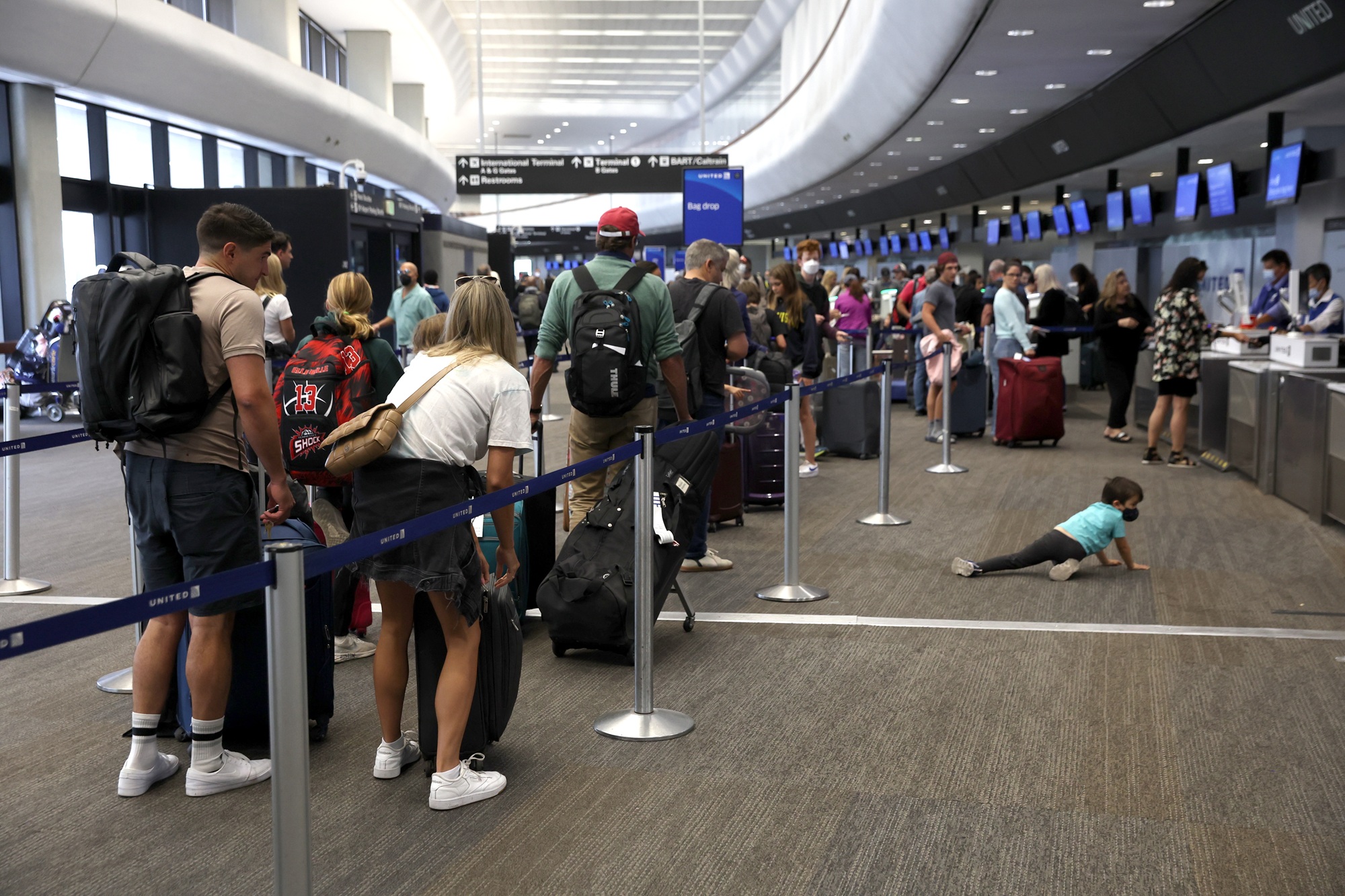
window.__IS_SSR__=true
window.__INITIAL_STATE__={
"attachmentsReducer": {
"audio_0": {
"type": "attachments",
"id": "audio_0",
"imgSizes": {
"kqedFullSize": {
"file": "https://ww2.kqed.org/news/wp-content/themes/KQED-unified/img/audio_bgs/background0.jpg"
}
}
},
"audio_1": {
"type": "attachments",
"id": "audio_1",
"imgSizes": {
"kqedFullSize": {
"file": "https://ww2.kqed.org/news/wp-content/themes/KQED-unified/img/audio_bgs/background1.jpg"
}
}
},
"audio_2": {
"type": "attachments",
"id": "audio_2",
"imgSizes": {
"kqedFullSize": {
"file": "https://ww2.kqed.org/news/wp-content/themes/KQED-unified/img/audio_bgs/background2.jpg"
}
}
},
"audio_3": {
"type": "attachments",
"id": "audio_3",
"imgSizes": {
"kqedFullSize": {
"file": "https://ww2.kqed.org/news/wp-content/themes/KQED-unified/img/audio_bgs/background3.jpg"
}
}
},
"audio_4": {
"type": "attachments",
"id": "audio_4",
"imgSizes": {
"kqedFullSize": {
"file": "https://ww2.kqed.org/news/wp-content/themes/KQED-unified/img/audio_bgs/background4.jpg"
}
}
},
"placeholder": {
"type": "attachments",
"id": "placeholder",
"imgSizes": {
"thumbnail": {
"file": "https://cdn.kqed.org/wp-content/uploads/2024/12/KQED-Default-Image-816638274-2000x1333-1-160x107.jpg",
"width": 160,
"height": 107,
"mimeType": "image/jpeg"
},
"medium": {
"file": "https://cdn.kqed.org/wp-content/uploads/2024/12/KQED-Default-Image-816638274-2000x1333-1-800x533.jpg",
"width": 800,
"height": 533,
"mimeType": "image/jpeg"
},
"medium_large": {
"file": "https://cdn.kqed.org/wp-content/uploads/2024/12/KQED-Default-Image-816638274-2000x1333-1-768x512.jpg",
"width": 768,
"height": 512,
"mimeType": "image/jpeg"
},
"large": {
"file": "https://cdn.kqed.org/wp-content/uploads/2024/12/KQED-Default-Image-816638274-2000x1333-1-1020x680.jpg",
"width": 1020,
"height": 680,
"mimeType": "image/jpeg"
},
"1536x1536": {
"file": "https://cdn.kqed.org/wp-content/uploads/2024/12/KQED-Default-Image-816638274-2000x1333-1-1536x1024.jpg",
"width": 1536,
"height": 1024,
"mimeType": "image/jpeg"
},
"fd-lrg": {
"file": "https://cdn.kqed.org/wp-content/uploads/2024/12/KQED-Default-Image-816638274-2000x1333-1-1536x1024.jpg",
"width": 1536,
"height": 1024,
"mimeType": "image/jpeg"
},
"fd-med": {
"file": "https://cdn.kqed.org/wp-content/uploads/2024/12/KQED-Default-Image-816638274-2000x1333-1-1020x680.jpg",
"width": 1020,
"height": 680,
"mimeType": "image/jpeg"
},
"fd-sm": {
"file": "https://cdn.kqed.org/wp-content/uploads/2024/12/KQED-Default-Image-816638274-2000x1333-1-800x533.jpg",
"width": 800,
"height": 533,
"mimeType": "image/jpeg"
},
"post-thumbnail": {
"file": "https://cdn.kqed.org/wp-content/uploads/2024/12/KQED-Default-Image-816638274-2000x1333-1-672x372.jpg",
"width": 672,
"height": 372,
"mimeType": "image/jpeg"
},
"twentyfourteen-full-width": {
"file": "https://cdn.kqed.org/wp-content/uploads/2024/12/KQED-Default-Image-816638274-2000x1333-1-1038x576.jpg",
"width": 1038,
"height": 576,
"mimeType": "image/jpeg"
},
"xxsmall": {
"file": "https://cdn.kqed.org/wp-content/uploads/2024/12/KQED-Default-Image-816638274-2000x1333-1-160x107.jpg",
"width": 160,
"height": 107,
"mimeType": "image/jpeg"
},
"xsmall": {
"file": "https://cdn.kqed.org/wp-content/uploads/2024/12/KQED-Default-Image-816638274-2000x1333-1-672x372.jpg",
"width": 672,
"height": 372,
"mimeType": "image/jpeg"
},
"small": {
"file": "https://cdn.kqed.org/wp-content/uploads/2024/12/KQED-Default-Image-816638274-2000x1333-1-672x372.jpg",
"width": 672,
"height": 372,
"mimeType": "image/jpeg"
},
"xlarge": {
"file": "https://cdn.kqed.org/wp-content/uploads/2024/12/KQED-Default-Image-816638274-2000x1333-1-1020x680.jpg",
"width": 1020,
"height": 680,
"mimeType": "image/jpeg"
},
"full-width": {
"file": "https://cdn.kqed.org/wp-content/uploads/2024/12/KQED-Default-Image-816638274-2000x1333-1-1920x1280.jpg",
"width": 1920,
"height": 1280,
"mimeType": "image/jpeg"
},
"guest-author-32": {
"file": "https://cdn.kqed.org/wp-content/uploads/2025/01/KQED-Default-Image-816638274-1333x1333-1-160x160.jpg",
"width": 32,
"height": 32,
"mimeType": "image/jpeg"
},
"guest-author-50": {
"file": "https://cdn.kqed.org/wp-content/uploads/2025/01/KQED-Default-Image-816638274-1333x1333-1-160x160.jpg",
"width": 50,
"height": 50,
"mimeType": "image/jpeg"
},
"guest-author-64": {
"file": "https://cdn.kqed.org/wp-content/uploads/2025/01/KQED-Default-Image-816638274-1333x1333-1-160x160.jpg",
"width": 64,
"height": 64,
"mimeType": "image/jpeg"
},
"guest-author-96": {
"file": "https://cdn.kqed.org/wp-content/uploads/2025/01/KQED-Default-Image-816638274-1333x1333-1-160x160.jpg",
"width": 96,
"height": 96,
"mimeType": "image/jpeg"
},
"guest-author-128": {
"file": "https://cdn.kqed.org/wp-content/uploads/2025/01/KQED-Default-Image-816638274-1333x1333-1-160x160.jpg",
"width": 128,
"height": 128,
"mimeType": "image/jpeg"
},
"detail": {
"file": "https://cdn.kqed.org/wp-content/uploads/2025/01/KQED-Default-Image-816638274-1333x1333-1-160x160.jpg",
"width": 160,
"height": 160,
"mimeType": "image/jpeg"
},
"kqedFullSize": {
"file": "https://cdn.kqed.org/wp-content/uploads/2024/12/KQED-Default-Image-816638274-2000x1333-1.jpg",
"width": 2000,
"height": 1333
}
}
},
"news_12063252": {
"type": "attachments",
"id": "news_12063252",
"meta": {
"index": "attachments_1716263798",
"site": "news",
"id": "12063252",
"found": true
},
"title": "Delays And Cancellations Continue To Plague Airline Industry Heading Into Holiday Weekend",
"publishDate": 1762461535,
"status": "inherit",
"parent": 12063192,
"modified": 1762461575,
"caption": "Travelers line up to check in for United Airlines flights at San Francisco International Airport on July 1, 2022, in San Francisco, California. As airlines plan to cancel flights starting Friday to reduce air traffic across the country, here’s what to find out if your flight is cancelled — and what to do about it.",
"credit": "Justin Sullivan/Getty Images",
"altTag": null,
"description": null,
"imgSizes": {
"thumbnail": {
"file": "https://cdn.kqed.org/wp-content/uploads/sites/10/2025/11/SFODelaysGetty3-160x107.jpg",
"width": 160,
"height": 107,
"mimeType": "image/jpeg"
},
"1536x1536": {
"file": "https://cdn.kqed.org/wp-content/uploads/sites/10/2025/11/SFODelaysGetty3-1536x1024.jpg",
"width": 1536,
"height": 1024,
"mimeType": "image/jpeg"
},
"post-thumbnail": {
"file": "https://cdn.kqed.org/wp-content/uploads/sites/10/2025/11/SFODelaysGetty3-672x372.jpg",
"width": 672,
"height": 372,
"mimeType": "image/jpeg"
},
"twentyfourteen-full-width": {
"file": "https://cdn.kqed.org/wp-content/uploads/sites/10/2025/11/SFODelaysGetty3-1038x576.jpg",
"width": 1038,
"height": 576,
"mimeType": "image/jpeg"
},
"npr-cds-wide": {
"file": "https://cdn.kqed.org/wp-content/uploads/sites/10/2025/11/SFODelaysGetty3-1200x675.jpg",
"width": 1200,
"height": 675,
"mimeType": "image/jpeg"
},
"kqedFullSize": {
"file": "https://cdn.kqed.org/wp-content/uploads/sites/10/2025/11/SFODelaysGetty3.jpg",
"width": 2000,
"height": 1333
}
},
"isLoading": false,
"fetchFailed": false
},
"news_12063201": {
"type": "attachments",
"id": "news_12063201",
"meta": {
"index": "attachments_1716263798",
"site": "news",
"id": "12063201",
"found": true
},
"title": "Delays And Cancellations Continue To Plague Airline Industry Heading Into Holiday Weekend",
"publishDate": 1762451503,
"status": "inherit",
"parent": 12063196,
"modified": 1762452703,
"caption": "Travelers walk with their luggage at San Francisco International Airport on July 1, 2022, in San Francisco, California. ",
"credit": "Justin Sullivan/Getty Images",
"altTag": null,
"description": null,
"imgSizes": {
"thumbnail": {
"file": "https://cdn.kqed.org/wp-content/uploads/sites/10/2025/11/SFODelaysGetty-160x107.jpg",
"width": 160,
"height": 107,
"mimeType": "image/jpeg"
},
"1536x1536": {
"file": "https://cdn.kqed.org/wp-content/uploads/sites/10/2025/11/SFODelaysGetty-1536x1026.jpg",
"width": 1536,
"height": 1026,
"mimeType": "image/jpeg"
},
"post-thumbnail": {
"file": "https://cdn.kqed.org/wp-content/uploads/sites/10/2025/11/SFODelaysGetty-672x372.jpg",
"width": 672,
"height": 372,
"mimeType": "image/jpeg"
},
"twentyfourteen-full-width": {
"file": "https://cdn.kqed.org/wp-content/uploads/sites/10/2025/11/SFODelaysGetty-1038x576.jpg",
"width": 1038,
"height": 576,
"mimeType": "image/jpeg"
},
"npr-cds-wide": {
"file": "https://cdn.kqed.org/wp-content/uploads/sites/10/2025/11/SFODelaysGetty-1200x675.jpg",
"width": 1200,
"height": 675,
"mimeType": "image/jpeg"
},
"kqedFullSize": {
"file": "https://cdn.kqed.org/wp-content/uploads/sites/10/2025/11/SFODelaysGetty.jpg",
"width": 2000,
"height": 1336
}
},
"isLoading": false,
"fetchFailed": false
},
"news_12063051": {
"type": "attachments",
"id": "news_12063051",
"meta": {
"index": "attachments_1716263798",
"site": "news",
"id": "12063051",
"found": true
},
"title": "251105-Waymo Discriminate-03-KQED",
"publishDate": 1762370257,
"status": "inherit",
"parent": 0,
"modified": 1762385660,
"caption": "Dr. Nasser Mohamed during Pride Sunday in San Francisco on June 26, 2022. The physician and civil rights activist is suing Alphabet and its subsidiary Waymo for denying him access to a public transportation service based on AI software falsely flagging him as a terrorist.",
"credit": "Courtesy of Dr. Nas Mohamed",
"altTag": null,
"description": null,
"imgSizes": {
"thumbnail": {
"file": "https://cdn.kqed.org/wp-content/uploads/sites/10/2025/11/251105-Waymo-Discriminate-03-KQED-160x107.jpg",
"width": 160,
"height": 107,
"mimeType": "image/jpeg"
},
"1536x1536": {
"file": "https://cdn.kqed.org/wp-content/uploads/sites/10/2025/11/251105-Waymo-Discriminate-03-KQED-1536x1024.jpg",
"width": 1536,
"height": 1024,
"mimeType": "image/jpeg"
},
"post-thumbnail": {
"file": "https://cdn.kqed.org/wp-content/uploads/sites/10/2025/11/251105-Waymo-Discriminate-03-KQED-672x372.jpg",
"width": 672,
"height": 372,
"mimeType": "image/jpeg"
},
"twentyfourteen-full-width": {
"file": "https://cdn.kqed.org/wp-content/uploads/sites/10/2025/11/251105-Waymo-Discriminate-03-KQED-1038x576.jpg",
"width": 1038,
"height": 576,
"mimeType": "image/jpeg"
},
"npr-cds-wide": {
"file": "https://cdn.kqed.org/wp-content/uploads/sites/10/2025/11/251105-Waymo-Discriminate-03-KQED-1200x675.jpg",
"width": 1200,
"height": 675,
"mimeType": "image/jpeg"
},
"kqedFullSize": {
"file": "https://cdn.kqed.org/wp-content/uploads/sites/10/2025/11/251105-Waymo-Discriminate-03-KQED.jpg",
"width": 2000,
"height": 1333
}
},
"isLoading": false,
"fetchFailed": false
},
"news_12062913": {
"type": "attachments",
"id": "news_12062913",
"meta": {
"index": "attachments_1716263798",
"site": "news",
"id": "12062913",
"found": true
},
"title": "20251104_SF Waymo resolution_GH-2_qed",
"publishDate": 1762298020,
"status": "inherit",
"parent": 12062777,
"modified": 1762298044,
"caption": "A memorial for KitKat, a well-known neighborhood cat, is displayed outside Randa’s Market on Nov. 4, 2025, in San Francisco’s Mission District. Flowers and photos were placed at the base of a tree near the spot where a Waymo autonomous vehicle struck and killed the cat.",
"credit": "Gustavo Hernandez/KQED",
"altTag": null,
"description": null,
"imgSizes": {
"thumbnail": {
"file": "https://cdn.kqed.org/wp-content/uploads/sites/10/2025/11/20251104_SF-Waymo-resolution_GH-2_qed-160x107.jpg",
"width": 160,
"height": 107,
"mimeType": "image/jpeg"
},
"1536x1536": {
"file": "https://cdn.kqed.org/wp-content/uploads/sites/10/2025/11/20251104_SF-Waymo-resolution_GH-2_qed-1536x1024.jpg",
"width": 1536,
"height": 1024,
"mimeType": "image/jpeg"
},
"post-thumbnail": {
"file": "https://cdn.kqed.org/wp-content/uploads/sites/10/2025/11/20251104_SF-Waymo-resolution_GH-2_qed-672x372.jpg",
"width": 672,
"height": 372,
"mimeType": "image/jpeg"
},
"twentyfourteen-full-width": {
"file": "https://cdn.kqed.org/wp-content/uploads/sites/10/2025/11/20251104_SF-Waymo-resolution_GH-2_qed-1038x576.jpg",
"width": 1038,
"height": 576,
"mimeType": "image/jpeg"
},
"npr-cds-wide": {
"file": "https://cdn.kqed.org/wp-content/uploads/sites/10/2025/11/20251104_SF-Waymo-resolution_GH-2_qed-1200x675.jpg",
"width": 1200,
"height": 675,
"mimeType": "image/jpeg"
},
"kqedFullSize": {
"file": "https://cdn.kqed.org/wp-content/uploads/sites/10/2025/11/20251104_SF-Waymo-resolution_GH-2_qed.jpg",
"width": 2000,
"height": 1333
}
},
"isLoading": false,
"fetchFailed": false
},
"news_12054840": {
"type": "attachments",
"id": "news_12054840",
"meta": {
"index": "attachments_1716263798",
"site": "news",
"id": "12054840",
"found": true
},
"title": "250905-BARTOutage-05-BL_qed",
"publishDate": 1757098169,
"status": "inherit",
"parent": 12054754,
"modified": 1757098186,
"caption": "A passenger looks for alternate routes during a BART outage at the 24th Street BART station in San Francisco on Sept. 5, 2025.",
"credit": "Beth LaBerge/KQED",
"altTag": null,
"description": null,
"imgSizes": {
"thumbnail": {
"file": "https://cdn.kqed.org/wp-content/uploads/sites/10/2025/09/250905-BARTOutage-05-BL_qed-160x107.jpg",
"width": 160,
"height": 107,
"mimeType": "image/jpeg"
},
"1536x1536": {
"file": "https://cdn.kqed.org/wp-content/uploads/sites/10/2025/09/250905-BARTOutage-05-BL_qed-1536x1024.jpg",
"width": 1536,
"height": 1024,
"mimeType": "image/jpeg"
},
"post-thumbnail": {
"file": "https://cdn.kqed.org/wp-content/uploads/sites/10/2025/09/250905-BARTOutage-05-BL_qed-672x372.jpg",
"width": 672,
"height": 372,
"mimeType": "image/jpeg"
},
"twentyfourteen-full-width": {
"file": "https://cdn.kqed.org/wp-content/uploads/sites/10/2025/09/250905-BARTOutage-05-BL_qed-1038x576.jpg",
"width": 1038,
"height": 576,
"mimeType": "image/jpeg"
},
"kqedFullSize": {
"file": "https://cdn.kqed.org/wp-content/uploads/sites/10/2025/09/250905-BARTOutage-05-BL_qed.jpg",
"width": 2000,
"height": 1333
}
},
"isLoading": false,
"fetchFailed": false
},
"news_12060014": {
"type": "attachments",
"id": "news_12060014",
"meta": {
"index": "attachments_1716263798",
"site": "news",
"id": "12060014",
"found": true
},
"title": "Muni",
"publishDate": 1760555914,
"status": "inherit",
"parent": 12060004,
"modified": 1760555923,
"caption": "Muni riders wait for the bus outside West Portal Station in San Francisco on Tuesday, Nov. 28, 2023.",
"credit": "Juliana Yamada/KQED",
"altTag": null,
"description": null,
"imgSizes": {
"thumbnail": {
"file": "https://cdn.kqed.org/wp-content/uploads/sites/10/2025/10/20231128-Muni-025-JY_qed-160x107.jpg",
"width": 160,
"height": 107,
"mimeType": "image/jpeg"
},
"1536x1536": {
"file": "https://cdn.kqed.org/wp-content/uploads/sites/10/2025/10/20231128-Muni-025-JY_qed-1536x1024.jpg",
"width": 1536,
"height": 1024,
"mimeType": "image/jpeg"
},
"post-thumbnail": {
"file": "https://cdn.kqed.org/wp-content/uploads/sites/10/2025/10/20231128-Muni-025-JY_qed-672x372.jpg",
"width": 672,
"height": 372,
"mimeType": "image/jpeg"
},
"twentyfourteen-full-width": {
"file": "https://cdn.kqed.org/wp-content/uploads/sites/10/2025/10/20231128-Muni-025-JY_qed-1038x576.jpg",
"width": 1038,
"height": 576,
"mimeType": "image/jpeg"
},
"kqedFullSize": {
"file": "https://cdn.kqed.org/wp-content/uploads/sites/10/2025/10/20231128-Muni-025-JY_qed.jpg",
"width": 2000,
"height": 1333
}
},
"isLoading": false,
"fetchFailed": false
},
"news_12042675": {
"type": "attachments",
"id": "news_12042675",
"meta": {
"index": "attachments_1716263798",
"site": "news",
"id": "12042675",
"found": true
},
"title": "002_KQED_Housing_Oakland_02212020_3417_qed",
"publishDate": 1749054070,
"status": "inherit",
"parent": 12042670,
"modified": 1749059431,
"caption": "Apartment buildings under construction near Macarthur BART station in Oakland, on Feb. 21, 2020.",
"credit": "Beth LaBerge/KQED",
"altTag": null,
"description": null,
"imgSizes": {
"medium": {
"file": "https://cdn.kqed.org/wp-content/uploads/sites/10/2025/06/002_KQED_Housing_Oakland_02212020_3417_qed-800x533.jpg",
"width": 800,
"height": 533,
"mimeType": "image/jpeg"
},
"large": {
"file": "https://cdn.kqed.org/wp-content/uploads/sites/10/2025/06/002_KQED_Housing_Oakland_02212020_3417_qed-1020x680.jpg",
"width": 1020,
"height": 680,
"mimeType": "image/jpeg"
},
"thumbnail": {
"file": "https://cdn.kqed.org/wp-content/uploads/sites/10/2025/06/002_KQED_Housing_Oakland_02212020_3417_qed-160x107.jpg",
"width": 160,
"height": 107,
"mimeType": "image/jpeg"
},
"1536x1536": {
"file": "https://cdn.kqed.org/wp-content/uploads/sites/10/2025/06/002_KQED_Housing_Oakland_02212020_3417_qed-1536x1024.jpg",
"width": 1536,
"height": 1024,
"mimeType": "image/jpeg"
},
"post-thumbnail": {
"file": "https://cdn.kqed.org/wp-content/uploads/sites/10/2025/06/002_KQED_Housing_Oakland_02212020_3417_qed-672x372.jpg",
"width": 672,
"height": 372,
"mimeType": "image/jpeg"
},
"twentyfourteen-full-width": {
"file": "https://cdn.kqed.org/wp-content/uploads/sites/10/2025/06/002_KQED_Housing_Oakland_02212020_3417_qed-1038x576.jpg",
"width": 1038,
"height": 576,
"mimeType": "image/jpeg"
},
"full-width": {
"file": "https://cdn.kqed.org/wp-content/uploads/sites/10/2025/06/002_KQED_Housing_Oakland_02212020_3417_qed-1920x1280.jpg",
"width": 1920,
"height": 1280,
"mimeType": "image/jpeg"
},
"kqedFullSize": {
"file": "https://cdn.kqed.org/wp-content/uploads/sites/10/2025/06/002_KQED_Housing_Oakland_02212020_3417_qed.jpg",
"width": 2000,
"height": 1333
}
},
"isLoading": false,
"fetchFailed": false
},
"news_11773994": {
"type": "attachments",
"id": "news_11773994",
"meta": {
"index": "attachments_1716263798",
"site": "news",
"id": "11773994",
"found": true
},
"title": "Hundreds Of Flights In And Out Of San Francisco International Airport Delayed, As The Airport Works To Update Its Busiest Runway",
"publishDate": 1568327990,
"status": "inherit",
"parent": 11773957,
"modified": 1759883272,
"caption": "A United Airlines customer talks to a ticket agent at San Francisco International Airport on Sept. 9, 2019, in San Francisco, California.",
"credit": "Justin Sullivan/Getty Images",
"altTag": null,
"description": null,
"imgSizes": {
"thumbnail": {
"file": "https://cdn.kqed.org/wp-content/uploads/sites/10/2019/09/GettyImages-1173446702-1-160x107.jpg",
"width": 160,
"height": 107,
"mimeType": "image/jpeg"
},
"medium": {
"file": "https://cdn.kqed.org/wp-content/uploads/sites/10/2019/09/GettyImages-1173446702-1-800x537.jpg",
"width": 800,
"height": 537,
"mimeType": "image/jpeg"
},
"large": {
"file": "https://cdn.kqed.org/wp-content/uploads/sites/10/2019/09/GettyImages-1173446702-1-1020x685.jpg",
"width": 1020,
"height": 685,
"mimeType": "image/jpeg"
},
"complete_open_graph": {
"file": "https://cdn.kqed.org/wp-content/uploads/sites/10/2019/09/GettyImages-1173446702-1-1200x805.jpg",
"width": 1200,
"height": 805,
"mimeType": "image/jpeg"
},
"post-thumbnail": {
"file": "https://cdn.kqed.org/wp-content/uploads/sites/10/2019/09/GettyImages-1173446702-1-672x372.jpg",
"width": 672,
"height": 372,
"mimeType": "image/jpeg"
},
"twentyfourteen-full-width": {
"file": "https://cdn.kqed.org/wp-content/uploads/sites/10/2019/09/GettyImages-1173446702-1-1038x576.jpg",
"width": 1038,
"height": 576,
"mimeType": "image/jpeg"
},
"full-width": {
"file": "https://cdn.kqed.org/wp-content/uploads/sites/10/2019/09/GettyImages-1173446702-1-1920x1289.jpg",
"width": 1920,
"height": 1289,
"mimeType": "image/jpeg"
},
"apple_news_ca_landscape_12_9": {
"file": "https://cdn.kqed.org/wp-content/uploads/sites/10/2019/09/GettyImages-1173446702-1-1832x1374.jpg",
"width": 1832,
"height": 1374,
"mimeType": "image/jpeg"
},
"apple_news_ca_landscape_9_7": {
"file": "https://cdn.kqed.org/wp-content/uploads/sites/10/2019/09/GettyImages-1173446702-1-1376x1032.jpg",
"width": 1376,
"height": 1032,
"mimeType": "image/jpeg"
},
"apple_news_ca_landscape_5_5": {
"file": "https://cdn.kqed.org/wp-content/uploads/sites/10/2019/09/GettyImages-1173446702-1-1044x783.jpg",
"width": 1044,
"height": 783,
"mimeType": "image/jpeg"
},
"apple_news_ca_landscape_4_7": {
"file": "https://cdn.kqed.org/wp-content/uploads/sites/10/2019/09/GettyImages-1173446702-1-632x474.jpg",
"width": 632,
"height": 474,
"mimeType": "image/jpeg"
},
"apple_news_ca_landscape_4_0": {
"file": "https://cdn.kqed.org/wp-content/uploads/sites/10/2019/09/GettyImages-1173446702-1-536x402.jpg",
"width": 536,
"height": 402,
"mimeType": "image/jpeg"
},
"apple_news_ca_portrait_12_9": {
"file": "https://cdn.kqed.org/wp-content/uploads/sites/10/2019/09/GettyImages-1173446702-1-1122x1496.jpg",
"width": 1122,
"height": 1496,
"mimeType": "image/jpeg"
},
"apple_news_ca_portrait_9_7": {
"file": "https://cdn.kqed.org/wp-content/uploads/sites/10/2019/09/GettyImages-1173446702-1-840x1120.jpg",
"width": 840,
"height": 1120,
"mimeType": "image/jpeg"
},
"apple_news_ca_portrait_5_5": {
"file": "https://cdn.kqed.org/wp-content/uploads/sites/10/2019/09/GettyImages-1173446702-1-687x916.jpg",
"width": 687,
"height": 916,
"mimeType": "image/jpeg"
},
"apple_news_ca_portrait_4_7": {
"file": "https://cdn.kqed.org/wp-content/uploads/sites/10/2019/09/GettyImages-1173446702-1-414x552.jpg",
"width": 414,
"height": 552,
"mimeType": "image/jpeg"
},
"apple_news_ca_portrait_4_0": {
"file": "https://cdn.kqed.org/wp-content/uploads/sites/10/2019/09/GettyImages-1173446702-1-354x472.jpg",
"width": 354,
"height": 472,
"mimeType": "image/jpeg"
},
"apple_news_ca_square_12_9": {
"file": "https://cdn.kqed.org/wp-content/uploads/sites/10/2019/09/GettyImages-1173446702-1-1472x1472.jpg",
"width": 1472,
"height": 1472,
"mimeType": "image/jpeg"
},
"apple_news_ca_square_9_7": {
"file": "https://cdn.kqed.org/wp-content/uploads/sites/10/2019/09/GettyImages-1173446702-1-1104x1104.jpg",
"width": 1104,
"height": 1104,
"mimeType": "image/jpeg"
},
"apple_news_ca_square_5_5": {
"file": "https://cdn.kqed.org/wp-content/uploads/sites/10/2019/09/GettyImages-1173446702-1-912x912.jpg",
"width": 912,
"height": 912,
"mimeType": "image/jpeg"
},
"apple_news_ca_square_4_7": {
"file": "https://cdn.kqed.org/wp-content/uploads/sites/10/2019/09/GettyImages-1173446702-1-550x550.jpg",
"width": 550,
"height": 550,
"mimeType": "image/jpeg"
},
"apple_news_ca_square_4_0": {
"file": "https://cdn.kqed.org/wp-content/uploads/sites/10/2019/09/GettyImages-1173446702-1-470x470.jpg",
"width": 470,
"height": 470,
"mimeType": "image/jpeg"
},
"kqedFullSize": {
"file": "https://cdn.kqed.org/wp-content/uploads/sites/10/2019/09/GettyImages-1173446702-1-e1568328016889.jpg",
"width": 1920,
"height": 1289
}
},
"isLoading": false,
"fetchFailed": false
},
"news_11997574": {
"type": "attachments",
"id": "news_11997574",
"meta": {
"index": "attachments_1716263798",
"site": "news",
"id": "11997574",
"found": true
},
"title": "US-DEMONSTRATION-UBER-LYFT",
"publishDate": 1722018786,
"status": "inherit",
"parent": 12033648,
"modified": 1759532393,
"caption": "Members of the Rideshare Drivers United organization protest against Uber and Lyft during a demonstration in Los Angeles, California, on Feb.14, 2024. ",
"credit": "Frederic J. Brown/AFP via Getty Images",
"altTag": null,
"description": null,
"imgSizes": {
"medium": {
"file": "https://cdn.kqed.org/wp-content/uploads/sites/10/2024/07/GettyImages-2003719181-800x534.jpg",
"width": 800,
"height": 534,
"mimeType": "image/jpeg"
},
"large": {
"file": "https://cdn.kqed.org/wp-content/uploads/sites/10/2024/07/GettyImages-2003719181-1020x680.jpg",
"width": 1020,
"height": 680,
"mimeType": "image/jpeg"
},
"thumbnail": {
"file": "https://cdn.kqed.org/wp-content/uploads/sites/10/2024/07/GettyImages-2003719181-160x107.jpg",
"width": 160,
"height": 107,
"mimeType": "image/jpeg"
},
"post-thumbnail": {
"file": "https://cdn.kqed.org/wp-content/uploads/sites/10/2024/07/GettyImages-2003719181-672x372.jpg",
"width": 672,
"height": 372,
"mimeType": "image/jpeg"
},
"twentyfourteen-full-width": {
"file": "https://cdn.kqed.org/wp-content/uploads/sites/10/2024/07/GettyImages-2003719181-1024x576.jpg",
"width": 1024,
"height": 576,
"mimeType": "image/jpeg"
},
"kqedFullSize": {
"file": "https://cdn.kqed.org/wp-content/uploads/sites/10/2024/07/GettyImages-2003719181.jpg",
"width": 1024,
"height": 683
}
},
"isLoading": false,
"fetchFailed": false
},
"news_12058153": {
"type": "attachments",
"id": "news_12058153",
"meta": {
"index": "attachments_1716263798",
"site": "news",
"id": "12058153",
"found": true
},
"title": "Muni",
"publishDate": 1759274735,
"status": "inherit",
"parent": 12058145,
"modified": 1759274760,
"caption": "The M Train arrives at West Portal Station in San Francisco on Tuesday, Nov. 28, 2023.",
"credit": "Juliana Yamada/KQED",
"altTag": null,
"description": null,
"imgSizes": {
"thumbnail": {
"file": "https://cdn.kqed.org/wp-content/uploads/sites/10/2025/09/20231128-Muni-002-JY_qed-160x107.jpg",
"width": 160,
"height": 107,
"mimeType": "image/jpeg"
},
"1536x1536": {
"file": "https://cdn.kqed.org/wp-content/uploads/sites/10/2025/09/20231128-Muni-002-JY_qed-1536x1024.jpg",
"width": 1536,
"height": 1024,
"mimeType": "image/jpeg"
},
"post-thumbnail": {
"file": "https://cdn.kqed.org/wp-content/uploads/sites/10/2025/09/20231128-Muni-002-JY_qed-672x372.jpg",
"width": 672,
"height": 372,
"mimeType": "image/jpeg"
},
"twentyfourteen-full-width": {
"file": "https://cdn.kqed.org/wp-content/uploads/sites/10/2025/09/20231128-Muni-002-JY_qed-1038x576.jpg",
"width": 1038,
"height": 576,
"mimeType": "image/jpeg"
},
"kqedFullSize": {
"file": "https://cdn.kqed.org/wp-content/uploads/sites/10/2025/09/20231128-Muni-002-JY_qed.jpg",
"width": 1999,
"height": 1333
}
},
"isLoading": false,
"fetchFailed": false
},
"news_12057730": {
"type": "attachments",
"id": "news_12057730",
"meta": {
"index": "attachments_1716263798",
"site": "news",
"id": "12057730",
"found": true
},
"title": "2509226-VAN CRASH-01-KQED",
"publishDate": 1758902732,
"status": "inherit",
"parent": 0,
"modified": 1758909719,
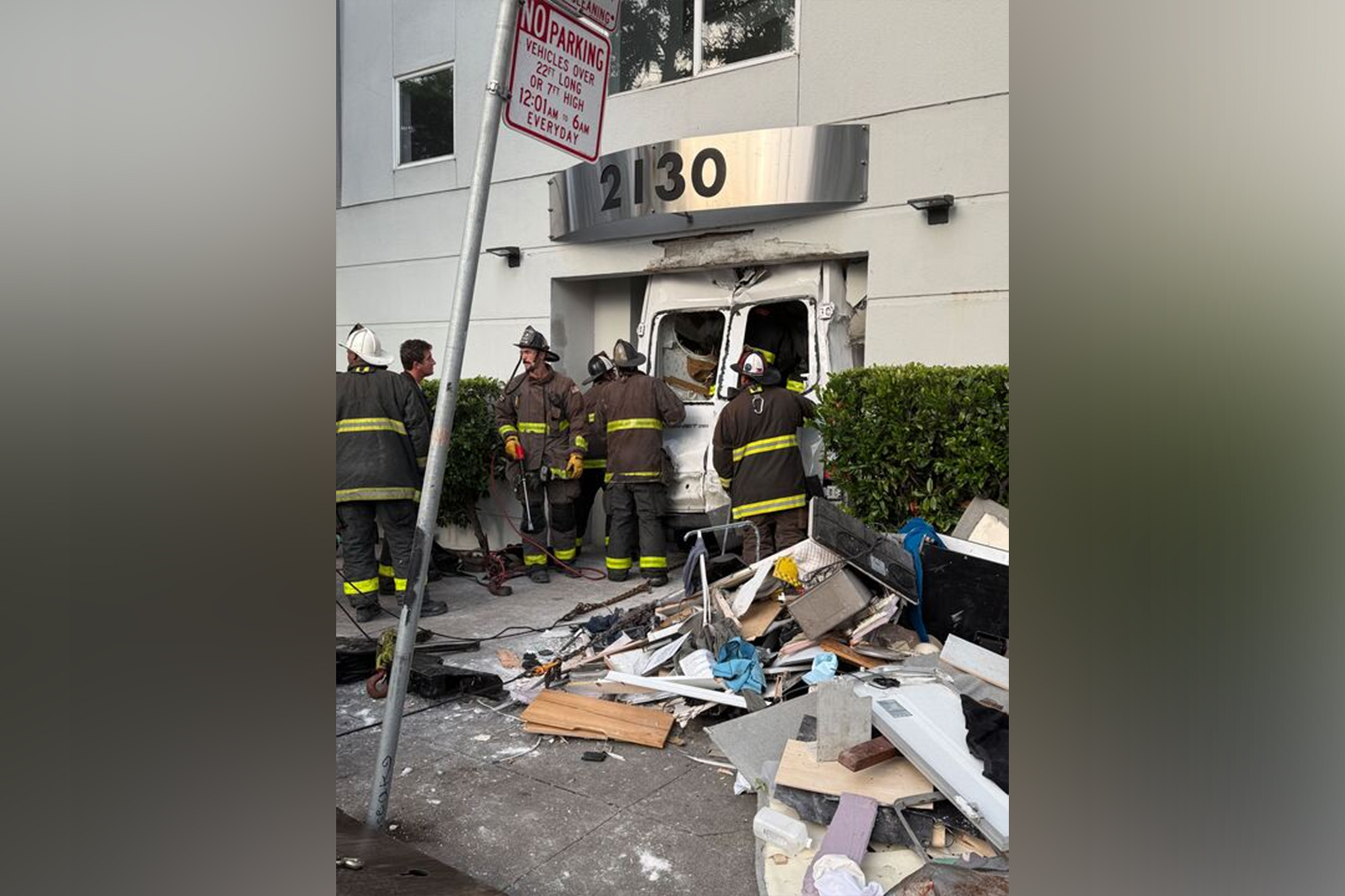
"caption": "A van barreled into the front of a building on Harrison Street in San Francisco on Sept. 26, 2025. The driver was pronounced dead on the scene.",
"credit": "Courtesy of SFFD",
"altTag": null,
"description": null,
"imgSizes": {
"thumbnail": {
"file": "https://cdn.kqed.org/wp-content/uploads/sites/10/2025/09/2509226-VAN-CRASH-01-KQED-160x107.jpg",
"width": 160,
"height": 107,
"mimeType": "image/jpeg"
},
"1536x1536": {
"file": "https://cdn.kqed.org/wp-content/uploads/sites/10/2025/09/2509226-VAN-CRASH-01-KQED-1536x1024.jpg",
"width": 1536,
"height": 1024,
"mimeType": "image/jpeg"
},
"post-thumbnail": {
"file": "https://cdn.kqed.org/wp-content/uploads/sites/10/2025/09/2509226-VAN-CRASH-01-KQED-672x372.jpg",
"width": 672,
"height": 372,
"mimeType": "image/jpeg"
},
"twentyfourteen-full-width": {
"file": "https://cdn.kqed.org/wp-content/uploads/sites/10/2025/09/2509226-VAN-CRASH-01-KQED-1038x576.jpg",
"width": 1038,
"height": 576,
"mimeType": "image/jpeg"
},
"kqedFullSize": {
"file": "https://cdn.kqed.org/wp-content/uploads/sites/10/2025/09/2509226-VAN-CRASH-01-KQED.jpg",
"width": 2000,
"height": 1333
}
},
"isLoading": false,
"fetchFailed": false
},
"news_12051122": {
"type": "attachments",
"id": "news_12051122",
"meta": {
"index": "attachments_1716263798",
"site": "news",
"id": "12051122",
"found": true
},
"title": "250805-MARINEBIKES-03-KQED-1",
"publishDate": 1754502561,
"status": "inherit",
"parent": 0,
"modified": 1755804186,
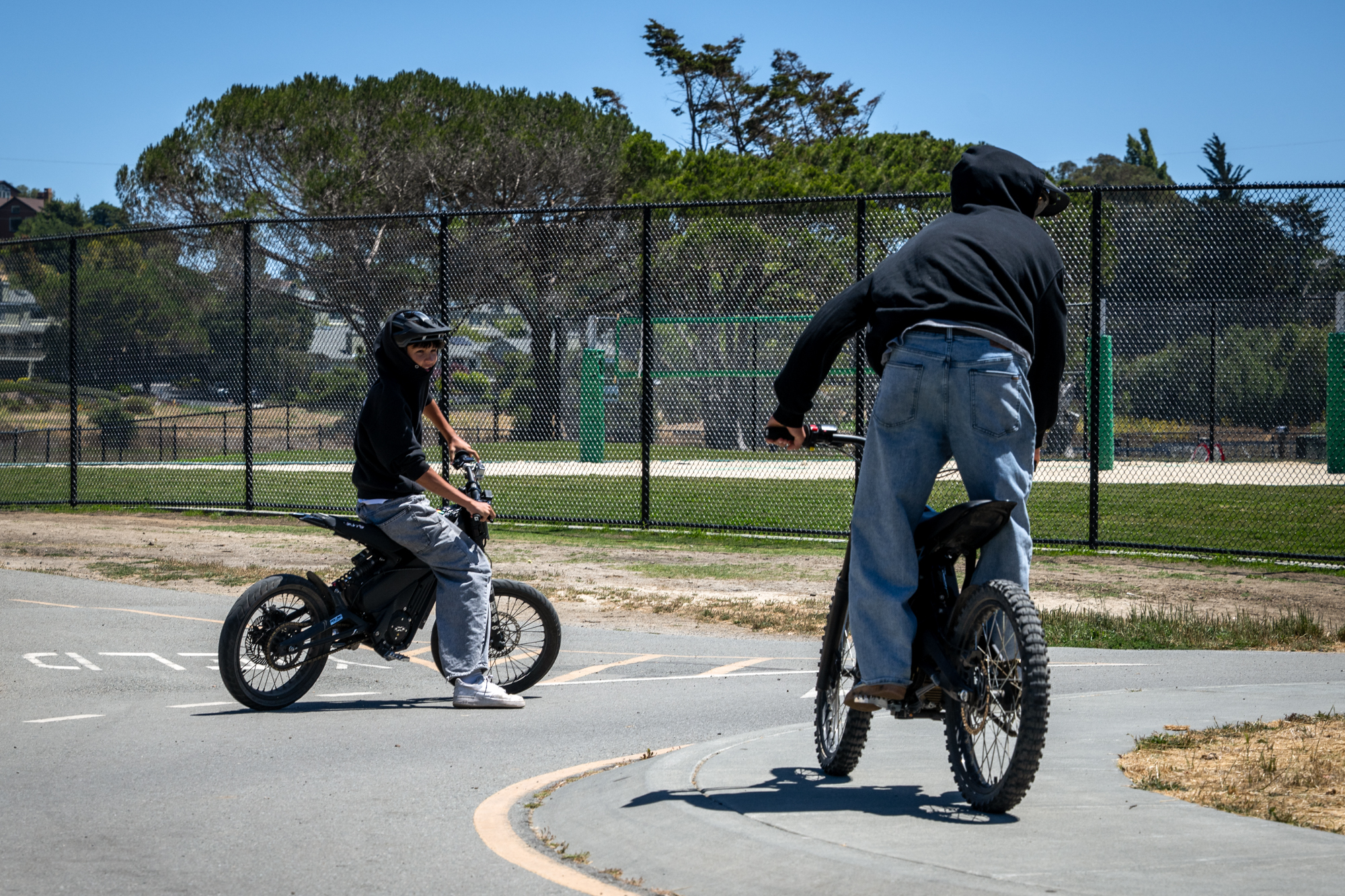
"caption": "Children ride electric dirt bikes at the Mill Valley Bike Path Circle in Mill Valley on Aug. 5, 2025.",
"credit": "Beth LaBerge/KQED",
"altTag": null,
"description": null,
"imgSizes": {
"thumbnail": {
"file": "https://cdn.kqed.org/wp-content/uploads/sites/10/2025/08/250805-MARINEBIKES-03-KQED-1-160x107.jpg",
"width": 160,
"height": 107,
"mimeType": "image/jpeg"
},
"1536x1536": {
"file": "https://cdn.kqed.org/wp-content/uploads/sites/10/2025/08/250805-MARINEBIKES-03-KQED-1-1536x1024.jpg",
"width": 1536,
"height": 1024,
"mimeType": "image/jpeg"
},
"post-thumbnail": {
"file": "https://cdn.kqed.org/wp-content/uploads/sites/10/2025/08/250805-MARINEBIKES-03-KQED-1-672x372.jpg",
"width": 672,
"height": 372,
"mimeType": "image/jpeg"
},
"twentyfourteen-full-width": {
"file": "https://cdn.kqed.org/wp-content/uploads/sites/10/2025/08/250805-MARINEBIKES-03-KQED-1-1038x576.jpg",
"width": 1038,
"height": 576,
"mimeType": "image/jpeg"
},
"kqedFullSize": {
"file": "https://cdn.kqed.org/wp-content/uploads/sites/10/2025/08/250805-MARINEBIKES-03-KQED-1.jpg",
"width": 2000,
"height": 1333
}
},
"isLoading": false,
"fetchFailed": false
}
},
"audioPlayerReducer": {
"postId": "stream_live",
"isPaused": true,
"isPlaying": false,
"pfsActive": false,
"pledgeModalIsOpen": true,
"playerDrawerIsOpen": false,
"liveAudioPlayStartedAt": 0,
"liveAudioPlayContext": ""
},
"authorsReducer": {
"rachael-myrow": {
"type": "authors",
"id": "251",
"meta": {
"index": "authors_1716337520",
"id": "251",
"found": true
},
"name": "Rachael Myrow",
"firstName": "Rachael",
"lastName": "Myrow",
"slug": "rachael-myrow",
"email": "rmyrow@kqed.org",
"display_author_email": true,
"staff_mastheads": [
"news"
],
"title": "Senior Editor of KQED's Silicon Valley News Desk",
"bio": "• I write and edit stories about how Silicon Valley power and policies shape everyday life in California. I’m also passionate about making Bay Area history and culture more accessible to a broad public. • I’ve been a journalist for most of my life, starting in high school with The Franklin Press in Los Angeles, where I grew up. While earning my first degree in English at UC Berkeley, I got my start in public radio at KALX-FM. After completing a second degree in journalism at Cal, I landed my first professional job at Marketplace, then moved on to KPCC (now LAist), and then KQED, where I hosted The California Report for more than seven years. • My reporting has appeared on NPR, The World, WBUR’s \u003ci>Here & Now\u003c/i>, and the BBC. I also guest host for KQED’s \u003ci>Forum\u003c/i>, as well as the Commonwealth Club in San Francisco. • I speak periodically on media, democracy and technology issues, and do voiceover work for documentaries and educational video projects. • Outside of the studio, you'll find me hiking Bay Area trails and whipping up Insta-ready meals in my kitchen. • I do not accept gifts, money, or favors from anyone connected to my reporting, I don't pay people for information, and I do not support or donate to political causes. • I strive to treat the people I report on with fairness, honesty, and respect. I also recognize there are often multiple sides to a story and work to verify information through multiple sources and documentation. If I get something wrong, I correct it.",
"avatar": "https://secure.gravatar.com/avatar/3ed8a3c5f26025e4a805ba634cda8cd764906b97438a6d9ce216b044e340da4e?s=600&d=blank&r=g",
"twitter": "rachaelmyrow",
"bluesky": null,
"facebook": null,
"instagram": null,
"linkedin": "https://www.linkedin.com/in/rachaelmyrow/",
"sites": [
{
"site": "arts",
"roles": [
"administrator"
]
},
{
"site": "news",
"roles": [
"edit_others_posts",
"editor"
]
},
{
"site": "futureofyou",
"roles": [
"editor"
]
},
{
"site": "bayareabites",
"roles": [
"editor"
]
},
{
"site": "stateofhealth",
"roles": [
"editor"
]
},
{
"site": "science",
"roles": [
"editor"
]
},
{
"site": "food",
"roles": [
"editor"
]
},
{
"site": "forum",
"roles": [
"editor"
]
},
{
"site": "liveblog",
"roles": [
"author"
]
}
],
"headData": {
"title": "Rachael Myrow | KQED",
"description": "Senior Editor of KQED's Silicon Valley News Desk",
"ogImgSrc": "https://secure.gravatar.com/avatar/3ed8a3c5f26025e4a805ba634cda8cd764906b97438a6d9ce216b044e340da4e?s=600&d=blank&r=g",
"twImgSrc": "https://secure.gravatar.com/avatar/3ed8a3c5f26025e4a805ba634cda8cd764906b97438a6d9ce216b044e340da4e?s=600&d=blank&r=g"
},
"isLoading": false,
"link": "/author/rachael-myrow"
},
"carlysevern": {
"type": "authors",
"id": "3243",
"meta": {
"index": "authors_1716337520",
"id": "3243",
"found": true
},
"name": "Carly Severn",
"firstName": "Carly",
"lastName": "Severn",
"slug": "carlysevern",
"email": "csevern@kqed.org",
"display_author_email": false,
"staff_mastheads": [
"news"
],
"title": "Senior Editor, Audience News ",
"bio": "Carly is KQED's Senior Editor of Audience News on the Digital News team, and has reported for the California Report Magazine, Bay Curious and KQED Arts. She's formerly the host of \u003ca href=\"http://ww2.kqed.org/pop/category/the-cooler/\" rel=\"noopener noreferrer\">The Cooler\u003c/a> podcast.",
"avatar": "https://secure.gravatar.com/avatar/54037bf5c128fe678f0ef26cec97a93f2e7f220a22d7285703328f12c42c1b1d?s=600&d=blank&r=g",
"twitter": "teacupinthebay",
"bluesky": null,
"facebook": null,
"instagram": null,
"linkedin": null,
"sites": [
{
"site": "",
"roles": [
"editor"
]
},
{
"site": "arts",
"roles": [
"editor"
]
},
{
"site": "news",
"roles": [
"administrator"
]
},
{
"site": "pop",
"roles": [
"editor"
]
},
{
"site": "futureofyou",
"roles": [
"editor"
]
},
{
"site": "about",
"roles": [
"administrator"
]
},
{
"site": "mindshift",
"roles": [
"editor"
]
},
{
"site": "bayareabites",
"roles": [
"editor"
]
},
{
"site": "stateofhealth",
"roles": [
"editor"
]
},
{
"site": "science",
"roles": [
"editor"
]
},
{
"site": "food",
"roles": [
"contributor"
]
},
{
"site": "forum",
"roles": [
"editor"
]
},
{
"site": "perspectives",
"roles": [
"administrator"
]
},
{
"site": "liveblog",
"roles": [
"editor"
]
}
],
"headData": {
"title": "Carly Severn | KQED",
"description": "Senior Editor, Audience News ",
"ogImgSrc": "https://secure.gravatar.com/avatar/54037bf5c128fe678f0ef26cec97a93f2e7f220a22d7285703328f12c42c1b1d?s=600&d=blank&r=g",
"twImgSrc": "https://secure.gravatar.com/avatar/54037bf5c128fe678f0ef26cec97a93f2e7f220a22d7285703328f12c42c1b1d?s=600&d=blank&r=g"
},
"isLoading": false,
"link": "/author/carlysevern"
},
"fjhabvala": {
"type": "authors",
"id": "8659",
"meta": {
"index": "authors_1716337520",
"id": "8659",
"found": true
},
"name": "Farida Jhabvala Romero",
"firstName": "Farida",
"lastName": "Jhabvala Romero",
"slug": "fjhabvala",
"email": "fjhabvala@kqed.org",
"display_author_email": true,
"staff_mastheads": [
"news"
],
"title": "KQED Contributor",
"bio": "Farida Jhabvala Romero is a Labor Correspondent for KQED. She previously covered immigration. Farida was \u003ca href=\"https://www.ccnma.org/2022-most-influential-latina-journalists\">named\u003c/a> one of the 10 Most Influential Latina Journalists in California in 2022 by the California Chicano News Media Association. Her work has won awards from the Society of Professional Journalists (Northern California), as well as a national and regional Edward M. Murrow Award for the collaborative reporting projects “Dangerous Air” and “Graying California.” Before joining KQED, Farida worked as a producer at Radio Bilingüe, a national public radio network. Farida earned her master’s degree in journalism from Stanford University.",
"avatar": "https://secure.gravatar.com/avatar/f9f022d4e2609741874222a1e9d41f48fea74011aa7c615eef91d9a50c944ebe?s=600&d=blank&r=g",
"twitter": "FaridaJhabvala",
"bluesky": null,
"facebook": null,
"instagram": null,
"linkedin": "https://www.linkedin.com/in/faridajhabvala/",
"sites": [
{
"site": "news",
"roles": [
"editor"
]
},
{
"site": "stateofhealth",
"roles": [
"author"
]
},
{
"site": "liveblog",
"roles": [
"author"
]
}
],
"headData": {
"title": "Farida Jhabvala Romero | KQED",
"description": "KQED Contributor",
"ogImgSrc": "https://secure.gravatar.com/avatar/f9f022d4e2609741874222a1e9d41f48fea74011aa7c615eef91d9a50c944ebe?s=600&d=blank&r=g",
"twImgSrc": "https://secure.gravatar.com/avatar/f9f022d4e2609741874222a1e9d41f48fea74011aa7c615eef91d9a50c944ebe?s=600&d=blank&r=g"
},
"isLoading": false,
"link": "/author/fjhabvala"
},
"adahlstromeckman": {
"type": "authors",
"id": "11785",
"meta": {
"index": "authors_1716337520",
"id": "11785",
"found": true
},
"name": "Azul Dahlstrom-Eckman",
"firstName": "Azul",
"lastName": "Dahlstrom-Eckman",
"slug": "adahlstromeckman",
"email": "adahlstrom-eckman@kqed.org",
"display_author_email": true,
"staff_mastheads": [],
"title": "Reporter",
"bio": "Azul is a reporter for KQED focusing on transportation and features. He joined KQED in 2021 as an alumna of KALW's Audio Academy radio journalism training program.",
"avatar": "https://secure.gravatar.com/avatar/9cb750298435add7815a777f55bf1f46845c1386bb8452555c60a7b820b5aba3?s=600&d=blank&r=g",
"twitter": "@zuliemann",
"bluesky": "@azul415.bsky.social",
"facebook": null,
"instagram": null,
"linkedin": null,
"sites": [
{
"site": "arts",
"roles": [
"editor"
]
},
{
"site": "news",
"roles": [
"editor"
]
},
{
"site": "science",
"roles": [
"editor"
]
},
{
"site": "liveblog",
"roles": [
"author"
]
}
],
"headData": {
"title": "Azul Dahlstrom-Eckman | KQED",
"description": "Reporter",
"ogImgSrc": "https://secure.gravatar.com/avatar/9cb750298435add7815a777f55bf1f46845c1386bb8452555c60a7b820b5aba3?s=600&d=blank&r=g",
"twImgSrc": "https://secure.gravatar.com/avatar/9cb750298435add7815a777f55bf1f46845c1386bb8452555c60a7b820b5aba3?s=600&d=blank&r=g"
},
"isLoading": false,
"link": "/author/adahlstromeckman"
},
"sjohnson": {
"type": "authors",
"id": "11840",
"meta": {
"index": "authors_1716337520",
"id": "11840",
"found": true
},
"name": "Sydney Johnson",
"firstName": "Sydney",
"lastName": "Johnson",
"slug": "sjohnson",
"email": "sjohnson@kqed.org",
"display_author_email": false,
"staff_mastheads": [
"news"
],
"title": "KQED Reporter",
"bio": "Sydney Johnson is a general assignment reporter at KQED. She previously reported on public health and city government at the San Francisco Examiner, and before that, she covered statewide education policy for EdSource. Her reporting has won multiple local, state and national awards. Sydney is a graduate of the University of California, Berkeley and lives in San Francisco.",
"avatar": "https://secure.gravatar.com/avatar/97855f2719b72ad6190b7c535fe642c8?s=600&d=blank&r=g",
"twitter": "sydneyfjohnson",
"facebook": null,
"instagram": null,
"linkedin": null,
"sites": [
{
"site": "news",
"roles": [
"editor"
]
}
],
"headData": {
"title": "Sydney Johnson | KQED",
"description": "KQED Reporter",
"ogImgSrc": "https://secure.gravatar.com/avatar/97855f2719b72ad6190b7c535fe642c8?s=600&d=blank&r=g",
"twImgSrc": "https://secure.gravatar.com/avatar/97855f2719b72ad6190b7c535fe642c8?s=600&d=blank&r=g"
},
"isLoading": false,
"link": "/author/sjohnson"
},
"kdebenedetti": {
"type": "authors",
"id": "11913",
"meta": {
"index": "authors_1716337520",
"id": "11913",
"found": true
},
"name": "Katie DeBenedetti",
"firstName": "Katie",
"lastName": "DeBenedetti",
"slug": "kdebenedetti",
"email": "kdebenedetti@kqed.org",
"display_author_email": false,
"staff_mastheads": [
"news",
"science"
],
"title": "KQED Contributor",
"bio": "Katie DeBenedetti is a digital reporter covering daily news for the Express Desk. Prior to joining KQED as a culture reporting intern in January 2024, she covered education and city government for the Napa Valley Register.",
"avatar": "https://secure.gravatar.com/avatar/6e31073cb8f7e4214ab03f42771d0f45?s=600&d=blank&r=g",
"twitter": null,
"facebook": null,
"instagram": null,
"linkedin": null,
"sites": [
{
"site": "news",
"roles": [
"author"
]
},
{
"site": "science",
"roles": [
"author"
]
},
{
"site": "liveblog",
"roles": [
"author"
]
}
],
"headData": {
"title": "Katie DeBenedetti | KQED",
"description": "KQED Contributor",
"ogImgSrc": "https://secure.gravatar.com/avatar/6e31073cb8f7e4214ab03f42771d0f45?s=600&d=blank&r=g",
"twImgSrc": "https://secure.gravatar.com/avatar/6e31073cb8f7e4214ab03f42771d0f45?s=600&d=blank&r=g"
},
"isLoading": false,
"link": "/author/kdebenedetti"
},
"emanoukian": {
"type": "authors",
"id": "11925",
"meta": {
"index": "authors_1716337520",
"id": "11925",
"found": true
},
"name": "Elize Manoukian",
"firstName": "Elize",
"lastName": "Manoukian",
"slug": "emanoukian",
"email": "emanoukian@KQED.org",
"display_author_email": false,
"staff_mastheads": [
"news"
],
"title": "Digital News Editor",
"bio": "Elize Manoukian is an award-winning audio producer and Senior Editor on the Express Desk, KQED's digital news platform. Her work has appeared on KPFA, Interlochen Public Radio, Oregon Public Broadcast, the New York Daily News, LA Times and the San Diego Union-Tribune.",
"avatar": "https://secure.gravatar.com/avatar/4525f1a8e46ccb30933b32653d9772064cfefe3fa655eb45b3b3a80341f6bdad?s=600&d=blank&r=g",
"twitter": null,
"bluesky": null,
"facebook": null,
"instagram": null,
"linkedin": null,
"sites": [
{
"site": "arts",
"roles": [
"editor"
]
},
{
"site": "news",
"roles": [
"editor"
]
},
{
"site": "science",
"roles": [
"editor"
]
}
],
"headData": {
"title": "Elize Manoukian | KQED",
"description": "Digital News Editor",
"ogImgSrc": "https://secure.gravatar.com/avatar/4525f1a8e46ccb30933b32653d9772064cfefe3fa655eb45b3b3a80341f6bdad?s=600&d=blank&r=g",
"twImgSrc": "https://secure.gravatar.com/avatar/4525f1a8e46ccb30933b32653d9772064cfefe3fa655eb45b3b3a80341f6bdad?s=600&d=blank&r=g"
},
"isLoading": false,
"link": "/author/emanoukian"
}
},
"pagesReducer": {
"news_category_transportation": {
"type": "terms",
"id": "news_1397",
"meta": {
"index": "terms_1716263798",
"site": "news",
"id": "1397",
"score": 12.939901
},
"featImg": null,
"name": "Transportation",
"description": null,
"taxonomy": "category",
"headData": {
"twImgId": null,
"twTitle": null,
"ogTitle": null,
"ogImgId": null,
"twDescription": null,
"description": null,
"title": "Transportation Archives | KQED News",
"ogDescription": null
},
"ttid": 1409,
"slug": "transportation",
"isLoading": false,
"title": "Transportation",
"pageMeta": {
"site": "news",
"WpPageTemplate": "page-topic-editorial",
"currentPage": 13
},
"blocks": [
{
"blockName": "kqed/post-list",
"attrs": {
"layout": "cardArticle2",
"query": "posts/news?category=transportation",
"seeMore": false,
"paginated": true,
"page": 13
}
},
{
"blockName": "kqed/ad"
}
]
}
},
"pfsSessionReducer": {},
"postsReducer": {
"stream_live": {
"type": "live",
"id": "stream_live",
"audioUrl": "https://streams.kqed.org/kqedradio",
"title": "Live Stream",
"excerpt": "Live Stream information currently unavailable.",
"link": "/radio",
"featImg": "",
"label": {
"name": "KQED Live",
"link": "/"
}
},
"stream_kqedNewscast": {
"type": "posts",
"id": "stream_kqedNewscast",
"audioUrl": "https://www.kqed.org/.stream/anon/radio/RDnews/newscast.mp3?_=1",
"title": "KQED Newscast",
"featImg": "",
"label": {
"name": "88.5 FM",
"link": "/"
}
},
"news_12063192": {
"type": "posts",
"id": "news_12063192",
"meta": {
"index": "posts_1716263798",
"site": "news",
"id": "12063192",
"score": null,
"sort": [
1762464174000
]
},
"guestAuthors": [],
"slug": "faa-reducing-cutting-flights-cancellations-sfo-oak-delays-government-shutdown-refund-check-flight-status",
"title": "Flying Soon? What to Know About Shutdown Flight Cancellations",
"publishDate": 1762464174,
"format": "standard",
"headTitle": "Flying Soon? What to Know About Shutdown Flight Cancellations | KQED",
"labelTerm": {
"site": "news"
},
"content": "\u003cp>\u003ca href=\"https://www.kqed.org/news/12063196/sfo-delays-could-worsen-under-trump-plans-to-cut-air-traffic-in-us-by-10\">President Donald Trump’s plan to reduce air traffic by 10%\u003c/a> across the country starting Friday is already impacting Bay Area airports — and a total of 40 major airports nationwide.\u003c/p>\n\u003cp>Flight cancellations have already begun after the Federal Aviation Administration announced on Wednesday its intention to cut flights across “high-volume” markets to relieve pressure on air traffic controllers who are working without pay during \u003ca href=\"https://www.kqed.org/news/tag/government-shutdown\">the government shutdown\u003c/a>, and who’ve been increasingly calling off work. The move also comes as the Trump administration is ramping up pressure on Democrats in Congress to end the shutdown.\u003c/p>\n\u003cp>Ahead of the Veterans Day holiday weekend, dozens of flights out of both San Francisco International and Oakland San Francisco Bay International have already been canceled, according to the airports, and those numbers are likely to grow.\u003c/p>\n\u003cp>[ad fullwidth]\u003c/p>\n\u003cp>So if you’re planning to fly soon out of the Bay Area, what should you know — especially as the busy Thanksgiving travel period approaches?\u003c/p>\n\u003cp>Keep reading for what we know right now about flight cancellations during the federal government shutdown.\u003c/p>\n\u003cp>\u003cstrong>Jump straight to: \u003c/strong>\u003c/p>\n\u003cul>\n\u003cli>\u003cstrong>\u003ca href=\"#HowcanIfindoutifmyflightisaffected\">How can I find out if my flight is affected?\u003c/a>\u003cbr>\n\u003c/strong>\u003c/li>\n\u003cli>\u003cstrong>\u003ca href=\"#ShouldIbeworriedaboutThanksgivingtravelatthisstage\">Should I be worried about Thanksgiving travel at this stage?\u003c/a>\u003c/strong>\u003c/li>\n\u003c/ul>\n\u003ch2>Which airports will be affected?\u003c/h2>\n\u003cp>\u003ca href=\"https://apnews.com/article/faa-government-shutdown-flight-cuts-airports-list-a11237fe6d6e14bed0935930dffed72e\">According to a list distributed to airlines\u003c/a> by the FAA and seen by the Associated Press, 40 of the busiest airports around the U.S. would be subject to flight cancellations.\u003c/p>\n\u003cp>In the Bay Area, this would include San Francisco International Airport (SFO) and Oakland San Francisco Bay Airport (OAK).\u003c/p>\n\u003cfigure id=\"attachment_11985763\" class=\"wp-caption aligncenter\" style=\"max-width: 1920px\">\u003cimg loading=\"lazy\" decoding=\"async\" class=\"size-full wp-image-11985763\" src=\"https://cdn.kqed.org/wp-content/uploads/sites/10/2024/05/240412-OAKAirport-011-BL_qut.jpg\" alt=\"\" width=\"1920\" height=\"1280\" srcset=\"https://cdn.kqed.org/wp-content/uploads/sites/10/2024/05/240412-OAKAirport-011-BL_qut.jpg 1920w, https://cdn.kqed.org/wp-content/uploads/sites/10/2024/05/240412-OAKAirport-011-BL_qut-800x533.jpg 800w, https://cdn.kqed.org/wp-content/uploads/sites/10/2024/05/240412-OAKAirport-011-BL_qut-1020x680.jpg 1020w, https://cdn.kqed.org/wp-content/uploads/sites/10/2024/05/240412-OAKAirport-011-BL_qut-160x107.jpg 160w, https://cdn.kqed.org/wp-content/uploads/sites/10/2024/05/240412-OAKAirport-011-BL_qut-1536x1024.jpg 1536w\" sizes=\"auto, (max-width: 1920px) 100vw, 1920px\">\u003cfigcaption class=\"wp-caption-text\">Passengers walk into Oakland International Airport in Oakland on April 12, 2024. \u003ccite>(Beth LaBerge/KQED)\u003c/cite>\u003c/figcaption>\u003c/figure>\n\u003cp>The other California airports affected would be:\u003c/p>\n\u003cul>\n\u003cli>Los Angeles International Airport (LAX)\u003c/li>\n\u003cli>Ontario International Airport (ONT)\u003c/li>\n\u003cli>San Diego International Airport (SAN)\u003c/li>\n\u003c/ul>\n\u003ch2>Which kinds of flights will be canceled?\u003c/h2>\n\u003cp>\u003ca href=\"https://abcnews.go.com/US/flight-capacity-reduced-10-40-major-airports-faa/story?id=127235525\">According to an anonymous source who spoke to ABC News\u003c/a>, only domestic flights will be subject to cancellations, and international routes will be unaffected.\u003c/p>\n\u003cp>Airlines may handle the reduction in flights differently. On Wednesday, \u003ca href=\"https://www.united.com/en/us/newsroom/announcements/cision-125419\">United CEO Scott Kirby confirmed the airline would maintain international flights\u003c/a>, as well as \u003ca href=\"https://www.oag.com/blog/what-are-airport-hubs-and-what-is-their-significance-in-the-travel-industry-today\">“hub-to-hub” routes\u003c/a> between high-volume major airports, and\u003ca href=\"https://apnews.com/article/government-shutdown-travel-delays-canceled-flights-38bd3f9d066b064b5f2aa248864fe13b\"> focus the cuts on smaller regional routes \u003c/a>that use smaller planes like 737s.\u003c/p>\n\u003cp>“\u003ca href=\"https://news.delta.com/delta-cares-customers-reduces-flights-beginning-nov-7-compliance-faa-directive\">Delta expects to operate the vast majority of our flights as scheduled\u003c/a>, including all long-haul international service, and will work to minimize customer impact while keeping safety our top priority,” according to a statement by the airline.\u003c/p>\n\u003ch2>\u003ca id=\"HowcanIfindoutifmyflightisaffected\">\u003c/a>How can I find out if my flight is affected?\u003c/h2>\n\u003cp>Passengers should start to be notified about cancellations on Thursday. Airlines said they would try to minimize the impact on customers, some of whom will see weekend travel plans disrupted with little notice.[aside postID=news_12063196 hero='https://cdn.kqed.org/wp-content/uploads/sites/10/2025/11/SFODelaysGetty.jpg']SFO spokesperson Doug Yakel said that airlines would be handling the administration’s order to reduce flight traffic individually, and suggested passengers reach out directly to their airlines for information.\u003c/p>\n\u003cp>In its statement,\u003ca href=\"https://news.delta.com/delta-cares-customers-reduces-flights-beginning-nov-7-compliance-faa-directive\"> Delta said the airline would provide additional flexibility \u003c/a>for travelers to cancel or refund their flights when flying through impacted airports.\u003c/p>\n\u003cp>Make sure you’re signed up for email and text alerts from your airline if you’re traveling soon, so you can stay up-to-date with any cancellations — and be sure to check your flight status long before you leave for the airport.\u003c/p>\n\u003cp>You can also use tools like \u003ca href=\"https://www.flightaware.com/\">FlightAware.com\u003c/a> to track cancelations, as well as the FAA’s \u003ca href=\"https://nasstatus.faa.gov/\">National Airspace System Status\u003c/a> site which allows passengers to see “active airport events” that might affect their flight — including staffing issues and weather.\u003c/p>\n\u003ch2>What should I do if my flight is canceled?\u003c/h2>\n\u003cp>If you are already at the airport, it is time to find another flight.\u003c/p>\n\u003cp>Airlines will rebook you on a later flight for no additional charge. You can ask to be booked on another airline, but airlines aren’t required to put you on another carrier’s flight.\u003c/p>\n\u003cp>This process is, unfortunately, often hit or miss — but you might consider also asking if there are any alternative flight options at different, nearby airports.\u003c/p>\n\u003ch2>Will I be refunded or get compensation?\u003c/h2>\n\u003cp>If your flight is canceled and you no longer want to take the trip, or have found another way of getting to your destination, the airline is legally required to refund your money, even if you bought a nonrefundable ticket.\u003c/p>\n\u003cfigure id=\"attachment_12063251\" class=\"wp-caption aligncenter\" style=\"max-width: 2000px\">\u003cimg loading=\"lazy\" decoding=\"async\" class=\"size-full wp-image-12063251\" src=\"https://cdn.kqed.org/wp-content/uploads/sites/10/2025/11/SFODelaysGetty2.jpg\" alt=\"\" width=\"2000\" height=\"1419\" srcset=\"https://cdn.kqed.org/wp-content/uploads/sites/10/2025/11/SFODelaysGetty2.jpg 2000w, https://cdn.kqed.org/wp-content/uploads/sites/10/2025/11/SFODelaysGetty2-160x114.jpg 160w, https://cdn.kqed.org/wp-content/uploads/sites/10/2025/11/SFODelaysGetty2-1536x1090.jpg 1536w\" sizes=\"auto, (max-width: 2000px) 100vw, 2000px\">\u003cfigcaption class=\"wp-caption-text\">Passengers sleep while waiting for their flight at Terminal 3 of San Francisco International Airport on July 20, 2017, in San Francisco, California. \u003ccite>(Liz Hafalia/The San Francisco Chronicle via Getty Images)\u003c/cite>\u003c/figcaption>\u003c/figure>\n\u003cp>United, Delta Air Lines and American Airlines have said they will offer refunds to passengers who opt not to fly — even if they purchased tickets that aren’t normally refundable.\u003c/p>\n\u003cp>U.S. airlines are not required to pay additional cash compensation and cover lodging and meals for passengers who are stranded, even if a flight cancellation or a severe delay is the airline’s fault.\u003c/p>\n\u003ch2>Even if my flight isn’t canceled, what should I know about flying right now?\u003c/h2>\n\u003cp>Over the last month, the government shutdown has caused delays due to staffing issues at airports across the country.\u003c/p>\n\u003cfigure id=\"attachment_12050041\" class=\"wp-caption aligncenter\" style=\"max-width: 2000px\">\u003cimg loading=\"lazy\" decoding=\"async\" class=\"size-full wp-image-12050041\" src=\"https://cdn.kqed.org/wp-content/uploads/sites/10/2025/07/DeltaSFOGetty.jpg\" alt=\"\" width=\"2000\" height=\"1332\" srcset=\"https://cdn.kqed.org/wp-content/uploads/sites/10/2025/07/DeltaSFOGetty.jpg 2000w, https://cdn.kqed.org/wp-content/uploads/sites/10/2025/07/DeltaSFOGetty-160x107.jpg 160w, https://cdn.kqed.org/wp-content/uploads/sites/10/2025/07/DeltaSFOGetty-1536x1023.jpg 1536w\" sizes=\"auto, (max-width: 2000px) 100vw, 2000px\">\u003cfigcaption class=\"wp-caption-text\">A Delta Airlines plane lands at San Francisco International Airport (SFO) in San Francisco, California, on July 24, 2025. \u003ccite>(Tayfun Coskun/Anadolu via Getty Images)\u003c/cite>\u003c/figcaption>\u003c/figure>\n\u003cp>Transportation Security Administration staff are federal workers — except at SFO, where they’re private contractors working for TSA, who are still being paid during the shutdown — so you should plan for potentially long security lines and give yourself extra time to make your flight, as a rule.\u003c/p>\n\u003cp>Read our guide on\u003ca href=\"https://www.kqed.org/news/12058887/flight-delays-government-shutdown-air-traffic-controllers-sfo-oak-sjc\"> how to check for staffing-related flight delays during the shutdown.\u003c/a>\u003c/p>\n\u003ch2>How long could this go on? \u003ca id=\"ShouldIbeworriedaboutThanksgivingtravelatthisstage\">\u003c/a>Should I be worried about Thanksgiving travel?\u003c/h2>\n\u003cp>\u003ca href=\"https://www.npr.org/2025/11/06/nx-s1-5599582/government-shutdown-airport-thanksgiving-travel\">Aviation and travel experts told \u003cem>NPR\u003c/em>\u003c/a> that travelers can expect more delays and cancellations — as well as longer TSA lines — if the shutdown does not end before Thanksgiving.[aside postID=news_12058887 hero='https://cdn.kqed.org/wp-content/uploads/sites/10/2019/09/GettyImages-1173446702-1-1020x685.jpg']“During one of the busiest times of the year, an awful lot of folks are gonna get stranded,” said William J. McGee, a senior fellow for aviation and travel at anti-monopoly group the American Economic Liberties Project.\u003c/p>\n\u003cp>The days around Thanksgiving are some of the busiest times to travel, with the Sunday after Thanksgiving 2024 setting \u003ca href=\"https://www.facebook.com/watch/?v=942921390529380\">a record of nearly 3.09 million passengers screened by TSA.\u003c/a>\u003c/p>\n\u003cp>Katy Nastro, a representative of flight deals app Going, told NPR that anyone who hasn’t yet purchased their Thanksgiving flights should \u003ca href=\"https://www.npr.org/2025/11/06/nx-s1-5599582/government-shutdown-airport-thanksgiving-travel\">choose tickets that offer flight credits.\u003c/a>\u003c/p>\n\u003cp>Travelers should also consider opting for nonstop flights and early departures to minimize possible disruption, she said.\u003c/p>\n\u003ch2>Has something like this ever happened before?\u003c/h2>\n\u003cp>“I’m not aware in my 35-year history in the aviation market where we’ve had a situation where we’re taking these kinds of measures,” FAA administrator Bryan Bedford said Wednesday. “We’re in new territory in terms of government shutdowns.”\u003c/p>\n\u003cp>Until this week, the 2018–19 government shutdown was the longest in history. Disruptions to air travel have been widely credited as the impetus to finally end that shutdown, with Trump backing a stopgap spending bill to end that shutdown after \u003ca href=\"https://www.cnn.com/2019/02/06/politics/ten-air-traffic-controllers-shutdown\">air traffic controllers coordinated a sickout \u003c/a>that paused travel through LaGuardia Airport in New York and impacted several major airports.\u003c/p>\n\u003cp>\u003cem>This story contains reporting from KQED’s \u003ca href=\"https://www.kqed.org/author/kdebenedetti\">Katie DeBenedetti\u003c/a> and \u003ca href=\"https://apnews.com/\">The Associated Press\u003c/a>. \u003c/em>\u003c/p>\n\u003cp>\u003cem>Nov. 7: A previous version of this story said more than 700 flights were canceled at the San Francisco and Oakland airports Friday. That figure represents the total number of cancellations across the country. So far on Friday, San Francisco and Oakland have seen about 50 canceled flights.\u003c/em>\u003c/p>\n\u003cp>[ad floatright]\u003c/p>\n",
"blocks": [],
"excerpt": "As airlines plan to cancel flights to reduce air traffic across the country, here’s what to find out if your flight is canceled — and what to do about it.",
"status": "publish",
"parent": 0,
"modified": 1762541572,
"stats": {
"hasAudio": false,
"hasVideo": false,
"hasChartOrMap": false,
"iframeSrcs": [],
"hasGoogleForm": false,
"hasGallery": false,
"hasHearkenModule": false,
"hasPolis": false,
"paragraphCount": 35,
"wordCount": 1345
},
"headData": {
"title": "Flying Soon? What to Know About Shutdown Flight Cancellations | KQED",
"description": "As airlines plan to cancel flights to reduce air traffic across the country, here’s what to find out if your flight is canceled — and what to do about it.",
"ogTitle": "",
"ogDescription": "",
"ogImgId": "",
"twTitle": "",
"twDescription": "",
"twImgId": "",
"schema": {
"@context": "https://schema.org",
"@type": "NewsArticle",
"headline": "Flying Soon? What to Know About Shutdown Flight Cancellations",
"datePublished": "2025-11-06T13:22:54-08:00",
"dateModified": "2025-11-07T10:52:52-08:00",
"image": "https://cdn.kqed.org/wp-content/uploads/2020/02/KQED-OG-Image@1x.png",
"isAccessibleForFree": "True",
"publisher": {
"@type": "NewsMediaOrganization",
"@id": "https://www.kqed.org/#organization",
"name": "KQED",
"logo": "https://cdn.kqed.org/wp-content/uploads/2020/02/KQED-OG-Image@1x.png",
"url": "https://www.kqed.org",
"sameAs": [
"https://www.facebook.com/KQED",
"https://twitter.com/KQED",
"https://www.instagram.com/kqed/",
"https://www.tiktok.com/@kqedofficial",
"https://www.linkedin.com/company/kqed",
"https://www.youtube.com/channel/UCeC0IOo7i1P_61zVUWbJ4nw"
]
}
}
},
"primaryCategory": {
"termId": 34168,
"slug": "guides-and-explainers",
"name": "Guides and Explainers"
},
"sticky": false,
"nprStoryId": "kqed-12063192",
"templateType": "standard",
"featuredImageType": "standard",
"excludeFromSiteSearch": "Include",
"articleAge": "0",
"path": "/news/12063192/faa-reducing-cutting-flights-cancellations-sfo-oak-delays-government-shutdown-refund-check-flight-status",
"audioTrackLength": null,
"parsedContent": [
{
"type": "contentString",
"content": "\u003cdiv class=\"post-body\">\u003cp>\u003cp>\u003ca href=\"https://www.kqed.org/news/12063196/sfo-delays-could-worsen-under-trump-plans-to-cut-air-traffic-in-us-by-10\">President Donald Trump’s plan to reduce air traffic by 10%\u003c/a> across the country starting Friday is already impacting Bay Area airports — and a total of 40 major airports nationwide.\u003c/p>\n\u003cp>Flight cancellations have already begun after the Federal Aviation Administration announced on Wednesday its intention to cut flights across “high-volume” markets to relieve pressure on air traffic controllers who are working without pay during \u003ca href=\"https://www.kqed.org/news/tag/government-shutdown\">the government shutdown\u003c/a>, and who’ve been increasingly calling off work. The move also comes as the Trump administration is ramping up pressure on Democrats in Congress to end the shutdown.\u003c/p>\n\u003cp>Ahead of the Veterans Day holiday weekend, dozens of flights out of both San Francisco International and Oakland San Francisco Bay International have already been canceled, according to the airports, and those numbers are likely to grow.\u003c/p>\n\u003cp>\u003c/p>\u003c/div>",
"attributes": {
"named": {},
"numeric": []
}
},
{
"type": "component",
"content": "",
"name": "ad",
"attributes": {
"named": {
"label": "fullwidth"
},
"numeric": [
"fullwidth"
]
}
},
{
"type": "contentString",
"content": "\u003cdiv class=\"post-body\">\u003cp>\u003c/p>\n\u003cp>So if you’re planning to fly soon out of the Bay Area, what should you know — especially as the busy Thanksgiving travel period approaches?\u003c/p>\n\u003cp>Keep reading for what we know right now about flight cancellations during the federal government shutdown.\u003c/p>\n\u003cp>\u003cstrong>Jump straight to: \u003c/strong>\u003c/p>\n\u003cul>\n\u003cli>\u003cstrong>\u003ca href=\"#HowcanIfindoutifmyflightisaffected\">How can I find out if my flight is affected?\u003c/a>\u003cbr>\n\u003c/strong>\u003c/li>\n\u003cli>\u003cstrong>\u003ca href=\"#ShouldIbeworriedaboutThanksgivingtravelatthisstage\">Should I be worried about Thanksgiving travel at this stage?\u003c/a>\u003c/strong>\u003c/li>\n\u003c/ul>\n\u003ch2>Which airports will be affected?\u003c/h2>\n\u003cp>\u003ca href=\"https://apnews.com/article/faa-government-shutdown-flight-cuts-airports-list-a11237fe6d6e14bed0935930dffed72e\">According to a list distributed to airlines\u003c/a> by the FAA and seen by the Associated Press, 40 of the busiest airports around the U.S. would be subject to flight cancellations.\u003c/p>\n\u003cp>In the Bay Area, this would include San Francisco International Airport (SFO) and Oakland San Francisco Bay Airport (OAK).\u003c/p>\n\u003cfigure id=\"attachment_11985763\" class=\"wp-caption aligncenter\" style=\"max-width: 1920px\">\u003cimg loading=\"lazy\" decoding=\"async\" class=\"size-full wp-image-11985763\" src=\"https://cdn.kqed.org/wp-content/uploads/sites/10/2024/05/240412-OAKAirport-011-BL_qut.jpg\" alt=\"\" width=\"1920\" height=\"1280\" srcset=\"https://cdn.kqed.org/wp-content/uploads/sites/10/2024/05/240412-OAKAirport-011-BL_qut.jpg 1920w, https://cdn.kqed.org/wp-content/uploads/sites/10/2024/05/240412-OAKAirport-011-BL_qut-800x533.jpg 800w, https://cdn.kqed.org/wp-content/uploads/sites/10/2024/05/240412-OAKAirport-011-BL_qut-1020x680.jpg 1020w, https://cdn.kqed.org/wp-content/uploads/sites/10/2024/05/240412-OAKAirport-011-BL_qut-160x107.jpg 160w, https://cdn.kqed.org/wp-content/uploads/sites/10/2024/05/240412-OAKAirport-011-BL_qut-1536x1024.jpg 1536w\" sizes=\"auto, (max-width: 1920px) 100vw, 1920px\">\u003cfigcaption class=\"wp-caption-text\">Passengers walk into Oakland International Airport in Oakland on April 12, 2024. \u003ccite>(Beth LaBerge/KQED)\u003c/cite>\u003c/figcaption>\u003c/figure>\n\u003cp>The other California airports affected would be:\u003c/p>\n\u003cul>\n\u003cli>Los Angeles International Airport (LAX)\u003c/li>\n\u003cli>Ontario International Airport (ONT)\u003c/li>\n\u003cli>San Diego International Airport (SAN)\u003c/li>\n\u003c/ul>\n\u003ch2>Which kinds of flights will be canceled?\u003c/h2>\n\u003cp>\u003ca href=\"https://abcnews.go.com/US/flight-capacity-reduced-10-40-major-airports-faa/story?id=127235525\">According to an anonymous source who spoke to ABC News\u003c/a>, only domestic flights will be subject to cancellations, and international routes will be unaffected.\u003c/p>\n\u003cp>Airlines may handle the reduction in flights differently. On Wednesday, \u003ca href=\"https://www.united.com/en/us/newsroom/announcements/cision-125419\">United CEO Scott Kirby confirmed the airline would maintain international flights\u003c/a>, as well as \u003ca href=\"https://www.oag.com/blog/what-are-airport-hubs-and-what-is-their-significance-in-the-travel-industry-today\">“hub-to-hub” routes\u003c/a> between high-volume major airports, and\u003ca href=\"https://apnews.com/article/government-shutdown-travel-delays-canceled-flights-38bd3f9d066b064b5f2aa248864fe13b\"> focus the cuts on smaller regional routes \u003c/a>that use smaller planes like 737s.\u003c/p>\n\u003cp>“\u003ca href=\"https://news.delta.com/delta-cares-customers-reduces-flights-beginning-nov-7-compliance-faa-directive\">Delta expects to operate the vast majority of our flights as scheduled\u003c/a>, including all long-haul international service, and will work to minimize customer impact while keeping safety our top priority,” according to a statement by the airline.\u003c/p>\n\u003ch2>\u003ca id=\"HowcanIfindoutifmyflightisaffected\">\u003c/a>How can I find out if my flight is affected?\u003c/h2>\n\u003cp>Passengers should start to be notified about cancellations on Thursday. Airlines said they would try to minimize the impact on customers, some of whom will see weekend travel plans disrupted with little notice.\u003c/p>\u003c/div>",
"attributes": {
"named": {},
"numeric": []
}
},
{
"type": "component",
"content": "",
"name": "aside",
"attributes": {
"named": {
"postid": "news_12063196",
"hero": "https://cdn.kqed.org/wp-content/uploads/sites/10/2025/11/SFODelaysGetty.jpg",
"label": ""
},
"numeric": []
}
},
{
"type": "contentString",
"content": "\u003cdiv class=\"post-body\">\u003cp>SFO spokesperson Doug Yakel said that airlines would be handling the administration’s order to reduce flight traffic individually, and suggested passengers reach out directly to their airlines for information.\u003c/p>\n\u003cp>In its statement,\u003ca href=\"https://news.delta.com/delta-cares-customers-reduces-flights-beginning-nov-7-compliance-faa-directive\"> Delta said the airline would provide additional flexibility \u003c/a>for travelers to cancel or refund their flights when flying through impacted airports.\u003c/p>\n\u003cp>Make sure you’re signed up for email and text alerts from your airline if you’re traveling soon, so you can stay up-to-date with any cancellations — and be sure to check your flight status long before you leave for the airport.\u003c/p>\n\u003cp>You can also use tools like \u003ca href=\"https://www.flightaware.com/\">FlightAware.com\u003c/a> to track cancelations, as well as the FAA’s \u003ca href=\"https://nasstatus.faa.gov/\">National Airspace System Status\u003c/a> site which allows passengers to see “active airport events” that might affect their flight — including staffing issues and weather.\u003c/p>\n\u003ch2>What should I do if my flight is canceled?\u003c/h2>\n\u003cp>If you are already at the airport, it is time to find another flight.\u003c/p>\n\u003cp>Airlines will rebook you on a later flight for no additional charge. You can ask to be booked on another airline, but airlines aren’t required to put you on another carrier’s flight.\u003c/p>\n\u003cp>This process is, unfortunately, often hit or miss — but you might consider also asking if there are any alternative flight options at different, nearby airports.\u003c/p>\n\u003ch2>Will I be refunded or get compensation?\u003c/h2>\n\u003cp>If your flight is canceled and you no longer want to take the trip, or have found another way of getting to your destination, the airline is legally required to refund your money, even if you bought a nonrefundable ticket.\u003c/p>\n\u003cfigure id=\"attachment_12063251\" class=\"wp-caption aligncenter\" style=\"max-width: 2000px\">\u003cimg loading=\"lazy\" decoding=\"async\" class=\"size-full wp-image-12063251\" src=\"https://cdn.kqed.org/wp-content/uploads/sites/10/2025/11/SFODelaysGetty2.jpg\" alt=\"\" width=\"2000\" height=\"1419\" srcset=\"https://cdn.kqed.org/wp-content/uploads/sites/10/2025/11/SFODelaysGetty2.jpg 2000w, https://cdn.kqed.org/wp-content/uploads/sites/10/2025/11/SFODelaysGetty2-160x114.jpg 160w, https://cdn.kqed.org/wp-content/uploads/sites/10/2025/11/SFODelaysGetty2-1536x1090.jpg 1536w\" sizes=\"auto, (max-width: 2000px) 100vw, 2000px\">\u003cfigcaption class=\"wp-caption-text\">Passengers sleep while waiting for their flight at Terminal 3 of San Francisco International Airport on July 20, 2017, in San Francisco, California. \u003ccite>(Liz Hafalia/The San Francisco Chronicle via Getty Images)\u003c/cite>\u003c/figcaption>\u003c/figure>\n\u003cp>United, Delta Air Lines and American Airlines have said they will offer refunds to passengers who opt not to fly — even if they purchased tickets that aren’t normally refundable.\u003c/p>\n\u003cp>U.S. airlines are not required to pay additional cash compensation and cover lodging and meals for passengers who are stranded, even if a flight cancellation or a severe delay is the airline’s fault.\u003c/p>\n\u003ch2>Even if my flight isn’t canceled, what should I know about flying right now?\u003c/h2>\n\u003cp>Over the last month, the government shutdown has caused delays due to staffing issues at airports across the country.\u003c/p>\n\u003cfigure id=\"attachment_12050041\" class=\"wp-caption aligncenter\" style=\"max-width: 2000px\">\u003cimg loading=\"lazy\" decoding=\"async\" class=\"size-full wp-image-12050041\" src=\"https://cdn.kqed.org/wp-content/uploads/sites/10/2025/07/DeltaSFOGetty.jpg\" alt=\"\" width=\"2000\" height=\"1332\" srcset=\"https://cdn.kqed.org/wp-content/uploads/sites/10/2025/07/DeltaSFOGetty.jpg 2000w, https://cdn.kqed.org/wp-content/uploads/sites/10/2025/07/DeltaSFOGetty-160x107.jpg 160w, https://cdn.kqed.org/wp-content/uploads/sites/10/2025/07/DeltaSFOGetty-1536x1023.jpg 1536w\" sizes=\"auto, (max-width: 2000px) 100vw, 2000px\">\u003cfigcaption class=\"wp-caption-text\">A Delta Airlines plane lands at San Francisco International Airport (SFO) in San Francisco, California, on July 24, 2025. \u003ccite>(Tayfun Coskun/Anadolu via Getty Images)\u003c/cite>\u003c/figcaption>\u003c/figure>\n\u003cp>Transportation Security Administration staff are federal workers — except at SFO, where they’re private contractors working for TSA, who are still being paid during the shutdown — so you should plan for potentially long security lines and give yourself extra time to make your flight, as a rule.\u003c/p>\n\u003cp>Read our guide on\u003ca href=\"https://www.kqed.org/news/12058887/flight-delays-government-shutdown-air-traffic-controllers-sfo-oak-sjc\"> how to check for staffing-related flight delays during the shutdown.\u003c/a>\u003c/p>\n\u003ch2>How long could this go on? \u003ca id=\"ShouldIbeworriedaboutThanksgivingtravelatthisstage\">\u003c/a>Should I be worried about Thanksgiving travel?\u003c/h2>\n\u003cp>\u003ca href=\"https://www.npr.org/2025/11/06/nx-s1-5599582/government-shutdown-airport-thanksgiving-travel\">Aviation and travel experts told \u003cem>NPR\u003c/em>\u003c/a> that travelers can expect more delays and cancellations — as well as longer TSA lines — if the shutdown does not end before Thanksgiving.\u003c/p>\u003c/div>",
"attributes": {
"named": {},
"numeric": []
}
},
{
"type": "component",
"content": "",
"name": "aside",
"attributes": {
"named": {
"postid": "news_12058887",
"hero": "https://cdn.kqed.org/wp-content/uploads/sites/10/2019/09/GettyImages-1173446702-1-1020x685.jpg",
"label": ""
},
"numeric": []
}
},
{
"type": "contentString",
"content": "\u003cdiv class=\"post-body\">\u003cp>“During one of the busiest times of the year, an awful lot of folks are gonna get stranded,” said William J. McGee, a senior fellow for aviation and travel at anti-monopoly group the American Economic Liberties Project.\u003c/p>\n\u003cp>The days around Thanksgiving are some of the busiest times to travel, with the Sunday after Thanksgiving 2024 setting \u003ca href=\"https://www.facebook.com/watch/?v=942921390529380\">a record of nearly 3.09 million passengers screened by TSA.\u003c/a>\u003c/p>\n\u003cp>Katy Nastro, a representative of flight deals app Going, told NPR that anyone who hasn’t yet purchased their Thanksgiving flights should \u003ca href=\"https://www.npr.org/2025/11/06/nx-s1-5599582/government-shutdown-airport-thanksgiving-travel\">choose tickets that offer flight credits.\u003c/a>\u003c/p>\n\u003cp>Travelers should also consider opting for nonstop flights and early departures to minimize possible disruption, she said.\u003c/p>\n\u003ch2>Has something like this ever happened before?\u003c/h2>\n\u003cp>“I’m not aware in my 35-year history in the aviation market where we’ve had a situation where we’re taking these kinds of measures,” FAA administrator Bryan Bedford said Wednesday. “We’re in new territory in terms of government shutdowns.”\u003c/p>\n\u003cp>Until this week, the 2018–19 government shutdown was the longest in history. Disruptions to air travel have been widely credited as the impetus to finally end that shutdown, with Trump backing a stopgap spending bill to end that shutdown after \u003ca href=\"https://www.cnn.com/2019/02/06/politics/ten-air-traffic-controllers-shutdown\">air traffic controllers coordinated a sickout \u003c/a>that paused travel through LaGuardia Airport in New York and impacted several major airports.\u003c/p>\n\u003cp>\u003cem>This story contains reporting from KQED’s \u003ca href=\"https://www.kqed.org/author/kdebenedetti\">Katie DeBenedetti\u003c/a> and \u003ca href=\"https://apnews.com/\">The Associated Press\u003c/a>. \u003c/em>\u003c/p>\n\u003cp>\u003cem>Nov. 7: A previous version of this story said more than 700 flights were canceled at the San Francisco and Oakland airports Friday. That figure represents the total number of cancellations across the country. So far on Friday, San Francisco and Oakland have seen about 50 canceled flights.\u003c/em>\u003c/p>\n\u003cp>\u003c/p>\u003c/div>",
"attributes": {
"named": {},
"numeric": []
}
},
{
"type": "component",
"content": "",
"name": "ad",
"attributes": {
"named": {
"label": "floatright"
},
"numeric": [
"floatright"
]
}
},
{
"type": "contentString",
"content": "\u003cdiv class=\"post-body\">\u003cp>\u003c/p>\n\u003c/div>\u003c/p>",
"attributes": {
"named": {},
"numeric": []
}
}
],
"link": "/news/12063192/faa-reducing-cutting-flights-cancellations-sfo-oak-delays-government-shutdown-refund-check-flight-status",
"authors": [
"3243"
],
"categories": [
"news_31795",
"news_34168",
"news_28250",
"news_8",
"news_13",
"news_1397"
],
"tags": [
"news_20281",
"news_32707",
"news_36020",
"news_1386",
"news_18538",
"news_1323",
"news_35888",
"news_1204",
"news_17968",
"news_22456",
"news_38",
"news_2767",
"news_451",
"news_20517",
"news_1855"
],
"featImg": "news_12063252",
"label": "news"
},
"news_12063196": {
"type": "posts",
"id": "news_12063196",
"meta": {
"index": "posts_1716263798",
"site": "news",
"id": "12063196",
"score": null,
"sort": [
1762452123000
]
},
"guestAuthors": [],
"slug": "sfo-delays-could-worsen-under-trump-plans-to-cut-air-traffic-in-us-by-10",
"title": "Dozens of Flights Through Bay Area Canceled Ahead of Holiday Weekend After FAA Cuts",
"publishDate": 1762452123,
"format": "standard",
"headTitle": "Dozens of Flights Through Bay Area Canceled Ahead of Holiday Weekend After FAA Cuts | KQED",
"labelTerm": {
"site": "news"
},
"content": "\u003cp>Dozens of flights through \u003ca href=\"https://www.kqed.org/news/tag/san-francisco\">San Francisco\u003c/a> and \u003ca href=\"https://www.kqed.org/news/tag/oakland\">Oakland\u003c/a>’s airports have been canceled after the Federal Aviation Administration ordered airlines to reduce air traffic by 10% across the country beginning Friday amid the ongoing government shutdown.\u003c/p>\n\u003cp>San Francisco International spokesperson Doug Yakel said 39 flights have been canceled Friday, which he said are likely all related to the order. Oakland had five canceled arrivals and four canceled departures.\u003c/p>\n\u003cp>Those numbers are likely to grow, as airlines have been given orders to gradually decrease air traffic at 40 major U.S. airports incrementally over the next week. The order from the FAA requires them to nix 4% of flights Friday, increasing to 10% by Nov. 14.\u003c/p>\n\u003cp>[ad fullwidth]\u003c/p>\n\u003cp>The cuts, which will also affect Los Angeles International Airport, along with major airports in New York, Washington, D.C., and Philadelphia, according to the list obtained by \u003ca href=\"https://apnews.com/article/government-shutdown-reduced-flights-a082a6817d960101968a923f7dfd8ef0\">\u003cem>The\u003c/em> \u003cem>Associated Press\u003c/em>\u003c/a>\u003cem>, \u003c/em>come as airports deal with air traffic control staffing shortages exacerbated by the lapse in federal funding.\u003c/p>\n\u003cp>“Those who travel will see that we’ve had more delays, we’ve had more cancellations,” U.S. Transportation Secretary Sean Duffy told reporters Wednesday. “We don’t want that, but our number one priority is to make sure when you travel, you travel safely.”\u003c/p>\n\u003cp>SFO, Oakland San Francisco Bay and San José Mineta International Airports all told KQED on Thursday that they hadn’t received any formal communication from the FAA about impacts at their sites.\u003c/p>\n\u003cfigure id=\"attachment_12063307\" class=\"wp-caption aligncenter\" style=\"max-width: 2000px\">\u003cimg loading=\"lazy\" decoding=\"async\" class=\"wp-image-12063307 size-full\" src=\"https://cdn.kqed.org/wp-content/uploads/sites/10/2025/11/GETTYIMAGES-2244764792-KQED.jpg\" alt=\"\" width=\"2000\" height=\"1332\" srcset=\"https://cdn.kqed.org/wp-content/uploads/sites/10/2025/11/GETTYIMAGES-2244764792-KQED.jpg 2000w, https://cdn.kqed.org/wp-content/uploads/sites/10/2025/11/GETTYIMAGES-2244764792-KQED-160x107.jpg 160w, https://cdn.kqed.org/wp-content/uploads/sites/10/2025/11/GETTYIMAGES-2244764792-KQED-1536x1023.jpg 1536w\" sizes=\"auto, (max-width: 2000px) 100vw, 2000px\">\u003cfigcaption class=\"wp-caption-text\">A United Airlines plane takes off from the San Francisco International Airport (SFO) in San Francisco on November 5, 2025. \u003ccite>(Tayfun Coskun/Anadolu via Getty Images)\u003c/cite>\u003c/figcaption>\u003c/figure>\n\u003cp>Yakel, SFO’s public information officer, said the order to reduce traffic will be handled individually by each airline and suggested passengers reach out to their carrier directly for more information.\u003c/p>\n\u003cp>Travelers at SFO on Thursday were already receiving updates that their travel might be affected. Howard Robinson, who’s flying to Jamaica to help his mom recover after Hurricane Melissa, received an email from American Airlines early Thursday warning that flights could be canceled as soon as Friday.\u003c/p>\n\u003cp>“We have one to Kingston on Saturday and we’re hoping it’s not one of the 10%,” he told KQED. “That’s from Miami Airport.”\u003c/p>\n\u003cp>While Robinson said he’s already avoiding layovers because of the increased chance of a delay or cancellation, he’s stopping in Miami to pick up his aunt and mother, who were able to leave Jamaica before the storm hit.[aside postID=news_12063192 hero='https://cdn.kqed.org/wp-content/uploads/sites/10/2025/11/SFODelaysGetty3.jpg']“Real life goes on, government shutdown or not,” he said. “I wonder if it’s worth it to affect all these people and change all these lives and have all this worry … I wish they would just figure it out and let us get on with our normal lives too.”\u003c/p>\n\u003cp>Other airlines have also confirmed that some of their flights could be impacted and announced looser cancellation and flight change policies while air traffic is reduced.\u003c/p>\n\u003cp>In \u003ca href=\"https://news.delta.com/delta-cares-customers-reduces-flights-beginning-nov-7-compliance-faa-directive\">a statement\u003c/a>, Delta said it would provide additional flexibility to customers traveling through impacted markets to cancel or refund their flights, and was prioritizing international flights. United CEO Scott Kirby said the airline would also maintain \u003ca href=\"https://www.united.com/en/us/newsroom/announcements/cision-125419\">hub-to-hub flights\u003c/a>.\u003c/p>\n\u003cp>The shutdown has already led to flight delays and cancellations at a number of airports across the country, including SFO, as many of the specialized workers miss shifts or call out sick. Even before the shutdown, airports were facing \u003ca href=\"https://www.kqed.org/news/12033338/bay-area-air-traffic-control-is-down-to-1-meteorologist-after-trumps-hiring-freeze\">a shortage of air traffic control workers\u003c/a>, which Duffy said has now been exacerbated.\u003c/p>\n\u003cp>During the government shutdown in 2019 — which was the longest in history before this week — air travel disruptions were widely credited as the impetus to finally re-opening the government.\u003c/p>\n\u003cp>Not long after air traffic controllers \u003ca href=\"https://www.cnn.com/2019/02/06/politics/ten-air-traffic-controllers-shutdown\">coordinated\u003c/a> a sickout in February 2019, temporarily pausing travel through LaGuardia and causing rippling delays at dozens of major airports, President Donald Trump backed a stopgap spending bill amid mounting pressure.\u003c/p>\n\u003cfigure id=\"attachment_12057833\" class=\"wp-caption aligncenter\" style=\"max-width: 1999px\">\u003cimg loading=\"lazy\" decoding=\"async\" class=\"size-full wp-image-12057833\" src=\"https://cdn.kqed.org/wp-content/uploads/sites/10/2025/09/240412-OAKAirport-027-BL_qed.jpg\" alt=\"\" width=\"1999\" height=\"1333\" srcset=\"https://cdn.kqed.org/wp-content/uploads/sites/10/2025/09/240412-OAKAirport-027-BL_qed.jpg 1999w, https://cdn.kqed.org/wp-content/uploads/sites/10/2025/09/240412-OAKAirport-027-BL_qed-160x107.jpg 160w, https://cdn.kqed.org/wp-content/uploads/sites/10/2025/09/240412-OAKAirport-027-BL_qed-1536x1024.jpg 1536w\" sizes=\"auto, (max-width: 1999px) 100vw, 1999px\">\u003cfigcaption class=\"wp-caption-text\">Passengers walk in to the Oakland International Airport in Oakland on April 12, 2024. \u003ccite>(Beth LaBerge/KQED)\u003c/cite>\u003c/figcaption>\u003c/figure>\n\u003cp>It’s unclear how the air travel disruption will play out this time. So far, the Trump administration appears to be following the strategy it has employed since the beginning of the shutdown, blaming Democrats for withholding votes on a Republican-led spending plan in the Senate.\u003c/p>\n\u003cp>“I don’t have access to money to pay air traffic controllers during this shutdown. Congress has said there is no money. I’d love to pay them, but I can’t,” Duffy \u003ca href=\"https://x.com/SecDuffy\">posted on X\u003c/a> Thursday. “My message to Democrats is to sit down, figure it out, and not hold the American people hostage- especially when they want to travel.”\u003c/p>\n\u003cp>While Bay Area airports were largely spared from disruptions in 2019, in part because San Francisco’s security workers are not federal employees, some flights through SFO have already been canceled.[aside postID=news_12058887 hero='https://cdn.kqed.org/wp-content/uploads/sites/10/2019/09/GettyImages-1173446702-1-1020x685.jpg']Even before the FAA order took effect, Debbie Mizer’s trip to Dallas was among 160 delayed at SFO on Thursday.\u003c/p>\n\u003cp>She’s trying to make a brief connection before her flight home to Bloomington, Indiana, after a month in the Bay Area, visiting her daughter and newborn baby.\u003c/p>\n\u003cp>She said when she came out here a month ago, she wasn’t as worried about flight impacts due to the shutdown.\u003c/p>\n\u003cp>“I didn’t know how it would be coming home,” she said, adding that regardless, she would have made the trip. “This is what family does.”\u003c/p>\n\u003cp>Mizer said she was staying positive, since her flight was only running an hour late. She said air traffic controllers working without pay and others with longer delays or cancelled flights are facing harder circumstances.\u003c/p>\n\u003cp>“I brought a good book and I’ll sit and read until the time comes,” she said. “Then they’ll delay it more and [I’ll have] been here for five hours — but I’m not looking at it that way.”\u003c/p>\n\u003cp>\u003cem>KQED’s \u003c/em>\u003ca href=\"https://www.kqed.org/author/adahlstromeckman\">\u003cem>Azul Dahlstrom-Eckman\u003c/em>\u003c/a>\u003cem> contributed to this report.\u003c/em>\u003c/p>\n\u003cp>\u003cem>A previous version of this story and its headline said more than 700 flights were canceled at the San Francisco and Oakland airports Friday. That figure represents the total number of cancellations across the country. So far on Friday, San Francisco and Oakland have seen about 50 canceled flights.\u003c/em>\u003c/p>\n\u003cp>[ad floatright]\u003c/p>\n",
"blocks": [],
"excerpt": "The plan could force the cancellation of thousands of flights across the country as the Trump administration ramps up pressure on Democrats in Congress to end the government shutdown.",
"status": "publish",
"parent": 0,
"modified": 1762538492,
"stats": {
"hasAudio": false,
"hasVideo": false,
"hasChartOrMap": false,
"iframeSrcs": [],
"hasGoogleForm": false,
"hasGallery": false,
"hasHearkenModule": false,
"hasPolis": false,
"paragraphCount": 27,
"wordCount": 1134
},
"headData": {
"title": "Dozens of Flights Through Bay Area Canceled Ahead of Holiday Weekend After FAA Cuts | KQED",
"description": "The plan could force the cancellation of thousands of flights across the country as the Trump administration ramps up pressure on Democrats in Congress to end the government shutdown.",
"ogTitle": "",
"ogDescription": "",
"ogImgId": "",
"twTitle": "",
"twDescription": "",
"twImgId": "",
"schema": {
"@context": "https://schema.org",
"@type": "NewsArticle",
"headline": "Dozens of Flights Through Bay Area Canceled Ahead of Holiday Weekend After FAA Cuts",
"datePublished": "2025-11-06T10:02:03-08:00",
"dateModified": "2025-11-07T10:01:32-08:00",
"image": "https://cdn.kqed.org/wp-content/uploads/2020/02/KQED-OG-Image@1x.png",
"isAccessibleForFree": "True",
"publisher": {
"@type": "NewsMediaOrganization",
"@id": "https://www.kqed.org/#organization",
"name": "KQED",
"logo": "https://cdn.kqed.org/wp-content/uploads/2020/02/KQED-OG-Image@1x.png",
"url": "https://www.kqed.org",
"sameAs": [
"https://www.facebook.com/KQED",
"https://twitter.com/KQED",
"https://www.instagram.com/kqed/",
"https://www.tiktok.com/@kqedofficial",
"https://www.linkedin.com/company/kqed",
"https://www.youtube.com/channel/UCeC0IOo7i1P_61zVUWbJ4nw"
]
}
}
},
"primaryCategory": {
"termId": 1397,
"slug": "transportation",
"name": "Transportation"
},
"sticky": false,
"nprStoryId": "kqed-12063196",
"templateType": "standard",
"featuredImageType": "standard",
"excludeFromSiteSearch": "Include",
"articleAge": "0",
"path": "/news/12063196/sfo-delays-could-worsen-under-trump-plans-to-cut-air-traffic-in-us-by-10",
"audioTrackLength": null,
"parsedContent": [
{
"type": "contentString",
"content": "\u003cdiv class=\"post-body\">\u003cp>\u003cp>Dozens of flights through \u003ca href=\"https://www.kqed.org/news/tag/san-francisco\">San Francisco\u003c/a> and \u003ca href=\"https://www.kqed.org/news/tag/oakland\">Oakland\u003c/a>’s airports have been canceled after the Federal Aviation Administration ordered airlines to reduce air traffic by 10% across the country beginning Friday amid the ongoing government shutdown.\u003c/p>\n\u003cp>San Francisco International spokesperson Doug Yakel said 39 flights have been canceled Friday, which he said are likely all related to the order. Oakland had five canceled arrivals and four canceled departures.\u003c/p>\n\u003cp>Those numbers are likely to grow, as airlines have been given orders to gradually decrease air traffic at 40 major U.S. airports incrementally over the next week. The order from the FAA requires them to nix 4% of flights Friday, increasing to 10% by Nov. 14.\u003c/p>\n\u003cp>\u003c/p>\u003c/div>",
"attributes": {
"named": {},
"numeric": []
}
},
{
"type": "component",
"content": "",
"name": "ad",
"attributes": {
"named": {
"label": "fullwidth"
},
"numeric": [
"fullwidth"
]
}
},
{
"type": "contentString",
"content": "\u003cdiv class=\"post-body\">\u003cp>\u003c/p>\n\u003cp>The cuts, which will also affect Los Angeles International Airport, along with major airports in New York, Washington, D.C., and Philadelphia, according to the list obtained by \u003ca href=\"https://apnews.com/article/government-shutdown-reduced-flights-a082a6817d960101968a923f7dfd8ef0\">\u003cem>The\u003c/em> \u003cem>Associated Press\u003c/em>\u003c/a>\u003cem>, \u003c/em>come as airports deal with air traffic control staffing shortages exacerbated by the lapse in federal funding.\u003c/p>\n\u003cp>“Those who travel will see that we’ve had more delays, we’ve had more cancellations,” U.S. Transportation Secretary Sean Duffy told reporters Wednesday. “We don’t want that, but our number one priority is to make sure when you travel, you travel safely.”\u003c/p>\n\u003cp>SFO, Oakland San Francisco Bay and San José Mineta International Airports all told KQED on Thursday that they hadn’t received any formal communication from the FAA about impacts at their sites.\u003c/p>\n\u003cfigure id=\"attachment_12063307\" class=\"wp-caption aligncenter\" style=\"max-width: 2000px\">\u003cimg loading=\"lazy\" decoding=\"async\" class=\"wp-image-12063307 size-full\" src=\"https://cdn.kqed.org/wp-content/uploads/sites/10/2025/11/GETTYIMAGES-2244764792-KQED.jpg\" alt=\"\" width=\"2000\" height=\"1332\" srcset=\"https://cdn.kqed.org/wp-content/uploads/sites/10/2025/11/GETTYIMAGES-2244764792-KQED.jpg 2000w, https://cdn.kqed.org/wp-content/uploads/sites/10/2025/11/GETTYIMAGES-2244764792-KQED-160x107.jpg 160w, https://cdn.kqed.org/wp-content/uploads/sites/10/2025/11/GETTYIMAGES-2244764792-KQED-1536x1023.jpg 1536w\" sizes=\"auto, (max-width: 2000px) 100vw, 2000px\">\u003cfigcaption class=\"wp-caption-text\">A United Airlines plane takes off from the San Francisco International Airport (SFO) in San Francisco on November 5, 2025. \u003ccite>(Tayfun Coskun/Anadolu via Getty Images)\u003c/cite>\u003c/figcaption>\u003c/figure>\n\u003cp>Yakel, SFO’s public information officer, said the order to reduce traffic will be handled individually by each airline and suggested passengers reach out to their carrier directly for more information.\u003c/p>\n\u003cp>Travelers at SFO on Thursday were already receiving updates that their travel might be affected. Howard Robinson, who’s flying to Jamaica to help his mom recover after Hurricane Melissa, received an email from American Airlines early Thursday warning that flights could be canceled as soon as Friday.\u003c/p>\n\u003cp>“We have one to Kingston on Saturday and we’re hoping it’s not one of the 10%,” he told KQED. “That’s from Miami Airport.”\u003c/p>\n\u003cp>While Robinson said he’s already avoiding layovers because of the increased chance of a delay or cancellation, he’s stopping in Miami to pick up his aunt and mother, who were able to leave Jamaica before the storm hit.\u003c/p>\u003c/div>",
"attributes": {
"named": {},
"numeric": []
}
},
{
"type": "component",
"content": "",
"name": "aside",
"attributes": {
"named": {
"postid": "news_12063192",
"hero": "https://cdn.kqed.org/wp-content/uploads/sites/10/2025/11/SFODelaysGetty3.jpg",
"label": ""
},
"numeric": []
}
},
{
"type": "contentString",
"content": "\u003cdiv class=\"post-body\">\u003cp>“Real life goes on, government shutdown or not,” he said. “I wonder if it’s worth it to affect all these people and change all these lives and have all this worry … I wish they would just figure it out and let us get on with our normal lives too.”\u003c/p>\n\u003cp>Other airlines have also confirmed that some of their flights could be impacted and announced looser cancellation and flight change policies while air traffic is reduced.\u003c/p>\n\u003cp>In \u003ca href=\"https://news.delta.com/delta-cares-customers-reduces-flights-beginning-nov-7-compliance-faa-directive\">a statement\u003c/a>, Delta said it would provide additional flexibility to customers traveling through impacted markets to cancel or refund their flights, and was prioritizing international flights. United CEO Scott Kirby said the airline would also maintain \u003ca href=\"https://www.united.com/en/us/newsroom/announcements/cision-125419\">hub-to-hub flights\u003c/a>.\u003c/p>\n\u003cp>The shutdown has already led to flight delays and cancellations at a number of airports across the country, including SFO, as many of the specialized workers miss shifts or call out sick. Even before the shutdown, airports were facing \u003ca href=\"https://www.kqed.org/news/12033338/bay-area-air-traffic-control-is-down-to-1-meteorologist-after-trumps-hiring-freeze\">a shortage of air traffic control workers\u003c/a>, which Duffy said has now been exacerbated.\u003c/p>\n\u003cp>During the government shutdown in 2019 — which was the longest in history before this week — air travel disruptions were widely credited as the impetus to finally re-opening the government.\u003c/p>\n\u003cp>Not long after air traffic controllers \u003ca href=\"https://www.cnn.com/2019/02/06/politics/ten-air-traffic-controllers-shutdown\">coordinated\u003c/a> a sickout in February 2019, temporarily pausing travel through LaGuardia and causing rippling delays at dozens of major airports, President Donald Trump backed a stopgap spending bill amid mounting pressure.\u003c/p>\n\u003cfigure id=\"attachment_12057833\" class=\"wp-caption aligncenter\" style=\"max-width: 1999px\">\u003cimg loading=\"lazy\" decoding=\"async\" class=\"size-full wp-image-12057833\" src=\"https://cdn.kqed.org/wp-content/uploads/sites/10/2025/09/240412-OAKAirport-027-BL_qed.jpg\" alt=\"\" width=\"1999\" height=\"1333\" srcset=\"https://cdn.kqed.org/wp-content/uploads/sites/10/2025/09/240412-OAKAirport-027-BL_qed.jpg 1999w, https://cdn.kqed.org/wp-content/uploads/sites/10/2025/09/240412-OAKAirport-027-BL_qed-160x107.jpg 160w, https://cdn.kqed.org/wp-content/uploads/sites/10/2025/09/240412-OAKAirport-027-BL_qed-1536x1024.jpg 1536w\" sizes=\"auto, (max-width: 1999px) 100vw, 1999px\">\u003cfigcaption class=\"wp-caption-text\">Passengers walk in to the Oakland International Airport in Oakland on April 12, 2024. \u003ccite>(Beth LaBerge/KQED)\u003c/cite>\u003c/figcaption>\u003c/figure>\n\u003cp>It’s unclear how the air travel disruption will play out this time. So far, the Trump administration appears to be following the strategy it has employed since the beginning of the shutdown, blaming Democrats for withholding votes on a Republican-led spending plan in the Senate.\u003c/p>\n\u003cp>“I don’t have access to money to pay air traffic controllers during this shutdown. Congress has said there is no money. I’d love to pay them, but I can’t,” Duffy \u003ca href=\"https://x.com/SecDuffy\">posted on X\u003c/a> Thursday. “My message to Democrats is to sit down, figure it out, and not hold the American people hostage- especially when they want to travel.”\u003c/p>\n\u003cp>While Bay Area airports were largely spared from disruptions in 2019, in part because San Francisco’s security workers are not federal employees, some flights through SFO have already been canceled.\u003c/p>\u003c/div>",
"attributes": {
"named": {},
"numeric": []
}
},
{
"type": "component",
"content": "",
"name": "aside",
"attributes": {
"named": {
"postid": "news_12058887",
"hero": "https://cdn.kqed.org/wp-content/uploads/sites/10/2019/09/GettyImages-1173446702-1-1020x685.jpg",
"label": ""
},
"numeric": []
}
},
{
"type": "contentString",
"content": "\u003cdiv class=\"post-body\">\u003cp>Even before the FAA order took effect, Debbie Mizer’s trip to Dallas was among 160 delayed at SFO on Thursday.\u003c/p>\n\u003cp>She’s trying to make a brief connection before her flight home to Bloomington, Indiana, after a month in the Bay Area, visiting her daughter and newborn baby.\u003c/p>\n\u003cp>She said when she came out here a month ago, she wasn’t as worried about flight impacts due to the shutdown.\u003c/p>\n\u003cp>“I didn’t know how it would be coming home,” she said, adding that regardless, she would have made the trip. “This is what family does.”\u003c/p>\n\u003cp>Mizer said she was staying positive, since her flight was only running an hour late. She said air traffic controllers working without pay and others with longer delays or cancelled flights are facing harder circumstances.\u003c/p>\n\u003cp>“I brought a good book and I’ll sit and read until the time comes,” she said. “Then they’ll delay it more and [I’ll have] been here for five hours — but I’m not looking at it that way.”\u003c/p>\n\u003cp>\u003cem>KQED’s \u003c/em>\u003ca href=\"https://www.kqed.org/author/adahlstromeckman\">\u003cem>Azul Dahlstrom-Eckman\u003c/em>\u003c/a>\u003cem> contributed to this report.\u003c/em>\u003c/p>\n\u003cp>\u003cem>A previous version of this story and its headline said more than 700 flights were canceled at the San Francisco and Oakland airports Friday. That figure represents the total number of cancellations across the country. So far on Friday, San Francisco and Oakland have seen about 50 canceled flights.\u003c/em>\u003c/p>\n\u003cp>\u003c/p>\u003c/div>",
"attributes": {
"named": {},
"numeric": []
}
},
{
"type": "component",
"content": "",
"name": "ad",
"attributes": {
"named": {
"label": "floatright"
},
"numeric": [
"floatright"
]
}
},
{
"type": "contentString",
"content": "\u003cdiv class=\"post-body\">\u003cp>\u003c/p>\n\u003c/div>\u003c/p>",
"attributes": {
"named": {},
"numeric": []
}
}
],
"link": "/news/12063196/sfo-delays-could-worsen-under-trump-plans-to-cut-air-traffic-in-us-by-10",
"authors": [
"11913"
],
"categories": [
"news_31795",
"news_28250",
"news_8",
"news_13",
"news_1397"
],
"tags": [
"news_20281",
"news_1323",
"news_34957",
"news_34974",
"news_1204",
"news_19904",
"news_33915",
"news_17968",
"news_22456",
"news_34040",
"news_2767",
"news_20517"
],
"featImg": "news_12063201",
"label": "news"
},
"news_12063035": {
"type": "posts",
"id": "news_12063035",
"meta": {
"index": "posts_1716263798",
"site": "news",
"id": "12063035",
"score": null,
"sort": [
1762384273000
]
},
"guestAuthors": [],
"slug": "waymo-alphabet-sued-for-bias-after-ai-allegedly-mislabels-sf-doctor-as-terrorist",
"title": "Waymo, Alphabet Sued for Bias After AI Allegedly Mislabels SF Doctor as Terrorist",
"publishDate": 1762384273,
"format": "standard",
"headTitle": "Waymo, Alphabet Sued for Bias After AI Allegedly Mislabels SF Doctor as Terrorist | KQED",
"labelTerm": {
"site": "news"
},
"content": "\u003cp>After two years of trying and failing to sign up for\u003ca href=\"https://www.kqed.org/news/tag/waymo\"> Waymo\u003c/a>, friends inside the company told Dr. Nasser Mohamed his Middle Eastern Muslim name set off the AI identity screening. But Dr. Mohamed alleges he couldn’t get a human to correct the error. So now he’s suing the company and its corporate parent, Alphabet.\u003c/p>\n\u003cp>In a lawsuit\u003ca href=\"https://www.courthousenews.com/wp-content/uploads/2025/11/mohamed-v-waymo-complaint.pdf\"> filed\u003c/a> Tuesday in San Francisco Superior Court, the Qatari-born-and-raised-physician claimed Alphabet, Inc. and its subsidiary Waymo, LLC, discriminated against him based on ethnicity, religion, and national origin when they denied him equal access to their services after their artificial intelligence-powered identity verification program erroneously identified him as a terrorist on the U.S. Government’s Office of Foreign Assets Control Sanctions List.\u003c/p>\n\u003cp>“My entire life and my background and my work are quite public,” Mohamed told KQED. “I’m a \u003ca href=\"https://www.osramedical.com/about/\">physician\u003c/a> and an LGBT rights activist based in San Francisco, California. And I’m known for my work within medicine, but also in civil rights work.” He was even elected to serve as Grand Marshall in the 2023 San Francisco Pride Parade. He’s served on the board of San Francisco Pride.\u003c/p>\n\u003cp>[ad fullwidth]\u003c/p>\n\u003cp>Mohamed’s beef with Waymo and Alphabet goes beyond Alphabet using overly broad criteria that resulted in a “false positive” match and flagged him as a national security risk.\u003c/p>\n\u003cp>His repeated attempts to get Waymo employees to override the decision failed. “Literally, there is no mechanism in place for me to pursue, to go and escalate this. They were all dead ends.”\u003c/p>\n\u003cp>Mohamed is seeking damages and a ruling that would bar Waymo from using name-matching algorithms without human review.\u003c/p>\n\u003cfigure id=\"attachment_12053307\" class=\"wp-caption aligncenter\" style=\"max-width: 2000px\">\u003cimg loading=\"lazy\" decoding=\"async\" class=\"size-full wp-image-12053307\" src=\"https://cdn.kqed.org/wp-content/uploads/sites/10/2025/08/231102-DriverlessTaxi-15-BL_qed.jpg\" alt=\"\" width=\"2000\" height=\"1333\" srcset=\"https://cdn.kqed.org/wp-content/uploads/sites/10/2025/08/231102-DriverlessTaxi-15-BL_qed.jpg 2000w, https://cdn.kqed.org/wp-content/uploads/sites/10/2025/08/231102-DriverlessTaxi-15-BL_qed-160x107.jpg 160w, https://cdn.kqed.org/wp-content/uploads/sites/10/2025/08/231102-DriverlessTaxi-15-BL_qed-1536x1024.jpg 1536w\" sizes=\"auto, (max-width: 2000px) 100vw, 2000px\">\u003cfigcaption class=\"wp-caption-text\">A Waymo driverless taxi drives through Downtown San Francisco, California, on Nov. 2, 2023. \u003ccite>(Carlos Avila Gonzalez/SF Chronicle )\u003c/cite>\u003c/figcaption>\u003c/figure>\n\u003cp>In response, a spokesperson wrote KQED, “We are committed to providing access to all in the communities we serve. We disagree with the claims made.”\u003c/p>\n\u003cp>In a statement\u003ca href=\"https://www.instagram.com/p/DQpxtK3Ev4p/?igsh=NTc4MTIwNjQ2YQ%3D%3D\"> posted\u003c/a> on social media, Mohamed wrote, “This is not about conflict — it is about clarity, accountability, and ensuring that communities who have historically been subject to bias are not quietly left behind as technology evolves.”\u003c/p>\n\u003cp>“This case is not an anti-AI, anti-algorithm case,” added Shounak Dharap, Mohamed’s attorney, who teaches a course on applied AI for lawyers at the University of San Francisco School of Law, noting the case was brought under laws meant to protect Californians’ civil rights and prevent unfair business practices.[aside postID=news_12062777 hero='https://cdn.kqed.org/wp-content/uploads/sites/10/2025/11/20251104_SF-Waymo-resolution_GH-2_qed.jpg']Companies in numerous industries are facing lawsuits seeking to establish their liability for discrimination involving artificial intelligence.\u003c/p>\n\u003cp>One example pending in federal court is Mobley v. Workday, in which a Black job applicant alleges the company’s AI-powered hiring tools discriminated against him and other applicants based on race, age, and disability.\u003c/p>\n\u003cp>The U.S. Department of Justice, along with California and other states, is \u003ca href=\"https://oag.ca.gov/news/press-releases/attorney-general-bonta-files-lawsuit-against-realpage-unlawfully-enabling\">suing RealPage\u003c/a>, alleging that its algorithmic pricing software enabled landlords to collude and inflate rents.\u003c/p>\n\u003cp>“The same things that happen when people are in charge are gonna happen when algorithms are in charge of filtering information. But if there aren’t enough parameters and constraints, then we’re gonna be rolling back the time back to when we didn’t have the kind of civil rights protections we have now,” Dharap said.\u003c/p>\n\u003cp>Without more details from Waymo or Alphabet, it’s unclear how they are verifying customers’ identities.\u003c/p>\n\u003cp>“In fairness, I don’t know what Waymo is doing to verify identity,” wrote Hany Farid of UC Berkeley’s School of Information. “But if it is only doing a simplistic name matching, this is inexcusable because we now have fairly good technology to verify identity that is light years ahead of a simplistic (and lazy) name matching.”\u003c/p>\n\u003cp>\u003c/p>\n",
"blocks": [],
"excerpt": "A San Francisco man is suing Alphabet and Waymo, claiming he was incorrectly flagged as a terrorist by AI, but humans at the companies wouldn’t clear his name. ",
"status": "publish",
"parent": 0,
"modified": 1762389431,
"stats": {
"hasAudio": false,
"hasVideo": false,
"hasChartOrMap": false,
"iframeSrcs": [],
"hasGoogleForm": false,
"hasGallery": false,
"hasHearkenModule": false,
"hasPolis": false,
"paragraphCount": 16,
"wordCount": 684
},
"headData": {
"title": "Waymo, Alphabet Sued for Bias After AI Allegedly Mislabels SF Doctor as Terrorist | KQED",
"description": "A San Francisco man is suing Alphabet and Waymo, claiming he was incorrectly flagged as a terrorist by AI, but humans at the companies wouldn’t clear his name. ",
"ogTitle": "",
"ogDescription": "",
"ogImgId": "",
"twTitle": "",
"twDescription": "",
"twImgId": "",
"schema": {
"@context": "https://schema.org",
"@type": "NewsArticle",
"headline": "Waymo, Alphabet Sued for Bias After AI Allegedly Mislabels SF Doctor as Terrorist",
"datePublished": "2025-11-05T15:11:13-08:00",
"dateModified": "2025-11-05T16:37:11-08:00",
"image": "https://cdn.kqed.org/wp-content/uploads/2020/02/KQED-OG-Image@1x.png",
"isAccessibleForFree": "True",
"publisher": {
"@type": "NewsMediaOrganization",
"@id": "https://www.kqed.org/#organization",
"name": "KQED",
"logo": "https://cdn.kqed.org/wp-content/uploads/2020/02/KQED-OG-Image@1x.png",
"url": "https://www.kqed.org",
"sameAs": [
"https://www.facebook.com/KQED",
"https://twitter.com/KQED",
"https://www.instagram.com/kqed/",
"https://www.tiktok.com/@kqedofficial",
"https://www.linkedin.com/company/kqed",
"https://www.youtube.com/channel/UCeC0IOo7i1P_61zVUWbJ4nw"
]
}
}
},
"primaryCategory": {
"termId": 1397,
"slug": "transportation",
"name": "Transportation"
},
"sticky": false,
"nprStoryId": "kqed-12063035",
"templateType": "standard",
"featuredImageType": "standard",
"excludeFromSiteSearch": "Include",
"articleAge": "0",
"path": "/news/12063035/waymo-alphabet-sued-for-bias-after-ai-allegedly-mislabels-sf-doctor-as-terrorist",
"audioTrackLength": null,
"parsedContent": [
{
"type": "contentString",
"content": "\u003cdiv class=\"post-body\">\u003cp>\u003cp>After two years of trying and failing to sign up for\u003ca href=\"https://www.kqed.org/news/tag/waymo\"> Waymo\u003c/a>, friends inside the company told Dr. Nasser Mohamed his Middle Eastern Muslim name set off the AI identity screening. But Dr. Mohamed alleges he couldn’t get a human to correct the error. So now he’s suing the company and its corporate parent, Alphabet.\u003c/p>\n\u003cp>In a lawsuit\u003ca href=\"https://www.courthousenews.com/wp-content/uploads/2025/11/mohamed-v-waymo-complaint.pdf\"> filed\u003c/a> Tuesday in San Francisco Superior Court, the Qatari-born-and-raised-physician claimed Alphabet, Inc. and its subsidiary Waymo, LLC, discriminated against him based on ethnicity, religion, and national origin when they denied him equal access to their services after their artificial intelligence-powered identity verification program erroneously identified him as a terrorist on the U.S. Government’s Office of Foreign Assets Control Sanctions List.\u003c/p>\n\u003cp>“My entire life and my background and my work are quite public,” Mohamed told KQED. “I’m a \u003ca href=\"https://www.osramedical.com/about/\">physician\u003c/a> and an LGBT rights activist based in San Francisco, California. And I’m known for my work within medicine, but also in civil rights work.” He was even elected to serve as Grand Marshall in the 2023 San Francisco Pride Parade. He’s served on the board of San Francisco Pride.\u003c/p>\n\u003cp>\u003c/p>\u003c/div>",
"attributes": {
"named": {},
"numeric": []
}
},
{
"type": "component",
"content": "",
"name": "ad",
"attributes": {
"named": {
"label": "fullwidth"
},
"numeric": [
"fullwidth"
]
}
},
{
"type": "contentString",
"content": "\u003cdiv class=\"post-body\">\u003cp>\u003c/p>\n\u003cp>Mohamed’s beef with Waymo and Alphabet goes beyond Alphabet using overly broad criteria that resulted in a “false positive” match and flagged him as a national security risk.\u003c/p>\n\u003cp>His repeated attempts to get Waymo employees to override the decision failed. “Literally, there is no mechanism in place for me to pursue, to go and escalate this. They were all dead ends.”\u003c/p>\n\u003cp>Mohamed is seeking damages and a ruling that would bar Waymo from using name-matching algorithms without human review.\u003c/p>\n\u003cfigure id=\"attachment_12053307\" class=\"wp-caption aligncenter\" style=\"max-width: 2000px\">\u003cimg loading=\"lazy\" decoding=\"async\" class=\"size-full wp-image-12053307\" src=\"https://cdn.kqed.org/wp-content/uploads/sites/10/2025/08/231102-DriverlessTaxi-15-BL_qed.jpg\" alt=\"\" width=\"2000\" height=\"1333\" srcset=\"https://cdn.kqed.org/wp-content/uploads/sites/10/2025/08/231102-DriverlessTaxi-15-BL_qed.jpg 2000w, https://cdn.kqed.org/wp-content/uploads/sites/10/2025/08/231102-DriverlessTaxi-15-BL_qed-160x107.jpg 160w, https://cdn.kqed.org/wp-content/uploads/sites/10/2025/08/231102-DriverlessTaxi-15-BL_qed-1536x1024.jpg 1536w\" sizes=\"auto, (max-width: 2000px) 100vw, 2000px\">\u003cfigcaption class=\"wp-caption-text\">A Waymo driverless taxi drives through Downtown San Francisco, California, on Nov. 2, 2023. \u003ccite>(Carlos Avila Gonzalez/SF Chronicle )\u003c/cite>\u003c/figcaption>\u003c/figure>\n\u003cp>In response, a spokesperson wrote KQED, “We are committed to providing access to all in the communities we serve. We disagree with the claims made.”\u003c/p>\n\u003cp>In a statement\u003ca href=\"https://www.instagram.com/p/DQpxtK3Ev4p/?igsh=NTc4MTIwNjQ2YQ%3D%3D\"> posted\u003c/a> on social media, Mohamed wrote, “This is not about conflict — it is about clarity, accountability, and ensuring that communities who have historically been subject to bias are not quietly left behind as technology evolves.”\u003c/p>\n\u003cp>“This case is not an anti-AI, anti-algorithm case,” added Shounak Dharap, Mohamed’s attorney, who teaches a course on applied AI for lawyers at the University of San Francisco School of Law, noting the case was brought under laws meant to protect Californians’ civil rights and prevent unfair business practices.\u003c/p>\u003c/div>",
"attributes": {
"named": {},
"numeric": []
}
},
{
"type": "component",
"content": "",
"name": "aside",
"attributes": {
"named": {
"postid": "news_12062777",
"hero": "https://cdn.kqed.org/wp-content/uploads/sites/10/2025/11/20251104_SF-Waymo-resolution_GH-2_qed.jpg",
"label": ""
},
"numeric": []
}
},
{
"type": "contentString",
"content": "\u003cdiv class=\"post-body\">\u003cp>Companies in numerous industries are facing lawsuits seeking to establish their liability for discrimination involving artificial intelligence.\u003c/p>\n\u003cp>One example pending in federal court is Mobley v. Workday, in which a Black job applicant alleges the company’s AI-powered hiring tools discriminated against him and other applicants based on race, age, and disability.\u003c/p>\n\u003cp>The U.S. Department of Justice, along with California and other states, is \u003ca href=\"https://oag.ca.gov/news/press-releases/attorney-general-bonta-files-lawsuit-against-realpage-unlawfully-enabling\">suing RealPage\u003c/a>, alleging that its algorithmic pricing software enabled landlords to collude and inflate rents.\u003c/p>\n\u003cp>“The same things that happen when people are in charge are gonna happen when algorithms are in charge of filtering information. But if there aren’t enough parameters and constraints, then we’re gonna be rolling back the time back to when we didn’t have the kind of civil rights protections we have now,” Dharap said.\u003c/p>\n\u003cp>Without more details from Waymo or Alphabet, it’s unclear how they are verifying customers’ identities.\u003c/p>\n\u003cp>“In fairness, I don’t know what Waymo is doing to verify identity,” wrote Hany Farid of UC Berkeley’s School of Information. “But if it is only doing a simplistic name matching, this is inexcusable because we now have fairly good technology to verify identity that is light years ahead of a simplistic (and lazy) name matching.”\u003c/p>\n\u003cp>\u003c/p>\n\u003c/div>\u003c/p>",
"attributes": {
"named": {},
"numeric": []
}
}
],
"link": "/news/12063035/waymo-alphabet-sued-for-bias-after-ai-allegedly-mislabels-sf-doctor-as-terrorist",
"authors": [
"251"
],
"categories": [
"news_8",
"news_1397"
],
"tags": [
"news_34043",
"news_18538",
"news_20228",
"news_33010",
"news_28180",
"news_20576"
],
"featImg": "news_12063051",
"label": "news"
},
"news_12062777": {
"type": "posts",
"id": "news_12062777",
"meta": {
"index": "posts_1716263798",
"site": "news",
"id": "12062777",
"score": null,
"sort": [
1762299950000
]
},
"guestAuthors": [],
"slug": "san-francisco-supervisor-calls-for-robotaxi-reform-after-waymo-kills-neighborhood-cat",
"title": "San Francisco Supervisor Calls for Robotaxi Reform After Waymo Kills Neighborhood Cat",
"publishDate": 1762299950,
"format": "standard",
"headTitle": "San Francisco Supervisor Calls for Robotaxi Reform After Waymo Kills Neighborhood Cat | KQED",
"labelTerm": {
"site": "news"
},
"content": "\u003cp>After a \u003ca href=\"https://www.kqed.org/news/tag/waymo\">Waymo\u003c/a> in \u003ca href=\"https://www.kqed.org/news/tag/san-francisco\">San Francisco\u003c/a>’s Mission District struck and killed a beloved local bodega cat called KitKat, a supervisor is calling for legislation to allow voters to decide whether robotaxis can operate locally. The move echoes concerns raised by other Bay Area officials about where and how autonomous vehicles drive.\u003c/p>\n\u003cp>State lawmakers put forward legislation in 2024 that would have let cities regulate autonomous vehicles like Waymo, which have proliferated in San Francisco in recent years and are now expanding to cities across the Bay Area and the country. But \u003ca href=\"https://www.mercurynews.com/2024/06/19/robotaxis-escape-legislative-move-to-let-cities-control-them/\">lawmakers pulled the bill, SB 915,\u003c/a> after the Assembly transportation committee attempted to gut and amend the proposal.\u003c/p>\n\u003cp>Supervisor Jackie Fielder is now urging the California State Legislature and Gov. Gavin Newsom to revive a similar type of legislation to give counties the ability to vote on robotaxi regulations.\u003c/p>\n\u003cp>[ad fullwidth]\u003c/p>\n\u003cp>“While Waymo and its parent company, Alphabet, also known as Google, may treat our communities as laboratories and human beings and our animals as data points, we in the Mission do not,” Fielder said at a press conference on Tuesday outside Randa’s Market, near where KitKat lived and was struck. “The fate of autonomous vehicles has been decided behind closed doors in Sacramento, largely by politicians in the pocket of big tech and tech billionaires.”\u003c/p>\n\u003cp>Currently, autonomous vehicle companies must obtain permits from the Department of Motor Vehicles and the California Public Utilities Commission before they can solicit passengers, but they do not need to get city or county approval.\u003c/p>\n\u003cfigure id=\"attachment_12062910\" class=\"wp-caption aligncenter\" style=\"max-width: 1999px\">\u003cimg loading=\"lazy\" decoding=\"async\" class=\"size-full wp-image-12062910\" src=\"https://cdn.kqed.org/wp-content/uploads/sites/10/2025/11/20251104_SF-Waymo-resolution_GH-9_qed.jpg\" alt=\"\" width=\"1999\" height=\"1333\" srcset=\"https://cdn.kqed.org/wp-content/uploads/sites/10/2025/11/20251104_SF-Waymo-resolution_GH-9_qed.jpg 1999w, https://cdn.kqed.org/wp-content/uploads/sites/10/2025/11/20251104_SF-Waymo-resolution_GH-9_qed-160x107.jpg 160w, https://cdn.kqed.org/wp-content/uploads/sites/10/2025/11/20251104_SF-Waymo-resolution_GH-9_qed-1536x1024.jpg 1536w\" sizes=\"auto, (max-width: 1999px) 100vw, 1999px\">\u003cfigcaption class=\"wp-caption-text\">Supervisor Jackie Fielder speaks alongside supporters and union representatives outside Randa’s Market on Nov. 4, 2025, in San Francisco’s Mission District. The press conference followed the death of KitKat, a neighborhood cat struck by a Waymo autonomous vehicle. \u003ccite>(Gustavo Hernandez/KQED)\u003c/cite>\u003c/figcaption>\u003c/figure>\n\u003cp>Fielder was set to introduce a resolution at the Board of Supervisors on Tuesday calling on state lawmakers to allow counties to decide whether autonomous vehicles should be allowed to operate on the road.\u003c/p>\n\u003cp>She acknowledged some of the challenges with SB 915, the brainchild of South Bay state Sen. Dave Cortese, which would have allowed cities to vote on robotaxi rules. Critics said the plan would create a patchwork of conflicting local regulations for robotaxi operators. Fielder said she hopes the state will come back to the table with a new proposal.\u003c/p>\n\u003cp>“California has hundreds of cities, but it only has dozens of counties, so the concerns are hopefully alleviated by that,” Fielder said.\u003c/p>\n\u003cp>Waymo declined to comment on the resolution. Last week, \u003ca href=\"https://missionlocal.org/2025/10/waymo-confirms-its-car-killed-kitkat-mission-bodega-cat/\">\u003cem>Mission Local\u003c/em> reported\u003c/a> that the company confirmed one of its vehicles struck and killed the cat.[aside postID=news_12060004 hero='https://cdn.kqed.org/wp-content/uploads/sites/10/2025/10/20231128-Muni-025-JY_qed.jpg']While autonomous vehicle companies have repeatedly insisted that they can operate safely, some have struggled. The DMV told Cruise, then a General Motors subsidiary, to \u003ca href=\"https://www.kqed.org/news/11965443/california-dmv-pumps-the-brakes-on-cruise-driverless-taxis-in-san-francisco\">stop operating in San Francisco\u003c/a> two years ago after its cars caused traffic jams, blocked emergency vehicles, and, in one incident, dragged a pedestrian along the street after a car accident, causing what the department said was a “risk to the public.” Cruise has since \u003ca href=\"https://www.kqed.org/news/11965752/cruise-suspends-driverless-robotaxi-service-nationwide\">suspended its driverless vehicles nationwide\u003c/a>.\u003c/p>\n\u003cp>Fielder said she hopes the resolution will put more attention and pressure on corporate control not only of traffic safety, but also vehicle dependency and diverting resources and riders away from public transportation.\u003c/p>\n\u003cp>The resolution comes as broader pushback to ride-hailing companies is mounting and amid funding challenges for public transit.\u003c/p>\n\u003cp>A 2018 study from the San Francisco County Transportation Authority found that transportation network companies, including Uber and Lyft, accounted for nearly 50% of the increase in traffic congestion between 2010 and 2016.\u003c/p>\n\u003cp>“I’m very heartened to see everyone out here today in solidarity, not just with those who loved KitKat, but for the people whose livelihood Waymo is trying to replace,” said Chris Arvin, vice chair of the SFMTA Citizens Advisory Council. “For all the people who ride the bus, and whose bus is delayed because of Waymos in front of it. And for people whose bus rides will be undermined by corporations trying to take people away from public transit.”\u003c/p>\n\u003cfigure id=\"attachment_12062929\" class=\"wp-caption aligncenter\" style=\"max-width: 2000px\">\u003cimg loading=\"lazy\" decoding=\"async\" class=\"size-full wp-image-12062929\" src=\"https://cdn.kqed.org/wp-content/uploads/sites/10/2025/11/20251104_SF-Waymo-resolution_GH-11_qed.jpg\" alt=\"\" width=\"2000\" height=\"1333\" srcset=\"https://cdn.kqed.org/wp-content/uploads/sites/10/2025/11/20251104_SF-Waymo-resolution_GH-11_qed.jpg 2000w, https://cdn.kqed.org/wp-content/uploads/sites/10/2025/11/20251104_SF-Waymo-resolution_GH-11_qed-160x107.jpg 160w, https://cdn.kqed.org/wp-content/uploads/sites/10/2025/11/20251104_SF-Waymo-resolution_GH-11_qed-1536x1024.jpg 1536w\" sizes=\"auto, (max-width: 2000px) 100vw, 2000px\">\u003cfigcaption class=\"wp-caption-text\">A person holds a sign on Nov. 4, 2025, in San Francisco’s Mission District. The sign references the recent death of KitKat, a neighborhood cat killed by a Waymo self-driving car, and draws attention to pedestrian safety goals under the city’s Vision Zero program. \u003ccite>(Gustavo Hernandez/KQED)\u003c/cite>\u003c/figcaption>\u003c/figure>\n\u003cp>SFMTA is currently facing a $300 million budget deficit. City leaders are already proposing ways to close the funding gap, with eyes on the November 2026 election.\u003c/p>\n\u003cp>Supervisor Connie Chan recently \u003ca href=\"https://www.kqed.org/news/12061967/sf-supervisors-propose-tax-on-wealthy-ceos-ride-hailing-companies-for-2026-ballot\">announced a ballot measure initiative\u003c/a> that would tax corporate executives in the city as well as ride-hailing companies like Uber, Lyft and Waymo, with funds going to a variety of city services that have suffered cuts under the Trump administration. Mayor Daniel Lurie is meanwhile pursuing a parcel tax measure to fund local transit.\u003c/p>\n\u003cp>The death of KitKat, who was affectionately known by locals as the “Mayor of 16th Street,” was a loss to many people in the Mission’s historic 16th Street corridor and has become a catalyzing force for some public transit advocates.\u003c/p>\n\u003cfigure id=\"attachment_12062907\" class=\"wp-caption aligncenter\" style=\"max-width: 2000px\">\u003cimg loading=\"lazy\" decoding=\"async\" class=\"size-full wp-image-12062907\" src=\"https://cdn.kqed.org/wp-content/uploads/sites/10/2025/11/20251104_SF-Waymo-resolution_GH-5_qed.jpg\" alt=\"\" width=\"2000\" height=\"1333\" srcset=\"https://cdn.kqed.org/wp-content/uploads/sites/10/2025/11/20251104_SF-Waymo-resolution_GH-5_qed.jpg 2000w, https://cdn.kqed.org/wp-content/uploads/sites/10/2025/11/20251104_SF-Waymo-resolution_GH-5_qed-160x107.jpg 160w, https://cdn.kqed.org/wp-content/uploads/sites/10/2025/11/20251104_SF-Waymo-resolution_GH-5_qed-1536x1024.jpg 1536w\" sizes=\"auto, (max-width: 2000px) 100vw, 2000px\">\u003cfigcaption class=\"wp-caption-text\">A Waymo autonomous vehicle passes Randa’s Market on 16th Street as supporters gather outside to mourn the death of KitKat, a well-known cat killed by one of the company’s cars, on Nov. 4, 2025, in San Francisco’s Mission District. \u003ccite>(Gustavo Hernandez/KQED)\u003c/cite>\u003c/figcaption>\u003c/figure>\n\u003cp>Margarita Lara lives around the corner from Randa’s Market and works at a nearby bar. She and other members of the community have erected a memorial altar with photos, candles and flowers outside the bodega.\u003c/p>\n\u003cp>“KitKat is irreplaceable to all of us,” she said. When asked if she would vote, if given the chance, to allow robotaxis to operate in the neighborhood, Lara said, “Absolutely not.”\u003c/p>\n\u003cp>Mike Zeidan, who owns Randa’s and took care of KitKat, said the community response was “remarkable and amazing.”\u003c/p>\n\u003cp>“I’m not a politician. I just hope they can make these cars safer for animals and for humans,” he said. “If I had to vote, I would vote for more censors underneath the car. That could have been a child in front.”\u003c/p>\n\u003cp>[ad floatright]\u003c/p>\n",
"blocks": [],
"excerpt": "State lawmakers pulled legislation in 2024 that would have allowed cities to vote on local autonomous vehicle regulations.",
"status": "publish",
"parent": 0,
"modified": 1763151813,
"stats": {
"hasAudio": false,
"hasVideo": false,
"hasChartOrMap": false,
"iframeSrcs": [],
"hasGoogleForm": false,
"hasGallery": false,
"hasHearkenModule": false,
"hasPolis": false,
"paragraphCount": 22,
"wordCount": 1089
},
"headData": {
"title": "San Francisco Supervisor Calls for Robotaxi Reform After Waymo Kills Neighborhood Cat | KQED",
"description": "State lawmakers pulled legislation in 2024 that would have allowed cities to vote on local autonomous vehicle regulations.",
"ogTitle": "",
"ogDescription": "",
"ogImgId": "",
"twTitle": "",
"twDescription": "",
"twImgId": "",
"schema": {
"@context": "https://schema.org",
"@type": "NewsArticle",
"headline": "San Francisco Supervisor Calls for Robotaxi Reform After Waymo Kills Neighborhood Cat",
"datePublished": "2025-11-04T15:45:50-08:00",
"dateModified": "2025-11-14T12:23:33-08:00",
"image": "https://cdn.kqed.org/wp-content/uploads/2020/02/KQED-OG-Image@1x.png",
"isAccessibleForFree": "True",
"publisher": {
"@type": "NewsMediaOrganization",
"@id": "https://www.kqed.org/#organization",
"name": "KQED",
"logo": "https://cdn.kqed.org/wp-content/uploads/2020/02/KQED-OG-Image@1x.png",
"url": "https://www.kqed.org",
"sameAs": [
"https://www.facebook.com/KQED",
"https://twitter.com/KQED",
"https://www.instagram.com/kqed/",
"https://www.tiktok.com/@kqedofficial",
"https://www.linkedin.com/company/kqed",
"https://www.youtube.com/channel/UCeC0IOo7i1P_61zVUWbJ4nw"
]
}
}
},
"primaryCategory": {
"termId": 1397,
"slug": "transportation",
"name": "Transportation"
},
"audioUrl": "https://traffic.omny.fm/d/clips/0af137ef-751e-4b19-a055-aaef00d2d578/ffca7e9f-6831-41c5-bcaf-aaef00f5a073/77884b5f-14f9-46c5-8350-b39501377fd1/audio.mp3",
"sticky": false,
"nprStoryId": "kqed-12062777",
"templateType": "standard",
"featuredImageType": "standard",
"excludeFromSiteSearch": "Include",
"articleAge": "0",
"path": "/news/12062777/san-francisco-supervisor-calls-for-robotaxi-reform-after-waymo-kills-neighborhood-cat",
"audioTrackLength": null,
"parsedContent": [
{
"type": "contentString",
"content": "\u003cdiv class=\"post-body\">\u003cp>\u003cp>After a \u003ca href=\"https://www.kqed.org/news/tag/waymo\">Waymo\u003c/a> in \u003ca href=\"https://www.kqed.org/news/tag/san-francisco\">San Francisco\u003c/a>’s Mission District struck and killed a beloved local bodega cat called KitKat, a supervisor is calling for legislation to allow voters to decide whether robotaxis can operate locally. The move echoes concerns raised by other Bay Area officials about where and how autonomous vehicles drive.\u003c/p>\n\u003cp>State lawmakers put forward legislation in 2024 that would have let cities regulate autonomous vehicles like Waymo, which have proliferated in San Francisco in recent years and are now expanding to cities across the Bay Area and the country. But \u003ca href=\"https://www.mercurynews.com/2024/06/19/robotaxis-escape-legislative-move-to-let-cities-control-them/\">lawmakers pulled the bill, SB 915,\u003c/a> after the Assembly transportation committee attempted to gut and amend the proposal.\u003c/p>\n\u003cp>Supervisor Jackie Fielder is now urging the California State Legislature and Gov. Gavin Newsom to revive a similar type of legislation to give counties the ability to vote on robotaxi regulations.\u003c/p>\n\u003cp>\u003c/p>\u003c/div>",
"attributes": {
"named": {},
"numeric": []
}
},
{
"type": "component",
"content": "",
"name": "ad",
"attributes": {
"named": {
"label": "fullwidth"
},
"numeric": [
"fullwidth"
]
}
},
{
"type": "contentString",
"content": "\u003cdiv class=\"post-body\">\u003cp>\u003c/p>\n\u003cp>“While Waymo and its parent company, Alphabet, also known as Google, may treat our communities as laboratories and human beings and our animals as data points, we in the Mission do not,” Fielder said at a press conference on Tuesday outside Randa’s Market, near where KitKat lived and was struck. “The fate of autonomous vehicles has been decided behind closed doors in Sacramento, largely by politicians in the pocket of big tech and tech billionaires.”\u003c/p>\n\u003cp>Currently, autonomous vehicle companies must obtain permits from the Department of Motor Vehicles and the California Public Utilities Commission before they can solicit passengers, but they do not need to get city or county approval.\u003c/p>\n\u003cfigure id=\"attachment_12062910\" class=\"wp-caption aligncenter\" style=\"max-width: 1999px\">\u003cimg loading=\"lazy\" decoding=\"async\" class=\"size-full wp-image-12062910\" src=\"https://cdn.kqed.org/wp-content/uploads/sites/10/2025/11/20251104_SF-Waymo-resolution_GH-9_qed.jpg\" alt=\"\" width=\"1999\" height=\"1333\" srcset=\"https://cdn.kqed.org/wp-content/uploads/sites/10/2025/11/20251104_SF-Waymo-resolution_GH-9_qed.jpg 1999w, https://cdn.kqed.org/wp-content/uploads/sites/10/2025/11/20251104_SF-Waymo-resolution_GH-9_qed-160x107.jpg 160w, https://cdn.kqed.org/wp-content/uploads/sites/10/2025/11/20251104_SF-Waymo-resolution_GH-9_qed-1536x1024.jpg 1536w\" sizes=\"auto, (max-width: 1999px) 100vw, 1999px\">\u003cfigcaption class=\"wp-caption-text\">Supervisor Jackie Fielder speaks alongside supporters and union representatives outside Randa’s Market on Nov. 4, 2025, in San Francisco’s Mission District. The press conference followed the death of KitKat, a neighborhood cat struck by a Waymo autonomous vehicle. \u003ccite>(Gustavo Hernandez/KQED)\u003c/cite>\u003c/figcaption>\u003c/figure>\n\u003cp>Fielder was set to introduce a resolution at the Board of Supervisors on Tuesday calling on state lawmakers to allow counties to decide whether autonomous vehicles should be allowed to operate on the road.\u003c/p>\n\u003cp>She acknowledged some of the challenges with SB 915, the brainchild of South Bay state Sen. Dave Cortese, which would have allowed cities to vote on robotaxi rules. Critics said the plan would create a patchwork of conflicting local regulations for robotaxi operators. Fielder said she hopes the state will come back to the table with a new proposal.\u003c/p>\n\u003cp>“California has hundreds of cities, but it only has dozens of counties, so the concerns are hopefully alleviated by that,” Fielder said.\u003c/p>\n\u003cp>Waymo declined to comment on the resolution. Last week, \u003ca href=\"https://missionlocal.org/2025/10/waymo-confirms-its-car-killed-kitkat-mission-bodega-cat/\">\u003cem>Mission Local\u003c/em> reported\u003c/a> that the company confirmed one of its vehicles struck and killed the cat.\u003c/p>\u003c/div>",
"attributes": {
"named": {},
"numeric": []
}
},
{
"type": "component",
"content": "",
"name": "aside",
"attributes": {
"named": {
"postid": "news_12060004",
"hero": "https://cdn.kqed.org/wp-content/uploads/sites/10/2025/10/20231128-Muni-025-JY_qed.jpg",
"label": ""
},
"numeric": []
}
},
{
"type": "contentString",
"content": "\u003cdiv class=\"post-body\">\u003cp>While autonomous vehicle companies have repeatedly insisted that they can operate safely, some have struggled. The DMV told Cruise, then a General Motors subsidiary, to \u003ca href=\"https://www.kqed.org/news/11965443/california-dmv-pumps-the-brakes-on-cruise-driverless-taxis-in-san-francisco\">stop operating in San Francisco\u003c/a> two years ago after its cars caused traffic jams, blocked emergency vehicles, and, in one incident, dragged a pedestrian along the street after a car accident, causing what the department said was a “risk to the public.” Cruise has since \u003ca href=\"https://www.kqed.org/news/11965752/cruise-suspends-driverless-robotaxi-service-nationwide\">suspended its driverless vehicles nationwide\u003c/a>.\u003c/p>\n\u003cp>Fielder said she hopes the resolution will put more attention and pressure on corporate control not only of traffic safety, but also vehicle dependency and diverting resources and riders away from public transportation.\u003c/p>\n\u003cp>The resolution comes as broader pushback to ride-hailing companies is mounting and amid funding challenges for public transit.\u003c/p>\n\u003cp>A 2018 study from the San Francisco County Transportation Authority found that transportation network companies, including Uber and Lyft, accounted for nearly 50% of the increase in traffic congestion between 2010 and 2016.\u003c/p>\n\u003cp>“I’m very heartened to see everyone out here today in solidarity, not just with those who loved KitKat, but for the people whose livelihood Waymo is trying to replace,” said Chris Arvin, vice chair of the SFMTA Citizens Advisory Council. “For all the people who ride the bus, and whose bus is delayed because of Waymos in front of it. And for people whose bus rides will be undermined by corporations trying to take people away from public transit.”\u003c/p>\n\u003cfigure id=\"attachment_12062929\" class=\"wp-caption aligncenter\" style=\"max-width: 2000px\">\u003cimg loading=\"lazy\" decoding=\"async\" class=\"size-full wp-image-12062929\" src=\"https://cdn.kqed.org/wp-content/uploads/sites/10/2025/11/20251104_SF-Waymo-resolution_GH-11_qed.jpg\" alt=\"\" width=\"2000\" height=\"1333\" srcset=\"https://cdn.kqed.org/wp-content/uploads/sites/10/2025/11/20251104_SF-Waymo-resolution_GH-11_qed.jpg 2000w, https://cdn.kqed.org/wp-content/uploads/sites/10/2025/11/20251104_SF-Waymo-resolution_GH-11_qed-160x107.jpg 160w, https://cdn.kqed.org/wp-content/uploads/sites/10/2025/11/20251104_SF-Waymo-resolution_GH-11_qed-1536x1024.jpg 1536w\" sizes=\"auto, (max-width: 2000px) 100vw, 2000px\">\u003cfigcaption class=\"wp-caption-text\">A person holds a sign on Nov. 4, 2025, in San Francisco’s Mission District. The sign references the recent death of KitKat, a neighborhood cat killed by a Waymo self-driving car, and draws attention to pedestrian safety goals under the city’s Vision Zero program. \u003ccite>(Gustavo Hernandez/KQED)\u003c/cite>\u003c/figcaption>\u003c/figure>\n\u003cp>SFMTA is currently facing a $300 million budget deficit. City leaders are already proposing ways to close the funding gap, with eyes on the November 2026 election.\u003c/p>\n\u003cp>Supervisor Connie Chan recently \u003ca href=\"https://www.kqed.org/news/12061967/sf-supervisors-propose-tax-on-wealthy-ceos-ride-hailing-companies-for-2026-ballot\">announced a ballot measure initiative\u003c/a> that would tax corporate executives in the city as well as ride-hailing companies like Uber, Lyft and Waymo, with funds going to a variety of city services that have suffered cuts under the Trump administration. Mayor Daniel Lurie is meanwhile pursuing a parcel tax measure to fund local transit.\u003c/p>\n\u003cp>The death of KitKat, who was affectionately known by locals as the “Mayor of 16th Street,” was a loss to many people in the Mission’s historic 16th Street corridor and has become a catalyzing force for some public transit advocates.\u003c/p>\n\u003cfigure id=\"attachment_12062907\" class=\"wp-caption aligncenter\" style=\"max-width: 2000px\">\u003cimg loading=\"lazy\" decoding=\"async\" class=\"size-full wp-image-12062907\" src=\"https://cdn.kqed.org/wp-content/uploads/sites/10/2025/11/20251104_SF-Waymo-resolution_GH-5_qed.jpg\" alt=\"\" width=\"2000\" height=\"1333\" srcset=\"https://cdn.kqed.org/wp-content/uploads/sites/10/2025/11/20251104_SF-Waymo-resolution_GH-5_qed.jpg 2000w, https://cdn.kqed.org/wp-content/uploads/sites/10/2025/11/20251104_SF-Waymo-resolution_GH-5_qed-160x107.jpg 160w, https://cdn.kqed.org/wp-content/uploads/sites/10/2025/11/20251104_SF-Waymo-resolution_GH-5_qed-1536x1024.jpg 1536w\" sizes=\"auto, (max-width: 2000px) 100vw, 2000px\">\u003cfigcaption class=\"wp-caption-text\">A Waymo autonomous vehicle passes Randa’s Market on 16th Street as supporters gather outside to mourn the death of KitKat, a well-known cat killed by one of the company’s cars, on Nov. 4, 2025, in San Francisco’s Mission District. \u003ccite>(Gustavo Hernandez/KQED)\u003c/cite>\u003c/figcaption>\u003c/figure>\n\u003cp>Margarita Lara lives around the corner from Randa’s Market and works at a nearby bar. She and other members of the community have erected a memorial altar with photos, candles and flowers outside the bodega.\u003c/p>\n\u003cp>“KitKat is irreplaceable to all of us,” she said. When asked if she would vote, if given the chance, to allow robotaxis to operate in the neighborhood, Lara said, “Absolutely not.”\u003c/p>\n\u003cp>Mike Zeidan, who owns Randa’s and took care of KitKat, said the community response was “remarkable and amazing.”\u003c/p>\n\u003cp>“I’m not a politician. I just hope they can make these cars safer for animals and for humans,” he said. “If I had to vote, I would vote for more censors underneath the car. That could have been a child in front.”\u003c/p>\n\u003cp>\u003c/p>\u003c/div>",
"attributes": {
"named": {},
"numeric": []
}
},
{
"type": "component",
"content": "",
"name": "ad",
"attributes": {
"named": {
"label": "floatright"
},
"numeric": [
"floatright"
]
}
},
{
"type": "contentString",
"content": "\u003cdiv class=\"post-body\">\u003cp>\u003c/p>\n\u003c/div>\u003c/p>",
"attributes": {
"named": {},
"numeric": []
}
}
],
"link": "/news/12062777/san-francisco-supervisor-calls-for-robotaxi-reform-after-waymo-kills-neighborhood-cat",
"authors": [
"11840"
],
"categories": [
"news_28250",
"news_8",
"news_13",
"news_1397"
],
"tags": [
"news_34043",
"news_1386",
"news_33010",
"news_17968",
"news_22456",
"news_1533",
"news_38",
"news_20517",
"news_20576"
],
"featImg": "news_12062913",
"label": "news"
},
"news_12060687": {
"type": "posts",
"id": "news_12060687",
"meta": {
"index": "posts_1716263798",
"site": "news",
"id": "12060687",
"score": null,
"sort": [
1760978961000
]
},
"guestAuthors": [],
"slug": "bart-resumes-service-but-delays-remain-after-another-major-disruption",
"title": "BART Resumes Service, but Delays Remain, After Another Major Disruption",
"publishDate": 1760978961,
"format": "standard",
"headTitle": "BART Resumes Service, but Delays Remain, After Another Major Disruption | KQED",
"labelTerm": {
"site": "news"
},
"content": "\u003cp>A \u003ca href=\"https://www.kqed.org/news/tag/bart\">BART\u003c/a> equipment issue on Monday morning slowed systemwide travel and halted trains on multiple lines for hours, according to the agency.\u003c/p>\n\u003cp>The commuter nightmare, which shut down a track in the Transbay Tube that connects the East Bay and San Francisco, is the \u003ca href=\"https://www.kqed.org/news/12054754/bart-outage-shuts-down-entire-system-for-2nd-time-in-months\">third major service meltdown\u003c/a> on the transit agency’s trains in recent months.\u003c/p>\n\u003cp>BART said it had resolved the track issue around 9:15 a.m. and would resume normal transit through the tube, though it could take time to alleviate major delays.\u003c/p>\n\u003cp>[ad fullwidth]\u003c/p>\n\u003cp>“[It’s] certainly not the way we want to start a Monday morning,” spokesperson Chris Filippi told KQED.\u003c/p>\n\u003cp>The issue began just before 6 a.m., when the operator of a train moving through the Transbay Tube reported seeing a small explosion as it traveled toward West Oakland from Embarcadero station.\u003c/p>\n\u003cp>Filippi said the operator heard a popping sound.\u003c/p>\n\u003cfigure id=\"attachment_12046682\" class=\"wp-caption aligncenter\" style=\"max-width: 2000px\">\u003cimg loading=\"lazy\" decoding=\"async\" class=\"size-full wp-image-12046682\" src=\"https://cdn.kqed.org/wp-content/uploads/sites/10/2025/07/20241204-BART-JY-024_qed.jpg\" alt=\"\" width=\"2000\" height=\"1333\" srcset=\"https://cdn.kqed.org/wp-content/uploads/sites/10/2025/07/20241204-BART-JY-024_qed.jpg 2000w, https://cdn.kqed.org/wp-content/uploads/sites/10/2025/07/20241204-BART-JY-024_qed-160x107.jpg 160w, https://cdn.kqed.org/wp-content/uploads/sites/10/2025/07/20241204-BART-JY-024_qed-1536x1024.jpg 1536w\" sizes=\"auto, (max-width: 2000px) 100vw, 2000px\">\u003cfigcaption class=\"wp-caption-text\">Passengers tag their Clipper cards at Montgomery BART Station in San Francisco on Dec. 4, 2024. \u003ccite>(Juliana Yamada/KQED)\u003c/cite>\u003c/figcaption>\u003c/figure>\n\u003cp>“We sent an out of service train into the tube to do an investigation and that train reported seeing smoke,” he said. “Once that happened we stopped service on that track through the tube.”\u003c/p>\n\u003cp>For hours on Monday morning, the transit agency was forced to run both its north and southbound trains on one track through the tube, slowing travel in both directions. BART is still servicing all 50 of its stations, but it suspended all Red and Green line trains, which run from Antioch to San Francisco International Airport and Daly City to North San José, respectively.\u003c/p>\n\u003cp>Filippi said BART was extending Orange Line service during the outage to offset some of the effects of those outages.[aside postID=news_12060004 hero='https://cdn.kqed.org/wp-content/uploads/sites/10/2025/10/20231128-Muni-025-JY_qed.jpg']Over the weekend, BART did rail replacement work along one of the tube’s tracks. Red and Green line service was paused during the maintenance late Saturday and into Sunday morning, and the agency similarly operated a single track through the corridor, which it said would cause delays of about 10 to 15 minutes.\u003c/p>\n\u003cp>It’s not yet clear if the work is related to Monday’s outage, Filippi said.\u003c/p>\n\u003cp>“We definitely appreciate the patience of our riders on this,” he said. “Even though we do have service to all 50 stations, we do still have major delays, and we know that’s a significant disruption for folks and we take that very seriously.”\u003c/p>\n\u003cp>Monday’s issues, and the network problems that halted all service for hours in \u003ca href=\"https://www.kqed.org/news/12039472/bart-shuts-down-entire-train-service-due-to-computer-networking-problem\">May\u003c/a> and September, come as \u003ca href=\"https://www.kqed.org/news/12055129/riders-rally-to-keep-bay-area-transit-loan-running-on-time\">BART faces a “fiscal cliff”\u003c/a> and has floated cutting or reducing services if one-time state and federal funding dries up as expected next year. Transit advocates are lobbying to put a sales tax on the November 2026 ballot that would generate revenue for BART and other regional transit agencies also on the verge of major budget deficits.\u003c/p>\n\u003cp>\u003cem>KQED’s\u003c/em>\u003ca href=\"https://www.kqed.org/author/bwatt\">\u003cem> Brian Watt\u003c/em>\u003c/a>\u003cem> and \u003c/em>\u003ca href=\"https://www.kqed.org/author/danbrekke\">\u003cem>Dan Brekke\u003c/em>\u003c/a>\u003cem> contributed to this report.\u003c/em>\u003c/p>\n\u003cp>\u003c/p>\n",
"blocks": [],
"excerpt": "An equipment issue shut down a track in the Transbay Tube that connects the East Bay and San Francisco, slowing systemwide travel and halting trains on some lines for hours.",
"status": "publish",
"parent": 0,
"modified": 1760984924,
"stats": {
"hasAudio": false,
"hasVideo": false,
"hasChartOrMap": false,
"iframeSrcs": [],
"hasGoogleForm": false,
"hasGallery": false,
"hasHearkenModule": false,
"hasPolis": false,
"paragraphCount": 15,
"wordCount": 528
},
"headData": {
"title": "BART Resumes Service, but Delays Remain, After Another Major Disruption | KQED",
"description": "An equipment issue shut down a track in the Transbay Tube that connects the East Bay and San Francisco, slowing systemwide travel and halting trains on some lines for hours.",
"ogTitle": "",
"ogDescription": "",
"ogImgId": "",
"twTitle": "",
"twDescription": "",
"twImgId": "",
"schema": {
"@context": "https://schema.org",
"@type": "NewsArticle",
"headline": "BART Resumes Service, but Delays Remain, After Another Major Disruption",
"datePublished": "2025-10-20T09:49:21-07:00",
"dateModified": "2025-10-20T11:28:44-07:00",
"image": "https://cdn.kqed.org/wp-content/uploads/2020/02/KQED-OG-Image@1x.png",
"isAccessibleForFree": "True",
"publisher": {
"@type": "NewsMediaOrganization",
"@id": "https://www.kqed.org/#organization",
"name": "KQED",
"logo": "https://cdn.kqed.org/wp-content/uploads/2020/02/KQED-OG-Image@1x.png",
"url": "https://www.kqed.org",
"sameAs": [
"https://www.facebook.com/KQED",
"https://twitter.com/KQED",
"https://www.instagram.com/kqed/",
"https://www.tiktok.com/@kqedofficial",
"https://www.linkedin.com/company/kqed",
"https://www.youtube.com/channel/UCeC0IOo7i1P_61zVUWbJ4nw"
]
}
}
},
"primaryCategory": {
"termId": 1397,
"slug": "transportation",
"name": "Transportation"
},
"sticky": false,
"nprStoryId": "kqed-12060687",
"templateType": "standard",
"featuredImageType": "standard",
"excludeFromSiteSearch": "Include",
"articleAge": "0",
"path": "/news/12060687/bart-resumes-service-but-delays-remain-after-another-major-disruption",
"audioTrackLength": null,
"parsedContent": [
{
"type": "contentString",
"content": "\u003cdiv class=\"post-body\">\u003cp>\u003cp>A \u003ca href=\"https://www.kqed.org/news/tag/bart\">BART\u003c/a> equipment issue on Monday morning slowed systemwide travel and halted trains on multiple lines for hours, according to the agency.\u003c/p>\n\u003cp>The commuter nightmare, which shut down a track in the Transbay Tube that connects the East Bay and San Francisco, is the \u003ca href=\"https://www.kqed.org/news/12054754/bart-outage-shuts-down-entire-system-for-2nd-time-in-months\">third major service meltdown\u003c/a> on the transit agency’s trains in recent months.\u003c/p>\n\u003cp>BART said it had resolved the track issue around 9:15 a.m. and would resume normal transit through the tube, though it could take time to alleviate major delays.\u003c/p>\n\u003cp>\u003c/p>\u003c/div>",
"attributes": {
"named": {},
"numeric": []
}
},
{
"type": "component",
"content": "",
"name": "ad",
"attributes": {
"named": {
"label": "fullwidth"
},
"numeric": [
"fullwidth"
]
}
},
{
"type": "contentString",
"content": "\u003cdiv class=\"post-body\">\u003cp>\u003c/p>\n\u003cp>“[It’s] certainly not the way we want to start a Monday morning,” spokesperson Chris Filippi told KQED.\u003c/p>\n\u003cp>The issue began just before 6 a.m., when the operator of a train moving through the Transbay Tube reported seeing a small explosion as it traveled toward West Oakland from Embarcadero station.\u003c/p>\n\u003cp>Filippi said the operator heard a popping sound.\u003c/p>\n\u003cfigure id=\"attachment_12046682\" class=\"wp-caption aligncenter\" style=\"max-width: 2000px\">\u003cimg loading=\"lazy\" decoding=\"async\" class=\"size-full wp-image-12046682\" src=\"https://cdn.kqed.org/wp-content/uploads/sites/10/2025/07/20241204-BART-JY-024_qed.jpg\" alt=\"\" width=\"2000\" height=\"1333\" srcset=\"https://cdn.kqed.org/wp-content/uploads/sites/10/2025/07/20241204-BART-JY-024_qed.jpg 2000w, https://cdn.kqed.org/wp-content/uploads/sites/10/2025/07/20241204-BART-JY-024_qed-160x107.jpg 160w, https://cdn.kqed.org/wp-content/uploads/sites/10/2025/07/20241204-BART-JY-024_qed-1536x1024.jpg 1536w\" sizes=\"auto, (max-width: 2000px) 100vw, 2000px\">\u003cfigcaption class=\"wp-caption-text\">Passengers tag their Clipper cards at Montgomery BART Station in San Francisco on Dec. 4, 2024. \u003ccite>(Juliana Yamada/KQED)\u003c/cite>\u003c/figcaption>\u003c/figure>\n\u003cp>“We sent an out of service train into the tube to do an investigation and that train reported seeing smoke,” he said. “Once that happened we stopped service on that track through the tube.”\u003c/p>\n\u003cp>For hours on Monday morning, the transit agency was forced to run both its north and southbound trains on one track through the tube, slowing travel in both directions. BART is still servicing all 50 of its stations, but it suspended all Red and Green line trains, which run from Antioch to San Francisco International Airport and Daly City to North San José, respectively.\u003c/p>\n\u003cp>Filippi said BART was extending Orange Line service during the outage to offset some of the effects of those outages.\u003c/p>\u003c/div>",
"attributes": {
"named": {},
"numeric": []
}
},
{
"type": "component",
"content": "",
"name": "aside",
"attributes": {
"named": {
"postid": "news_12060004",
"hero": "https://cdn.kqed.org/wp-content/uploads/sites/10/2025/10/20231128-Muni-025-JY_qed.jpg",
"label": ""
},
"numeric": []
}
},
{
"type": "contentString",
"content": "\u003cdiv class=\"post-body\">\u003cp>Over the weekend, BART did rail replacement work along one of the tube’s tracks. Red and Green line service was paused during the maintenance late Saturday and into Sunday morning, and the agency similarly operated a single track through the corridor, which it said would cause delays of about 10 to 15 minutes.\u003c/p>\n\u003cp>It’s not yet clear if the work is related to Monday’s outage, Filippi said.\u003c/p>\n\u003cp>“We definitely appreciate the patience of our riders on this,” he said. “Even though we do have service to all 50 stations, we do still have major delays, and we know that’s a significant disruption for folks and we take that very seriously.”\u003c/p>\n\u003cp>Monday’s issues, and the network problems that halted all service for hours in \u003ca href=\"https://www.kqed.org/news/12039472/bart-shuts-down-entire-train-service-due-to-computer-networking-problem\">May\u003c/a> and September, come as \u003ca href=\"https://www.kqed.org/news/12055129/riders-rally-to-keep-bay-area-transit-loan-running-on-time\">BART faces a “fiscal cliff”\u003c/a> and has floated cutting or reducing services if one-time state and federal funding dries up as expected next year. Transit advocates are lobbying to put a sales tax on the November 2026 ballot that would generate revenue for BART and other regional transit agencies also on the verge of major budget deficits.\u003c/p>\n\u003cp>\u003cem>KQED’s\u003c/em>\u003ca href=\"https://www.kqed.org/author/bwatt\">\u003cem> Brian Watt\u003c/em>\u003c/a>\u003cem> and \u003c/em>\u003ca href=\"https://www.kqed.org/author/danbrekke\">\u003cem>Dan Brekke\u003c/em>\u003c/a>\u003cem> contributed to this report.\u003c/em>\u003c/p>\n\u003cp>\u003c/p>\n\u003c/div>\u003c/p>",
"attributes": {
"named": {},
"numeric": []
}
}
],
"link": "/news/12060687/bart-resumes-service-but-delays-remain-after-another-major-disruption",
"authors": [
"11913"
],
"categories": [
"news_31795",
"news_8",
"news_1397"
],
"tags": [
"news_269",
"news_1386",
"news_26823",
"news_38",
"news_20517"
],
"featImg": "news_12054840",
"label": "news"
},
"news_12060004": {
"type": "posts",
"id": "news_12060004",
"meta": {
"index": "posts_1716263798",
"site": "news",
"id": "12060004",
"score": null,
"sort": [
1760567011000
]
},
"guestAuthors": [],
"slug": "san-francisco-completes-redesign-of-west-portal-station-after-tragic-2024-crash",
"title": "San Francisco Completes Redesign of West Portal Station After Tragic 2024 Crash",
"publishDate": 1760567011,
"format": "standard",
"headTitle": "San Francisco Completes Redesign of West Portal Station After Tragic 2024 Crash | KQED",
"labelTerm": {
"site": "news"
},
"content": "\u003cp>A year and a half after a \u003ca href=\"https://www.kqed.org/news/11981195/in-wake-of-deadly-west-portal-collision-breed-announces-initiatives-to-improve-traffic-safety\">devastating 2024 car crash\u003c/a> that killed a family of four outside Muni’s West Portal station and shook San Francisco, city officials on Wednesday touted the completion of a long-awaited redesign of the streetscape.\u003c/p>\n\u003cp>The project features new barriers, a bike-share station and polka-dot street murals designating pedestrian zones around “the horseshoe,” the half-circle outside the station at Ulloa Street and West Portal Avenue. It is intended to provide safer and “more welcoming access” for the 5,000 daily riders who board at West Portal, according to the San Francisco Municipal Transportation Agency.\u003c/p>\n\u003cp>“In addition to it being safer, it is more beautiful. So you are standing on this great design that the folks at the MTA came up with, and I love it,” Supervisor Myrna Melgar, whose district includes the neighborhood, said as trains chirped in and out of the Twin Peaks Tunnel.\u003c/p>\n\u003cp>[ad fullwidth]\u003c/p>\n\u003cp>West Portal station is a key connection point in San Francisco’s transportation system. Three rail lines and two bus routes serving \u003ca href=\"https://www.sfmta.com/press-releases/press-release-san-francisco-city-leaders-join-west-portal-community-announce-completion-street-and-traffic-safety-and-beautification-improvements\">55,000\u003c/a> daily passengers pass through the station, where the tunnel links the light rail lines to the Market Street Subway, according to the SFMTA.\u003c/p>\n\u003cp>Melgar, who recently authored \u003ca href=\"https://www.kqed.org/news/12055304/after-vision-zero-san-francisco-looks-to-a-new-approach-to-traffic-safety\">the city’s new Street Safety Act\u003c/a>, and former Mayor London Breed asked SFMTA to \u003ca href=\"https://www.sfmta.com/projects/west-portal-station-safety-and-community-space-improvements\">reconfigure\u003c/a> the intersection last year after the tragic crash on March 16, 2024.\u003c/p>\n\u003cfigure id=\"attachment_12021180\" class=\"wp-caption aligncenter\" style=\"max-width: 2000px\">\u003cimg loading=\"lazy\" decoding=\"async\" class=\"size-full wp-image-12021180\" src=\"https://cdn.kqed.org/wp-content/uploads/sites/10/2025/01/20231128-Muni-013-JY_qed.jpg\" alt=\"\" width=\"2000\" height=\"1333\" srcset=\"https://cdn.kqed.org/wp-content/uploads/sites/10/2025/01/20231128-Muni-013-JY_qed.jpg 2000w, https://cdn.kqed.org/wp-content/uploads/sites/10/2025/01/20231128-Muni-013-JY_qed-800x533.jpg 800w, https://cdn.kqed.org/wp-content/uploads/sites/10/2025/01/20231128-Muni-013-JY_qed-1020x680.jpg 1020w, https://cdn.kqed.org/wp-content/uploads/sites/10/2025/01/20231128-Muni-013-JY_qed-160x107.jpg 160w, https://cdn.kqed.org/wp-content/uploads/sites/10/2025/01/20231128-Muni-013-JY_qed-1536x1024.jpg 1536w, https://cdn.kqed.org/wp-content/uploads/sites/10/2025/01/20231128-Muni-013-JY_qed-1920x1280.jpg 1920w\" sizes=\"auto, (max-width: 2000px) 100vw, 2000px\">\u003cfigcaption class=\"wp-caption-text\">Passengers wait to board the L Bus outside of West Portal Station in San Francisco on Nov. 28, 2023. \u003ccite>(Juliana Yamada/KQED)\u003c/cite>\u003c/figcaption>\u003c/figure>\n\u003cp>That was the day driver Mary Fong Lau, then 78, struck and killed a family waiting for a bus to the San Francisco Zoo. The victims were identified as Diego Cardoso de Oliveira, Matilde Moncada Ramos Pinto and their two young sons, 1-year-old Joaquin Ramos Pinto de Oliveira and 3-month-old Cauê Ramos Pinto do Oliveira, the \u003ca href=\"https://www.sfchronicle.com/bayarea/article/west-portal-driver-charges-19552262.php\">\u003cem>San Francisco Chronicle\u003c/em>\u003c/a> reported.\u003c/p>\n\u003cp>Prosecutors said Lau, who was charged with felony vehicular manslaughter, was driving her Mercedes SUV between 65 and 72 mph at the time of the collision. Lau pleaded not guilty in July, according to the \u003ca href=\"https://sfstandard.com/2024/07/05/mary-fong-lau-west-portal-crash-pleads-not-guilty/\">\u003cem>San Francisco Standard\u003c/em>\u003c/a>\u003cem>.\u003c/em>\u003c/p>\n\u003cp>The crash drew public outcry over the stop’s lack of street safety improvements and renewed criticism over the city’s failure to curb pedestrian traffic fatalities under the Vision Zero initiative, which expired at the end of last year.\u003c/p>\n\u003cp>In response, transit officials proposed safety upgrades to the intersection, which have rolled out \u003ca href=\"https://abc7news.com/post/changes-come-san-francisco-west-portal-intersection-year-family-4-killed-crash/16048064/\">slowly\u003c/a> throughout the year.[aside postID=news_11992918 hero='https://cdn.kqed.org/wp-content/uploads/sites/10/2024/07/20231128-Muni-010-JY_qed-1020x680.jpg']Some \u003ca href=\"https://www.kqed.org/news/11992918/san-francisco-driver-78-arrested-months-after-crash-that-killed-family-of-4\">local businesses and residents opposed the plan\u003c/a>, saying safety improvements would restrict car traffic. Melgar, SFMTA staff and members of the West Portal Merchants Association all addressed the controversy over the changes at the event, which speakers said was — somewhat — resolved through compromise.\u003c/p>\n\u003cp>“When you go to mediation, you come out a little unhappy, a little happy,” said Kerry Riordan Sykes, a West Portal business owner and neighbor who served on a \u003ca href=\"https://www.sfmta.com/press-releases/press-release-san-francisco-city-leaders-join-west-portal-community-announce-completion-street-and-traffic-safety-and-beautification-improvements\">committee\u003c/a> approving the changes. “And that’s kind of how we came out with this. But overall … if the goal was … holistically, to make West Portal safer and the traffic calmer out here, has that goal been reached? Yes.”\u003c/p>\n\u003cp>The project drew to a close just days after the city’s 13th pedestrian fatality this year. On Oct. 4, 30-year-old Binod Budhathoki, a Nepalese immigrant, was crossing Cortland Avenue at Anderson Street when he was struck by a hit-and-run driver, according to San Francisco police and the Office of the Chief Medical Examiner. Budhathoki was walking home from a celebration of Dashain, one of Nepal’s most important festivals, at the time of the crash, according to a \u003ca href=\"https://www.gofundme.com/f/in-loving-memory-of-Binoj-budhathoki-support-for-family\">GoFundMe campaign \u003c/a>launched by the Non-Resident Nepali Association of California.\u003c/p>\n\u003cp>Perla Rosario Henriquez Ulloa, 21, of San Francisco, was arrested and charged with felony hit-and-run, hit-and-run incident that results in death, vehicular manslaughter, destroying or concealing evidence and basic speed law, according to the SFPD.\u003c/p>\n\u003cp>Last year, 24 pedestrians were killed in vehicle crashes, the highest number in nearly two decades.\u003c/p>\n\u003cp>\u003cem>KQED’s \u003c/em>\u003ca href=\"https://www.kqed.org/author/shotchkiss\">\u003cem>Sarah Hotchkiss\u003c/em>\u003c/a>\u003cem> contributed to this report.\u003c/em>\u003c/p>\n\u003cp>\u003c/p>\n",
"blocks": [],
"excerpt": "City officials unveiled traffic safety improvements at the West Portal Muni station, where a family of four was hit and killed last year, galvanizing efforts to reduce pedestrian fatalities. ",
"status": "publish",
"parent": 0,
"modified": 1760569894,
"stats": {
"hasAudio": false,
"hasVideo": false,
"hasChartOrMap": false,
"iframeSrcs": [],
"hasGoogleForm": false,
"hasGallery": false,
"hasHearkenModule": false,
"hasPolis": false,
"paragraphCount": 16,
"wordCount": 732
},
"headData": {
"title": "San Francisco Completes Redesign of West Portal Station After Tragic 2024 Crash | KQED",
"description": "City officials unveiled traffic safety improvements at the West Portal Muni station, where a family of four was hit and killed last year, galvanizing efforts to reduce pedestrian fatalities. ",
"ogTitle": "",
"ogDescription": "",
"ogImgId": "",
"twTitle": "",
"twDescription": "",
"twImgId": "",
"schema": {
"@context": "https://schema.org",
"@type": "NewsArticle",
"headline": "San Francisco Completes Redesign of West Portal Station After Tragic 2024 Crash",
"datePublished": "2025-10-15T15:23:31-07:00",
"dateModified": "2025-10-15T16:11:34-07:00",
"image": "https://cdn.kqed.org/wp-content/uploads/2020/02/KQED-OG-Image@1x.png",
"isAccessibleForFree": "True",
"publisher": {
"@type": "NewsMediaOrganization",
"@id": "https://www.kqed.org/#organization",
"name": "KQED",
"logo": "https://cdn.kqed.org/wp-content/uploads/2020/02/KQED-OG-Image@1x.png",
"url": "https://www.kqed.org",
"sameAs": [
"https://www.facebook.com/KQED",
"https://twitter.com/KQED",
"https://www.instagram.com/kqed/",
"https://www.tiktok.com/@kqedofficial",
"https://www.linkedin.com/company/kqed",
"https://www.youtube.com/channel/UCeC0IOo7i1P_61zVUWbJ4nw"
]
}
}
},
"primaryCategory": {
"termId": 1397,
"slug": "transportation",
"name": "Transportation"
},
"sticky": false,
"nprStoryId": "kqed-12060004",
"templateType": "standard",
"featuredImageType": "standard",
"excludeFromSiteSearch": "Include",
"articleAge": "0",
"path": "/news/12060004/san-francisco-completes-redesign-of-west-portal-station-after-tragic-2024-crash",
"audioTrackLength": null,
"parsedContent": [
{
"type": "contentString",
"content": "\u003cdiv class=\"post-body\">\u003cp>\u003cp>A year and a half after a \u003ca href=\"https://www.kqed.org/news/11981195/in-wake-of-deadly-west-portal-collision-breed-announces-initiatives-to-improve-traffic-safety\">devastating 2024 car crash\u003c/a> that killed a family of four outside Muni’s West Portal station and shook San Francisco, city officials on Wednesday touted the completion of a long-awaited redesign of the streetscape.\u003c/p>\n\u003cp>The project features new barriers, a bike-share station and polka-dot street murals designating pedestrian zones around “the horseshoe,” the half-circle outside the station at Ulloa Street and West Portal Avenue. It is intended to provide safer and “more welcoming access” for the 5,000 daily riders who board at West Portal, according to the San Francisco Municipal Transportation Agency.\u003c/p>\n\u003cp>“In addition to it being safer, it is more beautiful. So you are standing on this great design that the folks at the MTA came up with, and I love it,” Supervisor Myrna Melgar, whose district includes the neighborhood, said as trains chirped in and out of the Twin Peaks Tunnel.\u003c/p>\n\u003cp>\u003c/p>\u003c/div>",
"attributes": {
"named": {},
"numeric": []
}
},
{
"type": "component",
"content": "",
"name": "ad",
"attributes": {
"named": {
"label": "fullwidth"
},
"numeric": [
"fullwidth"
]
}
},
{
"type": "contentString",
"content": "\u003cdiv class=\"post-body\">\u003cp>\u003c/p>\n\u003cp>West Portal station is a key connection point in San Francisco’s transportation system. Three rail lines and two bus routes serving \u003ca href=\"https://www.sfmta.com/press-releases/press-release-san-francisco-city-leaders-join-west-portal-community-announce-completion-street-and-traffic-safety-and-beautification-improvements\">55,000\u003c/a> daily passengers pass through the station, where the tunnel links the light rail lines to the Market Street Subway, according to the SFMTA.\u003c/p>\n\u003cp>Melgar, who recently authored \u003ca href=\"https://www.kqed.org/news/12055304/after-vision-zero-san-francisco-looks-to-a-new-approach-to-traffic-safety\">the city’s new Street Safety Act\u003c/a>, and former Mayor London Breed asked SFMTA to \u003ca href=\"https://www.sfmta.com/projects/west-portal-station-safety-and-community-space-improvements\">reconfigure\u003c/a> the intersection last year after the tragic crash on March 16, 2024.\u003c/p>\n\u003cfigure id=\"attachment_12021180\" class=\"wp-caption aligncenter\" style=\"max-width: 2000px\">\u003cimg loading=\"lazy\" decoding=\"async\" class=\"size-full wp-image-12021180\" src=\"https://cdn.kqed.org/wp-content/uploads/sites/10/2025/01/20231128-Muni-013-JY_qed.jpg\" alt=\"\" width=\"2000\" height=\"1333\" srcset=\"https://cdn.kqed.org/wp-content/uploads/sites/10/2025/01/20231128-Muni-013-JY_qed.jpg 2000w, https://cdn.kqed.org/wp-content/uploads/sites/10/2025/01/20231128-Muni-013-JY_qed-800x533.jpg 800w, https://cdn.kqed.org/wp-content/uploads/sites/10/2025/01/20231128-Muni-013-JY_qed-1020x680.jpg 1020w, https://cdn.kqed.org/wp-content/uploads/sites/10/2025/01/20231128-Muni-013-JY_qed-160x107.jpg 160w, https://cdn.kqed.org/wp-content/uploads/sites/10/2025/01/20231128-Muni-013-JY_qed-1536x1024.jpg 1536w, https://cdn.kqed.org/wp-content/uploads/sites/10/2025/01/20231128-Muni-013-JY_qed-1920x1280.jpg 1920w\" sizes=\"auto, (max-width: 2000px) 100vw, 2000px\">\u003cfigcaption class=\"wp-caption-text\">Passengers wait to board the L Bus outside of West Portal Station in San Francisco on Nov. 28, 2023. \u003ccite>(Juliana Yamada/KQED)\u003c/cite>\u003c/figcaption>\u003c/figure>\n\u003cp>That was the day driver Mary Fong Lau, then 78, struck and killed a family waiting for a bus to the San Francisco Zoo. The victims were identified as Diego Cardoso de Oliveira, Matilde Moncada Ramos Pinto and their two young sons, 1-year-old Joaquin Ramos Pinto de Oliveira and 3-month-old Cauê Ramos Pinto do Oliveira, the \u003ca href=\"https://www.sfchronicle.com/bayarea/article/west-portal-driver-charges-19552262.php\">\u003cem>San Francisco Chronicle\u003c/em>\u003c/a> reported.\u003c/p>\n\u003cp>Prosecutors said Lau, who was charged with felony vehicular manslaughter, was driving her Mercedes SUV between 65 and 72 mph at the time of the collision. Lau pleaded not guilty in July, according to the \u003ca href=\"https://sfstandard.com/2024/07/05/mary-fong-lau-west-portal-crash-pleads-not-guilty/\">\u003cem>San Francisco Standard\u003c/em>\u003c/a>\u003cem>.\u003c/em>\u003c/p>\n\u003cp>The crash drew public outcry over the stop’s lack of street safety improvements and renewed criticism over the city’s failure to curb pedestrian traffic fatalities under the Vision Zero initiative, which expired at the end of last year.\u003c/p>\n\u003cp>In response, transit officials proposed safety upgrades to the intersection, which have rolled out \u003ca href=\"https://abc7news.com/post/changes-come-san-francisco-west-portal-intersection-year-family-4-killed-crash/16048064/\">slowly\u003c/a> throughout the year.\u003c/p>\u003c/div>",
"attributes": {
"named": {},
"numeric": []
}
},
{
"type": "component",
"content": "",
"name": "aside",
"attributes": {
"named": {
"postid": "news_11992918",
"hero": "https://cdn.kqed.org/wp-content/uploads/sites/10/2024/07/20231128-Muni-010-JY_qed-1020x680.jpg",
"label": ""
},
"numeric": []
}
},
{
"type": "contentString",
"content": "\u003cdiv class=\"post-body\">\u003cp>Some \u003ca href=\"https://www.kqed.org/news/11992918/san-francisco-driver-78-arrested-months-after-crash-that-killed-family-of-4\">local businesses and residents opposed the plan\u003c/a>, saying safety improvements would restrict car traffic. Melgar, SFMTA staff and members of the West Portal Merchants Association all addressed the controversy over the changes at the event, which speakers said was — somewhat — resolved through compromise.\u003c/p>\n\u003cp>“When you go to mediation, you come out a little unhappy, a little happy,” said Kerry Riordan Sykes, a West Portal business owner and neighbor who served on a \u003ca href=\"https://www.sfmta.com/press-releases/press-release-san-francisco-city-leaders-join-west-portal-community-announce-completion-street-and-traffic-safety-and-beautification-improvements\">committee\u003c/a> approving the changes. “And that’s kind of how we came out with this. But overall … if the goal was … holistically, to make West Portal safer and the traffic calmer out here, has that goal been reached? Yes.”\u003c/p>\n\u003cp>The project drew to a close just days after the city’s 13th pedestrian fatality this year. On Oct. 4, 30-year-old Binod Budhathoki, a Nepalese immigrant, was crossing Cortland Avenue at Anderson Street when he was struck by a hit-and-run driver, according to San Francisco police and the Office of the Chief Medical Examiner. Budhathoki was walking home from a celebration of Dashain, one of Nepal’s most important festivals, at the time of the crash, according to a \u003ca href=\"https://www.gofundme.com/f/in-loving-memory-of-Binoj-budhathoki-support-for-family\">GoFundMe campaign \u003c/a>launched by the Non-Resident Nepali Association of California.\u003c/p>\n\u003cp>Perla Rosario Henriquez Ulloa, 21, of San Francisco, was arrested and charged with felony hit-and-run, hit-and-run incident that results in death, vehicular manslaughter, destroying or concealing evidence and basic speed law, according to the SFPD.\u003c/p>\n\u003cp>Last year, 24 pedestrians were killed in vehicle crashes, the highest number in nearly two decades.\u003c/p>\n\u003cp>\u003cem>KQED’s \u003c/em>\u003ca href=\"https://www.kqed.org/author/shotchkiss\">\u003cem>Sarah Hotchkiss\u003c/em>\u003c/a>\u003cem> contributed to this report.\u003c/em>\u003c/p>\n\u003cp>\u003c/p>\n\u003c/div>\u003c/p>",
"attributes": {
"named": {},
"numeric": []
}
}
],
"link": "/news/12060004/san-francisco-completes-redesign-of-west-portal-station-after-tragic-2024-crash",
"authors": [
"11925"
],
"categories": [
"news_8",
"news_1397"
],
"tags": [
"news_320",
"news_5535",
"news_22456",
"news_1764",
"news_1533",
"news_38",
"news_4096",
"news_1334",
"news_20517"
],
"featImg": "news_12060014",
"label": "news"
},
"news_12059533": {
"type": "posts",
"id": "news_12059533",
"meta": {
"index": "posts_1716263798",
"site": "news",
"id": "12059533",
"score": null,
"sort": [
1760138021000
]
},
"guestAuthors": [],
"slug": "newsom-signs-ambitious-bill-to-boost-housing-density-near-public-transit",
"title": "Newsom Signs Ambitious Bill to Boost Housing Density Near Public Transit",
"publishDate": 1760138021,
"format": "standard",
"headTitle": "Newsom Signs Ambitious Bill to Boost Housing Density Near Public Transit | KQED",
"labelTerm": {
"site": "news"
},
"content": "\u003cp>\u003ca href=\"https://www.kqed.org/news/tag/california\">California\u003c/a> has taken a major step to clear the way for developers across the state to build new, taller apartments near\u003ca href=\"https://www.kqed.org/news/tag/public-transit\"> transit hubs\u003c/a>.\u003c/p>\n\u003cp>Gov. Gavin Newsom signed legislation on Friday that would allow for the construction of denser multi-family housing in neighborhoods within a half-mile of bustling train and bus stops on major transit networks like BART, Caltrain or the L.A. Metro rail system, overriding local zoning laws. Buildings closest to the transit hubs could go up to nine stories.\u003c/p>\n\u003cp>The bill, \u003ca href=\"https://www.kqed.org/news/12042670/controversial-housing-near-transit-bill-advances-to-next-stop-in-legislature\">SB 79\u003c/a>, has been viewed as one of the most significant \u003ca href=\"https://www.kqed.org/housing\">housing bills in decades\u003c/a>. It’s state Sen. Scott Wiener’s \u003ca href=\"https://www.kqed.org/news/12031302/wieners-controversial-bill-to-allow-housing-near-transit-is-back\">latest of several attempts\u003c/a> to spur new housing construction, a movement that has made \u003ca href=\"https://www.kqed.org/news/12057068/are-yimbys-winning-the-housing-debate\">political gains this year\u003c/a> — and, at the same time, to increase public transit’s revenue by drawing new ridership.\u003c/p>\n\u003cp>[ad fullwidth]\u003c/p>\n\u003cp>“SB 79 is a historic step toward tackling the root cause of California’s affordability crisis — our profound shortage of homes and too few people having access to transit,” Wiener, D-San Francisco, said in a statement.\u003c/p>\n\u003cp>The bill, which will apply only to eight urbanized California counties with 16 or more passenger rail stations, also allows zoning for five- to eight-story buildings adjacent to light rail lines, as well as daily trains and rapid bus transit or streets with dedicated bus lanes. It takes effect July 1, 2026, in San Francisco, San Mateo, Santa Clara, Alameda, Sacramento, Los Angeles, Orange and San Diego counties, absent cities’ alternative plans for transit-oriented upzoning.\u003c/p>\n\u003cfigure id=\"attachment_12010450\" class=\"wp-caption aligncenter\" style=\"max-width: 2000px\">\u003cimg loading=\"lazy\" decoding=\"async\" class=\"size-full wp-image-12010450\" src=\"https://cdn.kqed.org/wp-content/uploads/sites/10/2024/10/241021-SFUSD-BREED-STATE-PRESSER-MD-09-KQED.jpg\" alt=\"\" width=\"2000\" height=\"1333\" srcset=\"https://cdn.kqed.org/wp-content/uploads/sites/10/2024/10/241021-SFUSD-BREED-STATE-PRESSER-MD-09-KQED.jpg 2000w, https://cdn.kqed.org/wp-content/uploads/sites/10/2024/10/241021-SFUSD-BREED-STATE-PRESSER-MD-09-KQED-800x533.jpg 800w, https://cdn.kqed.org/wp-content/uploads/sites/10/2024/10/241021-SFUSD-BREED-STATE-PRESSER-MD-09-KQED-1020x680.jpg 1020w, https://cdn.kqed.org/wp-content/uploads/sites/10/2024/10/241021-SFUSD-BREED-STATE-PRESSER-MD-09-KQED-160x107.jpg 160w, https://cdn.kqed.org/wp-content/uploads/sites/10/2024/10/241021-SFUSD-BREED-STATE-PRESSER-MD-09-KQED-1536x1024.jpg 1536w, https://cdn.kqed.org/wp-content/uploads/sites/10/2024/10/241021-SFUSD-BREED-STATE-PRESSER-MD-09-KQED-1920x1280.jpg 1920w\" sizes=\"auto, (max-width: 2000px) 100vw, 2000px\">\u003cfigcaption class=\"wp-caption-text\">State Sen. Scott Wiener speaks at a press event in front of the SFUSD offices in San Francisco on Oct. 21, 2024. \u003ccite>(Martin do Nascimento/KQED)\u003c/cite>\u003c/figcaption>\u003c/figure>\n\u003cp>It will also allow transit agencies to set their own zoning rules on properties they own adjacent to transit-oriented development.\u003c/p>\n\u003cp>Proponents argue that a shortage of affordable housing has ensnared the state in an unaffordability crisis, exacerbated by “permitting, rezoning, and public funding barriers to build” affordable housing in the state, according to Wiener.\u003c/p>\n\u003cp>“We have [now] undone decades of housing prohibitions in our cities near the transit stations that we’ve all paid for, and we’ll start to see hopefully soon a [return] to the way California was envisioning its growth when we built these transit stations,” said Matt Lewis, a spokesperson for California YIMBY, a group that advocates for accelerating housing development.\u003c/p>\n\u003cp>Cities must meet the housing targets outlined in the state’s \u003ca href=\"https://www.kqed.org/forum/2010101885996/california-cities-struggle-to-meet-new-housing-planning-guidelines\">Regional Housing Needs Assessment\u003c/a> to avoid lawsuits, losses in funding and other consequences, including what’s known as \u003ca href=\"https://www.kqed.org/news/11945744/california-building-boom-a-new-law-promised-big-but-has-yet-to-deliver-in-the-bay-area\">the “builder’s remedy,”\u003c/a> which allows developers to sidestep local zoning restrictions if the city is out of compliance with state housing law.[aside postID=news_12042670 hero='https://cdn.kqed.org/wp-content/uploads/sites/10/2025/06/008_KQED_Housing_Oakland_02212020_3485_qed-1020x680.jpg']Yet, how to achieve ambitious housing goals has caused controversy in a state where how and what to build is a touchy subject.\u003c/p>\n\u003cp>In San Francisco, city leaders are working on a plan to add more than 36,000 homes to the city’s west side and northern neighborhoods as part of\u003ca href=\"http://kqed.org/news/12057448/on-sfs-west-side-a-push-to-protect-historic-landmarks-amid-plans-for-more-housing\"> a new “family zoning” push\u003c/a> that would exempt these parts of the city from SB 79. If the Board of Supervisors doesn’t approve that plan by January, the state will start to impose fines and withhold critical funding for the city.\u003c/p>\n\u003cp>“There are real consequences if we fail to pass family zoning,” San Francisco Mayor Daniel Lurie said Friday in an \u003ca href=\"https://www.instagram.com/p/DPo2PTUEoEc/?hl=en\">Instagram post\u003c/a> about the carveouts in SB 79. “The state is ready with what they call the builder’s remedy, which means unlimited height and density on every block and stripping the city of all decision-making power on new projects.”\u003c/p>\n\u003cp>In discussions in the Capitol, equity groups \u003ca href=\"https://wclp.org/sb79-oppose-unless-amended-to-protect-housing-input-affordability/\">argued\u003c/a> that the bill does not enshrine affordability requirements for new housing. Los Angeles Mayor Karen Bass \u003ca href=\"https://laist.com/news/housing-homelessness/los-angeles-sb-79-map-neighborhoods-address-housing-california-bill-bass-newsom\">urged Newsom to veto the bill\u003c/a>, saying that it would “erode local control, diminish community input on planning and zoning and disproportionately impact low-resource neighborhoods.” And homeowner groups have said they \u003ca href=\"https://archive.ph/MIOix#selection-3119.0-3134.0\">fear\u003c/a> the bill will \u003ca href=\"https://www.nbcsandiego.com/news/local/people-take-to-the-streets-of-south-park-to-protest-california-housing-bill/3897316/\">affect\u003c/a> the character of their neighborhoods and price out small businesses.\u003c/p>\n\u003cp>However, the bill cleared political hurdles and narrowly passed both houses of the Legislature after adding provisions for labor unions, and by exempting areas that are already covered by local housing policy that promotes transit. That allowed it to avoid the fate of Wiener’s previous three attempts in the last seven years.\u003c/p>\n\u003cp>Newsom’s decision was highly anticipated for weeks. His signing represents a significant step in California’s housing experiment, alongside several other housing bills signed Friday — including one to slash red tape around converting office buildings into residences and multiple bills meant to streamline the construction of accessory dwelling units.\u003c/p>\n\u003cp>\u003cem>KQED’s \u003c/em>\u003ca href=\"https://www.kqed.org/author/abandlamudi\">\u003cem>Adhiti Bandlamudi\u003c/em>\u003c/a>\u003cem> contributed to this report. \u003c/em>\u003c/p>\n\u003cp>\u003c/p>\n",
"blocks": [],
"excerpt": "SB 79 from San Francisco state Sen. Scott Wiener builds on years of advocacy to add more housing stock in California’s biggest metro areas, overriding local zoning laws. ",
"status": "publish",
"parent": 0,
"modified": 1760141264,
"stats": {
"hasAudio": false,
"hasVideo": false,
"hasChartOrMap": false,
"iframeSrcs": [],
"hasGoogleForm": false,
"hasGallery": false,
"hasHearkenModule": false,
"hasPolis": false,
"paragraphCount": 17,
"wordCount": 842
},
"headData": {
"title": "Newsom Signs Ambitious Bill to Boost Housing Density Near Public Transit | KQED",
"description": "SB 79 from San Francisco state Sen. Scott Wiener builds on years of advocacy to add more housing stock in California’s biggest metro areas, overriding local zoning laws. ",
"ogTitle": "",
"ogDescription": "",
"ogImgId": "",
"twTitle": "",
"twDescription": "",
"twImgId": "",
"schema": {
"@context": "https://schema.org",
"@type": "NewsArticle",
"headline": "Newsom Signs Ambitious Bill to Boost Housing Density Near Public Transit",
"datePublished": "2025-10-10T16:13:41-07:00",
"dateModified": "2025-10-10T17:07:44-07:00",
"image": "https://cdn.kqed.org/wp-content/uploads/2020/02/KQED-OG-Image@1x.png",
"isAccessibleForFree": "True",
"publisher": {
"@type": "NewsMediaOrganization",
"@id": "https://www.kqed.org/#organization",
"name": "KQED",
"logo": "https://cdn.kqed.org/wp-content/uploads/2020/02/KQED-OG-Image@1x.png",
"url": "https://www.kqed.org",
"sameAs": [
"https://www.facebook.com/KQED",
"https://twitter.com/KQED",
"https://www.instagram.com/kqed/",
"https://www.tiktok.com/@kqedofficial",
"https://www.linkedin.com/company/kqed",
"https://www.youtube.com/channel/UCeC0IOo7i1P_61zVUWbJ4nw"
]
}
}
},
"primaryCategory": {
"termId": 6266,
"slug": "housing",
"name": "Housing"
},
"sticky": false,
"nprStoryId": "kqed-12059533",
"templateType": "standard",
"featuredImageType": "standard",
"excludeFromSiteSearch": "Include",
"articleAge": "0",
"path": "/news/12059533/newsom-signs-ambitious-bill-to-boost-housing-density-near-public-transit",
"audioTrackLength": null,
"parsedContent": [
{
"type": "contentString",
"content": "\u003cdiv class=\"post-body\">\u003cp>\u003cp>\u003ca href=\"https://www.kqed.org/news/tag/california\">California\u003c/a> has taken a major step to clear the way for developers across the state to build new, taller apartments near\u003ca href=\"https://www.kqed.org/news/tag/public-transit\"> transit hubs\u003c/a>.\u003c/p>\n\u003cp>Gov. Gavin Newsom signed legislation on Friday that would allow for the construction of denser multi-family housing in neighborhoods within a half-mile of bustling train and bus stops on major transit networks like BART, Caltrain or the L.A. Metro rail system, overriding local zoning laws. Buildings closest to the transit hubs could go up to nine stories.\u003c/p>\n\u003cp>The bill, \u003ca href=\"https://www.kqed.org/news/12042670/controversial-housing-near-transit-bill-advances-to-next-stop-in-legislature\">SB 79\u003c/a>, has been viewed as one of the most significant \u003ca href=\"https://www.kqed.org/housing\">housing bills in decades\u003c/a>. It’s state Sen. Scott Wiener’s \u003ca href=\"https://www.kqed.org/news/12031302/wieners-controversial-bill-to-allow-housing-near-transit-is-back\">latest of several attempts\u003c/a> to spur new housing construction, a movement that has made \u003ca href=\"https://www.kqed.org/news/12057068/are-yimbys-winning-the-housing-debate\">political gains this year\u003c/a> — and, at the same time, to increase public transit’s revenue by drawing new ridership.\u003c/p>\n\u003cp>\u003c/p>\u003c/div>",
"attributes": {
"named": {},
"numeric": []
}
},
{
"type": "component",
"content": "",
"name": "ad",
"attributes": {
"named": {
"label": "fullwidth"
},
"numeric": [
"fullwidth"
]
}
},
{
"type": "contentString",
"content": "\u003cdiv class=\"post-body\">\u003cp>\u003c/p>\n\u003cp>“SB 79 is a historic step toward tackling the root cause of California’s affordability crisis — our profound shortage of homes and too few people having access to transit,” Wiener, D-San Francisco, said in a statement.\u003c/p>\n\u003cp>The bill, which will apply only to eight urbanized California counties with 16 or more passenger rail stations, also allows zoning for five- to eight-story buildings adjacent to light rail lines, as well as daily trains and rapid bus transit or streets with dedicated bus lanes. It takes effect July 1, 2026, in San Francisco, San Mateo, Santa Clara, Alameda, Sacramento, Los Angeles, Orange and San Diego counties, absent cities’ alternative plans for transit-oriented upzoning.\u003c/p>\n\u003cfigure id=\"attachment_12010450\" class=\"wp-caption aligncenter\" style=\"max-width: 2000px\">\u003cimg loading=\"lazy\" decoding=\"async\" class=\"size-full wp-image-12010450\" src=\"https://cdn.kqed.org/wp-content/uploads/sites/10/2024/10/241021-SFUSD-BREED-STATE-PRESSER-MD-09-KQED.jpg\" alt=\"\" width=\"2000\" height=\"1333\" srcset=\"https://cdn.kqed.org/wp-content/uploads/sites/10/2024/10/241021-SFUSD-BREED-STATE-PRESSER-MD-09-KQED.jpg 2000w, https://cdn.kqed.org/wp-content/uploads/sites/10/2024/10/241021-SFUSD-BREED-STATE-PRESSER-MD-09-KQED-800x533.jpg 800w, https://cdn.kqed.org/wp-content/uploads/sites/10/2024/10/241021-SFUSD-BREED-STATE-PRESSER-MD-09-KQED-1020x680.jpg 1020w, https://cdn.kqed.org/wp-content/uploads/sites/10/2024/10/241021-SFUSD-BREED-STATE-PRESSER-MD-09-KQED-160x107.jpg 160w, https://cdn.kqed.org/wp-content/uploads/sites/10/2024/10/241021-SFUSD-BREED-STATE-PRESSER-MD-09-KQED-1536x1024.jpg 1536w, https://cdn.kqed.org/wp-content/uploads/sites/10/2024/10/241021-SFUSD-BREED-STATE-PRESSER-MD-09-KQED-1920x1280.jpg 1920w\" sizes=\"auto, (max-width: 2000px) 100vw, 2000px\">\u003cfigcaption class=\"wp-caption-text\">State Sen. Scott Wiener speaks at a press event in front of the SFUSD offices in San Francisco on Oct. 21, 2024. \u003ccite>(Martin do Nascimento/KQED)\u003c/cite>\u003c/figcaption>\u003c/figure>\n\u003cp>It will also allow transit agencies to set their own zoning rules on properties they own adjacent to transit-oriented development.\u003c/p>\n\u003cp>Proponents argue that a shortage of affordable housing has ensnared the state in an unaffordability crisis, exacerbated by “permitting, rezoning, and public funding barriers to build” affordable housing in the state, according to Wiener.\u003c/p>\n\u003cp>“We have [now] undone decades of housing prohibitions in our cities near the transit stations that we’ve all paid for, and we’ll start to see hopefully soon a [return] to the way California was envisioning its growth when we built these transit stations,” said Matt Lewis, a spokesperson for California YIMBY, a group that advocates for accelerating housing development.\u003c/p>\n\u003cp>Cities must meet the housing targets outlined in the state’s \u003ca href=\"https://www.kqed.org/forum/2010101885996/california-cities-struggle-to-meet-new-housing-planning-guidelines\">Regional Housing Needs Assessment\u003c/a> to avoid lawsuits, losses in funding and other consequences, including what’s known as \u003ca href=\"https://www.kqed.org/news/11945744/california-building-boom-a-new-law-promised-big-but-has-yet-to-deliver-in-the-bay-area\">the “builder’s remedy,”\u003c/a> which allows developers to sidestep local zoning restrictions if the city is out of compliance with state housing law.\u003c/p>\u003c/div>",
"attributes": {
"named": {},
"numeric": []
}
},
{
"type": "component",
"content": "",
"name": "aside",
"attributes": {
"named": {
"postid": "news_12042670",
"hero": "https://cdn.kqed.org/wp-content/uploads/sites/10/2025/06/008_KQED_Housing_Oakland_02212020_3485_qed-1020x680.jpg",
"label": ""
},
"numeric": []
}
},
{
"type": "contentString",
"content": "\u003cdiv class=\"post-body\">\u003cp>Yet, how to achieve ambitious housing goals has caused controversy in a state where how and what to build is a touchy subject.\u003c/p>\n\u003cp>In San Francisco, city leaders are working on a plan to add more than 36,000 homes to the city’s west side and northern neighborhoods as part of\u003ca href=\"http://kqed.org/news/12057448/on-sfs-west-side-a-push-to-protect-historic-landmarks-amid-plans-for-more-housing\"> a new “family zoning” push\u003c/a> that would exempt these parts of the city from SB 79. If the Board of Supervisors doesn’t approve that plan by January, the state will start to impose fines and withhold critical funding for the city.\u003c/p>\n\u003cp>“There are real consequences if we fail to pass family zoning,” San Francisco Mayor Daniel Lurie said Friday in an \u003ca href=\"https://www.instagram.com/p/DPo2PTUEoEc/?hl=en\">Instagram post\u003c/a> about the carveouts in SB 79. “The state is ready with what they call the builder’s remedy, which means unlimited height and density on every block and stripping the city of all decision-making power on new projects.”\u003c/p>\n\u003cp>In discussions in the Capitol, equity groups \u003ca href=\"https://wclp.org/sb79-oppose-unless-amended-to-protect-housing-input-affordability/\">argued\u003c/a> that the bill does not enshrine affordability requirements for new housing. Los Angeles Mayor Karen Bass \u003ca href=\"https://laist.com/news/housing-homelessness/los-angeles-sb-79-map-neighborhoods-address-housing-california-bill-bass-newsom\">urged Newsom to veto the bill\u003c/a>, saying that it would “erode local control, diminish community input on planning and zoning and disproportionately impact low-resource neighborhoods.” And homeowner groups have said they \u003ca href=\"https://archive.ph/MIOix#selection-3119.0-3134.0\">fear\u003c/a> the bill will \u003ca href=\"https://www.nbcsandiego.com/news/local/people-take-to-the-streets-of-south-park-to-protest-california-housing-bill/3897316/\">affect\u003c/a> the character of their neighborhoods and price out small businesses.\u003c/p>\n\u003cp>However, the bill cleared political hurdles and narrowly passed both houses of the Legislature after adding provisions for labor unions, and by exempting areas that are already covered by local housing policy that promotes transit. That allowed it to avoid the fate of Wiener’s previous three attempts in the last seven years.\u003c/p>\n\u003cp>Newsom’s decision was highly anticipated for weeks. His signing represents a significant step in California’s housing experiment, alongside several other housing bills signed Friday — including one to slash red tape around converting office buildings into residences and multiple bills meant to streamline the construction of accessory dwelling units.\u003c/p>\n\u003cp>\u003cem>KQED’s \u003c/em>\u003ca href=\"https://www.kqed.org/author/abandlamudi\">\u003cem>Adhiti Bandlamudi\u003c/em>\u003c/a>\u003cem> contributed to this report. \u003c/em>\u003c/p>\n\u003cp>\u003c/p>\n\u003c/div>\u003c/p>",
"attributes": {
"named": {},
"numeric": []
}
}
],
"link": "/news/12059533/newsom-signs-ambitious-bill-to-boost-housing-density-near-public-transit",
"authors": [
"11925"
],
"categories": [
"news_31795",
"news_6266",
"news_8",
"news_13",
"news_1397"
],
"tags": [
"news_3921",
"news_18538",
"news_27626",
"news_16",
"news_1775",
"news_1764",
"news_1217",
"news_20517"
],
"featImg": "news_12042675",
"label": "news"
},
"news_12058887": {
"type": "posts",
"id": "news_12058887",
"meta": {
"index": "posts_1716263798",
"site": "news",
"id": "12058887",
"score": null,
"sort": [
1759887057000
]
},
"guestAuthors": [],
"slug": "flight-delays-government-shutdown-air-traffic-controllers-sfo-oak-sjc",
"title": "Will My Flight Be Delayed During the Shutdown? Here's How to Check",
"publishDate": 1759887057,
"format": "standard",
"headTitle": "Will My Flight Be Delayed During the Shutdown? Here’s How to Check | KQED",
"labelTerm": {
"site": "news"
},
"content": "\u003cp>Travelers across the U.S. are feeling the effects \u003ca href=\"https://www.kqed.org/news/12057777/with-a-government-shutdown-looming-heres-how-the-bay-area-could-be-affected\">of the government shutdown\u003c/a> as air traffic controllers are calling out sick, said the nation’s top transportation official.\u003c/p>\n\u003cp>At a Monday press conference, Transportation Secretary Sean Duffy said there has already been a small uptick in controllers — essential federal employees who are required to work without pay throughout the shutdown — calling out sick in a few places.\u003c/p>\n\u003cp>Hollywood Burbank Airport’s air traffic control tower sat empty on Monday evening, \u003ca href=\"https://www.nytimes.com/2025/10/06/us/politics/flight-delays-faa-shutdown.html\">reported the \u003cem>New York Times\u003c/em>\u003c/a>. Flight management at Burbank was instead performed by workers at the Southern California Terminal Radar Approach Control in San Diego, resulting in average incoming delays of around two and a half hours.\u003c/p>\n\u003cp>On Tuesday, the Federal Aviation Administration reported more staffing issues at airports in Nashville, Boston, Dallas, Chicago and Philadelphia, and at its air traffic control centers in Atlanta, Houston and the Dallas-Fort Worth area.\u003c/p>\n\u003cp>[ad fullwidth]\u003c/p>\n\u003cp>“Is our airspace unsafe? No, but if we think there’s issues with the airspace, we will shut it down – we will close it down, we will delay,” Duffy said.\u003c/p>\n\u003cul>\n\u003cli>\u003cstrong>Jump straight to: \u003ca href=\"#Howtocheckwhatshappeningatyourairport\">How to check what’s happening at your airport\u003c/a>\u003c/strong>\u003c/li>\n\u003c/ul>\n\u003cp>An FAA spokesperson confirmed “increased staffing shortages across the system” to KQED. In this event, “the FAA slows traffic into some airports to ensure safe operations.”\u003c/p>\n\u003cfigure id=\"attachment_12057833\" class=\"wp-caption aligncenter\" style=\"max-width: 1999px\">\u003cimg loading=\"lazy\" decoding=\"async\" class=\"size-full wp-image-12057833\" src=\"https://cdn.kqed.org/wp-content/uploads/sites/10/2025/09/240412-OAKAirport-027-BL_qed.jpg\" alt=\"\" width=\"1999\" height=\"1333\" srcset=\"https://cdn.kqed.org/wp-content/uploads/sites/10/2025/09/240412-OAKAirport-027-BL_qed.jpg 1999w, https://cdn.kqed.org/wp-content/uploads/sites/10/2025/09/240412-OAKAirport-027-BL_qed-160x107.jpg 160w, https://cdn.kqed.org/wp-content/uploads/sites/10/2025/09/240412-OAKAirport-027-BL_qed-1536x1024.jpg 1536w\" sizes=\"auto, (max-width: 1999px) 100vw, 1999px\">\u003cfigcaption class=\"wp-caption-text\">Passengers walk into the Oakland International Airport in Oakland on April 12, 2024. \u003ccite>(Beth LaBerge/KQED)\u003c/cite>\u003c/figcaption>\u003c/figure>\n\u003cp>During the last government shutdown in 2018 and 2019, \u003ca href=\"https://www.youtube.com/watch?v=d8rLnDwqO2k\">air traffic controllers calling in sick \u003c/a>caused \u003ca href=\"https://www.cnn.com/2019/02/06/politics/ten-air-traffic-controllers-shutdown\">widespread flight delays and cancellations\u003c/a>.\u003c/p>\n\u003cp>This hasn’t played out in major Bay Area airports yet. On Monday, a spokesperson for San Francisco International Airport said it hadn’t “received any such reports locally” when it came to staffing issues. The spokesperson also attributed \u003ca href=\"https://nasstatus.faa.gov/\">any delays seen at SFO on Wednesday\u003c/a> to weather.\u003c/p>\n\u003cp>An Oakland San Francisco Bay Airport spokesperson told KQED Monday the airport didn’t expect “any screening or air traffic control services to be interrupted” due to the shutdown. At San José Mineta International Airport, “it’s business as usual,” a spokesperson said.\u003c/p>\n\u003cp>Keep reading for how to make sure you’re aware of any flight delays that might affect your upcoming journey — at either your point of departure or your destination — during the government shutdown.\u003c/p>\n\u003ch2>\u003ca id=\"Howtocheckwhatshappeningatyourairport\">\u003c/a>Check your airport with the FAA’s National Airspace System Status tool\u003c/h2>\n\u003cp>The FAA’s \u003ca href=\"https://nasstatus.faa.gov/\">National Airspace System Status\u003c/a> site allows passengers to see “active airport events” that might affect their flight — including staffing issues and weather.\u003c/p>\n\u003cfigure id=\"attachment_12050041\" class=\"wp-caption aligncenter\" style=\"max-width: 2000px\">\u003cimg loading=\"lazy\" decoding=\"async\" class=\"size-full wp-image-12050041\" src=\"https://cdn.kqed.org/wp-content/uploads/sites/10/2025/07/DeltaSFOGetty.jpg\" alt=\"\" width=\"2000\" height=\"1332\" srcset=\"https://cdn.kqed.org/wp-content/uploads/sites/10/2025/07/DeltaSFOGetty.jpg 2000w, https://cdn.kqed.org/wp-content/uploads/sites/10/2025/07/DeltaSFOGetty-160x107.jpg 160w, https://cdn.kqed.org/wp-content/uploads/sites/10/2025/07/DeltaSFOGetty-1536x1023.jpg 1536w\" sizes=\"auto, (max-width: 2000px) 100vw, 2000px\">\u003cfigcaption class=\"wp-caption-text\">A Delta Airlines plane lands at San Francisco International Airport (SFO) in San Francisco, California, on July 24, 2025. \u003ccite>(Tayfun Coskun/Anadolu via Getty Images)\u003c/cite>\u003c/figcaption>\u003c/figure>\n\u003cp>The tool only uses three-letter airport codes, so make sure you know the code for the airport you’re departing and arriving from (i.e., “SFO” for San Francisco International Airport).\u003c/p>\n\u003cp>You can also use\u003ca href=\"https://nasstatus.faa.gov/map\"> the FAA’s map view\u003c/a> of affected airports.\u003c/p>\n\u003ch2>Keep a watchful eye on your flight’s status\u003c/h2>\n\u003cp>If you haven’t already, sign up for email or text alerts direct from your airline so you’re informed about possible delays or cancellations as soon as possible.\u003c/p>\n\u003cp>You can also check the status of your flight on each airport’s website. In the Bay Area, use:\u003c/p>\n\u003cul>\n\u003cli>\u003ca href=\"https://www.flysfo.com/passengers/flight-info/flight-status\">SFO Flight Status \u003c/a>\u003c/li>\n\u003cli>\u003ca href=\"https://www.iflyoak.com/fly/flight-status/\">OAK Flight Status\u003c/a>\u003c/li>\n\u003cli>\u003ca href=\"https://www.flysanjose.com/flight-status\">SJC Flight Status\u003c/a>\u003c/li>\n\u003c/ul>\n\u003cp>Googling your flight number — for example, “UA246” for United flight 246 — will also show you a live flight tracker, using data from flight data company \u003ca href=\"http://oag.com\">OAG\u003c/a>.\u003c/p>\n\u003ch2>Check live TSA wait times (where you can)\u003c/h2>\n\u003cp>TSA employees are federal workers who, like air traffic controllers, are generally working without pay through the shutdown. A TSA spokesperson told KQED last week that around 61,000 of the agency’s 64,000 employees are considered essential, “and TSA will continue operations to keep the traveling public safe” — with the agency’s remaining employees temporarily furloughed.[aside postID=news_12058508 hero='https://cdn.kqed.org/wp-content/uploads/sites/10/2025/10/YosemiteGetty.jpg']“While TSA is prepared to continue screening about 2.5M passengers a day, an extended shutdown could mean longer wait times at airports,” warned the spokesperson. \u003ca href=\"https://www.kqed.org/news/11962810/government-shutdown-from-national-parks-and-air-travel-to-immigration-how-california-could-be-affected\">As KQED has reported during previous shutdown threats\u003c/a>, this does raise the possibility that these staff may call in sick, potentially causing delays.\u003c/p>\n\u003cp>\u003ca href=\"https://www.tsa.gov/mobile\">The TSA’s own MyTSA app \u003c/a>usually tracks wait times at airports around the United States. However, a message on the app’s homepage said that “this website will not be actively managed” during the shutdown.\u003c/p>\n\u003cp>While SFO, OAK and SJC don’t publish security wait times on their sites, some other airports do — for example, like \u003ca href=\"https://www.jfkairport.com/\">JFK International Airport\u003c/a> — so it’s worth checking your departure airport’s website before you fly.\u003c/p>\n\u003cp>(And a reminder that if you’re flying out of SFO, any long security lines you find yourself in won’t actually be due to the shutdown — because a\u003ca href=\"https://www.flysfo.com/about/airport-operations/safety-security#:~:text=Security%20Screening,website%20for%20helpful%20travel%20tips.\"> private company under contract with TSA does SFO’s bagging and screening\u003c/a>, and these workers will continue to be paid during the shutdown.)\u003c/p>\n\u003ch2>Using small rural airports? Be especially vigilant for delays\u003c/h2>\n\u003cp>Many small rural airports around the U.S. are subsidized by \u003ca href=\"https://www.transportation.gov/policy/aviation-policy/small-community-rural-air-service/essential-air-service\">the Essential Air Service program\u003c/a>, which supports airline service to small communities.\u003c/p>\n\u003cp>But if the shutdown continues, “that money runs out this Sunday,” warned Secretary Duffy on Tuesday.\u003c/p>\n\u003cfigure id=\"attachment_12048867\" class=\"wp-caption aligncenter\" style=\"max-width: 1800px\">\u003cimg loading=\"lazy\" decoding=\"async\" class=\"size-full wp-image-12048867\" src=\"https://cdn.kqed.org/wp-content/uploads/sites/10/2025/07/npr.brightspotcdn-5-copy.jpg\" alt=\"\" width=\"1800\" height=\"1200\" srcset=\"https://cdn.kqed.org/wp-content/uploads/sites/10/2025/07/npr.brightspotcdn-5-copy.jpg 1800w, https://cdn.kqed.org/wp-content/uploads/sites/10/2025/07/npr.brightspotcdn-5-copy-160x107.jpg 160w, https://cdn.kqed.org/wp-content/uploads/sites/10/2025/07/npr.brightspotcdn-5-copy-1536x1024.jpg 1536w\" sizes=\"auto, (max-width: 1800px) 100vw, 1800px\">\u003cfigcaption class=\"wp-caption-text\">Planes are parked at Newark Liberty International Airport. \u003ccite>(Andres Kudacki/Getty Images)\u003c/cite>\u003c/figcaption>\u003c/figure>\n\u003cp>The program is especially important in Alaska, where flying is the only way to travel between many communities. In California,\u003ca href=\"https://www.transportation.gov/sites/dot.gov/files/2022-01/Current%20list%20of%20EAS-Eligible%20communities%20excl%20AK%20%20HI_Dec2021_0.pdf\"> these small airports include\u003c/a> Crescent City, El Centro and Merced.\u003c/p>\n\u003cp>If your journey relies on connections between smaller airports, be especially on the lookout for delays or cancellations.\u003c/p>\n\u003cp>\u003cem>This story contains reporting from The Associated Press and KQED’s Ted Goldberg.\u003c/em>\u003c/p>\n\u003cp>\u003c/p>\n",
"blocks": [],
"excerpt": "With aviation staff starting to call in sick, travelers throughout the U.S. can check if their flights will be delayed by staffing shortages during the government shutdown.",
"status": "publish",
"parent": 0,
"modified": 1761760555,
"stats": {
"hasAudio": false,
"hasVideo": false,
"hasChartOrMap": false,
"iframeSrcs": [],
"hasGoogleForm": false,
"hasGallery": false,
"hasHearkenModule": false,
"hasPolis": false,
"paragraphCount": 27,
"wordCount": 1028
},
"headData": {
"title": "Will My Flight Be Delayed During the Shutdown? Here's How to Check | KQED",
"description": "With aviation staff starting to call in sick, travelers throughout the U.S. can check if their flights will be delayed by staffing shortages during the government shutdown.",
"ogTitle": "",
"ogDescription": "",
"ogImgId": "",
"twTitle": "",
"twDescription": "",
"twImgId": "",
"schema": {
"@context": "https://schema.org",
"@type": "NewsArticle",
"headline": "Will My Flight Be Delayed During the Shutdown? Here's How to Check",
"datePublished": "2025-10-07T18:30:57-07:00",
"dateModified": "2025-10-29T10:55:55-07:00",
"image": "https://cdn.kqed.org/wp-content/uploads/2020/02/KQED-OG-Image@1x.png",
"isAccessibleForFree": "True",
"publisher": {
"@type": "NewsMediaOrganization",
"@id": "https://www.kqed.org/#organization",
"name": "KQED",
"logo": "https://cdn.kqed.org/wp-content/uploads/2020/02/KQED-OG-Image@1x.png",
"url": "https://www.kqed.org",
"sameAs": [
"https://www.facebook.com/KQED",
"https://twitter.com/KQED",
"https://www.instagram.com/kqed/",
"https://www.tiktok.com/@kqedofficial",
"https://www.linkedin.com/company/kqed",
"https://www.youtube.com/channel/UCeC0IOo7i1P_61zVUWbJ4nw"
]
}
}
},
"primaryCategory": {
"termId": 34168,
"slug": "guides-and-explainers",
"name": "Guides and Explainers"
},
"sticky": false,
"nprStoryId": "kqed-12058887",
"templateType": "standard",
"featuredImageType": "standard",
"excludeFromSiteSearch": "Include",
"articleAge": "0",
"path": "/news/12058887/flight-delays-government-shutdown-air-traffic-controllers-sfo-oak-sjc",
"audioTrackLength": null,
"parsedContent": [
{
"type": "contentString",
"content": "\u003cdiv class=\"post-body\">\u003cp>\u003cp>Travelers across the U.S. are feeling the effects \u003ca href=\"https://www.kqed.org/news/12057777/with-a-government-shutdown-looming-heres-how-the-bay-area-could-be-affected\">of the government shutdown\u003c/a> as air traffic controllers are calling out sick, said the nation’s top transportation official.\u003c/p>\n\u003cp>At a Monday press conference, Transportation Secretary Sean Duffy said there has already been a small uptick in controllers — essential federal employees who are required to work without pay throughout the shutdown — calling out sick in a few places.\u003c/p>\n\u003cp>Hollywood Burbank Airport’s air traffic control tower sat empty on Monday evening, \u003ca href=\"https://www.nytimes.com/2025/10/06/us/politics/flight-delays-faa-shutdown.html\">reported the \u003cem>New York Times\u003c/em>\u003c/a>. Flight management at Burbank was instead performed by workers at the Southern California Terminal Radar Approach Control in San Diego, resulting in average incoming delays of around two and a half hours.\u003c/p>\n\u003cp>On Tuesday, the Federal Aviation Administration reported more staffing issues at airports in Nashville, Boston, Dallas, Chicago and Philadelphia, and at its air traffic control centers in Atlanta, Houston and the Dallas-Fort Worth area.\u003c/p>\n\u003cp>\u003c/p>\u003c/div>",
"attributes": {
"named": {},
"numeric": []
}
},
{
"type": "component",
"content": "",
"name": "ad",
"attributes": {
"named": {
"label": "fullwidth"
},
"numeric": [
"fullwidth"
]
}
},
{
"type": "contentString",
"content": "\u003cdiv class=\"post-body\">\u003cp>\u003c/p>\n\u003cp>“Is our airspace unsafe? No, but if we think there’s issues with the airspace, we will shut it down – we will close it down, we will delay,” Duffy said.\u003c/p>\n\u003cul>\n\u003cli>\u003cstrong>Jump straight to: \u003ca href=\"#Howtocheckwhatshappeningatyourairport\">How to check what’s happening at your airport\u003c/a>\u003c/strong>\u003c/li>\n\u003c/ul>\n\u003cp>An FAA spokesperson confirmed “increased staffing shortages across the system” to KQED. In this event, “the FAA slows traffic into some airports to ensure safe operations.”\u003c/p>\n\u003cfigure id=\"attachment_12057833\" class=\"wp-caption aligncenter\" style=\"max-width: 1999px\">\u003cimg loading=\"lazy\" decoding=\"async\" class=\"size-full wp-image-12057833\" src=\"https://cdn.kqed.org/wp-content/uploads/sites/10/2025/09/240412-OAKAirport-027-BL_qed.jpg\" alt=\"\" width=\"1999\" height=\"1333\" srcset=\"https://cdn.kqed.org/wp-content/uploads/sites/10/2025/09/240412-OAKAirport-027-BL_qed.jpg 1999w, https://cdn.kqed.org/wp-content/uploads/sites/10/2025/09/240412-OAKAirport-027-BL_qed-160x107.jpg 160w, https://cdn.kqed.org/wp-content/uploads/sites/10/2025/09/240412-OAKAirport-027-BL_qed-1536x1024.jpg 1536w\" sizes=\"auto, (max-width: 1999px) 100vw, 1999px\">\u003cfigcaption class=\"wp-caption-text\">Passengers walk into the Oakland International Airport in Oakland on April 12, 2024. \u003ccite>(Beth LaBerge/KQED)\u003c/cite>\u003c/figcaption>\u003c/figure>\n\u003cp>During the last government shutdown in 2018 and 2019, \u003ca href=\"https://www.youtube.com/watch?v=d8rLnDwqO2k\">air traffic controllers calling in sick \u003c/a>caused \u003ca href=\"https://www.cnn.com/2019/02/06/politics/ten-air-traffic-controllers-shutdown\">widespread flight delays and cancellations\u003c/a>.\u003c/p>\n\u003cp>This hasn’t played out in major Bay Area airports yet. On Monday, a spokesperson for San Francisco International Airport said it hadn’t “received any such reports locally” when it came to staffing issues. The spokesperson also attributed \u003ca href=\"https://nasstatus.faa.gov/\">any delays seen at SFO on Wednesday\u003c/a> to weather.\u003c/p>\n\u003cp>An Oakland San Francisco Bay Airport spokesperson told KQED Monday the airport didn’t expect “any screening or air traffic control services to be interrupted” due to the shutdown. At San José Mineta International Airport, “it’s business as usual,” a spokesperson said.\u003c/p>\n\u003cp>Keep reading for how to make sure you’re aware of any flight delays that might affect your upcoming journey — at either your point of departure or your destination — during the government shutdown.\u003c/p>\n\u003ch2>\u003ca id=\"Howtocheckwhatshappeningatyourairport\">\u003c/a>Check your airport with the FAA’s National Airspace System Status tool\u003c/h2>\n\u003cp>The FAA’s \u003ca href=\"https://nasstatus.faa.gov/\">National Airspace System Status\u003c/a> site allows passengers to see “active airport events” that might affect their flight — including staffing issues and weather.\u003c/p>\n\u003cfigure id=\"attachment_12050041\" class=\"wp-caption aligncenter\" style=\"max-width: 2000px\">\u003cimg loading=\"lazy\" decoding=\"async\" class=\"size-full wp-image-12050041\" src=\"https://cdn.kqed.org/wp-content/uploads/sites/10/2025/07/DeltaSFOGetty.jpg\" alt=\"\" width=\"2000\" height=\"1332\" srcset=\"https://cdn.kqed.org/wp-content/uploads/sites/10/2025/07/DeltaSFOGetty.jpg 2000w, https://cdn.kqed.org/wp-content/uploads/sites/10/2025/07/DeltaSFOGetty-160x107.jpg 160w, https://cdn.kqed.org/wp-content/uploads/sites/10/2025/07/DeltaSFOGetty-1536x1023.jpg 1536w\" sizes=\"auto, (max-width: 2000px) 100vw, 2000px\">\u003cfigcaption class=\"wp-caption-text\">A Delta Airlines plane lands at San Francisco International Airport (SFO) in San Francisco, California, on July 24, 2025. \u003ccite>(Tayfun Coskun/Anadolu via Getty Images)\u003c/cite>\u003c/figcaption>\u003c/figure>\n\u003cp>The tool only uses three-letter airport codes, so make sure you know the code for the airport you’re departing and arriving from (i.e., “SFO” for San Francisco International Airport).\u003c/p>\n\u003cp>You can also use\u003ca href=\"https://nasstatus.faa.gov/map\"> the FAA’s map view\u003c/a> of affected airports.\u003c/p>\n\u003ch2>Keep a watchful eye on your flight’s status\u003c/h2>\n\u003cp>If you haven’t already, sign up for email or text alerts direct from your airline so you’re informed about possible delays or cancellations as soon as possible.\u003c/p>\n\u003cp>You can also check the status of your flight on each airport’s website. In the Bay Area, use:\u003c/p>\n\u003cul>\n\u003cli>\u003ca href=\"https://www.flysfo.com/passengers/flight-info/flight-status\">SFO Flight Status \u003c/a>\u003c/li>\n\u003cli>\u003ca href=\"https://www.iflyoak.com/fly/flight-status/\">OAK Flight Status\u003c/a>\u003c/li>\n\u003cli>\u003ca href=\"https://www.flysanjose.com/flight-status\">SJC Flight Status\u003c/a>\u003c/li>\n\u003c/ul>\n\u003cp>Googling your flight number — for example, “UA246” for United flight 246 — will also show you a live flight tracker, using data from flight data company \u003ca href=\"http://oag.com\">OAG\u003c/a>.\u003c/p>\n\u003ch2>Check live TSA wait times (where you can)\u003c/h2>\n\u003cp>TSA employees are federal workers who, like air traffic controllers, are generally working without pay through the shutdown. A TSA spokesperson told KQED last week that around 61,000 of the agency’s 64,000 employees are considered essential, “and TSA will continue operations to keep the traveling public safe” — with the agency’s remaining employees temporarily furloughed.\u003c/p>\u003c/div>",
"attributes": {
"named": {},
"numeric": []
}
},
{
"type": "component",
"content": "",
"name": "aside",
"attributes": {
"named": {
"postid": "news_12058508",
"hero": "https://cdn.kqed.org/wp-content/uploads/sites/10/2025/10/YosemiteGetty.jpg",
"label": ""
},
"numeric": []
}
},
{
"type": "contentString",
"content": "\u003cdiv class=\"post-body\">\u003cp>“While TSA is prepared to continue screening about 2.5M passengers a day, an extended shutdown could mean longer wait times at airports,” warned the spokesperson. \u003ca href=\"https://www.kqed.org/news/11962810/government-shutdown-from-national-parks-and-air-travel-to-immigration-how-california-could-be-affected\">As KQED has reported during previous shutdown threats\u003c/a>, this does raise the possibility that these staff may call in sick, potentially causing delays.\u003c/p>\n\u003cp>\u003ca href=\"https://www.tsa.gov/mobile\">The TSA’s own MyTSA app \u003c/a>usually tracks wait times at airports around the United States. However, a message on the app’s homepage said that “this website will not be actively managed” during the shutdown.\u003c/p>\n\u003cp>While SFO, OAK and SJC don’t publish security wait times on their sites, some other airports do — for example, like \u003ca href=\"https://www.jfkairport.com/\">JFK International Airport\u003c/a> — so it’s worth checking your departure airport’s website before you fly.\u003c/p>\n\u003cp>(And a reminder that if you’re flying out of SFO, any long security lines you find yourself in won’t actually be due to the shutdown — because a\u003ca href=\"https://www.flysfo.com/about/airport-operations/safety-security#:~:text=Security%20Screening,website%20for%20helpful%20travel%20tips.\"> private company under contract with TSA does SFO’s bagging and screening\u003c/a>, and these workers will continue to be paid during the shutdown.)\u003c/p>\n\u003ch2>Using small rural airports? Be especially vigilant for delays\u003c/h2>\n\u003cp>Many small rural airports around the U.S. are subsidized by \u003ca href=\"https://www.transportation.gov/policy/aviation-policy/small-community-rural-air-service/essential-air-service\">the Essential Air Service program\u003c/a>, which supports airline service to small communities.\u003c/p>\n\u003cp>But if the shutdown continues, “that money runs out this Sunday,” warned Secretary Duffy on Tuesday.\u003c/p>\n\u003cfigure id=\"attachment_12048867\" class=\"wp-caption aligncenter\" style=\"max-width: 1800px\">\u003cimg loading=\"lazy\" decoding=\"async\" class=\"size-full wp-image-12048867\" src=\"https://cdn.kqed.org/wp-content/uploads/sites/10/2025/07/npr.brightspotcdn-5-copy.jpg\" alt=\"\" width=\"1800\" height=\"1200\" srcset=\"https://cdn.kqed.org/wp-content/uploads/sites/10/2025/07/npr.brightspotcdn-5-copy.jpg 1800w, https://cdn.kqed.org/wp-content/uploads/sites/10/2025/07/npr.brightspotcdn-5-copy-160x107.jpg 160w, https://cdn.kqed.org/wp-content/uploads/sites/10/2025/07/npr.brightspotcdn-5-copy-1536x1024.jpg 1536w\" sizes=\"auto, (max-width: 1800px) 100vw, 1800px\">\u003cfigcaption class=\"wp-caption-text\">Planes are parked at Newark Liberty International Airport. \u003ccite>(Andres Kudacki/Getty Images)\u003c/cite>\u003c/figcaption>\u003c/figure>\n\u003cp>The program is especially important in Alaska, where flying is the only way to travel between many communities. In California,\u003ca href=\"https://www.transportation.gov/sites/dot.gov/files/2022-01/Current%20list%20of%20EAS-Eligible%20communities%20excl%20AK%20%20HI_Dec2021_0.pdf\"> these small airports include\u003c/a> Crescent City, El Centro and Merced.\u003c/p>\n\u003cp>If your journey relies on connections between smaller airports, be especially on the lookout for delays or cancellations.\u003c/p>\n\u003cp>\u003cem>This story contains reporting from The Associated Press and KQED’s Ted Goldberg.\u003c/em>\u003c/p>\n\u003cp>\u003c/p>\n\u003c/div>\u003c/p>",
"attributes": {
"named": {},
"numeric": []
}
}
],
"link": "/news/12058887/flight-delays-government-shutdown-air-traffic-controllers-sfo-oak-sjc",
"authors": [
"3243"
],
"categories": [
"news_31795",
"news_34168",
"news_28250",
"news_8",
"news_13",
"news_1397"
],
"tags": [
"news_20281",
"news_32707",
"news_36020",
"news_18538",
"news_1323",
"news_35888",
"news_27626",
"news_1204",
"news_33915",
"news_17968",
"news_508",
"news_2767",
"news_20517",
"news_1855"
],
"featImg": "news_11773994",
"label": "news"
},
"news_12057798": {
"type": "posts",
"id": "news_12057798",
"meta": {
"index": "posts_1716263798",
"site": "news",
"id": "12057798",
"score": null,
"sort": [
1759530538000
]
},
"guestAuthors": [],
"slug": "california-gives-uber-lyft-drivers-collective-bargaining-rights",
"title": "California Gives Uber, Lyft Drivers Collective Bargaining Rights",
"publishDate": 1759530538,
"format": "standard",
"headTitle": "California Gives Uber, Lyft Drivers Collective Bargaining Rights | KQED",
"labelTerm": {
"site": "news"
},
"content": "\u003cp>Hundreds of thousands of ride-hailing app drivers gained a path to \u003ca href=\"https://www.kqed.org/news/12034860/california-bill-would-allow-uber-lyft-drivers-bargain-collectively\">negotiate a first union contract\u003c/a> with Uber and Lyft, even as they remain classified as independent contractors, under legislation signed Friday by Gov. Gavin Newsom.\u003cstrong> \u003c/strong>\u003c/p>\n\u003cp>The law was hailed as a milestone for app-based drivers in their yearslong battle to expand workplace rights, though critics of the measure said drivers will face serious hurdles to convince the tech giants to raise their pay and benefits.\u003c/p>\n\u003cp>“We are now empowered to affect the conditions and the wages of the drivers,” said Joseph Augusto, who has driven for Uber and Lyft in the Bay Area for more than 10 years. “We are looking forward to building a union and trying to negotiate with Uber and Lyft. This is a step forward. It’s going to take a lot more work, but this is the beginning.”\u003c/p>\n\u003cp>[ad fullwidth]\u003c/p>\n\u003cp>Ride-hail drivers in California have \u003ca href=\"https://www.kqed.org/news/11928844/rideshare-drivers-rally-for-rights-announce-new-statewide-union\">formed unions\u003c/a> in the past, but the app-based transportation giants weren’t required to bargain with them. AB 1340 by Assemblymembers Buffy Wicks, D-Oakland, and Marc Berman, D-Menlo Park, will change that starting Jan. 1 for drivers’ unions certified by a state board.\u003c/p>\n\u003cp>Uber, Lyft and other gig companies \u003ca href=\"https://www.kqed.org/news/12034860/california-bill-would-allow-uber-lyft-drivers-bargain-collectively\">successfully fought\u003c/a> to classify drivers as independent contractors in a 2020 California ballot measure. Under federal law, most private sector employees have the right to collectively bargain and receive benefits such as minimum wage and overtime; independent contractors typically do not.\u003c/p>\n\u003cfigure id=\"attachment_12033653\" class=\"wp-caption aligncenter\" style=\"max-width: 2000px\">\u003cimg loading=\"lazy\" decoding=\"async\" class=\"size-full wp-image-12033653\" src=\"https://cdn.kqed.org/wp-content/uploads/sites/10/2025/03/IMG_1196-scaled-e1759530132238.jpg\" alt=\"\" width=\"2000\" height=\"1500\">\u003cfigcaption class=\"wp-caption-text\">Uber’s headquarters in San Francisco’s Mission Bay neighborhood on Oct. 12, 2022. \u003ccite>(Farida Jhabvala Romero/KQED)\u003c/cite>\u003c/figcaption>\u003c/figure>\n\u003cp>The new legislation requires app-based transportation companies and certified unions to negotiate in good faith over issues such as driver deactivations, paid leave and earnings. It also protects gig drivers from retaliation and offers the opportunity to reach an industry-wide contract.\u003c/p>\n\u003cp>The Public Employment Relations Board is set to enforce the provisions, including by overseeing union elections and bargaining, mediating disputes and determining whether any unfair labor practices occurred.\u003c/p>\n\u003cp>Uber and Lyft initially opposed the measure, arguing that it would increase the price of rides and exclude most drivers who don’t work a significant number of hours per week. But the companies changed their stance in August, \u003ca href=\"https://www.gov.ca.gov/2025/08/29/governor-newsom-pro-tem-mcguire-speaker-rivas-announce-support-for-legislation-empowering-gig-workers-improving-rideshare-affordability/\">in exchange\u003c/a> for significant reductions in insurance requirements through another bill, SB 371.\u003c/p>\n\u003cp>Opponents to that bill argued that the concessions, which are expected to save the companies money by lowering the underinsured motorist coverage from $1 million to $60,000 per person, will shift the financial burden from serious accidents to vulnerable Californians and hospitals. The companies said the move will help them reduce the price of ride-hail services.[aside postID=news_12033648 hero='https://cdn.kqed.org/wp-content/uploads/sites/10/2025/03/240625-UBERSANJOSE-JG-1-1-1020x680.jpg']“AB 1340 and SB 371 together represent a compromise that lowers costs for riders while creating stronger voices for drivers — demonstrating how industry, labor, and lawmakers can work together to deliver real solutions,” Ramona Prieto, Uber’s head of public policy for California, said in a statement.\u003c/p>\n\u003cp>According to Uber and Lyft, drivers enjoy the flexibility to set their own schedules and an employee model threatens the companies’ survival. The 2020 ballot measure backed by the companies, Proposition 22, promised drivers would receive at least 120% of the local minimum wage, a health care stipend of up to $426 for those working a certain number of hours and accident insurance.\u003c/p>\n\u003cp>But many ride-hail drivers say they have seen their real wages slip since, while the companies became profitable. Researchers at the UC Berkeley Labor Center \u003ca href=\"https://laborcenter.berkeley.edu/gig-passenger-and-delivery-driver-pay-in-five-metro-areas/\">found\u003c/a> last year that California passenger drivers made less than the state’s minimum wage, after car expenses and excluding tips.\u003c/p>\n\u003cp>AB 1340 restricts the organizations that may be certified to represent drivers to those that have experience negotiating a labor contract or that are affiliated with such a union. Supporters of the measure said the requirements will ensure legitimate organizations have the resources to represent what could become a very large statewide bargaining bloc.\u003c/p>\n\u003cp>Rideshare Drivers United, an organization with more than 20,000 California gig driver members, said the conditions could unduly benefit the Service Employees International Union, a major labor group that sponsored AB 1340 and backed a similar initiative in Massachusetts that voters approved last fall. Jason Munderloh, who began driving for Uber and Lyft in San Francisco 11 years ago, said he is also concerned that the new law \u003ca href=\"https://www.caaa.org/?pg=latestnews&blAction=showEntry&blogEntry=130853#:~:text=AB%201340%20offers%20a%20state,the%20traditional%20workers'%20compensation%20system.\">does not guarantee\u003c/a> the right to strike, a key to union leverage.\u003c/p>\n\u003cfigure id=\"attachment_11986560\" class=\"wp-caption aligncenter\" style=\"max-width: 1920px\">\u003cimg loading=\"lazy\" decoding=\"async\" class=\"size-full wp-image-11986560\" src=\"https://cdn.kqed.org/wp-content/uploads/sites/10/2024/05/001_SanFrancisco_GigWorkersProtest_11032021_qut.jpg\" alt=\"A car with a Lyft sign drives with a black flag in the window.\" width=\"1920\" height=\"1280\" srcset=\"https://cdn.kqed.org/wp-content/uploads/sites/10/2024/05/001_SanFrancisco_GigWorkersProtest_11032021_qut.jpg 1920w, https://cdn.kqed.org/wp-content/uploads/sites/10/2024/05/001_SanFrancisco_GigWorkersProtest_11032021_qut-800x533.jpg 800w, https://cdn.kqed.org/wp-content/uploads/sites/10/2024/05/001_SanFrancisco_GigWorkersProtest_11032021_qut-1020x680.jpg 1020w, https://cdn.kqed.org/wp-content/uploads/sites/10/2024/05/001_SanFrancisco_GigWorkersProtest_11032021_qut-160x107.jpg 160w, https://cdn.kqed.org/wp-content/uploads/sites/10/2024/05/001_SanFrancisco_GigWorkersProtest_11032021_qut-1536x1024.jpg 1536w\" sizes=\"auto, (max-width: 1920px) 100vw, 1920px\">\u003cfigcaption class=\"wp-caption-text\">Rideshare drivers form a row to block the street in front of the DoorDash headquarters in San Francisco on Nov. 3, 2021, during a protest for fair wages and employee protections. \u003ccite>(Beth LaBerge/KQED)\u003c/cite>\u003c/figcaption>\u003c/figure>\n\u003cp>“It’s a missed opportunity,” said Munderloh, who volunteers with Rideshare Drivers United. “We’re going to be in what might be a very long fight. We need to start on the right foot. And we need a very strong [law]. And I just don’t see that that’s the way AB 1340 is.”\u003c/p>\n\u003cp>Munderloh pointed to the difficulties unionized employees covered by the National Labor Relations Act have had in securing a first contract with Starbucks, Amazon and other large corporations. Employer \u003ca href=\"https://www.ilr.cornell.edu/news/research/bronfenbrenner-outlines-employer-anti-union-efforts-congress\">opposition\u003c/a> and the lack of financial penalties for unfair labor practices under that federal law make it difficult for some employees to ever win a first union contract, according to researchers.\u003c/p>\n\u003cp>California’s new legislation allows ride-hail drivers to engage in protected union activities, such as a work stoppage. But the state can’t guarantee the right to strike because of federal antitrust laws, according to Scott Kronland, an attorney with Altshuler Berzon in San Francisco who advised the SEIU on AB 1340.[aside postID=news_12056553 hero='https://cdn.kqed.org/wp-content/uploads/sites/10/2025/09/LegalAide.jpg']It’s yet to be seen whether federal courts could see striking ride-hail drivers as businesses banding together to illegally reduce competition, since they are not employees.\u003c/p>\n\u003cp>“It’s a very complicated bill, but there are significant legal constraints,” said Kronland, who argued a challenge to Proposition 22 on behalf of several drivers and unions. “And basically, this is the best you are going to do with Prop 22 and federal antitrust laws until you can change them.”\u003c/p>\n\u003cp>AB 1340 became possible after the California Court of Appeals in that case struck down language that prevented state lawmakers from authorizing collective bargaining rights.\u003c/p>\n\u003cp>David Weil, a professor of social policy and economics at Brandeis University, said he was skeptical that a deal embraced by the tech giants would significantly benefit drivers in the long run, even if workers can get to the bargaining table. Uber and Lyft control their drivers’ ever-changing rates, what rides they have access to and how much riders will pay by crunching data through an algorithm that works to maximize the companies’ profits, he added.\u003c/p>\n\u003cp>“Uber and Lyft, because of their vast control of information and algorithms, are always in a position where they have the advantage. … To borrow a gambling term, it’s always going to be the house that always wins relative to the drivers,” said Weil, who led the U.S. Department of Labor’s Wage and Hour Division during the Obama administration. “They’re not going to surrender their ability to set prices and their ability to hold all the cards.”\u003c/p>\n\u003cp>This comes as Uber and Lyft continue to \u003ca href=\"https://www.kqed.org/news/12033648/uber-lyft-withheld-billions-in-pay-california-alleges-settlement-talks-are-underway\">negotiate a settlement\u003c/a> with California, as well as the cities of San Francisco, Los Angeles and San Diego, which sued the companies over the alleged withholding of wages for thousands of drivers during a period of time before Proposition 22 passed.\u003c/p>\n\u003cp>Drivers like Munderloh are demanding that the state and cities get an agreement that recoups billions of dollars in back wages and benefits, as well as raises driver pay going forward.\u003c/p>\n\u003cp>“The best way for drivers to improve what we’re being paid is actually the wage theft lawsuit that’s going on,” he said. “And the union struggle that we’re having here with AB 1340 is a longer-term issue.”\u003c/p>\n\u003cp>[ad floatright]\u003c/p>\n",
"blocks": [],
"excerpt": "Critics say the law signed Friday by Gov. Gavin Newsom doesn’t do enough to help level the power imbalance between tech giants and drivers.",
"status": "publish",
"parent": 0,
"modified": 1759533767,
"stats": {
"hasAudio": false,
"hasVideo": false,
"hasChartOrMap": false,
"iframeSrcs": [],
"hasGoogleForm": false,
"hasGallery": false,
"hasHearkenModule": false,
"hasPolis": false,
"paragraphCount": 25,
"wordCount": 1413
},
"headData": {
"title": "California Gives Uber, Lyft Drivers Collective Bargaining Rights | KQED",
"description": "Critics say the law signed Friday by Gov. Gavin Newsom doesn’t do enough to help level the power imbalance between tech giants and drivers.",
"ogTitle": "",
"ogDescription": "",
"ogImgId": "",
"twTitle": "",
"twDescription": "",
"twImgId": "",
"schema": {
"@context": "https://schema.org",
"@type": "NewsArticle",
"headline": "California Gives Uber, Lyft Drivers Collective Bargaining Rights",
"datePublished": "2025-10-03T15:28:58-07:00",
"dateModified": "2025-10-03T16:22:47-07:00",
"image": "https://cdn.kqed.org/wp-content/uploads/2020/02/KQED-OG-Image@1x.png",
"isAccessibleForFree": "True",
"publisher": {
"@type": "NewsMediaOrganization",
"@id": "https://www.kqed.org/#organization",
"name": "KQED",
"logo": "https://cdn.kqed.org/wp-content/uploads/2020/02/KQED-OG-Image@1x.png",
"url": "https://www.kqed.org",
"sameAs": [
"https://www.facebook.com/KQED",
"https://twitter.com/KQED",
"https://www.instagram.com/kqed/",
"https://www.tiktok.com/@kqedofficial",
"https://www.linkedin.com/company/kqed",
"https://www.youtube.com/channel/UCeC0IOo7i1P_61zVUWbJ4nw"
]
}
}
},
"primaryCategory": {
"termId": 34551,
"slug": "labor",
"name": "Labor"
},
"sticky": false,
"nprStoryId": "kqed-12057798",
"templateType": "standard",
"featuredImageType": "standard",
"excludeFromSiteSearch": "Include",
"articleAge": "0",
"path": "/news/12057798/california-gives-uber-lyft-drivers-collective-bargaining-rights",
"audioTrackLength": null,
"parsedContent": [
{
"type": "contentString",
"content": "\u003cdiv class=\"post-body\">\u003cp>\u003cp>Hundreds of thousands of ride-hailing app drivers gained a path to \u003ca href=\"https://www.kqed.org/news/12034860/california-bill-would-allow-uber-lyft-drivers-bargain-collectively\">negotiate a first union contract\u003c/a> with Uber and Lyft, even as they remain classified as independent contractors, under legislation signed Friday by Gov. Gavin Newsom.\u003cstrong> \u003c/strong>\u003c/p>\n\u003cp>The law was hailed as a milestone for app-based drivers in their yearslong battle to expand workplace rights, though critics of the measure said drivers will face serious hurdles to convince the tech giants to raise their pay and benefits.\u003c/p>\n\u003cp>“We are now empowered to affect the conditions and the wages of the drivers,” said Joseph Augusto, who has driven for Uber and Lyft in the Bay Area for more than 10 years. “We are looking forward to building a union and trying to negotiate with Uber and Lyft. This is a step forward. It’s going to take a lot more work, but this is the beginning.”\u003c/p>\n\u003cp>\u003c/p>\u003c/div>",
"attributes": {
"named": {},
"numeric": []
}
},
{
"type": "component",
"content": "",
"name": "ad",
"attributes": {
"named": {
"label": "fullwidth"
},
"numeric": [
"fullwidth"
]
}
},
{
"type": "contentString",
"content": "\u003cdiv class=\"post-body\">\u003cp>\u003c/p>\n\u003cp>Ride-hail drivers in California have \u003ca href=\"https://www.kqed.org/news/11928844/rideshare-drivers-rally-for-rights-announce-new-statewide-union\">formed unions\u003c/a> in the past, but the app-based transportation giants weren’t required to bargain with them. AB 1340 by Assemblymembers Buffy Wicks, D-Oakland, and Marc Berman, D-Menlo Park, will change that starting Jan. 1 for drivers’ unions certified by a state board.\u003c/p>\n\u003cp>Uber, Lyft and other gig companies \u003ca href=\"https://www.kqed.org/news/12034860/california-bill-would-allow-uber-lyft-drivers-bargain-collectively\">successfully fought\u003c/a> to classify drivers as independent contractors in a 2020 California ballot measure. Under federal law, most private sector employees have the right to collectively bargain and receive benefits such as minimum wage and overtime; independent contractors typically do not.\u003c/p>\n\u003cfigure id=\"attachment_12033653\" class=\"wp-caption aligncenter\" style=\"max-width: 2000px\">\u003cimg loading=\"lazy\" decoding=\"async\" class=\"size-full wp-image-12033653\" src=\"https://cdn.kqed.org/wp-content/uploads/sites/10/2025/03/IMG_1196-scaled-e1759530132238.jpg\" alt=\"\" width=\"2000\" height=\"1500\">\u003cfigcaption class=\"wp-caption-text\">Uber’s headquarters in San Francisco’s Mission Bay neighborhood on Oct. 12, 2022. \u003ccite>(Farida Jhabvala Romero/KQED)\u003c/cite>\u003c/figcaption>\u003c/figure>\n\u003cp>The new legislation requires app-based transportation companies and certified unions to negotiate in good faith over issues such as driver deactivations, paid leave and earnings. It also protects gig drivers from retaliation and offers the opportunity to reach an industry-wide contract.\u003c/p>\n\u003cp>The Public Employment Relations Board is set to enforce the provisions, including by overseeing union elections and bargaining, mediating disputes and determining whether any unfair labor practices occurred.\u003c/p>\n\u003cp>Uber and Lyft initially opposed the measure, arguing that it would increase the price of rides and exclude most drivers who don’t work a significant number of hours per week. But the companies changed their stance in August, \u003ca href=\"https://www.gov.ca.gov/2025/08/29/governor-newsom-pro-tem-mcguire-speaker-rivas-announce-support-for-legislation-empowering-gig-workers-improving-rideshare-affordability/\">in exchange\u003c/a> for significant reductions in insurance requirements through another bill, SB 371.\u003c/p>\n\u003cp>Opponents to that bill argued that the concessions, which are expected to save the companies money by lowering the underinsured motorist coverage from $1 million to $60,000 per person, will shift the financial burden from serious accidents to vulnerable Californians and hospitals. The companies said the move will help them reduce the price of ride-hail services.\u003c/p>\u003c/div>",
"attributes": {
"named": {},
"numeric": []
}
},
{
"type": "component",
"content": "",
"name": "aside",
"attributes": {
"named": {
"postid": "news_12033648",
"hero": "https://cdn.kqed.org/wp-content/uploads/sites/10/2025/03/240625-UBERSANJOSE-JG-1-1-1020x680.jpg",
"label": ""
},
"numeric": []
}
},
{
"type": "contentString",
"content": "\u003cdiv class=\"post-body\">\u003cp>“AB 1340 and SB 371 together represent a compromise that lowers costs for riders while creating stronger voices for drivers — demonstrating how industry, labor, and lawmakers can work together to deliver real solutions,” Ramona Prieto, Uber’s head of public policy for California, said in a statement.\u003c/p>\n\u003cp>According to Uber and Lyft, drivers enjoy the flexibility to set their own schedules and an employee model threatens the companies’ survival. The 2020 ballot measure backed by the companies, Proposition 22, promised drivers would receive at least 120% of the local minimum wage, a health care stipend of up to $426 for those working a certain number of hours and accident insurance.\u003c/p>\n\u003cp>But many ride-hail drivers say they have seen their real wages slip since, while the companies became profitable. Researchers at the UC Berkeley Labor Center \u003ca href=\"https://laborcenter.berkeley.edu/gig-passenger-and-delivery-driver-pay-in-five-metro-areas/\">found\u003c/a> last year that California passenger drivers made less than the state’s minimum wage, after car expenses and excluding tips.\u003c/p>\n\u003cp>AB 1340 restricts the organizations that may be certified to represent drivers to those that have experience negotiating a labor contract or that are affiliated with such a union. Supporters of the measure said the requirements will ensure legitimate organizations have the resources to represent what could become a very large statewide bargaining bloc.\u003c/p>\n\u003cp>Rideshare Drivers United, an organization with more than 20,000 California gig driver members, said the conditions could unduly benefit the Service Employees International Union, a major labor group that sponsored AB 1340 and backed a similar initiative in Massachusetts that voters approved last fall. Jason Munderloh, who began driving for Uber and Lyft in San Francisco 11 years ago, said he is also concerned that the new law \u003ca href=\"https://www.caaa.org/?pg=latestnews&blAction=showEntry&blogEntry=130853#:~:text=AB%201340%20offers%20a%20state,the%20traditional%20workers'%20compensation%20system.\">does not guarantee\u003c/a> the right to strike, a key to union leverage.\u003c/p>\n\u003cfigure id=\"attachment_11986560\" class=\"wp-caption aligncenter\" style=\"max-width: 1920px\">\u003cimg loading=\"lazy\" decoding=\"async\" class=\"size-full wp-image-11986560\" src=\"https://cdn.kqed.org/wp-content/uploads/sites/10/2024/05/001_SanFrancisco_GigWorkersProtest_11032021_qut.jpg\" alt=\"A car with a Lyft sign drives with a black flag in the window.\" width=\"1920\" height=\"1280\" srcset=\"https://cdn.kqed.org/wp-content/uploads/sites/10/2024/05/001_SanFrancisco_GigWorkersProtest_11032021_qut.jpg 1920w, https://cdn.kqed.org/wp-content/uploads/sites/10/2024/05/001_SanFrancisco_GigWorkersProtest_11032021_qut-800x533.jpg 800w, https://cdn.kqed.org/wp-content/uploads/sites/10/2024/05/001_SanFrancisco_GigWorkersProtest_11032021_qut-1020x680.jpg 1020w, https://cdn.kqed.org/wp-content/uploads/sites/10/2024/05/001_SanFrancisco_GigWorkersProtest_11032021_qut-160x107.jpg 160w, https://cdn.kqed.org/wp-content/uploads/sites/10/2024/05/001_SanFrancisco_GigWorkersProtest_11032021_qut-1536x1024.jpg 1536w\" sizes=\"auto, (max-width: 1920px) 100vw, 1920px\">\u003cfigcaption class=\"wp-caption-text\">Rideshare drivers form a row to block the street in front of the DoorDash headquarters in San Francisco on Nov. 3, 2021, during a protest for fair wages and employee protections. \u003ccite>(Beth LaBerge/KQED)\u003c/cite>\u003c/figcaption>\u003c/figure>\n\u003cp>“It’s a missed opportunity,” said Munderloh, who volunteers with Rideshare Drivers United. “We’re going to be in what might be a very long fight. We need to start on the right foot. And we need a very strong [law]. And I just don’t see that that’s the way AB 1340 is.”\u003c/p>\n\u003cp>Munderloh pointed to the difficulties unionized employees covered by the National Labor Relations Act have had in securing a first contract with Starbucks, Amazon and other large corporations. Employer \u003ca href=\"https://www.ilr.cornell.edu/news/research/bronfenbrenner-outlines-employer-anti-union-efforts-congress\">opposition\u003c/a> and the lack of financial penalties for unfair labor practices under that federal law make it difficult for some employees to ever win a first union contract, according to researchers.\u003c/p>\n\u003cp>California’s new legislation allows ride-hail drivers to engage in protected union activities, such as a work stoppage. But the state can’t guarantee the right to strike because of federal antitrust laws, according to Scott Kronland, an attorney with Altshuler Berzon in San Francisco who advised the SEIU on AB 1340.\u003c/p>\u003c/div>",
"attributes": {
"named": {},
"numeric": []
}
},
{
"type": "component",
"content": "",
"name": "aside",
"attributes": {
"named": {
"postid": "news_12056553",
"hero": "https://cdn.kqed.org/wp-content/uploads/sites/10/2025/09/LegalAide.jpg",
"label": ""
},
"numeric": []
}
},
{
"type": "contentString",
"content": "\u003cdiv class=\"post-body\">\u003cp>It’s yet to be seen whether federal courts could see striking ride-hail drivers as businesses banding together to illegally reduce competition, since they are not employees.\u003c/p>\n\u003cp>“It’s a very complicated bill, but there are significant legal constraints,” said Kronland, who argued a challenge to Proposition 22 on behalf of several drivers and unions. “And basically, this is the best you are going to do with Prop 22 and federal antitrust laws until you can change them.”\u003c/p>\n\u003cp>AB 1340 became possible after the California Court of Appeals in that case struck down language that prevented state lawmakers from authorizing collective bargaining rights.\u003c/p>\n\u003cp>David Weil, a professor of social policy and economics at Brandeis University, said he was skeptical that a deal embraced by the tech giants would significantly benefit drivers in the long run, even if workers can get to the bargaining table. Uber and Lyft control their drivers’ ever-changing rates, what rides they have access to and how much riders will pay by crunching data through an algorithm that works to maximize the companies’ profits, he added.\u003c/p>\n\u003cp>“Uber and Lyft, because of their vast control of information and algorithms, are always in a position where they have the advantage. … To borrow a gambling term, it’s always going to be the house that always wins relative to the drivers,” said Weil, who led the U.S. Department of Labor’s Wage and Hour Division during the Obama administration. “They’re not going to surrender their ability to set prices and their ability to hold all the cards.”\u003c/p>\n\u003cp>This comes as Uber and Lyft continue to \u003ca href=\"https://www.kqed.org/news/12033648/uber-lyft-withheld-billions-in-pay-california-alleges-settlement-talks-are-underway\">negotiate a settlement\u003c/a> with California, as well as the cities of San Francisco, Los Angeles and San Diego, which sued the companies over the alleged withholding of wages for thousands of drivers during a period of time before Proposition 22 passed.\u003c/p>\n\u003cp>Drivers like Munderloh are demanding that the state and cities get an agreement that recoups billions of dollars in back wages and benefits, as well as raises driver pay going forward.\u003c/p>\n\u003cp>“The best way for drivers to improve what we’re being paid is actually the wage theft lawsuit that’s going on,” he said. “And the union struggle that we’re having here with AB 1340 is a longer-term issue.”\u003c/p>\n\u003cp>\u003c/p>\u003c/div>",
"attributes": {
"named": {},
"numeric": []
}
},
{
"type": "component",
"content": "",
"name": "ad",
"attributes": {
"named": {
"label": "floatright"
},
"numeric": [
"floatright"
]
}
},
{
"type": "contentString",
"content": "\u003cdiv class=\"post-body\">\u003cp>\u003c/p>\n\u003c/div>\u003c/p>",
"attributes": {
"named": {},
"numeric": []
}
}
],
"link": "/news/12057798/california-gives-uber-lyft-drivers-collective-bargaining-rights",
"authors": [
"8659"
],
"categories": [
"news_31795",
"news_1758",
"news_34551",
"news_8",
"news_13",
"news_1397"
],
"tags": [
"news_18538",
"news_27626",
"news_16",
"news_19904",
"news_32652",
"news_4524",
"news_25675",
"news_20517",
"news_4523"
],
"featImg": "news_11997574",
"label": "news"
},
"news_12058145": {
"type": "posts",
"id": "news_12058145",
"meta": {
"index": "posts_1716263798",
"site": "news",
"id": "12058145",
"score": null,
"sort": [
1759343852000
]
},
"guestAuthors": [],
"slug": "frightening-incident-on-sf-muni-train-is-under-investigation-by-state-regulators",
"title": "Frightening Incident on SF Muni Train Is Under Investigation by State Regulators",
"publishDate": 1759343852,
"format": "standard",
"headTitle": "Frightening Incident on SF Muni Train Is Under Investigation by State Regulators | KQED",
"labelTerm": {
"site": "news"
},
"content": "\u003cp>California’s public utility watchdog has launched an investigation \u003ca href=\"https://www.kqed.org/news/12057465/sf-muni-riders-say-morning-train-barreled-through-stop-felt-like-it-could-derail\">into what caused a Muni train\u003c/a> to barrel through a planned stop and come to a sudden halt in the middle of the road last week.\u003c/p>\n\u003cp>The California Public Utilities Commission said it is looking into the Sept. 24 mishap, which left passengers on the N Judah frightened that their train could have derailed or crashed into pedestrians or vehicles.\u003c/p>\n\u003cp>Shortly before 9 a.m., the train sped through its stop outside the East Portal of the Sunset Tunnel, commuters said, merging onto Duboce Avenue and taking multiple S curves in the track at top speed, knocking passengers standing in its packed aisles onto the floor.\u003c/p>\n\u003cp>[ad fullwidth]\u003c/p>\n\u003cp>Riders said the train didn’t begin to brake for multiple seconds after emerging from the tunnel, then finally slammed to a stop about a half-block later. Some told KQED that as they evacuated the train with little explanation, they smelled burning plastic.\u003c/p>\n\u003cp>Dani Serafica, who was in the first car of the train, told KQED that at that point, the driver emerged from the control booth visibly distressed, yelling that the brakes had not worked.\u003c/p>\n\u003cp>But Muni said in a statement that its own preliminary investigation found no mechanical issues with the train, raising questions about potential human error.[aside postID=news_12057465 hero='https://cdn.kqed.org/wp-content/uploads/sites/10/2025/09/250325-ApartmentsonWestside-21-BL_qed.jpg']“Our initial review shows the train was mechanically sound and operating as designed, but we are taking a closer look at every aspect of what happened,” the agency said.\u003c/p>\n\u003cp>And so far in the CPUC’s investigation, the commission said it has confirmed that there is no ongoing systemic risk to passengers related to last week’s incident. The CPUC is tasked with overseeing rail transit safety in the state and investigating reports of injuries or damage.\u003c/p>\n\u003cp>The state investigation comes as several frightened passengers said they’ve received little explanation from the San Francisco Municipal Transportation Agency about the dangerous incident.\u003c/p>\n\u003cp>Riders who spoke with KQED said they submitted complaints to the agency last week and received a stock response thanking them for their concern and assuring them that an investigation was ongoing. Several said they hadn’t heard any update from SFMTA.\u003c/p>\n\u003cp>Multiple riders who were in the front car of the train told KQED they didn’t notice anything out of the ordinary with regard to the driver before the abrupt stop, but one teenager who was riding the train to school \u003ca href=\"https://sfstandard.com/2025/09/29/muni-wild-ride-njudah/\">told the \u003cem>San Francisco Standard\u003c/em>\u003c/a> on Tuesday that she had seen the operator slumped over the control board when she got on at the stop just before the Sunset Tunnel.\u003c/p>\n\u003cp>SFMTA said it could not provide details on the investigation related to personnel. Both investigations are ongoing.\u003c/p>\n\u003cp>\u003c/p>\n",
"blocks": [],
"excerpt": "The California Public Utilities Commission is looking into what caused a morning N Judah train to barrel through a planned stop last week, and it appears human error could be at fault.\r\n",
"status": "publish",
"parent": 0,
"modified": 1759346030,
"stats": {
"hasAudio": false,
"hasVideo": false,
"hasChartOrMap": false,
"iframeSrcs": [],
"hasGoogleForm": false,
"hasGallery": false,
"hasHearkenModule": false,
"hasPolis": false,
"paragraphCount": 13,
"wordCount": 479
},
"headData": {
"title": "Frightening Incident on SF Muni Train Is Under Investigation by State Regulators | KQED",
"description": "The California Public Utilities Commission is looking into what caused a morning N Judah train to barrel through a planned stop last week, and it appears human error could be at fault.\r\n",
"ogTitle": "",
"ogDescription": "",
"ogImgId": "",
"twTitle": "",
"twDescription": "",
"twImgId": "",
"schema": {
"@context": "https://schema.org",
"@type": "NewsArticle",
"headline": "Frightening Incident on SF Muni Train Is Under Investigation by State Regulators",
"datePublished": "2025-10-01T11:37:32-07:00",
"dateModified": "2025-10-01T12:13:50-07:00",
"image": "https://cdn.kqed.org/wp-content/uploads/2020/02/KQED-OG-Image@1x.png",
"isAccessibleForFree": "True",
"publisher": {
"@type": "NewsMediaOrganization",
"@id": "https://www.kqed.org/#organization",
"name": "KQED",
"logo": "https://cdn.kqed.org/wp-content/uploads/2020/02/KQED-OG-Image@1x.png",
"url": "https://www.kqed.org",
"sameAs": [
"https://www.facebook.com/KQED",
"https://twitter.com/KQED",
"https://www.instagram.com/kqed/",
"https://www.tiktok.com/@kqedofficial",
"https://www.linkedin.com/company/kqed",
"https://www.youtube.com/channel/UCeC0IOo7i1P_61zVUWbJ4nw"
]
}
}
},
"primaryCategory": {
"termId": 1397,
"slug": "transportation",
"name": "Transportation"
},
"sticky": false,
"nprStoryId": "kqed-12058145",
"templateType": "standard",
"featuredImageType": "standard",
"excludeFromSiteSearch": "Include",
"articleAge": "0",
"path": "/news/12058145/frightening-incident-on-sf-muni-train-is-under-investigation-by-state-regulators",
"audioTrackLength": null,
"parsedContent": [
{
"type": "contentString",
"content": "\u003cdiv class=\"post-body\">\u003cp>\u003cp>California’s public utility watchdog has launched an investigation \u003ca href=\"https://www.kqed.org/news/12057465/sf-muni-riders-say-morning-train-barreled-through-stop-felt-like-it-could-derail\">into what caused a Muni train\u003c/a> to barrel through a planned stop and come to a sudden halt in the middle of the road last week.\u003c/p>\n\u003cp>The California Public Utilities Commission said it is looking into the Sept. 24 mishap, which left passengers on the N Judah frightened that their train could have derailed or crashed into pedestrians or vehicles.\u003c/p>\n\u003cp>Shortly before 9 a.m., the train sped through its stop outside the East Portal of the Sunset Tunnel, commuters said, merging onto Duboce Avenue and taking multiple S curves in the track at top speed, knocking passengers standing in its packed aisles onto the floor.\u003c/p>\n\u003cp>\u003c/p>\u003c/div>",
"attributes": {
"named": {},
"numeric": []
}
},
{
"type": "component",
"content": "",
"name": "ad",
"attributes": {
"named": {
"label": "fullwidth"
},
"numeric": [
"fullwidth"
]
}
},
{
"type": "contentString",
"content": "\u003cdiv class=\"post-body\">\u003cp>\u003c/p>\n\u003cp>Riders said the train didn’t begin to brake for multiple seconds after emerging from the tunnel, then finally slammed to a stop about a half-block later. Some told KQED that as they evacuated the train with little explanation, they smelled burning plastic.\u003c/p>\n\u003cp>Dani Serafica, who was in the first car of the train, told KQED that at that point, the driver emerged from the control booth visibly distressed, yelling that the brakes had not worked.\u003c/p>\n\u003cp>But Muni said in a statement that its own preliminary investigation found no mechanical issues with the train, raising questions about potential human error.\u003c/p>\u003c/div>",
"attributes": {
"named": {},
"numeric": []
}
},
{
"type": "component",
"content": "",
"name": "aside",
"attributes": {
"named": {
"postid": "news_12057465",
"hero": "https://cdn.kqed.org/wp-content/uploads/sites/10/2025/09/250325-ApartmentsonWestside-21-BL_qed.jpg",
"label": ""
},
"numeric": []
}
},
{
"type": "contentString",
"content": "\u003cdiv class=\"post-body\">\u003cp>“Our initial review shows the train was mechanically sound and operating as designed, but we are taking a closer look at every aspect of what happened,” the agency said.\u003c/p>\n\u003cp>And so far in the CPUC’s investigation, the commission said it has confirmed that there is no ongoing systemic risk to passengers related to last week’s incident. The CPUC is tasked with overseeing rail transit safety in the state and investigating reports of injuries or damage.\u003c/p>\n\u003cp>The state investigation comes as several frightened passengers said they’ve received little explanation from the San Francisco Municipal Transportation Agency about the dangerous incident.\u003c/p>\n\u003cp>Riders who spoke with KQED said they submitted complaints to the agency last week and received a stock response thanking them for their concern and assuring them that an investigation was ongoing. Several said they hadn’t heard any update from SFMTA.\u003c/p>\n\u003cp>Multiple riders who were in the front car of the train told KQED they didn’t notice anything out of the ordinary with regard to the driver before the abrupt stop, but one teenager who was riding the train to school \u003ca href=\"https://sfstandard.com/2025/09/29/muni-wild-ride-njudah/\">told the \u003cem>San Francisco Standard\u003c/em>\u003c/a> on Tuesday that she had seen the operator slumped over the control board when she got on at the stop just before the Sunset Tunnel.\u003c/p>\n\u003cp>SFMTA said it could not provide details on the investigation related to personnel. Both investigations are ongoing.\u003c/p>\n\u003cp>\u003c/p>\n\u003c/div>\u003c/p>",
"attributes": {
"named": {},
"numeric": []
}
}
],
"link": "/news/12058145/frightening-incident-on-sf-muni-train-is-under-investigation-by-state-regulators",
"authors": [
"11913"
],
"categories": [
"news_28250",
"news_8",
"news_1397"
],
"tags": [
"news_1066",
"news_320",
"news_22456",
"news_1764",
"news_1533",
"news_319",
"news_4096",
"news_20517"
],
"featImg": "news_12058153",
"label": "news"
},
"news_12057733": {
"type": "posts",
"id": "news_12057733",
"meta": {
"index": "posts_1716263798",
"site": "news",
"id": "12057733",
"score": null,
"sort": [
1758903954000
]
},
"guestAuthors": [],
"slug": "1-killed-when-van-slams-into-sf-mission-district-apartment-building",
"title": "1 Killed When Van Slams Into SF Mission District Apartment Building",
"publishDate": 1758903954,
"format": "standard",
"headTitle": "1 Killed When Van Slams Into SF Mission District Apartment Building | KQED",
"labelTerm": {
"site": "news"
},
"content": "\u003cp>A van barreled into a residential building in San Francisco’s \u003ca href=\"https://www.kqed.org/news/tag/mission-district\">Mission District\u003c/a> early Friday, killing the driver, fire officials said.\u003c/p>\n\u003cp>Around 1:50 a.m., the vehicle sped through multiple intersections before ramming into the front of the four-story apartment building on the 2100 block of Harrison Street, causing significant damage and blocking multiple intersections for hours into the morning.\u003c/p>\n\u003cp>Michael Dzamba, who lives in the building, said he was jolted awake by the impact of the crash.\u003c/p>\n\u003cp>[ad fullwidth]\u003c/p>\n\u003cp>“We just heard an explosion and the whole building shook,” he told KQED. “I jumped out of bed and went to go see it, and then I just felt confused and sad [because] just based on the impact … it’s really hard to believe that anyone survived that.”\u003c/p>\n\u003cp>Police responded to the crash around 1:56 a.m. and found almost the entire van had passed the threshold of the building, into its lobby, according to the San Francisco Police Department.\u003c/p>\n\u003cp>https://www.youtube.com/watch?v=o-wtecPeeao\u003c/p>\n\u003cp>Officers extricated the driver, who was assessed by paramedics and pronounced dead at the scene.\u003c/p>\n\u003cp>No occupants of the building — which Dzamba estimated has about a dozen apartments — were injured, according to SFFPD. The ground floor of the building includes two office rooms and a garage, but no residential units, according to Dzamba.\u003c/p>\n\u003cp>Surveillance footage shows what’s believed to be the white van that crashed driving slowly up Mariposa Street toward Potrero Avenue just before 1:50 a.m. About 30 seconds later, it appears to have turned back toward Harrison Street, zipping through multiple intersections including Bryant Street and Mariposa Street.[aside postID=news_12057465 hero='https://cdn.kqed.org/wp-content/uploads/sites/10/2025/09/250325-ApartmentsonWestside-21-BL_qed.jpg']The city’s fire and building inspection departments assessed the structural integrity of the building following the crash, and tagged it for repairs. They determined that apartment occupants could remain for the time being.\u003c/p>\n\u003cp>When officials pulled the van out of the building, the front half appeared mangled, with its sides completely crumpled back toward its rear wheels. Parts of the building’s lobby walls and ceiling were dangling off, exposing wires and wood, and an internal wall leading to the building’s garage had also been slammed through.\u003c/p>\n\u003cp>Around 8:30 a.m., the San Francisco Fire Department said first responders had cleared the scene. SFPD’s Major Accident Investigation Team is investigating the crash.\u003c/p>\n\u003cp>KQED’s \u003ca href=\"https://www.kqed.org/author/tgoldberg\">Ted Goldberg\u003c/a> contributed to this report.\u003c/p>\n\u003cp>\u003c/p>\n",
"blocks": [],
"excerpt": "Surveillance footage shows the van speeding through multiple intersections before ramming into the front of a building on Harrison Street. The driver was pronounced dead on the scene.\r\n",
"status": "publish",
"parent": 0,
"modified": 1758918329,
"stats": {
"hasAudio": false,
"hasVideo": true,
"hasChartOrMap": false,
"iframeSrcs": [],
"hasGoogleForm": false,
"hasGallery": false,
"hasHearkenModule": false,
"hasPolis": false,
"paragraphCount": 13,
"wordCount": 433
},
"headData": {
"title": "1 Killed When Van Slams Into SF Mission District Apartment Building | KQED",
"description": "Surveillance footage shows the van speeding through multiple intersections before ramming into the front of a building on Harrison Street. The driver was pronounced dead on the scene.\r\n",
"ogTitle": "",
"ogDescription": "",
"ogImgId": "",
"twTitle": "",
"twDescription": "",
"twImgId": "",
"schema": {
"@context": "https://schema.org",
"@type": "NewsArticle",
"headline": "1 Killed When Van Slams Into SF Mission District Apartment Building",
"datePublished": "2025-09-26T09:25:54-07:00",
"dateModified": "2025-09-26T13:25:29-07:00",
"image": "https://cdn.kqed.org/wp-content/uploads/2020/02/KQED-OG-Image@1x.png",
"isAccessibleForFree": "True",
"publisher": {
"@type": "NewsMediaOrganization",
"@id": "https://www.kqed.org/#organization",
"name": "KQED",
"logo": "https://cdn.kqed.org/wp-content/uploads/2020/02/KQED-OG-Image@1x.png",
"url": "https://www.kqed.org",
"sameAs": [
"https://www.facebook.com/KQED",
"https://twitter.com/KQED",
"https://www.instagram.com/kqed/",
"https://www.tiktok.com/@kqedofficial",
"https://www.linkedin.com/company/kqed",
"https://www.youtube.com/channel/UCeC0IOo7i1P_61zVUWbJ4nw"
]
}
}
},
"primaryCategory": {
"termId": 8,
"slug": "news",
"name": "News"
},
"sticky": false,
"nprStoryId": "kqed-12057733",
"templateType": "standard",
"featuredImageType": "standard",
"excludeFromSiteSearch": "Include",
"articleAge": "0",
"path": "/news/12057733/1-killed-when-van-slams-into-sf-mission-district-apartment-building",
"audioTrackLength": null,
"parsedContent": [
{
"type": "contentString",
"content": "\u003cdiv class=\"post-body\">\u003cp>\u003cp>A van barreled into a residential building in San Francisco’s \u003ca href=\"https://www.kqed.org/news/tag/mission-district\">Mission District\u003c/a> early Friday, killing the driver, fire officials said.\u003c/p>\n\u003cp>Around 1:50 a.m., the vehicle sped through multiple intersections before ramming into the front of the four-story apartment building on the 2100 block of Harrison Street, causing significant damage and blocking multiple intersections for hours into the morning.\u003c/p>\n\u003cp>Michael Dzamba, who lives in the building, said he was jolted awake by the impact of the crash.\u003c/p>\n\u003cp>\u003c/p>\u003c/div>",
"attributes": {
"named": {},
"numeric": []
}
},
{
"type": "component",
"content": "",
"name": "ad",
"attributes": {
"named": {
"label": "fullwidth"
},
"numeric": [
"fullwidth"
]
}
},
{
"type": "contentString",
"content": "\u003cdiv class=\"post-body\">\u003cp>\u003c/p>\n\u003cp>“We just heard an explosion and the whole building shook,” he told KQED. “I jumped out of bed and went to go see it, and then I just felt confused and sad [because] just based on the impact … it’s really hard to believe that anyone survived that.”\u003c/p>\n\u003cp>Police responded to the crash around 1:56 a.m. and found almost the entire van had passed the threshold of the building, into its lobby, according to the San Francisco Police Department.\u003c/p>\u003c/p>\u003cp>\u003cspan class='utils-parseShortcode-shortcodes-__youtubeShortcode__embedYoutube'>\n \u003cspan class='utils-parseShortcode-shortcodes-__youtubeShortcode__embedYoutubeInside'>\n \u003ciframe\n loading='lazy'\n class='utils-parseShortcode-shortcodes-__youtubeShortcode__youtubePlayer'\n type='text/html'\n src='//www.youtube.com/embed/o-wtecPeeao'\n title='//www.youtube.com/embed/o-wtecPeeao'\n allowfullscreen='true'\n style='border:0;'>\u003c/iframe>\n \u003c/span>\n \u003c/span>\u003c/p>\u003cp>\u003cp>Officers extricated the driver, who was assessed by paramedics and pronounced dead at the scene.\u003c/p>\n\u003cp>No occupants of the building — which Dzamba estimated has about a dozen apartments — were injured, according to SFFPD. The ground floor of the building includes two office rooms and a garage, but no residential units, according to Dzamba.\u003c/p>\n\u003cp>Surveillance footage shows what’s believed to be the white van that crashed driving slowly up Mariposa Street toward Potrero Avenue just before 1:50 a.m. About 30 seconds later, it appears to have turned back toward Harrison Street, zipping through multiple intersections including Bryant Street and Mariposa Street.\u003c/p>\u003c/div>",
"attributes": {
"named": {},
"numeric": []
}
},
{
"type": "component",
"content": "",
"name": "aside",
"attributes": {
"named": {
"postid": "news_12057465",
"hero": "https://cdn.kqed.org/wp-content/uploads/sites/10/2025/09/250325-ApartmentsonWestside-21-BL_qed.jpg",
"label": ""
},
"numeric": []
}
},
{
"type": "contentString",
"content": "\u003cdiv class=\"post-body\">\u003cp>The city’s fire and building inspection departments assessed the structural integrity of the building following the crash, and tagged it for repairs. They determined that apartment occupants could remain for the time being.\u003c/p>\n\u003cp>When officials pulled the van out of the building, the front half appeared mangled, with its sides completely crumpled back toward its rear wheels. Parts of the building’s lobby walls and ceiling were dangling off, exposing wires and wood, and an internal wall leading to the building’s garage had also been slammed through.\u003c/p>\n\u003cp>Around 8:30 a.m., the San Francisco Fire Department said first responders had cleared the scene. SFPD’s Major Accident Investigation Team is investigating the crash.\u003c/p>\n\u003cp>KQED’s \u003ca href=\"https://www.kqed.org/author/tgoldberg\">Ted Goldberg\u003c/a> contributed to this report.\u003c/p>\n\u003cp>\u003c/p>\n\u003c/div>\u003c/p>",
"attributes": {
"named": {},
"numeric": []
}
}
],
"link": "/news/12057733/1-killed-when-van-slams-into-sf-mission-district-apartment-building",
"authors": [
"11913"
],
"categories": [
"news_28250",
"news_8",
"news_1397"
],
"tags": [
"news_35349",
"news_38",
"news_5258",
"news_2684"
],
"featImg": "news_12057730",
"label": "news"
},
"news_12050242": {
"type": "posts",
"id": "news_12050242",
"meta": {
"index": "posts_1716263798",
"site": "news",
"id": "12050242",
"score": null,
"sort": [
1758902421000
]
},
"guestAuthors": [],
"slug": "marin-moves-forward-with-ban-on-some-e-bikes-for-youth-as-research-into-safety-continues",
"title": "Speed Hacks and Safety Fears: Marin Cracks Down on Kids’ E-Bikes",
"publishDate": 1758902421,
"format": "standard",
"headTitle": "Speed Hacks and Safety Fears: Marin Cracks Down on Kids’ E-Bikes | KQED",
"labelTerm": {
"site": "news"
},
"content": "\u003cp>On a recent sunny afternoon, Dylan Nussbaum and his friends cruised over to a shopping center \u003ca href=\"https://www.kqed.org/news/tag/mill-valley\">in Mill Valley\u003c/a>, where the parking lot serves as a makeshift bike park. The kids popped wheelies — making the most, as generations of pre-teens before them, of summer weather.\u003c/p>\n\u003cp>“I started biking a lot more when I got here. It’s a fun way to get around faster,” said Nussbaum, 12, riding a traditional mountain bike, while some of his friends rode electric bicycles, or e-bikes, which had thick tires, wide seats and battery-powered motors.\u003c/p>\n\u003cp>Nussbaum, whose family moved from Oakland to Mill Valley at the start of his fifth-grade year, noticed that getting around on two wheels is a huge part of the culture, even among his peers.\u003c/p>\n\u003cp>[ad fullwidth]\u003c/p>\n\u003cp>Marin County is considered the birthplace of modern mountain biking. He said his former school, Mill Valley Middle, was full of shiny new e-bikes.\u003c/p>\n\u003cp>“[In] sixth grade, I remember right after Christmas, there were so many more,” he said.\u003c/p>\n\u003cp>Like some adults who customize their cars, many of his middle school peers learned to trick out their e-bikes.\u003c/p>\n\u003cfigure id=\"attachment_12051116\" class=\"wp-caption aligncenter\" style=\"max-width: 2000px\">\u003cimg loading=\"lazy\" decoding=\"async\" class=\"size-full wp-image-12051116\" src=\"https://cdn.kqed.org/wp-content/uploads/sites/10/2025/08/250724-MARIN-EBIKES-MD-07-KQED.jpg\" alt=\"\" width=\"2000\" height=\"1334\" srcset=\"https://cdn.kqed.org/wp-content/uploads/sites/10/2025/08/250724-MARIN-EBIKES-MD-07-KQED.jpg 2000w, https://cdn.kqed.org/wp-content/uploads/sites/10/2025/08/250724-MARIN-EBIKES-MD-07-KQED-160x107.jpg 160w, https://cdn.kqed.org/wp-content/uploads/sites/10/2025/08/250724-MARIN-EBIKES-MD-07-KQED-1536x1025.jpg 1536w\" sizes=\"auto, (max-width: 2000px) 100vw, 2000px\">\u003cfigcaption class=\"wp-caption-text\">An e-bike parked in Mill Valley on July 24, 2025. \u003ccite>(Martin do Nascimento/KQED)\u003c/cite>\u003c/figcaption>\u003c/figure>\n\u003cp>“I jail-broke my Sur-ron. It’s called ‘mudding’ it,” one of Nussbaum’s friends said, referring to overriding the speed limiter on e-bikes to reach speeds of 40 to 50 mph — far above the legal limit in California.\u003c/p>\n\u003cp>Another kid, sitting atop an e-dirt bike, told me it’s capable of going 55 mph.\u003c/p>\n\u003cp>“ The cops used to not care, but they’re enforcing the law now,” he said. “So I just avoid main roads.”\u003c/p>\n\u003cp>Nussbaum wants an e-bike, too. But his parents, worried about his safety, are reluctant to buy him one. As kids head back to school in the Bay Area, more of them are riding e-bikes, which have become \u003ca href=\"https://www.grandviewresearch.com/industry-analysis/us-e-bike-market-report\">more accessible\u003c/a> in recent years. But Marin County policymakers have been trying to sound the alarm about one downside to this growth.\u003c/p>\n\u003cp>According to the county’s Department of Health and Human Services, \u003ca href=\"https://www.marinhhs.org/bicycle-safety\">serious accidents\u003c/a> associated with e-bikes, particularly among 10- to 15-year-olds, have been on the rise for years, so the county began closely tracking the problem in 2023.[aside postID=news_12049286 hero='https://cdn.kqed.org/wp-content/uploads/sites/10/2019/10/GettyImages-947735006-1020x682.jpg']In response, the county has enacted a pilot program that bans anyone under 16 years old from riding Class II e-bikes, which, in California, are classified as having a motor that boosts riders up to speeds of 20 mph and can be operated using a throttle or pedal-assist.\u003c/p>\n\u003cp>Kids found in violation can expect a $25 ticket. Several school districts in the area have also moved to prohibit kids under 16 from parking Class II e-bikes on school property, implementing registration programs for the bikes.\u003c/p>\n\u003cp>Local police officers will enforce the law as a secondary infraction, meaning children will not be stopped based on their perceived age, according to Talia Smith, the director of legislative and intergovernmental affairs for the county.\u003c/p>\n\u003cp>The pilot also mandates that anyone, regardless of age, wear a helmet on a Class II e-bike.\u003c/p>\n\u003cp>While the county law, which went into effect in June, applies only to unincorporated areas, copycat ordinances are already in effect in the majority of Marin’s towns, as well. Novato’s ordinance will go into effect on Friday. Ross and San Rafael are expected to have theirs in effect by mid-October, at which point the ban will reach the entire county. Municipalities will only hand out warnings for the first 60 days the law is in effect.\u003c/p>\n\u003cp>The pilot represents the latest attempt by local governments to regulate e-bikes. The effort has been building at the state level for years, amid concerns about safety risks. However, critics argue that the county law is premature, lacks sufficient data and threatens to hamstring a promising transportation alternative that has been gaining traction around the country.\u003c/p>\n\u003ch2>The crash heard around the county\u003c/h2>\n\u003cp>The COVID-19 pandemic was a boon for the bike industry. Many people, stuck at home and restricted by bans on indoor gatherings, turned to bikes as a way to recreate and socialize safely. Between 2019 and 2020, \u003ca href=\"https://www.weforum.org/stories/2021/03/electric-bicycles-sales-growth/\">e-bike sales rose 145%\u003c/a> in the United States. E-bikes can be pricier than traditional bikes, with models that cost anywhere from $1,000 to $10,000.\u003c/p>\n\u003cp>More e-bikes hit the roads, especially in Marin County, where the median household income is $139,643 — 46% higher than the statewide average. Dr. John Maa, a general surgeon at MarinHealth Medical Center, said the rise in e-bike use precipitated two waves of crashes in the county: the first involving mainly people over 50, followed by an increase in injuries among minors.\u003c/p>\n\u003cfigure id=\"attachment_12051115\" class=\"wp-caption aligncenter\" style=\"max-width: 2000px\">\u003cimg loading=\"lazy\" decoding=\"async\" class=\"size-full wp-image-12051115\" src=\"https://cdn.kqed.org/wp-content/uploads/sites/10/2025/08/250724-MARIN-EBIKES-MD-01-KQED.jpg\" alt=\"\" width=\"2000\" height=\"1333\" srcset=\"https://cdn.kqed.org/wp-content/uploads/sites/10/2025/08/250724-MARIN-EBIKES-MD-01-KQED.jpg 2000w, https://cdn.kqed.org/wp-content/uploads/sites/10/2025/08/250724-MARIN-EBIKES-MD-01-KQED-160x107.jpg 160w, https://cdn.kqed.org/wp-content/uploads/sites/10/2025/08/250724-MARIN-EBIKES-MD-01-KQED-1536x1024.jpg 1536w\" sizes=\"auto, (max-width: 2000px) 100vw, 2000px\">\u003cfigcaption class=\"wp-caption-text\">A young person rides an e-bike through Mill Valley on July 24, 2025. \u003ccite>(Martin do Nascimento/KQED)\u003c/cite>\u003c/figcaption>\u003c/figure>\n\u003cp>According to \u003ca href=\"https://www.marinhhs.org/bicycle-safety\">county data\u003c/a> on crashes since October 2023, e-bike riders between 10 and 15 years old have had five times the accident rate compared to any other age group on e-bikes.\u003c/p>\n\u003cp>One e-bike crash, in particular, galvanized the county to act.\u003c/p>\n\u003cp>In 2023, 15-year-old Amelia Stafford of San Rafael was riding a Class II e-bike when she fell off, suffering a severe head injury. She spent two months in intensive care units all around the Bay Area, undergoing three brain surgeries to save her life.\u003c/p>\n\u003cp>“ She was actually the first teenage child that I had personally cared for, and she was clearly the most seriously injured of the children,” said Maa, who stressed that e-bike injuries tend to be more serious than those from a conventional bicycle accident.[aside postID=news_12051292 hero='https://cdn.kqed.org/wp-content/uploads/sites/10/2025/08/250808-Casual-Carpool-MD-11.jpg']He and Stafford joined forces and helped advocate for \u003ca href=\"https://leginfo.legislature.ca.gov/faces/billNavClient.xhtml?bill_id=202320240AB1778\">AB 1778\u003c/a>, authored by North Bay Assemblymember Damon Connolly, which authorized Marin County to enact the E-bike Safety Pilot until Jan. 1, 2029.\u003c/p>\n\u003cp>“ I don’t remember anything from my accident or from the first two months I spent in intensive care units. I know my family and friends had doubts I’d ever be back to normal, lift a finger or even survive,” Stafford, testifying before California’s Senate Transportation Committee in May 2024 in support of the bill.\u003c/p>\n\u003cp>One dangerous aspect of some Class II e-bikes is that they can be easily manipulated to go well over the state-mandated 20 mph speed limit, Marin County’s Smith said.\u003c/p>\n\u003cp>“ There’s even some manufacturers that sell the bikes with a QR code to download an app to change the maximum speed,” the official said.\u003c/p>\n\u003cp>There are \u003ca href=\"https://www.youtube.com/watch?time_continue=1&v=04-p1ekQJjM&embeds_referring_euri=https%3A%2F%2Fwww.google.com%2Fsearch%3Fq%3Djailbreak%2Ba%2Bsuper%2B73%26sca_esv%3D5bd00a03620829d0%26rlz%3D1C1GCHA_enUS1144US1144%26ei%3DH1WeaMrbO8fG0PEPupKC&source_ve_path=Mjg2NjY\">YouTube videos\u003c/a> that explain how to “jailbreak” some of the e-bikes that many kids are commonly riding across Marin.\u003c/p>\n\u003ch2>Is Marin pedaling policy too fast?\u003c/h2>\n\u003cp>Robin Pam, the San Francisco director for Streets For All, a nonprofit advocacy group, is among the critics who opposed AB 1778. She called the pilot “premature” and characterized the county’s data as incomplete.\u003c/p>\n\u003cp>Pam said it’s not clear from the county’s data which kind of e-bike is involved in a collision.\u003c/p>\n\u003cp>“We don’t have any evidence that kids on Class II e-bikes are sustaining injuries at a higher rate than any other group,” she said.\u003c/p>\n\u003cfigure id=\"attachment_12051120\" class=\"wp-caption aligncenter\" style=\"max-width: 2000px\">\u003cimg loading=\"lazy\" decoding=\"async\" class=\"size-full wp-image-12051120\" src=\"https://cdn.kqed.org/wp-content/uploads/sites/10/2025/08/250803-MARINEBIKES_00326_TV-KQED.jpg\" alt=\"\" width=\"2000\" height=\"1333\" srcset=\"https://cdn.kqed.org/wp-content/uploads/sites/10/2025/08/250803-MARINEBIKES_00326_TV-KQED.jpg 2000w, https://cdn.kqed.org/wp-content/uploads/sites/10/2025/08/250803-MARINEBIKES_00326_TV-KQED-160x107.jpg 160w, https://cdn.kqed.org/wp-content/uploads/sites/10/2025/08/250803-MARINEBIKES_00326_TV-KQED-1536x1024.jpg 1536w\" sizes=\"auto, (max-width: 2000px) 100vw, 2000px\">\u003cfigcaption class=\"wp-caption-text\">A kid walks their bike in Mill Valley on Aug. 3, 2025. \u003ccite>(Tâm Vũ/KQED)\u003c/cite>\u003c/figcaption>\u003c/figure>\n\u003cp>Pam said kids and families need \u003ca href=\"https://www.kqed.org/news/12051245/deadly-electric-motor-vehicle-collisions-in-san-francisco-prompt-calls-for-regulation\">clear statewide standards rather than patchwork policies\u003c/a> that vary by jurisdiction. California has already commissioned a report, expected in November, which is charged with recommending best practices to promote the safe use of e-bikes.\u003c/p>\n\u003cp>The report is a result of a \u003ca href=\"https://leginfo.legislature.ca.gov/faces/billTextClient.xhtml?bill_id=202320240SB381\">2023 bill\u003c/a> authored by Rep. Dave Min, D-Orange County, that directed the Mineta Transportation Institute at San José State University to analyze data on injuries, crashes, emergency room visits and deaths related to bicycles and e-bikes.\u003c/p>\n\u003cp>Asha Weinstein Agrawal, the principal investigator on the study, said some draft findings of the report contradict Marin County’s data: Drawing on a sample of emergency room patients nationwide between 2020 and 2022, e-bike patients were less likely to be children, and more likely to be older than 50, as compared to patients who rode bicycles or scooters.\u003c/p>\n\u003cp>According to Agrawal, an analysis of 2023 California hospital patient data found that 4,757 patients were injured in incidents involving e-bikes, but nine times more were injured with conventional bicycles. (Patient-specific information, such as age, is not included in that publicly available data.)\u003c/p>\n\u003cp>“ [Worldwide] there’s very poor quality data on even just how many people use bicycles or e-bikes, let alone [whether they are] traveling one mile a week or 30 miles a day,” Agrawal said.\u003c/p>\n\u003cfigure id=\"attachment_12051119\" class=\"wp-caption aligncenter\" style=\"max-width: 2000px\">\u003cimg loading=\"lazy\" decoding=\"async\" class=\"size-full wp-image-12051119\" src=\"https://cdn.kqed.org/wp-content/uploads/sites/10/2025/08/250731-MARINEBIKES-01-KQED.jpg\" alt=\"\" width=\"2000\" height=\"1333\" srcset=\"https://cdn.kqed.org/wp-content/uploads/sites/10/2025/08/250731-MARINEBIKES-01-KQED.jpg 2000w, https://cdn.kqed.org/wp-content/uploads/sites/10/2025/08/250731-MARINEBIKES-01-KQED-160x107.jpg 160w, https://cdn.kqed.org/wp-content/uploads/sites/10/2025/08/250731-MARINEBIKES-01-KQED-1536x1024.jpg 1536w\" sizes=\"auto, (max-width: 2000px) 100vw, 2000px\">\u003cfigcaption class=\"wp-caption-text\">Professor Asha Weinstein Agrawal stands near her home in Palo Alto on July 31, 2025. She researches e-bike safety and policy as part of her work at San José State University’s Mineta Transportation Institute. \u003ccite>(Beth LaBerge/KQED)\u003c/cite>\u003c/figcaption>\u003c/figure>\n\u003cp>Without knowing the number of people who ride conventional bikes or e-bikes in Marin, it’s difficult to ascertain the exact cause for the rise in e-bike crashes, Agrawal said.\u003c/p>\n\u003cp>“ It’s possible that the number of e-bike injuries has gone up over three years, but there’s been an explosion 20 times greater of people using e-bikes,” she said. “It doesn’t tell us anything about how risky riding an e-bike is to a pedal-bike, comparatively. We just don’t have the data.”\u003c/p>\n\u003cp>In defining “rate of accidents,” Marin used the total number of bike accidents per 100,000 people in a given age category, which doesn’t indicate how many of those people use e-bikes specifically.\u003c/p>\n\u003cp>Since October 2023, 44 children aged 10 to 15 have had an e-bike accident that sent them to the hospital, according to county data. For the 60 and older age group, that number is only slightly lower — at 40.\u003c/p>\n\u003cp>Marin County also does not currently list which class of e-bike is involved in a crash.\u003c/p>\n\u003cfigure id=\"attachment_12052959\" class=\"wp-caption aligncenter\" style=\"max-width: 2000px\">\u003cimg loading=\"lazy\" decoding=\"async\" class=\"size-full wp-image-12052959\" src=\"https://cdn.kqed.org/wp-content/uploads/sites/10/2025/08/250805-MarinEBikes-05_qed.jpg\" alt=\"\" width=\"2000\" height=\"1333\" srcset=\"https://cdn.kqed.org/wp-content/uploads/sites/10/2025/08/250805-MarinEBikes-05_qed.jpg 2000w, https://cdn.kqed.org/wp-content/uploads/sites/10/2025/08/250805-MarinEBikes-05_qed-160x107.jpg 160w, https://cdn.kqed.org/wp-content/uploads/sites/10/2025/08/250805-MarinEBikes-05_qed-1536x1024.jpg 1536w\" sizes=\"auto, (max-width: 2000px) 100vw, 2000px\">\u003cfigcaption class=\"wp-caption-text\">A child rides an electric moped along the Mill Valley Bike Path in Mill Valley on Aug. 5, 2025. \u003ccite>(Beth LaBerge/KQED)\u003c/cite>\u003c/figcaption>\u003c/figure>\n\u003cp>“Our public health team has started working with first responders this past year, though, to collect e-bike class data, and while there is not enough data to publish yet, they’ve noted the vast majority of 911 accidents involved throttle e-bikes,” Smith said.\u003c/p>\n\u003cp>Agrawal said one way to address the problem would be to modify the e-bike classification system in California from three classes, based on motor speed and operation, to a two-class system, like in some European countries.\u003c/p>\n\u003cp>One category would be for e-bikes that are only pedal-assist, and travel at a slower rate of speed — basically, similar to a conventional bicycle. These slower e-bikes would have similar regulations to conventional bicycles.\u003c/p>\n\u003cp>The other category would be for e-bikes that are operated by a throttle and operate like motorcycles or mopeds. To operate these faster e-bikes, riders would need to follow similar rules, like a minimum age, insurance requirements and a licensing test.\u003c/p>\n\u003ch2>The canary in the coal mine\u003c/h2>\n\u003cp>Smith admits the issue of children riding souped-up e-bikes, with price tags in the thousands of dollars, is more of a “wealthy, resourced community issue.” She warned, however, that as the technology becomes more widespread and affordable, more local governments could face the issue.\u003c/p>\n\u003cp>In recent years, a rise in e-bike collisions has led Encinitas and Carlsbad in Southern California to declare states of emergency.\u003c/p>\n\u003cp>“ I just keep calling us the canary in the coal mine,” Smith said.\u003c/p>\n\u003cfigure id=\"attachment_12051118\" class=\"wp-caption aligncenter\" style=\"max-width: 2000px\">\u003cimg loading=\"lazy\" decoding=\"async\" class=\"size-full wp-image-12051118\" src=\"https://cdn.kqed.org/wp-content/uploads/sites/10/2025/08/250729-MARINEBIKES-03-KQED.jpg\" alt=\"\" width=\"2000\" height=\"1333\" srcset=\"https://cdn.kqed.org/wp-content/uploads/sites/10/2025/08/250729-MARINEBIKES-03-KQED.jpg 2000w, https://cdn.kqed.org/wp-content/uploads/sites/10/2025/08/250729-MARINEBIKES-03-KQED-160x107.jpg 160w, https://cdn.kqed.org/wp-content/uploads/sites/10/2025/08/250729-MARINEBIKES-03-KQED-1536x1024.jpg 1536w\" sizes=\"auto, (max-width: 2000px) 100vw, 2000px\">\u003cfigcaption class=\"wp-caption-text\">An electric bicycle sits on display at Tam Bikes in Mill Valley on July 29, 2025. \u003ccite>(Beth LaBerge/KQED)\u003c/cite>\u003c/figcaption>\u003c/figure>\n\u003cp>The E-bike Safety Pilot is set to expire on Jan. 1, 2029. A year before that, Marin County must submit a report to the state Legislature detailing the total number of traffic stops initiated for violations, among other metrics.\u003c/p>\n\u003cp>For parents like Todd Fitzgerald of San Anselmo, the county’s pilot ban means his 14-year-old son, Brooks, is stuck with a bike he can’t ride.\u003c/p>\n\u003cp>“ He’s pretty bummed,” Fitzgerald said, adding that Brooks saved his own money to purchase the bike, which he used to ride around with his friends or get to lacrosse practice.[aside postID=news_12052424 hero='https://cdn.kqed.org/wp-content/uploads/sites/10/2025/08/20241204-BART-JY-023_qed.jpg']Fitzgerald said he believes whether a bike is appropriate for a child is ultimately up to parents.\u003c/p>\n\u003cp>But he admits he is surprised by how often he has seen packs of kids doing wheelies in the middle of busy roads in San Anselmo, traveling what he estimates could be 50 miles per hour.\u003c/p>\n\u003cp>“It stinks for my kid, because he rides his bike appropriately. But if kids are getting really hurt, something has to be done,” said Fitzgerald, who suggests a licensing test or a training course for youth to ride e-bikes might be an alternative to the countywide ban.\u003c/p>\n\u003cp>Over the summer, Dylan Nussbaum and his family left Marin and moved farther north to Petaluma. His father, Aron, said his son faced a lot of peer pressure to get faster e-bikes. He said he didn’t feel safe putting his 12-year-old on one, despite Dylan’s pleas.\u003c/p>\n\u003cp>Aron Nussbaum hopes that Marin County’s law gets traction and expands to his new home and across the Bay.\u003c/p>\n\u003cp>“ Now that conversation comes back and we have to deal with it again,” Nussbaum said. “You can just say we’re not going to talk about this.”\u003c/p>\n\u003cp>[ad floatright]\u003c/p>\n",
"blocks": [],
"excerpt": "Marin County officials say kids on electric bikes get into accidents at far higher rates than other age groups. Critics, however, say crash data doesn’t tell the full story. ",
"status": "publish",
"parent": 0,
"modified": 1769198732,
"stats": {
"hasAudio": false,
"hasVideo": false,
"hasChartOrMap": false,
"iframeSrcs": [],
"hasGoogleForm": false,
"hasGallery": false,
"hasHearkenModule": false,
"hasPolis": false,
"paragraphCount": 56,
"wordCount": 2426
},
"headData": {
"title": "Speed Hacks and Safety Fears: Marin Cracks Down on Kids’ E-Bikes | KQED",
"description": "Marin County officials say kids on electric bikes get into accidents at far higher rates than other age groups. Critics, however, say crash data doesn’t tell the full story. ",
"ogTitle": "",
"ogDescription": "",
"ogImgId": "",
"twTitle": "",
"twDescription": "",
"twImgId": "",
"schema": {
"@context": "https://schema.org",
"@type": "NewsArticle",
"headline": "Speed Hacks and Safety Fears: Marin Cracks Down on Kids’ E-Bikes",
"datePublished": "2025-09-26T09:00:21-07:00",
"dateModified": "2026-01-23T12:05:32-08:00",
"image": "https://cdn.kqed.org/wp-content/uploads/2020/02/KQED-OG-Image@1x.png",
"isAccessibleForFree": "True",
"publisher": {
"@type": "NewsMediaOrganization",
"@id": "https://www.kqed.org/#organization",
"name": "KQED",
"logo": "https://cdn.kqed.org/wp-content/uploads/2020/02/KQED-OG-Image@1x.png",
"url": "https://www.kqed.org",
"sameAs": [
"https://www.facebook.com/KQED",
"https://twitter.com/KQED",
"https://www.instagram.com/kqed/",
"https://www.tiktok.com/@kqedofficial",
"https://www.linkedin.com/company/kqed",
"https://www.youtube.com/channel/UCeC0IOo7i1P_61zVUWbJ4nw"
]
}
}
},
"primaryCategory": {
"termId": 8,
"slug": "news",
"name": "News"
},
"audioUrl": "https://traffic.omny.fm/d/clips/0af137ef-751e-4b19-a055-aaef00d2d578/ffca7e9f-6831-41c5-bcaf-aaef00f5a073/4eaac223-a1a5-4633-ad48-b33f01101f6d/audio.mp3",
"sticky": false,
"nprStoryId": "kqed-12050242",
"templateType": "standard",
"featuredImageType": "standard",
"excludeFromSiteSearch": "Include",
"articleAge": "0",
"path": "/news/12050242/marin-moves-forward-with-ban-on-some-e-bikes-for-youth-as-research-into-safety-continues",
"audioTrackLength": null,
"parsedContent": [
{
"type": "contentString",
"content": "\u003cdiv class=\"post-body\">\u003cp>\u003cp>On a recent sunny afternoon, Dylan Nussbaum and his friends cruised over to a shopping center \u003ca href=\"https://www.kqed.org/news/tag/mill-valley\">in Mill Valley\u003c/a>, where the parking lot serves as a makeshift bike park. The kids popped wheelies — making the most, as generations of pre-teens before them, of summer weather.\u003c/p>\n\u003cp>“I started biking a lot more when I got here. It’s a fun way to get around faster,” said Nussbaum, 12, riding a traditional mountain bike, while some of his friends rode electric bicycles, or e-bikes, which had thick tires, wide seats and battery-powered motors.\u003c/p>\n\u003cp>Nussbaum, whose family moved from Oakland to Mill Valley at the start of his fifth-grade year, noticed that getting around on two wheels is a huge part of the culture, even among his peers.\u003c/p>\n\u003cp>\u003c/p>\u003c/div>",
"attributes": {
"named": {},
"numeric": []
}
},
{
"type": "component",
"content": "",
"name": "ad",
"attributes": {
"named": {
"label": "fullwidth"
},
"numeric": [
"fullwidth"
]
}
},
{
"type": "contentString",
"content": "\u003cdiv class=\"post-body\">\u003cp>\u003c/p>\n\u003cp>Marin County is considered the birthplace of modern mountain biking. He said his former school, Mill Valley Middle, was full of shiny new e-bikes.\u003c/p>\n\u003cp>“[In] sixth grade, I remember right after Christmas, there were so many more,” he said.\u003c/p>\n\u003cp>Like some adults who customize their cars, many of his middle school peers learned to trick out their e-bikes.\u003c/p>\n\u003cfigure id=\"attachment_12051116\" class=\"wp-caption aligncenter\" style=\"max-width: 2000px\">\u003cimg loading=\"lazy\" decoding=\"async\" class=\"size-full wp-image-12051116\" src=\"https://cdn.kqed.org/wp-content/uploads/sites/10/2025/08/250724-MARIN-EBIKES-MD-07-KQED.jpg\" alt=\"\" width=\"2000\" height=\"1334\" srcset=\"https://cdn.kqed.org/wp-content/uploads/sites/10/2025/08/250724-MARIN-EBIKES-MD-07-KQED.jpg 2000w, https://cdn.kqed.org/wp-content/uploads/sites/10/2025/08/250724-MARIN-EBIKES-MD-07-KQED-160x107.jpg 160w, https://cdn.kqed.org/wp-content/uploads/sites/10/2025/08/250724-MARIN-EBIKES-MD-07-KQED-1536x1025.jpg 1536w\" sizes=\"auto, (max-width: 2000px) 100vw, 2000px\">\u003cfigcaption class=\"wp-caption-text\">An e-bike parked in Mill Valley on July 24, 2025. \u003ccite>(Martin do Nascimento/KQED)\u003c/cite>\u003c/figcaption>\u003c/figure>\n\u003cp>“I jail-broke my Sur-ron. It’s called ‘mudding’ it,” one of Nussbaum’s friends said, referring to overriding the speed limiter on e-bikes to reach speeds of 40 to 50 mph — far above the legal limit in California.\u003c/p>\n\u003cp>Another kid, sitting atop an e-dirt bike, told me it’s capable of going 55 mph.\u003c/p>\n\u003cp>“ The cops used to not care, but they’re enforcing the law now,” he said. “So I just avoid main roads.”\u003c/p>\n\u003cp>Nussbaum wants an e-bike, too. But his parents, worried about his safety, are reluctant to buy him one. As kids head back to school in the Bay Area, more of them are riding e-bikes, which have become \u003ca href=\"https://www.grandviewresearch.com/industry-analysis/us-e-bike-market-report\">more accessible\u003c/a> in recent years. But Marin County policymakers have been trying to sound the alarm about one downside to this growth.\u003c/p>\n\u003cp>According to the county’s Department of Health and Human Services, \u003ca href=\"https://www.marinhhs.org/bicycle-safety\">serious accidents\u003c/a> associated with e-bikes, particularly among 10- to 15-year-olds, have been on the rise for years, so the county began closely tracking the problem in 2023.\u003c/p>\u003c/div>",
"attributes": {
"named": {},
"numeric": []
}
},
{
"type": "component",
"content": "",
"name": "aside",
"attributes": {
"named": {
"postid": "news_12049286",
"hero": "https://cdn.kqed.org/wp-content/uploads/sites/10/2019/10/GettyImages-947735006-1020x682.jpg",
"label": ""
},
"numeric": []
}
},
{
"type": "contentString",
"content": "\u003cdiv class=\"post-body\">\u003cp>In response, the county has enacted a pilot program that bans anyone under 16 years old from riding Class II e-bikes, which, in California, are classified as having a motor that boosts riders up to speeds of 20 mph and can be operated using a throttle or pedal-assist.\u003c/p>\n\u003cp>Kids found in violation can expect a $25 ticket. Several school districts in the area have also moved to prohibit kids under 16 from parking Class II e-bikes on school property, implementing registration programs for the bikes.\u003c/p>\n\u003cp>Local police officers will enforce the law as a secondary infraction, meaning children will not be stopped based on their perceived age, according to Talia Smith, the director of legislative and intergovernmental affairs for the county.\u003c/p>\n\u003cp>The pilot also mandates that anyone, regardless of age, wear a helmet on a Class II e-bike.\u003c/p>\n\u003cp>While the county law, which went into effect in June, applies only to unincorporated areas, copycat ordinances are already in effect in the majority of Marin’s towns, as well. Novato’s ordinance will go into effect on Friday. Ross and San Rafael are expected to have theirs in effect by mid-October, at which point the ban will reach the entire county. Municipalities will only hand out warnings for the first 60 days the law is in effect.\u003c/p>\n\u003cp>The pilot represents the latest attempt by local governments to regulate e-bikes. The effort has been building at the state level for years, amid concerns about safety risks. However, critics argue that the county law is premature, lacks sufficient data and threatens to hamstring a promising transportation alternative that has been gaining traction around the country.\u003c/p>\n\u003ch2>The crash heard around the county\u003c/h2>\n\u003cp>The COVID-19 pandemic was a boon for the bike industry. Many people, stuck at home and restricted by bans on indoor gatherings, turned to bikes as a way to recreate and socialize safely. Between 2019 and 2020, \u003ca href=\"https://www.weforum.org/stories/2021/03/electric-bicycles-sales-growth/\">e-bike sales rose 145%\u003c/a> in the United States. E-bikes can be pricier than traditional bikes, with models that cost anywhere from $1,000 to $10,000.\u003c/p>\n\u003cp>More e-bikes hit the roads, especially in Marin County, where the median household income is $139,643 — 46% higher than the statewide average. Dr. John Maa, a general surgeon at MarinHealth Medical Center, said the rise in e-bike use precipitated two waves of crashes in the county: the first involving mainly people over 50, followed by an increase in injuries among minors.\u003c/p>\n\u003cfigure id=\"attachment_12051115\" class=\"wp-caption aligncenter\" style=\"max-width: 2000px\">\u003cimg loading=\"lazy\" decoding=\"async\" class=\"size-full wp-image-12051115\" src=\"https://cdn.kqed.org/wp-content/uploads/sites/10/2025/08/250724-MARIN-EBIKES-MD-01-KQED.jpg\" alt=\"\" width=\"2000\" height=\"1333\" srcset=\"https://cdn.kqed.org/wp-content/uploads/sites/10/2025/08/250724-MARIN-EBIKES-MD-01-KQED.jpg 2000w, https://cdn.kqed.org/wp-content/uploads/sites/10/2025/08/250724-MARIN-EBIKES-MD-01-KQED-160x107.jpg 160w, https://cdn.kqed.org/wp-content/uploads/sites/10/2025/08/250724-MARIN-EBIKES-MD-01-KQED-1536x1024.jpg 1536w\" sizes=\"auto, (max-width: 2000px) 100vw, 2000px\">\u003cfigcaption class=\"wp-caption-text\">A young person rides an e-bike through Mill Valley on July 24, 2025. \u003ccite>(Martin do Nascimento/KQED)\u003c/cite>\u003c/figcaption>\u003c/figure>\n\u003cp>According to \u003ca href=\"https://www.marinhhs.org/bicycle-safety\">county data\u003c/a> on crashes since October 2023, e-bike riders between 10 and 15 years old have had five times the accident rate compared to any other age group on e-bikes.\u003c/p>\n\u003cp>One e-bike crash, in particular, galvanized the county to act.\u003c/p>\n\u003cp>In 2023, 15-year-old Amelia Stafford of San Rafael was riding a Class II e-bike when she fell off, suffering a severe head injury. She spent two months in intensive care units all around the Bay Area, undergoing three brain surgeries to save her life.\u003c/p>\n\u003cp>“ She was actually the first teenage child that I had personally cared for, and she was clearly the most seriously injured of the children,” said Maa, who stressed that e-bike injuries tend to be more serious than those from a conventional bicycle accident.\u003c/p>\u003c/div>",
"attributes": {
"named": {},
"numeric": []
}
},
{
"type": "component",
"content": "",
"name": "aside",
"attributes": {
"named": {
"postid": "news_12051292",
"hero": "https://cdn.kqed.org/wp-content/uploads/sites/10/2025/08/250808-Casual-Carpool-MD-11.jpg",
"label": ""
},
"numeric": []
}
},
{
"type": "contentString",
"content": "\u003cdiv class=\"post-body\">\u003cp>He and Stafford joined forces and helped advocate for \u003ca href=\"https://leginfo.legislature.ca.gov/faces/billNavClient.xhtml?bill_id=202320240AB1778\">AB 1778\u003c/a>, authored by North Bay Assemblymember Damon Connolly, which authorized Marin County to enact the E-bike Safety Pilot until Jan. 1, 2029.\u003c/p>\n\u003cp>“ I don’t remember anything from my accident or from the first two months I spent in intensive care units. I know my family and friends had doubts I’d ever be back to normal, lift a finger or even survive,” Stafford, testifying before California’s Senate Transportation Committee in May 2024 in support of the bill.\u003c/p>\n\u003cp>One dangerous aspect of some Class II e-bikes is that they can be easily manipulated to go well over the state-mandated 20 mph speed limit, Marin County’s Smith said.\u003c/p>\n\u003cp>“ There’s even some manufacturers that sell the bikes with a QR code to download an app to change the maximum speed,” the official said.\u003c/p>\n\u003cp>There are \u003ca href=\"https://www.youtube.com/watch?time_continue=1&v=04-p1ekQJjM&embeds_referring_euri=https%3A%2F%2Fwww.google.com%2Fsearch%3Fq%3Djailbreak%2Ba%2Bsuper%2B73%26sca_esv%3D5bd00a03620829d0%26rlz%3D1C1GCHA_enUS1144US1144%26ei%3DH1WeaMrbO8fG0PEPupKC&source_ve_path=Mjg2NjY\">YouTube videos\u003c/a> that explain how to “jailbreak” some of the e-bikes that many kids are commonly riding across Marin.\u003c/p>\n\u003ch2>Is Marin pedaling policy too fast?\u003c/h2>\n\u003cp>Robin Pam, the San Francisco director for Streets For All, a nonprofit advocacy group, is among the critics who opposed AB 1778. She called the pilot “premature” and characterized the county’s data as incomplete.\u003c/p>\n\u003cp>Pam said it’s not clear from the county’s data which kind of e-bike is involved in a collision.\u003c/p>\n\u003cp>“We don’t have any evidence that kids on Class II e-bikes are sustaining injuries at a higher rate than any other group,” she said.\u003c/p>\n\u003cfigure id=\"attachment_12051120\" class=\"wp-caption aligncenter\" style=\"max-width: 2000px\">\u003cimg loading=\"lazy\" decoding=\"async\" class=\"size-full wp-image-12051120\" src=\"https://cdn.kqed.org/wp-content/uploads/sites/10/2025/08/250803-MARINEBIKES_00326_TV-KQED.jpg\" alt=\"\" width=\"2000\" height=\"1333\" srcset=\"https://cdn.kqed.org/wp-content/uploads/sites/10/2025/08/250803-MARINEBIKES_00326_TV-KQED.jpg 2000w, https://cdn.kqed.org/wp-content/uploads/sites/10/2025/08/250803-MARINEBIKES_00326_TV-KQED-160x107.jpg 160w, https://cdn.kqed.org/wp-content/uploads/sites/10/2025/08/250803-MARINEBIKES_00326_TV-KQED-1536x1024.jpg 1536w\" sizes=\"auto, (max-width: 2000px) 100vw, 2000px\">\u003cfigcaption class=\"wp-caption-text\">A kid walks their bike in Mill Valley on Aug. 3, 2025. \u003ccite>(Tâm Vũ/KQED)\u003c/cite>\u003c/figcaption>\u003c/figure>\n\u003cp>Pam said kids and families need \u003ca href=\"https://www.kqed.org/news/12051245/deadly-electric-motor-vehicle-collisions-in-san-francisco-prompt-calls-for-regulation\">clear statewide standards rather than patchwork policies\u003c/a> that vary by jurisdiction. California has already commissioned a report, expected in November, which is charged with recommending best practices to promote the safe use of e-bikes.\u003c/p>\n\u003cp>The report is a result of a \u003ca href=\"https://leginfo.legislature.ca.gov/faces/billTextClient.xhtml?bill_id=202320240SB381\">2023 bill\u003c/a> authored by Rep. Dave Min, D-Orange County, that directed the Mineta Transportation Institute at San José State University to analyze data on injuries, crashes, emergency room visits and deaths related to bicycles and e-bikes.\u003c/p>\n\u003cp>Asha Weinstein Agrawal, the principal investigator on the study, said some draft findings of the report contradict Marin County’s data: Drawing on a sample of emergency room patients nationwide between 2020 and 2022, e-bike patients were less likely to be children, and more likely to be older than 50, as compared to patients who rode bicycles or scooters.\u003c/p>\n\u003cp>According to Agrawal, an analysis of 2023 California hospital patient data found that 4,757 patients were injured in incidents involving e-bikes, but nine times more were injured with conventional bicycles. (Patient-specific information, such as age, is not included in that publicly available data.)\u003c/p>\n\u003cp>“ [Worldwide] there’s very poor quality data on even just how many people use bicycles or e-bikes, let alone [whether they are] traveling one mile a week or 30 miles a day,” Agrawal said.\u003c/p>\n\u003cfigure id=\"attachment_12051119\" class=\"wp-caption aligncenter\" style=\"max-width: 2000px\">\u003cimg loading=\"lazy\" decoding=\"async\" class=\"size-full wp-image-12051119\" src=\"https://cdn.kqed.org/wp-content/uploads/sites/10/2025/08/250731-MARINEBIKES-01-KQED.jpg\" alt=\"\" width=\"2000\" height=\"1333\" srcset=\"https://cdn.kqed.org/wp-content/uploads/sites/10/2025/08/250731-MARINEBIKES-01-KQED.jpg 2000w, https://cdn.kqed.org/wp-content/uploads/sites/10/2025/08/250731-MARINEBIKES-01-KQED-160x107.jpg 160w, https://cdn.kqed.org/wp-content/uploads/sites/10/2025/08/250731-MARINEBIKES-01-KQED-1536x1024.jpg 1536w\" sizes=\"auto, (max-width: 2000px) 100vw, 2000px\">\u003cfigcaption class=\"wp-caption-text\">Professor Asha Weinstein Agrawal stands near her home in Palo Alto on July 31, 2025. She researches e-bike safety and policy as part of her work at San José State University’s Mineta Transportation Institute. \u003ccite>(Beth LaBerge/KQED)\u003c/cite>\u003c/figcaption>\u003c/figure>\n\u003cp>Without knowing the number of people who ride conventional bikes or e-bikes in Marin, it’s difficult to ascertain the exact cause for the rise in e-bike crashes, Agrawal said.\u003c/p>\n\u003cp>“ It’s possible that the number of e-bike injuries has gone up over three years, but there’s been an explosion 20 times greater of people using e-bikes,” she said. “It doesn’t tell us anything about how risky riding an e-bike is to a pedal-bike, comparatively. We just don’t have the data.”\u003c/p>\n\u003cp>In defining “rate of accidents,” Marin used the total number of bike accidents per 100,000 people in a given age category, which doesn’t indicate how many of those people use e-bikes specifically.\u003c/p>\n\u003cp>Since October 2023, 44 children aged 10 to 15 have had an e-bike accident that sent them to the hospital, according to county data. For the 60 and older age group, that number is only slightly lower — at 40.\u003c/p>\n\u003cp>Marin County also does not currently list which class of e-bike is involved in a crash.\u003c/p>\n\u003cfigure id=\"attachment_12052959\" class=\"wp-caption aligncenter\" style=\"max-width: 2000px\">\u003cimg loading=\"lazy\" decoding=\"async\" class=\"size-full wp-image-12052959\" src=\"https://cdn.kqed.org/wp-content/uploads/sites/10/2025/08/250805-MarinEBikes-05_qed.jpg\" alt=\"\" width=\"2000\" height=\"1333\" srcset=\"https://cdn.kqed.org/wp-content/uploads/sites/10/2025/08/250805-MarinEBikes-05_qed.jpg 2000w, https://cdn.kqed.org/wp-content/uploads/sites/10/2025/08/250805-MarinEBikes-05_qed-160x107.jpg 160w, https://cdn.kqed.org/wp-content/uploads/sites/10/2025/08/250805-MarinEBikes-05_qed-1536x1024.jpg 1536w\" sizes=\"auto, (max-width: 2000px) 100vw, 2000px\">\u003cfigcaption class=\"wp-caption-text\">A child rides an electric moped along the Mill Valley Bike Path in Mill Valley on Aug. 5, 2025. \u003ccite>(Beth LaBerge/KQED)\u003c/cite>\u003c/figcaption>\u003c/figure>\n\u003cp>“Our public health team has started working with first responders this past year, though, to collect e-bike class data, and while there is not enough data to publish yet, they’ve noted the vast majority of 911 accidents involved throttle e-bikes,” Smith said.\u003c/p>\n\u003cp>Agrawal said one way to address the problem would be to modify the e-bike classification system in California from three classes, based on motor speed and operation, to a two-class system, like in some European countries.\u003c/p>\n\u003cp>One category would be for e-bikes that are only pedal-assist, and travel at a slower rate of speed — basically, similar to a conventional bicycle. These slower e-bikes would have similar regulations to conventional bicycles.\u003c/p>\n\u003cp>The other category would be for e-bikes that are operated by a throttle and operate like motorcycles or mopeds. To operate these faster e-bikes, riders would need to follow similar rules, like a minimum age, insurance requirements and a licensing test.\u003c/p>\n\u003ch2>The canary in the coal mine\u003c/h2>\n\u003cp>Smith admits the issue of children riding souped-up e-bikes, with price tags in the thousands of dollars, is more of a “wealthy, resourced community issue.” She warned, however, that as the technology becomes more widespread and affordable, more local governments could face the issue.\u003c/p>\n\u003cp>In recent years, a rise in e-bike collisions has led Encinitas and Carlsbad in Southern California to declare states of emergency.\u003c/p>\n\u003cp>“ I just keep calling us the canary in the coal mine,” Smith said.\u003c/p>\n\u003cfigure id=\"attachment_12051118\" class=\"wp-caption aligncenter\" style=\"max-width: 2000px\">\u003cimg loading=\"lazy\" decoding=\"async\" class=\"size-full wp-image-12051118\" src=\"https://cdn.kqed.org/wp-content/uploads/sites/10/2025/08/250729-MARINEBIKES-03-KQED.jpg\" alt=\"\" width=\"2000\" height=\"1333\" srcset=\"https://cdn.kqed.org/wp-content/uploads/sites/10/2025/08/250729-MARINEBIKES-03-KQED.jpg 2000w, https://cdn.kqed.org/wp-content/uploads/sites/10/2025/08/250729-MARINEBIKES-03-KQED-160x107.jpg 160w, https://cdn.kqed.org/wp-content/uploads/sites/10/2025/08/250729-MARINEBIKES-03-KQED-1536x1024.jpg 1536w\" sizes=\"auto, (max-width: 2000px) 100vw, 2000px\">\u003cfigcaption class=\"wp-caption-text\">An electric bicycle sits on display at Tam Bikes in Mill Valley on July 29, 2025. \u003ccite>(Beth LaBerge/KQED)\u003c/cite>\u003c/figcaption>\u003c/figure>\n\u003cp>The E-bike Safety Pilot is set to expire on Jan. 1, 2029. A year before that, Marin County must submit a report to the state Legislature detailing the total number of traffic stops initiated for violations, among other metrics.\u003c/p>\n\u003cp>For parents like Todd Fitzgerald of San Anselmo, the county’s pilot ban means his 14-year-old son, Brooks, is stuck with a bike he can’t ride.\u003c/p>\n\u003cp>“ He’s pretty bummed,” Fitzgerald said, adding that Brooks saved his own money to purchase the bike, which he used to ride around with his friends or get to lacrosse practice.\u003c/p>\u003c/div>",
"attributes": {
"named": {},
"numeric": []
}
},
{
"type": "component",
"content": "",
"name": "aside",
"attributes": {
"named": {
"postid": "news_12052424",
"hero": "https://cdn.kqed.org/wp-content/uploads/sites/10/2025/08/20241204-BART-JY-023_qed.jpg",
"label": ""
},
"numeric": []
}
},
{
"type": "contentString",
"content": "\u003cdiv class=\"post-body\">\u003cp>Fitzgerald said he believes whether a bike is appropriate for a child is ultimately up to parents.\u003c/p>\n\u003cp>But he admits he is surprised by how often he has seen packs of kids doing wheelies in the middle of busy roads in San Anselmo, traveling what he estimates could be 50 miles per hour.\u003c/p>\n\u003cp>“It stinks for my kid, because he rides his bike appropriately. But if kids are getting really hurt, something has to be done,” said Fitzgerald, who suggests a licensing test or a training course for youth to ride e-bikes might be an alternative to the countywide ban.\u003c/p>\n\u003cp>Over the summer, Dylan Nussbaum and his family left Marin and moved farther north to Petaluma. His father, Aron, said his son faced a lot of peer pressure to get faster e-bikes. He said he didn’t feel safe putting his 12-year-old on one, despite Dylan’s pleas.\u003c/p>\n\u003cp>Aron Nussbaum hopes that Marin County’s law gets traction and expands to his new home and across the Bay.\u003c/p>\n\u003cp>“ Now that conversation comes back and we have to deal with it again,” Nussbaum said. “You can just say we’re not going to talk about this.”\u003c/p>\n\u003cp>\u003c/p>\u003c/div>",
"attributes": {
"named": {},
"numeric": []
}
},
{
"type": "component",
"content": "",
"name": "ad",
"attributes": {
"named": {
"label": "floatright"
},
"numeric": [
"floatright"
]
}
},
{
"type": "contentString",
"content": "\u003cdiv class=\"post-body\">\u003cp>\u003c/p>\n\u003c/div>\u003c/p>",
"attributes": {
"named": {},
"numeric": []
}
}
],
"link": "/news/12050242/marin-moves-forward-with-ban-on-some-e-bikes-for-youth-as-research-into-safety-continues",
"authors": [
"11785"
],
"categories": [
"news_31795",
"news_8",
"news_1397"
],
"tags": [
"news_1386",
"news_2852",
"news_6505",
"news_3729",
"news_22456",
"news_20385",
"news_20517"
],
"featImg": "news_12051122",
"label": "news"
}
},
"podcastsReducer": {
"isFetching": false,
"fetchFailed": false,
"hasFetched": false,
"podcasts": {}
},
"radioProgramsReducer": {
"isFetching": false,
"fetchFailed": false,
"hasFetched": false,
"radioPrograms": {}
},
"radioSearchSegmentsReducer": {},
"programsReducer": {
"all-things-considered": {
"id": "all-things-considered",
"title": "All Things Considered",
"info": "Every weekday, \u003cem>All Things Considered\u003c/em> hosts Robert Siegel, Audie Cornish, Ari Shapiro, and Kelly McEvers present the program's trademark mix of news, interviews, commentaries, reviews, and offbeat features. Michel Martin hosts on the weekends.",
"airtime": "MON-FRI 1pm-2pm, 4:30pm-6:30pm\u003cbr />SAT-SUN 5pm-6pm",
"imageSrc": "https://cdn.kqed.org/wp-content/uploads/2024/04/All-Things-Considered-Podcast-Tile-360x360-1.jpg",
"officialWebsiteLink": "https://www.npr.org/programs/all-things-considered/",
"meta": {
"site": "news",
"source": "npr"
},
"link": "/radio/program/all-things-considered"
},
"american-suburb-podcast": {
"id": "american-suburb-podcast",
"title": "American Suburb: The Podcast",
"tagline": "The flip side of gentrification, told through one town",
"info": "Gentrification is changing cities across America, forcing people from neighborhoods they have long called home. Call them the displaced. Now those priced out of the Bay Area are looking for a better life in an unlikely place. American Suburb follows this migration to one California town along the Delta, 45 miles from San Francisco. But is this once sleepy suburb ready for them?",
"imageSrc": "https://cdn.kqed.org/wp-content/uploads/2024/04/American-Suburb-Podcast-Tile-703x703-1.jpg",
"officialWebsiteLink": "/news/series/american-suburb-podcast",
"meta": {
"site": "news",
"source": "kqed",
"order": 19
},
"link": "/news/series/american-suburb-podcast/",
"subscribe": {
"npr": "https://rpb3r.app.goo.gl/RBrW",
"apple": "https://itunes.apple.com/WebObjects/MZStore.woa/wa/viewPodcast?mt=2&id=1287748328",
"tuneIn": "https://tunein.com/radio/American-Suburb-p1086805/",
"rss": "https://ww2.kqed.org/news/series/american-suburb-podcast/feed/podcast",
"google": "https://podcasts.google.com/feed/aHR0cHM6Ly9mZWVkcy5tZWdhcGhvbmUuZm0vS1FJTkMzMDExODgxNjA5"
}
},
"baycurious": {
"id": "baycurious",
"title": "Bay Curious",
"tagline": "Exploring the Bay Area, one question at a time",
"info": "KQED’s new podcast, Bay Curious, gets to the bottom of the mysteries — both profound and peculiar — that give the Bay Area its unique identity. And we’ll do it with your help! You ask the questions. You decide what Bay Curious investigates. And you join us on the journey to find the answers.",
"imageSrc": "https://cdn.kqed.org/wp-content/uploads/2024/04/Bay-Curious-Podcast-Tile-703x703-1.jpg",
"imageAlt": "KQED Bay Curious",
"officialWebsiteLink": "/news/series/baycurious",
"meta": {
"site": "news",
"source": "kqed",
"order": 3
},
"link": "/podcasts/baycurious",
"subscribe": {
"apple": "https://podcasts.apple.com/us/podcast/bay-curious/id1172473406",
"npr": "https://www.npr.org/podcasts/500557090/bay-curious",
"rss": "https://ww2.kqed.org/news/category/bay-curious-podcast/feed/podcast",
"amazon": "https://music.amazon.com/podcasts/9a90d476-aa04-455d-9a4c-0871ed6216d4/bay-curious",
"stitcher": "https://www.stitcher.com/podcast/kqed/bay-curious",
"spotify": "https://open.spotify.com/show/6O76IdmhixfijmhTZLIJ8k"
}
},
"bbc-world-service": {
"id": "bbc-world-service",
"title": "BBC World Service",
"info": "The day's top stories from BBC News compiled twice daily in the week, once at weekends.",
"airtime": "MON-FRI 9pm-10pm, TUE-FRI 1am-2am",
"imageSrc": "https://cdn.kqed.org/wp-content/uploads/2024/04/BBC-World-Service-Podcast-Tile-360x360-1.jpg",
"officialWebsiteLink": "https://www.bbc.co.uk/sounds/play/live:bbc_world_service",
"meta": {
"site": "news",
"source": "BBC World Service"
},
"link": "/radio/program/bbc-world-service",
"subscribe": {
"apple": "https://itunes.apple.com/us/podcast/global-news-podcast/id135067274?mt=2",
"tuneIn": "https://tunein.com/radio/BBC-World-Service-p455581/",
"rss": "https://podcasts.files.bbci.co.uk/p02nq0gn.rss"
}
},
"californiareport": {
"id": "californiareport",
"title": "The California Report",
"tagline": "California, day by day",
"info": "KQED’s statewide radio news program providing daily coverage of issues, trends and public policy decisions.",
"imageSrc": "https://cdn.kqed.org/wp-content/uploads/2024/04/The-California-Report-Podcast-Tile-703x703-1.jpg",
"imageAlt": "KQED The California Report",
"officialWebsiteLink": "/californiareport",
"meta": {
"site": "news",
"source": "kqed",
"order": 8
},
"link": "/californiareport",
"subscribe": {
"apple": "https://podcasts.apple.com/us/podcast/kqeds-the-california-report/id79681292",
"amazon": "https://music.amazon.com/podcasts/26099305-72af-4542-9dde-ac1807fe36d5/kqed-s-the-california-report",
"npr": "https://www.npr.org/podcasts/432285393/the-california-report",
"stitcher": "https://www.stitcher.com/podcast/kqedfm-kqeds-the-california-report-podcast-8838",
"rss": "https://ww2.kqed.org/news/tag/tcram/feed/podcast"
}
},
"californiareportmagazine": {
"id": "californiareportmagazine",
"title": "The California Report Magazine",
"tagline": "Your state, your stories",
"info": "Every week, The California Report Magazine takes you on a road trip for the ears: to visit the places and meet the people who make California unique. The in-depth storytelling podcast from the California Report.",
"airtime": "FRI 4:30pm-5pm, 6:30pm-7pm, 11pm-11:30pm",
"imageSrc": "https://cdn.kqed.org/wp-content/uploads/2024/04/The-California-Report-Magazine-Podcast-Tile-703x703-1.jpg",
"imageAlt": "KQED The California Report Magazine",
"officialWebsiteLink": "/californiareportmagazine",
"meta": {
"site": "news",
"source": "kqed",
"order": 10
},
"link": "/californiareportmagazine",
"subscribe": {
"apple": "https://podcasts.apple.com/us/podcast/the-california-report-magazine/id1314750545",
"google": "https://podcasts.google.com/feed/aHR0cHM6Ly9mZWVkcy5tZWdhcGhvbmUuZm0vS1FJTkM3NjkwNjk1OTAz",
"npr": "https://www.npr.org/podcasts/564733126/the-california-report-magazine",
"stitcher": "https://www.stitcher.com/podcast/kqed/the-california-report-magazine",
"rss": "https://ww2.kqed.org/news/tag/tcrmag/feed/podcast"
}
},
"city-arts": {
"id": "city-arts",
"title": "City Arts & Lectures",
"info": "A one-hour radio program to hear celebrated writers, artists and thinkers address contemporary ideas and values, often discussing the creative process. Please note: tapes or transcripts are not available",
"imageSrc": "https://ww2.kqed.org/radio/wp-content/uploads/sites/50/2018/05/cityartsandlecture-300x300.jpg",
"officialWebsiteLink": "https://www.cityarts.net/",
"airtime": "SUN 1pm-2pm, TUE 10pm, WED 1am",
"meta": {
"site": "news",
"source": "City Arts & Lectures"
},
"link": "https://www.cityarts.net",
"subscribe": {
"tuneIn": "https://tunein.com/radio/City-Arts-and-Lectures-p692/",
"rss": "https://www.cityarts.net/feed/"
}
},
"closealltabs": {
"id": "closealltabs",
"title": "Close All Tabs",
"tagline": "Your irreverent guide to the trends redefining our world",
"info": "Close All Tabs breaks down how digital culture shapes our world through thoughtful insights and irreverent humor.",
"imageSrc": "https://cdn.kqed.org/wp-content/uploads/2025/02/CAT_2_Tile-scaled.jpg",
"imageAlt": "KQED Close All Tabs",
"officialWebsiteLink": "/podcasts/closealltabs",
"meta": {
"site": "news",
"source": "kqed",
"order": 1
},
"link": "/podcasts/closealltabs",
"subscribe": {
"apple": "https://podcasts.apple.com/us/podcast/close-all-tabs/id214663465",
"rss": "https://feeds.megaphone.fm/KQINC6993880386",
"amazon": "https://music.amazon.com/podcasts/92d9d4ac-67a3-4eed-b10a-fb45d45b1ef2/close-all-tabs",
"spotify": "https://open.spotify.com/show/6LAJFHnGK1pYXYzv6SIol6?si=deb0cae19813417c"
}
},
"code-switch-life-kit": {
"id": "code-switch-life-kit",
"title": "Code Switch / Life Kit",
"info": "\u003cem>Code Switch\u003c/em>, which listeners will hear in the first part of the hour, has fearless and much-needed conversations about race. Hosted by journalists of color, the show tackles the subject of race head-on, exploring how it impacts every part of society — from politics and pop culture to history, sports and more.\u003cbr />\u003cbr />\u003cem>Life Kit\u003c/em>, which will be in the second part of the hour, guides you through spaces and feelings no one prepares you for — from finances to mental health, from workplace microaggressions to imposter syndrome, from relationships to parenting. The show features experts with real world experience and shares their knowledge. Because everyone needs a little help being human.\u003cbr />\u003cbr />\u003ca href=\"https://www.npr.org/podcasts/510312/codeswitch\">\u003cem>Code Switch\u003c/em> offical site and podcast\u003c/a>\u003cbr />\u003ca href=\"https://www.npr.org/lifekit\">\u003cem>Life Kit\u003c/em> offical site and podcast\u003c/a>\u003cbr />",
"airtime": "SUN 9pm-10pm",
"imageSrc": "https://cdn.kqed.org/wp-content/uploads/2024/04/Code-Switch-Life-Kit-Podcast-Tile-360x360-1.jpg",
"meta": {
"site": "radio",
"source": "npr"
},
"link": "/radio/program/code-switch-life-kit",
"subscribe": {
"apple": "https://podcasts.apple.com/podcast/1112190608?mt=2&at=11l79Y&ct=nprdirectory",
"google": "https://podcasts.google.com/feed/aHR0cHM6Ly93d3cubnByLm9yZy9yc3MvcG9kY2FzdC5waHA_aWQ9NTEwMzEy",
"spotify": "https://open.spotify.com/show/3bExJ9JQpkwNhoHvaIIuyV",
"rss": "https://feeds.npr.org/510312/podcast.xml"
}
},
"commonwealth-club": {
"id": "commonwealth-club",
"title": "Commonwealth Club of California Podcast",
"info": "The Commonwealth Club of California is the nation's oldest and largest public affairs forum. As a non-partisan forum, The Club brings to the public airwaves diverse viewpoints on important topics. The Club's weekly radio broadcast - the oldest in the U.S., dating back to 1924 - is carried across the nation on public radio stations and is now podcasting. Our website archive features audio of our recent programs, as well as selected speeches from our long and distinguished history. This podcast feed is usually updated twice a week and is always un-edited.",
"airtime": "THU 10pm, FRI 1am",
"imageSrc": "https://cdn.kqed.org/wp-content/uploads/2024/04/Commonwealth-Club-Podcast-Tile-360x360-1.jpg",
"officialWebsiteLink": "https://www.commonwealthclub.org/podcasts",
"meta": {
"site": "news",
"source": "Commonwealth Club of California"
},
"link": "/radio/program/commonwealth-club",
"subscribe": {
"apple": "https://itunes.apple.com/us/podcast/commonwealth-club-of-california-podcast/id976334034?mt=2",
"google": "https://podcasts.google.com/feed/aHR0cDovL3d3dy5jb21tb253ZWFsdGhjbHViLm9yZy9hdWRpby9wb2RjYXN0L3dlZWtseS54bWw",
"tuneIn": "https://tunein.com/radio/Commonwealth-Club-of-California-p1060/"
}
},
"forum": {
"id": "forum",
"title": "Forum",
"tagline": "The conversation starts here",
"info": "KQED’s live call-in program discussing local, state, national and international issues, as well as in-depth interviews.",
"airtime": "MON-FRI 9am-11am, 10pm-11pm",
"imageSrc": "https://cdn.kqed.org/wp-content/uploads/2024/04/Forum-Podcast-Tile-703x703-1.jpg",
"imageAlt": "KQED Forum with Mina Kim and Alexis Madrigal",
"officialWebsiteLink": "/forum",
"meta": {
"site": "news",
"source": "kqed",
"order": 9
},
"link": "/forum",
"subscribe": {
"apple": "https://podcasts.apple.com/us/podcast/kqeds-forum/id73329719",
"google": "https://podcasts.google.com/feed/aHR0cHM6Ly9mZWVkcy5tZWdhcGhvbmUuZm0vS1FJTkM5NTU3MzgxNjMz",
"npr": "https://www.npr.org/podcasts/432307980/forum",
"stitcher": "https://www.stitcher.com/podcast/kqedfm-kqeds-forum-podcast",
"rss": "https://feeds.megaphone.fm/KQINC9557381633"
}
},
"freakonomics-radio": {
"id": "freakonomics-radio",
"title": "Freakonomics Radio",
"info": "Freakonomics Radio is a one-hour award-winning podcast and public-radio project hosted by Stephen Dubner, with co-author Steve Levitt as a regular guest. It is produced in partnership with WNYC.",
"imageSrc": "https://ww2.kqed.org/news/wp-content/uploads/sites/10/2018/05/freakonomicsRadio.png",
"officialWebsiteLink": "http://freakonomics.com/",
"airtime": "SUN 1am-2am, SAT 3pm-4pm",
"meta": {
"site": "radio",
"source": "WNYC"
},
"link": "/radio/program/freakonomics-radio",
"subscribe": {
"npr": "https://rpb3r.app.goo.gl/4s8b",
"apple": "https://itunes.apple.com/us/podcast/freakonomics-radio/id354668519",
"tuneIn": "https://tunein.com/podcasts/WNYC-Podcasts/Freakonomics-Radio-p272293/",
"rss": "https://feeds.feedburner.com/freakonomicsradio"
}
},
"fresh-air": {
"id": "fresh-air",
"title": "Fresh Air",
"info": "Hosted by Terry Gross, \u003cem>Fresh Air from WHYY\u003c/em> is the Peabody Award-winning weekday magazine of contemporary arts and issues. One of public radio's most popular programs, Fresh Air features intimate conversations with today's biggest luminaries.",
"airtime": "MON-FRI 7pm-8pm",
"imageSrc": "https://cdn.kqed.org/wp-content/uploads/2024/04/Fresh-Air-Podcast-Tile-360x360-1.jpg",
"officialWebsiteLink": "https://www.npr.org/programs/fresh-air/",
"meta": {
"site": "radio",
"source": "npr"
},
"link": "/radio/program/fresh-air",
"subscribe": {
"npr": "https://rpb3r.app.goo.gl/4s8b",
"apple": "https://itunes.apple.com/WebObjects/MZStore.woa/wa/viewPodcast?s=143441&mt=2&id=214089682&at=11l79Y&ct=nprdirectory",
"tuneIn": "https://tunein.com/radio/Fresh-Air-p17/",
"rss": "https://feeds.npr.org/381444908/podcast.xml"
}
},
"here-and-now": {
"id": "here-and-now",
"title": "Here & Now",
"info": "A live production of NPR and WBUR Boston, in collaboration with stations across the country, Here & Now reflects the fluid world of news as it's happening in the middle of the day, with timely, in-depth news, interviews and conversation. Hosted by Robin Young, Jeremy Hobson and Tonya Mosley.",
"airtime": "MON-THU 11am-12pm",
"imageSrc": "https://cdn.kqed.org/wp-content/uploads/2024/04/Here-And-Now-Podcast-Tile-360x360-1.jpg",
"officialWebsiteLink": "http://www.wbur.org/hereandnow",
"meta": {
"site": "news",
"source": "npr"
},
"link": "/radio/program/here-and-now",
"subsdcribe": {
"apple": "https://itunes.apple.com/WebObjects/MZStore.woa/wa/viewPodcast?mt=2&id=426698661",
"tuneIn": "https://tunein.com/radio/Here--Now-p211/",
"rss": "https://feeds.npr.org/510051/podcast.xml"
}
},
"hidden-brain": {
"id": "hidden-brain",
"title": "Hidden Brain",
"info": "Shankar Vedantam uses science and storytelling to reveal the unconscious patterns that drive human behavior, shape our choices and direct our relationships.",
"imageSrc": "https://ww2.kqed.org/radio/wp-content/uploads/sites/50/2018/05/hiddenbrain.jpg",
"officialWebsiteLink": "https://www.npr.org/series/423302056/hidden-brain",
"airtime": "SUN 7pm-8pm",
"meta": {
"site": "news",
"source": "NPR"
},
"link": "/radio/program/hidden-brain",
"subscribe": {
"apple": "https://itunes.apple.com/us/podcast/hidden-brain/id1028908750?mt=2",
"tuneIn": "https://tunein.com/podcasts/Science-Podcasts/Hidden-Brain-p787503/",
"rss": "https://feeds.npr.org/510308/podcast.xml"
}
},
"how-i-built-this": {
"id": "how-i-built-this",
"title": "How I Built This with Guy Raz",
"info": "Guy Raz dives into the stories behind some of the world's best known companies. How I Built This weaves a narrative journey about innovators, entrepreneurs and idealists—and the movements they built.",
"imageSrc": "https://ww2.kqed.org/news/wp-content/uploads/sites/10/2018/05/howIBuiltThis.png",
"officialWebsiteLink": "https://www.npr.org/podcasts/510313/how-i-built-this",
"airtime": "SUN 7:30pm-8pm",
"meta": {
"site": "news",
"source": "npr"
},
"link": "/radio/program/how-i-built-this",
"subscribe": {
"npr": "https://rpb3r.app.goo.gl/3zxy",
"apple": "https://itunes.apple.com/us/podcast/how-i-built-this-with-guy-raz/id1150510297?mt=2",
"tuneIn": "https://tunein.com/podcasts/Arts--Culture-Podcasts/How-I-Built-This-p910896/",
"rss": "https://feeds.npr.org/510313/podcast.xml"
}
},
"hyphenacion": {
"id": "hyphenacion",
"title": "Hyphenación",
"tagline": "Where conversation and cultura meet",
"info": "What kind of no sabo word is Hyphenación? For us, it’s about living within a hyphenation. Like being a third-gen Mexican-American from the Texas border now living that Bay Area Chicano life. Like Xorje! Each week we bring together a couple of hyphenated Latinos to talk all about personal life choices: family, careers, relationships, belonging … everything is on the table. ",
"imageSrc": "https://cdn.kqed.org/wp-content/uploads/2025/03/Hyphenacion_FinalAssets_PodcastTile.png",
"imageAlt": "KQED Hyphenación",
"officialWebsiteLink": "/podcasts/hyphenacion",
"meta": {
"site": "news",
"source": "kqed",
"order": 15
},
"link": "/podcasts/hyphenacion",
"subscribe": {
"apple": "https://podcasts.apple.com/us/podcast/hyphenaci%C3%B3n/id1191591838",
"spotify": "https://open.spotify.com/show/2p3Fifq96nw9BPcmFdIq0o?si=39209f7b25774f38",
"youtube": "https://www.youtube.com/c/kqedarts",
"amazon": "https://music.amazon.com/podcasts/6c3dd23c-93fb-4aab-97ba-1725fa6315f1/hyphenaci%C3%B3n",
"rss": "https://feeds.megaphone.fm/KQINC2275451163"
}
},
"jerrybrown": {
"id": "jerrybrown",
"title": "The Political Mind of Jerry Brown",
"tagline": "Lessons from a lifetime in politics",
"info": "The Political Mind of Jerry Brown brings listeners the wisdom of the former Governor, Mayor, and presidential candidate. Scott Shafer interviewed Brown for more than 40 hours, covering the former governor's life and half-century in the political game – and Brown has some lessons he'd like to share. ",
"imageSrc": "https://cdn.kqed.org/wp-content/uploads/2024/04/The-Political-Mind-of-Jerry-Brown-Podcast-Tile-703x703-1.jpg",
"imageAlt": "KQED The Political Mind of Jerry Brown",
"officialWebsiteLink": "/podcasts/jerrybrown",
"meta": {
"site": "news",
"source": "kqed",
"order": 18
},
"link": "/podcasts/jerrybrown",
"subscribe": {
"npr": "https://www.npr.org/podcasts/790253322/the-political-mind-of-jerry-brown",
"apple": "https://itunes.apple.com/us/podcast/id1492194549",
"rss": "https://ww2.kqed.org/news/series/jerrybrown/feed/podcast/",
"tuneIn": "http://tun.in/pjGcK",
"stitcher": "https://www.stitcher.com/podcast/kqed/the-political-mind-of-jerry-brown",
"spotify": "https://open.spotify.com/show/54C1dmuyFyKMFttY6X2j6r?si=K8SgRCoISNK6ZbjpXrX5-w",
"amazon": "https://music.amazon.com/podcasts/44420f75-3b0e-4301-ab3b-16da6b09e543/the-political-mind-of-jerry-brown"
}
},
"latino-usa": {
"id": "latino-usa",
"title": "Latino USA",
"airtime": "MON 1am-2am, SUN 6pm-7pm",
"info": "Latino USA, the radio journal of news and culture, is the only national, English-language radio program produced from a Latino perspective.",
"imageSrc": "https://ww2.kqed.org/radio/wp-content/uploads/sites/50/2018/04/latinoUsa.jpg",
"officialWebsiteLink": "http://latinousa.org/",
"meta": {
"site": "news",
"source": "npr"
},
"link": "/radio/program/latino-usa",
"subscribe": {
"npr": "https://rpb3r.app.goo.gl/xtTd",
"apple": "https://itunes.apple.com/WebObjects/MZStore.woa/wa/viewPodcast?s=143441&mt=2&id=79681317&at=11l79Y&ct=nprdirectory",
"tuneIn": "https://tunein.com/radio/Latino-USA-p621/",
"rss": "https://feeds.npr.org/510016/podcast.xml"
}
},
"marketplace": {
"id": "marketplace",
"title": "Marketplace",
"info": "Our flagship program, helmed by Kai Ryssdal, examines what the day in money delivered, through stories, conversations, newsworthy numbers and more. Updated Monday through Friday at about 3:30 p.m. PT.",
"airtime": "MON-FRI 4pm-4:30pm, MON-WED 6:30pm-7pm",
"imageSrc": "https://cdn.kqed.org/wp-content/uploads/2024/04/Marketplace-Podcast-Tile-360x360-1.jpg",
"officialWebsiteLink": "https://www.marketplace.org/",
"meta": {
"site": "news",
"source": "American Public Media"
},
"link": "/radio/program/marketplace",
"subscribe": {
"apple": "https://itunes.apple.com/WebObjects/MZStore.woa/wa/viewPodcast?s=143441&mt=2&id=201853034&at=11l79Y&ct=nprdirectory",
"tuneIn": "https://tunein.com/radio/APM-Marketplace-p88/",
"rss": "https://feeds.publicradio.org/public_feeds/marketplace-pm/rss/rss"
}
},
"masters-of-scale": {
"id": "masters-of-scale",
"title": "Masters of Scale",
"info": "Masters of Scale is an original podcast in which LinkedIn co-founder and Greylock Partner Reid Hoffman sets out to describe and prove theories that explain how great entrepreneurs take their companies from zero to a gazillion in ingenious fashion.",
"airtime": "Every other Wednesday June 12 through October 16 at 8pm (repeats Thursdays at 2am)",
"imageSrc": "https://cdn.kqed.org/wp-content/uploads/2024/04/Masters-of-Scale-Podcast-Tile-360x360-1.jpg",
"officialWebsiteLink": "https://mastersofscale.com/",
"meta": {
"site": "radio",
"source": "WaitWhat"
},
"link": "/radio/program/masters-of-scale",
"subscribe": {
"apple": "http://mastersofscale.app.link/",
"rss": "https://rss.art19.com/masters-of-scale"
}
},
"mindshift": {
"id": "mindshift",
"title": "MindShift",
"tagline": "A podcast about the future of learning and how we raise our kids",
"info": "The MindShift podcast explores the innovations in education that are shaping how kids learn. Hosts Ki Sung and Katrina Schwartz introduce listeners to educators, researchers, parents and students who are developing effective ways to improve how kids learn. We cover topics like how fed-up administrators are developing surprising tactics to deal with classroom disruptions; how listening to podcasts are helping kids develop reading skills; the consequences of overparenting; and why interdisciplinary learning can engage students on all ends of the traditional achievement spectrum. This podcast is part of the MindShift education site, a division of KQED News. KQED is an NPR/PBS member station based in San Francisco. You can also visit the MindShift website for episodes and supplemental blog posts or tweet us \u003ca href=\"https://twitter.com/MindShiftKQED\">@MindShiftKQED\u003c/a> or visit us at \u003ca href=\"/mindshift\">MindShift.KQED.org\u003c/a>",
"imageSrc": "https://cdn.kqed.org/wp-content/uploads/2024/04/Mindshift-Podcast-Tile-703x703-1.jpg",
"imageAlt": "KQED MindShift: How We Will Learn",
"officialWebsiteLink": "/mindshift/",
"meta": {
"site": "news",
"source": "kqed",
"order": 12
},
"link": "/podcasts/mindshift",
"subscribe": {
"apple": "https://podcasts.apple.com/us/podcast/mindshift-podcast/id1078765985",
"google": "https://podcasts.google.com/feed/aHR0cHM6Ly9mZWVkcy5tZWdhcGhvbmUuZm0vS1FJTkM1NzY0NjAwNDI5",
"npr": "https://www.npr.org/podcasts/464615685/mind-shift-podcast",
"stitcher": "https://www.stitcher.com/podcast/kqed/stories-teachers-share",
"spotify": "https://open.spotify.com/show/0MxSpNYZKNprFLCl7eEtyx"
}
},
"morning-edition": {
"id": "morning-edition",
"title": "Morning Edition",
"info": "\u003cem>Morning Edition\u003c/em> takes listeners around the country and the world with multi-faceted stories and commentaries every weekday. Hosts Steve Inskeep, David Greene and Rachel Martin bring you the latest breaking news and features to prepare you for the day.",
"airtime": "MON-FRI 3am-9am",
"imageSrc": "https://cdn.kqed.org/wp-content/uploads/2024/04/Morning-Edition-Podcast-Tile-360x360-1.jpg",
"officialWebsiteLink": "https://www.npr.org/programs/morning-edition/",
"meta": {
"site": "news",
"source": "npr"
},
"link": "/radio/program/morning-edition"
},
"onourwatch": {
"id": "onourwatch",
"title": "On Our Watch",
"tagline": "Deeply-reported investigative journalism",
"info": "For decades, the process for how police police themselves has been inconsistent – if not opaque. In some states, like California, these proceedings were completely hidden. After a new police transparency law unsealed scores of internal affairs files, our reporters set out to examine these cases and the shadow world of police discipline. On Our Watch brings listeners into the rooms where officers are questioned and witnesses are interrogated to find out who this system is really protecting. Is it the officers, or the public they've sworn to serve?",
"imageSrc": "https://cdn.kqed.org/wp-content/uploads/2024/04/On-Our-Watch-Podcast-Tile-703x703-1.jpg",
"imageAlt": "On Our Watch from NPR and KQED",
"officialWebsiteLink": "/podcasts/onourwatch",
"meta": {
"site": "news",
"source": "kqed",
"order": 11
},
"link": "/podcasts/onourwatch",
"subscribe": {
"apple": "https://podcasts.apple.com/podcast/id1567098962",
"google": "https://podcasts.google.com/feed/aHR0cHM6Ly9mZWVkcy5ucHIub3JnLzUxMDM2MC9wb2RjYXN0LnhtbD9zYz1nb29nbGVwb2RjYXN0cw",
"npr": "https://rpb3r.app.goo.gl/onourwatch",
"spotify": "https://open.spotify.com/show/0OLWoyizopu6tY1XiuX70x",
"tuneIn": "https://tunein.com/radio/On-Our-Watch-p1436229/",
"stitcher": "https://www.stitcher.com/show/on-our-watch",
"rss": "https://feeds.npr.org/510360/podcast.xml"
}
},
"on-the-media": {
"id": "on-the-media",
"title": "On The Media",
"info": "Our weekly podcast explores how the media 'sausage' is made, casts an incisive eye on fluctuations in the marketplace of ideas, and examines threats to the freedom of information and expression in America and abroad. For one hour a week, the show tries to lift the veil from the process of \"making media,\" especially news media, because it's through that lens that we see the world and the world sees us",
"airtime": "SUN 2pm-3pm, MON 12am-1am",
"imageSrc": "https://ww2.kqed.org/radio/wp-content/uploads/sites/50/2018/04/onTheMedia.png",
"officialWebsiteLink": "https://www.wnycstudios.org/shows/otm",
"meta": {
"site": "news",
"source": "wnyc"
},
"link": "/radio/program/on-the-media",
"subscribe": {
"apple": "https://itunes.apple.com/us/podcast/on-the-media/id73330715?mt=2",
"tuneIn": "https://tunein.com/radio/On-the-Media-p69/",
"rss": "http://feeds.wnyc.org/onthemedia"
}
},
"pbs-newshour": {
"id": "pbs-newshour",
"title": "PBS NewsHour",
"info": "Analysis, background reports and updates from the PBS NewsHour putting today's news in context.",
"airtime": "MON-FRI 3pm-4pm",
"imageSrc": "https://cdn.kqed.org/wp-content/uploads/2024/04/PBS-News-Hour-Podcast-Tile-360x360-1.jpg",
"officialWebsiteLink": "https://www.pbs.org/newshour/",
"meta": {
"site": "news",
"source": "pbs"
},
"link": "/radio/program/pbs-newshour",
"subscribe": {
"apple": "https://itunes.apple.com/us/podcast/pbs-newshour-full-show/id394432287?mt=2",
"tuneIn": "https://tunein.com/radio/PBS-NewsHour---Full-Show-p425698/",
"rss": "https://www.pbs.org/newshour/feeds/rss/podcasts/show"
}
},
"perspectives": {
"id": "perspectives",
"title": "Perspectives",
"tagline": "KQED's series of daily listener commentaries since 1991",
"info": "KQED's series of daily listener commentaries since 1991.",
"imageSrc": "https://cdn.kqed.org/wp-content/uploads/2025/01/Perspectives_Tile_Final.jpg",
"imageAlt": "KQED Perspectives",
"officialWebsiteLink": "/perspectives/",
"meta": {
"site": "radio",
"source": "kqed",
"order": 14
},
"link": "/perspectives",
"subscribe": {
"apple": "https://podcasts.apple.com/us/podcast/id73801135",
"npr": "https://www.npr.org/podcasts/432309616/perspectives",
"rss": "https://ww2.kqed.org/perspectives/category/perspectives/feed/",
"google": "https://podcasts.google.com/feed/aHR0cHM6Ly93dzIua3FlZC5vcmcvcGVyc3BlY3RpdmVzL2NhdGVnb3J5L3BlcnNwZWN0aXZlcy9mZWVkLw"
}
},
"planet-money": {
"id": "planet-money",
"title": "Planet Money",
"info": "The economy explained. Imagine you could call up a friend and say, Meet me at the bar and tell me what's going on with the economy. Now imagine that's actually a fun evening.",
"airtime": "SUN 3pm-4pm",
"imageSrc": "https://ww2.kqed.org/radio/wp-content/uploads/sites/50/2018/04/planetmoney.jpg",
"officialWebsiteLink": "https://www.npr.org/sections/money/",
"meta": {
"site": "news",
"source": "npr"
},
"link": "/radio/program/planet-money",
"subscribe": {
"npr": "https://rpb3r.app.goo.gl/M4f5",
"apple": "https://itunes.apple.com/us/podcast/planet-money/id290783428?mt=2",
"tuneIn": "https://tunein.com/podcasts/Business--Economics-Podcasts/Planet-Money-p164680/",
"rss": "https://feeds.npr.org/510289/podcast.xml"
}
},
"politicalbreakdown": {
"id": "politicalbreakdown",
"title": "Political Breakdown",
"tagline": "Politics from a personal perspective",
"info": "Political Breakdown is a new series that explores the political intersection of California and the nation. Each week hosts Scott Shafer and Marisa Lagos are joined with a new special guest to unpack politics -- with personality — and offer an insider’s glimpse at how politics happens.",
"airtime": "THU 6:30pm-7pm",
"imageSrc": "https://cdn.kqed.org/wp-content/uploads/2024/04/Political-Breakdown-2024-Podcast-Tile-703x703-1.jpg",
"imageAlt": "KQED Political Breakdown",
"officialWebsiteLink": "/podcasts/politicalbreakdown",
"meta": {
"site": "radio",
"source": "kqed",
"order": 5
},
"link": "/podcasts/politicalbreakdown",
"subscribe": {
"apple": "https://podcasts.apple.com/us/podcast/political-breakdown/id1327641087",
"amazon": "https://music.amazon.com/podcasts/e0c2d153-ad36-4c8d-901d-f1da6a724824/political-breakdown",
"npr": "https://www.npr.org/podcasts/572155894/political-breakdown",
"stitcher": "https://www.stitcher.com/podcast/kqed/political-breakdown",
"spotify": "https://open.spotify.com/show/07RVyIjIdk2WDuVehvBMoN",
"rss": "https://ww2.kqed.org/news/tag/political-breakdown/feed/podcast"
}
},
"possible": {
"id": "possible",
"title": "Possible",
"info": "Possible is hosted by entrepreneur Reid Hoffman and writer Aria Finger. Together in Possible, Hoffman and Finger lead enlightening discussions about building a brighter collective future. The show features interviews with visionary guests like Trevor Noah, Sam Altman and Janette Sadik-Khan. Possible paints an optimistic portrait of the world we can create through science, policy, business, art and our shared humanity. It asks: What if everything goes right for once? How can we get there? Each episode also includes a short fiction story generated by advanced AI GPT-4, serving as a thought-provoking springboard to speculate how humanity could leverage technology for good.",
"airtime": "SUN 2pm",
"imageSrc": "https://cdn.kqed.org/wp-content/uploads/2024/04/Possible-Podcast-Tile-360x360-1.jpg",
"officialWebsiteLink": "https://www.possible.fm/",
"meta": {
"site": "news",
"source": "Possible"
},
"link": "/radio/program/possible",
"subscribe": {
"apple": "https://podcasts.apple.com/us/podcast/possible/id1677184070",
"spotify": "https://open.spotify.com/show/730YpdUSNlMyPQwNnyjp4k"
}
},
"pri-the-world": {
"id": "pri-the-world",
"title": "PRI's The World: Latest Edition",
"info": "Each weekday, host Marco Werman and his team of producers bring you the world's most interesting stories in an hour of radio that reminds us just how small our planet really is.",
"airtime": "MON-FRI 2pm-3pm",
"imageSrc": "https://cdn.kqed.org/wp-content/uploads/2024/04/The-World-Podcast-Tile-360x360-1.jpg",
"officialWebsiteLink": "https://www.pri.org/programs/the-world",
"meta": {
"site": "news",
"source": "PRI"
},
"link": "/radio/program/pri-the-world",
"subscribe": {
"apple": "https://itunes.apple.com/us/podcast/pris-the-world-latest-edition/id278196007?mt=2",
"tuneIn": "https://tunein.com/podcasts/News--Politics-Podcasts/PRIs-The-World-p24/",
"rss": "http://feeds.feedburner.com/pri/theworld"
}
},
"radiolab": {
"id": "radiolab",
"title": "Radiolab",
"info": "A two-time Peabody Award-winner, Radiolab is an investigation told through sounds and stories, and centered around one big idea. In the Radiolab world, information sounds like music and science and culture collide. Hosted by Jad Abumrad and Robert Krulwich, the show is designed for listeners who demand skepticism, but appreciate wonder. WNYC Studios is the producer of other leading podcasts including Freakonomics Radio, Death, Sex & Money, On the Media and many more.",
"airtime": "SUN 12am-1am, SAT 2pm-3pm",
"imageSrc": "https://ww2.kqed.org/radio/wp-content/uploads/sites/50/2018/04/radiolab1400.png",
"officialWebsiteLink": "https://www.wnycstudios.org/shows/radiolab/",
"meta": {
"site": "science",
"source": "WNYC"
},
"link": "/radio/program/radiolab",
"subscribe": {
"apple": "https://itunes.apple.com/us/podcast/radiolab/id152249110?mt=2",
"tuneIn": "https://tunein.com/radio/RadioLab-p68032/",
"rss": "https://feeds.wnyc.org/radiolab"
}
},
"reveal": {
"id": "reveal",
"title": "Reveal",
"info": "Created by The Center for Investigative Reporting and PRX, Reveal is public radios first one-hour weekly radio show and podcast dedicated to investigative reporting. Credible, fact based and without a partisan agenda, Reveal combines the power and artistry of driveway moment storytelling with data-rich reporting on critically important issues. The result is stories that inform and inspire, arming our listeners with information to right injustices, hold the powerful accountable and improve lives.Reveal is hosted by Al Letson and showcases the award-winning work of CIR and newsrooms large and small across the nation. In a radio and podcast market crowded with choices, Reveal focuses on important and often surprising stories that illuminate the world for our listeners.",
"airtime": "SAT 4pm-5pm",
"imageSrc": "https://ww2.kqed.org/radio/wp-content/uploads/sites/50/2018/04/reveal300px.png",
"officialWebsiteLink": "https://www.revealnews.org/episodes/",
"meta": {
"site": "news",
"source": "npr"
},
"link": "/radio/program/reveal",
"subscribe": {
"apple": "https://itunes.apple.com/us/podcast/reveal/id886009669",
"tuneIn": "https://tunein.com/radio/Reveal-p679597/",
"rss": "http://feeds.revealradio.org/revealpodcast"
}
},
"rightnowish": {
"id": "rightnowish",
"title": "Rightnowish",
"tagline": "Art is where you find it",
"info": "Rightnowish digs into life in the Bay Area right now… ish. Journalist Pendarvis Harshaw takes us to galleries painted on the sides of liquor stores in West Oakland. We'll dance in warehouses in the Bayview, make smoothies with kids in South Berkeley, and listen to classical music in a 1984 Cutlass Supreme in Richmond. Every week, Pen talks to movers and shakers about how the Bay Area shapes what they create, and how they shape the place we call home.",
"imageSrc": "https://cdn.kqed.org/wp-content/uploads/2024/04/Rightnowish-Podcast-Tile-500x500-1.jpg",
"imageAlt": "KQED Rightnowish with Pendarvis Harshaw",
"officialWebsiteLink": "/podcasts/rightnowish",
"meta": {
"site": "arts",
"source": "kqed",
"order": 16
},
"link": "/podcasts/rightnowish",
"subscribe": {
"npr": "https://www.npr.org/podcasts/721590300/rightnowish",
"rss": "https://ww2.kqed.org/arts/programs/rightnowish/feed/podcast",
"apple": "https://podcasts.apple.com/us/podcast/rightnowish/id1482187648",
"stitcher": "https://www.stitcher.com/podcast/kqed/rightnowish",
"google": "https://podcasts.google.com/feed/aHR0cHM6Ly9mZWVkcy5tZWdhcGhvbmUuZm0vS1FJTkMxMjU5MTY3NDc4",
"spotify": "https://open.spotify.com/show/7kEJuafTzTVan7B78ttz1I"
}
},
"science-friday": {
"id": "science-friday",
"title": "Science Friday",
"info": "Science Friday is a weekly science talk show, broadcast live over public radio stations nationwide. Each week, the show focuses on science topics that are in the news and tries to bring an educated, balanced discussion to bear on the scientific issues at hand. Panels of expert guests join host Ira Flatow, a veteran science journalist, to discuss science and to take questions from listeners during the call-in portion of the program.",
"airtime": "FRI 11am-1pm",
"imageSrc": "https://cdn.kqed.org/wp-content/uploads/2024/04/Science-Friday-Podcast-Tile-360x360-1.jpg",
"officialWebsiteLink": "https://www.wnycstudios.org/shows/science-friday",
"meta": {
"site": "news",
"source": "npr"
},
"link": "/radio/program/science-friday",
"subscribe": {
"apple": "https://itunes.apple.com/WebObjects/MZStore.woa/wa/viewPodcast?s=143441&mt=2&id=73329284&at=11l79Y&ct=nprdirectory",
"tuneIn": "https://tunein.com/radio/Science-Friday-p394/",
"rss": "http://feeds.wnyc.org/science-friday"
}
},
"snap-judgment": {
"id": "snap-judgment",
"title": "Snap Judgment",
"tagline": "Real stories with killer beats",
"info": "The Snap Judgment radio show and podcast mixes real stories with killer beats to produce cinematic, dramatic radio. Snap's musical brand of storytelling dares listeners to see the world through the eyes of another. This is storytelling... with a BEAT!! Snap first aired on public radio stations nationwide in July 2010. Today, Snap Judgment airs on over 450 public radio stations and is brought to the airwaves by KQED & PRX.",
"airtime": "SAT 1pm-2pm, 9pm-10pm",
"imageSrc": "https://cdn.kqed.org/wp-content/uploads/2024/05/Snap-Judgment-Podcast-Tile-703x703-1.jpg",
"imageAlt": "KQED Snap Judgment",
"officialWebsiteLink": "https://snapjudgment.org",
"meta": {
"site": "arts",
"source": "kqed",
"order": 4
},
"link": "https://snapjudgment.org",
"subscribe": {
"apple": "https://podcasts.apple.com/us/podcast/snap-judgment/id283657561",
"npr": "https://www.npr.org/podcasts/449018144/snap-judgment",
"stitcher": "https://www.pandora.com/podcast/snap-judgment/PC:241?source=stitcher-sunset",
"spotify": "https://open.spotify.com/show/3Cct7ZWmxHNAtLgBTqjC5v",
"rss": "https://snap.feed.snapjudgment.org/"
}
},
"soldout": {
"id": "soldout",
"title": "SOLD OUT: Rethinking Housing in America",
"tagline": "A new future for housing",
"info": "Sold Out: Rethinking Housing in America",
"imageSrc": "https://cdn.kqed.org/wp-content/uploads/2024/04/Sold-Out-Podcast-Tile-703x703-1.jpg",
"imageAlt": "KQED Sold Out: Rethinking Housing in America",
"officialWebsiteLink": "/podcasts/soldout",
"meta": {
"site": "news",
"source": "kqed",
"order": 13
},
"link": "/podcasts/soldout",
"subscribe": {
"npr": "https://www.npr.org/podcasts/911586047/s-o-l-d-o-u-t-a-new-future-for-housing",
"apple": "https://podcasts.apple.com/us/podcast/introducing-sold-out-rethinking-housing-in-america/id1531354937",
"rss": "https://feeds.megaphone.fm/soldout",
"spotify": "https://open.spotify.com/show/38dTBSk2ISFoPiyYNoKn1X",
"stitcher": "https://www.stitcher.com/podcast/kqed/sold-out-rethinking-housing-in-america",
"tunein": "https://tunein.com/radio/SOLD-OUT-Rethinking-Housing-in-America-p1365871/"
}
},
"spooked": {
"id": "spooked",
"title": "Spooked",
"tagline": "True-life supernatural stories",
"info": "",
"imageSrc": "https://cdn.kqed.org/wp-content/uploads/2024/10/Spooked-Podcast-Tile-703x703-1.jpg",
"imageAlt": "KQED Spooked",
"officialWebsiteLink": "https://spookedpodcast.org/",
"meta": {
"site": "news",
"source": "kqed",
"order": 7
},
"link": "https://spookedpodcast.org/",
"subscribe": {
"apple": "https://podcasts.apple.com/us/podcast/spooked/id1279361017",
"npr": "https://www.npr.org/podcasts/549547848/snap-judgment-presents-spooked",
"spotify": "https://open.spotify.com/show/76571Rfl3m7PLJQZKQIGCT",
"rss": "https://feeds.simplecast.com/TBotaapn"
}
},
"tech-nation": {
"id": "tech-nation",
"title": "Tech Nation Radio Podcast",
"info": "Tech Nation is a weekly public radio program, hosted by Dr. Moira Gunn. Founded in 1993, it has grown from a simple interview show to a multi-faceted production, featuring conversations with noted technology and science leaders, and a weekly science and technology-related commentary.",
"airtime": "FRI 10pm",
"imageSrc": "https://cdn.kqed.org/wp-content/uploads/2024/04/Tech-Nation-Radio-Podcast-Tile-360x360-1.jpg",
"officialWebsiteLink": "http://technation.podomatic.com/",
"meta": {
"site": "science",
"source": "Tech Nation Media"
},
"link": "/radio/program/tech-nation",
"subscribe": {
"rss": "https://technation.podomatic.com/rss2.xml"
}
},
"ted-radio-hour": {
"id": "ted-radio-hour",
"title": "TED Radio Hour",
"info": "The TED Radio Hour is a journey through fascinating ideas, astonishing inventions, fresh approaches to old problems, and new ways to think and create.",
"airtime": "SUN 3pm-4pm, SAT 10pm-11pm",
"imageSrc": "https://ww2.kqed.org/radio/wp-content/uploads/sites/50/2018/04/tedRadioHour.jpg",
"officialWebsiteLink": "https://www.npr.org/programs/ted-radio-hour/?showDate=2018-06-22",
"meta": {
"site": "news",
"source": "npr"
},
"link": "/radio/program/ted-radio-hour",
"subscribe": {
"npr": "https://rpb3r.app.goo.gl/8vsS",
"apple": "https://itunes.apple.com/WebObjects/MZStore.woa/wa/viewPodcast?s=143441&mt=2&id=523121474&at=11l79Y&ct=nprdirectory",
"tuneIn": "https://tunein.com/radio/TED-Radio-Hour-p418021/",
"rss": "https://feeds.npr.org/510298/podcast.xml"
}
},
"thebay": {
"id": "thebay",
"title": "The Bay",
"tagline": "Local news to keep you rooted",
"info": "Host Devin Katayama walks you through the biggest story of the day with reporters and newsmakers.",
"imageSrc": "https://cdn.kqed.org/wp-content/uploads/2024/04/The-Bay-Podcast-Tile-703x703-1.jpg",
"imageAlt": "KQED The Bay",
"officialWebsiteLink": "/podcasts/thebay",
"meta": {
"site": "radio",
"source": "kqed",
"order": 2
},
"link": "/podcasts/thebay",
"subscribe": {
"apple": "https://podcasts.apple.com/us/podcast/the-bay/id1350043452",
"amazon": "https://music.amazon.com/podcasts/d800ea4c-7a2c-42f2-b861-edaf78a5db0b/the-bay",
"npr": "https://www.npr.org/podcasts/586725995/the-bay",
"stitcher": "https://www.stitcher.com/podcast/kqed/the-bay",
"spotify": "https://open.spotify.com/show/4BIKBKIujizLHlIlBNaAqQ",
"rss": "https://feeds.megaphone.fm/KQINC8259786327"
}
},
"thelatest": {
"id": "thelatest",
"title": "The Latest",
"tagline": "Trusted local news in real time",
"info": "",
"imageSrc": "https://cdn.kqed.org/wp-content/uploads/2025/05/The-Latest-2025-Podcast-Tile-703x703-1.jpg",
"imageAlt": "KQED The Latest",
"officialWebsiteLink": "/thelatest",
"meta": {
"site": "news",
"source": "kqed",
"order": 6
},
"link": "/thelatest",
"subscribe": {
"apple": "https://podcasts.apple.com/us/podcast/the-latest-from-kqed/id1197721799",
"npr": "https://www.npr.org/podcasts/1257949365/the-latest-from-k-q-e-d",
"spotify": "https://open.spotify.com/show/5KIIXMgM9GTi5AepwOYvIZ?si=bd3053fec7244dba",
"rss": "https://feeds.megaphone.fm/KQINC9137121918"
}
},
"theleap": {
"id": "theleap",
"title": "The Leap",
"tagline": "What if you closed your eyes, and jumped?",
"info": "Stories about people making dramatic, risky changes, told by award-winning public radio reporter Judy Campbell.",
"imageSrc": "https://cdn.kqed.org/wp-content/uploads/2024/04/The-Leap-Podcast-Tile-703x703-1.jpg",
"imageAlt": "KQED The Leap",
"officialWebsiteLink": "/podcasts/theleap",
"meta": {
"site": "news",
"source": "kqed",
"order": 17
},
"link": "/podcasts/theleap",
"subscribe": {
"apple": "https://podcasts.apple.com/us/podcast/the-leap/id1046668171",
"npr": "https://www.npr.org/podcasts/447248267/the-leap",
"stitcher": "https://www.stitcher.com/podcast/kqed/the-leap",
"spotify": "https://open.spotify.com/show/3sSlVHHzU0ytLwuGs1SD1U",
"rss": "https://ww2.kqed.org/news/programs/the-leap/feed/podcast"
}
},
"the-moth-radio-hour": {
"id": "the-moth-radio-hour",
"title": "The Moth Radio Hour",
"info": "Since its launch in 1997, The Moth has presented thousands of true stories, told live and without notes, to standing-room-only crowds worldwide. Moth storytellers stand alone, under a spotlight, with only a microphone and a roomful of strangers. The storyteller and the audience embark on a high-wire act of shared experience which is both terrifying and exhilarating. Since 2008, The Moth podcast has featured many of our favorite stories told live on Moth stages around the country. For information on all of our programs and live events, visit themoth.org.",
"airtime": "SAT 8pm-9pm and SUN 11am-12pm",
"imageSrc": "https://ww2.kqed.org/radio/wp-content/uploads/sites/50/2018/04/theMoth.jpg",
"officialWebsiteLink": "https://themoth.org/",
"meta": {
"site": "arts",
"source": "prx"
},
"link": "/radio/program/the-moth-radio-hour",
"subscribe": {
"apple": "https://itunes.apple.com/us/podcast/the-moth-podcast/id275699983?mt=2",
"tuneIn": "https://tunein.com/radio/The-Moth-p273888/",
"rss": "http://feeds.themoth.org/themothpodcast"
}
},
"the-new-yorker-radio-hour": {
"id": "the-new-yorker-radio-hour",
"title": "The New Yorker Radio Hour",
"info": "The New Yorker Radio Hour is a weekly program presented by the magazine's editor, David Remnick, and produced by WNYC Studios and The New Yorker. Each episode features a diverse mix of interviews, profiles, storytelling, and an occasional burst of humor inspired by the magazine, and shaped by its writers, artists, and editors. This isn't a radio version of a magazine, but something all its own, reflecting the rich possibilities of audio storytelling and conversation. Theme music for the show was composed and performed by Merrill Garbus of tUnE-YArDs.",
"airtime": "SAT 10am-11am",
"imageSrc": "https://cdn.kqed.org/wp-content/uploads/2024/04/The-New-Yorker-Podcast-Tile-360x360-1.jpg",
"officialWebsiteLink": "https://www.wnycstudios.org/shows/tnyradiohour",
"meta": {
"site": "arts",
"source": "WNYC"
},
"link": "/radio/program/the-new-yorker-radio-hour",
"subscribe": {
"apple": "https://itunes.apple.com/us/podcast/id1050430296",
"tuneIn": "https://tunein.com/podcasts/WNYC-Podcasts/New-Yorker-Radio-Hour-p803804/",
"rss": "https://feeds.feedburner.com/newyorkerradiohour"
}
},
"the-sam-sanders-show": {
"id": "the-sam-sanders-show",
"title": "The Sam Sanders Show",
"info": "One of public radio's most dynamic voices, Sam Sanders helped launch The NPR Politics Podcast and hosted NPR's hit show It's Been A Minute. Now, the award-winning host returns with something brand new, The Sam Sanders Show. Every week, Sam Sanders and friends dig into the culture that shapes our lives: what's driving the biggest trends, how artists really think, and even the memes you can't stop scrolling past. Sam is beloved for his way of unpacking the world and bringing you up close to fresh currents and engaging conversations. The Sam Sanders Show is smart, funny and always a good time.",
"airtime": "FRI 12-1pm AND SAT 11am-12pm",
"imageSrc": "https://cdn.kqed.org/wp-content/uploads/2025/11/The-Sam-Sanders-Show-Podcast-Tile-400x400-1.jpg",
"officialWebsiteLink": "https://www.kcrw.com/shows/the-sam-sanders-show/latest",
"meta": {
"site": "arts",
"source": "KCRW"
},
"link": "https://www.kcrw.com/shows/the-sam-sanders-show/latest",
"subscribe": {
"rss": "https://feed.cdnstream1.com/zjb/feed/download/ac/28/59/ac28594c-e1d0-4231-8728-61865cdc80e8.xml"
}
},
"the-splendid-table": {
"id": "the-splendid-table",
"title": "The Splendid Table",
"info": "\u003cem>The Splendid Table\u003c/em> hosts our nation's conversations about cooking, sustainability and food culture.",
"imageSrc": "https://cdn.kqed.org/wp-content/uploads/2024/04/The-Splendid-Table-Podcast-Tile-360x360-1.jpg",
"officialWebsiteLink": "https://www.splendidtable.org/",
"airtime": "SUN 10-11 pm",
"meta": {
"site": "radio",
"source": "npr"
},
"link": "/radio/program/the-splendid-table"
},
"this-american-life": {
"id": "this-american-life",
"title": "This American Life",
"info": "This American Life is a weekly public radio show, heard by 2.2 million people on more than 500 stations. Another 2.5 million people download the weekly podcast. It is hosted by Ira Glass, produced in collaboration with Chicago Public Media, delivered to stations by PRX The Public Radio Exchange, and has won all of the major broadcasting awards.",
"airtime": "SAT 12pm-1pm, 7pm-8pm",
"imageSrc": "https://ww2.kqed.org/radio/wp-content/uploads/sites/50/2018/04/thisAmericanLife.png",
"officialWebsiteLink": "https://www.thisamericanlife.org/",
"meta": {
"site": "news",
"source": "wbez"
},
"link": "/radio/program/this-american-life",
"subscribe": {
"apple": "https://itunes.apple.com/WebObjects/MZStore.woa/wa/viewPodcast?s=143441&mt=2&id=201671138&at=11l79Y&ct=nprdirectory",
"rss": "https://www.thisamericanlife.org/podcast/rss.xml"
}
},
"tinydeskradio": {
"id": "tinydeskradio",
"title": "Tiny Desk Radio",
"info": "We're bringing the best of Tiny Desk to the airwaves, only on public radio.",
"airtime": "SUN 8pm and SAT 9pm",
"imageSrc": "https://cdn.kqed.org/wp-content/uploads/2025/04/300x300-For-Member-Station-Logo-Tiny-Desk-Radio-@2x.png",
"officialWebsiteLink": "https://www.npr.org/series/g-s1-52030/tiny-desk-radio",
"meta": {
"site": "news",
"source": "npr"
},
"link": "/radio/program/tinydeskradio",
"subscribe": {
"rss": "https://feeds.npr.org/g-s1-52030/rss.xml"
}
},
"wait-wait-dont-tell-me": {
"id": "wait-wait-dont-tell-me",
"title": "Wait Wait... Don't Tell Me!",
"info": "Peter Sagal and Bill Kurtis host the weekly NPR News quiz show alongside some of the best and brightest news and entertainment personalities.",
"airtime": "SUN 10am-11am, SAT 11am-12pm, SAT 6pm-7pm",
"imageSrc": "https://cdn.kqed.org/wp-content/uploads/2024/04/Wait-Wait-Podcast-Tile-300x300-1.jpg",
"officialWebsiteLink": "https://www.npr.org/programs/wait-wait-dont-tell-me/",
"meta": {
"site": "news",
"source": "npr"
},
"link": "/radio/program/wait-wait-dont-tell-me",
"subscribe": {
"npr": "https://rpb3r.app.goo.gl/Xogv",
"apple": "https://itunes.apple.com/WebObjects/MZStore.woa/wa/viewPodcast?s=143441&mt=2&id=121493804&at=11l79Y&ct=nprdirectory",
"tuneIn": "https://tunein.com/radio/Wait-Wait-Dont-Tell-Me-p46/",
"rss": "https://feeds.npr.org/344098539/podcast.xml"
}
},
"weekend-edition-saturday": {
"id": "weekend-edition-saturday",
"title": "Weekend Edition Saturday",
"info": "Weekend Edition Saturday wraps up the week's news and offers a mix of analysis and features on a wide range of topics, including arts, sports, entertainment, and human interest stories. The two-hour program is hosted by NPR's Peabody Award-winning Scott Simon.",
"airtime": "SAT 5am-10am",
"imageSrc": "https://cdn.kqed.org/wp-content/uploads/2024/04/Weekend-Edition-Podcast-Tile-360x360-1.jpg",
"officialWebsiteLink": "https://www.npr.org/programs/weekend-edition-saturday/",
"meta": {
"site": "news",
"source": "npr"
},
"link": "/radio/program/weekend-edition-saturday"
},
"weekend-edition-sunday": {
"id": "weekend-edition-sunday",
"title": "Weekend Edition Sunday",
"info": "Weekend Edition Sunday features interviews with newsmakers, artists, scientists, politicians, musicians, writers, theologians and historians. The program has covered news events from Nelson Mandela's 1990 release from a South African prison to the capture of Saddam Hussein.",
"airtime": "SUN 5am-10am",
"imageSrc": "https://cdn.kqed.org/wp-content/uploads/2024/04/Weekend-Edition-Podcast-Tile-360x360-1.jpg",
"officialWebsiteLink": "https://www.npr.org/programs/weekend-edition-sunday/",
"meta": {
"site": "news",
"source": "npr"
},
"link": "/radio/program/weekend-edition-sunday"
}
},
"racesReducer": {},
"racesGenElectionReducer": {},
"racesGenElection2026Reducer": {},
"racesGenElection2026PresidentialReducer": {},
"radioSchedulesReducer": {},
"listsReducer": {
"posts/news?category=transportation": {
"isFetching": false,
"latestQuery": {
"from": 144,
"size": 12
},
"vitalsOnly": false,
"totalRequested": 12,
"isLoading": false,
"isLoadingMore": true,
"total": {
"value": 1950,
"relation": "eq"
},
"items": [
"news_12063192",
"news_12063196",
"news_12063035",
"news_12062777",
"news_12060687",
"news_12060004",
"news_12059533",
"news_12058887",
"news_12057798",
"news_12058145",
"news_12057733",
"news_12050242"
],
"complete": true
}
},
"recallGuideReducer": {
"intros": {},
"policy": {},
"candidates": {}
},
"savedArticleReducer": {
"articles": [],
"status": {}
},
"newslettersReducer": {
"isFetching": false,
"fetchFailed": false,
"hasFetched": false,
"newsletters": {},
"isSubscribing": false,
"isUnsubscribing": false,
"subscribedNewsletters": {}
},
"termsReducer": {
"about": {
"name": "About",
"type": "terms",
"id": "about",
"slug": "about",
"link": "/about",
"taxonomy": "site"
},
"arts": {
"name": "Arts & Culture",
"grouping": [
"arts",
"pop",
"trulyca"
],
"description": "KQED Arts provides daily in-depth coverage of the Bay Area's music, art, film, performing arts, literature and arts news, as well as cultural commentary and criticism.",
"type": "terms",
"id": "arts",
"slug": "arts",
"link": "/arts",
"taxonomy": "site"
},
"artschool": {
"name": "Art School",
"parent": "arts",
"type": "terms",
"id": "artschool",
"slug": "artschool",
"link": "/artschool",
"taxonomy": "site"
},
"bayareabites": {
"name": "KQED food",
"grouping": [
"food",
"bayareabites",
"checkplease"
],
"parent": "food",
"type": "terms",
"id": "bayareabites",
"slug": "bayareabites",
"link": "/food",
"taxonomy": "site"
},
"bayareahiphop": {
"name": "Bay Area Hiphop",
"type": "terms",
"id": "bayareahiphop",
"slug": "bayareahiphop",
"link": "/bayareahiphop",
"taxonomy": "site"
},
"campaign21": {
"name": "Campaign 21",
"type": "terms",
"id": "campaign21",
"slug": "campaign21",
"link": "/campaign21",
"taxonomy": "site"
},
"careers": {
"name": "Careers",
"type": "terms",
"id": "careers",
"slug": "careers",
"link": "/careers",
"taxonomy": "site"
},
"checkplease": {
"name": "KQED food",
"grouping": [
"food",
"bayareabites",
"checkplease"
],
"parent": "food",
"type": "terms",
"id": "checkplease",
"slug": "checkplease",
"link": "/food",
"taxonomy": "site"
},
"education": {
"name": "Education",
"grouping": [
"education"
],
"type": "terms",
"id": "education",
"slug": "education",
"link": "/education",
"taxonomy": "site"
},
"elections": {
"name": "Elections",
"type": "terms",
"id": "elections",
"slug": "elections",
"link": "/elections",
"taxonomy": "site"
},
"events": {
"name": "Events",
"type": "terms",
"id": "events",
"slug": "events",
"link": "/events",
"taxonomy": "site"
},
"event": {
"name": "Event",
"alias": "events",
"type": "terms",
"id": "event",
"slug": "event",
"link": "/event",
"taxonomy": "site"
},
"filmschoolshorts": {
"name": "Film School Shorts",
"type": "terms",
"id": "filmschoolshorts",
"slug": "filmschoolshorts",
"link": "/filmschoolshorts",
"taxonomy": "site"
},
"food": {
"name": "KQED food",
"grouping": [
"food",
"bayareabites",
"checkplease"
],
"type": "terms",
"id": "food",
"slug": "food",
"link": "/food",
"taxonomy": "site"
},
"forum": {
"name": "Forum",
"relatedContentQuery": "posts/forum?",
"parent": "news",
"type": "terms",
"id": "forum",
"slug": "forum",
"link": "/forum",
"taxonomy": "site"
},
"futureofyou": {
"name": "Future of You",
"grouping": [
"science",
"futureofyou"
],
"parent": "science",
"type": "terms",
"id": "futureofyou",
"slug": "futureofyou",
"link": "/futureofyou",
"taxonomy": "site"
},
"jpepinheart": {
"name": "KQED food",
"relatedContentQuery": "posts/food,bayareabites,checkplease",
"parent": "food",
"type": "terms",
"id": "jpepinheart",
"slug": "jpepinheart",
"link": "/food",
"taxonomy": "site"
},
"liveblog": {
"name": "Live Blog",
"type": "terms",
"id": "liveblog",
"slug": "liveblog",
"link": "/liveblog",
"taxonomy": "site"
},
"livetv": {
"name": "Live TV",
"parent": "tv",
"type": "terms",
"id": "livetv",
"slug": "livetv",
"link": "/livetv",
"taxonomy": "site"
},
"lowdown": {
"name": "The Lowdown",
"relatedContentQuery": "posts/lowdown?",
"parent": "news",
"type": "terms",
"id": "lowdown",
"slug": "lowdown",
"link": "/lowdown",
"taxonomy": "site"
},
"mindshift": {
"name": "Mindshift",
"parent": "news",
"description": "MindShift explores the future of education by highlighting the innovative – and sometimes counterintuitive – ways educators and parents are helping all children succeed.",
"type": "terms",
"id": "mindshift",
"slug": "mindshift",
"link": "/mindshift",
"taxonomy": "site"
},
"news": {
"name": "News",
"grouping": [
"news",
"forum"
],
"type": "terms",
"id": "news",
"slug": "news",
"link": "/news",
"taxonomy": "site"
},
"newsletters": {
"name": "newsletters",
"type": "terms",
"id": "newsletters",
"slug": "newsletters",
"link": "/newsletters",
"taxonomy": "site"
},
"perspectives": {
"name": "Perspectives",
"parent": "radio",
"type": "terms",
"id": "perspectives",
"slug": "perspectives",
"link": "/perspectives",
"taxonomy": "site"
},
"podcasts": {
"name": "Podcasts",
"type": "terms",
"id": "podcasts",
"slug": "podcasts",
"link": "/podcasts",
"taxonomy": "site"
},
"pop": {
"name": "Pop",
"parent": "arts",
"type": "terms",
"id": "pop",
"slug": "pop",
"link": "/pop",
"taxonomy": "site"
},
"pressroom": {
"name": "Pressroom",
"type": "terms",
"id": "pressroom",
"slug": "pressroom",
"link": "/pressroom",
"taxonomy": "site"
},
"quest": {
"name": "Quest",
"parent": "science",
"type": "terms",
"id": "quest",
"slug": "quest",
"link": "/quest",
"taxonomy": "site"
},
"radio": {
"name": "Radio",
"grouping": [
"forum",
"perspectives"
],
"description": "Listen to KQED Public Radio – home of Forum and The California Report – on 88.5 FM in San Francisco, 89.3 FM in Sacramento, 88.3 FM in Santa Rosa and 88.1 FM in Martinez.",
"type": "terms",
"id": "radio",
"slug": "radio",
"link": "/radio",
"taxonomy": "site"
},
"root": {
"name": "KQED",
"image": "https://ww2.kqed.org/app/uploads/2020/02/KQED-OG-Image@1x.png",
"imageWidth": 1200,
"imageHeight": 630,
"headData": {
"title": "KQED | News, Radio, Podcasts, TV | Public Media for Northern California",
"description": "KQED provides public radio, television, and independent reporting on issues that matter to the Bay Area. We’re the NPR and PBS member station for Northern California."
},
"type": "terms",
"id": "root",
"slug": "root",
"link": "/root",
"taxonomy": "site"
},
"science": {
"name": "Science",
"grouping": [
"science",
"futureofyou"
],
"description": "KQED Science brings you award-winning science and environment coverage from the Bay Area and beyond.",
"type": "terms",
"id": "science",
"slug": "science",
"link": "/science",
"taxonomy": "site"
},
"stateofhealth": {
"name": "State of Health",
"parent": "science",
"type": "terms",
"id": "stateofhealth",
"slug": "stateofhealth",
"link": "/stateofhealth",
"taxonomy": "site"
},
"support": {
"name": "Support",
"type": "terms",
"id": "support",
"slug": "support",
"link": "/support",
"taxonomy": "site"
},
"thedolist": {
"name": "The Do List",
"parent": "arts",
"type": "terms",
"id": "thedolist",
"slug": "thedolist",
"link": "/thedolist",
"taxonomy": "site"
},
"trulyca": {
"name": "Truly CA",
"grouping": [
"arts",
"pop",
"trulyca"
],
"parent": "arts",
"type": "terms",
"id": "trulyca",
"slug": "trulyca",
"link": "/trulyca",
"taxonomy": "site"
},
"tv": {
"name": "TV",
"type": "terms",
"id": "tv",
"slug": "tv",
"link": "/tv",
"taxonomy": "site"
},
"voterguide": {
"name": "Voter Guide",
"parent": "elections",
"alias": "elections",
"type": "terms",
"id": "voterguide",
"slug": "voterguide",
"link": "/voterguide",
"taxonomy": "site"
},
"guiaelectoral": {
"name": "Guia Electoral",
"parent": "elections",
"alias": "elections",
"type": "terms",
"id": "guiaelectoral",
"slug": "guiaelectoral",
"link": "/guiaelectoral",
"taxonomy": "site"
},
"news_category_transportation": {
"isLoading": true
},
"news_1397": {
"type": "terms",
"id": "news_1397",
"meta": {
"index": "terms_1716263798",
"site": "news",
"id": "1397",
"found": true
},
"relationships": {},
"featImg": null,
"name": "Transportation",
"description": null,
"taxonomy": "category",
"headData": {
"twImgId": null,
"twTitle": null,
"ogTitle": null,
"ogImgId": null,
"twDescription": null,
"description": null,
"title": "Transportation Archives | KQED News",
"ogDescription": null
},
"ttid": 1409,
"slug": "transportation",
"isLoading": false,
"link": "/news/category/transportation"
},
"news_31795": {
"type": "terms",
"id": "news_31795",
"meta": {
"index": "terms_1716263798",
"site": "news",
"id": "31795",
"found": true
},
"relationships": {},
"featImg": null,
"name": "California",
"description": null,
"taxonomy": "category",
"headData": {
"twImgId": null,
"twTitle": null,
"ogTitle": null,
"ogImgId": null,
"twDescription": null,
"description": null,
"title": "California Archives | KQED News",
"ogDescription": null
},
"ttid": 31812,
"slug": "california",
"isLoading": false,
"link": "/news/category/california"
},
"news_34168": {
"type": "terms",
"id": "news_34168",
"meta": {
"index": "terms_1716263798",
"site": "news",
"id": "34168",
"found": true
},
"relationships": {},
"name": "Guides and Explainers",
"slug": "guides-and-explainers",
"taxonomy": "category",
"description": null,
"featImg": null,
"headData": {
"title": "Guides and Explainers Archives | KQED News",
"description": null,
"ogTitle": null,
"ogDescription": null,
"ogImgId": null,
"twTitle": null,
"twDescription": null,
"twImgId": null
},
"ttid": 34185,
"isLoading": false,
"link": "/news/category/guides-and-explainers"
},
"news_28250": {
"type": "terms",
"id": "news_28250",
"meta": {
"index": "terms_1716263798",
"site": "news",
"id": "28250",
"found": true
},
"relationships": {},
"featImg": null,
"name": "Local",
"description": null,
"taxonomy": "category",
"headData": {
"twImgId": null,
"twTitle": null,
"ogTitle": null,
"ogImgId": null,
"twDescription": null,
"description": null,
"title": "Local Archives | KQED News",
"ogDescription": null
},
"ttid": 28267,
"slug": "local",
"isLoading": false,
"link": "/news/category/local"
},
"news_8": {
"type": "terms",
"id": "news_8",
"meta": {
"index": "terms_1716263798",
"site": "news",
"id": "8",
"found": true
},
"relationships": {},
"featImg": null,
"name": "News",
"description": null,
"taxonomy": "category",
"headData": {
"twImgId": null,
"twTitle": null,
"ogTitle": null,
"ogImgId": null,
"twDescription": null,
"description": null,
"title": "News Archives | KQED News",
"ogDescription": null
},
"ttid": 8,
"slug": "news",
"isLoading": false,
"link": "/news/category/news"
},
"news_13": {
"type": "terms",
"id": "news_13",
"meta": {
"index": "terms_1716263798",
"site": "news",
"id": "13",
"found": true
},
"relationships": {},
"name": "Politics",
"slug": "politics",
"taxonomy": "category",
"description": null,
"featImg": null,
"headData": {
"title": "Politics | KQED News",
"description": null,
"ogTitle": null,
"ogDescription": null,
"ogImgId": null,
"twTitle": null,
"twDescription": null,
"twImgId": null
},
"ttid": 13,
"isLoading": false,
"link": "/news/category/politics"
},
"news_20281": {
"type": "terms",
"id": "news_20281",
"meta": {
"index": "terms_1716263798",
"site": "news",
"id": "20281",
"found": true
},
"relationships": {},
"featImg": null,
"name": "air travel",
"description": null,
"taxonomy": "tag",
"headData": {
"twImgId": null,
"twTitle": null,
"ogTitle": null,
"ogImgId": null,
"twDescription": null,
"description": null,
"title": "air travel Archives | KQED News",
"ogDescription": null
},
"ttid": 20298,
"slug": "air-travel",
"isLoading": false,
"link": "/news/tag/air-travel"
},
"news_32707": {
"type": "terms",
"id": "news_32707",
"meta": {
"index": "terms_1716263798",
"site": "news",
"id": "32707",
"found": true
},
"relationships": {},
"featImg": null,
"name": "audience-news",
"description": null,
"taxonomy": "tag",
"headData": {
"twImgId": null,
"twTitle": null,
"ogTitle": null,
"ogImgId": null,
"twDescription": null,
"description": null,
"title": "audience-news Archives | KQED News",
"ogDescription": null
},
"ttid": 32724,
"slug": "audience-news",
"isLoading": false,
"link": "/news/tag/audience-news"
},
"news_36020": {
"type": "terms",
"id": "news_36020",
"meta": {
"index": "terms_1716263798",
"site": "news",
"id": "36020",
"found": true
},
"relationships": {},
"name": "audience-shutdown",
"slug": "audience-shutdown",
"taxonomy": "tag",
"description": null,
"featImg": null,
"headData": {
"title": "audience-shutdown | KQED News",
"description": null,
"ogTitle": null,
"ogDescription": null,
"ogImgId": null,
"twTitle": null,
"twDescription": null,
"twImgId": null
},
"ttid": 36037,
"isLoading": false,
"link": "/news/tag/audience-shutdown"
},
"news_1386": {
"type": "terms",
"id": "news_1386",
"meta": {
"index": "terms_1716263798",
"site": "news",
"id": "1386",
"found": true
},
"relationships": {},
"featImg": null,
"name": "Bay Area",
"description": null,
"taxonomy": "tag",
"headData": {
"twImgId": null,
"twTitle": null,
"ogTitle": null,
"ogImgId": null,
"twDescription": null,
"description": null,
"title": "Bay Area Archives | KQED News",
"ogDescription": null
},
"ttid": 1398,
"slug": "bay-area",
"isLoading": false,
"link": "/news/tag/bay-area"
},
"news_18538": {
"type": "terms",
"id": "news_18538",
"meta": {
"index": "terms_1716263798",
"site": "news",
"id": "18538",
"found": true
},
"relationships": {},
"featImg": null,
"name": "California",
"description": null,
"taxonomy": "tag",
"headData": {
"twImgId": null,
"twTitle": null,
"ogTitle": null,
"ogImgId": null,
"twDescription": null,
"description": null,
"title": "California Archives | KQED News",
"ogDescription": null
},
"ttid": 31,
"slug": "california",
"isLoading": false,
"link": "/news/tag/california"
},
"news_1323": {
"type": "terms",
"id": "news_1323",
"meta": {
"index": "terms_1716263798",
"site": "news",
"id": "1323",
"found": true
},
"relationships": {},
"featImg": null,
"name": "Donald Trump",
"description": null,
"taxonomy": "tag",
"headData": {
"twImgId": null,
"twTitle": null,
"ogTitle": null,
"ogImgId": null,
"twDescription": null,
"description": null,
"title": "Donald Trump Archives | KQED News",
"ogDescription": null
},
"ttid": 1335,
"slug": "donald-trump",
"isLoading": false,
"link": "/news/tag/donald-trump"
},
"news_35888": {
"type": "terms",
"id": "news_35888",
"meta": {
"index": "terms_1716263798",
"site": "news",
"id": "35888",
"found": true
},
"relationships": {},
"name": "featured-audience-news",
"slug": "featured-audience-news",
"taxonomy": "tag",
"description": null,
"featImg": null,
"headData": {
"title": "featured-audience-news | KQED News",
"description": null,
"ogTitle": null,
"ogDescription": null,
"ogImgId": null,
"twTitle": null,
"twDescription": null,
"twImgId": null
},
"ttid": 35905,
"isLoading": false,
"link": "/news/tag/featured-audience-news"
},
"news_1204": {
"type": "terms",
"id": "news_1204",
"meta": {
"index": "terms_1716263798",
"site": "news",
"id": "1204",
"found": true
},
"relationships": {},
"featImg": null,
"name": "government shutdown",
"description": null,
"taxonomy": "tag",
"headData": {
"twImgId": null,
"twTitle": null,
"ogTitle": null,
"ogImgId": null,
"twDescription": null,
"description": null,
"title": "government shutdown Archives | KQED News",
"ogDescription": null
},
"ttid": 1216,
"slug": "government-shutdown",
"isLoading": false,
"link": "/news/tag/government-shutdown"
},
"news_17968": {
"type": "terms",
"id": "news_17968",
"meta": {
"index": "terms_1716263798",
"site": "news",
"id": "17968",
"found": true
},
"relationships": {},
"name": "Politics",
"slug": "politics",
"taxonomy": "tag",
"description": null,
"featImg": null,
"headData": {
"title": "Politics | KQED News",
"description": null,
"ogTitle": null,
"ogDescription": null,
"ogImgId": null,
"twTitle": null,
"twDescription": null,
"twImgId": null
},
"ttid": 18002,
"isLoading": false,
"link": "/news/tag/politics"
},
"news_22456": {
"type": "terms",
"id": "news_22456",
"meta": {
"index": "terms_1716263798",
"site": "news",
"id": "22456",
"found": true
},
"relationships": {},
"featImg": null,
"name": "public safety",
"description": null,
"taxonomy": "tag",
"headData": {
"twImgId": null,
"twTitle": null,
"ogTitle": null,
"ogImgId": null,
"twDescription": null,
"description": null,
"title": "public safety Archives | KQED News",
"ogDescription": null
},
"ttid": 22473,
"slug": "public-safety",
"isLoading": false,
"link": "/news/tag/public-safety"
},
"news_38": {
"type": "terms",
"id": "news_38",
"meta": {
"index": "terms_1716263798",
"site": "news",
"id": "38",
"found": true
},
"relationships": {},
"featImg": null,
"name": "San Francisco",
"description": null,
"taxonomy": "tag",
"headData": {
"twImgId": null,
"twTitle": null,
"ogTitle": null,
"ogImgId": null,
"twDescription": null,
"description": null,
"title": "San Francisco Archives | KQED News",
"ogDescription": null
},
"ttid": 58,
"slug": "san-francisco",
"isLoading": false,
"link": "/news/tag/san-francisco"
},
"news_2767": {
"type": "terms",
"id": "news_2767",
"meta": {
"index": "terms_1716263798",
"site": "news",
"id": "2767",
"found": true
},
"relationships": {},
"featImg": null,
"name": "San Francisco international Airport",
"description": null,
"taxonomy": "tag",
"headData": {
"twImgId": null,
"twTitle": null,
"ogTitle": null,
"ogImgId": null,
"twDescription": null,
"description": null,
"title": "San Francisco international Airport Archives | KQED News",
"ogDescription": null
},
"ttid": 2785,
"slug": "san-francisco-international-airport",
"isLoading": false,
"link": "/news/tag/san-francisco-international-airport"
},
"news_451": {
"type": "terms",
"id": "news_451",
"meta": {
"index": "terms_1716263798",
"site": "news",
"id": "451",
"found": true
},
"relationships": {},
"featImg": null,
"name": "SFO",
"description": null,
"taxonomy": "tag",
"headData": {
"twImgId": null,
"twTitle": null,
"ogTitle": null,
"ogImgId": null,
"twDescription": null,
"description": null,
"title": "SFO Archives | KQED News",
"ogDescription": null
},
"ttid": 460,
"slug": "sfo",
"isLoading": false,
"link": "/news/tag/sfo"
},
"news_20517": {
"type": "terms",
"id": "news_20517",
"meta": {
"index": "terms_1716263798",
"site": "news",
"id": "20517",
"found": true
},
"relationships": {},
"featImg": null,
"name": "transportation",
"description": null,
"taxonomy": "tag",
"headData": {
"twImgId": null,
"twTitle": null,
"ogTitle": null,
"ogImgId": null,
"twDescription": null,
"description": null,
"title": "transportation Archives | KQED News",
"ogDescription": null
},
"ttid": 20534,
"slug": "transportation",
"isLoading": false,
"link": "/news/tag/transportation"
},
"news_1855": {
"type": "terms",
"id": "news_1855",
"meta": {
"index": "terms_1716263798",
"site": "news",
"id": "1855",
"found": true
},
"relationships": {},
"featImg": null,
"name": "travel",
"description": null,
"taxonomy": "tag",
"headData": {
"twImgId": null,
"twTitle": null,
"ogTitle": null,
"ogImgId": null,
"twDescription": null,
"description": null,
"title": "travel Archives | KQED News",
"ogDescription": null
},
"ttid": 1870,
"slug": "travel",
"isLoading": false,
"link": "/news/tag/travel"
},
"news_33734": {
"type": "terms",
"id": "news_33734",
"meta": {
"index": "terms_1716263798",
"site": "news",
"id": "33734",
"found": true
},
"relationships": {},
"featImg": null,
"name": "Local Politics",
"description": null,
"taxonomy": "interest",
"headData": {
"twImgId": null,
"twTitle": null,
"ogTitle": null,
"ogImgId": null,
"twDescription": null,
"description": null,
"title": "Local Politics Archives | KQED News",
"ogDescription": null
},
"ttid": 33751,
"slug": "local-politics",
"isLoading": false,
"link": "/news/interest/local-politics"
},
"news_33733": {
"type": "terms",
"id": "news_33733",
"meta": {
"index": "terms_1716263798",
"site": "news",
"id": "33733",
"found": true
},
"relationships": {},
"featImg": null,
"name": "News",
"description": null,
"taxonomy": "interest",
"headData": {
"twImgId": null,
"twTitle": null,
"ogTitle": null,
"ogImgId": null,
"twDescription": null,
"description": null,
"title": "News Archives | KQED News",
"ogDescription": null
},
"ttid": 33750,
"slug": "news",
"isLoading": false,
"link": "/news/interest/news"
},
"news_33729": {
"type": "terms",
"id": "news_33729",
"meta": {
"index": "terms_1716263798",
"site": "news",
"id": "33729",
"found": true
},
"relationships": {},
"featImg": null,
"name": "San Francisco",
"description": null,
"taxonomy": "interest",
"headData": {
"twImgId": null,
"twTitle": null,
"ogTitle": null,
"ogImgId": null,
"twDescription": null,
"description": null,
"title": "San Francisco Archives | KQED News",
"ogDescription": null
},
"ttid": 33746,
"slug": "san-francisco",
"isLoading": false,
"link": "/news/interest/san-francisco"
},
"news_34957": {
"type": "terms",
"id": "news_34957",
"meta": {
"index": "terms_1716263798",
"site": "news",
"id": "34957",
"found": true
},
"relationships": {},
"name": "federal employees",
"slug": "federal-employees",
"taxonomy": "tag",
"description": null,
"featImg": null,
"headData": {
"title": "federal employees | KQED News",
"description": null,
"ogTitle": null,
"ogDescription": null,
"ogImgId": null,
"twTitle": null,
"twDescription": null,
"twImgId": null
},
"ttid": 34974,
"isLoading": false,
"link": "/news/tag/federal-employees"
},
"news_34974": {
"type": "terms",
"id": "news_34974",
"meta": {
"index": "terms_1716263798",
"site": "news",
"id": "34974",
"found": true
},
"relationships": {},
"name": "federal workers",
"slug": "federal-workers",
"taxonomy": "tag",
"description": null,
"featImg": null,
"headData": {
"title": "federal workers | KQED News",
"description": null,
"ogTitle": null,
"ogDescription": null,
"ogImgId": null,
"twTitle": null,
"twDescription": null,
"twImgId": null
},
"ttid": 34991,
"isLoading": false,
"link": "/news/tag/federal-workers"
},
"news_19904": {
"type": "terms",
"id": "news_19904",
"meta": {
"index": "terms_1716263798",
"site": "news",
"id": "19904",
"found": true
},
"relationships": {},
"name": "Labor",
"slug": "labor",
"taxonomy": "tag",
"description": null,
"featImg": null,
"headData": {
"title": "Labor | KQED News",
"description": null,
"ogTitle": null,
"ogDescription": null,
"ogImgId": null,
"twTitle": null,
"twDescription": null,
"twImgId": null
},
"ttid": 19921,
"isLoading": false,
"link": "/news/tag/labor"
},
"news_33915": {
"type": "terms",
"id": "news_33915",
"meta": {
"index": "terms_1716263798",
"site": "news",
"id": "33915",
"found": true
},
"relationships": {},
"featImg": null,
"name": "Oakland Airport",
"description": null,
"taxonomy": "tag",
"headData": {
"twImgId": null,
"twTitle": null,
"ogTitle": null,
"ogImgId": null,
"twDescription": null,
"description": null,
"title": "Oakland Airport Archives | KQED News",
"ogDescription": null
},
"ttid": 33932,
"slug": "oakland-airport",
"isLoading": false,
"link": "/news/tag/oakland-airport"
},
"news_34040": {
"type": "terms",
"id": "news_34040",
"meta": {
"index": "terms_1716263798",
"site": "news",
"id": "34040",
"found": true
},
"relationships": {},
"featImg": null,
"name": "San Francisco Bay Oakland International Airport",
"description": null,
"taxonomy": "tag",
"headData": {
"twImgId": null,
"twTitle": null,
"ogTitle": null,
"ogImgId": null,
"twDescription": null,
"description": null,
"title": "San Francisco Bay Oakland International Airport Archives | KQED News",
"ogDescription": null
},
"ttid": 34057,
"slug": "san-francisco-bay-oakland-international-airport",
"isLoading": false,
"link": "/news/tag/san-francisco-bay-oakland-international-airport"
},
"news_33738": {
"type": "terms",
"id": "news_33738",
"meta": {
"index": "terms_1716263798",
"site": "news",
"id": "33738",
"found": true
},
"relationships": {},
"featImg": null,
"name": "California",
"description": null,
"taxonomy": "interest",
"headData": {
"twImgId": null,
"twTitle": null,
"ogTitle": null,
"ogImgId": null,
"twDescription": null,
"description": null,
"title": "California Archives | KQED News",
"ogDescription": null
},
"ttid": 33755,
"slug": "california",
"isLoading": false,
"link": "/news/interest/california"
},
"news_34043": {
"type": "terms",
"id": "news_34043",
"meta": {
"index": "terms_1716263798",
"site": "news",
"id": "34043",
"found": true
},
"relationships": {},
"featImg": null,
"name": "autonomous vehicles",
"description": null,
"taxonomy": "tag",
"headData": {
"twImgId": null,
"twTitle": null,
"ogTitle": null,
"ogImgId": null,
"twDescription": null,
"description": null,
"title": "autonomous vehicles Archives | KQED News",
"ogDescription": null
},
"ttid": 34060,
"slug": "autonomous-vehicles",
"isLoading": false,
"link": "/news/tag/autonomous-vehicles"
},
"news_20228": {
"type": "terms",
"id": "news_20228",
"meta": {
"index": "terms_1716263798",
"site": "news",
"id": "20228",
"found": true
},
"relationships": {},
"featImg": null,
"name": "discrimination",
"description": null,
"taxonomy": "tag",
"headData": {
"twImgId": null,
"twTitle": null,
"ogTitle": null,
"ogImgId": null,
"twDescription": null,
"description": null,
"title": "discrimination Archives | KQED News",
"ogDescription": null
},
"ttid": 20245,
"slug": "discrimination",
"isLoading": false,
"link": "/news/tag/discrimination"
},
"news_33010": {
"type": "terms",
"id": "news_33010",
"meta": {
"index": "terms_1716263798",
"site": "news",
"id": "33010",
"found": true
},
"relationships": {},
"featImg": null,
"name": "driverless taxis",
"description": null,
"taxonomy": "tag",
"headData": {
"twImgId": null,
"twTitle": null,
"ogTitle": null,
"ogImgId": null,
"twDescription": null,
"description": null,
"title": "driverless taxis Archives | KQED News",
"ogDescription": null
},
"ttid": 33027,
"slug": "driverless-taxis",
"isLoading": false,
"link": "/news/tag/driverless-taxis"
},
"news_28180": {
"type": "terms",
"id": "news_28180",
"meta": {
"index": "terms_1716263798",
"site": "news",
"id": "28180",
"found": true
},
"relationships": {},
"featImg": null,
"name": "racial discrimination",
"description": null,
"taxonomy": "tag",
"headData": {
"twImgId": null,
"twTitle": null,
"ogTitle": null,
"ogImgId": null,
"twDescription": null,
"description": null,
"title": "racial discrimination Archives | KQED News",
"ogDescription": null
},
"ttid": 28197,
"slug": "racial-discrimination",
"isLoading": false,
"link": "/news/tag/racial-discrimination"
},
"news_20576": {
"type": "terms",
"id": "news_20576",
"meta": {
"index": "terms_1716263798",
"site": "news",
"id": "20576",
"found": true
},
"relationships": {},
"featImg": null,
"name": "Waymo",
"description": null,
"taxonomy": "tag",
"headData": {
"twImgId": null,
"twTitle": null,
"ogTitle": null,
"ogImgId": null,
"twDescription": null,
"description": null,
"title": "Waymo Archives | KQED News",
"ogDescription": null
},
"ttid": 20593,
"slug": "waymo",
"isLoading": false,
"link": "/news/tag/waymo"
},
"news_1533": {
"type": "terms",
"id": "news_1533",
"meta": {
"index": "terms_1716263798",
"site": "news",
"id": "1533",
"found": true
},
"relationships": {},
"featImg": null,
"name": "public transportation",
"description": null,
"taxonomy": "tag",
"headData": {
"twImgId": null,
"twTitle": null,
"ogTitle": null,
"ogImgId": null,
"twDescription": null,
"description": null,
"title": "public transportation Archives | KQED News",
"ogDescription": null
},
"ttid": 1545,
"slug": "public-transportation",
"isLoading": false,
"link": "/news/tag/public-transportation"
},
"news_269": {
"type": "terms",
"id": "news_269",
"meta": {
"index": "terms_1716263798",
"site": "news",
"id": "269",
"found": true
},
"relationships": {},
"featImg": null,
"name": "BART",
"description": null,
"taxonomy": "tag",
"headData": {
"twImgId": null,
"twTitle": null,
"ogTitle": null,
"ogImgId": null,
"twDescription": null,
"description": null,
"title": "BART Archives | KQED News",
"ogDescription": null
},
"ttid": 277,
"slug": "bart",
"isLoading": false,
"link": "/news/tag/bart"
},
"news_26823": {
"type": "terms",
"id": "news_26823",
"meta": {
"index": "terms_1716263798",
"site": "news",
"id": "26823",
"found": true
},
"relationships": {},
"featImg": null,
"name": "power outages",
"description": null,
"taxonomy": "tag",
"headData": {
"twImgId": null,
"twTitle": null,
"ogTitle": null,
"ogImgId": null,
"twDescription": null,
"description": null,
"title": "power outages Archives | KQED News",
"ogDescription": null
},
"ttid": 26840,
"slug": "power-outages",
"isLoading": false,
"link": "/news/tag/power-outages"
},
"news_320": {
"type": "terms",
"id": "news_320",
"meta": {
"index": "terms_1716263798",
"site": "news",
"id": "320",
"found": true
},
"relationships": {},
"featImg": null,
"name": "Muni",
"description": null,
"taxonomy": "tag",
"headData": {
"twImgId": null,
"twTitle": null,
"ogTitle": null,
"ogImgId": null,
"twDescription": null,
"description": null,
"title": "Muni Archives | KQED News",
"ogDescription": null
},
"ttid": 328,
"slug": "muni",
"isLoading": false,
"link": "/news/tag/muni"
},
"news_5535": {
"type": "terms",
"id": "news_5535",
"meta": {
"index": "terms_1716263798",
"site": "news",
"id": "5535",
"found": true
},
"relationships": {},
"featImg": null,
"name": "pedestrian safety",
"description": null,
"taxonomy": "tag",
"headData": {
"twImgId": null,
"twTitle": null,
"ogTitle": null,
"ogImgId": null,
"twDescription": null,
"description": null,
"title": "pedestrian safety Archives | KQED News",
"ogDescription": null
},
"ttid": 5558,
"slug": "pedestrian-safety",
"isLoading": false,
"link": "/news/tag/pedestrian-safety"
},
"news_1764": {
"type": "terms",
"id": "news_1764",
"meta": {
"index": "terms_1716263798",
"site": "news",
"id": "1764",
"found": true
},
"relationships": {},
"featImg": null,
"name": "public transit",
"description": null,
"taxonomy": "tag",
"headData": {
"twImgId": null,
"twTitle": null,
"ogTitle": null,
"ogImgId": null,
"twDescription": null,
"description": null,
"title": "public transit Archives | KQED News",
"ogDescription": null
},
"ttid": 1777,
"slug": "public-transit",
"isLoading": false,
"link": "/news/tag/public-transit"
},
"news_4096": {
"type": "terms",
"id": "news_4096",
"meta": {
"index": "terms_1716263798",
"site": "news",
"id": "4096",
"found": true
},
"relationships": {},
"featImg": null,
"name": "San Francisco Municipal Transportation Agency",
"description": null,
"taxonomy": "tag",
"headData": {
"twImgId": null,
"twTitle": null,
"ogTitle": null,
"ogImgId": null,
"twDescription": null,
"description": null,
"title": "San Francisco Municipal Transportation Agency Archives | KQED News",
"ogDescription": null
},
"ttid": 4115,
"slug": "san-francisco-municipal-transportation-agency",
"isLoading": false,
"link": "/news/tag/san-francisco-municipal-transportation-agency"
},
"news_1334": {
"type": "terms",
"id": "news_1334",
"meta": {
"index": "terms_1716263798",
"site": "news",
"id": "1334",
"found": true
},
"relationships": {},
"featImg": null,
"name": "SFMTA",
"description": null,
"taxonomy": "tag",
"headData": {
"twImgId": null,
"twTitle": null,
"ogTitle": null,
"ogImgId": null,
"twDescription": null,
"description": null,
"title": "SFMTA Archives | KQED News",
"ogDescription": null
},
"ttid": 1346,
"slug": "sfmta",
"isLoading": false,
"link": "/news/tag/sfmta"
},
"news_6266": {
"type": "terms",
"id": "news_6266",
"meta": {
"index": "terms_1716263798",
"site": "news",
"id": "6266",
"found": true
},
"relationships": {},
"featImg": null,
"name": "Housing",
"description": null,
"taxonomy": "category",
"headData": {
"twImgId": null,
"twTitle": null,
"ogTitle": null,
"ogImgId": null,
"twDescription": null,
"description": null,
"title": "Housing Archives | KQED News",
"ogDescription": null
},
"ttid": 6290,
"slug": "housing",
"isLoading": false,
"link": "/news/category/housing"
},
"news_3921": {
"type": "terms",
"id": "news_3921",
"meta": {
"index": "terms_1716263798",
"site": "news",
"id": "3921",
"found": true
},
"relationships": {},
"featImg": null,
"name": "affordable housing",
"description": null,
"taxonomy": "tag",
"headData": {
"twImgId": null,
"twTitle": null,
"ogTitle": null,
"ogImgId": null,
"twDescription": null,
"description": null,
"title": "affordable housing Archives | KQED News",
"ogDescription": null
},
"ttid": 3940,
"slug": "affordable-housing",
"isLoading": false,
"link": "/news/tag/affordable-housing"
},
"news_27626": {
"type": "terms",
"id": "news_27626",
"meta": {
"index": "terms_1716263798",
"site": "news",
"id": "27626",
"found": true
},
"relationships": {},
"featImg": null,
"name": "featured-news",
"description": null,
"taxonomy": "tag",
"headData": {
"twImgId": null,
"twTitle": null,
"ogTitle": null,
"ogImgId": null,
"twDescription": null,
"description": null,
"title": "featured-news Archives | KQED News",
"ogDescription": null
},
"ttid": 27643,
"slug": "featured-news",
"isLoading": false,
"link": "/news/tag/featured-news"
},
"news_16": {
"type": "terms",
"id": "news_16",
"meta": {
"index": "terms_1716263798",
"site": "news",
"id": "16",
"found": true
},
"relationships": {},
"featImg": null,
"name": "Gavin Newsom",
"description": null,
"taxonomy": "tag",
"headData": {
"twImgId": null,
"twTitle": null,
"ogTitle": null,
"ogImgId": null,
"twDescription": null,
"description": null,
"title": "Gavin Newsom Archives | KQED News",
"ogDescription": null
},
"ttid": 16,
"slug": "gavin-newsom",
"isLoading": false,
"link": "/news/tag/gavin-newsom"
},
"news_1775": {
"type": "terms",
"id": "news_1775",
"meta": {
"index": "terms_1716263798",
"site": "news",
"id": "1775",
"found": true
},
"relationships": {},
"featImg": null,
"name": "housing",
"description": null,
"taxonomy": "tag",
"headData": {
"twImgId": null,
"twTitle": null,
"ogTitle": null,
"ogImgId": null,
"twDescription": null,
"description": null,
"title": "housing Archives | KQED News",
"ogDescription": null
},
"ttid": 1790,
"slug": "housing",
"isLoading": false,
"link": "/news/tag/housing"
},
"news_1217": {
"type": "terms",
"id": "news_1217",
"meta": {
"index": "terms_1716263798",
"site": "news",
"id": "1217",
"found": true
},
"relationships": {},
"featImg": null,
"name": "Scott Wiener",
"description": null,
"taxonomy": "tag",
"headData": {
"twImgId": null,
"twTitle": null,
"ogTitle": null,
"ogImgId": null,
"twDescription": null,
"description": null,
"title": "Scott Wiener Archives | KQED News",
"ogDescription": null
},
"ttid": 1229,
"slug": "scott-wiener",
"isLoading": false,
"link": "/news/tag/scott-wiener"
},
"news_33739": {
"type": "terms",
"id": "news_33739",
"meta": {
"index": "terms_1716263798",
"site": "news",
"id": "33739",
"found": true
},
"relationships": {},
"featImg": null,
"name": "Housing",
"description": null,
"taxonomy": "interest",
"headData": {
"twImgId": null,
"twTitle": null,
"ogTitle": null,
"ogImgId": null,
"twDescription": null,
"description": null,
"title": "Housing Archives | KQED News",
"ogDescription": null
},
"ttid": 33756,
"slug": "housing",
"isLoading": false,
"link": "/news/interest/housing"
},
"news_508": {
"type": "terms",
"id": "news_508",
"meta": {
"index": "terms_1716263798",
"site": "news",
"id": "508",
"found": true
},
"relationships": {},
"featImg": null,
"name": "San Francisco Airport",
"description": null,
"taxonomy": "tag",
"headData": {
"twImgId": null,
"twTitle": null,
"ogTitle": null,
"ogImgId": null,
"twDescription": null,
"description": null,
"title": "San Francisco Airport Archives | KQED News",
"ogDescription": null
},
"ttid": 517,
"slug": "san-francisco-airport",
"isLoading": false,
"link": "/news/tag/san-francisco-airport"
},
"news_1758": {
"type": "terms",
"id": "news_1758",
"meta": {
"index": "terms_1716263798",
"site": "news",
"id": "1758",
"found": true
},
"relationships": {},
"featImg": null,
"name": "Economy",
"description": null,
"taxonomy": "category",
"headData": {
"twImgId": null,
"twTitle": null,
"ogTitle": null,
"ogImgId": null,
"twDescription": null,
"description": "Full coverage of the economy",
"title": "Economy Archives | KQED News",
"ogDescription": null
},
"ttid": 2648,
"slug": "economy",
"isLoading": false,
"link": "/news/category/economy"
},
"news_34551": {
"type": "terms",
"id": "news_34551",
"meta": {
"index": "terms_1716263798",
"site": "news",
"id": "34551",
"found": true
},
"relationships": {},
"name": "Labor",
"slug": "labor",
"taxonomy": "category",
"description": "We examine worker safety, workplace regulation, employment trends and union organizing.",
"featImg": null,
"headData": {
"title": "Labor | KQED News",
"description": "We examine worker safety, workplace regulation, employment trends and union organizing.",
"ogTitle": null,
"ogDescription": null,
"ogImgId": null,
"twTitle": null,
"twDescription": null,
"twImgId": null
},
"ttid": 34568,
"isLoading": false,
"link": "/news/category/labor"
},
"news_32652": {
"type": "terms",
"id": "news_32652",
"meta": {
"index": "terms_1716263798",
"site": "news",
"id": "32652",
"found": true
},
"relationships": {},
"name": "labor actions",
"slug": "labor-actions",
"taxonomy": "tag",
"description": null,
"featImg": null,
"headData": {
"title": "labor actions | KQED News",
"description": null,
"ogTitle": null,
"ogDescription": null,
"ogImgId": null,
"twTitle": null,
"twDescription": null,
"twImgId": null,
"metaRobotsNoIndex": "noindex"
},
"ttid": 32669,
"isLoading": false,
"link": "/news/tag/labor-actions"
},
"news_4524": {
"type": "terms",
"id": "news_4524",
"meta": {
"index": "terms_1716263798",
"site": "news",
"id": "4524",
"found": true
},
"relationships": {},
"featImg": null,
"name": "Lyft",
"description": null,
"taxonomy": "tag",
"headData": {
"twImgId": null,
"twTitle": null,
"ogTitle": null,
"ogImgId": null,
"twDescription": null,
"description": null,
"title": "Lyft Archives | KQED News",
"ogDescription": null
},
"ttid": 4543,
"slug": "lyft",
"isLoading": false,
"link": "/news/tag/lyft"
},
"news_25675": {
"type": "terms",
"id": "news_25675",
"meta": {
"index": "terms_1716263798",
"site": "news",
"id": "25675",
"found": true
},
"relationships": {},
"featImg": null,
"name": "rideshare",
"description": null,
"taxonomy": "tag",
"headData": {
"twImgId": null,
"twTitle": null,
"ogTitle": null,
"ogImgId": null,
"twDescription": null,
"description": null,
"title": "rideshare Archives | KQED News",
"ogDescription": null
},
"ttid": 25692,
"slug": "rideshare",
"isLoading": false,
"link": "/news/tag/rideshare"
},
"news_4523": {
"type": "terms",
"id": "news_4523",
"meta": {
"index": "terms_1716263798",
"site": "news",
"id": "4523",
"found": true
},
"relationships": {},
"featImg": null,
"name": "Uber",
"description": null,
"taxonomy": "tag",
"headData": {
"twImgId": null,
"twTitle": null,
"ogTitle": null,
"ogImgId": null,
"twDescription": null,
"description": null,
"title": "Uber Archives | KQED News",
"ogDescription": null
},
"ttid": 4542,
"slug": "uber",
"isLoading": false,
"link": "/news/tag/uber"
},
"news_1066": {
"type": "terms",
"id": "news_1066",
"meta": {
"index": "terms_1716263798",
"site": "news",
"id": "1066",
"found": true
},
"relationships": {},
"featImg": null,
"name": "California Public Utilities Commission",
"description": null,
"taxonomy": "tag",
"headData": {
"twImgId": null,
"twTitle": null,
"ogTitle": null,
"ogImgId": null,
"twDescription": null,
"description": null,
"title": "California Public Utilities Commission Archives | KQED News",
"ogDescription": null
},
"ttid": 1077,
"slug": "california-public-utilities-commission",
"isLoading": false,
"link": "/news/tag/california-public-utilities-commission"
},
"news_319": {
"type": "terms",
"id": "news_319",
"meta": {
"index": "terms_1716263798",
"site": "news",
"id": "319",
"found": true
},
"relationships": {},
"featImg": null,
"name": "San Francisco Muni",
"description": null,
"taxonomy": "tag",
"headData": {
"twImgId": null,
"twTitle": null,
"ogTitle": null,
"ogImgId": null,
"twDescription": null,
"description": null,
"title": "San Francisco Muni Archives | KQED News",
"ogDescription": null
},
"ttid": 327,
"slug": "san-francisco-muni",
"isLoading": false,
"link": "/news/tag/san-francisco-muni"
},
"news_35349": {
"type": "terms",
"id": "news_35349",
"meta": {
"index": "terms_1716263798",
"site": "news",
"id": "35349",
"found": true
},
"relationships": {},
"name": "car crash",
"slug": "car-crash",
"taxonomy": "tag",
"description": null,
"featImg": null,
"headData": {
"title": "car crash | KQED News",
"description": null,
"ogTitle": null,
"ogDescription": null,
"ogImgId": null,
"twTitle": null,
"twDescription": null,
"twImgId": null
},
"ttid": 35366,
"isLoading": false,
"link": "/news/tag/car-crash"
},
"news_5258": {
"type": "terms",
"id": "news_5258",
"meta": {
"index": "terms_1716263798",
"site": "news",
"id": "5258",
"found": true
},
"relationships": {},
"name": "street deaths",
"slug": "street-deaths",
"taxonomy": "tag",
"description": null,
"featImg": null,
"headData": {
"title": "street deaths | KQED News",
"description": null,
"ogTitle": null,
"ogDescription": null,
"ogImgId": null,
"twTitle": null,
"twDescription": null,
"twImgId": null,
"metaRobotsNoIndex": "noindex"
},
"ttid": 5280,
"isLoading": false,
"link": "/news/tag/street-deaths"
},
"news_2684": {
"type": "terms",
"id": "news_2684",
"meta": {
"index": "terms_1716263798",
"site": "news",
"id": "2684",
"found": true
},
"relationships": {},
"featImg": null,
"name": "transit",
"description": null,
"taxonomy": "tag",
"headData": {
"twImgId": null,
"twTitle": null,
"ogTitle": null,
"ogImgId": null,
"twDescription": null,
"description": null,
"title": "transit Archives | KQED News",
"ogDescription": null
},
"ttid": 2701,
"slug": "transit",
"isLoading": false,
"link": "/news/tag/transit"
},
"news_2852": {
"type": "terms",
"id": "news_2852",
"meta": {
"index": "terms_1716263798",
"site": "news",
"id": "2852",
"found": true
},
"relationships": {},
"featImg": null,
"name": "bikes",
"description": null,
"taxonomy": "tag",
"headData": {
"twImgId": null,
"twTitle": null,
"ogTitle": null,
"ogImgId": null,
"twDescription": null,
"description": null,
"title": "bikes Archives | KQED News",
"ogDescription": null
},
"ttid": 2870,
"slug": "bikes",
"isLoading": false,
"link": "/news/tag/bikes"
},
"news_6505": {
"type": "terms",
"id": "news_6505",
"meta": {
"index": "terms_1716263798",
"site": "news",
"id": "6505",
"found": true
},
"relationships": {},
"featImg": null,
"name": "Marin",
"description": null,
"taxonomy": "tag",
"headData": {
"twImgId": null,
"twTitle": null,
"ogTitle": null,
"ogImgId": null,
"twDescription": null,
"description": null,
"title": "Marin Archives | KQED News",
"ogDescription": null
},
"ttid": 6529,
"slug": "marin",
"isLoading": false,
"link": "/news/tag/marin"
},
"news_3729": {
"type": "terms",
"id": "news_3729",
"meta": {
"index": "terms_1716263798",
"site": "news",
"id": "3729",
"found": true
},
"relationships": {},
"featImg": null,
"name": "Marin County",
"description": null,
"taxonomy": "tag",
"headData": {
"twImgId": null,
"twTitle": null,
"ogTitle": null,
"ogImgId": null,
"twDescription": null,
"description": null,
"title": "Marin County Archives | KQED News",
"ogDescription": null
},
"ttid": 3747,
"slug": "marin-county",
"isLoading": false,
"link": "/news/tag/marin-county"
},
"news_20385": {
"type": "terms",
"id": "news_20385",
"meta": {
"index": "terms_1716263798",
"site": "news",
"id": "20385",
"found": true
},
"relationships": {},
"featImg": null,
"name": "teens",
"description": null,
"taxonomy": "tag",
"headData": {
"twImgId": null,
"twTitle": null,
"ogTitle": null,
"ogImgId": null,
"twDescription": null,
"description": null,
"title": "teens Archives | KQED News",
"ogDescription": null
},
"ttid": 20402,
"slug": "teens",
"isLoading": false,
"link": "/news/tag/teens"
},
"news_33747": {
"type": "terms",
"id": "news_33747",
"meta": {
"index": "terms_1716263798",
"site": "news",
"id": "33747",
"found": true
},
"relationships": {},
"featImg": null,
"name": "Health",
"description": null,
"taxonomy": "interest",
"headData": {
"twImgId": null,
"twTitle": null,
"ogTitle": null,
"ogImgId": null,
"twDescription": null,
"description": null,
"title": "Health Archives | KQED News",
"ogDescription": null
},
"ttid": 33764,
"slug": "health",
"isLoading": false,
"link": "/news/interest/health"
}
},
"userPermissionsReducer": {
"wpLoggedIn": false
},
"eventsReducer": {},
"fssReducer": {},
"tvDailyScheduleReducer": {},
"tvWeeklyScheduleReducer": {},
"tvPrimetimeScheduleReducer": {},
"tvMonthlyScheduleReducer": {},
"userAccountReducer": {
"user": {
"email": null,
"emailStatus": "EMAIL_UNVALIDATED",
"loggedStatus": "LOGGED_OUT",
"loggingChecked": false,
"articles": [],
"firstName": null,
"lastName": null,
"phoneNumber": null,
"fetchingMembership": false,
"membershipError": false,
"memberships": [
{
"id": null,
"startDate": null,
"firstName": null,
"lastName": null,
"familyNumber": null,
"memberNumber": null,
"memberSince": null,
"expirationDate": null,
"pfsEligible": false,
"isSustaining": false,
"membershipLevel": "Prospect",
"membershipStatus": "Non Member",
"lastGiftDate": null,
"renewalDate": null,
"lastDonationAmount": null
}
]
},
"authModal": {
"isOpen": false,
"view": "LANDING_VIEW"
},
"error": null
},
"youthMediaReducer": {},
"checkPleaseReducer": {
"filterData": {
"region": {
"key": "Restaurant Region",
"filters": [
"Any Region"
]
},
"cuisine": {
"key": "Restaurant Cuisine",
"filters": [
"Any Cuisine"
]
}
},
"restaurantDataById": {},
"restaurantIdsSorted": [],
"error": null
},
"userAgentReducer": {
"userAgent": "Mozilla/5.0 AppleWebKit/537.36 (KHTML, like Gecko; compatible; ClaudeBot/1.0; +claudebot@anthropic.com)",
"isBot": true
},
"requestOutcomesReducer": {
"notFound": []
}
}