window.__IS_SSR__=true
window.__INITIAL_STATE__={
"attachmentsReducer": {
"audio_0": {
"type": "attachments",
"id": "audio_0",
"imgSizes": {
"kqedFullSize": {
"file": "https://ww2.kqed.org/news/wp-content/themes/KQED-unified/img/audio_bgs/background0.jpg"
}
}
},
"audio_1": {
"type": "attachments",
"id": "audio_1",
"imgSizes": {
"kqedFullSize": {
"file": "https://ww2.kqed.org/news/wp-content/themes/KQED-unified/img/audio_bgs/background1.jpg"
}
}
},
"audio_2": {
"type": "attachments",
"id": "audio_2",
"imgSizes": {
"kqedFullSize": {
"file": "https://ww2.kqed.org/news/wp-content/themes/KQED-unified/img/audio_bgs/background2.jpg"
}
}
},
"audio_3": {
"type": "attachments",
"id": "audio_3",
"imgSizes": {
"kqedFullSize": {
"file": "https://ww2.kqed.org/news/wp-content/themes/KQED-unified/img/audio_bgs/background3.jpg"
}
}
},
"audio_4": {
"type": "attachments",
"id": "audio_4",
"imgSizes": {
"kqedFullSize": {
"file": "https://ww2.kqed.org/news/wp-content/themes/KQED-unified/img/audio_bgs/background4.jpg"
}
}
},
"placeholder": {
"type": "attachments",
"id": "placeholder",
"imgSizes": {
"thumbnail": {
"file": "https://cdn.kqed.org/wp-content/uploads/2024/12/KQED-Default-Image-816638274-2000x1333-1-160x107.jpg",
"width": 160,
"height": 107,
"mimeType": "image/jpeg"
},
"medium": {
"file": "https://cdn.kqed.org/wp-content/uploads/2024/12/KQED-Default-Image-816638274-2000x1333-1-800x533.jpg",
"width": 800,
"height": 533,
"mimeType": "image/jpeg"
},
"medium_large": {
"file": "https://cdn.kqed.org/wp-content/uploads/2024/12/KQED-Default-Image-816638274-2000x1333-1-768x512.jpg",
"width": 768,
"height": 512,
"mimeType": "image/jpeg"
},
"large": {
"file": "https://cdn.kqed.org/wp-content/uploads/2024/12/KQED-Default-Image-816638274-2000x1333-1-1020x680.jpg",
"width": 1020,
"height": 680,
"mimeType": "image/jpeg"
},
"1536x1536": {
"file": "https://cdn.kqed.org/wp-content/uploads/2024/12/KQED-Default-Image-816638274-2000x1333-1-1536x1024.jpg",
"width": 1536,
"height": 1024,
"mimeType": "image/jpeg"
},
"fd-lrg": {
"file": "https://cdn.kqed.org/wp-content/uploads/2024/12/KQED-Default-Image-816638274-2000x1333-1-1536x1024.jpg",
"width": 1536,
"height": 1024,
"mimeType": "image/jpeg"
},
"fd-med": {
"file": "https://cdn.kqed.org/wp-content/uploads/2024/12/KQED-Default-Image-816638274-2000x1333-1-1020x680.jpg",
"width": 1020,
"height": 680,
"mimeType": "image/jpeg"
},
"fd-sm": {
"file": "https://cdn.kqed.org/wp-content/uploads/2024/12/KQED-Default-Image-816638274-2000x1333-1-800x533.jpg",
"width": 800,
"height": 533,
"mimeType": "image/jpeg"
},
"post-thumbnail": {
"file": "https://cdn.kqed.org/wp-content/uploads/2024/12/KQED-Default-Image-816638274-2000x1333-1-672x372.jpg",
"width": 672,
"height": 372,
"mimeType": "image/jpeg"
},
"twentyfourteen-full-width": {
"file": "https://cdn.kqed.org/wp-content/uploads/2024/12/KQED-Default-Image-816638274-2000x1333-1-1038x576.jpg",
"width": 1038,
"height": 576,
"mimeType": "image/jpeg"
},
"xxsmall": {
"file": "https://cdn.kqed.org/wp-content/uploads/2024/12/KQED-Default-Image-816638274-2000x1333-1-160x107.jpg",
"width": 160,
"height": 107,
"mimeType": "image/jpeg"
},
"xsmall": {
"file": "https://cdn.kqed.org/wp-content/uploads/2024/12/KQED-Default-Image-816638274-2000x1333-1-672x372.jpg",
"width": 672,
"height": 372,
"mimeType": "image/jpeg"
},
"small": {
"file": "https://cdn.kqed.org/wp-content/uploads/2024/12/KQED-Default-Image-816638274-2000x1333-1-672x372.jpg",
"width": 672,
"height": 372,
"mimeType": "image/jpeg"
},
"xlarge": {
"file": "https://cdn.kqed.org/wp-content/uploads/2024/12/KQED-Default-Image-816638274-2000x1333-1-1020x680.jpg",
"width": 1020,
"height": 680,
"mimeType": "image/jpeg"
},
"full-width": {
"file": "https://cdn.kqed.org/wp-content/uploads/2024/12/KQED-Default-Image-816638274-2000x1333-1-1920x1280.jpg",
"width": 1920,
"height": 1280,
"mimeType": "image/jpeg"
},
"guest-author-32": {
"file": "https://cdn.kqed.org/wp-content/uploads/2025/01/KQED-Default-Image-816638274-1333x1333-1-160x160.jpg",
"width": 32,
"height": 32,
"mimeType": "image/jpeg"
},
"guest-author-50": {
"file": "https://cdn.kqed.org/wp-content/uploads/2025/01/KQED-Default-Image-816638274-1333x1333-1-160x160.jpg",
"width": 50,
"height": 50,
"mimeType": "image/jpeg"
},
"guest-author-64": {
"file": "https://cdn.kqed.org/wp-content/uploads/2025/01/KQED-Default-Image-816638274-1333x1333-1-160x160.jpg",
"width": 64,
"height": 64,
"mimeType": "image/jpeg"
},
"guest-author-96": {
"file": "https://cdn.kqed.org/wp-content/uploads/2025/01/KQED-Default-Image-816638274-1333x1333-1-160x160.jpg",
"width": 96,
"height": 96,
"mimeType": "image/jpeg"
},
"guest-author-128": {
"file": "https://cdn.kqed.org/wp-content/uploads/2025/01/KQED-Default-Image-816638274-1333x1333-1-160x160.jpg",
"width": 128,
"height": 128,
"mimeType": "image/jpeg"
},
"detail": {
"file": "https://cdn.kqed.org/wp-content/uploads/2025/01/KQED-Default-Image-816638274-1333x1333-1-160x160.jpg",
"width": 160,
"height": 160,
"mimeType": "image/jpeg"
},
"kqedFullSize": {
"file": "https://cdn.kqed.org/wp-content/uploads/2024/12/KQED-Default-Image-816638274-2000x1333-1.jpg",
"width": 2000,
"height": 1333
}
}
},
"news_12023097": {
"type": "attachments",
"id": "news_12023097",
"meta": {
"index": "attachments_1716263798",
"site": "news",
"id": "12023097",
"found": true
},
"title": "250120CalMatters1",
"publishDate": 1737389756,
"status": "inherit",
"parent": 12023094,
"modified": 1737389783,
"caption": "California sued President Donald Trump's administration 123 times between 2017 and 2021. It's preparing more lawsuits as Trump returns to the White House. ",
"credit": "Illustration by Adriana Heldiz/CalMatters",
"altTag": null,
"description": null,
"imgSizes": {
"medium": {
"file": "https://cdn.kqed.org/wp-content/uploads/sites/10/2025/01/250120CalMatters1-800x533.jpg",
"width": 800,
"height": 533,
"mimeType": "image/jpeg"
},
"large": {
"file": "https://cdn.kqed.org/wp-content/uploads/sites/10/2025/01/250120CalMatters1-1020x680.jpg",
"width": 1020,
"height": 680,
"mimeType": "image/jpeg"
},
"thumbnail": {
"file": "https://cdn.kqed.org/wp-content/uploads/sites/10/2025/01/250120CalMatters1-160x107.jpg",
"width": 160,
"height": 107,
"mimeType": "image/jpeg"
},
"1536x1536": {
"file": "https://cdn.kqed.org/wp-content/uploads/sites/10/2025/01/250120CalMatters1-1536x1024.jpg",
"width": 1536,
"height": 1024,
"mimeType": "image/jpeg"
},
"post-thumbnail": {
"file": "https://cdn.kqed.org/wp-content/uploads/sites/10/2025/01/250120CalMatters1-672x372.jpg",
"width": 672,
"height": 372,
"mimeType": "image/jpeg"
},
"twentyfourteen-full-width": {
"file": "https://cdn.kqed.org/wp-content/uploads/sites/10/2025/01/250120CalMatters1-1038x576.jpg",
"width": 1038,
"height": 576,
"mimeType": "image/jpeg"
},
"full-width": {
"file": "https://cdn.kqed.org/wp-content/uploads/sites/10/2025/01/250120CalMatters1-1920x1280.jpg",
"width": 1920,
"height": 1280,
"mimeType": "image/jpeg"
},
"kqedFullSize": {
"file": "https://cdn.kqed.org/wp-content/uploads/sites/10/2025/01/250120CalMatters1.jpg",
"width": 2000,
"height": 1333
}
},
"isLoading": false,
"fetchFailed": false
},
"news_12023011": {
"type": "attachments",
"id": "news_12023011",
"meta": {
"index": "attachments_1716263798",
"site": "news",
"id": "12023011",
"found": true
},
"title": "npr.brightspotcdn copy",
"publishDate": 1737240384,
"status": "inherit",
"parent": 12023010,
"modified": 1737240412,
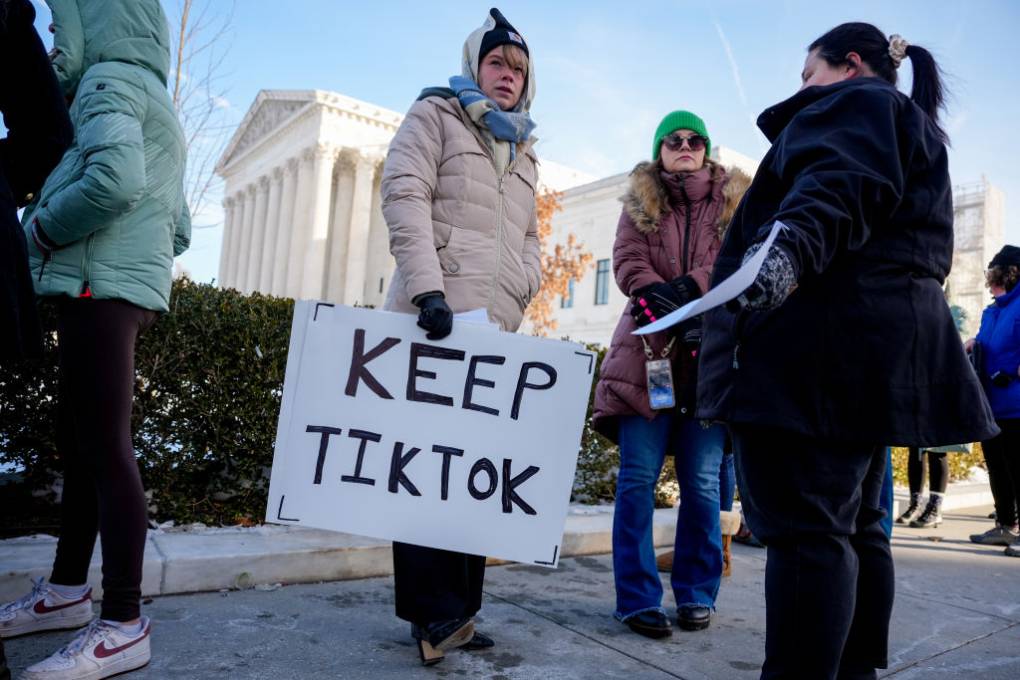
"caption": "Less than a day from when the popular social media app is set to be banned in the US, President-elect Donald Trump spoke on the possibility of delaying the expulsion of TikTok.",
"credit": "Beata Zawrzel/NurPhoto via Getty Images",
"altTag": null,
"description": null,
"imgSizes": {
"medium": {
"file": "https://cdn.kqed.org/wp-content/uploads/sites/10/2025/01/npr.brightspotcdn-copy-48-800x533.jpg",
"width": 800,
"height": 533,
"mimeType": "image/jpeg"
},
"large": {
"file": "https://cdn.kqed.org/wp-content/uploads/sites/10/2025/01/npr.brightspotcdn-copy-48-1020x680.jpg",
"width": 1020,
"height": 680,
"mimeType": "image/jpeg"
},
"thumbnail": {
"file": "https://cdn.kqed.org/wp-content/uploads/sites/10/2025/01/npr.brightspotcdn-copy-48-160x107.jpg",
"width": 160,
"height": 107,
"mimeType": "image/jpeg"
},
"post-thumbnail": {
"file": "https://cdn.kqed.org/wp-content/uploads/sites/10/2025/01/npr.brightspotcdn-copy-48-672x372.jpg",
"width": 672,
"height": 372,
"mimeType": "image/jpeg"
},
"twentyfourteen-full-width": {
"file": "https://cdn.kqed.org/wp-content/uploads/sites/10/2025/01/npr.brightspotcdn-copy-48-1038x576.jpg",
"width": 1038,
"height": 576,
"mimeType": "image/jpeg"
},
"kqedFullSize": {
"file": "https://cdn.kqed.org/wp-content/uploads/sites/10/2025/01/npr.brightspotcdn-copy-48.jpg",
"width": 1100,
"height": 733
}
},
"isLoading": false,
"fetchFailed": false
},
"news_12016604": {
"type": "attachments",
"id": "news_12016604",
"meta": {
"index": "attachments_1716263798",
"site": "news",
"id": "12016604",
"found": true
},
"title": "The UC Berkeley Campus in Berkeley on Aug. 17, 2023.",
"publishDate": 1733334753,
"status": "inherit",
"parent": 12016602,
"modified": 1733334766,
"caption": "The UC Berkeley Campus in Berkeley on Aug. 17, 2023.",
"credit": "Martin do Nascimento/KQED",
"altTag": null,
"description": null,
"imgSizes": {
"medium": {
"file": "https://cdn.kqed.org/wp-content/uploads/sites/10/2024/12/230817-UC-BERKELEY-CAMPUS-MD-02_qed-800x533.jpg",
"width": 800,
"height": 533,
"mimeType": "image/jpeg"
},
"large": {
"file": "https://cdn.kqed.org/wp-content/uploads/sites/10/2024/12/230817-UC-BERKELEY-CAMPUS-MD-02_qed-1020x680.jpg",
"width": 1020,
"height": 680,
"mimeType": "image/jpeg"
},
"thumbnail": {
"file": "https://cdn.kqed.org/wp-content/uploads/sites/10/2024/12/230817-UC-BERKELEY-CAMPUS-MD-02_qed-160x107.jpg",
"width": 160,
"height": 107,
"mimeType": "image/jpeg"
},
"1536x1536": {
"file": "https://cdn.kqed.org/wp-content/uploads/sites/10/2024/12/230817-UC-BERKELEY-CAMPUS-MD-02_qed-1536x1024.jpg",
"width": 1536,
"height": 1024,
"mimeType": "image/jpeg"
},
"post-thumbnail": {
"file": "https://cdn.kqed.org/wp-content/uploads/sites/10/2024/12/230817-UC-BERKELEY-CAMPUS-MD-02_qed-672x372.jpg",
"width": 672,
"height": 372,
"mimeType": "image/jpeg"
},
"twentyfourteen-full-width": {
"file": "https://cdn.kqed.org/wp-content/uploads/sites/10/2024/12/230817-UC-BERKELEY-CAMPUS-MD-02_qed-1038x576.jpg",
"width": 1038,
"height": 576,
"mimeType": "image/jpeg"
},
"full-width": {
"file": "https://cdn.kqed.org/wp-content/uploads/sites/10/2024/12/230817-UC-BERKELEY-CAMPUS-MD-02_qed-1920x1280.jpg",
"width": 1920,
"height": 1280,
"mimeType": "image/jpeg"
},
"kqedFullSize": {
"file": "https://cdn.kqed.org/wp-content/uploads/sites/10/2024/12/230817-UC-BERKELEY-CAMPUS-MD-02_qed.jpg",
"width": 2000,
"height": 1333
}
},
"isLoading": false,
"fetchFailed": false
},
"news_12022686": {
"type": "attachments",
"id": "news_12022686",
"meta": {
"index": "attachments_1716263798",
"site": "news",
"id": "12022686",
"found": true
},
"title": "Supreme Court Hears Arguments In ByteDance And TikTok Case",
"publishDate": 1737076360,
"status": "inherit",
"parent": 12022673,
"modified": 1737145837,
"caption": "Sarah Baus of Charleston, South Carolina, a content creator on TikTok, holds a sign that reads 'Keep TikTok' outside the U.S. Supreme Court Building as the court hears oral arguments on whether to overturn or delay a law that could lead to a ban of TikTok in the U.S., on Jan. 10, 2025, in Washington, D.C. ",
"credit": "Andrew Harnik/Getty Images",
"altTag": null,
"description": null,
"imgSizes": {
"medium": {
"file": "https://cdn.kqed.org/wp-content/uploads/sites/10/2025/01/GettyImages-2192574331-800x534.jpg",
"width": 800,
"height": 534,
"mimeType": "image/jpeg"
},
"large": {
"file": "https://cdn.kqed.org/wp-content/uploads/sites/10/2025/01/GettyImages-2192574331-1020x680.jpg",
"width": 1020,
"height": 680,
"mimeType": "image/jpeg"
},
"thumbnail": {
"file": "https://cdn.kqed.org/wp-content/uploads/sites/10/2025/01/GettyImages-2192574331-160x107.jpg",
"width": 160,
"height": 107,
"mimeType": "image/jpeg"
},
"post-thumbnail": {
"file": "https://cdn.kqed.org/wp-content/uploads/sites/10/2025/01/GettyImages-2192574331-672x372.jpg",
"width": 672,
"height": 372,
"mimeType": "image/jpeg"
},
"twentyfourteen-full-width": {
"file": "https://cdn.kqed.org/wp-content/uploads/sites/10/2025/01/GettyImages-2192574331-1024x576.jpg",
"width": 1024,
"height": 576,
"mimeType": "image/jpeg"
},
"kqedFullSize": {
"file": "https://cdn.kqed.org/wp-content/uploads/sites/10/2025/01/GettyImages-2192574331.jpg",
"width": 1024,
"height": 683
}
},
"isLoading": false,
"fetchFailed": false
},
"news_12022415": {
"type": "attachments",
"id": "news_12022415",
"meta": {
"index": "attachments_1716263798",
"site": "news",
"id": "12022415",
"found": true
},
"title": "tiktokscotus",
"publishDate": 1736979474,
"status": "inherit",
"parent": 12022409,
"modified": 1737051603,
"caption": "Sarah Baus, a content creator on TikTok, holds a sign that reads, \"Keep TikTok,\" outside the U.S. Supreme Court Building as the court hears oral arguments on whether to overturn or delay a law that could lead to a ban of the social media platform in the U.S., on Jan. 10, 2025, in Washington, D.C. ",
"credit": "Allison Robbert/The Washington Post via Getty Images",
"altTag": null,
"description": null,
"imgSizes": {
"medium": {
"file": "https://cdn.kqed.org/wp-content/uploads/sites/10/2025/01/TikTokBanGetty-800x533.jpg",
"width": 800,
"height": 533,
"mimeType": "image/jpeg"
},
"large": {
"file": "https://cdn.kqed.org/wp-content/uploads/sites/10/2025/01/TikTokBanGetty-1020x680.jpg",
"width": 1020,
"height": 680,
"mimeType": "image/jpeg"
},
"thumbnail": {
"file": "https://cdn.kqed.org/wp-content/uploads/sites/10/2025/01/TikTokBanGetty-160x107.jpg",
"width": 160,
"height": 107,
"mimeType": "image/jpeg"
},
"1536x1536": {
"file": "https://cdn.kqed.org/wp-content/uploads/sites/10/2025/01/TikTokBanGetty-1536x1024.jpg",
"width": 1536,
"height": 1024,
"mimeType": "image/jpeg"
},
"post-thumbnail": {
"file": "https://cdn.kqed.org/wp-content/uploads/sites/10/2025/01/TikTokBanGetty-672x372.jpg",
"width": 672,
"height": 372,
"mimeType": "image/jpeg"
},
"twentyfourteen-full-width": {
"file": "https://cdn.kqed.org/wp-content/uploads/sites/10/2025/01/TikTokBanGetty-1038x576.jpg",
"width": 1038,
"height": 576,
"mimeType": "image/jpeg"
},
"full-width": {
"file": "https://cdn.kqed.org/wp-content/uploads/sites/10/2025/01/TikTokBanGetty-1920x1280.jpg",
"width": 1920,
"height": 1280,
"mimeType": "image/jpeg"
},
"kqedFullSize": {
"file": "https://cdn.kqed.org/wp-content/uploads/sites/10/2025/01/TikTokBanGetty.jpg",
"width": 2000,
"height": 1333
}
},
"isLoading": false,
"fetchFailed": false
},
"news_12022362": {
"type": "attachments",
"id": "news_12022362",
"meta": {
"index": "attachments_1716263798",
"site": "news",
"id": "12022362",
"found": true
},
"title": "npr.brightspotcdn copy",
"publishDate": 1736974163,
"status": "inherit",
"parent": 12022361,
"modified": 1736974186,
"caption": "Icons for the smartphone apps Xiaohongshu and TikTok are seen on a smartphone screen in Beijing, Tuesday, Jan. 14, 2025. ",
"credit": "Andy Wong/AP Photo",
"altTag": null,
"description": null,
"imgSizes": {
"medium": {
"file": "https://cdn.kqed.org/wp-content/uploads/sites/10/2025/01/npr.brightspotcdn-copy-43-800x533.jpg",
"width": 800,
"height": 533,
"mimeType": "image/jpeg"
},
"large": {
"file": "https://cdn.kqed.org/wp-content/uploads/sites/10/2025/01/npr.brightspotcdn-copy-43-1020x680.jpg",
"width": 1020,
"height": 680,
"mimeType": "image/jpeg"
},
"thumbnail": {
"file": "https://cdn.kqed.org/wp-content/uploads/sites/10/2025/01/npr.brightspotcdn-copy-43-160x107.jpg",
"width": 160,
"height": 107,
"mimeType": "image/jpeg"
},
"post-thumbnail": {
"file": "https://cdn.kqed.org/wp-content/uploads/sites/10/2025/01/npr.brightspotcdn-copy-43-672x372.jpg",
"width": 672,
"height": 372,
"mimeType": "image/jpeg"
},
"twentyfourteen-full-width": {
"file": "https://cdn.kqed.org/wp-content/uploads/sites/10/2025/01/npr.brightspotcdn-copy-43-1038x576.jpg",
"width": 1038,
"height": 576,
"mimeType": "image/jpeg"
},
"kqedFullSize": {
"file": "https://cdn.kqed.org/wp-content/uploads/sites/10/2025/01/npr.brightspotcdn-copy-43.jpg",
"width": 1100,
"height": 733
}
},
"isLoading": false,
"fetchFailed": false
},
"news_12022315": {
"type": "attachments",
"id": "news_12022315",
"meta": {
"index": "attachments_1716263798",
"site": "news",
"id": "12022315",
"found": true
},
"title": "120224_Drumm-Avenue_CS_CM_02 copy",
"publishDate": 1736966399,
"status": "inherit",
"parent": 12022313,
"modified": 1736966447,
"caption": "Commercial trucks line up in front of a residential neighborhood in the Wilmington area of Los Angeles on Dec. 2, 2024. California has withdrawn its clean-air rule phasing out diesel trucks. ",
"credit": "Carlin Stiehl for CalMatters",
"altTag": "Diesel trucks parked by the side of a road in a residential area.",
"description": null,
"imgSizes": {
"medium": {
"file": "https://cdn.kqed.org/wp-content/uploads/sites/10/2025/01/120224_Drumm-Avenue_CS_CM_02-copy-800x533.jpg",
"width": 800,
"height": 533,
"mimeType": "image/jpeg"
},
"large": {
"file": "https://cdn.kqed.org/wp-content/uploads/sites/10/2025/01/120224_Drumm-Avenue_CS_CM_02-copy-1020x680.jpg",
"width": 1020,
"height": 680,
"mimeType": "image/jpeg"
},
"thumbnail": {
"file": "https://cdn.kqed.org/wp-content/uploads/sites/10/2025/01/120224_Drumm-Avenue_CS_CM_02-copy-160x107.jpg",
"width": 160,
"height": 107,
"mimeType": "image/jpeg"
},
"1536x1536": {
"file": "https://cdn.kqed.org/wp-content/uploads/sites/10/2025/01/120224_Drumm-Avenue_CS_CM_02-copy-1536x1024.jpg",
"width": 1536,
"height": 1024,
"mimeType": "image/jpeg"
},
"post-thumbnail": {
"file": "https://cdn.kqed.org/wp-content/uploads/sites/10/2025/01/120224_Drumm-Avenue_CS_CM_02-copy-672x372.jpg",
"width": 672,
"height": 372,
"mimeType": "image/jpeg"
},
"twentyfourteen-full-width": {
"file": "https://cdn.kqed.org/wp-content/uploads/sites/10/2025/01/120224_Drumm-Avenue_CS_CM_02-copy-1038x576.jpg",
"width": 1038,
"height": 576,
"mimeType": "image/jpeg"
},
"full-width": {
"file": "https://cdn.kqed.org/wp-content/uploads/sites/10/2025/01/120224_Drumm-Avenue_CS_CM_02-copy-1920x1280.jpg",
"width": 1920,
"height": 1280,
"mimeType": "image/jpeg"
},
"kqedFullSize": {
"file": "https://cdn.kqed.org/wp-content/uploads/sites/10/2025/01/120224_Drumm-Avenue_CS_CM_02-copy.jpg",
"width": 2000,
"height": 1333
}
},
"isLoading": false,
"fetchFailed": false
},
"news_12021978": {
"type": "attachments",
"id": "news_12021978",
"meta": {
"index": "attachments_1716263798",
"site": "news",
"id": "12021978",
"found": true
},
"title": "Powerful Winds Fuel Multiple Fires Across Los Angeles Area",
"publishDate": 1736816932,
"status": "inherit",
"parent": 12021954,
"modified": 1736879425,
"caption": "Strong winds blow embers from homes burning in the Eaton Fire on Jan. 7, 2025, in Pasadena.",
"credit": "David McNew/Getty Images",
"altTag": null,
"description": null,
"imgSizes": {
"medium": {
"file": "https://cdn.kqed.org/wp-content/uploads/sites/10/2025/01/GettyImages-2192365794-800x534.jpg",
"width": 800,
"height": 534,
"mimeType": "image/jpeg"
},
"large": {
"file": "https://cdn.kqed.org/wp-content/uploads/sites/10/2025/01/GettyImages-2192365794-1020x680.jpg",
"width": 1020,
"height": 680,
"mimeType": "image/jpeg"
},
"thumbnail": {
"file": "https://cdn.kqed.org/wp-content/uploads/sites/10/2025/01/GettyImages-2192365794-160x107.jpg",
"width": 160,
"height": 107,
"mimeType": "image/jpeg"
},
"1536x1536": {
"file": "https://cdn.kqed.org/wp-content/uploads/sites/10/2025/01/GettyImages-2192365794-1536x1025.jpg",
"width": 1536,
"height": 1025,
"mimeType": "image/jpeg"
},
"2048x2048": {
"file": "https://cdn.kqed.org/wp-content/uploads/sites/10/2025/01/GettyImages-2192365794-2048x1366.jpg",
"width": 2048,
"height": 1366,
"mimeType": "image/jpeg"
},
"post-thumbnail": {
"file": "https://cdn.kqed.org/wp-content/uploads/sites/10/2025/01/GettyImages-2192365794-672x372.jpg",
"width": 672,
"height": 372,
"mimeType": "image/jpeg"
},
"twentyfourteen-full-width": {
"file": "https://cdn.kqed.org/wp-content/uploads/sites/10/2025/01/GettyImages-2192365794-1038x576.jpg",
"width": 1038,
"height": 576,
"mimeType": "image/jpeg"
},
"full-width": {
"file": "https://cdn.kqed.org/wp-content/uploads/sites/10/2025/01/GettyImages-2192365794-1920x1281.jpg",
"width": 1920,
"height": 1281,
"mimeType": "image/jpeg"
},
"kqedFullSize": {
"file": "https://cdn.kqed.org/wp-content/uploads/sites/10/2025/01/GettyImages-2192365794-scaled.jpg",
"width": 2560,
"height": 1708
}
},
"isLoading": false,
"fetchFailed": false
},
"news_12021479": {
"type": "attachments",
"id": "news_12021479",
"meta": {
"index": "attachments_1716263798",
"site": "news",
"id": "12021479",
"found": true
},
"title": "Supreme Court Hears Arguments In ByteDance And TikTok Case",
"publishDate": 1736537233,
"status": "inherit",
"parent": 12021468,
"modified": 1736542488,
"caption": "(L-R) Sarah Baus of Charleston, South Carolina, holds a sign that reads 'Keep TikTok' as she and other content creators Sallye Miley of Jackson, Mississippi, and Callie Goodwin of Columbia, South Carolina, stand outside the U.S. Supreme Court Building as the court hears oral arguments on whether to overturn or delay a law that could lead to a ban of TikTok in the U.S., on Jan. 10, 20,25 in Washington, D.C. ",
"credit": "Andrew Harnik/Getty Images",
"altTag": "Three women stand outside a neo-classical white building with coats, scarves and beanies, one of them holding a sign that reads 'Keep TikTok.'",
"description": null,
"imgSizes": {
"medium": {
"file": "https://cdn.kqed.org/wp-content/uploads/sites/10/2025/01/GettyImages-2192575772-800x534.jpg",
"width": 800,
"height": 534,
"mimeType": "image/jpeg"
},
"large": {
"file": "https://cdn.kqed.org/wp-content/uploads/sites/10/2025/01/GettyImages-2192575772-1020x680.jpg",
"width": 1020,
"height": 680,
"mimeType": "image/jpeg"
},
"thumbnail": {
"file": "https://cdn.kqed.org/wp-content/uploads/sites/10/2025/01/GettyImages-2192575772-160x107.jpg",
"width": 160,
"height": 107,
"mimeType": "image/jpeg"
},
"post-thumbnail": {
"file": "https://cdn.kqed.org/wp-content/uploads/sites/10/2025/01/GettyImages-2192575772-672x372.jpg",
"width": 672,
"height": 372,
"mimeType": "image/jpeg"
},
"twentyfourteen-full-width": {
"file": "https://cdn.kqed.org/wp-content/uploads/sites/10/2025/01/GettyImages-2192575772-1024x576.jpg",
"width": 1024,
"height": 576,
"mimeType": "image/jpeg"
},
"kqedFullSize": {
"file": "https://cdn.kqed.org/wp-content/uploads/sites/10/2025/01/GettyImages-2192575772.jpg",
"width": 1024,
"height": 683
}
},
"isLoading": false,
"fetchFailed": false
},
"news_12020381": {
"type": "attachments",
"id": "news_12020381",
"meta": {
"index": "attachments_1716263798",
"site": "news",
"id": "12020381",
"found": true
},
"title": "250105-BalajiDeathOpenAI-09",
"publishDate": 1736139049,
"status": "inherit",
"parent": 0,
"modified": 1736375562,
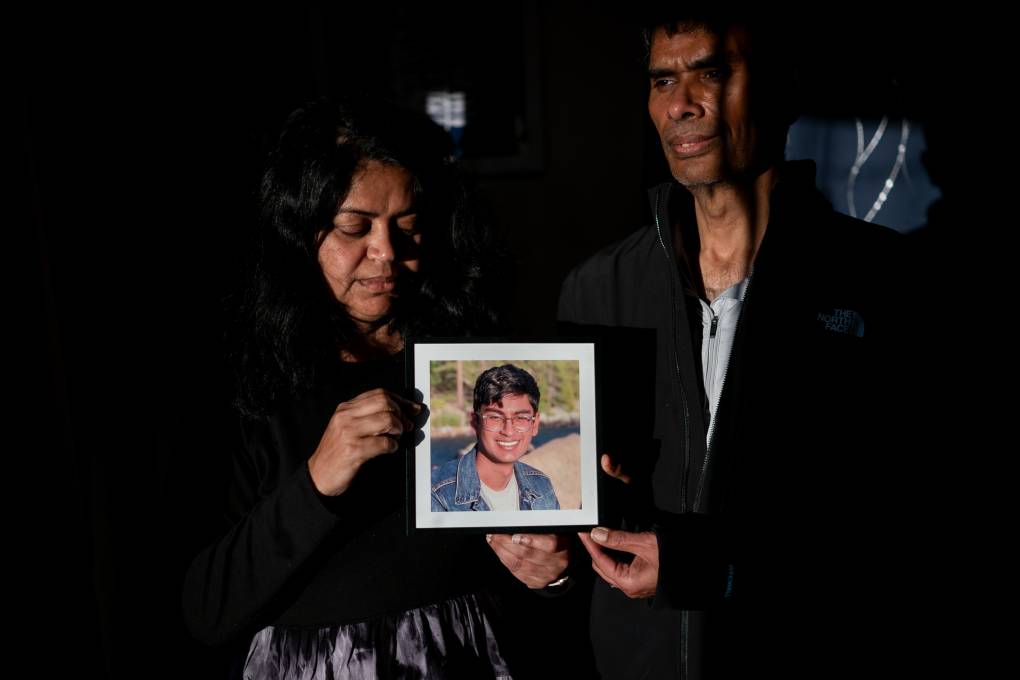
"caption": "Poornima Ramarao (left) and Balaji Ramamurthy, parents of Suchir Balaji, hold a photo of their son at their home in Union City on Jan. 5, 2024. Suchir Balaji was found dead in his San Francisco apartment on Nov. 26.",
"credit": "Beth LaBerge/KQED",
"altTag": null,
"description": null,
"imgSizes": {
"medium": {
"file": "https://cdn.kqed.org/wp-content/uploads/sites/10/2025/01/250105-BalajiDeathOpenAI-09-800x533.jpg",
"width": 800,
"height": 533,
"mimeType": "image/jpeg"
},
"large": {
"file": "https://cdn.kqed.org/wp-content/uploads/sites/10/2025/01/250105-BalajiDeathOpenAI-09-1020x680.jpg",
"width": 1020,
"height": 680,
"mimeType": "image/jpeg"
},
"thumbnail": {
"file": "https://cdn.kqed.org/wp-content/uploads/sites/10/2025/01/250105-BalajiDeathOpenAI-09-160x107.jpg",
"width": 160,
"height": 107,
"mimeType": "image/jpeg"
},
"1536x1536": {
"file": "https://cdn.kqed.org/wp-content/uploads/sites/10/2025/01/250105-BalajiDeathOpenAI-09-1536x1024.jpg",
"width": 1536,
"height": 1024,
"mimeType": "image/jpeg"
},
"post-thumbnail": {
"file": "https://cdn.kqed.org/wp-content/uploads/sites/10/2025/01/250105-BalajiDeathOpenAI-09-672x372.jpg",
"width": 672,
"height": 372,
"mimeType": "image/jpeg"
},
"twentyfourteen-full-width": {
"file": "https://cdn.kqed.org/wp-content/uploads/sites/10/2025/01/250105-BalajiDeathOpenAI-09-1038x576.jpg",
"width": 1038,
"height": 576,
"mimeType": "image/jpeg"
},
"full-width": {
"file": "https://cdn.kqed.org/wp-content/uploads/sites/10/2025/01/250105-BalajiDeathOpenAI-09-1920x1280.jpg",
"width": 1920,
"height": 1280,
"mimeType": "image/jpeg"
},
"kqedFullSize": {
"file": "https://cdn.kqed.org/wp-content/uploads/sites/10/2025/01/250105-BalajiDeathOpenAI-09.jpg",
"width": 2000,
"height": 1333
}
},
"isLoading": false,
"fetchFailed": false
},
"news_12020983": {
"type": "attachments",
"id": "news_12020983",
"meta": {
"index": "attachments_1716263798",
"site": "news",
"id": "12020983",
"found": true
},
"title": "npr.brightspotcdn copy",
"publishDate": 1736380493,
"status": "inherit",
"parent": 12020980,
"modified": 1736380548,
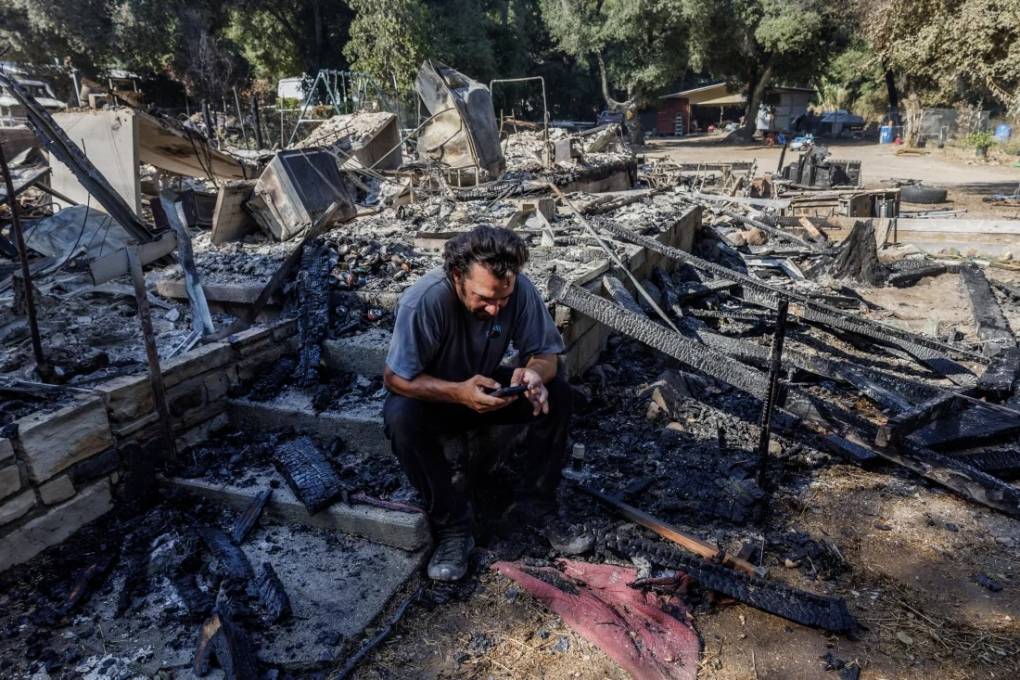
"caption": "Garrett Keene sits on the front steps of his home in Lake Elsinore, Calif. that was destroyed in the Airport Fire, one of three major Southern California Fires so far this September. After evacuating with his family, Keene said he monitored the Watch Duty fire app to see where airdrops of fire retardant were happening as the fire approached, but none dropped on his neighborhood.",
"credit": "Gina Ferazzi/Los Angeles Times via Getty Images",
"altTag": "A man sits amid ruins of a house as he looks at and tries to operate his smartphone.",
"description": null,
"imgSizes": {
"medium": {
"file": "https://cdn.kqed.org/wp-content/uploads/sites/10/2025/01/npr.brightspotcdn-copy-21-800x533.jpg",
"width": 800,
"height": 533,
"mimeType": "image/jpeg"
},
"large": {
"file": "https://cdn.kqed.org/wp-content/uploads/sites/10/2025/01/npr.brightspotcdn-copy-21-1020x680.jpg",
"width": 1020,
"height": 680,
"mimeType": "image/jpeg"
},
"thumbnail": {
"file": "https://cdn.kqed.org/wp-content/uploads/sites/10/2025/01/npr.brightspotcdn-copy-21-160x107.jpg",
"width": 160,
"height": 107,
"mimeType": "image/jpeg"
},
"post-thumbnail": {
"file": "https://cdn.kqed.org/wp-content/uploads/sites/10/2025/01/npr.brightspotcdn-copy-21-672x372.jpg",
"width": 672,
"height": 372,
"mimeType": "image/jpeg"
},
"twentyfourteen-full-width": {
"file": "https://cdn.kqed.org/wp-content/uploads/sites/10/2025/01/npr.brightspotcdn-copy-21-1038x576.jpg",
"width": 1038,
"height": 576,
"mimeType": "image/jpeg"
},
"kqedFullSize": {
"file": "https://cdn.kqed.org/wp-content/uploads/sites/10/2025/01/npr.brightspotcdn-copy-21.jpg",
"width": 1100,
"height": 733
}
},
"isLoading": false,
"fetchFailed": false
},
"news_12020715": {
"type": "attachments",
"id": "news_12020715",
"meta": {
"index": "attachments_1716263798",
"site": "news",
"id": "12020715",
"found": true
},
"title": "Farnborough International Airshow 2024",
"publishDate": 1736296192,
"status": "inherit",
"parent": 12020697,
"modified": 1736296264,
"caption": "Visitors view a Joby Aviation full-scale electric vertical takeoff and landing aircraft (eVTOL) air taxi is displayed during the Farnborough International Airshow 2024 at Farnborough International Exhibition and Conference Centre on July 23, 2024 in Farnborough, England. ",
"credit": "John Keeble/Getty Images",
"altTag": "An electric aviation vehicle with sets of propellers and a cabin sits in a showroom at a fair.",
"description": null,
"imgSizes": {
"medium": {
"file": "https://cdn.kqed.org/wp-content/uploads/sites/10/2025/01/GettyImages-2163324535-800x534.jpg",
"width": 800,
"height": 534,
"mimeType": "image/jpeg"
},
"large": {
"file": "https://cdn.kqed.org/wp-content/uploads/sites/10/2025/01/GettyImages-2163324535-1020x680.jpg",
"width": 1020,
"height": 680,
"mimeType": "image/jpeg"
},
"thumbnail": {
"file": "https://cdn.kqed.org/wp-content/uploads/sites/10/2025/01/GettyImages-2163324535-160x107.jpg",
"width": 160,
"height": 107,
"mimeType": "image/jpeg"
},
"post-thumbnail": {
"file": "https://cdn.kqed.org/wp-content/uploads/sites/10/2025/01/GettyImages-2163324535-672x372.jpg",
"width": 672,
"height": 372,
"mimeType": "image/jpeg"
},
"twentyfourteen-full-width": {
"file": "https://cdn.kqed.org/wp-content/uploads/sites/10/2025/01/GettyImages-2163324535-1024x576.jpg",
"width": 1024,
"height": 576,
"mimeType": "image/jpeg"
},
"kqedFullSize": {
"file": "https://cdn.kqed.org/wp-content/uploads/sites/10/2025/01/GettyImages-2163324535.jpg",
"width": 1024,
"height": 683
}
},
"isLoading": false,
"fetchFailed": false
}
},
"audioPlayerReducer": {
"postId": "stream_live",
"isPaused": true,
"isPlaying": false,
"pfsActive": false,
"pledgeModalIsOpen": true,
"playerDrawerIsOpen": false,
"liveAudioPlayStartedAt": 0,
"liveAudioPlayContext": ""
},
"authorsReducer": {
"byline_news_12023094": {
"type": "authors",
"id": "byline_news_12023094",
"meta": {
"override": true
},
"slug": "byline_news_12023094",
"name": "Ana B. Ibarra and Ben Christopher, CalMatters",
"isLoading": false
},
"byline_news_12023010": {
"type": "authors",
"id": "byline_news_12023010",
"meta": {
"override": true
},
"slug": "byline_news_12023010",
"name": "\u003ca href=\"https://www.npr.org/people/638550790/bobby-allyn\">Bobby Allyn\u003c/a> and \u003ca href=\"https://www.npr.org/people/1108419098/juliana-kim\">Juliana Kim\u003c/a>, NPR",
"isLoading": false
},
"byline_news_12022361": {
"type": "authors",
"id": "byline_news_12022361",
"meta": {
"override": true
},
"slug": "byline_news_12022361",
"name": "\u003ca href=\"https://www.npr.org/people/776048102/rachel-treisman\">Rachel Treisman\u003c/a>, NPR",
"isLoading": false
},
"byline_news_12022313": {
"type": "authors",
"id": "byline_news_12022313",
"meta": {
"override": true
},
"slug": "byline_news_12022313",
"name": "\u003ca href=\"https://calmatters.org/author/alejandro-lazo/\">Alejandro Lazo\u003c/a>, CalMatters",
"isLoading": false
},
"byline_news_12021468": {
"type": "authors",
"id": "byline_news_12021468",
"meta": {
"override": true
},
"slug": "byline_news_12021468",
"name": "Mark Sherman, Associated Press",
"isLoading": false
},
"byline_news_12020980": {
"type": "authors",
"id": "byline_news_12020980",
"meta": {
"override": true
},
"slug": "byline_news_12020980",
"name": "\u003ca href=\"https://www.npr.org/people/975275737/liz-baker\">Liz Baker\u003c/a>, NPR",
"isLoading": false
},
"byline_news_12020697": {
"type": "authors",
"id": "byline_news_12020697",
"meta": {
"override": true
},
"slug": "byline_news_12020697",
"name": "Michael Liedtke, Associated Press",
"isLoading": false
},
"rachael-myrow": {
"type": "authors",
"id": "251",
"meta": {
"index": "authors_1716337520",
"id": "251",
"found": true
},
"name": "Rachael Myrow",
"firstName": "Rachael",
"lastName": "Myrow",
"slug": "rachael-myrow",
"email": "rmyrow@kqed.org",
"display_author_email": true,
"staff_mastheads": [
"news"
],
"title": "Senior Editor of KQED's Silicon Valley News Desk",
"bio": "• I write and edit stories about how Silicon Valley power and policies shape everyday life in California. I’m also passionate about making Bay Area history and culture more accessible to a broad public. • I’ve been a journalist for most of my life, starting in high school with The Franklin Press in Los Angeles, where I grew up. While earning my first degree in English at UC Berkeley, I got my start in public radio at KALX-FM. After completing a second degree in journalism at Cal, I landed my first professional job at Marketplace, then moved on to KPCC (now LAist), and then KQED, where I hosted The California Report for more than seven years. • My reporting has appeared on NPR, The World, WBUR’s \u003ci>Here & Now\u003c/i>, and the BBC. I also guest host for KQED’s \u003ci>Forum\u003c/i>, as well as the Commonwealth Club in San Francisco. • I speak periodically on media, democracy and technology issues, and do voiceover work for documentaries and educational video projects. • Outside of the studio, you'll find me hiking Bay Area trails and whipping up Insta-ready meals in my kitchen. • I do not accept gifts, money, or favors from anyone connected to my reporting, I don't pay people for information, and I do not support or donate to political causes. • I strive to treat the people I report on with fairness, honesty, and respect. I also recognize there are often multiple sides to a story and work to verify information through multiple sources and documentation. If I get something wrong, I correct it.",
"avatar": "https://secure.gravatar.com/avatar/3ed8a3c5f26025e4a805ba634cda8cd764906b97438a6d9ce216b044e340da4e?s=600&d=blank&r=g",
"twitter": "rachaelmyrow",
"bluesky": null,
"facebook": null,
"instagram": null,
"linkedin": "https://www.linkedin.com/in/rachaelmyrow/",
"sites": [
{
"site": "arts",
"roles": [
"administrator"
]
},
{
"site": "news",
"roles": [
"edit_others_posts",
"editor"
]
},
{
"site": "futureofyou",
"roles": [
"editor"
]
},
{
"site": "bayareabites",
"roles": [
"editor"
]
},
{
"site": "stateofhealth",
"roles": [
"editor"
]
},
{
"site": "science",
"roles": [
"editor"
]
},
{
"site": "food",
"roles": [
"editor"
]
},
{
"site": "forum",
"roles": [
"editor"
]
},
{
"site": "liveblog",
"roles": [
"author"
]
}
],
"headData": {
"title": "Rachael Myrow | KQED",
"description": "Senior Editor of KQED's Silicon Valley News Desk",
"ogImgSrc": "https://secure.gravatar.com/avatar/3ed8a3c5f26025e4a805ba634cda8cd764906b97438a6d9ce216b044e340da4e?s=600&d=blank&r=g",
"twImgSrc": "https://secure.gravatar.com/avatar/3ed8a3c5f26025e4a805ba634cda8cd764906b97438a6d9ce216b044e340da4e?s=600&d=blank&r=g"
},
"isLoading": false,
"link": "/author/rachael-myrow"
},
"lsarah": {
"type": "authors",
"id": "11626",
"meta": {
"index": "authors_1716337520",
"id": "11626",
"found": true
},
"name": "Lakshmi Sarah",
"firstName": "Lakshmi",
"lastName": "Sarah",
"slug": "lsarah",
"email": "lsarah@kqed.org",
"display_author_email": false,
"staff_mastheads": [],
"title": "Digital Producer",
"bio": "Lakshmi Sarah is an educator, author and journalist with a focus on innovative storytelling. She has worked with newspapers, radio and magazines from Ahmedabad, India to Los Angeles, California. She has written and produced for Die Zeit, Global Voices, AJ+, KQED, Fusion Media Group and the New York Times.",
"avatar": "https://secure.gravatar.com/avatar/652dcaecd8b28826fc17a8b2d6bb4e93?s=600&d=blank&r=g",
"twitter": "lakitalki",
"facebook": null,
"instagram": "https://www.instagram.com/laki.talki/",
"linkedin": "https://www.linkedin.com/in/lakisarah/",
"sites": [
{
"site": "arts",
"roles": []
},
{
"site": "news",
"roles": []
},
{
"site": "bayareabites",
"roles": []
},
{
"site": "science",
"roles": []
}
],
"headData": {
"title": "Lakshmi Sarah | KQED",
"description": "Digital Producer",
"ogImgSrc": "https://secure.gravatar.com/avatar/652dcaecd8b28826fc17a8b2d6bb4e93?s=600&d=blank&r=g",
"twImgSrc": "https://secure.gravatar.com/avatar/652dcaecd8b28826fc17a8b2d6bb4e93?s=600&d=blank&r=g"
},
"isLoading": false,
"link": "/author/lsarah"
},
"ccabreralomeli": {
"type": "authors",
"id": "11708",
"meta": {
"index": "authors_1716337520",
"id": "11708",
"found": true
},
"name": "Carlos Cabrera-Lomelí",
"firstName": "Carlos",
"lastName": "Cabrera-Lomelí",
"slug": "ccabreralomeli",
"email": "ccabreralomeli@KQED.org",
"display_author_email": true,
"staff_mastheads": [
"news"
],
"title": "Community Reporter",
"bio": "Carlos Cabrera-Lomelí is a community reporter with KQED's digital engagement team. He also reports and co-produces for KQED's bilingual news hub KQED en Español. He grew up in San Francisco's Mission District and has previously worked with Univision, 48 Hills and REFORMA in Mexico City.",
"avatar": "https://secure.gravatar.com/avatar/c309be9665e484f887b818c89e273ecc673004f426f36b24d00a4d813a2e0518?s=600&d=blank&r=g",
"twitter": "@LomeliCabrera",
"bluesky": null,
"facebook": null,
"instagram": null,
"linkedin": null,
"sites": [
{
"site": "arts",
"roles": [
"editor"
]
},
{
"site": "news",
"roles": [
"editor"
]
},
{
"site": "about",
"roles": [
"editor"
]
},
{
"site": "science",
"roles": [
"editor"
]
},
{
"site": "perspectives",
"roles": [
"editor"
]
},
{
"site": "elections",
"roles": [
"editor"
]
},
{
"site": "liveblog",
"roles": [
"contributor"
]
}
],
"headData": {
"title": "Carlos Cabrera-Lomelí | KQED",
"description": "Community Reporter",
"ogImgSrc": "https://secure.gravatar.com/avatar/c309be9665e484f887b818c89e273ecc673004f426f36b24d00a4d813a2e0518?s=600&d=blank&r=g",
"twImgSrc": "https://secure.gravatar.com/avatar/c309be9665e484f887b818c89e273ecc673004f426f36b24d00a4d813a2e0518?s=600&d=blank&r=g"
},
"isLoading": false,
"link": "/author/ccabreralomeli"
},
"nkhan": {
"type": "authors",
"id": "11867",
"meta": {
"index": "authors_1716337520",
"id": "11867",
"found": true
},
"name": "Nisa Khan",
"firstName": "Nisa",
"lastName": "Khan",
"slug": "nkhan",
"email": "nkhan@kqed.org",
"display_author_email": false,
"staff_mastheads": [],
"title": "KQED Contributor",
"bio": "Nisa Khan is a reporter for KQED's Audience News Desk. She was formerly a data reporter at Michigan Radio. She earned a Bachelor of Science in Information from the University of Michigan and a Master of Arts in Communication from Stanford University.",
"avatar": "https://secure.gravatar.com/avatar/8720459eef081ff64582b3506b124d58523e80e120704a0cbd9892533c914991?s=600&d=blank&r=g",
"twitter": "mnisakhan",
"bluesky": null,
"facebook": null,
"instagram": null,
"linkedin": null,
"sites": [
{
"site": "arts",
"roles": [
"editor"
]
},
{
"site": "news",
"roles": [
"editor"
]
},
{
"site": "science",
"roles": [
"editor",
"author"
]
},
{
"site": "forum",
"roles": [
"editor"
]
},
{
"site": "liveblog",
"roles": [
"contributor"
]
}
],
"headData": {
"title": "Nisa Khan | KQED",
"description": "KQED Contributor",
"ogImgSrc": "https://secure.gravatar.com/avatar/8720459eef081ff64582b3506b124d58523e80e120704a0cbd9892533c914991?s=600&d=blank&r=g",
"twImgSrc": "https://secure.gravatar.com/avatar/8720459eef081ff64582b3506b124d58523e80e120704a0cbd9892533c914991?s=600&d=blank&r=g"
},
"isLoading": false,
"link": "/author/nkhan"
},
"slim": {
"type": "authors",
"id": "11920",
"meta": {
"index": "authors_1716337520",
"id": "11920",
"found": true
},
"name": "Samantha Lim",
"firstName": "Samantha",
"lastName": "Lim",
"slug": "slim",
"email": "slim@KQED.org",
"display_author_email": false,
"staff_mastheads": [],
"title": "KQED Contributor",
"bio": null,
"avatar": "https://secure.gravatar.com/avatar/82e592e6c15fe1a04d385e8ad0fb0b4e?s=600&d=blank&r=g",
"twitter": null,
"facebook": null,
"instagram": null,
"linkedin": null,
"sites": [
{
"site": "news",
"roles": []
}
],
"headData": {
"title": "Samantha Lim | KQED",
"description": "KQED Contributor",
"ogImgSrc": "https://secure.gravatar.com/avatar/82e592e6c15fe1a04d385e8ad0fb0b4e?s=600&d=blank&r=g",
"twImgSrc": "https://secure.gravatar.com/avatar/82e592e6c15fe1a04d385e8ad0fb0b4e?s=600&d=blank&r=g"
},
"isLoading": false,
"link": "/author/slim"
}
},
"pagesReducer": {
"news_category_technology": {
"type": "terms",
"id": "news_248",
"meta": {
"index": "terms_1716263798",
"site": "news",
"id": "248",
"score": 10.93111
},
"featImg": null,
"name": "Technology",
"description": null,
"taxonomy": "category",
"headData": {
"twImgId": null,
"twTitle": null,
"ogTitle": null,
"ogImgId": null,
"twDescription": null,
"description": null,
"title": "Technology Archives | KQED News",
"ogDescription": null
},
"ttid": 256,
"slug": "technology",
"isLoading": false,
"title": "Technology",
"pageMeta": {
"site": "news",
"WpPageTemplate": "page-topic-editorial",
"currentPage": 19
},
"blocks": [
{
"blockName": "kqed/post-list",
"attrs": {
"layout": "cardArticle2",
"query": "posts/news?category=technology",
"seeMore": false,
"paginated": true,
"page": 19
}
},
{
"blockName": "kqed/ad"
}
]
}
},
"pfsSessionReducer": {},
"postsReducer": {
"stream_live": {
"type": "live",
"id": "stream_live",
"audioUrl": "https://streams.kqed.org/kqedradio",
"title": "Live Stream",
"excerpt": "Live Stream information currently unavailable.",
"link": "/radio",
"featImg": "",
"label": {
"name": "KQED Live",
"link": "/"
}
},
"stream_kqedNewscast": {
"type": "posts",
"id": "stream_kqedNewscast",
"audioUrl": "https://www.kqed.org/.stream/anon/radio/RDnews/newscast.mp3?_=1",
"title": "KQED Newscast",
"featImg": "",
"label": {
"name": "88.5 FM",
"link": "/"
}
},
"news_12023094": {
"type": "posts",
"id": "news_12023094",
"meta": {
"index": "posts_1716263798",
"site": "news",
"id": "12023094",
"score": null,
"sort": [
1737392404000
]
},
"guestAuthors": [],
"slug": "california-has-sued-trump-123-times-heres-where-it-won-and-lost",
"title": "California Has Sued Trump 123 Times. Here's Where It Won and Lost",
"publishDate": 1737392404,
"format": "standard",
"headTitle": "California Has Sued Trump 123 Times. Here’s Where It Won and Lost | KQED",
"labelTerm": {},
"content": "\u003cp>That revving you hear from Sacramento is the sound of California’s Democratic leaders preparing to sue the tar out of the Trump administration.\u003c/p>\n\u003cp>We’ve seen this all before.\u003c/p>\n\u003cp>\u003ca href=\"https://calmatters.org/politics/2018/03/becerra-v-trump-california-using-courts-fight-administration/\">California sued the Trump administration 123 times\u003c/a> between 2017 and 2021, according to Attorney General Rob Bonta’s office. It \u003ca href=\"https://calmatters.org/justice/2021/01/california-cost-trump-lawsuits/\">spent about $10 million a year\u003c/a> in doing so. A majority of the lawsuits dealt with environment rules, immigration and health care.\u003c/p>\n\u003cp>Legal and policy expect those same issues to take center stage during Trump 2.0.\u003c/p>\n\u003cp>That’s why Bonta’s team started to prepare legal briefs months ahead of the election, it’s why Gov. Gavin Newsom \u003ca href=\"https://calmatters.org/politics/capitol/2024/11/gavin-newsom-special-session-trump-resistance/\">called for a special legislative session\u003c/a> to “Trump-proof” California, and it’s why state Democrats have agreed to \u003ca href=\"https://calmatters.org/newsletter/california-trump-legal-fees-fund/\">allocate $50 million to fight Trump\u003c/a> in court — a move that \u003ca href=\"https://x.com/J_GallagherAD3/status/1878599444003959053\">state Republicans denounced\u003c/a> as a “slush fund” for “hypothetical fights.”\u003c/p>\n\u003cp>[ad fullwidth]\u003c/p>\n\u003cp>Trump lost more than two-thirds of the lawsuits filed against his rules in his first term. His win rate of 31% was lower than that of the three administrations prior, \u003ca href=\"https://policyintegrity.org/tracking-major-rules/presidential-win-rates\">according to an analysis\u003c/a> by the Institute of Policy Integrity at the New York University School of Law.\u003c/p>\n\u003cp>What do California’s past legal skirmishes with the Trump administration 1.0 tell us about the policy battles to come? And how might this time be different?\u003c/p>\n\u003cp>Many experts say the new Trump administration could be more strategic and wise this time. In his first round, his policy proposals were \u003ca href=\"https://www.reuters.com/article/world/us/trump-administrations-sloppy-work-has-led-to-supreme-court-losses-idUSKBN23P3M1/\">often rushed through\u003c/a> and failed to pass legal muster.\u003c/p>\n\u003cp>“That’s something we are certainly worried about this second time around, that they’ll make the same policy decisions that are bad from our perspective, but do it again in a smarter way that makes them harder to challenge,” said Eva Bitrán, director of immigrants’ rights and staff attorney at American Civil Liberties Union of Southern California.\u003c/p>\n\u003cp>Another possible difference: The rules have changed. At the end of the U.S. Supreme Court’s 2023 term, the conservative majority issued a \u003ca href=\"https://calmatters.org/politics/2024/07/california-supreme-court-chevron/\">series of rulings\u003c/a> that, taken together, make it much easier for people, businesses and aggrieved state governments to challenge federal regulations. At the time, these rulings were seen as a historic victory for the conservative legal movement and big business. Now that Trump is back in office, it may actually make the California attorney general’s job of stymying the Trump agenda easier.\u003c/p>\n\u003cp>Here’s a look at California’s record in court against Trump.\u003c/p>\n\u003ch2>Environment: Wins on procedure\u003c/h2>\n\u003cp>California prides itself on being a national leader on ecologically-minded rules and aggressive climate action. That brings it into natural conflict with any modern Republican White House, but especially the Trump administration.Roughly half of the lawsuits that the state filed against the Trump administration the first time around were related in some way to the environment.\u003c/p>\n\u003cp>Winning on administrative procedure. California’s Department of Justice racked up a lot of legal wins early on in Trump’s term. The vast majority of them were over important but relatively narrow policy debates around \u003ca href=\"https://www.reuters.com/legal/litigation/epa-states-settle-lawsuit-over-imported-asbestos-2021-06-08/\">asbestos oversight rules\u003c/a>, \u003ca href=\"https://thehill.com/policy/energy-environment/397687-court-blocks-epa-policy-against-enforcing-truck-pollution-rule/\">big rigs\u003c/a> that use old engine components, energy efficiency requirements on freezers and ceiling fans (that was two cases), among others.\u003c/p>\n\u003cp>As with many \u003ca href=\"https://www.washingtonpost.com/world/national-security/the-real-reason-president-trump-is-constantly-losing-in-court/2019/03/19/f5ffb056-33a8-11e9-af5b-b51b7ff322e9_story.html\">other areas of policy\u003c/a>, California was able to eke out these easy victories by persuading courts that the Trump administration had rushed rules through without explaining their rationale, providing sufficient evidence or giving the public the opportunity to weigh in. These are violations of the Administrative Procedure Act, which is the bureaucratic equivalent of failing to do your homework.\u003c/p>\n\u003cp>Though Trump 2.0 may be more careful this time, his \u003ca href=\"https://apnews.com/article/biden-2024-government-regulations-democrats-6badc3b424b9eff3ba51e0ec35a8d824\">pledge to fire thousands\u003c/a> of career civil servants may also make the task of writing regulations that pass legal muster that much more difficult.\u003c/p>\n\u003ch2>The waiver wars\u003c/h2>\n\u003cp>One of California’s most successful legal challenges ended with a victory outside the court, said Julia Stein, an environmental law professor at UCLA. After the Trump administration revoked California’s \u003ca href=\"https://calmatters.org/explainers/california-auto-emissions-standards-fight-with-donald-trump-explained/\">permission to set its own emission limits\u003c/a> on car exhaust — which comes from an Environmental Protection Agency waiver of the federal law’s preeminence over state rules — California sued. Then it sued again. Though the legal battle never quite reached a conclusion before Trump left office in 2021, the prolonged regulatory uncertainty was enough to convince some of the world’s biggest automakers to \u003ca href=\"https://calmatters.org/environment/2020/08/california-clean-car-emissions/\">cut a deal directly with California\u003c/a>.\u003c/p>\n\u003cp>Stein said she wouldn’t be surprised if that serves as a template for other regulated industries as California and the second Trump administration inevitably resume their legal battles.\u003c/p>\n\u003cp>“I think businesses are going to feel like, ‘well, I still need to make investment decisions and I still need to contend with different state regulatory environments and federal regulatory environments and so I might want to start entering into private agreements,’” said Stein.\u003c/p>\n\u003cfigure id=\"attachment_12023098\" class=\"wp-caption aligncenter\" style=\"max-width: 1200px\">\u003cimg loading=\"lazy\" decoding=\"async\" class=\"size-full wp-image-12023098\" src=\"https://cdn.kqed.org/wp-content/uploads/sites/10/2025/01/250120CalMatters2.jpg\" alt=\"\" width=\"1200\" height=\"800\" srcset=\"https://cdn.kqed.org/wp-content/uploads/sites/10/2025/01/250120CalMatters2.jpg 1200w, https://cdn.kqed.org/wp-content/uploads/sites/10/2025/01/250120CalMatters2-800x533.jpg 800w, https://cdn.kqed.org/wp-content/uploads/sites/10/2025/01/250120CalMatters2-1020x680.jpg 1020w, https://cdn.kqed.org/wp-content/uploads/sites/10/2025/01/250120CalMatters2-160x107.jpg 160w\" sizes=\"auto, (max-width: 1200px) 100vw, 1200px\">\u003cfigcaption class=\"wp-caption-text\">An aerial view of Threemile Slough in the Sacramento-San Joaquin River Delta near Rio Vista on May 19, 2024. The Delta is formed by the confluence of the Sacramento and San Joaquin rivers before their waters flow into San Francisco Bay. \u003ccite>(Loren Elliott/CalMatters)\u003c/cite>\u003c/figcaption>\u003c/figure>\n\u003ch2>Waters of the United States\u003c/h2>\n\u003cp>California and other blue states spent the bulk of Trump’s first term beefing in court over how to define a “waterway.”\u003c/p>\n\u003cp>It was a semantic debate with enormous implications. Since the 1970s, the Clean Water Act has been the main way that federal regulators have battled water pollution. In 2015, the Obama administration expanded the definition of waterways covered under the law to include many wetlands and streams that only pop up during rainstorms. Trump’s Environmental Protection Agency suspended that rule, reintroduced an old one, then came up with a new rule of its own, getting sued at every step. California didn’t end up formally winning in court, but the state did run out the clock in time for President Joe Biden to take over in 2021.\u003c/p>\n\u003cp>The story doesn’t end there. In 2023, the U.S. Supreme Court backed a narrower definition of the Clean Water Act, effectively taking Trump’s side of things. But California remains its own regulatory bastion; its stringent water quality rules remain in effect.\u003c/p>\n\u003cp>\u003cstrong>What’s coming\u003c/strong>: There’s no shortage of ways that California might \u003ca href=\"https://calmatters.org/environment/2024/11/california-trump-environmental-policies/\">disagree with the incoming Trump administration on environmental matters\u003c/a>, but the past is likely to be a pretty good guide. Expect the waiver wars to continue. California offered a taste of what’s to come before Biden was even out of office when it \u003ca href=\"https://calmatters.org/environment/2025/01/trump-california-withdraws-diesel-clean-air-rules/\">abandoned a proposed ban on diesel trucks\u003c/a>, anticipating an unwinnable battle with Trump.\u003c/p>\n\u003cp>Other areas of possible disagreement abound. They include disputes over green infrastructure spending, offshore energy projects, \u003ca href=\"https://www.politico.com/news/2025/01/09/biden-sends-more-fire-aid-california-00197436\">wildfire relief funds\u003c/a>, new \u003ca href=\"https://apnews.com/article/biden-national-monuments-california-event-canceled-wildfires-2cdbdb8ee3af0214dee71b65892f2f14\">national monuments\u003c/a> created by Biden and \u003ca href=\"https://www.nytimes.com/2021/01/04/climate/trump-epa-science.html\">limits on the use of academic research\u003c/a> to inform environmental policy.\u003c/p>\n\u003ch2>Immigration: Travel bans and sanctuary cities\u003c/h2>\n\u003cp>Thousands of people protested at airports in the first week of the previous Trump administration when he issued an executive order banning people from \u003ca href=\"https://www.theguardian.com/us-news/2017/jan/29/protest-trump-travel-ban-muslims-airports\">seven Muslim-majority nations\u003c/a> from entering the United States. It kicked off years of battles over immigration enforcement, and California had a mixed record in court.\u003c/p>\n\u003cp>\u003cstrong>Travel bans\u003c/strong>. The Trump administration tried multiple times to enact his order restricting travel from those Muslim-majority nations. \u003ca href=\"https://www.kqed.org/news/11622854/california-revives-lawsuit-against-trump-travel-ban\">California and others sued\u003c/a>, arguing that not only was the policy discriminatory, but that it was also bound to harm the economy, businesses and universities.\u003c/p>\n\u003cp>Trump’s first two attempts were struck down, but in 2018 the Supreme Court upheld his third version of the ban. \u003ca href=\"https://www.whitehouse.gov/briefing-room/presidential-actions/2021/01/20/proclamation-ending-discriminatory-bans-on-entry-to-the-united-states/\">Biden reversed the order\u003c/a> on his first day in office.\u003c/p>\n\u003cp>“Even in the cases where California lost, like this one, the fact that it took three rounds for the ban to be upheld, that’s helpful,” Bitrán at ACLU Southern California said. “Throwing sand in the gears and slowing them down has a protective effect on California’s immigrant communities, too.”\u003c/p>\n\u003cfigure id=\"attachment_12023099\" class=\"wp-caption aligncenter\" style=\"max-width: 1200px\">\u003cimg loading=\"lazy\" decoding=\"async\" class=\"size-full wp-image-12023099\" src=\"https://cdn.kqed.org/wp-content/uploads/sites/10/2025/01/250120CalMatters3.jpg\" alt=\"\" width=\"1200\" height=\"800\" srcset=\"https://cdn.kqed.org/wp-content/uploads/sites/10/2025/01/250120CalMatters3.jpg 1200w, https://cdn.kqed.org/wp-content/uploads/sites/10/2025/01/250120CalMatters3-800x533.jpg 800w, https://cdn.kqed.org/wp-content/uploads/sites/10/2025/01/250120CalMatters3-1020x680.jpg 1020w, https://cdn.kqed.org/wp-content/uploads/sites/10/2025/01/250120CalMatters3-160x107.jpg 160w\" sizes=\"auto, (max-width: 1200px) 100vw, 1200px\">\u003cfigcaption class=\"wp-caption-text\">A Border Patrol agent leads a group of migrants seeking asylum towards a van to be transported and processed, near Dulzura on June 5, 2024. \u003ccite>(Gregory Bull/AP Photo)\u003c/cite>\u003c/figcaption>\u003c/figure>\n\u003cp>\u003cstrong>Sanctuary funding\u003c/strong>. During the first Trump administration, \u003ca href=\"https://calmatters.org/justice/2017/12/californias-new-sanctuary-law-will-aid-immigrants-not/\">California passed a “sanctuary state” law\u003c/a> to protect undocumented immigrants from deportation. That protection \u003ca href=\"https://calmatters.org/california-divide/2024/11/immigrant-deportation-california-trump/\">does have exceptions\u003c/a> — it does not apply to people convicted of violent crimes or serious offenses, for example.\u003c/p>\n\u003cp>When Trump said he planned to withhold certain federal dollars \u003ca href=\"https://calmatters.org/economy/2017/02/trump-suggests-yanking-fed-dollars-if-california-is-a-sanctuary-statecan-he-do-that/\">from “sanctuary jurisdictions”\u003c/a> unless they cooperated with federal immigration authorities, the state, along with San Francisco, sued. That funding included \u003ca href=\"https://oag.ca.gov/news/press-releases/attorney-general-becerra-sues-trump-administration-imposing-unlawful-new-grant\">about $28 million for the state of California\u003c/a> that supports recidivism prevention, at-risk youth and other law enforcement programs, former state Attorney General Xavier Becerra said at the time. A \u003ca href=\"https://thehill.com/regulation/court-battles/410149-california-judge-rules-against-sessionss-effort-to-hit-sanctuary/\">federal judge sided with California\u003c/a>, calling Trump’s order unconstitutional.\u003c/p>\n\u003cp>\u003cstrong>Protecting DACA\u003c/strong>. In what some immigration attorneys call a landmark case, the state and the University of California Board of Regents participated in the defense of the Deferred Action for Childhood Arrivals program, or DACA, which allows immigrants brought to the U.S. as children to stay and work in the country.\u003c/p>\n\u003cp>While the program does not grant people legal status, it does protect them from deportation. In June 2020, the \u003ca href=\"https://www.npr.org/2020/06/18/829858289/supreme-court-upholds-daca-in-blow-to-trump-administration\">Supreme Court ruled in favor\u003c/a> of the so-called DREAMers, blocking Trump’s plan to end the DACA program. This ruling shielded some 700,000 DREAMers, including about 200,000 residing in California.\u003c/p>\n\u003cp>\u003cstrong>What’s coming\u003c/strong>: Top of mind for immigration advocates is the promise of mass deportations, including Trump’s threat to use the military to carry out raids. A \u003ca href=\"https://calmatters.org/economy/2025/01/kern-county-immigration-sweep/\">recent raid in Kern County\u003c/a>, made waves throughout the state as a preview of what is potentially to come. Axios first reported that \u003ca href=\"https://www.axios.com/2025/01/09/trump-immigration-executive-orders-stephen-miller\">Trump plans to issue 100 executive orders\u003c/a> on his first day back in the Oval Office, many of which are reported to be centered on immigration enforcement.\u003c/p>\n\u003cp>Trump could also \u003ca href=\"https://californiahealthline.org/news/new-rule-casts-shadow-on-immigrants-use-of-government-benefits/\">reinstate a public charge policy\u003c/a> from his first term that sought to make it harder for immigrants to get green cards if they use, or were likely to use, safety net programs, such as Medicaid or food stamps.\u003c/p>\n\u003cp>Legal experts also expect to see more fights around federal funding, restrictions for asylum seekers, and renewed efforts to end DACA or other temporary protected status.\u003c/p>\n\u003ch2>Health care: Obamacare and more\u003c/h2>\n\u003cp>In round 1, Trump tried just about everything to pick away and dismantle the Affordable Care Act, also known as Obamacare. And while he was successful in nixing provisions of it, the health law today continues to stand. Some advocates and experts credit in part California’s move to interfere and defend the law during Trump’s last term for the fact that millions continue to have health coverage.\u003c/p>\n\u003cp>\u003cstrong>Defending the Affordable Care Act\u003c/strong>. Trump’s main attempt to \u003ca href=\"https://www.npr.org/2017/07/27/539907467/senate-careens-toward-high-drama-midnight-health-care-vote\">repeal the Affordable Care Act\u003c/a> failed when the Senate rejected a bill that would have undone former President Barack Obama’s signature law. A second challenge to the law followed when Texas filed a lawsuit contesting its constitutionality. Because the Trump administration did not move to defend the federal health law, 17 states led by California, intervened to make the case for keeping the Affordable Care Act.\u003c/p>\n\u003cfigure id=\"attachment_12023100\" class=\"wp-caption aligncenter\" style=\"max-width: 1200px\">\u003cimg loading=\"lazy\" decoding=\"async\" class=\"size-full wp-image-12023100\" src=\"https://cdn.kqed.org/wp-content/uploads/sites/10/2025/01/250120CalMatters4.jpg\" alt=\"\" width=\"1200\" height=\"800\" srcset=\"https://cdn.kqed.org/wp-content/uploads/sites/10/2025/01/250120CalMatters4.jpg 1200w, https://cdn.kqed.org/wp-content/uploads/sites/10/2025/01/250120CalMatters4-800x533.jpg 800w, https://cdn.kqed.org/wp-content/uploads/sites/10/2025/01/250120CalMatters4-1020x680.jpg 1020w, https://cdn.kqed.org/wp-content/uploads/sites/10/2025/01/250120CalMatters4-160x107.jpg 160w\" sizes=\"auto, (max-width: 1200px) 100vw, 1200px\">\u003cfigcaption class=\"wp-caption-text\">A booth for information on Covered California at the California Native Americans Day celebration at the state Capitol on Sept. 22, 2023. \u003ccite>(Miguel Gutierrez Jr./CalMatters)\u003c/cite>\u003c/figcaption>\u003c/figure>\n\u003cp>While this was not a challenge initiated by California, advocates say California played a unique and instrumental role in the law’s defense. California essentially “stepped in for a Justice Department that was no longer doing its job on behalf of the nation” and defended the law in court, said Anthony Wright, executive director at Families USA, a consumer health advocacy organization.\u003c/p>\n\u003cp>In June 2021, the \u003ca href=\"https://www.scotusblog.com/2021/06/court-again-leaves-affordable-care-act-in-place/\">Supreme Court ruled in California’s favor\u003c/a> to preserve the Affordable Care Act. Had the decision gone Texas’ way, approximately 20 million Americans, including 5 million Californians, could have lost their coverage.\u003c/p>\n\u003cp>\u003cstrong>Health care subsidies\u003c/strong>. California also went to bat for health care subsidies that help make Obamacare coverage more affordable. In 2017, Trump announced the federal government would stop paying insurers for cost-sharing subsidies that help offset out-of-pocket expenses, like deductibles and copays. Becerra and 17 other state attorney generals filed a lawsuit on behalf of the estimated 6 million Americans who would have been affected by this change.\u003c/p>\n\u003cp>[aside tag='donald-trump' label='More Trump Coverage']\u003c/p>\n\u003cp>California \u003ca href=\"https://www.healthleadersmedia.com/finance/judge-dismisses-californias-lawsuit-over-halted-cost-sharing-payments\">placed its lawsuit on hold\u003c/a> when marketplaces and insurers found a workaround to offset those losses by increasing premiums on certain plans (but also premium aid), and the case was eventually closed. While this was not a court win, per say, Wright said California’s administrative response was still a win for consumers. “It was a way so that people’s copayments and deductibles didn’t spike to unaffordable levels,” Wright said.\u003c/p>\n\u003cp>\u003cstrong>Title X ‘gag’ rule\u003c/strong>. Title X is a federal program created in the 1970s that provides free or low cost family planning services to people with low incomes. In 2018, Trump proposed a “gag rule” that prohibited clinics receiving Title X funding from performing or referring patients to abortion services. Home to about a fourth of all Title X patients, California along with others challenged the policy change, but a ruling by a federal appeals court judge ultimately allowed it to continue.\u003c/p>\n\u003cp>Following the rule change, many clinics stopped participating in the Title X program. That meant that the program served \u003ca href=\"https://www.kff.org/womens-health-policy/issue-brief/rebuilding-the-title-x-network-under-the-biden-administration/\">about 60% fewer patients\u003c/a> between 2018 and 2020, according to KFF, a health policy research center. The Biden administration eventually revoked Trump’s policy.\u003c/p>\n\u003cp>\u003cstrong>What’s coming\u003c/strong>: Health advocates say they’ll be closely watching everything from reproductive choice and access to gender-affirming care to potential cuts or caps on Medicaid spending. Medicaid, better known as Medi-Cal in California, serves close to a third of the state population, and reductions in funding for this program would be deeply consequential.\u003c/p>\n\u003cp>Funding is the key word. While the state can do a lot to protect Californian’s access to care — as the Legislature has attempted to do with a slate of laws over the last few years — it also depends greatly on federal funding to make that happen, said Amanda McAllister-Wallner, interim executive director at Health Access California, a consumer advocacy group.\u003c/p>\n\u003cp>[ad floatright]\u003c/p>\n\u003cp>“That’s a big takeaway and a big lesson learned from this last time around is we can do a lot here in California to protect consumers, to uphold California values,” McAllister said. “But without the federal funding to guarantee access to health care for folks, it’s really hard to keep people enrolled and to keep people with coverage.”\u003c/p>\n\n",
"blocks": [],
"excerpt": "California sued Donald Trump 123 times during his first presidency. Trump lost about two-thirds of cases filed against his administration, but that doesn’t guarantee the same results this time around.",
"status": "publish",
"parent": 0,
"modified": 1738715695,
"stats": {
"hasAudio": false,
"hasVideo": false,
"hasChartOrMap": false,
"iframeSrcs": [],
"hasGoogleForm": false,
"hasGallery": false,
"hasHearkenModule": false,
"hasPolis": false,
"paragraphCount": 48,
"wordCount": 2540
},
"headData": {
"title": "California Has Sued Trump 123 Times. Here's Where It Won and Lost | KQED",
"description": "California sued Donald Trump 123 times during his first presidency. Trump lost about two-thirds of cases filed against his administration, but that doesn’t guarantee the same results this time around.",
"ogTitle": "",
"ogDescription": "",
"ogImgId": "",
"twTitle": "",
"twDescription": "",
"twImgId": "",
"schema": {
"@context": "https://schema.org",
"@type": "NewsArticle",
"headline": "California Has Sued Trump 123 Times. Here's Where It Won and Lost",
"datePublished": "2025-01-20T09:00:04-08:00",
"dateModified": "2025-02-04T16:34:55-08:00",
"image": "https://cdn.kqed.org/wp-content/uploads/2020/02/KQED-OG-Image@1x.png",
"isAccessibleForFree": "True",
"publisher": {
"@type": "NewsMediaOrganization",
"@id": "https://www.kqed.org/#organization",
"name": "KQED",
"logo": "https://cdn.kqed.org/wp-content/uploads/2020/02/KQED-OG-Image@1x.png",
"url": "https://www.kqed.org",
"sameAs": [
"https://www.facebook.com/KQED",
"https://twitter.com/KQED",
"https://www.instagram.com/kqed/",
"https://www.tiktok.com/@kqedofficial",
"https://www.linkedin.com/company/kqed",
"https://www.youtube.com/channel/UCeC0IOo7i1P_61zVUWbJ4nw"
]
}
}
},
"source": "CalMatters",
"sourceUrl": "https://calmatters.org/",
"sticky": false,
"nprByline": "Ana B. Ibarra and Ben Christopher, CalMatters",
"nprStoryId": "kqed-12023094",
"excludeFromSiteSearch": "Include",
"showOnAuthorArchivePages": "No",
"articleAge": "0",
"path": "/news/12023094/california-has-sued-trump-123-times-heres-where-it-won-and-lost",
"audioTrackLength": null,
"parsedContent": [
{
"type": "contentString",
"content": "\u003cdiv class=\"post-body\">\u003cp>\u003cp>That revving you hear from Sacramento is the sound of California’s Democratic leaders preparing to sue the tar out of the Trump administration.\u003c/p>\n\u003cp>We’ve seen this all before.\u003c/p>\n\u003cp>\u003ca href=\"https://calmatters.org/politics/2018/03/becerra-v-trump-california-using-courts-fight-administration/\">California sued the Trump administration 123 times\u003c/a> between 2017 and 2021, according to Attorney General Rob Bonta’s office. It \u003ca href=\"https://calmatters.org/justice/2021/01/california-cost-trump-lawsuits/\">spent about $10 million a year\u003c/a> in doing so. A majority of the lawsuits dealt with environment rules, immigration and health care.\u003c/p>\n\u003cp>Legal and policy expect those same issues to take center stage during Trump 2.0.\u003c/p>\n\u003cp>That’s why Bonta’s team started to prepare legal briefs months ahead of the election, it’s why Gov. Gavin Newsom \u003ca href=\"https://calmatters.org/politics/capitol/2024/11/gavin-newsom-special-session-trump-resistance/\">called for a special legislative session\u003c/a> to “Trump-proof” California, and it’s why state Democrats have agreed to \u003ca href=\"https://calmatters.org/newsletter/california-trump-legal-fees-fund/\">allocate $50 million to fight Trump\u003c/a> in court — a move that \u003ca href=\"https://x.com/J_GallagherAD3/status/1878599444003959053\">state Republicans denounced\u003c/a> as a “slush fund” for “hypothetical fights.”\u003c/p>\n\u003cp>\u003c/p>\u003c/div>",
"attributes": {
"named": {},
"numeric": []
}
},
{
"type": "component",
"content": "",
"name": "ad",
"attributes": {
"named": {
"label": "fullwidth"
},
"numeric": [
"fullwidth"
]
}
},
{
"type": "contentString",
"content": "\u003cdiv class=\"post-body\">\u003cp>\u003c/p>\n\u003cp>Trump lost more than two-thirds of the lawsuits filed against his rules in his first term. His win rate of 31% was lower than that of the three administrations prior, \u003ca href=\"https://policyintegrity.org/tracking-major-rules/presidential-win-rates\">according to an analysis\u003c/a> by the Institute of Policy Integrity at the New York University School of Law.\u003c/p>\n\u003cp>What do California’s past legal skirmishes with the Trump administration 1.0 tell us about the policy battles to come? And how might this time be different?\u003c/p>\n\u003cp>Many experts say the new Trump administration could be more strategic and wise this time. In his first round, his policy proposals were \u003ca href=\"https://www.reuters.com/article/world/us/trump-administrations-sloppy-work-has-led-to-supreme-court-losses-idUSKBN23P3M1/\">often rushed through\u003c/a> and failed to pass legal muster.\u003c/p>\n\u003cp>“That’s something we are certainly worried about this second time around, that they’ll make the same policy decisions that are bad from our perspective, but do it again in a smarter way that makes them harder to challenge,” said Eva Bitrán, director of immigrants’ rights and staff attorney at American Civil Liberties Union of Southern California.\u003c/p>\n\u003cp>Another possible difference: The rules have changed. At the end of the U.S. Supreme Court’s 2023 term, the conservative majority issued a \u003ca href=\"https://calmatters.org/politics/2024/07/california-supreme-court-chevron/\">series of rulings\u003c/a> that, taken together, make it much easier for people, businesses and aggrieved state governments to challenge federal regulations. At the time, these rulings were seen as a historic victory for the conservative legal movement and big business. Now that Trump is back in office, it may actually make the California attorney general’s job of stymying the Trump agenda easier.\u003c/p>\n\u003cp>Here’s a look at California’s record in court against Trump.\u003c/p>\n\u003ch2>Environment: Wins on procedure\u003c/h2>\n\u003cp>California prides itself on being a national leader on ecologically-minded rules and aggressive climate action. That brings it into natural conflict with any modern Republican White House, but especially the Trump administration.Roughly half of the lawsuits that the state filed against the Trump administration the first time around were related in some way to the environment.\u003c/p>\n\u003cp>Winning on administrative procedure. California’s Department of Justice racked up a lot of legal wins early on in Trump’s term. The vast majority of them were over important but relatively narrow policy debates around \u003ca href=\"https://www.reuters.com/legal/litigation/epa-states-settle-lawsuit-over-imported-asbestos-2021-06-08/\">asbestos oversight rules\u003c/a>, \u003ca href=\"https://thehill.com/policy/energy-environment/397687-court-blocks-epa-policy-against-enforcing-truck-pollution-rule/\">big rigs\u003c/a> that use old engine components, energy efficiency requirements on freezers and ceiling fans (that was two cases), among others.\u003c/p>\n\u003cp>As with many \u003ca href=\"https://www.washingtonpost.com/world/national-security/the-real-reason-president-trump-is-constantly-losing-in-court/2019/03/19/f5ffb056-33a8-11e9-af5b-b51b7ff322e9_story.html\">other areas of policy\u003c/a>, California was able to eke out these easy victories by persuading courts that the Trump administration had rushed rules through without explaining their rationale, providing sufficient evidence or giving the public the opportunity to weigh in. These are violations of the Administrative Procedure Act, which is the bureaucratic equivalent of failing to do your homework.\u003c/p>\n\u003cp>Though Trump 2.0 may be more careful this time, his \u003ca href=\"https://apnews.com/article/biden-2024-government-regulations-democrats-6badc3b424b9eff3ba51e0ec35a8d824\">pledge to fire thousands\u003c/a> of career civil servants may also make the task of writing regulations that pass legal muster that much more difficult.\u003c/p>\n\u003ch2>The waiver wars\u003c/h2>\n\u003cp>One of California’s most successful legal challenges ended with a victory outside the court, said Julia Stein, an environmental law professor at UCLA. After the Trump administration revoked California’s \u003ca href=\"https://calmatters.org/explainers/california-auto-emissions-standards-fight-with-donald-trump-explained/\">permission to set its own emission limits\u003c/a> on car exhaust — which comes from an Environmental Protection Agency waiver of the federal law’s preeminence over state rules — California sued. Then it sued again. Though the legal battle never quite reached a conclusion before Trump left office in 2021, the prolonged regulatory uncertainty was enough to convince some of the world’s biggest automakers to \u003ca href=\"https://calmatters.org/environment/2020/08/california-clean-car-emissions/\">cut a deal directly with California\u003c/a>.\u003c/p>\n\u003cp>Stein said she wouldn’t be surprised if that serves as a template for other regulated industries as California and the second Trump administration inevitably resume their legal battles.\u003c/p>\n\u003cp>“I think businesses are going to feel like, ‘well, I still need to make investment decisions and I still need to contend with different state regulatory environments and federal regulatory environments and so I might want to start entering into private agreements,’” said Stein.\u003c/p>\n\u003cfigure id=\"attachment_12023098\" class=\"wp-caption aligncenter\" style=\"max-width: 1200px\">\u003cimg loading=\"lazy\" decoding=\"async\" class=\"size-full wp-image-12023098\" src=\"https://cdn.kqed.org/wp-content/uploads/sites/10/2025/01/250120CalMatters2.jpg\" alt=\"\" width=\"1200\" height=\"800\" srcset=\"https://cdn.kqed.org/wp-content/uploads/sites/10/2025/01/250120CalMatters2.jpg 1200w, https://cdn.kqed.org/wp-content/uploads/sites/10/2025/01/250120CalMatters2-800x533.jpg 800w, https://cdn.kqed.org/wp-content/uploads/sites/10/2025/01/250120CalMatters2-1020x680.jpg 1020w, https://cdn.kqed.org/wp-content/uploads/sites/10/2025/01/250120CalMatters2-160x107.jpg 160w\" sizes=\"auto, (max-width: 1200px) 100vw, 1200px\">\u003cfigcaption class=\"wp-caption-text\">An aerial view of Threemile Slough in the Sacramento-San Joaquin River Delta near Rio Vista on May 19, 2024. The Delta is formed by the confluence of the Sacramento and San Joaquin rivers before their waters flow into San Francisco Bay. \u003ccite>(Loren Elliott/CalMatters)\u003c/cite>\u003c/figcaption>\u003c/figure>\n\u003ch2>Waters of the United States\u003c/h2>\n\u003cp>California and other blue states spent the bulk of Trump’s first term beefing in court over how to define a “waterway.”\u003c/p>\n\u003cp>It was a semantic debate with enormous implications. Since the 1970s, the Clean Water Act has been the main way that federal regulators have battled water pollution. In 2015, the Obama administration expanded the definition of waterways covered under the law to include many wetlands and streams that only pop up during rainstorms. Trump’s Environmental Protection Agency suspended that rule, reintroduced an old one, then came up with a new rule of its own, getting sued at every step. California didn’t end up formally winning in court, but the state did run out the clock in time for President Joe Biden to take over in 2021.\u003c/p>\n\u003cp>The story doesn’t end there. In 2023, the U.S. Supreme Court backed a narrower definition of the Clean Water Act, effectively taking Trump’s side of things. But California remains its own regulatory bastion; its stringent water quality rules remain in effect.\u003c/p>\n\u003cp>\u003cstrong>What’s coming\u003c/strong>: There’s no shortage of ways that California might \u003ca href=\"https://calmatters.org/environment/2024/11/california-trump-environmental-policies/\">disagree with the incoming Trump administration on environmental matters\u003c/a>, but the past is likely to be a pretty good guide. Expect the waiver wars to continue. California offered a taste of what’s to come before Biden was even out of office when it \u003ca href=\"https://calmatters.org/environment/2025/01/trump-california-withdraws-diesel-clean-air-rules/\">abandoned a proposed ban on diesel trucks\u003c/a>, anticipating an unwinnable battle with Trump.\u003c/p>\n\u003cp>Other areas of possible disagreement abound. They include disputes over green infrastructure spending, offshore energy projects, \u003ca href=\"https://www.politico.com/news/2025/01/09/biden-sends-more-fire-aid-california-00197436\">wildfire relief funds\u003c/a>, new \u003ca href=\"https://apnews.com/article/biden-national-monuments-california-event-canceled-wildfires-2cdbdb8ee3af0214dee71b65892f2f14\">national monuments\u003c/a> created by Biden and \u003ca href=\"https://www.nytimes.com/2021/01/04/climate/trump-epa-science.html\">limits on the use of academic research\u003c/a> to inform environmental policy.\u003c/p>\n\u003ch2>Immigration: Travel bans and sanctuary cities\u003c/h2>\n\u003cp>Thousands of people protested at airports in the first week of the previous Trump administration when he issued an executive order banning people from \u003ca href=\"https://www.theguardian.com/us-news/2017/jan/29/protest-trump-travel-ban-muslims-airports\">seven Muslim-majority nations\u003c/a> from entering the United States. It kicked off years of battles over immigration enforcement, and California had a mixed record in court.\u003c/p>\n\u003cp>\u003cstrong>Travel bans\u003c/strong>. The Trump administration tried multiple times to enact his order restricting travel from those Muslim-majority nations. \u003ca href=\"https://www.kqed.org/news/11622854/california-revives-lawsuit-against-trump-travel-ban\">California and others sued\u003c/a>, arguing that not only was the policy discriminatory, but that it was also bound to harm the economy, businesses and universities.\u003c/p>\n\u003cp>Trump’s first two attempts were struck down, but in 2018 the Supreme Court upheld his third version of the ban. \u003ca href=\"https://www.whitehouse.gov/briefing-room/presidential-actions/2021/01/20/proclamation-ending-discriminatory-bans-on-entry-to-the-united-states/\">Biden reversed the order\u003c/a> on his first day in office.\u003c/p>\n\u003cp>“Even in the cases where California lost, like this one, the fact that it took three rounds for the ban to be upheld, that’s helpful,” Bitrán at ACLU Southern California said. “Throwing sand in the gears and slowing them down has a protective effect on California’s immigrant communities, too.”\u003c/p>\n\u003cfigure id=\"attachment_12023099\" class=\"wp-caption aligncenter\" style=\"max-width: 1200px\">\u003cimg loading=\"lazy\" decoding=\"async\" class=\"size-full wp-image-12023099\" src=\"https://cdn.kqed.org/wp-content/uploads/sites/10/2025/01/250120CalMatters3.jpg\" alt=\"\" width=\"1200\" height=\"800\" srcset=\"https://cdn.kqed.org/wp-content/uploads/sites/10/2025/01/250120CalMatters3.jpg 1200w, https://cdn.kqed.org/wp-content/uploads/sites/10/2025/01/250120CalMatters3-800x533.jpg 800w, https://cdn.kqed.org/wp-content/uploads/sites/10/2025/01/250120CalMatters3-1020x680.jpg 1020w, https://cdn.kqed.org/wp-content/uploads/sites/10/2025/01/250120CalMatters3-160x107.jpg 160w\" sizes=\"auto, (max-width: 1200px) 100vw, 1200px\">\u003cfigcaption class=\"wp-caption-text\">A Border Patrol agent leads a group of migrants seeking asylum towards a van to be transported and processed, near Dulzura on June 5, 2024. \u003ccite>(Gregory Bull/AP Photo)\u003c/cite>\u003c/figcaption>\u003c/figure>\n\u003cp>\u003cstrong>Sanctuary funding\u003c/strong>. During the first Trump administration, \u003ca href=\"https://calmatters.org/justice/2017/12/californias-new-sanctuary-law-will-aid-immigrants-not/\">California passed a “sanctuary state” law\u003c/a> to protect undocumented immigrants from deportation. That protection \u003ca href=\"https://calmatters.org/california-divide/2024/11/immigrant-deportation-california-trump/\">does have exceptions\u003c/a> — it does not apply to people convicted of violent crimes or serious offenses, for example.\u003c/p>\n\u003cp>When Trump said he planned to withhold certain federal dollars \u003ca href=\"https://calmatters.org/economy/2017/02/trump-suggests-yanking-fed-dollars-if-california-is-a-sanctuary-statecan-he-do-that/\">from “sanctuary jurisdictions”\u003c/a> unless they cooperated with federal immigration authorities, the state, along with San Francisco, sued. That funding included \u003ca href=\"https://oag.ca.gov/news/press-releases/attorney-general-becerra-sues-trump-administration-imposing-unlawful-new-grant\">about $28 million for the state of California\u003c/a> that supports recidivism prevention, at-risk youth and other law enforcement programs, former state Attorney General Xavier Becerra said at the time. A \u003ca href=\"https://thehill.com/regulation/court-battles/410149-california-judge-rules-against-sessionss-effort-to-hit-sanctuary/\">federal judge sided with California\u003c/a>, calling Trump’s order unconstitutional.\u003c/p>\n\u003cp>\u003cstrong>Protecting DACA\u003c/strong>. In what some immigration attorneys call a landmark case, the state and the University of California Board of Regents participated in the defense of the Deferred Action for Childhood Arrivals program, or DACA, which allows immigrants brought to the U.S. as children to stay and work in the country.\u003c/p>\n\u003cp>While the program does not grant people legal status, it does protect them from deportation. In June 2020, the \u003ca href=\"https://www.npr.org/2020/06/18/829858289/supreme-court-upholds-daca-in-blow-to-trump-administration\">Supreme Court ruled in favor\u003c/a> of the so-called DREAMers, blocking Trump’s plan to end the DACA program. This ruling shielded some 700,000 DREAMers, including about 200,000 residing in California.\u003c/p>\n\u003cp>\u003cstrong>What’s coming\u003c/strong>: Top of mind for immigration advocates is the promise of mass deportations, including Trump’s threat to use the military to carry out raids. A \u003ca href=\"https://calmatters.org/economy/2025/01/kern-county-immigration-sweep/\">recent raid in Kern County\u003c/a>, made waves throughout the state as a preview of what is potentially to come. Axios first reported that \u003ca href=\"https://www.axios.com/2025/01/09/trump-immigration-executive-orders-stephen-miller\">Trump plans to issue 100 executive orders\u003c/a> on his first day back in the Oval Office, many of which are reported to be centered on immigration enforcement.\u003c/p>\n\u003cp>Trump could also \u003ca href=\"https://californiahealthline.org/news/new-rule-casts-shadow-on-immigrants-use-of-government-benefits/\">reinstate a public charge policy\u003c/a> from his first term that sought to make it harder for immigrants to get green cards if they use, or were likely to use, safety net programs, such as Medicaid or food stamps.\u003c/p>\n\u003cp>Legal experts also expect to see more fights around federal funding, restrictions for asylum seekers, and renewed efforts to end DACA or other temporary protected status.\u003c/p>\n\u003ch2>Health care: Obamacare and more\u003c/h2>\n\u003cp>In round 1, Trump tried just about everything to pick away and dismantle the Affordable Care Act, also known as Obamacare. And while he was successful in nixing provisions of it, the health law today continues to stand. Some advocates and experts credit in part California’s move to interfere and defend the law during Trump’s last term for the fact that millions continue to have health coverage.\u003c/p>\n\u003cp>\u003cstrong>Defending the Affordable Care Act\u003c/strong>. Trump’s main attempt to \u003ca href=\"https://www.npr.org/2017/07/27/539907467/senate-careens-toward-high-drama-midnight-health-care-vote\">repeal the Affordable Care Act\u003c/a> failed when the Senate rejected a bill that would have undone former President Barack Obama’s signature law. A second challenge to the law followed when Texas filed a lawsuit contesting its constitutionality. Because the Trump administration did not move to defend the federal health law, 17 states led by California, intervened to make the case for keeping the Affordable Care Act.\u003c/p>\n\u003cfigure id=\"attachment_12023100\" class=\"wp-caption aligncenter\" style=\"max-width: 1200px\">\u003cimg loading=\"lazy\" decoding=\"async\" class=\"size-full wp-image-12023100\" src=\"https://cdn.kqed.org/wp-content/uploads/sites/10/2025/01/250120CalMatters4.jpg\" alt=\"\" width=\"1200\" height=\"800\" srcset=\"https://cdn.kqed.org/wp-content/uploads/sites/10/2025/01/250120CalMatters4.jpg 1200w, https://cdn.kqed.org/wp-content/uploads/sites/10/2025/01/250120CalMatters4-800x533.jpg 800w, https://cdn.kqed.org/wp-content/uploads/sites/10/2025/01/250120CalMatters4-1020x680.jpg 1020w, https://cdn.kqed.org/wp-content/uploads/sites/10/2025/01/250120CalMatters4-160x107.jpg 160w\" sizes=\"auto, (max-width: 1200px) 100vw, 1200px\">\u003cfigcaption class=\"wp-caption-text\">A booth for information on Covered California at the California Native Americans Day celebration at the state Capitol on Sept. 22, 2023. \u003ccite>(Miguel Gutierrez Jr./CalMatters)\u003c/cite>\u003c/figcaption>\u003c/figure>\n\u003cp>While this was not a challenge initiated by California, advocates say California played a unique and instrumental role in the law’s defense. California essentially “stepped in for a Justice Department that was no longer doing its job on behalf of the nation” and defended the law in court, said Anthony Wright, executive director at Families USA, a consumer health advocacy organization.\u003c/p>\n\u003cp>In June 2021, the \u003ca href=\"https://www.scotusblog.com/2021/06/court-again-leaves-affordable-care-act-in-place/\">Supreme Court ruled in California’s favor\u003c/a> to preserve the Affordable Care Act. Had the decision gone Texas’ way, approximately 20 million Americans, including 5 million Californians, could have lost their coverage.\u003c/p>\n\u003cp>\u003cstrong>Health care subsidies\u003c/strong>. California also went to bat for health care subsidies that help make Obamacare coverage more affordable. In 2017, Trump announced the federal government would stop paying insurers for cost-sharing subsidies that help offset out-of-pocket expenses, like deductibles and copays. Becerra and 17 other state attorney generals filed a lawsuit on behalf of the estimated 6 million Americans who would have been affected by this change.\u003c/p>\n\u003cp>\u003c/p>\u003c/div>",
"attributes": {
"named": {},
"numeric": []
}
},
{
"type": "component",
"content": "",
"name": "aside",
"attributes": {
"named": {
"tag": "donald-trump",
"label": "More Trump Coverage "
},
"numeric": []
}
},
{
"type": "contentString",
"content": "\u003cdiv class=\"post-body\">\u003cp>\u003c/p>\n\u003cp>California \u003ca href=\"https://www.healthleadersmedia.com/finance/judge-dismisses-californias-lawsuit-over-halted-cost-sharing-payments\">placed its lawsuit on hold\u003c/a> when marketplaces and insurers found a workaround to offset those losses by increasing premiums on certain plans (but also premium aid), and the case was eventually closed. While this was not a court win, per say, Wright said California’s administrative response was still a win for consumers. “It was a way so that people’s copayments and deductibles didn’t spike to unaffordable levels,” Wright said.\u003c/p>\n\u003cp>\u003cstrong>Title X ‘gag’ rule\u003c/strong>. Title X is a federal program created in the 1970s that provides free or low cost family planning services to people with low incomes. In 2018, Trump proposed a “gag rule” that prohibited clinics receiving Title X funding from performing or referring patients to abortion services. Home to about a fourth of all Title X patients, California along with others challenged the policy change, but a ruling by a federal appeals court judge ultimately allowed it to continue.\u003c/p>\n\u003cp>Following the rule change, many clinics stopped participating in the Title X program. That meant that the program served \u003ca href=\"https://www.kff.org/womens-health-policy/issue-brief/rebuilding-the-title-x-network-under-the-biden-administration/\">about 60% fewer patients\u003c/a> between 2018 and 2020, according to KFF, a health policy research center. The Biden administration eventually revoked Trump’s policy.\u003c/p>\n\u003cp>\u003cstrong>What’s coming\u003c/strong>: Health advocates say they’ll be closely watching everything from reproductive choice and access to gender-affirming care to potential cuts or caps on Medicaid spending. Medicaid, better known as Medi-Cal in California, serves close to a third of the state population, and reductions in funding for this program would be deeply consequential.\u003c/p>\n\u003cp>Funding is the key word. While the state can do a lot to protect Californian’s access to care — as the Legislature has attempted to do with a slate of laws over the last few years — it also depends greatly on federal funding to make that happen, said Amanda McAllister-Wallner, interim executive director at Health Access California, a consumer advocacy group.\u003c/p>\n\u003cp>\u003c/p>\u003c/div>",
"attributes": {
"named": {},
"numeric": []
}
},
{
"type": "component",
"content": "",
"name": "ad",
"attributes": {
"named": {
"label": "floatright"
},
"numeric": [
"floatright"
]
}
},
{
"type": "contentString",
"content": "\u003cdiv class=\"post-body\">\u003cp>\u003c/p>\n\u003cp>“That’s a big takeaway and a big lesson learned from this last time around is we can do a lot here in California to protect consumers, to uphold California values,” McAllister said. “But without the federal funding to guarantee access to health care for folks, it’s really hard to keep people enrolled and to keep people with coverage.”\u003c/p>\n\n\u003c/div>\u003c/p>",
"attributes": {
"named": {},
"numeric": []
}
}
],
"link": "/news/12023094/california-has-sued-trump-123-times-heres-where-it-won-and-lost",
"authors": [
"byline_news_12023094"
],
"categories": [
"news_31795",
"news_34167",
"news_1169",
"news_6188",
"news_28250",
"news_8",
"news_13",
"news_248"
],
"tags": [
"news_18538",
"news_30275",
"news_1323",
"news_21027",
"news_20202"
],
"affiliates": [
"news_18481"
],
"featImg": "news_12023097",
"label": "source_news_12023094"
},
"news_12023010": {
"type": "posts",
"id": "news_12023010",
"meta": {
"index": "posts_1716263798",
"site": "news",
"id": "12023010",
"score": null,
"sort": [
1737241218000
]
},
"guestAuthors": [],
"slug": "trump-says-hell-likely-give-tiktok-a-90-day-extension",
"title": "Trump Says He'll Likely Give TikTok a 90-Day Extension",
"publishDate": 1737241218,
"format": "standard",
"headTitle": "Trump Says He’ll Likely Give TikTok a 90-Day Extension | KQED",
"labelTerm": {
"term": 253,
"site": "news"
},
"content": "\u003cp>President-elect Donald Trump said Saturday that he will “most likely” give TikTok a 90-day reprieve from \u003ca href=\"https://www.npr.org/2025/01/17/nx-s1-5258396/supreme-court-upholds-tiktok-ban\">a looming ban\u003c/a> once he assumes office on Monday.\u003c/p>\n\u003cp>“I think that would be, certainly, an option that we look at,” Trump said in \u003ca href=\"https://www.nbcnews.com/politics/donald-trump/trump-likely-give-tiktok-90-day-extension-avoid-ban-rcna188258\">an interview\u003c/a> on NBC News’ \u003cem>Meet The Press \u003c/em>with Kristen Welker.\u003c/p>\n\u003cp>But inside TikTok, the short-term focus is on 12:01 a.m. Sunday — when the ban under law officially takes effect. It is set to force Apple and Google to remove TikTok from app stores, as well as require TikTok’s web-hosting companies, including Oracle and Amazon Web Services, to sever ties with the app.\u003c/p>\n\u003cp>Failing to comply with the law carries stiff financial penalties: Up to $5,000 per user for companies supporting TikTok, fines that can easily reach into the billions of dollars given the size of the app’s U.S. userbase.\u003c/p>\n\u003cp>Late on Friday, TikTok announced it “will be forced to go dark” on Sunday unless the Biden administration guarantees it will not start issuing fines to firms supporting the app.\u003c/p>\n\u003cp>[ad fullwidth]\u003c/p>\n\u003cp>In response, White House press secretary Karine Jean-Pierre derided the statement as “a stunt,” saying the Biden administration believes neither TikTok nor other companies backing TikTok need to take any action.\u003c/p>\n\u003cp>“We have laid out our position clearly and straightforwardly: actions to implement this law will fall to the next administration. So TikTok and other companies should take up any concerns with them,” Jean-Pierre said.\u003c/p>\n\u003cp>A spokesman for TikTok did not return a request for comment on Saturday. It is unclear if Jean-Pierre’s assurance is enough for TikTok to back off its promise of taking the service dark early Sunday.\u003c/p>\n\u003cp>No matter how it plays out, Sunday will mark the first time ever the U.S. has had a law banning a social media app domestically. Rights advocates have argued it undermines America’s ability to push against censorship and to advocate for free expression on the global stage.\u003c/p>\n\u003ch2>Uncertainty for TikTok follows Supreme Court decision upholding ban law\u003c/h2>\n\u003cp>President Biden punting enforcement of the law, which bans TikTok nationwide unless the service divests from its China-based parent company, ByteDance, follows the president \u003ca href=\"https://www.npr.org/2024/04/24/1246663779/biden-ban-tiktok-us\">signing the law\u003c/a> in April.\u003c/p>\n\u003cp>Congress advanced the law to Biden’s desk with overwhelming bipartisan support, a reflection of how TikTok’s Chinese ownership has made the app a pariah in Washington. Lawmakers fear the Chinese Community Party could use the app to spy on Americans, or push dangerous disinformation — even if concrete evidence of that happening now has never been cited by TikTok’s critics.[aside label=\"Related Stories\" postID=\"news_12022673,arts_13970457,news_12021209\"]TikTok challenged the law as an infringement of millions of Americans’ free speech rights, but it lost in court. On Friday, a final legal judgement was entered when the U.S. \u003ca href=\"https://www.npr.org/2025/01/17/nx-s1-5258396/supreme-court-upholds-tiktok-ban\">Supreme Court upheld the law\u003c/a>.\u003c/p>\n\u003cp>The law provides the option of the president issuing a one-time 90-day pause, but only if the president can demonstrate that “significant progress” has been made toward a potential sale, or severing of TikTok’s connection to ByteDance.\u003c/p>\n\u003cp>While many bidders have stepped forward claiming to be interested in acquiring TikTok, ByteDance’s official position has long been that TikTok is not for sale. But China experts say that could change given the pressure the ban places on ByteDance.\u003c/p>\n\u003cp>During the Supreme Court arguments, justices asked whether it is even possible to extend a law for 90 days even after the law starts.\u003c/p>\n\u003cp>“I think it tees up a statutory interpretation question,” responded U.S. Solicitor General Elizabeth Prelogar. “I’m not prepared to take a position on that.”\u003c/p>\n\u003cp>\u003c/p>\n\u003cp>\u003cem>NPR’s Emma Bowman contributed to this report.\u003c/em>\u003c/p>\n\n",
"blocks": [],
"excerpt": "Despite President-elect Donald Trump's mention of a reprieve on a live television interview, the short-term focus inside TikTok is on 12:01 a.m. Sunday, when the ban under law officially takes effect.",
"status": "publish",
"parent": 0,
"modified": 1737241073,
"stats": {
"hasAudio": false,
"hasVideo": false,
"hasChartOrMap": false,
"iframeSrcs": [],
"hasGoogleForm": false,
"hasGallery": false,
"hasHearkenModule": false,
"hasPolis": false,
"paragraphCount": 18,
"wordCount": 660
},
"headData": {
"title": "Trump Says He'll Likely Give TikTok a 90-Day Extension | KQED",
"description": "Despite President-elect Donald Trump's mention of a reprieve on a live television interview, the short-term focus inside TikTok is on 12:01 a.m. Sunday, when the ban under law officially takes effect.",
"ogTitle": "",
"ogDescription": "",
"ogImgId": "",
"twTitle": "",
"twDescription": "",
"twImgId": "",
"schema": {
"@context": "https://schema.org",
"@type": "NewsArticle",
"headline": "Trump Says He'll Likely Give TikTok a 90-Day Extension",
"datePublished": "2025-01-18T15:00:18-08:00",
"dateModified": "2025-01-18T14:57:53-08:00",
"image": "https://cdn.kqed.org/wp-content/uploads/2020/02/KQED-OG-Image@1x.png",
"isAccessibleForFree": "True",
"publisher": {
"@type": "NewsMediaOrganization",
"@id": "https://www.kqed.org/#organization",
"name": "KQED",
"logo": "https://cdn.kqed.org/wp-content/uploads/2020/02/KQED-OG-Image@1x.png",
"url": "https://www.kqed.org",
"sameAs": [
"https://www.facebook.com/KQED",
"https://twitter.com/KQED",
"https://www.instagram.com/kqed/",
"https://www.tiktok.com/@kqedofficial",
"https://www.linkedin.com/company/kqed",
"https://www.youtube.com/channel/UCeC0IOo7i1P_61zVUWbJ4nw"
]
}
}
},
"sticky": false,
"nprByline": "\u003ca href=\"https://www.npr.org/people/638550790/bobby-allyn\">Bobby Allyn\u003c/a> and \u003ca href=\"https://www.npr.org/people/1108419098/juliana-kim\">Juliana Kim\u003c/a>, NPR",
"excludeFromSiteSearch": "Include",
"showOnAuthorArchivePages": "No",
"articleAge": "0",
"path": "/news/12023010/trump-says-hell-likely-give-tiktok-a-90-day-extension",
"audioTrackLength": null,
"parsedContent": [
{
"type": "contentString",
"content": "\u003cdiv class=\"post-body\">\u003cp>\u003cp>President-elect Donald Trump said Saturday that he will “most likely” give TikTok a 90-day reprieve from \u003ca href=\"https://www.npr.org/2025/01/17/nx-s1-5258396/supreme-court-upholds-tiktok-ban\">a looming ban\u003c/a> once he assumes office on Monday.\u003c/p>\n\u003cp>“I think that would be, certainly, an option that we look at,” Trump said in \u003ca href=\"https://www.nbcnews.com/politics/donald-trump/trump-likely-give-tiktok-90-day-extension-avoid-ban-rcna188258\">an interview\u003c/a> on NBC News’ \u003cem>Meet The Press \u003c/em>with Kristen Welker.\u003c/p>\n\u003cp>But inside TikTok, the short-term focus is on 12:01 a.m. Sunday — when the ban under law officially takes effect. It is set to force Apple and Google to remove TikTok from app stores, as well as require TikTok’s web-hosting companies, including Oracle and Amazon Web Services, to sever ties with the app.\u003c/p>\n\u003cp>Failing to comply with the law carries stiff financial penalties: Up to $5,000 per user for companies supporting TikTok, fines that can easily reach into the billions of dollars given the size of the app’s U.S. userbase.\u003c/p>\n\u003cp>Late on Friday, TikTok announced it “will be forced to go dark” on Sunday unless the Biden administration guarantees it will not start issuing fines to firms supporting the app.\u003c/p>\n\u003cp>\u003c/p>\u003c/div>",
"attributes": {
"named": {},
"numeric": []
}
},
{
"type": "component",
"content": "",
"name": "ad",
"attributes": {
"named": {
"label": "fullwidth"
},
"numeric": [
"fullwidth"
]
}
},
{
"type": "contentString",
"content": "\u003cdiv class=\"post-body\">\u003cp>\u003c/p>\n\u003cp>In response, White House press secretary Karine Jean-Pierre derided the statement as “a stunt,” saying the Biden administration believes neither TikTok nor other companies backing TikTok need to take any action.\u003c/p>\n\u003cp>“We have laid out our position clearly and straightforwardly: actions to implement this law will fall to the next administration. So TikTok and other companies should take up any concerns with them,” Jean-Pierre said.\u003c/p>\n\u003cp>A spokesman for TikTok did not return a request for comment on Saturday. It is unclear if Jean-Pierre’s assurance is enough for TikTok to back off its promise of taking the service dark early Sunday.\u003c/p>\n\u003cp>No matter how it plays out, Sunday will mark the first time ever the U.S. has had a law banning a social media app domestically. Rights advocates have argued it undermines America’s ability to push against censorship and to advocate for free expression on the global stage.\u003c/p>\n\u003ch2>Uncertainty for TikTok follows Supreme Court decision upholding ban law\u003c/h2>\n\u003cp>President Biden punting enforcement of the law, which bans TikTok nationwide unless the service divests from its China-based parent company, ByteDance, follows the president \u003ca href=\"https://www.npr.org/2024/04/24/1246663779/biden-ban-tiktok-us\">signing the law\u003c/a> in April.\u003c/p>\n\u003cp>Congress advanced the law to Biden’s desk with overwhelming bipartisan support, a reflection of how TikTok’s Chinese ownership has made the app a pariah in Washington. Lawmakers fear the Chinese Community Party could use the app to spy on Americans, or push dangerous disinformation — even if concrete evidence of that happening now has never been cited by TikTok’s critics.\u003c/p>\u003c/div>",
"attributes": {
"named": {},
"numeric": []
}
},
{
"type": "component",
"content": "",
"name": "aside",
"attributes": {
"named": {
"label": "Related Stories ",
"postid": "news_12022673,arts_13970457,news_12021209"
},
"numeric": []
}
},
{
"type": "contentString",
"content": "\u003cdiv class=\"post-body\">\u003cp>TikTok challenged the law as an infringement of millions of Americans’ free speech rights, but it lost in court. On Friday, a final legal judgement was entered when the U.S. \u003ca href=\"https://www.npr.org/2025/01/17/nx-s1-5258396/supreme-court-upholds-tiktok-ban\">Supreme Court upheld the law\u003c/a>.\u003c/p>\n\u003cp>The law provides the option of the president issuing a one-time 90-day pause, but only if the president can demonstrate that “significant progress” has been made toward a potential sale, or severing of TikTok’s connection to ByteDance.\u003c/p>\n\u003cp>While many bidders have stepped forward claiming to be interested in acquiring TikTok, ByteDance’s official position has long been that TikTok is not for sale. But China experts say that could change given the pressure the ban places on ByteDance.\u003c/p>\n\u003cp>During the Supreme Court arguments, justices asked whether it is even possible to extend a law for 90 days even after the law starts.\u003c/p>\n\u003cp>“I think it tees up a statutory interpretation question,” responded U.S. Solicitor General Elizabeth Prelogar. “I’m not prepared to take a position on that.”\u003c/p>\n\u003cp>\u003c/p>\n\u003cp>\u003cem>NPR’s Emma Bowman contributed to this report.\u003c/em>\u003c/p>\n\n\u003c/div>\u003c/p>",
"attributes": {
"named": {},
"numeric": []
}
}
],
"link": "/news/12023010/trump-says-hell-likely-give-tiktok-a-90-day-extension",
"authors": [
"byline_news_12023010"
],
"categories": [
"news_223",
"news_6188",
"news_8",
"news_13",
"news_248"
],
"tags": [
"news_1323",
"news_717",
"news_29435"
],
"affiliates": [
"news_253"
],
"featImg": "news_12023011",
"label": "news_253"
},
"news_12022776": {
"type": "posts",
"id": "news_12022776",
"meta": {
"index": "posts_1716263798",
"site": "news",
"id": "12022776",
"score": null,
"sort": [
1737151109000
]
},
"guestAuthors": [],
"slug": "googles-journalism-deal-california-up-in-air-after-uc-berkeley-backs-out",
"title": "Google’s Journalism Deal With California Up in the Air After UC Berkeley Backs Out",
"publishDate": 1737151109,
"format": "standard",
"headTitle": "Google’s Journalism Deal With California Up in the Air After UC Berkeley Backs Out | KQED",
"labelTerm": {
"site": "news"
},
"content": "\u003cp>California officials are looking for another school to help execute its \u003ca href=\"https://www.kqed.org/news/12020406/journalists-union-california-should-renegotiate-states-newsroom-funding-deal-google\">controversial\u003c/a> deal with Google to fund journalism in the state after the University of California, Berkeley, announced it would not host the partnership.\u003c/p>\n\u003cp>The deal, reached last summer, came after Google and Meta lobbied against legislation, modeled after agreements in\u003ca href=\"https://www.latimes.com/world-nation/story/2024-07-24/california-is-trying-to-pressure-big-tech-to-pay-for-news-what-can-we-learn-from-australia-and-canada\"> Australia and Canada\u003c/a>, that would have mandated that digital platforms pay publishers for using their content.\u003c/p>\n\u003cp>The legislation, authored by Assemblymember Buffy Wicks and approved by Gov. Gavin Newsom, promises to send $180 million to California journalism programs over five years, beginning in 2025. Of that money, $125 million was earmarked for a proposed News Transformation Fund to be housed at the UC Berkeley Graduate School of Journalism.\u003c/p>\n\u003cp>[ad fullwidth]\u003c/p>\n\u003cp>However, a spokesperson for Wicks confirmed, “The journalism school did write a letter indicating that UC Berkeley cannot serve as a passthrough for funds from Google and the state. However, the letter does express an interest in other potential ways for us to work together, and there have been continuing conversations with members of the journalism school in recent months,” Erin Ivie wrote.\u003c/p>\n\u003cp>In the letter sent to Wicks’ office in mid-October, school officials wrote they had concerns about the fact the school would not have the power to determine how money would be allocated to newsrooms. The agreement would leave decisions up to a seven-member board that has yet to be named.\u003c/p>\n\u003cp>[aside postID=news_12020406 hero='https://cdn.kqed.org/wp-content/uploads/sites/10/2022/07/RS26525_GettyImages-486234008-1020x681.jpg']\u003c/p>\n\u003cp>“We remain actively in conversation with Assemblymember Wicks about how our school can be helpful and about any and all efforts that can support California newsrooms,” Acting Dean Elena Conis told KQED.\u003c/p>\n\u003cp>A spokesperson for Gov. Gavin Newsom’s office wrote to KQED, “The Governor agreed to allocate $30 million as part of the proposed budget for this program, and we have done that,” in his 2025 budget proposal, released last week. The final budget is expected to be approved this summer.\u003c/p>\n\u003cp>A spokesperson for the University of Southern California — which previously indicated it was approached by state negotiators about housing the fund — told KQED that no final decision had been made.\u003c/p>\n\u003cp>“We were contacted about the proposal last fall. We are learning more, and no commitment has been made,” the USC spokesperson wrote in an email on Thursday.\u003c/p>\n\u003cp>Earlier this month, the Media Guild of the West \u003ca href=\"https://www.kqed.org/news/12020406/journalists-union-california-should-renegotiate-states-newsroom-funding-deal-google\">called for an overhaul\u003c/a> of the agreement. Union President Matt Pearce wrote that the “meager” contributions of the deal will not be enough to “correct” the market and stimulate job growth across California’s collapsing news sector.\u003c/p>\n\u003cp>Google did not respond to repeated requests for comment.\u003c/p>\n\u003cp>\u003c/p>\n",
"blocks": [],
"excerpt": "The university’s journalism school informed Assemblymember Buffy Wicks that it could not act as an intermediary for funds from Google and the state.",
"status": "publish",
"parent": 0,
"modified": 1737153369,
"stats": {
"hasAudio": false,
"hasVideo": false,
"hasChartOrMap": false,
"iframeSrcs": [],
"hasGoogleForm": false,
"hasGallery": false,
"hasHearkenModule": false,
"hasPolis": false,
"paragraphCount": 14,
"wordCount": 466
},
"headData": {
"title": "Google’s Journalism Deal With California Up in the Air After UC Berkeley Backs Out | KQED",
"description": "The university’s journalism school informed Assemblymember Buffy Wicks that it could not act as an intermediary for funds from Google and the state.",
"ogTitle": "",
"ogDescription": "",
"ogImgId": "",
"twTitle": "",
"twDescription": "",
"twImgId": "",
"schema": {
"@context": "https://schema.org",
"@type": "NewsArticle",
"headline": "Google’s Journalism Deal With California Up in the Air After UC Berkeley Backs Out",
"datePublished": "2025-01-17T13:58:29-08:00",
"dateModified": "2025-01-17T14:36:09-08:00",
"image": "https://cdn.kqed.org/wp-content/uploads/2020/02/KQED-OG-Image@1x.png",
"isAccessibleForFree": "True",
"publisher": {
"@type": "NewsMediaOrganization",
"@id": "https://www.kqed.org/#organization",
"name": "KQED",
"logo": "https://cdn.kqed.org/wp-content/uploads/2020/02/KQED-OG-Image@1x.png",
"url": "https://www.kqed.org",
"sameAs": [
"https://www.facebook.com/KQED",
"https://twitter.com/KQED",
"https://www.instagram.com/kqed/",
"https://www.tiktok.com/@kqedofficial",
"https://www.linkedin.com/company/kqed",
"https://www.youtube.com/channel/UCeC0IOo7i1P_61zVUWbJ4nw"
]
}
}
},
"sticky": false,
"nprStoryId": "kqed-12022776",
"excludeFromSiteSearch": "Include",
"articleAge": "0",
"path": "/news/12022776/googles-journalism-deal-california-up-in-air-after-uc-berkeley-backs-out",
"audioTrackLength": null,
"parsedContent": [
{
"type": "contentString",
"content": "\u003cdiv class=\"post-body\">\u003cp>\u003cp>California officials are looking for another school to help execute its \u003ca href=\"https://www.kqed.org/news/12020406/journalists-union-california-should-renegotiate-states-newsroom-funding-deal-google\">controversial\u003c/a> deal with Google to fund journalism in the state after the University of California, Berkeley, announced it would not host the partnership.\u003c/p>\n\u003cp>The deal, reached last summer, came after Google and Meta lobbied against legislation, modeled after agreements in\u003ca href=\"https://www.latimes.com/world-nation/story/2024-07-24/california-is-trying-to-pressure-big-tech-to-pay-for-news-what-can-we-learn-from-australia-and-canada\"> Australia and Canada\u003c/a>, that would have mandated that digital platforms pay publishers for using their content.\u003c/p>\n\u003cp>The legislation, authored by Assemblymember Buffy Wicks and approved by Gov. Gavin Newsom, promises to send $180 million to California journalism programs over five years, beginning in 2025. Of that money, $125 million was earmarked for a proposed News Transformation Fund to be housed at the UC Berkeley Graduate School of Journalism.\u003c/p>\n\u003cp>\u003c/p>\u003c/div>",
"attributes": {
"named": {},
"numeric": []
}
},
{
"type": "component",
"content": "",
"name": "ad",
"attributes": {
"named": {
"label": "fullwidth"
},
"numeric": [
"fullwidth"
]
}
},
{
"type": "contentString",
"content": "\u003cdiv class=\"post-body\">\u003cp>\u003c/p>\n\u003cp>However, a spokesperson for Wicks confirmed, “The journalism school did write a letter indicating that UC Berkeley cannot serve as a passthrough for funds from Google and the state. However, the letter does express an interest in other potential ways for us to work together, and there have been continuing conversations with members of the journalism school in recent months,” Erin Ivie wrote.\u003c/p>\n\u003cp>In the letter sent to Wicks’ office in mid-October, school officials wrote they had concerns about the fact the school would not have the power to determine how money would be allocated to newsrooms. The agreement would leave decisions up to a seven-member board that has yet to be named.\u003c/p>\n\u003cp>\u003c/p>\u003c/div>",
"attributes": {
"named": {},
"numeric": []
}
},
{
"type": "component",
"content": "",
"name": "aside",
"attributes": {
"named": {
"postid": "news_12020406",
"hero": "https://cdn.kqed.org/wp-content/uploads/sites/10/2022/07/RS26525_GettyImages-486234008-1020x681.jpg",
"label": ""
},
"numeric": []
}
},
{
"type": "contentString",
"content": "\u003cdiv class=\"post-body\">\u003cp>\u003c/p>\n\u003cp>“We remain actively in conversation with Assemblymember Wicks about how our school can be helpful and about any and all efforts that can support California newsrooms,” Acting Dean Elena Conis told KQED.\u003c/p>\n\u003cp>A spokesperson for Gov. Gavin Newsom’s office wrote to KQED, “The Governor agreed to allocate $30 million as part of the proposed budget for this program, and we have done that,” in his 2025 budget proposal, released last week. The final budget is expected to be approved this summer.\u003c/p>\n\u003cp>A spokesperson for the University of Southern California — which previously indicated it was approached by state negotiators about housing the fund — told KQED that no final decision had been made.\u003c/p>\n\u003cp>“We were contacted about the proposal last fall. We are learning more, and no commitment has been made,” the USC spokesperson wrote in an email on Thursday.\u003c/p>\n\u003cp>Earlier this month, the Media Guild of the West \u003ca href=\"https://www.kqed.org/news/12020406/journalists-union-california-should-renegotiate-states-newsroom-funding-deal-google\">called for an overhaul\u003c/a> of the agreement. Union President Matt Pearce wrote that the “meager” contributions of the deal will not be enough to “correct” the market and stimulate job growth across California’s collapsing news sector.\u003c/p>\n\u003cp>Google did not respond to repeated requests for comment.\u003c/p>\n\u003cp>\u003c/p>\n\u003c/div>\u003c/p>",
"attributes": {
"named": {},
"numeric": []
}
}
],
"link": "/news/12022776/googles-journalism-deal-california-up-in-air-after-uc-berkeley-backs-out",
"authors": [
"251"
],
"categories": [
"news_31795",
"news_8",
"news_248"
],
"tags": [
"news_25184",
"news_34755",
"news_18538",
"news_20013",
"news_34377",
"news_16",
"news_93",
"news_2670",
"news_17968",
"news_34586",
"news_1631",
"news_17597"
],
"featImg": "news_12016604",
"label": "news"
},
"news_12022673": {
"type": "posts",
"id": "news_12022673",
"meta": {
"index": "posts_1716263798",
"site": "news",
"id": "12022673",
"score": null,
"sort": [
1737115209000
]
},
"guestAuthors": [],
"slug": "ready-for-the-tiktok-ban-what-to-know-before-jan-19",
"title": "Ready for the TikTok Ban? What to Know Before Jan. 19",
"publishDate": 1737115209,
"format": "standard",
"headTitle": "Ready for the TikTok Ban? What to Know Before Jan. 19 | KQED",
"labelTerm": {
"site": "news"
},
"content": "\u003cp>\u003cem>Update, 10:30 on Sunday:\u003c/em>\u003c/p>\n\u003cp>\u003cem>After going dark Saturday night, TikTok said it would come back online Sunday. “TikTok is in the process of restoring service,” the company stated on X. “We thank President Trump for providing the necessary clarity and assurance to our service providers that they will face no penalties providing TikTok to over 170 million Americans and allowing over 7 million small businesses to thrive.”\u003c/em>\u003c/p>\n\u003cp>On Friday, the Supreme Court ruled that the ban \u003ca href=\"https://www.kqed.org/arts/13970457/supreme-court-upholds-tiktok-ban-threatening-apps-existence-in-the-u-s\">does not violate the Constitution’s free speech protections\u003c/a> and can proceed.\u003c/p>\n\u003cp>\u003cspan style=\"font-weight: 400\">TikTok issued a statement late Friday that the app would be forced to “go dark” without an intervention from the Biden administration, as of Saturday users attempting to open TikTok were greeted with a message reading, “Sorry, TikTok isn’t available right now.”\u003c/span>\u003c/p>\n\u003cp>\u003cspan style=\"font-weight: 400\">The message also added: “We are fortunate that President Trump has indicated that he will work with us on a solution to reinstate TikTok once he takes office. Please stay tuned!”\u003c/span>\u003c/p>\n\u003cp>Congress originally passed the law behind the ban on April 2024, with both Democrats and Republicans arguing that TikTok represents a national security risk for the U.S. \u003ca href=\"https://www.npr.org/2024/04/24/1246663779/biden-ban-tiktok-us\">because ByteDance is based in China\u003c/a> — a country the government considers to be a foreign adversary.\u003c/p>\n\u003cp>In just a few years, the U.S. has become the country with the most TikTok users in the world, and the app has formed deep ties with the country’s economy.\u003c/p>\n\u003cp>Thousands of small businesses — many in California — \u003ca href=\"https://www.kqed.org/news/12022409/tiktok-ban-looms-bay-area-businesses-uncertainty\">depend on the app to reach customers\u003c/a>. “If TikTok ends up going away … how will we reach out to Gen Z and this entire community that we’ve built?” said Meryl Marr, vice president of marketing at Straus Family Creamery, a Sonoma County dairy company.\u003c/p>\n\u003cp>Scrolling down the TikTok’s “For You” page this week feels like scrolling through a river of anxiety, worries and rumors, as users try to figure out what the ban actually entails. Some users have posted videos \u003ca href=\"https://www.tiktok.com/t/ZP8FQHqAv/\">claiming that using the app after Jan. 19 will lead to jail time\u003c/a>, while others \u003ca href=\"https://www.tiktok.com/t/ZP8FQSq2t/\">are expressing their anger at the federal government\u003c/a>.\u003c/p>\n\u003cp>“Banning TikTok is fascist,” Alex Joy Pucci, a New York-based wellness content creator with over 182,000 followers, \u003ca href=\"https://www.tiktok.com/t/ZP8FQSq2t/\">claimed in a recent video\u003c/a>. “Only fascist countries ban apps claiming national security.”\u003c/p>\n\u003cp>Keep reading for a breakdown of what the law actually said, who the ban applies to and the latest on the recent Supreme Court decision that permits the ban.\u003c/p>\n\u003cp>[ad fullwidth]\u003c/p>\n\u003ch2>\u003cstrong>What will happen to TikTok on my phone on Jan. 19?\u003c/strong>\u003c/h2>\n\u003cp>One of the biggest pieces of misinformation floating around social media right now is that users will wake up on Jan. 19 and see that the TikTok app has disappeared from their phones overnight.\u003c/p>\n\u003cp>That is not correct.\u003c/p>\n\u003cp>The \u003ca href=\"https://www.congress.gov/bill/118th-congress/house-bill/7521/text\">Protecting Americans from Foreign Adversary Controlled Applications Act\u003c/a> does not say anything about TikTok having to disappear from cellphones by a certain date. Instead:\u003c/p>\n\u003cul>\n\u003cli>Platforms like Apple’s App Store and Google’s Play Store will no longer be able to have TikTok available for downloads or uploads.\u003c/li>\n\u003cli>After the ban comes into place, companies that store and manage websites will be prohibited from distributing, maintaining or updating TikTok’s website, which is currently available on desktop computers.\u003c/li>\n\u003c/ul>\n\u003cp>In other words, the law targets the distribution and maintenance of the app — not consumption by individual users. That said, users will no longer be able to update the app or re-download it if they have deleted it.\u003c/p>\n\u003cp>Social media companies regularly provide updated versions of their apps to keep up with changes companies like Google and Apple make on the mobile operating system our phones run on. Over time, it becomes increasingly difficult to use an app that can’t keep up with those changes. Ultimately, the app will become incompatible with your phone.\u003c/p>\n\u003cp>That could also make it very difficult to upload videos to the app, affecting the experience of thousands of content creators who have helped the app grow so quickly.\u003c/p>\n\u003ch2>\u003cstrong>Will it become a crime to use TikTok once the ban begins?\u003c/strong>\u003c/h2>\n\u003cp>Individual users will not be subject to criminal or civil penalties if they use the app after Jan. 19, according to Patrick Toomey, deputy director of the American Civil Liberties Union’s National Security Project. “Its penalties are directed at companies that provide services to TikTok in the United States.”\u003c/p>\n\u003cp>At the end of last year, the ACLU \u003ca href=\"https://www.aclu.org/cases/tiktok-inc-et-al-v-garland-amicus#legal-documents\">filed a brief in support of TikTok’s lawsuit against the government’s ban\u003c/a>, arguing that the ban gives the government too much power to limit free speech online more than it actually prevents a national security risk.\u003c/p>\n\u003cp>If you have downloaded your favorite videos from TikTok, the law does not ban you from watching them on your phone after Jan. 19.\u003c/p>\n\u003ch2>\u003cstrong>Will it be illegal to access or download TikTok using work-arounds like a VPN?\u003c/strong>\u003c/h2>\n\u003cp>Videos abound on TikTok that show creators explaining different ways of how to download or update the TikTok app after Jan. 19. One strategy: \u003ca href=\"https://www.yahoo.com/tech/vpn-tiktok-ban-everything-know-225823130.html\">downloading a Virtual Private Network (VPN) to access the Internet from another country\u003c/a>. A VPN tricks your phone into thinking that you’re someplace else, some place where it’s legal to download TikTok, for instance.[aside label=\"Related Stories\" postID=\"news_12022409,news_12021209,news_12021468\"]\u003c/p>\n\u003cp>According to the ACLU’s Toomey, the TikTok ban does not target individuals who use a VPN. “It’s important for people to understand that they will not be subject to criminal or civil penalties if they continue to use TikTok on their phone,” he said, asserting once more that the law focuses on companies and websites that distribute TikTok.\u003c/p>\n\u003cp>But even with a VPN, the content you see on TikTok after Jan. 19 may be completely different from what you’re used to. Because it will become harder and harder for many U.S.-based content creators to post videos, many are expected to switch to other platforms if they haven’t already started doing so.\u003c/p>\n\u003ch2>\u003cstrong>Will it be illegal to use other apps based in China, like Xiaohongshu?\u003c/strong>\u003c/h2>\n\u003cp>In these last few days before the ban kicks in, thousands of Americans \u003ca href=\"https://www.kqed.org/news/12022361/what-to-know-about-rednote-the-chinese-app-that-american-tiktokkers-are-flooding\">have downloaded another social media app based in China\u003c/a>: Xiaohongshu — also known as Little Red Book or RedNote. The app is similar to TikTok as it offers a seemingly limitless supply of vertical videos, along with tools to create blog-like content.\u003c/p>\n\u003cp>However, the language of the federal ban appears to hold the door open to including any other app based out of any country considered a foreign adversary. That list includes not just China but also Russia, Iran and North Korea.\u003c/p>\n\u003ch2>\u003cstrong>Is there any hope of this ban being averted in the courts?\u003c/strong>\u003c/h2>\n\u003cp>When Congress passed the bill behind the ban, it gave TikTok’s parent company, ByteDance, two choices: the ban or sell the app to an American business — a divestiture. But TikTok sued the federal government instead, arguing that the government is contravening free speech protections in the U.S. Constitution.\u003c/p>\n\u003cp>\u003ca href=\"https://www.kqed.org/arts/13970457/supreme-court-upholds-tiktok-ban-threatening-apps-existence-in-the-u-s\">The case finally reached the Supreme Court on Friday\u003c/a>, only a few days before the ban’s start date. And despite several civil rights organizations, including the ACLU, coming in support of TikTok, the court ultimately decided “that the divestiture is necessary to address [Congress’] well-supported national security concerns.” The end result: The Supreme Court ruled that\u003ca href=\"https://www.kqed.org/arts/13970457/supreme-court-upholds-tiktok-ban-threatening-apps-existence-in-the-u-s\"> the federal government does have the power to ban TikTok.\u003c/a>\u003c/p>\n\u003cp>Trump will be sworn in as the next president on Jan. 20 — one day after the ban is set to begin.\u003c/p>\n\u003cp>The incoming Trump administration \u003ca href=\"https://www.washingtonpost.com/technology/2025/01/15/trump-tiktok-ban-executive-order/\">is considering several strategies\u003c/a>, including a potential executive order to keep TikTok running. However, they may have few options, as any executive order from the White House could be challenged by the other branches of government despite conservative majorities in both Congress and the Supreme Court.\u003c/p>\n\u003cp>\u003cem>This story includes reporting from KQED’s Samantha Lim.\u003c/em>\u003c/p>\n\u003cp>[ad floatright]\u003c/p>\n",
"blocks": [],
"excerpt": "The ban does not target users but makes it a lot harder to access TikTok in the United States. ",
"status": "publish",
"parent": 0,
"modified": 1737313060,
"stats": {
"hasAudio": false,
"hasVideo": false,
"hasChartOrMap": false,
"iframeSrcs": [],
"hasGoogleForm": false,
"hasGallery": false,
"hasHearkenModule": false,
"hasPolis": false,
"paragraphCount": 32,
"wordCount": 1376
},
"headData": {
"title": "Ready for the TikTok Ban? What to Know Before Jan. 19 | KQED",
"description": "The ban does not target users but makes it a lot harder to access TikTok in the United States. ",
"ogTitle": "",
"ogDescription": "",
"ogImgId": "",
"twTitle": "",
"twDescription": "",
"twImgId": "",
"schema": {
"@context": "https://schema.org",
"@type": "NewsArticle",
"headline": "Ready for the TikTok Ban? What to Know Before Jan. 19",
"datePublished": "2025-01-17T04:00:09-08:00",
"dateModified": "2025-01-19T10:57:40-08:00",
"image": "https://cdn.kqed.org/wp-content/uploads/2020/02/KQED-OG-Image@1x.png",
"isAccessibleForFree": "True",
"publisher": {
"@type": "NewsMediaOrganization",
"@id": "https://www.kqed.org/#organization",
"name": "KQED",
"logo": "https://cdn.kqed.org/wp-content/uploads/2020/02/KQED-OG-Image@1x.png",
"url": "https://www.kqed.org",
"sameAs": [
"https://www.facebook.com/KQED",
"https://twitter.com/KQED",
"https://www.instagram.com/kqed/",
"https://www.tiktok.com/@kqedofficial",
"https://www.linkedin.com/company/kqed",
"https://www.youtube.com/channel/UCeC0IOo7i1P_61zVUWbJ4nw"
]
}
}
},
"sticky": false,
"nprStoryId": "kqed-12022673",
"excludeFromSiteSearch": "Include",
"articleAge": "0",
"path": "/news/12022673/ready-for-the-tiktok-ban-what-to-know-before-jan-19",
"audioTrackLength": null,
"parsedContent": [
{
"type": "contentString",
"content": "\u003cdiv class=\"post-body\">\u003cp>\u003cp>\u003cem>Update, 10:30 on Sunday:\u003c/em>\u003c/p>\n\u003cp>\u003cem>After going dark Saturday night, TikTok said it would come back online Sunday. “TikTok is in the process of restoring service,” the company stated on X. “We thank President Trump for providing the necessary clarity and assurance to our service providers that they will face no penalties providing TikTok to over 170 million Americans and allowing over 7 million small businesses to thrive.”\u003c/em>\u003c/p>\n\u003cp>On Friday, the Supreme Court ruled that the ban \u003ca href=\"https://www.kqed.org/arts/13970457/supreme-court-upholds-tiktok-ban-threatening-apps-existence-in-the-u-s\">does not violate the Constitution’s free speech protections\u003c/a> and can proceed.\u003c/p>\n\u003cp>\u003cspan style=\"font-weight: 400\">TikTok issued a statement late Friday that the app would be forced to “go dark” without an intervention from the Biden administration, as of Saturday users attempting to open TikTok were greeted with a message reading, “Sorry, TikTok isn’t available right now.”\u003c/span>\u003c/p>\n\u003cp>\u003cspan style=\"font-weight: 400\">The message also added: “We are fortunate that President Trump has indicated that he will work with us on a solution to reinstate TikTok once he takes office. Please stay tuned!”\u003c/span>\u003c/p>\n\u003cp>Congress originally passed the law behind the ban on April 2024, with both Democrats and Republicans arguing that TikTok represents a national security risk for the U.S. \u003ca href=\"https://www.npr.org/2024/04/24/1246663779/biden-ban-tiktok-us\">because ByteDance is based in China\u003c/a> — a country the government considers to be a foreign adversary.\u003c/p>\n\u003cp>In just a few years, the U.S. has become the country with the most TikTok users in the world, and the app has formed deep ties with the country’s economy.\u003c/p>\n\u003cp>Thousands of small businesses — many in California — \u003ca href=\"https://www.kqed.org/news/12022409/tiktok-ban-looms-bay-area-businesses-uncertainty\">depend on the app to reach customers\u003c/a>. “If TikTok ends up going away … how will we reach out to Gen Z and this entire community that we’ve built?” said Meryl Marr, vice president of marketing at Straus Family Creamery, a Sonoma County dairy company.\u003c/p>\n\u003cp>Scrolling down the TikTok’s “For You” page this week feels like scrolling through a river of anxiety, worries and rumors, as users try to figure out what the ban actually entails. Some users have posted videos \u003ca href=\"https://www.tiktok.com/t/ZP8FQHqAv/\">claiming that using the app after Jan. 19 will lead to jail time\u003c/a>, while others \u003ca href=\"https://www.tiktok.com/t/ZP8FQSq2t/\">are expressing their anger at the federal government\u003c/a>.\u003c/p>\n\u003cp>“Banning TikTok is fascist,” Alex Joy Pucci, a New York-based wellness content creator with over 182,000 followers, \u003ca href=\"https://www.tiktok.com/t/ZP8FQSq2t/\">claimed in a recent video\u003c/a>. “Only fascist countries ban apps claiming national security.”\u003c/p>\n\u003cp>Keep reading for a breakdown of what the law actually said, who the ban applies to and the latest on the recent Supreme Court decision that permits the ban.\u003c/p>\n\u003cp>\u003c/p>\u003c/div>",
"attributes": {
"named": {},
"numeric": []
}
},
{
"type": "component",
"content": "",
"name": "ad",
"attributes": {
"named": {
"label": "fullwidth"
},
"numeric": [
"fullwidth"
]
}
},
{
"type": "contentString",
"content": "\u003cdiv class=\"post-body\">\u003cp>\u003c/p>\n\u003ch2>\u003cstrong>What will happen to TikTok on my phone on Jan. 19?\u003c/strong>\u003c/h2>\n\u003cp>One of the biggest pieces of misinformation floating around social media right now is that users will wake up on Jan. 19 and see that the TikTok app has disappeared from their phones overnight.\u003c/p>\n\u003cp>That is not correct.\u003c/p>\n\u003cp>The \u003ca href=\"https://www.congress.gov/bill/118th-congress/house-bill/7521/text\">Protecting Americans from Foreign Adversary Controlled Applications Act\u003c/a> does not say anything about TikTok having to disappear from cellphones by a certain date. Instead:\u003c/p>\n\u003cul>\n\u003cli>Platforms like Apple’s App Store and Google’s Play Store will no longer be able to have TikTok available for downloads or uploads.\u003c/li>\n\u003cli>After the ban comes into place, companies that store and manage websites will be prohibited from distributing, maintaining or updating TikTok’s website, which is currently available on desktop computers.\u003c/li>\n\u003c/ul>\n\u003cp>In other words, the law targets the distribution and maintenance of the app — not consumption by individual users. That said, users will no longer be able to update the app or re-download it if they have deleted it.\u003c/p>\n\u003cp>Social media companies regularly provide updated versions of their apps to keep up with changes companies like Google and Apple make on the mobile operating system our phones run on. Over time, it becomes increasingly difficult to use an app that can’t keep up with those changes. Ultimately, the app will become incompatible with your phone.\u003c/p>\n\u003cp>That could also make it very difficult to upload videos to the app, affecting the experience of thousands of content creators who have helped the app grow so quickly.\u003c/p>\n\u003ch2>\u003cstrong>Will it become a crime to use TikTok once the ban begins?\u003c/strong>\u003c/h2>\n\u003cp>Individual users will not be subject to criminal or civil penalties if they use the app after Jan. 19, according to Patrick Toomey, deputy director of the American Civil Liberties Union’s National Security Project. “Its penalties are directed at companies that provide services to TikTok in the United States.”\u003c/p>\n\u003cp>At the end of last year, the ACLU \u003ca href=\"https://www.aclu.org/cases/tiktok-inc-et-al-v-garland-amicus#legal-documents\">filed a brief in support of TikTok’s lawsuit against the government’s ban\u003c/a>, arguing that the ban gives the government too much power to limit free speech online more than it actually prevents a national security risk.\u003c/p>\n\u003cp>If you have downloaded your favorite videos from TikTok, the law does not ban you from watching them on your phone after Jan. 19.\u003c/p>\n\u003ch2>\u003cstrong>Will it be illegal to access or download TikTok using work-arounds like a VPN?\u003c/strong>\u003c/h2>\n\u003cp>Videos abound on TikTok that show creators explaining different ways of how to download or update the TikTok app after Jan. 19. One strategy: \u003ca href=\"https://www.yahoo.com/tech/vpn-tiktok-ban-everything-know-225823130.html\">downloading a Virtual Private Network (VPN) to access the Internet from another country\u003c/a>. A VPN tricks your phone into thinking that you’re someplace else, some place where it’s legal to download TikTok, for instance.\u003c/p>\u003c/div>",
"attributes": {
"named": {},
"numeric": []
}
},
{
"type": "component",
"content": "",
"name": "aside",
"attributes": {
"named": {
"label": "Related Stories ",
"postid": "news_12022409,news_12021209,news_12021468"
},
"numeric": []
}
},
{
"type": "contentString",
"content": "\u003cdiv class=\"post-body\">\u003cp>\u003c/p>\n\u003cp>According to the ACLU’s Toomey, the TikTok ban does not target individuals who use a VPN. “It’s important for people to understand that they will not be subject to criminal or civil penalties if they continue to use TikTok on their phone,” he said, asserting once more that the law focuses on companies and websites that distribute TikTok.\u003c/p>\n\u003cp>But even with a VPN, the content you see on TikTok after Jan. 19 may be completely different from what you’re used to. Because it will become harder and harder for many U.S.-based content creators to post videos, many are expected to switch to other platforms if they haven’t already started doing so.\u003c/p>\n\u003ch2>\u003cstrong>Will it be illegal to use other apps based in China, like Xiaohongshu?\u003c/strong>\u003c/h2>\n\u003cp>In these last few days before the ban kicks in, thousands of Americans \u003ca href=\"https://www.kqed.org/news/12022361/what-to-know-about-rednote-the-chinese-app-that-american-tiktokkers-are-flooding\">have downloaded another social media app based in China\u003c/a>: Xiaohongshu — also known as Little Red Book or RedNote. The app is similar to TikTok as it offers a seemingly limitless supply of vertical videos, along with tools to create blog-like content.\u003c/p>\n\u003cp>However, the language of the federal ban appears to hold the door open to including any other app based out of any country considered a foreign adversary. That list includes not just China but also Russia, Iran and North Korea.\u003c/p>\n\u003ch2>\u003cstrong>Is there any hope of this ban being averted in the courts?\u003c/strong>\u003c/h2>\n\u003cp>When Congress passed the bill behind the ban, it gave TikTok’s parent company, ByteDance, two choices: the ban or sell the app to an American business — a divestiture. But TikTok sued the federal government instead, arguing that the government is contravening free speech protections in the U.S. Constitution.\u003c/p>\n\u003cp>\u003ca href=\"https://www.kqed.org/arts/13970457/supreme-court-upholds-tiktok-ban-threatening-apps-existence-in-the-u-s\">The case finally reached the Supreme Court on Friday\u003c/a>, only a few days before the ban’s start date. And despite several civil rights organizations, including the ACLU, coming in support of TikTok, the court ultimately decided “that the divestiture is necessary to address [Congress’] well-supported national security concerns.” The end result: The Supreme Court ruled that\u003ca href=\"https://www.kqed.org/arts/13970457/supreme-court-upholds-tiktok-ban-threatening-apps-existence-in-the-u-s\"> the federal government does have the power to ban TikTok.\u003c/a>\u003c/p>\n\u003cp>Trump will be sworn in as the next president on Jan. 20 — one day after the ban is set to begin.\u003c/p>\n\u003cp>The incoming Trump administration \u003ca href=\"https://www.washingtonpost.com/technology/2025/01/15/trump-tiktok-ban-executive-order/\">is considering several strategies\u003c/a>, including a potential executive order to keep TikTok running. However, they may have few options, as any executive order from the White House could be challenged by the other branches of government despite conservative majorities in both Congress and the Supreme Court.\u003c/p>\n\u003cp>\u003cem>This story includes reporting from KQED’s Samantha Lim.\u003c/em>\u003c/p>\n\u003cp>\u003c/p>\u003c/div>",
"attributes": {
"named": {},
"numeric": []
}
},
{
"type": "component",
"content": "",
"name": "ad",
"attributes": {
"named": {
"label": "floatright"
},
"numeric": [
"floatright"
]
}
},
{
"type": "contentString",
"content": "\u003cdiv class=\"post-body\">\u003cp>\u003c/p>\n\u003c/div>\u003c/p>",
"attributes": {
"named": {},
"numeric": []
}
}
],
"link": "/news/12022673/ready-for-the-tiktok-ban-what-to-know-before-jan-19",
"authors": [
"11708"
],
"categories": [
"news_34168",
"news_8",
"news_248"
],
"tags": [
"news_18378",
"news_34586",
"news_1089",
"news_1631",
"news_29435"
],
"featImg": "news_12022686",
"label": "news"
},
"news_12022409": {
"type": "posts",
"id": "news_12022409",
"meta": {
"index": "posts_1716263798",
"site": "news",
"id": "12022409",
"score": null,
"sort": [
1737050074000
]
},
"guestAuthors": [],
"slug": "tiktok-ban-looms-bay-area-businesses-uncertainty",
"title": "TikTok Ban Looms, Leaving Bay Area Businesses in Uncertainty",
"publishDate": 1737050074,
"format": "standard",
"headTitle": "TikTok Ban Looms, Leaving Bay Area Businesses in Uncertainty | KQED",
"labelTerm": {
"site": "news"
},
"content": "\u003cp>Upon entering The Box SF, a private event space and speakeasy in \u003ca href=\"https://www.kqed.org/news/tag/san-francisco\">San Francisco\u003c/a> with its own antique shop, visitors are greeted by the sight of more than 15 million vintage knick-knacks on the store’s walls, floors and countertops.\u003c/p>\n\u003cp>These items, dating as far back as the 18th century, range from posters and stationery to furniture and old books. It’s a “museum where everything is for sale,” said Mark Sackett, who opened the space in 2018.\u003c/p>\n\u003cp>For young shoppers interested in old movie posters and antique jewelry, \u003ca href=\"https://theboxsf.com/\">The Box SF\u003c/a> is an oasis of fairy lights and vintage treasures. But if you asked Sackett about his customer base only a few years ago — before several viral TikTok videos made the shop one of the city’s must-visit places — he said he would’ve told you “30 to dead.”\u003c/p>\n\u003cp>[ad fullwidth]\u003c/p>\n\u003cp>“When we started doing those TikTok videos, they just took off for us in a big, big way,” Sackett said. “Our demographic is now 18 to dead. It’s everybody. We have all these young girls coming in here, taking selfies and they love it.”\u003c/p>\n\u003cp>For many local business owners, social media apps such as TikTok have become the go-to platform for marketing and advertising, and many are concerned about losing connections with their customers if TikTok disappears. A bipartisan federal law, signed by President Joe Biden in April 2024, requires ByteDance, TikTok’s Chinese owner, to sell the app or face a ban in the United States.\u003c/p>\n\u003cfigure id=\"attachment_12008512\" class=\"wp-caption aligncenter\" style=\"max-width: 2000px\">\u003cimg loading=\"lazy\" decoding=\"async\" class=\"size-full wp-image-12008512\" src=\"https://cdn.kqed.org/wp-content/uploads/sites/10/2024/10/CATikTokLawsuitAP1.jpg\" alt=\"\" width=\"2000\" height=\"1333\" srcset=\"https://cdn.kqed.org/wp-content/uploads/sites/10/2024/10/CATikTokLawsuitAP1.jpg 2000w, https://cdn.kqed.org/wp-content/uploads/sites/10/2024/10/CATikTokLawsuitAP1-800x533.jpg 800w, https://cdn.kqed.org/wp-content/uploads/sites/10/2024/10/CATikTokLawsuitAP1-1020x680.jpg 1020w, https://cdn.kqed.org/wp-content/uploads/sites/10/2024/10/CATikTokLawsuitAP1-160x107.jpg 160w, https://cdn.kqed.org/wp-content/uploads/sites/10/2024/10/CATikTokLawsuitAP1-1536x1024.jpg 1536w, https://cdn.kqed.org/wp-content/uploads/sites/10/2024/10/CATikTokLawsuitAP1-1920x1280.jpg 1920w\" sizes=\"auto, (max-width: 2000px) 100vw, 2000px\">\u003cfigcaption class=\"wp-caption-text\">California Attorney General Rob Bonta speaks during a press conference announcing a bipartisan coalition of attorney generals filing lawsuits against TikTok for violation of state consumer protection laws on Tuesday, Oct. 8, 2024, in San Francisco. \u003ccite>(Minh Connors/AP Photo)\u003c/cite>\u003c/figcaption>\u003c/figure>\n\u003cp>Many lawmakers are concerned that ByteDance could allow the Chinese government to access Americans’ data to conduct surveillance, spread misinformation, and influence public opinion. The wildly popular app, which has 170 million monthly users in the U.S., will be banned on Sunday without a reprieve from the Supreme Court or legislative action.\u003c/p>\n\u003cp>A report on Tuesday by The Information said the app would go dark entirely if the Supreme Court upholds the law rather than allow current users to continue accessing it.\u003c/p>\n\u003cp>Straus Family Creamery, a Sonoma County dairy company, has amassed a large following on TikTok. Meryl Marr, vice president of marketing at Straus, said the platform allowed the dairy to build authentic relationships with content creators, which translated into increased business.\u003c/p>\n\u003cp>[aside postID=news_12020909 hero='https://cdn.kqed.org/wp-content/uploads/sites/10/2025/01/250105-BalajiDeathOpenAI-09-1020x680.jpg']\u003c/p>\n\u003cp>The creamery went viral last year when a creator, whose account is dedicated to milk, praised its “cream top” whole milk and reusable glass bottles.\u003c/p>\n\u003cp>“Since going viral, sales have gone up 15 to 20 percent,” Marr said. “What really worked for us is that we were picked up by a local consumer who was not a paid influencer. She just had interest in our product, and we fostered that relationship. We had a genuine connection with her.”\u003c/p>\n\u003cp>Marr said TikTok is an important way for businesses to reach new audiences and create loyal customers. She said business has been so good that the creamery has struggled to keep up with demand.\u003c/p>\n\u003cp>On Tuesday, U.S. Sen. Edward Markey (D-Mass.) introduced legislation that could potentially delay the ban by 270 days. Bay Area Rep. Ro Khanna (D-Fremont) signed onto the bill.\u003c/p>\n\u003cp>“A ban on TikTok violates the free speech of 170 million Americans and hurts the livelihoods of creators and small business owners who use the app,” Khanna said in a Tuesday press release. “We need laws to protect Americans’ data, but banning TikTok is not the answer.”\u003c/p>\n\u003cp>Sackett, who attributed his store’s increased revenue to TikTok, said he understands concerns over possible security breaches. If there is a danger, Sackett said people should take that into serious consideration before opposing the ban.\u003c/p>\n\u003cfigure id=\"attachment_11979201\" class=\"wp-caption aligncenter\" style=\"max-width: 2000px\">\u003cimg loading=\"lazy\" decoding=\"async\" class=\"size-full wp-image-11979201\" src=\"https://cdn.kqed.org/wp-content/uploads/sites/10/2024/03/gettyimages-1470268269-7a6372c4fda9273f0b2f2aaa02596f8cdf146f92-scaled-e1737049856737.jpg\" alt='A hand holds a smartphone with a large logo that reads \"Tik Tok.\"' width=\"2000\" height=\"1498\">\u003cfigcaption class=\"wp-caption-text\">Many local business owners depend on TikTok as a key platform for marketing and advertising, expressing concerns about losing customer connections if the app is banned or disappears. \u003ccite>(Dan Kitwood/Getty Images)\u003c/cite>\u003c/figcaption>\u003c/figure>\n\u003cp>However, while there may be allegations of China using TikTok to steal information, David Evan Harris, a Chancellor’s Public Scholar at UC Berkeley, said other social media platforms have faced similar accusations without reprimand.\u003c/p>\n\u003cp>“If you look at the hearings that were held in Congress where TikTok’s leadership was questioned, there seemed to be very thinly veiled cases of highly xenophobic, anti-China sentiment that were not presented as objective national security issues,” he said.\u003c/p>\n\u003cp>At a time when local journalism is on the decline, according to Harris, TikTok provides local businesses with an important tool for attracting customers. If more resources were dedicated to uplifting local reporting, businesses wouldn’t have to rely on social media to get the word out, he said.\u003c/p>\n\u003cp>The Box SF already has accounts on Instagram, Pinterest and other social media platforms, and Sackett said that businesses should diversify their social media presence.\u003c/p>\n\u003cp>“If TikTok ends up going away, if we’re not able to update it, how will we reach out to Gen Z and this entire community that we’ve built? We have to decide,” Marr said. “We’re waiting to see what will happen in legislation.”\u003c/p>\n\u003cp>\u003c/p>\n",
"blocks": [],
"excerpt": "TikTok’s future in the U.S. could be decided this week, with the deadline for a sale or ban of the popular video-sharing app set for Sunday.",
"status": "publish",
"parent": 0,
"modified": 1737062248,
"stats": {
"hasAudio": false,
"hasVideo": false,
"hasChartOrMap": false,
"iframeSrcs": [],
"hasGoogleForm": false,
"hasGallery": false,
"hasHearkenModule": false,
"hasPolis": false,
"paragraphCount": 22,
"wordCount": 933
},
"headData": {
"title": "TikTok Ban Looms, Leaving Bay Area Businesses in Uncertainty | KQED",
"description": "TikTok’s future in the U.S. could be decided this week, with the deadline for a sale or ban of the popular video-sharing app set for Sunday.",
"ogTitle": "",
"ogDescription": "",
"ogImgId": "",
"twTitle": "",
"twDescription": "",
"twImgId": "",
"schema": {
"@context": "https://schema.org",
"@type": "NewsArticle",
"headline": "TikTok Ban Looms, Leaving Bay Area Businesses in Uncertainty",
"datePublished": "2025-01-16T09:54:34-08:00",
"dateModified": "2025-01-16T13:17:28-08:00",
"image": "https://cdn.kqed.org/wp-content/uploads/2020/02/KQED-OG-Image@1x.png",
"isAccessibleForFree": "True",
"publisher": {
"@type": "NewsMediaOrganization",
"@id": "https://www.kqed.org/#organization",
"name": "KQED",
"logo": "https://cdn.kqed.org/wp-content/uploads/2020/02/KQED-OG-Image@1x.png",
"url": "https://www.kqed.org",
"sameAs": [
"https://www.facebook.com/KQED",
"https://twitter.com/KQED",
"https://www.instagram.com/kqed/",
"https://www.tiktok.com/@kqedofficial",
"https://www.linkedin.com/company/kqed",
"https://www.youtube.com/channel/UCeC0IOo7i1P_61zVUWbJ4nw"
]
}
}
},
"sticky": false,
"nprStoryId": "kqed-12022409",
"excludeFromSiteSearch": "Include",
"articleAge": "0",
"path": "/news/12022409/tiktok-ban-looms-bay-area-businesses-uncertainty",
"audioTrackLength": null,
"parsedContent": [
{
"type": "contentString",
"content": "\u003cdiv class=\"post-body\">\u003cp>\u003cp>Upon entering The Box SF, a private event space and speakeasy in \u003ca href=\"https://www.kqed.org/news/tag/san-francisco\">San Francisco\u003c/a> with its own antique shop, visitors are greeted by the sight of more than 15 million vintage knick-knacks on the store’s walls, floors and countertops.\u003c/p>\n\u003cp>These items, dating as far back as the 18th century, range from posters and stationery to furniture and old books. It’s a “museum where everything is for sale,” said Mark Sackett, who opened the space in 2018.\u003c/p>\n\u003cp>For young shoppers interested in old movie posters and antique jewelry, \u003ca href=\"https://theboxsf.com/\">The Box SF\u003c/a> is an oasis of fairy lights and vintage treasures. But if you asked Sackett about his customer base only a few years ago — before several viral TikTok videos made the shop one of the city’s must-visit places — he said he would’ve told you “30 to dead.”\u003c/p>\n\u003cp>\u003c/p>\u003c/div>",
"attributes": {
"named": {},
"numeric": []
}
},
{
"type": "component",
"content": "",
"name": "ad",
"attributes": {
"named": {
"label": "fullwidth"
},
"numeric": [
"fullwidth"
]
}
},
{
"type": "contentString",
"content": "\u003cdiv class=\"post-body\">\u003cp>\u003c/p>\n\u003cp>“When we started doing those TikTok videos, they just took off for us in a big, big way,” Sackett said. “Our demographic is now 18 to dead. It’s everybody. We have all these young girls coming in here, taking selfies and they love it.”\u003c/p>\n\u003cp>For many local business owners, social media apps such as TikTok have become the go-to platform for marketing and advertising, and many are concerned about losing connections with their customers if TikTok disappears. A bipartisan federal law, signed by President Joe Biden in April 2024, requires ByteDance, TikTok’s Chinese owner, to sell the app or face a ban in the United States.\u003c/p>\n\u003cfigure id=\"attachment_12008512\" class=\"wp-caption aligncenter\" style=\"max-width: 2000px\">\u003cimg loading=\"lazy\" decoding=\"async\" class=\"size-full wp-image-12008512\" src=\"https://cdn.kqed.org/wp-content/uploads/sites/10/2024/10/CATikTokLawsuitAP1.jpg\" alt=\"\" width=\"2000\" height=\"1333\" srcset=\"https://cdn.kqed.org/wp-content/uploads/sites/10/2024/10/CATikTokLawsuitAP1.jpg 2000w, https://cdn.kqed.org/wp-content/uploads/sites/10/2024/10/CATikTokLawsuitAP1-800x533.jpg 800w, https://cdn.kqed.org/wp-content/uploads/sites/10/2024/10/CATikTokLawsuitAP1-1020x680.jpg 1020w, https://cdn.kqed.org/wp-content/uploads/sites/10/2024/10/CATikTokLawsuitAP1-160x107.jpg 160w, https://cdn.kqed.org/wp-content/uploads/sites/10/2024/10/CATikTokLawsuitAP1-1536x1024.jpg 1536w, https://cdn.kqed.org/wp-content/uploads/sites/10/2024/10/CATikTokLawsuitAP1-1920x1280.jpg 1920w\" sizes=\"auto, (max-width: 2000px) 100vw, 2000px\">\u003cfigcaption class=\"wp-caption-text\">California Attorney General Rob Bonta speaks during a press conference announcing a bipartisan coalition of attorney generals filing lawsuits against TikTok for violation of state consumer protection laws on Tuesday, Oct. 8, 2024, in San Francisco. \u003ccite>(Minh Connors/AP Photo)\u003c/cite>\u003c/figcaption>\u003c/figure>\n\u003cp>Many lawmakers are concerned that ByteDance could allow the Chinese government to access Americans’ data to conduct surveillance, spread misinformation, and influence public opinion. The wildly popular app, which has 170 million monthly users in the U.S., will be banned on Sunday without a reprieve from the Supreme Court or legislative action.\u003c/p>\n\u003cp>A report on Tuesday by The Information said the app would go dark entirely if the Supreme Court upholds the law rather than allow current users to continue accessing it.\u003c/p>\n\u003cp>Straus Family Creamery, a Sonoma County dairy company, has amassed a large following on TikTok. Meryl Marr, vice president of marketing at Straus, said the platform allowed the dairy to build authentic relationships with content creators, which translated into increased business.\u003c/p>\n\u003cp>\u003c/p>\u003c/div>",
"attributes": {
"named": {},
"numeric": []
}
},
{
"type": "component",
"content": "",
"name": "aside",
"attributes": {
"named": {
"postid": "news_12020909",
"hero": "https://cdn.kqed.org/wp-content/uploads/sites/10/2025/01/250105-BalajiDeathOpenAI-09-1020x680.jpg",
"label": ""
},
"numeric": []
}
},
{
"type": "contentString",
"content": "\u003cdiv class=\"post-body\">\u003cp>\u003c/p>\n\u003cp>The creamery went viral last year when a creator, whose account is dedicated to milk, praised its “cream top” whole milk and reusable glass bottles.\u003c/p>\n\u003cp>“Since going viral, sales have gone up 15 to 20 percent,” Marr said. “What really worked for us is that we were picked up by a local consumer who was not a paid influencer. She just had interest in our product, and we fostered that relationship. We had a genuine connection with her.”\u003c/p>\n\u003cp>Marr said TikTok is an important way for businesses to reach new audiences and create loyal customers. She said business has been so good that the creamery has struggled to keep up with demand.\u003c/p>\n\u003cp>On Tuesday, U.S. Sen. Edward Markey (D-Mass.) introduced legislation that could potentially delay the ban by 270 days. Bay Area Rep. Ro Khanna (D-Fremont) signed onto the bill.\u003c/p>\n\u003cp>“A ban on TikTok violates the free speech of 170 million Americans and hurts the livelihoods of creators and small business owners who use the app,” Khanna said in a Tuesday press release. “We need laws to protect Americans’ data, but banning TikTok is not the answer.”\u003c/p>\n\u003cp>Sackett, who attributed his store’s increased revenue to TikTok, said he understands concerns over possible security breaches. If there is a danger, Sackett said people should take that into serious consideration before opposing the ban.\u003c/p>\n\u003cfigure id=\"attachment_11979201\" class=\"wp-caption aligncenter\" style=\"max-width: 2000px\">\u003cimg loading=\"lazy\" decoding=\"async\" class=\"size-full wp-image-11979201\" src=\"https://cdn.kqed.org/wp-content/uploads/sites/10/2024/03/gettyimages-1470268269-7a6372c4fda9273f0b2f2aaa02596f8cdf146f92-scaled-e1737049856737.jpg\" alt='A hand holds a smartphone with a large logo that reads \"Tik Tok.\"' width=\"2000\" height=\"1498\">\u003cfigcaption class=\"wp-caption-text\">Many local business owners depend on TikTok as a key platform for marketing and advertising, expressing concerns about losing customer connections if the app is banned or disappears. \u003ccite>(Dan Kitwood/Getty Images)\u003c/cite>\u003c/figcaption>\u003c/figure>\n\u003cp>However, while there may be allegations of China using TikTok to steal information, David Evan Harris, a Chancellor’s Public Scholar at UC Berkeley, said other social media platforms have faced similar accusations without reprimand.\u003c/p>\n\u003cp>“If you look at the hearings that were held in Congress where TikTok’s leadership was questioned, there seemed to be very thinly veiled cases of highly xenophobic, anti-China sentiment that were not presented as objective national security issues,” he said.\u003c/p>\n\u003cp>At a time when local journalism is on the decline, according to Harris, TikTok provides local businesses with an important tool for attracting customers. If more resources were dedicated to uplifting local reporting, businesses wouldn’t have to rely on social media to get the word out, he said.\u003c/p>\n\u003cp>The Box SF already has accounts on Instagram, Pinterest and other social media platforms, and Sackett said that businesses should diversify their social media presence.\u003c/p>\n\u003cp>“If TikTok ends up going away, if we’re not able to update it, how will we reach out to Gen Z and this entire community that we’ve built? We have to decide,” Marr said. “We’re waiting to see what will happen in legislation.”\u003c/p>\n\u003cp>\u003c/p>\n\u003c/div>\u003c/p>",
"attributes": {
"named": {},
"numeric": []
}
}
],
"link": "/news/12022409/tiktok-ban-looms-bay-area-businesses-uncertainty",
"authors": [
"11920"
],
"categories": [
"news_1758",
"news_8",
"news_248"
],
"tags": [
"news_18378",
"news_27626",
"news_19904",
"news_1631",
"news_29435"
],
"featImg": "news_12022415",
"label": "news"
},
"news_12022361": {
"type": "posts",
"id": "news_12022361",
"meta": {
"index": "posts_1716263798",
"site": "news",
"id": "12022361",
"score": null,
"sort": [
1736976052000
]
},
"guestAuthors": [],
"slug": "what-to-know-about-rednote-the-chinese-app-that-american-tiktokkers-are-flooding",
"title": "What to Know About RedNote, the Chinese App That American TikTokkers Are Flooding",
"publishDate": 1736976052,
"format": "standard",
"headTitle": "What to Know About RedNote, the Chinese App That American TikTokkers Are Flooding | KQED",
"labelTerm": {
"term": 253,
"site": "news"
},
"content": "\u003cp>With the clock ticking on a potential \u003ca href=\"https://www.npr.org/2025/01/13/nx-s1-5258151/tiktok-ban-us-impact-prepare-workaround\">TikTok ban in the U.S.\u003c/a>, scores of Americans are flocking to a surprising alternative: a popular Chinese social media platform called Xiaohongshu, or RedNote in English.\u003c/p>\n\u003cp>The Supreme Court appears \u003ca href=\"https://www.npr.org/2025/01/10/nx-s1-5254236/tiktok-supreme-court-what-to-know\">unlikely to block\u003c/a> a law that requires TikTok to either be divested from its China-based parent company, ByteDance or shut down in the U.S. on Jan. 19. The law stems from concerns about the Chinese government \u003ca href=\"https://www.npr.org/2024/04/26/1247347363/china-tiktok-national-security\">accessing Americans’ data\u003c/a>.\u003c/p>\n\u003cp>That’s got many of the viral video app’s 170 million U.S.-based users preemptively looking for somewhere else to go. And RedNote seems to be the platform of choice.\u003c/p>\n\u003cp>The start of this week saw a dramatic uptick in \u003ca href=\"https://trends.google.com/trends/explore?date=now%207-d&geo=US&q=Xiaohongshu,rednote&hl=en\">Google searches\u003c/a> and social media posts about RedNote, as well as its surge to \u003ca href=\"https://apps.apple.com/us/charts/iphone\">the top spot\u003c/a> of the “free apps” chart on Apple’s app store. The market intelligence firm \u003ca href=\"https://sensortower.com/\">Sensor Tower\u003c/a> told NPR that its data indicates RedNote is also the top-ranked social app on the Google Play store on Wednesday — a big jump from #162, where it stood this time last year.\u003c/p>\n\u003cp>[ad fullwidth]\u003c/p>\n\u003cp>A person close to RedNote \u003ca href=\"https://www.reuters.com/technology/over-half-million-tiktok-refugees-flock-chinas-rednote-2025-01-14/\">told Reuters\u003c/a> that more than 700,000 new users joined in just two days. The \u003ca href=\"https://www.nytimes.com/2025/01/14/business/tiktok-rednote-xiaohongshu-app.html\">\u003cem>New York Times\u003c/em> reported\u003c/a> that more than 100,000 people joined a live group chat hosted by a user named TikTok Refugee Club on Tuesday.\u003c/p>\n\u003cp>Many of these American newcomers are calling themselves TikTok refugees, a term that’s proliferating across the app in hashtags, comment sections and live chats. And the app’s Chinese users appear to be welcoming them with open arms, asking for cat photos and help with their \u003ca href=\"https://x.com/MissGinaDarling/status/1878881110664568935\">English homework\u003c/a>.\u003c/p>\n\u003cp>While RedNote — like all social media apps in China — is subject to government censorship, many users are cheering the opportunity for cross-cultural exchange, especially given the \u003ca href=\"https://www.npr.org/2023/08/26/1195711197/china-us-trade-tensions-commerce-secretary-gina-raimondo\">tense relationship\u003c/a> between the U.S. and Chinese governments and the fact that major platforms like Google and Facebook are blocked in China.\u003c/p>\n\u003cp>“For so long we really haven’t been able to connect or talk with each other like this, but now we finally can, and it feels so special,” one Chinese user, who identified himself as Abe, said in a \u003ca href=\"https://x.com/TreeTimeBek/status/1878910950348398769\">now-viral post\u003c/a>. “This is such a real chance for us to get to know each other and maybe create something amazing together … You are not just welcome here, I really, really hope you will stay.”\u003c/p>\n\u003ch2>The lifestyle app is China’s take on Instagram, favored by women\u003c/h2>\n\u003cp>The Chinese equivalent of TikTok is the ByteDance-owned platform Douyin.\u003c/p>\n\u003cp>RedNote is a different app altogether. It’s considered China’s answer to Instagram, with a layout similar to Pinterest (displaying multiple posts at the same time) and a focus on travel, makeup, fashion and shopping.\u003c/p>\n\u003cp>Users can post short videos, engage in live chats, call each other and even \u003ca href=\"https://www.reuters.com/technology/chinas-instagram-like-xiaohongshu-making-inroads-with-e-commerce-sales-2024-12-16/\">purchase products\u003c/a> within the app.\u003c/p>\n\u003cp>It launched in 2013, originally named “Hong Kong Shopping Guide,” and Reuters reports that it aimed at Chinese tourists looking for local recommendations.\u003c/p>\n\u003cp>Over the years, it grew steadily and took on the name Xiaohongshu, which translates to “Little Red Book.” That phrase traditionally refers to a \u003ca href=\"https://www.npr.org/2008/04/24/89759725/chairman-mao-an-unlikely-business-guru\">collection of quotations\u003c/a> from Chinese Communist leader Mao Zedong.\u003c/p>\n\u003cp>RedNote boomed among younger consumers during the COVID-19 pandemic and is now valued at $\u003ca href=\"https://www.ft.com/content/2d5f515f-d341-41c8-ace5-16a16cb33e35\">17 billion\u003c/a>. It currently boasts 300 million monthly active users, 79% of whom are women, according to \u003ca href=\"https://techcrunch.com/2025/01/13/xiaohongshu-rednote-chinas-answer-to-instagram-hits-no-1-on-the-app-store-as-tiktok-faces-us-shutdown/\">TechCrunch\u003c/a>.\u003c/p>\n\u003cp>The app has caught on quickly among American audiences since last week, according to Sensor Tower.\u003c/p>\n\u003cp>It says U.S. mobile downloads of the app increased more than 20 times over the seven-day period beginning Jan. 8, compared to the previous week, and are up more than 30 times compared to the same period last year.\u003c/p>\n\u003cp>More than a fifth of RedNote’s total app downloads so far this month have come from the U.S., the firm says, compared to just 2% during the same period in 2024.\u003c/p>\n\u003ch2>American users navigate language barriers and censorship\u003c/h2>\n\u003cp>RedNote’s new American users are confronting the potentially taboo topics of privacy and censorship head-on. Users — from both countries — are \u003ca href=\"https://x.com/MorningBrew/status/1879259262389801364\">joking about finally meeting\u003c/a> their “Chinese spies” and willingly handing over data (including the aforementioned “\u003ca href=\"https://x.com/Kyuu_Gong/status/1879249879874294064\">cat tax\u003c/a>“).\u003c/p>\n\u003cp>The \u003ca href=\"https://www.nytimes.com/2025/01/14/business/tiktok-rednote-xiaohongshu-app.html\">\u003cem>New York Times\u003c/em> reports\u003c/a> that in a group chat this week viewed more than 30,000 times, “participants discussed censorship and shared tips in the comments on how to avoid being banned from the platform for bringing up politically sensitive topics.”[aside label=\"Related Stories\" postID=\"news_12021468,forum_2010101908398,news_12021209\"]“Welcome, but do not say anything about LGBTQ+. Thank you!” wrote a user in Beijing, in one example \u003ca href=\"https://www.newsweek.com/china-news-rednote-app-reacts-us-tiktok-refugees-2014737\">reported by \u003cem>Newsweek\u003c/em>\u003c/a>. \u003ca href=\"https://www.advocate.com/news/what-is-rednote-tiktok-alternate#rebelltitem1\">\u003cem>The Advocate \u003c/em>reported\u003c/a> that some American users have had their content removed or accounts suspended, including one woman who was banned for wearing a low-cut top in one video and mentioning “trans plight” in another.\u003c/p>\n\u003cp>In 2022, the China Digital Times — a California-based nonprofit that covers censorship in China — published a leaked trove of documents showing how the content moderation team at RedNote bans or limits posts about sensitive topics.\u003c/p>\n\u003cp>Those include some \u003ca href=\"https://chinadigitaltimes.net/2022/07/list-of-derogatory-nicknames-for-xi-leaked-amid-crackdown-on-typos/\">546 derogatory nicknames\u003c/a> for Chinese leader Xi Jinping, as well as \u003ca href=\"https://chinadigitaltimes.net/2022/07/how-xiaohongshu-censors-sudden-incidents/\">discussion of events\u003c/a> such as labor strikes, geographic discrimination, student suicides and criticism of the Chinese Communist Party.\u003c/p>\n\u003cp>Plus, since most of the app’s content is in Mandarin, subtitles are suddenly rampant — as are posts from Americans who want to learn the language, including by exchanging translations of popular slang phrases with Chinese commenters.\u003c/p>\n\u003cp>Duolingo, the language learning app, \u003ca href=\"https://x.com/duolingo/status/1879582775055176008\">tweeted on Wednesday\u003c/a> that it has seen a whopping 216% increase in Mandarin learners in the U.S. compared to this time last year — adding that people “learning Mandarin out of spite” are “not alone.”\u003c/p>\n\u003cp>The irony that Americans are leaving TikTok for another Chinese-run app \u003ca href=\"https://www.npr.org/2025/01/14/nx-s1-5259577/in-u-s-tiktok-users-flock-to-another-chinese-app-and-love-the-irony\">has not been lost\u003c/a> on many users, some of whom see the move as an act of defiance against U.S. lawmakers’ efforts to ban it.\u003c/p>\n\u003cp>“Did the U.S. government forget our founding principles? We are a nation built on spite,” user \u003ca href=\"https://www.tiktok.com/@thesleepydm?lang=en\">@thesleepydm posted\u003c/a> on TikTok, where they have over 200,000 followers. “We’re giving our information directly to the Chinese government now. The communists just have our information directly because of … what you did.”\u003c/p>\n\u003cp>[ad floatright]\u003c/p>\n",
"blocks": [],
"excerpt": "TikTok's 170 million US-based users are preemptively looking for somewhere else to go, and RedNote seems to be the platform of choice.",
"status": "publish",
"parent": 0,
"modified": 1736978110,
"stats": {
"hasAudio": false,
"hasVideo": false,
"hasChartOrMap": false,
"iframeSrcs": [],
"hasGoogleForm": false,
"hasGallery": false,
"hasHearkenModule": false,
"hasPolis": false,
"paragraphCount": 27,
"wordCount": 1150
},
"headData": {
"title": "What to Know About RedNote, the Chinese App That American TikTokkers Are Flooding | KQED",
"description": "TikTok's 170 million US-based users are preemptively looking for somewhere else to go, and RedNote seems to be the platform of choice.",
"ogTitle": "",
"ogDescription": "",
"ogImgId": "",
"twTitle": "",
"twDescription": "",
"twImgId": "",
"schema": {
"@context": "https://schema.org",
"@type": "NewsArticle",
"headline": "What to Know About RedNote, the Chinese App That American TikTokkers Are Flooding",
"datePublished": "2025-01-15T13:20:52-08:00",
"dateModified": "2025-01-15T13:55:10-08:00",
"image": "https://cdn.kqed.org/wp-content/uploads/2020/02/KQED-OG-Image@1x.png",
"isAccessibleForFree": "True",
"publisher": {
"@type": "NewsMediaOrganization",
"@id": "https://www.kqed.org/#organization",
"name": "KQED",
"logo": "https://cdn.kqed.org/wp-content/uploads/2020/02/KQED-OG-Image@1x.png",
"url": "https://www.kqed.org",
"sameAs": [
"https://www.facebook.com/KQED",
"https://twitter.com/KQED",
"https://www.instagram.com/kqed/",
"https://www.tiktok.com/@kqedofficial",
"https://www.linkedin.com/company/kqed",
"https://www.youtube.com/channel/UCeC0IOo7i1P_61zVUWbJ4nw"
]
}
}
},
"sticky": false,
"nprByline": "\u003ca href=\"https://www.npr.org/people/776048102/rachel-treisman\">Rachel Treisman\u003c/a>, NPR",
"nprStoryId": "kqed-12022361",
"excludeFromSiteSearch": "Include",
"showOnAuthorArchivePages": "No",
"articleAge": "0",
"path": "/news/12022361/what-to-know-about-rednote-the-chinese-app-that-american-tiktokkers-are-flooding",
"audioTrackLength": null,
"parsedContent": [
{
"type": "contentString",
"content": "\u003cdiv class=\"post-body\">\u003cp>\u003cp>With the clock ticking on a potential \u003ca href=\"https://www.npr.org/2025/01/13/nx-s1-5258151/tiktok-ban-us-impact-prepare-workaround\">TikTok ban in the U.S.\u003c/a>, scores of Americans are flocking to a surprising alternative: a popular Chinese social media platform called Xiaohongshu, or RedNote in English.\u003c/p>\n\u003cp>The Supreme Court appears \u003ca href=\"https://www.npr.org/2025/01/10/nx-s1-5254236/tiktok-supreme-court-what-to-know\">unlikely to block\u003c/a> a law that requires TikTok to either be divested from its China-based parent company, ByteDance or shut down in the U.S. on Jan. 19. The law stems from concerns about the Chinese government \u003ca href=\"https://www.npr.org/2024/04/26/1247347363/china-tiktok-national-security\">accessing Americans’ data\u003c/a>.\u003c/p>\n\u003cp>That’s got many of the viral video app’s 170 million U.S.-based users preemptively looking for somewhere else to go. And RedNote seems to be the platform of choice.\u003c/p>\n\u003cp>The start of this week saw a dramatic uptick in \u003ca href=\"https://trends.google.com/trends/explore?date=now%207-d&geo=US&q=Xiaohongshu,rednote&hl=en\">Google searches\u003c/a> and social media posts about RedNote, as well as its surge to \u003ca href=\"https://apps.apple.com/us/charts/iphone\">the top spot\u003c/a> of the “free apps” chart on Apple’s app store. The market intelligence firm \u003ca href=\"https://sensortower.com/\">Sensor Tower\u003c/a> told NPR that its data indicates RedNote is also the top-ranked social app on the Google Play store on Wednesday — a big jump from #162, where it stood this time last year.\u003c/p>\n\u003cp>\u003c/p>\u003c/div>",
"attributes": {
"named": {},
"numeric": []
}
},
{
"type": "component",
"content": "",
"name": "ad",
"attributes": {
"named": {
"label": "fullwidth"
},
"numeric": [
"fullwidth"
]
}
},
{
"type": "contentString",
"content": "\u003cdiv class=\"post-body\">\u003cp>\u003c/p>\n\u003cp>A person close to RedNote \u003ca href=\"https://www.reuters.com/technology/over-half-million-tiktok-refugees-flock-chinas-rednote-2025-01-14/\">told Reuters\u003c/a> that more than 700,000 new users joined in just two days. The \u003ca href=\"https://www.nytimes.com/2025/01/14/business/tiktok-rednote-xiaohongshu-app.html\">\u003cem>New York Times\u003c/em> reported\u003c/a> that more than 100,000 people joined a live group chat hosted by a user named TikTok Refugee Club on Tuesday.\u003c/p>\n\u003cp>Many of these American newcomers are calling themselves TikTok refugees, a term that’s proliferating across the app in hashtags, comment sections and live chats. And the app’s Chinese users appear to be welcoming them with open arms, asking for cat photos and help with their \u003ca href=\"https://x.com/MissGinaDarling/status/1878881110664568935\">English homework\u003c/a>.\u003c/p>\n\u003cp>While RedNote — like all social media apps in China — is subject to government censorship, many users are cheering the opportunity for cross-cultural exchange, especially given the \u003ca href=\"https://www.npr.org/2023/08/26/1195711197/china-us-trade-tensions-commerce-secretary-gina-raimondo\">tense relationship\u003c/a> between the U.S. and Chinese governments and the fact that major platforms like Google and Facebook are blocked in China.\u003c/p>\n\u003cp>“For so long we really haven’t been able to connect or talk with each other like this, but now we finally can, and it feels so special,” one Chinese user, who identified himself as Abe, said in a \u003ca href=\"https://x.com/TreeTimeBek/status/1878910950348398769\">now-viral post\u003c/a>. “This is such a real chance for us to get to know each other and maybe create something amazing together … You are not just welcome here, I really, really hope you will stay.”\u003c/p>\n\u003ch2>The lifestyle app is China’s take on Instagram, favored by women\u003c/h2>\n\u003cp>The Chinese equivalent of TikTok is the ByteDance-owned platform Douyin.\u003c/p>\n\u003cp>RedNote is a different app altogether. It’s considered China’s answer to Instagram, with a layout similar to Pinterest (displaying multiple posts at the same time) and a focus on travel, makeup, fashion and shopping.\u003c/p>\n\u003cp>Users can post short videos, engage in live chats, call each other and even \u003ca href=\"https://www.reuters.com/technology/chinas-instagram-like-xiaohongshu-making-inroads-with-e-commerce-sales-2024-12-16/\">purchase products\u003c/a> within the app.\u003c/p>\n\u003cp>It launched in 2013, originally named “Hong Kong Shopping Guide,” and Reuters reports that it aimed at Chinese tourists looking for local recommendations.\u003c/p>\n\u003cp>Over the years, it grew steadily and took on the name Xiaohongshu, which translates to “Little Red Book.” That phrase traditionally refers to a \u003ca href=\"https://www.npr.org/2008/04/24/89759725/chairman-mao-an-unlikely-business-guru\">collection of quotations\u003c/a> from Chinese Communist leader Mao Zedong.\u003c/p>\n\u003cp>RedNote boomed among younger consumers during the COVID-19 pandemic and is now valued at $\u003ca href=\"https://www.ft.com/content/2d5f515f-d341-41c8-ace5-16a16cb33e35\">17 billion\u003c/a>. It currently boasts 300 million monthly active users, 79% of whom are women, according to \u003ca href=\"https://techcrunch.com/2025/01/13/xiaohongshu-rednote-chinas-answer-to-instagram-hits-no-1-on-the-app-store-as-tiktok-faces-us-shutdown/\">TechCrunch\u003c/a>.\u003c/p>\n\u003cp>The app has caught on quickly among American audiences since last week, according to Sensor Tower.\u003c/p>\n\u003cp>It says U.S. mobile downloads of the app increased more than 20 times over the seven-day period beginning Jan. 8, compared to the previous week, and are up more than 30 times compared to the same period last year.\u003c/p>\n\u003cp>More than a fifth of RedNote’s total app downloads so far this month have come from the U.S., the firm says, compared to just 2% during the same period in 2024.\u003c/p>\n\u003ch2>American users navigate language barriers and censorship\u003c/h2>\n\u003cp>RedNote’s new American users are confronting the potentially taboo topics of privacy and censorship head-on. Users — from both countries — are \u003ca href=\"https://x.com/MorningBrew/status/1879259262389801364\">joking about finally meeting\u003c/a> their “Chinese spies” and willingly handing over data (including the aforementioned “\u003ca href=\"https://x.com/Kyuu_Gong/status/1879249879874294064\">cat tax\u003c/a>“).\u003c/p>\n\u003cp>The \u003ca href=\"https://www.nytimes.com/2025/01/14/business/tiktok-rednote-xiaohongshu-app.html\">\u003cem>New York Times\u003c/em> reports\u003c/a> that in a group chat this week viewed more than 30,000 times, “participants discussed censorship and shared tips in the comments on how to avoid being banned from the platform for bringing up politically sensitive topics.”\u003c/p>\u003c/div>",
"attributes": {
"named": {},
"numeric": []
}
},
{
"type": "component",
"content": "",
"name": "aside",
"attributes": {
"named": {
"label": "Related Stories ",
"postid": "news_12021468,forum_2010101908398,news_12021209"
},
"numeric": []
}
},
{
"type": "contentString",
"content": "\u003cdiv class=\"post-body\">\u003cp>“Welcome, but do not say anything about LGBTQ+. Thank you!” wrote a user in Beijing, in one example \u003ca href=\"https://www.newsweek.com/china-news-rednote-app-reacts-us-tiktok-refugees-2014737\">reported by \u003cem>Newsweek\u003c/em>\u003c/a>. \u003ca href=\"https://www.advocate.com/news/what-is-rednote-tiktok-alternate#rebelltitem1\">\u003cem>The Advocate \u003c/em>reported\u003c/a> that some American users have had their content removed or accounts suspended, including one woman who was banned for wearing a low-cut top in one video and mentioning “trans plight” in another.\u003c/p>\n\u003cp>In 2022, the China Digital Times — a California-based nonprofit that covers censorship in China — published a leaked trove of documents showing how the content moderation team at RedNote bans or limits posts about sensitive topics.\u003c/p>\n\u003cp>Those include some \u003ca href=\"https://chinadigitaltimes.net/2022/07/list-of-derogatory-nicknames-for-xi-leaked-amid-crackdown-on-typos/\">546 derogatory nicknames\u003c/a> for Chinese leader Xi Jinping, as well as \u003ca href=\"https://chinadigitaltimes.net/2022/07/how-xiaohongshu-censors-sudden-incidents/\">discussion of events\u003c/a> such as labor strikes, geographic discrimination, student suicides and criticism of the Chinese Communist Party.\u003c/p>\n\u003cp>Plus, since most of the app’s content is in Mandarin, subtitles are suddenly rampant — as are posts from Americans who want to learn the language, including by exchanging translations of popular slang phrases with Chinese commenters.\u003c/p>\n\u003cp>Duolingo, the language learning app, \u003ca href=\"https://x.com/duolingo/status/1879582775055176008\">tweeted on Wednesday\u003c/a> that it has seen a whopping 216% increase in Mandarin learners in the U.S. compared to this time last year — adding that people “learning Mandarin out of spite” are “not alone.”\u003c/p>\n\u003cp>The irony that Americans are leaving TikTok for another Chinese-run app \u003ca href=\"https://www.npr.org/2025/01/14/nx-s1-5259577/in-u-s-tiktok-users-flock-to-another-chinese-app-and-love-the-irony\">has not been lost\u003c/a> on many users, some of whom see the move as an act of defiance against U.S. lawmakers’ efforts to ban it.\u003c/p>\n\u003cp>“Did the U.S. government forget our founding principles? We are a nation built on spite,” user \u003ca href=\"https://www.tiktok.com/@thesleepydm?lang=en\">@thesleepydm posted\u003c/a> on TikTok, where they have over 200,000 followers. “We’re giving our information directly to the Chinese government now. The communists just have our information directly because of … what you did.”\u003c/p>\n\u003cp>\u003c/p>\u003c/div>",
"attributes": {
"named": {},
"numeric": []
}
},
{
"type": "component",
"content": "",
"name": "ad",
"attributes": {
"named": {
"label": "floatright"
},
"numeric": [
"floatright"
]
}
},
{
"type": "contentString",
"content": "\u003cdiv class=\"post-body\">\u003cp>\u003c/p>\n\u003c/div>\u003c/p>",
"attributes": {
"named": {},
"numeric": []
}
}
],
"link": "/news/12022361/what-to-know-about-rednote-the-chinese-app-that-american-tiktokkers-are-flooding",
"authors": [
"byline_news_12022361"
],
"categories": [
"news_8",
"news_248"
],
"tags": [
"news_18378",
"news_1089",
"news_1631",
"news_29435"
],
"affiliates": [
"news_253"
],
"featImg": "news_12022362",
"label": "news_253"
},
"news_12022313": {
"type": "posts",
"id": "news_12022313",
"meta": {
"index": "posts_1716263798",
"site": "news",
"id": "12022313",
"score": null,
"sort": [
1736967629000
]
},
"guestAuthors": [],
"slug": "california-abandons-diesel-truck-ban-and-3-other-clean-air-rules-before-trump-is-sworn-in",
"title": "California Abandons Diesel Truck Ban and 3 Other Clean-Air Rules Before Trump Is Sworn In",
"publishDate": 1736967629,
"format": "standard",
"headTitle": "California Abandons Diesel Truck Ban and 3 Other Clean-Air Rules Before Trump Is Sworn In | KQED",
"labelTerm": {
"term": 18481,
"site": "news"
},
"content": "\u003cp>California has decided to abandon its groundbreaking regulations phasing out diesel trucks and requiring cleaner locomotives because the incoming Trump administration is unlikely to allow the state to implement them.\u003c/p>\n\u003cp>State officials have long considered the rules regulating diesel vehicles essential to cleaning up California’s severe air pollution and combating climate change.\u003c/p>\n\u003cp>The withdrawal comes after the Biden administration recently approved the California Air Resources Board’s \u003ca href=\"https://ww2.arb.ca.gov/news/california-moves-accelerate-100-new-zero-emission-vehicle-sales-2035\">mandate phasing out new gas-powered cars\u003c/a> by 2035 but had not yet approved other waivers for four diesel vehicle standards that the state has adopted.\u003c/p>\n\u003cp>[ad fullwidth]\u003c/p>\n\u003cp>President-elect Donald J. Trump has threatened to revoke or challenge all zero-emission vehicle rules and California’s other clean-air standards. By withdrawing its requests for U.S. Environmental Protection Agency approval, the Newsom administration is signaling a dramatic step back as the state recalibrates in anticipation of the new Trump era.\u003c/p>\n\u003cp>“California has withdrawn its pending waiver and authorization requests that U.S. EPA has not yet acted on,” Air Resources Board Chair Liane Randolph said in a statement. “While we are disappointed that U.S. EPA was unable to act on all the requests in time, the withdrawal is an important step given the uncertainty presented by the incoming administration that previously attacked California’s programs to protect public health and the climate and has said will continue to oppose those programs.”\u003c/p>\n\u003cp>Environmentalists were distressed, saying it puts communities at risk and dismantles key programs.\u003c/p>\n\u003cp>“To meet basic standards for healthy air, California has to shift to zero-emissions trucks and trains in the coming years. Diesel is one of the most dangerous kinds of air pollution for human health, and California’s diesel problem is big enough to cast its own shadow,” Paul Cort, director of the group Earthjustice’s Right To Zero campaign, said in a statement. The group called on “Governor (Gavin) Newsom, state legislators, and our air quality regulators to join us — to clean up our freight system and fix the mess EPA’s inaction has created.”\u003c/p>\n\u003cp>California’s \u003ca href=\"https://ww2.arb.ca.gov/our-work/programs/advanced-clean-fleets\">Advanced Clean Fleet\u003c/a> rule, which phases out diesel trucks, was one of the most far-reaching and controversial rules that California has enacted in recent years to reduce air pollution and greenhouse gases. It would have ended the sale of new fossil-fuel trucks in 2036 and required large trucking companies to convert their medium and heavy-duty fleets to electric or hydrogen models by 2042.\u003c/p>\n\u003cp>The truck fleet rule was \u003ca href=\"https://calmatters.org/environment/2022/08/electric-cars-california-to-phase-out-gas-cars/#:~:text=This%20regulation%20will%20essentially%20end,and%20100%25%20for%202035%20models.\">approved in 2022\u003c/a> after years of analysis, public hearings and discussions with industries and experts. It would have ended diesel’s stronghold on goods movement in the state, with potentially profound effects on the state’s environment and economy.\u003c/p>\n\u003cp>Trucking companies had already sued the state to stop the measure, saying electric and hydrogen big rigs are not practical for long-haul uses and that it would destroy the state’s economy.\u003c/p>\n\u003cp>“The California Trucking Association has consistently stated the Advanced Clean Fleets Rule was unachievable,” Eric Sauer, chief executive of the association, said in a statement. He said the industry would work with the state air board and EPA “to further reduce emissions in a technologically feasible and\u003cstrong> \u003c/strong>cost-effective manner that preserves our State and the Nation’s critical supply chain.”\u003c/p>\n\u003cp>Diesel exhaust has been linked to cancer and contains fine particles that can trigger asthma and heart attacks, as well as gases that form smog. \u003ca href=\"https://calmatters.org/environment/2024/12/california-diesel-truck-ban-zero-emission/\">Lower-income, disadvantaged communities of color near ports, freeways and \u003c/a>warehouses, especially in the Los Angeles and Long Beach area, have long complained about noxious and dangerous diesel exhaust.\u003c/p>\n\u003cp>The state withdrew three other measures regulating emissions from diesel-powered \u003ca href=\"https://ww2.arb.ca.gov/our-work/programs/reducing-rail-emissions-california\">locomotives\u003c/a>, \u003ca href=\"https://ww2.arb.ca.gov/news/carb-passes-amendments-commercial-harbor-craft-regulation\">commercial harbor craft\u003c/a> and \u003ca href=\"https://ww2.arb.ca.gov/our-work/programs/transport-refrigeration-unit\">refrigeration unit engines\u003c/a> that are hauled by trucks and rail cars.\u003c/p>\n\u003cp>Under the railroad rule, only locomotives less than 23 years old would have been allowed in California beginning in 2030, unless they were zero emissions. The rule also limited how long they could idle. People living in communities with trains and rail yards have long complained that the emissions are making them sick. \u003ca href=\"https://www.aar.org/news/chorus-of-diverse-voices-railroads-urge-epa-denial-of-california-locomotive-authorization/\">Railroads said\u003c/a> no zero-emission locomotive technology exists yet, so the rule’s “timeline is impossible” and that it would prematurely retire viable equipment and disrupt goods movement.\u003c/p>\n\u003cp>Under the Clean Air Act, Congress more than a half-century ago granted California the unique ability to set its own aggressive emission standards for cars, trucks and other vehicles because of its severe smog. However, the federal EPA must grant California a waiver to implement them.\u003c/p>\n\u003cp>For decades, the EPA has granted California the waivers. Only one waiver was initially denied — a 2008 rule setting greenhouse gas emission standards for cars — and that decision \u003ca href=\"https://ww2.arb.ca.gov/sites/default/files/2019-09/California-Waiver-Background-Legal-091719A.pdf\">was quickly reversed and the waiver granted\u003c/a>.\u003c/p>\n\u003cp>But when Trump was last in office, his administration took aim at the state’s \u003ca href=\"https://calmatters.org/explainers/california-auto-emissions-standards-fight-with-donald-trump-explained/\">special status\u003c/a> to enact stricter rules — one of the more significant environmental clashes of the first Trump era. The Biden administration in 2022 \u003ca href=\"https://www.epa.gov/regulations-emissions-vehicles-and-engines/notice-decision-reconsideration-previous-withdrawal\">reversed\u003c/a> those efforts.\u003c/p>\n\u003cp>California air-quality officials have been waiting for years for the Biden administration’s EPA to approve the last four rules, hoping that time wouldn’t run out. However, the EPA failed to act in time.\u003c/p>\n\u003cp>Randolph told CalMatters that Biden’s EPA had informed California that it did not have time to complete the four waivers, prompting the air board to withdraw them.\u003c/p>\n\u003cp>“Once we knew that, we realized that we needed to deploy an offensive strategy to make sure that we maintained control of the waivers, and so we pulled them back,” Randolph said. “The Trump administration has not indicated a lot of support for our clean air and climate strategy, right? So our concern was that if we leave them hanging out there, we don’t know what they’re going to do with them. So we thought it would be better to maintain control.”[aside label=\"Related Stories\" postID=\"news_12016258,news_12017428,news_12017611\"]What’s more, Randolph said litigation will be increasingly likely under the incoming Trump administration, so it was time to “protect and defend the work that we’ve already done.” Some business groups have already sued to try to block the mandate banning sales of gas-powered cars in 2035.\u003c/p>\n\u003cp>“We know there’s going to be a lot of litigation in the offing, whether it’s entities suing us or us going on the offense and trying to protect our ability to move forward to address both air quality and climate change,” she said.\u003c/p>\n\u003cp>California may have to suspend any future rule-making for vehicles over the next four years of the Trump administration and rely instead on voluntary agreements with engine manufacturers, trucking companies, railroads and other industries.\u003c/p>\n\u003cp>“The California Air Resources Board is assessing its option to continue its progress as part of its commitment to move forward the important work of improving the state’s air quality and reducing harmful pollutants that contribute to poor health outcomes and worsen climate change,” Randolph said in the statement.\u003c/p>\n\u003cp>“It’s clear that the public health, air quality, and climate challenges that California faces require urgent action. We are ready and committed to continuing the important work of building a clean-air future.”\u003c/p>\n\u003cp>The truck fleet rule would have affected about 1.8 million medium and heavy-duty trucks on California roads, including delivery trucks used by FedEx, UPS and Amazon. The trucking industry had cited the high costs of zero-emission vehicles, limited charging and fueling infrastructure, and the financial burden on small operators.\u003c/p>\n\u003cp>Some provisions, for drayage trucks that serve ports, were supposed to be implemented already, but the air board put them on hold pending the outcome of the Biden administration’s approval.\u003c/p>\n\u003cp>Some companies, including \u003ca href=\"https://www.pepsico.com/our-stories/press-release/pepsico-beverage-s-sacramento-based-electric-fleet-is-driving-progress-toward-pepsico-s-net-zero-emissions-goal-in-nacfe-run-on-less-trucking-event\">Pepsi\u003c/a>, have already rolled out electric and hydrogen fleets. Amazon has deployed 50 heavy-duty electric trucks in Southern California as well as hundreds of \u003ca href=\"https://www.aboutamazon.com/news/transportation/everything-you-need-to-know-about-amazons-electric-delivery-vans-from-rivian\">electric vans\u003c/a> nationally. Sales of zero-emissions trucks have increased despite no deadlines having kicked in. In 2023, \u003ca href=\"https://ww2.arb.ca.gov/resources/fact-sheets/ACT-Credits-Summary%202023\">one out of every six trucks sold in the state\u003c/a> — more than 18,000 — were zero emissions.\u003c/p>\n\u003cp>[ad floatright]\u003c/p>\n",
"blocks": [],
"excerpt": "Because Trump is unlikely to approve them, California has no choice but to abandon its groundbreaking rules for zero-emission trucks and cleaner locomotives.",
"status": "publish",
"parent": 0,
"modified": 1736974374,
"stats": {
"hasAudio": false,
"hasVideo": false,
"hasChartOrMap": false,
"iframeSrcs": [],
"hasGoogleForm": false,
"hasGallery": false,
"hasHearkenModule": false,
"hasPolis": false,
"paragraphCount": 29,
"wordCount": 1431
},
"headData": {
"title": "California Abandons Diesel Truck Ban and 3 Other Clean-Air Rules Before Trump Is Sworn In | KQED",
"description": "Because Trump is unlikely to approve them, California has no choice but to abandon its groundbreaking rules for zero-emission trucks and cleaner locomotives.",
"ogTitle": "",
"ogDescription": "",
"ogImgId": "",
"twTitle": "",
"twDescription": "",
"twImgId": "",
"schema": {
"@context": "https://schema.org",
"@type": "NewsArticle",
"headline": "California Abandons Diesel Truck Ban and 3 Other Clean-Air Rules Before Trump Is Sworn In",
"datePublished": "2025-01-15T11:00:29-08:00",
"dateModified": "2025-01-15T12:52:54-08:00",
"image": "https://cdn.kqed.org/wp-content/uploads/2020/02/KQED-OG-Image@1x.png",
"isAccessibleForFree": "True",
"publisher": {
"@type": "NewsMediaOrganization",
"@id": "https://www.kqed.org/#organization",
"name": "KQED",
"logo": "https://cdn.kqed.org/wp-content/uploads/2020/02/KQED-OG-Image@1x.png",
"url": "https://www.kqed.org",
"sameAs": [
"https://www.facebook.com/KQED",
"https://twitter.com/KQED",
"https://www.instagram.com/kqed/",
"https://www.tiktok.com/@kqedofficial",
"https://www.linkedin.com/company/kqed",
"https://www.youtube.com/channel/UCeC0IOo7i1P_61zVUWbJ4nw"
]
}
}
},
"sticky": false,
"nprByline": "\u003ca href=\"https://calmatters.org/author/alejandro-lazo/\">Alejandro Lazo\u003c/a>, CalMatters",
"nprStoryId": "kqed-12022313",
"excludeFromSiteSearch": "Include",
"showOnAuthorArchivePages": "No",
"articleAge": "0",
"path": "/news/12022313/california-abandons-diesel-truck-ban-and-3-other-clean-air-rules-before-trump-is-sworn-in",
"audioTrackLength": null,
"parsedContent": [
{
"type": "contentString",
"content": "\u003cdiv class=\"post-body\">\u003cp>\u003cp>California has decided to abandon its groundbreaking regulations phasing out diesel trucks and requiring cleaner locomotives because the incoming Trump administration is unlikely to allow the state to implement them.\u003c/p>\n\u003cp>State officials have long considered the rules regulating diesel vehicles essential to cleaning up California’s severe air pollution and combating climate change.\u003c/p>\n\u003cp>The withdrawal comes after the Biden administration recently approved the California Air Resources Board’s \u003ca href=\"https://ww2.arb.ca.gov/news/california-moves-accelerate-100-new-zero-emission-vehicle-sales-2035\">mandate phasing out new gas-powered cars\u003c/a> by 2035 but had not yet approved other waivers for four diesel vehicle standards that the state has adopted.\u003c/p>\n\u003cp>\u003c/p>\u003c/div>",
"attributes": {
"named": {},
"numeric": []
}
},
{
"type": "component",
"content": "",
"name": "ad",
"attributes": {
"named": {
"label": "fullwidth"
},
"numeric": [
"fullwidth"
]
}
},
{
"type": "contentString",
"content": "\u003cdiv class=\"post-body\">\u003cp>\u003c/p>\n\u003cp>President-elect Donald J. Trump has threatened to revoke or challenge all zero-emission vehicle rules and California’s other clean-air standards. By withdrawing its requests for U.S. Environmental Protection Agency approval, the Newsom administration is signaling a dramatic step back as the state recalibrates in anticipation of the new Trump era.\u003c/p>\n\u003cp>“California has withdrawn its pending waiver and authorization requests that U.S. EPA has not yet acted on,” Air Resources Board Chair Liane Randolph said in a statement. “While we are disappointed that U.S. EPA was unable to act on all the requests in time, the withdrawal is an important step given the uncertainty presented by the incoming administration that previously attacked California’s programs to protect public health and the climate and has said will continue to oppose those programs.”\u003c/p>\n\u003cp>Environmentalists were distressed, saying it puts communities at risk and dismantles key programs.\u003c/p>\n\u003cp>“To meet basic standards for healthy air, California has to shift to zero-emissions trucks and trains in the coming years. Diesel is one of the most dangerous kinds of air pollution for human health, and California’s diesel problem is big enough to cast its own shadow,” Paul Cort, director of the group Earthjustice’s Right To Zero campaign, said in a statement. The group called on “Governor (Gavin) Newsom, state legislators, and our air quality regulators to join us — to clean up our freight system and fix the mess EPA’s inaction has created.”\u003c/p>\n\u003cp>California’s \u003ca href=\"https://ww2.arb.ca.gov/our-work/programs/advanced-clean-fleets\">Advanced Clean Fleet\u003c/a> rule, which phases out diesel trucks, was one of the most far-reaching and controversial rules that California has enacted in recent years to reduce air pollution and greenhouse gases. It would have ended the sale of new fossil-fuel trucks in 2036 and required large trucking companies to convert their medium and heavy-duty fleets to electric or hydrogen models by 2042.\u003c/p>\n\u003cp>The truck fleet rule was \u003ca href=\"https://calmatters.org/environment/2022/08/electric-cars-california-to-phase-out-gas-cars/#:~:text=This%20regulation%20will%20essentially%20end,and%20100%25%20for%202035%20models.\">approved in 2022\u003c/a> after years of analysis, public hearings and discussions with industries and experts. It would have ended diesel’s stronghold on goods movement in the state, with potentially profound effects on the state’s environment and economy.\u003c/p>\n\u003cp>Trucking companies had already sued the state to stop the measure, saying electric and hydrogen big rigs are not practical for long-haul uses and that it would destroy the state’s economy.\u003c/p>\n\u003cp>“The California Trucking Association has consistently stated the Advanced Clean Fleets Rule was unachievable,” Eric Sauer, chief executive of the association, said in a statement. He said the industry would work with the state air board and EPA “to further reduce emissions in a technologically feasible and\u003cstrong> \u003c/strong>cost-effective manner that preserves our State and the Nation’s critical supply chain.”\u003c/p>\n\u003cp>Diesel exhaust has been linked to cancer and contains fine particles that can trigger asthma and heart attacks, as well as gases that form smog. \u003ca href=\"https://calmatters.org/environment/2024/12/california-diesel-truck-ban-zero-emission/\">Lower-income, disadvantaged communities of color near ports, freeways and \u003c/a>warehouses, especially in the Los Angeles and Long Beach area, have long complained about noxious and dangerous diesel exhaust.\u003c/p>\n\u003cp>The state withdrew three other measures regulating emissions from diesel-powered \u003ca href=\"https://ww2.arb.ca.gov/our-work/programs/reducing-rail-emissions-california\">locomotives\u003c/a>, \u003ca href=\"https://ww2.arb.ca.gov/news/carb-passes-amendments-commercial-harbor-craft-regulation\">commercial harbor craft\u003c/a> and \u003ca href=\"https://ww2.arb.ca.gov/our-work/programs/transport-refrigeration-unit\">refrigeration unit engines\u003c/a> that are hauled by trucks and rail cars.\u003c/p>\n\u003cp>Under the railroad rule, only locomotives less than 23 years old would have been allowed in California beginning in 2030, unless they were zero emissions. The rule also limited how long they could idle. People living in communities with trains and rail yards have long complained that the emissions are making them sick. \u003ca href=\"https://www.aar.org/news/chorus-of-diverse-voices-railroads-urge-epa-denial-of-california-locomotive-authorization/\">Railroads said\u003c/a> no zero-emission locomotive technology exists yet, so the rule’s “timeline is impossible” and that it would prematurely retire viable equipment and disrupt goods movement.\u003c/p>\n\u003cp>Under the Clean Air Act, Congress more than a half-century ago granted California the unique ability to set its own aggressive emission standards for cars, trucks and other vehicles because of its severe smog. However, the federal EPA must grant California a waiver to implement them.\u003c/p>\n\u003cp>For decades, the EPA has granted California the waivers. Only one waiver was initially denied — a 2008 rule setting greenhouse gas emission standards for cars — and that decision \u003ca href=\"https://ww2.arb.ca.gov/sites/default/files/2019-09/California-Waiver-Background-Legal-091719A.pdf\">was quickly reversed and the waiver granted\u003c/a>.\u003c/p>\n\u003cp>But when Trump was last in office, his administration took aim at the state’s \u003ca href=\"https://calmatters.org/explainers/california-auto-emissions-standards-fight-with-donald-trump-explained/\">special status\u003c/a> to enact stricter rules — one of the more significant environmental clashes of the first Trump era. The Biden administration in 2022 \u003ca href=\"https://www.epa.gov/regulations-emissions-vehicles-and-engines/notice-decision-reconsideration-previous-withdrawal\">reversed\u003c/a> those efforts.\u003c/p>\n\u003cp>California air-quality officials have been waiting for years for the Biden administration’s EPA to approve the last four rules, hoping that time wouldn’t run out. However, the EPA failed to act in time.\u003c/p>\n\u003cp>Randolph told CalMatters that Biden’s EPA had informed California that it did not have time to complete the four waivers, prompting the air board to withdraw them.\u003c/p>\n\u003cp>“Once we knew that, we realized that we needed to deploy an offensive strategy to make sure that we maintained control of the waivers, and so we pulled them back,” Randolph said. “The Trump administration has not indicated a lot of support for our clean air and climate strategy, right? So our concern was that if we leave them hanging out there, we don’t know what they’re going to do with them. So we thought it would be better to maintain control.”\u003c/p>\u003c/div>",
"attributes": {
"named": {},
"numeric": []
}
},
{
"type": "component",
"content": "",
"name": "aside",
"attributes": {
"named": {
"label": "Related Stories ",
"postid": "news_12016258,news_12017428,news_12017611"
},
"numeric": []
}
},
{
"type": "contentString",
"content": "\u003cdiv class=\"post-body\">\u003cp>What’s more, Randolph said litigation will be increasingly likely under the incoming Trump administration, so it was time to “protect and defend the work that we’ve already done.” Some business groups have already sued to try to block the mandate banning sales of gas-powered cars in 2035.\u003c/p>\n\u003cp>“We know there’s going to be a lot of litigation in the offing, whether it’s entities suing us or us going on the offense and trying to protect our ability to move forward to address both air quality and climate change,” she said.\u003c/p>\n\u003cp>California may have to suspend any future rule-making for vehicles over the next four years of the Trump administration and rely instead on voluntary agreements with engine manufacturers, trucking companies, railroads and other industries.\u003c/p>\n\u003cp>“The California Air Resources Board is assessing its option to continue its progress as part of its commitment to move forward the important work of improving the state’s air quality and reducing harmful pollutants that contribute to poor health outcomes and worsen climate change,” Randolph said in the statement.\u003c/p>\n\u003cp>“It’s clear that the public health, air quality, and climate challenges that California faces require urgent action. We are ready and committed to continuing the important work of building a clean-air future.”\u003c/p>\n\u003cp>The truck fleet rule would have affected about 1.8 million medium and heavy-duty trucks on California roads, including delivery trucks used by FedEx, UPS and Amazon. The trucking industry had cited the high costs of zero-emission vehicles, limited charging and fueling infrastructure, and the financial burden on small operators.\u003c/p>\n\u003cp>Some provisions, for drayage trucks that serve ports, were supposed to be implemented already, but the air board put them on hold pending the outcome of the Biden administration’s approval.\u003c/p>\n\u003cp>Some companies, including \u003ca href=\"https://www.pepsico.com/our-stories/press-release/pepsico-beverage-s-sacramento-based-electric-fleet-is-driving-progress-toward-pepsico-s-net-zero-emissions-goal-in-nacfe-run-on-less-trucking-event\">Pepsi\u003c/a>, have already rolled out electric and hydrogen fleets. Amazon has deployed 50 heavy-duty electric trucks in Southern California as well as hundreds of \u003ca href=\"https://www.aboutamazon.com/news/transportation/everything-you-need-to-know-about-amazons-electric-delivery-vans-from-rivian\">electric vans\u003c/a> nationally. Sales of zero-emissions trucks have increased despite no deadlines having kicked in. In 2023, \u003ca href=\"https://ww2.arb.ca.gov/resources/fact-sheets/ACT-Credits-Summary%202023\">one out of every six trucks sold in the state\u003c/a> — more than 18,000 — were zero emissions.\u003c/p>\n\u003cp>\u003c/p>\u003c/div>",
"attributes": {
"named": {},
"numeric": []
}
},
{
"type": "component",
"content": "",
"name": "ad",
"attributes": {
"named": {
"label": "floatright"
},
"numeric": [
"floatright"
]
}
},
{
"type": "contentString",
"content": "\u003cdiv class=\"post-body\">\u003cp>\u003c/p>\n\u003c/div>\u003c/p>",
"attributes": {
"named": {},
"numeric": []
}
}
],
"link": "/news/12022313/california-abandons-diesel-truck-ban-and-3-other-clean-air-rules-before-trump-is-sworn-in",
"authors": [
"byline_news_12022313"
],
"categories": [
"news_31795",
"news_34165",
"news_1758",
"news_19906",
"news_8",
"news_13",
"news_248",
"news_1397"
],
"tags": [
"news_18538",
"news_246",
"news_21693",
"news_23716",
"news_1323",
"news_31926",
"news_21348",
"news_16"
],
"affiliates": [
"news_18481"
],
"featImg": "news_12022315",
"label": "news_18481"
},
"news_12021954": {
"type": "posts",
"id": "news_12021954",
"meta": {
"index": "posts_1716263798",
"site": "news",
"id": "12021954",
"score": null,
"sort": [
1736856022000
]
},
"guestAuthors": [],
"slug": "misinformation-about-the-la-fires-spreads-fast-heres-how-to-spot-it",
"title": "Misinformation About the LA Fires Spreads Fast. Here’s How To Spot It",
"publishDate": 1736856022,
"format": "standard",
"headTitle": "Misinformation About the LA Fires Spreads Fast. Here’s How To Spot It | KQED",
"labelTerm": {
"site": "news"
},
"content": "\u003cp>\u003cem>Updated 9:40 a.m. on Tuesday\u003c/em>\u003c/p>\n\u003cp>Los Angeles remains in the grip of the \u003ca href=\"https://www.kqed.org/news/12021150/where-to-donate-help-los-angeles-wildfire-eaton-fire-palisades-pasadena\">most destructive wildfire event in the region’s history\u003c/a>, with the combined fires claiming at least \u003ca href=\"https://www.kqed.org/news/12021834/la-fire-death-toll-reaches-24-as-high-winds-forecasted-to-return\">24 lives\u003c/a> and \u003ca href=\"https://www.fire.ca.gov/incidents\">destroying over 12,300 homes\u003c/a>, buildings and landmarks.\u003c/p>\n\u003cp>In the midst of the ongoing disaster — and on the heels of Meta CEO Mark Zuckerberg’s announcement that the company Meta is \u003ca href=\"https://www.factcheck.org/2025/01/our-partnership-with-meta-is-ending/\">ending its partnership\u003c/a> with \u003ca href=\"https://www.kqed.org/news/12020606/meta-ends-fact-checking-ahead-of-2nd-trump-term\">third-party fact-checking organizations\u003c/a> — many social media users and news experts have expressed concern about the spread of false information online about the L.A. fires.\u003c/p>\n\u003cul>\n\u003cli>\u003cstrong>Jump to: \u003ca href=\"#how-to-spot-ai-and-misinformation\">How to recognize misinformation online yourself\u003c/a>\u003c/strong>\u003c/li>\n\u003c/ul>\n\u003cp>This kind of misinformation, which has ranged from AI-generated footage created by artificial intelligence programs like Chat GPT to \u003ca href=\"https://www.kqed.org/news/12021798/why-right-wing-pundits-point-fingers-at-diversity-efforts-for-los-angeles-wildfires\">politically motivated false claims\u003c/a>, spikes “whenever there’s any kind of crisis,” said Sam Wineburg, Emeritus Professor at Stanford University and the \u003ca href=\"https://inquirygroup.org/about\">founder of Digital Inquiry Group\u003c/a>, a nonprofit dedicated to digital education.\u003c/p>\n\u003cp>Inaccurate information can also bog down users’ news feeds during times of disaster, making it harder to find genuine resources and timely updates. Bad actors “are at the ready, just waiting to jump in order to sow discord” in the “information stream,” Wineburg said. “Crisis sells. Mischief sells. Anger sells.”[aside postID=news_12021150 hero='https://cdn.kqed.org/wp-content/uploads/sites/10/2025/01/240109-CAWindStorm-082_qed-1020x680.jpg']\u003c/p>\n\u003cp>Keep reading for just a few examples of misinformation that’s been spreading online during the L.A. fires and how to spot these kinds of fake postings and false claims.\u003c/p>\n\u003ch2>‘Ready and waiting in order to create chaos’\u003c/h2>\n\u003cp>The spread of misinformation is especially heightened during \u003ca href=\"https://www.kqed.org/science/1995420/climate-scientists-warn-of-growing-whiplash-effect-on-weather-patterns\">extreme weather events exacerbated by climate change\u003c/a>, which has become highly politicized. The L.A. fires have shown how this dynamic can play out in California — a state that’s already a target for right-wing media and influencers.\u003c/p>\n\u003cp>“People immediately perceive California as on the left side of the political spectrum,” Wineburg said. “There are going to be people on the other side — not all people, there are trolls on both sides — and they’re ready and waiting in order to create chaos.”\u003c/p>\n\u003cp>\u003ca href=\"https://www.kqed.org/science/1995420/climate-scientists-warn-of-growing-whiplash-effect-on-weather-patterns\">A Republican user with over 100,000 followers on social media platform X\u003c/a> — whose \u003ca href=\"https://www.theverge.com/2024/11/17/24298669/musk-trump-endorsement-x-boosting-republican-posts-july-algorithm-change\">algorithm and owner, billionaire Elon Musk,\u003c/a> have favored \u003ca href=\"https://www.npr.org/2024/10/22/nx-s1-5156184/elon-musk-trump-election-x-twitter\">right-leaning posts\u003c/a> — claimed last week that California turned away fire trucks from Oregon because of their emission levels, writing that “California is a JOKE. Get out while you can.” The Oregon State Fire Marshall subsequently \u003ca href=\"https://www.npr.org/2024/10/22/nx-s1-5156184/elon-musk-trump-election-x-twitter\">debunked this claim\u003c/a>, \u003ca href=\"https://x.com/caplesweb/status/1878109017089728854?s=46&t=7BBzFwo6eYLzJIVfAlumEQ\">adding that\u003c/a> Oregon’s firefighters had arrived on Jan. 9 “and are working around the clock to help our neighbors.”\u003c/p>\n\u003cp>[ad fullwidth]\u003c/p>\n\u003cp>Even before the L.A. fires, AI-generated photos and videos were already rampant on platforms like Facebook and X, which has also \u003ca href=\"https://foreignpolicy.com/2023/07/15/elon-musk-twitter-blue-checks-verification-disinformation-propaganda-russia-china-trust-safety/\">de-emphasized news in its platform\u003c/a> since Musk’s acquisition. Last week, fake images and videos made with AI and purporting to depict the blazes — including imagery of the \u003ca href=\"https://www.snopes.com/fact-check/hollywood-sign-la-wildfires/\">Hollywood sign apparently burning\u003c/a> — began to proliferate.\u003c/p>\n\u003cp>These images have often driven a particular political narrative. \u003ca href=\"https://x.com/lmatsakis/status/1877071716679025039?s=46&t=PMxn5DJx4Cr-fWgaQBUvVA\">A widely circulated AI image\u003c/a> that the poster claimed was created using X’s own Grok AI tool depicted people in dark clothing in a burning suburban area, with the poster predicting that Pacific Palisades homes would be “picked clean.”\u003c/p>\n\u003cp>Another \u003ca href=\"https://x.com/shayan86/status/1877537853372039481?s=46&t=7BBzFwo6eYLzJIVfAlumEQ\">recent viral post\u003c/a> presented local news footage of Black families attempting to save their household items and described them as “looters.” Accusations of looting often erupt during times of disasters and crisis, and while officials say that the Los Angeles County Sheriff’s Department has \u003ca href=\"https://www.cbsnews.com/losangeles/news/more-than-20-arrested-palisades-eaton-fire-zones-looting-concerns-sheriff/\">arrested nearly 30 people\u003c/a> for looting, police presence and reporting during disasters have a \u003ca href=\"https://x.com/suhaunah/status/1877570458310099428?s=46&t=7BBzFwo6eYLzJIVfAlumEQ\">complicated history\u003c/a> — \u003ca href=\"https://cretscmhd.psych.ucla.edu/nola/volunteer/EmpiricalStudies/Race%20and%20media%20coverage%20of%20hurricane%20katrina%20-%20analysis,%20implications,%20and%20future%20research%20questions.pdf\">especially for Black and brown people\u003c/a>.\u003c/p>\n\u003ch2>Politically-motivated claims\u003c/h2>\n\u003cp>\u003ca href=\"https://www.kqed.org/news/12021798/why-right-wing-pundits-point-fingers-at-diversity-efforts-for-los-angeles-wildfires\">Right-wing media and commentators have been quick to blame\u003c/a> the devastation wrought by the fires on diversity, equity and inclusion (DEI) policies.\u003c/p>\n\u003cp>[aside tag='wildfire' label='More Wildfire Coverage']\u003c/p>\n\u003cp>Musk was one of those circulating screenshots of the Los Angeles Fire Department’s four-year-old ‘racial equity action plan,’ claiming the agency “prioritized DEI over saving lives and homes” and that “\u003ca href=\"https://x.com/elonmusk/status/1877224004680843539\">DEI means people DIE\u003c/a>.” Musk provided \u003ca href=\"https://www.forbes.com/sites/conormurray/2025/01/09/elon-musk-and-more-right-wing-critics-blame-diversity-equity-and-inclusion-for-la-wildfires-with-little-evidence/'\">no evidence for this claim\u003c/a>, and, like \u003ca href=\"https://www.theguardian.com/society/shortcuts/2020/jan/21/how-the-word-woke-was-weaponised-by-the-right\">the word “woke\u003c/a>,” “\u003ca href=\"https://www.theguardian.com/culture/2024/apr/21/dei-language-conservatives-baltimore\">DEI” has been a phrase claimed by right-wing commentators\u003c/a> to lodge baseless claims against institutions they perceive as left-leaning.\u003c/p>\n\u003cp>Misinformation has also come directly from politicians themselves. According to \u003ca href=\"https://truthsocial.com/@realDonaldTrump/posts/113793724958051185\">President-elect Donald Trump’s Jan. 8 social media post\u003c/a>, Gov. Gavin Newsom had “refused to sign the water restoration declaration put before him that would have allowed millions of gallons of water” to flow into the parts of California currently affected by wildfire.\u003c/p>\n\u003cp>Newsom responded that such a declaration does not exist, and the BBC confirmed it was \u003ca href=\"https://www.bbc.com/news/articles/czj3yk90kpyo\">not able to find such documents\u003c/a>, although a Trump spokesperson told BBC that the incoming president was referring to \u003ca href=\"https://www.fresnobee.com/news/politics-government/article240434781.html\">Newsom opposing Trump’s plans in 2020\u003c/a> to divert water from Northern California to the southern parts of the state. Newsom’s team at the time said it would have \u003ca href=\"https://www.fresnobee.com/news/politics-government/article240434781.html\">further endangered a species of fish\u003c/a>, and experts said it was unrelated to the current water available for firefighting.\u003c/p>\n\u003cp>With Trump pushing some of the misinformation about wildfires, \u003ca href=\"https://www.kqed.org/news/12021435/trumps-misinformation-la-fires-fuels-concerns-over-future-disaster-aid-california\">some California leaders are worried\u003c/a> about the incoming president’s willingness to disperse aid to the state in future disasters.\u003c/p>\n\u003ch2>\u003ca id=\"how-to-spot-ai-and-misinformation\">\u003c/a>How can I spot misinformation?\u003c/h2>\n\u003cp>One of the most pernicious aspects of misinformation online is how anyone can be susceptible — and guilty of spreading it too, even inadvertently. Here’s how to catch common indicators of false information and bad-faith posting:\u003c/p>\n\u003cp>\u003cstrong>Don’t think ‘I can always tell’\u003c/strong>\u003c/p>\n\u003cp>Wineburg said users should let go of the idea that “they can immediately tell” whether an online image or video is AI-generated.\u003c/p>\n\u003cp>AI generation — once mocked for its inability to produce details like \u003ca href=\"https://hyperallergic.com/808778/ai-image-generators-finally-figured-out-hands/#:~:text=The%20newest%20version%20of%20the,full%20set%20of%20five%20fingers.\">anatomically correct human fingers\u003c/a> or shadows — has gotten more sophisticated. Someone with a photo editing program like Photoshop could further polish these images.\u003c/p>\n\u003cp>\u003cstrong>Consider the source\u003c/strong>\u003c/p>\n\u003cp>For bad actors, “their goal is to dispense information that keeps us online, so more ads can be shown to us,” Wineburg said. “And the information that keeps us online is anger, chaos, crisis.”\u003c/p>\n\u003cp>He suggested that users wait before interacting with a post and sift through the comments to see what people are saying about it.\u003c/p>\n\u003cp>Check the organization that is posting the content, and look for \u003ca href=\"https://guides.law.stanford.edu/c.php?g=1255722&p=9200578\">any sources for their information\u003c/a>. Keep in mind that \u003ca href=\"https://www.cnn.com/2023/04/24/tech/musk-twitter-blue-check-mark/index.html\">X users can purchase “blue check marks\u003c/a>,” so a blue check alone isn’t proof of reliability.\u003c/p>\n\u003cp>\u003cstrong>Do some digging\u003c/strong>\u003c/p>\n\u003cp>\u003ca href=\"https://sites.google.com/view/reverse-images/home\">Google’s reverse image search\u003c/a> can be a \u003ca href=\"https://firstdraftnews.org/long-form-article/too-much-information/\">quick way\u003c/a> to see where a photo has been used on the internet, for example, if an image purporting to show a person during the L.A. fires is, in fact, an archive image from another year entirely. However, keep in mind that Google prioritizes its own AI results at the top of the page. Those results have been proven to sometimes be \u003ca href=\"https://apnews.com/article/google-ai-overviews-96e763ea2a6203978f581ca9c10f1b07\">unreliable, inconsistent\u003c/a> and \u003ca href=\"https://www.404media.co/google-ai-overview-search-magic-wand/\">even inappropriate\u003c/a>, so it’s best if you actually visit the source through the links provided.\u003c/p>\n\u003cp>“The idea that technology is going to solve a problem that technology has created gets us into trouble every time we go down that particular path,” Wineburg said. “What we need is to develop human technologies. We need to develop a skill set for dealing with an information stream where it is difficult to tell what’s true or false.”\u003c/p>\n\u003cp>\u003cstrong>Wait before sharing\u003c/strong>\u003c/p>\n\u003cp>Wineburg said patience is key, especially if you are unsure of a video, post, or image.\u003c/p>\n\u003cp>Even if the post is depicting something momentous, he said users should wait for experts “who will verify whether a video can be trusted or whether it should be distrusted.” In many extreme cases, misinformation has fanned the \u003ca href=\"https://firstdraftnews.org/long-form-article/too-much-information/\">flames of racism, xenophobia, \u003c/a>and \u003ca href=\"https://www.amnesty.org/en/latest/news/2022/09/myanmar-facebooks-systems-promoted-violence-against-rohingya-meta-owes-reparations-new-report/\">real-life organized violence\u003c/a>.\u003c/p>\n\u003cp>Even if you have the best intentions, spreading a faulty post can hurt people. A \u003cem>Washington Post\u003c/em> investigation found that a QAnon conspiracy theory about furniture company Wayfair trafficking children resulted in \u003ca href=\"https://www.washingtonpost.com/dc-md-va/interactive/2021/wayfair-qanon-sex-trafficking-conspiracy/\">serious trauma for the young people\u003c/a> whose images were used in those posts.\u003c/p>\n\u003cp>\u003cstrong>Get a second opinion\u003c/strong>\u003c/p>\n\u003cp>A gut check with a trusted friend, colleague, or family member \u003ca href=\"https://www.rtdna.org/preventing-the-spread-of-misinformation-and-disinformation\">may be useful\u003c/a> in figuring out if a post seems valid — or at least can alert you that it might not be all it seems.\u003c/p>\n\u003cp>\u003cstrong>Remember that Gen-Z is susceptible, too\u003c/strong>\u003c/p>\n\u003cp>Wineburg said the idea of the \u003ca href=\"https://www.ala.org/future/trends/digitalnatives\">“digital native”\u003c/a> — someone who’s used technology and social media from a very young age — has been “completely overturned for at least a decade.”\u003c/p>\n\u003cp>“The idea that somehow Gen-Z and today’s young people are savvy at determining what is true and what’s fictitious — that itself is a fiction,” he said. Wineburg cited \u003ca href=\"https://purl.stanford.edu/cz440cm8408\">a 2021 study\u003c/a> he conducted of 3,446 high school students where they had to find out the source of a video they were shown. Only three students were able to correctly discern the video was from \u003ca href=\"https://engineering.stanford.edu/news/sam-wineburg-how-improve-american-students-fact-checking-skills\">a Russian disinformation campaign\u003c/a>.\u003c/p>\n\u003cp>“It’s incumbent that we teach these skills in school, which we are not presently doing,” he said. Well-meaning teachers and adults may see young people are comfortable with their devices, and assume that is accompanied by the ability to “discern the information that that device produces,” Wineburg said.\u003c/p>\n\u003cp>“And that’s simply not the case.”\u003c/p>\n\u003cp>\u003cstrong>More reliable fact-checkers:\u003c/strong>\u003c/p>\n\u003cul>\n\u003cli>\u003ca href=\"https://www.politifact.com/\">PolitiFact\u003c/a>\u003c/li>\n\u003cli>\u003ca href=\"http://Factcheck.org\">Factcheck.org\u003c/a>\u003c/li>\n\u003cli>\u003ca href=\"https://www.snopes.com/\">Snopes\u003c/a>\u003c/li>\n\u003cli>\u003ca href=\"https://www.bbc.com/news/reality_check\">BBC Verify\u003c/a>\u003c/li>\n\u003c/ul>\n\u003cp>\u003cstrong>Verification resources and best practices:\u003c/strong>\u003c/p>\n\u003cul>\n\u003cli>\u003ca href=\"https://firstdraftnews.org/long-form-article/too-much-information/\">First Draft News\u003c/a>\u003c/li>\n\u003cli>\u003ca href=\"https://cor.inquirygroup.org/curriculum/?tab=collections\">Civic Online Reasoning\u003c/a>\u003c/li>\n\u003cli>\u003ca href=\"https://libguides.uvic.ca/fakenews/how-it-spreads#:~:text=False%20news%20can%20spread%20through,misinformation%20and%20perpetuate%20the%20cycle.\">University of Victoria’s library\u003c/a>\u003c/li>\n\u003c/ul>\n\u003cp>[ad floatright]\u003c/p>\n",
"blocks": [],
"excerpt": "Misinformation about the L.A. fires has ranged from AI-generated footage created by programs like Chat GPT to politically motivated false claims.",
"status": "publish",
"parent": 0,
"modified": 1741881553,
"stats": {
"hasAudio": false,
"hasVideo": false,
"hasChartOrMap": false,
"iframeSrcs": [],
"hasGoogleForm": false,
"hasGallery": false,
"hasHearkenModule": false,
"hasPolis": false,
"paragraphCount": 44,
"wordCount": 1697
},
"headData": {
"title": "Misinformation About the LA Fires Spreads Fast. Here’s How To Spot It | KQED",
"description": "Misinformation about the L.A. fires has ranged from AI-generated footage created by programs like Chat GPT to politically motivated false claims.",
"ogTitle": "",
"ogDescription": "",
"ogImgId": "",
"twTitle": "",
"twDescription": "",
"twImgId": "",
"schema": {
"@context": "https://schema.org",
"@type": "NewsArticle",
"headline": "Misinformation About the LA Fires Spreads Fast. Here’s How To Spot It",
"datePublished": "2025-01-14T04:00:22-08:00",
"dateModified": "2025-03-13T08:59:13-07:00",
"image": "https://cdn.kqed.org/wp-content/uploads/2020/02/KQED-OG-Image@1x.png",
"isAccessibleForFree": "True",
"publisher": {
"@type": "NewsMediaOrganization",
"@id": "https://www.kqed.org/#organization",
"name": "KQED",
"logo": "https://cdn.kqed.org/wp-content/uploads/2020/02/KQED-OG-Image@1x.png",
"url": "https://www.kqed.org",
"sameAs": [
"https://www.facebook.com/KQED",
"https://twitter.com/KQED",
"https://www.instagram.com/kqed/",
"https://www.tiktok.com/@kqedofficial",
"https://www.linkedin.com/company/kqed",
"https://www.youtube.com/channel/UCeC0IOo7i1P_61zVUWbJ4nw"
]
}
}
},
"sticky": false,
"nprStoryId": "kqed-12021954",
"templateType": "standard",
"featuredImageType": "standard",
"excludeFromSiteSearch": "Include",
"articleAge": "0",
"path": "/news/12021954/misinformation-about-the-la-fires-spreads-fast-heres-how-to-spot-it",
"audioTrackLength": null,
"parsedContent": [
{
"type": "contentString",
"content": "\u003cdiv class=\"post-body\">\u003cp>\u003cp>\u003cem>Updated 9:40 a.m. on Tuesday\u003c/em>\u003c/p>\n\u003cp>Los Angeles remains in the grip of the \u003ca href=\"https://www.kqed.org/news/12021150/where-to-donate-help-los-angeles-wildfire-eaton-fire-palisades-pasadena\">most destructive wildfire event in the region’s history\u003c/a>, with the combined fires claiming at least \u003ca href=\"https://www.kqed.org/news/12021834/la-fire-death-toll-reaches-24-as-high-winds-forecasted-to-return\">24 lives\u003c/a> and \u003ca href=\"https://www.fire.ca.gov/incidents\">destroying over 12,300 homes\u003c/a>, buildings and landmarks.\u003c/p>\n\u003cp>In the midst of the ongoing disaster — and on the heels of Meta CEO Mark Zuckerberg’s announcement that the company Meta is \u003ca href=\"https://www.factcheck.org/2025/01/our-partnership-with-meta-is-ending/\">ending its partnership\u003c/a> with \u003ca href=\"https://www.kqed.org/news/12020606/meta-ends-fact-checking-ahead-of-2nd-trump-term\">third-party fact-checking organizations\u003c/a> — many social media users and news experts have expressed concern about the spread of false information online about the L.A. fires.\u003c/p>\n\u003cul>\n\u003cli>\u003cstrong>Jump to: \u003ca href=\"#how-to-spot-ai-and-misinformation\">How to recognize misinformation online yourself\u003c/a>\u003c/strong>\u003c/li>\n\u003c/ul>\n\u003cp>This kind of misinformation, which has ranged from AI-generated footage created by artificial intelligence programs like Chat GPT to \u003ca href=\"https://www.kqed.org/news/12021798/why-right-wing-pundits-point-fingers-at-diversity-efforts-for-los-angeles-wildfires\">politically motivated false claims\u003c/a>, spikes “whenever there’s any kind of crisis,” said Sam Wineburg, Emeritus Professor at Stanford University and the \u003ca href=\"https://inquirygroup.org/about\">founder of Digital Inquiry Group\u003c/a>, a nonprofit dedicated to digital education.\u003c/p>\n\u003cp>Inaccurate information can also bog down users’ news feeds during times of disaster, making it harder to find genuine resources and timely updates. Bad actors “are at the ready, just waiting to jump in order to sow discord” in the “information stream,” Wineburg said. “Crisis sells. Mischief sells. Anger sells.”\u003c/p>\u003c/div>",
"attributes": {
"named": {},
"numeric": []
}
},
{
"type": "component",
"content": "",
"name": "aside",
"attributes": {
"named": {
"postid": "news_12021150",
"hero": "https://cdn.kqed.org/wp-content/uploads/sites/10/2025/01/240109-CAWindStorm-082_qed-1020x680.jpg",
"label": ""
},
"numeric": []
}
},
{
"type": "contentString",
"content": "\u003cdiv class=\"post-body\">\u003cp>\u003c/p>\n\u003cp>Keep reading for just a few examples of misinformation that’s been spreading online during the L.A. fires and how to spot these kinds of fake postings and false claims.\u003c/p>\n\u003ch2>‘Ready and waiting in order to create chaos’\u003c/h2>\n\u003cp>The spread of misinformation is especially heightened during \u003ca href=\"https://www.kqed.org/science/1995420/climate-scientists-warn-of-growing-whiplash-effect-on-weather-patterns\">extreme weather events exacerbated by climate change\u003c/a>, which has become highly politicized. The L.A. fires have shown how this dynamic can play out in California — a state that’s already a target for right-wing media and influencers.\u003c/p>\n\u003cp>“People immediately perceive California as on the left side of the political spectrum,” Wineburg said. “There are going to be people on the other side — not all people, there are trolls on both sides — and they’re ready and waiting in order to create chaos.”\u003c/p>\n\u003cp>\u003ca href=\"https://www.kqed.org/science/1995420/climate-scientists-warn-of-growing-whiplash-effect-on-weather-patterns\">A Republican user with over 100,000 followers on social media platform X\u003c/a> — whose \u003ca href=\"https://www.theverge.com/2024/11/17/24298669/musk-trump-endorsement-x-boosting-republican-posts-july-algorithm-change\">algorithm and owner, billionaire Elon Musk,\u003c/a> have favored \u003ca href=\"https://www.npr.org/2024/10/22/nx-s1-5156184/elon-musk-trump-election-x-twitter\">right-leaning posts\u003c/a> — claimed last week that California turned away fire trucks from Oregon because of their emission levels, writing that “California is a JOKE. Get out while you can.” The Oregon State Fire Marshall subsequently \u003ca href=\"https://www.npr.org/2024/10/22/nx-s1-5156184/elon-musk-trump-election-x-twitter\">debunked this claim\u003c/a>, \u003ca href=\"https://x.com/caplesweb/status/1878109017089728854?s=46&t=7BBzFwo6eYLzJIVfAlumEQ\">adding that\u003c/a> Oregon’s firefighters had arrived on Jan. 9 “and are working around the clock to help our neighbors.”\u003c/p>\n\u003cp>\u003c/p>\u003c/div>",
"attributes": {
"named": {},
"numeric": []
}
},
{
"type": "component",
"content": "",
"name": "ad",
"attributes": {
"named": {
"label": "fullwidth"
},
"numeric": [
"fullwidth"
]
}
},
{
"type": "contentString",
"content": "\u003cdiv class=\"post-body\">\u003cp>\u003c/p>\n\u003cp>Even before the L.A. fires, AI-generated photos and videos were already rampant on platforms like Facebook and X, which has also \u003ca href=\"https://foreignpolicy.com/2023/07/15/elon-musk-twitter-blue-checks-verification-disinformation-propaganda-russia-china-trust-safety/\">de-emphasized news in its platform\u003c/a> since Musk’s acquisition. Last week, fake images and videos made with AI and purporting to depict the blazes — including imagery of the \u003ca href=\"https://www.snopes.com/fact-check/hollywood-sign-la-wildfires/\">Hollywood sign apparently burning\u003c/a> — began to proliferate.\u003c/p>\n\u003cp>These images have often driven a particular political narrative. \u003ca href=\"https://x.com/lmatsakis/status/1877071716679025039?s=46&t=PMxn5DJx4Cr-fWgaQBUvVA\">A widely circulated AI image\u003c/a> that the poster claimed was created using X’s own Grok AI tool depicted people in dark clothing in a burning suburban area, with the poster predicting that Pacific Palisades homes would be “picked clean.”\u003c/p>\n\u003cp>Another \u003ca href=\"https://x.com/shayan86/status/1877537853372039481?s=46&t=7BBzFwo6eYLzJIVfAlumEQ\">recent viral post\u003c/a> presented local news footage of Black families attempting to save their household items and described them as “looters.” Accusations of looting often erupt during times of disasters and crisis, and while officials say that the Los Angeles County Sheriff’s Department has \u003ca href=\"https://www.cbsnews.com/losangeles/news/more-than-20-arrested-palisades-eaton-fire-zones-looting-concerns-sheriff/\">arrested nearly 30 people\u003c/a> for looting, police presence and reporting during disasters have a \u003ca href=\"https://x.com/suhaunah/status/1877570458310099428?s=46&t=7BBzFwo6eYLzJIVfAlumEQ\">complicated history\u003c/a> — \u003ca href=\"https://cretscmhd.psych.ucla.edu/nola/volunteer/EmpiricalStudies/Race%20and%20media%20coverage%20of%20hurricane%20katrina%20-%20analysis,%20implications,%20and%20future%20research%20questions.pdf\">especially for Black and brown people\u003c/a>.\u003c/p>\n\u003ch2>Politically-motivated claims\u003c/h2>\n\u003cp>\u003ca href=\"https://www.kqed.org/news/12021798/why-right-wing-pundits-point-fingers-at-diversity-efforts-for-los-angeles-wildfires\">Right-wing media and commentators have been quick to blame\u003c/a> the devastation wrought by the fires on diversity, equity and inclusion (DEI) policies.\u003c/p>\n\u003cp>\u003c/p>\u003c/div>",
"attributes": {
"named": {},
"numeric": []
}
},
{
"type": "component",
"content": "",
"name": "aside",
"attributes": {
"named": {
"tag": "wildfire",
"label": "More Wildfire Coverage "
},
"numeric": []
}
},
{
"type": "contentString",
"content": "\u003cdiv class=\"post-body\">\u003cp>\u003c/p>\n\u003cp>Musk was one of those circulating screenshots of the Los Angeles Fire Department’s four-year-old ‘racial equity action plan,’ claiming the agency “prioritized DEI over saving lives and homes” and that “\u003ca href=\"https://x.com/elonmusk/status/1877224004680843539\">DEI means people DIE\u003c/a>.” Musk provided \u003ca href=\"https://www.forbes.com/sites/conormurray/2025/01/09/elon-musk-and-more-right-wing-critics-blame-diversity-equity-and-inclusion-for-la-wildfires-with-little-evidence/'\">no evidence for this claim\u003c/a>, and, like \u003ca href=\"https://www.theguardian.com/society/shortcuts/2020/jan/21/how-the-word-woke-was-weaponised-by-the-right\">the word “woke\u003c/a>,” “\u003ca href=\"https://www.theguardian.com/culture/2024/apr/21/dei-language-conservatives-baltimore\">DEI” has been a phrase claimed by right-wing commentators\u003c/a> to lodge baseless claims against institutions they perceive as left-leaning.\u003c/p>\n\u003cp>Misinformation has also come directly from politicians themselves. According to \u003ca href=\"https://truthsocial.com/@realDonaldTrump/posts/113793724958051185\">President-elect Donald Trump’s Jan. 8 social media post\u003c/a>, Gov. Gavin Newsom had “refused to sign the water restoration declaration put before him that would have allowed millions of gallons of water” to flow into the parts of California currently affected by wildfire.\u003c/p>\n\u003cp>Newsom responded that such a declaration does not exist, and the BBC confirmed it was \u003ca href=\"https://www.bbc.com/news/articles/czj3yk90kpyo\">not able to find such documents\u003c/a>, although a Trump spokesperson told BBC that the incoming president was referring to \u003ca href=\"https://www.fresnobee.com/news/politics-government/article240434781.html\">Newsom opposing Trump’s plans in 2020\u003c/a> to divert water from Northern California to the southern parts of the state. Newsom’s team at the time said it would have \u003ca href=\"https://www.fresnobee.com/news/politics-government/article240434781.html\">further endangered a species of fish\u003c/a>, and experts said it was unrelated to the current water available for firefighting.\u003c/p>\n\u003cp>With Trump pushing some of the misinformation about wildfires, \u003ca href=\"https://www.kqed.org/news/12021435/trumps-misinformation-la-fires-fuels-concerns-over-future-disaster-aid-california\">some California leaders are worried\u003c/a> about the incoming president’s willingness to disperse aid to the state in future disasters.\u003c/p>\n\u003ch2>\u003ca id=\"how-to-spot-ai-and-misinformation\">\u003c/a>How can I spot misinformation?\u003c/h2>\n\u003cp>One of the most pernicious aspects of misinformation online is how anyone can be susceptible — and guilty of spreading it too, even inadvertently. Here’s how to catch common indicators of false information and bad-faith posting:\u003c/p>\n\u003cp>\u003cstrong>Don’t think ‘I can always tell’\u003c/strong>\u003c/p>\n\u003cp>Wineburg said users should let go of the idea that “they can immediately tell” whether an online image or video is AI-generated.\u003c/p>\n\u003cp>AI generation — once mocked for its inability to produce details like \u003ca href=\"https://hyperallergic.com/808778/ai-image-generators-finally-figured-out-hands/#:~:text=The%20newest%20version%20of%20the,full%20set%20of%20five%20fingers.\">anatomically correct human fingers\u003c/a> or shadows — has gotten more sophisticated. Someone with a photo editing program like Photoshop could further polish these images.\u003c/p>\n\u003cp>\u003cstrong>Consider the source\u003c/strong>\u003c/p>\n\u003cp>For bad actors, “their goal is to dispense information that keeps us online, so more ads can be shown to us,” Wineburg said. “And the information that keeps us online is anger, chaos, crisis.”\u003c/p>\n\u003cp>He suggested that users wait before interacting with a post and sift through the comments to see what people are saying about it.\u003c/p>\n\u003cp>Check the organization that is posting the content, and look for \u003ca href=\"https://guides.law.stanford.edu/c.php?g=1255722&p=9200578\">any sources for their information\u003c/a>. Keep in mind that \u003ca href=\"https://www.cnn.com/2023/04/24/tech/musk-twitter-blue-check-mark/index.html\">X users can purchase “blue check marks\u003c/a>,” so a blue check alone isn’t proof of reliability.\u003c/p>\n\u003cp>\u003cstrong>Do some digging\u003c/strong>\u003c/p>\n\u003cp>\u003ca href=\"https://sites.google.com/view/reverse-images/home\">Google’s reverse image search\u003c/a> can be a \u003ca href=\"https://firstdraftnews.org/long-form-article/too-much-information/\">quick way\u003c/a> to see where a photo has been used on the internet, for example, if an image purporting to show a person during the L.A. fires is, in fact, an archive image from another year entirely. However, keep in mind that Google prioritizes its own AI results at the top of the page. Those results have been proven to sometimes be \u003ca href=\"https://apnews.com/article/google-ai-overviews-96e763ea2a6203978f581ca9c10f1b07\">unreliable, inconsistent\u003c/a> and \u003ca href=\"https://www.404media.co/google-ai-overview-search-magic-wand/\">even inappropriate\u003c/a>, so it’s best if you actually visit the source through the links provided.\u003c/p>\n\u003cp>“The idea that technology is going to solve a problem that technology has created gets us into trouble every time we go down that particular path,” Wineburg said. “What we need is to develop human technologies. We need to develop a skill set for dealing with an information stream where it is difficult to tell what’s true or false.”\u003c/p>\n\u003cp>\u003cstrong>Wait before sharing\u003c/strong>\u003c/p>\n\u003cp>Wineburg said patience is key, especially if you are unsure of a video, post, or image.\u003c/p>\n\u003cp>Even if the post is depicting something momentous, he said users should wait for experts “who will verify whether a video can be trusted or whether it should be distrusted.” In many extreme cases, misinformation has fanned the \u003ca href=\"https://firstdraftnews.org/long-form-article/too-much-information/\">flames of racism, xenophobia, \u003c/a>and \u003ca href=\"https://www.amnesty.org/en/latest/news/2022/09/myanmar-facebooks-systems-promoted-violence-against-rohingya-meta-owes-reparations-new-report/\">real-life organized violence\u003c/a>.\u003c/p>\n\u003cp>Even if you have the best intentions, spreading a faulty post can hurt people. A \u003cem>Washington Post\u003c/em> investigation found that a QAnon conspiracy theory about furniture company Wayfair trafficking children resulted in \u003ca href=\"https://www.washingtonpost.com/dc-md-va/interactive/2021/wayfair-qanon-sex-trafficking-conspiracy/\">serious trauma for the young people\u003c/a> whose images were used in those posts.\u003c/p>\n\u003cp>\u003cstrong>Get a second opinion\u003c/strong>\u003c/p>\n\u003cp>A gut check with a trusted friend, colleague, or family member \u003ca href=\"https://www.rtdna.org/preventing-the-spread-of-misinformation-and-disinformation\">may be useful\u003c/a> in figuring out if a post seems valid — or at least can alert you that it might not be all it seems.\u003c/p>\n\u003cp>\u003cstrong>Remember that Gen-Z is susceptible, too\u003c/strong>\u003c/p>\n\u003cp>Wineburg said the idea of the \u003ca href=\"https://www.ala.org/future/trends/digitalnatives\">“digital native”\u003c/a> — someone who’s used technology and social media from a very young age — has been “completely overturned for at least a decade.”\u003c/p>\n\u003cp>“The idea that somehow Gen-Z and today’s young people are savvy at determining what is true and what’s fictitious — that itself is a fiction,” he said. Wineburg cited \u003ca href=\"https://purl.stanford.edu/cz440cm8408\">a 2021 study\u003c/a> he conducted of 3,446 high school students where they had to find out the source of a video they were shown. Only three students were able to correctly discern the video was from \u003ca href=\"https://engineering.stanford.edu/news/sam-wineburg-how-improve-american-students-fact-checking-skills\">a Russian disinformation campaign\u003c/a>.\u003c/p>\n\u003cp>“It’s incumbent that we teach these skills in school, which we are not presently doing,” he said. Well-meaning teachers and adults may see young people are comfortable with their devices, and assume that is accompanied by the ability to “discern the information that that device produces,” Wineburg said.\u003c/p>\n\u003cp>“And that’s simply not the case.”\u003c/p>\n\u003cp>\u003cstrong>More reliable fact-checkers:\u003c/strong>\u003c/p>\n\u003cul>\n\u003cli>\u003ca href=\"https://www.politifact.com/\">PolitiFact\u003c/a>\u003c/li>\n\u003cli>\u003ca href=\"http://Factcheck.org\">Factcheck.org\u003c/a>\u003c/li>\n\u003cli>\u003ca href=\"https://www.snopes.com/\">Snopes\u003c/a>\u003c/li>\n\u003cli>\u003ca href=\"https://www.bbc.com/news/reality_check\">BBC Verify\u003c/a>\u003c/li>\n\u003c/ul>\n\u003cp>\u003cstrong>Verification resources and best practices:\u003c/strong>\u003c/p>\n\u003cul>\n\u003cli>\u003ca href=\"https://firstdraftnews.org/long-form-article/too-much-information/\">First Draft News\u003c/a>\u003c/li>\n\u003cli>\u003ca href=\"https://cor.inquirygroup.org/curriculum/?tab=collections\">Civic Online Reasoning\u003c/a>\u003c/li>\n\u003cli>\u003ca href=\"https://libguides.uvic.ca/fakenews/how-it-spreads#:~:text=False%20news%20can%20spread%20through,misinformation%20and%20perpetuate%20the%20cycle.\">University of Victoria’s library\u003c/a>\u003c/li>\n\u003c/ul>\n\u003cp>\u003c/p>\u003c/div>",
"attributes": {
"named": {},
"numeric": []
}
},
{
"type": "component",
"content": "",
"name": "ad",
"attributes": {
"named": {
"label": "floatright"
},
"numeric": [
"floatright"
]
}
},
{
"type": "contentString",
"content": "\u003cdiv class=\"post-body\">\u003cp>\u003c/p>\n\u003c/div>\u003c/p>",
"attributes": {
"named": {},
"numeric": []
}
}
],
"link": "/news/12021954/misinformation-about-the-la-fires-spreads-fast-heres-how-to-spot-it",
"authors": [
"11867"
],
"categories": [
"news_31795",
"news_34168",
"news_28250",
"news_8",
"news_248"
],
"tags": [
"news_32707",
"news_27626",
"news_26264",
"news_34684",
"news_4463"
],
"featImg": "news_12021978",
"label": "news"
},
"news_12021468": {
"type": "posts",
"id": "news_12021468",
"meta": {
"index": "posts_1716263798",
"site": "news",
"id": "12021468",
"score": null,
"sort": [
1736539209000
]
},
"guestAuthors": [],
"slug": "supreme-court-seems-likely-to-uphold-a-federal-law-that-could-ban-tiktok-in-us",
"title": "Supreme Court Seems Likely to Uphold a Federal Law That Could Ban TikTok in US",
"publishDate": 1736539209,
"format": "standard",
"headTitle": "Supreme Court Seems Likely to Uphold a Federal Law That Could Ban TikTok in US | KQED",
"labelTerm": {
"site": "news"
},
"content": "\u003cp>The \u003ca href=\"https://apnews.com/hub/us-supreme-court\">Supreme Court\u003c/a> on Friday seemed likely to uphold a law that would ban \u003ca href=\"https://apnews.com/article/supreme-court-tiktok-china-speech-national-security-22d672d946b6b4065ae5fb7f3e0d8bed\">TikTok\u003c/a> in the United States beginning Jan. 19, unless the popular social media program is sold by its China-based parent company.\u003c/p>\n\u003cp>Hearing arguments in a momentous clash of free speech and national security concerns, the justices seemed persuaded by arguments that the national security threat posed by the company’s connections to China overrides concerns about restricting the speech either of TikTok or its 170 million users in the United States.\u003c/p>\n\u003cp>Early in arguments that lasted more than two and a half hours, Chief Justice John Roberts identified as the “main concern” in the case TikTok’s ownership by China-based ByteDance and the parent company’s requirement to cooperate with the Chinese government’s intelligence operations.\u003c/p>\n\u003cp>If left in place, the law passed by bipartisan majorities in Congress and signed by President Joe Biden in April will require TikTok to “go dark” on Jan. 19, lawyer Noel Francisco told the justices on behalf of TikTok.\u003c/p>\n\u003cp>[ad fullwidth]\u003c/p>\n\u003cp>At the very least, Francisco urged the justices to enter a temporary pause that would allow TikTok to keep operating. “We might be in a different world again” after President-elect Donald Trump takes office on Jan. 20. Trump, who has 14.7 million followers on TikTok, also has called for the deadline to be pushed back to give him time to negotiate a “political resolution.”\u003c/p>\n\u003cp>But it was not clear whether any justices would choose such a course. And only Justice Neil Gorsuch sounded like he would side with TikTok to find the ban violates the Constitution.\u003c/p>\n\u003cp>Gorsuch labeled arguments advanced by the Biden administration in defense of the law a “paternalistic point of view.” TikTok, he said, has offered to post a warning that the Chinese government could manipulate the content.\u003c/p>\n\u003cp>“Don’t we normally assume that the best remedy for problematic speech is counterspeech?” he asked Solicitor General Elizabeth Prelogar, who defended the law for the Biden administration.\u003c/p>\n\u003cp>A warning wouldn’t be enough to counterbalance the spread of misinformation, Prelogar said.\u003c/p>\n\u003cp>But Francisco and lawyer Jeffrey Fisher, representing content creators and TikTok users, faced much more skeptical questioning from every other justice.\u003c/p>\n\u003cp>Justice Brett Kavanaugh focused on U.S. concerns about China accessing information on tens of millions of Americans, including especially teenagers and people in their 20s, with whom TikTok is extremely popular.\u003c/p>\n\u003cp>“That seems like a huge concern for the future of the country,” said Kavanaugh, whose daughters are in that age range.\u003c/p>\n\u003cp>Roberts downplayed Fisher’s argument that banning TikTok violates American users’ free speech rights. “Congress is fine with the expression,” Roberts said. “They’re not fine with a foreign adversary, as they’ve determined it is, gathering all this information about the 170 million people who use TikTok.”\u003c/p>\n\u003cp>The justices are expected to act within days, almost certainly ahead of the Jan. 19 deadline.\u003c/p>\n\u003cp>Content creators and small business owners who rely on the app are awaiting a decision with anxiety.\u003c/p>\n\u003cp>“There’s really no replacement for this app,” said Skip Chapman, co-owner of KAFX Body in Manasquan, New Jersey, a maker and seller of natural deodorants. Chapman said more than 80% of his sales come on TikTok and he has not found the same traction on Amazon or other platforms.\u003c/p>\n\u003cp>Lee Zavorskas, a TikTok creator and a licensed esthetician based in New Hampshire, said she makes nearly half of her income on the platform by promoting products for other businesses. Zavorskas said she found it too stressful to listen to Friday’s arguments. Instead, she spent her time building a YouTube channel.\u003c/p>\n\u003cp>ByteDance has said it won’t sell the short-form video platform. However, some investors have been eyeing it, including Trump’s \u003ca href=\"https://apnews.com/article/tiktok-mnuchin-house-senate-ffdf37776e63a09bb6966d741df7093b\">Former Treasury Secretary Steven Mnuchin\u003c/a> and billionaire businessman \u003ca href=\"https://apnews.com/article/tiktok-ban-mccourt-sale-bytedance-843d24334321f90bebeeac4b32896a9a\">Frank McCourt\u003c/a>. On Thursday, McCourt’s Project Liberty initiative said it, along with its unnamed partners, presented a proposal to ByteDance to acquire TikTok’s U.S. assets. The consortium, which includes\u003cem> Shark Tank\u003c/em> host Kevin O’Leary, did not disclose the financial terms of the offer.\u003c/p>\n\u003cp>If TikTok isn’t sold to an approved buyer, the federal law would prohibit app stores, such as those operated by Apple and Google, from offering the popular app. It would also bar internet hosting services from hosting TikTok.\u003c/p>\n\u003cp>TikTok users who already have the app on their phones will continue to have access to it. But new users won’t be able to download the app, and existing ones will no longer be able to receive updates. That will eventually render the app unworkable, the Justice Department has said in court filings.\u003c/p>\n\u003cp>Prelogar said an eventual sale of the platform, even after the ban kicks in, would allow TikTok to resume operations. The sale of Twitter to Elon Musk, who renamed it X, shows that the sale of a social media platform can happen quickly, she said.\u003c/p>\n\u003cp>That high-profile transaction went through in about six months from offer to completion, she said.[aside label=\"Related Stories\" postID=\"forum_2010101908398,news_12021209,news_12008456\"]TikTok, meanwhile, has been “on notice” since 2020, during Trump’s first term that its sale could be required if it couldn’t satisfy the U.S. government’s national security concerns\u003c/p>\n\u003cp>The federal law was the culmination of a \u003ca href=\"https://apnews.com/article/tiktok-timeline-ban-biden-india-d3219a32de913f8083612e71ecf1f428\">yearslong saga in Washington\u003c/a> over TikTok, which the government \u003ca href=\"https://apnews.com/article/tiktok-bytedance-shou-zi-chew-8d8a6a9694357040d484670b7f4833be\">sees as a national security threat\u003c/a> due to its connections to China.\u003c/p>\n\u003cp>U.S. officials argue that the vast amounts of user data that TikTok collects, including sensitive information on viewing habits, could fall into the hands of the Chinese government through coercion. They are also concerned that the proprietary algorithm that fuels what users see on the app is vulnerable to manipulation by Chinese authorities, who could pressure ByteDance to shape content on the platform in a way that’s difficult to detect.\u003c/p>\n\u003cp>TikTok, which sued the government last year over the law, has long denied it could be used as a tool of Beijing.\u003c/p>\n\u003cp>The company negotiated with the Biden administration between 2021 and 2022 to resolve the concerns around U.S. data privacy and potential algorithmic manipulation. In court documents, it has accused the administration of essentially walking away from those negotiations after it presented a draft agreement in August 2022. However, the Justice Department has said that the Biden administration concluded the proposal was “insufficient” because it would maintain TikTok’s ties to China. The agency said the Executive Branch also could “neither trust ByteDance to comply nor detect noncompliance before it was too late.”\u003c/p>\n\u003cp>A three-judge panel made up of two Republican appointees and a Democratic appointee unanimously upheld the law in December, prompting TikTok’s quick appeal to the Supreme Court.\u003c/p>\n\u003cp>\u003cem>Associated Press writers Mae Anderson, Haleluya Hadero, Fatima Hussein, Didi Tang and Lindsay Whitehurst contributed to this report. Anderson reported from New York.\u003c/em>\u003c/p>\n\u003cp>[ad floatright]\u003c/p>\n",
"blocks": [],
"excerpt": "The Supreme Court seems likely to uphold a law banning TikTok in the U.S. beginning Jan. 19 unless the popular social media program is sold by its China-based parent company. ",
"status": "publish",
"parent": 0,
"modified": 1736543132,
"stats": {
"hasAudio": false,
"hasVideo": false,
"hasChartOrMap": false,
"iframeSrcs": [],
"hasGoogleForm": false,
"hasGallery": false,
"hasHearkenModule": false,
"hasPolis": false,
"paragraphCount": 30,
"wordCount": 1206
},
"headData": {
"title": "Supreme Court Seems Likely to Uphold a Federal Law That Could Ban TikTok in US | KQED",
"description": "The Supreme Court seems likely to uphold a law banning TikTok in the U.S. beginning Jan. 19 unless the popular social media program is sold by its China-based parent company. ",
"ogTitle": "",
"ogDescription": "",
"ogImgId": "",
"twTitle": "",
"twDescription": "",
"twImgId": "",
"schema": {
"@context": "https://schema.org",
"@type": "NewsArticle",
"headline": "Supreme Court Seems Likely to Uphold a Federal Law That Could Ban TikTok in US",
"datePublished": "2025-01-10T12:00:09-08:00",
"dateModified": "2025-01-10T13:05:32-08:00",
"image": "https://cdn.kqed.org/wp-content/uploads/2020/02/KQED-OG-Image@1x.png",
"isAccessibleForFree": "True",
"publisher": {
"@type": "NewsMediaOrganization",
"@id": "https://www.kqed.org/#organization",
"name": "KQED",
"logo": "https://cdn.kqed.org/wp-content/uploads/2020/02/KQED-OG-Image@1x.png",
"url": "https://www.kqed.org",
"sameAs": [
"https://www.facebook.com/KQED",
"https://twitter.com/KQED",
"https://www.instagram.com/kqed/",
"https://www.tiktok.com/@kqedofficial",
"https://www.linkedin.com/company/kqed",
"https://www.youtube.com/channel/UCeC0IOo7i1P_61zVUWbJ4nw"
]
}
}
},
"sticky": false,
"nprByline": "Mark Sherman, Associated Press",
"nprStoryId": "kqed-12021468",
"excludeFromSiteSearch": "Include",
"showOnAuthorArchivePages": "No",
"articleAge": "0",
"path": "/news/12021468/supreme-court-seems-likely-to-uphold-a-federal-law-that-could-ban-tiktok-in-us",
"audioTrackLength": null,
"parsedContent": [
{
"type": "contentString",
"content": "\u003cdiv class=\"post-body\">\u003cp>\u003cp>The \u003ca href=\"https://apnews.com/hub/us-supreme-court\">Supreme Court\u003c/a> on Friday seemed likely to uphold a law that would ban \u003ca href=\"https://apnews.com/article/supreme-court-tiktok-china-speech-national-security-22d672d946b6b4065ae5fb7f3e0d8bed\">TikTok\u003c/a> in the United States beginning Jan. 19, unless the popular social media program is sold by its China-based parent company.\u003c/p>\n\u003cp>Hearing arguments in a momentous clash of free speech and national security concerns, the justices seemed persuaded by arguments that the national security threat posed by the company’s connections to China overrides concerns about restricting the speech either of TikTok or its 170 million users in the United States.\u003c/p>\n\u003cp>Early in arguments that lasted more than two and a half hours, Chief Justice John Roberts identified as the “main concern” in the case TikTok’s ownership by China-based ByteDance and the parent company’s requirement to cooperate with the Chinese government’s intelligence operations.\u003c/p>\n\u003cp>If left in place, the law passed by bipartisan majorities in Congress and signed by President Joe Biden in April will require TikTok to “go dark” on Jan. 19, lawyer Noel Francisco told the justices on behalf of TikTok.\u003c/p>\n\u003cp>\u003c/p>\u003c/div>",
"attributes": {
"named": {},
"numeric": []
}
},
{
"type": "component",
"content": "",
"name": "ad",
"attributes": {
"named": {
"label": "fullwidth"
},
"numeric": [
"fullwidth"
]
}
},
{
"type": "contentString",
"content": "\u003cdiv class=\"post-body\">\u003cp>\u003c/p>\n\u003cp>At the very least, Francisco urged the justices to enter a temporary pause that would allow TikTok to keep operating. “We might be in a different world again” after President-elect Donald Trump takes office on Jan. 20. Trump, who has 14.7 million followers on TikTok, also has called for the deadline to be pushed back to give him time to negotiate a “political resolution.”\u003c/p>\n\u003cp>But it was not clear whether any justices would choose such a course. And only Justice Neil Gorsuch sounded like he would side with TikTok to find the ban violates the Constitution.\u003c/p>\n\u003cp>Gorsuch labeled arguments advanced by the Biden administration in defense of the law a “paternalistic point of view.” TikTok, he said, has offered to post a warning that the Chinese government could manipulate the content.\u003c/p>\n\u003cp>“Don’t we normally assume that the best remedy for problematic speech is counterspeech?” he asked Solicitor General Elizabeth Prelogar, who defended the law for the Biden administration.\u003c/p>\n\u003cp>A warning wouldn’t be enough to counterbalance the spread of misinformation, Prelogar said.\u003c/p>\n\u003cp>But Francisco and lawyer Jeffrey Fisher, representing content creators and TikTok users, faced much more skeptical questioning from every other justice.\u003c/p>\n\u003cp>Justice Brett Kavanaugh focused on U.S. concerns about China accessing information on tens of millions of Americans, including especially teenagers and people in their 20s, with whom TikTok is extremely popular.\u003c/p>\n\u003cp>“That seems like a huge concern for the future of the country,” said Kavanaugh, whose daughters are in that age range.\u003c/p>\n\u003cp>Roberts downplayed Fisher’s argument that banning TikTok violates American users’ free speech rights. “Congress is fine with the expression,” Roberts said. “They’re not fine with a foreign adversary, as they’ve determined it is, gathering all this information about the 170 million people who use TikTok.”\u003c/p>\n\u003cp>The justices are expected to act within days, almost certainly ahead of the Jan. 19 deadline.\u003c/p>\n\u003cp>Content creators and small business owners who rely on the app are awaiting a decision with anxiety.\u003c/p>\n\u003cp>“There’s really no replacement for this app,” said Skip Chapman, co-owner of KAFX Body in Manasquan, New Jersey, a maker and seller of natural deodorants. Chapman said more than 80% of his sales come on TikTok and he has not found the same traction on Amazon or other platforms.\u003c/p>\n\u003cp>Lee Zavorskas, a TikTok creator and a licensed esthetician based in New Hampshire, said she makes nearly half of her income on the platform by promoting products for other businesses. Zavorskas said she found it too stressful to listen to Friday’s arguments. Instead, she spent her time building a YouTube channel.\u003c/p>\n\u003cp>ByteDance has said it won’t sell the short-form video platform. However, some investors have been eyeing it, including Trump’s \u003ca href=\"https://apnews.com/article/tiktok-mnuchin-house-senate-ffdf37776e63a09bb6966d741df7093b\">Former Treasury Secretary Steven Mnuchin\u003c/a> and billionaire businessman \u003ca href=\"https://apnews.com/article/tiktok-ban-mccourt-sale-bytedance-843d24334321f90bebeeac4b32896a9a\">Frank McCourt\u003c/a>. On Thursday, McCourt’s Project Liberty initiative said it, along with its unnamed partners, presented a proposal to ByteDance to acquire TikTok’s U.S. assets. The consortium, which includes\u003cem> Shark Tank\u003c/em> host Kevin O’Leary, did not disclose the financial terms of the offer.\u003c/p>\n\u003cp>If TikTok isn’t sold to an approved buyer, the federal law would prohibit app stores, such as those operated by Apple and Google, from offering the popular app. It would also bar internet hosting services from hosting TikTok.\u003c/p>\n\u003cp>TikTok users who already have the app on their phones will continue to have access to it. But new users won’t be able to download the app, and existing ones will no longer be able to receive updates. That will eventually render the app unworkable, the Justice Department has said in court filings.\u003c/p>\n\u003cp>Prelogar said an eventual sale of the platform, even after the ban kicks in, would allow TikTok to resume operations. The sale of Twitter to Elon Musk, who renamed it X, shows that the sale of a social media platform can happen quickly, she said.\u003c/p>\n\u003cp>That high-profile transaction went through in about six months from offer to completion, she said.\u003c/p>\u003c/div>",
"attributes": {
"named": {},
"numeric": []
}
},
{
"type": "component",
"content": "",
"name": "aside",
"attributes": {
"named": {
"label": "Related Stories ",
"postid": "forum_2010101908398,news_12021209,news_12008456"
},
"numeric": []
}
},
{
"type": "contentString",
"content": "\u003cdiv class=\"post-body\">\u003cp>TikTok, meanwhile, has been “on notice” since 2020, during Trump’s first term that its sale could be required if it couldn’t satisfy the U.S. government’s national security concerns\u003c/p>\n\u003cp>The federal law was the culmination of a \u003ca href=\"https://apnews.com/article/tiktok-timeline-ban-biden-india-d3219a32de913f8083612e71ecf1f428\">yearslong saga in Washington\u003c/a> over TikTok, which the government \u003ca href=\"https://apnews.com/article/tiktok-bytedance-shou-zi-chew-8d8a6a9694357040d484670b7f4833be\">sees as a national security threat\u003c/a> due to its connections to China.\u003c/p>\n\u003cp>U.S. officials argue that the vast amounts of user data that TikTok collects, including sensitive information on viewing habits, could fall into the hands of the Chinese government through coercion. They are also concerned that the proprietary algorithm that fuels what users see on the app is vulnerable to manipulation by Chinese authorities, who could pressure ByteDance to shape content on the platform in a way that’s difficult to detect.\u003c/p>\n\u003cp>TikTok, which sued the government last year over the law, has long denied it could be used as a tool of Beijing.\u003c/p>\n\u003cp>The company negotiated with the Biden administration between 2021 and 2022 to resolve the concerns around U.S. data privacy and potential algorithmic manipulation. In court documents, it has accused the administration of essentially walking away from those negotiations after it presented a draft agreement in August 2022. However, the Justice Department has said that the Biden administration concluded the proposal was “insufficient” because it would maintain TikTok’s ties to China. The agency said the Executive Branch also could “neither trust ByteDance to comply nor detect noncompliance before it was too late.”\u003c/p>\n\u003cp>A three-judge panel made up of two Republican appointees and a Democratic appointee unanimously upheld the law in December, prompting TikTok’s quick appeal to the Supreme Court.\u003c/p>\n\u003cp>\u003cem>Associated Press writers Mae Anderson, Haleluya Hadero, Fatima Hussein, Didi Tang and Lindsay Whitehurst contributed to this report. Anderson reported from New York.\u003c/em>\u003c/p>\n\u003cp>\u003c/p>\u003c/div>",
"attributes": {
"named": {},
"numeric": []
}
},
{
"type": "component",
"content": "",
"name": "ad",
"attributes": {
"named": {
"label": "floatright"
},
"numeric": [
"floatright"
]
}
},
{
"type": "contentString",
"content": "\u003cdiv class=\"post-body\">\u003cp>\u003c/p>\n\u003c/div>\u003c/p>",
"attributes": {
"named": {},
"numeric": []
}
}
],
"link": "/news/12021468/supreme-court-seems-likely-to-uphold-a-federal-law-that-could-ban-tiktok-in-us",
"authors": [
"byline_news_12021468"
],
"categories": [
"news_223",
"news_8",
"news_248"
],
"tags": [
"news_18378",
"news_1089",
"news_1631",
"news_32148",
"news_29435",
"news_1172"
],
"featImg": "news_12021479",
"label": "news"
},
"news_12020909": {
"type": "posts",
"id": "news_12020909",
"meta": {
"index": "posts_1716263798",
"site": "news",
"id": "12020909",
"score": null,
"sort": [
1736456448000
]
},
"guestAuthors": [],
"slug": "openai-whistleblowers-death-sf-parents-skeptical-citys-investigation",
"title": "OpenAI Whistleblower’s Death in SF Has His Parents Skeptical of City’s Investigation",
"publishDate": 1736456448,
"format": "audio",
"headTitle": "OpenAI Whistleblower’s Death in SF Has His Parents Skeptical of City’s Investigation | KQED",
"labelTerm": {
"site": "news"
},
"content": "\u003cp>Poornima Ramarao scans the buildings surrounding her son’s Lower Haight apartment for visible video cameras. Walking past one of the doors to the modern complex, across the street from old Victorian homes, Balaji Ramamurthy said someone might have gotten in through a number of possible entries.\u003c/p>\n\u003cp>The couple’s son, Suchir Balaji, quit his job at \u003ca href=\"https://www.kqed.org/news/tag/openai\">OpenAI\u003c/a> in August and, by October, was profiled in \u003ca href=\"https://www.nytimes.com/2024/10/23/technology/openai-copyright-law.html\">\u003cem>The New York Times\u003c/em>\u003c/a> saying, “If you believe what I believe, you have to just leave the company.” One of his first projects helped pave the way for ChatGPT — a product that he had come to believe was misusing copyrighted data.\u003c/p>\n\u003cp>Roughly a month later — a week after he was named as a witness for a lawsuit against OpenAI and Microsoft — Balaji, 26, was found dead in his San Francisco apartment. The Office of the Chief Medical Examiner certified the cause and manner as a suicide, but a full autopsy has not yet been released, a spokesperson told KQED.\u003c/p>\n\u003cp>[ad fullwidth]\u003c/p>\n\u003cp>His parents, however, believe there has been foul play, and they are calling for a federal investigation. “Our best interest is to have the FBI give us an unbiased investigation,” Ramarao said.\u003c/p>\n\u003cp>In recent days, Ramarao and Ramamurthy have been on calls and video chats with media from around the world at all hours, in an effort to get their son’s story into the world.\u003c/p>\n\u003cfigure id=\"attachment_12020380\" class=\"wp-caption aligncenter\" style=\"max-width: 2000px\">\u003cimg loading=\"lazy\" decoding=\"async\" class=\"size-full wp-image-12020380\" src=\"https://cdn.kqed.org/wp-content/uploads/sites/10/2025/01/250105-BalajiDeathOpenAI-08.jpg\" alt=\"\" width=\"2000\" height=\"1333\" srcset=\"https://cdn.kqed.org/wp-content/uploads/sites/10/2025/01/250105-BalajiDeathOpenAI-08.jpg 2000w, https://cdn.kqed.org/wp-content/uploads/sites/10/2025/01/250105-BalajiDeathOpenAI-08-800x533.jpg 800w, https://cdn.kqed.org/wp-content/uploads/sites/10/2025/01/250105-BalajiDeathOpenAI-08-1020x680.jpg 1020w, https://cdn.kqed.org/wp-content/uploads/sites/10/2025/01/250105-BalajiDeathOpenAI-08-160x107.jpg 160w, https://cdn.kqed.org/wp-content/uploads/sites/10/2025/01/250105-BalajiDeathOpenAI-08-1536x1024.jpg 1536w, https://cdn.kqed.org/wp-content/uploads/sites/10/2025/01/250105-BalajiDeathOpenAI-08-1920x1280.jpg 1920w\" sizes=\"auto, (max-width: 2000px) 100vw, 2000px\">\u003cfigcaption class=\"wp-caption-text\">The hands of Poornima Ramarao and Balaji Ramamurthy, parents of Suchir Balaji, hold a photo of their son at their home in Union City on Jan. 5, 2024. Suchir Balaji was found dead in his San Francisco apartment on Nov. 26. \u003ccite>(Beth LaBerge/KQED)\u003c/cite>\u003c/figcaption>\u003c/figure>\n\u003cp>“He was the sweetest human being and the kindest human being I’ve ever known in my life,” Ramarao said. “I’m proud to say that I gave birth to such an amazing person.”\u003c/p>\n\u003cp>Ramamurthy shared a story of how his son was always protecting his parents — looking out for them at crosswalks when they weren’t paying attention, pulling his father back from a fast-moving river on a trip to Yosemite.\u003c/p>\n\u003cp>Balaji was usually responsive, so when the parents hadn’t heard from him the week of Thanksgiving, Ramarao called for a wellness check. She said she waited outside while the police went in to check the apartment.\u003c/p>\n\u003cp>Eventually, she saw a white van leave.\u003c/p>\n\u003cp>“Fear gripped me because it was not an ambulance,” Ramarao said.\u003c/p>\n\u003cp>The next morning, Ramarao called the police for an update, she said.\u003c/p>\n\u003cfigure id=\"attachment_12020377\" class=\"wp-caption aligncenter\" style=\"max-width: 2000px\">\u003cimg loading=\"lazy\" decoding=\"async\" class=\"size-full wp-image-12020377\" src=\"https://cdn.kqed.org/wp-content/uploads/sites/10/2025/01/250103-BalajiDeathOpenAI-04.jpg\" alt=\"\" width=\"2000\" height=\"1333\" srcset=\"https://cdn.kqed.org/wp-content/uploads/sites/10/2025/01/250103-BalajiDeathOpenAI-04.jpg 2000w, https://cdn.kqed.org/wp-content/uploads/sites/10/2025/01/250103-BalajiDeathOpenAI-04-800x533.jpg 800w, https://cdn.kqed.org/wp-content/uploads/sites/10/2025/01/250103-BalajiDeathOpenAI-04-1020x680.jpg 1020w, https://cdn.kqed.org/wp-content/uploads/sites/10/2025/01/250103-BalajiDeathOpenAI-04-160x107.jpg 160w, https://cdn.kqed.org/wp-content/uploads/sites/10/2025/01/250103-BalajiDeathOpenAI-04-1536x1024.jpg 1536w, https://cdn.kqed.org/wp-content/uploads/sites/10/2025/01/250103-BalajiDeathOpenAI-04-1920x1280.jpg 1920w\" sizes=\"auto, (max-width: 2000px) 100vw, 2000px\">\u003cfigcaption class=\"wp-caption-text\">Balaji Ramamurthy (left) and Poornima Ramarao, parents of Suchir Balaji, stand next to the apartment building where their son lived in San Francisco on Jan. 3, 2024. \u003ccite>(Beth LaBerge/KQED)\u003c/cite>\u003c/figcaption>\u003c/figure>\n\u003cp>“They said we are not investigating. Medical examiner is investigating,” so she called the medical examiner, who said, “We are not investigating, police are investigating.” When she called the homicide unit, they said they don’t get involved unless the medical examiner says there is a reason.\u003c/p>\n\u003cp>Since then, Ramarao and her husband have taken matters into their own hands as they push for further investigation. She called the apartment leasing office and asked them not to clean Balaji’s unit.\u003c/p>\n\u003cp>“Keep the crime scene as is,” she told them. She said the apartment was disorganized, and there was blood in several locations.\u003c/p>\n\u003cp>“We questioned the authorities, who said there was no sign of struggle,” Ramarao said. “It was very brutal seeing his blood all over. I don’t think it was instantaneous.”\u003c/p>\n\u003cp>A representative for the San Francisco Police Department referred KQED’s questions to the medical examiner’s office, saying it was the lead investigative agency in the case. The medical examiner’s office said the death report is still being finalized.\u003c/p>\n\u003cp>Ramarao said her son was being considered as a witness for a federal lawsuit \u003ca href=\"https://www.nytimes.com/2023/12/27/business/media/new-york-times-open-ai-microsoft-lawsuit.html\">brought by \u003cem>The New York Times\u003c/em>\u003c/a> against OpenAI and Microsoft. “Among 12 people, my son was the key evidence, and he had solid proof against them,” she said.\u003c/p>\n\u003cp>https://twitter.com/suchirbalaji/status/1849192575758139733\u003c/p>\n\u003cp>According to \u003ca href=\"https://apnews.com/article/openai-whistleblower-suchir-balaji-death-283e70b31d34ebb71b62e73aafb56a7d\">the \u003cem>Associated Press\u003c/em>\u003c/a>, lawyers for the \u003cem>Times\u003c/em> named him in a November court filing as someone who might have “unique and relevant documents” supporting their claim that OpenAI had willfully broken copyright law.\u003c/p>\n\u003cp>That could have a major impact on any potential damages that come out of the lawsuit. Damages can be tripled “when infringement is willful, meaning done intentionally or with reckless disregard for the law, which incriminating emails would show,” said Colleen Chien, a professor and co-director of UC Berkeley’s Center for Law and Technology.\u003c/p>\n\u003cp>[aside postID=news_12014714 hero='https://cdn.kqed.org/wp-content/uploads/sites/10/2024/11/241108-LurieVictoryPresser-29-BL_qed-1020x680.jpg']\u003c/p>\n\u003cp>And because the legal question of whether or not using copyright works for training AI is unsettled, “unsavory facts” such as emails or documentation of conversations “could color not only public opinion but also the development of the law,” Chien said.\u003c/p>\n\u003cp>When asked about Balaji’s death, OpenAI referred KQED to \u003ca href=\"https://x.com/OpenAINewsroom/status/1872312018994352636\">a statement released on social media platform X\u003c/a>, saying they were “devastated to learn of this tragic news” and have been in touch with Balaji’s family to offer their full support. “We respect his, and others’, right to share views freely,” the statement said.\u003c/p>\n\u003cp>For Ramarao and Ramamurthy, everywhere in the Bay Area reminds them of their son, from the trails of Coyote Creek, where they hiked to the science museums they took him to as a child.\u003c/p>\n\u003cp>“The worst part is because of the fight for justice, we can’t even grieve,” Ramarao said. “I feel like part of me is missing.”\u003c/p>\n\u003cp>The family is planning a vigil in front of the San Francisco medical examiner’s office on Jan. 19 at 11 a.m.\u003c/p>\n\u003cp>\u003cem>This story includes discussion of suicide. If you or someone you know needs help, the national suicide and crisis lifeline in the U.S. is available by calling or texting 988. There is also an online chat at \u003c/em>\u003ca href=\"http://988lifeline.org\">\u003cem>988lifeline.org\u003c/em>\u003c/a>\u003cem>.\u003c/em>\u003c/p>\n\u003cp>\u003c/p>\n",
"blocks": [],
"excerpt": "Suchir Balaji, who quit his job at OpenAI and spoke out against its use of data, died in November. Authorities determined he died by suicide, but his parents want further investigation.",
"status": "publish",
"parent": 0,
"modified": 1736709632,
"stats": {
"hasAudio": false,
"hasVideo": false,
"hasChartOrMap": false,
"iframeSrcs": [],
"hasGoogleForm": false,
"hasGallery": false,
"hasHearkenModule": false,
"hasPolis": false,
"paragraphCount": 28,
"wordCount": 1060
},
"headData": {
"title": "OpenAI Whistleblower’s Death in SF Has His Parents Skeptical of City’s Investigation | KQED",
"description": "Suchir Balaji, who quit his job at OpenAI and spoke out against its use of data, died in November. Authorities determined he died by suicide, but his parents want further investigation.",
"ogTitle": "",
"ogDescription": "",
"ogImgId": "",
"twTitle": "",
"twDescription": "",
"twImgId": "",
"schema": {
"@context": "https://schema.org",
"@type": "NewsArticle",
"headline": "OpenAI Whistleblower’s Death in SF Has His Parents Skeptical of City’s Investigation",
"datePublished": "2025-01-09T13:00:48-08:00",
"dateModified": "2025-01-12T11:20:32-08:00",
"image": "https://cdn.kqed.org/wp-content/uploads/2020/02/KQED-OG-Image@1x.png",
"isAccessibleForFree": "True",
"publisher": {
"@type": "NewsMediaOrganization",
"@id": "https://www.kqed.org/#organization",
"name": "KQED",
"logo": "https://cdn.kqed.org/wp-content/uploads/2020/02/KQED-OG-Image@1x.png",
"url": "https://www.kqed.org",
"sameAs": [
"https://www.facebook.com/KQED",
"https://twitter.com/KQED",
"https://www.instagram.com/kqed/",
"https://www.tiktok.com/@kqedofficial",
"https://www.linkedin.com/company/kqed",
"https://www.youtube.com/channel/UCeC0IOo7i1P_61zVUWbJ4nw"
]
}
}
},
"audioUrl": "https://traffic.omny.fm/d/clips/0af137ef-751e-4b19-a055-aaef00d2d578/ffca7e9f-6831-4[…]f-aaef00f5a073/7df0f6e6-cb7b-4c73-b04a-b25f00f9391e/audio.mp3",
"sticky": false,
"nprStoryId": "kqed-12020909",
"excludeFromSiteSearch": "Include",
"articleAge": "0",
"path": "/news/12020909/openai-whistleblowers-death-sf-parents-skeptical-citys-investigation",
"audioTrackLength": null,
"parsedContent": [
{
"type": "contentString",
"content": "\u003cdiv class=\"post-body\">\u003cp>\u003cp>Poornima Ramarao scans the buildings surrounding her son’s Lower Haight apartment for visible video cameras. Walking past one of the doors to the modern complex, across the street from old Victorian homes, Balaji Ramamurthy said someone might have gotten in through a number of possible entries.\u003c/p>\n\u003cp>The couple’s son, Suchir Balaji, quit his job at \u003ca href=\"https://www.kqed.org/news/tag/openai\">OpenAI\u003c/a> in August and, by October, was profiled in \u003ca href=\"https://www.nytimes.com/2024/10/23/technology/openai-copyright-law.html\">\u003cem>The New York Times\u003c/em>\u003c/a> saying, “If you believe what I believe, you have to just leave the company.” One of his first projects helped pave the way for ChatGPT — a product that he had come to believe was misusing copyrighted data.\u003c/p>\n\u003cp>Roughly a month later — a week after he was named as a witness for a lawsuit against OpenAI and Microsoft — Balaji, 26, was found dead in his San Francisco apartment. The Office of the Chief Medical Examiner certified the cause and manner as a suicide, but a full autopsy has not yet been released, a spokesperson told KQED.\u003c/p>\n\u003cp>\u003c/p>\u003c/div>",
"attributes": {
"named": {},
"numeric": []
}
},
{
"type": "component",
"content": "",
"name": "ad",
"attributes": {
"named": {
"label": "fullwidth"
},
"numeric": [
"fullwidth"
]
}
},
{
"type": "contentString",
"content": "\u003cdiv class=\"post-body\">\u003cp>\u003c/p>\n\u003cp>His parents, however, believe there has been foul play, and they are calling for a federal investigation. “Our best interest is to have the FBI give us an unbiased investigation,” Ramarao said.\u003c/p>\n\u003cp>In recent days, Ramarao and Ramamurthy have been on calls and video chats with media from around the world at all hours, in an effort to get their son’s story into the world.\u003c/p>\n\u003cfigure id=\"attachment_12020380\" class=\"wp-caption aligncenter\" style=\"max-width: 2000px\">\u003cimg loading=\"lazy\" decoding=\"async\" class=\"size-full wp-image-12020380\" src=\"https://cdn.kqed.org/wp-content/uploads/sites/10/2025/01/250105-BalajiDeathOpenAI-08.jpg\" alt=\"\" width=\"2000\" height=\"1333\" srcset=\"https://cdn.kqed.org/wp-content/uploads/sites/10/2025/01/250105-BalajiDeathOpenAI-08.jpg 2000w, https://cdn.kqed.org/wp-content/uploads/sites/10/2025/01/250105-BalajiDeathOpenAI-08-800x533.jpg 800w, https://cdn.kqed.org/wp-content/uploads/sites/10/2025/01/250105-BalajiDeathOpenAI-08-1020x680.jpg 1020w, https://cdn.kqed.org/wp-content/uploads/sites/10/2025/01/250105-BalajiDeathOpenAI-08-160x107.jpg 160w, https://cdn.kqed.org/wp-content/uploads/sites/10/2025/01/250105-BalajiDeathOpenAI-08-1536x1024.jpg 1536w, https://cdn.kqed.org/wp-content/uploads/sites/10/2025/01/250105-BalajiDeathOpenAI-08-1920x1280.jpg 1920w\" sizes=\"auto, (max-width: 2000px) 100vw, 2000px\">\u003cfigcaption class=\"wp-caption-text\">The hands of Poornima Ramarao and Balaji Ramamurthy, parents of Suchir Balaji, hold a photo of their son at their home in Union City on Jan. 5, 2024. Suchir Balaji was found dead in his San Francisco apartment on Nov. 26. \u003ccite>(Beth LaBerge/KQED)\u003c/cite>\u003c/figcaption>\u003c/figure>\n\u003cp>“He was the sweetest human being and the kindest human being I’ve ever known in my life,” Ramarao said. “I’m proud to say that I gave birth to such an amazing person.”\u003c/p>\n\u003cp>Ramamurthy shared a story of how his son was always protecting his parents — looking out for them at crosswalks when they weren’t paying attention, pulling his father back from a fast-moving river on a trip to Yosemite.\u003c/p>\n\u003cp>Balaji was usually responsive, so when the parents hadn’t heard from him the week of Thanksgiving, Ramarao called for a wellness check. She said she waited outside while the police went in to check the apartment.\u003c/p>\n\u003cp>Eventually, she saw a white van leave.\u003c/p>\n\u003cp>“Fear gripped me because it was not an ambulance,” Ramarao said.\u003c/p>\n\u003cp>The next morning, Ramarao called the police for an update, she said.\u003c/p>\n\u003cfigure id=\"attachment_12020377\" class=\"wp-caption aligncenter\" style=\"max-width: 2000px\">\u003cimg loading=\"lazy\" decoding=\"async\" class=\"size-full wp-image-12020377\" src=\"https://cdn.kqed.org/wp-content/uploads/sites/10/2025/01/250103-BalajiDeathOpenAI-04.jpg\" alt=\"\" width=\"2000\" height=\"1333\" srcset=\"https://cdn.kqed.org/wp-content/uploads/sites/10/2025/01/250103-BalajiDeathOpenAI-04.jpg 2000w, https://cdn.kqed.org/wp-content/uploads/sites/10/2025/01/250103-BalajiDeathOpenAI-04-800x533.jpg 800w, https://cdn.kqed.org/wp-content/uploads/sites/10/2025/01/250103-BalajiDeathOpenAI-04-1020x680.jpg 1020w, https://cdn.kqed.org/wp-content/uploads/sites/10/2025/01/250103-BalajiDeathOpenAI-04-160x107.jpg 160w, https://cdn.kqed.org/wp-content/uploads/sites/10/2025/01/250103-BalajiDeathOpenAI-04-1536x1024.jpg 1536w, https://cdn.kqed.org/wp-content/uploads/sites/10/2025/01/250103-BalajiDeathOpenAI-04-1920x1280.jpg 1920w\" sizes=\"auto, (max-width: 2000px) 100vw, 2000px\">\u003cfigcaption class=\"wp-caption-text\">Balaji Ramamurthy (left) and Poornima Ramarao, parents of Suchir Balaji, stand next to the apartment building where their son lived in San Francisco on Jan. 3, 2024. \u003ccite>(Beth LaBerge/KQED)\u003c/cite>\u003c/figcaption>\u003c/figure>\n\u003cp>“They said we are not investigating. Medical examiner is investigating,” so she called the medical examiner, who said, “We are not investigating, police are investigating.” When she called the homicide unit, they said they don’t get involved unless the medical examiner says there is a reason.\u003c/p>\n\u003cp>Since then, Ramarao and her husband have taken matters into their own hands as they push for further investigation. She called the apartment leasing office and asked them not to clean Balaji’s unit.\u003c/p>\n\u003cp>“Keep the crime scene as is,” she told them. She said the apartment was disorganized, and there was blood in several locations.\u003c/p>\n\u003cp>“We questioned the authorities, who said there was no sign of struggle,” Ramarao said. “It was very brutal seeing his blood all over. I don’t think it was instantaneous.”\u003c/p>\n\u003cp>A representative for the San Francisco Police Department referred KQED’s questions to the medical examiner’s office, saying it was the lead investigative agency in the case. The medical examiner’s office said the death report is still being finalized.\u003c/p>\n\u003cp>Ramarao said her son was being considered as a witness for a federal lawsuit \u003ca href=\"https://www.nytimes.com/2023/12/27/business/media/new-york-times-open-ai-microsoft-lawsuit.html\">brought by \u003cem>The New York Times\u003c/em>\u003c/a> against OpenAI and Microsoft. “Among 12 people, my son was the key evidence, and he had solid proof against them,” she said.\u003c/p>\u003c/p>\u003c/div>",
"attributes": {
"named": {},
"numeric": []
}
},
{
"type": "component",
"content": "",
"name": "singleTwitterStatus",
"attributes": {
"named": {
"id": "1849192575758139733"
},
"numeric": []
}
},
{
"type": "contentString",
"content": "\u003cdiv class=\"post-body\">\u003cp>\n\u003cp>According to \u003ca href=\"https://apnews.com/article/openai-whistleblower-suchir-balaji-death-283e70b31d34ebb71b62e73aafb56a7d\">the \u003cem>Associated Press\u003c/em>\u003c/a>, lawyers for the \u003cem>Times\u003c/em> named him in a November court filing as someone who might have “unique and relevant documents” supporting their claim that OpenAI had willfully broken copyright law.\u003c/p>\n\u003cp>That could have a major impact on any potential damages that come out of the lawsuit. Damages can be tripled “when infringement is willful, meaning done intentionally or with reckless disregard for the law, which incriminating emails would show,” said Colleen Chien, a professor and co-director of UC Berkeley’s Center for Law and Technology.\u003c/p>\n\u003cp>\u003c/p>\u003c/div>",
"attributes": {
"named": {},
"numeric": []
}
},
{
"type": "component",
"content": "",
"name": "aside",
"attributes": {
"named": {
"postid": "news_12014714",
"hero": "https://cdn.kqed.org/wp-content/uploads/sites/10/2024/11/241108-LurieVictoryPresser-29-BL_qed-1020x680.jpg",
"label": ""
},
"numeric": []
}
},
{
"type": "contentString",
"content": "\u003cdiv class=\"post-body\">\u003cp>\u003c/p>\n\u003cp>And because the legal question of whether or not using copyright works for training AI is unsettled, “unsavory facts” such as emails or documentation of conversations “could color not only public opinion but also the development of the law,” Chien said.\u003c/p>\n\u003cp>When asked about Balaji’s death, OpenAI referred KQED to \u003ca href=\"https://x.com/OpenAINewsroom/status/1872312018994352636\">a statement released on social media platform X\u003c/a>, saying they were “devastated to learn of this tragic news” and have been in touch with Balaji’s family to offer their full support. “We respect his, and others’, right to share views freely,” the statement said.\u003c/p>\n\u003cp>For Ramarao and Ramamurthy, everywhere in the Bay Area reminds them of their son, from the trails of Coyote Creek, where they hiked to the science museums they took him to as a child.\u003c/p>\n\u003cp>“The worst part is because of the fight for justice, we can’t even grieve,” Ramarao said. “I feel like part of me is missing.”\u003c/p>\n\u003cp>The family is planning a vigil in front of the San Francisco medical examiner’s office on Jan. 19 at 11 a.m.\u003c/p>\n\u003cp>\u003cem>This story includes discussion of suicide. If you or someone you know needs help, the national suicide and crisis lifeline in the U.S. is available by calling or texting 988. There is also an online chat at \u003c/em>\u003ca href=\"http://988lifeline.org\">\u003cem>988lifeline.org\u003c/em>\u003c/a>\u003cem>.\u003c/em>\u003c/p>\n\u003cp>\u003c/p>\n\u003c/div>\u003c/p>",
"attributes": {
"named": {},
"numeric": []
}
}
],
"link": "/news/12020909/openai-whistleblowers-death-sf-parents-skeptical-citys-investigation",
"authors": [
"11626"
],
"categories": [
"news_34167",
"news_8",
"news_248"
],
"tags": [
"news_25184",
"news_22434",
"news_425",
"news_33542",
"news_2883",
"news_1631"
],
"featImg": "news_12020381",
"label": "news"
},
"news_12020980": {
"type": "posts",
"id": "news_12020980",
"meta": {
"index": "posts_1716263798",
"site": "news",
"id": "12020980",
"score": null,
"sort": [
1736382036000
]
},
"guestAuthors": [],
"slug": "what-is-watch-duty-and-how-does-the-app-track-wildfires",
"title": "What Is 'Watch Duty' and How Does the App Track Wildfires?",
"publishDate": 1736382036,
"format": "standard",
"headTitle": "What Is ‘Watch Duty’ and How Does the App Track Wildfires? | KQED",
"labelTerm": {
"term": 253,
"site": "news"
},
"content": "\u003cp>\u003cem>This story was originally published by NPR on Sept. 25, 2024.\u003c/em>\u003c/p>\n\u003cp>As climate change contributes to longer wildfire seasons and increases the likelihood of destructive fires, more people in Western states find themselves searching for local wildfire information. But finding accurate, specific and timely information can be challenging, especially in the middle of an emergency.\u003c/p>\n\u003cp>“The world has now expected twitters and TikToks and push notifications, and the world of technology has passed over this community of first responders and firefighters and emergency managers,” says John Mills, co-founder and CEO of \u003ca href=\"https://app.watchduty.org/\" target=\"_blank\" rel=\"noopener\">Watch Duty\u003c/a>, an app launched in 2021 that has taken off in popularity as more and more people look to their phones for wildfires information.\u003c/p>\n\u003cp>“It’s really starting to blow up as the fires explode,” says Mills, whose app saw a \u003ca href=\"https://app.sensortower.com/overview/org.watchduty.app?country=US&tab=category_rankings\" target=\"_blank\" rel=\"noopener\">spike in downloads\u003c/a> in early September while three major fires raged in the mountains surrounding Los Angeles. “The sad part is it means that things are really getting extraordinarily bad when this happens.”\u003c/p>\n\u003cp>[aside postID=news_12020872 hero='https://cdn.kqed.org/wp-content/uploads/sites/10/2025/01/GettyImages-2193000280-1020x653.jpg']\u003c/p>\n\u003ch2 class=\"edTag\">A firehose of information\u003c/h2>\n\u003cp>During a wildfire, this information can come from many sources: emergency push notifications from county emergency managers, texts and emails from the sheriff’s department, social media posts from local, state, and federal firefighting agencies, and websites like \u003ca href=\"https://inciweb.wildfire.gov/\" target=\"_blank\" rel=\"noopener\">Inciweb\u003c/a>, which map firelines.\u003c/p>\n\u003cp>Mills, a Silicon Valley tech guy who lives off-the-grid in the woods of Sonoma County, experienced this jumble of information after a close brush with 2020’s Wallbridge Fire — part of a particularly bad wildfire summer across the West Coast, in which \u003ca href=\"https://www.ucdavis.edu/climate/news/californias-2020-wildfire-season-numbers#:~:text=Key%202020%20wildfire%20statistics&text=The%20fires%20killed%2033%20people,firefighting%20costs%20approaching%20%242.1%20billion.\" target=\"_blank\" rel=\"noopener\">33 people\u003c/a> were killed just in California. Mills realized, “You know, it’s only a matter of time before it comes back for me.”\u003c/p>\n\u003cp>He realized he could do something about it—by building an app that would integrate all these sources of wildfire information and make it easily accessible on smartphones.\u003c/p>\n\u003cp>“Hey, I live in the woods, I’m gonna die, this has to get launched tomorrow,” Mills remembers thinking during that wildfire. “So we built Watch Duty in 80 days and got it live and had 50,000 users in a week.”\u003c/p>\n\u003cp>The app started relatively small, tracking fires across just three Northern California counties, but in four years, it has grown to include the whole American West, Texas and Oklahoma.\u003c/p>\n\u003ch2 class=\"edTag\">New technology, old techniques\u003c/h2>\n\u003cp>Watch Duty doesn’t collect or sell user data. The basic version is free to download, and the non-profit that makes it is funded through donations and subscriptions to advanced and pro versions.\u003c/p>\n\u003cp>The app draws from various official sources of wildfire information.\u003c/p>\n\u003cfigure id=\"attachment_12020985\" class=\"wp-caption aligncenter\" style=\"max-width: 1600px\">\u003cimg loading=\"lazy\" decoding=\"async\" class=\"size-full wp-image-12020985\" src=\"https://cdn.kqed.org/wp-content/uploads/sites/10/2025/01/npr.brightspotcdn-copy-22.jpg\" alt=\"A smartphone that shows an app with a map and a persons hands operating it inside a house.\" width=\"1600\" height=\"1157\" srcset=\"https://cdn.kqed.org/wp-content/uploads/sites/10/2025/01/npr.brightspotcdn-copy-22.jpg 1600w, https://cdn.kqed.org/wp-content/uploads/sites/10/2025/01/npr.brightspotcdn-copy-22-800x579.jpg 800w, https://cdn.kqed.org/wp-content/uploads/sites/10/2025/01/npr.brightspotcdn-copy-22-1020x738.jpg 1020w, https://cdn.kqed.org/wp-content/uploads/sites/10/2025/01/npr.brightspotcdn-copy-22-160x116.jpg 160w, https://cdn.kqed.org/wp-content/uploads/sites/10/2025/01/npr.brightspotcdn-copy-22-1536x1111.jpg 1536w\" sizes=\"auto, (max-width: 1600px) 100vw, 1600px\">\u003cfigcaption class=\"wp-caption-text\">Watch Duty organizes information on a map of the US, which is dotted with flame icons representing active wildfires. Click a flame, and details like evacuation zones, fire lines, containment percentage, and acres burned pop up. Choose to track a fire, and you’ll get push notifications for the most urgent updates, like new evacuation orders. \u003ccite>(Mhari Shaw/NPR)\u003c/cite>\u003c/figcaption>\u003c/figure>\n\u003cp>Still, its strength comes from a small army of volunteer contributors and staff reporters with firefighting, emergency dispatch, and journalism experience who watch wilderness camera live streams and listen in on firefighter radio communications in the field.\u003c/p>\n\u003cp>Michael Silvester is one of these contributors — a staff reporter who started out as a volunteer. He often takes the Watch Duty night shift, posting live updates on active fires from his home across the Pacific, where he got his start as a radio scanner at a young age.\u003c/p>\n\u003cp>“My dad was a volunteer firefighter here in New Zealand,” he says. “I used that as a way of keeping track of him on calls and stuff.”\u003c/p>\n\u003cp>Silvester says one day, he became curious to see how much he could learn about wildfires in California, an entire hemisphere away, just by listening to live-streamed firefighter radio channels online. It turns out a lot — and his Twitter handle \u003ca href=\"https://x.com/cafirescanner\" target=\"_blank\" rel=\"noopener\">@CAFireScanner\u003c/a> was born.\u003c/p>\n\u003cp>“Someone said I saved their life one day,” Silvester quietly recounts. “They didn’t know a fire was coming over the hill until they saw the message on Twitter.”\u003c/p>\n\u003cp>[ad fullwidth]\u003c/p>\n\u003cp>Now, he performs the same service on Watch Duty, which he says is a better platform to get the right information into the right hands.\u003c/p>\n\u003cp>“When you follow people like me on Twitter, you kind of have to get everything that I post. Will it be a fire in Southern California? Will it be a fire in Siskiyou County all the way at the other end of the state?” he describes.\u003c/p>\n\u003cp>“With Watch Duty, you can subscribe by county. It’s targeted information — it’s delivered to you.”\u003c/p>\n\u003cp>“This is a real-time operation, 24 hours a day,” says CEO Mills. “We talk to you through an app; we talk to you through your phones. But really we listen to radios, a 100-year-old technology,” he explains. “That’s really where you find out the most up-to-date, real-time intelligence. Because it actually is the firefighters doing the job in that moment.”\u003c/p>\n\u003ch2 class=\"edTag\">An ‘amazing tool,’ as part of a toolbox\u003c/h2>\n\u003cp>“Watch Duty has definitely filled a gap,” says Karen Hancock, Public Information Officer and Community Outreach Specialist for the Sonoma County Fire District, one of the first counties covered by the app when it launched in 2021.\u003c/p>\n\u003cfigure id=\"attachment_12020986\" class=\"wp-caption aligncenter\" style=\"max-width: 1600px\">\u003cimg loading=\"lazy\" decoding=\"async\" class=\"size-full wp-image-12020986\" src=\"https://cdn.kqed.org/wp-content/uploads/sites/10/2025/01/npr.brightspotcdn-copy-23.jpg\" alt=\"A firefighter talks into a wireless with flames and other firefighters in the background.\" width=\"1600\" height=\"1079\" srcset=\"https://cdn.kqed.org/wp-content/uploads/sites/10/2025/01/npr.brightspotcdn-copy-23.jpg 1600w, https://cdn.kqed.org/wp-content/uploads/sites/10/2025/01/npr.brightspotcdn-copy-23-800x540.jpg 800w, https://cdn.kqed.org/wp-content/uploads/sites/10/2025/01/npr.brightspotcdn-copy-23-1020x688.jpg 1020w, https://cdn.kqed.org/wp-content/uploads/sites/10/2025/01/npr.brightspotcdn-copy-23-160x108.jpg 160w, https://cdn.kqed.org/wp-content/uploads/sites/10/2025/01/npr.brightspotcdn-copy-23-1536x1036.jpg 1536w\" sizes=\"auto, (max-width: 1600px) 100vw, 1600px\">\u003cfigcaption class=\"wp-caption-text\">Watch Duty gets close-to-real-time information by listening in to the radio communications of firefighters on the front lines. In remote areas where radio signals are weak, Watch Duty has started setting up its own transmission towers to help with firefighting efforts and to give its staff reporters a way of listening for updates. \u003ccite>(J. Emilio Flores/Getty Images)\u003c/cite>\u003c/figcaption>\u003c/figure>\n\u003cp>“It has been an amazing tool for not only our public but for our firefighters and crews as well,” she says.\u003c/p>\n\u003cp>Hancock’s community is no stranger to wildfires. In 2017, the fast-moving Tubbs Fire swept through the Coffey Park neighborhood in the middle of the night with no warning, killing 22 people and burning over 5,000 structures. At the time, it was the \u003ca href=\"https://www.npr.org/2018/10/16/656532029/getting-back-what-you-lost-rebuilding-in-a-wildfire-zone\" target=\"_blank\" rel=\"noopener\">most destructive fire\u003c/a> in California history, but it soon became the second-most destructive after the \u003ca href=\"https://www.npr.org/2018/11/13/667315613/californias-camp-fire-becomes-the-deadliest-in-state-history\" target=\"_blank\" rel=\"noopener\">Camp Fire\u003c/a> raged through the town of Paradise one year later.[aside label=\"Related Stories\" postID=\"news_12020988,news_12020918,news_12020835\"]“We’ve learned that redundancy is really important,” says Hancock., whose job is to help community members stay prepared with the latest information. “But a lot of times we’re in the field, and we just can’t get it out fast enough because our hands are just so busy in that moment.”\u003c/p>\n\u003cp>CalFire, the California state wildfire agency, cautions that there are “potential risks associated with sharing inaccurate information inadvertently.” In a statement to NPR, CalFire said that they prefer people \u003ca href=\"https://www.fire.ca.gov/\" target=\"_blank\" rel=\"noopener\">visit their website\u003c/a> for information and that platforms like Watch Duty “should not be regarded as official sources of information.”\u003c/p>\n\u003cp>Hancock says she always recommends Watch Duty alongside more traditional information sources like local emergency notifications.”It’s just another tool, another way to get the information out,” she points out.\u003c/p>\n\u003cp>“There’s not that many of us first responders, and even a smaller handful of us that have the ability to put out those communications, you know, through social media or just those critical alerts that go out,” Hancock explains. “Having another resource that is reaching so many in the community — it’s lifesaving.”\u003c/p>\n\u003cp>[ad floatright]\u003c/p>\n",
"blocks": [],
"excerpt": "Since launching in 2021, Watch Duty has taken off in popularity as more and more people look to their phones for wildfire information. The app is also used by firefighters and crews.",
"status": "publish",
"parent": 0,
"modified": 1736385941,
"stats": {
"hasAudio": false,
"hasVideo": false,
"hasChartOrMap": false,
"iframeSrcs": [],
"hasGoogleForm": false,
"hasGallery": false,
"hasHearkenModule": false,
"hasPolis": false,
"paragraphCount": 29,
"wordCount": 1330
},
"headData": {
"title": "What Is 'Watch Duty' and How Does the App Track Wildfires? | KQED",
"description": "Since launching in 2021, Watch Duty has taken off in popularity as more and more people look to their phones for wildfire information. The app is also used by firefighters and crews.",
"ogTitle": "",
"ogDescription": "",
"ogImgId": "",
"twTitle": "",
"twDescription": "",
"twImgId": "",
"schema": {
"@context": "https://schema.org",
"@type": "NewsArticle",
"headline": "What Is 'Watch Duty' and How Does the App Track Wildfires?",
"datePublished": "2025-01-08T16:20:36-08:00",
"dateModified": "2025-01-08T17:25:41-08:00",
"image": "https://cdn.kqed.org/wp-content/uploads/2020/02/KQED-OG-Image@1x.png",
"isAccessibleForFree": "True",
"publisher": {
"@type": "NewsMediaOrganization",
"@id": "https://www.kqed.org/#organization",
"name": "KQED",
"logo": "https://cdn.kqed.org/wp-content/uploads/2020/02/KQED-OG-Image@1x.png",
"url": "https://www.kqed.org",
"sameAs": [
"https://www.facebook.com/KQED",
"https://twitter.com/KQED",
"https://www.instagram.com/kqed/",
"https://www.tiktok.com/@kqedofficial",
"https://www.linkedin.com/company/kqed",
"https://www.youtube.com/channel/UCeC0IOo7i1P_61zVUWbJ4nw"
]
}
}
},
"sticky": false,
"nprByline": "\u003ca href=\"https://www.npr.org/people/975275737/liz-baker\">Liz Baker\u003c/a>, NPR",
"nprStoryId": "kqed-12020980",
"excludeFromSiteSearch": "Include",
"showOnAuthorArchivePages": "No",
"articleAge": "0",
"path": "/news/12020980/what-is-watch-duty-and-how-does-the-app-track-wildfires",
"audioTrackLength": null,
"parsedContent": [
{
"type": "contentString",
"content": "\u003cdiv class=\"post-body\">\u003cp>\u003cp>\u003cem>This story was originally published by NPR on Sept. 25, 2024.\u003c/em>\u003c/p>\n\u003cp>As climate change contributes to longer wildfire seasons and increases the likelihood of destructive fires, more people in Western states find themselves searching for local wildfire information. But finding accurate, specific and timely information can be challenging, especially in the middle of an emergency.\u003c/p>\n\u003cp>“The world has now expected twitters and TikToks and push notifications, and the world of technology has passed over this community of first responders and firefighters and emergency managers,” says John Mills, co-founder and CEO of \u003ca href=\"https://app.watchduty.org/\" target=\"_blank\" rel=\"noopener\">Watch Duty\u003c/a>, an app launched in 2021 that has taken off in popularity as more and more people look to their phones for wildfires information.\u003c/p>\n\u003cp>“It’s really starting to blow up as the fires explode,” says Mills, whose app saw a \u003ca href=\"https://app.sensortower.com/overview/org.watchduty.app?country=US&tab=category_rankings\" target=\"_blank\" rel=\"noopener\">spike in downloads\u003c/a> in early September while three major fires raged in the mountains surrounding Los Angeles. “The sad part is it means that things are really getting extraordinarily bad when this happens.”\u003c/p>\n\u003cp>\u003c/p>\u003c/div>",
"attributes": {
"named": {},
"numeric": []
}
},
{
"type": "component",
"content": "",
"name": "aside",
"attributes": {
"named": {
"postid": "news_12020872",
"hero": "https://cdn.kqed.org/wp-content/uploads/sites/10/2025/01/GettyImages-2193000280-1020x653.jpg",
"label": ""
},
"numeric": []
}
},
{
"type": "contentString",
"content": "\u003cdiv class=\"post-body\">\u003cp>\u003c/p>\n\u003ch2 class=\"edTag\">A firehose of information\u003c/h2>\n\u003cp>During a wildfire, this information can come from many sources: emergency push notifications from county emergency managers, texts and emails from the sheriff’s department, social media posts from local, state, and federal firefighting agencies, and websites like \u003ca href=\"https://inciweb.wildfire.gov/\" target=\"_blank\" rel=\"noopener\">Inciweb\u003c/a>, which map firelines.\u003c/p>\n\u003cp>Mills, a Silicon Valley tech guy who lives off-the-grid in the woods of Sonoma County, experienced this jumble of information after a close brush with 2020’s Wallbridge Fire — part of a particularly bad wildfire summer across the West Coast, in which \u003ca href=\"https://www.ucdavis.edu/climate/news/californias-2020-wildfire-season-numbers#:~:text=Key%202020%20wildfire%20statistics&text=The%20fires%20killed%2033%20people,firefighting%20costs%20approaching%20%242.1%20billion.\" target=\"_blank\" rel=\"noopener\">33 people\u003c/a> were killed just in California. Mills realized, “You know, it’s only a matter of time before it comes back for me.”\u003c/p>\n\u003cp>He realized he could do something about it—by building an app that would integrate all these sources of wildfire information and make it easily accessible on smartphones.\u003c/p>\n\u003cp>“Hey, I live in the woods, I’m gonna die, this has to get launched tomorrow,” Mills remembers thinking during that wildfire. “So we built Watch Duty in 80 days and got it live and had 50,000 users in a week.”\u003c/p>\n\u003cp>The app started relatively small, tracking fires across just three Northern California counties, but in four years, it has grown to include the whole American West, Texas and Oklahoma.\u003c/p>\n\u003ch2 class=\"edTag\">New technology, old techniques\u003c/h2>\n\u003cp>Watch Duty doesn’t collect or sell user data. The basic version is free to download, and the non-profit that makes it is funded through donations and subscriptions to advanced and pro versions.\u003c/p>\n\u003cp>The app draws from various official sources of wildfire information.\u003c/p>\n\u003cfigure id=\"attachment_12020985\" class=\"wp-caption aligncenter\" style=\"max-width: 1600px\">\u003cimg loading=\"lazy\" decoding=\"async\" class=\"size-full wp-image-12020985\" src=\"https://cdn.kqed.org/wp-content/uploads/sites/10/2025/01/npr.brightspotcdn-copy-22.jpg\" alt=\"A smartphone that shows an app with a map and a persons hands operating it inside a house.\" width=\"1600\" height=\"1157\" srcset=\"https://cdn.kqed.org/wp-content/uploads/sites/10/2025/01/npr.brightspotcdn-copy-22.jpg 1600w, https://cdn.kqed.org/wp-content/uploads/sites/10/2025/01/npr.brightspotcdn-copy-22-800x579.jpg 800w, https://cdn.kqed.org/wp-content/uploads/sites/10/2025/01/npr.brightspotcdn-copy-22-1020x738.jpg 1020w, https://cdn.kqed.org/wp-content/uploads/sites/10/2025/01/npr.brightspotcdn-copy-22-160x116.jpg 160w, https://cdn.kqed.org/wp-content/uploads/sites/10/2025/01/npr.brightspotcdn-copy-22-1536x1111.jpg 1536w\" sizes=\"auto, (max-width: 1600px) 100vw, 1600px\">\u003cfigcaption class=\"wp-caption-text\">Watch Duty organizes information on a map of the US, which is dotted with flame icons representing active wildfires. Click a flame, and details like evacuation zones, fire lines, containment percentage, and acres burned pop up. Choose to track a fire, and you’ll get push notifications for the most urgent updates, like new evacuation orders. \u003ccite>(Mhari Shaw/NPR)\u003c/cite>\u003c/figcaption>\u003c/figure>\n\u003cp>Still, its strength comes from a small army of volunteer contributors and staff reporters with firefighting, emergency dispatch, and journalism experience who watch wilderness camera live streams and listen in on firefighter radio communications in the field.\u003c/p>\n\u003cp>Michael Silvester is one of these contributors — a staff reporter who started out as a volunteer. He often takes the Watch Duty night shift, posting live updates on active fires from his home across the Pacific, where he got his start as a radio scanner at a young age.\u003c/p>\n\u003cp>“My dad was a volunteer firefighter here in New Zealand,” he says. “I used that as a way of keeping track of him on calls and stuff.”\u003c/p>\n\u003cp>Silvester says one day, he became curious to see how much he could learn about wildfires in California, an entire hemisphere away, just by listening to live-streamed firefighter radio channels online. It turns out a lot — and his Twitter handle \u003ca href=\"https://x.com/cafirescanner\" target=\"_blank\" rel=\"noopener\">@CAFireScanner\u003c/a> was born.\u003c/p>\n\u003cp>“Someone said I saved their life one day,” Silvester quietly recounts. “They didn’t know a fire was coming over the hill until they saw the message on Twitter.”\u003c/p>\n\u003cp>\u003c/p>\u003c/div>",
"attributes": {
"named": {},
"numeric": []
}
},
{
"type": "component",
"content": "",
"name": "ad",
"attributes": {
"named": {
"label": "fullwidth"
},
"numeric": [
"fullwidth"
]
}
},
{
"type": "contentString",
"content": "\u003cdiv class=\"post-body\">\u003cp>\u003c/p>\n\u003cp>Now, he performs the same service on Watch Duty, which he says is a better platform to get the right information into the right hands.\u003c/p>\n\u003cp>“When you follow people like me on Twitter, you kind of have to get everything that I post. Will it be a fire in Southern California? Will it be a fire in Siskiyou County all the way at the other end of the state?” he describes.\u003c/p>\n\u003cp>“With Watch Duty, you can subscribe by county. It’s targeted information — it’s delivered to you.”\u003c/p>\n\u003cp>“This is a real-time operation, 24 hours a day,” says CEO Mills. “We talk to you through an app; we talk to you through your phones. But really we listen to radios, a 100-year-old technology,” he explains. “That’s really where you find out the most up-to-date, real-time intelligence. Because it actually is the firefighters doing the job in that moment.”\u003c/p>\n\u003ch2 class=\"edTag\">An ‘amazing tool,’ as part of a toolbox\u003c/h2>\n\u003cp>“Watch Duty has definitely filled a gap,” says Karen Hancock, Public Information Officer and Community Outreach Specialist for the Sonoma County Fire District, one of the first counties covered by the app when it launched in 2021.\u003c/p>\n\u003cfigure id=\"attachment_12020986\" class=\"wp-caption aligncenter\" style=\"max-width: 1600px\">\u003cimg loading=\"lazy\" decoding=\"async\" class=\"size-full wp-image-12020986\" src=\"https://cdn.kqed.org/wp-content/uploads/sites/10/2025/01/npr.brightspotcdn-copy-23.jpg\" alt=\"A firefighter talks into a wireless with flames and other firefighters in the background.\" width=\"1600\" height=\"1079\" srcset=\"https://cdn.kqed.org/wp-content/uploads/sites/10/2025/01/npr.brightspotcdn-copy-23.jpg 1600w, https://cdn.kqed.org/wp-content/uploads/sites/10/2025/01/npr.brightspotcdn-copy-23-800x540.jpg 800w, https://cdn.kqed.org/wp-content/uploads/sites/10/2025/01/npr.brightspotcdn-copy-23-1020x688.jpg 1020w, https://cdn.kqed.org/wp-content/uploads/sites/10/2025/01/npr.brightspotcdn-copy-23-160x108.jpg 160w, https://cdn.kqed.org/wp-content/uploads/sites/10/2025/01/npr.brightspotcdn-copy-23-1536x1036.jpg 1536w\" sizes=\"auto, (max-width: 1600px) 100vw, 1600px\">\u003cfigcaption class=\"wp-caption-text\">Watch Duty gets close-to-real-time information by listening in to the radio communications of firefighters on the front lines. In remote areas where radio signals are weak, Watch Duty has started setting up its own transmission towers to help with firefighting efforts and to give its staff reporters a way of listening for updates. \u003ccite>(J. Emilio Flores/Getty Images)\u003c/cite>\u003c/figcaption>\u003c/figure>\n\u003cp>“It has been an amazing tool for not only our public but for our firefighters and crews as well,” she says.\u003c/p>\n\u003cp>Hancock’s community is no stranger to wildfires. In 2017, the fast-moving Tubbs Fire swept through the Coffey Park neighborhood in the middle of the night with no warning, killing 22 people and burning over 5,000 structures. At the time, it was the \u003ca href=\"https://www.npr.org/2018/10/16/656532029/getting-back-what-you-lost-rebuilding-in-a-wildfire-zone\" target=\"_blank\" rel=\"noopener\">most destructive fire\u003c/a> in California history, but it soon became the second-most destructive after the \u003ca href=\"https://www.npr.org/2018/11/13/667315613/californias-camp-fire-becomes-the-deadliest-in-state-history\" target=\"_blank\" rel=\"noopener\">Camp Fire\u003c/a> raged through the town of Paradise one year later.\u003c/p>\u003c/div>",
"attributes": {
"named": {},
"numeric": []
}
},
{
"type": "component",
"content": "",
"name": "aside",
"attributes": {
"named": {
"label": "Related Stories ",
"postid": "news_12020988,news_12020918,news_12020835"
},
"numeric": []
}
},
{
"type": "contentString",
"content": "\u003cdiv class=\"post-body\">\u003cp>“We’ve learned that redundancy is really important,” says Hancock., whose job is to help community members stay prepared with the latest information. “But a lot of times we’re in the field, and we just can’t get it out fast enough because our hands are just so busy in that moment.”\u003c/p>\n\u003cp>CalFire, the California state wildfire agency, cautions that there are “potential risks associated with sharing inaccurate information inadvertently.” In a statement to NPR, CalFire said that they prefer people \u003ca href=\"https://www.fire.ca.gov/\" target=\"_blank\" rel=\"noopener\">visit their website\u003c/a> for information and that platforms like Watch Duty “should not be regarded as official sources of information.”\u003c/p>\n\u003cp>Hancock says she always recommends Watch Duty alongside more traditional information sources like local emergency notifications.”It’s just another tool, another way to get the information out,” she points out.\u003c/p>\n\u003cp>“There’s not that many of us first responders, and even a smaller handful of us that have the ability to put out those communications, you know, through social media or just those critical alerts that go out,” Hancock explains. “Having another resource that is reaching so many in the community — it’s lifesaving.”\u003c/p>\n\u003cp>\u003c/p>\u003c/div>",
"attributes": {
"named": {},
"numeric": []
}
},
{
"type": "component",
"content": "",
"name": "ad",
"attributes": {
"named": {
"label": "floatright"
},
"numeric": [
"floatright"
]
}
},
{
"type": "contentString",
"content": "\u003cdiv class=\"post-body\">\u003cp>\u003c/p>\n\u003c/div>\u003c/p>",
"attributes": {
"named": {},
"numeric": []
}
}
],
"link": "/news/12020980/what-is-watch-duty-and-how-does-the-app-track-wildfires",
"authors": [
"byline_news_12020980"
],
"categories": [
"news_31795",
"news_34165",
"news_19906",
"news_8",
"news_356",
"news_248"
],
"tags": [
"news_32707",
"news_34196",
"news_34684"
],
"affiliates": [
"news_253"
],
"featImg": "news_12020983",
"label": "news_253"
},
"news_12020697": {
"type": "posts",
"id": "news_12020697",
"meta": {
"index": "posts_1716263798",
"site": "news",
"id": "12020697",
"score": null,
"sort": [
1736337623000
]
},
"guestAuthors": [],
"slug": "flying-taxis-are-on-the-horizon-as-aviation-soars-into-a-new-frontier",
"title": "Flying Taxis Are on the Horizon in Silicon Valley as Aviation Soars Into a New Frontier",
"publishDate": 1736337623,
"format": "standard",
"headTitle": "Flying Taxis Are on the Horizon in Silicon Valley as Aviation Soars Into a New Frontier | KQED",
"labelTerm": {
"site": "news"
},
"content": "\u003cp>When he was still a boy making long, tedious trips between his school and his woodsy home in the mountains during the 1980s, JoeBen Bevirt began fantasizing about flying cars that could whisk him to his destination in a matter of minutes.\u003c/p>\n\u003cp>As CEO of Joby Aviation, Bevirt is getting closer to turning his boyhood flights of fancy into a dream come true as he and latter-day versions of the Wright Brothers launch a new class of electric-powered aircraft vying to become taxis in the sky.\u003c/p>\n\u003cp>The aircraft — known as “electric vertical take-off and landing vehicle,” or eVTOL — lift off the ground like a helicopter before flying at speeds up to 200 miles per hour with a range of about 100 miles. And these craft do it without filling the air with excessive noise caused by fuel-powered helicopters and small airplanes.\u003c/p>\n\u003cp>[ad fullwidth]\u003c/p>\n\u003cp>“We are just a few steps from the finish line. We want to turn what are now one- and two-hour trips into five-minute trips,” Bevirt, 51, told The Associated Press before a Joby air taxi took off on a test flight in Marina, California — located about 40 miles south from where he grew up in the mountains.\u003c/p>\n\u003cp>Archer Aviation, a Silicon Valley company backed by automaker Stellantis and United Airlines, has been testing its own eVTOLs over farmland in Salinas, California, where a prototype called “Midnight” could be seen gliding above a tractor plowing fields last November.\u003c/p>\n\u003cp>The tests are part of the journey that Joby Aviation and other ambitious companies that collectively have raised billions of dollars are taking to turn flying cars into more than just pie-in-the-sky concepts popularized in 1960s-era cartoon series, \u003ca href=\"https://www.youtube.com/watch?v=tTq6Tofmo7E\">\u003cem>The Jetsons\u003c/em>\u003c/a>, and the 1982 science fiction film, \u003ca href=\"https://www.youtube.com/watch?v=ePbK0tiVWKY&t=23s\">\u003cem>Blade Runner\u003c/em>\u003c/a>.\u003c/p>\n\u003cp>Archer Aviation and nearby Wisk Aero, with ties to aerospace giant Boeing Co. and Google cofounder Larry Page, are also at the forefront in the race to bring air taxis to market in the United States. Joby has already formed a partnership to connect its air taxis with Delta Air Lines passengers while Archer Aviation has lined up a deal to sell up to 200 of its aircraft to United Airlines.\u003c/p>\n\u003cp>Flying taxis have made enough regulatory inroads with the U.S. Federal Aviation Administration to result in the recent creation of a new aircraft category called \u003ca href=\"https://www.faa.gov/newsroom/new-rule-faa-ready-air-travel-future\">“powered lift,”\u003c/a> a step that the agency hadn’t taken since helicopters were introduced for civilian use in the 1940s.\u003c/p>\n\u003cp>But there are more regulatory hurdles to be cleared before air taxis will be allowed to carry passengers in the U.S., making Dubai the most likely place where eVTOLs will take commercial flight — perhaps by the end of this year.\u003c/p>\n\u003cp>“It’s a tricky business to develop a whole new class of vehicles,” said Adam Lim, director of Alton Aviation Consultancy, a firm tracking the industry’s evolution. “It is going to be like a crawl, walk, run situation. Right now, I think we are still crawling. We are not going to have the Jetsons-type reality where everyone will be flying around everywhere in the next two to three years.”\u003c/p>\n\u003cp>China is also vying to make flying cars a reality, a quest that has \u003ca href=\"https://x.com/BehizyTweets/status/1856058590060245417\">piqued President-elect Donald Trump’s interest\u003c/a> in making the vehicles a priority for his incoming administration during the next four years.\u003c/p>\n\u003cp>If the ambitions of eVTOL pioneers are realized in the U.S., people will be able to hop in an air taxi to get to and from airports serving New York and Los Angeles within the next few years.\u003c/p>\n\u003cp>Because its electric taxis can fly unimpeded at high speeds, Joby envisions transporting up to four Delta Air Lines passengers at a time from New York area airports to Manhattan in about 10 minutes or less. To start, air taxi prices almost certainly will be significantly more that the cost of taking a cab or Uber ride from JFK airport to Manhattan, but the difference could narrow over time because eVTOLs should be able to transport a higher volume of passengers than ground vehicles stuck in traffic going each way.\u003c/p>\n\u003cp>“You will see highways in the sky,” Archer Aviation CEO Adam Goldstein predicted during an interview at the company’s San José, California, headquarters. “There will be hundreds, maybe thousands of these aircraft flying in these individual cities and it will truly change the way cities are being built.”\u003c/p>\n\u003cp>Investors are betting Goldstein is right, helping Archer raise an additional $430 million late last year from a group that included Stellantis and United Airlines. The infusion came shortly after a Japanese automaker poured another $500 million into Joby to bring its total investment in that company to nearly $900 million.\u003c/p>\n\u003cp>Those investments were part of the $13 billion that eVTOL companies have raised during the past five years, according to Alton Aviation.[aside label='Transportation News' tag='transportation']Both Joby Aviation and Archer Aviation went public in 2021 through reverse mergers, opening up another fundraising avenue and making it easier to recruit engineers with the allure of stock options. Both companies have been able to attract workers away from electric automaker Tesla and rocket maker SpaceX and, in Archer’s instance, raiding the ranks of Wisk Aero.\u003c/p>\n\u003cp>The Wisk defections triggered a lawsuit accusing Archer of intellectual property theft in a dispute that was resolved with \u003ca href=\"https://wisk.aero/news/press-release/wisk-aero-archer-and-boeing-reach-agreement-to-settle-litigation-and-enter-into-autonomous-flight-collaboration-boeing-invests-in-archers-latest-funding-round/\">a 2023 settlement\u003c/a> that included an agreement for the two sides to collaborate on some facets of eVTOL technology.\u003c/p>\n\u003cp>Before going public, Joby also acquired eVTOL technology developed by ride-hailing service Uber in an $83 million deal that also brought those two companies together as partners.\u003c/p>\n\u003cp>But none of the deals or technological advances have stopped the losses from piling up at the companies building flying cars. Joby, whose roots date back to 2009 when Bevirt founded the company, has sustained $1.6 billion in losses since its inception while Archer has amassed nearly $1.5 billion in losses since its founding in 2018.\u003c/p>\n\u003cp>While they moved to commercial air taxi services, both Joby and Archer are trying to bring in revenue by negotiating contracts to use their eVTOLs in the U.S. military for deliveries and other other short-range missions. Archer has forged a partnership with Anduril Industries, a military defense technology specialist founded by Oculus headset inventor Palmer Luckey, to help it win deals.\u003c/p>\n\u003cp>The uncertain prospects have left both companies with relatively low market values by tech industry standards, with Joby’s hovering around $7 billion and Archer’s $6 billion.\u003c/p>\n\u003cp>But Bevirt sees blue skies ahead. “eVTOLs are going to transform the way we move,” he said. “It’s a dramatically better way to get around. Seeing the world from the air is better than being stuck in the traffic on the interstate.”\u003c/p>\n\u003cp>[ad floatright]\u003c/p>\n",
"blocks": [],
"excerpt": "CEO of Joby Aviation, JoeBen Bevirt is turning his boyhood flights of fancy into a dream come true as he and latter-day versions of the Wright Brothers build a new class of electric-powered aircraft vying to be taxis in the sky. ",
"status": "publish",
"parent": 0,
"modified": 1736356764,
"stats": {
"hasAudio": false,
"hasVideo": false,
"hasChartOrMap": false,
"iframeSrcs": [],
"hasGoogleForm": false,
"hasGallery": false,
"hasHearkenModule": false,
"hasPolis": false,
"paragraphCount": 24,
"wordCount": 1179
},
"headData": {
"title": "Flying Taxis Are on the Horizon in Silicon Valley as Aviation Soars Into a New Frontier | KQED",
"description": "CEO of Joby Aviation, JoeBen Bevirt is turning his boyhood flights of fancy into a dream come true as he and latter-day versions of the Wright Brothers build a new class of electric-powered aircraft vying to be taxis in the sky. ",
"ogTitle": "",
"ogDescription": "",
"ogImgId": "",
"twTitle": "",
"twDescription": "",
"twImgId": "",
"schema": {
"@context": "https://schema.org",
"@type": "NewsArticle",
"headline": "Flying Taxis Are on the Horizon in Silicon Valley as Aviation Soars Into a New Frontier",
"datePublished": "2025-01-08T04:00:23-08:00",
"dateModified": "2025-01-08T09:19:24-08:00",
"image": "https://cdn.kqed.org/wp-content/uploads/2020/02/KQED-OG-Image@1x.png",
"isAccessibleForFree": "True",
"publisher": {
"@type": "NewsMediaOrganization",
"@id": "https://www.kqed.org/#organization",
"name": "KQED",
"logo": "https://cdn.kqed.org/wp-content/uploads/2020/02/KQED-OG-Image@1x.png",
"url": "https://www.kqed.org",
"sameAs": [
"https://www.facebook.com/KQED",
"https://twitter.com/KQED",
"https://www.instagram.com/kqed/",
"https://www.tiktok.com/@kqedofficial",
"https://www.linkedin.com/company/kqed",
"https://www.youtube.com/channel/UCeC0IOo7i1P_61zVUWbJ4nw"
]
}
}
},
"sticky": false,
"nprByline": "Michael Liedtke, Associated Press",
"nprStoryId": "kqed-12020697",
"excludeFromSiteSearch": "Include",
"showOnAuthorArchivePages": "No",
"articleAge": "0",
"path": "/news/12020697/flying-taxis-are-on-the-horizon-as-aviation-soars-into-a-new-frontier",
"audioTrackLength": null,
"parsedContent": [
{
"type": "contentString",
"content": "\u003cdiv class=\"post-body\">\u003cp>\u003cp>When he was still a boy making long, tedious trips between his school and his woodsy home in the mountains during the 1980s, JoeBen Bevirt began fantasizing about flying cars that could whisk him to his destination in a matter of minutes.\u003c/p>\n\u003cp>As CEO of Joby Aviation, Bevirt is getting closer to turning his boyhood flights of fancy into a dream come true as he and latter-day versions of the Wright Brothers launch a new class of electric-powered aircraft vying to become taxis in the sky.\u003c/p>\n\u003cp>The aircraft — known as “electric vertical take-off and landing vehicle,” or eVTOL — lift off the ground like a helicopter before flying at speeds up to 200 miles per hour with a range of about 100 miles. And these craft do it without filling the air with excessive noise caused by fuel-powered helicopters and small airplanes.\u003c/p>\n\u003cp>\u003c/p>\u003c/div>",
"attributes": {
"named": {},
"numeric": []
}
},
{
"type": "component",
"content": "",
"name": "ad",
"attributes": {
"named": {
"label": "fullwidth"
},
"numeric": [
"fullwidth"
]
}
},
{
"type": "contentString",
"content": "\u003cdiv class=\"post-body\">\u003cp>\u003c/p>\n\u003cp>“We are just a few steps from the finish line. We want to turn what are now one- and two-hour trips into five-minute trips,” Bevirt, 51, told The Associated Press before a Joby air taxi took off on a test flight in Marina, California — located about 40 miles south from where he grew up in the mountains.\u003c/p>\n\u003cp>Archer Aviation, a Silicon Valley company backed by automaker Stellantis and United Airlines, has been testing its own eVTOLs over farmland in Salinas, California, where a prototype called “Midnight” could be seen gliding above a tractor plowing fields last November.\u003c/p>\n\u003cp>The tests are part of the journey that Joby Aviation and other ambitious companies that collectively have raised billions of dollars are taking to turn flying cars into more than just pie-in-the-sky concepts popularized in 1960s-era cartoon series, \u003ca href=\"https://www.youtube.com/watch?v=tTq6Tofmo7E\">\u003cem>The Jetsons\u003c/em>\u003c/a>, and the 1982 science fiction film, \u003ca href=\"https://www.youtube.com/watch?v=ePbK0tiVWKY&t=23s\">\u003cem>Blade Runner\u003c/em>\u003c/a>.\u003c/p>\n\u003cp>Archer Aviation and nearby Wisk Aero, with ties to aerospace giant Boeing Co. and Google cofounder Larry Page, are also at the forefront in the race to bring air taxis to market in the United States. Joby has already formed a partnership to connect its air taxis with Delta Air Lines passengers while Archer Aviation has lined up a deal to sell up to 200 of its aircraft to United Airlines.\u003c/p>\n\u003cp>Flying taxis have made enough regulatory inroads with the U.S. Federal Aviation Administration to result in the recent creation of a new aircraft category called \u003ca href=\"https://www.faa.gov/newsroom/new-rule-faa-ready-air-travel-future\">“powered lift,”\u003c/a> a step that the agency hadn’t taken since helicopters were introduced for civilian use in the 1940s.\u003c/p>\n\u003cp>But there are more regulatory hurdles to be cleared before air taxis will be allowed to carry passengers in the U.S., making Dubai the most likely place where eVTOLs will take commercial flight — perhaps by the end of this year.\u003c/p>\n\u003cp>“It’s a tricky business to develop a whole new class of vehicles,” said Adam Lim, director of Alton Aviation Consultancy, a firm tracking the industry’s evolution. “It is going to be like a crawl, walk, run situation. Right now, I think we are still crawling. We are not going to have the Jetsons-type reality where everyone will be flying around everywhere in the next two to three years.”\u003c/p>\n\u003cp>China is also vying to make flying cars a reality, a quest that has \u003ca href=\"https://x.com/BehizyTweets/status/1856058590060245417\">piqued President-elect Donald Trump’s interest\u003c/a> in making the vehicles a priority for his incoming administration during the next four years.\u003c/p>\n\u003cp>If the ambitions of eVTOL pioneers are realized in the U.S., people will be able to hop in an air taxi to get to and from airports serving New York and Los Angeles within the next few years.\u003c/p>\n\u003cp>Because its electric taxis can fly unimpeded at high speeds, Joby envisions transporting up to four Delta Air Lines passengers at a time from New York area airports to Manhattan in about 10 minutes or less. To start, air taxi prices almost certainly will be significantly more that the cost of taking a cab or Uber ride from JFK airport to Manhattan, but the difference could narrow over time because eVTOLs should be able to transport a higher volume of passengers than ground vehicles stuck in traffic going each way.\u003c/p>\n\u003cp>“You will see highways in the sky,” Archer Aviation CEO Adam Goldstein predicted during an interview at the company’s San José, California, headquarters. “There will be hundreds, maybe thousands of these aircraft flying in these individual cities and it will truly change the way cities are being built.”\u003c/p>\n\u003cp>Investors are betting Goldstein is right, helping Archer raise an additional $430 million late last year from a group that included Stellantis and United Airlines. The infusion came shortly after a Japanese automaker poured another $500 million into Joby to bring its total investment in that company to nearly $900 million.\u003c/p>\n\u003cp>Those investments were part of the $13 billion that eVTOL companies have raised during the past five years, according to Alton Aviation.\u003c/p>\u003c/div>",
"attributes": {
"named": {},
"numeric": []
}
},
{
"type": "component",
"content": "",
"name": "aside",
"attributes": {
"named": {
"label": "Transportation News ",
"tag": "transportation"
},
"numeric": []
}
},
{
"type": "contentString",
"content": "\u003cdiv class=\"post-body\">\u003cp>Both Joby Aviation and Archer Aviation went public in 2021 through reverse mergers, opening up another fundraising avenue and making it easier to recruit engineers with the allure of stock options. Both companies have been able to attract workers away from electric automaker Tesla and rocket maker SpaceX and, in Archer’s instance, raiding the ranks of Wisk Aero.\u003c/p>\n\u003cp>The Wisk defections triggered a lawsuit accusing Archer of intellectual property theft in a dispute that was resolved with \u003ca href=\"https://wisk.aero/news/press-release/wisk-aero-archer-and-boeing-reach-agreement-to-settle-litigation-and-enter-into-autonomous-flight-collaboration-boeing-invests-in-archers-latest-funding-round/\">a 2023 settlement\u003c/a> that included an agreement for the two sides to collaborate on some facets of eVTOL technology.\u003c/p>\n\u003cp>Before going public, Joby also acquired eVTOL technology developed by ride-hailing service Uber in an $83 million deal that also brought those two companies together as partners.\u003c/p>\n\u003cp>But none of the deals or technological advances have stopped the losses from piling up at the companies building flying cars. Joby, whose roots date back to 2009 when Bevirt founded the company, has sustained $1.6 billion in losses since its inception while Archer has amassed nearly $1.5 billion in losses since its founding in 2018.\u003c/p>\n\u003cp>While they moved to commercial air taxi services, both Joby and Archer are trying to bring in revenue by negotiating contracts to use their eVTOLs in the U.S. military for deliveries and other other short-range missions. Archer has forged a partnership with Anduril Industries, a military defense technology specialist founded by Oculus headset inventor Palmer Luckey, to help it win deals.\u003c/p>\n\u003cp>The uncertain prospects have left both companies with relatively low market values by tech industry standards, with Joby’s hovering around $7 billion and Archer’s $6 billion.\u003c/p>\n\u003cp>But Bevirt sees blue skies ahead. “eVTOLs are going to transform the way we move,” he said. “It’s a dramatically better way to get around. Seeing the world from the air is better than being stuck in the traffic on the interstate.”\u003c/p>\n\u003cp>\u003c/p>\u003c/div>",
"attributes": {
"named": {},
"numeric": []
}
},
{
"type": "component",
"content": "",
"name": "ad",
"attributes": {
"named": {
"label": "floatright"
},
"numeric": [
"floatright"
]
}
},
{
"type": "contentString",
"content": "\u003cdiv class=\"post-body\">\u003cp>\u003c/p>\n\u003c/div>\u003c/p>",
"attributes": {
"named": {},
"numeric": []
}
}
],
"link": "/news/12020697/flying-taxis-are-on-the-horizon-as-aviation-soars-into-a-new-frontier",
"authors": [
"byline_news_12020697"
],
"categories": [
"news_8",
"news_248",
"news_1397"
],
"tags": [
"news_20281",
"news_2024",
"news_1631",
"news_20517"
],
"featImg": "news_12020715",
"label": "news"
}
},
"podcastsReducer": {
"isFetching": false,
"fetchFailed": false,
"hasFetched": false,
"podcasts": {}
},
"radioProgramsReducer": {
"isFetching": false,
"fetchFailed": false,
"hasFetched": false,
"radioPrograms": {}
},
"radioSearchSegmentsReducer": {},
"programsReducer": {
"all-things-considered": {
"id": "all-things-considered",
"title": "All Things Considered",
"info": "Every weekday, \u003cem>All Things Considered\u003c/em> hosts Robert Siegel, Audie Cornish, Ari Shapiro, and Kelly McEvers present the program's trademark mix of news, interviews, commentaries, reviews, and offbeat features. Michel Martin hosts on the weekends.",
"airtime": "MON-FRI 1pm-2pm, 4:30pm-6:30pm\u003cbr />SAT-SUN 5pm-6pm",
"imageSrc": "https://cdn.kqed.org/wp-content/uploads/2024/04/All-Things-Considered-Podcast-Tile-360x360-1.jpg",
"officialWebsiteLink": "https://www.npr.org/programs/all-things-considered/",
"meta": {
"site": "news",
"source": "npr"
},
"link": "/radio/program/all-things-considered"
},
"american-suburb-podcast": {
"id": "american-suburb-podcast",
"title": "American Suburb: The Podcast",
"tagline": "The flip side of gentrification, told through one town",
"info": "Gentrification is changing cities across America, forcing people from neighborhoods they have long called home. Call them the displaced. Now those priced out of the Bay Area are looking for a better life in an unlikely place. American Suburb follows this migration to one California town along the Delta, 45 miles from San Francisco. But is this once sleepy suburb ready for them?",
"imageSrc": "https://cdn.kqed.org/wp-content/uploads/2024/04/American-Suburb-Podcast-Tile-703x703-1.jpg",
"officialWebsiteLink": "/news/series/american-suburb-podcast",
"meta": {
"site": "news",
"source": "kqed",
"order": 19
},
"link": "/news/series/american-suburb-podcast/",
"subscribe": {
"npr": "https://rpb3r.app.goo.gl/RBrW",
"apple": "https://itunes.apple.com/WebObjects/MZStore.woa/wa/viewPodcast?mt=2&id=1287748328",
"tuneIn": "https://tunein.com/radio/American-Suburb-p1086805/",
"rss": "https://ww2.kqed.org/news/series/american-suburb-podcast/feed/podcast",
"google": "https://podcasts.google.com/feed/aHR0cHM6Ly9mZWVkcy5tZWdhcGhvbmUuZm0vS1FJTkMzMDExODgxNjA5"
}
},
"baycurious": {
"id": "baycurious",
"title": "Bay Curious",
"tagline": "Exploring the Bay Area, one question at a time",
"info": "KQED’s new podcast, Bay Curious, gets to the bottom of the mysteries — both profound and peculiar — that give the Bay Area its unique identity. And we’ll do it with your help! You ask the questions. You decide what Bay Curious investigates. And you join us on the journey to find the answers.",
"imageSrc": "https://cdn.kqed.org/wp-content/uploads/2024/04/Bay-Curious-Podcast-Tile-703x703-1.jpg",
"imageAlt": "KQED Bay Curious",
"officialWebsiteLink": "/news/series/baycurious",
"meta": {
"site": "news",
"source": "kqed",
"order": 3
},
"link": "/podcasts/baycurious",
"subscribe": {
"apple": "https://podcasts.apple.com/us/podcast/bay-curious/id1172473406",
"npr": "https://www.npr.org/podcasts/500557090/bay-curious",
"rss": "https://ww2.kqed.org/news/category/bay-curious-podcast/feed/podcast",
"amazon": "https://music.amazon.com/podcasts/9a90d476-aa04-455d-9a4c-0871ed6216d4/bay-curious",
"stitcher": "https://www.stitcher.com/podcast/kqed/bay-curious",
"spotify": "https://open.spotify.com/show/6O76IdmhixfijmhTZLIJ8k"
}
},
"bbc-world-service": {
"id": "bbc-world-service",
"title": "BBC World Service",
"info": "The day's top stories from BBC News compiled twice daily in the week, once at weekends.",
"airtime": "MON-FRI 9pm-10pm, TUE-FRI 1am-2am",
"imageSrc": "https://cdn.kqed.org/wp-content/uploads/2024/04/BBC-World-Service-Podcast-Tile-360x360-1.jpg",
"officialWebsiteLink": "https://www.bbc.co.uk/sounds/play/live:bbc_world_service",
"meta": {
"site": "news",
"source": "BBC World Service"
},
"link": "/radio/program/bbc-world-service",
"subscribe": {
"apple": "https://itunes.apple.com/us/podcast/global-news-podcast/id135067274?mt=2",
"tuneIn": "https://tunein.com/radio/BBC-World-Service-p455581/",
"rss": "https://podcasts.files.bbci.co.uk/p02nq0gn.rss"
}
},
"californiareport": {
"id": "californiareport",
"title": "The California Report",
"tagline": "California, day by day",
"info": "KQED’s statewide radio news program providing daily coverage of issues, trends and public policy decisions.",
"imageSrc": "https://cdn.kqed.org/wp-content/uploads/2024/04/The-California-Report-Podcast-Tile-703x703-1.jpg",
"imageAlt": "KQED The California Report",
"officialWebsiteLink": "/californiareport",
"meta": {
"site": "news",
"source": "kqed",
"order": 8
},
"link": "/californiareport",
"subscribe": {
"apple": "https://podcasts.apple.com/us/podcast/kqeds-the-california-report/id79681292",
"amazon": "https://music.amazon.com/podcasts/26099305-72af-4542-9dde-ac1807fe36d5/kqed-s-the-california-report",
"npr": "https://www.npr.org/podcasts/432285393/the-california-report",
"stitcher": "https://www.stitcher.com/podcast/kqedfm-kqeds-the-california-report-podcast-8838",
"rss": "https://ww2.kqed.org/news/tag/tcram/feed/podcast"
}
},
"californiareportmagazine": {
"id": "californiareportmagazine",
"title": "The California Report Magazine",
"tagline": "Your state, your stories",
"info": "Every week, The California Report Magazine takes you on a road trip for the ears: to visit the places and meet the people who make California unique. The in-depth storytelling podcast from the California Report.",
"airtime": "FRI 4:30pm-5pm, 6:30pm-7pm, 11pm-11:30pm",
"imageSrc": "https://cdn.kqed.org/wp-content/uploads/2024/04/The-California-Report-Magazine-Podcast-Tile-703x703-1.jpg",
"imageAlt": "KQED The California Report Magazine",
"officialWebsiteLink": "/californiareportmagazine",
"meta": {
"site": "news",
"source": "kqed",
"order": 10
},
"link": "/californiareportmagazine",
"subscribe": {
"apple": "https://podcasts.apple.com/us/podcast/the-california-report-magazine/id1314750545",
"google": "https://podcasts.google.com/feed/aHR0cHM6Ly9mZWVkcy5tZWdhcGhvbmUuZm0vS1FJTkM3NjkwNjk1OTAz",
"npr": "https://www.npr.org/podcasts/564733126/the-california-report-magazine",
"stitcher": "https://www.stitcher.com/podcast/kqed/the-california-report-magazine",
"rss": "https://ww2.kqed.org/news/tag/tcrmag/feed/podcast"
}
},
"city-arts": {
"id": "city-arts",
"title": "City Arts & Lectures",
"info": "A one-hour radio program to hear celebrated writers, artists and thinkers address contemporary ideas and values, often discussing the creative process. Please note: tapes or transcripts are not available",
"imageSrc": "https://ww2.kqed.org/radio/wp-content/uploads/sites/50/2018/05/cityartsandlecture-300x300.jpg",
"officialWebsiteLink": "https://www.cityarts.net/",
"airtime": "SUN 1pm-2pm, TUE 10pm, WED 1am",
"meta": {
"site": "news",
"source": "City Arts & Lectures"
},
"link": "https://www.cityarts.net",
"subscribe": {
"tuneIn": "https://tunein.com/radio/City-Arts-and-Lectures-p692/",
"rss": "https://www.cityarts.net/feed/"
}
},
"closealltabs": {
"id": "closealltabs",
"title": "Close All Tabs",
"tagline": "Your irreverent guide to the trends redefining our world",
"info": "Close All Tabs breaks down how digital culture shapes our world through thoughtful insights and irreverent humor.",
"imageSrc": "https://cdn.kqed.org/wp-content/uploads/2025/02/CAT_2_Tile-scaled.jpg",
"imageAlt": "KQED Close All Tabs",
"officialWebsiteLink": "/podcasts/closealltabs",
"meta": {
"site": "news",
"source": "kqed",
"order": 1
},
"link": "/podcasts/closealltabs",
"subscribe": {
"apple": "https://podcasts.apple.com/us/podcast/close-all-tabs/id214663465",
"rss": "https://feeds.megaphone.fm/KQINC6993880386",
"amazon": "https://music.amazon.com/podcasts/92d9d4ac-67a3-4eed-b10a-fb45d45b1ef2/close-all-tabs",
"spotify": "https://open.spotify.com/show/6LAJFHnGK1pYXYzv6SIol6?si=deb0cae19813417c"
}
},
"code-switch-life-kit": {
"id": "code-switch-life-kit",
"title": "Code Switch / Life Kit",
"info": "\u003cem>Code Switch\u003c/em>, which listeners will hear in the first part of the hour, has fearless and much-needed conversations about race. Hosted by journalists of color, the show tackles the subject of race head-on, exploring how it impacts every part of society — from politics and pop culture to history, sports and more.\u003cbr />\u003cbr />\u003cem>Life Kit\u003c/em>, which will be in the second part of the hour, guides you through spaces and feelings no one prepares you for — from finances to mental health, from workplace microaggressions to imposter syndrome, from relationships to parenting. The show features experts with real world experience and shares their knowledge. Because everyone needs a little help being human.\u003cbr />\u003cbr />\u003ca href=\"https://www.npr.org/podcasts/510312/codeswitch\">\u003cem>Code Switch\u003c/em> offical site and podcast\u003c/a>\u003cbr />\u003ca href=\"https://www.npr.org/lifekit\">\u003cem>Life Kit\u003c/em> offical site and podcast\u003c/a>\u003cbr />",
"airtime": "SUN 9pm-10pm",
"imageSrc": "https://cdn.kqed.org/wp-content/uploads/2024/04/Code-Switch-Life-Kit-Podcast-Tile-360x360-1.jpg",
"meta": {
"site": "radio",
"source": "npr"
},
"link": "/radio/program/code-switch-life-kit",
"subscribe": {
"apple": "https://podcasts.apple.com/podcast/1112190608?mt=2&at=11l79Y&ct=nprdirectory",
"google": "https://podcasts.google.com/feed/aHR0cHM6Ly93d3cubnByLm9yZy9yc3MvcG9kY2FzdC5waHA_aWQ9NTEwMzEy",
"spotify": "https://open.spotify.com/show/3bExJ9JQpkwNhoHvaIIuyV",
"rss": "https://feeds.npr.org/510312/podcast.xml"
}
},
"commonwealth-club": {
"id": "commonwealth-club",
"title": "Commonwealth Club of California Podcast",
"info": "The Commonwealth Club of California is the nation's oldest and largest public affairs forum. As a non-partisan forum, The Club brings to the public airwaves diverse viewpoints on important topics. The Club's weekly radio broadcast - the oldest in the U.S., dating back to 1924 - is carried across the nation on public radio stations and is now podcasting. Our website archive features audio of our recent programs, as well as selected speeches from our long and distinguished history. This podcast feed is usually updated twice a week and is always un-edited.",
"airtime": "THU 10pm, FRI 1am",
"imageSrc": "https://cdn.kqed.org/wp-content/uploads/2024/04/Commonwealth-Club-Podcast-Tile-360x360-1.jpg",
"officialWebsiteLink": "https://www.commonwealthclub.org/podcasts",
"meta": {
"site": "news",
"source": "Commonwealth Club of California"
},
"link": "/radio/program/commonwealth-club",
"subscribe": {
"apple": "https://itunes.apple.com/us/podcast/commonwealth-club-of-california-podcast/id976334034?mt=2",
"google": "https://podcasts.google.com/feed/aHR0cDovL3d3dy5jb21tb253ZWFsdGhjbHViLm9yZy9hdWRpby9wb2RjYXN0L3dlZWtseS54bWw",
"tuneIn": "https://tunein.com/radio/Commonwealth-Club-of-California-p1060/"
}
},
"forum": {
"id": "forum",
"title": "Forum",
"tagline": "The conversation starts here",
"info": "KQED’s live call-in program discussing local, state, national and international issues, as well as in-depth interviews.",
"airtime": "MON-FRI 9am-11am, 10pm-11pm",
"imageSrc": "https://cdn.kqed.org/wp-content/uploads/2024/04/Forum-Podcast-Tile-703x703-1.jpg",
"imageAlt": "KQED Forum with Mina Kim and Alexis Madrigal",
"officialWebsiteLink": "/forum",
"meta": {
"site": "news",
"source": "kqed",
"order": 9
},
"link": "/forum",
"subscribe": {
"apple": "https://podcasts.apple.com/us/podcast/kqeds-forum/id73329719",
"google": "https://podcasts.google.com/feed/aHR0cHM6Ly9mZWVkcy5tZWdhcGhvbmUuZm0vS1FJTkM5NTU3MzgxNjMz",
"npr": "https://www.npr.org/podcasts/432307980/forum",
"stitcher": "https://www.stitcher.com/podcast/kqedfm-kqeds-forum-podcast",
"rss": "https://feeds.megaphone.fm/KQINC9557381633"
}
},
"freakonomics-radio": {
"id": "freakonomics-radio",
"title": "Freakonomics Radio",
"info": "Freakonomics Radio is a one-hour award-winning podcast and public-radio project hosted by Stephen Dubner, with co-author Steve Levitt as a regular guest. It is produced in partnership with WNYC.",
"imageSrc": "https://ww2.kqed.org/news/wp-content/uploads/sites/10/2018/05/freakonomicsRadio.png",
"officialWebsiteLink": "http://freakonomics.com/",
"airtime": "SUN 1am-2am, SAT 3pm-4pm",
"meta": {
"site": "radio",
"source": "WNYC"
},
"link": "/radio/program/freakonomics-radio",
"subscribe": {
"npr": "https://rpb3r.app.goo.gl/4s8b",
"apple": "https://itunes.apple.com/us/podcast/freakonomics-radio/id354668519",
"tuneIn": "https://tunein.com/podcasts/WNYC-Podcasts/Freakonomics-Radio-p272293/",
"rss": "https://feeds.feedburner.com/freakonomicsradio"
}
},
"fresh-air": {
"id": "fresh-air",
"title": "Fresh Air",
"info": "Hosted by Terry Gross, \u003cem>Fresh Air from WHYY\u003c/em> is the Peabody Award-winning weekday magazine of contemporary arts and issues. One of public radio's most popular programs, Fresh Air features intimate conversations with today's biggest luminaries.",
"airtime": "MON-FRI 7pm-8pm",
"imageSrc": "https://cdn.kqed.org/wp-content/uploads/2024/04/Fresh-Air-Podcast-Tile-360x360-1.jpg",
"officialWebsiteLink": "https://www.npr.org/programs/fresh-air/",
"meta": {
"site": "radio",
"source": "npr"
},
"link": "/radio/program/fresh-air",
"subscribe": {
"npr": "https://rpb3r.app.goo.gl/4s8b",
"apple": "https://itunes.apple.com/WebObjects/MZStore.woa/wa/viewPodcast?s=143441&mt=2&id=214089682&at=11l79Y&ct=nprdirectory",
"tuneIn": "https://tunein.com/radio/Fresh-Air-p17/",
"rss": "https://feeds.npr.org/381444908/podcast.xml"
}
},
"here-and-now": {
"id": "here-and-now",
"title": "Here & Now",
"info": "A live production of NPR and WBUR Boston, in collaboration with stations across the country, Here & Now reflects the fluid world of news as it's happening in the middle of the day, with timely, in-depth news, interviews and conversation. Hosted by Robin Young, Jeremy Hobson and Tonya Mosley.",
"airtime": "MON-THU 11am-12pm",
"imageSrc": "https://cdn.kqed.org/wp-content/uploads/2024/04/Here-And-Now-Podcast-Tile-360x360-1.jpg",
"officialWebsiteLink": "http://www.wbur.org/hereandnow",
"meta": {
"site": "news",
"source": "npr"
},
"link": "/radio/program/here-and-now",
"subsdcribe": {
"apple": "https://itunes.apple.com/WebObjects/MZStore.woa/wa/viewPodcast?mt=2&id=426698661",
"tuneIn": "https://tunein.com/radio/Here--Now-p211/",
"rss": "https://feeds.npr.org/510051/podcast.xml"
}
},
"hidden-brain": {
"id": "hidden-brain",
"title": "Hidden Brain",
"info": "Shankar Vedantam uses science and storytelling to reveal the unconscious patterns that drive human behavior, shape our choices and direct our relationships.",
"imageSrc": "https://ww2.kqed.org/radio/wp-content/uploads/sites/50/2018/05/hiddenbrain.jpg",
"officialWebsiteLink": "https://www.npr.org/series/423302056/hidden-brain",
"airtime": "SUN 7pm-8pm",
"meta": {
"site": "news",
"source": "NPR"
},
"link": "/radio/program/hidden-brain",
"subscribe": {
"apple": "https://itunes.apple.com/us/podcast/hidden-brain/id1028908750?mt=2",
"tuneIn": "https://tunein.com/podcasts/Science-Podcasts/Hidden-Brain-p787503/",
"rss": "https://feeds.npr.org/510308/podcast.xml"
}
},
"how-i-built-this": {
"id": "how-i-built-this",
"title": "How I Built This with Guy Raz",
"info": "Guy Raz dives into the stories behind some of the world's best known companies. How I Built This weaves a narrative journey about innovators, entrepreneurs and idealists—and the movements they built.",
"imageSrc": "https://ww2.kqed.org/news/wp-content/uploads/sites/10/2018/05/howIBuiltThis.png",
"officialWebsiteLink": "https://www.npr.org/podcasts/510313/how-i-built-this",
"airtime": "SUN 7:30pm-8pm",
"meta": {
"site": "news",
"source": "npr"
},
"link": "/radio/program/how-i-built-this",
"subscribe": {
"npr": "https://rpb3r.app.goo.gl/3zxy",
"apple": "https://itunes.apple.com/us/podcast/how-i-built-this-with-guy-raz/id1150510297?mt=2",
"tuneIn": "https://tunein.com/podcasts/Arts--Culture-Podcasts/How-I-Built-This-p910896/",
"rss": "https://feeds.npr.org/510313/podcast.xml"
}
},
"hyphenacion": {
"id": "hyphenacion",
"title": "Hyphenación",
"tagline": "Where conversation and cultura meet",
"info": "What kind of no sabo word is Hyphenación? For us, it’s about living within a hyphenation. Like being a third-gen Mexican-American from the Texas border now living that Bay Area Chicano life. Like Xorje! Each week we bring together a couple of hyphenated Latinos to talk all about personal life choices: family, careers, relationships, belonging … everything is on the table. ",
"imageSrc": "https://cdn.kqed.org/wp-content/uploads/2025/03/Hyphenacion_FinalAssets_PodcastTile.png",
"imageAlt": "KQED Hyphenación",
"officialWebsiteLink": "/podcasts/hyphenacion",
"meta": {
"site": "news",
"source": "kqed",
"order": 15
},
"link": "/podcasts/hyphenacion",
"subscribe": {
"apple": "https://podcasts.apple.com/us/podcast/hyphenaci%C3%B3n/id1191591838",
"spotify": "https://open.spotify.com/show/2p3Fifq96nw9BPcmFdIq0o?si=39209f7b25774f38",
"youtube": "https://www.youtube.com/c/kqedarts",
"amazon": "https://music.amazon.com/podcasts/6c3dd23c-93fb-4aab-97ba-1725fa6315f1/hyphenaci%C3%B3n",
"rss": "https://feeds.megaphone.fm/KQINC2275451163"
}
},
"jerrybrown": {
"id": "jerrybrown",
"title": "The Political Mind of Jerry Brown",
"tagline": "Lessons from a lifetime in politics",
"info": "The Political Mind of Jerry Brown brings listeners the wisdom of the former Governor, Mayor, and presidential candidate. Scott Shafer interviewed Brown for more than 40 hours, covering the former governor's life and half-century in the political game – and Brown has some lessons he'd like to share. ",
"imageSrc": "https://cdn.kqed.org/wp-content/uploads/2024/04/The-Political-Mind-of-Jerry-Brown-Podcast-Tile-703x703-1.jpg",
"imageAlt": "KQED The Political Mind of Jerry Brown",
"officialWebsiteLink": "/podcasts/jerrybrown",
"meta": {
"site": "news",
"source": "kqed",
"order": 18
},
"link": "/podcasts/jerrybrown",
"subscribe": {
"npr": "https://www.npr.org/podcasts/790253322/the-political-mind-of-jerry-brown",
"apple": "https://itunes.apple.com/us/podcast/id1492194549",
"rss": "https://ww2.kqed.org/news/series/jerrybrown/feed/podcast/",
"tuneIn": "http://tun.in/pjGcK",
"stitcher": "https://www.stitcher.com/podcast/kqed/the-political-mind-of-jerry-brown",
"spotify": "https://open.spotify.com/show/54C1dmuyFyKMFttY6X2j6r?si=K8SgRCoISNK6ZbjpXrX5-w",
"amazon": "https://music.amazon.com/podcasts/44420f75-3b0e-4301-ab3b-16da6b09e543/the-political-mind-of-jerry-brown"
}
},
"latino-usa": {
"id": "latino-usa",
"title": "Latino USA",
"airtime": "MON 1am-2am, SUN 6pm-7pm",
"info": "Latino USA, the radio journal of news and culture, is the only national, English-language radio program produced from a Latino perspective.",
"imageSrc": "https://ww2.kqed.org/radio/wp-content/uploads/sites/50/2018/04/latinoUsa.jpg",
"officialWebsiteLink": "http://latinousa.org/",
"meta": {
"site": "news",
"source": "npr"
},
"link": "/radio/program/latino-usa",
"subscribe": {
"npr": "https://rpb3r.app.goo.gl/xtTd",
"apple": "https://itunes.apple.com/WebObjects/MZStore.woa/wa/viewPodcast?s=143441&mt=2&id=79681317&at=11l79Y&ct=nprdirectory",
"tuneIn": "https://tunein.com/radio/Latino-USA-p621/",
"rss": "https://feeds.npr.org/510016/podcast.xml"
}
},
"marketplace": {
"id": "marketplace",
"title": "Marketplace",
"info": "Our flagship program, helmed by Kai Ryssdal, examines what the day in money delivered, through stories, conversations, newsworthy numbers and more. Updated Monday through Friday at about 3:30 p.m. PT.",
"airtime": "MON-FRI 4pm-4:30pm, MON-WED 6:30pm-7pm",
"imageSrc": "https://cdn.kqed.org/wp-content/uploads/2024/04/Marketplace-Podcast-Tile-360x360-1.jpg",
"officialWebsiteLink": "https://www.marketplace.org/",
"meta": {
"site": "news",
"source": "American Public Media"
},
"link": "/radio/program/marketplace",
"subscribe": {
"apple": "https://itunes.apple.com/WebObjects/MZStore.woa/wa/viewPodcast?s=143441&mt=2&id=201853034&at=11l79Y&ct=nprdirectory",
"tuneIn": "https://tunein.com/radio/APM-Marketplace-p88/",
"rss": "https://feeds.publicradio.org/public_feeds/marketplace-pm/rss/rss"
}
},
"masters-of-scale": {
"id": "masters-of-scale",
"title": "Masters of Scale",
"info": "Masters of Scale is an original podcast in which LinkedIn co-founder and Greylock Partner Reid Hoffman sets out to describe and prove theories that explain how great entrepreneurs take their companies from zero to a gazillion in ingenious fashion.",
"airtime": "Every other Wednesday June 12 through October 16 at 8pm (repeats Thursdays at 2am)",
"imageSrc": "https://cdn.kqed.org/wp-content/uploads/2024/04/Masters-of-Scale-Podcast-Tile-360x360-1.jpg",
"officialWebsiteLink": "https://mastersofscale.com/",
"meta": {
"site": "radio",
"source": "WaitWhat"
},
"link": "/radio/program/masters-of-scale",
"subscribe": {
"apple": "http://mastersofscale.app.link/",
"rss": "https://rss.art19.com/masters-of-scale"
}
},
"mindshift": {
"id": "mindshift",
"title": "MindShift",
"tagline": "A podcast about the future of learning and how we raise our kids",
"info": "The MindShift podcast explores the innovations in education that are shaping how kids learn. Hosts Ki Sung and Katrina Schwartz introduce listeners to educators, researchers, parents and students who are developing effective ways to improve how kids learn. We cover topics like how fed-up administrators are developing surprising tactics to deal with classroom disruptions; how listening to podcasts are helping kids develop reading skills; the consequences of overparenting; and why interdisciplinary learning can engage students on all ends of the traditional achievement spectrum. This podcast is part of the MindShift education site, a division of KQED News. KQED is an NPR/PBS member station based in San Francisco. You can also visit the MindShift website for episodes and supplemental blog posts or tweet us \u003ca href=\"https://twitter.com/MindShiftKQED\">@MindShiftKQED\u003c/a> or visit us at \u003ca href=\"/mindshift\">MindShift.KQED.org\u003c/a>",
"imageSrc": "https://cdn.kqed.org/wp-content/uploads/2024/04/Mindshift-Podcast-Tile-703x703-1.jpg",
"imageAlt": "KQED MindShift: How We Will Learn",
"officialWebsiteLink": "/mindshift/",
"meta": {
"site": "news",
"source": "kqed",
"order": 12
},
"link": "/podcasts/mindshift",
"subscribe": {
"apple": "https://podcasts.apple.com/us/podcast/mindshift-podcast/id1078765985",
"google": "https://podcasts.google.com/feed/aHR0cHM6Ly9mZWVkcy5tZWdhcGhvbmUuZm0vS1FJTkM1NzY0NjAwNDI5",
"npr": "https://www.npr.org/podcasts/464615685/mind-shift-podcast",
"stitcher": "https://www.stitcher.com/podcast/kqed/stories-teachers-share",
"spotify": "https://open.spotify.com/show/0MxSpNYZKNprFLCl7eEtyx"
}
},
"morning-edition": {
"id": "morning-edition",
"title": "Morning Edition",
"info": "\u003cem>Morning Edition\u003c/em> takes listeners around the country and the world with multi-faceted stories and commentaries every weekday. Hosts Steve Inskeep, David Greene and Rachel Martin bring you the latest breaking news and features to prepare you for the day.",
"airtime": "MON-FRI 3am-9am",
"imageSrc": "https://cdn.kqed.org/wp-content/uploads/2024/04/Morning-Edition-Podcast-Tile-360x360-1.jpg",
"officialWebsiteLink": "https://www.npr.org/programs/morning-edition/",
"meta": {
"site": "news",
"source": "npr"
},
"link": "/radio/program/morning-edition"
},
"onourwatch": {
"id": "onourwatch",
"title": "On Our Watch",
"tagline": "Deeply-reported investigative journalism",
"info": "For decades, the process for how police police themselves has been inconsistent – if not opaque. In some states, like California, these proceedings were completely hidden. After a new police transparency law unsealed scores of internal affairs files, our reporters set out to examine these cases and the shadow world of police discipline. On Our Watch brings listeners into the rooms where officers are questioned and witnesses are interrogated to find out who this system is really protecting. Is it the officers, or the public they've sworn to serve?",
"imageSrc": "https://cdn.kqed.org/wp-content/uploads/2024/04/On-Our-Watch-Podcast-Tile-703x703-1.jpg",
"imageAlt": "On Our Watch from NPR and KQED",
"officialWebsiteLink": "/podcasts/onourwatch",
"meta": {
"site": "news",
"source": "kqed",
"order": 11
},
"link": "/podcasts/onourwatch",
"subscribe": {
"apple": "https://podcasts.apple.com/podcast/id1567098962",
"google": "https://podcasts.google.com/feed/aHR0cHM6Ly9mZWVkcy5ucHIub3JnLzUxMDM2MC9wb2RjYXN0LnhtbD9zYz1nb29nbGVwb2RjYXN0cw",
"npr": "https://rpb3r.app.goo.gl/onourwatch",
"spotify": "https://open.spotify.com/show/0OLWoyizopu6tY1XiuX70x",
"tuneIn": "https://tunein.com/radio/On-Our-Watch-p1436229/",
"stitcher": "https://www.stitcher.com/show/on-our-watch",
"rss": "https://feeds.npr.org/510360/podcast.xml"
}
},
"on-the-media": {
"id": "on-the-media",
"title": "On The Media",
"info": "Our weekly podcast explores how the media 'sausage' is made, casts an incisive eye on fluctuations in the marketplace of ideas, and examines threats to the freedom of information and expression in America and abroad. For one hour a week, the show tries to lift the veil from the process of \"making media,\" especially news media, because it's through that lens that we see the world and the world sees us",
"airtime": "SUN 2pm-3pm, MON 12am-1am",
"imageSrc": "https://ww2.kqed.org/radio/wp-content/uploads/sites/50/2018/04/onTheMedia.png",
"officialWebsiteLink": "https://www.wnycstudios.org/shows/otm",
"meta": {
"site": "news",
"source": "wnyc"
},
"link": "/radio/program/on-the-media",
"subscribe": {
"apple": "https://itunes.apple.com/us/podcast/on-the-media/id73330715?mt=2",
"tuneIn": "https://tunein.com/radio/On-the-Media-p69/",
"rss": "http://feeds.wnyc.org/onthemedia"
}
},
"pbs-newshour": {
"id": "pbs-newshour",
"title": "PBS NewsHour",
"info": "Analysis, background reports and updates from the PBS NewsHour putting today's news in context.",
"airtime": "MON-FRI 3pm-4pm",
"imageSrc": "https://cdn.kqed.org/wp-content/uploads/2024/04/PBS-News-Hour-Podcast-Tile-360x360-1.jpg",
"officialWebsiteLink": "https://www.pbs.org/newshour/",
"meta": {
"site": "news",
"source": "pbs"
},
"link": "/radio/program/pbs-newshour",
"subscribe": {
"apple": "https://itunes.apple.com/us/podcast/pbs-newshour-full-show/id394432287?mt=2",
"tuneIn": "https://tunein.com/radio/PBS-NewsHour---Full-Show-p425698/",
"rss": "https://www.pbs.org/newshour/feeds/rss/podcasts/show"
}
},
"perspectives": {
"id": "perspectives",
"title": "Perspectives",
"tagline": "KQED's series of daily listener commentaries since 1991",
"info": "KQED's series of daily listener commentaries since 1991.",
"imageSrc": "https://cdn.kqed.org/wp-content/uploads/2025/01/Perspectives_Tile_Final.jpg",
"imageAlt": "KQED Perspectives",
"officialWebsiteLink": "/perspectives/",
"meta": {
"site": "radio",
"source": "kqed",
"order": 14
},
"link": "/perspectives",
"subscribe": {
"apple": "https://podcasts.apple.com/us/podcast/id73801135",
"npr": "https://www.npr.org/podcasts/432309616/perspectives",
"rss": "https://ww2.kqed.org/perspectives/category/perspectives/feed/",
"google": "https://podcasts.google.com/feed/aHR0cHM6Ly93dzIua3FlZC5vcmcvcGVyc3BlY3RpdmVzL2NhdGVnb3J5L3BlcnNwZWN0aXZlcy9mZWVkLw"
}
},
"planet-money": {
"id": "planet-money",
"title": "Planet Money",
"info": "The economy explained. Imagine you could call up a friend and say, Meet me at the bar and tell me what's going on with the economy. Now imagine that's actually a fun evening.",
"airtime": "SUN 3pm-4pm",
"imageSrc": "https://ww2.kqed.org/radio/wp-content/uploads/sites/50/2018/04/planetmoney.jpg",
"officialWebsiteLink": "https://www.npr.org/sections/money/",
"meta": {
"site": "news",
"source": "npr"
},
"link": "/radio/program/planet-money",
"subscribe": {
"npr": "https://rpb3r.app.goo.gl/M4f5",
"apple": "https://itunes.apple.com/us/podcast/planet-money/id290783428?mt=2",
"tuneIn": "https://tunein.com/podcasts/Business--Economics-Podcasts/Planet-Money-p164680/",
"rss": "https://feeds.npr.org/510289/podcast.xml"
}
},
"politicalbreakdown": {
"id": "politicalbreakdown",
"title": "Political Breakdown",
"tagline": "Politics from a personal perspective",
"info": "Political Breakdown is a new series that explores the political intersection of California and the nation. Each week hosts Scott Shafer and Marisa Lagos are joined with a new special guest to unpack politics -- with personality — and offer an insider’s glimpse at how politics happens.",
"airtime": "THU 6:30pm-7pm",
"imageSrc": "https://cdn.kqed.org/wp-content/uploads/2024/04/Political-Breakdown-2024-Podcast-Tile-703x703-1.jpg",
"imageAlt": "KQED Political Breakdown",
"officialWebsiteLink": "/podcasts/politicalbreakdown",
"meta": {
"site": "radio",
"source": "kqed",
"order": 5
},
"link": "/podcasts/politicalbreakdown",
"subscribe": {
"apple": "https://podcasts.apple.com/us/podcast/political-breakdown/id1327641087",
"amazon": "https://music.amazon.com/podcasts/e0c2d153-ad36-4c8d-901d-f1da6a724824/political-breakdown",
"npr": "https://www.npr.org/podcasts/572155894/political-breakdown",
"stitcher": "https://www.stitcher.com/podcast/kqed/political-breakdown",
"spotify": "https://open.spotify.com/show/07RVyIjIdk2WDuVehvBMoN",
"rss": "https://ww2.kqed.org/news/tag/political-breakdown/feed/podcast"
}
},
"possible": {
"id": "possible",
"title": "Possible",
"info": "Possible is hosted by entrepreneur Reid Hoffman and writer Aria Finger. Together in Possible, Hoffman and Finger lead enlightening discussions about building a brighter collective future. The show features interviews with visionary guests like Trevor Noah, Sam Altman and Janette Sadik-Khan. Possible paints an optimistic portrait of the world we can create through science, policy, business, art and our shared humanity. It asks: What if everything goes right for once? How can we get there? Each episode also includes a short fiction story generated by advanced AI GPT-4, serving as a thought-provoking springboard to speculate how humanity could leverage technology for good.",
"airtime": "SUN 2pm",
"imageSrc": "https://cdn.kqed.org/wp-content/uploads/2024/04/Possible-Podcast-Tile-360x360-1.jpg",
"officialWebsiteLink": "https://www.possible.fm/",
"meta": {
"site": "news",
"source": "Possible"
},
"link": "/radio/program/possible",
"subscribe": {
"apple": "https://podcasts.apple.com/us/podcast/possible/id1677184070",
"spotify": "https://open.spotify.com/show/730YpdUSNlMyPQwNnyjp4k"
}
},
"pri-the-world": {
"id": "pri-the-world",
"title": "PRI's The World: Latest Edition",
"info": "Each weekday, host Marco Werman and his team of producers bring you the world's most interesting stories in an hour of radio that reminds us just how small our planet really is.",
"airtime": "MON-FRI 2pm-3pm",
"imageSrc": "https://cdn.kqed.org/wp-content/uploads/2024/04/The-World-Podcast-Tile-360x360-1.jpg",
"officialWebsiteLink": "https://www.pri.org/programs/the-world",
"meta": {
"site": "news",
"source": "PRI"
},
"link": "/radio/program/pri-the-world",
"subscribe": {
"apple": "https://itunes.apple.com/us/podcast/pris-the-world-latest-edition/id278196007?mt=2",
"tuneIn": "https://tunein.com/podcasts/News--Politics-Podcasts/PRIs-The-World-p24/",
"rss": "http://feeds.feedburner.com/pri/theworld"
}
},
"radiolab": {
"id": "radiolab",
"title": "Radiolab",
"info": "A two-time Peabody Award-winner, Radiolab is an investigation told through sounds and stories, and centered around one big idea. In the Radiolab world, information sounds like music and science and culture collide. Hosted by Jad Abumrad and Robert Krulwich, the show is designed for listeners who demand skepticism, but appreciate wonder. WNYC Studios is the producer of other leading podcasts including Freakonomics Radio, Death, Sex & Money, On the Media and many more.",
"airtime": "SUN 12am-1am, SAT 2pm-3pm",
"imageSrc": "https://ww2.kqed.org/radio/wp-content/uploads/sites/50/2018/04/radiolab1400.png",
"officialWebsiteLink": "https://www.wnycstudios.org/shows/radiolab/",
"meta": {
"site": "science",
"source": "WNYC"
},
"link": "/radio/program/radiolab",
"subscribe": {
"apple": "https://itunes.apple.com/us/podcast/radiolab/id152249110?mt=2",
"tuneIn": "https://tunein.com/radio/RadioLab-p68032/",
"rss": "https://feeds.wnyc.org/radiolab"
}
},
"reveal": {
"id": "reveal",
"title": "Reveal",
"info": "Created by The Center for Investigative Reporting and PRX, Reveal is public radios first one-hour weekly radio show and podcast dedicated to investigative reporting. Credible, fact based and without a partisan agenda, Reveal combines the power and artistry of driveway moment storytelling with data-rich reporting on critically important issues. The result is stories that inform and inspire, arming our listeners with information to right injustices, hold the powerful accountable and improve lives.Reveal is hosted by Al Letson and showcases the award-winning work of CIR and newsrooms large and small across the nation. In a radio and podcast market crowded with choices, Reveal focuses on important and often surprising stories that illuminate the world for our listeners.",
"airtime": "SAT 4pm-5pm",
"imageSrc": "https://ww2.kqed.org/radio/wp-content/uploads/sites/50/2018/04/reveal300px.png",
"officialWebsiteLink": "https://www.revealnews.org/episodes/",
"meta": {
"site": "news",
"source": "npr"
},
"link": "/radio/program/reveal",
"subscribe": {
"apple": "https://itunes.apple.com/us/podcast/reveal/id886009669",
"tuneIn": "https://tunein.com/radio/Reveal-p679597/",
"rss": "http://feeds.revealradio.org/revealpodcast"
}
},
"rightnowish": {
"id": "rightnowish",
"title": "Rightnowish",
"tagline": "Art is where you find it",
"info": "Rightnowish digs into life in the Bay Area right now… ish. Journalist Pendarvis Harshaw takes us to galleries painted on the sides of liquor stores in West Oakland. We'll dance in warehouses in the Bayview, make smoothies with kids in South Berkeley, and listen to classical music in a 1984 Cutlass Supreme in Richmond. Every week, Pen talks to movers and shakers about how the Bay Area shapes what they create, and how they shape the place we call home.",
"imageSrc": "https://cdn.kqed.org/wp-content/uploads/2024/04/Rightnowish-Podcast-Tile-500x500-1.jpg",
"imageAlt": "KQED Rightnowish with Pendarvis Harshaw",
"officialWebsiteLink": "/podcasts/rightnowish",
"meta": {
"site": "arts",
"source": "kqed",
"order": 16
},
"link": "/podcasts/rightnowish",
"subscribe": {
"npr": "https://www.npr.org/podcasts/721590300/rightnowish",
"rss": "https://ww2.kqed.org/arts/programs/rightnowish/feed/podcast",
"apple": "https://podcasts.apple.com/us/podcast/rightnowish/id1482187648",
"stitcher": "https://www.stitcher.com/podcast/kqed/rightnowish",
"google": "https://podcasts.google.com/feed/aHR0cHM6Ly9mZWVkcy5tZWdhcGhvbmUuZm0vS1FJTkMxMjU5MTY3NDc4",
"spotify": "https://open.spotify.com/show/7kEJuafTzTVan7B78ttz1I"
}
},
"science-friday": {
"id": "science-friday",
"title": "Science Friday",
"info": "Science Friday is a weekly science talk show, broadcast live over public radio stations nationwide. Each week, the show focuses on science topics that are in the news and tries to bring an educated, balanced discussion to bear on the scientific issues at hand. Panels of expert guests join host Ira Flatow, a veteran science journalist, to discuss science and to take questions from listeners during the call-in portion of the program.",
"airtime": "FRI 11am-1pm",
"imageSrc": "https://cdn.kqed.org/wp-content/uploads/2024/04/Science-Friday-Podcast-Tile-360x360-1.jpg",
"officialWebsiteLink": "https://www.wnycstudios.org/shows/science-friday",
"meta": {
"site": "news",
"source": "npr"
},
"link": "/radio/program/science-friday",
"subscribe": {
"apple": "https://itunes.apple.com/WebObjects/MZStore.woa/wa/viewPodcast?s=143441&mt=2&id=73329284&at=11l79Y&ct=nprdirectory",
"tuneIn": "https://tunein.com/radio/Science-Friday-p394/",
"rss": "http://feeds.wnyc.org/science-friday"
}
},
"snap-judgment": {
"id": "snap-judgment",
"title": "Snap Judgment",
"tagline": "Real stories with killer beats",
"info": "The Snap Judgment radio show and podcast mixes real stories with killer beats to produce cinematic, dramatic radio. Snap's musical brand of storytelling dares listeners to see the world through the eyes of another. This is storytelling... with a BEAT!! Snap first aired on public radio stations nationwide in July 2010. Today, Snap Judgment airs on over 450 public radio stations and is brought to the airwaves by KQED & PRX.",
"airtime": "SAT 1pm-2pm, 9pm-10pm",
"imageSrc": "https://cdn.kqed.org/wp-content/uploads/2024/05/Snap-Judgment-Podcast-Tile-703x703-1.jpg",
"imageAlt": "KQED Snap Judgment",
"officialWebsiteLink": "https://snapjudgment.org",
"meta": {
"site": "arts",
"source": "kqed",
"order": 4
},
"link": "https://snapjudgment.org",
"subscribe": {
"apple": "https://podcasts.apple.com/us/podcast/snap-judgment/id283657561",
"npr": "https://www.npr.org/podcasts/449018144/snap-judgment",
"stitcher": "https://www.pandora.com/podcast/snap-judgment/PC:241?source=stitcher-sunset",
"spotify": "https://open.spotify.com/show/3Cct7ZWmxHNAtLgBTqjC5v",
"rss": "https://snap.feed.snapjudgment.org/"
}
},
"soldout": {
"id": "soldout",
"title": "SOLD OUT: Rethinking Housing in America",
"tagline": "A new future for housing",
"info": "Sold Out: Rethinking Housing in America",
"imageSrc": "https://cdn.kqed.org/wp-content/uploads/2024/04/Sold-Out-Podcast-Tile-703x703-1.jpg",
"imageAlt": "KQED Sold Out: Rethinking Housing in America",
"officialWebsiteLink": "/podcasts/soldout",
"meta": {
"site": "news",
"source": "kqed",
"order": 13
},
"link": "/podcasts/soldout",
"subscribe": {
"npr": "https://www.npr.org/podcasts/911586047/s-o-l-d-o-u-t-a-new-future-for-housing",
"apple": "https://podcasts.apple.com/us/podcast/introducing-sold-out-rethinking-housing-in-america/id1531354937",
"rss": "https://feeds.megaphone.fm/soldout",
"spotify": "https://open.spotify.com/show/38dTBSk2ISFoPiyYNoKn1X",
"stitcher": "https://www.stitcher.com/podcast/kqed/sold-out-rethinking-housing-in-america",
"tunein": "https://tunein.com/radio/SOLD-OUT-Rethinking-Housing-in-America-p1365871/"
}
},
"spooked": {
"id": "spooked",
"title": "Spooked",
"tagline": "True-life supernatural stories",
"info": "",
"imageSrc": "https://cdn.kqed.org/wp-content/uploads/2024/10/Spooked-Podcast-Tile-703x703-1.jpg",
"imageAlt": "KQED Spooked",
"officialWebsiteLink": "https://spookedpodcast.org/",
"meta": {
"site": "news",
"source": "kqed",
"order": 7
},
"link": "https://spookedpodcast.org/",
"subscribe": {
"apple": "https://podcasts.apple.com/us/podcast/spooked/id1279361017",
"npr": "https://www.npr.org/podcasts/549547848/snap-judgment-presents-spooked",
"spotify": "https://open.spotify.com/show/76571Rfl3m7PLJQZKQIGCT",
"rss": "https://feeds.simplecast.com/TBotaapn"
}
},
"tech-nation": {
"id": "tech-nation",
"title": "Tech Nation Radio Podcast",
"info": "Tech Nation is a weekly public radio program, hosted by Dr. Moira Gunn. Founded in 1993, it has grown from a simple interview show to a multi-faceted production, featuring conversations with noted technology and science leaders, and a weekly science and technology-related commentary.",
"airtime": "FRI 10pm",
"imageSrc": "https://cdn.kqed.org/wp-content/uploads/2024/04/Tech-Nation-Radio-Podcast-Tile-360x360-1.jpg",
"officialWebsiteLink": "http://technation.podomatic.com/",
"meta": {
"site": "science",
"source": "Tech Nation Media"
},
"link": "/radio/program/tech-nation",
"subscribe": {
"rss": "https://technation.podomatic.com/rss2.xml"
}
},
"ted-radio-hour": {
"id": "ted-radio-hour",
"title": "TED Radio Hour",
"info": "The TED Radio Hour is a journey through fascinating ideas, astonishing inventions, fresh approaches to old problems, and new ways to think and create.",
"airtime": "SUN 3pm-4pm, SAT 10pm-11pm",
"imageSrc": "https://ww2.kqed.org/radio/wp-content/uploads/sites/50/2018/04/tedRadioHour.jpg",
"officialWebsiteLink": "https://www.npr.org/programs/ted-radio-hour/?showDate=2018-06-22",
"meta": {
"site": "news",
"source": "npr"
},
"link": "/radio/program/ted-radio-hour",
"subscribe": {
"npr": "https://rpb3r.app.goo.gl/8vsS",
"apple": "https://itunes.apple.com/WebObjects/MZStore.woa/wa/viewPodcast?s=143441&mt=2&id=523121474&at=11l79Y&ct=nprdirectory",
"tuneIn": "https://tunein.com/radio/TED-Radio-Hour-p418021/",
"rss": "https://feeds.npr.org/510298/podcast.xml"
}
},
"thebay": {
"id": "thebay",
"title": "The Bay",
"tagline": "Local news to keep you rooted",
"info": "Host Devin Katayama walks you through the biggest story of the day with reporters and newsmakers.",
"imageSrc": "https://cdn.kqed.org/wp-content/uploads/2024/04/The-Bay-Podcast-Tile-703x703-1.jpg",
"imageAlt": "KQED The Bay",
"officialWebsiteLink": "/podcasts/thebay",
"meta": {
"site": "radio",
"source": "kqed",
"order": 2
},
"link": "/podcasts/thebay",
"subscribe": {
"apple": "https://podcasts.apple.com/us/podcast/the-bay/id1350043452",
"amazon": "https://music.amazon.com/podcasts/d800ea4c-7a2c-42f2-b861-edaf78a5db0b/the-bay",
"npr": "https://www.npr.org/podcasts/586725995/the-bay",
"stitcher": "https://www.stitcher.com/podcast/kqed/the-bay",
"spotify": "https://open.spotify.com/show/4BIKBKIujizLHlIlBNaAqQ",
"rss": "https://feeds.megaphone.fm/KQINC8259786327"
}
},
"thelatest": {
"id": "thelatest",
"title": "The Latest",
"tagline": "Trusted local news in real time",
"info": "",
"imageSrc": "https://cdn.kqed.org/wp-content/uploads/2025/05/The-Latest-2025-Podcast-Tile-703x703-1.jpg",
"imageAlt": "KQED The Latest",
"officialWebsiteLink": "/thelatest",
"meta": {
"site": "news",
"source": "kqed",
"order": 6
},
"link": "/thelatest",
"subscribe": {
"apple": "https://podcasts.apple.com/us/podcast/the-latest-from-kqed/id1197721799",
"npr": "https://www.npr.org/podcasts/1257949365/the-latest-from-k-q-e-d",
"spotify": "https://open.spotify.com/show/5KIIXMgM9GTi5AepwOYvIZ?si=bd3053fec7244dba",
"rss": "https://feeds.megaphone.fm/KQINC9137121918"
}
},
"theleap": {
"id": "theleap",
"title": "The Leap",
"tagline": "What if you closed your eyes, and jumped?",
"info": "Stories about people making dramatic, risky changes, told by award-winning public radio reporter Judy Campbell.",
"imageSrc": "https://cdn.kqed.org/wp-content/uploads/2024/04/The-Leap-Podcast-Tile-703x703-1.jpg",
"imageAlt": "KQED The Leap",
"officialWebsiteLink": "/podcasts/theleap",
"meta": {
"site": "news",
"source": "kqed",
"order": 17
},
"link": "/podcasts/theleap",
"subscribe": {
"apple": "https://podcasts.apple.com/us/podcast/the-leap/id1046668171",
"npr": "https://www.npr.org/podcasts/447248267/the-leap",
"stitcher": "https://www.stitcher.com/podcast/kqed/the-leap",
"spotify": "https://open.spotify.com/show/3sSlVHHzU0ytLwuGs1SD1U",
"rss": "https://ww2.kqed.org/news/programs/the-leap/feed/podcast"
}
},
"the-moth-radio-hour": {
"id": "the-moth-radio-hour",
"title": "The Moth Radio Hour",
"info": "Since its launch in 1997, The Moth has presented thousands of true stories, told live and without notes, to standing-room-only crowds worldwide. Moth storytellers stand alone, under a spotlight, with only a microphone and a roomful of strangers. The storyteller and the audience embark on a high-wire act of shared experience which is both terrifying and exhilarating. Since 2008, The Moth podcast has featured many of our favorite stories told live on Moth stages around the country. For information on all of our programs and live events, visit themoth.org.",
"airtime": "SAT 8pm-9pm and SUN 11am-12pm",
"imageSrc": "https://ww2.kqed.org/radio/wp-content/uploads/sites/50/2018/04/theMoth.jpg",
"officialWebsiteLink": "https://themoth.org/",
"meta": {
"site": "arts",
"source": "prx"
},
"link": "/radio/program/the-moth-radio-hour",
"subscribe": {
"apple": "https://itunes.apple.com/us/podcast/the-moth-podcast/id275699983?mt=2",
"tuneIn": "https://tunein.com/radio/The-Moth-p273888/",
"rss": "http://feeds.themoth.org/themothpodcast"
}
},
"the-new-yorker-radio-hour": {
"id": "the-new-yorker-radio-hour",
"title": "The New Yorker Radio Hour",
"info": "The New Yorker Radio Hour is a weekly program presented by the magazine's editor, David Remnick, and produced by WNYC Studios and The New Yorker. Each episode features a diverse mix of interviews, profiles, storytelling, and an occasional burst of humor inspired by the magazine, and shaped by its writers, artists, and editors. This isn't a radio version of a magazine, but something all its own, reflecting the rich possibilities of audio storytelling and conversation. Theme music for the show was composed and performed by Merrill Garbus of tUnE-YArDs.",
"airtime": "SAT 10am-11am",
"imageSrc": "https://cdn.kqed.org/wp-content/uploads/2024/04/The-New-Yorker-Podcast-Tile-360x360-1.jpg",
"officialWebsiteLink": "https://www.wnycstudios.org/shows/tnyradiohour",
"meta": {
"site": "arts",
"source": "WNYC"
},
"link": "/radio/program/the-new-yorker-radio-hour",
"subscribe": {
"apple": "https://itunes.apple.com/us/podcast/id1050430296",
"tuneIn": "https://tunein.com/podcasts/WNYC-Podcasts/New-Yorker-Radio-Hour-p803804/",
"rss": "https://feeds.feedburner.com/newyorkerradiohour"
}
},
"the-sam-sanders-show": {
"id": "the-sam-sanders-show",
"title": "The Sam Sanders Show",
"info": "One of public radio's most dynamic voices, Sam Sanders helped launch The NPR Politics Podcast and hosted NPR's hit show It's Been A Minute. Now, the award-winning host returns with something brand new, The Sam Sanders Show. Every week, Sam Sanders and friends dig into the culture that shapes our lives: what's driving the biggest trends, how artists really think, and even the memes you can't stop scrolling past. Sam is beloved for his way of unpacking the world and bringing you up close to fresh currents and engaging conversations. The Sam Sanders Show is smart, funny and always a good time.",
"airtime": "FRI 12-1pm AND SAT 11am-12pm",
"imageSrc": "https://cdn.kqed.org/wp-content/uploads/2025/11/The-Sam-Sanders-Show-Podcast-Tile-400x400-1.jpg",
"officialWebsiteLink": "https://www.kcrw.com/shows/the-sam-sanders-show/latest",
"meta": {
"site": "arts",
"source": "KCRW"
},
"link": "https://www.kcrw.com/shows/the-sam-sanders-show/latest",
"subscribe": {
"rss": "https://feed.cdnstream1.com/zjb/feed/download/ac/28/59/ac28594c-e1d0-4231-8728-61865cdc80e8.xml"
}
},
"the-splendid-table": {
"id": "the-splendid-table",
"title": "The Splendid Table",
"info": "\u003cem>The Splendid Table\u003c/em> hosts our nation's conversations about cooking, sustainability and food culture.",
"imageSrc": "https://cdn.kqed.org/wp-content/uploads/2024/04/The-Splendid-Table-Podcast-Tile-360x360-1.jpg",
"officialWebsiteLink": "https://www.splendidtable.org/",
"airtime": "SUN 10-11 pm",
"meta": {
"site": "radio",
"source": "npr"
},
"link": "/radio/program/the-splendid-table"
},
"this-american-life": {
"id": "this-american-life",
"title": "This American Life",
"info": "This American Life is a weekly public radio show, heard by 2.2 million people on more than 500 stations. Another 2.5 million people download the weekly podcast. It is hosted by Ira Glass, produced in collaboration with Chicago Public Media, delivered to stations by PRX The Public Radio Exchange, and has won all of the major broadcasting awards.",
"airtime": "SAT 12pm-1pm, 7pm-8pm",
"imageSrc": "https://ww2.kqed.org/radio/wp-content/uploads/sites/50/2018/04/thisAmericanLife.png",
"officialWebsiteLink": "https://www.thisamericanlife.org/",
"meta": {
"site": "news",
"source": "wbez"
},
"link": "/radio/program/this-american-life",
"subscribe": {
"apple": "https://itunes.apple.com/WebObjects/MZStore.woa/wa/viewPodcast?s=143441&mt=2&id=201671138&at=11l79Y&ct=nprdirectory",
"rss": "https://www.thisamericanlife.org/podcast/rss.xml"
}
},
"tinydeskradio": {
"id": "tinydeskradio",
"title": "Tiny Desk Radio",
"info": "We're bringing the best of Tiny Desk to the airwaves, only on public radio.",
"airtime": "SUN 8pm and SAT 9pm",
"imageSrc": "https://cdn.kqed.org/wp-content/uploads/2025/04/300x300-For-Member-Station-Logo-Tiny-Desk-Radio-@2x.png",
"officialWebsiteLink": "https://www.npr.org/series/g-s1-52030/tiny-desk-radio",
"meta": {
"site": "news",
"source": "npr"
},
"link": "/radio/program/tinydeskradio",
"subscribe": {
"rss": "https://feeds.npr.org/g-s1-52030/rss.xml"
}
},
"wait-wait-dont-tell-me": {
"id": "wait-wait-dont-tell-me",
"title": "Wait Wait... Don't Tell Me!",
"info": "Peter Sagal and Bill Kurtis host the weekly NPR News quiz show alongside some of the best and brightest news and entertainment personalities.",
"airtime": "SUN 10am-11am, SAT 11am-12pm, SAT 6pm-7pm",
"imageSrc": "https://cdn.kqed.org/wp-content/uploads/2024/04/Wait-Wait-Podcast-Tile-300x300-1.jpg",
"officialWebsiteLink": "https://www.npr.org/programs/wait-wait-dont-tell-me/",
"meta": {
"site": "news",
"source": "npr"
},
"link": "/radio/program/wait-wait-dont-tell-me",
"subscribe": {
"npr": "https://rpb3r.app.goo.gl/Xogv",
"apple": "https://itunes.apple.com/WebObjects/MZStore.woa/wa/viewPodcast?s=143441&mt=2&id=121493804&at=11l79Y&ct=nprdirectory",
"tuneIn": "https://tunein.com/radio/Wait-Wait-Dont-Tell-Me-p46/",
"rss": "https://feeds.npr.org/344098539/podcast.xml"
}
},
"weekend-edition-saturday": {
"id": "weekend-edition-saturday",
"title": "Weekend Edition Saturday",
"info": "Weekend Edition Saturday wraps up the week's news and offers a mix of analysis and features on a wide range of topics, including arts, sports, entertainment, and human interest stories. The two-hour program is hosted by NPR's Peabody Award-winning Scott Simon.",
"airtime": "SAT 5am-10am",
"imageSrc": "https://cdn.kqed.org/wp-content/uploads/2024/04/Weekend-Edition-Podcast-Tile-360x360-1.jpg",
"officialWebsiteLink": "https://www.npr.org/programs/weekend-edition-saturday/",
"meta": {
"site": "news",
"source": "npr"
},
"link": "/radio/program/weekend-edition-saturday"
},
"weekend-edition-sunday": {
"id": "weekend-edition-sunday",
"title": "Weekend Edition Sunday",
"info": "Weekend Edition Sunday features interviews with newsmakers, artists, scientists, politicians, musicians, writers, theologians and historians. The program has covered news events from Nelson Mandela's 1990 release from a South African prison to the capture of Saddam Hussein.",
"airtime": "SUN 5am-10am",
"imageSrc": "https://cdn.kqed.org/wp-content/uploads/2024/04/Weekend-Edition-Podcast-Tile-360x360-1.jpg",
"officialWebsiteLink": "https://www.npr.org/programs/weekend-edition-sunday/",
"meta": {
"site": "news",
"source": "npr"
},
"link": "/radio/program/weekend-edition-sunday"
}
},
"racesReducer": {},
"racesGenElectionReducer": {},
"racesGenElection2026Reducer": {},
"racesGenElection2026PresidentialReducer": {},
"radioSchedulesReducer": {},
"listsReducer": {
"posts/news?category=technology": {
"isFetching": false,
"latestQuery": {
"from": 216,
"size": 12
},
"vitalsOnly": false,
"totalRequested": 12,
"isLoading": false,
"isLoadingMore": true,
"total": {
"value": 2460,
"relation": "eq"
},
"items": [
"news_12023094",
"news_12023010",
"news_12022776",
"news_12022673",
"news_12022409",
"news_12022361",
"news_12022313",
"news_12021954",
"news_12021468",
"news_12020909",
"news_12020980",
"news_12020697"
],
"complete": true
}
},
"recallGuideReducer": {
"intros": {},
"policy": {},
"candidates": {}
},
"savedArticleReducer": {
"articles": [],
"status": {}
},
"newslettersReducer": {
"isFetching": false,
"fetchFailed": false,
"hasFetched": false,
"newsletters": {},
"isSubscribing": false,
"isUnsubscribing": false,
"subscribedNewsletters": {}
},
"termsReducer": {
"about": {
"name": "About",
"type": "terms",
"id": "about",
"slug": "about",
"link": "/about",
"taxonomy": "site"
},
"arts": {
"name": "Arts & Culture",
"grouping": [
"arts",
"pop",
"trulyca"
],
"description": "KQED Arts provides daily in-depth coverage of the Bay Area's music, art, film, performing arts, literature and arts news, as well as cultural commentary and criticism.",
"type": "terms",
"id": "arts",
"slug": "arts",
"link": "/arts",
"taxonomy": "site"
},
"artschool": {
"name": "Art School",
"parent": "arts",
"type": "terms",
"id": "artschool",
"slug": "artschool",
"link": "/artschool",
"taxonomy": "site"
},
"bayareabites": {
"name": "KQED food",
"grouping": [
"food",
"bayareabites",
"checkplease"
],
"parent": "food",
"type": "terms",
"id": "bayareabites",
"slug": "bayareabites",
"link": "/food",
"taxonomy": "site"
},
"bayareahiphop": {
"name": "Bay Area Hiphop",
"type": "terms",
"id": "bayareahiphop",
"slug": "bayareahiphop",
"link": "/bayareahiphop",
"taxonomy": "site"
},
"campaign21": {
"name": "Campaign 21",
"type": "terms",
"id": "campaign21",
"slug": "campaign21",
"link": "/campaign21",
"taxonomy": "site"
},
"careers": {
"name": "Careers",
"type": "terms",
"id": "careers",
"slug": "careers",
"link": "/careers",
"taxonomy": "site"
},
"checkplease": {
"name": "KQED food",
"grouping": [
"food",
"bayareabites",
"checkplease"
],
"parent": "food",
"type": "terms",
"id": "checkplease",
"slug": "checkplease",
"link": "/food",
"taxonomy": "site"
},
"education": {
"name": "Education",
"grouping": [
"education"
],
"type": "terms",
"id": "education",
"slug": "education",
"link": "/education",
"taxonomy": "site"
},
"elections": {
"name": "Elections",
"type": "terms",
"id": "elections",
"slug": "elections",
"link": "/elections",
"taxonomy": "site"
},
"events": {
"name": "Events",
"type": "terms",
"id": "events",
"slug": "events",
"link": "/events",
"taxonomy": "site"
},
"event": {
"name": "Event",
"alias": "events",
"type": "terms",
"id": "event",
"slug": "event",
"link": "/event",
"taxonomy": "site"
},
"filmschoolshorts": {
"name": "Film School Shorts",
"type": "terms",
"id": "filmschoolshorts",
"slug": "filmschoolshorts",
"link": "/filmschoolshorts",
"taxonomy": "site"
},
"food": {
"name": "KQED food",
"grouping": [
"food",
"bayareabites",
"checkplease"
],
"type": "terms",
"id": "food",
"slug": "food",
"link": "/food",
"taxonomy": "site"
},
"forum": {
"name": "Forum",
"relatedContentQuery": "posts/forum?",
"parent": "news",
"type": "terms",
"id": "forum",
"slug": "forum",
"link": "/forum",
"taxonomy": "site"
},
"futureofyou": {
"name": "Future of You",
"grouping": [
"science",
"futureofyou"
],
"parent": "science",
"type": "terms",
"id": "futureofyou",
"slug": "futureofyou",
"link": "/futureofyou",
"taxonomy": "site"
},
"jpepinheart": {
"name": "KQED food",
"relatedContentQuery": "posts/food,bayareabites,checkplease",
"parent": "food",
"type": "terms",
"id": "jpepinheart",
"slug": "jpepinheart",
"link": "/food",
"taxonomy": "site"
},
"liveblog": {
"name": "Live Blog",
"type": "terms",
"id": "liveblog",
"slug": "liveblog",
"link": "/liveblog",
"taxonomy": "site"
},
"livetv": {
"name": "Live TV",
"parent": "tv",
"type": "terms",
"id": "livetv",
"slug": "livetv",
"link": "/livetv",
"taxonomy": "site"
},
"lowdown": {
"name": "The Lowdown",
"relatedContentQuery": "posts/lowdown?",
"parent": "news",
"type": "terms",
"id": "lowdown",
"slug": "lowdown",
"link": "/lowdown",
"taxonomy": "site"
},
"mindshift": {
"name": "Mindshift",
"parent": "news",
"description": "MindShift explores the future of education by highlighting the innovative – and sometimes counterintuitive – ways educators and parents are helping all children succeed.",
"type": "terms",
"id": "mindshift",
"slug": "mindshift",
"link": "/mindshift",
"taxonomy": "site"
},
"news": {
"name": "News",
"grouping": [
"news",
"forum"
],
"type": "terms",
"id": "news",
"slug": "news",
"link": "/news",
"taxonomy": "site"
},
"newsletters": {
"name": "newsletters",
"type": "terms",
"id": "newsletters",
"slug": "newsletters",
"link": "/newsletters",
"taxonomy": "site"
},
"perspectives": {
"name": "Perspectives",
"parent": "radio",
"type": "terms",
"id": "perspectives",
"slug": "perspectives",
"link": "/perspectives",
"taxonomy": "site"
},
"podcasts": {
"name": "Podcasts",
"type": "terms",
"id": "podcasts",
"slug": "podcasts",
"link": "/podcasts",
"taxonomy": "site"
},
"pop": {
"name": "Pop",
"parent": "arts",
"type": "terms",
"id": "pop",
"slug": "pop",
"link": "/pop",
"taxonomy": "site"
},
"pressroom": {
"name": "Pressroom",
"type": "terms",
"id": "pressroom",
"slug": "pressroom",
"link": "/pressroom",
"taxonomy": "site"
},
"quest": {
"name": "Quest",
"parent": "science",
"type": "terms",
"id": "quest",
"slug": "quest",
"link": "/quest",
"taxonomy": "site"
},
"radio": {
"name": "Radio",
"grouping": [
"forum",
"perspectives"
],
"description": "Listen to KQED Public Radio – home of Forum and The California Report – on 88.5 FM in San Francisco, 89.3 FM in Sacramento, 88.3 FM in Santa Rosa and 88.1 FM in Martinez.",
"type": "terms",
"id": "radio",
"slug": "radio",
"link": "/radio",
"taxonomy": "site"
},
"root": {
"name": "KQED",
"image": "https://ww2.kqed.org/app/uploads/2020/02/KQED-OG-Image@1x.png",
"imageWidth": 1200,
"imageHeight": 630,
"headData": {
"title": "KQED | News, Radio, Podcasts, TV | Public Media for Northern California",
"description": "KQED provides public radio, television, and independent reporting on issues that matter to the Bay Area. We’re the NPR and PBS member station for Northern California."
},
"type": "terms",
"id": "root",
"slug": "root",
"link": "/root",
"taxonomy": "site"
},
"science": {
"name": "Science",
"grouping": [
"science",
"futureofyou"
],
"description": "KQED Science brings you award-winning science and environment coverage from the Bay Area and beyond.",
"type": "terms",
"id": "science",
"slug": "science",
"link": "/science",
"taxonomy": "site"
},
"stateofhealth": {
"name": "State of Health",
"parent": "science",
"type": "terms",
"id": "stateofhealth",
"slug": "stateofhealth",
"link": "/stateofhealth",
"taxonomy": "site"
},
"support": {
"name": "Support",
"type": "terms",
"id": "support",
"slug": "support",
"link": "/support",
"taxonomy": "site"
},
"thedolist": {
"name": "The Do List",
"parent": "arts",
"type": "terms",
"id": "thedolist",
"slug": "thedolist",
"link": "/thedolist",
"taxonomy": "site"
},
"trulyca": {
"name": "Truly CA",
"grouping": [
"arts",
"pop",
"trulyca"
],
"parent": "arts",
"type": "terms",
"id": "trulyca",
"slug": "trulyca",
"link": "/trulyca",
"taxonomy": "site"
},
"tv": {
"name": "TV",
"type": "terms",
"id": "tv",
"slug": "tv",
"link": "/tv",
"taxonomy": "site"
},
"voterguide": {
"name": "Voter Guide",
"parent": "elections",
"alias": "elections",
"type": "terms",
"id": "voterguide",
"slug": "voterguide",
"link": "/voterguide",
"taxonomy": "site"
},
"guiaelectoral": {
"name": "Guia Electoral",
"parent": "elections",
"alias": "elections",
"type": "terms",
"id": "guiaelectoral",
"slug": "guiaelectoral",
"link": "/guiaelectoral",
"taxonomy": "site"
},
"news_category_technology": {
"isLoading": true
},
"news_248": {
"type": "terms",
"id": "news_248",
"meta": {
"index": "terms_1716263798",
"site": "news",
"id": "248",
"found": true
},
"relationships": {},
"featImg": null,
"name": "Technology",
"description": null,
"taxonomy": "category",
"headData": {
"twImgId": null,
"twTitle": null,
"ogTitle": null,
"ogImgId": null,
"twDescription": null,
"description": null,
"title": "Technology Archives | KQED News",
"ogDescription": null
},
"ttid": 256,
"slug": "technology",
"isLoading": false,
"link": "/news/category/technology"
},
"source_news_12023094": {
"type": "terms",
"id": "source_news_12023094",
"meta": {
"override": true
},
"name": "CalMatters",
"link": "https://calmatters.org/",
"isLoading": false
},
"news_31795": {
"type": "terms",
"id": "news_31795",
"meta": {
"index": "terms_1716263798",
"site": "news",
"id": "31795",
"found": true
},
"relationships": {},
"featImg": null,
"name": "California",
"description": null,
"taxonomy": "category",
"headData": {
"twImgId": null,
"twTitle": null,
"ogTitle": null,
"ogImgId": null,
"twDescription": null,
"description": null,
"title": "California Archives | KQED News",
"ogDescription": null
},
"ttid": 31812,
"slug": "california",
"isLoading": false,
"link": "/news/category/california"
},
"news_34167": {
"type": "terms",
"id": "news_34167",
"meta": {
"index": "terms_1716263798",
"site": "news",
"id": "34167",
"found": true
},
"relationships": {},
"name": "Criminal Justice",
"slug": "criminal-justice",
"taxonomy": "category",
"description": null,
"featImg": null,
"headData": {
"title": "Criminal Justice Archives | KQED News",
"description": null,
"ogTitle": null,
"ogDescription": null,
"ogImgId": null,
"twTitle": null,
"twDescription": null,
"twImgId": null
},
"ttid": 34184,
"isLoading": false,
"link": "/news/category/criminal-justice"
},
"news_1169": {
"type": "terms",
"id": "news_1169",
"meta": {
"index": "terms_1716263798",
"site": "news",
"id": "1169",
"found": true
},
"relationships": {},
"featImg": null,
"name": "Immigration",
"description": null,
"taxonomy": "category",
"headData": {
"twImgId": null,
"twTitle": null,
"ogTitle": null,
"ogImgId": null,
"twDescription": null,
"description": null,
"title": "Immigration Archives | KQED News",
"ogDescription": null
},
"ttid": 1180,
"slug": "immigration",
"isLoading": false,
"link": "/news/category/immigration"
},
"news_6188": {
"type": "terms",
"id": "news_6188",
"meta": {
"index": "terms_1716263798",
"site": "news",
"id": "6188",
"found": true
},
"relationships": {},
"featImg": null,
"name": "Law and Justice",
"description": null,
"taxonomy": "category",
"headData": {
"twImgId": null,
"twTitle": null,
"ogTitle": null,
"ogImgId": null,
"twDescription": null,
"description": null,
"title": "Law and Justice Archives | KQED News",
"ogDescription": null
},
"ttid": 6212,
"slug": "law-and-justice",
"isLoading": false,
"link": "/news/category/law-and-justice"
},
"news_28250": {
"type": "terms",
"id": "news_28250",
"meta": {
"index": "terms_1716263798",
"site": "news",
"id": "28250",
"found": true
},
"relationships": {},
"featImg": null,
"name": "Local",
"description": null,
"taxonomy": "category",
"headData": {
"twImgId": null,
"twTitle": null,
"ogTitle": null,
"ogImgId": null,
"twDescription": null,
"description": null,
"title": "Local Archives | KQED News",
"ogDescription": null
},
"ttid": 28267,
"slug": "local",
"isLoading": false,
"link": "/news/category/local"
},
"news_8": {
"type": "terms",
"id": "news_8",
"meta": {
"index": "terms_1716263798",
"site": "news",
"id": "8",
"found": true
},
"relationships": {},
"featImg": null,
"name": "News",
"description": null,
"taxonomy": "category",
"headData": {
"twImgId": null,
"twTitle": null,
"ogTitle": null,
"ogImgId": null,
"twDescription": null,
"description": null,
"title": "News Archives | KQED News",
"ogDescription": null
},
"ttid": 8,
"slug": "news",
"isLoading": false,
"link": "/news/category/news"
},
"news_13": {
"type": "terms",
"id": "news_13",
"meta": {
"index": "terms_1716263798",
"site": "news",
"id": "13",
"found": true
},
"relationships": {},
"name": "Politics",
"slug": "politics",
"taxonomy": "category",
"description": null,
"featImg": null,
"headData": {
"title": "Politics | KQED News",
"description": null,
"ogTitle": null,
"ogDescription": null,
"ogImgId": null,
"twTitle": null,
"twDescription": null,
"twImgId": null
},
"ttid": 13,
"isLoading": false,
"link": "/news/category/politics"
},
"news_18538": {
"type": "terms",
"id": "news_18538",
"meta": {
"index": "terms_1716263798",
"site": "news",
"id": "18538",
"found": true
},
"relationships": {},
"featImg": null,
"name": "California",
"description": null,
"taxonomy": "tag",
"headData": {
"twImgId": null,
"twTitle": null,
"ogTitle": null,
"ogImgId": null,
"twDescription": null,
"description": null,
"title": "California Archives | KQED News",
"ogDescription": null
},
"ttid": 31,
"slug": "california",
"isLoading": false,
"link": "/news/tag/california"
},
"news_30275": {
"type": "terms",
"id": "news_30275",
"meta": {
"index": "terms_1716263798",
"site": "news",
"id": "30275",
"found": true
},
"relationships": {},
"featImg": null,
"name": "California abortion laws",
"description": null,
"taxonomy": "tag",
"headData": {
"twImgId": null,
"twTitle": null,
"ogTitle": null,
"ogImgId": null,
"twDescription": null,
"description": null,
"title": "California abortion laws Archives | KQED News",
"ogDescription": null
},
"ttid": 30292,
"slug": "california-abortion-laws",
"isLoading": false,
"link": "/news/tag/california-abortion-laws"
},
"news_1323": {
"type": "terms",
"id": "news_1323",
"meta": {
"index": "terms_1716263798",
"site": "news",
"id": "1323",
"found": true
},
"relationships": {},
"featImg": null,
"name": "Donald Trump",
"description": null,
"taxonomy": "tag",
"headData": {
"twImgId": null,
"twTitle": null,
"ogTitle": null,
"ogImgId": null,
"twDescription": null,
"description": null,
"title": "Donald Trump Archives | KQED News",
"ogDescription": null
},
"ttid": 1335,
"slug": "donald-trump",
"isLoading": false,
"link": "/news/tag/donald-trump"
},
"news_21027": {
"type": "terms",
"id": "news_21027",
"meta": {
"index": "terms_1716263798",
"site": "news",
"id": "21027",
"found": true
},
"relationships": {},
"featImg": null,
"name": "ICE",
"description": null,
"taxonomy": "tag",
"headData": {
"twImgId": null,
"twTitle": null,
"ogTitle": null,
"ogImgId": null,
"twDescription": null,
"description": null,
"title": "ICE Archives | KQED News",
"ogDescription": null
},
"ttid": 21044,
"slug": "ice",
"isLoading": false,
"link": "/news/tag/ice"
},
"news_20202": {
"type": "terms",
"id": "news_20202",
"meta": {
"index": "terms_1716263798",
"site": "news",
"id": "20202",
"found": true
},
"relationships": {},
"featImg": null,
"name": "immigration",
"description": null,
"taxonomy": "tag",
"headData": {
"twImgId": null,
"twTitle": null,
"ogTitle": null,
"ogImgId": null,
"twDescription": null,
"description": null,
"title": "immigration Archives | KQED News",
"ogDescription": null
},
"ttid": 20219,
"slug": "immigration",
"isLoading": false,
"link": "/news/tag/immigration"
},
"news_18481": {
"type": "terms",
"id": "news_18481",
"meta": {
"index": "terms_1716263798",
"site": "news",
"id": "18481",
"found": true
},
"relationships": {},
"featImg": null,
"name": "CALmatters",
"description": null,
"taxonomy": "affiliate",
"headData": {
"twImgId": null,
"twTitle": null,
"ogTitle": null,
"ogImgId": null,
"twDescription": null,
"description": null,
"title": "CALmatters Archives | KQED Arts",
"ogDescription": null
},
"ttid": 18515,
"slug": "calmatters",
"isLoading": false,
"link": "/news/affiliate/calmatters"
},
"news_33738": {
"type": "terms",
"id": "news_33738",
"meta": {
"index": "terms_1716263798",
"site": "news",
"id": "33738",
"found": true
},
"relationships": {},
"featImg": null,
"name": "California",
"description": null,
"taxonomy": "interest",
"headData": {
"twImgId": null,
"twTitle": null,
"ogTitle": null,
"ogImgId": null,
"twDescription": null,
"description": null,
"title": "California Archives | KQED News",
"ogDescription": null
},
"ttid": 33755,
"slug": "california",
"isLoading": false,
"link": "/news/interest/california"
},
"news_33745": {
"type": "terms",
"id": "news_33745",
"meta": {
"index": "terms_1716263798",
"site": "news",
"id": "33745",
"found": true
},
"relationships": {},
"featImg": null,
"name": "Criminal Justice",
"description": null,
"taxonomy": "interest",
"headData": {
"twImgId": null,
"twTitle": null,
"ogTitle": null,
"ogImgId": null,
"twDescription": null,
"description": null,
"title": "Criminal Justice Archives | KQED News",
"ogDescription": null
},
"ttid": 33762,
"slug": "criminal-justice",
"isLoading": false,
"link": "/news/interest/criminal-justice"
},
"news_33748": {
"type": "terms",
"id": "news_33748",
"meta": {
"index": "terms_1716263798",
"site": "news",
"id": "33748",
"found": true
},
"relationships": {},
"featImg": null,
"name": "Immigration",
"description": null,
"taxonomy": "interest",
"headData": {
"twImgId": null,
"twTitle": null,
"ogTitle": null,
"ogImgId": null,
"twDescription": null,
"description": null,
"title": "Immigration Archives | KQED News",
"ogDescription": null
},
"ttid": 33765,
"slug": "immigration",
"isLoading": false,
"link": "/news/interest/immigration"
},
"news_33734": {
"type": "terms",
"id": "news_33734",
"meta": {
"index": "terms_1716263798",
"site": "news",
"id": "33734",
"found": true
},
"relationships": {},
"featImg": null,
"name": "Local Politics",
"description": null,
"taxonomy": "interest",
"headData": {
"twImgId": null,
"twTitle": null,
"ogTitle": null,
"ogImgId": null,
"twDescription": null,
"description": null,
"title": "Local Politics Archives | KQED News",
"ogDescription": null
},
"ttid": 33751,
"slug": "local-politics",
"isLoading": false,
"link": "/news/interest/local-politics"
},
"news_33733": {
"type": "terms",
"id": "news_33733",
"meta": {
"index": "terms_1716263798",
"site": "news",
"id": "33733",
"found": true
},
"relationships": {},
"featImg": null,
"name": "News",
"description": null,
"taxonomy": "interest",
"headData": {
"twImgId": null,
"twTitle": null,
"ogTitle": null,
"ogImgId": null,
"twDescription": null,
"description": null,
"title": "News Archives | KQED News",
"ogDescription": null
},
"ttid": 33750,
"slug": "news",
"isLoading": false,
"link": "/news/interest/news"
},
"news_33730": {
"type": "terms",
"id": "news_33730",
"meta": {
"index": "terms_1716263798",
"site": "news",
"id": "33730",
"found": true
},
"relationships": {},
"featImg": null,
"name": "Oakland",
"description": null,
"taxonomy": "interest",
"headData": {
"twImgId": null,
"twTitle": null,
"ogTitle": null,
"ogImgId": null,
"twDescription": null,
"description": null,
"title": "Oakland Archives | KQED News",
"ogDescription": null
},
"ttid": 33747,
"slug": "oakland",
"isLoading": false,
"link": "/news/interest/oakland"
},
"news_33729": {
"type": "terms",
"id": "news_33729",
"meta": {
"index": "terms_1716263798",
"site": "news",
"id": "33729",
"found": true
},
"relationships": {},
"featImg": null,
"name": "San Francisco",
"description": null,
"taxonomy": "interest",
"headData": {
"twImgId": null,
"twTitle": null,
"ogTitle": null,
"ogImgId": null,
"twDescription": null,
"description": null,
"title": "San Francisco Archives | KQED News",
"ogDescription": null
},
"ttid": 33746,
"slug": "san-francisco",
"isLoading": false,
"link": "/news/interest/san-francisco"
},
"news_223": {
"type": "terms",
"id": "news_223",
"meta": {
"index": "terms_1716263798",
"site": "news",
"id": "223",
"found": true
},
"relationships": {},
"featImg": null,
"name": "Arts and Culture",
"description": null,
"taxonomy": "category",
"headData": {
"twImgId": null,
"twTitle": null,
"ogTitle": null,
"ogImgId": null,
"twDescription": null,
"description": null,
"title": "Arts and Culture Archives | KQED News",
"ogDescription": null
},
"ttid": 231,
"slug": "arts-and-culture",
"isLoading": false,
"link": "/news/category/arts-and-culture"
},
"news_717": {
"type": "terms",
"id": "news_717",
"meta": {
"index": "terms_1716263798",
"site": "news",
"id": "717",
"found": true
},
"relationships": {},
"featImg": null,
"name": "Joe Biden",
"description": null,
"taxonomy": "tag",
"headData": {
"twImgId": null,
"twTitle": null,
"ogTitle": null,
"ogImgId": null,
"twDescription": null,
"description": null,
"title": "Joe Biden Archives | KQED News",
"ogDescription": null
},
"ttid": 726,
"slug": "joe-biden",
"isLoading": false,
"link": "/news/tag/joe-biden"
},
"news_29435": {
"type": "terms",
"id": "news_29435",
"meta": {
"index": "terms_1716263798",
"site": "news",
"id": "29435",
"found": true
},
"relationships": {},
"featImg": null,
"name": "tiktok",
"description": null,
"taxonomy": "tag",
"headData": {
"twImgId": null,
"twTitle": null,
"ogTitle": null,
"ogImgId": null,
"twDescription": null,
"description": null,
"title": "tiktok Archives | KQED News",
"ogDescription": null
},
"ttid": 29452,
"slug": "tiktok",
"isLoading": false,
"link": "/news/tag/tiktok"
},
"news_253": {
"type": "terms",
"id": "news_253",
"meta": {
"index": "terms_1716263798",
"site": "news",
"id": "253",
"found": true
},
"relationships": {},
"featImg": null,
"name": "NPR",
"description": null,
"taxonomy": "affiliate",
"headData": {
"twImgId": null,
"twTitle": null,
"ogTitle": null,
"ogImgId": null,
"twDescription": null,
"description": "KQED is the NPR station for the Bay Area, providing award-winning news, programming, and community engagement.",
"title": "NPR Archives - Get the Latest News and Reports from California | KQED",
"ogDescription": null
},
"ttid": 7083,
"slug": "npr",
"isLoading": false,
"link": "/news/affiliate/npr"
},
"news_33736": {
"type": "terms",
"id": "news_33736",
"meta": {
"index": "terms_1716263798",
"site": "news",
"id": "33736",
"found": true
},
"relationships": {},
"featImg": null,
"name": "Arts and Culture",
"description": null,
"taxonomy": "interest",
"headData": {
"twImgId": null,
"twTitle": null,
"ogTitle": null,
"ogImgId": null,
"twDescription": null,
"description": null,
"title": "Arts and Culture Archives | KQED News",
"ogDescription": null
},
"ttid": 33753,
"slug": "arts-and-culture",
"isLoading": false,
"link": "/news/interest/arts-and-culture"
},
"news_33750": {
"type": "terms",
"id": "news_33750",
"meta": {
"index": "terms_1716263798",
"site": "news",
"id": "33750",
"found": true
},
"relationships": {},
"featImg": null,
"name": "Climate",
"description": null,
"taxonomy": "interest",
"headData": {
"twImgId": null,
"twTitle": null,
"ogTitle": null,
"ogImgId": null,
"twDescription": null,
"description": null,
"title": "Climate Archives | KQED News",
"ogDescription": null
},
"ttid": 33767,
"slug": "climate",
"isLoading": false,
"link": "/news/interest/climate"
},
"news_33749": {
"type": "terms",
"id": "news_33749",
"meta": {
"index": "terms_1716263798",
"site": "news",
"id": "33749",
"found": true
},
"relationships": {},
"featImg": null,
"name": "Entertainment",
"description": null,
"taxonomy": "interest",
"headData": {
"twImgId": null,
"twTitle": null,
"ogTitle": null,
"ogImgId": null,
"twDescription": null,
"description": null,
"title": "Entertainment Archives | KQED News",
"ogDescription": null
},
"ttid": 33766,
"slug": "entertainment",
"isLoading": false,
"link": "/news/interest/entertainment"
},
"news_33732": {
"type": "terms",
"id": "news_33732",
"meta": {
"index": "terms_1716263798",
"site": "news",
"id": "33732",
"found": true
},
"relationships": {},
"featImg": null,
"name": "Technology",
"description": null,
"taxonomy": "interest",
"headData": {
"twImgId": null,
"twTitle": null,
"ogTitle": null,
"ogImgId": null,
"twDescription": null,
"description": null,
"title": "Technology Archives | KQED News",
"ogDescription": null
},
"ttid": 33749,
"slug": "technology",
"isLoading": false,
"link": "/news/interest/technology"
},
"news_25184": {
"type": "terms",
"id": "news_25184",
"meta": {
"index": "terms_1716263798",
"site": "news",
"id": "25184",
"found": true
},
"relationships": {},
"featImg": null,
"name": "AI",
"description": null,
"taxonomy": "tag",
"headData": {
"twImgId": null,
"twTitle": null,
"ogTitle": null,
"ogImgId": null,
"twDescription": null,
"description": null,
"title": "AI Archives | KQED News",
"ogDescription": null
},
"ttid": 25201,
"slug": "ai",
"isLoading": false,
"link": "/news/tag/ai"
},
"news_34755": {
"type": "terms",
"id": "news_34755",
"meta": {
"index": "terms_1716263798",
"site": "news",
"id": "34755",
"found": true
},
"relationships": {},
"name": "artificial intelligence",
"slug": "artificial-intelligence",
"taxonomy": "tag",
"description": null,
"featImg": null,
"headData": {
"title": "artificial intelligence | KQED News",
"description": null,
"ogTitle": null,
"ogDescription": null,
"ogImgId": null,
"twTitle": null,
"twDescription": null,
"twImgId": null
},
"ttid": 34772,
"isLoading": false,
"link": "/news/tag/artificial-intelligence"
},
"news_20013": {
"type": "terms",
"id": "news_20013",
"meta": {
"index": "terms_1716263798",
"site": "news",
"id": "20013",
"found": true
},
"relationships": {},
"featImg": null,
"name": "education",
"description": null,
"taxonomy": "tag",
"headData": {
"twImgId": null,
"twTitle": null,
"ogTitle": null,
"ogImgId": null,
"twDescription": null,
"description": null,
"title": "education Archives | KQED News",
"ogDescription": null
},
"ttid": 20030,
"slug": "education",
"isLoading": false,
"link": "/news/tag/education"
},
"news_34377": {
"type": "terms",
"id": "news_34377",
"meta": {
"index": "terms_1716263798",
"site": "news",
"id": "34377",
"found": true
},
"relationships": {},
"name": "featured-politics",
"slug": "featured-politics",
"taxonomy": "tag",
"description": null,
"featImg": null,
"headData": {
"title": "featured-politics Archives | KQED News",
"description": null,
"ogTitle": null,
"ogDescription": null,
"ogImgId": null,
"twTitle": null,
"twDescription": null,
"twImgId": null
},
"ttid": 34394,
"isLoading": false,
"link": "/news/tag/featured-politics"
},
"news_16": {
"type": "terms",
"id": "news_16",
"meta": {
"index": "terms_1716263798",
"site": "news",
"id": "16",
"found": true
},
"relationships": {},
"featImg": null,
"name": "Gavin Newsom",
"description": null,
"taxonomy": "tag",
"headData": {
"twImgId": null,
"twTitle": null,
"ogTitle": null,
"ogImgId": null,
"twDescription": null,
"description": null,
"title": "Gavin Newsom Archives | KQED News",
"ogDescription": null
},
"ttid": 16,
"slug": "gavin-newsom",
"isLoading": false,
"link": "/news/tag/gavin-newsom"
},
"news_93": {
"type": "terms",
"id": "news_93",
"meta": {
"index": "terms_1716263798",
"site": "news",
"id": "93",
"found": true
},
"relationships": {},
"featImg": null,
"name": "Google",
"description": null,
"taxonomy": "tag",
"headData": {
"twImgId": null,
"twTitle": null,
"ogTitle": null,
"ogImgId": null,
"twDescription": null,
"description": null,
"title": "Google Archives | KQED News",
"ogDescription": null
},
"ttid": 96,
"slug": "google",
"isLoading": false,
"link": "/news/tag/google"
},
"news_2670": {
"type": "terms",
"id": "news_2670",
"meta": {
"index": "terms_1716263798",
"site": "news",
"id": "2670",
"found": true
},
"relationships": {},
"featImg": null,
"name": "journalism",
"description": null,
"taxonomy": "tag",
"headData": {
"twImgId": null,
"twTitle": null,
"ogTitle": null,
"ogImgId": null,
"twDescription": null,
"description": null,
"title": "journalism Archives | KQED News",
"ogDescription": null
},
"ttid": 2687,
"slug": "journalism",
"isLoading": false,
"link": "/news/tag/journalism"
},
"news_17968": {
"type": "terms",
"id": "news_17968",
"meta": {
"index": "terms_1716263798",
"site": "news",
"id": "17968",
"found": true
},
"relationships": {},
"name": "Politics",
"slug": "politics",
"taxonomy": "tag",
"description": null,
"featImg": null,
"headData": {
"title": "Politics | KQED News",
"description": null,
"ogTitle": null,
"ogDescription": null,
"ogImgId": null,
"twTitle": null,
"twDescription": null,
"twImgId": null
},
"ttid": 18002,
"isLoading": false,
"link": "/news/tag/politics"
},
"news_34586": {
"type": "terms",
"id": "news_34586",
"meta": {
"index": "terms_1716263798",
"site": "news",
"id": "34586",
"found": true
},
"relationships": {},
"name": "Silicon Valley",
"slug": "silicon-valley",
"taxonomy": "tag",
"description": null,
"featImg": null,
"headData": {
"title": "Silicon Valley | KQED News",
"description": null,
"ogTitle": null,
"ogDescription": null,
"ogImgId": null,
"twTitle": null,
"twDescription": null,
"twImgId": null
},
"ttid": 34603,
"isLoading": false,
"link": "/news/tag/silicon-valley"
},
"news_1631": {
"type": "terms",
"id": "news_1631",
"meta": {
"index": "terms_1716263798",
"site": "news",
"id": "1631",
"found": true
},
"relationships": {},
"name": "Technology",
"slug": "technology",
"taxonomy": "tag",
"description": null,
"featImg": null,
"headData": {
"title": "Technology | KQED News",
"description": null,
"ogTitle": null,
"ogDescription": null,
"ogImgId": null,
"twTitle": null,
"twDescription": null,
"twImgId": null
},
"ttid": 1643,
"isLoading": false,
"link": "/news/tag/technology"
},
"news_17597": {
"type": "terms",
"id": "news_17597",
"meta": {
"index": "terms_1716263798",
"site": "news",
"id": "17597",
"found": true
},
"relationships": {},
"featImg": null,
"name": "UC Berkeley",
"description": null,
"taxonomy": "tag",
"headData": {
"twImgId": null,
"twTitle": null,
"ogTitle": null,
"ogImgId": null,
"twDescription": null,
"description": null,
"title": "UC Berkeley Archives | KQED News",
"ogDescription": null
},
"ttid": 17631,
"slug": "uc-berkeley",
"isLoading": false,
"link": "/news/tag/uc-berkeley"
},
"news_33742": {
"type": "terms",
"id": "news_33742",
"meta": {
"index": "terms_1716263798",
"site": "news",
"id": "33742",
"found": true
},
"relationships": {},
"featImg": null,
"name": "Berkeley",
"description": null,
"taxonomy": "interest",
"headData": {
"twImgId": null,
"twTitle": null,
"ogTitle": null,
"ogImgId": null,
"twDescription": null,
"description": null,
"title": "Berkeley Archives | KQED News",
"ogDescription": null
},
"ttid": 33759,
"slug": "berkeley",
"isLoading": false,
"link": "/news/interest/berkeley"
},
"news_34168": {
"type": "terms",
"id": "news_34168",
"meta": {
"index": "terms_1716263798",
"site": "news",
"id": "34168",
"found": true
},
"relationships": {},
"name": "Guides and Explainers",
"slug": "guides-and-explainers",
"taxonomy": "category",
"description": null,
"featImg": null,
"headData": {
"title": "Guides and Explainers Archives | KQED News",
"description": null,
"ogTitle": null,
"ogDescription": null,
"ogImgId": null,
"twTitle": null,
"twDescription": null,
"twImgId": null
},
"ttid": 34185,
"isLoading": false,
"link": "/news/category/guides-and-explainers"
},
"news_18378": {
"type": "terms",
"id": "news_18378",
"meta": {
"index": "terms_1716263798",
"site": "news",
"id": "18378",
"found": true
},
"relationships": {},
"featImg": null,
"name": "China",
"description": null,
"taxonomy": "tag",
"headData": {
"twImgId": null,
"twTitle": null,
"ogTitle": null,
"ogImgId": null,
"twDescription": null,
"description": null,
"title": "China Archives | KQED News",
"ogDescription": null
},
"ttid": 18412,
"slug": "china",
"isLoading": false,
"link": "/news/tag/china"
},
"news_1089": {
"type": "terms",
"id": "news_1089",
"meta": {
"index": "terms_1716263798",
"site": "news",
"id": "1089",
"found": true
},
"relationships": {},
"featImg": null,
"name": "social media",
"description": null,
"taxonomy": "tag",
"headData": {
"twImgId": null,
"twTitle": null,
"ogTitle": null,
"ogImgId": null,
"twDescription": null,
"description": null,
"title": "social media Archives | KQED News",
"ogDescription": null
},
"ttid": 1100,
"slug": "social-media",
"isLoading": false,
"link": "/news/tag/social-media"
},
"news_1758": {
"type": "terms",
"id": "news_1758",
"meta": {
"index": "terms_1716263798",
"site": "news",
"id": "1758",
"found": true
},
"relationships": {},
"featImg": null,
"name": "Economy",
"description": null,
"taxonomy": "category",
"headData": {
"twImgId": null,
"twTitle": null,
"ogTitle": null,
"ogImgId": null,
"twDescription": null,
"description": "Full coverage of the economy",
"title": "Economy Archives | KQED News",
"ogDescription": null
},
"ttid": 2648,
"slug": "economy",
"isLoading": false,
"link": "/news/category/economy"
},
"news_27626": {
"type": "terms",
"id": "news_27626",
"meta": {
"index": "terms_1716263798",
"site": "news",
"id": "27626",
"found": true
},
"relationships": {},
"featImg": null,
"name": "featured-news",
"description": null,
"taxonomy": "tag",
"headData": {
"twImgId": null,
"twTitle": null,
"ogTitle": null,
"ogImgId": null,
"twDescription": null,
"description": null,
"title": "featured-news Archives | KQED News",
"ogDescription": null
},
"ttid": 27643,
"slug": "featured-news",
"isLoading": false,
"link": "/news/tag/featured-news"
},
"news_19904": {
"type": "terms",
"id": "news_19904",
"meta": {
"index": "terms_1716263798",
"site": "news",
"id": "19904",
"found": true
},
"relationships": {},
"name": "Labor",
"slug": "labor",
"taxonomy": "tag",
"description": null,
"featImg": null,
"headData": {
"title": "Labor | KQED News",
"description": null,
"ogTitle": null,
"ogDescription": null,
"ogImgId": null,
"twTitle": null,
"twDescription": null,
"twImgId": null
},
"ttid": 19921,
"isLoading": false,
"link": "/news/tag/labor"
},
"news_34165": {
"type": "terms",
"id": "news_34165",
"meta": {
"index": "terms_1716263798",
"site": "news",
"id": "34165",
"found": true
},
"relationships": {},
"name": "Climate",
"slug": "climate",
"taxonomy": "category",
"description": null,
"featImg": null,
"headData": {
"title": "Climate Archives | KQED News",
"description": null,
"ogTitle": null,
"ogDescription": null,
"ogImgId": null,
"twTitle": null,
"twDescription": null,
"twImgId": null
},
"ttid": 34182,
"isLoading": false,
"link": "/news/category/climate"
},
"news_19906": {
"type": "terms",
"id": "news_19906",
"meta": {
"index": "terms_1716263798",
"site": "news",
"id": "19906",
"found": true
},
"relationships": {},
"featImg": null,
"name": "Environment",
"description": null,
"taxonomy": "category",
"headData": {
"twImgId": null,
"twTitle": null,
"ogTitle": null,
"ogImgId": null,
"twDescription": null,
"description": null,
"title": "Environment Archives | KQED News",
"ogDescription": null
},
"ttid": 19923,
"slug": "environment",
"isLoading": false,
"link": "/news/category/environment"
},
"news_1397": {
"type": "terms",
"id": "news_1397",
"meta": {
"index": "terms_1716263798",
"site": "news",
"id": "1397",
"found": true
},
"relationships": {},
"featImg": null,
"name": "Transportation",
"description": null,
"taxonomy": "category",
"headData": {
"twImgId": null,
"twTitle": null,
"ogTitle": null,
"ogImgId": null,
"twDescription": null,
"description": null,
"title": "Transportation Archives | KQED News",
"ogDescription": null
},
"ttid": 1409,
"slug": "transportation",
"isLoading": false,
"link": "/news/category/transportation"
},
"news_246": {
"type": "terms",
"id": "news_246",
"meta": {
"index": "terms_1716263798",
"site": "news",
"id": "246",
"found": true
},
"relationships": {},
"featImg": null,
"name": "California Air Resources Board",
"description": null,
"taxonomy": "tag",
"headData": {
"twImgId": null,
"twTitle": null,
"ogTitle": null,
"ogImgId": null,
"twDescription": null,
"description": null,
"title": "California Air Resources Board Archives | KQED News",
"ogDescription": null
},
"ttid": 254,
"slug": "california-air-resources-board",
"isLoading": false,
"link": "/news/tag/california-air-resources-board"
},
"news_21693": {
"type": "terms",
"id": "news_21693",
"meta": {
"index": "terms_1716263798",
"site": "news",
"id": "21693",
"found": true
},
"relationships": {},
"featImg": null,
"name": "Car emissions",
"description": null,
"taxonomy": "tag",
"headData": {
"twImgId": null,
"twTitle": null,
"ogTitle": null,
"ogImgId": null,
"twDescription": null,
"description": null,
"title": "Car emissions Archives | KQED News",
"ogDescription": null
},
"ttid": 21710,
"slug": "car-emissions",
"isLoading": false,
"link": "/news/tag/car-emissions"
},
"news_23716": {
"type": "terms",
"id": "news_23716",
"meta": {
"index": "terms_1716263798",
"site": "news",
"id": "23716",
"found": true
},
"relationships": {},
"featImg": null,
"name": "carbon emissions",
"description": null,
"taxonomy": "tag",
"headData": {
"twImgId": null,
"twTitle": null,
"ogTitle": null,
"ogImgId": null,
"twDescription": null,
"description": null,
"title": "carbon emissions Archives | KQED News",
"ogDescription": null
},
"ttid": 23733,
"slug": "carbon-emissions",
"isLoading": false,
"link": "/news/tag/carbon-emissions"
},
"news_31926": {
"type": "terms",
"id": "news_31926",
"meta": {
"index": "terms_1716263798",
"site": "news",
"id": "31926",
"found": true
},
"relationships": {},
"featImg": null,
"name": "electric trucks",
"description": null,
"taxonomy": "tag",
"headData": {
"twImgId": null,
"twTitle": null,
"ogTitle": null,
"ogImgId": null,
"twDescription": null,
"description": null,
"title": "electric trucks Archives | KQED News",
"ogDescription": null
},
"ttid": 31943,
"slug": "electric-trucks",
"isLoading": false,
"link": "/news/tag/electric-trucks"
},
"news_21348": {
"type": "terms",
"id": "news_21348",
"meta": {
"index": "terms_1716263798",
"site": "news",
"id": "21348",
"found": true
},
"relationships": {},
"featImg": null,
"name": "electric vehicles;",
"description": null,
"taxonomy": "tag",
"headData": {
"twImgId": null,
"twTitle": null,
"ogTitle": null,
"ogImgId": null,
"twDescription": null,
"description": null,
"title": "electric vehicles; Archives | KQED News",
"ogDescription": null
},
"ttid": 21365,
"slug": "electric-vehicles",
"isLoading": false,
"link": "/news/tag/electric-vehicles"
},
"news_32707": {
"type": "terms",
"id": "news_32707",
"meta": {
"index": "terms_1716263798",
"site": "news",
"id": "32707",
"found": true
},
"relationships": {},
"featImg": null,
"name": "audience-news",
"description": null,
"taxonomy": "tag",
"headData": {
"twImgId": null,
"twTitle": null,
"ogTitle": null,
"ogImgId": null,
"twDescription": null,
"description": null,
"title": "audience-news Archives | KQED News",
"ogDescription": null
},
"ttid": 32724,
"slug": "audience-news",
"isLoading": false,
"link": "/news/tag/audience-news"
},
"news_26264": {
"type": "terms",
"id": "news_26264",
"meta": {
"index": "terms_1716263798",
"site": "news",
"id": "26264",
"found": true
},
"relationships": {},
"featImg": null,
"name": "misinformation",
"description": null,
"taxonomy": "tag",
"headData": {
"twImgId": null,
"twTitle": null,
"ogTitle": null,
"ogImgId": null,
"twDescription": null,
"description": null,
"title": "misinformation Archives | KQED News",
"ogDescription": null
},
"ttid": 26281,
"slug": "misinformation",
"isLoading": false,
"link": "/news/tag/misinformation"
},
"news_34684": {
"type": "terms",
"id": "news_34684",
"meta": {
"index": "terms_1716263798",
"site": "news",
"id": "34684",
"found": true
},
"relationships": {},
"name": "wildfire",
"slug": "wildfire",
"taxonomy": "tag",
"description": null,
"featImg": null,
"headData": {
"title": "wildfire | KQED News",
"description": null,
"ogTitle": null,
"ogDescription": null,
"ogImgId": null,
"twTitle": null,
"twDescription": null,
"twImgId": null
},
"ttid": 34701,
"isLoading": false,
"link": "/news/tag/wildfire"
},
"news_4463": {
"type": "terms",
"id": "news_4463",
"meta": {
"index": "terms_1716263798",
"site": "news",
"id": "4463",
"found": true
},
"relationships": {},
"featImg": null,
"name": "wildfires",
"description": null,
"taxonomy": "tag",
"headData": {
"twImgId": null,
"twTitle": null,
"ogTitle": null,
"ogImgId": null,
"twDescription": null,
"description": null,
"title": "wildfires Archives | KQED News",
"ogDescription": null
},
"ttid": 4482,
"slug": "wildfires",
"isLoading": false,
"link": "/news/tag/wildfires"
},
"news_32148": {
"type": "terms",
"id": "news_32148",
"meta": {
"index": "terms_1716263798",
"site": "news",
"id": "32148",
"found": true
},
"relationships": {},
"featImg": null,
"name": "Tik Tok",
"description": null,
"taxonomy": "tag",
"headData": {
"twImgId": null,
"twTitle": null,
"ogTitle": null,
"ogImgId": null,
"twDescription": null,
"description": null,
"title": "Tik Tok Archives | KQED News",
"ogDescription": null
},
"ttid": 32165,
"slug": "tik-tok",
"isLoading": false,
"link": "/news/tag/tik-tok"
},
"news_1172": {
"type": "terms",
"id": "news_1172",
"meta": {
"index": "terms_1716263798",
"site": "news",
"id": "1172",
"found": true
},
"relationships": {},
"featImg": null,
"name": "U.S. Supreme Court",
"description": null,
"taxonomy": "tag",
"headData": {
"twImgId": null,
"twTitle": null,
"ogTitle": null,
"ogImgId": null,
"twDescription": null,
"description": null,
"title": "U.S. Supreme Court Archives | KQED News",
"ogDescription": null
},
"ttid": 1183,
"slug": "u-s-supreme-court",
"isLoading": false,
"link": "/news/tag/u-s-supreme-court"
},
"news_22434": {
"type": "terms",
"id": "news_22434",
"meta": {
"index": "terms_1716263798",
"site": "news",
"id": "22434",
"found": true
},
"relationships": {},
"featImg": null,
"name": "death",
"description": null,
"taxonomy": "tag",
"headData": {
"twImgId": null,
"twTitle": null,
"ogTitle": null,
"ogImgId": null,
"twDescription": null,
"description": null,
"title": "death Archives | KQED News",
"ogDescription": null
},
"ttid": 22451,
"slug": "death",
"isLoading": false,
"link": "/news/tag/death"
},
"news_425": {
"type": "terms",
"id": "news_425",
"meta": {
"index": "terms_1716263798",
"site": "news",
"id": "425",
"found": true
},
"relationships": {},
"featImg": null,
"name": "FBI",
"description": null,
"taxonomy": "tag",
"headData": {
"twImgId": null,
"twTitle": null,
"ogTitle": null,
"ogImgId": null,
"twDescription": null,
"description": null,
"title": "FBI Archives | KQED News",
"ogDescription": null
},
"ttid": 434,
"slug": "fbi",
"isLoading": false,
"link": "/news/tag/fbi"
},
"news_33542": {
"type": "terms",
"id": "news_33542",
"meta": {
"index": "terms_1716263798",
"site": "news",
"id": "33542",
"found": true
},
"relationships": {},
"featImg": null,
"name": "OpenAI",
"description": null,
"taxonomy": "tag",
"headData": {
"twImgId": null,
"twTitle": null,
"ogTitle": null,
"ogImgId": null,
"twDescription": null,
"description": null,
"title": "OpenAI Archives | KQED News",
"ogDescription": null
},
"ttid": 33559,
"slug": "openai",
"isLoading": false,
"link": "/news/tag/openai"
},
"news_2883": {
"type": "terms",
"id": "news_2883",
"meta": {
"index": "terms_1716263798",
"site": "news",
"id": "2883",
"found": true
},
"relationships": {},
"featImg": null,
"name": "suicide",
"description": null,
"taxonomy": "tag",
"headData": {
"twImgId": null,
"twTitle": null,
"ogTitle": null,
"ogImgId": null,
"twDescription": null,
"description": null,
"title": "suicide Archives | KQED News",
"ogDescription": null
},
"ttid": 2901,
"slug": "suicide",
"isLoading": false,
"link": "/news/tag/suicide"
},
"news_356": {
"type": "terms",
"id": "news_356",
"meta": {
"index": "terms_1716263798",
"site": "news",
"id": "356",
"found": true
},
"relationships": {},
"featImg": null,
"name": "Science",
"description": null,
"taxonomy": "category",
"headData": {
"twImgId": null,
"twTitle": null,
"ogTitle": null,
"ogImgId": null,
"twDescription": null,
"description": null,
"title": "Science Archives | KQED News",
"ogDescription": null
},
"ttid": 364,
"slug": "science",
"isLoading": false,
"link": "/news/category/science"
},
"news_34196": {
"type": "terms",
"id": "news_34196",
"meta": {
"index": "terms_1716263798",
"site": "news",
"id": "34196",
"found": true
},
"relationships": {},
"name": "CalFire",
"slug": "calfire",
"taxonomy": "tag",
"description": null,
"featImg": null,
"headData": {
"title": "CalFire Archives | KQED News",
"description": null,
"ogTitle": null,
"ogDescription": null,
"ogImgId": null,
"twTitle": null,
"twDescription": null,
"twImgId": null
},
"ttid": 34213,
"isLoading": false,
"link": "/news/tag/calfire"
},
"news_33737": {
"type": "terms",
"id": "news_33737",
"meta": {
"index": "terms_1716263798",
"site": "news",
"id": "33737",
"found": true
},
"relationships": {},
"featImg": null,
"name": "Science",
"description": null,
"taxonomy": "interest",
"headData": {
"twImgId": null,
"twTitle": null,
"ogTitle": null,
"ogImgId": null,
"twDescription": null,
"description": null,
"title": "Science Archives | KQED News",
"ogDescription": null
},
"ttid": 33754,
"slug": "science",
"isLoading": false,
"link": "/news/interest/science"
},
"news_20281": {
"type": "terms",
"id": "news_20281",
"meta": {
"index": "terms_1716263798",
"site": "news",
"id": "20281",
"found": true
},
"relationships": {},
"featImg": null,
"name": "air travel",
"description": null,
"taxonomy": "tag",
"headData": {
"twImgId": null,
"twTitle": null,
"ogTitle": null,
"ogImgId": null,
"twDescription": null,
"description": null,
"title": "air travel Archives | KQED News",
"ogDescription": null
},
"ttid": 20298,
"slug": "air-travel",
"isLoading": false,
"link": "/news/tag/air-travel"
},
"news_2024": {
"type": "terms",
"id": "news_2024",
"meta": {
"index": "terms_1716263798",
"site": "news",
"id": "2024",
"found": true
},
"relationships": {},
"featImg": null,
"name": "taxis",
"description": null,
"taxonomy": "tag",
"headData": {
"twImgId": null,
"twTitle": null,
"ogTitle": null,
"ogImgId": null,
"twDescription": null,
"description": null,
"title": "taxis Archives | KQED News",
"ogDescription": null
},
"ttid": 2039,
"slug": "taxis",
"isLoading": false,
"link": "/news/tag/taxis"
},
"news_20517": {
"type": "terms",
"id": "news_20517",
"meta": {
"index": "terms_1716263798",
"site": "news",
"id": "20517",
"found": true
},
"relationships": {},
"featImg": null,
"name": "transportation",
"description": null,
"taxonomy": "tag",
"headData": {
"twImgId": null,
"twTitle": null,
"ogTitle": null,
"ogImgId": null,
"twDescription": null,
"description": null,
"title": "transportation Archives | KQED News",
"ogDescription": null
},
"ttid": 20534,
"slug": "transportation",
"isLoading": false,
"link": "/news/tag/transportation"
}
},
"userPermissionsReducer": {
"wpLoggedIn": false
},
"eventsReducer": {},
"fssReducer": {},
"tvDailyScheduleReducer": {},
"tvWeeklyScheduleReducer": {},
"tvPrimetimeScheduleReducer": {},
"tvMonthlyScheduleReducer": {},
"userAccountReducer": {
"user": {
"email": null,
"emailStatus": "EMAIL_UNVALIDATED",
"loggedStatus": "LOGGED_OUT",
"loggingChecked": false,
"articles": [],
"firstName": null,
"lastName": null,
"phoneNumber": null,
"fetchingMembership": false,
"membershipError": false,
"memberships": [
{
"id": null,
"startDate": null,
"firstName": null,
"lastName": null,
"familyNumber": null,
"memberNumber": null,
"memberSince": null,
"expirationDate": null,
"pfsEligible": false,
"isSustaining": false,
"membershipLevel": "Prospect",
"membershipStatus": "Non Member",
"lastGiftDate": null,
"renewalDate": null,
"lastDonationAmount": null
}
]
},
"authModal": {
"isOpen": false,
"view": "LANDING_VIEW"
},
"error": null
},
"youthMediaReducer": {},
"checkPleaseReducer": {
"filterData": {
"region": {
"key": "Restaurant Region",
"filters": [
"Any Region"
]
},
"cuisine": {
"key": "Restaurant Cuisine",
"filters": [
"Any Cuisine"
]
}
},
"restaurantDataById": {},
"restaurantIdsSorted": [],
"error": null
},
"userAgentReducer": {
"userAgent": "Mozilla/5.0 AppleWebKit/537.36 (KHTML, like Gecko; compatible; ClaudeBot/1.0; +claudebot@anthropic.com)",
"isBot": true
},
"requestOutcomesReducer": {
"notFound": []
}
}