window.__IS_SSR__=true
window.__INITIAL_STATE__={
"attachmentsReducer": {
"audio_0": {
"type": "attachments",
"id": "audio_0",
"imgSizes": {
"kqedFullSize": {
"file": "https://ww2.kqed.org/news/wp-content/themes/KQED-unified/img/audio_bgs/background0.jpg"
}
}
},
"audio_1": {
"type": "attachments",
"id": "audio_1",
"imgSizes": {
"kqedFullSize": {
"file": "https://ww2.kqed.org/news/wp-content/themes/KQED-unified/img/audio_bgs/background1.jpg"
}
}
},
"audio_2": {
"type": "attachments",
"id": "audio_2",
"imgSizes": {
"kqedFullSize": {
"file": "https://ww2.kqed.org/news/wp-content/themes/KQED-unified/img/audio_bgs/background2.jpg"
}
}
},
"audio_3": {
"type": "attachments",
"id": "audio_3",
"imgSizes": {
"kqedFullSize": {
"file": "https://ww2.kqed.org/news/wp-content/themes/KQED-unified/img/audio_bgs/background3.jpg"
}
}
},
"audio_4": {
"type": "attachments",
"id": "audio_4",
"imgSizes": {
"kqedFullSize": {
"file": "https://ww2.kqed.org/news/wp-content/themes/KQED-unified/img/audio_bgs/background4.jpg"
}
}
},
"placeholder": {
"type": "attachments",
"id": "placeholder",
"imgSizes": {
"thumbnail": {
"file": "https://cdn.kqed.org/wp-content/uploads/2024/12/KQED-Default-Image-816638274-2000x1333-1-160x107.jpg",
"width": 160,
"height": 107,
"mimeType": "image/jpeg"
},
"medium": {
"file": "https://cdn.kqed.org/wp-content/uploads/2024/12/KQED-Default-Image-816638274-2000x1333-1-800x533.jpg",
"width": 800,
"height": 533,
"mimeType": "image/jpeg"
},
"medium_large": {
"file": "https://cdn.kqed.org/wp-content/uploads/2024/12/KQED-Default-Image-816638274-2000x1333-1-768x512.jpg",
"width": 768,
"height": 512,
"mimeType": "image/jpeg"
},
"large": {
"file": "https://cdn.kqed.org/wp-content/uploads/2024/12/KQED-Default-Image-816638274-2000x1333-1-1020x680.jpg",
"width": 1020,
"height": 680,
"mimeType": "image/jpeg"
},
"1536x1536": {
"file": "https://cdn.kqed.org/wp-content/uploads/2024/12/KQED-Default-Image-816638274-2000x1333-1-1536x1024.jpg",
"width": 1536,
"height": 1024,
"mimeType": "image/jpeg"
},
"fd-lrg": {
"file": "https://cdn.kqed.org/wp-content/uploads/2024/12/KQED-Default-Image-816638274-2000x1333-1-1536x1024.jpg",
"width": 1536,
"height": 1024,
"mimeType": "image/jpeg"
},
"fd-med": {
"file": "https://cdn.kqed.org/wp-content/uploads/2024/12/KQED-Default-Image-816638274-2000x1333-1-1020x680.jpg",
"width": 1020,
"height": 680,
"mimeType": "image/jpeg"
},
"fd-sm": {
"file": "https://cdn.kqed.org/wp-content/uploads/2024/12/KQED-Default-Image-816638274-2000x1333-1-800x533.jpg",
"width": 800,
"height": 533,
"mimeType": "image/jpeg"
},
"post-thumbnail": {
"file": "https://cdn.kqed.org/wp-content/uploads/2024/12/KQED-Default-Image-816638274-2000x1333-1-672x372.jpg",
"width": 672,
"height": 372,
"mimeType": "image/jpeg"
},
"twentyfourteen-full-width": {
"file": "https://cdn.kqed.org/wp-content/uploads/2024/12/KQED-Default-Image-816638274-2000x1333-1-1038x576.jpg",
"width": 1038,
"height": 576,
"mimeType": "image/jpeg"
},
"xxsmall": {
"file": "https://cdn.kqed.org/wp-content/uploads/2024/12/KQED-Default-Image-816638274-2000x1333-1-160x107.jpg",
"width": 160,
"height": 107,
"mimeType": "image/jpeg"
},
"xsmall": {
"file": "https://cdn.kqed.org/wp-content/uploads/2024/12/KQED-Default-Image-816638274-2000x1333-1-672x372.jpg",
"width": 672,
"height": 372,
"mimeType": "image/jpeg"
},
"small": {
"file": "https://cdn.kqed.org/wp-content/uploads/2024/12/KQED-Default-Image-816638274-2000x1333-1-672x372.jpg",
"width": 672,
"height": 372,
"mimeType": "image/jpeg"
},
"xlarge": {
"file": "https://cdn.kqed.org/wp-content/uploads/2024/12/KQED-Default-Image-816638274-2000x1333-1-1020x680.jpg",
"width": 1020,
"height": 680,
"mimeType": "image/jpeg"
},
"full-width": {
"file": "https://cdn.kqed.org/wp-content/uploads/2024/12/KQED-Default-Image-816638274-2000x1333-1-1920x1280.jpg",
"width": 1920,
"height": 1280,
"mimeType": "image/jpeg"
},
"guest-author-32": {
"file": "https://cdn.kqed.org/wp-content/uploads/2025/01/KQED-Default-Image-816638274-1333x1333-1-160x160.jpg",
"width": 32,
"height": 32,
"mimeType": "image/jpeg"
},
"guest-author-50": {
"file": "https://cdn.kqed.org/wp-content/uploads/2025/01/KQED-Default-Image-816638274-1333x1333-1-160x160.jpg",
"width": 50,
"height": 50,
"mimeType": "image/jpeg"
},
"guest-author-64": {
"file": "https://cdn.kqed.org/wp-content/uploads/2025/01/KQED-Default-Image-816638274-1333x1333-1-160x160.jpg",
"width": 64,
"height": 64,
"mimeType": "image/jpeg"
},
"guest-author-96": {
"file": "https://cdn.kqed.org/wp-content/uploads/2025/01/KQED-Default-Image-816638274-1333x1333-1-160x160.jpg",
"width": 96,
"height": 96,
"mimeType": "image/jpeg"
},
"guest-author-128": {
"file": "https://cdn.kqed.org/wp-content/uploads/2025/01/KQED-Default-Image-816638274-1333x1333-1-160x160.jpg",
"width": 128,
"height": 128,
"mimeType": "image/jpeg"
},
"detail": {
"file": "https://cdn.kqed.org/wp-content/uploads/2025/01/KQED-Default-Image-816638274-1333x1333-1-160x160.jpg",
"width": 160,
"height": 160,
"mimeType": "image/jpeg"
},
"kqedFullSize": {
"file": "https://cdn.kqed.org/wp-content/uploads/2024/12/KQED-Default-Image-816638274-2000x1333-1.jpg",
"width": 2000,
"height": 1333
}
}
},
"news_124617": {
"type": "attachments",
"id": "news_124617",
"meta": {
"index": "attachments_1716263798",
"site": "news",
"id": "124617",
"found": true
},
"parent": 124592,
"imgSizes": {
"kqedFullSize": {
"file": "https://ww2.kqed.org/app/uploads/sites/10/2014/01/perkins-bloomberg.png",
"width": 646,
"height": 366
}
},
"publishDate": 1390950898,
"modified": 1390950898,
"caption": null,
"description": null,
"title": "Perkins-Kristallnacht",
"credit": null,
"status": "inherit",
"isLoading": false,
"fetchFailed": false
},
"news_99672": {
"type": "attachments",
"id": "news_99672",
"meta": {
"index": "attachments_1716263798",
"site": "news",
"id": "99672",
"found": true
},
"parent": 99603,
"imgSizes": {
"kqedFullSize": {
"file": "https://ww2.kqed.org/app/uploads/sites/10/2013/06/NSA.jpg-e1376089449125.jpg",
"width": 640,
"height": 512
}
},
"publishDate": 1371080426,
"modified": 1371080426,
"caption": "NSA headquarters in Fort Meade, Maryland. (NSA vis Getty Images)",
"description": null,
"title": "NSA.jpg",
"credit": null,
"status": "inherit",
"isLoading": false,
"fetchFailed": false
},
"news_120270": {
"type": "attachments",
"id": "news_120270",
"meta": {
"index": "attachments_1716263798",
"site": "news",
"id": "120270",
"found": true
},
"parent": 120264,
"imgSizes": {
"kqedFullSize": {
"file": "https://ww2.kqed.org/app/uploads/sites/10/2013/12/11293201603_070575a91a_o-e1386615496451.jpg",
"width": 640,
"height": 416
}
},
"publishDate": 1386615439,
"modified": 1386615439,
"caption": "In a December protest, activists surround a Google bus at 24th and Valencia streets Monday in protest aimed at evictions and displacement in San Francisco's Mission District. (Steve Rhodes via Flickr)",
"description": "In a December protest, activists surround a Google bus at 24th and Valencia streets Monday in protest aimed at evictions and displacement in San Francisco's Mission District. (Steve Rhodes via Flickr)",
"title": "Google Bus",
"credit": null,
"status": "inherit",
"isLoading": false,
"fetchFailed": false
},
"news_123982": {
"type": "attachments",
"id": "news_123982",
"meta": {
"index": "attachments_1716263798",
"site": "news",
"id": "123982",
"found": true
},
"parent": 123964,
"imgSizes": {
"kqedFullSize": {
"file": "https://ww2.kqed.org/app/uploads/sites/10/2014/01/airbnbsf-e1396370252786.jpg",
"width": 640,
"height": 360
}
},
"publishDate": 1390262574,
"modified": 1446737613,
"caption": "An Airbnb guide in San Francisco. ",
"description": "An Airbnb guide in San Francisco. Photo: Effie Yang/Flickr",
"title": "airbnbsf",
"credit": "Effie Yang/Flickr",
"status": "inherit",
"isLoading": false,
"fetchFailed": false
},
"news_73564": {
"type": "attachments",
"id": "news_73564",
"meta": {
"index": "attachments_1716263798",
"site": "news",
"id": "73564",
"found": true
},
"parent": 73562,
"imgSizes": {
"kqedFullSize": {
"file": "https://ww2.kqed.org/app/uploads/sites/10/2012/08/AppleStoreSFPedestrian20120430-e1389807926954.jpg",
"width": 1280,
"height": 913
}
},
"publishDate": 1345483072,
"modified": 1345483072,
"caption": "(Justin Sullivan/Getty Images)",
"description": "(Justin Sullivan/Getty Images) ",
"title": "Apple Reports Quarterly Earnings",
"credit": null,
"status": "inherit",
"isLoading": false,
"fetchFailed": false
},
"news_122579": {
"type": "attachments",
"id": "news_122579",
"meta": {
"index": "attachments_1716263798",
"site": "news",
"id": "122579",
"found": true
},
"parent": 122556,
"imgSizes": {
"kqedFullSize": {
"file": "https://ww2.kqed.org/app/uploads/sites/10/2014/01/Skybox1-e1388707523740.png",
"width": 640,
"height": 361
}
},
"publishDate": 1388707510,
"modified": 1388707510,
"caption": "Zayed University in Abu Dhabi, UAE. Collected by Skybox Imaging's SkySat-1 on Dec. 7, 2013.",
"description": "Zayed University in Abu Dhabi, UAE. Collected by Skybox Imaging's SkySat-1 on Dec. 7, 2013.",
"title": "Skybox",
"credit": null,
"status": "inherit",
"isLoading": false,
"fetchFailed": false
},
"news_121630": {
"type": "attachments",
"id": "news_121630",
"meta": {
"index": "attachments_1716263798",
"site": "news",
"id": "121630",
"found": true
},
"parent": 121601,
"imgSizes": {
"kqedFullSize": {
"file": "https://ww2.kqed.org/app/uploads/sites/10/2013/12/2186512039_9ff9aa75e7_z-1.jpg",
"width": 640,
"height": 427
}
},
"publishDate": 1387594366,
"modified": 1387594366,
"caption": "(HerPhotographer / Flickr)",
"description": "(HerPhotographer / Flickr)",
"title": "2186512039_9ff9aa75e7_z (1)",
"credit": null,
"status": "inherit",
"isLoading": false,
"fetchFailed": false
},
"news_121446": {
"type": "attachments",
"id": "news_121446",
"meta": {
"index": "attachments_1716263798",
"site": "news",
"id": "121446",
"found": true
},
"parent": 121445,
"imgSizes": {
"kqedFullSize": {
"file": "https://ww2.kqed.org/app/uploads/sites/10/2013/12/photo-11-e1387561504967.jpg",
"width": 640,
"height": 480
}
},
"publishDate": 1387561410,
"modified": 1387561410,
"caption": "Anti-eviction protesters block a Silicon Valley bus -- this one carrying Apple employees -- at 24th and Valencia streets in San Francisco's Mission District (Vinnee Tong/KQED)",
"description": null,
"title": "photo 1",
"credit": null,
"status": "inherit",
"isLoading": false,
"fetchFailed": false
},
"news_121409": {
"type": "attachments",
"id": "news_121409",
"meta": {
"index": "attachments_1716263798",
"site": "news",
"id": "121409",
"found": true
},
"parent": 121348,
"imgSizes": {
"kqedFullSize": {
"file": "https://ww2.kqed.org/app/uploads/sites/10/2013/12/RS4898_GoogleGlassStache-scr-e1387507156219.jpg",
"width": 640,
"height": 422
}
},
"publishDate": 1387507087,
"modified": 1387507087,
"caption": "Google engineer Ian McKellar wears Google Glass. (Justin Sullivan/Getty Images)",
"description": "Google engineer Ian McKellar wears Google Glass. (Justin Sullivan/Getty Images)",
"title": "RS4898_GoogleGlassStache-scr",
"credit": null,
"status": "inherit",
"isLoading": false,
"fetchFailed": false
},
"news_114950": {
"type": "attachments",
"id": "news_114950",
"meta": {
"index": "attachments_1716263798",
"site": "news",
"id": "114950",
"found": true
},
"parent": 0,
"imgSizes": {
"kqedFullSize": {
"file": "https://ww2.kqed.org/app/uploads/sites/10/2015/10/Brad-Newsham-62-years-old-a-San-Francisco-cab-driver-since-1985-says-that-all-the-recent-turmoil-drove-me-out-of-the-industry.-In-May-2013-he-sold-his-taxicab-medallion-and-left-a-job-I-loved-from-day-one.-e1381795474806.jpg",
"width": 640,
"height": 480
}
},
"publishDate": 1381795454,
"modified": 1381795454,
"caption": "Brad Newsham, 62, a San Francisco cab driver since 1985, says \"all the recent turmoil drove me out of the industry.\" In May, he sold his taxicab medallion, and left a job \"I loved from day one.\" (Photo: Brad Newsham)",
"description": null,
"title": "Brad Newsham",
"credit": null,
"status": "inherit",
"isLoading": false,
"fetchFailed": false
},
"news_120900": {
"type": "attachments",
"id": "news_120900",
"meta": {
"index": "attachments_1716263798",
"site": "news",
"id": "120900",
"found": true
},
"parent": 120768,
"imgSizes": {
"kqedFullSize": {
"file": "https://ww2.kqed.org/app/uploads/sites/10/2014/12/RS7181_Taxis_22oct2013_0065_web-hpf.jpg",
"width": 640,
"height": 427
}
},
"publishDate": 1387225981,
"modified": 1519508811,
"caption": "Cab drivers are seeing their livelihoods disappear as Uber and Lyft continue to grow.",
"description": "Cab drivers are seeing their livelihoods disappear as Uber and Lyft continue to grow.",
"title": "San Francisco taxi cab",
"credit": "Sara Bloomberg/KQED",
"status": "inherit",
"isLoading": false,
"fetchFailed": false
}
},
"audioPlayerReducer": {
"postId": "stream_live",
"isPaused": true,
"isPlaying": false,
"pfsActive": false,
"pledgeModalIsOpen": true,
"playerDrawerIsOpen": false,
"liveAudioPlayStartedAt": 0,
"liveAudioPlayContext": ""
},
"authorsReducer": {
"jbrooks": {
"type": "authors",
"id": "80",
"meta": {
"index": "authors_1716337520",
"id": "80",
"found": true
},
"name": "Jon Brooks",
"firstName": "Jon",
"lastName": "Brooks",
"slug": "jbrooks",
"email": "jbrooks@kqed.org",
"display_author_email": true,
"staff_mastheads": [
"science"
],
"title": "Digital Editor",
"bio": "Jon Brooks is a former Digital Editor for KQED Science. He is the former editor of KQED’s daily news blog, News Fix. In 2014, he won a California Journalism Award for his coverage of ride services like Uber and Lyft and the taxi industry. A veteran blogger, he previously worked for Yahoo! in various news writing and editing roles. Jon is also a playwright whose work has been produced in San Francisco, New York, Italy, and around the U.S. He has written about film for his own blog and studied film at Boston University.",
"avatar": "https://secure.gravatar.com/avatar/98887f7ed1c876ed414d4c915e969584?s=600&d=blank&r=g",
"twitter": "jbrooksfoy",
"facebook": null,
"instagram": null,
"linkedin": null,
"sites": [
{
"site": "arts",
"roles": [
"Contributor",
"editor"
]
},
{
"site": "news",
"roles": [
"author"
]
},
{
"site": "futureofyou",
"roles": [
"administrator"
]
},
{
"site": "mindshift",
"roles": [
"editor"
]
},
{
"site": "stateofhealth",
"roles": [
"editor"
]
},
{
"site": "science",
"roles": [
"administrator"
]
},
{
"site": "quest",
"roles": [
"editor"
]
}
],
"headData": {
"title": "Jon Brooks | KQED",
"description": "Digital Editor",
"ogImgSrc": "https://secure.gravatar.com/avatar/98887f7ed1c876ed414d4c915e969584?s=600&d=blank&r=g",
"twImgSrc": "https://secure.gravatar.com/avatar/98887f7ed1c876ed414d4c915e969584?s=600&d=blank&r=g"
},
"isLoading": false,
"link": "/author/jbrooks"
},
"ohubertallen": {
"type": "authors",
"id": "102",
"meta": {
"index": "authors_1716337520",
"id": "102",
"found": true
},
"name": "Olivia Allen-Price",
"firstName": "Olivia",
"lastName": "Allen-Price",
"slug": "ohubertallen",
"email": "oallenprice@kqed.org",
"display_author_email": false,
"staff_mastheads": [
"news"
],
"title": "Senior Editor",
"bio": "Olivia Allen-Price is senior editor and host of the award-winning Bay Curious podcast. Prior to joining KQED in 2013, Olivia worked at The Baltimore Sun and The Virginian-Pilot in Norfolk, Va. She holds degrees in journalism and political science from Elon University. Her work has earned awards from the Society of Professional Journalists, the Hearst Foundation and Hearken. She loves to talk about running and curly hair.\r\n\r\nFollow: \u003ca href=\"https://twitter.com/oallenprice\">@oallenprice\u003c/a>\r\nEmail: \u003ca href=\"mailto:oallenprice@kqed.org\">oallenprice@kqed.org\u003c/a>",
"avatar": "https://secure.gravatar.com/avatar/07f7803c1f6be56f3be58ef276dfa64dce898502e0554408ef4858451a8294f7?s=600&d=blank&r=g",
"twitter": "oallenprice",
"bluesky": null,
"facebook": null,
"instagram": null,
"linkedin": null,
"sites": [
{
"site": "",
"roles": [
"editor"
]
},
{
"site": "arts",
"roles": [
"subscriber"
]
},
{
"site": "news",
"roles": [
"administrator"
]
},
{
"site": "pop",
"roles": [
"administrator"
]
},
{
"site": "bayareabites",
"roles": [
"contributor"
]
},
{
"site": "stateofhealth",
"roles": [
"administrator"
]
},
{
"site": "science",
"roles": [
"editor"
]
}
],
"headData": {
"title": "Olivia Allen-Price | KQED",
"description": "Senior Editor",
"ogImgSrc": "https://secure.gravatar.com/avatar/07f7803c1f6be56f3be58ef276dfa64dce898502e0554408ef4858451a8294f7?s=600&d=blank&r=g",
"twImgSrc": "https://secure.gravatar.com/avatar/07f7803c1f6be56f3be58ef276dfa64dce898502e0554408ef4858451a8294f7?s=600&d=blank&r=g"
},
"isLoading": false,
"link": "/author/ohubertallen"
},
"danbrekke": {
"type": "authors",
"id": "222",
"meta": {
"index": "authors_1716337520",
"id": "222",
"found": true
},
"name": "Dan Brekke",
"firstName": "Dan",
"lastName": "Brekke",
"slug": "danbrekke",
"email": "dbrekke@kqed.org",
"display_author_email": true,
"staff_mastheads": [
"news",
"science"
],
"title": "KQED Editor and Reporter",
"bio": "Dan Brekke is a reporter and editor for KQED News, responsible for coverage of topics ranging from California water issues to the Bay Area's transportation challenges. In a newsroom career that began in Chicago in 1972, Dan has worked for \u003cem>The San Francisco Examiner,\u003c/em> Wired and TechTV and has been published in The New York Times, The New York Times Magazine, Business 2.0, Salon and elsewhere.\r\n\r\nSince joining KQED in 2007, Dan has reported, edited and produced both radio and online features and breaking news pieces. He has shared as both editor and reporter in four Society of Professional Journalists Norcal Excellence in Journalism awards and one Edward R. Murrow regional award. He was chosen for a spring 2017 residency at the Mesa Refuge to advance his research on California salmon.\r\n\r\nEmail Dan at: \u003ca href=\"mailto:dbrekke@kqed.org\">dbrekke@kqed.org\u003c/a>\r\n\r\n\u003cstrong>Twitter:\u003c/strong> \u003ca href=\"https://twitter.com/danbrekke\" rel=\"noopener noreferrer\">twitter.com/danbrekke\u003c/a>\r\n\u003cstrong>Facebook:\u003c/strong> \u003ca href=\"https://www.facebook.com/danbrekke\" rel=\"noopener noreferrer\">www.facebook.com/danbrekke\u003c/a>\r\n\u003cstrong>LinkedIn:\u003c/strong> \u003ca href=\"https://www.linkedin.com/in/danbrekke\" rel=\"noopener noreferrer\">www.linkedin.com/in/danbrekke\u003c/a>",
"avatar": "https://secure.gravatar.com/avatar/8f1f0d2a978fb3b23426c922c7e2af558fa36905b49c4ce76a97dc3c72d27226?s=600&d=mm&r=g",
"twitter": "danbrekke",
"bluesky": null,
"facebook": null,
"instagram": "https://www.instagram.com/dan.brekke/",
"linkedin": "https://www.linkedin.com/in/danbrekke/",
"sites": [
{
"site": "news",
"roles": [
"administrator",
"create_posts"
]
},
{
"site": "stateofhealth",
"roles": [
"editor"
]
},
{
"site": "science",
"roles": [
"editor"
]
},
{
"site": "quest",
"roles": [
"contributor"
]
},
{
"site": "food",
"roles": [
"contributor"
]
},
{
"site": "forum",
"roles": [
"contributor"
]
},
{
"site": "elections",
"roles": [
"editor"
]
},
{
"site": "liveblog",
"roles": [
"editor"
]
}
],
"headData": {
"title": "Dan Brekke | KQED",
"description": "KQED Editor and Reporter",
"ogImgSrc": "https://secure.gravatar.com/avatar/8f1f0d2a978fb3b23426c922c7e2af558fa36905b49c4ce76a97dc3c72d27226?s=600&d=mm&r=g",
"twImgSrc": "https://secure.gravatar.com/avatar/8f1f0d2a978fb3b23426c922c7e2af558fa36905b49c4ce76a97dc3c72d27226?s=600&d=mm&r=g"
},
"isLoading": false,
"link": "/author/danbrekke"
},
"kqednewsstaffandwires": {
"type": "authors",
"id": "237",
"meta": {
"index": "authors_1716337520",
"id": "237",
"found": true
},
"name": "KQED News Staff and Wires",
"firstName": "KQED News Staff and Wires",
"lastName": null,
"slug": "kqednewsstaffandwires",
"email": "onlinenewsstaff@kqed.org",
"display_author_email": false,
"staff_mastheads": [],
"title": null,
"bio": null,
"avatar": "https://secure.gravatar.com/avatar/72295af8ebbfbd19a4948f5271285664?s=600&d=blank&r=g",
"twitter": null,
"facebook": null,
"instagram": null,
"linkedin": null,
"sites": [
{
"site": "arts",
"roles": [
"contributor"
]
},
{
"site": "news",
"roles": [
"contributor"
]
},
{
"site": "lowdown",
"roles": [
"author"
]
},
{
"site": "stateofhealth",
"roles": [
"contributor"
]
},
{
"site": "food",
"roles": [
"author"
]
}
],
"headData": {
"title": "KQED News Staff and Wires | KQED",
"description": null,
"ogImgSrc": "https://secure.gravatar.com/avatar/72295af8ebbfbd19a4948f5271285664?s=600&d=blank&r=g",
"twImgSrc": "https://secure.gravatar.com/avatar/72295af8ebbfbd19a4948f5271285664?s=600&d=blank&r=g"
},
"isLoading": false,
"link": "/author/kqednewsstaffandwires"
},
"katharinefong": {
"type": "authors",
"id": "1479",
"meta": {
"index": "authors_1716337520",
"id": "1479",
"found": true
},
"name": "Katharine Fong",
"firstName": "Katharine",
"lastName": "Fong",
"slug": "katharinefong",
"email": "katharinefong@gmail.com",
"display_author_email": false,
"staff_mastheads": [],
"title": null,
"bio": null,
"avatar": "https://secure.gravatar.com/avatar/7ee290207889c71d9adcaf3591853a92?s=600&d=blank&r=g",
"twitter": null,
"facebook": null,
"instagram": null,
"linkedin": null,
"sites": [
{
"site": "news",
"roles": [
"subscriber"
]
},
{
"site": "lowdown",
"roles": [
"editor"
]
},
{
"site": "stateofhealth",
"roles": [
"subscriber"
]
}
],
"headData": {
"title": "Katharine Fong | KQED",
"description": null,
"ogImgSrc": "https://secure.gravatar.com/avatar/7ee290207889c71d9adcaf3591853a92?s=600&d=blank&r=g",
"twImgSrc": "https://secure.gravatar.com/avatar/7ee290207889c71d9adcaf3591853a92?s=600&d=blank&r=g"
},
"isLoading": false,
"link": "/author/katharinefong"
}
},
"pagesReducer": {
"news_category_technology": {
"type": "terms",
"id": "news_248",
"meta": {
"index": "terms_1716263798",
"site": "news",
"id": "248",
"score": 10.931152
},
"featImg": null,
"name": "Technology",
"description": null,
"taxonomy": "category",
"headData": {
"twImgId": null,
"twTitle": null,
"ogTitle": null,
"ogImgId": null,
"twDescription": null,
"description": null,
"title": "Technology Archives | KQED News",
"ogDescription": null
},
"ttid": 256,
"slug": "technology",
"isLoading": false,
"title": "Technology",
"pageMeta": {
"site": "news",
"WpPageTemplate": "page-topic-editorial",
"currentPage": 159
},
"blocks": [
{
"blockName": "kqed/post-list",
"attrs": {
"layout": "cardArticle2",
"query": "posts/news?category=technology",
"seeMore": false,
"paginated": true,
"page": 159
}
},
{
"blockName": "kqed/ad"
}
]
}
},
"pfsSessionReducer": {},
"postsReducer": {
"stream_live": {
"type": "live",
"id": "stream_live",
"audioUrl": "https://streams.kqed.org/kqedradio",
"title": "Live Stream",
"excerpt": "Live Stream information currently unavailable.",
"link": "/radio",
"featImg": "",
"label": {
"name": "KQED Live",
"link": "/"
}
},
"stream_kqedNewscast": {
"type": "posts",
"id": "stream_kqedNewscast",
"audioUrl": "https://www.kqed.org/.stream/anon/radio/RDnews/newscast.mp3?_=1",
"title": "KQED Newscast",
"featImg": "",
"label": {
"name": "88.5 FM",
"link": "/"
}
},
"news_124592": {
"type": "posts",
"id": "news_124592",
"meta": {
"index": "posts_1716263798",
"site": "news",
"id": "124592",
"score": null,
"sort": [
1390960131000
]
},
"guestAuthors": [],
"slug": "tom-perkins-says-hes-sorry-sort-of-for-kristallnacht-remark",
"title": "Tom Perkins Says He's Sorry, Sort of, for 'Kristallnacht' Remark",
"publishDate": 1390960131,
"format": "aside",
"headTitle": "Tom Perkins Says He’s Sorry, Sort of, for ‘Kristallnacht’ Remark | KQED",
"labelTerm": {
"term": 6944,
"site": "news"
},
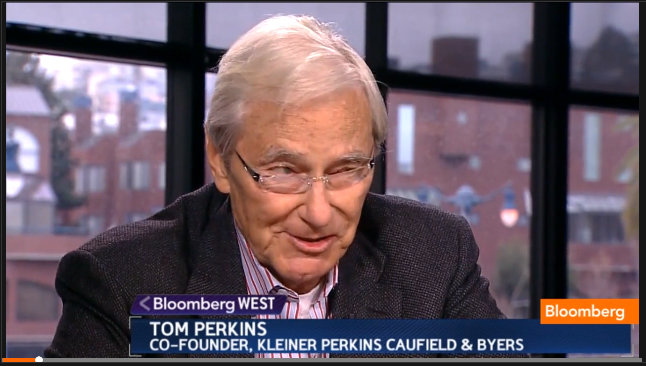
"content": "\u003cdiv class=\"single-video\">\u003cobject style=\"overflow: hidden\" width=\"640\" height=\"430\" classid=\"d27cdb6e-ae6d-11cf-96b8-444553540000\" codebase=\"http://download.macromedia.com/pub/shockwave/cabs/flash/swflash.cab#version=6,0,40,0\">\u003cparam name=\"src\" value=\"http://www.bloomberg.com/video/embed/smQfhKIZTWWFD5hGqAwASA?height=395&width=640\">\u003cembed style=\"overflow: hidden\" width=\"640\" height=\"430\" type=\"application/x-shockwave-flash\" src=\"http://www.bloomberg.com/video/embed/smQfhKIZTWWFD5hGqAwASA?height=395&width=640\">\u003c/embed>\u003c/object>\u003c/div>\n\u003cp>Thomas Perkins, the pioneering Silicon Valley financier who triggered an avalanche of criticism by likening protests against wealth inequity with the Nazi pogroms against Jews in late 1930s Germany, is sorry he said that. But he’s unapologetic about his message that the rich are being persecuted for no other reason than their wealth.\u003c/p>\n\u003caside class=\"pullquote alignleft\">‘It’s absurd to demonize the rich for being rich and doing what the rich do, which is get richer by creating opportunity for others.’\u003cbr>\n\u003ccite>Thomas Perkins\u003c/cite>\u003c/aside>\n\u003cp>Perkins unleashed a storm last week with \u003ca href=\"http://online.wsj.com/news/articles/SB10001424052702304549504579316913982034286\" target=\"_blank\" rel=\"noopener\">a 186-word letter to the Wall Street Journal\u003c/a>. “I would call attention to the parallels of fascist Nazi Germany to its war on its ‘one percent,’ namely its Jews,” he wrote, “to the progressive war on the American one percent, namely the rich.'”\u003c/p>\n\u003cp>He went on to blast the San Francisco Chronicle for its “demonization of the rich … embedded in virtually every word.” He decried anger over Google buses in San Francisco. He decried the discontent over soaring rents driven largely by tech-sector workers. He decried mean remarks in the local media about his former wife, wealthy novelist Danielle Steel. And he concluded: “This is a very dangerous drift in our American thinking. \u003ca href=\"http://www.pbs.org/wgbh/amex/holocaust/peopleevents/pandeAMEX99.html\" target=\"_blank\" rel=\"noopener\">Kristallnacht\u003c/a> was unthinkable in 1930; is its descendant ‘progressive’ radicalism unthinkable now?”\u003c/p>\n\u003cp>(If you’re not familiar with Kristallnacht, one of the most notorious episodes in Nazi Germany’s campaign of terror and murder against Jews, here’s a primer from the U.S. Holocast Memorial Museum: \u003ca href=\"http://www.ushmm.org/wlc/en/article.php?ModuleId=10005201\" target=\"_blank\" rel=\"noopener\">Kristallnacht: A Nationwide Pogrom\u003c/a>.)\u003c/p>\n\u003cp>Perkins, 81, is a founder of \u003ca href=\"http://www.kpcb.com/\" target=\"_blank\" rel=\"noopener\">Kleiner Perkins Caufield and Byers\u003c/a>, a legendary \u003ca href=\"http://www.startupmuse.com/2011/03/the-vc-address-of-choice-sand-hill-road/\" target=\"_blank\" rel=\"noopener\">Sand Hill Road \u003c/a>venture capital firm. And the firm was one of the first in the technology world to disown Perkins’ remarks. Here’s the tweet:\u003c/p>\n\u003cblockquote class=\"twitter-tweet\" lang=\"en\">\u003cp>Tom Perkins has not been involved in KPCB in years. We were shocked by his views expressed today in the WSJ and do not agree.\u003c/p>\n\u003cp>— Kleiner Perkins (@kpcb) \u003ca href=\"https://twitter.com/kpcb/statuses/427185213261623297\">January 25, 2014\u003c/a>\u003c/p>\u003c/blockquote>\n\u003cp>Marc Andreessen, a VC who made his first fortune as co-inventor of the Mosaic web browser and cofounder of Netscape, had a more pointed observation:\u003c/p>\n\u003cblockquote class=\"twitter-tweet\" lang=\"en\">\u003cp>I wish to express my extreme displeasure with Tom Perkins. His positions just go to prove that he is the leading asshole in the state.\u003c/p>\n\u003cp>— Marc Andreessen (@pmarca) \u003ca href=\"https://twitter.com/pmarca/statuses/427548069320617984\">January 26, 2014\u003c/a>\u003c/p>\u003c/blockquote>\n\u003cp>Monday, Perkins went on Bloomberg TV to talk about the commotion his letter stirred. \u003ca href=\"http://www.bloomberg.com/video/perkins-kleiner-perkins-threw-me-under-the-bus-HpoH9CoKSlaLcOMchzzXkA.html\" target=\"_blank\" rel=\"noopener\">He complained\u003c/a> that Kleiner Perkins had thrown him under the bus and that Andreessen’s comment was not very nice. (He’s right.) He said he’s sent an apology to Abe Foxman, president of the \u003ca href=\"http://www.adl.org/\" target=\"_blank\" rel=\"noopener\">Anti-Defamation League\u003c/a>, to dispel any notion he was being anti-Semitic when he used the word “Kristallnacht” in his critique of “the progressive war on the American 1 percent.”\u003c/p>\n\u003cp>[ad fullwidth]\u003c/p>\n\u003cp>“It was a terrible word to have chosen,” Perkins told interviewer Emily Chang. “I, like many, have tried to understand the 20th century, and the incomprehensible evil of the Holocaust. It can’t be explained, even to try to explain it is questionable. It’s wrong. It’s evil.”\u003c/p>\n\u003cp>Did you catch that? That’s the apology part, Perkins saying he’s sorry for comparing Kristallnacht and, by implication, the murder of millions to … \u003cem>what\u003c/em> exactly?\u003c/p>\n\u003cp>Perkins again:\u003c/p>\n\u003cblockquote>\u003cp>I used the word because during the Occupy of San Francisco by the Occupy Wall Street crowd, they broke the windows of the Wells Fargo Bank, they marched up to our automobile strip on Van Ness Avenue and broke all the windows in all the luxury car dealerships. And I saw that and I remember that the police just stood by, frozen, and I thought, ‘Well, this is how Kristallnacht began,’ so that word was in my mind.\u003c/p>\u003c/blockquote>\n\u003cp>So, just for the sake of those keeping score at home, Perkins sees the Occupy movement in 2011-12 as the modern equivalent to 1938 Germany’s fascist ruling party turning loose its paramilitaries and thugs to wreak havoc on a community that had been under increasing government-sponsored attacks for more than five years.\u003c/p>\n\u003cp>He later expanded on his Occupy Wall Street/Nazi Germany parallel:\u003c/p>\n\u003cblockquote>\u003cp>The Jews were only 1 percent of the German population, most Germans had never met a Jew, yet Hitler was able to demonize the Jews, and Kristallnacht was one of the earlier manifestations, but there’d been others before it, and then of course we know about the evil of the Holocaust. I guess my point was that when you start to use hatred against a minority, it can get out of control. I think that was my thought. And now that as the messenger I’ve been thoroughly killed by everybody, at least read the message.\u003c/p>\u003c/blockquote>\n\u003cp>Perkins went on to say that public figures he considers friends, including Al Gore and Gov. Jerry Brown, have told him that inequality is the No. 1 issue facing the United States. “But the 1 percent are not causing the inequality,” Perkins said. “They are the job creators. … It’s absurd to demonize the rich for being rich and doing what the rich do, which is get richer by creating opportunity for others.”\u003c/p>\n\u003cp>And the wealthy are under threat, he said. “I think we’re beginning to engage in class warfare. I think the rich as a class are threatened through higher taxes, higher regulation and so forth. And that’s my message.”\u003c/p>\n\u003cp>Perkins acknowledged the 99 percent, where he says he started out, are suffering. He said the inequality besetting the nation is due to over-regulation and “higher costs caused by more government than we need.”\u003c/p>\n\u003cp>\u003c/p>\n\u003cp>“I think the solution is less interference, lower taxes, let the rich do what the rich do, which is get richer, but along the way they bring everyone else with them when the system is working,” Perkins said.\u003c/p>\n\n",
"blocks": [],
"excerpt": "Venture capitalist says he's sorry if he sounded anti-Semitic, then repeats he the rich are under threat. ",
"status": "publish",
"parent": 0,
"modified": 1721149520,
"stats": {
"hasAudio": false,
"hasVideo": false,
"hasChartOrMap": false,
"iframeSrcs": [],
"hasGoogleForm": false,
"hasGallery": false,
"hasHearkenModule": false,
"hasPolis": false,
"paragraphCount": 24,
"wordCount": 1028
},
"headData": {
"title": "Tom Perkins Says He's Sorry, Sort of, for 'Kristallnacht' Remark | KQED",
"description": "Venture capitalist says he's sorry if he sounded anti-Semitic, then repeats he the rich are under threat. ",
"ogTitle": "",
"ogDescription": "",
"ogImgId": "",
"twTitle": "",
"twDescription": "",
"twImgId": "",
"schema": {
"@context": "https://schema.org",
"@type": "NewsArticle",
"headline": "Tom Perkins Says He's Sorry, Sort of, for 'Kristallnacht' Remark",
"datePublished": "2014-01-28T17:48:51-08:00",
"dateModified": "2024-07-16T10:05:20-07:00",
"image": "https://cdn.kqed.org/wp-content/uploads/2020/02/KQED-OG-Image@1x.png",
"isAccessibleForFree": "True",
"publisher": {
"@type": "NewsMediaOrganization",
"@id": "https://www.kqed.org/#organization",
"name": "KQED",
"logo": "https://cdn.kqed.org/wp-content/uploads/2020/02/KQED-OG-Image@1x.png",
"url": "https://www.kqed.org",
"sameAs": [
"https://www.facebook.com/KQED",
"https://twitter.com/KQED",
"https://www.instagram.com/kqed/",
"https://www.tiktok.com/@kqedofficial",
"https://www.linkedin.com/company/kqed",
"https://www.youtube.com/channel/UCeC0IOo7i1P_61zVUWbJ4nw"
]
}
}
},
"sticky": false,
"customPermalink": "2014/01/28/draft-vc-tom-perkins-apologizes-sort-of-for-kristallnacht-remark/",
"path": "/news/124592/tom-perkins-says-hes-sorry-sort-of-for-kristallnacht-remark",
"audioTrackLength": null,
"parsedContent": [
{
"type": "contentString",
"content": "\u003cdiv class=\"post-body\">\u003cp>\u003cdiv class=\"single-video\">\u003cobject style=\"overflow: hidden\" width=\"640\" height=\"430\" classid=\"d27cdb6e-ae6d-11cf-96b8-444553540000\" codebase=\"http://download.macromedia.com/pub/shockwave/cabs/flash/swflash.cab#version=6,0,40,0\">\u003cparam name=\"src\" value=\"http://www.bloomberg.com/video/embed/smQfhKIZTWWFD5hGqAwASA?height=395&width=640\">\u003cembed style=\"overflow: hidden\" width=\"640\" height=\"430\" type=\"application/x-shockwave-flash\" src=\"http://www.bloomberg.com/video/embed/smQfhKIZTWWFD5hGqAwASA?height=395&width=640\">\u003c/embed>\u003c/object>\u003c/div>\n\u003cp>Thomas Perkins, the pioneering Silicon Valley financier who triggered an avalanche of criticism by likening protests against wealth inequity with the Nazi pogroms against Jews in late 1930s Germany, is sorry he said that. But he’s unapologetic about his message that the rich are being persecuted for no other reason than their wealth.\u003c/p>\n\u003caside class=\"pullquote alignleft\">‘It’s absurd to demonize the rich for being rich and doing what the rich do, which is get richer by creating opportunity for others.’\u003cbr>\n\u003ccite>Thomas Perkins\u003c/cite>\u003c/aside>\n\u003cp>Perkins unleashed a storm last week with \u003ca href=\"http://online.wsj.com/news/articles/SB10001424052702304549504579316913982034286\" target=\"_blank\" rel=\"noopener\">a 186-word letter to the Wall Street Journal\u003c/a>. “I would call attention to the parallels of fascist Nazi Germany to its war on its ‘one percent,’ namely its Jews,” he wrote, “to the progressive war on the American one percent, namely the rich.'”\u003c/p>\n\u003cp>He went on to blast the San Francisco Chronicle for its “demonization of the rich … embedded in virtually every word.” He decried anger over Google buses in San Francisco. He decried the discontent over soaring rents driven largely by tech-sector workers. He decried mean remarks in the local media about his former wife, wealthy novelist Danielle Steel. And he concluded: “This is a very dangerous drift in our American thinking. \u003ca href=\"http://www.pbs.org/wgbh/amex/holocaust/peopleevents/pandeAMEX99.html\" target=\"_blank\" rel=\"noopener\">Kristallnacht\u003c/a> was unthinkable in 1930; is its descendant ‘progressive’ radicalism unthinkable now?”\u003c/p>\n\u003cp>(If you’re not familiar with Kristallnacht, one of the most notorious episodes in Nazi Germany’s campaign of terror and murder against Jews, here’s a primer from the U.S. Holocast Memorial Museum: \u003ca href=\"http://www.ushmm.org/wlc/en/article.php?ModuleId=10005201\" target=\"_blank\" rel=\"noopener\">Kristallnacht: A Nationwide Pogrom\u003c/a>.)\u003c/p>\n\u003cp>Perkins, 81, is a founder of \u003ca href=\"http://www.kpcb.com/\" target=\"_blank\" rel=\"noopener\">Kleiner Perkins Caufield and Byers\u003c/a>, a legendary \u003ca href=\"http://www.startupmuse.com/2011/03/the-vc-address-of-choice-sand-hill-road/\" target=\"_blank\" rel=\"noopener\">Sand Hill Road \u003c/a>venture capital firm. And the firm was one of the first in the technology world to disown Perkins’ remarks. Here’s the tweet:\u003c/p>\n\u003cblockquote class=\"twitter-tweet\" lang=\"en\">\u003cp>Tom Perkins has not been involved in KPCB in years. We were shocked by his views expressed today in the WSJ and do not agree.\u003c/p>\n\u003cp>— Kleiner Perkins (@kpcb) \u003ca href=\"https://twitter.com/kpcb/statuses/427185213261623297\">January 25, 2014\u003c/a>\u003c/p>\u003c/blockquote>\n\u003cp>Marc Andreessen, a VC who made his first fortune as co-inventor of the Mosaic web browser and cofounder of Netscape, had a more pointed observation:\u003c/p>\n\u003cblockquote class=\"twitter-tweet\" lang=\"en\">\u003cp>I wish to express my extreme displeasure with Tom Perkins. His positions just go to prove that he is the leading asshole in the state.\u003c/p>\n\u003cp>— Marc Andreessen (@pmarca) \u003ca href=\"https://twitter.com/pmarca/statuses/427548069320617984\">January 26, 2014\u003c/a>\u003c/p>\u003c/blockquote>\n\u003cp>Monday, Perkins went on Bloomberg TV to talk about the commotion his letter stirred. \u003ca href=\"http://www.bloomberg.com/video/perkins-kleiner-perkins-threw-me-under-the-bus-HpoH9CoKSlaLcOMchzzXkA.html\" target=\"_blank\" rel=\"noopener\">He complained\u003c/a> that Kleiner Perkins had thrown him under the bus and that Andreessen’s comment was not very nice. (He’s right.) He said he’s sent an apology to Abe Foxman, president of the \u003ca href=\"http://www.adl.org/\" target=\"_blank\" rel=\"noopener\">Anti-Defamation League\u003c/a>, to dispel any notion he was being anti-Semitic when he used the word “Kristallnacht” in his critique of “the progressive war on the American 1 percent.”\u003c/p>\n\u003cp>\u003c/p>\u003c/div>",
"attributes": {
"named": {},
"numeric": []
}
},
{
"type": "component",
"content": "",
"name": "ad",
"attributes": {
"named": {
"label": "fullwidth"
},
"numeric": [
"fullwidth"
]
}
},
{
"type": "contentString",
"content": "\u003cdiv class=\"post-body\">\u003cp>\u003c/p>\n\u003cp>“It was a terrible word to have chosen,” Perkins told interviewer Emily Chang. “I, like many, have tried to understand the 20th century, and the incomprehensible evil of the Holocaust. It can’t be explained, even to try to explain it is questionable. It’s wrong. It’s evil.”\u003c/p>\n\u003cp>Did you catch that? That’s the apology part, Perkins saying he’s sorry for comparing Kristallnacht and, by implication, the murder of millions to … \u003cem>what\u003c/em> exactly?\u003c/p>\n\u003cp>Perkins again:\u003c/p>\n\u003cblockquote>\u003cp>I used the word because during the Occupy of San Francisco by the Occupy Wall Street crowd, they broke the windows of the Wells Fargo Bank, they marched up to our automobile strip on Van Ness Avenue and broke all the windows in all the luxury car dealerships. And I saw that and I remember that the police just stood by, frozen, and I thought, ‘Well, this is how Kristallnacht began,’ so that word was in my mind.\u003c/p>\u003c/blockquote>\n\u003cp>So, just for the sake of those keeping score at home, Perkins sees the Occupy movement in 2011-12 as the modern equivalent to 1938 Germany’s fascist ruling party turning loose its paramilitaries and thugs to wreak havoc on a community that had been under increasing government-sponsored attacks for more than five years.\u003c/p>\n\u003cp>He later expanded on his Occupy Wall Street/Nazi Germany parallel:\u003c/p>\n\u003cblockquote>\u003cp>The Jews were only 1 percent of the German population, most Germans had never met a Jew, yet Hitler was able to demonize the Jews, and Kristallnacht was one of the earlier manifestations, but there’d been others before it, and then of course we know about the evil of the Holocaust. I guess my point was that when you start to use hatred against a minority, it can get out of control. I think that was my thought. And now that as the messenger I’ve been thoroughly killed by everybody, at least read the message.\u003c/p>\u003c/blockquote>\n\u003cp>Perkins went on to say that public figures he considers friends, including Al Gore and Gov. Jerry Brown, have told him that inequality is the No. 1 issue facing the United States. “But the 1 percent are not causing the inequality,” Perkins said. “They are the job creators. … It’s absurd to demonize the rich for being rich and doing what the rich do, which is get richer by creating opportunity for others.”\u003c/p>\n\u003cp>And the wealthy are under threat, he said. “I think we’re beginning to engage in class warfare. I think the rich as a class are threatened through higher taxes, higher regulation and so forth. And that’s my message.”\u003c/p>\n\u003cp>Perkins acknowledged the 99 percent, where he says he started out, are suffering. He said the inequality besetting the nation is due to over-regulation and “higher costs caused by more government than we need.”\u003c/p>\n\u003cp>\u003c/p>\n\u003cp>“I think the solution is less interference, lower taxes, let the rich do what the rich do, which is get richer, but along the way they bring everyone else with them when the system is working,” Perkins said.\u003c/p>\n\n\u003c/div>\u003c/p>",
"attributes": {
"named": {},
"numeric": []
}
}
],
"link": "/news/124592/tom-perkins-says-hes-sorry-sort-of-for-kristallnacht-remark",
"authors": [
"222"
],
"programs": [
"news_6944"
],
"categories": [
"news_248"
],
"tags": [
"news_5605",
"news_3096",
"news_5603"
],
"featImg": "news_124617",
"label": "news_6944"
},
"news_124528": {
"type": "posts",
"id": "news_124528",
"meta": {
"index": "posts_1716263798",
"site": "news",
"id": "124528",
"score": null,
"sort": [
1390862801000
]
},
"guestAuthors": [],
"slug": "feds-make-deal-with-net-firms-over-disclosure-of-user-info",
"title": "Feds Make Deal With Net Firms Over Disclosure of User Info",
"publishDate": 1390862801,
"format": "aside",
"headTitle": "Feds Make Deal With Net Firms Over Disclosure of User Info | KQED",
"labelTerm": {
"term": 6944,
"site": "news"
},
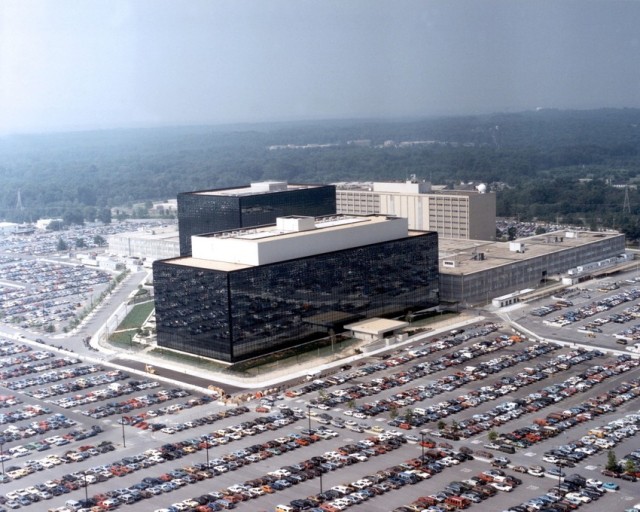
"content": "\u003cfigure id=\"attachment_99672\" class=\"wp-caption aligncenter\" style=\"max-width: 640px\">\u003ca href=\"http://ww2.kqed.org/news/wp-content/uploads/sites/10/2013/06/NSA.jpg-e1376089449125.jpg\">\u003cimg loading=\"lazy\" decoding=\"async\" class=\"size-full wp-image-99672\" src=\"http://ww2.kqed.org/news/wp-content/uploads/sites/10/2013/06/NSA.jpg-e1376089449125.jpg\" alt=\"NSA headquarters in Fort Meade, Maryland. (NSA vis Getty Images)\" width=\"640\" height=\"512\">\u003c/a>\u003cfigcaption class=\"wp-caption-text\">NSA headquarters in Fort Meade, Md. (NSA vis Getty Images)\u003c/figcaption>\u003c/figure>\n\u003cp>\u003cstrong>\u003ca href=\"https://twitter.com/jessejholland\" target=\"_blank\" rel=\"noopener\">Jesse J. Holland\u003c/a>\u003cbr>\nAssociated Press\u003c/strong>\u003c/p>\n\u003cp>WASHINGTON — The government and leading Internet companies on Monday announced a compromise that will allow those companies to reveal how often they are ordered to turn over customer information in national security investigations.\u003c/p>\n\u003cp>The \u003ca href=\"http://www.justice.gov/opa/pr/2014/January/14-ag-081.html\" target=\"_blank\" rel=\"noopener\">Justice Department said\u003c/a> it had reached agreements with Google, Microsoft, Yahoo, Facebook and LinkedIn that would put an end to those companies’ legal challenges before the Foreign Intelligence Surveillance Court. The companies had asked judges to allow them to disclose data on national security orders the companies have received under the Foreign Intelligence Surveillance Act.\u003c/p>\n\u003cp>The delivery of customer information to the government from Internet companies has been under examination following leaks about \u003ca href=\"http://www.nsa.gov/\" target=\"_blankl\" rel=\"noopener\">National Security Agency\u003c/a> surveillance by \u003ca href=\"http://www.npr.org/templates/archives/archive.php?thingId=190293264\" target=\"_blank\" rel=\"noopener\">former NSA systems analyst Edward Snowden\u003c/a>.\u003c/p>\n\u003cp>Some of those companies were among several U.S. Internet businesses identified as giving the NSA access to customer data under \u003ca href=\"http://www.theverge.com/2013/7/17/4517480/nsa-spying-prism-surveillance-cheat-sheet\" target=\"_blank\" rel=\"noopener\">the program known as PRISM\u003c/a>. But the companies had said they wanted to make the disclosures in order to correct inaccuracies in news reports and to calm public speculation about the scope of the companies’ cooperation with the government. The providers wanted to show that only a tiny fraction of their customers’ accounts have been subject to legal orders.\u003c/p>\n\u003cp>[ad fullwidth]\u003c/p>\n\u003cp>The government had opposed those requests, but reached a deal with the companies late last week.\u003c/p>\n\u003cp>“Permitting disclosure of this aggregate data addresses an important area of concern to communications providers and the public,” Attorney General Eric Holder and Director of National Intelligence James Clapper said in a joint statement.\u003c/p>\n\u003cp>Following the Snowden leaks, the FBI allowed communications providers to report in a limited way the number of orders for data they received from the government and the number of accounts affected by such orders. However, the FBI agreed to disclosure only of a single, aggregate number of criminal and national security-related orders to the companies from all U.S. governmental entities, plus local and state entities.\u003c/p>\n\u003cp>Under the compromise announced Monday, Internet companies will be able to report the number of criminal-related orders from the government. They also will be able to release, rounded to the nearest thousand, the number of secret national security-related orders from government investigators; the number of national security-related orders from the FISA court and the number of customers those orders affected, and whether those orders were for just email addresses or covered additional information.\u003c/p>\n\u003cp>The companies can also choose a simplified reporting process that allows them to report the number of criminal-related orders, and then national security or intelligence orders in increments of 250 and the total number of customers targeted, also in groups of 250.\u003c/p>\n\u003cp>“These new reporting methods enable communications providers to make public more information than ever before about the orders that they have received to provide data to the government,” Deputy Attorney General James M. Cole said in a letter to the five Internet companies.\u003c/p>\n\u003cp>\u003c/p>\n\u003cp>The companies will have to delay releasing the number of national security orders by six months. They also had to promise that if they come up with new technology or new forms of communication, they are not able to reveal that the government can tap into that new technology for two years.\u003c/p>\n\n",
"blocks": [],
"excerpt": "Companies can now report roughly how many demands for user data the NSA and other agencies are making. ",
"status": "publish",
"parent": 0,
"modified": 1721106185,
"stats": {
"hasAudio": false,
"hasVideo": false,
"hasChartOrMap": false,
"iframeSrcs": [],
"hasGoogleForm": false,
"hasGallery": false,
"hasHearkenModule": false,
"hasPolis": false,
"paragraphCount": 14,
"wordCount": 555
},
"headData": {
"title": "Feds Make Deal With Net Firms Over Disclosure of User Info | KQED",
"description": "Companies can now report roughly how many demands for user data the NSA and other agencies are making. ",
"ogTitle": "",
"ogDescription": "",
"ogImgId": "",
"twTitle": "",
"twDescription": "",
"twImgId": "",
"schema": {
"@context": "https://schema.org",
"@type": "NewsArticle",
"headline": "Feds Make Deal With Net Firms Over Disclosure of User Info",
"datePublished": "2014-01-27T14:46:41-08:00",
"dateModified": "2024-07-15T22:03:05-07:00",
"image": "https://cdn.kqed.org/wp-content/uploads/2020/02/KQED-OG-Image@1x.png",
"isAccessibleForFree": "True",
"publisher": {
"@type": "NewsMediaOrganization",
"@id": "https://www.kqed.org/#organization",
"name": "KQED",
"logo": "https://cdn.kqed.org/wp-content/uploads/2020/02/KQED-OG-Image@1x.png",
"url": "https://www.kqed.org",
"sameAs": [
"https://www.facebook.com/KQED",
"https://twitter.com/KQED",
"https://www.instagram.com/kqed/",
"https://www.tiktok.com/@kqedofficial",
"https://www.linkedin.com/company/kqed",
"https://www.youtube.com/channel/UCeC0IOo7i1P_61zVUWbJ4nw"
]
}
}
},
"sticky": false,
"customPermalink": "2014/01/27/124528/",
"path": "/news/124528/feds-make-deal-with-net-firms-over-disclosure-of-user-info",
"audioTrackLength": null,
"parsedContent": [
{
"type": "contentString",
"content": "\u003cdiv class=\"post-body\">\u003cp>\u003cfigure id=\"attachment_99672\" class=\"wp-caption aligncenter\" style=\"max-width: 640px\">\u003ca href=\"http://ww2.kqed.org/news/wp-content/uploads/sites/10/2013/06/NSA.jpg-e1376089449125.jpg\">\u003cimg loading=\"lazy\" decoding=\"async\" class=\"size-full wp-image-99672\" src=\"http://ww2.kqed.org/news/wp-content/uploads/sites/10/2013/06/NSA.jpg-e1376089449125.jpg\" alt=\"NSA headquarters in Fort Meade, Maryland. (NSA vis Getty Images)\" width=\"640\" height=\"512\">\u003c/a>\u003cfigcaption class=\"wp-caption-text\">NSA headquarters in Fort Meade, Md. (NSA vis Getty Images)\u003c/figcaption>\u003c/figure>\n\u003cp>\u003cstrong>\u003ca href=\"https://twitter.com/jessejholland\" target=\"_blank\" rel=\"noopener\">Jesse J. Holland\u003c/a>\u003cbr>\nAssociated Press\u003c/strong>\u003c/p>\n\u003cp>WASHINGTON — The government and leading Internet companies on Monday announced a compromise that will allow those companies to reveal how often they are ordered to turn over customer information in national security investigations.\u003c/p>\n\u003cp>The \u003ca href=\"http://www.justice.gov/opa/pr/2014/January/14-ag-081.html\" target=\"_blank\" rel=\"noopener\">Justice Department said\u003c/a> it had reached agreements with Google, Microsoft, Yahoo, Facebook and LinkedIn that would put an end to those companies’ legal challenges before the Foreign Intelligence Surveillance Court. The companies had asked judges to allow them to disclose data on national security orders the companies have received under the Foreign Intelligence Surveillance Act.\u003c/p>\n\u003cp>The delivery of customer information to the government from Internet companies has been under examination following leaks about \u003ca href=\"http://www.nsa.gov/\" target=\"_blankl\" rel=\"noopener\">National Security Agency\u003c/a> surveillance by \u003ca href=\"http://www.npr.org/templates/archives/archive.php?thingId=190293264\" target=\"_blank\" rel=\"noopener\">former NSA systems analyst Edward Snowden\u003c/a>.\u003c/p>\n\u003cp>Some of those companies were among several U.S. Internet businesses identified as giving the NSA access to customer data under \u003ca href=\"http://www.theverge.com/2013/7/17/4517480/nsa-spying-prism-surveillance-cheat-sheet\" target=\"_blank\" rel=\"noopener\">the program known as PRISM\u003c/a>. But the companies had said they wanted to make the disclosures in order to correct inaccuracies in news reports and to calm public speculation about the scope of the companies’ cooperation with the government. The providers wanted to show that only a tiny fraction of their customers’ accounts have been subject to legal orders.\u003c/p>\n\u003cp>\u003c/p>\u003c/div>",
"attributes": {
"named": {},
"numeric": []
}
},
{
"type": "component",
"content": "",
"name": "ad",
"attributes": {
"named": {
"label": "fullwidth"
},
"numeric": [
"fullwidth"
]
}
},
{
"type": "contentString",
"content": "\u003cdiv class=\"post-body\">\u003cp>\u003c/p>\n\u003cp>The government had opposed those requests, but reached a deal with the companies late last week.\u003c/p>\n\u003cp>“Permitting disclosure of this aggregate data addresses an important area of concern to communications providers and the public,” Attorney General Eric Holder and Director of National Intelligence James Clapper said in a joint statement.\u003c/p>\n\u003cp>Following the Snowden leaks, the FBI allowed communications providers to report in a limited way the number of orders for data they received from the government and the number of accounts affected by such orders. However, the FBI agreed to disclosure only of a single, aggregate number of criminal and national security-related orders to the companies from all U.S. governmental entities, plus local and state entities.\u003c/p>\n\u003cp>Under the compromise announced Monday, Internet companies will be able to report the number of criminal-related orders from the government. They also will be able to release, rounded to the nearest thousand, the number of secret national security-related orders from government investigators; the number of national security-related orders from the FISA court and the number of customers those orders affected, and whether those orders were for just email addresses or covered additional information.\u003c/p>\n\u003cp>The companies can also choose a simplified reporting process that allows them to report the number of criminal-related orders, and then national security or intelligence orders in increments of 250 and the total number of customers targeted, also in groups of 250.\u003c/p>\n\u003cp>“These new reporting methods enable communications providers to make public more information than ever before about the orders that they have received to provide data to the government,” Deputy Attorney General James M. Cole said in a letter to the five Internet companies.\u003c/p>\n\u003cp>\u003c/p>\n\u003cp>The companies will have to delay releasing the number of national security orders by six months. They also had to promise that if they come up with new technology or new forms of communication, they are not able to reveal that the government can tap into that new technology for two years.\u003c/p>\n\n\u003c/div>\u003c/p>",
"attributes": {
"named": {},
"numeric": []
}
}
],
"link": "/news/124528/feds-make-deal-with-net-firms-over-disclosure-of-user-info",
"authors": [
"237"
],
"programs": [
"news_6944"
],
"categories": [
"news_8",
"news_248"
],
"tags": [
"news_4492",
"news_249",
"news_93",
"news_1445",
"news_3952",
"news_4481",
"news_17968",
"news_351"
],
"featImg": "news_99672",
"label": "news_6944"
},
"news_124024": {
"type": "posts",
"id": "news_124024",
"meta": {
"index": "posts_1716263798",
"site": "news",
"id": "124024",
"score": null,
"sort": [
1390350307000
]
},
"guestAuthors": [],
"slug": "yet-another-protest-against-tech-buses-in-san-francisco",
"title": "Yet Another Protest Against Tech Buses as San Francisco Adopts Shuttle Plan",
"publishDate": 1390350307,
"format": "aside",
"headTitle": "Yet Another Protest Against Tech Buses as San Francisco Adopts Shuttle Plan | KQED",
"labelTerm": {
"term": 6944,
"site": "news"
},
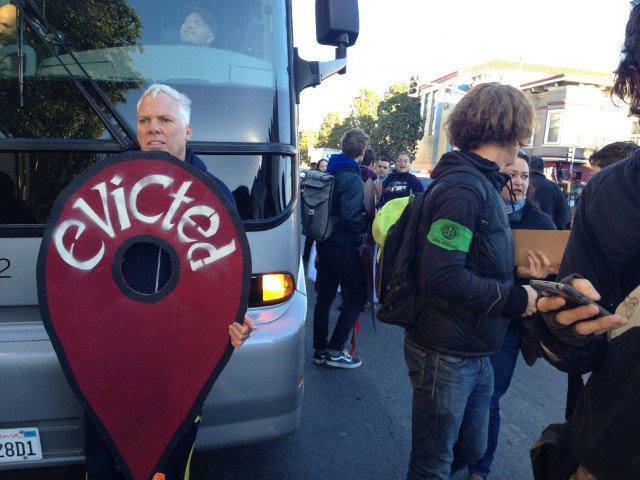
"content": "\u003cfigure id=\"attachment_120270\" class=\"wp-caption alignright\" style=\"max-width: 640px\">\u003ca href=\"http://ww2.kqed.org/news/wp-content/uploads/sites/10/2013/12/11293201603_070575a91a_o-e1386615496451.jpg\">\u003cimg loading=\"lazy\" decoding=\"async\" class=\"size-medium wp-image-120270\" src=\"http://ww2.kqed.org/news/wp-content/uploads/sites/10/2013/12/11293201603_070575a91a_o-640x480.jpg\" alt=\"In a December protest, activists surround a Google bus at 24th and Valencia streets Monday in protest aimed at evictions and displacement in San Francisco's Mission District. (Steve Rhodes via Flickr)\" width=\"640\" height=\"480\">\u003c/a>\u003cfigcaption class=\"wp-caption-text\">In a December protest, activists surround a Google bus at 24th and Valencia streets Monday in protest aimed at evictions and displacement in San Francisco’s Mission District. (Steve Rhodes via Flickr)\u003c/figcaption>\u003c/figure>\n\u003cp>\u003cstrong>Update, 4:25 p.m.:\u003c/strong> The San Francisco Municipal Transportation Agency board of directors has just approved \u003ca href=\"http://www.sfmta.com/projects-planning/projects/commuter-shuttles-policy-and-pilot-program\" target=\"_blank\">a pilot program\u003c/a> to begin regulating employee shuttles in the city.\u003c/p>\n\u003cp>The proposal was passed by a unanimous voice vote that came after two hours of sometimes angry public comment.\u003c/p>\n\u003cp>The hearing took place after anti-displacement protesters held another in a series of protests against the buses, which are used by Google, Facebook, Apple and other tech firms to transport workers to the South Bay. In today’s action, marchers blocked buses reportedly headed for Google and Facebook at 8th and Market Streets for about 30 minutes during the morning rush hour. The activists, who are demanding the city take action to slow the pace of evictions and limit rent increases, then marched to the San Francisco Association of Realtors before holding a rally at City Hall.\u003c/p>\n\u003cp>The SFMTA’s pilot program would cover shuttles for UCSF and other colleges in the city as well as bus services operated on behalf of large office buildings and the Silicon Valley technology companies. If approved, the SFMTA proposal would:\u003c/p>\n\u003cul>\n\u003cli>Require shuttle operators — both bus firms and companies that set up shuttles for workers — to get permits to operate in San Francisco.\u003c/li>\n\u003cli>Designate 200 stops for shuttle use, many of which are Muni bus stops.\u003c/li>\n\u003cli>Impose rules to prevent shuttles from blocking Muni vehicles or other traffic.\u003c/li>\n\u003cli>Charge buses $1 for every stop they make. SFMTA planners say that will raise $1.5 million over the life of the 18-month pilot and defray the program ‘s costs.\u003c/li>\n\u003c/ul>\n\u003cp>The SFMTA board heard about two hours of public comment on the proposal. On the anti-side, residents and activists said the $1 per stop price was too low, that the buses are out of control on the streets, that they pose a danger to pedestrians and cyclists, and that they’re helping fuel the displacement of tenants unable to pay rents driven upward by the influx of highly paid tech workers.\u003c/p>\n\u003cp>[ad fullwidth]\u003c/p>\n\u003cp>“Nothing’s going to change until people rise up and do something, and stopping these buses would be a step in the right direction,” one speaker said.\u003c/p>\n\u003cp>On the other side, several tech company and bus service employees said they supported both the shuttles and the pilot program. They said the buses reduce car trips, cut pollution and provide economic benefits to the city both by fostering the current tech boom and by encouraging those who commute to Silicon Valley via bus to spend more in the city.\u003c/p>\n\u003cp>A speaker who identified herself as Krista Jones, an employee of bus service Bauer’s Transportation, said activists were indulging in “misplaced hostility” by blaming the buses for the city’s housing and displacement issues. “Wake the hell up to what’s really going on,” she said.\u003c/p>\n\u003cp>KQED’s Mina Kim talks with News Fix editor Dan Brekke about the details of the pilot program:\u003c/p>\n\u003cp>\u003ciframe loading=\"lazy\" src=\"https://w.soundcloud.com/player/?url=https%3A//api.soundcloud.com/tracks/130737142&color=ff6600&auto_play=false&show_artwork=true\" frameborder=\"no\" scrolling=\"no\" width=\"100%\" height=\"166\">\u003c/iframe>\u003c/p>\n\u003cp>\u003cstrong>Update, 2 p.m.:\u003c/strong> The San Francisco Municipal Transportation Agency board meeting has started. On the agenda: \u003ca href=\"http://www.sfmta.com/projects-planning/projects/commuter-shuttles-policy-and-pilot-program\" target=\"_blank\">a pilot program under which shuttle operators would pay for using city-owned and -maintained stops\u003c/a>. (Before that item came up, the MTA board heard public comments calling on the agency to do something to respond to a rising number of pedestrians being struck and killed by cars in the city.)\u003c/p>\n\u003cp>KQED News reporter \u003ca href=\"https://twitter.com/SFNewsReporter\">Alex Emslie\u003c/a> is at the meeting:\u003c/p>\n\u003cblockquote class=\"twitter-tweet\" lang=\"en\">\u003cp>\u003ca href=\"https://twitter.com/search?q=%23SFMTA&src=hash\">#SFMTA\u003c/a> Mtng on \u003ca href=\"https://twitter.com/search?q=%23techshuttle&src=hash\">#techshuttle\u003c/a> regulations getting underway … packed room. Just avoided getting kicked out. \u003ca href=\"http://t.co/Q0xscmFHUL\">pic.twitter.com/Q0xscmFHUL\u003c/a>\u003c/p>\n\u003cp>— Alex Emslie (@SFNewsReporter) \u003ca href=\"https://twitter.com/SFNewsReporter/statuses/425740190708006912\">January 21, 2014\u003c/a>\u003c/p>\u003c/blockquote>\n\u003cblockquote class=\"twitter-tweet\" lang=\"en\">\u003cp>At least 27 speakers waiting to sound off to \u003ca href=\"https://twitter.com/search?q=%23SFMTA&src=hash\">#SFMTA\u003c/a> board abt \u003ca href=\"https://twitter.com/search?q=%23techshuttle&src=hash\">#techshuttle\u003c/a> regulation… next item after director’s report.\u003c/p>\n\u003cp>— Alex Emslie (@SFNewsReporter) \u003ca href=\"https://twitter.com/SFNewsReporter/statuses/425743732051169280\">January 21, 2014\u003c/a>\u003c/p>\u003c/blockquote>\n\u003cp>\u003cstrong>Update, Noon\u003c/strong>:\u003c/p>\n\u003cp>\u003cstrong>Bay City News\u003c/strong>\u003c/p>\n\u003cp>Rebecca Solnit, a local author and historian who has written extensively about the impact of tech workers moving into San Francisco, said today’s protest is about fighting for the “San Francisco dream.”\u003c/p>\n\u003cp>“It’s the dream that you can be idealistic, that you can lead a really meaningful life … that you can live in a city that has room for everyone,” she told the crowd gathered at City Hall this morning.\u003c/p>\n\u003cp>“I think the reason a lot of us were out there blockading this morning is that we’re looking at a city that could become homogeneous, that could become a very dense suburb … as it becomes a bedroom community for the Silicon Valley,” Solnit said.\u003c/p>\n\u003cp>\u003cstrong>Update 10:30 a.m.\u003c/strong>\u003c/p>\n\u003cp>\u003cstrong>Bay City News \u003c/strong>\u003c/p>\n\u003cp>A group of several dozen protesters briefly blocked two tech buses at Market and Eighth streets in San Francisco this morning. As of 10 a.m., the buses had been allowed to leave and the protesters had marched up Market Street to the offices of the San Francisco Association of Realtors at Grove and Franklin streets.\u003c/p>\n\u003cp>“This is ground zero for the battle of renters in San Francisco,” a woman yelled through a bullhorn while gesturing at the building.\u003c/p>\n\u003cp>Other protesters played musical instruments including drums, a saxophone, a trombone and a clarinet. The crowd chanted, “What do we want? Stop the evictions!”\u003c/p>\n\u003cp>Bernal Heights resident Amanda Ream, 38, said she is participating in today’s protest because she wants San Francisco to “maintain the diversity and culture that I love about it.”\u003c/p>\n\u003cp>Protester Barry Hermanson, 62, a homeowner in the Sunset District, said, “The eviction crisis is out of hand…The gentrification in this city is incredible.” Hermanson said he is running for Congress, in part because he says he is concerned about a lack of affordable housing.\u003c/p>\n\u003cp>The group protested outside the Realtors’ office for about 10 minutes before heading back toward Civic Center.\u003c/p>\n\u003cp>***\u003c/p>\n\u003cp>\u003cstrong>[Picking up with our original post:] \u003c/strong>\u003cbr>\nReports via Twitter showed dozens of protesters stopped two buses at 8th and Market streets. It’s unknown right now which tech companies are connected to the vehicles:\u003c/p>\n\u003cblockquote class=\"twitter-tweet\" lang=\"en\">\u003cp>Protesters against the \u003ca href=\"https://twitter.com/google\">@google\u003c/a> bus are at 8th and market. Lots of backed up traffic. Police just arrived \u003ca href=\"https://twitter.com/search?q=%23googlebus&src=hash\">#googlebus\u003c/a> \u003ca href=\"http://t.co/tMHg6EMnTp\">pic.twitter.com/tMHg6EMnTp\u003c/a>\u003c/p>\n\u003cp>— Kyle Wong (@kwong47) \u003ca href=\"https://twitter.com/kwong47/statuses/425683423215120385\">January 21, 2014\u003c/a>\u003c/p>\u003c/blockquote>\n\u003cblockquote class=\"twitter-tweet\" lang=\"en\">\u003cp>RT \u003ca href=\"https://twitter.com/kurtisalexander\">@kurtisalexander\u003c/a>: Exchange between police and tech protesters in downtown S.F. getting testy. \u003ca href=\"https://twitter.com/search?q=%23GoogleBus&src=hash\">#GoogleBus\u003c/a> \u003ca href=\"http://t.co/We5osJRUx1\">pic.twitter.com/We5osJRUx1\u003c/a>\u003c/p>\n\u003cp>— SFGate.com (@SFGate) \u003ca href=\"https://twitter.com/SFGate/statuses/425682837258268673\">January 21, 2014\u003c/a>\u003c/p>\u003c/blockquote>\n\u003cp>[ad floatright]\u003c/p>\n\u003cp>Here’s a press release from the anti-eviction/anti-displacement group that organized this morning’s protest:\u003c/p>\n\u003cblockquote>\u003cp>\u003cstrong>Subject: Embargoed Press Release: Anti-Displacement Action Against the Relationship of Tech, Real Estate Speculation, and City Politics\u003c/strong>\u003c/p>\n\u003cp>Embargoed Press Release (keep embargo until 9am PST on 1/21/14).\u003c/p>\n\u003cp>Press Contacts:\u003cbr>\nRebecca Gourevitch (650)248-1295\u003cbr>\nRoberto Hernandez (415)206-0577\u003c/p>\n\u003cp>\u003cstrong>What: \u003c/strong>Anti-Displacement Action Against the Impacts of the Tech Boom, Real Estate Speculation and City Politics\u003c/p>\n\u003cp>\u003cstrong>Where:\u003c/strong> Beginning at UN Plaza, marching to three locations\u003c/p>\n\u003cp>\u003cstrong>When:\u003c/strong> 8:30am, Tuesday 1/21/14. We will conclude by 11am. Some of us will reconvene at City Hall at 1pm for the SFMTA Hearing on the Tech Bus Pilot Program\u003c/p>\n\u003cp>On Tuesday 1/21/14 at 8:30am, a group of activists, organizers, and community members will join together at UN Plaza to protest the augmenting levels of displacement shattering the heart of San Francisco.\u003c/p>\n\u003cp>The three target locations will highlight what we see as the main causal relationship of displacement in San Francisco: real estate speculators and investors are capitalizing on the tech class that big tech corporations are inputting into the city. The city gives the tech industry major incentives to move in, be they tax breaks or practically free use of public bus stops and other infrastructure. Real estate speculators take advantage of this, abusing state laws such as the Ellis Act to displace longtime residents, disproportionately those who are elderly, disabled, and/or in other ways marginalized. This industry too has long had its hands in the pockets of politicians. The collusion between tech, real estate, and city/state politics is responsible for the unprecedented levels of displacement. Ellis Act evictions have gone up 170% over the last 12 months; no-fault evictions are up 83% over the last three years. Rents are up 20% along tech bus routes, and evictions have skyrocketed in SOMA directly correlating to Twitter settling.\u003c/p>\n\u003cp>We will march to three locations and will have speakers at each one, including community leaders, writers, and tenants who are being displaced.\u003c/p>\n\u003cp>We will reconvene at City Hall at 1pm for the SFMTA Board meeting on the $1/bus stop proposal. We maintain that $1 doesn’t stop displacement.\u003c/p>\u003c/blockquote>\n\n",
"blocks": [],
"excerpt": "Protest blocks buses as city transit board approves plan to formally allow the buses to use Muni stops.",
"status": "publish",
"parent": 0,
"modified": 1740180749,
"stats": {
"hasAudio": true,
"hasVideo": false,
"hasChartOrMap": false,
"iframeSrcs": [],
"hasGoogleForm": false,
"hasGallery": false,
"hasHearkenModule": false,
"hasPolis": false,
"paragraphCount": 48,
"wordCount": 1507
},
"headData": {
"title": "Yet Another Protest Against Tech Buses as San Francisco Adopts Shuttle Plan | KQED",
"description": "Protest blocks buses as city transit board approves plan to formally allow the buses to use Muni stops.",
"ogTitle": "",
"ogDescription": "",
"ogImgId": "",
"twTitle": "",
"twDescription": "",
"twImgId": "",
"schema": {
"@context": "https://schema.org",
"@type": "NewsArticle",
"headline": "Yet Another Protest Against Tech Buses as San Francisco Adopts Shuttle Plan",
"datePublished": "2014-01-21T16:25:07-08:00",
"dateModified": "2025-02-21T15:32:29-08:00",
"image": "https://cdn.kqed.org/wp-content/uploads/2020/02/KQED-OG-Image@1x.png",
"isAccessibleForFree": "True",
"publisher": {
"@type": "NewsMediaOrganization",
"@id": "https://www.kqed.org/#organization",
"name": "KQED",
"logo": "https://cdn.kqed.org/wp-content/uploads/2020/02/KQED-OG-Image@1x.png",
"url": "https://www.kqed.org",
"sameAs": [
"https://www.facebook.com/KQED",
"https://twitter.com/KQED",
"https://www.instagram.com/kqed/",
"https://www.tiktok.com/@kqedofficial",
"https://www.linkedin.com/company/kqed",
"https://www.youtube.com/channel/UCeC0IOo7i1P_61zVUWbJ4nw"
]
}
}
},
"sticky": false,
"customPermalink": "2014/01/21/yet-another-protest-against-tech-buses/",
"path": "/news/124024/yet-another-protest-against-tech-buses-in-san-francisco",
"audioTrackLength": null,
"parsedContent": [
{
"type": "contentString",
"content": "\u003cdiv class=\"post-body\">\u003cp>\u003cfigure id=\"attachment_120270\" class=\"wp-caption alignright\" style=\"max-width: 640px\">\u003ca href=\"http://ww2.kqed.org/news/wp-content/uploads/sites/10/2013/12/11293201603_070575a91a_o-e1386615496451.jpg\">\u003cimg loading=\"lazy\" decoding=\"async\" class=\"size-medium wp-image-120270\" src=\"http://ww2.kqed.org/news/wp-content/uploads/sites/10/2013/12/11293201603_070575a91a_o-640x480.jpg\" alt=\"In a December protest, activists surround a Google bus at 24th and Valencia streets Monday in protest aimed at evictions and displacement in San Francisco's Mission District. (Steve Rhodes via Flickr)\" width=\"640\" height=\"480\">\u003c/a>\u003cfigcaption class=\"wp-caption-text\">In a December protest, activists surround a Google bus at 24th and Valencia streets Monday in protest aimed at evictions and displacement in San Francisco’s Mission District. (Steve Rhodes via Flickr)\u003c/figcaption>\u003c/figure>\n\u003cp>\u003cstrong>Update, 4:25 p.m.:\u003c/strong> The San Francisco Municipal Transportation Agency board of directors has just approved \u003ca href=\"http://www.sfmta.com/projects-planning/projects/commuter-shuttles-policy-and-pilot-program\" target=\"_blank\">a pilot program\u003c/a> to begin regulating employee shuttles in the city.\u003c/p>\n\u003cp>The proposal was passed by a unanimous voice vote that came after two hours of sometimes angry public comment.\u003c/p>\n\u003cp>The hearing took place after anti-displacement protesters held another in a series of protests against the buses, which are used by Google, Facebook, Apple and other tech firms to transport workers to the South Bay. In today’s action, marchers blocked buses reportedly headed for Google and Facebook at 8th and Market Streets for about 30 minutes during the morning rush hour. The activists, who are demanding the city take action to slow the pace of evictions and limit rent increases, then marched to the San Francisco Association of Realtors before holding a rally at City Hall.\u003c/p>\n\u003cp>The SFMTA’s pilot program would cover shuttles for UCSF and other colleges in the city as well as bus services operated on behalf of large office buildings and the Silicon Valley technology companies. If approved, the SFMTA proposal would:\u003c/p>\n\u003cul>\n\u003cli>Require shuttle operators — both bus firms and companies that set up shuttles for workers — to get permits to operate in San Francisco.\u003c/li>\n\u003cli>Designate 200 stops for shuttle use, many of which are Muni bus stops.\u003c/li>\n\u003cli>Impose rules to prevent shuttles from blocking Muni vehicles or other traffic.\u003c/li>\n\u003cli>Charge buses $1 for every stop they make. SFMTA planners say that will raise $1.5 million over the life of the 18-month pilot and defray the program ‘s costs.\u003c/li>\n\u003c/ul>\n\u003cp>The SFMTA board heard about two hours of public comment on the proposal. On the anti-side, residents and activists said the $1 per stop price was too low, that the buses are out of control on the streets, that they pose a danger to pedestrians and cyclists, and that they’re helping fuel the displacement of tenants unable to pay rents driven upward by the influx of highly paid tech workers.\u003c/p>\n\u003cp>\u003c/p>\u003c/div>",
"attributes": {
"named": {},
"numeric": []
}
},
{
"type": "component",
"content": "",
"name": "ad",
"attributes": {
"named": {
"label": "fullwidth"
},
"numeric": [
"fullwidth"
]
}
},
{
"type": "contentString",
"content": "\u003cdiv class=\"post-body\">\u003cp>\u003c/p>\n\u003cp>“Nothing’s going to change until people rise up and do something, and stopping these buses would be a step in the right direction,” one speaker said.\u003c/p>\n\u003cp>On the other side, several tech company and bus service employees said they supported both the shuttles and the pilot program. They said the buses reduce car trips, cut pollution and provide economic benefits to the city both by fostering the current tech boom and by encouraging those who commute to Silicon Valley via bus to spend more in the city.\u003c/p>\n\u003cp>A speaker who identified herself as Krista Jones, an employee of bus service Bauer’s Transportation, said activists were indulging in “misplaced hostility” by blaming the buses for the city’s housing and displacement issues. “Wake the hell up to what’s really going on,” she said.\u003c/p>\n\u003cp>KQED’s Mina Kim talks with News Fix editor Dan Brekke about the details of the pilot program:\u003c/p>\n\u003cp>\u003ciframe loading=\"lazy\" src=\"https://w.soundcloud.com/player/?url=https%3A//api.soundcloud.com/tracks/130737142&color=ff6600&auto_play=false&show_artwork=true\" frameborder=\"no\" scrolling=\"no\" width=\"100%\" height=\"166\">\u003c/iframe>\u003c/p>\n\u003cp>\u003cstrong>Update, 2 p.m.:\u003c/strong> The San Francisco Municipal Transportation Agency board meeting has started. On the agenda: \u003ca href=\"http://www.sfmta.com/projects-planning/projects/commuter-shuttles-policy-and-pilot-program\" target=\"_blank\">a pilot program under which shuttle operators would pay for using city-owned and -maintained stops\u003c/a>. (Before that item came up, the MTA board heard public comments calling on the agency to do something to respond to a rising number of pedestrians being struck and killed by cars in the city.)\u003c/p>\n\u003cp>KQED News reporter \u003ca href=\"https://twitter.com/SFNewsReporter\">Alex Emslie\u003c/a> is at the meeting:\u003c/p>\n\u003cblockquote class=\"twitter-tweet\" lang=\"en\">\u003cp>\u003ca href=\"https://twitter.com/search?q=%23SFMTA&src=hash\">#SFMTA\u003c/a> Mtng on \u003ca href=\"https://twitter.com/search?q=%23techshuttle&src=hash\">#techshuttle\u003c/a> regulations getting underway … packed room. Just avoided getting kicked out. \u003ca href=\"http://t.co/Q0xscmFHUL\">pic.twitter.com/Q0xscmFHUL\u003c/a>\u003c/p>\n\u003cp>— Alex Emslie (@SFNewsReporter) \u003ca href=\"https://twitter.com/SFNewsReporter/statuses/425740190708006912\">January 21, 2014\u003c/a>\u003c/p>\u003c/blockquote>\n\u003cblockquote class=\"twitter-tweet\" lang=\"en\">\u003cp>At least 27 speakers waiting to sound off to \u003ca href=\"https://twitter.com/search?q=%23SFMTA&src=hash\">#SFMTA\u003c/a> board abt \u003ca href=\"https://twitter.com/search?q=%23techshuttle&src=hash\">#techshuttle\u003c/a> regulation… next item after director’s report.\u003c/p>\n\u003cp>— Alex Emslie (@SFNewsReporter) \u003ca href=\"https://twitter.com/SFNewsReporter/statuses/425743732051169280\">January 21, 2014\u003c/a>\u003c/p>\u003c/blockquote>\n\u003cp>\u003cstrong>Update, Noon\u003c/strong>:\u003c/p>\n\u003cp>\u003cstrong>Bay City News\u003c/strong>\u003c/p>\n\u003cp>Rebecca Solnit, a local author and historian who has written extensively about the impact of tech workers moving into San Francisco, said today’s protest is about fighting for the “San Francisco dream.”\u003c/p>\n\u003cp>“It’s the dream that you can be idealistic, that you can lead a really meaningful life … that you can live in a city that has room for everyone,” she told the crowd gathered at City Hall this morning.\u003c/p>\n\u003cp>“I think the reason a lot of us were out there blockading this morning is that we’re looking at a city that could become homogeneous, that could become a very dense suburb … as it becomes a bedroom community for the Silicon Valley,” Solnit said.\u003c/p>\n\u003cp>\u003cstrong>Update 10:30 a.m.\u003c/strong>\u003c/p>\n\u003cp>\u003cstrong>Bay City News \u003c/strong>\u003c/p>\n\u003cp>A group of several dozen protesters briefly blocked two tech buses at Market and Eighth streets in San Francisco this morning. As of 10 a.m., the buses had been allowed to leave and the protesters had marched up Market Street to the offices of the San Francisco Association of Realtors at Grove and Franklin streets.\u003c/p>\n\u003cp>“This is ground zero for the battle of renters in San Francisco,” a woman yelled through a bullhorn while gesturing at the building.\u003c/p>\n\u003cp>Other protesters played musical instruments including drums, a saxophone, a trombone and a clarinet. The crowd chanted, “What do we want? Stop the evictions!”\u003c/p>\n\u003cp>Bernal Heights resident Amanda Ream, 38, said she is participating in today’s protest because she wants San Francisco to “maintain the diversity and culture that I love about it.”\u003c/p>\n\u003cp>Protester Barry Hermanson, 62, a homeowner in the Sunset District, said, “The eviction crisis is out of hand…The gentrification in this city is incredible.” Hermanson said he is running for Congress, in part because he says he is concerned about a lack of affordable housing.\u003c/p>\n\u003cp>The group protested outside the Realtors’ office for about 10 minutes before heading back toward Civic Center.\u003c/p>\n\u003cp>***\u003c/p>\n\u003cp>\u003cstrong>[Picking up with our original post:] \u003c/strong>\u003cbr>\nReports via Twitter showed dozens of protesters stopped two buses at 8th and Market streets. It’s unknown right now which tech companies are connected to the vehicles:\u003c/p>\n\u003cblockquote class=\"twitter-tweet\" lang=\"en\">\u003cp>Protesters against the \u003ca href=\"https://twitter.com/google\">@google\u003c/a> bus are at 8th and market. Lots of backed up traffic. Police just arrived \u003ca href=\"https://twitter.com/search?q=%23googlebus&src=hash\">#googlebus\u003c/a> \u003ca href=\"http://t.co/tMHg6EMnTp\">pic.twitter.com/tMHg6EMnTp\u003c/a>\u003c/p>\n\u003cp>— Kyle Wong (@kwong47) \u003ca href=\"https://twitter.com/kwong47/statuses/425683423215120385\">January 21, 2014\u003c/a>\u003c/p>\u003c/blockquote>\n\u003cblockquote class=\"twitter-tweet\" lang=\"en\">\u003cp>RT \u003ca href=\"https://twitter.com/kurtisalexander\">@kurtisalexander\u003c/a>: Exchange between police and tech protesters in downtown S.F. getting testy. \u003ca href=\"https://twitter.com/search?q=%23GoogleBus&src=hash\">#GoogleBus\u003c/a> \u003ca href=\"http://t.co/We5osJRUx1\">pic.twitter.com/We5osJRUx1\u003c/a>\u003c/p>\n\u003cp>— SFGate.com (@SFGate) \u003ca href=\"https://twitter.com/SFGate/statuses/425682837258268673\">January 21, 2014\u003c/a>\u003c/p>\u003c/blockquote>\n\u003cp>\u003c/p>\u003c/div>",
"attributes": {
"named": {},
"numeric": []
}
},
{
"type": "component",
"content": "",
"name": "ad",
"attributes": {
"named": {
"label": "floatright"
},
"numeric": [
"floatright"
]
}
},
{
"type": "contentString",
"content": "\u003cdiv class=\"post-body\">\u003cp>\u003c/p>\n\u003cp>Here’s a press release from the anti-eviction/anti-displacement group that organized this morning’s protest:\u003c/p>\n\u003cblockquote>\u003cp>\u003cstrong>Subject: Embargoed Press Release: Anti-Displacement Action Against the Relationship of Tech, Real Estate Speculation, and City Politics\u003c/strong>\u003c/p>\n\u003cp>Embargoed Press Release (keep embargo until 9am PST on 1/21/14).\u003c/p>\n\u003cp>Press Contacts:\u003cbr>\nRebecca Gourevitch (650)248-1295\u003cbr>\nRoberto Hernandez (415)206-0577\u003c/p>\n\u003cp>\u003cstrong>What: \u003c/strong>Anti-Displacement Action Against the Impacts of the Tech Boom, Real Estate Speculation and City Politics\u003c/p>\n\u003cp>\u003cstrong>Where:\u003c/strong> Beginning at UN Plaza, marching to three locations\u003c/p>\n\u003cp>\u003cstrong>When:\u003c/strong> 8:30am, Tuesday 1/21/14. We will conclude by 11am. Some of us will reconvene at City Hall at 1pm for the SFMTA Hearing on the Tech Bus Pilot Program\u003c/p>\n\u003cp>On Tuesday 1/21/14 at 8:30am, a group of activists, organizers, and community members will join together at UN Plaza to protest the augmenting levels of displacement shattering the heart of San Francisco.\u003c/p>\n\u003cp>The three target locations will highlight what we see as the main causal relationship of displacement in San Francisco: real estate speculators and investors are capitalizing on the tech class that big tech corporations are inputting into the city. The city gives the tech industry major incentives to move in, be they tax breaks or practically free use of public bus stops and other infrastructure. Real estate speculators take advantage of this, abusing state laws such as the Ellis Act to displace longtime residents, disproportionately those who are elderly, disabled, and/or in other ways marginalized. This industry too has long had its hands in the pockets of politicians. The collusion between tech, real estate, and city/state politics is responsible for the unprecedented levels of displacement. Ellis Act evictions have gone up 170% over the last 12 months; no-fault evictions are up 83% over the last three years. Rents are up 20% along tech bus routes, and evictions have skyrocketed in SOMA directly correlating to Twitter settling.\u003c/p>\n\u003cp>We will march to three locations and will have speakers at each one, including community leaders, writers, and tenants who are being displaced.\u003c/p>\n\u003cp>We will reconvene at City Hall at 1pm for the SFMTA Board meeting on the $1/bus stop proposal. We maintain that $1 doesn’t stop displacement.\u003c/p>\u003c/blockquote>\n\n\u003c/div>\u003c/p>",
"attributes": {
"named": {},
"numeric": []
}
}
],
"link": "/news/124024/yet-another-protest-against-tech-buses-in-san-francisco",
"authors": [
"222"
],
"programs": [
"news_6944"
],
"series": [
"news_18549"
],
"categories": [
"news_6266",
"news_248",
"news_1397"
],
"tags": [
"news_5384",
"news_1775",
"news_320",
"news_38",
"news_1334",
"news_20517"
],
"featImg": "news_120270",
"label": "news_6944"
},
"news_123964": {
"type": "posts",
"id": "news_123964",
"meta": {
"index": "posts_1716263798",
"site": "news",
"id": "123964",
"score": null,
"sort": [
1390343504000
]
},
"parent": 0,
"labelTerm": {
"site": "news",
"term": 6944
},
"blocks": [],
"publishDate": 1390343504,
"format": "aside",
"disqusTitle": "Airbnb Finds Success, but Struggles With Tax Questions",
"title": "Airbnb Finds Success, but Struggles With Tax Questions",
"headTitle": "News Fix | KQED News",
"content": "\u003cp>[youtube http://www.youtube.com/watch?v=c1R2QJdDmzM?rel=0&start=690&end=1060&autoplay=0&w=640&h=360]\u003c/p>\n\u003cp>\u003cem>Watch the interview at 11:14 in the video above.\u003c/em>\u003c/p>\n\u003cp>Since its launch in 2008, San Francisco-based Airbnb has turned the hotel industry on its head, making friends and foes along the way.\u003c/p>\n\u003cp>The online service allows individuals to rent out unoccupied living space to short-term lodgers. Accommodations can range from a single bedroom in Fargo, N.D., to a private castle in France. The company's popularity with its patrons has helped it grow to offer accommodations in nearly 200 countries.\u003c/p>\n\u003cp>But a \u003ca href=\"http://papers.ssrn.com/sol3/papers.cfm?abstract_id=2366898\" target=\"_blank\">recent report\u003c/a> by the Boston University School of Management found that Airbnb has taken a bite out of revenue from traditional hotels. That can have major implications in cities where hotel taxes are an important source of revenue.\u003c/p>\n\u003cp>[ad fullwidth]\u003c/p>\n\u003cp>New York State Attorney General Eric T. Schneiderman has publicly battled with the company over what he sees as millions of dollars in lost hotel taxes. Over the past three years, the top 100 hosts in New York City have grossed more than $54 million, according to the \u003ca href=\"http://www.nytimes.com/2013/11/05/nyregion/the-airbnb-economy-in-new-york-lucrative-but-often-unlawful.html?_r=0\" target=\"_blank\">New York Times\u003c/a>.\u003c/p>\n\u003cp>Airbnb co-founder Brian Chesky told \u003ca href=\"http://www.kqed.org/tv/programs/newsroom/\" target=\"_blank\">KQED Newsroom\u003c/a> the company asks hosts to comply with local laws and regulations, but doesn't have to collect and remit taxes.\u003c/p>\n\u003cp>\"The core problem here is there are laws for people and there are laws for businesses. When you look at the sharing economy, you look at Airbnb and you ask which bucket do they fit into? Sometimes they don't fit into either bucket,\" Chesky tsaid. \"There's a third bucket. People as businesses.\"\u003c/p>\n\u003cp>\u003c/p>\n\u003cp>Chesky added that Airbnb is looking to streamline the process for hosts, but would not say if that means the company plans to collect taxes the same way hotels do.\u003c/p>\n\n",
"disqusIdentifier": "123964 http://ww2.kqed.org/news/?p=123964",
"disqusUrl": "https://ww2.kqed.org/news/2014/01/21/airbnb-finds-success-but-struggles-with-tax-questions/",
"stats": {
"hasVideo": true,
"hasChartOrMap": false,
"hasAudio": false,
"hasPolis": false,
"wordCount": 312,
"hasGoogleForm": false,
"hasGallery": false,
"hasHearkenModule": false,
"iframeSrcs": [],
"paragraphCount": 11
},
"modified": 1399488737,
"excerpt": "Since its launch in 2008, San Francisco-based Airbnb has turned the hotel industry on its head.",
"headData": {
"twImgId": "",
"twTitle": "",
"ogTitle": "",
"ogImgId": "",
"twDescription": "",
"description": "Since its launch in 2008, San Francisco-based Airbnb has turned the hotel industry on its head.",
"title": "Airbnb Finds Success, but Struggles With Tax Questions | KQED",
"ogDescription": "",
"schema": {
"@context": "https://schema.org",
"@type": "NewsArticle",
"headline": "Airbnb Finds Success, but Struggles With Tax Questions",
"datePublished": "2014-01-21T14:31:44-08:00",
"dateModified": "2014-05-07T11:52:17-07:00",
"image": "https://cdn.kqed.org/wp-content/uploads/2020/02/KQED-OG-Image@1x.png",
"isAccessibleForFree": "True",
"publisher": {
"@type": "NewsMediaOrganization",
"@id": "https://www.kqed.org/#organization",
"name": "KQED",
"logo": "https://cdn.kqed.org/wp-content/uploads/2020/02/KQED-OG-Image@1x.png",
"url": "https://www.kqed.org",
"sameAs": [
"https://www.facebook.com/KQED",
"https://twitter.com/KQED",
"https://www.instagram.com/kqed/",
"https://www.tiktok.com/@kqedofficial",
"https://www.linkedin.com/company/kqed",
"https://www.youtube.com/channel/UCeC0IOo7i1P_61zVUWbJ4nw"
]
}
}
},
"guestAuthors": [],
"slug": "airbnb-finds-success-but-struggles-with-tax-questions",
"status": "publish",
"customPermalink": "2014/01/20/airbnb-struggles-with-tax-questions/",
"path": "/news/123964/airbnb-finds-success-but-struggles-with-tax-questions",
"audioTrackLength": null,
"parsedContent": [
{
"type": "contentString",
"content": "\u003cdiv class=\"post-body\">\u003cp>\u003cp>\u003c/p>\u003cp>\u003cspan class='utils-parseShortcode-shortcodes-__youtubeShortcode__embedYoutube'>\n \u003cspan class='utils-parseShortcode-shortcodes-__youtubeShortcode__embedYoutubeInside'>\n \u003ciframe\n loading='lazy'\n class='utils-parseShortcode-shortcodes-__youtubeShortcode__youtubePlayer'\n type='text/html'\n src='//www.youtube.com/embed/c1R2QJdDmzM?rel=0'\n title='//www.youtube.com/embed/c1R2QJdDmzM?rel=0'\n allowfullscreen='true'\n style='border:0;'>\u003c/iframe>\n \u003c/span>\n \u003c/span>\u003c/p>\u003cp>\u003c/p>\n\u003cp>\u003cem>Watch the interview at 11:14 in the video above.\u003c/em>\u003c/p>\n\u003cp>Since its launch in 2008, San Francisco-based Airbnb has turned the hotel industry on its head, making friends and foes along the way.\u003c/p>\n\u003cp>The online service allows individuals to rent out unoccupied living space to short-term lodgers. Accommodations can range from a single bedroom in Fargo, N.D., to a private castle in France. The company's popularity with its patrons has helped it grow to offer accommodations in nearly 200 countries.\u003c/p>\n\u003cp>But a \u003ca href=\"http://papers.ssrn.com/sol3/papers.cfm?abstract_id=2366898\" target=\"_blank\">recent report\u003c/a> by the Boston University School of Management found that Airbnb has taken a bite out of revenue from traditional hotels. That can have major implications in cities where hotel taxes are an important source of revenue.\u003c/p>\n\u003cp>\u003c/p>\u003c/div>",
"attributes": {
"named": {},
"numeric": []
}
},
{
"type": "component",
"content": "",
"name": "ad",
"attributes": {
"named": {
"label": "fullwidth"
},
"numeric": [
"fullwidth"
]
}
},
{
"type": "contentString",
"content": "\u003cdiv class=\"post-body\">\u003cp>\u003c/p>\n\u003cp>New York State Attorney General Eric T. Schneiderman has publicly battled with the company over what he sees as millions of dollars in lost hotel taxes. Over the past three years, the top 100 hosts in New York City have grossed more than $54 million, according to the \u003ca href=\"http://www.nytimes.com/2013/11/05/nyregion/the-airbnb-economy-in-new-york-lucrative-but-often-unlawful.html?_r=0\" target=\"_blank\">New York Times\u003c/a>.\u003c/p>\n\u003cp>Airbnb co-founder Brian Chesky told \u003ca href=\"http://www.kqed.org/tv/programs/newsroom/\" target=\"_blank\">KQED Newsroom\u003c/a> the company asks hosts to comply with local laws and regulations, but doesn't have to collect and remit taxes.\u003c/p>\n\u003cp>\"The core problem here is there are laws for people and there are laws for businesses. When you look at the sharing economy, you look at Airbnb and you ask which bucket do they fit into? Sometimes they don't fit into either bucket,\" Chesky tsaid. \"There's a third bucket. People as businesses.\"\u003c/p>\n\u003cp>\u003c/p>\n\u003cp>Chesky added that Airbnb is looking to streamline the process for hosts, but would not say if that means the company plans to collect taxes the same way hotels do.\u003c/p>\n\n\u003c/div>\u003c/p>",
"attributes": {
"named": {},
"numeric": []
}
}
],
"link": "/news/123964/airbnb-finds-success-but-struggles-with-tax-questions",
"authors": [
"102"
],
"programs": [
"news_6944"
],
"categories": [
"news_1758",
"news_8",
"news_248"
],
"tags": [
"news_1735",
"news_38",
"news_566",
"news_2207",
"news_1855"
],
"featImg": "news_123982",
"label": "news_6944"
},
"news_123437": {
"type": "posts",
"id": "news_123437",
"meta": {
"index": "posts_1716263798",
"site": "news",
"id": "123437",
"score": null,
"sort": [
1389807507000
]
},
"parent": 0,
"labelTerm": {
"site": "news",
"term": 6944
},
"blocks": [],
"publishDate": 1389807507,
"format": "aside",
"disqusTitle": "Apple Settles With FTC in Case Focusing on Kids Who Buy Apps Without Permission",
"title": "Apple Settles With FTC in Case Focusing on Kids Who Buy Apps Without Permission",
"headTitle": "News Fix | KQED News",
"content": "\u003cfigure id=\"attachment_73564\" class=\"wp-caption aligncenter\" style=\"max-width: 640px\">\u003ca href=\"http://ww2.kqed.org/news/wp-content/uploads/sites/10/2012/08/AppleStoreSFPedestrian20120430-e1389807926954.jpg\">\u003cimg class=\"size-medium wp-image-73564\" src=\"http://ww2.kqed.org/news/wp-content/uploads/sites/10/2012/08/AppleStoreSFPedestrian20120430-e1389807926954.jpg\" alt=\"(Justin Sullivan/Getty Images)\" width=\"640\" height=\"456\">\u003c/a>\u003cfigcaption class=\"wp-caption-text\">(Justin Sullivan/Getty Images)\u003c/figcaption>\u003c/figure>\n\u003cp>The Federal Trade Commission has just announced that Apple will pay customers at least $32.5 million in a case centering on kids who bought apps without their parents' permission. \u003cstrong>The FTC release on the settlement: \u003c/strong> \u003ca href=\"http://www.ftc.gov/news-events/press-releases/2014/01/apple-inc-will-provide-full-consumer-refunds-least-325-million\" target=\"_blank\">Apple Inc. Will Provide Full Consumer Refunds of At Least $32.5 Million to Settle FTC Complaint It Charged for Kids’ In-App Purchases Without Parental Consent\u003c/a>An excerpt of the release:\u003c/p>\n\u003cblockquote>\u003cp>Apple Inc. has agreed to provide full refunds to consumers, paying a minimum of $32.5 million, to settle a Federal Trade Commission complaint that the company billed consumers for millions of dollars of charges incurred by children in kids’ mobile apps without their parents’ consent. Under the terms of the settlement with the FTC, Apple also will be required to change its billing practices to ensure that it has obtained express, informed consent from consumers before charging them for items sold in mobile apps. “This settlement is a victory for consumers harmed by Apple’s unfair billing, and a signal to the business community: whether you’re doing business in the mobile arena or the mall down the street, fundamental consumer protections apply,” said FTC Chairwoman Edith Ramirez. “You cannot charge consumers for purchases they did not authorize.” The FTC’s complaint alleges that Apple violated the FTC Act by failing to tell parents that by entering a password they were approving a single in-app purchase and also 15 minutes of additional unlimited purchases their children could make without further action by the parent. Apple offers many kids’ apps in its App Store that allow users to incur charges within the apps. Many of these charges are for virtual items or currency used in playing a game. These charges generally range from 99 cents to $99.99 per in-app charge.\u003c/p>\u003c/blockquote>\n\u003cp>And here's the FTC's settlement with Apple over children's app purchases: \u003ciframe id=\"doc_80578\" src=\"//www.scribd.com/embeds/199919996/content?start_page=1&view_mode=scroll&show_recommendations=true\" frameborder=\"0\" scrolling=\"no\" width=\"100%\" height=\"600\">\u003c/iframe>\u003c/p>\n\u003cp>[ad fullwidth]\u003c/p>\u003cp>\u003c/p>\n",
"disqusIdentifier": "123437 http://ww2.kqed.org/news/?p=123437",
"disqusUrl": "https://ww2.kqed.org/news/2014/01/15/apple-settles-with-ftc-in-case-focusing-on-kids-purchase-of-apps/",
"stats": {
"hasVideo": false,
"hasChartOrMap": false,
"hasAudio": false,
"hasPolis": false,
"wordCount": 331,
"hasGoogleForm": false,
"hasGallery": false,
"hasHearkenModule": false,
"iframeSrcs": [],
"paragraphCount": 5
},
"modified": 1389835228,
"excerpt": "Company to refund at least $32.5 million and agrees to change billing practices for app purchases. ",
"headData": {
"twImgId": "",
"twTitle": "",
"ogTitle": "",
"ogImgId": "",
"twDescription": "",
"description": "Company to refund at least $32.5 million and agrees to change billing practices for app purchases. ",
"title": "Apple Settles With FTC in Case Focusing on Kids Who Buy Apps Without Permission | KQED",
"ogDescription": "",
"schema": {
"@context": "https://schema.org",
"@type": "NewsArticle",
"headline": "Apple Settles With FTC in Case Focusing on Kids Who Buy Apps Without Permission",
"datePublished": "2014-01-15T09:38:27-08:00",
"dateModified": "2014-01-15T17:20:28-08:00",
"image": "https://cdn.kqed.org/wp-content/uploads/2020/02/KQED-OG-Image@1x.png",
"isAccessibleForFree": "True",
"publisher": {
"@type": "NewsMediaOrganization",
"@id": "https://www.kqed.org/#organization",
"name": "KQED",
"logo": "https://cdn.kqed.org/wp-content/uploads/2020/02/KQED-OG-Image@1x.png",
"url": "https://www.kqed.org",
"sameAs": [
"https://www.facebook.com/KQED",
"https://twitter.com/KQED",
"https://www.instagram.com/kqed/",
"https://www.tiktok.com/@kqedofficial",
"https://www.linkedin.com/company/kqed",
"https://www.youtube.com/channel/UCeC0IOo7i1P_61zVUWbJ4nw"
]
}
}
},
"guestAuthors": [],
"slug": "apple-settles-with-ftc-in-case-focusing-on-kids-purchase-of-apps",
"status": "publish",
"customPermalink": "2014/01/15/apple-settles-with-ftc-kids-buying-apps/",
"path": "/news/123437/apple-settles-with-ftc-in-case-focusing-on-kids-purchase-of-apps",
"audioTrackLength": null,
"parsedContent": [
{
"type": "contentString",
"content": "\u003cdiv class=\"post-body\">\u003cp>\u003cfigure id=\"attachment_73564\" class=\"wp-caption aligncenter\" style=\"max-width: 640px\">\u003ca href=\"http://ww2.kqed.org/news/wp-content/uploads/sites/10/2012/08/AppleStoreSFPedestrian20120430-e1389807926954.jpg\">\u003cimg class=\"size-medium wp-image-73564\" src=\"http://ww2.kqed.org/news/wp-content/uploads/sites/10/2012/08/AppleStoreSFPedestrian20120430-e1389807926954.jpg\" alt=\"(Justin Sullivan/Getty Images)\" width=\"640\" height=\"456\">\u003c/a>\u003cfigcaption class=\"wp-caption-text\">(Justin Sullivan/Getty Images)\u003c/figcaption>\u003c/figure>\n\u003cp>The Federal Trade Commission has just announced that Apple will pay customers at least $32.5 million in a case centering on kids who bought apps without their parents' permission. \u003cstrong>The FTC release on the settlement: \u003c/strong> \u003ca href=\"http://www.ftc.gov/news-events/press-releases/2014/01/apple-inc-will-provide-full-consumer-refunds-least-325-million\" target=\"_blank\">Apple Inc. Will Provide Full Consumer Refunds of At Least $32.5 Million to Settle FTC Complaint It Charged for Kids’ In-App Purchases Without Parental Consent\u003c/a>An excerpt of the release:\u003c/p>\n\u003cblockquote>\u003cp>Apple Inc. has agreed to provide full refunds to consumers, paying a minimum of $32.5 million, to settle a Federal Trade Commission complaint that the company billed consumers for millions of dollars of charges incurred by children in kids’ mobile apps without their parents’ consent. Under the terms of the settlement with the FTC, Apple also will be required to change its billing practices to ensure that it has obtained express, informed consent from consumers before charging them for items sold in mobile apps. “This settlement is a victory for consumers harmed by Apple’s unfair billing, and a signal to the business community: whether you’re doing business in the mobile arena or the mall down the street, fundamental consumer protections apply,” said FTC Chairwoman Edith Ramirez. “You cannot charge consumers for purchases they did not authorize.” The FTC’s complaint alleges that Apple violated the FTC Act by failing to tell parents that by entering a password they were approving a single in-app purchase and also 15 minutes of additional unlimited purchases their children could make without further action by the parent. Apple offers many kids’ apps in its App Store that allow users to incur charges within the apps. Many of these charges are for virtual items or currency used in playing a game. These charges generally range from 99 cents to $99.99 per in-app charge.\u003c/p>\u003c/blockquote>\n\u003cp>And here's the FTC's settlement with Apple over children's app purchases: \u003ciframe id=\"doc_80578\" src=\"//www.scribd.com/embeds/199919996/content?start_page=1&view_mode=scroll&show_recommendations=true\" frameborder=\"0\" scrolling=\"no\" width=\"100%\" height=\"600\">\u003c/iframe>\u003c/p>\n\u003cp>\u003c/p>\u003c/div>",
"attributes": {
"named": {},
"numeric": []
}
},
{
"type": "component",
"content": "",
"name": "ad",
"attributes": {
"named": {
"label": "fullwidth"
},
"numeric": [
"fullwidth"
]
}
},
{
"type": "contentString",
"content": "\u003cdiv class=\"post-body\">\u003cp>\u003c/p>\u003cp>\u003c/p>\n\u003c/div>\u003c/p>",
"attributes": {
"named": {},
"numeric": []
}
}
],
"link": "/news/123437/apple-settles-with-ftc-in-case-focusing-on-kids-purchase-of-apps",
"authors": [
"222"
],
"programs": [
"news_6944"
],
"categories": [
"news_248"
],
"tags": [
"news_2103",
"news_3655",
"news_98"
],
"featImg": "news_73564",
"label": "news_6944"
},
"news_122895": {
"type": "posts",
"id": "news_122895",
"meta": {
"index": "posts_1716263798",
"site": "news",
"id": "122895",
"score": null,
"sort": [
1389193223000
]
},
"guestAuthors": [],
"slug": "good-read-rebecca-solnit-takes-on-the-tech-buses-again",
"title": "Good Read: Rebecca Solnit vs. the Tech Buses, Round 2",
"publishDate": 1389193223,
"format": "aside",
"headTitle": "Good Read: Rebecca Solnit vs. the Tech Buses, Round 2 | KQED",
"labelTerm": {
"term": 6944,
"site": "news"
},
"content": "\u003cfigure id=\"attachment_120270\" class=\"wp-caption aligncenter\" style=\"max-width: 640px\">\u003ca href=\"http://ww2.kqed.org/news/2013/12/09/activists/11293201603_070575a91a_o/\" rel=\"attachment wp-att-120270\">\u003cimg loading=\"lazy\" decoding=\"async\" class=\"size-medium wp-image-120270\" src=\"http://ww2.kqed.org/news/wp-content/uploads/sites/10/2013/12/11293201603_070575a91a_o-640x480.jpg\" alt=\"Protesters surround a Google bus at 24th and Valencia streets Monday in protest aimed at evictions and displacement in San Francisco's Mission District. (Steve Rhodes)\" width=\"640\" height=\"480\">\u003c/a>\u003cfigcaption class=\"wp-caption-text\">Protesters surround a Google bus at 24th and Valencia streets Monday in a protest aimed at evictions and displacement in San Francisco’s Mission District. (Steve Rhodes)\u003c/figcaption>\u003c/figure>\n\u003cp>\u003cstrong>Read: “\u003ca href=\"http://www.guernicamag.com/daily/rebecca-solnit-resisting-monoculture/\" target=\"_blank\" rel=\"noopener\">Resisting Monoculture\u003c/a>” by Rebecca Solnit in Guernica. \u003c/strong>\u003c/p>\n\u003cp>San Francisco author Rebecca Solnit has got a thing or two to say on a wide array of subjects, from pioneering photographer \u003ca href=\"http://www.goodreads.com/book/show/28054.River_of_Shadows\" target=\"_blank\" rel=\"noopener\">Edward Muybridge\u003c/a> to the \u003ca href=\"http://www.goodreads.com/book/show/78287.Wanderlust\" target=\"_blank\" rel=\"noopener\">history of walking\u003c/a> to the landscape, politics and culture of the West, particularly her longtime hometown of \u003ca href=\"http://www.goodreads.com/book/show/8058236-infinite-city\" target=\"_blank\" rel=\"noopener\">San Francisco\u003c/a>.\u003c/p>\n\u003caside class=\"pullquote alignleft\">‘The biodiversity of the city is being laid waste, and in its place springs up a monocrop of technology workers.’\u003cbr>\n\u003ccite>—Rebecca Solnit\u003c/cite>\u003c/aside>\n\u003cp>Last year, she wrote \u003ca href=\"http://www.lrb.co.uk/v35/n03/rebecca-solnit/diary\" target=\"_blank\" rel=\"noopener\">an essay\u003c/a> for the London Review of Books on the meaning of San Francisco’s rapidly proliferating fleet of technology shuttle buses. I think lots of people were noticing the big white motor coaches swooping into Muni bus zones around the city to carry workers to Apple, Google, Facebook and other Silicon Valley corporate campuses. But Solnit’s piece was a sort of declaration that the buses are a key part of the engine remaking the city in a particularly unfriendly way for anyone not employed with the technology industry or engaged in some other lucrative enterprise. “Most of them are gleaming white,” she wrote in opening the essay, “with dark-tinted windows, like limousines, and some days I think of them as the spaceships on which our alien overlords have landed to rule over us.”\u003c/p>\n\u003cp>Anyway, here we are in 2014, and \u003ca href=\"http://ww2.kqed.org/news/2013/12/20/eviction-protesters-oakland-san-francisco-target-silicon-valley-buses\" target=\"_blank\" rel=\"noopener\">the buses have become targets of protests\u003c/a> by activists fighting the sharp increase in rents and evictions in the city. The buses have also drawn their defenders, who argue mainly they cut the number of private cars crowding the roads from the city to Silicon Valley. Among those speaking up on behalf of the buses is Ben Adler, a writer for the environmental news site Grist, \u003ca href=\"http://grist.org/cities/hey-protester-leave-those-google-buses-alone/\" target=\"_blank\" rel=\"noopener\">who took Solnit and other bus critics to task\u003c/a> for ignoring the buses’ claimed benefits:\u003c/p>\n\u003cblockquote>\u003cp>Solnit’s complaint that Google thinks its employees are too important to “drive themselves” is backward and nonsensical. Driving in one’s own private car is far more elitist than sharing a bus with one’s coworkers. It is also vastly worse for the environment. The buses take cars off the road. Fewer cars mean less traffic, and less idling in traffic, which is especially polluting.\u003c/p>\u003c/blockquote>\n\u003cp>Now Solnit is back with another broadside that takes aim at Adler and Grist, questions the environmental claims made for the buses and broadens her critique of the tech sector’s impact on the city. Her new essay, “\u003ca href=\"http://www.guernicamag.com/daily/rebecca-solnit-resisting-monoculture/\" target=\"_blank\" rel=\"noopener\">Resisting Monoculture\u003c/a>,” was published Tuesday by online culture journal Guernica. She says in part:\u003c/p>\n\u003cblockquote>\u003cp>I’m seeing the town that gave birth to the Sierra Club and Rainforest Action Network and seminal movements for human rights, a town that produced great insurrection and antiwar activism and idealism and new social ideas, become a place where you can’t afford to live unless you’re doing something incredibly lucrative and time-consuming — and probably involving technology corporations. A young human rights activist is not so likely to be able to afford to live here, or a nurse’s aide, or a baker, and so the biodiversity of the city is being laid waste, and in its place springs up a monocrop of technology workers. If this continues, the contributions San Francisco has given the world will not be given any more.\u003c/p>\n\u003cp>People who like green transit need to consider that when a place becomes the economic equivalent of a luxury resort, the urban equivalent of Jackson Hole, the laborers who really keep the place running — the people who clean and cook and drive and build and care for the old, the young, the frail — need to come in from far away. And no luxury coaches come to fetch the home healthcare worker from Richmond or the construction worker from Tracy. It’s unhealthy when firefighters and teachers can’t afford to live in the community they care for, and San Francisco was already tough that way: it’s now, thanks to the Silicon Valley incursion, getting a lot worse.\u003c/p>\u003c/blockquote>\n\u003cp>[ad fullwidth]\u003c/p>\u003cp>\u003c/p>\n",
"blocks": [],
"excerpt": "San Francisco author expands critique of the buses and of the tech sector's impact in the city. ",
"status": "publish",
"parent": 0,
"modified": 1729029902,
"stats": {
"hasAudio": false,
"hasVideo": false,
"hasChartOrMap": false,
"iframeSrcs": [],
"hasGoogleForm": false,
"hasGallery": false,
"hasHearkenModule": false,
"hasPolis": false,
"paragraphCount": 10,
"wordCount": 725
},
"headData": {
"title": "Good Read: Rebecca Solnit vs. the Tech Buses, Round 2 | KQED",
"description": "San Francisco author expands critique of the buses and of the tech sector's impact in the city. ",
"ogTitle": "",
"ogDescription": "",
"ogImgId": "",
"twTitle": "",
"twDescription": "",
"twImgId": "",
"schema": {
"@context": "https://schema.org",
"@type": "NewsArticle",
"headline": "Good Read: Rebecca Solnit vs. the Tech Buses, Round 2",
"datePublished": "2014-01-08T07:00:23-08:00",
"dateModified": "2024-10-15T15:05:02-07:00",
"image": "https://cdn.kqed.org/wp-content/uploads/2020/02/KQED-OG-Image@1x.png",
"isAccessibleForFree": "True",
"publisher": {
"@type": "NewsMediaOrganization",
"@id": "https://www.kqed.org/#organization",
"name": "KQED",
"logo": "https://cdn.kqed.org/wp-content/uploads/2020/02/KQED-OG-Image@1x.png",
"url": "https://www.kqed.org",
"sameAs": [
"https://www.facebook.com/KQED",
"https://twitter.com/KQED",
"https://www.instagram.com/kqed/",
"https://www.tiktok.com/@kqedofficial",
"https://www.linkedin.com/company/kqed",
"https://www.youtube.com/channel/UCeC0IOo7i1P_61zVUWbJ4nw"
]
}
}
},
"sticky": false,
"customPermalink": "2014/01/07/good-read/",
"path": "/news/122895/good-read-rebecca-solnit-takes-on-the-tech-buses-again",
"audioTrackLength": null,
"parsedContent": [
{
"type": "contentString",
"content": "\u003cdiv class=\"post-body\">\u003cp>\u003cfigure id=\"attachment_120270\" class=\"wp-caption aligncenter\" style=\"max-width: 640px\">\u003ca href=\"http://ww2.kqed.org/news/2013/12/09/activists/11293201603_070575a91a_o/\" rel=\"attachment wp-att-120270\">\u003cimg loading=\"lazy\" decoding=\"async\" class=\"size-medium wp-image-120270\" src=\"http://ww2.kqed.org/news/wp-content/uploads/sites/10/2013/12/11293201603_070575a91a_o-640x480.jpg\" alt=\"Protesters surround a Google bus at 24th and Valencia streets Monday in protest aimed at evictions and displacement in San Francisco's Mission District. (Steve Rhodes)\" width=\"640\" height=\"480\">\u003c/a>\u003cfigcaption class=\"wp-caption-text\">Protesters surround a Google bus at 24th and Valencia streets Monday in a protest aimed at evictions and displacement in San Francisco’s Mission District. (Steve Rhodes)\u003c/figcaption>\u003c/figure>\n\u003cp>\u003cstrong>Read: “\u003ca href=\"http://www.guernicamag.com/daily/rebecca-solnit-resisting-monoculture/\" target=\"_blank\" rel=\"noopener\">Resisting Monoculture\u003c/a>” by Rebecca Solnit in Guernica. \u003c/strong>\u003c/p>\n\u003cp>San Francisco author Rebecca Solnit has got a thing or two to say on a wide array of subjects, from pioneering photographer \u003ca href=\"http://www.goodreads.com/book/show/28054.River_of_Shadows\" target=\"_blank\" rel=\"noopener\">Edward Muybridge\u003c/a> to the \u003ca href=\"http://www.goodreads.com/book/show/78287.Wanderlust\" target=\"_blank\" rel=\"noopener\">history of walking\u003c/a> to the landscape, politics and culture of the West, particularly her longtime hometown of \u003ca href=\"http://www.goodreads.com/book/show/8058236-infinite-city\" target=\"_blank\" rel=\"noopener\">San Francisco\u003c/a>.\u003c/p>\n\u003caside class=\"pullquote alignleft\">‘The biodiversity of the city is being laid waste, and in its place springs up a monocrop of technology workers.’\u003cbr>\n\u003ccite>—Rebecca Solnit\u003c/cite>\u003c/aside>\n\u003cp>Last year, she wrote \u003ca href=\"http://www.lrb.co.uk/v35/n03/rebecca-solnit/diary\" target=\"_blank\" rel=\"noopener\">an essay\u003c/a> for the London Review of Books on the meaning of San Francisco’s rapidly proliferating fleet of technology shuttle buses. I think lots of people were noticing the big white motor coaches swooping into Muni bus zones around the city to carry workers to Apple, Google, Facebook and other Silicon Valley corporate campuses. But Solnit’s piece was a sort of declaration that the buses are a key part of the engine remaking the city in a particularly unfriendly way for anyone not employed with the technology industry or engaged in some other lucrative enterprise. “Most of them are gleaming white,” she wrote in opening the essay, “with dark-tinted windows, like limousines, and some days I think of them as the spaceships on which our alien overlords have landed to rule over us.”\u003c/p>\n\u003cp>Anyway, here we are in 2014, and \u003ca href=\"http://ww2.kqed.org/news/2013/12/20/eviction-protesters-oakland-san-francisco-target-silicon-valley-buses\" target=\"_blank\" rel=\"noopener\">the buses have become targets of protests\u003c/a> by activists fighting the sharp increase in rents and evictions in the city. The buses have also drawn their defenders, who argue mainly they cut the number of private cars crowding the roads from the city to Silicon Valley. Among those speaking up on behalf of the buses is Ben Adler, a writer for the environmental news site Grist, \u003ca href=\"http://grist.org/cities/hey-protester-leave-those-google-buses-alone/\" target=\"_blank\" rel=\"noopener\">who took Solnit and other bus critics to task\u003c/a> for ignoring the buses’ claimed benefits:\u003c/p>\n\u003cblockquote>\u003cp>Solnit’s complaint that Google thinks its employees are too important to “drive themselves” is backward and nonsensical. Driving in one’s own private car is far more elitist than sharing a bus with one’s coworkers. It is also vastly worse for the environment. The buses take cars off the road. Fewer cars mean less traffic, and less idling in traffic, which is especially polluting.\u003c/p>\u003c/blockquote>\n\u003cp>Now Solnit is back with another broadside that takes aim at Adler and Grist, questions the environmental claims made for the buses and broadens her critique of the tech sector’s impact on the city. Her new essay, “\u003ca href=\"http://www.guernicamag.com/daily/rebecca-solnit-resisting-monoculture/\" target=\"_blank\" rel=\"noopener\">Resisting Monoculture\u003c/a>,” was published Tuesday by online culture journal Guernica. She says in part:\u003c/p>\n\u003cblockquote>\u003cp>I’m seeing the town that gave birth to the Sierra Club and Rainforest Action Network and seminal movements for human rights, a town that produced great insurrection and antiwar activism and idealism and new social ideas, become a place where you can’t afford to live unless you’re doing something incredibly lucrative and time-consuming — and probably involving technology corporations. A young human rights activist is not so likely to be able to afford to live here, or a nurse’s aide, or a baker, and so the biodiversity of the city is being laid waste, and in its place springs up a monocrop of technology workers. If this continues, the contributions San Francisco has given the world will not be given any more.\u003c/p>\n\u003cp>People who like green transit need to consider that when a place becomes the economic equivalent of a luxury resort, the urban equivalent of Jackson Hole, the laborers who really keep the place running — the people who clean and cook and drive and build and care for the old, the young, the frail — need to come in from far away. And no luxury coaches come to fetch the home healthcare worker from Richmond or the construction worker from Tracy. It’s unhealthy when firefighters and teachers can’t afford to live in the community they care for, and San Francisco was already tough that way: it’s now, thanks to the Silicon Valley incursion, getting a lot worse.\u003c/p>\u003c/blockquote>\n\u003cp>\u003c/p>\u003c/div>",
"attributes": {
"named": {},
"numeric": []
}
},
{
"type": "component",
"content": "",
"name": "ad",
"attributes": {
"named": {
"label": "fullwidth"
},
"numeric": [
"fullwidth"
]
}
},
{
"type": "contentString",
"content": "\u003cdiv class=\"post-body\">\u003cp>\u003c/p>\u003cp>\u003c/p>\n\u003c/div>\u003c/p>",
"attributes": {
"named": {},
"numeric": []
}
}
],
"link": "/news/122895/good-read-rebecca-solnit-takes-on-the-tech-buses-again",
"authors": [
"222"
],
"programs": [
"news_6944"
],
"series": [
"news_18549"
],
"categories": [
"news_8",
"news_248",
"news_1397"
],
"tags": [
"news_5384",
"news_5269",
"news_702",
"news_38",
"news_1631"
],
"featImg": "news_120270",
"label": "news_6944"
},
"news_122556": {
"type": "posts",
"id": "news_122556",
"meta": {
"index": "posts_1716263798",
"site": "news",
"id": "122556",
"score": null,
"sort": [
1388768446000
]
},
"parent": 0,
"labelTerm": {
"site": "news",
"term": 6944
},
"blocks": [],
"publishDate": 1388768446,
"format": "aside",
"disqusTitle": "Here's Looking at You: A Race to Get More Eyes in Space",
"title": "Here's Looking at You: A Race to Get More Eyes in Space",
"headTitle": "News Fix | KQED News",
"content": "\u003cfigure id=\"attachment_122562\" class=\"wp-caption aligncenter\" style=\"max-width: 640px\">\u003ca href=\"http://ww2.kqed.org/news/2014/01/02/microsatellites-race-to-get-more-eyes-in-space/planet-labs/\" rel=\"attachment wp-att-122562\">\u003cimg class=\"size-full wp-image-122562 \" src=\"http://ww2.kqed.org/news/wp-content/uploads/sites/10/2014/01/planet-labs-e1388705979698.png\" alt=\"Planet Labs' Dove 2 photo of sea ice in the Gulf of Bothnia between Sweden and Finland.\" width=\"640\" height=\"428\">\u003c/a>\u003cfigcaption class=\"wp-caption-text\">Planet Labs' Dove 2 photo of sea ice in the Gulf of Bothnia between Sweden and Finland.\u003c/figcaption>\u003c/figure>\n\u003cp>Few of us, at least initially, will be able to afford the space travel that Elon Musk (SpaceX), Richard Branson (Virgin Galactic), and others are planning. We’ll have to be content with seeing space through the eyes of imaging satellites – and that’s, literally, an increasingly crowded field.\u003c/p>\n\u003cp>In November alone, 61 microsatellites, many with cameras focused on earth, were launched. We’ve already seen some of the high-resolution images they've captured: a spectacular shot of sea ice in the Gulf of Bothnia between Sweden and Finland, a photo of farms between two rivers in Washington state, close-ups of an airport in France and a university in Abu Dhabi.\u003c/p>\n\u003cp>And on Dec. 23, Mountain View-based \u003ca href=\"http://www.skyboximaging.com/\">Skybox Imaging\u003c/a> released “the world’s first high-resolution, high-definition video of Earth taken by a commercial remote sensing satellite.”\u003c/p>\n\u003cp>\u003ciframe src=\"//www.youtube.com/embed/fCrB1t8MncY\" frameborder=\"0\" width=\"560\" height=\"315\">\u003c/iframe>\u003c/p>\n\u003cp>Local tech companies, naturally, are front and center. Skybox and San Francisco-based \u003ca href=\"http://www.planet-labs.com/\">Planet Labs\u003c/a>’ imaging satellites are part of the major disruption of government and commercially backed space programs. Their low-earth orbit microsatellites are small, cheap to build and launch. They tap the latest consumer electronics and cloud computing technology, and have an intentionally short lifespan.\u003c/p>\n\u003cp>[ad fullwidth]\u003c/p>\n\u003cp>The startups expect their clientele – including both business and humanitarian agencies – to be eager for their satellites’ frequently updated economic, environmental and security data, focused on everything from illegal logging to crop growth to the scope of massive natural disasters. With video, Skybox Imaging could help analyze movement, from supply chain monitoring and industrial plant activity to environmental and humanitarian relief monitoring.\u003c/p>\n\u003cp>Dan Berkenstock, Skybox Imaging’s co-founder and executive vice president, underscores the commercial benefits: “Satellite analytics, which help us understand macro economic activity in a new way, help businesses so they can see and quantify transportation, infrastructure, the driver of global economics – changes that impact the bottom line.”\u003c/p>\n\u003cp>Investors have lined up. Planet Labs \u003ca href=\"http://blog.planet-labs.com/2013/12/18/planet-labs-raises-52m-in-series-b-financing/\">announced\u003c/a> on Dec. 18 that it has closed a $52 million funding round led by billionaire Yuri Milner (known for his early investment in Facebook, Twitter, Ali Baba), Industry Ventures, Felicis Ventures, Lux Capital, and Ray Rothrock. The startup has raised a total of $65 million to date.\u003c/p>\n\u003cp>Skybox Imaging has raised $91 million from investors that include Canaan Partners, Norwest Venture Partners, CrunchFund, Khosla Ventures, and Bessemer Venture Partners.\u003c/p>\n\u003cp>Planet Labs plans to launch 28 of their Dove satellites (approximately a foot long, less than 4 inches wide and 4 inches deep) in what they’re calling Flock 1 as early as Jan. 7. The satellites are able to capture images of up to three meters.\u003c/p>\n\u003cfigure id=\"attachment_122611\" class=\"wp-caption alignleft\" style=\"max-width: 300px\">\u003ca href=\"http://ww2.kqed.org/news/2014/01/02/microsatellites-race-to-get-more-eyes-in-space/planet-labs-flock-1/\" rel=\"attachment wp-att-122611\">\u003cimg class=\"size-full wp-image-122611 \" src=\"http://ww2.kqed.org/news/wp-content/uploads/sites/10/2014/01/Planet-labs-flock-1-e1388712871381.jpg\" alt=\"Planet Labs' Flock 1 satellites. (Courtesy Planet Labs)\" width=\"300\" height=\"180\">\u003c/a>\u003cfigcaption class=\"wp-caption-text\">Planet Labs' Flock 1 satellites. (Courtesy Planet Labs)\u003c/figcaption>\u003c/figure>\n\u003cp>“We’re not publicizing clients” right now, said co-founder and CEO Will Marshall, a day prior to the news of the $52 million funding round. “But we’ve exceeded in sales the amount from venture capital. We’re pleased with the interest.”\u003c/p>\n\u003cp>Skybox’s SkySat-1 microsatellite, launched on Nov. 21, is the first of 24 planned satellites with a one-meter resolution; SkySat-2, says Berkenstock, is planned to launch at the end of March. A third satellite will go up at the end of 2014 or early 2015, with a total of 24 satellites in orbit within five years. Skybox’s satellites are heftier, weighing in at about 220 pounds.\u003c/p>\n\u003cp>And while capturing and selling frequently updated photos of melting icecaps is probably a good thing, using these pix to determine how often your car is parked in front of your hideaway cabin might not be. How will these companies make sure their microsatellites are not used for nefarious purposes? How will they vet their customers? What will they say when the government wants all their data?\u003c/p>\n\u003cfigure id=\"attachment_122577\" class=\"wp-caption alignright\" style=\"max-width: 300px\">\u003ca href=\"http://ww2.kqed.org/news/2014/01/02/microsatellites-race-to-get-more-eyes-in-space/skybox/\" rel=\"attachment wp-att-122577\">\u003cimg class=\"size-full wp-image-122577 \" src=\"http://ww2.kqed.org/news/wp-content/uploads/sites/10/2014/01/Skybox-e1388707351434.png\" alt=\"Zayed University in Abu Dhabi, UAE. Collected by Skybox Imaging's SkySat-1 on Dec. 7, 2013.\" width=\"300\" height=\"169\">\u003c/a>\u003cfigcaption class=\"wp-caption-text\">Zayed University in Abu Dhabi, UAE. Collected by Skybox Imaging's SkySat-1 on Dec. 7, 2013.\u003c/figcaption>\u003c/figure>\n\u003cp>Planet Labs incorporates into its mission that it strive to “do good,” “be responsible,” and “provide open information.” The founders, all NASA vets, believe they have found the sweet spot to meet the altruistic goals: “To best enable this mission, the company has selected a low orbit for its constellation and an optical resolution of three to five meters — a scale that allows measurement of a tree canopy, but does not compromise individual privacy,” said a June 26 statement. “\u003c/p>\n\u003cp>“We chose this resolution,” Marshall said. “We care a lot about creating a data set that is helping humanity.”\u003c/p>\n\u003cp>But last month Marshall told the \u003ca href=\"http://www.ft.com/cms/s/0/a8b611c0-5661-11e3-ab12-00144feabdc0.html#axzz2pIN4FSui\">Financial Times\u003c/a>, “We are taking images of the whole earth so we can count every tree on the planet. It’s not that we’ll find a hole in the Amazon a month after the trees are being cut down — we can see people logging the tree and call the Brazilian government.”\u003c/p>\n\u003cp>Skybox Imaging, whose founders met and started the company while still Stanford University grad students, also states that its products will not trample privacy rights. In the press release for its HD video, the company said, \"SkySat-1 captures up to 90-second video clips at 30 frames per second. The resolution is high enough to view objects like shipping containers that impact the global economy while maintaining a level of clarity that does not determine human activity.\"\u003c/p>\n\u003cp>For Berkenstock, it’s more a matter of “two different fundamental laws of physics.” Yes, Moore’s Law says that the technology will continue to improve, meaning what the satellites’ cameras can view will continue to get better. But camera lenses, he says, don’t improve at the rate of Moore’s Law, as they’re dictated by the laws of refraction. “The higher the resolution, the less area you can capture.”\u003c/p>\n\u003cp>And, he said, aiming for that kind of resolution is not cost-effective for Skybox. \"We wanted to build the smallest, simplest box that could show things of value including the ability to count cars. But seeing the people would require a satellite that is 10 to one thousand times more expensive.\"\u003c/p>\n\u003cp>\u003c/p>\n\u003cp>So, maybe we can see this much clearly: The fine line between helping humanity and violating privacy is being carefully threaded, for now.\u003c/p>\n\n",
"disqusIdentifier": "122556 http://ww2.kqed.org/news/?p=122556",
"disqusUrl": "https://ww2.kqed.org/news/2014/01/03/heres-looking-at-you-a-race-to-get-more-eyes-in-space/",
"stats": {
"hasVideo": true,
"hasChartOrMap": false,
"hasAudio": false,
"hasPolis": false,
"wordCount": 1097,
"hasGoogleForm": false,
"hasGallery": false,
"hasHearkenModule": false,
"iframeSrcs": [],
"paragraphCount": 22
},
"modified": 1388773333,
"excerpt": "Microsatellite startups shake up an industry with high-quality, accessible, inexpensive images of earth. \r\n",
"headData": {
"twImgId": "",
"twTitle": "",
"ogTitle": "",
"ogImgId": "",
"twDescription": "",
"description": "Microsatellite startups shake up an industry with high-quality, accessible, inexpensive images of earth. \r\n",
"title": "Here's Looking at You: A Race to Get More Eyes in Space | KQED",
"ogDescription": "",
"schema": {
"@context": "https://schema.org",
"@type": "NewsArticle",
"headline": "Here's Looking at You: A Race to Get More Eyes in Space",
"datePublished": "2014-01-03T09:00:46-08:00",
"dateModified": "2014-01-03T10:22:13-08:00",
"image": "https://cdn.kqed.org/wp-content/uploads/2020/02/KQED-OG-Image@1x.png",
"isAccessibleForFree": "True",
"publisher": {
"@type": "NewsMediaOrganization",
"@id": "https://www.kqed.org/#organization",
"name": "KQED",
"logo": "https://cdn.kqed.org/wp-content/uploads/2020/02/KQED-OG-Image@1x.png",
"url": "https://www.kqed.org",
"sameAs": [
"https://www.facebook.com/KQED",
"https://twitter.com/KQED",
"https://www.instagram.com/kqed/",
"https://www.tiktok.com/@kqedofficial",
"https://www.linkedin.com/company/kqed",
"https://www.youtube.com/channel/UCeC0IOo7i1P_61zVUWbJ4nw"
]
}
}
},
"guestAuthors": [],
"slug": "heres-looking-at-you-a-race-to-get-more-eyes-in-space",
"status": "publish",
"customPermalink": "2014/01/02/microsatellites-race-to-get-more-eyes-in-space/",
"path": "/news/122556/heres-looking-at-you-a-race-to-get-more-eyes-in-space",
"audioTrackLength": null,
"parsedContent": [
{
"type": "contentString",
"content": "\u003cdiv class=\"post-body\">\u003cp>\u003cfigure id=\"attachment_122562\" class=\"wp-caption aligncenter\" style=\"max-width: 640px\">\u003ca href=\"http://ww2.kqed.org/news/2014/01/02/microsatellites-race-to-get-more-eyes-in-space/planet-labs/\" rel=\"attachment wp-att-122562\">\u003cimg class=\"size-full wp-image-122562 \" src=\"http://ww2.kqed.org/news/wp-content/uploads/sites/10/2014/01/planet-labs-e1388705979698.png\" alt=\"Planet Labs' Dove 2 photo of sea ice in the Gulf of Bothnia between Sweden and Finland.\" width=\"640\" height=\"428\">\u003c/a>\u003cfigcaption class=\"wp-caption-text\">Planet Labs' Dove 2 photo of sea ice in the Gulf of Bothnia between Sweden and Finland.\u003c/figcaption>\u003c/figure>\n\u003cp>Few of us, at least initially, will be able to afford the space travel that Elon Musk (SpaceX), Richard Branson (Virgin Galactic), and others are planning. We’ll have to be content with seeing space through the eyes of imaging satellites – and that’s, literally, an increasingly crowded field.\u003c/p>\n\u003cp>In November alone, 61 microsatellites, many with cameras focused on earth, were launched. We’ve already seen some of the high-resolution images they've captured: a spectacular shot of sea ice in the Gulf of Bothnia between Sweden and Finland, a photo of farms between two rivers in Washington state, close-ups of an airport in France and a university in Abu Dhabi.\u003c/p>\n\u003cp>And on Dec. 23, Mountain View-based \u003ca href=\"http://www.skyboximaging.com/\">Skybox Imaging\u003c/a> released “the world’s first high-resolution, high-definition video of Earth taken by a commercial remote sensing satellite.”\u003c/p>\n\u003cp>\u003ciframe src=\"//www.youtube.com/embed/fCrB1t8MncY\" frameborder=\"0\" width=\"560\" height=\"315\">\u003c/iframe>\u003c/p>\n\u003cp>Local tech companies, naturally, are front and center. Skybox and San Francisco-based \u003ca href=\"http://www.planet-labs.com/\">Planet Labs\u003c/a>’ imaging satellites are part of the major disruption of government and commercially backed space programs. Their low-earth orbit microsatellites are small, cheap to build and launch. They tap the latest consumer electronics and cloud computing technology, and have an intentionally short lifespan.\u003c/p>\n\u003cp>\u003c/p>\u003c/div>",
"attributes": {
"named": {},
"numeric": []
}
},
{
"type": "component",
"content": "",
"name": "ad",
"attributes": {
"named": {
"label": "fullwidth"
},
"numeric": [
"fullwidth"
]
}
},
{
"type": "contentString",
"content": "\u003cdiv class=\"post-body\">\u003cp>\u003c/p>\n\u003cp>The startups expect their clientele – including both business and humanitarian agencies – to be eager for their satellites’ frequently updated economic, environmental and security data, focused on everything from illegal logging to crop growth to the scope of massive natural disasters. With video, Skybox Imaging could help analyze movement, from supply chain monitoring and industrial plant activity to environmental and humanitarian relief monitoring.\u003c/p>\n\u003cp>Dan Berkenstock, Skybox Imaging’s co-founder and executive vice president, underscores the commercial benefits: “Satellite analytics, which help us understand macro economic activity in a new way, help businesses so they can see and quantify transportation, infrastructure, the driver of global economics – changes that impact the bottom line.”\u003c/p>\n\u003cp>Investors have lined up. Planet Labs \u003ca href=\"http://blog.planet-labs.com/2013/12/18/planet-labs-raises-52m-in-series-b-financing/\">announced\u003c/a> on Dec. 18 that it has closed a $52 million funding round led by billionaire Yuri Milner (known for his early investment in Facebook, Twitter, Ali Baba), Industry Ventures, Felicis Ventures, Lux Capital, and Ray Rothrock. The startup has raised a total of $65 million to date.\u003c/p>\n\u003cp>Skybox Imaging has raised $91 million from investors that include Canaan Partners, Norwest Venture Partners, CrunchFund, Khosla Ventures, and Bessemer Venture Partners.\u003c/p>\n\u003cp>Planet Labs plans to launch 28 of their Dove satellites (approximately a foot long, less than 4 inches wide and 4 inches deep) in what they’re calling Flock 1 as early as Jan. 7. The satellites are able to capture images of up to three meters.\u003c/p>\n\u003cfigure id=\"attachment_122611\" class=\"wp-caption alignleft\" style=\"max-width: 300px\">\u003ca href=\"http://ww2.kqed.org/news/2014/01/02/microsatellites-race-to-get-more-eyes-in-space/planet-labs-flock-1/\" rel=\"attachment wp-att-122611\">\u003cimg class=\"size-full wp-image-122611 \" src=\"http://ww2.kqed.org/news/wp-content/uploads/sites/10/2014/01/Planet-labs-flock-1-e1388712871381.jpg\" alt=\"Planet Labs' Flock 1 satellites. (Courtesy Planet Labs)\" width=\"300\" height=\"180\">\u003c/a>\u003cfigcaption class=\"wp-caption-text\">Planet Labs' Flock 1 satellites. (Courtesy Planet Labs)\u003c/figcaption>\u003c/figure>\n\u003cp>“We’re not publicizing clients” right now, said co-founder and CEO Will Marshall, a day prior to the news of the $52 million funding round. “But we’ve exceeded in sales the amount from venture capital. We’re pleased with the interest.”\u003c/p>\n\u003cp>Skybox’s SkySat-1 microsatellite, launched on Nov. 21, is the first of 24 planned satellites with a one-meter resolution; SkySat-2, says Berkenstock, is planned to launch at the end of March. A third satellite will go up at the end of 2014 or early 2015, with a total of 24 satellites in orbit within five years. Skybox’s satellites are heftier, weighing in at about 220 pounds.\u003c/p>\n\u003cp>And while capturing and selling frequently updated photos of melting icecaps is probably a good thing, using these pix to determine how often your car is parked in front of your hideaway cabin might not be. How will these companies make sure their microsatellites are not used for nefarious purposes? How will they vet their customers? What will they say when the government wants all their data?\u003c/p>\n\u003cfigure id=\"attachment_122577\" class=\"wp-caption alignright\" style=\"max-width: 300px\">\u003ca href=\"http://ww2.kqed.org/news/2014/01/02/microsatellites-race-to-get-more-eyes-in-space/skybox/\" rel=\"attachment wp-att-122577\">\u003cimg class=\"size-full wp-image-122577 \" src=\"http://ww2.kqed.org/news/wp-content/uploads/sites/10/2014/01/Skybox-e1388707351434.png\" alt=\"Zayed University in Abu Dhabi, UAE. Collected by Skybox Imaging's SkySat-1 on Dec. 7, 2013.\" width=\"300\" height=\"169\">\u003c/a>\u003cfigcaption class=\"wp-caption-text\">Zayed University in Abu Dhabi, UAE. Collected by Skybox Imaging's SkySat-1 on Dec. 7, 2013.\u003c/figcaption>\u003c/figure>\n\u003cp>Planet Labs incorporates into its mission that it strive to “do good,” “be responsible,” and “provide open information.” The founders, all NASA vets, believe they have found the sweet spot to meet the altruistic goals: “To best enable this mission, the company has selected a low orbit for its constellation and an optical resolution of three to five meters — a scale that allows measurement of a tree canopy, but does not compromise individual privacy,” said a June 26 statement. “\u003c/p>\n\u003cp>“We chose this resolution,” Marshall said. “We care a lot about creating a data set that is helping humanity.”\u003c/p>\n\u003cp>But last month Marshall told the \u003ca href=\"http://www.ft.com/cms/s/0/a8b611c0-5661-11e3-ab12-00144feabdc0.html#axzz2pIN4FSui\">Financial Times\u003c/a>, “We are taking images of the whole earth so we can count every tree on the planet. It’s not that we’ll find a hole in the Amazon a month after the trees are being cut down — we can see people logging the tree and call the Brazilian government.”\u003c/p>\n\u003cp>Skybox Imaging, whose founders met and started the company while still Stanford University grad students, also states that its products will not trample privacy rights. In the press release for its HD video, the company said, \"SkySat-1 captures up to 90-second video clips at 30 frames per second. The resolution is high enough to view objects like shipping containers that impact the global economy while maintaining a level of clarity that does not determine human activity.\"\u003c/p>\n\u003cp>For Berkenstock, it’s more a matter of “two different fundamental laws of physics.” Yes, Moore’s Law says that the technology will continue to improve, meaning what the satellites’ cameras can view will continue to get better. But camera lenses, he says, don’t improve at the rate of Moore’s Law, as they’re dictated by the laws of refraction. “The higher the resolution, the less area you can capture.”\u003c/p>\n\u003cp>And, he said, aiming for that kind of resolution is not cost-effective for Skybox. \"We wanted to build the smallest, simplest box that could show things of value including the ability to count cars. But seeing the people would require a satellite that is 10 to one thousand times more expensive.\"\u003c/p>\n\u003cp>\u003c/p>\n\u003cp>So, maybe we can see this much clearly: The fine line between helping humanity and violating privacy is being carefully threaded, for now.\u003c/p>\n\n\u003c/div>\u003c/p>",
"attributes": {
"named": {},
"numeric": []
}
}
],
"link": "/news/122556/heres-looking-at-you-a-race-to-get-more-eyes-in-space",
"authors": [
"1479"
],
"programs": [
"news_6944"
],
"categories": [
"news_248"
],
"featImg": "news_122579",
"label": "news_6944"
},
"news_121601": {
"type": "posts",
"id": "news_121601",
"meta": {
"index": "posts_1716263798",
"site": "news",
"id": "121601",
"score": null,
"sort": [
1387807255000
]
},
"parent": 0,
"labelTerm": {
"site": "news",
"term": 6944
},
"blocks": [],
"publishDate": 1387807255,
"format": "aside",
"disqusTitle": "In Anti-Aging Breakthroughs, Scientists Reverse Aging in Mice, Worms ",
"title": "In Anti-Aging Breakthroughs, Scientists Reverse Aging in Mice, Worms ",
"headTitle": "News Fix | KQED News",
"content": "\u003cfigure id=\"attachment_121630\" class=\"wp-caption alignnone\" style=\"max-width: 640px\">\u003ca href=\"http://ww2.kqed.org/news/2013/12/20/121601/anti-aging-research-mice/2186512039_9ff9aa75e7_z-1/\" rel=\"attachment wp-att-121630\">\u003cimg class=\"size-full wp-image-121630\" src=\"http://ww2.kqed.org/news/wp-content/uploads/sites/10/2013/12/2186512039_9ff9aa75e7_z-1.jpg\" alt=\"(HerPhotographer / Flickr)\" width=\"640\" height=\"427\">\u003c/a>\u003cfigcaption class=\"wp-caption-text\">(HerPhotographer / Flickr)\u003c/figcaption>\u003c/figure>\n\u003cp>Humans have long pursued the fountain of youth, and certainly there have been extraordinary breakthroughs in years past. But there's new evidence suggesting we may be drinking from that fountain sooner rather than later.\u003c/p>\n\u003cp>Researchers announced this past week that they've been able to reverse the aging process in mice, using a chemical that in one week made two-year-old mice tissue resemble tissue of six-month-old mice. In human years, that's as if a 60-year-old's cells became more like the cells of a 20-year-old.\u003c/p>\n\u003cp>In a paper published in the journal \u003ca href=\"http://www.cell.com/abstract/S0092-8674%2813%2901521-3\">Cell\u003c/a>, lead investigator Dr. David Sinclair, professor of genetics at Harvard Medical School, and his colleagues report that a compound naturally made by young cells called NAD (nicotinamide adenine dinucleotide) was able to revitalize older cells and make them youthful and energetic again.\u003c/p>\n\u003cp>The study, a joint project between Harvard Medical School; the National Institute on Aging; and the University of New South Wales, Sydney, found that the cell nucleus and the mitochondria (the cell's energy source) stop communicating as we age. Over time this loss of communication reduces the cell's ability to make energy, and aging accelerates. But boosting a cell's NAD levels, which decrease with age, helps restore communication.\u003c/p>\n\u003cp>“The aging process we discovered is like a married couple — when they are young, they communicate well, but over time, living in close quarters for many years, communication breaks down,” \u003ca href=\"http://hms.harvard.edu/news/genetics/new-reversible-cause-aging-12-19-13\">said Sinclair\u003c/a>. “And just like with a couple, restoring communication solved the problem.”\u003c/p>\n\u003cp>[ad fullwidth]\u003c/p>\n\u003cp>Dr. Ana Gomes, a postdoctoral scientist in the Harvard lab, found that by administering a compound that cells transform into NAD, the broken network can be repaired and communication and mitochondrial function rapidly restored. If the compound was given early enough, some aspects of the aging process could be reversed. She told the \u003ca href=\"http://www.bbc.co.uk/news/health-25445748\">BBC\u003c/a> that the research group wants to begin clinical trials in 2015:\u003c/p>\n\u003cblockquote>\u003cp>Dr. Gomes said human therapies were a distant prospect but: \"From what we know so far we don't think you'd have to take it from 20 years until we die.\u003c/p>\n\u003cp>\"It seems we can start when we're already old, but not too old that we're already damaged.\u003c/p>\n\u003cp>\"If started at 40 you would probably have a much nicer window of health aging — but I would guess that, we have to do clinical trials.\"\u003c/p>\u003c/blockquote>\n\u003caside class=\"pullquote alignleft\">Scientists at the Buck Institute hypothesized the worms' lifespan would increase by about 130 percent. Instead, it increased by five times -- meaning the nematodes lived to the human equivalent of 400 to 500 years.\u003c/aside>\n\u003cp>Meanwhile, in another development, scientists at the \u003ca href=\"http://www.buckinstitute.org/\">Buck Institute for Research on Aging\u003c/a> in Novato announced they have found a way to vastly expand the lifespan of \u003ca href=\"http://en.wikipedia.org/wiki/Nematode\">nematodes,\u003c/a> or roundworms, by combining \"mutations in two pathways well-known for lifespan extension.\" The researchers hypothesized that the worms' lifespan would increase by about 130 percent. Instead, their lifespan increased by \u003cem>five\u003c/em> times -- meaning the nematodes lived to the human equivalent of 400 to 500 years.\u003c/p>\n\u003cp>The research, published in a paper \u003ca href=\"http://www.cell.com/cell-reports/abstract/S2211-1247(13)00685-2\">Cell Reports\u003c/a> on Dec. 12, \"was kind of a shock,\" said Pankaj Kapahi, lead scientist on the study and a Buck faculty member, to the \u003ca href=\"http://www.marinij.com/novato/ci_24721072/new-buck-institute-study-extends-life-span-human\">Marin Independent Journal\u003c/a>:\u003c/p>\n\u003cblockquote>\u003cp>Kapahi said in addition to implications for human life extension, the study's results could also lead to new approaches for battling age-related diseases such as Alzheimer's and Parkinson's. Kapahi said the research suggests the possibility of employing combination therapies for aging in much the same way as is done for cancer and HIV.\u003c/p>\u003c/blockquote>\n\u003cp>There have also been two recent developments in who is funding anti-aging research, both in Silicon Valley.\u003c/p>\n\u003cp>Such funding took a major hit last August when the Ellison Medical Foundation, with Oracle's Larry Ellison's as its chair, decided to stop making new grants, after 15 years as one of the leading sources of funding in the field.\u003c/p>\n\u003cp>As reported in \u003ca href=\"http://www.bizjournals.com/sanfrancisco/blog/biotech/2013/12/larry-ellison-foundation-aging-calico.html\">San Francisco Business Times\u003c/a> last week, this came as a shock to researchers, who had come to depend on the foundation's 4-year awards. Established in 1997, the foundation has awarded nearly $430 million in grants, with an estimated 80 percent of that going to anti-aging researchers -- including those at Stanford, UC Berkeley and the Buck Institute.\u003c/p>\n\u003cp>\u003c/p>\n\u003cp>But a Google-backed venture, Calico, looks to have come to the rescue. Calico was formed three months ago to focus on anti-aging research. CEO -- and former Genentech CEO -- Arthur Levinson recently recruited some of the biggest names in the industry, including Roche chief medical officer Hal Barron and David Botstein, of the Lewis-Sigler Institute for Integrative Genomics (both Genentech alums), and UC San Francisco researcher/professor Dr. Cynthia Kenyon.\u003c/p>\n\n",
"disqusIdentifier": "121601 http://ww2.kqed.org/news/?p=121601",
"disqusUrl": "https://ww2.kqed.org/news/2013/12/23/anti-aging-breakthroughs-scientists-reverse-aging-in-mice-worms/",
"stats": {
"hasVideo": false,
"hasChartOrMap": false,
"hasAudio": false,
"hasPolis": false,
"wordCount": 813,
"hasGoogleForm": false,
"hasGallery": false,
"hasHearkenModule": false,
"iframeSrcs": [],
"paragraphCount": 18
},
"modified": 1387739648,
"excerpt": "Researchers' recent findings may have big impact on our quest for eternal youth.",
"headData": {
"twImgId": "",
"twTitle": "",
"ogTitle": "",
"ogImgId": "",
"twDescription": "",
"description": "Researchers' recent findings may have big impact on our quest for eternal youth.",
"title": "In Anti-Aging Breakthroughs, Scientists Reverse Aging in Mice, Worms | KQED",
"ogDescription": "",
"schema": {
"@context": "https://schema.org",
"@type": "NewsArticle",
"headline": "In Anti-Aging Breakthroughs, Scientists Reverse Aging in Mice, Worms ",
"datePublished": "2013-12-23T06:00:55-08:00",
"dateModified": "2013-12-22T11:14:08-08:00",
"image": "https://cdn.kqed.org/wp-content/uploads/2020/02/KQED-OG-Image@1x.png",
"isAccessibleForFree": "True",
"publisher": {
"@type": "NewsMediaOrganization",
"@id": "https://www.kqed.org/#organization",
"name": "KQED",
"logo": "https://cdn.kqed.org/wp-content/uploads/2020/02/KQED-OG-Image@1x.png",
"url": "https://www.kqed.org",
"sameAs": [
"https://www.facebook.com/KQED",
"https://twitter.com/KQED",
"https://www.instagram.com/kqed/",
"https://www.tiktok.com/@kqedofficial",
"https://www.linkedin.com/company/kqed",
"https://www.youtube.com/channel/UCeC0IOo7i1P_61zVUWbJ4nw"
]
}
}
},
"guestAuthors": [],
"slug": "anti-aging-breakthroughs-scientists-reverse-aging-in-mice-worms",
"status": "publish",
"customPermalink": "2013/12/20/121601/anti-aging-research-mice/",
"path": "/news/121601/anti-aging-breakthroughs-scientists-reverse-aging-in-mice-worms",
"audioTrackLength": null,
"parsedContent": [
{
"type": "contentString",
"content": "\u003cdiv class=\"post-body\">\u003cp>\u003cfigure id=\"attachment_121630\" class=\"wp-caption alignnone\" style=\"max-width: 640px\">\u003ca href=\"http://ww2.kqed.org/news/2013/12/20/121601/anti-aging-research-mice/2186512039_9ff9aa75e7_z-1/\" rel=\"attachment wp-att-121630\">\u003cimg class=\"size-full wp-image-121630\" src=\"http://ww2.kqed.org/news/wp-content/uploads/sites/10/2013/12/2186512039_9ff9aa75e7_z-1.jpg\" alt=\"(HerPhotographer / Flickr)\" width=\"640\" height=\"427\">\u003c/a>\u003cfigcaption class=\"wp-caption-text\">(HerPhotographer / Flickr)\u003c/figcaption>\u003c/figure>\n\u003cp>Humans have long pursued the fountain of youth, and certainly there have been extraordinary breakthroughs in years past. But there's new evidence suggesting we may be drinking from that fountain sooner rather than later.\u003c/p>\n\u003cp>Researchers announced this past week that they've been able to reverse the aging process in mice, using a chemical that in one week made two-year-old mice tissue resemble tissue of six-month-old mice. In human years, that's as if a 60-year-old's cells became more like the cells of a 20-year-old.\u003c/p>\n\u003cp>In a paper published in the journal \u003ca href=\"http://www.cell.com/abstract/S0092-8674%2813%2901521-3\">Cell\u003c/a>, lead investigator Dr. David Sinclair, professor of genetics at Harvard Medical School, and his colleagues report that a compound naturally made by young cells called NAD (nicotinamide adenine dinucleotide) was able to revitalize older cells and make them youthful and energetic again.\u003c/p>\n\u003cp>The study, a joint project between Harvard Medical School; the National Institute on Aging; and the University of New South Wales, Sydney, found that the cell nucleus and the mitochondria (the cell's energy source) stop communicating as we age. Over time this loss of communication reduces the cell's ability to make energy, and aging accelerates. But boosting a cell's NAD levels, which decrease with age, helps restore communication.\u003c/p>\n\u003cp>“The aging process we discovered is like a married couple — when they are young, they communicate well, but over time, living in close quarters for many years, communication breaks down,” \u003ca href=\"http://hms.harvard.edu/news/genetics/new-reversible-cause-aging-12-19-13\">said Sinclair\u003c/a>. “And just like with a couple, restoring communication solved the problem.”\u003c/p>\n\u003cp>\u003c/p>\u003c/div>",
"attributes": {
"named": {},
"numeric": []
}
},
{
"type": "component",
"content": "",
"name": "ad",
"attributes": {
"named": {
"label": "fullwidth"
},
"numeric": [
"fullwidth"
]
}
},
{
"type": "contentString",
"content": "\u003cdiv class=\"post-body\">\u003cp>\u003c/p>\n\u003cp>Dr. Ana Gomes, a postdoctoral scientist in the Harvard lab, found that by administering a compound that cells transform into NAD, the broken network can be repaired and communication and mitochondrial function rapidly restored. If the compound was given early enough, some aspects of the aging process could be reversed. She told the \u003ca href=\"http://www.bbc.co.uk/news/health-25445748\">BBC\u003c/a> that the research group wants to begin clinical trials in 2015:\u003c/p>\n\u003cblockquote>\u003cp>Dr. Gomes said human therapies were a distant prospect but: \"From what we know so far we don't think you'd have to take it from 20 years until we die.\u003c/p>\n\u003cp>\"It seems we can start when we're already old, but not too old that we're already damaged.\u003c/p>\n\u003cp>\"If started at 40 you would probably have a much nicer window of health aging — but I would guess that, we have to do clinical trials.\"\u003c/p>\u003c/blockquote>\n\u003caside class=\"pullquote alignleft\">Scientists at the Buck Institute hypothesized the worms' lifespan would increase by about 130 percent. Instead, it increased by five times -- meaning the nematodes lived to the human equivalent of 400 to 500 years.\u003c/aside>\n\u003cp>Meanwhile, in another development, scientists at the \u003ca href=\"http://www.buckinstitute.org/\">Buck Institute for Research on Aging\u003c/a> in Novato announced they have found a way to vastly expand the lifespan of \u003ca href=\"http://en.wikipedia.org/wiki/Nematode\">nematodes,\u003c/a> or roundworms, by combining \"mutations in two pathways well-known for lifespan extension.\" The researchers hypothesized that the worms' lifespan would increase by about 130 percent. Instead, their lifespan increased by \u003cem>five\u003c/em> times -- meaning the nematodes lived to the human equivalent of 400 to 500 years.\u003c/p>\n\u003cp>The research, published in a paper \u003ca href=\"http://www.cell.com/cell-reports/abstract/S2211-1247(13)00685-2\">Cell Reports\u003c/a> on Dec. 12, \"was kind of a shock,\" said Pankaj Kapahi, lead scientist on the study and a Buck faculty member, to the \u003ca href=\"http://www.marinij.com/novato/ci_24721072/new-buck-institute-study-extends-life-span-human\">Marin Independent Journal\u003c/a>:\u003c/p>\n\u003cblockquote>\u003cp>Kapahi said in addition to implications for human life extension, the study's results could also lead to new approaches for battling age-related diseases such as Alzheimer's and Parkinson's. Kapahi said the research suggests the possibility of employing combination therapies for aging in much the same way as is done for cancer and HIV.\u003c/p>\u003c/blockquote>\n\u003cp>There have also been two recent developments in who is funding anti-aging research, both in Silicon Valley.\u003c/p>\n\u003cp>Such funding took a major hit last August when the Ellison Medical Foundation, with Oracle's Larry Ellison's as its chair, decided to stop making new grants, after 15 years as one of the leading sources of funding in the field.\u003c/p>\n\u003cp>As reported in \u003ca href=\"http://www.bizjournals.com/sanfrancisco/blog/biotech/2013/12/larry-ellison-foundation-aging-calico.html\">San Francisco Business Times\u003c/a> last week, this came as a shock to researchers, who had come to depend on the foundation's 4-year awards. Established in 1997, the foundation has awarded nearly $430 million in grants, with an estimated 80 percent of that going to anti-aging researchers -- including those at Stanford, UC Berkeley and the Buck Institute.\u003c/p>\n\u003cp>\u003c/p>\n\u003cp>But a Google-backed venture, Calico, looks to have come to the rescue. Calico was formed three months ago to focus on anti-aging research. CEO -- and former Genentech CEO -- Arthur Levinson recently recruited some of the biggest names in the industry, including Roche chief medical officer Hal Barron and David Botstein, of the Lewis-Sigler Institute for Integrative Genomics (both Genentech alums), and UC San Francisco researcher/professor Dr. Cynthia Kenyon.\u003c/p>\n\n\u003c/div>\u003c/p>",
"attributes": {
"named": {},
"numeric": []
}
}
],
"link": "/news/121601/anti-aging-breakthroughs-scientists-reverse-aging-in-mice-worms",
"authors": [
"1479"
],
"programs": [
"news_6944"
],
"categories": [
"news_8",
"news_356",
"news_248"
],
"tags": [
"news_2814",
"news_5391",
"news_5392"
],
"featImg": "news_121630",
"label": "news_6944"
},
"news_121445": {
"type": "posts",
"id": "news_121445",
"meta": {
"index": "posts_1716263798",
"site": "news",
"id": "121445",
"score": null,
"sort": [
1387576810000
]
},
"guestAuthors": [],
"slug": "anti-eviction-protesters-in-s-f-oakland-again-target-silicon-valley-buses",
"title": "Bus Vandalized as Protesters in S.F., Oakland Target Silicon Valley Shuttles",
"publishDate": 1387576810,
"format": "aside",
"headTitle": "Bus Vandalized as Protesters in S.F., Oakland Target Silicon Valley Shuttles | KQED",
"labelTerm": {
"term": 6944,
"site": "news"
},
"content": "\u003cfigure id=\"attachment_121446\" class=\"wp-caption aligncenter\" style=\"max-width: 640px\">\u003ca href=\"http://ww2.kqed.org/news/2013/12/20/eviction-protesters-oakland-san-francisco-target-silicon-valley-buses/photo-1-4/\" rel=\"attachment wp-att-121446\">\u003cimg loading=\"lazy\" decoding=\"async\" src=\"http://ww2.kqed.org/news/wp-content/uploads/sites/10/2013/12/photo-11-e1387561504967.jpg\" alt=\"Anti-eviction protesters block a Silicon Valley bus -- this one carrying Apple employees -- at 24th and Valencia streets in San Francisco's Mission District (Vinnee Tong/KQED)\" width=\"640\" height=\"480\" class=\"size-full wp-image-121446\">\u003c/a>\u003cfigcaption class=\"wp-caption-text\">Anti-eviction protesters block a Silicon Valley bus — this one carrying Apple employees — at 24th and Valencia streets in San Francisco’s Mission District (Vinnee Tong/KQED)\u003c/figcaption>\u003c/figure>\n\u003cp>\u003cstrong>Update 2 p.m.:\u003c/strong> Our local “Google bus” protests took a turn today as a total of three buses were stopped in actions in San Francisco and Oakland, where one of the vehicles was vandalized.\u003c/p>\n\u003cp>In San Francisco, a bus carrying Apple employees was blocked during the morning rush hour by protesters at 24th and Valencia streets. The action, carried out by activists seeking city action to halt evictions in the Mission District and elsewhere amid an influx of technology workers, was a sequel to one on Dec. 9 in which a Google bus was halted at the same corner.\u003c/p>\n\u003caside class=\"pullquote alignleft\">‘The people outside your Google bus serve you coffee, watch your kids, have sex with you for money, make you food, and are being driven out of their neighborhoods.’\u003cbr>\n\u003ccite>Oakland protesters’ flyer\u003c/cite>\u003c/aside>\n\u003cp>In Oakland, one bus was stopped at the MacArthur BART station. The second incident happened at 7th and Adeline streets near the West Oakland BART station. Demonstrators there not only displayed banners, including one that said “\u003ca href=\"https://twitter.com/craigsfrost/status/414074094578307072/photo/1\" target=\"_blank\" rel=\"noopener\">F*** Off Google\u003c/a>,” but also broke windows on one bus and caused other damage. Google confirmed the West Oakland incident to KQED News reporter Sam Harnett. \u003c/p>\n\u003cp>The character of the West Oakland incident seems much more aggressive and hostile toward Google and its employees than bus-related protests in San Francisco, which have been nonviolent and focused specifically on the displacement of residents from the Mission District as employees of technology firms bid up rents and home prices. During this morning’s San Francisco action, demonstrators went through the motions, at least, of reaching out to Apple employees inside the bus, urging them to join the protest. (None did, so far as we’ve heard.) \u003c/p>\n\u003cp>The Bay Area Council, a business group that reportedly represents 30 of the shuttle bus operators in their dealings with San Francisco officials, issued a statement saying “the vandalism and violence against employee shuttles and the workers who ride them is unfortunate and unacceptable.”\u003c/p>\n\u003cp>[ad fullwidth]\u003c/p>\n\u003cp>Activist media site IndyBay carried \u003ca href=\"https://www.indybay.org/newsitems/2013/12/20/18748143.php\" target=\"_blank\" rel=\"noopener\">this rather impressionistic account \u003c/a>of what happened at 7th and Adeline: \u003c/p>\n\u003cblockquote>\u003cp>At 8:15, a small group of people met at 7th and Adeline in West Oakland. Down the street, over 20 employees of Google were queued up, waiting for their giant white bus to take them to their Mountain View headquarters. When it arrived, a kind young man, homeless and unemployed, boarded the bus with the employees. \u003c/p>\n\u003cp>While they took their seats, several people unfurled two giant banners reading “TECHIES: Your World Is Not Welcome Here” and “F*** OFF GOOGLE.” They offered fliers to the passengers but they were refused. One passenger tried to take someone’s bicycle, but they were repelled. Inside the bus, the other passengers slowly became aware of what was happening outside. One female passenger suddenly remarked, “The protesters are at it again.”\u003cbr>\nThe kind young man on the bus urgently approached the bus driver and began asking, \u003c/p>\n\u003cp>“Bus driver, what are you gonna do, man? What are you gonna do?”\u003cbr>\n“Don’t worry. It’s freedom of speech, freedom of speech.”\u003cbr>\nThe kind young man then walked to the rear of the bus, saying,\u003cbr>\n“Oh my god! What’s gonna happen next?”\u003cbr>\nThe same female passenger took out her phone and began filming the blockade.\u003cbr>\n“At least we’re warm in here and they’re cold out there,” she said. \u003c/p>\n\u003cp>Almost on cue, a person appeared from behind the bus and quickly smashed the whole of the rear window, making glass rain down on the street. Cold air blew inside the bus and the blockaders with their banners departed. The kind young man left the bus and outside someone threw fliers with a smiley face logo and the message ‘disrupt google’ into the air. \u003c/p>\n\u003cp>After this the bus remained where it was, blocked for the time being. Several more people arrived while the stranded Google employees began collecting the fliers off the street. The bus remained where it was, the thought of driving to Mountain View with a broken window and flooded with cold air an unthinkable horror they could not endure. Another crowd assembled near the bus pickup zone and within the hour the blockade began again.\n\u003c/p>\u003c/blockquote>\n\u003cp>Here’s a link to a Twitter image of the protest as seen from inside the Google bus:\u003c/p>\n\u003cblockquote class=\"twitter-tweet\" lang=\"en\">\n\u003cp>My Gbus got hit by protesters in Oakland and they broke a window. \u003ca href=\"http://t.co/VGCyhBLgyd\">pic.twitter.com/VGCyhBLgyd\u003c/a>\u003c/p>\n\u003cp>— Craig Frost (@craigsfrost) \u003ca href=\"https://twitter.com/craigsfrost/statuses/414074094578307072\">December 20, 2013\u003c/a>\u003c/p>\u003c/blockquote>\n\u003cp>And here’s the beginning of the text of \u003ca href=\"http://t.co/HN96VRk5ey\" target=\"_blank\" rel=\"noopener\">the flyer\u003c/a> the West Oakland protesters were distributing:\u003c/p>\n\u003cblockquote>\u003cp>“In case you’re wondering why this happened, we’ll be extremely clear. The people outside your Google bus serve you coffee, watch your kids, have sex with you for money, make you food, and are being driven out of their neighborhoods. While you guys live fat as hogs with your free 24/7 buffets, everyone else is scraping the bottom of their wallets, b arely existing in this expensive world that you and your chums have helped create. \u003c/p>\u003c/blockquote>\n\u003cp>(Full text of the flyer: \u003ca href=\"http://ww2.kqed.org/news/2013/12/20/google-bus-protesters-manifesto-get-o/\" target=\"_blank\" rel=\"noopener\">Google Bus Protesters’ Manifesto: ‘Get Out of Oakland!’\u003c/a>)\u003c/p>\n\u003cp>In its statement on today’s bus incidents, the Bay Area Council said the protests do nothing to address the underlying causes of the housing challenges facing the region:\u003c/p>\n\u003cblockquote>\u003cp>The anger and frustration that some residents feel about rising home prices and rents, growing evictions, increasing traffic is understandable. But blaming a single industry and a single group of workers is unfair, misguided and misdirected. Many of these problems are directly related to the simple fact that the Bay Area over the past 30 years has failed to produce sufficient housing across all income levels to meet the needs of our growing economy. We also have failed to invest adequately to expand and maintain our transportation infrastructure. We must acknowledge the pain that many residents are feeling as our economy grows, but the solution to these issues resides in working together to expand our housing supply, invest in transit and transportation and helping those who are directly affected by the changes we’re experiencing.”\u003c/p>\u003c/blockquote>\n\u003cp>\u003cstrong>Original post:\u003c/strong> San Francisco anti-eviction activists have taken to the streets to block Silicon Valley-bound buses this morning. Several dozen protesters at 24th and Valencia streets in San Francisco blocked a bus carrying Apple employees. A \u003ca href=\"http://ww2.kqed.org/news/2013/12/09/activists/\" target=\"_blank\" rel=\"noopener\">protest at the same corner on Dec. 9\u003c/a> targeted a Google bus. (That action featured \u003ca href=\"http://ww2.kqed.org/news/2013/12/09/google-bus-protest-most-entertaining-moment-was-staged/\" target=\"_blank\" rel=\"noopener\">an apparently impromptu performance\u003c/a> by an Oakland labor activist who, suggesting he was a Google employee enraged at the delay in getting to work, told the protesters they needed to get out of San Francisco and find someplace they could afford to live.)\u003c/p>\n\u003cp>Some of those in this morning’s crowd carried banners, including one urging passengers to get off the bus and join the protest. The picture above is from KQED News producer Vinnee Tong, who just happened to be passing the corner of 24th and Valencia while the protest was under way.\u003c/p>\n\u003cp>A second bus, this one headed for Google’s Mountain View campus, was blocked this morning by protesters at Oakland’s MacArthur BART station. Here’s a picture of that from KQED News reporter Grace Rubenstein:\u003c/p>\n\u003cfigure id=\"attachment_121449\" class=\"wp-caption aligncenter\" style=\"max-width: 640px\">\u003ca href=\"http://ww2.kqed.org/news/2013/12/20/eviction-protesters-oakland-san-francisco-target-silicon-valley-buses/macarthurbus/\" rel=\"attachment wp-att-121449\">\u003cimg loading=\"lazy\" decoding=\"async\" src=\"http://ww2.kqed.org/news/wp-content/uploads/sites/10/2013/12/macarthurbus-e1387562289874.jpg\" alt=\"A Google bus halted by protesters Friday morning at Oakland's MacArthur BART station. (Grace Rubenstein/KQED)\" width=\"640\" height=\"360\" class=\"size-full wp-image-121449\">\u003c/a>\u003cfigcaption class=\"wp-caption-text\">A Google bus halted by protesters Friday morning at Oakland’s MacArthur BART station. (Grace Rubenstein/KQED)\u003c/figcaption>\u003c/figure>\n\u003cp>[ad floatright]\u003c/p>\n\u003cp>This month’s protests have carried a double-edged message. They’re focused partly on the displacement of apartment tenants across the city as well-paid technology sector workers crowding into the city drive up rental prices. And the actions are also targeting the fact that fleets of Silicon Valley buses are using Muni bus stops and other infrastructure without paying for it. Here’s \u003ca href=\"http://blog.sfgate.com/stew/2013/12/20/bus-blocked-again-in-tech-boom-backlash/\" target=\"_blank\" rel=\"noopener\">the San Francisco Chronicle’s Kurtis Alexander\u003c/a> on today’s protest and the background context: \u003c/p>\n\u003cblockquote>\u003cp>Friday’s action, taken by a few dozen demonstrators, began shortly before 9 a.m. on southbound Valencia Street at 24th Street. It wasn’t immediately clear which company the shuttle belonged to. The blockade didn’t last long, as police soon arrived and protesters followed their orders to move to the sidewalk. The bus departed at 9:20 a.m.\u003c/p>\n\u003cp>This time, nobody pretended to be an entitled techie.\u003c/p>\n\u003cp>Tony Robles, who works for a nonprofit group that advocates for seniors and the disabled , said he joined the rally to call attention to rising rents that displaced vulnerable residents. “We’re here to send a message to the rich tech companies that their business has ramifications and consequences,” he said.\u003c/p>\n\u003cp>Efforts to talk to the bus riders were unsuccessful.\u003c/p>\n\u003cp>Business leaders have said the backlash against the tech buses doesn’t make sense, as the buses take solo drivers off the roads. According to the Bay Area Council, a business group that represents the shuttle operators, 30 companies run the buses and make a combined total of 4,000 stops across San Francisco every weekday.\u003c/p>\n\u003cp>Currently, those buses are using Muni stops without permission and without paying a cent.\u003c/p>\u003c/blockquote>\n\n",
"blocks": [],
"excerpt": "Window smashed, tires slashed in Oakland incident as total of three buses are stopped in protests.",
"status": "publish",
"parent": 0,
"modified": 1738785262,
"stats": {
"hasAudio": false,
"hasVideo": false,
"hasChartOrMap": false,
"iframeSrcs": [],
"hasGoogleForm": false,
"hasGallery": false,
"hasHearkenModule": false,
"hasPolis": false,
"paragraphCount": 31,
"wordCount": 1586
},
"headData": {
"title": "Bus Vandalized as Protesters in S.F., Oakland Target Silicon Valley Shuttles | KQED",
"description": "Window smashed, tires slashed in Oakland incident as total of three buses are stopped in protests.",
"ogTitle": "",
"ogDescription": "",
"ogImgId": "",
"twTitle": "",
"twDescription": "",
"twImgId": "",
"schema": {
"@context": "https://schema.org",
"@type": "NewsArticle",
"headline": "Bus Vandalized as Protesters in S.F., Oakland Target Silicon Valley Shuttles",
"datePublished": "2013-12-20T14:00:10-08:00",
"dateModified": "2025-02-05T11:54:22-08:00",
"image": "https://cdn.kqed.org/wp-content/uploads/2020/02/KQED-OG-Image@1x.png",
"isAccessibleForFree": "True",
"publisher": {
"@type": "NewsMediaOrganization",
"@id": "https://www.kqed.org/#organization",
"name": "KQED",
"logo": "https://cdn.kqed.org/wp-content/uploads/2020/02/KQED-OG-Image@1x.png",
"url": "https://www.kqed.org",
"sameAs": [
"https://www.facebook.com/KQED",
"https://twitter.com/KQED",
"https://www.instagram.com/kqed/",
"https://www.tiktok.com/@kqedofficial",
"https://www.linkedin.com/company/kqed",
"https://www.youtube.com/channel/UCeC0IOo7i1P_61zVUWbJ4nw"
]
}
}
},
"sticky": false,
"customPermalink": "2013/12/20/eviction-protesters-oakland-san-francisco-target-silicon-valley-buses/",
"path": "/news/121445/anti-eviction-protesters-in-s-f-oakland-again-target-silicon-valley-buses",
"audioTrackLength": null,
"parsedContent": [
{
"type": "contentString",
"content": "\u003cdiv class=\"post-body\">\u003cp>\u003cfigure id=\"attachment_121446\" class=\"wp-caption aligncenter\" style=\"max-width: 640px\">\u003ca href=\"http://ww2.kqed.org/news/2013/12/20/eviction-protesters-oakland-san-francisco-target-silicon-valley-buses/photo-1-4/\" rel=\"attachment wp-att-121446\">\u003cimg loading=\"lazy\" decoding=\"async\" src=\"http://ww2.kqed.org/news/wp-content/uploads/sites/10/2013/12/photo-11-e1387561504967.jpg\" alt=\"Anti-eviction protesters block a Silicon Valley bus -- this one carrying Apple employees -- at 24th and Valencia streets in San Francisco's Mission District (Vinnee Tong/KQED)\" width=\"640\" height=\"480\" class=\"size-full wp-image-121446\">\u003c/a>\u003cfigcaption class=\"wp-caption-text\">Anti-eviction protesters block a Silicon Valley bus — this one carrying Apple employees — at 24th and Valencia streets in San Francisco’s Mission District (Vinnee Tong/KQED)\u003c/figcaption>\u003c/figure>\n\u003cp>\u003cstrong>Update 2 p.m.:\u003c/strong> Our local “Google bus” protests took a turn today as a total of three buses were stopped in actions in San Francisco and Oakland, where one of the vehicles was vandalized.\u003c/p>\n\u003cp>In San Francisco, a bus carrying Apple employees was blocked during the morning rush hour by protesters at 24th and Valencia streets. The action, carried out by activists seeking city action to halt evictions in the Mission District and elsewhere amid an influx of technology workers, was a sequel to one on Dec. 9 in which a Google bus was halted at the same corner.\u003c/p>\n\u003caside class=\"pullquote alignleft\">‘The people outside your Google bus serve you coffee, watch your kids, have sex with you for money, make you food, and are being driven out of their neighborhoods.’\u003cbr>\n\u003ccite>Oakland protesters’ flyer\u003c/cite>\u003c/aside>\n\u003cp>In Oakland, one bus was stopped at the MacArthur BART station. The second incident happened at 7th and Adeline streets near the West Oakland BART station. Demonstrators there not only displayed banners, including one that said “\u003ca href=\"https://twitter.com/craigsfrost/status/414074094578307072/photo/1\" target=\"_blank\" rel=\"noopener\">F*** Off Google\u003c/a>,” but also broke windows on one bus and caused other damage. Google confirmed the West Oakland incident to KQED News reporter Sam Harnett. \u003c/p>\n\u003cp>The character of the West Oakland incident seems much more aggressive and hostile toward Google and its employees than bus-related protests in San Francisco, which have been nonviolent and focused specifically on the displacement of residents from the Mission District as employees of technology firms bid up rents and home prices. During this morning’s San Francisco action, demonstrators went through the motions, at least, of reaching out to Apple employees inside the bus, urging them to join the protest. (None did, so far as we’ve heard.) \u003c/p>\n\u003cp>The Bay Area Council, a business group that reportedly represents 30 of the shuttle bus operators in their dealings with San Francisco officials, issued a statement saying “the vandalism and violence against employee shuttles and the workers who ride them is unfortunate and unacceptable.”\u003c/p>\n\u003cp>\u003c/p>\u003c/div>",
"attributes": {
"named": {},
"numeric": []
}
},
{
"type": "component",
"content": "",
"name": "ad",
"attributes": {
"named": {
"label": "fullwidth"
},
"numeric": [
"fullwidth"
]
}
},
{
"type": "contentString",
"content": "\u003cdiv class=\"post-body\">\u003cp>\u003c/p>\n\u003cp>Activist media site IndyBay carried \u003ca href=\"https://www.indybay.org/newsitems/2013/12/20/18748143.php\" target=\"_blank\" rel=\"noopener\">this rather impressionistic account \u003c/a>of what happened at 7th and Adeline: \u003c/p>\n\u003cblockquote>\u003cp>At 8:15, a small group of people met at 7th and Adeline in West Oakland. Down the street, over 20 employees of Google were queued up, waiting for their giant white bus to take them to their Mountain View headquarters. When it arrived, a kind young man, homeless and unemployed, boarded the bus with the employees. \u003c/p>\n\u003cp>While they took their seats, several people unfurled two giant banners reading “TECHIES: Your World Is Not Welcome Here” and “F*** OFF GOOGLE.” They offered fliers to the passengers but they were refused. One passenger tried to take someone’s bicycle, but they were repelled. Inside the bus, the other passengers slowly became aware of what was happening outside. One female passenger suddenly remarked, “The protesters are at it again.”\u003cbr>\nThe kind young man on the bus urgently approached the bus driver and began asking, \u003c/p>\n\u003cp>“Bus driver, what are you gonna do, man? What are you gonna do?”\u003cbr>\n“Don’t worry. It’s freedom of speech, freedom of speech.”\u003cbr>\nThe kind young man then walked to the rear of the bus, saying,\u003cbr>\n“Oh my god! What’s gonna happen next?”\u003cbr>\nThe same female passenger took out her phone and began filming the blockade.\u003cbr>\n“At least we’re warm in here and they’re cold out there,” she said. \u003c/p>\n\u003cp>Almost on cue, a person appeared from behind the bus and quickly smashed the whole of the rear window, making glass rain down on the street. Cold air blew inside the bus and the blockaders with their banners departed. The kind young man left the bus and outside someone threw fliers with a smiley face logo and the message ‘disrupt google’ into the air. \u003c/p>\n\u003cp>After this the bus remained where it was, blocked for the time being. Several more people arrived while the stranded Google employees began collecting the fliers off the street. The bus remained where it was, the thought of driving to Mountain View with a broken window and flooded with cold air an unthinkable horror they could not endure. Another crowd assembled near the bus pickup zone and within the hour the blockade began again.\n\u003c/p>\u003c/blockquote>\n\u003cp>Here’s a link to a Twitter image of the protest as seen from inside the Google bus:\u003c/p>\n\u003cblockquote class=\"twitter-tweet\" lang=\"en\">\n\u003cp>My Gbus got hit by protesters in Oakland and they broke a window. \u003ca href=\"http://t.co/VGCyhBLgyd\">pic.twitter.com/VGCyhBLgyd\u003c/a>\u003c/p>\n\u003cp>— Craig Frost (@craigsfrost) \u003ca href=\"https://twitter.com/craigsfrost/statuses/414074094578307072\">December 20, 2013\u003c/a>\u003c/p>\u003c/blockquote>\n\u003cp>And here’s the beginning of the text of \u003ca href=\"http://t.co/HN96VRk5ey\" target=\"_blank\" rel=\"noopener\">the flyer\u003c/a> the West Oakland protesters were distributing:\u003c/p>\n\u003cblockquote>\u003cp>“In case you’re wondering why this happened, we’ll be extremely clear. The people outside your Google bus serve you coffee, watch your kids, have sex with you for money, make you food, and are being driven out of their neighborhoods. While you guys live fat as hogs with your free 24/7 buffets, everyone else is scraping the bottom of their wallets, b arely existing in this expensive world that you and your chums have helped create. \u003c/p>\u003c/blockquote>\n\u003cp>(Full text of the flyer: \u003ca href=\"http://ww2.kqed.org/news/2013/12/20/google-bus-protesters-manifesto-get-o/\" target=\"_blank\" rel=\"noopener\">Google Bus Protesters’ Manifesto: ‘Get Out of Oakland!’\u003c/a>)\u003c/p>\n\u003cp>In its statement on today’s bus incidents, the Bay Area Council said the protests do nothing to address the underlying causes of the housing challenges facing the region:\u003c/p>\n\u003cblockquote>\u003cp>The anger and frustration that some residents feel about rising home prices and rents, growing evictions, increasing traffic is understandable. But blaming a single industry and a single group of workers is unfair, misguided and misdirected. Many of these problems are directly related to the simple fact that the Bay Area over the past 30 years has failed to produce sufficient housing across all income levels to meet the needs of our growing economy. We also have failed to invest adequately to expand and maintain our transportation infrastructure. We must acknowledge the pain that many residents are feeling as our economy grows, but the solution to these issues resides in working together to expand our housing supply, invest in transit and transportation and helping those who are directly affected by the changes we’re experiencing.”\u003c/p>\u003c/blockquote>\n\u003cp>\u003cstrong>Original post:\u003c/strong> San Francisco anti-eviction activists have taken to the streets to block Silicon Valley-bound buses this morning. Several dozen protesters at 24th and Valencia streets in San Francisco blocked a bus carrying Apple employees. A \u003ca href=\"http://ww2.kqed.org/news/2013/12/09/activists/\" target=\"_blank\" rel=\"noopener\">protest at the same corner on Dec. 9\u003c/a> targeted a Google bus. (That action featured \u003ca href=\"http://ww2.kqed.org/news/2013/12/09/google-bus-protest-most-entertaining-moment-was-staged/\" target=\"_blank\" rel=\"noopener\">an apparently impromptu performance\u003c/a> by an Oakland labor activist who, suggesting he was a Google employee enraged at the delay in getting to work, told the protesters they needed to get out of San Francisco and find someplace they could afford to live.)\u003c/p>\n\u003cp>Some of those in this morning’s crowd carried banners, including one urging passengers to get off the bus and join the protest. The picture above is from KQED News producer Vinnee Tong, who just happened to be passing the corner of 24th and Valencia while the protest was under way.\u003c/p>\n\u003cp>A second bus, this one headed for Google’s Mountain View campus, was blocked this morning by protesters at Oakland’s MacArthur BART station. Here’s a picture of that from KQED News reporter Grace Rubenstein:\u003c/p>\n\u003cfigure id=\"attachment_121449\" class=\"wp-caption aligncenter\" style=\"max-width: 640px\">\u003ca href=\"http://ww2.kqed.org/news/2013/12/20/eviction-protesters-oakland-san-francisco-target-silicon-valley-buses/macarthurbus/\" rel=\"attachment wp-att-121449\">\u003cimg loading=\"lazy\" decoding=\"async\" src=\"http://ww2.kqed.org/news/wp-content/uploads/sites/10/2013/12/macarthurbus-e1387562289874.jpg\" alt=\"A Google bus halted by protesters Friday morning at Oakland's MacArthur BART station. (Grace Rubenstein/KQED)\" width=\"640\" height=\"360\" class=\"size-full wp-image-121449\">\u003c/a>\u003cfigcaption class=\"wp-caption-text\">A Google bus halted by protesters Friday morning at Oakland’s MacArthur BART station. (Grace Rubenstein/KQED)\u003c/figcaption>\u003c/figure>\n\u003cp>\u003c/p>\u003c/div>",
"attributes": {
"named": {},
"numeric": []
}
},
{
"type": "component",
"content": "",
"name": "ad",
"attributes": {
"named": {
"label": "floatright"
},
"numeric": [
"floatright"
]
}
},
{
"type": "contentString",
"content": "\u003cdiv class=\"post-body\">\u003cp>\u003c/p>\n\u003cp>This month’s protests have carried a double-edged message. They’re focused partly on the displacement of apartment tenants across the city as well-paid technology sector workers crowding into the city drive up rental prices. And the actions are also targeting the fact that fleets of Silicon Valley buses are using Muni bus stops and other infrastructure without paying for it. Here’s \u003ca href=\"http://blog.sfgate.com/stew/2013/12/20/bus-blocked-again-in-tech-boom-backlash/\" target=\"_blank\" rel=\"noopener\">the San Francisco Chronicle’s Kurtis Alexander\u003c/a> on today’s protest and the background context: \u003c/p>\n\u003cblockquote>\u003cp>Friday’s action, taken by a few dozen demonstrators, began shortly before 9 a.m. on southbound Valencia Street at 24th Street. It wasn’t immediately clear which company the shuttle belonged to. The blockade didn’t last long, as police soon arrived and protesters followed their orders to move to the sidewalk. The bus departed at 9:20 a.m.\u003c/p>\n\u003cp>This time, nobody pretended to be an entitled techie.\u003c/p>\n\u003cp>Tony Robles, who works for a nonprofit group that advocates for seniors and the disabled , said he joined the rally to call attention to rising rents that displaced vulnerable residents. “We’re here to send a message to the rich tech companies that their business has ramifications and consequences,” he said.\u003c/p>\n\u003cp>Efforts to talk to the bus riders were unsuccessful.\u003c/p>\n\u003cp>Business leaders have said the backlash against the tech buses doesn’t make sense, as the buses take solo drivers off the roads. According to the Bay Area Council, a business group that represents the shuttle operators, 30 companies run the buses and make a combined total of 4,000 stops across San Francisco every weekday.\u003c/p>\n\u003cp>Currently, those buses are using Muni stops without permission and without paying a cent.\u003c/p>\u003c/blockquote>\n\n\u003c/div>\u003c/p>",
"attributes": {
"named": {},
"numeric": []
}
}
],
"link": "/news/121445/anti-eviction-protesters-in-s-f-oakland-again-target-silicon-valley-buses",
"authors": [
"222"
],
"programs": [
"news_6944"
],
"categories": [
"news_6266",
"news_8",
"news_248"
],
"tags": [
"news_3921",
"news_5046",
"news_5269",
"news_1775",
"news_20967",
"news_23370",
"news_23371",
"news_1631"
],
"featImg": "news_121446",
"label": "news_6944"
},
"news_121348": {
"type": "posts",
"id": "news_121348",
"meta": {
"index": "posts_1716263798",
"site": "news",
"id": "121348",
"score": null,
"sort": [
1387511817000
]
},
"parent": 0,
"labelTerm": {
"site": "news",
"term": 6944
},
"blocks": [],
"publishDate": 1387511817,
"format": "aside",
"disqusTitle": "No Stranger in the Night: Facial Recognition Comes to Google Glass",
"title": "No Stranger in the Night: Facial Recognition Comes to Google Glass",
"headTitle": "News Fix | KQED News",
"content": "\u003cfigure id=\"attachment_121409\" class=\"wp-caption alignnone\" style=\"max-width: 640px\">\u003ca href=\"http://ww2.kqed.org/news/2013/12/19/121348/rs4898_googleglassstache-scr/\" rel=\"attachment wp-att-121409\">\u003cimg class=\"size-full wp-image-121409\" src=\"http://ww2.kqed.org/news/wp-content/uploads/sites/10/2013/12/RS4898_GoogleGlassStache-scr-e1387507156219.jpg\" alt=\"Google engineer Ian McKellar wears Google Glass. (Justin Sullivan/Getty Images)\" width=\"640\" height=\"422\">\u003c/a>\u003cfigcaption class=\"wp-caption-text\">New apps let Google Glass-wearers scan faces and access profiles. (Justin Sullivan/Getty Images)\u003c/figcaption>\u003c/figure>\n\u003cp>The days of looking at that cute guy at the bar and wondering if you'd be sympatico are, well, over. You'll \u003cem>know\u003c/em>, pretty much immediately.\u003c/p>\n\u003cp>That's because we'll all be wearing Google Glass or a knock-off, or have an app on our phone or watch that can instantly scan someone's face and call up their profiles. The upside: You'll easily be able to weed out sex offenders, criminals and other losers. The downside: Everyone will be checking out your info, too.\u003c/p>\n\u003cp>In fact, the beta version of that future is out today — Las Vegas startup \u003ca href=\"http://www.nametag.ws/\" target=\"_blank\">NameTag\u003c/a> released a video that demo'ed its facial recognition app for Google Glass. The app pulls from photos on public profiles on social media, as well as a database of 450,000 known sex offenders in the National Sex Offender Registry. NameTag hopes to pull from profiles on dating sites PlentyOfFish, OkCupid, Match.com and others soon.\u003c/p>\n\u003caside class=\"pullquote alignleft\">'It’s much easier to meet interesting new people when we can simply look at someone, see their Facebook, review their LinkedIn page or maybe even see their dating site profile.'\u003ccite>Kevin Tussy, NameTag\u003c/cite>\u003c/aside>\n\u003cp>NameTag, part of the developer group FacialNetwork.com, says its software is so accurate and powerful that it can spot a face using the Glass camera, send it wirelessly to a server, compare it to millions of records and in seconds return a match.\u003c/p>\n\u003cp>“I believe that this will make online dating and offline social interactions much safer and give us a far better understanding of the people around us,” NameTag’s creator Kevin Tussy said in a \u003ca href=\"http://www.prnewswire.com/news-releases/facialnetworkcom-announces-beta-release-of-nametag-the-first-real-time-facial-recognition-app-for-google-glass-236604441.html\">statement\u003c/a>. “It’s much easier to meet interesting new people when we can simply look at someone, see their Facebook, review their LinkedIn page or maybe even see their dating site profile.”\u003c/p>\n\u003cp>[ad fullwidth]\u003c/p>\n\u003cp>Here is the NameTag demo:\u003c/p>\n\u003cdiv class=\"single-video\">\u003ciframe src=\"//www.youtube.com/embed/pVwBXr_nU9Q\" frameborder=\"0\" width=\"560\" height=\"315\">\u003c/iframe>\u003c/div>\n\u003cp>Tussy says users will have control over what information can be accessed:\u003c/p>\n\u003cblockquote>\u003cp>\"I want to stress that only already public information is shown, and we will let people control their profiles and opt out if they want,\" he said in an email. \"This is for people that want to be recognized and want to meet others in this way. It's not for people who wish to remain anonymous... Unless, you have been deemed by the courts to not have that right, i.e., sex offenders.\"\u003c/p>\u003c/blockquote>\n\u003cp>Google, which has dealt with Glass \u003ca href=\"http://www.cnn.com/2013/12/10/tech/mobile/negative-google-glass-reactions/\">privacy and security concerns\u003c/a> since its launch, does not approve of facial recognition apps for the device; a line in its \u003ca href=\"https://developers.google.com/glass/policies\">developer policies for Glass \u003c/a>specifically says, \"Don't use the camera or microphone to cross-reference and immediately present personal information identifying anyone other than the user, including use cases such as facial recognition and voice print.\"\u003c/p>\n\u003cp>But as VentureBeat \u003ca href=\"http://venturebeat.com/2013/12/19/nametag-releases-first-face-recognition-app-for-google-glass-recognizes-450k-sex-offenders/\">reported\u003c/a>, \"technically savvy Glass owners can easily jailbreak their smart glasses and install any apps they want. … Google itself has \u003ca href=\"http://venturebeat.com/2013/05/16/how-to-hack-google-glass-void-your-warranty-and-brick-your-new-1500-augmented-reality-specs/\">released instructions on exactly how to accomplish that\u003c/a>.\"\u003c/p>\n\u003cp>And the floodgates appear to be open already. Later this month, according to \u003ca href=\"http://www.forbes.com/sites/andygreenberg/2013/12/18/google-glass-face-recognition-app-coming-this-month-whether-google-likes-it-or-not/\">Forbes\u003c/a>, 24-year-old Stephen Balaban of San Francisco's \u003ca href=\"http://lambdal.com/\">Lambda Labs \u003c/a>plans to release another unauthorized app for Glass at the Chaos Communications Congress hacker conference in Hamburg.\u003c/p>\n\u003cp>Balaban's FaceRec app will allow you to collect and catalog images of faces seen through the Glass lens, along with other recognizable objects such as computer screens and license plates. It will then let you integrate that data with location coordinates, so you'll have a record of who or what you saw, and when and where you saw them.\u003c/p>\n\u003cp>At the moment, Forbes says, \"Lambda’s software doesn’t capture images fast enough to identify faces in real time, and doesn’t have a database of faces and personal details to draw from – users have to identify photographed faces manually or write their own script to take the data from Facebook, which violates its terms of service.\" But eventually, as Balaban told Forbes:\u003c/p>\n\u003cblockquote>\u003cp>“Facial recognition is only going to get better, and soon you’ll be able to not only look at someone you’ve met once, but people you’ve never met before, and immediately see what you have in common,” says Balaban. “You’ll be able to go to a conference and see all the engineers with Android experience or walk around at a networking event and see all the potential investors.”\u003c/p>\u003c/blockquote>\n\u003cp>Balaban admits that there may be serious privacy implications, but he thinks it's a worthwhile tradeoff.\u003c/p>\n\u003cblockquote>\u003cp>“Some of the applications definitely outweigh the privacy issues,” he says. “This technology is very useful, whether you have Alzheimer’s and you’re forgetting your loved ones’ names, or if you’re blind and use it to recognize people at all. It’s kind of a big deal.”\u003c/p>\u003c/blockquote>\n\u003cp>Here is the Lambda Labs demo:\u003c/p>\n\u003cdiv class=\"single-video\">\u003ciframe src=\"//www.youtube.com/embed/4L1kfUAeMGE\" frameborder=\"0\" width=\"560\" height=\"315\">\u003c/iframe>\u003c/div>\n\u003cp>Balaban has also developed a Glass-like, Android-based device that he calls the Lambda Hat. Described as a cap with a camera, it has a much longer battery life than Glass. On Monday, Lambda will start accepting \u003ca href=\"https://lambdahat.com/\">pre-orders\u003c/a> for the hat.\u003c/p>\n\u003cp>The government is recognizing the expansion in facial recognition technologies and the need to establish policies concerning products and usage. To that end, the National Telecommunications and Information Administration will meet in February 2014 with groups and companies to draft privacy guidelines for a rapidly growing industry. Facial recognition technology is already used by \u003ca href=\"http://ww2.kqed.org/news/2013/11/06/san-diego-facial-recognition-technology\">law enforcement\u003c/a>, and for commercial uses. As \u003ca href=\"http://www.usnews.com/news/articles/2013/12/17/government-plans-facial-recognition-code-for-2014\">U.S. News & World Report\u003c/a> notes:\u003c/p>\n\u003cblockquote>\u003cp>Facebook uses facial recognition software in its photo database, as does Google for its Picasa photo design website. Consumer products using biometrics are expected to become more popular in 2014. Fingerprint scanning technology will likely become mainstream in 2014 because of \u003ca href=\"http://www.usnews.com/news/articles/2013/12/11/study-biometric-smartphones-predicted-for-2014\">consumer demand\u003c/a> for the biometric password feature used on Apple's iPhone 5S.\u003c/p>\n\u003cp>Retailers also want the chance to develop facial recognition technology, says Mallory Duncan, general counsel for the National Retail Federation, one of the trade groups participating in the NTIA meetings. Facial detection tools could tailor an advertisement on a digital billboard to a customer, depending whether the consumer facing a kiosk is a man or woman, and depending on age range, but this is still largely an exhibit used at trade shows and none of NRF member companies have plans to use that technology, Duncan explains. Facial recognition software because is more specific and advanced than facial detection, and could be developed for security uses including store surveillance cameras to track shoplifters with an arrest record.\u003c/p>\u003c/blockquote>\n\u003cp>[ad floatright]\u003c/p>\n\u003cp>The possibilities seem endless, and imminent. Says NameTag's Kevin Tussy via email, \"We want to continue to build many more apps with great features people need, like allowing you to pay with just your face at a restaurant.\"\u003c/p>\n\n",
"disqusIdentifier": "121348 http://ww2.kqed.org/news/?p=121348",
"disqusUrl": "https://ww2.kqed.org/news/2013/12/19/no-stranger-in-the-night-facial-recognition-comes-to-google-glass/",
"stats": {
"hasVideo": true,
"hasChartOrMap": false,
"hasAudio": false,
"hasPolis": false,
"wordCount": 1198,
"hasGoogleForm": false,
"hasGallery": false,
"hasHearkenModule": false,
"iframeSrcs": [],
"paragraphCount": 24
},
"modified": 1387554328,
"excerpt": "New apps, not Google-approved, can scan a face and produce the personal profile that goes with it.",
"headData": {
"twImgId": "",
"twTitle": "",
"ogTitle": "",
"ogImgId": "",
"twDescription": "",
"description": "New apps, not Google-approved, can scan a face and produce the personal profile that goes with it.",
"title": "No Stranger in the Night: Facial Recognition Comes to Google Glass | KQED",
"ogDescription": "",
"schema": {
"@context": "https://schema.org",
"@type": "NewsArticle",
"headline": "No Stranger in the Night: Facial Recognition Comes to Google Glass",
"datePublished": "2013-12-19T19:56:57-08:00",
"dateModified": "2013-12-20T07:45:28-08:00",
"image": "https://cdn.kqed.org/wp-content/uploads/2020/02/KQED-OG-Image@1x.png",
"isAccessibleForFree": "True",
"publisher": {
"@type": "NewsMediaOrganization",
"@id": "https://www.kqed.org/#organization",
"name": "KQED",
"logo": "https://cdn.kqed.org/wp-content/uploads/2020/02/KQED-OG-Image@1x.png",
"url": "https://www.kqed.org",
"sameAs": [
"https://www.facebook.com/KQED",
"https://twitter.com/KQED",
"https://www.instagram.com/kqed/",
"https://www.tiktok.com/@kqedofficial",
"https://www.linkedin.com/company/kqed",
"https://www.youtube.com/channel/UCeC0IOo7i1P_61zVUWbJ4nw"
]
}
}
},
"guestAuthors": [],
"slug": "no-stranger-in-the-night-facial-recognition-comes-to-google-glass",
"status": "publish",
"customPermalink": "2013/12/19/121348/facial-recognition-Google-Glass-NameTag-Lambda-Labs/",
"path": "/news/121348/no-stranger-in-the-night-facial-recognition-comes-to-google-glass",
"audioTrackLength": null,
"parsedContent": [
{
"type": "contentString",
"content": "\u003cdiv class=\"post-body\">\u003cp>\u003cfigure id=\"attachment_121409\" class=\"wp-caption alignnone\" style=\"max-width: 640px\">\u003ca href=\"http://ww2.kqed.org/news/2013/12/19/121348/rs4898_googleglassstache-scr/\" rel=\"attachment wp-att-121409\">\u003cimg class=\"size-full wp-image-121409\" src=\"http://ww2.kqed.org/news/wp-content/uploads/sites/10/2013/12/RS4898_GoogleGlassStache-scr-e1387507156219.jpg\" alt=\"Google engineer Ian McKellar wears Google Glass. (Justin Sullivan/Getty Images)\" width=\"640\" height=\"422\">\u003c/a>\u003cfigcaption class=\"wp-caption-text\">New apps let Google Glass-wearers scan faces and access profiles. (Justin Sullivan/Getty Images)\u003c/figcaption>\u003c/figure>\n\u003cp>The days of looking at that cute guy at the bar and wondering if you'd be sympatico are, well, over. You'll \u003cem>know\u003c/em>, pretty much immediately.\u003c/p>\n\u003cp>That's because we'll all be wearing Google Glass or a knock-off, or have an app on our phone or watch that can instantly scan someone's face and call up their profiles. The upside: You'll easily be able to weed out sex offenders, criminals and other losers. The downside: Everyone will be checking out your info, too.\u003c/p>\n\u003cp>In fact, the beta version of that future is out today — Las Vegas startup \u003ca href=\"http://www.nametag.ws/\" target=\"_blank\">NameTag\u003c/a> released a video that demo'ed its facial recognition app for Google Glass. The app pulls from photos on public profiles on social media, as well as a database of 450,000 known sex offenders in the National Sex Offender Registry. NameTag hopes to pull from profiles on dating sites PlentyOfFish, OkCupid, Match.com and others soon.\u003c/p>\n\u003caside class=\"pullquote alignleft\">'It’s much easier to meet interesting new people when we can simply look at someone, see their Facebook, review their LinkedIn page or maybe even see their dating site profile.'\u003ccite>Kevin Tussy, NameTag\u003c/cite>\u003c/aside>\n\u003cp>NameTag, part of the developer group FacialNetwork.com, says its software is so accurate and powerful that it can spot a face using the Glass camera, send it wirelessly to a server, compare it to millions of records and in seconds return a match.\u003c/p>\n\u003cp>“I believe that this will make online dating and offline social interactions much safer and give us a far better understanding of the people around us,” NameTag’s creator Kevin Tussy said in a \u003ca href=\"http://www.prnewswire.com/news-releases/facialnetworkcom-announces-beta-release-of-nametag-the-first-real-time-facial-recognition-app-for-google-glass-236604441.html\">statement\u003c/a>. “It’s much easier to meet interesting new people when we can simply look at someone, see their Facebook, review their LinkedIn page or maybe even see their dating site profile.”\u003c/p>\n\u003cp>\u003c/p>\u003c/div>",
"attributes": {
"named": {},
"numeric": []
}
},
{
"type": "component",
"content": "",
"name": "ad",
"attributes": {
"named": {
"label": "fullwidth"
},
"numeric": [
"fullwidth"
]
}
},
{
"type": "contentString",
"content": "\u003cdiv class=\"post-body\">\u003cp>\u003c/p>\n\u003cp>Here is the NameTag demo:\u003c/p>\n\u003cdiv class=\"single-video\">\u003ciframe src=\"//www.youtube.com/embed/pVwBXr_nU9Q\" frameborder=\"0\" width=\"560\" height=\"315\">\u003c/iframe>\u003c/div>\n\u003cp>Tussy says users will have control over what information can be accessed:\u003c/p>\n\u003cblockquote>\u003cp>\"I want to stress that only already public information is shown, and we will let people control their profiles and opt out if they want,\" he said in an email. \"This is for people that want to be recognized and want to meet others in this way. It's not for people who wish to remain anonymous... Unless, you have been deemed by the courts to not have that right, i.e., sex offenders.\"\u003c/p>\u003c/blockquote>\n\u003cp>Google, which has dealt with Glass \u003ca href=\"http://www.cnn.com/2013/12/10/tech/mobile/negative-google-glass-reactions/\">privacy and security concerns\u003c/a> since its launch, does not approve of facial recognition apps for the device; a line in its \u003ca href=\"https://developers.google.com/glass/policies\">developer policies for Glass \u003c/a>specifically says, \"Don't use the camera or microphone to cross-reference and immediately present personal information identifying anyone other than the user, including use cases such as facial recognition and voice print.\"\u003c/p>\n\u003cp>But as VentureBeat \u003ca href=\"http://venturebeat.com/2013/12/19/nametag-releases-first-face-recognition-app-for-google-glass-recognizes-450k-sex-offenders/\">reported\u003c/a>, \"technically savvy Glass owners can easily jailbreak their smart glasses and install any apps they want. … Google itself has \u003ca href=\"http://venturebeat.com/2013/05/16/how-to-hack-google-glass-void-your-warranty-and-brick-your-new-1500-augmented-reality-specs/\">released instructions on exactly how to accomplish that\u003c/a>.\"\u003c/p>\n\u003cp>And the floodgates appear to be open already. Later this month, according to \u003ca href=\"http://www.forbes.com/sites/andygreenberg/2013/12/18/google-glass-face-recognition-app-coming-this-month-whether-google-likes-it-or-not/\">Forbes\u003c/a>, 24-year-old Stephen Balaban of San Francisco's \u003ca href=\"http://lambdal.com/\">Lambda Labs \u003c/a>plans to release another unauthorized app for Glass at the Chaos Communications Congress hacker conference in Hamburg.\u003c/p>\n\u003cp>Balaban's FaceRec app will allow you to collect and catalog images of faces seen through the Glass lens, along with other recognizable objects such as computer screens and license plates. It will then let you integrate that data with location coordinates, so you'll have a record of who or what you saw, and when and where you saw them.\u003c/p>\n\u003cp>At the moment, Forbes says, \"Lambda’s software doesn’t capture images fast enough to identify faces in real time, and doesn’t have a database of faces and personal details to draw from – users have to identify photographed faces manually or write their own script to take the data from Facebook, which violates its terms of service.\" But eventually, as Balaban told Forbes:\u003c/p>\n\u003cblockquote>\u003cp>“Facial recognition is only going to get better, and soon you’ll be able to not only look at someone you’ve met once, but people you’ve never met before, and immediately see what you have in common,” says Balaban. “You’ll be able to go to a conference and see all the engineers with Android experience or walk around at a networking event and see all the potential investors.”\u003c/p>\u003c/blockquote>\n\u003cp>Balaban admits that there may be serious privacy implications, but he thinks it's a worthwhile tradeoff.\u003c/p>\n\u003cblockquote>\u003cp>“Some of the applications definitely outweigh the privacy issues,” he says. “This technology is very useful, whether you have Alzheimer’s and you’re forgetting your loved ones’ names, or if you’re blind and use it to recognize people at all. It’s kind of a big deal.”\u003c/p>\u003c/blockquote>\n\u003cp>Here is the Lambda Labs demo:\u003c/p>\n\u003cdiv class=\"single-video\">\u003ciframe src=\"//www.youtube.com/embed/4L1kfUAeMGE\" frameborder=\"0\" width=\"560\" height=\"315\">\u003c/iframe>\u003c/div>\n\u003cp>Balaban has also developed a Glass-like, Android-based device that he calls the Lambda Hat. Described as a cap with a camera, it has a much longer battery life than Glass. On Monday, Lambda will start accepting \u003ca href=\"https://lambdahat.com/\">pre-orders\u003c/a> for the hat.\u003c/p>\n\u003cp>The government is recognizing the expansion in facial recognition technologies and the need to establish policies concerning products and usage. To that end, the National Telecommunications and Information Administration will meet in February 2014 with groups and companies to draft privacy guidelines for a rapidly growing industry. Facial recognition technology is already used by \u003ca href=\"http://ww2.kqed.org/news/2013/11/06/san-diego-facial-recognition-technology\">law enforcement\u003c/a>, and for commercial uses. As \u003ca href=\"http://www.usnews.com/news/articles/2013/12/17/government-plans-facial-recognition-code-for-2014\">U.S. News & World Report\u003c/a> notes:\u003c/p>\n\u003cblockquote>\u003cp>Facebook uses facial recognition software in its photo database, as does Google for its Picasa photo design website. Consumer products using biometrics are expected to become more popular in 2014. Fingerprint scanning technology will likely become mainstream in 2014 because of \u003ca href=\"http://www.usnews.com/news/articles/2013/12/11/study-biometric-smartphones-predicted-for-2014\">consumer demand\u003c/a> for the biometric password feature used on Apple's iPhone 5S.\u003c/p>\n\u003cp>Retailers also want the chance to develop facial recognition technology, says Mallory Duncan, general counsel for the National Retail Federation, one of the trade groups participating in the NTIA meetings. Facial detection tools could tailor an advertisement on a digital billboard to a customer, depending whether the consumer facing a kiosk is a man or woman, and depending on age range, but this is still largely an exhibit used at trade shows and none of NRF member companies have plans to use that technology, Duncan explains. Facial recognition software because is more specific and advanced than facial detection, and could be developed for security uses including store surveillance cameras to track shoplifters with an arrest record.\u003c/p>\u003c/blockquote>\n\u003cp>\u003c/p>\u003c/div>",
"attributes": {
"named": {},
"numeric": []
}
},
{
"type": "component",
"content": "",
"name": "ad",
"attributes": {
"named": {
"label": "floatright"
},
"numeric": [
"floatright"
]
}
},
{
"type": "contentString",
"content": "\u003cdiv class=\"post-body\">\u003cp>\u003c/p>\n\u003cp>The possibilities seem endless, and imminent. Says NameTag's Kevin Tussy via email, \"We want to continue to build many more apps with great features people need, like allowing you to pay with just your face at a restaurant.\"\u003c/p>\n\n\u003c/div>\u003c/p>",
"attributes": {
"named": {},
"numeric": []
}
}
],
"link": "/news/121348/no-stranger-in-the-night-facial-recognition-comes-to-google-glass",
"authors": [
"1479"
],
"programs": [
"news_6944"
],
"categories": [
"news_248"
],
"tags": [
"news_4402"
],
"featImg": "news_121409",
"label": "news_6944"
},
"news_120468": {
"type": "posts",
"id": "news_120468",
"meta": {
"index": "posts_1716263798",
"site": "news",
"id": "120468",
"score": null,
"sort": [
1387476003000
]
},
"parent": 0,
"labelTerm": {
"site": "news",
"term": 6944
},
"blocks": [],
"publishDate": 1387476003,
"format": "standard",
"disqusTitle": "Tip or Bribe? Taxi Drivers Say Illegal Payments to Dispatchers Are Routine",
"title": "Tip or Bribe? Taxi Drivers Say Illegal Payments to Dispatchers Are Routine",
"headTitle": "News Fix | KQED News",
"content": "\u003cp>\u003cspan style=\"font-size: 4.6875em;float: left;line-height: 0.733em;padding: 0.05em 0.1em 0 0;font-family: times, serif, georgia\">B\u003c/span>rad Newsham drove a cab in San Francisco for nearly three decades and says he loved nearly everything about the job from the first day he got behind the wheel: the people, the city's beauty, the independence, the sense of experiencing something new every day.\u003c/p>\n\u003cp>\u003ca href=\"http://www.bradnewsham.com/\" target=\"_blank\">Newsham\u003c/a> quit the business this year because he was down to earning a net income of five bucks an hour. Newsham's experience isn't unique — others in San Francisco's taxicab industry say they know drivers who are only netting $5 to $10 an hour. A big part of the tough economics for drivers has to do with ride-service companies like Sidecar, Uber and Lyft siphoning off business from the traditional cab companies.\u003c/p>\n\u003caside class=\"alignright noborder\">\u003cimg src=\"http://u.s.kqed.net/2013/12/18/tip.jpg\" alt=\"Money\">\n\u003ch3>When drivers pay dispatchers, is it a tip? Or a bribe? \u003ca href=\"http://ww2.kqed.org/news/2014/12/13/the-fine-line-between-a-taxi-drivers-tip-and-a-bribe/\" target=\"_blank\">Read more.\u003c/a>\u003c/h3>\n\u003c/aside>\n\u003cp>But part of the money problem for the great majority of taxi drivers, those who rent their vehicles, is the way the business is structured. They start out in the hole every day, needing to make $100 or more just to pay the \"gate,\" or rental fee, for a 10-hour shift. They pay gas on top of that, which could easily come to $20 or $30 a shift or more. You can do the math yourself: To clear San Francisco's minimum wage of $10.55 an hour, they've got to bring in something north of $200, and probably significantly more than that, during their 10 hours on the road.\u003c/p>\n\u003cp>Drivers get no benefits, and may be held responsible for their gate fees when they're too sick to drive. Sometimes they must pay insurance deductibles and they face fines from city taxi regulators when they violate rules.\u003c/p>\n\u003cp>If you wonder how they survive, well, lots of them are just scraping by. Richard Hybels, owner of San Francisco's Metro Cab, says, \"Cab drivers can’t even get their teeth fixed. They’re poor people. It’s not an easy way to make a living by any stretch of the imagination.\"\u003c/p>\n\u003cp>[ad fullwidth]\u003c/p>\n\u003cp>If the financial odds against drivers aren't long enough already, they face another daily cost that industry veterans like Newsham alternatively call \"the tip\" or \"the bribe.\" That’s the unofficial, and illegal, five to ten bucks or more that many drivers say they pay cab company dispatchers and gas attendants every shift.\u003c/p>\n\u003cp>“Whoever bribes the dispatcher the most tends to get the best shifts,\" says Newsham. “I’ve been in situations at companies where if you don’t tip, the dispatcher says, 'Nice to see you ... I don’t have any cabs right now ... why don’t you sit on the bench for awhile until I get one?' I have sat there for three hours waiting for him to find me a cab when I have seen people walk in, give him 20 bucks and walk right out. It’s just a fact of life in the cab world.”\u003c/p>\n\u003cp>Longtime San Francisco \u003ca href=\"http://phantomcabdriverphites.blogspot.com/\" target=\"_blank\">cab driver Ed Healy\u003c/a> says the practice is standard throughout the industry.\u003c/p>\n\u003caside class=\"alignleft\">\n\u003ch3>More in KQED's series\u003c/h3>\n\u003cp>This is the third part in our series on the risks and benefits to those who sign up with networked ride services like Lyft, Sidecar and UberX, versus those who work for the traditional taxicab industry.\u003c/p>\n\u003cul>\n\u003cli>\u003ca href=\"http://ww2.kqed.org/news/2013/11/07/taxis-lyft-ride-service-war-on-streets-of-san-francisco\">\u003cstrong>Part One\u003c/strong>\u003c/a> describes the growing tensions between ride services and taxi companies.\u003cstrong>\u003c/strong>\u003c/li>\n\u003cli>\u003cstrong>\u003ca href=\"http://ww2.kqed.org/news/2013/11/14/who-pays-when-ride-share-driver-crashes\">Part Two\u003c/a>\u003c/strong> examines the insurance risks facing drivers for the ride services.\u003c/li>\n\u003c/ul>\n\u003c/aside>\n\u003cp>\"I once had a dispatcher come out there and I gave him $3 and he threw it back in my face and said, ‘That’s not a tip,'\" says Healy. \"I stopped tipping them completely, and I regularly got cars without any brakes or (that) broke down in various ways. I had one where a huge pipe dropped out of the cab and onto the ground. I had so many breakdowns, and I wondered why I had to wait three hours for somebody to come and tow. So I would say that pretty much enforced tipping is the rule.\"\u003c/p>\n\u003cp>John Han, who drives for Yellow Cab, breaks down his tipping routine: $1 to the gas guy, $5 to the dispatcher in charge of issuing cabs when he goes out and $1 more when he returns to file his paperwork. That's somewhat lower than a lot of drivers, he says. \"Many drivers say $5 going out and $5 coming in to dispatchers and cashiers.\"\u003c/p>\n\u003cp>Emil Lawrence, a driver since 1996 who wrote the popular \u003ca href=\"http://www.sfgate.com/entertainment/article/NIGHT-CABBIE-A-lesson-in-Chinese-relations-2805327.php\" target=\"_blank\">Night Cabbie\u003c/a> column in the old San Francisco Examiner and the San Francisco Chronicle, lays out basically the same scenario in terms of pressure to make these payments:\u003c/p>\n\u003cp>\"If you don't want to piss off anybody that can cause you problems, you have to pay it,\" he says. \"The system that’s pervasive is tips and payola before you get your taxi.\"\u003c/p>\n\u003cp>Lawrence says radio dispatchers will also sometimes demand money for sending lucrative airport calls a driver's way. He says at one company he used to work for, the radio dispatcher had a black book. \"He came up to me ... and said, 'Emil, I looked at my book, you owe me for two airports.'\"\u003c/p>\n\u003cp>Whatever you call it, this kind of payment, voluntary or involuntary, is against the law in San Francisco, and each violation carries a $633 fine for firms that allow it. Perhaps it's not surprising, then, that when you talk to San Francisco taxi companies, virtually all of them say that they don't allow tipping (six of the biggest companies — Yellow, Luxor, DeSoto, Metro, Royal and Town told me tipping is prohibited in their shops; two other companies, Arrow Checker and NationalVeterans, didn't return my calls).\u003c/p>\n\u003cp>Jim Gillespie, general manager at Yellow Cab, said any reports of tipping at the company aren't true. \"It's not happening at Yellow Cab. If that happens I would fire the employees.\"\u003c/p>\n\u003cp>Has it ever happened? \"Not to my knowledge,\" he says.\u003c/p>\n\u003caside class=\"pullquote alignleft\">'I have sat there for three hours waiting for him to find me a cab when I have seen people walk in, give him 20 bucks and walk right out.'\u003cbr>\n\u003ccite>—Brad Newsham, cab driver\u003c/cite>\u003cbr>\n\u003c/aside>\n\u003cp>Charles Rathbone, assistant manager at Luxor, told me, \"Nobody is forced to tip.\" He says the company has signs up saying tipping isn't allowed. \"Nobody has to tip to get a better shift or cab. The cashiers and the dispatchers know we’d come down on them like a ton of bricks. If you know of somebody who says there is (a tipping requirement) please tell them to come in and see me and I promise no retaliation for complaints. Absolutely.\"\u003c/p>\n\u003cp>What about voluntary tipping, which is also prohibited?\u003c/p>\n\u003cp>\"It's the kind of thing that is almost impossible to stop\" he says. \"How do you prevent somebody from passing somebody else a dollar? It’s a very difficult thing to prevent from happening. I’m not going to say categorically that there is no tipping, but it’s certainly not anything the company gets any money from.\"\u003c/p>\n\u003cp>\u003c!-- iframe plugin v.4.3 wordpress.org/plugins/iframe/ -->\u003cbr>\n\u003ciframe width=\"100%\" height=\"166\" scrolling=\"no\" frameborder=\"no\" src=\"https://w.soundcloud.com/player/?url=https%3A//api.soundcloud.com/tracks/125668303&color=ff6600&auto_play=false&show_artwork=true\" class=\"iframe-class\">\u003c/iframe>\u003c/p>\n\u003cp>\u003cstrong>Tipping is an Expensive Reality\u003c/strong>\u003c/p>\n\u003cp>Dan Hara has little doubt that these payments are a reality in San Francisco cab companies.\u003c/p>\n\u003cp>He's an economist whose firm, Hara Associates, compiled \u003ca href=\"http://www.sfmta.com/sites/default/files/Draft%20SF%20DriverSurvey%2037%20Web%20version04042013.pdf\" target=\"_blank\">a report\u003c/a> last year on the city's taxi industry for the San Francisco Municipal Transportation Agency, or SFMTA. The firm's survey of 621 San Francisco cab drivers found that 61 percent said they always pay daily tips to other company employees. More than half of that group, 55 percent, said they pay those tips because they have to.\u003c/p>\n\u003cp>Of the companies for which more than 30 drivers were surveyed, the reported tips ranged from an average of $4.47 for a non-Friday or non-Saturday night shift to $8.95 for a Friday or Saturday night shift.\u003c/p>\n\u003cp>\u003c!-- iframe plugin v.4.3 wordpress.org/plugins/iframe/ -->\u003cbr>\n\u003ciframe width=\"640\" height=\"300\" scrolling=\"no\" frameborder=\"no\" src=\"https://www.google.com/fusiontables/embedviz?containerId=googft-gviz-canvas&q=select+col0%2C+col1%2C+col2%2C+col3+from+10EWOm6XOitK40qidzUUyuF6ng84o_bUsO5jQnZg+order+by+col2+desc+limit+10&viz=GVIZ&t=COLUMN&uiversion=2&gco_forceIFrame=true&gco_hasLabelsColumn=true&gco_vAxes=%5B%7B%22title%22%3A%22Respondents%22%2C+%22minValue%22%3Anull%2C+%22maxValue%22%3Anull%2C+%22useFormatFromData%22%3Atrue%2C+%22viewWindow%22%3A%7B%22max%22%3Anull%2C+%22min%22%3Anull%7D%2C+%22logScale%22%3Afalse%7D%2C%7B%22useFormatFromData%22%3Atrue%2C+%22viewWindow%22%3A%7B%22max%22%3Anull%2C+%22min%22%3Anull%7D%2C+%22minValue%22%3Anull%2C+%22maxValue%22%3Anull%2C+%22logScale%22%3Afalse%7D%5D&gco_useFirstColumnAsDomain=true&gco_isStacked=true&gco_booleanRole=certainty&gco_hAxis=%7B%22useFormatFromData%22%3Atrue%2C+%22minValue%22%3Anull%2C+%22maxValue%22%3Anull%2C+%22viewWindow%22%3Anull%2C+%22viewWindowMode%22%3Anull%7D&gco_legend=right&gco_title=How+often+do+you+pay+tips+to+dispatchers%2C+gas+attendants+or+other+taxi+companies%3F&gco_fontName=Arial&att=true&width=640&height=300\" class=\"iframe-class\">\u003c/iframe>\u003c/p>\n\u003cp>Tipping can be expensive, the report added, with 21 percent of drivers reporting they gave daily tips of between $10 and $20 and another 8 percent saying the gave more than $20 per shift. The highest tips came from those working lucrative weekend night shifts.\u003c/p>\n\u003cp>Not everyone who drives a cab and tips dispatchers and gas attendants see that as a problem. One longtime driver who asked to remain anonymous recalls a variation on the usual practice of tipping.\u003c/p>\n\u003cp>\"We would have to go into a lottery, put our names in a hat, and they’d pull out these numbers, and your number would determine your chances [of getting a cab],\" he says. \"Your chances would be better if you decided to give money to the dispatcher. If you tipped, your chances are much greater to get out.\"\u003c/p>\n\u003cp>But this driver says he thinks that kind of tipping is OK.\u003c/p>\n\u003cp>\"I think most people realize they should tip at least 10 to 15 percent if they like the service,\" he says.\u003c/p>\n\u003caside class=\"pullquote alignleft\"> 'It's not happening at Yellow Cab. If that happens I would fire the employees.'\u003cbr>\n\u003ccite>— Jim Gillespie, Yellow Cab general manager\u003c/cite>\u003c/aside>\n\u003cp>Barry Korengold, the president of the San Francisco Cab Drivers Association, says there are worse things happening in the industry right now than pressure to give dispatcher and gas attendants a tip. \"It’s not one of my big issues,\" he says.\u003c/p>\n\u003cp>Korengold and one other driver told me that because drivers live in part on tips, it would be hypocritical not to do the same.\u003c/p>\n\u003cp>Emil Lawrence, for one, says he currently tips because he wants to, but that's only because he owns a cab medallion (which is essentially a license to drive a cab in the city) and has greater leverage. He also said he doesn't blame all cab company employees for taking tips, as they make very little money. \"They have no benefits whatsoever, so this is the way they get their income up.\"\u003c/p>\n\u003cp>\u003cstrong>The Law and How It's Enforced\u003c/strong>\u003c/p>\n\u003cp>When I asked Christiane Hayashi, director of taxis and accessible services for the San Francisco Municipal Transportation Agency, whether drivers tipping taxi company employees was legal, she read from the \u003ca href=\"http://transportation.sanfranciscocode.org/downloads/code-text/II._1105.txt\" target=\"_blank\">San Francisco Transportation Code, Section 1105, sub-section A10,\u003c/a> in effect since 2011.\u003c/p>\n\u003cblockquote>\u003cp>“No Permit Holder or agent of a Permit Holder may accept or solicit gifts and/or gratuities or anything of value from any Driver, other than Gate Fees, Lease Fees, payments for goods actually received, or other payments authorized by this Article. A Permit Holder or agent of a Permit Holder shall issue a receipt for any payment received from a Driver.\"\u003c/p>\u003c/blockquote>\n\u003cp>The ordinance covers voluntary payments, too. That means all tipping is illegal.\u003c/p>\n\u003cp>That absolute ban notwithstanding, Hayashi says she's aware tipping is happening and thinks the practice varies widely from company to company.\u003c/p>\n\u003cp>In addition, she adds, \"The salary structure set up by the companies relies on tipping — it is my understanding that many taxi company employees receive San Francisco's minimum wage and are required to rely on tips to make an adequate salary. ... So it is a deeply ingrained institutional issue that has proven difficult to root out.\u003c/p>\n\u003cp>“In some companies, drivers tip because they genuinely have a relationship with the dispatcher and it’s no big deal,\" Hayashi notes. \"In other companies, it’s definitely more of a culture where you’ve got to do this or else. And the driver who doesn’t tip might find himself having consequences.”\u003c/p>\n\u003cfigure id=\"attachment_120383\" class=\"wp-caption alignleft\" style=\"max-width: 320px\">\u003ca href=\"http://ww2.kqed.org/news/2013/12/12/San+Francisco-taxi-bribes-tips/rs7183_taxis_22oct2013_0125_web-hpf/\" rel=\"attachment wp-att-120383\">\u003cimg class=\"size-full wp-image-120383\" src=\"http://ww2.kqed.org/news/wp-content/uploads/sites/10/2014/10/RS7183_Taxis_22oct2013_0125_web-hpf.jpg\" alt=\"Taxis in downtown San Francisco. (Sara Bloomberg/KQED)\" width=\"320\" height=\"213\">\u003c/a>\u003cfigcaption class=\"wp-caption-text\">Taxis in downtown San Francisco. (Sara Bloomberg/KQED)\u003c/figcaption>\u003c/figure>\n\u003cp>But to do something about those \"consequences,\" Hayashi says, a driver would have to file a formal report with the SFMTA. To date, she says, no one has ever been cited for violating Section 1105, sub-section A10.\u003c/p>\n\u003cp>“The drivers may complain to us, but it’s quite another matter to ask them to sign a declaration and go to an administrative hearing,” she says.\u003c/p>\n\u003cp>Veteran driver Brad Newsham says that kind of reasoning is akin to expecting victims of the system to enforce the law. \"You’re going to blame the cab driver who makes a paltry wage for not taking down the system that has been winked at by every regulator that’s ever been,\" he asks, \"and who has thrown up their hands and says, 'There’s nothing we can do'?\"\u003c/p>\n\u003cp>Other drivers say blowing the whistle would be risky. “A driver would be afraid because they’d get fired,\" says Ed Healey, who drives for DeSoto Cab. \"Nobody could survive.”\u003c/p>\n\u003cp>John Han, a Yellow Cab driver, agrees. “I wouldn’t want to go through that process,\" he says. \"I basically would be going on the record with something that does not look very good for the people who I depend upon to issue me a cab every day.”\u003c/p>\n\u003caside class=\"alignright\">\n\u003ch3>Does Tipping Happen? What the Taxi Companies Say\u003c/h3>\n\u003cp>Under \u003ca href=\"http://transportation.sanfranciscocode.org/downloads/code-text/II._1105.txt\" target=\"_blank\">a San Francisco ordinance\u003c/a>, the taxi industry practice of requiring or allowing drivers to tip dispatchers or other employees is illegal. We asked major San Francisco cab companies whether tipping takes place in their shops. Here's what they told us:\u003c/p>\n\u003cul>\n\u003cli>\u003cstrong>\u003ca href=\"http://yellowcabsf.com/\" target=\"_blank\">Yellow Cab\u003c/a>\u003c/strong>: Jim Gillespie, general manager: \"It's not happening at Yellow Cab. If that happens I would fire the employees.\"\u003c/li>\n\u003cli>\u003cstrong>\u003ca href=\"http://www.luxorcab.com/\" target=\"_blank\">Luxor Cabs\u003c/a>\u003c/strong>: Charles Rathbone, assistant manager: \"Nobody is forced to tip.\" What about voluntary tipping? \"It's the kind of thing that it's almost impossible to stop. ... but it’s certainly not anything the company gets any money from.\"\u003c/li>\n\u003cli>\u003cstrong>\u003ca href=\"http://www.desotosf.com/\" target=\"_blank\">DeSoto Cab\u003c/a>\u003c/strong>: Hansu Kim, owner: Says compulsory tipping is “almost nonexistent now,” though he acknowledges voluntary tipping continues. \"We have a lot of drivers who don’t tip, so I have to make sure there’s no consequence whether you tip or not. But how do I stop a guy who says, ‘Hey thanks for giving me the orders, here’s five bucks’?\"\u003c/li>\n\u003cli>\u003cstrong>\u003ca href=\"https://www.sfmta.com/getting-around/take-taxi/taxi-companies/metro-cab\" target=\"_blank\">Metro Cab\u003c/a>\u003c/strong>: Richard Hybels, owner: \"I want it on my headstone: I’ve never taken a penny from a cabdriver as a tip.\"\u003c/li>\n\u003cli>\u003cstrong>\u003ca href=\"https://www.sfmta.com/getting-around/take-taxi/taxi-companies/royal-taxi\" target=\"_blank\">Royal Taxi\u003c/a>\u003c/strong>: Christopher Sweis, CEO: He says the company's preset schedule for drivers makes tipping unnecessary in terms of being assigned a cab. As for voluntary tipping, he says: \"It's a practice that we can try our best to enforce and ask our dispatchers not to take tips or ask our drivers not to tip the dispatchers. We can't control every single driver. If it's going to happen, it's going to happen.\"\u003c/li>\n\u003cli>\u003cstrong>\u003ca href=\"http://sftowntaxi.com/\" target=\"_blank\">SF Town Taxi\u003c/a>:\u003c/strong> Jacob Mayzel, manager: \"It doesn't happen with Town Taxi.\"\u003c/li>\n\u003cli>\u003cstrong>\u003ca href=\"http://www.sfmta.com/vi/getting-around/take-taxi/taxi-companies/arrow-checker-cab\" target=\"_blank\">Arrow Checker\u003c/a>\u003c/strong> Did not respond.\u003c/li>\n\u003cli>\u003ca href=\"http://sfnationalcab.sftaxischool.com/\">\u003cstrong>National Veterans Cab\u003c/strong>\u003c/a> Did not respond.\u003c/li>\n\u003c/ul>\n\u003c/aside>\n\u003cp>Luxor driver Jeremiah Cushing says filing a formal complaint would be like asking, \"Who will step forward so [they] can be shot first? Why don’t I just emboss a scarlet T on my chest? I would just be a total outcast.\"\u003c/p>\n\u003cp>\u003cstrong>Bucking the System\u003c/strong>\u003c/p>\n\u003cp>Cushing's got another solution to the tipping problem, though: Just refuse to do it.\u003c/p>\n\u003cp>\"Most people do five dollars in, five dollars out,\" he says, citing what a company cashier told him, i.e., tipping $5 both at the beginning and end of their shifts. \"I started doing the math on it. ... At the end of the year, it was a lot of money in my pocket going to the unknown ... I said, 'Screw this, I'm not paying any of these guys. ... Other drivers have told me, 'You’re going to need these cashiers, they’re going to provide you a car.' I said, 'No — I do not need them, they need me.'\"\u003c/p>\n\u003cp>Cushing said he hasn't been tipping anyone but the gas guys for more than a year. \"If you ask me why I tip the gas guys, I can't give you a logical answer,\" he says.\u003c/p>\n\u003cp>I asked him if there had been any consequences to his one-man rebellion. He said there had been some minor incidents, including one in which he was assigned a spare cab, typically the vehicle in the worst condition on the lot. He refused to drive it and went home, he said, but there were no other repercussions. \"They have such a shortage of drivers now, I don’t get messed with.\"\u003c/p>\n\u003cp>\u003cstrong>Ray of Hope for Drivers?\u003c/strong>\u003c/p>\n\u003cp>\u003cstrong>\u003c/strong>Metro Cab and Green Cab are two taxi outfits drivers routinely mention as prohibiting tipping. When I asked Metro owner Richard Hybels what's behind his policy, he said:\u003c/p>\n\u003cp>\"Most of the people who work for me are supporting families, or supporting families in another country. It’s a tough business as it is. I make enough money in the normal parts of the business; I don’t need to squeeze any more out of them. ... I want it on my headstone: I’ve never taken a penny from a cabdriver as a tip.\"\u003c/p>\n\u003cp>Former \"Night Cabbie\" columnist Emil Lawrence says many gas-and-gate cab drivers are on the economic margins and that he knows drivers who are living in \u003ca href=\"http://portal.hud.gov/hudportal/HUD?src=/topics/housing_choice_voucher_program_section_8\" target=\"_blank\">Section 8 housing\u003c/a> and receiving food stamps.\u003c/p>\n\u003cp>\"They pay the cab company nonstop, they pay everybody tips nonstop,\" Lawrence says. \"They don't even make minimum wage on some nights, and if they don't pay, they don't have gas, they don't have a job the next day. ... What they make after paying the SFMTA and cab companies, you couldn't make a decent living in downtown Baghdad today.\"\u003c/p>\n\u003cp>\"I've been in that situation,\" he says. \"It's like quicksand.\"\u003c/p>\n\u003cp>But the balance of power between cab drivers and cab companies may be starting to tilt in the drivers' favor.\u003c/p>\n\u003cp>SFMTA consultant Dan Hara says a downturn in the cab business brought about by the rise of ride-service companies has at least temporarily reduced the pressure to tip, because cab companies are having problems filling shifts, a reality confirmed by others in the industry. (Though I recently asked three different drivers during cab rides if they currently tipped taxi company employees, and they all said they did.)\u003c/p>\n\u003cp>While many cab drivers are irate about Sidecar, Lyft and Uber \u003ca href=\"http://ww2.kqed.org/news/2013/11/07/taxis-lyft-ride-service-war-on-streets-of-san-francisco\" target=\"_blank\">cutting into their business\u003c/a>, many others are quitting the cab business to drive with what regulators call \"transportation network companies (TNCs)\" — the very ride-service companies that compete with their cabs.\u003c/p>\n\u003cp>\"Before TNCs, some drivers tipped extensively to get out faster in nicer cars,\" says John Han. \"Now, I'm guessing some of those drivers have gone to TNCs.\"\u003c/p>\n\u003cp>Indeed, one of my recent cab drivers cited the requirement to tip as a major reason he was quitting to go work for Uber. (\"If you get an airport call, the guys ask you for money after and if you don't give you won't get another airport call,\" he said.)\u003c/p>\n\u003caside class=\"pullquote alignleft\"> 'The drivers may complain to us but it’s quite another matter to ask them to sign a declaration...'\u003cbr>\n\u003ccite>— Christiane Hayashi, Director of Taxis at SFMTA\u003c/cite>\u003c/aside>\n\u003cp>I kept asking the drivers if the Lyfts and Sidecars of the world could actually end up \u003cem>helping\u003c/em> them, as they potentially give drivers more leverage in dealing with the cab companies. John Han, for instance, says Yellow recently lowered its Saturday night gate fee for drivers.\u003c/p>\n\u003cp>Some scoffed at the notion that anything good could result from the competition or that they would ever switch to a TNC, citing the \u003ca href=\"http://ww2.kqed.org/news/2013/11/14/who-pays-when-ride-share-driver-crashes\" target=\"_blank\">insurance risk\u003c/a>, among other reasons. But not everyone felt that way. Brad Newsham said if he were giving advice to a young would-be driver today, he'd tell them to skip traditional taxis and go to work for a ride-service company.\u003c/p>\n\u003cp>Emil Lawrence told me there might be something for the average driver to gain from going to work for a ride-service firm.\u003c/p>\n\u003cp>\"I know drivers right now who work for cab companies at the same time they work for Uber,\" he says. \"Radio calls are down probably 70 percent now. They’re down on Friday even more. You’re talking about 10-15 minutes sometimes with no call at all. It’s all on the apps. If you’re a cab driver with a taxi, at the same time you have an Uber setup, that may be the new industry. But you can (also) do that same business in your own car at your own hours without paying the taxi company one dime.\"\u003c/p>\n\u003cp style=\"margin: 12px auto 6px auto;font-family: Helvetica,Arial,Sans-serif;font-style: normal;font-variant: normal;font-weight: normal;font-size: 14px;line-height: normal\">\u003ca style=\"text-decoration: underline\" title=\"View SF Taxi Driver Survey on Scribd\" href=\"http://www.scribd.com/doc/192372483/SF-Taxi-Driver-Survey\">SF Taxi Driver Survey\u003c/a>\u003c/p>\n\u003cp>\u003c!-- iframe plugin v.4.3 wordpress.org/plugins/iframe/ -->\u003cbr>\n\u003ciframe id=\"doc_39345\" src=\"//www.scribd.com/embeds/192372483/content?start_page=1&view_mode=scroll&show_recommendations=true\" frameborder=\"0\" scrolling=\"no\" width=\"100%\" height=\"600\" class=\"iframe-class\">\u003c/iframe>\u003c/p>\n\u003cp>[ad floatright]\u003c/p>\n\u003cp>\u003cem>KQED's Lisa Pickoff-White, Bryan Goebel and Katrina Schwartz contributed reporting to this article.\u003c/em>\u003c/p>\n\n",
"disqusIdentifier": "120468 http://ww2.kqed.org/news/?p=120468",
"disqusUrl": "https://ww2.kqed.org/news/2013/12/19/tip-or-bribe-taxi-drivers-say-illegal-payments-to-dispatchers-are-routine/",
"stats": {
"hasVideo": false,
"hasChartOrMap": false,
"hasAudio": true,
"hasPolis": false,
"wordCount": 3459,
"hasGoogleForm": false,
"hasGallery": false,
"hasHearkenModule": false,
"iframeSrcs": [],
"paragraphCount": 72
},
"modified": 1420846595,
"excerpt": "Unofficial tips get drivers better cabs and better fares, but cut into an already precarious livelihood.",
"headData": {
"twImgId": "",
"twTitle": "",
"ogTitle": "",
"ogImgId": "",
"twDescription": "",
"description": "Unofficial tips get drivers better cabs and better fares, but cut into an already precarious livelihood.",
"title": "Tip or Bribe? Taxi Drivers Say Illegal Payments to Dispatchers Are Routine | KQED",
"ogDescription": "",
"schema": {
"@context": "https://schema.org",
"@type": "NewsArticle",
"headline": "Tip or Bribe? Taxi Drivers Say Illegal Payments to Dispatchers Are Routine",
"datePublished": "2013-12-19T10:00:03-08:00",
"dateModified": "2015-01-09T15:36:35-08:00",
"image": "https://cdn.kqed.org/wp-content/uploads/2020/02/KQED-OG-Image@1x.png",
"isAccessibleForFree": "True",
"publisher": {
"@type": "NewsMediaOrganization",
"@id": "https://www.kqed.org/#organization",
"name": "KQED",
"logo": "https://cdn.kqed.org/wp-content/uploads/2020/02/KQED-OG-Image@1x.png",
"url": "https://www.kqed.org",
"sameAs": [
"https://www.facebook.com/KQED",
"https://twitter.com/KQED",
"https://www.instagram.com/kqed/",
"https://www.tiktok.com/@kqedofficial",
"https://www.linkedin.com/company/kqed",
"https://www.youtube.com/channel/UCeC0IOo7i1P_61zVUWbJ4nw"
]
}
}
},
"guestAuthors": [],
"slug": "tip-or-bribe-taxi-drivers-say-illegal-payments-to-dispatchers-are-routine",
"status": "publish",
"customPermalink": "2013/12/11/taxi-drivers-and-whos-taking-money-out-of-their-pockets/",
"path": "/news/120468/tip-or-bribe-taxi-drivers-say-illegal-payments-to-dispatchers-are-routine",
"audioTrackLength": null,
"parsedContent": [
{
"type": "contentString",
"content": "\u003cdiv class=\"post-body\">\u003cp>\u003cp>\u003cspan style=\"font-size: 4.6875em;float: left;line-height: 0.733em;padding: 0.05em 0.1em 0 0;font-family: times, serif, georgia\">B\u003c/span>rad Newsham drove a cab in San Francisco for nearly three decades and says he loved nearly everything about the job from the first day he got behind the wheel: the people, the city's beauty, the independence, the sense of experiencing something new every day.\u003c/p>\n\u003cp>\u003ca href=\"http://www.bradnewsham.com/\" target=\"_blank\">Newsham\u003c/a> quit the business this year because he was down to earning a net income of five bucks an hour. Newsham's experience isn't unique — others in San Francisco's taxicab industry say they know drivers who are only netting $5 to $10 an hour. A big part of the tough economics for drivers has to do with ride-service companies like Sidecar, Uber and Lyft siphoning off business from the traditional cab companies.\u003c/p>\n\u003caside class=\"alignright noborder\">\u003cimg src=\"http://u.s.kqed.net/2013/12/18/tip.jpg\" alt=\"Money\">\n\u003ch3>When drivers pay dispatchers, is it a tip? Or a bribe? \u003ca href=\"http://ww2.kqed.org/news/2014/12/13/the-fine-line-between-a-taxi-drivers-tip-and-a-bribe/\" target=\"_blank\">Read more.\u003c/a>\u003c/h3>\n\u003c/aside>\n\u003cp>But part of the money problem for the great majority of taxi drivers, those who rent their vehicles, is the way the business is structured. They start out in the hole every day, needing to make $100 or more just to pay the \"gate,\" or rental fee, for a 10-hour shift. They pay gas on top of that, which could easily come to $20 or $30 a shift or more. You can do the math yourself: To clear San Francisco's minimum wage of $10.55 an hour, they've got to bring in something north of $200, and probably significantly more than that, during their 10 hours on the road.\u003c/p>\n\u003cp>Drivers get no benefits, and may be held responsible for their gate fees when they're too sick to drive. Sometimes they must pay insurance deductibles and they face fines from city taxi regulators when they violate rules.\u003c/p>\n\u003cp>If you wonder how they survive, well, lots of them are just scraping by. Richard Hybels, owner of San Francisco's Metro Cab, says, \"Cab drivers can’t even get their teeth fixed. They’re poor people. It’s not an easy way to make a living by any stretch of the imagination.\"\u003c/p>\n\u003cp>\u003c/p>\u003c/div>",
"attributes": {
"named": {},
"numeric": []
}
},
{
"type": "component",
"content": "",
"name": "ad",
"attributes": {
"named": {
"label": "fullwidth"
},
"numeric": [
"fullwidth"
]
}
},
{
"type": "contentString",
"content": "\u003cdiv class=\"post-body\">\u003cp>\u003c/p>\n\u003cp>If the financial odds against drivers aren't long enough already, they face another daily cost that industry veterans like Newsham alternatively call \"the tip\" or \"the bribe.\" That’s the unofficial, and illegal, five to ten bucks or more that many drivers say they pay cab company dispatchers and gas attendants every shift.\u003c/p>\n\u003cp>“Whoever bribes the dispatcher the most tends to get the best shifts,\" says Newsham. “I’ve been in situations at companies where if you don’t tip, the dispatcher says, 'Nice to see you ... I don’t have any cabs right now ... why don’t you sit on the bench for awhile until I get one?' I have sat there for three hours waiting for him to find me a cab when I have seen people walk in, give him 20 bucks and walk right out. It’s just a fact of life in the cab world.”\u003c/p>\n\u003cp>Longtime San Francisco \u003ca href=\"http://phantomcabdriverphites.blogspot.com/\" target=\"_blank\">cab driver Ed Healy\u003c/a> says the practice is standard throughout the industry.\u003c/p>\n\u003caside class=\"alignleft\">\n\u003ch3>More in KQED's series\u003c/h3>\n\u003cp>This is the third part in our series on the risks and benefits to those who sign up with networked ride services like Lyft, Sidecar and UberX, versus those who work for the traditional taxicab industry.\u003c/p>\n\u003cul>\n\u003cli>\u003ca href=\"http://ww2.kqed.org/news/2013/11/07/taxis-lyft-ride-service-war-on-streets-of-san-francisco\">\u003cstrong>Part One\u003c/strong>\u003c/a> describes the growing tensions between ride services and taxi companies.\u003cstrong>\u003c/strong>\u003c/li>\n\u003cli>\u003cstrong>\u003ca href=\"http://ww2.kqed.org/news/2013/11/14/who-pays-when-ride-share-driver-crashes\">Part Two\u003c/a>\u003c/strong> examines the insurance risks facing drivers for the ride services.\u003c/li>\n\u003c/ul>\n\u003c/aside>\n\u003cp>\"I once had a dispatcher come out there and I gave him $3 and he threw it back in my face and said, ‘That’s not a tip,'\" says Healy. \"I stopped tipping them completely, and I regularly got cars without any brakes or (that) broke down in various ways. I had one where a huge pipe dropped out of the cab and onto the ground. I had so many breakdowns, and I wondered why I had to wait three hours for somebody to come and tow. So I would say that pretty much enforced tipping is the rule.\"\u003c/p>\n\u003cp>John Han, who drives for Yellow Cab, breaks down his tipping routine: $1 to the gas guy, $5 to the dispatcher in charge of issuing cabs when he goes out and $1 more when he returns to file his paperwork. That's somewhat lower than a lot of drivers, he says. \"Many drivers say $5 going out and $5 coming in to dispatchers and cashiers.\"\u003c/p>\n\u003cp>Emil Lawrence, a driver since 1996 who wrote the popular \u003ca href=\"http://www.sfgate.com/entertainment/article/NIGHT-CABBIE-A-lesson-in-Chinese-relations-2805327.php\" target=\"_blank\">Night Cabbie\u003c/a> column in the old San Francisco Examiner and the San Francisco Chronicle, lays out basically the same scenario in terms of pressure to make these payments:\u003c/p>\n\u003cp>\"If you don't want to piss off anybody that can cause you problems, you have to pay it,\" he says. \"The system that’s pervasive is tips and payola before you get your taxi.\"\u003c/p>\n\u003cp>Lawrence says radio dispatchers will also sometimes demand money for sending lucrative airport calls a driver's way. He says at one company he used to work for, the radio dispatcher had a black book. \"He came up to me ... and said, 'Emil, I looked at my book, you owe me for two airports.'\"\u003c/p>\n\u003cp>Whatever you call it, this kind of payment, voluntary or involuntary, is against the law in San Francisco, and each violation carries a $633 fine for firms that allow it. Perhaps it's not surprising, then, that when you talk to San Francisco taxi companies, virtually all of them say that they don't allow tipping (six of the biggest companies — Yellow, Luxor, DeSoto, Metro, Royal and Town told me tipping is prohibited in their shops; two other companies, Arrow Checker and NationalVeterans, didn't return my calls).\u003c/p>\n\u003cp>Jim Gillespie, general manager at Yellow Cab, said any reports of tipping at the company aren't true. \"It's not happening at Yellow Cab. If that happens I would fire the employees.\"\u003c/p>\n\u003cp>Has it ever happened? \"Not to my knowledge,\" he says.\u003c/p>\n\u003caside class=\"pullquote alignleft\">'I have sat there for three hours waiting for him to find me a cab when I have seen people walk in, give him 20 bucks and walk right out.'\u003cbr>\n\u003ccite>—Brad Newsham, cab driver\u003c/cite>\u003cbr>\n\u003c/aside>\n\u003cp>Charles Rathbone, assistant manager at Luxor, told me, \"Nobody is forced to tip.\" He says the company has signs up saying tipping isn't allowed. \"Nobody has to tip to get a better shift or cab. The cashiers and the dispatchers know we’d come down on them like a ton of bricks. If you know of somebody who says there is (a tipping requirement) please tell them to come in and see me and I promise no retaliation for complaints. Absolutely.\"\u003c/p>\n\u003cp>What about voluntary tipping, which is also prohibited?\u003c/p>\n\u003cp>\"It's the kind of thing that is almost impossible to stop\" he says. \"How do you prevent somebody from passing somebody else a dollar? It’s a very difficult thing to prevent from happening. I’m not going to say categorically that there is no tipping, but it’s certainly not anything the company gets any money from.\"\u003c/p>\n\u003cp>\u003c!-- iframe plugin v.4.3 wordpress.org/plugins/iframe/ -->\u003cbr>\n\u003ciframe width=\"100%\" height=\"166\" scrolling=\"no\" frameborder=\"no\" src=\"https://w.soundcloud.com/player/?url=https%3A//api.soundcloud.com/tracks/125668303&color=ff6600&auto_play=false&show_artwork=true\" class=\"iframe-class\">\u003c/iframe>\u003c/p>\n\u003cp>\u003cstrong>Tipping is an Expensive Reality\u003c/strong>\u003c/p>\n\u003cp>Dan Hara has little doubt that these payments are a reality in San Francisco cab companies.\u003c/p>\n\u003cp>He's an economist whose firm, Hara Associates, compiled \u003ca href=\"http://www.sfmta.com/sites/default/files/Draft%20SF%20DriverSurvey%2037%20Web%20version04042013.pdf\" target=\"_blank\">a report\u003c/a> last year on the city's taxi industry for the San Francisco Municipal Transportation Agency, or SFMTA. The firm's survey of 621 San Francisco cab drivers found that 61 percent said they always pay daily tips to other company employees. More than half of that group, 55 percent, said they pay those tips because they have to.\u003c/p>\n\u003cp>Of the companies for which more than 30 drivers were surveyed, the reported tips ranged from an average of $4.47 for a non-Friday or non-Saturday night shift to $8.95 for a Friday or Saturday night shift.\u003c/p>\n\u003cp>\u003c!-- iframe plugin v.4.3 wordpress.org/plugins/iframe/ -->\u003cbr>\n\u003ciframe width=\"640\" height=\"300\" scrolling=\"no\" frameborder=\"no\" src=\"https://www.google.com/fusiontables/embedviz?containerId=googft-gviz-canvas&q=select+col0%2C+col1%2C+col2%2C+col3+from+10EWOm6XOitK40qidzUUyuF6ng84o_bUsO5jQnZg+order+by+col2+desc+limit+10&viz=GVIZ&t=COLUMN&uiversion=2&gco_forceIFrame=true&gco_hasLabelsColumn=true&gco_vAxes=%5B%7B%22title%22%3A%22Respondents%22%2C+%22minValue%22%3Anull%2C+%22maxValue%22%3Anull%2C+%22useFormatFromData%22%3Atrue%2C+%22viewWindow%22%3A%7B%22max%22%3Anull%2C+%22min%22%3Anull%7D%2C+%22logScale%22%3Afalse%7D%2C%7B%22useFormatFromData%22%3Atrue%2C+%22viewWindow%22%3A%7B%22max%22%3Anull%2C+%22min%22%3Anull%7D%2C+%22minValue%22%3Anull%2C+%22maxValue%22%3Anull%2C+%22logScale%22%3Afalse%7D%5D&gco_useFirstColumnAsDomain=true&gco_isStacked=true&gco_booleanRole=certainty&gco_hAxis=%7B%22useFormatFromData%22%3Atrue%2C+%22minValue%22%3Anull%2C+%22maxValue%22%3Anull%2C+%22viewWindow%22%3Anull%2C+%22viewWindowMode%22%3Anull%7D&gco_legend=right&gco_title=How+often+do+you+pay+tips+to+dispatchers%2C+gas+attendants+or+other+taxi+companies%3F&gco_fontName=Arial&att=true&width=640&height=300\" class=\"iframe-class\">\u003c/iframe>\u003c/p>\n\u003cp>Tipping can be expensive, the report added, with 21 percent of drivers reporting they gave daily tips of between $10 and $20 and another 8 percent saying the gave more than $20 per shift. The highest tips came from those working lucrative weekend night shifts.\u003c/p>\n\u003cp>Not everyone who drives a cab and tips dispatchers and gas attendants see that as a problem. One longtime driver who asked to remain anonymous recalls a variation on the usual practice of tipping.\u003c/p>\n\u003cp>\"We would have to go into a lottery, put our names in a hat, and they’d pull out these numbers, and your number would determine your chances [of getting a cab],\" he says. \"Your chances would be better if you decided to give money to the dispatcher. If you tipped, your chances are much greater to get out.\"\u003c/p>\n\u003cp>But this driver says he thinks that kind of tipping is OK.\u003c/p>\n\u003cp>\"I think most people realize they should tip at least 10 to 15 percent if they like the service,\" he says.\u003c/p>\n\u003caside class=\"pullquote alignleft\"> 'It's not happening at Yellow Cab. If that happens I would fire the employees.'\u003cbr>\n\u003ccite>— Jim Gillespie, Yellow Cab general manager\u003c/cite>\u003c/aside>\n\u003cp>Barry Korengold, the president of the San Francisco Cab Drivers Association, says there are worse things happening in the industry right now than pressure to give dispatcher and gas attendants a tip. \"It’s not one of my big issues,\" he says.\u003c/p>\n\u003cp>Korengold and one other driver told me that because drivers live in part on tips, it would be hypocritical not to do the same.\u003c/p>\n\u003cp>Emil Lawrence, for one, says he currently tips because he wants to, but that's only because he owns a cab medallion (which is essentially a license to drive a cab in the city) and has greater leverage. He also said he doesn't blame all cab company employees for taking tips, as they make very little money. \"They have no benefits whatsoever, so this is the way they get their income up.\"\u003c/p>\n\u003cp>\u003cstrong>The Law and How It's Enforced\u003c/strong>\u003c/p>\n\u003cp>When I asked Christiane Hayashi, director of taxis and accessible services for the San Francisco Municipal Transportation Agency, whether drivers tipping taxi company employees was legal, she read from the \u003ca href=\"http://transportation.sanfranciscocode.org/downloads/code-text/II._1105.txt\" target=\"_blank\">San Francisco Transportation Code, Section 1105, sub-section A10,\u003c/a> in effect since 2011.\u003c/p>\n\u003cblockquote>\u003cp>“No Permit Holder or agent of a Permit Holder may accept or solicit gifts and/or gratuities or anything of value from any Driver, other than Gate Fees, Lease Fees, payments for goods actually received, or other payments authorized by this Article. A Permit Holder or agent of a Permit Holder shall issue a receipt for any payment received from a Driver.\"\u003c/p>\u003c/blockquote>\n\u003cp>The ordinance covers voluntary payments, too. That means all tipping is illegal.\u003c/p>\n\u003cp>That absolute ban notwithstanding, Hayashi says she's aware tipping is happening and thinks the practice varies widely from company to company.\u003c/p>\n\u003cp>In addition, she adds, \"The salary structure set up by the companies relies on tipping — it is my understanding that many taxi company employees receive San Francisco's minimum wage and are required to rely on tips to make an adequate salary. ... So it is a deeply ingrained institutional issue that has proven difficult to root out.\u003c/p>\n\u003cp>“In some companies, drivers tip because they genuinely have a relationship with the dispatcher and it’s no big deal,\" Hayashi notes. \"In other companies, it’s definitely more of a culture where you’ve got to do this or else. And the driver who doesn’t tip might find himself having consequences.”\u003c/p>\n\u003cfigure id=\"attachment_120383\" class=\"wp-caption alignleft\" style=\"max-width: 320px\">\u003ca href=\"http://ww2.kqed.org/news/2013/12/12/San+Francisco-taxi-bribes-tips/rs7183_taxis_22oct2013_0125_web-hpf/\" rel=\"attachment wp-att-120383\">\u003cimg class=\"size-full wp-image-120383\" src=\"http://ww2.kqed.org/news/wp-content/uploads/sites/10/2014/10/RS7183_Taxis_22oct2013_0125_web-hpf.jpg\" alt=\"Taxis in downtown San Francisco. (Sara Bloomberg/KQED)\" width=\"320\" height=\"213\">\u003c/a>\u003cfigcaption class=\"wp-caption-text\">Taxis in downtown San Francisco. (Sara Bloomberg/KQED)\u003c/figcaption>\u003c/figure>\n\u003cp>But to do something about those \"consequences,\" Hayashi says, a driver would have to file a formal report with the SFMTA. To date, she says, no one has ever been cited for violating Section 1105, sub-section A10.\u003c/p>\n\u003cp>“The drivers may complain to us, but it’s quite another matter to ask them to sign a declaration and go to an administrative hearing,” she says.\u003c/p>\n\u003cp>Veteran driver Brad Newsham says that kind of reasoning is akin to expecting victims of the system to enforce the law. \"You’re going to blame the cab driver who makes a paltry wage for not taking down the system that has been winked at by every regulator that’s ever been,\" he asks, \"and who has thrown up their hands and says, 'There’s nothing we can do'?\"\u003c/p>\n\u003cp>Other drivers say blowing the whistle would be risky. “A driver would be afraid because they’d get fired,\" says Ed Healey, who drives for DeSoto Cab. \"Nobody could survive.”\u003c/p>\n\u003cp>John Han, a Yellow Cab driver, agrees. “I wouldn’t want to go through that process,\" he says. \"I basically would be going on the record with something that does not look very good for the people who I depend upon to issue me a cab every day.”\u003c/p>\n\u003caside class=\"alignright\">\n\u003ch3>Does Tipping Happen? What the Taxi Companies Say\u003c/h3>\n\u003cp>Under \u003ca href=\"http://transportation.sanfranciscocode.org/downloads/code-text/II._1105.txt\" target=\"_blank\">a San Francisco ordinance\u003c/a>, the taxi industry practice of requiring or allowing drivers to tip dispatchers or other employees is illegal. We asked major San Francisco cab companies whether tipping takes place in their shops. Here's what they told us:\u003c/p>\n\u003cul>\n\u003cli>\u003cstrong>\u003ca href=\"http://yellowcabsf.com/\" target=\"_blank\">Yellow Cab\u003c/a>\u003c/strong>: Jim Gillespie, general manager: \"It's not happening at Yellow Cab. If that happens I would fire the employees.\"\u003c/li>\n\u003cli>\u003cstrong>\u003ca href=\"http://www.luxorcab.com/\" target=\"_blank\">Luxor Cabs\u003c/a>\u003c/strong>: Charles Rathbone, assistant manager: \"Nobody is forced to tip.\" What about voluntary tipping? \"It's the kind of thing that it's almost impossible to stop. ... but it’s certainly not anything the company gets any money from.\"\u003c/li>\n\u003cli>\u003cstrong>\u003ca href=\"http://www.desotosf.com/\" target=\"_blank\">DeSoto Cab\u003c/a>\u003c/strong>: Hansu Kim, owner: Says compulsory tipping is “almost nonexistent now,” though he acknowledges voluntary tipping continues. \"We have a lot of drivers who don’t tip, so I have to make sure there’s no consequence whether you tip or not. But how do I stop a guy who says, ‘Hey thanks for giving me the orders, here’s five bucks’?\"\u003c/li>\n\u003cli>\u003cstrong>\u003ca href=\"https://www.sfmta.com/getting-around/take-taxi/taxi-companies/metro-cab\" target=\"_blank\">Metro Cab\u003c/a>\u003c/strong>: Richard Hybels, owner: \"I want it on my headstone: I’ve never taken a penny from a cabdriver as a tip.\"\u003c/li>\n\u003cli>\u003cstrong>\u003ca href=\"https://www.sfmta.com/getting-around/take-taxi/taxi-companies/royal-taxi\" target=\"_blank\">Royal Taxi\u003c/a>\u003c/strong>: Christopher Sweis, CEO: He says the company's preset schedule for drivers makes tipping unnecessary in terms of being assigned a cab. As for voluntary tipping, he says: \"It's a practice that we can try our best to enforce and ask our dispatchers not to take tips or ask our drivers not to tip the dispatchers. We can't control every single driver. If it's going to happen, it's going to happen.\"\u003c/li>\n\u003cli>\u003cstrong>\u003ca href=\"http://sftowntaxi.com/\" target=\"_blank\">SF Town Taxi\u003c/a>:\u003c/strong> Jacob Mayzel, manager: \"It doesn't happen with Town Taxi.\"\u003c/li>\n\u003cli>\u003cstrong>\u003ca href=\"http://www.sfmta.com/vi/getting-around/take-taxi/taxi-companies/arrow-checker-cab\" target=\"_blank\">Arrow Checker\u003c/a>\u003c/strong> Did not respond.\u003c/li>\n\u003cli>\u003ca href=\"http://sfnationalcab.sftaxischool.com/\">\u003cstrong>National Veterans Cab\u003c/strong>\u003c/a> Did not respond.\u003c/li>\n\u003c/ul>\n\u003c/aside>\n\u003cp>Luxor driver Jeremiah Cushing says filing a formal complaint would be like asking, \"Who will step forward so [they] can be shot first? Why don’t I just emboss a scarlet T on my chest? I would just be a total outcast.\"\u003c/p>\n\u003cp>\u003cstrong>Bucking the System\u003c/strong>\u003c/p>\n\u003cp>Cushing's got another solution to the tipping problem, though: Just refuse to do it.\u003c/p>\n\u003cp>\"Most people do five dollars in, five dollars out,\" he says, citing what a company cashier told him, i.e., tipping $5 both at the beginning and end of their shifts. \"I started doing the math on it. ... At the end of the year, it was a lot of money in my pocket going to the unknown ... I said, 'Screw this, I'm not paying any of these guys. ... Other drivers have told me, 'You’re going to need these cashiers, they’re going to provide you a car.' I said, 'No — I do not need them, they need me.'\"\u003c/p>\n\u003cp>Cushing said he hasn't been tipping anyone but the gas guys for more than a year. \"If you ask me why I tip the gas guys, I can't give you a logical answer,\" he says.\u003c/p>\n\u003cp>I asked him if there had been any consequences to his one-man rebellion. He said there had been some minor incidents, including one in which he was assigned a spare cab, typically the vehicle in the worst condition on the lot. He refused to drive it and went home, he said, but there were no other repercussions. \"They have such a shortage of drivers now, I don’t get messed with.\"\u003c/p>\n\u003cp>\u003cstrong>Ray of Hope for Drivers?\u003c/strong>\u003c/p>\n\u003cp>\u003cstrong>\u003c/strong>Metro Cab and Green Cab are two taxi outfits drivers routinely mention as prohibiting tipping. When I asked Metro owner Richard Hybels what's behind his policy, he said:\u003c/p>\n\u003cp>\"Most of the people who work for me are supporting families, or supporting families in another country. It’s a tough business as it is. I make enough money in the normal parts of the business; I don’t need to squeeze any more out of them. ... I want it on my headstone: I’ve never taken a penny from a cabdriver as a tip.\"\u003c/p>\n\u003cp>Former \"Night Cabbie\" columnist Emil Lawrence says many gas-and-gate cab drivers are on the economic margins and that he knows drivers who are living in \u003ca href=\"http://portal.hud.gov/hudportal/HUD?src=/topics/housing_choice_voucher_program_section_8\" target=\"_blank\">Section 8 housing\u003c/a> and receiving food stamps.\u003c/p>\n\u003cp>\"They pay the cab company nonstop, they pay everybody tips nonstop,\" Lawrence says. \"They don't even make minimum wage on some nights, and if they don't pay, they don't have gas, they don't have a job the next day. ... What they make after paying the SFMTA and cab companies, you couldn't make a decent living in downtown Baghdad today.\"\u003c/p>\n\u003cp>\"I've been in that situation,\" he says. \"It's like quicksand.\"\u003c/p>\n\u003cp>But the balance of power between cab drivers and cab companies may be starting to tilt in the drivers' favor.\u003c/p>\n\u003cp>SFMTA consultant Dan Hara says a downturn in the cab business brought about by the rise of ride-service companies has at least temporarily reduced the pressure to tip, because cab companies are having problems filling shifts, a reality confirmed by others in the industry. (Though I recently asked three different drivers during cab rides if they currently tipped taxi company employees, and they all said they did.)\u003c/p>\n\u003cp>While many cab drivers are irate about Sidecar, Lyft and Uber \u003ca href=\"http://ww2.kqed.org/news/2013/11/07/taxis-lyft-ride-service-war-on-streets-of-san-francisco\" target=\"_blank\">cutting into their business\u003c/a>, many others are quitting the cab business to drive with what regulators call \"transportation network companies (TNCs)\" — the very ride-service companies that compete with their cabs.\u003c/p>\n\u003cp>\"Before TNCs, some drivers tipped extensively to get out faster in nicer cars,\" says John Han. \"Now, I'm guessing some of those drivers have gone to TNCs.\"\u003c/p>\n\u003cp>Indeed, one of my recent cab drivers cited the requirement to tip as a major reason he was quitting to go work for Uber. (\"If you get an airport call, the guys ask you for money after and if you don't give you won't get another airport call,\" he said.)\u003c/p>\n\u003caside class=\"pullquote alignleft\"> 'The drivers may complain to us but it’s quite another matter to ask them to sign a declaration...'\u003cbr>\n\u003ccite>— Christiane Hayashi, Director of Taxis at SFMTA\u003c/cite>\u003c/aside>\n\u003cp>I kept asking the drivers if the Lyfts and Sidecars of the world could actually end up \u003cem>helping\u003c/em> them, as they potentially give drivers more leverage in dealing with the cab companies. John Han, for instance, says Yellow recently lowered its Saturday night gate fee for drivers.\u003c/p>\n\u003cp>Some scoffed at the notion that anything good could result from the competition or that they would ever switch to a TNC, citing the \u003ca href=\"http://ww2.kqed.org/news/2013/11/14/who-pays-when-ride-share-driver-crashes\" target=\"_blank\">insurance risk\u003c/a>, among other reasons. But not everyone felt that way. Brad Newsham said if he were giving advice to a young would-be driver today, he'd tell them to skip traditional taxis and go to work for a ride-service company.\u003c/p>\n\u003cp>Emil Lawrence told me there might be something for the average driver to gain from going to work for a ride-service firm.\u003c/p>\n\u003cp>\"I know drivers right now who work for cab companies at the same time they work for Uber,\" he says. \"Radio calls are down probably 70 percent now. They’re down on Friday even more. You’re talking about 10-15 minutes sometimes with no call at all. It’s all on the apps. If you’re a cab driver with a taxi, at the same time you have an Uber setup, that may be the new industry. But you can (also) do that same business in your own car at your own hours without paying the taxi company one dime.\"\u003c/p>\n\u003cp style=\"margin: 12px auto 6px auto;font-family: Helvetica,Arial,Sans-serif;font-style: normal;font-variant: normal;font-weight: normal;font-size: 14px;line-height: normal\">\u003ca style=\"text-decoration: underline\" title=\"View SF Taxi Driver Survey on Scribd\" href=\"http://www.scribd.com/doc/192372483/SF-Taxi-Driver-Survey\">SF Taxi Driver Survey\u003c/a>\u003c/p>\n\u003cp>\u003c!-- iframe plugin v.4.3 wordpress.org/plugins/iframe/ -->\u003cbr>\n\u003ciframe id=\"doc_39345\" src=\"//www.scribd.com/embeds/192372483/content?start_page=1&view_mode=scroll&show_recommendations=true\" frameborder=\"0\" scrolling=\"no\" width=\"100%\" height=\"600\" class=\"iframe-class\">\u003c/iframe>\u003c/p>\n\u003cp>\u003c/p>\u003c/div>",
"attributes": {
"named": {},
"numeric": []
}
},
{
"type": "component",
"content": "",
"name": "ad",
"attributes": {
"named": {
"label": "floatright"
},
"numeric": [
"floatright"
]
}
},
{
"type": "contentString",
"content": "\u003cdiv class=\"post-body\">\u003cp>\u003c/p>\n\u003cp>\u003cem>KQED's Lisa Pickoff-White, Bryan Goebel and Katrina Schwartz contributed reporting to this article.\u003c/em>\u003c/p>\n\n\u003c/div>\u003c/p>",
"attributes": {
"named": {},
"numeric": []
}
}
],
"link": "/news/120468/tip-or-bribe-taxi-drivers-say-illegal-payments-to-dispatchers-are-routine",
"authors": [
"80"
],
"programs": [
"news_6944"
],
"categories": [
"news_248",
"news_1397"
],
"tags": [
"news_4524",
"news_4940",
"news_1334",
"news_3078",
"news_3640",
"news_4952",
"news_4523"
],
"featImg": "news_114950",
"label": "news_6944"
},
"news_120768": {
"type": "posts",
"id": "news_120768",
"meta": {
"index": "posts_1716263798",
"site": "news",
"id": "120768",
"score": null,
"sort": [
1387468804000
]
},
"parent": 0,
"labelTerm": {
"site": "news",
"term": 6944
},
"blocks": [],
"publishDate": 1387468804,
"format": "aside",
"disqusTitle": "The Fine Line Between a Tip and a Bribe for Those Who Drive S.F. Taxis ",
"title": "The Fine Line Between a Tip and a Bribe for Those Who Drive S.F. Taxis ",
"headTitle": "News Fix | KQED News",
"content": "\u003cfigure id=\"attachment_120900\" class=\"wp-caption aligncenter\" style=\"max-width: 640px\">\u003ca href=\"http://ww2.kqed.org/news/2014/12/13/draft-the-fine-line-between-a-taxi-drivers-tip-and-a-bribe/rs7181_taxis_22oct2013_0065_web-hpf/\" rel=\"attachment wp-att-120900\">\u003cimg class=\"size-full wp-image-120900\" src=\"http://ww2.kqed.org/news/wp-content/uploads/sites/10/2014/12/RS7181_Taxis_22oct2013_0065_web-hpf.jpg\" alt=\"(Sara Bloomberg/KQED)\" width=\"640\" height=\"427\">\u003c/a>\u003cfigcaption class=\"wp-caption-text\">(Sara Bloomberg/KQED) \u003ccite>(Sara Bloomberg/KQED)\u003c/cite>\u003c/figcaption>\u003c/figure>\n\u003cp>A taxi driver gives five or 10 bucks to a dispatcher at the beginning of a shift — to get the right cab at the right time, to get lucrative calls during the day, or just because that's the way the business works.\u003c/p>\n\u003cp>Is that a tip? Or a bribe?\u003c/p>\n\u003cp>\u003ca href=\"http://www.scu.edu/ethics/about/people/directors/business/balassone/\" target=\"_blank\">Jim Balassone\u003c/a> directs the business ethics programs at Santa Clara University's\u003ca href=\"http://www.scu.edu/ethics/\" target=\"_blank\"> Markkula Center for Applied Ethics\u003c/a>. I asked him whether the money changing hands is properly classified as a \"bribe\" as opposed to a \"tip.\"\u003c/p>\n\u003cp>He says one person's tip can be another person's bribe. But given the way the system works — with many drivers reporting they feel they must pay gratuities to other cab company employees and that there's a quid pro quo involved, Balassone's got an opinion about what we're looking at here.\u003c/p>\n\u003caside class=\"pullquote alignleft\">'Either get rid of the law or enforce it. You have laws and don’t enforce them, then people get cynical.'\u003cbr>\n\u003ccite>—Jim Balassone, Santa Clara University ethicist\u003c/cite>\u003cbr>\n\u003c/aside>\n\u003cp>“It sure appears like a bribe to me, given the views of the cab drivers,” he says. \"A tip comes after the service. There’s no implied reciprocity. I don’t give this to you so [you don't give me] a clunker and I don’t spend half my shift waiting for a repair.\"\u003c/p>\n\u003cp>[ad fullwidth]\u003c/p>\n\u003cp>Balassone says he thinks the amount of cash changing hands also matters.\u003c/p>\n\u003cp>\"If it was a couple of dollars, it’s an acknowledgment that you exist and you help me earn my money and I appreciate it,\" he says. \"If you told me it was $20, given the amount of money involved, that sounds like it’s a pay-to-play.\"\u003c/p>\n\u003cp>That's the ethicist's view. How do things look from inside the industry?\u003c/p>\n\u003cp>\"It's a combination,\" says Emil Lawrence, a veteran driver who once had a newspaper column called \"\u003ca href=\"http://www.sfgate.com/default/article/A-farewell-to-fares-column-deadlines-and-2627147.php\" target=\"_blank\">The Night Cabbie\u003c/a>.\"\u003c/p>\n\u003cp>[contextly_sidebar id=\"25192029105fd5d85975922bb7206259\"]\u003c/p>\n\u003cp>\"If you feel that you’re not going to get any business from the cab company unless you have to pay them, it’s a bribe,\" he says. \"If you feel that, hey you’re getting business already and you’re tipping them for extra business, then it’s a tip. The problem is in the majority of cases you don’t get anything unless you give them money. I’ve worked for eight or nine cab companies, and every cab company has their own unique situation, but every one of them, I never got my taxi unless I paid an implied tip, which was actually a bribe.\"\u003c/p>\n\u003cp>One driver who said he wanted to remain anonymous because he is afraid of repercussions at work, sums up the fine line on this issue: He says he tips the guys in charge of the cabs \"essentially so they'll like me. In principle, it's similar to tipping a waiter/waitress for good service, but the consequences for not tipping may be greater. If I am sick one day and have to ask if they can find another driver to cover my shift, they'll be more likely to do it because they know I'm a regular tipper.\u003c/p>\n\u003cp>\"Yes, I'd prefer not to tip,\" he says. \"But the dispatchers don't earn much salary so they deserve tips. But at the same time, they also have enormous power over cab drivers since the cab companies give them the power to issue the cabs. It should be plain to see then where the abuse can occur. Cab companies will show good PR manners about this in any interview with the press. They've downplayed it before by saying tipping is simply etiquette and cab culture. But I honestly don't think they really care as long as drivers pay their gates.\"\u003c/p>\n\u003cp>The tip versus bribe discussion glosses over one central point: Whatever you call these payments, they're illegal under a city ordinance, and cab companies are liable for violations. But officials at the San Francisco Municipal Transportation Agency responsible for enforcing the law say they can't prosecute anyone without driver complaints. And drivers, in turn, are reluctant to blow the whistle on the companies because it could threaten their livelihood.\u003c/p>\n\u003cp>Balassone says whether the gratuities are tips or bribes, the real question is what's going to be done about the practice. \"If you rationalize it, it doesn’t go away, it doesn’t reach a level of import so that someone thinks they have to do something,\" he says.\u003c/p>\n\u003cp>\u003c/p>\n\u003cp>\"This is wrong from an ethical standpoint. One of my thoughts is, 'Enforce the law.' Either get rid of the law or enforce it. You have laws and don’t enforce [them], then people get cynical. I would figure out a way that the cab company would have a huge fine if there was money being taken from the cab drivers. You fine two people 10 grand, you will fix the problem. There has to be a will to do that, follow-up, and some courage.\"\u003c/p>\n\n",
"disqusIdentifier": "120768 http://ww2.kqed.org/news/?p=120768",
"disqusUrl": "https://ww2.kqed.org/news/2013/12/19/the-fine-line-between-a-tip-and-a-bribe-for-those-who-drive-s-f-taxis/",
"stats": {
"hasVideo": false,
"hasChartOrMap": false,
"hasAudio": false,
"hasPolis": false,
"wordCount": 872,
"hasGoogleForm": false,
"hasGallery": false,
"hasHearkenModule": false,
"iframeSrcs": [],
"paragraphCount": 18
},
"modified": 1387487037,
"excerpt": "Many taxi drivers feel they must tip dispatchers and others despite a city law banning the practice. ",
"headData": {
"twImgId": "",
"twTitle": "",
"ogTitle": "",
"ogImgId": "",
"twDescription": "",
"description": "Many taxi drivers feel they must tip dispatchers and others despite a city law banning the practice. ",
"title": "The Fine Line Between a Tip and a Bribe for Those Who Drive S.F. Taxis | KQED",
"ogDescription": "",
"schema": {
"@context": "https://schema.org",
"@type": "NewsArticle",
"headline": "The Fine Line Between a Tip and a Bribe for Those Who Drive S.F. Taxis ",
"datePublished": "2013-12-19T08:00:04-08:00",
"dateModified": "2013-12-19T13:03:57-08:00",
"image": "https://cdn.kqed.org/wp-content/uploads/2020/02/KQED-OG-Image@1x.png",
"isAccessibleForFree": "True",
"publisher": {
"@type": "NewsMediaOrganization",
"@id": "https://www.kqed.org/#organization",
"name": "KQED",
"logo": "https://cdn.kqed.org/wp-content/uploads/2020/02/KQED-OG-Image@1x.png",
"url": "https://www.kqed.org",
"sameAs": [
"https://www.facebook.com/KQED",
"https://twitter.com/KQED",
"https://www.instagram.com/kqed/",
"https://www.tiktok.com/@kqedofficial",
"https://www.linkedin.com/company/kqed",
"https://www.youtube.com/channel/UCeC0IOo7i1P_61zVUWbJ4nw"
]
}
}
},
"guestAuthors": [],
"slug": "the-fine-line-between-a-tip-and-a-bribe-for-those-who-drive-s-f-taxis",
"status": "publish",
"customPermalink": "2014/12/13/the-fine-line-between-a-taxi-drivers-tip-and-a-bribe/",
"path": "/news/120768/the-fine-line-between-a-tip-and-a-bribe-for-those-who-drive-s-f-taxis",
"audioTrackLength": null,
"parsedContent": [
{
"type": "contentString",
"content": "\u003cdiv class=\"post-body\">\u003cp>\u003cfigure id=\"attachment_120900\" class=\"wp-caption aligncenter\" style=\"max-width: 640px\">\u003ca href=\"http://ww2.kqed.org/news/2014/12/13/draft-the-fine-line-between-a-taxi-drivers-tip-and-a-bribe/rs7181_taxis_22oct2013_0065_web-hpf/\" rel=\"attachment wp-att-120900\">\u003cimg class=\"size-full wp-image-120900\" src=\"http://ww2.kqed.org/news/wp-content/uploads/sites/10/2014/12/RS7181_Taxis_22oct2013_0065_web-hpf.jpg\" alt=\"(Sara Bloomberg/KQED)\" width=\"640\" height=\"427\">\u003c/a>\u003cfigcaption class=\"wp-caption-text\">(Sara Bloomberg/KQED) \u003ccite>(Sara Bloomberg/KQED)\u003c/cite>\u003c/figcaption>\u003c/figure>\n\u003cp>A taxi driver gives five or 10 bucks to a dispatcher at the beginning of a shift — to get the right cab at the right time, to get lucrative calls during the day, or just because that's the way the business works.\u003c/p>\n\u003cp>Is that a tip? Or a bribe?\u003c/p>\n\u003cp>\u003ca href=\"http://www.scu.edu/ethics/about/people/directors/business/balassone/\" target=\"_blank\">Jim Balassone\u003c/a> directs the business ethics programs at Santa Clara University's\u003ca href=\"http://www.scu.edu/ethics/\" target=\"_blank\"> Markkula Center for Applied Ethics\u003c/a>. I asked him whether the money changing hands is properly classified as a \"bribe\" as opposed to a \"tip.\"\u003c/p>\n\u003cp>He says one person's tip can be another person's bribe. But given the way the system works — with many drivers reporting they feel they must pay gratuities to other cab company employees and that there's a quid pro quo involved, Balassone's got an opinion about what we're looking at here.\u003c/p>\n\u003caside class=\"pullquote alignleft\">'Either get rid of the law or enforce it. You have laws and don’t enforce them, then people get cynical.'\u003cbr>\n\u003ccite>—Jim Balassone, Santa Clara University ethicist\u003c/cite>\u003cbr>\n\u003c/aside>\n\u003cp>“It sure appears like a bribe to me, given the views of the cab drivers,” he says. \"A tip comes after the service. There’s no implied reciprocity. I don’t give this to you so [you don't give me] a clunker and I don’t spend half my shift waiting for a repair.\"\u003c/p>\n\u003cp>\u003c/p>\u003c/div>",
"attributes": {
"named": {},
"numeric": []
}
},
{
"type": "component",
"content": "",
"name": "ad",
"attributes": {
"named": {
"label": "fullwidth"
},
"numeric": [
"fullwidth"
]
}
},
{
"type": "contentString",
"content": "\u003cdiv class=\"post-body\">\u003cp>\u003c/p>\n\u003cp>Balassone says he thinks the amount of cash changing hands also matters.\u003c/p>\n\u003cp>\"If it was a couple of dollars, it’s an acknowledgment that you exist and you help me earn my money and I appreciate it,\" he says. \"If you told me it was $20, given the amount of money involved, that sounds like it’s a pay-to-play.\"\u003c/p>\n\u003cp>That's the ethicist's view. How do things look from inside the industry?\u003c/p>\n\u003cp>\"It's a combination,\" says Emil Lawrence, a veteran driver who once had a newspaper column called \"\u003ca href=\"http://www.sfgate.com/default/article/A-farewell-to-fares-column-deadlines-and-2627147.php\" target=\"_blank\">The Night Cabbie\u003c/a>.\"\u003c/p>\n\u003cp>\u003c/p>\u003cp>\u003c/p>\u003cp>\u003c/p>\n\u003cp>\"If you feel that you’re not going to get any business from the cab company unless you have to pay them, it’s a bribe,\" he says. \"If you feel that, hey you’re getting business already and you’re tipping them for extra business, then it’s a tip. The problem is in the majority of cases you don’t get anything unless you give them money. I’ve worked for eight or nine cab companies, and every cab company has their own unique situation, but every one of them, I never got my taxi unless I paid an implied tip, which was actually a bribe.\"\u003c/p>\n\u003cp>One driver who said he wanted to remain anonymous because he is afraid of repercussions at work, sums up the fine line on this issue: He says he tips the guys in charge of the cabs \"essentially so they'll like me. In principle, it's similar to tipping a waiter/waitress for good service, but the consequences for not tipping may be greater. If I am sick one day and have to ask if they can find another driver to cover my shift, they'll be more likely to do it because they know I'm a regular tipper.\u003c/p>\n\u003cp>\"Yes, I'd prefer not to tip,\" he says. \"But the dispatchers don't earn much salary so they deserve tips. But at the same time, they also have enormous power over cab drivers since the cab companies give them the power to issue the cabs. It should be plain to see then where the abuse can occur. Cab companies will show good PR manners about this in any interview with the press. They've downplayed it before by saying tipping is simply etiquette and cab culture. But I honestly don't think they really care as long as drivers pay their gates.\"\u003c/p>\n\u003cp>The tip versus bribe discussion glosses over one central point: Whatever you call these payments, they're illegal under a city ordinance, and cab companies are liable for violations. But officials at the San Francisco Municipal Transportation Agency responsible for enforcing the law say they can't prosecute anyone without driver complaints. And drivers, in turn, are reluctant to blow the whistle on the companies because it could threaten their livelihood.\u003c/p>\n\u003cp>Balassone says whether the gratuities are tips or bribes, the real question is what's going to be done about the practice. \"If you rationalize it, it doesn’t go away, it doesn’t reach a level of import so that someone thinks they have to do something,\" he says.\u003c/p>\n\u003cp>\u003c/p>\n\u003cp>\"This is wrong from an ethical standpoint. One of my thoughts is, 'Enforce the law.' Either get rid of the law or enforce it. You have laws and don’t enforce [them], then people get cynical. I would figure out a way that the cab company would have a huge fine if there was money being taken from the cab drivers. You fine two people 10 grand, you will fix the problem. There has to be a will to do that, follow-up, and some courage.\"\u003c/p>\n\n\u003c/div>\u003c/p>",
"attributes": {
"named": {},
"numeric": []
}
}
],
"link": "/news/120768/the-fine-line-between-a-tip-and-a-bribe-for-those-who-drive-s-f-taxis",
"authors": [
"80"
],
"programs": [
"news_6944"
],
"categories": [
"news_248",
"news_1397"
],
"tags": [
"news_5337",
"news_38",
"news_4940",
"news_1334",
"news_3640"
],
"featImg": "news_120900",
"label": "news_6944"
}
},
"podcastsReducer": {
"isFetching": false,
"fetchFailed": false,
"hasFetched": false,
"podcasts": {}
},
"radioProgramsReducer": {
"isFetching": false,
"fetchFailed": false,
"hasFetched": false,
"radioPrograms": {}
},
"radioSearchSegmentsReducer": {},
"programsReducer": {
"all-things-considered": {
"id": "all-things-considered",
"title": "All Things Considered",
"info": "Every weekday, \u003cem>All Things Considered\u003c/em> hosts Robert Siegel, Audie Cornish, Ari Shapiro, and Kelly McEvers present the program's trademark mix of news, interviews, commentaries, reviews, and offbeat features. Michel Martin hosts on the weekends.",
"airtime": "MON-FRI 1pm-2pm, 4:30pm-6:30pm\u003cbr />SAT-SUN 5pm-6pm",
"imageSrc": "https://cdn.kqed.org/wp-content/uploads/2024/04/All-Things-Considered-Podcast-Tile-360x360-1.jpg",
"officialWebsiteLink": "https://www.npr.org/programs/all-things-considered/",
"meta": {
"site": "news",
"source": "npr"
},
"link": "/radio/program/all-things-considered"
},
"american-suburb-podcast": {
"id": "american-suburb-podcast",
"title": "American Suburb: The Podcast",
"tagline": "The flip side of gentrification, told through one town",
"info": "Gentrification is changing cities across America, forcing people from neighborhoods they have long called home. Call them the displaced. Now those priced out of the Bay Area are looking for a better life in an unlikely place. American Suburb follows this migration to one California town along the Delta, 45 miles from San Francisco. But is this once sleepy suburb ready for them?",
"imageSrc": "https://cdn.kqed.org/wp-content/uploads/2024/04/American-Suburb-Podcast-Tile-703x703-1.jpg",
"officialWebsiteLink": "/news/series/american-suburb-podcast",
"meta": {
"site": "news",
"source": "kqed",
"order": 19
},
"link": "/news/series/american-suburb-podcast/",
"subscribe": {
"npr": "https://rpb3r.app.goo.gl/RBrW",
"apple": "https://itunes.apple.com/WebObjects/MZStore.woa/wa/viewPodcast?mt=2&id=1287748328",
"tuneIn": "https://tunein.com/radio/American-Suburb-p1086805/",
"rss": "https://ww2.kqed.org/news/series/american-suburb-podcast/feed/podcast",
"google": "https://podcasts.google.com/feed/aHR0cHM6Ly9mZWVkcy5tZWdhcGhvbmUuZm0vS1FJTkMzMDExODgxNjA5"
}
},
"baycurious": {
"id": "baycurious",
"title": "Bay Curious",
"tagline": "Exploring the Bay Area, one question at a time",
"info": "KQED’s new podcast, Bay Curious, gets to the bottom of the mysteries — both profound and peculiar — that give the Bay Area its unique identity. And we’ll do it with your help! You ask the questions. You decide what Bay Curious investigates. And you join us on the journey to find the answers.",
"imageSrc": "https://cdn.kqed.org/wp-content/uploads/2024/04/Bay-Curious-Podcast-Tile-703x703-1.jpg",
"imageAlt": "KQED Bay Curious",
"officialWebsiteLink": "/news/series/baycurious",
"meta": {
"site": "news",
"source": "kqed",
"order": 3
},
"link": "/podcasts/baycurious",
"subscribe": {
"apple": "https://podcasts.apple.com/us/podcast/bay-curious/id1172473406",
"npr": "https://www.npr.org/podcasts/500557090/bay-curious",
"rss": "https://ww2.kqed.org/news/category/bay-curious-podcast/feed/podcast",
"amazon": "https://music.amazon.com/podcasts/9a90d476-aa04-455d-9a4c-0871ed6216d4/bay-curious",
"stitcher": "https://www.stitcher.com/podcast/kqed/bay-curious",
"spotify": "https://open.spotify.com/show/6O76IdmhixfijmhTZLIJ8k"
}
},
"bbc-world-service": {
"id": "bbc-world-service",
"title": "BBC World Service",
"info": "The day's top stories from BBC News compiled twice daily in the week, once at weekends.",
"airtime": "MON-FRI 9pm-10pm, TUE-FRI 1am-2am",
"imageSrc": "https://cdn.kqed.org/wp-content/uploads/2024/04/BBC-World-Service-Podcast-Tile-360x360-1.jpg",
"officialWebsiteLink": "https://www.bbc.co.uk/sounds/play/live:bbc_world_service",
"meta": {
"site": "news",
"source": "BBC World Service"
},
"link": "/radio/program/bbc-world-service",
"subscribe": {
"apple": "https://itunes.apple.com/us/podcast/global-news-podcast/id135067274?mt=2",
"tuneIn": "https://tunein.com/radio/BBC-World-Service-p455581/",
"rss": "https://podcasts.files.bbci.co.uk/p02nq0gn.rss"
}
},
"californiareport": {
"id": "californiareport",
"title": "The California Report",
"tagline": "California, day by day",
"info": "KQED’s statewide radio news program providing daily coverage of issues, trends and public policy decisions.",
"imageSrc": "https://cdn.kqed.org/wp-content/uploads/2024/04/The-California-Report-Podcast-Tile-703x703-1.jpg",
"imageAlt": "KQED The California Report",
"officialWebsiteLink": "/californiareport",
"meta": {
"site": "news",
"source": "kqed",
"order": 8
},
"link": "/californiareport",
"subscribe": {
"apple": "https://podcasts.apple.com/us/podcast/kqeds-the-california-report/id79681292",
"amazon": "https://music.amazon.com/podcasts/26099305-72af-4542-9dde-ac1807fe36d5/kqed-s-the-california-report",
"npr": "https://www.npr.org/podcasts/432285393/the-california-report",
"stitcher": "https://www.stitcher.com/podcast/kqedfm-kqeds-the-california-report-podcast-8838",
"rss": "https://ww2.kqed.org/news/tag/tcram/feed/podcast"
}
},
"californiareportmagazine": {
"id": "californiareportmagazine",
"title": "The California Report Magazine",
"tagline": "Your state, your stories",
"info": "Every week, The California Report Magazine takes you on a road trip for the ears: to visit the places and meet the people who make California unique. The in-depth storytelling podcast from the California Report.",
"airtime": "FRI 4:30pm-5pm, 6:30pm-7pm, 11pm-11:30pm",
"imageSrc": "https://cdn.kqed.org/wp-content/uploads/2024/04/The-California-Report-Magazine-Podcast-Tile-703x703-1.jpg",
"imageAlt": "KQED The California Report Magazine",
"officialWebsiteLink": "/californiareportmagazine",
"meta": {
"site": "news",
"source": "kqed",
"order": 10
},
"link": "/californiareportmagazine",
"subscribe": {
"apple": "https://podcasts.apple.com/us/podcast/the-california-report-magazine/id1314750545",
"google": "https://podcasts.google.com/feed/aHR0cHM6Ly9mZWVkcy5tZWdhcGhvbmUuZm0vS1FJTkM3NjkwNjk1OTAz",
"npr": "https://www.npr.org/podcasts/564733126/the-california-report-magazine",
"stitcher": "https://www.stitcher.com/podcast/kqed/the-california-report-magazine",
"rss": "https://ww2.kqed.org/news/tag/tcrmag/feed/podcast"
}
},
"city-arts": {
"id": "city-arts",
"title": "City Arts & Lectures",
"info": "A one-hour radio program to hear celebrated writers, artists and thinkers address contemporary ideas and values, often discussing the creative process. Please note: tapes or transcripts are not available",
"imageSrc": "https://ww2.kqed.org/radio/wp-content/uploads/sites/50/2018/05/cityartsandlecture-300x300.jpg",
"officialWebsiteLink": "https://www.cityarts.net/",
"airtime": "SUN 1pm-2pm, TUE 10pm, WED 1am",
"meta": {
"site": "news",
"source": "City Arts & Lectures"
},
"link": "https://www.cityarts.net",
"subscribe": {
"tuneIn": "https://tunein.com/radio/City-Arts-and-Lectures-p692/",
"rss": "https://www.cityarts.net/feed/"
}
},
"closealltabs": {
"id": "closealltabs",
"title": "Close All Tabs",
"tagline": "Your irreverent guide to the trends redefining our world",
"info": "Close All Tabs breaks down how digital culture shapes our world through thoughtful insights and irreverent humor.",
"imageSrc": "https://cdn.kqed.org/wp-content/uploads/2025/02/CAT_2_Tile-scaled.jpg",
"imageAlt": "KQED Close All Tabs",
"officialWebsiteLink": "/podcasts/closealltabs",
"meta": {
"site": "news",
"source": "kqed",
"order": 1
},
"link": "/podcasts/closealltabs",
"subscribe": {
"apple": "https://podcasts.apple.com/us/podcast/close-all-tabs/id214663465",
"rss": "https://feeds.megaphone.fm/KQINC6993880386",
"amazon": "https://music.amazon.com/podcasts/92d9d4ac-67a3-4eed-b10a-fb45d45b1ef2/close-all-tabs",
"spotify": "https://open.spotify.com/show/6LAJFHnGK1pYXYzv6SIol6?si=deb0cae19813417c"
}
},
"code-switch-life-kit": {
"id": "code-switch-life-kit",
"title": "Code Switch / Life Kit",
"info": "\u003cem>Code Switch\u003c/em>, which listeners will hear in the first part of the hour, has fearless and much-needed conversations about race. Hosted by journalists of color, the show tackles the subject of race head-on, exploring how it impacts every part of society — from politics and pop culture to history, sports and more.\u003cbr />\u003cbr />\u003cem>Life Kit\u003c/em>, which will be in the second part of the hour, guides you through spaces and feelings no one prepares you for — from finances to mental health, from workplace microaggressions to imposter syndrome, from relationships to parenting. The show features experts with real world experience and shares their knowledge. Because everyone needs a little help being human.\u003cbr />\u003cbr />\u003ca href=\"https://www.npr.org/podcasts/510312/codeswitch\">\u003cem>Code Switch\u003c/em> offical site and podcast\u003c/a>\u003cbr />\u003ca href=\"https://www.npr.org/lifekit\">\u003cem>Life Kit\u003c/em> offical site and podcast\u003c/a>\u003cbr />",
"airtime": "SUN 9pm-10pm",
"imageSrc": "https://cdn.kqed.org/wp-content/uploads/2024/04/Code-Switch-Life-Kit-Podcast-Tile-360x360-1.jpg",
"meta": {
"site": "radio",
"source": "npr"
},
"link": "/radio/program/code-switch-life-kit",
"subscribe": {
"apple": "https://podcasts.apple.com/podcast/1112190608?mt=2&at=11l79Y&ct=nprdirectory",
"google": "https://podcasts.google.com/feed/aHR0cHM6Ly93d3cubnByLm9yZy9yc3MvcG9kY2FzdC5waHA_aWQ9NTEwMzEy",
"spotify": "https://open.spotify.com/show/3bExJ9JQpkwNhoHvaIIuyV",
"rss": "https://feeds.npr.org/510312/podcast.xml"
}
},
"commonwealth-club": {
"id": "commonwealth-club",
"title": "Commonwealth Club of California Podcast",
"info": "The Commonwealth Club of California is the nation's oldest and largest public affairs forum. As a non-partisan forum, The Club brings to the public airwaves diverse viewpoints on important topics. The Club's weekly radio broadcast - the oldest in the U.S., dating back to 1924 - is carried across the nation on public radio stations and is now podcasting. Our website archive features audio of our recent programs, as well as selected speeches from our long and distinguished history. This podcast feed is usually updated twice a week and is always un-edited.",
"airtime": "THU 10pm, FRI 1am",
"imageSrc": "https://cdn.kqed.org/wp-content/uploads/2024/04/Commonwealth-Club-Podcast-Tile-360x360-1.jpg",
"officialWebsiteLink": "https://www.commonwealthclub.org/podcasts",
"meta": {
"site": "news",
"source": "Commonwealth Club of California"
},
"link": "/radio/program/commonwealth-club",
"subscribe": {
"apple": "https://itunes.apple.com/us/podcast/commonwealth-club-of-california-podcast/id976334034?mt=2",
"google": "https://podcasts.google.com/feed/aHR0cDovL3d3dy5jb21tb253ZWFsdGhjbHViLm9yZy9hdWRpby9wb2RjYXN0L3dlZWtseS54bWw",
"tuneIn": "https://tunein.com/radio/Commonwealth-Club-of-California-p1060/"
}
},
"forum": {
"id": "forum",
"title": "Forum",
"tagline": "The conversation starts here",
"info": "KQED’s live call-in program discussing local, state, national and international issues, as well as in-depth interviews.",
"airtime": "MON-FRI 9am-11am, 10pm-11pm",
"imageSrc": "https://cdn.kqed.org/wp-content/uploads/2024/04/Forum-Podcast-Tile-703x703-1.jpg",
"imageAlt": "KQED Forum with Mina Kim and Alexis Madrigal",
"officialWebsiteLink": "/forum",
"meta": {
"site": "news",
"source": "kqed",
"order": 9
},
"link": "/forum",
"subscribe": {
"apple": "https://podcasts.apple.com/us/podcast/kqeds-forum/id73329719",
"google": "https://podcasts.google.com/feed/aHR0cHM6Ly9mZWVkcy5tZWdhcGhvbmUuZm0vS1FJTkM5NTU3MzgxNjMz",
"npr": "https://www.npr.org/podcasts/432307980/forum",
"stitcher": "https://www.stitcher.com/podcast/kqedfm-kqeds-forum-podcast",
"rss": "https://feeds.megaphone.fm/KQINC9557381633"
}
},
"freakonomics-radio": {
"id": "freakonomics-radio",
"title": "Freakonomics Radio",
"info": "Freakonomics Radio is a one-hour award-winning podcast and public-radio project hosted by Stephen Dubner, with co-author Steve Levitt as a regular guest. It is produced in partnership with WNYC.",
"imageSrc": "https://ww2.kqed.org/news/wp-content/uploads/sites/10/2018/05/freakonomicsRadio.png",
"officialWebsiteLink": "http://freakonomics.com/",
"airtime": "SUN 1am-2am, SAT 3pm-4pm",
"meta": {
"site": "radio",
"source": "WNYC"
},
"link": "/radio/program/freakonomics-radio",
"subscribe": {
"npr": "https://rpb3r.app.goo.gl/4s8b",
"apple": "https://itunes.apple.com/us/podcast/freakonomics-radio/id354668519",
"tuneIn": "https://tunein.com/podcasts/WNYC-Podcasts/Freakonomics-Radio-p272293/",
"rss": "https://feeds.feedburner.com/freakonomicsradio"
}
},
"fresh-air": {
"id": "fresh-air",
"title": "Fresh Air",
"info": "Hosted by Terry Gross, \u003cem>Fresh Air from WHYY\u003c/em> is the Peabody Award-winning weekday magazine of contemporary arts and issues. One of public radio's most popular programs, Fresh Air features intimate conversations with today's biggest luminaries.",
"airtime": "MON-FRI 7pm-8pm",
"imageSrc": "https://cdn.kqed.org/wp-content/uploads/2024/04/Fresh-Air-Podcast-Tile-360x360-1.jpg",
"officialWebsiteLink": "https://www.npr.org/programs/fresh-air/",
"meta": {
"site": "radio",
"source": "npr"
},
"link": "/radio/program/fresh-air",
"subscribe": {
"npr": "https://rpb3r.app.goo.gl/4s8b",
"apple": "https://itunes.apple.com/WebObjects/MZStore.woa/wa/viewPodcast?s=143441&mt=2&id=214089682&at=11l79Y&ct=nprdirectory",
"tuneIn": "https://tunein.com/radio/Fresh-Air-p17/",
"rss": "https://feeds.npr.org/381444908/podcast.xml"
}
},
"here-and-now": {
"id": "here-and-now",
"title": "Here & Now",
"info": "A live production of NPR and WBUR Boston, in collaboration with stations across the country, Here & Now reflects the fluid world of news as it's happening in the middle of the day, with timely, in-depth news, interviews and conversation. Hosted by Robin Young, Jeremy Hobson and Tonya Mosley.",
"airtime": "MON-THU 11am-12pm",
"imageSrc": "https://cdn.kqed.org/wp-content/uploads/2024/04/Here-And-Now-Podcast-Tile-360x360-1.jpg",
"officialWebsiteLink": "http://www.wbur.org/hereandnow",
"meta": {
"site": "news",
"source": "npr"
},
"link": "/radio/program/here-and-now",
"subsdcribe": {
"apple": "https://itunes.apple.com/WebObjects/MZStore.woa/wa/viewPodcast?mt=2&id=426698661",
"tuneIn": "https://tunein.com/radio/Here--Now-p211/",
"rss": "https://feeds.npr.org/510051/podcast.xml"
}
},
"hidden-brain": {
"id": "hidden-brain",
"title": "Hidden Brain",
"info": "Shankar Vedantam uses science and storytelling to reveal the unconscious patterns that drive human behavior, shape our choices and direct our relationships.",
"imageSrc": "https://ww2.kqed.org/radio/wp-content/uploads/sites/50/2018/05/hiddenbrain.jpg",
"officialWebsiteLink": "https://www.npr.org/series/423302056/hidden-brain",
"airtime": "SUN 7pm-8pm",
"meta": {
"site": "news",
"source": "NPR"
},
"link": "/radio/program/hidden-brain",
"subscribe": {
"apple": "https://itunes.apple.com/us/podcast/hidden-brain/id1028908750?mt=2",
"tuneIn": "https://tunein.com/podcasts/Science-Podcasts/Hidden-Brain-p787503/",
"rss": "https://feeds.npr.org/510308/podcast.xml"
}
},
"how-i-built-this": {
"id": "how-i-built-this",
"title": "How I Built This with Guy Raz",
"info": "Guy Raz dives into the stories behind some of the world's best known companies. How I Built This weaves a narrative journey about innovators, entrepreneurs and idealists—and the movements they built.",
"imageSrc": "https://ww2.kqed.org/news/wp-content/uploads/sites/10/2018/05/howIBuiltThis.png",
"officialWebsiteLink": "https://www.npr.org/podcasts/510313/how-i-built-this",
"airtime": "SUN 7:30pm-8pm",
"meta": {
"site": "news",
"source": "npr"
},
"link": "/radio/program/how-i-built-this",
"subscribe": {
"npr": "https://rpb3r.app.goo.gl/3zxy",
"apple": "https://itunes.apple.com/us/podcast/how-i-built-this-with-guy-raz/id1150510297?mt=2",
"tuneIn": "https://tunein.com/podcasts/Arts--Culture-Podcasts/How-I-Built-This-p910896/",
"rss": "https://feeds.npr.org/510313/podcast.xml"
}
},
"hyphenacion": {
"id": "hyphenacion",
"title": "Hyphenación",
"tagline": "Where conversation and cultura meet",
"info": "What kind of no sabo word is Hyphenación? For us, it’s about living within a hyphenation. Like being a third-gen Mexican-American from the Texas border now living that Bay Area Chicano life. Like Xorje! Each week we bring together a couple of hyphenated Latinos to talk all about personal life choices: family, careers, relationships, belonging … everything is on the table. ",
"imageSrc": "https://cdn.kqed.org/wp-content/uploads/2025/03/Hyphenacion_FinalAssets_PodcastTile.png",
"imageAlt": "KQED Hyphenación",
"officialWebsiteLink": "/podcasts/hyphenacion",
"meta": {
"site": "news",
"source": "kqed",
"order": 15
},
"link": "/podcasts/hyphenacion",
"subscribe": {
"apple": "https://podcasts.apple.com/us/podcast/hyphenaci%C3%B3n/id1191591838",
"spotify": "https://open.spotify.com/show/2p3Fifq96nw9BPcmFdIq0o?si=39209f7b25774f38",
"youtube": "https://www.youtube.com/c/kqedarts",
"amazon": "https://music.amazon.com/podcasts/6c3dd23c-93fb-4aab-97ba-1725fa6315f1/hyphenaci%C3%B3n",
"rss": "https://feeds.megaphone.fm/KQINC2275451163"
}
},
"jerrybrown": {
"id": "jerrybrown",
"title": "The Political Mind of Jerry Brown",
"tagline": "Lessons from a lifetime in politics",
"info": "The Political Mind of Jerry Brown brings listeners the wisdom of the former Governor, Mayor, and presidential candidate. Scott Shafer interviewed Brown for more than 40 hours, covering the former governor's life and half-century in the political game – and Brown has some lessons he'd like to share. ",
"imageSrc": "https://cdn.kqed.org/wp-content/uploads/2024/04/The-Political-Mind-of-Jerry-Brown-Podcast-Tile-703x703-1.jpg",
"imageAlt": "KQED The Political Mind of Jerry Brown",
"officialWebsiteLink": "/podcasts/jerrybrown",
"meta": {
"site": "news",
"source": "kqed",
"order": 18
},
"link": "/podcasts/jerrybrown",
"subscribe": {
"npr": "https://www.npr.org/podcasts/790253322/the-political-mind-of-jerry-brown",
"apple": "https://itunes.apple.com/us/podcast/id1492194549",
"rss": "https://ww2.kqed.org/news/series/jerrybrown/feed/podcast/",
"tuneIn": "http://tun.in/pjGcK",
"stitcher": "https://www.stitcher.com/podcast/kqed/the-political-mind-of-jerry-brown",
"spotify": "https://open.spotify.com/show/54C1dmuyFyKMFttY6X2j6r?si=K8SgRCoISNK6ZbjpXrX5-w",
"amazon": "https://music.amazon.com/podcasts/44420f75-3b0e-4301-ab3b-16da6b09e543/the-political-mind-of-jerry-brown"
}
},
"latino-usa": {
"id": "latino-usa",
"title": "Latino USA",
"airtime": "MON 1am-2am, SUN 6pm-7pm",
"info": "Latino USA, the radio journal of news and culture, is the only national, English-language radio program produced from a Latino perspective.",
"imageSrc": "https://ww2.kqed.org/radio/wp-content/uploads/sites/50/2018/04/latinoUsa.jpg",
"officialWebsiteLink": "http://latinousa.org/",
"meta": {
"site": "news",
"source": "npr"
},
"link": "/radio/program/latino-usa",
"subscribe": {
"npr": "https://rpb3r.app.goo.gl/xtTd",
"apple": "https://itunes.apple.com/WebObjects/MZStore.woa/wa/viewPodcast?s=143441&mt=2&id=79681317&at=11l79Y&ct=nprdirectory",
"tuneIn": "https://tunein.com/radio/Latino-USA-p621/",
"rss": "https://feeds.npr.org/510016/podcast.xml"
}
},
"marketplace": {
"id": "marketplace",
"title": "Marketplace",
"info": "Our flagship program, helmed by Kai Ryssdal, examines what the day in money delivered, through stories, conversations, newsworthy numbers and more. Updated Monday through Friday at about 3:30 p.m. PT.",
"airtime": "MON-FRI 4pm-4:30pm, MON-WED 6:30pm-7pm",
"imageSrc": "https://cdn.kqed.org/wp-content/uploads/2024/04/Marketplace-Podcast-Tile-360x360-1.jpg",
"officialWebsiteLink": "https://www.marketplace.org/",
"meta": {
"site": "news",
"source": "American Public Media"
},
"link": "/radio/program/marketplace",
"subscribe": {
"apple": "https://itunes.apple.com/WebObjects/MZStore.woa/wa/viewPodcast?s=143441&mt=2&id=201853034&at=11l79Y&ct=nprdirectory",
"tuneIn": "https://tunein.com/radio/APM-Marketplace-p88/",
"rss": "https://feeds.publicradio.org/public_feeds/marketplace-pm/rss/rss"
}
},
"masters-of-scale": {
"id": "masters-of-scale",
"title": "Masters of Scale",
"info": "Masters of Scale is an original podcast in which LinkedIn co-founder and Greylock Partner Reid Hoffman sets out to describe and prove theories that explain how great entrepreneurs take their companies from zero to a gazillion in ingenious fashion.",
"airtime": "Every other Wednesday June 12 through October 16 at 8pm (repeats Thursdays at 2am)",
"imageSrc": "https://cdn.kqed.org/wp-content/uploads/2024/04/Masters-of-Scale-Podcast-Tile-360x360-1.jpg",
"officialWebsiteLink": "https://mastersofscale.com/",
"meta": {
"site": "radio",
"source": "WaitWhat"
},
"link": "/radio/program/masters-of-scale",
"subscribe": {
"apple": "http://mastersofscale.app.link/",
"rss": "https://rss.art19.com/masters-of-scale"
}
},
"mindshift": {
"id": "mindshift",
"title": "MindShift",
"tagline": "A podcast about the future of learning and how we raise our kids",
"info": "The MindShift podcast explores the innovations in education that are shaping how kids learn. Hosts Ki Sung and Katrina Schwartz introduce listeners to educators, researchers, parents and students who are developing effective ways to improve how kids learn. We cover topics like how fed-up administrators are developing surprising tactics to deal with classroom disruptions; how listening to podcasts are helping kids develop reading skills; the consequences of overparenting; and why interdisciplinary learning can engage students on all ends of the traditional achievement spectrum. This podcast is part of the MindShift education site, a division of KQED News. KQED is an NPR/PBS member station based in San Francisco. You can also visit the MindShift website for episodes and supplemental blog posts or tweet us \u003ca href=\"https://twitter.com/MindShiftKQED\">@MindShiftKQED\u003c/a> or visit us at \u003ca href=\"/mindshift\">MindShift.KQED.org\u003c/a>",
"imageSrc": "https://cdn.kqed.org/wp-content/uploads/2024/04/Mindshift-Podcast-Tile-703x703-1.jpg",
"imageAlt": "KQED MindShift: How We Will Learn",
"officialWebsiteLink": "/mindshift/",
"meta": {
"site": "news",
"source": "kqed",
"order": 12
},
"link": "/podcasts/mindshift",
"subscribe": {
"apple": "https://podcasts.apple.com/us/podcast/mindshift-podcast/id1078765985",
"google": "https://podcasts.google.com/feed/aHR0cHM6Ly9mZWVkcy5tZWdhcGhvbmUuZm0vS1FJTkM1NzY0NjAwNDI5",
"npr": "https://www.npr.org/podcasts/464615685/mind-shift-podcast",
"stitcher": "https://www.stitcher.com/podcast/kqed/stories-teachers-share",
"spotify": "https://open.spotify.com/show/0MxSpNYZKNprFLCl7eEtyx"
}
},
"morning-edition": {
"id": "morning-edition",
"title": "Morning Edition",
"info": "\u003cem>Morning Edition\u003c/em> takes listeners around the country and the world with multi-faceted stories and commentaries every weekday. Hosts Steve Inskeep, David Greene and Rachel Martin bring you the latest breaking news and features to prepare you for the day.",
"airtime": "MON-FRI 3am-9am",
"imageSrc": "https://cdn.kqed.org/wp-content/uploads/2024/04/Morning-Edition-Podcast-Tile-360x360-1.jpg",
"officialWebsiteLink": "https://www.npr.org/programs/morning-edition/",
"meta": {
"site": "news",
"source": "npr"
},
"link": "/radio/program/morning-edition"
},
"onourwatch": {
"id": "onourwatch",
"title": "On Our Watch",
"tagline": "Deeply-reported investigative journalism",
"info": "For decades, the process for how police police themselves has been inconsistent – if not opaque. In some states, like California, these proceedings were completely hidden. After a new police transparency law unsealed scores of internal affairs files, our reporters set out to examine these cases and the shadow world of police discipline. On Our Watch brings listeners into the rooms where officers are questioned and witnesses are interrogated to find out who this system is really protecting. Is it the officers, or the public they've sworn to serve?",
"imageSrc": "https://cdn.kqed.org/wp-content/uploads/2024/04/On-Our-Watch-Podcast-Tile-703x703-1.jpg",
"imageAlt": "On Our Watch from NPR and KQED",
"officialWebsiteLink": "/podcasts/onourwatch",
"meta": {
"site": "news",
"source": "kqed",
"order": 11
},
"link": "/podcasts/onourwatch",
"subscribe": {
"apple": "https://podcasts.apple.com/podcast/id1567098962",
"google": "https://podcasts.google.com/feed/aHR0cHM6Ly9mZWVkcy5ucHIub3JnLzUxMDM2MC9wb2RjYXN0LnhtbD9zYz1nb29nbGVwb2RjYXN0cw",
"npr": "https://rpb3r.app.goo.gl/onourwatch",
"spotify": "https://open.spotify.com/show/0OLWoyizopu6tY1XiuX70x",
"tuneIn": "https://tunein.com/radio/On-Our-Watch-p1436229/",
"stitcher": "https://www.stitcher.com/show/on-our-watch",
"rss": "https://feeds.npr.org/510360/podcast.xml"
}
},
"on-the-media": {
"id": "on-the-media",
"title": "On The Media",
"info": "Our weekly podcast explores how the media 'sausage' is made, casts an incisive eye on fluctuations in the marketplace of ideas, and examines threats to the freedom of information and expression in America and abroad. For one hour a week, the show tries to lift the veil from the process of \"making media,\" especially news media, because it's through that lens that we see the world and the world sees us",
"airtime": "SUN 2pm-3pm, MON 12am-1am",
"imageSrc": "https://ww2.kqed.org/radio/wp-content/uploads/sites/50/2018/04/onTheMedia.png",
"officialWebsiteLink": "https://www.wnycstudios.org/shows/otm",
"meta": {
"site": "news",
"source": "wnyc"
},
"link": "/radio/program/on-the-media",
"subscribe": {
"apple": "https://itunes.apple.com/us/podcast/on-the-media/id73330715?mt=2",
"tuneIn": "https://tunein.com/radio/On-the-Media-p69/",
"rss": "http://feeds.wnyc.org/onthemedia"
}
},
"pbs-newshour": {
"id": "pbs-newshour",
"title": "PBS NewsHour",
"info": "Analysis, background reports and updates from the PBS NewsHour putting today's news in context.",
"airtime": "MON-FRI 3pm-4pm",
"imageSrc": "https://cdn.kqed.org/wp-content/uploads/2024/04/PBS-News-Hour-Podcast-Tile-360x360-1.jpg",
"officialWebsiteLink": "https://www.pbs.org/newshour/",
"meta": {
"site": "news",
"source": "pbs"
},
"link": "/radio/program/pbs-newshour",
"subscribe": {
"apple": "https://itunes.apple.com/us/podcast/pbs-newshour-full-show/id394432287?mt=2",
"tuneIn": "https://tunein.com/radio/PBS-NewsHour---Full-Show-p425698/",
"rss": "https://www.pbs.org/newshour/feeds/rss/podcasts/show"
}
},
"perspectives": {
"id": "perspectives",
"title": "Perspectives",
"tagline": "KQED's series of daily listener commentaries since 1991",
"info": "KQED's series of daily listener commentaries since 1991.",
"imageSrc": "https://cdn.kqed.org/wp-content/uploads/2025/01/Perspectives_Tile_Final.jpg",
"imageAlt": "KQED Perspectives",
"officialWebsiteLink": "/perspectives/",
"meta": {
"site": "radio",
"source": "kqed",
"order": 14
},
"link": "/perspectives",
"subscribe": {
"apple": "https://podcasts.apple.com/us/podcast/id73801135",
"npr": "https://www.npr.org/podcasts/432309616/perspectives",
"rss": "https://ww2.kqed.org/perspectives/category/perspectives/feed/",
"google": "https://podcasts.google.com/feed/aHR0cHM6Ly93dzIua3FlZC5vcmcvcGVyc3BlY3RpdmVzL2NhdGVnb3J5L3BlcnNwZWN0aXZlcy9mZWVkLw"
}
},
"planet-money": {
"id": "planet-money",
"title": "Planet Money",
"info": "The economy explained. Imagine you could call up a friend and say, Meet me at the bar and tell me what's going on with the economy. Now imagine that's actually a fun evening.",
"airtime": "SUN 3pm-4pm",
"imageSrc": "https://ww2.kqed.org/radio/wp-content/uploads/sites/50/2018/04/planetmoney.jpg",
"officialWebsiteLink": "https://www.npr.org/sections/money/",
"meta": {
"site": "news",
"source": "npr"
},
"link": "/radio/program/planet-money",
"subscribe": {
"npr": "https://rpb3r.app.goo.gl/M4f5",
"apple": "https://itunes.apple.com/us/podcast/planet-money/id290783428?mt=2",
"tuneIn": "https://tunein.com/podcasts/Business--Economics-Podcasts/Planet-Money-p164680/",
"rss": "https://feeds.npr.org/510289/podcast.xml"
}
},
"politicalbreakdown": {
"id": "politicalbreakdown",
"title": "Political Breakdown",
"tagline": "Politics from a personal perspective",
"info": "Political Breakdown is a new series that explores the political intersection of California and the nation. Each week hosts Scott Shafer and Marisa Lagos are joined with a new special guest to unpack politics -- with personality — and offer an insider’s glimpse at how politics happens.",
"airtime": "THU 6:30pm-7pm",
"imageSrc": "https://cdn.kqed.org/wp-content/uploads/2024/04/Political-Breakdown-2024-Podcast-Tile-703x703-1.jpg",
"imageAlt": "KQED Political Breakdown",
"officialWebsiteLink": "/podcasts/politicalbreakdown",
"meta": {
"site": "radio",
"source": "kqed",
"order": 5
},
"link": "/podcasts/politicalbreakdown",
"subscribe": {
"apple": "https://podcasts.apple.com/us/podcast/political-breakdown/id1327641087",
"amazon": "https://music.amazon.com/podcasts/e0c2d153-ad36-4c8d-901d-f1da6a724824/political-breakdown",
"npr": "https://www.npr.org/podcasts/572155894/political-breakdown",
"stitcher": "https://www.stitcher.com/podcast/kqed/political-breakdown",
"spotify": "https://open.spotify.com/show/07RVyIjIdk2WDuVehvBMoN",
"rss": "https://ww2.kqed.org/news/tag/political-breakdown/feed/podcast"
}
},
"possible": {
"id": "possible",
"title": "Possible",
"info": "Possible is hosted by entrepreneur Reid Hoffman and writer Aria Finger. Together in Possible, Hoffman and Finger lead enlightening discussions about building a brighter collective future. The show features interviews with visionary guests like Trevor Noah, Sam Altman and Janette Sadik-Khan. Possible paints an optimistic portrait of the world we can create through science, policy, business, art and our shared humanity. It asks: What if everything goes right for once? How can we get there? Each episode also includes a short fiction story generated by advanced AI GPT-4, serving as a thought-provoking springboard to speculate how humanity could leverage technology for good.",
"airtime": "SUN 2pm",
"imageSrc": "https://cdn.kqed.org/wp-content/uploads/2024/04/Possible-Podcast-Tile-360x360-1.jpg",
"officialWebsiteLink": "https://www.possible.fm/",
"meta": {
"site": "news",
"source": "Possible"
},
"link": "/radio/program/possible",
"subscribe": {
"apple": "https://podcasts.apple.com/us/podcast/possible/id1677184070",
"spotify": "https://open.spotify.com/show/730YpdUSNlMyPQwNnyjp4k"
}
},
"pri-the-world": {
"id": "pri-the-world",
"title": "PRI's The World: Latest Edition",
"info": "Each weekday, host Marco Werman and his team of producers bring you the world's most interesting stories in an hour of radio that reminds us just how small our planet really is.",
"airtime": "MON-FRI 2pm-3pm",
"imageSrc": "https://cdn.kqed.org/wp-content/uploads/2024/04/The-World-Podcast-Tile-360x360-1.jpg",
"officialWebsiteLink": "https://www.pri.org/programs/the-world",
"meta": {
"site": "news",
"source": "PRI"
},
"link": "/radio/program/pri-the-world",
"subscribe": {
"apple": "https://itunes.apple.com/us/podcast/pris-the-world-latest-edition/id278196007?mt=2",
"tuneIn": "https://tunein.com/podcasts/News--Politics-Podcasts/PRIs-The-World-p24/",
"rss": "http://feeds.feedburner.com/pri/theworld"
}
},
"radiolab": {
"id": "radiolab",
"title": "Radiolab",
"info": "A two-time Peabody Award-winner, Radiolab is an investigation told through sounds and stories, and centered around one big idea. In the Radiolab world, information sounds like music and science and culture collide. Hosted by Jad Abumrad and Robert Krulwich, the show is designed for listeners who demand skepticism, but appreciate wonder. WNYC Studios is the producer of other leading podcasts including Freakonomics Radio, Death, Sex & Money, On the Media and many more.",
"airtime": "SUN 12am-1am, SAT 2pm-3pm",
"imageSrc": "https://ww2.kqed.org/radio/wp-content/uploads/sites/50/2018/04/radiolab1400.png",
"officialWebsiteLink": "https://www.wnycstudios.org/shows/radiolab/",
"meta": {
"site": "science",
"source": "WNYC"
},
"link": "/radio/program/radiolab",
"subscribe": {
"apple": "https://itunes.apple.com/us/podcast/radiolab/id152249110?mt=2",
"tuneIn": "https://tunein.com/radio/RadioLab-p68032/",
"rss": "https://feeds.wnyc.org/radiolab"
}
},
"reveal": {
"id": "reveal",
"title": "Reveal",
"info": "Created by The Center for Investigative Reporting and PRX, Reveal is public radios first one-hour weekly radio show and podcast dedicated to investigative reporting. Credible, fact based and without a partisan agenda, Reveal combines the power and artistry of driveway moment storytelling with data-rich reporting on critically important issues. The result is stories that inform and inspire, arming our listeners with information to right injustices, hold the powerful accountable and improve lives.Reveal is hosted by Al Letson and showcases the award-winning work of CIR and newsrooms large and small across the nation. In a radio and podcast market crowded with choices, Reveal focuses on important and often surprising stories that illuminate the world for our listeners.",
"airtime": "SAT 4pm-5pm",
"imageSrc": "https://ww2.kqed.org/radio/wp-content/uploads/sites/50/2018/04/reveal300px.png",
"officialWebsiteLink": "https://www.revealnews.org/episodes/",
"meta": {
"site": "news",
"source": "npr"
},
"link": "/radio/program/reveal",
"subscribe": {
"apple": "https://itunes.apple.com/us/podcast/reveal/id886009669",
"tuneIn": "https://tunein.com/radio/Reveal-p679597/",
"rss": "http://feeds.revealradio.org/revealpodcast"
}
},
"rightnowish": {
"id": "rightnowish",
"title": "Rightnowish",
"tagline": "Art is where you find it",
"info": "Rightnowish digs into life in the Bay Area right now… ish. Journalist Pendarvis Harshaw takes us to galleries painted on the sides of liquor stores in West Oakland. We'll dance in warehouses in the Bayview, make smoothies with kids in South Berkeley, and listen to classical music in a 1984 Cutlass Supreme in Richmond. Every week, Pen talks to movers and shakers about how the Bay Area shapes what they create, and how they shape the place we call home.",
"imageSrc": "https://cdn.kqed.org/wp-content/uploads/2024/04/Rightnowish-Podcast-Tile-500x500-1.jpg",
"imageAlt": "KQED Rightnowish with Pendarvis Harshaw",
"officialWebsiteLink": "/podcasts/rightnowish",
"meta": {
"site": "arts",
"source": "kqed",
"order": 16
},
"link": "/podcasts/rightnowish",
"subscribe": {
"npr": "https://www.npr.org/podcasts/721590300/rightnowish",
"rss": "https://ww2.kqed.org/arts/programs/rightnowish/feed/podcast",
"apple": "https://podcasts.apple.com/us/podcast/rightnowish/id1482187648",
"stitcher": "https://www.stitcher.com/podcast/kqed/rightnowish",
"google": "https://podcasts.google.com/feed/aHR0cHM6Ly9mZWVkcy5tZWdhcGhvbmUuZm0vS1FJTkMxMjU5MTY3NDc4",
"spotify": "https://open.spotify.com/show/7kEJuafTzTVan7B78ttz1I"
}
},
"science-friday": {
"id": "science-friday",
"title": "Science Friday",
"info": "Science Friday is a weekly science talk show, broadcast live over public radio stations nationwide. Each week, the show focuses on science topics that are in the news and tries to bring an educated, balanced discussion to bear on the scientific issues at hand. Panels of expert guests join host Ira Flatow, a veteran science journalist, to discuss science and to take questions from listeners during the call-in portion of the program.",
"airtime": "FRI 11am-1pm",
"imageSrc": "https://cdn.kqed.org/wp-content/uploads/2024/04/Science-Friday-Podcast-Tile-360x360-1.jpg",
"officialWebsiteLink": "https://www.wnycstudios.org/shows/science-friday",
"meta": {
"site": "news",
"source": "npr"
},
"link": "/radio/program/science-friday",
"subscribe": {
"apple": "https://itunes.apple.com/WebObjects/MZStore.woa/wa/viewPodcast?s=143441&mt=2&id=73329284&at=11l79Y&ct=nprdirectory",
"tuneIn": "https://tunein.com/radio/Science-Friday-p394/",
"rss": "http://feeds.wnyc.org/science-friday"
}
},
"snap-judgment": {
"id": "snap-judgment",
"title": "Snap Judgment",
"tagline": "Real stories with killer beats",
"info": "The Snap Judgment radio show and podcast mixes real stories with killer beats to produce cinematic, dramatic radio. Snap's musical brand of storytelling dares listeners to see the world through the eyes of another. This is storytelling... with a BEAT!! Snap first aired on public radio stations nationwide in July 2010. Today, Snap Judgment airs on over 450 public radio stations and is brought to the airwaves by KQED & PRX.",
"airtime": "SAT 1pm-2pm, 9pm-10pm",
"imageSrc": "https://cdn.kqed.org/wp-content/uploads/2024/05/Snap-Judgment-Podcast-Tile-703x703-1.jpg",
"imageAlt": "KQED Snap Judgment",
"officialWebsiteLink": "https://snapjudgment.org",
"meta": {
"site": "arts",
"source": "kqed",
"order": 4
},
"link": "https://snapjudgment.org",
"subscribe": {
"apple": "https://podcasts.apple.com/us/podcast/snap-judgment/id283657561",
"npr": "https://www.npr.org/podcasts/449018144/snap-judgment",
"stitcher": "https://www.pandora.com/podcast/snap-judgment/PC:241?source=stitcher-sunset",
"spotify": "https://open.spotify.com/show/3Cct7ZWmxHNAtLgBTqjC5v",
"rss": "https://snap.feed.snapjudgment.org/"
}
},
"soldout": {
"id": "soldout",
"title": "SOLD OUT: Rethinking Housing in America",
"tagline": "A new future for housing",
"info": "Sold Out: Rethinking Housing in America",
"imageSrc": "https://cdn.kqed.org/wp-content/uploads/2024/04/Sold-Out-Podcast-Tile-703x703-1.jpg",
"imageAlt": "KQED Sold Out: Rethinking Housing in America",
"officialWebsiteLink": "/podcasts/soldout",
"meta": {
"site": "news",
"source": "kqed",
"order": 13
},
"link": "/podcasts/soldout",
"subscribe": {
"npr": "https://www.npr.org/podcasts/911586047/s-o-l-d-o-u-t-a-new-future-for-housing",
"apple": "https://podcasts.apple.com/us/podcast/introducing-sold-out-rethinking-housing-in-america/id1531354937",
"rss": "https://feeds.megaphone.fm/soldout",
"spotify": "https://open.spotify.com/show/38dTBSk2ISFoPiyYNoKn1X",
"stitcher": "https://www.stitcher.com/podcast/kqed/sold-out-rethinking-housing-in-america",
"tunein": "https://tunein.com/radio/SOLD-OUT-Rethinking-Housing-in-America-p1365871/"
}
},
"spooked": {
"id": "spooked",
"title": "Spooked",
"tagline": "True-life supernatural stories",
"info": "",
"imageSrc": "https://cdn.kqed.org/wp-content/uploads/2024/10/Spooked-Podcast-Tile-703x703-1.jpg",
"imageAlt": "KQED Spooked",
"officialWebsiteLink": "https://spookedpodcast.org/",
"meta": {
"site": "news",
"source": "kqed",
"order": 7
},
"link": "https://spookedpodcast.org/",
"subscribe": {
"apple": "https://podcasts.apple.com/us/podcast/spooked/id1279361017",
"npr": "https://www.npr.org/podcasts/549547848/snap-judgment-presents-spooked",
"spotify": "https://open.spotify.com/show/76571Rfl3m7PLJQZKQIGCT",
"rss": "https://feeds.simplecast.com/TBotaapn"
}
},
"tech-nation": {
"id": "tech-nation",
"title": "Tech Nation Radio Podcast",
"info": "Tech Nation is a weekly public radio program, hosted by Dr. Moira Gunn. Founded in 1993, it has grown from a simple interview show to a multi-faceted production, featuring conversations with noted technology and science leaders, and a weekly science and technology-related commentary.",
"airtime": "FRI 10pm",
"imageSrc": "https://cdn.kqed.org/wp-content/uploads/2024/04/Tech-Nation-Radio-Podcast-Tile-360x360-1.jpg",
"officialWebsiteLink": "http://technation.podomatic.com/",
"meta": {
"site": "science",
"source": "Tech Nation Media"
},
"link": "/radio/program/tech-nation",
"subscribe": {
"rss": "https://technation.podomatic.com/rss2.xml"
}
},
"ted-radio-hour": {
"id": "ted-radio-hour",
"title": "TED Radio Hour",
"info": "The TED Radio Hour is a journey through fascinating ideas, astonishing inventions, fresh approaches to old problems, and new ways to think and create.",
"airtime": "SUN 3pm-4pm, SAT 10pm-11pm",
"imageSrc": "https://ww2.kqed.org/radio/wp-content/uploads/sites/50/2018/04/tedRadioHour.jpg",
"officialWebsiteLink": "https://www.npr.org/programs/ted-radio-hour/?showDate=2018-06-22",
"meta": {
"site": "news",
"source": "npr"
},
"link": "/radio/program/ted-radio-hour",
"subscribe": {
"npr": "https://rpb3r.app.goo.gl/8vsS",
"apple": "https://itunes.apple.com/WebObjects/MZStore.woa/wa/viewPodcast?s=143441&mt=2&id=523121474&at=11l79Y&ct=nprdirectory",
"tuneIn": "https://tunein.com/radio/TED-Radio-Hour-p418021/",
"rss": "https://feeds.npr.org/510298/podcast.xml"
}
},
"thebay": {
"id": "thebay",
"title": "The Bay",
"tagline": "Local news to keep you rooted",
"info": "Host Devin Katayama walks you through the biggest story of the day with reporters and newsmakers.",
"imageSrc": "https://cdn.kqed.org/wp-content/uploads/2024/04/The-Bay-Podcast-Tile-703x703-1.jpg",
"imageAlt": "KQED The Bay",
"officialWebsiteLink": "/podcasts/thebay",
"meta": {
"site": "radio",
"source": "kqed",
"order": 2
},
"link": "/podcasts/thebay",
"subscribe": {
"apple": "https://podcasts.apple.com/us/podcast/the-bay/id1350043452",
"amazon": "https://music.amazon.com/podcasts/d800ea4c-7a2c-42f2-b861-edaf78a5db0b/the-bay",
"npr": "https://www.npr.org/podcasts/586725995/the-bay",
"stitcher": "https://www.stitcher.com/podcast/kqed/the-bay",
"spotify": "https://open.spotify.com/show/4BIKBKIujizLHlIlBNaAqQ",
"rss": "https://feeds.megaphone.fm/KQINC8259786327"
}
},
"thelatest": {
"id": "thelatest",
"title": "The Latest",
"tagline": "Trusted local news in real time",
"info": "",
"imageSrc": "https://cdn.kqed.org/wp-content/uploads/2025/05/The-Latest-2025-Podcast-Tile-703x703-1.jpg",
"imageAlt": "KQED The Latest",
"officialWebsiteLink": "/thelatest",
"meta": {
"site": "news",
"source": "kqed",
"order": 6
},
"link": "/thelatest",
"subscribe": {
"apple": "https://podcasts.apple.com/us/podcast/the-latest-from-kqed/id1197721799",
"npr": "https://www.npr.org/podcasts/1257949365/the-latest-from-k-q-e-d",
"spotify": "https://open.spotify.com/show/5KIIXMgM9GTi5AepwOYvIZ?si=bd3053fec7244dba",
"rss": "https://feeds.megaphone.fm/KQINC9137121918"
}
},
"theleap": {
"id": "theleap",
"title": "The Leap",
"tagline": "What if you closed your eyes, and jumped?",
"info": "Stories about people making dramatic, risky changes, told by award-winning public radio reporter Judy Campbell.",
"imageSrc": "https://cdn.kqed.org/wp-content/uploads/2024/04/The-Leap-Podcast-Tile-703x703-1.jpg",
"imageAlt": "KQED The Leap",
"officialWebsiteLink": "/podcasts/theleap",
"meta": {
"site": "news",
"source": "kqed",
"order": 17
},
"link": "/podcasts/theleap",
"subscribe": {
"apple": "https://podcasts.apple.com/us/podcast/the-leap/id1046668171",
"npr": "https://www.npr.org/podcasts/447248267/the-leap",
"stitcher": "https://www.stitcher.com/podcast/kqed/the-leap",
"spotify": "https://open.spotify.com/show/3sSlVHHzU0ytLwuGs1SD1U",
"rss": "https://ww2.kqed.org/news/programs/the-leap/feed/podcast"
}
},
"the-moth-radio-hour": {
"id": "the-moth-radio-hour",
"title": "The Moth Radio Hour",
"info": "Since its launch in 1997, The Moth has presented thousands of true stories, told live and without notes, to standing-room-only crowds worldwide. Moth storytellers stand alone, under a spotlight, with only a microphone and a roomful of strangers. The storyteller and the audience embark on a high-wire act of shared experience which is both terrifying and exhilarating. Since 2008, The Moth podcast has featured many of our favorite stories told live on Moth stages around the country. For information on all of our programs and live events, visit themoth.org.",
"airtime": "SAT 8pm-9pm and SUN 11am-12pm",
"imageSrc": "https://ww2.kqed.org/radio/wp-content/uploads/sites/50/2018/04/theMoth.jpg",
"officialWebsiteLink": "https://themoth.org/",
"meta": {
"site": "arts",
"source": "prx"
},
"link": "/radio/program/the-moth-radio-hour",
"subscribe": {
"apple": "https://itunes.apple.com/us/podcast/the-moth-podcast/id275699983?mt=2",
"tuneIn": "https://tunein.com/radio/The-Moth-p273888/",
"rss": "http://feeds.themoth.org/themothpodcast"
}
},
"the-new-yorker-radio-hour": {
"id": "the-new-yorker-radio-hour",
"title": "The New Yorker Radio Hour",
"info": "The New Yorker Radio Hour is a weekly program presented by the magazine's editor, David Remnick, and produced by WNYC Studios and The New Yorker. Each episode features a diverse mix of interviews, profiles, storytelling, and an occasional burst of humor inspired by the magazine, and shaped by its writers, artists, and editors. This isn't a radio version of a magazine, but something all its own, reflecting the rich possibilities of audio storytelling and conversation. Theme music for the show was composed and performed by Merrill Garbus of tUnE-YArDs.",
"airtime": "SAT 10am-11am",
"imageSrc": "https://cdn.kqed.org/wp-content/uploads/2024/04/The-New-Yorker-Podcast-Tile-360x360-1.jpg",
"officialWebsiteLink": "https://www.wnycstudios.org/shows/tnyradiohour",
"meta": {
"site": "arts",
"source": "WNYC"
},
"link": "/radio/program/the-new-yorker-radio-hour",
"subscribe": {
"apple": "https://itunes.apple.com/us/podcast/id1050430296",
"tuneIn": "https://tunein.com/podcasts/WNYC-Podcasts/New-Yorker-Radio-Hour-p803804/",
"rss": "https://feeds.feedburner.com/newyorkerradiohour"
}
},
"the-sam-sanders-show": {
"id": "the-sam-sanders-show",
"title": "The Sam Sanders Show",
"info": "One of public radio's most dynamic voices, Sam Sanders helped launch The NPR Politics Podcast and hosted NPR's hit show It's Been A Minute. Now, the award-winning host returns with something brand new, The Sam Sanders Show. Every week, Sam Sanders and friends dig into the culture that shapes our lives: what's driving the biggest trends, how artists really think, and even the memes you can't stop scrolling past. Sam is beloved for his way of unpacking the world and bringing you up close to fresh currents and engaging conversations. The Sam Sanders Show is smart, funny and always a good time.",
"airtime": "FRI 12-1pm AND SAT 11am-12pm",
"imageSrc": "https://cdn.kqed.org/wp-content/uploads/2025/11/The-Sam-Sanders-Show-Podcast-Tile-400x400-1.jpg",
"officialWebsiteLink": "https://www.kcrw.com/shows/the-sam-sanders-show/latest",
"meta": {
"site": "arts",
"source": "KCRW"
},
"link": "https://www.kcrw.com/shows/the-sam-sanders-show/latest",
"subscribe": {
"rss": "https://feed.cdnstream1.com/zjb/feed/download/ac/28/59/ac28594c-e1d0-4231-8728-61865cdc80e8.xml"
}
},
"the-splendid-table": {
"id": "the-splendid-table",
"title": "The Splendid Table",
"info": "\u003cem>The Splendid Table\u003c/em> hosts our nation's conversations about cooking, sustainability and food culture.",
"imageSrc": "https://cdn.kqed.org/wp-content/uploads/2024/04/The-Splendid-Table-Podcast-Tile-360x360-1.jpg",
"officialWebsiteLink": "https://www.splendidtable.org/",
"airtime": "SUN 10-11 pm",
"meta": {
"site": "radio",
"source": "npr"
},
"link": "/radio/program/the-splendid-table"
},
"this-american-life": {
"id": "this-american-life",
"title": "This American Life",
"info": "This American Life is a weekly public radio show, heard by 2.2 million people on more than 500 stations. Another 2.5 million people download the weekly podcast. It is hosted by Ira Glass, produced in collaboration with Chicago Public Media, delivered to stations by PRX The Public Radio Exchange, and has won all of the major broadcasting awards.",
"airtime": "SAT 12pm-1pm, 7pm-8pm",
"imageSrc": "https://ww2.kqed.org/radio/wp-content/uploads/sites/50/2018/04/thisAmericanLife.png",
"officialWebsiteLink": "https://www.thisamericanlife.org/",
"meta": {
"site": "news",
"source": "wbez"
},
"link": "/radio/program/this-american-life",
"subscribe": {
"apple": "https://itunes.apple.com/WebObjects/MZStore.woa/wa/viewPodcast?s=143441&mt=2&id=201671138&at=11l79Y&ct=nprdirectory",
"rss": "https://www.thisamericanlife.org/podcast/rss.xml"
}
},
"tinydeskradio": {
"id": "tinydeskradio",
"title": "Tiny Desk Radio",
"info": "We're bringing the best of Tiny Desk to the airwaves, only on public radio.",
"airtime": "SUN 8pm and SAT 9pm",
"imageSrc": "https://cdn.kqed.org/wp-content/uploads/2025/04/300x300-For-Member-Station-Logo-Tiny-Desk-Radio-@2x.png",
"officialWebsiteLink": "https://www.npr.org/series/g-s1-52030/tiny-desk-radio",
"meta": {
"site": "news",
"source": "npr"
},
"link": "/radio/program/tinydeskradio",
"subscribe": {
"rss": "https://feeds.npr.org/g-s1-52030/rss.xml"
}
},
"wait-wait-dont-tell-me": {
"id": "wait-wait-dont-tell-me",
"title": "Wait Wait... Don't Tell Me!",
"info": "Peter Sagal and Bill Kurtis host the weekly NPR News quiz show alongside some of the best and brightest news and entertainment personalities.",
"airtime": "SUN 10am-11am, SAT 11am-12pm, SAT 6pm-7pm",
"imageSrc": "https://cdn.kqed.org/wp-content/uploads/2024/04/Wait-Wait-Podcast-Tile-300x300-1.jpg",
"officialWebsiteLink": "https://www.npr.org/programs/wait-wait-dont-tell-me/",
"meta": {
"site": "news",
"source": "npr"
},
"link": "/radio/program/wait-wait-dont-tell-me",
"subscribe": {
"npr": "https://rpb3r.app.goo.gl/Xogv",
"apple": "https://itunes.apple.com/WebObjects/MZStore.woa/wa/viewPodcast?s=143441&mt=2&id=121493804&at=11l79Y&ct=nprdirectory",
"tuneIn": "https://tunein.com/radio/Wait-Wait-Dont-Tell-Me-p46/",
"rss": "https://feeds.npr.org/344098539/podcast.xml"
}
},
"weekend-edition-saturday": {
"id": "weekend-edition-saturday",
"title": "Weekend Edition Saturday",
"info": "Weekend Edition Saturday wraps up the week's news and offers a mix of analysis and features on a wide range of topics, including arts, sports, entertainment, and human interest stories. The two-hour program is hosted by NPR's Peabody Award-winning Scott Simon.",
"airtime": "SAT 5am-10am",
"imageSrc": "https://cdn.kqed.org/wp-content/uploads/2024/04/Weekend-Edition-Podcast-Tile-360x360-1.jpg",
"officialWebsiteLink": "https://www.npr.org/programs/weekend-edition-saturday/",
"meta": {
"site": "news",
"source": "npr"
},
"link": "/radio/program/weekend-edition-saturday"
},
"weekend-edition-sunday": {
"id": "weekend-edition-sunday",
"title": "Weekend Edition Sunday",
"info": "Weekend Edition Sunday features interviews with newsmakers, artists, scientists, politicians, musicians, writers, theologians and historians. The program has covered news events from Nelson Mandela's 1990 release from a South African prison to the capture of Saddam Hussein.",
"airtime": "SUN 5am-10am",
"imageSrc": "https://cdn.kqed.org/wp-content/uploads/2024/04/Weekend-Edition-Podcast-Tile-360x360-1.jpg",
"officialWebsiteLink": "https://www.npr.org/programs/weekend-edition-sunday/",
"meta": {
"site": "news",
"source": "npr"
},
"link": "/radio/program/weekend-edition-sunday"
}
},
"racesReducer": {},
"racesGenElectionReducer": {},
"racesGenElection2026Reducer": {},
"racesGenElection2026PresidentialReducer": {},
"radioSchedulesReducer": {},
"listsReducer": {
"posts/news?category=technology": {
"isFetching": false,
"latestQuery": {
"from": 1896,
"size": 12
},
"vitalsOnly": false,
"totalRequested": 12,
"isLoading": false,
"isLoadingMore": true,
"total": {
"value": 2461,
"relation": "eq"
},
"items": [
"news_124592",
"news_124528",
"news_124024",
"news_123964",
"news_123437",
"news_122895",
"news_122556",
"news_121601",
"news_121445",
"news_121348",
"news_120468",
"news_120768"
],
"complete": true
}
},
"recallGuideReducer": {
"intros": {},
"policy": {},
"candidates": {}
},
"savedArticleReducer": {
"articles": [],
"status": {}
},
"newslettersReducer": {
"isFetching": false,
"fetchFailed": false,
"hasFetched": false,
"newsletters": {},
"isSubscribing": false,
"isUnsubscribing": false,
"subscribedNewsletters": {}
},
"termsReducer": {
"about": {
"name": "About",
"type": "terms",
"id": "about",
"slug": "about",
"link": "/about",
"taxonomy": "site"
},
"arts": {
"name": "Arts & Culture",
"grouping": [
"arts",
"pop",
"trulyca"
],
"description": "KQED Arts provides daily in-depth coverage of the Bay Area's music, art, film, performing arts, literature and arts news, as well as cultural commentary and criticism.",
"type": "terms",
"id": "arts",
"slug": "arts",
"link": "/arts",
"taxonomy": "site"
},
"artschool": {
"name": "Art School",
"parent": "arts",
"type": "terms",
"id": "artschool",
"slug": "artschool",
"link": "/artschool",
"taxonomy": "site"
},
"bayareabites": {
"name": "KQED food",
"grouping": [
"food",
"bayareabites",
"checkplease"
],
"parent": "food",
"type": "terms",
"id": "bayareabites",
"slug": "bayareabites",
"link": "/food",
"taxonomy": "site"
},
"bayareahiphop": {
"name": "Bay Area Hiphop",
"type": "terms",
"id": "bayareahiphop",
"slug": "bayareahiphop",
"link": "/bayareahiphop",
"taxonomy": "site"
},
"campaign21": {
"name": "Campaign 21",
"type": "terms",
"id": "campaign21",
"slug": "campaign21",
"link": "/campaign21",
"taxonomy": "site"
},
"careers": {
"name": "Careers",
"type": "terms",
"id": "careers",
"slug": "careers",
"link": "/careers",
"taxonomy": "site"
},
"checkplease": {
"name": "KQED food",
"grouping": [
"food",
"bayareabites",
"checkplease"
],
"parent": "food",
"type": "terms",
"id": "checkplease",
"slug": "checkplease",
"link": "/food",
"taxonomy": "site"
},
"education": {
"name": "Education",
"grouping": [
"education"
],
"type": "terms",
"id": "education",
"slug": "education",
"link": "/education",
"taxonomy": "site"
},
"elections": {
"name": "Elections",
"type": "terms",
"id": "elections",
"slug": "elections",
"link": "/elections",
"taxonomy": "site"
},
"events": {
"name": "Events",
"type": "terms",
"id": "events",
"slug": "events",
"link": "/events",
"taxonomy": "site"
},
"event": {
"name": "Event",
"alias": "events",
"type": "terms",
"id": "event",
"slug": "event",
"link": "/event",
"taxonomy": "site"
},
"filmschoolshorts": {
"name": "Film School Shorts",
"type": "terms",
"id": "filmschoolshorts",
"slug": "filmschoolshorts",
"link": "/filmschoolshorts",
"taxonomy": "site"
},
"food": {
"name": "KQED food",
"grouping": [
"food",
"bayareabites",
"checkplease"
],
"type": "terms",
"id": "food",
"slug": "food",
"link": "/food",
"taxonomy": "site"
},
"forum": {
"name": "Forum",
"relatedContentQuery": "posts/forum?",
"parent": "news",
"type": "terms",
"id": "forum",
"slug": "forum",
"link": "/forum",
"taxonomy": "site"
},
"futureofyou": {
"name": "Future of You",
"grouping": [
"science",
"futureofyou"
],
"parent": "science",
"type": "terms",
"id": "futureofyou",
"slug": "futureofyou",
"link": "/futureofyou",
"taxonomy": "site"
},
"jpepinheart": {
"name": "KQED food",
"relatedContentQuery": "posts/food,bayareabites,checkplease",
"parent": "food",
"type": "terms",
"id": "jpepinheart",
"slug": "jpepinheart",
"link": "/food",
"taxonomy": "site"
},
"liveblog": {
"name": "Live Blog",
"type": "terms",
"id": "liveblog",
"slug": "liveblog",
"link": "/liveblog",
"taxonomy": "site"
},
"livetv": {
"name": "Live TV",
"parent": "tv",
"type": "terms",
"id": "livetv",
"slug": "livetv",
"link": "/livetv",
"taxonomy": "site"
},
"lowdown": {
"name": "The Lowdown",
"relatedContentQuery": "posts/lowdown?",
"parent": "news",
"type": "terms",
"id": "lowdown",
"slug": "lowdown",
"link": "/lowdown",
"taxonomy": "site"
},
"mindshift": {
"name": "Mindshift",
"parent": "news",
"description": "MindShift explores the future of education by highlighting the innovative – and sometimes counterintuitive – ways educators and parents are helping all children succeed.",
"type": "terms",
"id": "mindshift",
"slug": "mindshift",
"link": "/mindshift",
"taxonomy": "site"
},
"news": {
"name": "News",
"grouping": [
"news",
"forum"
],
"type": "terms",
"id": "news",
"slug": "news",
"link": "/news",
"taxonomy": "site"
},
"newsletters": {
"name": "newsletters",
"type": "terms",
"id": "newsletters",
"slug": "newsletters",
"link": "/newsletters",
"taxonomy": "site"
},
"perspectives": {
"name": "Perspectives",
"parent": "radio",
"type": "terms",
"id": "perspectives",
"slug": "perspectives",
"link": "/perspectives",
"taxonomy": "site"
},
"podcasts": {
"name": "Podcasts",
"type": "terms",
"id": "podcasts",
"slug": "podcasts",
"link": "/podcasts",
"taxonomy": "site"
},
"pop": {
"name": "Pop",
"parent": "arts",
"type": "terms",
"id": "pop",
"slug": "pop",
"link": "/pop",
"taxonomy": "site"
},
"pressroom": {
"name": "Pressroom",
"type": "terms",
"id": "pressroom",
"slug": "pressroom",
"link": "/pressroom",
"taxonomy": "site"
},
"quest": {
"name": "Quest",
"parent": "science",
"type": "terms",
"id": "quest",
"slug": "quest",
"link": "/quest",
"taxonomy": "site"
},
"radio": {
"name": "Radio",
"grouping": [
"forum",
"perspectives"
],
"description": "Listen to KQED Public Radio – home of Forum and The California Report – on 88.5 FM in San Francisco, 89.3 FM in Sacramento, 88.3 FM in Santa Rosa and 88.1 FM in Martinez.",
"type": "terms",
"id": "radio",
"slug": "radio",
"link": "/radio",
"taxonomy": "site"
},
"root": {
"name": "KQED",
"image": "https://ww2.kqed.org/app/uploads/2020/02/KQED-OG-Image@1x.png",
"imageWidth": 1200,
"imageHeight": 630,
"headData": {
"title": "KQED | News, Radio, Podcasts, TV | Public Media for Northern California",
"description": "KQED provides public radio, television, and independent reporting on issues that matter to the Bay Area. We’re the NPR and PBS member station for Northern California."
},
"type": "terms",
"id": "root",
"slug": "root",
"link": "/root",
"taxonomy": "site"
},
"science": {
"name": "Science",
"grouping": [
"science",
"futureofyou"
],
"description": "KQED Science brings you award-winning science and environment coverage from the Bay Area and beyond.",
"type": "terms",
"id": "science",
"slug": "science",
"link": "/science",
"taxonomy": "site"
},
"stateofhealth": {
"name": "State of Health",
"parent": "science",
"type": "terms",
"id": "stateofhealth",
"slug": "stateofhealth",
"link": "/stateofhealth",
"taxonomy": "site"
},
"support": {
"name": "Support",
"type": "terms",
"id": "support",
"slug": "support",
"link": "/support",
"taxonomy": "site"
},
"thedolist": {
"name": "The Do List",
"parent": "arts",
"type": "terms",
"id": "thedolist",
"slug": "thedolist",
"link": "/thedolist",
"taxonomy": "site"
},
"trulyca": {
"name": "Truly CA",
"grouping": [
"arts",
"pop",
"trulyca"
],
"parent": "arts",
"type": "terms",
"id": "trulyca",
"slug": "trulyca",
"link": "/trulyca",
"taxonomy": "site"
},
"tv": {
"name": "TV",
"type": "terms",
"id": "tv",
"slug": "tv",
"link": "/tv",
"taxonomy": "site"
},
"voterguide": {
"name": "Voter Guide",
"parent": "elections",
"alias": "elections",
"type": "terms",
"id": "voterguide",
"slug": "voterguide",
"link": "/voterguide",
"taxonomy": "site"
},
"guiaelectoral": {
"name": "Guia Electoral",
"parent": "elections",
"alias": "elections",
"type": "terms",
"id": "guiaelectoral",
"slug": "guiaelectoral",
"link": "/guiaelectoral",
"taxonomy": "site"
},
"news_category_technology": {
"isLoading": true
},
"news_248": {
"type": "terms",
"id": "news_248",
"meta": {
"index": "terms_1716263798",
"site": "news",
"id": "248",
"found": true
},
"relationships": {},
"featImg": null,
"name": "Technology",
"description": null,
"taxonomy": "category",
"headData": {
"twImgId": null,
"twTitle": null,
"ogTitle": null,
"ogImgId": null,
"twDescription": null,
"description": null,
"title": "Technology Archives | KQED News",
"ogDescription": null
},
"ttid": 256,
"slug": "technology",
"isLoading": false,
"link": "/news/category/technology"
},
"news_6944": {
"type": "terms",
"id": "news_6944",
"meta": {
"index": "terms_1716263798",
"site": "news",
"id": "6944",
"found": true
},
"relationships": {},
"featImg": "https://ww2.kqed.org/app/uploads/sites/10/2014/10/News-Fix-Logo-Web-Banners-04.png",
"name": "News Fix",
"description": null,
"taxonomy": "program",
"headData": {
"twImgId": null,
"twTitle": null,
"ogTitle": null,
"ogImgId": null,
"twDescription": null,
"description": "The News Fix is a daily news podcast from KQED that breaks down the latest headlines and provides in-depth analysis of the stories that matter to the Bay Area.",
"title": "News Fix - Daily Dose of Bay Area News | KQED",
"ogDescription": null
},
"ttid": 6968,
"slug": "news-fix",
"isLoading": false,
"link": "/news/program/news-fix"
},
"news_5605": {
"type": "terms",
"id": "news_5605",
"meta": {
"index": "terms_1716263798",
"site": "news",
"id": "5605",
"found": true
},
"relationships": {},
"featImg": null,
"name": "inequality",
"description": null,
"taxonomy": "tag",
"headData": {
"twImgId": null,
"twTitle": null,
"ogTitle": null,
"ogImgId": null,
"twDescription": null,
"description": null,
"title": "inequality Archives | KQED News",
"ogDescription": null
},
"ttid": 5629,
"slug": "inequality",
"isLoading": false,
"link": "/news/tag/inequality"
},
"news_3096": {
"type": "terms",
"id": "news_3096",
"meta": {
"index": "terms_1716263798",
"site": "news",
"id": "3096",
"found": true
},
"relationships": {},
"name": "Occupy movement",
"slug": "occupy-movement",
"taxonomy": "tag",
"description": null,
"featImg": null,
"headData": {
"title": "Occupy movement | KQED News",
"description": null,
"ogTitle": null,
"ogDescription": null,
"ogImgId": null,
"twTitle": null,
"twDescription": null,
"twImgId": null,
"metaRobotsNoIndex": "noindex"
},
"ttid": 3114,
"isLoading": false,
"link": "/news/tag/occupy-movement"
},
"news_5603": {
"type": "terms",
"id": "news_5603",
"meta": {
"index": "terms_1716263798",
"site": "news",
"id": "5603",
"found": true
},
"relationships": {},
"name": "Tom Perkins",
"slug": "tom-perkins",
"taxonomy": "tag",
"description": null,
"featImg": null,
"headData": {
"title": "Tom Perkins | KQED News",
"description": null,
"ogTitle": null,
"ogDescription": null,
"ogImgId": null,
"twTitle": null,
"twDescription": null,
"twImgId": null,
"metaRobotsNoIndex": "noindex"
},
"ttid": 5627,
"isLoading": false,
"link": "/news/tag/tom-perkins"
},
"news_8": {
"type": "terms",
"id": "news_8",
"meta": {
"index": "terms_1716263798",
"site": "news",
"id": "8",
"found": true
},
"relationships": {},
"featImg": null,
"name": "News",
"description": null,
"taxonomy": "category",
"headData": {
"twImgId": null,
"twTitle": null,
"ogTitle": null,
"ogImgId": null,
"twDescription": null,
"description": null,
"title": "News Archives | KQED News",
"ogDescription": null
},
"ttid": 8,
"slug": "news",
"isLoading": false,
"link": "/news/category/news"
},
"news_4492": {
"type": "terms",
"id": "news_4492",
"meta": {
"index": "terms_1716263798",
"site": "news",
"id": "4492",
"found": true
},
"relationships": {},
"featImg": null,
"name": "Edward Snowden",
"description": null,
"taxonomy": "tag",
"headData": {
"twImgId": null,
"twTitle": null,
"ogTitle": null,
"ogImgId": null,
"twDescription": null,
"description": null,
"title": "Edward Snowden Archives | KQED News",
"ogDescription": null
},
"ttid": 4511,
"slug": "edward-snowden",
"isLoading": false,
"link": "/news/tag/edward-snowden"
},
"news_249": {
"type": "terms",
"id": "news_249",
"meta": {
"index": "terms_1716263798",
"site": "news",
"id": "249",
"found": true
},
"relationships": {},
"featImg": null,
"name": "Facebook",
"description": null,
"taxonomy": "tag",
"headData": {
"twImgId": null,
"twTitle": null,
"ogTitle": null,
"ogImgId": null,
"twDescription": null,
"description": null,
"title": "Facebook Archives | KQED News",
"ogDescription": null
},
"ttid": 257,
"slug": "facebook",
"isLoading": false,
"link": "/news/tag/facebook"
},
"news_93": {
"type": "terms",
"id": "news_93",
"meta": {
"index": "terms_1716263798",
"site": "news",
"id": "93",
"found": true
},
"relationships": {},
"featImg": null,
"name": "Google",
"description": null,
"taxonomy": "tag",
"headData": {
"twImgId": null,
"twTitle": null,
"ogTitle": null,
"ogImgId": null,
"twDescription": null,
"description": null,
"title": "Google Archives | KQED News",
"ogDescription": null
},
"ttid": 96,
"slug": "google",
"isLoading": false,
"link": "/news/tag/google"
},
"news_1445": {
"type": "terms",
"id": "news_1445",
"meta": {
"index": "terms_1716263798",
"site": "news",
"id": "1445",
"found": true
},
"relationships": {},
"featImg": null,
"name": "LinkedIn",
"description": null,
"taxonomy": "tag",
"headData": {
"twImgId": null,
"twTitle": null,
"ogTitle": null,
"ogImgId": null,
"twDescription": null,
"description": null,
"title": "LinkedIn Archives | KQED News",
"ogDescription": null
},
"ttid": 1457,
"slug": "linkedin",
"isLoading": false,
"link": "/news/tag/linkedin"
},
"news_3952": {
"type": "terms",
"id": "news_3952",
"meta": {
"index": "terms_1716263798",
"site": "news",
"id": "3952",
"found": true
},
"relationships": {},
"featImg": null,
"name": "Microsoft",
"description": null,
"taxonomy": "tag",
"headData": {
"twImgId": null,
"twTitle": null,
"ogTitle": null,
"ogImgId": null,
"twDescription": null,
"description": null,
"title": "Microsoft Archives | KQED News",
"ogDescription": null
},
"ttid": 3971,
"slug": "microsoft",
"isLoading": false,
"link": "/news/tag/microsoft"
},
"news_4481": {
"type": "terms",
"id": "news_4481",
"meta": {
"index": "terms_1716263798",
"site": "news",
"id": "4481",
"found": true
},
"relationships": {},
"featImg": null,
"name": "NSA",
"description": null,
"taxonomy": "tag",
"headData": {
"twImgId": null,
"twTitle": null,
"ogTitle": null,
"ogImgId": null,
"twDescription": null,
"description": null,
"title": "NSA Archives | KQED News",
"ogDescription": null
},
"ttid": 4500,
"slug": "nsa",
"isLoading": false,
"link": "/news/tag/nsa"
},
"news_17968": {
"type": "terms",
"id": "news_17968",
"meta": {
"index": "terms_1716263798",
"site": "news",
"id": "17968",
"found": true
},
"relationships": {},
"name": "Politics",
"slug": "politics",
"taxonomy": "tag",
"description": null,
"featImg": null,
"headData": {
"title": "Politics | KQED News",
"description": null,
"ogTitle": null,
"ogDescription": null,
"ogImgId": null,
"twTitle": null,
"twDescription": null,
"twImgId": null
},
"ttid": 18002,
"isLoading": false,
"link": "/news/tag/politics"
},
"news_351": {
"type": "terms",
"id": "news_351",
"meta": {
"index": "terms_1716263798",
"site": "news",
"id": "351",
"found": true
},
"relationships": {},
"featImg": null,
"name": "Yahoo!",
"description": null,
"taxonomy": "tag",
"headData": {
"twImgId": null,
"twTitle": null,
"ogTitle": null,
"ogImgId": null,
"twDescription": null,
"description": null,
"title": "Yahoo! Archives | KQED News",
"ogDescription": null
},
"ttid": 359,
"slug": "yahoo",
"isLoading": false,
"link": "/news/tag/yahoo"
},
"news_18549": {
"type": "terms",
"id": "news_18549",
"meta": {
"index": "terms_1716263798",
"site": "news",
"id": "18549",
"found": true
},
"relationships": {},
"featImg": null,
"name": "Priced Out",
"description": "It seems that almost everyone in the Bay Area has a housing horror story to tell. Anecdotes abound of renters spending months looking for a new place, and the pound of flesh extracted when they do find one. Equally scary are the stories from aspiring, seemingly qualified homeowners who are turned away by banks. \r\n \r\nThroughout 2014, KQED brought out the facts and stories behind the Bay Area housing crisis as part of our series called ‘Priced Out.’ We told the stories of people struggling and surviving amidst the increasing cost of living. We examined the changing neighborhoods and cities in the Bay Area, looked at who is getting evicted and why, as well as the potential solutions that have emerged.",
"taxonomy": "series",
"headData": {
"twImgId": null,
"twTitle": null,
"ogTitle": null,
"ogImgId": null,
"twDescription": null,
"description": "It seems that almost everyone in the Bay Area has a housing horror story to tell. Anecdotes abound of renters spending months looking for a new place, and the pound of flesh extracted when they do find one. Equally scary are the stories from aspiring, seemingly qualified homeowners who are turned away by banks. Throughout 2014, KQED brought out the facts and stories behind the Bay Area housing crisis as part of our series called ‘Priced Out.’ We told the stories of people struggling and surviving amidst the increasing cost of living. We examined the changing neighborhoods and cities in the Bay Area, looked at who is getting evicted and why, as well as the potential solutions that have emerged.",
"title": "Priced Out Archives | KQED News",
"ogDescription": null
},
"ttid": 5066,
"slug": "priced-out",
"isLoading": false,
"link": "/news/series/priced-out"
},
"news_6266": {
"type": "terms",
"id": "news_6266",
"meta": {
"index": "terms_1716263798",
"site": "news",
"id": "6266",
"found": true
},
"relationships": {},
"featImg": null,
"name": "Housing",
"description": null,
"taxonomy": "category",
"headData": {
"twImgId": null,
"twTitle": null,
"ogTitle": null,
"ogImgId": null,
"twDescription": null,
"description": null,
"title": "Housing Archives | KQED News",
"ogDescription": null
},
"ttid": 6290,
"slug": "housing",
"isLoading": false,
"link": "/news/category/housing"
},
"news_1397": {
"type": "terms",
"id": "news_1397",
"meta": {
"index": "terms_1716263798",
"site": "news",
"id": "1397",
"found": true
},
"relationships": {},
"featImg": null,
"name": "Transportation",
"description": null,
"taxonomy": "category",
"headData": {
"twImgId": null,
"twTitle": null,
"ogTitle": null,
"ogImgId": null,
"twDescription": null,
"description": null,
"title": "Transportation Archives | KQED News",
"ogDescription": null
},
"ttid": 1409,
"slug": "transportation",
"isLoading": false,
"link": "/news/category/transportation"
},
"news_5384": {
"type": "terms",
"id": "news_5384",
"meta": {
"index": "terms_1716263798",
"site": "news",
"id": "5384",
"found": true
},
"relationships": {},
"featImg": null,
"name": "Google bus",
"description": null,
"taxonomy": "tag",
"headData": {
"twImgId": null,
"twTitle": null,
"ogTitle": null,
"ogImgId": null,
"twDescription": null,
"description": null,
"title": "Google bus Archives | KQED News",
"ogDescription": null
},
"ttid": 5407,
"slug": "google-bus",
"isLoading": false,
"link": "/news/tag/google-bus"
},
"news_1775": {
"type": "terms",
"id": "news_1775",
"meta": {
"index": "terms_1716263798",
"site": "news",
"id": "1775",
"found": true
},
"relationships": {},
"featImg": null,
"name": "housing",
"description": null,
"taxonomy": "tag",
"headData": {
"twImgId": null,
"twTitle": null,
"ogTitle": null,
"ogImgId": null,
"twDescription": null,
"description": null,
"title": "housing Archives | KQED News",
"ogDescription": null
},
"ttid": 1790,
"slug": "housing",
"isLoading": false,
"link": "/news/tag/housing"
},
"news_320": {
"type": "terms",
"id": "news_320",
"meta": {
"index": "terms_1716263798",
"site": "news",
"id": "320",
"found": true
},
"relationships": {},
"featImg": null,
"name": "Muni",
"description": null,
"taxonomy": "tag",
"headData": {
"twImgId": null,
"twTitle": null,
"ogTitle": null,
"ogImgId": null,
"twDescription": null,
"description": null,
"title": "Muni Archives | KQED News",
"ogDescription": null
},
"ttid": 328,
"slug": "muni",
"isLoading": false,
"link": "/news/tag/muni"
},
"news_38": {
"type": "terms",
"id": "news_38",
"meta": {
"index": "terms_1716263798",
"site": "news",
"id": "38",
"found": true
},
"relationships": {},
"featImg": null,
"name": "San Francisco",
"description": null,
"taxonomy": "tag",
"headData": {
"twImgId": null,
"twTitle": null,
"ogTitle": null,
"ogImgId": null,
"twDescription": null,
"description": null,
"title": "San Francisco Archives | KQED News",
"ogDescription": null
},
"ttid": 58,
"slug": "san-francisco",
"isLoading": false,
"link": "/news/tag/san-francisco"
},
"news_1334": {
"type": "terms",
"id": "news_1334",
"meta": {
"index": "terms_1716263798",
"site": "news",
"id": "1334",
"found": true
},
"relationships": {},
"featImg": null,
"name": "SFMTA",
"description": null,
"taxonomy": "tag",
"headData": {
"twImgId": null,
"twTitle": null,
"ogTitle": null,
"ogImgId": null,
"twDescription": null,
"description": null,
"title": "SFMTA Archives | KQED News",
"ogDescription": null
},
"ttid": 1346,
"slug": "sfmta",
"isLoading": false,
"link": "/news/tag/sfmta"
},
"news_20517": {
"type": "terms",
"id": "news_20517",
"meta": {
"index": "terms_1716263798",
"site": "news",
"id": "20517",
"found": true
},
"relationships": {},
"featImg": null,
"name": "transportation",
"description": null,
"taxonomy": "tag",
"headData": {
"twImgId": null,
"twTitle": null,
"ogTitle": null,
"ogImgId": null,
"twDescription": null,
"description": null,
"title": "transportation Archives | KQED News",
"ogDescription": null
},
"ttid": 20534,
"slug": "transportation",
"isLoading": false,
"link": "/news/tag/transportation"
},
"news_1758": {
"type": "terms",
"id": "news_1758",
"meta": {
"index": "terms_1716263798",
"site": "news",
"id": "1758",
"found": true
},
"relationships": {},
"featImg": null,
"name": "Economy",
"description": null,
"taxonomy": "category",
"headData": {
"twImgId": null,
"twTitle": null,
"ogTitle": null,
"ogImgId": null,
"twDescription": null,
"description": "Full coverage of the economy",
"title": "Economy Archives | KQED News",
"ogDescription": null
},
"ttid": 2648,
"slug": "economy",
"isLoading": false,
"link": "/news/category/economy"
},
"news_1735": {
"type": "terms",
"id": "news_1735",
"meta": {
"index": "terms_1716263798",
"site": "news",
"id": "1735",
"found": true
},
"relationships": {},
"featImg": null,
"name": "Airbnb",
"description": null,
"taxonomy": "tag",
"headData": {
"twImgId": null,
"twTitle": null,
"ogTitle": null,
"ogImgId": null,
"twDescription": null,
"description": null,
"title": "Airbnb Archives | KQED News",
"ogDescription": null
},
"ttid": 1747,
"slug": "airbnb",
"isLoading": false,
"link": "/news/tag/airbnb"
},
"news_566": {
"type": "terms",
"id": "news_566",
"meta": {
"index": "terms_1716263798",
"site": "news",
"id": "566",
"found": true
},
"relationships": {},
"featImg": null,
"name": "Tourism",
"description": null,
"taxonomy": "tag",
"headData": {
"twImgId": null,
"twTitle": null,
"ogTitle": null,
"ogImgId": null,
"twDescription": null,
"description": null,
"title": "Tourism Archives | KQED News",
"ogDescription": null
},
"ttid": 575,
"slug": "tourism",
"isLoading": false,
"link": "/news/tag/tourism"
},
"news_2207": {
"type": "terms",
"id": "news_2207",
"meta": {
"index": "terms_1716263798",
"site": "news",
"id": "2207",
"found": true
},
"relationships": {},
"name": "tourism",
"slug": "tourism-2",
"taxonomy": "tag",
"description": null,
"featImg": null,
"headData": {
"title": "tourism | KQED News",
"description": null,
"ogTitle": null,
"ogDescription": null,
"ogImgId": null,
"twTitle": null,
"twDescription": null,
"twImgId": null,
"metaRobotsNoIndex": "noindex"
},
"ttid": 2222,
"isLoading": false,
"link": "/news/tag/tourism-2"
},
"news_1855": {
"type": "terms",
"id": "news_1855",
"meta": {
"index": "terms_1716263798",
"site": "news",
"id": "1855",
"found": true
},
"relationships": {},
"featImg": null,
"name": "travel",
"description": null,
"taxonomy": "tag",
"headData": {
"twImgId": null,
"twTitle": null,
"ogTitle": null,
"ogImgId": null,
"twDescription": null,
"description": null,
"title": "travel Archives | KQED News",
"ogDescription": null
},
"ttid": 1870,
"slug": "travel",
"isLoading": false,
"link": "/news/tag/travel"
},
"news_2103": {
"type": "terms",
"id": "news_2103",
"meta": {
"index": "terms_1716263798",
"site": "news",
"id": "2103",
"found": true
},
"relationships": {},
"featImg": null,
"name": "Federal Trade Commission",
"description": null,
"taxonomy": "tag",
"headData": {
"twImgId": null,
"twTitle": null,
"ogTitle": null,
"ogImgId": null,
"twDescription": null,
"description": null,
"title": "Federal Trade Commission Archives | KQED News",
"ogDescription": null
},
"ttid": 2118,
"slug": "federal-trade-commission",
"isLoading": false,
"link": "/news/tag/federal-trade-commission"
},
"news_3655": {
"type": "terms",
"id": "news_3655",
"meta": {
"index": "terms_1716263798",
"site": "news",
"id": "3655",
"found": true
},
"relationships": {},
"featImg": null,
"name": "FTC",
"description": null,
"taxonomy": "tag",
"headData": {
"twImgId": null,
"twTitle": null,
"ogTitle": null,
"ogImgId": null,
"twDescription": null,
"description": null,
"title": "FTC Archives | KQED News",
"ogDescription": null
},
"ttid": 3673,
"slug": "ftc",
"isLoading": false,
"link": "/news/tag/ftc"
},
"news_98": {
"type": "terms",
"id": "news_98",
"meta": {
"index": "terms_1716263798",
"site": "news",
"id": "98",
"found": true
},
"relationships": {},
"featImg": null,
"name": "Youth",
"description": null,
"taxonomy": "tag",
"headData": {
"twImgId": null,
"twTitle": null,
"ogTitle": null,
"ogImgId": null,
"twDescription": null,
"description": null,
"title": "Youth Archives | KQED News",
"ogDescription": null
},
"ttid": 101,
"slug": "youth",
"isLoading": false,
"link": "/news/tag/youth"
},
"news_5269": {
"type": "terms",
"id": "news_5269",
"meta": {
"index": "terms_1716263798",
"site": "news",
"id": "5269",
"found": true
},
"relationships": {},
"featImg": null,
"name": "Google buses",
"description": null,
"taxonomy": "tag",
"headData": {
"twImgId": null,
"twTitle": null,
"ogTitle": null,
"ogImgId": null,
"twDescription": null,
"description": null,
"title": "Google buses Archives | KQED News",
"ogDescription": null
},
"ttid": 5291,
"slug": "google-buses",
"isLoading": false,
"link": "/news/tag/google-buses"
},
"news_702": {
"type": "terms",
"id": "news_702",
"meta": {
"index": "terms_1716263798",
"site": "news",
"id": "702",
"found": true
},
"relationships": {},
"name": "Rebecca Solnit",
"slug": "rebecca-solnit",
"taxonomy": "tag",
"description": null,
"featImg": null,
"headData": {
"title": "Rebecca Solnit | KQED News",
"description": null,
"ogTitle": null,
"ogDescription": null,
"ogImgId": null,
"twTitle": null,
"twDescription": null,
"twImgId": null,
"metaRobotsNoIndex": "noindex"
},
"ttid": 711,
"isLoading": false,
"link": "/news/tag/rebecca-solnit"
},
"news_1631": {
"type": "terms",
"id": "news_1631",
"meta": {
"index": "terms_1716263798",
"site": "news",
"id": "1631",
"found": true
},
"relationships": {},
"name": "Technology",
"slug": "technology",
"taxonomy": "tag",
"description": null,
"featImg": null,
"headData": {
"title": "Technology | KQED News",
"description": null,
"ogTitle": null,
"ogDescription": null,
"ogImgId": null,
"twTitle": null,
"twDescription": null,
"twImgId": null
},
"ttid": 1643,
"isLoading": false,
"link": "/news/tag/technology"
},
"news_356": {
"type": "terms",
"id": "news_356",
"meta": {
"index": "terms_1716263798",
"site": "news",
"id": "356",
"found": true
},
"relationships": {},
"featImg": null,
"name": "Science",
"description": null,
"taxonomy": "category",
"headData": {
"twImgId": null,
"twTitle": null,
"ogTitle": null,
"ogImgId": null,
"twDescription": null,
"description": null,
"title": "Science Archives | KQED News",
"ogDescription": null
},
"ttid": 364,
"slug": "science",
"isLoading": false,
"link": "/news/category/science"
},
"news_2814": {
"type": "terms",
"id": "news_2814",
"meta": {
"index": "terms_1716263798",
"site": "news",
"id": "2814",
"found": true
},
"relationships": {},
"name": "aging",
"slug": "aging",
"taxonomy": "tag",
"description": null,
"featImg": null,
"headData": {
"title": "aging | KQED News",
"description": null,
"ogTitle": null,
"ogDescription": null,
"ogImgId": null,
"twTitle": null,
"twDescription": null,
"twImgId": null,
"metaRobotsNoIndex": "noindex"
},
"ttid": 2832,
"isLoading": false,
"link": "/news/tag/aging"
},
"news_5391": {
"type": "terms",
"id": "news_5391",
"meta": {
"index": "terms_1716263798",
"site": "news",
"id": "5391",
"found": true
},
"relationships": {},
"featImg": null,
"name": "Buck Institute",
"description": null,
"taxonomy": "tag",
"headData": {
"twImgId": null,
"twTitle": null,
"ogTitle": null,
"ogImgId": null,
"twDescription": null,
"description": null,
"title": "Buck Institute Archives | KQED News",
"ogDescription": null
},
"ttid": 5414,
"slug": "buck-institute",
"isLoading": false,
"link": "/news/tag/buck-institute"
},
"news_5392": {
"type": "terms",
"id": "news_5392",
"meta": {
"index": "terms_1716263798",
"site": "news",
"id": "5392",
"found": true
},
"relationships": {},
"featImg": null,
"name": "Ellison Foundation",
"description": null,
"taxonomy": "tag",
"headData": {
"twImgId": null,
"twTitle": null,
"ogTitle": null,
"ogImgId": null,
"twDescription": null,
"description": null,
"title": "Ellison Foundation Archives | KQED News",
"ogDescription": null
},
"ttid": 5415,
"slug": "ellison-foundation",
"isLoading": false,
"link": "/news/tag/ellison-foundation"
},
"news_3921": {
"type": "terms",
"id": "news_3921",
"meta": {
"index": "terms_1716263798",
"site": "news",
"id": "3921",
"found": true
},
"relationships": {},
"featImg": null,
"name": "affordable housing",
"description": null,
"taxonomy": "tag",
"headData": {
"twImgId": null,
"twTitle": null,
"ogTitle": null,
"ogImgId": null,
"twDescription": null,
"description": null,
"title": "affordable housing Archives | KQED News",
"ogDescription": null
},
"ttid": 3940,
"slug": "affordable-housing",
"isLoading": false,
"link": "/news/tag/affordable-housing"
},
"news_5046": {
"type": "terms",
"id": "news_5046",
"meta": {
"index": "terms_1716263798",
"site": "news",
"id": "5046",
"found": true
},
"relationships": {},
"featImg": null,
"name": "Ellis Act",
"description": null,
"taxonomy": "tag",
"headData": {
"twImgId": null,
"twTitle": null,
"ogTitle": null,
"ogImgId": null,
"twDescription": null,
"description": null,
"title": "Ellis Act Archives | KQED News",
"ogDescription": null
},
"ttid": 5067,
"slug": "ellis-act",
"isLoading": false,
"link": "/news/tag/ellis-act"
},
"news_20967": {
"type": "terms",
"id": "news_20967",
"meta": {
"index": "terms_1716263798",
"site": "news",
"id": "20967",
"found": true
},
"relationships": {},
"featImg": null,
"name": "Rent",
"description": null,
"taxonomy": "tag",
"headData": {
"twImgId": null,
"twTitle": null,
"ogTitle": null,
"ogImgId": null,
"twDescription": null,
"description": null,
"title": "Rent Archives | KQED News",
"ogDescription": null
},
"ttid": 20984,
"slug": "rent",
"isLoading": false,
"link": "/news/tag/rent"
},
"news_23370": {
"type": "terms",
"id": "news_23370",
"meta": {
"index": "terms_1716263798",
"site": "news",
"id": "23370",
"found": true
},
"relationships": {},
"featImg": null,
"name": "SVidentity",
"description": null,
"taxonomy": "tag",
"headData": {
"twImgId": null,
"twTitle": null,
"ogTitle": null,
"ogImgId": null,
"twDescription": null,
"description": null,
"title": "SVidentity Archives | KQED News",
"ogDescription": null
},
"ttid": 23387,
"slug": "svidentity",
"isLoading": false,
"link": "/news/tag/svidentity"
},
"news_23371": {
"type": "terms",
"id": "news_23371",
"meta": {
"index": "terms_1716263798",
"site": "news",
"id": "23371",
"found": true
},
"relationships": {},
"featImg": null,
"name": "SVinequality",
"description": null,
"taxonomy": "tag",
"headData": {
"twImgId": null,
"twTitle": null,
"ogTitle": null,
"ogImgId": null,
"twDescription": null,
"description": null,
"title": "SVinequality Archives | KQED News",
"ogDescription": null
},
"ttid": 23388,
"slug": "svinequality",
"isLoading": false,
"link": "/news/tag/svinequality"
},
"news_4402": {
"type": "terms",
"id": "news_4402",
"meta": {
"index": "terms_1716263798",
"site": "news",
"id": "4402",
"found": true
},
"relationships": {},
"featImg": null,
"name": "Google Glass",
"description": null,
"taxonomy": "tag",
"headData": {
"twImgId": null,
"twTitle": null,
"ogTitle": null,
"ogImgId": null,
"twDescription": null,
"description": null,
"title": "Google Glass Archives | KQED News",
"ogDescription": null
},
"ttid": 4421,
"slug": "google-glass",
"isLoading": false,
"link": "/news/tag/google-glass"
},
"news_4524": {
"type": "terms",
"id": "news_4524",
"meta": {
"index": "terms_1716263798",
"site": "news",
"id": "4524",
"found": true
},
"relationships": {},
"featImg": null,
"name": "Lyft",
"description": null,
"taxonomy": "tag",
"headData": {
"twImgId": null,
"twTitle": null,
"ogTitle": null,
"ogImgId": null,
"twDescription": null,
"description": null,
"title": "Lyft Archives | KQED News",
"ogDescription": null
},
"ttid": 4543,
"slug": "lyft",
"isLoading": false,
"link": "/news/tag/lyft"
},
"news_4940": {
"type": "terms",
"id": "news_4940",
"meta": {
"index": "terms_1716263798",
"site": "news",
"id": "4940",
"found": true
},
"relationships": {},
"featImg": null,
"name": "San Francisco taxis",
"description": null,
"taxonomy": "tag",
"headData": {
"twImgId": null,
"twTitle": null,
"ogTitle": null,
"ogImgId": null,
"twDescription": null,
"description": null,
"title": "San Francisco taxis Archives | KQED News",
"ogDescription": null
},
"ttid": 4959,
"slug": "san-francisco-taxis",
"isLoading": false,
"link": "/news/tag/san-francisco-taxis"
},
"news_3078": {
"type": "terms",
"id": "news_3078",
"meta": {
"index": "terms_1716263798",
"site": "news",
"id": "3078",
"found": true
},
"relationships": {},
"featImg": null,
"name": "Sidecar",
"description": null,
"taxonomy": "tag",
"headData": {
"twImgId": null,
"twTitle": null,
"ogTitle": null,
"ogImgId": null,
"twDescription": null,
"description": null,
"title": "Sidecar Archives | KQED News",
"ogDescription": null
},
"ttid": 3096,
"slug": "sidecar",
"isLoading": false,
"link": "/news/tag/sidecar"
},
"news_3640": {
"type": "terms",
"id": "news_3640",
"meta": {
"index": "terms_1716263798",
"site": "news",
"id": "3640",
"found": true
},
"relationships": {},
"featImg": null,
"name": "taxicabs",
"description": null,
"taxonomy": "tag",
"headData": {
"twImgId": null,
"twTitle": null,
"ogTitle": null,
"ogImgId": null,
"twDescription": null,
"description": null,
"title": "taxicabs Archives | KQED News",
"ogDescription": null
},
"ttid": 3658,
"slug": "taxicabs",
"isLoading": false,
"link": "/news/tag/taxicabs"
},
"news_4952": {
"type": "terms",
"id": "news_4952",
"meta": {
"index": "terms_1716263798",
"site": "news",
"id": "4952",
"found": true
},
"relationships": {},
"featImg": null,
"name": "TNCs",
"description": null,
"taxonomy": "tag",
"headData": {
"twImgId": null,
"twTitle": null,
"ogTitle": null,
"ogImgId": null,
"twDescription": null,
"description": null,
"title": "TNCs Archives | KQED News",
"ogDescription": null
},
"ttid": 4971,
"slug": "tncs",
"isLoading": false,
"link": "/news/tag/tncs"
},
"news_4523": {
"type": "terms",
"id": "news_4523",
"meta": {
"index": "terms_1716263798",
"site": "news",
"id": "4523",
"found": true
},
"relationships": {},
"featImg": null,
"name": "Uber",
"description": null,
"taxonomy": "tag",
"headData": {
"twImgId": null,
"twTitle": null,
"ogTitle": null,
"ogImgId": null,
"twDescription": null,
"description": null,
"title": "Uber Archives | KQED News",
"ogDescription": null
},
"ttid": 4542,
"slug": "uber",
"isLoading": false,
"link": "/news/tag/uber"
},
"news_5337": {
"type": "terms",
"id": "news_5337",
"meta": {
"index": "terms_1716263798",
"site": "news",
"id": "5337",
"found": true
},
"relationships": {},
"featImg": null,
"name": "Jim Balassone",
"description": null,
"taxonomy": "tag",
"headData": {
"twImgId": null,
"twTitle": null,
"ogTitle": null,
"ogImgId": null,
"twDescription": null,
"description": null,
"title": "Jim Balassone Archives | KQED News",
"ogDescription": null
},
"ttid": 5359,
"slug": "jim-balassone",
"isLoading": false,
"link": "/news/tag/jim-balassone"
}
},
"userPermissionsReducer": {
"wpLoggedIn": false
},
"eventsReducer": {},
"fssReducer": {},
"tvDailyScheduleReducer": {},
"tvWeeklyScheduleReducer": {},
"tvPrimetimeScheduleReducer": {},
"tvMonthlyScheduleReducer": {},
"userAccountReducer": {
"user": {
"email": null,
"emailStatus": "EMAIL_UNVALIDATED",
"loggedStatus": "LOGGED_OUT",
"loggingChecked": false,
"articles": [],
"firstName": null,
"lastName": null,
"phoneNumber": null,
"fetchingMembership": false,
"membershipError": false,
"memberships": [
{
"id": null,
"startDate": null,
"firstName": null,
"lastName": null,
"familyNumber": null,
"memberNumber": null,
"memberSince": null,
"expirationDate": null,
"pfsEligible": false,
"isSustaining": false,
"membershipLevel": "Prospect",
"membershipStatus": "Non Member",
"lastGiftDate": null,
"renewalDate": null,
"lastDonationAmount": null
}
]
},
"authModal": {
"isOpen": false,
"view": "LANDING_VIEW"
},
"error": null
},
"youthMediaReducer": {},
"checkPleaseReducer": {
"filterData": {
"region": {
"key": "Restaurant Region",
"filters": [
"Any Region"
]
},
"cuisine": {
"key": "Restaurant Cuisine",
"filters": [
"Any Cuisine"
]
}
},
"restaurantDataById": {},
"restaurantIdsSorted": [],
"error": null
},
"userAgentReducer": {
"userAgent": "Mozilla/5.0 AppleWebKit/537.36 (KHTML, like Gecko; compatible; ClaudeBot/1.0; +claudebot@anthropic.com)",
"isBot": true
},
"requestOutcomesReducer": {
"notFound": []
}
}