window.__IS_SSR__=true
window.__INITIAL_STATE__={
"attachmentsReducer": {
"audio_0": {
"type": "attachments",
"id": "audio_0",
"imgSizes": {
"kqedFullSize": {
"file": "https://ww2.kqed.org/news/wp-content/themes/KQED-unified/img/audio_bgs/background0.jpg"
}
}
},
"audio_1": {
"type": "attachments",
"id": "audio_1",
"imgSizes": {
"kqedFullSize": {
"file": "https://ww2.kqed.org/news/wp-content/themes/KQED-unified/img/audio_bgs/background1.jpg"
}
}
},
"audio_2": {
"type": "attachments",
"id": "audio_2",
"imgSizes": {
"kqedFullSize": {
"file": "https://ww2.kqed.org/news/wp-content/themes/KQED-unified/img/audio_bgs/background2.jpg"
}
}
},
"audio_3": {
"type": "attachments",
"id": "audio_3",
"imgSizes": {
"kqedFullSize": {
"file": "https://ww2.kqed.org/news/wp-content/themes/KQED-unified/img/audio_bgs/background3.jpg"
}
}
},
"audio_4": {
"type": "attachments",
"id": "audio_4",
"imgSizes": {
"kqedFullSize": {
"file": "https://ww2.kqed.org/news/wp-content/themes/KQED-unified/img/audio_bgs/background4.jpg"
}
}
},
"placeholder": {
"type": "attachments",
"id": "placeholder",
"imgSizes": {
"thumbnail": {
"file": "https://cdn.kqed.org/wp-content/uploads/2024/12/KQED-Default-Image-816638274-2000x1333-1-160x107.jpg",
"width": 160,
"height": 107,
"mimeType": "image/jpeg"
},
"medium": {
"file": "https://cdn.kqed.org/wp-content/uploads/2024/12/KQED-Default-Image-816638274-2000x1333-1-800x533.jpg",
"width": 800,
"height": 533,
"mimeType": "image/jpeg"
},
"medium_large": {
"file": "https://cdn.kqed.org/wp-content/uploads/2024/12/KQED-Default-Image-816638274-2000x1333-1-768x512.jpg",
"width": 768,
"height": 512,
"mimeType": "image/jpeg"
},
"large": {
"file": "https://cdn.kqed.org/wp-content/uploads/2024/12/KQED-Default-Image-816638274-2000x1333-1-1020x680.jpg",
"width": 1020,
"height": 680,
"mimeType": "image/jpeg"
},
"1536x1536": {
"file": "https://cdn.kqed.org/wp-content/uploads/2024/12/KQED-Default-Image-816638274-2000x1333-1-1536x1024.jpg",
"width": 1536,
"height": 1024,
"mimeType": "image/jpeg"
},
"fd-lrg": {
"file": "https://cdn.kqed.org/wp-content/uploads/2024/12/KQED-Default-Image-816638274-2000x1333-1-1536x1024.jpg",
"width": 1536,
"height": 1024,
"mimeType": "image/jpeg"
},
"fd-med": {
"file": "https://cdn.kqed.org/wp-content/uploads/2024/12/KQED-Default-Image-816638274-2000x1333-1-1020x680.jpg",
"width": 1020,
"height": 680,
"mimeType": "image/jpeg"
},
"fd-sm": {
"file": "https://cdn.kqed.org/wp-content/uploads/2024/12/KQED-Default-Image-816638274-2000x1333-1-800x533.jpg",
"width": 800,
"height": 533,
"mimeType": "image/jpeg"
},
"post-thumbnail": {
"file": "https://cdn.kqed.org/wp-content/uploads/2024/12/KQED-Default-Image-816638274-2000x1333-1-672x372.jpg",
"width": 672,
"height": 372,
"mimeType": "image/jpeg"
},
"twentyfourteen-full-width": {
"file": "https://cdn.kqed.org/wp-content/uploads/2024/12/KQED-Default-Image-816638274-2000x1333-1-1038x576.jpg",
"width": 1038,
"height": 576,
"mimeType": "image/jpeg"
},
"xxsmall": {
"file": "https://cdn.kqed.org/wp-content/uploads/2024/12/KQED-Default-Image-816638274-2000x1333-1-160x107.jpg",
"width": 160,
"height": 107,
"mimeType": "image/jpeg"
},
"xsmall": {
"file": "https://cdn.kqed.org/wp-content/uploads/2024/12/KQED-Default-Image-816638274-2000x1333-1-672x372.jpg",
"width": 672,
"height": 372,
"mimeType": "image/jpeg"
},
"small": {
"file": "https://cdn.kqed.org/wp-content/uploads/2024/12/KQED-Default-Image-816638274-2000x1333-1-672x372.jpg",
"width": 672,
"height": 372,
"mimeType": "image/jpeg"
},
"xlarge": {
"file": "https://cdn.kqed.org/wp-content/uploads/2024/12/KQED-Default-Image-816638274-2000x1333-1-1020x680.jpg",
"width": 1020,
"height": 680,
"mimeType": "image/jpeg"
},
"full-width": {
"file": "https://cdn.kqed.org/wp-content/uploads/2024/12/KQED-Default-Image-816638274-2000x1333-1-1920x1280.jpg",
"width": 1920,
"height": 1280,
"mimeType": "image/jpeg"
},
"guest-author-32": {
"file": "https://cdn.kqed.org/wp-content/uploads/2025/01/KQED-Default-Image-816638274-1333x1333-1-160x160.jpg",
"width": 32,
"height": 32,
"mimeType": "image/jpeg"
},
"guest-author-50": {
"file": "https://cdn.kqed.org/wp-content/uploads/2025/01/KQED-Default-Image-816638274-1333x1333-1-160x160.jpg",
"width": 50,
"height": 50,
"mimeType": "image/jpeg"
},
"guest-author-64": {
"file": "https://cdn.kqed.org/wp-content/uploads/2025/01/KQED-Default-Image-816638274-1333x1333-1-160x160.jpg",
"width": 64,
"height": 64,
"mimeType": "image/jpeg"
},
"guest-author-96": {
"file": "https://cdn.kqed.org/wp-content/uploads/2025/01/KQED-Default-Image-816638274-1333x1333-1-160x160.jpg",
"width": 96,
"height": 96,
"mimeType": "image/jpeg"
},
"guest-author-128": {
"file": "https://cdn.kqed.org/wp-content/uploads/2025/01/KQED-Default-Image-816638274-1333x1333-1-160x160.jpg",
"width": 128,
"height": 128,
"mimeType": "image/jpeg"
},
"detail": {
"file": "https://cdn.kqed.org/wp-content/uploads/2025/01/KQED-Default-Image-816638274-1333x1333-1-160x160.jpg",
"width": 160,
"height": 160,
"mimeType": "image/jpeg"
},
"kqedFullSize": {
"file": "https://cdn.kqed.org/wp-content/uploads/2024/12/KQED-Default-Image-816638274-2000x1333-1.jpg",
"width": 2000,
"height": 1333
}
}
},
"futureofyou_319194": {
"type": "attachments",
"id": "futureofyou_319194",
"meta": {
"index": "attachments_1716263798",
"site": "futureofyou",
"id": "319194",
"found": true
},
"parent": 319192,
"imgSizes": {
"small": {
"file": "https://ww2.kqed.org/app/uploads/sites/13/2017/01/wearable-520x346.jpg",
"width": 520,
"mimeType": "image/jpeg",
"height": 346
},
"thumbnail": {
"file": "https://ww2.kqed.org/app/uploads/sites/13/2017/01/wearable-160x107.jpg",
"width": 160,
"mimeType": "image/jpeg",
"height": 107
},
"post-thumbnail": {
"file": "https://ww2.kqed.org/app/uploads/sites/13/2017/01/wearable-620x372.jpg",
"width": 620,
"mimeType": "image/jpeg",
"height": 372
},
"xsmall": {
"file": "https://ww2.kqed.org/app/uploads/sites/13/2017/01/wearable-375x250.jpg",
"width": 375,
"mimeType": "image/jpeg",
"height": 250
},
"kqedFullSize": {
"file": "https://ww2.kqed.org/app/uploads/sites/13/2017/01/wearable.jpg",
"width": 620,
"height": 413
},
"guest-author-50": {
"file": "https://ww2.kqed.org/app/uploads/sites/13/2017/01/wearable-50x50.jpg",
"width": 50,
"mimeType": "image/jpeg",
"height": 50
},
"guest-author-96": {
"file": "https://ww2.kqed.org/app/uploads/sites/13/2017/01/wearable-96x96.jpg",
"width": 96,
"mimeType": "image/jpeg",
"height": 96
},
"guest-author-64": {
"file": "https://ww2.kqed.org/app/uploads/sites/13/2017/01/wearable-64x64.jpg",
"width": 64,
"mimeType": "image/jpeg",
"height": 64
},
"detail": {
"file": "https://ww2.kqed.org/app/uploads/sites/13/2017/01/wearable-150x150.jpg",
"width": 150,
"mimeType": "image/jpeg",
"height": 150
},
"guest-author-32": {
"file": "https://ww2.kqed.org/app/uploads/sites/13/2017/01/wearable-32x32.jpg",
"width": 32,
"mimeType": "image/jpeg",
"height": 32
},
"guest-author-128": {
"file": "https://ww2.kqed.org/app/uploads/sites/13/2017/01/wearable-128x128.jpg",
"width": 128,
"mimeType": "image/jpeg",
"height": 128
},
"xxsmall": {
"file": "https://ww2.kqed.org/app/uploads/sites/13/2017/01/wearable-240x160.jpg",
"width": 240,
"mimeType": "image/jpeg",
"height": 160
}
},
"publishDate": 1484328187,
"modified": 1484328205,
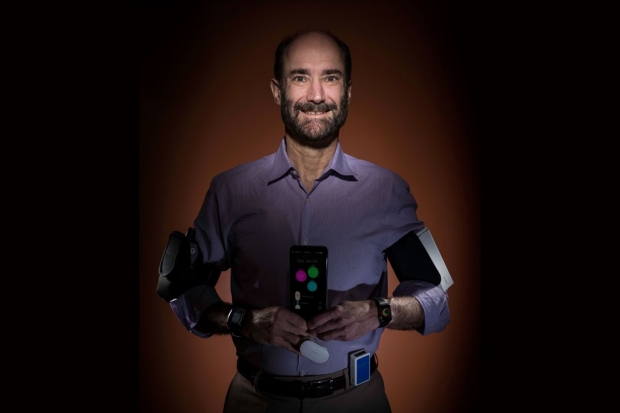
"caption": "Geneticist Michael Snyder was wearing seven biosensors collecting data about his health when he noticed changes in his heart rate and oxygen level during a flight. When he later developed a fever, he suspected he had been infected with Lyme disease. Subsequent tests confirmed his suspicion.",
"description": null,
"title": "wearable",
"credit": "Steve Fisch/Stanford",
"status": "inherit",
"isLoading": false,
"fetchFailed": false
},
"news_11263475": {
"type": "attachments",
"id": "news_11263475",
"meta": {
"index": "attachments_1716263798",
"site": "news",
"id": "11263475",
"found": true
},
"parent": 11263472,
"imgSizes": {
"small": {
"file": "https://ww2.kqed.org/app/uploads/sites/10/2017/01/Yahoo-520x349.jpg",
"width": 520,
"mimeType": "image/jpeg",
"height": 349
},
"twentyfourteen-full-width": {
"file": "https://ww2.kqed.org/app/uploads/sites/10/2017/01/Yahoo-1038x576.jpg",
"width": 1038,
"mimeType": "image/jpeg",
"height": 576
},
"thumbnail": {
"file": "https://ww2.kqed.org/app/uploads/sites/10/2017/01/Yahoo-160x108.jpg",
"width": 160,
"mimeType": "image/jpeg",
"height": 108
},
"fd-sm": {
"file": "https://ww2.kqed.org/app/uploads/sites/10/2017/01/Yahoo-960x645.jpg",
"width": 960,
"mimeType": "image/jpeg",
"height": 645
},
"post-thumbnail": {
"file": "https://ww2.kqed.org/app/uploads/sites/10/2017/01/Yahoo-672x372.jpg",
"width": 672,
"mimeType": "image/jpeg",
"height": 372
},
"xsmall": {
"file": "https://ww2.kqed.org/app/uploads/sites/10/2017/01/Yahoo-375x252.jpg",
"width": 375,
"mimeType": "image/jpeg",
"height": 252
},
"kqedFullSize": {
"file": "https://ww2.kqed.org/app/uploads/sites/10/2017/01/Yahoo.jpg",
"width": 1920,
"height": 1290
},
"large": {
"file": "https://ww2.kqed.org/app/uploads/sites/10/2017/01/Yahoo-1020x685.jpg",
"width": 1020,
"mimeType": "image/jpeg",
"height": 685
},
"xlarge": {
"file": "https://ww2.kqed.org/app/uploads/sites/10/2017/01/Yahoo-1180x793.jpg",
"width": 1180,
"mimeType": "image/jpeg",
"height": 793
},
"guest-author-50": {
"file": "https://ww2.kqed.org/app/uploads/sites/10/2017/01/Yahoo-50x50.jpg",
"width": 50,
"mimeType": "image/jpeg",
"height": 50
},
"guest-author-96": {
"file": "https://ww2.kqed.org/app/uploads/sites/10/2017/01/Yahoo-96x96.jpg",
"width": 96,
"mimeType": "image/jpeg",
"height": 96
},
"medium": {
"file": "https://ww2.kqed.org/app/uploads/sites/10/2017/01/Yahoo-800x538.jpg",
"width": 800,
"mimeType": "image/jpeg",
"height": 538
},
"guest-author-64": {
"file": "https://ww2.kqed.org/app/uploads/sites/10/2017/01/Yahoo-64x64.jpg",
"width": 64,
"mimeType": "image/jpeg",
"height": 64
},
"guest-author-32": {
"file": "https://ww2.kqed.org/app/uploads/sites/10/2017/01/Yahoo-32x32.jpg",
"width": 32,
"mimeType": "image/jpeg",
"height": 32
},
"jmtc-small-thumb": {
"file": "https://ww2.kqed.org/app/uploads/sites/10/2017/01/Yahoo-280x150.jpg",
"width": 280,
"mimeType": "image/jpeg",
"height": 150
},
"fd-lrg": {
"file": "https://ww2.kqed.org/app/uploads/sites/10/2017/01/Yahoo-1920x1290.jpg",
"width": 1920,
"mimeType": "image/jpeg",
"height": 1290
},
"fd-med": {
"file": "https://ww2.kqed.org/app/uploads/sites/10/2017/01/Yahoo-1180x793.jpg",
"width": 1180,
"mimeType": "image/jpeg",
"height": 793
},
"full-width": {
"file": "https://ww2.kqed.org/app/uploads/sites/10/2017/01/Yahoo-1920x1290.jpg",
"width": 1920,
"mimeType": "image/jpeg",
"height": 1290
},
"detail": {
"file": "https://ww2.kqed.org/app/uploads/sites/10/2017/01/Yahoo-150x150.jpg",
"width": 150,
"mimeType": "image/jpeg",
"height": 150
},
"guest-author-128": {
"file": "https://ww2.kqed.org/app/uploads/sites/10/2017/01/Yahoo-128x128.jpg",
"width": 128,
"mimeType": "image/jpeg",
"height": 128
},
"xxsmall": {
"file": "https://ww2.kqed.org/app/uploads/sites/10/2017/01/Yahoo-240x161.jpg",
"width": 240,
"mimeType": "image/jpeg",
"height": 161
}
},
"publishDate": 1484075642,
"modified": 1484075722,
"caption": "Yahoo's headquarters in Sunnyvale.",
"description": "The Yahoo logo outside Yahoo headquarters in Sunnyvale.",
"title": "yahoo",
"credit": "Justin Sullivan/Getty Images",
"status": "inherit",
"isLoading": false,
"fetchFailed": false
},
"news_11257448": {
"type": "attachments",
"id": "news_11257448",
"meta": {
"index": "attachments_1716263798",
"site": "news",
"id": "11257448",
"found": true
},
"parent": 11257442,
"imgSizes": {
"small": {
"file": "https://ww2.kqed.org/app/uploads/sites/10/2017/01/PootPoot-520x365.jpg",
"width": 520,
"mimeType": "image/jpeg",
"height": 365
},
"twentyfourteen-full-width": {
"file": "https://ww2.kqed.org/app/uploads/sites/10/2017/01/PootPoot-1038x576.jpg",
"width": 1038,
"mimeType": "image/jpeg",
"height": 576
},
"thumbnail": {
"file": "https://ww2.kqed.org/app/uploads/sites/10/2017/01/PootPoot-160x112.jpg",
"width": 160,
"mimeType": "image/jpeg",
"height": 112
},
"fd-sm": {
"file": "https://ww2.kqed.org/app/uploads/sites/10/2017/01/PootPoot-960x674.jpg",
"width": 960,
"mimeType": "image/jpeg",
"height": 674
},
"post-thumbnail": {
"file": "https://ww2.kqed.org/app/uploads/sites/10/2017/01/PootPoot-672x372.jpg",
"width": 672,
"mimeType": "image/jpeg",
"height": 372
},
"xsmall": {
"file": "https://ww2.kqed.org/app/uploads/sites/10/2017/01/PootPoot-375x263.jpg",
"width": 375,
"mimeType": "image/jpeg",
"height": 263
},
"kqedFullSize": {
"file": "https://ww2.kqed.org/app/uploads/sites/10/2017/01/PootPoot.jpg",
"width": 1920,
"height": 1348
},
"large": {
"file": "https://ww2.kqed.org/app/uploads/sites/10/2017/01/PootPoot-1020x716.jpg",
"width": 1020,
"mimeType": "image/jpeg",
"height": 716
},
"xlarge": {
"file": "https://ww2.kqed.org/app/uploads/sites/10/2017/01/PootPoot-1180x828.jpg",
"width": 1180,
"mimeType": "image/jpeg",
"height": 828
},
"guest-author-50": {
"file": "https://ww2.kqed.org/app/uploads/sites/10/2017/01/PootPoot-50x50.jpg",
"width": 50,
"mimeType": "image/jpeg",
"height": 50
},
"guest-author-96": {
"file": "https://ww2.kqed.org/app/uploads/sites/10/2017/01/PootPoot-96x96.jpg",
"width": 96,
"mimeType": "image/jpeg",
"height": 96
},
"medium": {
"file": "https://ww2.kqed.org/app/uploads/sites/10/2017/01/PootPoot-800x562.jpg",
"width": 800,
"mimeType": "image/jpeg",
"height": 562
},
"guest-author-64": {
"file": "https://ww2.kqed.org/app/uploads/sites/10/2017/01/PootPoot-64x64.jpg",
"width": 64,
"mimeType": "image/jpeg",
"height": 64
},
"guest-author-32": {
"file": "https://ww2.kqed.org/app/uploads/sites/10/2017/01/PootPoot-32x32.jpg",
"width": 32,
"mimeType": "image/jpeg",
"height": 32
},
"jmtc-small-thumb": {
"file": "https://ww2.kqed.org/app/uploads/sites/10/2017/01/PootPoot-280x150.jpg",
"width": 280,
"mimeType": "image/jpeg",
"height": 150
},
"fd-lrg": {
"file": "https://ww2.kqed.org/app/uploads/sites/10/2017/01/PootPoot-1920x1348.jpg",
"width": 1920,
"mimeType": "image/jpeg",
"height": 1348
},
"fd-med": {
"file": "https://ww2.kqed.org/app/uploads/sites/10/2017/01/PootPoot-1180x828.jpg",
"width": 1180,
"mimeType": "image/jpeg",
"height": 828
},
"full-width": {
"file": "https://ww2.kqed.org/app/uploads/sites/10/2017/01/PootPoot-1920x1348.jpg",
"width": 1920,
"mimeType": "image/jpeg",
"height": 1348
},
"detail": {
"file": "https://ww2.kqed.org/app/uploads/sites/10/2017/01/PootPoot-150x150.jpg",
"width": 150,
"mimeType": "image/jpeg",
"height": 150
},
"guest-author-128": {
"file": "https://ww2.kqed.org/app/uploads/sites/10/2017/01/PootPoot-128x128.jpg",
"width": 128,
"mimeType": "image/jpeg",
"height": 128
},
"xxsmall": {
"file": "https://ww2.kqed.org/app/uploads/sites/10/2017/01/PootPoot-240x169.jpg",
"width": 240,
"mimeType": "image/jpeg",
"height": 169
}
},
"publishDate": 1483748357,
"modified": 1483748397,
"caption": "Russian President Vladimir Putin makes his New Year's address to the nation in Moscow's Kremlin, December 31, 2016.",
"description": "Russian President Vladimir Putin makes his New Year's address to the nation in Moscow's Kremlin, December 31, 2016.",
"title": "pootpoot",
"credit": "MIKHAIL KLIMENTIEV/AFP/Getty Images",
"status": "inherit",
"isLoading": false,
"fetchFailed": false
},
"news_11255255": {
"type": "attachments",
"id": "news_11255255",
"meta": {
"index": "attachments_1716263798",
"site": "news",
"id": "11255255",
"found": true
},
"parent": 11255252,
"imgSizes": {
"small": {
"file": "https://ww2.kqed.org/app/uploads/sites/10/2017/01/Clapper-520x347.jpg",
"width": 520,
"mimeType": "image/jpeg",
"height": 347
},
"twentyfourteen-full-width": {
"file": "https://ww2.kqed.org/app/uploads/sites/10/2017/01/Clapper-1038x576.jpg",
"width": 1038,
"mimeType": "image/jpeg",
"height": 576
},
"thumbnail": {
"file": "https://ww2.kqed.org/app/uploads/sites/10/2017/01/Clapper-160x107.jpg",
"width": 160,
"mimeType": "image/jpeg",
"height": 107
},
"fd-sm": {
"file": "https://ww2.kqed.org/app/uploads/sites/10/2017/01/Clapper-960x640.jpg",
"width": 960,
"mimeType": "image/jpeg",
"height": 640
},
"post-thumbnail": {
"file": "https://ww2.kqed.org/app/uploads/sites/10/2017/01/Clapper-672x372.jpg",
"width": 672,
"mimeType": "image/jpeg",
"height": 372
},
"xsmall": {
"file": "https://ww2.kqed.org/app/uploads/sites/10/2017/01/Clapper-375x250.jpg",
"width": 375,
"mimeType": "image/jpeg",
"height": 250
},
"kqedFullSize": {
"file": "https://ww2.kqed.org/app/uploads/sites/10/2017/01/Clapper.jpg",
"width": 1920,
"height": 1280
},
"large": {
"file": "https://ww2.kqed.org/app/uploads/sites/10/2017/01/Clapper-1020x680.jpg",
"width": 1020,
"mimeType": "image/jpeg",
"height": 680
},
"xlarge": {
"file": "https://ww2.kqed.org/app/uploads/sites/10/2017/01/Clapper-1180x787.jpg",
"width": 1180,
"mimeType": "image/jpeg",
"height": 787
},
"guest-author-50": {
"file": "https://ww2.kqed.org/app/uploads/sites/10/2017/01/Clapper-50x50.jpg",
"width": 50,
"mimeType": "image/jpeg",
"height": 50
},
"guest-author-96": {
"file": "https://ww2.kqed.org/app/uploads/sites/10/2017/01/Clapper-96x96.jpg",
"width": 96,
"mimeType": "image/jpeg",
"height": 96
},
"medium": {
"file": "https://ww2.kqed.org/app/uploads/sites/10/2017/01/Clapper-800x533.jpg",
"width": 800,
"mimeType": "image/jpeg",
"height": 533
},
"guest-author-64": {
"file": "https://ww2.kqed.org/app/uploads/sites/10/2017/01/Clapper-64x64.jpg",
"width": 64,
"mimeType": "image/jpeg",
"height": 64
},
"guest-author-32": {
"file": "https://ww2.kqed.org/app/uploads/sites/10/2017/01/Clapper-32x32.jpg",
"width": 32,
"mimeType": "image/jpeg",
"height": 32
},
"jmtc-small-thumb": {
"file": "https://ww2.kqed.org/app/uploads/sites/10/2017/01/Clapper-280x150.jpg",
"width": 280,
"mimeType": "image/jpeg",
"height": 150
},
"fd-lrg": {
"file": "https://ww2.kqed.org/app/uploads/sites/10/2017/01/Clapper-1920x1280.jpg",
"width": 1920,
"mimeType": "image/jpeg",
"height": 1280
},
"fd-med": {
"file": "https://ww2.kqed.org/app/uploads/sites/10/2017/01/Clapper-1180x787.jpg",
"width": 1180,
"mimeType": "image/jpeg",
"height": 787
},
"full-width": {
"file": "https://ww2.kqed.org/app/uploads/sites/10/2017/01/Clapper-1920x1280.jpg",
"width": 1920,
"mimeType": "image/jpeg",
"height": 1280
},
"detail": {
"file": "https://ww2.kqed.org/app/uploads/sites/10/2017/01/Clapper-150x150.jpg",
"width": 150,
"mimeType": "image/jpeg",
"height": 150
},
"guest-author-128": {
"file": "https://ww2.kqed.org/app/uploads/sites/10/2017/01/Clapper-128x128.jpg",
"width": 128,
"mimeType": "image/jpeg",
"height": 128
},
"xxsmall": {
"file": "https://ww2.kqed.org/app/uploads/sites/10/2017/01/Clapper-240x160.jpg",
"width": 240,
"mimeType": "image/jpeg",
"height": 160
}
},
"publishDate": 1483643971,
"modified": 1483656371,
"caption": "Defense Undersecretary for Intelligence Marcell Lettre II (L), Director of National Intelligence James Clapper (C) and United States Cyber Command and National Security Agency Director Adm. Michael Rogers testify before the Senate Armed Services Committee on Jan. 5, 2017.",
"description": "Defense Undersecretary for Intelligence Marcell Lettre II (L), Director of National Intelligence James Clapper (C) and United States Cyber Command and National Security Agency Director Admiral Michael Rogers testify before the Senate Armed Services Committee on January 5, 2017.",
"title": "clapper",
"credit": "Chip Somodevilla/Getty Images",
"status": "inherit",
"isLoading": false,
"fetchFailed": false
},
"news_11243859": {
"type": "attachments",
"id": "news_11243859",
"meta": {
"index": "attachments_1716263798",
"site": "news",
"id": "11243859",
"found": true
},
"parent": 11243780,
"imgSizes": {
"small": {
"file": "https://ww2.kqed.org/app/uploads/sites/10/2016/12/RS15413_iStock_000020174658_Large-qut-520x347.jpg",
"width": 520,
"mimeType": "image/jpeg",
"height": 347
},
"twentyfourteen-full-width": {
"file": "https://ww2.kqed.org/app/uploads/sites/10/2016/12/RS15413_iStock_000020174658_Large-qut-1038x576.jpg",
"width": 1038,
"mimeType": "image/jpeg",
"height": 576
},
"thumbnail": {
"file": "https://ww2.kqed.org/app/uploads/sites/10/2016/12/RS15413_iStock_000020174658_Large-qut-160x107.jpg",
"width": 160,
"mimeType": "image/jpeg",
"height": 107
},
"fd-sm": {
"file": "https://ww2.kqed.org/app/uploads/sites/10/2016/12/RS15413_iStock_000020174658_Large-qut-960x640.jpg",
"width": 960,
"mimeType": "image/jpeg",
"height": 640
},
"post-thumbnail": {
"file": "https://ww2.kqed.org/app/uploads/sites/10/2016/12/RS15413_iStock_000020174658_Large-qut-672x372.jpg",
"width": 672,
"mimeType": "image/jpeg",
"height": 372
},
"xsmall": {
"file": "https://ww2.kqed.org/app/uploads/sites/10/2016/12/RS15413_iStock_000020174658_Large-qut-375x250.jpg",
"width": 375,
"mimeType": "image/jpeg",
"height": 250
},
"kqedFullSize": {
"file": "https://ww2.kqed.org/app/uploads/sites/10/2016/12/RS15413_iStock_000020174658_Large-qut.jpg",
"width": 1920,
"height": 1280
},
"large": {
"file": "https://ww2.kqed.org/app/uploads/sites/10/2016/12/RS15413_iStock_000020174658_Large-qut-1020x680.jpg",
"width": 1020,
"mimeType": "image/jpeg",
"height": 680
},
"xlarge": {
"file": "https://ww2.kqed.org/app/uploads/sites/10/2016/12/RS15413_iStock_000020174658_Large-qut-1180x787.jpg",
"width": 1180,
"mimeType": "image/jpeg",
"height": 787
},
"guest-author-50": {
"file": "https://ww2.kqed.org/app/uploads/sites/10/2016/12/RS15413_iStock_000020174658_Large-qut-50x50.jpg",
"width": 50,
"mimeType": "image/jpeg",
"height": 50
},
"guest-author-96": {
"file": "https://ww2.kqed.org/app/uploads/sites/10/2016/12/RS15413_iStock_000020174658_Large-qut-96x96.jpg",
"width": 96,
"mimeType": "image/jpeg",
"height": 96
},
"medium": {
"file": "https://ww2.kqed.org/app/uploads/sites/10/2016/12/RS15413_iStock_000020174658_Large-qut-800x533.jpg",
"width": 800,
"mimeType": "image/jpeg",
"height": 533
},
"guest-author-64": {
"file": "https://ww2.kqed.org/app/uploads/sites/10/2016/12/RS15413_iStock_000020174658_Large-qut-64x64.jpg",
"width": 64,
"mimeType": "image/jpeg",
"height": 64
},
"guest-author-32": {
"file": "https://ww2.kqed.org/app/uploads/sites/10/2016/12/RS15413_iStock_000020174658_Large-qut-32x32.jpg",
"width": 32,
"mimeType": "image/jpeg",
"height": 32
},
"jmtc-small-thumb": {
"file": "https://ww2.kqed.org/app/uploads/sites/10/2016/12/RS15413_iStock_000020174658_Large-qut-280x150.jpg",
"width": 280,
"mimeType": "image/jpeg",
"height": 150
},
"fd-lrg": {
"file": "https://ww2.kqed.org/app/uploads/sites/10/2016/12/RS15413_iStock_000020174658_Large-qut-1920x1280.jpg",
"width": 1920,
"mimeType": "image/jpeg",
"height": 1280
},
"fd-med": {
"file": "https://ww2.kqed.org/app/uploads/sites/10/2016/12/RS15413_iStock_000020174658_Large-qut-1180x787.jpg",
"width": 1180,
"mimeType": "image/jpeg",
"height": 787
},
"full-width": {
"file": "https://ww2.kqed.org/app/uploads/sites/10/2016/12/RS15413_iStock_000020174658_Large-qut-1920x1280.jpg",
"width": 1920,
"mimeType": "image/jpeg",
"height": 1280
},
"detail": {
"file": "https://ww2.kqed.org/app/uploads/sites/10/2016/12/RS15413_iStock_000020174658_Large-qut-150x150.jpg",
"width": 150,
"mimeType": "image/jpeg",
"height": 150
},
"guest-author-128": {
"file": "https://ww2.kqed.org/app/uploads/sites/10/2016/12/RS15413_iStock_000020174658_Large-qut-128x128.jpg",
"width": 128,
"mimeType": "image/jpeg",
"height": 128
},
"xxsmall": {
"file": "https://ww2.kqed.org/app/uploads/sites/10/2016/12/RS15413_iStock_000020174658_Large-qut-240x160.jpg",
"width": 240,
"mimeType": "image/jpeg",
"height": 160
}
},
"publishDate": 1483060130,
"modified": 1483060155,
"caption": "We will gain one second in 2016.",
"description": null,
"title": "rs15413_istock_000020174658_large-qut",
"credit": "Getty Images",
"status": "inherit",
"isLoading": false,
"fetchFailed": false
},
"news_11243383": {
"type": "attachments",
"id": "news_11243383",
"meta": {
"index": "attachments_1716263798",
"site": "news",
"id": "11243383",
"found": true
},
"parent": 11243382,
"imgSizes": {
"small": {
"file": "https://ww2.kqed.org/app/uploads/sites/10/2016/12/gettyimages-605578782-4ae7df09932e8fb34df294a6978dc09efd484c3f-520x389.jpg",
"width": 520,
"mimeType": "image/jpeg",
"height": 389
},
"twentyfourteen-full-width": {
"file": "https://ww2.kqed.org/app/uploads/sites/10/2016/12/gettyimages-605578782-4ae7df09932e8fb34df294a6978dc09efd484c3f-1038x576.jpg",
"width": 1038,
"mimeType": "image/jpeg",
"height": 576
},
"thumbnail": {
"file": "https://ww2.kqed.org/app/uploads/sites/10/2016/12/gettyimages-605578782-4ae7df09932e8fb34df294a6978dc09efd484c3f-160x120.jpg",
"width": 160,
"mimeType": "image/jpeg",
"height": 120
},
"fd-sm": {
"file": "https://ww2.kqed.org/app/uploads/sites/10/2016/12/gettyimages-605578782-4ae7df09932e8fb34df294a6978dc09efd484c3f-960x719.jpg",
"width": 960,
"mimeType": "image/jpeg",
"height": 719
},
"post-thumbnail": {
"file": "https://ww2.kqed.org/app/uploads/sites/10/2016/12/gettyimages-605578782-4ae7df09932e8fb34df294a6978dc09efd484c3f-672x372.jpg",
"width": 672,
"mimeType": "image/jpeg",
"height": 372
},
"xsmall": {
"file": "https://ww2.kqed.org/app/uploads/sites/10/2016/12/gettyimages-605578782-4ae7df09932e8fb34df294a6978dc09efd484c3f-375x281.jpg",
"width": 375,
"mimeType": "image/jpeg",
"height": 281
},
"kqedFullSize": {
"file": "https://ww2.kqed.org/app/uploads/sites/10/2016/12/gettyimages-605578782-4ae7df09932e8fb34df294a6978dc09efd484c3f.jpg",
"width": 3561,
"height": 2667
},
"large": {
"file": "https://ww2.kqed.org/app/uploads/sites/10/2016/12/gettyimages-605578782-4ae7df09932e8fb34df294a6978dc09efd484c3f-1020x764.jpg",
"width": 1020,
"mimeType": "image/jpeg",
"height": 764
},
"xlarge": {
"file": "https://ww2.kqed.org/app/uploads/sites/10/2016/12/gettyimages-605578782-4ae7df09932e8fb34df294a6978dc09efd484c3f-1180x884.jpg",
"width": 1180,
"mimeType": "image/jpeg",
"height": 884
},
"guest-author-50": {
"file": "https://ww2.kqed.org/app/uploads/sites/10/2016/12/gettyimages-605578782-4ae7df09932e8fb34df294a6978dc09efd484c3f-50x50.jpg",
"width": 50,
"mimeType": "image/jpeg",
"height": 50
},
"guest-author-96": {
"file": "https://ww2.kqed.org/app/uploads/sites/10/2016/12/gettyimages-605578782-4ae7df09932e8fb34df294a6978dc09efd484c3f-96x96.jpg",
"width": 96,
"mimeType": "image/jpeg",
"height": 96
},
"medium": {
"file": "https://ww2.kqed.org/app/uploads/sites/10/2016/12/gettyimages-605578782-4ae7df09932e8fb34df294a6978dc09efd484c3f-800x599.jpg",
"width": 800,
"mimeType": "image/jpeg",
"height": 599
},
"guest-author-64": {
"file": "https://ww2.kqed.org/app/uploads/sites/10/2016/12/gettyimages-605578782-4ae7df09932e8fb34df294a6978dc09efd484c3f-64x64.jpg",
"width": 64,
"mimeType": "image/jpeg",
"height": 64
},
"guest-author-32": {
"file": "https://ww2.kqed.org/app/uploads/sites/10/2016/12/gettyimages-605578782-4ae7df09932e8fb34df294a6978dc09efd484c3f-32x32.jpg",
"width": 32,
"mimeType": "image/jpeg",
"height": 32
},
"jmtc-small-thumb": {
"file": "https://ww2.kqed.org/app/uploads/sites/10/2016/12/gettyimages-605578782-4ae7df09932e8fb34df294a6978dc09efd484c3f-280x150.jpg",
"width": 280,
"mimeType": "image/jpeg",
"height": 150
},
"fd-lrg": {
"file": "https://ww2.kqed.org/app/uploads/sites/10/2016/12/gettyimages-605578782-4ae7df09932e8fb34df294a6978dc09efd484c3f-1920x1438.jpg",
"width": 1920,
"mimeType": "image/jpeg",
"height": 1438
},
"fd-med": {
"file": "https://ww2.kqed.org/app/uploads/sites/10/2016/12/gettyimages-605578782-4ae7df09932e8fb34df294a6978dc09efd484c3f-1180x884.jpg",
"width": 1180,
"mimeType": "image/jpeg",
"height": 884
},
"full-width": {
"file": "https://ww2.kqed.org/app/uploads/sites/10/2016/12/gettyimages-605578782-4ae7df09932e8fb34df294a6978dc09efd484c3f-1920x1438.jpg",
"width": 1920,
"mimeType": "image/jpeg",
"height": 1438
},
"detail": {
"file": "https://ww2.kqed.org/app/uploads/sites/10/2016/12/gettyimages-605578782-4ae7df09932e8fb34df294a6978dc09efd484c3f-150x150.jpg",
"width": 150,
"mimeType": "image/jpeg",
"height": 150
},
"guest-author-128": {
"file": "https://ww2.kqed.org/app/uploads/sites/10/2016/12/gettyimages-605578782-4ae7df09932e8fb34df294a6978dc09efd484c3f-128x128.jpg",
"width": 128,
"mimeType": "image/jpeg",
"height": 128
},
"xxsmall": {
"file": "https://ww2.kqed.org/app/uploads/sites/10/2016/12/gettyimages-605578782-4ae7df09932e8fb34df294a6978dc09efd484c3f-240x180.jpg",
"width": 240,
"mimeType": "image/jpeg",
"height": 180
}
},
"publishDate": 1483040049,
"modified": 1483050745,
"caption": "Amazon's personal assistant device, Echo, powered by the voice recognition program Alexa, is one of the most popular gifts this holiday season.",
"description": "Amazon's personal assistant device Echo, powered by the voice recognition program Alexa, is one of the most popular gifts this holiday season.",
"title": "Amazon's personal assistant device Echo, powered by the voice recognition program Alexa, is one of the most popular gifts this holiday season.",
"credit": "Luke MacGregor/Bloomberg/Getty Images",
"status": "inherit",
"isLoading": false,
"fetchFailed": false
},
"news_11198367": {
"type": "attachments",
"id": "news_11198367",
"meta": {
"index": "attachments_1716263798",
"site": "news",
"id": "11198367",
"found": true
},
"parent": 11187250,
"imgSizes": {
"small": {
"file": "https://ww2.kqed.org/app/uploads/sites/10/2016/11/semaphorescolors-520x282.jpg",
"width": 520,
"mimeType": "image/jpeg",
"height": 282
},
"twentyfourteen-full-width": {
"file": "https://ww2.kqed.org/app/uploads/sites/10/2016/11/semaphorescolors-1038x576.jpg",
"width": 1038,
"mimeType": "image/jpeg",
"height": 576
},
"thumbnail": {
"file": "https://ww2.kqed.org/app/uploads/sites/10/2016/11/semaphorescolors-160x87.jpg",
"width": 160,
"mimeType": "image/jpeg",
"height": 87
},
"fd-sm": {
"file": "https://ww2.kqed.org/app/uploads/sites/10/2016/11/semaphorescolors-960x520.jpg",
"width": 960,
"mimeType": "image/jpeg",
"height": 520
},
"post-thumbnail": {
"file": "https://ww2.kqed.org/app/uploads/sites/10/2016/11/semaphorescolors-672x372.jpg",
"width": 672,
"mimeType": "image/jpeg",
"height": 372
},
"xsmall": {
"file": "https://ww2.kqed.org/app/uploads/sites/10/2016/11/semaphorescolors-375x203.jpg",
"width": 375,
"mimeType": "image/jpeg",
"height": 203
},
"kqedFullSize": {
"file": "https://ww2.kqed.org/app/uploads/sites/10/2016/11/semaphorescolors.jpg",
"width": 1956,
"height": 1059
},
"large": {
"file": "https://ww2.kqed.org/app/uploads/sites/10/2016/11/semaphorescolors-1020x552.jpg",
"width": 1020,
"mimeType": "image/jpeg",
"height": 552
},
"xlarge": {
"file": "https://ww2.kqed.org/app/uploads/sites/10/2016/11/semaphorescolors-1180x639.jpg",
"width": 1180,
"mimeType": "image/jpeg",
"height": 639
},
"guest-author-50": {
"file": "https://ww2.kqed.org/app/uploads/sites/10/2016/11/semaphorescolors-50x50.jpg",
"width": 50,
"mimeType": "image/jpeg",
"height": 50
},
"guest-author-96": {
"file": "https://ww2.kqed.org/app/uploads/sites/10/2016/11/semaphorescolors-96x96.jpg",
"width": 96,
"mimeType": "image/jpeg",
"height": 96
},
"medium": {
"file": "https://ww2.kqed.org/app/uploads/sites/10/2016/11/semaphorescolors-800x433.jpg",
"width": 800,
"mimeType": "image/jpeg",
"height": 433
},
"guest-author-64": {
"file": "https://ww2.kqed.org/app/uploads/sites/10/2016/11/semaphorescolors-64x64.jpg",
"width": 64,
"mimeType": "image/jpeg",
"height": 64
},
"guest-author-32": {
"file": "https://ww2.kqed.org/app/uploads/sites/10/2016/11/semaphorescolors-32x32.jpg",
"width": 32,
"mimeType": "image/jpeg",
"height": 32
},
"jmtc-small-thumb": {
"file": "https://ww2.kqed.org/app/uploads/sites/10/2016/11/semaphorescolors-280x150.jpg",
"width": 280,
"mimeType": "image/jpeg",
"height": 150
},
"fd-lrg": {
"file": "https://ww2.kqed.org/app/uploads/sites/10/2016/11/semaphorescolors-1920x1040.jpg",
"width": 1920,
"mimeType": "image/jpeg",
"height": 1040
},
"fd-med": {
"file": "https://ww2.kqed.org/app/uploads/sites/10/2016/11/semaphorescolors-1180x639.jpg",
"width": 1180,
"mimeType": "image/jpeg",
"height": 639
},
"full-width": {
"file": "https://ww2.kqed.org/app/uploads/sites/10/2016/11/semaphorescolors-1920x1040.jpg",
"width": 1920,
"mimeType": "image/jpeg",
"height": 1040
},
"detail": {
"file": "https://ww2.kqed.org/app/uploads/sites/10/2016/11/semaphorescolors-150x150.jpg",
"width": 150,
"mimeType": "image/jpeg",
"height": 150
},
"guest-author-128": {
"file": "https://ww2.kqed.org/app/uploads/sites/10/2016/11/semaphorescolors-128x128.jpg",
"width": 128,
"mimeType": "image/jpeg",
"height": 128
},
"xxsmall": {
"file": "https://ww2.kqed.org/app/uploads/sites/10/2016/11/semaphorescolors-240x130.jpg",
"width": 240,
"mimeType": "image/jpeg",
"height": 130
}
},
"publishDate": 1480541065,
"modified": 1480550920,
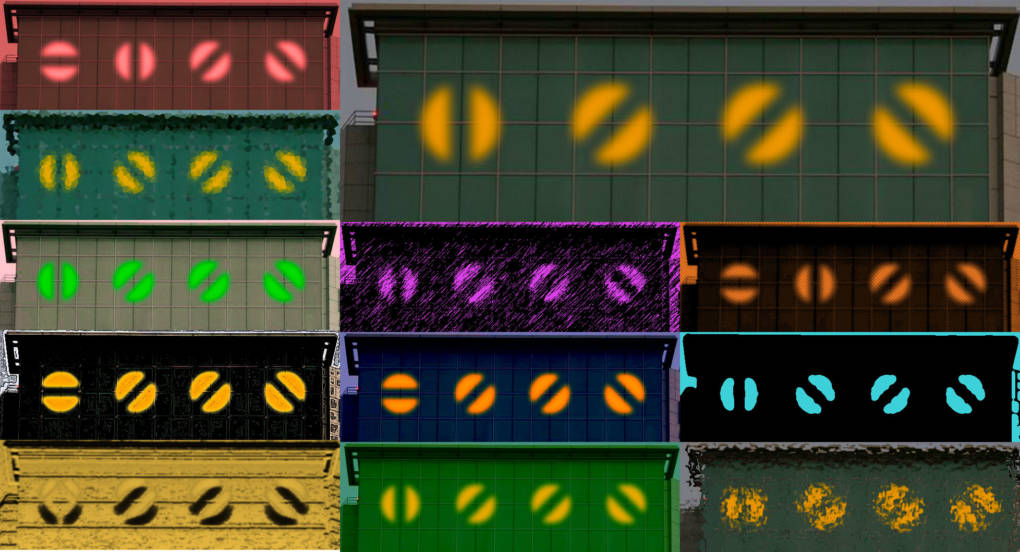
"caption": "A mashup of San Jose Semaphore, shown in different positions.",
"description": "A mashup of San Jose Semaphore, shown in different positions.",
"title": "semaphorescolors",
"credit": "Olivia Allen-Price/KQED",
"status": "inherit",
"isLoading": false,
"fetchFailed": false
},
"news_11240272": {
"type": "attachments",
"id": "news_11240272",
"meta": {
"index": "attachments_1716263798",
"site": "news",
"id": "11240272",
"found": true
},
"parent": 11240202,
"imgSizes": {
"small": {
"file": "https://ww2.kqed.org/app/uploads/sites/10/2016/12/2408_transform-520x347.jpg",
"width": 520,
"mimeType": "image/jpeg",
"height": 347
},
"twentyfourteen-full-width": {
"file": "https://ww2.kqed.org/app/uploads/sites/10/2016/12/2408_transform-1038x576.jpg",
"width": 1038,
"mimeType": "image/jpeg",
"height": 576
},
"thumbnail": {
"file": "https://ww2.kqed.org/app/uploads/sites/10/2016/12/2408_transform-160x107.jpg",
"width": 160,
"mimeType": "image/jpeg",
"height": 107
},
"fd-sm": {
"file": "https://ww2.kqed.org/app/uploads/sites/10/2016/12/2408_transform-960x640.jpg",
"width": 960,
"mimeType": "image/jpeg",
"height": 640
},
"post-thumbnail": {
"file": "https://ww2.kqed.org/app/uploads/sites/10/2016/12/2408_transform-672x372.jpg",
"width": 672,
"mimeType": "image/jpeg",
"height": 372
},
"xsmall": {
"file": "https://ww2.kqed.org/app/uploads/sites/10/2016/12/2408_transform-375x250.jpg",
"width": 375,
"mimeType": "image/jpeg",
"height": 250
},
"kqedFullSize": {
"file": "https://ww2.kqed.org/app/uploads/sites/10/2016/12/2408_transform.jpg",
"width": 1920,
"height": 1280
},
"large": {
"file": "https://ww2.kqed.org/app/uploads/sites/10/2016/12/2408_transform-1020x680.jpg",
"width": 1020,
"mimeType": "image/jpeg",
"height": 680
},
"xlarge": {
"file": "https://ww2.kqed.org/app/uploads/sites/10/2016/12/2408_transform-1180x787.jpg",
"width": 1180,
"mimeType": "image/jpeg",
"height": 787
},
"guest-author-50": {
"file": "https://ww2.kqed.org/app/uploads/sites/10/2016/12/2408_transform-50x50.jpg",
"width": 50,
"mimeType": "image/jpeg",
"height": 50
},
"guest-author-96": {
"file": "https://ww2.kqed.org/app/uploads/sites/10/2016/12/2408_transform-96x96.jpg",
"width": 96,
"mimeType": "image/jpeg",
"height": 96
},
"medium": {
"file": "https://ww2.kqed.org/app/uploads/sites/10/2016/12/2408_transform-800x533.jpg",
"width": 800,
"mimeType": "image/jpeg",
"height": 533
},
"guest-author-64": {
"file": "https://ww2.kqed.org/app/uploads/sites/10/2016/12/2408_transform-64x64.jpg",
"width": 64,
"mimeType": "image/jpeg",
"height": 64
},
"guest-author-32": {
"file": "https://ww2.kqed.org/app/uploads/sites/10/2016/12/2408_transform-32x32.jpg",
"width": 32,
"mimeType": "image/jpeg",
"height": 32
},
"jmtc-small-thumb": {
"file": "https://ww2.kqed.org/app/uploads/sites/10/2016/12/2408_transform-280x150.jpg",
"width": 280,
"mimeType": "image/jpeg",
"height": 150
},
"fd-lrg": {
"file": "https://ww2.kqed.org/app/uploads/sites/10/2016/12/2408_transform-1920x1280.jpg",
"width": 1920,
"mimeType": "image/jpeg",
"height": 1280
},
"fd-med": {
"file": "https://ww2.kqed.org/app/uploads/sites/10/2016/12/2408_transform-1180x787.jpg",
"width": 1180,
"mimeType": "image/jpeg",
"height": 787
},
"full-width": {
"file": "https://ww2.kqed.org/app/uploads/sites/10/2016/12/2408_transform-1920x1280.jpg",
"width": 1920,
"mimeType": "image/jpeg",
"height": 1280
},
"detail": {
"file": "https://ww2.kqed.org/app/uploads/sites/10/2016/12/2408_transform-150x150.jpg",
"width": 150,
"mimeType": "image/jpeg",
"height": 150
},
"guest-author-128": {
"file": "https://ww2.kqed.org/app/uploads/sites/10/2016/12/2408_transform-128x128.jpg",
"width": 128,
"mimeType": "image/jpeg",
"height": 128
},
"xxsmall": {
"file": "https://ww2.kqed.org/app/uploads/sites/10/2016/12/2408_transform-240x160.jpg",
"width": 240,
"mimeType": "image/jpeg",
"height": 160
}
},
"publishDate": 1482865122,
"modified": 1482865202,
"caption": "The site shows users how Facebook categorizes them. It doesn’t reveal the data it is buying about their offline lives. ",
"description": "The site shows users how Facebook categorizes them. It doesn’t reveal the data it is buying about their offline lives. \n",
"title": "A picture taken on May 14, 2012 in Paris",
"credit": "JOEL SAGET/AFP/Getty Images",
"status": "inherit",
"isLoading": false,
"fetchFailed": false
},
"news_11233186": {
"type": "attachments",
"id": "news_11233186",
"meta": {
"index": "attachments_1716263798",
"site": "news",
"id": "11233186",
"found": true
},
"parent": 11233119,
"imgSizes": {
"small": {
"file": "https://ww2.kqed.org/app/uploads/sites/10/2016/12/RS23436_GettyImages-180336946-qut-520x347.jpg",
"width": 520,
"mimeType": "image/jpeg",
"height": 347
},
"twentyfourteen-full-width": {
"file": "https://ww2.kqed.org/app/uploads/sites/10/2016/12/RS23436_GettyImages-180336946-qut-1038x576.jpg",
"width": 1038,
"mimeType": "image/jpeg",
"height": 576
},
"thumbnail": {
"file": "https://ww2.kqed.org/app/uploads/sites/10/2016/12/RS23436_GettyImages-180336946-qut-160x107.jpg",
"width": 160,
"mimeType": "image/jpeg",
"height": 107
},
"fd-sm": {
"file": "https://ww2.kqed.org/app/uploads/sites/10/2016/12/RS23436_GettyImages-180336946-qut-960x641.jpg",
"width": 960,
"mimeType": "image/jpeg",
"height": 641
},
"post-thumbnail": {
"file": "https://ww2.kqed.org/app/uploads/sites/10/2016/12/RS23436_GettyImages-180336946-qut-672x372.jpg",
"width": 672,
"mimeType": "image/jpeg",
"height": 372
},
"xsmall": {
"file": "https://ww2.kqed.org/app/uploads/sites/10/2016/12/RS23436_GettyImages-180336946-qut-375x250.jpg",
"width": 375,
"mimeType": "image/jpeg",
"height": 250
},
"kqedFullSize": {
"file": "https://ww2.kqed.org/app/uploads/sites/10/2016/12/RS23436_GettyImages-180336946-qut.jpg",
"width": 1920,
"height": 1281
},
"large": {
"file": "https://ww2.kqed.org/app/uploads/sites/10/2016/12/RS23436_GettyImages-180336946-qut-1020x681.jpg",
"width": 1020,
"mimeType": "image/jpeg",
"height": 681
},
"xlarge": {
"file": "https://ww2.kqed.org/app/uploads/sites/10/2016/12/RS23436_GettyImages-180336946-qut-1180x787.jpg",
"width": 1180,
"mimeType": "image/jpeg",
"height": 787
},
"guest-author-50": {
"file": "https://ww2.kqed.org/app/uploads/sites/10/2016/12/RS23436_GettyImages-180336946-qut-50x50.jpg",
"width": 50,
"mimeType": "image/jpeg",
"height": 50
},
"guest-author-96": {
"file": "https://ww2.kqed.org/app/uploads/sites/10/2016/12/RS23436_GettyImages-180336946-qut-96x96.jpg",
"width": 96,
"mimeType": "image/jpeg",
"height": 96
},
"medium": {
"file": "https://ww2.kqed.org/app/uploads/sites/10/2016/12/RS23436_GettyImages-180336946-qut-800x534.jpg",
"width": 800,
"mimeType": "image/jpeg",
"height": 534
},
"guest-author-64": {
"file": "https://ww2.kqed.org/app/uploads/sites/10/2016/12/RS23436_GettyImages-180336946-qut-64x64.jpg",
"width": 64,
"mimeType": "image/jpeg",
"height": 64
},
"guest-author-32": {
"file": "https://ww2.kqed.org/app/uploads/sites/10/2016/12/RS23436_GettyImages-180336946-qut-32x32.jpg",
"width": 32,
"mimeType": "image/jpeg",
"height": 32
},
"jmtc-small-thumb": {
"file": "https://ww2.kqed.org/app/uploads/sites/10/2016/12/RS23436_GettyImages-180336946-qut-280x150.jpg",
"width": 280,
"mimeType": "image/jpeg",
"height": 150
},
"fd-lrg": {
"file": "https://ww2.kqed.org/app/uploads/sites/10/2016/12/RS23436_GettyImages-180336946-qut-1920x1281.jpg",
"width": 1920,
"mimeType": "image/jpeg",
"height": 1281
},
"fd-med": {
"file": "https://ww2.kqed.org/app/uploads/sites/10/2016/12/RS23436_GettyImages-180336946-qut-1180x787.jpg",
"width": 1180,
"mimeType": "image/jpeg",
"height": 787
},
"full-width": {
"file": "https://ww2.kqed.org/app/uploads/sites/10/2016/12/RS23436_GettyImages-180336946-qut-1920x1281.jpg",
"width": 1920,
"mimeType": "image/jpeg",
"height": 1281
},
"detail": {
"file": "https://ww2.kqed.org/app/uploads/sites/10/2016/12/RS23436_GettyImages-180336946-qut-150x150.jpg",
"width": 150,
"mimeType": "image/jpeg",
"height": 150
},
"guest-author-128": {
"file": "https://ww2.kqed.org/app/uploads/sites/10/2016/12/RS23436_GettyImages-180336946-qut-128x128.jpg",
"width": 128,
"mimeType": "image/jpeg",
"height": 128
},
"xxsmall": {
"file": "https://ww2.kqed.org/app/uploads/sites/10/2016/12/RS23436_GettyImages-180336946-qut-240x160.jpg",
"width": 240,
"mimeType": "image/jpeg",
"height": 160
}
},
"publishDate": 1482451402,
"modified": 1482451880,
"caption": "A $120 million investment in Bay Area schools by Mark Zuckerberg has spawned a national teaching platform Facebook offers schools for free.",
"description": "A $120 million investment in Bay Area schools by Mark Zuckerberg has spawned a national teaching platform Facebook offers schools for free.",
"title": "rs23436_gettyimages-180336946-qut",
"credit": "Justin Sullivan/Getty Images",
"status": "inherit",
"isLoading": false,
"fetchFailed": false
},
"news_11231119": {
"type": "attachments",
"id": "news_11231119",
"meta": {
"index": "attachments_1716263798",
"site": "news",
"id": "11231119",
"found": true
},
"parent": 11231118,
"imgSizes": {
"small": {
"file": "https://ww2.kqed.org/app/uploads/sites/10/2016/12/latinousa_tech_wide-43a60fc26c2e7bc28a3adefbcf038c4dbf58e78d-520x292.jpg",
"width": 520,
"mimeType": "image/jpeg",
"height": 292
},
"twentyfourteen-full-width": {
"file": "https://ww2.kqed.org/app/uploads/sites/10/2016/12/latinousa_tech_wide-43a60fc26c2e7bc28a3adefbcf038c4dbf58e78d-1038x576.jpg",
"width": 1038,
"mimeType": "image/jpeg",
"height": 576
},
"thumbnail": {
"file": "https://ww2.kqed.org/app/uploads/sites/10/2016/12/latinousa_tech_wide-43a60fc26c2e7bc28a3adefbcf038c4dbf58e78d-160x90.jpg",
"width": 160,
"mimeType": "image/jpeg",
"height": 90
},
"fd-sm": {
"file": "https://ww2.kqed.org/app/uploads/sites/10/2016/12/latinousa_tech_wide-43a60fc26c2e7bc28a3adefbcf038c4dbf58e78d-960x540.jpg",
"width": 960,
"mimeType": "image/jpeg",
"height": 540
},
"post-thumbnail": {
"file": "https://ww2.kqed.org/app/uploads/sites/10/2016/12/latinousa_tech_wide-43a60fc26c2e7bc28a3adefbcf038c4dbf58e78d-672x372.jpg",
"width": 672,
"mimeType": "image/jpeg",
"height": 372
},
"xsmall": {
"file": "https://ww2.kqed.org/app/uploads/sites/10/2016/12/latinousa_tech_wide-43a60fc26c2e7bc28a3adefbcf038c4dbf58e78d-375x211.jpg",
"width": 375,
"mimeType": "image/jpeg",
"height": 211
},
"kqedFullSize": {
"file": "https://ww2.kqed.org/app/uploads/sites/10/2016/12/latinousa_tech_wide-43a60fc26c2e7bc28a3adefbcf038c4dbf58e78d-e1482351286488.jpg",
"width": 1920,
"height": 1080
},
"large": {
"file": "https://ww2.kqed.org/app/uploads/sites/10/2016/12/latinousa_tech_wide-43a60fc26c2e7bc28a3adefbcf038c4dbf58e78d-1020x574.jpg",
"width": 1020,
"mimeType": "image/jpeg",
"height": 574
},
"xlarge": {
"file": "https://ww2.kqed.org/app/uploads/sites/10/2016/12/latinousa_tech_wide-43a60fc26c2e7bc28a3adefbcf038c4dbf58e78d-1180x664.jpg",
"width": 1180,
"mimeType": "image/jpeg",
"height": 664
},
"guest-author-50": {
"file": "https://ww2.kqed.org/app/uploads/sites/10/2016/12/latinousa_tech_wide-43a60fc26c2e7bc28a3adefbcf038c4dbf58e78d-50x50.jpg",
"width": 50,
"mimeType": "image/jpeg",
"height": 50
},
"guest-author-96": {
"file": "https://ww2.kqed.org/app/uploads/sites/10/2016/12/latinousa_tech_wide-43a60fc26c2e7bc28a3adefbcf038c4dbf58e78d-96x96.jpg",
"width": 96,
"mimeType": "image/jpeg",
"height": 96
},
"medium": {
"file": "https://ww2.kqed.org/app/uploads/sites/10/2016/12/latinousa_tech_wide-43a60fc26c2e7bc28a3adefbcf038c4dbf58e78d-800x450.jpg",
"width": 800,
"mimeType": "image/jpeg",
"height": 450
},
"guest-author-64": {
"file": "https://ww2.kqed.org/app/uploads/sites/10/2016/12/latinousa_tech_wide-43a60fc26c2e7bc28a3adefbcf038c4dbf58e78d-64x64.jpg",
"width": 64,
"mimeType": "image/jpeg",
"height": 64
},
"guest-author-32": {
"file": "https://ww2.kqed.org/app/uploads/sites/10/2016/12/latinousa_tech_wide-43a60fc26c2e7bc28a3adefbcf038c4dbf58e78d-32x32.jpg",
"width": 32,
"mimeType": "image/jpeg",
"height": 32
},
"jmtc-small-thumb": {
"file": "https://ww2.kqed.org/app/uploads/sites/10/2016/12/latinousa_tech_wide-43a60fc26c2e7bc28a3adefbcf038c4dbf58e78d-280x150.jpg",
"width": 280,
"mimeType": "image/jpeg",
"height": 150
},
"fd-lrg": {
"file": "https://ww2.kqed.org/app/uploads/sites/10/2016/12/latinousa_tech_wide-43a60fc26c2e7bc28a3adefbcf038c4dbf58e78d-1920x1080.jpg",
"width": 1920,
"mimeType": "image/jpeg",
"height": 1080
},
"fd-med": {
"file": "https://ww2.kqed.org/app/uploads/sites/10/2016/12/latinousa_tech_wide-43a60fc26c2e7bc28a3adefbcf038c4dbf58e78d-1180x664.jpg",
"width": 1180,
"mimeType": "image/jpeg",
"height": 664
},
"full-width": {
"file": "https://ww2.kqed.org/app/uploads/sites/10/2016/12/latinousa_tech_wide-43a60fc26c2e7bc28a3adefbcf038c4dbf58e78d-1920x1080.jpg",
"width": 1920,
"mimeType": "image/jpeg",
"height": 1080
},
"detail": {
"file": "https://ww2.kqed.org/app/uploads/sites/10/2016/12/latinousa_tech_wide-43a60fc26c2e7bc28a3adefbcf038c4dbf58e78d-150x150.jpg",
"width": 150,
"mimeType": "image/jpeg",
"height": 150
},
"guest-author-128": {
"file": "https://ww2.kqed.org/app/uploads/sites/10/2016/12/latinousa_tech_wide-43a60fc26c2e7bc28a3adefbcf038c4dbf58e78d-128x128.jpg",
"width": 128,
"mimeType": "image/jpeg",
"height": 128
},
"xxsmall": {
"file": "https://ww2.kqed.org/app/uploads/sites/10/2016/12/latinousa_tech_wide-43a60fc26c2e7bc28a3adefbcf038c4dbf58e78d-240x135.jpg",
"width": 240,
"mimeType": "image/jpeg",
"height": 135
}
},
"publishDate": 1482351192,
"modified": 1482351277,
"caption": "What works (or doesn't work) to get more women into tech jobs?",
"description": null,
"title": "What works (or doesn't work) to get more women into tech jobs?",
"credit": "Chelsea Beck/NPR",
"status": "inherit",
"isLoading": false,
"fetchFailed": false
},
"news_11219736": {
"type": "attachments",
"id": "news_11219736",
"meta": {
"index": "attachments_1716263798",
"site": "news",
"id": "11219736",
"found": true
},
"parent": 11219735,
"imgSizes": {
"small": {
"file": "https://ww2.kqed.org/app/uploads/sites/10/2016/12/30037518720_3b22fa4525_o-520x390.jpg",
"width": 520,
"mimeType": "image/jpeg",
"height": 390
},
"twentyfourteen-full-width": {
"file": "https://ww2.kqed.org/app/uploads/sites/10/2016/12/30037518720_3b22fa4525_o-1038x576.jpg",
"width": 1038,
"mimeType": "image/jpeg",
"height": 576
},
"thumbnail": {
"file": "https://ww2.kqed.org/app/uploads/sites/10/2016/12/30037518720_3b22fa4525_o-160x120.jpg",
"width": 160,
"mimeType": "image/jpeg",
"height": 120
},
"fd-sm": {
"file": "https://ww2.kqed.org/app/uploads/sites/10/2016/12/30037518720_3b22fa4525_o-960x720.jpg",
"width": 960,
"mimeType": "image/jpeg",
"height": 720
},
"post-thumbnail": {
"file": "https://ww2.kqed.org/app/uploads/sites/10/2016/12/30037518720_3b22fa4525_o-672x372.jpg",
"width": 672,
"mimeType": "image/jpeg",
"height": 372
},
"xsmall": {
"file": "https://ww2.kqed.org/app/uploads/sites/10/2016/12/30037518720_3b22fa4525_o-375x281.jpg",
"width": 375,
"mimeType": "image/jpeg",
"height": 281
},
"kqedFullSize": {
"file": "https://ww2.kqed.org/app/uploads/sites/10/2016/12/30037518720_3b22fa4525_o-e1481732526193.jpg",
"width": 1920,
"height": 1440
},
"large": {
"file": "https://ww2.kqed.org/app/uploads/sites/10/2016/12/30037518720_3b22fa4525_o-1020x765.jpg",
"width": 1020,
"mimeType": "image/jpeg",
"height": 765
},
"xlarge": {
"file": "https://ww2.kqed.org/app/uploads/sites/10/2016/12/30037518720_3b22fa4525_o-1180x885.jpg",
"width": 1180,
"mimeType": "image/jpeg",
"height": 885
},
"guest-author-50": {
"file": "https://ww2.kqed.org/app/uploads/sites/10/2016/12/30037518720_3b22fa4525_o-50x50.jpg",
"width": 50,
"mimeType": "image/jpeg",
"height": 50
},
"guest-author-96": {
"file": "https://ww2.kqed.org/app/uploads/sites/10/2016/12/30037518720_3b22fa4525_o-96x96.jpg",
"width": 96,
"mimeType": "image/jpeg",
"height": 96
},
"medium": {
"file": "https://ww2.kqed.org/app/uploads/sites/10/2016/12/30037518720_3b22fa4525_o-800x600.jpg",
"width": 800,
"mimeType": "image/jpeg",
"height": 600
},
"guest-author-64": {
"file": "https://ww2.kqed.org/app/uploads/sites/10/2016/12/30037518720_3b22fa4525_o-64x64.jpg",
"width": 64,
"mimeType": "image/jpeg",
"height": 64
},
"guest-author-32": {
"file": "https://ww2.kqed.org/app/uploads/sites/10/2016/12/30037518720_3b22fa4525_o-32x32.jpg",
"width": 32,
"mimeType": "image/jpeg",
"height": 32
},
"jmtc-small-thumb": {
"file": "https://ww2.kqed.org/app/uploads/sites/10/2016/12/30037518720_3b22fa4525_o-280x150.jpg",
"width": 280,
"mimeType": "image/jpeg",
"height": 150
},
"fd-lrg": {
"file": "https://ww2.kqed.org/app/uploads/sites/10/2016/12/30037518720_3b22fa4525_o-1920x1440.jpg",
"width": 1920,
"mimeType": "image/jpeg",
"height": 1440
},
"fd-med": {
"file": "https://ww2.kqed.org/app/uploads/sites/10/2016/12/30037518720_3b22fa4525_o-1180x885.jpg",
"width": 1180,
"mimeType": "image/jpeg",
"height": 885
},
"full-width": {
"file": "https://ww2.kqed.org/app/uploads/sites/10/2016/12/30037518720_3b22fa4525_o-1920x1440.jpg",
"width": 1920,
"mimeType": "image/jpeg",
"height": 1440
},
"detail": {
"file": "https://ww2.kqed.org/app/uploads/sites/10/2016/12/30037518720_3b22fa4525_o-150x150.jpg",
"width": 150,
"mimeType": "image/jpeg",
"height": 150
},
"guest-author-128": {
"file": "https://ww2.kqed.org/app/uploads/sites/10/2016/12/30037518720_3b22fa4525_o-128x128.jpg",
"width": 128,
"mimeType": "image/jpeg",
"height": 128
},
"xxsmall": {
"file": "https://ww2.kqed.org/app/uploads/sites/10/2016/12/30037518720_3b22fa4525_o-240x180.jpg",
"width": 240,
"mimeType": "image/jpeg",
"height": 180
}
},
"publishDate": 1481732314,
"modified": 1481732671,
"caption": "A test vehicle in Uber's self-driving car fleet explored San Francisco's streets in October. ",
"description": null,
"title": "Uber-Self Driving Cars",
"credit": "Dan Brekke/KQED",
"status": "inherit",
"isLoading": false,
"fetchFailed": false
}
},
"audioPlayerReducer": {
"postId": "stream_live",
"isPaused": true,
"isPlaying": false,
"pfsActive": false,
"pledgeModalIsOpen": true,
"playerDrawerIsOpen": false,
"liveAudioPlayStartedAt": 0,
"liveAudioPlayContext": ""
},
"authorsReducer": {
"byline_futureofyou_319192": {
"type": "authors",
"id": "byline_futureofyou_319192",
"meta": {
"override": true
},
"slug": "byline_futureofyou_319192",
"name": "Lauran Neergard\u003cbr />Associated Press",
"isLoading": false
},
"byline_news_11263472": {
"type": "authors",
"id": "byline_news_11263472",
"meta": {
"override": true
},
"slug": "byline_news_11263472",
"name": "Rebecca Hersher",
"isLoading": false
},
"byline_news_11257442": {
"type": "authors",
"id": "byline_news_11257442",
"meta": {
"override": true
},
"slug": "byline_news_11257442",
"name": "Merrit Kennedy",
"isLoading": false
},
"byline_news_11255252": {
"type": "authors",
"id": "byline_news_11255252",
"meta": {
"override": true
},
"slug": "byline_news_11255252",
"name": "Brian Naylor",
"isLoading": false
},
"byline_news_11243780": {
"type": "authors",
"id": "byline_news_11243780",
"meta": {
"override": true
},
"slug": "byline_news_11243780",
"name": "\u003ca href:\"http://www.npr.org/sections/thetwo-way/2016/12/29/507422729/with-a-leap-second-2016-promises-to-linger-just-a-little-bit-longer\">\u003cstrong>Colin Dwyer \u003cbr> NPR \u003c/strong>\u003c/a>",
"isLoading": false
},
"byline_news_11243382": {
"type": "authors",
"id": "byline_news_11243382",
"meta": {
"override": true
},
"slug": "byline_news_11243382",
"name": "\u003cstrong>\u003ca href=\"http://www.npr.org/sections/alltechconsidered/2016/12/28/507230487/as-we-leave-more-digital-tracks-amazon-echo-factors-in-murder-investigation\">Alina Selyukh \u003cbr> NPR \u003c/a> \u003c/strong>",
"isLoading": false
},
"byline_news_11240202": {
"type": "authors",
"id": "byline_news_11240202",
"meta": {
"override": true
},
"slug": "byline_news_11240202",
"name": "\u003cstrong>Julia Angwin, Terry Parris Jr. and Surya Mattu\u003cbr />ProPublica\u003c/strong>",
"isLoading": false
},
"byline_news_11233119": {
"type": "authors",
"id": "byline_news_11233119",
"meta": {
"override": true
},
"slug": "byline_news_11233119",
"name": "\u003cstrong>Sarah Tan\u003c/strong>",
"isLoading": false
},
"byline_news_11231118": {
"type": "authors",
"id": "byline_news_11231118",
"meta": {
"override": true
},
"slug": "byline_news_11231118",
"name": "\u003cstrong>Alina Selyukh & Antonia Cereijido\u003cbr>NPR\u003c/strong>",
"isLoading": false
},
"jbrooks": {
"type": "authors",
"id": "80",
"meta": {
"index": "authors_1716337520",
"id": "80",
"found": true
},
"name": "Jon Brooks",
"firstName": "Jon",
"lastName": "Brooks",
"slug": "jbrooks",
"email": "jbrooks@kqed.org",
"display_author_email": true,
"staff_mastheads": [
"science"
],
"title": "Digital Editor",
"bio": "Jon Brooks is a former Digital Editor for KQED Science. He is the former editor of KQED’s daily news blog, News Fix. In 2014, he won a California Journalism Award for his coverage of ride services like Uber and Lyft and the taxi industry. A veteran blogger, he previously worked for Yahoo! in various news writing and editing roles. Jon is also a playwright whose work has been produced in San Francisco, New York, Italy, and around the U.S. He has written about film for his own blog and studied film at Boston University.",
"avatar": "https://secure.gravatar.com/avatar/98887f7ed1c876ed414d4c915e969584?s=600&d=blank&r=g",
"twitter": "jbrooksfoy",
"facebook": null,
"instagram": null,
"linkedin": null,
"sites": [
{
"site": "arts",
"roles": [
"Contributor",
"editor"
]
},
{
"site": "news",
"roles": [
"author"
]
},
{
"site": "futureofyou",
"roles": [
"administrator"
]
},
{
"site": "mindshift",
"roles": [
"editor"
]
},
{
"site": "stateofhealth",
"roles": [
"editor"
]
},
{
"site": "science",
"roles": [
"administrator"
]
},
{
"site": "quest",
"roles": [
"editor"
]
}
],
"headData": {
"title": "Jon Brooks | KQED",
"description": "Digital Editor",
"ogImgSrc": "https://secure.gravatar.com/avatar/98887f7ed1c876ed414d4c915e969584?s=600&d=blank&r=g",
"twImgSrc": "https://secure.gravatar.com/avatar/98887f7ed1c876ed414d4c915e969584?s=600&d=blank&r=g"
},
"isLoading": false,
"link": "/author/jbrooks"
},
"danbrekke": {
"type": "authors",
"id": "222",
"meta": {
"index": "authors_1716337520",
"id": "222",
"found": true
},
"name": "Dan Brekke",
"firstName": "Dan",
"lastName": "Brekke",
"slug": "danbrekke",
"email": "dbrekke@kqed.org",
"display_author_email": true,
"staff_mastheads": [
"news",
"science"
],
"title": "KQED Editor and Reporter",
"bio": "Dan Brekke is a reporter and editor for KQED News, responsible for coverage of topics ranging from California water issues to the Bay Area's transportation challenges. In a newsroom career that began in Chicago in 1972, Dan has worked for \u003cem>The San Francisco Examiner,\u003c/em> Wired and TechTV and has been published in The New York Times, The New York Times Magazine, Business 2.0, Salon and elsewhere.\r\n\r\nSince joining KQED in 2007, Dan has reported, edited and produced both radio and online features and breaking news pieces. He has shared as both editor and reporter in four Society of Professional Journalists Norcal Excellence in Journalism awards and one Edward R. Murrow regional award. He was chosen for a spring 2017 residency at the Mesa Refuge to advance his research on California salmon.\r\n\r\nEmail Dan at: \u003ca href=\"mailto:dbrekke@kqed.org\">dbrekke@kqed.org\u003c/a>\r\n\r\n\u003cstrong>Twitter:\u003c/strong> \u003ca href=\"https://twitter.com/danbrekke\" rel=\"noopener noreferrer\">twitter.com/danbrekke\u003c/a>\r\n\u003cstrong>Facebook:\u003c/strong> \u003ca href=\"https://www.facebook.com/danbrekke\" rel=\"noopener noreferrer\">www.facebook.com/danbrekke\u003c/a>\r\n\u003cstrong>LinkedIn:\u003c/strong> \u003ca href=\"https://www.linkedin.com/in/danbrekke\" rel=\"noopener noreferrer\">www.linkedin.com/in/danbrekke\u003c/a>",
"avatar": "https://secure.gravatar.com/avatar/8f1f0d2a978fb3b23426c922c7e2af558fa36905b49c4ce76a97dc3c72d27226?s=600&d=mm&r=g",
"twitter": "danbrekke",
"bluesky": null,
"facebook": null,
"instagram": "https://www.instagram.com/dan.brekke/",
"linkedin": "https://www.linkedin.com/in/danbrekke/",
"sites": [
{
"site": "news",
"roles": [
"administrator",
"create_posts"
]
},
{
"site": "stateofhealth",
"roles": [
"editor"
]
},
{
"site": "science",
"roles": [
"editor"
]
},
{
"site": "quest",
"roles": [
"contributor"
]
},
{
"site": "food",
"roles": [
"contributor"
]
},
{
"site": "forum",
"roles": [
"contributor"
]
},
{
"site": "elections",
"roles": [
"editor"
]
},
{
"site": "liveblog",
"roles": [
"editor"
]
}
],
"headData": {
"title": "Dan Brekke | KQED",
"description": "KQED Editor and Reporter",
"ogImgSrc": "https://secure.gravatar.com/avatar/8f1f0d2a978fb3b23426c922c7e2af558fa36905b49c4ce76a97dc3c72d27226?s=600&d=mm&r=g",
"twImgSrc": "https://secure.gravatar.com/avatar/8f1f0d2a978fb3b23426c922c7e2af558fa36905b49c4ce76a97dc3c72d27226?s=600&d=mm&r=g"
},
"isLoading": false,
"link": "/author/danbrekke"
},
"rachael-myrow": {
"type": "authors",
"id": "251",
"meta": {
"index": "authors_1716337520",
"id": "251",
"found": true
},
"name": "Rachael Myrow",
"firstName": "Rachael",
"lastName": "Myrow",
"slug": "rachael-myrow",
"email": "rmyrow@kqed.org",
"display_author_email": true,
"staff_mastheads": [
"news"
],
"title": "Senior Editor of KQED's Silicon Valley News Desk",
"bio": "• I write and edit stories about how Silicon Valley power and policies shape everyday life in California. I’m also passionate about making Bay Area history and culture more accessible to a broad public. • I’ve been a journalist for most of my life, starting in high school with The Franklin Press in Los Angeles, where I grew up. While earning my first degree in English at UC Berkeley, I got my start in public radio at KALX-FM. After completing a second degree in journalism at Cal, I landed my first professional job at Marketplace, then moved on to KPCC (now LAist), and then KQED, where I hosted The California Report for more than seven years. • My reporting has appeared on NPR, The World, WBUR’s \u003ci>Here & Now\u003c/i>, and the BBC. I also guest host for KQED’s \u003ci>Forum\u003c/i>, as well as the Commonwealth Club in San Francisco. • I speak periodically on media, democracy and technology issues, and do voiceover work for documentaries and educational video projects. • Outside of the studio, you'll find me hiking Bay Area trails and whipping up Insta-ready meals in my kitchen. • I do not accept gifts, money, or favors from anyone connected to my reporting, I don't pay people for information, and I do not support or donate to political causes. • I strive to treat the people I report on with fairness, honesty, and respect. I also recognize there are often multiple sides to a story and work to verify information through multiple sources and documentation. If I get something wrong, I correct it.",
"avatar": "https://secure.gravatar.com/avatar/3ed8a3c5f26025e4a805ba634cda8cd764906b97438a6d9ce216b044e340da4e?s=600&d=blank&r=g",
"twitter": "rachaelmyrow",
"bluesky": null,
"facebook": null,
"instagram": null,
"linkedin": "https://www.linkedin.com/in/rachaelmyrow/",
"sites": [
{
"site": "arts",
"roles": [
"administrator"
]
},
{
"site": "news",
"roles": [
"edit_others_posts",
"editor"
]
},
{
"site": "futureofyou",
"roles": [
"editor"
]
},
{
"site": "bayareabites",
"roles": [
"editor"
]
},
{
"site": "stateofhealth",
"roles": [
"editor"
]
},
{
"site": "science",
"roles": [
"editor"
]
},
{
"site": "food",
"roles": [
"editor"
]
},
{
"site": "forum",
"roles": [
"editor"
]
},
{
"site": "liveblog",
"roles": [
"author"
]
}
],
"headData": {
"title": "Rachael Myrow | KQED",
"description": "Senior Editor of KQED's Silicon Valley News Desk",
"ogImgSrc": "https://secure.gravatar.com/avatar/3ed8a3c5f26025e4a805ba634cda8cd764906b97438a6d9ce216b044e340da4e?s=600&d=blank&r=g",
"twImgSrc": "https://secure.gravatar.com/avatar/3ed8a3c5f26025e4a805ba634cda8cd764906b97438a6d9ce216b044e340da4e?s=600&d=blank&r=g"
},
"isLoading": false,
"link": "/author/rachael-myrow"
}
},
"pagesReducer": {
"news_category_technology": {
"type": "terms",
"id": "news_248",
"meta": {
"index": "terms_1716263798",
"site": "news",
"id": "248",
"score": 10.9318695
},
"featImg": null,
"name": "Technology",
"description": null,
"taxonomy": "category",
"headData": {
"twImgId": null,
"twTitle": null,
"ogTitle": null,
"ogImgId": null,
"twDescription": null,
"description": null,
"title": "Technology Archives | KQED News",
"ogDescription": null
},
"ttid": 256,
"slug": "technology",
"isLoading": false,
"title": "Technology",
"pageMeta": {
"site": "news",
"WpPageTemplate": "page-topic-editorial",
"currentPage": 126
},
"blocks": [
{
"blockName": "kqed/post-list",
"attrs": {
"layout": "cardArticle2",
"query": "posts/news?category=technology",
"seeMore": false,
"paginated": true,
"page": 126
}
},
{
"blockName": "kqed/ad"
}
]
}
},
"pfsSessionReducer": {},
"postsReducer": {
"stream_live": {
"type": "live",
"id": "stream_live",
"audioUrl": "https://streams.kqed.org/kqedradio",
"title": "Live Stream",
"excerpt": "Live Stream information currently unavailable.",
"link": "/radio",
"featImg": "",
"label": {
"name": "KQED Live",
"link": "/"
}
},
"stream_kqedNewscast": {
"type": "posts",
"id": "stream_kqedNewscast",
"audioUrl": "https://www.kqed.org/.stream/anon/radio/RDnews/newscast.mp3?_=1",
"title": "KQED Newscast",
"featImg": "",
"label": {
"name": "88.5 FM",
"link": "/"
}
},
"futureofyou_319192": {
"type": "posts",
"id": "futureofyou_319192",
"meta": {
"index": "posts_1716263798",
"site": "futureofyou",
"id": "319192",
"score": null,
"sort": [
1484329014000
]
},
"parent": 0,
"labelTerm": {},
"blocks": [],
"publishDate": 1484329014,
"format": "standard",
"disqusTitle": "Wearable Sensors Help Diagnose Lyme Disease in Stanford Study",
"title": "Wearable Sensors Help Diagnose Lyme Disease in Stanford Study",
"headTitle": "KQED Future of You | KQED Science",
"content": "\u003cp>A next step for smart watches and fitness trackers? Wearable gadgets gave a Stanford University professor an early warning that he was getting sick before he ever felt any symptoms of Lyme disease.\u003c/p>\n\u003cp>Geneticist Michael Snyder never had Lyme's characteristic bulls-eye rash. But a smart watch and other sensors charted changes in Snyder's heart rate and oxygen levels during a family vacation. Eventually a fever struck that led to his diagnosis.\u003c/p>\n\u003cp>Say \"wearables,\" and step-counting fitness trackers spring to mind. It's not clear if they really make a difference in users' health. Now Snyder's team at Stanford is starting to find out, tracking the everyday lives of several dozen volunteers wearing devices that monitor more than mere activity.\u003c/p>\n\u003cp>He envisions one day having wearables that act as a sort of \"check engine\" light indicating it's time to see the doctor.\u003c/p>\n\u003cp>\"One way to look at this is, these are the equivalent of oral thermometers but you're measuring yourself all the time,\" said Snyder, senior author of a report released Thursday on the project.\u003c/p>\n\u003cp>[ad fullwidth]\u003c/p>\n\u003cp>Among the earliest hints: Changes in people's day-to-day physiology may flag when certain ailments are brewing, from colds to Lyme to Type 2 diabetes, researchers reported in the journal PLOS Biology.\u003c/p>\n\u003cp>Interest in wearable sensors is growing along with efforts to personalize medicine, as scientists learn how to tailor treatments and preventive care to people's genes, environment and lifestyle. The sensors are expected to be a part of the National Institutes of Health's huge \"precision medicine\" study, planned to begin later this year.\u003c/p>\n\u003cp>But a first step is learning what's normal for different people under different conditions.\u003c/p>\n\u003cp>The Stanford team is collecting reams of data — as many as 250,000 daily measurements — from volunteers who wear up to eight activity monitors or other sensors of varying sizes that measure heart rate, blood oxygen, skin temperature, sleep, calories expended, exercise and even exposure to radiation. That's paired with occasional laboratory tests to measure blood chemistry and some genetic information.\u003c/p>\n\u003cp>An initial finding: Blood oxygen levels decrease with rising altitudes during plane flights, in turn triggering fatigue. But toward the end of long flights, oxygen begins rising again, possibly as bodies adapt, the researchers reported.\u003c/p>\n\u003cp>It was that phenomenon that alerted Snyder, the longest-tested participant, \"that something wasn't quite right\" on one of his frequent long flights.\u003c/p>\n\u003cp>Landing in Norway for a family vacation, Snyder noticed his oxygen levels didn't return to normal like they always had before. Plus his heart rate was much higher than normal, which sometimes signals infection.\u003c/p>\n\u003cp>Sure enough, soon a low-grade fever left him dragging. He feared Lyme because two weeks before going abroad, Snyder had helped his brother build a fence in a tick-infested rural area in Massachusetts. He persuaded a Norwegian doctor to prescribe the appropriate antibiotic, and post-vacation testing back home confirmed the diagnosis.\u003c/p>\n\u003cp>Also during the study's first two years, Snyder and several other volunteers had minor cold-like illnesses that began with higher-than-normal readings for heart rate and skin temperature — and correlated with blood tests showing inflammation was on the rise before any sniffling.\u003c/p>\n\u003cp>In addition, the Stanford team detected variations in heart rate patterns that could tell the difference between study participants with what's called insulin resistance — a risk factor for Type 2 diabetes — and healthy people.\u003c/p>\n\u003cp>No, don't try to self-diagnose with your fitness tracker any time soon. The findings in Thursday's report are intriguing but the study is highly experimental, cautioned medical technology specialist Dr. Atul Butte of the University of California, San Francisco, who wasn't involved with the research.\u003c/p>\n\u003cp>\u003c/p>\n\u003cp>\"This kind of approach is going to help science more than the general public\" until there's better data about what's normal or not, Butte said. \"Remember, the baseline is always in motion. We're always getting older. We're always exposed to things. Just because there's a deviation doesn't mean it's abnormal.\"\u003c/p>\n\n",
"disqusIdentifier": "319192 http://ww2.kqed.org/futureofyou/?p=319192",
"disqusUrl": "https://ww2.kqed.org/futureofyou/2017/01/13/wearable-sensors-help-diagnose-lyme-disease-in-stanford-study/",
"stats": {
"hasVideo": false,
"hasChartOrMap": false,
"hasAudio": false,
"hasPolis": false,
"wordCount": 687,
"hasGoogleForm": false,
"hasGallery": false,
"hasHearkenModule": false,
"iframeSrcs": [],
"paragraphCount": 19
},
"modified": 1517014364,
"excerpt": "A Stanford team is collecting as many as 250,000 daily measurements from volunteers who wear up to eight activity monitors or other sensors. One set of measurements helped diagnose Lyme disease. ",
"headData": {
"twImgId": "",
"twTitle": "",
"ogTitle": "",
"ogImgId": "",
"twDescription": "",
"description": "A Stanford team is collecting as many as 250,000 daily measurements from volunteers who wear up to eight activity monitors or other sensors. One set of measurements helped diagnose Lyme disease. ",
"title": "Wearable Sensors Help Diagnose Lyme Disease in Stanford Study | KQED",
"ogDescription": "",
"schema": {
"@context": "https://schema.org",
"@type": "Article",
"headline": "Wearable Sensors Help Diagnose Lyme Disease in Stanford Study",
"datePublished": "2017-01-13T09:36:54-08:00",
"dateModified": "2018-01-26T16:52:44-08:00",
"image": "https://cdn.kqed.org/wp-content/uploads/2020/02/KQED-OG-Image@1x.png"
}
},
"guestAuthors": [],
"slug": "wearable-sensors-help-diagnose-lyme-disease-in-stanford-study",
"status": "publish",
"nprByline": "Lauran Neergard\u003cbr />Associated Press",
"source": "KQED Future of You",
"path": "/futureofyou/319192/wearable-sensors-help-diagnose-lyme-disease-in-stanford-study",
"audioTrackLength": null,
"parsedContent": [
{
"type": "contentString",
"content": "\u003cdiv class=\"post-body\">\u003cp>\u003cp>A next step for smart watches and fitness trackers? Wearable gadgets gave a Stanford University professor an early warning that he was getting sick before he ever felt any symptoms of Lyme disease.\u003c/p>\n\u003cp>Geneticist Michael Snyder never had Lyme's characteristic bulls-eye rash. But a smart watch and other sensors charted changes in Snyder's heart rate and oxygen levels during a family vacation. Eventually a fever struck that led to his diagnosis.\u003c/p>\n\u003cp>Say \"wearables,\" and step-counting fitness trackers spring to mind. It's not clear if they really make a difference in users' health. Now Snyder's team at Stanford is starting to find out, tracking the everyday lives of several dozen volunteers wearing devices that monitor more than mere activity.\u003c/p>\n\u003cp>He envisions one day having wearables that act as a sort of \"check engine\" light indicating it's time to see the doctor.\u003c/p>\n\u003cp>\"One way to look at this is, these are the equivalent of oral thermometers but you're measuring yourself all the time,\" said Snyder, senior author of a report released Thursday on the project.\u003c/p>\n\u003cp>\u003c/p>\u003c/div>",
"attributes": {
"named": {},
"numeric": []
}
},
{
"type": "component",
"content": "",
"name": "ad",
"attributes": {
"named": {
"label": "fullwidth"
},
"numeric": [
"fullwidth"
]
}
},
{
"type": "contentString",
"content": "\u003cdiv class=\"post-body\">\u003cp>\u003c/p>\n\u003cp>Among the earliest hints: Changes in people's day-to-day physiology may flag when certain ailments are brewing, from colds to Lyme to Type 2 diabetes, researchers reported in the journal PLOS Biology.\u003c/p>\n\u003cp>Interest in wearable sensors is growing along with efforts to personalize medicine, as scientists learn how to tailor treatments and preventive care to people's genes, environment and lifestyle. The sensors are expected to be a part of the National Institutes of Health's huge \"precision medicine\" study, planned to begin later this year.\u003c/p>\n\u003cp>But a first step is learning what's normal for different people under different conditions.\u003c/p>\n\u003cp>The Stanford team is collecting reams of data — as many as 250,000 daily measurements — from volunteers who wear up to eight activity monitors or other sensors of varying sizes that measure heart rate, blood oxygen, skin temperature, sleep, calories expended, exercise and even exposure to radiation. That's paired with occasional laboratory tests to measure blood chemistry and some genetic information.\u003c/p>\n\u003cp>An initial finding: Blood oxygen levels decrease with rising altitudes during plane flights, in turn triggering fatigue. But toward the end of long flights, oxygen begins rising again, possibly as bodies adapt, the researchers reported.\u003c/p>\n\u003cp>It was that phenomenon that alerted Snyder, the longest-tested participant, \"that something wasn't quite right\" on one of his frequent long flights.\u003c/p>\n\u003cp>Landing in Norway for a family vacation, Snyder noticed his oxygen levels didn't return to normal like they always had before. Plus his heart rate was much higher than normal, which sometimes signals infection.\u003c/p>\n\u003cp>Sure enough, soon a low-grade fever left him dragging. He feared Lyme because two weeks before going abroad, Snyder had helped his brother build a fence in a tick-infested rural area in Massachusetts. He persuaded a Norwegian doctor to prescribe the appropriate antibiotic, and post-vacation testing back home confirmed the diagnosis.\u003c/p>\n\u003cp>Also during the study's first two years, Snyder and several other volunteers had minor cold-like illnesses that began with higher-than-normal readings for heart rate and skin temperature — and correlated with blood tests showing inflammation was on the rise before any sniffling.\u003c/p>\n\u003cp>In addition, the Stanford team detected variations in heart rate patterns that could tell the difference between study participants with what's called insulin resistance — a risk factor for Type 2 diabetes — and healthy people.\u003c/p>\n\u003cp>No, don't try to self-diagnose with your fitness tracker any time soon. The findings in Thursday's report are intriguing but the study is highly experimental, cautioned medical technology specialist Dr. Atul Butte of the University of California, San Francisco, who wasn't involved with the research.\u003c/p>\n\u003cp>\u003c/p>\n\u003cp>\"This kind of approach is going to help science more than the general public\" until there's better data about what's normal or not, Butte said. \"Remember, the baseline is always in motion. We're always getting older. We're always exposed to things. Just because there's a deviation doesn't mean it's abnormal.\"\u003c/p>\n\n\u003c/div>\u003c/p>",
"attributes": {
"named": {},
"numeric": []
}
}
],
"link": "/futureofyou/319192/wearable-sensors-help-diagnose-lyme-disease-in-stanford-study",
"authors": [
"byline_futureofyou_319192"
],
"categories": [
"futureofyou_1060",
"futureofyou_452",
"futureofyou_73"
],
"tags": [
"futureofyou_80",
"futureofyou_759",
"futureofyou_145",
"futureofyou_25"
],
"featImg": "futureofyou_319194",
"label": "source_futureofyou_319192"
},
"news_11263472": {
"type": "posts",
"id": "news_11263472",
"meta": {
"index": "posts_1716263798",
"site": "news",
"id": "11263472",
"score": null,
"sort": [
1484076595000
]
},
"parent": 0,
"labelTerm": {},
"blocks": [],
"publishDate": 1484076595,
"format": "standard",
"disqusTitle": "Yahoo Will Become 'Altaba' If Verizon Buys Its Internet Business",
"title": "Yahoo Will Become 'Altaba' If Verizon Buys Its Internet Business",
"headTitle": "The California Report | KQED News",
"content": "\u003cp>It's still unclear whether Verizon will follow through on a \u003ca href=\"http://www.npr.org/sections/thetwo-way/2016/07/25/487312798/verizon-buys-yahoo-for-4-8-billion-in-cash-touting-gains-in-mobile\">$4.8 billion deal\u003c/a> to buy Yahoo's core internet business, but if the sale is finalized, there's a name for what will be left behind.\u003c/p>\n\u003cp>For months, as the deal has made its way through negotiations and regulatory reviews, Yahoo \u003ca href=\"https://www.sec.gov/Archives/edgar/data/1011006/000119312516666712/d234178ddefa14a.htm\">referred to the hypothetical remains of its business\u003c/a> as \"RemainCo.\"\u003c/p>\n\u003cp>Now, the company has unveiled a slightly less literal name: \"Altaba.\"\u003c/p>\n\u003cp>\u003cem>The Wall Street Journal\u003c/em> explains the Altaba origin:\u003c/p>\n\u003cblockquote>\u003cp>\"Altaba's remaining assets include Yahoo's stake in \u003ca href=\"http://quotes.wsj.com/BABA\">Alibaba Group Holding\u003c/a> Ltd. and \u003ca href=\"http://quotes.wsj.com/4689.TO\">Yahoo Japan\u003c/a>. The name is a combination of the words 'alternate' and 'Alibaba,' a person familiar with the matter said.\"\u003c/p>\u003c/blockquote>\n\u003cp>As \u003ca href=\"http://www.nytimes.com/2017/01/09/business/dealbook/yahoo-would-become-altaba-after-selling-its-internet-business.html?_r=0\">the New York Times points out\u003c/a>, the name is very close to \"Al-Taba,\" a \u003ca href=\"http://www.al-taba.com/\">Pakistani scissors manufacturer\u003c/a>.\u003c/p>\n\u003cp>[ad fullwidth]\u003c/p>\n\u003cp>The sale would also bring big changes to Yahoo's current leadership. According to a \u003ca href=\"https://www.sec.gov/Archives/edgar/data/1011006/000119312517005897/d316156d8k.htm\">regulatory document\u003c/a> filed with the Securities and Exchange Commission, six members of the company's current \u003ca href=\"https://investor.yahoo.net/directors.cfm\">11-member board\u003c/a> would step down — including Marissa Mayer, Yahoo's chief executive.\u003c/p>\n\u003cfigure id=\"attachment_11263482\" class=\"wp-caption aligncenter\" style=\"max-width: 800px\">\u003cimg class=\"wp-image-11263482 size-medium\" src=\"http://ww2.kqed.org/news/wp-content/uploads/sites/10/2017/01/MarissaMayer-800x735.jpg\" alt=\"Marissa Mayer\" width=\"800\" height=\"735\" srcset=\"https://ww2.kqed.org/app/uploads/sites/10/2017/01/MarissaMayer-800x735.jpg 800w, https://ww2.kqed.org/app/uploads/sites/10/2017/01/MarissaMayer-160x147.jpg 160w, https://ww2.kqed.org/app/uploads/sites/10/2017/01/MarissaMayer-1020x938.jpg 1020w, https://ww2.kqed.org/app/uploads/sites/10/2017/01/MarissaMayer.jpg 1920w, https://ww2.kqed.org/app/uploads/sites/10/2017/01/MarissaMayer-1180x1085.jpg 1180w, https://ww2.kqed.org/app/uploads/sites/10/2017/01/MarissaMayer-960x883.jpg 960w, https://ww2.kqed.org/app/uploads/sites/10/2017/01/MarissaMayer-240x221.jpg 240w, https://ww2.kqed.org/app/uploads/sites/10/2017/01/MarissaMayer-375x345.jpg 375w, https://ww2.kqed.org/app/uploads/sites/10/2017/01/MarissaMayer-520x478.jpg 520w\" sizes=\"(max-width: 800px) 100vw, 800px\">\u003cfigcaption class=\"wp-caption-text\">If the $4.8 billion deal goes through, more than half of the company's current board members, including Yahoo's CEO, Marissa Mayer, will step down. \u003ccite>(Brad Barket/Getty Images)\u003c/cite>\u003c/figcaption>\u003c/figure>\n\u003cp>Eric Brandt, who joined Yahoo's board in March 2016, would take over as chairman of Altaba's board. He is a former executive at Broadcom, a semiconductor company.\u003c/p>\n\u003cp>As of Thursday, Brandt took over as chairman of Yahoo's board, replacing Maynard Webb, who had served in that position since 2013 and now becomes the chairman emeritus. According to the regulatory filing, the purpose of the change was \"to facilitate the transition of the Company to an investment company\" following the sale to Verizon.\u003c/p>\n\u003cp>But it's still unclear whether the sale will go forward. Following revelations of \u003ca href=\"http://www.npr.org/sections/thetwo-way/2016/12/14/505606974/yahoo-says-hackers-stole-information-from-more-than-1-billion-accounts\">multiple\u003c/a> major \u003ca href=\"http://www.npr.org/sections/thetwo-way/2016/09/22/495056961/yahoo-inc-confirms-data-from-at-least-500-million-users-was-stolen\">hacks\u003c/a> of Yahoo user accounts, Verizon said it would \"evaluate\" the potential impact on the deal.\u003c/p>\n\u003cp>[contextly_sidebar id=\"BpesfmHm7CcfEiUlntWPiml0QdpoAkNH\"]\u003c/p>\n\u003cp>Last week, AOL chief executive Tim Armstrong \u003ca href=\"http://www.cnbc.com/2017/01/05/aol-chief-tim-armstrong-says-hes-confident-vz-yhoo-deal-will-close.html\">told CNBC\u003c/a> that \"I remain hopeful the deal will close and I think we'll see what the outcomes are of the Yahoo investigations in the meantime.\"\u003c/p>\n\u003cp>Verizon \u003ca href=\"http://www.npr.org/sections/thetwo-way/2015/05/12/406115329/verizon-inks-4-4-billion-agreement-to-buy-aol\">purchased AOL\u003c/a> in 2015.\u003c/p>\n\u003cp>Also last week, a senior executive at Verizon said the company was unsure about its plan to buy Yahoo's internet business.\u003c/p>\n\u003cp>\"I can't sit here today and say with confidence one way or another because we still don't know,\" said Marni Walden, president of product innovation and new businesses at Verizon, \u003ca href=\"http://www.reuters.com/article/us-yahoo-m-a-verizon-idUSKBN14P215\">according to Reuters\u003c/a>.\u003c/p>\n\u003cp>Speaking at the Citi 2017 Internet, Media & Telecommunications Conference in Las Vegas, Walden said that if the deal does go through, \"we think it will take weeks at least. We don't have a desire to have it drag on forever. That's not our intent.\"\u003c/p>\n\u003cp>\u003c/p>\n\u003cp>Copyright 2017 NPR. To see more, visit \u003ca href=\"http://www.npr.org/\" target=\"_blank\">NPR.org\u003c/a>.\u003c/p>\n\n",
"disqusIdentifier": "11263472 http://ww2.kqed.org/news/?p=11263472",
"disqusUrl": "https://ww2.kqed.org/news/2017/01/10/yahoo-will-become-altaba-if-verizon-buys-its-internet-business/",
"stats": {
"hasVideo": false,
"hasChartOrMap": false,
"hasAudio": false,
"hasPolis": false,
"wordCount": 485,
"hasGoogleForm": false,
"hasGallery": false,
"hasHearkenModule": false,
"iframeSrcs": [],
"paragraphCount": 19
},
"modified": 1484090046,
"excerpt": "If the $4.8 billion deal goes through, more than half of the company's current board members, including Yahoo's CEO, Marissa Mayer, will step down.",
"headData": {
"twImgId": "",
"twTitle": "",
"ogTitle": "",
"ogImgId": "",
"twDescription": "",
"description": "If the $4.8 billion deal goes through, more than half of the company's current board members, including Yahoo's CEO, Marissa Mayer, will step down.",
"title": "Yahoo Will Become 'Altaba' If Verizon Buys Its Internet Business | KQED",
"ogDescription": "",
"schema": {
"@context": "https://schema.org",
"@type": "NewsArticle",
"headline": "Yahoo Will Become 'Altaba' If Verizon Buys Its Internet Business",
"datePublished": "2017-01-10T11:29:55-08:00",
"dateModified": "2017-01-10T15:14:06-08:00",
"image": "https://cdn.kqed.org/wp-content/uploads/2020/02/KQED-OG-Image@1x.png",
"isAccessibleForFree": "True",
"publisher": {
"@type": "NewsMediaOrganization",
"@id": "https://www.kqed.org/#organization",
"name": "KQED",
"logo": "https://cdn.kqed.org/wp-content/uploads/2020/02/KQED-OG-Image@1x.png",
"url": "https://www.kqed.org",
"sameAs": [
"https://www.facebook.com/KQED",
"https://twitter.com/KQED",
"https://www.instagram.com/kqed/",
"https://www.tiktok.com/@kqedofficial",
"https://www.linkedin.com/company/kqed",
"https://www.youtube.com/channel/UCeC0IOo7i1P_61zVUWbJ4nw"
]
}
}
},
"guestAuthors": [],
"slug": "yahoo-will-become-altaba-if-verizon-buys-its-internet-business",
"status": "publish",
"sourceUrl": "http://www.npr.org/",
"nprApiLink": "http://api.npr.org/query?id=509109510&apiKey=MDAxOTAwOTE4MDEyMTkxMDAzNjczZDljZA004",
"nprByline": "Rebecca Hersher",
"nprStoryDate": "Tue, 10 Jan 2017 10:11:00 -0500",
"nprLastModifiedDate": "Tue, 10 Jan 2017 10:21:10 -0500",
"nprHtmlLink": "http://www.npr.org/sections/thetwo-way/2017/01/10/509109510/yahoo-will-become-altaba-if-verizon-buys-its-internet-business?ft=nprml&f=509109510",
"nprImageAgency": "AP",
"nprImageCredit": "Marcio Jose Sanchez",
"source": "NPR",
"nprStoryId": "509109510",
"nprRetrievedStory": "1",
"nprPubDate": "Tue, 10 Jan 2017 10:13:00 -0500",
"path": "/news/11263472/yahoo-will-become-altaba-if-verizon-buys-its-internet-business",
"audioTrackLength": null,
"parsedContent": [
{
"type": "contentString",
"content": "\u003cdiv class=\"post-body\">\u003cp>\u003cp>It's still unclear whether Verizon will follow through on a \u003ca href=\"http://www.npr.org/sections/thetwo-way/2016/07/25/487312798/verizon-buys-yahoo-for-4-8-billion-in-cash-touting-gains-in-mobile\">$4.8 billion deal\u003c/a> to buy Yahoo's core internet business, but if the sale is finalized, there's a name for what will be left behind.\u003c/p>\n\u003cp>For months, as the deal has made its way through negotiations and regulatory reviews, Yahoo \u003ca href=\"https://www.sec.gov/Archives/edgar/data/1011006/000119312516666712/d234178ddefa14a.htm\">referred to the hypothetical remains of its business\u003c/a> as \"RemainCo.\"\u003c/p>\n\u003cp>Now, the company has unveiled a slightly less literal name: \"Altaba.\"\u003c/p>\n\u003cp>\u003cem>The Wall Street Journal\u003c/em> explains the Altaba origin:\u003c/p>\n\u003cblockquote>\u003cp>\"Altaba's remaining assets include Yahoo's stake in \u003ca href=\"http://quotes.wsj.com/BABA\">Alibaba Group Holding\u003c/a> Ltd. and \u003ca href=\"http://quotes.wsj.com/4689.TO\">Yahoo Japan\u003c/a>. The name is a combination of the words 'alternate' and 'Alibaba,' a person familiar with the matter said.\"\u003c/p>\u003c/blockquote>\n\u003cp>As \u003ca href=\"http://www.nytimes.com/2017/01/09/business/dealbook/yahoo-would-become-altaba-after-selling-its-internet-business.html?_r=0\">the New York Times points out\u003c/a>, the name is very close to \"Al-Taba,\" a \u003ca href=\"http://www.al-taba.com/\">Pakistani scissors manufacturer\u003c/a>.\u003c/p>\n\u003cp>\u003c/p>\u003c/div>",
"attributes": {
"named": {},
"numeric": []
}
},
{
"type": "component",
"content": "",
"name": "ad",
"attributes": {
"named": {
"label": "fullwidth"
},
"numeric": [
"fullwidth"
]
}
},
{
"type": "contentString",
"content": "\u003cdiv class=\"post-body\">\u003cp>\u003c/p>\n\u003cp>The sale would also bring big changes to Yahoo's current leadership. According to a \u003ca href=\"https://www.sec.gov/Archives/edgar/data/1011006/000119312517005897/d316156d8k.htm\">regulatory document\u003c/a> filed with the Securities and Exchange Commission, six members of the company's current \u003ca href=\"https://investor.yahoo.net/directors.cfm\">11-member board\u003c/a> would step down — including Marissa Mayer, Yahoo's chief executive.\u003c/p>\n\u003cfigure id=\"attachment_11263482\" class=\"wp-caption aligncenter\" style=\"max-width: 800px\">\u003cimg class=\"wp-image-11263482 size-medium\" src=\"http://ww2.kqed.org/news/wp-content/uploads/sites/10/2017/01/MarissaMayer-800x735.jpg\" alt=\"Marissa Mayer\" width=\"800\" height=\"735\" srcset=\"https://ww2.kqed.org/app/uploads/sites/10/2017/01/MarissaMayer-800x735.jpg 800w, https://ww2.kqed.org/app/uploads/sites/10/2017/01/MarissaMayer-160x147.jpg 160w, https://ww2.kqed.org/app/uploads/sites/10/2017/01/MarissaMayer-1020x938.jpg 1020w, https://ww2.kqed.org/app/uploads/sites/10/2017/01/MarissaMayer.jpg 1920w, https://ww2.kqed.org/app/uploads/sites/10/2017/01/MarissaMayer-1180x1085.jpg 1180w, https://ww2.kqed.org/app/uploads/sites/10/2017/01/MarissaMayer-960x883.jpg 960w, https://ww2.kqed.org/app/uploads/sites/10/2017/01/MarissaMayer-240x221.jpg 240w, https://ww2.kqed.org/app/uploads/sites/10/2017/01/MarissaMayer-375x345.jpg 375w, https://ww2.kqed.org/app/uploads/sites/10/2017/01/MarissaMayer-520x478.jpg 520w\" sizes=\"(max-width: 800px) 100vw, 800px\">\u003cfigcaption class=\"wp-caption-text\">If the $4.8 billion deal goes through, more than half of the company's current board members, including Yahoo's CEO, Marissa Mayer, will step down. \u003ccite>(Brad Barket/Getty Images)\u003c/cite>\u003c/figcaption>\u003c/figure>\n\u003cp>Eric Brandt, who joined Yahoo's board in March 2016, would take over as chairman of Altaba's board. He is a former executive at Broadcom, a semiconductor company.\u003c/p>\n\u003cp>As of Thursday, Brandt took over as chairman of Yahoo's board, replacing Maynard Webb, who had served in that position since 2013 and now becomes the chairman emeritus. According to the regulatory filing, the purpose of the change was \"to facilitate the transition of the Company to an investment company\" following the sale to Verizon.\u003c/p>\n\u003cp>But it's still unclear whether the sale will go forward. Following revelations of \u003ca href=\"http://www.npr.org/sections/thetwo-way/2016/12/14/505606974/yahoo-says-hackers-stole-information-from-more-than-1-billion-accounts\">multiple\u003c/a> major \u003ca href=\"http://www.npr.org/sections/thetwo-way/2016/09/22/495056961/yahoo-inc-confirms-data-from-at-least-500-million-users-was-stolen\">hacks\u003c/a> of Yahoo user accounts, Verizon said it would \"evaluate\" the potential impact on the deal.\u003c/p>\n\u003cp>\u003c/p>\u003cp>\u003c/p>\u003cp>\u003c/p>\n\u003cp>Last week, AOL chief executive Tim Armstrong \u003ca href=\"http://www.cnbc.com/2017/01/05/aol-chief-tim-armstrong-says-hes-confident-vz-yhoo-deal-will-close.html\">told CNBC\u003c/a> that \"I remain hopeful the deal will close and I think we'll see what the outcomes are of the Yahoo investigations in the meantime.\"\u003c/p>\n\u003cp>Verizon \u003ca href=\"http://www.npr.org/sections/thetwo-way/2015/05/12/406115329/verizon-inks-4-4-billion-agreement-to-buy-aol\">purchased AOL\u003c/a> in 2015.\u003c/p>\n\u003cp>Also last week, a senior executive at Verizon said the company was unsure about its plan to buy Yahoo's internet business.\u003c/p>\n\u003cp>\"I can't sit here today and say with confidence one way or another because we still don't know,\" said Marni Walden, president of product innovation and new businesses at Verizon, \u003ca href=\"http://www.reuters.com/article/us-yahoo-m-a-verizon-idUSKBN14P215\">according to Reuters\u003c/a>.\u003c/p>\n\u003cp>Speaking at the Citi 2017 Internet, Media & Telecommunications Conference in Las Vegas, Walden said that if the deal does go through, \"we think it will take weeks at least. We don't have a desire to have it drag on forever. That's not our intent.\"\u003c/p>\n\u003cp>\u003c/p>\n\u003cp>Copyright 2017 NPR. To see more, visit \u003ca href=\"http://www.npr.org/\" target=\"_blank\">NPR.org\u003c/a>.\u003c/p>\n\n\u003c/div>\u003c/p>",
"attributes": {
"named": {},
"numeric": []
}
}
],
"link": "/news/11263472/yahoo-will-become-altaba-if-verizon-buys-its-internet-business",
"authors": [
"byline_news_11263472"
],
"programs": [
"news_6944",
"news_72"
],
"categories": [
"news_8",
"news_248"
],
"tags": [
"news_2756",
"news_17286",
"news_20294",
"news_351"
],
"featImg": "news_11263475",
"label": "source_news_11263472"
},
"futureofyou_315372": {
"type": "posts",
"id": "futureofyou_315372",
"meta": {
"index": "posts_1716263798",
"site": "futureofyou",
"id": "315372",
"score": null,
"sort": [
1483748173000
]
},
"parent": 0,
"labelTerm": {},
"blocks": [],
"publishDate": 1483748173,
"format": "standard",
"disqusTitle": "Theranos Lays Off More Employees, Gets WSJ Reporter's Blood Test Wrong",
"title": "Theranos Lays Off More Employees, Gets WSJ Reporter's Blood Test Wrong",
"headTitle": "KQED Future of You | KQED Science",
"content": "\u003cp>In a \u003ca href=\"https://news.theranos.com/2017/01/06/company-re-engineers-operations/\" target=\"_blank\">press release\u003c/a> titled \"Company Re-engineers Operations,\" Theranos announced it has re-engineered 155 workers right out the door.\u003c/p>\n\u003cp>The layoff leaves the reeling blood-testing company, once heralded as a major innovator on the basis of its claimed ability to conduct dozens of tests from just a few drops of blood, with just 220 employees. That's down from about 850 last October, when Theranos let go of about 340 people in conjunction with shuttering its disastrous consumer blood-testing business.\u003c/p>\n\u003cp>That business, which once included dozens of blood-draw locations in Walgreen's stores, collapsed in the wake of a series of events not exactly conducive to business. Among the company's misfortunes were a Wall Street Journal investigation alleging a bevy of improprieties and inaccuracies related to the company’s secret technology; unprecedented government sanctions due to uncovered deficiencies at its main lab; and a multiplicity of lawsuits.\u003c/p>\n\u003cp>Theranos has said for months now that its main focus is on its miniLab, a printer-sized device that integrates already available technologies into one machine.\u003c/p>\n\u003cp>But some scientists who attended the unveiling of the device at a scientific conference last August were \u003ca href=\"https://ww2.kqed.org/futureofyou/2016/07/29/theranos-elizabeth-holmes-will-face-1000-scientists-monday-can-she-say-anything-to-gain-their-trust/\" target=\"_blank\">less than impressed\u003c/a>.\u003c/p>\n\u003cp>[ad fullwidth]\u003c/p>\n\u003cp>'“It’s not as if there’s something here we haven’t fundamentally seen before,\" said Dr. Stephen R. Master, one of the event’s moderators,\u003c/p>\n\u003cp>Getting FDA approval for the miniLab could also take years. How much of the $900 million that Theranos once raised from investors might be left at that point ... well, the math doesn't look good.\u003c/p>\n\u003cp>\u003cstrong>More Bad Test Results\u003c/strong>\u003c/p>\n\u003cp>Also today, The Wall Street Journal reported Theranos sent out more notices of bad test results. Last April, the company said it had voided tens of thousands of tests that may have been inaccurate.\u003c/p>\n\u003cp>From the \u003ca href=\"http://www.wsj.com/articles/theranos-cuts-40-of-remaining-workforce-1483731874\" target=\"_blank\">Journal\u003c/a>:\u003c/p>\n\u003cblockquote>\u003cp>As recently as last week the company sent out newly corrected results saying some tests done in 2015 and 2016 for hemoglobin A1c, a protein doctors measure to help diagnose diabetes, shouldn’t be relied upon, according to copies of the corrected reports.\u003c/p>\n\u003cp>In a letter sent last week, Theranos said a patient who previously had gotten a “normal to prediabetic” result should have received a result in the “prediabetic to diabetic” range.\u003c/p>\n\u003cp>Kim Toy, a house cleaner in Phoenix, also learned last week that a past Theranos lab-test result had been voided, according to her lawyer.\u003c/p>\n\u003cp>Ms. Toy had the diabetes test at a Theranos location at a Walgreens in February 2016, indicating she may be on the brink of becoming diabetic. She doubted the result then, but hadn’t received any corrected information until now.\u003c/p>\u003c/blockquote>\n\u003cp>Then, to top it all off, there's this:\u003c/p>\n\u003cp>https://twitter.com/JohnCarreyrou/status/817516317754408960\u003c/p>\n\u003cp>John Carreyrou, of course, is The Wall Street Journal reporter who started the company on its long road to ruin with his investigative reports.\u003c/p>\n\u003cp>\u003c/p>\n\u003cp>\u003ca href=\"http://www.vanityfair.com/news/2016/09/elizabeth-holmes-theranos-exclusive\" target=\"_blank\">Vanity Fair\u003c/a> reported last October that Theranos employees had chanted \"Fuck you, Carreyrou!\" during a company meeting at which founder and CEO Elizabeth Holmes had claimed the Journal's investigation was inaccurate.\u003c/p>\n\n",
"disqusIdentifier": "315372 http://ww2.kqed.org/futureofyou/?p=315372",
"disqusUrl": "https://ww2.kqed.org/futureofyou/2017/01/06/theranos-lays-off-more-employees-gets-wsj-reporters-blood-test-wrong/",
"stats": {
"hasVideo": false,
"hasChartOrMap": false,
"hasAudio": false,
"hasPolis": false,
"wordCount": 537,
"hasGoogleForm": false,
"hasGallery": false,
"hasHearkenModule": false,
"iframeSrcs": [],
"paragraphCount": 19
},
"modified": 1483756895,
"excerpt": "One hundred and fifty-five workers will lose their jobs with the company that was once a high-flying startup but is now a shell of its former self. ",
"headData": {
"twImgId": "",
"twTitle": "",
"ogTitle": "",
"ogImgId": "",
"twDescription": "",
"description": "One hundred and fifty-five workers will lose their jobs with the company that was once a high-flying startup but is now a shell of its former self. ",
"title": "Theranos Lays Off More Employees, Gets WSJ Reporter's Blood Test Wrong | KQED",
"ogDescription": "",
"schema": {
"@context": "https://schema.org",
"@type": "Article",
"headline": "Theranos Lays Off More Employees, Gets WSJ Reporter's Blood Test Wrong",
"datePublished": "2017-01-06T16:16:13-08:00",
"dateModified": "2017-01-06T18:41:35-08:00",
"image": "https://cdn.kqed.org/wp-content/uploads/2020/02/KQED-OG-Image@1x.png"
}
},
"guestAuthors": [],
"slug": "theranos-lays-off-more-employees-gets-wsj-reporters-blood-test-wrong",
"status": "publish",
"source": "KQED Future of You",
"path": "/futureofyou/315372/theranos-lays-off-more-employees-gets-wsj-reporters-blood-test-wrong",
"audioTrackLength": null,
"parsedContent": [
{
"type": "contentString",
"content": "\u003cdiv class=\"post-body\">\u003cp>\u003cp>In a \u003ca href=\"https://news.theranos.com/2017/01/06/company-re-engineers-operations/\" target=\"_blank\">press release\u003c/a> titled \"Company Re-engineers Operations,\" Theranos announced it has re-engineered 155 workers right out the door.\u003c/p>\n\u003cp>The layoff leaves the reeling blood-testing company, once heralded as a major innovator on the basis of its claimed ability to conduct dozens of tests from just a few drops of blood, with just 220 employees. That's down from about 850 last October, when Theranos let go of about 340 people in conjunction with shuttering its disastrous consumer blood-testing business.\u003c/p>\n\u003cp>That business, which once included dozens of blood-draw locations in Walgreen's stores, collapsed in the wake of a series of events not exactly conducive to business. Among the company's misfortunes were a Wall Street Journal investigation alleging a bevy of improprieties and inaccuracies related to the company’s secret technology; unprecedented government sanctions due to uncovered deficiencies at its main lab; and a multiplicity of lawsuits.\u003c/p>\n\u003cp>Theranos has said for months now that its main focus is on its miniLab, a printer-sized device that integrates already available technologies into one machine.\u003c/p>\n\u003cp>But some scientists who attended the unveiling of the device at a scientific conference last August were \u003ca href=\"https://ww2.kqed.org/futureofyou/2016/07/29/theranos-elizabeth-holmes-will-face-1000-scientists-monday-can-she-say-anything-to-gain-their-trust/\" target=\"_blank\">less than impressed\u003c/a>.\u003c/p>\n\u003cp>\u003c/p>\u003c/div>",
"attributes": {
"named": {},
"numeric": []
}
},
{
"type": "component",
"content": "",
"name": "ad",
"attributes": {
"named": {
"label": "fullwidth"
},
"numeric": [
"fullwidth"
]
}
},
{
"type": "contentString",
"content": "\u003cdiv class=\"post-body\">\u003cp>\u003c/p>\n\u003cp>'“It’s not as if there’s something here we haven’t fundamentally seen before,\" said Dr. Stephen R. Master, one of the event’s moderators,\u003c/p>\n\u003cp>Getting FDA approval for the miniLab could also take years. How much of the $900 million that Theranos once raised from investors might be left at that point ... well, the math doesn't look good.\u003c/p>\n\u003cp>\u003cstrong>More Bad Test Results\u003c/strong>\u003c/p>\n\u003cp>Also today, The Wall Street Journal reported Theranos sent out more notices of bad test results. Last April, the company said it had voided tens of thousands of tests that may have been inaccurate.\u003c/p>\n\u003cp>From the \u003ca href=\"http://www.wsj.com/articles/theranos-cuts-40-of-remaining-workforce-1483731874\" target=\"_blank\">Journal\u003c/a>:\u003c/p>\n\u003cblockquote>\u003cp>As recently as last week the company sent out newly corrected results saying some tests done in 2015 and 2016 for hemoglobin A1c, a protein doctors measure to help diagnose diabetes, shouldn’t be relied upon, according to copies of the corrected reports.\u003c/p>\n\u003cp>In a letter sent last week, Theranos said a patient who previously had gotten a “normal to prediabetic” result should have received a result in the “prediabetic to diabetic” range.\u003c/p>\n\u003cp>Kim Toy, a house cleaner in Phoenix, also learned last week that a past Theranos lab-test result had been voided, according to her lawyer.\u003c/p>\n\u003cp>Ms. Toy had the diabetes test at a Theranos location at a Walgreens in February 2016, indicating she may be on the brink of becoming diabetic. She doubted the result then, but hadn’t received any corrected information until now.\u003c/p>\u003c/blockquote>\n\u003cp>Then, to top it all off, there's this:\u003c/p>\u003c/p>\u003c/div>",
"attributes": {
"named": {},
"numeric": []
}
},
{
"type": "component",
"content": "",
"name": "singleTwitterStatus",
"attributes": {
"named": {
"id": "817516317754408960"
},
"numeric": []
}
},
{
"type": "contentString",
"content": "\u003cdiv class=\"post-body\">\u003cp>\n\u003cp>John Carreyrou, of course, is The Wall Street Journal reporter who started the company on its long road to ruin with his investigative reports.\u003c/p>\n\u003cp>\u003c/p>\n\u003cp>\u003ca href=\"http://www.vanityfair.com/news/2016/09/elizabeth-holmes-theranos-exclusive\" target=\"_blank\">Vanity Fair\u003c/a> reported last October that Theranos employees had chanted \"Fuck you, Carreyrou!\" during a company meeting at which founder and CEO Elizabeth Holmes had claimed the Journal's investigation was inaccurate.\u003c/p>\n\n\u003c/div>\u003c/p>",
"attributes": {
"named": {},
"numeric": []
}
}
],
"link": "/futureofyou/315372/theranos-lays-off-more-employees-gets-wsj-reporters-blood-test-wrong",
"authors": [
"80"
],
"categories": [
"futureofyou_1060",
"futureofyou_452",
"futureofyou_1",
"futureofyou_73"
],
"tags": [
"futureofyou_814",
"futureofyou_751",
"futureofyou_617"
],
"label": "source_futureofyou_315372"
},
"news_11257442": {
"type": "posts",
"id": "news_11257442",
"meta": {
"index": "posts_1716263798",
"site": "news",
"id": "11257442",
"score": null,
"sort": [
1483748904000
]
},
"parent": 0,
"labelTerm": {},
"blocks": [],
"publishDate": 1483748904,
"format": "standard",
"disqusTitle": "Putin Ordered 'Influence Campaign' to Help Trump, U.S. Intelligence Report Says",
"title": "Putin Ordered 'Influence Campaign' to Help Trump, U.S. Intelligence Report Says",
"headTitle": "The California Report | KQED News",
"content": "\u003cp>\u003cstrong>Updated 5:30 p.m. ET\u003c/strong>\u003c/p>\n\u003cp>The intelligence report on Russia's interference in the U.S. elections concludes that Russian President Vladimir Putin personally ordered an \"influence campaign\" that aimed to help President-elect Donald Trump.\u003c/p>\n\u003cp>\"Russia's goals were to undermine public faith in the US democratic process, denigrate Secretary Clinton, and harm her electability and potential presidency,\" the public version of the report from the FBI, the CIA and the National Security Agency states. \"We further assess Putin and the Russian Government developed a clear preference for President-elect Trump.\"\u003c/p>\n\u003cp>This is the first time the U.S. government has leveled these accusations directly at Putin, \u003ca href=\"http://www.npr.org/2017/01/06/508587538/u-s-intelligence-community-releases-public-report-on-russian-hacking\">as NPR's Mary Louise Kelly reports\u003c/a>. \"It's obviously a big deal to level that kind of charge at the head of state of a foreign country,\" she says.\u003c/p>\n\u003cp>The report does not weigh in on whether this \"influence campaign\" changed the outcome of the U.S. election.\u003c/p>\n\u003cp>[ad fullwidth]\u003c/p>\n\u003cp>Here are some of the report's key findings:\u003c/p>\n\u003cul>\n\u003cli>Putin and the Russian Government \"aspired to help President-elect Trump's election chances when possible by discrediting Secretary Clinton and publicly contrasting her unfavorably to him.\"\u003c/li>\n\u003cli>The report states that Putin's motivation to discredit Clinton was at least partially personal. It says he \"publicly blamed her since 2011 for inciting mass protests against his regime in late 2011 and early 2012, and because he holds a grudge for comments he almost certainly saw as disparaging him.\"\u003c/li>\n\u003cli>Russian intelligence \"conducted cyber operations against targets associated with the 2016 US presidential election, including targets associated with both major US political parties.\" This included primary campaigns, think tanks and lobbying groups.\u003c/li>\n\u003cli>The report asserts with \"high confidence\" that Russia's General Staff Main Intelligence Directorate \"relayed material it acquired from the [Democratic National Committee] and senior Democratic officials to Wikileaks.\"\u003c/li>\n\u003cli>\"Russian intelligence obtained and maintained access to elements of multiple US state or local electoral boards.\"\u003c/li>\n\u003cli>Taken together, these efforts \"represented a significant escalation in directness, level of activity, and scope of effort compared to previous operations aimed at US elections.\"\u003c/li>\n\u003c/ul>\n\u003cp>You can read the public version of the report here:\u003c/p>\n\u003cp>[http_redir]\u003c/p>\n\u003cp>\u003c!-- iframe plugin v.4.3 wordpress.org/plugins/iframe/ -->\u003cbr>\n\u003ciframe src=\"https://apps.npr.org/documents/document.html?embed=true&id=3254236-ICA-2017-01\" width=\"100%\" height=\"555\" scrolling=\"no\" class=\"iframe-class\" frameborder=\"0\">\u003c/iframe>\u003c/p>\n\u003cp>On Oct. 7, the U.S. first formally accused Russia of hacking the computers of the Democratic National Committee and other U.S. political organizations. \"We believe, based on the scope and sensitivity of these efforts, that only Russia's senior-most officials could have authorized these activities,\" \u003ca href=\"https://www.dhs.gov/news/2016/10/07/joint-statement-department-homeland-security-and-office-director-national\">the joint statement from\u003c/a> the Department of Homeland Security and the Office of the Director of National Intelligence said.\u003c/p>\n\u003cp>Since then, intelligence officials have doubled down and expanded upon the accusations. \"We stand more resolutely on that statement,\" Director of National Intelligence James Clapper said Thursday during a Senate Armed Services Committee hearing, \u003ca href=\"http://www.npr.org/2017/01/05/508355408/intelligence-chiefs-stand-more-resolutely-behind-finding-of-russia-election-hack\">as NPR's Brian Naylor reported\u003c/a>.\u003c/p>\n\u003cp>In December, the FBI threw its weight behind the CIA's assessment, \u003ca href=\"http://www.npr.org/2016/12/16/505890551/fbi-cia-agree-that-russia-was-trying-to-help-trump-win-the-election\">as NPR's Carrie Johnson reported\u003c/a>: \"The entire intelligence community, in fact, is now in alignment that the hacks were partly motivated to try and install Trump as president.\"\u003c/p>\n\u003cp>[contextly_sidebar id=\"bbZWV4H2X6J4mz72MNdVo074Ikr9zWsA\"]\u003c/p>\n\u003cp>President-elect Donald Trump has repeatedly dismissed the assessment. Earlier Friday afternoon, he received a briefing on the intelligence report from Clapper, CIA Director John Brennan and FBI Director James Comey at Trump Tower in New York.\u003c/p>\n\u003cp>In a statement, Trump called the meeting \"constructive\" and added that he has \"tremendous respect\" for the work of the intelligence community. He did not specifically blame Russia, saying it was one of a number of countries including China that are \"consistently trying to break through the cyber infrastructure of our government institutions, businesses and organizations.\"\u003c/p>\n\u003cp>Trump also stated that the hacks had \"absolutely no effect on the outcome of the election.\"\u003c/p>\n\u003cp>Remember, the report specifically states that it did not \"make an assessment of the impact that Russian activities had on the outcome of the 2016 election.\" It did say that the Department of Homeland Security \"assesses that the types of systems Russian actors targeted or compromised were not involved in vote tallying.\"\u003c/p>\n\u003cp>Prior to today's briefing, \u003ca href=\"http://www.nytimes.com/2017/01/06/us/politics/donald-trump-wall-hack-russia.html?hp&action=click&pgtype=Homepage&clickSource=story-heading&module=a-lede-package-region®ion=top-news&WT.nav=top-news&_r=0\">Trump told The New York Times\u003c/a> he believes the continued attention on the cyberattacks is politically motivated.\u003c/p>\n\u003cp>\"They got beaten very badly in the election. I won more counties in the election than Ronald Reagan,\" Trump told the \u003cem>Times\u003c/em>. \"They are very embarrassed about it. To some extent, it's a witch hunt. They just focus on this.\"\u003c/p>\n\u003cp>The White House \u003ca href=\"http://www.npr.org/sections/thetwo-way/2016/12/30/507525510/russia-plans-to-expel-u-s-diplomats-in-response-to-u-s-sanctions\">announced sanctions against Russia\u003c/a> last month in response to the cyberattacks. \u003c/p>\n\u003cp>\u003c/p>\n\u003cp>Copyright 2017 NPR. To see more, visit \u003ca href=\"http://www.npr.org/\" target=\"_blank\">NPR.org\u003c/a>.\u003c/p>\n\n",
"disqusIdentifier": "11257442 http://ww2.kqed.org/news/?p=11257442",
"disqusUrl": "https://ww2.kqed.org/news/2017/01/06/putin-ordered-influence-campaign-to-help-trump-u-s-intelligence-report-says/",
"stats": {
"hasVideo": false,
"hasChartOrMap": false,
"hasAudio": false,
"hasPolis": false,
"wordCount": 758,
"hasGoogleForm": false,
"hasGallery": false,
"hasHearkenModule": false,
"iframeSrcs": [],
"paragraphCount": 23
},
"modified": 1483748904,
"excerpt": "The public version of the intelligence report on the investigation into Russia's interference in the U.S. elections concludes that Russia 'aspired to help' Trump's election chances when possible.",
"headData": {
"twImgId": "",
"twTitle": "",
"ogTitle": "",
"ogImgId": "",
"twDescription": "",
"description": "The public version of the intelligence report on the investigation into Russia's interference in the U.S. elections concludes that Russia 'aspired to help' Trump's election chances when possible.",
"title": "Putin Ordered 'Influence Campaign' to Help Trump, U.S. Intelligence Report Says | KQED",
"ogDescription": "",
"schema": {
"@context": "https://schema.org",
"@type": "NewsArticle",
"headline": "Putin Ordered 'Influence Campaign' to Help Trump, U.S. Intelligence Report Says",
"datePublished": "2017-01-06T16:28:24-08:00",
"dateModified": "2017-01-06T16:28:24-08:00",
"image": "https://cdn.kqed.org/wp-content/uploads/2020/02/KQED-OG-Image@1x.png",
"isAccessibleForFree": "True",
"publisher": {
"@type": "NewsMediaOrganization",
"@id": "https://www.kqed.org/#organization",
"name": "KQED",
"logo": "https://cdn.kqed.org/wp-content/uploads/2020/02/KQED-OG-Image@1x.png",
"url": "https://www.kqed.org",
"sameAs": [
"https://www.facebook.com/KQED",
"https://twitter.com/KQED",
"https://www.instagram.com/kqed/",
"https://www.tiktok.com/@kqedofficial",
"https://www.linkedin.com/company/kqed",
"https://www.youtube.com/channel/UCeC0IOo7i1P_61zVUWbJ4nw"
]
}
}
},
"guestAuthors": [],
"slug": "putin-ordered-influence-campaign-to-help-trump-u-s-intelligence-report-says",
"status": "publish",
"sourceUrl": "http://www.npr.org/",
"nprApiLink": "http://api.npr.org/query?id=508568241&apiKey=MDAxOTAwOTE4MDEyMTkxMDAzNjczZDljZA004",
"nprByline": "Merrit Kennedy",
"nprStoryDate": "Fri, 06 Jan 2017 16:28:00 -0500",
"nprLastModifiedDate": "Fri, 06 Jan 2017 17:33:54 -0500",
"nprHtmlLink": "http://www.npr.org/sections/thetwo-way/2017/01/06/508568241/putin-ordered-influence-campaign-to-help-trump-u-s-intelligence-report-says?ft=nprml&f=508568241",
"nprImageAgency": "AP",
"nprImageCredit": "Mikhail Klimentyev",
"source": "NPR",
"nprStoryId": "508568241",
"nprRetrievedStory": "1",
"nprPubDate": "Fri, 06 Jan 2017 17:33:00 -0500",
"path": "/news/11257442/putin-ordered-influence-campaign-to-help-trump-u-s-intelligence-report-says",
"audioTrackLength": null,
"parsedContent": [
{
"type": "contentString",
"content": "\u003cdiv class=\"post-body\">\u003cp>\u003cp>\u003cstrong>Updated 5:30 p.m. ET\u003c/strong>\u003c/p>\n\u003cp>The intelligence report on Russia's interference in the U.S. elections concludes that Russian President Vladimir Putin personally ordered an \"influence campaign\" that aimed to help President-elect Donald Trump.\u003c/p>\n\u003cp>\"Russia's goals were to undermine public faith in the US democratic process, denigrate Secretary Clinton, and harm her electability and potential presidency,\" the public version of the report from the FBI, the CIA and the National Security Agency states. \"We further assess Putin and the Russian Government developed a clear preference for President-elect Trump.\"\u003c/p>\n\u003cp>This is the first time the U.S. government has leveled these accusations directly at Putin, \u003ca href=\"http://www.npr.org/2017/01/06/508587538/u-s-intelligence-community-releases-public-report-on-russian-hacking\">as NPR's Mary Louise Kelly reports\u003c/a>. \"It's obviously a big deal to level that kind of charge at the head of state of a foreign country,\" she says.\u003c/p>\n\u003cp>The report does not weigh in on whether this \"influence campaign\" changed the outcome of the U.S. election.\u003c/p>\n\u003cp>\u003c/p>\u003c/div>",
"attributes": {
"named": {},
"numeric": []
}
},
{
"type": "component",
"content": "",
"name": "ad",
"attributes": {
"named": {
"label": "fullwidth"
},
"numeric": [
"fullwidth"
]
}
},
{
"type": "contentString",
"content": "\u003cdiv class=\"post-body\">\u003cp>\u003c/p>\n\u003cp>Here are some of the report's key findings:\u003c/p>\n\u003cul>\n\u003cli>Putin and the Russian Government \"aspired to help President-elect Trump's election chances when possible by discrediting Secretary Clinton and publicly contrasting her unfavorably to him.\"\u003c/li>\n\u003cli>The report states that Putin's motivation to discredit Clinton was at least partially personal. It says he \"publicly blamed her since 2011 for inciting mass protests against his regime in late 2011 and early 2012, and because he holds a grudge for comments he almost certainly saw as disparaging him.\"\u003c/li>\n\u003cli>Russian intelligence \"conducted cyber operations against targets associated with the 2016 US presidential election, including targets associated with both major US political parties.\" This included primary campaigns, think tanks and lobbying groups.\u003c/li>\n\u003cli>The report asserts with \"high confidence\" that Russia's General Staff Main Intelligence Directorate \"relayed material it acquired from the [Democratic National Committee] and senior Democratic officials to Wikileaks.\"\u003c/li>\n\u003cli>\"Russian intelligence obtained and maintained access to elements of multiple US state or local electoral boards.\"\u003c/li>\n\u003cli>Taken together, these efforts \"represented a significant escalation in directness, level of activity, and scope of effort compared to previous operations aimed at US elections.\"\u003c/li>\n\u003c/ul>\n\u003cp>You can read the public version of the report here:\u003c/p>\n\u003cp>[http_redir]\u003c/p>\n\u003cp>\u003c!-- iframe plugin v.4.3 wordpress.org/plugins/iframe/ -->\u003cbr>\n\u003ciframe src=\"https://apps.npr.org/documents/document.html?embed=true&id=3254236-ICA-2017-01\" width=\"100%\" height=\"555\" scrolling=\"no\" class=\"iframe-class\" frameborder=\"0\">\u003c/iframe>\u003c/p>\n\u003cp>On Oct. 7, the U.S. first formally accused Russia of hacking the computers of the Democratic National Committee and other U.S. political organizations. \"We believe, based on the scope and sensitivity of these efforts, that only Russia's senior-most officials could have authorized these activities,\" \u003ca href=\"https://www.dhs.gov/news/2016/10/07/joint-statement-department-homeland-security-and-office-director-national\">the joint statement from\u003c/a> the Department of Homeland Security and the Office of the Director of National Intelligence said.\u003c/p>\n\u003cp>Since then, intelligence officials have doubled down and expanded upon the accusations. \"We stand more resolutely on that statement,\" Director of National Intelligence James Clapper said Thursday during a Senate Armed Services Committee hearing, \u003ca href=\"http://www.npr.org/2017/01/05/508355408/intelligence-chiefs-stand-more-resolutely-behind-finding-of-russia-election-hack\">as NPR's Brian Naylor reported\u003c/a>.\u003c/p>\n\u003cp>In December, the FBI threw its weight behind the CIA's assessment, \u003ca href=\"http://www.npr.org/2016/12/16/505890551/fbi-cia-agree-that-russia-was-trying-to-help-trump-win-the-election\">as NPR's Carrie Johnson reported\u003c/a>: \"The entire intelligence community, in fact, is now in alignment that the hacks were partly motivated to try and install Trump as president.\"\u003c/p>\n\u003cp>\u003c/p>\u003cp>\u003c/p>\u003cp>\u003c/p>\n\u003cp>President-elect Donald Trump has repeatedly dismissed the assessment. Earlier Friday afternoon, he received a briefing on the intelligence report from Clapper, CIA Director John Brennan and FBI Director James Comey at Trump Tower in New York.\u003c/p>\n\u003cp>In a statement, Trump called the meeting \"constructive\" and added that he has \"tremendous respect\" for the work of the intelligence community. He did not specifically blame Russia, saying it was one of a number of countries including China that are \"consistently trying to break through the cyber infrastructure of our government institutions, businesses and organizations.\"\u003c/p>\n\u003cp>Trump also stated that the hacks had \"absolutely no effect on the outcome of the election.\"\u003c/p>\n\u003cp>Remember, the report specifically states that it did not \"make an assessment of the impact that Russian activities had on the outcome of the 2016 election.\" It did say that the Department of Homeland Security \"assesses that the types of systems Russian actors targeted or compromised were not involved in vote tallying.\"\u003c/p>\n\u003cp>Prior to today's briefing, \u003ca href=\"http://www.nytimes.com/2017/01/06/us/politics/donald-trump-wall-hack-russia.html?hp&action=click&pgtype=Homepage&clickSource=story-heading&module=a-lede-package-region®ion=top-news&WT.nav=top-news&_r=0\">Trump told The New York Times\u003c/a> he believes the continued attention on the cyberattacks is politically motivated.\u003c/p>\n\u003cp>\"They got beaten very badly in the election. I won more counties in the election than Ronald Reagan,\" Trump told the \u003cem>Times\u003c/em>. \"They are very embarrassed about it. To some extent, it's a witch hunt. They just focus on this.\"\u003c/p>\n\u003cp>The White House \u003ca href=\"http://www.npr.org/sections/thetwo-way/2016/12/30/507525510/russia-plans-to-expel-u-s-diplomats-in-response-to-u-s-sanctions\">announced sanctions against Russia\u003c/a> last month in response to the cyberattacks. \u003c/p>\n\u003cp>\u003c/p>\n\u003cp>Copyright 2017 NPR. To see more, visit \u003ca href=\"http://www.npr.org/\" target=\"_blank\">NPR.org\u003c/a>.\u003c/p>\n\n\u003c/div>\u003c/p>",
"attributes": {
"named": {},
"numeric": []
}
}
],
"link": "/news/11257442/putin-ordered-influence-campaign-to-help-trump-u-s-intelligence-report-says",
"authors": [
"byline_news_11257442"
],
"programs": [
"news_6944",
"news_72"
],
"categories": [
"news_8",
"news_13",
"news_248"
],
"tags": [
"news_1323",
"news_3706",
"news_17286"
],
"affiliates": [
"news_253"
],
"featImg": "news_11257448",
"label": "source_news_11257442"
},
"news_11255252": {
"type": "posts",
"id": "news_11255252",
"meta": {
"index": "posts_1716263798",
"site": "news",
"id": "11255252",
"score": null,
"sort": [
1483644671000
]
},
"parent": 0,
"labelTerm": {},
"blocks": [],
"publishDate": 1483644671,
"format": "standard",
"disqusTitle": "Intelligence Chiefs 'Stand More Resolutely' Behind Finding of Russia Election Hacking",
"title": "Intelligence Chiefs 'Stand More Resolutely' Behind Finding of Russia Election Hacking",
"headTitle": "The California Report | KQED News",
"content": "\u003cp>\u003cstrong>Updated at 2:15 p.m. ET\u003c/strong>\u003c/p>\n\u003cp>Intelligence agency leaders repeated their determination Thursday that only \"the senior most officials\" in Russia could have authorized recent hacks into Democratic National Committee and Clinton officials' emails during the presidential election.\u003c/p>\n\u003cp>Director of National Intelligence James Clapper affirmed an Oct. 7 joint statement from 17 intelligence agencies that the Russian government directed the election interference — and went further.\u003c/p>\n\u003cp>\"We stand more resolutely on that statement,\" Clapper said during a Senate Armed Services hearing with the intelligence chiefs into the politically charged issue.\u003c/p>\n\u003cp>Clapper noted that the intelligence officials would not dive into many more details at this hearing, deferring to a broader, unclassified report on the election interference to be released next week.\u003c/p>\n\u003cp>[ad fullwidth]\u003c/p>\n\u003cp>Committee Chairman John McCain, R-Ariz., said there is no national security interest \"more vital to the U.S. than the ability to hold free and fair elections without foreign interference,\" and that \"every American should be alarmed by Russia's attacks on our nation.\"\u003c/p>\n\u003cp>\"We will ascribe\" a motive for the Russian cyberattack in the upcoming report, Clapper said. He wouldn't say Thursday what it is, but it has been widely reported that the intelligence agencies agree that Russia was trying to get Donald Trump elected.\u003c/p>\n\u003cp>[contextly_sidebar id=\"EXLCtTkkxcmHrljYH6TR2Y1PB0urYZ42\"]\u003c/p>\n\u003cp>Clapper also said he will \"push the envelope\" to make much of that report unclassified without jeopardizing sources or intelligence-gathering details.\u003c/p>\n\u003cp>\"The public should know as much about this as possible,\" Clapper said.\u003c/p>\n\u003cp>In addition to Clapper, testifying before the committee were Defense Undersecretary Marcel Lettre and Adm. Michael Rogers, commander of the U.S. Cyber Command of the National Security Agency. All three will be leaving their positions at the end of the Obama administration.\u003c/p>\n\u003cp>One of the first questions from McCain was about the involvement of WikiLeaks founder Julian Assange. WikiLeaks. WikiLeaks published emails — from the account of Hillary Clinton's campaign manager John Podesta — that the intelligence community says were hacked by the Russians.\u003c/p>\n\u003cp>Assange has denied the Russian government gave WikiLeaks the emails. McCain asked Clapper if Assange had any credibility.\u003c/p>\n\u003cp>\"Not in my view,\" Clapper said, adding that Assange \"has put people at risk\" with revelations about U.S. intelligence gathering. \"I don't think those of us in the intelligence community have a whole lot of respect for him,\" Clapper said.\u003c/p>\n\u003cp>President-elect Trump, however, has openly questioned whether Russia was involved in the hacking, pointed to errors the intelligence community made over the existence of weapons of mass destruction in Iraq and has appeared to back Assange in tweets.\u003c/p>\n\u003cp>https://twitter.com/realDonaldTrump/status/816999062562107392\u003c/p>\n\u003cp>https://twitter.com/realDonaldTrump/status/817004210529116160\u003c/p>\n\u003cp>Clapper also said there is a difference \"between skepticism and disparagement\" of the intelligence community. Trump has taken to Twitter, referring to \"Intelligence\" and its officials in quotations.\u003c/p>\n\u003cp>Clapper also testified that there is no evidence the Russian hacking changed vote tallies \"or anything of that sort.\" He did say, however, there is no way of gauging the impact of Russia's actions \"on choices the electorate made.\"\u003c/p>\n\u003cp>McCain asked Clapper if the Russian cyber-intrusion constituted \"an act of war.\" Clapper responded that constitutes \"a very heavy policy call,\" which, he said, \"I don't think the intelligence communities should make.\"\u003c/p>\n\u003cp>But he did say what was done carried \"great gravity.\"\u003c/p>\n\u003cp>Clapper added that Russia deployed more than just cyberattacks in its effort to disrupt the election, calling it a multifaceted campaign. \"The hacking was only one part of it,\" he said. \"It also entailed classical propaganda, disinformation, fake news,\" which he said was still going on.\u003c/p>\n\u003cp>There was a fair amount of talk about rocks and glass houses, with Republican Sen. Lindsey Graham of South Carolina calling the Obama administration's response to the hacking, a set of limited economic sanctions, just \"a pebble.\"\u003c/p>\n\u003cp>\"When it comes to interfering with our election,\" Graham said, \"we better be ready to throw rocks.\"\u003c/p>\n\u003cp>Sen. Thom Tillis, R-N.C., noted the U.S. has also attempted to interfere in other nations' elections. \"We live in a big glass house,\" Tillis said, \"and there are a lot of rocks to throw.\"\u003c/p>\n\u003cp>\u003c/p>\n\u003cp>Copyright 2017 NPR. To see more, visit \u003ca href=\"http://www.npr.org/\" target=\"_blank\">NPR.org\u003c/a>.\u003c/p>\n\n",
"disqusIdentifier": "11255252 http://ww2.kqed.org/news/?p=11255252",
"disqusUrl": "https://ww2.kqed.org/news/2017/01/05/intelligence-chiefs-stand-more-resolutely-behind-finding-of-russia-election-hacking/",
"stats": {
"hasVideo": false,
"hasChartOrMap": false,
"hasAudio": false,
"hasPolis": false,
"wordCount": 705,
"hasGoogleForm": false,
"hasGallery": false,
"hasHearkenModule": false,
"iframeSrcs": [],
"paragraphCount": 26
},
"modified": 1483656389,
"excerpt": "A Senate hearing on the cybersecurity threat comes as intelligence agencies prepare to issue their report on Russia's involvement in the fall presidential campaign.",
"headData": {
"twImgId": "",
"twTitle": "",
"ogTitle": "",
"ogImgId": "",
"twDescription": "",
"description": "A Senate hearing on the cybersecurity threat comes as intelligence agencies prepare to issue their report on Russia's involvement in the fall presidential campaign.",
"title": "Intelligence Chiefs 'Stand More Resolutely' Behind Finding of Russia Election Hacking | KQED",
"ogDescription": "",
"schema": {
"@context": "https://schema.org",
"@type": "NewsArticle",
"headline": "Intelligence Chiefs 'Stand More Resolutely' Behind Finding of Russia Election Hacking",
"datePublished": "2017-01-05T11:31:11-08:00",
"dateModified": "2017-01-05T14:46:29-08:00",
"image": "https://cdn.kqed.org/wp-content/uploads/2020/02/KQED-OG-Image@1x.png",
"isAccessibleForFree": "True",
"publisher": {
"@type": "NewsMediaOrganization",
"@id": "https://www.kqed.org/#organization",
"name": "KQED",
"logo": "https://cdn.kqed.org/wp-content/uploads/2020/02/KQED-OG-Image@1x.png",
"url": "https://www.kqed.org",
"sameAs": [
"https://www.facebook.com/KQED",
"https://twitter.com/KQED",
"https://www.instagram.com/kqed/",
"https://www.tiktok.com/@kqedofficial",
"https://www.linkedin.com/company/kqed",
"https://www.youtube.com/channel/UCeC0IOo7i1P_61zVUWbJ4nw"
]
}
}
},
"guestAuthors": [],
"slug": "intelligence-chiefs-stand-more-resolutely-behind-finding-of-russia-election-hacking",
"status": "publish",
"sourceUrl": "http://www.npr.org/",
"nprApiLink": "http://api.npr.org/query?id=508355408&apiKey=MDAxOTAwOTE4MDEyMTkxMDAzNjczZDljZA004",
"nprByline": "Brian Naylor",
"nprStoryDate": "Thu, 05 Jan 2017 11:27:00 -0500",
"nprLastModifiedDate": "Thu, 05 Jan 2017 14:15:56 -0500",
"nprHtmlLink": "http://www.npr.org/2017/01/05/508355408/intelligence-chiefs-stand-more-resolutely-behind-finding-of-russia-election-hack?ft=nprml&f=508355408",
"nprImageAgency": "AP",
"nprImageCredit": "Evan Vucci",
"source": "NPR",
"nprStoryId": "508355408",
"nprRetrievedStory": "1",
"nprPubDate": "Thu, 05 Jan 2017 14:15:00 -0500",
"path": "/news/11255252/intelligence-chiefs-stand-more-resolutely-behind-finding-of-russia-election-hacking",
"audioTrackLength": null,
"parsedContent": [
{
"type": "contentString",
"content": "\u003cdiv class=\"post-body\">\u003cp>\u003cp>\u003cstrong>Updated at 2:15 p.m. ET\u003c/strong>\u003c/p>\n\u003cp>Intelligence agency leaders repeated their determination Thursday that only \"the senior most officials\" in Russia could have authorized recent hacks into Democratic National Committee and Clinton officials' emails during the presidential election.\u003c/p>\n\u003cp>Director of National Intelligence James Clapper affirmed an Oct. 7 joint statement from 17 intelligence agencies that the Russian government directed the election interference — and went further.\u003c/p>\n\u003cp>\"We stand more resolutely on that statement,\" Clapper said during a Senate Armed Services hearing with the intelligence chiefs into the politically charged issue.\u003c/p>\n\u003cp>Clapper noted that the intelligence officials would not dive into many more details at this hearing, deferring to a broader, unclassified report on the election interference to be released next week.\u003c/p>\n\u003cp>\u003c/p>\u003c/div>",
"attributes": {
"named": {},
"numeric": []
}
},
{
"type": "component",
"content": "",
"name": "ad",
"attributes": {
"named": {
"label": "fullwidth"
},
"numeric": [
"fullwidth"
]
}
},
{
"type": "contentString",
"content": "\u003cdiv class=\"post-body\">\u003cp>\u003c/p>\n\u003cp>Committee Chairman John McCain, R-Ariz., said there is no national security interest \"more vital to the U.S. than the ability to hold free and fair elections without foreign interference,\" and that \"every American should be alarmed by Russia's attacks on our nation.\"\u003c/p>\n\u003cp>\"We will ascribe\" a motive for the Russian cyberattack in the upcoming report, Clapper said. He wouldn't say Thursday what it is, but it has been widely reported that the intelligence agencies agree that Russia was trying to get Donald Trump elected.\u003c/p>\n\u003cp>\u003c/p>\u003cp>\u003c/p>\u003cp>\u003c/p>\n\u003cp>Clapper also said he will \"push the envelope\" to make much of that report unclassified without jeopardizing sources or intelligence-gathering details.\u003c/p>\n\u003cp>\"The public should know as much about this as possible,\" Clapper said.\u003c/p>\n\u003cp>In addition to Clapper, testifying before the committee were Defense Undersecretary Marcel Lettre and Adm. Michael Rogers, commander of the U.S. Cyber Command of the National Security Agency. All three will be leaving their positions at the end of the Obama administration.\u003c/p>\n\u003cp>One of the first questions from McCain was about the involvement of WikiLeaks founder Julian Assange. WikiLeaks. WikiLeaks published emails — from the account of Hillary Clinton's campaign manager John Podesta — that the intelligence community says were hacked by the Russians.\u003c/p>\n\u003cp>Assange has denied the Russian government gave WikiLeaks the emails. McCain asked Clapper if Assange had any credibility.\u003c/p>\n\u003cp>\"Not in my view,\" Clapper said, adding that Assange \"has put people at risk\" with revelations about U.S. intelligence gathering. \"I don't think those of us in the intelligence community have a whole lot of respect for him,\" Clapper said.\u003c/p>\n\u003cp>President-elect Trump, however, has openly questioned whether Russia was involved in the hacking, pointed to errors the intelligence community made over the existence of weapons of mass destruction in Iraq and has appeared to back Assange in tweets.\u003c/p>\u003c/p>\u003c/div>",
"attributes": {
"named": {},
"numeric": []
}
},
{
"type": "component",
"content": "",
"name": "singleTwitterStatus",
"attributes": {
"named": {
"id": "816999062562107392"
},
"numeric": []
}
},
{
"type": "contentString",
"content": "\u003cdiv class=\"post-body\">\u003cp>\u003c/p>\u003c/div>",
"attributes": {
"named": {},
"numeric": []
}
},
{
"type": "component",
"content": "",
"name": "singleTwitterStatus",
"attributes": {
"named": {
"id": "817004210529116160"
},
"numeric": []
}
},
{
"type": "contentString",
"content": "\u003cdiv class=\"post-body\">\u003cp>\n\u003cp>Clapper also said there is a difference \"between skepticism and disparagement\" of the intelligence community. Trump has taken to Twitter, referring to \"Intelligence\" and its officials in quotations.\u003c/p>\n\u003cp>Clapper also testified that there is no evidence the Russian hacking changed vote tallies \"or anything of that sort.\" He did say, however, there is no way of gauging the impact of Russia's actions \"on choices the electorate made.\"\u003c/p>\n\u003cp>McCain asked Clapper if the Russian cyber-intrusion constituted \"an act of war.\" Clapper responded that constitutes \"a very heavy policy call,\" which, he said, \"I don't think the intelligence communities should make.\"\u003c/p>\n\u003cp>But he did say what was done carried \"great gravity.\"\u003c/p>\n\u003cp>Clapper added that Russia deployed more than just cyberattacks in its effort to disrupt the election, calling it a multifaceted campaign. \"The hacking was only one part of it,\" he said. \"It also entailed classical propaganda, disinformation, fake news,\" which he said was still going on.\u003c/p>\n\u003cp>There was a fair amount of talk about rocks and glass houses, with Republican Sen. Lindsey Graham of South Carolina calling the Obama administration's response to the hacking, a set of limited economic sanctions, just \"a pebble.\"\u003c/p>\n\u003cp>\"When it comes to interfering with our election,\" Graham said, \"we better be ready to throw rocks.\"\u003c/p>\n\u003cp>Sen. Thom Tillis, R-N.C., noted the U.S. has also attempted to interfere in other nations' elections. \"We live in a big glass house,\" Tillis said, \"and there are a lot of rocks to throw.\"\u003c/p>\n\u003cp>\u003c/p>\n\u003cp>Copyright 2017 NPR. To see more, visit \u003ca href=\"http://www.npr.org/\" target=\"_blank\">NPR.org\u003c/a>.\u003c/p>\n\n\u003c/div>\u003c/p>",
"attributes": {
"named": {},
"numeric": []
}
}
],
"link": "/news/11255252/intelligence-chiefs-stand-more-resolutely-behind-finding-of-russia-election-hacking",
"authors": [
"byline_news_11255252"
],
"programs": [
"news_6944",
"news_72"
],
"categories": [
"news_8",
"news_13",
"news_248"
],
"tags": [
"news_17619",
"news_1323",
"news_3706",
"news_20279",
"news_17286"
],
"affiliates": [
"news_253"
],
"featImg": "news_11255255",
"label": "source_news_11255252"
},
"news_11243780": {
"type": "posts",
"id": "news_11243780",
"meta": {
"index": "posts_1716263798",
"site": "news",
"id": "11243780",
"score": null,
"sort": [
1483203601000
]
},
"guestAuthors": [],
"slug": "with-a-leap-second-2016-promises-to-linger-just-a-little-bit-longer",
"title": "With A Leap Second, 2016 Promises To Linger Just A Little Bit Longer",
"publishDate": 1483203601,
"format": "standard",
"headTitle": "With A Leap Second, 2016 Promises To Linger Just A Little Bit Longer | KQED",
"labelTerm": {},
"content": "\u003cp>Here’s a timely reminder for all you would-be revelers out there: Be careful with your countdowns this New Year’s Eve. There will be a little extra time to bask in the glow of a retreating 2016 — or curse its name, \u003ca href=\"http://www.npr.org/2016/12/28/506718757/should-we-all-just-stop-calling-2016-the-worst\">as the case may be.\u003c/a>\u003c/p>\n\u003cp>Whatever your inclination, one thing is certain: Before the year is out, the world’s foremost authority on time will be adding one more second to the clock.\u003c/p>\n\u003cp>In a \u003ca href=\"https://datacenter.iers.org/web/guest/eop/-/somos/5Rgv/latest/16\">bulletin released\u003c/a> this summer, the International Earth Rotation and Reference Systems Service, or IERS, said it would be necessary to introduce a “leap second” at the end of December. Timekeepers use this added second much as leap years are used — to bring the world’s atomic clocks in sync with the Earth’s own distinctive rhythm, which in this case is determined by its rotation.\u003c/p>\n\u003cp>This leap second isn’t the first. Since 1971, the world has added leap seconds with some regularity — typically every two to three years — and the latest leap second was added \u003ca href=\"http://www.npr.org/sections/thetwo-way/2015/06/30/418594948/11-59-60-look-for-an-extra-tick-of-the-clock-tonight\">only last year\u003c/a>, in June.\u003c/p>\n\u003cp>Why do these leap seconds keep cropping up? Peter Whibberley, a research scientist with the U.K.’s National Physical Laboratory, \u003ca href=\"http://www.npl.co.uk/news/what-will-you-do-with-your-extra-second\">explains it this way\u003c/a>:\u003c/p>\n\u003cblockquote>\u003cp>“Atomic clocks are more than a million times better at keeping time than the rotation of the Earth, which fluctuates unpredictably. Leap seconds are needed to prevent civil time drifting away from Earth time. Although the drift is small — taking around a thousand years to accumulate a one-hour difference — if not corrected, it would eventually result in clocks showing midday before sunrise.”\u003c/p>\u003c/blockquote>\n\u003cp>Recent research appears to back up Whibberley’s assessment. According to a study published earlier this month in \u003ca href=\"http://rspa.royalsocietypublishing.org/content/472/2196/20160404\">the Proceedings of the Royal Society A\u003c/a>, Earth’s rotation has slowed about 1.8 milliseconds per day — which means the solar day itself has lengthened, little by little. The researchers based this assessment on records dating back to 760 B.C., long before the implementation of the precise atomic clocks.\u003c/p>\n\u003cp>[ad fullwidth]\u003c/p>\n\u003cp>The \u003ca href=\"http://www.latimes.com/science/sciencenow/la-sci-sn-earth-longer-days-20161205-story.html\">Los Angeles Times\u003c/a> broke down the findings: “If humanity had been measuring time with an atomic clock that started running back in 700 BC, today that clock would read 7 p.m. when the sun is directly overhead rather than noon.”\u003c/p>\n\u003cp>Still, however useful they may seem, these little extras can occasionally cause some big frustrations, as \u003ca href=\"http://www.npr.org/2015/06/30/418924569/to-keep-up-with-earths-rotation-clocks-will-tick-an-extra-second-tonight\">NPR’s Geoff Brumfiel notes\u003c/a>:\u003c/p>\n\u003cblockquote>\u003cp>“Leap seconds have crashed airline reservation systems. They’re believed to have briefly shut down Russia’s GPS satellite system, and there’s potential for even greater mischief as things like financial trading become ever more precise in their use of time.”\u003c/p>\u003c/blockquote>\n\u003cp>And those issues have earned the humble leap second its fair share of critics, who argue that it is standing in the way of the precision promised by atomic clocks. These critics would prefer the steadiness that may come with unmooring the world’s measurement of time from its astronomical inspiration.\u003c/p>\n\u003cp>The debate has persisted \u003ca href=\"http://www.npr.org/sections/thetwo-way/2012/01/17/145355481/worlds-time-keepers-will-decide-the-fate-of-the-leap-second\">for years\u003c/a>, leaving the leap second with an uncertain fate. The United Nations \u003ca href=\"http://phys.org/news/2015-11-thoughts-countries-decision.html\">announced last year\u003c/a> that it will be postponing its decision on whether to keep the leap second around, saying that “further studies are required on the impact and application of a future reference time-scale.”\u003c/p>\n\u003cp>The organization is not expected to return to the decision until 2023.\u003c/p>\n\u003cp>All this is to say: Whether you like it or not, the leap second will be sticking around a while longer — and so will 2016, even if only by a single second.\u003c/p>\n\u003cp>\u003c/p>\n\u003cp>\u003cem>Copyright 2016 NPR. To see more, visit\u003ca href=\"http://www.npr.org/\" target=\"_blank\" rel=\"noopener\"> www.npr.org\u003c/a>.\u003c/em>\u003c/p>\n\n",
"blocks": [],
"excerpt": "To keep our system of time in sync with Earth's rotation, the world's foremost timekeepers are adding an extra second to 2016. For such a small thing, the leap second has some big implications.",
"status": "publish",
"parent": 0,
"modified": 1721151766,
"stats": {
"hasAudio": false,
"hasVideo": false,
"hasChartOrMap": false,
"iframeSrcs": [],
"hasGoogleForm": false,
"hasGallery": false,
"hasHearkenModule": false,
"hasPolis": false,
"paragraphCount": 17,
"wordCount": 632
},
"headData": {
"title": "With A Leap Second, 2016 Promises To Linger Just A Little Bit Longer | KQED",
"description": "To keep our system of time in sync with Earth's rotation, the world's foremost timekeepers are adding an extra second to 2016. For such a small thing, the leap second has some big implications.",
"ogTitle": "",
"ogDescription": "",
"ogImgId": "",
"twTitle": "",
"twDescription": "",
"twImgId": "",
"schema": {
"@context": "https://schema.org",
"@type": "NewsArticle",
"headline": "With A Leap Second, 2016 Promises To Linger Just A Little Bit Longer",
"datePublished": "2016-12-31T09:00:01-08:00",
"dateModified": "2024-07-16T10:42:46-07:00",
"image": "https://cdn.kqed.org/wp-content/uploads/2020/02/KQED-OG-Image@1x.png",
"isAccessibleForFree": "True",
"publisher": {
"@type": "NewsMediaOrganization",
"@id": "https://www.kqed.org/#organization",
"name": "KQED",
"logo": "https://cdn.kqed.org/wp-content/uploads/2020/02/KQED-OG-Image@1x.png",
"url": "https://www.kqed.org",
"sameAs": [
"https://www.facebook.com/KQED",
"https://twitter.com/KQED",
"https://www.instagram.com/kqed/",
"https://www.tiktok.com/@kqedofficial",
"https://www.linkedin.com/company/kqed",
"https://www.youtube.com/channel/UCeC0IOo7i1P_61zVUWbJ4nw"
]
}
}
},
"source": "NPR",
"sourceUrl": "http://www.npr.org/sections/thetwo-way/2016/12/29/507422729/with-a-leap-second-2016-promises-to-linger-just-a-little-bit-longer",
"sticky": false,
"nprImageCredit": "Charles Krupa",
"nprByline": "\u003ca href:\"http://www.npr.org/sections/thetwo-way/2016/12/29/507422729/with-a-leap-second-2016-promises-to-linger-just-a-little-bit-longer\">\u003cstrong>Colin Dwyer \u003cbr> NPR \u003c/strong>\u003c/a>",
"nprImageAgency": "AP",
"nprStoryId": "507422729",
"nprApiLink": "http://api.npr.org/query?id=507422729&apiKey=MDAxOTAwOTE4MDEyMTkxMDAzNjczZDljZA004",
"nprHtmlLink": "http://www.npr.org/sections/thetwo-way/2016/12/29/507422729/with-a-leap-second-2016-promises-to-linger-just-a-little-bit-longer?ft=nprml&f=507422729",
"nprRetrievedStory": "1",
"nprPubDate": "Thu, 29 Dec 2016 16:42:00 -0500",
"nprStoryDate": "Thu, 29 Dec 2016 16:40:00 -0500",
"nprLastModifiedDate": "Thu, 29 Dec 2016 16:46:19 -0500",
"path": "/news/11243780/with-a-leap-second-2016-promises-to-linger-just-a-little-bit-longer",
"audioTrackLength": null,
"parsedContent": [
{
"type": "contentString",
"content": "\u003cdiv class=\"post-body\">\u003cp>\u003cp>Here’s a timely reminder for all you would-be revelers out there: Be careful with your countdowns this New Year’s Eve. There will be a little extra time to bask in the glow of a retreating 2016 — or curse its name, \u003ca href=\"http://www.npr.org/2016/12/28/506718757/should-we-all-just-stop-calling-2016-the-worst\">as the case may be.\u003c/a>\u003c/p>\n\u003cp>Whatever your inclination, one thing is certain: Before the year is out, the world’s foremost authority on time will be adding one more second to the clock.\u003c/p>\n\u003cp>In a \u003ca href=\"https://datacenter.iers.org/web/guest/eop/-/somos/5Rgv/latest/16\">bulletin released\u003c/a> this summer, the International Earth Rotation and Reference Systems Service, or IERS, said it would be necessary to introduce a “leap second” at the end of December. Timekeepers use this added second much as leap years are used — to bring the world’s atomic clocks in sync with the Earth’s own distinctive rhythm, which in this case is determined by its rotation.\u003c/p>\n\u003cp>This leap second isn’t the first. Since 1971, the world has added leap seconds with some regularity — typically every two to three years — and the latest leap second was added \u003ca href=\"http://www.npr.org/sections/thetwo-way/2015/06/30/418594948/11-59-60-look-for-an-extra-tick-of-the-clock-tonight\">only last year\u003c/a>, in June.\u003c/p>\n\u003cp>Why do these leap seconds keep cropping up? Peter Whibberley, a research scientist with the U.K.’s National Physical Laboratory, \u003ca href=\"http://www.npl.co.uk/news/what-will-you-do-with-your-extra-second\">explains it this way\u003c/a>:\u003c/p>\n\u003cblockquote>\u003cp>“Atomic clocks are more than a million times better at keeping time than the rotation of the Earth, which fluctuates unpredictably. Leap seconds are needed to prevent civil time drifting away from Earth time. Although the drift is small — taking around a thousand years to accumulate a one-hour difference — if not corrected, it would eventually result in clocks showing midday before sunrise.”\u003c/p>\u003c/blockquote>\n\u003cp>Recent research appears to back up Whibberley’s assessment. According to a study published earlier this month in \u003ca href=\"http://rspa.royalsocietypublishing.org/content/472/2196/20160404\">the Proceedings of the Royal Society A\u003c/a>, Earth’s rotation has slowed about 1.8 milliseconds per day — which means the solar day itself has lengthened, little by little. The researchers based this assessment on records dating back to 760 B.C., long before the implementation of the precise atomic clocks.\u003c/p>\n\u003cp>\u003c/p>\u003c/div>",
"attributes": {
"named": {},
"numeric": []
}
},
{
"type": "component",
"content": "",
"name": "ad",
"attributes": {
"named": {
"label": "fullwidth"
},
"numeric": [
"fullwidth"
]
}
},
{
"type": "contentString",
"content": "\u003cdiv class=\"post-body\">\u003cp>\u003c/p>\n\u003cp>The \u003ca href=\"http://www.latimes.com/science/sciencenow/la-sci-sn-earth-longer-days-20161205-story.html\">Los Angeles Times\u003c/a> broke down the findings: “If humanity had been measuring time with an atomic clock that started running back in 700 BC, today that clock would read 7 p.m. when the sun is directly overhead rather than noon.”\u003c/p>\n\u003cp>Still, however useful they may seem, these little extras can occasionally cause some big frustrations, as \u003ca href=\"http://www.npr.org/2015/06/30/418924569/to-keep-up-with-earths-rotation-clocks-will-tick-an-extra-second-tonight\">NPR’s Geoff Brumfiel notes\u003c/a>:\u003c/p>\n\u003cblockquote>\u003cp>“Leap seconds have crashed airline reservation systems. They’re believed to have briefly shut down Russia’s GPS satellite system, and there’s potential for even greater mischief as things like financial trading become ever more precise in their use of time.”\u003c/p>\u003c/blockquote>\n\u003cp>And those issues have earned the humble leap second its fair share of critics, who argue that it is standing in the way of the precision promised by atomic clocks. These critics would prefer the steadiness that may come with unmooring the world’s measurement of time from its astronomical inspiration.\u003c/p>\n\u003cp>The debate has persisted \u003ca href=\"http://www.npr.org/sections/thetwo-way/2012/01/17/145355481/worlds-time-keepers-will-decide-the-fate-of-the-leap-second\">for years\u003c/a>, leaving the leap second with an uncertain fate. The United Nations \u003ca href=\"http://phys.org/news/2015-11-thoughts-countries-decision.html\">announced last year\u003c/a> that it will be postponing its decision on whether to keep the leap second around, saying that “further studies are required on the impact and application of a future reference time-scale.”\u003c/p>\n\u003cp>The organization is not expected to return to the decision until 2023.\u003c/p>\n\u003cp>All this is to say: Whether you like it or not, the leap second will be sticking around a while longer — and so will 2016, even if only by a single second.\u003c/p>\n\u003cp>\u003c/p>\n\u003cp>\u003cem>Copyright 2016 NPR. To see more, visit\u003ca href=\"http://www.npr.org/\" target=\"_blank\" rel=\"noopener\"> www.npr.org\u003c/a>.\u003c/em>\u003c/p>\n\n\u003c/div>\u003c/p>",
"attributes": {
"named": {},
"numeric": []
}
}
],
"link": "/news/11243780/with-a-leap-second-2016-promises-to-linger-just-a-little-bit-longer",
"authors": [
"byline_news_11243780"
],
"programs": [
"news_6944",
"news_72"
],
"categories": [
"news_8",
"news_356",
"news_248"
],
"tags": [
"news_17286"
],
"affiliates": [
"news_253"
],
"featImg": "news_11243859",
"label": "source_news_11243780"
},
"news_11243382": {
"type": "posts",
"id": "news_11243382",
"meta": {
"index": "posts_1716263798",
"site": "news",
"id": "11243382",
"score": null,
"sort": [
1483042209000
]
},
"guestAuthors": [],
"slug": "as-we-leave-more-digital-tracks-amazon-echo-factors-in-murder-investigation",
"title": "As We Leave More Digital Tracks, Amazon Echo Factors In Murder Investigation",
"publishDate": 1483042209,
"format": "standard",
"headTitle": "As We Leave More Digital Tracks, Amazon Echo Factors In Murder Investigation | KQED",
"labelTerm": {},
"content": "\u003cp>Amazon’s personal assistant device called Echo was one of the most popular gifts this Christmas. But this week, the device grabbed headlines for another reason: Police in Arkansas are trying to use its data in a murder investigation.\u003c/p>\n\u003cp>What we know from \u003ca href=\"https://contexte.aoc.arkansas.gov/imaging/IMAGES/DMS/CK_Image.Present2?DMS_ID=e7db0da1-0abf-4f18-88d3-4ccb7e39e4cc\" target=\"_blank\" rel=\"noopener\">court documents\u003c/a> is that in November 2015, a man in Arkansas had some friends over at his house to watch a football game. In the morning, one of the friends was found dead in a hot tub in the backyard. Police later charged the man who lived in the house, James Bates, with murder. He has pleaded not guilty.\u003c/p>\n\u003cp>As the police were investigating the crime, they found a number of digital devices in the suspect’s house, including an Amazon Echo device that was in the kitchen. They have since seized the device and have apparently gotten some information from it, but what they want to check is what — if anything — the device may have recorded around the time of the murder.\u003c/p>\n\u003cp>Here’s how the device works: Echo is always listening for the wake, or trigger, word, which is usually “Alexa.” But experts say the storage capacity on the actual device is pretty minimal, so only a tiny amount is written and then overwritten as the device listens for the wake word.\u003c/p>\n\u003cp>When the wake word is said — and the blue light ring lights up — all the spoken queries get recorded and transmitted to Amazon servers. “To be clear, Echo is only streaming audio to the cloud when the blue light is on,” says Amazon spokeswoman Kinley Pearsall.\u003c/p>\n\u003cp>[ad fullwidth]\u003c/p>\n\u003cp>But a number of Echo users have reported \u003ca href=\"http://www.slate.com/articles/technology/cover_story/2016/04/alexa_cortana_and_siri_aren_t_novelties_anymore_they_re_our_terrifyingly.html\" target=\"_blank\" rel=\"noopener\">a creepy experience\u003c/a> of the device turning on and starting to talk without being prompted by the wake word “Alexa” — perhaps mishearing or misinterpreting conversations in the room.\u003c/p>\n\u003cp>So in the Arkansas murder case, which was \u003ca href=\"https://www.theinformation.com/amazon-echo-and-the-hot-tub-murder?shared=ec3cb4\" target=\"_blank\" rel=\"noopener\">first reported\u003c/a> by tech industry news site \u003cem>The Information\u003c/em>, the police may be counting on such an accidental recording or something more. They served a search warrant to Amazon for data covering two days around the time of the murder.\u003c/p>\n\u003cp>Amazon has satisfied a portion of the request. According to court documents, the company has provided “account holder information for James Bates and purchase history.”\u003c/p>\n\u003cp>However, Amazon declined to share information from its servers. The company has not commented on the specific case, but issued a statement:\u003c/p>\n\u003cblockquote>\u003cp>“Amazon will not release customer information without a valid and binding legal demand properly served on us. Amazon objects to overbroad or otherwise inappropriate demands as a matter of course.”\u003c/p>\u003c/blockquote>\n\u003cp>All this may remind you of \u003ca href=\"http://www.npr.org/series/469827708/the-apple-fbi-debate-over-encryption/archive\">the Apple-FBI standoff\u003c/a> over access to a locked iPhone in the San Bernardino shooting investigation. This isn’t exactly the same kind of case, but it’s another example of law enforcement turning to a tech company for access to personal data.\u003c/p>\n\u003cp>Privacy advocates have long predicted a wave of these kinds of cases — as we \u003ca href=\"http://www.npr.org/sections/alltechconsidered/2016/12/05/504467134/despite-its-promise-the-internet-of-things-remains-vulnerable\">connect more and more things to the internet\u003c/a> and swarm our homes with digital devices, they will become involved in more crime investigations.\u003c/p>\n\u003cp>Interestingly, even in the Arkansas case, investigators are also using information from a smart water meter, alleging that an increase in water use in the middle of the night suggests a possible cleanup around the crime scene.\u003c/p>\n\u003cp>And that’s going to be a more common occurrence — when the data, otherwise seemingly innocuous, could be used to draw inferences or guesses about habits and activities, says Nuala O’Connor, president and CEO of the Center for Democracy & Technology.\u003c/p>\n\u003cp>“It’s not just one device, it’s putting together a whole bunch of different devices to make a case that is, some would argue possibly circumstantial, some would argue is incredibly compelling. And so the question is going to be, how much data is going to be enough to make a foolproof case?” she says.\u003c/p>\n\u003cp>This has prompted calls for new policies and reviews of legal standards for how tech companies should comply with law enforcement and other government requests.\u003c/p>\n\u003cp>Particularly, privacy experts say new focus will fall on how much and how long private data are kept by the companies that create so-called internet-of-things devices as they become targets of not just investigators, \u003ca href=\"http://www.npr.org/sections/thetwo-way/2016/10/21/498861897/whats-up-with-the-internet-today-websites-lag-dont-load-for-many-in-u-s\" target=\"_blank\" rel=\"noopener\">but also hackers\u003c/a> and spy agencies.\u003c/p>\n\u003cp>“We live in the world where we really haven’t settled the law or the standard of care for companies that provide in-home devices like that,” O’Connor says. “The standards of care — as companies have more and more really specific information about what goes on inside the home — has got to be higher and higher.”\u003c/p>\n\u003cp>And the law, guidelines and standards are far from settled. Besides, there’s also a big difference between data ending up in the hands of the company you know you’re doing business with and ending up in the hands of the government, she says. Plus — at least this case is actually following proper court procedure.\u003c/p>\n\u003cp>“A much larger concern I think for the country is … how much is the government asking for this behind closed doors” — including for investigations into people who haven’t been charged with any crimes.\u003c/p>\n\u003cp>\u003c/p>\n\u003cp>\u003cem>Copyright 2016 NPR. To see more, visit \u003ca href=\"http://www.npr.org/\" target=\"_blank\" rel=\"noopener\">www.npr.org\u003c/a>.\u003c/em>\u003c/p>\n\n",
"blocks": [],
"excerpt": "Arkansas police have served a warrant to Amazon looking for possible recordings from a murder scene. Privacy advocates have predicted a wave of cases involving smart home devices and gadgets.",
"status": "publish",
"parent": 0,
"modified": 1721105451,
"stats": {
"hasAudio": false,
"hasVideo": false,
"hasChartOrMap": false,
"iframeSrcs": [],
"hasGoogleForm": false,
"hasGallery": false,
"hasHearkenModule": false,
"hasPolis": false,
"paragraphCount": 23,
"wordCount": 916
},
"headData": {
"title": "As We Leave More Digital Tracks, Amazon Echo Factors In Murder Investigation | KQED",
"description": "Arkansas police have served a warrant to Amazon looking for possible recordings from a murder scene. Privacy advocates have predicted a wave of cases involving smart home devices and gadgets.",
"ogTitle": "",
"ogDescription": "",
"ogImgId": "",
"twTitle": "",
"twDescription": "",
"twImgId": "",
"schema": {
"@context": "https://schema.org",
"@type": "NewsArticle",
"headline": "As We Leave More Digital Tracks, Amazon Echo Factors In Murder Investigation",
"datePublished": "2016-12-29T12:10:09-08:00",
"dateModified": "2024-07-15T21:50:51-07:00",
"image": "https://cdn.kqed.org/wp-content/uploads/2020/02/KQED-OG-Image@1x.png",
"isAccessibleForFree": "True",
"publisher": {
"@type": "NewsMediaOrganization",
"@id": "https://www.kqed.org/#organization",
"name": "KQED",
"logo": "https://cdn.kqed.org/wp-content/uploads/2020/02/KQED-OG-Image@1x.png",
"url": "https://www.kqed.org",
"sameAs": [
"https://www.facebook.com/KQED",
"https://twitter.com/KQED",
"https://www.instagram.com/kqed/",
"https://www.tiktok.com/@kqedofficial",
"https://www.linkedin.com/company/kqed",
"https://www.youtube.com/channel/UCeC0IOo7i1P_61zVUWbJ4nw"
]
}
}
},
"source": "NPR",
"sourceUrl": "http://www.npr.org/sections/alltechconsidered/2016/12/28/507230487/as-we-leave-more-digital-tracks-amazon-echo-factors-in-murder-investigation",
"sticky": false,
"nprByline": "\u003cstrong>\u003ca href=\"http://www.npr.org/sections/alltechconsidered/2016/12/28/507230487/as-we-leave-more-digital-tracks-amazon-echo-factors-in-murder-investigation\">Alina Selyukh \u003cbr> NPR \u003c/a> \u003c/strong>",
"nprImageAgency": "Luke MacGregor/Bloomberg/Getty Images",
"nprStoryId": "507230487",
"nprApiLink": "http://api.npr.org/query?id=507230487&apiKey=MDAxOTAwOTE4MDEyMTkxMDAzNjczZDljZA004",
"nprHtmlLink": "http://www.npr.org/sections/alltechconsidered/2016/12/28/507230487/as-we-leave-more-digital-tracks-amazon-echo-factors-in-murder-investigation?ft=nprml&f=507230487",
"nprRetrievedStory": "1",
"nprPubDate": "Thu, 29 Dec 2016 10:33:00 -0500",
"nprStoryDate": "Wed, 28 Dec 2016 15:20:00 -0500",
"nprLastModifiedDate": "Thu, 29 Dec 2016 10:06:36 -0500",
"nprAudio": "https://ondemand.npr.org/anon.npr-mp3/npr/me/2016/12/20161229_me_as_we_leave_more_digital_tracks_amazon_echo_factors_in_murder_investigation.mp3?orgId=1&topicId=1019&d=200&p=3&story=507230487&t=progseg&e=507353701&seg=7&ft=nprml&f=507230487",
"nprAudioM3u": "http://api.npr.org/m3u/1507359612-c182cb.m3u?orgId=1&topicId=1019&d=200&p=3&story=507230487&t=progseg&e=507353701&seg=7&ft=nprml&f=507230487",
"path": "/news/11243382/as-we-leave-more-digital-tracks-amazon-echo-factors-in-murder-investigation",
"audioUrl": "https://ondemand.npr.org/anon.npr-mp3/npr/me/2016/12/20161229_me_as_we_leave_more_digital_tracks_amazon_echo_factors_in_murder_investigation.mp3?orgId=1&topicId=1019&d=200&p=3&story=507230487&t=progseg&e=507353701&seg=7&ft=nprml&f=507230487",
"audioTrackLength": null,
"parsedContent": [
{
"type": "contentString",
"content": "\u003cdiv class=\"post-body\">\u003cp>\u003cp>Amazon’s personal assistant device called Echo was one of the most popular gifts this Christmas. But this week, the device grabbed headlines for another reason: Police in Arkansas are trying to use its data in a murder investigation.\u003c/p>\n\u003cp>What we know from \u003ca href=\"https://contexte.aoc.arkansas.gov/imaging/IMAGES/DMS/CK_Image.Present2?DMS_ID=e7db0da1-0abf-4f18-88d3-4ccb7e39e4cc\" target=\"_blank\" rel=\"noopener\">court documents\u003c/a> is that in November 2015, a man in Arkansas had some friends over at his house to watch a football game. In the morning, one of the friends was found dead in a hot tub in the backyard. Police later charged the man who lived in the house, James Bates, with murder. He has pleaded not guilty.\u003c/p>\n\u003cp>As the police were investigating the crime, they found a number of digital devices in the suspect’s house, including an Amazon Echo device that was in the kitchen. They have since seized the device and have apparently gotten some information from it, but what they want to check is what — if anything — the device may have recorded around the time of the murder.\u003c/p>\n\u003cp>Here’s how the device works: Echo is always listening for the wake, or trigger, word, which is usually “Alexa.” But experts say the storage capacity on the actual device is pretty minimal, so only a tiny amount is written and then overwritten as the device listens for the wake word.\u003c/p>\n\u003cp>When the wake word is said — and the blue light ring lights up — all the spoken queries get recorded and transmitted to Amazon servers. “To be clear, Echo is only streaming audio to the cloud when the blue light is on,” says Amazon spokeswoman Kinley Pearsall.\u003c/p>\n\u003cp>\u003c/p>\u003c/div>",
"attributes": {
"named": {},
"numeric": []
}
},
{
"type": "component",
"content": "",
"name": "ad",
"attributes": {
"named": {
"label": "fullwidth"
},
"numeric": [
"fullwidth"
]
}
},
{
"type": "contentString",
"content": "\u003cdiv class=\"post-body\">\u003cp>\u003c/p>\n\u003cp>But a number of Echo users have reported \u003ca href=\"http://www.slate.com/articles/technology/cover_story/2016/04/alexa_cortana_and_siri_aren_t_novelties_anymore_they_re_our_terrifyingly.html\" target=\"_blank\" rel=\"noopener\">a creepy experience\u003c/a> of the device turning on and starting to talk without being prompted by the wake word “Alexa” — perhaps mishearing or misinterpreting conversations in the room.\u003c/p>\n\u003cp>So in the Arkansas murder case, which was \u003ca href=\"https://www.theinformation.com/amazon-echo-and-the-hot-tub-murder?shared=ec3cb4\" target=\"_blank\" rel=\"noopener\">first reported\u003c/a> by tech industry news site \u003cem>The Information\u003c/em>, the police may be counting on such an accidental recording or something more. They served a search warrant to Amazon for data covering two days around the time of the murder.\u003c/p>\n\u003cp>Amazon has satisfied a portion of the request. According to court documents, the company has provided “account holder information for James Bates and purchase history.”\u003c/p>\n\u003cp>However, Amazon declined to share information from its servers. The company has not commented on the specific case, but issued a statement:\u003c/p>\n\u003cblockquote>\u003cp>“Amazon will not release customer information without a valid and binding legal demand properly served on us. Amazon objects to overbroad or otherwise inappropriate demands as a matter of course.”\u003c/p>\u003c/blockquote>\n\u003cp>All this may remind you of \u003ca href=\"http://www.npr.org/series/469827708/the-apple-fbi-debate-over-encryption/archive\">the Apple-FBI standoff\u003c/a> over access to a locked iPhone in the San Bernardino shooting investigation. This isn’t exactly the same kind of case, but it’s another example of law enforcement turning to a tech company for access to personal data.\u003c/p>\n\u003cp>Privacy advocates have long predicted a wave of these kinds of cases — as we \u003ca href=\"http://www.npr.org/sections/alltechconsidered/2016/12/05/504467134/despite-its-promise-the-internet-of-things-remains-vulnerable\">connect more and more things to the internet\u003c/a> and swarm our homes with digital devices, they will become involved in more crime investigations.\u003c/p>\n\u003cp>Interestingly, even in the Arkansas case, investigators are also using information from a smart water meter, alleging that an increase in water use in the middle of the night suggests a possible cleanup around the crime scene.\u003c/p>\n\u003cp>And that’s going to be a more common occurrence — when the data, otherwise seemingly innocuous, could be used to draw inferences or guesses about habits and activities, says Nuala O’Connor, president and CEO of the Center for Democracy & Technology.\u003c/p>\n\u003cp>“It’s not just one device, it’s putting together a whole bunch of different devices to make a case that is, some would argue possibly circumstantial, some would argue is incredibly compelling. And so the question is going to be, how much data is going to be enough to make a foolproof case?” she says.\u003c/p>\n\u003cp>This has prompted calls for new policies and reviews of legal standards for how tech companies should comply with law enforcement and other government requests.\u003c/p>\n\u003cp>Particularly, privacy experts say new focus will fall on how much and how long private data are kept by the companies that create so-called internet-of-things devices as they become targets of not just investigators, \u003ca href=\"http://www.npr.org/sections/thetwo-way/2016/10/21/498861897/whats-up-with-the-internet-today-websites-lag-dont-load-for-many-in-u-s\" target=\"_blank\" rel=\"noopener\">but also hackers\u003c/a> and spy agencies.\u003c/p>\n\u003cp>“We live in the world where we really haven’t settled the law or the standard of care for companies that provide in-home devices like that,” O’Connor says. “The standards of care — as companies have more and more really specific information about what goes on inside the home — has got to be higher and higher.”\u003c/p>\n\u003cp>And the law, guidelines and standards are far from settled. Besides, there’s also a big difference between data ending up in the hands of the company you know you’re doing business with and ending up in the hands of the government, she says. Plus — at least this case is actually following proper court procedure.\u003c/p>\n\u003cp>“A much larger concern I think for the country is … how much is the government asking for this behind closed doors” — including for investigations into people who haven’t been charged with any crimes.\u003c/p>\n\u003cp>\u003c/p>\n\u003cp>\u003cem>Copyright 2016 NPR. To see more, visit \u003ca href=\"http://www.npr.org/\" target=\"_blank\" rel=\"noopener\">www.npr.org\u003c/a>.\u003c/em>\u003c/p>\n\n\u003c/div>\u003c/p>",
"attributes": {
"named": {},
"numeric": []
}
}
],
"link": "/news/11243382/as-we-leave-more-digital-tracks-amazon-echo-factors-in-murder-investigation",
"authors": [
"byline_news_11243382"
],
"programs": [
"news_6944"
],
"categories": [
"news_6188",
"news_8",
"news_248"
],
"tags": [
"news_1611",
"news_2414",
"news_1955",
"news_1631"
],
"affiliates": [
"news_253"
],
"featImg": "news_11243383",
"label": "source_news_11243382"
},
"news_11187250": {
"type": "posts",
"id": "news_11187250",
"meta": {
"index": "posts_1716263798",
"site": "news",
"id": "11187250",
"score": null,
"sort": [
1482939909000
]
},
"guestAuthors": [],
"slug": "theres-a-secret-message-to-decode-in-san-jose",
"title": "There's a Secret Message to Decode in San Jose",
"publishDate": 1482939909,
"format": "audio",
"headTitle": "There’s a Secret Message to Decode in San Jose | KQED",
"labelTerm": {
"term": 33523,
"site": "news"
},
"content": "\u003cp>[dropcap]I[/dropcap]f you’ve walked past Adobe’s corporate headquarters in downtown San Jose, you may have spotted them: four big orange LED lights that look like flat-head screws, turning in apparently random patterns.\u003c/p>\n\u003cp>This week’s Bay Curious question comes from listener Geoff Morgan, who wanted to know:\u003c/p>\n\u003cp>\u003cstrong>What do the turning wheels on the top of the Adobe building mean?\u003c/strong>\u003c/p>\n\u003cp>[baycuriouspodcastinfo]\u003c/p>\n\u003cp>To start with, it helps to know Adobe makes computer software for people who work with words, pictures and sound.\u003c/p>\n\u003cp>[ad fullwidth]\u003c/p>\n\u003cp>“At the core of our DNA, really, is art and technology,” says Siri Lackovic, the company’s senior brand strategist.\u003c/p>\n\u003cp>That’s why you’ll find clever art installations all over their office towers.\u003c/p>\n\u003cp>[youtube https://www.youtube.com/watch?v=pbkhD0SDyI8]\u003c/p>\n\u003cp>Siri is one of the two people on the planet who know the whole story behind the glowing orange orbs Geoff noticed. The other person, of course, is the guy who came up with the concept, New York artist \u003ca href=\"https://vimeo.com/benrubin\" target=\"_blank\" rel=\"noopener noreferrer\">Ben Rubin.\u003c/a>\u003c/p>\n\u003cp>“The hope is that someone would look up and say: ‘What is that?’ ” Ben says. “What is that thing trying to say, you know? What is its message?”\u003c/p>\n\u003cp>The name of this installation is San Jose Semaphore.\u003c/p>\n\u003cp>“Semaphore, by definition, is really a form of visual communication,” Siri explains.\u003c/p>\n\u003cp>Way back when, the only way to communicate surreptitiously over a short distance — say, from land to a ship — would be to rely on flag bearers.\u003c/p>\n\u003cp>“They would hold up the flag, and depending on the position of the flag, would let them know if it was safe to come in, or better to stay put,” she says.\u003c/p>\n\u003cp>This resonates with Geoff, the KQED listener who asked the question.\u003c/p>\n\u003cp>“I actually was in the Navy, and so I remember people communicating with flags, and it was always interesting to me because it looked very official, but a lot of times, they were talking about the latest baseball scores from ship to ship and things like that,” he says.\u003c/p>\n\u003cp>So, the short story on San Jose Semaphore is that it’s an art installation. The \u003cem>long\u003c/em> story stretches back to artist Ben Rubin’s childhood in Boston during the 1970s. Back then, he owned a Heathkit shortwave radio. Sometimes, when he turned it on, he’d hear the strangest things.\u003c/p>\n\u003cp>“These sort of clicks and beeps and mechanized announcements,” Ben says. “Who could not listen to an encrypted message and not wonder what it says, you know?”\u003c/p>\n\u003cp>As NPR reported in a 2000 feature for the “Lost and Found Sound” series, these were \u003ca href=\"https://www.youtube.com/watch?v=QP5J9-D7_jw\" target=\"_blank\" rel=\"noopener noreferrer\">numbers stations\u003c/a>, shortwave radio broadcasts that historians believe transmitted messages to spies stationed around the world, starting in World War I.\u003c/p>\n\u003cp>To the average listener, the letters, numbers and songs broadcast on the stations sound random. But if you have the key to decode the gobbledygook — it’s a message.\u003c/p>\n\u003cp>[youtube https://www.youtube.com/watch?v=QnXPqUU6fI0]\u003c/p>\n\u003cp>Ben was fascinated by these numbers stations. So when it came time for college, he got a bachelor’s degree in computer science and semiotics, the study of signs and symbols. After graduation, he starting making art inspired by his studies. Now he makes media installations using technology, sound, images and physical structures — like the piece on the top of Adobe’s building in San Jose.\u003c/p>\n\u003ch2>Silicon Valley Loves A Challenge\u003c/h2>\n\u003cp>Each of these orange discs can assume four positions: horizontal, left-leaning diagonal, vertical, right-leaning diagonal. Four positions, plus four discs, means there are 256 possible combinations.\u003c/p>\n\u003cp>Every 7.2 seconds, those wheels turn to a new configuration of sort of positions. Then they rest.\u003c/p>\n\u003cp>“When they’re in that resting position, that actually is a word or a letter,” Siri says.\u003c/p>\n\u003cp>For those of us who think with our ears better than with our eyes, Ben made an audio version of the code that plays on \u003ca href=\"http://www.adobe.com/aboutadobe/philanthropy/sjsemaphore/transmission.html\" target=\"_blank\" rel=\"noopener noreferrer\">Adobe\u003c/a>’s website. Here’s a sample …\u003c/p>\n\u003cp>[soundcloud url=”https://api.soundcloud.com/tracks/294475506″ params=”color=ff5500&inverse=false&auto_play=false&show_user=true” width=”100%” height=”20″ iframe=”true” /]\u003c/p>\n\u003cp>Using just the audio alone, you could solve the code.\u003c/p>\n\u003cp>“Somebody could,” Siri says. “I don’t know if I could have guessed that, but yes.”\u003c/p>\n\u003cp>I don’t know about you, but this seems way too complicated for a person of average intelligence to crack. In fact, the technology Ben Rubin is using is a variation on state-of-the-art World War II cryptography.\u003c/p>\n\u003cp>Back then, it \u003cem>did\u003c/em> take a genius to figure out: Alan Turing, a pioneer of modern-day computing and the subject of that movie, \u003cem>\u003ca href=\"http://theimitationgamemovie.com/\" target=\"_blank\" rel=\"noopener noreferrer\">“The Imitation Game.”\u003c/a>\u003c/em>\u003c/p>\n\u003cp>In World War II, the Germans developed something called “the enigma machine,” a diabolical typewriter with several rotating discs in the back. Every time you pressed, say, an “a,” a different letter popped up on the paper. Totally confusing. The messages are almost impossible to crack, unless you \u003cem>also\u003c/em> have an enigma machine, and directions so that your rotating discs are set up the exact same way they are at headquarters.\u003c/p>\n\u003ch2>Because Some of You Are Seriously Curious\u003c/h2>\n\u003cp>[youtube https://www.youtube.com/watch?v=mcX7iO_XCFA]\u003c/p>\n\u003cp>Now, with San Jose Semaphore, Ben isn’t using an enigma machine, and neither are you. So he has to include the key to decode the message in the transmission. Periodically, the discs will flash a line, which, when decoded, says something like this:\u003c/p>\n\u003cp>\u003cstrong>START MESSAGE TRANSMISSION 2-4-1: ROTUNDA\u003c/strong>\u003cbr>\nor\u003cbr>\n\u003cstrong>START MESSAGE TRANSMISSION 2-2-6: FACTION\u003c/strong>\u003c/p>\n\u003cp>It always begins with “Start message transmission.” And then three numbers. And then a word. This is followed by chunks of text that make no sense unless you realize that the “start message” line is actually a header — a key — with the information necessary to decode the paragraph that follows.\u003c/p>\n\u003cp>“Just the way that the German enigma operators needed, at the beginning of each day, to establish certain settings in the machine,” Ben says.\u003c/p>\n\u003cp>Also, just for fun, Ben added another confusing element, inspired by the fact planes headed to and from San Jose International Airport fly incessantly over downtown. Every time an airplane passes close by Adobe’s office towers, the orange discs spin wildly for a bit, before returning to their regularly scheduled programming.\u003c/p>\n\u003cp>[contextly_sidebar id=”mL8GtpojMBuTzckG7Fn18oAuKY06lOyE”]\u003c/p>\n\u003cp>But as complicated as all of this sounds, the code was cracked within a month of installation by Bob Mayo and Mark Snesrud, two scientists who were in town for a conference. They spotted the semaphore and became obsessed. They wrote an entire \u003ca href=\"http://www.adobe.com/aboutadobe/philanthropy/sjsemaphore/pdf/decoding.pdf\" target=\"_blank\" rel=\"noopener noreferrer\">scientific paper\u003c/a> explaining how they broke the code. The first sentence they decoded was …\u003c/p>\n\u003cp>“The beginning of that performance was clear enough.”\u003c/p>\n\u003cp>All they had to do then was plug that sentence in to Google, and presto: It’s a line from Thomas Pynchon’s \u003ca href=\"https://en.wikipedia.org/wiki/The_Crying_of_Lot_49\" target=\"_blank\" rel=\"noopener noreferrer\">“The Crying of Lot 49.”\u003c/a>\u003c/p>\n\u003cp>“It’s a novel that [Pynchon] wrote in the late ’60s that’s set in a kind of proto-Silicon Valley part of California,” Ben says.\u003c/p>\n\u003cp>The message was the entire book, from end to end, which took about three months to transmit.\u003c/p>\n\u003cp>“I was both impressed and disappointed that it had fallen so quickly,” Ben laughs.\u003c/p>\n\u003cp>So he came up with a second code (a tougher code!) that hasn’t been cracked in four years.\u003c/p>\n\u003cp>“We get a lot of, ‘I think it says: Buy Adobe products,’ ” Siri says.\u003c/p>\n\u003cp>Nope.\u003c/p>\n\u003cp>“I think ‘Beam me up, Scotty,’ was probably the funniest one,” she says.\u003c/p>\n\u003cp>[baycuriousbug]\u003c/p>\n\u003cp>Nope, it’s not that either.\u003c/p>\n\u003cp>Honestly, folks: If the first code was “The Crying of Lot 49,” the second code is not going to be so obvious.\u003c/p>\n\u003cp>“You want to know who knows what the code is?” Siri teases. “Only two people in the world — the artist and then one other person.”\u003c/p>\n\u003cp>No, she won’t give it up. But she does drop a hint.\u003c/p>\n\u003cp>“It doesn’t need to be a book. It could just be a series of words put together.”\u003c/p>\n\u003cp>Is our listener, Geoff, going to try to crack the code?\u003c/p>\n\u003cp>“I’m going to leave that to greater minds than me. But I can’t wait to see who cracks it. I think this will be great,” he laughs.\u003c/p>\n\u003cp>Take a crack at decoding \u003ca href=\"http://www.adobe.com/aboutadobe/philanthropy/sjsemaphore/transmission.html\" target=\"_blank\" rel=\"noopener noreferrer\">San Jose Semaphore’s new message\u003c/a>. And let us know if you solve it!\u003c/p>\n\u003cp>\u003cem>This podcast features music by Yusuke Tsutsumi (“Untitled 9”) and Eric & Ryan Kilkenny (“Bongo Avenger”).\u003c/em>\u003c/p>\n\u003cp>[ad floatright]\u003c/p>\n\u003cp>\u003cem>Got a question you want to see the Bay Curious team take on? \u003ca href=\"http://ww2.kqed.org/news/series/baycurious\" target=\"_blank\" rel=\"noopener noreferrer\">Submit it!\u003c/a> Be sure to subscribe on \u003ca href=\"https://itunes.apple.com/us/podcast/bay-curious/id1172473406\" target=\"_blank\" rel=\"noopener noreferrer\">iTunes\u003c/a>, \u003ca href=\"https://play.google.com/music/listen?u=0#/ps/Ipi2mc5aqfen4nr2daayiziiyuy\">Google Play\u003c/a> or \u003ca href=\"http://www.npr.org/podcasts/500557090/bay-curious\">NPR One\u003c/a>.\u003c/em>\u003c/p>\n\n",
"blocks": [],
"excerpt": "There is a mysterious code being displayed at the top of Adobe's corporate headquarters in San Jose.",
"status": "publish",
"parent": 0,
"modified": 1729029625,
"stats": {
"hasAudio": false,
"hasVideo": true,
"hasChartOrMap": false,
"iframeSrcs": [],
"hasGoogleForm": false,
"hasGallery": false,
"hasHearkenModule": false,
"hasPolis": false,
"paragraphCount": 62,
"wordCount": 1562
},
"headData": {
"title": "There's a Secret Message to Decode in San Jose | KQED",
"description": "There is a mysterious code being displayed at the top of Adobe's corporate headquarters in San Jose.",
"ogTitle": "",
"ogDescription": "",
"ogImgId": "",
"twTitle": "",
"twDescription": "",
"twImgId": "",
"schema": {
"@context": "https://schema.org",
"@type": "NewsArticle",
"headline": "There's a Secret Message to Decode in San Jose",
"datePublished": "2016-12-28T07:45:09-08:00",
"dateModified": "2024-10-15T15:00:25-07:00",
"image": "https://cdn.kqed.org/wp-content/uploads/2020/02/KQED-OG-Image@1x.png",
"isAccessibleForFree": "True",
"publisher": {
"@type": "NewsMediaOrganization",
"@id": "https://www.kqed.org/#organization",
"name": "KQED",
"logo": "https://cdn.kqed.org/wp-content/uploads/2020/02/KQED-OG-Image@1x.png",
"url": "https://www.kqed.org",
"sameAs": [
"https://www.facebook.com/KQED",
"https://twitter.com/KQED",
"https://www.instagram.com/kqed/",
"https://www.tiktok.com/@kqedofficial",
"https://www.linkedin.com/company/kqed",
"https://www.youtube.com/channel/UCeC0IOo7i1P_61zVUWbJ4nw"
]
}
}
},
"audioUrl": "https://www.kqed.org/.stream/anon/radio/bay-curious/2016/11/Semaphorespodcastmastered.mp3",
"sticky": false,
"customPermalink": "2016/12/01/theres-a-secret-message-to-decode-in-san-jose/",
"path": "/news/11187250/theres-a-secret-message-to-decode-in-san-jose",
"audioTrackLength": null,
"parsedContent": [
{
"type": "contentString",
"content": "\u003cdiv class=\"post-body\">\u003cp>\u003cp>\u003c/p>\u003cp>\u003cspan class=\"utils-parseShortcode-shortcodes-__dropcapShortcode__dropcap\">I\u003c/span>\u003c/p>\u003cp>f you’ve walked past Adobe’s corporate headquarters in downtown San Jose, you may have spotted them: four big orange LED lights that look like flat-head screws, turning in apparently random patterns.\u003c/p>\n\u003cp>This week’s Bay Curious question comes from listener Geoff Morgan, who wanted to know:\u003c/p>\n\u003cp>\u003cstrong>What do the turning wheels on the top of the Adobe building mean?\u003c/strong>\u003c/p>\n\u003cp>\u003c/p>\u003cp>\u003caside class=\"alignleft utils-parseShortcode-shortcodes-__bayCuriousPodcastShortcode__bayCurious\">\u003cimg src=https://cdn.kqed.org/wp-content/uploads/2023/02/bayCuriousLogo.png alt=\"Bay Curious Podcast\" loading=\"lazy\" />\n \u003ca href=\"/news/series/baycurious\">Bay Curious\u003c/a> is a podcast that answers your questions about the Bay Area.\n Subscribe on \u003ca href=\"https://itunes.apple.com/us/podcast/bay-curious/id1172473406\" target=\"_blank\" rel=\"noopener noreferrer\">Apple Podcasts\u003c/a>,\n \u003ca href=\"http://www.npr.org/podcasts/500557090/bay-curious\" target=\"_blank\" rel=\"noopener noreferrer\">NPR One\u003c/a> or your favorite podcast platform.\u003c/aside>\u003c/p>\u003cp>\u003c/p>\n\u003cp>To start with, it helps to know Adobe makes computer software for people who work with words, pictures and sound.\u003c/p>\n\u003cp>\u003c/p>\u003c/div>",
"attributes": {
"named": {},
"numeric": []
}
},
{
"type": "component",
"content": "",
"name": "ad",
"attributes": {
"named": {
"label": "fullwidth"
},
"numeric": [
"fullwidth"
]
}
},
{
"type": "contentString",
"content": "\u003cdiv class=\"post-body\">\u003cp>\u003c/p>\n\u003cp>“At the core of our DNA, really, is art and technology,” says Siri Lackovic, the company’s senior brand strategist.\u003c/p>\n\u003cp>That’s why you’ll find clever art installations all over their office towers.\u003c/p>\n\u003cp>\u003c/p>\u003cp>\u003cspan class='utils-parseShortcode-shortcodes-__youtubeShortcode__embedYoutube'>\n \u003cspan class='utils-parseShortcode-shortcodes-__youtubeShortcode__embedYoutubeInside'>\n \u003ciframe\n loading='lazy'\n class='utils-parseShortcode-shortcodes-__youtubeShortcode__youtubePlayer'\n type='text/html'\n src='//www.youtube.com/embed/pbkhD0SDyI8'\n title='//www.youtube.com/embed/pbkhD0SDyI8'\n allowfullscreen='true'\n style='border:0;'>\u003c/iframe>\n \u003c/span>\n \u003c/span>\u003c/p>\u003cp>\u003c/p>\n\u003cp>Siri is one of the two people on the planet who know the whole story behind the glowing orange orbs Geoff noticed. The other person, of course, is the guy who came up with the concept, New York artist \u003ca href=\"https://vimeo.com/benrubin\" target=\"_blank\" rel=\"noopener noreferrer\">Ben Rubin.\u003c/a>\u003c/p>\n\u003cp>“The hope is that someone would look up and say: ‘What is that?’ ” Ben says. “What is that thing trying to say, you know? What is its message?”\u003c/p>\n\u003cp>The name of this installation is San Jose Semaphore.\u003c/p>\n\u003cp>“Semaphore, by definition, is really a form of visual communication,” Siri explains.\u003c/p>\n\u003cp>Way back when, the only way to communicate surreptitiously over a short distance — say, from land to a ship — would be to rely on flag bearers.\u003c/p>\n\u003cp>“They would hold up the flag, and depending on the position of the flag, would let them know if it was safe to come in, or better to stay put,” she says.\u003c/p>\n\u003cp>This resonates with Geoff, the KQED listener who asked the question.\u003c/p>\n\u003cp>“I actually was in the Navy, and so I remember people communicating with flags, and it was always interesting to me because it looked very official, but a lot of times, they were talking about the latest baseball scores from ship to ship and things like that,” he says.\u003c/p>\n\u003cp>So, the short story on San Jose Semaphore is that it’s an art installation. The \u003cem>long\u003c/em> story stretches back to artist Ben Rubin’s childhood in Boston during the 1970s. Back then, he owned a Heathkit shortwave radio. Sometimes, when he turned it on, he’d hear the strangest things.\u003c/p>\n\u003cp>“These sort of clicks and beeps and mechanized announcements,” Ben says. “Who could not listen to an encrypted message and not wonder what it says, you know?”\u003c/p>\n\u003cp>As NPR reported in a 2000 feature for the “Lost and Found Sound” series, these were \u003ca href=\"https://www.youtube.com/watch?v=QP5J9-D7_jw\" target=\"_blank\" rel=\"noopener noreferrer\">numbers stations\u003c/a>, shortwave radio broadcasts that historians believe transmitted messages to spies stationed around the world, starting in World War I.\u003c/p>\n\u003cp>To the average listener, the letters, numbers and songs broadcast on the stations sound random. But if you have the key to decode the gobbledygook — it’s a message.\u003c/p>\n\u003cp>\u003c/p>\u003cp>\u003cspan class='utils-parseShortcode-shortcodes-__youtubeShortcode__embedYoutube'>\n \u003cspan class='utils-parseShortcode-shortcodes-__youtubeShortcode__embedYoutubeInside'>\n \u003ciframe\n loading='lazy'\n class='utils-parseShortcode-shortcodes-__youtubeShortcode__youtubePlayer'\n type='text/html'\n src='//www.youtube.com/embed/QnXPqUU6fI0'\n title='//www.youtube.com/embed/QnXPqUU6fI0'\n allowfullscreen='true'\n style='border:0;'>\u003c/iframe>\n \u003c/span>\n \u003c/span>\u003c/p>\u003cp>\u003c/p>\n\u003cp>Ben was fascinated by these numbers stations. So when it came time for college, he got a bachelor’s degree in computer science and semiotics, the study of signs and symbols. After graduation, he starting making art inspired by his studies. Now he makes media installations using technology, sound, images and physical structures — like the piece on the top of Adobe’s building in San Jose.\u003c/p>\n\u003ch2>Silicon Valley Loves A Challenge\u003c/h2>\n\u003cp>Each of these orange discs can assume four positions: horizontal, left-leaning diagonal, vertical, right-leaning diagonal. Four positions, plus four discs, means there are 256 possible combinations.\u003c/p>\n\u003cp>Every 7.2 seconds, those wheels turn to a new configuration of sort of positions. Then they rest.\u003c/p>\n\u003cp>“When they’re in that resting position, that actually is a word or a letter,” Siri says.\u003c/p>\n\u003cp>For those of us who think with our ears better than with our eyes, Ben made an audio version of the code that plays on \u003ca href=\"http://www.adobe.com/aboutadobe/philanthropy/sjsemaphore/transmission.html\" target=\"_blank\" rel=\"noopener noreferrer\">Adobe\u003c/a>’s website. Here’s a sample …\u003c/p>\n\u003cp>\u003c/p>\u003cp>\u003cdiv class='utils-parseShortcode-shortcodes-__shortcodes__shortcodeWrapper'>\n \u003ciframe width='”100%”' height='”20″'\n scrolling='no' frameborder='no'\n src='https://w.soundcloud.com/player/?url=”https://api.soundcloud.com/tracks/294475506″&visual=true&”color=ff5500&inverse=false&auto_play=false&show_user=true”'\n title='”https://api.soundcloud.com/tracks/294475506″'>\n \u003c/iframe>\n \u003c/div>\u003c/p>\u003cp>\u003c/p>\n\u003cp>Using just the audio alone, you could solve the code.\u003c/p>\n\u003cp>“Somebody could,” Siri says. “I don’t know if I could have guessed that, but yes.”\u003c/p>\n\u003cp>I don’t know about you, but this seems way too complicated for a person of average intelligence to crack. In fact, the technology Ben Rubin is using is a variation on state-of-the-art World War II cryptography.\u003c/p>\n\u003cp>Back then, it \u003cem>did\u003c/em> take a genius to figure out: Alan Turing, a pioneer of modern-day computing and the subject of that movie, \u003cem>\u003ca href=\"http://theimitationgamemovie.com/\" target=\"_blank\" rel=\"noopener noreferrer\">“The Imitation Game.”\u003c/a>\u003c/em>\u003c/p>\n\u003cp>In World War II, the Germans developed something called “the enigma machine,” a diabolical typewriter with several rotating discs in the back. Every time you pressed, say, an “a,” a different letter popped up on the paper. Totally confusing. The messages are almost impossible to crack, unless you \u003cem>also\u003c/em> have an enigma machine, and directions so that your rotating discs are set up the exact same way they are at headquarters.\u003c/p>\n\u003ch2>Because Some of You Are Seriously Curious\u003c/h2>\n\u003cp>\u003c/p>\u003cp>\u003cspan class='utils-parseShortcode-shortcodes-__youtubeShortcode__embedYoutube'>\n \u003cspan class='utils-parseShortcode-shortcodes-__youtubeShortcode__embedYoutubeInside'>\n \u003ciframe\n loading='lazy'\n class='utils-parseShortcode-shortcodes-__youtubeShortcode__youtubePlayer'\n type='text/html'\n src='//www.youtube.com/embed/mcX7iO_XCFA'\n title='//www.youtube.com/embed/mcX7iO_XCFA'\n allowfullscreen='true'\n style='border:0;'>\u003c/iframe>\n \u003c/span>\n \u003c/span>\u003c/p>\u003cp>\u003c/p>\n\u003cp>Now, with San Jose Semaphore, Ben isn’t using an enigma machine, and neither are you. So he has to include the key to decode the message in the transmission. Periodically, the discs will flash a line, which, when decoded, says something like this:\u003c/p>\n\u003cp>\u003cstrong>START MESSAGE TRANSMISSION 2-4-1: ROTUNDA\u003c/strong>\u003cbr>\nor\u003cbr>\n\u003cstrong>START MESSAGE TRANSMISSION 2-2-6: FACTION\u003c/strong>\u003c/p>\n\u003cp>It always begins with “Start message transmission.” And then three numbers. And then a word. This is followed by chunks of text that make no sense unless you realize that the “start message” line is actually a header — a key — with the information necessary to decode the paragraph that follows.\u003c/p>\n\u003cp>“Just the way that the German enigma operators needed, at the beginning of each day, to establish certain settings in the machine,” Ben says.\u003c/p>\n\u003cp>Also, just for fun, Ben added another confusing element, inspired by the fact planes headed to and from San Jose International Airport fly incessantly over downtown. Every time an airplane passes close by Adobe’s office towers, the orange discs spin wildly for a bit, before returning to their regularly scheduled programming.\u003c/p>\n\u003cp>\u003c/p>\u003cp>\u003c/p>\u003cp>\u003c/p>\n\u003cp>But as complicated as all of this sounds, the code was cracked within a month of installation by Bob Mayo and Mark Snesrud, two scientists who were in town for a conference. They spotted the semaphore and became obsessed. They wrote an entire \u003ca href=\"http://www.adobe.com/aboutadobe/philanthropy/sjsemaphore/pdf/decoding.pdf\" target=\"_blank\" rel=\"noopener noreferrer\">scientific paper\u003c/a> explaining how they broke the code. The first sentence they decoded was …\u003c/p>\n\u003cp>“The beginning of that performance was clear enough.”\u003c/p>\n\u003cp>All they had to do then was plug that sentence in to Google, and presto: It’s a line from Thomas Pynchon’s \u003ca href=\"https://en.wikipedia.org/wiki/The_Crying_of_Lot_49\" target=\"_blank\" rel=\"noopener noreferrer\">“The Crying of Lot 49.”\u003c/a>\u003c/p>\n\u003cp>“It’s a novel that [Pynchon] wrote in the late ’60s that’s set in a kind of proto-Silicon Valley part of California,” Ben says.\u003c/p>\n\u003cp>The message was the entire book, from end to end, which took about three months to transmit.\u003c/p>\n\u003cp>“I was both impressed and disappointed that it had fallen so quickly,” Ben laughs.\u003c/p>\n\u003cp>So he came up with a second code (a tougher code!) that hasn’t been cracked in four years.\u003c/p>\n\u003cp>“We get a lot of, ‘I think it says: Buy Adobe products,’ ” Siri says.\u003c/p>\n\u003cp>Nope.\u003c/p>\n\u003cp>“I think ‘Beam me up, Scotty,’ was probably the funniest one,” she says.\u003c/p>\n\u003cp>\u003c/p>\u003cp>\u003caside class=\"alignleft utils-parseShortcode-shortcodes-__bayCuriousPodcastShortcode__bayCurious\">\u003cimg src=https://cdn.kqed.org/wp-content/uploads/2023/02/bayCuriousLogo.png alt=\"Bay Curious Podcast\" loading=\"lazy\" />\n What do you wonder about the Bay Area, its culture or people that you want KQED to investigate?\n \u003ca href=\"/news/series/baycurious\">Ask Bay Curious.\u003c/a>\u003c/aside>\u003c/p>\u003cp>\u003c/p>\n\u003cp>Nope, it’s not that either.\u003c/p>\n\u003cp>Honestly, folks: If the first code was “The Crying of Lot 49,” the second code is not going to be so obvious.\u003c/p>\n\u003cp>“You want to know who knows what the code is?” Siri teases. “Only two people in the world — the artist and then one other person.”\u003c/p>\n\u003cp>No, she won’t give it up. But she does drop a hint.\u003c/p>\n\u003cp>“It doesn’t need to be a book. It could just be a series of words put together.”\u003c/p>\n\u003cp>Is our listener, Geoff, going to try to crack the code?\u003c/p>\n\u003cp>“I’m going to leave that to greater minds than me. But I can’t wait to see who cracks it. I think this will be great,” he laughs.\u003c/p>\n\u003cp>Take a crack at decoding \u003ca href=\"http://www.adobe.com/aboutadobe/philanthropy/sjsemaphore/transmission.html\" target=\"_blank\" rel=\"noopener noreferrer\">San Jose Semaphore’s new message\u003c/a>. And let us know if you solve it!\u003c/p>\n\u003cp>\u003cem>This podcast features music by Yusuke Tsutsumi (“Untitled 9”) and Eric & Ryan Kilkenny (“Bongo Avenger”).\u003c/em>\u003c/p>\n\u003cp>\u003c/p>\u003c/div>",
"attributes": {
"named": {},
"numeric": []
}
},
{
"type": "component",
"content": "",
"name": "ad",
"attributes": {
"named": {
"label": "floatright"
},
"numeric": [
"floatright"
]
}
},
{
"type": "contentString",
"content": "\u003cdiv class=\"post-body\">\u003cp>\u003c/p>\n\u003cp>\u003cem>Got a question you want to see the Bay Curious team take on? \u003ca href=\"http://ww2.kqed.org/news/series/baycurious\" target=\"_blank\" rel=\"noopener noreferrer\">Submit it!\u003c/a> Be sure to subscribe on \u003ca href=\"https://itunes.apple.com/us/podcast/bay-curious/id1172473406\" target=\"_blank\" rel=\"noopener noreferrer\">iTunes\u003c/a>, \u003ca href=\"https://play.google.com/music/listen?u=0#/ps/Ipi2mc5aqfen4nr2daayiziiyuy\">Google Play\u003c/a> or \u003ca href=\"http://www.npr.org/podcasts/500557090/bay-curious\">NPR One\u003c/a>.\u003c/em>\u003c/p>\n\n\u003c/div>\u003c/p>",
"attributes": {
"named": {},
"numeric": []
}
}
],
"link": "/news/11187250/theres-a-secret-message-to-decode-in-san-jose",
"authors": [
"251"
],
"programs": [
"news_28779",
"news_34552",
"news_6944",
"news_33523"
],
"series": [
"news_17986"
],
"categories": [
"news_223",
"news_8",
"news_33520",
"news_356",
"news_248"
],
"tags": [
"news_2011",
"news_18541",
"news_1631"
],
"featImg": "news_11198367",
"label": "news_33523"
},
"news_11240202": {
"type": "posts",
"id": "news_11240202",
"meta": {
"index": "posts_1716263798",
"site": "news",
"id": "11240202",
"score": null,
"sort": [
1482872401000
]
},
"parent": 0,
"labelTerm": {
"site": "news",
"term": 72
},
"blocks": [],
"publishDate": 1482872401,
"format": "standard",
"disqusTitle": "Facebook Doesn't Tell Users Everything it Really Knows About Them",
"title": "Facebook Doesn't Tell Users Everything it Really Knows About Them",
"headTitle": "The California Report | KQED News",
"content": "\u003cp>Facebook has long let users see all sorts of things the site knows about them, like whether they enjoy soccer, have recently moved, or like Melania Trump.\u003c/p>\n\u003cp>But the tech giant gives users little indication that it buys far more sensitive data about them, including their income, the types of restaurants they frequent and even how many credit cards are in their wallets.\u003c/p>\n\u003cp>[soundcloud url=\"https://api.soundcloud.com/tracks/299845010\" params=\"color=ff5500&auto_play=false&hide_related=false&show_comments=true&show_user=true&show_reposts=false\" width=\"100%\" height=\"166\" iframe=\"true\" /]\u003c/p>\n\u003cp>Since September, ProPublica has been encouraging Facebook users to \u003ca href=\"https://www.propublica.org/article/breaking-the-black-box-what-facebook-knows-about-you\">share the categories of interest\u003c/a> that the site has assigned to them. Users showed us everything from \"Pretending to Text in Awkward Situations\" to \"Breastfeeding in Public.\" In total, we collected more than 52,000 unique attributes that Facebook has used to classify users.\u003c/p>\n\u003cp>Facebook's site says it gets information about its users \"from a few different sources.\"\u003c/p>\n\u003cp>[ad fullwidth]\u003c/p>\n\u003cp>What the page doesn't say is that those sources include \u003ca href=\"http://lifehacker.com/5994380/how-facebook-uses-your-data-to-target-ads-even-offline\">detailed dossiers\u003c/a> obtained from commercial data brokers about users' offline lives. Nor does Facebook show users any of the often remarkably detailed information it gets from those brokers.\u003c/p>\n\u003cp>\"They are not being honest,\" said Jeffrey Chester, executive director of the \u003ca href=\"https://www.democraticmedia.org/about\">Center for Digital Democracy\u003c/a>. \"Facebook is bundling a dozen different data companies to target an individual customer, and an individual should have access to that bundle as well.\"\u003c/p>\n\u003cp>When asked this week about the lack of disclosure, Facebook responded that it doesn't tell users about the third-party data because it's widely available and was not collected by Facebook.\u003c/p>\n\u003cp>\"Our approach to controls for third-party categories is somewhat different than our approach for Facebook-specific categories,\" said Steve Satterfield, a Facebook manager of privacy and public policy. \"This is because the data providers we work with generally make their categories available across many different ad platforms, not just on Facebook.\"\u003c/p>\n\u003cp>Satterfield said users who don't want that information to be available to Facebook should contact the data brokers directly. He said users can visit a \u003ca href=\"https://m.facebook.com/help/494750870625830?helpref=uf_permalink.\">page in Facebook's help center\u003c/a>, which provides links to the opt-outs for six data brokers that sell personal data to Facebook.\u003c/p>\n\u003cp>Limiting commercial data brokers' distribution of your personal information is no simple matter. For instance, opting out of Oracle's Datalogix, which provides about 350 types of data to Facebook according to our analysis, requires \"\u003ca href=\"https://www.oracle.com/legal/privacy/marketing-cloud-data-cloud-privacy-policy.html\">sending a written request\u003c/a>, along with a copy of government-issued identification\" in postal mail to Oracle's chief privacy officer.\u003c/p>\n\u003cp>Users can ask data brokers to show them the information stored about them. But that can also be complicated. One Facebook broker, Acxiom, requires people to send the \u003ca href=\"https://aboutthedata.com\">last four digits of their social security number\u003c/a> to obtain their data. Facebook changes its providers from time to time so members would have to regularly visit the help center page to protect their privacy.\u003c/p>\n\u003cp>One of us actually tried to do what Facebook suggests. While writing a book about privacy in 2013, reporter Julia Angwin \u003ca href=\"https://www.propublica.org/article/privacy-tools-opting-out-from-data-brokers\">tried to opt out\u003c/a> from as many data brokers as she could. Of the 92 brokers she identified that accepted opt-outs, 65 of them required her to submit a form of identification such as a driver's license. In the end, she could not remove her data from the majority of providers.\u003c/p>\n\u003cp>ProPublica's experiment to gather Facebook's ad categories from readers was part of our Black Box series, which explores the power of algorithms in our lives. Facebook uses algorithms not only to determine the news and advertisements that it displays to users, but also to categorize its users in tens of thousands of micro-targetable groups.\u003c/p>\n\u003cp>Our crowd-sourced data showed us that Facebook's categories range from innocuous groupings of people who like southern food to sensitive categories such as \"Ethnic Affinity\" which categorizes people based on their affinity for African-Americans, Hispanics and other ethnic groups. Advertisers can target ads toward a group 2014 or exclude ads from being shown to a particular group.\u003c/p>\n\u003cp>Last month, after ProPublica \u003ca href=\"https://www.propublica.org/article/facebook-lets-advertisers-exclude-users-by-race\">bought a Facebook ad\u003c/a> in its housing categories that excluded African-Americans, Hispanics and Asian-Americans, the company said it would \u003ca href=\"https://www.propublica.org/article/facebook-to-stop-allowing-some-advertisers-to-exclude-users-by-race\">build an automated system\u003c/a> to help it spot ads that illegally discriminate.\u003c/p>\n\u003cp>Facebook has been working with data brokers since 2012 when it signed a deal with Datalogix. This prompted Chester, the privacy advocate at the Center for Digital Democracy, to file a complaint with the Federal Trade Commission alleging that Facebook had violated a consent decree with the agency on privacy issues. The FTC has never publicly responded to that complaint and Facebook subsequently signed deals with five other data brokers.\u003c/p>\n\u003cp>To find out exactly what type of data Facebook buys from brokers, we downloaded a list of 29,000 categories that the site provides to ad buyers. Nearly 600 of the categories were described as being provided by third-party data brokers. (Most categories were described as being generated by clicking pages or ads on Facebook.)\u003c/p>\n\u003cp>The categories from commercial data brokers were largely financial, such as \"total liquid investible assets $1-$24,999,\" \"People in households that have an estimated household income of between $100K and $125K, or even \"Individuals that are frequent transactor at lower cost department or dollar stores.\"\u003c/p>\n\u003cp>We compared the data broker categories with the crowd-sourced list of what Facebook tells users about themselves. We found none of the data broker information on any of the tens of the thousands of \"interests\" that Facebook showed users.\u003c/p>\n\u003cp>Our tool also allowed users to react to the categories they were placed in as being \"wrong,\" \"creepy\" or \"spot on.\" The category that received the most votes for \"wrong\" was \"Farmville slots.\" The category that got the most votes for \"creepy\" was \"Away from family.\" And the category that was rated most \"spot on\" was \"NPR.\"\u003c/p>\n\u003cp>\u003cem>ProPublica is a Pulitzer Prize-winning investigative newsroom. Sign up for their \u003ca href=\"http://www.propublica.org/forms/newsletter_daily_email\">newsletter\u003c/a>\u003c/em>.\u003c/p>\n\u003cp>\u003c/p>\n\u003cp>[propublicaFB]\u003c/p>\n\n",
"disqusIdentifier": "11240202 http://ww2.kqed.org/news/?p=11240202",
"disqusUrl": "https://ww2.kqed.org/news/2016/12/27/facebook-doesnt-tell-users-everything-it-really-knows-about-them/",
"stats": {
"hasVideo": false,
"hasChartOrMap": false,
"hasAudio": false,
"hasPolis": false,
"wordCount": 1008,
"hasGoogleForm": false,
"hasGallery": false,
"hasHearkenModule": false,
"iframeSrcs": [],
"paragraphCount": 25
},
"modified": 1482888895,
"excerpt": "The site shows users how Facebook categorizes them. It doesn’t reveal the data it is buying about their offline lives. ",
"headData": {
"twImgId": "",
"twTitle": "",
"ogTitle": "",
"ogImgId": "",
"twDescription": "",
"description": "The site shows users how Facebook categorizes them. It doesn’t reveal the data it is buying about their offline lives. ",
"title": "Facebook Doesn't Tell Users Everything it Really Knows About Them | KQED",
"ogDescription": "",
"schema": {
"@context": "https://schema.org",
"@type": "NewsArticle",
"headline": "Facebook Doesn't Tell Users Everything it Really Knows About Them",
"datePublished": "2016-12-27T13:00:01-08:00",
"dateModified": "2016-12-27T17:34:55-08:00",
"image": "https://cdn.kqed.org/wp-content/uploads/2020/02/KQED-OG-Image@1x.png",
"isAccessibleForFree": "True",
"publisher": {
"@type": "NewsMediaOrganization",
"@id": "https://www.kqed.org/#organization",
"name": "KQED",
"logo": "https://cdn.kqed.org/wp-content/uploads/2020/02/KQED-OG-Image@1x.png",
"url": "https://www.kqed.org",
"sameAs": [
"https://www.facebook.com/KQED",
"https://twitter.com/KQED",
"https://www.instagram.com/kqed/",
"https://www.tiktok.com/@kqedofficial",
"https://www.linkedin.com/company/kqed",
"https://www.youtube.com/channel/UCeC0IOo7i1P_61zVUWbJ4nw"
]
}
}
},
"guestAuthors": [],
"slug": "facebook-doesnt-tell-users-everything-it-really-knows-about-them",
"status": "publish",
"nprByline": "\u003cstrong>Julia Angwin, Terry Parris Jr. and Surya Mattu\u003cbr />ProPublica\u003c/strong>",
"path": "/news/11240202/facebook-doesnt-tell-users-everything-it-really-knows-about-them",
"audioTrackLength": null,
"parsedContent": [
{
"type": "contentString",
"content": "\u003cdiv class=\"post-body\">\u003cp>\u003cp>Facebook has long let users see all sorts of things the site knows about them, like whether they enjoy soccer, have recently moved, or like Melania Trump.\u003c/p>\n\u003cp>But the tech giant gives users little indication that it buys far more sensitive data about them, including their income, the types of restaurants they frequent and even how many credit cards are in their wallets.\u003c/p>\n\u003cp>\u003c/p>\u003cp>\u003cdiv class='utils-parseShortcode-shortcodes-__shortcodes__shortcodeWrapper'>\n \u003ciframe width='100%' height='166'\n scrolling='no' frameborder='no'\n src='https://w.soundcloud.com/player/?url=https://api.soundcloud.com/tracks/299845010&visual=true&color=ff5500&auto_play=false&hide_related=false&show_comments=true&show_user=true&show_reposts=false'\n title='https://api.soundcloud.com/tracks/299845010'>\n \u003c/iframe>\n \u003c/div>\u003c/p>\u003cp>\u003c/p>\n\u003cp>Since September, ProPublica has been encouraging Facebook users to \u003ca href=\"https://www.propublica.org/article/breaking-the-black-box-what-facebook-knows-about-you\">share the categories of interest\u003c/a> that the site has assigned to them. Users showed us everything from \"Pretending to Text in Awkward Situations\" to \"Breastfeeding in Public.\" In total, we collected more than 52,000 unique attributes that Facebook has used to classify users.\u003c/p>\n\u003cp>Facebook's site says it gets information about its users \"from a few different sources.\"\u003c/p>\n\u003cp>\u003c/p>\u003c/div>",
"attributes": {
"named": {},
"numeric": []
}
},
{
"type": "component",
"content": "",
"name": "ad",
"attributes": {
"named": {
"label": "fullwidth"
},
"numeric": [
"fullwidth"
]
}
},
{
"type": "contentString",
"content": "\u003cdiv class=\"post-body\">\u003cp>\u003c/p>\n\u003cp>What the page doesn't say is that those sources include \u003ca href=\"http://lifehacker.com/5994380/how-facebook-uses-your-data-to-target-ads-even-offline\">detailed dossiers\u003c/a> obtained from commercial data brokers about users' offline lives. Nor does Facebook show users any of the often remarkably detailed information it gets from those brokers.\u003c/p>\n\u003cp>\"They are not being honest,\" said Jeffrey Chester, executive director of the \u003ca href=\"https://www.democraticmedia.org/about\">Center for Digital Democracy\u003c/a>. \"Facebook is bundling a dozen different data companies to target an individual customer, and an individual should have access to that bundle as well.\"\u003c/p>\n\u003cp>When asked this week about the lack of disclosure, Facebook responded that it doesn't tell users about the third-party data because it's widely available and was not collected by Facebook.\u003c/p>\n\u003cp>\"Our approach to controls for third-party categories is somewhat different than our approach for Facebook-specific categories,\" said Steve Satterfield, a Facebook manager of privacy and public policy. \"This is because the data providers we work with generally make their categories available across many different ad platforms, not just on Facebook.\"\u003c/p>\n\u003cp>Satterfield said users who don't want that information to be available to Facebook should contact the data brokers directly. He said users can visit a \u003ca href=\"https://m.facebook.com/help/494750870625830?helpref=uf_permalink.\">page in Facebook's help center\u003c/a>, which provides links to the opt-outs for six data brokers that sell personal data to Facebook.\u003c/p>\n\u003cp>Limiting commercial data brokers' distribution of your personal information is no simple matter. For instance, opting out of Oracle's Datalogix, which provides about 350 types of data to Facebook according to our analysis, requires \"\u003ca href=\"https://www.oracle.com/legal/privacy/marketing-cloud-data-cloud-privacy-policy.html\">sending a written request\u003c/a>, along with a copy of government-issued identification\" in postal mail to Oracle's chief privacy officer.\u003c/p>\n\u003cp>Users can ask data brokers to show them the information stored about them. But that can also be complicated. One Facebook broker, Acxiom, requires people to send the \u003ca href=\"https://aboutthedata.com\">last four digits of their social security number\u003c/a> to obtain their data. Facebook changes its providers from time to time so members would have to regularly visit the help center page to protect their privacy.\u003c/p>\n\u003cp>One of us actually tried to do what Facebook suggests. While writing a book about privacy in 2013, reporter Julia Angwin \u003ca href=\"https://www.propublica.org/article/privacy-tools-opting-out-from-data-brokers\">tried to opt out\u003c/a> from as many data brokers as she could. Of the 92 brokers she identified that accepted opt-outs, 65 of them required her to submit a form of identification such as a driver's license. In the end, she could not remove her data from the majority of providers.\u003c/p>\n\u003cp>ProPublica's experiment to gather Facebook's ad categories from readers was part of our Black Box series, which explores the power of algorithms in our lives. Facebook uses algorithms not only to determine the news and advertisements that it displays to users, but also to categorize its users in tens of thousands of micro-targetable groups.\u003c/p>\n\u003cp>Our crowd-sourced data showed us that Facebook's categories range from innocuous groupings of people who like southern food to sensitive categories such as \"Ethnic Affinity\" which categorizes people based on their affinity for African-Americans, Hispanics and other ethnic groups. Advertisers can target ads toward a group 2014 or exclude ads from being shown to a particular group.\u003c/p>\n\u003cp>Last month, after ProPublica \u003ca href=\"https://www.propublica.org/article/facebook-lets-advertisers-exclude-users-by-race\">bought a Facebook ad\u003c/a> in its housing categories that excluded African-Americans, Hispanics and Asian-Americans, the company said it would \u003ca href=\"https://www.propublica.org/article/facebook-to-stop-allowing-some-advertisers-to-exclude-users-by-race\">build an automated system\u003c/a> to help it spot ads that illegally discriminate.\u003c/p>\n\u003cp>Facebook has been working with data brokers since 2012 when it signed a deal with Datalogix. This prompted Chester, the privacy advocate at the Center for Digital Democracy, to file a complaint with the Federal Trade Commission alleging that Facebook had violated a consent decree with the agency on privacy issues. The FTC has never publicly responded to that complaint and Facebook subsequently signed deals with five other data brokers.\u003c/p>\n\u003cp>To find out exactly what type of data Facebook buys from brokers, we downloaded a list of 29,000 categories that the site provides to ad buyers. Nearly 600 of the categories were described as being provided by third-party data brokers. (Most categories were described as being generated by clicking pages or ads on Facebook.)\u003c/p>\n\u003cp>The categories from commercial data brokers were largely financial, such as \"total liquid investible assets $1-$24,999,\" \"People in households that have an estimated household income of between $100K and $125K, or even \"Individuals that are frequent transactor at lower cost department or dollar stores.\"\u003c/p>\n\u003cp>We compared the data broker categories with the crowd-sourced list of what Facebook tells users about themselves. We found none of the data broker information on any of the tens of the thousands of \"interests\" that Facebook showed users.\u003c/p>\n\u003cp>Our tool also allowed users to react to the categories they were placed in as being \"wrong,\" \"creepy\" or \"spot on.\" The category that received the most votes for \"wrong\" was \"Farmville slots.\" The category that got the most votes for \"creepy\" was \"Away from family.\" And the category that was rated most \"spot on\" was \"NPR.\"\u003c/p>\n\u003cp>\u003cem>ProPublica is a Pulitzer Prize-winning investigative newsroom. Sign up for their \u003ca href=\"http://www.propublica.org/forms/newsletter_daily_email\">newsletter\u003c/a>\u003c/em>.\u003c/p>\n\u003cp>\u003c/p>\n\u003cp>[propublicaFB]\u003c/p>\n\n\u003c/div>\u003c/p>",
"attributes": {
"named": {},
"numeric": []
}
}
],
"link": "/news/11240202/facebook-doesnt-tell-users-everything-it-really-knows-about-them",
"authors": [
"byline_news_11240202"
],
"programs": [
"news_6944",
"news_72"
],
"categories": [
"news_8",
"news_248"
],
"tags": [
"news_249",
"news_19542"
],
"featImg": "news_11240272",
"label": "news_72"
},
"news_11233119": {
"type": "posts",
"id": "news_11233119",
"meta": {
"index": "posts_1716263798",
"site": "news",
"id": "11233119",
"score": null,
"sort": [
1482856255000
]
},
"parent": 0,
"labelTerm": {
"site": "news",
"term": 6944
},
"blocks": [],
"publishDate": 1482856255,
"format": "standard",
"disqusTitle": "Facebook Charter School Collaboration Draws Fans and Skeptics",
"title": "Facebook Charter School Collaboration Draws Fans and Skeptics",
"headTitle": "News Fix | KQED News",
"content": "\u003cp>Facebook CEO Mark Zuckerberg is three years into his second big investment in education reform, after his first investment of $100 million in Newark public schools was \u003ca href=\"http://www.nytimes.com/2015/08/27/business/dealbook/the-melting-of-mark-zuckerbergs-donation-to-newark-schools.html?_r=0\">widely criticized as being a waste of money\u003c/a>. He’s given $120 million to invest in Bay Area schools, but this time he’s choosing to work with programs already claiming success. One is a Bay Area-based network of charter schools called \u003ca href=\"http://summitps.org/schools/california\">Summit\u003c/a> that says it’s redefining how teachers teach.\u003c/p>\n\u003cp>Summit founder Diane Tavenner founded the first school in Redwood City in 2003 after spending 10 years as a teacher. After having grown up in a poor town near Lake Tahoe and seeing many of her classmates not graduate from high school, she wanted to create a school where students would be engaged in their learning and finish successfully.\u003c/p>\n\u003cp>Her idea was to create a program where students meet grade-level goals, but manage their own time and learn lessons to hit those goals -- basically taking tests and completing projects when they feel ready.\u003c/p>\n\u003cp>“Personalized learning, at its heart, is about a student owning and driving their own learning,\" Tavenner explains. \"And connecting their future to what they’re doing every day.\"\u003c/p>\n\u003cp>It was a fresh idea, but it started out with a low technology threshold to support it.\u003c/p>\n\u003cp>[ad fullwidth]\u003c/p>\n\u003cp>“Over the years we got better and technology got better. Those Word docs became PDFs and then Google Docs,\" she says.\u003c/p>\n\u003cp>At first, Summit teachers were personalizing learning the old-fashioned way -- using worksheets to keep track of students' progress.\u003c/p>\n\u003cp>As her charter network expanded from its single Redwood City location to more locations in California and Washington, they needed a better way to share data. In 2012, she hired an engineer to create a platform all her schools could use -- students, teachers and parents alike, from anywhere.\u003c/p>\n\u003cp>Then in 2014, lightning struck. Mark Zuckerberg showed up to tour a Summit school.\u003c/p>\n\u003cp>“Mark said to me, 'Can I meet your engineering team?' And I said ‘Oh, sure, here’s Sam,’ and he said, 'Just one?' \" Tavenner recalls. “And he said, ‘What you’re doing is really important, and I’d love to help you. What Facebook does well is engineering, so how about we give you some engineering support so you can make this better?’ ”\u003c/p>\n\u003cfigure id=\"attachment_11233195\" class=\"wp-caption aligncenter\" style=\"max-width: 800px\">\u003ca href=\"http://ww2.kqed.org/news/wp-content/uploads/sites/10/2016/12/IMG_1493-800x600.jpg\">\u003cimg class=\"size-medium wp-image-11233195\" src=\"http://ww2.kqed.org/news/wp-content/uploads/sites/10/2016/12/IMG_1493-800x600-800x600.jpg\" alt=\"Students mill about the atrium of Summit Prep in Redwood City.\" width=\"800\" height=\"600\" srcset=\"https://ww2.kqed.org/app/uploads/sites/10/2016/12/IMG_1493-800x600.jpg 800w, https://ww2.kqed.org/app/uploads/sites/10/2016/12/IMG_1493-800x600-160x120.jpg 160w, https://ww2.kqed.org/app/uploads/sites/10/2016/12/IMG_1493-800x600-240x180.jpg 240w, https://ww2.kqed.org/app/uploads/sites/10/2016/12/IMG_1493-800x600-375x281.jpg 375w, https://ww2.kqed.org/app/uploads/sites/10/2016/12/IMG_1493-800x600-520x390.jpg 520w\" sizes=\"(max-width: 800px) 100vw, 800px\">\u003c/a>\u003cfigcaption class=\"wp-caption-text\">Students mill about the atrium of Summit Prep in Redwood City. \u003ccite>(Sarah Tan/KQED)\u003c/cite>\u003c/figcaption>\u003c/figure>\n\u003cp>Zuckerberg put a team of engineers to work inside Summit. Today, the schools can process student data on the spot. Teachers get up-to-the-minute feedback about how quickly students are learning, and they can also talk directly to the engineers about how they’d like the program shaped to better meet their classroom needs.\u003c/p>\n\u003cp>\u003cstrong>In National Rollout, One Size Does Not Fit All\u003c/strong>\u003c/p>\n\u003cp>Today, more than 100 schools across the country use the Facebook-Summit platform free of cost. Oakland Urban Promise Academy is one of those schools.\u003c/p>\n\u003cp>Veteran Oakland teacher Lisa Hiltbrand said the program has given her more time to respond individually to students, but it hasn’t been without problems.\u003c/p>\n\u003cp>\"The majority of our students are second-language learners, and many of them are reading multiple years below grade level,” Hiltbrand says. “So we’ve had to do a lot of modification around that.”\u003c/p>\n\u003cp>For students, the program can take some getting used to. Edgar Anaya is a senior at a Summit school in Redwood City who has been working in Summit’s personalized learning setting for three years.\u003c/p>\n\u003cp>“In middle school, my teacher kind of told me what to do. There was always that guidance there. Transitioning to Summit, it was more on me to do my work,” Anaya says. \"I was falling behind, and it wasn’t really anyone’s fault but mine.”\u003c/p>\n\u003cp>He adds that he will definitely continue to use the skills he’s learned at Summit after he graduates.\u003c/p>\n\u003cp>“Next year, I’ll be a freshman in college, and I think it’s a great way to hold myself accountable, focus my learning on what I want,” he says.\u003c/p>\n\u003cp>Facebook isn’t the only company helping schools develop programs to connect parents, students and teachers. Companies like Blackboard and Khan Academy offer ways for students to learn online at their own pace, and also give teachers and parents a way to check in on a student’s progress. Some charge schools to use their platform; some don't.\u003c/p>\n\u003cp>\u003cstrong>Critics Worry About Student Data Mining\u003c/strong>\u003c/p>\n\u003cp>Michael Feldstein, an education technology consultant at MindWires Consulting, says the term “personalized learning\" is overhyped.\u003c/p>\n\u003cp>“The first thing you need to understand about the industry is 'personalized learning' is a marketing term,” he says.\u003c/p>\n\u003cp>He adds that although Facebook’s intentions with Summit seem well-meaning, the program does collect a lot of data about students.\u003c/p>\n\u003cp>“It’s important with any system like this to have a very clear, legally binding understanding of what will and will not happen with that data. And it’s even more important where the company’s motivation isn’t clear,” Feldstein says.\u003c/p>\n\u003cp>His business partner, Phil Hill, likewise cautions people against thinking of\u003ca href=\"https://www.summitlearning.org/\"> the Facebook-Summit platform\u003c/a>, or any personalized learning platform, as a silver bullet.\u003c/p>\n\u003cp>“Technology shows a lot of promise: real opportunity, real need,” Hill says of classrooms today. But the technology should serve the needs of excellent teachers. “This isn’t magic technology, it’s technology enabling teaching.”\u003c/p>\n\u003cp>\u003c/p>\n\u003cp>While both agree that they believe Facebook’s venture with Summit is philanthropic at the moment, they say it’s good to keep a healthy amount of skepticism as this new education platform is rolled out across the country.\u003c/p>\n\n",
"disqusIdentifier": "11233119 http://ww2.kqed.org/news/?p=11233119",
"disqusUrl": "https://ww2.kqed.org/news/2016/12/27/facebook-charter-school-collaboration-draws-fans-and-skeptics/",
"stats": {
"hasVideo": false,
"hasChartOrMap": false,
"hasAudio": false,
"hasPolis": false,
"wordCount": 1001,
"hasGoogleForm": false,
"hasGallery": false,
"hasHearkenModule": false,
"iframeSrcs": [],
"paragraphCount": 30
},
"modified": 1485469400,
"excerpt": "A $120 million investment in Bay Area schools by Mark Zuckerberg has spawned a national teaching platform that Facebook offers schools for free.",
"headData": {
"twImgId": "",
"twTitle": "",
"ogTitle": "",
"ogImgId": "",
"twDescription": "",
"description": "A $120 million investment in Bay Area schools by Mark Zuckerberg has spawned a national teaching platform that Facebook offers schools for free.",
"title": "Facebook Charter School Collaboration Draws Fans and Skeptics | KQED",
"ogDescription": "",
"schema": {
"@context": "https://schema.org",
"@type": "NewsArticle",
"headline": "Facebook Charter School Collaboration Draws Fans and Skeptics",
"datePublished": "2016-12-27T08:30:55-08:00",
"dateModified": "2017-01-26T14:23:20-08:00",
"image": "https://cdn.kqed.org/wp-content/uploads/2020/02/KQED-OG-Image@1x.png",
"isAccessibleForFree": "True",
"publisher": {
"@type": "NewsMediaOrganization",
"@id": "https://www.kqed.org/#organization",
"name": "KQED",
"logo": "https://cdn.kqed.org/wp-content/uploads/2020/02/KQED-OG-Image@1x.png",
"url": "https://www.kqed.org",
"sameAs": [
"https://www.facebook.com/KQED",
"https://twitter.com/KQED",
"https://www.instagram.com/kqed/",
"https://www.tiktok.com/@kqedofficial",
"https://www.linkedin.com/company/kqed",
"https://www.youtube.com/channel/UCeC0IOo7i1P_61zVUWbJ4nw"
]
}
}
},
"guestAuthors": [],
"slug": "facebook-charter-school-collaboration-draws-fans-and-skeptics",
"status": "publish",
"nprByline": "\u003cstrong>Sarah Tan\u003c/strong>",
"path": "/news/11233119/facebook-charter-school-collaboration-draws-fans-and-skeptics",
"audioTrackLength": null,
"parsedContent": [
{
"type": "contentString",
"content": "\u003cdiv class=\"post-body\">\u003cp>\u003cp>Facebook CEO Mark Zuckerberg is three years into his second big investment in education reform, after his first investment of $100 million in Newark public schools was \u003ca href=\"http://www.nytimes.com/2015/08/27/business/dealbook/the-melting-of-mark-zuckerbergs-donation-to-newark-schools.html?_r=0\">widely criticized as being a waste of money\u003c/a>. He’s given $120 million to invest in Bay Area schools, but this time he’s choosing to work with programs already claiming success. One is a Bay Area-based network of charter schools called \u003ca href=\"http://summitps.org/schools/california\">Summit\u003c/a> that says it’s redefining how teachers teach.\u003c/p>\n\u003cp>Summit founder Diane Tavenner founded the first school in Redwood City in 2003 after spending 10 years as a teacher. After having grown up in a poor town near Lake Tahoe and seeing many of her classmates not graduate from high school, she wanted to create a school where students would be engaged in their learning and finish successfully.\u003c/p>\n\u003cp>Her idea was to create a program where students meet grade-level goals, but manage their own time and learn lessons to hit those goals -- basically taking tests and completing projects when they feel ready.\u003c/p>\n\u003cp>“Personalized learning, at its heart, is about a student owning and driving their own learning,\" Tavenner explains. \"And connecting their future to what they’re doing every day.\"\u003c/p>\n\u003cp>It was a fresh idea, but it started out with a low technology threshold to support it.\u003c/p>\n\u003cp>\u003c/p>\u003c/div>",
"attributes": {
"named": {},
"numeric": []
}
},
{
"type": "component",
"content": "",
"name": "ad",
"attributes": {
"named": {
"label": "fullwidth"
},
"numeric": [
"fullwidth"
]
}
},
{
"type": "contentString",
"content": "\u003cdiv class=\"post-body\">\u003cp>\u003c/p>\n\u003cp>“Over the years we got better and technology got better. Those Word docs became PDFs and then Google Docs,\" she says.\u003c/p>\n\u003cp>At first, Summit teachers were personalizing learning the old-fashioned way -- using worksheets to keep track of students' progress.\u003c/p>\n\u003cp>As her charter network expanded from its single Redwood City location to more locations in California and Washington, they needed a better way to share data. In 2012, she hired an engineer to create a platform all her schools could use -- students, teachers and parents alike, from anywhere.\u003c/p>\n\u003cp>Then in 2014, lightning struck. Mark Zuckerberg showed up to tour a Summit school.\u003c/p>\n\u003cp>“Mark said to me, 'Can I meet your engineering team?' And I said ‘Oh, sure, here’s Sam,’ and he said, 'Just one?' \" Tavenner recalls. “And he said, ‘What you’re doing is really important, and I’d love to help you. What Facebook does well is engineering, so how about we give you some engineering support so you can make this better?’ ”\u003c/p>\n\u003cfigure id=\"attachment_11233195\" class=\"wp-caption aligncenter\" style=\"max-width: 800px\">\u003ca href=\"http://ww2.kqed.org/news/wp-content/uploads/sites/10/2016/12/IMG_1493-800x600.jpg\">\u003cimg class=\"size-medium wp-image-11233195\" src=\"http://ww2.kqed.org/news/wp-content/uploads/sites/10/2016/12/IMG_1493-800x600-800x600.jpg\" alt=\"Students mill about the atrium of Summit Prep in Redwood City.\" width=\"800\" height=\"600\" srcset=\"https://ww2.kqed.org/app/uploads/sites/10/2016/12/IMG_1493-800x600.jpg 800w, https://ww2.kqed.org/app/uploads/sites/10/2016/12/IMG_1493-800x600-160x120.jpg 160w, https://ww2.kqed.org/app/uploads/sites/10/2016/12/IMG_1493-800x600-240x180.jpg 240w, https://ww2.kqed.org/app/uploads/sites/10/2016/12/IMG_1493-800x600-375x281.jpg 375w, https://ww2.kqed.org/app/uploads/sites/10/2016/12/IMG_1493-800x600-520x390.jpg 520w\" sizes=\"(max-width: 800px) 100vw, 800px\">\u003c/a>\u003cfigcaption class=\"wp-caption-text\">Students mill about the atrium of Summit Prep in Redwood City. \u003ccite>(Sarah Tan/KQED)\u003c/cite>\u003c/figcaption>\u003c/figure>\n\u003cp>Zuckerberg put a team of engineers to work inside Summit. Today, the schools can process student data on the spot. Teachers get up-to-the-minute feedback about how quickly students are learning, and they can also talk directly to the engineers about how they’d like the program shaped to better meet their classroom needs.\u003c/p>\n\u003cp>\u003cstrong>In National Rollout, One Size Does Not Fit All\u003c/strong>\u003c/p>\n\u003cp>Today, more than 100 schools across the country use the Facebook-Summit platform free of cost. Oakland Urban Promise Academy is one of those schools.\u003c/p>\n\u003cp>Veteran Oakland teacher Lisa Hiltbrand said the program has given her more time to respond individually to students, but it hasn’t been without problems.\u003c/p>\n\u003cp>\"The majority of our students are second-language learners, and many of them are reading multiple years below grade level,” Hiltbrand says. “So we’ve had to do a lot of modification around that.”\u003c/p>\n\u003cp>For students, the program can take some getting used to. Edgar Anaya is a senior at a Summit school in Redwood City who has been working in Summit’s personalized learning setting for three years.\u003c/p>\n\u003cp>“In middle school, my teacher kind of told me what to do. There was always that guidance there. Transitioning to Summit, it was more on me to do my work,” Anaya says. \"I was falling behind, and it wasn’t really anyone’s fault but mine.”\u003c/p>\n\u003cp>He adds that he will definitely continue to use the skills he’s learned at Summit after he graduates.\u003c/p>\n\u003cp>“Next year, I’ll be a freshman in college, and I think it’s a great way to hold myself accountable, focus my learning on what I want,” he says.\u003c/p>\n\u003cp>Facebook isn’t the only company helping schools develop programs to connect parents, students and teachers. Companies like Blackboard and Khan Academy offer ways for students to learn online at their own pace, and also give teachers and parents a way to check in on a student’s progress. Some charge schools to use their platform; some don't.\u003c/p>\n\u003cp>\u003cstrong>Critics Worry About Student Data Mining\u003c/strong>\u003c/p>\n\u003cp>Michael Feldstein, an education technology consultant at MindWires Consulting, says the term “personalized learning\" is overhyped.\u003c/p>\n\u003cp>“The first thing you need to understand about the industry is 'personalized learning' is a marketing term,” he says.\u003c/p>\n\u003cp>He adds that although Facebook’s intentions with Summit seem well-meaning, the program does collect a lot of data about students.\u003c/p>\n\u003cp>“It’s important with any system like this to have a very clear, legally binding understanding of what will and will not happen with that data. And it’s even more important where the company’s motivation isn’t clear,” Feldstein says.\u003c/p>\n\u003cp>His business partner, Phil Hill, likewise cautions people against thinking of\u003ca href=\"https://www.summitlearning.org/\"> the Facebook-Summit platform\u003c/a>, or any personalized learning platform, as a silver bullet.\u003c/p>\n\u003cp>“Technology shows a lot of promise: real opportunity, real need,” Hill says of classrooms today. But the technology should serve the needs of excellent teachers. “This isn’t magic technology, it’s technology enabling teaching.”\u003c/p>\n\u003cp>\u003c/p>\n\u003cp>While both agree that they believe Facebook’s venture with Summit is philanthropic at the moment, they say it’s good to keep a healthy amount of skepticism as this new education platform is rolled out across the country.\u003c/p>\n\n\u003c/div>\u003c/p>",
"attributes": {
"named": {},
"numeric": []
}
}
],
"link": "/news/11233119/facebook-charter-school-collaboration-draws-fans-and-skeptics",
"authors": [
"byline_news_11233119"
],
"programs": [
"news_6944"
],
"categories": [
"news_18540",
"news_8",
"news_248"
],
"tags": [
"news_19655",
"news_19542",
"news_250"
],
"featImg": "news_11233186",
"label": "news_6944"
},
"news_11231118": {
"type": "posts",
"id": "news_11231118",
"meta": {
"index": "posts_1716263798",
"site": "news",
"id": "11231118",
"score": null,
"sort": [
1482768042000
]
},
"guestAuthors": [],
"slug": "why-arent-there-more-women-in-tech-a-tour-of-silicon-valleys-leaky-pipeline",
"title": "Why Aren't There More Women in Tech? A Tour of Silicon Valley's Leaky Pipeline",
"publishDate": 1482768042,
"format": "standard",
"headTitle": "Why Aren’t There More Women in Tech? A Tour of Silicon Valley’s Leaky Pipeline | KQED",
"labelTerm": {
"term": 72,
"site": "news"
},
"content": "\u003cp>\u003cem>This story was reported by Latino USA in collaboration with \u003c/em>All Tech Considered\u003cem>. The audio version of this story \u003ca href=\"http://latinousa.org/episode/tech-industrys-leaky-pipeline/\" target=\"_blank\" rel=\"noopener\">aired earlier\u003c/a> on Latino USA; it is embedded below.\u003c/em>\u003c/p>\n\u003cp>Micaela Honorato is looking from the sidelines as boys from her after-school program take turns racing their handmade hovercraft on a dirt field in a city park.\u003c/p>\n\u003cp>These remote-controlled cardboard devices are less “hover” and more “skid-along,” as the teacher Abraham Orozco puts it. Today, the middle-school kids are contending for the fastest spin around four traffic cones.\u003c/p>\n\u003cp>Micaela is a tall 12-year-old with a serious and focused gaze. She quietly awaits her turn, then concentrates on the controls. At 16.36 seconds, she takes the lead in the competition.[contextly_sidebar id=”Xz88pYE8OoicLTB6a4FHf2PrRdvR6y3W”]\u003c/p>\n\u003cp>This after-school program is called HOLA — which stands for “\u003ca href=\"http://heartofla.org/\">Heart of Los Angeles\u003c/a>” — and it serves the city’s Rampart District, where nearly all residents live in poverty. The vast majority of HOLA’s participants are Latino.\u003c/p>\n\u003cp>[ad fullwidth]\u003c/p>\n\u003cp>Over nearly 30 years, the program has helped hundreds go to college. A handful of students from Orozco’s scientific arts program at HOLA have pursued successful technical careers.\u003c/p>\n\u003cp>But Orozco says a lot of his students shy away from the tech industry, despite technical talents: They don’t want jobs with any economic risk — something quite common for work at a startup or in computer science in general.\u003c/p>\n\u003cp>\u003cstrong>The Leak in the Pipeline\u003c/strong>\u003c/p>\n\u003cp>It’s even harder to get girls interested. At HOLA, younger kids don’t get to choose their classes, but programs become elective for high school students. Orozco’s scientific arts program is “girl-heavy” in elementary and middle school, he says. At the high school level, only two of his 13 students are girls.\u003c/p>\n\u003cp>And this is one of the clear leaks of the talent pipeline that feeds workers to the tech industry.\u003c/p>\n\u003cp>Year after year, Silicon Valley companies have been criticized for their slow process in employing more women and other underrepresented groups, which for tech are black and Latino. And often, they say they simply can’t find enough qualified workers to hire.\u003c/p>\n\u003cp>As you go through the tech talent “pipeline” to find where it leaks, HOLA illustrates a major one. Somewhere between middle school and high school graduation, girls’ interest in tech peaks and wanes.\u003c/p>\n\u003cp>Down the line, women make up roughly half \u003ca href=\"https://www.dol.gov/wb/stats/Computer_information_technology_2014.htm\">of U.S. workers\u003c/a> and \u003ca href=\"http://kff.org/other/state-indicator/distribution-by-gender/?currentTimeframe=0\">of the U.S. population\u003c/a> — but on average represent less than a third of tech companies’ employees. For black and Hispanic workers, the numbers drop into single digits: These groups tend to comprise 3 percent or less of tech companies’ employees.\u003c/p>\n\u003cp>And \u003ca href=\"http://www.npr.org/sections/alltechconsidered/2016/07/19/486511816/why-some-diversity-thinkers-arent-buying-the-tech-industrys-excuses\">it’s not just technical\u003c/a> fields, but all staff and leadership roles.\u003c/p>\n\u003cp>\u003cstrong>The MySpace Gateway\u003c/strong>\u003c/p>\n\u003cp>Attempting to reverse-engineer interest in tech, we asked women in a Slack group for Latinos in tech called \u003ca href=\"https://techqueria.org/\">Techquería\u003c/a>: How did you first get into it?\u003c/p>\n\u003cp>A surprising number of women replied: MySpace.\u003c/p>\n\u003cp>The now-arcane social network allowed for a lot of customization — users could mess with the color schemes, fonts, add bells and whistles by tinkering with the source code. The site’s popularity in the mid-2000s introduced many middle- and high school girls to basic HTML.\u003c/p>\n\u003cp>Dalia Icedo was the queen of cool MySpace designs: She got so good at customizing profiles that she created a whole separate page where other people could get her themes. “I would change the color scheme literally every day, probably,” she says, “because I was 12, I had nothing else to do.”\u003c/p>\n\u003cp>The skills came in handy after high school, when she started an online shop to sell things like band pins and earrings — and began tinkering with visuals that bugged her, like margins that felt too wide.\u003c/p>\n\u003cp>“So I started to just go into the code and started to see a lot of the HTML and CSS that I had learned before. And then from there I just started to pick up JavaScript,” says Icedo, who is in college and wants to become a UX (user experience) designer in Silicon Valley. “It gave me a lot more confidence of being able to pick up coding.”\u003c/p>\n\u003cp>\u003cstrong>The Consumer/Creator Breakdown\u003c/strong>\u003c/p>\n\u003cp>Today, social media is no less popular than 10 years ago — and girls \u003ca href=\"http://www.pewinternet.org/2015/04/09/teens-social-media-technology-2015/\">are more avid users\u003c/a> than boys, especially on Snapchat and Instagram.\u003c/p>\n\u003cp>But as technology has become more user-friendly, it’s also become less customizable — even grandparents can use Facebook, but how many of us understand how it works? And talking with young girls, few are drawing the connection between using popular apps and thinking that they could program them.\u003c/p>\n\u003cp>The \u003ca href=\"https://www.nsf.gov/statistics/2015/nsf15326/pdf/tab11.pdf\">number of women\u003c/a> studying math and computer science in college peaked in the 1980s — even as overall, women receive the growing majority of bachelor’s degrees. NPR’s Planet Money podcast \u003ca href=\"http://www.npr.org/sections/money/2014/10/21/357629765/when-women-stopped-coding\">dug into this phenomenon\u003c/a>, zeroing in on the year 1984:\u003c/p>\n\u003cblockquote>\u003cp>“Personal computers started showing up in U.S. homes in significant numbers. These early personal computers weren’t much more than toys. … And these toys were marketed \u003ca href=\"https://www.youtube.com/watch?v=1CDkHs4lzUo\">almost\u003c/a> \u003ca href=\"https://www.youtube.com/watch?v=rxNjx_VWJ8U\">entirely\u003c/a> to men and boys. This idea that computers are for boys became a narrative.”\u003c/p>\u003c/blockquote>\n\u003cp>Now, both the corporate marketers and the diversity activists have been trying to figure out the sensitive matter of how to market tech \u003cem>to \u003c/em>girls.\u003c/p>\n\u003cp>The line between “girly” and \u003cem>“\u003c/em>for girls” can be thin. What matters is what girls can actually do with the technology, says \u003ca href=\"http://www.code2040.org/deldelp-medina/\" target=\"_blank\" rel=\"noopener\">Deldelp Medina\u003c/a>, co-founder of Latina-focused accelerator Avion Ventures, who’s now at tech diversity nonprofit Code2040.\u003c/p>\n\u003cp>A small pink computer isn’t terrible per se, Medina argues: Smaller keyboards are actually nice to prevent carpal tunnel in smaller hands. What’s insulting is if this computer comes with less processing power, memory or useful software than a regular one.\u003c/p>\n\u003caside class=\"pullquote alignright\">‘Women and everybody who’s currently underrepresented in the tech industry has to gain those skill sets, because otherwise, it will not go well for any of us.’ \u003ccite>Deldelp Medina, on the tech-worker shortage\u003c/cite>\u003c/aside>\n\u003cp>“There’s a difference,” she says, “between wanting to celebrate your femininity and shrinking and pinking something.”\u003c/p>\n\u003cp>\u003cstrong>The Mentorship Challenge\u003c/strong>\u003c/p>\n\u003cp>Targeting girls with technology can get thorny. But Andrea Guendelman, creator of Latinos-in-tech social network \u003ca href=\"https://www.bevisible.soy/\">BeVisible\u003c/a>, says one — if not the only — thing that works is mentorship.\u003c/p>\n\u003cp>In the summer of 2014, Jazmine Fernandez was one of the young women in the Girls Who Code program. Being raised by a single mother and sisters, Fernandez knew there’s little women can’t do. But when she heard she got placed at Facebook, Fernandez felt intimidated — excited, but mostly scared.\u003c/p>\n\u003cp>“Because when I went, there was just a lot of …” Her voice trails off. “There was … how do I say this?” Her mentor, Raquel Vélez, steps in: “There weren’t a lot people who looked like you, huh?”\u003c/p>\n\u003cp>Fernandez heard Vélez give a talk at Facebook headquarters, and she made a huge impression: Latinas \u003cem>can\u003c/em> get jobs in Silicon Valley.\u003c/p>\n\u003cp>“One of my favorite quotes ever is, ‘You can’t be it if you can’t see it,’ ” says Vélez, engineering manager at software company NPM. “Believe me, I have like 25 mentors, and it’s the only way I can make it through, because so often I’m the only one.”\u003c/p>\n\u003cp>Fernandez is now studying computer science at San Francisco State University. She expects the field to always be a struggle. In one of her classes, a guy once basically tried to argue that girls can’t code.\u003c/p>\n\u003cp>And to be Latina in tech, Vélez says you have to work four times as hard. “I like to think about it as, I walked in the back door, so that I could open the front door for everybody else.”\u003c/p>\n\u003cp>\u003cstrong>The End of the Pipeline\u003c/strong>\u003c/p>\n\u003cp>Where mentorship particularly comes into play is at the end of the pipeline, where underrepresented groups struggle to \u003cem>get\u003c/em> hired and \u003cem>stay\u003c/em> hired. Silicon Valley is a boys’ club whose networks tend to stay white, male and affluent.\u003c/p>\n\u003cp>One company trying to break the cycle is Atipica. It has built a computer program to sift through resumes — skipping human managers to avoid hiring biases, like subconscious discrimination based on a last name or school attended.\u003c/p>\n\u003cp>Atipica’s isn’t the only resume-reading artificial intelligence. But often, algorithms reflect the biases of humans who write them. Atipica CEO Laura Gomez says her company specifically focused on designing an unbiased AI. (Neither Gomez, nor her clients, which include Slack, agreed to discuss how well Atipica’s program works.)\u003c/p>\n\u003cp>Chicago-based Opternative offers another example of tackling diversity head-on. It’s a startup that lets people do their own eye exams.\u003c/p>\n\u003cp>In many ways, Opternative operates like many other startups, relying on referrals from its existing employees. Yet it’s grown into a \u003ca href=\"https://www.opternative.com/about\" target=\"_blank\" rel=\"noopener\">pretty diverse group\u003c/a> because from the get-go, its team wasn’t just white guys and it views diversity of life experiences as an asset.\u003c/p>\n\u003cp>\u003cstrong>The Blind Spot\u003c/strong>\u003c/p>\n\u003cp>But here’s the tricky part: While both companies get high marks for being racially diverse, gender remains a blind spot.\u003c/p>\n\u003cp>Atipica, a Latina-run company, has \u003ca href=\"https://www.atipica.co/pages/about/home\" target=\"_blank\" rel=\"noopener\">one other female employee\u003c/a>. Opternative’s technical team has women on the design side and in junior positions, but all four of its senior engineers — the leaders and decision-makers — are male.\u003c/p>\n\u003cp>Gomez and Opternative CTO Ayo Jimoh say the women they’ve seen apply for their job openings were under-qualified. It’s effectively the pipeline argument. Jimoh’s diagnosis is that people self-select — they don’t want to pursue careers that are stacked against them, they need role models, success stories of others like them.\u003c/p>\n\u003cp>So then, who is responsible for creating those role models? Couldn’t Jimoh or Gomez, for example, spend extra time to find a female senior engineer or promote from within?\u003c/p>\n\u003cp>“There is a part of me that says, let me me show,” says Gomez, “but I have to put my business first and foremost.” Jimoh, too, says he has to balance that responsibility for equity with his other responsibilities “to my company, to my team, to myself, to my family.”\u003c/p>\n\u003cp>In a way, the push for diversity in tech is still so new, it’s often treated as a cause or a mission — and fighting for a cause and running a business aren’t the same. At the end of the day, Atipica and Opternative weren’t founded to heal Silicon Valley’s diversity problem — but to fill what they see as a market need.\u003c/p>\n\u003cp>And these are small companies — the gender balance of staff is even harder to shift at massive ships like Facebook or Google.\u003c/p>\n\u003cp>A few companies, such as Intel and Twitter, have recently started releasing hiring goals, putting diversity in quantifiable terms. The targets aren’t lofty, but they’re specific, public — presumably someone’s measurable responsibility.\u003c/p>\n\u003cp>\u003cstrong>The Future of the Economy\u003c/strong>\u003c/p>\n\u003cp>And now, there’s a new challenge. As Donald Trump takes over as president of the United States, diversity advocates \u003ca href=\"http://www.slate.com/articles/business/moneybox/2016/11/why_u_s_companies_are_now_the_most_prominent_progressive_force_in_america.html\">are worried about a push\u003c/a> against the very concept of promoting multiculturalism.\u003c/p>\n\u003cp>“I think we need to double-down on diversity and inclusion, quite frankly,” says Daisy Dominguez-Auger, global head of diversity at Google. “Companies are going to have to take a stronger look at what their practices are … in a much more collaborative way.”\u003c/p>\n\u003cp>Fundamentally, the Trump administration’s economic policy is expected to focus heavily on manufacturing jobs. One of the first conversations Trump had with a tech leader after the election was a call with Apple CEO Tim Cook, in which Trump \u003ca href=\"http://www.theverge.com/2016/11/23/13732082/trump-tim-cook-phone-call-apple-manufacturing\" target=\"_blank\" rel=\"noopener\">pushed for Apple\u003c/a> to build plants in the United States.\u003c/p>\n\u003cp>From what we know, Trump has yet to address the shortage of skilled tech workers. And many economists predict that’s a major challenge for the future of America: The \u003ca href=\"https://www.whitehouse.gov/blog/2016/12/20/artificial-intelligence-automation-and-economy\" target=\"_blank\" rel=\"noopener\">economy of the future\u003c/a> is one where almost everyone has to interact with computers and code.\u003c/p>\n\u003cp>Diversity advocate Medina says sidelining large swaths of the population from the tech industry is no way to make sure America isn’t left behind.\u003c/p>\n\u003cp>“We’re going to have a jobs deficit that is so huge, that if we don’t fill it, we’re going to have severe economic consequences,” she says. “Women and everybody who’s currently underrepresented in the tech industry has to gain those skill sets, because otherwise, it will not go well for any of us.”\u003c/p>\n\u003cp>[ad floatright]\u003c/p>\n\u003cp>\u003cem>Latino USA’s Jeanne Montalvo, Noam Hassenfeld and Julia Shu contributed to this report.\u003c/em>\u003c/p>\n\u003cdiv class=\"fullattribution\">Copyright 2016 NPR. To see more, visit http://www.npr.org/.\u003cimg decoding=\"async\" src=\"http://www.google-analytics.com/__utm.gif?utmac=UA-5828686-4&utmdt=Why+Aren%27t+There+More+Women+In+Tech%3F+A+Tour+Of+Silicon+Valley%27s+Leaky+Pipeline&utme=8(APIKey)9(MDAxOTAwOTE4MDEyMTkxMDAzNjczZDljZA004)\">\u003c/div>\n\n",
"blocks": [],
"excerpt": "We start at an after-school program for middle-schoolers and end at tech companies that are supposed to be front-runners on diversity. Where do girls and women drop out from the tech talent pipeline?",
"status": "publish",
"parent": 0,
"modified": 1740181060,
"stats": {
"hasAudio": false,
"hasVideo": false,
"hasChartOrMap": false,
"iframeSrcs": [],
"hasGoogleForm": false,
"hasGallery": false,
"hasHearkenModule": false,
"hasPolis": false,
"paragraphCount": 63,
"wordCount": 2254
},
"headData": {
"title": "Why Aren't There More Women in Tech? A Tour of Silicon Valley's Leaky Pipeline | KQED",
"description": "We start at an after-school program for middle-schoolers and end at tech companies that are supposed to be front-runners on diversity. Where do girls and women drop out from the tech talent pipeline?",
"ogTitle": "",
"ogDescription": "",
"ogImgId": "",
"twTitle": "",
"twDescription": "",
"twImgId": "",
"schema": {
"@context": "https://schema.org",
"@type": "NewsArticle",
"headline": "Why Aren't There More Women in Tech? A Tour of Silicon Valley's Leaky Pipeline",
"datePublished": "2016-12-26T08:00:42-08:00",
"dateModified": "2025-02-21T15:37:40-08:00",
"image": "https://cdn.kqed.org/wp-content/uploads/2020/02/KQED-OG-Image@1x.png",
"isAccessibleForFree": "True",
"publisher": {
"@type": "NewsMediaOrganization",
"@id": "https://www.kqed.org/#organization",
"name": "KQED",
"logo": "https://cdn.kqed.org/wp-content/uploads/2020/02/KQED-OG-Image@1x.png",
"url": "https://www.kqed.org",
"sameAs": [
"https://www.facebook.com/KQED",
"https://twitter.com/KQED",
"https://www.instagram.com/kqed/",
"https://www.tiktok.com/@kqedofficial",
"https://www.linkedin.com/company/kqed",
"https://www.youtube.com/channel/UCeC0IOo7i1P_61zVUWbJ4nw"
]
}
}
},
"sticky": false,
"nprImageCredit": "Chelsea Beck",
"nprByline": "\u003cstrong>Alina Selyukh & Antonia Cereijido\u003cbr>NPR\u003c/strong>",
"nprImageAgency": "NPR",
"nprStoryId": "505864391",
"nprApiLink": "http://api.npr.org/query?id=505864391&apiKey=MDAxOTAwOTE4MDEyMTkxMDAzNjczZDljZA004",
"nprHtmlLink": "http://www.npr.org/sections/alltechconsidered/2016/12/21/505864391/why-arent-there-more-women-in-tech-a-tour-of-silicon-valleys-leaky-pipeline?ft=nprml&f=505864391",
"nprRetrievedStory": "1",
"nprPubDate": "Wed, 21 Dec 2016 12:23:00 -0500",
"nprStoryDate": "Wed, 21 Dec 2016 12:23:22 -0500",
"nprLastModifiedDate": "Wed, 21 Dec 2016 12:23:22 -0500",
"nprAudio": "https://ondemand.npr.org/anon.npr-mp3/npr/lusa/2016/12/20161216_lusa_pipeline.mp3?orgId=1&topicId=1019&d=3181&story=505864391&ft=nprml&f=505864391",
"nprAudioM3u": "http://api.npr.org/m3u/1506154164-e0aaa3.m3u?orgId=1&topicId=1019&d=3181&story=505864391&ft=nprml&f=505864391",
"path": "/news/11231118/why-arent-there-more-women-in-tech-a-tour-of-silicon-valleys-leaky-pipeline",
"audioUrl": "https://ondemand.npr.org/anon.npr-mp3/npr/lusa/2016/12/20161216_lusa_pipeline.mp3?orgId=1&topicId=1019&d=3181&story=505864391&ft=nprml&f=505864391",
"audioTrackLength": null,
"parsedContent": [
{
"type": "contentString",
"content": "\u003cdiv class=\"post-body\">\u003cp>\u003cp>\u003cem>This story was reported by Latino USA in collaboration with \u003c/em>All Tech Considered\u003cem>. The audio version of this story \u003ca href=\"http://latinousa.org/episode/tech-industrys-leaky-pipeline/\" target=\"_blank\" rel=\"noopener\">aired earlier\u003c/a> on Latino USA; it is embedded below.\u003c/em>\u003c/p>\n\u003cp>Micaela Honorato is looking from the sidelines as boys from her after-school program take turns racing their handmade hovercraft on a dirt field in a city park.\u003c/p>\n\u003cp>These remote-controlled cardboard devices are less “hover” and more “skid-along,” as the teacher Abraham Orozco puts it. Today, the middle-school kids are contending for the fastest spin around four traffic cones.\u003c/p>\n\u003cp>Micaela is a tall 12-year-old with a serious and focused gaze. She quietly awaits her turn, then concentrates on the controls. At 16.36 seconds, she takes the lead in the competition.\u003c/p>\u003cp>\u003c/p>\u003cp>\u003c/p>\n\u003cp>This after-school program is called HOLA — which stands for “\u003ca href=\"http://heartofla.org/\">Heart of Los Angeles\u003c/a>” — and it serves the city’s Rampart District, where nearly all residents live in poverty. The vast majority of HOLA’s participants are Latino.\u003c/p>\n\u003cp>\u003c/p>\u003c/div>",
"attributes": {
"named": {},
"numeric": []
}
},
{
"type": "component",
"content": "",
"name": "ad",
"attributes": {
"named": {
"label": "fullwidth"
},
"numeric": [
"fullwidth"
]
}
},
{
"type": "contentString",
"content": "\u003cdiv class=\"post-body\">\u003cp>\u003c/p>\n\u003cp>Over nearly 30 years, the program has helped hundreds go to college. A handful of students from Orozco’s scientific arts program at HOLA have pursued successful technical careers.\u003c/p>\n\u003cp>But Orozco says a lot of his students shy away from the tech industry, despite technical talents: They don’t want jobs with any economic risk — something quite common for work at a startup or in computer science in general.\u003c/p>\n\u003cp>\u003cstrong>The Leak in the Pipeline\u003c/strong>\u003c/p>\n\u003cp>It’s even harder to get girls interested. At HOLA, younger kids don’t get to choose their classes, but programs become elective for high school students. Orozco’s scientific arts program is “girl-heavy” in elementary and middle school, he says. At the high school level, only two of his 13 students are girls.\u003c/p>\n\u003cp>And this is one of the clear leaks of the talent pipeline that feeds workers to the tech industry.\u003c/p>\n\u003cp>Year after year, Silicon Valley companies have been criticized for their slow process in employing more women and other underrepresented groups, which for tech are black and Latino. And often, they say they simply can’t find enough qualified workers to hire.\u003c/p>\n\u003cp>As you go through the tech talent “pipeline” to find where it leaks, HOLA illustrates a major one. Somewhere between middle school and high school graduation, girls’ interest in tech peaks and wanes.\u003c/p>\n\u003cp>Down the line, women make up roughly half \u003ca href=\"https://www.dol.gov/wb/stats/Computer_information_technology_2014.htm\">of U.S. workers\u003c/a> and \u003ca href=\"http://kff.org/other/state-indicator/distribution-by-gender/?currentTimeframe=0\">of the U.S. population\u003c/a> — but on average represent less than a third of tech companies’ employees. For black and Hispanic workers, the numbers drop into single digits: These groups tend to comprise 3 percent or less of tech companies’ employees.\u003c/p>\n\u003cp>And \u003ca href=\"http://www.npr.org/sections/alltechconsidered/2016/07/19/486511816/why-some-diversity-thinkers-arent-buying-the-tech-industrys-excuses\">it’s not just technical\u003c/a> fields, but all staff and leadership roles.\u003c/p>\n\u003cp>\u003cstrong>The MySpace Gateway\u003c/strong>\u003c/p>\n\u003cp>Attempting to reverse-engineer interest in tech, we asked women in a Slack group for Latinos in tech called \u003ca href=\"https://techqueria.org/\">Techquería\u003c/a>: How did you first get into it?\u003c/p>\n\u003cp>A surprising number of women replied: MySpace.\u003c/p>\n\u003cp>The now-arcane social network allowed for a lot of customization — users could mess with the color schemes, fonts, add bells and whistles by tinkering with the source code. The site’s popularity in the mid-2000s introduced many middle- and high school girls to basic HTML.\u003c/p>\n\u003cp>Dalia Icedo was the queen of cool MySpace designs: She got so good at customizing profiles that she created a whole separate page where other people could get her themes. “I would change the color scheme literally every day, probably,” she says, “because I was 12, I had nothing else to do.”\u003c/p>\n\u003cp>The skills came in handy after high school, when she started an online shop to sell things like band pins and earrings — and began tinkering with visuals that bugged her, like margins that felt too wide.\u003c/p>\n\u003cp>“So I started to just go into the code and started to see a lot of the HTML and CSS that I had learned before. And then from there I just started to pick up JavaScript,” says Icedo, who is in college and wants to become a UX (user experience) designer in Silicon Valley. “It gave me a lot more confidence of being able to pick up coding.”\u003c/p>\n\u003cp>\u003cstrong>The Consumer/Creator Breakdown\u003c/strong>\u003c/p>\n\u003cp>Today, social media is no less popular than 10 years ago — and girls \u003ca href=\"http://www.pewinternet.org/2015/04/09/teens-social-media-technology-2015/\">are more avid users\u003c/a> than boys, especially on Snapchat and Instagram.\u003c/p>\n\u003cp>But as technology has become more user-friendly, it’s also become less customizable — even grandparents can use Facebook, but how many of us understand how it works? And talking with young girls, few are drawing the connection between using popular apps and thinking that they could program them.\u003c/p>\n\u003cp>The \u003ca href=\"https://www.nsf.gov/statistics/2015/nsf15326/pdf/tab11.pdf\">number of women\u003c/a> studying math and computer science in college peaked in the 1980s — even as overall, women receive the growing majority of bachelor’s degrees. NPR’s Planet Money podcast \u003ca href=\"http://www.npr.org/sections/money/2014/10/21/357629765/when-women-stopped-coding\">dug into this phenomenon\u003c/a>, zeroing in on the year 1984:\u003c/p>\n\u003cblockquote>\u003cp>“Personal computers started showing up in U.S. homes in significant numbers. These early personal computers weren’t much more than toys. … And these toys were marketed \u003ca href=\"https://www.youtube.com/watch?v=1CDkHs4lzUo\">almost\u003c/a> \u003ca href=\"https://www.youtube.com/watch?v=rxNjx_VWJ8U\">entirely\u003c/a> to men and boys. This idea that computers are for boys became a narrative.”\u003c/p>\u003c/blockquote>\n\u003cp>Now, both the corporate marketers and the diversity activists have been trying to figure out the sensitive matter of how to market tech \u003cem>to \u003c/em>girls.\u003c/p>\n\u003cp>The line between “girly” and \u003cem>“\u003c/em>for girls” can be thin. What matters is what girls can actually do with the technology, says \u003ca href=\"http://www.code2040.org/deldelp-medina/\" target=\"_blank\" rel=\"noopener\">Deldelp Medina\u003c/a>, co-founder of Latina-focused accelerator Avion Ventures, who’s now at tech diversity nonprofit Code2040.\u003c/p>\n\u003cp>A small pink computer isn’t terrible per se, Medina argues: Smaller keyboards are actually nice to prevent carpal tunnel in smaller hands. What’s insulting is if this computer comes with less processing power, memory or useful software than a regular one.\u003c/p>\n\u003caside class=\"pullquote alignright\">‘Women and everybody who’s currently underrepresented in the tech industry has to gain those skill sets, because otherwise, it will not go well for any of us.’ \u003ccite>Deldelp Medina, on the tech-worker shortage\u003c/cite>\u003c/aside>\n\u003cp>“There’s a difference,” she says, “between wanting to celebrate your femininity and shrinking and pinking something.”\u003c/p>\n\u003cp>\u003cstrong>The Mentorship Challenge\u003c/strong>\u003c/p>\n\u003cp>Targeting girls with technology can get thorny. But Andrea Guendelman, creator of Latinos-in-tech social network \u003ca href=\"https://www.bevisible.soy/\">BeVisible\u003c/a>, says one — if not the only — thing that works is mentorship.\u003c/p>\n\u003cp>In the summer of 2014, Jazmine Fernandez was one of the young women in the Girls Who Code program. Being raised by a single mother and sisters, Fernandez knew there’s little women can’t do. But when she heard she got placed at Facebook, Fernandez felt intimidated — excited, but mostly scared.\u003c/p>\n\u003cp>“Because when I went, there was just a lot of …” Her voice trails off. “There was … how do I say this?” Her mentor, Raquel Vélez, steps in: “There weren’t a lot people who looked like you, huh?”\u003c/p>\n\u003cp>Fernandez heard Vélez give a talk at Facebook headquarters, and she made a huge impression: Latinas \u003cem>can\u003c/em> get jobs in Silicon Valley.\u003c/p>\n\u003cp>“One of my favorite quotes ever is, ‘You can’t be it if you can’t see it,’ ” says Vélez, engineering manager at software company NPM. “Believe me, I have like 25 mentors, and it’s the only way I can make it through, because so often I’m the only one.”\u003c/p>\n\u003cp>Fernandez is now studying computer science at San Francisco State University. She expects the field to always be a struggle. In one of her classes, a guy once basically tried to argue that girls can’t code.\u003c/p>\n\u003cp>And to be Latina in tech, Vélez says you have to work four times as hard. “I like to think about it as, I walked in the back door, so that I could open the front door for everybody else.”\u003c/p>\n\u003cp>\u003cstrong>The End of the Pipeline\u003c/strong>\u003c/p>\n\u003cp>Where mentorship particularly comes into play is at the end of the pipeline, where underrepresented groups struggle to \u003cem>get\u003c/em> hired and \u003cem>stay\u003c/em> hired. Silicon Valley is a boys’ club whose networks tend to stay white, male and affluent.\u003c/p>\n\u003cp>One company trying to break the cycle is Atipica. It has built a computer program to sift through resumes — skipping human managers to avoid hiring biases, like subconscious discrimination based on a last name or school attended.\u003c/p>\n\u003cp>Atipica’s isn’t the only resume-reading artificial intelligence. But often, algorithms reflect the biases of humans who write them. Atipica CEO Laura Gomez says her company specifically focused on designing an unbiased AI. (Neither Gomez, nor her clients, which include Slack, agreed to discuss how well Atipica’s program works.)\u003c/p>\n\u003cp>Chicago-based Opternative offers another example of tackling diversity head-on. It’s a startup that lets people do their own eye exams.\u003c/p>\n\u003cp>In many ways, Opternative operates like many other startups, relying on referrals from its existing employees. Yet it’s grown into a \u003ca href=\"https://www.opternative.com/about\" target=\"_blank\" rel=\"noopener\">pretty diverse group\u003c/a> because from the get-go, its team wasn’t just white guys and it views diversity of life experiences as an asset.\u003c/p>\n\u003cp>\u003cstrong>The Blind Spot\u003c/strong>\u003c/p>\n\u003cp>But here’s the tricky part: While both companies get high marks for being racially diverse, gender remains a blind spot.\u003c/p>\n\u003cp>Atipica, a Latina-run company, has \u003ca href=\"https://www.atipica.co/pages/about/home\" target=\"_blank\" rel=\"noopener\">one other female employee\u003c/a>. Opternative’s technical team has women on the design side and in junior positions, but all four of its senior engineers — the leaders and decision-makers — are male.\u003c/p>\n\u003cp>Gomez and Opternative CTO Ayo Jimoh say the women they’ve seen apply for their job openings were under-qualified. It’s effectively the pipeline argument. Jimoh’s diagnosis is that people self-select — they don’t want to pursue careers that are stacked against them, they need role models, success stories of others like them.\u003c/p>\n\u003cp>So then, who is responsible for creating those role models? Couldn’t Jimoh or Gomez, for example, spend extra time to find a female senior engineer or promote from within?\u003c/p>\n\u003cp>“There is a part of me that says, let me me show,” says Gomez, “but I have to put my business first and foremost.” Jimoh, too, says he has to balance that responsibility for equity with his other responsibilities “to my company, to my team, to myself, to my family.”\u003c/p>\n\u003cp>In a way, the push for diversity in tech is still so new, it’s often treated as a cause or a mission — and fighting for a cause and running a business aren’t the same. At the end of the day, Atipica and Opternative weren’t founded to heal Silicon Valley’s diversity problem — but to fill what they see as a market need.\u003c/p>\n\u003cp>And these are small companies — the gender balance of staff is even harder to shift at massive ships like Facebook or Google.\u003c/p>\n\u003cp>A few companies, such as Intel and Twitter, have recently started releasing hiring goals, putting diversity in quantifiable terms. The targets aren’t lofty, but they’re specific, public — presumably someone’s measurable responsibility.\u003c/p>\n\u003cp>\u003cstrong>The Future of the Economy\u003c/strong>\u003c/p>\n\u003cp>And now, there’s a new challenge. As Donald Trump takes over as president of the United States, diversity advocates \u003ca href=\"http://www.slate.com/articles/business/moneybox/2016/11/why_u_s_companies_are_now_the_most_prominent_progressive_force_in_america.html\">are worried about a push\u003c/a> against the very concept of promoting multiculturalism.\u003c/p>\n\u003cp>“I think we need to double-down on diversity and inclusion, quite frankly,” says Daisy Dominguez-Auger, global head of diversity at Google. “Companies are going to have to take a stronger look at what their practices are … in a much more collaborative way.”\u003c/p>\n\u003cp>Fundamentally, the Trump administration’s economic policy is expected to focus heavily on manufacturing jobs. One of the first conversations Trump had with a tech leader after the election was a call with Apple CEO Tim Cook, in which Trump \u003ca href=\"http://www.theverge.com/2016/11/23/13732082/trump-tim-cook-phone-call-apple-manufacturing\" target=\"_blank\" rel=\"noopener\">pushed for Apple\u003c/a> to build plants in the United States.\u003c/p>\n\u003cp>From what we know, Trump has yet to address the shortage of skilled tech workers. And many economists predict that’s a major challenge for the future of America: The \u003ca href=\"https://www.whitehouse.gov/blog/2016/12/20/artificial-intelligence-automation-and-economy\" target=\"_blank\" rel=\"noopener\">economy of the future\u003c/a> is one where almost everyone has to interact with computers and code.\u003c/p>\n\u003cp>Diversity advocate Medina says sidelining large swaths of the population from the tech industry is no way to make sure America isn’t left behind.\u003c/p>\n\u003cp>“We’re going to have a jobs deficit that is so huge, that if we don’t fill it, we’re going to have severe economic consequences,” she says. “Women and everybody who’s currently underrepresented in the tech industry has to gain those skill sets, because otherwise, it will not go well for any of us.”\u003c/p>\n\u003cp>\u003c/p>\u003c/div>",
"attributes": {
"named": {},
"numeric": []
}
},
{
"type": "component",
"content": "",
"name": "ad",
"attributes": {
"named": {
"label": "floatright"
},
"numeric": [
"floatright"
]
}
},
{
"type": "contentString",
"content": "\u003cdiv class=\"post-body\">\u003cp>\u003c/p>\n\u003cp>\u003cem>Latino USA’s Jeanne Montalvo, Noam Hassenfeld and Julia Shu contributed to this report.\u003c/em>\u003c/p>\n\u003cdiv class=\"fullattribution\">Copyright 2016 NPR. To see more, visit http://www.npr.org/.\u003cimg decoding=\"async\" src=\"http://www.google-analytics.com/__utm.gif?utmac=UA-5828686-4&utmdt=Why+Aren%27t+There+More+Women+In+Tech%3F+A+Tour+Of+Silicon+Valley%27s+Leaky+Pipeline&utme=8(APIKey)9(MDAxOTAwOTE4MDEyMTkxMDAzNjczZDljZA004)\">\u003c/div>\n\n\u003c/div>\u003c/p>",
"attributes": {
"named": {},
"numeric": []
}
}
],
"link": "/news/11231118/why-arent-there-more-women-in-tech-a-tour-of-silicon-valleys-leaky-pipeline",
"authors": [
"byline_news_11231118"
],
"programs": [
"news_6944",
"news_72"
],
"categories": [
"news_8",
"news_33520",
"news_248"
],
"tags": [
"news_17687",
"news_1631"
],
"affiliates": [
"news_253"
],
"featImg": "news_11231119",
"label": "news_72"
},
"news_11231526": {
"type": "posts",
"id": "news_11231526",
"meta": {
"index": "posts_1716263798",
"site": "news",
"id": "11231526",
"score": null,
"sort": [
1482443428000
]
},
"parent": 0,
"labelTerm": {
"site": "news",
"term": 72
},
"blocks": [],
"publishDate": 1482443428,
"format": "standard",
"disqusTitle": "Uber Pulls Self-Driving Cars From S.F. Streets, Sends Them to Arizona",
"title": "Uber Pulls Self-Driving Cars From S.F. Streets, Sends Them to Arizona",
"headTitle": "The California Report | KQED News",
"content": "\u003cp>\u003cstrong>Update, 1:50 p.m. Thursday:\u003c/strong> Less than 24 hours after Uber announced it had pulled its self-driving cars out of San Francisco, the company says it's shipping the fleet to Arizona.\u003c/p>\n\u003cp>\"Our cars departed for Arizona this morning by truck,\" an Uber spokesperson said in an emailed statement. \"We’ll be expanding our self-driving pilot there in the next few weeks, and we’re excited to have the support of Governor [Doug] Ducey.”\u003c/p>\n\u003cp>In fact, Ducey had taken to Twitter on Wednesday as soon as Uber and the California DMV announced that the company was taking its cars off San Francisco's streets.\u003c/p>\n\u003cp>https://twitter.com/dougducey/status/811764550169083904\u003c/p>\n\u003cp>Ducey has been a vocal advocate of Uber and competing ride service Lyft -- and of autonomous vehicle technology. Last week, he took \u003ca href=\"http://ktar.com/story/1392245/gov-doug-ducey-takes-spin-google-self-driving-car-phoenix/\" target=\"_blank\">a well-publicized ride\u003c/a> in one of Google's self-driving SUVs and pronounced the trip \"just an incredible ride.”\u003c/p>\n\u003cp>[ad fullwidth]\u003c/p>\n\u003cp>“I felt unbelievably safe and it was silky smooth,” Ducey told reporters.\u003c/p>\n\u003cp>After Uber's announcement Thursday that cars were headed to Arizona, Ducey tweeted:\u003c/p>\n\u003cp>https://twitter.com/dougducey/status/812036376468144128\u003c/p>\n\u003cp>Uber announced it was ending its self-driving program in San Francisco late Wednesday afternoon -- though it was not clear whether the company acted before or after the California Department of Motor Vehicles revoked registrations for 16 cars in the company's self-driving fleet.\u003c/p>\n\u003cp>Uber launched the San Francisco pilot without getting a DMV permit to operate autonomous vehicles on California roads. The company argued that its vehicles, which currently require an operator to be sitting in the driver's seat, don't meet the state's definition of autonomous vehicles.\u003c/p>\n\u003cp>Both Uber and the DMV declared Wednesday they were committed to testing autonomous vehicles on California roads, though the company had warned earlier that it was prepared to take its vehicles to jurisdictions that might have friendlier regulations.\u003c/p>\n\u003cp>\u003cstrong>Original post, Wednesday 5:25 p.m.:\u003c/strong> After a week of intensifying criticism for \u003ca href=\"https://newsroom.uber.com/san-francisco-your-self-driving-uber-is-arriving-now/\" target=\"_blank\">launching self-driving cars\u003c/a> onto San Francisco streets without a state permit, Uber told the California Department of Motor Vehicles on Wednesday that it's no longer using the vehicles on public roadways.\u003c/p>\n\u003cp>At the same time, the DMV announced it is revoking the registration of 16 cars Uber was using in the program \"because they were not properly marked as test vehicles.\"\u003c/p>\n\u003cp>In a letter released late Wednesday, DMV Director Jean Shiomoto said the DMV welcomes Uber's participation in autonomous vehicle testing and promised to expedite its application for the program.\u003c/p>\n\u003cp>\"We are committed to assisting Uber in their efforts to innovate and advance this ground-breaking technology,\" Shiomoto wrote.\u003c/p>\n\u003cp>In its own statement, Uber said it was halting use of the self-driving cars because their registrations had been revoked.\u003c/p>\n\u003cp>“We’re now looking at where we can redeploy these cars but remain 100 percent committed to California and will be redoubling our efforts to develop statewide rules,” the statement said.\u003c/p>\n\u003cp>Wednesday's development marks a rare retreat by the world's No. 1 ride-service company, which has earned a global reputation for pushing to expand its service regardless of the niceties of local regulations.\u003c/p>\n\u003cp>That approach ran into a buzzsaw of criticism in San Francisco, with everyone from Mayor Ed Lee to bike and pedestrian activists decrying the company's defiance of the DMV's regulations for testing autonomous vehicles.\u003c/p>\n\u003cp>The condemnation only grew more intense when video surfaced of a self-driving Uber Volvo XC90 rolling through a red light outside the San Francisco Museum of Modern Art on Third Street. For its part, the \u003ca href=\"https://ww2.kqed.org/news/2016/12/16/a-warning-to-people-who-bike-self-driving-ubers-and-right-hook-turns/\" target=\"_blank\">San Francisco Bicycle Coalition noted\u003c/a> that the self-driving vehicles appeared to be unable to negotiate a legal right turn when a bike lane was involved.\u003c/p>\n\u003cp>Lee issued a statement Wednesday evening saying he \"strongly supported\" the DMV's action on Uber.\u003c/p>\n\u003cp>\"I have always been a strong supporter of innovation and autonomous vehicle development and testing, but only under conditions that put human, bicyclist and pedestrian safety first,\" the mayor's statement said.\u003c/p>\n\u003cp>\u003c/p>\n\u003cp>Before Wednesday, the \u003ca href=\"https://newsroom.uber.com/statement-from-anthony-levandowski-on-self-driving-in-san-francisco/\" target=\"_blank\">Uber had argued\u003c/a> that since its self-driving cars require an operator to ride in the driver's seat, the vehicles don't fit the state's definition of autonomous vehicles.\u003c/p>\n\n",
"disqusIdentifier": "11231526 http://ww2.kqed.org/news/?p=11231526",
"disqusUrl": "https://ww2.kqed.org/news/2016/12/22/uber-to-state-weve-pulled-self-driving-cars-from-s-f-streets/",
"stats": {
"hasVideo": false,
"hasChartOrMap": false,
"hasAudio": false,
"hasPolis": false,
"wordCount": 720,
"hasGoogleForm": false,
"hasGallery": false,
"hasHearkenModule": false,
"iframeSrcs": [],
"paragraphCount": 23
},
"modified": 1482446533,
"excerpt": "On Wednesday, California's DMV revoked registrations of 16 self-driving cars in company's testing program. ",
"headData": {
"twImgId": "",
"twTitle": "",
"ogTitle": "",
"ogImgId": "",
"twDescription": "",
"description": "On Wednesday, California's DMV revoked registrations of 16 self-driving cars in company's testing program. ",
"title": "Uber Pulls Self-Driving Cars From S.F. Streets, Sends Them to Arizona | KQED",
"ogDescription": "",
"schema": {
"@context": "https://schema.org",
"@type": "NewsArticle",
"headline": "Uber Pulls Self-Driving Cars From S.F. Streets, Sends Them to Arizona",
"datePublished": "2016-12-22T13:50:28-08:00",
"dateModified": "2016-12-22T14:42:13-08:00",
"image": "https://cdn.kqed.org/wp-content/uploads/2020/02/KQED-OG-Image@1x.png",
"isAccessibleForFree": "True",
"publisher": {
"@type": "NewsMediaOrganization",
"@id": "https://www.kqed.org/#organization",
"name": "KQED",
"logo": "https://cdn.kqed.org/wp-content/uploads/2020/02/KQED-OG-Image@1x.png",
"url": "https://www.kqed.org",
"sameAs": [
"https://www.facebook.com/KQED",
"https://twitter.com/KQED",
"https://www.instagram.com/kqed/",
"https://www.tiktok.com/@kqedofficial",
"https://www.linkedin.com/company/kqed",
"https://www.youtube.com/channel/UCeC0IOo7i1P_61zVUWbJ4nw"
]
}
}
},
"guestAuthors": [],
"slug": "uber-to-state-weve-pulled-self-driving-cars-from-s-f-streets",
"status": "publish",
"customPermalink": "2016/12/21/uber-to-state-weve-pulled-self-driving-cars-from-s-f-streets/",
"path": "/news/11231526/uber-to-state-weve-pulled-self-driving-cars-from-s-f-streets",
"audioTrackLength": null,
"parsedContent": [
{
"type": "contentString",
"content": "\u003cdiv class=\"post-body\">\u003cp>\u003cp>\u003cstrong>Update, 1:50 p.m. Thursday:\u003c/strong> Less than 24 hours after Uber announced it had pulled its self-driving cars out of San Francisco, the company says it's shipping the fleet to Arizona.\u003c/p>\n\u003cp>\"Our cars departed for Arizona this morning by truck,\" an Uber spokesperson said in an emailed statement. \"We’ll be expanding our self-driving pilot there in the next few weeks, and we’re excited to have the support of Governor [Doug] Ducey.”\u003c/p>\n\u003cp>In fact, Ducey had taken to Twitter on Wednesday as soon as Uber and the California DMV announced that the company was taking its cars off San Francisco's streets.\u003c/p>\u003c/p>\u003c/div>",
"attributes": {
"named": {},
"numeric": []
}
},
{
"type": "component",
"content": "",
"name": "singleTwitterStatus",
"attributes": {
"named": {
"id": "811764550169083904"
},
"numeric": []
}
},
{
"type": "contentString",
"content": "\u003cdiv class=\"post-body\">\u003cp>\n\u003cp>Ducey has been a vocal advocate of Uber and competing ride service Lyft -- and of autonomous vehicle technology. Last week, he took \u003ca href=\"http://ktar.com/story/1392245/gov-doug-ducey-takes-spin-google-self-driving-car-phoenix/\" target=\"_blank\">a well-publicized ride\u003c/a> in one of Google's self-driving SUVs and pronounced the trip \"just an incredible ride.”\u003c/p>\n\u003cp>\u003c/p>\u003c/div>",
"attributes": {
"named": {},
"numeric": []
}
},
{
"type": "component",
"content": "",
"name": "ad",
"attributes": {
"named": {
"label": "fullwidth"
},
"numeric": [
"fullwidth"
]
}
},
{
"type": "contentString",
"content": "\u003cdiv class=\"post-body\">\u003cp>\u003c/p>\n\u003cp>“I felt unbelievably safe and it was silky smooth,” Ducey told reporters.\u003c/p>\n\u003cp>After Uber's announcement Thursday that cars were headed to Arizona, Ducey tweeted:\u003c/p>\u003c/p>\u003c/div>",
"attributes": {
"named": {},
"numeric": []
}
},
{
"type": "component",
"content": "",
"name": "singleTwitterStatus",
"attributes": {
"named": {
"id": "812036376468144128"
},
"numeric": []
}
},
{
"type": "contentString",
"content": "\u003cdiv class=\"post-body\">\u003cp>\n\u003cp>Uber announced it was ending its self-driving program in San Francisco late Wednesday afternoon -- though it was not clear whether the company acted before or after the California Department of Motor Vehicles revoked registrations for 16 cars in the company's self-driving fleet.\u003c/p>\n\u003cp>Uber launched the San Francisco pilot without getting a DMV permit to operate autonomous vehicles on California roads. The company argued that its vehicles, which currently require an operator to be sitting in the driver's seat, don't meet the state's definition of autonomous vehicles.\u003c/p>\n\u003cp>Both Uber and the DMV declared Wednesday they were committed to testing autonomous vehicles on California roads, though the company had warned earlier that it was prepared to take its vehicles to jurisdictions that might have friendlier regulations.\u003c/p>\n\u003cp>\u003cstrong>Original post, Wednesday 5:25 p.m.:\u003c/strong> After a week of intensifying criticism for \u003ca href=\"https://newsroom.uber.com/san-francisco-your-self-driving-uber-is-arriving-now/\" target=\"_blank\">launching self-driving cars\u003c/a> onto San Francisco streets without a state permit, Uber told the California Department of Motor Vehicles on Wednesday that it's no longer using the vehicles on public roadways.\u003c/p>\n\u003cp>At the same time, the DMV announced it is revoking the registration of 16 cars Uber was using in the program \"because they were not properly marked as test vehicles.\"\u003c/p>\n\u003cp>In a letter released late Wednesday, DMV Director Jean Shiomoto said the DMV welcomes Uber's participation in autonomous vehicle testing and promised to expedite its application for the program.\u003c/p>\n\u003cp>\"We are committed to assisting Uber in their efforts to innovate and advance this ground-breaking technology,\" Shiomoto wrote.\u003c/p>\n\u003cp>In its own statement, Uber said it was halting use of the self-driving cars because their registrations had been revoked.\u003c/p>\n\u003cp>“We’re now looking at where we can redeploy these cars but remain 100 percent committed to California and will be redoubling our efforts to develop statewide rules,” the statement said.\u003c/p>\n\u003cp>Wednesday's development marks a rare retreat by the world's No. 1 ride-service company, which has earned a global reputation for pushing to expand its service regardless of the niceties of local regulations.\u003c/p>\n\u003cp>That approach ran into a buzzsaw of criticism in San Francisco, with everyone from Mayor Ed Lee to bike and pedestrian activists decrying the company's defiance of the DMV's regulations for testing autonomous vehicles.\u003c/p>\n\u003cp>The condemnation only grew more intense when video surfaced of a self-driving Uber Volvo XC90 rolling through a red light outside the San Francisco Museum of Modern Art on Third Street. For its part, the \u003ca href=\"https://ww2.kqed.org/news/2016/12/16/a-warning-to-people-who-bike-self-driving-ubers-and-right-hook-turns/\" target=\"_blank\">San Francisco Bicycle Coalition noted\u003c/a> that the self-driving vehicles appeared to be unable to negotiate a legal right turn when a bike lane was involved.\u003c/p>\n\u003cp>Lee issued a statement Wednesday evening saying he \"strongly supported\" the DMV's action on Uber.\u003c/p>\n\u003cp>\"I have always been a strong supporter of innovation and autonomous vehicle development and testing, but only under conditions that put human, bicyclist and pedestrian safety first,\" the mayor's statement said.\u003c/p>\n\u003cp>\u003c/p>\n\u003cp>Before Wednesday, the \u003ca href=\"https://newsroom.uber.com/statement-from-anthony-levandowski-on-self-driving-in-san-francisco/\" target=\"_blank\">Uber had argued\u003c/a> that since its self-driving cars require an operator to ride in the driver's seat, the vehicles don't fit the state's definition of autonomous vehicles.\u003c/p>\n\n\u003c/div>\u003c/p>",
"attributes": {
"named": {},
"numeric": []
}
}
],
"link": "/news/11231526/uber-to-state-weve-pulled-self-driving-cars-from-s-f-streets",
"authors": [
"222"
],
"programs": [
"news_6944",
"news_72"
],
"categories": [
"news_8",
"news_248",
"news_1397"
],
"tags": [
"news_17636",
"news_19542",
"news_4523"
],
"featImg": "news_11219736",
"label": "news_72"
}
},
"podcastsReducer": {
"isFetching": false,
"fetchFailed": false,
"hasFetched": false,
"podcasts": {}
},
"radioProgramsReducer": {
"isFetching": false,
"fetchFailed": false,
"hasFetched": false,
"radioPrograms": {}
},
"radioSearchSegmentsReducer": {},
"programsReducer": {
"all-things-considered": {
"id": "all-things-considered",
"title": "All Things Considered",
"info": "Every weekday, \u003cem>All Things Considered\u003c/em> hosts Robert Siegel, Audie Cornish, Ari Shapiro, and Kelly McEvers present the program's trademark mix of news, interviews, commentaries, reviews, and offbeat features. Michel Martin hosts on the weekends.",
"airtime": "MON-FRI 1pm-2pm, 4:30pm-6:30pm\u003cbr />SAT-SUN 5pm-6pm",
"imageSrc": "https://cdn.kqed.org/wp-content/uploads/2024/04/All-Things-Considered-Podcast-Tile-360x360-1.jpg",
"officialWebsiteLink": "https://www.npr.org/programs/all-things-considered/",
"meta": {
"site": "news",
"source": "npr"
},
"link": "/radio/program/all-things-considered"
},
"american-suburb-podcast": {
"id": "american-suburb-podcast",
"title": "American Suburb: The Podcast",
"tagline": "The flip side of gentrification, told through one town",
"info": "Gentrification is changing cities across America, forcing people from neighborhoods they have long called home. Call them the displaced. Now those priced out of the Bay Area are looking for a better life in an unlikely place. American Suburb follows this migration to one California town along the Delta, 45 miles from San Francisco. But is this once sleepy suburb ready for them?",
"imageSrc": "https://cdn.kqed.org/wp-content/uploads/2024/04/American-Suburb-Podcast-Tile-703x703-1.jpg",
"officialWebsiteLink": "/news/series/american-suburb-podcast",
"meta": {
"site": "news",
"source": "kqed",
"order": 19
},
"link": "/news/series/american-suburb-podcast/",
"subscribe": {
"npr": "https://rpb3r.app.goo.gl/RBrW",
"apple": "https://itunes.apple.com/WebObjects/MZStore.woa/wa/viewPodcast?mt=2&id=1287748328",
"tuneIn": "https://tunein.com/radio/American-Suburb-p1086805/",
"rss": "https://ww2.kqed.org/news/series/american-suburb-podcast/feed/podcast",
"google": "https://podcasts.google.com/feed/aHR0cHM6Ly9mZWVkcy5tZWdhcGhvbmUuZm0vS1FJTkMzMDExODgxNjA5"
}
},
"baycurious": {
"id": "baycurious",
"title": "Bay Curious",
"tagline": "Exploring the Bay Area, one question at a time",
"info": "KQED’s new podcast, Bay Curious, gets to the bottom of the mysteries — both profound and peculiar — that give the Bay Area its unique identity. And we’ll do it with your help! You ask the questions. You decide what Bay Curious investigates. And you join us on the journey to find the answers.",
"imageSrc": "https://cdn.kqed.org/wp-content/uploads/2024/04/Bay-Curious-Podcast-Tile-703x703-1.jpg",
"imageAlt": "KQED Bay Curious",
"officialWebsiteLink": "/news/series/baycurious",
"meta": {
"site": "news",
"source": "kqed",
"order": 3
},
"link": "/podcasts/baycurious",
"subscribe": {
"apple": "https://podcasts.apple.com/us/podcast/bay-curious/id1172473406",
"npr": "https://www.npr.org/podcasts/500557090/bay-curious",
"rss": "https://ww2.kqed.org/news/category/bay-curious-podcast/feed/podcast",
"amazon": "https://music.amazon.com/podcasts/9a90d476-aa04-455d-9a4c-0871ed6216d4/bay-curious",
"stitcher": "https://www.stitcher.com/podcast/kqed/bay-curious",
"spotify": "https://open.spotify.com/show/6O76IdmhixfijmhTZLIJ8k"
}
},
"bbc-world-service": {
"id": "bbc-world-service",
"title": "BBC World Service",
"info": "The day's top stories from BBC News compiled twice daily in the week, once at weekends.",
"airtime": "MON-FRI 9pm-10pm, TUE-FRI 1am-2am",
"imageSrc": "https://cdn.kqed.org/wp-content/uploads/2024/04/BBC-World-Service-Podcast-Tile-360x360-1.jpg",
"officialWebsiteLink": "https://www.bbc.co.uk/sounds/play/live:bbc_world_service",
"meta": {
"site": "news",
"source": "BBC World Service"
},
"link": "/radio/program/bbc-world-service",
"subscribe": {
"apple": "https://itunes.apple.com/us/podcast/global-news-podcast/id135067274?mt=2",
"tuneIn": "https://tunein.com/radio/BBC-World-Service-p455581/",
"rss": "https://podcasts.files.bbci.co.uk/p02nq0gn.rss"
}
},
"californiareport": {
"id": "californiareport",
"title": "The California Report",
"tagline": "California, day by day",
"info": "KQED’s statewide radio news program providing daily coverage of issues, trends and public policy decisions.",
"imageSrc": "https://cdn.kqed.org/wp-content/uploads/2024/04/The-California-Report-Podcast-Tile-703x703-1.jpg",
"imageAlt": "KQED The California Report",
"officialWebsiteLink": "/californiareport",
"meta": {
"site": "news",
"source": "kqed",
"order": 8
},
"link": "/californiareport",
"subscribe": {
"apple": "https://podcasts.apple.com/us/podcast/kqeds-the-california-report/id79681292",
"amazon": "https://music.amazon.com/podcasts/26099305-72af-4542-9dde-ac1807fe36d5/kqed-s-the-california-report",
"npr": "https://www.npr.org/podcasts/432285393/the-california-report",
"stitcher": "https://www.stitcher.com/podcast/kqedfm-kqeds-the-california-report-podcast-8838",
"rss": "https://ww2.kqed.org/news/tag/tcram/feed/podcast"
}
},
"californiareportmagazine": {
"id": "californiareportmagazine",
"title": "The California Report Magazine",
"tagline": "Your state, your stories",
"info": "Every week, The California Report Magazine takes you on a road trip for the ears: to visit the places and meet the people who make California unique. The in-depth storytelling podcast from the California Report.",
"airtime": "FRI 4:30pm-5pm, 6:30pm-7pm, 11pm-11:30pm",
"imageSrc": "https://cdn.kqed.org/wp-content/uploads/2024/04/The-California-Report-Magazine-Podcast-Tile-703x703-1.jpg",
"imageAlt": "KQED The California Report Magazine",
"officialWebsiteLink": "/californiareportmagazine",
"meta": {
"site": "news",
"source": "kqed",
"order": 10
},
"link": "/californiareportmagazine",
"subscribe": {
"apple": "https://podcasts.apple.com/us/podcast/the-california-report-magazine/id1314750545",
"google": "https://podcasts.google.com/feed/aHR0cHM6Ly9mZWVkcy5tZWdhcGhvbmUuZm0vS1FJTkM3NjkwNjk1OTAz",
"npr": "https://www.npr.org/podcasts/564733126/the-california-report-magazine",
"stitcher": "https://www.stitcher.com/podcast/kqed/the-california-report-magazine",
"rss": "https://ww2.kqed.org/news/tag/tcrmag/feed/podcast"
}
},
"city-arts": {
"id": "city-arts",
"title": "City Arts & Lectures",
"info": "A one-hour radio program to hear celebrated writers, artists and thinkers address contemporary ideas and values, often discussing the creative process. Please note: tapes or transcripts are not available",
"imageSrc": "https://ww2.kqed.org/radio/wp-content/uploads/sites/50/2018/05/cityartsandlecture-300x300.jpg",
"officialWebsiteLink": "https://www.cityarts.net/",
"airtime": "SUN 1pm-2pm, TUE 10pm, WED 1am",
"meta": {
"site": "news",
"source": "City Arts & Lectures"
},
"link": "https://www.cityarts.net",
"subscribe": {
"tuneIn": "https://tunein.com/radio/City-Arts-and-Lectures-p692/",
"rss": "https://www.cityarts.net/feed/"
}
},
"closealltabs": {
"id": "closealltabs",
"title": "Close All Tabs",
"tagline": "Your irreverent guide to the trends redefining our world",
"info": "Close All Tabs breaks down how digital culture shapes our world through thoughtful insights and irreverent humor.",
"imageSrc": "https://cdn.kqed.org/wp-content/uploads/2025/02/CAT_2_Tile-scaled.jpg",
"imageAlt": "KQED Close All Tabs",
"officialWebsiteLink": "/podcasts/closealltabs",
"meta": {
"site": "news",
"source": "kqed",
"order": 1
},
"link": "/podcasts/closealltabs",
"subscribe": {
"apple": "https://podcasts.apple.com/us/podcast/close-all-tabs/id214663465",
"rss": "https://feeds.megaphone.fm/KQINC6993880386",
"amazon": "https://music.amazon.com/podcasts/92d9d4ac-67a3-4eed-b10a-fb45d45b1ef2/close-all-tabs",
"spotify": "https://open.spotify.com/show/6LAJFHnGK1pYXYzv6SIol6?si=deb0cae19813417c"
}
},
"code-switch-life-kit": {
"id": "code-switch-life-kit",
"title": "Code Switch / Life Kit",
"info": "\u003cem>Code Switch\u003c/em>, which listeners will hear in the first part of the hour, has fearless and much-needed conversations about race. Hosted by journalists of color, the show tackles the subject of race head-on, exploring how it impacts every part of society — from politics and pop culture to history, sports and more.\u003cbr />\u003cbr />\u003cem>Life Kit\u003c/em>, which will be in the second part of the hour, guides you through spaces and feelings no one prepares you for — from finances to mental health, from workplace microaggressions to imposter syndrome, from relationships to parenting. The show features experts with real world experience and shares their knowledge. Because everyone needs a little help being human.\u003cbr />\u003cbr />\u003ca href=\"https://www.npr.org/podcasts/510312/codeswitch\">\u003cem>Code Switch\u003c/em> offical site and podcast\u003c/a>\u003cbr />\u003ca href=\"https://www.npr.org/lifekit\">\u003cem>Life Kit\u003c/em> offical site and podcast\u003c/a>\u003cbr />",
"airtime": "SUN 9pm-10pm",
"imageSrc": "https://cdn.kqed.org/wp-content/uploads/2024/04/Code-Switch-Life-Kit-Podcast-Tile-360x360-1.jpg",
"meta": {
"site": "radio",
"source": "npr"
},
"link": "/radio/program/code-switch-life-kit",
"subscribe": {
"apple": "https://podcasts.apple.com/podcast/1112190608?mt=2&at=11l79Y&ct=nprdirectory",
"google": "https://podcasts.google.com/feed/aHR0cHM6Ly93d3cubnByLm9yZy9yc3MvcG9kY2FzdC5waHA_aWQ9NTEwMzEy",
"spotify": "https://open.spotify.com/show/3bExJ9JQpkwNhoHvaIIuyV",
"rss": "https://feeds.npr.org/510312/podcast.xml"
}
},
"commonwealth-club": {
"id": "commonwealth-club",
"title": "Commonwealth Club of California Podcast",
"info": "The Commonwealth Club of California is the nation's oldest and largest public affairs forum. As a non-partisan forum, The Club brings to the public airwaves diverse viewpoints on important topics. The Club's weekly radio broadcast - the oldest in the U.S., dating back to 1924 - is carried across the nation on public radio stations and is now podcasting. Our website archive features audio of our recent programs, as well as selected speeches from our long and distinguished history. This podcast feed is usually updated twice a week and is always un-edited.",
"airtime": "THU 10pm, FRI 1am",
"imageSrc": "https://cdn.kqed.org/wp-content/uploads/2024/04/Commonwealth-Club-Podcast-Tile-360x360-1.jpg",
"officialWebsiteLink": "https://www.commonwealthclub.org/podcasts",
"meta": {
"site": "news",
"source": "Commonwealth Club of California"
},
"link": "/radio/program/commonwealth-club",
"subscribe": {
"apple": "https://itunes.apple.com/us/podcast/commonwealth-club-of-california-podcast/id976334034?mt=2",
"google": "https://podcasts.google.com/feed/aHR0cDovL3d3dy5jb21tb253ZWFsdGhjbHViLm9yZy9hdWRpby9wb2RjYXN0L3dlZWtseS54bWw",
"tuneIn": "https://tunein.com/radio/Commonwealth-Club-of-California-p1060/"
}
},
"forum": {
"id": "forum",
"title": "Forum",
"tagline": "The conversation starts here",
"info": "KQED’s live call-in program discussing local, state, national and international issues, as well as in-depth interviews.",
"airtime": "MON-FRI 9am-11am, 10pm-11pm",
"imageSrc": "https://cdn.kqed.org/wp-content/uploads/2024/04/Forum-Podcast-Tile-703x703-1.jpg",
"imageAlt": "KQED Forum with Mina Kim and Alexis Madrigal",
"officialWebsiteLink": "/forum",
"meta": {
"site": "news",
"source": "kqed",
"order": 9
},
"link": "/forum",
"subscribe": {
"apple": "https://podcasts.apple.com/us/podcast/kqeds-forum/id73329719",
"google": "https://podcasts.google.com/feed/aHR0cHM6Ly9mZWVkcy5tZWdhcGhvbmUuZm0vS1FJTkM5NTU3MzgxNjMz",
"npr": "https://www.npr.org/podcasts/432307980/forum",
"stitcher": "https://www.stitcher.com/podcast/kqedfm-kqeds-forum-podcast",
"rss": "https://feeds.megaphone.fm/KQINC9557381633"
}
},
"freakonomics-radio": {
"id": "freakonomics-radio",
"title": "Freakonomics Radio",
"info": "Freakonomics Radio is a one-hour award-winning podcast and public-radio project hosted by Stephen Dubner, with co-author Steve Levitt as a regular guest. It is produced in partnership with WNYC.",
"imageSrc": "https://ww2.kqed.org/news/wp-content/uploads/sites/10/2018/05/freakonomicsRadio.png",
"officialWebsiteLink": "http://freakonomics.com/",
"airtime": "SUN 1am-2am, SAT 3pm-4pm",
"meta": {
"site": "radio",
"source": "WNYC"
},
"link": "/radio/program/freakonomics-radio",
"subscribe": {
"npr": "https://rpb3r.app.goo.gl/4s8b",
"apple": "https://itunes.apple.com/us/podcast/freakonomics-radio/id354668519",
"tuneIn": "https://tunein.com/podcasts/WNYC-Podcasts/Freakonomics-Radio-p272293/",
"rss": "https://feeds.feedburner.com/freakonomicsradio"
}
},
"fresh-air": {
"id": "fresh-air",
"title": "Fresh Air",
"info": "Hosted by Terry Gross, \u003cem>Fresh Air from WHYY\u003c/em> is the Peabody Award-winning weekday magazine of contemporary arts and issues. One of public radio's most popular programs, Fresh Air features intimate conversations with today's biggest luminaries.",
"airtime": "MON-FRI 7pm-8pm",
"imageSrc": "https://cdn.kqed.org/wp-content/uploads/2024/04/Fresh-Air-Podcast-Tile-360x360-1.jpg",
"officialWebsiteLink": "https://www.npr.org/programs/fresh-air/",
"meta": {
"site": "radio",
"source": "npr"
},
"link": "/radio/program/fresh-air",
"subscribe": {
"npr": "https://rpb3r.app.goo.gl/4s8b",
"apple": "https://itunes.apple.com/WebObjects/MZStore.woa/wa/viewPodcast?s=143441&mt=2&id=214089682&at=11l79Y&ct=nprdirectory",
"tuneIn": "https://tunein.com/radio/Fresh-Air-p17/",
"rss": "https://feeds.npr.org/381444908/podcast.xml"
}
},
"here-and-now": {
"id": "here-and-now",
"title": "Here & Now",
"info": "A live production of NPR and WBUR Boston, in collaboration with stations across the country, Here & Now reflects the fluid world of news as it's happening in the middle of the day, with timely, in-depth news, interviews and conversation. Hosted by Robin Young, Jeremy Hobson and Tonya Mosley.",
"airtime": "MON-THU 11am-12pm",
"imageSrc": "https://cdn.kqed.org/wp-content/uploads/2024/04/Here-And-Now-Podcast-Tile-360x360-1.jpg",
"officialWebsiteLink": "http://www.wbur.org/hereandnow",
"meta": {
"site": "news",
"source": "npr"
},
"link": "/radio/program/here-and-now",
"subsdcribe": {
"apple": "https://itunes.apple.com/WebObjects/MZStore.woa/wa/viewPodcast?mt=2&id=426698661",
"tuneIn": "https://tunein.com/radio/Here--Now-p211/",
"rss": "https://feeds.npr.org/510051/podcast.xml"
}
},
"hidden-brain": {
"id": "hidden-brain",
"title": "Hidden Brain",
"info": "Shankar Vedantam uses science and storytelling to reveal the unconscious patterns that drive human behavior, shape our choices and direct our relationships.",
"imageSrc": "https://ww2.kqed.org/radio/wp-content/uploads/sites/50/2018/05/hiddenbrain.jpg",
"officialWebsiteLink": "https://www.npr.org/series/423302056/hidden-brain",
"airtime": "SUN 7pm-8pm",
"meta": {
"site": "news",
"source": "NPR"
},
"link": "/radio/program/hidden-brain",
"subscribe": {
"apple": "https://itunes.apple.com/us/podcast/hidden-brain/id1028908750?mt=2",
"tuneIn": "https://tunein.com/podcasts/Science-Podcasts/Hidden-Brain-p787503/",
"rss": "https://feeds.npr.org/510308/podcast.xml"
}
},
"how-i-built-this": {
"id": "how-i-built-this",
"title": "How I Built This with Guy Raz",
"info": "Guy Raz dives into the stories behind some of the world's best known companies. How I Built This weaves a narrative journey about innovators, entrepreneurs and idealists—and the movements they built.",
"imageSrc": "https://ww2.kqed.org/news/wp-content/uploads/sites/10/2018/05/howIBuiltThis.png",
"officialWebsiteLink": "https://www.npr.org/podcasts/510313/how-i-built-this",
"airtime": "SUN 7:30pm-8pm",
"meta": {
"site": "news",
"source": "npr"
},
"link": "/radio/program/how-i-built-this",
"subscribe": {
"npr": "https://rpb3r.app.goo.gl/3zxy",
"apple": "https://itunes.apple.com/us/podcast/how-i-built-this-with-guy-raz/id1150510297?mt=2",
"tuneIn": "https://tunein.com/podcasts/Arts--Culture-Podcasts/How-I-Built-This-p910896/",
"rss": "https://feeds.npr.org/510313/podcast.xml"
}
},
"hyphenacion": {
"id": "hyphenacion",
"title": "Hyphenación",
"tagline": "Where conversation and cultura meet",
"info": "What kind of no sabo word is Hyphenación? For us, it’s about living within a hyphenation. Like being a third-gen Mexican-American from the Texas border now living that Bay Area Chicano life. Like Xorje! Each week we bring together a couple of hyphenated Latinos to talk all about personal life choices: family, careers, relationships, belonging … everything is on the table. ",
"imageSrc": "https://cdn.kqed.org/wp-content/uploads/2025/03/Hyphenacion_FinalAssets_PodcastTile.png",
"imageAlt": "KQED Hyphenación",
"officialWebsiteLink": "/podcasts/hyphenacion",
"meta": {
"site": "news",
"source": "kqed",
"order": 15
},
"link": "/podcasts/hyphenacion",
"subscribe": {
"apple": "https://podcasts.apple.com/us/podcast/hyphenaci%C3%B3n/id1191591838",
"spotify": "https://open.spotify.com/show/2p3Fifq96nw9BPcmFdIq0o?si=39209f7b25774f38",
"youtube": "https://www.youtube.com/c/kqedarts",
"amazon": "https://music.amazon.com/podcasts/6c3dd23c-93fb-4aab-97ba-1725fa6315f1/hyphenaci%C3%B3n",
"rss": "https://feeds.megaphone.fm/KQINC2275451163"
}
},
"jerrybrown": {
"id": "jerrybrown",
"title": "The Political Mind of Jerry Brown",
"tagline": "Lessons from a lifetime in politics",
"info": "The Political Mind of Jerry Brown brings listeners the wisdom of the former Governor, Mayor, and presidential candidate. Scott Shafer interviewed Brown for more than 40 hours, covering the former governor's life and half-century in the political game – and Brown has some lessons he'd like to share. ",
"imageSrc": "https://cdn.kqed.org/wp-content/uploads/2024/04/The-Political-Mind-of-Jerry-Brown-Podcast-Tile-703x703-1.jpg",
"imageAlt": "KQED The Political Mind of Jerry Brown",
"officialWebsiteLink": "/podcasts/jerrybrown",
"meta": {
"site": "news",
"source": "kqed",
"order": 18
},
"link": "/podcasts/jerrybrown",
"subscribe": {
"npr": "https://www.npr.org/podcasts/790253322/the-political-mind-of-jerry-brown",
"apple": "https://itunes.apple.com/us/podcast/id1492194549",
"rss": "https://ww2.kqed.org/news/series/jerrybrown/feed/podcast/",
"tuneIn": "http://tun.in/pjGcK",
"stitcher": "https://www.stitcher.com/podcast/kqed/the-political-mind-of-jerry-brown",
"spotify": "https://open.spotify.com/show/54C1dmuyFyKMFttY6X2j6r?si=K8SgRCoISNK6ZbjpXrX5-w",
"amazon": "https://music.amazon.com/podcasts/44420f75-3b0e-4301-ab3b-16da6b09e543/the-political-mind-of-jerry-brown"
}
},
"latino-usa": {
"id": "latino-usa",
"title": "Latino USA",
"airtime": "MON 1am-2am, SUN 6pm-7pm",
"info": "Latino USA, the radio journal of news and culture, is the only national, English-language radio program produced from a Latino perspective.",
"imageSrc": "https://ww2.kqed.org/radio/wp-content/uploads/sites/50/2018/04/latinoUsa.jpg",
"officialWebsiteLink": "http://latinousa.org/",
"meta": {
"site": "news",
"source": "npr"
},
"link": "/radio/program/latino-usa",
"subscribe": {
"npr": "https://rpb3r.app.goo.gl/xtTd",
"apple": "https://itunes.apple.com/WebObjects/MZStore.woa/wa/viewPodcast?s=143441&mt=2&id=79681317&at=11l79Y&ct=nprdirectory",
"tuneIn": "https://tunein.com/radio/Latino-USA-p621/",
"rss": "https://feeds.npr.org/510016/podcast.xml"
}
},
"marketplace": {
"id": "marketplace",
"title": "Marketplace",
"info": "Our flagship program, helmed by Kai Ryssdal, examines what the day in money delivered, through stories, conversations, newsworthy numbers and more. Updated Monday through Friday at about 3:30 p.m. PT.",
"airtime": "MON-FRI 4pm-4:30pm, MON-WED 6:30pm-7pm",
"imageSrc": "https://cdn.kqed.org/wp-content/uploads/2024/04/Marketplace-Podcast-Tile-360x360-1.jpg",
"officialWebsiteLink": "https://www.marketplace.org/",
"meta": {
"site": "news",
"source": "American Public Media"
},
"link": "/radio/program/marketplace",
"subscribe": {
"apple": "https://itunes.apple.com/WebObjects/MZStore.woa/wa/viewPodcast?s=143441&mt=2&id=201853034&at=11l79Y&ct=nprdirectory",
"tuneIn": "https://tunein.com/radio/APM-Marketplace-p88/",
"rss": "https://feeds.publicradio.org/public_feeds/marketplace-pm/rss/rss"
}
},
"masters-of-scale": {
"id": "masters-of-scale",
"title": "Masters of Scale",
"info": "Masters of Scale is an original podcast in which LinkedIn co-founder and Greylock Partner Reid Hoffman sets out to describe and prove theories that explain how great entrepreneurs take their companies from zero to a gazillion in ingenious fashion.",
"airtime": "Every other Wednesday June 12 through October 16 at 8pm (repeats Thursdays at 2am)",
"imageSrc": "https://cdn.kqed.org/wp-content/uploads/2024/04/Masters-of-Scale-Podcast-Tile-360x360-1.jpg",
"officialWebsiteLink": "https://mastersofscale.com/",
"meta": {
"site": "radio",
"source": "WaitWhat"
},
"link": "/radio/program/masters-of-scale",
"subscribe": {
"apple": "http://mastersofscale.app.link/",
"rss": "https://rss.art19.com/masters-of-scale"
}
},
"mindshift": {
"id": "mindshift",
"title": "MindShift",
"tagline": "A podcast about the future of learning and how we raise our kids",
"info": "The MindShift podcast explores the innovations in education that are shaping how kids learn. Hosts Ki Sung and Katrina Schwartz introduce listeners to educators, researchers, parents and students who are developing effective ways to improve how kids learn. We cover topics like how fed-up administrators are developing surprising tactics to deal with classroom disruptions; how listening to podcasts are helping kids develop reading skills; the consequences of overparenting; and why interdisciplinary learning can engage students on all ends of the traditional achievement spectrum. This podcast is part of the MindShift education site, a division of KQED News. KQED is an NPR/PBS member station based in San Francisco. You can also visit the MindShift website for episodes and supplemental blog posts or tweet us \u003ca href=\"https://twitter.com/MindShiftKQED\">@MindShiftKQED\u003c/a> or visit us at \u003ca href=\"/mindshift\">MindShift.KQED.org\u003c/a>",
"imageSrc": "https://cdn.kqed.org/wp-content/uploads/2024/04/Mindshift-Podcast-Tile-703x703-1.jpg",
"imageAlt": "KQED MindShift: How We Will Learn",
"officialWebsiteLink": "/mindshift/",
"meta": {
"site": "news",
"source": "kqed",
"order": 12
},
"link": "/podcasts/mindshift",
"subscribe": {
"apple": "https://podcasts.apple.com/us/podcast/mindshift-podcast/id1078765985",
"google": "https://podcasts.google.com/feed/aHR0cHM6Ly9mZWVkcy5tZWdhcGhvbmUuZm0vS1FJTkM1NzY0NjAwNDI5",
"npr": "https://www.npr.org/podcasts/464615685/mind-shift-podcast",
"stitcher": "https://www.stitcher.com/podcast/kqed/stories-teachers-share",
"spotify": "https://open.spotify.com/show/0MxSpNYZKNprFLCl7eEtyx"
}
},
"morning-edition": {
"id": "morning-edition",
"title": "Morning Edition",
"info": "\u003cem>Morning Edition\u003c/em> takes listeners around the country and the world with multi-faceted stories and commentaries every weekday. Hosts Steve Inskeep, David Greene and Rachel Martin bring you the latest breaking news and features to prepare you for the day.",
"airtime": "MON-FRI 3am-9am",
"imageSrc": "https://cdn.kqed.org/wp-content/uploads/2024/04/Morning-Edition-Podcast-Tile-360x360-1.jpg",
"officialWebsiteLink": "https://www.npr.org/programs/morning-edition/",
"meta": {
"site": "news",
"source": "npr"
},
"link": "/radio/program/morning-edition"
},
"onourwatch": {
"id": "onourwatch",
"title": "On Our Watch",
"tagline": "Deeply-reported investigative journalism",
"info": "For decades, the process for how police police themselves has been inconsistent – if not opaque. In some states, like California, these proceedings were completely hidden. After a new police transparency law unsealed scores of internal affairs files, our reporters set out to examine these cases and the shadow world of police discipline. On Our Watch brings listeners into the rooms where officers are questioned and witnesses are interrogated to find out who this system is really protecting. Is it the officers, or the public they've sworn to serve?",
"imageSrc": "https://cdn.kqed.org/wp-content/uploads/2024/04/On-Our-Watch-Podcast-Tile-703x703-1.jpg",
"imageAlt": "On Our Watch from NPR and KQED",
"officialWebsiteLink": "/podcasts/onourwatch",
"meta": {
"site": "news",
"source": "kqed",
"order": 11
},
"link": "/podcasts/onourwatch",
"subscribe": {
"apple": "https://podcasts.apple.com/podcast/id1567098962",
"google": "https://podcasts.google.com/feed/aHR0cHM6Ly9mZWVkcy5ucHIub3JnLzUxMDM2MC9wb2RjYXN0LnhtbD9zYz1nb29nbGVwb2RjYXN0cw",
"npr": "https://rpb3r.app.goo.gl/onourwatch",
"spotify": "https://open.spotify.com/show/0OLWoyizopu6tY1XiuX70x",
"tuneIn": "https://tunein.com/radio/On-Our-Watch-p1436229/",
"stitcher": "https://www.stitcher.com/show/on-our-watch",
"rss": "https://feeds.npr.org/510360/podcast.xml"
}
},
"on-the-media": {
"id": "on-the-media",
"title": "On The Media",
"info": "Our weekly podcast explores how the media 'sausage' is made, casts an incisive eye on fluctuations in the marketplace of ideas, and examines threats to the freedom of information and expression in America and abroad. For one hour a week, the show tries to lift the veil from the process of \"making media,\" especially news media, because it's through that lens that we see the world and the world sees us",
"airtime": "SUN 2pm-3pm, MON 12am-1am",
"imageSrc": "https://ww2.kqed.org/radio/wp-content/uploads/sites/50/2018/04/onTheMedia.png",
"officialWebsiteLink": "https://www.wnycstudios.org/shows/otm",
"meta": {
"site": "news",
"source": "wnyc"
},
"link": "/radio/program/on-the-media",
"subscribe": {
"apple": "https://itunes.apple.com/us/podcast/on-the-media/id73330715?mt=2",
"tuneIn": "https://tunein.com/radio/On-the-Media-p69/",
"rss": "http://feeds.wnyc.org/onthemedia"
}
},
"pbs-newshour": {
"id": "pbs-newshour",
"title": "PBS NewsHour",
"info": "Analysis, background reports and updates from the PBS NewsHour putting today's news in context.",
"airtime": "MON-FRI 3pm-4pm",
"imageSrc": "https://cdn.kqed.org/wp-content/uploads/2024/04/PBS-News-Hour-Podcast-Tile-360x360-1.jpg",
"officialWebsiteLink": "https://www.pbs.org/newshour/",
"meta": {
"site": "news",
"source": "pbs"
},
"link": "/radio/program/pbs-newshour",
"subscribe": {
"apple": "https://itunes.apple.com/us/podcast/pbs-newshour-full-show/id394432287?mt=2",
"tuneIn": "https://tunein.com/radio/PBS-NewsHour---Full-Show-p425698/",
"rss": "https://www.pbs.org/newshour/feeds/rss/podcasts/show"
}
},
"perspectives": {
"id": "perspectives",
"title": "Perspectives",
"tagline": "KQED's series of daily listener commentaries since 1991",
"info": "KQED's series of daily listener commentaries since 1991.",
"imageSrc": "https://cdn.kqed.org/wp-content/uploads/2025/01/Perspectives_Tile_Final.jpg",
"imageAlt": "KQED Perspectives",
"officialWebsiteLink": "/perspectives/",
"meta": {
"site": "radio",
"source": "kqed",
"order": 14
},
"link": "/perspectives",
"subscribe": {
"apple": "https://podcasts.apple.com/us/podcast/id73801135",
"npr": "https://www.npr.org/podcasts/432309616/perspectives",
"rss": "https://ww2.kqed.org/perspectives/category/perspectives/feed/",
"google": "https://podcasts.google.com/feed/aHR0cHM6Ly93dzIua3FlZC5vcmcvcGVyc3BlY3RpdmVzL2NhdGVnb3J5L3BlcnNwZWN0aXZlcy9mZWVkLw"
}
},
"planet-money": {
"id": "planet-money",
"title": "Planet Money",
"info": "The economy explained. Imagine you could call up a friend and say, Meet me at the bar and tell me what's going on with the economy. Now imagine that's actually a fun evening.",
"airtime": "SUN 3pm-4pm",
"imageSrc": "https://ww2.kqed.org/radio/wp-content/uploads/sites/50/2018/04/planetmoney.jpg",
"officialWebsiteLink": "https://www.npr.org/sections/money/",
"meta": {
"site": "news",
"source": "npr"
},
"link": "/radio/program/planet-money",
"subscribe": {
"npr": "https://rpb3r.app.goo.gl/M4f5",
"apple": "https://itunes.apple.com/us/podcast/planet-money/id290783428?mt=2",
"tuneIn": "https://tunein.com/podcasts/Business--Economics-Podcasts/Planet-Money-p164680/",
"rss": "https://feeds.npr.org/510289/podcast.xml"
}
},
"politicalbreakdown": {
"id": "politicalbreakdown",
"title": "Political Breakdown",
"tagline": "Politics from a personal perspective",
"info": "Political Breakdown is a new series that explores the political intersection of California and the nation. Each week hosts Scott Shafer and Marisa Lagos are joined with a new special guest to unpack politics -- with personality — and offer an insider’s glimpse at how politics happens.",
"airtime": "THU 6:30pm-7pm",
"imageSrc": "https://cdn.kqed.org/wp-content/uploads/2024/04/Political-Breakdown-2024-Podcast-Tile-703x703-1.jpg",
"imageAlt": "KQED Political Breakdown",
"officialWebsiteLink": "/podcasts/politicalbreakdown",
"meta": {
"site": "radio",
"source": "kqed",
"order": 5
},
"link": "/podcasts/politicalbreakdown",
"subscribe": {
"apple": "https://podcasts.apple.com/us/podcast/political-breakdown/id1327641087",
"amazon": "https://music.amazon.com/podcasts/e0c2d153-ad36-4c8d-901d-f1da6a724824/political-breakdown",
"npr": "https://www.npr.org/podcasts/572155894/political-breakdown",
"stitcher": "https://www.stitcher.com/podcast/kqed/political-breakdown",
"spotify": "https://open.spotify.com/show/07RVyIjIdk2WDuVehvBMoN",
"rss": "https://ww2.kqed.org/news/tag/political-breakdown/feed/podcast"
}
},
"possible": {
"id": "possible",
"title": "Possible",
"info": "Possible is hosted by entrepreneur Reid Hoffman and writer Aria Finger. Together in Possible, Hoffman and Finger lead enlightening discussions about building a brighter collective future. The show features interviews with visionary guests like Trevor Noah, Sam Altman and Janette Sadik-Khan. Possible paints an optimistic portrait of the world we can create through science, policy, business, art and our shared humanity. It asks: What if everything goes right for once? How can we get there? Each episode also includes a short fiction story generated by advanced AI GPT-4, serving as a thought-provoking springboard to speculate how humanity could leverage technology for good.",
"airtime": "SUN 2pm",
"imageSrc": "https://cdn.kqed.org/wp-content/uploads/2024/04/Possible-Podcast-Tile-360x360-1.jpg",
"officialWebsiteLink": "https://www.possible.fm/",
"meta": {
"site": "news",
"source": "Possible"
},
"link": "/radio/program/possible",
"subscribe": {
"apple": "https://podcasts.apple.com/us/podcast/possible/id1677184070",
"spotify": "https://open.spotify.com/show/730YpdUSNlMyPQwNnyjp4k"
}
},
"pri-the-world": {
"id": "pri-the-world",
"title": "PRI's The World: Latest Edition",
"info": "Each weekday, host Marco Werman and his team of producers bring you the world's most interesting stories in an hour of radio that reminds us just how small our planet really is.",
"airtime": "MON-FRI 2pm-3pm",
"imageSrc": "https://cdn.kqed.org/wp-content/uploads/2024/04/The-World-Podcast-Tile-360x360-1.jpg",
"officialWebsiteLink": "https://www.pri.org/programs/the-world",
"meta": {
"site": "news",
"source": "PRI"
},
"link": "/radio/program/pri-the-world",
"subscribe": {
"apple": "https://itunes.apple.com/us/podcast/pris-the-world-latest-edition/id278196007?mt=2",
"tuneIn": "https://tunein.com/podcasts/News--Politics-Podcasts/PRIs-The-World-p24/",
"rss": "http://feeds.feedburner.com/pri/theworld"
}
},
"radiolab": {
"id": "radiolab",
"title": "Radiolab",
"info": "A two-time Peabody Award-winner, Radiolab is an investigation told through sounds and stories, and centered around one big idea. In the Radiolab world, information sounds like music and science and culture collide. Hosted by Jad Abumrad and Robert Krulwich, the show is designed for listeners who demand skepticism, but appreciate wonder. WNYC Studios is the producer of other leading podcasts including Freakonomics Radio, Death, Sex & Money, On the Media and many more.",
"airtime": "SUN 12am-1am, SAT 2pm-3pm",
"imageSrc": "https://ww2.kqed.org/radio/wp-content/uploads/sites/50/2018/04/radiolab1400.png",
"officialWebsiteLink": "https://www.wnycstudios.org/shows/radiolab/",
"meta": {
"site": "science",
"source": "WNYC"
},
"link": "/radio/program/radiolab",
"subscribe": {
"apple": "https://itunes.apple.com/us/podcast/radiolab/id152249110?mt=2",
"tuneIn": "https://tunein.com/radio/RadioLab-p68032/",
"rss": "https://feeds.wnyc.org/radiolab"
}
},
"reveal": {
"id": "reveal",
"title": "Reveal",
"info": "Created by The Center for Investigative Reporting and PRX, Reveal is public radios first one-hour weekly radio show and podcast dedicated to investigative reporting. Credible, fact based and without a partisan agenda, Reveal combines the power and artistry of driveway moment storytelling with data-rich reporting on critically important issues. The result is stories that inform and inspire, arming our listeners with information to right injustices, hold the powerful accountable and improve lives.Reveal is hosted by Al Letson and showcases the award-winning work of CIR and newsrooms large and small across the nation. In a radio and podcast market crowded with choices, Reveal focuses on important and often surprising stories that illuminate the world for our listeners.",
"airtime": "SAT 4pm-5pm",
"imageSrc": "https://ww2.kqed.org/radio/wp-content/uploads/sites/50/2018/04/reveal300px.png",
"officialWebsiteLink": "https://www.revealnews.org/episodes/",
"meta": {
"site": "news",
"source": "npr"
},
"link": "/radio/program/reveal",
"subscribe": {
"apple": "https://itunes.apple.com/us/podcast/reveal/id886009669",
"tuneIn": "https://tunein.com/radio/Reveal-p679597/",
"rss": "http://feeds.revealradio.org/revealpodcast"
}
},
"rightnowish": {
"id": "rightnowish",
"title": "Rightnowish",
"tagline": "Art is where you find it",
"info": "Rightnowish digs into life in the Bay Area right now… ish. Journalist Pendarvis Harshaw takes us to galleries painted on the sides of liquor stores in West Oakland. We'll dance in warehouses in the Bayview, make smoothies with kids in South Berkeley, and listen to classical music in a 1984 Cutlass Supreme in Richmond. Every week, Pen talks to movers and shakers about how the Bay Area shapes what they create, and how they shape the place we call home.",
"imageSrc": "https://cdn.kqed.org/wp-content/uploads/2024/04/Rightnowish-Podcast-Tile-500x500-1.jpg",
"imageAlt": "KQED Rightnowish with Pendarvis Harshaw",
"officialWebsiteLink": "/podcasts/rightnowish",
"meta": {
"site": "arts",
"source": "kqed",
"order": 16
},
"link": "/podcasts/rightnowish",
"subscribe": {
"npr": "https://www.npr.org/podcasts/721590300/rightnowish",
"rss": "https://ww2.kqed.org/arts/programs/rightnowish/feed/podcast",
"apple": "https://podcasts.apple.com/us/podcast/rightnowish/id1482187648",
"stitcher": "https://www.stitcher.com/podcast/kqed/rightnowish",
"google": "https://podcasts.google.com/feed/aHR0cHM6Ly9mZWVkcy5tZWdhcGhvbmUuZm0vS1FJTkMxMjU5MTY3NDc4",
"spotify": "https://open.spotify.com/show/7kEJuafTzTVan7B78ttz1I"
}
},
"science-friday": {
"id": "science-friday",
"title": "Science Friday",
"info": "Science Friday is a weekly science talk show, broadcast live over public radio stations nationwide. Each week, the show focuses on science topics that are in the news and tries to bring an educated, balanced discussion to bear on the scientific issues at hand. Panels of expert guests join host Ira Flatow, a veteran science journalist, to discuss science and to take questions from listeners during the call-in portion of the program.",
"airtime": "FRI 11am-1pm",
"imageSrc": "https://cdn.kqed.org/wp-content/uploads/2024/04/Science-Friday-Podcast-Tile-360x360-1.jpg",
"officialWebsiteLink": "https://www.wnycstudios.org/shows/science-friday",
"meta": {
"site": "news",
"source": "npr"
},
"link": "/radio/program/science-friday",
"subscribe": {
"apple": "https://itunes.apple.com/WebObjects/MZStore.woa/wa/viewPodcast?s=143441&mt=2&id=73329284&at=11l79Y&ct=nprdirectory",
"tuneIn": "https://tunein.com/radio/Science-Friday-p394/",
"rss": "http://feeds.wnyc.org/science-friday"
}
},
"snap-judgment": {
"id": "snap-judgment",
"title": "Snap Judgment",
"tagline": "Real stories with killer beats",
"info": "The Snap Judgment radio show and podcast mixes real stories with killer beats to produce cinematic, dramatic radio. Snap's musical brand of storytelling dares listeners to see the world through the eyes of another. This is storytelling... with a BEAT!! Snap first aired on public radio stations nationwide in July 2010. Today, Snap Judgment airs on over 450 public radio stations and is brought to the airwaves by KQED & PRX.",
"airtime": "SAT 1pm-2pm, 9pm-10pm",
"imageSrc": "https://cdn.kqed.org/wp-content/uploads/2024/05/Snap-Judgment-Podcast-Tile-703x703-1.jpg",
"imageAlt": "KQED Snap Judgment",
"officialWebsiteLink": "https://snapjudgment.org",
"meta": {
"site": "arts",
"source": "kqed",
"order": 4
},
"link": "https://snapjudgment.org",
"subscribe": {
"apple": "https://podcasts.apple.com/us/podcast/snap-judgment/id283657561",
"npr": "https://www.npr.org/podcasts/449018144/snap-judgment",
"stitcher": "https://www.pandora.com/podcast/snap-judgment/PC:241?source=stitcher-sunset",
"spotify": "https://open.spotify.com/show/3Cct7ZWmxHNAtLgBTqjC5v",
"rss": "https://snap.feed.snapjudgment.org/"
}
},
"soldout": {
"id": "soldout",
"title": "SOLD OUT: Rethinking Housing in America",
"tagline": "A new future for housing",
"info": "Sold Out: Rethinking Housing in America",
"imageSrc": "https://cdn.kqed.org/wp-content/uploads/2024/04/Sold-Out-Podcast-Tile-703x703-1.jpg",
"imageAlt": "KQED Sold Out: Rethinking Housing in America",
"officialWebsiteLink": "/podcasts/soldout",
"meta": {
"site": "news",
"source": "kqed",
"order": 13
},
"link": "/podcasts/soldout",
"subscribe": {
"npr": "https://www.npr.org/podcasts/911586047/s-o-l-d-o-u-t-a-new-future-for-housing",
"apple": "https://podcasts.apple.com/us/podcast/introducing-sold-out-rethinking-housing-in-america/id1531354937",
"rss": "https://feeds.megaphone.fm/soldout",
"spotify": "https://open.spotify.com/show/38dTBSk2ISFoPiyYNoKn1X",
"stitcher": "https://www.stitcher.com/podcast/kqed/sold-out-rethinking-housing-in-america",
"tunein": "https://tunein.com/radio/SOLD-OUT-Rethinking-Housing-in-America-p1365871/"
}
},
"spooked": {
"id": "spooked",
"title": "Spooked",
"tagline": "True-life supernatural stories",
"info": "",
"imageSrc": "https://cdn.kqed.org/wp-content/uploads/2024/10/Spooked-Podcast-Tile-703x703-1.jpg",
"imageAlt": "KQED Spooked",
"officialWebsiteLink": "https://spookedpodcast.org/",
"meta": {
"site": "news",
"source": "kqed",
"order": 7
},
"link": "https://spookedpodcast.org/",
"subscribe": {
"apple": "https://podcasts.apple.com/us/podcast/spooked/id1279361017",
"npr": "https://www.npr.org/podcasts/549547848/snap-judgment-presents-spooked",
"spotify": "https://open.spotify.com/show/76571Rfl3m7PLJQZKQIGCT",
"rss": "https://feeds.simplecast.com/TBotaapn"
}
},
"tech-nation": {
"id": "tech-nation",
"title": "Tech Nation Radio Podcast",
"info": "Tech Nation is a weekly public radio program, hosted by Dr. Moira Gunn. Founded in 1993, it has grown from a simple interview show to a multi-faceted production, featuring conversations with noted technology and science leaders, and a weekly science and technology-related commentary.",
"airtime": "FRI 10pm",
"imageSrc": "https://cdn.kqed.org/wp-content/uploads/2024/04/Tech-Nation-Radio-Podcast-Tile-360x360-1.jpg",
"officialWebsiteLink": "http://technation.podomatic.com/",
"meta": {
"site": "science",
"source": "Tech Nation Media"
},
"link": "/radio/program/tech-nation",
"subscribe": {
"rss": "https://technation.podomatic.com/rss2.xml"
}
},
"ted-radio-hour": {
"id": "ted-radio-hour",
"title": "TED Radio Hour",
"info": "The TED Radio Hour is a journey through fascinating ideas, astonishing inventions, fresh approaches to old problems, and new ways to think and create.",
"airtime": "SUN 3pm-4pm, SAT 10pm-11pm",
"imageSrc": "https://ww2.kqed.org/radio/wp-content/uploads/sites/50/2018/04/tedRadioHour.jpg",
"officialWebsiteLink": "https://www.npr.org/programs/ted-radio-hour/?showDate=2018-06-22",
"meta": {
"site": "news",
"source": "npr"
},
"link": "/radio/program/ted-radio-hour",
"subscribe": {
"npr": "https://rpb3r.app.goo.gl/8vsS",
"apple": "https://itunes.apple.com/WebObjects/MZStore.woa/wa/viewPodcast?s=143441&mt=2&id=523121474&at=11l79Y&ct=nprdirectory",
"tuneIn": "https://tunein.com/radio/TED-Radio-Hour-p418021/",
"rss": "https://feeds.npr.org/510298/podcast.xml"
}
},
"thebay": {
"id": "thebay",
"title": "The Bay",
"tagline": "Local news to keep you rooted",
"info": "Host Devin Katayama walks you through the biggest story of the day with reporters and newsmakers.",
"imageSrc": "https://cdn.kqed.org/wp-content/uploads/2024/04/The-Bay-Podcast-Tile-703x703-1.jpg",
"imageAlt": "KQED The Bay",
"officialWebsiteLink": "/podcasts/thebay",
"meta": {
"site": "radio",
"source": "kqed",
"order": 2
},
"link": "/podcasts/thebay",
"subscribe": {
"apple": "https://podcasts.apple.com/us/podcast/the-bay/id1350043452",
"amazon": "https://music.amazon.com/podcasts/d800ea4c-7a2c-42f2-b861-edaf78a5db0b/the-bay",
"npr": "https://www.npr.org/podcasts/586725995/the-bay",
"stitcher": "https://www.stitcher.com/podcast/kqed/the-bay",
"spotify": "https://open.spotify.com/show/4BIKBKIujizLHlIlBNaAqQ",
"rss": "https://feeds.megaphone.fm/KQINC8259786327"
}
},
"thelatest": {
"id": "thelatest",
"title": "The Latest",
"tagline": "Trusted local news in real time",
"info": "",
"imageSrc": "https://cdn.kqed.org/wp-content/uploads/2025/05/The-Latest-2025-Podcast-Tile-703x703-1.jpg",
"imageAlt": "KQED The Latest",
"officialWebsiteLink": "/thelatest",
"meta": {
"site": "news",
"source": "kqed",
"order": 6
},
"link": "/thelatest",
"subscribe": {
"apple": "https://podcasts.apple.com/us/podcast/the-latest-from-kqed/id1197721799",
"npr": "https://www.npr.org/podcasts/1257949365/the-latest-from-k-q-e-d",
"spotify": "https://open.spotify.com/show/5KIIXMgM9GTi5AepwOYvIZ?si=bd3053fec7244dba",
"rss": "https://feeds.megaphone.fm/KQINC9137121918"
}
},
"theleap": {
"id": "theleap",
"title": "The Leap",
"tagline": "What if you closed your eyes, and jumped?",
"info": "Stories about people making dramatic, risky changes, told by award-winning public radio reporter Judy Campbell.",
"imageSrc": "https://cdn.kqed.org/wp-content/uploads/2024/04/The-Leap-Podcast-Tile-703x703-1.jpg",
"imageAlt": "KQED The Leap",
"officialWebsiteLink": "/podcasts/theleap",
"meta": {
"site": "news",
"source": "kqed",
"order": 17
},
"link": "/podcasts/theleap",
"subscribe": {
"apple": "https://podcasts.apple.com/us/podcast/the-leap/id1046668171",
"npr": "https://www.npr.org/podcasts/447248267/the-leap",
"stitcher": "https://www.stitcher.com/podcast/kqed/the-leap",
"spotify": "https://open.spotify.com/show/3sSlVHHzU0ytLwuGs1SD1U",
"rss": "https://ww2.kqed.org/news/programs/the-leap/feed/podcast"
}
},
"the-moth-radio-hour": {
"id": "the-moth-radio-hour",
"title": "The Moth Radio Hour",
"info": "Since its launch in 1997, The Moth has presented thousands of true stories, told live and without notes, to standing-room-only crowds worldwide. Moth storytellers stand alone, under a spotlight, with only a microphone and a roomful of strangers. The storyteller and the audience embark on a high-wire act of shared experience which is both terrifying and exhilarating. Since 2008, The Moth podcast has featured many of our favorite stories told live on Moth stages around the country. For information on all of our programs and live events, visit themoth.org.",
"airtime": "SAT 8pm-9pm and SUN 11am-12pm",
"imageSrc": "https://ww2.kqed.org/radio/wp-content/uploads/sites/50/2018/04/theMoth.jpg",
"officialWebsiteLink": "https://themoth.org/",
"meta": {
"site": "arts",
"source": "prx"
},
"link": "/radio/program/the-moth-radio-hour",
"subscribe": {
"apple": "https://itunes.apple.com/us/podcast/the-moth-podcast/id275699983?mt=2",
"tuneIn": "https://tunein.com/radio/The-Moth-p273888/",
"rss": "http://feeds.themoth.org/themothpodcast"
}
},
"the-new-yorker-radio-hour": {
"id": "the-new-yorker-radio-hour",
"title": "The New Yorker Radio Hour",
"info": "The New Yorker Radio Hour is a weekly program presented by the magazine's editor, David Remnick, and produced by WNYC Studios and The New Yorker. Each episode features a diverse mix of interviews, profiles, storytelling, and an occasional burst of humor inspired by the magazine, and shaped by its writers, artists, and editors. This isn't a radio version of a magazine, but something all its own, reflecting the rich possibilities of audio storytelling and conversation. Theme music for the show was composed and performed by Merrill Garbus of tUnE-YArDs.",
"airtime": "SAT 10am-11am",
"imageSrc": "https://cdn.kqed.org/wp-content/uploads/2024/04/The-New-Yorker-Podcast-Tile-360x360-1.jpg",
"officialWebsiteLink": "https://www.wnycstudios.org/shows/tnyradiohour",
"meta": {
"site": "arts",
"source": "WNYC"
},
"link": "/radio/program/the-new-yorker-radio-hour",
"subscribe": {
"apple": "https://itunes.apple.com/us/podcast/id1050430296",
"tuneIn": "https://tunein.com/podcasts/WNYC-Podcasts/New-Yorker-Radio-Hour-p803804/",
"rss": "https://feeds.feedburner.com/newyorkerradiohour"
}
},
"the-sam-sanders-show": {
"id": "the-sam-sanders-show",
"title": "The Sam Sanders Show",
"info": "One of public radio's most dynamic voices, Sam Sanders helped launch The NPR Politics Podcast and hosted NPR's hit show It's Been A Minute. Now, the award-winning host returns with something brand new, The Sam Sanders Show. Every week, Sam Sanders and friends dig into the culture that shapes our lives: what's driving the biggest trends, how artists really think, and even the memes you can't stop scrolling past. Sam is beloved for his way of unpacking the world and bringing you up close to fresh currents and engaging conversations. The Sam Sanders Show is smart, funny and always a good time.",
"airtime": "FRI 12-1pm AND SAT 11am-12pm",
"imageSrc": "https://cdn.kqed.org/wp-content/uploads/2025/11/The-Sam-Sanders-Show-Podcast-Tile-400x400-1.jpg",
"officialWebsiteLink": "https://www.kcrw.com/shows/the-sam-sanders-show/latest",
"meta": {
"site": "arts",
"source": "KCRW"
},
"link": "https://www.kcrw.com/shows/the-sam-sanders-show/latest",
"subscribe": {
"rss": "https://feed.cdnstream1.com/zjb/feed/download/ac/28/59/ac28594c-e1d0-4231-8728-61865cdc80e8.xml"
}
},
"the-splendid-table": {
"id": "the-splendid-table",
"title": "The Splendid Table",
"info": "\u003cem>The Splendid Table\u003c/em> hosts our nation's conversations about cooking, sustainability and food culture.",
"imageSrc": "https://cdn.kqed.org/wp-content/uploads/2024/04/The-Splendid-Table-Podcast-Tile-360x360-1.jpg",
"officialWebsiteLink": "https://www.splendidtable.org/",
"airtime": "SUN 10-11 pm",
"meta": {
"site": "radio",
"source": "npr"
},
"link": "/radio/program/the-splendid-table"
},
"this-american-life": {
"id": "this-american-life",
"title": "This American Life",
"info": "This American Life is a weekly public radio show, heard by 2.2 million people on more than 500 stations. Another 2.5 million people download the weekly podcast. It is hosted by Ira Glass, produced in collaboration with Chicago Public Media, delivered to stations by PRX The Public Radio Exchange, and has won all of the major broadcasting awards.",
"airtime": "SAT 12pm-1pm, 7pm-8pm",
"imageSrc": "https://ww2.kqed.org/radio/wp-content/uploads/sites/50/2018/04/thisAmericanLife.png",
"officialWebsiteLink": "https://www.thisamericanlife.org/",
"meta": {
"site": "news",
"source": "wbez"
},
"link": "/radio/program/this-american-life",
"subscribe": {
"apple": "https://itunes.apple.com/WebObjects/MZStore.woa/wa/viewPodcast?s=143441&mt=2&id=201671138&at=11l79Y&ct=nprdirectory",
"rss": "https://www.thisamericanlife.org/podcast/rss.xml"
}
},
"tinydeskradio": {
"id": "tinydeskradio",
"title": "Tiny Desk Radio",
"info": "We're bringing the best of Tiny Desk to the airwaves, only on public radio.",
"airtime": "SUN 8pm and SAT 9pm",
"imageSrc": "https://cdn.kqed.org/wp-content/uploads/2025/04/300x300-For-Member-Station-Logo-Tiny-Desk-Radio-@2x.png",
"officialWebsiteLink": "https://www.npr.org/series/g-s1-52030/tiny-desk-radio",
"meta": {
"site": "news",
"source": "npr"
},
"link": "/radio/program/tinydeskradio",
"subscribe": {
"rss": "https://feeds.npr.org/g-s1-52030/rss.xml"
}
},
"wait-wait-dont-tell-me": {
"id": "wait-wait-dont-tell-me",
"title": "Wait Wait... Don't Tell Me!",
"info": "Peter Sagal and Bill Kurtis host the weekly NPR News quiz show alongside some of the best and brightest news and entertainment personalities.",
"airtime": "SUN 10am-11am, SAT 11am-12pm, SAT 6pm-7pm",
"imageSrc": "https://cdn.kqed.org/wp-content/uploads/2024/04/Wait-Wait-Podcast-Tile-300x300-1.jpg",
"officialWebsiteLink": "https://www.npr.org/programs/wait-wait-dont-tell-me/",
"meta": {
"site": "news",
"source": "npr"
},
"link": "/radio/program/wait-wait-dont-tell-me",
"subscribe": {
"npr": "https://rpb3r.app.goo.gl/Xogv",
"apple": "https://itunes.apple.com/WebObjects/MZStore.woa/wa/viewPodcast?s=143441&mt=2&id=121493804&at=11l79Y&ct=nprdirectory",
"tuneIn": "https://tunein.com/radio/Wait-Wait-Dont-Tell-Me-p46/",
"rss": "https://feeds.npr.org/344098539/podcast.xml"
}
},
"weekend-edition-saturday": {
"id": "weekend-edition-saturday",
"title": "Weekend Edition Saturday",
"info": "Weekend Edition Saturday wraps up the week's news and offers a mix of analysis and features on a wide range of topics, including arts, sports, entertainment, and human interest stories. The two-hour program is hosted by NPR's Peabody Award-winning Scott Simon.",
"airtime": "SAT 5am-10am",
"imageSrc": "https://cdn.kqed.org/wp-content/uploads/2024/04/Weekend-Edition-Podcast-Tile-360x360-1.jpg",
"officialWebsiteLink": "https://www.npr.org/programs/weekend-edition-saturday/",
"meta": {
"site": "news",
"source": "npr"
},
"link": "/radio/program/weekend-edition-saturday"
},
"weekend-edition-sunday": {
"id": "weekend-edition-sunday",
"title": "Weekend Edition Sunday",
"info": "Weekend Edition Sunday features interviews with newsmakers, artists, scientists, politicians, musicians, writers, theologians and historians. The program has covered news events from Nelson Mandela's 1990 release from a South African prison to the capture of Saddam Hussein.",
"airtime": "SUN 5am-10am",
"imageSrc": "https://cdn.kqed.org/wp-content/uploads/2024/04/Weekend-Edition-Podcast-Tile-360x360-1.jpg",
"officialWebsiteLink": "https://www.npr.org/programs/weekend-edition-sunday/",
"meta": {
"site": "news",
"source": "npr"
},
"link": "/radio/program/weekend-edition-sunday"
}
},
"racesReducer": {},
"racesGenElectionReducer": {},
"racesGenElection2026Reducer": {},
"racesGenElection2026PresidentialReducer": {},
"radioSchedulesReducer": {},
"listsReducer": {
"posts/news?category=technology": {
"isFetching": false,
"latestQuery": {
"from": 1500,
"size": 12
},
"vitalsOnly": false,
"totalRequested": 12,
"isLoading": false,
"isLoadingMore": true,
"total": {
"value": 2462,
"relation": "eq"
},
"items": [
"futureofyou_319192",
"news_11263472",
"futureofyou_315372",
"news_11257442",
"news_11255252",
"news_11243780",
"news_11243382",
"news_11187250",
"news_11240202",
"news_11233119",
"news_11231118",
"news_11231526"
],
"complete": true
}
},
"recallGuideReducer": {
"intros": {},
"policy": {},
"candidates": {}
},
"savedArticleReducer": {
"articles": [],
"status": {}
},
"newslettersReducer": {
"isFetching": false,
"fetchFailed": false,
"hasFetched": false,
"newsletters": {},
"isSubscribing": false,
"isUnsubscribing": false,
"subscribedNewsletters": {}
},
"termsReducer": {
"about": {
"name": "About",
"type": "terms",
"id": "about",
"slug": "about",
"link": "/about",
"taxonomy": "site"
},
"arts": {
"name": "Arts & Culture",
"grouping": [
"arts",
"pop",
"trulyca"
],
"description": "KQED Arts provides daily in-depth coverage of the Bay Area's music, art, film, performing arts, literature and arts news, as well as cultural commentary and criticism.",
"type": "terms",
"id": "arts",
"slug": "arts",
"link": "/arts",
"taxonomy": "site"
},
"artschool": {
"name": "Art School",
"parent": "arts",
"type": "terms",
"id": "artschool",
"slug": "artschool",
"link": "/artschool",
"taxonomy": "site"
},
"bayareabites": {
"name": "KQED food",
"grouping": [
"food",
"bayareabites",
"checkplease"
],
"parent": "food",
"type": "terms",
"id": "bayareabites",
"slug": "bayareabites",
"link": "/food",
"taxonomy": "site"
},
"bayareahiphop": {
"name": "Bay Area Hiphop",
"type": "terms",
"id": "bayareahiphop",
"slug": "bayareahiphop",
"link": "/bayareahiphop",
"taxonomy": "site"
},
"campaign21": {
"name": "Campaign 21",
"type": "terms",
"id": "campaign21",
"slug": "campaign21",
"link": "/campaign21",
"taxonomy": "site"
},
"careers": {
"name": "Careers",
"type": "terms",
"id": "careers",
"slug": "careers",
"link": "/careers",
"taxonomy": "site"
},
"checkplease": {
"name": "KQED food",
"grouping": [
"food",
"bayareabites",
"checkplease"
],
"parent": "food",
"type": "terms",
"id": "checkplease",
"slug": "checkplease",
"link": "/food",
"taxonomy": "site"
},
"education": {
"name": "Education",
"grouping": [
"education"
],
"type": "terms",
"id": "education",
"slug": "education",
"link": "/education",
"taxonomy": "site"
},
"elections": {
"name": "Elections",
"type": "terms",
"id": "elections",
"slug": "elections",
"link": "/elections",
"taxonomy": "site"
},
"events": {
"name": "Events",
"type": "terms",
"id": "events",
"slug": "events",
"link": "/events",
"taxonomy": "site"
},
"event": {
"name": "Event",
"alias": "events",
"type": "terms",
"id": "event",
"slug": "event",
"link": "/event",
"taxonomy": "site"
},
"filmschoolshorts": {
"name": "Film School Shorts",
"type": "terms",
"id": "filmschoolshorts",
"slug": "filmschoolshorts",
"link": "/filmschoolshorts",
"taxonomy": "site"
},
"food": {
"name": "KQED food",
"grouping": [
"food",
"bayareabites",
"checkplease"
],
"type": "terms",
"id": "food",
"slug": "food",
"link": "/food",
"taxonomy": "site"
},
"forum": {
"name": "Forum",
"relatedContentQuery": "posts/forum?",
"parent": "news",
"type": "terms",
"id": "forum",
"slug": "forum",
"link": "/forum",
"taxonomy": "site"
},
"futureofyou": {
"name": "Future of You",
"grouping": [
"science",
"futureofyou"
],
"parent": "science",
"type": "terms",
"id": "futureofyou",
"slug": "futureofyou",
"link": "/futureofyou",
"taxonomy": "site"
},
"jpepinheart": {
"name": "KQED food",
"relatedContentQuery": "posts/food,bayareabites,checkplease",
"parent": "food",
"type": "terms",
"id": "jpepinheart",
"slug": "jpepinheart",
"link": "/food",
"taxonomy": "site"
},
"liveblog": {
"name": "Live Blog",
"type": "terms",
"id": "liveblog",
"slug": "liveblog",
"link": "/liveblog",
"taxonomy": "site"
},
"livetv": {
"name": "Live TV",
"parent": "tv",
"type": "terms",
"id": "livetv",
"slug": "livetv",
"link": "/livetv",
"taxonomy": "site"
},
"lowdown": {
"name": "The Lowdown",
"relatedContentQuery": "posts/lowdown?",
"parent": "news",
"type": "terms",
"id": "lowdown",
"slug": "lowdown",
"link": "/lowdown",
"taxonomy": "site"
},
"mindshift": {
"name": "Mindshift",
"parent": "news",
"description": "MindShift explores the future of education by highlighting the innovative – and sometimes counterintuitive – ways educators and parents are helping all children succeed.",
"type": "terms",
"id": "mindshift",
"slug": "mindshift",
"link": "/mindshift",
"taxonomy": "site"
},
"news": {
"name": "News",
"grouping": [
"news",
"forum"
],
"type": "terms",
"id": "news",
"slug": "news",
"link": "/news",
"taxonomy": "site"
},
"newsletters": {
"name": "newsletters",
"type": "terms",
"id": "newsletters",
"slug": "newsletters",
"link": "/newsletters",
"taxonomy": "site"
},
"perspectives": {
"name": "Perspectives",
"parent": "radio",
"type": "terms",
"id": "perspectives",
"slug": "perspectives",
"link": "/perspectives",
"taxonomy": "site"
},
"podcasts": {
"name": "Podcasts",
"type": "terms",
"id": "podcasts",
"slug": "podcasts",
"link": "/podcasts",
"taxonomy": "site"
},
"pop": {
"name": "Pop",
"parent": "arts",
"type": "terms",
"id": "pop",
"slug": "pop",
"link": "/pop",
"taxonomy": "site"
},
"pressroom": {
"name": "Pressroom",
"type": "terms",
"id": "pressroom",
"slug": "pressroom",
"link": "/pressroom",
"taxonomy": "site"
},
"quest": {
"name": "Quest",
"parent": "science",
"type": "terms",
"id": "quest",
"slug": "quest",
"link": "/quest",
"taxonomy": "site"
},
"radio": {
"name": "Radio",
"grouping": [
"forum",
"perspectives"
],
"description": "Listen to KQED Public Radio – home of Forum and The California Report – on 88.5 FM in San Francisco, 89.3 FM in Sacramento, 88.3 FM in Santa Rosa and 88.1 FM in Martinez.",
"type": "terms",
"id": "radio",
"slug": "radio",
"link": "/radio",
"taxonomy": "site"
},
"root": {
"name": "KQED",
"image": "https://ww2.kqed.org/app/uploads/2020/02/KQED-OG-Image@1x.png",
"imageWidth": 1200,
"imageHeight": 630,
"headData": {
"title": "KQED | News, Radio, Podcasts, TV | Public Media for Northern California",
"description": "KQED provides public radio, television, and independent reporting on issues that matter to the Bay Area. We’re the NPR and PBS member station for Northern California."
},
"type": "terms",
"id": "root",
"slug": "root",
"link": "/root",
"taxonomy": "site"
},
"science": {
"name": "Science",
"grouping": [
"science",
"futureofyou"
],
"description": "KQED Science brings you award-winning science and environment coverage from the Bay Area and beyond.",
"type": "terms",
"id": "science",
"slug": "science",
"link": "/science",
"taxonomy": "site"
},
"stateofhealth": {
"name": "State of Health",
"parent": "science",
"type": "terms",
"id": "stateofhealth",
"slug": "stateofhealth",
"link": "/stateofhealth",
"taxonomy": "site"
},
"support": {
"name": "Support",
"type": "terms",
"id": "support",
"slug": "support",
"link": "/support",
"taxonomy": "site"
},
"thedolist": {
"name": "The Do List",
"parent": "arts",
"type": "terms",
"id": "thedolist",
"slug": "thedolist",
"link": "/thedolist",
"taxonomy": "site"
},
"trulyca": {
"name": "Truly CA",
"grouping": [
"arts",
"pop",
"trulyca"
],
"parent": "arts",
"type": "terms",
"id": "trulyca",
"slug": "trulyca",
"link": "/trulyca",
"taxonomy": "site"
},
"tv": {
"name": "TV",
"type": "terms",
"id": "tv",
"slug": "tv",
"link": "/tv",
"taxonomy": "site"
},
"voterguide": {
"name": "Voter Guide",
"parent": "elections",
"alias": "elections",
"type": "terms",
"id": "voterguide",
"slug": "voterguide",
"link": "/voterguide",
"taxonomy": "site"
},
"guiaelectoral": {
"name": "Guia Electoral",
"parent": "elections",
"alias": "elections",
"type": "terms",
"id": "guiaelectoral",
"slug": "guiaelectoral",
"link": "/guiaelectoral",
"taxonomy": "site"
},
"news_category_technology": {
"isLoading": true
},
"news_248": {
"type": "terms",
"id": "news_248",
"meta": {
"index": "terms_1716263798",
"site": "news",
"id": "248",
"found": true
},
"relationships": {},
"featImg": null,
"name": "Technology",
"description": null,
"taxonomy": "category",
"headData": {
"twImgId": null,
"twTitle": null,
"ogTitle": null,
"ogImgId": null,
"twDescription": null,
"description": null,
"title": "Technology Archives | KQED News",
"ogDescription": null
},
"ttid": 256,
"slug": "technology",
"isLoading": false,
"link": "/news/category/technology"
},
"source_futureofyou_319192": {
"type": "terms",
"id": "source_futureofyou_319192",
"meta": {
"override": true
},
"name": "KQED Future of You",
"isLoading": false
},
"source_news_11263472": {
"type": "terms",
"id": "source_news_11263472",
"meta": {
"override": true
},
"name": "NPR",
"link": "http://www.npr.org/",
"isLoading": false
},
"source_futureofyou_315372": {
"type": "terms",
"id": "source_futureofyou_315372",
"meta": {
"override": true
},
"name": "KQED Future of You",
"isLoading": false
},
"source_news_11257442": {
"type": "terms",
"id": "source_news_11257442",
"meta": {
"override": true
},
"name": "NPR",
"link": "http://www.npr.org/",
"isLoading": false
},
"source_news_11255252": {
"type": "terms",
"id": "source_news_11255252",
"meta": {
"override": true
},
"name": "NPR",
"link": "http://www.npr.org/",
"isLoading": false
},
"source_news_11243780": {
"type": "terms",
"id": "source_news_11243780",
"meta": {
"override": true
},
"name": "NPR",
"link": "http://www.npr.org/sections/thetwo-way/2016/12/29/507422729/with-a-leap-second-2016-promises-to-linger-just-a-little-bit-longer",
"isLoading": false
},
"source_news_11243382": {
"type": "terms",
"id": "source_news_11243382",
"meta": {
"override": true
},
"name": "NPR",
"link": "http://www.npr.org/sections/alltechconsidered/2016/12/28/507230487/as-we-leave-more-digital-tracks-amazon-echo-factors-in-murder-investigation",
"isLoading": false
},
"futureofyou_1060": {
"type": "terms",
"id": "futureofyou_1060",
"meta": {
"index": "terms_1716263798",
"site": "futureofyou",
"id": "1060",
"found": true
},
"relationships": {},
"featImg": null,
"name": "DIY Health",
"description": null,
"taxonomy": "category",
"headData": {
"twImgId": null,
"twTitle": null,
"ogTitle": null,
"ogImgId": null,
"twDescription": null,
"description": null,
"title": "DIY Health Archives | KQED Arts",
"ogDescription": null
},
"ttid": 1060,
"slug": "diy-health",
"isLoading": false,
"link": "/futureofyou/category/diy-health"
},
"futureofyou_452": {
"type": "terms",
"id": "futureofyou_452",
"meta": {
"index": "terms_1716263798",
"site": "futureofyou",
"id": "452",
"found": true
},
"relationships": {},
"featImg": null,
"name": "Health Policy",
"description": null,
"taxonomy": "category",
"headData": {
"twImgId": null,
"twTitle": null,
"ogTitle": null,
"ogImgId": null,
"twDescription": null,
"description": null,
"title": "Health Policy Archives | KQED Arts",
"ogDescription": null
},
"ttid": 452,
"slug": "health-policy",
"isLoading": false,
"link": "/futureofyou/category/health-policy"
},
"futureofyou_73": {
"type": "terms",
"id": "futureofyou_73",
"meta": {
"index": "terms_1716263798",
"site": "futureofyou",
"id": "73",
"found": true
},
"relationships": {},
"featImg": null,
"name": "KQED News",
"description": null,
"taxonomy": "category",
"headData": {
"twImgId": null,
"twTitle": null,
"ogTitle": null,
"ogImgId": null,
"twDescription": null,
"description": null,
"title": "KQED News Archives | KQED Arts",
"ogDescription": null
},
"ttid": 73,
"slug": "kqed-news",
"isLoading": false,
"link": "/futureofyou/category/kqed-news"
},
"futureofyou_80": {
"type": "terms",
"id": "futureofyou_80",
"meta": {
"index": "terms_1716263798",
"site": "futureofyou",
"id": "80",
"found": true
},
"relationships": {},
"featImg": null,
"name": "kqedscience",
"description": null,
"taxonomy": "tag",
"headData": {
"twImgId": null,
"twTitle": null,
"ogTitle": null,
"ogImgId": null,
"twDescription": null,
"description": null,
"title": "kqedscience Archives | KQED Arts",
"ogDescription": null
},
"ttid": 80,
"slug": "kqedscience",
"isLoading": false,
"link": "/futureofyou/tag/kqedscience"
},
"futureofyou_759": {
"type": "terms",
"id": "futureofyou_759",
"meta": {
"index": "terms_1716263798",
"site": "futureofyou",
"id": "759",
"found": true
},
"relationships": {},
"featImg": null,
"name": "lyme disease",
"description": null,
"taxonomy": "tag",
"headData": {
"twImgId": null,
"twTitle": null,
"ogTitle": null,
"ogImgId": null,
"twDescription": null,
"description": null,
"title": "lyme disease Archives | KQED Arts",
"ogDescription": null
},
"ttid": 759,
"slug": "lyme-disease",
"isLoading": false,
"link": "/futureofyou/tag/lyme-disease"
},
"futureofyou_145": {
"type": "terms",
"id": "futureofyou_145",
"meta": {
"index": "terms_1716263798",
"site": "futureofyou",
"id": "145",
"found": true
},
"relationships": {},
"featImg": null,
"name": "sensors",
"description": null,
"taxonomy": "tag",
"headData": {
"twImgId": null,
"twTitle": null,
"ogTitle": null,
"ogImgId": null,
"twDescription": null,
"description": null,
"title": "sensors Archives | KQED Arts",
"ogDescription": null
},
"ttid": 145,
"slug": "sensors",
"isLoading": false,
"link": "/futureofyou/tag/sensors"
},
"futureofyou_25": {
"type": "terms",
"id": "futureofyou_25",
"meta": {
"index": "terms_1716263798",
"site": "futureofyou",
"id": "25",
"found": true
},
"relationships": {},
"featImg": null,
"name": "wearables",
"description": null,
"taxonomy": "tag",
"headData": {
"twImgId": null,
"twTitle": null,
"ogTitle": null,
"ogImgId": null,
"twDescription": null,
"description": null,
"title": "wearables Archives | KQED Arts",
"ogDescription": null
},
"ttid": 25,
"slug": "wearables",
"isLoading": false,
"link": "/futureofyou/tag/wearables"
},
"news_6944": {
"type": "terms",
"id": "news_6944",
"meta": {
"index": "terms_1716263798",
"site": "news",
"id": "6944",
"found": true
},
"relationships": {},
"featImg": "https://ww2.kqed.org/app/uploads/sites/10/2014/10/News-Fix-Logo-Web-Banners-04.png",
"name": "News Fix",
"description": null,
"taxonomy": "program",
"headData": {
"twImgId": null,
"twTitle": null,
"ogTitle": null,
"ogImgId": null,
"twDescription": null,
"description": "The News Fix is a daily news podcast from KQED that breaks down the latest headlines and provides in-depth analysis of the stories that matter to the Bay Area.",
"title": "News Fix - Daily Dose of Bay Area News | KQED",
"ogDescription": null
},
"ttid": 6968,
"slug": "news-fix",
"isLoading": false,
"link": "/news/program/news-fix"
},
"news_72": {
"type": "terms",
"id": "news_72",
"meta": {
"index": "terms_1716263798",
"site": "news",
"id": "72",
"found": true
},
"relationships": {},
"featImg": "https://ww2.kqed.org/app/uploads/sites/10/2014/10/TCR-2-Logo-Web-Banners-03.png",
"name": "The California Report",
"description": null,
"taxonomy": "program",
"headData": {
"twImgId": null,
"twTitle": null,
"ogTitle": null,
"ogImgId": null,
"twDescription": null,
"description": null,
"title": "The California Report Archives | KQED News",
"ogDescription": null
},
"ttid": 6969,
"slug": "the-california-report",
"isLoading": false,
"link": "/news/program/the-california-report"
},
"news_8": {
"type": "terms",
"id": "news_8",
"meta": {
"index": "terms_1716263798",
"site": "news",
"id": "8",
"found": true
},
"relationships": {},
"featImg": null,
"name": "News",
"description": null,
"taxonomy": "category",
"headData": {
"twImgId": null,
"twTitle": null,
"ogTitle": null,
"ogImgId": null,
"twDescription": null,
"description": null,
"title": "News Archives | KQED News",
"ogDescription": null
},
"ttid": 8,
"slug": "news",
"isLoading": false,
"link": "/news/category/news"
},
"news_2756": {
"type": "terms",
"id": "news_2756",
"meta": {
"index": "terms_1716263798",
"site": "news",
"id": "2756",
"found": true
},
"relationships": {},
"featImg": null,
"name": "Marissa Mayer",
"description": null,
"taxonomy": "tag",
"headData": {
"twImgId": null,
"twTitle": null,
"ogTitle": null,
"ogImgId": null,
"twDescription": null,
"description": null,
"title": "Marissa Mayer Archives | KQED News",
"ogDescription": null
},
"ttid": 2774,
"slug": "marissa-mayer",
"isLoading": false,
"link": "/news/tag/marissa-mayer"
},
"news_17286": {
"type": "terms",
"id": "news_17286",
"meta": {
"index": "terms_1716263798",
"site": "news",
"id": "17286",
"found": true
},
"relationships": {},
"featImg": null,
"name": "tcr",
"description": null,
"taxonomy": "tag",
"headData": {
"twImgId": null,
"twTitle": null,
"ogTitle": null,
"ogImgId": null,
"twDescription": null,
"description": null,
"title": "tcr Archives | KQED News",
"ogDescription": null
},
"ttid": 17318,
"slug": "tcr",
"isLoading": false,
"link": "/news/tag/tcr"
},
"news_20294": {
"type": "terms",
"id": "news_20294",
"meta": {
"index": "terms_1716263798",
"site": "news",
"id": "20294",
"found": true
},
"relationships": {},
"featImg": null,
"name": "Verizon",
"description": null,
"taxonomy": "tag",
"headData": {
"twImgId": null,
"twTitle": null,
"ogTitle": null,
"ogImgId": null,
"twDescription": null,
"description": null,
"title": "Verizon Archives | KQED News",
"ogDescription": null
},
"ttid": 20311,
"slug": "verizon",
"isLoading": false,
"link": "/news/tag/verizon"
},
"news_351": {
"type": "terms",
"id": "news_351",
"meta": {
"index": "terms_1716263798",
"site": "news",
"id": "351",
"found": true
},
"relationships": {},
"featImg": null,
"name": "Yahoo!",
"description": null,
"taxonomy": "tag",
"headData": {
"twImgId": null,
"twTitle": null,
"ogTitle": null,
"ogImgId": null,
"twDescription": null,
"description": null,
"title": "Yahoo! Archives | KQED News",
"ogDescription": null
},
"ttid": 359,
"slug": "yahoo",
"isLoading": false,
"link": "/news/tag/yahoo"
},
"futureofyou_1": {
"type": "terms",
"id": "futureofyou_1",
"meta": {
"index": "terms_1716263798",
"site": "futureofyou",
"id": "1",
"found": true
},
"relationships": {},
"featImg": null,
"name": "KQED Future Of You",
"description": null,
"taxonomy": "category",
"headData": {
"twImgId": null,
"twTitle": null,
"ogTitle": null,
"ogImgId": null,
"twDescription": null,
"description": null,
"title": "KQED Future Of You Archives | KQED Arts",
"ogDescription": null
},
"ttid": 1,
"slug": "future-of-you",
"isLoading": false,
"link": "/futureofyou/category/future-of-you"
},
"futureofyou_814": {
"type": "terms",
"id": "futureofyou_814",
"meta": {
"index": "terms_1716263798",
"site": "futureofyou",
"id": "814",
"found": true
},
"relationships": {},
"featImg": null,
"name": "Elizabeth Holmes",
"description": null,
"taxonomy": "tag",
"headData": {
"twImgId": null,
"twTitle": null,
"ogTitle": null,
"ogImgId": null,
"twDescription": null,
"description": null,
"title": "Elizabeth Holmes Archives | KQED Arts",
"ogDescription": null
},
"ttid": 814,
"slug": "elizabeth-holmes",
"isLoading": false,
"link": "/futureofyou/tag/elizabeth-holmes"
},
"futureofyou_751": {
"type": "terms",
"id": "futureofyou_751",
"meta": {
"index": "terms_1716263798",
"site": "futureofyou",
"id": "751",
"found": true
},
"relationships": {},
"featImg": null,
"name": "John Carreyrou",
"description": null,
"taxonomy": "tag",
"headData": {
"twImgId": null,
"twTitle": null,
"ogTitle": null,
"ogImgId": null,
"twDescription": null,
"description": null,
"title": "John Carreyrou Archives | KQED Arts",
"ogDescription": null
},
"ttid": 751,
"slug": "john-carreyrou",
"isLoading": false,
"link": "/futureofyou/tag/john-carreyrou"
},
"futureofyou_617": {
"type": "terms",
"id": "futureofyou_617",
"meta": {
"index": "terms_1716263798",
"site": "futureofyou",
"id": "617",
"found": true
},
"relationships": {},
"featImg": null,
"name": "theranos",
"description": null,
"taxonomy": "tag",
"headData": {
"twImgId": null,
"twTitle": null,
"ogTitle": null,
"ogImgId": null,
"twDescription": null,
"description": null,
"title": "theranos Archives | KQED Arts",
"ogDescription": null
},
"ttid": 617,
"slug": "theranos",
"isLoading": false,
"link": "/futureofyou/tag/theranos"
},
"news_13": {
"type": "terms",
"id": "news_13",
"meta": {
"index": "terms_1716263798",
"site": "news",
"id": "13",
"found": true
},
"relationships": {},
"name": "Politics",
"slug": "politics",
"taxonomy": "category",
"description": null,
"featImg": null,
"headData": {
"title": "Politics | KQED News",
"description": null,
"ogTitle": null,
"ogDescription": null,
"ogImgId": null,
"twTitle": null,
"twDescription": null,
"twImgId": null
},
"ttid": 13,
"isLoading": false,
"link": "/news/category/politics"
},
"news_1323": {
"type": "terms",
"id": "news_1323",
"meta": {
"index": "terms_1716263798",
"site": "news",
"id": "1323",
"found": true
},
"relationships": {},
"featImg": null,
"name": "Donald Trump",
"description": null,
"taxonomy": "tag",
"headData": {
"twImgId": null,
"twTitle": null,
"ogTitle": null,
"ogImgId": null,
"twDescription": null,
"description": null,
"title": "Donald Trump Archives | KQED News",
"ogDescription": null
},
"ttid": 1335,
"slug": "donald-trump",
"isLoading": false,
"link": "/news/tag/donald-trump"
},
"news_3706": {
"type": "terms",
"id": "news_3706",
"meta": {
"index": "terms_1716263798",
"site": "news",
"id": "3706",
"found": true
},
"relationships": {},
"featImg": null,
"name": "hacking",
"description": null,
"taxonomy": "tag",
"headData": {
"twImgId": null,
"twTitle": null,
"ogTitle": null,
"ogImgId": null,
"twDescription": null,
"description": null,
"title": "hacking Archives | KQED News",
"ogDescription": null
},
"ttid": 3724,
"slug": "hacking",
"isLoading": false,
"link": "/news/tag/hacking"
},
"news_253": {
"type": "terms",
"id": "news_253",
"meta": {
"index": "terms_1716263798",
"site": "news",
"id": "253",
"found": true
},
"relationships": {},
"featImg": null,
"name": "NPR",
"description": null,
"taxonomy": "affiliate",
"headData": {
"twImgId": null,
"twTitle": null,
"ogTitle": null,
"ogImgId": null,
"twDescription": null,
"description": "KQED is the NPR station for the Bay Area, providing award-winning news, programming, and community engagement.",
"title": "NPR Archives - Get the Latest News and Reports from California | KQED",
"ogDescription": null
},
"ttid": 7083,
"slug": "npr",
"isLoading": false,
"link": "/news/affiliate/npr"
},
"news_17619": {
"type": "terms",
"id": "news_17619",
"meta": {
"index": "terms_1716263798",
"site": "news",
"id": "17619",
"found": true
},
"relationships": {},
"featImg": null,
"name": "cybersecurity",
"description": null,
"taxonomy": "tag",
"headData": {
"twImgId": null,
"twTitle": null,
"ogTitle": null,
"ogImgId": null,
"twDescription": null,
"description": null,
"title": "cybersecurity Archives | KQED News",
"ogDescription": null
},
"ttid": 17653,
"slug": "cybersecurity",
"isLoading": false,
"link": "/news/tag/cybersecurity"
},
"news_20279": {
"type": "terms",
"id": "news_20279",
"meta": {
"index": "terms_1716263798",
"site": "news",
"id": "20279",
"found": true
},
"relationships": {},
"featImg": null,
"name": "Russia",
"description": null,
"taxonomy": "tag",
"headData": {
"twImgId": null,
"twTitle": null,
"ogTitle": null,
"ogImgId": null,
"twDescription": null,
"description": null,
"title": "Russia Archives | KQED News",
"ogDescription": null
},
"ttid": 20296,
"slug": "russia",
"isLoading": false,
"link": "/news/tag/russia"
},
"news_356": {
"type": "terms",
"id": "news_356",
"meta": {
"index": "terms_1716263798",
"site": "news",
"id": "356",
"found": true
},
"relationships": {},
"featImg": null,
"name": "Science",
"description": null,
"taxonomy": "category",
"headData": {
"twImgId": null,
"twTitle": null,
"ogTitle": null,
"ogImgId": null,
"twDescription": null,
"description": null,
"title": "Science Archives | KQED News",
"ogDescription": null
},
"ttid": 364,
"slug": "science",
"isLoading": false,
"link": "/news/category/science"
},
"news_6188": {
"type": "terms",
"id": "news_6188",
"meta": {
"index": "terms_1716263798",
"site": "news",
"id": "6188",
"found": true
},
"relationships": {},
"featImg": null,
"name": "Law and Justice",
"description": null,
"taxonomy": "category",
"headData": {
"twImgId": null,
"twTitle": null,
"ogTitle": null,
"ogImgId": null,
"twDescription": null,
"description": null,
"title": "Law and Justice Archives | KQED News",
"ogDescription": null
},
"ttid": 6212,
"slug": "law-and-justice",
"isLoading": false,
"link": "/news/category/law-and-justice"
},
"news_1611": {
"type": "terms",
"id": "news_1611",
"meta": {
"index": "terms_1716263798",
"site": "news",
"id": "1611",
"found": true
},
"relationships": {},
"featImg": null,
"name": "Amazon",
"description": null,
"taxonomy": "tag",
"headData": {
"twImgId": null,
"twTitle": null,
"ogTitle": null,
"ogImgId": null,
"twDescription": null,
"description": null,
"title": "Amazon Archives | KQED News",
"ogDescription": null
},
"ttid": 1623,
"slug": "amazon",
"isLoading": false,
"link": "/news/tag/amazon"
},
"news_2414": {
"type": "terms",
"id": "news_2414",
"meta": {
"index": "terms_1716263798",
"site": "news",
"id": "2414",
"found": true
},
"relationships": {},
"featImg": null,
"name": "Internet Privacy",
"description": null,
"taxonomy": "tag",
"headData": {
"twImgId": null,
"twTitle": null,
"ogTitle": null,
"ogImgId": null,
"twDescription": null,
"description": null,
"title": "Internet Privacy Archives | KQED News",
"ogDescription": null
},
"ttid": 2429,
"slug": "internet-privacy",
"isLoading": false,
"link": "/news/tag/internet-privacy"
},
"news_1955": {
"type": "terms",
"id": "news_1955",
"meta": {
"index": "terms_1716263798",
"site": "news",
"id": "1955",
"found": true
},
"relationships": {},
"name": "smart grid",
"slug": "smart-grid",
"taxonomy": "tag",
"description": null,
"featImg": null,
"headData": {
"title": "smart grid | KQED News",
"description": null,
"ogTitle": null,
"ogDescription": null,
"ogImgId": null,
"twTitle": null,
"twDescription": null,
"twImgId": null,
"metaRobotsNoIndex": "noindex"
},
"ttid": 1970,
"isLoading": false,
"link": "/news/tag/smart-grid"
},
"news_1631": {
"type": "terms",
"id": "news_1631",
"meta": {
"index": "terms_1716263798",
"site": "news",
"id": "1631",
"found": true
},
"relationships": {},
"name": "Technology",
"slug": "technology",
"taxonomy": "tag",
"description": null,
"featImg": null,
"headData": {
"title": "Technology | KQED News",
"description": null,
"ogTitle": null,
"ogDescription": null,
"ogImgId": null,
"twTitle": null,
"twDescription": null,
"twImgId": null
},
"ttid": 1643,
"isLoading": false,
"link": "/news/tag/technology"
},
"news_28779": {
"type": "terms",
"id": "news_28779",
"meta": {
"index": "terms_1716263798",
"site": "news",
"id": "28779",
"found": true
},
"relationships": {},
"featImg": null,
"name": "The Bay",
"description": null,
"taxonomy": "program",
"headData": {
"twImgId": null,
"twTitle": null,
"ogTitle": null,
"ogImgId": null,
"twDescription": null,
"description": "The Bay is a daily news and culture program from KQED that covers the latest headlines, trends, and stories that matter to the Bay Area.",
"title": "The Bay Area Archives | KQED",
"ogDescription": null
},
"ttid": 28796,
"slug": "the-bay",
"isLoading": false,
"link": "/news/program/the-bay"
},
"news_34552": {
"type": "terms",
"id": "news_34552",
"meta": {
"index": "terms_1716263798",
"site": "news",
"id": "34552",
"found": true
},
"relationships": {},
"name": "baycurious",
"slug": "baycurious",
"taxonomy": "program",
"description": null,
"featImg": null,
"headData": {
"title": "baycurious | KQED News",
"description": null,
"ogTitle": null,
"ogDescription": null,
"ogImgId": null,
"twTitle": null,
"twDescription": null,
"twImgId": null
},
"ttid": 34569,
"isLoading": false,
"link": "/news/program/baycurious"
},
"news_33523": {
"type": "terms",
"id": "news_33523",
"meta": {
"index": "terms_1716263798",
"site": "news",
"id": "33523",
"found": true
},
"relationships": {},
"featImg": null,
"name": "Bay Curious",
"description": null,
"taxonomy": "program",
"headData": {
"twImgId": null,
"twTitle": null,
"ogTitle": null,
"ogImgId": null,
"twDescription": null,
"description": null,
"title": "Bay Curious Archives | KQED News",
"ogDescription": null
},
"ttid": 33540,
"slug": "bay-curious",
"isLoading": false,
"link": "/news/program/bay-curious"
},
"news_17986": {
"type": "terms",
"id": "news_17986",
"meta": {
"index": "terms_1716263798",
"site": "news",
"id": "17986",
"found": true
},
"relationships": {},
"featImg": "https://ww2.kqed.org/app/uploads/sites/10/2016/11/BayCuriousLogoFinal01-e1493662037229.png",
"name": "Bay Curious",
"description": "\u003ch2>A podcast exploring the Bay Area one question at a time\u003c/h2>\r\n\r\n\u003caside>\r\n\u003cdiv style=\"width: 100%; padding-right: 20px;\">\r\n\r\nKQED’s \u003cstrong>Bay Curious\u003c/strong> gets to the bottom of the mysteries — both profound and peculiar — that give the Bay Area its unique identity. And we’ll do it with your help! You ask the questions. You decide what Bay Curious investigates. And you join us on the journey to find the answers.\r\n\u003cbr />\r\n\u003cspan class=\"alignleft\">\u003ca href=\"https://itunes.apple.com/us/podcast/id1172473406\">\u003cimg width=\"75px\" src=\"https://ww2.kqed.org/news/wp-content/uploads/sites/10/2016/11/DownloadOniTunes_100x100.png\">\u003c/a> \u003ca href=\"https://goo.gl/app/playmusic?ibi=com.google.PlayMusic&isi=691797987&ius=googleplaymusic&link=https://play.google.com/music/m/Ipi2mc5aqfen4nr2daayiziiyuy?t%3DBay_Curious\">\u003cimg width=\"75px\" src=\"https://ww2.kqed.org/news/wp-content/uploads/sites/10/2016/11/Google_Play_100x100.png\">\u003c/a>\u003c/span>\u003c/div>\r\n\u003c/aside> \r\n\u003ch2>What's your question?\u003c/h2>\r\n\u003cdiv id=\"huxq6\" class=\"curiosity-module\" data-pym-src=\"//modules.wearehearken.com/kqed/curiosity_modules/133\">\u003c/div>\r\n\u003cscript src=\"//assets.wearehearken.com/production/thirdparty/p.m.js\">\u003c/script>\r\n\u003ch2>Bay Curious monthly newsletter\u003c/h2>\r\nWe're launching it soon! \u003ca href=\"https://docs.google.com/forms/d/e/1FAIpQLSdEtzbyNbSQkRHCCAkKhoGiAl3Bd0zWxhk0ZseJ1KH_o_ZDjQ/viewform\" target=\"_blank\">Sign up\u003c/a> so you don't miss it when it drops.\r\n",
"taxonomy": "series",
"headData": {
"twImgId": null,
"twTitle": null,
"ogTitle": null,
"ogImgId": null,
"twDescription": null,
"description": "A podcast exploring the Bay Area one question at a time KQED’s Bay Curious gets to the bottom of the mysteries — both profound and peculiar — that give the Bay Area its unique identity. And we’ll do it with your help! You ask the questions. You decide what Bay Curious investigates. And you join us on the journey to find the answers. What's your question? Bay Curious monthly newsletter We're launching it soon! Sign up so you don't miss it when it drops.",
"title": "Bay Curious Archives | KQED News",
"ogDescription": null
},
"ttid": 18020,
"slug": "baycurious",
"isLoading": false,
"link": "/news/series/baycurious"
},
"news_223": {
"type": "terms",
"id": "news_223",
"meta": {
"index": "terms_1716263798",
"site": "news",
"id": "223",
"found": true
},
"relationships": {},
"featImg": null,
"name": "Arts and Culture",
"description": null,
"taxonomy": "category",
"headData": {
"twImgId": null,
"twTitle": null,
"ogTitle": null,
"ogImgId": null,
"twDescription": null,
"description": null,
"title": "Arts and Culture Archives | KQED News",
"ogDescription": null
},
"ttid": 231,
"slug": "arts-and-culture",
"isLoading": false,
"link": "/news/category/arts-and-culture"
},
"news_33520": {
"type": "terms",
"id": "news_33520",
"meta": {
"index": "terms_1716263798",
"site": "news",
"id": "33520",
"found": true
},
"relationships": {},
"featImg": null,
"name": "Podcast",
"description": null,
"taxonomy": "category",
"headData": {
"twImgId": null,
"twTitle": null,
"ogTitle": null,
"ogImgId": null,
"twDescription": null,
"description": null,
"title": "Podcast Archives | KQED News",
"ogDescription": null
},
"ttid": 33537,
"slug": "podcast",
"isLoading": false,
"link": "/news/category/podcast"
},
"news_2011": {
"type": "terms",
"id": "news_2011",
"meta": {
"index": "terms_1716263798",
"site": "news",
"id": "2011",
"found": true
},
"relationships": {},
"featImg": null,
"name": "Rachael Myrow",
"description": null,
"taxonomy": "tag",
"headData": {
"twImgId": null,
"twTitle": null,
"ogTitle": null,
"ogImgId": null,
"twDescription": null,
"description": null,
"title": "Rachael Myrow Archives | KQED News",
"ogDescription": null
},
"ttid": 2026,
"slug": "rachael-myrow-2",
"isLoading": false,
"link": "/news/tag/rachael-myrow-2"
},
"news_18541": {
"type": "terms",
"id": "news_18541",
"meta": {
"index": "terms_1716263798",
"site": "news",
"id": "18541",
"found": true
},
"relationships": {},
"featImg": null,
"name": "San Jose",
"description": null,
"taxonomy": "tag",
"headData": {
"twImgId": null,
"twTitle": null,
"ogTitle": null,
"ogImgId": null,
"twDescription": null,
"description": null,
"title": "San Jose Archives | KQED News",
"ogDescription": null
},
"ttid": 91,
"slug": "san-jose",
"isLoading": false,
"link": "/news/tag/san-jose"
},
"news_249": {
"type": "terms",
"id": "news_249",
"meta": {
"index": "terms_1716263798",
"site": "news",
"id": "249",
"found": true
},
"relationships": {},
"featImg": null,
"name": "Facebook",
"description": null,
"taxonomy": "tag",
"headData": {
"twImgId": null,
"twTitle": null,
"ogTitle": null,
"ogImgId": null,
"twDescription": null,
"description": null,
"title": "Facebook Archives | KQED News",
"ogDescription": null
},
"ttid": 257,
"slug": "facebook",
"isLoading": false,
"link": "/news/tag/facebook"
},
"news_19542": {
"type": "terms",
"id": "news_19542",
"meta": {
"index": "terms_1716263798",
"site": "news",
"id": "19542",
"found": true
},
"relationships": {},
"featImg": null,
"name": "featured",
"description": null,
"taxonomy": "tag",
"headData": {
"twImgId": null,
"twTitle": null,
"ogTitle": null,
"ogImgId": null,
"twDescription": null,
"description": null,
"title": "featured Archives | KQED News",
"ogDescription": null
},
"ttid": 19559,
"slug": "featured",
"isLoading": false,
"link": "/news/tag/featured"
},
"news_18540": {
"type": "terms",
"id": "news_18540",
"meta": {
"index": "terms_1716263798",
"site": "news",
"id": "18540",
"found": true
},
"relationships": {},
"featImg": null,
"name": "Education",
"description": null,
"taxonomy": "category",
"headData": {
"twImgId": null,
"twTitle": null,
"ogTitle": null,
"ogImgId": null,
"twDescription": null,
"description": null,
"title": "Education Archives | KQED News",
"ogDescription": null
},
"ttid": 2595,
"slug": "education",
"isLoading": false,
"link": "/news/category/education"
},
"news_19655": {
"type": "terms",
"id": "news_19655",
"meta": {
"index": "terms_1716263798",
"site": "news",
"id": "19655",
"found": true
},
"relationships": {},
"featImg": null,
"name": "charter schools",
"description": null,
"taxonomy": "tag",
"headData": {
"twImgId": null,
"twTitle": null,
"ogTitle": null,
"ogImgId": null,
"twDescription": null,
"description": null,
"title": "charter schools Archives | KQED News",
"ogDescription": null
},
"ttid": 19672,
"slug": "charter-schools",
"isLoading": false,
"link": "/news/tag/charter-schools"
},
"news_250": {
"type": "terms",
"id": "news_250",
"meta": {
"index": "terms_1716263798",
"site": "news",
"id": "250",
"found": true
},
"relationships": {},
"featImg": null,
"name": "Mark Zuckerberg",
"description": null,
"taxonomy": "tag",
"headData": {
"twImgId": null,
"twTitle": null,
"ogTitle": null,
"ogImgId": null,
"twDescription": null,
"description": null,
"title": "Mark Zuckerberg Archives | KQED News",
"ogDescription": null
},
"ttid": 258,
"slug": "mark-zuckerberg",
"isLoading": false,
"link": "/news/tag/mark-zuckerberg"
},
"news_17687": {
"type": "terms",
"id": "news_17687",
"meta": {
"index": "terms_1716263798",
"site": "news",
"id": "17687",
"found": true
},
"relationships": {},
"featImg": null,
"name": "diversity",
"description": null,
"taxonomy": "tag",
"headData": {
"twImgId": null,
"twTitle": null,
"ogTitle": null,
"ogImgId": null,
"twDescription": null,
"description": null,
"title": "diversity Archives | KQED News",
"ogDescription": null
},
"ttid": 17721,
"slug": "diversity",
"isLoading": false,
"link": "/news/tag/diversity"
},
"news_1397": {
"type": "terms",
"id": "news_1397",
"meta": {
"index": "terms_1716263798",
"site": "news",
"id": "1397",
"found": true
},
"relationships": {},
"featImg": null,
"name": "Transportation",
"description": null,
"taxonomy": "category",
"headData": {
"twImgId": null,
"twTitle": null,
"ogTitle": null,
"ogImgId": null,
"twDescription": null,
"description": null,
"title": "Transportation Archives | KQED News",
"ogDescription": null
},
"ttid": 1409,
"slug": "transportation",
"isLoading": false,
"link": "/news/category/transportation"
},
"news_17636": {
"type": "terms",
"id": "news_17636",
"meta": {
"index": "terms_1716263798",
"site": "news",
"id": "17636",
"found": true
},
"relationships": {},
"featImg": null,
"name": "DMV",
"description": null,
"taxonomy": "tag",
"headData": {
"twImgId": null,
"twTitle": null,
"ogTitle": null,
"ogImgId": null,
"twDescription": null,
"description": null,
"title": "DMV Archives | KQED News",
"ogDescription": null
},
"ttid": 17670,
"slug": "dmv",
"isLoading": false,
"link": "/news/tag/dmv"
},
"news_4523": {
"type": "terms",
"id": "news_4523",
"meta": {
"index": "terms_1716263798",
"site": "news",
"id": "4523",
"found": true
},
"relationships": {},
"featImg": null,
"name": "Uber",
"description": null,
"taxonomy": "tag",
"headData": {
"twImgId": null,
"twTitle": null,
"ogTitle": null,
"ogImgId": null,
"twDescription": null,
"description": null,
"title": "Uber Archives | KQED News",
"ogDescription": null
},
"ttid": 4542,
"slug": "uber",
"isLoading": false,
"link": "/news/tag/uber"
}
},
"userPermissionsReducer": {
"wpLoggedIn": false
},
"eventsReducer": {},
"fssReducer": {},
"tvDailyScheduleReducer": {},
"tvWeeklyScheduleReducer": {},
"tvPrimetimeScheduleReducer": {},
"tvMonthlyScheduleReducer": {},
"userAccountReducer": {
"user": {
"email": null,
"emailStatus": "EMAIL_UNVALIDATED",
"loggedStatus": "LOGGED_OUT",
"loggingChecked": false,
"articles": [],
"firstName": null,
"lastName": null,
"phoneNumber": null,
"fetchingMembership": false,
"membershipError": false,
"memberships": [
{
"id": null,
"startDate": null,
"firstName": null,
"lastName": null,
"familyNumber": null,
"memberNumber": null,
"memberSince": null,
"expirationDate": null,
"pfsEligible": false,
"isSustaining": false,
"membershipLevel": "Prospect",
"membershipStatus": "Non Member",
"lastGiftDate": null,
"renewalDate": null,
"lastDonationAmount": null
}
]
},
"authModal": {
"isOpen": false,
"view": "LANDING_VIEW"
},
"error": null
},
"youthMediaReducer": {},
"checkPleaseReducer": {
"filterData": {
"region": {
"key": "Restaurant Region",
"filters": [
"Any Region"
]
},
"cuisine": {
"key": "Restaurant Cuisine",
"filters": [
"Any Cuisine"
]
}
},
"restaurantDataById": {},
"restaurantIdsSorted": [],
"error": null
},
"userAgentReducer": {
"userAgent": "Mozilla/5.0 AppleWebKit/537.36 (KHTML, like Gecko; compatible; ClaudeBot/1.0; +claudebot@anthropic.com)",
"isBot": true
},
"requestOutcomesReducer": {
"notFound": []
}
}