window.__IS_SSR__=true
window.__INITIAL_STATE__={
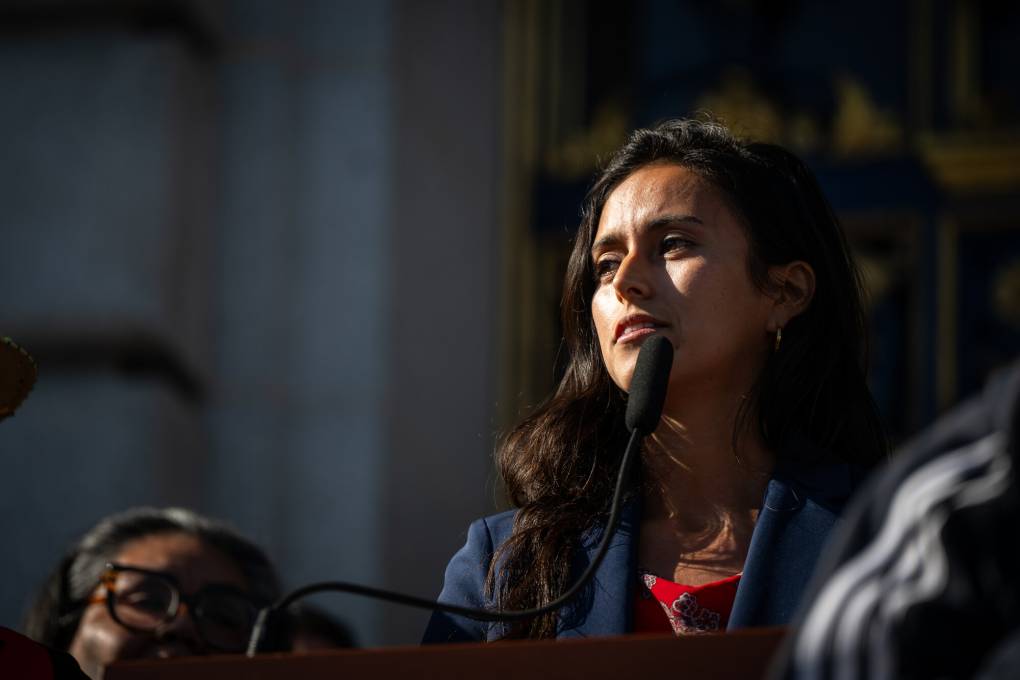
"attachmentsReducer": {
"audio_0": {
"type": "attachments",
"id": "audio_0",
"imgSizes": {
"kqedFullSize": {
"file": "https://ww2.kqed.org/news/wp-content/themes/KQED-unified/img/audio_bgs/background0.jpg"
}
}
},
"audio_1": {
"type": "attachments",
"id": "audio_1",
"imgSizes": {
"kqedFullSize": {
"file": "https://ww2.kqed.org/news/wp-content/themes/KQED-unified/img/audio_bgs/background1.jpg"
}
}
},
"audio_2": {
"type": "attachments",
"id": "audio_2",
"imgSizes": {
"kqedFullSize": {
"file": "https://ww2.kqed.org/news/wp-content/themes/KQED-unified/img/audio_bgs/background2.jpg"
}
}
},
"audio_3": {
"type": "attachments",
"id": "audio_3",
"imgSizes": {
"kqedFullSize": {
"file": "https://ww2.kqed.org/news/wp-content/themes/KQED-unified/img/audio_bgs/background3.jpg"
}
}
},
"audio_4": {
"type": "attachments",
"id": "audio_4",
"imgSizes": {
"kqedFullSize": {
"file": "https://ww2.kqed.org/news/wp-content/themes/KQED-unified/img/audio_bgs/background4.jpg"
}
}
},
"placeholder": {
"type": "attachments",
"id": "placeholder",
"imgSizes": {
"thumbnail": {
"file": "https://cdn.kqed.org/wp-content/uploads/2024/12/KQED-Default-Image-816638274-2000x1333-1-160x107.jpg",
"width": 160,
"height": 107,
"mimeType": "image/jpeg"
},
"medium": {
"file": "https://cdn.kqed.org/wp-content/uploads/2024/12/KQED-Default-Image-816638274-2000x1333-1-800x533.jpg",
"width": 800,
"height": 533,
"mimeType": "image/jpeg"
},
"medium_large": {
"file": "https://cdn.kqed.org/wp-content/uploads/2024/12/KQED-Default-Image-816638274-2000x1333-1-768x512.jpg",
"width": 768,
"height": 512,
"mimeType": "image/jpeg"
},
"large": {
"file": "https://cdn.kqed.org/wp-content/uploads/2024/12/KQED-Default-Image-816638274-2000x1333-1-1020x680.jpg",
"width": 1020,
"height": 680,
"mimeType": "image/jpeg"
},
"1536x1536": {
"file": "https://cdn.kqed.org/wp-content/uploads/2024/12/KQED-Default-Image-816638274-2000x1333-1-1536x1024.jpg",
"width": 1536,
"height": 1024,
"mimeType": "image/jpeg"
},
"fd-lrg": {
"file": "https://cdn.kqed.org/wp-content/uploads/2024/12/KQED-Default-Image-816638274-2000x1333-1-1536x1024.jpg",
"width": 1536,
"height": 1024,
"mimeType": "image/jpeg"
},
"fd-med": {
"file": "https://cdn.kqed.org/wp-content/uploads/2024/12/KQED-Default-Image-816638274-2000x1333-1-1020x680.jpg",
"width": 1020,
"height": 680,
"mimeType": "image/jpeg"
},
"fd-sm": {
"file": "https://cdn.kqed.org/wp-content/uploads/2024/12/KQED-Default-Image-816638274-2000x1333-1-800x533.jpg",
"width": 800,
"height": 533,
"mimeType": "image/jpeg"
},
"post-thumbnail": {
"file": "https://cdn.kqed.org/wp-content/uploads/2024/12/KQED-Default-Image-816638274-2000x1333-1-672x372.jpg",
"width": 672,
"height": 372,
"mimeType": "image/jpeg"
},
"twentyfourteen-full-width": {
"file": "https://cdn.kqed.org/wp-content/uploads/2024/12/KQED-Default-Image-816638274-2000x1333-1-1038x576.jpg",
"width": 1038,
"height": 576,
"mimeType": "image/jpeg"
},
"xxsmall": {
"file": "https://cdn.kqed.org/wp-content/uploads/2024/12/KQED-Default-Image-816638274-2000x1333-1-160x107.jpg",
"width": 160,
"height": 107,
"mimeType": "image/jpeg"
},
"xsmall": {
"file": "https://cdn.kqed.org/wp-content/uploads/2024/12/KQED-Default-Image-816638274-2000x1333-1-672x372.jpg",
"width": 672,
"height": 372,
"mimeType": "image/jpeg"
},
"small": {
"file": "https://cdn.kqed.org/wp-content/uploads/2024/12/KQED-Default-Image-816638274-2000x1333-1-672x372.jpg",
"width": 672,
"height": 372,
"mimeType": "image/jpeg"
},
"xlarge": {
"file": "https://cdn.kqed.org/wp-content/uploads/2024/12/KQED-Default-Image-816638274-2000x1333-1-1020x680.jpg",
"width": 1020,
"height": 680,
"mimeType": "image/jpeg"
},
"full-width": {
"file": "https://cdn.kqed.org/wp-content/uploads/2024/12/KQED-Default-Image-816638274-2000x1333-1-1920x1280.jpg",
"width": 1920,
"height": 1280,
"mimeType": "image/jpeg"
},
"guest-author-32": {
"file": "https://cdn.kqed.org/wp-content/uploads/2025/01/KQED-Default-Image-816638274-1333x1333-1-160x160.jpg",
"width": 32,
"height": 32,
"mimeType": "image/jpeg"
},
"guest-author-50": {
"file": "https://cdn.kqed.org/wp-content/uploads/2025/01/KQED-Default-Image-816638274-1333x1333-1-160x160.jpg",
"width": 50,
"height": 50,
"mimeType": "image/jpeg"
},
"guest-author-64": {
"file": "https://cdn.kqed.org/wp-content/uploads/2025/01/KQED-Default-Image-816638274-1333x1333-1-160x160.jpg",
"width": 64,
"height": 64,
"mimeType": "image/jpeg"
},
"guest-author-96": {
"file": "https://cdn.kqed.org/wp-content/uploads/2025/01/KQED-Default-Image-816638274-1333x1333-1-160x160.jpg",
"width": 96,
"height": 96,
"mimeType": "image/jpeg"
},
"guest-author-128": {
"file": "https://cdn.kqed.org/wp-content/uploads/2025/01/KQED-Default-Image-816638274-1333x1333-1-160x160.jpg",
"width": 128,
"height": 128,
"mimeType": "image/jpeg"
},
"detail": {
"file": "https://cdn.kqed.org/wp-content/uploads/2025/01/KQED-Default-Image-816638274-1333x1333-1-160x160.jpg",
"width": 160,
"height": 160,
"mimeType": "image/jpeg"
},
"kqedFullSize": {
"file": "https://cdn.kqed.org/wp-content/uploads/2024/12/KQED-Default-Image-816638274-2000x1333-1.jpg",
"width": 2000,
"height": 1333
}
}
},
"news_11955918": {
"type": "attachments",
"id": "news_11955918",
"meta": {
"index": "attachments_1716263798",
"site": "news",
"id": "11955918",
"found": true
},
"parent": 0,
"imgSizes": {
"twentyfourteen-full-width": {
"file": "https://ww2.kqed.org/app/uploads/sites/10/2023/07/230718-CAR-WASH-WAGE-THEFT-Getty-GM-KQED-1038x576.jpg",
"width": 1038,
"mimeType": "image/jpeg",
"height": 576
},
"thumbnail": {
"file": "https://ww2.kqed.org/app/uploads/sites/10/2023/07/230718-CAR-WASH-WAGE-THEFT-Getty-GM-KQED-160x107.jpg",
"width": 160,
"mimeType": "image/jpeg",
"height": 107
},
"post-thumbnail": {
"file": "https://ww2.kqed.org/app/uploads/sites/10/2023/07/230718-CAR-WASH-WAGE-THEFT-Getty-GM-KQED-672x372.jpg",
"width": 672,
"mimeType": "image/jpeg",
"height": 372
},
"kqedFullSize": {
"file": "https://ww2.kqed.org/app/uploads/sites/10/2023/07/230718-CAR-WASH-WAGE-THEFT-Getty-GM-KQED.jpg",
"width": 2000,
"height": 1333
},
"large": {
"file": "https://ww2.kqed.org/app/uploads/sites/10/2023/07/230718-CAR-WASH-WAGE-THEFT-Getty-GM-KQED-1020x680.jpg",
"width": 1020,
"mimeType": "image/jpeg",
"height": 680
},
"1536x1536": {
"file": "https://ww2.kqed.org/app/uploads/sites/10/2023/07/230718-CAR-WASH-WAGE-THEFT-Getty-GM-KQED-1536x1024.jpg",
"width": 1536,
"mimeType": "image/jpeg",
"height": 1024
},
"full-width": {
"file": "https://ww2.kqed.org/app/uploads/sites/10/2023/07/230718-CAR-WASH-WAGE-THEFT-Getty-GM-KQED-1920x1280.jpg",
"width": 1920,
"mimeType": "image/jpeg",
"height": 1280
},
"medium": {
"file": "https://ww2.kqed.org/app/uploads/sites/10/2023/07/230718-CAR-WASH-WAGE-THEFT-Getty-GM-KQED-800x533.jpg",
"width": 800,
"mimeType": "image/jpeg",
"height": 533
}
},
"publishDate": 1689697200,
"modified": 1689718244,
"caption": "Protesters picket in front of the Shine N Brite Car Wash in Inglewood, California, on July 11, 2023. Shine N Brite Car Wash was cited in November 2022 after state regulators found the carwash operator paid workers as low as $7 an hour. A new bill, championed by Santa Clara County, significantly transforms the state’s enforcement of labor laws. ",
"description": null,
"title": "Hot weather photos",
"credit": "Genaro Molina/Los Angeles Times via Getty Images",
"status": "inherit",
"altTag": "A group of people holds signs and walks in a line in front of a car wash on a sunny day.",
"isLoading": false,
"fetchFailed": false
},
"news_12060658": {
"type": "attachments",
"id": "news_12060658",
"meta": {
"index": "attachments_1716263798",
"site": "news",
"id": "12060658",
"found": true
},
"title": "BOLETA SOBRE LA MESA",
"publishDate": 1760927380,
"status": "inherit",
"parent": 12060657,
"modified": 1760927429,
"caption": "Un residente del Área de la Bahía se prepara para llenar su boleta por correo en 2021.",
"credit": "Beth LaBerge/KQED",
"altTag": null,
"description": null,
"imgSizes": {
"thumbnail": {
"file": "https://cdn.kqed.org/wp-content/uploads/sites/10/2025/10/BOLETA-SOBRE-LA-MESA-160x106.jpg",
"width": 160,
"height": 106,
"mimeType": "image/jpeg"
},
"post-thumbnail": {
"file": "https://cdn.kqed.org/wp-content/uploads/sites/10/2025/10/BOLETA-SOBRE-LA-MESA-672x372.jpg",
"width": 672,
"height": 372,
"mimeType": "image/jpeg"
},
"twentyfourteen-full-width": {
"file": "https://cdn.kqed.org/wp-content/uploads/sites/10/2025/10/BOLETA-SOBRE-LA-MESA-1020x576.jpg",
"width": 1020,
"height": 576,
"mimeType": "image/jpeg"
},
"kqedFullSize": {
"file": "https://cdn.kqed.org/wp-content/uploads/sites/10/2025/10/BOLETA-SOBRE-LA-MESA.jpg",
"width": 1020,
"height": 677
}
},
"isLoading": false,
"fetchFailed": false
},
"news_12060711": {
"type": "attachments",
"id": "news_12060711",
"meta": {
"index": "attachments_1716263798",
"site": "news",
"id": "12060711",
"found": true
},
"title": "Oakland Raiders v San Francisco 49ers",
"publishDate": 1760983422,
"status": "inherit",
"parent": 12060707,
"modified": 1760983455,
"caption": "Doug Martin #28 of the Oakland Raiders rushes with the ball against the San Francisco 49ers during their NFL game at Levi's Stadium on Nov. 1, 2018 in Santa Clara, California. ",
"credit": "Daniel Shirey/Getty Images",
"altTag": null,
"description": null,
"imgSizes": {
"thumbnail": {
"file": "https://cdn.kqed.org/wp-content/uploads/sites/10/2025/10/Doug-Martin-NFL-Getty-160x107.jpg",
"width": 160,
"height": 107,
"mimeType": "image/jpeg"
},
"1536x1536": {
"file": "https://cdn.kqed.org/wp-content/uploads/sites/10/2025/10/Doug-Martin-NFL-Getty-1536x1024.jpg",
"width": 1536,
"height": 1024,
"mimeType": "image/jpeg"
},
"post-thumbnail": {
"file": "https://cdn.kqed.org/wp-content/uploads/sites/10/2025/10/Doug-Martin-NFL-Getty-672x372.jpg",
"width": 672,
"height": 372,
"mimeType": "image/jpeg"
},
"twentyfourteen-full-width": {
"file": "https://cdn.kqed.org/wp-content/uploads/sites/10/2025/10/Doug-Martin-NFL-Getty-1038x576.jpg",
"width": 1038,
"height": 576,
"mimeType": "image/jpeg"
},
"kqedFullSize": {
"file": "https://cdn.kqed.org/wp-content/uploads/sites/10/2025/10/Doug-Martin-NFL-Getty.jpg",
"width": 2000,
"height": 1333
}
},
"isLoading": false,
"fetchFailed": false
},
"news_12060644": {
"type": "attachments",
"id": "news_12060644",
"meta": {
"index": "attachments_1716263798",
"site": "news",
"id": "12060644",
"found": true
},
"title": "lady at ballot drop off city hall sf",
"publishDate": 1760917825,
"status": "inherit",
"parent": 12060643,
"modified": 1762279217,
"caption": "A woman drops off her ballot at a ballot box outside of City Hall in San Francisco on Oct. 19, 2025., as California votes in its special election. on Proposition 50. ",
"credit": "Beth LaBerge/KQED",
"altTag": null,
"description": null,
"imgSizes": {
"thumbnail": {
"file": "https://cdn.kqed.org/wp-content/uploads/sites/10/2025/10/lady-at-ballot-drop-off-city-hall-sf-160x107.jpg",
"width": 160,
"height": 107,
"mimeType": "image/jpeg"
},
"post-thumbnail": {
"file": "https://cdn.kqed.org/wp-content/uploads/sites/10/2025/10/lady-at-ballot-drop-off-city-hall-sf-672x372.jpg",
"width": 672,
"height": 372,
"mimeType": "image/jpeg"
},
"twentyfourteen-full-width": {
"file": "https://cdn.kqed.org/wp-content/uploads/sites/10/2025/10/lady-at-ballot-drop-off-city-hall-sf-1020x576.jpg",
"width": 1020,
"height": 576,
"mimeType": "image/jpeg"
},
"kqedFullSize": {
"file": "https://cdn.kqed.org/wp-content/uploads/sites/10/2025/10/lady-at-ballot-drop-off-city-hall-sf.jpg",
"width": 1020,
"height": 680
}
},
"isLoading": false,
"fetchFailed": false
},
"news_12060273": {
"type": "attachments",
"id": "news_12060273",
"meta": {
"index": "attachments_1716263798",
"site": "news",
"id": "12060273",
"found": true
},
"title": "251003_Redistrict Antioch-_-10_qed",
"publishDate": 1760720223,
"status": "inherit",
"parent": 12060266,
"modified": 1760720320,
"caption": "Janet Hoy thanks Pastor Shantell Owens, co-founder of Genesis Church, following the presentation on the pros and cons of Proposition 50 at Genesis Church in Antioch, California, on Oct. 2, 2025.",
"credit": "Gustavo Hernandez/KQED",
"altTag": null,
"description": null,
"imgSizes": {
"thumbnail": {
"file": "https://cdn.kqed.org/wp-content/uploads/sites/10/2025/10/251003_Redistrict-Antioch-_-10_qed-160x107.jpg",
"width": 160,
"height": 107,
"mimeType": "image/jpeg"
},
"1536x1536": {
"file": "https://cdn.kqed.org/wp-content/uploads/sites/10/2025/10/251003_Redistrict-Antioch-_-10_qed-1536x1024.jpg",
"width": 1536,
"height": 1024,
"mimeType": "image/jpeg"
},
"post-thumbnail": {
"file": "https://cdn.kqed.org/wp-content/uploads/sites/10/2025/10/251003_Redistrict-Antioch-_-10_qed-672x372.jpg",
"width": 672,
"height": 372,
"mimeType": "image/jpeg"
},
"twentyfourteen-full-width": {
"file": "https://cdn.kqed.org/wp-content/uploads/sites/10/2025/10/251003_Redistrict-Antioch-_-10_qed-1038x576.jpg",
"width": 1038,
"height": 576,
"mimeType": "image/jpeg"
},
"kqedFullSize": {
"file": "https://cdn.kqed.org/wp-content/uploads/sites/10/2025/10/251003_Redistrict-Antioch-_-10_qed.jpg",
"width": 2000,
"height": 1333
}
},
"isLoading": false,
"fetchFailed": false
},
"news_11908239": {
"type": "attachments",
"id": "news_11908239",
"meta": {
"index": "attachments_1716263798",
"site": "news",
"id": "11908239",
"found": true
},
"title": "IMG_9034",
"publishDate": 1647370736,
"status": "inherit",
"parent": 11906012,
"modified": 1760730990,
"caption": "An Aztec dancer looks above the trees on 24th Street, during a blessing of the altars on 24th and Folsom streets to start Día de los Muertos in the Mission District, San Francisco, on Sunday, Nov. 1, 2020.",
"credit": "Sebastian Miño-Bucheli/KQED",
"altTag": "A person wearing a beaded and multicolored blouse stands in the foreground, wearing a mask. A plume of feathers in black, blue, yellow and white fan out behind their head.",
"description": null,
"imgSizes": {
"medium": {
"file": "https://cdn.kqed.org/wp-content/uploads/sites/10/2022/03/IMG_9034-800x576.jpg",
"width": 800,
"height": 576,
"mimeType": "image/jpeg"
},
"large": {
"file": "https://cdn.kqed.org/wp-content/uploads/sites/10/2022/03/IMG_9034-1020x735.jpg",
"width": 1020,
"height": 735,
"mimeType": "image/jpeg"
},
"thumbnail": {
"file": "https://cdn.kqed.org/wp-content/uploads/sites/10/2022/03/IMG_9034-160x115.jpg",
"width": 160,
"height": 115,
"mimeType": "image/jpeg"
},
"1536x1536": {
"file": "https://cdn.kqed.org/wp-content/uploads/sites/10/2022/03/IMG_9034-1536x1106.jpg",
"width": 1536,
"height": 1106,
"mimeType": "image/jpeg"
},
"2048x2048": {
"file": "https://cdn.kqed.org/wp-content/uploads/sites/10/2022/03/IMG_9034-2048x1475.jpg",
"width": 2048,
"height": 1475,
"mimeType": "image/jpeg"
},
"post-thumbnail": {
"file": "https://cdn.kqed.org/wp-content/uploads/sites/10/2022/03/IMG_9034-672x372.jpg",
"width": 672,
"height": 372,
"mimeType": "image/jpeg"
},
"twentyfourteen-full-width": {
"file": "https://cdn.kqed.org/wp-content/uploads/sites/10/2022/03/IMG_9034-1038x576.jpg",
"width": 1038,
"height": 576,
"mimeType": "image/jpeg"
},
"full-width": {
"file": "https://cdn.kqed.org/wp-content/uploads/sites/10/2022/03/IMG_9034-1920x1383.jpg",
"width": 1920,
"height": 1383,
"mimeType": "image/jpeg"
},
"kqedFullSize": {
"file": "https://cdn.kqed.org/wp-content/uploads/sites/10/2022/03/IMG_9034-scaled.jpg",
"width": 2560,
"height": 1844
}
},
"isLoading": false,
"fetchFailed": false
},
"news_12059850": {
"type": "attachments",
"id": "news_12059850",
"meta": {
"index": "attachments_1716263798",
"site": "news",
"id": "12059850",
"found": true
},
"title": "251014-KAISER STRIKE START-MD-06-KQED",
"publishDate": 1760463342,
"status": "inherit",
"parent": 12059890,
"modified": 1760482077,
"caption": "Arezou Mansourian leads workers in chanting as they strike outside of the Kaiser Permanente Oakland Medical Center in Oakland on Oct. 14, 2025.",
"credit": "Martin do Nascimento/KQED",
"altTag": null,
"description": null,
"imgSizes": {
"thumbnail": {
"file": "https://cdn.kqed.org/wp-content/uploads/sites/10/2025/10/251014-KAISER-STRIKE-START-MD-06-KQED-160x107.jpg",
"width": 160,
"height": 107,
"mimeType": "image/jpeg"
},
"1536x1536": {
"file": "https://cdn.kqed.org/wp-content/uploads/sites/10/2025/10/251014-KAISER-STRIKE-START-MD-06-KQED-1536x1025.jpg",
"width": 1536,
"height": 1025,
"mimeType": "image/jpeg"
},
"post-thumbnail": {
"file": "https://cdn.kqed.org/wp-content/uploads/sites/10/2025/10/251014-KAISER-STRIKE-START-MD-06-KQED-672x372.jpg",
"width": 672,
"height": 372,
"mimeType": "image/jpeg"
},
"twentyfourteen-full-width": {
"file": "https://cdn.kqed.org/wp-content/uploads/sites/10/2025/10/251014-KAISER-STRIKE-START-MD-06-KQED-1038x576.jpg",
"width": 1038,
"height": 576,
"mimeType": "image/jpeg"
},
"kqedFullSize": {
"file": "https://cdn.kqed.org/wp-content/uploads/sites/10/2025/10/251014-KAISER-STRIKE-START-MD-06-KQED.jpg",
"width": 2000,
"height": 1334
}
},
"isLoading": false,
"fetchFailed": false
},
"news_12000320": {
"type": "attachments",
"id": "news_12000320",
"meta": {
"index": "attachments_1716263798",
"site": "news",
"id": "12000320",
"found": true
},
"title": "mpox-monkeypox-global-emergency-who-vaccine",
"publishDate": 1723740957,
"status": "inherit",
"parent": 12000319,
"modified": 1723750986,
"caption": "Licensed Vocational Nurse (LVN) Gabriela Solis prepares a dose of the Jynneos mpox vaccine at an L.A. County vaccination site in East Los Angeles on Aug. 10, 2022.",
"credit": "Mario Tama/Getty Images",
"altTag": "A woman wearing glasses, a face mask and a visor with blue surgical gloves holds a syringe and a small bottle.",
"description": null,
"imgSizes": {
"medium": {
"file": "https://cdn.kqed.org/wp-content/uploads/sites/10/2024/08/GettyImages-1414098149-800x505.jpg",
"width": 800,
"height": 505,
"mimeType": "image/jpeg"
},
"large": {
"file": "https://cdn.kqed.org/wp-content/uploads/sites/10/2024/08/GettyImages-1414098149-1020x643.jpg",
"width": 1020,
"height": 643,
"mimeType": "image/jpeg"
},
"thumbnail": {
"file": "https://cdn.kqed.org/wp-content/uploads/sites/10/2024/08/GettyImages-1414098149-160x101.jpg",
"width": 160,
"height": 101,
"mimeType": "image/jpeg"
},
"post-thumbnail": {
"file": "https://cdn.kqed.org/wp-content/uploads/sites/10/2024/08/GettyImages-1414098149-672x372.jpg",
"width": 672,
"height": 372,
"mimeType": "image/jpeg"
},
"twentyfourteen-full-width": {
"file": "https://cdn.kqed.org/wp-content/uploads/sites/10/2024/08/GettyImages-1414098149-1024x576.jpg",
"width": 1024,
"height": 576,
"mimeType": "image/jpeg"
},
"kqedFullSize": {
"file": "https://cdn.kqed.org/wp-content/uploads/sites/10/2024/08/GettyImages-1414098149.jpg",
"width": 1024,
"height": 646
}
},
"isLoading": false,
"fetchFailed": false
},
"news_11977514": {
"type": "attachments",
"id": "news_11977514",
"meta": {
"index": "attachments_1716263798",
"site": "news",
"id": "11977514",
"found": true
},
"title": "Benioff speaks during a news conference in 2019. He is adamant that he is not building a Salesforce facility in Waimea.",
"publishDate": 1709165719,
"status": "inherit",
"parent": 11977506,
"modified": 1760564920,
"caption": "Salesforce CEO Marc Benioff speaks during a news conference in Indianapolis on Dec. 1, 2020.",
"credit": "Darron Cummings/AP Photo",
"altTag": null,
"description": "FILE - In this May 16, 2019, file photo, Salesforce chairman Marc Benioff speaks during a news conference, in Indianapolis. In a deal announced Tuesday, Dec. 1, 2020, business software pioneer Salesforce.com is buying work-chatting service Slack for $27.7 billion in a deal aimed at giving the two companies a better shot at competing against longtime industry powerhouse Microsoft. (AP Photo/Darron Cummings, File)",
"imgSizes": {
"medium": {
"file": "https://cdn.kqed.org/wp-content/uploads/sites/10/2024/02/ap20336794283031_custom-78b2f9039ebb1cd87ba3c4d3edf97a3854590c5a-800x533.jpg",
"width": 800,
"height": 533,
"mimeType": "image/jpeg"
},
"large": {
"file": "https://cdn.kqed.org/wp-content/uploads/sites/10/2024/02/ap20336794283031_custom-78b2f9039ebb1cd87ba3c4d3edf97a3854590c5a-1020x679.jpg",
"width": 1020,
"height": 679,
"mimeType": "image/jpeg"
},
"thumbnail": {
"file": "https://cdn.kqed.org/wp-content/uploads/sites/10/2024/02/ap20336794283031_custom-78b2f9039ebb1cd87ba3c4d3edf97a3854590c5a-160x107.jpg",
"width": 160,
"height": 107,
"mimeType": "image/jpeg"
},
"1536x1536": {
"file": "https://cdn.kqed.org/wp-content/uploads/sites/10/2024/02/ap20336794283031_custom-78b2f9039ebb1cd87ba3c4d3edf97a3854590c5a-1536x1023.jpg",
"width": 1536,
"height": 1023,
"mimeType": "image/jpeg"
},
"2048x2048": {
"file": "https://cdn.kqed.org/wp-content/uploads/sites/10/2024/02/ap20336794283031_custom-78b2f9039ebb1cd87ba3c4d3edf97a3854590c5a-2048x1364.jpg",
"width": 2048,
"height": 1364,
"mimeType": "image/jpeg"
},
"post-thumbnail": {
"file": "https://cdn.kqed.org/wp-content/uploads/sites/10/2024/02/ap20336794283031_custom-78b2f9039ebb1cd87ba3c4d3edf97a3854590c5a-672x372.jpg",
"width": 672,
"height": 372,
"mimeType": "image/jpeg"
},
"twentyfourteen-full-width": {
"file": "https://cdn.kqed.org/wp-content/uploads/sites/10/2024/02/ap20336794283031_custom-78b2f9039ebb1cd87ba3c4d3edf97a3854590c5a-1038x576.jpg",
"width": 1038,
"height": 576,
"mimeType": "image/jpeg"
},
"full-width": {
"file": "https://cdn.kqed.org/wp-content/uploads/sites/10/2024/02/ap20336794283031_custom-78b2f9039ebb1cd87ba3c4d3edf97a3854590c5a-1920x1279.jpg",
"width": 1920,
"height": 1279,
"mimeType": "image/jpeg"
},
"kqedFullSize": {
"file": "https://cdn.kqed.org/wp-content/uploads/sites/10/2024/02/ap20336794283031_custom-78b2f9039ebb1cd87ba3c4d3edf97a3854590c5a-scaled-e1760564859201.jpg",
"width": 2000,
"height": 1332
}
},
"isLoading": false,
"fetchFailed": false
},
"news_12031711": {
"type": "attachments",
"id": "news_12031711",
"meta": {
"index": "attachments_1716263798",
"site": "news",
"id": "12031711",
"found": true
},
"title": "20250315_OAKLAND-MAYOR_DB_00041-KQED",
"publishDate": 1742253277,
"status": "inherit",
"parent": 12032042,
"modified": 1742421083,
"caption": "Oakland mayoral candidate Barbara Lee addresses the audience at a public forum for Oakland Mayoral Candidates organized by the League of Women Voters of Oakland at Oakland City Hall on March 15, 2025.",
"credit": "David M. Barreda/KQED",
"altTag": null,
"description": null,
"imgSizes": {
"medium": {
"file": "https://cdn.kqed.org/wp-content/uploads/sites/10/2025/03/20250315_OAKLAND-MAYOR_DB_00041-KQED-800x534.jpg",
"width": 800,
"height": 534,
"mimeType": "image/jpeg"
},
"large": {
"file": "https://cdn.kqed.org/wp-content/uploads/sites/10/2025/03/20250315_OAKLAND-MAYOR_DB_00041-KQED-1020x680.jpg",
"width": 1020,
"height": 680,
"mimeType": "image/jpeg"
},
"thumbnail": {
"file": "https://cdn.kqed.org/wp-content/uploads/sites/10/2025/03/20250315_OAKLAND-MAYOR_DB_00041-KQED-160x107.jpg",
"width": 160,
"height": 107,
"mimeType": "image/jpeg"
},
"1536x1536": {
"file": "https://cdn.kqed.org/wp-content/uploads/sites/10/2025/03/20250315_OAKLAND-MAYOR_DB_00041-KQED-1536x1025.jpg",
"width": 1536,
"height": 1025,
"mimeType": "image/jpeg"
},
"post-thumbnail": {
"file": "https://cdn.kqed.org/wp-content/uploads/sites/10/2025/03/20250315_OAKLAND-MAYOR_DB_00041-KQED-672x372.jpg",
"width": 672,
"height": 372,
"mimeType": "image/jpeg"
},
"twentyfourteen-full-width": {
"file": "https://cdn.kqed.org/wp-content/uploads/sites/10/2025/03/20250315_OAKLAND-MAYOR_DB_00041-KQED-1038x576.jpg",
"width": 1038,
"height": 576,
"mimeType": "image/jpeg"
},
"full-width": {
"file": "https://cdn.kqed.org/wp-content/uploads/sites/10/2025/03/20250315_OAKLAND-MAYOR_DB_00041-KQED-1920x1281.jpg",
"width": 1920,
"height": 1281,
"mimeType": "image/jpeg"
},
"kqedFullSize": {
"file": "https://cdn.kqed.org/wp-content/uploads/sites/10/2025/03/20250315_OAKLAND-MAYOR_DB_00041-KQED.jpg",
"width": 2000,
"height": 1334
}
},
"isLoading": false,
"fetchFailed": false
},
"news_12044465": {
"type": "attachments",
"id": "news_12044465",
"meta": {
"index": "attachments_1716263798",
"site": "news",
"id": "12044465",
"found": true
},
"title": "250614-NO-KINGS-SF-MD-11-KQED",
"publishDate": 1749940390,
"status": "inherit",
"parent": 0,
"modified": 1749940553,
"caption": "Thousands of protesters rally in front of City Hall in San Francisco as part of the No Kings protest on June 14, 2025.",
"credit": "Martin do Nascimento/KQED",
"altTag": null,
"description": null,
"imgSizes": {
"thumbnail": {
"file": "https://cdn.kqed.org/wp-content/uploads/sites/10/2025/06/250614-NO-KINGS-SF-MD-11-KQED-160x107.jpg",
"width": 160,
"height": 107,
"mimeType": "image/jpeg"
},
"1536x1536": {
"file": "https://cdn.kqed.org/wp-content/uploads/sites/10/2025/06/250614-NO-KINGS-SF-MD-11-KQED-1536x1025.jpg",
"width": 1536,
"height": 1025,
"mimeType": "image/jpeg"
},
"post-thumbnail": {
"file": "https://cdn.kqed.org/wp-content/uploads/sites/10/2025/06/250614-NO-KINGS-SF-MD-11-KQED-672x372.jpg",
"width": 672,
"height": 372,
"mimeType": "image/jpeg"
},
"twentyfourteen-full-width": {
"file": "https://cdn.kqed.org/wp-content/uploads/sites/10/2025/06/250614-NO-KINGS-SF-MD-11-KQED-1038x576.jpg",
"width": 1038,
"height": 576,
"mimeType": "image/jpeg"
},
"kqedFullSize": {
"file": "https://cdn.kqed.org/wp-content/uploads/sites/10/2025/06/250614-NO-KINGS-SF-MD-11-KQED.jpg",
"width": 2000,
"height": 1334
}
},
"isLoading": false,
"fetchFailed": false
},
"news_12060218": {
"type": "attachments",
"id": "news_12060218",
"meta": {
"index": "attachments_1716263798",
"site": "news",
"id": "12060218",
"found": true
},
"title": "SFFireDeptLomaPrieta1",
"publishDate": 1760659262,
"status": "inherit",
"parent": 12060130,
"modified": 1760659307,
"caption": "San Francisco Fire Department firefighters test the city's Emergency Firefighting Water System on Oct. 16, 2025 on the north tip of Van Ness Avenue.",
"credit": "Nibras Suliman/KQED",
"altTag": null,
"description": null,
"imgSizes": {
"thumbnail": {
"file": "https://cdn.kqed.org/wp-content/uploads/sites/10/2025/10/SFFireDeptLomaPrieta1-160x120.jpg",
"width": 160,
"height": 120,
"mimeType": "image/jpeg"
},
"1536x1536": {
"file": "https://cdn.kqed.org/wp-content/uploads/sites/10/2025/10/SFFireDeptLomaPrieta1-1536x1152.jpg",
"width": 1536,
"height": 1152,
"mimeType": "image/jpeg"
},
"post-thumbnail": {
"file": "https://cdn.kqed.org/wp-content/uploads/sites/10/2025/10/SFFireDeptLomaPrieta1-672x372.jpg",
"width": 672,
"height": 372,
"mimeType": "image/jpeg"
},
"twentyfourteen-full-width": {
"file": "https://cdn.kqed.org/wp-content/uploads/sites/10/2025/10/SFFireDeptLomaPrieta1-1038x576.jpg",
"width": 1038,
"height": 576,
"mimeType": "image/jpeg"
},
"kqedFullSize": {
"file": "https://cdn.kqed.org/wp-content/uploads/sites/10/2025/10/SFFireDeptLomaPrieta1.jpg",
"width": 2000,
"height": 1500
}
},
"isLoading": false,
"fetchFailed": false
}
},
"audioPlayerReducer": {
"postId": "stream_live",
"isPaused": true,
"isPlaying": false,
"pfsActive": false,
"pledgeModalIsOpen": true,
"playerDrawerIsOpen": false,
"liveAudioPlayStartedAt": 0,
"liveAudioPlayContext": ""
},
"authorsReducer": {
"shotchkiss": {
"type": "authors",
"id": "61",
"meta": {
"index": "authors_1716337520",
"id": "61",
"found": true
},
"name": "Sarah Hotchkiss",
"firstName": "Sarah",
"lastName": "Hotchkiss",
"slug": "shotchkiss",
"email": "shotchkiss@kqed.org",
"display_author_email": true,
"staff_mastheads": [
"arts"
],
"title": "Senior Editor",
"bio": "Sarah Hotchkiss is a San Francisco \u003ca href=\"http://www.sarahhotchkiss.com\">artist\u003c/a> and arts writer. In 2019, she received the Dorothea & Leo Rabkin Foundation grant for visual art journalism and in 2020 she received a Society of Professional Journalists, Northern California award for excellence in arts and culture reporting.",
"avatar": "https://secure.gravatar.com/avatar/bc662df144b3d27fd8b1b6f1c2a420d34e91e53154d411bb7ad353cc8b6cea8d?s=600&d=blank&r=g",
"twitter": null,
"bluesky": null,
"facebook": null,
"instagram": null,
"linkedin": null,
"sites": [
{
"site": "",
"roles": [
"editor"
]
},
{
"site": "arts",
"roles": [
"Contributor",
"administrator"
]
},
{
"site": "artschool",
"roles": [
"administrator"
]
},
{
"site": "news",
"roles": [
"editor"
]
},
{
"site": "pop",
"roles": [
"administrator"
]
},
{
"site": "bayareabites",
"roles": [
"editor"
]
},
{
"site": "spark",
"roles": [
"editor"
]
},
{
"site": "checkplease",
"roles": [
"editor"
]
}
],
"headData": {
"title": "Sarah Hotchkiss | KQED",
"description": "Senior Editor",
"ogImgSrc": "https://secure.gravatar.com/avatar/bc662df144b3d27fd8b1b6f1c2a420d34e91e53154d411bb7ad353cc8b6cea8d?s=600&d=blank&r=g",
"twImgSrc": "https://secure.gravatar.com/avatar/bc662df144b3d27fd8b1b6f1c2a420d34e91e53154d411bb7ad353cc8b6cea8d?s=600&d=blank&r=g"
},
"isLoading": false,
"link": "/author/shotchkiss"
},
"gmarzorati": {
"type": "authors",
"id": "227",
"meta": {
"index": "authors_1716337520",
"id": "227",
"found": true
},
"name": "Guy Marzorati",
"firstName": "Guy",
"lastName": "Marzorati",
"slug": "gmarzorati",
"email": "gmarzorati@KQED.org",
"display_author_email": true,
"staff_mastheads": [
"news"
],
"title": "Correspondent",
"bio": "Guy Marzorati is a correspondent on KQED's California Politics and Government Desk, based in San Jose. A graduate of Santa Clara University, Guy joined KQED in 2013. He reports on state and local politics and produces KQED's digital voter guide.",
"avatar": "https://secure.gravatar.com/avatar/e7038b8dbfd55b104369b76b1cd0b9de?s=600&d=blank&r=g",
"twitter": "guymarzorati",
"facebook": null,
"instagram": null,
"linkedin": null,
"sites": [
{
"site": "",
"roles": [
"editor"
]
},
{
"site": "news",
"roles": [
"editor"
]
},
{
"site": "science",
"roles": [
"editor"
]
},
{
"site": "forum",
"roles": [
"editor"
]
},
{
"site": "elections",
"roles": [
"editor"
]
},
{
"site": "liveblog",
"roles": [
"editor"
]
}
],
"headData": {
"title": "Guy Marzorati | KQED",
"description": "Correspondent",
"ogImgSrc": "https://secure.gravatar.com/avatar/e7038b8dbfd55b104369b76b1cd0b9de?s=600&d=blank&r=g",
"twImgSrc": "https://secure.gravatar.com/avatar/e7038b8dbfd55b104369b76b1cd0b9de?s=600&d=blank&r=g"
},
"isLoading": false,
"link": "/author/gmarzorati"
},
"carlysevern": {
"type": "authors",
"id": "3243",
"meta": {
"index": "authors_1716337520",
"id": "3243",
"found": true
},
"name": "Carly Severn",
"firstName": "Carly",
"lastName": "Severn",
"slug": "carlysevern",
"email": "csevern@kqed.org",
"display_author_email": false,
"staff_mastheads": [
"news"
],
"title": "Senior Editor, Audience News ",
"bio": "Carly is KQED's Senior Editor of Audience News on the Digital News team, and has reported for the California Report Magazine, Bay Curious and KQED Arts. She's formerly the host of \u003ca href=\"http://ww2.kqed.org/pop/category/the-cooler/\" rel=\"noopener noreferrer\">The Cooler\u003c/a> podcast.",
"avatar": "https://secure.gravatar.com/avatar/2d8d6765f186e64c798cf7f0c8088a41?s=600&d=blank&r=g",
"twitter": "teacupinthebay",
"facebook": null,
"instagram": null,
"linkedin": null,
"sites": [
{
"site": "",
"roles": [
"editor"
]
},
{
"site": "arts",
"roles": [
"editor"
]
},
{
"site": "news",
"roles": [
"administrator"
]
},
{
"site": "pop",
"roles": [
"editor"
]
},
{
"site": "futureofyou",
"roles": [
"editor"
]
},
{
"site": "about",
"roles": [
"administrator"
]
},
{
"site": "mindshift",
"roles": [
"editor"
]
},
{
"site": "bayareabites",
"roles": [
"editor"
]
},
{
"site": "stateofhealth",
"roles": [
"editor"
]
},
{
"site": "science",
"roles": [
"editor"
]
},
{
"site": "food",
"roles": [
"contributor"
]
},
{
"site": "forum",
"roles": [
"editor"
]
},
{
"site": "perspectives",
"roles": [
"administrator"
]
},
{
"site": "liveblog",
"roles": [
"editor"
]
}
],
"headData": {
"title": "Carly Severn | KQED",
"description": "Senior Editor, Audience News ",
"ogImgSrc": "https://secure.gravatar.com/avatar/2d8d6765f186e64c798cf7f0c8088a41?s=600&d=blank&r=g",
"twImgSrc": "https://secure.gravatar.com/avatar/2d8d6765f186e64c798cf7f0c8088a41?s=600&d=blank&r=g"
},
"isLoading": false,
"link": "/author/carlysevern"
},
"fjhabvala": {
"type": "authors",
"id": "8659",
"meta": {
"index": "authors_1716337520",
"id": "8659",
"found": true
},
"name": "Farida Jhabvala Romero",
"firstName": "Farida",
"lastName": "Jhabvala Romero",
"slug": "fjhabvala",
"email": "fjhabvala@kqed.org",
"display_author_email": true,
"staff_mastheads": [
"news"
],
"title": "KQED Contributor",
"bio": "Farida Jhabvala Romero is a Labor Correspondent for KQED. She previously covered immigration. Farida was \u003ca href=\"https://www.ccnma.org/2022-most-influential-latina-journalists\">named\u003c/a> one of the 10 Most Influential Latina Journalists in California in 2022 by the California Chicano News Media Association. Her work has won awards from the Society of Professional Journalists (Northern California), as well as a national and regional Edward M. Murrow Award for the collaborative reporting projects “Dangerous Air” and “Graying California.” Before joining KQED, Farida worked as a producer at Radio Bilingüe, a national public radio network. Farida earned her master’s degree in journalism from Stanford University.",
"avatar": "https://secure.gravatar.com/avatar/f9f022d4e2609741874222a1e9d41f48fea74011aa7c615eef91d9a50c944ebe?s=600&d=blank&r=g",
"twitter": "FaridaJhabvala",
"bluesky": null,
"facebook": null,
"instagram": null,
"linkedin": "https://www.linkedin.com/in/faridajhabvala/",
"sites": [
{
"site": "news",
"roles": [
"editor"
]
},
{
"site": "stateofhealth",
"roles": [
"author"
]
},
{
"site": "liveblog",
"roles": [
"author"
]
}
],
"headData": {
"title": "Farida Jhabvala Romero | KQED",
"description": "KQED Contributor",
"ogImgSrc": "https://secure.gravatar.com/avatar/f9f022d4e2609741874222a1e9d41f48fea74011aa7c615eef91d9a50c944ebe?s=600&d=blank&r=g",
"twImgSrc": "https://secure.gravatar.com/avatar/f9f022d4e2609741874222a1e9d41f48fea74011aa7c615eef91d9a50c944ebe?s=600&d=blank&r=g"
},
"isLoading": false,
"link": "/author/fjhabvala"
},
"ccabreralomeli": {
"type": "authors",
"id": "11708",
"meta": {
"index": "authors_1716337520",
"id": "11708",
"found": true
},
"name": "Carlos Cabrera-Lomelí",
"firstName": "Carlos",
"lastName": "Cabrera-Lomelí",
"slug": "ccabreralomeli",
"email": "ccabreralomeli@KQED.org",
"display_author_email": true,
"staff_mastheads": [
"news"
],
"title": "Community Reporter",
"bio": "Carlos Cabrera-Lomelí is a community reporter with KQED's digital engagement team. He also reports and co-produces for KQED's bilingual news hub KQED en Español. He grew up in San Francisco's Mission District and has previously worked with Univision, 48 Hills and REFORMA in Mexico City.",
"avatar": "https://secure.gravatar.com/avatar/c309be9665e484f887b818c89e273ecc673004f426f36b24d00a4d813a2e0518?s=600&d=blank&r=g",
"twitter": "@LomeliCabrera",
"bluesky": null,
"facebook": null,
"instagram": null,
"linkedin": null,
"sites": [
{
"site": "arts",
"roles": [
"editor"
]
},
{
"site": "news",
"roles": [
"editor"
]
},
{
"site": "about",
"roles": [
"editor"
]
},
{
"site": "science",
"roles": [
"editor"
]
},
{
"site": "perspectives",
"roles": [
"editor"
]
},
{
"site": "elections",
"roles": [
"editor"
]
},
{
"site": "liveblog",
"roles": [
"contributor"
]
}
],
"headData": {
"title": "Carlos Cabrera-Lomelí | KQED",
"description": "Community Reporter",
"ogImgSrc": "https://secure.gravatar.com/avatar/c309be9665e484f887b818c89e273ecc673004f426f36b24d00a4d813a2e0518?s=600&d=blank&r=g",
"twImgSrc": "https://secure.gravatar.com/avatar/c309be9665e484f887b818c89e273ecc673004f426f36b24d00a4d813a2e0518?s=600&d=blank&r=g"
},
"isLoading": false,
"link": "/author/ccabreralomeli"
},
"sjohnson": {
"type": "authors",
"id": "11840",
"meta": {
"index": "authors_1716337520",
"id": "11840",
"found": true
},
"name": "Sydney Johnson",
"firstName": "Sydney",
"lastName": "Johnson",
"slug": "sjohnson",
"email": "sjohnson@kqed.org",
"display_author_email": false,
"staff_mastheads": [
"news"
],
"title": "KQED Reporter",
"bio": "Sydney Johnson is a general assignment reporter at KQED. She previously reported on public health and city government at the San Francisco Examiner, and before that, she covered statewide education policy for EdSource. Her reporting has won multiple local, state and national awards. Sydney is a graduate of the University of California, Berkeley and lives in San Francisco.",
"avatar": "https://secure.gravatar.com/avatar/97855f2719b72ad6190b7c535fe642c8?s=600&d=blank&r=g",
"twitter": "sydneyfjohnson",
"facebook": null,
"instagram": null,
"linkedin": null,
"sites": [
{
"site": "news",
"roles": [
"editor"
]
}
],
"headData": {
"title": "Sydney Johnson | KQED",
"description": "KQED Reporter",
"ogImgSrc": "https://secure.gravatar.com/avatar/97855f2719b72ad6190b7c535fe642c8?s=600&d=blank&r=g",
"twImgSrc": "https://secure.gravatar.com/avatar/97855f2719b72ad6190b7c535fe642c8?s=600&d=blank&r=g"
},
"isLoading": false,
"link": "/author/sjohnson"
},
"kdebenedetti": {
"type": "authors",
"id": "11913",
"meta": {
"index": "authors_1716337520",
"id": "11913",
"found": true
},
"name": "Katie DeBenedetti",
"firstName": "Katie",
"lastName": "DeBenedetti",
"slug": "kdebenedetti",
"email": "kdebenedetti@kqed.org",
"display_author_email": false,
"staff_mastheads": [
"news",
"science"
],
"title": "KQED Contributor",
"bio": "Katie DeBenedetti is a digital reporter covering daily news for the Express Desk. Prior to joining KQED as a culture reporting intern in January 2024, she covered education and city government for the Napa Valley Register.",
"avatar": "https://secure.gravatar.com/avatar/6e31073cb8f7e4214ab03f42771d0f45?s=600&d=blank&r=g",
"twitter": null,
"facebook": null,
"instagram": null,
"linkedin": null,
"sites": [
{
"site": "news",
"roles": [
"author"
]
},
{
"site": "science",
"roles": [
"author"
]
},
{
"site": "liveblog",
"roles": [
"author"
]
}
],
"headData": {
"title": "Katie DeBenedetti | KQED",
"description": "KQED Contributor",
"ogImgSrc": "https://secure.gravatar.com/avatar/6e31073cb8f7e4214ab03f42771d0f45?s=600&d=blank&r=g",
"twImgSrc": "https://secure.gravatar.com/avatar/6e31073cb8f7e4214ab03f42771d0f45?s=600&d=blank&r=g"
},
"isLoading": false,
"link": "/author/kdebenedetti"
},
"mbernal": {
"type": "authors",
"id": "11977",
"meta": {
"index": "authors_1716337520",
"id": "11977",
"found": true
},
"name": "María Fernanda Bernal",
"firstName": "María Fernanda",
"lastName": "Bernal",
"slug": "mbernal",
"email": "mbernal@kqed.org",
"display_author_email": false,
"staff_mastheads": [
"news"
],
"title": "KQED Contributor",
"bio": "Maria Fernanda is a UC Berkeley J-School alum and was named Innovation Fellow in 2023. She was the 2022 White House Correspondents' Fellow and Cokie Roberts Scholar. In her time at the Investigative Reporting Program, she led an investigative team and received a National Press Award in 2025 for the story on Chevron's Manipulation of Media. She is most proud of her international recognition with the first place podcast award from the Insituto Mexicano de la radio in 2021. Maria Fernanda is a Bay Area-based journalist who is currently working as a general assignment reporter, weekend host and producer at KQED.",
"avatar": "https://secure.gravatar.com/avatar/f44c9ad4bd3426006b0def803428a08a?s=600&d=blank&r=g",
"twitter": null,
"facebook": null,
"instagram": null,
"linkedin": null,
"sites": [
{
"site": "arts",
"roles": [
"editor"
]
},
{
"site": "news",
"roles": [
"editor",
"author"
]
},
{
"site": "science",
"roles": [
"editor"
]
}
],
"headData": {
"title": "María Fernanda Bernal | KQED",
"description": "KQED Contributor",
"ogImgSrc": "https://secure.gravatar.com/avatar/f44c9ad4bd3426006b0def803428a08a?s=600&d=blank&r=g",
"twImgSrc": "https://secure.gravatar.com/avatar/f44c9ad4bd3426006b0def803428a08a?s=600&d=blank&r=g"
},
"isLoading": false,
"link": "/author/mbernal"
},
"nsuliman": {
"type": "authors",
"id": "11985",
"meta": {
"index": "authors_1716337520",
"id": "11985",
"found": true
},
"name": "Nibras Suliman",
"firstName": "Nibras",
"lastName": "Suliman",
"slug": "nsuliman",
"email": "nsuliman@kqed.org",
"display_author_email": false,
"staff_mastheads": [],
"title": "KQED Contributor",
"bio": null,
"avatar": "https://secure.gravatar.com/avatar/581946774e0249b1fcdfb01d4f143d12?s=600&d=blank&r=g",
"twitter": null,
"facebook": null,
"instagram": null,
"linkedin": null,
"sites": [
{
"site": "news",
"roles": []
}
],
"headData": {
"title": "Nibras Suliman | KQED",
"description": "KQED Contributor",
"ogImgSrc": "https://secure.gravatar.com/avatar/581946774e0249b1fcdfb01d4f143d12?s=600&d=blank&r=g",
"twImgSrc": "https://secure.gravatar.com/avatar/581946774e0249b1fcdfb01d4f143d12?s=600&d=blank&r=g"
},
"isLoading": false,
"link": "/author/nsuliman"
},
"aaliahmad": {
"type": "authors",
"id": "11986",
"meta": {
"index": "authors_1716337520",
"id": "11986",
"found": true
},
"name": "Ayah Ali-Ahmad",
"firstName": "Ayah",
"lastName": "Ali-Ahmad",
"slug": "aaliahmad",
"email": "aaliahmad@KQED.org",
"display_author_email": false,
"staff_mastheads": [],
"title": "KQED Contributor",
"bio": null,
"avatar": "https://secure.gravatar.com/avatar/7f340465c69a2c816f6c07000137a3ee?s=600&d=blank&r=g",
"twitter": "ayahaliahmad",
"bluesky": null,
"facebook": null,
"instagram": null,
"linkedin": null,
"sites": [
{
"site": "news",
"roles": [
"author"
]
}
],
"headData": {
"title": "Ayah Ali-Ahmad | KQED",
"description": "KQED Contributor",
"ogImgSrc": "https://secure.gravatar.com/avatar/7f340465c69a2c816f6c07000137a3ee?s=600&d=blank&r=g",
"twImgSrc": "https://secure.gravatar.com/avatar/7f340465c69a2c816f6c07000137a3ee?s=600&d=blank&r=g"
},
"isLoading": false,
"link": "/author/aaliahmad"
}
},
"pagesReducer": {
"news_category_local": {
"type": "terms",
"id": "news_28250",
"meta": {
"index": "terms_1716263798",
"site": "news",
"id": "28250",
"score": 12.936693
},
"featImg": null,
"name": "Local",
"description": null,
"taxonomy": "category",
"headData": {
"twImgId": null,
"twTitle": null,
"ogTitle": null,
"ogImgId": null,
"twDescription": null,
"description": null,
"title": "Local Archives | KQED News",
"ogDescription": null
},
"ttid": 28267,
"slug": "local",
"isLoading": false,
"title": "Local",
"pageMeta": {
"site": "news",
"WpPageTemplate": "page-topic-editorial",
"currentPage": 68
},
"blocks": [
{
"blockName": "kqed/post-list",
"attrs": {
"layout": "cardArticle2",
"query": "posts/news?category=local",
"seeMore": false,
"paginated": true,
"page": 68
}
},
{
"blockName": "kqed/ad"
}
]
}
},
"pfsSessionReducer": {},
"postsReducer": {
"stream_live": {
"type": "live",
"id": "stream_live",
"audioUrl": "https://streams.kqed.org/kqedradio",
"title": "Live Stream",
"excerpt": "Live Stream information currently unavailable.",
"link": "/radio",
"featImg": "",
"label": {
"name": "KQED Live",
"link": "/"
}
},
"stream_kqedNewscast": {
"type": "posts",
"id": "stream_kqedNewscast",
"audioUrl": "https://www.kqed.org/.stream/anon/radio/RDnews/newscast.mp3?_=1",
"title": "KQED Newscast",
"featImg": "",
"label": {
"name": "88.5 FM",
"link": "/"
}
},
"news_12060714": {
"type": "posts",
"id": "news_12060714",
"meta": {
"index": "posts_1716263798",
"site": "news",
"id": "12060714",
"score": null,
"sort": [
1761003098000
]
},
"guestAuthors": [],
"slug": "new-california-law-imposes-massive-fines-on-employers-who-refuse-to-pay-stolen-wages",
"title": "New California Law Imposes Massive Fines on Employers Who Refuse to Pay Stolen Wages",
"publishDate": 1761003098,
"format": "standard",
"headTitle": "New California Law Imposes Massive Fines on Employers Who Refuse to Pay Stolen Wages | KQED",
"labelTerm": {
"site": "news"
},
"content": "\u003cp>\u003ca href=\"https://www.kqed.org/news/tag/california\">California\u003c/a> has raised the stakes for businesses that steal wages and tripled the price of wage theft.\u003c/p>\n\u003cp>On Oct. 13, Gov. Gavin Newsom signed \u003ca href=\"https://legiscan.com/CA/text/SB261/id/3097188\">SB 261\u003c/a>, a bill championed by Santa Clara County officials and labor leaders. The new law imposes \u003ca href=\"https://legiscan.com/CA/text/SB261/id/3273327\">severe financial penalties\u003c/a> on unpaid wage judgments, with the aim of addressing the systemic failure of collection that has cost the state billions.\u003c/p>\n\u003cp>“Employers need to pay their employees what they are owed,” bill author and state Sen. Aisha Wahab, D-Fremont, said at a press conference on Monday. “These employees work hard. They deserve every single dollar they work for. And the fact that employers are circumventing pay is a crime.”\u003c/p>\n\u003cp>[ad fullwidth]\u003c/p>\n\u003cp>State and local officials said that employers have historically been able to ignore court-ordered wage judgments with impunity, leaving tens of thousands of workers uncompensated.\u003c/p>\n\u003cp>“There has not been any repercussion for employers that refuse to pay on wage theft judgment. This law changes that,” said Tony LoPresti, county counsel for Santa Clara County. He noted that the monetary loss from wage theft nationwide is “five times what the monetary loss is for burglary and larceny and robbery combined.”\u003c/p>\n\u003cfigure id=\"attachment_12014943\" class=\"wp-caption aligncenter\" style=\"max-width: 2000px\">\u003cimg loading=\"lazy\" decoding=\"async\" class=\"size-full wp-image-12014943\" src=\"https://cdn.kqed.org/wp-content/uploads/sites/10/2024/11/GettyImages-567385215-scaled-e1761002972718.jpg\" alt=\"\" width=\"2000\" height=\"1396\">\u003cfigcaption class=\"wp-caption-text\">Labor groups and workers, including John Beard, with the L.A. Black Worker Center (holding sign), participates in a news conference on the steps of City Hall, to urge the City Council to raise the Los Angeles minimum wage to $15 per hour and include paid sick days and wage theft protections. \u003ccite>(Katie Falkenberg/Los Angeles Times via Getty Images)\u003c/cite>\u003c/figcaption>\u003c/figure>\n\u003cp>Starting Jan. 1, 2026, employers who refuse to pay a wage theft judgment for 180 days will face a civil penalty of up to three times the outstanding judgment amount, plus interest.\u003c/p>\n\u003cp>Half of the resulting penalty will go directly to the affected workers, while the other half supports increased enforcement efforts by the Division of Labor Standards Enforcement.\u003c/p>\n\u003cp>The bill also requires courts award workers and county prosecutors reasonable attorney fees and costs, making efforts towards enforcement of the law more sustainable, LoPresti said.\u003c/p>\n\u003cp>Furthermore, the law will help prevent companies from simply closing and reorganizing to erase their debt, according to Ruth Silver Taube, supervising attorney of the Worker’s Rights Clinic at Santa Clara University School of Law.[aside postID=news_12060288 hero='https://cdn.kqed.org/wp-content/uploads/sites/10/2025/10/251014-KAISER-STRIKE-START-MD-06-KQED.jpg']“This collaboration is a model for everybody in our communities to recognize that the economy, that workers, that government, and leaders can come together and say we demand better for working families,” said Jean Cohen, executive officer of the South Bay AFL-CIO Labor Council. “This legislation is a perfect example of the outcome of that commitment.”\u003c/p>\n\u003cp>Wage theft is a particularly serious problem in Santa Clara County. Supervisor Betty Duong noted that since 2010, the Labor Commissioner’s Office has issued over $35 million in unpaid wage theft judgments in the county alone.\u003c/p>\n\u003cp>“Wage theft isn’t a victimless crime. It’s the theft of rent money, grocery money and child care money,” Duong said.\u003c/p>\n\u003cp>The failure to collect disproportionately impacts vulnerable groups. According to Wahab, workers in industries like construction — many of whom are immigrants and English language learners — are highly susceptible to wage theft and rarely see payments after winning their claims. Collection statistics underscore this crisis: a 2023 California State Auditor \u003ca href=\"https://www.auditor.ca.gov/reports/2023-104/\">report\u003c/a> found that the Labor Commission only fully collected on 12% of judgments between 2018 and 2023.\u003c/p>\n\u003cp>“Some days at the Law Center’s clinic and on the advice line, I will get five or six clients coming in, or callers calling, that have not got wage theft judgment paid for years and years,” Taube said. “And it’s a huge problem, and it’s heartbreaking to hear their stories because they’ve actually done the work, went through a hearing, and a judgment was recorded.”\u003c/p>\n\u003cp>Santa Clara County’s own programs served as a model for SB 261. The county’s Food Permit Enforcement Program \u003ca href=\"https://www.kqed.org/news/11958124/santa-clara-county-pushes-food-businesses-to-pay-worker-wages-or-lose-permits\">leverages health permits\u003c/a> to compel food retailers with unpaid wage judgments to comply, or risk losing their authorization to operate.\u003c/p>\n\u003cp>Duong confirmed that the county’s permits are contingent on following all applicable workplace laws, meaning that employers with unpaid judgments should now expect issues with permits.\u003c/p>\n\u003cp>Since 2019, this program has helped collect more than $110,000 for workers.\u003c/p>\n\u003cp>Now, LoPresti said the state can ensure that justice for workers no longer “ends with a piece of paper. It ends with a paycheck”\u003c/p>\n\u003cp>\u003c/p>\n",
"blocks": [],
"excerpt": "The bill, championed by Santa Clara County, significantly transforms the state’s enforcement of labor laws. ",
"status": "publish",
"parent": 0,
"modified": 1763421701,
"stats": {
"hasAudio": false,
"hasVideo": false,
"hasChartOrMap": false,
"iframeSrcs": [],
"hasGoogleForm": false,
"hasGallery": false,
"hasHearkenModule": false,
"hasPolis": false,
"paragraphCount": 19,
"wordCount": 787
},
"headData": {
"title": "New California Law Imposes Massive Fines on Employers Who Refuse to Pay Stolen Wages | KQED",
"description": "The bill, championed by Santa Clara County, significantly transforms the state’s enforcement of labor laws. ",
"ogTitle": "",
"ogDescription": "",
"ogImgId": "",
"twTitle": "",
"twDescription": "",
"twImgId": "",
"schema": {
"@context": "https://schema.org",
"@type": "NewsArticle",
"headline": "New California Law Imposes Massive Fines on Employers Who Refuse to Pay Stolen Wages",
"datePublished": "2025-10-20T16:31:38-07:00",
"dateModified": "2025-11-17T15:21:41-08:00",
"image": "https://cdn.kqed.org/wp-content/uploads/2020/02/KQED-OG-Image@1x.png",
"isAccessibleForFree": "True",
"publisher": {
"@type": "NewsMediaOrganization",
"@id": "https://www.kqed.org/#organization",
"name": "KQED",
"logo": "https://cdn.kqed.org/wp-content/uploads/2020/02/KQED-OG-Image@1x.png",
"url": "https://www.kqed.org",
"sameAs": [
"https://www.facebook.com/KQED",
"https://twitter.com/KQED",
"https://www.instagram.com/kqed/",
"https://www.tiktok.com/@kqedofficial",
"https://www.linkedin.com/company/kqed",
"https://www.youtube.com/channel/UCeC0IOo7i1P_61zVUWbJ4nw"
]
}
}
},
"primaryCategory": {
"termId": 34551,
"slug": "labor",
"name": "Labor"
},
"sticky": false,
"nprStoryId": "kqed-12060714",
"templateType": "standard",
"featuredImageType": "standard",
"excludeFromSiteSearch": "Include",
"showOnAuthorArchivePages": "No",
"articleAge": "0",
"path": "/news/12060714/new-california-law-imposes-massive-fines-on-employers-who-refuse-to-pay-stolen-wages",
"audioTrackLength": null,
"parsedContent": [
{
"type": "contentString",
"content": "\u003cdiv class=\"post-body\">\u003cp>\u003cp>\u003ca href=\"https://www.kqed.org/news/tag/california\">California\u003c/a> has raised the stakes for businesses that steal wages and tripled the price of wage theft.\u003c/p>\n\u003cp>On Oct. 13, Gov. Gavin Newsom signed \u003ca href=\"https://legiscan.com/CA/text/SB261/id/3097188\">SB 261\u003c/a>, a bill championed by Santa Clara County officials and labor leaders. The new law imposes \u003ca href=\"https://legiscan.com/CA/text/SB261/id/3273327\">severe financial penalties\u003c/a> on unpaid wage judgments, with the aim of addressing the systemic failure of collection that has cost the state billions.\u003c/p>\n\u003cp>“Employers need to pay their employees what they are owed,” bill author and state Sen. Aisha Wahab, D-Fremont, said at a press conference on Monday. “These employees work hard. They deserve every single dollar they work for. And the fact that employers are circumventing pay is a crime.”\u003c/p>\n\u003cp>\u003c/p>\u003c/div>",
"attributes": {
"named": {},
"numeric": []
}
},
{
"type": "component",
"content": "",
"name": "ad",
"attributes": {
"named": {
"label": "fullwidth"
},
"numeric": [
"fullwidth"
]
}
},
{
"type": "contentString",
"content": "\u003cdiv class=\"post-body\">\u003cp>\u003c/p>\n\u003cp>State and local officials said that employers have historically been able to ignore court-ordered wage judgments with impunity, leaving tens of thousands of workers uncompensated.\u003c/p>\n\u003cp>“There has not been any repercussion for employers that refuse to pay on wage theft judgment. This law changes that,” said Tony LoPresti, county counsel for Santa Clara County. He noted that the monetary loss from wage theft nationwide is “five times what the monetary loss is for burglary and larceny and robbery combined.”\u003c/p>\n\u003cfigure id=\"attachment_12014943\" class=\"wp-caption aligncenter\" style=\"max-width: 2000px\">\u003cimg loading=\"lazy\" decoding=\"async\" class=\"size-full wp-image-12014943\" src=\"https://cdn.kqed.org/wp-content/uploads/sites/10/2024/11/GettyImages-567385215-scaled-e1761002972718.jpg\" alt=\"\" width=\"2000\" height=\"1396\">\u003cfigcaption class=\"wp-caption-text\">Labor groups and workers, including John Beard, with the L.A. Black Worker Center (holding sign), participates in a news conference on the steps of City Hall, to urge the City Council to raise the Los Angeles minimum wage to $15 per hour and include paid sick days and wage theft protections. \u003ccite>(Katie Falkenberg/Los Angeles Times via Getty Images)\u003c/cite>\u003c/figcaption>\u003c/figure>\n\u003cp>Starting Jan. 1, 2026, employers who refuse to pay a wage theft judgment for 180 days will face a civil penalty of up to three times the outstanding judgment amount, plus interest.\u003c/p>\n\u003cp>Half of the resulting penalty will go directly to the affected workers, while the other half supports increased enforcement efforts by the Division of Labor Standards Enforcement.\u003c/p>\n\u003cp>The bill also requires courts award workers and county prosecutors reasonable attorney fees and costs, making efforts towards enforcement of the law more sustainable, LoPresti said.\u003c/p>\n\u003cp>Furthermore, the law will help prevent companies from simply closing and reorganizing to erase their debt, according to Ruth Silver Taube, supervising attorney of the Worker’s Rights Clinic at Santa Clara University School of Law.\u003c/p>\u003c/div>",
"attributes": {
"named": {},
"numeric": []
}
},
{
"type": "component",
"content": "",
"name": "aside",
"attributes": {
"named": {
"postid": "news_12060288",
"hero": "https://cdn.kqed.org/wp-content/uploads/sites/10/2025/10/251014-KAISER-STRIKE-START-MD-06-KQED.jpg",
"label": ""
},
"numeric": []
}
},
{
"type": "contentString",
"content": "\u003cdiv class=\"post-body\">\u003cp>“This collaboration is a model for everybody in our communities to recognize that the economy, that workers, that government, and leaders can come together and say we demand better for working families,” said Jean Cohen, executive officer of the South Bay AFL-CIO Labor Council. “This legislation is a perfect example of the outcome of that commitment.”\u003c/p>\n\u003cp>Wage theft is a particularly serious problem in Santa Clara County. Supervisor Betty Duong noted that since 2010, the Labor Commissioner’s Office has issued over $35 million in unpaid wage theft judgments in the county alone.\u003c/p>\n\u003cp>“Wage theft isn’t a victimless crime. It’s the theft of rent money, grocery money and child care money,” Duong said.\u003c/p>\n\u003cp>The failure to collect disproportionately impacts vulnerable groups. According to Wahab, workers in industries like construction — many of whom are immigrants and English language learners — are highly susceptible to wage theft and rarely see payments after winning their claims. Collection statistics underscore this crisis: a 2023 California State Auditor \u003ca href=\"https://www.auditor.ca.gov/reports/2023-104/\">report\u003c/a> found that the Labor Commission only fully collected on 12% of judgments between 2018 and 2023.\u003c/p>\n\u003cp>“Some days at the Law Center’s clinic and on the advice line, I will get five or six clients coming in, or callers calling, that have not got wage theft judgment paid for years and years,” Taube said. “And it’s a huge problem, and it’s heartbreaking to hear their stories because they’ve actually done the work, went through a hearing, and a judgment was recorded.”\u003c/p>\n\u003cp>Santa Clara County’s own programs served as a model for SB 261. The county’s Food Permit Enforcement Program \u003ca href=\"https://www.kqed.org/news/11958124/santa-clara-county-pushes-food-businesses-to-pay-worker-wages-or-lose-permits\">leverages health permits\u003c/a> to compel food retailers with unpaid wage judgments to comply, or risk losing their authorization to operate.\u003c/p>\n\u003cp>Duong confirmed that the county’s permits are contingent on following all applicable workplace laws, meaning that employers with unpaid judgments should now expect issues with permits.\u003c/p>\n\u003cp>Since 2019, this program has helped collect more than $110,000 for workers.\u003c/p>\n\u003cp>Now, LoPresti said the state can ensure that justice for workers no longer “ends with a piece of paper. It ends with a paycheck”\u003c/p>\n\u003cp>\u003c/p>\n\u003c/div>\u003c/p>",
"attributes": {
"named": {},
"numeric": []
}
}
],
"link": "/news/12060714/new-california-law-imposes-massive-fines-on-employers-who-refuse-to-pay-stolen-wages",
"authors": [
"11986"
],
"categories": [
"news_34551",
"news_28250",
"news_8"
],
"tags": [
"news_18538",
"news_17725",
"news_16",
"news_19904",
"news_18541",
"news_18188",
"news_34586",
"news_18208"
],
"featImg": "news_11955918",
"label": "news"
},
"news_12060657": {
"type": "posts",
"id": "news_12060657",
"meta": {
"index": "posts_1716263798",
"site": "news",
"id": "12060657",
"score": null,
"sort": [
1760992836000
]
},
"guestAuthors": [],
"slug": "elecciones-2025-cometio-un-error-al-llenar-su-boleta-electoral-le-explicamos-como-corregirlo",
"title": "Elecciones 2025: ¿Cometió un error al llenar su boleta electoral? Le explicamos cómo corregirlo",
"publishDate": 1760992836,
"format": "standard",
"headTitle": "Elecciones 2025: ¿Cometió un error al llenar su boleta electoral? Le explicamos cómo corregirlo | KQED",
"labelTerm": {
"site": "news"
},
"content": "\u003cp>\u003cem>\u003ca href=\"https://www.kqed.org/news/12058818/how-to-correct-fix-mistake-on-ballot-election-2025-prop-50\">Read in English\u003c/a>\u003c/em>\u003c/p>\n\u003cp>Faltan pocos días para las elecciones de EE. UU.. Si usted está registrado para votar en California, su boleta electoral debería llegar pronto a su buzón. El último día para presentar su voto es el 4 de noviembre.\u003c/p>\n\u003cp>Si usted ha decidido completar su boleta antes del 4 de noviembre, pero cometió un error, ¿qué puede hacer para corregirlo? Siga leyendo para saber cómo llenar su papeleta, cuán importante es su firma y cuáles son sus opciones si necesita empezar de nuevo con una papeleta nueva. O vaya directamente a:\u003c/p>\n\u003cul>\n\u003cli>\u003ca href=\"#boleta\">\u003cstrong>¿Cuáles son las normas de mi condado del Área de la Bahía para corregir errores en la boleta electoral?\u003c/strong>\u003c/a>\u003c/li>\n\u003cli>\u003ca href=\"#firmar\">\u003cstrong>¿Qué hago si me equivoqué a la hora de firmar la boleta?\u003c/strong>\u003c/a>\u003c/li>\n\u003cli>\u003ca href=\"#fecha\">\u003cstrong>Me preocupa haber escrito una fecha incorrecta en el sobre de mi papeleta electoral.\u003c/strong>\u003c/a>\u003c/li>\n\u003c/ul>\n\u003cp>Si busca información sobre el contenido de su papeleta electoral, consulte las guías de KQED sobre:\u003cbr>\n\u003ca href=\"https://www.kqed.org/proposition-50\">La Proposición 50\u003c/a>, que propone rediseñar los límites de los distritos electorales de California (para todos los votantes de California).\u003cbr>\n\u003ca href=\"https://www.kqed.org/measure-a\">La Medida A\u003c/a>, que propone que el condado de Santa Clara aumente su impuesto sobre las ventas para financiar los servicios del condado (solo para los votantes de Santa Clara).\u003c/p>\n\u003cp>(Y si quiere asegurarse de que está correctamente registrado para votar,\u003ca href=\"https://www.kqed.org/news/12003124/how-do-i-know-if-im-registered-to-vote-heres-how-to-check\"> lea nuestra guía de 2024 para comprobar su registro como votante\u003c/a>, incluyendo por qué podría necesitar volver a registrarse).\u003c/p>\n\u003cfigure id=\"attachment_12060669\" class=\"wp-caption aligncenter\" style=\"max-width: 1536px\">\u003cimg loading=\"lazy\" decoding=\"async\" class=\"size-full wp-image-12060669\" src=\"https://cdn.kqed.org/wp-content/uploads/sites/10/2025/10/MUJER-LLENA-LA-BOLETA-1.jpg\" alt=\"\" width=\"1536\" height=\"1024\" srcset=\"https://cdn.kqed.org/wp-content/uploads/sites/10/2025/10/MUJER-LLENA-LA-BOLETA-1.jpg 1536w, https://cdn.kqed.org/wp-content/uploads/sites/10/2025/10/MUJER-LLENA-LA-BOLETA-1-160x107.jpg 160w\" sizes=\"auto, (max-width: 1536px) 100vw, 1536px\">\u003cfigcaption class=\"wp-caption-text\">Una residente de San Francisco llena su boleta por correo. \u003ccite>(Beth LaBerge/KQED)\u003c/cite>\u003c/figcaption>\u003c/figure>\n\u003ch3>\u003ca id=\"boleta\">\u003c/a>¿Cómo puedo corregir un error en mi boleta electoral?\u003c/h3>\n\u003cp>Primero, no entre en pánico.\u003c/p>\n\u003cp>[ad fullwidth]\u003c/p>\n\u003cp>Las personas cometen errores en las boletas electorales, pero también encuentran buenas soluciones para corregirlos. La tarea de los funcionarios electorales del condado, una vez que han verificado su firma, es asegurarse de que su boleta electoral se pueda leer correctamente. Si eso significa que las correcciones que ha realizado en su boleta electoral han dado lugar a problemas de legibilidad, los funcionarios, que trabajan en equipos de dos personas, la volverán a hacer por usted de acuerdo con la intención que ha indicado con sus correcciones.\u003c/p>\n\u003cp>Lo más importante que hay que saber es que no existe un enfoque único para corregir un error en su boleta electoral en California. La forma en que un votante corrige un error depende del condado, y esas instrucciones varían de un lugar a otro.\u003c/p>\n\u003cp>Recuerde que cada condado del Área de la Bahía tiene un proceso diferente para que un votante corrija un error en la boleta. Estas reglas se encuentran escritas en la propia papeleta. En 2024 KQED contactó a las oficinas electorales de cada condado para confirmar esta información. Siga leyendo para saber qué nos dijo su condado.\u003c/p>\n\u003cp>Y si tiene alguna pregunta específica sobre su boleta electoral que no se responda aquí, siempre puede \u003ca href=\"https://www.kqed.org/news/12060643\">ponerse en contacto con la oficina electoral de su condado para obtener asesoramiento e instrucciones\u003c/a>.\u003c/p>\n\u003cfigure id=\"attachment_12060662\" class=\"wp-caption aligncenter\" style=\"max-width: 1536px\">\u003cimg loading=\"lazy\" decoding=\"async\" class=\"size-full wp-image-12060662\" src=\"https://cdn.kqed.org/wp-content/uploads/sites/10/2025/10/PERSONA-ENTREGA-LA-BOLETA-AL-CARTERO.jpg\" alt=\"\" width=\"1536\" height=\"1024\" srcset=\"https://cdn.kqed.org/wp-content/uploads/sites/10/2025/10/PERSONA-ENTREGA-LA-BOLETA-AL-CARTERO.jpg 1536w, https://cdn.kqed.org/wp-content/uploads/sites/10/2025/10/PERSONA-ENTREGA-LA-BOLETA-AL-CARTERO-160x107.jpg 160w\" sizes=\"auto, (max-width: 1536px) 100vw, 1536px\">\u003cfigcaption class=\"wp-caption-text\">Una residente de San Francisco entrega su boleta por correo a un empleado del Servicio Postal de EE. UU. \u003ccite>(Beth LaBerge/KQED)\u003c/cite>\u003c/figcaption>\u003c/figure>\n\u003cp>\u003cstrong>Condado de Alameda\u003c/strong>\u003c/p>\n\u003cp>El condado de Alameda no respondió a las varias solicitudes por parte de KQED sobre qué instrucciones ofrecen a los votantes que cometen un error en su boleta, pero en la boleta misma, el condado explica que los votantes deben solicitar una nueva boleta si cometen un error, en lugar de intentar corregirlo.\u003c/p>\n\u003cp>\u003ca href=\"https://www.kqed.org/news/12058818/how-to-correct-fix-mistake-on-ballot-election-2025-prop-50#how-to-get-new-ballot\">Pase directamente a nuestra sección de cómo puede pedir una nueva boleta electoral\u003c/a>. También puede llamar al Registro de electores del condado de Alameda al (510) 267-8683 o al 800-345-VOTE (8683) si tiene preguntas sobre su boleta individual.\u003c/p>\n\u003cp>\u003cstrong>Condado de Contra Costa\u003c/strong>\u003c/p>\n\u003cp>Si comete un error, la funcionaria electoral del condado de Contra Costa, Kristin Connelly, dijo: “Basta con marcar con una X el óvalo de la opción que escogió por error y luego rellene el óvalo de la opción correcta”.\u003c/p>\n\u003cp>“Con tan solo que podamos determinar cuál es la intención del votante, podemos contar su voto correctamente”, dijo Connelly. Pero si aún le preocupa su voto, \u003ca href=\"https://www.kqed.org/news/12058818/how-to-correct-fix-mistake-on-ballot-election-2025-prop-50#how-to-get-new-ballot\">siempre puede solicitar una nueva boleta\u003c/a>, ya sea para enviarla por correo o para votar en persona.\u003c/p>\n\u003cp>“Todo esto depende totalmente del votante y de lo que lo haga sentir cómodo y seguro”, agregó la funcionaria.\u003c/p>\n\u003cp>\u003cstrong>Condado de Napa\u003c/strong>\u003c/p>\n\u003cp>John Tuteur, quien dirige el Registro de electores del condado de Napa, dijo que si alguien comete un error en su boleta, “debe marcar con un círculo la opción correcta y dibujar una flecha que apunte hacia ella”. Las máquinas del condado que procesan las boletas identificarán las marcas adicionales y luego la enviarán automáticamente al personal capacitado del condado para que se pueda determinar cuál es la elección correcta del votante.\u003c/p>\n\u003cp>Todo este proceso está documentado, agregó Tuteur, por lo que los funcionarios electorales siempre saben quién revisó cuál boleta y qué fue la decisión final.\u003c/p>\n\u003cp>\u003cstrong>Condado de Santa Clara\u003c/strong>\u003c/p>\n\u003cp>Steve Goltiao, oficial de comunicaciones del Registro de electores del condado de Santa Clara, dijo que un votante puede “corregir su error tachando la opción incorrecta y completando el óvalo correcto como se muestra en la imagen” a continuación. No debe firmar ni poner sus iniciales a lado de la opción correcta, dijo Goltiao.\u003c/p>\n\u003cfigure id=\"attachment_12010264\" class=\"wp-caption aligncenter\" style=\"max-width: 500px\">\u003cimg loading=\"lazy\" decoding=\"async\" class=\"size-full wp-image-12010264\" src=\"https://cdn.kqed.org/wp-content/uploads/sites/10/2024/10/Ballot-mistake-EDIT.png\" alt=\"Un dibujo que muestra una pregunta de opción multiple en una boleta. Una mano sostiene un bolígrafo, el cual ha tachado por completo una opción y ha rellenado el óvalo de otra opción.\" width=\"500\" height=\"100\" srcset=\"https://cdn.kqed.org/wp-content/uploads/sites/10/2024/10/Ballot-mistake-EDIT.png 500w, https://cdn.kqed.org/wp-content/uploads/sites/10/2024/10/Ballot-mistake-EDIT-160x32.png 160w\" sizes=\"auto, (max-width: 500px) 100vw, 500px\">\u003cfigcaption class=\"wp-caption-text\">Cómo el condado de Santa Clara recomienda a los votantes que corrijan un error en sus boletas. \u003ccite>(Condado de Santa Clara)\u003c/cite>\u003c/figcaption>\u003c/figure>\n\u003cp>También puede solicitar una nueva boleta llamando al (408) 299-VOTE [8683] o al 866-430-VOTE [8683]. “Los votantes también pueden usar el Sistema para votar por correo de manera remota (RAVBM, por sus siglas en inglés) para descargar una copia de la boleta la cual puede imprimir y devolver por correo”, dijo Goltiao. \u003ca href=\"https://vote.santaclaracounty.gov/vote-mail/how-mark-your-vote-mail-ballot\">Lea más información para los votantes de Santa Clara sobre cómo marcar y devolver las boletas\u003c/a>.\u003c/p>\n\u003cp>\u003cstrong>San Francisco\u003c/strong>\u003c/p>\n\u003cp>“Los votantes pueden pedir una nueva boleta si se equivocan al marcar sus selecciones”, dijo a KQED el director del Departamento de elecciones de San Francisco, John Arntz. Puede solicitar esa nueva boleta en persona en su centro de votación, yendo a la Oficina de elecciones de San Francisco en el Ayuntamiento, o contactando al Departamento de elecciones por correo o llamada telefónica (encontrará la información de contacto de esta dependencia hasta el final de esta guía). También puede acceder a \u003ca href=\"https://www.sf.gov/es/departments--department-elections\">su portal del elector\u003c/a> en la página web de la Ciudad de San Francisco para solicitar una nueva boleta.\u003c/p>\n\u003cp>Pero si un votante no quiere (o no puede) solicitar una nueva boleta, dijo Arntz, “les decimos que también pueden tachar la selección incorrecta, llenar el óvalo correcto y anotar en la tarjeta que cometieron un error”. Cuando un votante hace esto, dijo Artnz, las máquinas que procesan los votos reconocerá estas marcas. Luego, la boleta se “traslada a revisión o adjudicación manual”, y los funcionarios electorales mirarán personalmente la boleta para averiguar cuál fue la decisión final de ese votante.\u003c/p>\n\u003cp>“Cuando los votantes indican que han cometido un error, nuestro personal corregirá la situación para que la elección correcta de los votantes sea contada”, dijo Artnz.\u003c/p>\n\u003cp>\u003cstrong>Condado de San Mateo\u003c/strong>\u003c/p>\n\u003cfigure id=\"attachment_12010266\" class=\"wp-caption aligncenter\" style=\"max-width: 1920px\">\u003cimg loading=\"lazy\" decoding=\"async\" class=\"size-full wp-image-12010266\" src=\"https://cdn.kqed.org/wp-content/uploads/sites/10/2024/10/San-Mateo-voting.png\" alt=\"Una sección de la boleta del condado de San Mateo donde se explica las varias opciones que tiene un votante si cometió un error al completar la boleta.\" width=\"1920\" height=\"431\" srcset=\"https://cdn.kqed.org/wp-content/uploads/sites/10/2024/10/San-Mateo-voting.png 1920w, https://cdn.kqed.org/wp-content/uploads/sites/10/2024/10/San-Mateo-voting-800x180.png 800w, https://cdn.kqed.org/wp-content/uploads/sites/10/2024/10/San-Mateo-voting-1020x229.png 1020w, https://cdn.kqed.org/wp-content/uploads/sites/10/2024/10/San-Mateo-voting-160x36.png 160w, https://cdn.kqed.org/wp-content/uploads/sites/10/2024/10/San-Mateo-voting-1536x345.png 1536w\" sizes=\"auto, (max-width: 1920px) 100vw, 1920px\">\u003cfigcaption class=\"wp-caption-text\">Cómo es que el condado de San Mateo recomienda que un votante corrija un error en la boleta. \u003ccite>(Condado de San Mateo)\u003c/cite>\u003c/figcaption>\u003c/figure>\n\u003cp>Mark Church, funcionario electoral del condado de San Mateo, dijo a KQED que “cualquier marca adicional que haga un votante en su boleta, como una ‘X’”, resultará que esta boleta sea impugnada. Luego, la boleta será enviada a una de las estaciones de adjudicación del condado, donde un funcionara revisará su boleta cuidadosamente para identificar cuál es la elección correcta del votante.\u003c/p>\n\u003cp>“Por lo tanto, es preferible que un votante solicite una nueva boleta si comete un error al completar su boleta”, dijo Church. Esto lo puede hacer en persona visitando uno de \u003ca href=\"https://caearlyvoting.sos.ca.gov/ES\">los 49 centros de votación del condado\u003c/a> o llamando a la Oficina de elecciones al (650) 312-5222.\u003c/p>\n\u003cp>\u003cstrong>Condado de Solano\u003c/strong>\u003c/p>\n\u003cp>“Como es el caso con muchas otras cosas, las circunstancias individuales y cuánto falta para el día de elecciones son factores clave”, dijo John Gardner, funcionario del Registro de electores del condado de Solano. Pero, como regla general, recomienda a los votantes de Solano a \u003ca href=\"https://www.solanocounty.com/depts/rov/contact_us.asp\">“llamar a nuestra oficina y hablar con el personal para que podamos analizar las opciones”\u003c/a> o enviarles un correo electrónico.\u003c/p>\n\u003cp>Cuando llame al condado, un funcionario electoral le dirá qué opciones tiene, una de ellas siendo escribir notas en su boleta para dejar clara su intención. “O sea, dibuje flechas que apunten hacia la opción correcta y escriba ‘Quiero esta’ al lado”, dijo Gardner, para que el funcionario que revise su boleta pueda entender lo qué pasó. Otra opción es pedir que le manden una nueva boleta.\u003c/p>\n\u003cp>“Tenemos muchas opciones para los votantes, pero lo mejor es que se pongan en contacto con nosotros para que les expliquemos qué opciones aplican a su situación y necesidades”, dijo Gardner.\u003c/p>\n\u003cp>\u003cstrong>Condado de Sonoma\u003c/strong>\u003c/p>\n\u003cp>“Los votantes deben marcar una X sobre la opción incorrecta y marcar la correcta”, dijo Deva Proto, funcionaria del Registro de electores del condado de Sonoma.\u003c/p>\n\u003cp>“Los votantes también pueden solicitar una nueva boleta, si es que lo prefieren, ir en persona a cualquier centro de votación o conseguir una nueva boleta”, explicó Proto.\u003c/p>\n\u003cp>\u003cstrong>Condado de Marín\u003c/strong>\u003c/p>\n\u003cp>Los votantes del condado de Marín “pueden tachar el error y marcar su elección correcta”, dijo Lynda Roberts, funcionaria del registro de electores del condado, a KQED. “Siempre que podamos distinguir cuál era su intención, podemos contar el voto”.\u003c/p>\n\u003cp>Sin embargo, los votantes de Marin “no deben poner sus iniciales ni escribir su nombre junto a las correcciones que hacen, ya que las boletas deben permanecer anónimas”, agregó Roberts.\u003c/p>\n\u003cp>¿Qué pasa si sólo quiero una nueva papeleta?\u003c/p>\n\u003cp>Si ha cometido un error demasiado grande en su papeleta para arreglarlo, su mejor plan de acción puede ser enfocarse en conseguir una nueva, y eso está muy bien. Lo puede hacer así:\u003c/p>\n\u003cul>\n\u003cli style=\"list-style-type: none;\">\n\u003cul>\n\u003cli>Llamar a la oficina electoral de su condado para pedir que cancelen esa papeleta y le emitan una nueva.\u003c/li>\n\u003cli>Ir a la oficina electoral de su condado con su papeleta estropeada en horario de oficina y votar allí mismo en el mostrador.\u003c/li>\n\u003cli>Aproveche las opciones de votación anticipada disponibles en muchos condados.\u003c/li>\n\u003c/ul>\n\u003c/li>\n\u003c/ul>\n\u003cp>Acuda a un centro de votación el día de las elecciones, el 5 de noviembre, entregue allí su papeleta estropeada y obtenga una nueva papeleta.\u003cbr>\nTambién puede hacer esto si ha dañado accidentalmente su papeleta de alguna manera (los derrames de café también suceden).\u003c/p>\n\u003cfigure id=\"attachment_12060663\" class=\"wp-caption aligncenter\" style=\"max-width: 1536px\">\u003cimg loading=\"lazy\" decoding=\"async\" class=\"size-full wp-image-12060663\" src=\"https://cdn.kqed.org/wp-content/uploads/sites/10/2025/10/MUJER-CON-CALCOMANIA-YA-VOTE.jpg\" alt=\"\" width=\"1536\" height=\"1024\" srcset=\"https://cdn.kqed.org/wp-content/uploads/sites/10/2025/10/MUJER-CON-CALCOMANIA-YA-VOTE.jpg 1536w, https://cdn.kqed.org/wp-content/uploads/sites/10/2025/10/MUJER-CON-CALCOMANIA-YA-VOTE-160x107.jpg 160w\" sizes=\"auto, (max-width: 1536px) 100vw, 1536px\">\u003cfigcaption class=\"wp-caption-text\">Una residente de San Francisco coloca una calcomanía de “¡Yo voté!” después de completar su boleta por correo. \u003ccite>(Beth LaBerge/KQED)\u003c/cite>\u003c/figcaption>\u003c/figure>\n\u003ch3>\u003ca id=\"firmar\">\u003c/a>¿Qué hago si me equivoqué a la hora de firmar la boleta?\u003c/h3>\n\u003cp>Cuando haya terminado de llenar su boleta electoral, debe firmar el sobre (no la boleta electoral en sí, ya que estas deben permanecer anónimas).\u003c/p>\n\u003cp>Pero algunos errores importantes que las personas pueden cometer con sus firmas son:\u003c/p>\n\u003cul>\n\u003cli>Olvidarse de firmar el sobre de la boleta.\u003cbr>\nFirmar accidentalmente el sobre equivocado de la boleta en su hogar (es decir, confundir su boleta con la de su pareja o compañero de cuarto).\u003c/li>\n\u003cli>Firmar de forma que la firma no coincida con la que hicieron al registrarse para votar.\u003c/li>\n\u003c/ul>\n\u003cp>¿Por qué no podría coincidir su firma con la que está archivada? Si se registró para votar a una edad temprana, tal vez su firma haya cambiado con el tiempo. O tal vez se registró para votar en el Departamento de Vehículos Motorizados (DMV, por sus siglas en inglés), y proporcionó su firma en una pantalla con un lápiz óptico, lo que no replica del todo cómo haría su firma con un bolígrafo en papel.\u003c/p>\n\u003cp>Si se registró de esta manera, vea la firma que aparece en su licencia de conducir, o en su documento de identidad estatal, porque esa es la que quiere que coincida con la firma de su papeleta.\u003c/p>\n\u003cp>Incluso si no se ha registrado en el DMV, es muy probable que la firma que aparece en su licencia o identificación estatal más reciente sea la que debe emular. Esto se debe a que cuando se registre para votar en línea, la oficina electoral de su condado solicitará electrónicamente una copia de la firma que el DMV tiene actualmente de usted, y esta información se actualiza regularmente.\u003c/p>\n\u003cp>Para tranquilizarse aún más, debe saber que California no es un estado de “coincidencia exacta” y no exige que las firmas de los votantes repliquen al 100% la firma que está archivada.\u003c/p>\n\u003ch2>¿Y si no sé cuál es la firma “correcta” con la que debo firmar el sobre?\u003c/h2>\n\u003cp>Si realmente le preocupa que la firma de su sobre no coincida con la firma con la que está registrado para votar, existen dos soluciones.\u003c/p>\n\u003cp>Primero, si es el 20 de octubre o antes, \u003ca href=\"https://registertovote.ca.gov/es-mx\">puede volver a registrarse para votar con su firma actual\u003c/a>, para asegurarse de que el estado tiene la firma más reciente en sus archivos. Si se vuelve a registrar después del 20 de octubre, tendrá que completar el proceso de \u003ca href=\"https://www.sos.ca.gov/elections/voter-registration/same-day-reg\">registro de electores en el mismo día\u003c/a> (también conocido como “voto condicional”) y solicitar su papeleta en persona en la oficina electoral de su condado o en el centro de votación.\u003c/p>\n\u003cp>En 2021, Kim Alexander, presidenta de la fundación no partidista \u003ca href=\"https://www.calvoter.org/\">California Voter Foundation\u003c/a>, nos dijo que hay otra solución si le preocupa su firma: Si puede, vaya a votar en persona.\u003c/p>\n\u003cp>Eso es porque la firma va sólo en el sobre de su boleta, y si usted está votando en persona, no hay sobre, porque esa boleta luego va directamente a la urna sin necesidad de ese sobre en absoluto.\u003c/p>\n\u003cp>“Así que si quiere tener la satisfacción de depositar su papeleta en la urna y saber que no se va a retrasar por algún problema con la firma, puede ir a votar en persona”, dijo Alexander.\u003c/p>\n\u003ch2>Yo ya envié mi boleta, pero ahora me siento nervioso de cómo escribí mi firma. ¿Qué hago?\u003c/h2>\n\u003cp>No se preocupe: Existe todo un sistema para ayudarle a corregir su error.\u003c/p>\n\u003cp>Si la oficina electoral de su condado detecta un error de firma en su papeleta, se pondrán en contacto con usted por correo para verificarlo y trabajar con usted para corregirlo, de modo que su papeleta pueda ser contada después de todo. Es lo que se llama “curar” una boleta.\u003c/p>\n\u003cp>Este sistema también se aplica cuando parece que un miembro de la familia de un votante puede haber firmado su papeleta, en lugar del votante. Esto ocurre con frecuencia, cuando en un hogar hay varios votantes que reciben todos una papeleta por correo.\u003c/p>\n\u003cp>Una manera de estar tranquilo es \u003ca href=\"https://california.ballottrax.net/voter/\">registrarse para hacer un seguimiento de su papeleta\u003c/a>, así se enterará rápidamente de cualquier problema con su papeleta o su firma.\u003c/p>\n\u003ch3>\u003ca id=\"fecha\">\u003c/a>Creo que escribí la fecha equivocada en el sobre\u003c/h3>\n\u003cp>En primer lugar, esa fecha debe ser la fecha en la que firmó su sobre, no su fecha de nacimiento.\u003c/p>\n\u003cp>Pero si se siente preocupado porque se confundió de fecha, no se preocupe. Los funcionarios electorales dicen que la fecha que realmente están buscando es la fecha del matasellos de la boleta, para asegurarse de que se presentó a tiempo.\u003c/p>\n\u003cp>Los funcionarios electorales sólo examinarán realmente la fecha que ha escrito si reciben su papeleta después del día de las elecciones.\u003c/p>\n\u003cp>Y si aún no ha enviado su sobre por correo, se puede corregir, sólo basta con tachar claramente la fecha incorrecta en el sobre y escribir encima la correcta.\u003c/p>\n\u003ch2>¿Qué pasa si utilizo tecnología de asistencia para llenar los formularios?\u003c/h2>\n\u003cp>Se permite recibir ayuda física de alguien de confianza para llenar su boleta, tanto si vota en casa, como en un centro de votación. Sólo tiene que asegurarse de que su firma sea la suya y coincida con la que está registrado para votar.\u003c/p>\n\u003cp>Los votantes discapacitados también pueden optar por utilizar el sistema de \u003ca href=\"https://www.sos.ca.gov/elections/voting-resources/remote-accessible-vote-mail\">voto por correo accesible a distancia\u003c/a> para votar de forma privada e independiente en casa, utilizando su dispositivo de asistencia habitual en su computadora para llenar la papeleta en su pantalla y luego imprimirla y enviarla por correo.\u003c/p>\n\u003cp>Todos los centros de votación de California también están equipados con una unidad de votación accesible. Ahí, los votantes invidentes o visión reducida, o que tengan una discapacidad que limite su destreza, podrán utilizar el dispositivo de ayuda de su preferencia que les permita votar de forma privada e independiente.\u003c/p>\n\u003ch2>¿Cómo puedo asegurarme de que mi voto por correo llegue a tiempo?\u003c/h2>\n\u003cp>Recuerde que una de las principales razones por las que se descalifican las papeletas en las elecciones es porque los votantes las envían por correo demasiado tarde, demasiado tarde el mismo día de las elecciones (después de que el Servicio Postal ya haya recolectado lo que está en los buzones), o después del día de las elecciones.\u003c/p>\n\u003cp>Para que su papeleta sea contabilizada en estas elecciones, debe llevar el sello postal del día de las elecciones, el 4 de noviembre. Su papeleta tiene siete días \u003ca href=\"https://www.sos.ca.gov/elections/upcoming-elections/pres-prim-march-2024?mc_cid=638980d345&mc_eid=b5c444f6a0\">para llegar a la oficina electoral de su condado\u003c/a>.\u003c/p>\n\u003cp>Por lo tanto, es tan importante como siempre asegurarse de tener un plan para emitir su voto a tiempo, y si no va a votar en persona, eso significa asegurarse de llevar su papeleta a un buzón del Servicio Postal, a \u003ca href=\"https://caearlyvoting.sos.ca.gov/\">un buzón de votación segura, en un centro de votación\u003c/a>, o en la oficina electoral de su condado antes de que cierren las urnas el 4 de noviembre.\u003c/p>\n\u003ch2>Otros errores comunes que debe tener en cuenta sobre su boleta …\u003c/h2>\n\u003cp>\u003cstrong>Asegúrese de llenar y firmar la papeleta y el sobre con su nombre.\u003c/strong> Es común ver a parejas o compañeros de piso confundir accidentalmente sus papeletas.\u003c/p>\n\u003cp>\u003cstrong>Asegúrese de utilizar un bolígrafo negro o azul.\u003c/strong> Se lee mejor y no retrasa a los trabajadores cuando tienen que comprobar la intención del votante. (No utilices un rotulador o un Sharpie que traspasa el papel y marca otras páginas de su papeleta).\u003c/p>\n\u003cp>\u003cstrong>No envíe un sobre vacío.\u003c/strong> Esto ocurre. Mantener el sobre y la papeleta juntos en su casa puede ser una forma de evitar este problema. Y, por supuesto, cuando esté listo para enviar su papeleta, asegúrese de que está realmente dentro del sobre antes de sellarlo.\u003c/p>\n\u003cp>\u003cstrong>No ponga un sello postal.\u003c/strong> El sobre de la papeleta está franqueado, no lo necesita.\u003c/p>\n\u003cfigure id=\"attachment_12060664\" class=\"wp-caption aligncenter\" style=\"max-width: 1536px\">\u003cimg loading=\"lazy\" decoding=\"async\" class=\"size-full wp-image-12060664\" src=\"https://cdn.kqed.org/wp-content/uploads/sites/10/2025/10/MUJER-FUERA-DEL-CENTRO-DE-VOTACION.jpg\" alt=\"\" width=\"1536\" height=\"1024\" srcset=\"https://cdn.kqed.org/wp-content/uploads/sites/10/2025/10/MUJER-FUERA-DEL-CENTRO-DE-VOTACION.jpg 1536w, https://cdn.kqed.org/wp-content/uploads/sites/10/2025/10/MUJER-FUERA-DEL-CENTRO-DE-VOTACION-160x107.jpg 160w\" sizes=\"auto, (max-width: 1536px) 100vw, 1536px\">\u003cfigcaption class=\"wp-caption-text\">Bei Kao sostiene su calcomanía de “Voté” después de votar en Oakland el 27 de octubre de 2020. \u003ccite>(Beth LaBerge/KQED)\u003c/cite>\u003c/figcaption>\u003c/figure>\n\u003ch2>Y recuerde, no es necesario que vote por correo postal\u003c/h2>\n\u003cp>Desde 2020, cada votante que está registrado en California recibe una boleta por el correo postal de manera automática, sin tener que pedirla. Pero esta es tan sólo una opción de muchas.\u003c/p>\n\u003cp>Todavía puede votar en persona, sea en un centro de votación (en el día de elecciones o antes). Si vive en Alameda, Marín, Napa, San Mateo, Santa Clara o Sonoma, los centros de votación comienzan a recibir votantes a partir del 26 de octubre. En San Francisco, Contra Costa y Solano, los centros de votación se habilitarán unos días después, pero una opción que actualmente tiene disponible: ya puede presentar su boleta o votar en persona en la oficina electoral de su condado.\u003c/p>\n\u003cp>\u003ca href=\"https://caearlyvoting.sos.ca.gov/ES\">Vea las opciones que están disponible en su condado para votar de manera adelantada.\u003c/a>\u003c/p>\n\u003cp>\u003cstrong>Póngase directamente en contacto con su condado\u003c/strong>\u003c/p>\n\u003cp>En toda el Área de la Bahía, los funcionarios electorales están animando a los votantes a que se pongan en contacto, temprano, con cualquier pregunta o preocupación. Aquí está la información de contacto de su condado:\u003c/p>\n\u003cul>\n\u003cli>\u003ca href=\"https://acvote.alamedacountyca.gov/index\">Alameda\u003c/a>: Para información sobre el voto por correo, registro y centros de votación, llame al (510) 267-8683.\u003c/li>\n\u003cli>\u003ca href=\"https://www.contracostavote.gov/traducciones-no-disponibles/?lang=es\">Contra Costa\u003c/a>: Llame al (925) 335-7800 o envíe un correo electrónico a voter.services@vote.cccounty.us.\u003c/li>\n\u003cli>\u003ca href=\"https://www.marincounty.gov/\">Marín\u003c/a>: Llame al (415) 473-6456 o vaya a la página electoral del condado de Marín en línea para enviar un formulario por correo electrónico.\u003c/li>\n\u003cli>\u003ca href=\"https://www.napacounty.gov/396/Elections\">Napa\u003c/a>: Llame al (707) 253-4321 o envíe un correo electrónico a la oficina de elecciones en elections@countyofnapa.org.\u003c/li>\n\u003cli>\u003ca href=\"https://www.sf.gov/es/departments--department-elections\">San Francisco\u003c/a>: Llame al (415) 554-4375 o envíe un correo electrónico a sfvote@sfgov.org.\u003c/li>\n\u003cli>\u003ca href=\"https://smcacre.gov/elections#\">San Mateo\u003c/a>: Llame al (888) 762-8683 o envíe un correo electrónico a registrar@smcacre.org.\u003c/li>\n\u003cli>\u003ca href=\"https://vote.santaclaracounty.gov/espanol\">Santa Clara\u003c/a>: Llame gratis al (866) 430-VOTE (8683) o envíe un correo electrónico a registrar@rov.sccgov.org.\u003c/li>\n\u003cli>\u003ca href=\"https://www.solanocounty.gov/government/registrar-voters\">Solano\u003c/a>: Llame al (707) 784-6675 o al (888) 933-VOTE (8683). También puede enviar un correo electrónico a elections@solanocounty.com.\u003c/li>\n\u003cli>\u003ca href=\"https://sonomacounty.gov/administrative-support-and-fiscal-services/registrar-of-voters\">Sonoma\u003c/a>: Llame al (707) 565-6800 o al número gratuito (800) 750-8683.\u003c/li>\n\u003c/ul>\n\u003cp>El estado también tiene una lista completa de \u003ca href=\"https://www.sos.ca.gov/elections/voting-resources/county-elections-offices/\">todas las oficinas electorales de los condados de California\u003c/a>\u003c/p>\n\u003cp>Añada la \u003ca href=\"https://www.sos.ca.gov/elections/voting-resources/voting-california/election-dates-and-resources\">lista completa de plazos del estado para las elecciones del 4 de noviembre\u003c/a>.\u003c/p>\n\u003chr>\n\u003cp>[ad floatright]\u003c/p>\n\u003cp>\u003cem>Este artículo fue traducido por la periodista \u003ca href=\"https://www.kqed.org/author/mpena/\">María Peña\u003c/a> y esa traducción fue editada por el periodista \u003ca href=\"https://www.kqed.org/author/ccabreralomeli\">Carlos Cabrera-Lomelí\u003c/a>.\u003c/em>\u003c/p>\n\n",
"blocks": [],
"excerpt": null,
"status": "publish",
"parent": 0,
"modified": 1760993228,
"stats": {
"hasAudio": false,
"hasVideo": false,
"hasChartOrMap": false,
"iframeSrcs": [],
"hasGoogleForm": false,
"hasGallery": false,
"hasHearkenModule": false,
"hasPolis": false,
"paragraphCount": 82,
"wordCount": 4059
},
"headData": {
"title": "Elecciones 2025: ¿Cometió un error al llenar su boleta electoral? Le explicamos cómo corregirlo | KQED",
"description": "Read in English Faltan pocos días para las elecciones de EE. UU.. Si usted está registrado para votar en California, su boleta electoral debería llegar pronto a su buzón. El último día para presentar su voto es el 4 de noviembre. Si usted ha decidido completar su boleta antes del 4 de noviembre, pero cometió un error, ¿qué puede hacer para corregirlo? Siga leyendo para saber cómo llenar su papeleta, cuán importante es su firma y cuáles son sus opciones si necesita empezar de nuevo con una papeleta nueva. O vaya directamente a: ¿Cuáles son las normas de mi condado",
"ogTitle": "",
"ogDescription": "",
"ogImgId": "",
"twTitle": "",
"twDescription": "",
"twImgId": "",
"schema": {
"@context": "https://schema.org",
"@type": "NewsArticle",
"headline": "Elecciones 2025: ¿Cometió un error al llenar su boleta electoral? Le explicamos cómo corregirlo",
"datePublished": "2025-10-20T13:40:36-07:00",
"dateModified": "2025-10-20T13:47:08-07:00",
"image": "https://cdn.kqed.org/wp-content/uploads/2020/02/KQED-OG-Image@1x.png",
"isAccessibleForFree": "True",
"publisher": {
"@type": "NewsMediaOrganization",
"@id": "https://www.kqed.org/#organization",
"name": "KQED",
"logo": "https://cdn.kqed.org/wp-content/uploads/2020/02/KQED-OG-Image@1x.png",
"url": "https://www.kqed.org",
"sameAs": [
"https://www.facebook.com/KQED",
"https://twitter.com/KQED",
"https://www.instagram.com/kqed/",
"https://www.tiktok.com/@kqedofficial",
"https://www.linkedin.com/company/kqed",
"https://www.youtube.com/channel/UCeC0IOo7i1P_61zVUWbJ4nw"
]
}
}
},
"primaryCategory": {
"termId": 28523,
"slug": "kqed-en-espanol",
"name": "KQED en Español"
},
"sticky": false,
"nprStoryId": "kqed-12060657",
"templateType": "standard",
"featuredImageType": "standard",
"excludeFromSiteSearch": "Include",
"articleAge": "0",
"path": "/news/12060657/elecciones-2025-cometio-un-error-al-llenar-su-boleta-electoral-le-explicamos-como-corregirlo",
"audioTrackLength": null,
"parsedContent": [
{
"type": "contentString",
"content": "\u003cdiv class=\"post-body\">\u003cp>\u003cp>\u003cem>\u003ca href=\"https://www.kqed.org/news/12058818/how-to-correct-fix-mistake-on-ballot-election-2025-prop-50\">Read in English\u003c/a>\u003c/em>\u003c/p>\n\u003cp>Faltan pocos días para las elecciones de EE. UU.. Si usted está registrado para votar en California, su boleta electoral debería llegar pronto a su buzón. El último día para presentar su voto es el 4 de noviembre.\u003c/p>\n\u003cp>Si usted ha decidido completar su boleta antes del 4 de noviembre, pero cometió un error, ¿qué puede hacer para corregirlo? Siga leyendo para saber cómo llenar su papeleta, cuán importante es su firma y cuáles son sus opciones si necesita empezar de nuevo con una papeleta nueva. O vaya directamente a:\u003c/p>\n\u003cul>\n\u003cli>\u003ca href=\"#boleta\">\u003cstrong>¿Cuáles son las normas de mi condado del Área de la Bahía para corregir errores en la boleta electoral?\u003c/strong>\u003c/a>\u003c/li>\n\u003cli>\u003ca href=\"#firmar\">\u003cstrong>¿Qué hago si me equivoqué a la hora de firmar la boleta?\u003c/strong>\u003c/a>\u003c/li>\n\u003cli>\u003ca href=\"#fecha\">\u003cstrong>Me preocupa haber escrito una fecha incorrecta en el sobre de mi papeleta electoral.\u003c/strong>\u003c/a>\u003c/li>\n\u003c/ul>\n\u003cp>Si busca información sobre el contenido de su papeleta electoral, consulte las guías de KQED sobre:\u003cbr>\n\u003ca href=\"https://www.kqed.org/proposition-50\">La Proposición 50\u003c/a>, que propone rediseñar los límites de los distritos electorales de California (para todos los votantes de California).\u003cbr>\n\u003ca href=\"https://www.kqed.org/measure-a\">La Medida A\u003c/a>, que propone que el condado de Santa Clara aumente su impuesto sobre las ventas para financiar los servicios del condado (solo para los votantes de Santa Clara).\u003c/p>\n\u003cp>(Y si quiere asegurarse de que está correctamente registrado para votar,\u003ca href=\"https://www.kqed.org/news/12003124/how-do-i-know-if-im-registered-to-vote-heres-how-to-check\"> lea nuestra guía de 2024 para comprobar su registro como votante\u003c/a>, incluyendo por qué podría necesitar volver a registrarse).\u003c/p>\n\u003cfigure id=\"attachment_12060669\" class=\"wp-caption aligncenter\" style=\"max-width: 1536px\">\u003cimg loading=\"lazy\" decoding=\"async\" class=\"size-full wp-image-12060669\" src=\"https://cdn.kqed.org/wp-content/uploads/sites/10/2025/10/MUJER-LLENA-LA-BOLETA-1.jpg\" alt=\"\" width=\"1536\" height=\"1024\" srcset=\"https://cdn.kqed.org/wp-content/uploads/sites/10/2025/10/MUJER-LLENA-LA-BOLETA-1.jpg 1536w, https://cdn.kqed.org/wp-content/uploads/sites/10/2025/10/MUJER-LLENA-LA-BOLETA-1-160x107.jpg 160w\" sizes=\"auto, (max-width: 1536px) 100vw, 1536px\">\u003cfigcaption class=\"wp-caption-text\">Una residente de San Francisco llena su boleta por correo. \u003ccite>(Beth LaBerge/KQED)\u003c/cite>\u003c/figcaption>\u003c/figure>\n\u003ch3>\u003ca id=\"boleta\">\u003c/a>¿Cómo puedo corregir un error en mi boleta electoral?\u003c/h3>\n\u003cp>Primero, no entre en pánico.\u003c/p>\n\u003cp>\u003c/p>\u003c/div>",
"attributes": {
"named": {},
"numeric": []
}
},
{
"type": "component",
"content": "",
"name": "ad",
"attributes": {
"named": {
"label": "fullwidth"
},
"numeric": [
"fullwidth"
]
}
},
{
"type": "contentString",
"content": "\u003cdiv class=\"post-body\">\u003cp>\u003c/p>\n\u003cp>Las personas cometen errores en las boletas electorales, pero también encuentran buenas soluciones para corregirlos. La tarea de los funcionarios electorales del condado, una vez que han verificado su firma, es asegurarse de que su boleta electoral se pueda leer correctamente. Si eso significa que las correcciones que ha realizado en su boleta electoral han dado lugar a problemas de legibilidad, los funcionarios, que trabajan en equipos de dos personas, la volverán a hacer por usted de acuerdo con la intención que ha indicado con sus correcciones.\u003c/p>\n\u003cp>Lo más importante que hay que saber es que no existe un enfoque único para corregir un error en su boleta electoral en California. La forma en que un votante corrige un error depende del condado, y esas instrucciones varían de un lugar a otro.\u003c/p>\n\u003cp>Recuerde que cada condado del Área de la Bahía tiene un proceso diferente para que un votante corrija un error en la boleta. Estas reglas se encuentran escritas en la propia papeleta. En 2024 KQED contactó a las oficinas electorales de cada condado para confirmar esta información. Siga leyendo para saber qué nos dijo su condado.\u003c/p>\n\u003cp>Y si tiene alguna pregunta específica sobre su boleta electoral que no se responda aquí, siempre puede \u003ca href=\"https://www.kqed.org/news/12060643\">ponerse en contacto con la oficina electoral de su condado para obtener asesoramiento e instrucciones\u003c/a>.\u003c/p>\n\u003cfigure id=\"attachment_12060662\" class=\"wp-caption aligncenter\" style=\"max-width: 1536px\">\u003cimg loading=\"lazy\" decoding=\"async\" class=\"size-full wp-image-12060662\" src=\"https://cdn.kqed.org/wp-content/uploads/sites/10/2025/10/PERSONA-ENTREGA-LA-BOLETA-AL-CARTERO.jpg\" alt=\"\" width=\"1536\" height=\"1024\" srcset=\"https://cdn.kqed.org/wp-content/uploads/sites/10/2025/10/PERSONA-ENTREGA-LA-BOLETA-AL-CARTERO.jpg 1536w, https://cdn.kqed.org/wp-content/uploads/sites/10/2025/10/PERSONA-ENTREGA-LA-BOLETA-AL-CARTERO-160x107.jpg 160w\" sizes=\"auto, (max-width: 1536px) 100vw, 1536px\">\u003cfigcaption class=\"wp-caption-text\">Una residente de San Francisco entrega su boleta por correo a un empleado del Servicio Postal de EE. UU. \u003ccite>(Beth LaBerge/KQED)\u003c/cite>\u003c/figcaption>\u003c/figure>\n\u003cp>\u003cstrong>Condado de Alameda\u003c/strong>\u003c/p>\n\u003cp>El condado de Alameda no respondió a las varias solicitudes por parte de KQED sobre qué instrucciones ofrecen a los votantes que cometen un error en su boleta, pero en la boleta misma, el condado explica que los votantes deben solicitar una nueva boleta si cometen un error, en lugar de intentar corregirlo.\u003c/p>\n\u003cp>\u003ca href=\"https://www.kqed.org/news/12058818/how-to-correct-fix-mistake-on-ballot-election-2025-prop-50#how-to-get-new-ballot\">Pase directamente a nuestra sección de cómo puede pedir una nueva boleta electoral\u003c/a>. También puede llamar al Registro de electores del condado de Alameda al (510) 267-8683 o al 800-345-VOTE (8683) si tiene preguntas sobre su boleta individual.\u003c/p>\n\u003cp>\u003cstrong>Condado de Contra Costa\u003c/strong>\u003c/p>\n\u003cp>Si comete un error, la funcionaria electoral del condado de Contra Costa, Kristin Connelly, dijo: “Basta con marcar con una X el óvalo de la opción que escogió por error y luego rellene el óvalo de la opción correcta”.\u003c/p>\n\u003cp>“Con tan solo que podamos determinar cuál es la intención del votante, podemos contar su voto correctamente”, dijo Connelly. Pero si aún le preocupa su voto, \u003ca href=\"https://www.kqed.org/news/12058818/how-to-correct-fix-mistake-on-ballot-election-2025-prop-50#how-to-get-new-ballot\">siempre puede solicitar una nueva boleta\u003c/a>, ya sea para enviarla por correo o para votar en persona.\u003c/p>\n\u003cp>“Todo esto depende totalmente del votante y de lo que lo haga sentir cómodo y seguro”, agregó la funcionaria.\u003c/p>\n\u003cp>\u003cstrong>Condado de Napa\u003c/strong>\u003c/p>\n\u003cp>John Tuteur, quien dirige el Registro de electores del condado de Napa, dijo que si alguien comete un error en su boleta, “debe marcar con un círculo la opción correcta y dibujar una flecha que apunte hacia ella”. Las máquinas del condado que procesan las boletas identificarán las marcas adicionales y luego la enviarán automáticamente al personal capacitado del condado para que se pueda determinar cuál es la elección correcta del votante.\u003c/p>\n\u003cp>Todo este proceso está documentado, agregó Tuteur, por lo que los funcionarios electorales siempre saben quién revisó cuál boleta y qué fue la decisión final.\u003c/p>\n\u003cp>\u003cstrong>Condado de Santa Clara\u003c/strong>\u003c/p>\n\u003cp>Steve Goltiao, oficial de comunicaciones del Registro de electores del condado de Santa Clara, dijo que un votante puede “corregir su error tachando la opción incorrecta y completando el óvalo correcto como se muestra en la imagen” a continuación. No debe firmar ni poner sus iniciales a lado de la opción correcta, dijo Goltiao.\u003c/p>\n\u003cfigure id=\"attachment_12010264\" class=\"wp-caption aligncenter\" style=\"max-width: 500px\">\u003cimg loading=\"lazy\" decoding=\"async\" class=\"size-full wp-image-12010264\" src=\"https://cdn.kqed.org/wp-content/uploads/sites/10/2024/10/Ballot-mistake-EDIT.png\" alt=\"Un dibujo que muestra una pregunta de opción multiple en una boleta. Una mano sostiene un bolígrafo, el cual ha tachado por completo una opción y ha rellenado el óvalo de otra opción.\" width=\"500\" height=\"100\" srcset=\"https://cdn.kqed.org/wp-content/uploads/sites/10/2024/10/Ballot-mistake-EDIT.png 500w, https://cdn.kqed.org/wp-content/uploads/sites/10/2024/10/Ballot-mistake-EDIT-160x32.png 160w\" sizes=\"auto, (max-width: 500px) 100vw, 500px\">\u003cfigcaption class=\"wp-caption-text\">Cómo el condado de Santa Clara recomienda a los votantes que corrijan un error en sus boletas. \u003ccite>(Condado de Santa Clara)\u003c/cite>\u003c/figcaption>\u003c/figure>\n\u003cp>También puede solicitar una nueva boleta llamando al (408) 299-VOTE [8683] o al 866-430-VOTE [8683]. “Los votantes también pueden usar el Sistema para votar por correo de manera remota (RAVBM, por sus siglas en inglés) para descargar una copia de la boleta la cual puede imprimir y devolver por correo”, dijo Goltiao. \u003ca href=\"https://vote.santaclaracounty.gov/vote-mail/how-mark-your-vote-mail-ballot\">Lea más información para los votantes de Santa Clara sobre cómo marcar y devolver las boletas\u003c/a>.\u003c/p>\n\u003cp>\u003cstrong>San Francisco\u003c/strong>\u003c/p>\n\u003cp>“Los votantes pueden pedir una nueva boleta si se equivocan al marcar sus selecciones”, dijo a KQED el director del Departamento de elecciones de San Francisco, John Arntz. Puede solicitar esa nueva boleta en persona en su centro de votación, yendo a la Oficina de elecciones de San Francisco en el Ayuntamiento, o contactando al Departamento de elecciones por correo o llamada telefónica (encontrará la información de contacto de esta dependencia hasta el final de esta guía). También puede acceder a \u003ca href=\"https://www.sf.gov/es/departments--department-elections\">su portal del elector\u003c/a> en la página web de la Ciudad de San Francisco para solicitar una nueva boleta.\u003c/p>\n\u003cp>Pero si un votante no quiere (o no puede) solicitar una nueva boleta, dijo Arntz, “les decimos que también pueden tachar la selección incorrecta, llenar el óvalo correcto y anotar en la tarjeta que cometieron un error”. Cuando un votante hace esto, dijo Artnz, las máquinas que procesan los votos reconocerá estas marcas. Luego, la boleta se “traslada a revisión o adjudicación manual”, y los funcionarios electorales mirarán personalmente la boleta para averiguar cuál fue la decisión final de ese votante.\u003c/p>\n\u003cp>“Cuando los votantes indican que han cometido un error, nuestro personal corregirá la situación para que la elección correcta de los votantes sea contada”, dijo Artnz.\u003c/p>\n\u003cp>\u003cstrong>Condado de San Mateo\u003c/strong>\u003c/p>\n\u003cfigure id=\"attachment_12010266\" class=\"wp-caption aligncenter\" style=\"max-width: 1920px\">\u003cimg loading=\"lazy\" decoding=\"async\" class=\"size-full wp-image-12010266\" src=\"https://cdn.kqed.org/wp-content/uploads/sites/10/2024/10/San-Mateo-voting.png\" alt=\"Una sección de la boleta del condado de San Mateo donde se explica las varias opciones que tiene un votante si cometió un error al completar la boleta.\" width=\"1920\" height=\"431\" srcset=\"https://cdn.kqed.org/wp-content/uploads/sites/10/2024/10/San-Mateo-voting.png 1920w, https://cdn.kqed.org/wp-content/uploads/sites/10/2024/10/San-Mateo-voting-800x180.png 800w, https://cdn.kqed.org/wp-content/uploads/sites/10/2024/10/San-Mateo-voting-1020x229.png 1020w, https://cdn.kqed.org/wp-content/uploads/sites/10/2024/10/San-Mateo-voting-160x36.png 160w, https://cdn.kqed.org/wp-content/uploads/sites/10/2024/10/San-Mateo-voting-1536x345.png 1536w\" sizes=\"auto, (max-width: 1920px) 100vw, 1920px\">\u003cfigcaption class=\"wp-caption-text\">Cómo es que el condado de San Mateo recomienda que un votante corrija un error en la boleta. \u003ccite>(Condado de San Mateo)\u003c/cite>\u003c/figcaption>\u003c/figure>\n\u003cp>Mark Church, funcionario electoral del condado de San Mateo, dijo a KQED que “cualquier marca adicional que haga un votante en su boleta, como una ‘X’”, resultará que esta boleta sea impugnada. Luego, la boleta será enviada a una de las estaciones de adjudicación del condado, donde un funcionara revisará su boleta cuidadosamente para identificar cuál es la elección correcta del votante.\u003c/p>\n\u003cp>“Por lo tanto, es preferible que un votante solicite una nueva boleta si comete un error al completar su boleta”, dijo Church. Esto lo puede hacer en persona visitando uno de \u003ca href=\"https://caearlyvoting.sos.ca.gov/ES\">los 49 centros de votación del condado\u003c/a> o llamando a la Oficina de elecciones al (650) 312-5222.\u003c/p>\n\u003cp>\u003cstrong>Condado de Solano\u003c/strong>\u003c/p>\n\u003cp>“Como es el caso con muchas otras cosas, las circunstancias individuales y cuánto falta para el día de elecciones son factores clave”, dijo John Gardner, funcionario del Registro de electores del condado de Solano. Pero, como regla general, recomienda a los votantes de Solano a \u003ca href=\"https://www.solanocounty.com/depts/rov/contact_us.asp\">“llamar a nuestra oficina y hablar con el personal para que podamos analizar las opciones”\u003c/a> o enviarles un correo electrónico.\u003c/p>\n\u003cp>Cuando llame al condado, un funcionario electoral le dirá qué opciones tiene, una de ellas siendo escribir notas en su boleta para dejar clara su intención. “O sea, dibuje flechas que apunten hacia la opción correcta y escriba ‘Quiero esta’ al lado”, dijo Gardner, para que el funcionario que revise su boleta pueda entender lo qué pasó. Otra opción es pedir que le manden una nueva boleta.\u003c/p>\n\u003cp>“Tenemos muchas opciones para los votantes, pero lo mejor es que se pongan en contacto con nosotros para que les expliquemos qué opciones aplican a su situación y necesidades”, dijo Gardner.\u003c/p>\n\u003cp>\u003cstrong>Condado de Sonoma\u003c/strong>\u003c/p>\n\u003cp>“Los votantes deben marcar una X sobre la opción incorrecta y marcar la correcta”, dijo Deva Proto, funcionaria del Registro de electores del condado de Sonoma.\u003c/p>\n\u003cp>“Los votantes también pueden solicitar una nueva boleta, si es que lo prefieren, ir en persona a cualquier centro de votación o conseguir una nueva boleta”, explicó Proto.\u003c/p>\n\u003cp>\u003cstrong>Condado de Marín\u003c/strong>\u003c/p>\n\u003cp>Los votantes del condado de Marín “pueden tachar el error y marcar su elección correcta”, dijo Lynda Roberts, funcionaria del registro de electores del condado, a KQED. “Siempre que podamos distinguir cuál era su intención, podemos contar el voto”.\u003c/p>\n\u003cp>Sin embargo, los votantes de Marin “no deben poner sus iniciales ni escribir su nombre junto a las correcciones que hacen, ya que las boletas deben permanecer anónimas”, agregó Roberts.\u003c/p>\n\u003cp>¿Qué pasa si sólo quiero una nueva papeleta?\u003c/p>\n\u003cp>Si ha cometido un error demasiado grande en su papeleta para arreglarlo, su mejor plan de acción puede ser enfocarse en conseguir una nueva, y eso está muy bien. Lo puede hacer así:\u003c/p>\n\u003cul>\n\u003cli style=\"list-style-type: none;\">\n\u003cul>\n\u003cli>Llamar a la oficina electoral de su condado para pedir que cancelen esa papeleta y le emitan una nueva.\u003c/li>\n\u003cli>Ir a la oficina electoral de su condado con su papeleta estropeada en horario de oficina y votar allí mismo en el mostrador.\u003c/li>\n\u003cli>Aproveche las opciones de votación anticipada disponibles en muchos condados.\u003c/li>\n\u003c/ul>\n\u003c/li>\n\u003c/ul>\n\u003cp>Acuda a un centro de votación el día de las elecciones, el 5 de noviembre, entregue allí su papeleta estropeada y obtenga una nueva papeleta.\u003cbr>\nTambién puede hacer esto si ha dañado accidentalmente su papeleta de alguna manera (los derrames de café también suceden).\u003c/p>\n\u003cfigure id=\"attachment_12060663\" class=\"wp-caption aligncenter\" style=\"max-width: 1536px\">\u003cimg loading=\"lazy\" decoding=\"async\" class=\"size-full wp-image-12060663\" src=\"https://cdn.kqed.org/wp-content/uploads/sites/10/2025/10/MUJER-CON-CALCOMANIA-YA-VOTE.jpg\" alt=\"\" width=\"1536\" height=\"1024\" srcset=\"https://cdn.kqed.org/wp-content/uploads/sites/10/2025/10/MUJER-CON-CALCOMANIA-YA-VOTE.jpg 1536w, https://cdn.kqed.org/wp-content/uploads/sites/10/2025/10/MUJER-CON-CALCOMANIA-YA-VOTE-160x107.jpg 160w\" sizes=\"auto, (max-width: 1536px) 100vw, 1536px\">\u003cfigcaption class=\"wp-caption-text\">Una residente de San Francisco coloca una calcomanía de “¡Yo voté!” después de completar su boleta por correo. \u003ccite>(Beth LaBerge/KQED)\u003c/cite>\u003c/figcaption>\u003c/figure>\n\u003ch3>\u003ca id=\"firmar\">\u003c/a>¿Qué hago si me equivoqué a la hora de firmar la boleta?\u003c/h3>\n\u003cp>Cuando haya terminado de llenar su boleta electoral, debe firmar el sobre (no la boleta electoral en sí, ya que estas deben permanecer anónimas).\u003c/p>\n\u003cp>Pero algunos errores importantes que las personas pueden cometer con sus firmas son:\u003c/p>\n\u003cul>\n\u003cli>Olvidarse de firmar el sobre de la boleta.\u003cbr>\nFirmar accidentalmente el sobre equivocado de la boleta en su hogar (es decir, confundir su boleta con la de su pareja o compañero de cuarto).\u003c/li>\n\u003cli>Firmar de forma que la firma no coincida con la que hicieron al registrarse para votar.\u003c/li>\n\u003c/ul>\n\u003cp>¿Por qué no podría coincidir su firma con la que está archivada? Si se registró para votar a una edad temprana, tal vez su firma haya cambiado con el tiempo. O tal vez se registró para votar en el Departamento de Vehículos Motorizados (DMV, por sus siglas en inglés), y proporcionó su firma en una pantalla con un lápiz óptico, lo que no replica del todo cómo haría su firma con un bolígrafo en papel.\u003c/p>\n\u003cp>Si se registró de esta manera, vea la firma que aparece en su licencia de conducir, o en su documento de identidad estatal, porque esa es la que quiere que coincida con la firma de su papeleta.\u003c/p>\n\u003cp>Incluso si no se ha registrado en el DMV, es muy probable que la firma que aparece en su licencia o identificación estatal más reciente sea la que debe emular. Esto se debe a que cuando se registre para votar en línea, la oficina electoral de su condado solicitará electrónicamente una copia de la firma que el DMV tiene actualmente de usted, y esta información se actualiza regularmente.\u003c/p>\n\u003cp>Para tranquilizarse aún más, debe saber que California no es un estado de “coincidencia exacta” y no exige que las firmas de los votantes repliquen al 100% la firma que está archivada.\u003c/p>\n\u003ch2>¿Y si no sé cuál es la firma “correcta” con la que debo firmar el sobre?\u003c/h2>\n\u003cp>Si realmente le preocupa que la firma de su sobre no coincida con la firma con la que está registrado para votar, existen dos soluciones.\u003c/p>\n\u003cp>Primero, si es el 20 de octubre o antes, \u003ca href=\"https://registertovote.ca.gov/es-mx\">puede volver a registrarse para votar con su firma actual\u003c/a>, para asegurarse de que el estado tiene la firma más reciente en sus archivos. Si se vuelve a registrar después del 20 de octubre, tendrá que completar el proceso de \u003ca href=\"https://www.sos.ca.gov/elections/voter-registration/same-day-reg\">registro de electores en el mismo día\u003c/a> (también conocido como “voto condicional”) y solicitar su papeleta en persona en la oficina electoral de su condado o en el centro de votación.\u003c/p>\n\u003cp>En 2021, Kim Alexander, presidenta de la fundación no partidista \u003ca href=\"https://www.calvoter.org/\">California Voter Foundation\u003c/a>, nos dijo que hay otra solución si le preocupa su firma: Si puede, vaya a votar en persona.\u003c/p>\n\u003cp>Eso es porque la firma va sólo en el sobre de su boleta, y si usted está votando en persona, no hay sobre, porque esa boleta luego va directamente a la urna sin necesidad de ese sobre en absoluto.\u003c/p>\n\u003cp>“Así que si quiere tener la satisfacción de depositar su papeleta en la urna y saber que no se va a retrasar por algún problema con la firma, puede ir a votar en persona”, dijo Alexander.\u003c/p>\n\u003ch2>Yo ya envié mi boleta, pero ahora me siento nervioso de cómo escribí mi firma. ¿Qué hago?\u003c/h2>\n\u003cp>No se preocupe: Existe todo un sistema para ayudarle a corregir su error.\u003c/p>\n\u003cp>Si la oficina electoral de su condado detecta un error de firma en su papeleta, se pondrán en contacto con usted por correo para verificarlo y trabajar con usted para corregirlo, de modo que su papeleta pueda ser contada después de todo. Es lo que se llama “curar” una boleta.\u003c/p>\n\u003cp>Este sistema también se aplica cuando parece que un miembro de la familia de un votante puede haber firmado su papeleta, en lugar del votante. Esto ocurre con frecuencia, cuando en un hogar hay varios votantes que reciben todos una papeleta por correo.\u003c/p>\n\u003cp>Una manera de estar tranquilo es \u003ca href=\"https://california.ballottrax.net/voter/\">registrarse para hacer un seguimiento de su papeleta\u003c/a>, así se enterará rápidamente de cualquier problema con su papeleta o su firma.\u003c/p>\n\u003ch3>\u003ca id=\"fecha\">\u003c/a>Creo que escribí la fecha equivocada en el sobre\u003c/h3>\n\u003cp>En primer lugar, esa fecha debe ser la fecha en la que firmó su sobre, no su fecha de nacimiento.\u003c/p>\n\u003cp>Pero si se siente preocupado porque se confundió de fecha, no se preocupe. Los funcionarios electorales dicen que la fecha que realmente están buscando es la fecha del matasellos de la boleta, para asegurarse de que se presentó a tiempo.\u003c/p>\n\u003cp>Los funcionarios electorales sólo examinarán realmente la fecha que ha escrito si reciben su papeleta después del día de las elecciones.\u003c/p>\n\u003cp>Y si aún no ha enviado su sobre por correo, se puede corregir, sólo basta con tachar claramente la fecha incorrecta en el sobre y escribir encima la correcta.\u003c/p>\n\u003ch2>¿Qué pasa si utilizo tecnología de asistencia para llenar los formularios?\u003c/h2>\n\u003cp>Se permite recibir ayuda física de alguien de confianza para llenar su boleta, tanto si vota en casa, como en un centro de votación. Sólo tiene que asegurarse de que su firma sea la suya y coincida con la que está registrado para votar.\u003c/p>\n\u003cp>Los votantes discapacitados también pueden optar por utilizar el sistema de \u003ca href=\"https://www.sos.ca.gov/elections/voting-resources/remote-accessible-vote-mail\">voto por correo accesible a distancia\u003c/a> para votar de forma privada e independiente en casa, utilizando su dispositivo de asistencia habitual en su computadora para llenar la papeleta en su pantalla y luego imprimirla y enviarla por correo.\u003c/p>\n\u003cp>Todos los centros de votación de California también están equipados con una unidad de votación accesible. Ahí, los votantes invidentes o visión reducida, o que tengan una discapacidad que limite su destreza, podrán utilizar el dispositivo de ayuda de su preferencia que les permita votar de forma privada e independiente.\u003c/p>\n\u003ch2>¿Cómo puedo asegurarme de que mi voto por correo llegue a tiempo?\u003c/h2>\n\u003cp>Recuerde que una de las principales razones por las que se descalifican las papeletas en las elecciones es porque los votantes las envían por correo demasiado tarde, demasiado tarde el mismo día de las elecciones (después de que el Servicio Postal ya haya recolectado lo que está en los buzones), o después del día de las elecciones.\u003c/p>\n\u003cp>Para que su papeleta sea contabilizada en estas elecciones, debe llevar el sello postal del día de las elecciones, el 4 de noviembre. Su papeleta tiene siete días \u003ca href=\"https://www.sos.ca.gov/elections/upcoming-elections/pres-prim-march-2024?mc_cid=638980d345&mc_eid=b5c444f6a0\">para llegar a la oficina electoral de su condado\u003c/a>.\u003c/p>\n\u003cp>Por lo tanto, es tan importante como siempre asegurarse de tener un plan para emitir su voto a tiempo, y si no va a votar en persona, eso significa asegurarse de llevar su papeleta a un buzón del Servicio Postal, a \u003ca href=\"https://caearlyvoting.sos.ca.gov/\">un buzón de votación segura, en un centro de votación\u003c/a>, o en la oficina electoral de su condado antes de que cierren las urnas el 4 de noviembre.\u003c/p>\n\u003ch2>Otros errores comunes que debe tener en cuenta sobre su boleta …\u003c/h2>\n\u003cp>\u003cstrong>Asegúrese de llenar y firmar la papeleta y el sobre con su nombre.\u003c/strong> Es común ver a parejas o compañeros de piso confundir accidentalmente sus papeletas.\u003c/p>\n\u003cp>\u003cstrong>Asegúrese de utilizar un bolígrafo negro o azul.\u003c/strong> Se lee mejor y no retrasa a los trabajadores cuando tienen que comprobar la intención del votante. (No utilices un rotulador o un Sharpie que traspasa el papel y marca otras páginas de su papeleta).\u003c/p>\n\u003cp>\u003cstrong>No envíe un sobre vacío.\u003c/strong> Esto ocurre. Mantener el sobre y la papeleta juntos en su casa puede ser una forma de evitar este problema. Y, por supuesto, cuando esté listo para enviar su papeleta, asegúrese de que está realmente dentro del sobre antes de sellarlo.\u003c/p>\n\u003cp>\u003cstrong>No ponga un sello postal.\u003c/strong> El sobre de la papeleta está franqueado, no lo necesita.\u003c/p>\n\u003cfigure id=\"attachment_12060664\" class=\"wp-caption aligncenter\" style=\"max-width: 1536px\">\u003cimg loading=\"lazy\" decoding=\"async\" class=\"size-full wp-image-12060664\" src=\"https://cdn.kqed.org/wp-content/uploads/sites/10/2025/10/MUJER-FUERA-DEL-CENTRO-DE-VOTACION.jpg\" alt=\"\" width=\"1536\" height=\"1024\" srcset=\"https://cdn.kqed.org/wp-content/uploads/sites/10/2025/10/MUJER-FUERA-DEL-CENTRO-DE-VOTACION.jpg 1536w, https://cdn.kqed.org/wp-content/uploads/sites/10/2025/10/MUJER-FUERA-DEL-CENTRO-DE-VOTACION-160x107.jpg 160w\" sizes=\"auto, (max-width: 1536px) 100vw, 1536px\">\u003cfigcaption class=\"wp-caption-text\">Bei Kao sostiene su calcomanía de “Voté” después de votar en Oakland el 27 de octubre de 2020. \u003ccite>(Beth LaBerge/KQED)\u003c/cite>\u003c/figcaption>\u003c/figure>\n\u003ch2>Y recuerde, no es necesario que vote por correo postal\u003c/h2>\n\u003cp>Desde 2020, cada votante que está registrado en California recibe una boleta por el correo postal de manera automática, sin tener que pedirla. Pero esta es tan sólo una opción de muchas.\u003c/p>\n\u003cp>Todavía puede votar en persona, sea en un centro de votación (en el día de elecciones o antes). Si vive en Alameda, Marín, Napa, San Mateo, Santa Clara o Sonoma, los centros de votación comienzan a recibir votantes a partir del 26 de octubre. En San Francisco, Contra Costa y Solano, los centros de votación se habilitarán unos días después, pero una opción que actualmente tiene disponible: ya puede presentar su boleta o votar en persona en la oficina electoral de su condado.\u003c/p>\n\u003cp>\u003ca href=\"https://caearlyvoting.sos.ca.gov/ES\">Vea las opciones que están disponible en su condado para votar de manera adelantada.\u003c/a>\u003c/p>\n\u003cp>\u003cstrong>Póngase directamente en contacto con su condado\u003c/strong>\u003c/p>\n\u003cp>En toda el Área de la Bahía, los funcionarios electorales están animando a los votantes a que se pongan en contacto, temprano, con cualquier pregunta o preocupación. Aquí está la información de contacto de su condado:\u003c/p>\n\u003cul>\n\u003cli>\u003ca href=\"https://acvote.alamedacountyca.gov/index\">Alameda\u003c/a>: Para información sobre el voto por correo, registro y centros de votación, llame al (510) 267-8683.\u003c/li>\n\u003cli>\u003ca href=\"https://www.contracostavote.gov/traducciones-no-disponibles/?lang=es\">Contra Costa\u003c/a>: Llame al (925) 335-7800 o envíe un correo electrónico a voter.services@vote.cccounty.us.\u003c/li>\n\u003cli>\u003ca href=\"https://www.marincounty.gov/\">Marín\u003c/a>: Llame al (415) 473-6456 o vaya a la página electoral del condado de Marín en línea para enviar un formulario por correo electrónico.\u003c/li>\n\u003cli>\u003ca href=\"https://www.napacounty.gov/396/Elections\">Napa\u003c/a>: Llame al (707) 253-4321 o envíe un correo electrónico a la oficina de elecciones en elections@countyofnapa.org.\u003c/li>\n\u003cli>\u003ca href=\"https://www.sf.gov/es/departments--department-elections\">San Francisco\u003c/a>: Llame al (415) 554-4375 o envíe un correo electrónico a sfvote@sfgov.org.\u003c/li>\n\u003cli>\u003ca href=\"https://smcacre.gov/elections#\">San Mateo\u003c/a>: Llame al (888) 762-8683 o envíe un correo electrónico a registrar@smcacre.org.\u003c/li>\n\u003cli>\u003ca href=\"https://vote.santaclaracounty.gov/espanol\">Santa Clara\u003c/a>: Llame gratis al (866) 430-VOTE (8683) o envíe un correo electrónico a registrar@rov.sccgov.org.\u003c/li>\n\u003cli>\u003ca href=\"https://www.solanocounty.gov/government/registrar-voters\">Solano\u003c/a>: Llame al (707) 784-6675 o al (888) 933-VOTE (8683). También puede enviar un correo electrónico a elections@solanocounty.com.\u003c/li>\n\u003cli>\u003ca href=\"https://sonomacounty.gov/administrative-support-and-fiscal-services/registrar-of-voters\">Sonoma\u003c/a>: Llame al (707) 565-6800 o al número gratuito (800) 750-8683.\u003c/li>\n\u003c/ul>\n\u003cp>El estado también tiene una lista completa de \u003ca href=\"https://www.sos.ca.gov/elections/voting-resources/county-elections-offices/\">todas las oficinas electorales de los condados de California\u003c/a>\u003c/p>\n\u003cp>Añada la \u003ca href=\"https://www.sos.ca.gov/elections/voting-resources/voting-california/election-dates-and-resources\">lista completa de plazos del estado para las elecciones del 4 de noviembre\u003c/a>.\u003c/p>\n\u003chr>\n\u003cp>\u003c/p>\u003c/div>",
"attributes": {
"named": {},
"numeric": []
}
},
{
"type": "component",
"content": "",
"name": "ad",
"attributes": {
"named": {
"label": "floatright"
},
"numeric": [
"floatright"
]
}
},
{
"type": "contentString",
"content": "\u003cdiv class=\"post-body\">\u003cp>\u003c/p>\n\u003cp>\u003cem>Este artículo fue traducido por la periodista \u003ca href=\"https://www.kqed.org/author/mpena/\">María Peña\u003c/a> y esa traducción fue editada por el periodista \u003ca href=\"https://www.kqed.org/author/ccabreralomeli\">Carlos Cabrera-Lomelí\u003c/a>.\u003c/em>\u003c/p>\n\n\u003c/div>\u003c/p>",
"attributes": {
"named": {},
"numeric": []
}
}
],
"link": "/news/12060657/elecciones-2025-cometio-un-error-al-llenar-su-boleta-electoral-le-explicamos-como-corregirlo",
"authors": [
"3243",
"227"
],
"categories": [
"news_31795",
"news_28523",
"news_28250",
"news_8",
"news_13"
],
"tags": [
"news_32707",
"news_28586",
"news_30152"
],
"featImg": "news_12060658",
"label": "news"
},
"news_12060707": {
"type": "posts",
"id": "news_12060707",
"meta": {
"index": "posts_1716263798",
"site": "news",
"id": "12060707",
"score": null,
"sort": [
1760991677000
]
},
"guestAuthors": [],
"slug": "reported-death-of-ex-raider-doug-martin-in-oakland-police-custody-raises-questions",
"title": "Death of Ex-Raider Doug Martin in Oakland Police Custody Raises Questions",
"publishDate": 1760991677,
"format": "standard",
"headTitle": "Death of Ex-Raider Doug Martin in Oakland Police Custody Raises Questions | KQED",
"labelTerm": {
"site": "news"
},
"content": "\u003cp>Questions still surround the death of former Raiders running back Doug Martin, who died after a struggle with \u003ca href=\"https://www.kqed.org/news/tag/oakland-police-department\">Oakland police\u003c/a> on Saturday, according to the department.\u003c/p>\n\u003cp>Officers responded just after 4 a.m. Saturday to reports of a residential break-in in the Chabot Park neighborhood near the Oakland Zoo, the Oakland Police Department said in a statement. Around the same time, the department said officers were notified that a person nearby — who they believed to be the same individual — was experiencing a medical emergency.\u003c/p>\n\u003cp>“Upon arrival, officers located the individual inside the residence,” the department said in a statement. “While attempting to detain the individual, a brief struggle ensued. After being taken into custody, the individual became unresponsive.”\u003c/p>\n\u003cp>[ad fullwidth]\u003c/p>\n\u003cp>According to OPD, paramedics provided medical aid to the person suspected of the break-in and took them to the hospital for further treatment, where they died. Police on Monday identified the person as Martin.\u003c/p>\n\u003cp>The \u003ca href=\"https://www.eastbaytimes.com/2025/10/19/ex-nfl-running-back-doug-martin-dies-in-oakland-police-custody-sources-say/\">\u003cem>East Bay Times\u003c/em>\u003c/a> first reported Sunday that the person who died was Martin, who grew up in Stockton and played seven seasons in the NFL, including with the then-Oakland Raiders, before retiring in 2018.\u003c/p>\n\u003cp>Per department policy, the officers involved have been placed on administrative leave while OPD, the Oakland Police Commission and the Alameda County district attorney’s office investigate the incident.\u003c/p>\n\u003cfigure id=\"attachment_12048969\" class=\"wp-caption aligncenter\" style=\"max-width: 1900px\">\u003cimg loading=\"lazy\" decoding=\"async\" class=\"size-full wp-image-12048969\" src=\"https://cdn.kqed.org/wp-content/uploads/sites/10/2025/07/OaklandPoliceCar_qed.jpg\" alt=\"\" width=\"1900\" height=\"1333\" srcset=\"https://cdn.kqed.org/wp-content/uploads/sites/10/2025/07/OaklandPoliceCar_qed.jpg 1900w, https://cdn.kqed.org/wp-content/uploads/sites/10/2025/07/OaklandPoliceCar_qed-160x112.jpg 160w, https://cdn.kqed.org/wp-content/uploads/sites/10/2025/07/OaklandPoliceCar_qed-1536x1078.jpg 1536w\" sizes=\"auto, (max-width: 1900px) 100vw, 1900px\">\u003cfigcaption class=\"wp-caption-text\">An Oakland Police officer walks by patrol cars at the Oakland Police headquarters on Dec. 6, 2012, in Oakland, California. \u003ccite>(Justin Sullivan/Getty Images)\u003c/cite>\u003c/figcaption>\u003c/figure>\n\u003cp>“The Oakland Police Department remains committed to transparency,” a spokesperson wrote in a statement. “However, to ensure the integrity of the investigation, the release of information must be limited at this time. Additional details will be shared as soon as the investigative process allows and in compliance with the law.”\u003c/p>\n\u003cp>Civil rights attorney John Burris, who has overseen OPD reforms over the last two decades, said investigators should be assessing whether Martin was experiencing a mental health crisis and whether that contributed to his losing consciousness, as well as any drug or alcohol use, or the nature of the tussle he had with officers and the method they used to restrain him.\u003c/p>\n\u003cp>“It’s not usual for a person to be taken into custody for a burglary and dies shortly thereafter,” Burris said. “Doesn’t have to be the police officer’s fault … but these are the kinds of things they need to find out.”\u003c/p>\n\u003cp>In a \u003ca href=\"https://x.com/gregauman/status/1980011309883113696?ref_src=twsrc%5Etfw%7Ctwcamp%5Etweetembed%7Ctwterm%5E1980011309883113696%7Ctwgr%5E33afe68db54f26edf7be44feca68bb879598e55c%7Ctwcon%5Es1_&ref_url=https%3A%2F%2Fwww.mensjournal.com%2Fsports%2Ffamily-of-doug-martin-issues-statement-on-sudden-death\">statement to Fox Sports reporter Greg Auman\u003c/a>, Martin’s family on Sunday confirmed his death and asked for privacy. The statement said Martin’s cause of death was unconfirmed.[aside postID=news_12060018 hero='https://cdn.kqed.org/wp-content/uploads/sites/10/2025/10/20250218_Oak-Mayoral_DMB_00557-2_qed.jpg']“The Raider family was saddened to learn of the recent passing of Doug Martin,” the team, which relocated to Las Vegas after the 2019 season, said on social media. “Martin joined the Silver and Black in 2018 … and he led the Raiders with 723 rushing yards that season. The condolences of the entire Raider Nation are with Doug’s family at this time.”\u003c/p>\n\u003cp>Martin was born in Oakland and raised in Stockton, where he became a surprising star of the St. Mary’s High School football program.\u003c/p>\n\u003cp>Tony Franks, who coached him throughout his high school career, said the news of Martin’s death was “shocking.”\u003c/p>\n\u003cp>“This is really a difficult situation and a tragic loss,” he told KQED. “We need to look after one another. Sometimes people might be going through some challenges and we have to be aware of that and reach out and take care of folks.”\u003c/p>\n\u003cp>Franks described Martin, who arrived at St. Mary’s hoping to be a basketball player, as grateful, humble and hardworking.\u003c/p>\n\u003cp>“[He was] just a terrific young man to be around, had a smile that would light up a room,” Franks said.\u003c/p>\n\u003cp>He told KQED that future football players at the school were inspired by Martin, who came to St. Mary’s without any football experience and was convinced by then-Athletic Director Jim Brusa to try out for the team.\u003c/p>\n\u003cp>“It’s a story of arriving thinking you’re one thing and then discovering maybe you’re something else, and that’s kind of what high school is all about,” he said. “It was inspiring … and it was just all very exciting for our community.”\u003c/p>\n\u003cp>After graduating from St. Mary’s in 2007, Martin played four seasons at Boise State University as \u003ca href=\"https://broncosports.com/news/2025/10/19/football-doug-martin-passes-away-at-36\">one of the school’s best running backs to date\u003c/a>. He was drafted by the Tampa Bay Buccaneers in 2012 and spent six seasons with the team before returning to the Bay Area for a one-year contract with the Raiders in 2018.\u003c/p>\n\u003cp>“We are deeply saddened to learn of the sudden and unexpected passing of Doug Martin,” the Bucs \u003ca href=\"https://x.com/Buccaneers/status/1980025290140381673\">wrote on social media on Sunday\u003c/a>. “From his record-setting rookie season in 2012 to his multiple Pro Bowl selections during his six seasons as a Buccaneer, Doug made a lasting impact on our franchise.”\u003c/p>\n\u003cp>On the Buccaneers, Martin was a finalist for offensive rookie of the year during his first season and played in two Pro Bowl games. But he also weathered some rocky seasons throughout his career.\u003c/p>\n\u003cp>He spent most of the 2013 season on injured reserve, and was suspended for four games in 2016 after testing positive for Adderall in violation of the NFL’s performance-enhancing drug policy. He was released by the Bucs in 2018 after struggling to come back from the suspension, which extended into the start of the 2017 season.\u003c/p>\n\u003cp>That year, he was signed by the Raiders and ran for his third-highest total rushing yards after stepping into the starting lineup following an injury to Marshawn Lynch.\u003c/p>\n\u003cp>He resigned with the Raiders for the 2019 season but was placed on injured reserve and released with an injury settlement prior to the start of the regular season.\u003c/p>\n\u003cp>\u003cem>KQED’s \u003c/em>\u003ca href=\"https://www.kqed.org/author/shossaini\">\u003cem>Sara Hossaini\u003c/em>\u003c/a>\u003cem> contributed to this report.\u003c/em>\u003c/p>\n\u003cp>\u003c/p>\n",
"blocks": [],
"excerpt": "Martin, who died over the weekend, was reportedly involved in a struggle with police after experiencing a medical emergency as officers were responding to reports of a break-in.",
"status": "publish",
"parent": 0,
"modified": 1760994413,
"stats": {
"hasAudio": false,
"hasVideo": false,
"hasChartOrMap": false,
"iframeSrcs": [],
"hasGoogleForm": false,
"hasGallery": false,
"hasHearkenModule": false,
"hasPolis": false,
"paragraphCount": 26,
"wordCount": 1051
},
"headData": {
"title": "Death of Ex-Raider Doug Martin in Oakland Police Custody Raises Questions | KQED",
"description": "Martin, who died over the weekend, was reportedly involved in a struggle with police after experiencing a medical emergency as officers were responding to reports of a break-in.",
"ogTitle": "",
"ogDescription": "",
"ogImgId": "",
"twTitle": "",
"twDescription": "",
"twImgId": "",
"schema": {
"@context": "https://schema.org",
"@type": "NewsArticle",
"headline": "Death of Ex-Raider Doug Martin in Oakland Police Custody Raises Questions",
"datePublished": "2025-10-20T13:21:17-07:00",
"dateModified": "2025-10-20T14:06:53-07:00",
"image": "https://cdn.kqed.org/wp-content/uploads/2020/02/KQED-OG-Image@1x.png",
"isAccessibleForFree": "True",
"publisher": {
"@type": "NewsMediaOrganization",
"@id": "https://www.kqed.org/#organization",
"name": "KQED",
"logo": "https://cdn.kqed.org/wp-content/uploads/2020/02/KQED-OG-Image@1x.png",
"url": "https://www.kqed.org",
"sameAs": [
"https://www.facebook.com/KQED",
"https://twitter.com/KQED",
"https://www.instagram.com/kqed/",
"https://www.tiktok.com/@kqedofficial",
"https://www.linkedin.com/company/kqed",
"https://www.youtube.com/channel/UCeC0IOo7i1P_61zVUWbJ4nw"
]
}
}
},
"primaryCategory": {
"termId": 34167,
"slug": "criminal-justice",
"name": "Criminal Justice"
},
"sticky": false,
"nprStoryId": "kqed-12060707",
"templateType": "standard",
"featuredImageType": "standard",
"excludeFromSiteSearch": "Include",
"articleAge": "0",
"path": "/news/12060707/reported-death-of-ex-raider-doug-martin-in-oakland-police-custody-raises-questions",
"audioTrackLength": null,
"parsedContent": [
{
"type": "contentString",
"content": "\u003cdiv class=\"post-body\">\u003cp>\u003cp>Questions still surround the death of former Raiders running back Doug Martin, who died after a struggle with \u003ca href=\"https://www.kqed.org/news/tag/oakland-police-department\">Oakland police\u003c/a> on Saturday, according to the department.\u003c/p>\n\u003cp>Officers responded just after 4 a.m. Saturday to reports of a residential break-in in the Chabot Park neighborhood near the Oakland Zoo, the Oakland Police Department said in a statement. Around the same time, the department said officers were notified that a person nearby — who they believed to be the same individual — was experiencing a medical emergency.\u003c/p>\n\u003cp>“Upon arrival, officers located the individual inside the residence,” the department said in a statement. “While attempting to detain the individual, a brief struggle ensued. After being taken into custody, the individual became unresponsive.”\u003c/p>\n\u003cp>\u003c/p>\u003c/div>",
"attributes": {
"named": {},
"numeric": []
}
},
{
"type": "component",
"content": "",
"name": "ad",
"attributes": {
"named": {
"label": "fullwidth"
},
"numeric": [
"fullwidth"
]
}
},
{
"type": "contentString",
"content": "\u003cdiv class=\"post-body\">\u003cp>\u003c/p>\n\u003cp>According to OPD, paramedics provided medical aid to the person suspected of the break-in and took them to the hospital for further treatment, where they died. Police on Monday identified the person as Martin.\u003c/p>\n\u003cp>The \u003ca href=\"https://www.eastbaytimes.com/2025/10/19/ex-nfl-running-back-doug-martin-dies-in-oakland-police-custody-sources-say/\">\u003cem>East Bay Times\u003c/em>\u003c/a> first reported Sunday that the person who died was Martin, who grew up in Stockton and played seven seasons in the NFL, including with the then-Oakland Raiders, before retiring in 2018.\u003c/p>\n\u003cp>Per department policy, the officers involved have been placed on administrative leave while OPD, the Oakland Police Commission and the Alameda County district attorney’s office investigate the incident.\u003c/p>\n\u003cfigure id=\"attachment_12048969\" class=\"wp-caption aligncenter\" style=\"max-width: 1900px\">\u003cimg loading=\"lazy\" decoding=\"async\" class=\"size-full wp-image-12048969\" src=\"https://cdn.kqed.org/wp-content/uploads/sites/10/2025/07/OaklandPoliceCar_qed.jpg\" alt=\"\" width=\"1900\" height=\"1333\" srcset=\"https://cdn.kqed.org/wp-content/uploads/sites/10/2025/07/OaklandPoliceCar_qed.jpg 1900w, https://cdn.kqed.org/wp-content/uploads/sites/10/2025/07/OaklandPoliceCar_qed-160x112.jpg 160w, https://cdn.kqed.org/wp-content/uploads/sites/10/2025/07/OaklandPoliceCar_qed-1536x1078.jpg 1536w\" sizes=\"auto, (max-width: 1900px) 100vw, 1900px\">\u003cfigcaption class=\"wp-caption-text\">An Oakland Police officer walks by patrol cars at the Oakland Police headquarters on Dec. 6, 2012, in Oakland, California. \u003ccite>(Justin Sullivan/Getty Images)\u003c/cite>\u003c/figcaption>\u003c/figure>\n\u003cp>“The Oakland Police Department remains committed to transparency,” a spokesperson wrote in a statement. “However, to ensure the integrity of the investigation, the release of information must be limited at this time. Additional details will be shared as soon as the investigative process allows and in compliance with the law.”\u003c/p>\n\u003cp>Civil rights attorney John Burris, who has overseen OPD reforms over the last two decades, said investigators should be assessing whether Martin was experiencing a mental health crisis and whether that contributed to his losing consciousness, as well as any drug or alcohol use, or the nature of the tussle he had with officers and the method they used to restrain him.\u003c/p>\n\u003cp>“It’s not usual for a person to be taken into custody for a burglary and dies shortly thereafter,” Burris said. “Doesn’t have to be the police officer’s fault … but these are the kinds of things they need to find out.”\u003c/p>\n\u003cp>In a \u003ca href=\"https://x.com/gregauman/status/1980011309883113696?ref_src=twsrc%5Etfw%7Ctwcamp%5Etweetembed%7Ctwterm%5E1980011309883113696%7Ctwgr%5E33afe68db54f26edf7be44feca68bb879598e55c%7Ctwcon%5Es1_&ref_url=https%3A%2F%2Fwww.mensjournal.com%2Fsports%2Ffamily-of-doug-martin-issues-statement-on-sudden-death\">statement to Fox Sports reporter Greg Auman\u003c/a>, Martin’s family on Sunday confirmed his death and asked for privacy. The statement said Martin’s cause of death was unconfirmed.\u003c/p>\u003c/div>",
"attributes": {
"named": {},
"numeric": []
}
},
{
"type": "component",
"content": "",
"name": "aside",
"attributes": {
"named": {
"postid": "news_12060018",
"hero": "https://cdn.kqed.org/wp-content/uploads/sites/10/2025/10/20250218_Oak-Mayoral_DMB_00557-2_qed.jpg",
"label": ""
},
"numeric": []
}
},
{
"type": "contentString",
"content": "\u003cdiv class=\"post-body\">\u003cp>“The Raider family was saddened to learn of the recent passing of Doug Martin,” the team, which relocated to Las Vegas after the 2019 season, said on social media. “Martin joined the Silver and Black in 2018 … and he led the Raiders with 723 rushing yards that season. The condolences of the entire Raider Nation are with Doug’s family at this time.”\u003c/p>\n\u003cp>Martin was born in Oakland and raised in Stockton, where he became a surprising star of the St. Mary’s High School football program.\u003c/p>\n\u003cp>Tony Franks, who coached him throughout his high school career, said the news of Martin’s death was “shocking.”\u003c/p>\n\u003cp>“This is really a difficult situation and a tragic loss,” he told KQED. “We need to look after one another. Sometimes people might be going through some challenges and we have to be aware of that and reach out and take care of folks.”\u003c/p>\n\u003cp>Franks described Martin, who arrived at St. Mary’s hoping to be a basketball player, as grateful, humble and hardworking.\u003c/p>\n\u003cp>“[He was] just a terrific young man to be around, had a smile that would light up a room,” Franks said.\u003c/p>\n\u003cp>He told KQED that future football players at the school were inspired by Martin, who came to St. Mary’s without any football experience and was convinced by then-Athletic Director Jim Brusa to try out for the team.\u003c/p>\n\u003cp>“It’s a story of arriving thinking you’re one thing and then discovering maybe you’re something else, and that’s kind of what high school is all about,” he said. “It was inspiring … and it was just all very exciting for our community.”\u003c/p>\n\u003cp>After graduating from St. Mary’s in 2007, Martin played four seasons at Boise State University as \u003ca href=\"https://broncosports.com/news/2025/10/19/football-doug-martin-passes-away-at-36\">one of the school’s best running backs to date\u003c/a>. He was drafted by the Tampa Bay Buccaneers in 2012 and spent six seasons with the team before returning to the Bay Area for a one-year contract with the Raiders in 2018.\u003c/p>\n\u003cp>“We are deeply saddened to learn of the sudden and unexpected passing of Doug Martin,” the Bucs \u003ca href=\"https://x.com/Buccaneers/status/1980025290140381673\">wrote on social media on Sunday\u003c/a>. “From his record-setting rookie season in 2012 to his multiple Pro Bowl selections during his six seasons as a Buccaneer, Doug made a lasting impact on our franchise.”\u003c/p>\n\u003cp>On the Buccaneers, Martin was a finalist for offensive rookie of the year during his first season and played in two Pro Bowl games. But he also weathered some rocky seasons throughout his career.\u003c/p>\n\u003cp>He spent most of the 2013 season on injured reserve, and was suspended for four games in 2016 after testing positive for Adderall in violation of the NFL’s performance-enhancing drug policy. He was released by the Bucs in 2018 after struggling to come back from the suspension, which extended into the start of the 2017 season.\u003c/p>\n\u003cp>That year, he was signed by the Raiders and ran for his third-highest total rushing yards after stepping into the starting lineup following an injury to Marshawn Lynch.\u003c/p>\n\u003cp>He resigned with the Raiders for the 2019 season but was placed on injured reserve and released with an injury settlement prior to the start of the regular season.\u003c/p>\n\u003cp>\u003cem>KQED’s \u003c/em>\u003ca href=\"https://www.kqed.org/author/shossaini\">\u003cem>Sara Hossaini\u003c/em>\u003c/a>\u003cem> contributed to this report.\u003c/em>\u003c/p>\n\u003cp>\u003c/p>\n\u003c/div>\u003c/p>",
"attributes": {
"named": {},
"numeric": []
}
}
],
"link": "/news/12060707/reported-death-of-ex-raider-doug-martin-in-oakland-police-custody-raises-questions",
"authors": [
"11913"
],
"categories": [
"news_34167",
"news_28250",
"news_8"
],
"tags": [
"news_17725",
"news_18352",
"news_19954",
"news_499",
"news_34054",
"news_416",
"news_366",
"news_1526",
"news_12",
"news_34078"
],
"featImg": "news_12060711",
"label": "news"
},
"news_12060643": {
"type": "posts",
"id": "news_12060643",
"meta": {
"index": "posts_1716263798",
"site": "news",
"id": "12060643",
"score": null,
"sort": [
1760986836000
]
},
"guestAuthors": [],
"slug": "elecciones-2025-sepa-donde-votar-or-entregar-su-boleta-en-california",
"title": "Elecciones 2025: Sepa dónde votar or entregar su boleta en California",
"publishDate": 1760986836,
"format": "standard",
"headTitle": "Elecciones 2025: Sepa dónde votar or entregar su boleta en California | KQED",
"labelTerm": {
"site": "news"
},
"content": "\u003cp>\u003cem>\u003ca href=\"https://www.kqed.org/news/12058811/election-2025-ballot-dropoff-near-me-early-voting-where-is-my-polling-place#where-early-vote-ballot-dropoff\">Read in English\u003c/a>\u003c/em>\u003c/p>\n\u003cp>\u003ca href=\"https://www.kqed.org/politics\">La elección de 2025\u003c/a> se llevará a cabo el próximo mes, y las boletas electorales ya se están enviando por correo a todas las personas registradas para votar en California.\u003c/p>\n\u003cp>Aunque el día de las elecciones es el 4 de noviembre, tendrá varias opciones para votar por adelantado ya que se abrirán más \u003ca href=\"https://www.kqed.org/news/12058811/election-2025-ballot-dropoff-near-me-early-voting-where-is-my-polling-place#find\">centros de votación en persona en todo el Área de la Bahía\u003c/a> a partir del 25 de octubre.\u003c/p>\n\u003cp>Le invitamos a seguir leyendo si reside en el Área de la Bahía y desea saber dónde puede dejar su boleta por correo completada, dónde podrá votar temprano en persona, o cómo encontrar su lugar de votación el día de las elecciones.\u003c/p>\n\u003cp>Y si busca información sobre lo que aparece en su boleta, consulte las guías de KQED sobre:\u003c/p>\n\u003cp>[ad fullwidth]\u003c/p>\n\u003cp>• \u003ca href=\"https://www.kqed.org/proposition-50\">Proposición 50, \u003c/a>que propone rediseñar los límites de los distritos electorales de California (para todos los votantes de California).\u003cbr>\n• \u003ca href=\"https://www.kqed.org/measure-a\">Medida A\u003c/a>, que propone que el condado de Santa Clara aumente el impuesto sobre las ventas para financiar los servicios del condado (solo para votantes de Santa Clara).\u003c/p>\n\u003cp>\u003cstrong>Vaya directamente a:\u003c/strong>\u003c/p>\n\u003cul>\n\u003cli>\u003ca href=\"#sitio\">\u003cstrong>Cómo encontrar su sitio de votación anticipada o lugar para dejar la boleta.\u003c/strong>\u003c/a>\u003c/li>\n\u003cli>\u003ca href=\"#votar\">\u003cstrong>Cómo encontrar su lugar para votar en persona el día de las elecciones.\u003c/strong>\u003c/a>\u003c/li>\n\u003cli>\u003ca href=\"#condado\">\u003cstrong>Cómo contactar directamente a su condado sobre el proceso de votación.\u003c/strong>\u003c/a>\u003c/li>\n\u003c/ul>\n\u003cp>Si le preocupa haber cometido un error al llenar su boleta, también puede leer nuestra guía de 2024 sobre cómo corregir errores comunes (antes de enviarla por correo) y cómo obtener una nueva boleta o votar en persona si necesita hacerlo nuevamente.\u003c/p>\n\u003ch3>¿Puedo enviar mi boleta electoral de regreso a través del correo para que sea contada?\u003c/h3>\n\u003cp>Sí, puede enviar su boleta completada a través del Servicio Postal de EE.UU. en cualquier buzón de correo. El sobre incluye franqueo pagado, por lo que no requiere sello, y se contará siempre y cuando \u003ca href=\"https://www.sos.ca.gov/elections\">esté procesado por el Servicio Postal antes del día de las elecciones (4 de noviembre) y llegue a la oficina del registro de su condado antes del 11 de noviembre\u003c/a>.\u003c/p>\n\u003cp>También puede enviar su boleta por correo el día de las elecciones, pero asegúrese de no pasar por alto la última hora de colección de ese buzón específico (que en muchos lugares es a las 5 p.m. o antes). Tampoco deje su boleta el día de las elecciones en una oficina de correos que ya se encuentre cerrada. Si lo hace, su boleta no tendrá matasellos el día de las elecciones y no se contará cuando llegue a la oficina electoral de su condado.\u003c/p>\n\u003cp>Completé la boleta electoral que recibí por correo antes del 5 de noviembre. ¿Puedo entregarla en un centro de votación o buzón electoral?\u003c/p>\n\u003cp>Una vez que haya completado su boleta, otra opción que tiene es depositarla en un centro de votación oficial o buzón electoral, en lugar de enviarla por correo a través de un buzón del Servicio Postal de EE.UU. \u003ca href=\"#sitio\">\u003cstrong>Encuentre su buzón o sitio de votación más cercano.\u003c/strong>\u003c/a>\u003c/p>\n\u003cp>Algunas razones por las que puede preferir entregar en persona su boleta completada:\u003c/p>\n\u003cul>\n\u003cli>\u003cstrong>Tranquilidad\u003c/strong>: La satisfacción de saber que su boleta llegará directamente a la oficina electoral de su condado, en lugar de enviarla por medio del servicio postal y todos los pasos que se requieren para que llegue a su destino.\u003c/li>\n\u003cli>\u003cstrong>Tiempo\u003c/strong>: Dejar su boleta en un lugar de votación o un buzón es la mejor manera de estar seguro de que llegará a la oficina electoral de su condado a tiempo para ser contada.\u003c/li>\n\u003cli>\u003cstrong>Ayuda\u003c/strong>: Si deposita su boleta en un lugar de votación durante horas de servicio, y tiene preguntas sobre su boleta o el proceso, es muy probable que encuentre a alguien que le ayude a responderlas.\u003c/li>\n\u003c/ul>\n\u003cp>Independientemente de cómo la entregue, puede \u003ca href=\"https://california.ballottrax.net/voter/\">inscribirse para seguir el progreso de su boleta con la herramienta electrónica del estado “¿Dónde está mi papeleta?\u003c/a>”, para asegurarse de que está en camino de ser contada. Y si todavía está esperando recibir su papeleta, usted puede utilizar esa misma herramienta para verificar que ha sido enviado o puede visitar \u003ca href=\"https://voterstatus.sos.ca.gov/\">voterstatus.sos.ca.gov\u003c/a>. \u003ca href=\"https://www.kqed.org/news/12010256/elecciones-2024-cometio-un-error-al-llenar-su-boleta-electoral\">Obtenga más consejos sobre qué hacer si no ha recibido su papeleta\u003c/a>.\u003c/p>\n\u003cfigure id=\"attachment_12060647\" class=\"wp-caption aligncenter\" style=\"max-width: 1536px\">\u003cimg loading=\"lazy\" decoding=\"async\" class=\"size-full wp-image-12060647\" src=\"https://cdn.kqed.org/wp-content/uploads/sites/10/2025/10/ballot-inserted-to-red-ballot-box.jpg\" alt=\"\" width=\"1536\" height=\"1024\" srcset=\"https://cdn.kqed.org/wp-content/uploads/sites/10/2025/10/ballot-inserted-to-red-ballot-box.jpg 1536w, https://cdn.kqed.org/wp-content/uploads/sites/10/2025/10/ballot-inserted-to-red-ballot-box-160x107.jpg 160w\" sizes=\"auto, (max-width: 1536px) 100vw, 1536px\">\u003cfigcaption class=\"wp-caption-text\">Una residente de San Francisco entrega su boleta por correo en un centro de votación cerca del Ayuntamiento el 6 de octubre de 2020. \u003ccite>(Beth LaBerge/KQED)\u003c/cite>\u003c/figcaption>\u003c/figure>\n\u003ch3>¿Puedo completar mi boleta en persona en un centro de votación antes del 4 de noviembre?\u003c/h3>\n\u003cp>A partir del 6 de octubre la votación en persona está disponible en todas las oficinas electorales de los condados del Área de la Bahía. \u003ca href=\"https://www.sos.ca.gov/elections/voting-resources/county-elections-offices\">Encuentre la oficina electoral de su condado y los horarios de apertura\u003c/a>.\u003c/p>\n\u003cp>En las próximas semanas se abrirán más lugares de votación anticipada en el Área de la Bahía. \u003ca href=\"https://caearlyvoting.sos.ca.gov/ES\">Encuentre dónde votar temprano en su condado y cuándo abren esos lugares.\u003c/a>\u003c/p>\n\u003cp>Recuerde: Si quiere votar en persona, lleve la boleta que le enviaron por correo en blanco, ya que algunos condados pueden pedirle requisitos adicionales si no la lleva.\u003c/p>\n\u003cp>La fecha límite para registrarse para votar en línea en \u003ca href=\"https://registertovote.ca.gov/\">registertovote.ca.gov\u003c/a> es el 20 de octubre. Pero si se le pasa ese plazo, no se preocupe, todavía puede registrarse después en uno de estos lugares de votación anticipada mediante lo que se llama \u003ca href=\"https://www.sos.ca.gov/elections/voter-registration/same-day-reg/\">registro de votantes en el mismo día\u003c/a> (también conocido como registro de votantes condicional), que le permite rellenar y presentar su papeleta en ese momento. Este sistema le permite rellenar y enviar su papeleta en ese mismo momento, hasta que se cierren las urnas a las 8 p. m. del día de las elecciones. \u003ca href=\"https://www.kqed.org/news/12010355/last-chance-to-register-to-vote-california-deadline-election-2024-same-day-conditional-registration\">Obtenga más información sobre cómo funciona el registro (o el re-registro) para votar en persona con nuestra guía de 2024\u003c/a>.\u003c/p>\n\u003cp>Además del registro de votantes, muchos centros de votación también ofrecen papeletas de repuesto, máquinas de votación accesibles y asistencia lingüística.\u003c/p>\n\u003ch3>\u003ca id=\"sitio\">\u003c/a>¿Cómo puedo encontrar mi sitio de votación anticipada o de entrega de papeletas?\u003c/h3>\n\u003cp>Visite \u003ca href=\"https://caearlyvoting.sos.ca.gov/\">la herramienta del estado de California para encontrar su centro de votación anticipada\u003c/a>, y luego:\u003c/p>\n\u003cp>Escriba el nombre de su condado (si añade su ciudad o código postal obtendrá resultados más específicos, pero eso es opcional)\u003cbr>\nMarque las casillas “Voto anticipado” y/o “Lugar de entrega”\u003cbr>\nOprima “Buscar” para ver todos los lugares de votación anticipada y de depósito en esa zona.\u003c/p>\n\u003cp>Si decide votar de manera anticipada en su condado, recuerde que los horarios de votación pueden variar según el lugar, y que algunos lugares pueden no estar abiertos todos los días. Los centros de votación temprana tampoco abrirán hasta el 25 de octubre.\u003c/p>\n\u003ch3>\u003ca id=\"votar\">\u003c/a>¿Dónde puedo votar en persona el 4 de noviembre?\u003c/h3>\n\u003cp>Si vive en los condados de San Francisco, Contra Costa o Solano, a usted se le asignará un lugar de votación específico, mientras que en el condado de Contra Costa los funcionarios electorales dicen que pueden procesar su papeleta sin importar dónde se presente a votar. Si vive en San Francisco, también tiene la opción de votar en la oficina de registro en el Ayuntamiento el día de las elecciones.\u003c/p>\n\u003cp>Si vive en los condados de Alameda, Marin, Napa, San Mateo, Santa Clara o Sonoma, usted puede votar en cualquier lugar de votación, incluida la oficina de registro de su condado.\u003c/p>\n\u003cp>Usted puede \u003ca href=\"https://caearlyvoting.sos.ca.gov/\">encontrar su lugar de votación a través de la herramienta de búsqueda del estado\u003c/a>, aunque tenga en cuenta que esta información sólo estará disponible cuando se acerque el día de las elecciones.\u003c/p>\n\u003cp>Si espera votar en persona, asegúrese de comprobar su papeleta de voto por correo mucho antes del día de las elecciones para ver dónde puede votar y si se le ha asignado un lugar de votación específico. Y de nuevo, recuerde, si vive en un condado que le asigna un lugar de votación particular, todavía puede votar en \u003ca href=\"https://www.sos.ca.gov/elections/voting-resources/county-elections-offices\">la oficina de registro de su condado\u003c/a>.\u003c/p>\n\u003ch3>\u003ca id=\"condado\">\u003c/a>¿Cómo puedo ponerme en contacto directamente con mi condado sobre la votación?\u003c/h3>\n\u003cp>En toda el Área de la Bahía, los funcionarios electorales están animando a los votantes a que se pongan en contacto, temprano, con cualquier pregunta o preocupación. Aquí está la información de contacto de su condado:\u003c/p>\n\u003cul>\n\u003cli>\u003ca href=\"https://acvote.alamedacountyca.gov/index\">Alameda\u003c/a>: Para información sobre el voto por correo, registro y centros de votación, llame al (510) 267-8683.\u003c/li>\n\u003cli>\u003ca href=\"https://www.contracostavote.gov/traducciones-no-disponibles/?lang=es\">Contra Costa\u003c/a>: Llame al (925) 335-7800 o envíe un correo electrónico a voter.services@vote.cccounty.us.\u003c/li>\n\u003cli>\u003ca href=\"https://www.marincounty.gov/\">Marín\u003c/a>: Llame al (415) 473-6456 o vaya a la página electoral del condado de Marín en línea para enviar un formulario por correo electrónico.\u003c/li>\n\u003cli>\u003ca href=\"https://www.napacounty.gov/396/Elections\">Napa\u003c/a>: Llame al (707) 253-4321 o envíe un correo electrónico a la oficina de elecciones en elections@countyofnapa.org.\u003c/li>\n\u003cli>\u003ca href=\"https://www.sf.gov/es/departments--department-elections\">San Francisco\u003c/a>: Llame al (415) 554-4375 o envíe un correo electrónico a sfvote@sfgov.org.\u003c/li>\n\u003cli>\u003ca href=\"https://smcacre.gov/elections#\">San Mateo\u003c/a>: Llame al (888) 762-8683 o envíe un correo electrónico a registrar@smcacre.org.\u003c/li>\n\u003cli>\u003ca href=\"https://vote.santaclaracounty.gov/espanol\">Santa Clara\u003c/a>: Llame gratis al (866) 430-VOTE (8683) o envíe un correo electrónico a registrar@rov.sccgov.org.\u003c/li>\n\u003cli>\u003ca href=\"https://www.solanocounty.gov/government/registrar-voters\">Solano\u003c/a>: Llame al (707) 784-6675 o al (888) 933-VOTE (8683). También puede enviar un correo electrónico a elections@solanocounty.com.\u003c/li>\n\u003cli>\u003ca href=\"https://sonomacounty.gov/administrative-support-and-fiscal-services/registrar-of-voters\">Sonoma\u003c/a>: Llame al (707) 565-6800 o al número gratuito (800) 750-8683.\u003c/li>\n\u003c/ul>\n\u003chr>\n\u003cp>[ad floatright]\u003c/p>\n\u003cp>\u003cem>Este artículo fue traducido por la periodista, \u003ca href=\"https://twitter.com/soytapatia\">María Peña\u003c/a> y editado por el periodista, \u003ca>Carlos Cabrera-Lomelí\u003c/a>.\u003c/em>\u003c/p>\n\n",
"blocks": [],
"excerpt": null,
"status": "publish",
"parent": 0,
"modified": 1760985378,
"stats": {
"hasAudio": false,
"hasVideo": false,
"hasChartOrMap": false,
"iframeSrcs": [],
"hasGoogleForm": false,
"hasGallery": false,
"hasHearkenModule": false,
"hasPolis": false,
"paragraphCount": 30,
"wordCount": 1888
},
"headData": {
"title": "Elecciones 2025: Sepa dónde votar or entregar su boleta en California | KQED",
"description": "Read in English La elección de 2025 se llevará a cabo el próximo mes, y las boletas electorales ya se están enviando por correo a todas las personas registradas para votar en California. Aunque el día de las elecciones es el 4 de noviembre, tendrá varias opciones para votar por adelantado ya que se abrirán",
"ogTitle": "",
"ogDescription": "",
"ogImgId": "",
"twTitle": "",
"twDescription": "",
"twImgId": "",
"schema": {
"@context": "https://schema.org",
"@type": "NewsArticle",
"headline": "Elecciones 2025: Sepa dónde votar or entregar su boleta en California",
"datePublished": "2025-10-20T12:00:36-07:00",
"dateModified": "2025-10-20T11:36:18-07:00",
"image": "https://cdn.kqed.org/wp-content/uploads/2020/02/KQED-OG-Image@1x.png",
"isAccessibleForFree": "True",
"publisher": {
"@type": "NewsMediaOrganization",
"@id": "https://www.kqed.org/#organization",
"name": "KQED",
"logo": "https://cdn.kqed.org/wp-content/uploads/2020/02/KQED-OG-Image@1x.png",
"url": "https://www.kqed.org",
"sameAs": [
"https://www.facebook.com/KQED",
"https://twitter.com/KQED",
"https://www.instagram.com/kqed/",
"https://www.tiktok.com/@kqedofficial",
"https://www.linkedin.com/company/kqed",
"https://www.youtube.com/channel/UCeC0IOo7i1P_61zVUWbJ4nw"
]
}
}
},
"primaryCategory": {
"termId": 28523,
"slug": "kqed-en-espanol",
"name": "KQED en Español"
},
"sticky": false,
"templateType": "standard",
"featuredImageType": "standard",
"excludeFromSiteSearch": "Include",
"articleAge": "0",
"path": "/news/12060643/elecciones-2025-sepa-donde-votar-or-entregar-su-boleta-en-california",
"audioTrackLength": null,
"parsedContent": [
{
"type": "contentString",
"content": "\u003cdiv class=\"post-body\">\u003cp>\u003cp>\u003cem>\u003ca href=\"https://www.kqed.org/news/12058811/election-2025-ballot-dropoff-near-me-early-voting-where-is-my-polling-place#where-early-vote-ballot-dropoff\">Read in English\u003c/a>\u003c/em>\u003c/p>\n\u003cp>\u003ca href=\"https://www.kqed.org/politics\">La elección de 2025\u003c/a> se llevará a cabo el próximo mes, y las boletas electorales ya se están enviando por correo a todas las personas registradas para votar en California.\u003c/p>\n\u003cp>Aunque el día de las elecciones es el 4 de noviembre, tendrá varias opciones para votar por adelantado ya que se abrirán más \u003ca href=\"https://www.kqed.org/news/12058811/election-2025-ballot-dropoff-near-me-early-voting-where-is-my-polling-place#find\">centros de votación en persona en todo el Área de la Bahía\u003c/a> a partir del 25 de octubre.\u003c/p>\n\u003cp>Le invitamos a seguir leyendo si reside en el Área de la Bahía y desea saber dónde puede dejar su boleta por correo completada, dónde podrá votar temprano en persona, o cómo encontrar su lugar de votación el día de las elecciones.\u003c/p>\n\u003cp>Y si busca información sobre lo que aparece en su boleta, consulte las guías de KQED sobre:\u003c/p>\n\u003cp>\u003c/p>\u003c/div>",
"attributes": {
"named": {},
"numeric": []
}
},
{
"type": "component",
"content": "",
"name": "ad",
"attributes": {
"named": {
"label": "fullwidth"
},
"numeric": [
"fullwidth"
]
}
},
{
"type": "contentString",
"content": "\u003cdiv class=\"post-body\">\u003cp>\u003c/p>\n\u003cp>• \u003ca href=\"https://www.kqed.org/proposition-50\">Proposición 50, \u003c/a>que propone rediseñar los límites de los distritos electorales de California (para todos los votantes de California).\u003cbr>\n• \u003ca href=\"https://www.kqed.org/measure-a\">Medida A\u003c/a>, que propone que el condado de Santa Clara aumente el impuesto sobre las ventas para financiar los servicios del condado (solo para votantes de Santa Clara).\u003c/p>\n\u003cp>\u003cstrong>Vaya directamente a:\u003c/strong>\u003c/p>\n\u003cul>\n\u003cli>\u003ca href=\"#sitio\">\u003cstrong>Cómo encontrar su sitio de votación anticipada o lugar para dejar la boleta.\u003c/strong>\u003c/a>\u003c/li>\n\u003cli>\u003ca href=\"#votar\">\u003cstrong>Cómo encontrar su lugar para votar en persona el día de las elecciones.\u003c/strong>\u003c/a>\u003c/li>\n\u003cli>\u003ca href=\"#condado\">\u003cstrong>Cómo contactar directamente a su condado sobre el proceso de votación.\u003c/strong>\u003c/a>\u003c/li>\n\u003c/ul>\n\u003cp>Si le preocupa haber cometido un error al llenar su boleta, también puede leer nuestra guía de 2024 sobre cómo corregir errores comunes (antes de enviarla por correo) y cómo obtener una nueva boleta o votar en persona si necesita hacerlo nuevamente.\u003c/p>\n\u003ch3>¿Puedo enviar mi boleta electoral de regreso a través del correo para que sea contada?\u003c/h3>\n\u003cp>Sí, puede enviar su boleta completada a través del Servicio Postal de EE.UU. en cualquier buzón de correo. El sobre incluye franqueo pagado, por lo que no requiere sello, y se contará siempre y cuando \u003ca href=\"https://www.sos.ca.gov/elections\">esté procesado por el Servicio Postal antes del día de las elecciones (4 de noviembre) y llegue a la oficina del registro de su condado antes del 11 de noviembre\u003c/a>.\u003c/p>\n\u003cp>También puede enviar su boleta por correo el día de las elecciones, pero asegúrese de no pasar por alto la última hora de colección de ese buzón específico (que en muchos lugares es a las 5 p.m. o antes). Tampoco deje su boleta el día de las elecciones en una oficina de correos que ya se encuentre cerrada. Si lo hace, su boleta no tendrá matasellos el día de las elecciones y no se contará cuando llegue a la oficina electoral de su condado.\u003c/p>\n\u003cp>Completé la boleta electoral que recibí por correo antes del 5 de noviembre. ¿Puedo entregarla en un centro de votación o buzón electoral?\u003c/p>\n\u003cp>Una vez que haya completado su boleta, otra opción que tiene es depositarla en un centro de votación oficial o buzón electoral, en lugar de enviarla por correo a través de un buzón del Servicio Postal de EE.UU. \u003ca href=\"#sitio\">\u003cstrong>Encuentre su buzón o sitio de votación más cercano.\u003c/strong>\u003c/a>\u003c/p>\n\u003cp>Algunas razones por las que puede preferir entregar en persona su boleta completada:\u003c/p>\n\u003cul>\n\u003cli>\u003cstrong>Tranquilidad\u003c/strong>: La satisfacción de saber que su boleta llegará directamente a la oficina electoral de su condado, en lugar de enviarla por medio del servicio postal y todos los pasos que se requieren para que llegue a su destino.\u003c/li>\n\u003cli>\u003cstrong>Tiempo\u003c/strong>: Dejar su boleta en un lugar de votación o un buzón es la mejor manera de estar seguro de que llegará a la oficina electoral de su condado a tiempo para ser contada.\u003c/li>\n\u003cli>\u003cstrong>Ayuda\u003c/strong>: Si deposita su boleta en un lugar de votación durante horas de servicio, y tiene preguntas sobre su boleta o el proceso, es muy probable que encuentre a alguien que le ayude a responderlas.\u003c/li>\n\u003c/ul>\n\u003cp>Independientemente de cómo la entregue, puede \u003ca href=\"https://california.ballottrax.net/voter/\">inscribirse para seguir el progreso de su boleta con la herramienta electrónica del estado “¿Dónde está mi papeleta?\u003c/a>”, para asegurarse de que está en camino de ser contada. Y si todavía está esperando recibir su papeleta, usted puede utilizar esa misma herramienta para verificar que ha sido enviado o puede visitar \u003ca href=\"https://voterstatus.sos.ca.gov/\">voterstatus.sos.ca.gov\u003c/a>. \u003ca href=\"https://www.kqed.org/news/12010256/elecciones-2024-cometio-un-error-al-llenar-su-boleta-electoral\">Obtenga más consejos sobre qué hacer si no ha recibido su papeleta\u003c/a>.\u003c/p>\n\u003cfigure id=\"attachment_12060647\" class=\"wp-caption aligncenter\" style=\"max-width: 1536px\">\u003cimg loading=\"lazy\" decoding=\"async\" class=\"size-full wp-image-12060647\" src=\"https://cdn.kqed.org/wp-content/uploads/sites/10/2025/10/ballot-inserted-to-red-ballot-box.jpg\" alt=\"\" width=\"1536\" height=\"1024\" srcset=\"https://cdn.kqed.org/wp-content/uploads/sites/10/2025/10/ballot-inserted-to-red-ballot-box.jpg 1536w, https://cdn.kqed.org/wp-content/uploads/sites/10/2025/10/ballot-inserted-to-red-ballot-box-160x107.jpg 160w\" sizes=\"auto, (max-width: 1536px) 100vw, 1536px\">\u003cfigcaption class=\"wp-caption-text\">Una residente de San Francisco entrega su boleta por correo en un centro de votación cerca del Ayuntamiento el 6 de octubre de 2020. \u003ccite>(Beth LaBerge/KQED)\u003c/cite>\u003c/figcaption>\u003c/figure>\n\u003ch3>¿Puedo completar mi boleta en persona en un centro de votación antes del 4 de noviembre?\u003c/h3>\n\u003cp>A partir del 6 de octubre la votación en persona está disponible en todas las oficinas electorales de los condados del Área de la Bahía. \u003ca href=\"https://www.sos.ca.gov/elections/voting-resources/county-elections-offices\">Encuentre la oficina electoral de su condado y los horarios de apertura\u003c/a>.\u003c/p>\n\u003cp>En las próximas semanas se abrirán más lugares de votación anticipada en el Área de la Bahía. \u003ca href=\"https://caearlyvoting.sos.ca.gov/ES\">Encuentre dónde votar temprano en su condado y cuándo abren esos lugares.\u003c/a>\u003c/p>\n\u003cp>Recuerde: Si quiere votar en persona, lleve la boleta que le enviaron por correo en blanco, ya que algunos condados pueden pedirle requisitos adicionales si no la lleva.\u003c/p>\n\u003cp>La fecha límite para registrarse para votar en línea en \u003ca href=\"https://registertovote.ca.gov/\">registertovote.ca.gov\u003c/a> es el 20 de octubre. Pero si se le pasa ese plazo, no se preocupe, todavía puede registrarse después en uno de estos lugares de votación anticipada mediante lo que se llama \u003ca href=\"https://www.sos.ca.gov/elections/voter-registration/same-day-reg/\">registro de votantes en el mismo día\u003c/a> (también conocido como registro de votantes condicional), que le permite rellenar y presentar su papeleta en ese momento. Este sistema le permite rellenar y enviar su papeleta en ese mismo momento, hasta que se cierren las urnas a las 8 p. m. del día de las elecciones. \u003ca href=\"https://www.kqed.org/news/12010355/last-chance-to-register-to-vote-california-deadline-election-2024-same-day-conditional-registration\">Obtenga más información sobre cómo funciona el registro (o el re-registro) para votar en persona con nuestra guía de 2024\u003c/a>.\u003c/p>\n\u003cp>Además del registro de votantes, muchos centros de votación también ofrecen papeletas de repuesto, máquinas de votación accesibles y asistencia lingüística.\u003c/p>\n\u003ch3>\u003ca id=\"sitio\">\u003c/a>¿Cómo puedo encontrar mi sitio de votación anticipada o de entrega de papeletas?\u003c/h3>\n\u003cp>Visite \u003ca href=\"https://caearlyvoting.sos.ca.gov/\">la herramienta del estado de California para encontrar su centro de votación anticipada\u003c/a>, y luego:\u003c/p>\n\u003cp>Escriba el nombre de su condado (si añade su ciudad o código postal obtendrá resultados más específicos, pero eso es opcional)\u003cbr>\nMarque las casillas “Voto anticipado” y/o “Lugar de entrega”\u003cbr>\nOprima “Buscar” para ver todos los lugares de votación anticipada y de depósito en esa zona.\u003c/p>\n\u003cp>Si decide votar de manera anticipada en su condado, recuerde que los horarios de votación pueden variar según el lugar, y que algunos lugares pueden no estar abiertos todos los días. Los centros de votación temprana tampoco abrirán hasta el 25 de octubre.\u003c/p>\n\u003ch3>\u003ca id=\"votar\">\u003c/a>¿Dónde puedo votar en persona el 4 de noviembre?\u003c/h3>\n\u003cp>Si vive en los condados de San Francisco, Contra Costa o Solano, a usted se le asignará un lugar de votación específico, mientras que en el condado de Contra Costa los funcionarios electorales dicen que pueden procesar su papeleta sin importar dónde se presente a votar. Si vive en San Francisco, también tiene la opción de votar en la oficina de registro en el Ayuntamiento el día de las elecciones.\u003c/p>\n\u003cp>Si vive en los condados de Alameda, Marin, Napa, San Mateo, Santa Clara o Sonoma, usted puede votar en cualquier lugar de votación, incluida la oficina de registro de su condado.\u003c/p>\n\u003cp>Usted puede \u003ca href=\"https://caearlyvoting.sos.ca.gov/\">encontrar su lugar de votación a través de la herramienta de búsqueda del estado\u003c/a>, aunque tenga en cuenta que esta información sólo estará disponible cuando se acerque el día de las elecciones.\u003c/p>\n\u003cp>Si espera votar en persona, asegúrese de comprobar su papeleta de voto por correo mucho antes del día de las elecciones para ver dónde puede votar y si se le ha asignado un lugar de votación específico. Y de nuevo, recuerde, si vive en un condado que le asigna un lugar de votación particular, todavía puede votar en \u003ca href=\"https://www.sos.ca.gov/elections/voting-resources/county-elections-offices\">la oficina de registro de su condado\u003c/a>.\u003c/p>\n\u003ch3>\u003ca id=\"condado\">\u003c/a>¿Cómo puedo ponerme en contacto directamente con mi condado sobre la votación?\u003c/h3>\n\u003cp>En toda el Área de la Bahía, los funcionarios electorales están animando a los votantes a que se pongan en contacto, temprano, con cualquier pregunta o preocupación. Aquí está la información de contacto de su condado:\u003c/p>\n\u003cul>\n\u003cli>\u003ca href=\"https://acvote.alamedacountyca.gov/index\">Alameda\u003c/a>: Para información sobre el voto por correo, registro y centros de votación, llame al (510) 267-8683.\u003c/li>\n\u003cli>\u003ca href=\"https://www.contracostavote.gov/traducciones-no-disponibles/?lang=es\">Contra Costa\u003c/a>: Llame al (925) 335-7800 o envíe un correo electrónico a voter.services@vote.cccounty.us.\u003c/li>\n\u003cli>\u003ca href=\"https://www.marincounty.gov/\">Marín\u003c/a>: Llame al (415) 473-6456 o vaya a la página electoral del condado de Marín en línea para enviar un formulario por correo electrónico.\u003c/li>\n\u003cli>\u003ca href=\"https://www.napacounty.gov/396/Elections\">Napa\u003c/a>: Llame al (707) 253-4321 o envíe un correo electrónico a la oficina de elecciones en elections@countyofnapa.org.\u003c/li>\n\u003cli>\u003ca href=\"https://www.sf.gov/es/departments--department-elections\">San Francisco\u003c/a>: Llame al (415) 554-4375 o envíe un correo electrónico a sfvote@sfgov.org.\u003c/li>\n\u003cli>\u003ca href=\"https://smcacre.gov/elections#\">San Mateo\u003c/a>: Llame al (888) 762-8683 o envíe un correo electrónico a registrar@smcacre.org.\u003c/li>\n\u003cli>\u003ca href=\"https://vote.santaclaracounty.gov/espanol\">Santa Clara\u003c/a>: Llame gratis al (866) 430-VOTE (8683) o envíe un correo electrónico a registrar@rov.sccgov.org.\u003c/li>\n\u003cli>\u003ca href=\"https://www.solanocounty.gov/government/registrar-voters\">Solano\u003c/a>: Llame al (707) 784-6675 o al (888) 933-VOTE (8683). También puede enviar un correo electrónico a elections@solanocounty.com.\u003c/li>\n\u003cli>\u003ca href=\"https://sonomacounty.gov/administrative-support-and-fiscal-services/registrar-of-voters\">Sonoma\u003c/a>: Llame al (707) 565-6800 o al número gratuito (800) 750-8683.\u003c/li>\n\u003c/ul>\n\u003chr>\n\u003cp>\u003c/p>\u003c/div>",
"attributes": {
"named": {},
"numeric": []
}
},
{
"type": "component",
"content": "",
"name": "ad",
"attributes": {
"named": {
"label": "floatright"
},
"numeric": [
"floatright"
]
}
},
{
"type": "contentString",
"content": "\u003cdiv class=\"post-body\">\u003cp>\u003c/p>\n\u003cp>\u003cem>Este artículo fue traducido por la periodista, \u003ca href=\"https://twitter.com/soytapatia\">María Peña\u003c/a> y editado por el periodista, \u003ca>Carlos Cabrera-Lomelí\u003c/a>.\u003c/em>\u003c/p>\n\n\u003c/div>\u003c/p>",
"attributes": {
"named": {},
"numeric": []
}
}
],
"link": "/news/12060643/elecciones-2025-sepa-donde-votar-or-entregar-su-boleta-en-california",
"authors": [
"3243",
"227"
],
"categories": [
"news_31795",
"news_28523",
"news_28250",
"news_13"
],
"tags": [
"news_32707",
"news_28586",
"news_30152"
],
"featImg": "news_12060644",
"label": "news"
},
"news_12060266": {
"type": "posts",
"id": "news_12060266",
"meta": {
"index": "posts_1716263798",
"site": "news",
"id": "12060266",
"score": null,
"sort": [
1760965215000
]
},
"guestAuthors": [],
"slug": "proposition-50-would-shift-antioch-pittsburg-to-aid-democrats-in-congress",
"title": "Proposition 50 Would Shift Antioch, Pittsburg to Aid Democrats in Congress",
"publishDate": 1760965215,
"format": "standard",
"headTitle": "Proposition 50 Would Shift Antioch, Pittsburg to Aid Democrats in Congress | KQED",
"labelTerm": {
"site": "news"
},
"content": "\u003cp>On a recent Thursday evening, pastor Shantell Owens opened the doors of her Genesis Church in \u003ca href=\"https://www.kqed.org/news/tag/antioch\">Antioch\u003c/a>, an eastern Contra Costa County suburb, to two League of Women Voters volunteers.\u003c/p>\n\u003cp>Their mission: explain \u003ca href=\"https://www.kqed.org/proposition-50\">Proposition 50\u003c/a>, the measure on California’s November ballot that would redraw the state’s congressional lines to help Democrats win more U.S. House seats.\u003c/p>\n\u003cp>Owens beamed as she described the church’s services in a neighborhood rocked by shootings last year. Genesis distributes free groceries every Saturday morning, hosts financial empowerment workshops — and on this evening offered a crash course on California’s \u003ca href=\"https://www.kqed.org/electionsnews\">Nov. 4 special election\u003c/a>.\u003c/p>\n\u003cp>[ad fullwidth]\u003c/p>\n\u003cp>“My biggest fear is that when people don’t know, they don’t vote,” Owens said.\u003c/p>\n\u003cp>League volunteer Janet Hoy explained the basics of Proposition 50, which \u003ca href=\"https://www.kqed.org/news/12053249/california-approves-redistricting-plan-now-its-up-to-voters\">asks voters\u003c/a> to replace California’s current congressional district lines, drawn by a nonpartisan citizens commission, with a new pro-Democratic map through 2030. Gov. Gavin Newsom proposed it in response to a congressional redistricting in Texas designed to help Republicans.\u003c/p>\n\u003cp>Antioch and neighboring Pittsburg are key pieces in the shuffle, showing the inherent tension between maximizing national political outcomes and representing local interests.\u003c/p>\n\u003cfigure id=\"attachment_12058747\" class=\"wp-caption aligncenter\" style=\"max-width: 2000px\">\u003cimg loading=\"lazy\" decoding=\"async\" class=\"size-full wp-image-12058747\" src=\"https://cdn.kqed.org/wp-content/uploads/sites/10/2025/10/251003_REDISTRICT-ANTIOCH-_-8-KQED.jpg\" alt=\"\" width=\"2000\" height=\"1333\" srcset=\"https://cdn.kqed.org/wp-content/uploads/sites/10/2025/10/251003_REDISTRICT-ANTIOCH-_-8-KQED.jpg 2000w, https://cdn.kqed.org/wp-content/uploads/sites/10/2025/10/251003_REDISTRICT-ANTIOCH-_-8-KQED-160x107.jpg 160w, https://cdn.kqed.org/wp-content/uploads/sites/10/2025/10/251003_REDISTRICT-ANTIOCH-_-8-KQED-1536x1024.jpg 1536w\" sizes=\"auto, (max-width: 2000px) 100vw, 2000px\">\u003cfigcaption class=\"wp-caption-text\">Janet Hoy, Civil Engagement Chair for the League of Women Voters, addresses a small group on the pros and cons of Proposition 50, a temporary redistricting measure on the statewide ballot for Nov. 4, at Genesis Church in Antioch, California, on Oct. 2, 2025. \u003ccite>(Gustavo Hernandez/KQED)\u003c/cite>\u003c/figcaption>\u003c/figure>\n\u003cp>“You can see how Antioch changes, right?” Hoy said, pointing to a PowerPoint slide comparing the current and proposed maps. “You can see it’s really moving around.”\u003c/p>\n\u003cp>If Proposition 50 is approved, heavily Democratic Antioch and Pittsburg would move to a Central Valley district, boosting the reelection chances of vulnerable Democratic Rep. Josh Harder.\u003c/p>\n\u003cp>The new map would break up the current 8th Congressional District, which pairs parts of Antioch and Pittsburg with Richmond, Vallejo and other cities along the Carquinez Strait, creating a racially diverse, working-class district where concerns about long commutes and oil refinery operations could be addressed.\u003c/p>\n\u003cp>When the lines were finalized in 2021, \u003ca href=\"https://www.kqed.org/news/11912468/activists-helped-create-the-bay-areas-most-diverse-congressional-district-now-theyre-probably-getting-john-garamendi\">the new 8th District was championed\u003c/a> by Bay Area activists as an example of a redistricting process that prioritized local needs over partisan goals. But even supporters now back a map aimed at helping Democrats gain House seats.[aside label=\"2025 California Special Election\" link1='https://www.kqed.org/proposition-50,Learn about Proposition 50' hero=https://cdn.kqed.org/wp-content/uploads/2025/09/Aside-2025-Special-Election-Voter-Guide-Proposition-50-1200x675-1.png]“I think if there’s any way that we’re able to get more seats [in Congress] so that we can level the playing field to help the people here on the ground, we got to do it,” said Contra Costa County Supervisor Shanelle Scales-Preston, whose district overlaps much of the 8th District. “Hopefully, when [the commission] goes back in 2030, they can be intentional again about making sure they create a district for communities of color and working-class people.”\u003c/p>\n\u003cp>During 2021 public hearings, groups such as Black Women Organized for Political Action and Lift Up Contra Costa warned that Black, Latino and Asian voices were diluted in the prior map. Richmond was paired with the wealthy Lamorinda and Tri-Valley suburbs, while Vallejo and Martinez were in a district with Napa.\u003c/p>\n\u003cp>Organizers presented testimony on local bonds, or “communities of interest,” arguing that by combining these communities into one district would make their shared needs visible to elected officials.\u003c/p>\n\u003cp>“There were communities of interest around the refineries and environmental issues,” said Pedro Toledo, the chair of the Citizens Redistricting Commission. “There were also certainly quite a few communities of interest for low-income populations that wanted to be together and advocate together.”\u003c/p>\n\u003cp>The commission’s final report said the 8th was drawn “considering communities of interest to create a working-class focused district.” At the time, it was the only district in California where white, Latino, Black and Asian residents each accounted for at least 15% of the citizen voting-age population.\u003c/p>\n\u003cfigure id=\"attachment_12058746\" class=\"wp-caption aligncenter\" style=\"max-width: 2000px\">\u003cimg loading=\"lazy\" decoding=\"async\" class=\"size-full wp-image-12058746\" src=\"https://cdn.kqed.org/wp-content/uploads/sites/10/2025/10/251003_REDISTRICT-ANTIOCH-_-7-KQED.jpg\" alt=\"\" width=\"2000\" height=\"1333\" srcset=\"https://cdn.kqed.org/wp-content/uploads/sites/10/2025/10/251003_REDISTRICT-ANTIOCH-_-7-KQED.jpg 2000w, https://cdn.kqed.org/wp-content/uploads/sites/10/2025/10/251003_REDISTRICT-ANTIOCH-_-7-KQED-160x107.jpg 160w, https://cdn.kqed.org/wp-content/uploads/sites/10/2025/10/251003_REDISTRICT-ANTIOCH-_-7-KQED-1536x1024.jpg 1536w\" sizes=\"auto, (max-width: 2000px) 100vw, 2000px\">\u003cfigcaption class=\"wp-caption-text\">Sue Brandy, co-vice president of the League of Women Voters, presents slides outlining the pros and cons of Proposition 50 to a small group at Genesis Church in Antioch, California, on Oct. 2, 2025. \u003ccite>(Gustavo Hernandez/KQED)\u003c/cite>\u003c/figcaption>\u003c/figure>\n\u003cp>But the district lines did not produce \u003ca href=\"https://www.kqed.org/news/11914055/in-the-bays-most-diverse-district-an-old-white-guy-is-the-frontrunner\">local representation\u003c/a>. Since 2022, the seat has been held by 80-year-old Democratic Rep. John Garamendi, a white man with rancher roots who lives in the Sacramento County town of Walnut Grove.\u003c/p>\n\u003cp>Toledo said using the concept of communities of interest to draw political maps can strengthen representation, regardless of who is elected to the seat.\u003c/p>\n\u003cp>“The issues that a community in the Central Valley might care about — maybe water or health care — might be very different in a more urban setting,” he said. “That matters because one would hope that the official that a community elects would represent those issues in Congress.”\u003c/p>\n\u003cp>Proposition 50 would move more than 106,000 Antioch and Pittsburg voters to the 9th Congressional District. Registered Democrats outnumber Republicans in those cities by more than 40 percentage points, according to an analysis by the nonpartisan election guide California Target Book.\u003c/p>\n\u003cp>The shift would help Harder, who narrowly won the 9th District last year by just four points, while Donald Trump carried the district over Kamala Harris.\u003c/p>\n\u003cfigure id=\"attachment_12058744\" class=\"wp-caption aligncenter\" style=\"max-width: 2000px\">\u003cimg loading=\"lazy\" decoding=\"async\" class=\"size-full wp-image-12058744\" src=\"https://cdn.kqed.org/wp-content/uploads/sites/10/2025/10/251003_REDISTRICT-ANTIOCH-_-2-KQED.jpg\" alt=\"\" width=\"2000\" height=\"1333\" srcset=\"https://cdn.kqed.org/wp-content/uploads/sites/10/2025/10/251003_REDISTRICT-ANTIOCH-_-2-KQED.jpg 2000w, https://cdn.kqed.org/wp-content/uploads/sites/10/2025/10/251003_REDISTRICT-ANTIOCH-_-2-KQED-160x107.jpg 160w, https://cdn.kqed.org/wp-content/uploads/sites/10/2025/10/251003_REDISTRICT-ANTIOCH-_-2-KQED-1536x1024.jpg 1536w\" sizes=\"auto, (max-width: 2000px) 100vw, 2000px\">\u003cfigcaption class=\"wp-caption-text\">Mary Schreiber (left) and Jan Warren (right), a Walnut Creek resident of 40 years, discuss and take notes during the League of Women Voters’ presentation at Genesis Church in Antioch, California, on Oct. 2, 2025. \u003ccite>(Gustavo Hernandez/KQED)\u003c/cite>\u003c/figcaption>\u003c/figure>\n\u003cp>“Part of what this map is doing is shoring up those narrowly won seats,” said Eric McGhee, senior fellow at the Public Policy Institute of California.\u003c/p>\n\u003cp>Each congressional seat has to have roughly the same population, so in exchange for removing Antioch and Pittsburg, the Proposition 50 map adds the Solano County cities of Vacaville and Dixon to the 8th District, slightly increasing the share of white voters in the district.\u003c/p>\n\u003cp>Overall, McGhee said Proposition 50 maintains the current levels of racial representation across California. He found that the map on the ballot \u003ca href=\"https://www.ppic.org/blog/how-would-the-prop-50-redistricting-plan-affect-racial-and-geographic-representation/\">matches\u003c/a> the number of districts (16) where eligible Latino voters currently constitute a majority. Proposition 50 also keeps the same number of districts where Asian and Black voters make up at least 30% of voters (6 and 2, respectively).\u003c/p>\n\u003cp>It is harder to assess changes to the map that split up communities of interest, McGhee said. These pairings often encompass racial or ethnic enclaves, but also can include neighborhoods that share socioeconomic status, places of worship, employers or means of transportation.[aside label=\"2025 California Special Election\" link1='https://www.kqed.org/electionsnews,Read the latest coverage of the Nov. 4 special election and learn about key measures on the ballot.' hero=https://cdn.kqed.org/wp-content/uploads/2025/10/Aside-California-Voter-Guide-2025-Special-Election-1200x1200@2x.png]“The bottom line is that there’s no single definition that everybody agrees on,” McGhee said. “Probably the best way to know if you’ve violated a community of interest is if some people complain loudly and assertively after the map is adopted.”\u003c/p>\n\u003cp>So far, none of the advocacy groups that championed the current 8th District lines have organized against Proposition 50.\u003c/p>\n\u003cp>Scales-Preston, the county supervisor, has concerns about communities along the north shore of Contra Costa County having to share a district with parts of the Central Valley.\u003c/p>\n\u003cp>“Here in Pittsburg, you know, we touch the Delta, but it’s not like one of the Delta communities and the farming communities,” she said. “It’s totally different.”\u003c/p>\n\u003cp>But Scales-Preston is supporting Proposition 50 because she views the need to break Republican control of Congress as paramount.\u003c/p>\n\u003cp>She has seen longer lines at food banks in Pittsburg and more residents bringing fishing poles to Bay Point Regional Shoreline in hopes of catching a free meal. She knows painful shortfalls will soon be coming to the health care and food safety nets as a result of the GOP-backed budget bill.\u003c/p>\n\u003cp>“Prop. 50 for me is protecting health care for community members here, protecting our immigrant community…and protecting CalFresh,” Scales-Preston said.\u003c/p>\n\u003cp>Back at Genesis Church, just a handful of people have trickled in to hear the presentation about Proposition 50. Shantell Owens doesn’t recognize any local parishioners, but she vows to take the information she’s learned about the special election back to her congregation on Sunday.\u003c/p>\n\u003cp>“They don’t understand it because it’s not time for an election — but it’s happening, right?’ Owens said. “So it’s about really shaking people up to understand that this is happening and we need to be a part of it.”\u003c/p>\n\u003cp>[ad floatright]\u003c/p>\n",
"blocks": [],
"excerpt": "Proposition 50 would move Antioch and Pittsburg out of California’s 8th Congressional District, reshaping local representation and the balance of power in Congress.",
"status": "publish",
"parent": 0,
"modified": 1761247500,
"stats": {
"hasAudio": false,
"hasVideo": false,
"hasChartOrMap": false,
"iframeSrcs": [],
"hasGoogleForm": false,
"hasGallery": false,
"hasHearkenModule": false,
"hasPolis": false,
"paragraphCount": 33,
"wordCount": 1532
},
"headData": {
"title": "Proposition 50 Would Shift Antioch, Pittsburg to Aid Democrats in Congress | KQED",
"description": "Proposition 50 would move Antioch and Pittsburg out of California’s 8th Congressional District, reshaping local representation and the balance of power in Congress.",
"ogTitle": "",
"ogDescription": "",
"ogImgId": "",
"twTitle": "",
"twDescription": "",
"twImgId": "",
"schema": {
"@context": "https://schema.org",
"@type": "NewsArticle",
"headline": "Proposition 50 Would Shift Antioch, Pittsburg to Aid Democrats in Congress",
"datePublished": "2025-10-20T06:00:15-07:00",
"dateModified": "2025-10-23T12:25:00-07:00",
"image": "https://cdn.kqed.org/wp-content/uploads/2020/02/KQED-OG-Image@1x.png",
"isAccessibleForFree": "True",
"publisher": {
"@type": "NewsMediaOrganization",
"@id": "https://www.kqed.org/#organization",
"name": "KQED",
"logo": "https://cdn.kqed.org/wp-content/uploads/2020/02/KQED-OG-Image@1x.png",
"url": "https://www.kqed.org",
"sameAs": [
"https://www.facebook.com/KQED",
"https://twitter.com/KQED",
"https://www.instagram.com/kqed/",
"https://www.tiktok.com/@kqedofficial",
"https://www.linkedin.com/company/kqed",
"https://www.youtube.com/channel/UCeC0IOo7i1P_61zVUWbJ4nw"
]
}
}
},
"primaryCategory": {
"termId": 13,
"slug": "politics",
"name": "Politics"
},
"audioUrl": "https://traffic.omny.fm/d/clips/0af137ef-751e-4b19-a055-aaef00d2d578/ffca7e9f-6831-41c5-bcaf-aaef00f5a073/45015726-0b5a-42c3-9c9f-b37f010addd7/audio.mp3",
"sticky": false,
"nprStoryId": "kqed-12060266",
"templateType": "standard",
"featuredImageType": "standard",
"excludeFromSiteSearch": "Include",
"articleAge": "0",
"path": "/news/12060266/proposition-50-would-shift-antioch-pittsburg-to-aid-democrats-in-congress",
"audioTrackLength": null,
"parsedContent": [
{
"type": "contentString",
"content": "\u003cdiv class=\"post-body\">\u003cp>\u003cp>On a recent Thursday evening, pastor Shantell Owens opened the doors of her Genesis Church in \u003ca href=\"https://www.kqed.org/news/tag/antioch\">Antioch\u003c/a>, an eastern Contra Costa County suburb, to two League of Women Voters volunteers.\u003c/p>\n\u003cp>Their mission: explain \u003ca href=\"https://www.kqed.org/proposition-50\">Proposition 50\u003c/a>, the measure on California’s November ballot that would redraw the state’s congressional lines to help Democrats win more U.S. House seats.\u003c/p>\n\u003cp>Owens beamed as she described the church’s services in a neighborhood rocked by shootings last year. Genesis distributes free groceries every Saturday morning, hosts financial empowerment workshops — and on this evening offered a crash course on California’s \u003ca href=\"https://www.kqed.org/electionsnews\">Nov. 4 special election\u003c/a>.\u003c/p>\n\u003cp>\u003c/p>\u003c/div>",
"attributes": {
"named": {},
"numeric": []
}
},
{
"type": "component",
"content": "",
"name": "ad",
"attributes": {
"named": {
"label": "fullwidth"
},
"numeric": [
"fullwidth"
]
}
},
{
"type": "contentString",
"content": "\u003cdiv class=\"post-body\">\u003cp>\u003c/p>\n\u003cp>“My biggest fear is that when people don’t know, they don’t vote,” Owens said.\u003c/p>\n\u003cp>League volunteer Janet Hoy explained the basics of Proposition 50, which \u003ca href=\"https://www.kqed.org/news/12053249/california-approves-redistricting-plan-now-its-up-to-voters\">asks voters\u003c/a> to replace California’s current congressional district lines, drawn by a nonpartisan citizens commission, with a new pro-Democratic map through 2030. Gov. Gavin Newsom proposed it in response to a congressional redistricting in Texas designed to help Republicans.\u003c/p>\n\u003cp>Antioch and neighboring Pittsburg are key pieces in the shuffle, showing the inherent tension between maximizing national political outcomes and representing local interests.\u003c/p>\n\u003cfigure id=\"attachment_12058747\" class=\"wp-caption aligncenter\" style=\"max-width: 2000px\">\u003cimg loading=\"lazy\" decoding=\"async\" class=\"size-full wp-image-12058747\" src=\"https://cdn.kqed.org/wp-content/uploads/sites/10/2025/10/251003_REDISTRICT-ANTIOCH-_-8-KQED.jpg\" alt=\"\" width=\"2000\" height=\"1333\" srcset=\"https://cdn.kqed.org/wp-content/uploads/sites/10/2025/10/251003_REDISTRICT-ANTIOCH-_-8-KQED.jpg 2000w, https://cdn.kqed.org/wp-content/uploads/sites/10/2025/10/251003_REDISTRICT-ANTIOCH-_-8-KQED-160x107.jpg 160w, https://cdn.kqed.org/wp-content/uploads/sites/10/2025/10/251003_REDISTRICT-ANTIOCH-_-8-KQED-1536x1024.jpg 1536w\" sizes=\"auto, (max-width: 2000px) 100vw, 2000px\">\u003cfigcaption class=\"wp-caption-text\">Janet Hoy, Civil Engagement Chair for the League of Women Voters, addresses a small group on the pros and cons of Proposition 50, a temporary redistricting measure on the statewide ballot for Nov. 4, at Genesis Church in Antioch, California, on Oct. 2, 2025. \u003ccite>(Gustavo Hernandez/KQED)\u003c/cite>\u003c/figcaption>\u003c/figure>\n\u003cp>“You can see how Antioch changes, right?” Hoy said, pointing to a PowerPoint slide comparing the current and proposed maps. “You can see it’s really moving around.”\u003c/p>\n\u003cp>If Proposition 50 is approved, heavily Democratic Antioch and Pittsburg would move to a Central Valley district, boosting the reelection chances of vulnerable Democratic Rep. Josh Harder.\u003c/p>\n\u003cp>The new map would break up the current 8th Congressional District, which pairs parts of Antioch and Pittsburg with Richmond, Vallejo and other cities along the Carquinez Strait, creating a racially diverse, working-class district where concerns about long commutes and oil refinery operations could be addressed.\u003c/p>\n\u003cp>When the lines were finalized in 2021, \u003ca href=\"https://www.kqed.org/news/11912468/activists-helped-create-the-bay-areas-most-diverse-congressional-district-now-theyre-probably-getting-john-garamendi\">the new 8th District was championed\u003c/a> by Bay Area activists as an example of a redistricting process that prioritized local needs over partisan goals. But even supporters now back a map aimed at helping Democrats gain House seats.\u003c/p>\u003c/div>",
"attributes": {
"named": {},
"numeric": []
}
},
{
"type": "component",
"content": "",
"name": "aside",
"attributes": {
"named": {
"label": "2025 California Special Election ",
"link1": "https://www.kqed.org/proposition-50,Learn about Proposition 50",
"hero": "https://cdn.kqed.org/wp-content/uploads/2025/09/Aside-2025-Special-Election-Voter-Guide-Proposition-50-1200x675-1.png"
},
"numeric": []
}
},
{
"type": "contentString",
"content": "\u003cdiv class=\"post-body\">\u003cp>“I think if there’s any way that we’re able to get more seats [in Congress] so that we can level the playing field to help the people here on the ground, we got to do it,” said Contra Costa County Supervisor Shanelle Scales-Preston, whose district overlaps much of the 8th District. “Hopefully, when [the commission] goes back in 2030, they can be intentional again about making sure they create a district for communities of color and working-class people.”\u003c/p>\n\u003cp>During 2021 public hearings, groups such as Black Women Organized for Political Action and Lift Up Contra Costa warned that Black, Latino and Asian voices were diluted in the prior map. Richmond was paired with the wealthy Lamorinda and Tri-Valley suburbs, while Vallejo and Martinez were in a district with Napa.\u003c/p>\n\u003cp>Organizers presented testimony on local bonds, or “communities of interest,” arguing that by combining these communities into one district would make their shared needs visible to elected officials.\u003c/p>\n\u003cp>“There were communities of interest around the refineries and environmental issues,” said Pedro Toledo, the chair of the Citizens Redistricting Commission. “There were also certainly quite a few communities of interest for low-income populations that wanted to be together and advocate together.”\u003c/p>\n\u003cp>The commission’s final report said the 8th was drawn “considering communities of interest to create a working-class focused district.” At the time, it was the only district in California where white, Latino, Black and Asian residents each accounted for at least 15% of the citizen voting-age population.\u003c/p>\n\u003cfigure id=\"attachment_12058746\" class=\"wp-caption aligncenter\" style=\"max-width: 2000px\">\u003cimg loading=\"lazy\" decoding=\"async\" class=\"size-full wp-image-12058746\" src=\"https://cdn.kqed.org/wp-content/uploads/sites/10/2025/10/251003_REDISTRICT-ANTIOCH-_-7-KQED.jpg\" alt=\"\" width=\"2000\" height=\"1333\" srcset=\"https://cdn.kqed.org/wp-content/uploads/sites/10/2025/10/251003_REDISTRICT-ANTIOCH-_-7-KQED.jpg 2000w, https://cdn.kqed.org/wp-content/uploads/sites/10/2025/10/251003_REDISTRICT-ANTIOCH-_-7-KQED-160x107.jpg 160w, https://cdn.kqed.org/wp-content/uploads/sites/10/2025/10/251003_REDISTRICT-ANTIOCH-_-7-KQED-1536x1024.jpg 1536w\" sizes=\"auto, (max-width: 2000px) 100vw, 2000px\">\u003cfigcaption class=\"wp-caption-text\">Sue Brandy, co-vice president of the League of Women Voters, presents slides outlining the pros and cons of Proposition 50 to a small group at Genesis Church in Antioch, California, on Oct. 2, 2025. \u003ccite>(Gustavo Hernandez/KQED)\u003c/cite>\u003c/figcaption>\u003c/figure>\n\u003cp>But the district lines did not produce \u003ca href=\"https://www.kqed.org/news/11914055/in-the-bays-most-diverse-district-an-old-white-guy-is-the-frontrunner\">local representation\u003c/a>. Since 2022, the seat has been held by 80-year-old Democratic Rep. John Garamendi, a white man with rancher roots who lives in the Sacramento County town of Walnut Grove.\u003c/p>\n\u003cp>Toledo said using the concept of communities of interest to draw political maps can strengthen representation, regardless of who is elected to the seat.\u003c/p>\n\u003cp>“The issues that a community in the Central Valley might care about — maybe water or health care — might be very different in a more urban setting,” he said. “That matters because one would hope that the official that a community elects would represent those issues in Congress.”\u003c/p>\n\u003cp>Proposition 50 would move more than 106,000 Antioch and Pittsburg voters to the 9th Congressional District. Registered Democrats outnumber Republicans in those cities by more than 40 percentage points, according to an analysis by the nonpartisan election guide California Target Book.\u003c/p>\n\u003cp>The shift would help Harder, who narrowly won the 9th District last year by just four points, while Donald Trump carried the district over Kamala Harris.\u003c/p>\n\u003cfigure id=\"attachment_12058744\" class=\"wp-caption aligncenter\" style=\"max-width: 2000px\">\u003cimg loading=\"lazy\" decoding=\"async\" class=\"size-full wp-image-12058744\" src=\"https://cdn.kqed.org/wp-content/uploads/sites/10/2025/10/251003_REDISTRICT-ANTIOCH-_-2-KQED.jpg\" alt=\"\" width=\"2000\" height=\"1333\" srcset=\"https://cdn.kqed.org/wp-content/uploads/sites/10/2025/10/251003_REDISTRICT-ANTIOCH-_-2-KQED.jpg 2000w, https://cdn.kqed.org/wp-content/uploads/sites/10/2025/10/251003_REDISTRICT-ANTIOCH-_-2-KQED-160x107.jpg 160w, https://cdn.kqed.org/wp-content/uploads/sites/10/2025/10/251003_REDISTRICT-ANTIOCH-_-2-KQED-1536x1024.jpg 1536w\" sizes=\"auto, (max-width: 2000px) 100vw, 2000px\">\u003cfigcaption class=\"wp-caption-text\">Mary Schreiber (left) and Jan Warren (right), a Walnut Creek resident of 40 years, discuss and take notes during the League of Women Voters’ presentation at Genesis Church in Antioch, California, on Oct. 2, 2025. \u003ccite>(Gustavo Hernandez/KQED)\u003c/cite>\u003c/figcaption>\u003c/figure>\n\u003cp>“Part of what this map is doing is shoring up those narrowly won seats,” said Eric McGhee, senior fellow at the Public Policy Institute of California.\u003c/p>\n\u003cp>Each congressional seat has to have roughly the same population, so in exchange for removing Antioch and Pittsburg, the Proposition 50 map adds the Solano County cities of Vacaville and Dixon to the 8th District, slightly increasing the share of white voters in the district.\u003c/p>\n\u003cp>Overall, McGhee said Proposition 50 maintains the current levels of racial representation across California. He found that the map on the ballot \u003ca href=\"https://www.ppic.org/blog/how-would-the-prop-50-redistricting-plan-affect-racial-and-geographic-representation/\">matches\u003c/a> the number of districts (16) where eligible Latino voters currently constitute a majority. Proposition 50 also keeps the same number of districts where Asian and Black voters make up at least 30% of voters (6 and 2, respectively).\u003c/p>\n\u003cp>It is harder to assess changes to the map that split up communities of interest, McGhee said. These pairings often encompass racial or ethnic enclaves, but also can include neighborhoods that share socioeconomic status, places of worship, employers or means of transportation.\u003c/p>\u003c/div>",
"attributes": {
"named": {},
"numeric": []
}
},
{
"type": "component",
"content": "",
"name": "aside",
"attributes": {
"named": {
"label": "2025 California Special Election ",
"link1": "https://www.kqed.org/electionsnews,Read the latest coverage of the Nov. 4 special election and learn about key measures on the ballot.",
"hero": "https://cdn.kqed.org/wp-content/uploads/2025/10/Aside-California-Voter-Guide-2025-Special-Election-1200x1200@2x.png"
},
"numeric": []
}
},
{
"type": "contentString",
"content": "\u003cdiv class=\"post-body\">\u003cp>“The bottom line is that there’s no single definition that everybody agrees on,” McGhee said. “Probably the best way to know if you’ve violated a community of interest is if some people complain loudly and assertively after the map is adopted.”\u003c/p>\n\u003cp>So far, none of the advocacy groups that championed the current 8th District lines have organized against Proposition 50.\u003c/p>\n\u003cp>Scales-Preston, the county supervisor, has concerns about communities along the north shore of Contra Costa County having to share a district with parts of the Central Valley.\u003c/p>\n\u003cp>“Here in Pittsburg, you know, we touch the Delta, but it’s not like one of the Delta communities and the farming communities,” she said. “It’s totally different.”\u003c/p>\n\u003cp>But Scales-Preston is supporting Proposition 50 because she views the need to break Republican control of Congress as paramount.\u003c/p>\n\u003cp>She has seen longer lines at food banks in Pittsburg and more residents bringing fishing poles to Bay Point Regional Shoreline in hopes of catching a free meal. She knows painful shortfalls will soon be coming to the health care and food safety nets as a result of the GOP-backed budget bill.\u003c/p>\n\u003cp>“Prop. 50 for me is protecting health care for community members here, protecting our immigrant community…and protecting CalFresh,” Scales-Preston said.\u003c/p>\n\u003cp>Back at Genesis Church, just a handful of people have trickled in to hear the presentation about Proposition 50. Shantell Owens doesn’t recognize any local parishioners, but she vows to take the information she’s learned about the special election back to her congregation on Sunday.\u003c/p>\n\u003cp>“They don’t understand it because it’s not time for an election — but it’s happening, right?’ Owens said. “So it’s about really shaking people up to understand that this is happening and we need to be a part of it.”\u003c/p>\n\u003cp>\u003c/p>\u003c/div>",
"attributes": {
"named": {},
"numeric": []
}
},
{
"type": "component",
"content": "",
"name": "ad",
"attributes": {
"named": {
"label": "floatright"
},
"numeric": [
"floatright"
]
}
},
{
"type": "contentString",
"content": "\u003cdiv class=\"post-body\">\u003cp>\u003c/p>\n\u003c/div>\u003c/p>",
"attributes": {
"named": {},
"numeric": []
}
}
],
"link": "/news/12060266/proposition-50-would-shift-antioch-pittsburg-to-aid-democrats-in-congress",
"authors": [
"227"
],
"categories": [
"news_31795",
"news_28250",
"news_8",
"news_13"
],
"tags": [
"news_19122",
"news_18538",
"news_18352",
"news_35929",
"news_27626",
"news_34377",
"news_16",
"news_23449",
"news_17968",
"news_35928",
"news_282"
],
"featImg": "news_12060273",
"label": "news"
},
"news_12060264": {
"type": "posts",
"id": "news_12060264",
"meta": {
"index": "posts_1716263798",
"site": "news",
"id": "12060264",
"score": null,
"sort": [
1760958041000
]
},
"guestAuthors": [],
"slug": "2025-dia-de-los-muertos-events-around-the-bay-area",
"title": "2025 Día de los Muertos Events Around the Bay Area",
"publishDate": 1760958041,
"format": "standard",
"headTitle": "2025 Día de los Muertos Events Around the Bay Area | KQED",
"labelTerm": {
"site": "news"
},
"content": "\u003cp>\u003cem>\u003ca href=\"https://www.kqed.org/news/12061160/celebraciones-del-dia-de-muertos-2025-en-el-area-de-la-bahia\">Leer en español\u003c/a>\u003c/em>\u003c/p>\n\u003cp>The bright petals of \u003ca href=\"https://www.npr.org/2021/10/30/1050726374/why-marigolds-or-cempasuchil-are-the-iconic-flower-of-dia-de-los-muertos\">cempasúchil\u003c/a>. The candles that illuminate photographs of loved ones who have passed on. And the warmth that comes with eating delicious tamales.\u003c/p>\n\u003cp>At home and in community spaces, the Bay Area is preparing for Día de los Muertos, traditionally celebrated on Nov. 1 and 2 — which this year falls on a weekend.\u003c/p>\n\u003cp>For centuries, families in Mexico and several other Latin American countries have gathered at this time to honor the dead, from generations past to those recently lost.\u003c/p>\n\u003cp>[ad fullwidth]\u003c/p>\n\u003cp>Photos are placed on ofrendas: colorful handmade altars that hold the favorite food or drink of a late loved one, alongside carefully detailed sugar skulls and plenty of marigolds.\u003c/p>\n\u003cp>\u003cstrong>Jump straight to details of major events:\u003c/strong>\u003c/p>\n\u003cul>\n\u003cli>\u003cstrong>\u003ca href=\"#OaklandDiadelosMuertosFestival\">Oakland Día de los Muertos Festival\u003c/a>\u003c/strong>\u003c/li>\n\u003cli>\u003cstrong>\u003ca href=\"#DayoftheDeadFestivalofAltarsinSanFrancisco\">Day of the Dead Festival of Altars in San Francisco\u003c/a>\u003c/strong>\u003c/li>\n\u003cli>\u003cstrong>\u003ca href=\"#DayoftheDeadRitualProcessioninSanFrancisco\">Day of the Dead Ritual Procession in San Francisco\u003c/a>\u003c/strong>\u003c/li>\n\u003c/ul>\n\u003cp>Thanks to the Bay Area’s large Latino diaspora, there are multiple community celebrations for Día de los Muertos held across the region that are family-friendly and open to all — including those who are just starting to learn more about this tradition.\u003c/p>\n\u003cp>Keep in mind that some events are high-energy celebrations with spaces for dancing and socializing, while others are more solemn occasions that include traditional blessings and spoken word.\u003c/p>\n\u003ch2>\u003ca id=\"OaklandDiadelosMuertosFestival\">\u003c/a>Oakland Día de los Muertos Festival\u003c/h2>\n\u003cp>\u003cstrong>Sunday, Nov. 2\u003c/strong>\u003c/p>\n\u003cp>In terms of attendance — and sheer scale of production — this is by far the biggest celebration for Día de los Muertos in the Bay Area. On Sunday, Nov. 2, nine blocks along International Boulevard in the city’s Fruitvale neighborhood will fill up with giant ofrendas created by local artists, \u003ca href=\"https://www.kqed.org/news/12001199/the-provocative-and-flamboyant-origins-of-lowriding\">lowriders\u003c/a>, live music stages and dozens of booths from community groups as well as local government agencies.\u003c/p>\n\u003cp>Celebrating its 30th anniversary this year, \u003ca href=\"https://diaoakland.com/\">Oakland’s Día de los Muertos Festival\u003c/a> is known to be a place to dance to live banda for hours and reunite with friends you haven’t seen in years — as well as being an event that firmly defends public spaces for immigrant families. This year’s theme is “Aquí Estamos y No Nos Vamos”: “We are here and we are not leaving.”\u003c/p>\n\u003cfigure id=\"attachment_12060282\" class=\"wp-caption aligncenter\" style=\"max-width: 1995px\">\u003cimg loading=\"lazy\" decoding=\"async\" class=\"size-full wp-image-12060282\" src=\"https://cdn.kqed.org/wp-content/uploads/sites/10/2025/10/Dia_photo.jpg\" alt=\"\" width=\"1995\" height=\"998\" srcset=\"https://cdn.kqed.org/wp-content/uploads/sites/10/2025/10/Dia_photo.jpg 1995w, https://cdn.kqed.org/wp-content/uploads/sites/10/2025/10/Dia_photo-160x80.jpg 160w, https://cdn.kqed.org/wp-content/uploads/sites/10/2025/10/Dia_photo-1536x768.jpg 1536w\" sizes=\"auto, (max-width: 1995px) 100vw, 1995px\">\u003cfigcaption class=\"wp-caption-text\">A map of Oakland’s Día de los Muertos Festival on International Blvd.\u003c/figcaption>\u003c/figure>\n\u003ch2>\u003ca id=\"DayoftheDeadFestivalofAltarsinSanFrancisco\">\u003c/a>Day of the Dead Festival of Altars in San Francisco\u003c/h2>\n\u003cp>\u003cstrong>Sunday, Nov. 2\u003c/strong>\u003c/p>\n\u003cp>For more than 20 years, families have gathered in San Francisco’s Potrero Del Sol Park to install intricately decorated large-scale ofrendas. While honoring loved ones, many of these also address larger political and social questions — like the federal government’s immigration policy or Israel’s invasion of Gaza.\u003c/p>\n\u003cfigure id=\"attachment_11894973\" class=\"wp-caption aligncenter\" style=\"max-width: 1920px\">\u003cimg loading=\"lazy\" decoding=\"async\" class=\"size-full wp-image-11894973\" src=\"https://cdn.kqed.org/wp-content/uploads/sites/10/2021/11/RS52341_022_SanFrancisco_DiadelosMuertos_11022021-qut.jpg\" alt=\"A collage of photos with pink, green, and yellow paper flowers stands next a small mortar that carries burning sage. A few candles are nearby.\" width=\"1920\" height=\"1280\" srcset=\"https://cdn.kqed.org/wp-content/uploads/sites/10/2021/11/RS52341_022_SanFrancisco_DiadelosMuertos_11022021-qut.jpg 1920w, https://cdn.kqed.org/wp-content/uploads/sites/10/2021/11/RS52341_022_SanFrancisco_DiadelosMuertos_11022021-qut-800x533.jpg 800w, https://cdn.kqed.org/wp-content/uploads/sites/10/2021/11/RS52341_022_SanFrancisco_DiadelosMuertos_11022021-qut-1020x680.jpg 1020w, https://cdn.kqed.org/wp-content/uploads/sites/10/2021/11/RS52341_022_SanFrancisco_DiadelosMuertos_11022021-qut-160x107.jpg 160w, https://cdn.kqed.org/wp-content/uploads/sites/10/2021/11/RS52341_022_SanFrancisco_DiadelosMuertos_11022021-qut-1536x1024.jpg 1536w\" sizes=\"auto, (max-width: 1920px) 100vw, 1920px\">\u003cfigcaption class=\"wp-caption-text\">An altar made by the Young Women’s Freedom Center for people lost to police brutality and gender violence, as well as people who passed through the program, at a Dia de los Muertos celebration in San Francisco’s Mission District on Nov. 2, 2021. \u003ccite>(Beth LaBerge/KQED)\u003c/cite>\u003c/figcaption>\u003c/figure>\n\u003cp>Installations will take place from 8 a.m. to 9 p.m. on Nov. 2. You can enter the park through any entrance and walk through the space to observe the ofrendas.\u003c/p>\n\u003cp>At noon, there will be a ceremony, and at 5 p.m., musical performances and poetry readings will begin.\u003c/p>\n\u003cp>\u003ca href=\"https://www.dayofthedeadsf.org/festival-of-altars/#honorsection\">You can also sign up to make your own ofrenda.\u003c/a>\u003c/p>\n\u003ch2>\u003ca id=\"DayoftheDeadRitualProcessioninSanFrancisco\">\u003c/a>Day of the Dead Ritual Procession in San Francisco\u003c/h2>\n\u003cp>\u003cstrong>Sunday, Nov. 2 \u003c/strong>\u003c/p>\n\u003cp>Just a block away from the ofrendas in Potrero Del Sol Park, musicians, artists and culture keepers will march down 24th Street, with thousands of families gathering on the sidewalk to watch.\u003c/p>\n\u003cp>Organized by the community group El Collectivo del Rescate Cultural de La Mission — or Collective to Rescue the Mission’s Culture —ofrendas, cempasúchil and vendors selling handmade crafts fill up almost every block at this event.\u003c/p>\n\u003cfigure id=\"attachment_11894972\" class=\"wp-caption aligncenter\" style=\"max-width: 1920px\">\u003cimg loading=\"lazy\" decoding=\"async\" class=\"size-full wp-image-11894972\" src=\"https://cdn.kqed.org/wp-content/uploads/sites/10/2021/11/RS52357_037_SanFrancisco_DiadelosMuertos_11022021-qut.jpg\" alt=\"Two people wear face paint and flowers in their hair and look at the camera.\" width=\"1920\" height=\"1280\" srcset=\"https://cdn.kqed.org/wp-content/uploads/sites/10/2021/11/RS52357_037_SanFrancisco_DiadelosMuertos_11022021-qut.jpg 1920w, https://cdn.kqed.org/wp-content/uploads/sites/10/2021/11/RS52357_037_SanFrancisco_DiadelosMuertos_11022021-qut-800x533.jpg 800w, https://cdn.kqed.org/wp-content/uploads/sites/10/2021/11/RS52357_037_SanFrancisco_DiadelosMuertos_11022021-qut-1020x680.jpg 1020w, https://cdn.kqed.org/wp-content/uploads/sites/10/2021/11/RS52357_037_SanFrancisco_DiadelosMuertos_11022021-qut-160x107.jpg 160w, https://cdn.kqed.org/wp-content/uploads/sites/10/2021/11/RS52357_037_SanFrancisco_DiadelosMuertos_11022021-qut-1536x1024.jpg 1536w\" sizes=\"auto, (max-width: 1920px) 100vw, 1920px\">\u003cfigcaption class=\"wp-caption-text\">Mariah Cativo (left) and Lucy Molina pause for a portrait as they walk along 24th Street in San Francisco’s Mission District during a Dia de los Muertos celebration on Nov. 2, 2021. \u003ccite>(Beth LaBerge/KQED)\u003c/cite>\u003c/figcaption>\u003c/figure>\n\u003cp>And while some parts of the procession are quieter and solemn, there will be live bands, dance groups and lowriders moving through too, with performances all over the Mission District through the night.\u003c/p>\n\u003cp>The procession begins at 7 p.m. on Nov. 2 on the corner of 22nd and Bryant Street, then moves to 24th Street, where marchers will stay until they reach Mission Street. At each main intersection, Aztec dancers leading the procession will pause to perform a ritual dance.\u003c/p>\n\u003ch2>\u003ca id=\"DiadelosMuertosattheChildrensDiscoveryMuseumofSanJose\">\u003c/a>Día de los Muertos at the Children’s Discovery Museum of San José\u003c/h2>\n\u003cp>\u003cstrong>Saturday, Nov. 1\u003c/strong>\u003c/p>\n\u003cp>On Nov. 1, the Children’s Discovery Museum in downtown San José will host a family-friendly Día de los Muertos event from 9:30 a.m. to 4:30 p.m.\u003c/p>\n\u003cp>There will be storytelling for children, sand painting, performances by giant skeleton puppets and a procession that interacts with museum installations, including its mammoth skeleton.\u003c/p>\n\u003cp>\u003ca href=\"https://14945.blackbaudhosting.com/14945/page.aspx?pid=196&tab=2&txobjid=196b56dd-e8aa-4160-bb0e-66cae3f3ed91\">Tickets are $18 for both adults and children.\u003c/a>\u003c/p>\n\u003ch2>Tenderloin Street Fair’s Dia de Muertos Celebration, San Francisco\u003c/h2>\n\u003cp>\u003cstrong>Saturday, Nov. 1\u003c/strong>\u003c/p>\n\u003cp>San Francisco’s Tenderloin district is throwing \u003ca href=\"https://www.eventbrite.com/e/tenderloin-street-fair-presents-dia-de-muertos-celebration-2025-tickets-1712459505479?aff=oddtdtcreator\">a free family street fair on Nov. 1 from 2 p.m. to 8 p.m. for Día de los Muertos\u003c/a>, which will offer ofrendas, face painting, Aztec dance, live music and local vendors,\u003c/p>\n\u003cp>There’ll also be a “kids zone” with lucha libre matches, bounce houses and a petting zoo.\u003c/p>\n\u003cp>Tickets are free, but you can \u003ca href=\"https://www.eventbrite.com/e/tenderloin-street-fair-presents-dia-de-muertos-celebration-2025-tickets-1712459505479?aff=oddtdtcreator\">RSVP to receive a free screenprint from Evolved SF\u003c/a> when you arrive (while supplies last.)\u003c/p>\n\u003ch2>Baile de los Muertos at the Mission Cultural Center for Latino Arts, San Francisco\u003c/h2>\n\u003cp>\u003cstrong>Friday, Oct. 31\u003c/strong>\u003c/p>\n\u003cp>Known for its annual exhibition of ofrendas that runs for most of November, \u003ca href=\"https://www.instagram.com/p/DP3z59YgdAD/\">MCCLA is also throwing a dance party\u003c/a> in San Francisco’s Mission District, a block away from 24th Mission BART station, on Oct. 31 from 7 p.m. to 11 p.m.\u003c/p>\n\u003cp>This “perreo fest” will also include plenty of different contests, including competitions for best costume and catrina. Entrance is $5 for ages 16 and up.\u003c/p>\n\u003cp>\u003ca href=\"https://static1.squarespace.com/static/63cb3cd8c3f4173105d0917a/t/68f179aa46ba0625b4da642f/1760655789718/DOTD+-+All+Events+-+IG.jpg\">MCCLA will be hosting other Día de los Muertos programming\u003c/a> throughout October and November.\u003c/p>\n\u003ch2>Redwood City’s Día de los Muertos Celebration\u003c/h2>\n\u003cp>\u003cstrong>Sunday, Nov. 2\u003c/strong>\u003c/p>\n\u003cp>\u003ca href=\"https://casacirculocultural.org/adult-initiative/dia-de-los-muertos/\">The biggest Día de los Muertos celebration in San Mateo County\u003c/a> takes place this year in Redwood City’s Courthouse Square on Nov. 2 from 3 p.m. to 8:30 p.m.\u003c/p>\n\u003cp>Dance and musical performances will fill the square, with a special emphasis placed this year on the traditions from the Mexican state of Puebla. Volunteers at the face-painting booth will be painting traditional skull designs on guests.\u003c/p>\n\u003cp>The San Mateo County History Museum will also be open at this time and families can step inside to decorate sugar skulls and make their own papel picado decorations.\u003c/p>\n\u003ch2>Healdsburg’s Día de los Muertos Celebration\u003c/h2>\n\u003cp>\u003cstrong>Sunday, Oct. 26\u003c/strong>\u003c/p>\n\u003cp>Community group Corazón Healdsburg will host \u003ca href=\"https://www.facebook.com/events/974029314866436\">a Día de los Muertos celebration\u003c/a> in the city’s main plaza on Oct. 26 from noon to 6 p.m.\u003c/p>\n\u003cp>Families are welcome to bring photos of loved ones to add to the communal ofrenda. There will be plenty of live music, dance performances and face painting throughout the day.\u003c/p>\n\u003cp>[ad floatright]\u003c/p>\n",
"blocks": [],
"excerpt": "Where to honor Día de los Muertos on Nov. 1 and 2 this year in San Francisco, Oakland and San José.",
"status": "publish",
"parent": 0,
"modified": 1761250341,
"stats": {
"hasAudio": false,
"hasVideo": false,
"hasChartOrMap": false,
"iframeSrcs": [],
"hasGoogleForm": false,
"hasGallery": false,
"hasHearkenModule": false,
"hasPolis": false,
"paragraphCount": 42,
"wordCount": 1284
},
"headData": {
"title": "2025 Día de los Muertos Events Around the Bay Area | KQED",
"description": "Where to honor Día de los Muertos on Nov. 1 and 2 this year in San Francisco, Oakland and San José.",
"ogTitle": "",
"ogDescription": "",
"ogImgId": "",
"twTitle": "",
"twDescription": "",
"twImgId": "",
"schema": {
"@context": "https://schema.org",
"@type": "NewsArticle",
"headline": "2025 Día de los Muertos Events Around the Bay Area",
"datePublished": "2025-10-20T04:00:41-07:00",
"dateModified": "2025-10-23T13:12:21-07:00",
"image": "https://cdn.kqed.org/wp-content/uploads/2020/02/KQED-OG-Image@1x.png",
"isAccessibleForFree": "True",
"publisher": {
"@type": "NewsMediaOrganization",
"@id": "https://www.kqed.org/#organization",
"name": "KQED",
"logo": "https://cdn.kqed.org/wp-content/uploads/2020/02/KQED-OG-Image@1x.png",
"url": "https://www.kqed.org",
"sameAs": [
"https://www.facebook.com/KQED",
"https://twitter.com/KQED",
"https://www.instagram.com/kqed/",
"https://www.tiktok.com/@kqedofficial",
"https://www.linkedin.com/company/kqed",
"https://www.youtube.com/channel/UCeC0IOo7i1P_61zVUWbJ4nw"
]
}
}
},
"primaryCategory": {
"termId": 34168,
"slug": "guides-and-explainers",
"name": "Guides and Explainers"
},
"sticky": false,
"nprStoryId": "kqed-12060264",
"templateType": "standard",
"featuredImageType": "standard",
"excludeFromSiteSearch": "Include",
"articleAge": "0",
"path": "/news/12060264/2025-dia-de-los-muertos-events-around-the-bay-area",
"audioTrackLength": null,
"parsedContent": [
{
"type": "contentString",
"content": "\u003cdiv class=\"post-body\">\u003cp>\u003cp>\u003cem>\u003ca href=\"https://www.kqed.org/news/12061160/celebraciones-del-dia-de-muertos-2025-en-el-area-de-la-bahia\">Leer en español\u003c/a>\u003c/em>\u003c/p>\n\u003cp>The bright petals of \u003ca href=\"https://www.npr.org/2021/10/30/1050726374/why-marigolds-or-cempasuchil-are-the-iconic-flower-of-dia-de-los-muertos\">cempasúchil\u003c/a>. The candles that illuminate photographs of loved ones who have passed on. And the warmth that comes with eating delicious tamales.\u003c/p>\n\u003cp>At home and in community spaces, the Bay Area is preparing for Día de los Muertos, traditionally celebrated on Nov. 1 and 2 — which this year falls on a weekend.\u003c/p>\n\u003cp>For centuries, families in Mexico and several other Latin American countries have gathered at this time to honor the dead, from generations past to those recently lost.\u003c/p>\n\u003cp>\u003c/p>\u003c/div>",
"attributes": {
"named": {},
"numeric": []
}
},
{
"type": "component",
"content": "",
"name": "ad",
"attributes": {
"named": {
"label": "fullwidth"
},
"numeric": [
"fullwidth"
]
}
},
{
"type": "contentString",
"content": "\u003cdiv class=\"post-body\">\u003cp>\u003c/p>\n\u003cp>Photos are placed on ofrendas: colorful handmade altars that hold the favorite food or drink of a late loved one, alongside carefully detailed sugar skulls and plenty of marigolds.\u003c/p>\n\u003cp>\u003cstrong>Jump straight to details of major events:\u003c/strong>\u003c/p>\n\u003cul>\n\u003cli>\u003cstrong>\u003ca href=\"#OaklandDiadelosMuertosFestival\">Oakland Día de los Muertos Festival\u003c/a>\u003c/strong>\u003c/li>\n\u003cli>\u003cstrong>\u003ca href=\"#DayoftheDeadFestivalofAltarsinSanFrancisco\">Day of the Dead Festival of Altars in San Francisco\u003c/a>\u003c/strong>\u003c/li>\n\u003cli>\u003cstrong>\u003ca href=\"#DayoftheDeadRitualProcessioninSanFrancisco\">Day of the Dead Ritual Procession in San Francisco\u003c/a>\u003c/strong>\u003c/li>\n\u003c/ul>\n\u003cp>Thanks to the Bay Area’s large Latino diaspora, there are multiple community celebrations for Día de los Muertos held across the region that are family-friendly and open to all — including those who are just starting to learn more about this tradition.\u003c/p>\n\u003cp>Keep in mind that some events are high-energy celebrations with spaces for dancing and socializing, while others are more solemn occasions that include traditional blessings and spoken word.\u003c/p>\n\u003ch2>\u003ca id=\"OaklandDiadelosMuertosFestival\">\u003c/a>Oakland Día de los Muertos Festival\u003c/h2>\n\u003cp>\u003cstrong>Sunday, Nov. 2\u003c/strong>\u003c/p>\n\u003cp>In terms of attendance — and sheer scale of production — this is by far the biggest celebration for Día de los Muertos in the Bay Area. On Sunday, Nov. 2, nine blocks along International Boulevard in the city’s Fruitvale neighborhood will fill up with giant ofrendas created by local artists, \u003ca href=\"https://www.kqed.org/news/12001199/the-provocative-and-flamboyant-origins-of-lowriding\">lowriders\u003c/a>, live music stages and dozens of booths from community groups as well as local government agencies.\u003c/p>\n\u003cp>Celebrating its 30th anniversary this year, \u003ca href=\"https://diaoakland.com/\">Oakland’s Día de los Muertos Festival\u003c/a> is known to be a place to dance to live banda for hours and reunite with friends you haven’t seen in years — as well as being an event that firmly defends public spaces for immigrant families. This year’s theme is “Aquí Estamos y No Nos Vamos”: “We are here and we are not leaving.”\u003c/p>\n\u003cfigure id=\"attachment_12060282\" class=\"wp-caption aligncenter\" style=\"max-width: 1995px\">\u003cimg loading=\"lazy\" decoding=\"async\" class=\"size-full wp-image-12060282\" src=\"https://cdn.kqed.org/wp-content/uploads/sites/10/2025/10/Dia_photo.jpg\" alt=\"\" width=\"1995\" height=\"998\" srcset=\"https://cdn.kqed.org/wp-content/uploads/sites/10/2025/10/Dia_photo.jpg 1995w, https://cdn.kqed.org/wp-content/uploads/sites/10/2025/10/Dia_photo-160x80.jpg 160w, https://cdn.kqed.org/wp-content/uploads/sites/10/2025/10/Dia_photo-1536x768.jpg 1536w\" sizes=\"auto, (max-width: 1995px) 100vw, 1995px\">\u003cfigcaption class=\"wp-caption-text\">A map of Oakland’s Día de los Muertos Festival on International Blvd.\u003c/figcaption>\u003c/figure>\n\u003ch2>\u003ca id=\"DayoftheDeadFestivalofAltarsinSanFrancisco\">\u003c/a>Day of the Dead Festival of Altars in San Francisco\u003c/h2>\n\u003cp>\u003cstrong>Sunday, Nov. 2\u003c/strong>\u003c/p>\n\u003cp>For more than 20 years, families have gathered in San Francisco’s Potrero Del Sol Park to install intricately decorated large-scale ofrendas. While honoring loved ones, many of these also address larger political and social questions — like the federal government’s immigration policy or Israel’s invasion of Gaza.\u003c/p>\n\u003cfigure id=\"attachment_11894973\" class=\"wp-caption aligncenter\" style=\"max-width: 1920px\">\u003cimg loading=\"lazy\" decoding=\"async\" class=\"size-full wp-image-11894973\" src=\"https://cdn.kqed.org/wp-content/uploads/sites/10/2021/11/RS52341_022_SanFrancisco_DiadelosMuertos_11022021-qut.jpg\" alt=\"A collage of photos with pink, green, and yellow paper flowers stands next a small mortar that carries burning sage. A few candles are nearby.\" width=\"1920\" height=\"1280\" srcset=\"https://cdn.kqed.org/wp-content/uploads/sites/10/2021/11/RS52341_022_SanFrancisco_DiadelosMuertos_11022021-qut.jpg 1920w, https://cdn.kqed.org/wp-content/uploads/sites/10/2021/11/RS52341_022_SanFrancisco_DiadelosMuertos_11022021-qut-800x533.jpg 800w, https://cdn.kqed.org/wp-content/uploads/sites/10/2021/11/RS52341_022_SanFrancisco_DiadelosMuertos_11022021-qut-1020x680.jpg 1020w, https://cdn.kqed.org/wp-content/uploads/sites/10/2021/11/RS52341_022_SanFrancisco_DiadelosMuertos_11022021-qut-160x107.jpg 160w, https://cdn.kqed.org/wp-content/uploads/sites/10/2021/11/RS52341_022_SanFrancisco_DiadelosMuertos_11022021-qut-1536x1024.jpg 1536w\" sizes=\"auto, (max-width: 1920px) 100vw, 1920px\">\u003cfigcaption class=\"wp-caption-text\">An altar made by the Young Women’s Freedom Center for people lost to police brutality and gender violence, as well as people who passed through the program, at a Dia de los Muertos celebration in San Francisco’s Mission District on Nov. 2, 2021. \u003ccite>(Beth LaBerge/KQED)\u003c/cite>\u003c/figcaption>\u003c/figure>\n\u003cp>Installations will take place from 8 a.m. to 9 p.m. on Nov. 2. You can enter the park through any entrance and walk through the space to observe the ofrendas.\u003c/p>\n\u003cp>At noon, there will be a ceremony, and at 5 p.m., musical performances and poetry readings will begin.\u003c/p>\n\u003cp>\u003ca href=\"https://www.dayofthedeadsf.org/festival-of-altars/#honorsection\">You can also sign up to make your own ofrenda.\u003c/a>\u003c/p>\n\u003ch2>\u003ca id=\"DayoftheDeadRitualProcessioninSanFrancisco\">\u003c/a>Day of the Dead Ritual Procession in San Francisco\u003c/h2>\n\u003cp>\u003cstrong>Sunday, Nov. 2 \u003c/strong>\u003c/p>\n\u003cp>Just a block away from the ofrendas in Potrero Del Sol Park, musicians, artists and culture keepers will march down 24th Street, with thousands of families gathering on the sidewalk to watch.\u003c/p>\n\u003cp>Organized by the community group El Collectivo del Rescate Cultural de La Mission — or Collective to Rescue the Mission’s Culture —ofrendas, cempasúchil and vendors selling handmade crafts fill up almost every block at this event.\u003c/p>\n\u003cfigure id=\"attachment_11894972\" class=\"wp-caption aligncenter\" style=\"max-width: 1920px\">\u003cimg loading=\"lazy\" decoding=\"async\" class=\"size-full wp-image-11894972\" src=\"https://cdn.kqed.org/wp-content/uploads/sites/10/2021/11/RS52357_037_SanFrancisco_DiadelosMuertos_11022021-qut.jpg\" alt=\"Two people wear face paint and flowers in their hair and look at the camera.\" width=\"1920\" height=\"1280\" srcset=\"https://cdn.kqed.org/wp-content/uploads/sites/10/2021/11/RS52357_037_SanFrancisco_DiadelosMuertos_11022021-qut.jpg 1920w, https://cdn.kqed.org/wp-content/uploads/sites/10/2021/11/RS52357_037_SanFrancisco_DiadelosMuertos_11022021-qut-800x533.jpg 800w, https://cdn.kqed.org/wp-content/uploads/sites/10/2021/11/RS52357_037_SanFrancisco_DiadelosMuertos_11022021-qut-1020x680.jpg 1020w, https://cdn.kqed.org/wp-content/uploads/sites/10/2021/11/RS52357_037_SanFrancisco_DiadelosMuertos_11022021-qut-160x107.jpg 160w, https://cdn.kqed.org/wp-content/uploads/sites/10/2021/11/RS52357_037_SanFrancisco_DiadelosMuertos_11022021-qut-1536x1024.jpg 1536w\" sizes=\"auto, (max-width: 1920px) 100vw, 1920px\">\u003cfigcaption class=\"wp-caption-text\">Mariah Cativo (left) and Lucy Molina pause for a portrait as they walk along 24th Street in San Francisco’s Mission District during a Dia de los Muertos celebration on Nov. 2, 2021. \u003ccite>(Beth LaBerge/KQED)\u003c/cite>\u003c/figcaption>\u003c/figure>\n\u003cp>And while some parts of the procession are quieter and solemn, there will be live bands, dance groups and lowriders moving through too, with performances all over the Mission District through the night.\u003c/p>\n\u003cp>The procession begins at 7 p.m. on Nov. 2 on the corner of 22nd and Bryant Street, then moves to 24th Street, where marchers will stay until they reach Mission Street. At each main intersection, Aztec dancers leading the procession will pause to perform a ritual dance.\u003c/p>\n\u003ch2>\u003ca id=\"DiadelosMuertosattheChildrensDiscoveryMuseumofSanJose\">\u003c/a>Día de los Muertos at the Children’s Discovery Museum of San José\u003c/h2>\n\u003cp>\u003cstrong>Saturday, Nov. 1\u003c/strong>\u003c/p>\n\u003cp>On Nov. 1, the Children’s Discovery Museum in downtown San José will host a family-friendly Día de los Muertos event from 9:30 a.m. to 4:30 p.m.\u003c/p>\n\u003cp>There will be storytelling for children, sand painting, performances by giant skeleton puppets and a procession that interacts with museum installations, including its mammoth skeleton.\u003c/p>\n\u003cp>\u003ca href=\"https://14945.blackbaudhosting.com/14945/page.aspx?pid=196&tab=2&txobjid=196b56dd-e8aa-4160-bb0e-66cae3f3ed91\">Tickets are $18 for both adults and children.\u003c/a>\u003c/p>\n\u003ch2>Tenderloin Street Fair’s Dia de Muertos Celebration, San Francisco\u003c/h2>\n\u003cp>\u003cstrong>Saturday, Nov. 1\u003c/strong>\u003c/p>\n\u003cp>San Francisco’s Tenderloin district is throwing \u003ca href=\"https://www.eventbrite.com/e/tenderloin-street-fair-presents-dia-de-muertos-celebration-2025-tickets-1712459505479?aff=oddtdtcreator\">a free family street fair on Nov. 1 from 2 p.m. to 8 p.m. for Día de los Muertos\u003c/a>, which will offer ofrendas, face painting, Aztec dance, live music and local vendors,\u003c/p>\n\u003cp>There’ll also be a “kids zone” with lucha libre matches, bounce houses and a petting zoo.\u003c/p>\n\u003cp>Tickets are free, but you can \u003ca href=\"https://www.eventbrite.com/e/tenderloin-street-fair-presents-dia-de-muertos-celebration-2025-tickets-1712459505479?aff=oddtdtcreator\">RSVP to receive a free screenprint from Evolved SF\u003c/a> when you arrive (while supplies last.)\u003c/p>\n\u003ch2>Baile de los Muertos at the Mission Cultural Center for Latino Arts, San Francisco\u003c/h2>\n\u003cp>\u003cstrong>Friday, Oct. 31\u003c/strong>\u003c/p>\n\u003cp>Known for its annual exhibition of ofrendas that runs for most of November, \u003ca href=\"https://www.instagram.com/p/DP3z59YgdAD/\">MCCLA is also throwing a dance party\u003c/a> in San Francisco’s Mission District, a block away from 24th Mission BART station, on Oct. 31 from 7 p.m. to 11 p.m.\u003c/p>\n\u003cp>This “perreo fest” will also include plenty of different contests, including competitions for best costume and catrina. Entrance is $5 for ages 16 and up.\u003c/p>\n\u003cp>\u003ca href=\"https://static1.squarespace.com/static/63cb3cd8c3f4173105d0917a/t/68f179aa46ba0625b4da642f/1760655789718/DOTD+-+All+Events+-+IG.jpg\">MCCLA will be hosting other Día de los Muertos programming\u003c/a> throughout October and November.\u003c/p>\n\u003ch2>Redwood City’s Día de los Muertos Celebration\u003c/h2>\n\u003cp>\u003cstrong>Sunday, Nov. 2\u003c/strong>\u003c/p>\n\u003cp>\u003ca href=\"https://casacirculocultural.org/adult-initiative/dia-de-los-muertos/\">The biggest Día de los Muertos celebration in San Mateo County\u003c/a> takes place this year in Redwood City’s Courthouse Square on Nov. 2 from 3 p.m. to 8:30 p.m.\u003c/p>\n\u003cp>Dance and musical performances will fill the square, with a special emphasis placed this year on the traditions from the Mexican state of Puebla. Volunteers at the face-painting booth will be painting traditional skull designs on guests.\u003c/p>\n\u003cp>The San Mateo County History Museum will also be open at this time and families can step inside to decorate sugar skulls and make their own papel picado decorations.\u003c/p>\n\u003ch2>Healdsburg’s Día de los Muertos Celebration\u003c/h2>\n\u003cp>\u003cstrong>Sunday, Oct. 26\u003c/strong>\u003c/p>\n\u003cp>Community group Corazón Healdsburg will host \u003ca href=\"https://www.facebook.com/events/974029314866436\">a Día de los Muertos celebration\u003c/a> in the city’s main plaza on Oct. 26 from noon to 6 p.m.\u003c/p>\n\u003cp>Families are welcome to bring photos of loved ones to add to the communal ofrenda. There will be plenty of live music, dance performances and face painting throughout the day.\u003c/p>\n\u003cp>\u003c/p>\u003c/div>",
"attributes": {
"named": {},
"numeric": []
}
},
{
"type": "component",
"content": "",
"name": "ad",
"attributes": {
"named": {
"label": "floatright"
},
"numeric": [
"floatright"
]
}
},
{
"type": "contentString",
"content": "\u003cdiv class=\"post-body\">\u003cp>\u003c/p>\n\u003c/div>\u003c/p>",
"attributes": {
"named": {},
"numeric": []
}
}
],
"link": "/news/12060264/2025-dia-de-los-muertos-events-around-the-bay-area",
"authors": [
"11708"
],
"categories": [
"news_223",
"news_34168",
"news_28250",
"news_8"
],
"tags": [
"news_32707",
"news_1386",
"news_20132",
"news_34081",
"news_35888",
"news_27626",
"news_31420",
"news_29792",
"news_17996"
],
"featImg": "news_11908239",
"label": "news"
},
"news_12060288": {
"type": "posts",
"id": "news_12060288",
"meta": {
"index": "posts_1716263798",
"site": "news",
"id": "12060288",
"score": null,
"sort": [
1760796013000
]
},
"guestAuthors": [],
"slug": "kaiser-strike-ends-sunday-as-union-and-management-plan-to-resume-wage-talks",
"title": "Kaiser Strike Ends Sunday as Union and Management Plan to Resume Wage Talks",
"publishDate": 1760796013,
"format": "standard",
"headTitle": "Kaiser Strike Ends Sunday as Union and Management Plan to Resume Wage Talks | KQED",
"labelTerm": {
"site": "news"
},
"content": "\u003cp>As \u003ca href=\"https://www.kqed.org/news/12059890/kaiser-strike-hits-several-bay-area-locations-as-thousands-walk-off-the-job\">tens of thousands of Kaiser Permanente health care employees\u003c/a> approach the end of a five-day, multi-state walkout on Sunday, both sides said they’ll return to the bargaining table over the central dispute: how much of the union’s pay-hike demands the nonprofit’s executives will agree to.\u003c/p>\n\u003cp>The stakes are high for Kaiser, the \u003ca href=\"https://about.kaiserpermanente.org/expertise-and-impact/public-policy/our-impact/news-perspectives-on-public-policy-california#:~:text=Kaiser%20Permanente%20was%20founded%20in,with%20many%20top%2Drated%20hospitals.\">largest private employer\u003c/a> in the state. The national contract, \u003ca href=\"https://www.kqed.org/news/12059551/california-kaiser-health-care-workers-reaching-breaking-point-set-to-strike-next-week\">months in negotiation\u003c/a> with the Alliance of Healthcare Unions, covers nearly 61,000 nurses, physician assistants, pharmacists and other frontline workers — about a third of Kaiser’s workforce — though roughly a quarter of those represented declined to go on strike.\u003c/p>\n\u003cp>Experts say the organization must tread carefully in talks amid rising costs and economic headwinds.\u003c/p>\n\u003cp>[ad fullwidth]\u003c/p>\n\u003cp>“We remain committed to reaching an agreement, if possible, that provides strong wage increases that are sustainable while balancing our obligation to deliver high-quality care that remains affordable,” Kaiser said in a statement.\u003c/p>\n\u003cp>The two sides appear close on paper. The Alliance seeks a 25% wage boost over four years for employees, it said are underpaid. Kaiser, which maintains that workers already earn above-market wages, has drawn the line at 21.5%. The difference, which adds up to roughly $300 million a year in salary costs, is what Kaiser said could force it to raise rates among its 12.6 million members, most of them in California.\u003c/p>\n\u003cp>“It’s the traditional labor-management battle,” said Dr. Robert Pearl, a former top executive at Kaiser who now teaches at Stanford University’s medicine and business schools. “My own view is that’s not the best thing for patients, this strike … It’s a sign of failure to not be able to work together for the good of all.”\u003c/p>\n\u003cfigure id=\"attachment_12059848\" class=\"wp-caption aligncenter\" style=\"max-width: 2000px\">\u003cimg loading=\"lazy\" decoding=\"async\" class=\"size-full wp-image-12059848\" src=\"https://cdn.kqed.org/wp-content/uploads/sites/10/2025/10/251014-KAISER-STRIKE-START-MD-04-KQED.jpg\" alt=\"\" width=\"2000\" height=\"1334\" srcset=\"https://cdn.kqed.org/wp-content/uploads/sites/10/2025/10/251014-KAISER-STRIKE-START-MD-04-KQED.jpg 2000w, https://cdn.kqed.org/wp-content/uploads/sites/10/2025/10/251014-KAISER-STRIKE-START-MD-04-KQED-160x107.jpg 160w, https://cdn.kqed.org/wp-content/uploads/sites/10/2025/10/251014-KAISER-STRIKE-START-MD-04-KQED-1536x1025.jpg 1536w\" sizes=\"auto, (max-width: 2000px) 100vw, 2000px\">\u003cfigcaption class=\"wp-caption-text\">Workers strike outside of the Kaiser Permanente Oakland Medical Center in Oakland on Oct. 14, 2025. \u003ccite>(Martin do Nascimento/KQED)\u003c/cite>\u003c/figcaption>\u003c/figure>\n\u003cp>Since Tuesday, Kaiser has hired thousands of temporary nurses, clinicians and other staff to minimize disruptions in California, Hawaii and Oregon. In Northern California, only 3% of all appointments, surgeries and procedures were rescheduled, according to Kaiser. Medical centers, offices and pharmacies remain open.\u003c/p>\n\u003cp>The walkout caused more disruptions in Southern California, temporarily closing pharmacies in Riverside and Ventura Canyon, as well as laboratories and target clinics in San Bernardino and Riverside. The union said dozens of pharmacies were shuttered in Los Angeles, Orange, Kern and other counties. Ambulances were diverted from Kaiser to nearby hospitals in Irvine and San Diego, according to picketers.\u003c/p>\n\u003cp>Temporary nurses and other professionals brought in from across the country posted on social media about being stranded in buses and hotels for many hours. Their staffing company, AMN Healthcare, later apologized over “logistical and communication breakdowns over the last few days [that] created regrettable delays, stress, and confusion for the AMN teams supporting the Kaiser Permanente strike in SoCal,” according to a letter shared with KQED.[aside postID=news_12059890 hero='https://cdn.kqed.org/wp-content/uploads/sites/10/2025/10/251014-KAISER-STRIKE-START-MD-03-KQED-1.jpg']The company did not respond to requests for comment but offered a $1,200 bonus for those who covered out-of-pocket travel or lodging expenses.\u003c/p>\n\u003cp>Union representatives maintain that Kaiser, which has expanded to other states in recent years, can meet their demands given its profits and an estimated $66 billion in reserves. Workers say colleagues are leaving for better pay and lighter workloads, straining those who remain.\u003c/p>\n\u003cp>“They’re sitting on a lot of money. And that money seems to be not meant for their staff that are currently out here today,” said Jeff Cathcart, a nurse anesthetist at Kaiser San Francisco who is in the union’s bargaining team and joined the picket line outside the Oakland Medical Center. “This pay increase is pretty vital.”\u003c/p>\n\u003cp>Union leaders say many workers accepted smaller raises during the pandemic and need to catch up with inflation and the high cost of living. Their latest proposal would boost wages by 9% in the first year, 5% in the second, 7% in the third and 4% in the fourth.\u003c/p>\n\u003cp>“Kaiser Permanente can absolutely not only afford it based off of the money they have in the bank and the revenues they have coming in — I would say that Kaiser Permanente cannot afford not to do it,” said Jane Carter, research director for the United Nurses Associations of California/Union of Health Care Professionals, the largest of 23 unions in the Alliance.\u003c/p>\n\u003cfigure id=\"attachment_12059845\" class=\"wp-caption aligncenter\" style=\"max-width: 2000px\">\u003cimg loading=\"lazy\" decoding=\"async\" class=\"size-full wp-image-12059845\" src=\"https://cdn.kqed.org/wp-content/uploads/sites/10/2025/10/251014-KAISER-STRIKE-START-MD-01-KQED.jpg\" alt=\"\" width=\"2000\" height=\"1333\" srcset=\"https://cdn.kqed.org/wp-content/uploads/sites/10/2025/10/251014-KAISER-STRIKE-START-MD-01-KQED.jpg 2000w, https://cdn.kqed.org/wp-content/uploads/sites/10/2025/10/251014-KAISER-STRIKE-START-MD-01-KQED-160x107.jpg 160w, https://cdn.kqed.org/wp-content/uploads/sites/10/2025/10/251014-KAISER-STRIKE-START-MD-01-KQED-1536x1024.jpg 1536w\" sizes=\"auto, (max-width: 2000px) 100vw, 2000px\">\u003cfigcaption class=\"wp-caption-text\">Workers strike outside of the Kaiser Permanente Oakland Medical Center in Oakland on Oct. 14, 2025. \u003ccite>(Martin do Nascimento/KQED)\u003c/cite>\u003c/figcaption>\u003c/figure>\n\u003cp>“If they want to continue to be the standard bearer and the gold standard of care delivery in this country, then they have to make sure that they pay to get the healthcare professionals that can properly do the care,” she said.\u003c/p>\n\u003cp>Kaiser’s top Medicare rating fell from five stars in 2023 to 4.5 last year, which the union blames on staffing shortages. The drop matters because five-star plans receive higher government payments and can enroll members for longer each year.\u003c/p>\n\u003cp>Kaiser Permanente was founded in California in 1945. As a nonprofit, Kaiser said it reinvests most of its insurance income into its hospital and clinic operations, instead of generating returns for shareholders as for-profit companies aim to do. Its 3% operating income margin — about $2 billion in the first half of this year — is lower than that of other major health systems.\u003c/p>\n\u003cp>That makes its warning that higher wages could lead to higher consumer costs plausible, said Joanne Spetz, a health economist and labor expert at UCSF.\u003c/p>\n\u003cp>“They don’t have as much wiggle room as one might think when you look at how large their operating revenue and expenses are,” said Spetz, noting Kaiser’s 2024 operating revenue of $115.8 billion and expenses of $115.2 billion, a \u003ca href=\"https://about.kaiserpermanente.org/news/press-release-archive/kaiser-foundation-health-plan-hospitals-risant-health-report-2024-financial-results\">0.5%\u003c/a> income margin.\u003c/p>\n\u003cfigure id=\"attachment_12060095\" class=\"wp-caption aligncenter\" style=\"max-width: 2000px\">\u003cimg loading=\"lazy\" decoding=\"async\" class=\"size-full wp-image-12060095\" src=\"https://cdn.kqed.org/wp-content/uploads/sites/10/2025/10/251014-KAISER-STRIKE-START-MD-05-KQED.jpg\" alt=\"\" width=\"2000\" height=\"1334\" srcset=\"https://cdn.kqed.org/wp-content/uploads/sites/10/2025/10/251014-KAISER-STRIKE-START-MD-05-KQED.jpg 2000w, https://cdn.kqed.org/wp-content/uploads/sites/10/2025/10/251014-KAISER-STRIKE-START-MD-05-KQED-160x107.jpg 160w, https://cdn.kqed.org/wp-content/uploads/sites/10/2025/10/251014-KAISER-STRIKE-START-MD-05-KQED-1536x1025.jpg 1536w\" sizes=\"auto, (max-width: 2000px) 100vw, 2000px\">\u003cfigcaption class=\"wp-caption-text\">Workers strike outside of the Kaiser Permanente Oakland Medical Center in Oakland on Oct. 14, 2025. \u003ccite>(Martin do Nascimento/KQED)\u003c/cite>\u003c/figcaption>\u003c/figure>\n\u003cp>Kaiser claims that its $66 billion in reserves are earmarked for employee pensions, building maintenance and other obligations and financial stability. Organizations of its size — with 180,000 employees across eight states and Washington, D.C., should have a financial cushion to weather unexpected challenges, according to Pearl.\u003c/p>\n\u003cp>“Let’s say the markets will go into a recession for the next five years. You can’t build the hospitals you need. You can’t buy the machines that you need. So you want to make sure you have reserves,” Pearl said. “If I were the CEO of the whole organization, I would basically say my job is to make sure I never have to compromise care and never tell a worker I can’t pay you.”\u003c/p>\n\u003cp>Kaiser said any wage hikes for Alliance members must come from the operating income, not investments. The union disputes that, accusing Kaiser of hoarding cash while expanding. Kaiser acquired hospital systems in Pennsylvania and North Carolina in recent years and announced an expansion to Nevada next year.\u003c/p>\n\u003cfigure id=\"attachment_11963409\" class=\"wp-caption aligncenter\" style=\"max-width: 2000px\">\u003cimg loading=\"lazy\" decoding=\"async\" class=\"size-full wp-image-11963409\" src=\"https://cdn.kqed.org/wp-content/uploads/sites/10/2023/10/231004-KAISER-STRIKE-MD-10-KQED.jpg\" alt='A large modern building with the words \"Kaiser Permanente\" across the top.' width=\"2000\" height=\"1333\" srcset=\"https://cdn.kqed.org/wp-content/uploads/sites/10/2023/10/231004-KAISER-STRIKE-MD-10-KQED.jpg 2000w, https://cdn.kqed.org/wp-content/uploads/sites/10/2023/10/231004-KAISER-STRIKE-MD-10-KQED-800x533.jpg 800w, https://cdn.kqed.org/wp-content/uploads/sites/10/2023/10/231004-KAISER-STRIKE-MD-10-KQED-1020x680.jpg 1020w, https://cdn.kqed.org/wp-content/uploads/sites/10/2023/10/231004-KAISER-STRIKE-MD-10-KQED-160x107.jpg 160w, https://cdn.kqed.org/wp-content/uploads/sites/10/2023/10/231004-KAISER-STRIKE-MD-10-KQED-1536x1024.jpg 1536w, https://cdn.kqed.org/wp-content/uploads/sites/10/2023/10/231004-KAISER-STRIKE-MD-10-KQED-1920x1280.jpg 1920w\" sizes=\"auto, (max-width: 2000px) 100vw, 2000px\">\u003cfigcaption class=\"wp-caption-text\">The Kaiser Permanente Oakland Medical Center in Oakland on Oct. 4, 2023. \u003ccite>(Martin do Nascimento/KQED)\u003c/cite>\u003c/figcaption>\u003c/figure>\n\u003cp>Traditionally seen as a West Coast institution, Kaiser is now seeking national influence against competitors such as Amazon, CVS and Walmart, which are spending billions to buy health care companies, according to Pearl.\u003c/p>\n\u003cp>“If you don’t have a national presence, it’s hard to convince legislators to pass laws that are gonna be better for the members of Kaiser Permanente,” he said. “I don’t mean the providers, I mean the patients of Kaiser Permanente.”\u003c/p>\n\u003cp>The negotiations come as the Trump administration moves to restrict Medicare eligibility and Congress debates whether to renew subsidies central to the current government funding fight. Without them, health insurance prices are expected to rise for lower- and middle-income families. Kaiser could face reduced earnings as consumers drop coverage, Spetz said.\u003c/p>\n\u003cp>“They might also be concerned that they’re going to have some increased costs that could come from emergency care,” she said. “I suspect that losing revenue because of people dropping health insurance is the much bigger risk for them.”\u003c/p>\n\u003cp>[ad floatright]\u003c/p>\n",
"blocks": [],
"excerpt": "Union and Kaiser Permanente prepare to continue negotiations on pay increases after a multi-state strike ends Sunday.",
"status": "publish",
"parent": 0,
"modified": 1760992490,
"stats": {
"hasAudio": false,
"hasVideo": false,
"hasChartOrMap": false,
"iframeSrcs": [],
"hasGoogleForm": false,
"hasGallery": false,
"hasHearkenModule": false,
"hasPolis": false,
"paragraphCount": 27,
"wordCount": 1423
},
"headData": {
"title": "Kaiser Strike Ends Sunday as Union and Management Plan to Resume Wage Talks | KQED",
"description": "Union and Kaiser Permanente prepare to continue negotiations on pay increases after a multi-state strike ends Sunday.",
"ogTitle": "",
"ogDescription": "",
"ogImgId": "",
"twTitle": "",
"twDescription": "",
"twImgId": "",
"schema": {
"@context": "https://schema.org",
"@type": "NewsArticle",
"headline": "Kaiser Strike Ends Sunday as Union and Management Plan to Resume Wage Talks",
"datePublished": "2025-10-18T07:00:13-07:00",
"dateModified": "2025-10-20T13:34:50-07:00",
"image": "https://cdn.kqed.org/wp-content/uploads/2020/02/KQED-OG-Image@1x.png",
"isAccessibleForFree": "True",
"publisher": {
"@type": "NewsMediaOrganization",
"@id": "https://www.kqed.org/#organization",
"name": "KQED",
"logo": "https://cdn.kqed.org/wp-content/uploads/2020/02/KQED-OG-Image@1x.png",
"url": "https://www.kqed.org",
"sameAs": [
"https://www.facebook.com/KQED",
"https://twitter.com/KQED",
"https://www.instagram.com/kqed/",
"https://www.tiktok.com/@kqedofficial",
"https://www.linkedin.com/company/kqed",
"https://www.youtube.com/channel/UCeC0IOo7i1P_61zVUWbJ4nw"
]
}
}
},
"primaryCategory": {
"termId": 34551,
"slug": "labor",
"name": "Labor"
},
"audioUrl": "https://traffic.omny.fm/d/clips/0af137ef-751e-4b19-a055-aaef00d2d578/ffca7e9f-6831-4[…]f-aaef00f5a073/e167ef32-62de-415c-9b66-b379010f33d5/audio.mp3",
"sticky": false,
"nprStoryId": "kqed-12060288",
"templateType": "standard",
"featuredImageType": "standard",
"excludeFromSiteSearch": "Include",
"articleAge": "0",
"path": "/news/12060288/kaiser-strike-ends-sunday-as-union-and-management-plan-to-resume-wage-talks",
"audioTrackLength": null,
"parsedContent": [
{
"type": "contentString",
"content": "\u003cdiv class=\"post-body\">\u003cp>\u003cp>As \u003ca href=\"https://www.kqed.org/news/12059890/kaiser-strike-hits-several-bay-area-locations-as-thousands-walk-off-the-job\">tens of thousands of Kaiser Permanente health care employees\u003c/a> approach the end of a five-day, multi-state walkout on Sunday, both sides said they’ll return to the bargaining table over the central dispute: how much of the union’s pay-hike demands the nonprofit’s executives will agree to.\u003c/p>\n\u003cp>The stakes are high for Kaiser, the \u003ca href=\"https://about.kaiserpermanente.org/expertise-and-impact/public-policy/our-impact/news-perspectives-on-public-policy-california#:~:text=Kaiser%20Permanente%20was%20founded%20in,with%20many%20top%2Drated%20hospitals.\">largest private employer\u003c/a> in the state. The national contract, \u003ca href=\"https://www.kqed.org/news/12059551/california-kaiser-health-care-workers-reaching-breaking-point-set-to-strike-next-week\">months in negotiation\u003c/a> with the Alliance of Healthcare Unions, covers nearly 61,000 nurses, physician assistants, pharmacists and other frontline workers — about a third of Kaiser’s workforce — though roughly a quarter of those represented declined to go on strike.\u003c/p>\n\u003cp>Experts say the organization must tread carefully in talks amid rising costs and economic headwinds.\u003c/p>\n\u003cp>\u003c/p>\u003c/div>",
"attributes": {
"named": {},
"numeric": []
}
},
{
"type": "component",
"content": "",
"name": "ad",
"attributes": {
"named": {
"label": "fullwidth"
},
"numeric": [
"fullwidth"
]
}
},
{
"type": "contentString",
"content": "\u003cdiv class=\"post-body\">\u003cp>\u003c/p>\n\u003cp>“We remain committed to reaching an agreement, if possible, that provides strong wage increases that are sustainable while balancing our obligation to deliver high-quality care that remains affordable,” Kaiser said in a statement.\u003c/p>\n\u003cp>The two sides appear close on paper. The Alliance seeks a 25% wage boost over four years for employees, it said are underpaid. Kaiser, which maintains that workers already earn above-market wages, has drawn the line at 21.5%. The difference, which adds up to roughly $300 million a year in salary costs, is what Kaiser said could force it to raise rates among its 12.6 million members, most of them in California.\u003c/p>\n\u003cp>“It’s the traditional labor-management battle,” said Dr. Robert Pearl, a former top executive at Kaiser who now teaches at Stanford University’s medicine and business schools. “My own view is that’s not the best thing for patients, this strike … It’s a sign of failure to not be able to work together for the good of all.”\u003c/p>\n\u003cfigure id=\"attachment_12059848\" class=\"wp-caption aligncenter\" style=\"max-width: 2000px\">\u003cimg loading=\"lazy\" decoding=\"async\" class=\"size-full wp-image-12059848\" src=\"https://cdn.kqed.org/wp-content/uploads/sites/10/2025/10/251014-KAISER-STRIKE-START-MD-04-KQED.jpg\" alt=\"\" width=\"2000\" height=\"1334\" srcset=\"https://cdn.kqed.org/wp-content/uploads/sites/10/2025/10/251014-KAISER-STRIKE-START-MD-04-KQED.jpg 2000w, https://cdn.kqed.org/wp-content/uploads/sites/10/2025/10/251014-KAISER-STRIKE-START-MD-04-KQED-160x107.jpg 160w, https://cdn.kqed.org/wp-content/uploads/sites/10/2025/10/251014-KAISER-STRIKE-START-MD-04-KQED-1536x1025.jpg 1536w\" sizes=\"auto, (max-width: 2000px) 100vw, 2000px\">\u003cfigcaption class=\"wp-caption-text\">Workers strike outside of the Kaiser Permanente Oakland Medical Center in Oakland on Oct. 14, 2025. \u003ccite>(Martin do Nascimento/KQED)\u003c/cite>\u003c/figcaption>\u003c/figure>\n\u003cp>Since Tuesday, Kaiser has hired thousands of temporary nurses, clinicians and other staff to minimize disruptions in California, Hawaii and Oregon. In Northern California, only 3% of all appointments, surgeries and procedures were rescheduled, according to Kaiser. Medical centers, offices and pharmacies remain open.\u003c/p>\n\u003cp>The walkout caused more disruptions in Southern California, temporarily closing pharmacies in Riverside and Ventura Canyon, as well as laboratories and target clinics in San Bernardino and Riverside. The union said dozens of pharmacies were shuttered in Los Angeles, Orange, Kern and other counties. Ambulances were diverted from Kaiser to nearby hospitals in Irvine and San Diego, according to picketers.\u003c/p>\n\u003cp>Temporary nurses and other professionals brought in from across the country posted on social media about being stranded in buses and hotels for many hours. Their staffing company, AMN Healthcare, later apologized over “logistical and communication breakdowns over the last few days [that] created regrettable delays, stress, and confusion for the AMN teams supporting the Kaiser Permanente strike in SoCal,” according to a letter shared with KQED.\u003c/p>\u003c/div>",
"attributes": {
"named": {},
"numeric": []
}
},
{
"type": "component",
"content": "",
"name": "aside",
"attributes": {
"named": {
"postid": "news_12059890",
"hero": "https://cdn.kqed.org/wp-content/uploads/sites/10/2025/10/251014-KAISER-STRIKE-START-MD-03-KQED-1.jpg",
"label": ""
},
"numeric": []
}
},
{
"type": "contentString",
"content": "\u003cdiv class=\"post-body\">\u003cp>The company did not respond to requests for comment but offered a $1,200 bonus for those who covered out-of-pocket travel or lodging expenses.\u003c/p>\n\u003cp>Union representatives maintain that Kaiser, which has expanded to other states in recent years, can meet their demands given its profits and an estimated $66 billion in reserves. Workers say colleagues are leaving for better pay and lighter workloads, straining those who remain.\u003c/p>\n\u003cp>“They’re sitting on a lot of money. And that money seems to be not meant for their staff that are currently out here today,” said Jeff Cathcart, a nurse anesthetist at Kaiser San Francisco who is in the union’s bargaining team and joined the picket line outside the Oakland Medical Center. “This pay increase is pretty vital.”\u003c/p>\n\u003cp>Union leaders say many workers accepted smaller raises during the pandemic and need to catch up with inflation and the high cost of living. Their latest proposal would boost wages by 9% in the first year, 5% in the second, 7% in the third and 4% in the fourth.\u003c/p>\n\u003cp>“Kaiser Permanente can absolutely not only afford it based off of the money they have in the bank and the revenues they have coming in — I would say that Kaiser Permanente cannot afford not to do it,” said Jane Carter, research director for the United Nurses Associations of California/Union of Health Care Professionals, the largest of 23 unions in the Alliance.\u003c/p>\n\u003cfigure id=\"attachment_12059845\" class=\"wp-caption aligncenter\" style=\"max-width: 2000px\">\u003cimg loading=\"lazy\" decoding=\"async\" class=\"size-full wp-image-12059845\" src=\"https://cdn.kqed.org/wp-content/uploads/sites/10/2025/10/251014-KAISER-STRIKE-START-MD-01-KQED.jpg\" alt=\"\" width=\"2000\" height=\"1333\" srcset=\"https://cdn.kqed.org/wp-content/uploads/sites/10/2025/10/251014-KAISER-STRIKE-START-MD-01-KQED.jpg 2000w, https://cdn.kqed.org/wp-content/uploads/sites/10/2025/10/251014-KAISER-STRIKE-START-MD-01-KQED-160x107.jpg 160w, https://cdn.kqed.org/wp-content/uploads/sites/10/2025/10/251014-KAISER-STRIKE-START-MD-01-KQED-1536x1024.jpg 1536w\" sizes=\"auto, (max-width: 2000px) 100vw, 2000px\">\u003cfigcaption class=\"wp-caption-text\">Workers strike outside of the Kaiser Permanente Oakland Medical Center in Oakland on Oct. 14, 2025. \u003ccite>(Martin do Nascimento/KQED)\u003c/cite>\u003c/figcaption>\u003c/figure>\n\u003cp>“If they want to continue to be the standard bearer and the gold standard of care delivery in this country, then they have to make sure that they pay to get the healthcare professionals that can properly do the care,” she said.\u003c/p>\n\u003cp>Kaiser’s top Medicare rating fell from five stars in 2023 to 4.5 last year, which the union blames on staffing shortages. The drop matters because five-star plans receive higher government payments and can enroll members for longer each year.\u003c/p>\n\u003cp>Kaiser Permanente was founded in California in 1945. As a nonprofit, Kaiser said it reinvests most of its insurance income into its hospital and clinic operations, instead of generating returns for shareholders as for-profit companies aim to do. Its 3% operating income margin — about $2 billion in the first half of this year — is lower than that of other major health systems.\u003c/p>\n\u003cp>That makes its warning that higher wages could lead to higher consumer costs plausible, said Joanne Spetz, a health economist and labor expert at UCSF.\u003c/p>\n\u003cp>“They don’t have as much wiggle room as one might think when you look at how large their operating revenue and expenses are,” said Spetz, noting Kaiser’s 2024 operating revenue of $115.8 billion and expenses of $115.2 billion, a \u003ca href=\"https://about.kaiserpermanente.org/news/press-release-archive/kaiser-foundation-health-plan-hospitals-risant-health-report-2024-financial-results\">0.5%\u003c/a> income margin.\u003c/p>\n\u003cfigure id=\"attachment_12060095\" class=\"wp-caption aligncenter\" style=\"max-width: 2000px\">\u003cimg loading=\"lazy\" decoding=\"async\" class=\"size-full wp-image-12060095\" src=\"https://cdn.kqed.org/wp-content/uploads/sites/10/2025/10/251014-KAISER-STRIKE-START-MD-05-KQED.jpg\" alt=\"\" width=\"2000\" height=\"1334\" srcset=\"https://cdn.kqed.org/wp-content/uploads/sites/10/2025/10/251014-KAISER-STRIKE-START-MD-05-KQED.jpg 2000w, https://cdn.kqed.org/wp-content/uploads/sites/10/2025/10/251014-KAISER-STRIKE-START-MD-05-KQED-160x107.jpg 160w, https://cdn.kqed.org/wp-content/uploads/sites/10/2025/10/251014-KAISER-STRIKE-START-MD-05-KQED-1536x1025.jpg 1536w\" sizes=\"auto, (max-width: 2000px) 100vw, 2000px\">\u003cfigcaption class=\"wp-caption-text\">Workers strike outside of the Kaiser Permanente Oakland Medical Center in Oakland on Oct. 14, 2025. \u003ccite>(Martin do Nascimento/KQED)\u003c/cite>\u003c/figcaption>\u003c/figure>\n\u003cp>Kaiser claims that its $66 billion in reserves are earmarked for employee pensions, building maintenance and other obligations and financial stability. Organizations of its size — with 180,000 employees across eight states and Washington, D.C., should have a financial cushion to weather unexpected challenges, according to Pearl.\u003c/p>\n\u003cp>“Let’s say the markets will go into a recession for the next five years. You can’t build the hospitals you need. You can’t buy the machines that you need. So you want to make sure you have reserves,” Pearl said. “If I were the CEO of the whole organization, I would basically say my job is to make sure I never have to compromise care and never tell a worker I can’t pay you.”\u003c/p>\n\u003cp>Kaiser said any wage hikes for Alliance members must come from the operating income, not investments. The union disputes that, accusing Kaiser of hoarding cash while expanding. Kaiser acquired hospital systems in Pennsylvania and North Carolina in recent years and announced an expansion to Nevada next year.\u003c/p>\n\u003cfigure id=\"attachment_11963409\" class=\"wp-caption aligncenter\" style=\"max-width: 2000px\">\u003cimg loading=\"lazy\" decoding=\"async\" class=\"size-full wp-image-11963409\" src=\"https://cdn.kqed.org/wp-content/uploads/sites/10/2023/10/231004-KAISER-STRIKE-MD-10-KQED.jpg\" alt='A large modern building with the words \"Kaiser Permanente\" across the top.' width=\"2000\" height=\"1333\" srcset=\"https://cdn.kqed.org/wp-content/uploads/sites/10/2023/10/231004-KAISER-STRIKE-MD-10-KQED.jpg 2000w, https://cdn.kqed.org/wp-content/uploads/sites/10/2023/10/231004-KAISER-STRIKE-MD-10-KQED-800x533.jpg 800w, https://cdn.kqed.org/wp-content/uploads/sites/10/2023/10/231004-KAISER-STRIKE-MD-10-KQED-1020x680.jpg 1020w, https://cdn.kqed.org/wp-content/uploads/sites/10/2023/10/231004-KAISER-STRIKE-MD-10-KQED-160x107.jpg 160w, https://cdn.kqed.org/wp-content/uploads/sites/10/2023/10/231004-KAISER-STRIKE-MD-10-KQED-1536x1024.jpg 1536w, https://cdn.kqed.org/wp-content/uploads/sites/10/2023/10/231004-KAISER-STRIKE-MD-10-KQED-1920x1280.jpg 1920w\" sizes=\"auto, (max-width: 2000px) 100vw, 2000px\">\u003cfigcaption class=\"wp-caption-text\">The Kaiser Permanente Oakland Medical Center in Oakland on Oct. 4, 2023. \u003ccite>(Martin do Nascimento/KQED)\u003c/cite>\u003c/figcaption>\u003c/figure>\n\u003cp>Traditionally seen as a West Coast institution, Kaiser is now seeking national influence against competitors such as Amazon, CVS and Walmart, which are spending billions to buy health care companies, according to Pearl.\u003c/p>\n\u003cp>“If you don’t have a national presence, it’s hard to convince legislators to pass laws that are gonna be better for the members of Kaiser Permanente,” he said. “I don’t mean the providers, I mean the patients of Kaiser Permanente.”\u003c/p>\n\u003cp>The negotiations come as the Trump administration moves to restrict Medicare eligibility and Congress debates whether to renew subsidies central to the current government funding fight. Without them, health insurance prices are expected to rise for lower- and middle-income families. Kaiser could face reduced earnings as consumers drop coverage, Spetz said.\u003c/p>\n\u003cp>“They might also be concerned that they’re going to have some increased costs that could come from emergency care,” she said. “I suspect that losing revenue because of people dropping health insurance is the much bigger risk for them.”\u003c/p>\n\u003cp>\u003c/p>\u003c/div>",
"attributes": {
"named": {},
"numeric": []
}
},
{
"type": "component",
"content": "",
"name": "ad",
"attributes": {
"named": {
"label": "floatright"
},
"numeric": [
"floatright"
]
}
},
{
"type": "contentString",
"content": "\u003cdiv class=\"post-body\">\u003cp>\u003c/p>\n\u003c/div>\u003c/p>",
"attributes": {
"named": {},
"numeric": []
}
}
],
"link": "/news/12060288/kaiser-strike-ends-sunday-as-union-and-management-plan-to-resume-wage-talks",
"authors": [
"8659"
],
"categories": [
"news_31795",
"news_457",
"news_34551",
"news_28250",
"news_8"
],
"tags": [
"news_1386",
"news_18538",
"news_18543",
"news_35118",
"news_24939",
"news_21790",
"news_421",
"news_33310",
"news_19904",
"news_34054",
"news_17968"
],
"featImg": "news_12059850",
"label": "news"
},
"news_12060358": {
"type": "posts",
"id": "news_12060358",
"meta": {
"index": "posts_1716263798",
"site": "news",
"id": "12060358",
"score": null,
"sort": [
1760740249000
]
},
"guestAuthors": [],
"slug": "mpox-cases-clade-i-southern-california",
"title": "3 Cases of More Severe Mpox Strain Found in California — Here's What to Know",
"publishDate": 1760740249,
"format": "standard",
"headTitle": "3 Cases of More Severe Mpox Strain Found in California — Here’s What to Know | KQED",
"labelTerm": {
"site": "news"
},
"content": "\u003cp>Three new cases of clade I mpox — the more severe strain of the disease formerly known as “\u003ca href=\"https://www.kqed.org/monkeypox\">monkeypox\u003c/a>” responsible for outbreaks in Central and Eastern Africa \u003cspan style=\"font-weight: 400;\">— have been identified \u003c/span>in Southern California, according to the California Department of Public Health.\u003c/p>\n\u003cp>\u003ca href=\"https://www.cdph.ca.gov/Programs/OPA/Pages/NR25-015.aspx\">In a statement on Friday\u003c/a>, CDPH said they’d worked with local public health officials in Long Beach and Los Angeles County to identify these cases, which were not related to each other. “This is the first time clade I cases without a history of international travel have been reported in California or the United States,” CDPH said.\u003c/p>\n\u003cp>[ad fullwidth]\u003c/p>\n\u003cp>CDPH said that all three cases in Southern California “required hospitalization,” and the patients are now recovering.\u003c/p>\n\u003cp>The agency urged anyone who might be at heightened risk from mpox to seek out a \u003ca href=\"#find-mpox-vaccine-near-me\">free vaccine against the disease \u003c/a>as soon as possible, if they haven’t already been vaccinated, noting that ” for either clade, vaccination lowers the chances of getting mpox and having severe disease.”\u003c/p>\n\u003cp>\u003cstrong>Jump straight to: \u003c/strong>\u003c/p>\n\u003cul>\n\u003cli>\u003cstrong>\u003ca href=\"#find-mpox-vaccine-near-me\">Who’s eligible for an mpox vaccine in the Bay Area?\u003c/a>\u003c/strong>\u003c/li>\n\u003cli>\u003cstrong>\u003ca href=\"#who-can-get-mpox-clade-i-ii\">Who can get clade I and clade II mpox?\u003c/a>\u003c/strong>\u003c/li>\n\u003cli>\u003cstrong>\u003ca href=\"#mpox-monkeypox-symptoms\">What are the symptoms of clade I and clade II mpox?\u003c/a>\u003c/strong>\u003c/li>\n\u003c/ul>\n\u003cp>State health officials also said they’re conducting contact tracing around the Southern California cases and will continue to work with local health departments on surveillance — “and with the CDC as they are available during \u003ca href=\"https://www.kqed.org/news/tag/government-shutdown\">the federal government shutdown\u003c/a>.”\u003c/p>\n\u003cp>On Monday, a spokesperson for CDPH said that the agency was continuing to work “with available staff at CDC” on their mpox response, but warned of “delays in coordination and communication” that “will put our communities at greater risk and reduce CDPH’s and local health jurisdictions’ ability to respond to a potentially larger outbreak.”\u003c/p>\n\u003cp>Dr. Julia Janssen, deputy director of the San Francisco Department of Public Health’s HIV/STI Prevention and Control Branch, confirmed that “thus far, we have had no clade I mpox cases reported in San Francisco, and we’re continuing to monitor the situation in Southern California closely.”\u003c/p>\n\u003cp>Keep reading for what you need to know about mpox amid news of these three new clade I mpox cases in the state.\u003c/p>\n\u003ch2>What is clade I mpox?\u003c/h2>\n\u003cp>As the name suggests, mpox is related to the smallpox virus but is generally less severe and far less contagious than smallpox, \u003ca href=\"https://www.cdph.ca.gov/Programs/CID/DCDC/Pages/mpox.aspx\">according to CDPH\u003c/a>. In addition to fever, chills, headache and muscle pain, mpox can cause a painful rash — also known as lesions — that appears on many parts of the body.\u003c/p>\n\u003cp>\u003ca href=\"https://www.kqed.org/news/12014961/the-first-us-clade-i-mpox-case-has-been-found-in-the-bay-area-heres-what-to-know\">Clade I mpox has caused widespread disease and even death\u003c/a> in countries including the Democratic Republic of the Congo (DRC), which was the epicenter of the ongoing outbreak in 2024. It’s a different strain than clade II mpox, which is the kind \u003ca href=\"https://www.kqed.org/news/11919070/monkeypox-in-the-bay-area-from-symptoms-to-how-to-find-a-vaccine-heres-what-we-know\">that caused an outbreak in the Bay Area in 2022\u003c/a>, and that’s been circulating at low levels since.\u003c/p>\n\u003ch2>\u003ca id=\"who-can-get-mpox-clade-i-ii\">\u003c/a>Who can get clade I — and clade II— mpox?\u003c/h2>\n\u003cp>Anyone can get mpox, which spreads mainly through close physical contact, including sex.\u003c/p>\n\u003cp>But past clade II outbreaks in the U.S. have particularly affected gay and bisexual men, along with trans and nonbinary people who have sex with men.[aside postID=news_12052382 hero='https://ww2.kqed.org/app/uploads/sites/10/2023/11/GettyImages-1408879341-qut-1020x765.jpg']And these new clade I cases in Southern California being unrelated to each other — and in people who hadn’t traveled to affected regions — now indicates “that person-to-person community spread of clade I mpox is occurring in California, primarily impacting communities of gay and bisexual men, and other men who have sex with men, as well as their social networks,” CDPH said.\u003c/p>\n\u003cp>According to \u003ca href=\"https://www.cdc.gov/monkeypox/outbreaks/2023/index.html\">the Centers for Disease Control and Prevention’s website\u003c/a>, which was last updated on Sept. 15, only six cases of clade I mpox have been reported in the U.S. — all in people who had recently traveled to countries affected by a clade I outbreak. \u003ca href=\"https://www.kqed.org/news/12014961/the-first-us-clade-i-mpox-case-has-been-found-in-the-bay-area-heres-what-to-know\">The first U.S clade I case\u003c/a> was detected in San Mateo County in November 2024.\u003c/p>\n\u003cp>According to CDPH, the risk of clade I mpox to the general public remains low right now. “Casual contact, like one might have in an airplane, office, or store, is unlikely to spread mpox,” the agency said.\u003c/p>\n\u003ch2>\u003ca id=\"mpox-monkeypox-symptoms\">\u003c/a>What should I know about the symptoms of mpox?\u003c/h2>\n\u003cp>\u003cstrong>Mpox spreads through physical contact\u003c/strong>\u003c/p>\n\u003cp>The mpox virus spreads through close — usually skin-to-skin — contact with someone who is infected. This could be direct contact with the infectious rashes or scabs someone with mpox develops, scabs, having intimate physical contact with someone who has mpox, such as kissing, cuddling or sex.\u003c/p>\n\u003cp>Coming into contact with infected bodily fluids or items that have been touched by rashes or fluids from an infected person can also expose you to the virus.\u003c/p>\n\u003cfigure id=\"attachment_11949273\" class=\"wp-caption alignnone\" style=\"max-width: 1920px\">\u003cimg loading=\"lazy\" decoding=\"async\" class=\"size-full wp-image-11949273\" src=\"https://cdn.kqed.org/wp-content/uploads/sites/10/2023/05/RS65506_GettyImages-1428290091-1-qut.jpg\" alt=\"Small circular patterns float in a dense, thick brown substance.\" width=\"1920\" height=\"1523\" srcset=\"https://cdn.kqed.org/wp-content/uploads/sites/10/2023/05/RS65506_GettyImages-1428290091-1-qut.jpg 1920w, https://cdn.kqed.org/wp-content/uploads/sites/10/2023/05/RS65506_GettyImages-1428290091-1-qut-800x635.jpg 800w, https://cdn.kqed.org/wp-content/uploads/sites/10/2023/05/RS65506_GettyImages-1428290091-1-qut-1020x809.jpg 1020w, https://cdn.kqed.org/wp-content/uploads/sites/10/2023/05/RS65506_GettyImages-1428290091-1-qut-160x127.jpg 160w, https://cdn.kqed.org/wp-content/uploads/sites/10/2023/05/RS65506_GettyImages-1428290091-1-qut-1536x1218.jpg 1536w\" sizes=\"auto, (max-width: 1920px) 100vw, 1920px\">\u003cfigcaption class=\"wp-caption-text\">Colorized transmission electron micrograph of mpox virus particles (orange) found within an infected cell (brown) cultured in a laboratory. \u003ccite>(NIH-NIAID/Image Point FR/BSIP/Universal Images Group via Getty Images)\u003c/cite>\u003c/figcaption>\u003c/figure>\n\u003cp>In 2024, UCSF infectious disease expert Dr. Peter Chin-Hong issued a reminder that infection still “requires close skin-to-skin contact or intensive household contact — so you can’t get it from Muni or from yoga, or from going to Trader Joe’s.”\u003c/p>\n\u003cp>“It’s still very hard to get mpox, even from somebody with active lesions,” he said.\u003c/p>\n\u003cp>\u003cstrong>Mpox symptoms don’t start straight away after exposure\u003c/strong>\u003c/p>\n\u003cp>\u003ca href=\"https://www.cdc.gov/poxvirus/mpox/symptoms/index.html\">Mpox can have a long incubation period\u003c/a> — that is, the time between when you’re exposed to mpox and when you start to develop symptoms.\u003c/p>\n\u003cp>This period can range from as short as three days and as long as 17 days (almost three weeks), according to the CDC.\u003c/p>\n\u003cp>\u003cstrong>Mpox symptoms and affected areas can be varied\u003c/strong>\u003c/p>\n\u003cp>The symptoms of clade I and clade II mpox are similar, SFDPH’s Janssen said, and they can often start as flu-like conditions — which is worth bearing in mind as \u003ca href=\"https://www.kqed.org/news/12045979/nimbus-nb181-covid-variant-symptoms-razor-blade-throat-incubation-period-testing\">the Bay Area comes down from another COVID-19 wave\u003c/a>.[aside postID=news_12056934 hero='https://cdn.kqed.org/wp-content/uploads/sites/10/2025/09/gettyimages-2235563712.jpeg']The mpox virus also appears as a rash or sores or spots that can resemble pimples or blisters on the skin anywhere on the body, including the face, inside the mouth, hands, feet, chest, genitals and anus. These spots often start as red, flat spots that then become bumps before the bumps become filled with pus and turn into scabs when they break. These symptoms can be extremely painful.\u003c/p>\n\u003cp>\u003ca href=\"https://www.cdc.gov/poxvirus/mpox/symptoms/index.html\">If you’re unsure about recognizing an mpox rash, the CDC has a photo guide\u003c/a>.\u003c/p>\n\u003cp>If you suspect you might have mpox symptoms — even if they’re subtle — see your health care provider right away or \u003ca href=\"https://www.sf.gov/get-mpox-vaccines-testing-and-medicine\">consult one of SFPDH’s clinics for mpox testing\u003c/a>. See more on \u003ca href=\"https://sf.gov/information/mpox\">what to do if you suspect you have mpox\u003c/a>.\u003c/p>\n\u003ch2>I’ve already got my mpox vaccine. Should I seek out a booster now?\u003c/h2>\n\u003cp>\u003ca href=\"https://www.cdc.gov/monkeypox/hcp/vaccine-considerations/vaccination-overview.html\">There’s no current recommendation\u003c/a> for a booster dose of the mpox vaccine.\u003c/p>\n\u003ch2>Will the mpox vaccine protect me against both strains of mpox?\u003c/h2>\n\u003cp>Yes, confirmed Janssen: “The mpox vaccine protects against both clades: clade I and clade II.”\u003c/p>\n\u003ch2>\u003ca id=\"find-mpox-vaccine-near-me\">\u003c/a>Who’s eligible for a new mpox vaccine in the Bay Area?\u003c/h2>\n\u003cp>The vaccine currently available in the U.S. (brand name: Jynneos) is a two-dose series, with roughly a month between doses. Maximal immunity will be built two weeks after your second dose. If you only got one dose previously, go ahead and seek out your second dose ASAP.\u003c/p>\n\u003cp>The CDC recommends the two-dose mpox vaccine to gay and bisexual men and other men who have sex with men, as well as transgender, nonbinary or gender-diverse people who in the past 6 months, have had, or anticipate having:\u003c/p>\n\u003cul>\n\u003cli>More than one sexual partner and/or\u003c/li>\n\u003cli>A new diagnosis of one or more sexually transmitted infections.\u003c/li>\n\u003c/ul>\n\u003cp>The CDC’s vaccine recommendations also include anyone who has had sex at a commercial sex venue like a sex club or bathhouse. \u003ca href=\"https://www.cdc.gov/monkeypox/hcp/vaccine-considerations/vaccination-overview.html\">See the full mpox vaccine eligibility recommendations from the CDC\u003c/a>.\u003c/p>\n\u003cp>\u003ca href=\"https://www.sf.gov/get-mpox-vaccines-testing-and-treatment\">San Francisco additionally recommends vaccination\u003c/a> for anyone living with HIV, anyone taking PrEP or who’s eligible to take it and sex workers. SFDPH also recommends it for anyone who has sex “at a large event in a geographic area where mpox virus transmission is occurring, or has a sex partner with any of the stated risks,” Janssen said earlier in 2025.\u003c/p>\n\u003cp>\u003cstrong>Will the mpox vaccine stop me getting mpox entirely?\u003c/strong>\u003c/p>\n\u003cp>Like the COVID-19 vaccine, the mpox vaccine can’t prevent all infections.\u003c/p>\n\u003cp>Janssen told KQED earlier this year that while fewer than 1% of people who are fully vaccinated have been diagnosed with the disease, “no vaccine is 100% effective” — “and while mpox infection after vaccination is rare, it does occur.”\u003c/p>\n\u003cfigure id=\"attachment_11988132\" class=\"wp-caption alignnone\" style=\"max-width: 1920px\">\u003cimg loading=\"lazy\" decoding=\"async\" class=\"size-full wp-image-11988132\" src=\"https://cdn.kqed.org/wp-content/uploads/sites/10/2024/05/GettyImages-1412778743.jpg\" alt=\"\" width=\"1920\" height=\"1315\" srcset=\"https://cdn.kqed.org/wp-content/uploads/sites/10/2024/05/GettyImages-1412778743.jpg 1920w, https://cdn.kqed.org/wp-content/uploads/sites/10/2024/05/GettyImages-1412778743-800x548.jpg 800w, https://cdn.kqed.org/wp-content/uploads/sites/10/2024/05/GettyImages-1412778743-1020x699.jpg 1020w, https://cdn.kqed.org/wp-content/uploads/sites/10/2024/05/GettyImages-1412778743-160x110.jpg 160w, https://cdn.kqed.org/wp-content/uploads/sites/10/2024/05/GettyImages-1412778743-1536x1052.jpg 1536w\" sizes=\"auto, (max-width: 1920px) 100vw, 1920px\">\u003cfigcaption class=\"wp-caption-text\">A pharmacist prepares a dose of the Jynneos mpox vaccine at a pop-up vaccination clinic opened by the Los Angeles County Department of Public Health at the West Hollywood Library on Aug. 3, 2022, in West Hollywood, California. \u003ccite>(Mario Tama/Getty Images)\u003c/cite>\u003c/figcaption>\u003c/figure>\n\u003cp>But even if someone who’s fully vaccinated with Jynneos \u003cem>does\u003c/em> get infected with mpox, she said, “those cases are typically mild.”\u003c/p>\n\u003cp>In other words, like the COVID-19 shot, the mpox vaccine makes it far more likely that any infection you get is far less severe than it would have been if you hadn’t been vaccinated.\u003c/p>\n\u003cp>And the difference between suffering from severe mpox versus a mild case can be considerable, as attested to by the \u003ca href=\"https://www.nytimes.com/2022/07/18/nyregion/new-york-monkeypox-vaccine.html\">“excruciating” symptoms reported during the early days of the 2022 U.S. outbreak\u003c/a>, when most patients hadn’t yet been offered the mpox vaccine. ”\u003c/p>\n\u003cp>\u003cstrong>Travel and mpox vaccination\u003c/strong>\u003c/p>\n\u003cp>\u003ca href=\"https://www.cdc.gov/mpox/vaccines/index.html\">The CDC has updated its vaccination recommendations\u003c/a> to extend to people traveling to countries with clade I \u003cem>and\u003c/em> clade II outbreaks.\u003c/p>\n\u003cp>As of Sept. 15, these countries with clade I outbreaks include Burundi, Central African Republic, Democratic Republic of the Congo, Ethiopia, Kenya, Malawi, Mozambique, Republic of the Congo, Rwanda, South Sudan, Tanzania, Uganda and Zambia. Countries with new clade II outbreaks include Liberia and Sierra Leone.\u003c/p>\n\u003cp>The agency recommends getting both doses of the vaccine “if you anticipate experiencing any of the following” while traveling to these countries:\u003c/p>\n\u003cul>\n\u003cli>Sex with a new partner\u003c/li>\n\u003cli>Sex at a commercial sex venue, such as a sex club or bathhouse\u003c/li>\n\u003cli>Sex in exchange for money, goods, drugs or other trade\u003c/li>\n\u003cli>Sex in association with a large public event, such as a rave, party or festival.\u003c/li>\n\u003c/ul>\n\u003cp>The mpox vaccine was also originally only available for people aged 18 and older, but in 2022, the Food and Drug Administration (FDA) issued an emergency-use authorization that allows providers to also give the vaccine to young people under 18 who are “determined to be at high risk” of infection.\u003c/p>\n\u003ch2>\u003ca id=\"find-mpox-vaccine-near-me\">\u003c/a>Where can I find an mpox vaccine near me?\u003c/h2>\n\u003cp>If you have a regular health care provider, SFDPH recommends you ask them first about getting the mpox vaccine. Your vaccine will be free, but you may be charged a regular copay for seeing your provider.\u003c/p>\n\u003cp>If you’re eligible for the vaccine, your health insurance should cover the costs \u003ca href=\"https://www.cdc.gov/monkeypox/hcp/vaccine-considerations/vaccination-overview.html\">thanks to the CDC’s recommendations\u003c/a>. If you don’t have a regular health care provider or insurance, you can find the mpox vaccine free at clinics around the Bay Area. You can opt to schedule an appointment or choose a walk-in clinic, depending on what works best for you.\u003c/p>\n\u003cp>(As with the COVID-19 vaccine, receiving an mpox vaccine won’t make you \u003ca href=\"https://documentedny.com/2021/04/04/public-charge-rule-explained/\">a public charge\u003c/a> or affect any future immigration processes you may enter into, and you won’t be asked about your immigration status to receive the mpox vaccine.)\u003c/p>\n\u003cp>\u003cstrong>If you live in or near San Francisco:\u003c/strong>\u003c/p>\n\u003cp>See \u003ca href=\"https://www.sf.gov/get-mpox-vaccines-testing-and-treatment\">a full list of mpox vaccine sites near you in San Francisco\u003c/a>. SFDPH confirms that you don’t have to be a city resident in San Francisco to get vaccinated for mpox.\u003c/p>\n\u003cp>\u003cstrong>Mpox vaccination sites elsewhere in the Bay Area and California:\u003c/strong>\u003c/p>\n\u003cp>Find an mpox vaccine clinic near you using \u003ca href=\"https://myturn.ca.gov/\">the state’s myturn.ca.gov site.\u003c/a>\u003c/p>\n\u003cp>\u003cstrong>Getting an mpox vaccine at a pharmacy:\u003c/strong>\u003c/p>\n\u003cp>Some pharmacies offer mpox vaccination appointments online, along with other vaccines like COVID-19 and flu. But if you choose this route, you’ll be asked for insurance details — and it’s important to verify with your insurer \u003cem>ahead\u003c/em> of time that they’ll cover the cost of an mpox vaccine at a pharmacy like CVS or Walgreens, as the out-of-pocket costs you’ll be quoted may be steep. If you find your insurance doesn’t fully cover the cost, \u003ca href=\"https://www.sf.gov/get-mpox-vaccines-testing-and-treatment\">SFDPH said you can seek your vaccine at one of their clinics “while supplies last.”\u003c/a>\u003c/p>\n\u003cp>If you get your health care through a health system like Kaiser Permanente, it’s unlikely you’ll be able to get your mpox vaccine covered by insurance at a pharmacy like CVS or Walgreens — the way you can’t get your COVID-19 or flu shot covered by Kaiser at a pharmacy either — and may have to seek it directly from a Kaiser provider.\u003c/p>\n\u003cp>If you’re able to make an appointment online at a pharmacy for your mpox vaccine, you should consider calling that location ahead of time to verify that they do indeed have supply in stock.\u003c/p>\n\u003cp>\u003cem>This story includes reporting from KQED’s Billy Cruz, Carlos Cabrera-Lomelí and Nisa Khan.\u003c/em>\u003c/p>\n\u003cp>[ad floatright]\u003c/p>\n",
"blocks": [],
"excerpt": "With three new cases of a more severe mpox strain detected in Southern California, here's what to know about symptoms, where to find an mpox vaccine and the difference between the two strains.\r\n\r\n\r\n\r\n\r\n\r\n",
"status": "publish",
"parent": 0,
"modified": 1761002401,
"stats": {
"hasAudio": false,
"hasVideo": false,
"hasChartOrMap": false,
"iframeSrcs": [],
"hasGoogleForm": false,
"hasGallery": false,
"hasHearkenModule": false,
"hasPolis": false,
"paragraphCount": 58,
"wordCount": 2358
},
"headData": {
"title": "3 Cases of More Severe Mpox Strain Found in California — Here's What to Know | KQED",
"description": "With three new cases of a more severe mpox strain detected in Southern California, here's what to know about symptoms, where to find an mpox vaccine and the difference between the two strains.\r\n\r\n\r\n\r\n\r\n\r\n",
"ogTitle": "",
"ogDescription": "",
"ogImgId": "",
"twTitle": "",
"twDescription": "",
"twImgId": "",
"schema": {
"@context": "https://schema.org",
"@type": "NewsArticle",
"headline": "3 Cases of More Severe Mpox Strain Found in California — Here's What to Know",
"datePublished": "2025-10-17T15:30:49-07:00",
"dateModified": "2025-10-20T16:20:01-07:00",
"image": "https://cdn.kqed.org/wp-content/uploads/2020/02/KQED-OG-Image@1x.png",
"isAccessibleForFree": "True",
"publisher": {
"@type": "NewsMediaOrganization",
"@id": "https://www.kqed.org/#organization",
"name": "KQED",
"logo": "https://cdn.kqed.org/wp-content/uploads/2020/02/KQED-OG-Image@1x.png",
"url": "https://www.kqed.org",
"sameAs": [
"https://www.facebook.com/KQED",
"https://twitter.com/KQED",
"https://www.instagram.com/kqed/",
"https://www.tiktok.com/@kqedofficial",
"https://www.linkedin.com/company/kqed",
"https://www.youtube.com/channel/UCeC0IOo7i1P_61zVUWbJ4nw"
]
}
}
},
"primaryCategory": {
"termId": 31795,
"slug": "california",
"name": "California"
},
"sticky": false,
"nprStoryId": "kqed-12060358",
"templateType": "standard",
"featuredImageType": "standard",
"excludeFromSiteSearch": "Include",
"articleAge": "0",
"path": "/news/12060358/mpox-cases-clade-i-southern-california",
"audioTrackLength": null,
"parsedContent": [
{
"type": "contentString",
"content": "\u003cdiv class=\"post-body\">\u003cp>\u003cp>Three new cases of clade I mpox — the more severe strain of the disease formerly known as “\u003ca href=\"https://www.kqed.org/monkeypox\">monkeypox\u003c/a>” responsible for outbreaks in Central and Eastern Africa \u003cspan style=\"font-weight: 400;\">— have been identified \u003c/span>in Southern California, according to the California Department of Public Health.\u003c/p>\n\u003cp>\u003ca href=\"https://www.cdph.ca.gov/Programs/OPA/Pages/NR25-015.aspx\">In a statement on Friday\u003c/a>, CDPH said they’d worked with local public health officials in Long Beach and Los Angeles County to identify these cases, which were not related to each other. “This is the first time clade I cases without a history of international travel have been reported in California or the United States,” CDPH said.\u003c/p>\n\u003cp>\u003c/p>\u003c/div>",
"attributes": {
"named": {},
"numeric": []
}
},
{
"type": "component",
"content": "",
"name": "ad",
"attributes": {
"named": {
"label": "fullwidth"
},
"numeric": [
"fullwidth"
]
}
},
{
"type": "contentString",
"content": "\u003cdiv class=\"post-body\">\u003cp>\u003c/p>\n\u003cp>CDPH said that all three cases in Southern California “required hospitalization,” and the patients are now recovering.\u003c/p>\n\u003cp>The agency urged anyone who might be at heightened risk from mpox to seek out a \u003ca href=\"#find-mpox-vaccine-near-me\">free vaccine against the disease \u003c/a>as soon as possible, if they haven’t already been vaccinated, noting that ” for either clade, vaccination lowers the chances of getting mpox and having severe disease.”\u003c/p>\n\u003cp>\u003cstrong>Jump straight to: \u003c/strong>\u003c/p>\n\u003cul>\n\u003cli>\u003cstrong>\u003ca href=\"#find-mpox-vaccine-near-me\">Who’s eligible for an mpox vaccine in the Bay Area?\u003c/a>\u003c/strong>\u003c/li>\n\u003cli>\u003cstrong>\u003ca href=\"#who-can-get-mpox-clade-i-ii\">Who can get clade I and clade II mpox?\u003c/a>\u003c/strong>\u003c/li>\n\u003cli>\u003cstrong>\u003ca href=\"#mpox-monkeypox-symptoms\">What are the symptoms of clade I and clade II mpox?\u003c/a>\u003c/strong>\u003c/li>\n\u003c/ul>\n\u003cp>State health officials also said they’re conducting contact tracing around the Southern California cases and will continue to work with local health departments on surveillance — “and with the CDC as they are available during \u003ca href=\"https://www.kqed.org/news/tag/government-shutdown\">the federal government shutdown\u003c/a>.”\u003c/p>\n\u003cp>On Monday, a spokesperson for CDPH said that the agency was continuing to work “with available staff at CDC” on their mpox response, but warned of “delays in coordination and communication” that “will put our communities at greater risk and reduce CDPH’s and local health jurisdictions’ ability to respond to a potentially larger outbreak.”\u003c/p>\n\u003cp>Dr. Julia Janssen, deputy director of the San Francisco Department of Public Health’s HIV/STI Prevention and Control Branch, confirmed that “thus far, we have had no clade I mpox cases reported in San Francisco, and we’re continuing to monitor the situation in Southern California closely.”\u003c/p>\n\u003cp>Keep reading for what you need to know about mpox amid news of these three new clade I mpox cases in the state.\u003c/p>\n\u003ch2>What is clade I mpox?\u003c/h2>\n\u003cp>As the name suggests, mpox is related to the smallpox virus but is generally less severe and far less contagious than smallpox, \u003ca href=\"https://www.cdph.ca.gov/Programs/CID/DCDC/Pages/mpox.aspx\">according to CDPH\u003c/a>. In addition to fever, chills, headache and muscle pain, mpox can cause a painful rash — also known as lesions — that appears on many parts of the body.\u003c/p>\n\u003cp>\u003ca href=\"https://www.kqed.org/news/12014961/the-first-us-clade-i-mpox-case-has-been-found-in-the-bay-area-heres-what-to-know\">Clade I mpox has caused widespread disease and even death\u003c/a> in countries including the Democratic Republic of the Congo (DRC), which was the epicenter of the ongoing outbreak in 2024. It’s a different strain than clade II mpox, which is the kind \u003ca href=\"https://www.kqed.org/news/11919070/monkeypox-in-the-bay-area-from-symptoms-to-how-to-find-a-vaccine-heres-what-we-know\">that caused an outbreak in the Bay Area in 2022\u003c/a>, and that’s been circulating at low levels since.\u003c/p>\n\u003ch2>\u003ca id=\"who-can-get-mpox-clade-i-ii\">\u003c/a>Who can get clade I — and clade II— mpox?\u003c/h2>\n\u003cp>Anyone can get mpox, which spreads mainly through close physical contact, including sex.\u003c/p>\n\u003cp>But past clade II outbreaks in the U.S. have particularly affected gay and bisexual men, along with trans and nonbinary people who have sex with men.\u003c/p>\u003c/div>",
"attributes": {
"named": {},
"numeric": []
}
},
{
"type": "component",
"content": "",
"name": "aside",
"attributes": {
"named": {
"postid": "news_12052382",
"hero": "https://ww2.kqed.org/app/uploads/sites/10/2023/11/GettyImages-1408879341-qut-1020x765.jpg",
"label": ""
},
"numeric": []
}
},
{
"type": "contentString",
"content": "\u003cdiv class=\"post-body\">\u003cp>And these new clade I cases in Southern California being unrelated to each other — and in people who hadn’t traveled to affected regions — now indicates “that person-to-person community spread of clade I mpox is occurring in California, primarily impacting communities of gay and bisexual men, and other men who have sex with men, as well as their social networks,” CDPH said.\u003c/p>\n\u003cp>According to \u003ca href=\"https://www.cdc.gov/monkeypox/outbreaks/2023/index.html\">the Centers for Disease Control and Prevention’s website\u003c/a>, which was last updated on Sept. 15, only six cases of clade I mpox have been reported in the U.S. — all in people who had recently traveled to countries affected by a clade I outbreak. \u003ca href=\"https://www.kqed.org/news/12014961/the-first-us-clade-i-mpox-case-has-been-found-in-the-bay-area-heres-what-to-know\">The first U.S clade I case\u003c/a> was detected in San Mateo County in November 2024.\u003c/p>\n\u003cp>According to CDPH, the risk of clade I mpox to the general public remains low right now. “Casual contact, like one might have in an airplane, office, or store, is unlikely to spread mpox,” the agency said.\u003c/p>\n\u003ch2>\u003ca id=\"mpox-monkeypox-symptoms\">\u003c/a>What should I know about the symptoms of mpox?\u003c/h2>\n\u003cp>\u003cstrong>Mpox spreads through physical contact\u003c/strong>\u003c/p>\n\u003cp>The mpox virus spreads through close — usually skin-to-skin — contact with someone who is infected. This could be direct contact with the infectious rashes or scabs someone with mpox develops, scabs, having intimate physical contact with someone who has mpox, such as kissing, cuddling or sex.\u003c/p>\n\u003cp>Coming into contact with infected bodily fluids or items that have been touched by rashes or fluids from an infected person can also expose you to the virus.\u003c/p>\n\u003cfigure id=\"attachment_11949273\" class=\"wp-caption alignnone\" style=\"max-width: 1920px\">\u003cimg loading=\"lazy\" decoding=\"async\" class=\"size-full wp-image-11949273\" src=\"https://cdn.kqed.org/wp-content/uploads/sites/10/2023/05/RS65506_GettyImages-1428290091-1-qut.jpg\" alt=\"Small circular patterns float in a dense, thick brown substance.\" width=\"1920\" height=\"1523\" srcset=\"https://cdn.kqed.org/wp-content/uploads/sites/10/2023/05/RS65506_GettyImages-1428290091-1-qut.jpg 1920w, https://cdn.kqed.org/wp-content/uploads/sites/10/2023/05/RS65506_GettyImages-1428290091-1-qut-800x635.jpg 800w, https://cdn.kqed.org/wp-content/uploads/sites/10/2023/05/RS65506_GettyImages-1428290091-1-qut-1020x809.jpg 1020w, https://cdn.kqed.org/wp-content/uploads/sites/10/2023/05/RS65506_GettyImages-1428290091-1-qut-160x127.jpg 160w, https://cdn.kqed.org/wp-content/uploads/sites/10/2023/05/RS65506_GettyImages-1428290091-1-qut-1536x1218.jpg 1536w\" sizes=\"auto, (max-width: 1920px) 100vw, 1920px\">\u003cfigcaption class=\"wp-caption-text\">Colorized transmission electron micrograph of mpox virus particles (orange) found within an infected cell (brown) cultured in a laboratory. \u003ccite>(NIH-NIAID/Image Point FR/BSIP/Universal Images Group via Getty Images)\u003c/cite>\u003c/figcaption>\u003c/figure>\n\u003cp>In 2024, UCSF infectious disease expert Dr. Peter Chin-Hong issued a reminder that infection still “requires close skin-to-skin contact or intensive household contact — so you can’t get it from Muni or from yoga, or from going to Trader Joe’s.”\u003c/p>\n\u003cp>“It’s still very hard to get mpox, even from somebody with active lesions,” he said.\u003c/p>\n\u003cp>\u003cstrong>Mpox symptoms don’t start straight away after exposure\u003c/strong>\u003c/p>\n\u003cp>\u003ca href=\"https://www.cdc.gov/poxvirus/mpox/symptoms/index.html\">Mpox can have a long incubation period\u003c/a> — that is, the time between when you’re exposed to mpox and when you start to develop symptoms.\u003c/p>\n\u003cp>This period can range from as short as three days and as long as 17 days (almost three weeks), according to the CDC.\u003c/p>\n\u003cp>\u003cstrong>Mpox symptoms and affected areas can be varied\u003c/strong>\u003c/p>\n\u003cp>The symptoms of clade I and clade II mpox are similar, SFDPH’s Janssen said, and they can often start as flu-like conditions — which is worth bearing in mind as \u003ca href=\"https://www.kqed.org/news/12045979/nimbus-nb181-covid-variant-symptoms-razor-blade-throat-incubation-period-testing\">the Bay Area comes down from another COVID-19 wave\u003c/a>.\u003c/p>\u003c/div>",
"attributes": {
"named": {},
"numeric": []
}
},
{
"type": "component",
"content": "",
"name": "aside",
"attributes": {
"named": {
"postid": "news_12056934",
"hero": "https://cdn.kqed.org/wp-content/uploads/sites/10/2025/09/gettyimages-2235563712.jpeg",
"label": ""
},
"numeric": []
}
},
{
"type": "contentString",
"content": "\u003cdiv class=\"post-body\">\u003cp>The mpox virus also appears as a rash or sores or spots that can resemble pimples or blisters on the skin anywhere on the body, including the face, inside the mouth, hands, feet, chest, genitals and anus. These spots often start as red, flat spots that then become bumps before the bumps become filled with pus and turn into scabs when they break. These symptoms can be extremely painful.\u003c/p>\n\u003cp>\u003ca href=\"https://www.cdc.gov/poxvirus/mpox/symptoms/index.html\">If you’re unsure about recognizing an mpox rash, the CDC has a photo guide\u003c/a>.\u003c/p>\n\u003cp>If you suspect you might have mpox symptoms — even if they’re subtle — see your health care provider right away or \u003ca href=\"https://www.sf.gov/get-mpox-vaccines-testing-and-medicine\">consult one of SFPDH’s clinics for mpox testing\u003c/a>. See more on \u003ca href=\"https://sf.gov/information/mpox\">what to do if you suspect you have mpox\u003c/a>.\u003c/p>\n\u003ch2>I’ve already got my mpox vaccine. Should I seek out a booster now?\u003c/h2>\n\u003cp>\u003ca href=\"https://www.cdc.gov/monkeypox/hcp/vaccine-considerations/vaccination-overview.html\">There’s no current recommendation\u003c/a> for a booster dose of the mpox vaccine.\u003c/p>\n\u003ch2>Will the mpox vaccine protect me against both strains of mpox?\u003c/h2>\n\u003cp>Yes, confirmed Janssen: “The mpox vaccine protects against both clades: clade I and clade II.”\u003c/p>\n\u003ch2>\u003ca id=\"find-mpox-vaccine-near-me\">\u003c/a>Who’s eligible for a new mpox vaccine in the Bay Area?\u003c/h2>\n\u003cp>The vaccine currently available in the U.S. (brand name: Jynneos) is a two-dose series, with roughly a month between doses. Maximal immunity will be built two weeks after your second dose. If you only got one dose previously, go ahead and seek out your second dose ASAP.\u003c/p>\n\u003cp>The CDC recommends the two-dose mpox vaccine to gay and bisexual men and other men who have sex with men, as well as transgender, nonbinary or gender-diverse people who in the past 6 months, have had, or anticipate having:\u003c/p>\n\u003cul>\n\u003cli>More than one sexual partner and/or\u003c/li>\n\u003cli>A new diagnosis of one or more sexually transmitted infections.\u003c/li>\n\u003c/ul>\n\u003cp>The CDC’s vaccine recommendations also include anyone who has had sex at a commercial sex venue like a sex club or bathhouse. \u003ca href=\"https://www.cdc.gov/monkeypox/hcp/vaccine-considerations/vaccination-overview.html\">See the full mpox vaccine eligibility recommendations from the CDC\u003c/a>.\u003c/p>\n\u003cp>\u003ca href=\"https://www.sf.gov/get-mpox-vaccines-testing-and-treatment\">San Francisco additionally recommends vaccination\u003c/a> for anyone living with HIV, anyone taking PrEP or who’s eligible to take it and sex workers. SFDPH also recommends it for anyone who has sex “at a large event in a geographic area where mpox virus transmission is occurring, or has a sex partner with any of the stated risks,” Janssen said earlier in 2025.\u003c/p>\n\u003cp>\u003cstrong>Will the mpox vaccine stop me getting mpox entirely?\u003c/strong>\u003c/p>\n\u003cp>Like the COVID-19 vaccine, the mpox vaccine can’t prevent all infections.\u003c/p>\n\u003cp>Janssen told KQED earlier this year that while fewer than 1% of people who are fully vaccinated have been diagnosed with the disease, “no vaccine is 100% effective” — “and while mpox infection after vaccination is rare, it does occur.”\u003c/p>\n\u003cfigure id=\"attachment_11988132\" class=\"wp-caption alignnone\" style=\"max-width: 1920px\">\u003cimg loading=\"lazy\" decoding=\"async\" class=\"size-full wp-image-11988132\" src=\"https://cdn.kqed.org/wp-content/uploads/sites/10/2024/05/GettyImages-1412778743.jpg\" alt=\"\" width=\"1920\" height=\"1315\" srcset=\"https://cdn.kqed.org/wp-content/uploads/sites/10/2024/05/GettyImages-1412778743.jpg 1920w, https://cdn.kqed.org/wp-content/uploads/sites/10/2024/05/GettyImages-1412778743-800x548.jpg 800w, https://cdn.kqed.org/wp-content/uploads/sites/10/2024/05/GettyImages-1412778743-1020x699.jpg 1020w, https://cdn.kqed.org/wp-content/uploads/sites/10/2024/05/GettyImages-1412778743-160x110.jpg 160w, https://cdn.kqed.org/wp-content/uploads/sites/10/2024/05/GettyImages-1412778743-1536x1052.jpg 1536w\" sizes=\"auto, (max-width: 1920px) 100vw, 1920px\">\u003cfigcaption class=\"wp-caption-text\">A pharmacist prepares a dose of the Jynneos mpox vaccine at a pop-up vaccination clinic opened by the Los Angeles County Department of Public Health at the West Hollywood Library on Aug. 3, 2022, in West Hollywood, California. \u003ccite>(Mario Tama/Getty Images)\u003c/cite>\u003c/figcaption>\u003c/figure>\n\u003cp>But even if someone who’s fully vaccinated with Jynneos \u003cem>does\u003c/em> get infected with mpox, she said, “those cases are typically mild.”\u003c/p>\n\u003cp>In other words, like the COVID-19 shot, the mpox vaccine makes it far more likely that any infection you get is far less severe than it would have been if you hadn’t been vaccinated.\u003c/p>\n\u003cp>And the difference between suffering from severe mpox versus a mild case can be considerable, as attested to by the \u003ca href=\"https://www.nytimes.com/2022/07/18/nyregion/new-york-monkeypox-vaccine.html\">“excruciating” symptoms reported during the early days of the 2022 U.S. outbreak\u003c/a>, when most patients hadn’t yet been offered the mpox vaccine. ”\u003c/p>\n\u003cp>\u003cstrong>Travel and mpox vaccination\u003c/strong>\u003c/p>\n\u003cp>\u003ca href=\"https://www.cdc.gov/mpox/vaccines/index.html\">The CDC has updated its vaccination recommendations\u003c/a> to extend to people traveling to countries with clade I \u003cem>and\u003c/em> clade II outbreaks.\u003c/p>\n\u003cp>As of Sept. 15, these countries with clade I outbreaks include Burundi, Central African Republic, Democratic Republic of the Congo, Ethiopia, Kenya, Malawi, Mozambique, Republic of the Congo, Rwanda, South Sudan, Tanzania, Uganda and Zambia. Countries with new clade II outbreaks include Liberia and Sierra Leone.\u003c/p>\n\u003cp>The agency recommends getting both doses of the vaccine “if you anticipate experiencing any of the following” while traveling to these countries:\u003c/p>\n\u003cul>\n\u003cli>Sex with a new partner\u003c/li>\n\u003cli>Sex at a commercial sex venue, such as a sex club or bathhouse\u003c/li>\n\u003cli>Sex in exchange for money, goods, drugs or other trade\u003c/li>\n\u003cli>Sex in association with a large public event, such as a rave, party or festival.\u003c/li>\n\u003c/ul>\n\u003cp>The mpox vaccine was also originally only available for people aged 18 and older, but in 2022, the Food and Drug Administration (FDA) issued an emergency-use authorization that allows providers to also give the vaccine to young people under 18 who are “determined to be at high risk” of infection.\u003c/p>\n\u003ch2>\u003ca id=\"find-mpox-vaccine-near-me\">\u003c/a>Where can I find an mpox vaccine near me?\u003c/h2>\n\u003cp>If you have a regular health care provider, SFDPH recommends you ask them first about getting the mpox vaccine. Your vaccine will be free, but you may be charged a regular copay for seeing your provider.\u003c/p>\n\u003cp>If you’re eligible for the vaccine, your health insurance should cover the costs \u003ca href=\"https://www.cdc.gov/monkeypox/hcp/vaccine-considerations/vaccination-overview.html\">thanks to the CDC’s recommendations\u003c/a>. If you don’t have a regular health care provider or insurance, you can find the mpox vaccine free at clinics around the Bay Area. You can opt to schedule an appointment or choose a walk-in clinic, depending on what works best for you.\u003c/p>\n\u003cp>(As with the COVID-19 vaccine, receiving an mpox vaccine won’t make you \u003ca href=\"https://documentedny.com/2021/04/04/public-charge-rule-explained/\">a public charge\u003c/a> or affect any future immigration processes you may enter into, and you won’t be asked about your immigration status to receive the mpox vaccine.)\u003c/p>\n\u003cp>\u003cstrong>If you live in or near San Francisco:\u003c/strong>\u003c/p>\n\u003cp>See \u003ca href=\"https://www.sf.gov/get-mpox-vaccines-testing-and-treatment\">a full list of mpox vaccine sites near you in San Francisco\u003c/a>. SFDPH confirms that you don’t have to be a city resident in San Francisco to get vaccinated for mpox.\u003c/p>\n\u003cp>\u003cstrong>Mpox vaccination sites elsewhere in the Bay Area and California:\u003c/strong>\u003c/p>\n\u003cp>Find an mpox vaccine clinic near you using \u003ca href=\"https://myturn.ca.gov/\">the state’s myturn.ca.gov site.\u003c/a>\u003c/p>\n\u003cp>\u003cstrong>Getting an mpox vaccine at a pharmacy:\u003c/strong>\u003c/p>\n\u003cp>Some pharmacies offer mpox vaccination appointments online, along with other vaccines like COVID-19 and flu. But if you choose this route, you’ll be asked for insurance details — and it’s important to verify with your insurer \u003cem>ahead\u003c/em> of time that they’ll cover the cost of an mpox vaccine at a pharmacy like CVS or Walgreens, as the out-of-pocket costs you’ll be quoted may be steep. If you find your insurance doesn’t fully cover the cost, \u003ca href=\"https://www.sf.gov/get-mpox-vaccines-testing-and-treatment\">SFDPH said you can seek your vaccine at one of their clinics “while supplies last.”\u003c/a>\u003c/p>\n\u003cp>If you get your health care through a health system like Kaiser Permanente, it’s unlikely you’ll be able to get your mpox vaccine covered by insurance at a pharmacy like CVS or Walgreens — the way you can’t get your COVID-19 or flu shot covered by Kaiser at a pharmacy either — and may have to seek it directly from a Kaiser provider.\u003c/p>\n\u003cp>If you’re able to make an appointment online at a pharmacy for your mpox vaccine, you should consider calling that location ahead of time to verify that they do indeed have supply in stock.\u003c/p>\n\u003cp>\u003cem>This story includes reporting from KQED’s Billy Cruz, Carlos Cabrera-Lomelí and Nisa Khan.\u003c/em>\u003c/p>\n\u003cp>\u003c/p>\u003c/div>",
"attributes": {
"named": {},
"numeric": []
}
},
{
"type": "component",
"content": "",
"name": "ad",
"attributes": {
"named": {
"label": "floatright"
},
"numeric": [
"floatright"
]
}
},
{
"type": "contentString",
"content": "\u003cdiv class=\"post-body\">\u003cp>\u003c/p>\n\u003c/div>\u003c/p>",
"attributes": {
"named": {},
"numeric": []
}
}
],
"link": "/news/12060358/mpox-cases-clade-i-southern-california",
"authors": [
"3243"
],
"categories": [
"news_31795",
"news_34168",
"news_457",
"news_28250",
"news_8",
"news_356"
],
"tags": [
"news_32707",
"news_18543",
"news_31382",
"news_32353"
],
"featImg": "news_12000320",
"label": "news"
},
"news_12060384": {
"type": "posts",
"id": "news_12060384",
"meta": {
"index": "posts_1716263798",
"site": "news",
"id": "12060384",
"score": null,
"sort": [
1760739096000
]
},
"guestAuthors": [],
"slug": "salesforce-ceo-marc-benioff-walks-back-call-for-national-guard-to-san-francisco",
"title": "Salesforce CEO Marc Benioff Walks Back Call for National Guard to San Francisco",
"publishDate": 1760739096,
"format": "standard",
"headTitle": "Salesforce CEO Marc Benioff Walks Back Call for National Guard to San Francisco | KQED",
"labelTerm": {
"site": "news"
},
"content": "\u003cp>After a weeklong media storm, Salesforce CEO Marc Benioff on Friday apologized for \u003ca href=\"https://www.kqed.org/news/12059728/salesforce-ceo-marc-benioff-sf-mayor-scrap-event-after-national-guard-comment\">comments he made last week\u003c/a> supporting sending National Guard troops to San Francisco.\u003c/p>\n\u003cp>“Having listened closely to my fellow San Franciscans and our local officials, and after the largest and safest Dreamforce in our history, I do not believe the National Guard is needed to address safety in San Francisco,” Benioff \u003ca href=\"https://x.com/benioff/status/1979276817396830411?s=46&t=mo6t_ciGGvBE7BgQzo7Zlw\">wrote in a post on the social media platform X\u003c/a>.\u003c/p>\n\u003cp>The apology comes one day after venture capitalist Ron Conway announced he was leaving the board of Salesforce’s philanthropic arm after nearly a decade.\u003c/p>\n\u003cp>[ad fullwidth]\u003c/p>\n\u003cp>Conway, who has donated millions of dollars to moderate Democratic candidates in San Francisco elections, said in his resignation email that recent comments from the Salesforce CEO led to his decision, \u003ca href=\"https://www.nytimes.com/2025/10/16/us/salesforce-resign-benioff-ron-conway.html\">according to \u003cem>The\u003c/em> \u003cem>New York Times\u003c/em>\u003c/a>.\u003c/p>\n\u003cp>“I have expressed candidly to you, repeatedly, in recent days, that I am shocked and disappointed by your comments calling for an unwanted invasion of San Francisco by federal troops,” he wrote in the email, “and by your willful ignorance and detachment from the impacts of the ICE immigration raids of families with NO criminal record.”\u003c/p>\n\u003cfigure id=\"attachment_12059236\" class=\"wp-caption aligncenter\" style=\"max-width: 2000px\">\u003cimg loading=\"lazy\" decoding=\"async\" class=\"size-full wp-image-12059236\" src=\"https://cdn.kqed.org/wp-content/uploads/sites/10/2025/10/NationalGuardPortlandAP.jpg\" alt=\"\" width=\"2000\" height=\"1334\" srcset=\"https://cdn.kqed.org/wp-content/uploads/sites/10/2025/10/NationalGuardPortlandAP.jpg 2000w, https://cdn.kqed.org/wp-content/uploads/sites/10/2025/10/NationalGuardPortlandAP-160x107.jpg 160w, https://cdn.kqed.org/wp-content/uploads/sites/10/2025/10/NationalGuardPortlandAP-1536x1025.jpg 1536w\" sizes=\"auto, (max-width: 2000px) 100vw, 2000px\">\u003cfigcaption class=\"wp-caption-text\">A protester is arrested by police and federal officers outside a U.S. Immigration and Customs Enforcement facility in Portland, Oregon, on Monday, Oct. 6, 2025. \u003ccite>(Ethan Swope/AP Photo)\u003c/cite>\u003c/figcaption>\u003c/figure>\n\u003cp>Benioff had previously told the New York Times that he supported President Donald Trump and would back his efforts to deploy the National Guard in the city and called for San Francisco to “refund” the police department.\u003c/p>\n\u003cp>Trump, this year, has deployed the National Guard to Democratic strongholds like Portland, Oregon, and Chicago.\u003c/p>\n\u003cp>San Francisco is shy several hundred officers from its recommended staffing levels; however, the city never defunded the police, and the department’s budget has increased, even as the city faced a major budget deficit this year that led to cuts across other city agencies.\u003c/p>\n\u003cp>City officials were quick to fire back at Benioff’s comments, pointing out that crime has decreased citywide by nearly 30% in the last year.[aside postID=news_12059728 hero='https://cdn.kqed.org/wp-content/uploads/sites/10/2025/10/MarcBenioffGetty.jpg'] Mayor Daniel Lurie, who has refrained from calling out Trump directly, defended the city’s law enforcement when asked about Benioff’s comments during a press conference on Tuesday.\u003c/p>\n\u003cp>“I trust our local law enforcement,” Lurie said. “We are going to be relentless on keeping San Franciscans safe, keeping our tourists safe, and keeping those who come for conventions safe.”\u003c/p>\n\u003cp>Hours after the conference, \u003ca href=\"https://www.kqed.org/news/12060033/trump-calls-out-san-francisco-as-next-target-for-national-guard-deployment\">Trump said San Francisco is on his list\u003c/a> of cities that federal law enforcement should look to “next.”\u003c/p>\n\u003cp>District Attorney Brooke Jenkins told reporters that federal troops already deployed in cities like Chicago continue to “spiral out of control.”\u003c/p>\n\u003cp>“Tear gas is being deployed, assaults are happening. We just cannot afford to have what is happening [in Chicago] go on here,” Jenkins said. “It is not promoting law and order. It is NOT promoting safety. It is promoting chaos, terror and fear.”\u003c/p>\n\u003cp>Jenkins has largely dismissed police shooting cases locally. But the DA said she would “hold any law enforcement officer accountable, including ICE and anyone else, if they cross the bounds of the law, which includes using excessive force, harassing tactics, anything that I believe crosses the line.”\u003c/p>\n\u003cp>Attorney General Rob Bonta also told reporters this week he would challenge any National Guard deployment to San Francisco in court. In September, \u003ca href=\"https://www.kqed.org/news/12054322/judge-rules-trump-violated-law-by-sending-troops-to-los-angeles\">a judge ruled that Trump violated the law\u003c/a> this summer when he sent troops to Los Angeles during protests against increasing Immigration and Customs Enforcement raids and arrests. Other states, such as Illinois and Oregon, have also sued the Trump Administration over unsolicited deployments to major cities.\u003c/p>\n\u003cfigure id=\"attachment_12052849\" class=\"wp-caption aligncenter\" style=\"max-width: 2000px\">\u003cimg loading=\"lazy\" decoding=\"async\" class=\"size-full wp-image-12052849\" src=\"https://cdn.kqed.org/wp-content/uploads/sites/10/2025/08/Rob-Bonta-CalMatters.jpg\" alt=\"\" width=\"2000\" height=\"1333\" srcset=\"https://cdn.kqed.org/wp-content/uploads/sites/10/2025/08/Rob-Bonta-CalMatters.jpg 2000w, https://cdn.kqed.org/wp-content/uploads/sites/10/2025/08/Rob-Bonta-CalMatters-160x107.jpg 160w, https://cdn.kqed.org/wp-content/uploads/sites/10/2025/08/Rob-Bonta-CalMatters-1536x1024.jpg 1536w\" sizes=\"auto, (max-width: 2000px) 100vw, 2000px\">\u003cfigcaption class=\"wp-caption-text\">Attorney General Rob Bonta discusses the California Department of Justice’s efforts to protect rights of the state’s immigrant communities at a news conference at the San Francisco Public Library’s Bernal Heights branch in San Francisco, on Dec. 4, 2024. \u003ccite>(Jeff Chiu/AP Photo)\u003c/cite>\u003c/figcaption>\u003c/figure>\n\u003cp>Lurie spoke to Benioff on Sunday after his conversation with the \u003cem>Times\u003c/em> went viral. The Salesforce CEO attempted to clarify some of his comments in the following days, as the company’s flagship technology conference, called Dreamforce, took place downtown.\u003c/p>\n\u003cp>Benioff later said he was supporting public safety in San Francisco and wants to see an increase in policing. The National Guard cannot carry out local law enforcement duties, however. And it is common for companies to hire additional security to be brought in temporarily for massive events like Dreamforce, which brings in thousands of people.\u003c/p>\n\u003cp>Benioff’s message on Friday was more direct.\u003c/p>\n\u003cp>“My earlier comment came from an abundance of caution around the event, and I sincerely apologize for the concern it caused,” Benioff said. “It’s my firm belief that our city makes the most progress when we all work together in a spirit of partnership.”\u003c/p>\n\u003cp>The apology from Benioff, once considered among the more progressive tech executives, did not walk back his support for Trump.\u003c/p>\n\u003cp>\u003c/p>\n",
"blocks": [],
"excerpt": "The apology comes one day after a major venture capitalist resigned from the Salesforce Foundation board and days after President Donald Trump echoed calls to send troops to San Francisco. ",
"status": "publish",
"parent": 0,
"modified": 1760743234,
"stats": {
"hasAudio": false,
"hasVideo": false,
"hasChartOrMap": false,
"iframeSrcs": [],
"hasGoogleForm": false,
"hasGallery": false,
"hasHearkenModule": false,
"hasPolis": false,
"paragraphCount": 22,
"wordCount": 879
},
"headData": {
"title": "Salesforce CEO Marc Benioff Walks Back Call for National Guard to San Francisco | KQED",
"description": "The apology comes one day after a major venture capitalist resigned from the Salesforce Foundation board and days after President Donald Trump echoed calls to send troops to San Francisco. ",
"ogTitle": "",
"ogDescription": "",
"ogImgId": "",
"twTitle": "",
"twDescription": "",
"twImgId": "",
"schema": {
"@context": "https://schema.org",
"@type": "NewsArticle",
"headline": "Salesforce CEO Marc Benioff Walks Back Call for National Guard to San Francisco",
"datePublished": "2025-10-17T15:11:36-07:00",
"dateModified": "2025-10-17T16:20:34-07:00",
"image": "https://cdn.kqed.org/wp-content/uploads/2020/02/KQED-OG-Image@1x.png",
"isAccessibleForFree": "True",
"publisher": {
"@type": "NewsMediaOrganization",
"@id": "https://www.kqed.org/#organization",
"name": "KQED",
"logo": "https://cdn.kqed.org/wp-content/uploads/2020/02/KQED-OG-Image@1x.png",
"url": "https://www.kqed.org",
"sameAs": [
"https://www.facebook.com/KQED",
"https://twitter.com/KQED",
"https://www.instagram.com/kqed/",
"https://www.tiktok.com/@kqedofficial",
"https://www.linkedin.com/company/kqed",
"https://www.youtube.com/channel/UCeC0IOo7i1P_61zVUWbJ4nw"
]
}
}
},
"primaryCategory": {
"termId": 13,
"slug": "politics",
"name": "Politics"
},
"sticky": false,
"nprStoryId": "kqed-12060384",
"templateType": "standard",
"featuredImageType": "standard",
"excludeFromSiteSearch": "Include",
"articleAge": "0",
"path": "/news/12060384/salesforce-ceo-marc-benioff-walks-back-call-for-national-guard-to-san-francisco",
"audioTrackLength": null,
"parsedContent": [
{
"type": "contentString",
"content": "\u003cdiv class=\"post-body\">\u003cp>\u003cp>After a weeklong media storm, Salesforce CEO Marc Benioff on Friday apologized for \u003ca href=\"https://www.kqed.org/news/12059728/salesforce-ceo-marc-benioff-sf-mayor-scrap-event-after-national-guard-comment\">comments he made last week\u003c/a> supporting sending National Guard troops to San Francisco.\u003c/p>\n\u003cp>“Having listened closely to my fellow San Franciscans and our local officials, and after the largest and safest Dreamforce in our history, I do not believe the National Guard is needed to address safety in San Francisco,” Benioff \u003ca href=\"https://x.com/benioff/status/1979276817396830411?s=46&t=mo6t_ciGGvBE7BgQzo7Zlw\">wrote in a post on the social media platform X\u003c/a>.\u003c/p>\n\u003cp>The apology comes one day after venture capitalist Ron Conway announced he was leaving the board of Salesforce’s philanthropic arm after nearly a decade.\u003c/p>\n\u003cp>\u003c/p>\u003c/div>",
"attributes": {
"named": {},
"numeric": []
}
},
{
"type": "component",
"content": "",
"name": "ad",
"attributes": {
"named": {
"label": "fullwidth"
},
"numeric": [
"fullwidth"
]
}
},
{
"type": "contentString",
"content": "\u003cdiv class=\"post-body\">\u003cp>\u003c/p>\n\u003cp>Conway, who has donated millions of dollars to moderate Democratic candidates in San Francisco elections, said in his resignation email that recent comments from the Salesforce CEO led to his decision, \u003ca href=\"https://www.nytimes.com/2025/10/16/us/salesforce-resign-benioff-ron-conway.html\">according to \u003cem>The\u003c/em> \u003cem>New York Times\u003c/em>\u003c/a>.\u003c/p>\n\u003cp>“I have expressed candidly to you, repeatedly, in recent days, that I am shocked and disappointed by your comments calling for an unwanted invasion of San Francisco by federal troops,” he wrote in the email, “and by your willful ignorance and detachment from the impacts of the ICE immigration raids of families with NO criminal record.”\u003c/p>\n\u003cfigure id=\"attachment_12059236\" class=\"wp-caption aligncenter\" style=\"max-width: 2000px\">\u003cimg loading=\"lazy\" decoding=\"async\" class=\"size-full wp-image-12059236\" src=\"https://cdn.kqed.org/wp-content/uploads/sites/10/2025/10/NationalGuardPortlandAP.jpg\" alt=\"\" width=\"2000\" height=\"1334\" srcset=\"https://cdn.kqed.org/wp-content/uploads/sites/10/2025/10/NationalGuardPortlandAP.jpg 2000w, https://cdn.kqed.org/wp-content/uploads/sites/10/2025/10/NationalGuardPortlandAP-160x107.jpg 160w, https://cdn.kqed.org/wp-content/uploads/sites/10/2025/10/NationalGuardPortlandAP-1536x1025.jpg 1536w\" sizes=\"auto, (max-width: 2000px) 100vw, 2000px\">\u003cfigcaption class=\"wp-caption-text\">A protester is arrested by police and federal officers outside a U.S. Immigration and Customs Enforcement facility in Portland, Oregon, on Monday, Oct. 6, 2025. \u003ccite>(Ethan Swope/AP Photo)\u003c/cite>\u003c/figcaption>\u003c/figure>\n\u003cp>Benioff had previously told the New York Times that he supported President Donald Trump and would back his efforts to deploy the National Guard in the city and called for San Francisco to “refund” the police department.\u003c/p>\n\u003cp>Trump, this year, has deployed the National Guard to Democratic strongholds like Portland, Oregon, and Chicago.\u003c/p>\n\u003cp>San Francisco is shy several hundred officers from its recommended staffing levels; however, the city never defunded the police, and the department’s budget has increased, even as the city faced a major budget deficit this year that led to cuts across other city agencies.\u003c/p>\n\u003cp>City officials were quick to fire back at Benioff’s comments, pointing out that crime has decreased citywide by nearly 30% in the last year.\u003c/p>\u003c/div>",
"attributes": {
"named": {},
"numeric": []
}
},
{
"type": "component",
"content": "",
"name": "aside",
"attributes": {
"named": {
"postid": "news_12059728",
"hero": "https://cdn.kqed.org/wp-content/uploads/sites/10/2025/10/MarcBenioffGetty.jpg",
"label": ""
},
"numeric": []
}
},
{
"type": "contentString",
"content": "\u003cdiv class=\"post-body\">\u003cp> Mayor Daniel Lurie, who has refrained from calling out Trump directly, defended the city’s law enforcement when asked about Benioff’s comments during a press conference on Tuesday.\u003c/p>\n\u003cp>“I trust our local law enforcement,” Lurie said. “We are going to be relentless on keeping San Franciscans safe, keeping our tourists safe, and keeping those who come for conventions safe.”\u003c/p>\n\u003cp>Hours after the conference, \u003ca href=\"https://www.kqed.org/news/12060033/trump-calls-out-san-francisco-as-next-target-for-national-guard-deployment\">Trump said San Francisco is on his list\u003c/a> of cities that federal law enforcement should look to “next.”\u003c/p>\n\u003cp>District Attorney Brooke Jenkins told reporters that federal troops already deployed in cities like Chicago continue to “spiral out of control.”\u003c/p>\n\u003cp>“Tear gas is being deployed, assaults are happening. We just cannot afford to have what is happening [in Chicago] go on here,” Jenkins said. “It is not promoting law and order. It is NOT promoting safety. It is promoting chaos, terror and fear.”\u003c/p>\n\u003cp>Jenkins has largely dismissed police shooting cases locally. But the DA said she would “hold any law enforcement officer accountable, including ICE and anyone else, if they cross the bounds of the law, which includes using excessive force, harassing tactics, anything that I believe crosses the line.”\u003c/p>\n\u003cp>Attorney General Rob Bonta also told reporters this week he would challenge any National Guard deployment to San Francisco in court. In September, \u003ca href=\"https://www.kqed.org/news/12054322/judge-rules-trump-violated-law-by-sending-troops-to-los-angeles\">a judge ruled that Trump violated the law\u003c/a> this summer when he sent troops to Los Angeles during protests against increasing Immigration and Customs Enforcement raids and arrests. Other states, such as Illinois and Oregon, have also sued the Trump Administration over unsolicited deployments to major cities.\u003c/p>\n\u003cfigure id=\"attachment_12052849\" class=\"wp-caption aligncenter\" style=\"max-width: 2000px\">\u003cimg loading=\"lazy\" decoding=\"async\" class=\"size-full wp-image-12052849\" src=\"https://cdn.kqed.org/wp-content/uploads/sites/10/2025/08/Rob-Bonta-CalMatters.jpg\" alt=\"\" width=\"2000\" height=\"1333\" srcset=\"https://cdn.kqed.org/wp-content/uploads/sites/10/2025/08/Rob-Bonta-CalMatters.jpg 2000w, https://cdn.kqed.org/wp-content/uploads/sites/10/2025/08/Rob-Bonta-CalMatters-160x107.jpg 160w, https://cdn.kqed.org/wp-content/uploads/sites/10/2025/08/Rob-Bonta-CalMatters-1536x1024.jpg 1536w\" sizes=\"auto, (max-width: 2000px) 100vw, 2000px\">\u003cfigcaption class=\"wp-caption-text\">Attorney General Rob Bonta discusses the California Department of Justice’s efforts to protect rights of the state’s immigrant communities at a news conference at the San Francisco Public Library’s Bernal Heights branch in San Francisco, on Dec. 4, 2024. \u003ccite>(Jeff Chiu/AP Photo)\u003c/cite>\u003c/figcaption>\u003c/figure>\n\u003cp>Lurie spoke to Benioff on Sunday after his conversation with the \u003cem>Times\u003c/em> went viral. The Salesforce CEO attempted to clarify some of his comments in the following days, as the company’s flagship technology conference, called Dreamforce, took place downtown.\u003c/p>\n\u003cp>Benioff later said he was supporting public safety in San Francisco and wants to see an increase in policing. The National Guard cannot carry out local law enforcement duties, however. And it is common for companies to hire additional security to be brought in temporarily for massive events like Dreamforce, which brings in thousands of people.\u003c/p>\n\u003cp>Benioff’s message on Friday was more direct.\u003c/p>\n\u003cp>“My earlier comment came from an abundance of caution around the event, and I sincerely apologize for the concern it caused,” Benioff said. “It’s my firm belief that our city makes the most progress when we all work together in a spirit of partnership.”\u003c/p>\n\u003cp>The apology from Benioff, once considered among the more progressive tech executives, did not walk back his support for Trump.\u003c/p>\n\u003cp>\u003c/p>\n\u003c/div>\u003c/p>",
"attributes": {
"named": {},
"numeric": []
}
}
],
"link": "/news/12060384/salesforce-ceo-marc-benioff-walks-back-call-for-national-guard-to-san-francisco",
"authors": [
"11840"
],
"categories": [
"news_31795",
"news_1169",
"news_28250",
"news_8",
"news_13"
],
"tags": [
"news_20098",
"news_27626",
"news_34377",
"news_35606",
"news_20202",
"news_17897",
"news_79",
"news_17996",
"news_17968",
"news_5150"
],
"featImg": "news_11977514",
"label": "news"
},
"news_12060314": {
"type": "posts",
"id": "news_12060314",
"meta": {
"index": "posts_1716263798",
"site": "news",
"id": "12060314",
"score": null,
"sort": [
1760738549000
]
},
"guestAuthors": [],
"slug": "oakland-mayor-barbara-lee-convenes-local-leaders-to-stop-gun-violence",
"title": "Oakland Mayor Barbara Lee Convenes Local Leaders to Stop Gun Violence",
"publishDate": 1760738549,
"format": "standard",
"headTitle": "Oakland Mayor Barbara Lee Convenes Local Leaders to Stop Gun Violence | KQED",
"labelTerm": {
"site": "news"
},
"content": "\u003cp>After the Trump administration cut more than $150 billion in funding for community violence intervention programs, regional leaders and local law enforcement gathered in \u003ca href=\"https://www.kqed.org/news/tag/oakland\">Oakland on \u003c/a>Friday with \u003ca href=\"https://www.kqed.org/lowdown/category/gun-violence\">gun\u003c/a> violence prevention experts.\u003c/p>\n\u003cp>Oakland Mayor Barbara Lee hosted mayors and public health leaders to discuss data-driven solutions for a safer Bay Area.\u003c/p>\n\u003cp>“This is the first of many throughout the country, and once again, Oakland is setting the standard. We’re going to be the leaders in the gun violence public strategy with regional partners,” Lee said.\u003c/p>\n\u003cp>[ad fullwidth]\u003c/p>\n\u003cp>In June of last year, the U.S Surgeon General declared firearm violence a public health crisis and called for evidence-based prevention strategies. The Trump administration has since deleted the webpage hosting that advisory.\u003c/p>\n\u003cp>“We no longer have a partner in the White House to help communities decrease gun violence,” said Kris Brown, President of Brady, a gun violence prevention nonprofit.\u003c/p>\n\u003cp>Additionally, 69 of 145 community violence intervention programs that were awarded through the U.S Department of Justice were terminated in April.[aside postID=news_12054838 hero='https://cdn.kqed.org/wp-content/uploads/sites/10/2025/09/250905_OAKLANDWALKOUT_GH-KQED.jpg'] As federal funding is cut, Lee, state Sen. Jesse Arreguín, D-Berkeley, and mayors from Vallejo, Berkeley, Richmond, San Leandro, Antioch, and Stockton outlined local efforts to reduce gun violence, including youth programs and to trace guns.\u003c/p>\n\u003cp>Stockton Mayor Christina Fugazi, a former educator, said she lost three of her former students to gun violence.\u003c/p>\n\u003cp>“In the schools, they’re bringing guns, and it almost makes you feel helpless,” she said. “But having an opportunity … like this, to be … able to share some of the things in my community that we’ve learned … is something that we all need to be doing.”\u003c/p>\n\u003cp>“We also need to create opportunities where youth, in particular, do not focus on a weapon as a sign of power or as a sign of safety,” San Leandro Mayor Juan Gonzalez said.\u003c/p>\n\u003cp>“We need to provide the programs and the services that provide people the opportunity to feel wonderful, to feel like they’re thriving in their communities, and that weapons and violence is not the approach that we should take.”\u003c/p>\n\u003cp>Officials also discussed the issue of the illegal firearm supply. In Richmond, a city \u003ca href=\"https://www.kqed.org/news/12011533/this-bay-area-city-takes-the-lead-on-gun-violence-prevention-it-starts-with-neighbors\">long-regarded for its innovative efforts\u003c/a> to treat \u003ca href=\"https://www.kqed.org/news/10889015/other-cities-emulate-richmonds-innovative-approach-to-ending-gun-violence\">gun violence as a public health problem\u003c/a>, Mayor Eduardo Martinez addressed work by the Richmond Police Department to trace illegal guns.\u003c/p>\n\u003cfigure id=\"attachment_12054960\" class=\"wp-caption aligncenter\" style=\"max-width: 2000px\">\u003cimg loading=\"lazy\" decoding=\"async\" class=\"size-full wp-image-12054960\" src=\"https://cdn.kqed.org/wp-content/uploads/sites/10/2025/09/250905_OAKLANDWALKOUT_GH-4-KQED.jpg\" alt=\"\" width=\"2000\" height=\"1333\" srcset=\"https://cdn.kqed.org/wp-content/uploads/sites/10/2025/09/250905_OAKLANDWALKOUT_GH-4-KQED.jpg 2000w, https://cdn.kqed.org/wp-content/uploads/sites/10/2025/09/250905_OAKLANDWALKOUT_GH-4-KQED-160x107.jpg 160w, https://cdn.kqed.org/wp-content/uploads/sites/10/2025/09/250905_OAKLANDWALKOUT_GH-4-KQED-1536x1024.jpg 1536w\" sizes=\"auto, (max-width: 2000px) 100vw, 2000px\">\u003cfigcaption class=\"wp-caption-text\">Students carried handmade signs calling for an end to gun violence during the Sept. 5 walkout at Coliseum College Prep Academy. \u003ccite>(Gustavo Hernandez/KQED)\u003c/cite>\u003c/figcaption>\u003c/figure>\n\u003cp>“Locally, we can deal with the results of violence, but together is the only way we can deal with the source of violence. And the source of violence is the supply,” he said.\u003c/p>\n\u003cp>Oakland, and Alameda County at large, has long grappled with higher-than-average gun violence rates — a December 2024 report by then-District Attorney Pamela Price concluded that gun violence was the leading cause of death among Alameda’s children and young people under the age of 24.\u003c/p>\n\u003cp>High school students from Oakland’s \u003ca href=\"https://www.kqed.org/news/12054838/oakland-walkout\">Coliseum Prep Academy recently walked out of class\u003c/a> demanding an end to gun violence in their city.\u003c/p>\n\u003cp>Lee said the group will report back on next steps at a later date.\u003c/p>\n\u003cp>\u003c/p>\n",
"blocks": [],
"excerpt": "The meeting of East Bay mayors and public health experts came after the Trump administration slashed funding for community violence prevention.",
"status": "publish",
"parent": 0,
"modified": 1779295557,
"stats": {
"hasAudio": false,
"hasVideo": false,
"hasChartOrMap": false,
"iframeSrcs": [],
"hasGoogleForm": false,
"hasGallery": false,
"hasHearkenModule": false,
"hasPolis": false,
"paragraphCount": 17,
"wordCount": 576
},
"headData": {
"title": "Oakland Mayor Barbara Lee Convenes Local Leaders to Stop Gun Violence | KQED",
"description": "The meeting of East Bay mayors and public health experts came after the Trump administration slashed funding for community violence prevention.",
"ogTitle": "",
"ogDescription": "",
"ogImgId": "",
"twTitle": "",
"twDescription": "",
"twImgId": "",
"schema": {
"@context": "https://schema.org",
"@type": "NewsArticle",
"headline": "Oakland Mayor Barbara Lee Convenes Local Leaders to Stop Gun Violence",
"datePublished": "2025-10-17T15:02:29-07:00",
"dateModified": "2026-05-20T09:45:57-07:00",
"image": "https://cdn.kqed.org/wp-content/uploads/2020/02/KQED-OG-Image@1x.png",
"isAccessibleForFree": "True",
"publisher": {
"@type": "NewsMediaOrganization",
"@id": "https://www.kqed.org/#organization",
"name": "KQED",
"logo": "https://cdn.kqed.org/wp-content/uploads/2020/02/KQED-OG-Image@1x.png",
"url": "https://www.kqed.org",
"sameAs": [
"https://www.facebook.com/KQED",
"https://twitter.com/KQED",
"https://www.instagram.com/kqed/",
"https://www.tiktok.com/@kqedofficial",
"https://www.linkedin.com/company/kqed",
"https://www.youtube.com/channel/UCeC0IOo7i1P_61zVUWbJ4nw"
]
}
}
},
"primaryCategory": {
"termId": 8,
"slug": "news",
"name": "News"
},
"sticky": false,
"nprStoryId": "kqed-12060314",
"templateType": "standard",
"featuredImageType": "standard",
"excludeFromSiteSearch": "Include",
"articleAge": "0",
"path": "/news/12060314/oakland-mayor-barbara-lee-convenes-local-leaders-to-stop-gun-violence",
"audioTrackLength": null,
"parsedContent": [
{
"type": "contentString",
"content": "\u003cdiv class=\"post-body\">\u003cp>\u003cp>After the Trump administration cut more than $150 billion in funding for community violence intervention programs, regional leaders and local law enforcement gathered in \u003ca href=\"https://www.kqed.org/news/tag/oakland\">Oakland on \u003c/a>Friday with \u003ca href=\"https://www.kqed.org/lowdown/category/gun-violence\">gun\u003c/a> violence prevention experts.\u003c/p>\n\u003cp>Oakland Mayor Barbara Lee hosted mayors and public health leaders to discuss data-driven solutions for a safer Bay Area.\u003c/p>\n\u003cp>“This is the first of many throughout the country, and once again, Oakland is setting the standard. We’re going to be the leaders in the gun violence public strategy with regional partners,” Lee said.\u003c/p>\n\u003cp>\u003c/p>\u003c/div>",
"attributes": {
"named": {},
"numeric": []
}
},
{
"type": "component",
"content": "",
"name": "ad",
"attributes": {
"named": {
"label": "fullwidth"
},
"numeric": [
"fullwidth"
]
}
},
{
"type": "contentString",
"content": "\u003cdiv class=\"post-body\">\u003cp>\u003c/p>\n\u003cp>In June of last year, the U.S Surgeon General declared firearm violence a public health crisis and called for evidence-based prevention strategies. The Trump administration has since deleted the webpage hosting that advisory.\u003c/p>\n\u003cp>“We no longer have a partner in the White House to help communities decrease gun violence,” said Kris Brown, President of Brady, a gun violence prevention nonprofit.\u003c/p>\n\u003cp>Additionally, 69 of 145 community violence intervention programs that were awarded through the U.S Department of Justice were terminated in April.\u003c/p>\u003c/div>",
"attributes": {
"named": {},
"numeric": []
}
},
{
"type": "component",
"content": "",
"name": "aside",
"attributes": {
"named": {
"postid": "news_12054838",
"hero": "https://cdn.kqed.org/wp-content/uploads/sites/10/2025/09/250905_OAKLANDWALKOUT_GH-KQED.jpg",
"label": ""
},
"numeric": []
}
},
{
"type": "contentString",
"content": "\u003cdiv class=\"post-body\">\u003cp> As federal funding is cut, Lee, state Sen. Jesse Arreguín, D-Berkeley, and mayors from Vallejo, Berkeley, Richmond, San Leandro, Antioch, and Stockton outlined local efforts to reduce gun violence, including youth programs and to trace guns.\u003c/p>\n\u003cp>Stockton Mayor Christina Fugazi, a former educator, said she lost three of her former students to gun violence.\u003c/p>\n\u003cp>“In the schools, they’re bringing guns, and it almost makes you feel helpless,” she said. “But having an opportunity … like this, to be … able to share some of the things in my community that we’ve learned … is something that we all need to be doing.”\u003c/p>\n\u003cp>“We also need to create opportunities where youth, in particular, do not focus on a weapon as a sign of power or as a sign of safety,” San Leandro Mayor Juan Gonzalez said.\u003c/p>\n\u003cp>“We need to provide the programs and the services that provide people the opportunity to feel wonderful, to feel like they’re thriving in their communities, and that weapons and violence is not the approach that we should take.”\u003c/p>\n\u003cp>Officials also discussed the issue of the illegal firearm supply. In Richmond, a city \u003ca href=\"https://www.kqed.org/news/12011533/this-bay-area-city-takes-the-lead-on-gun-violence-prevention-it-starts-with-neighbors\">long-regarded for its innovative efforts\u003c/a> to treat \u003ca href=\"https://www.kqed.org/news/10889015/other-cities-emulate-richmonds-innovative-approach-to-ending-gun-violence\">gun violence as a public health problem\u003c/a>, Mayor Eduardo Martinez addressed work by the Richmond Police Department to trace illegal guns.\u003c/p>\n\u003cfigure id=\"attachment_12054960\" class=\"wp-caption aligncenter\" style=\"max-width: 2000px\">\u003cimg loading=\"lazy\" decoding=\"async\" class=\"size-full wp-image-12054960\" src=\"https://cdn.kqed.org/wp-content/uploads/sites/10/2025/09/250905_OAKLANDWALKOUT_GH-4-KQED.jpg\" alt=\"\" width=\"2000\" height=\"1333\" srcset=\"https://cdn.kqed.org/wp-content/uploads/sites/10/2025/09/250905_OAKLANDWALKOUT_GH-4-KQED.jpg 2000w, https://cdn.kqed.org/wp-content/uploads/sites/10/2025/09/250905_OAKLANDWALKOUT_GH-4-KQED-160x107.jpg 160w, https://cdn.kqed.org/wp-content/uploads/sites/10/2025/09/250905_OAKLANDWALKOUT_GH-4-KQED-1536x1024.jpg 1536w\" sizes=\"auto, (max-width: 2000px) 100vw, 2000px\">\u003cfigcaption class=\"wp-caption-text\">Students carried handmade signs calling for an end to gun violence during the Sept. 5 walkout at Coliseum College Prep Academy. \u003ccite>(Gustavo Hernandez/KQED)\u003c/cite>\u003c/figcaption>\u003c/figure>\n\u003cp>“Locally, we can deal with the results of violence, but together is the only way we can deal with the source of violence. And the source of violence is the supply,” he said.\u003c/p>\n\u003cp>Oakland, and Alameda County at large, has long grappled with higher-than-average gun violence rates — a December 2024 report by then-District Attorney Pamela Price concluded that gun violence was the leading cause of death among Alameda’s children and young people under the age of 24.\u003c/p>\n\u003cp>High school students from Oakland’s \u003ca href=\"https://www.kqed.org/news/12054838/oakland-walkout\">Coliseum Prep Academy recently walked out of class\u003c/a> demanding an end to gun violence in their city.\u003c/p>\n\u003cp>Lee said the group will report back on next steps at a later date.\u003c/p>\n\u003cp>\u003c/p>\n\u003c/div>\u003c/p>",
"attributes": {
"named": {},
"numeric": []
}
}
],
"link": "/news/12060314/oakland-mayor-barbara-lee-convenes-local-leaders-to-stop-gun-violence",
"authors": [
"11977"
],
"categories": [
"news_34167",
"news_457",
"news_6188",
"news_28250",
"news_8"
],
"tags": [
"news_22185",
"news_1386",
"news_35063",
"news_35784",
"news_17996",
"news_34054",
"news_19960"
],
"featImg": "news_12031711",
"label": "news"
},
"news_12060116": {
"type": "posts",
"id": "news_12060116",
"meta": {
"index": "posts_1716263798",
"site": "news",
"id": "12060116",
"score": null,
"sort": [
1760736596000
]
},
"guestAuthors": [],
"slug": "no-kings-what-to-expect-at-protests-planned-across-the-bay-area-saturday",
"title": "No Kings: What to Expect at Protests Planned Across the Bay Area on Saturday",
"publishDate": 1760736596,
"format": "standard",
"headTitle": "No Kings: What to Expect at Protests Planned Across the Bay Area on Saturday | KQED",
"labelTerm": {
"site": "news"
},
"content": "\u003cp>“No Kings” protests large and small, are planned across the \u003ca href=\"https://www.kqed.org/news/tag/bay-area\">Bay Area’s nine counties\u003c/a> on Saturday.\u003c/p>\n\u003cp>Organizers said the Trump administration’s threats to immigrants’ rights, health care coverage and the First Amendment are just some of the issues galvanizing protesters.\u003c/p>\n\u003cp>They expect larger crowds — and more gatherings — than the\u003ca href=\"https://www.kqed.org/news/12044426/no-kings-protests-draw-thousands-across-the-bay-area-to-rally-against-president-trump\"> first “No Kings” event on June 14\u003c/a>.\u003c/p>\n\u003cp>[ad fullwidth]\u003c/p>\n\u003cp>Nationally, more than 2,500 protests are expected to take place on Saturday.\u003c/p>\n\u003cp>“There is, I think, an increasing awareness by the general public that the Trump atrocities are not slowing down, they’re not going away,” IdaRose Sylvester, a Silicon Valley organizer and founder of Together We Will, told KQED. She will join activists across the South Bay at protests taking place at 16 intersections along eight miles of El Camino Real.\u003c/p>\n\u003ch2>Why are people protesting?\u003c/h2>\n\u003cp>While the protests are framed as a broad rejection of President Donald Trump’s presidency, organizers cited the ramp-up of immigration enforcement, cuts to essential services like nutrition assistance and health care.\u003c/p>\n\u003cp>“We are very concerned with immigration status. We’re concerned with the billionaires that seem to think, along with Trump, that they can run this country. We’re concerned with working families with collective bargaining rights for unions,” said Diane McClure, vice president of National Nurses United, the largest union representing registered nurses.\u003c/p>\n\u003cfigure id=\"attachment_12044487\" class=\"wp-caption aligncenter\" style=\"max-width: 2000px\">\u003cimg loading=\"lazy\" decoding=\"async\" class=\"size-full wp-image-12044487\" src=\"https://cdn.kqed.org/wp-content/uploads/sites/10/2025/06/20250614_NOKINGSOAKLAND_GC-44-KQED.jpg\" alt=\"\" width=\"2000\" height=\"1333\" srcset=\"https://cdn.kqed.org/wp-content/uploads/sites/10/2025/06/20250614_NOKINGSOAKLAND_GC-44-KQED.jpg 2000w, https://cdn.kqed.org/wp-content/uploads/sites/10/2025/06/20250614_NOKINGSOAKLAND_GC-44-KQED-160x107.jpg 160w, https://cdn.kqed.org/wp-content/uploads/sites/10/2025/06/20250614_NOKINGSOAKLAND_GC-44-KQED-1536x1024.jpg 1536w\" sizes=\"auto, (max-width: 2000px) 100vw, 2000px\">\u003cfigcaption class=\"wp-caption-text\">U.S. Rep. Lateefah Simon addresses hundreds of protesters at Frank H. Ogawa Plaza during the No Kings protest in Oakland on June 14, 2025. \u003ccite>(Gina Castro/KQED)\u003c/cite>\u003c/figcaption>\u003c/figure>\n\u003cp>Many in the Bay Area are also responding to Trump’s recent threats to send \u003ca href=\"https://www.kqed.org/news/12060033/trump-calls-out-san-francisco-as-next-target-for-national-guard-deployment\">National Guard Troops to San Francisco\u003c/a>. The concern followed comments Trump made at the White House in an Oct. 15 meeting with FBI Director Kash Patel.\u003c/p>\n\u003cp>Trump called San Francisco “a mess” and said he is encouraging his administration to consider the city for future federal law enforcement interventions.\u003c/p>\n\u003cp>“Seeing what’s happening in Chicago, what’s happened in LA, the blowing up of ships in Venezuela — everything is just sending us lots and lots of people to attend,” said Patty Hoyt, one of the organizers of the Marin County “No Kings” rally.\u003c/p>\n\u003cp>Alongside the slogan “No Kings,” many of the Bay Area protests will be promoting a “Yes on Prop. 50” message. The measure seeks to \u003ca href=\"https://www.kqed.org/news/12053140/california-lawmakers-pass-redistricting-plan-now-it-heads-to-voters\">redraw current congressional maps\u003c/a> to favor Democrats in hopes of winning back the House of Representatives.\u003c/p>\n\u003ch2>Where can I find my local ‘No Kings’ protests?\u003c/h2>\n\u003cp>Protests are planned across the Bay.\u003c/p>\n\u003cp>\u003cstrong>In San Francisco \u003c/strong>\u003c/p>\n\u003cp>Protest attendees will start gathering at\u003ca href=\"https://url.us.m.mimecastprotect.com/s/CsNAC73Al2SyRmR7TRuDuoVPEu?domain=maps.app.goo.gl\"> Sue Bierman Park\u003c/a> at 1:30 p.m. The march will begin at 2 p.m., moving down Market Street toward\u003ca href=\"https://url.us.m.mimecastprotect.com/s/JEY_C829m0uQkjk4szCPuyLm3Q?domain=maps.app.goo.gl\"> Civic Center Plaza\u003c/a>. The rally will take place at the Civic Center Plaza from 3:30 p.m.–4:30 p.m.\u003c/p>\n\u003cp>\u003cstrong>In the Tri-Valley area \u003c/strong>\u003c/p>\n\u003cp>Residents are gathering in Pleasanton from 1:30 p.m.–3 p.m. at the park at Hopyard Road and Valley Avenue.[aside postID=news_12044545 hero='https://cdn.kqed.org/wp-content/uploads/sites/10/2025/06/GettyImages-2219709001-2000x1333.jpg']\u003c/p>\n\u003cp>\u003cstrong>In the North Bay\u003c/strong>\u003c/p>\n\u003cp>Some protesters will meet at the Marin Center Exhibit Hall lot at 10:30 a.m. in San Rafael. In Santa Rosa, two marches sponsored by Indivisible Sonoma County will start from Santa Rosa Junior College at 9 a.m. and from Julliard Park at 10 a.m. Both will end at Doyle Park at 11 a.m., where organizers and state Sen. Mark McGuire, D-Sonoma, will speak about climate change and immigrants’ rights.\u003c/p>\n\u003cp>\u003cstrong>In the South Bay\u003c/strong>\u003c/p>\n\u003cp>Residents will gather at 16 \u003ca href=\"https://www.mobilize.us/nokings/event/842759/\">different\u003c/a> intersections on El Camino Real, from Sunnyvale to Palo Alto.\u003c/p>\n\u003cp>\u003cstrong>In the East Bay\u003c/strong>\u003c/p>\n\u003cp>Protesters will march from Wilma Chan Park to the Lake Merritt Amphitheater at noon in Oakland. In Berkeley, demonstrators will cross the University Avenue Bridge at 1 p.m. and display signs to passing traffic.\u003c/p>\n\u003ch2>What safety measures are in place?\u003c/h2>\n\u003cp>San Francisco city officials said Friday they expected the protest to be largely peaceful, like the June event. Still, the march is anticipated to bring thousands onto Market Street, the city’s main artery, where a 69-year-old marcher \u003ca href=\"https://www.kqed.org/news/12045304/tesla-driver-charged-with-running-into-69-year-old-no-kings-protester-in-sf\">was run over by a Tesla\u003c/a> during the last “No Kings” protest.\u003c/p>\n\u003cp>Ahead of the weekend protest, the city’s Department of Emergency Management said it will closely monitor 911 call volume, EMS availability and police and fire resources. The San Francisco Municipal Transportation Agency has coordinated transit reroutes throughout the city, which will impact multiple lines.\u003c/p>\n\u003cfigure id=\"attachment_12042524\" class=\"wp-caption aligncenter\" style=\"max-width: 2000px\">\u003cimg loading=\"lazy\" decoding=\"async\" class=\"size-full wp-image-12042524\" src=\"https://cdn.kqed.org/wp-content/uploads/sites/10/2025/06/250418-SFPDFile-45-BL_qed.jpg\" alt=\"\" width=\"2000\" height=\"1333\" srcset=\"https://cdn.kqed.org/wp-content/uploads/sites/10/2025/06/250418-SFPDFile-45-BL_qed.jpg 2000w, https://cdn.kqed.org/wp-content/uploads/sites/10/2025/06/250418-SFPDFile-45-BL_qed-800x533.jpg 800w, https://cdn.kqed.org/wp-content/uploads/sites/10/2025/06/250418-SFPDFile-45-BL_qed-1020x680.jpg 1020w, https://cdn.kqed.org/wp-content/uploads/sites/10/2025/06/250418-SFPDFile-45-BL_qed-160x107.jpg 160w, https://cdn.kqed.org/wp-content/uploads/sites/10/2025/06/250418-SFPDFile-45-BL_qed-1536x1024.jpg 1536w, https://cdn.kqed.org/wp-content/uploads/sites/10/2025/06/250418-SFPDFile-45-BL_qed-1920x1280.jpg 1920w\" sizes=\"auto, (max-width: 2000px) 100vw, 2000px\">\u003cfigcaption class=\"wp-caption-text\">Mayor Daniel Lurie walks with Captain Liza Johansen, from the Mission Police Station, and Santiago Lerma, with the Department of Emergency Management, during a public safety walk in San Francisco’s Mission District on April 18, 2025. \u003ccite>(Beth LaBerge/KQED)\u003c/cite>\u003c/figcaption>\u003c/figure>\n\u003cp>San Francisco Police Department Deputy Chief Derrick Lew said at a Friday press conference that all public safety departments “will be fully staffed and ready for anything that may occur.”\u003c/p>\n\u003cp>Public officials encouraged protesters to exercise their right to protest — peacefully.\u003c/p>\n\u003cp>“We will always, always protect the right to free speech and peaceful protests … But I also wanna be very clear,” said San Francisco Mayor Daniel Lurie. “We will not tolerate any violent or destructive behavior, whether it’s directed at an attendee or one of our local businesses or one of our members of law enforcement. If you commit an act of violence, you will be arrested.”[aside postID=news_12060033 hero='https://cdn.kqed.org/wp-content/uploads/sites/10/2025/10/250609-LuriePresser-04-BL_qed.jpg']Organizers said they are coordinating with city officials to keep the protests peaceful — even family-friendly. In Pleasanton, the “No Kings” event will feature an art-making station, a playlist of songs of dissent and opportunities for people to show off their homemade protest signs. Costumes are encouraged.\u003c/p>\n\u003cp>Michele Brynjulson, an organizer and member of Indivisible Tri-Valley, formed after the 2024 election, said she’s seen the “No Kings” movement grow over the past year, both nationally and locally.\u003c/p>\n\u003cp>“A lot of us protested in the ’60s, a lot of us are retired,” she said. “But outreach to the local high schools and community colleges in the area has gotten the young people involved.”\u003c/p>\n\u003cp>Looking at the map of Saturday’s events, even in just the East Bay, she said, “It seems like we have about double the amount of protest rallies that we had before.”\u003c/p>\n\u003cp>Hoyt said Marin County drew about 6,000 people in June and expects even more this weekend.\u003c/p>\n\u003cp>“I have to thank the right wing for calling it a ‘hate America rally,’ because we’re just getting more and more people signing up to attend,” Hoyt said, referring to comments by House Speaker Mike Johnson. “Really, it’s nothing about hating America.”\u003c/p>\n\u003cp>\u003cem>KQED’s Amanda Hernandez and \u003c/em>\u003ca href=\"https://www.kqed.org/author/emanoukian\">\u003cem>Elize Manoukian\u003c/em>\u003c/a>\u003cem> contributed to this report. \u003c/em>\u003c/p>\n\u003cp>[ad floatright]\u003c/p>\n",
"blocks": [],
"excerpt": "Organizers expect big numbers, with protesters citing concerns about immigration enforcement, limits on free speech and an increase in authoritarian rhetoric from the Trump administration.",
"status": "publish",
"parent": 0,
"modified": 1760741355,
"stats": {
"hasAudio": false,
"hasVideo": false,
"hasChartOrMap": false,
"iframeSrcs": [],
"hasGoogleForm": false,
"hasGallery": false,
"hasHearkenModule": false,
"hasPolis": false,
"paragraphCount": 35,
"wordCount": 1218
},
"headData": {
"title": "No Kings: What to Expect at Protests Planned Across the Bay Area on Saturday | KQED",
"description": "Organizers expect big numbers, with protesters citing concerns about immigration enforcement, limits on free speech and an increase in authoritarian rhetoric from the Trump administration.",
"ogTitle": "",
"ogDescription": "",
"ogImgId": "",
"twTitle": "",
"twDescription": "",
"twImgId": "",
"schema": {
"@context": "https://schema.org",
"@type": "NewsArticle",
"headline": "No Kings: What to Expect at Protests Planned Across the Bay Area on Saturday",
"datePublished": "2025-10-17T14:29:56-07:00",
"dateModified": "2025-10-17T15:49:15-07:00",
"image": "https://cdn.kqed.org/wp-content/uploads/2020/02/KQED-OG-Image@1x.png",
"isAccessibleForFree": "True",
"publisher": {
"@type": "NewsMediaOrganization",
"@id": "https://www.kqed.org/#organization",
"name": "KQED",
"logo": "https://cdn.kqed.org/wp-content/uploads/2020/02/KQED-OG-Image@1x.png",
"url": "https://www.kqed.org",
"sameAs": [
"https://www.facebook.com/KQED",
"https://twitter.com/KQED",
"https://www.instagram.com/kqed/",
"https://www.tiktok.com/@kqedofficial",
"https://www.linkedin.com/company/kqed",
"https://www.youtube.com/channel/UCeC0IOo7i1P_61zVUWbJ4nw"
]
}
}
},
"primaryCategory": {
"termId": 13,
"slug": "politics",
"name": "Politics"
},
"sticky": false,
"nprStoryId": "kqed-12060116",
"templateType": "standard",
"featuredImageType": "standard",
"excludeFromSiteSearch": "Include",
"articleAge": "0",
"path": "/news/12060116/no-kings-what-to-expect-at-protests-planned-across-the-bay-area-saturday",
"audioTrackLength": null,
"parsedContent": [
{
"type": "contentString",
"content": "\u003cdiv class=\"post-body\">\u003cp>\u003cp>“No Kings” protests large and small, are planned across the \u003ca href=\"https://www.kqed.org/news/tag/bay-area\">Bay Area’s nine counties\u003c/a> on Saturday.\u003c/p>\n\u003cp>Organizers said the Trump administration’s threats to immigrants’ rights, health care coverage and the First Amendment are just some of the issues galvanizing protesters.\u003c/p>\n\u003cp>They expect larger crowds — and more gatherings — than the\u003ca href=\"https://www.kqed.org/news/12044426/no-kings-protests-draw-thousands-across-the-bay-area-to-rally-against-president-trump\"> first “No Kings” event on June 14\u003c/a>.\u003c/p>\n\u003cp>\u003c/p>\u003c/div>",
"attributes": {
"named": {},
"numeric": []
}
},
{
"type": "component",
"content": "",
"name": "ad",
"attributes": {
"named": {
"label": "fullwidth"
},
"numeric": [
"fullwidth"
]
}
},
{
"type": "contentString",
"content": "\u003cdiv class=\"post-body\">\u003cp>\u003c/p>\n\u003cp>Nationally, more than 2,500 protests are expected to take place on Saturday.\u003c/p>\n\u003cp>“There is, I think, an increasing awareness by the general public that the Trump atrocities are not slowing down, they’re not going away,” IdaRose Sylvester, a Silicon Valley organizer and founder of Together We Will, told KQED. She will join activists across the South Bay at protests taking place at 16 intersections along eight miles of El Camino Real.\u003c/p>\n\u003ch2>Why are people protesting?\u003c/h2>\n\u003cp>While the protests are framed as a broad rejection of President Donald Trump’s presidency, organizers cited the ramp-up of immigration enforcement, cuts to essential services like nutrition assistance and health care.\u003c/p>\n\u003cp>“We are very concerned with immigration status. We’re concerned with the billionaires that seem to think, along with Trump, that they can run this country. We’re concerned with working families with collective bargaining rights for unions,” said Diane McClure, vice president of National Nurses United, the largest union representing registered nurses.\u003c/p>\n\u003cfigure id=\"attachment_12044487\" class=\"wp-caption aligncenter\" style=\"max-width: 2000px\">\u003cimg loading=\"lazy\" decoding=\"async\" class=\"size-full wp-image-12044487\" src=\"https://cdn.kqed.org/wp-content/uploads/sites/10/2025/06/20250614_NOKINGSOAKLAND_GC-44-KQED.jpg\" alt=\"\" width=\"2000\" height=\"1333\" srcset=\"https://cdn.kqed.org/wp-content/uploads/sites/10/2025/06/20250614_NOKINGSOAKLAND_GC-44-KQED.jpg 2000w, https://cdn.kqed.org/wp-content/uploads/sites/10/2025/06/20250614_NOKINGSOAKLAND_GC-44-KQED-160x107.jpg 160w, https://cdn.kqed.org/wp-content/uploads/sites/10/2025/06/20250614_NOKINGSOAKLAND_GC-44-KQED-1536x1024.jpg 1536w\" sizes=\"auto, (max-width: 2000px) 100vw, 2000px\">\u003cfigcaption class=\"wp-caption-text\">U.S. Rep. Lateefah Simon addresses hundreds of protesters at Frank H. Ogawa Plaza during the No Kings protest in Oakland on June 14, 2025. \u003ccite>(Gina Castro/KQED)\u003c/cite>\u003c/figcaption>\u003c/figure>\n\u003cp>Many in the Bay Area are also responding to Trump’s recent threats to send \u003ca href=\"https://www.kqed.org/news/12060033/trump-calls-out-san-francisco-as-next-target-for-national-guard-deployment\">National Guard Troops to San Francisco\u003c/a>. The concern followed comments Trump made at the White House in an Oct. 15 meeting with FBI Director Kash Patel.\u003c/p>\n\u003cp>Trump called San Francisco “a mess” and said he is encouraging his administration to consider the city for future federal law enforcement interventions.\u003c/p>\n\u003cp>“Seeing what’s happening in Chicago, what’s happened in LA, the blowing up of ships in Venezuela — everything is just sending us lots and lots of people to attend,” said Patty Hoyt, one of the organizers of the Marin County “No Kings” rally.\u003c/p>\n\u003cp>Alongside the slogan “No Kings,” many of the Bay Area protests will be promoting a “Yes on Prop. 50” message. The measure seeks to \u003ca href=\"https://www.kqed.org/news/12053140/california-lawmakers-pass-redistricting-plan-now-it-heads-to-voters\">redraw current congressional maps\u003c/a> to favor Democrats in hopes of winning back the House of Representatives.\u003c/p>\n\u003ch2>Where can I find my local ‘No Kings’ protests?\u003c/h2>\n\u003cp>Protests are planned across the Bay.\u003c/p>\n\u003cp>\u003cstrong>In San Francisco \u003c/strong>\u003c/p>\n\u003cp>Protest attendees will start gathering at\u003ca href=\"https://url.us.m.mimecastprotect.com/s/CsNAC73Al2SyRmR7TRuDuoVPEu?domain=maps.app.goo.gl\"> Sue Bierman Park\u003c/a> at 1:30 p.m. The march will begin at 2 p.m., moving down Market Street toward\u003ca href=\"https://url.us.m.mimecastprotect.com/s/JEY_C829m0uQkjk4szCPuyLm3Q?domain=maps.app.goo.gl\"> Civic Center Plaza\u003c/a>. The rally will take place at the Civic Center Plaza from 3:30 p.m.–4:30 p.m.\u003c/p>\n\u003cp>\u003cstrong>In the Tri-Valley area \u003c/strong>\u003c/p>\n\u003cp>Residents are gathering in Pleasanton from 1:30 p.m.–3 p.m. at the park at Hopyard Road and Valley Avenue.\u003c/p>\u003c/div>",
"attributes": {
"named": {},
"numeric": []
}
},
{
"type": "component",
"content": "",
"name": "aside",
"attributes": {
"named": {
"postid": "news_12044545",
"hero": "https://cdn.kqed.org/wp-content/uploads/sites/10/2025/06/GettyImages-2219709001-2000x1333.jpg",
"label": ""
},
"numeric": []
}
},
{
"type": "contentString",
"content": "\u003cdiv class=\"post-body\">\u003cp>\u003c/p>\n\u003cp>\u003cstrong>In the North Bay\u003c/strong>\u003c/p>\n\u003cp>Some protesters will meet at the Marin Center Exhibit Hall lot at 10:30 a.m. in San Rafael. In Santa Rosa, two marches sponsored by Indivisible Sonoma County will start from Santa Rosa Junior College at 9 a.m. and from Julliard Park at 10 a.m. Both will end at Doyle Park at 11 a.m., where organizers and state Sen. Mark McGuire, D-Sonoma, will speak about climate change and immigrants’ rights.\u003c/p>\n\u003cp>\u003cstrong>In the South Bay\u003c/strong>\u003c/p>\n\u003cp>Residents will gather at 16 \u003ca href=\"https://www.mobilize.us/nokings/event/842759/\">different\u003c/a> intersections on El Camino Real, from Sunnyvale to Palo Alto.\u003c/p>\n\u003cp>\u003cstrong>In the East Bay\u003c/strong>\u003c/p>\n\u003cp>Protesters will march from Wilma Chan Park to the Lake Merritt Amphitheater at noon in Oakland. In Berkeley, demonstrators will cross the University Avenue Bridge at 1 p.m. and display signs to passing traffic.\u003c/p>\n\u003ch2>What safety measures are in place?\u003c/h2>\n\u003cp>San Francisco city officials said Friday they expected the protest to be largely peaceful, like the June event. Still, the march is anticipated to bring thousands onto Market Street, the city’s main artery, where a 69-year-old marcher \u003ca href=\"https://www.kqed.org/news/12045304/tesla-driver-charged-with-running-into-69-year-old-no-kings-protester-in-sf\">was run over by a Tesla\u003c/a> during the last “No Kings” protest.\u003c/p>\n\u003cp>Ahead of the weekend protest, the city’s Department of Emergency Management said it will closely monitor 911 call volume, EMS availability and police and fire resources. The San Francisco Municipal Transportation Agency has coordinated transit reroutes throughout the city, which will impact multiple lines.\u003c/p>\n\u003cfigure id=\"attachment_12042524\" class=\"wp-caption aligncenter\" style=\"max-width: 2000px\">\u003cimg loading=\"lazy\" decoding=\"async\" class=\"size-full wp-image-12042524\" src=\"https://cdn.kqed.org/wp-content/uploads/sites/10/2025/06/250418-SFPDFile-45-BL_qed.jpg\" alt=\"\" width=\"2000\" height=\"1333\" srcset=\"https://cdn.kqed.org/wp-content/uploads/sites/10/2025/06/250418-SFPDFile-45-BL_qed.jpg 2000w, https://cdn.kqed.org/wp-content/uploads/sites/10/2025/06/250418-SFPDFile-45-BL_qed-800x533.jpg 800w, https://cdn.kqed.org/wp-content/uploads/sites/10/2025/06/250418-SFPDFile-45-BL_qed-1020x680.jpg 1020w, https://cdn.kqed.org/wp-content/uploads/sites/10/2025/06/250418-SFPDFile-45-BL_qed-160x107.jpg 160w, https://cdn.kqed.org/wp-content/uploads/sites/10/2025/06/250418-SFPDFile-45-BL_qed-1536x1024.jpg 1536w, https://cdn.kqed.org/wp-content/uploads/sites/10/2025/06/250418-SFPDFile-45-BL_qed-1920x1280.jpg 1920w\" sizes=\"auto, (max-width: 2000px) 100vw, 2000px\">\u003cfigcaption class=\"wp-caption-text\">Mayor Daniel Lurie walks with Captain Liza Johansen, from the Mission Police Station, and Santiago Lerma, with the Department of Emergency Management, during a public safety walk in San Francisco’s Mission District on April 18, 2025. \u003ccite>(Beth LaBerge/KQED)\u003c/cite>\u003c/figcaption>\u003c/figure>\n\u003cp>San Francisco Police Department Deputy Chief Derrick Lew said at a Friday press conference that all public safety departments “will be fully staffed and ready for anything that may occur.”\u003c/p>\n\u003cp>Public officials encouraged protesters to exercise their right to protest — peacefully.\u003c/p>\n\u003cp>“We will always, always protect the right to free speech and peaceful protests … But I also wanna be very clear,” said San Francisco Mayor Daniel Lurie. “We will not tolerate any violent or destructive behavior, whether it’s directed at an attendee or one of our local businesses or one of our members of law enforcement. If you commit an act of violence, you will be arrested.”\u003c/p>\u003c/div>",
"attributes": {
"named": {},
"numeric": []
}
},
{
"type": "component",
"content": "",
"name": "aside",
"attributes": {
"named": {
"postid": "news_12060033",
"hero": "https://cdn.kqed.org/wp-content/uploads/sites/10/2025/10/250609-LuriePresser-04-BL_qed.jpg",
"label": ""
},
"numeric": []
}
},
{
"type": "contentString",
"content": "\u003cdiv class=\"post-body\">\u003cp>Organizers said they are coordinating with city officials to keep the protests peaceful — even family-friendly. In Pleasanton, the “No Kings” event will feature an art-making station, a playlist of songs of dissent and opportunities for people to show off their homemade protest signs. Costumes are encouraged.\u003c/p>\n\u003cp>Michele Brynjulson, an organizer and member of Indivisible Tri-Valley, formed after the 2024 election, said she’s seen the “No Kings” movement grow over the past year, both nationally and locally.\u003c/p>\n\u003cp>“A lot of us protested in the ’60s, a lot of us are retired,” she said. “But outreach to the local high schools and community colleges in the area has gotten the young people involved.”\u003c/p>\n\u003cp>Looking at the map of Saturday’s events, even in just the East Bay, she said, “It seems like we have about double the amount of protest rallies that we had before.”\u003c/p>\n\u003cp>Hoyt said Marin County drew about 6,000 people in June and expects even more this weekend.\u003c/p>\n\u003cp>“I have to thank the right wing for calling it a ‘hate America rally,’ because we’re just getting more and more people signing up to attend,” Hoyt said, referring to comments by House Speaker Mike Johnson. “Really, it’s nothing about hating America.”\u003c/p>\n\u003cp>\u003cem>KQED’s Amanda Hernandez and \u003c/em>\u003ca href=\"https://www.kqed.org/author/emanoukian\">\u003cem>Elize Manoukian\u003c/em>\u003c/a>\u003cem> contributed to this report. \u003c/em>\u003c/p>\n\u003cp>\u003c/p>\u003c/div>",
"attributes": {
"named": {},
"numeric": []
}
},
{
"type": "component",
"content": "",
"name": "ad",
"attributes": {
"named": {
"label": "floatright"
},
"numeric": [
"floatright"
]
}
},
{
"type": "contentString",
"content": "\u003cdiv class=\"post-body\">\u003cp>\u003c/p>\n\u003c/div>\u003c/p>",
"attributes": {
"named": {},
"numeric": []
}
}
],
"link": "/news/12060116/no-kings-what-to-expect-at-protests-planned-across-the-bay-area-saturday",
"authors": [
"61"
],
"categories": [
"news_31795",
"news_28250",
"news_8",
"news_13"
],
"tags": [
"news_1386",
"news_18538",
"news_1323",
"news_27626",
"news_34377",
"news_17996",
"news_35549",
"news_34054",
"news_17968",
"news_745",
"news_38"
],
"featImg": "news_12044465",
"label": "news"
},
"news_12060130": {
"type": "posts",
"id": "news_12060130",
"meta": {
"index": "posts_1716263798",
"site": "news",
"id": "12060130",
"score": null,
"sort": [
1760702401000
]
},
"guestAuthors": [],
"slug": "san-francisco-reveals-new-earthquake-firefighting-system-36-years-after-loma-prieta",
"title": "San Francisco Reveals Upgraded Earthquake Firefighting System, 36 Years After Loma Prieta",
"publishDate": 1760702401,
"format": "standard",
"headTitle": "San Francisco Reveals Upgraded Earthquake Firefighting System, 36 Years After Loma Prieta | KQED",
"labelTerm": {
"site": "news"
},
"content": "\u003cp>Just minutes after a minor earthquake shook the \u003ca href=\"https://www.kqed.org/news/tag/bay-area\">Bay Area\u003c/a>, San Francisco officials demonstrated the city’s preparedness for a more serious natural disaster — with what they called the nation’s only dedicated emergency firefighting system.\u003c/p>\n\u003cp>The demonstration also commemorated the anniversary of the 1989 \u003ca href=\"https://www.kqed.org/news/tag/loma-prieta\">Loma Prieta\u003c/a> earthquake — which caused catastrophic consequences to Bay Area residents.\u003c/p>\n\u003cp>The 6.9 magnitude disaster, 36 years ago on Friday, killed 63 people, injured 3,800 and led to the collapse of the upper deck of the San Francisco-Oakland Bay Bridge. A natural gas main rupture in the Marina District caused a \u003ca href=\"http://www.sfmuseum.org/hist2/presidio.html\" target=\"_blank\" rel=\"noopener\">fire\u003c/a> to break out, and the neighborhood’s hydrants ran dry.\u003c/p>\n\u003cp>[ad fullwidth]\u003c/p>\n\u003cp>Standing on a fire truck parked outside of Pump Station 2, at 3455 Van Ness Ave., firefighters pumped water from the San Francisco Bay through the pipes, and back into the Bay in a large stream.\u003c/p>\n\u003cp>The test marked the end of an eight-year, $20 million upgrade to Pump Station 2, part of the city’s auxiliary water supply system. The system should now be able to withstand a 7.9 magnitude earthquake, and will allow the city to have a limitless supply of water to respond to fires when a similar quake were to occur again here.\u003c/p>\n\u003cp>\u003cstrong>“\u003c/strong>This building has strengthened walls, a new roof, a new generator, and is designed to withstand a 7.9 magnitude earthquake, and it can operate even when the electric grid is down,” said Dennis Herrera, general manager at the San Francisco Public Utilities Commission.\u003c/p>\n\u003cfigure id=\"attachment_11804757\" class=\"wp-caption aligncenter\" style=\"max-width: 1920px\">\u003cimg loading=\"lazy\" decoding=\"async\" class=\"size-full wp-image-11804757\" src=\"https://cdn.kqed.org/wp-content/uploads/sites/10/2021/02/RS41727_earthquake-qut.jpg\" alt=\"Firefighters extinguish fire in the Marina District in San Francisco in October 1989 after the Loma Prieta earthquake erupted in the city.\" width=\"1920\" height=\"1294\" srcset=\"https://cdn.kqed.org/wp-content/uploads/sites/10/2021/02/RS41727_earthquake-qut.jpg 1920w, https://cdn.kqed.org/wp-content/uploads/sites/10/2021/02/RS41727_earthquake-qut-160x108.jpg 160w, https://cdn.kqed.org/wp-content/uploads/sites/10/2021/02/RS41727_earthquake-qut-800x539.jpg 800w, https://cdn.kqed.org/wp-content/uploads/sites/10/2021/02/RS41727_earthquake-qut-1020x687.jpg 1020w\" sizes=\"auto, (max-width: 1920px) 100vw, 1920px\">\u003cfigcaption class=\"wp-caption-text\">Firefighters extinguish fires in the Marina District in San Francisco in October 1989 after the Loma Prieta earthquake erupted in the city. \u003ccite>(Jonathan Nourok/AFP/Getty Images)\u003c/cite>\u003c/figcaption>\u003c/figure>\n\u003cp>But the water won’t reach all parts of the city equally. In bracing for “the big one,” city officials admit that some parts of the city are more prepared than others.\u003c/p>\n\u003cp>Katie Miller, the director of water capital programs at the San Francisco Public Utilities Commission, said that the western and southern parts of the city, like the Sunset and Richmond districts, have fewer pipes connected to the city’s water supply. Most of the pipe is in older parts of the city, like downtown.\u003c/p>\n\u003cp>“We have already installed about two miles of the pipe, and we have additional funding available for another four miles in the Sunset. But we’re looking to future emergency safety and earthquake response bond funding that will come to the voters in 2026 or 2028,” she said.\u003c/p>\n\u003cp>Mayor Daniel Lurie attended Thursday’s demonstration and told attendees the city is “always preparing” for the “Big One.”\u003c/p>\n\u003cp>“We have made real progress. We’ve upgraded our emergency water systems, strengthened our fire stations, and improved public safety infrastructure,” he said.\u003c/p>\n\u003cp>\u003c/p>\n",
"blocks": [],
"excerpt": "The test capped upgrades to a pump station, which will withstand a 7.9 magnitude earthquake in San Francisco. ",
"status": "publish",
"parent": 0,
"modified": 1767641855,
"stats": {
"hasAudio": false,
"hasVideo": false,
"hasChartOrMap": false,
"iframeSrcs": [],
"hasGoogleForm": false,
"hasGallery": false,
"hasHearkenModule": false,
"hasPolis": false,
"paragraphCount": 13,
"wordCount": 481
},
"headData": {
"title": "San Francisco Reveals Upgraded Earthquake Firefighting System, 36 Years After Loma Prieta | KQED",
"description": "The test capped upgrades to a pump station, which will withstand a 7.9 magnitude earthquake in San Francisco. ",
"ogTitle": "",
"ogDescription": "",
"ogImgId": "",
"twTitle": "",
"twDescription": "",
"twImgId": "",
"schema": {
"@context": "https://schema.org",
"@type": "NewsArticle",
"headline": "San Francisco Reveals Upgraded Earthquake Firefighting System, 36 Years After Loma Prieta",
"datePublished": "2025-10-17T05:00:01-07:00",
"dateModified": "2026-01-05T11:37:35-08:00",
"image": "https://cdn.kqed.org/wp-content/uploads/2020/02/KQED-OG-Image@1x.png",
"isAccessibleForFree": "True",
"publisher": {
"@type": "NewsMediaOrganization",
"@id": "https://www.kqed.org/#organization",
"name": "KQED",
"logo": "https://cdn.kqed.org/wp-content/uploads/2020/02/KQED-OG-Image@1x.png",
"url": "https://www.kqed.org",
"sameAs": [
"https://www.facebook.com/KQED",
"https://twitter.com/KQED",
"https://www.instagram.com/kqed/",
"https://www.tiktok.com/@kqedofficial",
"https://www.linkedin.com/company/kqed",
"https://www.youtube.com/channel/UCeC0IOo7i1P_61zVUWbJ4nw"
]
}
}
},
"primaryCategory": {
"termId": 28250,
"slug": "local",
"name": "Local"
},
"sticky": false,
"nprStoryId": "kqed-12060130",
"templateType": "standard",
"featuredImageType": "standard",
"excludeFromSiteSearch": "Include",
"showOnAuthorArchivePages": "No",
"articleAge": "0",
"path": "/news/12060130/san-francisco-reveals-new-earthquake-firefighting-system-36-years-after-loma-prieta",
"audioTrackLength": null,
"parsedContent": [
{
"type": "contentString",
"content": "\u003cdiv class=\"post-body\">\u003cp>\u003cp>Just minutes after a minor earthquake shook the \u003ca href=\"https://www.kqed.org/news/tag/bay-area\">Bay Area\u003c/a>, San Francisco officials demonstrated the city’s preparedness for a more serious natural disaster — with what they called the nation’s only dedicated emergency firefighting system.\u003c/p>\n\u003cp>The demonstration also commemorated the anniversary of the 1989 \u003ca href=\"https://www.kqed.org/news/tag/loma-prieta\">Loma Prieta\u003c/a> earthquake — which caused catastrophic consequences to Bay Area residents.\u003c/p>\n\u003cp>The 6.9 magnitude disaster, 36 years ago on Friday, killed 63 people, injured 3,800 and led to the collapse of the upper deck of the San Francisco-Oakland Bay Bridge. A natural gas main rupture in the Marina District caused a \u003ca href=\"http://www.sfmuseum.org/hist2/presidio.html\" target=\"_blank\" rel=\"noopener\">fire\u003c/a> to break out, and the neighborhood’s hydrants ran dry.\u003c/p>\n\u003cp>\u003c/p>\u003c/div>",
"attributes": {
"named": {},
"numeric": []
}
},
{
"type": "component",
"content": "",
"name": "ad",
"attributes": {
"named": {
"label": "fullwidth"
},
"numeric": [
"fullwidth"
]
}
},
{
"type": "contentString",
"content": "\u003cdiv class=\"post-body\">\u003cp>\u003c/p>\n\u003cp>Standing on a fire truck parked outside of Pump Station 2, at 3455 Van Ness Ave., firefighters pumped water from the San Francisco Bay through the pipes, and back into the Bay in a large stream.\u003c/p>\n\u003cp>The test marked the end of an eight-year, $20 million upgrade to Pump Station 2, part of the city’s auxiliary water supply system. The system should now be able to withstand a 7.9 magnitude earthquake, and will allow the city to have a limitless supply of water to respond to fires when a similar quake were to occur again here.\u003c/p>\n\u003cp>\u003cstrong>“\u003c/strong>This building has strengthened walls, a new roof, a new generator, and is designed to withstand a 7.9 magnitude earthquake, and it can operate even when the electric grid is down,” said Dennis Herrera, general manager at the San Francisco Public Utilities Commission.\u003c/p>\n\u003cfigure id=\"attachment_11804757\" class=\"wp-caption aligncenter\" style=\"max-width: 1920px\">\u003cimg loading=\"lazy\" decoding=\"async\" class=\"size-full wp-image-11804757\" src=\"https://cdn.kqed.org/wp-content/uploads/sites/10/2021/02/RS41727_earthquake-qut.jpg\" alt=\"Firefighters extinguish fire in the Marina District in San Francisco in October 1989 after the Loma Prieta earthquake erupted in the city.\" width=\"1920\" height=\"1294\" srcset=\"https://cdn.kqed.org/wp-content/uploads/sites/10/2021/02/RS41727_earthquake-qut.jpg 1920w, https://cdn.kqed.org/wp-content/uploads/sites/10/2021/02/RS41727_earthquake-qut-160x108.jpg 160w, https://cdn.kqed.org/wp-content/uploads/sites/10/2021/02/RS41727_earthquake-qut-800x539.jpg 800w, https://cdn.kqed.org/wp-content/uploads/sites/10/2021/02/RS41727_earthquake-qut-1020x687.jpg 1020w\" sizes=\"auto, (max-width: 1920px) 100vw, 1920px\">\u003cfigcaption class=\"wp-caption-text\">Firefighters extinguish fires in the Marina District in San Francisco in October 1989 after the Loma Prieta earthquake erupted in the city. \u003ccite>(Jonathan Nourok/AFP/Getty Images)\u003c/cite>\u003c/figcaption>\u003c/figure>\n\u003cp>But the water won’t reach all parts of the city equally. In bracing for “the big one,” city officials admit that some parts of the city are more prepared than others.\u003c/p>\n\u003cp>Katie Miller, the director of water capital programs at the San Francisco Public Utilities Commission, said that the western and southern parts of the city, like the Sunset and Richmond districts, have fewer pipes connected to the city’s water supply. Most of the pipe is in older parts of the city, like downtown.\u003c/p>\n\u003cp>“We have already installed about two miles of the pipe, and we have additional funding available for another four miles in the Sunset. But we’re looking to future emergency safety and earthquake response bond funding that will come to the voters in 2026 or 2028,” she said.\u003c/p>\n\u003cp>Mayor Daniel Lurie attended Thursday’s demonstration and told attendees the city is “always preparing” for the “Big One.”\u003c/p>\n\u003cp>“We have made real progress. We’ve upgraded our emergency water systems, strengthened our fire stations, and improved public safety infrastructure,” he said.\u003c/p>\n\u003cp>\u003c/p>\n\u003c/div>\u003c/p>",
"attributes": {
"named": {},
"numeric": []
}
}
],
"link": "/news/12060130/san-francisco-reveals-new-earthquake-firefighting-system-36-years-after-loma-prieta",
"authors": [
"11985"
],
"categories": [
"news_31795",
"news_19906",
"news_28250",
"news_8",
"news_356"
],
"tags": [
"news_1386",
"news_18538",
"news_20397",
"news_17826",
"news_20023",
"news_27626",
"news_26807",
"news_881",
"news_1256",
"news_6627"
],
"featImg": "news_12060218",
"label": "news"
}
},
"podcastsReducer": {
"isFetching": false,
"fetchFailed": false,
"hasFetched": false,
"podcasts": {}
},
"radioProgramsReducer": {
"isFetching": false,
"fetchFailed": false,
"hasFetched": false,
"radioPrograms": {}
},
"radioSearchSegmentsReducer": {},
"programsReducer": {
"all-things-considered": {
"id": "all-things-considered",
"title": "All Things Considered",
"info": "Every weekday, \u003cem>All Things Considered\u003c/em> hosts Robert Siegel, Audie Cornish, Ari Shapiro, and Kelly McEvers present the program's trademark mix of news, interviews, commentaries, reviews, and offbeat features. Michel Martin hosts on the weekends.",
"airtime": "MON-FRI 1pm-2pm, 4:30pm-6:30pm\u003cbr />SAT-SUN 5pm-6pm",
"imageSrc": "https://cdn.kqed.org/wp-content/uploads/2024/04/All-Things-Considered-Podcast-Tile-360x360-1.jpg",
"officialWebsiteLink": "https://www.npr.org/programs/all-things-considered/",
"meta": {
"site": "news",
"source": "npr"
},
"link": "/radio/program/all-things-considered"
},
"american-suburb-podcast": {
"id": "american-suburb-podcast",
"title": "American Suburb: The Podcast",
"tagline": "The flip side of gentrification, told through one town",
"info": "Gentrification is changing cities across America, forcing people from neighborhoods they have long called home. Call them the displaced. Now those priced out of the Bay Area are looking for a better life in an unlikely place. American Suburb follows this migration to one California town along the Delta, 45 miles from San Francisco. But is this once sleepy suburb ready for them?",
"imageSrc": "https://cdn.kqed.org/wp-content/uploads/2024/04/American-Suburb-Podcast-Tile-703x703-1.jpg",
"officialWebsiteLink": "/news/series/american-suburb-podcast",
"meta": {
"site": "news",
"source": "kqed",
"order": 19
},
"link": "/news/series/american-suburb-podcast/",
"subscribe": {
"npr": "https://rpb3r.app.goo.gl/RBrW",
"apple": "https://itunes.apple.com/WebObjects/MZStore.woa/wa/viewPodcast?mt=2&id=1287748328",
"tuneIn": "https://tunein.com/radio/American-Suburb-p1086805/",
"rss": "https://ww2.kqed.org/news/series/american-suburb-podcast/feed/podcast",
"google": "https://podcasts.google.com/feed/aHR0cHM6Ly9mZWVkcy5tZWdhcGhvbmUuZm0vS1FJTkMzMDExODgxNjA5"
}
},
"baycurious": {
"id": "baycurious",
"title": "Bay Curious",
"tagline": "Exploring the Bay Area, one question at a time",
"info": "KQED’s new podcast, Bay Curious, gets to the bottom of the mysteries — both profound and peculiar — that give the Bay Area its unique identity. And we’ll do it with your help! You ask the questions. You decide what Bay Curious investigates. And you join us on the journey to find the answers.",
"imageSrc": "https://cdn.kqed.org/wp-content/uploads/2024/04/Bay-Curious-Podcast-Tile-703x703-1.jpg",
"imageAlt": "KQED Bay Curious",
"officialWebsiteLink": "/news/series/baycurious",
"meta": {
"site": "news",
"source": "kqed",
"order": 3
},
"link": "/podcasts/baycurious",
"subscribe": {
"apple": "https://podcasts.apple.com/us/podcast/bay-curious/id1172473406",
"npr": "https://www.npr.org/podcasts/500557090/bay-curious",
"rss": "https://ww2.kqed.org/news/category/bay-curious-podcast/feed/podcast",
"amazon": "https://music.amazon.com/podcasts/9a90d476-aa04-455d-9a4c-0871ed6216d4/bay-curious",
"stitcher": "https://www.stitcher.com/podcast/kqed/bay-curious",
"spotify": "https://open.spotify.com/show/6O76IdmhixfijmhTZLIJ8k"
}
},
"bbc-world-service": {
"id": "bbc-world-service",
"title": "BBC World Service",
"info": "The day's top stories from BBC News compiled twice daily in the week, once at weekends.",
"airtime": "MON-FRI 9pm-10pm, TUE-FRI 1am-2am",
"imageSrc": "https://cdn.kqed.org/wp-content/uploads/2024/04/BBC-World-Service-Podcast-Tile-360x360-1.jpg",
"officialWebsiteLink": "https://www.bbc.co.uk/sounds/play/live:bbc_world_service",
"meta": {
"site": "news",
"source": "BBC World Service"
},
"link": "/radio/program/bbc-world-service",
"subscribe": {
"apple": "https://itunes.apple.com/us/podcast/global-news-podcast/id135067274?mt=2",
"tuneIn": "https://tunein.com/radio/BBC-World-Service-p455581/",
"rss": "https://podcasts.files.bbci.co.uk/p02nq0gn.rss"
}
},
"californiareport": {
"id": "californiareport",
"title": "The California Report",
"tagline": "California, day by day",
"info": "KQED’s statewide radio news program providing daily coverage of issues, trends and public policy decisions.",
"imageSrc": "https://cdn.kqed.org/wp-content/uploads/2024/04/The-California-Report-Podcast-Tile-703x703-1.jpg",
"imageAlt": "KQED The California Report",
"officialWebsiteLink": "/californiareport",
"meta": {
"site": "news",
"source": "kqed",
"order": 8
},
"link": "/californiareport",
"subscribe": {
"apple": "https://podcasts.apple.com/us/podcast/kqeds-the-california-report/id79681292",
"amazon": "https://music.amazon.com/podcasts/26099305-72af-4542-9dde-ac1807fe36d5/kqed-s-the-california-report",
"npr": "https://www.npr.org/podcasts/432285393/the-california-report",
"stitcher": "https://www.stitcher.com/podcast/kqedfm-kqeds-the-california-report-podcast-8838",
"rss": "https://ww2.kqed.org/news/tag/tcram/feed/podcast"
}
},
"californiareportmagazine": {
"id": "californiareportmagazine",
"title": "The California Report Magazine",
"tagline": "Your state, your stories",
"info": "Every week, The California Report Magazine takes you on a road trip for the ears: to visit the places and meet the people who make California unique. The in-depth storytelling podcast from the California Report.",
"airtime": "FRI 4:30pm-5pm, 6:30pm-7pm, 11pm-11:30pm",
"imageSrc": "https://cdn.kqed.org/wp-content/uploads/2024/04/The-California-Report-Magazine-Podcast-Tile-703x703-1.jpg",
"imageAlt": "KQED The California Report Magazine",
"officialWebsiteLink": "/californiareportmagazine",
"meta": {
"site": "news",
"source": "kqed",
"order": 10
},
"link": "/californiareportmagazine",
"subscribe": {
"apple": "https://podcasts.apple.com/us/podcast/the-california-report-magazine/id1314750545",
"google": "https://podcasts.google.com/feed/aHR0cHM6Ly9mZWVkcy5tZWdhcGhvbmUuZm0vS1FJTkM3NjkwNjk1OTAz",
"npr": "https://www.npr.org/podcasts/564733126/the-california-report-magazine",
"stitcher": "https://www.stitcher.com/podcast/kqed/the-california-report-magazine",
"rss": "https://ww2.kqed.org/news/tag/tcrmag/feed/podcast"
}
},
"city-arts": {
"id": "city-arts",
"title": "City Arts & Lectures",
"info": "A one-hour radio program to hear celebrated writers, artists and thinkers address contemporary ideas and values, often discussing the creative process. Please note: tapes or transcripts are not available",
"imageSrc": "https://ww2.kqed.org/radio/wp-content/uploads/sites/50/2018/05/cityartsandlecture-300x300.jpg",
"officialWebsiteLink": "https://www.cityarts.net/",
"airtime": "SUN 1pm-2pm, TUE 10pm, WED 1am",
"meta": {
"site": "news",
"source": "City Arts & Lectures"
},
"link": "https://www.cityarts.net",
"subscribe": {
"tuneIn": "https://tunein.com/radio/City-Arts-and-Lectures-p692/",
"rss": "https://www.cityarts.net/feed/"
}
},
"closealltabs": {
"id": "closealltabs",
"title": "Close All Tabs",
"tagline": "Your irreverent guide to the trends redefining our world",
"info": "Close All Tabs breaks down how digital culture shapes our world through thoughtful insights and irreverent humor.",
"imageSrc": "https://cdn.kqed.org/wp-content/uploads/2025/02/CAT_2_Tile-scaled.jpg",
"imageAlt": "KQED Close All Tabs",
"officialWebsiteLink": "/podcasts/closealltabs",
"meta": {
"site": "news",
"source": "kqed",
"order": 1
},
"link": "/podcasts/closealltabs",
"subscribe": {
"apple": "https://podcasts.apple.com/us/podcast/close-all-tabs/id214663465",
"rss": "https://feeds.megaphone.fm/KQINC6993880386",
"amazon": "https://music.amazon.com/podcasts/92d9d4ac-67a3-4eed-b10a-fb45d45b1ef2/close-all-tabs",
"spotify": "https://open.spotify.com/show/6LAJFHnGK1pYXYzv6SIol6?si=deb0cae19813417c"
}
},
"code-switch-life-kit": {
"id": "code-switch-life-kit",
"title": "Code Switch / Life Kit",
"info": "\u003cem>Code Switch\u003c/em>, which listeners will hear in the first part of the hour, has fearless and much-needed conversations about race. Hosted by journalists of color, the show tackles the subject of race head-on, exploring how it impacts every part of society — from politics and pop culture to history, sports and more.\u003cbr />\u003cbr />\u003cem>Life Kit\u003c/em>, which will be in the second part of the hour, guides you through spaces and feelings no one prepares you for — from finances to mental health, from workplace microaggressions to imposter syndrome, from relationships to parenting. The show features experts with real world experience and shares their knowledge. Because everyone needs a little help being human.\u003cbr />\u003cbr />\u003ca href=\"https://www.npr.org/podcasts/510312/codeswitch\">\u003cem>Code Switch\u003c/em> offical site and podcast\u003c/a>\u003cbr />\u003ca href=\"https://www.npr.org/lifekit\">\u003cem>Life Kit\u003c/em> offical site and podcast\u003c/a>\u003cbr />",
"airtime": "SUN 9pm-10pm",
"imageSrc": "https://cdn.kqed.org/wp-content/uploads/2024/04/Code-Switch-Life-Kit-Podcast-Tile-360x360-1.jpg",
"meta": {
"site": "radio",
"source": "npr"
},
"link": "/radio/program/code-switch-life-kit",
"subscribe": {
"apple": "https://podcasts.apple.com/podcast/1112190608?mt=2&at=11l79Y&ct=nprdirectory",
"google": "https://podcasts.google.com/feed/aHR0cHM6Ly93d3cubnByLm9yZy9yc3MvcG9kY2FzdC5waHA_aWQ9NTEwMzEy",
"spotify": "https://open.spotify.com/show/3bExJ9JQpkwNhoHvaIIuyV",
"rss": "https://feeds.npr.org/510312/podcast.xml"
}
},
"commonwealth-club": {
"id": "commonwealth-club",
"title": "Commonwealth Club of California Podcast",
"info": "The Commonwealth Club of California is the nation's oldest and largest public affairs forum. As a non-partisan forum, The Club brings to the public airwaves diverse viewpoints on important topics. The Club's weekly radio broadcast - the oldest in the U.S., dating back to 1924 - is carried across the nation on public radio stations and is now podcasting. Our website archive features audio of our recent programs, as well as selected speeches from our long and distinguished history. This podcast feed is usually updated twice a week and is always un-edited.",
"airtime": "THU 10pm, FRI 1am",
"imageSrc": "https://cdn.kqed.org/wp-content/uploads/2024/04/Commonwealth-Club-Podcast-Tile-360x360-1.jpg",
"officialWebsiteLink": "https://www.commonwealthclub.org/podcasts",
"meta": {
"site": "news",
"source": "Commonwealth Club of California"
},
"link": "/radio/program/commonwealth-club",
"subscribe": {
"apple": "https://itunes.apple.com/us/podcast/commonwealth-club-of-california-podcast/id976334034?mt=2",
"google": "https://podcasts.google.com/feed/aHR0cDovL3d3dy5jb21tb253ZWFsdGhjbHViLm9yZy9hdWRpby9wb2RjYXN0L3dlZWtseS54bWw",
"tuneIn": "https://tunein.com/radio/Commonwealth-Club-of-California-p1060/"
}
},
"forum": {
"id": "forum",
"title": "Forum",
"tagline": "The conversation starts here",
"info": "KQED’s live call-in program discussing local, state, national and international issues, as well as in-depth interviews.",
"airtime": "MON-FRI 9am-11am, 10pm-11pm",
"imageSrc": "https://cdn.kqed.org/wp-content/uploads/2024/04/Forum-Podcast-Tile-703x703-1.jpg",
"imageAlt": "KQED Forum with Mina Kim and Alexis Madrigal",
"officialWebsiteLink": "/forum",
"meta": {
"site": "news",
"source": "kqed",
"order": 9
},
"link": "/forum",
"subscribe": {
"apple": "https://podcasts.apple.com/us/podcast/kqeds-forum/id73329719",
"google": "https://podcasts.google.com/feed/aHR0cHM6Ly9mZWVkcy5tZWdhcGhvbmUuZm0vS1FJTkM5NTU3MzgxNjMz",
"npr": "https://www.npr.org/podcasts/432307980/forum",
"stitcher": "https://www.stitcher.com/podcast/kqedfm-kqeds-forum-podcast",
"rss": "https://feeds.megaphone.fm/KQINC9557381633"
}
},
"freakonomics-radio": {
"id": "freakonomics-radio",
"title": "Freakonomics Radio",
"info": "Freakonomics Radio is a one-hour award-winning podcast and public-radio project hosted by Stephen Dubner, with co-author Steve Levitt as a regular guest. It is produced in partnership with WNYC.",
"imageSrc": "https://ww2.kqed.org/news/wp-content/uploads/sites/10/2018/05/freakonomicsRadio.png",
"officialWebsiteLink": "http://freakonomics.com/",
"airtime": "SUN 1am-2am, SAT 3pm-4pm",
"meta": {
"site": "radio",
"source": "WNYC"
},
"link": "/radio/program/freakonomics-radio",
"subscribe": {
"npr": "https://rpb3r.app.goo.gl/4s8b",
"apple": "https://itunes.apple.com/us/podcast/freakonomics-radio/id354668519",
"tuneIn": "https://tunein.com/podcasts/WNYC-Podcasts/Freakonomics-Radio-p272293/",
"rss": "https://feeds.feedburner.com/freakonomicsradio"
}
},
"fresh-air": {
"id": "fresh-air",
"title": "Fresh Air",
"info": "Hosted by Terry Gross, \u003cem>Fresh Air from WHYY\u003c/em> is the Peabody Award-winning weekday magazine of contemporary arts and issues. One of public radio's most popular programs, Fresh Air features intimate conversations with today's biggest luminaries.",
"airtime": "MON-FRI 7pm-8pm",
"imageSrc": "https://cdn.kqed.org/wp-content/uploads/2024/04/Fresh-Air-Podcast-Tile-360x360-1.jpg",
"officialWebsiteLink": "https://www.npr.org/programs/fresh-air/",
"meta": {
"site": "radio",
"source": "npr"
},
"link": "/radio/program/fresh-air",
"subscribe": {
"npr": "https://rpb3r.app.goo.gl/4s8b",
"apple": "https://itunes.apple.com/WebObjects/MZStore.woa/wa/viewPodcast?s=143441&mt=2&id=214089682&at=11l79Y&ct=nprdirectory",
"tuneIn": "https://tunein.com/radio/Fresh-Air-p17/",
"rss": "https://feeds.npr.org/381444908/podcast.xml"
}
},
"here-and-now": {
"id": "here-and-now",
"title": "Here & Now",
"info": "A live production of NPR and WBUR Boston, in collaboration with stations across the country, Here & Now reflects the fluid world of news as it's happening in the middle of the day, with timely, in-depth news, interviews and conversation. Hosted by Robin Young, Jeremy Hobson and Tonya Mosley.",
"airtime": "MON-THU 11am-12pm",
"imageSrc": "https://cdn.kqed.org/wp-content/uploads/2024/04/Here-And-Now-Podcast-Tile-360x360-1.jpg",
"officialWebsiteLink": "http://www.wbur.org/hereandnow",
"meta": {
"site": "news",
"source": "npr"
},
"link": "/radio/program/here-and-now",
"subsdcribe": {
"apple": "https://itunes.apple.com/WebObjects/MZStore.woa/wa/viewPodcast?mt=2&id=426698661",
"tuneIn": "https://tunein.com/radio/Here--Now-p211/",
"rss": "https://feeds.npr.org/510051/podcast.xml"
}
},
"hidden-brain": {
"id": "hidden-brain",
"title": "Hidden Brain",
"info": "Shankar Vedantam uses science and storytelling to reveal the unconscious patterns that drive human behavior, shape our choices and direct our relationships.",
"imageSrc": "https://ww2.kqed.org/radio/wp-content/uploads/sites/50/2018/05/hiddenbrain.jpg",
"officialWebsiteLink": "https://www.npr.org/series/423302056/hidden-brain",
"airtime": "SUN 7pm-8pm",
"meta": {
"site": "news",
"source": "NPR"
},
"link": "/radio/program/hidden-brain",
"subscribe": {
"apple": "https://itunes.apple.com/us/podcast/hidden-brain/id1028908750?mt=2",
"tuneIn": "https://tunein.com/podcasts/Science-Podcasts/Hidden-Brain-p787503/",
"rss": "https://feeds.npr.org/510308/podcast.xml"
}
},
"how-i-built-this": {
"id": "how-i-built-this",
"title": "How I Built This with Guy Raz",
"info": "Guy Raz dives into the stories behind some of the world's best known companies. How I Built This weaves a narrative journey about innovators, entrepreneurs and idealists—and the movements they built.",
"imageSrc": "https://ww2.kqed.org/news/wp-content/uploads/sites/10/2018/05/howIBuiltThis.png",
"officialWebsiteLink": "https://www.npr.org/podcasts/510313/how-i-built-this",
"airtime": "SUN 7:30pm-8pm",
"meta": {
"site": "news",
"source": "npr"
},
"link": "/radio/program/how-i-built-this",
"subscribe": {
"npr": "https://rpb3r.app.goo.gl/3zxy",
"apple": "https://itunes.apple.com/us/podcast/how-i-built-this-with-guy-raz/id1150510297?mt=2",
"tuneIn": "https://tunein.com/podcasts/Arts--Culture-Podcasts/How-I-Built-This-p910896/",
"rss": "https://feeds.npr.org/510313/podcast.xml"
}
},
"hyphenacion": {
"id": "hyphenacion",
"title": "Hyphenación",
"tagline": "Where conversation and cultura meet",
"info": "What kind of no sabo word is Hyphenación? For us, it’s about living within a hyphenation. Like being a third-gen Mexican-American from the Texas border now living that Bay Area Chicano life. Like Xorje! Each week we bring together a couple of hyphenated Latinos to talk all about personal life choices: family, careers, relationships, belonging … everything is on the table. ",
"imageSrc": "https://cdn.kqed.org/wp-content/uploads/2025/03/Hyphenacion_FinalAssets_PodcastTile.png",
"imageAlt": "KQED Hyphenación",
"officialWebsiteLink": "/podcasts/hyphenacion",
"meta": {
"site": "news",
"source": "kqed",
"order": 15
},
"link": "/podcasts/hyphenacion",
"subscribe": {
"apple": "https://podcasts.apple.com/us/podcast/hyphenaci%C3%B3n/id1191591838",
"spotify": "https://open.spotify.com/show/2p3Fifq96nw9BPcmFdIq0o?si=39209f7b25774f38",
"youtube": "https://www.youtube.com/c/kqedarts",
"amazon": "https://music.amazon.com/podcasts/6c3dd23c-93fb-4aab-97ba-1725fa6315f1/hyphenaci%C3%B3n",
"rss": "https://feeds.megaphone.fm/KQINC2275451163"
}
},
"jerrybrown": {
"id": "jerrybrown",
"title": "The Political Mind of Jerry Brown",
"tagline": "Lessons from a lifetime in politics",
"info": "The Political Mind of Jerry Brown brings listeners the wisdom of the former Governor, Mayor, and presidential candidate. Scott Shafer interviewed Brown for more than 40 hours, covering the former governor's life and half-century in the political game and Brown has some lessons he'd like to share. ",
"imageSrc": "https://cdn.kqed.org/wp-content/uploads/2024/04/The-Political-Mind-of-Jerry-Brown-Podcast-Tile-703x703-1.jpg",
"imageAlt": "KQED The Political Mind of Jerry Brown",
"officialWebsiteLink": "/podcasts/jerrybrown",
"meta": {
"site": "news",
"source": "kqed",
"order": 18
},
"link": "/podcasts/jerrybrown",
"subscribe": {
"npr": "https://www.npr.org/podcasts/790253322/the-political-mind-of-jerry-brown",
"apple": "https://itunes.apple.com/us/podcast/id1492194549",
"rss": "https://ww2.kqed.org/news/series/jerrybrown/feed/podcast/",
"tuneIn": "http://tun.in/pjGcK",
"stitcher": "https://www.stitcher.com/podcast/kqed/the-political-mind-of-jerry-brown",
"spotify": "https://open.spotify.com/show/54C1dmuyFyKMFttY6X2j6r?si=K8SgRCoISNK6ZbjpXrX5-w",
"amazon": "https://music.amazon.com/podcasts/44420f75-3b0e-4301-ab3b-16da6b09e543/the-political-mind-of-jerry-brown"
}
},
"latino-usa": {
"id": "latino-usa",
"title": "Latino USA",
"airtime": "MON 1am-2am, SUN 6pm-7pm",
"info": "Latino USA, the radio journal of news and culture, is the only national, English-language radio program produced from a Latino perspective.",
"imageSrc": "https://ww2.kqed.org/radio/wp-content/uploads/sites/50/2018/04/latinoUsa.jpg",
"officialWebsiteLink": "http://latinousa.org/",
"meta": {
"site": "news",
"source": "npr"
},
"link": "/radio/program/latino-usa",
"subscribe": {
"npr": "https://rpb3r.app.goo.gl/xtTd",
"apple": "https://itunes.apple.com/WebObjects/MZStore.woa/wa/viewPodcast?s=143441&mt=2&id=79681317&at=11l79Y&ct=nprdirectory",
"tuneIn": "https://tunein.com/radio/Latino-USA-p621/",
"rss": "https://feeds.npr.org/510016/podcast.xml"
}
},
"marketplace": {
"id": "marketplace",
"title": "Marketplace",
"info": "Our flagship program, helmed by Kai Ryssdal, examines what the day in money delivered, through stories, conversations, newsworthy numbers and more. Updated Monday through Friday at about 3:30 p.m. PT.",
"airtime": "MON-FRI 4pm-4:30pm, MON-WED 6:30pm-7pm",
"imageSrc": "https://cdn.kqed.org/wp-content/uploads/2024/04/Marketplace-Podcast-Tile-360x360-1.jpg",
"officialWebsiteLink": "https://www.marketplace.org/",
"meta": {
"site": "news",
"source": "American Public Media"
},
"link": "/radio/program/marketplace",
"subscribe": {
"apple": "https://itunes.apple.com/WebObjects/MZStore.woa/wa/viewPodcast?s=143441&mt=2&id=201853034&at=11l79Y&ct=nprdirectory",
"tuneIn": "https://tunein.com/radio/APM-Marketplace-p88/",
"rss": "https://feeds.publicradio.org/public_feeds/marketplace-pm/rss/rss"
}
},
"masters-of-scale": {
"id": "masters-of-scale",
"title": "Masters of Scale",
"info": "Masters of Scale is an original podcast in which LinkedIn co-founder and Greylock Partner Reid Hoffman sets out to describe and prove theories that explain how great entrepreneurs take their companies from zero to a gazillion in ingenious fashion.",
"airtime": "Every other Wednesday June 12 through October 16 at 8pm (repeats Thursdays at 2am)",
"imageSrc": "https://cdn.kqed.org/wp-content/uploads/2024/04/Masters-of-Scale-Podcast-Tile-360x360-1.jpg",
"officialWebsiteLink": "https://mastersofscale.com/",
"meta": {
"site": "radio",
"source": "WaitWhat"
},
"link": "/radio/program/masters-of-scale",
"subscribe": {
"apple": "http://mastersofscale.app.link/",
"rss": "https://rss.art19.com/masters-of-scale"
}
},
"mindshift": {
"id": "mindshift",
"title": "MindShift",
"tagline": "A podcast about the future of learning and how we raise our kids",
"info": "The MindShift podcast explores the innovations in education that are shaping how kids learn. Hosts Ki Sung and Katrina Schwartz introduce listeners to educators, researchers, parents and students who are developing effective ways to improve how kids learn. We cover topics like how fed-up administrators are developing surprising tactics to deal with classroom disruptions; how listening to podcasts are helping kids develop reading skills; the consequences of overparenting; and why interdisciplinary learning can engage students on all ends of the traditional achievement spectrum. This podcast is part of the MindShift education site, a division of KQED News. KQED is an NPR/PBS member station based in San Francisco. You can also visit the MindShift website for episodes and supplemental blog posts or tweet us \u003ca href=\"https://twitter.com/MindShiftKQED\">@MindShiftKQED\u003c/a> or visit us at \u003ca href=\"/mindshift\">MindShift.KQED.org\u003c/a>",
"imageSrc": "https://cdn.kqed.org/wp-content/uploads/2024/04/Mindshift-Podcast-Tile-703x703-1.jpg",
"imageAlt": "KQED MindShift: How We Will Learn",
"officialWebsiteLink": "/mindshift/",
"meta": {
"site": "news",
"source": "kqed",
"order": 12
},
"link": "/podcasts/mindshift",
"subscribe": {
"apple": "https://podcasts.apple.com/us/podcast/mindshift-podcast/id1078765985",
"google": "https://podcasts.google.com/feed/aHR0cHM6Ly9mZWVkcy5tZWdhcGhvbmUuZm0vS1FJTkM1NzY0NjAwNDI5",
"npr": "https://www.npr.org/podcasts/464615685/mind-shift-podcast",
"stitcher": "https://www.stitcher.com/podcast/kqed/stories-teachers-share",
"spotify": "https://open.spotify.com/show/0MxSpNYZKNprFLCl7eEtyx"
}
},
"morning-edition": {
"id": "morning-edition",
"title": "Morning Edition",
"info": "\u003cem>Morning Edition\u003c/em> takes listeners around the country and the world with multi-faceted stories and commentaries every weekday. Hosts Steve Inskeep, David Greene and Rachel Martin bring you the latest breaking news and features to prepare you for the day.",
"airtime": "MON-FRI 3am-9am",
"imageSrc": "https://cdn.kqed.org/wp-content/uploads/2024/04/Morning-Edition-Podcast-Tile-360x360-1.jpg",
"officialWebsiteLink": "https://www.npr.org/programs/morning-edition/",
"meta": {
"site": "news",
"source": "npr"
},
"link": "/radio/program/morning-edition"
},
"onourwatch": {
"id": "onourwatch",
"title": "On Our Watch",
"tagline": "Deeply-reported investigative journalism",
"info": "For decades, the process for how police police themselves has been inconsistent – if not opaque. In some states, like California, these proceedings were completely hidden. After a new police transparency law unsealed scores of internal affairs files, our reporters set out to examine these cases and the shadow world of police discipline. On Our Watch brings listeners into the rooms where officers are questioned and witnesses are interrogated to find out who this system is really protecting. Is it the officers, or the public they've sworn to serve?",
"imageSrc": "https://cdn.kqed.org/wp-content/uploads/2024/04/On-Our-Watch-Podcast-Tile-703x703-1.jpg",
"imageAlt": "On Our Watch from NPR and KQED",
"officialWebsiteLink": "/podcasts/onourwatch",
"meta": {
"site": "news",
"source": "kqed",
"order": 11
},
"link": "/podcasts/onourwatch",
"subscribe": {
"apple": "https://podcasts.apple.com/podcast/id1567098962",
"google": "https://podcasts.google.com/feed/aHR0cHM6Ly9mZWVkcy5ucHIub3JnLzUxMDM2MC9wb2RjYXN0LnhtbD9zYz1nb29nbGVwb2RjYXN0cw",
"npr": "https://rpb3r.app.goo.gl/onourwatch",
"spotify": "https://open.spotify.com/show/0OLWoyizopu6tY1XiuX70x",
"tuneIn": "https://tunein.com/radio/On-Our-Watch-p1436229/",
"stitcher": "https://www.stitcher.com/show/on-our-watch",
"rss": "https://feeds.npr.org/510360/podcast.xml"
}
},
"on-the-media": {
"id": "on-the-media",
"title": "On The Media",
"info": "Our weekly podcast explores how the media 'sausage' is made, casts an incisive eye on fluctuations in the marketplace of ideas, and examines threats to the freedom of information and expression in America and abroad. For one hour a week, the show tries to lift the veil from the process of \"making media,\" especially news media, because it's through that lens that we see the world and the world sees us",
"airtime": "SUN 2pm-3pm, MON 12am-1am",
"imageSrc": "https://ww2.kqed.org/radio/wp-content/uploads/sites/50/2018/04/onTheMedia.png",
"officialWebsiteLink": "https://www.wnycstudios.org/shows/otm",
"meta": {
"site": "news",
"source": "wnyc"
},
"link": "/radio/program/on-the-media",
"subscribe": {
"apple": "https://itunes.apple.com/us/podcast/on-the-media/id73330715?mt=2",
"tuneIn": "https://tunein.com/radio/On-the-Media-p69/",
"rss": "http://feeds.wnyc.org/onthemedia"
}
},
"pbs-newshour": {
"id": "pbs-newshour",
"title": "PBS NewsHour",
"info": "Analysis, background reports and updates from the PBS NewsHour putting today's news in context.",
"airtime": "MON-FRI 3pm-4pm",
"imageSrc": "https://cdn.kqed.org/wp-content/uploads/2024/04/PBS-News-Hour-Podcast-Tile-360x360-1.jpg",
"officialWebsiteLink": "https://www.pbs.org/newshour/",
"meta": {
"site": "news",
"source": "pbs"
},
"link": "/radio/program/pbs-newshour",
"subscribe": {
"apple": "https://itunes.apple.com/us/podcast/pbs-newshour-full-show/id394432287?mt=2",
"tuneIn": "https://tunein.com/radio/PBS-NewsHour---Full-Show-p425698/",
"rss": "https://www.pbs.org/newshour/feeds/rss/podcasts/show"
}
},
"perspectives": {
"id": "perspectives",
"title": "Perspectives",
"tagline": "KQED's series of daily listener commentaries since 1991",
"info": "KQED's series of daily listener commentaries since 1991.",
"imageSrc": "https://cdn.kqed.org/wp-content/uploads/2025/01/Perspectives_Tile_Final.jpg",
"imageAlt": "KQED Perspectives",
"officialWebsiteLink": "/perspectives/",
"meta": {
"site": "radio",
"source": "kqed",
"order": 14
},
"link": "/perspectives",
"subscribe": {
"apple": "https://podcasts.apple.com/us/podcast/id73801135",
"npr": "https://www.npr.org/podcasts/432309616/perspectives",
"rss": "https://ww2.kqed.org/perspectives/category/perspectives/feed/",
"google": "https://podcasts.google.com/feed/aHR0cHM6Ly93dzIua3FlZC5vcmcvcGVyc3BlY3RpdmVzL2NhdGVnb3J5L3BlcnNwZWN0aXZlcy9mZWVkLw"
}
},
"planet-money": {
"id": "planet-money",
"title": "Planet Money",
"info": "The economy explained. Imagine you could call up a friend and say, Meet me at the bar and tell me what's going on with the economy. Now imagine that's actually a fun evening.",
"airtime": "SUN 3pm-4pm",
"imageSrc": "https://ww2.kqed.org/radio/wp-content/uploads/sites/50/2018/04/planetmoney.jpg",
"officialWebsiteLink": "https://www.npr.org/sections/money/",
"meta": {
"site": "news",
"source": "npr"
},
"link": "/radio/program/planet-money",
"subscribe": {
"npr": "https://rpb3r.app.goo.gl/M4f5",
"apple": "https://itunes.apple.com/us/podcast/planet-money/id290783428?mt=2",
"tuneIn": "https://tunein.com/podcasts/Business--Economics-Podcasts/Planet-Money-p164680/",
"rss": "https://feeds.npr.org/510289/podcast.xml"
}
},
"politicalbreakdown": {
"id": "politicalbreakdown",
"title": "Political Breakdown",
"tagline": "Politics from a personal perspective",
"info": "Political Breakdown is a new series that explores the political intersection of California and the nation. Each week hosts Scott Shafer and Marisa Lagos are joined with a new special guest to unpack politics -- with personality — and offer an insider’s glimpse at how politics happens.",
"airtime": "THU 6:30pm-7pm",
"imageSrc": "https://cdn.kqed.org/wp-content/uploads/2024/04/Political-Breakdown-2024-Podcast-Tile-703x703-1.jpg",
"imageAlt": "KQED Political Breakdown",
"officialWebsiteLink": "/podcasts/politicalbreakdown",
"meta": {
"site": "radio",
"source": "kqed",
"order": 5
},
"link": "/podcasts/politicalbreakdown",
"subscribe": {
"apple": "https://podcasts.apple.com/us/podcast/political-breakdown/id1327641087",
"amazon": "https://music.amazon.com/podcasts/e0c2d153-ad36-4c8d-901d-f1da6a724824/political-breakdown",
"npr": "https://www.npr.org/podcasts/572155894/political-breakdown",
"stitcher": "https://www.stitcher.com/podcast/kqed/political-breakdown",
"spotify": "https://open.spotify.com/show/07RVyIjIdk2WDuVehvBMoN",
"rss": "https://ww2.kqed.org/news/tag/political-breakdown/feed/podcast"
}
},
"possible": {
"id": "possible",
"title": "Possible",
"info": "Possible is hosted by entrepreneur Reid Hoffman and writer Aria Finger. Together in Possible, Hoffman and Finger lead enlightening discussions about building a brighter collective future. The show features interviews with visionary guests like Trevor Noah, Sam Altman and Janette Sadik-Khan. Possible paints an optimistic portrait of the world we can create through science, policy, business, art and our shared humanity. It asks: What if everything goes right for once? How can we get there? Each episode also includes a short fiction story generated by advanced AI GPT-4, serving as a thought-provoking springboard to speculate how humanity could leverage technology for good.",
"airtime": "SUN 2pm",
"imageSrc": "https://cdn.kqed.org/wp-content/uploads/2024/04/Possible-Podcast-Tile-360x360-1.jpg",
"officialWebsiteLink": "https://www.possible.fm/",
"meta": {
"site": "news",
"source": "Possible"
},
"link": "/radio/program/possible",
"subscribe": {
"apple": "https://podcasts.apple.com/us/podcast/possible/id1677184070",
"spotify": "https://open.spotify.com/show/730YpdUSNlMyPQwNnyjp4k"
}
},
"pri-the-world": {
"id": "pri-the-world",
"title": "PRI's The World: Latest Edition",
"info": "Each weekday, host Marco Werman and his team of producers bring you the world's most interesting stories in an hour of radio that reminds us just how small our planet really is.",
"airtime": "MON-FRI 2pm-3pm",
"imageSrc": "https://cdn.kqed.org/wp-content/uploads/2024/04/The-World-Podcast-Tile-360x360-1.jpg",
"officialWebsiteLink": "https://www.pri.org/programs/the-world",
"meta": {
"site": "news",
"source": "PRI"
},
"link": "/radio/program/pri-the-world",
"subscribe": {
"apple": "https://itunes.apple.com/us/podcast/pris-the-world-latest-edition/id278196007?mt=2",
"tuneIn": "https://tunein.com/podcasts/News--Politics-Podcasts/PRIs-The-World-p24/",
"rss": "http://feeds.feedburner.com/pri/theworld"
}
},
"radiolab": {
"id": "radiolab",
"title": "Radiolab",
"info": "A two-time Peabody Award-winner, Radiolab is an investigation told through sounds and stories, and centered around one big idea. In the Radiolab world, information sounds like music and science and culture collide. Hosted by Jad Abumrad and Robert Krulwich, the show is designed for listeners who demand skepticism, but appreciate wonder. WNYC Studios is the producer of other leading podcasts including Freakonomics Radio, Death, Sex & Money, On the Media and many more.",
"airtime": "SUN 12am-1am, SAT 2pm-3pm",
"imageSrc": "https://ww2.kqed.org/radio/wp-content/uploads/sites/50/2018/04/radiolab1400.png",
"officialWebsiteLink": "https://www.wnycstudios.org/shows/radiolab/",
"meta": {
"site": "science",
"source": "WNYC"
},
"link": "/radio/program/radiolab",
"subscribe": {
"apple": "https://itunes.apple.com/us/podcast/radiolab/id152249110?mt=2",
"tuneIn": "https://tunein.com/radio/RadioLab-p68032/",
"rss": "https://feeds.wnyc.org/radiolab"
}
},
"reveal": {
"id": "reveal",
"title": "Reveal",
"info": "Created by The Center for Investigative Reporting and PRX, Reveal is public radios first one-hour weekly radio show and podcast dedicated to investigative reporting. Credible, fact based and without a partisan agenda, Reveal combines the power and artistry of driveway moment storytelling with data-rich reporting on critically important issues. The result is stories that inform and inspire, arming our listeners with information to right injustices, hold the powerful accountable and improve lives.Reveal is hosted by Al Letson and showcases the award-winning work of CIR and newsrooms large and small across the nation. In a radio and podcast market crowded with choices, Reveal focuses on important and often surprising stories that illuminate the world for our listeners.",
"airtime": "SAT 4pm-5pm",
"imageSrc": "https://ww2.kqed.org/radio/wp-content/uploads/sites/50/2018/04/reveal300px.png",
"officialWebsiteLink": "https://www.revealnews.org/episodes/",
"meta": {
"site": "news",
"source": "npr"
},
"link": "/radio/program/reveal",
"subscribe": {
"apple": "https://itunes.apple.com/us/podcast/reveal/id886009669",
"tuneIn": "https://tunein.com/radio/Reveal-p679597/",
"rss": "http://feeds.revealradio.org/revealpodcast"
}
},
"rightnowish": {
"id": "rightnowish",
"title": "Rightnowish",
"tagline": "Art is where you find it",
"info": "Rightnowish digs into life in the Bay Area right now… ish. Journalist Pendarvis Harshaw takes us to galleries painted on the sides of liquor stores in West Oakland. We'll dance in warehouses in the Bayview, make smoothies with kids in South Berkeley, and listen to classical music in a 1984 Cutlass Supreme in Richmond. Every week, Pen talks to movers and shakers about how the Bay Area shapes what they create, and how they shape the place we call home.",
"imageSrc": "https://cdn.kqed.org/wp-content/uploads/2024/04/Rightnowish-Podcast-Tile-500x500-1.jpg",
"imageAlt": "KQED Rightnowish with Pendarvis Harshaw",
"officialWebsiteLink": "/podcasts/rightnowish",
"meta": {
"site": "arts",
"source": "kqed",
"order": 16
},
"link": "/podcasts/rightnowish",
"subscribe": {
"npr": "https://www.npr.org/podcasts/721590300/rightnowish",
"rss": "https://ww2.kqed.org/arts/programs/rightnowish/feed/podcast",
"apple": "https://podcasts.apple.com/us/podcast/rightnowish/id1482187648",
"stitcher": "https://www.stitcher.com/podcast/kqed/rightnowish",
"google": "https://podcasts.google.com/feed/aHR0cHM6Ly9mZWVkcy5tZWdhcGhvbmUuZm0vS1FJTkMxMjU5MTY3NDc4",
"spotify": "https://open.spotify.com/show/7kEJuafTzTVan7B78ttz1I"
}
},
"science-friday": {
"id": "science-friday",
"title": "Science Friday",
"info": "Science Friday is a weekly science talk show, broadcast live over public radio stations nationwide. Each week, the show focuses on science topics that are in the news and tries to bring an educated, balanced discussion to bear on the scientific issues at hand. Panels of expert guests join host Ira Flatow, a veteran science journalist, to discuss science and to take questions from listeners during the call-in portion of the program.",
"airtime": "FRI 11am-1pm",
"imageSrc": "https://cdn.kqed.org/wp-content/uploads/2024/04/Science-Friday-Podcast-Tile-360x360-1.jpg",
"officialWebsiteLink": "https://www.wnycstudios.org/shows/science-friday",
"meta": {
"site": "news",
"source": "npr"
},
"link": "/radio/program/science-friday",
"subscribe": {
"apple": "https://itunes.apple.com/WebObjects/MZStore.woa/wa/viewPodcast?s=143441&mt=2&id=73329284&at=11l79Y&ct=nprdirectory",
"tuneIn": "https://tunein.com/radio/Science-Friday-p394/",
"rss": "http://feeds.wnyc.org/science-friday"
}
},
"snap-judgment": {
"id": "snap-judgment",
"title": "Snap Judgment",
"tagline": "Real stories with killer beats",
"info": "The Snap Judgment radio show and podcast mixes real stories with killer beats to produce cinematic, dramatic radio. Snap's musical brand of storytelling dares listeners to see the world through the eyes of another. This is storytelling... with a BEAT!! Snap first aired on public radio stations nationwide in July 2010. Today, Snap Judgment airs on over 450 public radio stations and is brought to the airwaves by KQED & PRX.",
"airtime": "SAT 1pm-2pm, 9pm-10pm",
"imageSrc": "https://cdn.kqed.org/wp-content/uploads/2024/05/Snap-Judgment-Podcast-Tile-703x703-1.jpg",
"imageAlt": "KQED Snap Judgment",
"officialWebsiteLink": "https://snapjudgment.org",
"meta": {
"site": "arts",
"source": "kqed",
"order": 4
},
"link": "https://snapjudgment.org",
"subscribe": {
"apple": "https://podcasts.apple.com/us/podcast/snap-judgment/id283657561",
"npr": "https://www.npr.org/podcasts/449018144/snap-judgment",
"stitcher": "https://www.pandora.com/podcast/snap-judgment/PC:241?source=stitcher-sunset",
"spotify": "https://open.spotify.com/show/3Cct7ZWmxHNAtLgBTqjC5v",
"rss": "https://snap.feed.snapjudgment.org/"
}
},
"soldout": {
"id": "soldout",
"title": "SOLD OUT: Rethinking Housing in America",
"tagline": "A new future for housing",
"info": "Sold Out: Rethinking Housing in America",
"imageSrc": "https://cdn.kqed.org/wp-content/uploads/2024/04/Sold-Out-Podcast-Tile-703x703-1.jpg",
"imageAlt": "KQED Sold Out: Rethinking Housing in America",
"officialWebsiteLink": "/podcasts/soldout",
"meta": {
"site": "news",
"source": "kqed",
"order": 13
},
"link": "/podcasts/soldout",
"subscribe": {
"npr": "https://www.npr.org/podcasts/911586047/s-o-l-d-o-u-t-a-new-future-for-housing",
"apple": "https://podcasts.apple.com/us/podcast/introducing-sold-out-rethinking-housing-in-america/id1531354937",
"rss": "https://feeds.megaphone.fm/soldout",
"spotify": "https://open.spotify.com/show/38dTBSk2ISFoPiyYNoKn1X",
"stitcher": "https://www.stitcher.com/podcast/kqed/sold-out-rethinking-housing-in-america",
"tunein": "https://tunein.com/radio/SOLD-OUT-Rethinking-Housing-in-America-p1365871/"
}
},
"spooked": {
"id": "spooked",
"title": "Spooked",
"tagline": "True-life supernatural stories",
"info": "",
"imageSrc": "https://cdn.kqed.org/wp-content/uploads/2024/10/Spooked-Podcast-Tile-703x703-1.jpg",
"imageAlt": "KQED Spooked",
"officialWebsiteLink": "https://spookedpodcast.org/",
"meta": {
"site": "news",
"source": "kqed",
"order": 7
},
"link": "https://spookedpodcast.org/",
"subscribe": {
"apple": "https://podcasts.apple.com/us/podcast/spooked/id1279361017",
"npr": "https://www.npr.org/podcasts/549547848/snap-judgment-presents-spooked",
"spotify": "https://open.spotify.com/show/76571Rfl3m7PLJQZKQIGCT",
"rss": "https://feeds.simplecast.com/TBotaapn"
}
},
"tech-nation": {
"id": "tech-nation",
"title": "Tech Nation Radio Podcast",
"info": "Tech Nation is a weekly public radio program, hosted by Dr. Moira Gunn. Founded in 1993, it has grown from a simple interview show to a multi-faceted production, featuring conversations with noted technology and science leaders, and a weekly science and technology-related commentary.",
"airtime": "FRI 10pm",
"imageSrc": "https://cdn.kqed.org/wp-content/uploads/2024/04/Tech-Nation-Radio-Podcast-Tile-360x360-1.jpg",
"officialWebsiteLink": "http://technation.podomatic.com/",
"meta": {
"site": "science",
"source": "Tech Nation Media"
},
"link": "/radio/program/tech-nation",
"subscribe": {
"rss": "https://technation.podomatic.com/rss2.xml"
}
},
"ted-radio-hour": {
"id": "ted-radio-hour",
"title": "TED Radio Hour",
"info": "The TED Radio Hour is a journey through fascinating ideas, astonishing inventions, fresh approaches to old problems, and new ways to think and create.",
"airtime": "SUN 3pm-4pm, SAT 10pm-11pm",
"imageSrc": "https://ww2.kqed.org/radio/wp-content/uploads/sites/50/2018/04/tedRadioHour.jpg",
"officialWebsiteLink": "https://www.npr.org/programs/ted-radio-hour/?showDate=2018-06-22",
"meta": {
"site": "news",
"source": "npr"
},
"link": "/radio/program/ted-radio-hour",
"subscribe": {
"npr": "https://rpb3r.app.goo.gl/8vsS",
"apple": "https://itunes.apple.com/WebObjects/MZStore.woa/wa/viewPodcast?s=143441&mt=2&id=523121474&at=11l79Y&ct=nprdirectory",
"tuneIn": "https://tunein.com/radio/TED-Radio-Hour-p418021/",
"rss": "https://feeds.npr.org/510298/podcast.xml"
}
},
"thebay": {
"id": "thebay",
"title": "The Bay",
"tagline": "Local news to keep you rooted",
"info": "Host Devin Katayama walks you through the biggest story of the day with reporters and newsmakers.",
"imageSrc": "https://cdn.kqed.org/wp-content/uploads/2024/04/The-Bay-Podcast-Tile-703x703-1.jpg",
"imageAlt": "KQED The Bay",
"officialWebsiteLink": "/podcasts/thebay",
"meta": {
"site": "radio",
"source": "kqed",
"order": 2
},
"link": "/podcasts/thebay",
"subscribe": {
"apple": "https://podcasts.apple.com/us/podcast/the-bay/id1350043452",
"amazon": "https://music.amazon.com/podcasts/d800ea4c-7a2c-42f2-b861-edaf78a5db0b/the-bay",
"npr": "https://www.npr.org/podcasts/586725995/the-bay",
"stitcher": "https://www.stitcher.com/podcast/kqed/the-bay",
"spotify": "https://open.spotify.com/show/4BIKBKIujizLHlIlBNaAqQ",
"rss": "https://feeds.megaphone.fm/KQINC8259786327"
}
},
"thelatest": {
"id": "thelatest",
"title": "The Latest",
"tagline": "Trusted local news in real time",
"info": "",
"imageSrc": "https://cdn.kqed.org/wp-content/uploads/2025/05/The-Latest-2025-Podcast-Tile-703x703-1.jpg",
"imageAlt": "KQED The Latest",
"officialWebsiteLink": "/thelatest",
"meta": {
"site": "news",
"source": "kqed",
"order": 6
},
"link": "/thelatest",
"subscribe": {
"apple": "https://podcasts.apple.com/us/podcast/the-latest-from-kqed/id1197721799",
"npr": "https://www.npr.org/podcasts/1257949365/the-latest-from-k-q-e-d",
"spotify": "https://open.spotify.com/show/5KIIXMgM9GTi5AepwOYvIZ?si=bd3053fec7244dba",
"rss": "https://feeds.megaphone.fm/KQINC9137121918"
}
},
"theleap": {
"id": "theleap",
"title": "The Leap",
"tagline": "What if you closed your eyes, and jumped?",
"info": "Stories about people making dramatic, risky changes, told by award-winning public radio reporter Judy Campbell.",
"imageSrc": "https://cdn.kqed.org/wp-content/uploads/2024/04/The-Leap-Podcast-Tile-703x703-1.jpg",
"imageAlt": "KQED The Leap",
"officialWebsiteLink": "/podcasts/theleap",
"meta": {
"site": "news",
"source": "kqed",
"order": 17
},
"link": "/podcasts/theleap",
"subscribe": {
"apple": "https://podcasts.apple.com/us/podcast/the-leap/id1046668171",
"npr": "https://www.npr.org/podcasts/447248267/the-leap",
"stitcher": "https://www.stitcher.com/podcast/kqed/the-leap",
"spotify": "https://open.spotify.com/show/3sSlVHHzU0ytLwuGs1SD1U",
"rss": "https://ww2.kqed.org/news/programs/the-leap/feed/podcast"
}
},
"the-moth-radio-hour": {
"id": "the-moth-radio-hour",
"title": "The Moth Radio Hour",
"info": "Since its launch in 1997, The Moth has presented thousands of true stories, told live and without notes, to standing-room-only crowds worldwide. Moth storytellers stand alone, under a spotlight, with only a microphone and a roomful of strangers. The storyteller and the audience embark on a high-wire act of shared experience which is both terrifying and exhilarating. Since 2008, The Moth podcast has featured many of our favorite stories told live on Moth stages around the country. For information on all of our programs and live events, visit themoth.org.",
"airtime": "SAT 8pm-9pm and SUN 11am-12pm",
"imageSrc": "https://ww2.kqed.org/radio/wp-content/uploads/sites/50/2018/04/theMoth.jpg",
"officialWebsiteLink": "https://themoth.org/",
"meta": {
"site": "arts",
"source": "prx"
},
"link": "/radio/program/the-moth-radio-hour",
"subscribe": {
"apple": "https://itunes.apple.com/us/podcast/the-moth-podcast/id275699983?mt=2",
"tuneIn": "https://tunein.com/radio/The-Moth-p273888/",
"rss": "http://feeds.themoth.org/themothpodcast"
}
},
"the-new-yorker-radio-hour": {
"id": "the-new-yorker-radio-hour",
"title": "The New Yorker Radio Hour",
"info": "The New Yorker Radio Hour is a weekly program presented by the magazine's editor, David Remnick, and produced by WNYC Studios and The New Yorker. Each episode features a diverse mix of interviews, profiles, storytelling, and an occasional burst of humor inspired by the magazine, and shaped by its writers, artists, and editors. This isn't a radio version of a magazine, but something all its own, reflecting the rich possibilities of audio storytelling and conversation. Theme music for the show was composed and performed by Merrill Garbus of tUnE-YArDs.",
"airtime": "SAT 10am-11am",
"imageSrc": "https://cdn.kqed.org/wp-content/uploads/2024/04/The-New-Yorker-Podcast-Tile-360x360-1.jpg",
"officialWebsiteLink": "https://www.wnycstudios.org/shows/tnyradiohour",
"meta": {
"site": "arts",
"source": "WNYC"
},
"link": "/radio/program/the-new-yorker-radio-hour",
"subscribe": {
"apple": "https://itunes.apple.com/us/podcast/id1050430296",
"tuneIn": "https://tunein.com/podcasts/WNYC-Podcasts/New-Yorker-Radio-Hour-p803804/",
"rss": "https://feeds.feedburner.com/newyorkerradiohour"
}
},
"the-sam-sanders-show": {
"id": "the-sam-sanders-show",
"title": "The Sam Sanders Show",
"info": "One of public radio's most dynamic voices, Sam Sanders helped launch The NPR Politics Podcast and hosted NPR's hit show It's Been A Minute. Now, the award-winning host returns with something brand new, The Sam Sanders Show. Every week, Sam Sanders and friends dig into the culture that shapes our lives: what's driving the biggest trends, how artists really think, and even the memes you can't stop scrolling past. Sam is beloved for his way of unpacking the world and bringing you up close to fresh currents and engaging conversations. The Sam Sanders Show is smart, funny and always a good time.",
"airtime": "FRI 12-1pm AND SAT 11am-12pm",
"imageSrc": "https://cdn.kqed.org/wp-content/uploads/2025/11/The-Sam-Sanders-Show-Podcast-Tile-400x400-1.jpg",
"officialWebsiteLink": "https://www.kcrw.com/shows/the-sam-sanders-show/latest",
"meta": {
"site": "arts",
"source": "KCRW"
},
"link": "https://www.kcrw.com/shows/the-sam-sanders-show/latest",
"subscribe": {
"rss": "https://feed.cdnstream1.com/zjb/feed/download/ac/28/59/ac28594c-e1d0-4231-8728-61865cdc80e8.xml"
}
},
"the-splendid-table": {
"id": "the-splendid-table",
"title": "The Splendid Table",
"info": "\u003cem>The Splendid Table\u003c/em> hosts our nation's conversations about cooking, sustainability and food culture.",
"imageSrc": "https://cdn.kqed.org/wp-content/uploads/2024/04/The-Splendid-Table-Podcast-Tile-360x360-1.jpg",
"officialWebsiteLink": "https://www.splendidtable.org/",
"airtime": "SUN 10-11 pm",
"meta": {
"site": "radio",
"source": "npr"
},
"link": "/radio/program/the-splendid-table"
},
"this-american-life": {
"id": "this-american-life",
"title": "This American Life",
"info": "This American Life is a weekly public radio show, heard by 2.2 million people on more than 500 stations. Another 2.5 million people download the weekly podcast. It is hosted by Ira Glass, produced in collaboration with Chicago Public Media, delivered to stations by PRX The Public Radio Exchange, and has won all of the major broadcasting awards.",
"airtime": "SAT 12pm-1pm, 7pm-8pm",
"imageSrc": "https://ww2.kqed.org/radio/wp-content/uploads/sites/50/2018/04/thisAmericanLife.png",
"officialWebsiteLink": "https://www.thisamericanlife.org/",
"meta": {
"site": "news",
"source": "wbez"
},
"link": "/radio/program/this-american-life",
"subscribe": {
"apple": "https://itunes.apple.com/WebObjects/MZStore.woa/wa/viewPodcast?s=143441&mt=2&id=201671138&at=11l79Y&ct=nprdirectory",
"rss": "https://www.thisamericanlife.org/podcast/rss.xml"
}
},
"tinydeskradio": {
"id": "tinydeskradio",
"title": "Tiny Desk Radio",
"info": "We're bringing the best of Tiny Desk to the airwaves, only on public radio.",
"airtime": "SUN 8pm and SAT 9pm",
"imageSrc": "https://cdn.kqed.org/wp-content/uploads/2025/04/300x300-For-Member-Station-Logo-Tiny-Desk-Radio-@2x.png",
"officialWebsiteLink": "https://www.npr.org/series/g-s1-52030/tiny-desk-radio",
"meta": {
"site": "news",
"source": "npr"
},
"link": "/radio/program/tinydeskradio",
"subscribe": {
"rss": "https://feeds.npr.org/g-s1-52030/rss.xml"
}
},
"wait-wait-dont-tell-me": {
"id": "wait-wait-dont-tell-me",
"title": "Wait Wait... Don't Tell Me!",
"info": "Peter Sagal and Bill Kurtis host the weekly NPR News quiz show alongside some of the best and brightest news and entertainment personalities.",
"airtime": "SUN 10am-11am, SAT 11am-12pm, SAT 6pm-7pm",
"imageSrc": "https://cdn.kqed.org/wp-content/uploads/2024/04/Wait-Wait-Podcast-Tile-300x300-1.jpg",
"officialWebsiteLink": "https://www.npr.org/programs/wait-wait-dont-tell-me/",
"meta": {
"site": "news",
"source": "npr"
},
"link": "/radio/program/wait-wait-dont-tell-me",
"subscribe": {
"npr": "https://rpb3r.app.goo.gl/Xogv",
"apple": "https://itunes.apple.com/WebObjects/MZStore.woa/wa/viewPodcast?s=143441&mt=2&id=121493804&at=11l79Y&ct=nprdirectory",
"tuneIn": "https://tunein.com/radio/Wait-Wait-Dont-Tell-Me-p46/",
"rss": "https://feeds.npr.org/344098539/podcast.xml"
}
},
"weekend-edition-saturday": {
"id": "weekend-edition-saturday",
"title": "Weekend Edition Saturday",
"info": "Weekend Edition Saturday wraps up the week's news and offers a mix of analysis and features on a wide range of topics, including arts, sports, entertainment, and human interest stories. The two-hour program is hosted by NPR's Peabody Award-winning Scott Simon.",
"airtime": "SAT 5am-10am",
"imageSrc": "https://cdn.kqed.org/wp-content/uploads/2024/04/Weekend-Edition-Podcast-Tile-360x360-1.jpg",
"officialWebsiteLink": "https://www.npr.org/programs/weekend-edition-saturday/",
"meta": {
"site": "news",
"source": "npr"
},
"link": "/radio/program/weekend-edition-saturday"
},
"weekend-edition-sunday": {
"id": "weekend-edition-sunday",
"title": "Weekend Edition Sunday",
"info": "Weekend Edition Sunday features interviews with newsmakers, artists, scientists, politicians, musicians, writers, theologians and historians. The program has covered news events from Nelson Mandela's 1990 release from a South African prison to the capture of Saddam Hussein.",
"airtime": "SUN 5am-10am",
"imageSrc": "https://cdn.kqed.org/wp-content/uploads/2024/04/Weekend-Edition-Podcast-Tile-360x360-1.jpg",
"officialWebsiteLink": "https://www.npr.org/programs/weekend-edition-sunday/",
"meta": {
"site": "news",
"source": "npr"
},
"link": "/radio/program/weekend-edition-sunday"
}
},
"racesReducer": {},
"racesGenElectionReducer": {},
"racesGenElection2026Reducer": {},
"radioSchedulesReducer": {},
"listsReducer": {
"posts/news?category=local": {
"isFetching": false,
"latestQuery": {
"from": 804,
"size": 12
},
"vitalsOnly": false,
"totalRequested": 12,
"isLoading": false,
"isLoadingMore": true,
"total": {
"value": 1819,
"relation": "eq"
},
"items": [
"news_12060714",
"news_12060657",
"news_12060707",
"news_12060643",
"news_12060266",
"news_12060264",
"news_12060288",
"news_12060358",
"news_12060384",
"news_12060314",
"news_12060116",
"news_12060130"
],
"complete": true
}
},
"recallGuideReducer": {
"intros": {},
"policy": {},
"candidates": {}
},
"savedArticleReducer": {
"articles": [],
"status": {}
},
"newslettersReducer": {
"isFetching": false,
"fetchFailed": false,
"hasFetched": false,
"newsletters": {},
"isSubscribing": false,
"isUnsubscribing": false,
"subscribedNewsletters": {}
},
"termsReducer": {
"about": {
"name": "About",
"type": "terms",
"id": "about",
"slug": "about",
"link": "/about",
"taxonomy": "site"
},
"arts": {
"name": "Arts & Culture",
"grouping": [
"arts",
"pop",
"trulyca"
],
"description": "KQED Arts provides daily in-depth coverage of the Bay Area's music, art, film, performing arts, literature and arts news, as well as cultural commentary and criticism.",
"type": "terms",
"id": "arts",
"slug": "arts",
"link": "/arts",
"taxonomy": "site"
},
"artschool": {
"name": "Art School",
"parent": "arts",
"type": "terms",
"id": "artschool",
"slug": "artschool",
"link": "/artschool",
"taxonomy": "site"
},
"bayareabites": {
"name": "KQED food",
"grouping": [
"food",
"bayareabites",
"checkplease"
],
"parent": "food",
"type": "terms",
"id": "bayareabites",
"slug": "bayareabites",
"link": "/food",
"taxonomy": "site"
},
"bayareahiphop": {
"name": "Bay Area Hiphop",
"type": "terms",
"id": "bayareahiphop",
"slug": "bayareahiphop",
"link": "/bayareahiphop",
"taxonomy": "site"
},
"campaign21": {
"name": "Campaign 21",
"type": "terms",
"id": "campaign21",
"slug": "campaign21",
"link": "/campaign21",
"taxonomy": "site"
},
"careers": {
"name": "Careers",
"type": "terms",
"id": "careers",
"slug": "careers",
"link": "/careers",
"taxonomy": "site"
},
"checkplease": {
"name": "KQED food",
"grouping": [
"food",
"bayareabites",
"checkplease"
],
"parent": "food",
"type": "terms",
"id": "checkplease",
"slug": "checkplease",
"link": "/food",
"taxonomy": "site"
},
"education": {
"name": "Education",
"grouping": [
"education"
],
"type": "terms",
"id": "education",
"slug": "education",
"link": "/education",
"taxonomy": "site"
},
"elections": {
"name": "Elections",
"type": "terms",
"id": "elections",
"slug": "elections",
"link": "/elections",
"taxonomy": "site"
},
"events": {
"name": "Events",
"type": "terms",
"id": "events",
"slug": "events",
"link": "/events",
"taxonomy": "site"
},
"event": {
"name": "Event",
"alias": "events",
"type": "terms",
"id": "event",
"slug": "event",
"link": "/event",
"taxonomy": "site"
},
"filmschoolshorts": {
"name": "Film School Shorts",
"type": "terms",
"id": "filmschoolshorts",
"slug": "filmschoolshorts",
"link": "/filmschoolshorts",
"taxonomy": "site"
},
"food": {
"name": "KQED food",
"grouping": [
"food",
"bayareabites",
"checkplease"
],
"type": "terms",
"id": "food",
"slug": "food",
"link": "/food",
"taxonomy": "site"
},
"forum": {
"name": "Forum",
"relatedContentQuery": "posts/forum?",
"parent": "news",
"type": "terms",
"id": "forum",
"slug": "forum",
"link": "/forum",
"taxonomy": "site"
},
"futureofyou": {
"name": "Future of You",
"grouping": [
"science",
"futureofyou"
],
"parent": "science",
"type": "terms",
"id": "futureofyou",
"slug": "futureofyou",
"link": "/futureofyou",
"taxonomy": "site"
},
"jpepinheart": {
"name": "KQED food",
"relatedContentQuery": "posts/food,bayareabites,checkplease",
"parent": "food",
"type": "terms",
"id": "jpepinheart",
"slug": "jpepinheart",
"link": "/food",
"taxonomy": "site"
},
"liveblog": {
"name": "Live Blog",
"type": "terms",
"id": "liveblog",
"slug": "liveblog",
"link": "/liveblog",
"taxonomy": "site"
},
"livetv": {
"name": "Live TV",
"parent": "tv",
"type": "terms",
"id": "livetv",
"slug": "livetv",
"link": "/livetv",
"taxonomy": "site"
},
"lowdown": {
"name": "The Lowdown",
"relatedContentQuery": "posts/lowdown?",
"parent": "news",
"type": "terms",
"id": "lowdown",
"slug": "lowdown",
"link": "/lowdown",
"taxonomy": "site"
},
"mindshift": {
"name": "Mindshift",
"parent": "news",
"description": "MindShift explores the future of education by highlighting the innovative – and sometimes counterintuitive – ways educators and parents are helping all children succeed.",
"type": "terms",
"id": "mindshift",
"slug": "mindshift",
"link": "/mindshift",
"taxonomy": "site"
},
"news": {
"name": "News",
"grouping": [
"news",
"forum"
],
"type": "terms",
"id": "news",
"slug": "news",
"link": "/news",
"taxonomy": "site"
},
"newsletters": {
"name": "newsletters",
"type": "terms",
"id": "newsletters",
"slug": "newsletters",
"link": "/newsletters",
"taxonomy": "site"
},
"perspectives": {
"name": "Perspectives",
"parent": "radio",
"type": "terms",
"id": "perspectives",
"slug": "perspectives",
"link": "/perspectives",
"taxonomy": "site"
},
"podcasts": {
"name": "Podcasts",
"type": "terms",
"id": "podcasts",
"slug": "podcasts",
"link": "/podcasts",
"taxonomy": "site"
},
"pop": {
"name": "Pop",
"parent": "arts",
"type": "terms",
"id": "pop",
"slug": "pop",
"link": "/pop",
"taxonomy": "site"
},
"pressroom": {
"name": "Pressroom",
"type": "terms",
"id": "pressroom",
"slug": "pressroom",
"link": "/pressroom",
"taxonomy": "site"
},
"quest": {
"name": "Quest",
"parent": "science",
"type": "terms",
"id": "quest",
"slug": "quest",
"link": "/quest",
"taxonomy": "site"
},
"radio": {
"name": "Radio",
"grouping": [
"forum",
"perspectives"
],
"description": "Listen to KQED Public Radio – home of Forum and The California Report – on 88.5 FM in San Francisco, 89.3 FM in Sacramento, 88.3 FM in Santa Rosa and 88.1 FM in Martinez.",
"type": "terms",
"id": "radio",
"slug": "radio",
"link": "/radio",
"taxonomy": "site"
},
"root": {
"name": "KQED",
"image": "https://ww2.kqed.org/app/uploads/2020/02/KQED-OG-Image@1x.png",
"imageWidth": 1200,
"imageHeight": 630,
"headData": {
"title": "KQED | News, Radio, Podcasts, TV | Public Media for Northern California",
"description": "KQED provides public radio, television, and independent reporting on issues that matter to the Bay Area. We’re the NPR and PBS member station for Northern California."
},
"type": "terms",
"id": "root",
"slug": "root",
"link": "/root",
"taxonomy": "site"
},
"science": {
"name": "Science",
"grouping": [
"science",
"futureofyou"
],
"description": "KQED Science brings you award-winning science and environment coverage from the Bay Area and beyond.",
"type": "terms",
"id": "science",
"slug": "science",
"link": "/science",
"taxonomy": "site"
},
"stateofhealth": {
"name": "State of Health",
"parent": "science",
"type": "terms",
"id": "stateofhealth",
"slug": "stateofhealth",
"link": "/stateofhealth",
"taxonomy": "site"
},
"support": {
"name": "Support",
"type": "terms",
"id": "support",
"slug": "support",
"link": "/support",
"taxonomy": "site"
},
"thedolist": {
"name": "The Do List",
"parent": "arts",
"type": "terms",
"id": "thedolist",
"slug": "thedolist",
"link": "/thedolist",
"taxonomy": "site"
},
"trulyca": {
"name": "Truly CA",
"grouping": [
"arts",
"pop",
"trulyca"
],
"parent": "arts",
"type": "terms",
"id": "trulyca",
"slug": "trulyca",
"link": "/trulyca",
"taxonomy": "site"
},
"tv": {
"name": "TV",
"type": "terms",
"id": "tv",
"slug": "tv",
"link": "/tv",
"taxonomy": "site"
},
"voterguide": {
"name": "Voter Guide",
"parent": "elections",
"alias": "elections",
"type": "terms",
"id": "voterguide",
"slug": "voterguide",
"link": "/voterguide",
"taxonomy": "site"
},
"guiaelectoral": {
"name": "Guia Electoral",
"parent": "elections",
"alias": "elections",
"type": "terms",
"id": "guiaelectoral",
"slug": "guiaelectoral",
"link": "/guiaelectoral",
"taxonomy": "site"
},
"news_category_local": {
"isLoading": true
},
"news_28250": {
"type": "terms",
"id": "news_28250",
"meta": {
"index": "terms_1716263798",
"site": "news",
"id": "28250",
"found": true
},
"relationships": {},
"featImg": null,
"name": "Local",
"description": null,
"taxonomy": "category",
"headData": {
"twImgId": null,
"twTitle": null,
"ogTitle": null,
"ogImgId": null,
"twDescription": null,
"description": null,
"title": "Local Archives | KQED News",
"ogDescription": null
},
"ttid": 28267,
"slug": "local",
"isLoading": false,
"link": "/news/category/local"
},
"news_34551": {
"type": "terms",
"id": "news_34551",
"meta": {
"index": "terms_1716263798",
"site": "news",
"id": "34551",
"found": true
},
"relationships": {},
"name": "Labor",
"slug": "labor",
"taxonomy": "category",
"description": "We examine worker safety, workplace regulation, employment trends and union organizing.",
"featImg": null,
"headData": {
"title": "Labor | KQED News",
"description": "We examine worker safety, workplace regulation, employment trends and union organizing.",
"ogTitle": null,
"ogDescription": null,
"ogImgId": null,
"twTitle": null,
"twDescription": null,
"twImgId": null
},
"ttid": 34568,
"isLoading": false,
"link": "/news/category/labor"
},
"news_8": {
"type": "terms",
"id": "news_8",
"meta": {
"index": "terms_1716263798",
"site": "news",
"id": "8",
"found": true
},
"relationships": {},
"featImg": null,
"name": "News",
"description": null,
"taxonomy": "category",
"headData": {
"twImgId": null,
"twTitle": null,
"ogTitle": null,
"ogImgId": null,
"twDescription": null,
"description": null,
"title": "News Archives | KQED News",
"ogDescription": null
},
"ttid": 8,
"slug": "news",
"isLoading": false,
"link": "/news/category/news"
},
"news_18538": {
"type": "terms",
"id": "news_18538",
"meta": {
"index": "terms_1716263798",
"site": "news",
"id": "18538",
"found": true
},
"relationships": {},
"featImg": null,
"name": "California",
"description": null,
"taxonomy": "tag",
"headData": {
"twImgId": null,
"twTitle": null,
"ogTitle": null,
"ogImgId": null,
"twDescription": null,
"description": null,
"title": "California Archives | KQED News",
"ogDescription": null
},
"ttid": 31,
"slug": "california",
"isLoading": false,
"link": "/news/tag/california"
},
"news_17725": {
"type": "terms",
"id": "news_17725",
"meta": {
"index": "terms_1716263798",
"site": "news",
"id": "17725",
"found": true
},
"relationships": {},
"featImg": null,
"name": "criminal justice",
"description": null,
"taxonomy": "tag",
"headData": {
"twImgId": null,
"twTitle": null,
"ogTitle": null,
"ogImgId": null,
"twDescription": null,
"description": null,
"title": "criminal justice Archives | KQED News",
"ogDescription": null
},
"ttid": 17759,
"slug": "criminal-justice",
"isLoading": false,
"link": "/news/tag/criminal-justice"
},
"news_16": {
"type": "terms",
"id": "news_16",
"meta": {
"index": "terms_1716263798",
"site": "news",
"id": "16",
"found": true
},
"relationships": {},
"featImg": null,
"name": "Gavin Newsom",
"description": null,
"taxonomy": "tag",
"headData": {
"twImgId": null,
"twTitle": null,
"ogTitle": null,
"ogImgId": null,
"twDescription": null,
"description": null,
"title": "Gavin Newsom Archives | KQED News",
"ogDescription": null
},
"ttid": 16,
"slug": "gavin-newsom",
"isLoading": false,
"link": "/news/tag/gavin-newsom"
},
"news_19904": {
"type": "terms",
"id": "news_19904",
"meta": {
"index": "terms_1716263798",
"site": "news",
"id": "19904",
"found": true
},
"relationships": {},
"name": "Labor",
"slug": "labor",
"taxonomy": "tag",
"description": null,
"featImg": null,
"headData": {
"title": "Labor | KQED News",
"description": null,
"ogTitle": null,
"ogDescription": null,
"ogImgId": null,
"twTitle": null,
"twDescription": null,
"twImgId": null
},
"ttid": 19921,
"isLoading": false,
"link": "/news/tag/labor"
},
"news_18541": {
"type": "terms",
"id": "news_18541",
"meta": {
"index": "terms_1716263798",
"site": "news",
"id": "18541",
"found": true
},
"relationships": {},
"featImg": null,
"name": "San Jose",
"description": null,
"taxonomy": "tag",
"headData": {
"twImgId": null,
"twTitle": null,
"ogTitle": null,
"ogImgId": null,
"twDescription": null,
"description": null,
"title": "San Jose Archives | KQED News",
"ogDescription": null
},
"ttid": 91,
"slug": "san-jose",
"isLoading": false,
"link": "/news/tag/san-jose"
},
"news_18188": {
"type": "terms",
"id": "news_18188",
"meta": {
"index": "terms_1716263798",
"site": "news",
"id": "18188",
"found": true
},
"relationships": {},
"featImg": null,
"name": "Santa Clara County",
"description": null,
"taxonomy": "tag",
"headData": {
"twImgId": null,
"twTitle": null,
"ogTitle": null,
"ogImgId": null,
"twDescription": null,
"description": null,
"title": "Santa Clara County Archives | KQED News",
"ogDescription": null
},
"ttid": 18222,
"slug": "santa-clara-county",
"isLoading": false,
"link": "/news/tag/santa-clara-county"
},
"news_34586": {
"type": "terms",
"id": "news_34586",
"meta": {
"index": "terms_1716263798",
"site": "news",
"id": "34586",
"found": true
},
"relationships": {},
"name": "Silicon Valley",
"slug": "silicon-valley",
"taxonomy": "tag",
"description": null,
"featImg": null,
"headData": {
"title": "Silicon Valley | KQED News",
"description": null,
"ogTitle": null,
"ogDescription": null,
"ogImgId": null,
"twTitle": null,
"twDescription": null,
"twImgId": null
},
"ttid": 34603,
"isLoading": false,
"link": "/news/tag/silicon-valley"
},
"news_18208": {
"type": "terms",
"id": "news_18208",
"meta": {
"index": "terms_1716263798",
"site": "news",
"id": "18208",
"found": true
},
"relationships": {},
"featImg": null,
"name": "wage theft",
"description": null,
"taxonomy": "tag",
"headData": {
"twImgId": null,
"twTitle": null,
"ogTitle": null,
"ogImgId": null,
"twDescription": null,
"description": null,
"title": "wage theft Archives | KQED News",
"ogDescription": null
},
"ttid": 18242,
"slug": "wage-theft",
"isLoading": false,
"link": "/news/tag/wage-theft"
},
"news_33745": {
"type": "terms",
"id": "news_33745",
"meta": {
"index": "terms_1716263798",
"site": "news",
"id": "33745",
"found": true
},
"relationships": {},
"featImg": null,
"name": "Criminal Justice",
"description": null,
"taxonomy": "interest",
"headData": {
"twImgId": null,
"twTitle": null,
"ogTitle": null,
"ogImgId": null,
"twDescription": null,
"description": null,
"title": "Criminal Justice Archives | KQED News",
"ogDescription": null
},
"ttid": 33762,
"slug": "criminal-justice",
"isLoading": false,
"link": "/news/interest/criminal-justice"
},
"news_33733": {
"type": "terms",
"id": "news_33733",
"meta": {
"index": "terms_1716263798",
"site": "news",
"id": "33733",
"found": true
},
"relationships": {},
"featImg": null,
"name": "News",
"description": null,
"taxonomy": "interest",
"headData": {
"twImgId": null,
"twTitle": null,
"ogTitle": null,
"ogImgId": null,
"twDescription": null,
"description": null,
"title": "News Archives | KQED News",
"ogDescription": null
},
"ttid": 33750,
"slug": "news",
"isLoading": false,
"link": "/news/interest/news"
},
"news_33731": {
"type": "terms",
"id": "news_33731",
"meta": {
"index": "terms_1716263798",
"site": "news",
"id": "33731",
"found": true
},
"relationships": {},
"featImg": null,
"name": "South Bay",
"description": null,
"taxonomy": "interest",
"headData": {
"twImgId": null,
"twTitle": null,
"ogTitle": null,
"ogImgId": null,
"twDescription": null,
"description": null,
"title": "South Bay Archives | KQED News",
"ogDescription": null
},
"ttid": 33748,
"slug": "south-bay",
"isLoading": false,
"link": "/news/interest/south-bay"
},
"news_31795": {
"type": "terms",
"id": "news_31795",
"meta": {
"index": "terms_1716263798",
"site": "news",
"id": "31795",
"found": true
},
"relationships": {},
"featImg": null,
"name": "California",
"description": null,
"taxonomy": "category",
"headData": {
"twImgId": null,
"twTitle": null,
"ogTitle": null,
"ogImgId": null,
"twDescription": null,
"description": null,
"title": "California Archives | KQED News",
"ogDescription": null
},
"ttid": 31812,
"slug": "california",
"isLoading": false,
"link": "/news/category/california"
},
"news_28523": {
"type": "terms",
"id": "news_28523",
"meta": {
"index": "terms_1716263798",
"site": "news",
"id": "28523",
"found": true
},
"relationships": {},
"featImg": null,
"name": "KQED en Español",
"description": null,
"taxonomy": "category",
"headData": {
"twImgId": null,
"twTitle": null,
"ogTitle": null,
"ogImgId": null,
"twDescription": null,
"description": null,
"title": "KQED en Español Archives | KQED News",
"ogDescription": null
},
"ttid": 28540,
"slug": "kqed-en-espanol",
"isLoading": false,
"link": "/news/category/kqed-en-espanol"
},
"news_13": {
"type": "terms",
"id": "news_13",
"meta": {
"index": "terms_1716263798",
"site": "news",
"id": "13",
"found": true
},
"relationships": {},
"name": "Politics",
"slug": "politics",
"taxonomy": "category",
"description": null,
"featImg": null,
"headData": {
"title": "Politics | KQED News",
"description": null,
"ogTitle": null,
"ogDescription": null,
"ogImgId": null,
"twTitle": null,
"twDescription": null,
"twImgId": null
},
"ttid": 13,
"isLoading": false,
"link": "/news/category/politics"
},
"news_32707": {
"type": "terms",
"id": "news_32707",
"meta": {
"index": "terms_1716263798",
"site": "news",
"id": "32707",
"found": true
},
"relationships": {},
"featImg": null,
"name": "audience-news",
"description": null,
"taxonomy": "tag",
"headData": {
"twImgId": null,
"twTitle": null,
"ogTitle": null,
"ogImgId": null,
"twDescription": null,
"description": null,
"title": "audience-news Archives | KQED News",
"ogDescription": null
},
"ttid": 32724,
"slug": "audience-news",
"isLoading": false,
"link": "/news/tag/audience-news"
},
"news_28586": {
"type": "terms",
"id": "news_28586",
"meta": {
"index": "terms_1716263798",
"site": "news",
"id": "28586",
"found": true
},
"relationships": {},
"featImg": null,
"name": "en español",
"description": null,
"taxonomy": "tag",
"headData": {
"twImgId": null,
"twTitle": null,
"ogTitle": null,
"ogImgId": null,
"twDescription": null,
"description": null,
"title": "en español Archives | KQED News",
"ogDescription": null
},
"ttid": 28603,
"slug": "en-espanol",
"isLoading": false,
"link": "/news/tag/en-espanol"
},
"news_30152": {
"type": "terms",
"id": "news_30152",
"meta": {
"index": "terms_1716263798",
"site": "news",
"id": "30152",
"found": true
},
"relationships": {},
"featImg": null,
"name": "guías de KQED",
"description": null,
"taxonomy": "tag",
"headData": {
"twImgId": null,
"twTitle": null,
"ogTitle": null,
"ogImgId": null,
"twDescription": null,
"description": null,
"title": "guías de KQED Archives | KQED News",
"ogDescription": null
},
"ttid": 30169,
"slug": "guias-de-kqed",
"isLoading": false,
"link": "/news/tag/guias-de-kqed"
},
"news_34167": {
"type": "terms",
"id": "news_34167",
"meta": {
"index": "terms_1716263798",
"site": "news",
"id": "34167",
"found": true
},
"relationships": {},
"name": "Criminal Justice",
"slug": "criminal-justice",
"taxonomy": "category",
"description": null,
"featImg": null,
"headData": {
"title": "Criminal Justice Archives | KQED News",
"description": null,
"ogTitle": null,
"ogDescription": null,
"ogImgId": null,
"twTitle": null,
"twDescription": null,
"twImgId": null
},
"ttid": 34184,
"isLoading": false,
"link": "/news/category/criminal-justice"
},
"news_18352": {
"type": "terms",
"id": "news_18352",
"meta": {
"index": "terms_1716263798",
"site": "news",
"id": "18352",
"found": true
},
"relationships": {},
"featImg": null,
"name": "East Bay",
"description": null,
"taxonomy": "tag",
"headData": {
"twImgId": null,
"twTitle": null,
"ogTitle": null,
"ogImgId": null,
"twDescription": null,
"description": null,
"title": "East Bay Archives | KQED News",
"ogDescription": null
},
"ttid": 18386,
"slug": "east-bay",
"isLoading": false,
"link": "/news/tag/east-bay"
},
"news_19954": {
"type": "terms",
"id": "news_19954",
"meta": {
"index": "terms_1716263798",
"site": "news",
"id": "19954",
"found": true
},
"relationships": {},
"featImg": null,
"name": "Law and Justice",
"description": null,
"taxonomy": "tag",
"headData": {
"twImgId": null,
"twTitle": null,
"ogTitle": null,
"ogImgId": null,
"twDescription": null,
"description": null,
"title": "Law and Justice Archives | KQED News",
"ogDescription": null
},
"ttid": 19971,
"slug": "law-and-justice",
"isLoading": false,
"link": "/news/tag/law-and-justice"
},
"news_499": {
"type": "terms",
"id": "news_499",
"meta": {
"index": "terms_1716263798",
"site": "news",
"id": "499",
"found": true
},
"relationships": {},
"featImg": null,
"name": "NFL",
"description": null,
"taxonomy": "tag",
"headData": {
"twImgId": null,
"twTitle": null,
"ogTitle": null,
"ogImgId": null,
"twDescription": null,
"description": null,
"title": "NFL Archives | KQED News",
"ogDescription": null
},
"ttid": 508,
"slug": "nfl",
"isLoading": false,
"link": "/news/tag/nfl"
},
"news_34054": {
"type": "terms",
"id": "news_34054",
"meta": {
"index": "terms_1716263798",
"site": "news",
"id": "34054",
"found": true
},
"relationships": {},
"featImg": null,
"name": "oakland",
"description": null,
"taxonomy": "tag",
"headData": {
"twImgId": null,
"twTitle": null,
"ogTitle": null,
"ogImgId": null,
"twDescription": null,
"description": null,
"title": "oakland Archives | KQED News",
"ogDescription": null
},
"ttid": 34071,
"slug": "oakland",
"isLoading": false,
"link": "/news/tag/oakland"
},
"news_416": {
"type": "terms",
"id": "news_416",
"meta": {
"index": "terms_1716263798",
"site": "news",
"id": "416",
"found": true
},
"relationships": {},
"featImg": null,
"name": "Oakland Police Department",
"description": null,
"taxonomy": "tag",
"headData": {
"twImgId": null,
"twTitle": null,
"ogTitle": null,
"ogImgId": null,
"twDescription": null,
"description": null,
"title": "Oakland Police Department Archives | KQED News",
"ogDescription": null
},
"ttid": 425,
"slug": "oakland-police-department",
"isLoading": false,
"link": "/news/tag/oakland-police-department"
},
"news_366": {
"type": "terms",
"id": "news_366",
"meta": {
"index": "terms_1716263798",
"site": "news",
"id": "366",
"found": true
},
"relationships": {},
"featImg": null,
"name": "Oakland Raiders",
"description": null,
"taxonomy": "tag",
"headData": {
"twImgId": null,
"twTitle": null,
"ogTitle": null,
"ogImgId": null,
"twDescription": null,
"description": null,
"title": "Oakland Raiders Archives | KQED News",
"ogDescription": null
},
"ttid": 374,
"slug": "oakland-raiders",
"isLoading": false,
"link": "/news/tag/oakland-raiders"
},
"news_1526": {
"type": "terms",
"id": "news_1526",
"meta": {
"index": "terms_1716263798",
"site": "news",
"id": "1526",
"found": true
},
"relationships": {},
"featImg": null,
"name": "OPD",
"description": null,
"taxonomy": "tag",
"headData": {
"twImgId": null,
"twTitle": null,
"ogTitle": null,
"ogImgId": null,
"twDescription": null,
"description": null,
"title": "OPD Archives | KQED News",
"ogDescription": null
},
"ttid": 1538,
"slug": "opd",
"isLoading": false,
"link": "/news/tag/opd"
},
"news_12": {
"type": "terms",
"id": "news_12",
"meta": {
"index": "terms_1716263798",
"site": "news",
"id": "12",
"found": true
},
"relationships": {},
"featImg": null,
"name": "Raiders",
"description": null,
"taxonomy": "tag",
"headData": {
"twImgId": null,
"twTitle": null,
"ogTitle": null,
"ogImgId": null,
"twDescription": null,
"description": null,
"title": "Raiders Archives | KQED News",
"ogDescription": null
},
"ttid": 12,
"slug": "raiders",
"isLoading": false,
"link": "/news/tag/raiders"
},
"news_34078": {
"type": "terms",
"id": "news_34078",
"meta": {
"index": "terms_1716263798",
"site": "news",
"id": "34078",
"found": true
},
"relationships": {},
"featImg": null,
"name": "sports",
"description": null,
"taxonomy": "tag",
"headData": {
"twImgId": null,
"twTitle": null,
"ogTitle": null,
"ogImgId": null,
"twDescription": null,
"description": null,
"title": "sports Archives | KQED News",
"ogDescription": null
},
"ttid": 34095,
"slug": "sports",
"isLoading": false,
"link": "/news/tag/sports"
},
"news_33730": {
"type": "terms",
"id": "news_33730",
"meta": {
"index": "terms_1716263798",
"site": "news",
"id": "33730",
"found": true
},
"relationships": {},
"featImg": null,
"name": "Oakland",
"description": null,
"taxonomy": "interest",
"headData": {
"twImgId": null,
"twTitle": null,
"ogTitle": null,
"ogImgId": null,
"twDescription": null,
"description": null,
"title": "Oakland Archives | KQED News",
"ogDescription": null
},
"ttid": 33747,
"slug": "oakland",
"isLoading": false,
"link": "/news/interest/oakland"
},
"news_19122": {
"type": "terms",
"id": "news_19122",
"meta": {
"index": "terms_1716263798",
"site": "news",
"id": "19122",
"found": true
},
"relationships": {},
"featImg": null,
"name": "Antioch",
"description": null,
"taxonomy": "tag",
"headData": {
"twImgId": null,
"twTitle": null,
"ogTitle": null,
"ogImgId": null,
"twDescription": null,
"description": null,
"title": "Antioch Archives | KQED News",
"ogDescription": null
},
"ttid": 19139,
"slug": "antioch",
"isLoading": false,
"link": "/news/tag/antioch"
},
"news_35929": {
"type": "terms",
"id": "news_35929",
"meta": {
"index": "terms_1716263798",
"site": "news",
"id": "35929",
"found": true
},
"relationships": {},
"name": "Election 2025",
"slug": "election-2025",
"taxonomy": "tag",
"description": null,
"featImg": null,
"headData": {
"title": "Election 2025 | KQED News",
"description": null,
"ogTitle": null,
"ogDescription": null,
"ogImgId": null,
"twTitle": null,
"twDescription": null,
"twImgId": null
},
"ttid": 35946,
"isLoading": false,
"link": "/news/tag/election-2025"
},
"news_27626": {
"type": "terms",
"id": "news_27626",
"meta": {
"index": "terms_1716263798",
"site": "news",
"id": "27626",
"found": true
},
"relationships": {},
"featImg": null,
"name": "featured-news",
"description": null,
"taxonomy": "tag",
"headData": {
"twImgId": null,
"twTitle": null,
"ogTitle": null,
"ogImgId": null,
"twDescription": null,
"description": null,
"title": "featured-news Archives | KQED News",
"ogDescription": null
},
"ttid": 27643,
"slug": "featured-news",
"isLoading": false,
"link": "/news/tag/featured-news"
},
"news_34377": {
"type": "terms",
"id": "news_34377",
"meta": {
"index": "terms_1716263798",
"site": "news",
"id": "34377",
"found": true
},
"relationships": {},
"name": "featured-politics",
"slug": "featured-politics",
"taxonomy": "tag",
"description": null,
"featImg": null,
"headData": {
"title": "featured-politics Archives | KQED News",
"description": null,
"ogTitle": null,
"ogDescription": null,
"ogImgId": null,
"twTitle": null,
"twDescription": null,
"twImgId": null
},
"ttid": 34394,
"isLoading": false,
"link": "/news/tag/featured-politics"
},
"news_23449": {
"type": "terms",
"id": "news_23449",
"meta": {
"index": "terms_1716263798",
"site": "news",
"id": "23449",
"found": true
},
"relationships": {},
"featImg": null,
"name": "Pittsburg",
"description": null,
"taxonomy": "tag",
"headData": {
"twImgId": null,
"twTitle": null,
"ogTitle": null,
"ogImgId": null,
"twDescription": null,
"description": null,
"title": "Pittsburg Archives | KQED News",
"ogDescription": null
},
"ttid": 23466,
"slug": "pittsburg",
"isLoading": false,
"link": "/news/tag/pittsburg"
},
"news_17968": {
"type": "terms",
"id": "news_17968",
"meta": {
"index": "terms_1716263798",
"site": "news",
"id": "17968",
"found": true
},
"relationships": {},
"name": "Politics",
"slug": "politics",
"taxonomy": "tag",
"description": null,
"featImg": null,
"headData": {
"title": "Politics | KQED News",
"description": null,
"ogTitle": null,
"ogDescription": null,
"ogImgId": null,
"twTitle": null,
"twDescription": null,
"twImgId": null
},
"ttid": 18002,
"isLoading": false,
"link": "/news/tag/politics"
},
"news_35928": {
"type": "terms",
"id": "news_35928",
"meta": {
"index": "terms_1716263798",
"site": "news",
"id": "35928",
"found": true
},
"relationships": {},
"name": "Proposition 50",
"slug": "proposition-50",
"taxonomy": "tag",
"description": null,
"featImg": null,
"headData": {
"title": "Proposition 50 | KQED News",
"description": null,
"ogTitle": null,
"ogDescription": null,
"ogImgId": null,
"twTitle": null,
"twDescription": null,
"twImgId": null
},
"ttid": 35945,
"isLoading": false,
"link": "/news/tag/proposition-50"
},
"news_282": {
"type": "terms",
"id": "news_282",
"meta": {
"index": "terms_1716263798",
"site": "news",
"id": "282",
"found": true
},
"relationships": {},
"featImg": null,
"name": "redistricting",
"description": null,
"taxonomy": "tag",
"headData": {
"twImgId": null,
"twTitle": null,
"ogTitle": null,
"ogImgId": null,
"twDescription": null,
"description": null,
"title": "redistricting Archives | KQED News",
"ogDescription": null
},
"ttid": 290,
"slug": "redistricting",
"isLoading": false,
"link": "/news/tag/redistricting"
},
"news_33741": {
"type": "terms",
"id": "news_33741",
"meta": {
"index": "terms_1716263798",
"site": "news",
"id": "33741",
"found": true
},
"relationships": {},
"featImg": null,
"name": "East Bay",
"description": null,
"taxonomy": "interest",
"headData": {
"twImgId": null,
"twTitle": null,
"ogTitle": null,
"ogImgId": null,
"twDescription": null,
"description": null,
"title": "East Bay Archives | KQED News",
"ogDescription": null
},
"ttid": 33758,
"slug": "east-bay",
"isLoading": false,
"link": "/news/interest/east-bay"
},
"news_33734": {
"type": "terms",
"id": "news_33734",
"meta": {
"index": "terms_1716263798",
"site": "news",
"id": "33734",
"found": true
},
"relationships": {},
"featImg": null,
"name": "Local Politics",
"description": null,
"taxonomy": "interest",
"headData": {
"twImgId": null,
"twTitle": null,
"ogTitle": null,
"ogImgId": null,
"twDescription": null,
"description": null,
"title": "Local Politics Archives | KQED News",
"ogDescription": null
},
"ttid": 33751,
"slug": "local-politics",
"isLoading": false,
"link": "/news/interest/local-politics"
},
"news_223": {
"type": "terms",
"id": "news_223",
"meta": {
"index": "terms_1716263798",
"site": "news",
"id": "223",
"found": true
},
"relationships": {},
"featImg": null,
"name": "Arts and Culture",
"description": null,
"taxonomy": "category",
"headData": {
"twImgId": null,
"twTitle": null,
"ogTitle": null,
"ogImgId": null,
"twDescription": null,
"description": null,
"title": "Arts and Culture Archives | KQED News",
"ogDescription": null
},
"ttid": 231,
"slug": "arts-and-culture",
"isLoading": false,
"link": "/news/category/arts-and-culture"
},
"news_34168": {
"type": "terms",
"id": "news_34168",
"meta": {
"index": "terms_1716263798",
"site": "news",
"id": "34168",
"found": true
},
"relationships": {},
"name": "Guides and Explainers",
"slug": "guides-and-explainers",
"taxonomy": "category",
"description": null,
"featImg": null,
"headData": {
"title": "Guides and Explainers Archives | KQED News",
"description": null,
"ogTitle": null,
"ogDescription": null,
"ogImgId": null,
"twTitle": null,
"twDescription": null,
"twImgId": null
},
"ttid": 34185,
"isLoading": false,
"link": "/news/category/guides-and-explainers"
},
"news_1386": {
"type": "terms",
"id": "news_1386",
"meta": {
"index": "terms_1716263798",
"site": "news",
"id": "1386",
"found": true
},
"relationships": {},
"featImg": null,
"name": "Bay Area",
"description": null,
"taxonomy": "tag",
"headData": {
"twImgId": null,
"twTitle": null,
"ogTitle": null,
"ogImgId": null,
"twDescription": null,
"description": null,
"title": "Bay Area Archives | KQED News",
"ogDescription": null
},
"ttid": 1398,
"slug": "bay-area",
"isLoading": false,
"link": "/news/tag/bay-area"
},
"news_20132": {
"type": "terms",
"id": "news_20132",
"meta": {
"index": "terms_1716263798",
"site": "news",
"id": "20132",
"found": true
},
"relationships": {},
"featImg": null,
"name": "Dia de Los Muertos",
"description": null,
"taxonomy": "tag",
"headData": {
"twImgId": null,
"twTitle": null,
"ogTitle": null,
"ogImgId": null,
"twDescription": null,
"description": null,
"title": "Dia de Los Muertos Archives | KQED News",
"ogDescription": null
},
"ttid": 20149,
"slug": "dia-de-los-muertos",
"isLoading": false,
"link": "/news/tag/dia-de-los-muertos"
},
"news_34081": {
"type": "terms",
"id": "news_34081",
"meta": {
"index": "terms_1716263798",
"site": "news",
"id": "34081",
"found": true
},
"relationships": {},
"featImg": null,
"name": "events",
"description": null,
"taxonomy": "tag",
"headData": {
"twImgId": null,
"twTitle": null,
"ogTitle": null,
"ogImgId": null,
"twDescription": null,
"description": null,
"title": "events Archives | KQED News",
"ogDescription": null
},
"ttid": 34098,
"slug": "events",
"isLoading": false,
"link": "/news/tag/events"
},
"news_35888": {
"type": "terms",
"id": "news_35888",
"meta": {
"index": "terms_1716263798",
"site": "news",
"id": "35888",
"found": true
},
"relationships": {},
"name": "featured-audience-news",
"slug": "featured-audience-news",
"taxonomy": "tag",
"description": null,
"featImg": null,
"headData": {
"title": "featured-audience-news | KQED News",
"description": null,
"ogTitle": null,
"ogDescription": null,
"ogImgId": null,
"twTitle": null,
"twDescription": null,
"twImgId": null
},
"ttid": 35905,
"isLoading": false,
"link": "/news/tag/featured-audience-news"
},
"news_31420": {
"type": "terms",
"id": "news_31420",
"meta": {
"index": "terms_1716263798",
"site": "news",
"id": "31420",
"found": true
},
"relationships": {},
"featImg": null,
"name": "latino community",
"description": null,
"taxonomy": "tag",
"headData": {
"twImgId": null,
"twTitle": null,
"ogTitle": null,
"ogImgId": null,
"twDescription": null,
"description": null,
"title": "latino community Archives | KQED News",
"ogDescription": null
},
"ttid": 31437,
"slug": "latino-community",
"isLoading": false,
"link": "/news/tag/latino-community"
},
"news_29792": {
"type": "terms",
"id": "news_29792",
"meta": {
"index": "terms_1716263798",
"site": "news",
"id": "29792",
"found": true
},
"relationships": {},
"name": "lowrider",
"slug": "lowrider",
"taxonomy": "tag",
"description": null,
"featImg": null,
"headData": {
"title": "lowrider | KQED News",
"description": null,
"ogTitle": null,
"ogDescription": null,
"ogImgId": null,
"twTitle": null,
"twDescription": null,
"twImgId": null,
"metaRobotsNoIndex": "noindex"
},
"ttid": 29809,
"isLoading": false,
"link": "/news/tag/lowrider"
},
"news_17996": {
"type": "terms",
"id": "news_17996",
"meta": {
"index": "terms_1716263798",
"site": "news",
"id": "17996",
"found": true
},
"relationships": {},
"featImg": null,
"name": "News",
"description": null,
"taxonomy": "tag",
"headData": {
"twImgId": null,
"twTitle": null,
"ogTitle": null,
"ogImgId": null,
"twDescription": null,
"description": null,
"title": "News Archives | KQED News",
"ogDescription": null
},
"ttid": 18030,
"slug": "news",
"isLoading": false,
"link": "/news/tag/news"
},
"news_33736": {
"type": "terms",
"id": "news_33736",
"meta": {
"index": "terms_1716263798",
"site": "news",
"id": "33736",
"found": true
},
"relationships": {},
"featImg": null,
"name": "Arts and Culture",
"description": null,
"taxonomy": "interest",
"headData": {
"twImgId": null,
"twTitle": null,
"ogTitle": null,
"ogImgId": null,
"twDescription": null,
"description": null,
"title": "Arts and Culture Archives | KQED News",
"ogDescription": null
},
"ttid": 33753,
"slug": "arts-and-culture",
"isLoading": false,
"link": "/news/interest/arts-and-culture"
},
"news_33749": {
"type": "terms",
"id": "news_33749",
"meta": {
"index": "terms_1716263798",
"site": "news",
"id": "33749",
"found": true
},
"relationships": {},
"featImg": null,
"name": "Entertainment",
"description": null,
"taxonomy": "interest",
"headData": {
"twImgId": null,
"twTitle": null,
"ogTitle": null,
"ogImgId": null,
"twDescription": null,
"description": null,
"title": "Entertainment Archives | KQED News",
"ogDescription": null
},
"ttid": 33766,
"slug": "entertainment",
"isLoading": false,
"link": "/news/interest/entertainment"
},
"news_33740": {
"type": "terms",
"id": "news_33740",
"meta": {
"index": "terms_1716263798",
"site": "news",
"id": "33740",
"found": true
},
"relationships": {},
"featImg": null,
"name": "Events",
"description": null,
"taxonomy": "interest",
"headData": {
"twImgId": null,
"twTitle": null,
"ogTitle": null,
"ogImgId": null,
"twDescription": null,
"description": null,
"title": "Events Archives | KQED News",
"ogDescription": null
},
"ttid": 33757,
"slug": "events",
"isLoading": false,
"link": "/news/interest/events"
},
"news_457": {
"type": "terms",
"id": "news_457",
"meta": {
"index": "terms_1716263798",
"site": "news",
"id": "457",
"found": true
},
"relationships": {},
"featImg": null,
"name": "Health",
"description": null,
"taxonomy": "category",
"headData": {
"twImgId": null,
"twTitle": null,
"ogTitle": null,
"ogImgId": null,
"twDescription": null,
"description": null,
"title": "Health Archives | KQED News",
"ogDescription": null
},
"ttid": 16998,
"slug": "health",
"isLoading": false,
"link": "/news/category/health"
},
"news_18543": {
"type": "terms",
"id": "news_18543",
"meta": {
"index": "terms_1716263798",
"site": "news",
"id": "18543",
"found": true
},
"relationships": {},
"featImg": null,
"name": "Health",
"description": null,
"taxonomy": "tag",
"headData": {
"twImgId": null,
"twTitle": null,
"ogTitle": null,
"ogImgId": null,
"twDescription": null,
"description": null,
"title": "Health Archives | KQED News",
"ogDescription": null
},
"ttid": 466,
"slug": "health",
"isLoading": false,
"link": "/news/tag/health"
},
"news_35118": {
"type": "terms",
"id": "news_35118",
"meta": {
"index": "terms_1716263798",
"site": "news",
"id": "35118",
"found": true
},
"relationships": {},
"name": "health care",
"slug": "health-care",
"taxonomy": "tag",
"description": null,
"featImg": null,
"headData": {
"title": "health care | KQED News",
"description": null,
"ogTitle": null,
"ogDescription": null,
"ogImgId": null,
"twTitle": null,
"twDescription": null,
"twImgId": null
},
"ttid": 35135,
"isLoading": false,
"link": "/news/tag/health-care"
},
"news_24939": {
"type": "terms",
"id": "news_24939",
"meta": {
"index": "terms_1716263798",
"site": "news",
"id": "24939",
"found": true
},
"relationships": {},
"featImg": null,
"name": "health care workers",
"description": null,
"taxonomy": "tag",
"headData": {
"twImgId": null,
"twTitle": null,
"ogTitle": null,
"ogImgId": null,
"twDescription": null,
"description": null,
"title": "health care workers Archives | KQED News",
"ogDescription": null
},
"ttid": 24956,
"slug": "health-care-workers",
"isLoading": false,
"link": "/news/tag/health-care-workers"
},
"news_21790": {
"type": "terms",
"id": "news_21790",
"meta": {
"index": "terms_1716263798",
"site": "news",
"id": "21790",
"found": true
},
"relationships": {},
"featImg": null,
"name": "Kaiser",
"description": null,
"taxonomy": "tag",
"headData": {
"twImgId": null,
"twTitle": null,
"ogTitle": null,
"ogImgId": null,
"twDescription": null,
"description": null,
"title": "Kaiser Archives | KQED News",
"ogDescription": null
},
"ttid": 21807,
"slug": "kaiser",
"isLoading": false,
"link": "/news/tag/kaiser"
},
"news_421": {
"type": "terms",
"id": "news_421",
"meta": {
"index": "terms_1716263798",
"site": "news",
"id": "421",
"found": true
},
"relationships": {},
"featImg": null,
"name": "Kaiser Permanente",
"description": null,
"taxonomy": "tag",
"headData": {
"twImgId": null,
"twTitle": null,
"ogTitle": null,
"ogImgId": null,
"twDescription": null,
"description": null,
"title": "Kaiser Permanente Archives | KQED News",
"ogDescription": null
},
"ttid": 430,
"slug": "kaiser-permanente",
"isLoading": false,
"link": "/news/tag/kaiser-permanente"
},
"news_33310": {
"type": "terms",
"id": "news_33310",
"meta": {
"index": "terms_1716263798",
"site": "news",
"id": "33310",
"found": true
},
"relationships": {},
"name": "kaiser workers",
"slug": "kaiser-workers",
"taxonomy": "tag",
"description": null,
"featImg": null,
"headData": {
"title": "kaiser workers | KQED News",
"description": null,
"ogTitle": null,
"ogDescription": null,
"ogImgId": null,
"twTitle": null,
"twDescription": null,
"twImgId": null,
"metaRobotsNoIndex": "noindex"
},
"ttid": 33327,
"isLoading": false,
"link": "/news/tag/kaiser-workers"
},
"news_33747": {
"type": "terms",
"id": "news_33747",
"meta": {
"index": "terms_1716263798",
"site": "news",
"id": "33747",
"found": true
},
"relationships": {},
"featImg": null,
"name": "Health",
"description": null,
"taxonomy": "interest",
"headData": {
"twImgId": null,
"twTitle": null,
"ogTitle": null,
"ogImgId": null,
"twDescription": null,
"description": null,
"title": "Health Archives | KQED News",
"ogDescription": null
},
"ttid": 33764,
"slug": "health",
"isLoading": false,
"link": "/news/interest/health"
},
"news_356": {
"type": "terms",
"id": "news_356",
"meta": {
"index": "terms_1716263798",
"site": "news",
"id": "356",
"found": true
},
"relationships": {},
"featImg": null,
"name": "Science",
"description": null,
"taxonomy": "category",
"headData": {
"twImgId": null,
"twTitle": null,
"ogTitle": null,
"ogImgId": null,
"twDescription": null,
"description": null,
"title": "Science Archives | KQED News",
"ogDescription": null
},
"ttid": 364,
"slug": "science",
"isLoading": false,
"link": "/news/category/science"
},
"news_31382": {
"type": "terms",
"id": "news_31382",
"meta": {
"index": "terms_1716263798",
"site": "news",
"id": "31382",
"found": true
},
"relationships": {},
"featImg": null,
"name": "monkeypox resources and explainers",
"description": null,
"taxonomy": "tag",
"headData": {
"twImgId": null,
"twTitle": null,
"ogTitle": null,
"ogImgId": null,
"twDescription": null,
"description": null,
"title": "monkeypox resources and explainers Archives | KQED News",
"ogDescription": null
},
"ttid": 31399,
"slug": "monkeypox-resources-and-explainers",
"isLoading": false,
"link": "/news/tag/monkeypox-resources-and-explainers"
},
"news_32353": {
"type": "terms",
"id": "news_32353",
"meta": {
"index": "terms_1716263798",
"site": "news",
"id": "32353",
"found": true
},
"relationships": {},
"featImg": null,
"name": "mpox",
"description": null,
"taxonomy": "tag",
"headData": {
"twImgId": null,
"twTitle": null,
"ogTitle": null,
"ogImgId": null,
"twDescription": null,
"description": null,
"title": "mpox Archives | KQED News",
"ogDescription": null
},
"ttid": 32370,
"slug": "mpox",
"isLoading": false,
"link": "/news/tag/mpox"
},
"news_33738": {
"type": "terms",
"id": "news_33738",
"meta": {
"index": "terms_1716263798",
"site": "news",
"id": "33738",
"found": true
},
"relationships": {},
"featImg": null,
"name": "California",
"description": null,
"taxonomy": "interest",
"headData": {
"twImgId": null,
"twTitle": null,
"ogTitle": null,
"ogImgId": null,
"twDescription": null,
"description": null,
"title": "California Archives | KQED News",
"ogDescription": null
},
"ttid": 33755,
"slug": "california",
"isLoading": false,
"link": "/news/interest/california"
},
"news_33737": {
"type": "terms",
"id": "news_33737",
"meta": {
"index": "terms_1716263798",
"site": "news",
"id": "33737",
"found": true
},
"relationships": {},
"featImg": null,
"name": "Science",
"description": null,
"taxonomy": "interest",
"headData": {
"twImgId": null,
"twTitle": null,
"ogTitle": null,
"ogImgId": null,
"twDescription": null,
"description": null,
"title": "Science Archives | KQED News",
"ogDescription": null
},
"ttid": 33754,
"slug": "science",
"isLoading": false,
"link": "/news/interest/science"
},
"news_1169": {
"type": "terms",
"id": "news_1169",
"meta": {
"index": "terms_1716263798",
"site": "news",
"id": "1169",
"found": true
},
"relationships": {},
"featImg": null,
"name": "Immigration",
"description": null,
"taxonomy": "category",
"headData": {
"twImgId": null,
"twTitle": null,
"ogTitle": null,
"ogImgId": null,
"twDescription": null,
"description": null,
"title": "Immigration Archives | KQED News",
"ogDescription": null
},
"ttid": 1180,
"slug": "immigration",
"isLoading": false,
"link": "/news/category/immigration"
},
"news_20098": {
"type": "terms",
"id": "news_20098",
"meta": {
"index": "terms_1716263798",
"site": "news",
"id": "20098",
"found": true
},
"relationships": {},
"featImg": null,
"name": "California National Guard",
"description": null,
"taxonomy": "tag",
"headData": {
"twImgId": null,
"twTitle": null,
"ogTitle": null,
"ogImgId": null,
"twDescription": null,
"description": null,
"title": "California National Guard Archives | KQED News",
"ogDescription": null
},
"ttid": 20115,
"slug": "california-national-guard",
"isLoading": false,
"link": "/news/tag/california-national-guard"
},
"news_35606": {
"type": "terms",
"id": "news_35606",
"meta": {
"index": "terms_1716263798",
"site": "news",
"id": "35606",
"found": true
},
"relationships": {},
"name": "ICE raids",
"slug": "ice-raids",
"taxonomy": "tag",
"description": null,
"featImg": null,
"headData": {
"title": "ICE raids | KQED News",
"description": null,
"ogTitle": null,
"ogDescription": null,
"ogImgId": null,
"twTitle": null,
"twDescription": null,
"twImgId": null
},
"ttid": 35623,
"isLoading": false,
"link": "/news/tag/ice-raids"
},
"news_20202": {
"type": "terms",
"id": "news_20202",
"meta": {
"index": "terms_1716263798",
"site": "news",
"id": "20202",
"found": true
},
"relationships": {},
"featImg": null,
"name": "immigration",
"description": null,
"taxonomy": "tag",
"headData": {
"twImgId": null,
"twTitle": null,
"ogTitle": null,
"ogImgId": null,
"twDescription": null,
"description": null,
"title": "immigration Archives | KQED News",
"ogDescription": null
},
"ttid": 20219,
"slug": "immigration",
"isLoading": false,
"link": "/news/tag/immigration"
},
"news_17897": {
"type": "terms",
"id": "news_17897",
"meta": {
"index": "terms_1716263798",
"site": "news",
"id": "17897",
"found": true
},
"relationships": {},
"featImg": null,
"name": "Marc Benioff",
"description": null,
"taxonomy": "tag",
"headData": {
"twImgId": null,
"twTitle": null,
"ogTitle": null,
"ogImgId": null,
"twDescription": null,
"description": null,
"title": "Marc Benioff Archives | KQED News",
"ogDescription": null
},
"ttid": 17931,
"slug": "marc-benioff",
"isLoading": false,
"link": "/news/tag/marc-benioff"
},
"news_79": {
"type": "terms",
"id": "news_79",
"meta": {
"index": "terms_1716263798",
"site": "news",
"id": "79",
"found": true
},
"relationships": {},
"featImg": null,
"name": "National Guard",
"description": null,
"taxonomy": "tag",
"headData": {
"twImgId": null,
"twTitle": null,
"ogTitle": null,
"ogImgId": null,
"twDescription": null,
"description": null,
"title": "National Guard Archives | KQED News",
"ogDescription": null
},
"ttid": 80,
"slug": "national-guard",
"isLoading": false,
"link": "/news/tag/national-guard"
},
"news_5150": {
"type": "terms",
"id": "news_5150",
"meta": {
"index": "terms_1716263798",
"site": "news",
"id": "5150",
"found": true
},
"relationships": {},
"featImg": null,
"name": "Salesforce",
"description": null,
"taxonomy": "tag",
"headData": {
"twImgId": null,
"twTitle": null,
"ogTitle": null,
"ogImgId": null,
"twDescription": null,
"description": null,
"title": "Salesforce Archives | KQED News",
"ogDescription": null
},
"ttid": 5171,
"slug": "salesforce",
"isLoading": false,
"link": "/news/tag/salesforce"
},
"news_33748": {
"type": "terms",
"id": "news_33748",
"meta": {
"index": "terms_1716263798",
"site": "news",
"id": "33748",
"found": true
},
"relationships": {},
"featImg": null,
"name": "Immigration",
"description": null,
"taxonomy": "interest",
"headData": {
"twImgId": null,
"twTitle": null,
"ogTitle": null,
"ogImgId": null,
"twDescription": null,
"description": null,
"title": "Immigration Archives | KQED News",
"ogDescription": null
},
"ttid": 33765,
"slug": "immigration",
"isLoading": false,
"link": "/news/interest/immigration"
},
"news_6188": {
"type": "terms",
"id": "news_6188",
"meta": {
"index": "terms_1716263798",
"site": "news",
"id": "6188",
"found": true
},
"relationships": {},
"featImg": null,
"name": "Law and Justice",
"description": null,
"taxonomy": "category",
"headData": {
"twImgId": null,
"twTitle": null,
"ogTitle": null,
"ogImgId": null,
"twDescription": null,
"description": null,
"title": "Law and Justice Archives | KQED News",
"ogDescription": null
},
"ttid": 6212,
"slug": "law-and-justice",
"isLoading": false,
"link": "/news/category/law-and-justice"
},
"news_22185": {
"type": "terms",
"id": "news_22185",
"meta": {
"index": "terms_1716263798",
"site": "news",
"id": "22185",
"found": true
},
"relationships": {},
"featImg": null,
"name": "Barbara Lee",
"description": null,
"taxonomy": "tag",
"headData": {
"twImgId": null,
"twTitle": null,
"ogTitle": null,
"ogImgId": null,
"twDescription": null,
"description": null,
"title": "Barbara Lee Archives | KQED News",
"ogDescription": null
},
"ttid": 22202,
"slug": "barbara-lee",
"isLoading": false,
"link": "/news/tag/barbara-lee"
},
"news_35063": {
"type": "terms",
"id": "news_35063",
"meta": {
"index": "terms_1716263798",
"site": "news",
"id": "35063",
"found": true
},
"relationships": {},
"name": "federal funding",
"slug": "federal-funding",
"taxonomy": "tag",
"description": null,
"featImg": null,
"headData": {
"title": "federal funding | KQED News",
"description": null,
"ogTitle": null,
"ogDescription": null,
"ogImgId": null,
"twTitle": null,
"twDescription": null,
"twImgId": null
},
"ttid": 35080,
"isLoading": false,
"link": "/news/tag/federal-funding"
},
"news_35784": {
"type": "terms",
"id": "news_35784",
"meta": {
"index": "terms_1716263798",
"site": "news",
"id": "35784",
"found": true
},
"relationships": {},
"name": "gun violence",
"slug": "gun-violence",
"taxonomy": "tag",
"description": null,
"featImg": null,
"headData": {
"title": "gun violence | KQED News",
"description": null,
"ogTitle": null,
"ogDescription": null,
"ogImgId": null,
"twTitle": null,
"twDescription": null,
"twImgId": null
},
"ttid": 35801,
"isLoading": false,
"link": "/news/tag/gun-violence"
},
"news_19960": {
"type": "terms",
"id": "news_19960",
"meta": {
"index": "terms_1716263798",
"site": "news",
"id": "19960",
"found": true
},
"relationships": {},
"featImg": null,
"name": "public health",
"description": null,
"taxonomy": "tag",
"headData": {
"twImgId": null,
"twTitle": null,
"ogTitle": null,
"ogImgId": null,
"twDescription": null,
"description": null,
"title": "public health Archives | KQED News",
"ogDescription": null
},
"ttid": 19977,
"slug": "public-health",
"isLoading": false,
"link": "/news/tag/public-health"
},
"news_1323": {
"type": "terms",
"id": "news_1323",
"meta": {
"index": "terms_1716263798",
"site": "news",
"id": "1323",
"found": true
},
"relationships": {},
"featImg": null,
"name": "Donald Trump",
"description": null,
"taxonomy": "tag",
"headData": {
"twImgId": null,
"twTitle": null,
"ogTitle": null,
"ogImgId": null,
"twDescription": null,
"description": null,
"title": "Donald Trump Archives | KQED News",
"ogDescription": null
},
"ttid": 1335,
"slug": "donald-trump",
"isLoading": false,
"link": "/news/tag/donald-trump"
},
"news_35549": {
"type": "terms",
"id": "news_35549",
"meta": {
"index": "terms_1716263798",
"site": "news",
"id": "35549",
"found": true
},
"relationships": {},
"name": "No Kings Protest",
"slug": "no-kings-protest",
"taxonomy": "tag",
"description": null,
"featImg": null,
"headData": {
"title": "No Kings Protest | KQED News",
"description": null,
"ogTitle": null,
"ogDescription": null,
"ogImgId": null,
"twTitle": null,
"twDescription": null,
"twImgId": null
},
"ttid": 35566,
"isLoading": false,
"link": "/news/tag/no-kings-protest"
},
"news_745": {
"type": "terms",
"id": "news_745",
"meta": {
"index": "terms_1716263798",
"site": "news",
"id": "745",
"found": true
},
"relationships": {},
"featImg": null,
"name": "protests",
"description": null,
"taxonomy": "tag",
"headData": {
"twImgId": null,
"twTitle": null,
"ogTitle": null,
"ogImgId": null,
"twDescription": null,
"description": null,
"title": "protests Archives | KQED News",
"ogDescription": null
},
"ttid": 754,
"slug": "protests",
"isLoading": false,
"link": "/news/tag/protests"
},
"news_38": {
"type": "terms",
"id": "news_38",
"meta": {
"index": "terms_1716263798",
"site": "news",
"id": "38",
"found": true
},
"relationships": {},
"featImg": null,
"name": "San Francisco",
"description": null,
"taxonomy": "tag",
"headData": {
"twImgId": null,
"twTitle": null,
"ogTitle": null,
"ogImgId": null,
"twDescription": null,
"description": null,
"title": "San Francisco Archives | KQED News",
"ogDescription": null
},
"ttid": 58,
"slug": "san-francisco",
"isLoading": false,
"link": "/news/tag/san-francisco"
},
"news_19906": {
"type": "terms",
"id": "news_19906",
"meta": {
"index": "terms_1716263798",
"site": "news",
"id": "19906",
"found": true
},
"relationships": {},
"featImg": null,
"name": "Environment",
"description": null,
"taxonomy": "category",
"headData": {
"twImgId": null,
"twTitle": null,
"ogTitle": null,
"ogImgId": null,
"twDescription": null,
"description": null,
"title": "Environment Archives | KQED News",
"ogDescription": null
},
"ttid": 19923,
"slug": "environment",
"isLoading": false,
"link": "/news/category/environment"
},
"news_20397": {
"type": "terms",
"id": "news_20397",
"meta": {
"index": "terms_1716263798",
"site": "news",
"id": "20397",
"found": true
},
"relationships": {},
"featImg": null,
"name": "California history",
"description": null,
"taxonomy": "tag",
"headData": {
"twImgId": null,
"twTitle": null,
"ogTitle": null,
"ogImgId": null,
"twDescription": null,
"description": null,
"title": "California history Archives | KQED News",
"ogDescription": null
},
"ttid": 20414,
"slug": "california-history",
"isLoading": false,
"link": "/news/tag/california-history"
},
"news_17826": {
"type": "terms",
"id": "news_17826",
"meta": {
"index": "terms_1716263798",
"site": "news",
"id": "17826",
"found": true
},
"relationships": {},
"featImg": null,
"name": "earthquakes",
"description": null,
"taxonomy": "tag",
"headData": {
"twImgId": null,
"twTitle": null,
"ogTitle": null,
"ogImgId": null,
"twDescription": null,
"description": null,
"title": "earthquakes Archives | KQED News",
"ogDescription": null
},
"ttid": 17860,
"slug": "earthquakes",
"isLoading": false,
"link": "/news/tag/earthquakes"
},
"news_20023": {
"type": "terms",
"id": "news_20023",
"meta": {
"index": "terms_1716263798",
"site": "news",
"id": "20023",
"found": true
},
"relationships": {},
"featImg": null,
"name": "environment",
"description": null,
"taxonomy": "tag",
"headData": {
"twImgId": null,
"twTitle": null,
"ogTitle": null,
"ogImgId": null,
"twDescription": null,
"description": null,
"title": "environment Archives | KQED News",
"ogDescription": null
},
"ttid": 20040,
"slug": "environment",
"isLoading": false,
"link": "/news/tag/environment"
},
"news_26807": {
"type": "terms",
"id": "news_26807",
"meta": {
"index": "terms_1716263798",
"site": "news",
"id": "26807",
"found": true
},
"relationships": {},
"featImg": null,
"name": "Loma Prieta",
"description": null,
"taxonomy": "tag",
"headData": {
"twImgId": null,
"twTitle": null,
"ogTitle": null,
"ogImgId": null,
"twDescription": null,
"description": null,
"title": "Loma Prieta Archives | KQED News",
"ogDescription": null
},
"ttid": 26824,
"slug": "loma-prieta",
"isLoading": false,
"link": "/news/tag/loma-prieta"
},
"news_881": {
"type": "terms",
"id": "news_881",
"meta": {
"index": "terms_1716263798",
"site": "news",
"id": "881",
"found": true
},
"relationships": {},
"featImg": null,
"name": "Natural Disasters",
"description": null,
"taxonomy": "tag",
"headData": {
"twImgId": null,
"twTitle": null,
"ogTitle": null,
"ogImgId": null,
"twDescription": null,
"description": null,
"title": "Natural Disasters Archives | KQED News",
"ogDescription": null
},
"ttid": 891,
"slug": "natural-disasters",
"isLoading": false,
"link": "/news/tag/natural-disasters"
},
"news_1256": {
"type": "terms",
"id": "news_1256",
"meta": {
"index": "terms_1716263798",
"site": "news",
"id": "1256",
"found": true
},
"relationships": {},
"name": "San Francisco Earthquake",
"slug": "san-francisco-earthquake",
"taxonomy": "tag",
"description": null,
"featImg": null,
"headData": {
"title": "San Francisco Earthquake | KQED News",
"description": null,
"ogTitle": null,
"ogDescription": null,
"ogImgId": null,
"twTitle": null,
"twDescription": null,
"twImgId": null,
"metaRobotsNoIndex": "noindex"
},
"ttid": 1268,
"isLoading": false,
"link": "/news/tag/san-francisco-earthquake"
},
"news_6627": {
"type": "terms",
"id": "news_6627",
"meta": {
"index": "terms_1716263798",
"site": "news",
"id": "6627",
"found": true
},
"relationships": {},
"featImg": null,
"name": "San Francisco history",
"description": null,
"taxonomy": "tag",
"headData": {
"twImgId": null,
"twTitle": null,
"ogTitle": null,
"ogImgId": null,
"twDescription": null,
"description": null,
"title": "San Francisco history Archives | KQED News",
"ogDescription": null
},
"ttid": 6651,
"slug": "san-francisco-history",
"isLoading": false,
"link": "/news/tag/san-francisco-history"
},
"news_33729": {
"type": "terms",
"id": "news_33729",
"meta": {
"index": "terms_1716263798",
"site": "news",
"id": "33729",
"found": true
},
"relationships": {},
"featImg": null,
"name": "San Francisco",
"description": null,
"taxonomy": "interest",
"headData": {
"twImgId": null,
"twTitle": null,
"ogTitle": null,
"ogImgId": null,
"twDescription": null,
"description": null,
"title": "San Francisco Archives | KQED News",
"ogDescription": null
},
"ttid": 33746,
"slug": "san-francisco",
"isLoading": false,
"link": "/news/interest/san-francisco"
}
},
"userPermissionsReducer": {
"wpLoggedIn": false
},
"eventsReducer": {},
"fssReducer": {},
"tvDailyScheduleReducer": {},
"tvWeeklyScheduleReducer": {},
"tvPrimetimeScheduleReducer": {},
"tvMonthlyScheduleReducer": {},
"userAccountReducer": {
"user": {
"email": null,
"emailStatus": "EMAIL_UNVALIDATED",
"loggedStatus": "LOGGED_OUT",
"loggingChecked": false,
"articles": [],
"firstName": null,
"lastName": null,
"phoneNumber": null,
"fetchingMembership": false,
"membershipError": false,
"memberships": [
{
"id": null,
"startDate": null,
"firstName": null,
"lastName": null,
"familyNumber": null,
"memberNumber": null,
"memberSince": null,
"expirationDate": null,
"pfsEligible": false,
"isSustaining": false,
"membershipLevel": "Prospect",
"membershipStatus": "Non Member",
"lastGiftDate": null,
"renewalDate": null,
"lastDonationAmount": null
}
]
},
"authModal": {
"isOpen": false,
"view": "LANDING_VIEW"
},
"error": null
},
"youthMediaReducer": {},
"checkPleaseReducer": {
"filterData": {
"region": {
"key": "Restaurant Region",
"filters": [
"Any Region"
]
},
"cuisine": {
"key": "Restaurant Cuisine",
"filters": [
"Any Cuisine"
]
}
},
"restaurantDataById": {},
"restaurantIdsSorted": [],
"error": null
},
"userAgentReducer": {
"userAgent": "Mozilla/5.0 AppleWebKit/537.36 (KHTML, like Gecko; compatible; ClaudeBot/1.0; +claudebot@anthropic.com)",
"isBot": true
}
}