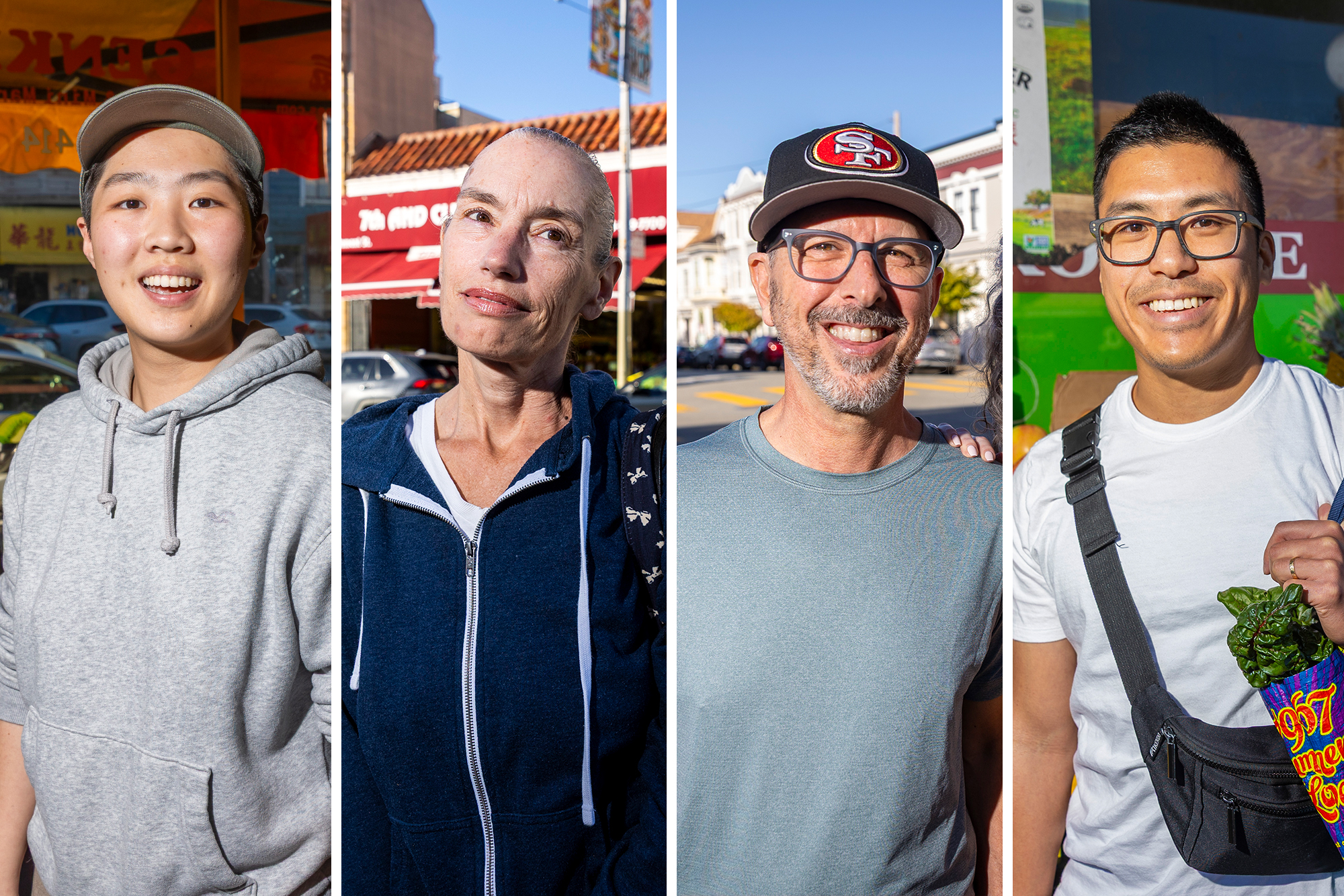
window.__IS_SSR__=true
window.__INITIAL_STATE__={
"attachmentsReducer": {
"audio_0": {
"type": "attachments",
"id": "audio_0",
"imgSizes": {
"kqedFullSize": {
"file": "https://ww2.kqed.org/news/wp-content/themes/KQED-unified/img/audio_bgs/background0.jpg"
}
}
},
"audio_1": {
"type": "attachments",
"id": "audio_1",
"imgSizes": {
"kqedFullSize": {
"file": "https://ww2.kqed.org/news/wp-content/themes/KQED-unified/img/audio_bgs/background1.jpg"
}
}
},
"audio_2": {
"type": "attachments",
"id": "audio_2",
"imgSizes": {
"kqedFullSize": {
"file": "https://ww2.kqed.org/news/wp-content/themes/KQED-unified/img/audio_bgs/background2.jpg"
}
}
},
"audio_3": {
"type": "attachments",
"id": "audio_3",
"imgSizes": {
"kqedFullSize": {
"file": "https://ww2.kqed.org/news/wp-content/themes/KQED-unified/img/audio_bgs/background3.jpg"
}
}
},
"audio_4": {
"type": "attachments",
"id": "audio_4",
"imgSizes": {
"kqedFullSize": {
"file": "https://ww2.kqed.org/news/wp-content/themes/KQED-unified/img/audio_bgs/background4.jpg"
}
}
},
"placeholder": {
"type": "attachments",
"id": "placeholder",
"imgSizes": {
"thumbnail": {
"file": "https://cdn.kqed.org/wp-content/uploads/2024/12/KQED-Default-Image-816638274-2000x1333-1-160x107.jpg",
"width": 160,
"height": 107,
"mimeType": "image/jpeg"
},
"medium": {
"file": "https://cdn.kqed.org/wp-content/uploads/2024/12/KQED-Default-Image-816638274-2000x1333-1-800x533.jpg",
"width": 800,
"height": 533,
"mimeType": "image/jpeg"
},
"medium_large": {
"file": "https://cdn.kqed.org/wp-content/uploads/2024/12/KQED-Default-Image-816638274-2000x1333-1-768x512.jpg",
"width": 768,
"height": 512,
"mimeType": "image/jpeg"
},
"large": {
"file": "https://cdn.kqed.org/wp-content/uploads/2024/12/KQED-Default-Image-816638274-2000x1333-1-1020x680.jpg",
"width": 1020,
"height": 680,
"mimeType": "image/jpeg"
},
"1536x1536": {
"file": "https://cdn.kqed.org/wp-content/uploads/2024/12/KQED-Default-Image-816638274-2000x1333-1-1536x1024.jpg",
"width": 1536,
"height": 1024,
"mimeType": "image/jpeg"
},
"fd-lrg": {
"file": "https://cdn.kqed.org/wp-content/uploads/2024/12/KQED-Default-Image-816638274-2000x1333-1-1536x1024.jpg",
"width": 1536,
"height": 1024,
"mimeType": "image/jpeg"
},
"fd-med": {
"file": "https://cdn.kqed.org/wp-content/uploads/2024/12/KQED-Default-Image-816638274-2000x1333-1-1020x680.jpg",
"width": 1020,
"height": 680,
"mimeType": "image/jpeg"
},
"fd-sm": {
"file": "https://cdn.kqed.org/wp-content/uploads/2024/12/KQED-Default-Image-816638274-2000x1333-1-800x533.jpg",
"width": 800,
"height": 533,
"mimeType": "image/jpeg"
},
"post-thumbnail": {
"file": "https://cdn.kqed.org/wp-content/uploads/2024/12/KQED-Default-Image-816638274-2000x1333-1-672x372.jpg",
"width": 672,
"height": 372,
"mimeType": "image/jpeg"
},
"twentyfourteen-full-width": {
"file": "https://cdn.kqed.org/wp-content/uploads/2024/12/KQED-Default-Image-816638274-2000x1333-1-1038x576.jpg",
"width": 1038,
"height": 576,
"mimeType": "image/jpeg"
},
"xxsmall": {
"file": "https://cdn.kqed.org/wp-content/uploads/2024/12/KQED-Default-Image-816638274-2000x1333-1-160x107.jpg",
"width": 160,
"height": 107,
"mimeType": "image/jpeg"
},
"xsmall": {
"file": "https://cdn.kqed.org/wp-content/uploads/2024/12/KQED-Default-Image-816638274-2000x1333-1-672x372.jpg",
"width": 672,
"height": 372,
"mimeType": "image/jpeg"
},
"small": {
"file": "https://cdn.kqed.org/wp-content/uploads/2024/12/KQED-Default-Image-816638274-2000x1333-1-672x372.jpg",
"width": 672,
"height": 372,
"mimeType": "image/jpeg"
},
"xlarge": {
"file": "https://cdn.kqed.org/wp-content/uploads/2024/12/KQED-Default-Image-816638274-2000x1333-1-1020x680.jpg",
"width": 1020,
"height": 680,
"mimeType": "image/jpeg"
},
"full-width": {
"file": "https://cdn.kqed.org/wp-content/uploads/2024/12/KQED-Default-Image-816638274-2000x1333-1-1920x1280.jpg",
"width": 1920,
"height": 1280,
"mimeType": "image/jpeg"
},
"guest-author-32": {
"file": "https://cdn.kqed.org/wp-content/uploads/2025/01/KQED-Default-Image-816638274-1333x1333-1-160x160.jpg",
"width": 32,
"height": 32,
"mimeType": "image/jpeg"
},
"guest-author-50": {
"file": "https://cdn.kqed.org/wp-content/uploads/2025/01/KQED-Default-Image-816638274-1333x1333-1-160x160.jpg",
"width": 50,
"height": 50,
"mimeType": "image/jpeg"
},
"guest-author-64": {
"file": "https://cdn.kqed.org/wp-content/uploads/2025/01/KQED-Default-Image-816638274-1333x1333-1-160x160.jpg",
"width": 64,
"height": 64,
"mimeType": "image/jpeg"
},
"guest-author-96": {
"file": "https://cdn.kqed.org/wp-content/uploads/2025/01/KQED-Default-Image-816638274-1333x1333-1-160x160.jpg",
"width": 96,
"height": 96,
"mimeType": "image/jpeg"
},
"guest-author-128": {
"file": "https://cdn.kqed.org/wp-content/uploads/2025/01/KQED-Default-Image-816638274-1333x1333-1-160x160.jpg",
"width": 128,
"height": 128,
"mimeType": "image/jpeg"
},
"detail": {
"file": "https://cdn.kqed.org/wp-content/uploads/2025/01/KQED-Default-Image-816638274-1333x1333-1-160x160.jpg",
"width": 160,
"height": 160,
"mimeType": "image/jpeg"
},
"kqedFullSize": {
"file": "https://cdn.kqed.org/wp-content/uploads/2024/12/KQED-Default-Image-816638274-2000x1333-1.jpg",
"width": 2000,
"height": 1333
}
}
},
"news_12065635": {
"type": "attachments",
"id": "news_12065635",
"meta": {
"index": "attachments_1716263798",
"site": "news",
"id": "12065635",
"found": true
},
"title": "251201-SF Rezoning Vibe Check-MD-01",
"publishDate": 1764623126,
"status": "inherit",
"parent": 0,
"modified": 1764625992,
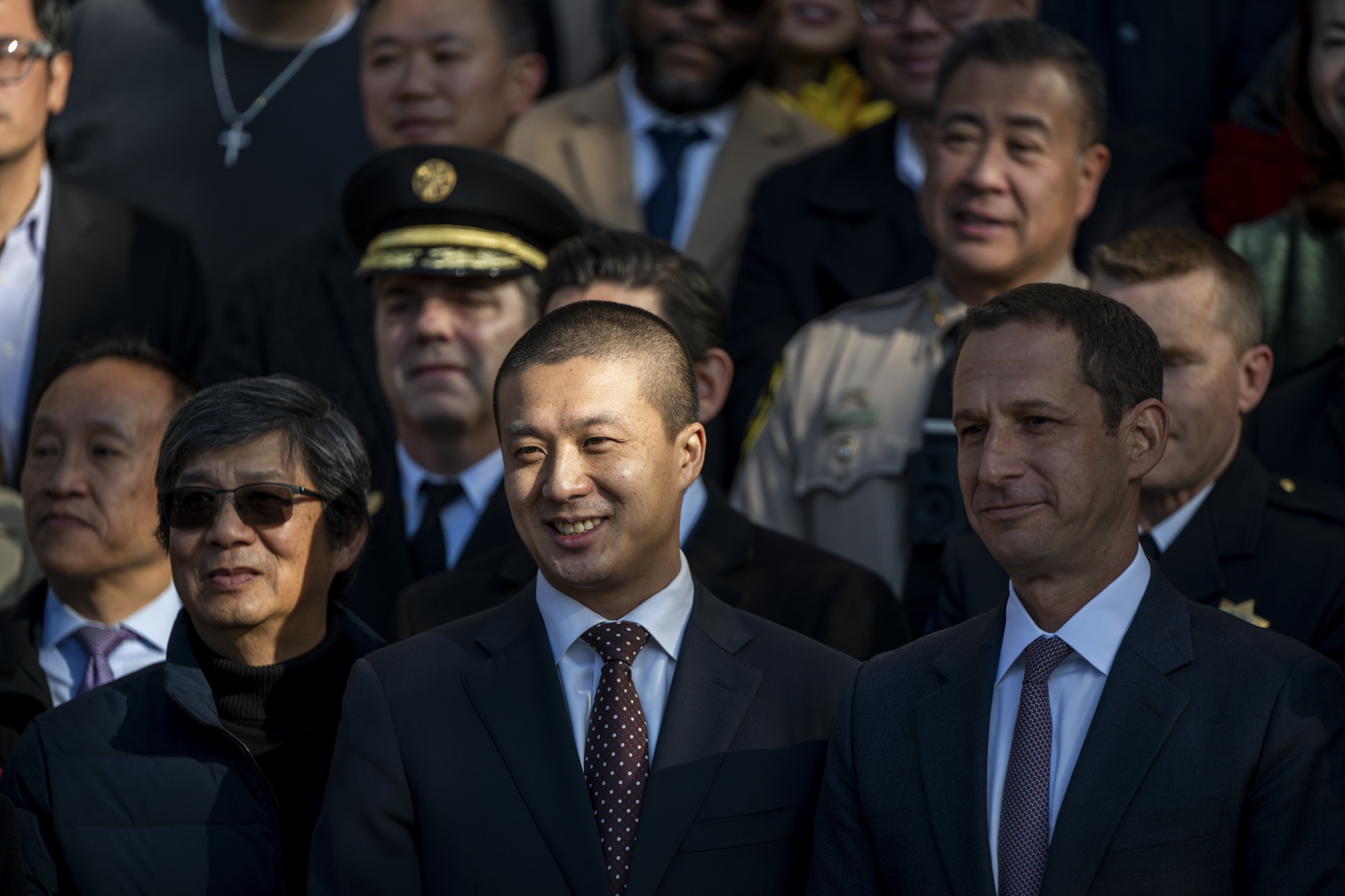
"caption": "(From left) Triston Lei, Joan Vallarino, Todd Wanerman and Allen Chiu and many more were interviewed as part of KQED's reporting on Mayor Daniel Lurie's Family Zoning Plan. The San Francisco Board of Supervisors is expected to vote Tuesday on a proposal to allow some 36,000 new homes to be built citywide. \r\n",
"credit": "Tâm Vũ/KQED",
"altTag": null,
"description": null,
"imgSizes": {
"thumbnail": {
"file": "https://cdn.kqed.org/wp-content/uploads/sites/10/2025/12/251201-SF-Rezoning-Vibe-Check-MD-01-160x107.jpg",
"width": 160,
"height": 107,
"mimeType": "image/jpeg"
},
"1536x1536": {
"file": "https://cdn.kqed.org/wp-content/uploads/sites/10/2025/12/251201-SF-Rezoning-Vibe-Check-MD-01-1536x1025.jpg",
"width": 1536,
"height": 1025,
"mimeType": "image/jpeg"
},
"post-thumbnail": {
"file": "https://cdn.kqed.org/wp-content/uploads/sites/10/2025/12/251201-SF-Rezoning-Vibe-Check-MD-01-672x372.jpg",
"width": 672,
"height": 372,
"mimeType": "image/jpeg"
},
"twentyfourteen-full-width": {
"file": "https://cdn.kqed.org/wp-content/uploads/sites/10/2025/12/251201-SF-Rezoning-Vibe-Check-MD-01-1038x576.jpg",
"width": 1038,
"height": 576,
"mimeType": "image/jpeg"
},
"npr-cds-wide": {
"file": "https://cdn.kqed.org/wp-content/uploads/sites/10/2025/12/251201-SF-Rezoning-Vibe-Check-MD-01-1200x675.jpg",
"width": 1200,
"height": 675,
"mimeType": "image/jpeg"
},
"kqedFullSize": {
"file": "https://cdn.kqed.org/wp-content/uploads/sites/10/2025/12/251201-SF-Rezoning-Vibe-Check-MD-01.jpg",
"width": 2000,
"height": 1334
}
},
"isLoading": false,
"fetchFailed": false
},
"news_12065612": {
"type": "attachments",
"id": "news_12065612",
"meta": {
"index": "attachments_1716263798",
"site": "news",
"id": "12065612",
"found": true
},
"title": "PAKISTAN-AFGHANISTAN-REFUGEES-MUSIC",
"publishDate": 1764618319,
"status": "inherit",
"parent": 12065607,
"modified": 1764618408,
"caption": "In this photograph taken on Sept. 2, 2025, Afghan refugee Shayma is pictured during an interview with AFP at her residence in Islamabad. Before their scheduled February flight, President Donald Trump indefinitely suspended refugee admissions, stranding around 15,000 Afghans already prepared to fly out from Islamabad. ",
"credit": "Farooq Naeem/AFP via Getty Images",
"altTag": null,
"description": null,
"imgSizes": {
"thumbnail": {
"file": "https://cdn.kqed.org/wp-content/uploads/sites/10/2025/12/AfghanRefugeeGetty-160x107.jpg",
"width": 160,
"height": 107,
"mimeType": "image/jpeg"
},
"1536x1536": {
"file": "https://cdn.kqed.org/wp-content/uploads/sites/10/2025/12/AfghanRefugeeGetty-1536x1024.jpg",
"width": 1536,
"height": 1024,
"mimeType": "image/jpeg"
},
"post-thumbnail": {
"file": "https://cdn.kqed.org/wp-content/uploads/sites/10/2025/12/AfghanRefugeeGetty-672x372.jpg",
"width": 672,
"height": 372,
"mimeType": "image/jpeg"
},
"twentyfourteen-full-width": {
"file": "https://cdn.kqed.org/wp-content/uploads/sites/10/2025/12/AfghanRefugeeGetty-1038x576.jpg",
"width": 1038,
"height": 576,
"mimeType": "image/jpeg"
},
"npr-cds-wide": {
"file": "https://cdn.kqed.org/wp-content/uploads/sites/10/2025/12/AfghanRefugeeGetty-1200x675.jpg",
"width": 1200,
"height": 675,
"mimeType": "image/jpeg"
},
"kqedFullSize": {
"file": "https://cdn.kqed.org/wp-content/uploads/sites/10/2025/12/AfghanRefugeeGetty.jpg",
"width": 2000,
"height": 1333
}
},
"isLoading": false,
"fetchFailed": false
},
"news_12065637": {
"type": "attachments",
"id": "news_12065637",
"meta": {
"index": "attachments_1716263798",
"site": "news",
"id": "12065637",
"found": true
},
"title": "Mass Shooting In Stockton",
"publishDate": 1764623595,
"status": "inherit",
"parent": 12065597,
"modified": 1764623670,
"caption": "Stockton Mayor Christina Fugazi joins over 100 people in a vigil near the site at Thornton Boulevard and Lucile Avenue, where a mass shooting during a children's birthday party left 4 dead and 11 wounded in Stockton, California, on Sunday, Nov. 30, 2025. The ages of the deceased are 8, 9, 14 and 21. ",
"credit": "Brontë Wittpenn/San Francisco Chronicle via Getty Images",
"altTag": null,
"description": null,
"imgSizes": {
"thumbnail": {
"file": "https://cdn.kqed.org/wp-content/uploads/sites/10/2025/12/StocktonShootingGetty1-160x107.jpg",
"width": 160,
"height": 107,
"mimeType": "image/jpeg"
},
"1536x1536": {
"file": "https://cdn.kqed.org/wp-content/uploads/sites/10/2025/12/StocktonShootingGetty1-1536x1024.jpg",
"width": 1536,
"height": 1024,
"mimeType": "image/jpeg"
},
"post-thumbnail": {
"file": "https://cdn.kqed.org/wp-content/uploads/sites/10/2025/12/StocktonShootingGetty1-672x372.jpg",
"width": 672,
"height": 372,
"mimeType": "image/jpeg"
},
"twentyfourteen-full-width": {
"file": "https://cdn.kqed.org/wp-content/uploads/sites/10/2025/12/StocktonShootingGetty1-1038x576.jpg",
"width": 1038,
"height": 576,
"mimeType": "image/jpeg"
},
"npr-cds-wide": {
"file": "https://cdn.kqed.org/wp-content/uploads/sites/10/2025/12/StocktonShootingGetty1-1200x675.jpg",
"width": 1200,
"height": 675,
"mimeType": "image/jpeg"
},
"kqedFullSize": {
"file": "https://cdn.kqed.org/wp-content/uploads/sites/10/2025/12/StocktonShootingGetty1.jpg",
"width": 2000,
"height": 1333
}
},
"isLoading": false,
"fetchFailed": false
},
"news_12047902": {
"type": "attachments",
"id": "news_12047902",
"meta": {
"index": "attachments_1716263798",
"site": "news",
"id": "12047902",
"found": true
},
"title": "240418-SJPDFILE-JG-6_qed",
"publishDate": 1752514544,
"status": "inherit",
"parent": 12047900,
"modified": 1763510734,
"caption": "The exterior of the San José Police Department headquarters on April 18, 2024.",
"credit": "Joseph Geha/KQED",
"altTag": null,
"description": null,
"imgSizes": {
"thumbnail": {
"file": "https://cdn.kqed.org/wp-content/uploads/sites/10/2025/07/240418-SJPDFILE-JG-6_qed-160x107.jpg",
"width": 160,
"height": 107,
"mimeType": "image/jpeg"
},
"1536x1536": {
"file": "https://cdn.kqed.org/wp-content/uploads/sites/10/2025/07/240418-SJPDFILE-JG-6_qed-1536x1024.jpg",
"width": 1536,
"height": 1024,
"mimeType": "image/jpeg"
},
"post-thumbnail": {
"file": "https://cdn.kqed.org/wp-content/uploads/sites/10/2025/07/240418-SJPDFILE-JG-6_qed-672x372.jpg",
"width": 672,
"height": 372,
"mimeType": "image/jpeg"
},
"twentyfourteen-full-width": {
"file": "https://cdn.kqed.org/wp-content/uploads/sites/10/2025/07/240418-SJPDFILE-JG-6_qed-1038x576.jpg",
"width": 1038,
"height": 576,
"mimeType": "image/jpeg"
},
"kqedFullSize": {
"file": "https://cdn.kqed.org/wp-content/uploads/sites/10/2025/07/240418-SJPDFILE-JG-6_qed.jpg",
"width": 2000,
"height": 1333
}
},
"isLoading": false,
"fetchFailed": false
},
"news_12065674": {
"type": "attachments",
"id": "news_12065674",
"meta": {
"index": "attachments_1716263798",
"site": "news",
"id": "12065674",
"found": true
},
"title": "251201-NEWSFSUPERVISOR-12-BL-KQED",
"publishDate": 1764631429,
"status": "inherit",
"parent": 0,
"modified": 1764631456,
"caption": "Alan Wong poses for a photo after he is sworn in as District 4 supervisor by Mayor Daniel Lurie at Abraham Lincoln High School in San Francisco on Dec. 1, 2025.",
"credit": "Beth LaBerge/KQED",
"altTag": null,
"description": null,
"imgSizes": {
"thumbnail": {
"file": "https://cdn.kqed.org/wp-content/uploads/sites/10/2025/12/251201-NEWSFSUPERVISOR-12-BL-KQED-160x107.jpg",
"width": 160,
"height": 107,
"mimeType": "image/jpeg"
},
"1536x1536": {
"file": "https://cdn.kqed.org/wp-content/uploads/sites/10/2025/12/251201-NEWSFSUPERVISOR-12-BL-KQED-1536x1024.jpg",
"width": 1536,
"height": 1024,
"mimeType": "image/jpeg"
},
"post-thumbnail": {
"file": "https://cdn.kqed.org/wp-content/uploads/sites/10/2025/12/251201-NEWSFSUPERVISOR-12-BL-KQED-672x372.jpg",
"width": 672,
"height": 372,
"mimeType": "image/jpeg"
},
"twentyfourteen-full-width": {
"file": "https://cdn.kqed.org/wp-content/uploads/sites/10/2025/12/251201-NEWSFSUPERVISOR-12-BL-KQED-1038x576.jpg",
"width": 1038,
"height": 576,
"mimeType": "image/jpeg"
},
"npr-cds-wide": {
"file": "https://cdn.kqed.org/wp-content/uploads/sites/10/2025/12/251201-NEWSFSUPERVISOR-12-BL-KQED-1200x675.jpg",
"width": 1200,
"height": 675,
"mimeType": "image/jpeg"
},
"kqedFullSize": {
"file": "https://cdn.kqed.org/wp-content/uploads/sites/10/2025/12/251201-NEWSFSUPERVISOR-12-BL-KQED.jpg",
"width": 2000,
"height": 1333
}
},
"isLoading": false,
"fetchFailed": false
},
"news_12065185": {
"type": "attachments",
"id": "news_12065185",
"meta": {
"index": "attachments_1716263798",
"site": "news",
"id": "12065185",
"found": true
},
"title": "251120-FAMILIESFINANCIALINSECURITY-23-BL-KQED",
"publishDate": 1764000850,
"status": "inherit",
"parent": 0,
"modified": 1764000904,
"caption": "Zar Blue Paw (left) and Ah Po leave a food distribution event hosted by Trybe at San Antonio Park in Oakland on Nov. 20, 2025. Trybe is a local nonprofit offering food assistance and family support services.",
"credit": "Beth LaBerge/KQED",
"altTag": null,
"description": null,
"imgSizes": {
"thumbnail": {
"file": "https://cdn.kqed.org/wp-content/uploads/sites/10/2025/11/251120-FAMILIESFINANCIALINSECURITY-23-BL-KQED-160x107.jpg",
"width": 160,
"height": 107,
"mimeType": "image/jpeg"
},
"1536x1536": {
"file": "https://cdn.kqed.org/wp-content/uploads/sites/10/2025/11/251120-FAMILIESFINANCIALINSECURITY-23-BL-KQED-1536x1024.jpg",
"width": 1536,
"height": 1024,
"mimeType": "image/jpeg"
},
"post-thumbnail": {
"file": "https://cdn.kqed.org/wp-content/uploads/sites/10/2025/11/251120-FAMILIESFINANCIALINSECURITY-23-BL-KQED-672x372.jpg",
"width": 672,
"height": 372,
"mimeType": "image/jpeg"
},
"twentyfourteen-full-width": {
"file": "https://cdn.kqed.org/wp-content/uploads/sites/10/2025/11/251120-FAMILIESFINANCIALINSECURITY-23-BL-KQED-1038x576.jpg",
"width": 1038,
"height": 576,
"mimeType": "image/jpeg"
},
"npr-cds-wide": {
"file": "https://cdn.kqed.org/wp-content/uploads/sites/10/2025/11/251120-FAMILIESFINANCIALINSECURITY-23-BL-KQED-1200x675.jpg",
"width": 1200,
"height": 675,
"mimeType": "image/jpeg"
},
"kqedFullSize": {
"file": "https://cdn.kqed.org/wp-content/uploads/sites/10/2025/11/251120-FAMILIESFINANCIALINSECURITY-23-BL-KQED.jpg",
"width": 2000,
"height": 1333
}
},
"isLoading": false,
"fetchFailed": false
},
"news_12025666": {
"type": "attachments",
"id": "news_12025666",
"meta": {
"index": "attachments_1716263798",
"site": "news",
"id": "12025666",
"found": true
},
"title": "250204-WeCantWait-13-BL",
"publishDate": 1738707457,
"status": "inherit",
"parent": 12025440,
"modified": 1764877024,
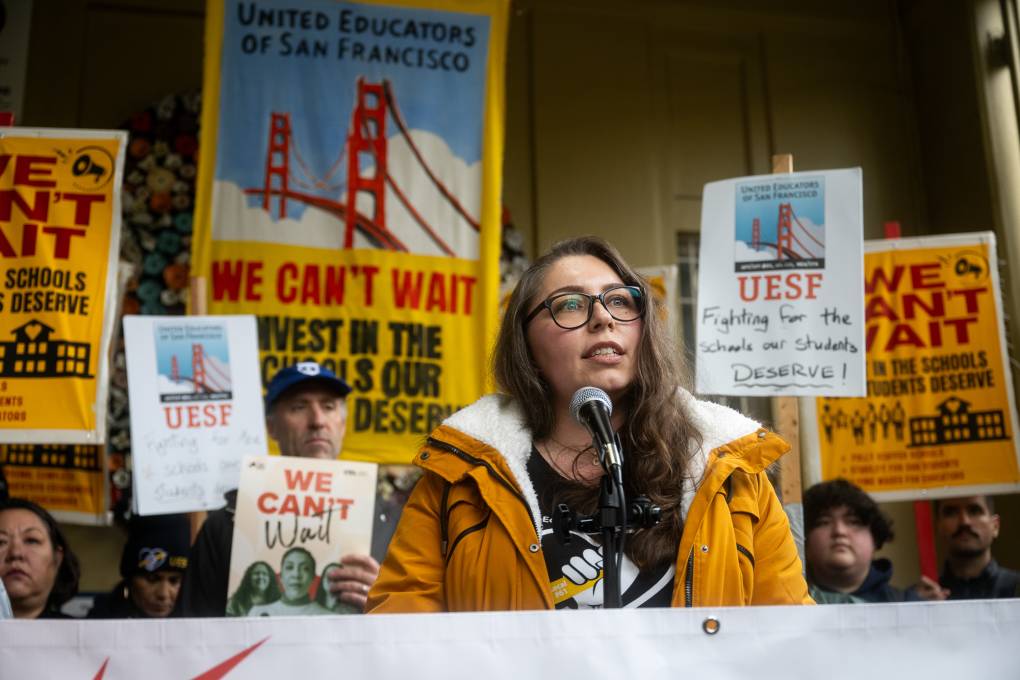
"caption": "Cassondra Curiel, president of United Educators of San Francisco, speaks during a press conference at Buena Vista Horace Mann K-8 Community School in San Francisco’s Mission District on Feb. 4, 2025.",
"credit": "Beth LaBerge/KQED",
"altTag": null,
"description": null,
"imgSizes": {
"medium": {
"file": "https://cdn.kqed.org/wp-content/uploads/sites/10/2025/02/250204-WeCantWait-13-BL-800x533.jpg",
"width": 800,
"height": 533,
"mimeType": "image/jpeg"
},
"large": {
"file": "https://cdn.kqed.org/wp-content/uploads/sites/10/2025/02/250204-WeCantWait-13-BL-1020x680.jpg",
"width": 1020,
"height": 680,
"mimeType": "image/jpeg"
},
"thumbnail": {
"file": "https://cdn.kqed.org/wp-content/uploads/sites/10/2025/02/250204-WeCantWait-13-BL-160x107.jpg",
"width": 160,
"height": 107,
"mimeType": "image/jpeg"
},
"1536x1536": {
"file": "https://cdn.kqed.org/wp-content/uploads/sites/10/2025/02/250204-WeCantWait-13-BL-1536x1024.jpg",
"width": 1536,
"height": 1024,
"mimeType": "image/jpeg"
},
"post-thumbnail": {
"file": "https://cdn.kqed.org/wp-content/uploads/sites/10/2025/02/250204-WeCantWait-13-BL-672x372.jpg",
"width": 672,
"height": 372,
"mimeType": "image/jpeg"
},
"twentyfourteen-full-width": {
"file": "https://cdn.kqed.org/wp-content/uploads/sites/10/2025/02/250204-WeCantWait-13-BL-1038x576.jpg",
"width": 1038,
"height": 576,
"mimeType": "image/jpeg"
},
"full-width": {
"file": "https://cdn.kqed.org/wp-content/uploads/sites/10/2025/02/250204-WeCantWait-13-BL-1920x1280.jpg",
"width": 1920,
"height": 1280,
"mimeType": "image/jpeg"
},
"kqedFullSize": {
"file": "https://cdn.kqed.org/wp-content/uploads/sites/10/2025/02/250204-WeCantWait-13-BL.jpg",
"width": 2000,
"height": 1333
}
},
"isLoading": false,
"fetchFailed": false
},
"news_12065291": {
"type": "attachments",
"id": "news_12065291",
"meta": {
"index": "attachments_1716263798",
"site": "news",
"id": "12065291",
"found": true
},
"title": "Busy Scene of San Francisco Bay",
"publishDate": 1764092885,
"status": "inherit",
"parent": 12065289,
"modified": 1764097577,
"caption": "Ferries and boats in the San Francisco Bay with Alcatraz Island in the background on Oct. 13, 2024. ",
"credit": "Takako Phillips/Getty Images",
"altTag": null,
"description": null,
"imgSizes": {
"thumbnail": {
"file": "https://cdn.kqed.org/wp-content/uploads/sites/10/2025/11/FerryGetty1-160x107.jpg",
"width": 160,
"height": 107,
"mimeType": "image/jpeg"
},
"1536x1536": {
"file": "https://cdn.kqed.org/wp-content/uploads/sites/10/2025/11/FerryGetty1-1536x1024.jpg",
"width": 1536,
"height": 1024,
"mimeType": "image/jpeg"
},
"post-thumbnail": {
"file": "https://cdn.kqed.org/wp-content/uploads/sites/10/2025/11/FerryGetty1-672x372.jpg",
"width": 672,
"height": 372,
"mimeType": "image/jpeg"
},
"twentyfourteen-full-width": {
"file": "https://cdn.kqed.org/wp-content/uploads/sites/10/2025/11/FerryGetty1-1038x576.jpg",
"width": 1038,
"height": 576,
"mimeType": "image/jpeg"
},
"npr-cds-wide": {
"file": "https://cdn.kqed.org/wp-content/uploads/sites/10/2025/11/FerryGetty1-1200x675.jpg",
"width": 1200,
"height": 675,
"mimeType": "image/jpeg"
},
"kqedFullSize": {
"file": "https://cdn.kqed.org/wp-content/uploads/sites/10/2025/11/FerryGetty1.jpg",
"width": 2000,
"height": 1333
}
},
"isLoading": false,
"fetchFailed": false
},
"news_12065558": {
"type": "attachments",
"id": "news_12065558",
"meta": {
"index": "attachments_1716263798",
"site": "news",
"id": "12065558",
"found": true
},
"title": "National Guard Shooting",
"publishDate": 1764202109,
"status": "inherit",
"parent": 12065556,
"modified": 1764204277,
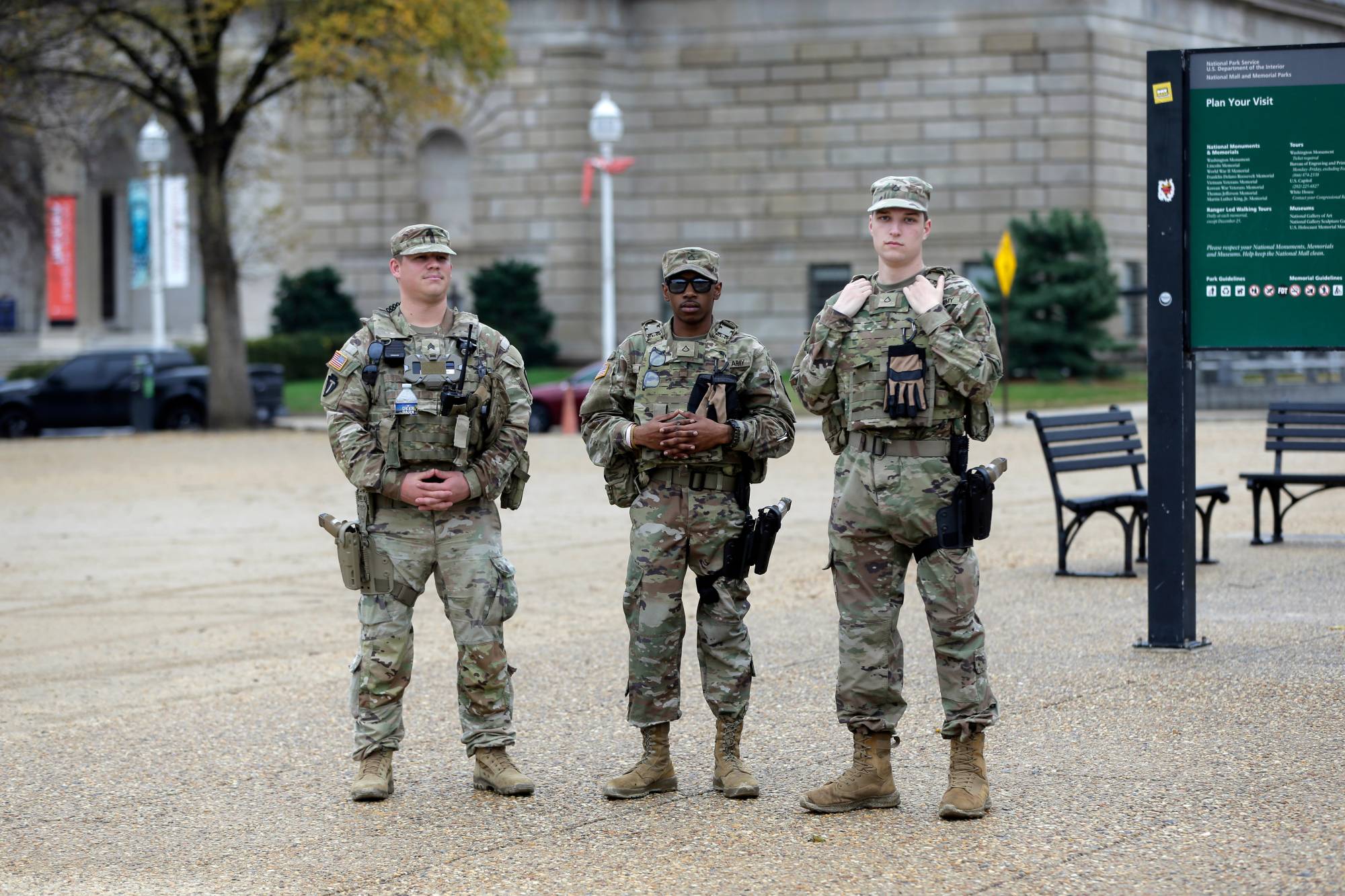
"caption": "National Guard patrols on the National Mall near the U.S. Capitol, Wednesday, Nov. 26, 2025, in Washington. ",
"credit": "AP Photo/Rahmat Gul",
"altTag": null,
"description": null,
"imgSizes": {
"medium": {
"file": "https://cdn.kqed.org/wp-content/uploads/sites/10/2025/11/AP25330800211311-2000x1333.jpg",
"width": 2000,
"height": 1333,
"mimeType": "image/jpeg"
},
"large": {
"file": "https://cdn.kqed.org/wp-content/uploads/sites/10/2025/11/AP25330800211311-2000x1333.jpg",
"width": 2000,
"height": 1333,
"mimeType": "image/jpeg"
},
"thumbnail": {
"file": "https://cdn.kqed.org/wp-content/uploads/sites/10/2025/11/AP25330800211311-160x107.jpg",
"width": 160,
"height": 107,
"mimeType": "image/jpeg"
},
"1536x1536": {
"file": "https://cdn.kqed.org/wp-content/uploads/sites/10/2025/11/AP25330800211311-1536x1024.jpg",
"width": 1536,
"height": 1024,
"mimeType": "image/jpeg"
},
"2048x2048": {
"file": "https://cdn.kqed.org/wp-content/uploads/sites/10/2025/11/AP25330800211311-2048x1365.jpg",
"width": 2048,
"height": 1365,
"mimeType": "image/jpeg"
},
"post-thumbnail": {
"file": "https://cdn.kqed.org/wp-content/uploads/sites/10/2025/11/AP25330800211311-672x372.jpg",
"width": 672,
"height": 372,
"mimeType": "image/jpeg"
},
"twentyfourteen-full-width": {
"file": "https://cdn.kqed.org/wp-content/uploads/sites/10/2025/11/AP25330800211311-1038x576.jpg",
"width": 1038,
"height": 576,
"mimeType": "image/jpeg"
},
"full-width": {
"file": "https://cdn.kqed.org/wp-content/uploads/sites/10/2025/11/AP25330800211311-2000x1333.jpg",
"width": 2000,
"height": 1333,
"mimeType": "image/jpeg"
},
"npr-cds-wide": {
"file": "https://cdn.kqed.org/wp-content/uploads/sites/10/2025/11/AP25330800211311-1200x675.jpg",
"width": 1200,
"height": 675,
"mimeType": "image/jpeg"
},
"kqedFullSize": {
"file": "https://cdn.kqed.org/wp-content/uploads/sites/10/2025/11/AP25330800211311-scaled-e1764202146303.jpg",
"width": 2000,
"height": 1334
}
},
"isLoading": false,
"fetchFailed": false
},
"news_12065462": {
"type": "attachments",
"id": "news_12065462",
"meta": {
"index": "attachments_1716263798",
"site": "news",
"id": "12065462",
"found": true
},
"title": "Silicon Valley Turkey Trot 2022",
"publishDate": 1764182967,
"status": "inherit",
"parent": 12065460,
"modified": 1764185226,
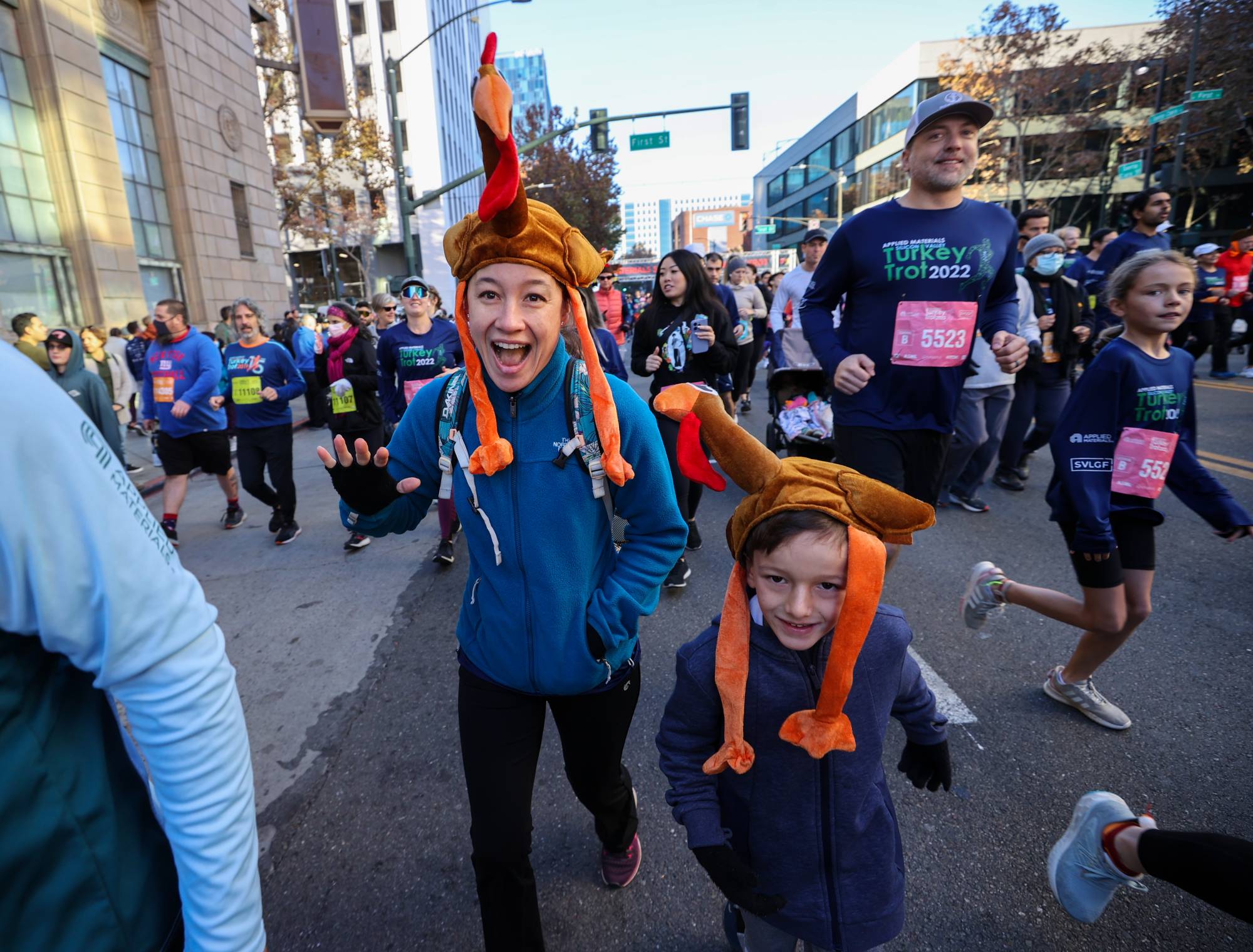
"caption": "Tens of thousands attend the largest Thanksgiving Day race in the U.S., the annual Silicon Valley Turkey Trot in San Jose, California, United States, on Nov. 24, 2022. ",
"credit": "Photo by Tayfun Coskun/Anadolu Agency via Getty Images",
"altTag": null,
"description": null,
"imgSizes": {
"medium": {
"file": "https://cdn.kqed.org/wp-content/uploads/sites/10/2025/11/GettyImages-1245060406-2000x1520.jpg",
"width": 2000,
"height": 1520,
"mimeType": "image/jpeg"
},
"large": {
"file": "https://cdn.kqed.org/wp-content/uploads/sites/10/2025/11/GettyImages-1245060406-2000x1520.jpg",
"width": 2000,
"height": 1520,
"mimeType": "image/jpeg"
},
"thumbnail": {
"file": "https://cdn.kqed.org/wp-content/uploads/sites/10/2025/11/GettyImages-1245060406-160x122.jpg",
"width": 160,
"height": 122,
"mimeType": "image/jpeg"
},
"1536x1536": {
"file": "https://cdn.kqed.org/wp-content/uploads/sites/10/2025/11/GettyImages-1245060406-1536x1167.jpg",
"width": 1536,
"height": 1167,
"mimeType": "image/jpeg"
},
"2048x2048": {
"file": "https://cdn.kqed.org/wp-content/uploads/sites/10/2025/11/GettyImages-1245060406-2048x1556.jpg",
"width": 2048,
"height": 1556,
"mimeType": "image/jpeg"
},
"post-thumbnail": {
"file": "https://cdn.kqed.org/wp-content/uploads/sites/10/2025/11/GettyImages-1245060406-672x372.jpg",
"width": 672,
"height": 372,
"mimeType": "image/jpeg"
},
"twentyfourteen-full-width": {
"file": "https://cdn.kqed.org/wp-content/uploads/sites/10/2025/11/GettyImages-1245060406-1038x576.jpg",
"width": 1038,
"height": 576,
"mimeType": "image/jpeg"
},
"full-width": {
"file": "https://cdn.kqed.org/wp-content/uploads/sites/10/2025/11/GettyImages-1245060406-2000x1520.jpg",
"width": 2000,
"height": 1520,
"mimeType": "image/jpeg"
},
"npr-cds-wide": {
"file": "https://cdn.kqed.org/wp-content/uploads/sites/10/2025/11/GettyImages-1245060406-1200x675.jpg",
"width": 1200,
"height": 675,
"mimeType": "image/jpeg"
},
"kqedFullSize": {
"file": "https://cdn.kqed.org/wp-content/uploads/sites/10/2025/11/GettyImages-1245060406-scaled-e1764183039186.jpg",
"width": 2000,
"height": 1520
}
},
"isLoading": false,
"fetchFailed": false
},
"news_12042431": {
"type": "attachments",
"id": "news_12042431",
"meta": {
"index": "attachments_1716263798",
"site": "news",
"id": "12042431",
"found": true
},
"title": "Housing in San Francisco’s Sunset District on May 19, 2025.",
"publishDate": 1748902894,
"status": "inherit",
"parent": 12042376,
"modified": 1761779984,
"caption": "Housing in San Francisco’s Sunset District on May 19, 2025.",
"credit": "Beth LaBerge/KQED",
"altTag": null,
"description": null,
"imgSizes": {
"medium": {
"file": "https://cdn.kqed.org/wp-content/uploads/sites/10/2025/06/250519-AffordableHousingFile-10-BL_qed-800x533.jpg",
"width": 800,
"height": 533,
"mimeType": "image/jpeg"
},
"large": {
"file": "https://cdn.kqed.org/wp-content/uploads/sites/10/2025/06/250519-AffordableHousingFile-10-BL_qed-1020x680.jpg",
"width": 1020,
"height": 680,
"mimeType": "image/jpeg"
},
"thumbnail": {
"file": "https://cdn.kqed.org/wp-content/uploads/sites/10/2025/06/250519-AffordableHousingFile-10-BL_qed-160x107.jpg",
"width": 160,
"height": 107,
"mimeType": "image/jpeg"
},
"1536x1536": {
"file": "https://cdn.kqed.org/wp-content/uploads/sites/10/2025/06/250519-AffordableHousingFile-10-BL_qed-1536x1024.jpg",
"width": 1536,
"height": 1024,
"mimeType": "image/jpeg"
},
"post-thumbnail": {
"file": "https://cdn.kqed.org/wp-content/uploads/sites/10/2025/06/250519-AffordableHousingFile-10-BL_qed-672x372.jpg",
"width": 672,
"height": 372,
"mimeType": "image/jpeg"
},
"twentyfourteen-full-width": {
"file": "https://cdn.kqed.org/wp-content/uploads/sites/10/2025/06/250519-AffordableHousingFile-10-BL_qed-1038x576.jpg",
"width": 1038,
"height": 576,
"mimeType": "image/jpeg"
},
"full-width": {
"file": "https://cdn.kqed.org/wp-content/uploads/sites/10/2025/06/250519-AffordableHousingFile-10-BL_qed-1920x1280.jpg",
"width": 1920,
"height": 1280,
"mimeType": "image/jpeg"
},
"kqedFullSize": {
"file": "https://cdn.kqed.org/wp-content/uploads/sites/10/2025/06/250519-AffordableHousingFile-10-BL_qed.jpg",
"width": 2000,
"height": 1333
}
},
"isLoading": false,
"fetchFailed": false
},
"news_12065384": {
"type": "attachments",
"id": "news_12065384",
"meta": {
"index": "attachments_1716263798",
"site": "news",
"id": "12065384",
"found": true
},
"title": "Berkeley High School in Berkeley on May 8, 2024.",
"publishDate": 1764110252,
"status": "inherit",
"parent": 12065732,
"modified": 1764802322,
"caption": "Berkeley High School in Berkeley on May 8, 2024.",
"credit": "Martin do Nascimento/KQED",
"altTag": null,
"description": null,
"imgSizes": {
"thumbnail": {
"file": "https://cdn.kqed.org/wp-content/uploads/sites/10/2025/11/240508-Berkeley-High-File-MD-03_qed-160x107.jpg",
"width": 160,
"height": 107,
"mimeType": "image/jpeg"
},
"1536x1536": {
"file": "https://cdn.kqed.org/wp-content/uploads/sites/10/2025/11/240508-Berkeley-High-File-MD-03_qed-1536x1024.jpg",
"width": 1536,
"height": 1024,
"mimeType": "image/jpeg"
},
"post-thumbnail": {
"file": "https://cdn.kqed.org/wp-content/uploads/sites/10/2025/11/240508-Berkeley-High-File-MD-03_qed-672x372.jpg",
"width": 672,
"height": 372,
"mimeType": "image/jpeg"
},
"twentyfourteen-full-width": {
"file": "https://cdn.kqed.org/wp-content/uploads/sites/10/2025/11/240508-Berkeley-High-File-MD-03_qed-1038x576.jpg",
"width": 1038,
"height": 576,
"mimeType": "image/jpeg"
},
"npr-cds-wide": {
"file": "https://cdn.kqed.org/wp-content/uploads/sites/10/2025/11/240508-Berkeley-High-File-MD-03_qed-1200x675.jpg",
"width": 1200,
"height": 675,
"mimeType": "image/jpeg"
},
"kqedFullSize": {
"file": "https://cdn.kqed.org/wp-content/uploads/sites/10/2025/11/240508-Berkeley-High-File-MD-03_qed.jpg",
"width": 2000,
"height": 1333
}
},
"isLoading": false,
"fetchFailed": false
}
},
"audioPlayerReducer": {
"postId": "stream_live",
"isPaused": true,
"isPlaying": false,
"pfsActive": false,
"pledgeModalIsOpen": true,
"playerDrawerIsOpen": false,
"liveAudioPlayStartedAt": 0,
"liveAudioPlayContext": ""
},
"authorsReducer": {
"shossaini": {
"type": "authors",
"id": "3214",
"meta": {
"index": "authors_1716337520",
"id": "3214",
"found": true
},
"name": "Sara Hossaini",
"firstName": "Sara",
"lastName": "Hossaini",
"slug": "shossaini",
"email": "shossaini@kqed.org",
"display_author_email": true,
"staff_mastheads": [
"news"
],
"title": "KQED Reporter",
"bio": "Sara Hossaini came to general assignment reporting at KQED in 2013 after two winters reporting at Wyoming Public Radio. She holds a bachelor's degree in broadcast journalism from the University of Nebraska-Lincoln. Her radio romance began after a bitter breakup with documentary film (Ok, maybe it's still complicated). Her first simultaneous jobs in San Francisco were as Associate Producer on a PBS film series through the Center for Asian American Media and as a butler. She likes to trot, plot and make things with her hands.",
"avatar": "https://secure.gravatar.com/avatar/060e9f56b9554e17942e89f413242774?s=600&d=blank&r=g",
"twitter": "mshossaini",
"facebook": null,
"instagram": null,
"linkedin": null,
"sites": [
{
"site": "news",
"roles": [
"author"
]
},
{
"site": "stateofhealth",
"roles": [
"author"
]
}
],
"headData": {
"title": "Sara Hossaini | KQED",
"description": "KQED Reporter",
"ogImgSrc": "https://secure.gravatar.com/avatar/060e9f56b9554e17942e89f413242774?s=600&d=blank&r=g",
"twImgSrc": "https://secure.gravatar.com/avatar/060e9f56b9554e17942e89f413242774?s=600&d=blank&r=g"
},
"isLoading": false,
"link": "/author/shossaini"
},
"abandlamudi": {
"type": "authors",
"id": "11672",
"meta": {
"index": "authors_1716337520",
"id": "11672",
"found": true
},
"name": "Adhiti Bandlamudi",
"firstName": "Adhiti",
"lastName": "Bandlamudi",
"slug": "abandlamudi",
"email": "abandlamudi@kqed.org",
"display_author_email": false,
"staff_mastheads": [
"news"
],
"title": "KQED Housing Reporter",
"bio": "Adhiti Bandlamudi reports for KQED's Housing desk. She focuses on how housing gets built across the Bay Area. Before joining KQED in 2020, she reported for WUNC in Durham, North Carolina, WABE in Atlanta, Georgia and Capital Public Radio in Sacramento. In 2017, she was awarded a Kroc Fellowship at NPR where she reported on everything from sprinkles to the Golden State Killer's arrest. When she's not reporting, she's baking new recipes in her kitchen or watching movies with friends and family. She's originally from Georgia and has strong opinions about Great British Bake Off.",
"avatar": "https://secure.gravatar.com/avatar/868129c8b257bb99a3500e2c86a65400?s=600&d=mm&r=g",
"twitter": "oddity_adhiti",
"facebook": null,
"instagram": null,
"linkedin": null,
"sites": [
{
"site": "arts",
"roles": [
"author"
]
},
{
"site": "news",
"roles": [
"editor"
]
},
{
"site": "liveblog",
"roles": [
"author"
]
}
],
"headData": {
"title": "Adhiti Bandlamudi | KQED",
"description": "KQED Housing Reporter",
"ogImgSrc": "https://secure.gravatar.com/avatar/868129c8b257bb99a3500e2c86a65400?s=600&d=mm&r=g",
"twImgSrc": "https://secure.gravatar.com/avatar/868129c8b257bb99a3500e2c86a65400?s=600&d=mm&r=g"
},
"isLoading": false,
"link": "/author/abandlamudi"
},
"ccabreralomeli": {
"type": "authors",
"id": "11708",
"meta": {
"index": "authors_1716337520",
"id": "11708",
"found": true
},
"name": "Carlos Cabrera-Lomelí",
"firstName": "Carlos",
"lastName": "Cabrera-Lomelí",
"slug": "ccabreralomeli",
"email": "ccabreralomeli@KQED.org",
"display_author_email": true,
"staff_mastheads": [
"news"
],
"title": "Community Reporter",
"bio": "Carlos Cabrera-Lomelí is a community reporter with KQED's digital engagement team. He also reports and co-produces for KQED's bilingual news hub KQED en Español. He grew up in San Francisco's Mission District and has previously worked with Univision, 48 Hills and REFORMA in Mexico City.",
"avatar": "https://secure.gravatar.com/avatar/c309be9665e484f887b818c89e273ecc673004f426f36b24d00a4d813a2e0518?s=600&d=blank&r=g",
"twitter": "@LomeliCabrera",
"bluesky": null,
"facebook": null,
"instagram": null,
"linkedin": null,
"sites": [
{
"site": "arts",
"roles": [
"editor"
]
},
{
"site": "news",
"roles": [
"editor"
]
},
{
"site": "about",
"roles": [
"editor"
]
},
{
"site": "science",
"roles": [
"editor"
]
},
{
"site": "perspectives",
"roles": [
"editor"
]
},
{
"site": "elections",
"roles": [
"editor"
]
},
{
"site": "liveblog",
"roles": [
"contributor"
]
}
],
"headData": {
"title": "Carlos Cabrera-Lomelí | KQED",
"description": "Community Reporter",
"ogImgSrc": "https://secure.gravatar.com/avatar/c309be9665e484f887b818c89e273ecc673004f426f36b24d00a4d813a2e0518?s=600&d=blank&r=g",
"twImgSrc": "https://secure.gravatar.com/avatar/c309be9665e484f887b818c89e273ecc673004f426f36b24d00a4d813a2e0518?s=600&d=blank&r=g"
},
"isLoading": false,
"link": "/author/ccabreralomeli"
},
"daisynguyen": {
"type": "authors",
"id": "11829",
"meta": {
"index": "authors_1716337520",
"id": "11829",
"found": true
},
"name": "Daisy Nguyen",
"firstName": "Daisy",
"lastName": "Nguyen",
"slug": "daisynguyen",
"email": "daisynguyen@kqed.org",
"display_author_email": true,
"staff_mastheads": [
"news"
],
"title": "KQED Contributor",
"bio": "I have covered early childhood education and child care for KQED since 2022. I focus on policies aimed at increasing access to early care and education and how they shape individual lives. I've been a journalist for more than two decades, with most of that time devoted to covering breaking news throughout California for The Associated Press. I grew up in San Francisco and studied at UC Davis and Columbia University's Graduate School of Journalism. I live in Oakland with my husband and two kids.",
"avatar": "https://secure.gravatar.com/avatar/2da2127c27f7143b53ebd419800fd55f?s=600&d=blank&r=g",
"twitter": null,
"facebook": null,
"instagram": null,
"linkedin": "https://www.linkedin.com/in/daisynguyen/",
"sites": [
{
"site": "news",
"roles": [
"author"
]
},
{
"site": "liveblog",
"roles": [
"author"
]
}
],
"headData": {
"title": "Daisy Nguyen | KQED",
"description": "KQED Contributor",
"ogImgSrc": "https://secure.gravatar.com/avatar/2da2127c27f7143b53ebd419800fd55f?s=600&d=blank&r=g",
"twImgSrc": "https://secure.gravatar.com/avatar/2da2127c27f7143b53ebd419800fd55f?s=600&d=blank&r=g"
},
"isLoading": false,
"link": "/author/daisynguyen"
},
"sjohnson": {
"type": "authors",
"id": "11840",
"meta": {
"index": "authors_1716337520",
"id": "11840",
"found": true
},
"name": "Sydney Johnson",
"firstName": "Sydney",
"lastName": "Johnson",
"slug": "sjohnson",
"email": "sjohnson@kqed.org",
"display_author_email": false,
"staff_mastheads": [
"news"
],
"title": "KQED Reporter",
"bio": "Sydney Johnson is a general assignment reporter at KQED. She previously reported on public health and city government at the San Francisco Examiner, and before that, she covered statewide education policy for EdSource. Her reporting has won multiple local, state and national awards. Sydney is a graduate of the University of California, Berkeley and lives in San Francisco.",
"avatar": "https://secure.gravatar.com/avatar/97855f2719b72ad6190b7c535fe642c8?s=600&d=blank&r=g",
"twitter": "sydneyfjohnson",
"facebook": null,
"instagram": null,
"linkedin": null,
"sites": [
{
"site": "news",
"roles": [
"editor"
]
}
],
"headData": {
"title": "Sydney Johnson | KQED",
"description": "KQED Reporter",
"ogImgSrc": "https://secure.gravatar.com/avatar/97855f2719b72ad6190b7c535fe642c8?s=600&d=blank&r=g",
"twImgSrc": "https://secure.gravatar.com/avatar/97855f2719b72ad6190b7c535fe642c8?s=600&d=blank&r=g"
},
"isLoading": false,
"link": "/author/sjohnson"
},
"jgeha": {
"type": "authors",
"id": "11906",
"meta": {
"index": "authors_1716337520",
"id": "11906",
"found": true
},
"name": "Joseph Geha",
"firstName": "Joseph",
"lastName": "Geha",
"slug": "jgeha",
"email": "jgeha@kqed.org",
"display_author_email": false,
"staff_mastheads": [
"news",
"science"
],
"title": "KQED Contributor",
"bio": null,
"avatar": "https://secure.gravatar.com/avatar/ea84d2b6dd93d6369d453edf19dd583f117cd1759d2d9c9c92f9de77017354fe?s=600&d=blank&r=g",
"twitter": null,
"bluesky": null,
"facebook": null,
"instagram": null,
"linkedin": null,
"sites": [
{
"site": "news",
"roles": [
"editor"
]
},
{
"site": "liveblog",
"roles": [
"author"
]
}
],
"headData": {
"title": "Joseph Geha | KQED",
"description": "KQED Contributor",
"ogImgSrc": "https://secure.gravatar.com/avatar/ea84d2b6dd93d6369d453edf19dd583f117cd1759d2d9c9c92f9de77017354fe?s=600&d=blank&r=g",
"twImgSrc": "https://secure.gravatar.com/avatar/ea84d2b6dd93d6369d453edf19dd583f117cd1759d2d9c9c92f9de77017354fe?s=600&d=blank&r=g"
},
"isLoading": false,
"link": "/author/jgeha"
},
"kdebenedetti": {
"type": "authors",
"id": "11913",
"meta": {
"index": "authors_1716337520",
"id": "11913",
"found": true
},
"name": "Katie DeBenedetti",
"firstName": "Katie",
"lastName": "DeBenedetti",
"slug": "kdebenedetti",
"email": "kdebenedetti@kqed.org",
"display_author_email": false,
"staff_mastheads": [
"news",
"science"
],
"title": "KQED Contributor",
"bio": "Katie DeBenedetti is a digital reporter covering daily news for the Express Desk. Prior to joining KQED as a culture reporting intern in January 2024, she covered education and city government for the Napa Valley Register.",
"avatar": "https://secure.gravatar.com/avatar/6e31073cb8f7e4214ab03f42771d0f45?s=600&d=blank&r=g",
"twitter": null,
"facebook": null,
"instagram": null,
"linkedin": null,
"sites": [
{
"site": "news",
"roles": [
"author"
]
},
{
"site": "science",
"roles": [
"author"
]
},
{
"site": "liveblog",
"roles": [
"author"
]
}
],
"headData": {
"title": "Katie DeBenedetti | KQED",
"description": "KQED Contributor",
"ogImgSrc": "https://secure.gravatar.com/avatar/6e31073cb8f7e4214ab03f42771d0f45?s=600&d=blank&r=g",
"twImgSrc": "https://secure.gravatar.com/avatar/6e31073cb8f7e4214ab03f42771d0f45?s=600&d=blank&r=g"
},
"isLoading": false,
"link": "/author/kdebenedetti"
},
"sarahwright": {
"type": "authors",
"id": "11956",
"meta": {
"index": "authors_1716337520",
"id": "11956",
"found": true
},
"name": "Sarah Wright",
"firstName": "Sarah",
"lastName": "Wright",
"slug": "sarahwright",
"email": "swright@kqed.org",
"display_author_email": true,
"staff_mastheads": [],
"title": "Outdoors Engagement Reporter",
"bio": "Sarah Wright is KQED's Outdoors Engagement Reporter. Originally from Lake Tahoe, she completed a thru-hike of the Pacific Crest Trail in 2019 and was a U.S. Fulbright Program grantee to Argentina in 2023. Her journalism has appeared in The Guardian, The San Francisco Standard, The Palo Alto Weekly and the Half Moon Bay Review.",
"avatar": "https://secure.gravatar.com/avatar/c161a3d6441865cba25e6db4fa561099ad665799e9432e34da2b84d7e371524c?s=600&d=blank&r=g",
"twitter": null,
"bluesky": null,
"facebook": null,
"instagram": null,
"linkedin": null,
"sites": [
{
"site": "arts",
"roles": [
"editor"
]
},
{
"site": "news",
"roles": [
"editor"
]
},
{
"site": "science",
"roles": [
"contributor",
"author"
]
},
{
"site": "forum",
"roles": [
"editor"
]
}
],
"headData": {
"title": "Sarah Wright | KQED",
"description": "Outdoors Engagement Reporter",
"ogImgSrc": "https://secure.gravatar.com/avatar/c161a3d6441865cba25e6db4fa561099ad665799e9432e34da2b84d7e371524c?s=600&d=blank&r=g",
"twImgSrc": "https://secure.gravatar.com/avatar/c161a3d6441865cba25e6db4fa561099ad665799e9432e34da2b84d7e371524c?s=600&d=blank&r=g"
},
"isLoading": false,
"link": "/author/sarahwright"
}
},
"pagesReducer": {
"news_category_local": {
"type": "terms",
"id": "news_28250",
"meta": {
"index": "terms_1716263798",
"site": "news",
"id": "28250",
"score": 12.939901
},
"featImg": null,
"name": "Local",
"description": null,
"taxonomy": "category",
"headData": {
"twImgId": null,
"twTitle": null,
"ogTitle": null,
"ogImgId": null,
"twDescription": null,
"description": null,
"title": "Local Archives | KQED News",
"ogDescription": null
},
"ttid": 28267,
"slug": "local",
"isLoading": false,
"title": "Local",
"pageMeta": {
"site": "news",
"WpPageTemplate": "page-topic-editorial",
"currentPage": 69
},
"blocks": [
{
"blockName": "kqed/post-list",
"attrs": {
"layout": "cardArticle2",
"query": "posts/news?category=local",
"seeMore": false,
"paginated": true,
"page": 69
}
},
{
"blockName": "kqed/ad"
}
]
}
},
"pfsSessionReducer": {},
"postsReducer": {
"stream_live": {
"type": "live",
"id": "stream_live",
"audioUrl": "https://streams.kqed.org/kqedradio",
"title": "Live Stream",
"excerpt": "Live Stream information currently unavailable.",
"link": "/radio",
"featImg": "",
"label": {
"name": "KQED Live",
"link": "/"
}
},
"stream_kqedNewscast": {
"type": "posts",
"id": "stream_kqedNewscast",
"audioUrl": "https://www.kqed.org/.stream/anon/radio/RDnews/newscast.mp3?_=1",
"title": "KQED Newscast",
"featImg": "",
"label": {
"name": "88.5 FM",
"link": "/"
}
},
"news_12065615": {
"type": "posts",
"id": "news_12065615",
"meta": {
"index": "posts_1716263798",
"site": "news",
"id": "12065615",
"score": null,
"sort": [
1764684019000
]
},
"guestAuthors": [],
"slug": "san-franciscos-north-and-westside-residents-sound-off-on-housing-plan",
"title": "San Francisco’s North and Westside Residents Sound Off on Housing Plan",
"publishDate": 1764684019,
"format": "standard",
"headTitle": "San Francisco’s North and Westside Residents Sound Off on Housing Plan | KQED",
"labelTerm": {
"site": "news"
},
"content": "\u003cp>San Francisco supervisors are \u003ca href=\"https://sfbos.org/sites/default/files/bag120225_agenda.pdf\">expected to vote\u003c/a> Tuesday on whether to allow \u003ca href=\"https://www.kqed.org/news/12033966/sfs-single-family-home-neighborhoods-apartments-65-story-towers-downtown\">more and taller buildings citywide\u003c/a>, especially in the city’s residential western and northern neighborhoods.\u003c/p>\n\u003cp>Called the Family Zoning Plan, Mayor Daniel Lurie’s upzoning proposal aims to make way for \u003ca href=\"https://www.kqed.org/news/12062042/report-projects-weak-housing-production-under-san-francisco-zoning-plan-over-next-20-years\">some 36,000 new homes\u003c/a>. California cities are facing a mandate from state officials to make way for more housing and have until Jan. 31, 2026, to approve a plan or face lawsuits and a loss in state funding, among other consequences.\u003c/p>\n\u003cp>In San Francisco, development would be concentrated along transit corridors and busy thoroughfares. It would also allow more housing construction in neighborhoods like the Sunset, Marina and Richmond districts, which have \u003ca href=\"https://www.kqed.org/news/12033966/sfs-single-family-home-neighborhoods-apartments-65-story-towers-downtown%20https:/www.kqed.org/news/12033966/sfs-single-family-home-neighborhoods-apartments-65-story-towers-downtown\">maintained a somewhat suburban character\u003c/a> for decades.\u003c/p>\n\u003cp>[ad fullwidth]\u003c/p>\n\u003cp>As the Board of Supervisors races to approve the plan before the January deadline, residents in the Fillmore, Inner Sunset and Outer Sunset neighborhoods spoke to KQED about what \u003ca href=\"https://www.kqed.org/news/12057448/on-sfs-west-side-a-push-to-protect-historic-landmarks-amid-plans-for-more-housing\">the change\u003c/a> could mean for them.\u003c/p>\n\u003cp>Since he was a boy, Todd Wanerman dreamt of living in San Francisco’s Richmond neighborhood. Clement Street, to be precise.\u003c/p>\n\u003cfigure id=\"attachment_12063291\" class=\"wp-caption aligncenter\" style=\"max-width: 2000px\">\u003cimg loading=\"lazy\" decoding=\"async\" class=\"size-full wp-image-12063291\" src=\"https://cdn.kqed.org/wp-content/uploads/sites/10/2025/11/251102-SFREZONINGPLAN_00922_TV-KQED.jpg\" alt=\"\" width=\"2000\" height=\"1333\" srcset=\"https://cdn.kqed.org/wp-content/uploads/sites/10/2025/11/251102-SFREZONINGPLAN_00922_TV-KQED.jpg 2000w, https://cdn.kqed.org/wp-content/uploads/sites/10/2025/11/251102-SFREZONINGPLAN_00922_TV-KQED-160x107.jpg 160w, https://cdn.kqed.org/wp-content/uploads/sites/10/2025/11/251102-SFREZONINGPLAN_00922_TV-KQED-1536x1024.jpg 1536w\" sizes=\"auto, (max-width: 2000px) 100vw, 2000px\">\u003cfigcaption class=\"wp-caption-text\">Erica DeSouza (left) and Todd Wanerman (right) pose for a portrait on Clement Street in the Richmond district in San Francisco on Nov. 2, 2025. SF’s proposed rezoning would add more housing to SF’s Northern and Western neighborhoods and some residents are for it while others fear displacement. \u003ccite>(Tâm Vũ/KQED)\u003c/cite>\u003c/figcaption>\u003c/figure>\n\u003cp>Born and raised in Marin County, Wanerman would occasionally come to the city with his father when he was a kid. Before heading back home, his father would take him to Norman’s Kingdom of Toys, a since-shuttered toy store in the Inner Richmond district.\u003c/p>\n\u003cp>“I swear I can remember standing right there on 8th and Clement thinking, ‘This is where I’m going to live when I grow up,’” Wanerman said.\u003c/p>\n\u003cp>He made that dream a reality in 2021, when he moved into a house on Clement Street with his partner, Erica DeSouza. They love being close to Golden Gate Park and the beach. Wanerman is not opposed to taller buildings on his block but hopes his neighborhood maintains its lively charm.\u003c/p>\n\u003cp>“There’s so much going on culturally — in terms of food and the farmers market,” he said. “I’m excited about the change. I just hope that we can think about preserving what makes this neighborhood so special.”\u003c/p>\n\u003cfigure id=\"attachment_12063297\" class=\"wp-caption aligncenter\" style=\"max-width: 2000px\">\u003cimg loading=\"lazy\" decoding=\"async\" class=\"size-full wp-image-12063297\" src=\"https://cdn.kqed.org/wp-content/uploads/sites/10/2025/11/251102-SFREZONINGPLAN00040_TV-KQED.jpg\" alt=\"\" width=\"2000\" height=\"1333\" srcset=\"https://cdn.kqed.org/wp-content/uploads/sites/10/2025/11/251102-SFREZONINGPLAN00040_TV-KQED.jpg 2000w, https://cdn.kqed.org/wp-content/uploads/sites/10/2025/11/251102-SFREZONINGPLAN00040_TV-KQED-160x107.jpg 160w, https://cdn.kqed.org/wp-content/uploads/sites/10/2025/11/251102-SFREZONINGPLAN00040_TV-KQED-1536x1024.jpg 1536w\" sizes=\"auto, (max-width: 2000px) 100vw, 2000px\">\u003cfigcaption class=\"wp-caption-text\">Leslie Williams, a resident of Pacific Heights for 40 years, poses for a portrait on Fillmore Street in Pacific Heights in San Francisco on Nov. 5, 2025. \u003ccite>(Tâm Vũ/KQED)\u003c/cite>\u003c/figcaption>\u003c/figure>\n\u003cp>Leslie Williams has enjoyed living in San Francisco’s Fillmore District for the past 40 years. She lives in a rent-controlled unit inside a house with a garden.\u003c/p>\n\u003cp>“We’re part of the city, but we’re also a neighborhood,” she said. “It’s not like being in the Financial District.”\u003c/p>\n\u003cp>She particularly likes the low-slung character of her street; most of the buildings on her side of town are only a couple of stories tall, and she can see plenty of trees and the night sky when she goes for evening walks. She’s worried about what will happen if developers tear down existing buildings to construct newer, taller ones.\u003c/p>\n\u003cp>“If they tear down stuff to build something higher — I just totally disagree with that,” Williams said.\u003c/p>\n\u003cfigure id=\"attachment_12063286\" class=\"wp-caption aligncenter\" style=\"max-width: 2000px\">\u003cimg loading=\"lazy\" decoding=\"async\" class=\"size-full wp-image-12063286\" src=\"https://cdn.kqed.org/wp-content/uploads/sites/10/2025/11/251102-SFREZONINGPLAN_00838_TV-KQED.jpg\" alt=\"\" width=\"2000\" height=\"1333\" srcset=\"https://cdn.kqed.org/wp-content/uploads/sites/10/2025/11/251102-SFREZONINGPLAN_00838_TV-KQED.jpg 2000w, https://cdn.kqed.org/wp-content/uploads/sites/10/2025/11/251102-SFREZONINGPLAN_00838_TV-KQED-160x107.jpg 160w, https://cdn.kqed.org/wp-content/uploads/sites/10/2025/11/251102-SFREZONINGPLAN_00838_TV-KQED-1536x1024.jpg 1536w\" sizes=\"auto, (max-width: 2000px) 100vw, 2000px\">\u003cfigcaption class=\"wp-caption-text\">From left, Melanie Picardo, her daughter Lily, and her mother Melva Aguirre pose for a portrait at a farmers market on 37th Avenue in the Sunset District in San Francisco on Nov. 2, 2025. \u003ccite>(Tâm Vũ/KQED)\u003c/cite>\u003c/figcaption>\u003c/figure>\n\u003cp>When Melanie Picardo was growing up in the Outer Sunset District, everyone thought the area was uncool, she said.\u003c/p>\n\u003cp>“There were not any cool restaurants, people didn’t really come out here,” Picardo said. “It almost felt suburban, very detached from San Francisco.”\u003c/p>\n\u003cp>Now she lives in Noe Valley with her children and husband, but she visits the farmers market on Sundays with her mom, Melva Aguirre, who still lives in the Outer Sunset. Picardo is supportive of the Family Zoning Plan and wants more families to have the opportunity to live where she grew up. But her mom doesn’t agree. Aguirre worries that more people mean more traffic and more disruptions.\u003c/p>\n\u003cp>“It’s going to be crowded, and it’s gonna be more susceptible to crime,” Aguirre said.\u003c/p>\n\u003cfigure id=\"attachment_12063285\" class=\"wp-caption aligncenter\" style=\"max-width: 2000px\">\u003cimg loading=\"lazy\" decoding=\"async\" class=\"size-full wp-image-12063285\" src=\"https://cdn.kqed.org/wp-content/uploads/sites/10/2025/11/251102-SFREZONINGPLAN_00807_TV-KQED.jpg\" alt=\"\" width=\"2000\" height=\"1333\" srcset=\"https://cdn.kqed.org/wp-content/uploads/sites/10/2025/11/251102-SFREZONINGPLAN_00807_TV-KQED.jpg 2000w, https://cdn.kqed.org/wp-content/uploads/sites/10/2025/11/251102-SFREZONINGPLAN_00807_TV-KQED-160x107.jpg 160w, https://cdn.kqed.org/wp-content/uploads/sites/10/2025/11/251102-SFREZONINGPLAN_00807_TV-KQED-1536x1024.jpg 1536w\" sizes=\"auto, (max-width: 2000px) 100vw, 2000px\">\u003cfigcaption class=\"wp-caption-text\">Hardeep Singh (left) and Darya Bolgova (right) pose for a portrait at a farmers market on 37th Avenue in the Sunset District in San Francisco on Nov. 2, 2025. \u003ccite>(Tâm Vũ/KQED)\u003c/cite>\u003c/figcaption>\u003c/figure>\n\u003cp>Darya Bolgova always wanted to live in the Inner Sunset District. Four years ago, she and her husband, Hardeep Singh, snagged a pandemic deal for an apartment near Golden Gate Park. Now they bike and walk around the neighborhood as much as they can.\u003c/p>\n\u003cp>“I like that everything is super accessible. We both have cars, and we use them very rarely because we could walk somewhere or take public transit,” she said. “It’s just very alive.”\u003c/p>\n\u003cp>Bolgova grew up in Moscow and enjoys the hustle and bustle of cities. She hopes that, if more housing is built, it is largely subsidized and affordable, rather than a bunch of luxury apartments. But she is supportive of the upzoning plan.\u003c/p>\n\u003cp>“The houses are nice and cute, but we can keep some and build up for the rest of the people to enjoy it, too,” Bolgova said. “It’s a city. We should look like a city.”\u003c/p>\n\u003cp>\u003c/p>\n",
"blocks": [],
"excerpt": "The San Francisco Board of Supervisors is expected to vote Tuesday on a proposal to allow some 36,000 new homes to be built citywide. ",
"status": "publish",
"parent": 0,
"modified": 1764626515,
"stats": {
"hasAudio": false,
"hasVideo": false,
"hasChartOrMap": false,
"iframeSrcs": [],
"hasGoogleForm": false,
"hasGallery": false,
"hasHearkenModule": false,
"hasPolis": false,
"paragraphCount": 23,
"wordCount": 972
},
"headData": {
"title": "San Francisco’s North and Westside Residents Sound Off on Housing Plan | KQED",
"description": "The San Francisco Board of Supervisors is expected to vote Tuesday on a proposal to allow some 36,000 new homes to be built citywide. ",
"ogTitle": "",
"ogDescription": "",
"ogImgId": "",
"twTitle": "",
"twDescription": "",
"twImgId": "",
"schema": {
"@context": "https://schema.org",
"@type": "NewsArticle",
"headline": "San Francisco’s North and Westside Residents Sound Off on Housing Plan",
"datePublished": "2025-12-02T06:00:19-08:00",
"dateModified": "2025-12-01T14:01:55-08:00",
"image": "https://cdn.kqed.org/wp-content/uploads/2020/02/KQED-OG-Image@1x.png",
"isAccessibleForFree": "True",
"publisher": {
"@type": "NewsMediaOrganization",
"@id": "https://www.kqed.org/#organization",
"name": "KQED",
"logo": "https://cdn.kqed.org/wp-content/uploads/2020/02/KQED-OG-Image@1x.png",
"url": "https://www.kqed.org",
"sameAs": [
"https://www.facebook.com/KQED",
"https://twitter.com/KQED",
"https://www.instagram.com/kqed/",
"https://www.tiktok.com/@kqedofficial",
"https://www.linkedin.com/company/kqed",
"https://www.youtube.com/channel/UCeC0IOo7i1P_61zVUWbJ4nw"
]
}
}
},
"primaryCategory": {
"termId": 6266,
"slug": "housing",
"name": "Housing"
},
"sticky": false,
"templateType": "standard",
"featuredImageType": "standard",
"excludeFromSiteSearch": "Include",
"articleAge": "0",
"path": "/news/12065615/san-franciscos-north-and-westside-residents-sound-off-on-housing-plan",
"audioTrackLength": null,
"parsedContent": [
{
"type": "contentString",
"content": "\u003cdiv class=\"post-body\">\u003cp>\u003cp>San Francisco supervisors are \u003ca href=\"https://sfbos.org/sites/default/files/bag120225_agenda.pdf\">expected to vote\u003c/a> Tuesday on whether to allow \u003ca href=\"https://www.kqed.org/news/12033966/sfs-single-family-home-neighborhoods-apartments-65-story-towers-downtown\">more and taller buildings citywide\u003c/a>, especially in the city’s residential western and northern neighborhoods.\u003c/p>\n\u003cp>Called the Family Zoning Plan, Mayor Daniel Lurie’s upzoning proposal aims to make way for \u003ca href=\"https://www.kqed.org/news/12062042/report-projects-weak-housing-production-under-san-francisco-zoning-plan-over-next-20-years\">some 36,000 new homes\u003c/a>. California cities are facing a mandate from state officials to make way for more housing and have until Jan. 31, 2026, to approve a plan or face lawsuits and a loss in state funding, among other consequences.\u003c/p>\n\u003cp>In San Francisco, development would be concentrated along transit corridors and busy thoroughfares. It would also allow more housing construction in neighborhoods like the Sunset, Marina and Richmond districts, which have \u003ca href=\"https://www.kqed.org/news/12033966/sfs-single-family-home-neighborhoods-apartments-65-story-towers-downtown%20https:/www.kqed.org/news/12033966/sfs-single-family-home-neighborhoods-apartments-65-story-towers-downtown\">maintained a somewhat suburban character\u003c/a> for decades.\u003c/p>\n\u003cp>\u003c/p>\u003c/div>",
"attributes": {
"named": {},
"numeric": []
}
},
{
"type": "component",
"content": "",
"name": "ad",
"attributes": {
"named": {
"label": "fullwidth"
},
"numeric": [
"fullwidth"
]
}
},
{
"type": "contentString",
"content": "\u003cdiv class=\"post-body\">\u003cp>\u003c/p>\n\u003cp>As the Board of Supervisors races to approve the plan before the January deadline, residents in the Fillmore, Inner Sunset and Outer Sunset neighborhoods spoke to KQED about what \u003ca href=\"https://www.kqed.org/news/12057448/on-sfs-west-side-a-push-to-protect-historic-landmarks-amid-plans-for-more-housing\">the change\u003c/a> could mean for them.\u003c/p>\n\u003cp>Since he was a boy, Todd Wanerman dreamt of living in San Francisco’s Richmond neighborhood. Clement Street, to be precise.\u003c/p>\n\u003cfigure id=\"attachment_12063291\" class=\"wp-caption aligncenter\" style=\"max-width: 2000px\">\u003cimg loading=\"lazy\" decoding=\"async\" class=\"size-full wp-image-12063291\" src=\"https://cdn.kqed.org/wp-content/uploads/sites/10/2025/11/251102-SFREZONINGPLAN_00922_TV-KQED.jpg\" alt=\"\" width=\"2000\" height=\"1333\" srcset=\"https://cdn.kqed.org/wp-content/uploads/sites/10/2025/11/251102-SFREZONINGPLAN_00922_TV-KQED.jpg 2000w, https://cdn.kqed.org/wp-content/uploads/sites/10/2025/11/251102-SFREZONINGPLAN_00922_TV-KQED-160x107.jpg 160w, https://cdn.kqed.org/wp-content/uploads/sites/10/2025/11/251102-SFREZONINGPLAN_00922_TV-KQED-1536x1024.jpg 1536w\" sizes=\"auto, (max-width: 2000px) 100vw, 2000px\">\u003cfigcaption class=\"wp-caption-text\">Erica DeSouza (left) and Todd Wanerman (right) pose for a portrait on Clement Street in the Richmond district in San Francisco on Nov. 2, 2025. SF’s proposed rezoning would add more housing to SF’s Northern and Western neighborhoods and some residents are for it while others fear displacement. \u003ccite>(Tâm Vũ/KQED)\u003c/cite>\u003c/figcaption>\u003c/figure>\n\u003cp>Born and raised in Marin County, Wanerman would occasionally come to the city with his father when he was a kid. Before heading back home, his father would take him to Norman’s Kingdom of Toys, a since-shuttered toy store in the Inner Richmond district.\u003c/p>\n\u003cp>“I swear I can remember standing right there on 8th and Clement thinking, ‘This is where I’m going to live when I grow up,’” Wanerman said.\u003c/p>\n\u003cp>He made that dream a reality in 2021, when he moved into a house on Clement Street with his partner, Erica DeSouza. They love being close to Golden Gate Park and the beach. Wanerman is not opposed to taller buildings on his block but hopes his neighborhood maintains its lively charm.\u003c/p>\n\u003cp>“There’s so much going on culturally — in terms of food and the farmers market,” he said. “I’m excited about the change. I just hope that we can think about preserving what makes this neighborhood so special.”\u003c/p>\n\u003cfigure id=\"attachment_12063297\" class=\"wp-caption aligncenter\" style=\"max-width: 2000px\">\u003cimg loading=\"lazy\" decoding=\"async\" class=\"size-full wp-image-12063297\" src=\"https://cdn.kqed.org/wp-content/uploads/sites/10/2025/11/251102-SFREZONINGPLAN00040_TV-KQED.jpg\" alt=\"\" width=\"2000\" height=\"1333\" srcset=\"https://cdn.kqed.org/wp-content/uploads/sites/10/2025/11/251102-SFREZONINGPLAN00040_TV-KQED.jpg 2000w, https://cdn.kqed.org/wp-content/uploads/sites/10/2025/11/251102-SFREZONINGPLAN00040_TV-KQED-160x107.jpg 160w, https://cdn.kqed.org/wp-content/uploads/sites/10/2025/11/251102-SFREZONINGPLAN00040_TV-KQED-1536x1024.jpg 1536w\" sizes=\"auto, (max-width: 2000px) 100vw, 2000px\">\u003cfigcaption class=\"wp-caption-text\">Leslie Williams, a resident of Pacific Heights for 40 years, poses for a portrait on Fillmore Street in Pacific Heights in San Francisco on Nov. 5, 2025. \u003ccite>(Tâm Vũ/KQED)\u003c/cite>\u003c/figcaption>\u003c/figure>\n\u003cp>Leslie Williams has enjoyed living in San Francisco’s Fillmore District for the past 40 years. She lives in a rent-controlled unit inside a house with a garden.\u003c/p>\n\u003cp>“We’re part of the city, but we’re also a neighborhood,” she said. “It’s not like being in the Financial District.”\u003c/p>\n\u003cp>She particularly likes the low-slung character of her street; most of the buildings on her side of town are only a couple of stories tall, and she can see plenty of trees and the night sky when she goes for evening walks. She’s worried about what will happen if developers tear down existing buildings to construct newer, taller ones.\u003c/p>\n\u003cp>“If they tear down stuff to build something higher — I just totally disagree with that,” Williams said.\u003c/p>\n\u003cfigure id=\"attachment_12063286\" class=\"wp-caption aligncenter\" style=\"max-width: 2000px\">\u003cimg loading=\"lazy\" decoding=\"async\" class=\"size-full wp-image-12063286\" src=\"https://cdn.kqed.org/wp-content/uploads/sites/10/2025/11/251102-SFREZONINGPLAN_00838_TV-KQED.jpg\" alt=\"\" width=\"2000\" height=\"1333\" srcset=\"https://cdn.kqed.org/wp-content/uploads/sites/10/2025/11/251102-SFREZONINGPLAN_00838_TV-KQED.jpg 2000w, https://cdn.kqed.org/wp-content/uploads/sites/10/2025/11/251102-SFREZONINGPLAN_00838_TV-KQED-160x107.jpg 160w, https://cdn.kqed.org/wp-content/uploads/sites/10/2025/11/251102-SFREZONINGPLAN_00838_TV-KQED-1536x1024.jpg 1536w\" sizes=\"auto, (max-width: 2000px) 100vw, 2000px\">\u003cfigcaption class=\"wp-caption-text\">From left, Melanie Picardo, her daughter Lily, and her mother Melva Aguirre pose for a portrait at a farmers market on 37th Avenue in the Sunset District in San Francisco on Nov. 2, 2025. \u003ccite>(Tâm Vũ/KQED)\u003c/cite>\u003c/figcaption>\u003c/figure>\n\u003cp>When Melanie Picardo was growing up in the Outer Sunset District, everyone thought the area was uncool, she said.\u003c/p>\n\u003cp>“There were not any cool restaurants, people didn’t really come out here,” Picardo said. “It almost felt suburban, very detached from San Francisco.”\u003c/p>\n\u003cp>Now she lives in Noe Valley with her children and husband, but she visits the farmers market on Sundays with her mom, Melva Aguirre, who still lives in the Outer Sunset. Picardo is supportive of the Family Zoning Plan and wants more families to have the opportunity to live where she grew up. But her mom doesn’t agree. Aguirre worries that more people mean more traffic and more disruptions.\u003c/p>\n\u003cp>“It’s going to be crowded, and it’s gonna be more susceptible to crime,” Aguirre said.\u003c/p>\n\u003cfigure id=\"attachment_12063285\" class=\"wp-caption aligncenter\" style=\"max-width: 2000px\">\u003cimg loading=\"lazy\" decoding=\"async\" class=\"size-full wp-image-12063285\" src=\"https://cdn.kqed.org/wp-content/uploads/sites/10/2025/11/251102-SFREZONINGPLAN_00807_TV-KQED.jpg\" alt=\"\" width=\"2000\" height=\"1333\" srcset=\"https://cdn.kqed.org/wp-content/uploads/sites/10/2025/11/251102-SFREZONINGPLAN_00807_TV-KQED.jpg 2000w, https://cdn.kqed.org/wp-content/uploads/sites/10/2025/11/251102-SFREZONINGPLAN_00807_TV-KQED-160x107.jpg 160w, https://cdn.kqed.org/wp-content/uploads/sites/10/2025/11/251102-SFREZONINGPLAN_00807_TV-KQED-1536x1024.jpg 1536w\" sizes=\"auto, (max-width: 2000px) 100vw, 2000px\">\u003cfigcaption class=\"wp-caption-text\">Hardeep Singh (left) and Darya Bolgova (right) pose for a portrait at a farmers market on 37th Avenue in the Sunset District in San Francisco on Nov. 2, 2025. \u003ccite>(Tâm Vũ/KQED)\u003c/cite>\u003c/figcaption>\u003c/figure>\n\u003cp>Darya Bolgova always wanted to live in the Inner Sunset District. Four years ago, she and her husband, Hardeep Singh, snagged a pandemic deal for an apartment near Golden Gate Park. Now they bike and walk around the neighborhood as much as they can.\u003c/p>\n\u003cp>“I like that everything is super accessible. We both have cars, and we use them very rarely because we could walk somewhere or take public transit,” she said. “It’s just very alive.”\u003c/p>\n\u003cp>Bolgova grew up in Moscow and enjoys the hustle and bustle of cities. She hopes that, if more housing is built, it is largely subsidized and affordable, rather than a bunch of luxury apartments. But she is supportive of the upzoning plan.\u003c/p>\n\u003cp>“The houses are nice and cute, but we can keep some and build up for the rest of the people to enjoy it, too,” Bolgova said. “It’s a city. We should look like a city.”\u003c/p>\n\u003cp>\u003c/p>\n\u003c/div>\u003c/p>",
"attributes": {
"named": {},
"numeric": []
}
}
],
"link": "/news/12065615/san-franciscos-north-and-westside-residents-sound-off-on-housing-plan",
"authors": [
"11672"
],
"categories": [
"news_6266",
"news_28250",
"news_8"
],
"tags": [
"news_3921",
"news_21863",
"news_27626",
"news_1775",
"news_38"
],
"featImg": "news_12065635",
"label": "news"
},
"news_12065607": {
"type": "posts",
"id": "news_12065607",
"meta": {
"index": "posts_1716263798",
"site": "news",
"id": "12065607",
"score": null,
"sort": [
1764636219000
]
},
"guestAuthors": [],
"slug": "bay-area-afghans-grow-worried-as-trump-targets-immigration-after-dc-shooting",
"title": "Bay Area Afghans Grow Worried as Trump Targets Immigration After DC Shooting",
"publishDate": 1764636219,
"format": "standard",
"headTitle": "Bay Area Afghans Grow Worried as Trump Targets Immigration After DC Shooting | KQED",
"labelTerm": {
"site": "news"
},
"content": "\u003cp>Afghan American leaders in the Bay Area are increasingly worried that last week’s \u003ca href=\"https://www.kqed.org/news/12065556/newsom-condemns-violence-of-any-kind-after-national-guard-troops-are-shot-in-d-c\">shooting of two National Guard members\u003c/a> near the White House will spark a political backlash against Afghan evacuees nationwide.\u003c/p>\n\u003cp>Rahmanullah Lakanwal, a 29-year-old Afghan national who served in a CIA-backed strike force in Afghanistan before being evacuated to the U.S. in 2021, is accused of killing Army Spc. Sarah Beckstrom and wounding Air Force Staff Sgt. Andrew Wolfe. Leaders of the Bay Area’s Afghan community said they were horrified by the attack.\u003c/p>\n\u003cp>Fremont is home to one of the \u003ca href=\"https://www.kqed.org/news/12053196/how-fremont-became-a-hub-for-afghan-americans\">largest Afghan populations in the U.S.\u003c/a>, but across the Bay Area, Afghan Americans said they are already feeling the fervor surrounding the case.\u003c/p>\n\u003cp>[ad fullwidth]\u003c/p>\n\u003cp>Afghan American Foundation Board Chair Joseph Azam of Oakland said the community is concerned that the alleged actions of one man will now be used to justify broad restrictions on immigration.\u003c/p>\n\u003cp>“As Americans, anybody who doesn’t start with the horror of what happened is missing the gravity of this moment,” Azam said. “But there’s also fear. People are nervous for their safety because political rhetoric comes with real danger.”\u003c/p>\n\u003cp>Speaking to reporters after the shooting, President Trump vacillated from suggesting the suspect might have gone “cuckoo” to arguing he was not properly vetted. He went on to \u003ca href=\"https://www.pbs.org/newshour/politics/watch-are-you-stupid-trump-rebuffs-reporters-question-on-afghan-resettlement-vetting\">insult\u003c/a> a CBS reporter who tried to ask why his own administration had recently described the evacuee vetting process as thorough.\u003c/p>\n\u003cfigure id=\"attachment_12051925\" class=\"wp-caption aligncenter\" style=\"max-width: 2000px\">\u003cimg loading=\"lazy\" decoding=\"async\" class=\"wp-image-12051925 size-full\" src=\"https://cdn.kqed.org/wp-content/uploads/sites/10/2025/08/GettyImages-2229572233-scaled-e1756854510343.jpg\" alt=\"\" width=\"2000\" height=\"1334\">\u003cfigcaption class=\"wp-caption-text\">U.S. President Donald Trump answers questions during a press conference in the James S. Brady Press Briefing Room of the White House on Aug. 11, 2025, in Washington, D.C. Trump announced he will use his authority to place the D.C. Metropolitan Police Department under federal control to assist in crime prevention in the nation’s capital, and that the National Guard will be deployed to D.C. \u003ccite>(Andrew Harnik/Getty Images)\u003c/cite>\u003c/figcaption>\u003c/figure>\n\u003cp>At one point, he launched into familiar anti-immigrant rhetoric, describing them as criminals and a national security threat, saying: “For the most part, we don’t want them.”\u003c/p>\n\u003cp>In the wake of the shooting, the Trump administration said it would halt the processing of Afghan immigration applications. Azam said many in the community worry that the federal response signals a return to the suspicion and xenophobia that Middle Easterners and others faced after the Sept. 11 attacks.\u003c/p>\n\u003cp>“I’m hearing a sense that we’re going back in time, to darker periods when communities have been scapegoated, targeted and used as political pawns,” he said.\u003c/p>\n\u003cp>State Sen. Aisha Wahab (D–Hayward), the first Afghan American \u003ca href=\"https://www.kqed.org/news/11932627/aisha-wahab-on-her-historic-election-to-the-state-senate\">elected to the California Legislature\u003c/a>, called the attacks on National Guard members on U.S. soil “disheartening.”[aside postID=news_12063980 hero='https://cdn.kqed.org/wp-content/uploads/sites/10/2023/10/231005-TRUCK-GETTY-KQED-1020x680.jpg']Wahab said that while many questions remain for investigators, it’s clear that Afghans undergo some of the most rigorous security screening of any immigrant population, such as biometric data and interagency scrutiny.\u003c/p>\n\u003cp>“The mere fact of this incident taking place should not be used as an excuse by political parties to demonize immigrants,” Wahab said.\u003c/p>\n\u003cp>She noted that Afghans who worked alongside U.S. forces did so under extraordinary circumstances — and at great personal risk — after being \u003ca href=\"https://www.kqed.org/news/12040425/bay-area-afghans-allies-decry-trumps-end-of-tps-theyre-terrified\">promised a path to safety\u003c/a> for themselves and their immediate families. Many, she said, are still coping with trauma from decades of war. She called for a balanced response.\u003c/p>\n\u003cp>“There are individuals that will have mental health issues, that will have PTSD, that will have a lot of other concerns,” Wahab said, “but we also are a nation built by immigrants. And we need to honor that and make sure that people feel welcomed and supported and treated equally.”\u003c/p>\n\u003cp>Azam said approximately 80% of recent Afghan arrivals are working, with many employed at major American companies or serving in the U.S. military. Halting their progress because of one violent act, he said, would be “a tough pill to swallow.”\u003c/p>\n\u003cfigure id=\"attachment_12060605\" class=\"wp-caption aligncenter\" style=\"max-width: 2000px\">\u003cimg loading=\"lazy\" decoding=\"async\" class=\"size-full wp-image-12060605\" src=\"https://cdn.kqed.org/wp-content/uploads/sites/10/2025/10/20251018_NoKingsOakland_Hernandez-26_qed.jpg\" alt=\"\" width=\"2000\" height=\"1333\" srcset=\"https://cdn.kqed.org/wp-content/uploads/sites/10/2025/10/20251018_NoKingsOakland_Hernandez-26_qed.jpg 2000w, https://cdn.kqed.org/wp-content/uploads/sites/10/2025/10/20251018_NoKingsOakland_Hernandez-26_qed-160x107.jpg 160w, https://cdn.kqed.org/wp-content/uploads/sites/10/2025/10/20251018_NoKingsOakland_Hernandez-26_qed-1536x1024.jpg 1536w\" sizes=\"auto, (max-width: 2000px) 100vw, 2000px\">\u003cfigcaption class=\"wp-caption-text\">A demonstrator’s silhouette is cast beneath an American flag during the No Kings National Day of Action in Oakland on Oct. 18, 2025. \u003ccite>(Gustavo Hernandez/KQED)\u003c/cite>\u003c/figcaption>\u003c/figure>\n\u003cp>He called on national leaders in both parties to return to the bipartisan cooperation that once guided Afghan resettlement, pointing to the 2021 testimony of Trump’s former national security advisor-turned United Nations ambassador, Mike Waltz.\u003c/p>\n\u003cp>Waltz, the first Green Beret elected to the U.S. House, \u003ca href=\"https://www.congress.gov/117/crec/2021/06/22/167/108/CREC-2021-06-22.pdf\">appeared\u003c/a> before Congress alongside one of his former Afghan interpreters as he urged the Biden White House to take care of its allies as the U.S. military completed its \u003ca href=\"https://www.kqed.org/forum/2010101885239/afghanistan-in-a-long-history-of-military-withdrawals\">withdrawal from Afghanistan\u003c/a>.\u003c/p>\n\u003cp>“We need to ask ourselves, as Americans, what message are we sending in terms of keeping our promises, not only with the Afghans, but again, around the world?” Waltz testified. “The bottom line is, we need to get them out. We have a moral obligation to get them out. This is not just a moral obligation, but it is a national security obligation.”\u003c/p>\n\u003cp>Azam said the answer to one heinous act is not collective punishment: “I hope cooler heads prevail.”\u003c/p>\n\u003cp>\u003c/p>\n",
"blocks": [],
"excerpt": "Afghan American leaders said they were horrified by the shooting of two National Guard members near the White House and feared it would be used to justify broad restrictions on immigration.",
"status": "publish",
"parent": 0,
"modified": 1764637983,
"stats": {
"hasAudio": false,
"hasVideo": false,
"hasChartOrMap": false,
"iframeSrcs": [],
"hasGoogleForm": false,
"hasGallery": false,
"hasHearkenModule": false,
"hasPolis": false,
"paragraphCount": 20,
"wordCount": 898
},
"headData": {
"title": "Bay Area Afghans Grow Worried as Trump Targets Immigration After DC Shooting | KQED",
"description": "Afghan American leaders said they were horrified by the shooting of two National Guard members near the White House and feared it would be used to justify broad restrictions on immigration.",
"ogTitle": "",
"ogDescription": "",
"ogImgId": "",
"twTitle": "",
"twDescription": "",
"twImgId": "",
"schema": {
"@context": "https://schema.org",
"@type": "NewsArticle",
"headline": "Bay Area Afghans Grow Worried as Trump Targets Immigration After DC Shooting",
"datePublished": "2025-12-01T16:43:39-08:00",
"dateModified": "2025-12-01T17:13:03-08:00",
"image": "https://cdn.kqed.org/wp-content/uploads/2020/02/KQED-OG-Image@1x.png",
"isAccessibleForFree": "True",
"publisher": {
"@type": "NewsMediaOrganization",
"@id": "https://www.kqed.org/#organization",
"name": "KQED",
"logo": "https://cdn.kqed.org/wp-content/uploads/2020/02/KQED-OG-Image@1x.png",
"url": "https://www.kqed.org",
"sameAs": [
"https://www.facebook.com/KQED",
"https://twitter.com/KQED",
"https://www.instagram.com/kqed/",
"https://www.tiktok.com/@kqedofficial",
"https://www.linkedin.com/company/kqed",
"https://www.youtube.com/channel/UCeC0IOo7i1P_61zVUWbJ4nw"
]
}
}
},
"primaryCategory": {
"termId": 1169,
"slug": "immigration",
"name": "Immigration"
},
"sticky": false,
"nprStoryId": "kqed-12065607",
"templateType": "standard",
"featuredImageType": "standard",
"excludeFromSiteSearch": "Include",
"articleAge": "0",
"path": "/news/12065607/bay-area-afghans-grow-worried-as-trump-targets-immigration-after-dc-shooting",
"audioTrackLength": null,
"parsedContent": [
{
"type": "contentString",
"content": "\u003cdiv class=\"post-body\">\u003cp>\u003cp>Afghan American leaders in the Bay Area are increasingly worried that last week’s \u003ca href=\"https://www.kqed.org/news/12065556/newsom-condemns-violence-of-any-kind-after-national-guard-troops-are-shot-in-d-c\">shooting of two National Guard members\u003c/a> near the White House will spark a political backlash against Afghan evacuees nationwide.\u003c/p>\n\u003cp>Rahmanullah Lakanwal, a 29-year-old Afghan national who served in a CIA-backed strike force in Afghanistan before being evacuated to the U.S. in 2021, is accused of killing Army Spc. Sarah Beckstrom and wounding Air Force Staff Sgt. Andrew Wolfe. Leaders of the Bay Area’s Afghan community said they were horrified by the attack.\u003c/p>\n\u003cp>Fremont is home to one of the \u003ca href=\"https://www.kqed.org/news/12053196/how-fremont-became-a-hub-for-afghan-americans\">largest Afghan populations in the U.S.\u003c/a>, but across the Bay Area, Afghan Americans said they are already feeling the fervor surrounding the case.\u003c/p>\n\u003cp>\u003c/p>\u003c/div>",
"attributes": {
"named": {},
"numeric": []
}
},
{
"type": "component",
"content": "",
"name": "ad",
"attributes": {
"named": {
"label": "fullwidth"
},
"numeric": [
"fullwidth"
]
}
},
{
"type": "contentString",
"content": "\u003cdiv class=\"post-body\">\u003cp>\u003c/p>\n\u003cp>Afghan American Foundation Board Chair Joseph Azam of Oakland said the community is concerned that the alleged actions of one man will now be used to justify broad restrictions on immigration.\u003c/p>\n\u003cp>“As Americans, anybody who doesn’t start with the horror of what happened is missing the gravity of this moment,” Azam said. “But there’s also fear. People are nervous for their safety because political rhetoric comes with real danger.”\u003c/p>\n\u003cp>Speaking to reporters after the shooting, President Trump vacillated from suggesting the suspect might have gone “cuckoo” to arguing he was not properly vetted. He went on to \u003ca href=\"https://www.pbs.org/newshour/politics/watch-are-you-stupid-trump-rebuffs-reporters-question-on-afghan-resettlement-vetting\">insult\u003c/a> a CBS reporter who tried to ask why his own administration had recently described the evacuee vetting process as thorough.\u003c/p>\n\u003cfigure id=\"attachment_12051925\" class=\"wp-caption aligncenter\" style=\"max-width: 2000px\">\u003cimg loading=\"lazy\" decoding=\"async\" class=\"wp-image-12051925 size-full\" src=\"https://cdn.kqed.org/wp-content/uploads/sites/10/2025/08/GettyImages-2229572233-scaled-e1756854510343.jpg\" alt=\"\" width=\"2000\" height=\"1334\">\u003cfigcaption class=\"wp-caption-text\">U.S. President Donald Trump answers questions during a press conference in the James S. Brady Press Briefing Room of the White House on Aug. 11, 2025, in Washington, D.C. Trump announced he will use his authority to place the D.C. Metropolitan Police Department under federal control to assist in crime prevention in the nation’s capital, and that the National Guard will be deployed to D.C. \u003ccite>(Andrew Harnik/Getty Images)\u003c/cite>\u003c/figcaption>\u003c/figure>\n\u003cp>At one point, he launched into familiar anti-immigrant rhetoric, describing them as criminals and a national security threat, saying: “For the most part, we don’t want them.”\u003c/p>\n\u003cp>In the wake of the shooting, the Trump administration said it would halt the processing of Afghan immigration applications. Azam said many in the community worry that the federal response signals a return to the suspicion and xenophobia that Middle Easterners and others faced after the Sept. 11 attacks.\u003c/p>\n\u003cp>“I’m hearing a sense that we’re going back in time, to darker periods when communities have been scapegoated, targeted and used as political pawns,” he said.\u003c/p>\n\u003cp>State Sen. Aisha Wahab (D–Hayward), the first Afghan American \u003ca href=\"https://www.kqed.org/news/11932627/aisha-wahab-on-her-historic-election-to-the-state-senate\">elected to the California Legislature\u003c/a>, called the attacks on National Guard members on U.S. soil “disheartening.”\u003c/p>\u003c/div>",
"attributes": {
"named": {},
"numeric": []
}
},
{
"type": "component",
"content": "",
"name": "aside",
"attributes": {
"named": {
"postid": "news_12063980",
"hero": "https://cdn.kqed.org/wp-content/uploads/sites/10/2023/10/231005-TRUCK-GETTY-KQED-1020x680.jpg",
"label": ""
},
"numeric": []
}
},
{
"type": "contentString",
"content": "\u003cdiv class=\"post-body\">\u003cp>Wahab said that while many questions remain for investigators, it’s clear that Afghans undergo some of the most rigorous security screening of any immigrant population, such as biometric data and interagency scrutiny.\u003c/p>\n\u003cp>“The mere fact of this incident taking place should not be used as an excuse by political parties to demonize immigrants,” Wahab said.\u003c/p>\n\u003cp>She noted that Afghans who worked alongside U.S. forces did so under extraordinary circumstances — and at great personal risk — after being \u003ca href=\"https://www.kqed.org/news/12040425/bay-area-afghans-allies-decry-trumps-end-of-tps-theyre-terrified\">promised a path to safety\u003c/a> for themselves and their immediate families. Many, she said, are still coping with trauma from decades of war. She called for a balanced response.\u003c/p>\n\u003cp>“There are individuals that will have mental health issues, that will have PTSD, that will have a lot of other concerns,” Wahab said, “but we also are a nation built by immigrants. And we need to honor that and make sure that people feel welcomed and supported and treated equally.”\u003c/p>\n\u003cp>Azam said approximately 80% of recent Afghan arrivals are working, with many employed at major American companies or serving in the U.S. military. Halting their progress because of one violent act, he said, would be “a tough pill to swallow.”\u003c/p>\n\u003cfigure id=\"attachment_12060605\" class=\"wp-caption aligncenter\" style=\"max-width: 2000px\">\u003cimg loading=\"lazy\" decoding=\"async\" class=\"size-full wp-image-12060605\" src=\"https://cdn.kqed.org/wp-content/uploads/sites/10/2025/10/20251018_NoKingsOakland_Hernandez-26_qed.jpg\" alt=\"\" width=\"2000\" height=\"1333\" srcset=\"https://cdn.kqed.org/wp-content/uploads/sites/10/2025/10/20251018_NoKingsOakland_Hernandez-26_qed.jpg 2000w, https://cdn.kqed.org/wp-content/uploads/sites/10/2025/10/20251018_NoKingsOakland_Hernandez-26_qed-160x107.jpg 160w, https://cdn.kqed.org/wp-content/uploads/sites/10/2025/10/20251018_NoKingsOakland_Hernandez-26_qed-1536x1024.jpg 1536w\" sizes=\"auto, (max-width: 2000px) 100vw, 2000px\">\u003cfigcaption class=\"wp-caption-text\">A demonstrator’s silhouette is cast beneath an American flag during the No Kings National Day of Action in Oakland on Oct. 18, 2025. \u003ccite>(Gustavo Hernandez/KQED)\u003c/cite>\u003c/figcaption>\u003c/figure>\n\u003cp>He called on national leaders in both parties to return to the bipartisan cooperation that once guided Afghan resettlement, pointing to the 2021 testimony of Trump’s former national security advisor-turned United Nations ambassador, Mike Waltz.\u003c/p>\n\u003cp>Waltz, the first Green Beret elected to the U.S. House, \u003ca href=\"https://www.congress.gov/117/crec/2021/06/22/167/108/CREC-2021-06-22.pdf\">appeared\u003c/a> before Congress alongside one of his former Afghan interpreters as he urged the Biden White House to take care of its allies as the U.S. military completed its \u003ca href=\"https://www.kqed.org/forum/2010101885239/afghanistan-in-a-long-history-of-military-withdrawals\">withdrawal from Afghanistan\u003c/a>.\u003c/p>\n\u003cp>“We need to ask ourselves, as Americans, what message are we sending in terms of keeping our promises, not only with the Afghans, but again, around the world?” Waltz testified. “The bottom line is, we need to get them out. We have a moral obligation to get them out. This is not just a moral obligation, but it is a national security obligation.”\u003c/p>\n\u003cp>Azam said the answer to one heinous act is not collective punishment: “I hope cooler heads prevail.”\u003c/p>\n\u003cp>\u003c/p>\n\u003c/div>\u003c/p>",
"attributes": {
"named": {},
"numeric": []
}
}
],
"link": "/news/12065607/bay-area-afghans-grow-worried-as-trump-targets-immigration-after-dc-shooting",
"authors": [
"3214"
],
"categories": [
"news_31795",
"news_1169",
"news_28250",
"news_8",
"news_13"
],
"tags": [
"news_29800",
"news_29803",
"news_19537",
"news_1386",
"news_1323",
"news_27626",
"news_20202",
"news_17968"
],
"featImg": "news_12065612",
"label": "news"
},
"news_12065597": {
"type": "posts",
"id": "news_12065597",
"meta": {
"index": "posts_1716263798",
"site": "news",
"id": "12065597",
"score": null,
"sort": [
1764627619000
]
},
"guestAuthors": [],
"slug": "after-stockton-mass-shooting-at-childrens-party-officials-warn-against-retaliation",
"title": "After Stockton Mass Shooting at Children’s Party, Officials Warn Against Retaliation",
"publishDate": 1764627619,
"format": "standard",
"headTitle": "After Stockton Mass Shooting at Children’s Party, Officials Warn Against Retaliation | KQED",
"labelTerm": {
"site": "news"
},
"content": "\u003cp>After four people, including three children, were killed and 11 others injured in a mass shooting at a birthday party in \u003ca href=\"https://www.kqed.org/news/tag/stockton\">Stockton\u003c/a> on Saturday, local representatives and community leaders pleaded for an end to crime and violence.\u003c/p>\n\u003cp>Those who were killed were 8, 9, 14 and 21 years old. At an interfaith vigil for the victims on Sunday, Stockton Mayor Christina Fugazi urged unity to a crowd of more than 100 people, many of whom held flowers or candles as faith leaders shared prayers and dedications.\u003c/p>\n\u003cp>“We have to focus on supporting one another, reaching across the aisle, extending a hand to everyone in this community,” she said. “Everybody deserves to live in a safe city. And if you are thinking about any type of retaliation, put the gun down. We do not need any more bloodshed in this city. … Let this not be in vain.”\u003c/p>\n\u003cp>[ad fullwidth]\u003c/p>\n\u003cp>Fugazi said Sunday that the shooting had been \u003ca href=\"https://www.sfchronicle.com/crime/article/stockton-mass-shooting-update-21215365.php\">gang-related\u003c/a>, but the San Joaquin County Sheriff’s Office did not confirm that allegation. Authorities, including Stockton police and federal agents, are continuing to investigate but have not named any suspects or made any arrests.\u003c/p>\n\u003cp>The gunfire erupted just before 6 p.m. Saturday, when at least one gunman entered a banquet hall on Lucile Avenue in Stockton, where a large family gathering was taking place.\u003c/p>\n\u003cp>Sheriff Patrick Withrow said he believes that the shooting began inside the hall and later spilled outside. The department believes that multiple shooters were involved.\u003c/p>\n\u003cfigure id=\"attachment_12065638\" class=\"wp-caption aligncenter\" style=\"max-width: 2000px\">\u003cimg loading=\"lazy\" decoding=\"async\" class=\"size-full wp-image-12065638\" src=\"https://cdn.kqed.org/wp-content/uploads/sites/10/2025/12/StocktonShootingGetty2.jpg\" alt=\"\" width=\"2000\" height=\"1333\" srcset=\"https://cdn.kqed.org/wp-content/uploads/sites/10/2025/12/StocktonShootingGetty2.jpg 2000w, https://cdn.kqed.org/wp-content/uploads/sites/10/2025/12/StocktonShootingGetty2-160x107.jpg 160w, https://cdn.kqed.org/wp-content/uploads/sites/10/2025/12/StocktonShootingGetty2-1536x1024.jpg 1536w\" sizes=\"auto, (max-width: 2000px) 100vw, 2000px\">\u003cfigcaption class=\"wp-caption-text\">Attendees gather for a vigil on Nov. 30, 2025, in Stockton, California. A suspect is still at large after four people were killed and 11 were wounded in a shooting during a family gathering at a banquet hall. \u003ccite>(Benjamin Fanjoy/Getty Images)\u003c/cite>\u003c/figcaption>\u003c/figure>\n\u003cp>Sheriff’s officials are confident the shooting was a targeted act, Withrow said, asking anyone in the community with information to come forward. Vice Mayor Jason Lee echoed Withrow’s sentiment and urged community members not to pursue retaliation.\u003c/p>\n\u003cp>“It’s human to want to hurt people who hurt people you love,” he said at Sunday’s vigil, coordinated by the Central Valley community organization Faith in the Valley. “I hope that the people out there in our community make the right choice and contact law enforcement, call me, call the mayor, call whoever.”\u003c/p>\n\u003cp>“Parents brought their children out, and they left with medical examiners. That is not human,” he continued.\u003c/p>\n\u003cp>All of the speakers urged Stockton residents to come together, noting deep divisions among Americans on the national and local levels.[aside postID=news_12064018 hero='https://cdn.kqed.org/wp-content/uploads/sites/10/2025/11/251112-SKYLINE-HIGH-SHOOTING-MD-02_qed.jpg']“What we’re experiencing now, times of tragedy and chaos, is the exact time where the people are filled with the spirit of God,” said Nuri Muhammad, a student minister for the Nation of Islam. “The spirit of change can come together in a time of tragedy to make the kind of changes that are needed in this city to produce a new reality for our people.\u003c/p>\n\u003cp>“We can make this change that needs to happen in our city,” he continued.\u003c/p>\n\u003cp>Sheriff’s detectives, along with the California Department of Justice, finished processing the crime scene around 3 p.m. Sunday, nearly 24 hours after the shooting.\u003c/p>\n\u003cp>Withrow confirmed that at least one firearm was recovered from the building’s roof, and several vehicles were towed from the site. He said department officials observed multiple vehicles with bullet holes near the building.\u003c/p>\n\u003cp>Withrow said it wasn’t yet clear if all or any of that evidence was related to the shooting, adding that the investigation was still in very early phases.\u003c/p>\n\u003cp>“We are diligently following up everything that we have so far,” Withrow said. “We will follow every single lead and be very detail-oriented so that the moment that we have these subjects in custody, we will be able to hold them accountable and our [district attorney] will be able to charge them and make sure that they will never be able to do this again to anyone else.”\u003c/p>\n\u003cp>As of Sunday night, at least one person remained in critical condition in addition to the victims who were killed. Withrow said the status of the others is unknown.\u003c/p>\n\u003cp>The San Joaquin County coroner’s office had not confirmed any of the victims’ identities, and Withrow said he didn’t know if any were related.\u003c/p>\n\u003cp>On Monday, family members said 14-year-old \u003ca href=\"https://www.gofundme.com/f/help-amaris-family-through-this-tragedy\">Amari Peterson of Modesto\u003c/a> was among those who had died.\u003c/p>\n\u003cp>“Amari was a football player, a basketball player, a brother, son, and cousin,” Aresha Mackey-Mosley, Peterson’s aunt, wrote on a GoFundMe page set up to pay for funeral arrangements.\u003c/p>\n\u003cp>She described him as “a bright, loved, and promising young soul whose life was taken far too soon by a senseless act of violence.”\u003c/p>\n\u003cp>Fugazi told \u003ca href=\"https://www.recordnet.com/story/news/2025/11/30/stockton-mourns-those-killed-injured-in-mass-shooting/87544849007/\">\u003cem>The Stockton Record\u003c/em>\u003c/a> on Sunday that the 8-year-old victim was a Stockton Unified School District student. She said the child’s parent works for the district.\u003c/p>\n\u003cp>“I can’t imagine a parent burying their child, what that must feel like,” Fugazi said. “They should be making their Christmas list, wrapping presents, looking forward to Christmas Eve. And they’ll never have that opportunity.”\u003c/p>\n\u003cp>\u003c/p>\n",
"blocks": [],
"excerpt": "Stockton’s mayor said the shooting that killed four people, including three children, and injured 11 others was gang-related, but sheriff’s officials did not confirm the allegation.",
"status": "publish",
"parent": 0,
"modified": 1764628553,
"stats": {
"hasAudio": false,
"hasVideo": false,
"hasChartOrMap": false,
"iframeSrcs": [],
"hasGoogleForm": false,
"hasGallery": false,
"hasHearkenModule": false,
"hasPolis": false,
"paragraphCount": 24,
"wordCount": 923
},
"headData": {
"title": "After Stockton Mass Shooting at Children’s Party, Officials Warn Against Retaliation | KQED",
"description": "Stockton’s mayor said the shooting that killed four people, including three children, and injured 11 others was gang-related, but sheriff’s officials did not confirm the allegation.",
"ogTitle": "",
"ogDescription": "",
"ogImgId": "",
"twTitle": "",
"twDescription": "",
"twImgId": "",
"schema": {
"@context": "https://schema.org",
"@type": "NewsArticle",
"headline": "After Stockton Mass Shooting at Children’s Party, Officials Warn Against Retaliation",
"datePublished": "2025-12-01T14:20:19-08:00",
"dateModified": "2025-12-01T14:35:53-08:00",
"image": "https://cdn.kqed.org/wp-content/uploads/2020/02/KQED-OG-Image@1x.png",
"isAccessibleForFree": "True",
"publisher": {
"@type": "NewsMediaOrganization",
"@id": "https://www.kqed.org/#organization",
"name": "KQED",
"logo": "https://cdn.kqed.org/wp-content/uploads/2020/02/KQED-OG-Image@1x.png",
"url": "https://www.kqed.org",
"sameAs": [
"https://www.facebook.com/KQED",
"https://twitter.com/KQED",
"https://www.instagram.com/kqed/",
"https://www.tiktok.com/@kqedofficial",
"https://www.linkedin.com/company/kqed",
"https://www.youtube.com/channel/UCeC0IOo7i1P_61zVUWbJ4nw"
]
}
}
},
"primaryCategory": {
"termId": 34167,
"slug": "criminal-justice",
"name": "Criminal Justice"
},
"sticky": false,
"nprStoryId": "kqed-12065597",
"templateType": "standard",
"featuredImageType": "standard",
"excludeFromSiteSearch": "Include",
"articleAge": "0",
"path": "/news/12065597/after-stockton-mass-shooting-at-childrens-party-officials-warn-against-retaliation",
"audioTrackLength": null,
"parsedContent": [
{
"type": "contentString",
"content": "\u003cdiv class=\"post-body\">\u003cp>\u003cp>After four people, including three children, were killed and 11 others injured in a mass shooting at a birthday party in \u003ca href=\"https://www.kqed.org/news/tag/stockton\">Stockton\u003c/a> on Saturday, local representatives and community leaders pleaded for an end to crime and violence.\u003c/p>\n\u003cp>Those who were killed were 8, 9, 14 and 21 years old. At an interfaith vigil for the victims on Sunday, Stockton Mayor Christina Fugazi urged unity to a crowd of more than 100 people, many of whom held flowers or candles as faith leaders shared prayers and dedications.\u003c/p>\n\u003cp>“We have to focus on supporting one another, reaching across the aisle, extending a hand to everyone in this community,” she said. “Everybody deserves to live in a safe city. And if you are thinking about any type of retaliation, put the gun down. We do not need any more bloodshed in this city. … Let this not be in vain.”\u003c/p>\n\u003cp>\u003c/p>\u003c/div>",
"attributes": {
"named": {},
"numeric": []
}
},
{
"type": "component",
"content": "",
"name": "ad",
"attributes": {
"named": {
"label": "fullwidth"
},
"numeric": [
"fullwidth"
]
}
},
{
"type": "contentString",
"content": "\u003cdiv class=\"post-body\">\u003cp>\u003c/p>\n\u003cp>Fugazi said Sunday that the shooting had been \u003ca href=\"https://www.sfchronicle.com/crime/article/stockton-mass-shooting-update-21215365.php\">gang-related\u003c/a>, but the San Joaquin County Sheriff’s Office did not confirm that allegation. Authorities, including Stockton police and federal agents, are continuing to investigate but have not named any suspects or made any arrests.\u003c/p>\n\u003cp>The gunfire erupted just before 6 p.m. Saturday, when at least one gunman entered a banquet hall on Lucile Avenue in Stockton, where a large family gathering was taking place.\u003c/p>\n\u003cp>Sheriff Patrick Withrow said he believes that the shooting began inside the hall and later spilled outside. The department believes that multiple shooters were involved.\u003c/p>\n\u003cfigure id=\"attachment_12065638\" class=\"wp-caption aligncenter\" style=\"max-width: 2000px\">\u003cimg loading=\"lazy\" decoding=\"async\" class=\"size-full wp-image-12065638\" src=\"https://cdn.kqed.org/wp-content/uploads/sites/10/2025/12/StocktonShootingGetty2.jpg\" alt=\"\" width=\"2000\" height=\"1333\" srcset=\"https://cdn.kqed.org/wp-content/uploads/sites/10/2025/12/StocktonShootingGetty2.jpg 2000w, https://cdn.kqed.org/wp-content/uploads/sites/10/2025/12/StocktonShootingGetty2-160x107.jpg 160w, https://cdn.kqed.org/wp-content/uploads/sites/10/2025/12/StocktonShootingGetty2-1536x1024.jpg 1536w\" sizes=\"auto, (max-width: 2000px) 100vw, 2000px\">\u003cfigcaption class=\"wp-caption-text\">Attendees gather for a vigil on Nov. 30, 2025, in Stockton, California. A suspect is still at large after four people were killed and 11 were wounded in a shooting during a family gathering at a banquet hall. \u003ccite>(Benjamin Fanjoy/Getty Images)\u003c/cite>\u003c/figcaption>\u003c/figure>\n\u003cp>Sheriff’s officials are confident the shooting was a targeted act, Withrow said, asking anyone in the community with information to come forward. Vice Mayor Jason Lee echoed Withrow’s sentiment and urged community members not to pursue retaliation.\u003c/p>\n\u003cp>“It’s human to want to hurt people who hurt people you love,” he said at Sunday’s vigil, coordinated by the Central Valley community organization Faith in the Valley. “I hope that the people out there in our community make the right choice and contact law enforcement, call me, call the mayor, call whoever.”\u003c/p>\n\u003cp>“Parents brought their children out, and they left with medical examiners. That is not human,” he continued.\u003c/p>\n\u003cp>All of the speakers urged Stockton residents to come together, noting deep divisions among Americans on the national and local levels.\u003c/p>\u003c/div>",
"attributes": {
"named": {},
"numeric": []
}
},
{
"type": "component",
"content": "",
"name": "aside",
"attributes": {
"named": {
"postid": "news_12064018",
"hero": "https://cdn.kqed.org/wp-content/uploads/sites/10/2025/11/251112-SKYLINE-HIGH-SHOOTING-MD-02_qed.jpg",
"label": ""
},
"numeric": []
}
},
{
"type": "contentString",
"content": "\u003cdiv class=\"post-body\">\u003cp>“What we’re experiencing now, times of tragedy and chaos, is the exact time where the people are filled with the spirit of God,” said Nuri Muhammad, a student minister for the Nation of Islam. “The spirit of change can come together in a time of tragedy to make the kind of changes that are needed in this city to produce a new reality for our people.\u003c/p>\n\u003cp>“We can make this change that needs to happen in our city,” he continued.\u003c/p>\n\u003cp>Sheriff’s detectives, along with the California Department of Justice, finished processing the crime scene around 3 p.m. Sunday, nearly 24 hours after the shooting.\u003c/p>\n\u003cp>Withrow confirmed that at least one firearm was recovered from the building’s roof, and several vehicles were towed from the site. He said department officials observed multiple vehicles with bullet holes near the building.\u003c/p>\n\u003cp>Withrow said it wasn’t yet clear if all or any of that evidence was related to the shooting, adding that the investigation was still in very early phases.\u003c/p>\n\u003cp>“We are diligently following up everything that we have so far,” Withrow said. “We will follow every single lead and be very detail-oriented so that the moment that we have these subjects in custody, we will be able to hold them accountable and our [district attorney] will be able to charge them and make sure that they will never be able to do this again to anyone else.”\u003c/p>\n\u003cp>As of Sunday night, at least one person remained in critical condition in addition to the victims who were killed. Withrow said the status of the others is unknown.\u003c/p>\n\u003cp>The San Joaquin County coroner’s office had not confirmed any of the victims’ identities, and Withrow said he didn’t know if any were related.\u003c/p>\n\u003cp>On Monday, family members said 14-year-old \u003ca href=\"https://www.gofundme.com/f/help-amaris-family-through-this-tragedy\">Amari Peterson of Modesto\u003c/a> was among those who had died.\u003c/p>\n\u003cp>“Amari was a football player, a basketball player, a brother, son, and cousin,” Aresha Mackey-Mosley, Peterson’s aunt, wrote on a GoFundMe page set up to pay for funeral arrangements.\u003c/p>\n\u003cp>She described him as “a bright, loved, and promising young soul whose life was taken far too soon by a senseless act of violence.”\u003c/p>\n\u003cp>Fugazi told \u003ca href=\"https://www.recordnet.com/story/news/2025/11/30/stockton-mourns-those-killed-injured-in-mass-shooting/87544849007/\">\u003cem>The Stockton Record\u003c/em>\u003c/a> on Sunday that the 8-year-old victim was a Stockton Unified School District student. She said the child’s parent works for the district.\u003c/p>\n\u003cp>“I can’t imagine a parent burying their child, what that must feel like,” Fugazi said. “They should be making their Christmas list, wrapping presents, looking forward to Christmas Eve. And they’ll never have that opportunity.”\u003c/p>\n\u003cp>\u003c/p>\n\u003c/div>\u003c/p>",
"attributes": {
"named": {},
"numeric": []
}
}
],
"link": "/news/12065597/after-stockton-mass-shooting-at-childrens-party-officials-warn-against-retaliation",
"authors": [
"11913"
],
"categories": [
"news_34167",
"news_28250",
"news_8"
],
"tags": [
"news_17725",
"news_27626",
"news_86",
"news_35784",
"news_19954",
"news_18939",
"news_784"
],
"featImg": "news_12065637",
"label": "news"
},
"news_12065629": {
"type": "posts",
"id": "news_12065629",
"meta": {
"index": "posts_1716263798",
"site": "news",
"id": "12065629",
"score": null,
"sort": [
1764625681000
]
},
"guestAuthors": [],
"slug": "san-jose-police-arrest-suspect-in-valley-fair-mall-shooting",
"title": "San José Police Arrest Suspect in Valley Fair Mall Shooting",
"publishDate": 1764625681,
"format": "standard",
"headTitle": "San José Police Arrest Suspect in Valley Fair Mall Shooting | KQED",
"labelTerm": {
"site": "news"
},
"content": "\u003cp>\u003ca href=\"https://www.kqed.org/news/tag/san-jose\">San José\u003c/a>\u003cspan style=\"font-weight: 400;\"> police arrested a 17-year-old boy suspected of shooting and injuring three people at the Westfield Valley Fair mall on Black Friday in what authorities described as a gang-motivated act.\u003c/span>\u003c/p>\n\u003cp>\u003cspan style=\"font-weight: 400;\">The arrest came Sunday night, a little more than two days after the shooting at the mall, which caused chaos and fear of a mass shooting among throngs of holiday shoppers who fled to parking lots en masse after hearing gunshots. \u003c/span>\u003c/p>\n\u003cp>\u003cspan style=\"font-weight: 400;\">While the teenager will not be identified publicly because he is a minor, Police Chief Paul Joseph said Monday afternoon the same suspect was arrested earlier this year for carrying a concealed and loaded gun, but was released as part of a probationary program. \u003c/span>\u003c/p>\n\u003cp>[ad fullwidth]\u003c/p>\n\u003cp>\u003cspan style=\"font-weight: 400;\">Joseph, along with San José Mayor Matt Mahan, condemned the violence and called for changes to state laws to allow for harsher penalties against people who commit gun violence, including minors. \u003c/span>\u003c/p>\n\u003cp>\u003cspan style=\"font-weight: 400;\">“In California, our laws do not treat gun violence with meaningful consequences. And if you’re a juvenile, the consequences are, quite frankly, almost nonexistent,” Joseph said during a press conference. “When there are little to no meaningful consequences for committing a gun crime, we should not be surprised when more gun crimes follow.”\u003c/span>\u003c/p>\n\u003cp>\u003cspan style=\"font-weight: 400;\">In statements issued over the weekend, San José police said their officers and other law enforcement agencies responded to the mall around 5:40 p.m. Friday after multiple reports of a shooting, and “determined the incident was isolated and not an active-shooter event.”\u003c/span>\u003c/p>\n\u003cfigure id=\"attachment_11998945\" class=\"wp-caption aligncenter\" style=\"max-width: 2000px\">\u003cimg loading=\"lazy\" decoding=\"async\" class=\"wp-image-11998945 size-full\" src=\"https://cdn.kqed.org/wp-content/uploads/sites/10/2024/08/240805-SJCSO-JG-7-KQED.jpg\" alt=\"\" width=\"2000\" height=\"1333\" srcset=\"https://cdn.kqed.org/wp-content/uploads/sites/10/2024/08/240805-SJCSO-JG-7-KQED.jpg 2000w, https://cdn.kqed.org/wp-content/uploads/sites/10/2024/08/240805-SJCSO-JG-7-KQED-800x533.jpg 800w, https://cdn.kqed.org/wp-content/uploads/sites/10/2024/08/240805-SJCSO-JG-7-KQED-1020x680.jpg 1020w, https://cdn.kqed.org/wp-content/uploads/sites/10/2024/08/240805-SJCSO-JG-7-KQED-160x107.jpg 160w, https://cdn.kqed.org/wp-content/uploads/sites/10/2024/08/240805-SJCSO-JG-7-KQED-1536x1024.jpg 1536w, https://cdn.kqed.org/wp-content/uploads/sites/10/2024/08/240805-SJCSO-JG-7-KQED-1920x1280.jpg 1920w\" sizes=\"auto, (max-width: 2000px) 100vw, 2000px\">\u003cfigcaption class=\"wp-caption-text\">San José Acting Police Chief Paul Joseph speaks during a news conference in San José on Aug. 5, 2025. \u003ccite>(Joseph Geha/KQED)\u003c/cite>\u003c/figcaption>\u003c/figure>\n\u003cp>\u003cspan style=\"font-weight: 400;\">Joseph said the teenager went to the mall with a group of people and was wearing gang-affiliated clothing when he spotted a man who was allegedly in a rival gang. \u003c/span>\u003c/p>\n\u003cp>\u003cspan style=\"font-weight: 400;\">After a short interaction, the teenager pulled a gun out and fired multiple rounds, hitting the man who was his intended target and also striking two bystanders, a woman and a 16-year-old girl who were not involved in the conflict, police said.\u003c/span>\u003c/p>\n\u003cp>\u003cspan style=\"font-weight: 400;\">“Sorting through a chaotic incident like this and tracking down a suspect who fled into a crowd of thousands is no small feat,” Joseph said. \u003c/span>\u003c/p>\n\u003cp>\u003cspan style=\"font-weight: 400;\">Santa Clara County District Attorney Jeff Rosen said his office will be filing “serious charges” against the teenager suspected of the shooting, as well as against a woman who was with him in the mall and allegedly helped him escape after the incident. Both people are in police custody, officials said.[aside postID=news_12064370 hero='https://cdn.kqed.org/wp-content/uploads/sites/10/2025/11/LaneyCollegeGetty4.jpg']\u003c/span>\u003cspan style=\"font-weight: 400;\">“This is a place where we bring our families and our children. But this minor brought a semi-automatic handgun with him,” Rosen said. “We’re thankful that no one was killed, miraculously.”\u003c/span>\u003c/p>\n\u003cp>\u003cspan style=\"font-weight: 400;\">The mall straddles the border of San José and Santa Clara, and police from both cities responded to the incident. San José police said agents from the California Highway Patrol, the Santa Clara County Sheriff’s Office and the Bureau of Alcohol, Tobacco and Firearms also responded to the mall. \u003c/span>\u003c/p>\n\u003cp>\u003cspan style=\"font-weight: 400;\">Joseph said the department increased patrols at the mall over the weekend. \u003c/span>\u003c/p>\n\u003cp>\u003cspan style=\"font-weight: 400;\">In an Instagram post on Saturday featuring an image of police officers smiling in the mall, Joseph and the police department wrote, “A single violent act won’t define this community or this city. Today, Valley Fair is alive again with families shopping, friends gathering, and officers standing watch to ensure everyone feels safe.” \u003c/span>\u003c/p>\n\u003cp>\u003cspan style=\"font-weight: 400;\">In social media videos posted by people at the mall during the shooting, large crowds of people can be seen running through the mall to get outside, while others were huddled in stores or backrooms before being evacuated with hands raised as officers monitored doors and exits. \u003c/span>\u003c/p>\n\u003cp>\u003cspan style=\"font-weight: 400;\">Mahan said he felt for the thousands of people who were just trying to enjoy a shopping trip during the incident. \u003c/span>\u003c/p>\n\u003cfigure id=\"attachment_12000577\" class=\"wp-caption aligncenter\" style=\"max-width: 1999px\">\u003cimg loading=\"lazy\" decoding=\"async\" class=\"wp-image-12000577 size-full\" src=\"https://cdn.kqed.org/wp-content/uploads/sites/10/2024/08/240409-MAHAN-HOMELESS-JG-01_qed.jpg\" alt=\"\" width=\"1999\" height=\"1333\" srcset=\"https://cdn.kqed.org/wp-content/uploads/sites/10/2024/08/240409-MAHAN-HOMELESS-JG-01_qed.jpg 1999w, https://cdn.kqed.org/wp-content/uploads/sites/10/2024/08/240409-MAHAN-HOMELESS-JG-01_qed-800x533.jpg 800w, https://cdn.kqed.org/wp-content/uploads/sites/10/2024/08/240409-MAHAN-HOMELESS-JG-01_qed-1020x680.jpg 1020w, https://cdn.kqed.org/wp-content/uploads/sites/10/2024/08/240409-MAHAN-HOMELESS-JG-01_qed-160x107.jpg 160w, https://cdn.kqed.org/wp-content/uploads/sites/10/2024/08/240409-MAHAN-HOMELESS-JG-01_qed-1536x1024.jpg 1536w, https://cdn.kqed.org/wp-content/uploads/sites/10/2024/08/240409-MAHAN-HOMELESS-JG-01_qed-1920x1280.jpg 1920w\" sizes=\"auto, (max-width: 1999px) 100vw, 1999px\">\u003cfigcaption class=\"wp-caption-text\">San José Mayor Matt Mahan speaking outside City Hall on April 9, 2024. \u003ccite>(Joseph Geha/KQED)\u003c/cite>\u003c/figcaption>\u003c/figure>\n\u003cp>\u003cspan style=\"font-weight: 400;\">“This arrest means a lot to our city because there were not just three victims on Friday. There were thousands. The suspect caused bodily harm to a few victims and emotional harm to many.”\u003c/span>\u003c/p>\n\u003cp>\u003cspan style=\"font-weight: 400;\">Mahan recalled a violent, allegedly gang-motivated stabbing in February in which a 13-year-old is alleged to have killed a 15-year-old at Santana Row, another very popular and upscale shopping center across the street from Valley Fair.\u003c/span>\u003c/p>\n\u003cp>\u003cspan style=\"font-weight: 400;\">“I’m afraid that if we don’t change the way our system holds young repeat offenders accountable, we may be providing a perverse incentive for gangs to recruit children at younger and younger ages,” Mahan said Monday. \u003c/span>\u003c/p>\n\u003cp>\u003cspan style=\"font-weight: 400;\">“In addition to enhancing penalties for those who commit or attempt murder and those who push our young people into a life of crime, we need to also double down on prevention and alternative pathways,” Mahan said, highlighting San Jose’s Youth Empowerment Alliance, previously called the Mayor’s Gang Prevention Task Force. \u003c/span>\u003c/p>\n\u003cp>\u003cspan style=\"font-weight: 400;\">“Clearly, there’s still a lot of work to do,” Mahan said. “This horrible tragedy is yet another reminder that protecting our children is one of the best investments we can make in creating a safer city.” \u003c/span>\u003c/p>\n\u003cp>\u003c/p>\n",
"blocks": [],
"excerpt": "San José police have arrested a person suspected of shooting three people at a popular South Bay mall on Black Friday. ",
"status": "publish",
"parent": 0,
"modified": 1764696879,
"stats": {
"hasAudio": false,
"hasVideo": false,
"hasChartOrMap": false,
"iframeSrcs": [],
"hasGoogleForm": false,
"hasGallery": false,
"hasHearkenModule": false,
"hasPolis": false,
"paragraphCount": 22,
"wordCount": 932
},
"headData": {
"title": "San José Police Arrest Suspect in Valley Fair Mall Shooting | KQED",
"description": "San José police have arrested a person suspected of shooting three people at a popular South Bay mall on Black Friday. ",
"ogTitle": "",
"ogDescription": "",
"ogImgId": "",
"twTitle": "",
"twDescription": "",
"twImgId": "",
"schema": {
"@context": "https://schema.org",
"@type": "NewsArticle",
"headline": "San José Police Arrest Suspect in Valley Fair Mall Shooting",
"datePublished": "2025-12-01T13:48:01-08:00",
"dateModified": "2025-12-02T09:34:39-08:00",
"image": "https://cdn.kqed.org/wp-content/uploads/2020/02/KQED-OG-Image@1x.png",
"isAccessibleForFree": "True",
"publisher": {
"@type": "NewsMediaOrganization",
"@id": "https://www.kqed.org/#organization",
"name": "KQED",
"logo": "https://cdn.kqed.org/wp-content/uploads/2020/02/KQED-OG-Image@1x.png",
"url": "https://www.kqed.org",
"sameAs": [
"https://www.facebook.com/KQED",
"https://twitter.com/KQED",
"https://www.instagram.com/kqed/",
"https://www.tiktok.com/@kqedofficial",
"https://www.linkedin.com/company/kqed",
"https://www.youtube.com/channel/UCeC0IOo7i1P_61zVUWbJ4nw"
]
}
}
},
"primaryCategory": {
"termId": 34167,
"slug": "criminal-justice",
"name": "Criminal Justice"
},
"sticky": false,
"nprStoryId": "kqed-12065629",
"templateType": "standard",
"featuredImageType": "standard",
"excludeFromSiteSearch": "Include",
"articleAge": "0",
"path": "/news/12065629/san-jose-police-arrest-suspect-in-valley-fair-mall-shooting",
"audioTrackLength": null,
"parsedContent": [
{
"type": "contentString",
"content": "\u003cdiv class=\"post-body\">\u003cp>\u003cp>\u003ca href=\"https://www.kqed.org/news/tag/san-jose\">San José\u003c/a>\u003cspan style=\"font-weight: 400;\"> police arrested a 17-year-old boy suspected of shooting and injuring three people at the Westfield Valley Fair mall on Black Friday in what authorities described as a gang-motivated act.\u003c/span>\u003c/p>\n\u003cp>\u003cspan style=\"font-weight: 400;\">The arrest came Sunday night, a little more than two days after the shooting at the mall, which caused chaos and fear of a mass shooting among throngs of holiday shoppers who fled to parking lots en masse after hearing gunshots. \u003c/span>\u003c/p>\n\u003cp>\u003cspan style=\"font-weight: 400;\">While the teenager will not be identified publicly because he is a minor, Police Chief Paul Joseph said Monday afternoon the same suspect was arrested earlier this year for carrying a concealed and loaded gun, but was released as part of a probationary program. \u003c/span>\u003c/p>\n\u003cp>\u003c/p>\u003c/div>",
"attributes": {
"named": {},
"numeric": []
}
},
{
"type": "component",
"content": "",
"name": "ad",
"attributes": {
"named": {
"label": "fullwidth"
},
"numeric": [
"fullwidth"
]
}
},
{
"type": "contentString",
"content": "\u003cdiv class=\"post-body\">\u003cp>\u003c/p>\n\u003cp>\u003cspan style=\"font-weight: 400;\">Joseph, along with San José Mayor Matt Mahan, condemned the violence and called for changes to state laws to allow for harsher penalties against people who commit gun violence, including minors. \u003c/span>\u003c/p>\n\u003cp>\u003cspan style=\"font-weight: 400;\">“In California, our laws do not treat gun violence with meaningful consequences. And if you’re a juvenile, the consequences are, quite frankly, almost nonexistent,” Joseph said during a press conference. “When there are little to no meaningful consequences for committing a gun crime, we should not be surprised when more gun crimes follow.”\u003c/span>\u003c/p>\n\u003cp>\u003cspan style=\"font-weight: 400;\">In statements issued over the weekend, San José police said their officers and other law enforcement agencies responded to the mall around 5:40 p.m. Friday after multiple reports of a shooting, and “determined the incident was isolated and not an active-shooter event.”\u003c/span>\u003c/p>\n\u003cfigure id=\"attachment_11998945\" class=\"wp-caption aligncenter\" style=\"max-width: 2000px\">\u003cimg loading=\"lazy\" decoding=\"async\" class=\"wp-image-11998945 size-full\" src=\"https://cdn.kqed.org/wp-content/uploads/sites/10/2024/08/240805-SJCSO-JG-7-KQED.jpg\" alt=\"\" width=\"2000\" height=\"1333\" srcset=\"https://cdn.kqed.org/wp-content/uploads/sites/10/2024/08/240805-SJCSO-JG-7-KQED.jpg 2000w, https://cdn.kqed.org/wp-content/uploads/sites/10/2024/08/240805-SJCSO-JG-7-KQED-800x533.jpg 800w, https://cdn.kqed.org/wp-content/uploads/sites/10/2024/08/240805-SJCSO-JG-7-KQED-1020x680.jpg 1020w, https://cdn.kqed.org/wp-content/uploads/sites/10/2024/08/240805-SJCSO-JG-7-KQED-160x107.jpg 160w, https://cdn.kqed.org/wp-content/uploads/sites/10/2024/08/240805-SJCSO-JG-7-KQED-1536x1024.jpg 1536w, https://cdn.kqed.org/wp-content/uploads/sites/10/2024/08/240805-SJCSO-JG-7-KQED-1920x1280.jpg 1920w\" sizes=\"auto, (max-width: 2000px) 100vw, 2000px\">\u003cfigcaption class=\"wp-caption-text\">San José Acting Police Chief Paul Joseph speaks during a news conference in San José on Aug. 5, 2025. \u003ccite>(Joseph Geha/KQED)\u003c/cite>\u003c/figcaption>\u003c/figure>\n\u003cp>\u003cspan style=\"font-weight: 400;\">Joseph said the teenager went to the mall with a group of people and was wearing gang-affiliated clothing when he spotted a man who was allegedly in a rival gang. \u003c/span>\u003c/p>\n\u003cp>\u003cspan style=\"font-weight: 400;\">After a short interaction, the teenager pulled a gun out and fired multiple rounds, hitting the man who was his intended target and also striking two bystanders, a woman and a 16-year-old girl who were not involved in the conflict, police said.\u003c/span>\u003c/p>\n\u003cp>\u003cspan style=\"font-weight: 400;\">“Sorting through a chaotic incident like this and tracking down a suspect who fled into a crowd of thousands is no small feat,” Joseph said. \u003c/span>\u003c/p>\n\u003cp>\u003cspan style=\"font-weight: 400;\">Santa Clara County District Attorney Jeff Rosen said his office will be filing “serious charges” against the teenager suspected of the shooting, as well as against a woman who was with him in the mall and allegedly helped him escape after the incident. Both people are in police custody, officials said.\u003c/p>\u003c/div>",
"attributes": {
"named": {},
"numeric": []
}
},
{
"type": "component",
"content": "",
"name": "aside",
"attributes": {
"named": {
"postid": "news_12064370",
"hero": "https://cdn.kqed.org/wp-content/uploads/sites/10/2025/11/LaneyCollegeGetty4.jpg",
"label": ""
},
"numeric": []
}
},
{
"type": "contentString",
"content": "\u003cdiv class=\"post-body\">\u003cp>\u003c/span>\u003cspan style=\"font-weight: 400;\">“This is a place where we bring our families and our children. But this minor brought a semi-automatic handgun with him,” Rosen said. “We’re thankful that no one was killed, miraculously.”\u003c/span>\u003c/p>\n\u003cp>\u003cspan style=\"font-weight: 400;\">The mall straddles the border of San José and Santa Clara, and police from both cities responded to the incident. San José police said agents from the California Highway Patrol, the Santa Clara County Sheriff’s Office and the Bureau of Alcohol, Tobacco and Firearms also responded to the mall. \u003c/span>\u003c/p>\n\u003cp>\u003cspan style=\"font-weight: 400;\">Joseph said the department increased patrols at the mall over the weekend. \u003c/span>\u003c/p>\n\u003cp>\u003cspan style=\"font-weight: 400;\">In an Instagram post on Saturday featuring an image of police officers smiling in the mall, Joseph and the police department wrote, “A single violent act won’t define this community or this city. Today, Valley Fair is alive again with families shopping, friends gathering, and officers standing watch to ensure everyone feels safe.” \u003c/span>\u003c/p>\n\u003cp>\u003cspan style=\"font-weight: 400;\">In social media videos posted by people at the mall during the shooting, large crowds of people can be seen running through the mall to get outside, while others were huddled in stores or backrooms before being evacuated with hands raised as officers monitored doors and exits. \u003c/span>\u003c/p>\n\u003cp>\u003cspan style=\"font-weight: 400;\">Mahan said he felt for the thousands of people who were just trying to enjoy a shopping trip during the incident. \u003c/span>\u003c/p>\n\u003cfigure id=\"attachment_12000577\" class=\"wp-caption aligncenter\" style=\"max-width: 1999px\">\u003cimg loading=\"lazy\" decoding=\"async\" class=\"wp-image-12000577 size-full\" src=\"https://cdn.kqed.org/wp-content/uploads/sites/10/2024/08/240409-MAHAN-HOMELESS-JG-01_qed.jpg\" alt=\"\" width=\"1999\" height=\"1333\" srcset=\"https://cdn.kqed.org/wp-content/uploads/sites/10/2024/08/240409-MAHAN-HOMELESS-JG-01_qed.jpg 1999w, https://cdn.kqed.org/wp-content/uploads/sites/10/2024/08/240409-MAHAN-HOMELESS-JG-01_qed-800x533.jpg 800w, https://cdn.kqed.org/wp-content/uploads/sites/10/2024/08/240409-MAHAN-HOMELESS-JG-01_qed-1020x680.jpg 1020w, https://cdn.kqed.org/wp-content/uploads/sites/10/2024/08/240409-MAHAN-HOMELESS-JG-01_qed-160x107.jpg 160w, https://cdn.kqed.org/wp-content/uploads/sites/10/2024/08/240409-MAHAN-HOMELESS-JG-01_qed-1536x1024.jpg 1536w, https://cdn.kqed.org/wp-content/uploads/sites/10/2024/08/240409-MAHAN-HOMELESS-JG-01_qed-1920x1280.jpg 1920w\" sizes=\"auto, (max-width: 1999px) 100vw, 1999px\">\u003cfigcaption class=\"wp-caption-text\">San José Mayor Matt Mahan speaking outside City Hall on April 9, 2024. \u003ccite>(Joseph Geha/KQED)\u003c/cite>\u003c/figcaption>\u003c/figure>\n\u003cp>\u003cspan style=\"font-weight: 400;\">“This arrest means a lot to our city because there were not just three victims on Friday. There were thousands. The suspect caused bodily harm to a few victims and emotional harm to many.”\u003c/span>\u003c/p>\n\u003cp>\u003cspan style=\"font-weight: 400;\">Mahan recalled a violent, allegedly gang-motivated stabbing in February in which a 13-year-old is alleged to have killed a 15-year-old at Santana Row, another very popular and upscale shopping center across the street from Valley Fair.\u003c/span>\u003c/p>\n\u003cp>\u003cspan style=\"font-weight: 400;\">“I’m afraid that if we don’t change the way our system holds young repeat offenders accountable, we may be providing a perverse incentive for gangs to recruit children at younger and younger ages,” Mahan said Monday. \u003c/span>\u003c/p>\n\u003cp>\u003cspan style=\"font-weight: 400;\">“In addition to enhancing penalties for those who commit or attempt murder and those who push our young people into a life of crime, we need to also double down on prevention and alternative pathways,” Mahan said, highlighting San Jose’s Youth Empowerment Alliance, previously called the Mayor’s Gang Prevention Task Force. \u003c/span>\u003c/p>\n\u003cp>\u003cspan style=\"font-weight: 400;\">“Clearly, there’s still a lot of work to do,” Mahan said. “This horrible tragedy is yet another reminder that protecting our children is one of the best investments we can make in creating a safer city.” \u003c/span>\u003c/p>\n\u003cp>\u003c/p>\n\u003c/div>\u003c/p>",
"attributes": {
"named": {},
"numeric": []
}
}
],
"link": "/news/12065629/san-jose-police-arrest-suspect-in-valley-fair-mall-shooting",
"authors": [
"11906"
],
"categories": [
"news_34167",
"news_28250",
"news_8"
],
"tags": [
"news_17725",
"news_35784",
"news_19954",
"news_18541",
"news_21285"
],
"featImg": "news_12047902",
"label": "news"
},
"news_12065576": {
"type": "posts",
"id": "news_12065576",
"meta": {
"index": "posts_1716263798",
"site": "news",
"id": "12065576",
"score": null,
"sort": [
1764615307000
]
},
"guestAuthors": [],
"slug": "sf-mayor-lurie-appoints-city-college-trustee-alan-wong-as-sunset-district-supervisor",
"title": "SF Mayor Lurie Appoints City College Trustee Alan Wong as Sunset District Supervisor",
"publishDate": 1764615307,
"format": "standard",
"headTitle": "SF Mayor Lurie Appoints City College Trustee Alan Wong as Sunset District Supervisor | KQED",
"labelTerm": {
"site": "news"
},
"content": "\u003cp>Mayor Daniel Lurie has announced that Sunset District native Alan Wong will fill the Board of Supervisors seat left vacant after a \u003ca href=\"https://www.kqed.org/news/12055340/san-francisco-supervisor-joel-engardio-braces-for-tuesday-recall-vote\">recall election\u003c/a> and \u003ca href=\"https://www.kqed.org/news/12064108/mayor-daniel-luries-pick-for-sunset-supervisor-resigns-after-1-week\">abrupt resignation\u003c/a> by the two most recent District 4 leaders.\u003c/p>\n\u003cp>Wong, an elected trustee for City College of San Francisco who worked as a legislative aide for former Sunset Supervisor Gordon Mar, faces the daunting task of trying to steer the Sunset forward after a tumultuous period of land use debates, racial politics and a merry-go-round of leadership.\u003c/p>\n\u003cp>“We need leadership that restores trust in city government, keeps our neighborhoods safe, supports working families, expands housing opportunities, and helps residents actually access the services their tax dollars fund,” Wong said at his swearing-in ceremony on Monday, located outside his alma mater, Abraham Lincoln High School. “For too long, the Sunset community has felt that local government is more of a burden imposed on them than a valuable service. I’m here to change that.”\u003c/p>\n\u003cp>[ad fullwidth]\u003c/p>\n\u003cp>Residents in the district have scuffled for years over whether to allow cars back on the Great Highway, a fight that led to the recall of Supervisor Joel Engardio in September, after he supported a citywide ballot measure to transform a two-mile stretch of the road into a beachside park.\u003c/p>\n\u003cp>Residents’ frustration bubbled over after Lurie’s pick to replace him, Beya Alcaraz, quickly stepped down after reports showed she may have falsified expenses to skirt business taxes for her former pet store.\u003c/p>\n\u003cfigure id=\"attachment_12065673\" class=\"wp-caption aligncenter\" style=\"max-width: 2000px\">\u003cimg loading=\"lazy\" decoding=\"async\" class=\"size-full wp-image-12065673\" src=\"https://cdn.kqed.org/wp-content/uploads/sites/10/2025/12/251201-NEWSFSUPERVISOR-11-BL-KQED.jpg\" alt=\"\" width=\"2000\" height=\"1333\" srcset=\"https://cdn.kqed.org/wp-content/uploads/sites/10/2025/12/251201-NEWSFSUPERVISOR-11-BL-KQED.jpg 2000w, https://cdn.kqed.org/wp-content/uploads/sites/10/2025/12/251201-NEWSFSUPERVISOR-11-BL-KQED-160x107.jpg 160w, https://cdn.kqed.org/wp-content/uploads/sites/10/2025/12/251201-NEWSFSUPERVISOR-11-BL-KQED-1536x1024.jpg 1536w\" sizes=\"auto, (max-width: 2000px) 100vw, 2000px\">\u003cfigcaption class=\"wp-caption-text\">Alan Wong speaks after he is sworn in as District 4 supervisor by Mayor Daniel Lurie at Abraham Lincoln High School in San Francisco on Dec. 1, 2025. \u003ccite>(Beth LaBerge/KQED)\u003c/cite>\u003c/figcaption>\u003c/figure>\n\u003cp>Wong was the second appointee for the foggy, coastal neighborhood in a month, after Lurie’s recent pick, a 29-year-old political newcomer, flopped after just a week on the job.\u003c/p>\n\u003cp>“Throughout my conversations with the residents of the Sunset and Parkside, one message came through clearly: This district needs a supervisor who can be a strong, steady voice on the issues that matter most. With Alan Wong as the supervisor, District 4 will have that voice,” Lurie said at the press conference on Monday.\u003c/p>\n\u003cp>Lurie said he chose Alacaraz because of her small business background and her ability to bring a fresh perspective to City Hall. While her business decisions that came to light ultimately led to her swift downfall, she had no government or community organizing experience.[aside postID=news_12064341 hero='https://cdn.kqed.org/wp-content/uploads/sites/10/2025/11/20251106_SFD4Supervisor_GC-3_qed.jpg']But Alcaraz also vowed to support Lurie’s controversial Family Zoning Plan, which could bring thousands of new homes to the quiet, residential Sunset and has been a point of friction among residents who want to see more capacity for housing versus those who say the plan will invite real estate speculation and displace low-income families.\u003c/p>\n\u003cp>In Wong, Lurie selected a far more experienced candidate, but also one who could potentially challenge some of Lurie’s more moderate policies. Wong has not clearly stated his position on the zoning plan yet, but Lurie may have already secured the votes he needs in order to pass it once it goes before the full Board of Supervisors on Dec. 2.\u003c/p>\n\u003cp>“From the very beginning, I’ve been clear about the kind of Supervisor District 4 needs: Someone who lives and breathes the district, and someone who can build bridges within it,” Lurie said.\u003c/p>\n\u003cp>At his swearing-in ceremony, Wong said he plans to back the rezoning plan when the Board votes on Tuesday.\u003c/p>\n\u003cp>“I plan to support the Family Zoning Plan and, at the same time, it is my commitment to follow through with trailing legislation and potential amendments as I gather feedback as I begin my term as supervisor for this district,” Wong said.\u003c/p>\n\u003cfigure id=\"attachment_12065672\" class=\"wp-caption aligncenter\" style=\"max-width: 2000px\">\u003cimg loading=\"lazy\" decoding=\"async\" class=\"size-full wp-image-12065672\" src=\"https://cdn.kqed.org/wp-content/uploads/sites/10/2025/12/251201-NEWSFSUPERVISOR-08-BL-KQED.jpg\" alt=\"\" width=\"2000\" height=\"1333\" srcset=\"https://cdn.kqed.org/wp-content/uploads/sites/10/2025/12/251201-NEWSFSUPERVISOR-08-BL-KQED.jpg 2000w, https://cdn.kqed.org/wp-content/uploads/sites/10/2025/12/251201-NEWSFSUPERVISOR-08-BL-KQED-160x107.jpg 160w, https://cdn.kqed.org/wp-content/uploads/sites/10/2025/12/251201-NEWSFSUPERVISOR-08-BL-KQED-1536x1024.jpg 1536w\" sizes=\"auto, (max-width: 2000px) 100vw, 2000px\">\u003cfigcaption class=\"wp-caption-text\">Alan Wong speaks after he is sworn in as District 4 supervisor by Mayor Daniel Lurie at Abraham Lincoln High School in San Francisco on Dec. 1, 2025. \u003ccite>(Beth LaBerge/KQED)\u003c/cite>\u003c/figcaption>\u003c/figure>\n\u003cp>When asked about the district’s other hot-button issue—whether to allow cars back on the Great Highway—Wong said he supported the city’s previous compromise that closed the road to cars only on weekends. He also stated that he voted no on Proposition K, the November 2024 ballot measure that permanently banned cars from the upper portion of the Great Highway to open Sunset Dunes park.\u003c/p>\n\u003cp>“I want to be able to bring people together and listen to both perspectives, listen to people that supported both the compromise and those that supported closing the Great Highway,” Wong said. “Maybe not everybody will agree with whatever decision I move forward with, but I want to ensure that people know it was well considered and has public legitimacy and trust.”\u003c/p>\n\u003cp>Other candidates on Lurie’s shortlist for the appointment, including Natalie Gee, had also said they would revisit the idea of putting cars back on the thoroughfare to appease angry residents.\u003c/p>\n\u003cp>But park supporters say the road is doomed anyway due to climate change, and that the neighborhood needs to adapt. Some local businesses say that people who come to the park from all over the city and region to ride bikes, check out the park’s art displays or walk around have led to an uptick in sales.\u003c/p>\n\u003cfigure id=\"attachment_12035816\" class=\"wp-caption aligncenter\" style=\"max-width: 2000px\">\u003cimg loading=\"lazy\" decoding=\"async\" class=\"size-full wp-image-12035816\" src=\"https://cdn.kqed.org/wp-content/uploads/sites/10/2025/04/20250412_SunsetDunesGrandOpening_GC-27_qed.jpg\" alt=\"\" width=\"2000\" height=\"1333\" srcset=\"https://cdn.kqed.org/wp-content/uploads/sites/10/2025/04/20250412_SunsetDunesGrandOpening_GC-27_qed.jpg 2000w, https://cdn.kqed.org/wp-content/uploads/sites/10/2025/04/20250412_SunsetDunesGrandOpening_GC-27_qed-800x533.jpg 800w, https://cdn.kqed.org/wp-content/uploads/sites/10/2025/04/20250412_SunsetDunesGrandOpening_GC-27_qed-1020x680.jpg 1020w, https://cdn.kqed.org/wp-content/uploads/sites/10/2025/04/20250412_SunsetDunesGrandOpening_GC-27_qed-160x107.jpg 160w, https://cdn.kqed.org/wp-content/uploads/sites/10/2025/04/20250412_SunsetDunesGrandOpening_GC-27_qed-1536x1024.jpg 1536w, https://cdn.kqed.org/wp-content/uploads/sites/10/2025/04/20250412_SunsetDunesGrandOpening_GC-27_qed-1920x1280.jpg 1920w\" sizes=\"auto, (max-width: 2000px) 100vw, 2000px\">\u003cfigcaption class=\"wp-caption-text\">People enjoy Ocean Beach during the Sunset Dunes Park grand opening in San Francisco on April 12, 2025. \u003ccite>(Gina Castro/KQED)\u003c/cite>\u003c/figcaption>\u003c/figure>\n\u003cp>“A coastal park does more good than a crumbling coastal bypass road ever could. Many of even the loudest park skeptics understand that, due to the reality of climate change, the future of our coastline will need to be a park, not a road,” said Lucas Lux, president of Friends of Sunset Dunes. “Meanwhile, local business is booming, data continues to show that traffic is flowing as expected, and the city is saving millions of dollars in sand clearance and road maintenance.\u003c/p>\n\u003cp>In addition to working for Mar, a progressive supervisor on the board from 2019 to 2023, Wong is a first lieutenant in the California National Guard and served as the policy director at the Children’s Council of San Francisco. As a City College trustee, Wong has frequently advocated for \u003ca href=\"https://www.kqed.org/news/11953666/city-college-of-san-francisco-withdraws-previously-approved-cantonese-program\">preserving the school’s Cantonese language\u003c/a> program.\u003c/p>\n\u003cp>He is also a former member of the board of directors of Stop Crime SF, a local tough-on-crime nonprofit.\u003c/p>\n\u003cp>“No one is more qualified than Alan,” said Frank Noto, co-founder of the public safety group, in a statement included in a press release from the mayor’s office. “He has the requisite policy, political and community experience to serve as an exemplary member of the Board serving the Sunset.”\u003c/p>\n\u003cp>At his swearing-in ceremony, Wong stressed the importance of public safety as he stood flanked by the city’s top brass, including the chief of police and fire chief, as well as members of the military and two of the city’s moderate Democratic supervisors.\u003c/p>\n\u003cp>David Ho, a political consultant who worked on Wong’s campaign for City College trustee, said that while Wong historically held support from the city’s progressive political factions, the newest supervisor has “started to evolve towards more of a center-left platform.”\u003c/p>\n\u003cp>“So the question is,” Ho said, “is he still too liberal for his constituents in the Sunset?”\u003c/p>\n\u003cp>[ad floatright]\u003c/p>\n",
"blocks": [],
"excerpt": "Wong marks Lurie’s second appointee for the foggy, coastal neighborhood in a month, after the mayor’s recent pick flopped after just a week on the job.",
"status": "publish",
"parent": 0,
"modified": 1764635244,
"stats": {
"hasAudio": false,
"hasVideo": false,
"hasChartOrMap": false,
"iframeSrcs": [],
"hasGoogleForm": false,
"hasGallery": false,
"hasHearkenModule": false,
"hasPolis": false,
"paragraphCount": 25,
"wordCount": 1280
},
"headData": {
"title": "SF Mayor Lurie Appoints City College Trustee Alan Wong as Sunset District Supervisor | KQED",
"description": "Wong marks Lurie’s second appointee for the foggy, coastal neighborhood in a month, after the mayor’s recent pick flopped after just a week on the job.",
"ogTitle": "",
"ogDescription": "",
"ogImgId": "",
"twTitle": "",
"twDescription": "",
"twImgId": "",
"schema": {
"@context": "https://schema.org",
"@type": "NewsArticle",
"headline": "SF Mayor Lurie Appoints City College Trustee Alan Wong as Sunset District Supervisor",
"datePublished": "2025-12-01T10:55:07-08:00",
"dateModified": "2025-12-01T16:27:24-08:00",
"image": "https://cdn.kqed.org/wp-content/uploads/2020/02/KQED-OG-Image@1x.png",
"isAccessibleForFree": "True",
"publisher": {
"@type": "NewsMediaOrganization",
"@id": "https://www.kqed.org/#organization",
"name": "KQED",
"logo": "https://cdn.kqed.org/wp-content/uploads/2020/02/KQED-OG-Image@1x.png",
"url": "https://www.kqed.org",
"sameAs": [
"https://www.facebook.com/KQED",
"https://twitter.com/KQED",
"https://www.instagram.com/kqed/",
"https://www.tiktok.com/@kqedofficial",
"https://www.linkedin.com/company/kqed",
"https://www.youtube.com/channel/UCeC0IOo7i1P_61zVUWbJ4nw"
]
}
}
},
"primaryCategory": {
"termId": 13,
"slug": "politics",
"name": "Politics"
},
"sticky": false,
"nprStoryId": "kqed-12065576",
"templateType": "standard",
"featuredImageType": "standard",
"excludeFromSiteSearch": "Include",
"articleAge": "0",
"path": "/news/12065576/sf-mayor-lurie-appoints-city-college-trustee-alan-wong-as-sunset-district-supervisor",
"audioTrackLength": null,
"parsedContent": [
{
"type": "contentString",
"content": "\u003cdiv class=\"post-body\">\u003cp>\u003cp>Mayor Daniel Lurie has announced that Sunset District native Alan Wong will fill the Board of Supervisors seat left vacant after a \u003ca href=\"https://www.kqed.org/news/12055340/san-francisco-supervisor-joel-engardio-braces-for-tuesday-recall-vote\">recall election\u003c/a> and \u003ca href=\"https://www.kqed.org/news/12064108/mayor-daniel-luries-pick-for-sunset-supervisor-resigns-after-1-week\">abrupt resignation\u003c/a> by the two most recent District 4 leaders.\u003c/p>\n\u003cp>Wong, an elected trustee for City College of San Francisco who worked as a legislative aide for former Sunset Supervisor Gordon Mar, faces the daunting task of trying to steer the Sunset forward after a tumultuous period of land use debates, racial politics and a merry-go-round of leadership.\u003c/p>\n\u003cp>“We need leadership that restores trust in city government, keeps our neighborhoods safe, supports working families, expands housing opportunities, and helps residents actually access the services their tax dollars fund,” Wong said at his swearing-in ceremony on Monday, located outside his alma mater, Abraham Lincoln High School. “For too long, the Sunset community has felt that local government is more of a burden imposed on them than a valuable service. I’m here to change that.”\u003c/p>\n\u003cp>\u003c/p>\u003c/div>",
"attributes": {
"named": {},
"numeric": []
}
},
{
"type": "component",
"content": "",
"name": "ad",
"attributes": {
"named": {
"label": "fullwidth"
},
"numeric": [
"fullwidth"
]
}
},
{
"type": "contentString",
"content": "\u003cdiv class=\"post-body\">\u003cp>\u003c/p>\n\u003cp>Residents in the district have scuffled for years over whether to allow cars back on the Great Highway, a fight that led to the recall of Supervisor Joel Engardio in September, after he supported a citywide ballot measure to transform a two-mile stretch of the road into a beachside park.\u003c/p>\n\u003cp>Residents’ frustration bubbled over after Lurie’s pick to replace him, Beya Alcaraz, quickly stepped down after reports showed she may have falsified expenses to skirt business taxes for her former pet store.\u003c/p>\n\u003cfigure id=\"attachment_12065673\" class=\"wp-caption aligncenter\" style=\"max-width: 2000px\">\u003cimg loading=\"lazy\" decoding=\"async\" class=\"size-full wp-image-12065673\" src=\"https://cdn.kqed.org/wp-content/uploads/sites/10/2025/12/251201-NEWSFSUPERVISOR-11-BL-KQED.jpg\" alt=\"\" width=\"2000\" height=\"1333\" srcset=\"https://cdn.kqed.org/wp-content/uploads/sites/10/2025/12/251201-NEWSFSUPERVISOR-11-BL-KQED.jpg 2000w, https://cdn.kqed.org/wp-content/uploads/sites/10/2025/12/251201-NEWSFSUPERVISOR-11-BL-KQED-160x107.jpg 160w, https://cdn.kqed.org/wp-content/uploads/sites/10/2025/12/251201-NEWSFSUPERVISOR-11-BL-KQED-1536x1024.jpg 1536w\" sizes=\"auto, (max-width: 2000px) 100vw, 2000px\">\u003cfigcaption class=\"wp-caption-text\">Alan Wong speaks after he is sworn in as District 4 supervisor by Mayor Daniel Lurie at Abraham Lincoln High School in San Francisco on Dec. 1, 2025. \u003ccite>(Beth LaBerge/KQED)\u003c/cite>\u003c/figcaption>\u003c/figure>\n\u003cp>Wong was the second appointee for the foggy, coastal neighborhood in a month, after Lurie’s recent pick, a 29-year-old political newcomer, flopped after just a week on the job.\u003c/p>\n\u003cp>“Throughout my conversations with the residents of the Sunset and Parkside, one message came through clearly: This district needs a supervisor who can be a strong, steady voice on the issues that matter most. With Alan Wong as the supervisor, District 4 will have that voice,” Lurie said at the press conference on Monday.\u003c/p>\n\u003cp>Lurie said he chose Alacaraz because of her small business background and her ability to bring a fresh perspective to City Hall. While her business decisions that came to light ultimately led to her swift downfall, she had no government or community organizing experience.\u003c/p>\u003c/div>",
"attributes": {
"named": {},
"numeric": []
}
},
{
"type": "component",
"content": "",
"name": "aside",
"attributes": {
"named": {
"postid": "news_12064341",
"hero": "https://cdn.kqed.org/wp-content/uploads/sites/10/2025/11/20251106_SFD4Supervisor_GC-3_qed.jpg",
"label": ""
},
"numeric": []
}
},
{
"type": "contentString",
"content": "\u003cdiv class=\"post-body\">\u003cp>But Alcaraz also vowed to support Lurie’s controversial Family Zoning Plan, which could bring thousands of new homes to the quiet, residential Sunset and has been a point of friction among residents who want to see more capacity for housing versus those who say the plan will invite real estate speculation and displace low-income families.\u003c/p>\n\u003cp>In Wong, Lurie selected a far more experienced candidate, but also one who could potentially challenge some of Lurie’s more moderate policies. Wong has not clearly stated his position on the zoning plan yet, but Lurie may have already secured the votes he needs in order to pass it once it goes before the full Board of Supervisors on Dec. 2.\u003c/p>\n\u003cp>“From the very beginning, I’ve been clear about the kind of Supervisor District 4 needs: Someone who lives and breathes the district, and someone who can build bridges within it,” Lurie said.\u003c/p>\n\u003cp>At his swearing-in ceremony, Wong said he plans to back the rezoning plan when the Board votes on Tuesday.\u003c/p>\n\u003cp>“I plan to support the Family Zoning Plan and, at the same time, it is my commitment to follow through with trailing legislation and potential amendments as I gather feedback as I begin my term as supervisor for this district,” Wong said.\u003c/p>\n\u003cfigure id=\"attachment_12065672\" class=\"wp-caption aligncenter\" style=\"max-width: 2000px\">\u003cimg loading=\"lazy\" decoding=\"async\" class=\"size-full wp-image-12065672\" src=\"https://cdn.kqed.org/wp-content/uploads/sites/10/2025/12/251201-NEWSFSUPERVISOR-08-BL-KQED.jpg\" alt=\"\" width=\"2000\" height=\"1333\" srcset=\"https://cdn.kqed.org/wp-content/uploads/sites/10/2025/12/251201-NEWSFSUPERVISOR-08-BL-KQED.jpg 2000w, https://cdn.kqed.org/wp-content/uploads/sites/10/2025/12/251201-NEWSFSUPERVISOR-08-BL-KQED-160x107.jpg 160w, https://cdn.kqed.org/wp-content/uploads/sites/10/2025/12/251201-NEWSFSUPERVISOR-08-BL-KQED-1536x1024.jpg 1536w\" sizes=\"auto, (max-width: 2000px) 100vw, 2000px\">\u003cfigcaption class=\"wp-caption-text\">Alan Wong speaks after he is sworn in as District 4 supervisor by Mayor Daniel Lurie at Abraham Lincoln High School in San Francisco on Dec. 1, 2025. \u003ccite>(Beth LaBerge/KQED)\u003c/cite>\u003c/figcaption>\u003c/figure>\n\u003cp>When asked about the district’s other hot-button issue—whether to allow cars back on the Great Highway—Wong said he supported the city’s previous compromise that closed the road to cars only on weekends. He also stated that he voted no on Proposition K, the November 2024 ballot measure that permanently banned cars from the upper portion of the Great Highway to open Sunset Dunes park.\u003c/p>\n\u003cp>“I want to be able to bring people together and listen to both perspectives, listen to people that supported both the compromise and those that supported closing the Great Highway,” Wong said. “Maybe not everybody will agree with whatever decision I move forward with, but I want to ensure that people know it was well considered and has public legitimacy and trust.”\u003c/p>\n\u003cp>Other candidates on Lurie’s shortlist for the appointment, including Natalie Gee, had also said they would revisit the idea of putting cars back on the thoroughfare to appease angry residents.\u003c/p>\n\u003cp>But park supporters say the road is doomed anyway due to climate change, and that the neighborhood needs to adapt. Some local businesses say that people who come to the park from all over the city and region to ride bikes, check out the park’s art displays or walk around have led to an uptick in sales.\u003c/p>\n\u003cfigure id=\"attachment_12035816\" class=\"wp-caption aligncenter\" style=\"max-width: 2000px\">\u003cimg loading=\"lazy\" decoding=\"async\" class=\"size-full wp-image-12035816\" src=\"https://cdn.kqed.org/wp-content/uploads/sites/10/2025/04/20250412_SunsetDunesGrandOpening_GC-27_qed.jpg\" alt=\"\" width=\"2000\" height=\"1333\" srcset=\"https://cdn.kqed.org/wp-content/uploads/sites/10/2025/04/20250412_SunsetDunesGrandOpening_GC-27_qed.jpg 2000w, https://cdn.kqed.org/wp-content/uploads/sites/10/2025/04/20250412_SunsetDunesGrandOpening_GC-27_qed-800x533.jpg 800w, https://cdn.kqed.org/wp-content/uploads/sites/10/2025/04/20250412_SunsetDunesGrandOpening_GC-27_qed-1020x680.jpg 1020w, https://cdn.kqed.org/wp-content/uploads/sites/10/2025/04/20250412_SunsetDunesGrandOpening_GC-27_qed-160x107.jpg 160w, https://cdn.kqed.org/wp-content/uploads/sites/10/2025/04/20250412_SunsetDunesGrandOpening_GC-27_qed-1536x1024.jpg 1536w, https://cdn.kqed.org/wp-content/uploads/sites/10/2025/04/20250412_SunsetDunesGrandOpening_GC-27_qed-1920x1280.jpg 1920w\" sizes=\"auto, (max-width: 2000px) 100vw, 2000px\">\u003cfigcaption class=\"wp-caption-text\">People enjoy Ocean Beach during the Sunset Dunes Park grand opening in San Francisco on April 12, 2025. \u003ccite>(Gina Castro/KQED)\u003c/cite>\u003c/figcaption>\u003c/figure>\n\u003cp>“A coastal park does more good than a crumbling coastal bypass road ever could. Many of even the loudest park skeptics understand that, due to the reality of climate change, the future of our coastline will need to be a park, not a road,” said Lucas Lux, president of Friends of Sunset Dunes. “Meanwhile, local business is booming, data continues to show that traffic is flowing as expected, and the city is saving millions of dollars in sand clearance and road maintenance.\u003c/p>\n\u003cp>In addition to working for Mar, a progressive supervisor on the board from 2019 to 2023, Wong is a first lieutenant in the California National Guard and served as the policy director at the Children’s Council of San Francisco. As a City College trustee, Wong has frequently advocated for \u003ca href=\"https://www.kqed.org/news/11953666/city-college-of-san-francisco-withdraws-previously-approved-cantonese-program\">preserving the school’s Cantonese language\u003c/a> program.\u003c/p>\n\u003cp>He is also a former member of the board of directors of Stop Crime SF, a local tough-on-crime nonprofit.\u003c/p>\n\u003cp>“No one is more qualified than Alan,” said Frank Noto, co-founder of the public safety group, in a statement included in a press release from the mayor’s office. “He has the requisite policy, political and community experience to serve as an exemplary member of the Board serving the Sunset.”\u003c/p>\n\u003cp>At his swearing-in ceremony, Wong stressed the importance of public safety as he stood flanked by the city’s top brass, including the chief of police and fire chief, as well as members of the military and two of the city’s moderate Democratic supervisors.\u003c/p>\n\u003cp>David Ho, a political consultant who worked on Wong’s campaign for City College trustee, said that while Wong historically held support from the city’s progressive political factions, the newest supervisor has “started to evolve towards more of a center-left platform.”\u003c/p>\n\u003cp>“So the question is,” Ho said, “is he still too liberal for his constituents in the Sunset?”\u003c/p>\n\u003cp>\u003c/p>\u003c/div>",
"attributes": {
"named": {},
"numeric": []
}
},
{
"type": "component",
"content": "",
"name": "ad",
"attributes": {
"named": {
"label": "floatright"
},
"numeric": [
"floatright"
]
}
},
{
"type": "contentString",
"content": "\u003cdiv class=\"post-body\">\u003cp>\u003c/p>\n\u003c/div>\u003c/p>",
"attributes": {
"named": {},
"numeric": []
}
}
],
"link": "/news/12065576/sf-mayor-lurie-appoints-city-college-trustee-alan-wong-as-sunset-district-supervisor",
"authors": [
"11840"
],
"categories": [
"news_28250",
"news_8",
"news_13"
],
"tags": [
"news_36105",
"news_34055",
"news_34377",
"news_3841",
"news_31578",
"news_17968",
"news_38",
"news_31584",
"news_35297"
],
"featImg": "news_12065674",
"label": "news"
},
"news_12065196": {
"type": "posts",
"id": "news_12065196",
"meta": {
"index": "posts_1716263798",
"site": "news",
"id": "12065196",
"score": null,
"sort": [
1764608420000
]
},
"guestAuthors": [],
"slug": "3-out-of-4-california-families-with-young-kids-cant-afford-at-least-one-basic-need",
"title": "3 Out of 4 California Families With Young Kids Can’t Afford At Least 1 Basic Need",
"publishDate": 1764608420,
"format": "standard",
"headTitle": "3 Out of 4 California Families With Young Kids Can’t Afford At Least 1 Basic Need | KQED",
"labelTerm": {
"site": "news"
},
"content": "\u003cp>Veronica Martinez woke up early one recent morning to make a fresh batch of cookies. She packed them in a box and headed to a community center in \u003ca href=\"https://www.kqed.org/news/tag/east-oakland\">East Oakland\u003c/a>, where a \u003ca href=\"https://www.oaklandtrybe.org/\">nonprofit called Trybe\u003c/a> invites families to get the things they need — produce, milk, eggs and even diapers.\u003c/p>\n\u003cp>Most of the families set up appointments first, but Martinez didn’t have one, so she shared the box of homemade cookies with staff in exchange for access to the pantry.\u003c/p>\n\u003cp>“They do a lot of hard work, you know, and I appreciate the community for helping us out,” Martinez said.\u003c/p>\n\u003cp>[ad fullwidth]\u003c/p>\n\u003cp>The longest-ever federal government shutdown \u003ca href=\"https://www.kqed.org/news/12060770/snap-calfresh-food-stamps-government-shutdown-november-payments-ebt\">delayed Martinez’s monthly food benefits\u003c/a>, and she needed help to feed herself and her teenage son and daughter.\u003c/p>\n\u003cp>“When [the shutdown] happened, wow, it was a shock because I only get paid once a month, and that money goes right away to bills, rent and whatnot, and then the rest I had to save for groceries,” Martinez said. “This month I didn’t even pay my rent on time.”\u003c/p>\n\u003cfigure id=\"attachment_12065189\" class=\"wp-caption aligncenter\" style=\"max-width: 2000px\">\u003ca href=\"https://cdn.kqed.org/wp-content/uploads/sites/10/2025/11/251120-FAMILIESFINANCIALINSECURITY-21-BL-KQED.jpg\">\u003cimg loading=\"lazy\" decoding=\"async\" class=\"size-full wp-image-12065189\" src=\"https://cdn.kqed.org/wp-content/uploads/sites/10/2025/11/251120-FAMILIESFINANCIALINSECURITY-21-BL-KQED.jpg\" alt=\"\" width=\"2000\" height=\"1333\" srcset=\"https://cdn.kqed.org/wp-content/uploads/sites/10/2025/11/251120-FAMILIESFINANCIALINSECURITY-21-BL-KQED.jpg 2000w, https://cdn.kqed.org/wp-content/uploads/sites/10/2025/11/251120-FAMILIESFINANCIALINSECURITY-21-BL-KQED-160x107.jpg 160w, https://cdn.kqed.org/wp-content/uploads/sites/10/2025/11/251120-FAMILIESFINANCIALINSECURITY-21-BL-KQED-1536x1024.jpg 1536w\" sizes=\"auto, (max-width: 2000px) 100vw, 2000px\">\u003c/a>\u003cfigcaption class=\"wp-caption-text\">A child holds a carton of eggs during a food distribution event hosted by Trybe at San Antonio Park in Oakland on Nov. 20, 2025. \u003ccite>(Beth LaBerge/KQED)\u003c/cite>\u003c/figcaption>\u003c/figure>\n\u003cp>Martinez makes a living caring for the young sons of her sister-in-law, Berenis Miranda, while she goes to work as a security guard. Miranda receives a $2,000 monthly state child care subsidy to pay Martinez for her work, but Martinez said that isn’t enough to get by in a region where the cost of living is outpacing wages.\u003c/p>\n\u003cp>“It’s hard to afford stuff nowadays,” Martinez said. “You go to the grocery store, you spend $100, and you come back out with nothing, actually. And you’re like, where did my $100 go?”\u003c/p>\n\u003cp>Miranda said she wishes she could pay Martinez more, but she’s struggling too.\u003c/p>\n\u003cp>“The Bay Area is not cheap,” she said. “Sometimes I have to rely on the food bank as well.”[aside postID=news_12061440 hero='https://cdn.kqed.org/wp-content/uploads/sites/10/2025/06/013_KQED_SanFranciscoMarinFoodBank_03182020_9229_qed.jpg']Both women’s situations underscore the precarity of raising young children in an expensive state. The Stanford Center on Early Childhood recently \u003ca href=\"https://rapidsurveyproject.com/article/three-years-of-california-parent-voices-show-families-struggle-to-meet-basic-needs-and-experience-emotional-distress-as-a-result/\">reported\u003c/a> that three in four California families with young children can’t cover at least one basic need, such as food, housing, utilities, child care or health care — the highest level of families experiencing material hardship since the center began its RAPID survey in 2022.\u003c/p>\n\u003cp>The findings come on the heels of a report from Tipping Point Community that the \u003ca href=\"https://www.kqed.org/news/12064764/how-a-surge-in-bay-area-poverty-wiped-out-a-decade-of-progress\">Bay Area’s poverty rate climbed \u003c/a>over 4 percentage points after a decade of steady decline.\u003c/p>\n\u003cp>And it’s not just low-income families who are feeling the pinch. In July, 86% of middle-income families reported having difficulty meeting a basic need, according to the RAPID survey. A higher percentage of parents in rural areas faced material hardship (93%) than parents in urban and suburban areas (72%).\u003c/p>\n\u003cp>A separate RAPID survey found that an increasing number of \u003ca href=\"https://rapidsurveyproject.com/article/hunger-is-increasing-among-those-who-provide-care-to-young-children/\">child care providers nationwide are experiencing hunger.\u003c/a> Nearly 45% of child care providers reported experiencing hunger between June 2021 and May of this year. The figure jumped to 58% in June — the highest level in four years of the survey.\u003c/p>\n\u003cp>Parents of young kids are often first to experience economic strain because they’re in the most expensive phase of life, said Abigail Stewart-Kahn, managing director of the Stanford Center on Early Childhood.\u003c/p>\n\u003cfigure id=\"attachment_12065182\" class=\"wp-caption aligncenter\" style=\"max-width: 2000px\">\u003ca href=\"https://cdn.kqed.org/wp-content/uploads/sites/10/2025/11/251120-FAMILIESFINANCIALINSECURITY-07-BL-KQED.jpg\">\u003cimg loading=\"lazy\" decoding=\"async\" class=\"size-full wp-image-12065182\" src=\"https://cdn.kqed.org/wp-content/uploads/sites/10/2025/11/251120-FAMILIESFINANCIALINSECURITY-07-BL-KQED.jpg\" alt=\"\" width=\"2000\" height=\"1333\" srcset=\"https://cdn.kqed.org/wp-content/uploads/sites/10/2025/11/251120-FAMILIESFINANCIALINSECURITY-07-BL-KQED.jpg 2000w, https://cdn.kqed.org/wp-content/uploads/sites/10/2025/11/251120-FAMILIESFINANCIALINSECURITY-07-BL-KQED-160x107.jpg 160w, https://cdn.kqed.org/wp-content/uploads/sites/10/2025/11/251120-FAMILIESFINANCIALINSECURITY-07-BL-KQED-1536x1024.jpg 1536w\" sizes=\"auto, (max-width: 2000px) 100vw, 2000px\">\u003c/a>\u003cfigcaption class=\"wp-caption-text\">Yolanda Monroe picks up items at a food distribution event hosted by Trybe at San Antonio Park in Oakland on Nov. 20, 2025. \u003ccite>(Beth LaBerge/KQED)\u003c/cite>\u003c/figcaption>\u003c/figure>\n\u003cp>“They’re usually earlier in their career — perhaps earning less as a result — their costs are higher because they have to pay for child care or stay home to provide it themselves,” she said. “There’s no public school system to take care of their children yet.\u003c/p>\n\u003cp>A majority of the parents surveyed said they experienced elevated levels of anxiety, depression and stress. Stewart-Kahn said that’s a concern, because their emotional distress can negatively affect \u003ca href=\"https://www.kqed.org/news/12051850/as-californias-electricity-rates-rise-parents-struggle-to-pay-their-bills\">their kids’ development\u003c/a>.\u003c/p>\n\u003cp>Miranda said she’s aware of the potential ripple effects on her sons’ development, but as a single-income earner in her household, she’s focused on making ends meet.\u003c/p>\n\u003cp>“I can’t be depressed, I can’t be sad, because I have to do what I have to do for my kids,” she said. “The only thing I can do is stay strong and just stay on survival mode.”\u003c/p>\n\u003cp>\u003c/p>\n",
"blocks": [],
"excerpt": "Parents of young children are often the first to feel the affordability crisis, experts say, because they’re in the most expensive phase of life.\r\n",
"status": "publish",
"parent": 0,
"modified": 1764202659,
"stats": {
"hasAudio": false,
"hasVideo": false,
"hasChartOrMap": false,
"iframeSrcs": [],
"hasGoogleForm": false,
"hasGallery": false,
"hasHearkenModule": false,
"hasPolis": false,
"paragraphCount": 19,
"wordCount": 810
},
"headData": {
"title": "3 Out of 4 California Families With Young Kids Can’t Afford At Least 1 Basic Need | KQED",
"description": "Parents of young children are often the first to feel the affordability crisis, experts say, because they’re in the most expensive phase of life.\r\n",
"ogTitle": "",
"ogDescription": "",
"ogImgId": "",
"twTitle": "",
"twDescription": "",
"twImgId": "",
"schema": {
"@context": "https://schema.org",
"@type": "NewsArticle",
"headline": "3 Out of 4 California Families With Young Kids Can’t Afford At Least 1 Basic Need",
"datePublished": "2025-12-01T09:00:20-08:00",
"dateModified": "2025-11-26T16:17:39-08:00",
"image": "https://cdn.kqed.org/wp-content/uploads/2020/02/KQED-OG-Image@1x.png",
"isAccessibleForFree": "True",
"publisher": {
"@type": "NewsMediaOrganization",
"@id": "https://www.kqed.org/#organization",
"name": "KQED",
"logo": "https://cdn.kqed.org/wp-content/uploads/2020/02/KQED-OG-Image@1x.png",
"url": "https://www.kqed.org",
"sameAs": [
"https://www.facebook.com/KQED",
"https://twitter.com/KQED",
"https://www.instagram.com/kqed/",
"https://www.tiktok.com/@kqedofficial",
"https://www.linkedin.com/company/kqed",
"https://www.youtube.com/channel/UCeC0IOo7i1P_61zVUWbJ4nw"
]
}
}
},
"primaryCategory": {
"termId": 8,
"slug": "news",
"name": "News"
},
"audioUrl": "https://traffic.omny.fm/d/clips/0af137ef-751e-4b19-a055-aaef00d2d578/ffca7e9f-6831-4[…]f-aaef00f5a073/50796f4a-38a5-4d23-a6bc-b3a1011bc040/audio.mp3",
"sticky": false,
"templateType": "standard",
"featuredImageType": "standard",
"excludeFromSiteSearch": "Include",
"articleAge": "0",
"path": "/news/12065196/3-out-of-4-california-families-with-young-kids-cant-afford-at-least-one-basic-need",
"audioTrackLength": null,
"parsedContent": [
{
"type": "contentString",
"content": "\u003cdiv class=\"post-body\">\u003cp>\u003cp>Veronica Martinez woke up early one recent morning to make a fresh batch of cookies. She packed them in a box and headed to a community center in \u003ca href=\"https://www.kqed.org/news/tag/east-oakland\">East Oakland\u003c/a>, where a \u003ca href=\"https://www.oaklandtrybe.org/\">nonprofit called Trybe\u003c/a> invites families to get the things they need — produce, milk, eggs and even diapers.\u003c/p>\n\u003cp>Most of the families set up appointments first, but Martinez didn’t have one, so she shared the box of homemade cookies with staff in exchange for access to the pantry.\u003c/p>\n\u003cp>“They do a lot of hard work, you know, and I appreciate the community for helping us out,” Martinez said.\u003c/p>\n\u003cp>\u003c/p>\u003c/div>",
"attributes": {
"named": {},
"numeric": []
}
},
{
"type": "component",
"content": "",
"name": "ad",
"attributes": {
"named": {
"label": "fullwidth"
},
"numeric": [
"fullwidth"
]
}
},
{
"type": "contentString",
"content": "\u003cdiv class=\"post-body\">\u003cp>\u003c/p>\n\u003cp>The longest-ever federal government shutdown \u003ca href=\"https://www.kqed.org/news/12060770/snap-calfresh-food-stamps-government-shutdown-november-payments-ebt\">delayed Martinez’s monthly food benefits\u003c/a>, and she needed help to feed herself and her teenage son and daughter.\u003c/p>\n\u003cp>“When [the shutdown] happened, wow, it was a shock because I only get paid once a month, and that money goes right away to bills, rent and whatnot, and then the rest I had to save for groceries,” Martinez said. “This month I didn’t even pay my rent on time.”\u003c/p>\n\u003cfigure id=\"attachment_12065189\" class=\"wp-caption aligncenter\" style=\"max-width: 2000px\">\u003ca href=\"https://cdn.kqed.org/wp-content/uploads/sites/10/2025/11/251120-FAMILIESFINANCIALINSECURITY-21-BL-KQED.jpg\">\u003cimg loading=\"lazy\" decoding=\"async\" class=\"size-full wp-image-12065189\" src=\"https://cdn.kqed.org/wp-content/uploads/sites/10/2025/11/251120-FAMILIESFINANCIALINSECURITY-21-BL-KQED.jpg\" alt=\"\" width=\"2000\" height=\"1333\" srcset=\"https://cdn.kqed.org/wp-content/uploads/sites/10/2025/11/251120-FAMILIESFINANCIALINSECURITY-21-BL-KQED.jpg 2000w, https://cdn.kqed.org/wp-content/uploads/sites/10/2025/11/251120-FAMILIESFINANCIALINSECURITY-21-BL-KQED-160x107.jpg 160w, https://cdn.kqed.org/wp-content/uploads/sites/10/2025/11/251120-FAMILIESFINANCIALINSECURITY-21-BL-KQED-1536x1024.jpg 1536w\" sizes=\"auto, (max-width: 2000px) 100vw, 2000px\">\u003c/a>\u003cfigcaption class=\"wp-caption-text\">A child holds a carton of eggs during a food distribution event hosted by Trybe at San Antonio Park in Oakland on Nov. 20, 2025. \u003ccite>(Beth LaBerge/KQED)\u003c/cite>\u003c/figcaption>\u003c/figure>\n\u003cp>Martinez makes a living caring for the young sons of her sister-in-law, Berenis Miranda, while she goes to work as a security guard. Miranda receives a $2,000 monthly state child care subsidy to pay Martinez for her work, but Martinez said that isn’t enough to get by in a region where the cost of living is outpacing wages.\u003c/p>\n\u003cp>“It’s hard to afford stuff nowadays,” Martinez said. “You go to the grocery store, you spend $100, and you come back out with nothing, actually. And you’re like, where did my $100 go?”\u003c/p>\n\u003cp>Miranda said she wishes she could pay Martinez more, but she’s struggling too.\u003c/p>\n\u003cp>“The Bay Area is not cheap,” she said. “Sometimes I have to rely on the food bank as well.”\u003c/p>\u003c/div>",
"attributes": {
"named": {},
"numeric": []
}
},
{
"type": "component",
"content": "",
"name": "aside",
"attributes": {
"named": {
"postid": "news_12061440",
"hero": "https://cdn.kqed.org/wp-content/uploads/sites/10/2025/06/013_KQED_SanFranciscoMarinFoodBank_03182020_9229_qed.jpg",
"label": ""
},
"numeric": []
}
},
{
"type": "contentString",
"content": "\u003cdiv class=\"post-body\">\u003cp>Both women’s situations underscore the precarity of raising young children in an expensive state. The Stanford Center on Early Childhood recently \u003ca href=\"https://rapidsurveyproject.com/article/three-years-of-california-parent-voices-show-families-struggle-to-meet-basic-needs-and-experience-emotional-distress-as-a-result/\">reported\u003c/a> that three in four California families with young children can’t cover at least one basic need, such as food, housing, utilities, child care or health care — the highest level of families experiencing material hardship since the center began its RAPID survey in 2022.\u003c/p>\n\u003cp>The findings come on the heels of a report from Tipping Point Community that the \u003ca href=\"https://www.kqed.org/news/12064764/how-a-surge-in-bay-area-poverty-wiped-out-a-decade-of-progress\">Bay Area’s poverty rate climbed \u003c/a>over 4 percentage points after a decade of steady decline.\u003c/p>\n\u003cp>And it’s not just low-income families who are feeling the pinch. In July, 86% of middle-income families reported having difficulty meeting a basic need, according to the RAPID survey. A higher percentage of parents in rural areas faced material hardship (93%) than parents in urban and suburban areas (72%).\u003c/p>\n\u003cp>A separate RAPID survey found that an increasing number of \u003ca href=\"https://rapidsurveyproject.com/article/hunger-is-increasing-among-those-who-provide-care-to-young-children/\">child care providers nationwide are experiencing hunger.\u003c/a> Nearly 45% of child care providers reported experiencing hunger between June 2021 and May of this year. The figure jumped to 58% in June — the highest level in four years of the survey.\u003c/p>\n\u003cp>Parents of young kids are often first to experience economic strain because they’re in the most expensive phase of life, said Abigail Stewart-Kahn, managing director of the Stanford Center on Early Childhood.\u003c/p>\n\u003cfigure id=\"attachment_12065182\" class=\"wp-caption aligncenter\" style=\"max-width: 2000px\">\u003ca href=\"https://cdn.kqed.org/wp-content/uploads/sites/10/2025/11/251120-FAMILIESFINANCIALINSECURITY-07-BL-KQED.jpg\">\u003cimg loading=\"lazy\" decoding=\"async\" class=\"size-full wp-image-12065182\" src=\"https://cdn.kqed.org/wp-content/uploads/sites/10/2025/11/251120-FAMILIESFINANCIALINSECURITY-07-BL-KQED.jpg\" alt=\"\" width=\"2000\" height=\"1333\" srcset=\"https://cdn.kqed.org/wp-content/uploads/sites/10/2025/11/251120-FAMILIESFINANCIALINSECURITY-07-BL-KQED.jpg 2000w, https://cdn.kqed.org/wp-content/uploads/sites/10/2025/11/251120-FAMILIESFINANCIALINSECURITY-07-BL-KQED-160x107.jpg 160w, https://cdn.kqed.org/wp-content/uploads/sites/10/2025/11/251120-FAMILIESFINANCIALINSECURITY-07-BL-KQED-1536x1024.jpg 1536w\" sizes=\"auto, (max-width: 2000px) 100vw, 2000px\">\u003c/a>\u003cfigcaption class=\"wp-caption-text\">Yolanda Monroe picks up items at a food distribution event hosted by Trybe at San Antonio Park in Oakland on Nov. 20, 2025. \u003ccite>(Beth LaBerge/KQED)\u003c/cite>\u003c/figcaption>\u003c/figure>\n\u003cp>“They’re usually earlier in their career — perhaps earning less as a result — their costs are higher because they have to pay for child care or stay home to provide it themselves,” she said. “There’s no public school system to take care of their children yet.\u003c/p>\n\u003cp>A majority of the parents surveyed said they experienced elevated levels of anxiety, depression and stress. Stewart-Kahn said that’s a concern, because their emotional distress can negatively affect \u003ca href=\"https://www.kqed.org/news/12051850/as-californias-electricity-rates-rise-parents-struggle-to-pay-their-bills\">their kids’ development\u003c/a>.\u003c/p>\n\u003cp>Miranda said she’s aware of the potential ripple effects on her sons’ development, but as a single-income earner in her household, she’s focused on making ends meet.\u003c/p>\n\u003cp>“I can’t be depressed, I can’t be sad, because I have to do what I have to do for my kids,” she said. “The only thing I can do is stay strong and just stay on survival mode.”\u003c/p>\n\u003cp>\u003c/p>\n\u003c/div>\u003c/p>",
"attributes": {
"named": {},
"numeric": []
}
}
],
"link": "/news/12065196/3-out-of-4-california-families-with-young-kids-cant-afford-at-least-one-basic-need",
"authors": [
"11829"
],
"categories": [
"news_31795",
"news_18540",
"news_457",
"news_28250",
"news_8"
],
"tags": [
"news_1386",
"news_20013",
"news_23333",
"news_27626",
"news_23122",
"news_20337",
"news_21602",
"news_178"
],
"featImg": "news_12065185",
"label": "news"
},
"news_12065524": {
"type": "posts",
"id": "news_12065524",
"meta": {
"index": "posts_1716263798",
"site": "news",
"id": "12065524",
"score": null,
"sort": [
1764428425000
]
},
"guestAuthors": [],
"slug": "san-francisco-teachers-take-key-step-toward-strike",
"title": "San Francisco Teachers Take Key Step Toward Strike",
"publishDate": 1764428425,
"format": "standard",
"headTitle": "San Francisco Teachers Take Key Step Toward Strike | KQED",
"labelTerm": {
"site": "news"
},
"content": "\u003cp>San Francisco’s teachers union plans to take a \u003ca href=\"https://www.kqed.org/news/12059537/as-deficit-looms-sf-public-school-teachers-threaten-strike-over-fair-contracts\">significant step toward a strike\u003c/a> next week, after eight months of bargaining with the San Francisco Unified School District have failed to yield a contract agreement.\u003c/p>\n\u003cp>United Educators of San Francisco will hold a strike authorization vote — the first of two the union’s rules require to officially call a work stoppage — on Dec. 3.\u003c/p>\n\u003cp>Union president Cassondra Curiel said that since UESF and SFUSD declared an \u003ca href=\"https://www.kqed.org/news/12059537/as-deficit-looms-sf-public-school-teachers-threaten-strike-over-fair-contracts\">impasse and entered third-party mediation\u003c/a> in October, the district has not made concessions on proposed raises and expanded health care coverage, among other issues, prompting the union to take a step toward striking.\u003c/p>\n\u003cp>[ad fullwidth]\u003c/p>\n\u003cp>“We did not get a signal from the district that they were going to change routes at all,” she said. The union and district’s bargaining teams attended a full day of mediation earlier this month, which Curiel said yielded no progress. “That really made it clear to our bargaining team that the district has every intention to maintain a status quo in our contract,” she continued.\u003c/p>\n\u003cp>SFUSD said in a statement on Wednesday that it was continuing to bargain in good faith “to achieve a fair agreement that avoids disruption to student services.”\u003c/p>\n\u003cfigure id=\"attachment_12008537\" class=\"wp-caption aligncenter\" style=\"max-width: 2000px\">\u003ca href=\"https://cdn.kqed.org/wp-content/uploads/sites/10/2024/10/240916-UnionSFSchoolClosures-38-BL_qed.jpg\">\u003cimg loading=\"lazy\" decoding=\"async\" class=\"size-full wp-image-12008537\" src=\"https://cdn.kqed.org/wp-content/uploads/sites/10/2024/10/240916-UnionSFSchoolClosures-38-BL_qed.jpg\" alt=\"\" width=\"2000\" height=\"1333\" srcset=\"https://cdn.kqed.org/wp-content/uploads/sites/10/2024/10/240916-UnionSFSchoolClosures-38-BL_qed.jpg 2000w, https://cdn.kqed.org/wp-content/uploads/sites/10/2024/10/240916-UnionSFSchoolClosures-38-BL_qed-800x533.jpg 800w, https://cdn.kqed.org/wp-content/uploads/sites/10/2024/10/240916-UnionSFSchoolClosures-38-BL_qed-1020x680.jpg 1020w, https://cdn.kqed.org/wp-content/uploads/sites/10/2024/10/240916-UnionSFSchoolClosures-38-BL_qed-160x107.jpg 160w, https://cdn.kqed.org/wp-content/uploads/sites/10/2024/10/240916-UnionSFSchoolClosures-38-BL_qed-1536x1024.jpg 1536w, https://cdn.kqed.org/wp-content/uploads/sites/10/2024/10/240916-UnionSFSchoolClosures-38-BL_qed-1920x1280.jpg 1920w\" sizes=\"auto, (max-width: 2000px) 100vw, 2000px\">\u003c/a>\u003cfigcaption class=\"wp-caption-text\">Teanna Tillery (center), a Para Educator, listens to Cassondra Curiel, President of United Educators of San Francisco, during a press conference outside San Francisco Unified School District offices on Sept. 16, 2025. \u003ccite>(Beth LaBerge/KQED)\u003c/cite>\u003c/figcaption>\u003c/figure>\n\u003cp>UESF and SFUSD \u003ca href=\"https://www.kqed.org/news/12025440/schools-face-cuts-california-teachers-unions-band-together-demands\">began bargaining\u003c/a> over a new two-year contract for educators in March. Their current contract expired in June, but mostly remains in place until a new deal is reached.\u003c/p>\n\u003cp>In October, UESF rejected SFUSD’s contract offer, which would have given educators a 2% raise, saying it would have required more concessions than gains from its members.\u003c/p>\n\u003cp>The deal would have undone existing agreements that give high school teachers who take on extra work — as department heads or teachers of Advanced Placement courses that enroll a certain number of students — an additional “prep” period, and cut stipends awarded to schools based on the number of AP exams their students take.\u003c/p>\n\u003cp>It would also have ended a program that allows educators to apply for semester-to-year-long sabbaticals after serving in the district for a minimum number of years and increased class sizes on some campuses.\u003c/p>\n\u003cp>UESF’s initial proposal for the pay increase in March was 14% for classified employees and 9% for certificated employees over two years. In the months since, there’s been no back-and-forth negotiations bringing that percentage down, Curiel told KQED in October. She said the 2% offer was the first from SFUSD that included a raise.[aside postID=news_12064746 hero='https://cdn.kqed.org/wp-content/uploads/sites/10/2025/11/241009-SFUSDClosuresMarch-30-BL_qed.jpg']The wage hike is important, especially for paraeducator positions, which are some of the district’s lowest-paid and hardest-to-staff roles, according to the union.\u003c/p>\n\u003cp>But the district has indicated that its budget to increase compensation is tight.\u003c/p>\n\u003cp>SFUSD is currently in the second of a two-year budgeting process to curb a massive ongoing deficit. Last year, it \u003ca href=\"https://www.kqed.org/news/12044768/sf-school-district-unveils-balanced-budget-after-cutting-over-110-million-in-spending\">slashed $114 million\u003c/a> in annual expenses through hundreds of \u003ca href=\"https://www.kqed.org/news/12017631/embattled-sf-school-district-offer-hundreds-buyouts-potential-layoffs\">early retirement buyouts\u003c/a>, the implementation of a strict staffing model in schools and \u003ca href=\"https://www.kqed.org/news/12044768/sf-school-district-unveils-balanced-budget-after-cutting-over-110-million-in-spending\">administrative position reductions\u003c/a>. This year, it will need to make another $48 million in cuts, which Superintendent Maria Su has indicated could be even more challenging.\u003c/p>\n\u003cp>In October, the district said it was committed to a budget process that benefits students while ensuring long-term financial stability.\u003c/p>\n\u003cp>“Right now, the state of California holds the authority to override any decision by the San Francisco Board of Education if it believes that decision could compromise the district’s financial stability,” the district said in a statement.\u003c/p>\n\u003cp>In October, SFUSD said that “any proposal for raises must be approved by the CDE and must be financially sustainable.”\u003c/p>\n\u003cp>The request for a wage hike comes just two years after SFUSD gave \u003ca href=\"https://www.sfusd.edu/about-sfusd/sfusd-news/press-releases/2023-10-20-sfusd-uesf-announce-9000-salary-raise-teachers-2023-24\">historic $9,000 raises\u003c/a> to educators, along with a 5% salary increase the following year. Under that deal, classified educators also received a significant bump to a minimum wage of $30 an hour.\u003c/p>\n\u003cp>Curiel said that higher pay matters to members, but the two primary focuses of negotiations have not been about compensation. UESF is requesting an agreement that the district will cover health care for educators’ dependents and development of a workload model aimed at improving working conditions for special education teachers.\u003c/p>\n\u003cp>“We are 36 days away from a massive increase to our health care for the second or third year in a row for our dependents,” Curiel said Tuesday. She said that educators pay about $650 per pay cycle for coverage for one child. In January, coverage for two will be more than $1500, she said.[aside postID=news_12064366 hero='https://cdn.kqed.org/wp-content/uploads/sites/10/2025/08/250818-SFUSDFIRSTDAY-04-KQED.jpg']While any health care or workload model deal would likely incur costs, the union’s final two major demands are “low-to-no-cost.” They’re asking to add language to the educators contract that echoes the district’s sanctuary status and commits to using district resources to provide shelter for the most vulnerable students.\u003c/p>\n\u003cp>The district already has that language and employs it in school policy, but Curiel said members feel it’s necessary to add it to their contracts because it makes it much more difficult to reverse.\u003c/p>\n\u003cp>“We see what happened to our nation during the last election cycle … when folks changed an administration that then changed policy entirely,” Curiel said. “If it’s in our contract, they absolutely cannot do that without the entire union agreeing to it.\u003c/p>\n\u003cp>“The 6,000 members of UESF hold these values very deeply and want to maintain them. The district insists it doesn’t want to put it in the contract, and we know they can and they absolutely should,” she continued.\u003c/p>\n\u003cp>The district did not respond to a request for comment regarding the language demands.\u003c/p>\n\u003cp>UESF has requested to be released from mediation. If that request is granted, the district and union would enter a final third-party-led “fact-finding” period to try to reach an agreement.\u003c/p>\n\u003cp>The strike authorization vote will happen in parallel. If it passes, it gives the union’s bargaining team permission to call a vote to officially authorize a strike in the future.\u003c/p>\n\u003cp>[ad floatright]\u003c/p>\n",
"blocks": [],
"excerpt": "The district and teachers union disagree over pay, health care benefits and more.",
"status": "publish",
"parent": 0,
"modified": 1764196127,
"stats": {
"hasAudio": false,
"hasVideo": false,
"hasChartOrMap": false,
"iframeSrcs": [],
"hasGoogleForm": false,
"hasGallery": false,
"hasHearkenModule": false,
"hasPolis": false,
"paragraphCount": 26,
"wordCount": 1123
},
"headData": {
"title": "San Francisco Teachers Take Key Step Toward Strike | KQED",
"description": "The district and teachers union disagree over pay, health care benefits and more.",
"ogTitle": "",
"ogDescription": "",
"ogImgId": "",
"twTitle": "",
"twDescription": "",
"twImgId": "",
"schema": {
"@context": "https://schema.org",
"@type": "NewsArticle",
"headline": "San Francisco Teachers Take Key Step Toward Strike",
"datePublished": "2025-11-29T07:00:25-08:00",
"dateModified": "2025-11-26T14:28:47-08:00",
"image": "https://cdn.kqed.org/wp-content/uploads/2020/02/KQED-OG-Image@1x.png",
"isAccessibleForFree": "True",
"publisher": {
"@type": "NewsMediaOrganization",
"@id": "https://www.kqed.org/#organization",
"name": "KQED",
"logo": "https://cdn.kqed.org/wp-content/uploads/2020/02/KQED-OG-Image@1x.png",
"url": "https://www.kqed.org",
"sameAs": [
"https://www.facebook.com/KQED",
"https://twitter.com/KQED",
"https://www.instagram.com/kqed/",
"https://www.tiktok.com/@kqedofficial",
"https://www.linkedin.com/company/kqed",
"https://www.youtube.com/channel/UCeC0IOo7i1P_61zVUWbJ4nw"
]
}
}
},
"primaryCategory": {
"termId": 18540,
"slug": "education",
"name": "Education"
},
"sticky": false,
"nprStoryId": "kqed-12064746",
"templateType": "standard",
"featuredImageType": "standard",
"excludeFromSiteSearch": "Include",
"articleAge": "0",
"path": "/news/12065524/san-francisco-teachers-take-key-step-toward-strike",
"audioTrackLength": null,
"parsedContent": [
{
"type": "contentString",
"content": "\u003cdiv class=\"post-body\">\u003cp>\u003cp>San Francisco’s teachers union plans to take a \u003ca href=\"https://www.kqed.org/news/12059537/as-deficit-looms-sf-public-school-teachers-threaten-strike-over-fair-contracts\">significant step toward a strike\u003c/a> next week, after eight months of bargaining with the San Francisco Unified School District have failed to yield a contract agreement.\u003c/p>\n\u003cp>United Educators of San Francisco will hold a strike authorization vote — the first of two the union’s rules require to officially call a work stoppage — on Dec. 3.\u003c/p>\n\u003cp>Union president Cassondra Curiel said that since UESF and SFUSD declared an \u003ca href=\"https://www.kqed.org/news/12059537/as-deficit-looms-sf-public-school-teachers-threaten-strike-over-fair-contracts\">impasse and entered third-party mediation\u003c/a> in October, the district has not made concessions on proposed raises and expanded health care coverage, among other issues, prompting the union to take a step toward striking.\u003c/p>\n\u003cp>\u003c/p>\u003c/div>",
"attributes": {
"named": {},
"numeric": []
}
},
{
"type": "component",
"content": "",
"name": "ad",
"attributes": {
"named": {
"label": "fullwidth"
},
"numeric": [
"fullwidth"
]
}
},
{
"type": "contentString",
"content": "\u003cdiv class=\"post-body\">\u003cp>\u003c/p>\n\u003cp>“We did not get a signal from the district that they were going to change routes at all,” she said. The union and district’s bargaining teams attended a full day of mediation earlier this month, which Curiel said yielded no progress. “That really made it clear to our bargaining team that the district has every intention to maintain a status quo in our contract,” she continued.\u003c/p>\n\u003cp>SFUSD said in a statement on Wednesday that it was continuing to bargain in good faith “to achieve a fair agreement that avoids disruption to student services.”\u003c/p>\n\u003cfigure id=\"attachment_12008537\" class=\"wp-caption aligncenter\" style=\"max-width: 2000px\">\u003ca href=\"https://cdn.kqed.org/wp-content/uploads/sites/10/2024/10/240916-UnionSFSchoolClosures-38-BL_qed.jpg\">\u003cimg loading=\"lazy\" decoding=\"async\" class=\"size-full wp-image-12008537\" src=\"https://cdn.kqed.org/wp-content/uploads/sites/10/2024/10/240916-UnionSFSchoolClosures-38-BL_qed.jpg\" alt=\"\" width=\"2000\" height=\"1333\" srcset=\"https://cdn.kqed.org/wp-content/uploads/sites/10/2024/10/240916-UnionSFSchoolClosures-38-BL_qed.jpg 2000w, https://cdn.kqed.org/wp-content/uploads/sites/10/2024/10/240916-UnionSFSchoolClosures-38-BL_qed-800x533.jpg 800w, https://cdn.kqed.org/wp-content/uploads/sites/10/2024/10/240916-UnionSFSchoolClosures-38-BL_qed-1020x680.jpg 1020w, https://cdn.kqed.org/wp-content/uploads/sites/10/2024/10/240916-UnionSFSchoolClosures-38-BL_qed-160x107.jpg 160w, https://cdn.kqed.org/wp-content/uploads/sites/10/2024/10/240916-UnionSFSchoolClosures-38-BL_qed-1536x1024.jpg 1536w, https://cdn.kqed.org/wp-content/uploads/sites/10/2024/10/240916-UnionSFSchoolClosures-38-BL_qed-1920x1280.jpg 1920w\" sizes=\"auto, (max-width: 2000px) 100vw, 2000px\">\u003c/a>\u003cfigcaption class=\"wp-caption-text\">Teanna Tillery (center), a Para Educator, listens to Cassondra Curiel, President of United Educators of San Francisco, during a press conference outside San Francisco Unified School District offices on Sept. 16, 2025. \u003ccite>(Beth LaBerge/KQED)\u003c/cite>\u003c/figcaption>\u003c/figure>\n\u003cp>UESF and SFUSD \u003ca href=\"https://www.kqed.org/news/12025440/schools-face-cuts-california-teachers-unions-band-together-demands\">began bargaining\u003c/a> over a new two-year contract for educators in March. Their current contract expired in June, but mostly remains in place until a new deal is reached.\u003c/p>\n\u003cp>In October, UESF rejected SFUSD’s contract offer, which would have given educators a 2% raise, saying it would have required more concessions than gains from its members.\u003c/p>\n\u003cp>The deal would have undone existing agreements that give high school teachers who take on extra work — as department heads or teachers of Advanced Placement courses that enroll a certain number of students — an additional “prep” period, and cut stipends awarded to schools based on the number of AP exams their students take.\u003c/p>\n\u003cp>It would also have ended a program that allows educators to apply for semester-to-year-long sabbaticals after serving in the district for a minimum number of years and increased class sizes on some campuses.\u003c/p>\n\u003cp>UESF’s initial proposal for the pay increase in March was 14% for classified employees and 9% for certificated employees over two years. In the months since, there’s been no back-and-forth negotiations bringing that percentage down, Curiel told KQED in October. She said the 2% offer was the first from SFUSD that included a raise.\u003c/p>\u003c/div>",
"attributes": {
"named": {},
"numeric": []
}
},
{
"type": "component",
"content": "",
"name": "aside",
"attributes": {
"named": {
"postid": "news_12064746",
"hero": "https://cdn.kqed.org/wp-content/uploads/sites/10/2025/11/241009-SFUSDClosuresMarch-30-BL_qed.jpg",
"label": ""
},
"numeric": []
}
},
{
"type": "contentString",
"content": "\u003cdiv class=\"post-body\">\u003cp>The wage hike is important, especially for paraeducator positions, which are some of the district’s lowest-paid and hardest-to-staff roles, according to the union.\u003c/p>\n\u003cp>But the district has indicated that its budget to increase compensation is tight.\u003c/p>\n\u003cp>SFUSD is currently in the second of a two-year budgeting process to curb a massive ongoing deficit. Last year, it \u003ca href=\"https://www.kqed.org/news/12044768/sf-school-district-unveils-balanced-budget-after-cutting-over-110-million-in-spending\">slashed $114 million\u003c/a> in annual expenses through hundreds of \u003ca href=\"https://www.kqed.org/news/12017631/embattled-sf-school-district-offer-hundreds-buyouts-potential-layoffs\">early retirement buyouts\u003c/a>, the implementation of a strict staffing model in schools and \u003ca href=\"https://www.kqed.org/news/12044768/sf-school-district-unveils-balanced-budget-after-cutting-over-110-million-in-spending\">administrative position reductions\u003c/a>. This year, it will need to make another $48 million in cuts, which Superintendent Maria Su has indicated could be even more challenging.\u003c/p>\n\u003cp>In October, the district said it was committed to a budget process that benefits students while ensuring long-term financial stability.\u003c/p>\n\u003cp>“Right now, the state of California holds the authority to override any decision by the San Francisco Board of Education if it believes that decision could compromise the district’s financial stability,” the district said in a statement.\u003c/p>\n\u003cp>In October, SFUSD said that “any proposal for raises must be approved by the CDE and must be financially sustainable.”\u003c/p>\n\u003cp>The request for a wage hike comes just two years after SFUSD gave \u003ca href=\"https://www.sfusd.edu/about-sfusd/sfusd-news/press-releases/2023-10-20-sfusd-uesf-announce-9000-salary-raise-teachers-2023-24\">historic $9,000 raises\u003c/a> to educators, along with a 5% salary increase the following year. Under that deal, classified educators also received a significant bump to a minimum wage of $30 an hour.\u003c/p>\n\u003cp>Curiel said that higher pay matters to members, but the two primary focuses of negotiations have not been about compensation. UESF is requesting an agreement that the district will cover health care for educators’ dependents and development of a workload model aimed at improving working conditions for special education teachers.\u003c/p>\n\u003cp>“We are 36 days away from a massive increase to our health care for the second or third year in a row for our dependents,” Curiel said Tuesday. She said that educators pay about $650 per pay cycle for coverage for one child. In January, coverage for two will be more than $1500, she said.\u003c/p>\u003c/div>",
"attributes": {
"named": {},
"numeric": []
}
},
{
"type": "component",
"content": "",
"name": "aside",
"attributes": {
"named": {
"postid": "news_12064366",
"hero": "https://cdn.kqed.org/wp-content/uploads/sites/10/2025/08/250818-SFUSDFIRSTDAY-04-KQED.jpg",
"label": ""
},
"numeric": []
}
},
{
"type": "contentString",
"content": "\u003cdiv class=\"post-body\">\u003cp>While any health care or workload model deal would likely incur costs, the union’s final two major demands are “low-to-no-cost.” They’re asking to add language to the educators contract that echoes the district’s sanctuary status and commits to using district resources to provide shelter for the most vulnerable students.\u003c/p>\n\u003cp>The district already has that language and employs it in school policy, but Curiel said members feel it’s necessary to add it to their contracts because it makes it much more difficult to reverse.\u003c/p>\n\u003cp>“We see what happened to our nation during the last election cycle … when folks changed an administration that then changed policy entirely,” Curiel said. “If it’s in our contract, they absolutely cannot do that without the entire union agreeing to it.\u003c/p>\n\u003cp>“The 6,000 members of UESF hold these values very deeply and want to maintain them. The district insists it doesn’t want to put it in the contract, and we know they can and they absolutely should,” she continued.\u003c/p>\n\u003cp>The district did not respond to a request for comment regarding the language demands.\u003c/p>\n\u003cp>UESF has requested to be released from mediation. If that request is granted, the district and union would enter a final third-party-led “fact-finding” period to try to reach an agreement.\u003c/p>\n\u003cp>The strike authorization vote will happen in parallel. If it passes, it gives the union’s bargaining team permission to call a vote to officially authorize a strike in the future.\u003c/p>\n\u003cp>\u003c/p>\u003c/div>",
"attributes": {
"named": {},
"numeric": []
}
},
{
"type": "component",
"content": "",
"name": "ad",
"attributes": {
"named": {
"label": "floatright"
},
"numeric": [
"floatright"
]
}
},
{
"type": "contentString",
"content": "\u003cdiv class=\"post-body\">\u003cp>\u003c/p>\n\u003c/div>\u003c/p>",
"attributes": {
"named": {},
"numeric": []
}
}
],
"link": "/news/12065524/san-francisco-teachers-take-key-step-toward-strike",
"authors": [
"11913"
],
"categories": [
"news_18540",
"news_28250",
"news_8"
],
"tags": [
"news_3854",
"news_20013",
"news_27626",
"news_19904",
"news_30812",
"news_3946",
"news_1290"
],
"featImg": "news_12025666",
"label": "news"
},
"news_12065289": {
"type": "posts",
"id": "news_12065289",
"meta": {
"index": "posts_1716263798",
"site": "news",
"id": "12065289",
"score": null,
"sort": [
1764331238000
]
},
"guestAuthors": [],
"slug": "this-thanksgiving-weekend-why-not-hop-on-a-ferry",
"title": "This Thanksgiving Weekend, Why Not Hop on a Ferry?",
"publishDate": 1764331238,
"format": "standard",
"headTitle": "This Thanksgiving Weekend, Why Not Hop on a Ferry? | KQED",
"labelTerm": {
"site": "news"
},
"content": "\u003cp>Belly full of turkey? Keen to get out of the house and find a relaxed adventure for you or your guests this Thanksgiving weekend?\u003c/p>\n\u003cp>Consider hopping on what might be the Bay Area’s most underrated mode of transit: the ferry.\u003c/p>\n\u003cp>After their Thanksgiving Day closures on Thursday itself, both the \u003ca href=\"https://www.goldengate.org/ferry/schedules-maps/\">Golden Gate Ferry\u003c/a> and \u003ca href=\"https://sanfranciscobayferry.com/\">San Francisco Bay Ferry\u003c/a> services open up again on Friday, Nov. 28. And not only is this a scenic way of exploring somewhere new — with truly unparalleled views of the Bay waters along the way — the ferry allows bikes onboard and offers food and beverages.\u003c/p>\n\u003cp>[ad fullwidth]\u003c/p>\n\u003cp>Keep reading for three great ferry-based itineraries from San Francisco to try after Thursday’s feast — leftover turkey sandwiches optional. You can also jump straight to more tips for riding the ferry in the Bay Area, including how to find discounts on fares.\u003c/p>\n\u003cp>Bear in mind that all Golden Gate Ferry and San Francisco Bay Ferry lines are running on slightly reduced weekend schedules on Friday, Saturday and Sunday of Thanksgiving weekend. And always remember to check the timetables before you head out, so you won’t miss the last boat back if you get caught up eating, shopping or exploring.\u003c/p>\n\u003ch2>Find biking, history and shopping on the Richmond waterfront\u003c/h2>\n\u003cp>Bring your bike aboard and head to \u003ca href=\"https://sanfranciscobayferry.com/routes-schedules/richmond/\">Richmond\u003c/a> Ferry Terminal on the San Francisco Bay Ferry service to explore the \u003ca href=\"https://www.alltrails.com/trail/us/california/richmond-bay-trail\">Bay Trail\u003c/a>, a flat and well-maintained trail with views of both Oakland and San Francisco.\u003c/p>\n\u003cp>While there, you can stop by \u003ca href=\"https://www.nps.gov/rori/index.htm\">Rosie the Riveter WWII Home Front National Historic Park\u003c/a>, where you can learn about how East Bay locals contributed to the war effort abroad while fighting their own battles at home.\u003c/p>\n\u003cfigure id=\"attachment_12065297\" class=\"wp-caption aligncenter\" style=\"max-width: 1920px\">\u003cimg loading=\"lazy\" decoding=\"async\" class=\"size-full wp-image-12065297\" src=\"https://cdn.kqed.org/wp-content/uploads/sites/10/2025/11/San-Francisco-Bay-Ferry-1.jpg\" alt=\"\" width=\"1920\" height=\"1280\" srcset=\"https://cdn.kqed.org/wp-content/uploads/sites/10/2025/11/San-Francisco-Bay-Ferry-1.jpg 1920w, https://cdn.kqed.org/wp-content/uploads/sites/10/2025/11/San-Francisco-Bay-Ferry-1-160x107.jpg 160w, https://cdn.kqed.org/wp-content/uploads/sites/10/2025/11/San-Francisco-Bay-Ferry-1-1536x1024.jpg 1536w\" sizes=\"auto, (max-width: 1920px) 100vw, 1920px\">\u003cfigcaption class=\"wp-caption-text\">After Thanksgiving Day, both ferry companies serving the Bay Area reopen on weekend schedules. \u003ccite>(Courtesy of San Francisco Bay Ferry)\u003c/cite>\u003c/figcaption>\u003c/figure>\n\u003cp>And if you’ve still got items to check off your shopping list for the December holidays, stop by the \u003ca href=\"https://stores.columbia.com/ca/richmond/employee-store-426\">Columbia Sportswear employee store\u003c/a>, which is accepting donations of new, unwrapped toys in exchange for access to discounted shopping from now until Dec. 15. Jump straight to more tips on traveling by ferry to the East Bay.\u003c/p>\n\u003cp>\u003cstrong>Departs:\u003c/strong> Downtown San Francisco Ferry Terminal by the Ferry Building (Gate E2 on weekdays, Gate F2 on weekends)\u003c/p>\n\u003cp>\u003cstrong>Arrives: \u003c/strong>Richmond Ferry Terminal\u003c/p>\n\u003cp>\u003cstrong>Cost: \u003c/strong>$4.90 each way.\u003c/p>\n\u003cp>\u003cstrong>Transit time: \u003c/strong>35 minutes each direction.\u003c/p>\n\u003cp>\u003cstrong>Timings: \u003c/strong>First ferry departs San Francisco at 9:35 a.m., last ferry departs Richmond at 9:30 p.m.\u003c/p>\n\u003ch2>Take the no-rush scenic route to Vallejo for views and brews\u003c/h2>\n\u003cp>Stretching across the entire Bay, the San Francisco Bay Ferry route from \u003ca href=\"https://sanfranciscobayferry.com/routes-schedules/vallejo/\">the city to Vallejo \u003c/a>has it all: views of Angel Island, Alcatraz Island, the Golden Gate Bridge and the Carquinez Strait. On this ride, “you get to see parts of the Bay that most people don’t,” said Lexi Matsui, spokesperson for the San Francisco Bay Ferry.\u003c/p>\n\u003cp>“It’s an hour, which sounds like a long time,” Matsui said. “But it’s so beautiful.”\u003c/p>\n\u003cfigure id=\"attachment_12065299\" class=\"wp-caption aligncenter\" style=\"max-width: 1920px\">\u003cimg loading=\"lazy\" decoding=\"async\" class=\"size-full wp-image-12065299\" src=\"https://cdn.kqed.org/wp-content/uploads/sites/10/2025/11/San-Francisco-Bay-Ferry-4.jpg\" alt=\"\" width=\"1920\" height=\"1252\" srcset=\"https://cdn.kqed.org/wp-content/uploads/sites/10/2025/11/San-Francisco-Bay-Ferry-4.jpg 1920w, https://cdn.kqed.org/wp-content/uploads/sites/10/2025/11/San-Francisco-Bay-Ferry-4-160x104.jpg 160w, https://cdn.kqed.org/wp-content/uploads/sites/10/2025/11/San-Francisco-Bay-Ferry-4-1536x1002.jpg 1536w\" sizes=\"auto, (max-width: 1920px) 100vw, 1920px\">\u003cfigcaption class=\"wp-caption-text\">Vallejo’s ferry landing offers a range of options for eating, drinking and exploring. \u003ccite>(Courtesy of San Francisco Bay Ferry)\u003c/cite>\u003c/figcaption>\u003c/figure>\n\u003cp>Once you get to the Vallejo Ferry Terminal, you can enjoy lunch and a beverage from\u003ca href=\"https://www.mareislandbrewingco.com/\"> Mare Island Brewing Co.\u003c/a>’s \u003ca href=\"https://www.mareislandbrewingco.com/ferry-taproom\">ferry taproom\u003c/a>, or even pick up another boat ride from the ferry landing to Mare Island itself for the \u003ca href=\"https://www.mareislandbrewingco.com/coal-shed\">brewery’s Coal Shed location\u003c/a>.\u003c/p>\n\u003cp>From there, both sides of the Napa River have ample shoreline to explore. If you make the trip on Saturday, you can stop by the \u003ca href=\"http://visitvallejo.com/events/upcoming-events/photos-with-santa-vallejo-farmers-market-brickmania\">Vallejo Farmers Market\u003c/a> (9 a.m.—2 p.m.) for photos with Santa. Jump straight to more tips on traveling by ferry to the East Bay.\u003c/p>\n\u003cp>\u003cstrong>Departs: \u003c/strong>Downtown San Francisco Ferry Terminal by the Ferry Building (Gate E1)\u003c/p>\n\u003cp>\u003cstrong>Arrives: \u003c/strong>Vallejo Ferry Terminal\u003c/p>\n\u003cp>\u003cstrong>Cost: \u003c/strong>$9.90 each way.\u003c/p>\n\u003cp>\u003cstrong>Transit time: \u003c/strong>60 minutes each direction.\u003c/p>\n\u003cp>\u003cstrong>Timings: \u003c/strong>First ferry departs San Francisco at 10:25 a.m., last ferry departs Vallejo at 7:35 p.m.\u003c/p>\n\u003ch2>Skim the Golden Gate Bridge to see Sausalito by boat\u003c/h2>\n\u003cp>\u003ca href=\"https://www.goldengate.org/ferry/riding-the-ferry/#sausalito\">The ferry ride from San Francisco to Sausalito\u003c/a> and back is movie-worthy in terms of views of the Golden Gate Bridge — especially knowing you can enjoy the ride without the stress of having to cross the bridge yourself on car, foot or bike.\u003c/p>\n\u003cp>In Sausalito, you can rent or bring your own bike to explore the city’s waterfront. Or consider \u003ca href=\"https://www.seatrek.com/\">renting kayaks \u003c/a>and stand-up paddle boards and bob among the famous \u003ca href=\"https://www.kqed.org/news/11739421/from-arks-to-anchor-outs-the-history-of-waterfront-living-on-richardson-bay\">houseboats.\u003c/a>[aside postID=news_12064296 hero='https://cdn.kqed.org/wp-content/uploads/sites/10/2025/09/AngelIslandGGBridgeGetty.jpg']There’s also no shortage of Sausalito restaurants and shops to explore, many with the bridge and city skyline in clear view.\u003c/p>\n\u003cp>Paolo Cosulich-Schwartz, spokesperson for Golden Gate Ferry, said this route was his personal favorite on the service, particularly in the direction back to the city.\u003c/p>\n\u003cp>“You just can’t beat the postcard views of San Francisco Bay and the Golden Gate Bridge from that trip,” he said. Jump straight to more tips on traveling by ferry to the North Bay.\u003c/p>\n\u003cp>\u003cstrong>Departs: \u003c/strong>Downtown San Francisco Ferry Terminal by the Ferry Building (Gates B or C)\u003c/p>\n\u003cp>\u003cstrong>Arrives: \u003c/strong>Sausalito Ferry Landing\u003c/p>\n\u003cp>\u003cstrong>Cost: \u003c/strong>$14 each way without Clipper, $8.25 with Clipper.\u003c/p>\n\u003cp>\u003cstrong>Transit time: \u003c/strong>30 minutes each direction.\u003c/p>\n\u003cp>\u003cstrong>Timings: \u003c/strong>First ferry departs San Francisco at 10:15 a.m., last ferry departs Sausalito at 6:55 p.m.\u003c/p>\n\u003ch2>Ferry tips for designing your own day out via boat\u003c/h2>\n\u003cp>\u003cstrong>Traveling by ferry to East Bay\u003c/strong>\u003c/p>\n\u003cp>To find \u003ca href=\"https://sanfranciscobayferry.com/general-tickets-payment-options/\">fares\u003c/a>, schedules and \u003ca href=\"https://sanfranciscobayferry.com/routes-schedules/#daily-routes\">routes\u003c/a> around San Francisco, South City and the East Bay, visit the \u003ca href=\"https://sanfranciscobayferry.com/\">San Francisco Bay Ferry\u003c/a> website.\u003c/p>\n\u003cp>The easiest way to pay for the ferry is via a Clipper card. Those without one can download the agency’s app and purchase tickets there.\u003c/p>\n\u003cp>While it’s not yet active, the ferry \u003ca href=\"https://mtc.ca.gov/news/next-generation-clipper-set-sail-december\">will begin accepting credit card payments \u003c/a>on board on Dec. 10 as part of an effort to help make purchasing tickets easier for visitors to the Bay.\u003c/p>\n\u003cfigure id=\"attachment_12065303\" class=\"wp-caption aligncenter\" style=\"max-width: 1920px\">\u003cimg loading=\"lazy\" decoding=\"async\" class=\"size-full wp-image-12065303\" src=\"https://cdn.kqed.org/wp-content/uploads/sites/10/2025/11/San-Francisco-Bay-Ferry-3.jpg\" alt=\"\" width=\"1920\" height=\"1280\" srcset=\"https://cdn.kqed.org/wp-content/uploads/sites/10/2025/11/San-Francisco-Bay-Ferry-3.jpg 1920w, https://cdn.kqed.org/wp-content/uploads/sites/10/2025/11/San-Francisco-Bay-Ferry-3-160x107.jpg 160w, https://cdn.kqed.org/wp-content/uploads/sites/10/2025/11/San-Francisco-Bay-Ferry-3-1536x1024.jpg 1536w\" sizes=\"auto, (max-width: 1920px) 100vw, 1920px\">\u003cfigcaption class=\"wp-caption-text\">Several Bay Area ferry routes brush the region’s bridges. \u003ccite>(Courtesy of San Francisco Bay Ferry)\u003c/cite>\u003c/figcaption>\u003c/figure>\n\u003cp>Tickets can be purchased on the \u003ca href=\"https://play.google.com/store/apps/details?id=com.hornblower.sanfranciscobayferry&hl=en_US\">SF Bay Ferry app\u003c/a> and are valid for 90 days, so you can stay flexible with your plans.\u003c/p>\n\u003cp>The San Francisco Bay Ferry currently offers \u003ca href=\"https://sanfranciscobayferry.com/winter-ferry-fun/\">two fare promotions\u003c/a>: $1 tickets for riders aged under 17 and a $20 day pass to ride for a flat rate for 24 hours.\u003c/p>\n\u003cp>While spokesperson Matsui said they don’t expect to sell out of spots on boats over Thanksgiving weekend, “it can happen, so just make sure you get there early enough,” — around five or 10 minutes early is a safe bet, as boats are first-come, first-served.\u003c/p>\n\u003cp>“They’re high-capacity boats, but we don’t want people trying to run on last-minute,” Matsui said.\u003c/p>\n\u003cp>All the East Bay ferry terminals, but Vallejo also has free parking at the terminal, and you can get paid parking validated on board the ferry.\u003c/p>\n\u003cp>And if you miss out on a Thanksgiving ride? Matsui said that during December, in celebration of the holidays, the “\u003ca href=\"https://sanfranciscobayferry.com/winter-ferry-fun/\">Merry Ferry\u003c/a>” featuring Santa will be running on three separate dates and routes, with live music for Friday nights coming to select routes in January.\u003c/p>\n\u003ch2>Traveling by ferry to North Bay\u003c/h2>\n\u003cp>The ferry that serves most of the North Bay is the Golden Gate Ferry, part of the transit system that also crosses the Golden Gate Bridge and serves Marin. Fares, \u003ca href=\"https://www.goldengate.org/ferry/schedules-maps/\">schedules\u003c/a> and more route information are available online.\u003c/p>\n\u003cp>While using your Clipper card will offer the biggest discount on fares, people without Clipper cards can purchase tickets from vending machines or attendants at the ferry terminals. Ticket prices range from $15.50 without a Clipper card to $8.25 with one.\u003c/p>\n\u003cfigure id=\"attachment_12065298\" class=\"wp-caption aligncenter\" style=\"max-width: 1920px\">\u003cimg loading=\"lazy\" decoding=\"async\" class=\"size-full wp-image-12065298\" src=\"https://cdn.kqed.org/wp-content/uploads/sites/10/2025/11/San-Francisco-Bay-Ferry-2.jpg\" alt=\"\" width=\"1920\" height=\"1280\" srcset=\"https://cdn.kqed.org/wp-content/uploads/sites/10/2025/11/San-Francisco-Bay-Ferry-2.jpg 1920w, https://cdn.kqed.org/wp-content/uploads/sites/10/2025/11/San-Francisco-Bay-Ferry-2-160x107.jpg 160w, https://cdn.kqed.org/wp-content/uploads/sites/10/2025/11/San-Francisco-Bay-Ferry-2-1536x1024.jpg 1536w\" sizes=\"auto, (max-width: 1920px) 100vw, 1920px\">\u003cfigcaption class=\"wp-caption-text\">Hopping onto one of the Bay Area’s two ferry companies is a unique way to explore the region — while taking in scenic views. \u003ccite>(Courtesy of San Francisco Bay Ferry)\u003c/cite>\u003c/figcaption>\u003c/figure>\n\u003cp>Before you head out, be sure to check the agency’s \u003ca href=\"https://www.goldengate.org/ferry/riding-the-ferry/\">comprehensive page\u003c/a> on attractions at each ferry destination, so you can design the perfect post-Thanksgiving outing.\u003c/p>\n\u003cp>“You really can’t go wrong with any of the routes,” spokesperson Cosulich-Schwartz said. ”They all end up in beautiful destinations with great access to restaurants and activities — especially for families — and just make for great excursions during the holiday season.”\u003c/p>\n\u003cp>Throughout the next month, \u003ca href=\"https://www.goldengate.org/ferry/calendar-of-events/\">winter events\u003c/a> like the Tiburon Holiday Festival and Sausalito Gingerbread House Competition are accessible via the ferry, Cosulich-Schwartz said.\u003c/p>\n\u003cp>Want to visit wine country via boat? You can connect to the \u003ca href=\"https://www.sonomamarintrain.org/\">SMART \u003c/a>train, an around 15-minute walk from the Larkspur ferry terminal, and ride through Novato, Petaluma, Santa Rosa, and as far north as Windsor for just $10 total through a promotional “\u003ca href=\"https://www.goldengate.org/ferry/sail-rail-explore/\">Sail and Rail\u003c/a>” fare.\u003c/p>\n\u003cp>“It’s a really great way to combine travel modes and connect to all sorts of activities and outdoor recreation in the North Bay,” Cosulich-Schwartz said.\u003c/p>\n\u003cp>[ad floatright]\u003c/p>\n",
"blocks": [],
"excerpt": "After Turkey Day, the Bay Area’s ferry routes reopen — and we’ve got three boat-based itineraries all planned out for you.",
"status": "publish",
"parent": 0,
"modified": 1764966058,
"stats": {
"hasAudio": false,
"hasVideo": false,
"hasChartOrMap": false,
"iframeSrcs": [],
"hasGoogleForm": false,
"hasGallery": false,
"hasHearkenModule": false,
"hasPolis": false,
"paragraphCount": 50,
"wordCount": 1556
},
"headData": {
"title": "This Thanksgiving Weekend, Why Not Hop on a Ferry? | KQED",
"description": "After Turkey Day, the Bay Area’s ferry routes reopen — and we’ve got three boat-based itineraries all planned out for you.",
"ogTitle": "",
"ogDescription": "",
"ogImgId": "",
"twTitle": "",
"twDescription": "",
"twImgId": "",
"schema": {
"@context": "https://schema.org",
"@type": "NewsArticle",
"headline": "This Thanksgiving Weekend, Why Not Hop on a Ferry?",
"datePublished": "2025-11-28T04:00:38-08:00",
"dateModified": "2025-12-05T12:20:58-08:00",
"image": "https://cdn.kqed.org/wp-content/uploads/2020/02/KQED-OG-Image@1x.png",
"isAccessibleForFree": "True",
"publisher": {
"@type": "NewsMediaOrganization",
"@id": "https://www.kqed.org/#organization",
"name": "KQED",
"logo": "https://cdn.kqed.org/wp-content/uploads/2020/02/KQED-OG-Image@1x.png",
"url": "https://www.kqed.org",
"sameAs": [
"https://www.facebook.com/KQED",
"https://twitter.com/KQED",
"https://www.instagram.com/kqed/",
"https://www.tiktok.com/@kqedofficial",
"https://www.linkedin.com/company/kqed",
"https://www.youtube.com/channel/UCeC0IOo7i1P_61zVUWbJ4nw"
]
}
}
},
"primaryCategory": {
"termId": 34168,
"slug": "guides-and-explainers",
"name": "Guides and Explainers"
},
"sticky": false,
"nprStoryId": "kqed-12065289",
"templateType": "standard",
"featuredImageType": "standard",
"excludeFromSiteSearch": "Include",
"articleAge": "0",
"path": "/news/12065289/this-thanksgiving-weekend-why-not-hop-on-a-ferry",
"audioTrackLength": null,
"parsedContent": [
{
"type": "contentString",
"content": "\u003cdiv class=\"post-body\">\u003cp>\u003cp>Belly full of turkey? Keen to get out of the house and find a relaxed adventure for you or your guests this Thanksgiving weekend?\u003c/p>\n\u003cp>Consider hopping on what might be the Bay Area’s most underrated mode of transit: the ferry.\u003c/p>\n\u003cp>After their Thanksgiving Day closures on Thursday itself, both the \u003ca href=\"https://www.goldengate.org/ferry/schedules-maps/\">Golden Gate Ferry\u003c/a> and \u003ca href=\"https://sanfranciscobayferry.com/\">San Francisco Bay Ferry\u003c/a> services open up again on Friday, Nov. 28. And not only is this a scenic way of exploring somewhere new — with truly unparalleled views of the Bay waters along the way — the ferry allows bikes onboard and offers food and beverages.\u003c/p>\n\u003cp>\u003c/p>\u003c/div>",
"attributes": {
"named": {},
"numeric": []
}
},
{
"type": "component",
"content": "",
"name": "ad",
"attributes": {
"named": {
"label": "fullwidth"
},
"numeric": [
"fullwidth"
]
}
},
{
"type": "contentString",
"content": "\u003cdiv class=\"post-body\">\u003cp>\u003c/p>\n\u003cp>Keep reading for three great ferry-based itineraries from San Francisco to try after Thursday’s feast — leftover turkey sandwiches optional. You can also jump straight to more tips for riding the ferry in the Bay Area, including how to find discounts on fares.\u003c/p>\n\u003cp>Bear in mind that all Golden Gate Ferry and San Francisco Bay Ferry lines are running on slightly reduced weekend schedules on Friday, Saturday and Sunday of Thanksgiving weekend. And always remember to check the timetables before you head out, so you won’t miss the last boat back if you get caught up eating, shopping or exploring.\u003c/p>\n\u003ch2>Find biking, history and shopping on the Richmond waterfront\u003c/h2>\n\u003cp>Bring your bike aboard and head to \u003ca href=\"https://sanfranciscobayferry.com/routes-schedules/richmond/\">Richmond\u003c/a> Ferry Terminal on the San Francisco Bay Ferry service to explore the \u003ca href=\"https://www.alltrails.com/trail/us/california/richmond-bay-trail\">Bay Trail\u003c/a>, a flat and well-maintained trail with views of both Oakland and San Francisco.\u003c/p>\n\u003cp>While there, you can stop by \u003ca href=\"https://www.nps.gov/rori/index.htm\">Rosie the Riveter WWII Home Front National Historic Park\u003c/a>, where you can learn about how East Bay locals contributed to the war effort abroad while fighting their own battles at home.\u003c/p>\n\u003cfigure id=\"attachment_12065297\" class=\"wp-caption aligncenter\" style=\"max-width: 1920px\">\u003cimg loading=\"lazy\" decoding=\"async\" class=\"size-full wp-image-12065297\" src=\"https://cdn.kqed.org/wp-content/uploads/sites/10/2025/11/San-Francisco-Bay-Ferry-1.jpg\" alt=\"\" width=\"1920\" height=\"1280\" srcset=\"https://cdn.kqed.org/wp-content/uploads/sites/10/2025/11/San-Francisco-Bay-Ferry-1.jpg 1920w, https://cdn.kqed.org/wp-content/uploads/sites/10/2025/11/San-Francisco-Bay-Ferry-1-160x107.jpg 160w, https://cdn.kqed.org/wp-content/uploads/sites/10/2025/11/San-Francisco-Bay-Ferry-1-1536x1024.jpg 1536w\" sizes=\"auto, (max-width: 1920px) 100vw, 1920px\">\u003cfigcaption class=\"wp-caption-text\">After Thanksgiving Day, both ferry companies serving the Bay Area reopen on weekend schedules. \u003ccite>(Courtesy of San Francisco Bay Ferry)\u003c/cite>\u003c/figcaption>\u003c/figure>\n\u003cp>And if you’ve still got items to check off your shopping list for the December holidays, stop by the \u003ca href=\"https://stores.columbia.com/ca/richmond/employee-store-426\">Columbia Sportswear employee store\u003c/a>, which is accepting donations of new, unwrapped toys in exchange for access to discounted shopping from now until Dec. 15. Jump straight to more tips on traveling by ferry to the East Bay.\u003c/p>\n\u003cp>\u003cstrong>Departs:\u003c/strong> Downtown San Francisco Ferry Terminal by the Ferry Building (Gate E2 on weekdays, Gate F2 on weekends)\u003c/p>\n\u003cp>\u003cstrong>Arrives: \u003c/strong>Richmond Ferry Terminal\u003c/p>\n\u003cp>\u003cstrong>Cost: \u003c/strong>$4.90 each way.\u003c/p>\n\u003cp>\u003cstrong>Transit time: \u003c/strong>35 minutes each direction.\u003c/p>\n\u003cp>\u003cstrong>Timings: \u003c/strong>First ferry departs San Francisco at 9:35 a.m., last ferry departs Richmond at 9:30 p.m.\u003c/p>\n\u003ch2>Take the no-rush scenic route to Vallejo for views and brews\u003c/h2>\n\u003cp>Stretching across the entire Bay, the San Francisco Bay Ferry route from \u003ca href=\"https://sanfranciscobayferry.com/routes-schedules/vallejo/\">the city to Vallejo \u003c/a>has it all: views of Angel Island, Alcatraz Island, the Golden Gate Bridge and the Carquinez Strait. On this ride, “you get to see parts of the Bay that most people don’t,” said Lexi Matsui, spokesperson for the San Francisco Bay Ferry.\u003c/p>\n\u003cp>“It’s an hour, which sounds like a long time,” Matsui said. “But it’s so beautiful.”\u003c/p>\n\u003cfigure id=\"attachment_12065299\" class=\"wp-caption aligncenter\" style=\"max-width: 1920px\">\u003cimg loading=\"lazy\" decoding=\"async\" class=\"size-full wp-image-12065299\" src=\"https://cdn.kqed.org/wp-content/uploads/sites/10/2025/11/San-Francisco-Bay-Ferry-4.jpg\" alt=\"\" width=\"1920\" height=\"1252\" srcset=\"https://cdn.kqed.org/wp-content/uploads/sites/10/2025/11/San-Francisco-Bay-Ferry-4.jpg 1920w, https://cdn.kqed.org/wp-content/uploads/sites/10/2025/11/San-Francisco-Bay-Ferry-4-160x104.jpg 160w, https://cdn.kqed.org/wp-content/uploads/sites/10/2025/11/San-Francisco-Bay-Ferry-4-1536x1002.jpg 1536w\" sizes=\"auto, (max-width: 1920px) 100vw, 1920px\">\u003cfigcaption class=\"wp-caption-text\">Vallejo’s ferry landing offers a range of options for eating, drinking and exploring. \u003ccite>(Courtesy of San Francisco Bay Ferry)\u003c/cite>\u003c/figcaption>\u003c/figure>\n\u003cp>Once you get to the Vallejo Ferry Terminal, you can enjoy lunch and a beverage from\u003ca href=\"https://www.mareislandbrewingco.com/\"> Mare Island Brewing Co.\u003c/a>’s \u003ca href=\"https://www.mareislandbrewingco.com/ferry-taproom\">ferry taproom\u003c/a>, or even pick up another boat ride from the ferry landing to Mare Island itself for the \u003ca href=\"https://www.mareislandbrewingco.com/coal-shed\">brewery’s Coal Shed location\u003c/a>.\u003c/p>\n\u003cp>From there, both sides of the Napa River have ample shoreline to explore. If you make the trip on Saturday, you can stop by the \u003ca href=\"http://visitvallejo.com/events/upcoming-events/photos-with-santa-vallejo-farmers-market-brickmania\">Vallejo Farmers Market\u003c/a> (9 a.m.—2 p.m.) for photos with Santa. Jump straight to more tips on traveling by ferry to the East Bay.\u003c/p>\n\u003cp>\u003cstrong>Departs: \u003c/strong>Downtown San Francisco Ferry Terminal by the Ferry Building (Gate E1)\u003c/p>\n\u003cp>\u003cstrong>Arrives: \u003c/strong>Vallejo Ferry Terminal\u003c/p>\n\u003cp>\u003cstrong>Cost: \u003c/strong>$9.90 each way.\u003c/p>\n\u003cp>\u003cstrong>Transit time: \u003c/strong>60 minutes each direction.\u003c/p>\n\u003cp>\u003cstrong>Timings: \u003c/strong>First ferry departs San Francisco at 10:25 a.m., last ferry departs Vallejo at 7:35 p.m.\u003c/p>\n\u003ch2>Skim the Golden Gate Bridge to see Sausalito by boat\u003c/h2>\n\u003cp>\u003ca href=\"https://www.goldengate.org/ferry/riding-the-ferry/#sausalito\">The ferry ride from San Francisco to Sausalito\u003c/a> and back is movie-worthy in terms of views of the Golden Gate Bridge — especially knowing you can enjoy the ride without the stress of having to cross the bridge yourself on car, foot or bike.\u003c/p>\n\u003cp>In Sausalito, you can rent or bring your own bike to explore the city’s waterfront. Or consider \u003ca href=\"https://www.seatrek.com/\">renting kayaks \u003c/a>and stand-up paddle boards and bob among the famous \u003ca href=\"https://www.kqed.org/news/11739421/from-arks-to-anchor-outs-the-history-of-waterfront-living-on-richardson-bay\">houseboats.\u003c/a>\u003c/p>\u003c/div>",
"attributes": {
"named": {},
"numeric": []
}
},
{
"type": "component",
"content": "",
"name": "aside",
"attributes": {
"named": {
"postid": "news_12064296",
"hero": "https://cdn.kqed.org/wp-content/uploads/sites/10/2025/09/AngelIslandGGBridgeGetty.jpg",
"label": ""
},
"numeric": []
}
},
{
"type": "contentString",
"content": "\u003cdiv class=\"post-body\">\u003cp>There’s also no shortage of Sausalito restaurants and shops to explore, many with the bridge and city skyline in clear view.\u003c/p>\n\u003cp>Paolo Cosulich-Schwartz, spokesperson for Golden Gate Ferry, said this route was his personal favorite on the service, particularly in the direction back to the city.\u003c/p>\n\u003cp>“You just can’t beat the postcard views of San Francisco Bay and the Golden Gate Bridge from that trip,” he said. Jump straight to more tips on traveling by ferry to the North Bay.\u003c/p>\n\u003cp>\u003cstrong>Departs: \u003c/strong>Downtown San Francisco Ferry Terminal by the Ferry Building (Gates B or C)\u003c/p>\n\u003cp>\u003cstrong>Arrives: \u003c/strong>Sausalito Ferry Landing\u003c/p>\n\u003cp>\u003cstrong>Cost: \u003c/strong>$14 each way without Clipper, $8.25 with Clipper.\u003c/p>\n\u003cp>\u003cstrong>Transit time: \u003c/strong>30 minutes each direction.\u003c/p>\n\u003cp>\u003cstrong>Timings: \u003c/strong>First ferry departs San Francisco at 10:15 a.m., last ferry departs Sausalito at 6:55 p.m.\u003c/p>\n\u003ch2>Ferry tips for designing your own day out via boat\u003c/h2>\n\u003cp>\u003cstrong>Traveling by ferry to East Bay\u003c/strong>\u003c/p>\n\u003cp>To find \u003ca href=\"https://sanfranciscobayferry.com/general-tickets-payment-options/\">fares\u003c/a>, schedules and \u003ca href=\"https://sanfranciscobayferry.com/routes-schedules/#daily-routes\">routes\u003c/a> around San Francisco, South City and the East Bay, visit the \u003ca href=\"https://sanfranciscobayferry.com/\">San Francisco Bay Ferry\u003c/a> website.\u003c/p>\n\u003cp>The easiest way to pay for the ferry is via a Clipper card. Those without one can download the agency’s app and purchase tickets there.\u003c/p>\n\u003cp>While it’s not yet active, the ferry \u003ca href=\"https://mtc.ca.gov/news/next-generation-clipper-set-sail-december\">will begin accepting credit card payments \u003c/a>on board on Dec. 10 as part of an effort to help make purchasing tickets easier for visitors to the Bay.\u003c/p>\n\u003cfigure id=\"attachment_12065303\" class=\"wp-caption aligncenter\" style=\"max-width: 1920px\">\u003cimg loading=\"lazy\" decoding=\"async\" class=\"size-full wp-image-12065303\" src=\"https://cdn.kqed.org/wp-content/uploads/sites/10/2025/11/San-Francisco-Bay-Ferry-3.jpg\" alt=\"\" width=\"1920\" height=\"1280\" srcset=\"https://cdn.kqed.org/wp-content/uploads/sites/10/2025/11/San-Francisco-Bay-Ferry-3.jpg 1920w, https://cdn.kqed.org/wp-content/uploads/sites/10/2025/11/San-Francisco-Bay-Ferry-3-160x107.jpg 160w, https://cdn.kqed.org/wp-content/uploads/sites/10/2025/11/San-Francisco-Bay-Ferry-3-1536x1024.jpg 1536w\" sizes=\"auto, (max-width: 1920px) 100vw, 1920px\">\u003cfigcaption class=\"wp-caption-text\">Several Bay Area ferry routes brush the region’s bridges. \u003ccite>(Courtesy of San Francisco Bay Ferry)\u003c/cite>\u003c/figcaption>\u003c/figure>\n\u003cp>Tickets can be purchased on the \u003ca href=\"https://play.google.com/store/apps/details?id=com.hornblower.sanfranciscobayferry&hl=en_US\">SF Bay Ferry app\u003c/a> and are valid for 90 days, so you can stay flexible with your plans.\u003c/p>\n\u003cp>The San Francisco Bay Ferry currently offers \u003ca href=\"https://sanfranciscobayferry.com/winter-ferry-fun/\">two fare promotions\u003c/a>: $1 tickets for riders aged under 17 and a $20 day pass to ride for a flat rate for 24 hours.\u003c/p>\n\u003cp>While spokesperson Matsui said they don’t expect to sell out of spots on boats over Thanksgiving weekend, “it can happen, so just make sure you get there early enough,” — around five or 10 minutes early is a safe bet, as boats are first-come, first-served.\u003c/p>\n\u003cp>“They’re high-capacity boats, but we don’t want people trying to run on last-minute,” Matsui said.\u003c/p>\n\u003cp>All the East Bay ferry terminals, but Vallejo also has free parking at the terminal, and you can get paid parking validated on board the ferry.\u003c/p>\n\u003cp>And if you miss out on a Thanksgiving ride? Matsui said that during December, in celebration of the holidays, the “\u003ca href=\"https://sanfranciscobayferry.com/winter-ferry-fun/\">Merry Ferry\u003c/a>” featuring Santa will be running on three separate dates and routes, with live music for Friday nights coming to select routes in January.\u003c/p>\n\u003ch2>Traveling by ferry to North Bay\u003c/h2>\n\u003cp>The ferry that serves most of the North Bay is the Golden Gate Ferry, part of the transit system that also crosses the Golden Gate Bridge and serves Marin. Fares, \u003ca href=\"https://www.goldengate.org/ferry/schedules-maps/\">schedules\u003c/a> and more route information are available online.\u003c/p>\n\u003cp>While using your Clipper card will offer the biggest discount on fares, people without Clipper cards can purchase tickets from vending machines or attendants at the ferry terminals. Ticket prices range from $15.50 without a Clipper card to $8.25 with one.\u003c/p>\n\u003cfigure id=\"attachment_12065298\" class=\"wp-caption aligncenter\" style=\"max-width: 1920px\">\u003cimg loading=\"lazy\" decoding=\"async\" class=\"size-full wp-image-12065298\" src=\"https://cdn.kqed.org/wp-content/uploads/sites/10/2025/11/San-Francisco-Bay-Ferry-2.jpg\" alt=\"\" width=\"1920\" height=\"1280\" srcset=\"https://cdn.kqed.org/wp-content/uploads/sites/10/2025/11/San-Francisco-Bay-Ferry-2.jpg 1920w, https://cdn.kqed.org/wp-content/uploads/sites/10/2025/11/San-Francisco-Bay-Ferry-2-160x107.jpg 160w, https://cdn.kqed.org/wp-content/uploads/sites/10/2025/11/San-Francisco-Bay-Ferry-2-1536x1024.jpg 1536w\" sizes=\"auto, (max-width: 1920px) 100vw, 1920px\">\u003cfigcaption class=\"wp-caption-text\">Hopping onto one of the Bay Area’s two ferry companies is a unique way to explore the region — while taking in scenic views. \u003ccite>(Courtesy of San Francisco Bay Ferry)\u003c/cite>\u003c/figcaption>\u003c/figure>\n\u003cp>Before you head out, be sure to check the agency’s \u003ca href=\"https://www.goldengate.org/ferry/riding-the-ferry/\">comprehensive page\u003c/a> on attractions at each ferry destination, so you can design the perfect post-Thanksgiving outing.\u003c/p>\n\u003cp>“You really can’t go wrong with any of the routes,” spokesperson Cosulich-Schwartz said. ”They all end up in beautiful destinations with great access to restaurants and activities — especially for families — and just make for great excursions during the holiday season.”\u003c/p>\n\u003cp>Throughout the next month, \u003ca href=\"https://www.goldengate.org/ferry/calendar-of-events/\">winter events\u003c/a> like the Tiburon Holiday Festival and Sausalito Gingerbread House Competition are accessible via the ferry, Cosulich-Schwartz said.\u003c/p>\n\u003cp>Want to visit wine country via boat? You can connect to the \u003ca href=\"https://www.sonomamarintrain.org/\">SMART \u003c/a>train, an around 15-minute walk from the Larkspur ferry terminal, and ride through Novato, Petaluma, Santa Rosa, and as far north as Windsor for just $10 total through a promotional “\u003ca href=\"https://www.goldengate.org/ferry/sail-rail-explore/\">Sail and Rail\u003c/a>” fare.\u003c/p>\n\u003cp>“It’s a really great way to combine travel modes and connect to all sorts of activities and outdoor recreation in the North Bay,” Cosulich-Schwartz said.\u003c/p>\n\u003cp>\u003c/p>\u003c/div>",
"attributes": {
"named": {},
"numeric": []
}
},
{
"type": "component",
"content": "",
"name": "ad",
"attributes": {
"named": {
"label": "floatright"
},
"numeric": [
"floatright"
]
}
},
{
"type": "contentString",
"content": "\u003cdiv class=\"post-body\">\u003cp>\u003c/p>\n\u003c/div>\u003c/p>",
"attributes": {
"named": {},
"numeric": []
}
}
],
"link": "/news/12065289/this-thanksgiving-weekend-why-not-hop-on-a-ferry",
"authors": [
"11956"
],
"categories": [
"news_34168",
"news_28250",
"news_8",
"news_1397"
],
"tags": [
"news_32707",
"news_1386",
"news_34081",
"news_35888",
"news_2493",
"news_1533",
"news_20887",
"news_20517",
"news_1855"
],
"featImg": "news_12065291",
"label": "news"
},
"news_12065556": {
"type": "posts",
"id": "news_12065556",
"meta": {
"index": "posts_1716263798",
"site": "news",
"id": "12065556",
"score": null,
"sort": [
1764203889000
]
},
"guestAuthors": [],
"slug": "newsom-condemns-violence-of-any-kind-after-national-guard-troops-are-shot-in-d-c",
"title": "Newsom Condemns Violence ‘Of Any Kind’ After National Guard Troops Are Shot in DC",
"publishDate": 1764203889,
"format": "standard",
"headTitle": "Newsom Condemns Violence ‘Of Any Kind’ After National Guard Troops Are Shot in DC | KQED",
"labelTerm": {
"site": "news"
},
"content": "\u003cp>California lawmakers are condemning \u003ca href=\"https://www.kqed.org/forum/2010101911337/mourning-charlie-kirk-trump-blames-the-left-for-political-violence\">political violence\u003c/a> after two National Guard troops were shot near the White House on Wednesday.\u003c/p>\n\u003cp>According to West Virginia Gov. Patrick Morrisey, both of the troops were \u003ca href=\"https://x.com/wvgovernor/status/1993782336056357214\">members of the state’s National Guard contingent\u003c/a>. He initially said both had died, but later walked back the statement to say his office was “receiving conflicting reports” about their condition.\u003c/p>\n\u003cp>FBI Director Kash Patel and Washington, D.C., Mayor Muriel Bowser said the Guard members were hospitalized in critical condition.\u003c/p>\n\u003cp>[ad fullwidth]\u003c/p>\n\u003cp>“There must be zero tolerance for violence — of any kind — against the brave men and women in uniform who selflessly serve our communities and our country,” California Gov. Gavin Newsom said in a statement on social media. He called the shooting “horrific and unacceptable.”\u003c/p>\n\u003cp>The guardsmen were shot shortly after 2 p.m. Eastern time on the corner of 17th and H streets, near a Washington Metro station just two blocks northwest of the White House. \u003ca href=\"https://apnews.com/article/national-guard-shooting-dc-c5785dd8920d2d1ac7d71fab769faf5f\">According to the \u003cem>Associated Press\u003c/em>\u003c/a>, one of the officers was shot in the head.\u003c/p>\n\u003cfigure id=\"attachment_12065563\" class=\"wp-caption aligncenter\" style=\"max-width: 2560px\">\u003ca href=\"https://cdn.kqed.org/wp-content/uploads/sites/10/2025/11/AP25330788632315-scaled.jpg\">\u003cimg loading=\"lazy\" decoding=\"async\" class=\"size-full wp-image-12065563\" src=\"https://cdn.kqed.org/wp-content/uploads/sites/10/2025/11/AP25330788632315-scaled.jpg\" alt=\"\" width=\"2560\" height=\"1707\" srcset=\"https://cdn.kqed.org/wp-content/uploads/sites/10/2025/11/AP25330788632315-scaled.jpg 2560w, https://cdn.kqed.org/wp-content/uploads/sites/10/2025/11/AP25330788632315-2000x1334.jpg 2000w, https://cdn.kqed.org/wp-content/uploads/sites/10/2025/11/AP25330788632315-160x107.jpg 160w, https://cdn.kqed.org/wp-content/uploads/sites/10/2025/11/AP25330788632315-1536x1024.jpg 1536w, https://cdn.kqed.org/wp-content/uploads/sites/10/2025/11/AP25330788632315-2048x1366.jpg 2048w\" sizes=\"auto, (max-width: 2560px) 100vw, 2560px\">\u003c/a>\u003cfigcaption class=\"wp-caption-text\">Streets are blocked after reports that two National Guard soldiers were shot near the White House in Washington, Nov. 26, 2025. \u003ccite>(AP Photo/Anthony Peltier)\u003c/cite>\u003c/figcaption>\u003c/figure>\n\u003cp>Jeffrey Carroll, an executive assistant D.C. police chief, said investigators had no information on a motive. He said the assailant “came around the corner” and immediately started firing at the troops, citing video reviewed by investigators.\u003c/p>\n\u003cp>“This was a targeted shooting,” Bowser said.\u003c/p>\n\u003cp>In a post on Truth Social, President Donald Trump, who is in Florida, said the gunman was also injured. He called the perpetrator an “animal” and said they would “pay a very steep price.”\u003c/p>\n\u003cp>The Trump administration quickly ordered 500 more National Guard members to Washington following the shooting. Defense Secretary Pete Hegseth said Trump asked him to send the extra troops.\u003c/p>\n\u003cp>After hearing the gunfire, other troops in the area ran over and held down the shooter after he was shot, Carroll said.\u003c/p>\n\u003cp>“It appears to be a lone gunman that raised a firearm and ambushed these members of the National Guard,” Carroll said, adding that it was not clear whether one of the Guard members or a law enforcement officer shot the suspect.[aside postID=news_12065240 hero='https://cdn.kqed.org/wp-content/uploads/sites/10/2022/01/IMG_4486-1020x765.jpeg']“At this point, we have no other suspects,” Carroll said at a news conference.\u003c/p>\n\u003cp>At least one of the Guard members exchanged gunfire with the shooter, said another law enforcement official who was not authorized to discuss the matter publicly and spoke to the AP on condition of anonymity.\u003c/p>\n\u003cp>Social media video shared in the immediate aftermath showed first responders performing CPR on one of the troops and treating the other on a glass-covered sidewalk.\u003c/p>\n\u003cp>“Our family is praying for the West Virginia Guardsmen, their loved ones and their unit, after today’s horrific shooting in D.C.,” Speaker Emerita Nancy Pelosi \u003ca href=\"https://x.com/SpeakerPelosi/status/1993829984847433877?ref_src=twsrc%5Egoogle%7Ctwcamp%5Eserp%7Ctwgr%5Etweet\">said on social media\u003c/a>. “We condemn this violent act and thank the heroic first responders for rushing to the scene.”\u003c/p>\n\u003cp>East Bay Rep. Eric Swalwell, who launched a 2026 gubernatorial campaign last week, also denounced the incident.\u003c/p>\n\u003cp>“My thoughts are with the victims, their families, and all emergency responders on the scene,” \u003ca href=\"https://x.com/RepSwalwell/status/1993777830044553353\">he wrote on the social media platform X\u003c/a>.\u003c/p>\n\u003cp>“There is no place for violence like this in America,” Sen. Alex Padilla \u003ca href=\"https://x.com/SenAlexPadilla/status/1993799236429963748\">wrote\u003c/a>.\u003c/p>\n\u003cp>The shooting comes amid concerns of escalating political violence after multiple high-profile assassinations this year, and months after the \u003ca href=\"https://www.whitehouse.gov/presidential-actions/2025/08/restoring-law-and-order-in-the-district-of-columbia/\">Trump administration deployed National Guard troops\u003c/a> to the D.C. area, citing high crime and calling the condition of the city “a national disgrace.”\u003c/p>\n\u003cp>“The local government of the District of Columbia has lost control of public order and safety in the city,” the White House memorandum from August said. Washington is one of nine cities where the administration has sent federal officers, ostensibly to control crime issues.\u003c/p>\n\u003cp>The deployments, which included Los Angeles, raised criticism from Democratic leaders that they would only serve to inflame tensions.\u003c/p>\n\u003cp>In June, when Trump ordered 2,000 troops to L.A., Newsom \u003ca href=\"https://x.com/CAgovernor/status/1931504803487879617\">wrote on social media\u003c/a> that it was “the wrong mission and will erode public trust.”\u003c/p>\n\u003cp>“That move is purposefully inflammatory and will only escalate tensions,” Newsom wrote.\u003c/p>\n\u003cp>In Washington, Trump’s \u003ca href=\"https://apnews.com/article/trump-washington-crime-national-guard-homelessness-655bc22834223c7dc93115bbcb2b215c\">emergency order\u003c/a> in August federalized the local police force and sent in National Guard troops from eight states and the District of Columbia. The order expired a month later, but the troops remained.\u003c/p>\n\u003cp>Nearly 2,200 troops are currently assigned to the joint task force operating in the city, according to the government’s latest update.\u003c/p>\n\u003cp>Last week, a federal judge ordered an end to the deployment but also put her order on hold for 21 days to allow the Trump administration time to either remove the troops or appeal the decision.\u003c/p>\n\u003cp>The Guard members have patrolled neighborhoods, train stations and other locations, participated in highway checkpoints and been assigned to pick up trash and to guard sports events.\u003c/p>\n\u003cp>\u003cem>The Associated Press contributed to this report.\u003c/em>\u003c/p>\n\u003cp>\u003c/p>\n",
"blocks": [],
"excerpt": "California leaders spoke out after a gunman ambushed two West Virginia National Guard members stationed blocks from the White House.",
"status": "publish",
"parent": 0,
"modified": 1764205267,
"stats": {
"hasAudio": false,
"hasVideo": false,
"hasChartOrMap": false,
"iframeSrcs": [],
"hasGoogleForm": false,
"hasGallery": false,
"hasHearkenModule": false,
"hasPolis": false,
"paragraphCount": 29,
"wordCount": 879
},
"headData": {
"title": "Newsom Condemns Violence ‘Of Any Kind’ After National Guard Troops Are Shot in DC | KQED",
"description": "California leaders spoke out after a gunman ambushed two West Virginia National Guard members stationed blocks from the White House.",
"ogTitle": "",
"ogDescription": "",
"ogImgId": "",
"twTitle": "",
"twDescription": "",
"twImgId": "",
"schema": {
"@context": "https://schema.org",
"@type": "NewsArticle",
"headline": "Newsom Condemns Violence ‘Of Any Kind’ After National Guard Troops Are Shot in DC",
"datePublished": "2025-11-26T16:38:09-08:00",
"dateModified": "2025-11-26T17:01:07-08:00",
"image": "https://cdn.kqed.org/wp-content/uploads/2020/02/KQED-OG-Image@1x.png",
"isAccessibleForFree": "True",
"publisher": {
"@type": "NewsMediaOrganization",
"@id": "https://www.kqed.org/#organization",
"name": "KQED",
"logo": "https://cdn.kqed.org/wp-content/uploads/2020/02/KQED-OG-Image@1x.png",
"url": "https://www.kqed.org",
"sameAs": [
"https://www.facebook.com/KQED",
"https://twitter.com/KQED",
"https://www.instagram.com/kqed/",
"https://www.tiktok.com/@kqedofficial",
"https://www.linkedin.com/company/kqed",
"https://www.youtube.com/channel/UCeC0IOo7i1P_61zVUWbJ4nw"
]
}
}
},
"primaryCategory": {
"termId": 13,
"slug": "politics",
"name": "Politics"
},
"sticky": false,
"nprStoryId": "kqed-12065556",
"templateType": "standard",
"featuredImageType": "standard",
"excludeFromSiteSearch": "Include",
"articleAge": "0",
"path": "/news/12065556/newsom-condemns-violence-of-any-kind-after-national-guard-troops-are-shot-in-d-c",
"audioTrackLength": null,
"parsedContent": [
{
"type": "contentString",
"content": "\u003cdiv class=\"post-body\">\u003cp>\u003cp>California lawmakers are condemning \u003ca href=\"https://www.kqed.org/forum/2010101911337/mourning-charlie-kirk-trump-blames-the-left-for-political-violence\">political violence\u003c/a> after two National Guard troops were shot near the White House on Wednesday.\u003c/p>\n\u003cp>According to West Virginia Gov. Patrick Morrisey, both of the troops were \u003ca href=\"https://x.com/wvgovernor/status/1993782336056357214\">members of the state’s National Guard contingent\u003c/a>. He initially said both had died, but later walked back the statement to say his office was “receiving conflicting reports” about their condition.\u003c/p>\n\u003cp>FBI Director Kash Patel and Washington, D.C., Mayor Muriel Bowser said the Guard members were hospitalized in critical condition.\u003c/p>\n\u003cp>\u003c/p>\u003c/div>",
"attributes": {
"named": {},
"numeric": []
}
},
{
"type": "component",
"content": "",
"name": "ad",
"attributes": {
"named": {
"label": "fullwidth"
},
"numeric": [
"fullwidth"
]
}
},
{
"type": "contentString",
"content": "\u003cdiv class=\"post-body\">\u003cp>\u003c/p>\n\u003cp>“There must be zero tolerance for violence — of any kind — against the brave men and women in uniform who selflessly serve our communities and our country,” California Gov. Gavin Newsom said in a statement on social media. He called the shooting “horrific and unacceptable.”\u003c/p>\n\u003cp>The guardsmen were shot shortly after 2 p.m. Eastern time on the corner of 17th and H streets, near a Washington Metro station just two blocks northwest of the White House. \u003ca href=\"https://apnews.com/article/national-guard-shooting-dc-c5785dd8920d2d1ac7d71fab769faf5f\">According to the \u003cem>Associated Press\u003c/em>\u003c/a>, one of the officers was shot in the head.\u003c/p>\n\u003cfigure id=\"attachment_12065563\" class=\"wp-caption aligncenter\" style=\"max-width: 2560px\">\u003ca href=\"https://cdn.kqed.org/wp-content/uploads/sites/10/2025/11/AP25330788632315-scaled.jpg\">\u003cimg loading=\"lazy\" decoding=\"async\" class=\"size-full wp-image-12065563\" src=\"https://cdn.kqed.org/wp-content/uploads/sites/10/2025/11/AP25330788632315-scaled.jpg\" alt=\"\" width=\"2560\" height=\"1707\" srcset=\"https://cdn.kqed.org/wp-content/uploads/sites/10/2025/11/AP25330788632315-scaled.jpg 2560w, https://cdn.kqed.org/wp-content/uploads/sites/10/2025/11/AP25330788632315-2000x1334.jpg 2000w, https://cdn.kqed.org/wp-content/uploads/sites/10/2025/11/AP25330788632315-160x107.jpg 160w, https://cdn.kqed.org/wp-content/uploads/sites/10/2025/11/AP25330788632315-1536x1024.jpg 1536w, https://cdn.kqed.org/wp-content/uploads/sites/10/2025/11/AP25330788632315-2048x1366.jpg 2048w\" sizes=\"auto, (max-width: 2560px) 100vw, 2560px\">\u003c/a>\u003cfigcaption class=\"wp-caption-text\">Streets are blocked after reports that two National Guard soldiers were shot near the White House in Washington, Nov. 26, 2025. \u003ccite>(AP Photo/Anthony Peltier)\u003c/cite>\u003c/figcaption>\u003c/figure>\n\u003cp>Jeffrey Carroll, an executive assistant D.C. police chief, said investigators had no information on a motive. He said the assailant “came around the corner” and immediately started firing at the troops, citing video reviewed by investigators.\u003c/p>\n\u003cp>“This was a targeted shooting,” Bowser said.\u003c/p>\n\u003cp>In a post on Truth Social, President Donald Trump, who is in Florida, said the gunman was also injured. He called the perpetrator an “animal” and said they would “pay a very steep price.”\u003c/p>\n\u003cp>The Trump administration quickly ordered 500 more National Guard members to Washington following the shooting. Defense Secretary Pete Hegseth said Trump asked him to send the extra troops.\u003c/p>\n\u003cp>After hearing the gunfire, other troops in the area ran over and held down the shooter after he was shot, Carroll said.\u003c/p>\n\u003cp>“It appears to be a lone gunman that raised a firearm and ambushed these members of the National Guard,” Carroll said, adding that it was not clear whether one of the Guard members or a law enforcement officer shot the suspect.\u003c/p>\u003c/div>",
"attributes": {
"named": {},
"numeric": []
}
},
{
"type": "component",
"content": "",
"name": "aside",
"attributes": {
"named": {
"postid": "news_12065240",
"hero": "https://cdn.kqed.org/wp-content/uploads/sites/10/2022/01/IMG_4486-1020x765.jpeg",
"label": ""
},
"numeric": []
}
},
{
"type": "contentString",
"content": "\u003cdiv class=\"post-body\">\u003cp>“At this point, we have no other suspects,” Carroll said at a news conference.\u003c/p>\n\u003cp>At least one of the Guard members exchanged gunfire with the shooter, said another law enforcement official who was not authorized to discuss the matter publicly and spoke to the AP on condition of anonymity.\u003c/p>\n\u003cp>Social media video shared in the immediate aftermath showed first responders performing CPR on one of the troops and treating the other on a glass-covered sidewalk.\u003c/p>\n\u003cp>“Our family is praying for the West Virginia Guardsmen, their loved ones and their unit, after today’s horrific shooting in D.C.,” Speaker Emerita Nancy Pelosi \u003ca href=\"https://x.com/SpeakerPelosi/status/1993829984847433877?ref_src=twsrc%5Egoogle%7Ctwcamp%5Eserp%7Ctwgr%5Etweet\">said on social media\u003c/a>. “We condemn this violent act and thank the heroic first responders for rushing to the scene.”\u003c/p>\n\u003cp>East Bay Rep. Eric Swalwell, who launched a 2026 gubernatorial campaign last week, also denounced the incident.\u003c/p>\n\u003cp>“My thoughts are with the victims, their families, and all emergency responders on the scene,” \u003ca href=\"https://x.com/RepSwalwell/status/1993777830044553353\">he wrote on the social media platform X\u003c/a>.\u003c/p>\n\u003cp>“There is no place for violence like this in America,” Sen. Alex Padilla \u003ca href=\"https://x.com/SenAlexPadilla/status/1993799236429963748\">wrote\u003c/a>.\u003c/p>\n\u003cp>The shooting comes amid concerns of escalating political violence after multiple high-profile assassinations this year, and months after the \u003ca href=\"https://www.whitehouse.gov/presidential-actions/2025/08/restoring-law-and-order-in-the-district-of-columbia/\">Trump administration deployed National Guard troops\u003c/a> to the D.C. area, citing high crime and calling the condition of the city “a national disgrace.”\u003c/p>\n\u003cp>“The local government of the District of Columbia has lost control of public order and safety in the city,” the White House memorandum from August said. Washington is one of nine cities where the administration has sent federal officers, ostensibly to control crime issues.\u003c/p>\n\u003cp>The deployments, which included Los Angeles, raised criticism from Democratic leaders that they would only serve to inflame tensions.\u003c/p>\n\u003cp>In June, when Trump ordered 2,000 troops to L.A., Newsom \u003ca href=\"https://x.com/CAgovernor/status/1931504803487879617\">wrote on social media\u003c/a> that it was “the wrong mission and will erode public trust.”\u003c/p>\n\u003cp>“That move is purposefully inflammatory and will only escalate tensions,” Newsom wrote.\u003c/p>\n\u003cp>In Washington, Trump’s \u003ca href=\"https://apnews.com/article/trump-washington-crime-national-guard-homelessness-655bc22834223c7dc93115bbcb2b215c\">emergency order\u003c/a> in August federalized the local police force and sent in National Guard troops from eight states and the District of Columbia. The order expired a month later, but the troops remained.\u003c/p>\n\u003cp>Nearly 2,200 troops are currently assigned to the joint task force operating in the city, according to the government’s latest update.\u003c/p>\n\u003cp>Last week, a federal judge ordered an end to the deployment but also put her order on hold for 21 days to allow the Trump administration time to either remove the troops or appeal the decision.\u003c/p>\n\u003cp>The Guard members have patrolled neighborhoods, train stations and other locations, participated in highway checkpoints and been assigned to pick up trash and to guard sports events.\u003c/p>\n\u003cp>\u003cem>The Associated Press contributed to this report.\u003c/em>\u003c/p>\n\u003cp>\u003c/p>\n\u003c/div>\u003c/p>",
"attributes": {
"named": {},
"numeric": []
}
}
],
"link": "/news/12065556/newsom-condemns-violence-of-any-kind-after-national-guard-troops-are-shot-in-d-c",
"authors": [
"11913"
],
"categories": [
"news_28250",
"news_8",
"news_13"
],
"tags": [
"news_1323",
"news_27626",
"news_16",
"news_79",
"news_17968"
],
"featImg": "news_12065558",
"label": "news"
},
"news_12065460": {
"type": "posts",
"id": "news_12065460",
"meta": {
"index": "posts_1716263798",
"site": "news",
"id": "12065460",
"score": null,
"sort": [
1764184915000
]
},
"guestAuthors": [],
"slug": "skipping-thanksgiving-where-to-escape-the-holiday-in-the-bay-area",
"title": "Skipping Thanksgiving? Where to Escape the Holiday in the Bay Area",
"publishDate": 1764184915,
"format": "standard",
"headTitle": "Skipping Thanksgiving? Where to Escape the Holiday in the Bay Area | KQED",
"labelTerm": {
"site": "news"
},
"content": "\u003cp>Maybe you \u003cem>really\u003c/em> don’t like cranberry sauce. Perhaps you just moved to the \u003ca href=\"https://www.kqed.org/news/tag/bay-area\">Bay Area\u003c/a> and still haven’t \u003ca href=\"https://www.kqed.org/arts/13983952/best-ways-to-do-friendsgiving-101-holiday-history-thanksgiving-with-friends\">found your people yet\u003c/a>, or “going home” — for whatever reason — is difficult this year.\u003c/p>\n\u003cp>Maybe you just didn’t really celebrate \u003ca href=\"https://www.kqed.org/news/tag/thanksgiving\">Thanksgiving\u003c/a> growing up and still haven’t connected with it. (Or maybe you really, \u003cem>really\u003c/em> don’t like cranberry sauce.)\u003c/p>\n\u003cp>Whatever your situation, if you aren’t “doing” Thanksgiving this year and want to escape the holiday on Thursday, the good news is: You have options.\u003c/p>\n\u003cp>[ad fullwidth]\u003c/p>\n\u003cp>While many businesses and public spaces close down for the week, some places in the Bay Area are still open and available to offer you distraction, solace or just a different experience from the more traditional Thanksgiving gatherings.\u003c/p>\n\u003ch2>Attend the Thanksgiving Sunrise Ceremony\u003c/h2>\n\u003cp>Every year, Indigenous families from across the country — and their allies — \u003ca href=\"https://www.iitc.org/event/indigenous-peoples-thanksgiving-sunrise-gathering-november-27-2025/\">head to Alcatraz Island on Thursday before sunrise\u003c/a> to commemorate \u003ca href=\"https://www.kqed.org/news/11788540/a-look-back-at-the-occupation-of-alcatraz-50-years-later\">the historic 1969 Occupation\u003c/a>, sparked when a group of Native American students landed on the island, with the aim of returning this land to Indigenous ownership.\u003c/p>\n\u003cfigure id=\"attachment_11894291\" class=\"wp-caption aligncenter\" style=\"max-width: 1920px\">\u003ca href=\"https://cdn.kqed.org/wp-content/uploads/sites/10/2021/10/RS52216_063_Alcatraz_IncarcerationExhibit_10282021-qut.jpg\">\u003cimg loading=\"lazy\" decoding=\"async\" class=\"size-full wp-image-11894291\" src=\"https://cdn.kqed.org/wp-content/uploads/sites/10/2021/10/RS52216_063_Alcatraz_IncarcerationExhibit_10282021-qut.jpg\" alt=\"\" width=\"1920\" height=\"1280\" srcset=\"https://cdn.kqed.org/wp-content/uploads/sites/10/2021/10/RS52216_063_Alcatraz_IncarcerationExhibit_10282021-qut.jpg 1920w, https://cdn.kqed.org/wp-content/uploads/sites/10/2021/10/RS52216_063_Alcatraz_IncarcerationExhibit_10282021-qut-800x533.jpg 800w, https://cdn.kqed.org/wp-content/uploads/sites/10/2021/10/RS52216_063_Alcatraz_IncarcerationExhibit_10282021-qut-1020x680.jpg 1020w, https://cdn.kqed.org/wp-content/uploads/sites/10/2021/10/RS52216_063_Alcatraz_IncarcerationExhibit_10282021-qut-160x107.jpg 160w, https://cdn.kqed.org/wp-content/uploads/sites/10/2021/10/RS52216_063_Alcatraz_IncarcerationExhibit_10282021-qut-1536x1024.jpg 1536w\" sizes=\"auto, (max-width: 1920px) 100vw, 1920px\">\u003c/a>\u003cfigcaption class=\"wp-caption-text\">Hundreds of Native American families and allies ferry to Alcatraz Island each Thanksgiving before sunrise to commemorate the historic 1969 Occupation. \u003ccite>(Beth LaBerge/KQED)\u003c/cite>\u003c/figcaption>\u003c/figure>\n\u003cp>The event includes several ceremonies traditional to different Native American nations, live music and some remarks from speakers. The event is family-friendly and wheelchair accessible. Boats depart from Pier 33 in San Francisco starting at 4:15 a.m. until 6 a.m., and all boats return to the city by 9 a.m. While limited tickets are available on the day, you can also \u003ca href=\"https://www.cityexperiences.com/san-francisco/city-cruises/alcatraz/programs-and-events/annual-events/indigenous-peoples-sunrise-gathering/\">buy an advance ticket online\u003c/a>.\u003c/p>\n\u003ch2>Wander the San Francisco Botanical Garden for free\u003c/h2>\n\u003cp>Many museums, like the Oakland Museum of California or SFMOMA, are closed on Thursday. But not only does one of San Francisco’s most popular outdoor museums \u003ca href=\"https://gggp.org/visit/admissions-hours/\">stay open on Thanksgiving Day\u003c/a>, it’s also \u003cem>free \u003c/em>that day.\u003c/p>\n\u003cp>The San Francisco Botanical Garden in Golden Gate Park confirmed that it’ll be offering free admission to everyone on Thursday, regardless of where you live (\u003ca href=\"https://gggp.org/tickets/\">free admission is usually based on San Francisco residency\u003c/a>). The garden opens from 7 a.m. to 4 p.m.\u003c/p>\n\u003cfigure id=\"attachment_12056799\" class=\"wp-caption aligncenter\" style=\"max-width: 2000px\">\u003ca href=\"https://cdn.kqed.org/wp-content/uploads/sites/10/2025/09/Moon-View-e1758300999218.jpg\">\u003cimg loading=\"lazy\" decoding=\"async\" class=\"size-full wp-image-12056799\" src=\"https://cdn.kqed.org/wp-content/uploads/sites/10/2025/09/Moon-View-e1758300999218.jpg\" alt=\"\" width=\"2000\" height=\"1265\">\u003c/a>\u003cfigcaption class=\"wp-caption-text\">Platform viewing deck over pond in Moon Viewing Garden in San Francisco Botanical Garden with fall foliage color in Japanese Maple trees. \u003ccite>(Courtesy of Saxon Holt)\u003c/cite>\u003c/figcaption>\u003c/figure>\n\u003cp>And if you want to make a day of it, the nearby Conservatory of Flowers and Japanese Tea Garden will also be open on Thanksgiving. Free admission here, however, will only be on offer to members, San Francisco residents, veterans and \u003ca href=\"https://museums4all.org/\">visitors with an EBT card as part of the Museums For All program\u003c/a>.\u003c/p>\n\u003cp>Can’t attend in person? The event will also be streamed online via the \u003ca href=\"https://www.facebook.com/treatycouncil/\">International Indian Treaty Council’s Facebook page\u003c/a> starting at 6 a.m.\u003c/p>\n\u003ch2>Take a hike (we have suggestions)\u003c/h2>\n\u003cp>The Bay Area is full of outdoor recreation opportunities, and \u003ca href=\"https://forecast.weather.gov/MapClick.php?lat=37.7800771&lon=-122.4201615\">the weather is forecast to be cool and mostly sunny on Thursday\u003c/a>.[aside postID=news_12064296 hero='https://cdn.kqed.org/wp-content/uploads/sites/10/2025/09/AngelIslandGGBridgeGetty.jpg']If you’re in need of inspiration, take a look at our recommendations for \u003ca href=\"https://www.kqed.org/news/12064296/san-francisco-bay-area-holiday-hikes-things-to-do-thanksgiving-where-take-guests-holidays\">iconic Bay Area sightseeing spots\u003c/a>, \u003ca href=\"https://www.kqed.org/news/12054079/best-hikes-san-francisco-presidio-views-trails-hiking\">the best hikes in San Francisco’s Presidio\u003c/a> and \u003ca href=\"https://www.kqed.org/science/1985496/best-bay-area-hikes-wildlife-near-me\">the trails where you’re most likely to catch a glimpse of wildlife here\u003c/a>.\u003c/p>\n\u003cp>One idea for getting outdoors in the San José area:\u003c/p>\n\u003cp>Check out \u003ca href=\"https://www.atlasobscura.com/places/communications-hill-stairs\">Communications Hill\u003c/a> in the city’s southern half, and head over to Cassellino Drive, where you’ll find several easy street parking options nearby. From here, tackle the Grand Staircase, with 252 steps that lead up to one of the best views of San José.\u003c/p>\n\u003cp>If you’re looking for an East Bay adventure instead, head to South Fremont to climb \u003ca href=\"https://www.ebparks.org/parks/mission-peak\">Mission Peak\u003c/a>.\u003c/p>\n\u003cp>On Thanksgiving Day, you can access the trail through Stanford Avenue (6:30 a.m. to 9 p.m.). Roughly three miles at a steep incline, it takes \u003ca href=\"https://www.ebparks.org/parks/mission-peak\">most visitors about five hours\u003c/a> to hike all the way to the peak’s top and come back down. If you’re looking for a physical challenge to fill the holiday, this might be it.\u003c/p>\n\u003ch2>Join a Turkey Trot around the Bay (or just watch one)\u003c/h2>\n\u003cp>Not into hiking? What about dressing up as a turkey and running a 5K?[aside postID=news_12054079 hero='https://cdn.kqed.org/wp-content/uploads/sites/10/2025/09/250904-PRESIDIOHIKES-11-BL-KQED.jpg']While San Francisco’s \u003ca href=\"https://sfturkeytrot.wixsite.com/sftt\">23rd Annual Thanksgiving Run and Walk\u003c/a> (more commonly known as the Turkey Trot) is no longer accepting sign-ups, you can still register for other Turkey Trots around the Bay Area, including \u003ca href=\"https://oaklandturkeytrot.org/event-details\">Oakland\u003c/a>, \u003ca href=\"https://www.svturkeytrot.com/\">San José\u003c/a>, \u003ca href=\"https://www.marinturkeytrot.com/\">Novato\u003c/a>, \u003ca href=\"https://madarc.com/turkeytrot/\">Petaluma\u003c/a>, \u003ca href=\"https://runsignup.com/Race/CA/Concord/ConcordTurkeyTrot5k\">Concord\u003c/a> and \u003ca href=\"https://raceroster.com/events/2025/107698/walnut-creek-turkey-trot\">Walnut Creek\u003c/a>.\u003c/p>\n\u003cp>While runners are timed, these races are pretty low-pressure and are mostly about getting folks moving at whatever speed works best for them. While you’ll have to pay a registration fee to race —with most proceeds going to local charities — you’ll be rewarded with either a medal or jersey for your efforts, on top of the sheer fun of the race.\u003c/p>\n\u003cp>And if you don’t want to do any running yourself, a fun alternative is hanging out near the finish line and cheering runners on as they come in.\u003c/p>\n\u003ch2>Be transported by drinks at a themed bar\u003c/h2>\n\u003cp>If you’re wondering “but why a \u003cem>themed \u003c/em>bar?”, let us explain: You may not always be a fan of say, tiki torches — or Harry Potter — but the commitment of themed bars to their bit comes in pretty clutch when you want to be transported to a whole different vibe, far away from Thanksgiving.\u003c/p>\n\u003cp>Two such suggestions for San Francisco alone: Enjoy a piña colada next to the indoor lagoon of \u003ca href=\"https://www.fairmont-san-francisco.com/dine/tonga-room-hurricane-bar/\">The Tonga Room & Hurricane Room\u003c/a> at the Fairmont Hotel, or watch a Harry Potter-themed drag show at \u003ca href=\"https://www.instagram.com/wizards.wands/\">Wizards & Wands\u003c/a> (and yes, they have Butter Beer) in the Marina District.\u003c/p>\n\u003cp>And if you can wait a day, a host of pop-up \u003ca href=\"https://sf.eater.com/maps/best-holiday-cocktails-bars-san-francisco-bay-area\">holiday-themed bars are also coming to the Bay Area\u003c/a>, to fast-forward you far beyond Thanksgiving and into the festive season — although several of them are only open on Friday.\u003c/p>\n\u003ch2>And finally … escape to the movies\u003c/h2>\n\u003cp>Ready to \u003ca href=\"https://www.youtube.com/watch?v=qeqj5GnoFUY\">defy gravity\u003c/a> with Cynthia Erivo and Ariana Grande in \u003ca href=\"https://www.npr.org/2025/11/20/nx-s1-5612585/wicked-for-good-review-ariana-grande-cynthia-erivo\">\u003cem>Wicked For Good\u003c/em>\u003c/a>?\u003c/p>\n\u003cp>How about Berkeley’s own Andy Samberg voicing an awkward teenage lynx \u003ca href=\"https://apnews.com/article/zootopia-2-movie-review-292761226b0b7bee0ba470281b6832d8\">in Zootopia 2\u003c/a>?\u003c/p>\n\u003cfigure id=\"attachment_12065470\" class=\"wp-caption aligncenter\" style=\"max-width: 2000px\">\u003ca href=\"https://cdn.kqed.org/wp-content/uploads/sites/10/2025/11/20250319_FreakyTales_GC-118_qed.jpg\">\u003cimg loading=\"lazy\" decoding=\"async\" class=\"size-full wp-image-12065470\" src=\"https://cdn.kqed.org/wp-content/uploads/sites/10/2025/11/20250319_FreakyTales_GC-118_qed.jpg\" alt=\"\" width=\"2000\" height=\"1333\" srcset=\"https://cdn.kqed.org/wp-content/uploads/sites/10/2025/11/20250319_FreakyTales_GC-118_qed.jpg 2000w, https://cdn.kqed.org/wp-content/uploads/sites/10/2025/11/20250319_FreakyTales_GC-118_qed-160x107.jpg 160w, https://cdn.kqed.org/wp-content/uploads/sites/10/2025/11/20250319_FreakyTales_GC-118_qed-1536x1024.jpg 1536w\" sizes=\"auto, (max-width: 2000px) 100vw, 2000px\">\u003c/a>\u003cfigcaption class=\"wp-caption-text\">\u003cspan style=\"font-weight: 400\">Oakland’s Grand Lake Theatre will be one of several independent cinemas in the Bay Area that will stay open through the holiday week.\u003c/span> \u003ccite>(Gina Castro/KQED)\u003c/cite>\u003c/figcaption>\u003c/figure>\n\u003cp>Or perhaps you’d rather see Brendan Fraser \u003ca href=\"https://apnews.com/article/brendan-fraser-rental-family-interview-1d3895901593b28eccd6547be8ffbfcc\">playing\u003c/a> an American living in Japan, acting out multiple roles in Rental Family?\u003c/p>\n\u003cp>All AMC and Cinemark theaters in the Bay Area are open Thursday and through the holiday weekend. Several independent theaters, like Alamo Drafthouse in San Francisco, Mountain View and Santa Clara, Oakland’s Grand Lake Theatre and El Cerrito’s Rialto Cinemas will also have showings on Thanksgiving.\u003c/p>\n\u003cp>\u003cem>KQED’s \u003c/em>\u003ca href=\"https://www.kqed.org/author/nkhan\">\u003cem>Nisa Khan\u003c/em>\u003c/a>\u003cem> contributed to this report.\u003c/em>\u003c/p>\n\u003cp>[ad floatright]\u003c/p>\n",
"blocks": [],
"excerpt": "Not everything’s closed on Turkey Day. Whether you want distraction, solace or just a break from tradition, here’s where to escape Thanksgiving.\r\n",
"status": "publish",
"parent": 0,
"modified": 1764185575,
"stats": {
"hasAudio": false,
"hasVideo": false,
"hasChartOrMap": false,
"iframeSrcs": [],
"hasGoogleForm": false,
"hasGallery": false,
"hasHearkenModule": false,
"hasPolis": false,
"paragraphCount": 28,
"wordCount": 1227
},
"headData": {
"title": "Skipping Thanksgiving? Where to Escape the Holiday in the Bay Area | KQED",
"description": "Not everything’s closed on Turkey Day. Whether you want distraction, solace or just a break from tradition, here’s where to escape Thanksgiving.\r\n",
"ogTitle": "",
"ogDescription": "",
"ogImgId": "",
"twTitle": "",
"twDescription": "",
"twImgId": "",
"schema": {
"@context": "https://schema.org",
"@type": "NewsArticle",
"headline": "Skipping Thanksgiving? Where to Escape the Holiday in the Bay Area",
"datePublished": "2025-11-26T11:21:55-08:00",
"dateModified": "2025-11-26T11:32:55-08:00",
"image": "https://cdn.kqed.org/wp-content/uploads/2020/02/KQED-OG-Image@1x.png",
"isAccessibleForFree": "True",
"publisher": {
"@type": "NewsMediaOrganization",
"@id": "https://www.kqed.org/#organization",
"name": "KQED",
"logo": "https://cdn.kqed.org/wp-content/uploads/2020/02/KQED-OG-Image@1x.png",
"url": "https://www.kqed.org",
"sameAs": [
"https://www.facebook.com/KQED",
"https://twitter.com/KQED",
"https://www.instagram.com/kqed/",
"https://www.tiktok.com/@kqedofficial",
"https://www.linkedin.com/company/kqed",
"https://www.youtube.com/channel/UCeC0IOo7i1P_61zVUWbJ4nw"
]
}
}
},
"primaryCategory": {
"termId": 28250,
"slug": "local",
"name": "Local"
},
"sticky": false,
"nprStoryId": "kqed-12065460",
"templateType": "standard",
"featuredImageType": "standard",
"excludeFromSiteSearch": "Include",
"articleAge": "0",
"path": "/news/12065460/skipping-thanksgiving-where-to-escape-the-holiday-in-the-bay-area",
"audioTrackLength": null,
"parsedContent": [
{
"type": "contentString",
"content": "\u003cdiv class=\"post-body\">\u003cp>\u003cp>Maybe you \u003cem>really\u003c/em> don’t like cranberry sauce. Perhaps you just moved to the \u003ca href=\"https://www.kqed.org/news/tag/bay-area\">Bay Area\u003c/a> and still haven’t \u003ca href=\"https://www.kqed.org/arts/13983952/best-ways-to-do-friendsgiving-101-holiday-history-thanksgiving-with-friends\">found your people yet\u003c/a>, or “going home” — for whatever reason — is difficult this year.\u003c/p>\n\u003cp>Maybe you just didn’t really celebrate \u003ca href=\"https://www.kqed.org/news/tag/thanksgiving\">Thanksgiving\u003c/a> growing up and still haven’t connected with it. (Or maybe you really, \u003cem>really\u003c/em> don’t like cranberry sauce.)\u003c/p>\n\u003cp>Whatever your situation, if you aren’t “doing” Thanksgiving this year and want to escape the holiday on Thursday, the good news is: You have options.\u003c/p>\n\u003cp>\u003c/p>\u003c/div>",
"attributes": {
"named": {},
"numeric": []
}
},
{
"type": "component",
"content": "",
"name": "ad",
"attributes": {
"named": {
"label": "fullwidth"
},
"numeric": [
"fullwidth"
]
}
},
{
"type": "contentString",
"content": "\u003cdiv class=\"post-body\">\u003cp>\u003c/p>\n\u003cp>While many businesses and public spaces close down for the week, some places in the Bay Area are still open and available to offer you distraction, solace or just a different experience from the more traditional Thanksgiving gatherings.\u003c/p>\n\u003ch2>Attend the Thanksgiving Sunrise Ceremony\u003c/h2>\n\u003cp>Every year, Indigenous families from across the country — and their allies — \u003ca href=\"https://www.iitc.org/event/indigenous-peoples-thanksgiving-sunrise-gathering-november-27-2025/\">head to Alcatraz Island on Thursday before sunrise\u003c/a> to commemorate \u003ca href=\"https://www.kqed.org/news/11788540/a-look-back-at-the-occupation-of-alcatraz-50-years-later\">the historic 1969 Occupation\u003c/a>, sparked when a group of Native American students landed on the island, with the aim of returning this land to Indigenous ownership.\u003c/p>\n\u003cfigure id=\"attachment_11894291\" class=\"wp-caption aligncenter\" style=\"max-width: 1920px\">\u003ca href=\"https://cdn.kqed.org/wp-content/uploads/sites/10/2021/10/RS52216_063_Alcatraz_IncarcerationExhibit_10282021-qut.jpg\">\u003cimg loading=\"lazy\" decoding=\"async\" class=\"size-full wp-image-11894291\" src=\"https://cdn.kqed.org/wp-content/uploads/sites/10/2021/10/RS52216_063_Alcatraz_IncarcerationExhibit_10282021-qut.jpg\" alt=\"\" width=\"1920\" height=\"1280\" srcset=\"https://cdn.kqed.org/wp-content/uploads/sites/10/2021/10/RS52216_063_Alcatraz_IncarcerationExhibit_10282021-qut.jpg 1920w, https://cdn.kqed.org/wp-content/uploads/sites/10/2021/10/RS52216_063_Alcatraz_IncarcerationExhibit_10282021-qut-800x533.jpg 800w, https://cdn.kqed.org/wp-content/uploads/sites/10/2021/10/RS52216_063_Alcatraz_IncarcerationExhibit_10282021-qut-1020x680.jpg 1020w, https://cdn.kqed.org/wp-content/uploads/sites/10/2021/10/RS52216_063_Alcatraz_IncarcerationExhibit_10282021-qut-160x107.jpg 160w, https://cdn.kqed.org/wp-content/uploads/sites/10/2021/10/RS52216_063_Alcatraz_IncarcerationExhibit_10282021-qut-1536x1024.jpg 1536w\" sizes=\"auto, (max-width: 1920px) 100vw, 1920px\">\u003c/a>\u003cfigcaption class=\"wp-caption-text\">Hundreds of Native American families and allies ferry to Alcatraz Island each Thanksgiving before sunrise to commemorate the historic 1969 Occupation. \u003ccite>(Beth LaBerge/KQED)\u003c/cite>\u003c/figcaption>\u003c/figure>\n\u003cp>The event includes several ceremonies traditional to different Native American nations, live music and some remarks from speakers. The event is family-friendly and wheelchair accessible. Boats depart from Pier 33 in San Francisco starting at 4:15 a.m. until 6 a.m., and all boats return to the city by 9 a.m. While limited tickets are available on the day, you can also \u003ca href=\"https://www.cityexperiences.com/san-francisco/city-cruises/alcatraz/programs-and-events/annual-events/indigenous-peoples-sunrise-gathering/\">buy an advance ticket online\u003c/a>.\u003c/p>\n\u003ch2>Wander the San Francisco Botanical Garden for free\u003c/h2>\n\u003cp>Many museums, like the Oakland Museum of California or SFMOMA, are closed on Thursday. But not only does one of San Francisco’s most popular outdoor museums \u003ca href=\"https://gggp.org/visit/admissions-hours/\">stay open on Thanksgiving Day\u003c/a>, it’s also \u003cem>free \u003c/em>that day.\u003c/p>\n\u003cp>The San Francisco Botanical Garden in Golden Gate Park confirmed that it’ll be offering free admission to everyone on Thursday, regardless of where you live (\u003ca href=\"https://gggp.org/tickets/\">free admission is usually based on San Francisco residency\u003c/a>). The garden opens from 7 a.m. to 4 p.m.\u003c/p>\n\u003cfigure id=\"attachment_12056799\" class=\"wp-caption aligncenter\" style=\"max-width: 2000px\">\u003ca href=\"https://cdn.kqed.org/wp-content/uploads/sites/10/2025/09/Moon-View-e1758300999218.jpg\">\u003cimg loading=\"lazy\" decoding=\"async\" class=\"size-full wp-image-12056799\" src=\"https://cdn.kqed.org/wp-content/uploads/sites/10/2025/09/Moon-View-e1758300999218.jpg\" alt=\"\" width=\"2000\" height=\"1265\">\u003c/a>\u003cfigcaption class=\"wp-caption-text\">Platform viewing deck over pond in Moon Viewing Garden in San Francisco Botanical Garden with fall foliage color in Japanese Maple trees. \u003ccite>(Courtesy of Saxon Holt)\u003c/cite>\u003c/figcaption>\u003c/figure>\n\u003cp>And if you want to make a day of it, the nearby Conservatory of Flowers and Japanese Tea Garden will also be open on Thanksgiving. Free admission here, however, will only be on offer to members, San Francisco residents, veterans and \u003ca href=\"https://museums4all.org/\">visitors with an EBT card as part of the Museums For All program\u003c/a>.\u003c/p>\n\u003cp>Can’t attend in person? The event will also be streamed online via the \u003ca href=\"https://www.facebook.com/treatycouncil/\">International Indian Treaty Council’s Facebook page\u003c/a> starting at 6 a.m.\u003c/p>\n\u003ch2>Take a hike (we have suggestions)\u003c/h2>\n\u003cp>The Bay Area is full of outdoor recreation opportunities, and \u003ca href=\"https://forecast.weather.gov/MapClick.php?lat=37.7800771&lon=-122.4201615\">the weather is forecast to be cool and mostly sunny on Thursday\u003c/a>.\u003c/p>\u003c/div>",
"attributes": {
"named": {},
"numeric": []
}
},
{
"type": "component",
"content": "",
"name": "aside",
"attributes": {
"named": {
"postid": "news_12064296",
"hero": "https://cdn.kqed.org/wp-content/uploads/sites/10/2025/09/AngelIslandGGBridgeGetty.jpg",
"label": ""
},
"numeric": []
}
},
{
"type": "contentString",
"content": "\u003cdiv class=\"post-body\">\u003cp>If you’re in need of inspiration, take a look at our recommendations for \u003ca href=\"https://www.kqed.org/news/12064296/san-francisco-bay-area-holiday-hikes-things-to-do-thanksgiving-where-take-guests-holidays\">iconic Bay Area sightseeing spots\u003c/a>, \u003ca href=\"https://www.kqed.org/news/12054079/best-hikes-san-francisco-presidio-views-trails-hiking\">the best hikes in San Francisco’s Presidio\u003c/a> and \u003ca href=\"https://www.kqed.org/science/1985496/best-bay-area-hikes-wildlife-near-me\">the trails where you’re most likely to catch a glimpse of wildlife here\u003c/a>.\u003c/p>\n\u003cp>One idea for getting outdoors in the San José area:\u003c/p>\n\u003cp>Check out \u003ca href=\"https://www.atlasobscura.com/places/communications-hill-stairs\">Communications Hill\u003c/a> in the city’s southern half, and head over to Cassellino Drive, where you’ll find several easy street parking options nearby. From here, tackle the Grand Staircase, with 252 steps that lead up to one of the best views of San José.\u003c/p>\n\u003cp>If you’re looking for an East Bay adventure instead, head to South Fremont to climb \u003ca href=\"https://www.ebparks.org/parks/mission-peak\">Mission Peak\u003c/a>.\u003c/p>\n\u003cp>On Thanksgiving Day, you can access the trail through Stanford Avenue (6:30 a.m. to 9 p.m.). Roughly three miles at a steep incline, it takes \u003ca href=\"https://www.ebparks.org/parks/mission-peak\">most visitors about five hours\u003c/a> to hike all the way to the peak’s top and come back down. If you’re looking for a physical challenge to fill the holiday, this might be it.\u003c/p>\n\u003ch2>Join a Turkey Trot around the Bay (or just watch one)\u003c/h2>\n\u003cp>Not into hiking? What about dressing up as a turkey and running a 5K?\u003c/p>\u003c/div>",
"attributes": {
"named": {},
"numeric": []
}
},
{
"type": "component",
"content": "",
"name": "aside",
"attributes": {
"named": {
"postid": "news_12054079",
"hero": "https://cdn.kqed.org/wp-content/uploads/sites/10/2025/09/250904-PRESIDIOHIKES-11-BL-KQED.jpg",
"label": ""
},
"numeric": []
}
},
{
"type": "contentString",
"content": "\u003cdiv class=\"post-body\">\u003cp>While San Francisco’s \u003ca href=\"https://sfturkeytrot.wixsite.com/sftt\">23rd Annual Thanksgiving Run and Walk\u003c/a> (more commonly known as the Turkey Trot) is no longer accepting sign-ups, you can still register for other Turkey Trots around the Bay Area, including \u003ca href=\"https://oaklandturkeytrot.org/event-details\">Oakland\u003c/a>, \u003ca href=\"https://www.svturkeytrot.com/\">San José\u003c/a>, \u003ca href=\"https://www.marinturkeytrot.com/\">Novato\u003c/a>, \u003ca href=\"https://madarc.com/turkeytrot/\">Petaluma\u003c/a>, \u003ca href=\"https://runsignup.com/Race/CA/Concord/ConcordTurkeyTrot5k\">Concord\u003c/a> and \u003ca href=\"https://raceroster.com/events/2025/107698/walnut-creek-turkey-trot\">Walnut Creek\u003c/a>.\u003c/p>\n\u003cp>While runners are timed, these races are pretty low-pressure and are mostly about getting folks moving at whatever speed works best for them. While you’ll have to pay a registration fee to race —with most proceeds going to local charities — you’ll be rewarded with either a medal or jersey for your efforts, on top of the sheer fun of the race.\u003c/p>\n\u003cp>And if you don’t want to do any running yourself, a fun alternative is hanging out near the finish line and cheering runners on as they come in.\u003c/p>\n\u003ch2>Be transported by drinks at a themed bar\u003c/h2>\n\u003cp>If you’re wondering “but why a \u003cem>themed \u003c/em>bar?”, let us explain: You may not always be a fan of say, tiki torches — or Harry Potter — but the commitment of themed bars to their bit comes in pretty clutch when you want to be transported to a whole different vibe, far away from Thanksgiving.\u003c/p>\n\u003cp>Two such suggestions for San Francisco alone: Enjoy a piña colada next to the indoor lagoon of \u003ca href=\"https://www.fairmont-san-francisco.com/dine/tonga-room-hurricane-bar/\">The Tonga Room & Hurricane Room\u003c/a> at the Fairmont Hotel, or watch a Harry Potter-themed drag show at \u003ca href=\"https://www.instagram.com/wizards.wands/\">Wizards & Wands\u003c/a> (and yes, they have Butter Beer) in the Marina District.\u003c/p>\n\u003cp>And if you can wait a day, a host of pop-up \u003ca href=\"https://sf.eater.com/maps/best-holiday-cocktails-bars-san-francisco-bay-area\">holiday-themed bars are also coming to the Bay Area\u003c/a>, to fast-forward you far beyond Thanksgiving and into the festive season — although several of them are only open on Friday.\u003c/p>\n\u003ch2>And finally … escape to the movies\u003c/h2>\n\u003cp>Ready to \u003ca href=\"https://www.youtube.com/watch?v=qeqj5GnoFUY\">defy gravity\u003c/a> with Cynthia Erivo and Ariana Grande in \u003ca href=\"https://www.npr.org/2025/11/20/nx-s1-5612585/wicked-for-good-review-ariana-grande-cynthia-erivo\">\u003cem>Wicked For Good\u003c/em>\u003c/a>?\u003c/p>\n\u003cp>How about Berkeley’s own Andy Samberg voicing an awkward teenage lynx \u003ca href=\"https://apnews.com/article/zootopia-2-movie-review-292761226b0b7bee0ba470281b6832d8\">in Zootopia 2\u003c/a>?\u003c/p>\n\u003cfigure id=\"attachment_12065470\" class=\"wp-caption aligncenter\" style=\"max-width: 2000px\">\u003ca href=\"https://cdn.kqed.org/wp-content/uploads/sites/10/2025/11/20250319_FreakyTales_GC-118_qed.jpg\">\u003cimg loading=\"lazy\" decoding=\"async\" class=\"size-full wp-image-12065470\" src=\"https://cdn.kqed.org/wp-content/uploads/sites/10/2025/11/20250319_FreakyTales_GC-118_qed.jpg\" alt=\"\" width=\"2000\" height=\"1333\" srcset=\"https://cdn.kqed.org/wp-content/uploads/sites/10/2025/11/20250319_FreakyTales_GC-118_qed.jpg 2000w, https://cdn.kqed.org/wp-content/uploads/sites/10/2025/11/20250319_FreakyTales_GC-118_qed-160x107.jpg 160w, https://cdn.kqed.org/wp-content/uploads/sites/10/2025/11/20250319_FreakyTales_GC-118_qed-1536x1024.jpg 1536w\" sizes=\"auto, (max-width: 2000px) 100vw, 2000px\">\u003c/a>\u003cfigcaption class=\"wp-caption-text\">\u003cspan style=\"font-weight: 400\">Oakland’s Grand Lake Theatre will be one of several independent cinemas in the Bay Area that will stay open through the holiday week.\u003c/span> \u003ccite>(Gina Castro/KQED)\u003c/cite>\u003c/figcaption>\u003c/figure>\n\u003cp>Or perhaps you’d rather see Brendan Fraser \u003ca href=\"https://apnews.com/article/brendan-fraser-rental-family-interview-1d3895901593b28eccd6547be8ffbfcc\">playing\u003c/a> an American living in Japan, acting out multiple roles in Rental Family?\u003c/p>\n\u003cp>All AMC and Cinemark theaters in the Bay Area are open Thursday and through the holiday weekend. Several independent theaters, like Alamo Drafthouse in San Francisco, Mountain View and Santa Clara, Oakland’s Grand Lake Theatre and El Cerrito’s Rialto Cinemas will also have showings on Thanksgiving.\u003c/p>\n\u003cp>\u003cem>KQED’s \u003c/em>\u003ca href=\"https://www.kqed.org/author/nkhan\">\u003cem>Nisa Khan\u003c/em>\u003c/a>\u003cem> contributed to this report.\u003c/em>\u003c/p>\n\u003cp>\u003c/p>\u003c/div>",
"attributes": {
"named": {},
"numeric": []
}
},
{
"type": "component",
"content": "",
"name": "ad",
"attributes": {
"named": {
"label": "floatright"
},
"numeric": [
"floatright"
]
}
},
{
"type": "contentString",
"content": "\u003cdiv class=\"post-body\">\u003cp>\u003c/p>\n\u003c/div>\u003c/p>",
"attributes": {
"named": {},
"numeric": []
}
}
],
"link": "/news/12065460/skipping-thanksgiving-where-to-escape-the-holiday-in-the-bay-area",
"authors": [
"11708"
],
"categories": [
"news_223",
"news_1758",
"news_34168",
"news_28250",
"news_8"
],
"tags": [
"news_25738",
"news_1386",
"news_34054",
"news_38",
"news_293"
],
"featImg": "news_12065462",
"label": "news"
},
"news_12065204": {
"type": "posts",
"id": "news_12065204",
"meta": {
"index": "posts_1716263798",
"site": "news",
"id": "12065204",
"score": null,
"sort": [
1764169211000
]
},
"guestAuthors": [],
"slug": "everything-you-need-to-know-about-san-franciscos-family-zoning-plan",
"title": "Everything You Need to Know About San Francisco’s Family Zoning Plan",
"publishDate": 1764169211,
"format": "standard",
"headTitle": "Everything You Need to Know About San Francisco’s Family Zoning Plan | KQED",
"labelTerm": {
"site": "news"
},
"content": "\u003ch2>What is the Family Zoning Plan?\u003c/h2>\n\u003cp>The rezoning plan is a proposed set of changes to the city’s rules for building new housing in \u003ca href=\"https://www.kqed.org/news/tag/san-francisco\">San Francisco\u003c/a>. The plan aims to increase housing by legalizing the development of more and taller buildings, with a focus on the city’s western and northern neighborhoods that currently have restrictive development policies.\u003c/p>\n\u003cp>The new zoning rules would give housing developers more flexibility to build, but the plan itself does not include any housing developments or mandate new housing production.\u003c/p>\n\u003ch2>Why is the city changing its zoning plan now?\u003c/h2>\n\u003cp>California state law requires that San Francisco adopt an updated zoning plan by Jan. 31, 2026, in order to keep up with increasing population and demographic changes. The rezoning plan is also required under the city’s \u003ca href=\"https://sfplanning.org/project/housing-element-update-2022\">Housing Element\u003c/a>, a set of policies aimed at guiding where and how the city’s future housing should be built.\u003c/p>\n\u003cp>[ad fullwidth]\u003c/p>\n\u003ch2>How many new units does the city need to add, and by when, to meet state requirements?\u003c/h2>\n\u003cp>San Francisco needs to allow for 82,062 additional housing units for different income levels by 2031. Some 43,000 units that the city has already approved, but that have yet to be developed, are included in the tally of total units. The city’s plan aims to create capacity for at least 36,000 units for various income levels.\u003c/p>\n\u003ch2>When is the deadline to pass the new plan?\u003c/h2>\n\u003cp>Under state law, San Francisco must adopt its new zoning plan by Jan. 31, 2026.\u003c/p>\n\u003cp>Further \u003ca href=\"https://sfplanning.org/sites/default/files/documents/citywide/fzp-land-use-committee-amendments.pdf\">amendments\u003c/a> to the plan could be adopted at its final review at the Land Use and Transportation Committee on Dec. 1, or when the plan goes before the full Board of Supervisors for a vote on Dec. 2.\u003c/p>\n\u003cfigure id=\"attachment_12065323\" class=\"wp-caption aligncenter\" style=\"max-width: 2000px\">\u003cimg loading=\"lazy\" decoding=\"async\" class=\"size-full wp-image-12065323\" src=\"https://cdn.kqed.org/wp-content/uploads/sites/10/2025/11/251125-PROPOSED-ZONING-MAP-KQED.jpg\" alt=\"\" width=\"2000\" height=\"1294\" srcset=\"https://cdn.kqed.org/wp-content/uploads/sites/10/2025/11/251125-PROPOSED-ZONING-MAP-KQED.jpg 2000w, https://cdn.kqed.org/wp-content/uploads/sites/10/2025/11/251125-PROPOSED-ZONING-MAP-KQED-160x104.jpg 160w, https://cdn.kqed.org/wp-content/uploads/sites/10/2025/11/251125-PROPOSED-ZONING-MAP-KQED-1536x994.jpg 1536w\" sizes=\"auto, (max-width: 2000px) 100vw, 2000px\">\u003cfigcaption class=\"wp-caption-text\">San Francisco’s proposed rezoning plan aims to add thousands of new homes, primarily on transit and commercial corridors on the westside and northern neighborhoods. \u003ccite>(Courtesy of the San Francisco Planning Department)\u003c/cite>\u003c/figcaption>\u003c/figure>\n\u003ch2>What happens if the city doesn’t adopt a new zoning plan?\u003c/h2>\n\u003cp>If San Francisco fails to adopt a new zoning plan by January 2026, the state could withhold millions of dollars in grant funding that the city relies on to build affordable housing projects, public transit and other city services.\u003c/p>\n\u003cp>The city also \u003ca href=\"https://sfplanning.org/sites/default/files/documents/citywide/housing-choice/what-happens-if-we-dont-rezone.pdf\">risks losing local control\u003c/a> over development plans, meaning the state could force approval of so-called “builder’s remedy” projects, a legal mechanism that allows developers to bypass local zoning limits around building height and density.\u003c/p>\n\u003ch2>How many of these new units must be affordable?\u003c/h2>\n\u003cp>The Family Zoning Plan is consistent with state law requiring at least 15% of new homes to be affordable. The city’s Planning Department estimates that of the 82,062 units needed, 32,881 should be affordable for low-income households, which is a family of four earning less than $156,650 in San Francisco, according to \u003ca href=\"https://www.hcd.ca.gov/sites/default/files/docs/grants-and-funding/income-limits-2025.pdf\">income limits set by the state\u003c/a>.\u003c/p>\n\u003cp>It requires 13,717 units for moderate-income households, meaning a family of four earning around $223,900 and 35,471 for above-moderate income households.\u003c/p>\n\u003ch2>Which parts of the city are slated to be upzoned and by how much?\u003c/h2>\n\u003cp>The state housing mandate requires that the city emphasize development of new housing in neighborhoods that have historically rejected or lacked new and affordable housing.[aside postID=news_12064764 hero='https://cdn.kqed.org/wp-content/uploads/sites/10/2025/11/20251113_RainFolo_GH-7_qed.jpg']The Family Zoning Plan applies to nearly 96,000 parcels primarily along transit corridors in the city’s western and northern neighborhoods.\u003c/p>\n\u003cp>It does not upzone universally across the city, and avoids parts of the city’s eastern and southern neighborhoods that have been rezoned in the past.\u003c/p>\n\u003cp>The plan allows for increases of two to four additional stories in specific areas, primarily near transit lines or other commercial corridors.\u003c/p>\n\u003cp>It also allows for high rises between 12 and 65 stories on select major thoroughfares, such as on Van Ness Avenue, Market Street and Geary Boulevard.\u003c/p>\n\u003cp>\u003ca href=\"https://experience.arcgis.com/experience/6e0e399f9c82456dbda233eacebc433d/\">An interactive map of the city’s proposed zoning changes can be viewed here\u003c/a>.\u003c/p>\n\u003ch2>Can rent-controlled units be demolished under this plan?\u003c/h2>\n\u003cp>Yes. However, buildings with three or more rent-controlled units are exempt from upzoning in the current version of the plan after a recently adopted amendment. But supervisors have tabled other \u003ca href=\"https://sfplanning.org/sites/default/files/documents/citywide/fzp-land-use-committee-amendments.pdf\">proposed amendments\u003c/a> that could exempt additional rent-controlled buildings from the plan.\u003c/p>\n\u003cp>Under current city policy, the Planning Commission must approve the demolition of rent-controlled units. About 18 housing units were demolished per year from 2012–24.\u003c/p>\n\u003ch2>How will small businesses be affected or protected?\u003c/h2>\n\u003cp>The plan aims to give displaced small businesses priority for available commercial space and guidance for relocation. It also states small business owners will receive early notifications about projects, as well as financial resources such as grants, waived permit fees and relocation incentives for new developments.\u003c/p>\n\u003cfigure id=\"attachment_12022236\" class=\"wp-caption aligncenter\" style=\"max-width: 2000px\">\u003cimg loading=\"lazy\" decoding=\"async\" class=\"wp-image-12022236 size-full\" src=\"https://cdn.kqed.org/wp-content/uploads/sites/10/2025/01/20250113_North-Beach_DMB_02319.jpg\" alt=\"\" width=\"2000\" height=\"1333\" srcset=\"https://cdn.kqed.org/wp-content/uploads/sites/10/2025/01/20250113_North-Beach_DMB_02319.jpg 2000w, https://cdn.kqed.org/wp-content/uploads/sites/10/2025/01/20250113_North-Beach_DMB_02319-800x533.jpg 800w, https://cdn.kqed.org/wp-content/uploads/sites/10/2025/01/20250113_North-Beach_DMB_02319-1020x680.jpg 1020w, https://cdn.kqed.org/wp-content/uploads/sites/10/2025/01/20250113_North-Beach_DMB_02319-160x107.jpg 160w, https://cdn.kqed.org/wp-content/uploads/sites/10/2025/01/20250113_North-Beach_DMB_02319-1536x1024.jpg 1536w, https://cdn.kqed.org/wp-content/uploads/sites/10/2025/01/20250113_North-Beach_DMB_02319-1920x1280.jpg 1920w\" sizes=\"auto, (max-width: 2000px) 100vw, 2000px\">\u003cfigcaption class=\"wp-caption-text\">An apartment window looks out above Columbus Cafe on Green Street in North Beach on Jan. 13, 2025. \u003ccite>(David M. Barreda/KQED)\u003c/cite>\u003c/figcaption>\u003c/figure>\n\u003ch2>How does the plan protect historic buildings or resources?\u003c/h2>\n\u003cp>State and federal landmarks are prohibited from being demolished under the plan. Local landmarks are also exempt from the upzoning plan, after an amendment was adopted into the plan in November. The plan also offers developers incentives, such as additional square footage and code flexibility, for projects that reuse and preserve historic structures that cannot be demolished.\u003c/p>\n\u003ch2>How long has this been in the works? How did the city collect feedback?\u003c/h2>\n\u003cp>The target of 80,000+ units originated from the city’s housing element process, which started around 2019. The Association of Bay Area Governments, the regional planning agency for the nine-county San Francisco Bay Area, determined the final allocation in 2021.\u003c/p>\n\u003cp>Since 2023, the city has \u003ca href=\"https://sfplanning.org/sites/default/files/documents/citywide/housing-choice/housingchoice_community_engagement_summary.pdf\">gathered community feedback\u003c/a> on the plan through public meetings, one-on-one interviews, online forums and surveys, focus groups and other in-person and remote workshops.\u003c/p>\n\u003ch2>Will this plan ACTUALLY lead to more housing?\u003c/h2>\n\u003cp>The ultimate aim of the rezoning plan is to make way for thousands of additional housing units. The plan, however, does not include any specific development plans or blueprints. By loosening height and density regulations, the plan’s authors assume that developers will have more flexibility to build in areas that currently restrict development.\u003c/p>\n\u003cp>Due to financial and economic uncertainty, estimates for how much housing might actually result from the zoning changes vary. The Planning Department estimates that the plan could realistically open up to 19,000 units; however, modeling from the city’s Chief Economist suggests that it could produce only around 14,600 units.\u003c/p>\n\u003cfigure id=\"attachment_12044983\" class=\"wp-caption aligncenter\" style=\"max-width: 2000px\">\u003cimg loading=\"lazy\" decoding=\"async\" class=\"size-full wp-image-12044983\" src=\"https://cdn.kqed.org/wp-content/uploads/sites/10/2025/06/250618-NEWTEACHERHOUSING-14-BL-KQED.jpg\" alt=\"\" width=\"2000\" height=\"1333\" srcset=\"https://cdn.kqed.org/wp-content/uploads/sites/10/2025/06/250618-NEWTEACHERHOUSING-14-BL-KQED.jpg 2000w, https://cdn.kqed.org/wp-content/uploads/sites/10/2025/06/250618-NEWTEACHERHOUSING-14-BL-KQED-160x107.jpg 160w, https://cdn.kqed.org/wp-content/uploads/sites/10/2025/06/250618-NEWTEACHERHOUSING-14-BL-KQED-1536x1024.jpg 1536w\" sizes=\"auto, (max-width: 2000px) 100vw, 2000px\">\u003cfigcaption class=\"wp-caption-text\">Mayor Daniel Lurie alongside members of the team behind a new housing project during a groundbreaking ceremony in San Francisco on June 18, 2025. The event marked the start of two affordable housing developments — one with 75 units prioritized for SFUSD and City College educators, and another that will add 92 family apartments. \u003ccite>(Beth LaBerge/KQED)\u003c/cite>\u003c/figcaption>\u003c/figure>\n\u003ch2>Who is backing the plan and who is opposing it?\u003c/h2>\n\u003cp>The Family Zoning Plan is a key agenda item for Mayor Daniel Lurie, who has received support from several supervisors as well as Yes In My Backyard (YIMBY) advocates, the San Francisco Chamber of Commerce, San Francisco Apartment Association, the urban policy nonprofit SPUR, and the Bay Area Council, which argue the plan will be necessary to meet state requirements and build enough housing for future generations.\u003c/p>\n\u003cp>But some supervisors have said the plan doesn’t include enough protections for renters and small businesses who may have to relocate if future development plans are successful. Groups like Neighborhoods United SF have said the plan risks displacing lower-income residents and small businesses while lacking plans for financing affordable housing projects.\u003c/p>\n\u003cp>Tension over the plan has echoed in community meetings and public hearings where residents have shared their support and concerns. It’s also been a major factor in the recent recall of former District 4 supervisor Joel Engardio, who supported the rezoning plan, and Lurie’s appointment of his replacement.\u003c/p>\n\u003ch2>Has the city ever done this before?\u003c/h2>\n\u003cp>Redevelopment is continuously shaping the cityscape. One major example is the urban renewal push beginning in the 1950s after President Harry Truman signed the 1949 Housing Act, which authorized reconstruction and demolition of primarily low-income neighborhoods and communities of color, such as the Fillmore in San Francisco.\u003c/p>\n\u003cp>But the Family Zoning Plan is one of the largest efforts to focus specifically on height and density rules in San Francisco since the 1978 Residential Rezoning, which put strict limits on development in nearly half of the city to preserve low-rise residential neighborhoods and single-family homes.\u003c/p>\n\u003cp>[ad floatright]\u003c/p>\n",
"blocks": [],
"excerpt": "San Francisco is poised to adopt a citywide rezoning plan that will increase density limits to meet state housing standards. ",
"status": "publish",
"parent": 0,
"modified": 1764100129,
"stats": {
"hasAudio": false,
"hasVideo": false,
"hasChartOrMap": false,
"iframeSrcs": [],
"hasGoogleForm": false,
"hasGallery": false,
"hasHearkenModule": false,
"hasPolis": false,
"paragraphCount": 30,
"wordCount": 1466
},
"headData": {
"title": "Everything You Need to Know About San Francisco’s Family Zoning Plan | KQED",
"description": "San Francisco is poised to adopt a citywide rezoning plan that will increase density limits to meet state housing standards. ",
"ogTitle": "",
"ogDescription": "",
"ogImgId": "",
"twTitle": "",
"twDescription": "",
"twImgId": "",
"schema": {
"@context": "https://schema.org",
"@type": "NewsArticle",
"headline": "Everything You Need to Know About San Francisco’s Family Zoning Plan",
"datePublished": "2025-11-26T07:00:11-08:00",
"dateModified": "2025-11-25T11:48:49-08:00",
"image": "https://cdn.kqed.org/wp-content/uploads/2020/02/KQED-OG-Image@1x.png",
"isAccessibleForFree": "True",
"publisher": {
"@type": "NewsMediaOrganization",
"@id": "https://www.kqed.org/#organization",
"name": "KQED",
"logo": "https://cdn.kqed.org/wp-content/uploads/2020/02/KQED-OG-Image@1x.png",
"url": "https://www.kqed.org",
"sameAs": [
"https://www.facebook.com/KQED",
"https://twitter.com/KQED",
"https://www.instagram.com/kqed/",
"https://www.tiktok.com/@kqedofficial",
"https://www.linkedin.com/company/kqed",
"https://www.youtube.com/channel/UCeC0IOo7i1P_61zVUWbJ4nw"
]
}
}
},
"primaryCategory": {
"termId": 6266,
"slug": "housing",
"name": "Housing"
},
"sticky": false,
"templateType": "standard",
"featuredImageType": "standard",
"excludeFromSiteSearch": "Include",
"articleAge": "0",
"path": "/news/12065204/everything-you-need-to-know-about-san-franciscos-family-zoning-plan",
"audioTrackLength": null,
"parsedContent": [
{
"type": "contentString",
"content": "\u003cdiv class=\"post-body\">\u003cp>\u003ch2>What is the Family Zoning Plan?\u003c/h2>\n\u003cp>The rezoning plan is a proposed set of changes to the city’s rules for building new housing in \u003ca href=\"https://www.kqed.org/news/tag/san-francisco\">San Francisco\u003c/a>. The plan aims to increase housing by legalizing the development of more and taller buildings, with a focus on the city’s western and northern neighborhoods that currently have restrictive development policies.\u003c/p>\n\u003cp>The new zoning rules would give housing developers more flexibility to build, but the plan itself does not include any housing developments or mandate new housing production.\u003c/p>\n\u003ch2>Why is the city changing its zoning plan now?\u003c/h2>\n\u003cp>California state law requires that San Francisco adopt an updated zoning plan by Jan. 31, 2026, in order to keep up with increasing population and demographic changes. The rezoning plan is also required under the city’s \u003ca href=\"https://sfplanning.org/project/housing-element-update-2022\">Housing Element\u003c/a>, a set of policies aimed at guiding where and how the city’s future housing should be built.\u003c/p>\n\u003cp>\u003c/p>\u003c/div>",
"attributes": {
"named": {},
"numeric": []
}
},
{
"type": "component",
"content": "",
"name": "ad",
"attributes": {
"named": {
"label": "fullwidth"
},
"numeric": [
"fullwidth"
]
}
},
{
"type": "contentString",
"content": "\u003cdiv class=\"post-body\">\u003cp>\u003c/p>\n\u003ch2>How many new units does the city need to add, and by when, to meet state requirements?\u003c/h2>\n\u003cp>San Francisco needs to allow for 82,062 additional housing units for different income levels by 2031. Some 43,000 units that the city has already approved, but that have yet to be developed, are included in the tally of total units. The city’s plan aims to create capacity for at least 36,000 units for various income levels.\u003c/p>\n\u003ch2>When is the deadline to pass the new plan?\u003c/h2>\n\u003cp>Under state law, San Francisco must adopt its new zoning plan by Jan. 31, 2026.\u003c/p>\n\u003cp>Further \u003ca href=\"https://sfplanning.org/sites/default/files/documents/citywide/fzp-land-use-committee-amendments.pdf\">amendments\u003c/a> to the plan could be adopted at its final review at the Land Use and Transportation Committee on Dec. 1, or when the plan goes before the full Board of Supervisors for a vote on Dec. 2.\u003c/p>\n\u003cfigure id=\"attachment_12065323\" class=\"wp-caption aligncenter\" style=\"max-width: 2000px\">\u003cimg loading=\"lazy\" decoding=\"async\" class=\"size-full wp-image-12065323\" src=\"https://cdn.kqed.org/wp-content/uploads/sites/10/2025/11/251125-PROPOSED-ZONING-MAP-KQED.jpg\" alt=\"\" width=\"2000\" height=\"1294\" srcset=\"https://cdn.kqed.org/wp-content/uploads/sites/10/2025/11/251125-PROPOSED-ZONING-MAP-KQED.jpg 2000w, https://cdn.kqed.org/wp-content/uploads/sites/10/2025/11/251125-PROPOSED-ZONING-MAP-KQED-160x104.jpg 160w, https://cdn.kqed.org/wp-content/uploads/sites/10/2025/11/251125-PROPOSED-ZONING-MAP-KQED-1536x994.jpg 1536w\" sizes=\"auto, (max-width: 2000px) 100vw, 2000px\">\u003cfigcaption class=\"wp-caption-text\">San Francisco’s proposed rezoning plan aims to add thousands of new homes, primarily on transit and commercial corridors on the westside and northern neighborhoods. \u003ccite>(Courtesy of the San Francisco Planning Department)\u003c/cite>\u003c/figcaption>\u003c/figure>\n\u003ch2>What happens if the city doesn’t adopt a new zoning plan?\u003c/h2>\n\u003cp>If San Francisco fails to adopt a new zoning plan by January 2026, the state could withhold millions of dollars in grant funding that the city relies on to build affordable housing projects, public transit and other city services.\u003c/p>\n\u003cp>The city also \u003ca href=\"https://sfplanning.org/sites/default/files/documents/citywide/housing-choice/what-happens-if-we-dont-rezone.pdf\">risks losing local control\u003c/a> over development plans, meaning the state could force approval of so-called “builder’s remedy” projects, a legal mechanism that allows developers to bypass local zoning limits around building height and density.\u003c/p>\n\u003ch2>How many of these new units must be affordable?\u003c/h2>\n\u003cp>The Family Zoning Plan is consistent with state law requiring at least 15% of new homes to be affordable. The city’s Planning Department estimates that of the 82,062 units needed, 32,881 should be affordable for low-income households, which is a family of four earning less than $156,650 in San Francisco, according to \u003ca href=\"https://www.hcd.ca.gov/sites/default/files/docs/grants-and-funding/income-limits-2025.pdf\">income limits set by the state\u003c/a>.\u003c/p>\n\u003cp>It requires 13,717 units for moderate-income households, meaning a family of four earning around $223,900 and 35,471 for above-moderate income households.\u003c/p>\n\u003ch2>Which parts of the city are slated to be upzoned and by how much?\u003c/h2>\n\u003cp>The state housing mandate requires that the city emphasize development of new housing in neighborhoods that have historically rejected or lacked new and affordable housing.\u003c/p>\u003c/div>",
"attributes": {
"named": {},
"numeric": []
}
},
{
"type": "component",
"content": "",
"name": "aside",
"attributes": {
"named": {
"postid": "news_12064764",
"hero": "https://cdn.kqed.org/wp-content/uploads/sites/10/2025/11/20251113_RainFolo_GH-7_qed.jpg",
"label": ""
},
"numeric": []
}
},
{
"type": "contentString",
"content": "\u003cdiv class=\"post-body\">\u003cp>The Family Zoning Plan applies to nearly 96,000 parcels primarily along transit corridors in the city’s western and northern neighborhoods.\u003c/p>\n\u003cp>It does not upzone universally across the city, and avoids parts of the city’s eastern and southern neighborhoods that have been rezoned in the past.\u003c/p>\n\u003cp>The plan allows for increases of two to four additional stories in specific areas, primarily near transit lines or other commercial corridors.\u003c/p>\n\u003cp>It also allows for high rises between 12 and 65 stories on select major thoroughfares, such as on Van Ness Avenue, Market Street and Geary Boulevard.\u003c/p>\n\u003cp>\u003ca href=\"https://experience.arcgis.com/experience/6e0e399f9c82456dbda233eacebc433d/\">An interactive map of the city’s proposed zoning changes can be viewed here\u003c/a>.\u003c/p>\n\u003ch2>Can rent-controlled units be demolished under this plan?\u003c/h2>\n\u003cp>Yes. However, buildings with three or more rent-controlled units are exempt from upzoning in the current version of the plan after a recently adopted amendment. But supervisors have tabled other \u003ca href=\"https://sfplanning.org/sites/default/files/documents/citywide/fzp-land-use-committee-amendments.pdf\">proposed amendments\u003c/a> that could exempt additional rent-controlled buildings from the plan.\u003c/p>\n\u003cp>Under current city policy, the Planning Commission must approve the demolition of rent-controlled units. About 18 housing units were demolished per year from 2012–24.\u003c/p>\n\u003ch2>How will small businesses be affected or protected?\u003c/h2>\n\u003cp>The plan aims to give displaced small businesses priority for available commercial space and guidance for relocation. It also states small business owners will receive early notifications about projects, as well as financial resources such as grants, waived permit fees and relocation incentives for new developments.\u003c/p>\n\u003cfigure id=\"attachment_12022236\" class=\"wp-caption aligncenter\" style=\"max-width: 2000px\">\u003cimg loading=\"lazy\" decoding=\"async\" class=\"wp-image-12022236 size-full\" src=\"https://cdn.kqed.org/wp-content/uploads/sites/10/2025/01/20250113_North-Beach_DMB_02319.jpg\" alt=\"\" width=\"2000\" height=\"1333\" srcset=\"https://cdn.kqed.org/wp-content/uploads/sites/10/2025/01/20250113_North-Beach_DMB_02319.jpg 2000w, https://cdn.kqed.org/wp-content/uploads/sites/10/2025/01/20250113_North-Beach_DMB_02319-800x533.jpg 800w, https://cdn.kqed.org/wp-content/uploads/sites/10/2025/01/20250113_North-Beach_DMB_02319-1020x680.jpg 1020w, https://cdn.kqed.org/wp-content/uploads/sites/10/2025/01/20250113_North-Beach_DMB_02319-160x107.jpg 160w, https://cdn.kqed.org/wp-content/uploads/sites/10/2025/01/20250113_North-Beach_DMB_02319-1536x1024.jpg 1536w, https://cdn.kqed.org/wp-content/uploads/sites/10/2025/01/20250113_North-Beach_DMB_02319-1920x1280.jpg 1920w\" sizes=\"auto, (max-width: 2000px) 100vw, 2000px\">\u003cfigcaption class=\"wp-caption-text\">An apartment window looks out above Columbus Cafe on Green Street in North Beach on Jan. 13, 2025. \u003ccite>(David M. Barreda/KQED)\u003c/cite>\u003c/figcaption>\u003c/figure>\n\u003ch2>How does the plan protect historic buildings or resources?\u003c/h2>\n\u003cp>State and federal landmarks are prohibited from being demolished under the plan. Local landmarks are also exempt from the upzoning plan, after an amendment was adopted into the plan in November. The plan also offers developers incentives, such as additional square footage and code flexibility, for projects that reuse and preserve historic structures that cannot be demolished.\u003c/p>\n\u003ch2>How long has this been in the works? How did the city collect feedback?\u003c/h2>\n\u003cp>The target of 80,000+ units originated from the city’s housing element process, which started around 2019. The Association of Bay Area Governments, the regional planning agency for the nine-county San Francisco Bay Area, determined the final allocation in 2021.\u003c/p>\n\u003cp>Since 2023, the city has \u003ca href=\"https://sfplanning.org/sites/default/files/documents/citywide/housing-choice/housingchoice_community_engagement_summary.pdf\">gathered community feedback\u003c/a> on the plan through public meetings, one-on-one interviews, online forums and surveys, focus groups and other in-person and remote workshops.\u003c/p>\n\u003ch2>Will this plan ACTUALLY lead to more housing?\u003c/h2>\n\u003cp>The ultimate aim of the rezoning plan is to make way for thousands of additional housing units. The plan, however, does not include any specific development plans or blueprints. By loosening height and density regulations, the plan’s authors assume that developers will have more flexibility to build in areas that currently restrict development.\u003c/p>\n\u003cp>Due to financial and economic uncertainty, estimates for how much housing might actually result from the zoning changes vary. The Planning Department estimates that the plan could realistically open up to 19,000 units; however, modeling from the city’s Chief Economist suggests that it could produce only around 14,600 units.\u003c/p>\n\u003cfigure id=\"attachment_12044983\" class=\"wp-caption aligncenter\" style=\"max-width: 2000px\">\u003cimg loading=\"lazy\" decoding=\"async\" class=\"size-full wp-image-12044983\" src=\"https://cdn.kqed.org/wp-content/uploads/sites/10/2025/06/250618-NEWTEACHERHOUSING-14-BL-KQED.jpg\" alt=\"\" width=\"2000\" height=\"1333\" srcset=\"https://cdn.kqed.org/wp-content/uploads/sites/10/2025/06/250618-NEWTEACHERHOUSING-14-BL-KQED.jpg 2000w, https://cdn.kqed.org/wp-content/uploads/sites/10/2025/06/250618-NEWTEACHERHOUSING-14-BL-KQED-160x107.jpg 160w, https://cdn.kqed.org/wp-content/uploads/sites/10/2025/06/250618-NEWTEACHERHOUSING-14-BL-KQED-1536x1024.jpg 1536w\" sizes=\"auto, (max-width: 2000px) 100vw, 2000px\">\u003cfigcaption class=\"wp-caption-text\">Mayor Daniel Lurie alongside members of the team behind a new housing project during a groundbreaking ceremony in San Francisco on June 18, 2025. The event marked the start of two affordable housing developments — one with 75 units prioritized for SFUSD and City College educators, and another that will add 92 family apartments. \u003ccite>(Beth LaBerge/KQED)\u003c/cite>\u003c/figcaption>\u003c/figure>\n\u003ch2>Who is backing the plan and who is opposing it?\u003c/h2>\n\u003cp>The Family Zoning Plan is a key agenda item for Mayor Daniel Lurie, who has received support from several supervisors as well as Yes In My Backyard (YIMBY) advocates, the San Francisco Chamber of Commerce, San Francisco Apartment Association, the urban policy nonprofit SPUR, and the Bay Area Council, which argue the plan will be necessary to meet state requirements and build enough housing for future generations.\u003c/p>\n\u003cp>But some supervisors have said the plan doesn’t include enough protections for renters and small businesses who may have to relocate if future development plans are successful. Groups like Neighborhoods United SF have said the plan risks displacing lower-income residents and small businesses while lacking plans for financing affordable housing projects.\u003c/p>\n\u003cp>Tension over the plan has echoed in community meetings and public hearings where residents have shared their support and concerns. It’s also been a major factor in the recent recall of former District 4 supervisor Joel Engardio, who supported the rezoning plan, and Lurie’s appointment of his replacement.\u003c/p>\n\u003ch2>Has the city ever done this before?\u003c/h2>\n\u003cp>Redevelopment is continuously shaping the cityscape. One major example is the urban renewal push beginning in the 1950s after President Harry Truman signed the 1949 Housing Act, which authorized reconstruction and demolition of primarily low-income neighborhoods and communities of color, such as the Fillmore in San Francisco.\u003c/p>\n\u003cp>But the Family Zoning Plan is one of the largest efforts to focus specifically on height and density rules in San Francisco since the 1978 Residential Rezoning, which put strict limits on development in nearly half of the city to preserve low-rise residential neighborhoods and single-family homes.\u003c/p>\n\u003cp>\u003c/p>\u003c/div>",
"attributes": {
"named": {},
"numeric": []
}
},
{
"type": "component",
"content": "",
"name": "ad",
"attributes": {
"named": {
"label": "floatright"
},
"numeric": [
"floatright"
]
}
},
{
"type": "contentString",
"content": "\u003cdiv class=\"post-body\">\u003cp>\u003c/p>\n\u003c/div>\u003c/p>",
"attributes": {
"named": {},
"numeric": []
}
}
],
"link": "/news/12065204/everything-you-need-to-know-about-san-franciscos-family-zoning-plan",
"authors": [
"11840"
],
"categories": [
"news_34168",
"news_6266",
"news_28250",
"news_8"
],
"tags": [
"news_3921",
"news_32707",
"news_1386",
"news_32945",
"news_34055",
"news_21863",
"news_23333",
"news_27626",
"news_1775",
"news_38"
],
"featImg": "news_12042431",
"label": "news"
},
"news_12065375": {
"type": "posts",
"id": "news_12065375",
"meta": {
"index": "posts_1716263798",
"site": "news",
"id": "12065375",
"score": null,
"sort": [
1764117516000
]
},
"guestAuthors": [],
"slug": "congress-launches-new-antisemitism-investigation-into-berkeley-schools",
"title": "Congress Launches New Antisemitism Investigation Into Berkeley Schools",
"publishDate": 1764117516,
"format": "standard",
"headTitle": "Congress Launches New Antisemitism Investigation Into Berkeley Schools | KQED",
"labelTerm": {
"site": "news"
},
"content": "\u003cp>A congressional committee on Monday launched a new investigation into reports of antisemitism into \u003ca href=\"https://www.kqed.org/news/tag/berkeley-unified-school-district\">Berkeley’s school district\u003c/a>, raising concerns that the schools failed to protect Jewish students’ civil rights.\u003c/p>\n\u003cp>The House of Representatives’ Education and Workforce Committee outlined the allegations in a letter sent to three school districts nationwide: Berkeley Unified School District, Fairfax County Public Schools in Virginia and the School District of Philadelphia.\u003c/p>\n\u003cp>“Jewish and Israeli students have allegedly been regularly bullied and harassed,” since Hamas attacked Israel on Oct. 7, 2023, according to the letter from Education and Workforce Committee Chair Tim Walberg (R–Michigan) and Early Childhood, Elementary, and Secondary Education Subcommittee Chair Kevin Kiley (R–California).\u003c/p>\n\u003cp>[ad fullwidth]\u003c/p>\n\u003cp>The committee said that Jewish students in Berkeley schools were “subjected to open antisemitism in their classrooms and hallways.”\u003c/p>\n\u003cp>“Some teachers and administrators across BUSD allegedly facilitate and encourage this hostility, while others fail to act in response to it,” the letter from Walberg and Kiley continued.\u003c/p>\n\u003cp>Berkeley’s school district has been at the center of federal antisemitism investigations in K-12 schools since February 2024, when the Louis D. Brandeis Center for Human Rights Under Law and the Anti-Defamation League filed a formal complaint with the Department of Education’s Office for Civil Rights, alleging that Jewish students had been subject to “severe and persistent” discrimination in Berkeley schools.\u003c/p>\n\u003cfigure id=\"attachment_12065383\" class=\"wp-caption aligncenter\" style=\"max-width: 2000px\">\u003cimg loading=\"lazy\" decoding=\"async\" class=\"size-full wp-image-12065383\" src=\"https://cdn.kqed.org/wp-content/uploads/sites/10/2025/11/240508-Berkeley-High-File-MD-02_qed.jpg\" alt=\"\" width=\"2000\" height=\"1333\" srcset=\"https://cdn.kqed.org/wp-content/uploads/sites/10/2025/11/240508-Berkeley-High-File-MD-02_qed.jpg 2000w, https://cdn.kqed.org/wp-content/uploads/sites/10/2025/11/240508-Berkeley-High-File-MD-02_qed-160x107.jpg 160w, https://cdn.kqed.org/wp-content/uploads/sites/10/2025/11/240508-Berkeley-High-File-MD-02_qed-1536x1024.jpg 1536w\" sizes=\"auto, (max-width: 2000px) 100vw, 2000px\">\u003cfigcaption class=\"wp-caption-text\">Berkeley High School in Berkeley on May 8, 2024. \u003ccite>(Martin do Nascimento/KQED)\u003c/cite>\u003c/figcaption>\u003c/figure>\n\u003cp>That May, \u003ca href=\"https://www.kqed.org/news/11985599/berkeley-antisemitism-hearing\">BUSD’s Superintendent, Enikia Ford Morthel, testified\u003c/a> before Congress in proceedings led by Republican lawmakers — similar to those held months earlier with leaders of prominent colleges and universities. She said that antisemitism is not pervasive in Berkeley schools.\u003c/p>\n\u003cp>But Berkeley parents and advocates who believe the district has continuously failed to investigate alleged antisemitism praised the new investigation.\u003c/p>\n\u003cp>“I think it’s necessary and … good because the complaints against Berkeley Unified have not yet been resolved,” said Marci Miller, the Director of Legal Investigations with the Brandeis Center, which is run by a former education department official from Trump’s first administration.\u003c/p>\n\u003cp>“And, because when the Superintendent was called before Congress last time, there seemed to be a lack of accountability or even acknowledging that there was an issue in the first place,” she continued.[aside postID=news_11985599 hero='https://cdn.kqed.org/wp-content/uploads/sites/10/2024/05/GettyImages-2152066925-1020x680.jpg']The committee letter cited specific incidents of antisemitism at BUSD schools in recent years, including an allegation that during a pro-Palestinian walkout at Berkeley High School in 2023, students yelled “\u003ca href=\"https://brandeiscenter.com/wp-content/uploads/2024/02/Brandeis-Center-ADL-Complaint.pdf\">Kill the Jews\u003c/a>,” and that a teacher at the school displayed a photo of a fist destroying the Star of David, describing it as “\u003ca href=\"https://defendinged.org/incidents/berkeley-high-school-teacher-displays-image-to-class-of-a-fist-destroying-the-star-of-david-over-israel/\">standing up for social justice\u003c/a>.”\u003c/p>\n\u003cp>Parent Ilana Pearlman, who pulled one of her children out of BUSD over antisemitism concerns, said she’s filed multiple complaints with the district that have gone unaddressed for years.\u003c/p>\n\u003cp>“There’s that sense of, ‘I told my parents something, I told my teacher something that happened, and nobody did anything,’” she told KQED. “That’s kind of how I feel in the district in general. I, as an adult, said, ‘These things have happened,’ and nobody’s done anything.”\u003c/p>\n\u003cp>Miller said there have been more than 100 such complaints lodged with BUSD since January 2024.\u003c/p>\n\u003cp>“What matters is the takeaway and the impact that that still has on my children of this noticing … that it might be unsafe to be Jewish,” Pearlman said.\u003c/p>\n\u003cp>The district said in an email on Tuesday that it would respond “appropriately” to the Committee’s letter, which demands a plethora of documents related to curriculum, school activities, partnerships and contracts that refer or relate to Jews, Judaism, Israel, Palestine, Zionism or antisemitism, as well as a chart of all complaints of antisemitism the district has received since Oct. 7, 2023.\u003c/p>\n\u003cfigure id=\"attachment_11973563\" class=\"wp-caption aligncenter\" style=\"max-width: 2000px\">\u003cimg loading=\"lazy\" decoding=\"async\" class=\"wp-image-11973563 size-full\" src=\"https://cdn.kqed.org/wp-content/uploads/sites/10/2024/01/1st-Day-of-Middle-School-10-1-scaled-1-e1764117061286.jpg\" alt=\"A Black woman stands with her hands raised next to a white woman in a classroom.\" width=\"2000\" height=\"1334\">\u003cfigcaption class=\"wp-caption-text\">Enikia Ford Morthel, Berkeley schools superintendent, right, speaks to a classroom on the first day of middle school on Aug. 16, 2003. \u003ccite>(Kelly Sullivan/Berkeleyside)\u003c/cite>\u003c/figcaption>\u003c/figure>\n\u003cp>A BUSD spokesperson added that Ford Morthel addressed the specific claims of the letter at the May 2024 hearing.\u003c/p>\n\u003cp>“Our babies sometimes say hurtful things. We are mindful that all kids make mistakes,” Ford Morthel told lawmakers at the time. “We know that our staff are not immune to missteps either, and we don’t ignore them when they occur.”\u003c/p>\n\u003cp>She also said that when students and staff district addressed alleged incidents of antisemitism through education, restorative justice and discipline.[aside postID=news_12064351 hero='https://cdn.kqed.org/wp-content/uploads/sites/10/2025/11/251117-STANFORDTRIAL-JG-7_qed.jpg']“We do not publish our actions because student information is private and legally protected under federal and state law,” she told lawmakers at the time. “As a result, some believe we do nothing. This is not true.”\u003c/p>\n\u003cp>Berkeley substitute teacher Christina Harb, who is Palestinian American, said that some of the allegations had been disproven.\u003c/p>\n\u003cp>“There’s only one parent that makes the claim that she heard [‘Kill the Jews’],” during the walkout mentioned in the letter, Harb told KQED. She said another incident lawmakers cited, that a teacher allegedly put a drawing by students that said ‘Stop Bombing Babies’ outside the one Jewish teacher at the school’s classroom, was taken out of context.\u003c/p>\n\u003cp>“It was not placed outside of her classroom because it’s her classroom. It was placed on an anti-hate wall that’s been in place since 2017,” she said.\u003c/p>\n\u003cp>Harb believes that BUSD teachers and administrators have done their due diligence to address antisemitism concerns. She said she’s worried that the current investigation will instead be used to silence Muslim and Palestinian kids in Berkeley schools — a number of whom have reported incidents of discrimination to the district, and even filed their own ongoing federal civil rights complaint with the U.S. Department of Education’s Office for Civil Rights.\u003c/p>\n\u003cp>“It’s just really clear that BUSD is just being used really as a chess piece in a much, much broader agenda — a pro-Israel agenda,” she told KQED.\u003c/p>\n\u003cp>\u003c/p>\n",
"blocks": [],
"excerpt": "The investigation comes more than a year after Berkeley Unified’s superintendent testified before U.S. lawmakers about antisemitism complaints in schools. ",
"status": "publish",
"parent": 0,
"modified": 1764120906,
"stats": {
"hasAudio": false,
"hasVideo": false,
"hasChartOrMap": false,
"iframeSrcs": [],
"hasGoogleForm": false,
"hasGallery": false,
"hasHearkenModule": false,
"hasPolis": false,
"paragraphCount": 25,
"wordCount": 1086
},
"headData": {
"title": "Congress Launches New Antisemitism Investigation Into Berkeley Schools | KQED",
"description": "The investigation comes more than a year after Berkeley Unified’s superintendent testified before U.S. lawmakers about antisemitism complaints in schools. ",
"ogTitle": "",
"ogDescription": "",
"ogImgId": "",
"twTitle": "",
"twDescription": "",
"twImgId": "",
"schema": {
"@context": "https://schema.org",
"@type": "NewsArticle",
"headline": "Congress Launches New Antisemitism Investigation Into Berkeley Schools",
"datePublished": "2025-11-25T16:38:36-08:00",
"dateModified": "2025-11-25T17:35:06-08:00",
"image": "https://cdn.kqed.org/wp-content/uploads/2020/02/KQED-OG-Image@1x.png",
"isAccessibleForFree": "True",
"publisher": {
"@type": "NewsMediaOrganization",
"@id": "https://www.kqed.org/#organization",
"name": "KQED",
"logo": "https://cdn.kqed.org/wp-content/uploads/2020/02/KQED-OG-Image@1x.png",
"url": "https://www.kqed.org",
"sameAs": [
"https://www.facebook.com/KQED",
"https://twitter.com/KQED",
"https://www.instagram.com/kqed/",
"https://www.tiktok.com/@kqedofficial",
"https://www.linkedin.com/company/kqed",
"https://www.youtube.com/channel/UCeC0IOo7i1P_61zVUWbJ4nw"
]
}
}
},
"primaryCategory": {
"termId": 18540,
"slug": "education",
"name": "Education"
},
"sticky": false,
"nprStoryId": "kqed-12065375",
"templateType": "standard",
"featuredImageType": "standard",
"excludeFromSiteSearch": "Include",
"articleAge": "0",
"path": "/news/12065375/congress-launches-new-antisemitism-investigation-into-berkeley-schools",
"audioTrackLength": null,
"parsedContent": [
{
"type": "contentString",
"content": "\u003cdiv class=\"post-body\">\u003cp>\u003cp>A congressional committee on Monday launched a new investigation into reports of antisemitism into \u003ca href=\"https://www.kqed.org/news/tag/berkeley-unified-school-district\">Berkeley’s school district\u003c/a>, raising concerns that the schools failed to protect Jewish students’ civil rights.\u003c/p>\n\u003cp>The House of Representatives’ Education and Workforce Committee outlined the allegations in a letter sent to three school districts nationwide: Berkeley Unified School District, Fairfax County Public Schools in Virginia and the School District of Philadelphia.\u003c/p>\n\u003cp>“Jewish and Israeli students have allegedly been regularly bullied and harassed,” since Hamas attacked Israel on Oct. 7, 2023, according to the letter from Education and Workforce Committee Chair Tim Walberg (R–Michigan) and Early Childhood, Elementary, and Secondary Education Subcommittee Chair Kevin Kiley (R–California).\u003c/p>\n\u003cp>\u003c/p>\u003c/div>",
"attributes": {
"named": {},
"numeric": []
}
},
{
"type": "component",
"content": "",
"name": "ad",
"attributes": {
"named": {
"label": "fullwidth"
},
"numeric": [
"fullwidth"
]
}
},
{
"type": "contentString",
"content": "\u003cdiv class=\"post-body\">\u003cp>\u003c/p>\n\u003cp>The committee said that Jewish students in Berkeley schools were “subjected to open antisemitism in their classrooms and hallways.”\u003c/p>\n\u003cp>“Some teachers and administrators across BUSD allegedly facilitate and encourage this hostility, while others fail to act in response to it,” the letter from Walberg and Kiley continued.\u003c/p>\n\u003cp>Berkeley’s school district has been at the center of federal antisemitism investigations in K-12 schools since February 2024, when the Louis D. Brandeis Center for Human Rights Under Law and the Anti-Defamation League filed a formal complaint with the Department of Education’s Office for Civil Rights, alleging that Jewish students had been subject to “severe and persistent” discrimination in Berkeley schools.\u003c/p>\n\u003cfigure id=\"attachment_12065383\" class=\"wp-caption aligncenter\" style=\"max-width: 2000px\">\u003cimg loading=\"lazy\" decoding=\"async\" class=\"size-full wp-image-12065383\" src=\"https://cdn.kqed.org/wp-content/uploads/sites/10/2025/11/240508-Berkeley-High-File-MD-02_qed.jpg\" alt=\"\" width=\"2000\" height=\"1333\" srcset=\"https://cdn.kqed.org/wp-content/uploads/sites/10/2025/11/240508-Berkeley-High-File-MD-02_qed.jpg 2000w, https://cdn.kqed.org/wp-content/uploads/sites/10/2025/11/240508-Berkeley-High-File-MD-02_qed-160x107.jpg 160w, https://cdn.kqed.org/wp-content/uploads/sites/10/2025/11/240508-Berkeley-High-File-MD-02_qed-1536x1024.jpg 1536w\" sizes=\"auto, (max-width: 2000px) 100vw, 2000px\">\u003cfigcaption class=\"wp-caption-text\">Berkeley High School in Berkeley on May 8, 2024. \u003ccite>(Martin do Nascimento/KQED)\u003c/cite>\u003c/figcaption>\u003c/figure>\n\u003cp>That May, \u003ca href=\"https://www.kqed.org/news/11985599/berkeley-antisemitism-hearing\">BUSD’s Superintendent, Enikia Ford Morthel, testified\u003c/a> before Congress in proceedings led by Republican lawmakers — similar to those held months earlier with leaders of prominent colleges and universities. She said that antisemitism is not pervasive in Berkeley schools.\u003c/p>\n\u003cp>But Berkeley parents and advocates who believe the district has continuously failed to investigate alleged antisemitism praised the new investigation.\u003c/p>\n\u003cp>“I think it’s necessary and … good because the complaints against Berkeley Unified have not yet been resolved,” said Marci Miller, the Director of Legal Investigations with the Brandeis Center, which is run by a former education department official from Trump’s first administration.\u003c/p>\n\u003cp>“And, because when the Superintendent was called before Congress last time, there seemed to be a lack of accountability or even acknowledging that there was an issue in the first place,” she continued.\u003c/p>\u003c/div>",
"attributes": {
"named": {},
"numeric": []
}
},
{
"type": "component",
"content": "",
"name": "aside",
"attributes": {
"named": {
"postid": "news_11985599",
"hero": "https://cdn.kqed.org/wp-content/uploads/sites/10/2024/05/GettyImages-2152066925-1020x680.jpg",
"label": ""
},
"numeric": []
}
},
{
"type": "contentString",
"content": "\u003cdiv class=\"post-body\">\u003cp>The committee letter cited specific incidents of antisemitism at BUSD schools in recent years, including an allegation that during a pro-Palestinian walkout at Berkeley High School in 2023, students yelled “\u003ca href=\"https://brandeiscenter.com/wp-content/uploads/2024/02/Brandeis-Center-ADL-Complaint.pdf\">Kill the Jews\u003c/a>,” and that a teacher at the school displayed a photo of a fist destroying the Star of David, describing it as “\u003ca href=\"https://defendinged.org/incidents/berkeley-high-school-teacher-displays-image-to-class-of-a-fist-destroying-the-star-of-david-over-israel/\">standing up for social justice\u003c/a>.”\u003c/p>\n\u003cp>Parent Ilana Pearlman, who pulled one of her children out of BUSD over antisemitism concerns, said she’s filed multiple complaints with the district that have gone unaddressed for years.\u003c/p>\n\u003cp>“There’s that sense of, ‘I told my parents something, I told my teacher something that happened, and nobody did anything,’” she told KQED. “That’s kind of how I feel in the district in general. I, as an adult, said, ‘These things have happened,’ and nobody’s done anything.”\u003c/p>\n\u003cp>Miller said there have been more than 100 such complaints lodged with BUSD since January 2024.\u003c/p>\n\u003cp>“What matters is the takeaway and the impact that that still has on my children of this noticing … that it might be unsafe to be Jewish,” Pearlman said.\u003c/p>\n\u003cp>The district said in an email on Tuesday that it would respond “appropriately” to the Committee’s letter, which demands a plethora of documents related to curriculum, school activities, partnerships and contracts that refer or relate to Jews, Judaism, Israel, Palestine, Zionism or antisemitism, as well as a chart of all complaints of antisemitism the district has received since Oct. 7, 2023.\u003c/p>\n\u003cfigure id=\"attachment_11973563\" class=\"wp-caption aligncenter\" style=\"max-width: 2000px\">\u003cimg loading=\"lazy\" decoding=\"async\" class=\"wp-image-11973563 size-full\" src=\"https://cdn.kqed.org/wp-content/uploads/sites/10/2024/01/1st-Day-of-Middle-School-10-1-scaled-1-e1764117061286.jpg\" alt=\"A Black woman stands with her hands raised next to a white woman in a classroom.\" width=\"2000\" height=\"1334\">\u003cfigcaption class=\"wp-caption-text\">Enikia Ford Morthel, Berkeley schools superintendent, right, speaks to a classroom on the first day of middle school on Aug. 16, 2003. \u003ccite>(Kelly Sullivan/Berkeleyside)\u003c/cite>\u003c/figcaption>\u003c/figure>\n\u003cp>A BUSD spokesperson added that Ford Morthel addressed the specific claims of the letter at the May 2024 hearing.\u003c/p>\n\u003cp>“Our babies sometimes say hurtful things. We are mindful that all kids make mistakes,” Ford Morthel told lawmakers at the time. “We know that our staff are not immune to missteps either, and we don’t ignore them when they occur.”\u003c/p>\n\u003cp>She also said that when students and staff district addressed alleged incidents of antisemitism through education, restorative justice and discipline.\u003c/p>\u003c/div>",
"attributes": {
"named": {},
"numeric": []
}
},
{
"type": "component",
"content": "",
"name": "aside",
"attributes": {
"named": {
"postid": "news_12064351",
"hero": "https://cdn.kqed.org/wp-content/uploads/sites/10/2025/11/251117-STANFORDTRIAL-JG-7_qed.jpg",
"label": ""
},
"numeric": []
}
},
{
"type": "contentString",
"content": "\u003cdiv class=\"post-body\">\u003cp>“We do not publish our actions because student information is private and legally protected under federal and state law,” she told lawmakers at the time. “As a result, some believe we do nothing. This is not true.”\u003c/p>\n\u003cp>Berkeley substitute teacher Christina Harb, who is Palestinian American, said that some of the allegations had been disproven.\u003c/p>\n\u003cp>“There’s only one parent that makes the claim that she heard [‘Kill the Jews’],” during the walkout mentioned in the letter, Harb told KQED. She said another incident lawmakers cited, that a teacher allegedly put a drawing by students that said ‘Stop Bombing Babies’ outside the one Jewish teacher at the school’s classroom, was taken out of context.\u003c/p>\n\u003cp>“It was not placed outside of her classroom because it’s her classroom. It was placed on an anti-hate wall that’s been in place since 2017,” she said.\u003c/p>\n\u003cp>Harb believes that BUSD teachers and administrators have done their due diligence to address antisemitism concerns. She said she’s worried that the current investigation will instead be used to silence Muslim and Palestinian kids in Berkeley schools — a number of whom have reported incidents of discrimination to the district, and even filed their own ongoing federal civil rights complaint with the U.S. Department of Education’s Office for Civil Rights.\u003c/p>\n\u003cp>“It’s just really clear that BUSD is just being used really as a chess piece in a much, much broader agenda — a pro-Israel agenda,” she told KQED.\u003c/p>\n\u003cp>\u003c/p>\n\u003c/div>\u003c/p>",
"attributes": {
"named": {},
"numeric": []
}
}
],
"link": "/news/12065375/congress-launches-new-antisemitism-investigation-into-berkeley-schools",
"authors": [
"11913",
"3214"
],
"categories": [
"news_18540",
"news_28250",
"news_8",
"news_13"
],
"tags": [
"news_24276",
"news_129",
"news_26942",
"news_20013",
"news_6631",
"news_33333",
"news_17968",
"news_33647"
],
"featImg": "news_12065384",
"label": "news"
}
},
"podcastsReducer": {
"isFetching": false,
"fetchFailed": false,
"hasFetched": false,
"podcasts": {}
},
"radioProgramsReducer": {
"isFetching": false,
"fetchFailed": false,
"hasFetched": false,
"radioPrograms": {}
},
"radioSearchSegmentsReducer": {},
"programsReducer": {
"all-things-considered": {
"id": "all-things-considered",
"title": "All Things Considered",
"info": "Every weekday, \u003cem>All Things Considered\u003c/em> hosts Robert Siegel, Audie Cornish, Ari Shapiro, and Kelly McEvers present the program's trademark mix of news, interviews, commentaries, reviews, and offbeat features. Michel Martin hosts on the weekends.",
"airtime": "MON-FRI 1pm-2pm, 4:30pm-6:30pm\u003cbr />SAT-SUN 5pm-6pm",
"imageSrc": "https://cdn.kqed.org/wp-content/uploads/2024/04/All-Things-Considered-Podcast-Tile-360x360-1.jpg",
"officialWebsiteLink": "https://www.npr.org/programs/all-things-considered/",
"meta": {
"site": "news",
"source": "npr"
},
"link": "/radio/program/all-things-considered"
},
"american-suburb-podcast": {
"id": "american-suburb-podcast",
"title": "American Suburb: The Podcast",
"tagline": "The flip side of gentrification, told through one town",
"info": "Gentrification is changing cities across America, forcing people from neighborhoods they have long called home. Call them the displaced. Now those priced out of the Bay Area are looking for a better life in an unlikely place. American Suburb follows this migration to one California town along the Delta, 45 miles from San Francisco. But is this once sleepy suburb ready for them?",
"imageSrc": "https://cdn.kqed.org/wp-content/uploads/2024/04/American-Suburb-Podcast-Tile-703x703-1.jpg",
"officialWebsiteLink": "/news/series/american-suburb-podcast",
"meta": {
"site": "news",
"source": "kqed",
"order": 19
},
"link": "/news/series/american-suburb-podcast/",
"subscribe": {
"npr": "https://rpb3r.app.goo.gl/RBrW",
"apple": "https://itunes.apple.com/WebObjects/MZStore.woa/wa/viewPodcast?mt=2&id=1287748328",
"tuneIn": "https://tunein.com/radio/American-Suburb-p1086805/",
"rss": "https://ww2.kqed.org/news/series/american-suburb-podcast/feed/podcast",
"google": "https://podcasts.google.com/feed/aHR0cHM6Ly9mZWVkcy5tZWdhcGhvbmUuZm0vS1FJTkMzMDExODgxNjA5"
}
},
"baycurious": {
"id": "baycurious",
"title": "Bay Curious",
"tagline": "Exploring the Bay Area, one question at a time",
"info": "KQED’s new podcast, Bay Curious, gets to the bottom of the mysteries — both profound and peculiar — that give the Bay Area its unique identity. And we’ll do it with your help! You ask the questions. You decide what Bay Curious investigates. And you join us on the journey to find the answers.",
"imageSrc": "https://cdn.kqed.org/wp-content/uploads/2024/04/Bay-Curious-Podcast-Tile-703x703-1.jpg",
"imageAlt": "KQED Bay Curious",
"officialWebsiteLink": "/news/series/baycurious",
"meta": {
"site": "news",
"source": "kqed",
"order": 3
},
"link": "/podcasts/baycurious",
"subscribe": {
"apple": "https://podcasts.apple.com/us/podcast/bay-curious/id1172473406",
"npr": "https://www.npr.org/podcasts/500557090/bay-curious",
"rss": "https://ww2.kqed.org/news/category/bay-curious-podcast/feed/podcast",
"amazon": "https://music.amazon.com/podcasts/9a90d476-aa04-455d-9a4c-0871ed6216d4/bay-curious",
"stitcher": "https://www.stitcher.com/podcast/kqed/bay-curious",
"spotify": "https://open.spotify.com/show/6O76IdmhixfijmhTZLIJ8k"
}
},
"bbc-world-service": {
"id": "bbc-world-service",
"title": "BBC World Service",
"info": "The day's top stories from BBC News compiled twice daily in the week, once at weekends.",
"airtime": "MON-FRI 9pm-10pm, TUE-FRI 1am-2am",
"imageSrc": "https://cdn.kqed.org/wp-content/uploads/2024/04/BBC-World-Service-Podcast-Tile-360x360-1.jpg",
"officialWebsiteLink": "https://www.bbc.co.uk/sounds/play/live:bbc_world_service",
"meta": {
"site": "news",
"source": "BBC World Service"
},
"link": "/radio/program/bbc-world-service",
"subscribe": {
"apple": "https://itunes.apple.com/us/podcast/global-news-podcast/id135067274?mt=2",
"tuneIn": "https://tunein.com/radio/BBC-World-Service-p455581/",
"rss": "https://podcasts.files.bbci.co.uk/p02nq0gn.rss"
}
},
"californiareport": {
"id": "californiareport",
"title": "The California Report",
"tagline": "California, day by day",
"info": "KQED’s statewide radio news program providing daily coverage of issues, trends and public policy decisions.",
"imageSrc": "https://cdn.kqed.org/wp-content/uploads/2024/04/The-California-Report-Podcast-Tile-703x703-1.jpg",
"imageAlt": "KQED The California Report",
"officialWebsiteLink": "/californiareport",
"meta": {
"site": "news",
"source": "kqed",
"order": 8
},
"link": "/californiareport",
"subscribe": {
"apple": "https://podcasts.apple.com/us/podcast/kqeds-the-california-report/id79681292",
"amazon": "https://music.amazon.com/podcasts/26099305-72af-4542-9dde-ac1807fe36d5/kqed-s-the-california-report",
"npr": "https://www.npr.org/podcasts/432285393/the-california-report",
"stitcher": "https://www.stitcher.com/podcast/kqedfm-kqeds-the-california-report-podcast-8838",
"rss": "https://ww2.kqed.org/news/tag/tcram/feed/podcast"
}
},
"californiareportmagazine": {
"id": "californiareportmagazine",
"title": "The California Report Magazine",
"tagline": "Your state, your stories",
"info": "Every week, The California Report Magazine takes you on a road trip for the ears: to visit the places and meet the people who make California unique. The in-depth storytelling podcast from the California Report.",
"airtime": "FRI 4:30pm-5pm, 6:30pm-7pm, 11pm-11:30pm",
"imageSrc": "https://cdn.kqed.org/wp-content/uploads/2024/04/The-California-Report-Magazine-Podcast-Tile-703x703-1.jpg",
"imageAlt": "KQED The California Report Magazine",
"officialWebsiteLink": "/californiareportmagazine",
"meta": {
"site": "news",
"source": "kqed",
"order": 10
},
"link": "/californiareportmagazine",
"subscribe": {
"apple": "https://podcasts.apple.com/us/podcast/the-california-report-magazine/id1314750545",
"google": "https://podcasts.google.com/feed/aHR0cHM6Ly9mZWVkcy5tZWdhcGhvbmUuZm0vS1FJTkM3NjkwNjk1OTAz",
"npr": "https://www.npr.org/podcasts/564733126/the-california-report-magazine",
"stitcher": "https://www.stitcher.com/podcast/kqed/the-california-report-magazine",
"rss": "https://ww2.kqed.org/news/tag/tcrmag/feed/podcast"
}
},
"city-arts": {
"id": "city-arts",
"title": "City Arts & Lectures",
"info": "A one-hour radio program to hear celebrated writers, artists and thinkers address contemporary ideas and values, often discussing the creative process. Please note: tapes or transcripts are not available",
"imageSrc": "https://ww2.kqed.org/radio/wp-content/uploads/sites/50/2018/05/cityartsandlecture-300x300.jpg",
"officialWebsiteLink": "https://www.cityarts.net/",
"airtime": "SUN 1pm-2pm, TUE 10pm, WED 1am",
"meta": {
"site": "news",
"source": "City Arts & Lectures"
},
"link": "https://www.cityarts.net",
"subscribe": {
"tuneIn": "https://tunein.com/radio/City-Arts-and-Lectures-p692/",
"rss": "https://www.cityarts.net/feed/"
}
},
"closealltabs": {
"id": "closealltabs",
"title": "Close All Tabs",
"tagline": "Your irreverent guide to the trends redefining our world",
"info": "Close All Tabs breaks down how digital culture shapes our world through thoughtful insights and irreverent humor.",
"imageSrc": "https://cdn.kqed.org/wp-content/uploads/2025/02/CAT_2_Tile-scaled.jpg",
"imageAlt": "KQED Close All Tabs",
"officialWebsiteLink": "/podcasts/closealltabs",
"meta": {
"site": "news",
"source": "kqed",
"order": 1
},
"link": "/podcasts/closealltabs",
"subscribe": {
"apple": "https://podcasts.apple.com/us/podcast/close-all-tabs/id214663465",
"rss": "https://feeds.megaphone.fm/KQINC6993880386",
"amazon": "https://music.amazon.com/podcasts/92d9d4ac-67a3-4eed-b10a-fb45d45b1ef2/close-all-tabs",
"spotify": "https://open.spotify.com/show/6LAJFHnGK1pYXYzv6SIol6?si=deb0cae19813417c"
}
},
"code-switch-life-kit": {
"id": "code-switch-life-kit",
"title": "Code Switch / Life Kit",
"info": "\u003cem>Code Switch\u003c/em>, which listeners will hear in the first part of the hour, has fearless and much-needed conversations about race. Hosted by journalists of color, the show tackles the subject of race head-on, exploring how it impacts every part of society — from politics and pop culture to history, sports and more.\u003cbr />\u003cbr />\u003cem>Life Kit\u003c/em>, which will be in the second part of the hour, guides you through spaces and feelings no one prepares you for — from finances to mental health, from workplace microaggressions to imposter syndrome, from relationships to parenting. The show features experts with real world experience and shares their knowledge. Because everyone needs a little help being human.\u003cbr />\u003cbr />\u003ca href=\"https://www.npr.org/podcasts/510312/codeswitch\">\u003cem>Code Switch\u003c/em> offical site and podcast\u003c/a>\u003cbr />\u003ca href=\"https://www.npr.org/lifekit\">\u003cem>Life Kit\u003c/em> offical site and podcast\u003c/a>\u003cbr />",
"airtime": "SUN 9pm-10pm",
"imageSrc": "https://cdn.kqed.org/wp-content/uploads/2024/04/Code-Switch-Life-Kit-Podcast-Tile-360x360-1.jpg",
"meta": {
"site": "radio",
"source": "npr"
},
"link": "/radio/program/code-switch-life-kit",
"subscribe": {
"apple": "https://podcasts.apple.com/podcast/1112190608?mt=2&at=11l79Y&ct=nprdirectory",
"google": "https://podcasts.google.com/feed/aHR0cHM6Ly93d3cubnByLm9yZy9yc3MvcG9kY2FzdC5waHA_aWQ9NTEwMzEy",
"spotify": "https://open.spotify.com/show/3bExJ9JQpkwNhoHvaIIuyV",
"rss": "https://feeds.npr.org/510312/podcast.xml"
}
},
"commonwealth-club": {
"id": "commonwealth-club",
"title": "Commonwealth Club of California Podcast",
"info": "The Commonwealth Club of California is the nation's oldest and largest public affairs forum. As a non-partisan forum, The Club brings to the public airwaves diverse viewpoints on important topics. The Club's weekly radio broadcast - the oldest in the U.S., dating back to 1924 - is carried across the nation on public radio stations and is now podcasting. Our website archive features audio of our recent programs, as well as selected speeches from our long and distinguished history. This podcast feed is usually updated twice a week and is always un-edited.",
"airtime": "THU 10pm, FRI 1am",
"imageSrc": "https://cdn.kqed.org/wp-content/uploads/2024/04/Commonwealth-Club-Podcast-Tile-360x360-1.jpg",
"officialWebsiteLink": "https://www.commonwealthclub.org/podcasts",
"meta": {
"site": "news",
"source": "Commonwealth Club of California"
},
"link": "/radio/program/commonwealth-club",
"subscribe": {
"apple": "https://itunes.apple.com/us/podcast/commonwealth-club-of-california-podcast/id976334034?mt=2",
"google": "https://podcasts.google.com/feed/aHR0cDovL3d3dy5jb21tb253ZWFsdGhjbHViLm9yZy9hdWRpby9wb2RjYXN0L3dlZWtseS54bWw",
"tuneIn": "https://tunein.com/radio/Commonwealth-Club-of-California-p1060/"
}
},
"forum": {
"id": "forum",
"title": "Forum",
"tagline": "The conversation starts here",
"info": "KQED’s live call-in program discussing local, state, national and international issues, as well as in-depth interviews.",
"airtime": "MON-FRI 9am-11am, 10pm-11pm",
"imageSrc": "https://cdn.kqed.org/wp-content/uploads/2024/04/Forum-Podcast-Tile-703x703-1.jpg",
"imageAlt": "KQED Forum with Mina Kim and Alexis Madrigal",
"officialWebsiteLink": "/forum",
"meta": {
"site": "news",
"source": "kqed",
"order": 9
},
"link": "/forum",
"subscribe": {
"apple": "https://podcasts.apple.com/us/podcast/kqeds-forum/id73329719",
"google": "https://podcasts.google.com/feed/aHR0cHM6Ly9mZWVkcy5tZWdhcGhvbmUuZm0vS1FJTkM5NTU3MzgxNjMz",
"npr": "https://www.npr.org/podcasts/432307980/forum",
"stitcher": "https://www.stitcher.com/podcast/kqedfm-kqeds-forum-podcast",
"rss": "https://feeds.megaphone.fm/KQINC9557381633"
}
},
"freakonomics-radio": {
"id": "freakonomics-radio",
"title": "Freakonomics Radio",
"info": "Freakonomics Radio is a one-hour award-winning podcast and public-radio project hosted by Stephen Dubner, with co-author Steve Levitt as a regular guest. It is produced in partnership with WNYC.",
"imageSrc": "https://ww2.kqed.org/news/wp-content/uploads/sites/10/2018/05/freakonomicsRadio.png",
"officialWebsiteLink": "http://freakonomics.com/",
"airtime": "SUN 1am-2am, SAT 3pm-4pm",
"meta": {
"site": "radio",
"source": "WNYC"
},
"link": "/radio/program/freakonomics-radio",
"subscribe": {
"npr": "https://rpb3r.app.goo.gl/4s8b",
"apple": "https://itunes.apple.com/us/podcast/freakonomics-radio/id354668519",
"tuneIn": "https://tunein.com/podcasts/WNYC-Podcasts/Freakonomics-Radio-p272293/",
"rss": "https://feeds.feedburner.com/freakonomicsradio"
}
},
"fresh-air": {
"id": "fresh-air",
"title": "Fresh Air",
"info": "Hosted by Terry Gross, \u003cem>Fresh Air from WHYY\u003c/em> is the Peabody Award-winning weekday magazine of contemporary arts and issues. One of public radio's most popular programs, Fresh Air features intimate conversations with today's biggest luminaries.",
"airtime": "MON-FRI 7pm-8pm",
"imageSrc": "https://cdn.kqed.org/wp-content/uploads/2024/04/Fresh-Air-Podcast-Tile-360x360-1.jpg",
"officialWebsiteLink": "https://www.npr.org/programs/fresh-air/",
"meta": {
"site": "radio",
"source": "npr"
},
"link": "/radio/program/fresh-air",
"subscribe": {
"npr": "https://rpb3r.app.goo.gl/4s8b",
"apple": "https://itunes.apple.com/WebObjects/MZStore.woa/wa/viewPodcast?s=143441&mt=2&id=214089682&at=11l79Y&ct=nprdirectory",
"tuneIn": "https://tunein.com/radio/Fresh-Air-p17/",
"rss": "https://feeds.npr.org/381444908/podcast.xml"
}
},
"here-and-now": {
"id": "here-and-now",
"title": "Here & Now",
"info": "A live production of NPR and WBUR Boston, in collaboration with stations across the country, Here & Now reflects the fluid world of news as it's happening in the middle of the day, with timely, in-depth news, interviews and conversation. Hosted by Robin Young, Jeremy Hobson and Tonya Mosley.",
"airtime": "MON-THU 11am-12pm",
"imageSrc": "https://cdn.kqed.org/wp-content/uploads/2024/04/Here-And-Now-Podcast-Tile-360x360-1.jpg",
"officialWebsiteLink": "http://www.wbur.org/hereandnow",
"meta": {
"site": "news",
"source": "npr"
},
"link": "/radio/program/here-and-now",
"subsdcribe": {
"apple": "https://itunes.apple.com/WebObjects/MZStore.woa/wa/viewPodcast?mt=2&id=426698661",
"tuneIn": "https://tunein.com/radio/Here--Now-p211/",
"rss": "https://feeds.npr.org/510051/podcast.xml"
}
},
"hidden-brain": {
"id": "hidden-brain",
"title": "Hidden Brain",
"info": "Shankar Vedantam uses science and storytelling to reveal the unconscious patterns that drive human behavior, shape our choices and direct our relationships.",
"imageSrc": "https://ww2.kqed.org/radio/wp-content/uploads/sites/50/2018/05/hiddenbrain.jpg",
"officialWebsiteLink": "https://www.npr.org/series/423302056/hidden-brain",
"airtime": "SUN 7pm-8pm",
"meta": {
"site": "news",
"source": "NPR"
},
"link": "/radio/program/hidden-brain",
"subscribe": {
"apple": "https://itunes.apple.com/us/podcast/hidden-brain/id1028908750?mt=2",
"tuneIn": "https://tunein.com/podcasts/Science-Podcasts/Hidden-Brain-p787503/",
"rss": "https://feeds.npr.org/510308/podcast.xml"
}
},
"how-i-built-this": {
"id": "how-i-built-this",
"title": "How I Built This with Guy Raz",
"info": "Guy Raz dives into the stories behind some of the world's best known companies. How I Built This weaves a narrative journey about innovators, entrepreneurs and idealists—and the movements they built.",
"imageSrc": "https://ww2.kqed.org/news/wp-content/uploads/sites/10/2018/05/howIBuiltThis.png",
"officialWebsiteLink": "https://www.npr.org/podcasts/510313/how-i-built-this",
"airtime": "SUN 7:30pm-8pm",
"meta": {
"site": "news",
"source": "npr"
},
"link": "/radio/program/how-i-built-this",
"subscribe": {
"npr": "https://rpb3r.app.goo.gl/3zxy",
"apple": "https://itunes.apple.com/us/podcast/how-i-built-this-with-guy-raz/id1150510297?mt=2",
"tuneIn": "https://tunein.com/podcasts/Arts--Culture-Podcasts/How-I-Built-This-p910896/",
"rss": "https://feeds.npr.org/510313/podcast.xml"
}
},
"hyphenacion": {
"id": "hyphenacion",
"title": "Hyphenación",
"tagline": "Where conversation and cultura meet",
"info": "What kind of no sabo word is Hyphenación? For us, it’s about living within a hyphenation. Like being a third-gen Mexican-American from the Texas border now living that Bay Area Chicano life. Like Xorje! Each week we bring together a couple of hyphenated Latinos to talk all about personal life choices: family, careers, relationships, belonging … everything is on the table. ",
"imageSrc": "https://cdn.kqed.org/wp-content/uploads/2025/03/Hyphenacion_FinalAssets_PodcastTile.png",
"imageAlt": "KQED Hyphenación",
"officialWebsiteLink": "/podcasts/hyphenacion",
"meta": {
"site": "news",
"source": "kqed",
"order": 15
},
"link": "/podcasts/hyphenacion",
"subscribe": {
"apple": "https://podcasts.apple.com/us/podcast/hyphenaci%C3%B3n/id1191591838",
"spotify": "https://open.spotify.com/show/2p3Fifq96nw9BPcmFdIq0o?si=39209f7b25774f38",
"youtube": "https://www.youtube.com/c/kqedarts",
"amazon": "https://music.amazon.com/podcasts/6c3dd23c-93fb-4aab-97ba-1725fa6315f1/hyphenaci%C3%B3n",
"rss": "https://feeds.megaphone.fm/KQINC2275451163"
}
},
"jerrybrown": {
"id": "jerrybrown",
"title": "The Political Mind of Jerry Brown",
"tagline": "Lessons from a lifetime in politics",
"info": "The Political Mind of Jerry Brown brings listeners the wisdom of the former Governor, Mayor, and presidential candidate. Scott Shafer interviewed Brown for more than 40 hours, covering the former governor's life and half-century in the political game – and Brown has some lessons he'd like to share. ",
"imageSrc": "https://cdn.kqed.org/wp-content/uploads/2024/04/The-Political-Mind-of-Jerry-Brown-Podcast-Tile-703x703-1.jpg",
"imageAlt": "KQED The Political Mind of Jerry Brown",
"officialWebsiteLink": "/podcasts/jerrybrown",
"meta": {
"site": "news",
"source": "kqed",
"order": 18
},
"link": "/podcasts/jerrybrown",
"subscribe": {
"npr": "https://www.npr.org/podcasts/790253322/the-political-mind-of-jerry-brown",
"apple": "https://itunes.apple.com/us/podcast/id1492194549",
"rss": "https://ww2.kqed.org/news/series/jerrybrown/feed/podcast/",
"tuneIn": "http://tun.in/pjGcK",
"stitcher": "https://www.stitcher.com/podcast/kqed/the-political-mind-of-jerry-brown",
"spotify": "https://open.spotify.com/show/54C1dmuyFyKMFttY6X2j6r?si=K8SgRCoISNK6ZbjpXrX5-w",
"amazon": "https://music.amazon.com/podcasts/44420f75-3b0e-4301-ab3b-16da6b09e543/the-political-mind-of-jerry-brown"
}
},
"latino-usa": {
"id": "latino-usa",
"title": "Latino USA",
"airtime": "MON 1am-2am, SUN 6pm-7pm",
"info": "Latino USA, the radio journal of news and culture, is the only national, English-language radio program produced from a Latino perspective.",
"imageSrc": "https://ww2.kqed.org/radio/wp-content/uploads/sites/50/2018/04/latinoUsa.jpg",
"officialWebsiteLink": "http://latinousa.org/",
"meta": {
"site": "news",
"source": "npr"
},
"link": "/radio/program/latino-usa",
"subscribe": {
"npr": "https://rpb3r.app.goo.gl/xtTd",
"apple": "https://itunes.apple.com/WebObjects/MZStore.woa/wa/viewPodcast?s=143441&mt=2&id=79681317&at=11l79Y&ct=nprdirectory",
"tuneIn": "https://tunein.com/radio/Latino-USA-p621/",
"rss": "https://feeds.npr.org/510016/podcast.xml"
}
},
"marketplace": {
"id": "marketplace",
"title": "Marketplace",
"info": "Our flagship program, helmed by Kai Ryssdal, examines what the day in money delivered, through stories, conversations, newsworthy numbers and more. Updated Monday through Friday at about 3:30 p.m. PT.",
"airtime": "MON-FRI 4pm-4:30pm, MON-WED 6:30pm-7pm",
"imageSrc": "https://cdn.kqed.org/wp-content/uploads/2024/04/Marketplace-Podcast-Tile-360x360-1.jpg",
"officialWebsiteLink": "https://www.marketplace.org/",
"meta": {
"site": "news",
"source": "American Public Media"
},
"link": "/radio/program/marketplace",
"subscribe": {
"apple": "https://itunes.apple.com/WebObjects/MZStore.woa/wa/viewPodcast?s=143441&mt=2&id=201853034&at=11l79Y&ct=nprdirectory",
"tuneIn": "https://tunein.com/radio/APM-Marketplace-p88/",
"rss": "https://feeds.publicradio.org/public_feeds/marketplace-pm/rss/rss"
}
},
"masters-of-scale": {
"id": "masters-of-scale",
"title": "Masters of Scale",
"info": "Masters of Scale is an original podcast in which LinkedIn co-founder and Greylock Partner Reid Hoffman sets out to describe and prove theories that explain how great entrepreneurs take their companies from zero to a gazillion in ingenious fashion.",
"airtime": "Every other Wednesday June 12 through October 16 at 8pm (repeats Thursdays at 2am)",
"imageSrc": "https://cdn.kqed.org/wp-content/uploads/2024/04/Masters-of-Scale-Podcast-Tile-360x360-1.jpg",
"officialWebsiteLink": "https://mastersofscale.com/",
"meta": {
"site": "radio",
"source": "WaitWhat"
},
"link": "/radio/program/masters-of-scale",
"subscribe": {
"apple": "http://mastersofscale.app.link/",
"rss": "https://rss.art19.com/masters-of-scale"
}
},
"mindshift": {
"id": "mindshift",
"title": "MindShift",
"tagline": "A podcast about the future of learning and how we raise our kids",
"info": "The MindShift podcast explores the innovations in education that are shaping how kids learn. Hosts Ki Sung and Katrina Schwartz introduce listeners to educators, researchers, parents and students who are developing effective ways to improve how kids learn. We cover topics like how fed-up administrators are developing surprising tactics to deal with classroom disruptions; how listening to podcasts are helping kids develop reading skills; the consequences of overparenting; and why interdisciplinary learning can engage students on all ends of the traditional achievement spectrum. This podcast is part of the MindShift education site, a division of KQED News. KQED is an NPR/PBS member station based in San Francisco. You can also visit the MindShift website for episodes and supplemental blog posts or tweet us \u003ca href=\"https://twitter.com/MindShiftKQED\">@MindShiftKQED\u003c/a> or visit us at \u003ca href=\"/mindshift\">MindShift.KQED.org\u003c/a>",
"imageSrc": "https://cdn.kqed.org/wp-content/uploads/2024/04/Mindshift-Podcast-Tile-703x703-1.jpg",
"imageAlt": "KQED MindShift: How We Will Learn",
"officialWebsiteLink": "/mindshift/",
"meta": {
"site": "news",
"source": "kqed",
"order": 12
},
"link": "/podcasts/mindshift",
"subscribe": {
"apple": "https://podcasts.apple.com/us/podcast/mindshift-podcast/id1078765985",
"google": "https://podcasts.google.com/feed/aHR0cHM6Ly9mZWVkcy5tZWdhcGhvbmUuZm0vS1FJTkM1NzY0NjAwNDI5",
"npr": "https://www.npr.org/podcasts/464615685/mind-shift-podcast",
"stitcher": "https://www.stitcher.com/podcast/kqed/stories-teachers-share",
"spotify": "https://open.spotify.com/show/0MxSpNYZKNprFLCl7eEtyx"
}
},
"morning-edition": {
"id": "morning-edition",
"title": "Morning Edition",
"info": "\u003cem>Morning Edition\u003c/em> takes listeners around the country and the world with multi-faceted stories and commentaries every weekday. Hosts Steve Inskeep, David Greene and Rachel Martin bring you the latest breaking news and features to prepare you for the day.",
"airtime": "MON-FRI 3am-9am",
"imageSrc": "https://cdn.kqed.org/wp-content/uploads/2024/04/Morning-Edition-Podcast-Tile-360x360-1.jpg",
"officialWebsiteLink": "https://www.npr.org/programs/morning-edition/",
"meta": {
"site": "news",
"source": "npr"
},
"link": "/radio/program/morning-edition"
},
"onourwatch": {
"id": "onourwatch",
"title": "On Our Watch",
"tagline": "Deeply-reported investigative journalism",
"info": "For decades, the process for how police police themselves has been inconsistent – if not opaque. In some states, like California, these proceedings were completely hidden. After a new police transparency law unsealed scores of internal affairs files, our reporters set out to examine these cases and the shadow world of police discipline. On Our Watch brings listeners into the rooms where officers are questioned and witnesses are interrogated to find out who this system is really protecting. Is it the officers, or the public they've sworn to serve?",
"imageSrc": "https://cdn.kqed.org/wp-content/uploads/2024/04/On-Our-Watch-Podcast-Tile-703x703-1.jpg",
"imageAlt": "On Our Watch from NPR and KQED",
"officialWebsiteLink": "/podcasts/onourwatch",
"meta": {
"site": "news",
"source": "kqed",
"order": 11
},
"link": "/podcasts/onourwatch",
"subscribe": {
"apple": "https://podcasts.apple.com/podcast/id1567098962",
"google": "https://podcasts.google.com/feed/aHR0cHM6Ly9mZWVkcy5ucHIub3JnLzUxMDM2MC9wb2RjYXN0LnhtbD9zYz1nb29nbGVwb2RjYXN0cw",
"npr": "https://rpb3r.app.goo.gl/onourwatch",
"spotify": "https://open.spotify.com/show/0OLWoyizopu6tY1XiuX70x",
"tuneIn": "https://tunein.com/radio/On-Our-Watch-p1436229/",
"stitcher": "https://www.stitcher.com/show/on-our-watch",
"rss": "https://feeds.npr.org/510360/podcast.xml"
}
},
"on-the-media": {
"id": "on-the-media",
"title": "On The Media",
"info": "Our weekly podcast explores how the media 'sausage' is made, casts an incisive eye on fluctuations in the marketplace of ideas, and examines threats to the freedom of information and expression in America and abroad. For one hour a week, the show tries to lift the veil from the process of \"making media,\" especially news media, because it's through that lens that we see the world and the world sees us",
"airtime": "SUN 2pm-3pm, MON 12am-1am",
"imageSrc": "https://ww2.kqed.org/radio/wp-content/uploads/sites/50/2018/04/onTheMedia.png",
"officialWebsiteLink": "https://www.wnycstudios.org/shows/otm",
"meta": {
"site": "news",
"source": "wnyc"
},
"link": "/radio/program/on-the-media",
"subscribe": {
"apple": "https://itunes.apple.com/us/podcast/on-the-media/id73330715?mt=2",
"tuneIn": "https://tunein.com/radio/On-the-Media-p69/",
"rss": "http://feeds.wnyc.org/onthemedia"
}
},
"pbs-newshour": {
"id": "pbs-newshour",
"title": "PBS NewsHour",
"info": "Analysis, background reports and updates from the PBS NewsHour putting today's news in context.",
"airtime": "MON-FRI 3pm-4pm",
"imageSrc": "https://cdn.kqed.org/wp-content/uploads/2024/04/PBS-News-Hour-Podcast-Tile-360x360-1.jpg",
"officialWebsiteLink": "https://www.pbs.org/newshour/",
"meta": {
"site": "news",
"source": "pbs"
},
"link": "/radio/program/pbs-newshour",
"subscribe": {
"apple": "https://itunes.apple.com/us/podcast/pbs-newshour-full-show/id394432287?mt=2",
"tuneIn": "https://tunein.com/radio/PBS-NewsHour---Full-Show-p425698/",
"rss": "https://www.pbs.org/newshour/feeds/rss/podcasts/show"
}
},
"perspectives": {
"id": "perspectives",
"title": "Perspectives",
"tagline": "KQED's series of daily listener commentaries since 1991",
"info": "KQED's series of daily listener commentaries since 1991.",
"imageSrc": "https://cdn.kqed.org/wp-content/uploads/2025/01/Perspectives_Tile_Final.jpg",
"imageAlt": "KQED Perspectives",
"officialWebsiteLink": "/perspectives/",
"meta": {
"site": "radio",
"source": "kqed",
"order": 14
},
"link": "/perspectives",
"subscribe": {
"apple": "https://podcasts.apple.com/us/podcast/id73801135",
"npr": "https://www.npr.org/podcasts/432309616/perspectives",
"rss": "https://ww2.kqed.org/perspectives/category/perspectives/feed/",
"google": "https://podcasts.google.com/feed/aHR0cHM6Ly93dzIua3FlZC5vcmcvcGVyc3BlY3RpdmVzL2NhdGVnb3J5L3BlcnNwZWN0aXZlcy9mZWVkLw"
}
},
"planet-money": {
"id": "planet-money",
"title": "Planet Money",
"info": "The economy explained. Imagine you could call up a friend and say, Meet me at the bar and tell me what's going on with the economy. Now imagine that's actually a fun evening.",
"airtime": "SUN 3pm-4pm",
"imageSrc": "https://ww2.kqed.org/radio/wp-content/uploads/sites/50/2018/04/planetmoney.jpg",
"officialWebsiteLink": "https://www.npr.org/sections/money/",
"meta": {
"site": "news",
"source": "npr"
},
"link": "/radio/program/planet-money",
"subscribe": {
"npr": "https://rpb3r.app.goo.gl/M4f5",
"apple": "https://itunes.apple.com/us/podcast/planet-money/id290783428?mt=2",
"tuneIn": "https://tunein.com/podcasts/Business--Economics-Podcasts/Planet-Money-p164680/",
"rss": "https://feeds.npr.org/510289/podcast.xml"
}
},
"politicalbreakdown": {
"id": "politicalbreakdown",
"title": "Political Breakdown",
"tagline": "Politics from a personal perspective",
"info": "Political Breakdown is a new series that explores the political intersection of California and the nation. Each week hosts Scott Shafer and Marisa Lagos are joined with a new special guest to unpack politics -- with personality — and offer an insider’s glimpse at how politics happens.",
"airtime": "THU 6:30pm-7pm",
"imageSrc": "https://cdn.kqed.org/wp-content/uploads/2024/04/Political-Breakdown-2024-Podcast-Tile-703x703-1.jpg",
"imageAlt": "KQED Political Breakdown",
"officialWebsiteLink": "/podcasts/politicalbreakdown",
"meta": {
"site": "radio",
"source": "kqed",
"order": 5
},
"link": "/podcasts/politicalbreakdown",
"subscribe": {
"apple": "https://podcasts.apple.com/us/podcast/political-breakdown/id1327641087",
"amazon": "https://music.amazon.com/podcasts/e0c2d153-ad36-4c8d-901d-f1da6a724824/political-breakdown",
"npr": "https://www.npr.org/podcasts/572155894/political-breakdown",
"stitcher": "https://www.stitcher.com/podcast/kqed/political-breakdown",
"spotify": "https://open.spotify.com/show/07RVyIjIdk2WDuVehvBMoN",
"rss": "https://ww2.kqed.org/news/tag/political-breakdown/feed/podcast"
}
},
"possible": {
"id": "possible",
"title": "Possible",
"info": "Possible is hosted by entrepreneur Reid Hoffman and writer Aria Finger. Together in Possible, Hoffman and Finger lead enlightening discussions about building a brighter collective future. The show features interviews with visionary guests like Trevor Noah, Sam Altman and Janette Sadik-Khan. Possible paints an optimistic portrait of the world we can create through science, policy, business, art and our shared humanity. It asks: What if everything goes right for once? How can we get there? Each episode also includes a short fiction story generated by advanced AI GPT-4, serving as a thought-provoking springboard to speculate how humanity could leverage technology for good.",
"airtime": "SUN 2pm",
"imageSrc": "https://cdn.kqed.org/wp-content/uploads/2024/04/Possible-Podcast-Tile-360x360-1.jpg",
"officialWebsiteLink": "https://www.possible.fm/",
"meta": {
"site": "news",
"source": "Possible"
},
"link": "/radio/program/possible",
"subscribe": {
"apple": "https://podcasts.apple.com/us/podcast/possible/id1677184070",
"spotify": "https://open.spotify.com/show/730YpdUSNlMyPQwNnyjp4k"
}
},
"pri-the-world": {
"id": "pri-the-world",
"title": "PRI's The World: Latest Edition",
"info": "Each weekday, host Marco Werman and his team of producers bring you the world's most interesting stories in an hour of radio that reminds us just how small our planet really is.",
"airtime": "MON-FRI 2pm-3pm",
"imageSrc": "https://cdn.kqed.org/wp-content/uploads/2024/04/The-World-Podcast-Tile-360x360-1.jpg",
"officialWebsiteLink": "https://www.pri.org/programs/the-world",
"meta": {
"site": "news",
"source": "PRI"
},
"link": "/radio/program/pri-the-world",
"subscribe": {
"apple": "https://itunes.apple.com/us/podcast/pris-the-world-latest-edition/id278196007?mt=2",
"tuneIn": "https://tunein.com/podcasts/News--Politics-Podcasts/PRIs-The-World-p24/",
"rss": "http://feeds.feedburner.com/pri/theworld"
}
},
"radiolab": {
"id": "radiolab",
"title": "Radiolab",
"info": "A two-time Peabody Award-winner, Radiolab is an investigation told through sounds and stories, and centered around one big idea. In the Radiolab world, information sounds like music and science and culture collide. Hosted by Jad Abumrad and Robert Krulwich, the show is designed for listeners who demand skepticism, but appreciate wonder. WNYC Studios is the producer of other leading podcasts including Freakonomics Radio, Death, Sex & Money, On the Media and many more.",
"airtime": "SUN 12am-1am, SAT 2pm-3pm",
"imageSrc": "https://ww2.kqed.org/radio/wp-content/uploads/sites/50/2018/04/radiolab1400.png",
"officialWebsiteLink": "https://www.wnycstudios.org/shows/radiolab/",
"meta": {
"site": "science",
"source": "WNYC"
},
"link": "/radio/program/radiolab",
"subscribe": {
"apple": "https://itunes.apple.com/us/podcast/radiolab/id152249110?mt=2",
"tuneIn": "https://tunein.com/radio/RadioLab-p68032/",
"rss": "https://feeds.wnyc.org/radiolab"
}
},
"reveal": {
"id": "reveal",
"title": "Reveal",
"info": "Created by The Center for Investigative Reporting and PRX, Reveal is public radios first one-hour weekly radio show and podcast dedicated to investigative reporting. Credible, fact based and without a partisan agenda, Reveal combines the power and artistry of driveway moment storytelling with data-rich reporting on critically important issues. The result is stories that inform and inspire, arming our listeners with information to right injustices, hold the powerful accountable and improve lives.Reveal is hosted by Al Letson and showcases the award-winning work of CIR and newsrooms large and small across the nation. In a radio and podcast market crowded with choices, Reveal focuses on important and often surprising stories that illuminate the world for our listeners.",
"airtime": "SAT 4pm-5pm",
"imageSrc": "https://ww2.kqed.org/radio/wp-content/uploads/sites/50/2018/04/reveal300px.png",
"officialWebsiteLink": "https://www.revealnews.org/episodes/",
"meta": {
"site": "news",
"source": "npr"
},
"link": "/radio/program/reveal",
"subscribe": {
"apple": "https://itunes.apple.com/us/podcast/reveal/id886009669",
"tuneIn": "https://tunein.com/radio/Reveal-p679597/",
"rss": "http://feeds.revealradio.org/revealpodcast"
}
},
"rightnowish": {
"id": "rightnowish",
"title": "Rightnowish",
"tagline": "Art is where you find it",
"info": "Rightnowish digs into life in the Bay Area right now… ish. Journalist Pendarvis Harshaw takes us to galleries painted on the sides of liquor stores in West Oakland. We'll dance in warehouses in the Bayview, make smoothies with kids in South Berkeley, and listen to classical music in a 1984 Cutlass Supreme in Richmond. Every week, Pen talks to movers and shakers about how the Bay Area shapes what they create, and how they shape the place we call home.",
"imageSrc": "https://cdn.kqed.org/wp-content/uploads/2024/04/Rightnowish-Podcast-Tile-500x500-1.jpg",
"imageAlt": "KQED Rightnowish with Pendarvis Harshaw",
"officialWebsiteLink": "/podcasts/rightnowish",
"meta": {
"site": "arts",
"source": "kqed",
"order": 16
},
"link": "/podcasts/rightnowish",
"subscribe": {
"npr": "https://www.npr.org/podcasts/721590300/rightnowish",
"rss": "https://ww2.kqed.org/arts/programs/rightnowish/feed/podcast",
"apple": "https://podcasts.apple.com/us/podcast/rightnowish/id1482187648",
"stitcher": "https://www.stitcher.com/podcast/kqed/rightnowish",
"google": "https://podcasts.google.com/feed/aHR0cHM6Ly9mZWVkcy5tZWdhcGhvbmUuZm0vS1FJTkMxMjU5MTY3NDc4",
"spotify": "https://open.spotify.com/show/7kEJuafTzTVan7B78ttz1I"
}
},
"science-friday": {
"id": "science-friday",
"title": "Science Friday",
"info": "Science Friday is a weekly science talk show, broadcast live over public radio stations nationwide. Each week, the show focuses on science topics that are in the news and tries to bring an educated, balanced discussion to bear on the scientific issues at hand. Panels of expert guests join host Ira Flatow, a veteran science journalist, to discuss science and to take questions from listeners during the call-in portion of the program.",
"airtime": "FRI 11am-1pm",
"imageSrc": "https://cdn.kqed.org/wp-content/uploads/2024/04/Science-Friday-Podcast-Tile-360x360-1.jpg",
"officialWebsiteLink": "https://www.wnycstudios.org/shows/science-friday",
"meta": {
"site": "news",
"source": "npr"
},
"link": "/radio/program/science-friday",
"subscribe": {
"apple": "https://itunes.apple.com/WebObjects/MZStore.woa/wa/viewPodcast?s=143441&mt=2&id=73329284&at=11l79Y&ct=nprdirectory",
"tuneIn": "https://tunein.com/radio/Science-Friday-p394/",
"rss": "http://feeds.wnyc.org/science-friday"
}
},
"snap-judgment": {
"id": "snap-judgment",
"title": "Snap Judgment",
"tagline": "Real stories with killer beats",
"info": "The Snap Judgment radio show and podcast mixes real stories with killer beats to produce cinematic, dramatic radio. Snap's musical brand of storytelling dares listeners to see the world through the eyes of another. This is storytelling... with a BEAT!! Snap first aired on public radio stations nationwide in July 2010. Today, Snap Judgment airs on over 450 public radio stations and is brought to the airwaves by KQED & PRX.",
"airtime": "SAT 1pm-2pm, 9pm-10pm",
"imageSrc": "https://cdn.kqed.org/wp-content/uploads/2024/05/Snap-Judgment-Podcast-Tile-703x703-1.jpg",
"imageAlt": "KQED Snap Judgment",
"officialWebsiteLink": "https://snapjudgment.org",
"meta": {
"site": "arts",
"source": "kqed",
"order": 4
},
"link": "https://snapjudgment.org",
"subscribe": {
"apple": "https://podcasts.apple.com/us/podcast/snap-judgment/id283657561",
"npr": "https://www.npr.org/podcasts/449018144/snap-judgment",
"stitcher": "https://www.pandora.com/podcast/snap-judgment/PC:241?source=stitcher-sunset",
"spotify": "https://open.spotify.com/show/3Cct7ZWmxHNAtLgBTqjC5v",
"rss": "https://snap.feed.snapjudgment.org/"
}
},
"soldout": {
"id": "soldout",
"title": "SOLD OUT: Rethinking Housing in America",
"tagline": "A new future for housing",
"info": "Sold Out: Rethinking Housing in America",
"imageSrc": "https://cdn.kqed.org/wp-content/uploads/2024/04/Sold-Out-Podcast-Tile-703x703-1.jpg",
"imageAlt": "KQED Sold Out: Rethinking Housing in America",
"officialWebsiteLink": "/podcasts/soldout",
"meta": {
"site": "news",
"source": "kqed",
"order": 13
},
"link": "/podcasts/soldout",
"subscribe": {
"npr": "https://www.npr.org/podcasts/911586047/s-o-l-d-o-u-t-a-new-future-for-housing",
"apple": "https://podcasts.apple.com/us/podcast/introducing-sold-out-rethinking-housing-in-america/id1531354937",
"rss": "https://feeds.megaphone.fm/soldout",
"spotify": "https://open.spotify.com/show/38dTBSk2ISFoPiyYNoKn1X",
"stitcher": "https://www.stitcher.com/podcast/kqed/sold-out-rethinking-housing-in-america",
"tunein": "https://tunein.com/radio/SOLD-OUT-Rethinking-Housing-in-America-p1365871/"
}
},
"spooked": {
"id": "spooked",
"title": "Spooked",
"tagline": "True-life supernatural stories",
"info": "",
"imageSrc": "https://cdn.kqed.org/wp-content/uploads/2024/10/Spooked-Podcast-Tile-703x703-1.jpg",
"imageAlt": "KQED Spooked",
"officialWebsiteLink": "https://spookedpodcast.org/",
"meta": {
"site": "news",
"source": "kqed",
"order": 7
},
"link": "https://spookedpodcast.org/",
"subscribe": {
"apple": "https://podcasts.apple.com/us/podcast/spooked/id1279361017",
"npr": "https://www.npr.org/podcasts/549547848/snap-judgment-presents-spooked",
"spotify": "https://open.spotify.com/show/76571Rfl3m7PLJQZKQIGCT",
"rss": "https://feeds.simplecast.com/TBotaapn"
}
},
"tech-nation": {
"id": "tech-nation",
"title": "Tech Nation Radio Podcast",
"info": "Tech Nation is a weekly public radio program, hosted by Dr. Moira Gunn. Founded in 1993, it has grown from a simple interview show to a multi-faceted production, featuring conversations with noted technology and science leaders, and a weekly science and technology-related commentary.",
"airtime": "FRI 10pm",
"imageSrc": "https://cdn.kqed.org/wp-content/uploads/2024/04/Tech-Nation-Radio-Podcast-Tile-360x360-1.jpg",
"officialWebsiteLink": "http://technation.podomatic.com/",
"meta": {
"site": "science",
"source": "Tech Nation Media"
},
"link": "/radio/program/tech-nation",
"subscribe": {
"rss": "https://technation.podomatic.com/rss2.xml"
}
},
"ted-radio-hour": {
"id": "ted-radio-hour",
"title": "TED Radio Hour",
"info": "The TED Radio Hour is a journey through fascinating ideas, astonishing inventions, fresh approaches to old problems, and new ways to think and create.",
"airtime": "SUN 3pm-4pm, SAT 10pm-11pm",
"imageSrc": "https://ww2.kqed.org/radio/wp-content/uploads/sites/50/2018/04/tedRadioHour.jpg",
"officialWebsiteLink": "https://www.npr.org/programs/ted-radio-hour/?showDate=2018-06-22",
"meta": {
"site": "news",
"source": "npr"
},
"link": "/radio/program/ted-radio-hour",
"subscribe": {
"npr": "https://rpb3r.app.goo.gl/8vsS",
"apple": "https://itunes.apple.com/WebObjects/MZStore.woa/wa/viewPodcast?s=143441&mt=2&id=523121474&at=11l79Y&ct=nprdirectory",
"tuneIn": "https://tunein.com/radio/TED-Radio-Hour-p418021/",
"rss": "https://feeds.npr.org/510298/podcast.xml"
}
},
"thebay": {
"id": "thebay",
"title": "The Bay",
"tagline": "Local news to keep you rooted",
"info": "Host Devin Katayama walks you through the biggest story of the day with reporters and newsmakers.",
"imageSrc": "https://cdn.kqed.org/wp-content/uploads/2024/04/The-Bay-Podcast-Tile-703x703-1.jpg",
"imageAlt": "KQED The Bay",
"officialWebsiteLink": "/podcasts/thebay",
"meta": {
"site": "radio",
"source": "kqed",
"order": 2
},
"link": "/podcasts/thebay",
"subscribe": {
"apple": "https://podcasts.apple.com/us/podcast/the-bay/id1350043452",
"amazon": "https://music.amazon.com/podcasts/d800ea4c-7a2c-42f2-b861-edaf78a5db0b/the-bay",
"npr": "https://www.npr.org/podcasts/586725995/the-bay",
"stitcher": "https://www.stitcher.com/podcast/kqed/the-bay",
"spotify": "https://open.spotify.com/show/4BIKBKIujizLHlIlBNaAqQ",
"rss": "https://feeds.megaphone.fm/KQINC8259786327"
}
},
"thelatest": {
"id": "thelatest",
"title": "The Latest",
"tagline": "Trusted local news in real time",
"info": "",
"imageSrc": "https://cdn.kqed.org/wp-content/uploads/2025/05/The-Latest-2025-Podcast-Tile-703x703-1.jpg",
"imageAlt": "KQED The Latest",
"officialWebsiteLink": "/thelatest",
"meta": {
"site": "news",
"source": "kqed",
"order": 6
},
"link": "/thelatest",
"subscribe": {
"apple": "https://podcasts.apple.com/us/podcast/the-latest-from-kqed/id1197721799",
"npr": "https://www.npr.org/podcasts/1257949365/the-latest-from-k-q-e-d",
"spotify": "https://open.spotify.com/show/5KIIXMgM9GTi5AepwOYvIZ?si=bd3053fec7244dba",
"rss": "https://feeds.megaphone.fm/KQINC9137121918"
}
},
"theleap": {
"id": "theleap",
"title": "The Leap",
"tagline": "What if you closed your eyes, and jumped?",
"info": "Stories about people making dramatic, risky changes, told by award-winning public radio reporter Judy Campbell.",
"imageSrc": "https://cdn.kqed.org/wp-content/uploads/2024/04/The-Leap-Podcast-Tile-703x703-1.jpg",
"imageAlt": "KQED The Leap",
"officialWebsiteLink": "/podcasts/theleap",
"meta": {
"site": "news",
"source": "kqed",
"order": 17
},
"link": "/podcasts/theleap",
"subscribe": {
"apple": "https://podcasts.apple.com/us/podcast/the-leap/id1046668171",
"npr": "https://www.npr.org/podcasts/447248267/the-leap",
"stitcher": "https://www.stitcher.com/podcast/kqed/the-leap",
"spotify": "https://open.spotify.com/show/3sSlVHHzU0ytLwuGs1SD1U",
"rss": "https://ww2.kqed.org/news/programs/the-leap/feed/podcast"
}
},
"the-moth-radio-hour": {
"id": "the-moth-radio-hour",
"title": "The Moth Radio Hour",
"info": "Since its launch in 1997, The Moth has presented thousands of true stories, told live and without notes, to standing-room-only crowds worldwide. Moth storytellers stand alone, under a spotlight, with only a microphone and a roomful of strangers. The storyteller and the audience embark on a high-wire act of shared experience which is both terrifying and exhilarating. Since 2008, The Moth podcast has featured many of our favorite stories told live on Moth stages around the country. For information on all of our programs and live events, visit themoth.org.",
"airtime": "SAT 8pm-9pm and SUN 11am-12pm",
"imageSrc": "https://ww2.kqed.org/radio/wp-content/uploads/sites/50/2018/04/theMoth.jpg",
"officialWebsiteLink": "https://themoth.org/",
"meta": {
"site": "arts",
"source": "prx"
},
"link": "/radio/program/the-moth-radio-hour",
"subscribe": {
"apple": "https://itunes.apple.com/us/podcast/the-moth-podcast/id275699983?mt=2",
"tuneIn": "https://tunein.com/radio/The-Moth-p273888/",
"rss": "http://feeds.themoth.org/themothpodcast"
}
},
"the-new-yorker-radio-hour": {
"id": "the-new-yorker-radio-hour",
"title": "The New Yorker Radio Hour",
"info": "The New Yorker Radio Hour is a weekly program presented by the magazine's editor, David Remnick, and produced by WNYC Studios and The New Yorker. Each episode features a diverse mix of interviews, profiles, storytelling, and an occasional burst of humor inspired by the magazine, and shaped by its writers, artists, and editors. This isn't a radio version of a magazine, but something all its own, reflecting the rich possibilities of audio storytelling and conversation. Theme music for the show was composed and performed by Merrill Garbus of tUnE-YArDs.",
"airtime": "SAT 10am-11am",
"imageSrc": "https://cdn.kqed.org/wp-content/uploads/2024/04/The-New-Yorker-Podcast-Tile-360x360-1.jpg",
"officialWebsiteLink": "https://www.wnycstudios.org/shows/tnyradiohour",
"meta": {
"site": "arts",
"source": "WNYC"
},
"link": "/radio/program/the-new-yorker-radio-hour",
"subscribe": {
"apple": "https://itunes.apple.com/us/podcast/id1050430296",
"tuneIn": "https://tunein.com/podcasts/WNYC-Podcasts/New-Yorker-Radio-Hour-p803804/",
"rss": "https://feeds.feedburner.com/newyorkerradiohour"
}
},
"the-sam-sanders-show": {
"id": "the-sam-sanders-show",
"title": "The Sam Sanders Show",
"info": "One of public radio's most dynamic voices, Sam Sanders helped launch The NPR Politics Podcast and hosted NPR's hit show It's Been A Minute. Now, the award-winning host returns with something brand new, The Sam Sanders Show. Every week, Sam Sanders and friends dig into the culture that shapes our lives: what's driving the biggest trends, how artists really think, and even the memes you can't stop scrolling past. Sam is beloved for his way of unpacking the world and bringing you up close to fresh currents and engaging conversations. The Sam Sanders Show is smart, funny and always a good time.",
"airtime": "FRI 12-1pm AND SAT 11am-12pm",
"imageSrc": "https://cdn.kqed.org/wp-content/uploads/2025/11/The-Sam-Sanders-Show-Podcast-Tile-400x400-1.jpg",
"officialWebsiteLink": "https://www.kcrw.com/shows/the-sam-sanders-show/latest",
"meta": {
"site": "arts",
"source": "KCRW"
},
"link": "https://www.kcrw.com/shows/the-sam-sanders-show/latest",
"subscribe": {
"rss": "https://feed.cdnstream1.com/zjb/feed/download/ac/28/59/ac28594c-e1d0-4231-8728-61865cdc80e8.xml"
}
},
"the-splendid-table": {
"id": "the-splendid-table",
"title": "The Splendid Table",
"info": "\u003cem>The Splendid Table\u003c/em> hosts our nation's conversations about cooking, sustainability and food culture.",
"imageSrc": "https://cdn.kqed.org/wp-content/uploads/2024/04/The-Splendid-Table-Podcast-Tile-360x360-1.jpg",
"officialWebsiteLink": "https://www.splendidtable.org/",
"airtime": "SUN 10-11 pm",
"meta": {
"site": "radio",
"source": "npr"
},
"link": "/radio/program/the-splendid-table"
},
"this-american-life": {
"id": "this-american-life",
"title": "This American Life",
"info": "This American Life is a weekly public radio show, heard by 2.2 million people on more than 500 stations. Another 2.5 million people download the weekly podcast. It is hosted by Ira Glass, produced in collaboration with Chicago Public Media, delivered to stations by PRX The Public Radio Exchange, and has won all of the major broadcasting awards.",
"airtime": "SAT 12pm-1pm, 7pm-8pm",
"imageSrc": "https://ww2.kqed.org/radio/wp-content/uploads/sites/50/2018/04/thisAmericanLife.png",
"officialWebsiteLink": "https://www.thisamericanlife.org/",
"meta": {
"site": "news",
"source": "wbez"
},
"link": "/radio/program/this-american-life",
"subscribe": {
"apple": "https://itunes.apple.com/WebObjects/MZStore.woa/wa/viewPodcast?s=143441&mt=2&id=201671138&at=11l79Y&ct=nprdirectory",
"rss": "https://www.thisamericanlife.org/podcast/rss.xml"
}
},
"tinydeskradio": {
"id": "tinydeskradio",
"title": "Tiny Desk Radio",
"info": "We're bringing the best of Tiny Desk to the airwaves, only on public radio.",
"airtime": "SUN 8pm and SAT 9pm",
"imageSrc": "https://cdn.kqed.org/wp-content/uploads/2025/04/300x300-For-Member-Station-Logo-Tiny-Desk-Radio-@2x.png",
"officialWebsiteLink": "https://www.npr.org/series/g-s1-52030/tiny-desk-radio",
"meta": {
"site": "news",
"source": "npr"
},
"link": "/radio/program/tinydeskradio",
"subscribe": {
"rss": "https://feeds.npr.org/g-s1-52030/rss.xml"
}
},
"wait-wait-dont-tell-me": {
"id": "wait-wait-dont-tell-me",
"title": "Wait Wait... Don't Tell Me!",
"info": "Peter Sagal and Bill Kurtis host the weekly NPR News quiz show alongside some of the best and brightest news and entertainment personalities.",
"airtime": "SUN 10am-11am, SAT 11am-12pm, SAT 6pm-7pm",
"imageSrc": "https://cdn.kqed.org/wp-content/uploads/2024/04/Wait-Wait-Podcast-Tile-300x300-1.jpg",
"officialWebsiteLink": "https://www.npr.org/programs/wait-wait-dont-tell-me/",
"meta": {
"site": "news",
"source": "npr"
},
"link": "/radio/program/wait-wait-dont-tell-me",
"subscribe": {
"npr": "https://rpb3r.app.goo.gl/Xogv",
"apple": "https://itunes.apple.com/WebObjects/MZStore.woa/wa/viewPodcast?s=143441&mt=2&id=121493804&at=11l79Y&ct=nprdirectory",
"tuneIn": "https://tunein.com/radio/Wait-Wait-Dont-Tell-Me-p46/",
"rss": "https://feeds.npr.org/344098539/podcast.xml"
}
},
"weekend-edition-saturday": {
"id": "weekend-edition-saturday",
"title": "Weekend Edition Saturday",
"info": "Weekend Edition Saturday wraps up the week's news and offers a mix of analysis and features on a wide range of topics, including arts, sports, entertainment, and human interest stories. The two-hour program is hosted by NPR's Peabody Award-winning Scott Simon.",
"airtime": "SAT 5am-10am",
"imageSrc": "https://cdn.kqed.org/wp-content/uploads/2024/04/Weekend-Edition-Podcast-Tile-360x360-1.jpg",
"officialWebsiteLink": "https://www.npr.org/programs/weekend-edition-saturday/",
"meta": {
"site": "news",
"source": "npr"
},
"link": "/radio/program/weekend-edition-saturday"
},
"weekend-edition-sunday": {
"id": "weekend-edition-sunday",
"title": "Weekend Edition Sunday",
"info": "Weekend Edition Sunday features interviews with newsmakers, artists, scientists, politicians, musicians, writers, theologians and historians. The program has covered news events from Nelson Mandela's 1990 release from a South African prison to the capture of Saddam Hussein.",
"airtime": "SUN 5am-10am",
"imageSrc": "https://cdn.kqed.org/wp-content/uploads/2024/04/Weekend-Edition-Podcast-Tile-360x360-1.jpg",
"officialWebsiteLink": "https://www.npr.org/programs/weekend-edition-sunday/",
"meta": {
"site": "news",
"source": "npr"
},
"link": "/radio/program/weekend-edition-sunday"
}
},
"racesReducer": {},
"racesGenElectionReducer": {},
"racesGenElection2026Reducer": {},
"racesGenElection2026PresidentialReducer": {},
"radioSchedulesReducer": {},
"listsReducer": {
"posts/news?category=local": {
"isFetching": false,
"latestQuery": {
"from": 816,
"size": 12
},
"vitalsOnly": false,
"totalRequested": 12,
"isLoading": false,
"isLoadingMore": true,
"total": {
"value": 1971,
"relation": "eq"
},
"items": [
"news_12065615",
"news_12065607",
"news_12065597",
"news_12065629",
"news_12065576",
"news_12065196",
"news_12065524",
"news_12065289",
"news_12065556",
"news_12065460",
"news_12065204",
"news_12065375"
],
"complete": true
}
},
"recallGuideReducer": {
"intros": {},
"policy": {},
"candidates": {}
},
"savedArticleReducer": {
"articles": [],
"status": {}
},
"newslettersReducer": {
"isFetching": false,
"fetchFailed": false,
"hasFetched": false,
"newsletters": {},
"isSubscribing": false,
"isUnsubscribing": false,
"subscribedNewsletters": {}
},
"termsReducer": {
"about": {
"name": "About",
"type": "terms",
"id": "about",
"slug": "about",
"link": "/about",
"taxonomy": "site"
},
"arts": {
"name": "Arts & Culture",
"grouping": [
"arts",
"pop",
"trulyca"
],
"description": "KQED Arts provides daily in-depth coverage of the Bay Area's music, art, film, performing arts, literature and arts news, as well as cultural commentary and criticism.",
"type": "terms",
"id": "arts",
"slug": "arts",
"link": "/arts",
"taxonomy": "site"
},
"artschool": {
"name": "Art School",
"parent": "arts",
"type": "terms",
"id": "artschool",
"slug": "artschool",
"link": "/artschool",
"taxonomy": "site"
},
"bayareabites": {
"name": "KQED food",
"grouping": [
"food",
"bayareabites",
"checkplease"
],
"parent": "food",
"type": "terms",
"id": "bayareabites",
"slug": "bayareabites",
"link": "/food",
"taxonomy": "site"
},
"bayareahiphop": {
"name": "Bay Area Hiphop",
"type": "terms",
"id": "bayareahiphop",
"slug": "bayareahiphop",
"link": "/bayareahiphop",
"taxonomy": "site"
},
"campaign21": {
"name": "Campaign 21",
"type": "terms",
"id": "campaign21",
"slug": "campaign21",
"link": "/campaign21",
"taxonomy": "site"
},
"careers": {
"name": "Careers",
"type": "terms",
"id": "careers",
"slug": "careers",
"link": "/careers",
"taxonomy": "site"
},
"checkplease": {
"name": "KQED food",
"grouping": [
"food",
"bayareabites",
"checkplease"
],
"parent": "food",
"type": "terms",
"id": "checkplease",
"slug": "checkplease",
"link": "/food",
"taxonomy": "site"
},
"education": {
"name": "Education",
"grouping": [
"education"
],
"type": "terms",
"id": "education",
"slug": "education",
"link": "/education",
"taxonomy": "site"
},
"elections": {
"name": "Elections",
"type": "terms",
"id": "elections",
"slug": "elections",
"link": "/elections",
"taxonomy": "site"
},
"events": {
"name": "Events",
"type": "terms",
"id": "events",
"slug": "events",
"link": "/events",
"taxonomy": "site"
},
"event": {
"name": "Event",
"alias": "events",
"type": "terms",
"id": "event",
"slug": "event",
"link": "/event",
"taxonomy": "site"
},
"filmschoolshorts": {
"name": "Film School Shorts",
"type": "terms",
"id": "filmschoolshorts",
"slug": "filmschoolshorts",
"link": "/filmschoolshorts",
"taxonomy": "site"
},
"food": {
"name": "KQED food",
"grouping": [
"food",
"bayareabites",
"checkplease"
],
"type": "terms",
"id": "food",
"slug": "food",
"link": "/food",
"taxonomy": "site"
},
"forum": {
"name": "Forum",
"relatedContentQuery": "posts/forum?",
"parent": "news",
"type": "terms",
"id": "forum",
"slug": "forum",
"link": "/forum",
"taxonomy": "site"
},
"futureofyou": {
"name": "Future of You",
"grouping": [
"science",
"futureofyou"
],
"parent": "science",
"type": "terms",
"id": "futureofyou",
"slug": "futureofyou",
"link": "/futureofyou",
"taxonomy": "site"
},
"jpepinheart": {
"name": "KQED food",
"relatedContentQuery": "posts/food,bayareabites,checkplease",
"parent": "food",
"type": "terms",
"id": "jpepinheart",
"slug": "jpepinheart",
"link": "/food",
"taxonomy": "site"
},
"liveblog": {
"name": "Live Blog",
"type": "terms",
"id": "liveblog",
"slug": "liveblog",
"link": "/liveblog",
"taxonomy": "site"
},
"livetv": {
"name": "Live TV",
"parent": "tv",
"type": "terms",
"id": "livetv",
"slug": "livetv",
"link": "/livetv",
"taxonomy": "site"
},
"lowdown": {
"name": "The Lowdown",
"relatedContentQuery": "posts/lowdown?",
"parent": "news",
"type": "terms",
"id": "lowdown",
"slug": "lowdown",
"link": "/lowdown",
"taxonomy": "site"
},
"mindshift": {
"name": "Mindshift",
"parent": "news",
"description": "MindShift explores the future of education by highlighting the innovative – and sometimes counterintuitive – ways educators and parents are helping all children succeed.",
"type": "terms",
"id": "mindshift",
"slug": "mindshift",
"link": "/mindshift",
"taxonomy": "site"
},
"news": {
"name": "News",
"grouping": [
"news",
"forum"
],
"type": "terms",
"id": "news",
"slug": "news",
"link": "/news",
"taxonomy": "site"
},
"newsletters": {
"name": "newsletters",
"type": "terms",
"id": "newsletters",
"slug": "newsletters",
"link": "/newsletters",
"taxonomy": "site"
},
"perspectives": {
"name": "Perspectives",
"parent": "radio",
"type": "terms",
"id": "perspectives",
"slug": "perspectives",
"link": "/perspectives",
"taxonomy": "site"
},
"podcasts": {
"name": "Podcasts",
"type": "terms",
"id": "podcasts",
"slug": "podcasts",
"link": "/podcasts",
"taxonomy": "site"
},
"pop": {
"name": "Pop",
"parent": "arts",
"type": "terms",
"id": "pop",
"slug": "pop",
"link": "/pop",
"taxonomy": "site"
},
"pressroom": {
"name": "Pressroom",
"type": "terms",
"id": "pressroom",
"slug": "pressroom",
"link": "/pressroom",
"taxonomy": "site"
},
"quest": {
"name": "Quest",
"parent": "science",
"type": "terms",
"id": "quest",
"slug": "quest",
"link": "/quest",
"taxonomy": "site"
},
"radio": {
"name": "Radio",
"grouping": [
"forum",
"perspectives"
],
"description": "Listen to KQED Public Radio – home of Forum and The California Report – on 88.5 FM in San Francisco, 89.3 FM in Sacramento, 88.3 FM in Santa Rosa and 88.1 FM in Martinez.",
"type": "terms",
"id": "radio",
"slug": "radio",
"link": "/radio",
"taxonomy": "site"
},
"root": {
"name": "KQED",
"image": "https://ww2.kqed.org/app/uploads/2020/02/KQED-OG-Image@1x.png",
"imageWidth": 1200,
"imageHeight": 630,
"headData": {
"title": "KQED | News, Radio, Podcasts, TV | Public Media for Northern California",
"description": "KQED provides public radio, television, and independent reporting on issues that matter to the Bay Area. We’re the NPR and PBS member station for Northern California."
},
"type": "terms",
"id": "root",
"slug": "root",
"link": "/root",
"taxonomy": "site"
},
"science": {
"name": "Science",
"grouping": [
"science",
"futureofyou"
],
"description": "KQED Science brings you award-winning science and environment coverage from the Bay Area and beyond.",
"type": "terms",
"id": "science",
"slug": "science",
"link": "/science",
"taxonomy": "site"
},
"stateofhealth": {
"name": "State of Health",
"parent": "science",
"type": "terms",
"id": "stateofhealth",
"slug": "stateofhealth",
"link": "/stateofhealth",
"taxonomy": "site"
},
"support": {
"name": "Support",
"type": "terms",
"id": "support",
"slug": "support",
"link": "/support",
"taxonomy": "site"
},
"thedolist": {
"name": "The Do List",
"parent": "arts",
"type": "terms",
"id": "thedolist",
"slug": "thedolist",
"link": "/thedolist",
"taxonomy": "site"
},
"trulyca": {
"name": "Truly CA",
"grouping": [
"arts",
"pop",
"trulyca"
],
"parent": "arts",
"type": "terms",
"id": "trulyca",
"slug": "trulyca",
"link": "/trulyca",
"taxonomy": "site"
},
"tv": {
"name": "TV",
"type": "terms",
"id": "tv",
"slug": "tv",
"link": "/tv",
"taxonomy": "site"
},
"voterguide": {
"name": "Voter Guide",
"parent": "elections",
"alias": "elections",
"type": "terms",
"id": "voterguide",
"slug": "voterguide",
"link": "/voterguide",
"taxonomy": "site"
},
"guiaelectoral": {
"name": "Guia Electoral",
"parent": "elections",
"alias": "elections",
"type": "terms",
"id": "guiaelectoral",
"slug": "guiaelectoral",
"link": "/guiaelectoral",
"taxonomy": "site"
},
"news_category_local": {
"isLoading": true
},
"news_28250": {
"type": "terms",
"id": "news_28250",
"meta": {
"index": "terms_1716263798",
"site": "news",
"id": "28250",
"found": true
},
"relationships": {},
"featImg": null,
"name": "Local",
"description": null,
"taxonomy": "category",
"headData": {
"twImgId": null,
"twTitle": null,
"ogTitle": null,
"ogImgId": null,
"twDescription": null,
"description": null,
"title": "Local Archives | KQED News",
"ogDescription": null
},
"ttid": 28267,
"slug": "local",
"isLoading": false,
"link": "/news/category/local"
},
"news_6266": {
"type": "terms",
"id": "news_6266",
"meta": {
"index": "terms_1716263798",
"site": "news",
"id": "6266",
"found": true
},
"relationships": {},
"featImg": null,
"name": "Housing",
"description": null,
"taxonomy": "category",
"headData": {
"twImgId": null,
"twTitle": null,
"ogTitle": null,
"ogImgId": null,
"twDescription": null,
"description": null,
"title": "Housing Archives | KQED News",
"ogDescription": null
},
"ttid": 6290,
"slug": "housing",
"isLoading": false,
"link": "/news/category/housing"
},
"news_8": {
"type": "terms",
"id": "news_8",
"meta": {
"index": "terms_1716263798",
"site": "news",
"id": "8",
"found": true
},
"relationships": {},
"featImg": null,
"name": "News",
"description": null,
"taxonomy": "category",
"headData": {
"twImgId": null,
"twTitle": null,
"ogTitle": null,
"ogImgId": null,
"twDescription": null,
"description": null,
"title": "News Archives | KQED News",
"ogDescription": null
},
"ttid": 8,
"slug": "news",
"isLoading": false,
"link": "/news/category/news"
},
"news_3921": {
"type": "terms",
"id": "news_3921",
"meta": {
"index": "terms_1716263798",
"site": "news",
"id": "3921",
"found": true
},
"relationships": {},
"featImg": null,
"name": "affordable housing",
"description": null,
"taxonomy": "tag",
"headData": {
"twImgId": null,
"twTitle": null,
"ogTitle": null,
"ogImgId": null,
"twDescription": null,
"description": null,
"title": "affordable housing Archives | KQED News",
"ogDescription": null
},
"ttid": 3940,
"slug": "affordable-housing",
"isLoading": false,
"link": "/news/tag/affordable-housing"
},
"news_21863": {
"type": "terms",
"id": "news_21863",
"meta": {
"index": "terms_1716263798",
"site": "news",
"id": "21863",
"found": true
},
"relationships": {},
"featImg": null,
"name": "development",
"description": null,
"taxonomy": "tag",
"headData": {
"twImgId": null,
"twTitle": null,
"ogTitle": null,
"ogImgId": null,
"twDescription": null,
"description": null,
"title": "development Archives | KQED News",
"ogDescription": null
},
"ttid": 21880,
"slug": "development",
"isLoading": false,
"link": "/news/tag/development"
},
"news_27626": {
"type": "terms",
"id": "news_27626",
"meta": {
"index": "terms_1716263798",
"site": "news",
"id": "27626",
"found": true
},
"relationships": {},
"featImg": null,
"name": "featured-news",
"description": null,
"taxonomy": "tag",
"headData": {
"twImgId": null,
"twTitle": null,
"ogTitle": null,
"ogImgId": null,
"twDescription": null,
"description": null,
"title": "featured-news Archives | KQED News",
"ogDescription": null
},
"ttid": 27643,
"slug": "featured-news",
"isLoading": false,
"link": "/news/tag/featured-news"
},
"news_1775": {
"type": "terms",
"id": "news_1775",
"meta": {
"index": "terms_1716263798",
"site": "news",
"id": "1775",
"found": true
},
"relationships": {},
"featImg": null,
"name": "housing",
"description": null,
"taxonomy": "tag",
"headData": {
"twImgId": null,
"twTitle": null,
"ogTitle": null,
"ogImgId": null,
"twDescription": null,
"description": null,
"title": "housing Archives | KQED News",
"ogDescription": null
},
"ttid": 1790,
"slug": "housing",
"isLoading": false,
"link": "/news/tag/housing"
},
"news_38": {
"type": "terms",
"id": "news_38",
"meta": {
"index": "terms_1716263798",
"site": "news",
"id": "38",
"found": true
},
"relationships": {},
"featImg": null,
"name": "San Francisco",
"description": null,
"taxonomy": "tag",
"headData": {
"twImgId": null,
"twTitle": null,
"ogTitle": null,
"ogImgId": null,
"twDescription": null,
"description": null,
"title": "San Francisco Archives | KQED News",
"ogDescription": null
},
"ttid": 58,
"slug": "san-francisco",
"isLoading": false,
"link": "/news/tag/san-francisco"
},
"news_33739": {
"type": "terms",
"id": "news_33739",
"meta": {
"index": "terms_1716263798",
"site": "news",
"id": "33739",
"found": true
},
"relationships": {},
"featImg": null,
"name": "Housing",
"description": null,
"taxonomy": "interest",
"headData": {
"twImgId": null,
"twTitle": null,
"ogTitle": null,
"ogImgId": null,
"twDescription": null,
"description": null,
"title": "Housing Archives | KQED News",
"ogDescription": null
},
"ttid": 33756,
"slug": "housing",
"isLoading": false,
"link": "/news/interest/housing"
},
"news_33733": {
"type": "terms",
"id": "news_33733",
"meta": {
"index": "terms_1716263798",
"site": "news",
"id": "33733",
"found": true
},
"relationships": {},
"featImg": null,
"name": "News",
"description": null,
"taxonomy": "interest",
"headData": {
"twImgId": null,
"twTitle": null,
"ogTitle": null,
"ogImgId": null,
"twDescription": null,
"description": null,
"title": "News Archives | KQED News",
"ogDescription": null
},
"ttid": 33750,
"slug": "news",
"isLoading": false,
"link": "/news/interest/news"
},
"news_33729": {
"type": "terms",
"id": "news_33729",
"meta": {
"index": "terms_1716263798",
"site": "news",
"id": "33729",
"found": true
},
"relationships": {},
"featImg": null,
"name": "San Francisco",
"description": null,
"taxonomy": "interest",
"headData": {
"twImgId": null,
"twTitle": null,
"ogTitle": null,
"ogImgId": null,
"twDescription": null,
"description": null,
"title": "San Francisco Archives | KQED News",
"ogDescription": null
},
"ttid": 33746,
"slug": "san-francisco",
"isLoading": false,
"link": "/news/interest/san-francisco"
},
"news_31795": {
"type": "terms",
"id": "news_31795",
"meta": {
"index": "terms_1716263798",
"site": "news",
"id": "31795",
"found": true
},
"relationships": {},
"featImg": null,
"name": "California",
"description": null,
"taxonomy": "category",
"headData": {
"twImgId": null,
"twTitle": null,
"ogTitle": null,
"ogImgId": null,
"twDescription": null,
"description": null,
"title": "California Archives | KQED News",
"ogDescription": null
},
"ttid": 31812,
"slug": "california",
"isLoading": false,
"link": "/news/category/california"
},
"news_1169": {
"type": "terms",
"id": "news_1169",
"meta": {
"index": "terms_1716263798",
"site": "news",
"id": "1169",
"found": true
},
"relationships": {},
"featImg": null,
"name": "Immigration",
"description": null,
"taxonomy": "category",
"headData": {
"twImgId": null,
"twTitle": null,
"ogTitle": null,
"ogImgId": null,
"twDescription": null,
"description": null,
"title": "Immigration Archives | KQED News",
"ogDescription": null
},
"ttid": 1180,
"slug": "immigration",
"isLoading": false,
"link": "/news/category/immigration"
},
"news_13": {
"type": "terms",
"id": "news_13",
"meta": {
"index": "terms_1716263798",
"site": "news",
"id": "13",
"found": true
},
"relationships": {},
"name": "Politics",
"slug": "politics",
"taxonomy": "category",
"description": null,
"featImg": null,
"headData": {
"title": "Politics | KQED News",
"description": null,
"ogTitle": null,
"ogDescription": null,
"ogImgId": null,
"twTitle": null,
"twDescription": null,
"twImgId": null
},
"ttid": 13,
"isLoading": false,
"link": "/news/category/politics"
},
"news_29800": {
"type": "terms",
"id": "news_29800",
"meta": {
"index": "terms_1716263798",
"site": "news",
"id": "29800",
"found": true
},
"relationships": {},
"name": "afghan american",
"slug": "afghan-american",
"taxonomy": "tag",
"description": null,
"featImg": null,
"headData": {
"title": "afghan american | KQED News",
"description": null,
"ogTitle": null,
"ogDescription": null,
"ogImgId": null,
"twTitle": null,
"twDescription": null,
"twImgId": null,
"metaRobotsNoIndex": "noindex"
},
"ttid": 29817,
"isLoading": false,
"link": "/news/tag/afghan-american"
},
"news_29803": {
"type": "terms",
"id": "news_29803",
"meta": {
"index": "terms_1716263798",
"site": "news",
"id": "29803",
"found": true
},
"relationships": {},
"featImg": null,
"name": "Afghan refugees",
"description": null,
"taxonomy": "tag",
"headData": {
"twImgId": null,
"twTitle": null,
"ogTitle": null,
"ogImgId": null,
"twDescription": null,
"description": null,
"title": "Afghan refugees Archives | KQED News",
"ogDescription": null
},
"ttid": 29820,
"slug": "afghan-refugees",
"isLoading": false,
"link": "/news/tag/afghan-refugees"
},
"news_19537": {
"type": "terms",
"id": "news_19537",
"meta": {
"index": "terms_1716263798",
"site": "news",
"id": "19537",
"found": true
},
"relationships": {},
"featImg": null,
"name": "Afghanistan",
"description": null,
"taxonomy": "tag",
"headData": {
"twImgId": null,
"twTitle": null,
"ogTitle": null,
"ogImgId": null,
"twDescription": null,
"description": null,
"title": "Afghanistan Archives | KQED News",
"ogDescription": null
},
"ttid": 19554,
"slug": "afghanistan",
"isLoading": false,
"link": "/news/tag/afghanistan"
},
"news_1386": {
"type": "terms",
"id": "news_1386",
"meta": {
"index": "terms_1716263798",
"site": "news",
"id": "1386",
"found": true
},
"relationships": {},
"featImg": null,
"name": "Bay Area",
"description": null,
"taxonomy": "tag",
"headData": {
"twImgId": null,
"twTitle": null,
"ogTitle": null,
"ogImgId": null,
"twDescription": null,
"description": null,
"title": "Bay Area Archives | KQED News",
"ogDescription": null
},
"ttid": 1398,
"slug": "bay-area",
"isLoading": false,
"link": "/news/tag/bay-area"
},
"news_1323": {
"type": "terms",
"id": "news_1323",
"meta": {
"index": "terms_1716263798",
"site": "news",
"id": "1323",
"found": true
},
"relationships": {},
"featImg": null,
"name": "Donald Trump",
"description": null,
"taxonomy": "tag",
"headData": {
"twImgId": null,
"twTitle": null,
"ogTitle": null,
"ogImgId": null,
"twDescription": null,
"description": null,
"title": "Donald Trump Archives | KQED News",
"ogDescription": null
},
"ttid": 1335,
"slug": "donald-trump",
"isLoading": false,
"link": "/news/tag/donald-trump"
},
"news_20202": {
"type": "terms",
"id": "news_20202",
"meta": {
"index": "terms_1716263798",
"site": "news",
"id": "20202",
"found": true
},
"relationships": {},
"featImg": null,
"name": "immigration",
"description": null,
"taxonomy": "tag",
"headData": {
"twImgId": null,
"twTitle": null,
"ogTitle": null,
"ogImgId": null,
"twDescription": null,
"description": null,
"title": "immigration Archives | KQED News",
"ogDescription": null
},
"ttid": 20219,
"slug": "immigration",
"isLoading": false,
"link": "/news/tag/immigration"
},
"news_17968": {
"type": "terms",
"id": "news_17968",
"meta": {
"index": "terms_1716263798",
"site": "news",
"id": "17968",
"found": true
},
"relationships": {},
"name": "Politics",
"slug": "politics",
"taxonomy": "tag",
"description": null,
"featImg": null,
"headData": {
"title": "Politics | KQED News",
"description": null,
"ogTitle": null,
"ogDescription": null,
"ogImgId": null,
"twTitle": null,
"twDescription": null,
"twImgId": null
},
"ttid": 18002,
"isLoading": false,
"link": "/news/tag/politics"
},
"news_33748": {
"type": "terms",
"id": "news_33748",
"meta": {
"index": "terms_1716263798",
"site": "news",
"id": "33748",
"found": true
},
"relationships": {},
"featImg": null,
"name": "Immigration",
"description": null,
"taxonomy": "interest",
"headData": {
"twImgId": null,
"twTitle": null,
"ogTitle": null,
"ogImgId": null,
"twDescription": null,
"description": null,
"title": "Immigration Archives | KQED News",
"ogDescription": null
},
"ttid": 33765,
"slug": "immigration",
"isLoading": false,
"link": "/news/interest/immigration"
},
"news_33734": {
"type": "terms",
"id": "news_33734",
"meta": {
"index": "terms_1716263798",
"site": "news",
"id": "33734",
"found": true
},
"relationships": {},
"featImg": null,
"name": "Local Politics",
"description": null,
"taxonomy": "interest",
"headData": {
"twImgId": null,
"twTitle": null,
"ogTitle": null,
"ogImgId": null,
"twDescription": null,
"description": null,
"title": "Local Politics Archives | KQED News",
"ogDescription": null
},
"ttid": 33751,
"slug": "local-politics",
"isLoading": false,
"link": "/news/interest/local-politics"
},
"news_34167": {
"type": "terms",
"id": "news_34167",
"meta": {
"index": "terms_1716263798",
"site": "news",
"id": "34167",
"found": true
},
"relationships": {},
"name": "Criminal Justice",
"slug": "criminal-justice",
"taxonomy": "category",
"description": null,
"featImg": null,
"headData": {
"title": "Criminal Justice Archives | KQED News",
"description": null,
"ogTitle": null,
"ogDescription": null,
"ogImgId": null,
"twTitle": null,
"twDescription": null,
"twImgId": null
},
"ttid": 34184,
"isLoading": false,
"link": "/news/category/criminal-justice"
},
"news_17725": {
"type": "terms",
"id": "news_17725",
"meta": {
"index": "terms_1716263798",
"site": "news",
"id": "17725",
"found": true
},
"relationships": {},
"featImg": null,
"name": "criminal justice",
"description": null,
"taxonomy": "tag",
"headData": {
"twImgId": null,
"twTitle": null,
"ogTitle": null,
"ogImgId": null,
"twDescription": null,
"description": null,
"title": "criminal justice Archives | KQED News",
"ogDescription": null
},
"ttid": 17759,
"slug": "criminal-justice",
"isLoading": false,
"link": "/news/tag/criminal-justice"
},
"news_86": {
"type": "terms",
"id": "news_86",
"meta": {
"index": "terms_1716263798",
"site": "news",
"id": "86",
"found": true
},
"relationships": {},
"featImg": null,
"name": "gangs",
"description": null,
"taxonomy": "tag",
"headData": {
"twImgId": null,
"twTitle": null,
"ogTitle": null,
"ogImgId": null,
"twDescription": null,
"description": null,
"title": "gangs Archives | KQED News",
"ogDescription": null
},
"ttid": 88,
"slug": "gangs",
"isLoading": false,
"link": "/news/tag/gangs"
},
"news_35784": {
"type": "terms",
"id": "news_35784",
"meta": {
"index": "terms_1716263798",
"site": "news",
"id": "35784",
"found": true
},
"relationships": {},
"name": "gun violence",
"slug": "gun-violence",
"taxonomy": "tag",
"description": null,
"featImg": null,
"headData": {
"title": "gun violence | KQED News",
"description": null,
"ogTitle": null,
"ogDescription": null,
"ogImgId": null,
"twTitle": null,
"twDescription": null,
"twImgId": null
},
"ttid": 35801,
"isLoading": false,
"link": "/news/tag/gun-violence"
},
"news_19954": {
"type": "terms",
"id": "news_19954",
"meta": {
"index": "terms_1716263798",
"site": "news",
"id": "19954",
"found": true
},
"relationships": {},
"featImg": null,
"name": "Law and Justice",
"description": null,
"taxonomy": "tag",
"headData": {
"twImgId": null,
"twTitle": null,
"ogTitle": null,
"ogImgId": null,
"twDescription": null,
"description": null,
"title": "Law and Justice Archives | KQED News",
"ogDescription": null
},
"ttid": 19971,
"slug": "law-and-justice",
"isLoading": false,
"link": "/news/tag/law-and-justice"
},
"news_18939": {
"type": "terms",
"id": "news_18939",
"meta": {
"index": "terms_1716263798",
"site": "news",
"id": "18939",
"found": true
},
"relationships": {},
"featImg": null,
"name": "mass shootings",
"description": null,
"taxonomy": "tag",
"headData": {
"twImgId": null,
"twTitle": null,
"ogTitle": null,
"ogImgId": null,
"twDescription": null,
"description": null,
"title": "mass shootings Archives | KQED News",
"ogDescription": null
},
"ttid": 18956,
"slug": "mass-shootings",
"isLoading": false,
"link": "/news/tag/mass-shootings"
},
"news_784": {
"type": "terms",
"id": "news_784",
"meta": {
"index": "terms_1716263798",
"site": "news",
"id": "784",
"found": true
},
"relationships": {},
"featImg": null,
"name": "Stockton",
"description": null,
"taxonomy": "tag",
"headData": {
"twImgId": null,
"twTitle": null,
"ogTitle": null,
"ogImgId": null,
"twDescription": null,
"description": null,
"title": "Stockton Archives | KQED News",
"ogDescription": null
},
"ttid": 794,
"slug": "stockton",
"isLoading": false,
"link": "/news/tag/stockton"
},
"news_33745": {
"type": "terms",
"id": "news_33745",
"meta": {
"index": "terms_1716263798",
"site": "news",
"id": "33745",
"found": true
},
"relationships": {},
"featImg": null,
"name": "Criminal Justice",
"description": null,
"taxonomy": "interest",
"headData": {
"twImgId": null,
"twTitle": null,
"ogTitle": null,
"ogImgId": null,
"twDescription": null,
"description": null,
"title": "Criminal Justice Archives | KQED News",
"ogDescription": null
},
"ttid": 33762,
"slug": "criminal-justice",
"isLoading": false,
"link": "/news/interest/criminal-justice"
},
"news_18541": {
"type": "terms",
"id": "news_18541",
"meta": {
"index": "terms_1716263798",
"site": "news",
"id": "18541",
"found": true
},
"relationships": {},
"featImg": null,
"name": "San Jose",
"description": null,
"taxonomy": "tag",
"headData": {
"twImgId": null,
"twTitle": null,
"ogTitle": null,
"ogImgId": null,
"twDescription": null,
"description": null,
"title": "San Jose Archives | KQED News",
"ogDescription": null
},
"ttid": 91,
"slug": "san-jose",
"isLoading": false,
"link": "/news/tag/san-jose"
},
"news_21285": {
"type": "terms",
"id": "news_21285",
"meta": {
"index": "terms_1716263798",
"site": "news",
"id": "21285",
"found": true
},
"relationships": {},
"featImg": null,
"name": "South Bay",
"description": null,
"taxonomy": "tag",
"headData": {
"twImgId": null,
"twTitle": null,
"ogTitle": null,
"ogImgId": null,
"twDescription": null,
"description": null,
"title": "South Bay Archives | KQED News",
"ogDescription": null
},
"ttid": 21302,
"slug": "south-bay",
"isLoading": false,
"link": "/news/tag/south-bay"
},
"news_33731": {
"type": "terms",
"id": "news_33731",
"meta": {
"index": "terms_1716263798",
"site": "news",
"id": "33731",
"found": true
},
"relationships": {},
"featImg": null,
"name": "South Bay",
"description": null,
"taxonomy": "interest",
"headData": {
"twImgId": null,
"twTitle": null,
"ogTitle": null,
"ogImgId": null,
"twDescription": null,
"description": null,
"title": "South Bay Archives | KQED News",
"ogDescription": null
},
"ttid": 33748,
"slug": "south-bay",
"isLoading": false,
"link": "/news/interest/south-bay"
},
"news_36105": {
"type": "terms",
"id": "news_36105",
"meta": {
"index": "terms_1716263798",
"site": "news",
"id": "36105",
"found": true
},
"relationships": {},
"name": "Beya Alcaraz",
"slug": "beya-alcaraz",
"taxonomy": "tag",
"description": null,
"featImg": null,
"headData": {
"title": "Beya Alcaraz | KQED News",
"description": null,
"ogTitle": null,
"ogDescription": null,
"ogImgId": null,
"twTitle": null,
"twDescription": null,
"twImgId": null
},
"ttid": 36122,
"isLoading": false,
"link": "/news/tag/beya-alcaraz"
},
"news_34055": {
"type": "terms",
"id": "news_34055",
"meta": {
"index": "terms_1716263798",
"site": "news",
"id": "34055",
"found": true
},
"relationships": {},
"name": "Daniel Lurie",
"slug": "daniel-lurie",
"taxonomy": "tag",
"description": null,
"featImg": null,
"headData": {
"title": "Daniel Lurie | KQED News",
"description": null,
"ogTitle": null,
"ogDescription": null,
"ogImgId": null,
"twTitle": null,
"twDescription": null,
"twImgId": null
},
"ttid": 34072,
"isLoading": false,
"link": "/news/tag/daniel-lurie"
},
"news_34377": {
"type": "terms",
"id": "news_34377",
"meta": {
"index": "terms_1716263798",
"site": "news",
"id": "34377",
"found": true
},
"relationships": {},
"name": "featured-politics",
"slug": "featured-politics",
"taxonomy": "tag",
"description": null,
"featImg": null,
"headData": {
"title": "featured-politics Archives | KQED News",
"description": null,
"ogTitle": null,
"ogDescription": null,
"ogImgId": null,
"twTitle": null,
"twDescription": null,
"twImgId": null
},
"ttid": 34394,
"isLoading": false,
"link": "/news/tag/featured-politics"
},
"news_3841": {
"type": "terms",
"id": "news_3841",
"meta": {
"index": "terms_1716263798",
"site": "news",
"id": "3841",
"found": true
},
"relationships": {},
"featImg": null,
"name": "Great Highway",
"description": null,
"taxonomy": "tag",
"headData": {
"twImgId": null,
"twTitle": null,
"ogTitle": null,
"ogImgId": null,
"twDescription": null,
"description": null,
"title": "Great Highway Archives | KQED News",
"ogDescription": null
},
"ttid": 3860,
"slug": "great-highway",
"isLoading": false,
"link": "/news/tag/great-highway"
},
"news_31578": {
"type": "terms",
"id": "news_31578",
"meta": {
"index": "terms_1716263798",
"site": "news",
"id": "31578",
"found": true
},
"relationships": {},
"featImg": null,
"name": "Joel Engardio",
"description": null,
"taxonomy": "tag",
"headData": {
"twImgId": null,
"twTitle": null,
"ogTitle": null,
"ogImgId": null,
"twDescription": null,
"description": null,
"title": "Joel Engardio Archives | KQED News",
"ogDescription": null
},
"ttid": 31595,
"slug": "joel-engardio",
"isLoading": false,
"link": "/news/tag/joel-engardio"
},
"news_31584": {
"type": "terms",
"id": "news_31584",
"meta": {
"index": "terms_1716263798",
"site": "news",
"id": "31584",
"found": true
},
"relationships": {},
"featImg": null,
"name": "sunset district",
"description": null,
"taxonomy": "tag",
"headData": {
"twImgId": null,
"twTitle": null,
"ogTitle": null,
"ogImgId": null,
"twDescription": null,
"description": null,
"title": "sunset district Archives | KQED News",
"ogDescription": null
},
"ttid": 31601,
"slug": "sunset-district",
"isLoading": false,
"link": "/news/tag/sunset-district"
},
"news_35297": {
"type": "terms",
"id": "news_35297",
"meta": {
"index": "terms_1716263798",
"site": "news",
"id": "35297",
"found": true
},
"relationships": {},
"name": "Sunset Dunes",
"slug": "sunset-dunes",
"taxonomy": "tag",
"description": null,
"featImg": null,
"headData": {
"title": "Sunset Dunes | KQED News",
"description": null,
"ogTitle": null,
"ogDescription": null,
"ogImgId": null,
"twTitle": null,
"twDescription": null,
"twImgId": null
},
"ttid": 35314,
"isLoading": false,
"link": "/news/tag/sunset-dunes"
},
"news_18540": {
"type": "terms",
"id": "news_18540",
"meta": {
"index": "terms_1716263798",
"site": "news",
"id": "18540",
"found": true
},
"relationships": {},
"featImg": null,
"name": "Education",
"description": null,
"taxonomy": "category",
"headData": {
"twImgId": null,
"twTitle": null,
"ogTitle": null,
"ogImgId": null,
"twDescription": null,
"description": null,
"title": "Education Archives | KQED News",
"ogDescription": null
},
"ttid": 2595,
"slug": "education",
"isLoading": false,
"link": "/news/category/education"
},
"news_457": {
"type": "terms",
"id": "news_457",
"meta": {
"index": "terms_1716263798",
"site": "news",
"id": "457",
"found": true
},
"relationships": {},
"featImg": null,
"name": "Health",
"description": null,
"taxonomy": "category",
"headData": {
"twImgId": null,
"twTitle": null,
"ogTitle": null,
"ogImgId": null,
"twDescription": null,
"description": null,
"title": "Health Archives | KQED News",
"ogDescription": null
},
"ttid": 16998,
"slug": "health",
"isLoading": false,
"link": "/news/category/health"
},
"news_20013": {
"type": "terms",
"id": "news_20013",
"meta": {
"index": "terms_1716263798",
"site": "news",
"id": "20013",
"found": true
},
"relationships": {},
"featImg": null,
"name": "education",
"description": null,
"taxonomy": "tag",
"headData": {
"twImgId": null,
"twTitle": null,
"ogTitle": null,
"ogImgId": null,
"twDescription": null,
"description": null,
"title": "education Archives | KQED News",
"ogDescription": null
},
"ttid": 20030,
"slug": "education",
"isLoading": false,
"link": "/news/tag/education"
},
"news_23333": {
"type": "terms",
"id": "news_23333",
"meta": {
"index": "terms_1716263798",
"site": "news",
"id": "23333",
"found": true
},
"relationships": {},
"featImg": null,
"name": "families",
"description": null,
"taxonomy": "tag",
"headData": {
"twImgId": null,
"twTitle": null,
"ogTitle": null,
"ogImgId": null,
"twDescription": null,
"description": null,
"title": "families Archives | KQED News",
"ogDescription": null
},
"ttid": 23350,
"slug": "families",
"isLoading": false,
"link": "/news/tag/families"
},
"news_23122": {
"type": "terms",
"id": "news_23122",
"meta": {
"index": "terms_1716263798",
"site": "news",
"id": "23122",
"found": true
},
"relationships": {},
"featImg": null,
"name": "food assistance",
"description": null,
"taxonomy": "tag",
"headData": {
"twImgId": null,
"twTitle": null,
"ogTitle": null,
"ogImgId": null,
"twDescription": null,
"description": null,
"title": "food assistance Archives | KQED News",
"ogDescription": null
},
"ttid": 23139,
"slug": "food-assistance",
"isLoading": false,
"link": "/news/tag/food-assistance"
},
"news_20337": {
"type": "terms",
"id": "news_20337",
"meta": {
"index": "terms_1716263798",
"site": "news",
"id": "20337",
"found": true
},
"relationships": {},
"featImg": null,
"name": "food banks",
"description": null,
"taxonomy": "tag",
"headData": {
"twImgId": null,
"twTitle": null,
"ogTitle": null,
"ogImgId": null,
"twDescription": null,
"description": null,
"title": "food banks Archives | KQED News",
"ogDescription": null
},
"ttid": 20354,
"slug": "food-banks",
"isLoading": false,
"link": "/news/tag/food-banks"
},
"news_21602": {
"type": "terms",
"id": "news_21602",
"meta": {
"index": "terms_1716263798",
"site": "news",
"id": "21602",
"found": true
},
"relationships": {},
"featImg": null,
"name": "food insecurity",
"description": null,
"taxonomy": "tag",
"headData": {
"twImgId": null,
"twTitle": null,
"ogTitle": null,
"ogImgId": null,
"twDescription": null,
"description": null,
"title": "food insecurity Archives | KQED News",
"ogDescription": null
},
"ttid": 21619,
"slug": "food-insecurity",
"isLoading": false,
"link": "/news/tag/food-insecurity"
},
"news_178": {
"type": "terms",
"id": "news_178",
"meta": {
"index": "terms_1716263798",
"site": "news",
"id": "178",
"found": true
},
"relationships": {},
"featImg": null,
"name": "Stanford",
"description": null,
"taxonomy": "tag",
"headData": {
"twImgId": null,
"twTitle": null,
"ogTitle": null,
"ogImgId": null,
"twDescription": null,
"description": null,
"title": "Stanford Archives | KQED News",
"ogDescription": null
},
"ttid": 185,
"slug": "stanford",
"isLoading": false,
"link": "/news/tag/stanford"
},
"news_33746": {
"type": "terms",
"id": "news_33746",
"meta": {
"index": "terms_1716263798",
"site": "news",
"id": "33746",
"found": true
},
"relationships": {},
"featImg": null,
"name": "Education",
"description": null,
"taxonomy": "interest",
"headData": {
"twImgId": null,
"twTitle": null,
"ogTitle": null,
"ogImgId": null,
"twDescription": null,
"description": null,
"title": "Education Archives | KQED News",
"ogDescription": null
},
"ttid": 33763,
"slug": "education",
"isLoading": false,
"link": "/news/interest/education"
},
"news_33747": {
"type": "terms",
"id": "news_33747",
"meta": {
"index": "terms_1716263798",
"site": "news",
"id": "33747",
"found": true
},
"relationships": {},
"featImg": null,
"name": "Health",
"description": null,
"taxonomy": "interest",
"headData": {
"twImgId": null,
"twTitle": null,
"ogTitle": null,
"ogImgId": null,
"twDescription": null,
"description": null,
"title": "Health Archives | KQED News",
"ogDescription": null
},
"ttid": 33764,
"slug": "health",
"isLoading": false,
"link": "/news/interest/health"
},
"news_3854": {
"type": "terms",
"id": "news_3854",
"meta": {
"index": "terms_1716263798",
"site": "news",
"id": "3854",
"found": true
},
"relationships": {},
"featImg": null,
"name": "budget cuts",
"description": null,
"taxonomy": "tag",
"headData": {
"twImgId": null,
"twTitle": null,
"ogTitle": null,
"ogImgId": null,
"twDescription": null,
"description": null,
"title": "budget cuts Archives | KQED News",
"ogDescription": null
},
"ttid": 3873,
"slug": "budget-cuts",
"isLoading": false,
"link": "/news/tag/budget-cuts"
},
"news_19904": {
"type": "terms",
"id": "news_19904",
"meta": {
"index": "terms_1716263798",
"site": "news",
"id": "19904",
"found": true
},
"relationships": {},
"name": "Labor",
"slug": "labor",
"taxonomy": "tag",
"description": null,
"featImg": null,
"headData": {
"title": "Labor | KQED News",
"description": null,
"ogTitle": null,
"ogDescription": null,
"ogImgId": null,
"twTitle": null,
"twDescription": null,
"twImgId": null
},
"ttid": 19921,
"isLoading": false,
"link": "/news/tag/labor"
},
"news_30812": {
"type": "terms",
"id": "news_30812",
"meta": {
"index": "terms_1716263798",
"site": "news",
"id": "30812",
"found": true
},
"relationships": {},
"featImg": null,
"name": "san francisco teachers",
"description": null,
"taxonomy": "tag",
"headData": {
"twImgId": null,
"twTitle": null,
"ogTitle": null,
"ogImgId": null,
"twDescription": null,
"description": null,
"title": "san francisco teachers Archives | KQED News",
"ogDescription": null
},
"ttid": 30829,
"slug": "san-francisco-teachers",
"isLoading": false,
"link": "/news/tag/san-francisco-teachers"
},
"news_3946": {
"type": "terms",
"id": "news_3946",
"meta": {
"index": "terms_1716263798",
"site": "news",
"id": "3946",
"found": true
},
"relationships": {},
"featImg": null,
"name": "San Francisco Unified School District",
"description": null,
"taxonomy": "tag",
"headData": {
"twImgId": null,
"twTitle": null,
"ogTitle": null,
"ogImgId": null,
"twDescription": null,
"description": null,
"title": "San Francisco Unified School District Archives | KQED News",
"ogDescription": null
},
"ttid": 3965,
"slug": "san-francisco-unified-school-district",
"isLoading": false,
"link": "/news/tag/san-francisco-unified-school-district"
},
"news_1290": {
"type": "terms",
"id": "news_1290",
"meta": {
"index": "terms_1716263798",
"site": "news",
"id": "1290",
"found": true
},
"relationships": {},
"featImg": null,
"name": "SFUSD",
"description": null,
"taxonomy": "tag",
"headData": {
"twImgId": null,
"twTitle": null,
"ogTitle": null,
"ogImgId": null,
"twDescription": null,
"description": null,
"title": "SFUSD Archives | KQED News",
"ogDescription": null
},
"ttid": 1302,
"slug": "sfusd",
"isLoading": false,
"link": "/news/tag/sfusd"
},
"news_34168": {
"type": "terms",
"id": "news_34168",
"meta": {
"index": "terms_1716263798",
"site": "news",
"id": "34168",
"found": true
},
"relationships": {},
"name": "Guides and Explainers",
"slug": "guides-and-explainers",
"taxonomy": "category",
"description": null,
"featImg": null,
"headData": {
"title": "Guides and Explainers Archives | KQED News",
"description": null,
"ogTitle": null,
"ogDescription": null,
"ogImgId": null,
"twTitle": null,
"twDescription": null,
"twImgId": null
},
"ttid": 34185,
"isLoading": false,
"link": "/news/category/guides-and-explainers"
},
"news_1397": {
"type": "terms",
"id": "news_1397",
"meta": {
"index": "terms_1716263798",
"site": "news",
"id": "1397",
"found": true
},
"relationships": {},
"featImg": null,
"name": "Transportation",
"description": null,
"taxonomy": "category",
"headData": {
"twImgId": null,
"twTitle": null,
"ogTitle": null,
"ogImgId": null,
"twDescription": null,
"description": null,
"title": "Transportation Archives | KQED News",
"ogDescription": null
},
"ttid": 1409,
"slug": "transportation",
"isLoading": false,
"link": "/news/category/transportation"
},
"news_32707": {
"type": "terms",
"id": "news_32707",
"meta": {
"index": "terms_1716263798",
"site": "news",
"id": "32707",
"found": true
},
"relationships": {},
"featImg": null,
"name": "audience-news",
"description": null,
"taxonomy": "tag",
"headData": {
"twImgId": null,
"twTitle": null,
"ogTitle": null,
"ogImgId": null,
"twDescription": null,
"description": null,
"title": "audience-news Archives | KQED News",
"ogDescription": null
},
"ttid": 32724,
"slug": "audience-news",
"isLoading": false,
"link": "/news/tag/audience-news"
},
"news_34081": {
"type": "terms",
"id": "news_34081",
"meta": {
"index": "terms_1716263798",
"site": "news",
"id": "34081",
"found": true
},
"relationships": {},
"featImg": null,
"name": "events",
"description": null,
"taxonomy": "tag",
"headData": {
"twImgId": null,
"twTitle": null,
"ogTitle": null,
"ogImgId": null,
"twDescription": null,
"description": null,
"title": "events Archives | KQED News",
"ogDescription": null
},
"ttid": 34098,
"slug": "events",
"isLoading": false,
"link": "/news/tag/events"
},
"news_35888": {
"type": "terms",
"id": "news_35888",
"meta": {
"index": "terms_1716263798",
"site": "news",
"id": "35888",
"found": true
},
"relationships": {},
"name": "featured-audience-news",
"slug": "featured-audience-news",
"taxonomy": "tag",
"description": null,
"featImg": null,
"headData": {
"title": "featured-audience-news | KQED News",
"description": null,
"ogTitle": null,
"ogDescription": null,
"ogImgId": null,
"twTitle": null,
"twDescription": null,
"twImgId": null
},
"ttid": 35905,
"isLoading": false,
"link": "/news/tag/featured-audience-news"
},
"news_2493": {
"type": "terms",
"id": "news_2493",
"meta": {
"index": "terms_1716263798",
"site": "news",
"id": "2493",
"found": true
},
"relationships": {},
"name": "Golden Gate Ferry",
"slug": "golden-gate-ferry",
"taxonomy": "tag",
"description": null,
"featImg": null,
"headData": {
"title": "Golden Gate Ferry | KQED News",
"description": null,
"ogTitle": null,
"ogDescription": null,
"ogImgId": null,
"twTitle": null,
"twDescription": null,
"twImgId": null,
"metaRobotsNoIndex": "noindex"
},
"ttid": 2508,
"isLoading": false,
"link": "/news/tag/golden-gate-ferry"
},
"news_1533": {
"type": "terms",
"id": "news_1533",
"meta": {
"index": "terms_1716263798",
"site": "news",
"id": "1533",
"found": true
},
"relationships": {},
"featImg": null,
"name": "public transportation",
"description": null,
"taxonomy": "tag",
"headData": {
"twImgId": null,
"twTitle": null,
"ogTitle": null,
"ogImgId": null,
"twDescription": null,
"description": null,
"title": "public transportation Archives | KQED News",
"ogDescription": null
},
"ttid": 1545,
"slug": "public-transportation",
"isLoading": false,
"link": "/news/tag/public-transportation"
},
"news_20887": {
"type": "terms",
"id": "news_20887",
"meta": {
"index": "terms_1716263798",
"site": "news",
"id": "20887",
"found": true
},
"relationships": {},
"featImg": null,
"name": "San Francisco Bay Ferry",
"description": null,
"taxonomy": "tag",
"headData": {
"twImgId": null,
"twTitle": null,
"ogTitle": null,
"ogImgId": null,
"twDescription": null,
"description": null,
"title": "San Francisco Bay Ferry Archives | KQED News",
"ogDescription": null
},
"ttid": 20904,
"slug": "san-francisco-bay-ferry",
"isLoading": false,
"link": "/news/tag/san-francisco-bay-ferry"
},
"news_20517": {
"type": "terms",
"id": "news_20517",
"meta": {
"index": "terms_1716263798",
"site": "news",
"id": "20517",
"found": true
},
"relationships": {},
"featImg": null,
"name": "transportation",
"description": null,
"taxonomy": "tag",
"headData": {
"twImgId": null,
"twTitle": null,
"ogTitle": null,
"ogImgId": null,
"twDescription": null,
"description": null,
"title": "transportation Archives | KQED News",
"ogDescription": null
},
"ttid": 20534,
"slug": "transportation",
"isLoading": false,
"link": "/news/tag/transportation"
},
"news_1855": {
"type": "terms",
"id": "news_1855",
"meta": {
"index": "terms_1716263798",
"site": "news",
"id": "1855",
"found": true
},
"relationships": {},
"featImg": null,
"name": "travel",
"description": null,
"taxonomy": "tag",
"headData": {
"twImgId": null,
"twTitle": null,
"ogTitle": null,
"ogImgId": null,
"twDescription": null,
"description": null,
"title": "travel Archives | KQED News",
"ogDescription": null
},
"ttid": 1870,
"slug": "travel",
"isLoading": false,
"link": "/news/tag/travel"
},
"news_33749": {
"type": "terms",
"id": "news_33749",
"meta": {
"index": "terms_1716263798",
"site": "news",
"id": "33749",
"found": true
},
"relationships": {},
"featImg": null,
"name": "Entertainment",
"description": null,
"taxonomy": "interest",
"headData": {
"twImgId": null,
"twTitle": null,
"ogTitle": null,
"ogImgId": null,
"twDescription": null,
"description": null,
"title": "Entertainment Archives | KQED News",
"ogDescription": null
},
"ttid": 33766,
"slug": "entertainment",
"isLoading": false,
"link": "/news/interest/entertainment"
},
"news_16": {
"type": "terms",
"id": "news_16",
"meta": {
"index": "terms_1716263798",
"site": "news",
"id": "16",
"found": true
},
"relationships": {},
"featImg": null,
"name": "Gavin Newsom",
"description": null,
"taxonomy": "tag",
"headData": {
"twImgId": null,
"twTitle": null,
"ogTitle": null,
"ogImgId": null,
"twDescription": null,
"description": null,
"title": "Gavin Newsom Archives | KQED News",
"ogDescription": null
},
"ttid": 16,
"slug": "gavin-newsom",
"isLoading": false,
"link": "/news/tag/gavin-newsom"
},
"news_79": {
"type": "terms",
"id": "news_79",
"meta": {
"index": "terms_1716263798",
"site": "news",
"id": "79",
"found": true
},
"relationships": {},
"featImg": null,
"name": "National Guard",
"description": null,
"taxonomy": "tag",
"headData": {
"twImgId": null,
"twTitle": null,
"ogTitle": null,
"ogImgId": null,
"twDescription": null,
"description": null,
"title": "National Guard Archives | KQED News",
"ogDescription": null
},
"ttid": 80,
"slug": "national-guard",
"isLoading": false,
"link": "/news/tag/national-guard"
},
"news_223": {
"type": "terms",
"id": "news_223",
"meta": {
"index": "terms_1716263798",
"site": "news",
"id": "223",
"found": true
},
"relationships": {},
"featImg": null,
"name": "Arts and Culture",
"description": null,
"taxonomy": "category",
"headData": {
"twImgId": null,
"twTitle": null,
"ogTitle": null,
"ogImgId": null,
"twDescription": null,
"description": null,
"title": "Arts and Culture Archives | KQED News",
"ogDescription": null
},
"ttid": 231,
"slug": "arts-and-culture",
"isLoading": false,
"link": "/news/category/arts-and-culture"
},
"news_1758": {
"type": "terms",
"id": "news_1758",
"meta": {
"index": "terms_1716263798",
"site": "news",
"id": "1758",
"found": true
},
"relationships": {},
"featImg": null,
"name": "Economy",
"description": null,
"taxonomy": "category",
"headData": {
"twImgId": null,
"twTitle": null,
"ogTitle": null,
"ogImgId": null,
"twDescription": null,
"description": "Full coverage of the economy",
"title": "Economy Archives | KQED News",
"ogDescription": null
},
"ttid": 2648,
"slug": "economy",
"isLoading": false,
"link": "/news/category/economy"
},
"news_25738": {
"type": "terms",
"id": "news_25738",
"meta": {
"index": "terms_1716263798",
"site": "news",
"id": "25738",
"found": true
},
"relationships": {},
"featImg": null,
"name": "Alcatraz Island",
"description": null,
"taxonomy": "tag",
"headData": {
"twImgId": null,
"twTitle": null,
"ogTitle": null,
"ogImgId": null,
"twDescription": null,
"description": null,
"title": "Alcatraz Island Archives | KQED News",
"ogDescription": null
},
"ttid": 25755,
"slug": "alcatraz-island",
"isLoading": false,
"link": "/news/tag/alcatraz-island"
},
"news_34054": {
"type": "terms",
"id": "news_34054",
"meta": {
"index": "terms_1716263798",
"site": "news",
"id": "34054",
"found": true
},
"relationships": {},
"featImg": null,
"name": "oakland",
"description": null,
"taxonomy": "tag",
"headData": {
"twImgId": null,
"twTitle": null,
"ogTitle": null,
"ogImgId": null,
"twDescription": null,
"description": null,
"title": "oakland Archives | KQED News",
"ogDescription": null
},
"ttid": 34071,
"slug": "oakland",
"isLoading": false,
"link": "/news/tag/oakland"
},
"news_293": {
"type": "terms",
"id": "news_293",
"meta": {
"index": "terms_1716263798",
"site": "news",
"id": "293",
"found": true
},
"relationships": {},
"featImg": null,
"name": "Thanksgiving",
"description": null,
"taxonomy": "tag",
"headData": {
"twImgId": null,
"twTitle": null,
"ogTitle": null,
"ogImgId": null,
"twDescription": null,
"description": null,
"title": "Thanksgiving Archives | KQED News",
"ogDescription": null
},
"ttid": 301,
"slug": "thanksgiving",
"isLoading": false,
"link": "/news/tag/thanksgiving"
},
"news_33736": {
"type": "terms",
"id": "news_33736",
"meta": {
"index": "terms_1716263798",
"site": "news",
"id": "33736",
"found": true
},
"relationships": {},
"featImg": null,
"name": "Arts and Culture",
"description": null,
"taxonomy": "interest",
"headData": {
"twImgId": null,
"twTitle": null,
"ogTitle": null,
"ogImgId": null,
"twDescription": null,
"description": null,
"title": "Arts and Culture Archives | KQED News",
"ogDescription": null
},
"ttid": 33753,
"slug": "arts-and-culture",
"isLoading": false,
"link": "/news/interest/arts-and-culture"
},
"news_32945": {
"type": "terms",
"id": "news_32945",
"meta": {
"index": "terms_1716263798",
"site": "news",
"id": "32945",
"found": true
},
"relationships": {},
"featImg": null,
"name": "bay area housing",
"description": null,
"taxonomy": "tag",
"headData": {
"twImgId": null,
"twTitle": null,
"ogTitle": null,
"ogImgId": null,
"twDescription": null,
"description": null,
"title": "bay area housing Archives | KQED News",
"ogDescription": null
},
"ttid": 32962,
"slug": "bay-area-housing",
"isLoading": false,
"link": "/news/tag/bay-area-housing"
},
"news_24276": {
"type": "terms",
"id": "news_24276",
"meta": {
"index": "terms_1716263798",
"site": "news",
"id": "24276",
"found": true
},
"relationships": {},
"featImg": null,
"name": "Anti-Semitism",
"description": null,
"taxonomy": "tag",
"headData": {
"twImgId": null,
"twTitle": null,
"ogTitle": null,
"ogImgId": null,
"twDescription": null,
"description": null,
"title": "Anti-Semitism Archives | KQED News",
"ogDescription": null
},
"ttid": 24293,
"slug": "anti-semitism",
"isLoading": false,
"link": "/news/tag/anti-semitism"
},
"news_129": {
"type": "terms",
"id": "news_129",
"meta": {
"index": "terms_1716263798",
"site": "news",
"id": "129",
"found": true
},
"relationships": {},
"featImg": null,
"name": "Berkeley",
"description": null,
"taxonomy": "tag",
"headData": {
"twImgId": null,
"twTitle": null,
"ogTitle": null,
"ogImgId": null,
"twDescription": null,
"description": null,
"title": "Berkeley Archives | KQED News",
"ogDescription": null
},
"ttid": 133,
"slug": "berkeley",
"isLoading": false,
"link": "/news/tag/berkeley"
},
"news_26942": {
"type": "terms",
"id": "news_26942",
"meta": {
"index": "terms_1716263798",
"site": "news",
"id": "26942",
"found": true
},
"relationships": {},
"featImg": null,
"name": "Berkeley Unified School District",
"description": null,
"taxonomy": "tag",
"headData": {
"twImgId": null,
"twTitle": null,
"ogTitle": null,
"ogImgId": null,
"twDescription": null,
"description": null,
"title": "Berkeley Unified School District Archives | KQED News",
"ogDescription": null
},
"ttid": 26959,
"slug": "berkeley-unified-school-district",
"isLoading": false,
"link": "/news/tag/berkeley-unified-school-district"
},
"news_6631": {
"type": "terms",
"id": "news_6631",
"meta": {
"index": "terms_1716263798",
"site": "news",
"id": "6631",
"found": true
},
"relationships": {},
"featImg": null,
"name": "Gaza",
"description": null,
"taxonomy": "tag",
"headData": {
"twImgId": null,
"twTitle": null,
"ogTitle": null,
"ogImgId": null,
"twDescription": null,
"description": null,
"title": "Gaza Archives | KQED News",
"ogDescription": null
},
"ttid": 6655,
"slug": "gaza",
"isLoading": false,
"link": "/news/tag/gaza"
},
"news_33333": {
"type": "terms",
"id": "news_33333",
"meta": {
"index": "terms_1716263798",
"site": "news",
"id": "33333",
"found": true
},
"relationships": {},
"featImg": null,
"name": "Israel-Hamas War",
"description": null,
"taxonomy": "tag",
"headData": {
"twImgId": null,
"twTitle": null,
"ogTitle": null,
"ogImgId": null,
"twDescription": null,
"description": null,
"title": "Israel-Hamas War Archives | KQED News",
"ogDescription": null
},
"ttid": 33350,
"slug": "israel-hamas-war",
"isLoading": false,
"link": "/news/tag/israel-hamas-war"
},
"news_33647": {
"type": "terms",
"id": "news_33647",
"meta": {
"index": "terms_1716263798",
"site": "news",
"id": "33647",
"found": true
},
"relationships": {},
"featImg": null,
"name": "pro-palestinian protest",
"description": null,
"taxonomy": "tag",
"headData": {
"twImgId": null,
"twTitle": null,
"ogTitle": null,
"ogImgId": null,
"twDescription": null,
"description": null,
"title": "pro-palestinian protest Archives | KQED News",
"ogDescription": null
},
"ttid": 33664,
"slug": "pro-palestinian-protest",
"isLoading": false,
"link": "/news/tag/pro-palestinian-protest"
},
"news_33742": {
"type": "terms",
"id": "news_33742",
"meta": {
"index": "terms_1716263798",
"site": "news",
"id": "33742",
"found": true
},
"relationships": {},
"featImg": null,
"name": "Berkeley",
"description": null,
"taxonomy": "interest",
"headData": {
"twImgId": null,
"twTitle": null,
"ogTitle": null,
"ogImgId": null,
"twDescription": null,
"description": null,
"title": "Berkeley Archives | KQED News",
"ogDescription": null
},
"ttid": 33759,
"slug": "berkeley",
"isLoading": false,
"link": "/news/interest/berkeley"
}
},
"userPermissionsReducer": {
"wpLoggedIn": false
},
"eventsReducer": {},
"fssReducer": {},
"tvDailyScheduleReducer": {},
"tvWeeklyScheduleReducer": {},
"tvPrimetimeScheduleReducer": {},
"tvMonthlyScheduleReducer": {},
"userAccountReducer": {
"user": {
"email": null,
"emailStatus": "EMAIL_UNVALIDATED",
"loggedStatus": "LOGGED_OUT",
"loggingChecked": false,
"articles": [],
"firstName": null,
"lastName": null,
"phoneNumber": null,
"fetchingMembership": false,
"membershipError": false,
"memberships": [
{
"id": null,
"startDate": null,
"firstName": null,
"lastName": null,
"familyNumber": null,
"memberNumber": null,
"memberSince": null,
"expirationDate": null,
"pfsEligible": false,
"isSustaining": false,
"membershipLevel": "Prospect",
"membershipStatus": "Non Member",
"lastGiftDate": null,
"renewalDate": null,
"lastDonationAmount": null
}
]
},
"authModal": {
"isOpen": false,
"view": "LANDING_VIEW"
},
"error": null
},
"youthMediaReducer": {},
"checkPleaseReducer": {
"filterData": {
"region": {
"key": "Restaurant Region",
"filters": [
"Any Region"
]
},
"cuisine": {
"key": "Restaurant Cuisine",
"filters": [
"Any Cuisine"
]
}
},
"restaurantDataById": {},
"restaurantIdsSorted": [],
"error": null
},
"userAgentReducer": {
"userAgent": "Mozilla/5.0 AppleWebKit/537.36 (KHTML, like Gecko; compatible; ClaudeBot/1.0; +claudebot@anthropic.com)",
"isBot": true
},
"requestOutcomesReducer": {
"notFound": []
}
}