window.__IS_SSR__=true
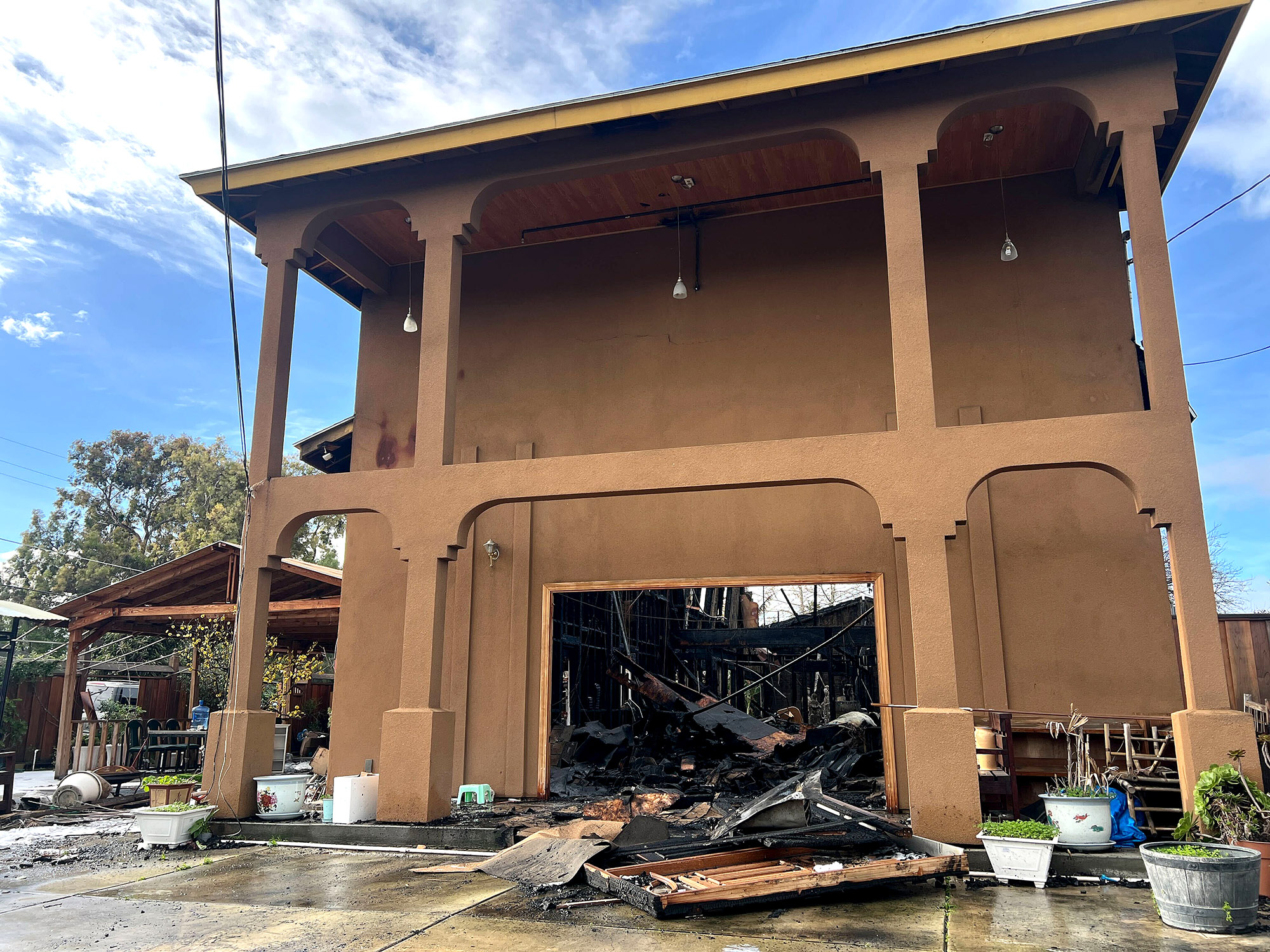
window.__INITIAL_STATE__={
"attachmentsReducer": {
"audio_0": {
"type": "attachments",
"id": "audio_0",
"imgSizes": {
"kqedFullSize": {
"file": "https://ww2.kqed.org/news/wp-content/themes/KQED-unified/img/audio_bgs/background0.jpg"
}
}
},
"audio_1": {
"type": "attachments",
"id": "audio_1",
"imgSizes": {
"kqedFullSize": {
"file": "https://ww2.kqed.org/news/wp-content/themes/KQED-unified/img/audio_bgs/background1.jpg"
}
}
},
"audio_2": {
"type": "attachments",
"id": "audio_2",
"imgSizes": {
"kqedFullSize": {
"file": "https://ww2.kqed.org/news/wp-content/themes/KQED-unified/img/audio_bgs/background2.jpg"
}
}
},
"audio_3": {
"type": "attachments",
"id": "audio_3",
"imgSizes": {
"kqedFullSize": {
"file": "https://ww2.kqed.org/news/wp-content/themes/KQED-unified/img/audio_bgs/background3.jpg"
}
}
},
"audio_4": {
"type": "attachments",
"id": "audio_4",
"imgSizes": {
"kqedFullSize": {
"file": "https://ww2.kqed.org/news/wp-content/themes/KQED-unified/img/audio_bgs/background4.jpg"
}
}
},
"placeholder": {
"type": "attachments",
"id": "placeholder",
"imgSizes": {
"thumbnail": {
"file": "https://cdn.kqed.org/wp-content/uploads/2024/12/KQED-Default-Image-816638274-2000x1333-1-160x107.jpg",
"width": 160,
"height": 107,
"mimeType": "image/jpeg"
},
"medium": {
"file": "https://cdn.kqed.org/wp-content/uploads/2024/12/KQED-Default-Image-816638274-2000x1333-1-800x533.jpg",
"width": 800,
"height": 533,
"mimeType": "image/jpeg"
},
"medium_large": {
"file": "https://cdn.kqed.org/wp-content/uploads/2024/12/KQED-Default-Image-816638274-2000x1333-1-768x512.jpg",
"width": 768,
"height": 512,
"mimeType": "image/jpeg"
},
"large": {
"file": "https://cdn.kqed.org/wp-content/uploads/2024/12/KQED-Default-Image-816638274-2000x1333-1-1020x680.jpg",
"width": 1020,
"height": 680,
"mimeType": "image/jpeg"
},
"1536x1536": {
"file": "https://cdn.kqed.org/wp-content/uploads/2024/12/KQED-Default-Image-816638274-2000x1333-1-1536x1024.jpg",
"width": 1536,
"height": 1024,
"mimeType": "image/jpeg"
},
"fd-lrg": {
"file": "https://cdn.kqed.org/wp-content/uploads/2024/12/KQED-Default-Image-816638274-2000x1333-1-1536x1024.jpg",
"width": 1536,
"height": 1024,
"mimeType": "image/jpeg"
},
"fd-med": {
"file": "https://cdn.kqed.org/wp-content/uploads/2024/12/KQED-Default-Image-816638274-2000x1333-1-1020x680.jpg",
"width": 1020,
"height": 680,
"mimeType": "image/jpeg"
},
"fd-sm": {
"file": "https://cdn.kqed.org/wp-content/uploads/2024/12/KQED-Default-Image-816638274-2000x1333-1-800x533.jpg",
"width": 800,
"height": 533,
"mimeType": "image/jpeg"
},
"post-thumbnail": {
"file": "https://cdn.kqed.org/wp-content/uploads/2024/12/KQED-Default-Image-816638274-2000x1333-1-672x372.jpg",
"width": 672,
"height": 372,
"mimeType": "image/jpeg"
},
"twentyfourteen-full-width": {
"file": "https://cdn.kqed.org/wp-content/uploads/2024/12/KQED-Default-Image-816638274-2000x1333-1-1038x576.jpg",
"width": 1038,
"height": 576,
"mimeType": "image/jpeg"
},
"xxsmall": {
"file": "https://cdn.kqed.org/wp-content/uploads/2024/12/KQED-Default-Image-816638274-2000x1333-1-160x107.jpg",
"width": 160,
"height": 107,
"mimeType": "image/jpeg"
},
"xsmall": {
"file": "https://cdn.kqed.org/wp-content/uploads/2024/12/KQED-Default-Image-816638274-2000x1333-1-672x372.jpg",
"width": 672,
"height": 372,
"mimeType": "image/jpeg"
},
"small": {
"file": "https://cdn.kqed.org/wp-content/uploads/2024/12/KQED-Default-Image-816638274-2000x1333-1-672x372.jpg",
"width": 672,
"height": 372,
"mimeType": "image/jpeg"
},
"xlarge": {
"file": "https://cdn.kqed.org/wp-content/uploads/2024/12/KQED-Default-Image-816638274-2000x1333-1-1020x680.jpg",
"width": 1020,
"height": 680,
"mimeType": "image/jpeg"
},
"full-width": {
"file": "https://cdn.kqed.org/wp-content/uploads/2024/12/KQED-Default-Image-816638274-2000x1333-1-1920x1280.jpg",
"width": 1920,
"height": 1280,
"mimeType": "image/jpeg"
},
"guest-author-32": {
"file": "https://cdn.kqed.org/wp-content/uploads/2025/01/KQED-Default-Image-816638274-1333x1333-1-160x160.jpg",
"width": 32,
"height": 32,
"mimeType": "image/jpeg"
},
"guest-author-50": {
"file": "https://cdn.kqed.org/wp-content/uploads/2025/01/KQED-Default-Image-816638274-1333x1333-1-160x160.jpg",
"width": 50,
"height": 50,
"mimeType": "image/jpeg"
},
"guest-author-64": {
"file": "https://cdn.kqed.org/wp-content/uploads/2025/01/KQED-Default-Image-816638274-1333x1333-1-160x160.jpg",
"width": 64,
"height": 64,
"mimeType": "image/jpeg"
},
"guest-author-96": {
"file": "https://cdn.kqed.org/wp-content/uploads/2025/01/KQED-Default-Image-816638274-1333x1333-1-160x160.jpg",
"width": 96,
"height": 96,
"mimeType": "image/jpeg"
},
"guest-author-128": {
"file": "https://cdn.kqed.org/wp-content/uploads/2025/01/KQED-Default-Image-816638274-1333x1333-1-160x160.jpg",
"width": 128,
"height": 128,
"mimeType": "image/jpeg"
},
"detail": {
"file": "https://cdn.kqed.org/wp-content/uploads/2025/01/KQED-Default-Image-816638274-1333x1333-1-160x160.jpg",
"width": 160,
"height": 160,
"mimeType": "image/jpeg"
},
"kqedFullSize": {
"file": "https://cdn.kqed.org/wp-content/uploads/2024/12/KQED-Default-Image-816638274-2000x1333-1.jpg",
"width": 2000,
"height": 1333
}
}
},
"news_12068688": {
"type": "attachments",
"id": "news_12068688",
"meta": {
"index": "attachments_1716263798",
"site": "news",
"id": "12068688",
"found": true
},
"title": "IMG_6335",
"publishDate": 1767649009,
"status": "inherit",
"parent": 0,
"modified": 1767650263,
"caption": "The remains of the Chua Duyen Giac Buddhist temple on Foss Avenue stand in San José on Jan. 5, 2026, after a three-alarm fire gutted the two-story building. The structure was declared a total loss by fire officials, marking the second time the temple has been heavily damaged by a blaze in the last 20 months.",
"credit": "Ayah Ali-Ahmad/KQED",
"altTag": null,
"description": null,
"imgSizes": {
"thumbnail": {
"file": "https://cdn.kqed.org/wp-content/uploads/sites/10/2026/01/IMG_6335-160x120.jpg",
"width": 160,
"height": 120,
"mimeType": "image/jpeg"
},
"1536x1536": {
"file": "https://cdn.kqed.org/wp-content/uploads/sites/10/2026/01/IMG_6335-1536x1152.jpg",
"width": 1536,
"height": 1152,
"mimeType": "image/jpeg"
},
"post-thumbnail": {
"file": "https://cdn.kqed.org/wp-content/uploads/sites/10/2026/01/IMG_6335-672x372.jpg",
"width": 672,
"height": 372,
"mimeType": "image/jpeg"
},
"twentyfourteen-full-width": {
"file": "https://cdn.kqed.org/wp-content/uploads/sites/10/2026/01/IMG_6335-1038x576.jpg",
"width": 1038,
"height": 576,
"mimeType": "image/jpeg"
},
"npr-cds-wide": {
"file": "https://cdn.kqed.org/wp-content/uploads/sites/10/2026/01/IMG_6335-1200x675.jpg",
"width": 1200,
"height": 675,
"mimeType": "image/jpeg"
},
"kqedFullSize": {
"file": "https://cdn.kqed.org/wp-content/uploads/sites/10/2026/01/IMG_6335.jpg",
"width": 2000,
"height": 1500
}
},
"isLoading": false,
"fetchFailed": false
},
"news_12068515": {
"type": "attachments",
"id": "news_12068515",
"meta": {
"index": "attachments_1716263798",
"site": "news",
"id": "12068515",
"found": true
},
"title": "251230-SFSocialWorker-19-BL",
"publishDate": 1767206926,
"status": "inherit",
"parent": 0,
"modified": 1767206959,
"caption": "Alex Alvarez, a clinical social worker, stands on a parking garage at UCSF Parnassus campus in San Francisco on Dec. 30, 2025. He said the view from the gym helps him recover, reflect, and think following the fatal stabbing of his colleague Alberto Rangel at Zuckerberg San Francisco General Hospital on Dec. 4, 2025.",
"credit": "Beth LaBerge/KQED",
"altTag": null,
"description": null,
"imgSizes": {
"thumbnail": {
"file": "https://cdn.kqed.org/wp-content/uploads/sites/10/2025/12/251230-SFSocialWorker-19-BL-160x107.jpg",
"width": 160,
"height": 107,
"mimeType": "image/jpeg"
},
"1536x1536": {
"file": "https://cdn.kqed.org/wp-content/uploads/sites/10/2025/12/251230-SFSocialWorker-19-BL-1536x1024.jpg",
"width": 1536,
"height": 1024,
"mimeType": "image/jpeg"
},
"post-thumbnail": {
"file": "https://cdn.kqed.org/wp-content/uploads/sites/10/2025/12/251230-SFSocialWorker-19-BL-672x372.jpg",
"width": 672,
"height": 372,
"mimeType": "image/jpeg"
},
"twentyfourteen-full-width": {
"file": "https://cdn.kqed.org/wp-content/uploads/sites/10/2025/12/251230-SFSocialWorker-19-BL-1038x576.jpg",
"width": 1038,
"height": 576,
"mimeType": "image/jpeg"
},
"npr-cds-wide": {
"file": "https://cdn.kqed.org/wp-content/uploads/sites/10/2025/12/251230-SFSocialWorker-19-BL-1200x675.jpg",
"width": 1200,
"height": 675,
"mimeType": "image/jpeg"
},
"kqedFullSize": {
"file": "https://cdn.kqed.org/wp-content/uploads/sites/10/2025/12/251230-SFSocialWorker-19-BL.jpg",
"width": 2000,
"height": 1333
}
},
"isLoading": false,
"fetchFailed": false
},
"news_11893931": {
"type": "attachments",
"id": "news_11893931",
"meta": {
"index": "attachments_1716263798",
"site": "news",
"id": "11893931",
"found": true
},
"parent": 11893922,
"imgSizes": {
"twentyfourteen-full-width": {
"file": "https://ww2.kqed.org/app/uploads/sites/10/2021/10/GettyImages-1348762301-1038x576.jpg",
"width": 1038,
"mimeType": "image/jpeg",
"height": 576
},
"thumbnail": {
"file": "https://ww2.kqed.org/app/uploads/sites/10/2021/10/GettyImages-1348762301-160x107.jpg",
"width": 160,
"mimeType": "image/jpeg",
"height": 107
},
"post-thumbnail": {
"file": "https://ww2.kqed.org/app/uploads/sites/10/2021/10/GettyImages-1348762301-672x372.jpg",
"width": 672,
"mimeType": "image/jpeg",
"height": 372
},
"kqedFullSize": {
"file": "https://ww2.kqed.org/app/uploads/sites/10/2021/10/GettyImages-1348762301-scaled-e1635290987914.jpg",
"width": 1920,
"height": 1280
},
"2048x2048": {
"file": "https://ww2.kqed.org/app/uploads/sites/10/2021/10/GettyImages-1348762301-2048x1365.jpg",
"width": 2048,
"mimeType": "image/jpeg",
"height": 1365
},
"large": {
"file": "https://ww2.kqed.org/app/uploads/sites/10/2021/10/GettyImages-1348762301-1020x680.jpg",
"width": 1020,
"mimeType": "image/jpeg",
"height": 680
},
"1536x1536": {
"file": "https://ww2.kqed.org/app/uploads/sites/10/2021/10/GettyImages-1348762301-1536x1024.jpg",
"width": 1536,
"mimeType": "image/jpeg",
"height": 1024
},
"full-width": {
"file": "https://ww2.kqed.org/app/uploads/sites/10/2021/10/GettyImages-1348762301-1920x1280.jpg",
"width": 1920,
"mimeType": "image/jpeg",
"height": 1280
},
"medium": {
"file": "https://ww2.kqed.org/app/uploads/sites/10/2021/10/GettyImages-1348762301-800x533.jpg",
"width": 800,
"mimeType": "image/jpeg",
"height": 533
}
},
"publishDate": 1635290935,
"modified": 1635291006,
"caption": "A fire hydrant is almost fully submerged on a flooded street on Oct. 24, 2021 in San Rafael, California.",
"description": "A fire hydrant is almost fully submerged on a flooded street on Oct. 24, 2021 in San Rafael, California.",
"title": "\"Bomb Cyclone\" Brings Heavy Precipitation To Northwest United States",
"credit": "Justin Sullivan/Getty Images",
"status": "inherit",
"altTag": "A fire hydrant is almost fully submerged on a flooded street on Oct. 24, 2021 in San Rafael, California.",
"isLoading": false,
"fetchFailed": false
},
"news_12067030": {
"type": "attachments",
"id": "news_12067030",
"meta": {
"index": "attachments_1716263798",
"site": "news",
"id": "12067030",
"found": true
},
"title": "20251211_YOUTHHOMELESSNESS_DECEMBER_GH-5-KQED",
"publishDate": 1765585032,
"status": "inherit",
"parent": 0,
"modified": 1765585088,
"caption": "Lavain Henderson, a youth mentor with Youth United for Community Action (YUCA), sits outside the organization’s office in East Palo Alto on Dec. 11, 2025. Henderson, who previously experienced homelessness, works with young people as YUCA faces uncertainty tied to federal cuts to permanent supportive housing funding.",
"credit": "Gustavo Hernandez/KQED",
"altTag": null,
"description": null,
"imgSizes": {
"thumbnail": {
"file": "https://cdn.kqed.org/wp-content/uploads/sites/10/2025/12/20251211_YOUTHHOMELESSNESS_DECEMBER_GH-5-KQED-160x107.jpg",
"width": 160,
"height": 107,
"mimeType": "image/jpeg"
},
"1536x1536": {
"file": "https://cdn.kqed.org/wp-content/uploads/sites/10/2025/12/20251211_YOUTHHOMELESSNESS_DECEMBER_GH-5-KQED-1536x1024.jpg",
"width": 1536,
"height": 1024,
"mimeType": "image/jpeg"
},
"post-thumbnail": {
"file": "https://cdn.kqed.org/wp-content/uploads/sites/10/2025/12/20251211_YOUTHHOMELESSNESS_DECEMBER_GH-5-KQED-672x372.jpg",
"width": 672,
"height": 372,
"mimeType": "image/jpeg"
},
"twentyfourteen-full-width": {
"file": "https://cdn.kqed.org/wp-content/uploads/sites/10/2025/12/20251211_YOUTHHOMELESSNESS_DECEMBER_GH-5-KQED-1038x576.jpg",
"width": 1038,
"height": 576,
"mimeType": "image/jpeg"
},
"npr-cds-wide": {
"file": "https://cdn.kqed.org/wp-content/uploads/sites/10/2025/12/20251211_YOUTHHOMELESSNESS_DECEMBER_GH-5-KQED-1200x675.jpg",
"width": 1200,
"height": 675,
"mimeType": "image/jpeg"
},
"kqedFullSize": {
"file": "https://cdn.kqed.org/wp-content/uploads/sites/10/2025/12/20251211_YOUTHHOMELESSNESS_DECEMBER_GH-5-KQED.jpg",
"width": 2000,
"height": 1333
}
},
"isLoading": false,
"fetchFailed": false
},
"news_11987469": {
"type": "attachments",
"id": "news_11987469",
"meta": {
"index": "attachments_1716263798",
"site": "news",
"id": "11987469",
"found": true
},
"title": "240404-District5BOSRedistricting-010-BL_qut",
"publishDate": 1716424806,
"status": "inherit",
"parent": 11987465,
"modified": 1716424849,
"caption": "A woman pushes a stroller through Alamo Square Park in San Francisco on April 4, 2024.",
"credit": "Beth LaBerge/KQED",
"altTag": null,
"description": null,
"imgSizes": {
"medium": {
"file": "https://cdn.kqed.org/wp-content/uploads/sites/10/2024/05/240404-District5BOSRedistricting-010-BL_qut-800x533.jpg",
"width": 800,
"height": 533,
"mimeType": "image/jpeg"
},
"large": {
"file": "https://cdn.kqed.org/wp-content/uploads/sites/10/2024/05/240404-District5BOSRedistricting-010-BL_qut-1020x680.jpg",
"width": 1020,
"height": 680,
"mimeType": "image/jpeg"
},
"thumbnail": {
"file": "https://cdn.kqed.org/wp-content/uploads/sites/10/2024/05/240404-District5BOSRedistricting-010-BL_qut-160x107.jpg",
"width": 160,
"height": 107,
"mimeType": "image/jpeg"
},
"1536x1536": {
"file": "https://cdn.kqed.org/wp-content/uploads/sites/10/2024/05/240404-District5BOSRedistricting-010-BL_qut-1536x1024.jpg",
"width": 1536,
"height": 1024,
"mimeType": "image/jpeg"
},
"post-thumbnail": {
"file": "https://cdn.kqed.org/wp-content/uploads/sites/10/2024/05/240404-District5BOSRedistricting-010-BL_qut-672x372.jpg",
"width": 672,
"height": 372,
"mimeType": "image/jpeg"
},
"twentyfourteen-full-width": {
"file": "https://cdn.kqed.org/wp-content/uploads/sites/10/2024/05/240404-District5BOSRedistricting-010-BL_qut-1038x576.jpg",
"width": 1038,
"height": 576,
"mimeType": "image/jpeg"
},
"kqedFullSize": {
"file": "https://cdn.kqed.org/wp-content/uploads/sites/10/2024/05/240404-District5BOSRedistricting-010-BL_qut.jpg",
"width": 1920,
"height": 1280
}
},
"isLoading": false,
"fetchFailed": false
},
"news_12010728": {
"type": "attachments",
"id": "news_12010728",
"meta": {
"index": "attachments_1716263798",
"site": "news",
"id": "12010728",
"found": true
},
"title": "004_BoulderCreek_BigBasinRedwoods_08172021_qed",
"publishDate": 1729710255,
"status": "inherit",
"parent": 12010708,
"modified": 1729710284,
"caption": "New growth on trees in Big Basin Redwoods State Park in Boulder Creek on August 17, 2021, one year after the CZU Lightning Complex wildfire swept through the area.",
"credit": "Beth LaBerge/KQED",
"altTag": null,
"description": null,
"imgSizes": {
"medium": {
"file": "https://cdn.kqed.org/wp-content/uploads/sites/10/2024/10/004_BoulderCreek_BigBasinRedwoods_08172021_qed-800x533.jpg",
"width": 800,
"height": 533,
"mimeType": "image/jpeg"
},
"large": {
"file": "https://cdn.kqed.org/wp-content/uploads/sites/10/2024/10/004_BoulderCreek_BigBasinRedwoods_08172021_qed-1020x680.jpg",
"width": 1020,
"height": 680,
"mimeType": "image/jpeg"
},
"thumbnail": {
"file": "https://cdn.kqed.org/wp-content/uploads/sites/10/2024/10/004_BoulderCreek_BigBasinRedwoods_08172021_qed-160x107.jpg",
"width": 160,
"height": 107,
"mimeType": "image/jpeg"
},
"1536x1536": {
"file": "https://cdn.kqed.org/wp-content/uploads/sites/10/2024/10/004_BoulderCreek_BigBasinRedwoods_08172021_qed-1536x1024.jpg",
"width": 1536,
"height": 1024,
"mimeType": "image/jpeg"
},
"post-thumbnail": {
"file": "https://cdn.kqed.org/wp-content/uploads/sites/10/2024/10/004_BoulderCreek_BigBasinRedwoods_08172021_qed-672x372.jpg",
"width": 672,
"height": 372,
"mimeType": "image/jpeg"
},
"twentyfourteen-full-width": {
"file": "https://cdn.kqed.org/wp-content/uploads/sites/10/2024/10/004_BoulderCreek_BigBasinRedwoods_08172021_qed-1038x576.jpg",
"width": 1038,
"height": 576,
"mimeType": "image/jpeg"
},
"full-width": {
"file": "https://cdn.kqed.org/wp-content/uploads/sites/10/2024/10/004_BoulderCreek_BigBasinRedwoods_08172021_qed-1920x1280.jpg",
"width": 1920,
"height": 1280,
"mimeType": "image/jpeg"
},
"kqedFullSize": {
"file": "https://cdn.kqed.org/wp-content/uploads/sites/10/2024/10/004_BoulderCreek_BigBasinRedwoods_08172021_qed.jpg",
"width": 2000,
"height": 1333
}
},
"isLoading": false,
"fetchFailed": false
},
"news_12064045": {
"type": "attachments",
"id": "news_12064045",
"meta": {
"index": "attachments_1716263798",
"site": "news",
"id": "12064045",
"found": true
},
"title": "251113-RAINFILE00237_TV-KQED",
"publishDate": 1763072580,
"status": "inherit",
"parent": 0,
"modified": 1766539451,
"caption": "For whatever reason, looking to keep it low-key this Christmas Day? There's still big community events happening on Dec. 25.",
"credit": "Tâm Vũ/KQED",
"altTag": "A person walks down the street towards the camera. Their umbrella covers their face.",
"description": null,
"imgSizes": {
"thumbnail": {
"file": "https://cdn.kqed.org/wp-content/uploads/sites/10/2025/11/251113-RAINFILE00237_TV-KQED-160x107.jpg",
"width": 160,
"height": 107,
"mimeType": "image/jpeg"
},
"1536x1536": {
"file": "https://cdn.kqed.org/wp-content/uploads/sites/10/2025/11/251113-RAINFILE00237_TV-KQED-1536x1024.jpg",
"width": 1536,
"height": 1024,
"mimeType": "image/jpeg"
},
"post-thumbnail": {
"file": "https://cdn.kqed.org/wp-content/uploads/sites/10/2025/11/251113-RAINFILE00237_TV-KQED-672x372.jpg",
"width": 672,
"height": 372,
"mimeType": "image/jpeg"
},
"twentyfourteen-full-width": {
"file": "https://cdn.kqed.org/wp-content/uploads/sites/10/2025/11/251113-RAINFILE00237_TV-KQED-1038x576.jpg",
"width": 1038,
"height": 576,
"mimeType": "image/jpeg"
},
"npr-cds-wide": {
"file": "https://cdn.kqed.org/wp-content/uploads/sites/10/2025/11/251113-RAINFILE00237_TV-KQED-1200x675.jpg",
"width": 1200,
"height": 675,
"mimeType": "image/jpeg"
},
"kqedFullSize": {
"file": "https://cdn.kqed.org/wp-content/uploads/sites/10/2025/11/251113-RAINFILE00237_TV-KQED.jpg",
"width": 2000,
"height": 1333
}
},
"isLoading": false,
"fetchFailed": false
},
"news_12068301": {
"type": "attachments",
"id": "news_12068301",
"meta": {
"index": "attachments_1716263798",
"site": "news",
"id": "12068301",
"found": true
},
"title": "Rainy weather in San Francisco",
"publishDate": 1766445799,
"status": "inherit",
"parent": 11936674,
"modified": 1767910818,
"caption": "A couple walk near the Fort Point as Golden Gate Bridge covered with dense fog during rainy weather as an atmospheric river hits San Francisco Bay Area on Dec. 20, 2025. ",
"credit": "Tayfun Coskun/Anadolu via Getty Images",
"altTag": null,
"description": null,
"imgSizes": {
"medium": {
"file": "https://cdn.kqed.org/wp-content/uploads/sites/10/2025/12/GettyImages-2252316412-2000x1333.jpg",
"width": 2000,
"height": 1333,
"mimeType": "image/jpeg"
},
"large": {
"file": "https://cdn.kqed.org/wp-content/uploads/sites/10/2025/12/GettyImages-2252316412-2000x1333.jpg",
"width": 2000,
"height": 1333,
"mimeType": "image/jpeg"
},
"thumbnail": {
"file": "https://cdn.kqed.org/wp-content/uploads/sites/10/2025/12/GettyImages-2252316412-160x107.jpg",
"width": 160,
"height": 107,
"mimeType": "image/jpeg"
},
"1536x1536": {
"file": "https://cdn.kqed.org/wp-content/uploads/sites/10/2025/12/GettyImages-2252316412-1536x1024.jpg",
"width": 1536,
"height": 1024,
"mimeType": "image/jpeg"
},
"2048x2048": {
"file": "https://cdn.kqed.org/wp-content/uploads/sites/10/2025/12/GettyImages-2252316412-2048x1365.jpg",
"width": 2048,
"height": 1365,
"mimeType": "image/jpeg"
},
"post-thumbnail": {
"file": "https://cdn.kqed.org/wp-content/uploads/sites/10/2025/12/GettyImages-2252316412-672x372.jpg",
"width": 672,
"height": 372,
"mimeType": "image/jpeg"
},
"twentyfourteen-full-width": {
"file": "https://cdn.kqed.org/wp-content/uploads/sites/10/2025/12/GettyImages-2252316412-1038x576.jpg",
"width": 1038,
"height": 576,
"mimeType": "image/jpeg"
},
"full-width": {
"file": "https://cdn.kqed.org/wp-content/uploads/sites/10/2025/12/GettyImages-2252316412-2000x1333.jpg",
"width": 2000,
"height": 1333,
"mimeType": "image/jpeg"
},
"npr-cds-wide": {
"file": "https://cdn.kqed.org/wp-content/uploads/sites/10/2025/12/GettyImages-2252316412-1200x675.jpg",
"width": 1200,
"height": 675,
"mimeType": "image/jpeg"
},
"kqedFullSize": {
"file": "https://cdn.kqed.org/wp-content/uploads/sites/10/2025/12/GettyImages-2252316412-scaled-e1769453226709.jpg",
"width": 2000,
"height": 1334
}
},
"isLoading": false,
"fetchFailed": false
},
"news_12067727": {
"type": "attachments",
"id": "news_12067727",
"meta": {
"index": "attachments_1716263798",
"site": "news",
"id": "12067727",
"found": true
},
"title": "251218-2025 in Photos Lede-KQED-5",
"publishDate": 1766077589,
"status": "inherit",
"parent": 0,
"modified": 1766149204,
"caption": "Moments from 2025 photographed by KQED's photo team and contributors.",
"credit": null,
"altTag": null,
"description": null,
"imgSizes": {
"thumbnail": {
"file": "https://cdn.kqed.org/wp-content/uploads/sites/10/2025/12/251218-2025-in-Photos-Lede-KQED-5-160x107.jpg",
"width": 160,
"height": 107,
"mimeType": "image/jpeg"
},
"1536x1536": {
"file": "https://cdn.kqed.org/wp-content/uploads/sites/10/2025/12/251218-2025-in-Photos-Lede-KQED-5-1536x1025.jpg",
"width": 1536,
"height": 1025,
"mimeType": "image/jpeg"
},
"post-thumbnail": {
"file": "https://cdn.kqed.org/wp-content/uploads/sites/10/2025/12/251218-2025-in-Photos-Lede-KQED-5-672x372.jpg",
"width": 672,
"height": 372,
"mimeType": "image/jpeg"
},
"twentyfourteen-full-width": {
"file": "https://cdn.kqed.org/wp-content/uploads/sites/10/2025/12/251218-2025-in-Photos-Lede-KQED-5-1038x576.jpg",
"width": 1038,
"height": 576,
"mimeType": "image/jpeg"
},
"npr-cds-wide": {
"file": "https://cdn.kqed.org/wp-content/uploads/sites/10/2025/12/251218-2025-in-Photos-Lede-KQED-5-1200x675.jpg",
"width": 1200,
"height": 675,
"mimeType": "image/jpeg"
},
"kqedFullSize": {
"file": "https://cdn.kqed.org/wp-content/uploads/sites/10/2025/12/251218-2025-in-Photos-Lede-KQED-5.jpg",
"width": 2000,
"height": 1334
}
},
"isLoading": false,
"fetchFailed": false
},
"news_12068081": {
"type": "attachments",
"id": "news_12068081",
"meta": {
"index": "attachments_1716263798",
"site": "news",
"id": "12068081",
"found": true
},
"title": "251217-sfstateofdowntown00810seqn}_TV_qed",
"publishDate": 1766180938,
"status": "inherit",
"parent": 0,
"modified": 1767637777,
"caption": "Pedestrians pass by San Francisco Centre Mall on Market Street in San Francisco on December 17, 2025. While retail vacancy in Union Square has improved after several years of store closures, San Francisco Center Mall is still struggling despite millions of dollars raised for the nonprofit Downtown Development Corporation, free lease programs for small businesses, and other Hail Mary's the city is throwing at the city's primary commercial district.",
"credit": "Tâm Vũ/KQED",
"altTag": null,
"description": null,
"imgSizes": {
"thumbnail": {
"file": "https://cdn.kqed.org/wp-content/uploads/sites/10/2025/12/251217-sfstateofdowntown00810seqn_TV_qed-160x107.jpg",
"width": 160,
"height": 107,
"mimeType": "image/jpeg"
},
"1536x1536": {
"file": "https://cdn.kqed.org/wp-content/uploads/sites/10/2025/12/251217-sfstateofdowntown00810seqn_TV_qed-1536x1024.jpg",
"width": 1536,
"height": 1024,
"mimeType": "image/jpeg"
},
"post-thumbnail": {
"file": "https://cdn.kqed.org/wp-content/uploads/sites/10/2025/12/251217-sfstateofdowntown00810seqn_TV_qed-672x372.jpg",
"width": 672,
"height": 372,
"mimeType": "image/jpeg"
},
"twentyfourteen-full-width": {
"file": "https://cdn.kqed.org/wp-content/uploads/sites/10/2025/12/251217-sfstateofdowntown00810seqn_TV_qed-1038x576.jpg",
"width": 1038,
"height": 576,
"mimeType": "image/jpeg"
},
"npr-cds-wide": {
"file": "https://cdn.kqed.org/wp-content/uploads/sites/10/2025/12/251217-sfstateofdowntown00810seqn_TV_qed-1200x675.jpg",
"width": 1200,
"height": 675,
"mimeType": "image/jpeg"
},
"kqedFullSize": {
"file": "https://cdn.kqed.org/wp-content/uploads/sites/10/2025/12/251217-sfstateofdowntown00810seqn_TV_qed.jpg",
"width": 2000,
"height": 1333
}
},
"isLoading": false,
"fetchFailed": false
},
"news_12068208": {
"type": "attachments",
"id": "news_12068208",
"meta": {
"index": "attachments_1716263798",
"site": "news",
"id": "12068208",
"found": true
},
"title": "PG&E Service Truck",
"publishDate": 1766352139,
"status": "inherit",
"parent": 12068205,
"modified": 1766352229,
"caption": "PG&E utility service truck parked on city street in front of modern apartment buildings in San Francisco on Dec. 4, 2025. ",
"credit": "Smith Collection/Gado/Getty Images",
"altTag": "A blue truck with 'pg and e' logo on it is parked on a city street.",
"description": null,
"imgSizes": {
"thumbnail": {
"file": "https://cdn.kqed.org/wp-content/uploads/sites/10/2025/12/GettyImages-2250136338-160x107.jpg",
"width": 160,
"height": 107,
"mimeType": "image/jpeg"
},
"post-thumbnail": {
"file": "https://cdn.kqed.org/wp-content/uploads/sites/10/2025/12/GettyImages-2250136338-672x372.jpg",
"width": 672,
"height": 372,
"mimeType": "image/jpeg"
},
"twentyfourteen-full-width": {
"file": "https://cdn.kqed.org/wp-content/uploads/sites/10/2025/12/GettyImages-2250136338-1024x576.jpg",
"width": 1024,
"height": 576,
"mimeType": "image/jpeg"
},
"npr-cds-wide": {
"file": "https://cdn.kqed.org/wp-content/uploads/sites/10/2025/12/GettyImages-2250136338-1024x675.jpg",
"width": 1024,
"height": 675,
"mimeType": "image/jpeg"
},
"kqedFullSize": {
"file": "https://cdn.kqed.org/wp-content/uploads/sites/10/2025/12/GettyImages-2250136338.jpg",
"width": 1024,
"height": 683
}
},
"isLoading": false,
"fetchFailed": false
},
"news_12066613": {
"type": "attachments",
"id": "news_12066613",
"meta": {
"index": "attachments_1716263798",
"site": "news",
"id": "12066613",
"found": true
},
"title": "SENIOR CENTERS SAN FRANCISCO IMMIGRANTS",
"publishDate": 1765389181,
"status": "inherit",
"parent": 0,
"modified": 1765389469,
"caption": "People line up outside the Centro Latino de San Francisco, a civic center serving seniors and those with disabilities, to receive the free lunch that they offer in San Francisco on Aug. 14, 2025.",
"credit": "Courtesy of Matthew Busch/The Investigative Reporting Program",
"altTag": null,
"description": null,
"imgSizes": {
"thumbnail": {
"file": "https://cdn.kqed.org/wp-content/uploads/sites/10/2025/12/251210-Aging-Immigrants-ICE-MD-01-KQED-160x120.jpg",
"width": 160,
"height": 120,
"mimeType": "image/jpeg"
},
"1536x1536": {
"file": "https://cdn.kqed.org/wp-content/uploads/sites/10/2025/12/251210-Aging-Immigrants-ICE-MD-01-KQED-1536x1152.jpg",
"width": 1536,
"height": 1152,
"mimeType": "image/jpeg"
},
"post-thumbnail": {
"file": "https://cdn.kqed.org/wp-content/uploads/sites/10/2025/12/251210-Aging-Immigrants-ICE-MD-01-KQED-672x372.jpg",
"width": 672,
"height": 372,
"mimeType": "image/jpeg"
},
"twentyfourteen-full-width": {
"file": "https://cdn.kqed.org/wp-content/uploads/sites/10/2025/12/251210-Aging-Immigrants-ICE-MD-01-KQED-1038x576.jpg",
"width": 1038,
"height": 576,
"mimeType": "image/jpeg"
},
"npr-cds-wide": {
"file": "https://cdn.kqed.org/wp-content/uploads/sites/10/2025/12/251210-Aging-Immigrants-ICE-MD-01-KQED-1200x675.jpg",
"width": 1200,
"height": 675,
"mimeType": "image/jpeg"
},
"kqedFullSize": {
"file": "https://cdn.kqed.org/wp-content/uploads/sites/10/2025/12/251210-Aging-Immigrants-ICE-MD-01-KQED.jpg",
"width": 2000,
"height": 1500
}
},
"isLoading": false,
"fetchFailed": false
}
},
"audioPlayerReducer": {
"postId": "stream_live",
"isPaused": true,
"isPlaying": false,
"pfsActive": false,
"pledgeModalIsOpen": true,
"playerDrawerIsOpen": false,
"liveAudioPlayStartedAt": 0,
"liveAudioPlayContext": ""
},
"authorsReducer": {
"byline_news_12068004": {
"type": "authors",
"id": "byline_news_12068004",
"meta": {
"override": true
},
"slug": "byline_news_12068004",
"name": "Hussain Khan ",
"isLoading": false
},
"kqed": {
"type": "authors",
"id": "236",
"meta": {
"index": "authors_1716337520",
"id": "236",
"found": true
},
"name": "KQED News Staff",
"firstName": "KQED News Staff",
"lastName": null,
"slug": "kqed",
"email": "faq@kqed.org",
"display_author_email": false,
"staff_mastheads": [],
"title": null,
"bio": null,
"avatar": "https://secure.gravatar.com/avatar/ef0e801a68c4c54afa9180db14084167?s=600&d=blank&r=g",
"twitter": null,
"facebook": null,
"instagram": null,
"linkedin": null,
"sites": [
{
"site": "arts",
"roles": [
"contributor"
]
},
{
"site": "news",
"roles": [
"editor"
]
},
{
"site": "futureofyou",
"roles": [
"author"
]
}
],
"headData": {
"title": "KQED News Staff | KQED",
"description": null,
"ogImgSrc": "https://secure.gravatar.com/avatar/ef0e801a68c4c54afa9180db14084167?s=600&d=blank&r=g",
"twImgSrc": "https://secure.gravatar.com/avatar/ef0e801a68c4c54afa9180db14084167?s=600&d=blank&r=g"
},
"isLoading": false,
"link": "/author/kqed"
},
"carlysevern": {
"type": "authors",
"id": "3243",
"meta": {
"index": "authors_1716337520",
"id": "3243",
"found": true
},
"name": "Carly Severn",
"firstName": "Carly",
"lastName": "Severn",
"slug": "carlysevern",
"email": "csevern@kqed.org",
"display_author_email": false,
"staff_mastheads": [
"news"
],
"title": "Senior Editor, Audience News ",
"bio": "Carly is KQED's Senior Editor of Audience News on the Digital News team, and has reported for the California Report Magazine, Bay Curious and KQED Arts. She's formerly the host of \u003ca href=\"http://ww2.kqed.org/pop/category/the-cooler/\" rel=\"noopener noreferrer\">The Cooler\u003c/a> podcast.",
"avatar": "https://secure.gravatar.com/avatar/54037bf5c128fe678f0ef26cec97a93f2e7f220a22d7285703328f12c42c1b1d?s=600&d=blank&r=g",
"twitter": "teacupinthebay",
"bluesky": null,
"facebook": null,
"instagram": null,
"linkedin": null,
"sites": [
{
"site": "",
"roles": [
"editor"
]
},
{
"site": "arts",
"roles": [
"editor"
]
},
{
"site": "news",
"roles": [
"administrator"
]
},
{
"site": "pop",
"roles": [
"editor"
]
},
{
"site": "futureofyou",
"roles": [
"editor"
]
},
{
"site": "about",
"roles": [
"administrator"
]
},
{
"site": "mindshift",
"roles": [
"editor"
]
},
{
"site": "bayareabites",
"roles": [
"editor"
]
},
{
"site": "stateofhealth",
"roles": [
"editor"
]
},
{
"site": "science",
"roles": [
"editor"
]
},
{
"site": "food",
"roles": [
"contributor"
]
},
{
"site": "forum",
"roles": [
"editor"
]
},
{
"site": "perspectives",
"roles": [
"administrator"
]
},
{
"site": "liveblog",
"roles": [
"editor"
]
}
],
"headData": {
"title": "Carly Severn | KQED",
"description": "Senior Editor, Audience News ",
"ogImgSrc": "https://secure.gravatar.com/avatar/54037bf5c128fe678f0ef26cec97a93f2e7f220a22d7285703328f12c42c1b1d?s=600&d=blank&r=g",
"twImgSrc": "https://secure.gravatar.com/avatar/54037bf5c128fe678f0ef26cec97a93f2e7f220a22d7285703328f12c42c1b1d?s=600&d=blank&r=g"
},
"isLoading": false,
"link": "/author/carlysevern"
},
"esilvers": {
"type": "authors",
"id": "7237",
"meta": {
"index": "authors_1716337520",
"id": "7237",
"found": true
},
"name": "Emma Silvers",
"firstName": "Emma",
"lastName": "Silvers",
"slug": "esilvers",
"email": "esilvers@kqed.org",
"display_author_email": false,
"staff_mastheads": [],
"title": "KQED Contributor",
"bio": "Emma Silvers is an editor at KQED Arts and a former digital producer at KQED News. Born and raised in the Bay Area, she has previously been an arts and entertainment editor at the \u003cem>San Francisco Chronicle\u003c/em>, \u003cem>SF Weekly\u003c/em> and the \u003cem>San Francisco Bay Guardian.\u003c/em> \u003ca href=\"https://www.emmasilvers.com\">Her work\u003c/a> has also appeared in \u003cem>Rolling Stone\u003c/em>, Pitchfork and \u003cem>Mother Jones\u003c/em>. In 2017 she was the recipient of the Society of Professional Journalists-Northern California's award for arts and culture reporting. In 1993 she \u003ca href=\"https://www.kqed.org/pop/16759/wait-what-my-coworker-was-a-voice-over-hyperventilator-for-jurassic-park\">hyperventilated in \u003cem>Jurassic Park\u003c/em>\u003c/a>.",
"avatar": "https://secure.gravatar.com/avatar/247beada39b88ea5759db1f51dba05cf?s=600&d=blank&r=g",
"twitter": "emmaruthless",
"facebook": null,
"instagram": null,
"linkedin": null,
"sites": [
{
"site": "arts",
"roles": [
"editor"
]
},
{
"site": "news",
"roles": [
"editor"
]
},
{
"site": "pop",
"roles": [
"contributor"
]
},
{
"site": "bayareabites",
"roles": [
"editor"
]
},
{
"site": "food",
"roles": [
"contributor"
]
},
{
"site": "liveblog",
"roles": [
"editor"
]
}
],
"headData": {
"title": "Emma Silvers | KQED",
"description": "KQED Contributor",
"ogImgSrc": "https://secure.gravatar.com/avatar/247beada39b88ea5759db1f51dba05cf?s=600&d=blank&r=g",
"twImgSrc": "https://secure.gravatar.com/avatar/247beada39b88ea5759db1f51dba05cf?s=600&d=blank&r=g"
},
"isLoading": false,
"link": "/author/esilvers"
},
"ccabreralomeli": {
"type": "authors",
"id": "11708",
"meta": {
"index": "authors_1716337520",
"id": "11708",
"found": true
},
"name": "Carlos Cabrera-Lomelí",
"firstName": "Carlos",
"lastName": "Cabrera-Lomelí",
"slug": "ccabreralomeli",
"email": "ccabreralomeli@KQED.org",
"display_author_email": true,
"staff_mastheads": [
"news"
],
"title": "Community Reporter",
"bio": "Carlos Cabrera-Lomelí is a community reporter with KQED's digital engagement team. He also reports and co-produces for KQED's bilingual news hub KQED en Español. He grew up in San Francisco's Mission District and has previously worked with Univision, 48 Hills and REFORMA in Mexico City.",
"avatar": "https://secure.gravatar.com/avatar/c309be9665e484f887b818c89e273ecc673004f426f36b24d00a4d813a2e0518?s=600&d=blank&r=g",
"twitter": "@LomeliCabrera",
"bluesky": null,
"facebook": null,
"instagram": null,
"linkedin": null,
"sites": [
{
"site": "arts",
"roles": [
"editor"
]
},
{
"site": "news",
"roles": [
"editor"
]
},
{
"site": "about",
"roles": [
"editor"
]
},
{
"site": "science",
"roles": [
"editor"
]
},
{
"site": "perspectives",
"roles": [
"editor"
]
},
{
"site": "elections",
"roles": [
"editor"
]
},
{
"site": "liveblog",
"roles": [
"contributor"
]
}
],
"headData": {
"title": "Carlos Cabrera-Lomelí | KQED",
"description": "Community Reporter",
"ogImgSrc": "https://secure.gravatar.com/avatar/c309be9665e484f887b818c89e273ecc673004f426f36b24d00a4d813a2e0518?s=600&d=blank&r=g",
"twImgSrc": "https://secure.gravatar.com/avatar/c309be9665e484f887b818c89e273ecc673004f426f36b24d00a4d813a2e0518?s=600&d=blank&r=g"
},
"isLoading": false,
"link": "/author/ccabreralomeli"
},
"sjohnson": {
"type": "authors",
"id": "11840",
"meta": {
"index": "authors_1716337520",
"id": "11840",
"found": true
},
"name": "Sydney Johnson",
"firstName": "Sydney",
"lastName": "Johnson",
"slug": "sjohnson",
"email": "sjohnson@kqed.org",
"display_author_email": false,
"staff_mastheads": [
"news"
],
"title": "KQED Reporter",
"bio": "Sydney Johnson is a general assignment reporter at KQED. She previously reported on public health and city government at the San Francisco Examiner, and before that, she covered statewide education policy for EdSource. Her reporting has won multiple local, state and national awards. Sydney is a graduate of the University of California, Berkeley and lives in San Francisco.",
"avatar": "https://secure.gravatar.com/avatar/97855f2719b72ad6190b7c535fe642c8?s=600&d=blank&r=g",
"twitter": "sydneyfjohnson",
"facebook": null,
"instagram": null,
"linkedin": null,
"sites": [
{
"site": "news",
"roles": [
"editor"
]
}
],
"headData": {
"title": "Sydney Johnson | KQED",
"description": "KQED Reporter",
"ogImgSrc": "https://secure.gravatar.com/avatar/97855f2719b72ad6190b7c535fe642c8?s=600&d=blank&r=g",
"twImgSrc": "https://secure.gravatar.com/avatar/97855f2719b72ad6190b7c535fe642c8?s=600&d=blank&r=g"
},
"isLoading": false,
"link": "/author/sjohnson"
},
"kdebenedetti": {
"type": "authors",
"id": "11913",
"meta": {
"index": "authors_1716337520",
"id": "11913",
"found": true
},
"name": "Katie DeBenedetti",
"firstName": "Katie",
"lastName": "DeBenedetti",
"slug": "kdebenedetti",
"email": "kdebenedetti@kqed.org",
"display_author_email": false,
"staff_mastheads": [
"news",
"science"
],
"title": "KQED Contributor",
"bio": "Katie DeBenedetti is a digital reporter covering daily news for the Express Desk. Prior to joining KQED as a culture reporting intern in January 2024, she covered education and city government for the Napa Valley Register.",
"avatar": "https://secure.gravatar.com/avatar/6e31073cb8f7e4214ab03f42771d0f45?s=600&d=blank&r=g",
"twitter": null,
"facebook": null,
"instagram": null,
"linkedin": null,
"sites": [
{
"site": "news",
"roles": [
"author"
]
},
{
"site": "science",
"roles": [
"author"
]
},
{
"site": "liveblog",
"roles": [
"author"
]
}
],
"headData": {
"title": "Katie DeBenedetti | KQED",
"description": "KQED Contributor",
"ogImgSrc": "https://secure.gravatar.com/avatar/6e31073cb8f7e4214ab03f42771d0f45?s=600&d=blank&r=g",
"twImgSrc": "https://secure.gravatar.com/avatar/6e31073cb8f7e4214ab03f42771d0f45?s=600&d=blank&r=g"
},
"isLoading": false,
"link": "/author/kdebenedetti"
},
"sarahwright": {
"type": "authors",
"id": "11956",
"meta": {
"index": "authors_1716337520",
"id": "11956",
"found": true
},
"name": "Sarah Wright",
"firstName": "Sarah",
"lastName": "Wright",
"slug": "sarahwright",
"email": "swright@kqed.org",
"display_author_email": true,
"staff_mastheads": [],
"title": "Outdoors Engagement Reporter",
"bio": "Sarah Wright is KQED's Outdoors Engagement Reporter. Originally from Lake Tahoe, she completed a thru-hike of the Pacific Crest Trail in 2019 and was a U.S. Fulbright Program grantee to Argentina in 2023. Her journalism has appeared in The Guardian, The San Francisco Standard, The Palo Alto Weekly and the Half Moon Bay Review.",
"avatar": "https://secure.gravatar.com/avatar/c161a3d6441865cba25e6db4fa561099ad665799e9432e34da2b84d7e371524c?s=600&d=blank&r=g",
"twitter": null,
"bluesky": null,
"facebook": null,
"instagram": null,
"linkedin": null,
"sites": [
{
"site": "arts",
"roles": [
"editor"
]
},
{
"site": "news",
"roles": [
"editor"
]
},
{
"site": "science",
"roles": [
"contributor",
"author"
]
},
{
"site": "forum",
"roles": [
"editor"
]
}
],
"headData": {
"title": "Sarah Wright | KQED",
"description": "Outdoors Engagement Reporter",
"ogImgSrc": "https://secure.gravatar.com/avatar/c161a3d6441865cba25e6db4fa561099ad665799e9432e34da2b84d7e371524c?s=600&d=blank&r=g",
"twImgSrc": "https://secure.gravatar.com/avatar/c161a3d6441865cba25e6db4fa561099ad665799e9432e34da2b84d7e371524c?s=600&d=blank&r=g"
},
"isLoading": false,
"link": "/author/sarahwright"
},
"nsuliman": {
"type": "authors",
"id": "11985",
"meta": {
"index": "authors_1716337520",
"id": "11985",
"found": true
},
"name": "Nibras Suliman",
"firstName": "Nibras",
"lastName": "Suliman",
"slug": "nsuliman",
"email": "nsuliman@kqed.org",
"display_author_email": false,
"staff_mastheads": [],
"title": "KQED Contributor",
"bio": null,
"avatar": "https://secure.gravatar.com/avatar/581946774e0249b1fcdfb01d4f143d12?s=600&d=blank&r=g",
"twitter": null,
"facebook": null,
"instagram": null,
"linkedin": null,
"sites": [
{
"site": "news",
"roles": []
}
],
"headData": {
"title": "Nibras Suliman | KQED",
"description": "KQED Contributor",
"ogImgSrc": "https://secure.gravatar.com/avatar/581946774e0249b1fcdfb01d4f143d12?s=600&d=blank&r=g",
"twImgSrc": "https://secure.gravatar.com/avatar/581946774e0249b1fcdfb01d4f143d12?s=600&d=blank&r=g"
},
"isLoading": false,
"link": "/author/nsuliman"
},
"aaliahmad": {
"type": "authors",
"id": "11986",
"meta": {
"index": "authors_1716337520",
"id": "11986",
"found": true
},
"name": "Ayah Ali-Ahmad",
"firstName": "Ayah",
"lastName": "Ali-Ahmad",
"slug": "aaliahmad",
"email": "aaliahmad@KQED.org",
"display_author_email": false,
"staff_mastheads": [],
"title": "KQED Contributor",
"bio": null,
"avatar": "https://secure.gravatar.com/avatar/1cf54f187a5e1064b2cfef3f3d2f1e4f93e453395d56912aca6382a6071ec3ed?s=600&d=blank&r=g",
"twitter": "ayahaliahmad",
"bluesky": null,
"facebook": null,
"instagram": null,
"linkedin": null,
"sites": [
{
"site": "news",
"roles": [
"subscriber"
]
}
],
"headData": {
"title": "Ayah Ali-Ahmad | KQED",
"description": "KQED Contributor",
"ogImgSrc": "https://secure.gravatar.com/avatar/1cf54f187a5e1064b2cfef3f3d2f1e4f93e453395d56912aca6382a6071ec3ed?s=600&d=blank&r=g",
"twImgSrc": "https://secure.gravatar.com/avatar/1cf54f187a5e1064b2cfef3f3d2f1e4f93e453395d56912aca6382a6071ec3ed?s=600&d=blank&r=g"
},
"isLoading": false,
"link": "/author/aaliahmad"
}
},
"pagesReducer": {
"news_category_local": {
"type": "terms",
"id": "news_28250",
"meta": {
"index": "terms_1716263798",
"site": "news",
"id": "28250",
"score": 12.939901
},
"featImg": null,
"name": "Local",
"description": null,
"taxonomy": "category",
"headData": {
"twImgId": null,
"twTitle": null,
"ogTitle": null,
"ogImgId": null,
"twDescription": null,
"description": null,
"title": "Local Archives | KQED News",
"ogDescription": null
},
"ttid": 28267,
"slug": "local",
"isLoading": false,
"title": "Local",
"pageMeta": {
"site": "news",
"WpPageTemplate": "page-topic-editorial",
"currentPage": 62
},
"blocks": [
{
"blockName": "kqed/post-list",
"attrs": {
"layout": "cardArticle2",
"query": "posts/news?category=local",
"seeMore": false,
"paginated": true,
"page": 62
}
},
{
"blockName": "kqed/ad"
}
]
}
},
"pfsSessionReducer": {},
"postsReducer": {
"stream_live": {
"type": "live",
"id": "stream_live",
"audioUrl": "https://streams.kqed.org/kqedradio",
"title": "Live Stream",
"excerpt": "Live Stream information currently unavailable.",
"link": "/radio",
"featImg": "",
"label": {
"name": "KQED Live",
"link": "/"
}
},
"stream_kqedNewscast": {
"type": "posts",
"id": "stream_kqedNewscast",
"audioUrl": "https://www.kqed.org/.stream/anon/radio/RDnews/newscast.mp3?_=1",
"title": "KQED Newscast",
"featImg": "",
"label": {
"name": "88.5 FM",
"link": "/"
}
},
"news_12068653": {
"type": "posts",
"id": "news_12068653",
"meta": {
"index": "posts_1716263798",
"site": "news",
"id": "12068653",
"score": null,
"sort": [
1767652779000
]
},
"guestAuthors": [],
"slug": "san-jose-buddhist-temple-destroyed-after-2nd-major-fire-in-two-years",
"title": "San José Buddhist Temple Destroyed After Second Major Fire in 2 Years",
"publishDate": 1767652779,
"format": "standard",
"headTitle": "San José Buddhist Temple Destroyed After Second Major Fire in 2 Years | KQED",
"labelTerm": {
"site": "news"
},
"content": "\u003cp>A massive three-alarm fire all but destroyed a \u003ca href=\"https://www.kqed.org/news/tag/san-jose\">San José\u003c/a> Buddhist temple on Monday morning, just 20 months after another blaze heavily damaged it.\u003c/p>\n\u003cp>San José fire officials responded to multiple calls just after 5:30 a.m. at the Chua Duyen Giac temple on Foss Avenue. By the time crews arrived, the two-story building was heavily engulfed. According to the department, the roof fully collapsed during the fire, which was brought under control by about 7 a.m.\u003c/p>\n\u003cp>The building is a total loss, with the remaining exterior walls at high risk of secondary collapse, said Hannah Denys, a spokesperson for the San José Fire Department.\u003c/p>\n\u003cp>[ad fullwidth]\u003c/p>\n\u003cp>No one was inside the temple at the time of the fire, and no injuries were reported. The Fire Department’s arson unit is investigating the cause.\u003c/p>\n\u003cp>For neighbors, including David Ho, who lives directly next to the temple, the morning was a blur of heat and haste.\u003c/p>\n\u003cp>“I woke up around 5:30 … I saw fire outside. So I got out,” Ho said. “When I came out, the fire was too much, and I had to run.”\u003c/p>\n\u003cfigure id=\"attachment_12068687\" class=\"wp-caption aligncenter\" style=\"max-width: 2560px\">\u003cimg loading=\"lazy\" decoding=\"async\" class=\"size-full wp-image-12068687\" src=\"https://cdn.kqed.org/wp-content/uploads/sites/10/2026/01/IMG_6346-scaled.jpg\" alt=\"\" width=\"2560\" height=\"1920\" srcset=\"https://cdn.kqed.org/wp-content/uploads/sites/10/2026/01/IMG_6346-scaled.jpg 2560w, https://cdn.kqed.org/wp-content/uploads/sites/10/2026/01/IMG_6346-2000x1500.jpg 2000w, https://cdn.kqed.org/wp-content/uploads/sites/10/2026/01/IMG_6346-160x120.jpg 160w, https://cdn.kqed.org/wp-content/uploads/sites/10/2026/01/IMG_6346-1536x1152.jpg 1536w, https://cdn.kqed.org/wp-content/uploads/sites/10/2026/01/IMG_6346-2048x1536.jpg 2048w\" sizes=\"auto, (max-width: 2560px) 100vw, 2560px\">\u003cfigcaption class=\"wp-caption-text\">The debris of a shared fence and temple shelving lie scattered in David Ho’s backyard in San José on Jan. 5, 2026, after a three-alarm fire destroyed the neighboring Chua Duyen Giac Buddhist temple. Ho said he woke up to a view of flames at 5:30 a.m. and rushed his wife to their daughter’s home to escape the smoke and heat. \u003ccite>(Ayah Ali-Ahmad/KQED)\u003c/cite>\u003c/figcaption>\u003c/figure>\n\u003cp>Embers melted parts of Ho’s backyard tarp awning, and firefighters had to push through the fence that his home shares with the temple property to get to the blaze. Despite the proximity, Ho’s pet doves and a parrot named Percy survived the ordeal, as did his wife’s many potted plants.\u003c/p>\n\u003cp>The timing of the disaster was particularly stressful for the Ho family; they had been planning to celebrate his wife Linda’s birthday. Instead, she spent the morning at their daughter’s house to escape the smoke and chaos.\u003c/p>\n\u003cp>“She [was] scared, so she [went] to my daughter’s house,” Ho said. “I woke her up and told her to go.”\u003c/p>\n\u003cp>While construction workers were seen on site on Monday morning, Denys clarified they were strictly board-up crews tasked with securing the property. She noted that repairs and compensation for neighbors must be handled through private homeowners’ insurance, for which the department will provide incident information.\u003c/p>\n\u003cp>This is the second time in less than two years that the Chua Duyen Giac community has faced a devastating fire. A previous blaze in May 2024 caused significant damage to the back of the building.\u003c/p>\n\u003cp>\u003c/p>\n",
"blocks": [],
"excerpt": "San José fire officials responded to multiple calls early Monday at the Chua Duyen Giac temple on Foss Avenue. The building was heavily engulfed, and its roof fully collapsed.",
"status": "publish",
"parent": 0,
"modified": 1767655053,
"stats": {
"hasAudio": false,
"hasVideo": false,
"hasChartOrMap": false,
"iframeSrcs": [],
"hasGoogleForm": false,
"hasGallery": false,
"hasHearkenModule": false,
"hasPolis": false,
"paragraphCount": 13,
"wordCount": 478
},
"headData": {
"title": "San José Buddhist Temple Destroyed After Second Major Fire in 2 Years | KQED",
"description": "San José fire officials responded to multiple calls early Monday at the Chua Duyen Giac temple on Foss Avenue. The building was heavily engulfed, and its roof fully collapsed.",
"ogTitle": "",
"ogDescription": "",
"ogImgId": "",
"twTitle": "",
"twDescription": "",
"twImgId": "",
"schema": {
"@context": "https://schema.org",
"@type": "NewsArticle",
"headline": "San José Buddhist Temple Destroyed After Second Major Fire in 2 Years",
"datePublished": "2026-01-05T14:39:39-08:00",
"dateModified": "2026-01-05T15:17:33-08:00",
"image": "https://cdn.kqed.org/wp-content/uploads/2020/02/KQED-OG-Image@1x.png",
"isAccessibleForFree": "True",
"publisher": {
"@type": "NewsMediaOrganization",
"@id": "https://www.kqed.org/#organization",
"name": "KQED",
"logo": "https://cdn.kqed.org/wp-content/uploads/2020/02/KQED-OG-Image@1x.png",
"url": "https://www.kqed.org",
"sameAs": [
"https://www.facebook.com/KQED",
"https://twitter.com/KQED",
"https://www.instagram.com/kqed/",
"https://www.tiktok.com/@kqedofficial",
"https://www.linkedin.com/company/kqed",
"https://www.youtube.com/channel/UCeC0IOo7i1P_61zVUWbJ4nw"
]
}
}
},
"primaryCategory": {
"termId": 8,
"slug": "news",
"name": "News"
},
"sticky": false,
"nprStoryId": "kqed-12068653",
"templateType": "standard",
"featuredImageType": "standard",
"excludeFromSiteSearch": "Include",
"articleAge": "0",
"path": "/news/12068653/san-jose-buddhist-temple-destroyed-after-2nd-major-fire-in-two-years",
"audioTrackLength": null,
"parsedContent": [
{
"type": "contentString",
"content": "\u003cdiv class=\"post-body\">\u003cp>\u003cp>A massive three-alarm fire all but destroyed a \u003ca href=\"https://www.kqed.org/news/tag/san-jose\">San José\u003c/a> Buddhist temple on Monday morning, just 20 months after another blaze heavily damaged it.\u003c/p>\n\u003cp>San José fire officials responded to multiple calls just after 5:30 a.m. at the Chua Duyen Giac temple on Foss Avenue. By the time crews arrived, the two-story building was heavily engulfed. According to the department, the roof fully collapsed during the fire, which was brought under control by about 7 a.m.\u003c/p>\n\u003cp>The building is a total loss, with the remaining exterior walls at high risk of secondary collapse, said Hannah Denys, a spokesperson for the San José Fire Department.\u003c/p>\n\u003cp>\u003c/p>\u003c/div>",
"attributes": {
"named": {},
"numeric": []
}
},
{
"type": "component",
"content": "",
"name": "ad",
"attributes": {
"named": {
"label": "fullwidth"
},
"numeric": [
"fullwidth"
]
}
},
{
"type": "contentString",
"content": "\u003cdiv class=\"post-body\">\u003cp>\u003c/p>\n\u003cp>No one was inside the temple at the time of the fire, and no injuries were reported. The Fire Department’s arson unit is investigating the cause.\u003c/p>\n\u003cp>For neighbors, including David Ho, who lives directly next to the temple, the morning was a blur of heat and haste.\u003c/p>\n\u003cp>“I woke up around 5:30 … I saw fire outside. So I got out,” Ho said. “When I came out, the fire was too much, and I had to run.”\u003c/p>\n\u003cfigure id=\"attachment_12068687\" class=\"wp-caption aligncenter\" style=\"max-width: 2560px\">\u003cimg loading=\"lazy\" decoding=\"async\" class=\"size-full wp-image-12068687\" src=\"https://cdn.kqed.org/wp-content/uploads/sites/10/2026/01/IMG_6346-scaled.jpg\" alt=\"\" width=\"2560\" height=\"1920\" srcset=\"https://cdn.kqed.org/wp-content/uploads/sites/10/2026/01/IMG_6346-scaled.jpg 2560w, https://cdn.kqed.org/wp-content/uploads/sites/10/2026/01/IMG_6346-2000x1500.jpg 2000w, https://cdn.kqed.org/wp-content/uploads/sites/10/2026/01/IMG_6346-160x120.jpg 160w, https://cdn.kqed.org/wp-content/uploads/sites/10/2026/01/IMG_6346-1536x1152.jpg 1536w, https://cdn.kqed.org/wp-content/uploads/sites/10/2026/01/IMG_6346-2048x1536.jpg 2048w\" sizes=\"auto, (max-width: 2560px) 100vw, 2560px\">\u003cfigcaption class=\"wp-caption-text\">The debris of a shared fence and temple shelving lie scattered in David Ho’s backyard in San José on Jan. 5, 2026, after a three-alarm fire destroyed the neighboring Chua Duyen Giac Buddhist temple. Ho said he woke up to a view of flames at 5:30 a.m. and rushed his wife to their daughter’s home to escape the smoke and heat. \u003ccite>(Ayah Ali-Ahmad/KQED)\u003c/cite>\u003c/figcaption>\u003c/figure>\n\u003cp>Embers melted parts of Ho’s backyard tarp awning, and firefighters had to push through the fence that his home shares with the temple property to get to the blaze. Despite the proximity, Ho’s pet doves and a parrot named Percy survived the ordeal, as did his wife’s many potted plants.\u003c/p>\n\u003cp>The timing of the disaster was particularly stressful for the Ho family; they had been planning to celebrate his wife Linda’s birthday. Instead, she spent the morning at their daughter’s house to escape the smoke and chaos.\u003c/p>\n\u003cp>“She [was] scared, so she [went] to my daughter’s house,” Ho said. “I woke her up and told her to go.”\u003c/p>\n\u003cp>While construction workers were seen on site on Monday morning, Denys clarified they were strictly board-up crews tasked with securing the property. She noted that repairs and compensation for neighbors must be handled through private homeowners’ insurance, for which the department will provide incident information.\u003c/p>\n\u003cp>This is the second time in less than two years that the Chua Duyen Giac community has faced a devastating fire. A previous blaze in May 2024 caused significant damage to the back of the building.\u003c/p>\n\u003cp>\u003c/p>\n\u003c/div>\u003c/p>",
"attributes": {
"named": {},
"numeric": []
}
}
],
"link": "/news/12068653/san-jose-buddhist-temple-destroyed-after-2nd-major-fire-in-two-years",
"authors": [
"11986"
],
"categories": [
"news_28250",
"news_8"
],
"tags": [
"news_1386",
"news_2975",
"news_17626",
"news_856",
"news_18541",
"news_21285"
],
"featImg": "news_12068688",
"label": "news"
},
"news_12068599": {
"type": "posts",
"id": "news_12068599",
"meta": {
"index": "posts_1716263798",
"site": "news",
"id": "12068599",
"score": null,
"sort": [
1767643211000
]
},
"guestAuthors": [],
"slug": "salt-to-a-wound-social-workers-still-reeling-in-aftermath-of-ward-86-stabbing",
"title": "‘Salt to a Wound’: Social Workers Still Reeling in Aftermath of Ward 86 Stabbing",
"publishDate": 1767643211,
"format": "standard",
"headTitle": "‘Salt to a Wound’: Social Workers Still Reeling in Aftermath of Ward 86 Stabbing | KQED",
"labelTerm": {
"site": "news"
},
"content": "\u003cp>Alex Alvarez said the whole event felt like a blur. On Dec. 4, the social worker was doing his typical rounds at Zuckerberg \u003ca href=\"https://www.kqed.org/news/tag/san-francisco\">San Francisco\u003c/a> General Hospital when he heard a commotion and saw the back of a man who appeared to be \u003ca href=\"https://www.kqed.org/news/12066248/stabbing-at-san-francisco-general-hospital-leaves-social-worker-in-critical-condition\">attacking his friend\u003c/a>.\u003c/p>\n\u003cp>Alvarez, who also goes by Alejandro, didn’t yet know the hooded attacker was a patient, the same one his colleagues had voiced safety concerns about multiple times after facing threats of violence. He didn’t yet know that the patient, who suffered from severe mental illness, was armed with a knife. He just knew he had to act quickly.\u003c/p>\n\u003cp>“I just bolt out, and I pull the guy off of him because I noticed no one is doing anything. But that’s likely because everyone saw what was already unfolding, and I didn’t from my vantage point, holding him from the back of his shirt,” Alvarez recalled recently. “And there I am in the hallway, he’s holding him and then he drops him. Nothing was catching up to me when I saw what was actually happening. I just kind of was in shock. And it was at that moment that I realized, oh shoot, he wasn’t punching him, he was actually stabbing him.”\u003c/p>\n\u003cp>[ad fullwidth]\u003c/p>\n\u003cp>Alvarez had pulled 34-year-old Wilfredo Tortolero-Arriechi off Alberto Rangel, a 51-year-old beloved social worker at Ward 86, the historic HIV/AIDS clinic located in San Francisco General. In the moments that followed, medical staff hurried to provide life-saving care. But Rangel died of his injuries within two days, setting off a fierce debate over the hospital’s safety protocols.\u003c/p>\n\u003cp>The aftermath of the tragedy has been a whirlwind for the close-knit staff of Ward 86. The fatal stabbing has reignited frustration and fears among workers who told KQED that reports were made to the Department of Public Health, which oversees the hospital, about Tortolero-Arriechi’s concerning behavior and threats of violence leading up to the event.\u003c/p>\n\u003cfigure id=\"attachment_12066546\" class=\"wp-caption aligncenter\" style=\"max-width: 2000px\">\u003cimg loading=\"lazy\" decoding=\"async\" class=\"size-full wp-image-12066546\" src=\"https://cdn.kqed.org/wp-content/uploads/sites/10/2025/12/251209-SFGENERALMEMORIAL-06-BL-KQED.jpg\" alt=\"\" width=\"2000\" height=\"1333\" srcset=\"https://cdn.kqed.org/wp-content/uploads/sites/10/2025/12/251209-SFGENERALMEMORIAL-06-BL-KQED.jpg 2000w, https://cdn.kqed.org/wp-content/uploads/sites/10/2025/12/251209-SFGENERALMEMORIAL-06-BL-KQED-160x107.jpg 160w, https://cdn.kqed.org/wp-content/uploads/sites/10/2025/12/251209-SFGENERALMEMORIAL-06-BL-KQED-1536x1024.jpg 1536w\" sizes=\"auto, (max-width: 2000px) 100vw, 2000px\">\u003cfigcaption class=\"wp-caption-text\">A memorial for social worker Alberto Rangel, who was fatally stabbed on Dec. 4 at Zuckerberg San Francisco General Hospital, outside the hospital on Dec. 9, 2025. Rangel, 51, died two days after the attack, sparking renewed calls for improved safety at the facility. \u003ccite>(Beth LaBerge/KQED)\u003c/cite>\u003c/figcaption>\u003c/figure>\n\u003cp>Now, workers say they’ve been doubly traumatized by public reports they say unfairly portray what happened that afternoon in Ward 86, alongside demands from hospital leadership for them to stay silent and return to work as usual amid an ongoing investigation about the incident and events that led up to it.\u003c/p>\n\u003cp>“Hospital leadership and security were notified at least two weeks in advance that the patient had exhibited escalating instability, threats to stab healthcare workers, and increasingly violent threats documented by multiple providers. Providers expressed explicit fears for their safety,” reads \u003ca href=\"https://upte.org/statement\" target=\"_blank\" rel=\"noopener\">a new collective statement\u003c/a> aimed at hospital leadership and law enforcement from a group of several dozen Ward 86 staff members that was shared with KQED. “Despite these warnings, no clinic-wide safety plan was communicated to Ward 86.”\u003c/p>\n\u003cp>Officials at UC San Francisco, which runs the hospital with the Department of Public Health, did not respond to multiple requests for a response to the allegations.[aside postID=news_12066248 hero='https://cdn.kqed.org/wp-content/uploads/sites/10/2022/12/RS46625_009_SanFrancisco_Hospital_01142021-qut-1020x680.jpg']In a statement after the stabbing, the Sheriff’s Office said an on-site deputy “intervened immediately, restraining the suspect and securing the scene.”\u003c/p>\n\u003cp>The union representing sheriff’s deputies went a step further, placing a sponsored post in all-capital letters on Instagram saying that a “deputy sheriff saved Ward 86 from a rapid mass casualty stabbing.”\u003c/p>\n\u003cp>“This is exactly what deputy sheriffs are supposed to do on high-risk units: be close enough to stop an attack in progress and protect frontline healthcare workers,” Ken Lomba, president of the San Francisco Sheriff’s Association, said in a press release.\u003c/p>\n\u003cp>The Sheriff’s Office declined to comment for this story.\u003c/p>\n\u003cp>Alvarez, 32, said he sees the department’s sponsored post regularly, making it hard even to take a break from reality with a social media scroll. Both the post and the city’s official description feel like a blow on top of the trauma he’s still processing from that moment he jumped in to try to save Rangel, whom he looked up to as a fellow queer Latino on the ward.\u003c/p>\n\u003cp>Multiple Ward 86 social workers told KQED, some on the condition of anonymity, that Alvarez was the first person to intervene in the attack, and eyewitnesses said the suspect dropped the 5-inch knife after being pulled off Rangel, with a deputy intervening shortly afterward.\u003c/p>\n\u003cfigure id=\"attachment_12068514\" class=\"wp-caption aligncenter\" style=\"max-width: 2000px\">\u003cimg loading=\"lazy\" decoding=\"async\" class=\"size-full wp-image-12068514\" src=\"https://cdn.kqed.org/wp-content/uploads/sites/10/2025/12/251230-SFSocialWorker-22-BL_qed.jpg\" alt=\"\" width=\"2000\" height=\"1333\" srcset=\"https://cdn.kqed.org/wp-content/uploads/sites/10/2025/12/251230-SFSocialWorker-22-BL_qed.jpg 2000w, https://cdn.kqed.org/wp-content/uploads/sites/10/2025/12/251230-SFSocialWorker-22-BL_qed-160x107.jpg 160w, https://cdn.kqed.org/wp-content/uploads/sites/10/2025/12/251230-SFSocialWorker-22-BL_qed-1536x1024.jpg 1536w\" sizes=\"auto, (max-width: 2000px) 100vw, 2000px\">\u003cfigcaption class=\"wp-caption-text\">Alex Alvarez, a clinical social worker, stands on a parking garage at UCSF Parnassus campus in San Francisco on Dec. 30, 2025. \u003ccite>(Beth LaBerge/KQED)\u003c/cite>\u003c/figcaption>\u003c/figure>\n\u003cp>Officials at UCSF directed Ward 86 staff not to discuss any aspects of the incident unless university legal counsel is present, according to an email reviewed by KQED.\u003c/p>\n\u003cp>“The sheriff’s deputy did not intervene immediately during the attack. Ward 86 staff — not law enforcement — physically intervened to stop the assault,” reads the collective statement from staff. “The attacker remained unrestrained for several minutes after the assault ended.\u003c/p>\n\u003cp>Staff had to repeatedly direct the deputy to remove the attacker from the scene.”\u003c/p>\n\u003cp>Tortolero-Arriechi allegedly stabbed Rangel in the shoulder and neck. He has been charged with murder in connection with the fatal stabbing, according to the District Attorney’s office, and he is scheduled to enter a plea on Wednesday. After his arrest, he was hospitalized at San Francisco General and was recently discharged from the psychiatric ward and transferred to county jail.\u003c/p>\n\u003cp>“A life was lost, and that is never something we take lightly. I give my condolences to Mr. Rangel’s family, friends, and colleagues,” his attorney, Deputy Public Defender Sylvia Nguyen, said in an email. “Being a social worker — working behind the scenes in all aspects of medical care, serving residents who are most in need of resources and support — is often a thankless job that people do out of the goodness of their hearts. It’s clear he made an impact on so many lives.”\u003c/p>\n\u003cfigure id=\"attachment_12066544\" class=\"wp-caption aligncenter\" style=\"max-width: 2000px\">\u003cimg loading=\"lazy\" decoding=\"async\" class=\"wp-image-12066544 size-full\" src=\"https://cdn.kqed.org/wp-content/uploads/sites/10/2025/12/251209-SFGENERALMEMORIAL-01-BL-KQED.jpg\" alt=\"\" width=\"2000\" height=\"1333\" srcset=\"https://cdn.kqed.org/wp-content/uploads/sites/10/2025/12/251209-SFGENERALMEMORIAL-01-BL-KQED.jpg 2000w, https://cdn.kqed.org/wp-content/uploads/sites/10/2025/12/251209-SFGENERALMEMORIAL-01-BL-KQED-160x107.jpg 160w, https://cdn.kqed.org/wp-content/uploads/sites/10/2025/12/251209-SFGENERALMEMORIAL-01-BL-KQED-1536x1024.jpg 1536w\" sizes=\"auto, (max-width: 2000px) 100vw, 2000px\">\u003cfigcaption class=\"wp-caption-text\">A memorial for social worker Alberto Rangel, who was fatally stabbed on Dec. 4 at Zuckerberg San Francisco General Hospital, outside the hospital on Dec. 9, 2025. \u003ccite>(Beth LaBerge/KQED)\u003c/cite>\u003c/figcaption>\u003c/figure>\n\u003cp>The hospital has increased security and law enforcement presence in the ward, which did not have metal detectors prior to the incident, by tightening control over access points and adding weapon-detection technology.\u003c/p>\n\u003cp>“We are implementing immediate security enhancements to protect staff and patients, while also advancing long-term structural changes to prevent future incidents,” a spokesperson for the Department of Public Health said in an email. “In addition, the city is engaging an independent security firm to objectively review the Ward 86 incident and our safety practices systemwide. These assessments will inform both immediate corrective actions and long-term investments.”\u003c/p>\n\u003cp>The city reported the incident to the California Department of Public Health, Cal/OSHA and the Joint Commission, which evaluates and accredits healthcare organizations.\u003c/p>\n\u003cp>One social worker said the hospital made some crisis counselors available and told workers they can visit San Francisco General’s trauma and recovery center for group processing sessions, but accessing those services has not been straightforward.\u003c/p>\n\u003cp>In the meantime, staff have been told to report back to work, with a welcome breakfast scheduled for this morning. Several said they still don’t feel safe enough to return yet.\u003c/p>\n\u003cfigure id=\"attachment_12068508\" class=\"wp-caption aligncenter\" style=\"max-width: 1999px\">\u003cimg loading=\"lazy\" decoding=\"async\" class=\"size-full wp-image-12068508\" src=\"https://cdn.kqed.org/wp-content/uploads/sites/10/2025/12/251230-SFSocialWorker-07-BL_qed.jpg\" alt=\"\" width=\"1999\" height=\"1333\" srcset=\"https://cdn.kqed.org/wp-content/uploads/sites/10/2025/12/251230-SFSocialWorker-07-BL_qed.jpg 1999w, https://cdn.kqed.org/wp-content/uploads/sites/10/2025/12/251230-SFSocialWorker-07-BL_qed-160x107.jpg 160w, https://cdn.kqed.org/wp-content/uploads/sites/10/2025/12/251230-SFSocialWorker-07-BL_qed-1536x1024.jpg 1536w\" sizes=\"auto, (max-width: 1999px) 100vw, 1999px\">\u003cfigcaption class=\"wp-caption-text\">Lindsay Felten sits in her apartment on Dec. 20, 2025. Her colleague Alberto Rangel was fatally stabbed at Zuckerberg San Francisco General Hospital on Dec. 4, 2025. \u003ccite>(Beth LaBerge/KQED)\u003c/cite>\u003c/figcaption>\u003c/figure>\n\u003cp>“My colleagues and myself experienced a really traumatic incident that should have been prevented,” said Lindsay Felten, a clinical social worker at Ward 86. She said that the lack of support from management has felt like “adding salt to a wound.”\u003c/p>\n\u003cp>Felten and other Ward 86 staff are calling for protected time off, as many are now navigating both the trauma of the event and paperwork for additional therapy needs and workers’ compensation. Others are dipping into their sick leave and vacation bank to give themselves more time to heal.\u003c/p>\n\u003cp>“We’re being told they did everything they could, that the sheriff saved the day, when the way we see it is like we showed up for ourselves,” Felten said. “We kept our other patients and colleagues safe.”\u003c/p>\n\u003cp>Alvarez is seeking workers’ compensation and has yet to return to the ward. “I’ve been too nervous to go back,” he said. “I will avoid the area. I don’t even drive by it.”\u003c/p>\n\u003cp>Threats and risky situations were not uncommon at San Francisco General before the incident last month. The hospital is known as a “safety net” for many of the city’s most vulnerable, and that often means taking in patients who are turned away from other places due to behavior, needs or because they are on Medi-Cal.\u003c/p>\n\u003cfigure id=\"attachment_12068507\" class=\"wp-caption aligncenter\" style=\"max-width: 1999px\">\u003cimg loading=\"lazy\" decoding=\"async\" class=\"size-full wp-image-12068507\" src=\"https://cdn.kqed.org/wp-content/uploads/sites/10/2025/12/251230-SFSocialWorker-02-BL_qed.jpg\" alt=\"\" width=\"1999\" height=\"1333\" srcset=\"https://cdn.kqed.org/wp-content/uploads/sites/10/2025/12/251230-SFSocialWorker-02-BL_qed.jpg 1999w, https://cdn.kqed.org/wp-content/uploads/sites/10/2025/12/251230-SFSocialWorker-02-BL_qed-160x107.jpg 160w, https://cdn.kqed.org/wp-content/uploads/sites/10/2025/12/251230-SFSocialWorker-02-BL_qed-1536x1024.jpg 1536w\" sizes=\"auto, (max-width: 1999px) 100vw, 1999px\">\u003cfigcaption class=\"wp-caption-text\">An altar honoring Alberto Rangel sits in Lindsay Felten’s apartment on Dec. 20, 2025. \u003ccite>(Beth LaBerge/KQED)\u003c/cite>\u003c/figcaption>\u003c/figure>\n\u003cp>Ward 86 started as the first-ever dedicated HIV/AIDS outpatient clinic in 1983, at a time when the government and many medical institutions turned a blind eye to the epidemic.\u003c/p>\n\u003cp>The clinic still performs essential HIV care, and over the years, the population it serves has grown increasingly complex. Many patients are extremely low-income and come in with dual diagnoses, including substance use disorder and other mental health challenges.\u003c/p>\n\u003cp>The fatal stabbing has intensified debate over hospital security for both workers and patients.\u003c/p>\n\u003cp>Alvarez, who was in the midst of finals for pre-med classes he’s taking at City College at the time of the attack, wishes there was more he could do in Rangel’s final moments. He’s hoping to one day become a physician’s assistant or doctor.\u003c/p>\n\u003cp>“It cemented,” he said, “why I want to do this.”\u003c/p>\n\u003cp>[ad floatright]\u003c/p>\n",
"blocks": [],
"excerpt": "Ward 86 staff feel doubly traumatized by demands to stay silent and return to work amid an ongoing investigation into the recent stabbing at Zuckerberg San Francisco General Hospital and the events that led up to it.",
"status": "publish",
"parent": 0,
"modified": 1767813207,
"stats": {
"hasAudio": false,
"hasVideo": false,
"hasChartOrMap": false,
"iframeSrcs": [],
"hasGoogleForm": false,
"hasGallery": false,
"hasHearkenModule": false,
"hasPolis": false,
"paragraphCount": 35,
"wordCount": 1765
},
"headData": {
"title": "‘Salt to a Wound’: Social Workers Still Reeling in Aftermath of Ward 86 Stabbing | KQED",
"description": "Ward 86 staff feel doubly traumatized by demands to stay silent and return to work amid an ongoing investigation into the recent stabbing at Zuckerberg San Francisco General Hospital and the events that led up to it.",
"ogTitle": "",
"ogDescription": "",
"ogImgId": "",
"twTitle": "",
"twDescription": "",
"twImgId": "",
"schema": {
"@context": "https://schema.org",
"@type": "NewsArticle",
"headline": "‘Salt to a Wound’: Social Workers Still Reeling in Aftermath of Ward 86 Stabbing",
"datePublished": "2026-01-05T12:00:11-08:00",
"dateModified": "2026-01-07T11:13:27-08:00",
"image": "https://cdn.kqed.org/wp-content/uploads/2020/02/KQED-OG-Image@1x.png",
"isAccessibleForFree": "True",
"publisher": {
"@type": "NewsMediaOrganization",
"@id": "https://www.kqed.org/#organization",
"name": "KQED",
"logo": "https://cdn.kqed.org/wp-content/uploads/2020/02/KQED-OG-Image@1x.png",
"url": "https://www.kqed.org",
"sameAs": [
"https://www.facebook.com/KQED",
"https://twitter.com/KQED",
"https://www.instagram.com/kqed/",
"https://www.tiktok.com/@kqedofficial",
"https://www.linkedin.com/company/kqed",
"https://www.youtube.com/channel/UCeC0IOo7i1P_61zVUWbJ4nw"
]
}
}
},
"primaryCategory": {
"termId": 34551,
"slug": "labor",
"name": "Labor"
},
"sticky": false,
"nprStoryId": "kqed-12068599",
"templateType": "standard",
"featuredImageType": "standard",
"excludeFromSiteSearch": "Include",
"articleAge": "0",
"path": "/news/12068599/salt-to-a-wound-social-workers-still-reeling-in-aftermath-of-ward-86-stabbing",
"audioTrackLength": null,
"parsedContent": [
{
"type": "contentString",
"content": "\u003cdiv class=\"post-body\">\u003cp>\u003cp>Alex Alvarez said the whole event felt like a blur. On Dec. 4, the social worker was doing his typical rounds at Zuckerberg \u003ca href=\"https://www.kqed.org/news/tag/san-francisco\">San Francisco\u003c/a> General Hospital when he heard a commotion and saw the back of a man who appeared to be \u003ca href=\"https://www.kqed.org/news/12066248/stabbing-at-san-francisco-general-hospital-leaves-social-worker-in-critical-condition\">attacking his friend\u003c/a>.\u003c/p>\n\u003cp>Alvarez, who also goes by Alejandro, didn’t yet know the hooded attacker was a patient, the same one his colleagues had voiced safety concerns about multiple times after facing threats of violence. He didn’t yet know that the patient, who suffered from severe mental illness, was armed with a knife. He just knew he had to act quickly.\u003c/p>\n\u003cp>“I just bolt out, and I pull the guy off of him because I noticed no one is doing anything. But that’s likely because everyone saw what was already unfolding, and I didn’t from my vantage point, holding him from the back of his shirt,” Alvarez recalled recently. “And there I am in the hallway, he’s holding him and then he drops him. Nothing was catching up to me when I saw what was actually happening. I just kind of was in shock. And it was at that moment that I realized, oh shoot, he wasn’t punching him, he was actually stabbing him.”\u003c/p>\n\u003cp>\u003c/p>\u003c/div>",
"attributes": {
"named": {},
"numeric": []
}
},
{
"type": "component",
"content": "",
"name": "ad",
"attributes": {
"named": {
"label": "fullwidth"
},
"numeric": [
"fullwidth"
]
}
},
{
"type": "contentString",
"content": "\u003cdiv class=\"post-body\">\u003cp>\u003c/p>\n\u003cp>Alvarez had pulled 34-year-old Wilfredo Tortolero-Arriechi off Alberto Rangel, a 51-year-old beloved social worker at Ward 86, the historic HIV/AIDS clinic located in San Francisco General. In the moments that followed, medical staff hurried to provide life-saving care. But Rangel died of his injuries within two days, setting off a fierce debate over the hospital’s safety protocols.\u003c/p>\n\u003cp>The aftermath of the tragedy has been a whirlwind for the close-knit staff of Ward 86. The fatal stabbing has reignited frustration and fears among workers who told KQED that reports were made to the Department of Public Health, which oversees the hospital, about Tortolero-Arriechi’s concerning behavior and threats of violence leading up to the event.\u003c/p>\n\u003cfigure id=\"attachment_12066546\" class=\"wp-caption aligncenter\" style=\"max-width: 2000px\">\u003cimg loading=\"lazy\" decoding=\"async\" class=\"size-full wp-image-12066546\" src=\"https://cdn.kqed.org/wp-content/uploads/sites/10/2025/12/251209-SFGENERALMEMORIAL-06-BL-KQED.jpg\" alt=\"\" width=\"2000\" height=\"1333\" srcset=\"https://cdn.kqed.org/wp-content/uploads/sites/10/2025/12/251209-SFGENERALMEMORIAL-06-BL-KQED.jpg 2000w, https://cdn.kqed.org/wp-content/uploads/sites/10/2025/12/251209-SFGENERALMEMORIAL-06-BL-KQED-160x107.jpg 160w, https://cdn.kqed.org/wp-content/uploads/sites/10/2025/12/251209-SFGENERALMEMORIAL-06-BL-KQED-1536x1024.jpg 1536w\" sizes=\"auto, (max-width: 2000px) 100vw, 2000px\">\u003cfigcaption class=\"wp-caption-text\">A memorial for social worker Alberto Rangel, who was fatally stabbed on Dec. 4 at Zuckerberg San Francisco General Hospital, outside the hospital on Dec. 9, 2025. Rangel, 51, died two days after the attack, sparking renewed calls for improved safety at the facility. \u003ccite>(Beth LaBerge/KQED)\u003c/cite>\u003c/figcaption>\u003c/figure>\n\u003cp>Now, workers say they’ve been doubly traumatized by public reports they say unfairly portray what happened that afternoon in Ward 86, alongside demands from hospital leadership for them to stay silent and return to work as usual amid an ongoing investigation about the incident and events that led up to it.\u003c/p>\n\u003cp>“Hospital leadership and security were notified at least two weeks in advance that the patient had exhibited escalating instability, threats to stab healthcare workers, and increasingly violent threats documented by multiple providers. Providers expressed explicit fears for their safety,” reads \u003ca href=\"https://upte.org/statement\" target=\"_blank\" rel=\"noopener\">a new collective statement\u003c/a> aimed at hospital leadership and law enforcement from a group of several dozen Ward 86 staff members that was shared with KQED. “Despite these warnings, no clinic-wide safety plan was communicated to Ward 86.”\u003c/p>\n\u003cp>Officials at UC San Francisco, which runs the hospital with the Department of Public Health, did not respond to multiple requests for a response to the allegations.\u003c/p>\u003c/div>",
"attributes": {
"named": {},
"numeric": []
}
},
{
"type": "component",
"content": "",
"name": "aside",
"attributes": {
"named": {
"postid": "news_12066248",
"hero": "https://cdn.kqed.org/wp-content/uploads/sites/10/2022/12/RS46625_009_SanFrancisco_Hospital_01142021-qut-1020x680.jpg",
"label": ""
},
"numeric": []
}
},
{
"type": "contentString",
"content": "\u003cdiv class=\"post-body\">\u003cp>In a statement after the stabbing, the Sheriff’s Office said an on-site deputy “intervened immediately, restraining the suspect and securing the scene.”\u003c/p>\n\u003cp>The union representing sheriff’s deputies went a step further, placing a sponsored post in all-capital letters on Instagram saying that a “deputy sheriff saved Ward 86 from a rapid mass casualty stabbing.”\u003c/p>\n\u003cp>“This is exactly what deputy sheriffs are supposed to do on high-risk units: be close enough to stop an attack in progress and protect frontline healthcare workers,” Ken Lomba, president of the San Francisco Sheriff’s Association, said in a press release.\u003c/p>\n\u003cp>The Sheriff’s Office declined to comment for this story.\u003c/p>\n\u003cp>Alvarez, 32, said he sees the department’s sponsored post regularly, making it hard even to take a break from reality with a social media scroll. Both the post and the city’s official description feel like a blow on top of the trauma he’s still processing from that moment he jumped in to try to save Rangel, whom he looked up to as a fellow queer Latino on the ward.\u003c/p>\n\u003cp>Multiple Ward 86 social workers told KQED, some on the condition of anonymity, that Alvarez was the first person to intervene in the attack, and eyewitnesses said the suspect dropped the 5-inch knife after being pulled off Rangel, with a deputy intervening shortly afterward.\u003c/p>\n\u003cfigure id=\"attachment_12068514\" class=\"wp-caption aligncenter\" style=\"max-width: 2000px\">\u003cimg loading=\"lazy\" decoding=\"async\" class=\"size-full wp-image-12068514\" src=\"https://cdn.kqed.org/wp-content/uploads/sites/10/2025/12/251230-SFSocialWorker-22-BL_qed.jpg\" alt=\"\" width=\"2000\" height=\"1333\" srcset=\"https://cdn.kqed.org/wp-content/uploads/sites/10/2025/12/251230-SFSocialWorker-22-BL_qed.jpg 2000w, https://cdn.kqed.org/wp-content/uploads/sites/10/2025/12/251230-SFSocialWorker-22-BL_qed-160x107.jpg 160w, https://cdn.kqed.org/wp-content/uploads/sites/10/2025/12/251230-SFSocialWorker-22-BL_qed-1536x1024.jpg 1536w\" sizes=\"auto, (max-width: 2000px) 100vw, 2000px\">\u003cfigcaption class=\"wp-caption-text\">Alex Alvarez, a clinical social worker, stands on a parking garage at UCSF Parnassus campus in San Francisco on Dec. 30, 2025. \u003ccite>(Beth LaBerge/KQED)\u003c/cite>\u003c/figcaption>\u003c/figure>\n\u003cp>Officials at UCSF directed Ward 86 staff not to discuss any aspects of the incident unless university legal counsel is present, according to an email reviewed by KQED.\u003c/p>\n\u003cp>“The sheriff’s deputy did not intervene immediately during the attack. Ward 86 staff — not law enforcement — physically intervened to stop the assault,” reads the collective statement from staff. “The attacker remained unrestrained for several minutes after the assault ended.\u003c/p>\n\u003cp>Staff had to repeatedly direct the deputy to remove the attacker from the scene.”\u003c/p>\n\u003cp>Tortolero-Arriechi allegedly stabbed Rangel in the shoulder and neck. He has been charged with murder in connection with the fatal stabbing, according to the District Attorney’s office, and he is scheduled to enter a plea on Wednesday. After his arrest, he was hospitalized at San Francisco General and was recently discharged from the psychiatric ward and transferred to county jail.\u003c/p>\n\u003cp>“A life was lost, and that is never something we take lightly. I give my condolences to Mr. Rangel’s family, friends, and colleagues,” his attorney, Deputy Public Defender Sylvia Nguyen, said in an email. “Being a social worker — working behind the scenes in all aspects of medical care, serving residents who are most in need of resources and support — is often a thankless job that people do out of the goodness of their hearts. It’s clear he made an impact on so many lives.”\u003c/p>\n\u003cfigure id=\"attachment_12066544\" class=\"wp-caption aligncenter\" style=\"max-width: 2000px\">\u003cimg loading=\"lazy\" decoding=\"async\" class=\"wp-image-12066544 size-full\" src=\"https://cdn.kqed.org/wp-content/uploads/sites/10/2025/12/251209-SFGENERALMEMORIAL-01-BL-KQED.jpg\" alt=\"\" width=\"2000\" height=\"1333\" srcset=\"https://cdn.kqed.org/wp-content/uploads/sites/10/2025/12/251209-SFGENERALMEMORIAL-01-BL-KQED.jpg 2000w, https://cdn.kqed.org/wp-content/uploads/sites/10/2025/12/251209-SFGENERALMEMORIAL-01-BL-KQED-160x107.jpg 160w, https://cdn.kqed.org/wp-content/uploads/sites/10/2025/12/251209-SFGENERALMEMORIAL-01-BL-KQED-1536x1024.jpg 1536w\" sizes=\"auto, (max-width: 2000px) 100vw, 2000px\">\u003cfigcaption class=\"wp-caption-text\">A memorial for social worker Alberto Rangel, who was fatally stabbed on Dec. 4 at Zuckerberg San Francisco General Hospital, outside the hospital on Dec. 9, 2025. \u003ccite>(Beth LaBerge/KQED)\u003c/cite>\u003c/figcaption>\u003c/figure>\n\u003cp>The hospital has increased security and law enforcement presence in the ward, which did not have metal detectors prior to the incident, by tightening control over access points and adding weapon-detection technology.\u003c/p>\n\u003cp>“We are implementing immediate security enhancements to protect staff and patients, while also advancing long-term structural changes to prevent future incidents,” a spokesperson for the Department of Public Health said in an email. “In addition, the city is engaging an independent security firm to objectively review the Ward 86 incident and our safety practices systemwide. These assessments will inform both immediate corrective actions and long-term investments.”\u003c/p>\n\u003cp>The city reported the incident to the California Department of Public Health, Cal/OSHA and the Joint Commission, which evaluates and accredits healthcare organizations.\u003c/p>\n\u003cp>One social worker said the hospital made some crisis counselors available and told workers they can visit San Francisco General’s trauma and recovery center for group processing sessions, but accessing those services has not been straightforward.\u003c/p>\n\u003cp>In the meantime, staff have been told to report back to work, with a welcome breakfast scheduled for this morning. Several said they still don’t feel safe enough to return yet.\u003c/p>\n\u003cfigure id=\"attachment_12068508\" class=\"wp-caption aligncenter\" style=\"max-width: 1999px\">\u003cimg loading=\"lazy\" decoding=\"async\" class=\"size-full wp-image-12068508\" src=\"https://cdn.kqed.org/wp-content/uploads/sites/10/2025/12/251230-SFSocialWorker-07-BL_qed.jpg\" alt=\"\" width=\"1999\" height=\"1333\" srcset=\"https://cdn.kqed.org/wp-content/uploads/sites/10/2025/12/251230-SFSocialWorker-07-BL_qed.jpg 1999w, https://cdn.kqed.org/wp-content/uploads/sites/10/2025/12/251230-SFSocialWorker-07-BL_qed-160x107.jpg 160w, https://cdn.kqed.org/wp-content/uploads/sites/10/2025/12/251230-SFSocialWorker-07-BL_qed-1536x1024.jpg 1536w\" sizes=\"auto, (max-width: 1999px) 100vw, 1999px\">\u003cfigcaption class=\"wp-caption-text\">Lindsay Felten sits in her apartment on Dec. 20, 2025. Her colleague Alberto Rangel was fatally stabbed at Zuckerberg San Francisco General Hospital on Dec. 4, 2025. \u003ccite>(Beth LaBerge/KQED)\u003c/cite>\u003c/figcaption>\u003c/figure>\n\u003cp>“My colleagues and myself experienced a really traumatic incident that should have been prevented,” said Lindsay Felten, a clinical social worker at Ward 86. She said that the lack of support from management has felt like “adding salt to a wound.”\u003c/p>\n\u003cp>Felten and other Ward 86 staff are calling for protected time off, as many are now navigating both the trauma of the event and paperwork for additional therapy needs and workers’ compensation. Others are dipping into their sick leave and vacation bank to give themselves more time to heal.\u003c/p>\n\u003cp>“We’re being told they did everything they could, that the sheriff saved the day, when the way we see it is like we showed up for ourselves,” Felten said. “We kept our other patients and colleagues safe.”\u003c/p>\n\u003cp>Alvarez is seeking workers’ compensation and has yet to return to the ward. “I’ve been too nervous to go back,” he said. “I will avoid the area. I don’t even drive by it.”\u003c/p>\n\u003cp>Threats and risky situations were not uncommon at San Francisco General before the incident last month. The hospital is known as a “safety net” for many of the city’s most vulnerable, and that often means taking in patients who are turned away from other places due to behavior, needs or because they are on Medi-Cal.\u003c/p>\n\u003cfigure id=\"attachment_12068507\" class=\"wp-caption aligncenter\" style=\"max-width: 1999px\">\u003cimg loading=\"lazy\" decoding=\"async\" class=\"size-full wp-image-12068507\" src=\"https://cdn.kqed.org/wp-content/uploads/sites/10/2025/12/251230-SFSocialWorker-02-BL_qed.jpg\" alt=\"\" width=\"1999\" height=\"1333\" srcset=\"https://cdn.kqed.org/wp-content/uploads/sites/10/2025/12/251230-SFSocialWorker-02-BL_qed.jpg 1999w, https://cdn.kqed.org/wp-content/uploads/sites/10/2025/12/251230-SFSocialWorker-02-BL_qed-160x107.jpg 160w, https://cdn.kqed.org/wp-content/uploads/sites/10/2025/12/251230-SFSocialWorker-02-BL_qed-1536x1024.jpg 1536w\" sizes=\"auto, (max-width: 1999px) 100vw, 1999px\">\u003cfigcaption class=\"wp-caption-text\">An altar honoring Alberto Rangel sits in Lindsay Felten’s apartment on Dec. 20, 2025. \u003ccite>(Beth LaBerge/KQED)\u003c/cite>\u003c/figcaption>\u003c/figure>\n\u003cp>Ward 86 started as the first-ever dedicated HIV/AIDS outpatient clinic in 1983, at a time when the government and many medical institutions turned a blind eye to the epidemic.\u003c/p>\n\u003cp>The clinic still performs essential HIV care, and over the years, the population it serves has grown increasingly complex. Many patients are extremely low-income and come in with dual diagnoses, including substance use disorder and other mental health challenges.\u003c/p>\n\u003cp>The fatal stabbing has intensified debate over hospital security for both workers and patients.\u003c/p>\n\u003cp>Alvarez, who was in the midst of finals for pre-med classes he’s taking at City College at the time of the attack, wishes there was more he could do in Rangel’s final moments. He’s hoping to one day become a physician’s assistant or doctor.\u003c/p>\n\u003cp>“It cemented,” he said, “why I want to do this.”\u003c/p>\n\u003cp>\u003c/p>\u003c/div>",
"attributes": {
"named": {},
"numeric": []
}
},
{
"type": "component",
"content": "",
"name": "ad",
"attributes": {
"named": {
"label": "floatright"
},
"numeric": [
"floatright"
]
}
},
{
"type": "contentString",
"content": "\u003cdiv class=\"post-body\">\u003cp>\u003c/p>\n\u003c/div>\u003c/p>",
"attributes": {
"named": {},
"numeric": []
}
}
],
"link": "/news/12068599/salt-to-a-wound-social-workers-still-reeling-in-aftermath-of-ward-86-stabbing",
"authors": [
"11840"
],
"categories": [
"news_31795",
"news_34167",
"news_457",
"news_34551",
"news_28250",
"news_8"
],
"tags": [
"news_17626",
"news_27626",
"news_35118",
"news_24939",
"news_18659",
"news_19904",
"news_35994",
"news_38",
"news_20220",
"news_30212",
"news_23007",
"news_23063"
],
"featImg": "news_12068515",
"label": "news"
},
"news_12068616": {
"type": "posts",
"id": "news_12068616",
"meta": {
"index": "posts_1716263798",
"site": "news",
"id": "12068616",
"score": null,
"sort": [
1767638959000
]
},
"guestAuthors": [],
"slug": "marin-county-911-service-restored-after-potentially-flood-related-outage",
"title": "Marin County 911 Service Restored After Potentially Flood-Related Outage",
"publishDate": 1767638959,
"format": "standard",
"headTitle": "Marin County 911 Service Restored After Potentially Flood-Related Outage | KQED",
"labelTerm": {
"site": "news"
},
"content": "\u003cp>\u003ca href=\"https://www.kqed.org/news/tag/marin-county\">Marin County\u003c/a> has restored 911 service after an hourslong outage Sunday night that might have been connected to recent flooding, officials said Monday morning.\u003c/p>\n\u003cp>County officials said that the outage was due to an AT&T service problem affecting the local 911 line, as well as other landlines and cellphones across Marin. Service was restored about 1:30 a.m., and calls were working as usual, the county said.\u003c/p>\n\u003cp>“We noticed what was potentially a catastrophic failure in the Marin County 911 system,” said Interim Fire Chief Mike Marcucci.\u003c/p>\n\u003cp>[ad fullwidth]\u003c/p>\n\u003cp>County officials noticed the service disruption around 8:30 p.m., after reports that some residents’ 911 calls dropped or received busy signals. Some people were able to get through to the operators.\u003c/p>\n\u003cp>The cause is still unknown and under investigation, though Marcucci said that officials believe flooding could have contributed to the network issues.\u003c/p>\n\u003cp>The outage coincided with historically high king tides and the latest in a series of winter rainstorms to hit the Bay Area in recent weeks. Over the weekend, up to 1.2 feet of water collected in low-lying areas of Marin County, flooding multiple roads and intersections.[aside postID=news_12068307 hero='https://cdn.kqed.org/wp-content/uploads/sites/10/2025/12/251222-PGEUpdates-01-BL_qed.jpg']According to Marcucci, the 911 issues began about an hour after first responders received reports of flooding at an AT&T substation in San Rafael. He said that county officials have also heard from Verizon, another network carrier it contracts with, that it might also have been experiencing interruptions.\u003c/p>\n\u003cp>AT&T and Verizon did not immediately respond to requests for comment.\u003c/p>\n\u003cp>Marcucci said that the county’s network of first responders resorted to using a backup radio system to contact each other and forward service requests while service was disrupted.\u003c/p>\n\u003cp>The county told residents that in case of an emergency, they should go to their nearest fire station if they were unable to get through to 911 operators via phone. According to Marcucci, one person in Larkspur did go to a fire station to seek help.\u003c/p>\n\u003cp>He said that no other major incidents have been reported during the outage.\u003c/p>\n\u003cp>\u003c/p>\n",
"blocks": [],
"excerpt": "County officials said the 911 service was down for hours due to an AT&T service problem. The outage came after reports of flooding at an AT&T substation in San Rafael.",
"status": "publish",
"parent": 0,
"modified": 1767643103,
"stats": {
"hasAudio": false,
"hasVideo": false,
"hasChartOrMap": false,
"iframeSrcs": [],
"hasGoogleForm": false,
"hasGallery": false,
"hasHearkenModule": false,
"hasPolis": false,
"paragraphCount": 12,
"wordCount": 370
},
"headData": {
"title": "Marin County 911 Service Restored After Potentially Flood-Related Outage | KQED",
"description": "County officials said the 911 service was down for hours due to an AT&T service problem. The outage came after reports of flooding at an AT&T substation in San Rafael.",
"ogTitle": "",
"ogDescription": "",
"ogImgId": "",
"twTitle": "",
"twDescription": "",
"twImgId": "",
"schema": {
"@context": "https://schema.org",
"@type": "NewsArticle",
"headline": "Marin County 911 Service Restored After Potentially Flood-Related Outage",
"datePublished": "2026-01-05T10:49:19-08:00",
"dateModified": "2026-01-05T11:58:23-08:00",
"image": "https://cdn.kqed.org/wp-content/uploads/2020/02/KQED-OG-Image@1x.png",
"isAccessibleForFree": "True",
"publisher": {
"@type": "NewsMediaOrganization",
"@id": "https://www.kqed.org/#organization",
"name": "KQED",
"logo": "https://cdn.kqed.org/wp-content/uploads/2020/02/KQED-OG-Image@1x.png",
"url": "https://www.kqed.org",
"sameAs": [
"https://www.facebook.com/KQED",
"https://twitter.com/KQED",
"https://www.instagram.com/kqed/",
"https://www.tiktok.com/@kqedofficial",
"https://www.linkedin.com/company/kqed",
"https://www.youtube.com/channel/UCeC0IOo7i1P_61zVUWbJ4nw"
]
}
}
},
"primaryCategory": {
"termId": 28250,
"slug": "local",
"name": "Local"
},
"sticky": false,
"nprStoryId": "kqed-12068616",
"templateType": "standard",
"featuredImageType": "standard",
"excludeFromSiteSearch": "Include",
"articleAge": "0",
"path": "/news/12068616/marin-county-911-service-restored-after-potentially-flood-related-outage",
"audioTrackLength": null,
"parsedContent": [
{
"type": "contentString",
"content": "\u003cdiv class=\"post-body\">\u003cp>\u003cp>\u003ca href=\"https://www.kqed.org/news/tag/marin-county\">Marin County\u003c/a> has restored 911 service after an hourslong outage Sunday night that might have been connected to recent flooding, officials said Monday morning.\u003c/p>\n\u003cp>County officials said that the outage was due to an AT&T service problem affecting the local 911 line, as well as other landlines and cellphones across Marin. Service was restored about 1:30 a.m., and calls were working as usual, the county said.\u003c/p>\n\u003cp>“We noticed what was potentially a catastrophic failure in the Marin County 911 system,” said Interim Fire Chief Mike Marcucci.\u003c/p>\n\u003cp>\u003c/p>\u003c/div>",
"attributes": {
"named": {},
"numeric": []
}
},
{
"type": "component",
"content": "",
"name": "ad",
"attributes": {
"named": {
"label": "fullwidth"
},
"numeric": [
"fullwidth"
]
}
},
{
"type": "contentString",
"content": "\u003cdiv class=\"post-body\">\u003cp>\u003c/p>\n\u003cp>County officials noticed the service disruption around 8:30 p.m., after reports that some residents’ 911 calls dropped or received busy signals. Some people were able to get through to the operators.\u003c/p>\n\u003cp>The cause is still unknown and under investigation, though Marcucci said that officials believe flooding could have contributed to the network issues.\u003c/p>\n\u003cp>The outage coincided with historically high king tides and the latest in a series of winter rainstorms to hit the Bay Area in recent weeks. Over the weekend, up to 1.2 feet of water collected in low-lying areas of Marin County, flooding multiple roads and intersections.\u003c/p>\u003c/div>",
"attributes": {
"named": {},
"numeric": []
}
},
{
"type": "component",
"content": "",
"name": "aside",
"attributes": {
"named": {
"postid": "news_12068307",
"hero": "https://cdn.kqed.org/wp-content/uploads/sites/10/2025/12/251222-PGEUpdates-01-BL_qed.jpg",
"label": ""
},
"numeric": []
}
},
{
"type": "contentString",
"content": "\u003cdiv class=\"post-body\">\u003cp>According to Marcucci, the 911 issues began about an hour after first responders received reports of flooding at an AT&T substation in San Rafael. He said that county officials have also heard from Verizon, another network carrier it contracts with, that it might also have been experiencing interruptions.\u003c/p>\n\u003cp>AT&T and Verizon did not immediately respond to requests for comment.\u003c/p>\n\u003cp>Marcucci said that the county’s network of first responders resorted to using a backup radio system to contact each other and forward service requests while service was disrupted.\u003c/p>\n\u003cp>The county told residents that in case of an emergency, they should go to their nearest fire station if they were unable to get through to 911 operators via phone. According to Marcucci, one person in Larkspur did go to a fire station to seek help.\u003c/p>\n\u003cp>He said that no other major incidents have been reported during the outage.\u003c/p>\n\u003cp>\u003c/p>\n\u003c/div>\u003c/p>",
"attributes": {
"named": {},
"numeric": []
}
}
],
"link": "/news/12068616/marin-county-911-service-restored-after-potentially-flood-related-outage",
"authors": [
"11913"
],
"categories": [
"news_34165",
"news_28250",
"news_8"
],
"tags": [
"news_34216",
"news_1386",
"news_19204",
"news_35749",
"news_3431",
"news_6505",
"news_3729",
"news_6615",
"news_465",
"news_23515"
],
"featImg": "news_11893931",
"label": "news"
},
"news_12068047": {
"type": "posts",
"id": "news_12068047",
"meta": {
"index": "posts_1716263798",
"site": "news",
"id": "12068047",
"score": null,
"sort": [
1767614446000
]
},
"guestAuthors": [],
"slug": "youth-homelessness-is-declining-in-california-funding-cuts-threaten-progress",
"title": "Youth Homelessness Is Declining in California. Funding Cuts Threaten Progress",
"publishDate": 1767614446,
"format": "standard",
"headTitle": "Youth Homelessness Is Declining in California. Funding Cuts Threaten Progress | KQED",
"labelTerm": {
"site": "news"
},
"content": "\u003cp>Tucked between the homes of an \u003ca href=\"https://www.kqed.org/news/tag/east-palo-alto\">East Palo Alto\u003c/a> neighborhood, there’s a small yellow building.\u003c/p>\n\u003cp>Inside, on a weekday in late November, young people — ranging in age from adolescence to early adulthood — were busy at work. They helped each other with homework, met with therapists, and hosted discussions about leadership and political education.\u003c/p>\n\u003cp>Although Youth United for Community Action (YUCA) has all the hallmarks of a typical community center, the nonprofit’s mission is more specific: to serve homeless youth.\u003c/p>\n\u003cp>[ad fullwidth]\u003c/p>\n\u003cp>Out back, youth mentor Lavain Henderson, 22, showed off a vegetable garden and chicken den, where members can harvest produce and gather freshly-laid eggs.\u003c/p>\n\u003cp>Henderson became homeless when he was around 18 and, over a five-year span, bounced between at least four different homeless organizations throughout California. But he struggled to find community. YUCA was different, he said, because it was run by and for young people.\u003c/p>\n\u003cp>“There weren’t spaces where I could learn the skills that I need to survive,” he said.\u003c/p>\n\u003cfigure id=\"attachment_12067031\" class=\"wp-caption aligncenter\" style=\"max-width: 2000px\">\u003cimg loading=\"lazy\" decoding=\"async\" class=\"size-full wp-image-12067031\" src=\"https://cdn.kqed.org/wp-content/uploads/sites/10/2025/12/20251211_YOUTHHOMELESSNESS_DECEMBER_GH-8-KQED.jpg\" alt=\"\" width=\"2000\" height=\"1333\" srcset=\"https://cdn.kqed.org/wp-content/uploads/sites/10/2025/12/20251211_YOUTHHOMELESSNESS_DECEMBER_GH-8-KQED.jpg 2000w, https://cdn.kqed.org/wp-content/uploads/sites/10/2025/12/20251211_YOUTHHOMELESSNESS_DECEMBER_GH-8-KQED-160x107.jpg 160w, https://cdn.kqed.org/wp-content/uploads/sites/10/2025/12/20251211_YOUTHHOMELESSNESS_DECEMBER_GH-8-KQED-1536x1024.jpg 1536w\" sizes=\"auto, (max-width: 2000px) 100vw, 2000px\">\u003cfigcaption class=\"wp-caption-text\">Lavain Henderson, a youth mentor with Youth United for Community Action (YUCA), holds a chicken raised and cared for at the organization’s East Palo Alto site on Dec. 11, 2025. YUCA incorporates urban agriculture into its youth programming. \u003ccite>(Gustavo Hernandez/KQED)\u003c/cite>\u003c/figcaption>\u003c/figure>\n\u003cp>Organizations like YUCA are credited with contributing to a recent drop in youth homelessness in California — a 24% reduction between 2019 and 2024 — according to a \u003ca href=\"https://jbay.org/resources/investing-in-impact-2025/\">November report by nonprofit John Burton Advocates for Youth\u003c/a>. The data is a silver lining amid rising homelessness nationwide, but advocates warn that recent state and federal funding changes could threaten that progress.\u003c/p>\n\u003cp>Simone Tureck Lee, one of the authors of the report, said that while the data used in the report is widely considered an undercount, it remains useful for tracking trends over time. She largely attributed the decline in youth homelessness to California’s investments in specifically addressing young people’s needs.\u003c/p>\n\u003cp>In fiscal year 2018, California began reserving 5% of homelessness funding for youth — what it calls the “youth set aside.” And by fiscal year 2021, the state had increased that set-aside to 10%.\u003c/p>\n\u003cp>During the same time period, it also increased the total amount of funding dedicated to addressing homelessness, with about $5 billion going into its Homeless Housing, Assistance and Prevention Program (HHAP) since fiscal year 2019, \u003ca href=\"https://lao.ca.gov/Publications/Report/5082\">according to the state’s Legislative Analyst’s Office\u003c/a>. With the funding, youth homelessness organizations can support young adults in a way organizations that cater to adults cannot, Tureck Lee said.[aside postID=news_12066469 hero='https://cdn.kqed.org/wp-content/uploads/sites/10/2025/08/250820-HOUSINGFIRST_02179_TV-KQED.jpg']“We’re seeing something different than what’s happening nationally and what’s happening among the general population in California,” Tureck Lee said. “We really attribute those changes to these major state investments that came after years of lack of investment.”\u003c/p>\n\u003cp>According to Henderson, the other shelters and community centers he once relied on rarely provided him with the resources he needed.\u003c/p>\n\u003cp>That changed when he found YUCA. Unlike other programs, Henderson said, YUCA was better able to meet his needs.\u003c/p>\n\u003cp>“I don’t think I was able to care for myself like how I’m supposed to,” he said. “There was a lot of things falling through the cracks. I’m still working on myself as a person, but I’ve definitely come a long way.”\u003c/p>\n\u003cp>For Henderson, those needs weren’t just physical, like food and shelter; they were emotional, as well. YUCA gave him a sense of community that he hadn’t experienced with other organizations.\u003c/p>\n\u003cp>“I didn’t believe that I deserved to have community,” he said, adding that YUCA “definitely opened my eyes to how important having a community is.”\u003c/p>\n\u003cp>But in November, the U.S. Department of Housing and Urban Development (HUD) issued \u003ca href=\"https://www.kqed.org/news/12064324/its-devastating-more-than-100m-for-housing-homeless-at-risk-under-new-hud-policy\">new guidelines for homelessness funding\u003c/a>. The changes include tighter restrictions on which organizations qualify for support and how funds can be used, a change that Tureck Lee said could impact youth homelessness organizations in California.\u003c/p>\n\u003cfigure id=\"attachment_11990403\" class=\"wp-caption aligncenter\" style=\"max-width: 1920px\">\u003cimg loading=\"lazy\" decoding=\"async\" class=\"wp-image-11990403 size-full\" src=\"https://cdn.kqed.org/wp-content/uploads/sites/10/2024/06/240610-HomelessFamilies-23-BL_qut.jpg\" alt=\"A pink suitcase, shoes and a unicorn toy lie next to and on a blue bed.\" width=\"1920\" height=\"1280\" srcset=\"https://cdn.kqed.org/wp-content/uploads/sites/10/2024/06/240610-HomelessFamilies-23-BL_qut.jpg 1920w, https://cdn.kqed.org/wp-content/uploads/sites/10/2024/06/240610-HomelessFamilies-23-BL_qut-800x533.jpg 800w, https://cdn.kqed.org/wp-content/uploads/sites/10/2024/06/240610-HomelessFamilies-23-BL_qut-1020x680.jpg 1020w, https://cdn.kqed.org/wp-content/uploads/sites/10/2024/06/240610-HomelessFamilies-23-BL_qut-160x107.jpg 160w, https://cdn.kqed.org/wp-content/uploads/sites/10/2024/06/240610-HomelessFamilies-23-BL_qut-1536x1024.jpg 1536w\" sizes=\"auto, (max-width: 1920px) 100vw, 1920px\">\u003cfigcaption class=\"wp-caption-text\">A child’s belongings sit next to a shelter bed set up in an auditorium at Buena Vista Horace Mann Community School on June 10. The school operates as one of San Francisco’s largest shelters for families experiencing homelessness. \u003ccite>(Beth LaBerge/KQED)\u003c/cite>\u003c/figcaption>\u003c/figure>\n\u003cp>And in the current state budget, lawmakers set aside \u003ca href=\"https://www.kqed.org/news/12045673/newsom-slashes-funding-for-homelessness-in-state-budget-leaving-cities-scrambling\">no new funding for HHAP\u003c/a>, though they earmarked $500 million for the program in fiscal year 2026.\u003c/p>\n\u003cp>Tureck Lee said she expects the loss of HHAP funds this year to have a greater impact on youth-specific organizations than the loss of federal funding in California. But she’s still concerned about what the federal changes might mean for counties like Alameda or Los Angeles, which she said will now have to compete for federal funding, rather than being able to take advantage of the youth set-aside in HHAP.\u003c/p>\n\u003cp>The federal government has said it will penalize organizations that provide benefits to people who are undocumented or that recognize transgender people, for instance, Tureck Lee said.\u003c/p>\n\u003cp>“All of these values that the Trump administration is very attached to are inserted into the criteria for scoring applications from all these communities,” she said.[aside postID=news_12064324 hero='https://cdn.kqed.org/wp-content/uploads/sites/10/2025/11/240522-ERPressure-09-BL_qed.jpg']Katie Barnett, a community organizer with the policy and advocacy organization, All Home, said the changes pose a serious risk to the progress made in reducing youth homelessness, as well as to the entire homeless population across California.\u003c/p>\n\u003cp>“This is going to have catastrophic ripple effects for every single community in the country, absolutely here in California, where we have not only the Bay Area, but also the Los Angeles area, which has some of the highest rates of specifically chronic and unsheltered homelessness nationwide,” she said.\u003c/p>\n\u003cp>Coco Auerswald, a UC Berkeley professor and homelessness researcher, said she expects the impact of the changes to be disastrous.\u003c/p>\n\u003cp>According to Auerswald, the real key to addressing overall homelessness is addressing youth homelessness, because homelessness among adults often begins in their youth.\u003c/p>\n\u003cp>“If we had been able to change their trajectory,” she said, “the numbers of people experiencing homelessness would be dramatically different.”\u003c/p>\n\u003cp>But, she said, the federal government hasn’t done enough to prioritize youth, comparing its approach to using a mop to clean a flooded floor, rather than turning off the faucet.\u003c/p>\n\u003cp>“We can’t keep up because the inflow of water is greater than our ability to remove water,” she said. “We have to turn off the faucet.”\u003c/p>\n\u003cp>In late November, Gov. Gavin Newsom’s administration sued the federal government over the funding changes, and in December, HUD subsequently rescinded the guidelines. But the agency has yet to issue new ones — leaving nonprofits like YUCA in limbo. In the meantime, Newsom announced $56 million in state grants specifically to \u003ca href=\"https://www.gov.ca.gov/2025/11/25/during-national-youth-homelessness-awareness-month-governor-newsom-provides-local-funding-to-help-strengthen-housing-access-for-foster-youth/\">address youth homelessness\u003c/a>.\u003c/p>\n\u003cp>For Henderson, the stakes are personal. YUCA helped him develop the skills he needed as a young adult.\u003c/p>\n\u003cp>“I feel like that’s a lot of the work that we do,” he said. “Trying to get the youth to grow as people, to be future leaders. At the end of the day, they’re the future of everything.”\u003c/p>\n\u003cp>[ad floatright]\u003c/p>\n",
"blocks": [],
"excerpt": "A recent report found youth homelessness dropped 24% between 2019 and 2024 in California, thanks in large part to dedicated state funding.",
"status": "publish",
"parent": 0,
"modified": 1767637569,
"stats": {
"hasAudio": false,
"hasVideo": false,
"hasChartOrMap": false,
"iframeSrcs": [],
"hasGoogleForm": false,
"hasGallery": false,
"hasHearkenModule": false,
"hasPolis": false,
"paragraphCount": 31,
"wordCount": 1276
},
"headData": {
"title": "Youth Homelessness Is Declining in California. Funding Cuts Threaten Progress | KQED",
"description": "A recent report found youth homelessness dropped 24% between 2019 and 2024 in California, thanks in large part to dedicated state funding.",
"ogTitle": "",
"ogDescription": "",
"ogImgId": "",
"twTitle": "",
"twDescription": "",
"twImgId": "",
"schema": {
"@context": "https://schema.org",
"@type": "NewsArticle",
"headline": "Youth Homelessness Is Declining in California. Funding Cuts Threaten Progress",
"datePublished": "2026-01-05T04:00:46-08:00",
"dateModified": "2026-01-05T10:26:09-08:00",
"image": "https://cdn.kqed.org/wp-content/uploads/2020/02/KQED-OG-Image@1x.png",
"isAccessibleForFree": "True",
"publisher": {
"@type": "NewsMediaOrganization",
"@id": "https://www.kqed.org/#organization",
"name": "KQED",
"logo": "https://cdn.kqed.org/wp-content/uploads/2020/02/KQED-OG-Image@1x.png",
"url": "https://www.kqed.org",
"sameAs": [
"https://www.facebook.com/KQED",
"https://twitter.com/KQED",
"https://www.instagram.com/kqed/",
"https://www.tiktok.com/@kqedofficial",
"https://www.linkedin.com/company/kqed",
"https://www.youtube.com/channel/UCeC0IOo7i1P_61zVUWbJ4nw"
]
}
}
},
"primaryCategory": {
"termId": 6266,
"slug": "housing",
"name": "Housing"
},
"audioUrl": "https://traffic.omny.fm/d/clips/0af137ef-751e-4b19-a055-aaef00d2d578/ffca7e9f-6831-41c5-bcaf-aaef00f5a073/6852e488-aa6d-4c10-884c-b3c9011e4726/audio.mp3",
"sticky": false,
"nprStoryId": "kqed-12068047",
"templateType": "standard",
"featuredImageType": "standard",
"excludeFromSiteSearch": "Include",
"articleAge": "0",
"path": "/news/12068047/youth-homelessness-is-declining-in-california-funding-cuts-threaten-progress",
"audioTrackLength": null,
"parsedContent": [
{
"type": "contentString",
"content": "\u003cdiv class=\"post-body\">\u003cp>\u003cp>Tucked between the homes of an \u003ca href=\"https://www.kqed.org/news/tag/east-palo-alto\">East Palo Alto\u003c/a> neighborhood, there’s a small yellow building.\u003c/p>\n\u003cp>Inside, on a weekday in late November, young people — ranging in age from adolescence to early adulthood — were busy at work. They helped each other with homework, met with therapists, and hosted discussions about leadership and political education.\u003c/p>\n\u003cp>Although Youth United for Community Action (YUCA) has all the hallmarks of a typical community center, the nonprofit’s mission is more specific: to serve homeless youth.\u003c/p>\n\u003cp>\u003c/p>\u003c/div>",
"attributes": {
"named": {},
"numeric": []
}
},
{
"type": "component",
"content": "",
"name": "ad",
"attributes": {
"named": {
"label": "fullwidth"
},
"numeric": [
"fullwidth"
]
}
},
{
"type": "contentString",
"content": "\u003cdiv class=\"post-body\">\u003cp>\u003c/p>\n\u003cp>Out back, youth mentor Lavain Henderson, 22, showed off a vegetable garden and chicken den, where members can harvest produce and gather freshly-laid eggs.\u003c/p>\n\u003cp>Henderson became homeless when he was around 18 and, over a five-year span, bounced between at least four different homeless organizations throughout California. But he struggled to find community. YUCA was different, he said, because it was run by and for young people.\u003c/p>\n\u003cp>“There weren’t spaces where I could learn the skills that I need to survive,” he said.\u003c/p>\n\u003cfigure id=\"attachment_12067031\" class=\"wp-caption aligncenter\" style=\"max-width: 2000px\">\u003cimg loading=\"lazy\" decoding=\"async\" class=\"size-full wp-image-12067031\" src=\"https://cdn.kqed.org/wp-content/uploads/sites/10/2025/12/20251211_YOUTHHOMELESSNESS_DECEMBER_GH-8-KQED.jpg\" alt=\"\" width=\"2000\" height=\"1333\" srcset=\"https://cdn.kqed.org/wp-content/uploads/sites/10/2025/12/20251211_YOUTHHOMELESSNESS_DECEMBER_GH-8-KQED.jpg 2000w, https://cdn.kqed.org/wp-content/uploads/sites/10/2025/12/20251211_YOUTHHOMELESSNESS_DECEMBER_GH-8-KQED-160x107.jpg 160w, https://cdn.kqed.org/wp-content/uploads/sites/10/2025/12/20251211_YOUTHHOMELESSNESS_DECEMBER_GH-8-KQED-1536x1024.jpg 1536w\" sizes=\"auto, (max-width: 2000px) 100vw, 2000px\">\u003cfigcaption class=\"wp-caption-text\">Lavain Henderson, a youth mentor with Youth United for Community Action (YUCA), holds a chicken raised and cared for at the organization’s East Palo Alto site on Dec. 11, 2025. YUCA incorporates urban agriculture into its youth programming. \u003ccite>(Gustavo Hernandez/KQED)\u003c/cite>\u003c/figcaption>\u003c/figure>\n\u003cp>Organizations like YUCA are credited with contributing to a recent drop in youth homelessness in California — a 24% reduction between 2019 and 2024 — according to a \u003ca href=\"https://jbay.org/resources/investing-in-impact-2025/\">November report by nonprofit John Burton Advocates for Youth\u003c/a>. The data is a silver lining amid rising homelessness nationwide, but advocates warn that recent state and federal funding changes could threaten that progress.\u003c/p>\n\u003cp>Simone Tureck Lee, one of the authors of the report, said that while the data used in the report is widely considered an undercount, it remains useful for tracking trends over time. She largely attributed the decline in youth homelessness to California’s investments in specifically addressing young people’s needs.\u003c/p>\n\u003cp>In fiscal year 2018, California began reserving 5% of homelessness funding for youth — what it calls the “youth set aside.” And by fiscal year 2021, the state had increased that set-aside to 10%.\u003c/p>\n\u003cp>During the same time period, it also increased the total amount of funding dedicated to addressing homelessness, with about $5 billion going into its Homeless Housing, Assistance and Prevention Program (HHAP) since fiscal year 2019, \u003ca href=\"https://lao.ca.gov/Publications/Report/5082\">according to the state’s Legislative Analyst’s Office\u003c/a>. With the funding, youth homelessness organizations can support young adults in a way organizations that cater to adults cannot, Tureck Lee said.\u003c/p>\u003c/div>",
"attributes": {
"named": {},
"numeric": []
}
},
{
"type": "component",
"content": "",
"name": "aside",
"attributes": {
"named": {
"postid": "news_12066469",
"hero": "https://cdn.kqed.org/wp-content/uploads/sites/10/2025/08/250820-HOUSINGFIRST_02179_TV-KQED.jpg",
"label": ""
},
"numeric": []
}
},
{
"type": "contentString",
"content": "\u003cdiv class=\"post-body\">\u003cp>“We’re seeing something different than what’s happening nationally and what’s happening among the general population in California,” Tureck Lee said. “We really attribute those changes to these major state investments that came after years of lack of investment.”\u003c/p>\n\u003cp>According to Henderson, the other shelters and community centers he once relied on rarely provided him with the resources he needed.\u003c/p>\n\u003cp>That changed when he found YUCA. Unlike other programs, Henderson said, YUCA was better able to meet his needs.\u003c/p>\n\u003cp>“I don’t think I was able to care for myself like how I’m supposed to,” he said. “There was a lot of things falling through the cracks. I’m still working on myself as a person, but I’ve definitely come a long way.”\u003c/p>\n\u003cp>For Henderson, those needs weren’t just physical, like food and shelter; they were emotional, as well. YUCA gave him a sense of community that he hadn’t experienced with other organizations.\u003c/p>\n\u003cp>“I didn’t believe that I deserved to have community,” he said, adding that YUCA “definitely opened my eyes to how important having a community is.”\u003c/p>\n\u003cp>But in November, the U.S. Department of Housing and Urban Development (HUD) issued \u003ca href=\"https://www.kqed.org/news/12064324/its-devastating-more-than-100m-for-housing-homeless-at-risk-under-new-hud-policy\">new guidelines for homelessness funding\u003c/a>. The changes include tighter restrictions on which organizations qualify for support and how funds can be used, a change that Tureck Lee said could impact youth homelessness organizations in California.\u003c/p>\n\u003cfigure id=\"attachment_11990403\" class=\"wp-caption aligncenter\" style=\"max-width: 1920px\">\u003cimg loading=\"lazy\" decoding=\"async\" class=\"wp-image-11990403 size-full\" src=\"https://cdn.kqed.org/wp-content/uploads/sites/10/2024/06/240610-HomelessFamilies-23-BL_qut.jpg\" alt=\"A pink suitcase, shoes and a unicorn toy lie next to and on a blue bed.\" width=\"1920\" height=\"1280\" srcset=\"https://cdn.kqed.org/wp-content/uploads/sites/10/2024/06/240610-HomelessFamilies-23-BL_qut.jpg 1920w, https://cdn.kqed.org/wp-content/uploads/sites/10/2024/06/240610-HomelessFamilies-23-BL_qut-800x533.jpg 800w, https://cdn.kqed.org/wp-content/uploads/sites/10/2024/06/240610-HomelessFamilies-23-BL_qut-1020x680.jpg 1020w, https://cdn.kqed.org/wp-content/uploads/sites/10/2024/06/240610-HomelessFamilies-23-BL_qut-160x107.jpg 160w, https://cdn.kqed.org/wp-content/uploads/sites/10/2024/06/240610-HomelessFamilies-23-BL_qut-1536x1024.jpg 1536w\" sizes=\"auto, (max-width: 1920px) 100vw, 1920px\">\u003cfigcaption class=\"wp-caption-text\">A child’s belongings sit next to a shelter bed set up in an auditorium at Buena Vista Horace Mann Community School on June 10. The school operates as one of San Francisco’s largest shelters for families experiencing homelessness. \u003ccite>(Beth LaBerge/KQED)\u003c/cite>\u003c/figcaption>\u003c/figure>\n\u003cp>And in the current state budget, lawmakers set aside \u003ca href=\"https://www.kqed.org/news/12045673/newsom-slashes-funding-for-homelessness-in-state-budget-leaving-cities-scrambling\">no new funding for HHAP\u003c/a>, though they earmarked $500 million for the program in fiscal year 2026.\u003c/p>\n\u003cp>Tureck Lee said she expects the loss of HHAP funds this year to have a greater impact on youth-specific organizations than the loss of federal funding in California. But she’s still concerned about what the federal changes might mean for counties like Alameda or Los Angeles, which she said will now have to compete for federal funding, rather than being able to take advantage of the youth set-aside in HHAP.\u003c/p>\n\u003cp>The federal government has said it will penalize organizations that provide benefits to people who are undocumented or that recognize transgender people, for instance, Tureck Lee said.\u003c/p>\n\u003cp>“All of these values that the Trump administration is very attached to are inserted into the criteria for scoring applications from all these communities,” she said.\u003c/p>\u003c/div>",
"attributes": {
"named": {},
"numeric": []
}
},
{
"type": "component",
"content": "",
"name": "aside",
"attributes": {
"named": {
"postid": "news_12064324",
"hero": "https://cdn.kqed.org/wp-content/uploads/sites/10/2025/11/240522-ERPressure-09-BL_qed.jpg",
"label": ""
},
"numeric": []
}
},
{
"type": "contentString",
"content": "\u003cdiv class=\"post-body\">\u003cp>Katie Barnett, a community organizer with the policy and advocacy organization, All Home, said the changes pose a serious risk to the progress made in reducing youth homelessness, as well as to the entire homeless population across California.\u003c/p>\n\u003cp>“This is going to have catastrophic ripple effects for every single community in the country, absolutely here in California, where we have not only the Bay Area, but also the Los Angeles area, which has some of the highest rates of specifically chronic and unsheltered homelessness nationwide,” she said.\u003c/p>\n\u003cp>Coco Auerswald, a UC Berkeley professor and homelessness researcher, said she expects the impact of the changes to be disastrous.\u003c/p>\n\u003cp>According to Auerswald, the real key to addressing overall homelessness is addressing youth homelessness, because homelessness among adults often begins in their youth.\u003c/p>\n\u003cp>“If we had been able to change their trajectory,” she said, “the numbers of people experiencing homelessness would be dramatically different.”\u003c/p>\n\u003cp>But, she said, the federal government hasn’t done enough to prioritize youth, comparing its approach to using a mop to clean a flooded floor, rather than turning off the faucet.\u003c/p>\n\u003cp>“We can’t keep up because the inflow of water is greater than our ability to remove water,” she said. “We have to turn off the faucet.”\u003c/p>\n\u003cp>In late November, Gov. Gavin Newsom’s administration sued the federal government over the funding changes, and in December, HUD subsequently rescinded the guidelines. But the agency has yet to issue new ones — leaving nonprofits like YUCA in limbo. In the meantime, Newsom announced $56 million in state grants specifically to \u003ca href=\"https://www.gov.ca.gov/2025/11/25/during-national-youth-homelessness-awareness-month-governor-newsom-provides-local-funding-to-help-strengthen-housing-access-for-foster-youth/\">address youth homelessness\u003c/a>.\u003c/p>\n\u003cp>For Henderson, the stakes are personal. YUCA helped him develop the skills he needed as a young adult.\u003c/p>\n\u003cp>“I feel like that’s a lot of the work that we do,” he said. “Trying to get the youth to grow as people, to be future leaders. At the end of the day, they’re the future of everything.”\u003c/p>\n\u003cp>\u003c/p>\u003c/div>",
"attributes": {
"named": {},
"numeric": []
}
},
{
"type": "component",
"content": "",
"name": "ad",
"attributes": {
"named": {
"label": "floatright"
},
"numeric": [
"floatright"
]
}
},
{
"type": "contentString",
"content": "\u003cdiv class=\"post-body\">\u003cp>\u003c/p>\n\u003c/div>\u003c/p>",
"attributes": {
"named": {},
"numeric": []
}
}
],
"link": "/news/12068047/youth-homelessness-is-declining-in-california-funding-cuts-threaten-progress",
"authors": [
"11985"
],
"categories": [
"news_31795",
"news_6266",
"news_28250",
"news_8"
],
"tags": [
"news_3921",
"news_1386",
"news_18538",
"news_1323",
"news_27626",
"news_35063",
"news_34927",
"news_4020",
"news_1775",
"news_23943",
"news_98"
],
"featImg": "news_12067030",
"label": "news"
},
"news_12068396": {
"type": "posts",
"id": "news_12068396",
"meta": {
"index": "posts_1716263798",
"site": "news",
"id": "12068396",
"score": null,
"sort": [
1767193227000
]
},
"guestAuthors": [],
"slug": "best-bay-area-stroller-hikes-to-bring-family-this-new-years",
"title": "Best Bay Area Stroller Hikes to Bring Family This New Years",
"publishDate": 1767193227,
"format": "standard",
"headTitle": "Best Bay Area Stroller Hikes to Bring Family This New Years | KQED",
"labelTerm": {
"site": "news"
},
"content": "\u003cp>With the holiday season almost at its end and the weather forecast clearing in the Bay Area, you may be looking for ways to entertain out-of-town guests, especially those with kids cooped up all week long.\u003c/p>\n\u003cp>We get it — and we’ve got you covered. Luckily, the Bay Area is full of stroller- and wheelchair-friendly hikes, so family and friends of all ages and abilities can get outside and start the new year on the right foot.\u003c/p>\n\u003cp>The key to an accessible hike, said Pamela Fox, founder of \u003ca href=\"https://www.marinmommies.com/\">Marin Mommies\u003c/a>, which publishes guides for parents and families in Marin County, is that trails are wide, relatively flat, easy to navigate with a bulky stroller, set in a “spectacular setting,” and feature something for kids to do along the way.\u003c/p>\n\u003cp>[ad fullwidth]\u003c/p>\n\u003cp>Fox highlighted North Bay hikes that fit the bill, from the \u003ca href=\"https://www.nps.gov/thingstodo/walk-the-cross-marin-trail.htm\">Cross Marin Trail\u003c/a> in \u003ca href=\"https://www.parks.ca.gov/?page_id=469\">Samuel P. Taylor State Park\u003c/a> to the old-growth redwoods of \u003ca href=\"https://www.nps.gov/muwo/index.htm\">Muir Woods National Monument\u003c/a> and the sweeping ocean views of Mill Valley’s \u003ca href=\"https://www.nps.gov/goga/planyourvisit/tennessee_valley.htm\">Tennessee Valley.\u003c/a> The visitor center at \u003ca href=\"https://www.nps.gov/pore/index.htm\">Point Reyes National Seashore\u003c/a> got a special shoutout, as did the \u003ca href=\"https://presidio.gov/explore/attractions/outpost-playground\">Tunnel Tops playground\u003c/a> at \u003ca href=\"https://www.parksconservancy.org/parks/crissy-field\">Crissy Field\u003c/a> in San Francisco. Fox also mentioned the \u003ca href=\"https://www.marinmommies.com/walk-or-bike-bay-trail-hamilton-novato\">Novato section of the Bay Trail\u003c/a>, which also has a playground and viewing binoculars for wildlife watching.\u003c/p>\n\u003cp>If you need gear to get started, check out your local library, as many lend hiking gear, \u003ca href=\"https://www.kqed.org/news/11910495/how-to-get-free-entry-to-california-state-parks-with-your-library-card\">state and local parks passes\u003c/a>, binoculars and nature guides made especially for kids.\u003c/p>\n\u003cfigure id=\"attachment_12068408\" class=\"wp-caption aligncenter\" style=\"max-width: 2000px\">\u003ca href=\"https://cdn.kqed.org/wp-content/uploads/sites/10/2025/12/ParksCA-SanMateo-21-scaled-e1766881784540.jpg\">\u003cimg loading=\"lazy\" decoding=\"async\" class=\"size-full wp-image-12068408\" title=\"\" src=\"https://cdn.kqed.org/wp-content/uploads/sites/10/2025/12/ParksCA-SanMateo-21-scaled-e1766881784540.jpg\" alt=\"\" width=\"2000\" height=\"1334\">\u003c/a>\u003cfigcaption class=\"wp-caption-text\">The San Mateo County Library system loans out backpacks and other hiking gear for free to anyone with a library card. \u003ccite>(Courtesy San Mateo County Libraries)\u003c/cite>\u003c/figcaption>\u003c/figure>\n\u003cp>That includes San Mateo County Libraries’ \u003ca href=\"https://smcl.org/blogs/post/library-of-things-for-the-nature-lovers/\">Library of Things\u003c/a>, said Francis Hebert, access services manager.\u003c/p>\n\u003cp>In addition to the \u003ca href=\"https://smcl.org/blogs/post/library-of-things-for-the-nature-lovers/\">Junior Explorer Backpacks\u003c/a> — which include “anything from equipment to binoculars, a magnifying glass, even some waterproof notepads, and also guides and books,” Hebert said — the library also offers data hotspots if you’re worried about being offline.\u003c/p>\n\u003cp>Everything is available on a first-come-first-served basis. Items can be borrowed for one to three weeks at a time. The \u003ca href=\"https://smplibrary.bibliocommons.com/v2/record/S76C3570319\">San Mateo City Library\u003c/a> also lends child carrier backpacks, telescopes and small first aid kits for three weeks at a time.\u003c/p>\n\u003cp>The libraries are open to suggestions from the public, so if there’s anything you think would make hiking with little ones easier give them a shout, Hebert said.\u003c/p>\n\u003cp>“We’re here to offer all these services, make things as accessible as possible,” he said.\u003c/p>\n\u003cp>Read on for more suggestions for kid friendly hikes, broken down by region:\u003c/p>\n\u003ch2>East Bay\u003c/h2>\n\u003cp>\u003ca href=\"https://www.alltrails.com/trail/us/california/lafayette-reservoir-loop\">\u003cstrong>Lafayette Reservoir Trail\u003c/strong>\u003c/a>\u003cstrong>, Lafayette\u003c/strong>: This 3-mile paved loop circles Lafayette Reservoir and has specific hours for people on roller skates, rollerblades and scooters. The trail is smooth, about 8 feet wide and lined with benches and picnic tables.[aside postID=news_11937204 hero='https://cdn.kqed.org/wp-content/uploads/sites/10/2023/01/RS61931_GettyImages-1244621387-qut-1536x1024.jpg']The nearby \u003ca href=\"https://www.ebparks.org/trails/interpark/lafayette-moraga\">Lafayette-Moraga Trail\u003c/a> is another accessible option, stretching 7.5 miles.\u003c/p>\n\u003cp>\u003cem>Parking: \u003c/em>$7 per vehicle all day or $2 per hour for 2 hours maximum. The lot off Mt. Diablo Boulevard has 15 accessible spaces.\u003c/p>\n\u003cp>\u003ca href=\"https://www.alltrails.com/trail/us/california/arroyo-del-valle-regional-trail\">\u003cstrong>Arroyo Del Valle Regional Trail\u003c/strong>\u003c/a>\u003cstrong>, Livermore\u003c/strong>: Located in \u003ca href=\"https://www.larpd.org/sycamore-grove-park\">Sycamore Grove Park\u003c/a>, this 5-mile round-trip paved trail winds through sycamore and oak trees. You can take detours to a botanical garden, picnic area and an unpaved nature loop for wildlife viewing. Along the way you’ll reach several viewpoints of the creek and even an almond orchard, olive grove and, during the holidays, a decorated Christmas tree. Be aware: \u003ca href=\"https://www.kqed.org/news/12052044/what-to-do-if-you-see-a-mountain-lion-while-hiking-in-the-bay-area\">Mountain lions\u003c/a> have been spotted in the area.\u003c/p>\n\u003cp>\u003cem>Parking: \u003c/em>Park at either the Arroyo Road or Wetmore entrances. Parking is $5, or free at nearby Independence Park.\u003c/p>\n\u003cp>\u003ca href=\"https://www.ebparks.org/trails/interpark/sf-bay-trail\">\u003cstrong>Bay Trail\u003c/strong>\u003c/a>\u003cstrong>, East Bay: \u003c/strong>While the \u003ca href=\"https://mtc.ca.gov/operations/regional-trails-parks/san-francisco-bay-trail\">San Francisco Bay Trail\u003c/a> spans more than 350 miles to circle the Bay, sections in \u003ca href=\"https://www.alltrails.com/trail/us/california/bay-trail-point-pinole-and-bayview-loop\">Pinole \u003c/a>and \u003ca href=\"https://www.alltrails.com/trail/us/california/san-francisco-bay-trail-emeryville-to-richmond-inner-harbor\">Emeryville\u003c/a> are especially welcoming for kids and wheelchair users. Both offer paved trails and stunning bay and skyline views.\u003c/p>\n\u003cp>\u003cem>Parking\u003c/em>: For the Pinole section, park at the\u003ca href=\"https://share.google/f40H8YfldUQWwzQHh\"> Dotson Family Marsh staging area\u003c/a> and head north to Point Pinole. Parking is $5 from April through October when the kiosk is attended — and free otherwise. At the \u003ca href=\"https://sfbaywatertrail.org/trailhead/emeryville-marina/\">Emeryville Marina\u003c/a>, parking is free for four hours.\u003c/p>\n\u003cfigure id=\"attachment_12068412\" class=\"wp-caption aligncenter\" style=\"max-width: 2000px\">\u003ca href=\"https://cdn.kqed.org/wp-content/uploads/sites/10/2025/12/Lafayette-Reservoir-EMBUD-scaled-e1766882756535.jpg\">\u003cimg loading=\"lazy\" decoding=\"async\" class=\"size-full wp-image-12068412\" title=\"\" src=\"https://cdn.kqed.org/wp-content/uploads/sites/10/2025/12/Lafayette-Reservoir-EMBUD-scaled-e1766882756535.jpg\" alt=\"\" width=\"2000\" height=\"1500\">\u003c/a>\u003cfigcaption class=\"wp-caption-text\">Hikers take a rest on a bench by Lafayette Reservoir in the East Bay. The 2.7-mile loop around the reservoir is wheelchair and stroller accessible. \u003ccite>(Courtesy East Bay Municipal Utilities District. )\u003c/cite>\u003c/figcaption>\u003c/figure>\n\u003cp>If you still need more East Bay ideas, try:\u003c/p>\n\u003cul>\n\u003cli>\u003ca href=\"https://www.ebparks.org/parks/coyote-hills\">Coyote Hills,\u003c/a> Fremont\u003c/li>\n\u003cli>\u003ca href=\"https://www.ebparks.org/trails/interpark/alameda-creek\">Alameda Creek Trail,\u003c/a> Fremont\u003c/li>\n\u003cli>\u003ca href=\"https://www.ebparks.org/trails/interpark/iron-horse\">Iron Horse Trail\u003c/a>, Concord to Pleasanton\u003c/li>\n\u003cli>\u003ca href=\"https://www.ebparks.org/trails/interpark/contra-costa-canal\">Contra Costa Canal Trail\u003c/a>, Contra Costa County\u003c/li>\n\u003c/ul>\n\u003ch2>North Bay\u003c/h2>\n\u003cp>\u003ca href=\"https://www.thingstodomarin.com/main/2019/8/13/best-flat-hikes-in-marin-old-rail-trail-in-tiburon\">\u003cstrong>Old Rail Trail\u003c/strong>\u003c/a>\u003cstrong>, Tiburon\u003c/strong>: This 5.2-mile roundtrip follows Tiburon’s shoreline all the way downtown. Start at Blackie’s Pasture, and if you don’t want to head all the way (or are looking for stunning views), veer right onto San Rafael Avenue instead. Along the way, there’s even a playground and ample benches for rest.\u003c/p>\n\u003cp>\u003cem>Parking: \u003c/em>The lots at Blackie’s Pasture are free, but fill up on popular weekends. Overflow parking is available on Greenwood Beach Road.\u003c/p>\n\u003cp>\u003ca href=\"https://www.marinmommies.com/scenic-wetland-walk-mcinnis-park\">\u003cstrong>McInnis Park Wetland Preserve\u003c/strong>\u003c/a>\u003cstrong>, San Rafael: \u003c/strong>Ideal for dog walking and birdwatching, this \u003ca href=\"https://www.alltrails.com/trail/us/california/mcinnis-pond-loop\">wide dirt path\u003c/a> goes for 2.4 miles past a golf course into wetlands with expansive Marin views. There’s no shade, so be sure to cover up during the sunny months. Bring your bird identification guide, as you’re sure to see your fill of waterfowl.\u003c/p>\n\u003cp>\u003cem>Parking: \u003c/em>Parking is free near the \u003ca href=\"https://maps.app.goo.gl/BhiUdke8ZDAifVvP9\">McInnis Park Golf Center\u003c/a>.\u003c/p>\n\u003cp>\u003ca href=\"https://www.alltrails.com/trail/us/california/verna-dunshee-loop\">\u003cstrong>Verna Dunshee Loop Trail\u003c/strong>\u003c/a>\u003cstrong>, Mill Valley: \u003c/strong>Looking for views of the North Bay from above? Drive nearly all the way up Mt. Tam to this short 0.7-mile loop with the best vantage points. Be warned: some small sections are moderately steep, but even the drive up to the trail feels like an adventure. And at East Peak, there’s a visitor center with information and snacks.\u003c/p>\n\u003cp>\u003cem>Parking: \u003c/em>Park at East Peak, which is $8 per vehicle.\u003c/p>\n\u003cp>If you still need more North Bay ideas, try:\u003c/p>\n\u003cul>\n\u003cli>\u003ca href=\"https://www.parks.ca.gov/?page_id=450\">Armstrong Redwoods\u003c/a>, Guerneville\u003c/li>\n\u003cli>\u003ca href=\"https://www.vinetrail.org/\">Napa Valley Vine Trail\u003c/a>, Napa\u003c/li>\n\u003cli>\u003ca href=\"https://www.alltrails.com/trail/us/california/tennessee-valley-trail\">Tennessee Valley Trail\u003c/a>, Mill Valley\u003c/li>\n\u003c/ul>\n\u003ch2>South Bay\u003c/h2>\n\u003cp>\u003ca href=\"https://www.alltrails.com/trail/us/california/lower-meadow-trail-to-farm-bypass-loop\">\u003cstrong>Rancho San Antonio Lower Meadow Trail\u003c/strong>\u003c/a>\u003cstrong>, Cupertino: \u003c/strong>Make it an out-and-back or a lollipop — and keep your eyes peeled for deer and wild turkeys on this mostly paved and somewhat shaded trail running alongside \u003ca href=\"https://www.deerhollowfarm.org/\">Deer Hollow Farm\u003c/a>, a 160-year-old apple farm turned educational nonprofit. Be aware: This trail can get quite busy, and if you choose the lollipop route there is one substantial hill.\u003c/p>\n\u003cp>\u003cem>Parking\u003c/em>: Free, but the \u003ca href=\"https://www.openspace.org/preserves/rancho-san-antonio#parking\">parking lots fill early at this preserve.\u003c/a> You can even check \u003ca href=\"https://www.openspace.org/rsa-parking\">availability at home\u003c/a> before you leave.\u003c/p>\n\u003cfigure id=\"attachment_11842373\" class=\"wp-caption aligncenter\" style=\"max-width: 1920px\">\u003ca href=\"https://cdn.kqed.org/wp-content/uploads/sites/10/2020/10/6937439237_b998d49f26_k.png\">\u003cimg loading=\"lazy\" decoding=\"async\" class=\"size-full wp-image-11842373\" title=\"\" src=\"https://cdn.kqed.org/wp-content/uploads/sites/10/2020/10/6937439237_b998d49f26_k.png\" alt=\"Brown, grassy hillsides under blue skies.\" width=\"1920\" height=\"1280\" srcset=\"https://cdn.kqed.org/wp-content/uploads/sites/10/2020/10/6937439237_b998d49f26_k.png 1920w, https://cdn.kqed.org/wp-content/uploads/sites/10/2020/10/6937439237_b998d49f26_k-800x533.png 800w, https://cdn.kqed.org/wp-content/uploads/sites/10/2020/10/6937439237_b998d49f26_k-1020x680.png 1020w, https://cdn.kqed.org/wp-content/uploads/sites/10/2020/10/6937439237_b998d49f26_k-160x107.png 160w, https://cdn.kqed.org/wp-content/uploads/sites/10/2020/10/6937439237_b998d49f26_k-1536x1024.png 1536w\" sizes=\"auto, (max-width: 1920px) 100vw, 1920px\">\u003c/a>\u003cfigcaption class=\"wp-caption-text\">Golden spaces in Rancho San Antonio County Park and Open Space Preserve \u003ccite>(Samuel Jacob/Flickr)\u003c/cite>\u003c/figcaption>\u003c/figure>\n\u003cp>\u003ca href=\"https://www.paloalto.gov/Departments/Community-Services/Parks-Open-Space-Golf-Division/Neighborhood-Parks/Baylands-Nature-Preserve\">\u003cstrong>Baylands Nature Preserve\u003c/strong>\u003c/a>\u003cstrong>, Palo Alto: \u003c/strong>A birdwatcher’s delight, this network of marshland is mostly undisturbed and contains 15 miles of mostly flat gravel trails. Families can also pop into the \u003ca href=\"https://www.paloalto.gov/Departments/Community-Services/Facility-Rentals/Nature-Interpretive-Centers/Baylands-Nature-Interpretive-Center\">Lucy Evans Baylands Nature Interpretive Center\u003c/a> to learn more about all the wildlife encountered on the walk.\u003c/p>\n\u003cp>\u003cem>Parking: \u003c/em>There are several free lots, but parking can fill up quickly.\u003c/p>\n\u003cp>\u003ca href=\"https://www.losgatosca.gov/907/Los-Gatos-Creek-Trail\">\u003cstrong>Los Gatos Creek Trail\u003c/strong>\u003c/a>\u003cstrong>, Santa Clara County\u003c/strong>: There are multiple access points for the over 10-mile trail with benches, restrooms and routes through downtown Los Gatos and Campbell for a coffee stop. Just be aware that this is a highly trafficked trail by runners and bikers, so slower travelers should stay to the right.\u003c/p>\n\u003cp>\u003cem>Parking: \u003c/em>Park anywhere along the trail or head to Oak Meadow Park for restrooms and a playground. Parking at the park is $6 per vehicle.\u003c/p>\n\u003cp>If you still need more South Bay ideas, try:\u003c/p>\n\u003cul>\n\u003cli>\u003ca href=\"https://www.sanjose.org/listings/coyote-creek-trail\">Coyote Creek Trail\u003c/a>, San Jose\u003c/li>\n\u003cli>\u003ca href=\"https://www.alltrails.com/trail/us/california/stanford-dish-loop-trail\">Stanford Dish Trail\u003c/a>, Stanford\u003c/li>\n\u003cli>\u003ca href=\"https://www.paloalto.gov/Departments/Community-Services/Parks-Open-Space-Golf-Division/Neighborhood-Parks/Pearson-Arastradero-Preserve\">Pearson-Arastradero Preserve\u003c/a>, Palo Alto\u003c/li>\n\u003c/ul>\n\u003ch2>Peninsula\u003c/h2>\n\u003cp>\u003ca href=\"https://www.alltrails.com/trail/us/california/sawyer-camp-trail\">\u003cstrong>Sawyer Camp Trail\u003c/strong>\u003c/a>\u003cstrong>, San Mateo County: \u003c/strong>Running along the shoreline of the pristine Lower Crystal Springs Reservoir, you’d never know this 11-mile trail is just minutes from bustling Highway 280. It’s paved with minimal elevation gain as it winds along a nature preserve and water reservoir. There are picnic tables but no drinking fountains, so make sure to bring your own water and even lunch.\u003c/p>\n\u003cp>\u003cem>Parking: \u003c/em>Free parking at the trailhead runs out quickly, but there are ample free spots along the adjacent roadway.\u003c/p>\n\u003cfigure id=\"attachment_11186497\" class=\"wp-caption aligncenter\" style=\"max-width: 1632px\">\u003ca href=\"https://cdn.kqed.org/wp-content/uploads/sites/10/2016/11/IMG_7101.jpg\">\u003cimg loading=\"lazy\" decoding=\"async\" class=\"size-full wp-image-11186497\" title=\"\" src=\"https://cdn.kqed.org/wp-content/uploads/sites/10/2016/11/IMG_7101.jpg\" alt=\"\" width=\"1632\" height=\"1224\" srcset=\"https://cdn.kqed.org/wp-content/uploads/sites/10/2016/11/IMG_7101.jpg 1632w, https://cdn.kqed.org/wp-content/uploads/sites/10/2016/11/IMG_7101-160x120.jpg 160w, https://cdn.kqed.org/wp-content/uploads/sites/10/2016/11/IMG_7101-800x600.jpg 800w, https://cdn.kqed.org/wp-content/uploads/sites/10/2016/11/IMG_7101-1020x765.jpg 1020w, https://cdn.kqed.org/wp-content/uploads/sites/10/2016/11/IMG_7101-1180x885.jpg 1180w, https://cdn.kqed.org/wp-content/uploads/sites/10/2016/11/IMG_7101-960x720.jpg 960w, https://cdn.kqed.org/wp-content/uploads/sites/10/2016/11/IMG_7101-240x180.jpg 240w, https://cdn.kqed.org/wp-content/uploads/sites/10/2016/11/IMG_7101-375x281.jpg 375w, https://cdn.kqed.org/wp-content/uploads/sites/10/2016/11/IMG_7101-520x390.jpg 520w\" sizes=\"auto, (max-width: 1632px) 100vw, 1632px\">\u003c/a>\u003cfigcaption class=\"wp-caption-text\">The Devil’s Slide is a paved 1.3-mile trail with benches and observation scopes over the edge of the Pacific Ocean on the former Highway 1 route. \u003ccite>(Miranda Leitsinger/KQED)\u003c/cite>\u003c/figcaption>\u003c/figure>\n\u003cp>\u003ca href=\"https://www.visithalfmoonbay.org/articles/half-moon-bay-trail-guide-hiking-and-biking-coastside/\">\u003cstrong>Half Moon Bay Coastal Trail\u003c/strong>\u003c/a>\u003cstrong>, Half Moon Bay: \u003c/strong>Stretching from Half Moon Bay to Moss Beach, this 11-mile segment offers spectacular cliffside coastal views and winds through Half Moon Bay’s harbor where you can grab a snack and trek out to the tidepools at \u003ca href=\"https://www.smcgov.org/parks/pillar-point-bluff\">Pillar Point\u003c/a>.\u003c/p>\n\u003cp>\u003cem>Parking: \u003c/em>Closer to downtown Half Moon Bay, park at the Poplar Beach lot for $10 per day or $2 per hour. Free parking is available at Princeton Harbor.\u003c/p>\n\u003cp>\u003ca href=\"https://www.smcgov.org/parks/devils-slide-trail\">\u003cstrong>Devil’s Slide Trail\u003c/strong>\u003c/a>\u003cstrong>, Pacifica: \u003c/strong>This 1.3-mile trail gets all the bang for your buck possible — it’s paved, features benches and observation scopes and teeters over the edge of the Pacific Ocean on the former Highway 1 route. Be aware: This is not an entirely flat trail, so make sure you’re willing to push up a small grade.\u003c/p>\n\u003cp>\u003cem>Parking: \u003c/em>There are parking lots on either side of the tunnel that are both free, but fill up quickly.\u003c/p>\n\u003cp>If you still need more Peninsula ideas, try:\u003c/p>\n\u003cul>\n\u003cli>\u003ca href=\"https://www.nps.gov/goga/planyourvisit/moripoint.htm\">Mori Point\u003c/a>, Pacifica\u003c/li>\n\u003cli>\u003ca href=\"https://www.alltrails.com/trail/us/california/redwood-shores-loop-trail\">Bay Trail\u003c/a>, Redwood Shores\u003c/li>\n\u003cli>\u003ca href=\"https://www.openspace.org/preserves/purisima-creek-redwoods\">Purisima Creek\u003c/a>, Half Moon Bay\u003c/li>\n\u003c/ul>\n\u003ch2>San Francisco\u003c/h2>\n\u003cp>\u003ca href=\"https://sfrecpark.org/1555/Sunset-Dunes\">\u003cstrong>Sunset Dunes\u003c/strong>\u003c/a>\u003cstrong>, San Francisco: \u003c/strong>San Francisco’s newest car-free promenade stretches 2 miles along the former Great Highway at Ocean Beach. Fully paved and directionally separated, you can go with the flow of traffic without worry. The park is evolving, with murals and kid-friendly equipment and amenities appearing along the route.\u003c/p>\n\u003cp>\u003cem>Parking: \u003c/em>Free street parking is available along the Lower Great Highway or in the lot near Lincoln Way.\u003c/p>\n\u003cfigure id=\"attachment_12046162\" class=\"wp-caption aligncenter\" style=\"max-width: 2000px\">\u003ca href=\"https://cdn.kqed.org/wp-content/uploads/sites/10/2025/06/250624-PARKFILE-28-BL-KQED.jpg\">\u003cimg loading=\"lazy\" decoding=\"async\" class=\"size-full wp-image-12046162\" title=\"\" src=\"https://cdn.kqed.org/wp-content/uploads/sites/10/2025/06/250624-PARKFILE-28-BL-KQED.jpg\" alt=\"\" width=\"2000\" height=\"1333\" srcset=\"https://cdn.kqed.org/wp-content/uploads/sites/10/2025/06/250624-PARKFILE-28-BL-KQED.jpg 2000w, https://cdn.kqed.org/wp-content/uploads/sites/10/2025/06/250624-PARKFILE-28-BL-KQED-160x107.jpg 160w, https://cdn.kqed.org/wp-content/uploads/sites/10/2025/06/250624-PARKFILE-28-BL-KQED-1536x1024.jpg 1536w\" sizes=\"auto, (max-width: 2000px) 100vw, 2000px\">\u003c/a>\u003cfigcaption class=\"wp-caption-text\">A waterfall at Blue Heron Lake in Golden Gate Park in San Francisco on June 24, 2025. \u003ccite>(Beth LaBerge/KQED)\u003c/cite>\u003c/figcaption>\u003c/figure>\n\u003cp>\u003ca href=\"https://www.alltrails.com/trail/us/california/stow-lake-and-strawberry-hill-loop\">\u003cstrong>Blue Heron Lake\u003c/strong>\u003c/a>\u003cstrong>, San Francisco: \u003c/strong>A world away from the bustling city, this interior lake — formerly Stow Lake — is a mini oasis in the middle of Golden Gate Park where you’ll see wildlife and tourists in pedal boats. It features a wheelchair- and stroller- accessible loop, and if you’re game for some off-roading, you can tackle Strawberry Hill.\u003c/p>\n\u003cp>\u003cem>Parking: \u003c/em>Be aware that driving through the park requires avoiding JFK Promenade, now closed to cars. Parking is free along Blue Heron Lake Drive, accessible via MLK Drive.\u003c/p>\n\u003cp>\u003ca href=\"https://presidio.gov/explore/attractions/presidio-promenade-trail\">\u003cstrong>Presidio Promenade Trail\u003c/strong>\u003c/a>\u003cstrong>, San Francisco: \u003c/strong>It doesn’t get any more San Francisco than sweeping views of the Golden Gate Bridge from the Presidio Promenade. The trail connects Tunnel Tops park and playground to Fort Point and the bridge itself. The entire trail is paved and easy for hikers of any age.\u003c/p>\n\u003cp>\u003cem>Parking: \u003c/em>From the east, you can park at the Letterman Digital Arts Center’s underground lot; from the west, use any of the many free parking areas near the bridge. Just remember: Don’t leave any valuables in your car!\u003c/p>\n\u003cp>If you still need more San Francisco ideas, try:\u003c/p>\n\u003cul>\n\u003cli>\u003ca href=\"https://sfrecpark.org/1538/JFK-Promenade\">JFK Promenade\u003c/a>, San Francisco\u003c/li>\n\u003cli>\u003ca href=\"https://gggp.org/san-francisco-botanical-garden/\">Botanical Gardens\u003c/a>, San Francisco\u003c/li>\n\u003cli>\u003ca href=\"https://www.alltrails.com/trail/us/california/lands-end-trail\">Lands End Trail\u003c/a>, San Francisco.\u003c/li>\n\u003c/ul>\n\u003cp>\u003cimg id=\"hzDownscaled\" style=\"position: absolute;top: -10000px\">\u003c/p>\n\u003cp>\u003cimg id=\"hzDownscaled\" style=\"position: absolute;top: -10000px\">\u003c/p>\n\u003cp>[ad floatright]\u003c/p>\n",
"blocks": [],
"excerpt": "These trails can accommodate even the youngest kids — and are wheelchair accessible, too.",
"status": "publish",
"parent": 0,
"modified": 1767206016,
"stats": {
"hasAudio": false,
"hasVideo": false,
"hasChartOrMap": false,
"iframeSrcs": [],
"hasGoogleForm": false,
"hasGallery": false,
"hasHearkenModule": false,
"hasPolis": false,
"paragraphCount": 50,
"wordCount": 1939
},
"headData": {
"title": "Best Bay Area Stroller Hikes to Bring Family This New Years | KQED",
"description": "These trails can accommodate even the youngest kids — and are wheelchair accessible, too.",
"ogTitle": "",
"ogDescription": "",
"ogImgId": "",
"twTitle": "",
"twDescription": "",
"twImgId": "",
"schema": {
"@context": "https://schema.org",
"@type": "NewsArticle",
"headline": "Best Bay Area Stroller Hikes to Bring Family This New Years",
"datePublished": "2025-12-31T07:00:27-08:00",
"dateModified": "2025-12-31T10:33:36-08:00",
"image": "https://cdn.kqed.org/wp-content/uploads/2020/02/KQED-OG-Image@1x.png",
"isAccessibleForFree": "True",
"publisher": {
"@type": "NewsMediaOrganization",
"@id": "https://www.kqed.org/#organization",
"name": "KQED",
"logo": "https://cdn.kqed.org/wp-content/uploads/2020/02/KQED-OG-Image@1x.png",
"url": "https://www.kqed.org",
"sameAs": [
"https://www.facebook.com/KQED",
"https://twitter.com/KQED",
"https://www.instagram.com/kqed/",
"https://www.tiktok.com/@kqedofficial",
"https://www.linkedin.com/company/kqed",
"https://www.youtube.com/channel/UCeC0IOo7i1P_61zVUWbJ4nw"
]
}
}
},
"primaryCategory": {
"termId": 19906,
"slug": "environment",
"name": "Environment"
},
"sticky": false,
"nprStoryId": "kqed-12068396",
"templateType": "standard",
"featuredImageType": "standard",
"excludeFromSiteSearch": "Include",
"articleAge": "0",
"path": "/news/12068396/best-bay-area-stroller-hikes-to-bring-family-this-new-years",
"audioTrackLength": null,
"parsedContent": [
{
"type": "contentString",
"content": "\u003cdiv class=\"post-body\">\u003cp>\u003cp>With the holiday season almost at its end and the weather forecast clearing in the Bay Area, you may be looking for ways to entertain out-of-town guests, especially those with kids cooped up all week long.\u003c/p>\n\u003cp>We get it — and we’ve got you covered. Luckily, the Bay Area is full of stroller- and wheelchair-friendly hikes, so family and friends of all ages and abilities can get outside and start the new year on the right foot.\u003c/p>\n\u003cp>The key to an accessible hike, said Pamela Fox, founder of \u003ca href=\"https://www.marinmommies.com/\">Marin Mommies\u003c/a>, which publishes guides for parents and families in Marin County, is that trails are wide, relatively flat, easy to navigate with a bulky stroller, set in a “spectacular setting,” and feature something for kids to do along the way.\u003c/p>\n\u003cp>\u003c/p>\u003c/div>",
"attributes": {
"named": {},
"numeric": []
}
},
{
"type": "component",
"content": "",
"name": "ad",
"attributes": {
"named": {
"label": "fullwidth"
},
"numeric": [
"fullwidth"
]
}
},
{
"type": "contentString",
"content": "\u003cdiv class=\"post-body\">\u003cp>\u003c/p>\n\u003cp>Fox highlighted North Bay hikes that fit the bill, from the \u003ca href=\"https://www.nps.gov/thingstodo/walk-the-cross-marin-trail.htm\">Cross Marin Trail\u003c/a> in \u003ca href=\"https://www.parks.ca.gov/?page_id=469\">Samuel P. Taylor State Park\u003c/a> to the old-growth redwoods of \u003ca href=\"https://www.nps.gov/muwo/index.htm\">Muir Woods National Monument\u003c/a> and the sweeping ocean views of Mill Valley’s \u003ca href=\"https://www.nps.gov/goga/planyourvisit/tennessee_valley.htm\">Tennessee Valley.\u003c/a> The visitor center at \u003ca href=\"https://www.nps.gov/pore/index.htm\">Point Reyes National Seashore\u003c/a> got a special shoutout, as did the \u003ca href=\"https://presidio.gov/explore/attractions/outpost-playground\">Tunnel Tops playground\u003c/a> at \u003ca href=\"https://www.parksconservancy.org/parks/crissy-field\">Crissy Field\u003c/a> in San Francisco. Fox also mentioned the \u003ca href=\"https://www.marinmommies.com/walk-or-bike-bay-trail-hamilton-novato\">Novato section of the Bay Trail\u003c/a>, which also has a playground and viewing binoculars for wildlife watching.\u003c/p>\n\u003cp>If you need gear to get started, check out your local library, as many lend hiking gear, \u003ca href=\"https://www.kqed.org/news/11910495/how-to-get-free-entry-to-california-state-parks-with-your-library-card\">state and local parks passes\u003c/a>, binoculars and nature guides made especially for kids.\u003c/p>\n\u003cfigure id=\"attachment_12068408\" class=\"wp-caption aligncenter\" style=\"max-width: 2000px\">\u003ca href=\"https://cdn.kqed.org/wp-content/uploads/sites/10/2025/12/ParksCA-SanMateo-21-scaled-e1766881784540.jpg\">\u003cimg loading=\"lazy\" decoding=\"async\" class=\"size-full wp-image-12068408\" title=\"\" src=\"https://cdn.kqed.org/wp-content/uploads/sites/10/2025/12/ParksCA-SanMateo-21-scaled-e1766881784540.jpg\" alt=\"\" width=\"2000\" height=\"1334\">\u003c/a>\u003cfigcaption class=\"wp-caption-text\">The San Mateo County Library system loans out backpacks and other hiking gear for free to anyone with a library card. \u003ccite>(Courtesy San Mateo County Libraries)\u003c/cite>\u003c/figcaption>\u003c/figure>\n\u003cp>That includes San Mateo County Libraries’ \u003ca href=\"https://smcl.org/blogs/post/library-of-things-for-the-nature-lovers/\">Library of Things\u003c/a>, said Francis Hebert, access services manager.\u003c/p>\n\u003cp>In addition to the \u003ca href=\"https://smcl.org/blogs/post/library-of-things-for-the-nature-lovers/\">Junior Explorer Backpacks\u003c/a> — which include “anything from equipment to binoculars, a magnifying glass, even some waterproof notepads, and also guides and books,” Hebert said — the library also offers data hotspots if you’re worried about being offline.\u003c/p>\n\u003cp>Everything is available on a first-come-first-served basis. Items can be borrowed for one to three weeks at a time. The \u003ca href=\"https://smplibrary.bibliocommons.com/v2/record/S76C3570319\">San Mateo City Library\u003c/a> also lends child carrier backpacks, telescopes and small first aid kits for three weeks at a time.\u003c/p>\n\u003cp>The libraries are open to suggestions from the public, so if there’s anything you think would make hiking with little ones easier give them a shout, Hebert said.\u003c/p>\n\u003cp>“We’re here to offer all these services, make things as accessible as possible,” he said.\u003c/p>\n\u003cp>Read on for more suggestions for kid friendly hikes, broken down by region:\u003c/p>\n\u003ch2>East Bay\u003c/h2>\n\u003cp>\u003ca href=\"https://www.alltrails.com/trail/us/california/lafayette-reservoir-loop\">\u003cstrong>Lafayette Reservoir Trail\u003c/strong>\u003c/a>\u003cstrong>, Lafayette\u003c/strong>: This 3-mile paved loop circles Lafayette Reservoir and has specific hours for people on roller skates, rollerblades and scooters. The trail is smooth, about 8 feet wide and lined with benches and picnic tables.\u003c/p>\u003c/div>",
"attributes": {
"named": {},
"numeric": []
}
},
{
"type": "component",
"content": "",
"name": "aside",
"attributes": {
"named": {
"postid": "news_11937204",
"hero": "https://cdn.kqed.org/wp-content/uploads/sites/10/2023/01/RS61931_GettyImages-1244621387-qut-1536x1024.jpg",
"label": ""
},
"numeric": []
}
},
{
"type": "contentString",
"content": "\u003cdiv class=\"post-body\">\u003cp>The nearby \u003ca href=\"https://www.ebparks.org/trails/interpark/lafayette-moraga\">Lafayette-Moraga Trail\u003c/a> is another accessible option, stretching 7.5 miles.\u003c/p>\n\u003cp>\u003cem>Parking: \u003c/em>$7 per vehicle all day or $2 per hour for 2 hours maximum. The lot off Mt. Diablo Boulevard has 15 accessible spaces.\u003c/p>\n\u003cp>\u003ca href=\"https://www.alltrails.com/trail/us/california/arroyo-del-valle-regional-trail\">\u003cstrong>Arroyo Del Valle Regional Trail\u003c/strong>\u003c/a>\u003cstrong>, Livermore\u003c/strong>: Located in \u003ca href=\"https://www.larpd.org/sycamore-grove-park\">Sycamore Grove Park\u003c/a>, this 5-mile round-trip paved trail winds through sycamore and oak trees. You can take detours to a botanical garden, picnic area and an unpaved nature loop for wildlife viewing. Along the way you’ll reach several viewpoints of the creek and even an almond orchard, olive grove and, during the holidays, a decorated Christmas tree. Be aware: \u003ca href=\"https://www.kqed.org/news/12052044/what-to-do-if-you-see-a-mountain-lion-while-hiking-in-the-bay-area\">Mountain lions\u003c/a> have been spotted in the area.\u003c/p>\n\u003cp>\u003cem>Parking: \u003c/em>Park at either the Arroyo Road or Wetmore entrances. Parking is $5, or free at nearby Independence Park.\u003c/p>\n\u003cp>\u003ca href=\"https://www.ebparks.org/trails/interpark/sf-bay-trail\">\u003cstrong>Bay Trail\u003c/strong>\u003c/a>\u003cstrong>, East Bay: \u003c/strong>While the \u003ca href=\"https://mtc.ca.gov/operations/regional-trails-parks/san-francisco-bay-trail\">San Francisco Bay Trail\u003c/a> spans more than 350 miles to circle the Bay, sections in \u003ca href=\"https://www.alltrails.com/trail/us/california/bay-trail-point-pinole-and-bayview-loop\">Pinole \u003c/a>and \u003ca href=\"https://www.alltrails.com/trail/us/california/san-francisco-bay-trail-emeryville-to-richmond-inner-harbor\">Emeryville\u003c/a> are especially welcoming for kids and wheelchair users. Both offer paved trails and stunning bay and skyline views.\u003c/p>\n\u003cp>\u003cem>Parking\u003c/em>: For the Pinole section, park at the\u003ca href=\"https://share.google/f40H8YfldUQWwzQHh\"> Dotson Family Marsh staging area\u003c/a> and head north to Point Pinole. Parking is $5 from April through October when the kiosk is attended — and free otherwise. At the \u003ca href=\"https://sfbaywatertrail.org/trailhead/emeryville-marina/\">Emeryville Marina\u003c/a>, parking is free for four hours.\u003c/p>\n\u003cfigure id=\"attachment_12068412\" class=\"wp-caption aligncenter\" style=\"max-width: 2000px\">\u003ca href=\"https://cdn.kqed.org/wp-content/uploads/sites/10/2025/12/Lafayette-Reservoir-EMBUD-scaled-e1766882756535.jpg\">\u003cimg loading=\"lazy\" decoding=\"async\" class=\"size-full wp-image-12068412\" title=\"\" src=\"https://cdn.kqed.org/wp-content/uploads/sites/10/2025/12/Lafayette-Reservoir-EMBUD-scaled-e1766882756535.jpg\" alt=\"\" width=\"2000\" height=\"1500\">\u003c/a>\u003cfigcaption class=\"wp-caption-text\">Hikers take a rest on a bench by Lafayette Reservoir in the East Bay. The 2.7-mile loop around the reservoir is wheelchair and stroller accessible. \u003ccite>(Courtesy East Bay Municipal Utilities District. )\u003c/cite>\u003c/figcaption>\u003c/figure>\n\u003cp>If you still need more East Bay ideas, try:\u003c/p>\n\u003cul>\n\u003cli>\u003ca href=\"https://www.ebparks.org/parks/coyote-hills\">Coyote Hills,\u003c/a> Fremont\u003c/li>\n\u003cli>\u003ca href=\"https://www.ebparks.org/trails/interpark/alameda-creek\">Alameda Creek Trail,\u003c/a> Fremont\u003c/li>\n\u003cli>\u003ca href=\"https://www.ebparks.org/trails/interpark/iron-horse\">Iron Horse Trail\u003c/a>, Concord to Pleasanton\u003c/li>\n\u003cli>\u003ca href=\"https://www.ebparks.org/trails/interpark/contra-costa-canal\">Contra Costa Canal Trail\u003c/a>, Contra Costa County\u003c/li>\n\u003c/ul>\n\u003ch2>North Bay\u003c/h2>\n\u003cp>\u003ca href=\"https://www.thingstodomarin.com/main/2019/8/13/best-flat-hikes-in-marin-old-rail-trail-in-tiburon\">\u003cstrong>Old Rail Trail\u003c/strong>\u003c/a>\u003cstrong>, Tiburon\u003c/strong>: This 5.2-mile roundtrip follows Tiburon’s shoreline all the way downtown. Start at Blackie’s Pasture, and if you don’t want to head all the way (or are looking for stunning views), veer right onto San Rafael Avenue instead. Along the way, there’s even a playground and ample benches for rest.\u003c/p>\n\u003cp>\u003cem>Parking: \u003c/em>The lots at Blackie’s Pasture are free, but fill up on popular weekends. Overflow parking is available on Greenwood Beach Road.\u003c/p>\n\u003cp>\u003ca href=\"https://www.marinmommies.com/scenic-wetland-walk-mcinnis-park\">\u003cstrong>McInnis Park Wetland Preserve\u003c/strong>\u003c/a>\u003cstrong>, San Rafael: \u003c/strong>Ideal for dog walking and birdwatching, this \u003ca href=\"https://www.alltrails.com/trail/us/california/mcinnis-pond-loop\">wide dirt path\u003c/a> goes for 2.4 miles past a golf course into wetlands with expansive Marin views. There’s no shade, so be sure to cover up during the sunny months. Bring your bird identification guide, as you’re sure to see your fill of waterfowl.\u003c/p>\n\u003cp>\u003cem>Parking: \u003c/em>Parking is free near the \u003ca href=\"https://maps.app.goo.gl/BhiUdke8ZDAifVvP9\">McInnis Park Golf Center\u003c/a>.\u003c/p>\n\u003cp>\u003ca href=\"https://www.alltrails.com/trail/us/california/verna-dunshee-loop\">\u003cstrong>Verna Dunshee Loop Trail\u003c/strong>\u003c/a>\u003cstrong>, Mill Valley: \u003c/strong>Looking for views of the North Bay from above? Drive nearly all the way up Mt. Tam to this short 0.7-mile loop with the best vantage points. Be warned: some small sections are moderately steep, but even the drive up to the trail feels like an adventure. And at East Peak, there’s a visitor center with information and snacks.\u003c/p>\n\u003cp>\u003cem>Parking: \u003c/em>Park at East Peak, which is $8 per vehicle.\u003c/p>\n\u003cp>If you still need more North Bay ideas, try:\u003c/p>\n\u003cul>\n\u003cli>\u003ca href=\"https://www.parks.ca.gov/?page_id=450\">Armstrong Redwoods\u003c/a>, Guerneville\u003c/li>\n\u003cli>\u003ca href=\"https://www.vinetrail.org/\">Napa Valley Vine Trail\u003c/a>, Napa\u003c/li>\n\u003cli>\u003ca href=\"https://www.alltrails.com/trail/us/california/tennessee-valley-trail\">Tennessee Valley Trail\u003c/a>, Mill Valley\u003c/li>\n\u003c/ul>\n\u003ch2>South Bay\u003c/h2>\n\u003cp>\u003ca href=\"https://www.alltrails.com/trail/us/california/lower-meadow-trail-to-farm-bypass-loop\">\u003cstrong>Rancho San Antonio Lower Meadow Trail\u003c/strong>\u003c/a>\u003cstrong>, Cupertino: \u003c/strong>Make it an out-and-back or a lollipop — and keep your eyes peeled for deer and wild turkeys on this mostly paved and somewhat shaded trail running alongside \u003ca href=\"https://www.deerhollowfarm.org/\">Deer Hollow Farm\u003c/a>, a 160-year-old apple farm turned educational nonprofit. Be aware: This trail can get quite busy, and if you choose the lollipop route there is one substantial hill.\u003c/p>\n\u003cp>\u003cem>Parking\u003c/em>: Free, but the \u003ca href=\"https://www.openspace.org/preserves/rancho-san-antonio#parking\">parking lots fill early at this preserve.\u003c/a> You can even check \u003ca href=\"https://www.openspace.org/rsa-parking\">availability at home\u003c/a> before you leave.\u003c/p>\n\u003cfigure id=\"attachment_11842373\" class=\"wp-caption aligncenter\" style=\"max-width: 1920px\">\u003ca href=\"https://cdn.kqed.org/wp-content/uploads/sites/10/2020/10/6937439237_b998d49f26_k.png\">\u003cimg loading=\"lazy\" decoding=\"async\" class=\"size-full wp-image-11842373\" title=\"\" src=\"https://cdn.kqed.org/wp-content/uploads/sites/10/2020/10/6937439237_b998d49f26_k.png\" alt=\"Brown, grassy hillsides under blue skies.\" width=\"1920\" height=\"1280\" srcset=\"https://cdn.kqed.org/wp-content/uploads/sites/10/2020/10/6937439237_b998d49f26_k.png 1920w, https://cdn.kqed.org/wp-content/uploads/sites/10/2020/10/6937439237_b998d49f26_k-800x533.png 800w, https://cdn.kqed.org/wp-content/uploads/sites/10/2020/10/6937439237_b998d49f26_k-1020x680.png 1020w, https://cdn.kqed.org/wp-content/uploads/sites/10/2020/10/6937439237_b998d49f26_k-160x107.png 160w, https://cdn.kqed.org/wp-content/uploads/sites/10/2020/10/6937439237_b998d49f26_k-1536x1024.png 1536w\" sizes=\"auto, (max-width: 1920px) 100vw, 1920px\">\u003c/a>\u003cfigcaption class=\"wp-caption-text\">Golden spaces in Rancho San Antonio County Park and Open Space Preserve \u003ccite>(Samuel Jacob/Flickr)\u003c/cite>\u003c/figcaption>\u003c/figure>\n\u003cp>\u003ca href=\"https://www.paloalto.gov/Departments/Community-Services/Parks-Open-Space-Golf-Division/Neighborhood-Parks/Baylands-Nature-Preserve\">\u003cstrong>Baylands Nature Preserve\u003c/strong>\u003c/a>\u003cstrong>, Palo Alto: \u003c/strong>A birdwatcher’s delight, this network of marshland is mostly undisturbed and contains 15 miles of mostly flat gravel trails. Families can also pop into the \u003ca href=\"https://www.paloalto.gov/Departments/Community-Services/Facility-Rentals/Nature-Interpretive-Centers/Baylands-Nature-Interpretive-Center\">Lucy Evans Baylands Nature Interpretive Center\u003c/a> to learn more about all the wildlife encountered on the walk.\u003c/p>\n\u003cp>\u003cem>Parking: \u003c/em>There are several free lots, but parking can fill up quickly.\u003c/p>\n\u003cp>\u003ca href=\"https://www.losgatosca.gov/907/Los-Gatos-Creek-Trail\">\u003cstrong>Los Gatos Creek Trail\u003c/strong>\u003c/a>\u003cstrong>, Santa Clara County\u003c/strong>: There are multiple access points for the over 10-mile trail with benches, restrooms and routes through downtown Los Gatos and Campbell for a coffee stop. Just be aware that this is a highly trafficked trail by runners and bikers, so slower travelers should stay to the right.\u003c/p>\n\u003cp>\u003cem>Parking: \u003c/em>Park anywhere along the trail or head to Oak Meadow Park for restrooms and a playground. Parking at the park is $6 per vehicle.\u003c/p>\n\u003cp>If you still need more South Bay ideas, try:\u003c/p>\n\u003cul>\n\u003cli>\u003ca href=\"https://www.sanjose.org/listings/coyote-creek-trail\">Coyote Creek Trail\u003c/a>, San Jose\u003c/li>\n\u003cli>\u003ca href=\"https://www.alltrails.com/trail/us/california/stanford-dish-loop-trail\">Stanford Dish Trail\u003c/a>, Stanford\u003c/li>\n\u003cli>\u003ca href=\"https://www.paloalto.gov/Departments/Community-Services/Parks-Open-Space-Golf-Division/Neighborhood-Parks/Pearson-Arastradero-Preserve\">Pearson-Arastradero Preserve\u003c/a>, Palo Alto\u003c/li>\n\u003c/ul>\n\u003ch2>Peninsula\u003c/h2>\n\u003cp>\u003ca href=\"https://www.alltrails.com/trail/us/california/sawyer-camp-trail\">\u003cstrong>Sawyer Camp Trail\u003c/strong>\u003c/a>\u003cstrong>, San Mateo County: \u003c/strong>Running along the shoreline of the pristine Lower Crystal Springs Reservoir, you’d never know this 11-mile trail is just minutes from bustling Highway 280. It’s paved with minimal elevation gain as it winds along a nature preserve and water reservoir. There are picnic tables but no drinking fountains, so make sure to bring your own water and even lunch.\u003c/p>\n\u003cp>\u003cem>Parking: \u003c/em>Free parking at the trailhead runs out quickly, but there are ample free spots along the adjacent roadway.\u003c/p>\n\u003cfigure id=\"attachment_11186497\" class=\"wp-caption aligncenter\" style=\"max-width: 1632px\">\u003ca href=\"https://cdn.kqed.org/wp-content/uploads/sites/10/2016/11/IMG_7101.jpg\">\u003cimg loading=\"lazy\" decoding=\"async\" class=\"size-full wp-image-11186497\" title=\"\" src=\"https://cdn.kqed.org/wp-content/uploads/sites/10/2016/11/IMG_7101.jpg\" alt=\"\" width=\"1632\" height=\"1224\" srcset=\"https://cdn.kqed.org/wp-content/uploads/sites/10/2016/11/IMG_7101.jpg 1632w, https://cdn.kqed.org/wp-content/uploads/sites/10/2016/11/IMG_7101-160x120.jpg 160w, https://cdn.kqed.org/wp-content/uploads/sites/10/2016/11/IMG_7101-800x600.jpg 800w, https://cdn.kqed.org/wp-content/uploads/sites/10/2016/11/IMG_7101-1020x765.jpg 1020w, https://cdn.kqed.org/wp-content/uploads/sites/10/2016/11/IMG_7101-1180x885.jpg 1180w, https://cdn.kqed.org/wp-content/uploads/sites/10/2016/11/IMG_7101-960x720.jpg 960w, https://cdn.kqed.org/wp-content/uploads/sites/10/2016/11/IMG_7101-240x180.jpg 240w, https://cdn.kqed.org/wp-content/uploads/sites/10/2016/11/IMG_7101-375x281.jpg 375w, https://cdn.kqed.org/wp-content/uploads/sites/10/2016/11/IMG_7101-520x390.jpg 520w\" sizes=\"auto, (max-width: 1632px) 100vw, 1632px\">\u003c/a>\u003cfigcaption class=\"wp-caption-text\">The Devil’s Slide is a paved 1.3-mile trail with benches and observation scopes over the edge of the Pacific Ocean on the former Highway 1 route. \u003ccite>(Miranda Leitsinger/KQED)\u003c/cite>\u003c/figcaption>\u003c/figure>\n\u003cp>\u003ca href=\"https://www.visithalfmoonbay.org/articles/half-moon-bay-trail-guide-hiking-and-biking-coastside/\">\u003cstrong>Half Moon Bay Coastal Trail\u003c/strong>\u003c/a>\u003cstrong>, Half Moon Bay: \u003c/strong>Stretching from Half Moon Bay to Moss Beach, this 11-mile segment offers spectacular cliffside coastal views and winds through Half Moon Bay’s harbor where you can grab a snack and trek out to the tidepools at \u003ca href=\"https://www.smcgov.org/parks/pillar-point-bluff\">Pillar Point\u003c/a>.\u003c/p>\n\u003cp>\u003cem>Parking: \u003c/em>Closer to downtown Half Moon Bay, park at the Poplar Beach lot for $10 per day or $2 per hour. Free parking is available at Princeton Harbor.\u003c/p>\n\u003cp>\u003ca href=\"https://www.smcgov.org/parks/devils-slide-trail\">\u003cstrong>Devil’s Slide Trail\u003c/strong>\u003c/a>\u003cstrong>, Pacifica: \u003c/strong>This 1.3-mile trail gets all the bang for your buck possible — it’s paved, features benches and observation scopes and teeters over the edge of the Pacific Ocean on the former Highway 1 route. Be aware: This is not an entirely flat trail, so make sure you’re willing to push up a small grade.\u003c/p>\n\u003cp>\u003cem>Parking: \u003c/em>There are parking lots on either side of the tunnel that are both free, but fill up quickly.\u003c/p>\n\u003cp>If you still need more Peninsula ideas, try:\u003c/p>\n\u003cul>\n\u003cli>\u003ca href=\"https://www.nps.gov/goga/planyourvisit/moripoint.htm\">Mori Point\u003c/a>, Pacifica\u003c/li>\n\u003cli>\u003ca href=\"https://www.alltrails.com/trail/us/california/redwood-shores-loop-trail\">Bay Trail\u003c/a>, Redwood Shores\u003c/li>\n\u003cli>\u003ca href=\"https://www.openspace.org/preserves/purisima-creek-redwoods\">Purisima Creek\u003c/a>, Half Moon Bay\u003c/li>\n\u003c/ul>\n\u003ch2>San Francisco\u003c/h2>\n\u003cp>\u003ca href=\"https://sfrecpark.org/1555/Sunset-Dunes\">\u003cstrong>Sunset Dunes\u003c/strong>\u003c/a>\u003cstrong>, San Francisco: \u003c/strong>San Francisco’s newest car-free promenade stretches 2 miles along the former Great Highway at Ocean Beach. Fully paved and directionally separated, you can go with the flow of traffic without worry. The park is evolving, with murals and kid-friendly equipment and amenities appearing along the route.\u003c/p>\n\u003cp>\u003cem>Parking: \u003c/em>Free street parking is available along the Lower Great Highway or in the lot near Lincoln Way.\u003c/p>\n\u003cfigure id=\"attachment_12046162\" class=\"wp-caption aligncenter\" style=\"max-width: 2000px\">\u003ca href=\"https://cdn.kqed.org/wp-content/uploads/sites/10/2025/06/250624-PARKFILE-28-BL-KQED.jpg\">\u003cimg loading=\"lazy\" decoding=\"async\" class=\"size-full wp-image-12046162\" title=\"\" src=\"https://cdn.kqed.org/wp-content/uploads/sites/10/2025/06/250624-PARKFILE-28-BL-KQED.jpg\" alt=\"\" width=\"2000\" height=\"1333\" srcset=\"https://cdn.kqed.org/wp-content/uploads/sites/10/2025/06/250624-PARKFILE-28-BL-KQED.jpg 2000w, https://cdn.kqed.org/wp-content/uploads/sites/10/2025/06/250624-PARKFILE-28-BL-KQED-160x107.jpg 160w, https://cdn.kqed.org/wp-content/uploads/sites/10/2025/06/250624-PARKFILE-28-BL-KQED-1536x1024.jpg 1536w\" sizes=\"auto, (max-width: 2000px) 100vw, 2000px\">\u003c/a>\u003cfigcaption class=\"wp-caption-text\">A waterfall at Blue Heron Lake in Golden Gate Park in San Francisco on June 24, 2025. \u003ccite>(Beth LaBerge/KQED)\u003c/cite>\u003c/figcaption>\u003c/figure>\n\u003cp>\u003ca href=\"https://www.alltrails.com/trail/us/california/stow-lake-and-strawberry-hill-loop\">\u003cstrong>Blue Heron Lake\u003c/strong>\u003c/a>\u003cstrong>, San Francisco: \u003c/strong>A world away from the bustling city, this interior lake — formerly Stow Lake — is a mini oasis in the middle of Golden Gate Park where you’ll see wildlife and tourists in pedal boats. It features a wheelchair- and stroller- accessible loop, and if you’re game for some off-roading, you can tackle Strawberry Hill.\u003c/p>\n\u003cp>\u003cem>Parking: \u003c/em>Be aware that driving through the park requires avoiding JFK Promenade, now closed to cars. Parking is free along Blue Heron Lake Drive, accessible via MLK Drive.\u003c/p>\n\u003cp>\u003ca href=\"https://presidio.gov/explore/attractions/presidio-promenade-trail\">\u003cstrong>Presidio Promenade Trail\u003c/strong>\u003c/a>\u003cstrong>, San Francisco: \u003c/strong>It doesn’t get any more San Francisco than sweeping views of the Golden Gate Bridge from the Presidio Promenade. The trail connects Tunnel Tops park and playground to Fort Point and the bridge itself. The entire trail is paved and easy for hikers of any age.\u003c/p>\n\u003cp>\u003cem>Parking: \u003c/em>From the east, you can park at the Letterman Digital Arts Center’s underground lot; from the west, use any of the many free parking areas near the bridge. Just remember: Don’t leave any valuables in your car!\u003c/p>\n\u003cp>If you still need more San Francisco ideas, try:\u003c/p>\n\u003cul>\n\u003cli>\u003ca href=\"https://sfrecpark.org/1538/JFK-Promenade\">JFK Promenade\u003c/a>, San Francisco\u003c/li>\n\u003cli>\u003ca href=\"https://gggp.org/san-francisco-botanical-garden/\">Botanical Gardens\u003c/a>, San Francisco\u003c/li>\n\u003cli>\u003ca href=\"https://www.alltrails.com/trail/us/california/lands-end-trail\">Lands End Trail\u003c/a>, San Francisco.\u003c/li>\n\u003c/ul>\n\u003cp>\u003cimg id=\"hzDownscaled\" style=\"position: absolute;top: -10000px\">\u003c/p>\n\u003cp>\u003cimg id=\"hzDownscaled\" style=\"position: absolute;top: -10000px\">\u003c/p>\n\u003cp>\u003c/p>\u003c/div>",
"attributes": {
"named": {},
"numeric": []
}
},
{
"type": "component",
"content": "",
"name": "ad",
"attributes": {
"named": {
"label": "floatright"
},
"numeric": [
"floatright"
]
}
},
{
"type": "contentString",
"content": "\u003cdiv class=\"post-body\">\u003cp>\u003c/p>\n\u003c/div>\u003c/p>",
"attributes": {
"named": {},
"numeric": []
}
}
],
"link": "/news/12068396/best-bay-area-stroller-hikes-to-bring-family-this-new-years",
"authors": [
"11956"
],
"categories": [
"news_34165",
"news_19906",
"news_34168",
"news_28250",
"news_8"
],
"tags": [
"news_32707",
"news_1386",
"news_35888",
"news_27626",
"news_20138",
"news_527",
"news_34054",
"news_38",
"news_18541",
"news_19192",
"news_21285"
],
"featImg": "news_11987469",
"label": "news"
},
"news_12068400": {
"type": "posts",
"id": "news_12068400",
"meta": {
"index": "posts_1716263798",
"site": "news",
"id": "12068400",
"score": null,
"sort": [
1767009616000
]
},
"guestAuthors": [],
"slug": "get-outside-on-new-years-day-with-these-guided-hikes",
"title": "Get Outside On New Years Day With These Guided Hikes",
"publishDate": 1767009616,
"format": "standard",
"headTitle": "Get Outside On New Years Day With These Guided Hikes | KQED",
"labelTerm": {
"site": "news"
},
"content": "\u003cp>One year ago, I went on a \u003ca href=\"https://www.kqed.org/explainers\">New Year’s Day hike\u003c/a> at Lands End. It was cloudy, and to be honest, I didn’t really want to leave my cozy house.\u003c/p>\n\u003cp>But I met up with a group of friends, and as soon as I got my feet moving, I was happy to be there.\u003c/p>\n\u003cp>It was an opportunity to start the year off socially, but also reflectively. And along the way, I found myself ruminating on the past year and gaining new clarity about my goals for 2025. For the first time in a while, I set a clear New Year’s resolution.\u003c/p>\n\u003cp>[ad fullwidth]\u003c/p>\n\u003cp>Now, I swear by this method of walking reflection.\u003c/p>\n\u003cp>In fact, the idea is rooted in science. Emiliana Simon-Thomas, science director for the Greater Good Science Center at UC Berkeley, said going outside can open us up to awe — “when you’re in the presence of something vast and extraordinary, that defies your routine expectations about who you are and where you are and what’s going on around you.”\u003c/p>\n\u003cfigure id=\"attachment_12068415\" class=\"wp-caption aligncenter\" style=\"max-width: 1500px\">\u003ca href=\"https://cdn.kqed.org/wp-content/uploads/sites/10/2025/12/big-basin-courtesy-california-state-parks.jpg\">\u003cimg loading=\"lazy\" decoding=\"async\" class=\"size-full wp-image-12068415\" title=\"\" src=\"https://cdn.kqed.org/wp-content/uploads/sites/10/2025/12/big-basin-courtesy-california-state-parks.jpg\" alt=\"\" width=\"1500\" height=\"1000\" srcset=\"https://cdn.kqed.org/wp-content/uploads/sites/10/2025/12/big-basin-courtesy-california-state-parks.jpg 1500w, https://cdn.kqed.org/wp-content/uploads/sites/10/2025/12/big-basin-courtesy-california-state-parks-160x107.jpg 160w\" sizes=\"auto, (max-width: 1500px) 100vw, 1500px\">\u003c/a>\u003cfigcaption class=\"wp-caption-text\">Hikers explore Big Basin Redwoods State Park, where a Jan. 1 New Years hike is planned this year. \u003ccite>(California State Parks. Photo by Brian Baer)\u003c/cite>\u003c/figcaption>\u003c/figure>\n\u003cp>“Nature is one of the easiest ways to elicit awe in anyone’s life,” she said.\u003c/p>\n\u003cp>The feeling of awe, Simon-Thomas said, creates a greater sense of belonging, connection with others and alignment with core values. Embarking on a hike with others — when the rhythm of your steps matches theirs — can strengthen that sense of closeness.\u003c/p>\n\u003cp>Want to try this out? One chance to do so at the start of 2026 is through the California State Parks’ \u003ca href=\"https://www.parks.ca.gov/?page_id=30737\">First Day Hikes\u003c/a>, a statewide effort to ring in the new year with guided hikes at parks across California on Jan. 1, including several in the Bay Area.\u003c/p>\n\u003cp>Ryan Forbes, a state park interpreter, said every guided hike is different. The one coming up at \u003ca href=\"https://www.parks.ca.gov/?page_id=471\">Mount Tamalpais State Park\u003c/a>, for example, will focus on local geology and forest wildlife. Others may emphasize history or mindfulness to help you reflect on the year ahead.\u003c/p>\n\u003cp>While state parks run guided hikes year-round, Forbes said the Jan. 1 treks are focused on “starting the new year off in a healthy way outdoors.”\u003c/p>\n\u003cp>Read on to hear from experts on what makes a good resolution and to find a New Year’s Day hike near you.\u003c/p>\n\u003cfigure id=\"attachment_12044415\" class=\"wp-caption aligncenter\" style=\"max-width: 1777px\">\u003ca href=\"https://cdn.kqed.org/wp-content/uploads/sites/10/2025/06/IMG_4087_qed.jpg\">\u003cimg loading=\"lazy\" decoding=\"async\" class=\"size-full wp-image-12044415\" src=\"https://cdn.kqed.org/wp-content/uploads/sites/10/2025/06/IMG_4087_qed.jpg\" alt=\"\" width=\"1777\" height=\"1333\" srcset=\"https://cdn.kqed.org/wp-content/uploads/sites/10/2025/06/IMG_4087_qed.jpg 1777w, https://cdn.kqed.org/wp-content/uploads/sites/10/2025/06/IMG_4087_qed-160x120.jpg 160w, https://cdn.kqed.org/wp-content/uploads/sites/10/2025/06/IMG_4087_qed-1536x1152.jpg 1536w\" sizes=\"auto, (max-width: 1777px) 100vw, 1777px\">\u003c/a>\u003cfigcaption class=\"wp-caption-text\">Mount Tamalpais rises more than 2,500 feet above San Francisco Bay, providing 360-degree views of the Bay, San Francisco, and Marin coast. \u003ccite>(Craig Miller/KQED)\u003c/cite>\u003c/figcaption>\u003c/figure>\n\u003cp>Jump straight to:\u003c/p>\n\u003cul>\n\u003cli>\u003ca href=\"#Science\">The science of resolutions\u003c/a>\u003c/li>\n\u003cli>\u003ca href=\"#Tips\">Tips from the experts\u003c/a>\u003c/li>\n\u003cli>\u003ca href=\"#Firstday\">First Day hikes in the Bay Area\u003c/a>\u003c/li>\n\u003c/ul>\n\u003cp>\u003cstrong>What makes a good goal?\u003c/strong>\u003c/p>\n\u003cp>When it comes to learning and growing, it’s all about the reward cycle, said Gaia Molinaro, a doctoral candidate at UC Berkeley who researches neuroscience, specifically how goals affect how we learn things.\u003c/p>\n\u003cp>“Primary” rewards include food and water and there are also “secondary” rewards, such as money. But humans, she explained, can work toward other types of rewards “even when our objectives go against our evolutionary constraints.”[aside postID=news_12066120 hero='https://cdn.kqed.org/wp-content/uploads/sites/10/2025/12/CalFreshGetty.jpg']“Think about people doing a marathon,” Molinaro said. “They’re not getting any more food or water. In fact, the opposite, they’re losing a lot of energy and even muscle in extreme cases. But the fact that they set a goal makes them value something even above and beyond those primary rewards.”\u003c/p>\n\u003cp>Setting those types of goals is not only possible, she said, it’s actually the most difficult step.\u003c/p>\n\u003cp>“Once we set our goal, then most of the job is done,” Molinaro said. “The hardest part is to basically reconfigure our brain to be oriented towards that goal. In the case of running a marathon, you want to pick things that are challenging enough that you’re not guaranteed to succeed, but also still feasible.”\u003c/p>\n\u003cp>You’re more likely to achieve your goal if you have a plan, she said — \u003cem>and\u003c/em> if the path to achieving it is something you enjoy.\u003c/p>\n\u003cp>That’s the basis\u003ca id=\"Science\">\u003c/a> for a \u003ca href=\"https://pubmed.ncbi.nlm.nih.gov/40663621/\">study\u003c/a> conducted by Ayelet Fishbach, a social psychologist and behavioral scientist at the University of Chicago Booth School of Business.\u003c/p>\n\u003cp>Fishbach’s study looked at New Year’s resolutions, specifically: How likely it is that someone will achieve their goal? Following 2,000 people from New Year’s Day 2024 through November, she found that intrinsic motivation — not the importance of the goal — was the biggest driver.\u003c/p>\n\u003cp>That means that people who were driven by \u003cem>doing \u003c/em>their goal — such as those who genuinely enjoy running — were more likely to achieve it than those who primarily want to become a person who runs a marathon.\u003c/p>\n\u003cp>“Do you want to be the person that achieved it, or do you want to be the person that’s doing it?” Fishbach said. “Do you want to be on the other side, or do you want to engage?”\u003c/p>\n\u003cp>If you’re struggling with a difficult goal, she said, try to make the process as fun or desirable as possible. For example, if you’re trying to become more physically active, pick a type of exercise or activity that you actually enjoy doing.\u003c/p>\n\u003cp>“The best resolutions are those where you’re already taking a peek in December to see how you are going to do it,” she said.\u003c/p>\n\u003cfigure id=\"attachment_12055163\" class=\"wp-caption aligncenter\" style=\"max-width: 2000px\">\u003ca href=\"https://cdn.kqed.org/wp-content/uploads/sites/10/2025/09/AngelIslandGGBridgeGetty.jpg\">\u003cimg loading=\"lazy\" decoding=\"async\" class=\"size-full wp-image-12055163\" title=\"\" src=\"https://cdn.kqed.org/wp-content/uploads/sites/10/2025/09/AngelIslandGGBridgeGetty.jpg\" alt=\"\" width=\"2000\" height=\"1333\" srcset=\"https://cdn.kqed.org/wp-content/uploads/sites/10/2025/09/AngelIslandGGBridgeGetty.jpg 2000w, https://cdn.kqed.org/wp-content/uploads/sites/10/2025/09/AngelIslandGGBridgeGetty-160x107.jpg 160w, https://cdn.kqed.org/wp-content/uploads/sites/10/2025/09/AngelIslandGGBridgeGetty-1536x1024.jpg 1536w\" sizes=\"auto, (max-width: 2000px) 100vw, 2000px\">\u003c/a>\u003cfigcaption class=\"wp-caption-text\">The Golden Gate Bridge as seen from Angel Island, California, on March 8, 2019. \u003ccite>(Sundry Photography/Getty Images)\u003c/cite>\u003c/figcaption>\u003c/figure>\n\u003cp>The biggest surprise of her research was that the perceived importance of the goal didn’t matter at all.\u003c/p>\n\u003cp>Instead, here are the \u003ca id=\"Tips\">\u003c/a>tips she offered for good goal-setting:\u003c/p>\n\u003cul>\n\u003cli>\u003cstrong>Add, don’t remove\u003c/strong>: “It’s easier to be excited about eating more berries than eating fewer cookies.”\u003c/li>\n\u003cli>\u003cstrong>Have a target\u003c/strong>: “Something that tells you what’s the number that makes it easy to monitor the goal and that increases adherence.”\u003c/li>\n\u003cli>\u003cstrong>Accept setbacks\u003c/strong>: “Learn from setbacks and know that setbacks are likely to happen.”\u003c/li>\n\u003cli>\u003cstrong>Build social support\u003c/strong>: “Who in your life is helping?”\u003c/li>\n\u003cli>\u003cstrong>Create space: \u003c/strong>“Can you arrange the other things in your life to support this one?”\u003c/li>\n\u003c/ul>\n\u003cp>Most of all, Fishbach said, \u003cstrong>be sympathetic to your future self \u003c/strong>— and “be excited, it’s a new year.”\u003c/p>\n\u003cp>“It’s an opportunity to try out something new,” she added. “Be open-minded, willing to experiment, and you’ll figure it out.”\u003c/p>\n\u003ch2>\u003cstrong>First \u003ca id=\"Firstday\">\u003c/a>Day Hikes in the Bay Area\u003c/strong>\u003c/h2>\n\u003cp>A full list of First Day Hikes, all of which are held on Jan. 1, \u003ca href=\"https://www.parks.ca.gov/?page_id=30737\">is available on the \u003c/a>California State Parks’ website. Don’t forget to check the route’s difficulty, whether or not you need to register and the plan in case of rain.\u003c/p>\n\u003cp>\u003ca href=\"https://www.parks.ca.gov/?page_id=471\">\u003cstrong>Mount Tamalpais State Park\u003c/strong>\u003c/a>\u003c/p>\n\u003cp>Time: 9 a.m.\u003cbr>\nParking: No fee\u003cbr>\nDistance: 7 miles, 4 hours\u003cbr>\nLocation: Rock Spring Parking Lot at the intersection of Pantoll Road and Ridgecrest Boulevard\u003cbr>\nRegistration: No registration required\u003c/p>\n\u003cp>\u003ca href=\"https://www.parks.ca.gov/?page_id=517\">\u003cstrong>Mount Diablo State Park\u003c/strong>\u003c/a>\u003cbr>\nTime: 10 a.m.\u003cbr>\nParking: $6 per vehicle, exact cash required\u003cbr>\nDistance: 4 miles, 4 hours\u003cbr>\nLocation: Mitchell Canyon Visitor Center\u003cbr>\nRegistration: Email \u003ca href=\"mailto:onesuperhiker@aol.com\">onesuperhiker@aol.com\u003c/a>\u003c/p>\n\u003cp>\u003ca href=\"https://www.parks.ca.gov/?page_id=532\">\u003cstrong>Montara State Beach\u003c/strong>\u003c/a>\u003cbr>\nTime: 10 a.m.\u003cbr>\nParking: Free\u003cbr>\nDistance: 2 miles, 2 hours\u003cbr>\nLocation: North side of Gray Whale Cove State Beach parking lot\u003cbr>\nRegistration: Walkups welcome, or \u003ca href=\"https://santacruzstateparks.as.me/GrayWhaleCoveTrailHike\">register\u003c/a> ahead of time\u003c/p>\n\u003cp>\u003ca href=\"https://www.parks.ca.gov/?page_id=466\">\u003cstrong>China Camp State Park\u003c/strong>\u003c/a>\u003cbr>\nTime: 6:15 a.m.\u003cbr>\nParking: $5 cash or card\u003cbr>\nDistance: 4 miles, 3 hours\u003cbr>\nLocation: China Camp Point Parking Lot\u003cbr>\nRegistration: \u003ca href=\"https://friendsofchinacamp.org/event/new-years-sunrise-hike-say-hi-to-2026/\">Register here\u003c/a>\u003c/p>\n\u003cp>\u003ca href=\"https://www.parks.ca.gov/?page_id=540\">\u003cstrong>Big Basin Redwoods State Park\u003c/strong>\u003c/a>\u003cbr>\nTime: 10 a.m.\u003cbr>\nParking: $10\u003cbr>\nDistance: 5 miles, 4 hours\u003cbr>\nLocation: Visitor Center\u003cbr>\nRegistration: Not required\u003c/p>\n\u003cp>\u003ca href=\"http://www.parks.ca.gov/?page_id=535\">\u003cstrong>Burleigh H. Murray Ranch\u003c/strong>\u003c/a>\u003cbr>\nTime: 10 a.m.\u003cbr>\nParking: No fee\u003cbr>\nDistance: 2.5 miles, 2 hours\u003cbr>\nLocation: Burleigh H. Murray Ranch parking lot\u003cbr>\nRegistration: Register \u003ca href=\"https://santacruzstateparks.as.me/BMRWalk\">here\u003c/a>, walkups welcome\u003c/p>\n\u003cp>\u003ca href=\"http://www.parks.ca.gov/?page_id=468\">\u003cstrong>Angel Island State Park\u003c/strong>\u003c/a>\u003cbr>\nTime: 10:30 a.m.\u003cbr>\nParking: Purchase parking and ferry tickets \u003ca href=\"https://angelislandferry.com/\">here\u003c/a>.\u003cbr>\nDistance: 2.5 miles, 3 hours\u003cbr>\nLocation: Ayala Cove\u003cbr>\nRegistration: Not required\u003c/p>\n\u003cp>\u003cimg id=\"hzDownscaled\" style=\"position: absolute;top: -10000px\">\u003c/p>\n\u003cp>[ad floatright]\u003c/p>\n",
"blocks": [],
"excerpt": "Plus, here's what experts say about how to set a New Years resolution you’ll actually follow.",
"status": "publish",
"parent": 0,
"modified": 1767206067,
"stats": {
"hasAudio": false,
"hasVideo": false,
"hasChartOrMap": false,
"iframeSrcs": [],
"hasGoogleForm": false,
"hasGallery": false,
"hasHearkenModule": false,
"hasPolis": false,
"paragraphCount": 40,
"wordCount": 1422
},
"headData": {
"title": "Get Outside On New Years Day With These Guided Hikes | KQED",
"description": "Plus, here's what experts say about how to set a New Years resolution you’ll actually follow.",
"ogTitle": "",
"ogDescription": "",
"ogImgId": "",
"twTitle": "",
"twDescription": "",
"twImgId": "",
"schema": {
"@context": "https://schema.org",
"@type": "NewsArticle",
"headline": "Get Outside On New Years Day With These Guided Hikes",
"datePublished": "2025-12-29T04:00:16-08:00",
"dateModified": "2025-12-31T10:34:27-08:00",
"image": "https://cdn.kqed.org/wp-content/uploads/2020/02/KQED-OG-Image@1x.png",
"isAccessibleForFree": "True",
"publisher": {
"@type": "NewsMediaOrganization",
"@id": "https://www.kqed.org/#organization",
"name": "KQED",
"logo": "https://cdn.kqed.org/wp-content/uploads/2020/02/KQED-OG-Image@1x.png",
"url": "https://www.kqed.org",
"sameAs": [
"https://www.facebook.com/KQED",
"https://twitter.com/KQED",
"https://www.instagram.com/kqed/",
"https://www.tiktok.com/@kqedofficial",
"https://www.linkedin.com/company/kqed",
"https://www.youtube.com/channel/UCeC0IOo7i1P_61zVUWbJ4nw"
]
}
}
},
"primaryCategory": {
"termId": 19906,
"slug": "environment",
"name": "Environment"
},
"sticky": false,
"nprStoryId": "kqed-12068400",
"templateType": "standard",
"featuredImageType": "standard",
"excludeFromSiteSearch": "Include",
"articleAge": "0",
"path": "/news/12068400/get-outside-on-new-years-day-with-these-guided-hikes",
"audioTrackLength": null,
"parsedContent": [
{
"type": "contentString",
"content": "\u003cdiv class=\"post-body\">\u003cp>\u003cp>One year ago, I went on a \u003ca href=\"https://www.kqed.org/explainers\">New Year’s Day hike\u003c/a> at Lands End. It was cloudy, and to be honest, I didn’t really want to leave my cozy house.\u003c/p>\n\u003cp>But I met up with a group of friends, and as soon as I got my feet moving, I was happy to be there.\u003c/p>\n\u003cp>It was an opportunity to start the year off socially, but also reflectively. And along the way, I found myself ruminating on the past year and gaining new clarity about my goals for 2025. For the first time in a while, I set a clear New Year’s resolution.\u003c/p>\n\u003cp>\u003c/p>\u003c/div>",
"attributes": {
"named": {},
"numeric": []
}
},
{
"type": "component",
"content": "",
"name": "ad",
"attributes": {
"named": {
"label": "fullwidth"
},
"numeric": [
"fullwidth"
]
}
},
{
"type": "contentString",
"content": "\u003cdiv class=\"post-body\">\u003cp>\u003c/p>\n\u003cp>Now, I swear by this method of walking reflection.\u003c/p>\n\u003cp>In fact, the idea is rooted in science. Emiliana Simon-Thomas, science director for the Greater Good Science Center at UC Berkeley, said going outside can open us up to awe — “when you’re in the presence of something vast and extraordinary, that defies your routine expectations about who you are and where you are and what’s going on around you.”\u003c/p>\n\u003cfigure id=\"attachment_12068415\" class=\"wp-caption aligncenter\" style=\"max-width: 1500px\">\u003ca href=\"https://cdn.kqed.org/wp-content/uploads/sites/10/2025/12/big-basin-courtesy-california-state-parks.jpg\">\u003cimg loading=\"lazy\" decoding=\"async\" class=\"size-full wp-image-12068415\" title=\"\" src=\"https://cdn.kqed.org/wp-content/uploads/sites/10/2025/12/big-basin-courtesy-california-state-parks.jpg\" alt=\"\" width=\"1500\" height=\"1000\" srcset=\"https://cdn.kqed.org/wp-content/uploads/sites/10/2025/12/big-basin-courtesy-california-state-parks.jpg 1500w, https://cdn.kqed.org/wp-content/uploads/sites/10/2025/12/big-basin-courtesy-california-state-parks-160x107.jpg 160w\" sizes=\"auto, (max-width: 1500px) 100vw, 1500px\">\u003c/a>\u003cfigcaption class=\"wp-caption-text\">Hikers explore Big Basin Redwoods State Park, where a Jan. 1 New Years hike is planned this year. \u003ccite>(California State Parks. Photo by Brian Baer)\u003c/cite>\u003c/figcaption>\u003c/figure>\n\u003cp>“Nature is one of the easiest ways to elicit awe in anyone’s life,” she said.\u003c/p>\n\u003cp>The feeling of awe, Simon-Thomas said, creates a greater sense of belonging, connection with others and alignment with core values. Embarking on a hike with others — when the rhythm of your steps matches theirs — can strengthen that sense of closeness.\u003c/p>\n\u003cp>Want to try this out? One chance to do so at the start of 2026 is through the California State Parks’ \u003ca href=\"https://www.parks.ca.gov/?page_id=30737\">First Day Hikes\u003c/a>, a statewide effort to ring in the new year with guided hikes at parks across California on Jan. 1, including several in the Bay Area.\u003c/p>\n\u003cp>Ryan Forbes, a state park interpreter, said every guided hike is different. The one coming up at \u003ca href=\"https://www.parks.ca.gov/?page_id=471\">Mount Tamalpais State Park\u003c/a>, for example, will focus on local geology and forest wildlife. Others may emphasize history or mindfulness to help you reflect on the year ahead.\u003c/p>\n\u003cp>While state parks run guided hikes year-round, Forbes said the Jan. 1 treks are focused on “starting the new year off in a healthy way outdoors.”\u003c/p>\n\u003cp>Read on to hear from experts on what makes a good resolution and to find a New Year’s Day hike near you.\u003c/p>\n\u003cfigure id=\"attachment_12044415\" class=\"wp-caption aligncenter\" style=\"max-width: 1777px\">\u003ca href=\"https://cdn.kqed.org/wp-content/uploads/sites/10/2025/06/IMG_4087_qed.jpg\">\u003cimg loading=\"lazy\" decoding=\"async\" class=\"size-full wp-image-12044415\" src=\"https://cdn.kqed.org/wp-content/uploads/sites/10/2025/06/IMG_4087_qed.jpg\" alt=\"\" width=\"1777\" height=\"1333\" srcset=\"https://cdn.kqed.org/wp-content/uploads/sites/10/2025/06/IMG_4087_qed.jpg 1777w, https://cdn.kqed.org/wp-content/uploads/sites/10/2025/06/IMG_4087_qed-160x120.jpg 160w, https://cdn.kqed.org/wp-content/uploads/sites/10/2025/06/IMG_4087_qed-1536x1152.jpg 1536w\" sizes=\"auto, (max-width: 1777px) 100vw, 1777px\">\u003c/a>\u003cfigcaption class=\"wp-caption-text\">Mount Tamalpais rises more than 2,500 feet above San Francisco Bay, providing 360-degree views of the Bay, San Francisco, and Marin coast. \u003ccite>(Craig Miller/KQED)\u003c/cite>\u003c/figcaption>\u003c/figure>\n\u003cp>Jump straight to:\u003c/p>\n\u003cul>\n\u003cli>\u003ca href=\"#Science\">The science of resolutions\u003c/a>\u003c/li>\n\u003cli>\u003ca href=\"#Tips\">Tips from the experts\u003c/a>\u003c/li>\n\u003cli>\u003ca href=\"#Firstday\">First Day hikes in the Bay Area\u003c/a>\u003c/li>\n\u003c/ul>\n\u003cp>\u003cstrong>What makes a good goal?\u003c/strong>\u003c/p>\n\u003cp>When it comes to learning and growing, it’s all about the reward cycle, said Gaia Molinaro, a doctoral candidate at UC Berkeley who researches neuroscience, specifically how goals affect how we learn things.\u003c/p>\n\u003cp>“Primary” rewards include food and water and there are also “secondary” rewards, such as money. But humans, she explained, can work toward other types of rewards “even when our objectives go against our evolutionary constraints.”\u003c/p>\u003c/div>",
"attributes": {
"named": {},
"numeric": []
}
},
{
"type": "component",
"content": "",
"name": "aside",
"attributes": {
"named": {
"postid": "news_12066120",
"hero": "https://cdn.kqed.org/wp-content/uploads/sites/10/2025/12/CalFreshGetty.jpg",
"label": ""
},
"numeric": []
}
},
{
"type": "contentString",
"content": "\u003cdiv class=\"post-body\">\u003cp>“Think about people doing a marathon,” Molinaro said. “They’re not getting any more food or water. In fact, the opposite, they’re losing a lot of energy and even muscle in extreme cases. But the fact that they set a goal makes them value something even above and beyond those primary rewards.”\u003c/p>\n\u003cp>Setting those types of goals is not only possible, she said, it’s actually the most difficult step.\u003c/p>\n\u003cp>“Once we set our goal, then most of the job is done,” Molinaro said. “The hardest part is to basically reconfigure our brain to be oriented towards that goal. In the case of running a marathon, you want to pick things that are challenging enough that you’re not guaranteed to succeed, but also still feasible.”\u003c/p>\n\u003cp>You’re more likely to achieve your goal if you have a plan, she said — \u003cem>and\u003c/em> if the path to achieving it is something you enjoy.\u003c/p>\n\u003cp>That’s the basis\u003ca id=\"Science\">\u003c/a> for a \u003ca href=\"https://pubmed.ncbi.nlm.nih.gov/40663621/\">study\u003c/a> conducted by Ayelet Fishbach, a social psychologist and behavioral scientist at the University of Chicago Booth School of Business.\u003c/p>\n\u003cp>Fishbach’s study looked at New Year’s resolutions, specifically: How likely it is that someone will achieve their goal? Following 2,000 people from New Year’s Day 2024 through November, she found that intrinsic motivation — not the importance of the goal — was the biggest driver.\u003c/p>\n\u003cp>That means that people who were driven by \u003cem>doing \u003c/em>their goal — such as those who genuinely enjoy running — were more likely to achieve it than those who primarily want to become a person who runs a marathon.\u003c/p>\n\u003cp>“Do you want to be the person that achieved it, or do you want to be the person that’s doing it?” Fishbach said. “Do you want to be on the other side, or do you want to engage?”\u003c/p>\n\u003cp>If you’re struggling with a difficult goal, she said, try to make the process as fun or desirable as possible. For example, if you’re trying to become more physically active, pick a type of exercise or activity that you actually enjoy doing.\u003c/p>\n\u003cp>“The best resolutions are those where you’re already taking a peek in December to see how you are going to do it,” she said.\u003c/p>\n\u003cfigure id=\"attachment_12055163\" class=\"wp-caption aligncenter\" style=\"max-width: 2000px\">\u003ca href=\"https://cdn.kqed.org/wp-content/uploads/sites/10/2025/09/AngelIslandGGBridgeGetty.jpg\">\u003cimg loading=\"lazy\" decoding=\"async\" class=\"size-full wp-image-12055163\" title=\"\" src=\"https://cdn.kqed.org/wp-content/uploads/sites/10/2025/09/AngelIslandGGBridgeGetty.jpg\" alt=\"\" width=\"2000\" height=\"1333\" srcset=\"https://cdn.kqed.org/wp-content/uploads/sites/10/2025/09/AngelIslandGGBridgeGetty.jpg 2000w, https://cdn.kqed.org/wp-content/uploads/sites/10/2025/09/AngelIslandGGBridgeGetty-160x107.jpg 160w, https://cdn.kqed.org/wp-content/uploads/sites/10/2025/09/AngelIslandGGBridgeGetty-1536x1024.jpg 1536w\" sizes=\"auto, (max-width: 2000px) 100vw, 2000px\">\u003c/a>\u003cfigcaption class=\"wp-caption-text\">The Golden Gate Bridge as seen from Angel Island, California, on March 8, 2019. \u003ccite>(Sundry Photography/Getty Images)\u003c/cite>\u003c/figcaption>\u003c/figure>\n\u003cp>The biggest surprise of her research was that the perceived importance of the goal didn’t matter at all.\u003c/p>\n\u003cp>Instead, here are the \u003ca id=\"Tips\">\u003c/a>tips she offered for good goal-setting:\u003c/p>\n\u003cul>\n\u003cli>\u003cstrong>Add, don’t remove\u003c/strong>: “It’s easier to be excited about eating more berries than eating fewer cookies.”\u003c/li>\n\u003cli>\u003cstrong>Have a target\u003c/strong>: “Something that tells you what’s the number that makes it easy to monitor the goal and that increases adherence.”\u003c/li>\n\u003cli>\u003cstrong>Accept setbacks\u003c/strong>: “Learn from setbacks and know that setbacks are likely to happen.”\u003c/li>\n\u003cli>\u003cstrong>Build social support\u003c/strong>: “Who in your life is helping?”\u003c/li>\n\u003cli>\u003cstrong>Create space: \u003c/strong>“Can you arrange the other things in your life to support this one?”\u003c/li>\n\u003c/ul>\n\u003cp>Most of all, Fishbach said, \u003cstrong>be sympathetic to your future self \u003c/strong>— and “be excited, it’s a new year.”\u003c/p>\n\u003cp>“It’s an opportunity to try out something new,” she added. “Be open-minded, willing to experiment, and you’ll figure it out.”\u003c/p>\n\u003ch2>\u003cstrong>First \u003ca id=\"Firstday\">\u003c/a>Day Hikes in the Bay Area\u003c/strong>\u003c/h2>\n\u003cp>A full list of First Day Hikes, all of which are held on Jan. 1, \u003ca href=\"https://www.parks.ca.gov/?page_id=30737\">is available on the \u003c/a>California State Parks’ website. Don’t forget to check the route’s difficulty, whether or not you need to register and the plan in case of rain.\u003c/p>\n\u003cp>\u003ca href=\"https://www.parks.ca.gov/?page_id=471\">\u003cstrong>Mount Tamalpais State Park\u003c/strong>\u003c/a>\u003c/p>\n\u003cp>Time: 9 a.m.\u003cbr>\nParking: No fee\u003cbr>\nDistance: 7 miles, 4 hours\u003cbr>\nLocation: Rock Spring Parking Lot at the intersection of Pantoll Road and Ridgecrest Boulevard\u003cbr>\nRegistration: No registration required\u003c/p>\n\u003cp>\u003ca href=\"https://www.parks.ca.gov/?page_id=517\">\u003cstrong>Mount Diablo State Park\u003c/strong>\u003c/a>\u003cbr>\nTime: 10 a.m.\u003cbr>\nParking: $6 per vehicle, exact cash required\u003cbr>\nDistance: 4 miles, 4 hours\u003cbr>\nLocation: Mitchell Canyon Visitor Center\u003cbr>\nRegistration: Email \u003ca href=\"mailto:onesuperhiker@aol.com\">onesuperhiker@aol.com\u003c/a>\u003c/p>\n\u003cp>\u003ca href=\"https://www.parks.ca.gov/?page_id=532\">\u003cstrong>Montara State Beach\u003c/strong>\u003c/a>\u003cbr>\nTime: 10 a.m.\u003cbr>\nParking: Free\u003cbr>\nDistance: 2 miles, 2 hours\u003cbr>\nLocation: North side of Gray Whale Cove State Beach parking lot\u003cbr>\nRegistration: Walkups welcome, or \u003ca href=\"https://santacruzstateparks.as.me/GrayWhaleCoveTrailHike\">register\u003c/a> ahead of time\u003c/p>\n\u003cp>\u003ca href=\"https://www.parks.ca.gov/?page_id=466\">\u003cstrong>China Camp State Park\u003c/strong>\u003c/a>\u003cbr>\nTime: 6:15 a.m.\u003cbr>\nParking: $5 cash or card\u003cbr>\nDistance: 4 miles, 3 hours\u003cbr>\nLocation: China Camp Point Parking Lot\u003cbr>\nRegistration: \u003ca href=\"https://friendsofchinacamp.org/event/new-years-sunrise-hike-say-hi-to-2026/\">Register here\u003c/a>\u003c/p>\n\u003cp>\u003ca href=\"https://www.parks.ca.gov/?page_id=540\">\u003cstrong>Big Basin Redwoods State Park\u003c/strong>\u003c/a>\u003cbr>\nTime: 10 a.m.\u003cbr>\nParking: $10\u003cbr>\nDistance: 5 miles, 4 hours\u003cbr>\nLocation: Visitor Center\u003cbr>\nRegistration: Not required\u003c/p>\n\u003cp>\u003ca href=\"http://www.parks.ca.gov/?page_id=535\">\u003cstrong>Burleigh H. Murray Ranch\u003c/strong>\u003c/a>\u003cbr>\nTime: 10 a.m.\u003cbr>\nParking: No fee\u003cbr>\nDistance: 2.5 miles, 2 hours\u003cbr>\nLocation: Burleigh H. Murray Ranch parking lot\u003cbr>\nRegistration: Register \u003ca href=\"https://santacruzstateparks.as.me/BMRWalk\">here\u003c/a>, walkups welcome\u003c/p>\n\u003cp>\u003ca href=\"http://www.parks.ca.gov/?page_id=468\">\u003cstrong>Angel Island State Park\u003c/strong>\u003c/a>\u003cbr>\nTime: 10:30 a.m.\u003cbr>\nParking: Purchase parking and ferry tickets \u003ca href=\"https://angelislandferry.com/\">here\u003c/a>.\u003cbr>\nDistance: 2.5 miles, 3 hours\u003cbr>\nLocation: Ayala Cove\u003cbr>\nRegistration: Not required\u003c/p>\n\u003cp>\u003cimg id=\"hzDownscaled\" style=\"position: absolute;top: -10000px\">\u003c/p>\n\u003cp>\u003c/p>\u003c/div>",
"attributes": {
"named": {},
"numeric": []
}
},
{
"type": "component",
"content": "",
"name": "ad",
"attributes": {
"named": {
"label": "floatright"
},
"numeric": [
"floatright"
]
}
},
{
"type": "contentString",
"content": "\u003cdiv class=\"post-body\">\u003cp>\u003c/p>\n\u003c/div>\u003c/p>",
"attributes": {
"named": {},
"numeric": []
}
}
],
"link": "/news/12068400/get-outside-on-new-years-day-with-these-guided-hikes",
"authors": [
"11956"
],
"categories": [
"news_34165",
"news_19906",
"news_34168",
"news_28250",
"news_8"
],
"tags": [
"news_32707",
"news_1386",
"news_18909",
"news_35888",
"news_27626",
"news_20138",
"news_34054",
"news_38",
"news_18541",
"news_19192",
"news_21285"
],
"featImg": "news_12010728",
"label": "news"
},
"news_12068365": {
"type": "posts",
"id": "news_12068365",
"meta": {
"index": "posts_1716263798",
"site": "news",
"id": "12068365",
"score": null,
"sort": [
1766577609000
]
},
"guestAuthors": [],
"slug": "plans-christmas-bay-area-events-happening",
"title": "No Plans for Christmas This Year? What Bay Area Events Are Still Happening",
"publishDate": 1766577609,
"format": "standard",
"headTitle": "No Plans for Christmas This Year? What Bay Area Events Are Still Happening | KQED",
"labelTerm": {
"site": "news"
},
"content": "\u003cp>The rainstorms \u003ca href=\"https://www.kqed.org/news/12068281/bay-area-braces-for-storm-that-could-become-a-rare-bomb-cyclone-ahead-of-holiday-travel\">this week\u003c/a> have you feeling a little less joyous about the holidays this year? While thousands flock to San Francisco’s Union Square to ice skate under the Christmas tree or catch a glimpse of the \u003ca href=\"https://sfist.com/2025/11/17/those-puppies-and-kittens-return-to-the-macys-union-square-windows-for-the-holiday-season-this-friday/\">puppies in the Macy’s window displays\u003c/a>, you may be looking to do something completely different — and that’s okay.\u003c/p>\n\u003cp>You’re not the Grinch if you’re not “doing” Christmas this year. Maybe you grew up not celebrating Christmas, are processing a tough year or just want to try something completely new. The good news is that you have plenty of options if you want to get away from Santa for a bit.\u003c/p>\n\u003cp>While many businesses and public spaces have closed down for the week, some places in the Bay Area are still open and available to offer you distraction, solace or just a different experience from the more traditional Christmas gatherings.\u003c/p>\n\u003cfigure id=\"attachment_12029413\" class=\"wp-caption aligncenter\" style=\"max-width: 2560px\">\u003cimg loading=\"lazy\" decoding=\"async\" class=\"size-full wp-image-12029413\" src=\"https://cdn.kqed.org/wp-content/uploads/sites/10/2025/03/AP25061168611400-scaled.jpg\" alt=\"Man wearing blue is about to dunk a basketball.\" width=\"2560\" height=\"1707\" srcset=\"https://cdn.kqed.org/wp-content/uploads/sites/10/2025/03/AP25061168611400-scaled.jpg 2560w, https://cdn.kqed.org/wp-content/uploads/sites/10/2025/03/AP25061168611400-800x533.jpg 800w, https://cdn.kqed.org/wp-content/uploads/sites/10/2025/03/AP25061168611400-1020x680.jpg 1020w, https://cdn.kqed.org/wp-content/uploads/sites/10/2025/03/AP25061168611400-160x107.jpg 160w, https://cdn.kqed.org/wp-content/uploads/sites/10/2025/03/AP25061168611400-1536x1024.jpg 1536w, https://cdn.kqed.org/wp-content/uploads/sites/10/2025/03/AP25061168611400-2048x1365.jpg 2048w, https://cdn.kqed.org/wp-content/uploads/sites/10/2025/03/AP25061168611400-1920x1280.jpg 1920w\" sizes=\"auto, (max-width: 2560px) 100vw, 2560px\">\u003cfigcaption class=\"wp-caption-text\">The Golden State Warriors will play the Dallas Mavericks on Dec. 25, 2026 at 2 p.m. in San Francisco. \u003ccite>(Matt Slocum/AP Photo)\u003c/cite>\u003c/figcaption>\u003c/figure>\n\u003ch2>Watch the Warriors take on the Dallas Mavericks\u003c/h2>\n\u003cp>This is the last chance fans have to see Steph Curry and the rest of the team play at home in 2025. After a sluggish start to the season, the Golden State Warriors are coming fresh off a 120-97 win against the Orlando Magic, an opponent they have yet to play this season.[ad fullwidth]Chase Center will be already decked out in holiday regalia and guests will receive a complimentary holiday scarf before the game, but expect the thrill of the game to pull you straight into the dimension of basketball. \u003cstrong>The Golden State Warriors play against the Dallas Mavericks in San Francisco on Dec. 25 at 2 p.m. \u003ca href=\"https://www.ticketmaster.com/event/1C00630BB0966619\">Tickets available\u003c/a>\u003c/strong>\u003ca href=\"https://www.ticketmaster.com/event/1C00630BB0966619\"> here.\u003c/a>\u003c/p>\n\u003cfigure id=\"attachment_12067436\" class=\"wp-caption aligncenter\" style=\"max-width: 2000px\">\u003cimg loading=\"lazy\" decoding=\"async\" class=\"size-full wp-image-12067436\" src=\"https://cdn.kqed.org/wp-content/uploads/sites/10/2025/12/GlideChurchSFGetty.jpg\" alt=\"\" width=\"2000\" height=\"1376\" srcset=\"https://cdn.kqed.org/wp-content/uploads/sites/10/2025/12/GlideChurchSFGetty.jpg 2000w, https://cdn.kqed.org/wp-content/uploads/sites/10/2025/12/GlideChurchSFGetty-160x110.jpg 160w, https://cdn.kqed.org/wp-content/uploads/sites/10/2025/12/GlideChurchSFGetty-1536x1057.jpg 1536w\" sizes=\"auto, (max-width: 2000px) 100vw, 2000px\">\u003cfigcaption class=\"wp-caption-text\">A resident eats a holiday meal at Glide Memorial Church in San Francisco, California, on Sunday, Dec. 25, 2022. \u003ccite>(Jane Tyska/Digital First Media/East Bay Times via Getty Images)\u003c/cite>\u003c/figcaption>\u003c/figure>\n\u003ch2>Share a meal with folks at Glide Memorial Church\u003c/h2>\n\u003cp>It may sound a bit counterintuitive to say you’re getting away from Christmas and then spend Dec. 25 at a church. But each year, thousands of different folks from different faiths and life experiences go to \u003ca href=\"https://www.glide.org/holidays-at-glide/\">Glide\u003c/a> — in San Francisco’s Tenderloin District — for a warm meal and a chance to meet new people, many who are far away from loved ones during the holidays. All volunteer slots for Christmas Day have already been taken up, but Glide invites anyone who is hungry to come in from 11 a.m. to 1 p.m.\u003c/p>\n\u003ch2>A ‘Queersada’ in San Francisco’s Castro District\u003c/h2>\n\u003cp>In many Spanish-speaking countries, it’s common for families during the December holidays to come together and host a \u003ca href=\"https://www.npr.org/2019/12/15/788261154/a-latin-american-christmas-tradition-takes-on-new-meaning-along-the-border\">“posada”\u003c/a> — a reenactment of the Virgin Mary and St. Joseph’s search through Bethlehem for a safe haven where Mary could give birth to Jesus Christ. While many families actually embark on a whole reenactment through their neighborhood, others opt to honor the experiences of the Nativity with a large dinner, featuring songs, gift exchanges and dancing.\u003c/p>\n\u003cp>The nonprofit BOSS Idea House has partnered up with the nightclub Beaux to host a free dinner on Thursday night for LGBTQ+ folks and allies who want to come together, either with their chosen family or to make new friends — and have named the event “Queersada,” or a queer posada. A dinner, which will include chicken pozole and pan con pavo, will be provided for free to all guests, who can also bring a dessert to share. \u003cstrong>Queersada will take place at Beaux in San Francisco on Dec. 25 from 2 p.m. to 5 p.m. and requires an \u003ca href=\"https://www.eventbrite.com/e/queersada-tickets-1971504787892\">RSVP ahead of time\u003c/a> (21+ event).\u003c/strong>\u003c/p>\n\u003cfigure id=\"attachment_12056799\" class=\"wp-caption aligncenter\" style=\"max-width: 2000px\">\u003cimg loading=\"lazy\" decoding=\"async\" class=\"size-full wp-image-12056799\" src=\"https://cdn.kqed.org/wp-content/uploads/sites/10/2025/09/Moon-View-e1758300999218.jpg\" alt=\"\" width=\"2000\" height=\"1265\">\u003cfigcaption class=\"wp-caption-text\">Platform viewing deck over pond in Moon Viewing Garden in San Francisco Botanical Garden with fall foliage color in Japanese Maple trees. \u003ccite>(Courtesy of Saxon Holt)\u003c/cite>\u003c/figcaption>\u003c/figure>\n\u003ch2>Wander the San Francisco Botanical Garden for free — and stay for a light show\u003c/h2>\n\u003cp>Many museums, like the Oakland Museum of California or SFMOMA, are closed on Thursday. But not only does one of San Francisco’s most popular outdoor museums stay open on Christmas, it’s also free that day. The San Francisco Botanical Garden in Golden Gate Park confirmed that it’ll be offering free admission to everyone on Thursday, regardless of where you live (free admission is usually based on San Francisco residency). \u003cstrong>The garden opens on Dec. 25 from 7 a.m. to 4 p.m.\u003c/strong>[aside postID=news_12068281 hero='https://cdn.kqed.org/wp-content/uploads/sites/10/2025/12/GettyImages-2252559644-2000x1334.jpg']However, it’s also important to mention that the Bay Area is expecting strong storms \u003ca href=\"https://www.kqed.org/science/1999678/bay-area-you-just-might-have-yourself-a-soggy-rainy-christmas\">on Thursday\u003c/a>. If the rain ends up spoiling your idea of a day in the gardens, another option nearby starting at 7 p.m. is “Lightscape,” a mile-long trail starting at the Conservatory of Flowers, which features larger-than-life light installations and sculptures — if weather permits, of course (Monday’s showing was canceled due to strong winds). Keep in mind that \u003ca href=\"https://gggp.my.salesforce-sites.com/ticket/#/instances/a0FWP00000KwIAj2AN\">tickets for Lightscape\u003c/a> start at $32 for adults and $20 for kids.\u003c/p>\n\u003ch2>Watch the ultimate holiday movie on the big screen — and then debate if it’s actually a holiday movie\u003c/h2>\n\u003cp>Should Bruce Willis jumping off a skyscraper in order to escape an explosion (while tied to a firehose) be part of our collective Christmas film canon? Debatable, perhaps. But no matter how you see it, 1988’s Die Hard is quite popular this time of year, despite the movie not really being about anything \u003ca href=\"https://www.npr.org/2025/12/20/nx-s1-5647738/is-die-hard-a-christmas-movie\">very “Christmas-y.”\u003c/a> Several movie theaters in the region — including San Francisco’s 4 Star Theater — will be showing the film on Thursday evening, so you can decide for yourself.[aside postID=news_12054079 hero='https://cdn.kqed.org/wp-content/uploads/sites/10/2025/09/250904-PRESIDIOHIKES-11-BL-KQED.jpg']And movie theaters will still be open to show the last big releases of the year. Will Timothée Chalamet reach ping-pong greatness in \u003ca href=\"https://www.npr.org/2025/12/20/nx-s1-5313842/why-marty-supreme-marks-a-new-chapter-for-josh-safdie\">\u003cem>Marty Supreme\u003c/em>\u003c/a>? What was James Cameron able to do with a $400 million budget for \u003ca href=\"https://www.npr.org/2025/12/19/nx-s1-5648236/avatar-fire-and-ash-is-one-battle-after-another\">the latest movie in the \u003cem>Avatar\u003c/em> franchise\u003c/a>? And if you want to escape the Christmas vibes \u003cem>completely\u003c/em> and would rather be transported to a haunted pizza restaurant, perhaps \u003ca href=\"https://www.npr.org/2025/12/05/nx-s1-5628410/five-nights-at-freddys-2-doubles-down-on-robots-but-forgoes-a-plot\">\u003cem>Five Nights at Freddy’s 2\u003c/em>\u003c/a> could be a good match?\u003c/p>\n\u003cp>All AMC and Cinemark theaters in the Bay Area are open Thursday and through the holiday weekend. Several independent theaters, like Alamo Drafthouse in San Francisco, Mountain View and Santa Clara, Oakland’s Grand Lake Theatre and El Cerrito’s Rialto Cinemas will also have showings on Thanksgiving.\u003c/p>\n\u003cp>[ad fullwidth]\u003c/p>\n\u003cp>[ad floatright]\u003c/p>\n",
"blocks": [],
"excerpt": "You’re not the Grinch if you skip on Christmas this year. Check out Bay Area events on Dec. 25 are still happening that promise something different from the traditional.",
"status": "publish",
"parent": 0,
"modified": 1766541855,
"stats": {
"hasAudio": false,
"hasVideo": false,
"hasChartOrMap": false,
"iframeSrcs": [],
"hasGoogleForm": false,
"hasGallery": false,
"hasHearkenModule": false,
"hasPolis": false,
"paragraphCount": 12,
"wordCount": 1158
},
"headData": {
"title": "No Plans for Christmas This Year? What Bay Area Events Are Still Happening | KQED",
"description": "You’re not the Grinch if you skip on Christmas this year. Check out Bay Area events on Dec. 25 are still happening that promise something different from the traditional.",
"ogTitle": "",
"ogDescription": "",
"ogImgId": "",
"twTitle": "",
"twDescription": "",
"twImgId": "",
"schema": {
"@context": "https://schema.org",
"@type": "NewsArticle",
"headline": "No Plans for Christmas This Year? What Bay Area Events Are Still Happening",
"datePublished": "2025-12-24T04:00:09-08:00",
"dateModified": "2025-12-23T18:04:15-08:00",
"image": "https://cdn.kqed.org/wp-content/uploads/2020/02/KQED-OG-Image@1x.png",
"isAccessibleForFree": "True",
"publisher": {
"@type": "NewsMediaOrganization",
"@id": "https://www.kqed.org/#organization",
"name": "KQED",
"logo": "https://cdn.kqed.org/wp-content/uploads/2020/02/KQED-OG-Image@1x.png",
"url": "https://www.kqed.org",
"sameAs": [
"https://www.facebook.com/KQED",
"https://twitter.com/KQED",
"https://www.instagram.com/kqed/",
"https://www.tiktok.com/@kqedofficial",
"https://www.linkedin.com/company/kqed",
"https://www.youtube.com/channel/UCeC0IOo7i1P_61zVUWbJ4nw"
]
}
}
},
"primaryCategory": {
"termId": 223,
"slug": "arts-and-culture",
"name": "Arts and Culture"
},
"sticky": false,
"templateType": "standard",
"featuredImageType": "standard",
"excludeFromSiteSearch": "Include",
"articleAge": "0",
"path": "/news/12068365/plans-christmas-bay-area-events-happening",
"audioTrackLength": null,
"parsedContent": [
{
"type": "contentString",
"content": "\u003cdiv class=\"post-body\">\u003cp>\u003cp>The rainstorms \u003ca href=\"https://www.kqed.org/news/12068281/bay-area-braces-for-storm-that-could-become-a-rare-bomb-cyclone-ahead-of-holiday-travel\">this week\u003c/a> have you feeling a little less joyous about the holidays this year? While thousands flock to San Francisco’s Union Square to ice skate under the Christmas tree or catch a glimpse of the \u003ca href=\"https://sfist.com/2025/11/17/those-puppies-and-kittens-return-to-the-macys-union-square-windows-for-the-holiday-season-this-friday/\">puppies in the Macy’s window displays\u003c/a>, you may be looking to do something completely different — and that’s okay.\u003c/p>\n\u003cp>You’re not the Grinch if you’re not “doing” Christmas this year. Maybe you grew up not celebrating Christmas, are processing a tough year or just want to try something completely new. The good news is that you have plenty of options if you want to get away from Santa for a bit.\u003c/p>\n\u003cp>While many businesses and public spaces have closed down for the week, some places in the Bay Area are still open and available to offer you distraction, solace or just a different experience from the more traditional Christmas gatherings.\u003c/p>\n\u003cfigure id=\"attachment_12029413\" class=\"wp-caption aligncenter\" style=\"max-width: 2560px\">\u003cimg loading=\"lazy\" decoding=\"async\" class=\"size-full wp-image-12029413\" src=\"https://cdn.kqed.org/wp-content/uploads/sites/10/2025/03/AP25061168611400-scaled.jpg\" alt=\"Man wearing blue is about to dunk a basketball.\" width=\"2560\" height=\"1707\" srcset=\"https://cdn.kqed.org/wp-content/uploads/sites/10/2025/03/AP25061168611400-scaled.jpg 2560w, https://cdn.kqed.org/wp-content/uploads/sites/10/2025/03/AP25061168611400-800x533.jpg 800w, https://cdn.kqed.org/wp-content/uploads/sites/10/2025/03/AP25061168611400-1020x680.jpg 1020w, https://cdn.kqed.org/wp-content/uploads/sites/10/2025/03/AP25061168611400-160x107.jpg 160w, https://cdn.kqed.org/wp-content/uploads/sites/10/2025/03/AP25061168611400-1536x1024.jpg 1536w, https://cdn.kqed.org/wp-content/uploads/sites/10/2025/03/AP25061168611400-2048x1365.jpg 2048w, https://cdn.kqed.org/wp-content/uploads/sites/10/2025/03/AP25061168611400-1920x1280.jpg 1920w\" sizes=\"auto, (max-width: 2560px) 100vw, 2560px\">\u003cfigcaption class=\"wp-caption-text\">The Golden State Warriors will play the Dallas Mavericks on Dec. 25, 2026 at 2 p.m. in San Francisco. \u003ccite>(Matt Slocum/AP Photo)\u003c/cite>\u003c/figcaption>\u003c/figure>\n\u003ch2>Watch the Warriors take on the Dallas Mavericks\u003c/h2>\n\u003cp>This is the last chance fans have to see Steph Curry and the rest of the team play at home in 2025. After a sluggish start to the season, the Golden State Warriors are coming fresh off a 120-97 win against the Orlando Magic, an opponent they have yet to play this season.\u003c/p>\u003c/div>",
"attributes": {
"named": {},
"numeric": []
}
},
{
"type": "component",
"content": "",
"name": "ad",
"attributes": {
"named": {
"label": "fullwidth"
},
"numeric": [
"fullwidth"
]
}
},
{
"type": "contentString",
"content": "\u003cdiv class=\"post-body\">\u003cp>Chase Center will be already decked out in holiday regalia and guests will receive a complimentary holiday scarf before the game, but expect the thrill of the game to pull you straight into the dimension of basketball. \u003cstrong>The Golden State Warriors play against the Dallas Mavericks in San Francisco on Dec. 25 at 2 p.m. \u003ca href=\"https://www.ticketmaster.com/event/1C00630BB0966619\">Tickets available\u003c/a>\u003c/strong>\u003ca href=\"https://www.ticketmaster.com/event/1C00630BB0966619\"> here.\u003c/a>\u003c/p>\n\u003cfigure id=\"attachment_12067436\" class=\"wp-caption aligncenter\" style=\"max-width: 2000px\">\u003cimg loading=\"lazy\" decoding=\"async\" class=\"size-full wp-image-12067436\" src=\"https://cdn.kqed.org/wp-content/uploads/sites/10/2025/12/GlideChurchSFGetty.jpg\" alt=\"\" width=\"2000\" height=\"1376\" srcset=\"https://cdn.kqed.org/wp-content/uploads/sites/10/2025/12/GlideChurchSFGetty.jpg 2000w, https://cdn.kqed.org/wp-content/uploads/sites/10/2025/12/GlideChurchSFGetty-160x110.jpg 160w, https://cdn.kqed.org/wp-content/uploads/sites/10/2025/12/GlideChurchSFGetty-1536x1057.jpg 1536w\" sizes=\"auto, (max-width: 2000px) 100vw, 2000px\">\u003cfigcaption class=\"wp-caption-text\">A resident eats a holiday meal at Glide Memorial Church in San Francisco, California, on Sunday, Dec. 25, 2022. \u003ccite>(Jane Tyska/Digital First Media/East Bay Times via Getty Images)\u003c/cite>\u003c/figcaption>\u003c/figure>\n\u003ch2>Share a meal with folks at Glide Memorial Church\u003c/h2>\n\u003cp>It may sound a bit counterintuitive to say you’re getting away from Christmas and then spend Dec. 25 at a church. But each year, thousands of different folks from different faiths and life experiences go to \u003ca href=\"https://www.glide.org/holidays-at-glide/\">Glide\u003c/a> — in San Francisco’s Tenderloin District — for a warm meal and a chance to meet new people, many who are far away from loved ones during the holidays. All volunteer slots for Christmas Day have already been taken up, but Glide invites anyone who is hungry to come in from 11 a.m. to 1 p.m.\u003c/p>\n\u003ch2>A ‘Queersada’ in San Francisco’s Castro District\u003c/h2>\n\u003cp>In many Spanish-speaking countries, it’s common for families during the December holidays to come together and host a \u003ca href=\"https://www.npr.org/2019/12/15/788261154/a-latin-american-christmas-tradition-takes-on-new-meaning-along-the-border\">“posada”\u003c/a> — a reenactment of the Virgin Mary and St. Joseph’s search through Bethlehem for a safe haven where Mary could give birth to Jesus Christ. While many families actually embark on a whole reenactment through their neighborhood, others opt to honor the experiences of the Nativity with a large dinner, featuring songs, gift exchanges and dancing.\u003c/p>\n\u003cp>The nonprofit BOSS Idea House has partnered up with the nightclub Beaux to host a free dinner on Thursday night for LGBTQ+ folks and allies who want to come together, either with their chosen family or to make new friends — and have named the event “Queersada,” or a queer posada. A dinner, which will include chicken pozole and pan con pavo, will be provided for free to all guests, who can also bring a dessert to share. \u003cstrong>Queersada will take place at Beaux in San Francisco on Dec. 25 from 2 p.m. to 5 p.m. and requires an \u003ca href=\"https://www.eventbrite.com/e/queersada-tickets-1971504787892\">RSVP ahead of time\u003c/a> (21+ event).\u003c/strong>\u003c/p>\n\u003cfigure id=\"attachment_12056799\" class=\"wp-caption aligncenter\" style=\"max-width: 2000px\">\u003cimg loading=\"lazy\" decoding=\"async\" class=\"size-full wp-image-12056799\" src=\"https://cdn.kqed.org/wp-content/uploads/sites/10/2025/09/Moon-View-e1758300999218.jpg\" alt=\"\" width=\"2000\" height=\"1265\">\u003cfigcaption class=\"wp-caption-text\">Platform viewing deck over pond in Moon Viewing Garden in San Francisco Botanical Garden with fall foliage color in Japanese Maple trees. \u003ccite>(Courtesy of Saxon Holt)\u003c/cite>\u003c/figcaption>\u003c/figure>\n\u003ch2>Wander the San Francisco Botanical Garden for free — and stay for a light show\u003c/h2>\n\u003cp>Many museums, like the Oakland Museum of California or SFMOMA, are closed on Thursday. But not only does one of San Francisco’s most popular outdoor museums stay open on Christmas, it’s also free that day. The San Francisco Botanical Garden in Golden Gate Park confirmed that it’ll be offering free admission to everyone on Thursday, regardless of where you live (free admission is usually based on San Francisco residency). \u003cstrong>The garden opens on Dec. 25 from 7 a.m. to 4 p.m.\u003c/strong>\u003c/p>\u003c/div>",
"attributes": {
"named": {},
"numeric": []
}
},
{
"type": "component",
"content": "",
"name": "aside",
"attributes": {
"named": {
"postid": "news_12068281",
"hero": "https://cdn.kqed.org/wp-content/uploads/sites/10/2025/12/GettyImages-2252559644-2000x1334.jpg",
"label": ""
},
"numeric": []
}
},
{
"type": "contentString",
"content": "\u003cdiv class=\"post-body\">\u003cp>However, it’s also important to mention that the Bay Area is expecting strong storms \u003ca href=\"https://www.kqed.org/science/1999678/bay-area-you-just-might-have-yourself-a-soggy-rainy-christmas\">on Thursday\u003c/a>. If the rain ends up spoiling your idea of a day in the gardens, another option nearby starting at 7 p.m. is “Lightscape,” a mile-long trail starting at the Conservatory of Flowers, which features larger-than-life light installations and sculptures — if weather permits, of course (Monday’s showing was canceled due to strong winds). Keep in mind that \u003ca href=\"https://gggp.my.salesforce-sites.com/ticket/#/instances/a0FWP00000KwIAj2AN\">tickets for Lightscape\u003c/a> start at $32 for adults and $20 for kids.\u003c/p>\n\u003ch2>Watch the ultimate holiday movie on the big screen — and then debate if it’s actually a holiday movie\u003c/h2>\n\u003cp>Should Bruce Willis jumping off a skyscraper in order to escape an explosion (while tied to a firehose) be part of our collective Christmas film canon? Debatable, perhaps. But no matter how you see it, 1988’s Die Hard is quite popular this time of year, despite the movie not really being about anything \u003ca href=\"https://www.npr.org/2025/12/20/nx-s1-5647738/is-die-hard-a-christmas-movie\">very “Christmas-y.”\u003c/a> Several movie theaters in the region — including San Francisco’s 4 Star Theater — will be showing the film on Thursday evening, so you can decide for yourself.\u003c/p>\u003c/div>",
"attributes": {
"named": {},
"numeric": []
}
},
{
"type": "component",
"content": "",
"name": "aside",
"attributes": {
"named": {
"postid": "news_12054079",
"hero": "https://cdn.kqed.org/wp-content/uploads/sites/10/2025/09/250904-PRESIDIOHIKES-11-BL-KQED.jpg",
"label": ""
},
"numeric": []
}
},
{
"type": "contentString",
"content": "\u003cdiv class=\"post-body\">\u003cp>And movie theaters will still be open to show the last big releases of the year. Will Timothée Chalamet reach ping-pong greatness in \u003ca href=\"https://www.npr.org/2025/12/20/nx-s1-5313842/why-marty-supreme-marks-a-new-chapter-for-josh-safdie\">\u003cem>Marty Supreme\u003c/em>\u003c/a>? What was James Cameron able to do with a $400 million budget for \u003ca href=\"https://www.npr.org/2025/12/19/nx-s1-5648236/avatar-fire-and-ash-is-one-battle-after-another\">the latest movie in the \u003cem>Avatar\u003c/em> franchise\u003c/a>? And if you want to escape the Christmas vibes \u003cem>completely\u003c/em> and would rather be transported to a haunted pizza restaurant, perhaps \u003ca href=\"https://www.npr.org/2025/12/05/nx-s1-5628410/five-nights-at-freddys-2-doubles-down-on-robots-but-forgoes-a-plot\">\u003cem>Five Nights at Freddy’s 2\u003c/em>\u003c/a> could be a good match?\u003c/p>\n\u003cp>All AMC and Cinemark theaters in the Bay Area are open Thursday and through the holiday weekend. Several independent theaters, like Alamo Drafthouse in San Francisco, Mountain View and Santa Clara, Oakland’s Grand Lake Theatre and El Cerrito’s Rialto Cinemas will also have showings on Thanksgiving.\u003c/p>\n\u003cp>\u003c/p>\u003c/div>",
"attributes": {
"named": {},
"numeric": []
}
},
{
"type": "component",
"content": "",
"name": "ad",
"attributes": {
"named": {
"label": "fullwidth"
},
"numeric": [
"fullwidth"
]
}
},
{
"type": "contentString",
"content": "\u003cdiv class=\"post-body\">\u003cp>\u003c/p>\n\u003cp>\u003c/p>\u003c/div>",
"attributes": {
"named": {},
"numeric": []
}
},
{
"type": "component",
"content": "",
"name": "ad",
"attributes": {
"named": {
"label": "floatright"
},
"numeric": [
"floatright"
]
}
},
{
"type": "contentString",
"content": "\u003cdiv class=\"post-body\">\u003cp>\u003c/p>\n\u003c/div>\u003c/p>",
"attributes": {
"named": {},
"numeric": []
}
}
],
"link": "/news/12068365/plans-christmas-bay-area-events-happening",
"authors": [
"11708"
],
"categories": [
"news_223",
"news_34168",
"news_28250",
"news_8"
],
"tags": [
"news_32707",
"news_18909",
"news_33981",
"news_823",
"news_18185"
],
"featImg": "news_12064045",
"label": "news"
},
"news_11936674": {
"type": "posts",
"id": "news_11936674",
"meta": {
"index": "posts_1716263798",
"site": "news",
"id": "11936674",
"score": null,
"sort": [
1766445318000
]
},
"guestAuthors": [],
"slug": "how-to-prepare-for-this-weeks-atmospheric-river-storm-sandbags-emergency-kits-and-more",
"title": "Stay Safe During Bay Area Storms: Tips for Flooding, Power Outages and Winds",
"publishDate": 1766445318,
"format": "standard",
"headTitle": "Stay Safe During Bay Area Storms: Tips for Flooding, Power Outages and Winds | KQED",
"labelTerm": {
"site": "news"
},
"content": "\u003cp>The rain and wind are back just in time \u003ca href=\"https://www.kqed.org/science/1999678/bay-area-you-just-might-have-yourself-a-soggy-rainy-christmas\">for the holidays\u003c/a>. The Bay Area is experiencing \u003ca href=\"https://www.kqed.org/science/1999695/3-storms-will-bring-much-needed-rain-to-bay-area-and-snow-in-the-sierras\">a series of storms\u003c/a> as part of a weeklong atmospheric river moving over Northern California that will last through the rest of the week.\u003c/p>\n\u003cp>The National Weather Service has announced a flood watch — meaning conditions are favorable for flooding — for all nine Bay Area counties, the Central Coast and the San Joaquin Valley starting Tuesday at 10 a.m. and currently scheduled to end on Friday night. A flood advisory — which means minor flooding is already happening or likely to happen soon — has already \u003ca href=\"https://x.com/NWSBayArea/status/2003029485239894135\">been announced\u003c/a> for central Sonoma and western Napa counties, including Santa Rosa, Sebastopol and Cotati, through early Wednesday morning.\u003c/p>\n\u003cp>https://twitter.com/NWSBayArea/status/2003071020127707458\u003c/p>\n\u003cp>“We really have several waves of potentially strong to moderate showers and thunderstorms, and along with that, we’re going to have very strong winds at the highest peaks,” said Joe Merchant, a meteorologist with the National Weather Service.\u003c/p>\n\u003cp>Communities closest to the Bay — including San Francisco and Richmond — have already seen \u003ca href=\"https://www.cnrfc.noaa.gov/precipMaps.php?group=sf&hour=24&synoptic=0\">over 2 inches of rain\u003c/a> in the past 24 hours. Hundreds of families in San Francisco’s eastern and northern neighborhoods are preparing for incoming storms while still waiting for their power to come back following Saturday’s massive power outage that at its peak plunged more than 130,000 households and businesses \u003ca href=\"https://www.kqed.org/news/12068205/pge-gives-monday-afternoon-deadline-for-full-power-restoration-after-huge-outage\">into darkness\u003c/a>.\u003c/p>\n\u003ch2>What is an atmospheric river?\u003c/h2>\n\u003cp>An \u003ca href=\"https://www.kqed.org/science/1935067/rivers-in-the-sky-what-you-need-to-know-about-atmospheric-river-storms\">atmospheric river\u003c/a> is a kind of weather system that brings trillions of gallons of water vapor from the Pacific Ocean to California.\u003c/p>\n\u003cp>In 2023, storms brought \u003ca href=\"https://www.sfchronicle.com/weather/article/bay-area-flooding-storm-rain-17853528.php\">flooding as well as extreme winds\u003c/a>, and claimed the lives of at least five people around the Bay Area. Before that, another winter storm caused the Pajaro River on the border of Monterey and Santa Cruz counties to breach a levee, \u003ca href=\"https://www.kqed.org/news/11943316/pajaro-river-levee-breached-where-to-find-evacuation-shelters\">flooding the Pajaro River Valley\u003c/a>, prompting rescues and placing more than 8,500 people under evacuation orders and warnings.\u003c/p>\n\u003cp>During these kinds of weather events, knowing how to prepare for the worst — and how to cope if you’re directly affected — is crucial. Bay Area officials are routinely urging residents to prepare before the next big rainstorm arrives, providing free sandbags, sharing information on \u003ca href=\"https://www.kqed.org/news/11937459/does-your-insurance-plan-cover-flood-and-storm-damage\">flood insurance\u003c/a> and more.\u003c/p>\n\u003cp>Keep reading to learn when the biggest weather impacts will hit the Bay Area, how to safeguard your home from flooding and how to cope with power outages caused by the storm.\u003c/p>\n\u003cp>\u003cstrong>Jump to:\u003c/strong>\u003c/p>\n\u003cul>\n\u003cli>\u003cstrong>\u003ca href=\"#start\">How should I prepare my home for a storm?\u003c/a>\u003c/strong>\u003c/li>\n\u003cli>\u003cstrong>\u003ca href=\"#sandbags\">Where can I get free sandbags?\u003c/a>\u003c/strong>\u003c/li>\n\u003cli>\u003cstrong>\u003ca href=\"#poweroutages\">How can I be ready for potential power outages?\u003c/a>\u003c/strong>\u003c/li>\n\u003cli>\u003cstrong>\u003ca href=\"#driving\">What are best practices for driving in heavy rain and wind?\u003c/a>\u003c/strong>\u003c/li>\n\u003cli>\u003cstrong>\u003ca href=\"#updates\">How can I receive updates about my area?\u003c/a>\u003c/strong>\u003c/li>\n\u003c/ul>\n\u003ch2>\u003ca id=\"start\">\u003c/a>How should I start preparing?\u003c/h2>\n\u003cp>First up, understand just how much you — and your home — could be affected by another storm of this magnitude.\u003c/p>\n\u003cp>Previous storms in the Bay Area have knocked down trees, flooded roads and cut power to tens of thousands of homes and businesses, and contributed to several deaths. Winds have also previously forced the cancellation of flights at local airports including San Francisco International Airport.\u003c/p>\n\u003cp>Flooding could mean you have to evacuate your home, or live without crucial services for an extended period. Besides flashlights, experts recommend having \u003ca href=\"https://www.ready.gov/floods#prepare\">an emergency supply kit\u003c/a> ready in both your home and car — should you need to evacuate — that includes nonperishable foods, necessary medications, cleaning supplies and water for several days, in case services are cut off in your area. You can also include \u003ca href=\"https://www.kqed.org/news/11833686/what-to-pack-in-your-emergency-bag-with-covid-19-in-mind\">a copy of your ID, charging cables for your cellphone\u003c/a> and a portable cellphone battery pack.\u003c/p>\n\u003cp>Previous storms in the Bay Area have resulted in power outages that affected over 100,000 \u003ca href=\"https://pgealerts.alerts.pge.com/outagecenter/\">PG&E customers\u003c/a>. \u003ca href=\"#poweroutages\">Read more about preparing your home for a potential power outage \u003c/a>in this next storm.\u003c/p>\n\u003cfigure id=\"attachment_11937690\" class=\"wp-caption alignnone\" style=\"max-width: 1620px\">\u003cimg loading=\"lazy\" decoding=\"async\" class=\"size-full wp-image-11937690\" src=\"https://ww2.kqed.org/app/uploads/sites/10/2023/01/5D65DA1F-1731-42C5-834B-6BA5B80BEF7F.jpg\" alt=\"two people in raincoats stand in shin deep water as they try to clear a drain on a city street in San Francisco\" width=\"1620\" height=\"1080\" srcset=\"https://cdn.kqed.org/wp-content/uploads/sites/10/2023/01/5D65DA1F-1731-42C5-834B-6BA5B80BEF7F.jpg 1620w, https://cdn.kqed.org/wp-content/uploads/sites/10/2023/01/5D65DA1F-1731-42C5-834B-6BA5B80BEF7F-800x533.jpg 800w, https://cdn.kqed.org/wp-content/uploads/sites/10/2023/01/5D65DA1F-1731-42C5-834B-6BA5B80BEF7F-1020x680.jpg 1020w, https://cdn.kqed.org/wp-content/uploads/sites/10/2023/01/5D65DA1F-1731-42C5-834B-6BA5B80BEF7F-160x107.jpg 160w, https://cdn.kqed.org/wp-content/uploads/sites/10/2023/01/5D65DA1F-1731-42C5-834B-6BA5B80BEF7F-1536x1024.jpg 1536w\" sizes=\"auto, (max-width: 1620px) 100vw, 1620px\">\u003cfigcaption class=\"wp-caption-text\">Two Mission District residents work to open a clogged drain on Mission and 21st streets in San Francisco on Jan. 10, 2023. \u003ccite>(Beth LaBerge/KQED)\u003c/cite>\u003c/figcaption>\u003c/figure>\n\u003cp>[aside postID=\"news_11833686\" hero=\"https://ww2.kqed.org/app/uploads/sites/10/2020/08/pexels-dids-1986996-1-1020x680-1.jpg\"]If your home experienced flooding during previous storms this year — or in storms from years past — officials recommend having sandbags, plastic sheeting and other flood control materials ready. Counties, public utilities and even community organizations across the Bay Area are distributing free sandbags. Keep in mind that some distribution sites, like those in San Francisco and San José, may ask you to show ID to prove you are a resident. \u003ca href=\"#sandbags\">Learn more about where to find sandbags.\u003c/a>\u003c/p>\n\u003cp>Bay Area officials have also doubled down on efforts to keep waterways and storm drains clear to reduce the risk of flooding in residential areas. Both \u003ca href=\"https://www.oaklandca.gov/services/adopt-a-drain\">Oakland\u003c/a> and \u003ca href=\"https://sfpuc.org/learning/how-you-can-help/adopt-drain-sf\">San Francisco\u003c/a> have programs where \u003ca href=\"https://www.kqed.org/arts/13923319/you-can-adopt-a-drain-in-san-francisco-with-naming-rights-included\">residents can “adopt” a storm drain in their community\u003c/a> and help remove leaves and other debris.\u003c/p>\n\u003cp>https://twitter.com/valleywater/status/2002046551019950242\u003c/p>\n\u003cp>FEMA also has created a tool that tracks which parts of a city are under flood risk — and to what extent. You can input your address in the \u003ca href=\"https://msc.fema.gov/portal/home\">FEMA Flood Map Service Center\u003c/a>. Once the map tool locates your address, you can select the “Dynamic Map” option to see a more detailed map that may have certain neighborhoods or blocks color coded to represent flood risk.\u003c/p>\n\u003cp>If you are a homeowner, keep in mind that most home insurance plans do \u003cem>not\u003c/em> cover damage caused by flooding. However, you can buy an additional policy with the \u003ca href=\"https://floodsmart.gov/\">National Flood Insurance Program\u003c/a> through your existing insurance provider. It’s important to mention that if you decide to buy a plan now, there is a 30-day wait period for the benefits to begin, so the policy would not cover damages potentially caused by this week’s storms.\u003cbr>\n[ad fullwidth]\u003c/p>\n\u003ch2>\u003ca id=\"sandbags\">\u003c/a>I need sandbags. Where can I get them?\u003c/h2>\n\u003cp>In San Francisco, officials in the past have stressed that only residents who have previously experienced flooding in their homes should seek out the free sandbags provided by city agencies. Additionally, San Mateo County has added on its emergency preparation website that \u003ca href=\"https://www.smcgov.org/ceo/news/prepare-now-heavy-rains-and-strong-winds-forecast-san-mateo-county\">sandbags brought out during a previous storm can be reused\u003c/a>.\u003cbr>\nhttps://www.youtube.com/watch?v=GpvVAQ57uqM&t=39s\u003c/p>\n\u003cp>Santa Clara Valley Water has \u003ca href=\"https://www.youtube.com/watch?v=GpvVAQ57uqM&t=39s\">created a helpful video tutorial on how best to place sandbags around a home\u003c/a>.\u003c/p>\n\u003cp>If your home has flooded in the past and you’re looking to pick up free sandbags, several options are available. Be aware that some sites may offer bags and sand separately or exclusively, and that you may need to bring your own shovel to some locations. You may also be required to prove county residency with an ID. Be sure to research the site you’re visiting before leaving.\u003c/p>\n\u003cp>\u003cstrong>Alameda County\u003c/strong>: Residents can pick up sandbags from the offices of the county’s Public Works Agency Buildings and several fire stations. \u003ca href=\"https://www.acpwa.org/prepare-for-winter-storms.page\">Find the site closest to you.\u003c/a>\u003c/p>\n\u003cp>https://twitter.com/AlamedaCoFire/status/2002873309680304529\u003c/p>\n\u003cp>\u003cstrong>City of Berkeley\u003c/strong>: Berkeley residents and businesses can get up to five sandbags with an ID or business card, from the City of Berkeley Corporation Yard (located on 1326 Allston Way, \u003ca href=\"https://twitter.com/CityofBerkeley/status/1611392275065470985\">open 8 a.m.–4 p.m. Monday–Friday\u003c/a>).\u003c/p>\n\u003cp>https://twitter.com/CityofBerkeley/status/1633903641701806080\u003c/p>\n\u003cp>\u003cstrong>Contra Costa County\u003c/strong>: Each city in Contra Costa County has its own sandbag pickup locations. \u003ca href=\"https://www.contracosta.ca.gov/DocumentCenter/View/55575/Sandbag-City-Contacts-11-20-18-PDF?bidId=\">You can find the contact information for your city’s sandbag distribution site here (PDF).\u003c/a> Additionally, if you live in an unincorporated part of the county,\u003ca href=\"https://contracosta.ca.gov/5976/Sandbags\"> six additional locations are available\u003c/a>.\u003c/p>\n\u003cp>\u003cstrong>Marin County\u003c/strong>: Marin County has a list of both government-provided locations and commercial/retail options for sandbags.\u003c/p>\n\u003cul>\n\u003cli>\u003ca href=\"https://emergency.marincounty.org/pages/flooding#sandbags\">Where to find sandbags in Marin County\u003c/a>\u003c/li>\n\u003c/ul>\n\u003cp>\u003cstrong>Napa County\u003c/strong>: In addition to the county-run sandbag locations below, Napa County also recommends residents of American Canyon, Napa, St. Helena, Calistoga and Yountville \u003ca href=\"https://www.countyofnapa.org/DocumentCenter/View/20444/2023-Sandbag-Locations-PDF?bidId=\">contact their city directly for sandbag locations and availability (PDF)\u003c/a>.\u003c/p>\n\u003cp>https://twitter.com/NWSBayArea/status/2003029485239894135\u003c/p>\n\u003cp>\u003cstrong>San Francisco\u003c/strong>: The city’s public works agency is offering up to 10 sandbags per resident at its Operations Yard (located on the corner of Marin and Kansas, near Cesar Chavez). The site is open \u003ca href=\"https://sfpublicworks.org/services/sandbags\">Monday to Saturday\u003c/a>, from 8 a.m. to 2 p.m., and staff will ask you to present an ID with a valid San Francisco address.\u003c/p>\n\u003cp>\u003cstrong>San Mateo County\u003c/strong>: San Mateo County offers a limit of 15 premade sandbags per resident. \u003ca href=\"https://www.smcgov.org/publicworks/storm-preparedness\">Where to find sandbags in San Mateo County\u003c/a>\u003c/p>\n\u003cp>\u003cstrong>Santa Clara County: \u003c/strong>Santa Clara County residents can pick up free sandbags from \u003ca href=\"https://www.valleywater.org/flooding-safety/flood-ready/sandbags\">several locations managed by Santa Clara Valley Water\u003c/a>.\u003c/p>\n\u003cp>\u003cstrong>Solano County\u003c/strong>: All locations are self-serve and require your own shovel. \u003ca href=\"https://www.solanocounty.com/depts/oes/grs/storm_ready/sandbag_information.asp\">Where to find sandbags in Solano County\u003c/a>\u003c/p>\n\u003cp>\u003cstrong>Sonoma County\u003c/strong>: Sandbags are available at over 10 locations around the county. \u003ca href=\"https://socoemergency.org/emergency/flooding/sandbags/\">Where to find sandbags in Sonoma County\u003c/a>\u003c/p>\n\u003ch2>\u003ca id=\"poweroutages\">\u003c/a>How can I be ready for potential power outages?\u003c/h2>\n\u003cp>Flooding, \u003ca href=\"https://www.kqed.org/news/11944945/a-tree-fell-on-my-car-in-the-bay-area-what-do-i-do\">downed trees\u003c/a> and downed power lines: All of these can create the very real possibility of power outages during a storm like this.\u003c/p>\n\u003cp>Remember: It can sometimes take days for PG&E to do safety checks and turn your power back on, particularly if an outage affects a large enough number of people. If you have medical needs that rely on power, consider planning which family members or friends you can stay with during a lengthy power outage. You might also talk to your doctor in advance about how to prepare with medications or mobility needs.\u003c/p>\n\u003cp>\u003cstrong>Things to have close at hand before a potential power outage\u003c/strong>:\u003c/p>\n\u003cul>\n\u003cli>Battery-powered flashlights, ideally one for every household member.\u003c/li>\n\u003cli>A supply of fresh batteries.\u003c/li>\n\u003cli>Portable chargers or battery packs to keep your mobile phone charged.\u003c/li>\n\u003cli>LED candles, instead of wax candles, are recommended by PG&E.\u003c/li>\n\u003cli>A battery-powered radio to hear updates on storm conditions and outages.\u003c/li>\n\u003cli>Nonperishable food (think canned goods) and water: The state recommends having enough food and water for every member of your household for three days.\u003c/li>\n\u003cli>A thermometer to make sure your food is safe to eat (more on that below).\u003c/li>\n\u003c/ul>\n\u003cp>Make sure you know exactly where these crucial items are, so you’re not scrambling to find them in the dark.\u003c/p>\n\u003cp>\u003cstrong>Other things to do ahead of an outage\u003c/strong>:\u003c/p>\n\u003cul>\n\u003cli>Fully charge your cellphone and any portable chargers.\u003c/li>\n\u003cli>Get cash, as ATMs may not work during a power outage.\u003c/li>\n\u003cli>Top your vehicle up with a full tank of gas (similarly, gas stations may not be operational during an outage).\u003c/li>\n\u003cli>Fill up plastic containers with water and store them in your freezer, which you can use later as ice substitutes to keep food fresh.\u003c/li>\n\u003c/ul>\n\u003cp>\u003cstrong>Additionally, make sure you and your household all know:\u003c/strong>\u003c/p>\n\u003cul>\n\u003cli>How to manually open any door in your home or building that requires electricity (think garage doors, apartment complex doors that require key cards).\u003c/li>\n\u003cli>How you’ll communicate in an emergency situation, and not depend on a phone that needs electricity.\u003c/li>\n\u003cli>How you’ll operate a generator, if you have one — check ahead of time that the one you have works, and make sure you know \u003ca href=\"https://www.pge.com/en_US/safety/electrical-safety/electric-generator-safety/electric-generator-safety.page\">how to use it safely and eliminate the risk of carbon-monoxide poisoning\u003c/a>.\u003c/li>\n\u003c/ul>\n\u003cp>As always, you should also consider checking on neighbors, especially those who may need assistance.\u003c/p>\n\u003cp>Mouse over or click points on the map below to see all of PG&E’s current power outages, planned or otherwise, along with the number of customers impacted, the cause (if listed), and estimated time of restoration. To see a rough approximation of power outage areas, zoom in on each location.\u003c/p>\n\u003cp>All data \u003ca href=\"https://pgealerts.alerts.pge.com/outages/map/\">comes from PG&E\u003c/a>, via the \u003ca href=\"https://gis.data.ca.gov/datasets/CalEMA::power-outage-incidents/about\">California Governor’s Office of Emergency Services (Cal OES)\u003c/a>, and is updated every 15 minutes. Any planned safety outages, known as Public Safety Power Outages (PSPS), will be specifically labeled on the map when they occur.\u003c/p>\n\u003cdiv style=\"width: 100%\" align=\"center\">\n\u003c!-- iframe plugin v.4.3 wordpress.org/plugins/iframe/ -->\u003cbr>\n\u003ciframe loading=\"lazy\" src=\"https://kqednews.maps.arcgis.com/apps/instant/basic/index.html?appid=a04a97b02e764b5e94905acaaecf2edc\" width=\"1200\" height=\"800\" frameborder=\"0\" style=\"border:0\" scrolling=\"yes\" class=\"iframe-class\">\u003c/iframe>\n\u003c/div>\n\u003cdiv style=\"width: 94%\" align=\"left\">\u003ci>Map produced by Matthew Green/KQED\u003c/i>\u003c/div>\n\u003cp> \u003c/p>\n\u003ch2>What should I do if a power outage hits my home?\u003c/h2>\n\u003cp>\u003cstrong>Turn off almost all your appliances\u003c/strong>\u003c/p>\n\u003cp>If your power goes out, be sure to unplug or turn off any appliances and equipment to prevent damage from surges when the power is restored.\u003c/p>\n\u003cp>PG&E recommends keeping one lamp turned to the on position, to alert you when power has returned. You can then turn each appliance back on one by one.\u003c/p>\n\u003cp>\u003cstrong>Stay far away from any downed power lines, and report them\u003c/strong>\u003c/p>\n\u003cp>\u003ca href=\"https://www.pge.com/en_US/safety/emergency-preparedness/natural-disaster/storms/storms.page\">If you’re near a downed power line, PG&E advises that you assume it’s energized and dangerous\u003c/a> and stay far away from it. You should:\u003c/p>\n\u003cul>\n\u003cli>Make sure that others in your household, especially children, also stay far back from any downed lines.\u003c/li>\n\u003cli>Call 911 to report the downed power line, and make sure you give the location clearly.\u003c/li>\n\u003cli>Then call PG&E to report the downed line, at \u003ca href=\"tel:18007435000\">(800) 743-5000\u003c/a>.\u003c/li>\n\u003c/ul>\n\u003cp>\u003cstrong>Keep your food safe and edible during an outage \u003c/strong>\u003c/p>\n\u003cp>Once your power is out, be especially purposeful about when you open your freezer or your refrigerator.\u003c/p>\n\u003cp>A refrigerator that loses power can keep food cold for about four hours, and a freezer for about 48 hours, if kept closed. Plan to rely on coolers with ice or any water-filled plastic containers you’ve frozen ahead of time.\u003c/p>\n\u003cp>The state recommends that during an outage, you monitor food temperatures with a thermometer — and throw out any food that has a temperature of 40 degrees or higher.\u003c/p>\n\u003cp>If you’re opting to use a camp stove or a grill in the absence of your oven or microwave, you should only use these appliances outdoors.\u003c/p>\n\u003cp>If you’re without power for more than 48 hours, you may qualify for compensation from PG&E. \u003ca href=\"https://www.pge.com/en_US/residential/outages/current-outages/report-view-an-electric-outage/additional-resources/extended-outage-compensation/extended-outage-compensation.page\">Read more about the PG&E Safety Net program\u003c/a>, which offers these payments due to “severe events, like storms.”\u003c/p>\n\u003ch2>A tree fell on my car. Who do I call?\u003c/h2>\n\u003cp>We have a guide for that. Read our full advice on w\u003ca href=\"https://www.kqed.org/news/11944945/a-tree-fell-on-my-car-in-the-bay-area-what-do-i-do\">hat to do if windy storms bring a tree down onto your car (or your house.)\u003c/a>\u003c/p>\n\u003ch2>\u003ca id=\"driving\">\u003c/a>How can I drive safely in rain and strong winds?\u003c/h2>\n\u003cp>During these storms, officials urge residents to limit unnecessary travel and stay home if at all possible during weather events like these, citing the potential dangers presented by downed trees and power lines in addition to flooding.\u003c/p>\n\u003cp>If you must drive, use your headlights, turn off cruise control, maintain a firm grip on the steering wheel and drive more slowly and cautiously than usual. Leave twice as much space between your vehicle and the one in front of it; wet roads might mean it takes longer to stop. Be alert for debris on the road. If your car begins to hydroplane, do not slam on the brakes. Remain calm, ease off the gas, steer in the direction you want to go and very lightly pump the brakes until you regain traction.\u003c/p>\n\u003cfigure id=\"attachment_11936994\" class=\"wp-caption alignnone\" style=\"max-width: 1478px\">\u003cimg loading=\"lazy\" decoding=\"async\" class=\"size-full wp-image-11936994\" src=\"https://ww2.kqed.org/app/uploads/sites/10/2023/01/E2081DCF-BC1D-480F-B27A-DBB7E0C45B3A.jpg\" alt=\"A red car lies abandoned under a flooded underpass with another car submerged behind it.\" width=\"1478\" height=\"985\" srcset=\"https://cdn.kqed.org/wp-content/uploads/sites/10/2023/01/E2081DCF-BC1D-480F-B27A-DBB7E0C45B3A.jpg 1478w, https://cdn.kqed.org/wp-content/uploads/sites/10/2023/01/E2081DCF-BC1D-480F-B27A-DBB7E0C45B3A-800x533.jpg 800w, https://cdn.kqed.org/wp-content/uploads/sites/10/2023/01/E2081DCF-BC1D-480F-B27A-DBB7E0C45B3A-1020x680.jpg 1020w, https://cdn.kqed.org/wp-content/uploads/sites/10/2023/01/E2081DCF-BC1D-480F-B27A-DBB7E0C45B3A-160x107.jpg 160w\" sizes=\"auto, (max-width: 1478px) 100vw, 1478px\">\u003cfigcaption class=\"wp-caption-text\">Two cars are stuck in a flooded underpass at 34th and Webster streets in Oakland on Jan. 4, 2023. \u003ccite>(Beth LaBerge/KQED)\u003c/cite>\u003c/figcaption>\u003c/figure>\n\u003cp>If flooding occurs, err on the side of caution. Don’t assume you know the depth of a pool of water or the conditions of the road underneath it, especially at night.\u003c/p>\n\u003cp>\u003cstrong>Always turn around rather than driving through a flooded area\u003c/strong> — as few as 6 inches of water is enough to disable or stall a small car, while 12 inches can sweep away a vehicle. If floodwaters begin to rise around your car, abandon the car and move to higher ground on foot. According to the California Department of Water Resources, more people become trapped and die in their vehicles than anywhere else during a flood.\u003c/p>\n\u003cp>https://twitter.com/CaltransHQ/status/1634235193174413312\u003c/p>\n\u003ch2>\u003ca id=\"updates\">\u003c/a>How can I receive updates about my area?\u003c/h2>\n\u003cp>If you haven’t done so already, sign up to receive emergency weather alerts from your county. County officials use these notifications to inform residents of weather alerts, street and road closures, and evacuation orders. Find your county below:\u003c/p>\n\u003cul>\n\u003cli>\u003ca href=\"https://www.acgov.org/emergencysite/\">Alameda County emergency alerts\u003c/a>\u003c/li>\n\u003cli>\u003ca href=\"https://www.cityofberkeley.info/EmergencyAlerting/\">City of Berkeley emergency alerts\u003c/a>\u003c/li>\n\u003cli>\u003ca href=\"https://www.contracosta.ca.gov/2269/Emergency-Alerts-Resources\">Contra Costa County emergency alerts\u003c/a>\u003c/li>\n\u003cli>\u003ca href=\"https://emergency.marincounty.org/\">Marin County emergency alerts\u003c/a>\u003c/li>\n\u003cli>\u003ca href=\"https://www.countyofnapa.org/2481/Emergency-Alerts\">Napa County emergency alerts\u003c/a>\u003c/li>\n\u003cli>\u003ca href=\"https://sf.gov/information/be-know-official-emergency-alerts\">City and County of San Francisco emergency alerts\u003c/a>\u003c/li>\n\u003cli>\u003ca href=\"https://cmo.smcgov.org/smc-alert\">San Mateo County emergency alerts\u003c/a>\u003c/li>\n\u003cli>\u003ca href=\"https://emergencymanagement.sccgov.org/AlertSCC\">Santa Clara County emergency alerts\u003c/a>\u003c/li>\n\u003cli>\u003ca href=\"https://www.solanocounty.com/depts/oes/emergency.asp\">Solano County emergency alerts\u003c/a>\u003c/li>\n\u003cli>\u003ca href=\"https://socoemergency.org/get-ready/sign-up/\">Sonoma County emergency alerts\u003c/a>\u003c/li>\n\u003c/ul>\n\u003cp>In San Francisco, officials have asked the public to call 311 to report flooding inside homes, instead of 911. “We still have to run all our critical 911 calls whether it’s a cardiac arrest, a car accident or a fire. If you add all these flooding issues \u003cspan style=\"font-weight: 400\">…\u003c/span> it can really overtax the system,” Fire Chief Jeanine Nicholson said in January 2023, days before the start of that year’s winter storm system.\u003c/p>\n\u003cp>“So if you have a little bit of flooding in your home, call 311,” she said. “If someone is having a heart attack or if someone is being swept by water, call 911.”\u003c/p>\n\u003cp>\u003cem>An earlier version of this story was published on Feb 2., 2024. KQED’s Ezra David Romero, Katie DeBenedetti, Danielle Venton, Kevin Stark, Daisy Nguyen and Erin Baldassari contributed to this story.\u003c/em>\u003c/p>\n\u003cp>[ad floatright]\u003c/p>\n",
"blocks": [],
"excerpt": "More powerful storms are hitting the Bay Area this week. Find free sandbags, prepare homes and receive emergency information ahead of more heavy rain, high-speed winds and potential power outages.",
"status": "publish",
"parent": 0,
"modified": 1766448035,
"stats": {
"hasAudio": false,
"hasVideo": false,
"hasChartOrMap": true,
"iframeSrcs": [
"https://kqednews.maps.arcgis.com/apps/instant/basic/index.html"
],
"hasGoogleForm": false,
"hasGallery": false,
"hasHearkenModule": false,
"hasPolis": false,
"paragraphCount": 60,
"wordCount": 2896
},
"headData": {
"title": "Bay Area Weather Prep: Storms, Floods & Power Outages | KQED",
"description": "Stay safe during Bay Area storms. Get tips on preparing for flooding, power outages, high winds, and emergency weather alerts to ensure you and your home are ready.",
"ogTitle": "",
"ogDescription": "",
"ogImgId": "",
"twTitle": "",
"twDescription": "",
"twImgId": "",
"socialTitle": "Bay Area Weather Prep: Storms, Floods & Power Outages | KQED",
"socialDescription": "Stay safe during Bay Area storms. Get tips on preparing for flooding, power outages, high winds, and emergency weather alerts to ensure you and your home are ready.",
"schema": {
"@context": "https://schema.org",
"@type": "NewsArticle",
"headline": "Stay Safe During Bay Area Storms: Tips for Flooding, Power Outages and Winds",
"datePublished": "2025-12-22T15:15:18-08:00",
"dateModified": "2025-12-22T16:00:35-08:00",
"image": "https://cdn.kqed.org/wp-content/uploads/2020/02/KQED-OG-Image@1x.png",
"isAccessibleForFree": "True",
"publisher": {
"@type": "NewsMediaOrganization",
"@id": "https://www.kqed.org/#organization",
"name": "KQED",
"logo": "https://cdn.kqed.org/wp-content/uploads/2020/02/KQED-OG-Image@1x.png",
"url": "https://www.kqed.org",
"sameAs": [
"https://www.facebook.com/KQED",
"https://twitter.com/KQED",
"https://www.instagram.com/kqed/",
"https://www.tiktok.com/@kqedofficial",
"https://www.linkedin.com/company/kqed",
"https://www.youtube.com/channel/UCeC0IOo7i1P_61zVUWbJ4nw"
]
}
}
},
"primaryCategory": {
"termId": 8,
"slug": "news",
"name": "News"
},
"sticky": false,
"templateType": "standard",
"featuredImageType": "standard",
"excludeFromSiteSearch": "Include",
"articleAge": "0",
"path": "/news/11936674/how-to-prepare-for-this-weeks-atmospheric-river-storm-sandbags-emergency-kits-and-more",
"audioTrackLength": null,
"parsedContent": [
{
"type": "contentString",
"content": "\u003cdiv class=\"post-body\">\u003cp>\u003cp>The rain and wind are back just in time \u003ca href=\"https://www.kqed.org/science/1999678/bay-area-you-just-might-have-yourself-a-soggy-rainy-christmas\">for the holidays\u003c/a>. The Bay Area is experiencing \u003ca href=\"https://www.kqed.org/science/1999695/3-storms-will-bring-much-needed-rain-to-bay-area-and-snow-in-the-sierras\">a series of storms\u003c/a> as part of a weeklong atmospheric river moving over Northern California that will last through the rest of the week.\u003c/p>\n\u003cp>The National Weather Service has announced a flood watch — meaning conditions are favorable for flooding — for all nine Bay Area counties, the Central Coast and the San Joaquin Valley starting Tuesday at 10 a.m. and currently scheduled to end on Friday night. A flood advisory — which means minor flooding is already happening or likely to happen soon — has already \u003ca href=\"https://x.com/NWSBayArea/status/2003029485239894135\">been announced\u003c/a> for central Sonoma and western Napa counties, including Santa Rosa, Sebastopol and Cotati, through early Wednesday morning.\u003c/p>\u003c/p>\u003c/div>",
"attributes": {
"named": {},
"numeric": []
}
},
{
"type": "component",
"content": "",
"name": "singleTwitterStatus",
"attributes": {
"named": {
"id": "2003071020127707458"
},
"numeric": []
}
},
{
"type": "contentString",
"content": "\u003cdiv class=\"post-body\">\u003cp>\n\u003cp>“We really have several waves of potentially strong to moderate showers and thunderstorms, and along with that, we’re going to have very strong winds at the highest peaks,” said Joe Merchant, a meteorologist with the National Weather Service.\u003c/p>\n\u003cp>Communities closest to the Bay — including San Francisco and Richmond — have already seen \u003ca href=\"https://www.cnrfc.noaa.gov/precipMaps.php?group=sf&hour=24&synoptic=0\">over 2 inches of rain\u003c/a> in the past 24 hours. Hundreds of families in San Francisco’s eastern and northern neighborhoods are preparing for incoming storms while still waiting for their power to come back following Saturday’s massive power outage that at its peak plunged more than 130,000 households and businesses \u003ca href=\"https://www.kqed.org/news/12068205/pge-gives-monday-afternoon-deadline-for-full-power-restoration-after-huge-outage\">into darkness\u003c/a>.\u003c/p>\n\u003ch2>What is an atmospheric river?\u003c/h2>\n\u003cp>An \u003ca href=\"https://www.kqed.org/science/1935067/rivers-in-the-sky-what-you-need-to-know-about-atmospheric-river-storms\">atmospheric river\u003c/a> is a kind of weather system that brings trillions of gallons of water vapor from the Pacific Ocean to California.\u003c/p>\n\u003cp>In 2023, storms brought \u003ca href=\"https://www.sfchronicle.com/weather/article/bay-area-flooding-storm-rain-17853528.php\">flooding as well as extreme winds\u003c/a>, and claimed the lives of at least five people around the Bay Area. Before that, another winter storm caused the Pajaro River on the border of Monterey and Santa Cruz counties to breach a levee, \u003ca href=\"https://www.kqed.org/news/11943316/pajaro-river-levee-breached-where-to-find-evacuation-shelters\">flooding the Pajaro River Valley\u003c/a>, prompting rescues and placing more than 8,500 people under evacuation orders and warnings.\u003c/p>\n\u003cp>During these kinds of weather events, knowing how to prepare for the worst — and how to cope if you’re directly affected — is crucial. Bay Area officials are routinely urging residents to prepare before the next big rainstorm arrives, providing free sandbags, sharing information on \u003ca href=\"https://www.kqed.org/news/11937459/does-your-insurance-plan-cover-flood-and-storm-damage\">flood insurance\u003c/a> and more.\u003c/p>\n\u003cp>Keep reading to learn when the biggest weather impacts will hit the Bay Area, how to safeguard your home from flooding and how to cope with power outages caused by the storm.\u003c/p>\n\u003cp>\u003cstrong>Jump to:\u003c/strong>\u003c/p>\n\u003cul>\n\u003cli>\u003cstrong>\u003ca href=\"#start\">How should I prepare my home for a storm?\u003c/a>\u003c/strong>\u003c/li>\n\u003cli>\u003cstrong>\u003ca href=\"#sandbags\">Where can I get free sandbags?\u003c/a>\u003c/strong>\u003c/li>\n\u003cli>\u003cstrong>\u003ca href=\"#poweroutages\">How can I be ready for potential power outages?\u003c/a>\u003c/strong>\u003c/li>\n\u003cli>\u003cstrong>\u003ca href=\"#driving\">What are best practices for driving in heavy rain and wind?\u003c/a>\u003c/strong>\u003c/li>\n\u003cli>\u003cstrong>\u003ca href=\"#updates\">How can I receive updates about my area?\u003c/a>\u003c/strong>\u003c/li>\n\u003c/ul>\n\u003ch2>\u003ca id=\"start\">\u003c/a>How should I start preparing?\u003c/h2>\n\u003cp>First up, understand just how much you — and your home — could be affected by another storm of this magnitude.\u003c/p>\n\u003cp>Previous storms in the Bay Area have knocked down trees, flooded roads and cut power to tens of thousands of homes and businesses, and contributed to several deaths. Winds have also previously forced the cancellation of flights at local airports including San Francisco International Airport.\u003c/p>\n\u003cp>Flooding could mean you have to evacuate your home, or live without crucial services for an extended period. Besides flashlights, experts recommend having \u003ca href=\"https://www.ready.gov/floods#prepare\">an emergency supply kit\u003c/a> ready in both your home and car — should you need to evacuate — that includes nonperishable foods, necessary medications, cleaning supplies and water for several days, in case services are cut off in your area. You can also include \u003ca href=\"https://www.kqed.org/news/11833686/what-to-pack-in-your-emergency-bag-with-covid-19-in-mind\">a copy of your ID, charging cables for your cellphone\u003c/a> and a portable cellphone battery pack.\u003c/p>\n\u003cp>Previous storms in the Bay Area have resulted in power outages that affected over 100,000 \u003ca href=\"https://pgealerts.alerts.pge.com/outagecenter/\">PG&E customers\u003c/a>. \u003ca href=\"#poweroutages\">Read more about preparing your home for a potential power outage \u003c/a>in this next storm.\u003c/p>\n\u003cfigure id=\"attachment_11937690\" class=\"wp-caption alignnone\" style=\"max-width: 1620px\">\u003cimg loading=\"lazy\" decoding=\"async\" class=\"size-full wp-image-11937690\" src=\"https://ww2.kqed.org/app/uploads/sites/10/2023/01/5D65DA1F-1731-42C5-834B-6BA5B80BEF7F.jpg\" alt=\"two people in raincoats stand in shin deep water as they try to clear a drain on a city street in San Francisco\" width=\"1620\" height=\"1080\" srcset=\"https://cdn.kqed.org/wp-content/uploads/sites/10/2023/01/5D65DA1F-1731-42C5-834B-6BA5B80BEF7F.jpg 1620w, https://cdn.kqed.org/wp-content/uploads/sites/10/2023/01/5D65DA1F-1731-42C5-834B-6BA5B80BEF7F-800x533.jpg 800w, https://cdn.kqed.org/wp-content/uploads/sites/10/2023/01/5D65DA1F-1731-42C5-834B-6BA5B80BEF7F-1020x680.jpg 1020w, https://cdn.kqed.org/wp-content/uploads/sites/10/2023/01/5D65DA1F-1731-42C5-834B-6BA5B80BEF7F-160x107.jpg 160w, https://cdn.kqed.org/wp-content/uploads/sites/10/2023/01/5D65DA1F-1731-42C5-834B-6BA5B80BEF7F-1536x1024.jpg 1536w\" sizes=\"auto, (max-width: 1620px) 100vw, 1620px\">\u003cfigcaption class=\"wp-caption-text\">Two Mission District residents work to open a clogged drain on Mission and 21st streets in San Francisco on Jan. 10, 2023. \u003ccite>(Beth LaBerge/KQED)\u003c/cite>\u003c/figcaption>\u003c/figure>\n\u003cp>\u003c/p>\u003c/div>",
"attributes": {
"named": {},
"numeric": []
}
},
{
"type": "component",
"content": "",
"name": "aside",
"attributes": {
"named": {
"postid": "news_11833686",
"hero": "https://ww2.kqed.org/app/uploads/sites/10/2020/08/pexels-dids-1986996-1-1020x680-1.jpg",
"label": ""
},
"numeric": []
}
},
{
"type": "contentString",
"content": "\u003cdiv class=\"post-body\">\u003cp>If your home experienced flooding during previous storms this year — or in storms from years past — officials recommend having sandbags, plastic sheeting and other flood control materials ready. Counties, public utilities and even community organizations across the Bay Area are distributing free sandbags. Keep in mind that some distribution sites, like those in San Francisco and San José, may ask you to show ID to prove you are a resident. \u003ca href=\"#sandbags\">Learn more about where to find sandbags.\u003c/a>\u003c/p>\n\u003cp>Bay Area officials have also doubled down on efforts to keep waterways and storm drains clear to reduce the risk of flooding in residential areas. Both \u003ca href=\"https://www.oaklandca.gov/services/adopt-a-drain\">Oakland\u003c/a> and \u003ca href=\"https://sfpuc.org/learning/how-you-can-help/adopt-drain-sf\">San Francisco\u003c/a> have programs where \u003ca href=\"https://www.kqed.org/arts/13923319/you-can-adopt-a-drain-in-san-francisco-with-naming-rights-included\">residents can “adopt” a storm drain in their community\u003c/a> and help remove leaves and other debris.\u003c/p>\u003c/p>\u003c/div>",
"attributes": {
"named": {},
"numeric": []
}
},
{
"type": "component",
"content": "",
"name": "singleTwitterStatus",
"attributes": {
"named": {
"id": "2002046551019950242"
},
"numeric": []
}
},
{
"type": "contentString",
"content": "\u003cdiv class=\"post-body\">\u003cp>\n\u003cp>FEMA also has created a tool that tracks which parts of a city are under flood risk — and to what extent. You can input your address in the \u003ca href=\"https://msc.fema.gov/portal/home\">FEMA Flood Map Service Center\u003c/a>. Once the map tool locates your address, you can select the “Dynamic Map” option to see a more detailed map that may have certain neighborhoods or blocks color coded to represent flood risk.\u003c/p>\n\u003cp>If you are a homeowner, keep in mind that most home insurance plans do \u003cem>not\u003c/em> cover damage caused by flooding. However, you can buy an additional policy with the \u003ca href=\"https://floodsmart.gov/\">National Flood Insurance Program\u003c/a> through your existing insurance provider. It’s important to mention that if you decide to buy a plan now, there is a 30-day wait period for the benefits to begin, so the policy would not cover damages potentially caused by this week’s storms.\u003cbr>\n\u003c/p>\u003c/div>",
"attributes": {
"named": {},
"numeric": []
}
},
{
"type": "component",
"content": "",
"name": "ad",
"attributes": {
"named": {
"label": "fullwidth"
},
"numeric": [
"fullwidth"
]
}
},
{
"type": "contentString",
"content": "\u003cdiv class=\"post-body\">\u003cp>\u003c/p>\n\u003ch2>\u003ca id=\"sandbags\">\u003c/a>I need sandbags. Where can I get them?\u003c/h2>\n\u003cp>In San Francisco, officials in the past have stressed that only residents who have previously experienced flooding in their homes should seek out the free sandbags provided by city agencies. Additionally, San Mateo County has added on its emergency preparation website that \u003ca href=\"https://www.smcgov.org/ceo/news/prepare-now-heavy-rains-and-strong-winds-forecast-san-mateo-county\">sandbags brought out during a previous storm can be reused\u003c/a>.\u003cbr>\u003c/p>\u003cp>\u003cspan class='utils-parseShortcode-shortcodes-__youtubeShortcode__embedYoutube'>\n \u003cspan class='utils-parseShortcode-shortcodes-__youtubeShortcode__embedYoutubeInside'>\n \u003ciframe\n loading='lazy'\n class='utils-parseShortcode-shortcodes-__youtubeShortcode__youtubePlayer'\n type='text/html'\n src='//www.youtube.com/embed/GpvVAQ57uqM'\n title='//www.youtube.com/embed/GpvVAQ57uqM'\n allowfullscreen='true'\n style='border:0;'>\u003c/iframe>\n \u003c/span>\n \u003c/span>\u003c/p>\u003cp>\u003cp>Santa Clara Valley Water has \u003ca href=\"https://www.youtube.com/watch?v=GpvVAQ57uqM&t=39s\">created a helpful video tutorial on how best to place sandbags around a home\u003c/a>.\u003c/p>\n\u003cp>If your home has flooded in the past and you’re looking to pick up free sandbags, several options are available. Be aware that some sites may offer bags and sand separately or exclusively, and that you may need to bring your own shovel to some locations. You may also be required to prove county residency with an ID. Be sure to research the site you’re visiting before leaving.\u003c/p>\n\u003cp>\u003cstrong>Alameda County\u003c/strong>: Residents can pick up sandbags from the offices of the county’s Public Works Agency Buildings and several fire stations. \u003ca href=\"https://www.acpwa.org/prepare-for-winter-storms.page\">Find the site closest to you.\u003c/a>\u003c/p>\u003c/p>\u003c/div>",
"attributes": {
"named": {},
"numeric": []
}
},
{
"type": "component",
"content": "",
"name": "singleTwitterStatus",
"attributes": {
"named": {
"id": "2002873309680304529"
},
"numeric": []
}
},
{
"type": "contentString",
"content": "\u003cdiv class=\"post-body\">\u003cp>\n\u003cp>\u003cstrong>City of Berkeley\u003c/strong>: Berkeley residents and businesses can get up to five sandbags with an ID or business card, from the City of Berkeley Corporation Yard (located on 1326 Allston Way, \u003ca href=\"https://twitter.com/CityofBerkeley/status/1611392275065470985\">open 8 a.m.–4 p.m. Monday–Friday\u003c/a>).\u003c/p>\u003c/p>\u003c/div>",
"attributes": {
"named": {},
"numeric": []
}
},
{
"type": "component",
"content": "",
"name": "singleTwitterStatus",
"attributes": {
"named": {
"id": "1633903641701806080"
},
"numeric": []
}
},
{
"type": "contentString",
"content": "\u003cdiv class=\"post-body\">\u003cp>\n\u003cp>\u003cstrong>Contra Costa County\u003c/strong>: Each city in Contra Costa County has its own sandbag pickup locations. \u003ca href=\"https://www.contracosta.ca.gov/DocumentCenter/View/55575/Sandbag-City-Contacts-11-20-18-PDF?bidId=\">You can find the contact information for your city’s sandbag distribution site here (PDF).\u003c/a> Additionally, if you live in an unincorporated part of the county,\u003ca href=\"https://contracosta.ca.gov/5976/Sandbags\"> six additional locations are available\u003c/a>.\u003c/p>\n\u003cp>\u003cstrong>Marin County\u003c/strong>: Marin County has a list of both government-provided locations and commercial/retail options for sandbags.\u003c/p>\n\u003cul>\n\u003cli>\u003ca href=\"https://emergency.marincounty.org/pages/flooding#sandbags\">Where to find sandbags in Marin County\u003c/a>\u003c/li>\n\u003c/ul>\n\u003cp>\u003cstrong>Napa County\u003c/strong>: In addition to the county-run sandbag locations below, Napa County also recommends residents of American Canyon, Napa, St. Helena, Calistoga and Yountville \u003ca href=\"https://www.countyofnapa.org/DocumentCenter/View/20444/2023-Sandbag-Locations-PDF?bidId=\">contact their city directly for sandbag locations and availability (PDF)\u003c/a>.\u003c/p>\u003c/p>\u003c/div>",
"attributes": {
"named": {},
"numeric": []
}
},
{
"type": "component",
"content": "",
"name": "singleTwitterStatus",
"attributes": {
"named": {
"id": "2003029485239894135"
},
"numeric": []
}
},
{
"type": "contentString",
"content": "\u003cdiv class=\"post-body\">\u003cp>\n\u003cp>\u003cstrong>San Francisco\u003c/strong>: The city’s public works agency is offering up to 10 sandbags per resident at its Operations Yard (located on the corner of Marin and Kansas, near Cesar Chavez). The site is open \u003ca href=\"https://sfpublicworks.org/services/sandbags\">Monday to Saturday\u003c/a>, from 8 a.m. to 2 p.m., and staff will ask you to present an ID with a valid San Francisco address.\u003c/p>\n\u003cp>\u003cstrong>San Mateo County\u003c/strong>: San Mateo County offers a limit of 15 premade sandbags per resident. \u003ca href=\"https://www.smcgov.org/publicworks/storm-preparedness\">Where to find sandbags in San Mateo County\u003c/a>\u003c/p>\n\u003cp>\u003cstrong>Santa Clara County: \u003c/strong>Santa Clara County residents can pick up free sandbags from \u003ca href=\"https://www.valleywater.org/flooding-safety/flood-ready/sandbags\">several locations managed by Santa Clara Valley Water\u003c/a>.\u003c/p>\n\u003cp>\u003cstrong>Solano County\u003c/strong>: All locations are self-serve and require your own shovel. \u003ca href=\"https://www.solanocounty.com/depts/oes/grs/storm_ready/sandbag_information.asp\">Where to find sandbags in Solano County\u003c/a>\u003c/p>\n\u003cp>\u003cstrong>Sonoma County\u003c/strong>: Sandbags are available at over 10 locations around the county. \u003ca href=\"https://socoemergency.org/emergency/flooding/sandbags/\">Where to find sandbags in Sonoma County\u003c/a>\u003c/p>\n\u003ch2>\u003ca id=\"poweroutages\">\u003c/a>How can I be ready for potential power outages?\u003c/h2>\n\u003cp>Flooding, \u003ca href=\"https://www.kqed.org/news/11944945/a-tree-fell-on-my-car-in-the-bay-area-what-do-i-do\">downed trees\u003c/a> and downed power lines: All of these can create the very real possibility of power outages during a storm like this.\u003c/p>\n\u003cp>Remember: It can sometimes take days for PG&E to do safety checks and turn your power back on, particularly if an outage affects a large enough number of people. If you have medical needs that rely on power, consider planning which family members or friends you can stay with during a lengthy power outage. You might also talk to your doctor in advance about how to prepare with medications or mobility needs.\u003c/p>\n\u003cp>\u003cstrong>Things to have close at hand before a potential power outage\u003c/strong>:\u003c/p>\n\u003cul>\n\u003cli>Battery-powered flashlights, ideally one for every household member.\u003c/li>\n\u003cli>A supply of fresh batteries.\u003c/li>\n\u003cli>Portable chargers or battery packs to keep your mobile phone charged.\u003c/li>\n\u003cli>LED candles, instead of wax candles, are recommended by PG&E.\u003c/li>\n\u003cli>A battery-powered radio to hear updates on storm conditions and outages.\u003c/li>\n\u003cli>Nonperishable food (think canned goods) and water: The state recommends having enough food and water for every member of your household for three days.\u003c/li>\n\u003cli>A thermometer to make sure your food is safe to eat (more on that below).\u003c/li>\n\u003c/ul>\n\u003cp>Make sure you know exactly where these crucial items are, so you’re not scrambling to find them in the dark.\u003c/p>\n\u003cp>\u003cstrong>Other things to do ahead of an outage\u003c/strong>:\u003c/p>\n\u003cul>\n\u003cli>Fully charge your cellphone and any portable chargers.\u003c/li>\n\u003cli>Get cash, as ATMs may not work during a power outage.\u003c/li>\n\u003cli>Top your vehicle up with a full tank of gas (similarly, gas stations may not be operational during an outage).\u003c/li>\n\u003cli>Fill up plastic containers with water and store them in your freezer, which you can use later as ice substitutes to keep food fresh.\u003c/li>\n\u003c/ul>\n\u003cp>\u003cstrong>Additionally, make sure you and your household all know:\u003c/strong>\u003c/p>\n\u003cul>\n\u003cli>How to manually open any door in your home or building that requires electricity (think garage doors, apartment complex doors that require key cards).\u003c/li>\n\u003cli>How you’ll communicate in an emergency situation, and not depend on a phone that needs electricity.\u003c/li>\n\u003cli>How you’ll operate a generator, if you have one — check ahead of time that the one you have works, and make sure you know \u003ca href=\"https://www.pge.com/en_US/safety/electrical-safety/electric-generator-safety/electric-generator-safety.page\">how to use it safely and eliminate the risk of carbon-monoxide poisoning\u003c/a>.\u003c/li>\n\u003c/ul>\n\u003cp>As always, you should also consider checking on neighbors, especially those who may need assistance.\u003c/p>\n\u003cp>Mouse over or click points on the map below to see all of PG&E’s current power outages, planned or otherwise, along with the number of customers impacted, the cause (if listed), and estimated time of restoration. To see a rough approximation of power outage areas, zoom in on each location.\u003c/p>\n\u003cp>All data \u003ca href=\"https://pgealerts.alerts.pge.com/outages/map/\">comes from PG&E\u003c/a>, via the \u003ca href=\"https://gis.data.ca.gov/datasets/CalEMA::power-outage-incidents/about\">California Governor’s Office of Emergency Services (Cal OES)\u003c/a>, and is updated every 15 minutes. Any planned safety outages, known as Public Safety Power Outages (PSPS), will be specifically labeled on the map when they occur.\u003c/p>\n\u003cdiv style=\"width: 100%\" align=\"center\">\n\u003c!-- iframe plugin v.4.3 wordpress.org/plugins/iframe/ -->\u003cbr>\n\u003ciframe loading=\"lazy\" src=\"https://kqednews.maps.arcgis.com/apps/instant/basic/index.html?appid=a04a97b02e764b5e94905acaaecf2edc\" width=\"1200\" height=\"800\" frameborder=\"0\" style=\"border:0\" scrolling=\"yes\" class=\"iframe-class\">\u003c/iframe>\n\u003c/div>\n\u003cdiv style=\"width: 94%\" align=\"left\">\u003ci>Map produced by Matthew Green/KQED\u003c/i>\u003c/div>\n\u003cp> \u003c/p>\n\u003ch2>What should I do if a power outage hits my home?\u003c/h2>\n\u003cp>\u003cstrong>Turn off almost all your appliances\u003c/strong>\u003c/p>\n\u003cp>If your power goes out, be sure to unplug or turn off any appliances and equipment to prevent damage from surges when the power is restored.\u003c/p>\n\u003cp>PG&E recommends keeping one lamp turned to the on position, to alert you when power has returned. You can then turn each appliance back on one by one.\u003c/p>\n\u003cp>\u003cstrong>Stay far away from any downed power lines, and report them\u003c/strong>\u003c/p>\n\u003cp>\u003ca href=\"https://www.pge.com/en_US/safety/emergency-preparedness/natural-disaster/storms/storms.page\">If you’re near a downed power line, PG&E advises that you assume it’s energized and dangerous\u003c/a> and stay far away from it. You should:\u003c/p>\n\u003cul>\n\u003cli>Make sure that others in your household, especially children, also stay far back from any downed lines.\u003c/li>\n\u003cli>Call 911 to report the downed power line, and make sure you give the location clearly.\u003c/li>\n\u003cli>Then call PG&E to report the downed line, at \u003ca href=\"tel:18007435000\">(800) 743-5000\u003c/a>.\u003c/li>\n\u003c/ul>\n\u003cp>\u003cstrong>Keep your food safe and edible during an outage \u003c/strong>\u003c/p>\n\u003cp>Once your power is out, be especially purposeful about when you open your freezer or your refrigerator.\u003c/p>\n\u003cp>A refrigerator that loses power can keep food cold for about four hours, and a freezer for about 48 hours, if kept closed. Plan to rely on coolers with ice or any water-filled plastic containers you’ve frozen ahead of time.\u003c/p>\n\u003cp>The state recommends that during an outage, you monitor food temperatures with a thermometer — and throw out any food that has a temperature of 40 degrees or higher.\u003c/p>\n\u003cp>If you’re opting to use a camp stove or a grill in the absence of your oven or microwave, you should only use these appliances outdoors.\u003c/p>\n\u003cp>If you’re without power for more than 48 hours, you may qualify for compensation from PG&E. \u003ca href=\"https://www.pge.com/en_US/residential/outages/current-outages/report-view-an-electric-outage/additional-resources/extended-outage-compensation/extended-outage-compensation.page\">Read more about the PG&E Safety Net program\u003c/a>, which offers these payments due to “severe events, like storms.”\u003c/p>\n\u003ch2>A tree fell on my car. Who do I call?\u003c/h2>\n\u003cp>We have a guide for that. Read our full advice on w\u003ca href=\"https://www.kqed.org/news/11944945/a-tree-fell-on-my-car-in-the-bay-area-what-do-i-do\">hat to do if windy storms bring a tree down onto your car (or your house.)\u003c/a>\u003c/p>\n\u003ch2>\u003ca id=\"driving\">\u003c/a>How can I drive safely in rain and strong winds?\u003c/h2>\n\u003cp>During these storms, officials urge residents to limit unnecessary travel and stay home if at all possible during weather events like these, citing the potential dangers presented by downed trees and power lines in addition to flooding.\u003c/p>\n\u003cp>If you must drive, use your headlights, turn off cruise control, maintain a firm grip on the steering wheel and drive more slowly and cautiously than usual. Leave twice as much space between your vehicle and the one in front of it; wet roads might mean it takes longer to stop. Be alert for debris on the road. If your car begins to hydroplane, do not slam on the brakes. Remain calm, ease off the gas, steer in the direction you want to go and very lightly pump the brakes until you regain traction.\u003c/p>\n\u003cfigure id=\"attachment_11936994\" class=\"wp-caption alignnone\" style=\"max-width: 1478px\">\u003cimg loading=\"lazy\" decoding=\"async\" class=\"size-full wp-image-11936994\" src=\"https://ww2.kqed.org/app/uploads/sites/10/2023/01/E2081DCF-BC1D-480F-B27A-DBB7E0C45B3A.jpg\" alt=\"A red car lies abandoned under a flooded underpass with another car submerged behind it.\" width=\"1478\" height=\"985\" srcset=\"https://cdn.kqed.org/wp-content/uploads/sites/10/2023/01/E2081DCF-BC1D-480F-B27A-DBB7E0C45B3A.jpg 1478w, https://cdn.kqed.org/wp-content/uploads/sites/10/2023/01/E2081DCF-BC1D-480F-B27A-DBB7E0C45B3A-800x533.jpg 800w, https://cdn.kqed.org/wp-content/uploads/sites/10/2023/01/E2081DCF-BC1D-480F-B27A-DBB7E0C45B3A-1020x680.jpg 1020w, https://cdn.kqed.org/wp-content/uploads/sites/10/2023/01/E2081DCF-BC1D-480F-B27A-DBB7E0C45B3A-160x107.jpg 160w\" sizes=\"auto, (max-width: 1478px) 100vw, 1478px\">\u003cfigcaption class=\"wp-caption-text\">Two cars are stuck in a flooded underpass at 34th and Webster streets in Oakland on Jan. 4, 2023. \u003ccite>(Beth LaBerge/KQED)\u003c/cite>\u003c/figcaption>\u003c/figure>\n\u003cp>If flooding occurs, err on the side of caution. Don’t assume you know the depth of a pool of water or the conditions of the road underneath it, especially at night.\u003c/p>\n\u003cp>\u003cstrong>Always turn around rather than driving through a flooded area\u003c/strong> — as few as 6 inches of water is enough to disable or stall a small car, while 12 inches can sweep away a vehicle. If floodwaters begin to rise around your car, abandon the car and move to higher ground on foot. According to the California Department of Water Resources, more people become trapped and die in their vehicles than anywhere else during a flood.\u003c/p>\u003c/p>\u003c/div>",
"attributes": {
"named": {},
"numeric": []
}
},
{
"type": "component",
"content": "",
"name": "singleTwitterStatus",
"attributes": {
"named": {
"id": "1634235193174413312"
},
"numeric": []
}
},
{
"type": "contentString",
"content": "\u003cdiv class=\"post-body\">\u003cp>\n\u003ch2>\u003ca id=\"updates\">\u003c/a>How can I receive updates about my area?\u003c/h2>\n\u003cp>If you haven’t done so already, sign up to receive emergency weather alerts from your county. County officials use these notifications to inform residents of weather alerts, street and road closures, and evacuation orders. Find your county below:\u003c/p>\n\u003cul>\n\u003cli>\u003ca href=\"https://www.acgov.org/emergencysite/\">Alameda County emergency alerts\u003c/a>\u003c/li>\n\u003cli>\u003ca href=\"https://www.cityofberkeley.info/EmergencyAlerting/\">City of Berkeley emergency alerts\u003c/a>\u003c/li>\n\u003cli>\u003ca href=\"https://www.contracosta.ca.gov/2269/Emergency-Alerts-Resources\">Contra Costa County emergency alerts\u003c/a>\u003c/li>\n\u003cli>\u003ca href=\"https://emergency.marincounty.org/\">Marin County emergency alerts\u003c/a>\u003c/li>\n\u003cli>\u003ca href=\"https://www.countyofnapa.org/2481/Emergency-Alerts\">Napa County emergency alerts\u003c/a>\u003c/li>\n\u003cli>\u003ca href=\"https://sf.gov/information/be-know-official-emergency-alerts\">City and County of San Francisco emergency alerts\u003c/a>\u003c/li>\n\u003cli>\u003ca href=\"https://cmo.smcgov.org/smc-alert\">San Mateo County emergency alerts\u003c/a>\u003c/li>\n\u003cli>\u003ca href=\"https://emergencymanagement.sccgov.org/AlertSCC\">Santa Clara County emergency alerts\u003c/a>\u003c/li>\n\u003cli>\u003ca href=\"https://www.solanocounty.com/depts/oes/emergency.asp\">Solano County emergency alerts\u003c/a>\u003c/li>\n\u003cli>\u003ca href=\"https://socoemergency.org/get-ready/sign-up/\">Sonoma County emergency alerts\u003c/a>\u003c/li>\n\u003c/ul>\n\u003cp>In San Francisco, officials have asked the public to call 311 to report flooding inside homes, instead of 911. “We still have to run all our critical 911 calls whether it’s a cardiac arrest, a car accident or a fire. If you add all these flooding issues \u003cspan style=\"font-weight: 400\">…\u003c/span> it can really overtax the system,” Fire Chief Jeanine Nicholson said in January 2023, days before the start of that year’s winter storm system.\u003c/p>\n\u003cp>“So if you have a little bit of flooding in your home, call 311,” she said. “If someone is having a heart attack or if someone is being swept by water, call 911.”\u003c/p>\n\u003cp>\u003cem>An earlier version of this story was published on Feb 2., 2024. KQED’s Ezra David Romero, Katie DeBenedetti, Danielle Venton, Kevin Stark, Daisy Nguyen and Erin Baldassari contributed to this story.\u003c/em>\u003c/p>\n\u003cp>\u003c/p>\u003c/div>",
"attributes": {
"named": {},
"numeric": []
}
},
{
"type": "component",
"content": "",
"name": "ad",
"attributes": {
"named": {
"label": "floatright"
},
"numeric": [
"floatright"
]
}
},
{
"type": "contentString",
"content": "\u003cdiv class=\"post-body\">\u003cp>\u003c/p>\n\u003c/div>\u003c/p>",
"attributes": {
"named": {},
"numeric": []
}
}
],
"link": "/news/11936674/how-to-prepare-for-this-weeks-atmospheric-river-storm-sandbags-emergency-kits-and-more",
"authors": [
"11708",
"7237",
"3243"
],
"categories": [
"news_19906",
"news_28250",
"news_8"
],
"tags": [
"news_20061",
"news_32707",
"news_1386",
"news_20023",
"news_35888",
"news_26823",
"news_30125",
"news_3"
],
"featImg": "news_12068301",
"label": "news"
},
"news_12067662": {
"type": "posts",
"id": "news_12067662",
"meta": {
"index": "posts_1716263798",
"site": "news",
"id": "12067662",
"score": null,
"sort": [
1766415603000
]
},
"guestAuthors": [],
"slug": "the-bay-areas-year-in-photos-protests-political-upheaval-and-joyous-resistance",
"title": "The Bay Area’s Year in Photos: Protests, Political Upheaval and Joyous Resistance",
"publishDate": 1766415603,
"format": "standard",
"headTitle": "The Bay Area’s Year in Photos: Protests, Political Upheaval and Joyous Resistance | KQED",
"labelTerm": {
"site": "news"
},
"content": "\u003cp>From civil unrest and joyful resistance in the face of national political attacks, to major natural disasters and consequential local elections, \u003ca href=\"https://www.kqed.org/photography\">KQED photographers\u003c/a> spent the year capturing the biggest stories affecting the Bay Area and California.\u003c/p>\n\u003cp>The year started with \u003ca href=\"https://www.kqed.org/news/12026093/they-want-to-rebuild-after-the-eaton-fire-but-first-comes-the-struggle-to-survive\">deadly fires\u003c/a> ripping through parts of Los Angeles and neighboring Altadena in January, burning 16,000 structures and killing 30 people, and sending hundreds of Northern California fire crews to the southern part of the state.\u003c/p>\n\u003cp>Back in the Bay, political winds shifted as Mayor Daniel Lurie \u003ca href=\"https://www.kqed.org/news/12020425/sf-mayor-daniel-lurie-celebrates-new-administration-chinatown-party\">took the helm of San Francisco\u003c/a>, making big changes to the city’s strategy on homelessness and the fentanyl crisis, and ushering a new class of moderate politicians into City Hall. Across the Bay, Oakland \u003ca href=\"https://www.kqed.org/news/12036919/barbara-lee-pledges-to-unite-oakland-in-first-remarks-as-mayor-elect\">elected former Rep. Barbara Lee\u003c/a> to lead the city in the wake of former Mayor Sheng Thao’s recall, with goals to bring stability and trust back to a city shaken by an ongoing federal corruption probe.\u003c/p>\n\u003cp>[ad fullwidth]\u003c/p>\n\u003cp>President Donald Trump’s second inauguration also drew thousands of Bay Area residents \u003ca href=\"https://www.kqed.org/news/12023056/thousands-rally-in-sf-to-protest-trump-ahead-of-inauguration-day\">out in protest\u003c/a> in January, kicking off a year of political unrest. Trump’s immediate focus on expanding and intensifying immigration enforcement has been met \u003ca href=\"https://www.kqed.org/news/12067398/interfaith-activists-block-entrances-to-san-francisco-ice-office-risking-arrest\">with consistent opposition\u003c/a> — from faith leaders bearing witness at San Francisco’s immigration office, to protesters interrupting arrests on the streets of downtown.\u003c/p>\n\u003cp>In June, people flooded streets across the Bay Area, \u003ca href=\"https://www.kqed.org/news/12044426/no-kings-protests-draw-thousands-across-the-bay-area-to-rally-against-president-trump\">crying “No Kings”\u003c/a> in response to Trump’s military parade, and months later, \u003ca href=\"https://www.kqed.org/news/12060511/massive-no-kings-crowds-return-to-bay-area-streets-rebuking-trump\">crowds took to city centers\u003c/a> again as Californians prepared to vote on special redistricting maps favoring Democrats and endured the effects of the longest government shutdown in U.S. history.\u003c/p>\n\u003cp>Federal parks \u003ca href=\"https://www.kqed.org/news/12058298/at-muir-woods-tourists-heartbroken-over-national-park-closure-during-shutdown\">shut down\u003c/a> for weeks, hundreds of flights were canceled and delayed, and even Fleet Week fell victim to disruptions as legislators in Washington remained at a standstill. Cities across the Bay Area stepped up to fill \u003ca href=\"https://www.kqed.org/news/12064126/snap-benefits-hung-in-limbo-for-weeks-it-was-a-peek-at-life-under-long-term-cuts\">gaps in food stamp spending\u003c/a>, as thousands of people who rely on federal food assistance went weeks without electronic benefit transfers.\u003c/p>\n\u003cp>And, through a difficult year, the Bay Area found ways to come together: cheering on the inaugural season for \u003ca href=\"https://www.kqed.org/arts/13984639/valkyries-wnba-2025-in-review\">the Golden State Valkyries\u003c/a>, honoring the queer community with drag shows from August Hall in San Francisco to Calvin Simmons Theatre in Oakland, and celebrating the diverse cultures deeply rooted here.\u003c/p>\n\u003cp>\u003cem>Text by KQED’s \u003c/em>\u003ca href=\"https://www.kqed.org/author/kdebenedetti\">\u003cem>Katie DeBenedetti\u003c/em>\u003c/a>\u003cem>; photo editing by KQED’s \u003c/em>\u003ca href=\"https://www.kqed.org/author/mdonascimento\">\u003cem>Martin do Nascimento\u003c/em>\u003c/a>\u003cem>.\u003c/em>\u003c/p>\n\u003ch2>January\u003c/h2>\n\u003cfigure id=\"attachment_12067187\" class=\"wp-caption aligncenter\" style=\"max-width: 2000px\">\u003cimg loading=\"lazy\" decoding=\"async\" class=\"wp-image-12067187 size-full\" src=\"https://cdn.kqed.org/wp-content/uploads/sites/10/2025/12/20250102_ALEMANYSHOOTING_GC-9-KQED.jpg\" alt=\"\" width=\"2000\" height=\"1333\" srcset=\"https://cdn.kqed.org/wp-content/uploads/sites/10/2025/12/20250102_ALEMANYSHOOTING_GC-9-KQED.jpg 2000w, https://cdn.kqed.org/wp-content/uploads/sites/10/2025/12/20250102_ALEMANYSHOOTING_GC-9-KQED-160x107.jpg 160w, https://cdn.kqed.org/wp-content/uploads/sites/10/2025/12/20250102_ALEMANYSHOOTING_GC-9-KQED-1536x1024.jpg 1536w\" sizes=\"auto, (max-width: 2000px) 100vw, 2000px\">\u003cfigcaption class=\"wp-caption-text\">Anthony Thomas, father of \u003ca href=\"https://www.kqed.org/news/12020128/shooting-san-francisco-home-leaves-man-dead-woman-seriously-injured\">Antoine Thomas, who died in an early morning shooting\u003c/a>, hugs his 4-year-old grandson Adon in San Francisco on Jan. 2, 2025. The shooting, at the 1000 block of Tompkins Avenue, left one victim pronounced dead at the scene and another transported to a hospital with life-threatening injuries. \u003ccite>(Gina Castro/KQED)\u003c/cite>\u003c/figcaption>\u003c/figure>\n\u003cfigure id=\"attachment_12067185\" class=\"wp-caption aligncenter\" style=\"max-width: 2000px\">\u003cimg loading=\"lazy\" decoding=\"async\" class=\"size-full wp-image-12067185\" src=\"https://cdn.kqed.org/wp-content/uploads/sites/10/2025/12/250107-LURIEINTERFAITHCEREMONY-25-KQED.jpg\" alt=\"\" width=\"2000\" height=\"1333\" srcset=\"https://cdn.kqed.org/wp-content/uploads/sites/10/2025/12/250107-LURIEINTERFAITHCEREMONY-25-KQED.jpg 2000w, https://cdn.kqed.org/wp-content/uploads/sites/10/2025/12/250107-LURIEINTERFAITHCEREMONY-25-KQED-160x107.jpg 160w, https://cdn.kqed.org/wp-content/uploads/sites/10/2025/12/250107-LURIEINTERFAITHCEREMONY-25-KQED-1536x1024.jpg 1536w\" sizes=\"auto, (max-width: 2000px) 100vw, 2000px\">\u003cfigcaption class=\"wp-caption-text\">San Francisco Mayor-elect \u003ca href=\"https://www.kqed.org/news/12020422/san-francisco-mayor-elect-daniel-lurie-launches-political-career-cable-cars-chinatown-market-prayer\">Daniel Lurie receives a communal blessing\u003c/a> during an Interfaith Ceremony at Congregation Emanu-El in San Francisco on Jan. 7, 2025, the evening before his inauguration. \u003ccite>(Beth LaBerge/KQED)\u003c/cite>\u003c/figcaption>\u003c/figure>\n\u003cfigure id=\"attachment_12067184\" class=\"wp-caption aligncenter\" style=\"max-width: 2000px\">\u003cimg loading=\"lazy\" decoding=\"async\" class=\"size-full wp-image-12067184\" src=\"https://cdn.kqed.org/wp-content/uploads/sites/10/2025/12/240109-CAWINDSTORM-069-KQED.jpg\" alt=\"\" width=\"2000\" height=\"1333\" srcset=\"https://cdn.kqed.org/wp-content/uploads/sites/10/2025/12/240109-CAWINDSTORM-069-KQED.jpg 2000w, https://cdn.kqed.org/wp-content/uploads/sites/10/2025/12/240109-CAWINDSTORM-069-KQED-160x107.jpg 160w, https://cdn.kqed.org/wp-content/uploads/sites/10/2025/12/240109-CAWINDSTORM-069-KQED-1536x1024.jpg 1536w\" sizes=\"auto, (max-width: 2000px) 100vw, 2000px\">\u003cfigcaption class=\"wp-caption-text\">\u003ca href=\"https://www.kqed.org/news/12021777/reporters-notebook\">Destruction in downtown Altadena\u003c/a>, after the Eaton Fire swept through the area northeast of Los Angeles, on Jan. 9, 2025. \u003ccite>(Beth LaBerge/KQED)\u003c/cite>\u003c/figcaption>\u003c/figure>\n\u003cfigure id=\"attachment_12067192\" class=\"wp-caption aligncenter\" style=\"max-width: 2500px\">\u003cimg loading=\"lazy\" decoding=\"async\" class=\"size-full wp-image-12067192\" src=\"https://cdn.kqed.org/wp-content/uploads/sites/10/2025/12/251215-2025-in-Photos-Dip-01.jpg\" alt=\"\" width=\"2500\" height=\"835\" srcset=\"https://cdn.kqed.org/wp-content/uploads/sites/10/2025/12/251215-2025-in-Photos-Dip-01.jpg 2500w, https://cdn.kqed.org/wp-content/uploads/sites/10/2025/12/251215-2025-in-Photos-Dip-01-2000x668.jpg 2000w, https://cdn.kqed.org/wp-content/uploads/sites/10/2025/12/251215-2025-in-Photos-Dip-01-160x53.jpg 160w, https://cdn.kqed.org/wp-content/uploads/sites/10/2025/12/251215-2025-in-Photos-Dip-01-1536x513.jpg 1536w, https://cdn.kqed.org/wp-content/uploads/sites/10/2025/12/251215-2025-in-Photos-Dip-01-2048x684.jpg 2048w\" sizes=\"auto, (max-width: 2500px) 100vw, 2500px\">\u003cfigcaption class=\"wp-caption-text\">Altadena resident Taylor Williams, 17, goes through pieces of her teacup collection from the home she shared with her family after it was destroyed in the Eaton Fire northeast of Los Angeles on Jan. 9, 2025. \u003ccite>(Beth LaBerge/KQED)\u003c/cite>\u003c/figcaption>\u003c/figure>\n\u003cfigure id=\"attachment_12067188\" class=\"wp-caption aligncenter\" style=\"max-width: 2000px\">\u003cimg loading=\"lazy\" decoding=\"async\" class=\"size-full wp-image-12067188\" src=\"https://cdn.kqed.org/wp-content/uploads/sites/10/2025/12/20250115_JAPANESEAMERICANACTIVISM_GC-47-KQED.jpg\" alt=\"\" width=\"2000\" height=\"1333\" srcset=\"https://cdn.kqed.org/wp-content/uploads/sites/10/2025/12/20250115_JAPANESEAMERICANACTIVISM_GC-47-KQED.jpg 2000w, https://cdn.kqed.org/wp-content/uploads/sites/10/2025/12/20250115_JAPANESEAMERICANACTIVISM_GC-47-KQED-160x107.jpg 160w, https://cdn.kqed.org/wp-content/uploads/sites/10/2025/12/20250115_JAPANESEAMERICANACTIVISM_GC-47-KQED-1536x1024.jpg 1536w\" sizes=\"auto, (max-width: 2000px) 100vw, 2000px\">\u003cfigcaption class=\"wp-caption-text\">Sadako Nimura Kashiwagi, 91, holds a photo of her parents, Juninhi Nimura and Shizuko Nimura, at her home in Berkeley on Jan. 15, 2025. \u003ca href=\"https://www.kqed.org/news/12021919/bay-area-japanese-americans-draw-on-wwii-trauma-resist-deportation-threats\">Kashiwagi was incarcerated at Tule Lake concentration camp\u003c/a> at the age of 9, where she lived with her family for four years. \u003ccite>(Gina Castro/KQED)\u003c/cite>\u003c/figcaption>\u003c/figure>\n\u003cfigure id=\"attachment_12067189\" class=\"wp-caption aligncenter\" style=\"max-width: 2000px\">\u003cimg loading=\"lazy\" decoding=\"async\" class=\"wp-image-12067189 size-full\" src=\"https://cdn.kqed.org/wp-content/uploads/sites/10/2025/12/20250116_SNOW-SCHOOL_DMB_02943-KQED.jpg\" alt=\"\" width=\"2000\" height=\"1333\" srcset=\"https://cdn.kqed.org/wp-content/uploads/sites/10/2025/12/20250116_SNOW-SCHOOL_DMB_02943-KQED.jpg 2000w, https://cdn.kqed.org/wp-content/uploads/sites/10/2025/12/20250116_SNOW-SCHOOL_DMB_02943-KQED-160x107.jpg 160w, https://cdn.kqed.org/wp-content/uploads/sites/10/2025/12/20250116_SNOW-SCHOOL_DMB_02943-KQED-1536x1024.jpg 1536w\" sizes=\"auto, (max-width: 2000px) 100vw, 2000px\">\u003cfigcaption class=\"wp-caption-text\">Chris Northart, with the Department of Water Resources’ Statewide Monitoring Network Unit, and a participant of the \u003ca href=\"https://www.kqed.org/science/1995954/at-hidden-tahoe-lab-scientists-learn-the-art-of-measuring-snow\">Snow Science School\u003c/a>, uses a magnification lens to measure the size of snow granules from the snowpack in a field outing near Soda Springs on Jan. 16, 2025. \u003ccite>(David M. Barreda/KQED)\u003c/cite>\u003c/figcaption>\u003c/figure>\n\u003cfigure id=\"attachment_12067186\" class=\"wp-caption aligncenter\" style=\"max-width: 2000px\">\u003cimg loading=\"lazy\" decoding=\"async\" class=\"size-full wp-image-12067186\" src=\"https://cdn.kqed.org/wp-content/uploads/sites/10/2025/12/250128-WILDSIDEWEST-15-BL-KQED.jpg\" alt=\"\" width=\"2000\" height=\"1333\" srcset=\"https://cdn.kqed.org/wp-content/uploads/sites/10/2025/12/250128-WILDSIDEWEST-15-BL-KQED.jpg 2000w, https://cdn.kqed.org/wp-content/uploads/sites/10/2025/12/250128-WILDSIDEWEST-15-BL-KQED-160x107.jpg 160w, https://cdn.kqed.org/wp-content/uploads/sites/10/2025/12/250128-WILDSIDEWEST-15-BL-KQED-1536x1024.jpg 1536w\" sizes=\"auto, (max-width: 2000px) 100vw, 2000px\">\u003cfigcaption class=\"wp-caption-text\">Regular Timotha Doane sits at a table at Wild Side West in San Francisco’s Bernal Heights neighborhood on Jan. 28, 2025. Founded in 1962, \u003ca href=\"https://www.kqed.org/news/12029551/san-franciscos-oldest-lesbian-bar-has-been-a-safe-space-for-more-than-60-years\">Wild Side West is a historic lesbian bar\u003c/a> that began in Oakland before relocating to San Francisco, where it became a gathering space known for its eclectic decor, lush garden, and deep roots in the LGBTQ+ community. \u003ccite>(Beth LaBerge/KQED)\u003c/cite>\u003c/figcaption>\u003c/figure>\n\u003cfigure id=\"attachment_12067195\" class=\"wp-caption aligncenter\" style=\"max-width: 2500px\">\u003cimg loading=\"lazy\" decoding=\"async\" class=\"size-full wp-image-12067195\" src=\"https://cdn.kqed.org/wp-content/uploads/sites/10/2025/12/251215-2025-in-Photos-Dip-02.jpg\" alt=\"\" width=\"2500\" height=\"835\" srcset=\"https://cdn.kqed.org/wp-content/uploads/sites/10/2025/12/251215-2025-in-Photos-Dip-02.jpg 2500w, https://cdn.kqed.org/wp-content/uploads/sites/10/2025/12/251215-2025-in-Photos-Dip-02-2000x668.jpg 2000w, https://cdn.kqed.org/wp-content/uploads/sites/10/2025/12/251215-2025-in-Photos-Dip-02-160x53.jpg 160w, https://cdn.kqed.org/wp-content/uploads/sites/10/2025/12/251215-2025-in-Photos-Dip-02-1536x513.jpg 1536w, https://cdn.kqed.org/wp-content/uploads/sites/10/2025/12/251215-2025-in-Photos-Dip-02-2048x684.jpg 2048w\" sizes=\"auto, (max-width: 2500px) 100vw, 2500px\">\u003cfigcaption class=\"wp-caption-text\">Left: Kimberly Lopez, a senior at UC Berkeley, speaks to hundreds of students and supporters \u003ca href=\"https://www.kqed.org/news/12024593/uc-berkeley-students-march-for-undocumented-classmates-say-school-isnt-doing-enough\">rallying in solidarity with their undocumented classmates\u003c/a> as the Trump administration begins to carry out nation-wide mass deportations, at Sproul Plaza at UC Berkeley in Berkeley on Jan. 29, 2025. Right: Maya Gill, center, holds up a sign that reads, “Jesus told us to love our neighbor not to deport them.” \u003ccite>(Gina Castro/KQED)\u003c/cite>\u003c/figcaption>\u003c/figure>\n\u003cfigure id=\"attachment_12067190\" class=\"wp-caption aligncenter\" style=\"max-width: 2000px\">\u003cimg loading=\"lazy\" decoding=\"async\" class=\"size-full wp-image-12067190\" src=\"https://cdn.kqed.org/wp-content/uploads/sites/10/2025/12/20250129_UCBERKELEYRALLY_GC-44-KQED.jpg\" alt=\"\" width=\"2000\" height=\"1333\" srcset=\"https://cdn.kqed.org/wp-content/uploads/sites/10/2025/12/20250129_UCBERKELEYRALLY_GC-44-KQED.jpg 2000w, https://cdn.kqed.org/wp-content/uploads/sites/10/2025/12/20250129_UCBERKELEYRALLY_GC-44-KQED-160x107.jpg 160w, https://cdn.kqed.org/wp-content/uploads/sites/10/2025/12/20250129_UCBERKELEYRALLY_GC-44-KQED-1536x1024.jpg 1536w\" sizes=\"auto, (max-width: 2000px) 100vw, 2000px\">\u003cfigcaption class=\"wp-caption-text\">(left) Student Nicole Nuñez Rivera gets emotional and hugs DACA recipient Ana Rivera, right, during a rally against the Trump administration’s promises to carry out mass deportations, at UC Berkeley in Berkeley on Jan. 29, 2025. \u003ccite>(Gina Castro/KQED)\u003c/cite>\u003c/figcaption>\u003c/figure>\n\u003ch2>February\u003c/h2>\n\u003cfigure id=\"attachment_12067198\" class=\"wp-caption aligncenter\" style=\"max-width: 2000px\">\u003cimg loading=\"lazy\" decoding=\"async\" class=\"size-full wp-image-12067198\" src=\"https://cdn.kqed.org/wp-content/uploads/sites/10/2025/12/250215-CHINESENEWYEAR-01-BL-KQED.jpg\" alt=\"\" width=\"2000\" height=\"1333\" srcset=\"https://cdn.kqed.org/wp-content/uploads/sites/10/2025/12/250215-CHINESENEWYEAR-01-BL-KQED.jpg 2000w, https://cdn.kqed.org/wp-content/uploads/sites/10/2025/12/250215-CHINESENEWYEAR-01-BL-KQED-160x107.jpg 160w, https://cdn.kqed.org/wp-content/uploads/sites/10/2025/12/250215-CHINESENEWYEAR-01-BL-KQED-1536x1024.jpg 1536w\" sizes=\"auto, (max-width: 2000px) 100vw, 2000px\">\u003cfigcaption class=\"wp-caption-text\">Katherine (left), 9, and Nikki, 9, sit together at the start of the \u003ca href=\"https://www.kqed.org/news/12027348/san-francisco-celebrates-the-lunar-new-year-with-iconic-chinatown-parade\">Chinese New Year Parade\u003c/a> in San Francisco on Feb. 15, 2025. \u003ccite>(Beth LaBerge/KQED)\u003c/cite>\u003c/figcaption>\u003c/figure>\n\u003cfigure id=\"attachment_12067199\" class=\"wp-caption aligncenter\" style=\"max-width: 2000px\">\u003cimg loading=\"lazy\" decoding=\"async\" class=\"size-full wp-image-12067199\" src=\"https://cdn.kqed.org/wp-content/uploads/sites/10/2025/12/250215-CHINESENEWYEAR-14-BL-KQED.jpg\" alt=\"\" width=\"2000\" height=\"1333\" srcset=\"https://cdn.kqed.org/wp-content/uploads/sites/10/2025/12/250215-CHINESENEWYEAR-14-BL-KQED.jpg 2000w, https://cdn.kqed.org/wp-content/uploads/sites/10/2025/12/250215-CHINESENEWYEAR-14-BL-KQED-160x107.jpg 160w, https://cdn.kqed.org/wp-content/uploads/sites/10/2025/12/250215-CHINESENEWYEAR-14-BL-KQED-1536x1024.jpg 1536w\" sizes=\"auto, (max-width: 2000px) 100vw, 2000px\">\u003cfigcaption class=\"wp-caption-text\">Fireworks go off in Chinatown during the Chinese New Year Parade in San Francisco on Feb. 15, 2025. \u003ccite>(Beth LaBerge/KQED)\u003c/cite>\u003c/figcaption>\u003c/figure>\n\u003cfigure id=\"attachment_12067205\" class=\"wp-caption aligncenter\" style=\"max-width: 2500px\">\u003cimg loading=\"lazy\" decoding=\"async\" class=\"size-full wp-image-12067205\" src=\"https://cdn.kqed.org/wp-content/uploads/sites/10/2025/12/251215-2025-in-Photos-Dip-03.jpg\" alt=\"\" width=\"2500\" height=\"835\" srcset=\"https://cdn.kqed.org/wp-content/uploads/sites/10/2025/12/251215-2025-in-Photos-Dip-03.jpg 2500w, https://cdn.kqed.org/wp-content/uploads/sites/10/2025/12/251215-2025-in-Photos-Dip-03-2000x668.jpg 2000w, https://cdn.kqed.org/wp-content/uploads/sites/10/2025/12/251215-2025-in-Photos-Dip-03-160x53.jpg 160w, https://cdn.kqed.org/wp-content/uploads/sites/10/2025/12/251215-2025-in-Photos-Dip-03-1536x513.jpg 1536w, https://cdn.kqed.org/wp-content/uploads/sites/10/2025/12/251215-2025-in-Photos-Dip-03-2048x684.jpg 2048w\" sizes=\"auto, (max-width: 2500px) 100vw, 2500px\">\u003cfigcaption class=\"wp-caption-text\">Left: Artist Miko Lee looks out the window at the Walking Stories exhibit at the Edge on the Square gallery in San Francisco’s Chinatown neighborhood on Feb. 19, 2025. Right: Alistair Monroe stands outside the Oakland Cannery building, where his studio is located in Oakland, on Feb. 20, 2025. \u003ccite>(Beth LaBerge/KQED; Martin do Nascimento/KQED)\u003c/cite>\u003c/figcaption>\u003c/figure>\n\u003cfigure id=\"attachment_12067200\" class=\"wp-caption aligncenter\" style=\"max-width: 2000px\">\u003cimg loading=\"lazy\" decoding=\"async\" class=\"size-full wp-image-12067200\" src=\"https://cdn.kqed.org/wp-content/uploads/sites/10/2025/12/250220-OAKLAND-CANNERY-MD-05-KQED.jpg\" alt=\"\" width=\"2000\" height=\"1333\" srcset=\"https://cdn.kqed.org/wp-content/uploads/sites/10/2025/12/250220-OAKLAND-CANNERY-MD-05-KQED.jpg 2000w, https://cdn.kqed.org/wp-content/uploads/sites/10/2025/12/250220-OAKLAND-CANNERY-MD-05-KQED-160x107.jpg 160w, https://cdn.kqed.org/wp-content/uploads/sites/10/2025/12/250220-OAKLAND-CANNERY-MD-05-KQED-1536x1024.jpg 1536w\" sizes=\"auto, (max-width: 2000px) 100vw, 2000px\">\u003cfigcaption class=\"wp-caption-text\">Arthur Monroe’s art is on display in his son Alistair Monroe’s studio and home at the Oakland Cannery building in Oakland on Feb. 20, 2025. The Oakland Cannery is a historic live-work space in East Oakland where Arthur Monroe lived and produced art for decades. The building’s owners are seeking to turn the building into a pot-growing facility. \u003ccite>(Martin do Nascimento/KQED)\u003c/cite>\u003c/figcaption>\u003c/figure>\n\u003cfigure id=\"attachment_12067202\" class=\"wp-caption aligncenter\" style=\"max-width: 2000px\">\u003cimg loading=\"lazy\" decoding=\"async\" class=\"size-full wp-image-12067202\" src=\"https://cdn.kqed.org/wp-content/uploads/sites/10/2025/12/250222-NOISEPOPFLAMINGROOVIES-01-BL-KQED.jpg\" alt=\"\" width=\"2000\" height=\"1333\" srcset=\"https://cdn.kqed.org/wp-content/uploads/sites/10/2025/12/250222-NOISEPOPFLAMINGROOVIES-01-BL-KQED.jpg 2000w, https://cdn.kqed.org/wp-content/uploads/sites/10/2025/12/250222-NOISEPOPFLAMINGROOVIES-01-BL-KQED-160x107.jpg 160w, https://cdn.kqed.org/wp-content/uploads/sites/10/2025/12/250222-NOISEPOPFLAMINGROOVIES-01-BL-KQED-1536x1024.jpg 1536w\" sizes=\"auto, (max-width: 2000px) 100vw, 2000px\">\u003cfigcaption class=\"wp-caption-text\">The band Th’ Losin Streaks play at the 4 Star Theater in San Francisco’s Richmond District on Feb. 22, 2025, during the \u003ca href=\"https://www.kqed.org/arts/13972528/noise-pop-festival-san-francisco-2025-review\">Noise Pop Festival\u003c/a>. \u003ccite>(Beth LaBerge/KQED)\u003c/cite>\u003c/figcaption>\u003c/figure>\n\u003cfigure id=\"attachment_12067209\" class=\"wp-caption aligncenter\" style=\"max-width: 2500px\">\u003cimg loading=\"lazy\" decoding=\"async\" class=\"size-full wp-image-12067209\" src=\"https://cdn.kqed.org/wp-content/uploads/sites/10/2025/12/251215-2025-in-Photos-Dip-04-1.jpg\" alt=\"\" width=\"2500\" height=\"835\" srcset=\"https://cdn.kqed.org/wp-content/uploads/sites/10/2025/12/251215-2025-in-Photos-Dip-04-1.jpg 2500w, https://cdn.kqed.org/wp-content/uploads/sites/10/2025/12/251215-2025-in-Photos-Dip-04-1-2000x668.jpg 2000w, https://cdn.kqed.org/wp-content/uploads/sites/10/2025/12/251215-2025-in-Photos-Dip-04-1-160x53.jpg 160w, https://cdn.kqed.org/wp-content/uploads/sites/10/2025/12/251215-2025-in-Photos-Dip-04-1-1536x513.jpg 1536w, https://cdn.kqed.org/wp-content/uploads/sites/10/2025/12/251215-2025-in-Photos-Dip-04-1-2048x684.jpg 2048w\" sizes=\"auto, (max-width: 2500px) 100vw, 2500px\">\u003cfigcaption class=\"wp-caption-text\">Left: Dawn Richard performs at the Independent, as part of the Noise Pop festival, in San Francisco on Feb. 26, 2025. Right: Dam-Funk performs at the Noise Pop opening night party at the California Academy of Sciences on Feb. 20, 2025. \u003ccite>(Gina Castro/KQED)\u003c/cite>\u003c/figcaption>\u003c/figure>\n\u003cfigure id=\"attachment_12067201\" class=\"wp-caption aligncenter\" style=\"max-width: 2000px\">\u003cimg loading=\"lazy\" decoding=\"async\" class=\"size-full wp-image-12067201\" src=\"https://cdn.kqed.org/wp-content/uploads/sites/10/2025/12/250221-GEOGRAPHER-_-VIDEO-AGE-MD-02-KQED.jpg\" alt=\"\" width=\"2000\" height=\"1333\" srcset=\"https://cdn.kqed.org/wp-content/uploads/sites/10/2025/12/250221-GEOGRAPHER-_-VIDEO-AGE-MD-02-KQED.jpg 2000w, https://cdn.kqed.org/wp-content/uploads/sites/10/2025/12/250221-GEOGRAPHER-_-VIDEO-AGE-MD-02-KQED-160x107.jpg 160w, https://cdn.kqed.org/wp-content/uploads/sites/10/2025/12/250221-GEOGRAPHER-_-VIDEO-AGE-MD-02-KQED-1536x1024.jpg 1536w\" sizes=\"auto, (max-width: 2000px) 100vw, 2000px\">\u003cfigcaption class=\"wp-caption-text\">Geographer performs at August Hall in San Francisco as part of Noise Pop on Feb. 21, 2025. \u003ccite>(Martin do Nascimento/KQED)\u003c/cite>\u003c/figcaption>\u003c/figure>\n\u003cfigure id=\"attachment_12067204\" class=\"wp-caption aligncenter\" style=\"max-width: 2000px\">\u003cimg loading=\"lazy\" decoding=\"async\" class=\"wp-image-12067204 size-full\" src=\"https://cdn.kqed.org/wp-content/uploads/sites/10/2025/12/250226-UC-STRIKE-MD-06-KQED.jpg\" alt=\"\" width=\"2000\" height=\"1333\" srcset=\"https://cdn.kqed.org/wp-content/uploads/sites/10/2025/12/250226-UC-STRIKE-MD-06-KQED.jpg 2000w, https://cdn.kqed.org/wp-content/uploads/sites/10/2025/12/250226-UC-STRIKE-MD-06-KQED-160x107.jpg 160w, https://cdn.kqed.org/wp-content/uploads/sites/10/2025/12/250226-UC-STRIKE-MD-06-KQED-1536x1024.jpg 1536w\" sizes=\"auto, (max-width: 2000px) 100vw, 2000px\">\u003cfigcaption class=\"wp-caption-text\">Members of the University Professional and Technical Employees Local 9119 and the American Federation of State County and Municipal Employees Local 3299 \u003ca href=\"https://www.kqed.org/news/12028446/tens-of-thousands-uc-workers-strike-disrupting-campuses-hospitals-labs\">strike at the UC Mission Bay Campus in San Francisco\u003c/a> on Feb. 26, 2025. \u003ccite>(Martin do Nascimento/KQED)\u003c/cite>\u003c/figcaption>\u003c/figure>\n\u003cfigure id=\"attachment_12067207\" class=\"wp-caption aligncenter\" style=\"max-width: 2000px\">\u003cimg loading=\"lazy\" decoding=\"async\" class=\"size-full wp-image-12067207\" src=\"https://cdn.kqed.org/wp-content/uploads/sites/10/2025/12/20250226_ROBERTMOSES_GC-16-KQED.jpg\" alt=\"\" width=\"2000\" height=\"1333\" srcset=\"https://cdn.kqed.org/wp-content/uploads/sites/10/2025/12/20250226_ROBERTMOSES_GC-16-KQED.jpg 2000w, https://cdn.kqed.org/wp-content/uploads/sites/10/2025/12/20250226_ROBERTMOSES_GC-16-KQED-160x107.jpg 160w, https://cdn.kqed.org/wp-content/uploads/sites/10/2025/12/20250226_ROBERTMOSES_GC-16-KQED-1536x1024.jpg 1536w\" sizes=\"auto, (max-width: 2000px) 100vw, 2000px\">\u003cfigcaption class=\"wp-caption-text\">Dancers place their hands on Giovanna Sales’ head during a rehearsal for \u003ca href=\"https://www.kqed.org/arts/13972949/robert-moses-kin-30th-anniversary-the-kennings\">Robert Moses’ latest work, The Kennings\u003c/a>, at ODC Dance Commons in San Francisco on Feb. 26, 2025. The show explores themes of race, gender, war and human rights, while blending dance, theatre and music. \u003ccite>(Gina Castro/KQED)\u003c/cite>\u003c/figcaption>\u003c/figure>\n\u003cfigure id=\"attachment_12067203\" class=\"wp-caption aligncenter\" style=\"max-width: 2000px\">\u003cimg loading=\"lazy\" decoding=\"async\" class=\"size-full wp-image-12067203\" src=\"https://cdn.kqed.org/wp-content/uploads/sites/10/2025/12/250226-NAMEGENDERMARKERS-12-BL-KQED.jpg\" alt=\"\" width=\"2000\" height=\"1333\" srcset=\"https://cdn.kqed.org/wp-content/uploads/sites/10/2025/12/250226-NAMEGENDERMARKERS-12-BL-KQED.jpg 2000w, https://cdn.kqed.org/wp-content/uploads/sites/10/2025/12/250226-NAMEGENDERMARKERS-12-BL-KQED-160x107.jpg 160w, https://cdn.kqed.org/wp-content/uploads/sites/10/2025/12/250226-NAMEGENDERMARKERS-12-BL-KQED-1536x1024.jpg 1536w\" sizes=\"auto, (max-width: 2000px) 100vw, 2000px\">\u003cfigcaption class=\"wp-caption-text\">Andrea and Milo Ronquillo stand outside the Civic Center Courthouse in San Francisco on Feb. 26, 2025. The Ronquillos attended a workshop hosted by Alexis Levy about \u003ca href=\"https://www.kqed.org/news/12029428/how-californians-can-start-changing-names-and-gender-markers-on-government-ids\">changing the name and gender marker on official government documents\u003c/a>. \u003ccite>(Beth LaBerge/KQED)\u003c/cite>\u003c/figcaption>\u003c/figure>\n\u003ch2>March\u003c/h2>\n\u003cfigure id=\"attachment_12067254\" class=\"wp-caption aligncenter\" style=\"max-width: 2000px\">\u003cimg loading=\"lazy\" decoding=\"async\" class=\"size-full wp-image-12067254\" src=\"https://cdn.kqed.org/wp-content/uploads/sites/10/2025/12/250307-BERKELEY-SCIENCE-PROTEST-MD-08-KQED.jpg\" alt=\"\" width=\"2000\" height=\"1333\" srcset=\"https://cdn.kqed.org/wp-content/uploads/sites/10/2025/12/250307-BERKELEY-SCIENCE-PROTEST-MD-08-KQED.jpg 2000w, https://cdn.kqed.org/wp-content/uploads/sites/10/2025/12/250307-BERKELEY-SCIENCE-PROTEST-MD-08-KQED-160x107.jpg 160w, https://cdn.kqed.org/wp-content/uploads/sites/10/2025/12/250307-BERKELEY-SCIENCE-PROTEST-MD-08-KQED-1536x1024.jpg 1536w\" sizes=\"auto, (max-width: 2000px) 100vw, 2000px\">\u003cfigcaption class=\"wp-caption-text\">A march through the UC Berkeley campus in association with the \u003ca href=\"https://www.kqed.org/news/12030313/uc-berkeley-scientists-protest-trump-administrations-cuts-to-research-funding\">national Stand Up for Science day of action\u003c/a> in Berkeley on March 7, 2025. \u003ccite>(Martin do Nascimento/KQED)\u003c/cite>\u003c/figcaption>\u003c/figure>\n\u003cfigure id=\"attachment_12067259\" class=\"wp-caption aligncenter\" style=\"max-width: 2500px\">\u003cimg loading=\"lazy\" decoding=\"async\" class=\"size-full wp-image-12067259\" src=\"https://cdn.kqed.org/wp-content/uploads/sites/10/2025/12/251215-2025-in-Photos-Dip-05.jpg\" alt=\"\" width=\"2500\" height=\"835\" srcset=\"https://cdn.kqed.org/wp-content/uploads/sites/10/2025/12/251215-2025-in-Photos-Dip-05.jpg 2500w, https://cdn.kqed.org/wp-content/uploads/sites/10/2025/12/251215-2025-in-Photos-Dip-05-2000x668.jpg 2000w, https://cdn.kqed.org/wp-content/uploads/sites/10/2025/12/251215-2025-in-Photos-Dip-05-160x53.jpg 160w, https://cdn.kqed.org/wp-content/uploads/sites/10/2025/12/251215-2025-in-Photos-Dip-05-1536x513.jpg 1536w, https://cdn.kqed.org/wp-content/uploads/sites/10/2025/12/251215-2025-in-Photos-Dip-05-2048x684.jpg 2048w\" sizes=\"auto, (max-width: 2500px) 100vw, 2500px\">\u003cfigcaption class=\"wp-caption-text\">Marchers hold up signs including one that reads “Science is political” and march through the UC Berkeley campus in Berkeley on March 7, 2025. \u003ccite>(Martin do Nascimento/KQED)\u003c/cite>\u003c/figcaption>\u003c/figure>\n\u003cfigure id=\"attachment_12067262\" class=\"wp-caption aligncenter\" style=\"max-width: 2000px\">\u003cimg loading=\"lazy\" decoding=\"async\" class=\"wp-image-12067262 size-full\" src=\"https://cdn.kqed.org/wp-content/uploads/sites/10/2025/12/20250308_BESANS-MARKET_DMB_03247-KQED.jpg\" alt=\"\" width=\"2000\" height=\"1334\" srcset=\"https://cdn.kqed.org/wp-content/uploads/sites/10/2025/12/20250308_BESANS-MARKET_DMB_03247-KQED.jpg 2000w, https://cdn.kqed.org/wp-content/uploads/sites/10/2025/12/20250308_BESANS-MARKET_DMB_03247-KQED-160x107.jpg 160w, https://cdn.kqed.org/wp-content/uploads/sites/10/2025/12/20250308_BESANS-MARKET_DMB_03247-KQED-1536x1025.jpg 1536w\" sizes=\"auto, (max-width: 2000px) 100vw, 2000px\">\u003cfigcaption class=\"wp-caption-text\">\u003ca href=\"https://www.kqed.org/news/12029568/in-san-mateo-county-this-market-is-a-community-destination-for-food-faith-and-ramadan-staples\">Besan’s International Market is a halal butcher, deli, and Middle Eastern market\u003c/a> in San Bruno. Year-round, it’s a go-to spot for the Arab, North African and Middle Eastern folks in this community. During Ramadan, customers come in and out for their groceries for iftar meals when they break fast during Ramadan. \u003ccite>(David M. Barreda/KQED)\u003c/cite>\u003c/figcaption>\u003c/figure>\n\u003cfigure id=\"attachment_12067253\" class=\"wp-caption aligncenter\" style=\"max-width: 2000px\">\u003cimg loading=\"lazy\" decoding=\"async\" class=\"size-full wp-image-12067253\" src=\"https://cdn.kqed.org/wp-content/uploads/sites/10/2025/12/240312-RICHMOND-WALKOUT-MD-01-KQED.jpg\" alt=\"\" width=\"2000\" height=\"1333\" srcset=\"https://cdn.kqed.org/wp-content/uploads/sites/10/2025/12/240312-RICHMOND-WALKOUT-MD-01-KQED.jpg 2000w, https://cdn.kqed.org/wp-content/uploads/sites/10/2025/12/240312-RICHMOND-WALKOUT-MD-01-KQED-160x107.jpg 160w, https://cdn.kqed.org/wp-content/uploads/sites/10/2025/12/240312-RICHMOND-WALKOUT-MD-01-KQED-1536x1024.jpg 1536w\" sizes=\"auto, (max-width: 2000px) 100vw, 2000px\">\u003cfigcaption class=\"wp-caption-text\">Valerie Aquino and other \u003ca href=\"https://www.kqed.org/news/12030935/our-education-matters-richmond-high-schoolers-rally-against-teacher-layoffs\">students from Richmond’s John F. Kennedy High School stage a walkout and march\u003c/a> to the West Contra Costa Unified School District Offices to protest impending layoffs as part of cuts to the district’s budget in Richmond on March 12, 2025. \u003ccite>(Martin do Nascimento/KQED)\u003c/cite>\u003c/figcaption>\u003c/figure>\n\u003cfigure id=\"attachment_12067255\" class=\"wp-caption aligncenter\" style=\"max-width: 2000px\">\u003cimg loading=\"lazy\" decoding=\"async\" class=\"size-full wp-image-12067255\" src=\"https://cdn.kqed.org/wp-content/uploads/sites/10/2025/12/250317-EUGENETSSUI-24-BL-KQED.jpg\" alt=\"\" width=\"2000\" height=\"1333\" srcset=\"https://cdn.kqed.org/wp-content/uploads/sites/10/2025/12/250317-EUGENETSSUI-24-BL-KQED.jpg 2000w, https://cdn.kqed.org/wp-content/uploads/sites/10/2025/12/250317-EUGENETSSUI-24-BL-KQED-160x107.jpg 160w, https://cdn.kqed.org/wp-content/uploads/sites/10/2025/12/250317-EUGENETSSUI-24-BL-KQED-1536x1024.jpg 1536w\" sizes=\"auto, (max-width: 2000px) 100vw, 2000px\">\u003cfigcaption class=\"wp-caption-text\">Eugene Tssui sketches in a notebook at his exhibition at the Rotten City Cultural District in Emeryville on March 17, 2025. The gallery featured his \u003ca href=\"https://www.kqed.org/arts/13973365/eugene-tssui-emeryville-residency-bay-street-architecture-fashion\">nature-inspired architectural designs, including photos of the renowned “Fish House,” along with his clothing designs and art.\u003c/a> \u003ccite>(Beth LaBerge/KQED)\u003c/cite>\u003c/figcaption>\u003c/figure>\n\u003cfigure id=\"attachment_12067256\" class=\"wp-caption aligncenter\" style=\"max-width: 2000px\">\u003cimg loading=\"lazy\" decoding=\"async\" class=\"size-full wp-image-12067256\" src=\"https://cdn.kqed.org/wp-content/uploads/sites/10/2025/12/250323-DEM-TOWN-HALLS-MD-67-KQED.jpg\" alt=\"\" width=\"2000\" height=\"1333\" srcset=\"https://cdn.kqed.org/wp-content/uploads/sites/10/2025/12/250323-DEM-TOWN-HALLS-MD-67-KQED.jpg 2000w, https://cdn.kqed.org/wp-content/uploads/sites/10/2025/12/250323-DEM-TOWN-HALLS-MD-67-KQED-160x107.jpg 160w, https://cdn.kqed.org/wp-content/uploads/sites/10/2025/12/250323-DEM-TOWN-HALLS-MD-67-KQED-1536x1024.jpg 1536w\" sizes=\"auto, (max-width: 2000px) 100vw, 2000px\">\u003cfigcaption class=\"wp-caption-text\">Rep. Ro Khanna holds a town hall meeting at the MLK Community Center in Bakersfield on March 23, 2025. In three such events, \u003ca href=\"https://www.kqed.org/news/12032718/frustrated-democrats-push-wartime-leaders-bakersfield-town-hall\">Khanna urged residents of Republican-held congressional districts in California to organize\u003c/a> against the Trump administration’s proposed cuts to programs like Medicaid and the wider social safety net. \u003ccite>(Martin do Nascimento/KQED)\u003c/cite>\u003c/figcaption>\u003c/figure>\n\u003cfigure id=\"attachment_12067260\" class=\"wp-caption aligncenter\" style=\"max-width: 2500px\">\u003cimg loading=\"lazy\" decoding=\"async\" class=\"size-full wp-image-12067260\" src=\"https://cdn.kqed.org/wp-content/uploads/sites/10/2025/12/251215-2025-in-Photos-Dip-06.jpg\" alt=\"\" width=\"2500\" height=\"835\" srcset=\"https://cdn.kqed.org/wp-content/uploads/sites/10/2025/12/251215-2025-in-Photos-Dip-06.jpg 2500w, https://cdn.kqed.org/wp-content/uploads/sites/10/2025/12/251215-2025-in-Photos-Dip-06-2000x668.jpg 2000w, https://cdn.kqed.org/wp-content/uploads/sites/10/2025/12/251215-2025-in-Photos-Dip-06-160x53.jpg 160w, https://cdn.kqed.org/wp-content/uploads/sites/10/2025/12/251215-2025-in-Photos-Dip-06-1536x513.jpg 1536w, https://cdn.kqed.org/wp-content/uploads/sites/10/2025/12/251215-2025-in-Photos-Dip-06-2048x684.jpg 2048w\" sizes=\"auto, (max-width: 2500px) 100vw, 2500px\">\u003cfigcaption class=\"wp-caption-text\">Left: A line of people waiting to enter the town hall meeting with Rep. Ro Khanna. Right: Audrey Chavez and others listen at as Rep. Ro Khanna speaks. \u003ccite>(Martin do Nascimento/KQED)\u003c/cite>\u003c/figcaption>\u003c/figure>\n\u003cfigure id=\"attachment_12067263\" class=\"wp-caption aligncenter\" style=\"max-width: 2000px\">\u003cimg loading=\"lazy\" decoding=\"async\" class=\"size-full wp-image-12067263\" src=\"https://cdn.kqed.org/wp-content/uploads/sites/10/2025/12/20250326_SFBARBER_GC-20-KQED.jpg\" alt=\"\" width=\"2000\" height=\"1333\" srcset=\"https://cdn.kqed.org/wp-content/uploads/sites/10/2025/12/20250326_SFBARBER_GC-20-KQED.jpg 2000w, https://cdn.kqed.org/wp-content/uploads/sites/10/2025/12/20250326_SFBARBER_GC-20-KQED-160x107.jpg 160w, https://cdn.kqed.org/wp-content/uploads/sites/10/2025/12/20250326_SFBARBER_GC-20-KQED-1536x1024.jpg 1536w\" sizes=\"auto, (max-width: 2000px) 100vw, 2000px\">\u003cfigcaption class=\"wp-caption-text\">Santana “Twinks” Vasquez cuts Angel Filimoehala’s hair at Steel and Strand barbershop in San Francisco on March 26, 2025. Twinks offered \u003ca href=\"https://www.kqed.org/news/12033501/the-sf-barber-that-welcomes-all-trans-people-into-his-shop\">free haircuts for the month of March to honor trans visibility\u003c/a>. \u003ccite>(Gina Castro/KQED)\u003c/cite>\u003c/figcaption>\u003c/figure>\n\u003cfigure id=\"attachment_12067264\" class=\"wp-caption aligncenter\" style=\"max-width: 2000px\">\u003cimg loading=\"lazy\" decoding=\"async\" class=\"size-full wp-image-12067264\" src=\"https://cdn.kqed.org/wp-content/uploads/sites/10/2025/12/20250328_ZORTHIAN-RANCH_SK_26-KQED.jpg\" alt=\"\" width=\"2000\" height=\"1334\" srcset=\"https://cdn.kqed.org/wp-content/uploads/sites/10/2025/12/20250328_ZORTHIAN-RANCH_SK_26-KQED.jpg 2000w, https://cdn.kqed.org/wp-content/uploads/sites/10/2025/12/20250328_ZORTHIAN-RANCH_SK_26-KQED-160x107.jpg 160w, https://cdn.kqed.org/wp-content/uploads/sites/10/2025/12/20250328_ZORTHIAN-RANCH_SK_26-KQED-1536x1025.jpg 1536w\" sizes=\"auto, (max-width: 2000px) 100vw, 2000px\">\u003cfigcaption class=\"wp-caption-text\">Aslan Scardina lies in a patch of stinging nettle at \u003ca href=\"https://www.kqed.org/news/12034277/stories-of-las-zorthian-ranch-a-portal-to-a-different-way-of-life-damaged-in-eaton-fire\">Zorthian Ranch\u003c/a> on March 28 in Altadena. Scardina was living on the Ranch before it was destroyed in the Eaton fire. “I didn’t love plants until I met nettle,” she says. \u003ccite>(Stella Kalinina for KQED)\u003c/cite>\u003c/figcaption>\u003c/figure>\n\u003cfigure id=\"attachment_12067258\" class=\"wp-caption aligncenter\" style=\"max-width: 2000px\">\u003cimg loading=\"lazy\" decoding=\"async\" class=\"size-full wp-image-12067258\" src=\"https://cdn.kqed.org/wp-content/uploads/sites/10/2025/12/250331-TRANS-NEWSOM-RALLY-AC-67-KQED.jpg\" alt=\"\" width=\"2000\" height=\"1334\" srcset=\"https://cdn.kqed.org/wp-content/uploads/sites/10/2025/12/250331-TRANS-NEWSOM-RALLY-AC-67-KQED.jpg 2000w, https://cdn.kqed.org/wp-content/uploads/sites/10/2025/12/250331-TRANS-NEWSOM-RALLY-AC-67-KQED-160x107.jpg 160w, https://cdn.kqed.org/wp-content/uploads/sites/10/2025/12/250331-TRANS-NEWSOM-RALLY-AC-67-KQED-1536x1025.jpg 1536w\" sizes=\"auto, (max-width: 2000px) 100vw, 2000px\">\u003cfigcaption class=\"wp-caption-text\">Will Lohf waves an LGBTQ+ flag during a march for trans youth in Kentfield on March 31, 2025. \u003ca href=\"https://www.kqed.org/news/12033818/lgbtq-activists-rally-at-newsoms-home-demand-stronger-trans-rights-commitment\">Activists and community members marched\u003c/a> in the Marin County community where Gov. Gavin Newsom recently purchased a home as part of International Transgender Day of Visibility, which highlights discrimination faced by trans people worldwide. \u003ccite>(Aryk Copley for KQED)\u003c/cite>\u003c/figcaption>\u003c/figure>\n\u003ch2>April\u003c/h2>\n\u003cfigure id=\"attachment_12067272\" class=\"wp-caption aligncenter\" style=\"max-width: 2000px\">\u003cimg loading=\"lazy\" decoding=\"async\" class=\"wp-image-12067272 size-full\" src=\"https://cdn.kqed.org/wp-content/uploads/sites/10/2025/12/250409-LIVERMORE-BLACK-LAND-MD-10-KQED.jpg\" alt=\"\" width=\"2000\" height=\"1333\" srcset=\"https://cdn.kqed.org/wp-content/uploads/sites/10/2025/12/250409-LIVERMORE-BLACK-LAND-MD-10-KQED.jpg 2000w, https://cdn.kqed.org/wp-content/uploads/sites/10/2025/12/250409-LIVERMORE-BLACK-LAND-MD-10-KQED-160x107.jpg 160w, https://cdn.kqed.org/wp-content/uploads/sites/10/2025/12/250409-LIVERMORE-BLACK-LAND-MD-10-KQED-1536x1024.jpg 1536w\" sizes=\"auto, (max-width: 2000px) 100vw, 2000px\">\u003cfigcaption class=\"wp-caption-text\">Tashenia Pearson stands beside \u003ca href=\"https://www.kqed.org/news/12036599/wall-war-vet-fight-land-one-familys-50-year-battle-livermore\">the wall separating her property from her neighbors’\u003c/a> in Livermore on April 9, 2025. Pearson’s parents bought the property in Livermore in 1971, only to discover the illegally built wall, which effectively gives 740 square feet of Pearson’s property to their neighbor. \u003ccite>(Martin do Nascimento/KQED)\u003c/cite>\u003c/figcaption>\u003c/figure>\n\u003cfigure id=\"attachment_12067277\" class=\"wp-caption aligncenter\" style=\"max-width: 2000px\">\u003cimg loading=\"lazy\" decoding=\"async\" class=\"size-full wp-image-12067277\" src=\"https://cdn.kqed.org/wp-content/uploads/sites/10/2025/12/20240410_GIANTNAKEDLADYEMBARCADERO_GC-36-KQED.jpg\" alt=\"\" width=\"2000\" height=\"1333\" srcset=\"https://cdn.kqed.org/wp-content/uploads/sites/10/2025/12/20240410_GIANTNAKEDLADYEMBARCADERO_GC-36-KQED.jpg 2000w, https://cdn.kqed.org/wp-content/uploads/sites/10/2025/12/20240410_GIANTNAKEDLADYEMBARCADERO_GC-36-KQED-160x107.jpg 160w, https://cdn.kqed.org/wp-content/uploads/sites/10/2025/12/20240410_GIANTNAKEDLADYEMBARCADERO_GC-36-KQED-1536x1024.jpg 1536w\" sizes=\"auto, (max-width: 2000px) 100vw, 2000px\">\u003cfigcaption class=\"wp-caption-text\">R-Evolution, \u003ca href=\"https://www.kqed.org/arts/13974401/r-evolution-marco-cochrane-embarcadero-plaza-nude-woman-sculpture\">a 45-foot metal sculpture of a giant naked woman\u003c/a> that is meant to symbolize feminine strength and liberation, by artist Marco Cochrane, at the Embarcadero Plaza on April 10, 2025. \u003ccite>(Gina Castro/KQED)\u003c/cite>\u003c/figcaption>\u003c/figure>\n\u003cfigure id=\"attachment_12067271\" class=\"wp-caption aligncenter\" style=\"max-width: 2000px\">\u003cimg loading=\"lazy\" decoding=\"async\" class=\"size-full wp-image-12067271\" src=\"https://cdn.kqed.org/wp-content/uploads/sites/10/2025/12/2025.04.14_MIDDLETON_SANDYSTONE_15-KQED.jpg\" alt=\"\" width=\"2000\" height=\"1333\" srcset=\"https://cdn.kqed.org/wp-content/uploads/sites/10/2025/12/2025.04.14_MIDDLETON_SANDYSTONE_15-KQED.jpg 2000w, https://cdn.kqed.org/wp-content/uploads/sites/10/2025/12/2025.04.14_MIDDLETON_SANDYSTONE_15-KQED-160x107.jpg 160w, https://cdn.kqed.org/wp-content/uploads/sites/10/2025/12/2025.04.14_MIDDLETON_SANDYSTONE_15-KQED-1536x1024.jpg 1536w\" sizes=\"auto, (max-width: 2000px) 100vw, 2000px\">\u003cfigcaption class=\"wp-caption-text\">Sandy Stone, \u003ca href=\"https://www.kqed.org/arts/13977595/sandy-stone-olivia-records-jimi-hendrix-girl-island-documentary\">88-year-old legendary audio engineer and trans woman\u003c/a> who worked with rock ’n’ roll greats and was the in-house engineer at feminist label Olivia Records in the 1970s, in her home in Aptos on April 14, 2025. \u003ccite>(Florence Middleton for KQED)\u003c/cite>\u003c/figcaption>\u003c/figure>\n\u003cfigure id=\"attachment_12067273\" class=\"wp-caption aligncenter\" style=\"max-width: 2000px\">\u003cimg loading=\"lazy\" decoding=\"async\" class=\"size-full wp-image-12067273\" src=\"https://cdn.kqed.org/wp-content/uploads/sites/10/2025/12/250415-OAKLAND-MAYORAL-ELECTION-NIGHT-AC-67-KQED.jpg\" alt=\"\" width=\"2000\" height=\"1333\" srcset=\"https://cdn.kqed.org/wp-content/uploads/sites/10/2025/12/250415-OAKLAND-MAYORAL-ELECTION-NIGHT-AC-67-KQED.jpg 2000w, https://cdn.kqed.org/wp-content/uploads/sites/10/2025/12/250415-OAKLAND-MAYORAL-ELECTION-NIGHT-AC-67-KQED-160x107.jpg 160w, https://cdn.kqed.org/wp-content/uploads/sites/10/2025/12/250415-OAKLAND-MAYORAL-ELECTION-NIGHT-AC-67-KQED-1536x1024.jpg 1536w\" sizes=\"auto, (max-width: 2000px) 100vw, 2000px\">\u003cfigcaption class=\"wp-caption-text\">\u003ca href=\"https://www.kqed.org/news/12036555/barbara-lee-takes-decisive-lead-over-loren-taylor-in-oakland-mayoral-election\">Supporters of Oakland mayoral candidate Barbara Lee dance\u003c/a> to a live band on election night in Oakland on April 15, 2025. \u003ccite>(Aryk Copley for KQED)\u003c/cite>\u003c/figcaption>\u003c/figure>\n\u003cfigure id=\"attachment_12067275\" class=\"wp-caption aligncenter\" style=\"max-width: 2500px\">\u003cimg loading=\"lazy\" decoding=\"async\" class=\"size-full wp-image-12067275\" src=\"https://cdn.kqed.org/wp-content/uploads/sites/10/2025/12/251215-2025-in-Photos-Dip-07.jpg\" alt=\"\" width=\"2500\" height=\"835\" srcset=\"https://cdn.kqed.org/wp-content/uploads/sites/10/2025/12/251215-2025-in-Photos-Dip-07.jpg 2500w, https://cdn.kqed.org/wp-content/uploads/sites/10/2025/12/251215-2025-in-Photos-Dip-07-2000x668.jpg 2000w, https://cdn.kqed.org/wp-content/uploads/sites/10/2025/12/251215-2025-in-Photos-Dip-07-160x53.jpg 160w, https://cdn.kqed.org/wp-content/uploads/sites/10/2025/12/251215-2025-in-Photos-Dip-07-1536x513.jpg 1536w, https://cdn.kqed.org/wp-content/uploads/sites/10/2025/12/251215-2025-in-Photos-Dip-07-2048x684.jpg 2048w\" sizes=\"auto, (max-width: 2500px) 100vw, 2500px\">\u003cfigcaption class=\"wp-caption-text\">Birders Daniela Sanchez (left) and Christopher Henry \u003ca href=\"https://www.kqed.org/arts/13974906/teen-birders-bird-watching-ebird\">look for birds\u003c/a> at Crissy Field in San Francisco and the Baylands Nature Preserve in Palo Alto, respectively, on April 16, 2025. \u003ccite>(Gina Castro/KQED)\u003c/cite>\u003c/figcaption>\u003c/figure>\n\u003cfigure id=\"attachment_12067278\" class=\"wp-caption aligncenter\" style=\"max-width: 2000px\">\u003cimg loading=\"lazy\" decoding=\"async\" class=\"size-full wp-image-12067278\" src=\"https://cdn.kqed.org/wp-content/uploads/sites/10/2025/12/20250416_BIRDWATCHINGTEENS_GC-51-KQED.jpg\" alt=\"\" width=\"2000\" height=\"1333\" srcset=\"https://cdn.kqed.org/wp-content/uploads/sites/10/2025/12/20250416_BIRDWATCHINGTEENS_GC-51-KQED.jpg 2000w, https://cdn.kqed.org/wp-content/uploads/sites/10/2025/12/20250416_BIRDWATCHINGTEENS_GC-51-KQED-160x107.jpg 160w, https://cdn.kqed.org/wp-content/uploads/sites/10/2025/12/20250416_BIRDWATCHINGTEENS_GC-51-KQED-1536x1024.jpg 1536w\" sizes=\"auto, (max-width: 2000px) 100vw, 2000px\">\u003cfigcaption class=\"wp-caption-text\">Sadie Cosby examines a pigeon walking with a limp at the Miller/Knox Regional Shoreline in Richmond on April 16, 2025. Cosby has been birding for 4 years and is a member of the California Young Birders’ Club. \u003ccite>(Gina Castro/KQED)\u003c/cite>\u003c/figcaption>\u003c/figure>\n\u003cfigure id=\"attachment_12067274\" class=\"wp-caption aligncenter\" style=\"max-width: 2000px\">\u003cimg loading=\"lazy\" decoding=\"async\" class=\"size-full wp-image-12067274\" src=\"https://cdn.kqed.org/wp-content/uploads/sites/10/2025/12/250421-CHINATOWNTARIFFS-06-BL-KQED.jpg\" alt=\"\" width=\"2000\" height=\"1333\" srcset=\"https://cdn.kqed.org/wp-content/uploads/sites/10/2025/12/250421-CHINATOWNTARIFFS-06-BL-KQED.jpg 2000w, https://cdn.kqed.org/wp-content/uploads/sites/10/2025/12/250421-CHINATOWNTARIFFS-06-BL-KQED-160x107.jpg 160w, https://cdn.kqed.org/wp-content/uploads/sites/10/2025/12/250421-CHINATOWNTARIFFS-06-BL-KQED-1536x1024.jpg 1536w\" sizes=\"auto, (max-width: 2000px) 100vw, 2000px\">\u003cfigcaption class=\"wp-caption-text\">Sam Liang weighs medical herbs at his shop, Run Feng Hai Wei Chinese Herbal Inc., in San Francisco’s Chinatown neighborhood on April 21, 2025. Business owners in San Francisco’s Chinatown said they were \u003ca href=\"https://www.kqed.org/news/12036939/san-francisco-chinatown-businesses-survival-mode-trade-war\">struggling to stay afloat, facing declining sales and an uncertain future\u003c/a>, in the face of the U.S.-China trade war. \u003ccite>(Beth LaBerge/KQED)\u003c/cite>\u003c/figcaption>\u003c/figure>\n\u003cfigure id=\"attachment_12067276\" class=\"wp-caption aligncenter\" style=\"max-width: 2500px\">\u003cimg loading=\"lazy\" decoding=\"async\" class=\"size-full wp-image-12067276\" src=\"https://cdn.kqed.org/wp-content/uploads/sites/10/2025/12/251215-2025-in-Photos-Dip-08.jpg\" alt=\"\" width=\"2500\" height=\"835\" srcset=\"https://cdn.kqed.org/wp-content/uploads/sites/10/2025/12/251215-2025-in-Photos-Dip-08.jpg 2500w, https://cdn.kqed.org/wp-content/uploads/sites/10/2025/12/251215-2025-in-Photos-Dip-08-2000x668.jpg 2000w, https://cdn.kqed.org/wp-content/uploads/sites/10/2025/12/251215-2025-in-Photos-Dip-08-160x53.jpg 160w, https://cdn.kqed.org/wp-content/uploads/sites/10/2025/12/251215-2025-in-Photos-Dip-08-1536x513.jpg 1536w, https://cdn.kqed.org/wp-content/uploads/sites/10/2025/12/251215-2025-in-Photos-Dip-08-2048x684.jpg 2048w\" sizes=\"auto, (max-width: 2500px) 100vw, 2500px\">\u003cfigcaption class=\"wp-caption-text\">Left: Imported items fill the wall at Beijing Shopping Center in San Francisco’s Chinatown neighborhood on April 21, 2025. Right: Kiki Krunch, left, and Kalypso pose for a photo at the Portsmouth Square pedestrian bridge in San Francisco’s Chinatown on April 30, 2025. The 2024 and ’23 winners of the GLBTQ+ Asian Pacific Alliance drag pageant led the \u003ca href=\"https://www.kqed.org/arts/13976447/chinatown-pride-san-francisco-lgbtq-chinese-culture-center\">2025 Chinatown Pride\u003c/a> procession, visiting landmarks such as the Grant Street nightlife district, home in the 1930s and ’40s to underground queer speakeasies and tourist-y Chinese American nightclubs that featured “female impersonation” shows. \u003ccite>(Beth LaBerge/KQED; Gina Castro/KQED)\u003c/cite>\u003c/figcaption>\u003c/figure>\n\u003cfigure id=\"attachment_12067279\" class=\"wp-caption aligncenter\" style=\"max-width: 2000px\">\u003cimg loading=\"lazy\" decoding=\"async\" class=\"size-full wp-image-12067279\" src=\"https://cdn.kqed.org/wp-content/uploads/sites/10/2025/12/20250430_CHINATOWNPRIDE_GC-21-KQED.jpg\" alt=\"\" width=\"2000\" height=\"1288\" srcset=\"https://cdn.kqed.org/wp-content/uploads/sites/10/2025/12/20250430_CHINATOWNPRIDE_GC-21-KQED.jpg 2000w, https://cdn.kqed.org/wp-content/uploads/sites/10/2025/12/20250430_CHINATOWNPRIDE_GC-21-KQED-160x103.jpg 160w, https://cdn.kqed.org/wp-content/uploads/sites/10/2025/12/20250430_CHINATOWNPRIDE_GC-21-KQED-1536x989.jpg 1536w\" sizes=\"auto, (max-width: 2000px) 100vw, 2000px\">\u003cfigcaption class=\"wp-caption-text\">Kiki Krunch (left) takes a photo with Fontaine Hu, 81, in San Francisco’s Chinatown on April 30, 2025. \u003ccite>(Gina Castro/KQED)\u003c/cite>\u003c/figcaption>\u003c/figure>\n\u003ch2>May\u003c/h2>\n\u003cfigure id=\"attachment_12067284\" class=\"wp-caption aligncenter\" style=\"max-width: 2000px\">\u003cimg loading=\"lazy\" decoding=\"async\" class=\"size-full wp-image-12067284\" src=\"https://cdn.kqed.org/wp-content/uploads/sites/10/2025/12/250501-MAY-DAY-MARCH-OAKLAND-MD-12-KQED.jpg\" alt=\"\" width=\"2000\" height=\"1334\" srcset=\"https://cdn.kqed.org/wp-content/uploads/sites/10/2025/12/250501-MAY-DAY-MARCH-OAKLAND-MD-12-KQED.jpg 2000w, https://cdn.kqed.org/wp-content/uploads/sites/10/2025/12/250501-MAY-DAY-MARCH-OAKLAND-MD-12-KQED-160x107.jpg 160w, https://cdn.kqed.org/wp-content/uploads/sites/10/2025/12/250501-MAY-DAY-MARCH-OAKLAND-MD-12-KQED-1536x1025.jpg 1536w\" sizes=\"auto, (max-width: 2000px) 100vw, 2000px\">\u003cfigcaption class=\"wp-caption-text\">Horetencia M. (left) and Maria E. chant and play buckets as drums as part of the \u003ca href=\"https://www.kqed.org/news/12038481/may-day-thousands-bay-area-take-streets-immigrant-worker-rights\">Oakland Sin Fronteras May Day March\u003c/a> for Labor & Immigrants in the Fruitvale neighborhood of Oakland on May 1, 2025. \u003ccite>(Martin do Nascimento/KQED)\u003c/cite>\u003c/figcaption>\u003c/figure>\n\u003cfigure id=\"attachment_12067285\" class=\"wp-caption aligncenter\" style=\"max-width: 2000px\">\u003cimg loading=\"lazy\" decoding=\"async\" class=\"size-full wp-image-12067285\" src=\"https://cdn.kqed.org/wp-content/uploads/sites/10/2025/12/250501-VALKYRIESOPENERTEAMPROFILE-22-BL-KQED.jpg\" alt=\"\" width=\"2000\" height=\"1333\" srcset=\"https://cdn.kqed.org/wp-content/uploads/sites/10/2025/12/250501-VALKYRIESOPENERTEAMPROFILE-22-BL-KQED.jpg 2000w, https://cdn.kqed.org/wp-content/uploads/sites/10/2025/12/250501-VALKYRIESOPENERTEAMPROFILE-22-BL-KQED-160x107.jpg 160w, https://cdn.kqed.org/wp-content/uploads/sites/10/2025/12/250501-VALKYRIESOPENERTEAMPROFILE-22-BL-KQED-1536x1024.jpg 1536w\" sizes=\"auto, (max-width: 2000px) 100vw, 2000px\">\u003cfigcaption class=\"wp-caption-text\">\u003ca href=\"https://www.kqed.org/news/12039501/wnbas-newest-team-golden-state-valkyries-kick-off-first-season\">Golden State Valkyries\u003c/a>’ Monique Billings practices during training camp held at the Sephora Performance Center in Oakland on May 1, 2025. \u003ccite>(Beth LaBerge/KQED)\u003c/cite>\u003c/figcaption>\u003c/figure>\n\u003cfigure id=\"attachment_12067292\" class=\"wp-caption aligncenter\" style=\"max-width: 2500px\">\u003cimg loading=\"lazy\" decoding=\"async\" class=\"wp-image-12067292 size-full\" src=\"https://cdn.kqed.org/wp-content/uploads/sites/10/2025/12/251215-2025-in-Photos-Dip-11.jpg\" alt=\"\" width=\"2500\" height=\"835\" srcset=\"https://cdn.kqed.org/wp-content/uploads/sites/10/2025/12/251215-2025-in-Photos-Dip-11.jpg 2500w, https://cdn.kqed.org/wp-content/uploads/sites/10/2025/12/251215-2025-in-Photos-Dip-11-2000x668.jpg 2000w, https://cdn.kqed.org/wp-content/uploads/sites/10/2025/12/251215-2025-in-Photos-Dip-11-160x53.jpg 160w, https://cdn.kqed.org/wp-content/uploads/sites/10/2025/12/251215-2025-in-Photos-Dip-11-1536x513.jpg 1536w, https://cdn.kqed.org/wp-content/uploads/sites/10/2025/12/251215-2025-in-Photos-Dip-11-2048x684.jpg 2048w\" sizes=\"auto, (max-width: 2500px) 100vw, 2500px\">\u003cfigcaption class=\"wp-caption-text\">Left: The Golden State Valkyries take to the court for their \u003ca href=\"https://www.kqed.org/news/12040665/the-bay-areas-newest-basketball-team-makes-history\">first-ever home opener\u003c/a> against the Los Angeles Sparks at Chase Center on May 16, 2025. Right: Golden State Valkyries guard Tiffany Hayes (15) drives to the hoop against the Los Angeles Sparks. \u003ccite>(Beth LaBerge/KQED)\u003c/cite>\u003c/figcaption>\u003c/figure>\n\u003cfigure id=\"attachment_12067286\" class=\"wp-caption aligncenter\" style=\"max-width: 2000px\">\u003cimg loading=\"lazy\" decoding=\"async\" class=\"size-full wp-image-12067286\" src=\"https://cdn.kqed.org/wp-content/uploads/sites/10/2025/12/250509-BENICIAREFINERY-52-BL-KQED.jpg\" alt=\"\" width=\"2000\" height=\"1333\" srcset=\"https://cdn.kqed.org/wp-content/uploads/sites/10/2025/12/250509-BENICIAREFINERY-52-BL-KQED.jpg 2000w, https://cdn.kqed.org/wp-content/uploads/sites/10/2025/12/250509-BENICIAREFINERY-52-BL-KQED-160x107.jpg 160w, https://cdn.kqed.org/wp-content/uploads/sites/10/2025/12/250509-BENICIAREFINERY-52-BL-KQED-1536x1024.jpg 1536w\" sizes=\"auto, (max-width: 2000px) 100vw, 2000px\">\u003cfigcaption class=\"wp-caption-text\">Benicia mayor Steve Young drives by the Valero Benicia Refinery in Benicia on May 8, 2025, which processes up to 170,000 barrels of oil a day, making gasoline, diesel, and other fuels for California. \u003ca href=\"https://www.kqed.org/news/12039505/a-bay-area-refinery-town-contemplates-future-without-big-oil\">Valero planned to shut down the Benicia refinery\u003c/a> by April 2026, citing high costs and strict environmental rules. \u003ccite>(Beth LaBerge/KQED)\u003c/cite>\u003c/figcaption>\u003c/figure>\n\u003cfigure id=\"attachment_12067290\" class=\"wp-caption aligncenter\" style=\"max-width: 2500px\">\u003cimg loading=\"lazy\" decoding=\"async\" class=\"size-full wp-image-12067290\" src=\"https://cdn.kqed.org/wp-content/uploads/sites/10/2025/12/251215-2025-in-Photos-Dip-09.jpg\" alt=\"\" width=\"2500\" height=\"835\" srcset=\"https://cdn.kqed.org/wp-content/uploads/sites/10/2025/12/251215-2025-in-Photos-Dip-09.jpg 2500w, https://cdn.kqed.org/wp-content/uploads/sites/10/2025/12/251215-2025-in-Photos-Dip-09-2000x668.jpg 2000w, https://cdn.kqed.org/wp-content/uploads/sites/10/2025/12/251215-2025-in-Photos-Dip-09-160x53.jpg 160w, https://cdn.kqed.org/wp-content/uploads/sites/10/2025/12/251215-2025-in-Photos-Dip-09-1536x513.jpg 1536w, https://cdn.kqed.org/wp-content/uploads/sites/10/2025/12/251215-2025-in-Photos-Dip-09-2048x684.jpg 2048w\" sizes=\"auto, (max-width: 2500px) 100vw, 2500px\">\u003cfigcaption class=\"wp-caption-text\">Left: Nests of California gull eggs are tucked in the grass near the Dumbarton Bridge in Fremont on May 12, 2025. Right: A team led by Nathan Van Schmidt (right), science director at the San Francisco Bay Bird Observatory, and Amy Parsons, lead biologist, conducts a \u003ca href=\"https://www.kqed.org/news/12051964/are-seagulls-native-or-invasive-to-the-bay-area-maybe-both\">California gull nest survey\u003c/a>. \u003ccite>(Beth LaBerge/KQED)\u003c/cite>\u003c/figcaption>\u003c/figure>\n\u003cfigure id=\"attachment_12067287\" class=\"wp-caption aligncenter\" style=\"max-width: 2000px\">\u003cimg loading=\"lazy\" decoding=\"async\" class=\"size-full wp-image-12067287\" src=\"https://cdn.kqed.org/wp-content/uploads/sites/10/2025/12/250512-SEAGULLCOUNTY-20-BL-KQED.jpg\" alt=\"\" width=\"2000\" height=\"1333\" srcset=\"https://cdn.kqed.org/wp-content/uploads/sites/10/2025/12/250512-SEAGULLCOUNTY-20-BL-KQED.jpg 2000w, https://cdn.kqed.org/wp-content/uploads/sites/10/2025/12/250512-SEAGULLCOUNTY-20-BL-KQED-160x107.jpg 160w, https://cdn.kqed.org/wp-content/uploads/sites/10/2025/12/250512-SEAGULLCOUNTY-20-BL-KQED-1536x1024.jpg 1536w\" sizes=\"auto, (max-width: 2000px) 100vw, 2000px\">\u003cfigcaption class=\"wp-caption-text\">Nesting California gulls circle overhead during a nest survey conducted by the San Francisco Bay Bird Observatory near the Dumbarton Bridge in Fremont on May 12, 2025. \u003ccite>(Beth LaBerge/KQED)\u003c/cite>\u003c/figcaption>\u003c/figure>\n\u003cfigure id=\"attachment_12067288\" class=\"wp-caption aligncenter\" style=\"max-width: 2000px\">\u003cimg loading=\"lazy\" decoding=\"async\" class=\"size-full wp-image-12067288\" src=\"https://cdn.kqed.org/wp-content/uploads/sites/10/2025/12/250513-CALIFORNIAFOREVERANNEXEXPLAINER-17-BL-KQED.jpg\" alt=\"\" width=\"2000\" height=\"1333\" srcset=\"https://cdn.kqed.org/wp-content/uploads/sites/10/2025/12/250513-CALIFORNIAFOREVERANNEXEXPLAINER-17-BL-KQED.jpg 2000w, https://cdn.kqed.org/wp-content/uploads/sites/10/2025/12/250513-CALIFORNIAFOREVERANNEXEXPLAINER-17-BL-KQED-160x107.jpg 160w, https://cdn.kqed.org/wp-content/uploads/sites/10/2025/12/250513-CALIFORNIAFOREVERANNEXEXPLAINER-17-BL-KQED-1536x1024.jpg 1536w\" sizes=\"auto, (max-width: 2000px) 100vw, 2000px\">\u003cfigcaption class=\"wp-caption-text\">The intersection of Highway 12 and Highway 113 in Solano County outside of Suisun City on May 13, 2025. The California Forever project is seeking to have Suisun City \u003ca href=\"https://www.kqed.org/news/12059985/california-forever-clears-first-hurdle-in-suisun-city-annexation\">annex the land where the company has proposed building a new city\u003c/a> in order to move forward with its plans, nearly a year after pulling an initiative seeking voter approval for the project. \u003ccite>(Beth LaBerge/KQED)\u003c/cite>\u003c/figcaption>\u003c/figure>\n\u003cfigure id=\"attachment_12067291\" class=\"wp-caption aligncenter\" style=\"max-width: 2500px\">\u003cimg loading=\"lazy\" decoding=\"async\" class=\"size-full wp-image-12067291\" src=\"https://cdn.kqed.org/wp-content/uploads/sites/10/2025/12/251215-2025-in-Photos-Dip-10.jpg\" alt=\"\" width=\"2500\" height=\"835\" srcset=\"https://cdn.kqed.org/wp-content/uploads/sites/10/2025/12/251215-2025-in-Photos-Dip-10.jpg 2500w, https://cdn.kqed.org/wp-content/uploads/sites/10/2025/12/251215-2025-in-Photos-Dip-10-2000x668.jpg 2000w, https://cdn.kqed.org/wp-content/uploads/sites/10/2025/12/251215-2025-in-Photos-Dip-10-160x53.jpg 160w, https://cdn.kqed.org/wp-content/uploads/sites/10/2025/12/251215-2025-in-Photos-Dip-10-1536x513.jpg 1536w, https://cdn.kqed.org/wp-content/uploads/sites/10/2025/12/251215-2025-in-Photos-Dip-10-2048x684.jpg 2048w\" sizes=\"auto, (max-width: 2500px) 100vw, 2500px\">\u003cfigcaption class=\"wp-caption-text\">Left: Resident Letty Guzman sits on her bed with her dog Pappa in her room at Horizon Community Village at the Capri Motel on University Avenue in Berkeley on May 20, 2025. The site, operated by Dorothy Day House, provides \u003ca href=\"https://www.kqed.org/news/12043516/rv-encampments-are-notoriously-hard-to-close-this-city-found-something-that-works\">transitional housing and supportive services for unhoused individuals\u003c/a> in Berkeley. Right: Maximo Hernandez Perez stands in front of his home in Stockton on May 22, 2025. Perez and his daughter, Celina, then 14 years old, were \u003ca href=\"https://www.kqed.org/news/12040537/some-families-separated-at-the-border-got-free-legal-aid-the-us-just-cut-that-contract\">detained and separated after crossing the border\u003c/a> in 2017. \u003ccite>(Beth LaBerge/KQED; Martin do Nascimento/KQED)\u003c/cite>\u003c/figcaption>\u003c/figure>\n\u003cfigure id=\"attachment_12067289\" class=\"wp-caption aligncenter\" style=\"max-width: 2000px\">\u003cimg loading=\"lazy\" decoding=\"async\" class=\"size-full wp-image-12067289\" src=\"https://cdn.kqed.org/wp-content/uploads/sites/10/2025/12/250530-DUBLINEMPLOYEES-17-BL-KQED.jpg\" alt=\"\" width=\"2000\" height=\"1333\" srcset=\"https://cdn.kqed.org/wp-content/uploads/sites/10/2025/12/250530-DUBLINEMPLOYEES-17-BL-KQED.jpg 2000w, https://cdn.kqed.org/wp-content/uploads/sites/10/2025/12/250530-DUBLINEMPLOYEES-17-BL-KQED-160x107.jpg 160w, https://cdn.kqed.org/wp-content/uploads/sites/10/2025/12/250530-DUBLINEMPLOYEES-17-BL-KQED-1536x1024.jpg 1536w\" sizes=\"auto, (max-width: 2000px) 100vw, 2000px\">\u003cfigcaption class=\"wp-caption-text\">Valentina Stone, 14, gets ready for a school dance with the help of her mother, a correctional officer, at their home in the mobile home community next to the now-closed Federal Correctional Institution, Dublin, on May 30, 2025. When FCI Dublin abruptly shut down after years of turmoil, \u003ca href=\"https://www.kqed.org/news/12043352/fci-dublin-staff-bought-homes-on-site-then-the-prison-shut-down\">residents of the community were given eviction notices\u003c/a> and were ordered to remove their homes from the government’s land by September, according to a union representative. \u003ccite>(Beth LaBerge/KQED)\u003c/cite>\u003c/figcaption>\u003c/figure>\n\u003cfigure id=\"attachment_12067293\" class=\"wp-caption aligncenter\" style=\"max-width: 2000px\">\u003cimg loading=\"lazy\" decoding=\"async\" class=\"wp-image-12067293 size-full\" src=\"https://cdn.kqed.org/wp-content/uploads/sites/10/2025/12/20250529_OHLONEPARKENCAMPMENT_GC-3-1-KQED.jpg\" alt=\"\" width=\"2000\" height=\"1352\" srcset=\"https://cdn.kqed.org/wp-content/uploads/sites/10/2025/12/20250529_OHLONEPARKENCAMPMENT_GC-3-1-KQED.jpg 2000w, https://cdn.kqed.org/wp-content/uploads/sites/10/2025/12/20250529_OHLONEPARKENCAMPMENT_GC-3-1-KQED-160x108.jpg 160w, https://cdn.kqed.org/wp-content/uploads/sites/10/2025/12/20250529_OHLONEPARKENCAMPMENT_GC-3-1-KQED-1536x1038.jpg 1536w\" sizes=\"auto, (max-width: 2000px) 100vw, 2000px\">\u003cfigcaption class=\"wp-caption-text\">Fearful of what he’d face if forced to leave the encampment, Travis Smith gets emotional at the \u003ca href=\"https://www.kqed.org/news/12041966/berkeley-residents-homeless-advocates-battle-over-fate-of-ohlone-park-encampment\">homeless encampment at Ohlone Park\u003c/a> in Berkeley on May 29, 2025. \u003ccite>(Gina Castro/KQED)\u003c/cite>\u003c/figcaption>\u003c/figure>\n\u003ch2>June\u003c/h2>\n\u003cfigure id=\"attachment_12067301\" class=\"wp-caption aligncenter\" style=\"max-width: 2000px\">\u003cimg loading=\"lazy\" decoding=\"async\" class=\"size-full wp-image-12067301\" src=\"https://cdn.kqed.org/wp-content/uploads/sites/10/2025/12/250605-TREASUREISLANDJOBCORPS-24-BL-KQED.jpg\" alt=\"\" width=\"2000\" height=\"1333\" srcset=\"https://cdn.kqed.org/wp-content/uploads/sites/10/2025/12/250605-TREASUREISLANDJOBCORPS-24-BL-KQED.jpg 2000w, https://cdn.kqed.org/wp-content/uploads/sites/10/2025/12/250605-TREASUREISLANDJOBCORPS-24-BL-KQED-160x107.jpg 160w, https://cdn.kqed.org/wp-content/uploads/sites/10/2025/12/250605-TREASUREISLANDJOBCORPS-24-BL-KQED-1536x1024.jpg 1536w\" sizes=\"auto, (max-width: 2000px) 100vw, 2000px\">\u003cfigcaption class=\"wp-caption-text\">Jayvon Wilson (center) rallies alongside students, staff, and supporters outside the \u003ca href=\"https://www.kqed.org/news/12042895/san-francisco-job-corps-students-face-uncertain-future\">Treasure Island Job Corps Center\u003c/a> in San Francisco on June 5, 2025, protesting the facility’s closure, which they say could leave at-risk youth homeless. \u003ccite>(Beth LaBerge/KQED)\u003c/cite>\u003c/figcaption>\u003c/figure>\n\u003cfigure id=\"attachment_12067302\" class=\"wp-caption aligncenter\" style=\"max-width: 2000px\">\u003cimg loading=\"lazy\" decoding=\"async\" class=\"size-full wp-image-12067302\" src=\"https://cdn.kqed.org/wp-content/uploads/sites/10/2025/12/250606-DEIANDARTS-03-BL-KQED.jpg\" alt=\"\" width=\"2000\" height=\"1333\" srcset=\"https://cdn.kqed.org/wp-content/uploads/sites/10/2025/12/250606-DEIANDARTS-03-BL-KQED.jpg 2000w, https://cdn.kqed.org/wp-content/uploads/sites/10/2025/12/250606-DEIANDARTS-03-BL-KQED-160x107.jpg 160w, https://cdn.kqed.org/wp-content/uploads/sites/10/2025/12/250606-DEIANDARTS-03-BL-KQED-1536x1024.jpg 1536w\" sizes=\"auto, (max-width: 2000px) 100vw, 2000px\">\u003cfigcaption class=\"wp-caption-text\">Eric Garcia, who performs as Churro Nomi, co-director of Detour Productions and producer of the monthly queer cabaret Clutch The Pearls, poses for a photo at the Make Out Room in San Francisco on June 6, 2025. “This isn’t just about money, it’s about controlling narrative, visibility and power,” says Garcia, about \u003ca href=\"https://www.kqed.org/arts/13977200/the-great-quiet-quitting-of-dei-in-bay-area-arts\">arts organizations that have abandoned their DEI programming\u003c/a> and reconfigured or erased their websites’ DEI commitments. “We’re witnessing a deliberate effort to police not only what stories are told, but who is allowed to tell them.” \u003ccite>(Beth LaBerge/KQED)\u003c/cite>\u003c/figcaption>\u003c/figure>\n\u003cfigure id=\"attachment_12067303\" class=\"wp-caption aligncenter\" style=\"max-width: 2000px\">\u003cimg loading=\"lazy\" decoding=\"async\" class=\"size-full wp-image-12067303\" src=\"https://cdn.kqed.org/wp-content/uploads/sites/10/2025/12/250609-SF-IMMIGRATION-PROTESTS-MD-67-KQED.jpg\" alt=\"\" width=\"2000\" height=\"1334\" srcset=\"https://cdn.kqed.org/wp-content/uploads/sites/10/2025/12/250609-SF-IMMIGRATION-PROTESTS-MD-67-KQED.jpg 2000w, https://cdn.kqed.org/wp-content/uploads/sites/10/2025/12/250609-SF-IMMIGRATION-PROTESTS-MD-67-KQED-160x107.jpg 160w, https://cdn.kqed.org/wp-content/uploads/sites/10/2025/12/250609-SF-IMMIGRATION-PROTESTS-MD-67-KQED-1536x1025.jpg 1536w\" sizes=\"auto, (max-width: 2000px) 100vw, 2000px\">\u003cfigcaption class=\"wp-caption-text\">Protestors march in the Mission District in San Francisco i\u003ca href=\"https://www.kqed.org/news/12043445/a-moment-people-have-been-waiting-for-ice-arrests-fuel-sf-protests\">n opposition to the Trump Administration’s immigration policy\u003c/a> and enforcement on June 9, 2025. \u003ccite>(Martin do Nascimento/KQED)\u003c/cite>\u003c/figcaption>\u003c/figure>\n\u003cfigure id=\"attachment_12067306\" class=\"wp-caption aligncenter\" style=\"max-width: 2500px\">\u003cimg loading=\"lazy\" decoding=\"async\" class=\"size-full wp-image-12067306\" src=\"https://cdn.kqed.org/wp-content/uploads/sites/10/2025/12/251215-2025-in-Photos-Dip-12.jpg\" alt=\"\" width=\"2500\" height=\"835\" srcset=\"https://cdn.kqed.org/wp-content/uploads/sites/10/2025/12/251215-2025-in-Photos-Dip-12.jpg 2500w, https://cdn.kqed.org/wp-content/uploads/sites/10/2025/12/251215-2025-in-Photos-Dip-12-2000x668.jpg 2000w, https://cdn.kqed.org/wp-content/uploads/sites/10/2025/12/251215-2025-in-Photos-Dip-12-160x53.jpg 160w, https://cdn.kqed.org/wp-content/uploads/sites/10/2025/12/251215-2025-in-Photos-Dip-12-1536x513.jpg 1536w, https://cdn.kqed.org/wp-content/uploads/sites/10/2025/12/251215-2025-in-Photos-Dip-12-2048x684.jpg 2048w\" sizes=\"auto, (max-width: 2500px) 100vw, 2500px\">\u003cfigcaption class=\"wp-caption-text\">Left: Daniella holds up a Mexican flag during a \u003ca href=\"https://www.kqed.org/news/12044426/no-kings-protests-draw-thousands-across-the-bay-area-to-rally-against-president-trump\">No Kings Day protest\u003c/a> in San José on June 14, 2025. Right: Thousands of protesters march at the No Kings protest in Oakland on June 14, 2025. \u003ccite>(Aryk Copley for KQED; Gina Castro/KQED)\u003c/cite>\u003c/figcaption>\u003c/figure>\n\u003cfigure id=\"attachment_12067304\" class=\"wp-caption aligncenter\" style=\"max-width: 2000px\">\u003cimg loading=\"lazy\" decoding=\"async\" class=\"size-full wp-image-12067304\" src=\"https://cdn.kqed.org/wp-content/uploads/sites/10/2025/12/250614-NO-KINGS-SF-MD-13-KQED-KQED.jpg\" alt=\"\" width=\"2000\" height=\"1334\" srcset=\"https://cdn.kqed.org/wp-content/uploads/sites/10/2025/12/250614-NO-KINGS-SF-MD-13-KQED-KQED.jpg 2000w, https://cdn.kqed.org/wp-content/uploads/sites/10/2025/12/250614-NO-KINGS-SF-MD-13-KQED-KQED-160x107.jpg 160w, https://cdn.kqed.org/wp-content/uploads/sites/10/2025/12/250614-NO-KINGS-SF-MD-13-KQED-KQED-1536x1025.jpg 1536w\" sizes=\"auto, (max-width: 2000px) 100vw, 2000px\">\u003cfigcaption class=\"wp-caption-text\">Supporters cheer from their cars as protesters march down Van Ness Ave. in San Francisco as part of the No Kings protest on June 14, 2025. \u003ccite>(Martin do Nascimento/KQED)\u003c/cite>\u003c/figcaption>\u003c/figure>\n\u003cfigure id=\"attachment_12067308\" class=\"wp-caption aligncenter\" style=\"max-width: 2000px\">\u003cimg loading=\"lazy\" decoding=\"async\" class=\"size-full wp-image-12067308\" src=\"https://cdn.kqed.org/wp-content/uploads/sites/10/2025/12/20250614_NOKINGSOAKLAND_GC-44-KQED.jpg\" alt=\"\" width=\"2000\" height=\"1333\" srcset=\"https://cdn.kqed.org/wp-content/uploads/sites/10/2025/12/20250614_NOKINGSOAKLAND_GC-44-KQED.jpg 2000w, https://cdn.kqed.org/wp-content/uploads/sites/10/2025/12/20250614_NOKINGSOAKLAND_GC-44-KQED-160x107.jpg 160w, https://cdn.kqed.org/wp-content/uploads/sites/10/2025/12/20250614_NOKINGSOAKLAND_GC-44-KQED-1536x1024.jpg 1536w\" sizes=\"auto, (max-width: 2000px) 100vw, 2000px\">\u003cfigcaption class=\"wp-caption-text\">Congresswoman Lateefah Simon addresses hundreds of protesters at Frank H. Ogawa Plaza during the No Kings protest in Oakland on June 14, 2025. \u003ccite>(Gina Castro/KQED)\u003c/cite>\u003c/figcaption>\u003c/figure>\n\u003cfigure id=\"attachment_12067307\" class=\"wp-caption aligncenter\" style=\"max-width: 2500px\">\u003cimg loading=\"lazy\" decoding=\"async\" class=\"size-full wp-image-12067307\" src=\"https://cdn.kqed.org/wp-content/uploads/sites/10/2025/12/251215-2025-in-Photos-Dip-13.jpg\" alt=\"\" width=\"2500\" height=\"835\" srcset=\"https://cdn.kqed.org/wp-content/uploads/sites/10/2025/12/251215-2025-in-Photos-Dip-13.jpg 2500w, https://cdn.kqed.org/wp-content/uploads/sites/10/2025/12/251215-2025-in-Photos-Dip-13-2000x668.jpg 2000w, https://cdn.kqed.org/wp-content/uploads/sites/10/2025/12/251215-2025-in-Photos-Dip-13-160x53.jpg 160w, https://cdn.kqed.org/wp-content/uploads/sites/10/2025/12/251215-2025-in-Photos-Dip-13-1536x513.jpg 1536w, https://cdn.kqed.org/wp-content/uploads/sites/10/2025/12/251215-2025-in-Photos-Dip-13-2048x684.jpg 2048w\" sizes=\"auto, (max-width: 2500px) 100vw, 2500px\">\u003cfigcaption class=\"wp-caption-text\">Left: People fill the courtyard at the Oakland Museum of California in Oakland for the \u003ca href=\"https://www.kqed.org/news/12044959/hella-juneteenth-in-photos-black-joy-and-community-in-oakland\">Hella Juneteenth festival\u003c/a> on June 19, 2025. Right: Festivalgoers dance at the Hella Juneteenth festival at the Oakland Museum of California on June 19, 2025. \u003ccite>(Gina Castro/KQED)\u003c/cite>\u003c/figcaption>\u003c/figure>\n\u003cfigure id=\"attachment_12067309\" class=\"wp-caption aligncenter\" style=\"max-width: 2000px\">\u003cimg loading=\"lazy\" decoding=\"async\" class=\"wp-image-12067309 size-full\" src=\"https://cdn.kqed.org/wp-content/uploads/sites/10/2025/12/20250619_HELLAJUNETEENTH_GC-11-KQED.jpg\" alt=\"\" width=\"2000\" height=\"1333\" srcset=\"https://cdn.kqed.org/wp-content/uploads/sites/10/2025/12/20250619_HELLAJUNETEENTH_GC-11-KQED.jpg 2000w, https://cdn.kqed.org/wp-content/uploads/sites/10/2025/12/20250619_HELLAJUNETEENTH_GC-11-KQED-160x107.jpg 160w, https://cdn.kqed.org/wp-content/uploads/sites/10/2025/12/20250619_HELLAJUNETEENTH_GC-11-KQED-1536x1024.jpg 1536w\" sizes=\"auto, (max-width: 2000px) 100vw, 2000px\">\u003cfigcaption class=\"wp-caption-text\">Jordyn Johnson, 9, gets the continent of Africa painted on her face at the Hella Juneteenth festival at the Oakland Museum of California on June 19, 2025. \u003ccite>(Gina Castro/KQED)\u003c/cite>\u003c/figcaption>\u003c/figure>\n\u003ch2>July\u003c/h2>\n\u003cfigure id=\"attachment_12067311\" class=\"wp-caption aligncenter\" style=\"max-width: 2000px\">\u003cimg loading=\"lazy\" decoding=\"async\" class=\"wp-image-12067311 size-full\" src=\"https://cdn.kqed.org/wp-content/uploads/sites/10/2025/12/250701-K-ONDA-JULY-MD-01-KQED.jpg\" alt=\"\" width=\"2000\" height=\"1334\" srcset=\"https://cdn.kqed.org/wp-content/uploads/sites/10/2025/12/250701-K-ONDA-JULY-MD-01-KQED.jpg 2000w, https://cdn.kqed.org/wp-content/uploads/sites/10/2025/12/250701-K-ONDA-JULY-MD-01-KQED-160x107.jpg 160w, https://cdn.kqed.org/wp-content/uploads/sites/10/2025/12/250701-K-ONDA-JULY-MD-01-KQED-1536x1025.jpg 1536w\" sizes=\"auto, (max-width: 2000px) 100vw, 2000px\">\u003cfigcaption class=\"wp-caption-text\">Designer Marisela Ginestra at the Levi’s offices in San Francisco on July 1, 2025. \u003ca href=\"https://www.kqed.org/news/12045274/levis-denim-gets-a-fresh-look-thanks-to-a-latinx-designer\">Ginestra takes inspiration from her grandparents\u003c/a> who worked harvesting fruits and vegetables in the Central Valley in the 1960s and who would dry their jeans in the sun, giving them a distinctive faded look. \u003ccite>(Martin do Nascimento/KQED)\u003c/cite>\u003c/figcaption>\u003c/figure>\n\u003cfigure id=\"attachment_12067312\" class=\"wp-caption aligncenter\" style=\"max-width: 2000px\">\u003cimg loading=\"lazy\" decoding=\"async\" class=\"size-full wp-image-12067312\" src=\"https://cdn.kqed.org/wp-content/uploads/sites/10/2025/12/250716-SFFIXITCLINIC-25-BL-KQED.jpg\" alt=\"\" width=\"2000\" height=\"1333\" srcset=\"https://cdn.kqed.org/wp-content/uploads/sites/10/2025/12/250716-SFFIXITCLINIC-25-BL-KQED.jpg 2000w, https://cdn.kqed.org/wp-content/uploads/sites/10/2025/12/250716-SFFIXITCLINIC-25-BL-KQED-160x107.jpg 160w, https://cdn.kqed.org/wp-content/uploads/sites/10/2025/12/250716-SFFIXITCLINIC-25-BL-KQED-1536x1024.jpg 1536w\" sizes=\"auto, (max-width: 2000px) 100vw, 2000px\">\u003cfigcaption class=\"wp-caption-text\">Radha Weaver repairs a tutu dress for a mother and daughter during a \u003ca href=\"https://www.kqed.org/news/12052092/fix-a-zipper-and-save-the-planet-at-san-franciscos-free-clothing-repair-clinics\">Fix-It Clinic Clothing Repair workshop\u003c/a> at the Glen Park Branch Library in San Francisco on July 16, 2025. During the workshop, teachers offer hands-on fixes and mending tips. \u003ccite>(Beth LaBerge/KQED)\u003c/cite>\u003c/figcaption>\u003c/figure>\n\u003cfigure id=\"attachment_12067318\" class=\"wp-caption aligncenter\" style=\"max-width: 2500px\">\u003cimg loading=\"lazy\" decoding=\"async\" class=\"size-full wp-image-12067318\" src=\"https://cdn.kqed.org/wp-content/uploads/sites/10/2025/12/251215-2025-in-Photos-Dip-14.jpg\" alt=\"\" width=\"2500\" height=\"835\" srcset=\"https://cdn.kqed.org/wp-content/uploads/sites/10/2025/12/251215-2025-in-Photos-Dip-14.jpg 2500w, https://cdn.kqed.org/wp-content/uploads/sites/10/2025/12/251215-2025-in-Photos-Dip-14-2000x668.jpg 2000w, https://cdn.kqed.org/wp-content/uploads/sites/10/2025/12/251215-2025-in-Photos-Dip-14-160x53.jpg 160w, https://cdn.kqed.org/wp-content/uploads/sites/10/2025/12/251215-2025-in-Photos-Dip-14-1536x513.jpg 1536w, https://cdn.kqed.org/wp-content/uploads/sites/10/2025/12/251215-2025-in-Photos-Dip-14-2048x684.jpg 2048w\" sizes=\"auto, (max-width: 2500px) 100vw, 2500px\">\u003cfigcaption class=\"wp-caption-text\">Left: Sewing supplies sit in bins at the Fix-It Clinic Clothing Repair workshop. Right: Mira Musank works with a clinic participant to repair her sweater. \u003ccite>(Beth LaBerge/KQED)\u003c/cite>\u003c/figcaption>\u003c/figure>\n\u003cfigure id=\"attachment_12067305\" class=\"wp-caption aligncenter\" style=\"max-width: 2000px\">\u003cimg loading=\"lazy\" decoding=\"async\" class=\"size-full wp-image-12067305\" src=\"https://cdn.kqed.org/wp-content/uploads/sites/10/2025/12/250718_CLIMATEPUNK_012_BF_KQED-KQED.jpg\" alt=\"\" width=\"2000\" height=\"1333\" srcset=\"https://cdn.kqed.org/wp-content/uploads/sites/10/2025/12/250718_CLIMATEPUNK_012_BF_KQED-KQED.jpg 2000w, https://cdn.kqed.org/wp-content/uploads/sites/10/2025/12/250718_CLIMATEPUNK_012_BF_KQED-KQED-160x107.jpg 160w, https://cdn.kqed.org/wp-content/uploads/sites/10/2025/12/250718_CLIMATEPUNK_012_BF_KQED-KQED-1536x1024.jpg 1536w\" sizes=\"auto, (max-width: 2000px) 100vw, 2000px\">\u003cfigcaption class=\"wp-caption-text\">\u003ca href=\"https://www.kqed.org/arts/13979195/the-furious-tits-queer-climate-punk-band-san-francisco-oakland\">The Furious Tits\u003c/a> perform live in San Francisco at the Castro Night Market on Friday, July 18, 2025. The band says they see punk as a perfect place to mouth off about human-caused climate change. \u003ccite>(Brian Frank/KQED)\u003c/cite>\u003c/figcaption>\u003c/figure>\n\u003cfigure id=\"attachment_12067313\" class=\"wp-caption aligncenter\" style=\"max-width: 2000px\">\u003cimg loading=\"lazy\" decoding=\"async\" class=\"wp-image-12067313 size-full\" src=\"https://cdn.kqed.org/wp-content/uploads/sites/10/2025/12/250720-DEAFDANCEFESTIVAL_01323_TV-KQED.jpg\" alt=\"\" width=\"2000\" height=\"1333\" srcset=\"https://cdn.kqed.org/wp-content/uploads/sites/10/2025/12/250720-DEAFDANCEFESTIVAL_01323_TV-KQED.jpg 2000w, https://cdn.kqed.org/wp-content/uploads/sites/10/2025/12/250720-DEAFDANCEFESTIVAL_01323_TV-KQED-160x107.jpg 160w, https://cdn.kqed.org/wp-content/uploads/sites/10/2025/12/250720-DEAFDANCEFESTIVAL_01323_TV-KQED-1536x1024.jpg 1536w\" sizes=\"auto, (max-width: 2000px) 100vw, 2000px\">\u003cfigcaption class=\"wp-caption-text\">Founder and leader of Urban Jazz Dance Company, Antoine Hunter (center), watches dancers practice choreography at a rehearsal at Shawl-Anderson Dance Center in Berkeley on July 20, 2025. The \u003ca href=\"https://www.kqed.org/arts/13979516/international-deaf-dance-festival-antoine-hunter-urban-jazz-dance\">Urban Jazz Dance Company performed at the International Deaf Dance Festival\u003c/a>, from Aug. 8–10 in San Francisco. \u003ccite>(Tâm Vũ/KQED)\u003c/cite>\u003c/figcaption>\u003c/figure>\n\u003cfigure id=\"attachment_12067314\" class=\"wp-caption aligncenter\" style=\"max-width: 2000px\">\u003cimg loading=\"lazy\" decoding=\"async\" class=\"size-full wp-image-12067314\" src=\"https://cdn.kqed.org/wp-content/uploads/sites/10/2025/12/250721-AFGHANSINFREMONT-11-BL-KQED.jpg\" alt=\"\" width=\"2000\" height=\"1333\" srcset=\"https://cdn.kqed.org/wp-content/uploads/sites/10/2025/12/250721-AFGHANSINFREMONT-11-BL-KQED.jpg 2000w, https://cdn.kqed.org/wp-content/uploads/sites/10/2025/12/250721-AFGHANSINFREMONT-11-BL-KQED-160x107.jpg 160w, https://cdn.kqed.org/wp-content/uploads/sites/10/2025/12/250721-AFGHANSINFREMONT-11-BL-KQED-1536x1024.jpg 1536w\" sizes=\"auto, (max-width: 2000px) 100vw, 2000px\">\u003cfigcaption class=\"wp-caption-text\">\u003ca href=\"https://www.kqed.org/news/12050357/how-did-fremont-come-to-be-known-as-little-kabul\">Hasib Sepand plays the sitar at Sepand Studios\u003c/a> in Fremont on July 21, 2025, where his music academy offers instruction in sitar, tabla, harmonium, and other instruments, and he composes and produces music. \u003ccite>(Beth LaBerge/KQED)\u003c/cite>\u003c/figcaption>\u003c/figure>\n\u003cfigure id=\"attachment_12067315\" class=\"wp-caption aligncenter\" style=\"max-width: 2000px\">\u003cimg loading=\"lazy\" decoding=\"async\" class=\"size-full wp-image-12067315\" src=\"https://cdn.kqed.org/wp-content/uploads/sites/10/2025/12/250725-PLANNED-PARENTHOOD-CLOSURES-MD-09-KQED.jpg\" alt=\"\" width=\"2000\" height=\"1334\" srcset=\"https://cdn.kqed.org/wp-content/uploads/sites/10/2025/12/250725-PLANNED-PARENTHOOD-CLOSURES-MD-09-KQED.jpg 2000w, https://cdn.kqed.org/wp-content/uploads/sites/10/2025/12/250725-PLANNED-PARENTHOOD-CLOSURES-MD-09-KQED-160x107.jpg 160w, https://cdn.kqed.org/wp-content/uploads/sites/10/2025/12/250725-PLANNED-PARENTHOOD-CLOSURES-MD-09-KQED-1536x1025.jpg 1536w\" sizes=\"auto, (max-width: 2000px) 100vw, 2000px\">\u003cfigcaption class=\"wp-caption-text\">Jagbir Kang looks out of a window at her home in Fremont on July 25, 2025. \u003ca href=\"https://www.kqed.org/news/12053210/in-the-face-of-abuse-she-chose-survival-and-now-helps-others-do-the-same\">Kang is a survivor of domestic violence\u003c/a> who now advocates on behalf of other survivors. \u003ccite>(Martin do Nascimento/KQED)\u003c/cite>\u003c/figcaption>\u003c/figure>\n\u003cfigure id=\"attachment_12067316\" class=\"wp-caption aligncenter\" style=\"max-width: 2000px\">\u003cimg loading=\"lazy\" decoding=\"async\" class=\"size-full wp-image-12067316\" src=\"https://cdn.kqed.org/wp-content/uploads/sites/10/2025/12/250729-YICKWOCIVILRIGHTS-01-KQED.jpg\" alt=\"\" width=\"2000\" height=\"1333\" srcset=\"https://cdn.kqed.org/wp-content/uploads/sites/10/2025/12/250729-YICKWOCIVILRIGHTS-01-KQED.jpg 2000w, https://cdn.kqed.org/wp-content/uploads/sites/10/2025/12/250729-YICKWOCIVILRIGHTS-01-KQED-160x107.jpg 160w, https://cdn.kqed.org/wp-content/uploads/sites/10/2025/12/250729-YICKWOCIVILRIGHTS-01-KQED-1536x1024.jpg 1536w\" sizes=\"auto, (max-width: 2000px) 100vw, 2000px\">\u003cfigcaption class=\"wp-caption-text\">David Lei stands on Spofford Street in San Francisco’s Chinatown on July 29, 2025, at \u003ca href=\"https://www.kqed.org/news/12050233/how-a-chinese-laundryman-shaped-us-civil-rights-from-san-francisco\">the historical site of the Chinese Laundry Association\u003c/a>, once located at 33 Spofford Street. A longtime resident and community historian, Lei has worked to preserve Chinatown’s cultural and educational legacy. \u003ccite>(Beth LaBerge/KQED)\u003c/cite>\u003c/figcaption>\u003c/figure>\n\u003cfigure id=\"attachment_12067319\" class=\"wp-caption aligncenter\" style=\"max-width: 2500px\">\u003cimg loading=\"lazy\" decoding=\"async\" class=\"size-full wp-image-12067319\" src=\"https://cdn.kqed.org/wp-content/uploads/sites/10/2025/12/251215-2025-in-Photos-Dip-15.jpg\" alt=\"\" width=\"2500\" height=\"835\" srcset=\"https://cdn.kqed.org/wp-content/uploads/sites/10/2025/12/251215-2025-in-Photos-Dip-15.jpg 2500w, https://cdn.kqed.org/wp-content/uploads/sites/10/2025/12/251215-2025-in-Photos-Dip-15-2000x668.jpg 2000w, https://cdn.kqed.org/wp-content/uploads/sites/10/2025/12/251215-2025-in-Photos-Dip-15-160x53.jpg 160w, https://cdn.kqed.org/wp-content/uploads/sites/10/2025/12/251215-2025-in-Photos-Dip-15-1536x513.jpg 1536w, https://cdn.kqed.org/wp-content/uploads/sites/10/2025/12/251215-2025-in-Photos-Dip-15-2048x684.jpg 2048w\" sizes=\"auto, (max-width: 2500px) 100vw, 2500px\">\u003cfigcaption class=\"wp-caption-text\">Left: \u003ca href=\"https://www.kqed.org/news/12050105/sf-kindness-crawl-spreads-joy-on-market-street-ahead-of-grateful-dead-weekend\">Kindness Crawl\u003c/a> organizer Scott Keneally (left) shares an embrace with a passerby near City Hall in San Francisco on July 31, 2025. Right: A Kindness Crawl volunteer beams while handing roses and flowers to two people inside a van in a moment of street-side joy. \u003ccite>(Gustavo Hernandez/KQED)\u003c/cite>\u003c/figcaption>\u003c/figure>\n\u003cfigure id=\"attachment_12067317\" class=\"wp-caption aligncenter\" style=\"max-width: 2000px\">\u003cimg loading=\"lazy\" decoding=\"async\" class=\"size-full wp-image-12067317\" src=\"https://cdn.kqed.org/wp-content/uploads/sites/10/2025/12/250731_KINDNESSCRAWL_-0010_GH-KQED.jpg\" alt=\"\" width=\"2000\" height=\"1333\" srcset=\"https://cdn.kqed.org/wp-content/uploads/sites/10/2025/12/250731_KINDNESSCRAWL_-0010_GH-KQED.jpg 2000w, https://cdn.kqed.org/wp-content/uploads/sites/10/2025/12/250731_KINDNESSCRAWL_-0010_GH-KQED-160x107.jpg 160w, https://cdn.kqed.org/wp-content/uploads/sites/10/2025/12/250731_KINDNESSCRAWL_-0010_GH-KQED-1536x1024.jpg 1536w\" sizes=\"auto, (max-width: 2000px) 100vw, 2000px\">\u003cfigcaption class=\"wp-caption-text\">A vintage VW bus filled with Kindness Crawl flower recipients drives past Alamo Square Park in San Francisco. \u003ccite>(Gustavo Hernandez/KQED)\u003c/cite>\u003c/figcaption>\u003c/figure>\n\u003ch2>August\u003c/h2>\n\u003cfigure id=\"attachment_12067320\" class=\"wp-caption aligncenter\" style=\"max-width: 2000px\">\u003cimg loading=\"lazy\" decoding=\"async\" class=\"wp-image-12067320 size-full\" src=\"https://cdn.kqed.org/wp-content/uploads/sites/10/2025/12/250802-AFROFUTURES_01096_TV-KQED.jpg\" alt=\"\" width=\"2000\" height=\"1333\" srcset=\"https://cdn.kqed.org/wp-content/uploads/sites/10/2025/12/250802-AFROFUTURES_01096_TV-KQED.jpg 2000w, https://cdn.kqed.org/wp-content/uploads/sites/10/2025/12/250802-AFROFUTURES_01096_TV-KQED-160x107.jpg 160w, https://cdn.kqed.org/wp-content/uploads/sites/10/2025/12/250802-AFROFUTURES_01096_TV-KQED-1536x1024.jpg 1536w\" sizes=\"auto, (max-width: 2000px) 100vw, 2000px\">\u003cfigcaption class=\"wp-caption-text\">Attendees dance at the \u003ca href=\"https://www.kqed.org/news/12050844/where-past-meets-possible-black-futures-ball-illuminates-dreams-in-oakland\">Black Futures Ball\u003c/a> hosted by The East Oakland Youth Development Center at the Chabot Space and Science Center in Oakland on Aug. 2, 2025. \u003ccite>(Tâm Vũ/KQED)\u003c/cite>\u003c/figcaption>\u003c/figure>\n\u003cfigure id=\"attachment_12067328\" class=\"wp-caption aligncenter\" style=\"max-width: 2500px\">\u003cimg loading=\"lazy\" decoding=\"async\" class=\"size-full wp-image-12067328\" src=\"https://cdn.kqed.org/wp-content/uploads/sites/10/2025/12/251215-2025-in-Photos-Dip-16.jpg\" alt=\"\" width=\"2500\" height=\"835\" srcset=\"https://cdn.kqed.org/wp-content/uploads/sites/10/2025/12/251215-2025-in-Photos-Dip-16.jpg 2500w, https://cdn.kqed.org/wp-content/uploads/sites/10/2025/12/251215-2025-in-Photos-Dip-16-2000x668.jpg 2000w, https://cdn.kqed.org/wp-content/uploads/sites/10/2025/12/251215-2025-in-Photos-Dip-16-160x53.jpg 160w, https://cdn.kqed.org/wp-content/uploads/sites/10/2025/12/251215-2025-in-Photos-Dip-16-1536x513.jpg 1536w, https://cdn.kqed.org/wp-content/uploads/sites/10/2025/12/251215-2025-in-Photos-Dip-16-2048x684.jpg 2048w\" sizes=\"auto, (max-width: 2500px) 100vw, 2500px\">\u003cfigcaption class=\"wp-caption-text\">Left: Charlene Richardson (left) and Charlette Richardson, also known as The LoveLove Twins, pose for a photo at the Black Futures Ball. Right: Selena Wilson, CEO of the EOYDC, speaks at the Black Futures Ball. \u003ccite>(Tâm Vũ/KQED)\u003c/cite>\u003c/figcaption>\u003c/figure>\n\u003cfigure id=\"attachment_12067322\" class=\"wp-caption aligncenter\" style=\"max-width: 2000px\">\u003cimg loading=\"lazy\" decoding=\"async\" class=\"size-full wp-image-12067322\" src=\"https://cdn.kqed.org/wp-content/uploads/sites/10/2025/12/250806-HOLOCAUSTREPARATIONS-04-KQED.jpg\" alt=\"\" width=\"2000\" height=\"1333\" srcset=\"https://cdn.kqed.org/wp-content/uploads/sites/10/2025/12/250806-HOLOCAUSTREPARATIONS-04-KQED.jpg 2000w, https://cdn.kqed.org/wp-content/uploads/sites/10/2025/12/250806-HOLOCAUSTREPARATIONS-04-KQED-160x107.jpg 160w, https://cdn.kqed.org/wp-content/uploads/sites/10/2025/12/250806-HOLOCAUSTREPARATIONS-04-KQED-1536x1024.jpg 1536w\" sizes=\"auto, (max-width: 2000px) 100vw, 2000px\">\u003cfigcaption class=\"wp-caption-text\">Francesca Thomas, a Hayward native and great-granddaughter of Leona Alves, owner of Ideal Dining and Miss Alves, a restaurant and nightclub in Russell City, holds a photograph of five generations of her family, from her mother to great-great-great-grandmother, in Hayward on Aug. 6, 2025. Thomas is involved in\u003ca href=\"https://www.google.com/search?q=KQED+Francesca+Thomas&newwindow=1&sca_esv=2719a2d50b2c4d54&rlz=1C5GCEM_enUS1182US1182&udm=2&biw=1870&bih=1054&ei=49BFacPCObzC0PEPwJq_EA&ved=0ahUKEwiDwKj12MqRAxU8ITQIHUDNDwIQ4dUDCBI&uact=5&oq=KQED+Francesca+Thomas&gs_lp=Egtnd3Mtd2l6LWltZyIVS1FFRCBGcmFuY2VzY2EgVGhvbWFzSKoUUM0SWM0ScAJ4AJABAJgBhQGgAYUBqgEDMC4xuAEDyAEA-AEC-AEBmAIAoAIAmAMAiAYBkgcAoActsgcAuAcAwgcAyAcAgAgA&sclient=gws-wiz-img#sv=CAMSVhoyKhBlLXAxQlFTSHREUFo2d3hNMg5wMUJRU0h0RFBaNnd4TToOR25xa3o5aWNXdTA5eE0gBCocCgZtb3NhaWMSEGUtcDFCUVNIdERQWjZ3eE0YADABGAcggZS_5QQwAkoKCAIQAhgCIAIoAg\"> efforts to preserve the community’s history\u003c/a> through the Russell City Reparative Justice Project. \u003ccite>(Beth LaBerge/KQED)\u003c/cite>\u003c/figcaption>\u003c/figure>\n\u003cfigure id=\"attachment_12067321\" class=\"wp-caption aligncenter\" style=\"max-width: 2000px\">\u003cimg loading=\"lazy\" decoding=\"async\" class=\"wp-image-12067321 size-full\" src=\"https://cdn.kqed.org/wp-content/uploads/sites/10/2025/12/250806_SCALEAI_-0001_GH-KQED.jpg\" alt=\"\" width=\"2000\" height=\"1333\" srcset=\"https://cdn.kqed.org/wp-content/uploads/sites/10/2025/12/250806_SCALEAI_-0001_GH-KQED.jpg 2000w, https://cdn.kqed.org/wp-content/uploads/sites/10/2025/12/250806_SCALEAI_-0001_GH-KQED-160x107.jpg 160w, https://cdn.kqed.org/wp-content/uploads/sites/10/2025/12/250806_SCALEAI_-0001_GH-KQED-1536x1024.jpg 1536w\" sizes=\"auto, (max-width: 2000px) 100vw, 2000px\">\u003cfigcaption class=\"wp-caption-text\">Protestors hold a banner reading “Stop AI” outside of Scale AI’s San Francisco headquarters on Aug. 6, 2025. \u003ca href=\"https://www.kqed.org/news/12051183/protesters-against-ai-militarization-rally-at-scale-ai-in-san-francisco\">Demonstrators oppose the company’s involvement in AI-driven warfare and surveillance\u003c/a>. \u003ccite>(Gustavo Hernandez/KQED)\u003c/cite>\u003c/figcaption>\u003c/figure>\n\u003cfigure id=\"attachment_12067323\" class=\"wp-caption aligncenter\" style=\"max-width: 2000px\">\u003cimg loading=\"lazy\" decoding=\"async\" class=\"size-full wp-image-12067323\" src=\"https://cdn.kqed.org/wp-content/uploads/sites/10/2025/12/250808-WILDPIGS_00144_TV-KQED.jpg\" alt=\"\" width=\"2000\" height=\"1333\" srcset=\"https://cdn.kqed.org/wp-content/uploads/sites/10/2025/12/250808-WILDPIGS_00144_TV-KQED.jpg 2000w, https://cdn.kqed.org/wp-content/uploads/sites/10/2025/12/250808-WILDPIGS_00144_TV-KQED-160x107.jpg 160w, https://cdn.kqed.org/wp-content/uploads/sites/10/2025/12/250808-WILDPIGS_00144_TV-KQED-1536x1024.jpg 1536w\" sizes=\"auto, (max-width: 2000px) 100vw, 2000px\">\u003cfigcaption class=\"wp-caption-text\">Cows graze on the hills of Máyyan ‘Ooyákma, Coyote Ridge, a preserve owned by Open Space Authority, in Morgan Hill on Aug. 8, 2025.\u003ca href=\"https://www.kqed.org/news/12055329/invasion-of-the-grub-snatchers-how-one-rich-guys-russian-boars-colonized-california\"> Wild Boars are an invasive species\u003c/a> that endanger native plants, water sources and agriculture in the area. \u003ccite>(Tâm Vũ/KQED)\u003c/cite>\u003c/figcaption>\u003c/figure>\n\u003cfigure id=\"attachment_12067324\" class=\"wp-caption aligncenter\" style=\"max-width: 2000px\">\u003cimg loading=\"lazy\" decoding=\"async\" class=\"size-full wp-image-12067324\" src=\"https://cdn.kqed.org/wp-content/uploads/sites/10/2025/12/250812_RESCUING-FRUIT-IN-CONTRA-COSTA-COUNTY-_GH-15-KQED.jpg\" alt=\"\" width=\"2000\" height=\"1333\" srcset=\"https://cdn.kqed.org/wp-content/uploads/sites/10/2025/12/250812_RESCUING-FRUIT-IN-CONTRA-COSTA-COUNTY-_GH-15-KQED.jpg 2000w, https://cdn.kqed.org/wp-content/uploads/sites/10/2025/12/250812_RESCUING-FRUIT-IN-CONTRA-COSTA-COUNTY-_GH-15-KQED-160x107.jpg 160w, https://cdn.kqed.org/wp-content/uploads/sites/10/2025/12/250812_RESCUING-FRUIT-IN-CONTRA-COSTA-COUNTY-_GH-15-KQED-1536x1024.jpg 1536w\" sizes=\"auto, (max-width: 2000px) 100vw, 2000px\">\u003cfigcaption class=\"wp-caption-text\">A Forestr volunteer picks apples from a Honeycrisp orchard on private property in Martinez on Aug. 12, 2025. \u003ca href=\"https://www.kqed.org/arts/13980694/contra-costa-county-fruit-rescue-gleaning-picking-pears-apples-peaches-volunteer\">The volunteers harvest surplus cherries, peaches, apples and pears\u003c/a> — whatever’s in season — from backyard orchards throughout Contra Costa County, donating the rescued fruit to local food pantries and soup kitchens. \u003ccite>(Gustavo Hernandez/KQED)\u003c/cite>\u003c/figcaption>\u003c/figure>\n\u003cfigure id=\"attachment_12067325\" class=\"wp-caption aligncenter\" style=\"max-width: 2000px\">\u003cimg loading=\"lazy\" decoding=\"async\" class=\"size-full wp-image-12067325\" src=\"https://cdn.kqed.org/wp-content/uploads/sites/10/2025/12/250818-COLUMBUS-PARK-MD-07-KQED-KQED.jpg\" alt=\"\" width=\"2000\" height=\"1334\" srcset=\"https://cdn.kqed.org/wp-content/uploads/sites/10/2025/12/250818-COLUMBUS-PARK-MD-07-KQED-KQED.jpg 2000w, https://cdn.kqed.org/wp-content/uploads/sites/10/2025/12/250818-COLUMBUS-PARK-MD-07-KQED-KQED-160x107.jpg 160w, https://cdn.kqed.org/wp-content/uploads/sites/10/2025/12/250818-COLUMBUS-PARK-MD-07-KQED-KQED-1536x1025.jpg 1536w\" sizes=\"auto, (max-width: 2000px) 100vw, 2000px\">\u003cfigcaption class=\"wp-caption-text\">Rob Lowe watches as workers clear RVs from Irene Street at Columbus Park in San José on Aug. 18, 2025. \u003ca href=\"https://www.kqed.org/news/12052645/san-jose-begins-clearing-columbus-park-the-citys-biggest-homeless-encampment\">The city removed RVs and tents from Columbus Park\u003c/a> in North San José, where hundreds of unhoused people have lived for years. \u003ccite>(Martin do Nascimento/KQED)\u003c/cite>\u003c/figcaption>\u003c/figure>\n\u003cfigure id=\"attachment_12067329\" class=\"wp-caption aligncenter\" style=\"max-width: 2500px\">\u003cimg loading=\"lazy\" decoding=\"async\" class=\"size-full wp-image-12067329\" src=\"https://cdn.kqed.org/wp-content/uploads/sites/10/2025/12/251215-2025-in-Photos-Dip-17.jpg\" alt=\"\" width=\"2500\" height=\"835\" srcset=\"https://cdn.kqed.org/wp-content/uploads/sites/10/2025/12/251215-2025-in-Photos-Dip-17.jpg 2500w, https://cdn.kqed.org/wp-content/uploads/sites/10/2025/12/251215-2025-in-Photos-Dip-17-2000x668.jpg 2000w, https://cdn.kqed.org/wp-content/uploads/sites/10/2025/12/251215-2025-in-Photos-Dip-17-160x53.jpg 160w, https://cdn.kqed.org/wp-content/uploads/sites/10/2025/12/251215-2025-in-Photos-Dip-17-1536x513.jpg 1536w, https://cdn.kqed.org/wp-content/uploads/sites/10/2025/12/251215-2025-in-Photos-Dip-17-2048x684.jpg 2048w\" sizes=\"auto, (max-width: 2500px) 100vw, 2500px\">\u003cfigcaption class=\"wp-caption-text\">Left: Shawn Spencer relocates his belongings from the Columbus Park encampment. Right: Fernando Alcantara watches as his RV is towed at Columbus Park in San José. \u003ccite>(Martin do Nascimento/KQED)\u003c/cite>\u003c/figcaption>\u003c/figure>\n\u003cfigure id=\"attachment_12067326\" class=\"wp-caption aligncenter\" style=\"max-width: 2000px\">\u003cimg loading=\"lazy\" decoding=\"async\" class=\"size-full wp-image-12067326\" src=\"https://cdn.kqed.org/wp-content/uploads/sites/10/2025/12/250820-HOUSINGFIRST_02100_TV-KQED.jpg\" alt=\"\" width=\"2000\" height=\"1333\" srcset=\"https://cdn.kqed.org/wp-content/uploads/sites/10/2025/12/250820-HOUSINGFIRST_02100_TV-KQED.jpg 2000w, https://cdn.kqed.org/wp-content/uploads/sites/10/2025/12/250820-HOUSINGFIRST_02100_TV-KQED-160x107.jpg 160w, https://cdn.kqed.org/wp-content/uploads/sites/10/2025/12/250820-HOUSINGFIRST_02100_TV-KQED-1536x1024.jpg 1536w\" sizes=\"auto, (max-width: 2000px) 100vw, 2000px\">\u003cfigcaption class=\"wp-caption-text\">William Wade, a formerly homeless veteran who was housed through the HUD-Veterans Affairs Supportive Housing program, poses for a portrait at the Laguna Commons supportive housing in Fremont on Aug. 20, 2025. \u003ca href=\"https://www.kqed.org/news/12054270/trumps-tectonic-shift-on-homelessness-could-have-dire-impacts-in-california\">California’s embrace of Housing First principles has become a liability\u003c/a> after the president directed federal agencies to stop funding that approach to homelessness. \u003ccite>(Tâm Vũ/KQED)\u003c/cite>\u003c/figcaption>\u003c/figure>\n\u003cfigure id=\"attachment_12067327\" class=\"wp-caption aligncenter\" style=\"max-width: 2000px\">\u003cimg loading=\"lazy\" decoding=\"async\" class=\"size-full wp-image-12067327\" src=\"https://cdn.kqed.org/wp-content/uploads/sites/10/2025/12/250822-ECONOMICINSTABILITYIMPACTONKIDS-08-BL-KQED.jpg\" alt=\"\" width=\"2000\" height=\"1333\" srcset=\"https://cdn.kqed.org/wp-content/uploads/sites/10/2025/12/250822-ECONOMICINSTABILITYIMPACTONKIDS-08-BL-KQED.jpg 2000w, https://cdn.kqed.org/wp-content/uploads/sites/10/2025/12/250822-ECONOMICINSTABILITYIMPACTONKIDS-08-BL-KQED-160x107.jpg 160w, https://cdn.kqed.org/wp-content/uploads/sites/10/2025/12/250822-ECONOMICINSTABILITYIMPACTONKIDS-08-BL-KQED-1536x1024.jpg 1536w\" sizes=\"auto, (max-width: 2000px) 100vw, 2000px\">\u003cfigcaption class=\"wp-caption-text\">Harnesha Burks walks with her son Zyon, 2, near their home in Antioch on Aug. 22, 2025. Burks is among one in three California parents of young kids who \u003ca href=\"https://www.kqed.org/news/12051850/as-californias-electricity-rates-rise-parents-struggle-to-pay-their-bills\">struggle to afford their utility bills\u003c/a>, according to a statewide survey, which found that when parents have trouble making ends meet, their children’s well-being and development suffer. \u003ccite>(Beth LaBerge/KQED)\u003c/cite>\u003c/figcaption>\u003c/figure>\n\u003ch2>September\u003c/h2>\n\u003cfigure id=\"attachment_12067330\" class=\"wp-caption aligncenter\" style=\"max-width: 2000px\">\u003cimg loading=\"lazy\" decoding=\"async\" class=\"size-full wp-image-12067330\" src=\"https://cdn.kqed.org/wp-content/uploads/sites/10/2025/12/250904_FULLQUEER_GH-28-KQED.jpg\" alt=\"\" width=\"2000\" height=\"1333\" srcset=\"https://cdn.kqed.org/wp-content/uploads/sites/10/2025/12/250904_FULLQUEER_GH-28-KQED.jpg 2000w, https://cdn.kqed.org/wp-content/uploads/sites/10/2025/12/250904_FULLQUEER_GH-28-KQED-160x107.jpg 160w, https://cdn.kqed.org/wp-content/uploads/sites/10/2025/12/250904_FULLQUEER_GH-28-KQED-1536x1024.jpg 1536w\" sizes=\"auto, (max-width: 2000px) 100vw, 2000px\">\u003cfigcaption class=\"wp-caption-text\">‘The Stray Dog’ Oak Holden delivers a high knee to Sancho Dimera during the \u003ca href=\"https://www.kqed.org/arts/13981646/full-queer-pro-wrestling-oakland\">Full Queer Wrestling showcase\u003c/a> at Fluid510 in Oakland on Sept. 4, 2025. \u003ccite>(Gustavo Hernandez/KQED)\u003c/cite>\u003c/figcaption>\u003c/figure>\n\u003cfigure id=\"attachment_12067331\" class=\"wp-caption aligncenter\" style=\"max-width: 2000px\">\u003cimg loading=\"lazy\" decoding=\"async\" class=\"size-full wp-image-12067331\" src=\"https://cdn.kqed.org/wp-content/uploads/sites/10/2025/12/250905-ADOPTACORNER_00647_TV-KQED.jpg\" alt=\"\" width=\"2000\" height=\"1333\" srcset=\"https://cdn.kqed.org/wp-content/uploads/sites/10/2025/12/250905-ADOPTACORNER_00647_TV-KQED.jpg 2000w, https://cdn.kqed.org/wp-content/uploads/sites/10/2025/12/250905-ADOPTACORNER_00647_TV-KQED-160x107.jpg 160w, https://cdn.kqed.org/wp-content/uploads/sites/10/2025/12/250905-ADOPTACORNER_00647_TV-KQED-1536x1024.jpg 1536w\" sizes=\"auto, (max-width: 2000px) 100vw, 2000px\">\u003cfigcaption class=\"wp-caption-text\">Wendy, a volunteer who monitors ICE activity on busy streets near day laborer corners, patrols International Boulevard in front of a U-Haul in Oakland on Sept. 5, 2025. A nonprofit called “Adopt a Day Laborer Corner” has \u003ca href=\"https://www.kqed.org/news/12055084/california-volunteers-stand-guard-at-day-laborer-corners-amid-ice-sweeps\">inspired Californians to volunteer their time to accompany day laborers\u003c/a> who are at risk of deportation at highly visible intersections and monitor for immigration sweeps. \u003ccite>(Tâm Vũ/KQED)\u003c/cite>\u003c/figcaption>\u003c/figure>\n\u003cfigure id=\"attachment_12067337\" class=\"wp-caption aligncenter\" style=\"max-width: 2500px\">\u003cimg loading=\"lazy\" decoding=\"async\" class=\"size-full wp-image-12067337\" src=\"https://cdn.kqed.org/wp-content/uploads/sites/10/2025/12/251215-2025-in-Photos-Dip-18.jpg\" alt=\"\" width=\"2500\" height=\"835\" srcset=\"https://cdn.kqed.org/wp-content/uploads/sites/10/2025/12/251215-2025-in-Photos-Dip-18.jpg 2500w, https://cdn.kqed.org/wp-content/uploads/sites/10/2025/12/251215-2025-in-Photos-Dip-18-2000x668.jpg 2000w, https://cdn.kqed.org/wp-content/uploads/sites/10/2025/12/251215-2025-in-Photos-Dip-18-160x53.jpg 160w, https://cdn.kqed.org/wp-content/uploads/sites/10/2025/12/251215-2025-in-Photos-Dip-18-1536x513.jpg 1536w, https://cdn.kqed.org/wp-content/uploads/sites/10/2025/12/251215-2025-in-Photos-Dip-18-2048x684.jpg 2048w\" sizes=\"auto, (max-width: 2500px) 100vw, 2500px\">\u003cfigcaption class=\"wp-caption-text\">Left: Alexander Ybarra, an 11th grader at Coliseum College Prep Academy, leads classmates in a \u003ca href=\"https://www.kqed.org/news/12054838/oakland-walkout\">walkout against gun violence\u003c/a> in Oakland on Sept. 5, 2025. Right: Posters made by students at Coliseum College Prep Academy read “Students Are Not Targets” and “Protect Students, Protect the Future” among others. \u003ccite>(Gustavo Hernandez/KQED)\u003c/cite>\u003c/figcaption>\u003c/figure>\n\u003cfigure id=\"attachment_12067332\" class=\"wp-caption aligncenter\" style=\"max-width: 2000px\">\u003cimg loading=\"lazy\" decoding=\"async\" class=\"size-full wp-image-12067332\" src=\"https://cdn.kqed.org/wp-content/uploads/sites/10/2025/12/250913-NIMISHAAUNTY00685_TV-KQED.jpg\" alt=\"\" width=\"2000\" height=\"1333\" srcset=\"https://cdn.kqed.org/wp-content/uploads/sites/10/2025/12/250913-NIMISHAAUNTY00685_TV-KQED.jpg 2000w, https://cdn.kqed.org/wp-content/uploads/sites/10/2025/12/250913-NIMISHAAUNTY00685_TV-KQED-160x107.jpg 160w, https://cdn.kqed.org/wp-content/uploads/sites/10/2025/12/250913-NIMISHAAUNTY00685_TV-KQED-1536x1024.jpg 1536w\" sizes=\"auto, (max-width: 2000px) 100vw, 2000px\">\u003cfigcaption class=\"wp-caption-text\">Nimisha Jadav demonstrates to a customer how to wear a garment at her home-based clothing business, Nivy’s Nook, in Morgan Hill on Sept. 13, 2025. Jadav, known as Nimisha Aunty, runs an Indian clothing shop from her home in Morgan Hill, \u003ca href=\"https://www.kqed.org/news/12058796/need-a-gorgeous-diwali-outfit-nimisha-aunty-will-take-care-of-you\">creating a vibrant hub for South Asians\u003c/a> in the South Bay. \u003ccite>(Tâm Vũ/KQED)\u003c/cite>\u003c/figcaption>\u003c/figure>\n\u003cfigure id=\"attachment_12067333\" class=\"wp-caption aligncenter\" style=\"max-width: 2000px\">\u003cimg loading=\"lazy\" decoding=\"async\" class=\"size-full wp-image-12067333\" src=\"https://cdn.kqed.org/wp-content/uploads/sites/10/2025/12/250917-FAST-FOOD-WORKERS-MD-04-KQED.jpg\" alt=\"\" width=\"2000\" height=\"1334\" srcset=\"https://cdn.kqed.org/wp-content/uploads/sites/10/2025/12/250917-FAST-FOOD-WORKERS-MD-04-KQED.jpg 2000w, https://cdn.kqed.org/wp-content/uploads/sites/10/2025/12/250917-FAST-FOOD-WORKERS-MD-04-KQED-160x107.jpg 160w, https://cdn.kqed.org/wp-content/uploads/sites/10/2025/12/250917-FAST-FOOD-WORKERS-MD-04-KQED-1536x1025.jpg 1536w\" sizes=\"auto, (max-width: 2000px) 100vw, 2000px\">\u003cfigcaption class=\"wp-caption-text\">Delia Vargas and other\u003ca href=\"https://www.kqed.org/news/12056337/fast-food-workers-protest-alleged-wage-theft-and-poor-work-conditions-at-san-jose-chain\"> fast food workers protest in front of an El Pollo Loco\u003c/a> restaurant in San José on Sept. 17, 2025. \u003cspan class=\"\" title=\"\">The California Fast Food Workers Union filed complaints on behalf of a mother and daughter who said they were fired from the restaurant for speaking up about working conditions there.\u003c/span> \u003ccite>(Martin do Nascimento/KQED)\u003c/cite>\u003c/figcaption>\u003c/figure>\n\u003cfigure id=\"attachment_12067334\" class=\"wp-caption aligncenter\" style=\"max-width: 2000px\">\u003cimg loading=\"lazy\" decoding=\"async\" class=\"size-full wp-image-12067334\" src=\"https://cdn.kqed.org/wp-content/uploads/sites/10/2025/12/250917-VALKYRIESPLAYOFFS-38-BL-KQED.jpg\" alt=\"\" width=\"2000\" height=\"1333\" srcset=\"https://cdn.kqed.org/wp-content/uploads/sites/10/2025/12/250917-VALKYRIESPLAYOFFS-38-BL-KQED.jpg 2000w, https://cdn.kqed.org/wp-content/uploads/sites/10/2025/12/250917-VALKYRIESPLAYOFFS-38-BL-KQED-160x107.jpg 160w, https://cdn.kqed.org/wp-content/uploads/sites/10/2025/12/250917-VALKYRIESPLAYOFFS-38-BL-KQED-1536x1024.jpg 1536w\" sizes=\"auto, (max-width: 2000px) 100vw, 2000px\">\u003cfigcaption class=\"wp-caption-text\">The \u003ca href=\"https://www.kqed.org/news/12056563/better-than-i-ever-dreamed-valkyries-fans-reflect-on-historic-first-season\">Golden State Valkyries play the Minnesota Lynx\u003c/a> during Game 2 of the WNBA playoffs at the SAP Center in San José on Sept. 17, 2025. \u003ccite>(Beth LaBerge/KQED)\u003c/cite>\u003c/figcaption>\u003c/figure>\n\u003cfigure id=\"attachment_12067338\" class=\"wp-caption aligncenter\" style=\"max-width: 2500px\">\u003cimg loading=\"lazy\" decoding=\"async\" class=\"size-full wp-image-12067338\" src=\"https://cdn.kqed.org/wp-content/uploads/sites/10/2025/12/251215-2025-in-Photos-Dip-19.jpg\" alt=\"\" width=\"2500\" height=\"835\" srcset=\"https://cdn.kqed.org/wp-content/uploads/sites/10/2025/12/251215-2025-in-Photos-Dip-19.jpg 2500w, https://cdn.kqed.org/wp-content/uploads/sites/10/2025/12/251215-2025-in-Photos-Dip-19-2000x668.jpg 2000w, https://cdn.kqed.org/wp-content/uploads/sites/10/2025/12/251215-2025-in-Photos-Dip-19-160x53.jpg 160w, https://cdn.kqed.org/wp-content/uploads/sites/10/2025/12/251215-2025-in-Photos-Dip-19-1536x513.jpg 1536w, https://cdn.kqed.org/wp-content/uploads/sites/10/2025/12/251215-2025-in-Photos-Dip-19-2048x684.jpg 2048w\" sizes=\"auto, (max-width: 2500px) 100vw, 2500px\">\u003cfigcaption class=\"wp-caption-text\">Left: Golden State Valkyries fans cheer during Game 2 of the Valkyries vs. Minnesota Lynx WNBA playoff game. Right: Golden State Valkyries team member Monique Billings applauds the crowd after losing to the Minnesota Lynx. \u003ccite>(Beth LaBerge/KQED)\u003c/cite>\u003c/figcaption>\u003c/figure>\n\u003cfigure id=\"attachment_12067335\" class=\"wp-caption aligncenter\" style=\"max-width: 2000px\">\u003cimg loading=\"lazy\" decoding=\"async\" class=\"size-full wp-image-12067335\" src=\"https://cdn.kqed.org/wp-content/uploads/sites/10/2025/12/250920_PORTOLA_DAY1_GH-7-KQED.jpg\" alt=\"\" width=\"2000\" height=\"1333\" srcset=\"https://cdn.kqed.org/wp-content/uploads/sites/10/2025/12/250920_PORTOLA_DAY1_GH-7-KQED.jpg 2000w, https://cdn.kqed.org/wp-content/uploads/sites/10/2025/12/250920_PORTOLA_DAY1_GH-7-KQED-160x107.jpg 160w, https://cdn.kqed.org/wp-content/uploads/sites/10/2025/12/250920_PORTOLA_DAY1_GH-7-KQED-1536x1024.jpg 1536w\" sizes=\"auto, (max-width: 2000px) 100vw, 2000px\">\u003cfigcaption class=\"wp-caption-text\">Festival-goers dance inside the Despacio Tent on the first day of \u003ca href=\"https://www.kqed.org/arts/13981607/portola-festival-2025-pier-80-san-francisco-review-photos\">Portola Festival at Pier 80\u003c/a> in San Francisco, on Sept. 20, 2025. \u003ccite>(Gustavo Hernandez/KQED)\u003c/cite>\u003c/figcaption>\u003c/figure>\n\u003cfigure id=\"attachment_12067339\" class=\"wp-caption aligncenter\" style=\"max-width: 2500px\">\u003cimg loading=\"lazy\" decoding=\"async\" class=\"size-full wp-image-12067339\" src=\"https://cdn.kqed.org/wp-content/uploads/sites/10/2025/12/251215-2025-in-Photos-Dip-20.jpg\" alt=\"\" width=\"2500\" height=\"835\" srcset=\"https://cdn.kqed.org/wp-content/uploads/sites/10/2025/12/251215-2025-in-Photos-Dip-20.jpg 2500w, https://cdn.kqed.org/wp-content/uploads/sites/10/2025/12/251215-2025-in-Photos-Dip-20-2000x668.jpg 2000w, https://cdn.kqed.org/wp-content/uploads/sites/10/2025/12/251215-2025-in-Photos-Dip-20-160x53.jpg 160w, https://cdn.kqed.org/wp-content/uploads/sites/10/2025/12/251215-2025-in-Photos-Dip-20-1536x513.jpg 1536w, https://cdn.kqed.org/wp-content/uploads/sites/10/2025/12/251215-2025-in-Photos-Dip-20-2048x684.jpg 2048w\" sizes=\"auto, (max-width: 2500px) 100vw, 2500px\">\u003cfigcaption class=\"wp-caption-text\">Left: Christina Aguilera performs on the Pier Stage at Portola Festival in San Francisco on Sept. 20, 2025. Right: Ty Dowe (left) and Matt Lebowitz pose for a photo at the Pier Stage during the second day of Portola Festival in San Francisco on Sept. 21, 2025. \u003ccite>(Gustavo Hernandez/KQED)\u003c/cite>\u003c/figcaption>\u003c/figure>\n\u003cfigure id=\"attachment_12067340\" class=\"wp-caption aligncenter\" style=\"max-width: 2000px\">\u003cimg loading=\"lazy\" decoding=\"async\" class=\"size-full wp-image-12067340\" src=\"https://cdn.kqed.org/wp-content/uploads/sites/10/2025/12/20250922_BETTYREIDSOSKIN104TH_GC-7-KQED.jpg\" alt=\"\" width=\"2000\" height=\"1333\" srcset=\"https://cdn.kqed.org/wp-content/uploads/sites/10/2025/12/20250922_BETTYREIDSOSKIN104TH_GC-7-KQED.jpg 2000w, https://cdn.kqed.org/wp-content/uploads/sites/10/2025/12/20250922_BETTYREIDSOSKIN104TH_GC-7-KQED-160x107.jpg 160w, https://cdn.kqed.org/wp-content/uploads/sites/10/2025/12/20250922_BETTYREIDSOSKIN104TH_GC-7-KQED-1536x1024.jpg 1536w\" sizes=\"auto, (max-width: 2000px) 100vw, 2000px\">\u003cfigcaption class=\"wp-caption-text\">Betty Reid Soskin is interviewed by the media during a \u003ca href=\"https://www.kqed.org/news/12057180/middle-school-students-celebrate-betty-reid-soskin-the-nations-oldest-park-ranger-at-104\">104th birthday celebration\u003c/a> at Betty Reid Soskin Middle School in El Sobrante on Sept. 22, 2025. \u003ccite>(Gina Castro for KQED)\u003c/cite>\u003c/figcaption>\u003c/figure>\n\u003cfigure id=\"attachment_12067336\" class=\"wp-caption aligncenter\" style=\"max-width: 2000px\">\u003cimg loading=\"lazy\" decoding=\"async\" class=\"wp-image-12067336 size-full\" src=\"https://cdn.kqed.org/wp-content/uploads/sites/10/2025/12/250922-KIRKVIGIL00438_TV-KQED.jpg\" alt=\"\" width=\"2000\" height=\"1333\" srcset=\"https://cdn.kqed.org/wp-content/uploads/sites/10/2025/12/250922-KIRKVIGIL00438_TV-KQED.jpg 2000w, https://cdn.kqed.org/wp-content/uploads/sites/10/2025/12/250922-KIRKVIGIL00438_TV-KQED-160x107.jpg 160w, https://cdn.kqed.org/wp-content/uploads/sites/10/2025/12/250922-KIRKVIGIL00438_TV-KQED-1536x1024.jpg 1536w\" sizes=\"auto, (max-width: 2000px) 100vw, 2000px\">\u003cfigcaption class=\"wp-caption-text\">Luis Viramontes, a Santa Rosa Junior College student, holds a candle at \u003ca href=\"https://www.kqed.org/news/12055641/after-kirks-death-trump-targets-critics-in-expanding-free-speech-fight\">a candlelight at a vigil for Charlie Kirk \u003c/a>hosted by the San Francisco State University chapter of Turning Point USA at Fort Funston in San Francisco on Sept. 22, 2025. \u003ccite>(Tâm Vũ/KQED)\u003c/cite>\u003c/figcaption>\u003c/figure>\n\u003ch2>October\u003c/h2>\n\u003cfigure id=\"attachment_12067342\" class=\"wp-caption aligncenter\" style=\"max-width: 2000px\">\u003cimg loading=\"lazy\" decoding=\"async\" class=\"size-full wp-image-12067342\" src=\"https://cdn.kqed.org/wp-content/uploads/sites/10/2025/12/251001-NATIONAL-PARKS-SHUTDOWN-MD-04-KQED.jpg\" alt=\"\" width=\"2000\" height=\"1333\" srcset=\"https://cdn.kqed.org/wp-content/uploads/sites/10/2025/12/251001-NATIONAL-PARKS-SHUTDOWN-MD-04-KQED.jpg 2000w, https://cdn.kqed.org/wp-content/uploads/sites/10/2025/12/251001-NATIONAL-PARKS-SHUTDOWN-MD-04-KQED-160x107.jpg 160w, https://cdn.kqed.org/wp-content/uploads/sites/10/2025/12/251001-NATIONAL-PARKS-SHUTDOWN-MD-04-KQED-1536x1024.jpg 1536w\" sizes=\"auto, (max-width: 2000px) 100vw, 2000px\">\u003cfigcaption class=\"wp-caption-text\">A visitor looks past a barrier at the entrance of Muir Woods National Monument in Marin County, which was temporarily\u003ca href=\"https://www.kqed.org/news/12058298/at-muir-woods-tourists-heartbroken-over-national-park-closure-during-shutdown\"> closed as a consequence of the government shutdown\u003c/a> on Oct. 1, 2025. \u003ccite>(Martin do Nascimento/KQED)\u003c/cite>\u003c/figcaption>\u003c/figure>\n\u003cfigure id=\"attachment_12067353\" class=\"wp-caption aligncenter\" style=\"max-width: 2500px\">\u003cimg loading=\"lazy\" decoding=\"async\" class=\"size-full wp-image-12067353\" src=\"https://cdn.kqed.org/wp-content/uploads/sites/10/2025/12/251215-2025-in-Photos-Dip-21.jpg\" alt=\"\" width=\"2500\" height=\"835\" srcset=\"https://cdn.kqed.org/wp-content/uploads/sites/10/2025/12/251215-2025-in-Photos-Dip-21.jpg 2500w, https://cdn.kqed.org/wp-content/uploads/sites/10/2025/12/251215-2025-in-Photos-Dip-21-2000x668.jpg 2000w, https://cdn.kqed.org/wp-content/uploads/sites/10/2025/12/251215-2025-in-Photos-Dip-21-160x53.jpg 160w, https://cdn.kqed.org/wp-content/uploads/sites/10/2025/12/251215-2025-in-Photos-Dip-21-1536x513.jpg 1536w, https://cdn.kqed.org/wp-content/uploads/sites/10/2025/12/251215-2025-in-Photos-Dip-21-2048x684.jpg 2048w\" sizes=\"auto, (max-width: 2500px) 100vw, 2500px\">\u003cfigcaption class=\"wp-caption-text\">Left: Sarah Spillane stands outside the entrance to the \u003ca href=\"https://www.kqed.org/news/12059460/bay-area-cities-expand-homeless-shelters-winning-over-neighbors-is-the-hard-part\">DignityMoves tiny home cabins\u003c/a> in the SoMa neighborhood of San Francisco on Oct. 1, 2025. Right: Noni Session, executive director of the East Bay Permanent Real Estate Cooperative, stands in front of the Barn next to \u003ca href=\"https://www.kqed.org/news/12062057/historic-west-oakland-blues-clubs-restoration-reveals-layers-of-hidden-history\">Esther’s Orbit Room\u003c/a> on 7th Street in West Oakland on Oct. 2, 2023. \u003ccite>(Gustavo Hernandez/KQED)\u003c/cite>\u003c/figcaption>\u003c/figure>\n\u003cfigure id=\"attachment_12067346\" class=\"wp-caption aligncenter\" style=\"max-width: 2000px\">\u003cimg loading=\"lazy\" decoding=\"async\" class=\"wp-image-12067346 size-full\" src=\"https://cdn.kqed.org/wp-content/uploads/sites/10/2025/12/251008-GIRLINTHEFISHBOWL-01-BL-KQED.jpg\" alt=\"\" width=\"2000\" height=\"1333\" srcset=\"https://cdn.kqed.org/wp-content/uploads/sites/10/2025/12/251008-GIRLINTHEFISHBOWL-01-BL-KQED.jpg 2000w, https://cdn.kqed.org/wp-content/uploads/sites/10/2025/12/251008-GIRLINTHEFISHBOWL-01-BL-KQED-160x107.jpg 160w, https://cdn.kqed.org/wp-content/uploads/sites/10/2025/12/251008-GIRLINTHEFISHBOWL-01-BL-KQED-1536x1024.jpg 1536w\" sizes=\"auto, (max-width: 2000px) 100vw, 2000px\">\u003cfigcaption class=\"wp-caption-text\">Hanna Longwell sits in the vanity room at Bimbo’s 365 Club in San Francisco’s North Beach neighborhood on Oct. 8, 2025. She performs as the club’s current “\u003ca href=\"https://www.kqed.org/news/12063643/the-girl-in-the-fishbowl-the-secret-behind-san-franciscos-quirkiest-nightclub-act\">Girl in the Fishbowl\u003c/a>,” an act that has been a distinctive part of the venue since it opened in 1931. \u003ccite>(Beth LaBerge/KQED)\u003c/cite>\u003c/figcaption>\u003c/figure>\n\u003cfigure id=\"attachment_12067344\" class=\"wp-caption aligncenter\" style=\"max-width: 2000px\">\u003cimg loading=\"lazy\" decoding=\"async\" class=\"size-full wp-image-12067344\" src=\"https://cdn.kqed.org/wp-content/uploads/sites/10/2025/12/251008-BIMBOSGIRLINTHEFISHBOWL-01-BL-KQED.jpg\" alt=\"\" width=\"2000\" height=\"1333\" srcset=\"https://cdn.kqed.org/wp-content/uploads/sites/10/2025/12/251008-BIMBOSGIRLINTHEFISHBOWL-01-BL-KQED.jpg 2000w, https://cdn.kqed.org/wp-content/uploads/sites/10/2025/12/251008-BIMBOSGIRLINTHEFISHBOWL-01-BL-KQED-160x107.jpg 160w, https://cdn.kqed.org/wp-content/uploads/sites/10/2025/12/251008-BIMBOSGIRLINTHEFISHBOWL-01-BL-KQED-1536x1024.jpg 1536w\" sizes=\"auto, (max-width: 2000px) 100vw, 2000px\">\u003cfigcaption class=\"wp-caption-text\">Hanna Longwell performs as the “Girl in the Fishbowl” at Bimbo’s 365 Club on Oct. 8, 2025. \u003ccite>(Beth LaBerge/KQED)\u003c/cite>\u003c/figcaption>\u003c/figure>\n\u003cfigure id=\"attachment_12067347\" class=\"wp-caption aligncenter\" style=\"max-width: 2000px\">\u003cimg loading=\"lazy\" decoding=\"async\" class=\"size-full wp-image-12067347\" src=\"https://cdn.kqed.org/wp-content/uploads/sites/10/2025/12/251009-WETLANDWIN_00474_TV-KQED.jpg\" alt=\"\" width=\"2000\" height=\"1333\" srcset=\"https://cdn.kqed.org/wp-content/uploads/sites/10/2025/12/251009-WETLANDWIN_00474_TV-KQED.jpg 2000w, https://cdn.kqed.org/wp-content/uploads/sites/10/2025/12/251009-WETLANDWIN_00474_TV-KQED-160x107.jpg 160w, https://cdn.kqed.org/wp-content/uploads/sites/10/2025/12/251009-WETLANDWIN_00474_TV-KQED-1536x1024.jpg 1536w\" sizes=\"auto, (max-width: 2000px) 100vw, 2000px\">\u003cfigcaption class=\"wp-caption-text\">San Francisco Estuary Institute members Sarah Pearce (left) and Emma Sevier conduct an assessment at a new wetland restoration site at Point Pinole Regional Park in Pinole on Oct. 9, 2025. A recent report found that restored \u003ca href=\"https://www.kqed.org/science/1998966/rising-tides-drive-a-bay-area-push-to-bring-back-vanished-marshlands\">tidal wetlands in San Francisco Bay nearly quadrupled\u003c/a> from 2000 to 2025, going against the global trend of wetland loss. \u003ccite>(Tâm Vũ/KQED)\u003c/cite>\u003c/figcaption>\u003c/figure>\n\u003cfigure id=\"attachment_12067348\" class=\"wp-caption aligncenter\" style=\"max-width: 2000px\">\u003cimg loading=\"lazy\" decoding=\"async\" class=\"size-full wp-image-12067348\" src=\"https://cdn.kqed.org/wp-content/uploads/sites/10/2025/12/251016-NIMITZHOUSE-25-BL-KQED.jpg\" alt=\"\" width=\"2000\" height=\"1333\" srcset=\"https://cdn.kqed.org/wp-content/uploads/sites/10/2025/12/251016-NIMITZHOUSE-25-BL-KQED.jpg 2000w, https://cdn.kqed.org/wp-content/uploads/sites/10/2025/12/251016-NIMITZHOUSE-25-BL-KQED-160x107.jpg 160w, https://cdn.kqed.org/wp-content/uploads/sites/10/2025/12/251016-NIMITZHOUSE-25-BL-KQED-1536x1024.jpg 1536w\" sizes=\"auto, (max-width: 2000px) 100vw, 2000px\">\u003cfigcaption class=\"wp-caption-text\">Windows look out onto the Bay Bridge from \u003ca href=\"https://www.kqed.org/news/12065901/theres-a-grand-historic-house-hiding-under-the-bay-bridge\">the Nimitz House on Yerba Buena Island\u003c/a> in San Francisco on Oct. 16, 2025. Built around 1900 as part of the Naval Training Station, the home later served as the residence of Fleet Admiral Chester Nimitz during the final years of his life. \u003ccite>(Beth LaBerge/KQED)\u003c/cite>\u003c/figcaption>\u003c/figure>\n\u003cfigure id=\"attachment_12067354\" class=\"wp-caption aligncenter\" style=\"max-width: 2500px\">\u003cimg loading=\"lazy\" decoding=\"async\" class=\"size-full wp-image-12067354\" src=\"https://cdn.kqed.org/wp-content/uploads/sites/10/2025/12/251215-2025-in-Photos-Dip-22.jpg\" alt=\"\" width=\"2500\" height=\"835\" srcset=\"https://cdn.kqed.org/wp-content/uploads/sites/10/2025/12/251215-2025-in-Photos-Dip-22.jpg 2500w, https://cdn.kqed.org/wp-content/uploads/sites/10/2025/12/251215-2025-in-Photos-Dip-22-2000x668.jpg 2000w, https://cdn.kqed.org/wp-content/uploads/sites/10/2025/12/251215-2025-in-Photos-Dip-22-160x53.jpg 160w, https://cdn.kqed.org/wp-content/uploads/sites/10/2025/12/251215-2025-in-Photos-Dip-22-1536x513.jpg 1536w, https://cdn.kqed.org/wp-content/uploads/sites/10/2025/12/251215-2025-in-Photos-Dip-22-2048x684.jpg 2048w\" sizes=\"auto, (max-width: 2500px) 100vw, 2500px\">\u003cfigcaption class=\"wp-caption-text\">Left: A demonstrator carries an American flag during the \u003ca href=\"https://www.kqed.org/news/12060511/massive-no-kings-crowds-return-to-bay-area-streets-rebuking-trump\">No Kings National Day of Action\u003c/a> in Oakland on Oct. 18, 2025. Right: Protestors at the No Kings National Day of Action burn an American flag in Oakland. \u003ccite>(Gustavo Hernandez/KQED)\u003c/cite>\u003c/figcaption>\u003c/figure>\n\u003cfigure id=\"attachment_12067966\" class=\"wp-caption aligncenter\" style=\"max-width: 2000px\">\u003cimg loading=\"lazy\" decoding=\"async\" class=\"size-full wp-image-12067966\" src=\"https://cdn.kqed.org/wp-content/uploads/sites/10/2025/12/251018-NoKingsSF-32-BL_qed.jpg\" alt=\"\" width=\"2000\" height=\"1333\" srcset=\"https://cdn.kqed.org/wp-content/uploads/sites/10/2025/12/251018-NoKingsSF-32-BL_qed.jpg 2000w, https://cdn.kqed.org/wp-content/uploads/sites/10/2025/12/251018-NoKingsSF-32-BL_qed-160x107.jpg 160w, https://cdn.kqed.org/wp-content/uploads/sites/10/2025/12/251018-NoKingsSF-32-BL_qed-1536x1024.jpg 1536w\" sizes=\"auto, (max-width: 2000px) 100vw, 2000px\">\u003cfigcaption class=\"wp-caption-text\">The McDonald family sits on their car at a No Kings Day of Action rally in San Francisco. \u003ccite>(Beth LaBerge/KQED)\u003c/cite>\u003c/figcaption>\u003c/figure>\n\u003cfigure id=\"attachment_12067349\" class=\"wp-caption aligncenter\" style=\"max-width: 2000px\">\u003cimg loading=\"lazy\" decoding=\"async\" class=\"wp-image-12067349 size-full\" src=\"https://cdn.kqed.org/wp-content/uploads/sites/10/2025/12/251018-FILIPINODANCEPARTY00040_TV-KQED.jpg\" alt=\"\" width=\"2000\" height=\"1333\" srcset=\"https://cdn.kqed.org/wp-content/uploads/sites/10/2025/12/251018-FILIPINODANCEPARTY00040_TV-KQED.jpg 2000w, https://cdn.kqed.org/wp-content/uploads/sites/10/2025/12/251018-FILIPINODANCEPARTY00040_TV-KQED-160x107.jpg 160w, https://cdn.kqed.org/wp-content/uploads/sites/10/2025/12/251018-FILIPINODANCEPARTY00040_TV-KQED-1536x1024.jpg 1536w\" sizes=\"auto, (max-width: 2000px) 100vw, 2000px\">\u003cfigcaption class=\"wp-caption-text\">A family enjoys Filipino street food during the celebratory Late Night DJ party for Filipino American heritage month hosted at Seafood City in Daly City on Oct. 18, 2025. Seafood City, a Filipino chain night market, celebrated Filipino American heritage month by throwing\u003ca href=\"https://www.kqed.org/arts/13983119/seafood-city-filipino-supermarket-dj-dance-party-daly-city\"> late-night DJ parties\u003c/a> across American chains. \u003ccite>(Tâm Vũ/KQED)\u003c/cite>\u003c/figcaption>\u003c/figure>\n\u003cfigure id=\"attachment_12067350\" class=\"wp-caption aligncenter\" style=\"max-width: 2000px\">\u003cimg loading=\"lazy\" decoding=\"async\" class=\"wp-image-12067350 size-full\" src=\"https://cdn.kqed.org/wp-content/uploads/sites/10/2025/12/251022-DUDUKWHISPERER00384_TV-KQED.jpg\" alt=\"\" width=\"2000\" height=\"1333\" srcset=\"https://cdn.kqed.org/wp-content/uploads/sites/10/2025/12/251022-DUDUKWHISPERER00384_TV-KQED.jpg 2000w, https://cdn.kqed.org/wp-content/uploads/sites/10/2025/12/251022-DUDUKWHISPERER00384_TV-KQED-160x107.jpg 160w, https://cdn.kqed.org/wp-content/uploads/sites/10/2025/12/251022-DUDUKWHISPERER00384_TV-KQED-1536x1024.jpg 1536w\" sizes=\"auto, (max-width: 2000px) 100vw, 2000px\">\u003cfigcaption class=\"wp-caption-text\">Khatchadour Khatchadourian, an Armenian musician, stands in his backyard in Santa Rosa on Oct. 22, 2025. \u003ca href=\"https://www.kqed.org/news/12060906/meet-the-duduk-whisperer-a-bay-area-armenian-folk-musician-revives-centuries-of-soul\">Khatchadourian, plays the Duduk\u003c/a>, and uses his music to work through hardships and is coming out with his sixth album titled, “Breath.” \u003ccite>(Tâm Vũ/KQED)\u003c/cite>\u003c/figcaption>\u003c/figure>\n\u003cfigure id=\"attachment_12067351\" class=\"wp-caption aligncenter\" style=\"max-width: 2000px\">\u003cimg loading=\"lazy\" decoding=\"async\" class=\"size-full wp-image-12067351\" src=\"https://cdn.kqed.org/wp-content/uploads/sites/10/2025/12/251028-YOSEMITESHUTDOWN-95-BL-KQED.jpg\" alt=\"\" width=\"2000\" height=\"1333\" srcset=\"https://cdn.kqed.org/wp-content/uploads/sites/10/2025/12/251028-YOSEMITESHUTDOWN-95-BL-KQED.jpg 2000w, https://cdn.kqed.org/wp-content/uploads/sites/10/2025/12/251028-YOSEMITESHUTDOWN-95-BL-KQED-160x107.jpg 160w, https://cdn.kqed.org/wp-content/uploads/sites/10/2025/12/251028-YOSEMITESHUTDOWN-95-BL-KQED-1536x1024.jpg 1536w\" sizes=\"auto, (max-width: 2000px) 100vw, 2000px\">\u003cfigcaption class=\"wp-caption-text\">Tour guide William Fontana points visitors to climbers on El Capitan during \u003ca href=\"https://www.kqed.org/news/12062476/at-yosemite-youd-barely-know-a-shutdown-was-happening-why-advocates-say-that-matters\">a tour of the Yosemite Valley in Yosemite National Park\u003c/a> in the Sierra Nevada Mountains on Oct. 28, 2025. During the month-long government shutdown, Yosemite remained open, but with a drastically reduced federal workforce. \u003ccite>(Beth LaBerge/KQED)\u003c/cite>\u003c/figcaption>\u003c/figure>\n\u003cfigure id=\"attachment_12067352\" class=\"wp-caption aligncenter\" style=\"max-width: 2000px\">\u003cimg loading=\"lazy\" decoding=\"async\" class=\"size-full wp-image-12067352\" src=\"https://cdn.kqed.org/wp-content/uploads/sites/10/2025/12/251031-SFMARINFOODBANK-24-BL-KQED.jpg\" alt=\"\" width=\"2000\" height=\"1333\" srcset=\"https://cdn.kqed.org/wp-content/uploads/sites/10/2025/12/251031-SFMARINFOODBANK-24-BL-KQED.jpg 2000w, https://cdn.kqed.org/wp-content/uploads/sites/10/2025/12/251031-SFMARINFOODBANK-24-BL-KQED-160x107.jpg 160w, https://cdn.kqed.org/wp-content/uploads/sites/10/2025/12/251031-SFMARINFOODBANK-24-BL-KQED-1536x1024.jpg 1536w\" sizes=\"auto, (max-width: 2000px) 100vw, 2000px\">\u003cfigcaption class=\"wp-caption-text\">Workers sort fresh produce into boxes at the \u003ca href=\"https://www.kqed.org/news/12062577/bay-area-counties-pour-millions-into-food-aid-assistance-as-clock-runs-out-on-snap\">San Francisco‑Marin Food Bank warehouse\u003c/a> in San Francisco on Oct. 31, 2025. With the federal government shutdown, Bay Area officials anticipated surges in demand at food banks as thousands stood to loose CalFresh benefits. \u003ccite>(Beth LaBerge/KQED)\u003c/cite>\u003c/figcaption>\u003c/figure>\n\u003ch2>November\u003c/h2>\n\u003cfigure id=\"attachment_12067355\" class=\"wp-caption aligncenter\" style=\"max-width: 2000px\">\u003cimg loading=\"lazy\" decoding=\"async\" class=\"size-full wp-image-12067355\" src=\"https://cdn.kqed.org/wp-content/uploads/sites/10/2025/12/251103-NEWSOMPROP50RALLY-66-BL-KQED.jpg\" alt=\"\" width=\"2000\" height=\"1333\" srcset=\"https://cdn.kqed.org/wp-content/uploads/sites/10/2025/12/251103-NEWSOMPROP50RALLY-66-BL-KQED.jpg 2000w, https://cdn.kqed.org/wp-content/uploads/sites/10/2025/12/251103-NEWSOMPROP50RALLY-66-BL-KQED-160x107.jpg 160w, https://cdn.kqed.org/wp-content/uploads/sites/10/2025/12/251103-NEWSOMPROP50RALLY-66-BL-KQED-1536x1024.jpg 1536w\" sizes=\"auto, (max-width: 2000px) 100vw, 2000px\">\u003cfigcaption class=\"wp-caption-text\">Speaker Emerita Nancy Pelosi speaks at a press conference in support of Proposition 50 at the IBEW Local 6 offices in San Francisco on Nov. 3, 2025. The former House Speaker, who has represented San Francisco in Congress for 38 years, \u003ca href=\"https://www.kqed.org/news/12062796/nancy-pelosi-leaves-congress-after-38-years-defining-generations-of-democratic-power\">announced on Nov. 6 that she will not seek reelection\u003c/a>. \u003ccite>(Beth LaBerge/KQED)\u003c/cite>\u003c/figcaption>\u003c/figure>\n\u003cfigure id=\"attachment_12067366\" class=\"wp-caption aligncenter\" style=\"max-width: 2000px\">\u003cimg loading=\"lazy\" decoding=\"async\" class=\"wp-image-12067366 size-full\" src=\"https://cdn.kqed.org/wp-content/uploads/sites/10/2025/12/KQED_PRESCRIBED-BURN_AT_257-KQED.jpg\" alt=\"\" width=\"2000\" height=\"1333\" srcset=\"https://cdn.kqed.org/wp-content/uploads/sites/10/2025/12/KQED_PRESCRIBED-BURN_AT_257-KQED.jpg 2000w, https://cdn.kqed.org/wp-content/uploads/sites/10/2025/12/KQED_PRESCRIBED-BURN_AT_257-KQED-160x107.jpg 160w, https://cdn.kqed.org/wp-content/uploads/sites/10/2025/12/KQED_PRESCRIBED-BURN_AT_257-KQED-1536x1024.jpg 1536w\" sizes=\"auto, (max-width: 2000px) 100vw, 2000px\">\u003cfigcaption class=\"wp-caption-text\">Members of the Maidu tribe of Butte County, Berry Creek, Mechoopda, Mooretown, Enterprise and Konkow Valley, take part in a CAL-TREX prescribed burn, training in the application of fire to their native lands that have been devastated by recent catastrophic wildfires. \u003ccite>(Andri Tambunan for KQED)\u003c/cite>\u003c/figcaption>\u003c/figure>\n\u003cfigure id=\"attachment_12067356\" class=\"wp-caption aligncenter\" style=\"max-width: 2000px\">\u003cimg loading=\"lazy\" decoding=\"async\" class=\"wp-image-12067356 size-full\" src=\"https://cdn.kqed.org/wp-content/uploads/sites/10/2025/12/251107-ESMERALDA-WANTS-TO-LEARN-MD-05-KQED.jpg\" alt=\"\" width=\"2000\" height=\"1334\" srcset=\"https://cdn.kqed.org/wp-content/uploads/sites/10/2025/12/251107-ESMERALDA-WANTS-TO-LEARN-MD-05-KQED.jpg 2000w, https://cdn.kqed.org/wp-content/uploads/sites/10/2025/12/251107-ESMERALDA-WANTS-TO-LEARN-MD-05-KQED-160x107.jpg 160w, https://cdn.kqed.org/wp-content/uploads/sites/10/2025/12/251107-ESMERALDA-WANTS-TO-LEARN-MD-05-KQED-1536x1025.jpg 1536w\" sizes=\"auto, (max-width: 2000px) 100vw, 2000px\">\u003cfigcaption class=\"wp-caption-text\">Oak trees stand on the plot of land in Cloverdale that the \u003ca href=\"https://www.kqed.org/news/12059557/esmeralda-courts-locals-as-it-tries-to-learn-from-california-forevers-mistakes\">Esmeralda Land Company is proposing to develop\u003c/a> in Sonoma County on Nov. 7, 2025. \u003ccite>(Martin do Nascimento/KQED)\u003c/cite>\u003c/figcaption>\u003c/figure>\n\u003cfigure id=\"attachment_12067364\" class=\"wp-caption aligncenter\" style=\"max-width: 2000px\">\u003cimg loading=\"lazy\" decoding=\"async\" class=\"size-full wp-image-12067364\" src=\"https://cdn.kqed.org/wp-content/uploads/sites/10/2025/12/20251110_UCBTURNINGPOINT_GC-14-KQED.jpg\" alt=\"\" width=\"2000\" height=\"1333\" srcset=\"https://cdn.kqed.org/wp-content/uploads/sites/10/2025/12/20251110_UCBTURNINGPOINT_GC-14-KQED.jpg 2000w, https://cdn.kqed.org/wp-content/uploads/sites/10/2025/12/20251110_UCBTURNINGPOINT_GC-14-KQED-160x107.jpg 160w, https://cdn.kqed.org/wp-content/uploads/sites/10/2025/12/20251110_UCBTURNINGPOINT_GC-14-KQED-1536x1024.jpg 1536w\" sizes=\"auto, (max-width: 2000px) 100vw, 2000px\">\u003cfigcaption class=\"wp-caption-text\">Berkeley Police arrest a Turning Point USA supporter who engaged in a fight ahead of \u003ca href=\"https://www.kqed.org/news/12063406/uc-berkeley-turning-point-usa-event-draws-protests-after-charlie-kirks-death\">Turning Point USA’s last college stop\u003c/a> of the “American Comeback Tour” in Zellerbach Hall at UC Berkeley in Berkeley on Nov. 10, 2025. \u003ccite>(Gina Castro for KQED)\u003c/cite>\u003c/figcaption>\u003c/figure>\n\u003cfigure id=\"attachment_12067359\" class=\"wp-caption aligncenter\" style=\"max-width: 2000px\">\u003cimg loading=\"lazy\" decoding=\"async\" class=\"size-full wp-image-12067359\" src=\"https://cdn.kqed.org/wp-content/uploads/sites/10/2025/12/251115-DEADLY-LUNG-DISEASE-MD-01-KQED.jpg\" alt=\"\" width=\"2000\" height=\"1334\" srcset=\"https://cdn.kqed.org/wp-content/uploads/sites/10/2025/12/251115-DEADLY-LUNG-DISEASE-MD-01-KQED.jpg 2000w, https://cdn.kqed.org/wp-content/uploads/sites/10/2025/12/251115-DEADLY-LUNG-DISEASE-MD-01-KQED-160x107.jpg 160w, https://cdn.kqed.org/wp-content/uploads/sites/10/2025/12/251115-DEADLY-LUNG-DISEASE-MD-01-KQED-1536x1025.jpg 1536w\" sizes=\"auto, (max-width: 2000px) 100vw, 2000px\">\u003cfigcaption class=\"wp-caption-text\">Mr. Lopez sits on his bed in his home in Pittsburg on Nov. 15, 2025. \u003ca href=\"https://www.kqed.org/news/12064693/california-doctors-urge-ban-on-engineered-stone-as-silicosis-cases-surge\">California stoneworkers like Lopez are becoming severely ill\u003c/a> from silica dust exposure from cutting engineered stone, prompting urgent warnings from doctors and workplace safety experts. \u003ccite>(Martin do Nascimento/KQED)\u003c/cite>\u003c/figcaption>\u003c/figure>\n\u003cfigure id=\"attachment_12067362\" class=\"wp-caption aligncenter\" style=\"max-width: 2500px\">\u003cimg loading=\"lazy\" decoding=\"async\" class=\"size-full wp-image-12067362\" src=\"https://cdn.kqed.org/wp-content/uploads/sites/10/2025/12/251215-2025-in-Photos-Dip-23.jpg\" alt=\"\" width=\"2500\" height=\"835\" srcset=\"https://cdn.kqed.org/wp-content/uploads/sites/10/2025/12/251215-2025-in-Photos-Dip-23.jpg 2500w, https://cdn.kqed.org/wp-content/uploads/sites/10/2025/12/251215-2025-in-Photos-Dip-23-2000x668.jpg 2000w, https://cdn.kqed.org/wp-content/uploads/sites/10/2025/12/251215-2025-in-Photos-Dip-23-160x53.jpg 160w, https://cdn.kqed.org/wp-content/uploads/sites/10/2025/12/251215-2025-in-Photos-Dip-23-1536x513.jpg 1536w, https://cdn.kqed.org/wp-content/uploads/sites/10/2025/12/251215-2025-in-Photos-Dip-23-2048x684.jpg 2048w\" sizes=\"auto, (max-width: 2500px) 100vw, 2500px\">\u003cfigcaption class=\"wp-caption-text\">Left: Trozalla Smith looks out the window of a BART train as she travels to the Alameda Food Bank on Nov. 14, 2025. \u003ca href=\"https://www.kqed.org/news/12064126/snap-benefits-hung-in-limbo-for-weeks-it-was-a-peek-at-life-under-long-term-cuts\">The government shutdown has delayed the distribution of SNAP benefits\u003c/a> to recipients such as Smith, who have had to turn to food pantries as an alternative. Right: Trozalla Smith rides the 96 bus while holding a loaf of bread in Alameda. \u003ccite>(Tâm Vũ/KQED)\u003c/cite>\u003c/figcaption>\u003c/figure>\n\u003cfigure id=\"attachment_12067357\" class=\"wp-caption aligncenter\" style=\"max-width: 2000px\">\u003cimg loading=\"lazy\" decoding=\"async\" class=\"size-full wp-image-12067357\" src=\"https://cdn.kqed.org/wp-content/uploads/sites/10/2025/12/251113-SNAPDELAYSFEATURE01284_TV-KQED_1.jpg\" alt=\"\" width=\"2000\" height=\"1333\" srcset=\"https://cdn.kqed.org/wp-content/uploads/sites/10/2025/12/251113-SNAPDELAYSFEATURE01284_TV-KQED_1.jpg 2000w, https://cdn.kqed.org/wp-content/uploads/sites/10/2025/12/251113-SNAPDELAYSFEATURE01284_TV-KQED_1-160x107.jpg 160w, https://cdn.kqed.org/wp-content/uploads/sites/10/2025/12/251113-SNAPDELAYSFEATURE01284_TV-KQED_1-1536x1024.jpg 1536w\" sizes=\"auto, (max-width: 2000px) 100vw, 2000px\">\u003cfigcaption class=\"wp-caption-text\">Trozalla Smith looks at advertisements for CalFresh as she holds her groceries from the Alameda Food Bank while waiting for her train at the 12th Street BART Station in Oakland on Nov. 14, 2025. \u003ccite>(Tâm Vũ/KQED)\u003c/cite>\u003c/figcaption>\u003c/figure>\n\u003cfigure id=\"attachment_12068070\" class=\"wp-caption aligncenter\" style=\"max-width: 2000px\">\u003cimg loading=\"lazy\" decoding=\"async\" class=\"size-full wp-image-12068070\" src=\"https://cdn.kqed.org/wp-content/uploads/sites/10/2025/12/251118-ACA00113_TV_qed.jpg\" alt=\"\" width=\"2000\" height=\"1333\" srcset=\"https://cdn.kqed.org/wp-content/uploads/sites/10/2025/12/251118-ACA00113_TV_qed.jpg 2000w, https://cdn.kqed.org/wp-content/uploads/sites/10/2025/12/251118-ACA00113_TV_qed-160x107.jpg 160w, https://cdn.kqed.org/wp-content/uploads/sites/10/2025/12/251118-ACA00113_TV_qed-1536x1024.jpg 1536w\" sizes=\"auto, (max-width: 2000px) 100vw, 2000px\">\u003cfigcaption class=\"wp-caption-text\">Carin Lenk-Sloan, a licensed marriage and family therapist who is \u003ca href=\"https://www.kqed.org/science/1999325/we-cant-afford-to-stay-californians-weigh-drastic-moves-as-health-premiums-rise\">facing a hike in her family’s health insurance\u003c/a>, sits outside her practice in Davis on Tuesday 18, 2025. As the lapsing of federal subsidies are poised to cause health insurance premiums to increase, some Californians like Lenk-Sloan are having to decide on whether to forgo coverage or move. \u003ccite>(Tâm Vũ/KQED)\u003c/cite>\u003c/figcaption>\u003c/figure>\n\u003cfigure id=\"attachment_12067365\" class=\"wp-caption aligncenter\" style=\"max-width: 2000px\">\u003cimg loading=\"lazy\" decoding=\"async\" class=\"size-full wp-image-12067365\" src=\"https://cdn.kqed.org/wp-content/uploads/sites/10/2025/12/20251118_SKYLINE_WALKOUT_GH-18-KQED.jpg\" alt=\"\" width=\"2000\" height=\"1333\" srcset=\"https://cdn.kqed.org/wp-content/uploads/sites/10/2025/12/20251118_SKYLINE_WALKOUT_GH-18-KQED.jpg 2000w, https://cdn.kqed.org/wp-content/uploads/sites/10/2025/12/20251118_SKYLINE_WALKOUT_GH-18-KQED-160x107.jpg 160w, https://cdn.kqed.org/wp-content/uploads/sites/10/2025/12/20251118_SKYLINE_WALKOUT_GH-18-KQED-1536x1024.jpg 1536w\" sizes=\"auto, (max-width: 2000px) 100vw, 2000px\">\u003cfigcaption class=\"wp-caption-text\">Students stage \u003ca href=\"https://www.kqed.org/news/12064511/after-back-to-back-school-shootings-in-oakland-skyline-high-students-walk-out-of-class\">a walkout at Skyline High School\u003c/a> calling for the school and district to do more to counter gun violence in on Nov. 18, 2025. The walkout came less than a week after a student was injured in a shooting on the Oakland campus. \u003ccite>(Gustavo Hernandez/KQED)\u003c/cite>\u003c/figcaption>\u003c/figure>\n\u003cfigure id=\"attachment_12067361\" class=\"wp-caption aligncenter\" style=\"max-width: 2000px\">\u003cimg loading=\"lazy\" decoding=\"async\" class=\"size-full wp-image-12067361\" src=\"https://cdn.kqed.org/wp-content/uploads/sites/10/2025/12/251119-CJSBBQANDFISH-42-BL-KQED.jpg\" alt=\"\" width=\"2000\" height=\"1333\" srcset=\"https://cdn.kqed.org/wp-content/uploads/sites/10/2025/12/251119-CJSBBQANDFISH-42-BL-KQED.jpg 2000w, https://cdn.kqed.org/wp-content/uploads/sites/10/2025/12/251119-CJSBBQANDFISH-42-BL-KQED-160x107.jpg 160w, https://cdn.kqed.org/wp-content/uploads/sites/10/2025/12/251119-CJSBBQANDFISH-42-BL-KQED-1536x1024.jpg 1536w\" sizes=\"auto, (max-width: 2000px) 100vw, 2000px\">\u003cfigcaption class=\"wp-caption-text\">Charles “CJ” Evans prepares an order at \u003ca href=\"https://www.kqed.org/news/12065744/richmonds-minister-of-food-serves-the-bay-area-southern-bbq-california-style\">CJ’s BBQ and Fish\u003c/a>, which serves barbecue, seafood and Southern-style comfort food, in Richmond on Nov. 19, 2025. \u003ccite>(Beth LaBerge/KQED)\u003c/cite>\u003c/figcaption>\u003c/figure>\n\u003ch2>December\u003c/h2>\n\u003cfigure id=\"attachment_12067858\" class=\"wp-caption aligncenter\" style=\"max-width: 2000px\">\u003cimg loading=\"lazy\" decoding=\"async\" class=\"size-full wp-image-12067858\" src=\"https://cdn.kqed.org/wp-content/uploads/sites/10/2025/12/251205-WCCUSDSTRIKERALLY01085_TV-KQED-1.jpg\" alt=\"\" width=\"2000\" height=\"1333\" srcset=\"https://cdn.kqed.org/wp-content/uploads/sites/10/2025/12/251205-WCCUSDSTRIKERALLY01085_TV-KQED-1.jpg 2000w, https://cdn.kqed.org/wp-content/uploads/sites/10/2025/12/251205-WCCUSDSTRIKERALLY01085_TV-KQED-1-160x107.jpg 160w, https://cdn.kqed.org/wp-content/uploads/sites/10/2025/12/251205-WCCUSDSTRIKERALLY01085_TV-KQED-1-1536x1024.jpg 1536w\" sizes=\"auto, (max-width: 2000px) 100vw, 2000px\">\u003cfigcaption class=\"wp-caption-text\">West Contra Costa Unified School District teachers \u003ca href=\"https://www.kqed.org/news/12066054/after-west-contra-costa-teachers-launch-strike-both-sides-will-return-to-the-table\">strike at Marina Bay Park\u003c/a> in Richmond on Dec. 5, 2025. \u003ccite>(Tâm Vũ/KQED)\u003c/cite>\u003c/figcaption>\u003c/figure>\n\u003cfigure id=\"attachment_12067865\" class=\"wp-caption aligncenter\" style=\"max-width: 2000px\">\u003cimg loading=\"lazy\" decoding=\"async\" class=\"size-full wp-image-12067865\" src=\"https://cdn.kqed.org/wp-content/uploads/sites/10/2025/12/20251210_JERRYNAGANO_DECEMBER_GH-12-KQED.jpg\" alt=\"\" width=\"2000\" height=\"1333\" srcset=\"https://cdn.kqed.org/wp-content/uploads/sites/10/2025/12/20251210_JERRYNAGANO_DECEMBER_GH-12-KQED.jpg 2000w, https://cdn.kqed.org/wp-content/uploads/sites/10/2025/12/20251210_JERRYNAGANO_DECEMBER_GH-12-KQED-160x107.jpg 160w, https://cdn.kqed.org/wp-content/uploads/sites/10/2025/12/20251210_JERRYNAGANO_DECEMBER_GH-12-KQED-1536x1024.jpg 1536w\" sizes=\"auto, (max-width: 2000px) 100vw, 2000px\">\u003cfigcaption class=\"wp-caption-text\">Jerry Nagano poses with the California Theatre’s 1928 Wurlitzer lobby organ in San José on Dec. 10, 2025. \u003ca href=\"https://www.kqed.org/arts/13984931/jerry-nagano-great-theater-organist-stanford-california-pizza-joynt\">Nagano, a veteran theatre-organ performer\u003c/a> and retired Stanford systems engineer, has been a fixture in California’s organ community for decades. \u003ccite>(Gustavo Hernandez/KQED)\u003c/cite>\u003c/figcaption>\u003c/figure>\n\u003cfigure id=\"attachment_12067859\" class=\"wp-caption aligncenter\" style=\"max-width: 2000px\">\u003cimg loading=\"lazy\" decoding=\"async\" class=\"size-full wp-image-12067859\" src=\"https://cdn.kqed.org/wp-content/uploads/sites/10/2025/12/251210-HOLIDAYLIGHTS-26-BL-KQED-1.jpg\" alt=\"\" width=\"2000\" height=\"1333\" srcset=\"https://cdn.kqed.org/wp-content/uploads/sites/10/2025/12/251210-HOLIDAYLIGHTS-26-BL-KQED-1.jpg 2000w, https://cdn.kqed.org/wp-content/uploads/sites/10/2025/12/251210-HOLIDAYLIGHTS-26-BL-KQED-1-160x107.jpg 160w, https://cdn.kqed.org/wp-content/uploads/sites/10/2025/12/251210-HOLIDAYLIGHTS-26-BL-KQED-1-1536x1024.jpg 1536w\" sizes=\"auto, (max-width: 2000px) 100vw, 2000px\">\u003cfigcaption class=\"wp-caption-text\">A holiday display sits in front of a home on Christmas Tree Lane on the 3200 block of Thompson Avenue in Alameda on Dec. 10, 2025. \u003ca href=\"https://www.kqed.org/news/12067283/get-in-the-holiday-spirit-by-visiting-these-bay-area-christmas-tree-lanes\">The tradition of holiday displays here\u003c/a> dates back to the early 1930s. \u003ccite>(Beth LaBerge/KQED)\u003c/cite>\u003c/figcaption>\u003c/figure>\n\u003cfigure id=\"attachment_12067867\" class=\"wp-caption aligncenter\" style=\"max-width: 2500px\">\u003cimg loading=\"lazy\" decoding=\"async\" class=\"size-full wp-image-12067867\" src=\"https://cdn.kqed.org/wp-content/uploads/sites/10/2025/12/251215-2025-in-Photos-Dip-25.jpg\" alt=\"\" width=\"2500\" height=\"835\" srcset=\"https://cdn.kqed.org/wp-content/uploads/sites/10/2025/12/251215-2025-in-Photos-Dip-25.jpg 2500w, https://cdn.kqed.org/wp-content/uploads/sites/10/2025/12/251215-2025-in-Photos-Dip-25-2000x668.jpg 2000w, https://cdn.kqed.org/wp-content/uploads/sites/10/2025/12/251215-2025-in-Photos-Dip-25-160x53.jpg 160w, https://cdn.kqed.org/wp-content/uploads/sites/10/2025/12/251215-2025-in-Photos-Dip-25-1536x513.jpg 1536w, https://cdn.kqed.org/wp-content/uploads/sites/10/2025/12/251215-2025-in-Photos-Dip-25-2048x684.jpg 2048w\" sizes=\"auto, (max-width: 2500px) 100vw, 2500px\">\u003cfigcaption class=\"wp-caption-text\">Left: Holiday lights cover a home on Christmas Tree Lane. Right: Michael Martin sits with his handmade Wrap-o-Matic holiday display in front of his home on Christmas Tree Lane. \u003ccite>(Beth LaBerge/KQED)\u003c/cite>\u003c/figcaption>\u003c/figure>\n\u003cfigure id=\"attachment_12067869\" class=\"wp-caption aligncenter\" style=\"max-width: 2500px\">\u003cimg loading=\"lazy\" decoding=\"async\" class=\"size-full wp-image-12067869\" src=\"https://cdn.kqed.org/wp-content/uploads/sites/10/2025/12/251215-2025-in-Photos-Dip-26.jpg\" alt=\"\" width=\"2500\" height=\"835\" srcset=\"https://cdn.kqed.org/wp-content/uploads/sites/10/2025/12/251215-2025-in-Photos-Dip-26.jpg 2500w, https://cdn.kqed.org/wp-content/uploads/sites/10/2025/12/251215-2025-in-Photos-Dip-26-2000x668.jpg 2000w, https://cdn.kqed.org/wp-content/uploads/sites/10/2025/12/251215-2025-in-Photos-Dip-26-160x53.jpg 160w, https://cdn.kqed.org/wp-content/uploads/sites/10/2025/12/251215-2025-in-Photos-Dip-26-1536x513.jpg 1536w, https://cdn.kqed.org/wp-content/uploads/sites/10/2025/12/251215-2025-in-Photos-Dip-26-2048x684.jpg 2048w\" sizes=\"auto, (max-width: 2500px) 100vw, 2500px\">\u003cfigcaption class=\"wp-caption-text\">Left: An assortment of dishes at Chef Chu’s in Los Altos on Dec. 11, 2025. \u003ca href=\"https://www.kqed.org/news/12067747/chef-chus-the-family-owned-chinese-restaurant-that-grew-up-with-silicon-valley\">Chef Chu’s is a family-run business\u003c/a>, owned by Lawrence Chu, which has been operating since 1970 and is known not only for its food but also as a favorite for celebrities and tech innovators. Right: Jzhuang Qingqiang (left) and Kevin Ho prepare meals in the kitchen at Chef Chu’s. \u003ccite>(Tâm Vũ/KQED)\u003c/cite>\u003c/figcaption>\u003c/figure>\n\u003cfigure id=\"attachment_12067860\" class=\"wp-caption aligncenter\" style=\"max-width: 2000px\">\u003cimg loading=\"lazy\" decoding=\"async\" class=\"wp-image-12067860 size-full\" src=\"https://cdn.kqed.org/wp-content/uploads/sites/10/2025/12/251211-CHEFCHU00432_TV-KQED-1.jpg\" alt=\"\" width=\"2000\" height=\"1333\" srcset=\"https://cdn.kqed.org/wp-content/uploads/sites/10/2025/12/251211-CHEFCHU00432_TV-KQED-1.jpg 2000w, https://cdn.kqed.org/wp-content/uploads/sites/10/2025/12/251211-CHEFCHU00432_TV-KQED-1-160x107.jpg 160w, https://cdn.kqed.org/wp-content/uploads/sites/10/2025/12/251211-CHEFCHU00432_TV-KQED-1-1536x1024.jpg 1536w\" sizes=\"auto, (max-width: 2000px) 100vw, 2000px\">\u003cfigcaption class=\"wp-caption-text\">Lawrence Chu, also known as Chef Chu, garnishes a plate of sweet and sour pork at Chef Chu’s. \u003ccite>(Tâm Vũ/KQED)\u003c/cite>\u003c/figcaption>\u003c/figure>\n\u003cfigure id=\"attachment_12067861\" class=\"wp-caption aligncenter\" style=\"max-width: 2000px\">\u003cimg loading=\"lazy\" decoding=\"async\" class=\"wp-image-12067861 size-full\" src=\"https://cdn.kqed.org/wp-content/uploads/sites/10/2025/12/251215-KEVINEPPS00239SEQN_TV-KQED.jpg\" alt=\"\" width=\"2000\" height=\"1333\" srcset=\"https://cdn.kqed.org/wp-content/uploads/sites/10/2025/12/251215-KEVINEPPS00239SEQN_TV-KQED.jpg 2000w, https://cdn.kqed.org/wp-content/uploads/sites/10/2025/12/251215-KEVINEPPS00239SEQN_TV-KQED-160x107.jpg 160w, https://cdn.kqed.org/wp-content/uploads/sites/10/2025/12/251215-KEVINEPPS00239SEQN_TV-KQED-1536x1024.jpg 1536w\" sizes=\"auto, (max-width: 2000px) 100vw, 2000px\">\u003cfigcaption class=\"wp-caption-text\">Filmmaker and journalist Kevin Epps (center) embraces his children Kamia (left) and Kamari at the Superior Court of San Francisco after \u003ca href=\"https://www.kqed.org/news/12066917/sf-filmmaker-kevin-epps-convicted-of-manslaughter-not-murder-in-2016-shooting\">a jury found him not guilty of the murder of his former brother-in-law\u003c/a>, Marcus Polk, in San Francisco on Dec. 15, 2025. The jury found Epps not guilty of the murder but did find him guilty of voluntary manslaughter. \u003ccite>(Tâm Vũ/KQED)\u003c/cite>\u003c/figcaption>\u003c/figure>\n\u003cfigure id=\"attachment_12067862\" class=\"wp-caption aligncenter\" style=\"max-width: 2000px\">\u003cimg loading=\"lazy\" decoding=\"async\" class=\"size-full wp-image-12067862\" src=\"https://cdn.kqed.org/wp-content/uploads/sites/10/2025/12/251216-SANSOMEICE-18-BL-KQED.jpg\" alt=\"\" width=\"2000\" height=\"1333\" srcset=\"https://cdn.kqed.org/wp-content/uploads/sites/10/2025/12/251216-SANSOMEICE-18-BL-KQED.jpg 2000w, https://cdn.kqed.org/wp-content/uploads/sites/10/2025/12/251216-SANSOMEICE-18-BL-KQED-160x107.jpg 160w, https://cdn.kqed.org/wp-content/uploads/sites/10/2025/12/251216-SANSOMEICE-18-BL-KQED-1536x1024.jpg 1536w\" sizes=\"auto, (max-width: 2000px) 100vw, 2000px\">\u003cfigcaption class=\"wp-caption-text\">Faith leaders and immigrant advocates block the entrance to the ICE field offices in San Francisco on Dec. 16, 2025. \u003ca href=\"https://www.kqed.org/news/12067398/interfaith-activists-block-entrances-to-san-francisco-ice-office-risking-arrest\">Demonstrators chained themselves to the ICE office’s doors\u003c/a>, blocked intersections and vehicle access, and sang hymns. \u003ccite>(Tâm Vũ/KQED)\u003c/cite>\u003c/figcaption>\u003c/figure>\n\u003cfigure id=\"attachment_12067870\" class=\"wp-caption aligncenter\" style=\"max-width: 2500px\">\u003cimg loading=\"lazy\" decoding=\"async\" class=\"size-full wp-image-12067870\" src=\"https://cdn.kqed.org/wp-content/uploads/sites/10/2025/12/251215-2025-in-Photos-Dip-27.jpg\" alt=\"\" width=\"2500\" height=\"835\" srcset=\"https://cdn.kqed.org/wp-content/uploads/sites/10/2025/12/251215-2025-in-Photos-Dip-27.jpg 2500w, https://cdn.kqed.org/wp-content/uploads/sites/10/2025/12/251215-2025-in-Photos-Dip-27-2000x668.jpg 2000w, https://cdn.kqed.org/wp-content/uploads/sites/10/2025/12/251215-2025-in-Photos-Dip-27-160x53.jpg 160w, https://cdn.kqed.org/wp-content/uploads/sites/10/2025/12/251215-2025-in-Photos-Dip-27-1536x513.jpg 1536w, https://cdn.kqed.org/wp-content/uploads/sites/10/2025/12/251215-2025-in-Photos-Dip-27-2048x684.jpg 2048w\" sizes=\"auto, (max-width: 2500px) 100vw, 2500px\">\u003cfigcaption class=\"wp-caption-text\">Department of Homeland Security officers detain demonstrators outside of the ICE field offices in San Francisco. At least 20 people were handcuffed. \u003ccite>(Beth LaBerge/KQED)\u003c/cite>\u003c/figcaption>\u003c/figure>\n\u003cfigure id=\"attachment_12067863\" class=\"wp-caption aligncenter\" style=\"max-width: 2000px\">\u003cimg loading=\"lazy\" decoding=\"async\" class=\"size-full wp-image-12067863\" src=\"https://cdn.kqed.org/wp-content/uploads/sites/10/2025/12/251217-CLIPPER-EQUITY-MD-02-KQED-1-1.jpg\" alt=\"\" width=\"2000\" height=\"1334\" srcset=\"https://cdn.kqed.org/wp-content/uploads/sites/10/2025/12/251217-CLIPPER-EQUITY-MD-02-KQED-1-1.jpg 2000w, https://cdn.kqed.org/wp-content/uploads/sites/10/2025/12/251217-CLIPPER-EQUITY-MD-02-KQED-1-1-160x107.jpg 160w, https://cdn.kqed.org/wp-content/uploads/sites/10/2025/12/251217-CLIPPER-EQUITY-MD-02-KQED-1-1-1536x1025.jpg 1536w\" sizes=\"auto, (max-width: 2000px) 100vw, 2000px\">\u003cfigcaption class=\"wp-caption-text\">Silvia Matias and her daughter Maria wait for their bus at the Eastmont Transit Center in Oakland on Dec. 17, 2025. \u003ca href=\"https://www.kqed.org/news/12067737/clipper-2-0-leaves-ac-transit-cash-riders-behind\">Transit advocates are calling attention to recent updates to Clipper\u003c/a> that fail to extend savings to people who pay with cash to ride AC Transit. \u003ccite>(Martin do Nascimento/KQED)\u003c/cite>\u003c/figcaption>\u003c/figure>\n\u003cp>[ad floatright]\u003c/p>\n",
"blocks": [],
"excerpt": "KQED photographers spent the year capturing the biggest stories affecting the Bay Area and California. Here’s a collection of some of the highlights.",
"status": "publish",
"parent": 0,
"modified": 1766423918,
"stats": {
"hasAudio": false,
"hasVideo": false,
"hasChartOrMap": false,
"iframeSrcs": [],
"hasGoogleForm": false,
"hasGallery": false,
"hasHearkenModule": false,
"hasPolis": false,
"paragraphCount": 10,
"wordCount": 5901
},
"headData": {
"title": "The Bay Area’s Year in Photos: Protests, Political Upheaval and Joyous Resistance | KQED",
"description": "KQED photographers spent the year capturing the biggest stories affecting the Bay Area and California. Here’s a collection of some of the highlights.",
"ogTitle": "",
"ogDescription": "",
"ogImgId": "",
"twTitle": "",
"twDescription": "",
"twImgId": "",
"schema": {
"@context": "https://schema.org",
"@type": "NewsArticle",
"headline": "The Bay Area’s Year in Photos: Protests, Political Upheaval and Joyous Resistance",
"datePublished": "2025-12-22T07:00:03-08:00",
"dateModified": "2025-12-22T09:18:38-08:00",
"image": "https://cdn.kqed.org/wp-content/uploads/2020/02/KQED-OG-Image@1x.png",
"isAccessibleForFree": "True",
"publisher": {
"@type": "NewsMediaOrganization",
"@id": "https://www.kqed.org/#organization",
"name": "KQED",
"logo": "https://cdn.kqed.org/wp-content/uploads/2020/02/KQED-OG-Image@1x.png",
"url": "https://www.kqed.org",
"sameAs": [
"https://www.facebook.com/KQED",
"https://twitter.com/KQED",
"https://www.instagram.com/kqed/",
"https://www.tiktok.com/@kqedofficial",
"https://www.linkedin.com/company/kqed",
"https://www.youtube.com/channel/UCeC0IOo7i1P_61zVUWbJ4nw"
]
}
}
},
"primaryCategory": {
"termId": 28250,
"slug": "local",
"name": "Local"
},
"sticky": false,
"nprStoryId": "kqed-12067662",
"templateType": "standard",
"featuredImageType": "standard",
"excludeFromSiteSearch": "Include",
"articleAge": "0",
"path": "/news/12067662/the-bay-areas-year-in-photos-protests-political-upheaval-and-joyous-resistance",
"audioTrackLength": null,
"parsedContent": [
{
"type": "contentString",
"content": "\u003cdiv class=\"post-body\">\u003cp>\u003cp>From civil unrest and joyful resistance in the face of national political attacks, to major natural disasters and consequential local elections, \u003ca href=\"https://www.kqed.org/photography\">KQED photographers\u003c/a> spent the year capturing the biggest stories affecting the Bay Area and California.\u003c/p>\n\u003cp>The year started with \u003ca href=\"https://www.kqed.org/news/12026093/they-want-to-rebuild-after-the-eaton-fire-but-first-comes-the-struggle-to-survive\">deadly fires\u003c/a> ripping through parts of Los Angeles and neighboring Altadena in January, burning 16,000 structures and killing 30 people, and sending hundreds of Northern California fire crews to the southern part of the state.\u003c/p>\n\u003cp>Back in the Bay, political winds shifted as Mayor Daniel Lurie \u003ca href=\"https://www.kqed.org/news/12020425/sf-mayor-daniel-lurie-celebrates-new-administration-chinatown-party\">took the helm of San Francisco\u003c/a>, making big changes to the city’s strategy on homelessness and the fentanyl crisis, and ushering a new class of moderate politicians into City Hall. Across the Bay, Oakland \u003ca href=\"https://www.kqed.org/news/12036919/barbara-lee-pledges-to-unite-oakland-in-first-remarks-as-mayor-elect\">elected former Rep. Barbara Lee\u003c/a> to lead the city in the wake of former Mayor Sheng Thao’s recall, with goals to bring stability and trust back to a city shaken by an ongoing federal corruption probe.\u003c/p>\n\u003cp>\u003c/p>\u003c/div>",
"attributes": {
"named": {},
"numeric": []
}
},
{
"type": "component",
"content": "",
"name": "ad",
"attributes": {
"named": {
"label": "fullwidth"
},
"numeric": [
"fullwidth"
]
}
},
{
"type": "contentString",
"content": "\u003cdiv class=\"post-body\">\u003cp>\u003c/p>\n\u003cp>President Donald Trump’s second inauguration also drew thousands of Bay Area residents \u003ca href=\"https://www.kqed.org/news/12023056/thousands-rally-in-sf-to-protest-trump-ahead-of-inauguration-day\">out in protest\u003c/a> in January, kicking off a year of political unrest. Trump’s immediate focus on expanding and intensifying immigration enforcement has been met \u003ca href=\"https://www.kqed.org/news/12067398/interfaith-activists-block-entrances-to-san-francisco-ice-office-risking-arrest\">with consistent opposition\u003c/a> — from faith leaders bearing witness at San Francisco’s immigration office, to protesters interrupting arrests on the streets of downtown.\u003c/p>\n\u003cp>In June, people flooded streets across the Bay Area, \u003ca href=\"https://www.kqed.org/news/12044426/no-kings-protests-draw-thousands-across-the-bay-area-to-rally-against-president-trump\">crying “No Kings”\u003c/a> in response to Trump’s military parade, and months later, \u003ca href=\"https://www.kqed.org/news/12060511/massive-no-kings-crowds-return-to-bay-area-streets-rebuking-trump\">crowds took to city centers\u003c/a> again as Californians prepared to vote on special redistricting maps favoring Democrats and endured the effects of the longest government shutdown in U.S. history.\u003c/p>\n\u003cp>Federal parks \u003ca href=\"https://www.kqed.org/news/12058298/at-muir-woods-tourists-heartbroken-over-national-park-closure-during-shutdown\">shut down\u003c/a> for weeks, hundreds of flights were canceled and delayed, and even Fleet Week fell victim to disruptions as legislators in Washington remained at a standstill. Cities across the Bay Area stepped up to fill \u003ca href=\"https://www.kqed.org/news/12064126/snap-benefits-hung-in-limbo-for-weeks-it-was-a-peek-at-life-under-long-term-cuts\">gaps in food stamp spending\u003c/a>, as thousands of people who rely on federal food assistance went weeks without electronic benefit transfers.\u003c/p>\n\u003cp>And, through a difficult year, the Bay Area found ways to come together: cheering on the inaugural season for \u003ca href=\"https://www.kqed.org/arts/13984639/valkyries-wnba-2025-in-review\">the Golden State Valkyries\u003c/a>, honoring the queer community with drag shows from August Hall in San Francisco to Calvin Simmons Theatre in Oakland, and celebrating the diverse cultures deeply rooted here.\u003c/p>\n\u003cp>\u003cem>Text by KQED’s \u003c/em>\u003ca href=\"https://www.kqed.org/author/kdebenedetti\">\u003cem>Katie DeBenedetti\u003c/em>\u003c/a>\u003cem>; photo editing by KQED’s \u003c/em>\u003ca href=\"https://www.kqed.org/author/mdonascimento\">\u003cem>Martin do Nascimento\u003c/em>\u003c/a>\u003cem>.\u003c/em>\u003c/p>\n\u003ch2>January\u003c/h2>\n\u003cfigure id=\"attachment_12067187\" class=\"wp-caption aligncenter\" style=\"max-width: 2000px\">\u003cimg loading=\"lazy\" decoding=\"async\" class=\"wp-image-12067187 size-full\" src=\"https://cdn.kqed.org/wp-content/uploads/sites/10/2025/12/20250102_ALEMANYSHOOTING_GC-9-KQED.jpg\" alt=\"\" width=\"2000\" height=\"1333\" srcset=\"https://cdn.kqed.org/wp-content/uploads/sites/10/2025/12/20250102_ALEMANYSHOOTING_GC-9-KQED.jpg 2000w, https://cdn.kqed.org/wp-content/uploads/sites/10/2025/12/20250102_ALEMANYSHOOTING_GC-9-KQED-160x107.jpg 160w, https://cdn.kqed.org/wp-content/uploads/sites/10/2025/12/20250102_ALEMANYSHOOTING_GC-9-KQED-1536x1024.jpg 1536w\" sizes=\"auto, (max-width: 2000px) 100vw, 2000px\">\u003cfigcaption class=\"wp-caption-text\">Anthony Thomas, father of \u003ca href=\"https://www.kqed.org/news/12020128/shooting-san-francisco-home-leaves-man-dead-woman-seriously-injured\">Antoine Thomas, who died in an early morning shooting\u003c/a>, hugs his 4-year-old grandson Adon in San Francisco on Jan. 2, 2025. The shooting, at the 1000 block of Tompkins Avenue, left one victim pronounced dead at the scene and another transported to a hospital with life-threatening injuries. \u003ccite>(Gina Castro/KQED)\u003c/cite>\u003c/figcaption>\u003c/figure>\n\u003cfigure id=\"attachment_12067185\" class=\"wp-caption aligncenter\" style=\"max-width: 2000px\">\u003cimg loading=\"lazy\" decoding=\"async\" class=\"size-full wp-image-12067185\" src=\"https://cdn.kqed.org/wp-content/uploads/sites/10/2025/12/250107-LURIEINTERFAITHCEREMONY-25-KQED.jpg\" alt=\"\" width=\"2000\" height=\"1333\" srcset=\"https://cdn.kqed.org/wp-content/uploads/sites/10/2025/12/250107-LURIEINTERFAITHCEREMONY-25-KQED.jpg 2000w, https://cdn.kqed.org/wp-content/uploads/sites/10/2025/12/250107-LURIEINTERFAITHCEREMONY-25-KQED-160x107.jpg 160w, https://cdn.kqed.org/wp-content/uploads/sites/10/2025/12/250107-LURIEINTERFAITHCEREMONY-25-KQED-1536x1024.jpg 1536w\" sizes=\"auto, (max-width: 2000px) 100vw, 2000px\">\u003cfigcaption class=\"wp-caption-text\">San Francisco Mayor-elect \u003ca href=\"https://www.kqed.org/news/12020422/san-francisco-mayor-elect-daniel-lurie-launches-political-career-cable-cars-chinatown-market-prayer\">Daniel Lurie receives a communal blessing\u003c/a> during an Interfaith Ceremony at Congregation Emanu-El in San Francisco on Jan. 7, 2025, the evening before his inauguration. \u003ccite>(Beth LaBerge/KQED)\u003c/cite>\u003c/figcaption>\u003c/figure>\n\u003cfigure id=\"attachment_12067184\" class=\"wp-caption aligncenter\" style=\"max-width: 2000px\">\u003cimg loading=\"lazy\" decoding=\"async\" class=\"size-full wp-image-12067184\" src=\"https://cdn.kqed.org/wp-content/uploads/sites/10/2025/12/240109-CAWINDSTORM-069-KQED.jpg\" alt=\"\" width=\"2000\" height=\"1333\" srcset=\"https://cdn.kqed.org/wp-content/uploads/sites/10/2025/12/240109-CAWINDSTORM-069-KQED.jpg 2000w, https://cdn.kqed.org/wp-content/uploads/sites/10/2025/12/240109-CAWINDSTORM-069-KQED-160x107.jpg 160w, https://cdn.kqed.org/wp-content/uploads/sites/10/2025/12/240109-CAWINDSTORM-069-KQED-1536x1024.jpg 1536w\" sizes=\"auto, (max-width: 2000px) 100vw, 2000px\">\u003cfigcaption class=\"wp-caption-text\">\u003ca href=\"https://www.kqed.org/news/12021777/reporters-notebook\">Destruction in downtown Altadena\u003c/a>, after the Eaton Fire swept through the area northeast of Los Angeles, on Jan. 9, 2025. \u003ccite>(Beth LaBerge/KQED)\u003c/cite>\u003c/figcaption>\u003c/figure>\n\u003cfigure id=\"attachment_12067192\" class=\"wp-caption aligncenter\" style=\"max-width: 2500px\">\u003cimg loading=\"lazy\" decoding=\"async\" class=\"size-full wp-image-12067192\" src=\"https://cdn.kqed.org/wp-content/uploads/sites/10/2025/12/251215-2025-in-Photos-Dip-01.jpg\" alt=\"\" width=\"2500\" height=\"835\" srcset=\"https://cdn.kqed.org/wp-content/uploads/sites/10/2025/12/251215-2025-in-Photos-Dip-01.jpg 2500w, https://cdn.kqed.org/wp-content/uploads/sites/10/2025/12/251215-2025-in-Photos-Dip-01-2000x668.jpg 2000w, https://cdn.kqed.org/wp-content/uploads/sites/10/2025/12/251215-2025-in-Photos-Dip-01-160x53.jpg 160w, https://cdn.kqed.org/wp-content/uploads/sites/10/2025/12/251215-2025-in-Photos-Dip-01-1536x513.jpg 1536w, https://cdn.kqed.org/wp-content/uploads/sites/10/2025/12/251215-2025-in-Photos-Dip-01-2048x684.jpg 2048w\" sizes=\"auto, (max-width: 2500px) 100vw, 2500px\">\u003cfigcaption class=\"wp-caption-text\">Altadena resident Taylor Williams, 17, goes through pieces of her teacup collection from the home she shared with her family after it was destroyed in the Eaton Fire northeast of Los Angeles on Jan. 9, 2025. \u003ccite>(Beth LaBerge/KQED)\u003c/cite>\u003c/figcaption>\u003c/figure>\n\u003cfigure id=\"attachment_12067188\" class=\"wp-caption aligncenter\" style=\"max-width: 2000px\">\u003cimg loading=\"lazy\" decoding=\"async\" class=\"size-full wp-image-12067188\" src=\"https://cdn.kqed.org/wp-content/uploads/sites/10/2025/12/20250115_JAPANESEAMERICANACTIVISM_GC-47-KQED.jpg\" alt=\"\" width=\"2000\" height=\"1333\" srcset=\"https://cdn.kqed.org/wp-content/uploads/sites/10/2025/12/20250115_JAPANESEAMERICANACTIVISM_GC-47-KQED.jpg 2000w, https://cdn.kqed.org/wp-content/uploads/sites/10/2025/12/20250115_JAPANESEAMERICANACTIVISM_GC-47-KQED-160x107.jpg 160w, https://cdn.kqed.org/wp-content/uploads/sites/10/2025/12/20250115_JAPANESEAMERICANACTIVISM_GC-47-KQED-1536x1024.jpg 1536w\" sizes=\"auto, (max-width: 2000px) 100vw, 2000px\">\u003cfigcaption class=\"wp-caption-text\">Sadako Nimura Kashiwagi, 91, holds a photo of her parents, Juninhi Nimura and Shizuko Nimura, at her home in Berkeley on Jan. 15, 2025. \u003ca href=\"https://www.kqed.org/news/12021919/bay-area-japanese-americans-draw-on-wwii-trauma-resist-deportation-threats\">Kashiwagi was incarcerated at Tule Lake concentration camp\u003c/a> at the age of 9, where she lived with her family for four years. \u003ccite>(Gina Castro/KQED)\u003c/cite>\u003c/figcaption>\u003c/figure>\n\u003cfigure id=\"attachment_12067189\" class=\"wp-caption aligncenter\" style=\"max-width: 2000px\">\u003cimg loading=\"lazy\" decoding=\"async\" class=\"wp-image-12067189 size-full\" src=\"https://cdn.kqed.org/wp-content/uploads/sites/10/2025/12/20250116_SNOW-SCHOOL_DMB_02943-KQED.jpg\" alt=\"\" width=\"2000\" height=\"1333\" srcset=\"https://cdn.kqed.org/wp-content/uploads/sites/10/2025/12/20250116_SNOW-SCHOOL_DMB_02943-KQED.jpg 2000w, https://cdn.kqed.org/wp-content/uploads/sites/10/2025/12/20250116_SNOW-SCHOOL_DMB_02943-KQED-160x107.jpg 160w, https://cdn.kqed.org/wp-content/uploads/sites/10/2025/12/20250116_SNOW-SCHOOL_DMB_02943-KQED-1536x1024.jpg 1536w\" sizes=\"auto, (max-width: 2000px) 100vw, 2000px\">\u003cfigcaption class=\"wp-caption-text\">Chris Northart, with the Department of Water Resources’ Statewide Monitoring Network Unit, and a participant of the \u003ca href=\"https://www.kqed.org/science/1995954/at-hidden-tahoe-lab-scientists-learn-the-art-of-measuring-snow\">Snow Science School\u003c/a>, uses a magnification lens to measure the size of snow granules from the snowpack in a field outing near Soda Springs on Jan. 16, 2025. \u003ccite>(David M. Barreda/KQED)\u003c/cite>\u003c/figcaption>\u003c/figure>\n\u003cfigure id=\"attachment_12067186\" class=\"wp-caption aligncenter\" style=\"max-width: 2000px\">\u003cimg loading=\"lazy\" decoding=\"async\" class=\"size-full wp-image-12067186\" src=\"https://cdn.kqed.org/wp-content/uploads/sites/10/2025/12/250128-WILDSIDEWEST-15-BL-KQED.jpg\" alt=\"\" width=\"2000\" height=\"1333\" srcset=\"https://cdn.kqed.org/wp-content/uploads/sites/10/2025/12/250128-WILDSIDEWEST-15-BL-KQED.jpg 2000w, https://cdn.kqed.org/wp-content/uploads/sites/10/2025/12/250128-WILDSIDEWEST-15-BL-KQED-160x107.jpg 160w, https://cdn.kqed.org/wp-content/uploads/sites/10/2025/12/250128-WILDSIDEWEST-15-BL-KQED-1536x1024.jpg 1536w\" sizes=\"auto, (max-width: 2000px) 100vw, 2000px\">\u003cfigcaption class=\"wp-caption-text\">Regular Timotha Doane sits at a table at Wild Side West in San Francisco’s Bernal Heights neighborhood on Jan. 28, 2025. Founded in 1962, \u003ca href=\"https://www.kqed.org/news/12029551/san-franciscos-oldest-lesbian-bar-has-been-a-safe-space-for-more-than-60-years\">Wild Side West is a historic lesbian bar\u003c/a> that began in Oakland before relocating to San Francisco, where it became a gathering space known for its eclectic decor, lush garden, and deep roots in the LGBTQ+ community. \u003ccite>(Beth LaBerge/KQED)\u003c/cite>\u003c/figcaption>\u003c/figure>\n\u003cfigure id=\"attachment_12067195\" class=\"wp-caption aligncenter\" style=\"max-width: 2500px\">\u003cimg loading=\"lazy\" decoding=\"async\" class=\"size-full wp-image-12067195\" src=\"https://cdn.kqed.org/wp-content/uploads/sites/10/2025/12/251215-2025-in-Photos-Dip-02.jpg\" alt=\"\" width=\"2500\" height=\"835\" srcset=\"https://cdn.kqed.org/wp-content/uploads/sites/10/2025/12/251215-2025-in-Photos-Dip-02.jpg 2500w, https://cdn.kqed.org/wp-content/uploads/sites/10/2025/12/251215-2025-in-Photos-Dip-02-2000x668.jpg 2000w, https://cdn.kqed.org/wp-content/uploads/sites/10/2025/12/251215-2025-in-Photos-Dip-02-160x53.jpg 160w, https://cdn.kqed.org/wp-content/uploads/sites/10/2025/12/251215-2025-in-Photos-Dip-02-1536x513.jpg 1536w, https://cdn.kqed.org/wp-content/uploads/sites/10/2025/12/251215-2025-in-Photos-Dip-02-2048x684.jpg 2048w\" sizes=\"auto, (max-width: 2500px) 100vw, 2500px\">\u003cfigcaption class=\"wp-caption-text\">Left: Kimberly Lopez, a senior at UC Berkeley, speaks to hundreds of students and supporters \u003ca href=\"https://www.kqed.org/news/12024593/uc-berkeley-students-march-for-undocumented-classmates-say-school-isnt-doing-enough\">rallying in solidarity with their undocumented classmates\u003c/a> as the Trump administration begins to carry out nation-wide mass deportations, at Sproul Plaza at UC Berkeley in Berkeley on Jan. 29, 2025. Right: Maya Gill, center, holds up a sign that reads, “Jesus told us to love our neighbor not to deport them.” \u003ccite>(Gina Castro/KQED)\u003c/cite>\u003c/figcaption>\u003c/figure>\n\u003cfigure id=\"attachment_12067190\" class=\"wp-caption aligncenter\" style=\"max-width: 2000px\">\u003cimg loading=\"lazy\" decoding=\"async\" class=\"size-full wp-image-12067190\" src=\"https://cdn.kqed.org/wp-content/uploads/sites/10/2025/12/20250129_UCBERKELEYRALLY_GC-44-KQED.jpg\" alt=\"\" width=\"2000\" height=\"1333\" srcset=\"https://cdn.kqed.org/wp-content/uploads/sites/10/2025/12/20250129_UCBERKELEYRALLY_GC-44-KQED.jpg 2000w, https://cdn.kqed.org/wp-content/uploads/sites/10/2025/12/20250129_UCBERKELEYRALLY_GC-44-KQED-160x107.jpg 160w, https://cdn.kqed.org/wp-content/uploads/sites/10/2025/12/20250129_UCBERKELEYRALLY_GC-44-KQED-1536x1024.jpg 1536w\" sizes=\"auto, (max-width: 2000px) 100vw, 2000px\">\u003cfigcaption class=\"wp-caption-text\">(left) Student Nicole Nuñez Rivera gets emotional and hugs DACA recipient Ana Rivera, right, during a rally against the Trump administration’s promises to carry out mass deportations, at UC Berkeley in Berkeley on Jan. 29, 2025. \u003ccite>(Gina Castro/KQED)\u003c/cite>\u003c/figcaption>\u003c/figure>\n\u003ch2>February\u003c/h2>\n\u003cfigure id=\"attachment_12067198\" class=\"wp-caption aligncenter\" style=\"max-width: 2000px\">\u003cimg loading=\"lazy\" decoding=\"async\" class=\"size-full wp-image-12067198\" src=\"https://cdn.kqed.org/wp-content/uploads/sites/10/2025/12/250215-CHINESENEWYEAR-01-BL-KQED.jpg\" alt=\"\" width=\"2000\" height=\"1333\" srcset=\"https://cdn.kqed.org/wp-content/uploads/sites/10/2025/12/250215-CHINESENEWYEAR-01-BL-KQED.jpg 2000w, https://cdn.kqed.org/wp-content/uploads/sites/10/2025/12/250215-CHINESENEWYEAR-01-BL-KQED-160x107.jpg 160w, https://cdn.kqed.org/wp-content/uploads/sites/10/2025/12/250215-CHINESENEWYEAR-01-BL-KQED-1536x1024.jpg 1536w\" sizes=\"auto, (max-width: 2000px) 100vw, 2000px\">\u003cfigcaption class=\"wp-caption-text\">Katherine (left), 9, and Nikki, 9, sit together at the start of the \u003ca href=\"https://www.kqed.org/news/12027348/san-francisco-celebrates-the-lunar-new-year-with-iconic-chinatown-parade\">Chinese New Year Parade\u003c/a> in San Francisco on Feb. 15, 2025. \u003ccite>(Beth LaBerge/KQED)\u003c/cite>\u003c/figcaption>\u003c/figure>\n\u003cfigure id=\"attachment_12067199\" class=\"wp-caption aligncenter\" style=\"max-width: 2000px\">\u003cimg loading=\"lazy\" decoding=\"async\" class=\"size-full wp-image-12067199\" src=\"https://cdn.kqed.org/wp-content/uploads/sites/10/2025/12/250215-CHINESENEWYEAR-14-BL-KQED.jpg\" alt=\"\" width=\"2000\" height=\"1333\" srcset=\"https://cdn.kqed.org/wp-content/uploads/sites/10/2025/12/250215-CHINESENEWYEAR-14-BL-KQED.jpg 2000w, https://cdn.kqed.org/wp-content/uploads/sites/10/2025/12/250215-CHINESENEWYEAR-14-BL-KQED-160x107.jpg 160w, https://cdn.kqed.org/wp-content/uploads/sites/10/2025/12/250215-CHINESENEWYEAR-14-BL-KQED-1536x1024.jpg 1536w\" sizes=\"auto, (max-width: 2000px) 100vw, 2000px\">\u003cfigcaption class=\"wp-caption-text\">Fireworks go off in Chinatown during the Chinese New Year Parade in San Francisco on Feb. 15, 2025. \u003ccite>(Beth LaBerge/KQED)\u003c/cite>\u003c/figcaption>\u003c/figure>\n\u003cfigure id=\"attachment_12067205\" class=\"wp-caption aligncenter\" style=\"max-width: 2500px\">\u003cimg loading=\"lazy\" decoding=\"async\" class=\"size-full wp-image-12067205\" src=\"https://cdn.kqed.org/wp-content/uploads/sites/10/2025/12/251215-2025-in-Photos-Dip-03.jpg\" alt=\"\" width=\"2500\" height=\"835\" srcset=\"https://cdn.kqed.org/wp-content/uploads/sites/10/2025/12/251215-2025-in-Photos-Dip-03.jpg 2500w, https://cdn.kqed.org/wp-content/uploads/sites/10/2025/12/251215-2025-in-Photos-Dip-03-2000x668.jpg 2000w, https://cdn.kqed.org/wp-content/uploads/sites/10/2025/12/251215-2025-in-Photos-Dip-03-160x53.jpg 160w, https://cdn.kqed.org/wp-content/uploads/sites/10/2025/12/251215-2025-in-Photos-Dip-03-1536x513.jpg 1536w, https://cdn.kqed.org/wp-content/uploads/sites/10/2025/12/251215-2025-in-Photos-Dip-03-2048x684.jpg 2048w\" sizes=\"auto, (max-width: 2500px) 100vw, 2500px\">\u003cfigcaption class=\"wp-caption-text\">Left: Artist Miko Lee looks out the window at the Walking Stories exhibit at the Edge on the Square gallery in San Francisco’s Chinatown neighborhood on Feb. 19, 2025. Right: Alistair Monroe stands outside the Oakland Cannery building, where his studio is located in Oakland, on Feb. 20, 2025. \u003ccite>(Beth LaBerge/KQED; Martin do Nascimento/KQED)\u003c/cite>\u003c/figcaption>\u003c/figure>\n\u003cfigure id=\"attachment_12067200\" class=\"wp-caption aligncenter\" style=\"max-width: 2000px\">\u003cimg loading=\"lazy\" decoding=\"async\" class=\"size-full wp-image-12067200\" src=\"https://cdn.kqed.org/wp-content/uploads/sites/10/2025/12/250220-OAKLAND-CANNERY-MD-05-KQED.jpg\" alt=\"\" width=\"2000\" height=\"1333\" srcset=\"https://cdn.kqed.org/wp-content/uploads/sites/10/2025/12/250220-OAKLAND-CANNERY-MD-05-KQED.jpg 2000w, https://cdn.kqed.org/wp-content/uploads/sites/10/2025/12/250220-OAKLAND-CANNERY-MD-05-KQED-160x107.jpg 160w, https://cdn.kqed.org/wp-content/uploads/sites/10/2025/12/250220-OAKLAND-CANNERY-MD-05-KQED-1536x1024.jpg 1536w\" sizes=\"auto, (max-width: 2000px) 100vw, 2000px\">\u003cfigcaption class=\"wp-caption-text\">Arthur Monroe’s art is on display in his son Alistair Monroe’s studio and home at the Oakland Cannery building in Oakland on Feb. 20, 2025. The Oakland Cannery is a historic live-work space in East Oakland where Arthur Monroe lived and produced art for decades. The building’s owners are seeking to turn the building into a pot-growing facility. \u003ccite>(Martin do Nascimento/KQED)\u003c/cite>\u003c/figcaption>\u003c/figure>\n\u003cfigure id=\"attachment_12067202\" class=\"wp-caption aligncenter\" style=\"max-width: 2000px\">\u003cimg loading=\"lazy\" decoding=\"async\" class=\"size-full wp-image-12067202\" src=\"https://cdn.kqed.org/wp-content/uploads/sites/10/2025/12/250222-NOISEPOPFLAMINGROOVIES-01-BL-KQED.jpg\" alt=\"\" width=\"2000\" height=\"1333\" srcset=\"https://cdn.kqed.org/wp-content/uploads/sites/10/2025/12/250222-NOISEPOPFLAMINGROOVIES-01-BL-KQED.jpg 2000w, https://cdn.kqed.org/wp-content/uploads/sites/10/2025/12/250222-NOISEPOPFLAMINGROOVIES-01-BL-KQED-160x107.jpg 160w, https://cdn.kqed.org/wp-content/uploads/sites/10/2025/12/250222-NOISEPOPFLAMINGROOVIES-01-BL-KQED-1536x1024.jpg 1536w\" sizes=\"auto, (max-width: 2000px) 100vw, 2000px\">\u003cfigcaption class=\"wp-caption-text\">The band Th’ Losin Streaks play at the 4 Star Theater in San Francisco’s Richmond District on Feb. 22, 2025, during the \u003ca href=\"https://www.kqed.org/arts/13972528/noise-pop-festival-san-francisco-2025-review\">Noise Pop Festival\u003c/a>. \u003ccite>(Beth LaBerge/KQED)\u003c/cite>\u003c/figcaption>\u003c/figure>\n\u003cfigure id=\"attachment_12067209\" class=\"wp-caption aligncenter\" style=\"max-width: 2500px\">\u003cimg loading=\"lazy\" decoding=\"async\" class=\"size-full wp-image-12067209\" src=\"https://cdn.kqed.org/wp-content/uploads/sites/10/2025/12/251215-2025-in-Photos-Dip-04-1.jpg\" alt=\"\" width=\"2500\" height=\"835\" srcset=\"https://cdn.kqed.org/wp-content/uploads/sites/10/2025/12/251215-2025-in-Photos-Dip-04-1.jpg 2500w, https://cdn.kqed.org/wp-content/uploads/sites/10/2025/12/251215-2025-in-Photos-Dip-04-1-2000x668.jpg 2000w, https://cdn.kqed.org/wp-content/uploads/sites/10/2025/12/251215-2025-in-Photos-Dip-04-1-160x53.jpg 160w, https://cdn.kqed.org/wp-content/uploads/sites/10/2025/12/251215-2025-in-Photos-Dip-04-1-1536x513.jpg 1536w, https://cdn.kqed.org/wp-content/uploads/sites/10/2025/12/251215-2025-in-Photos-Dip-04-1-2048x684.jpg 2048w\" sizes=\"auto, (max-width: 2500px) 100vw, 2500px\">\u003cfigcaption class=\"wp-caption-text\">Left: Dawn Richard performs at the Independent, as part of the Noise Pop festival, in San Francisco on Feb. 26, 2025. Right: Dam-Funk performs at the Noise Pop opening night party at the California Academy of Sciences on Feb. 20, 2025. \u003ccite>(Gina Castro/KQED)\u003c/cite>\u003c/figcaption>\u003c/figure>\n\u003cfigure id=\"attachment_12067201\" class=\"wp-caption aligncenter\" style=\"max-width: 2000px\">\u003cimg loading=\"lazy\" decoding=\"async\" class=\"size-full wp-image-12067201\" src=\"https://cdn.kqed.org/wp-content/uploads/sites/10/2025/12/250221-GEOGRAPHER-_-VIDEO-AGE-MD-02-KQED.jpg\" alt=\"\" width=\"2000\" height=\"1333\" srcset=\"https://cdn.kqed.org/wp-content/uploads/sites/10/2025/12/250221-GEOGRAPHER-_-VIDEO-AGE-MD-02-KQED.jpg 2000w, https://cdn.kqed.org/wp-content/uploads/sites/10/2025/12/250221-GEOGRAPHER-_-VIDEO-AGE-MD-02-KQED-160x107.jpg 160w, https://cdn.kqed.org/wp-content/uploads/sites/10/2025/12/250221-GEOGRAPHER-_-VIDEO-AGE-MD-02-KQED-1536x1024.jpg 1536w\" sizes=\"auto, (max-width: 2000px) 100vw, 2000px\">\u003cfigcaption class=\"wp-caption-text\">Geographer performs at August Hall in San Francisco as part of Noise Pop on Feb. 21, 2025. \u003ccite>(Martin do Nascimento/KQED)\u003c/cite>\u003c/figcaption>\u003c/figure>\n\u003cfigure id=\"attachment_12067204\" class=\"wp-caption aligncenter\" style=\"max-width: 2000px\">\u003cimg loading=\"lazy\" decoding=\"async\" class=\"wp-image-12067204 size-full\" src=\"https://cdn.kqed.org/wp-content/uploads/sites/10/2025/12/250226-UC-STRIKE-MD-06-KQED.jpg\" alt=\"\" width=\"2000\" height=\"1333\" srcset=\"https://cdn.kqed.org/wp-content/uploads/sites/10/2025/12/250226-UC-STRIKE-MD-06-KQED.jpg 2000w, https://cdn.kqed.org/wp-content/uploads/sites/10/2025/12/250226-UC-STRIKE-MD-06-KQED-160x107.jpg 160w, https://cdn.kqed.org/wp-content/uploads/sites/10/2025/12/250226-UC-STRIKE-MD-06-KQED-1536x1024.jpg 1536w\" sizes=\"auto, (max-width: 2000px) 100vw, 2000px\">\u003cfigcaption class=\"wp-caption-text\">Members of the University Professional and Technical Employees Local 9119 and the American Federation of State County and Municipal Employees Local 3299 \u003ca href=\"https://www.kqed.org/news/12028446/tens-of-thousands-uc-workers-strike-disrupting-campuses-hospitals-labs\">strike at the UC Mission Bay Campus in San Francisco\u003c/a> on Feb. 26, 2025. \u003ccite>(Martin do Nascimento/KQED)\u003c/cite>\u003c/figcaption>\u003c/figure>\n\u003cfigure id=\"attachment_12067207\" class=\"wp-caption aligncenter\" style=\"max-width: 2000px\">\u003cimg loading=\"lazy\" decoding=\"async\" class=\"size-full wp-image-12067207\" src=\"https://cdn.kqed.org/wp-content/uploads/sites/10/2025/12/20250226_ROBERTMOSES_GC-16-KQED.jpg\" alt=\"\" width=\"2000\" height=\"1333\" srcset=\"https://cdn.kqed.org/wp-content/uploads/sites/10/2025/12/20250226_ROBERTMOSES_GC-16-KQED.jpg 2000w, https://cdn.kqed.org/wp-content/uploads/sites/10/2025/12/20250226_ROBERTMOSES_GC-16-KQED-160x107.jpg 160w, https://cdn.kqed.org/wp-content/uploads/sites/10/2025/12/20250226_ROBERTMOSES_GC-16-KQED-1536x1024.jpg 1536w\" sizes=\"auto, (max-width: 2000px) 100vw, 2000px\">\u003cfigcaption class=\"wp-caption-text\">Dancers place their hands on Giovanna Sales’ head during a rehearsal for \u003ca href=\"https://www.kqed.org/arts/13972949/robert-moses-kin-30th-anniversary-the-kennings\">Robert Moses’ latest work, The Kennings\u003c/a>, at ODC Dance Commons in San Francisco on Feb. 26, 2025. The show explores themes of race, gender, war and human rights, while blending dance, theatre and music. \u003ccite>(Gina Castro/KQED)\u003c/cite>\u003c/figcaption>\u003c/figure>\n\u003cfigure id=\"attachment_12067203\" class=\"wp-caption aligncenter\" style=\"max-width: 2000px\">\u003cimg loading=\"lazy\" decoding=\"async\" class=\"size-full wp-image-12067203\" src=\"https://cdn.kqed.org/wp-content/uploads/sites/10/2025/12/250226-NAMEGENDERMARKERS-12-BL-KQED.jpg\" alt=\"\" width=\"2000\" height=\"1333\" srcset=\"https://cdn.kqed.org/wp-content/uploads/sites/10/2025/12/250226-NAMEGENDERMARKERS-12-BL-KQED.jpg 2000w, https://cdn.kqed.org/wp-content/uploads/sites/10/2025/12/250226-NAMEGENDERMARKERS-12-BL-KQED-160x107.jpg 160w, https://cdn.kqed.org/wp-content/uploads/sites/10/2025/12/250226-NAMEGENDERMARKERS-12-BL-KQED-1536x1024.jpg 1536w\" sizes=\"auto, (max-width: 2000px) 100vw, 2000px\">\u003cfigcaption class=\"wp-caption-text\">Andrea and Milo Ronquillo stand outside the Civic Center Courthouse in San Francisco on Feb. 26, 2025. The Ronquillos attended a workshop hosted by Alexis Levy about \u003ca href=\"https://www.kqed.org/news/12029428/how-californians-can-start-changing-names-and-gender-markers-on-government-ids\">changing the name and gender marker on official government documents\u003c/a>. \u003ccite>(Beth LaBerge/KQED)\u003c/cite>\u003c/figcaption>\u003c/figure>\n\u003ch2>March\u003c/h2>\n\u003cfigure id=\"attachment_12067254\" class=\"wp-caption aligncenter\" style=\"max-width: 2000px\">\u003cimg loading=\"lazy\" decoding=\"async\" class=\"size-full wp-image-12067254\" src=\"https://cdn.kqed.org/wp-content/uploads/sites/10/2025/12/250307-BERKELEY-SCIENCE-PROTEST-MD-08-KQED.jpg\" alt=\"\" width=\"2000\" height=\"1333\" srcset=\"https://cdn.kqed.org/wp-content/uploads/sites/10/2025/12/250307-BERKELEY-SCIENCE-PROTEST-MD-08-KQED.jpg 2000w, https://cdn.kqed.org/wp-content/uploads/sites/10/2025/12/250307-BERKELEY-SCIENCE-PROTEST-MD-08-KQED-160x107.jpg 160w, https://cdn.kqed.org/wp-content/uploads/sites/10/2025/12/250307-BERKELEY-SCIENCE-PROTEST-MD-08-KQED-1536x1024.jpg 1536w\" sizes=\"auto, (max-width: 2000px) 100vw, 2000px\">\u003cfigcaption class=\"wp-caption-text\">A march through the UC Berkeley campus in association with the \u003ca href=\"https://www.kqed.org/news/12030313/uc-berkeley-scientists-protest-trump-administrations-cuts-to-research-funding\">national Stand Up for Science day of action\u003c/a> in Berkeley on March 7, 2025. \u003ccite>(Martin do Nascimento/KQED)\u003c/cite>\u003c/figcaption>\u003c/figure>\n\u003cfigure id=\"attachment_12067259\" class=\"wp-caption aligncenter\" style=\"max-width: 2500px\">\u003cimg loading=\"lazy\" decoding=\"async\" class=\"size-full wp-image-12067259\" src=\"https://cdn.kqed.org/wp-content/uploads/sites/10/2025/12/251215-2025-in-Photos-Dip-05.jpg\" alt=\"\" width=\"2500\" height=\"835\" srcset=\"https://cdn.kqed.org/wp-content/uploads/sites/10/2025/12/251215-2025-in-Photos-Dip-05.jpg 2500w, https://cdn.kqed.org/wp-content/uploads/sites/10/2025/12/251215-2025-in-Photos-Dip-05-2000x668.jpg 2000w, https://cdn.kqed.org/wp-content/uploads/sites/10/2025/12/251215-2025-in-Photos-Dip-05-160x53.jpg 160w, https://cdn.kqed.org/wp-content/uploads/sites/10/2025/12/251215-2025-in-Photos-Dip-05-1536x513.jpg 1536w, https://cdn.kqed.org/wp-content/uploads/sites/10/2025/12/251215-2025-in-Photos-Dip-05-2048x684.jpg 2048w\" sizes=\"auto, (max-width: 2500px) 100vw, 2500px\">\u003cfigcaption class=\"wp-caption-text\">Marchers hold up signs including one that reads “Science is political” and march through the UC Berkeley campus in Berkeley on March 7, 2025. \u003ccite>(Martin do Nascimento/KQED)\u003c/cite>\u003c/figcaption>\u003c/figure>\n\u003cfigure id=\"attachment_12067262\" class=\"wp-caption aligncenter\" style=\"max-width: 2000px\">\u003cimg loading=\"lazy\" decoding=\"async\" class=\"wp-image-12067262 size-full\" src=\"https://cdn.kqed.org/wp-content/uploads/sites/10/2025/12/20250308_BESANS-MARKET_DMB_03247-KQED.jpg\" alt=\"\" width=\"2000\" height=\"1334\" srcset=\"https://cdn.kqed.org/wp-content/uploads/sites/10/2025/12/20250308_BESANS-MARKET_DMB_03247-KQED.jpg 2000w, https://cdn.kqed.org/wp-content/uploads/sites/10/2025/12/20250308_BESANS-MARKET_DMB_03247-KQED-160x107.jpg 160w, https://cdn.kqed.org/wp-content/uploads/sites/10/2025/12/20250308_BESANS-MARKET_DMB_03247-KQED-1536x1025.jpg 1536w\" sizes=\"auto, (max-width: 2000px) 100vw, 2000px\">\u003cfigcaption class=\"wp-caption-text\">\u003ca href=\"https://www.kqed.org/news/12029568/in-san-mateo-county-this-market-is-a-community-destination-for-food-faith-and-ramadan-staples\">Besan’s International Market is a halal butcher, deli, and Middle Eastern market\u003c/a> in San Bruno. Year-round, it’s a go-to spot for the Arab, North African and Middle Eastern folks in this community. During Ramadan, customers come in and out for their groceries for iftar meals when they break fast during Ramadan. \u003ccite>(David M. Barreda/KQED)\u003c/cite>\u003c/figcaption>\u003c/figure>\n\u003cfigure id=\"attachment_12067253\" class=\"wp-caption aligncenter\" style=\"max-width: 2000px\">\u003cimg loading=\"lazy\" decoding=\"async\" class=\"size-full wp-image-12067253\" src=\"https://cdn.kqed.org/wp-content/uploads/sites/10/2025/12/240312-RICHMOND-WALKOUT-MD-01-KQED.jpg\" alt=\"\" width=\"2000\" height=\"1333\" srcset=\"https://cdn.kqed.org/wp-content/uploads/sites/10/2025/12/240312-RICHMOND-WALKOUT-MD-01-KQED.jpg 2000w, https://cdn.kqed.org/wp-content/uploads/sites/10/2025/12/240312-RICHMOND-WALKOUT-MD-01-KQED-160x107.jpg 160w, https://cdn.kqed.org/wp-content/uploads/sites/10/2025/12/240312-RICHMOND-WALKOUT-MD-01-KQED-1536x1024.jpg 1536w\" sizes=\"auto, (max-width: 2000px) 100vw, 2000px\">\u003cfigcaption class=\"wp-caption-text\">Valerie Aquino and other \u003ca href=\"https://www.kqed.org/news/12030935/our-education-matters-richmond-high-schoolers-rally-against-teacher-layoffs\">students from Richmond’s John F. Kennedy High School stage a walkout and march\u003c/a> to the West Contra Costa Unified School District Offices to protest impending layoffs as part of cuts to the district’s budget in Richmond on March 12, 2025. \u003ccite>(Martin do Nascimento/KQED)\u003c/cite>\u003c/figcaption>\u003c/figure>\n\u003cfigure id=\"attachment_12067255\" class=\"wp-caption aligncenter\" style=\"max-width: 2000px\">\u003cimg loading=\"lazy\" decoding=\"async\" class=\"size-full wp-image-12067255\" src=\"https://cdn.kqed.org/wp-content/uploads/sites/10/2025/12/250317-EUGENETSSUI-24-BL-KQED.jpg\" alt=\"\" width=\"2000\" height=\"1333\" srcset=\"https://cdn.kqed.org/wp-content/uploads/sites/10/2025/12/250317-EUGENETSSUI-24-BL-KQED.jpg 2000w, https://cdn.kqed.org/wp-content/uploads/sites/10/2025/12/250317-EUGENETSSUI-24-BL-KQED-160x107.jpg 160w, https://cdn.kqed.org/wp-content/uploads/sites/10/2025/12/250317-EUGENETSSUI-24-BL-KQED-1536x1024.jpg 1536w\" sizes=\"auto, (max-width: 2000px) 100vw, 2000px\">\u003cfigcaption class=\"wp-caption-text\">Eugene Tssui sketches in a notebook at his exhibition at the Rotten City Cultural District in Emeryville on March 17, 2025. The gallery featured his \u003ca href=\"https://www.kqed.org/arts/13973365/eugene-tssui-emeryville-residency-bay-street-architecture-fashion\">nature-inspired architectural designs, including photos of the renowned “Fish House,” along with his clothing designs and art.\u003c/a> \u003ccite>(Beth LaBerge/KQED)\u003c/cite>\u003c/figcaption>\u003c/figure>\n\u003cfigure id=\"attachment_12067256\" class=\"wp-caption aligncenter\" style=\"max-width: 2000px\">\u003cimg loading=\"lazy\" decoding=\"async\" class=\"size-full wp-image-12067256\" src=\"https://cdn.kqed.org/wp-content/uploads/sites/10/2025/12/250323-DEM-TOWN-HALLS-MD-67-KQED.jpg\" alt=\"\" width=\"2000\" height=\"1333\" srcset=\"https://cdn.kqed.org/wp-content/uploads/sites/10/2025/12/250323-DEM-TOWN-HALLS-MD-67-KQED.jpg 2000w, https://cdn.kqed.org/wp-content/uploads/sites/10/2025/12/250323-DEM-TOWN-HALLS-MD-67-KQED-160x107.jpg 160w, https://cdn.kqed.org/wp-content/uploads/sites/10/2025/12/250323-DEM-TOWN-HALLS-MD-67-KQED-1536x1024.jpg 1536w\" sizes=\"auto, (max-width: 2000px) 100vw, 2000px\">\u003cfigcaption class=\"wp-caption-text\">Rep. Ro Khanna holds a town hall meeting at the MLK Community Center in Bakersfield on March 23, 2025. In three such events, \u003ca href=\"https://www.kqed.org/news/12032718/frustrated-democrats-push-wartime-leaders-bakersfield-town-hall\">Khanna urged residents of Republican-held congressional districts in California to organize\u003c/a> against the Trump administration’s proposed cuts to programs like Medicaid and the wider social safety net. \u003ccite>(Martin do Nascimento/KQED)\u003c/cite>\u003c/figcaption>\u003c/figure>\n\u003cfigure id=\"attachment_12067260\" class=\"wp-caption aligncenter\" style=\"max-width: 2500px\">\u003cimg loading=\"lazy\" decoding=\"async\" class=\"size-full wp-image-12067260\" src=\"https://cdn.kqed.org/wp-content/uploads/sites/10/2025/12/251215-2025-in-Photos-Dip-06.jpg\" alt=\"\" width=\"2500\" height=\"835\" srcset=\"https://cdn.kqed.org/wp-content/uploads/sites/10/2025/12/251215-2025-in-Photos-Dip-06.jpg 2500w, https://cdn.kqed.org/wp-content/uploads/sites/10/2025/12/251215-2025-in-Photos-Dip-06-2000x668.jpg 2000w, https://cdn.kqed.org/wp-content/uploads/sites/10/2025/12/251215-2025-in-Photos-Dip-06-160x53.jpg 160w, https://cdn.kqed.org/wp-content/uploads/sites/10/2025/12/251215-2025-in-Photos-Dip-06-1536x513.jpg 1536w, https://cdn.kqed.org/wp-content/uploads/sites/10/2025/12/251215-2025-in-Photos-Dip-06-2048x684.jpg 2048w\" sizes=\"auto, (max-width: 2500px) 100vw, 2500px\">\u003cfigcaption class=\"wp-caption-text\">Left: A line of people waiting to enter the town hall meeting with Rep. Ro Khanna. Right: Audrey Chavez and others listen at as Rep. Ro Khanna speaks. \u003ccite>(Martin do Nascimento/KQED)\u003c/cite>\u003c/figcaption>\u003c/figure>\n\u003cfigure id=\"attachment_12067263\" class=\"wp-caption aligncenter\" style=\"max-width: 2000px\">\u003cimg loading=\"lazy\" decoding=\"async\" class=\"size-full wp-image-12067263\" src=\"https://cdn.kqed.org/wp-content/uploads/sites/10/2025/12/20250326_SFBARBER_GC-20-KQED.jpg\" alt=\"\" width=\"2000\" height=\"1333\" srcset=\"https://cdn.kqed.org/wp-content/uploads/sites/10/2025/12/20250326_SFBARBER_GC-20-KQED.jpg 2000w, https://cdn.kqed.org/wp-content/uploads/sites/10/2025/12/20250326_SFBARBER_GC-20-KQED-160x107.jpg 160w, https://cdn.kqed.org/wp-content/uploads/sites/10/2025/12/20250326_SFBARBER_GC-20-KQED-1536x1024.jpg 1536w\" sizes=\"auto, (max-width: 2000px) 100vw, 2000px\">\u003cfigcaption class=\"wp-caption-text\">Santana “Twinks” Vasquez cuts Angel Filimoehala’s hair at Steel and Strand barbershop in San Francisco on March 26, 2025. Twinks offered \u003ca href=\"https://www.kqed.org/news/12033501/the-sf-barber-that-welcomes-all-trans-people-into-his-shop\">free haircuts for the month of March to honor trans visibility\u003c/a>. \u003ccite>(Gina Castro/KQED)\u003c/cite>\u003c/figcaption>\u003c/figure>\n\u003cfigure id=\"attachment_12067264\" class=\"wp-caption aligncenter\" style=\"max-width: 2000px\">\u003cimg loading=\"lazy\" decoding=\"async\" class=\"size-full wp-image-12067264\" src=\"https://cdn.kqed.org/wp-content/uploads/sites/10/2025/12/20250328_ZORTHIAN-RANCH_SK_26-KQED.jpg\" alt=\"\" width=\"2000\" height=\"1334\" srcset=\"https://cdn.kqed.org/wp-content/uploads/sites/10/2025/12/20250328_ZORTHIAN-RANCH_SK_26-KQED.jpg 2000w, https://cdn.kqed.org/wp-content/uploads/sites/10/2025/12/20250328_ZORTHIAN-RANCH_SK_26-KQED-160x107.jpg 160w, https://cdn.kqed.org/wp-content/uploads/sites/10/2025/12/20250328_ZORTHIAN-RANCH_SK_26-KQED-1536x1025.jpg 1536w\" sizes=\"auto, (max-width: 2000px) 100vw, 2000px\">\u003cfigcaption class=\"wp-caption-text\">Aslan Scardina lies in a patch of stinging nettle at \u003ca href=\"https://www.kqed.org/news/12034277/stories-of-las-zorthian-ranch-a-portal-to-a-different-way-of-life-damaged-in-eaton-fire\">Zorthian Ranch\u003c/a> on March 28 in Altadena. Scardina was living on the Ranch before it was destroyed in the Eaton fire. “I didn’t love plants until I met nettle,” she says. \u003ccite>(Stella Kalinina for KQED)\u003c/cite>\u003c/figcaption>\u003c/figure>\n\u003cfigure id=\"attachment_12067258\" class=\"wp-caption aligncenter\" style=\"max-width: 2000px\">\u003cimg loading=\"lazy\" decoding=\"async\" class=\"size-full wp-image-12067258\" src=\"https://cdn.kqed.org/wp-content/uploads/sites/10/2025/12/250331-TRANS-NEWSOM-RALLY-AC-67-KQED.jpg\" alt=\"\" width=\"2000\" height=\"1334\" srcset=\"https://cdn.kqed.org/wp-content/uploads/sites/10/2025/12/250331-TRANS-NEWSOM-RALLY-AC-67-KQED.jpg 2000w, https://cdn.kqed.org/wp-content/uploads/sites/10/2025/12/250331-TRANS-NEWSOM-RALLY-AC-67-KQED-160x107.jpg 160w, https://cdn.kqed.org/wp-content/uploads/sites/10/2025/12/250331-TRANS-NEWSOM-RALLY-AC-67-KQED-1536x1025.jpg 1536w\" sizes=\"auto, (max-width: 2000px) 100vw, 2000px\">\u003cfigcaption class=\"wp-caption-text\">Will Lohf waves an LGBTQ+ flag during a march for trans youth in Kentfield on March 31, 2025. \u003ca href=\"https://www.kqed.org/news/12033818/lgbtq-activists-rally-at-newsoms-home-demand-stronger-trans-rights-commitment\">Activists and community members marched\u003c/a> in the Marin County community where Gov. Gavin Newsom recently purchased a home as part of International Transgender Day of Visibility, which highlights discrimination faced by trans people worldwide. \u003ccite>(Aryk Copley for KQED)\u003c/cite>\u003c/figcaption>\u003c/figure>\n\u003ch2>April\u003c/h2>\n\u003cfigure id=\"attachment_12067272\" class=\"wp-caption aligncenter\" style=\"max-width: 2000px\">\u003cimg loading=\"lazy\" decoding=\"async\" class=\"wp-image-12067272 size-full\" src=\"https://cdn.kqed.org/wp-content/uploads/sites/10/2025/12/250409-LIVERMORE-BLACK-LAND-MD-10-KQED.jpg\" alt=\"\" width=\"2000\" height=\"1333\" srcset=\"https://cdn.kqed.org/wp-content/uploads/sites/10/2025/12/250409-LIVERMORE-BLACK-LAND-MD-10-KQED.jpg 2000w, https://cdn.kqed.org/wp-content/uploads/sites/10/2025/12/250409-LIVERMORE-BLACK-LAND-MD-10-KQED-160x107.jpg 160w, https://cdn.kqed.org/wp-content/uploads/sites/10/2025/12/250409-LIVERMORE-BLACK-LAND-MD-10-KQED-1536x1024.jpg 1536w\" sizes=\"auto, (max-width: 2000px) 100vw, 2000px\">\u003cfigcaption class=\"wp-caption-text\">Tashenia Pearson stands beside \u003ca href=\"https://www.kqed.org/news/12036599/wall-war-vet-fight-land-one-familys-50-year-battle-livermore\">the wall separating her property from her neighbors’\u003c/a> in Livermore on April 9, 2025. Pearson’s parents bought the property in Livermore in 1971, only to discover the illegally built wall, which effectively gives 740 square feet of Pearson’s property to their neighbor. \u003ccite>(Martin do Nascimento/KQED)\u003c/cite>\u003c/figcaption>\u003c/figure>\n\u003cfigure id=\"attachment_12067277\" class=\"wp-caption aligncenter\" style=\"max-width: 2000px\">\u003cimg loading=\"lazy\" decoding=\"async\" class=\"size-full wp-image-12067277\" src=\"https://cdn.kqed.org/wp-content/uploads/sites/10/2025/12/20240410_GIANTNAKEDLADYEMBARCADERO_GC-36-KQED.jpg\" alt=\"\" width=\"2000\" height=\"1333\" srcset=\"https://cdn.kqed.org/wp-content/uploads/sites/10/2025/12/20240410_GIANTNAKEDLADYEMBARCADERO_GC-36-KQED.jpg 2000w, https://cdn.kqed.org/wp-content/uploads/sites/10/2025/12/20240410_GIANTNAKEDLADYEMBARCADERO_GC-36-KQED-160x107.jpg 160w, https://cdn.kqed.org/wp-content/uploads/sites/10/2025/12/20240410_GIANTNAKEDLADYEMBARCADERO_GC-36-KQED-1536x1024.jpg 1536w\" sizes=\"auto, (max-width: 2000px) 100vw, 2000px\">\u003cfigcaption class=\"wp-caption-text\">R-Evolution, \u003ca href=\"https://www.kqed.org/arts/13974401/r-evolution-marco-cochrane-embarcadero-plaza-nude-woman-sculpture\">a 45-foot metal sculpture of a giant naked woman\u003c/a> that is meant to symbolize feminine strength and liberation, by artist Marco Cochrane, at the Embarcadero Plaza on April 10, 2025. \u003ccite>(Gina Castro/KQED)\u003c/cite>\u003c/figcaption>\u003c/figure>\n\u003cfigure id=\"attachment_12067271\" class=\"wp-caption aligncenter\" style=\"max-width: 2000px\">\u003cimg loading=\"lazy\" decoding=\"async\" class=\"size-full wp-image-12067271\" src=\"https://cdn.kqed.org/wp-content/uploads/sites/10/2025/12/2025.04.14_MIDDLETON_SANDYSTONE_15-KQED.jpg\" alt=\"\" width=\"2000\" height=\"1333\" srcset=\"https://cdn.kqed.org/wp-content/uploads/sites/10/2025/12/2025.04.14_MIDDLETON_SANDYSTONE_15-KQED.jpg 2000w, https://cdn.kqed.org/wp-content/uploads/sites/10/2025/12/2025.04.14_MIDDLETON_SANDYSTONE_15-KQED-160x107.jpg 160w, https://cdn.kqed.org/wp-content/uploads/sites/10/2025/12/2025.04.14_MIDDLETON_SANDYSTONE_15-KQED-1536x1024.jpg 1536w\" sizes=\"auto, (max-width: 2000px) 100vw, 2000px\">\u003cfigcaption class=\"wp-caption-text\">Sandy Stone, \u003ca href=\"https://www.kqed.org/arts/13977595/sandy-stone-olivia-records-jimi-hendrix-girl-island-documentary\">88-year-old legendary audio engineer and trans woman\u003c/a> who worked with rock ’n’ roll greats and was the in-house engineer at feminist label Olivia Records in the 1970s, in her home in Aptos on April 14, 2025. \u003ccite>(Florence Middleton for KQED)\u003c/cite>\u003c/figcaption>\u003c/figure>\n\u003cfigure id=\"attachment_12067273\" class=\"wp-caption aligncenter\" style=\"max-width: 2000px\">\u003cimg loading=\"lazy\" decoding=\"async\" class=\"size-full wp-image-12067273\" src=\"https://cdn.kqed.org/wp-content/uploads/sites/10/2025/12/250415-OAKLAND-MAYORAL-ELECTION-NIGHT-AC-67-KQED.jpg\" alt=\"\" width=\"2000\" height=\"1333\" srcset=\"https://cdn.kqed.org/wp-content/uploads/sites/10/2025/12/250415-OAKLAND-MAYORAL-ELECTION-NIGHT-AC-67-KQED.jpg 2000w, https://cdn.kqed.org/wp-content/uploads/sites/10/2025/12/250415-OAKLAND-MAYORAL-ELECTION-NIGHT-AC-67-KQED-160x107.jpg 160w, https://cdn.kqed.org/wp-content/uploads/sites/10/2025/12/250415-OAKLAND-MAYORAL-ELECTION-NIGHT-AC-67-KQED-1536x1024.jpg 1536w\" sizes=\"auto, (max-width: 2000px) 100vw, 2000px\">\u003cfigcaption class=\"wp-caption-text\">\u003ca href=\"https://www.kqed.org/news/12036555/barbara-lee-takes-decisive-lead-over-loren-taylor-in-oakland-mayoral-election\">Supporters of Oakland mayoral candidate Barbara Lee dance\u003c/a> to a live band on election night in Oakland on April 15, 2025. \u003ccite>(Aryk Copley for KQED)\u003c/cite>\u003c/figcaption>\u003c/figure>\n\u003cfigure id=\"attachment_12067275\" class=\"wp-caption aligncenter\" style=\"max-width: 2500px\">\u003cimg loading=\"lazy\" decoding=\"async\" class=\"size-full wp-image-12067275\" src=\"https://cdn.kqed.org/wp-content/uploads/sites/10/2025/12/251215-2025-in-Photos-Dip-07.jpg\" alt=\"\" width=\"2500\" height=\"835\" srcset=\"https://cdn.kqed.org/wp-content/uploads/sites/10/2025/12/251215-2025-in-Photos-Dip-07.jpg 2500w, https://cdn.kqed.org/wp-content/uploads/sites/10/2025/12/251215-2025-in-Photos-Dip-07-2000x668.jpg 2000w, https://cdn.kqed.org/wp-content/uploads/sites/10/2025/12/251215-2025-in-Photos-Dip-07-160x53.jpg 160w, https://cdn.kqed.org/wp-content/uploads/sites/10/2025/12/251215-2025-in-Photos-Dip-07-1536x513.jpg 1536w, https://cdn.kqed.org/wp-content/uploads/sites/10/2025/12/251215-2025-in-Photos-Dip-07-2048x684.jpg 2048w\" sizes=\"auto, (max-width: 2500px) 100vw, 2500px\">\u003cfigcaption class=\"wp-caption-text\">Birders Daniela Sanchez (left) and Christopher Henry \u003ca href=\"https://www.kqed.org/arts/13974906/teen-birders-bird-watching-ebird\">look for birds\u003c/a> at Crissy Field in San Francisco and the Baylands Nature Preserve in Palo Alto, respectively, on April 16, 2025. \u003ccite>(Gina Castro/KQED)\u003c/cite>\u003c/figcaption>\u003c/figure>\n\u003cfigure id=\"attachment_12067278\" class=\"wp-caption aligncenter\" style=\"max-width: 2000px\">\u003cimg loading=\"lazy\" decoding=\"async\" class=\"size-full wp-image-12067278\" src=\"https://cdn.kqed.org/wp-content/uploads/sites/10/2025/12/20250416_BIRDWATCHINGTEENS_GC-51-KQED.jpg\" alt=\"\" width=\"2000\" height=\"1333\" srcset=\"https://cdn.kqed.org/wp-content/uploads/sites/10/2025/12/20250416_BIRDWATCHINGTEENS_GC-51-KQED.jpg 2000w, https://cdn.kqed.org/wp-content/uploads/sites/10/2025/12/20250416_BIRDWATCHINGTEENS_GC-51-KQED-160x107.jpg 160w, https://cdn.kqed.org/wp-content/uploads/sites/10/2025/12/20250416_BIRDWATCHINGTEENS_GC-51-KQED-1536x1024.jpg 1536w\" sizes=\"auto, (max-width: 2000px) 100vw, 2000px\">\u003cfigcaption class=\"wp-caption-text\">Sadie Cosby examines a pigeon walking with a limp at the Miller/Knox Regional Shoreline in Richmond on April 16, 2025. Cosby has been birding for 4 years and is a member of the California Young Birders’ Club. \u003ccite>(Gina Castro/KQED)\u003c/cite>\u003c/figcaption>\u003c/figure>\n\u003cfigure id=\"attachment_12067274\" class=\"wp-caption aligncenter\" style=\"max-width: 2000px\">\u003cimg loading=\"lazy\" decoding=\"async\" class=\"size-full wp-image-12067274\" src=\"https://cdn.kqed.org/wp-content/uploads/sites/10/2025/12/250421-CHINATOWNTARIFFS-06-BL-KQED.jpg\" alt=\"\" width=\"2000\" height=\"1333\" srcset=\"https://cdn.kqed.org/wp-content/uploads/sites/10/2025/12/250421-CHINATOWNTARIFFS-06-BL-KQED.jpg 2000w, https://cdn.kqed.org/wp-content/uploads/sites/10/2025/12/250421-CHINATOWNTARIFFS-06-BL-KQED-160x107.jpg 160w, https://cdn.kqed.org/wp-content/uploads/sites/10/2025/12/250421-CHINATOWNTARIFFS-06-BL-KQED-1536x1024.jpg 1536w\" sizes=\"auto, (max-width: 2000px) 100vw, 2000px\">\u003cfigcaption class=\"wp-caption-text\">Sam Liang weighs medical herbs at his shop, Run Feng Hai Wei Chinese Herbal Inc., in San Francisco’s Chinatown neighborhood on April 21, 2025. Business owners in San Francisco’s Chinatown said they were \u003ca href=\"https://www.kqed.org/news/12036939/san-francisco-chinatown-businesses-survival-mode-trade-war\">struggling to stay afloat, facing declining sales and an uncertain future\u003c/a>, in the face of the U.S.-China trade war. \u003ccite>(Beth LaBerge/KQED)\u003c/cite>\u003c/figcaption>\u003c/figure>\n\u003cfigure id=\"attachment_12067276\" class=\"wp-caption aligncenter\" style=\"max-width: 2500px\">\u003cimg loading=\"lazy\" decoding=\"async\" class=\"size-full wp-image-12067276\" src=\"https://cdn.kqed.org/wp-content/uploads/sites/10/2025/12/251215-2025-in-Photos-Dip-08.jpg\" alt=\"\" width=\"2500\" height=\"835\" srcset=\"https://cdn.kqed.org/wp-content/uploads/sites/10/2025/12/251215-2025-in-Photos-Dip-08.jpg 2500w, https://cdn.kqed.org/wp-content/uploads/sites/10/2025/12/251215-2025-in-Photos-Dip-08-2000x668.jpg 2000w, https://cdn.kqed.org/wp-content/uploads/sites/10/2025/12/251215-2025-in-Photos-Dip-08-160x53.jpg 160w, https://cdn.kqed.org/wp-content/uploads/sites/10/2025/12/251215-2025-in-Photos-Dip-08-1536x513.jpg 1536w, https://cdn.kqed.org/wp-content/uploads/sites/10/2025/12/251215-2025-in-Photos-Dip-08-2048x684.jpg 2048w\" sizes=\"auto, (max-width: 2500px) 100vw, 2500px\">\u003cfigcaption class=\"wp-caption-text\">Left: Imported items fill the wall at Beijing Shopping Center in San Francisco’s Chinatown neighborhood on April 21, 2025. Right: Kiki Krunch, left, and Kalypso pose for a photo at the Portsmouth Square pedestrian bridge in San Francisco’s Chinatown on April 30, 2025. The 2024 and ’23 winners of the GLBTQ+ Asian Pacific Alliance drag pageant led the \u003ca href=\"https://www.kqed.org/arts/13976447/chinatown-pride-san-francisco-lgbtq-chinese-culture-center\">2025 Chinatown Pride\u003c/a> procession, visiting landmarks such as the Grant Street nightlife district, home in the 1930s and ’40s to underground queer speakeasies and tourist-y Chinese American nightclubs that featured “female impersonation” shows. \u003ccite>(Beth LaBerge/KQED; Gina Castro/KQED)\u003c/cite>\u003c/figcaption>\u003c/figure>\n\u003cfigure id=\"attachment_12067279\" class=\"wp-caption aligncenter\" style=\"max-width: 2000px\">\u003cimg loading=\"lazy\" decoding=\"async\" class=\"size-full wp-image-12067279\" src=\"https://cdn.kqed.org/wp-content/uploads/sites/10/2025/12/20250430_CHINATOWNPRIDE_GC-21-KQED.jpg\" alt=\"\" width=\"2000\" height=\"1288\" srcset=\"https://cdn.kqed.org/wp-content/uploads/sites/10/2025/12/20250430_CHINATOWNPRIDE_GC-21-KQED.jpg 2000w, https://cdn.kqed.org/wp-content/uploads/sites/10/2025/12/20250430_CHINATOWNPRIDE_GC-21-KQED-160x103.jpg 160w, https://cdn.kqed.org/wp-content/uploads/sites/10/2025/12/20250430_CHINATOWNPRIDE_GC-21-KQED-1536x989.jpg 1536w\" sizes=\"auto, (max-width: 2000px) 100vw, 2000px\">\u003cfigcaption class=\"wp-caption-text\">Kiki Krunch (left) takes a photo with Fontaine Hu, 81, in San Francisco’s Chinatown on April 30, 2025. \u003ccite>(Gina Castro/KQED)\u003c/cite>\u003c/figcaption>\u003c/figure>\n\u003ch2>May\u003c/h2>\n\u003cfigure id=\"attachment_12067284\" class=\"wp-caption aligncenter\" style=\"max-width: 2000px\">\u003cimg loading=\"lazy\" decoding=\"async\" class=\"size-full wp-image-12067284\" src=\"https://cdn.kqed.org/wp-content/uploads/sites/10/2025/12/250501-MAY-DAY-MARCH-OAKLAND-MD-12-KQED.jpg\" alt=\"\" width=\"2000\" height=\"1334\" srcset=\"https://cdn.kqed.org/wp-content/uploads/sites/10/2025/12/250501-MAY-DAY-MARCH-OAKLAND-MD-12-KQED.jpg 2000w, https://cdn.kqed.org/wp-content/uploads/sites/10/2025/12/250501-MAY-DAY-MARCH-OAKLAND-MD-12-KQED-160x107.jpg 160w, https://cdn.kqed.org/wp-content/uploads/sites/10/2025/12/250501-MAY-DAY-MARCH-OAKLAND-MD-12-KQED-1536x1025.jpg 1536w\" sizes=\"auto, (max-width: 2000px) 100vw, 2000px\">\u003cfigcaption class=\"wp-caption-text\">Horetencia M. (left) and Maria E. chant and play buckets as drums as part of the \u003ca href=\"https://www.kqed.org/news/12038481/may-day-thousands-bay-area-take-streets-immigrant-worker-rights\">Oakland Sin Fronteras May Day March\u003c/a> for Labor & Immigrants in the Fruitvale neighborhood of Oakland on May 1, 2025. \u003ccite>(Martin do Nascimento/KQED)\u003c/cite>\u003c/figcaption>\u003c/figure>\n\u003cfigure id=\"attachment_12067285\" class=\"wp-caption aligncenter\" style=\"max-width: 2000px\">\u003cimg loading=\"lazy\" decoding=\"async\" class=\"size-full wp-image-12067285\" src=\"https://cdn.kqed.org/wp-content/uploads/sites/10/2025/12/250501-VALKYRIESOPENERTEAMPROFILE-22-BL-KQED.jpg\" alt=\"\" width=\"2000\" height=\"1333\" srcset=\"https://cdn.kqed.org/wp-content/uploads/sites/10/2025/12/250501-VALKYRIESOPENERTEAMPROFILE-22-BL-KQED.jpg 2000w, https://cdn.kqed.org/wp-content/uploads/sites/10/2025/12/250501-VALKYRIESOPENERTEAMPROFILE-22-BL-KQED-160x107.jpg 160w, https://cdn.kqed.org/wp-content/uploads/sites/10/2025/12/250501-VALKYRIESOPENERTEAMPROFILE-22-BL-KQED-1536x1024.jpg 1536w\" sizes=\"auto, (max-width: 2000px) 100vw, 2000px\">\u003cfigcaption class=\"wp-caption-text\">\u003ca href=\"https://www.kqed.org/news/12039501/wnbas-newest-team-golden-state-valkyries-kick-off-first-season\">Golden State Valkyries\u003c/a>’ Monique Billings practices during training camp held at the Sephora Performance Center in Oakland on May 1, 2025. \u003ccite>(Beth LaBerge/KQED)\u003c/cite>\u003c/figcaption>\u003c/figure>\n\u003cfigure id=\"attachment_12067292\" class=\"wp-caption aligncenter\" style=\"max-width: 2500px\">\u003cimg loading=\"lazy\" decoding=\"async\" class=\"wp-image-12067292 size-full\" src=\"https://cdn.kqed.org/wp-content/uploads/sites/10/2025/12/251215-2025-in-Photos-Dip-11.jpg\" alt=\"\" width=\"2500\" height=\"835\" srcset=\"https://cdn.kqed.org/wp-content/uploads/sites/10/2025/12/251215-2025-in-Photos-Dip-11.jpg 2500w, https://cdn.kqed.org/wp-content/uploads/sites/10/2025/12/251215-2025-in-Photos-Dip-11-2000x668.jpg 2000w, https://cdn.kqed.org/wp-content/uploads/sites/10/2025/12/251215-2025-in-Photos-Dip-11-160x53.jpg 160w, https://cdn.kqed.org/wp-content/uploads/sites/10/2025/12/251215-2025-in-Photos-Dip-11-1536x513.jpg 1536w, https://cdn.kqed.org/wp-content/uploads/sites/10/2025/12/251215-2025-in-Photos-Dip-11-2048x684.jpg 2048w\" sizes=\"auto, (max-width: 2500px) 100vw, 2500px\">\u003cfigcaption class=\"wp-caption-text\">Left: The Golden State Valkyries take to the court for their \u003ca href=\"https://www.kqed.org/news/12040665/the-bay-areas-newest-basketball-team-makes-history\">first-ever home opener\u003c/a> against the Los Angeles Sparks at Chase Center on May 16, 2025. Right: Golden State Valkyries guard Tiffany Hayes (15) drives to the hoop against the Los Angeles Sparks. \u003ccite>(Beth LaBerge/KQED)\u003c/cite>\u003c/figcaption>\u003c/figure>\n\u003cfigure id=\"attachment_12067286\" class=\"wp-caption aligncenter\" style=\"max-width: 2000px\">\u003cimg loading=\"lazy\" decoding=\"async\" class=\"size-full wp-image-12067286\" src=\"https://cdn.kqed.org/wp-content/uploads/sites/10/2025/12/250509-BENICIAREFINERY-52-BL-KQED.jpg\" alt=\"\" width=\"2000\" height=\"1333\" srcset=\"https://cdn.kqed.org/wp-content/uploads/sites/10/2025/12/250509-BENICIAREFINERY-52-BL-KQED.jpg 2000w, https://cdn.kqed.org/wp-content/uploads/sites/10/2025/12/250509-BENICIAREFINERY-52-BL-KQED-160x107.jpg 160w, https://cdn.kqed.org/wp-content/uploads/sites/10/2025/12/250509-BENICIAREFINERY-52-BL-KQED-1536x1024.jpg 1536w\" sizes=\"auto, (max-width: 2000px) 100vw, 2000px\">\u003cfigcaption class=\"wp-caption-text\">Benicia mayor Steve Young drives by the Valero Benicia Refinery in Benicia on May 8, 2025, which processes up to 170,000 barrels of oil a day, making gasoline, diesel, and other fuels for California. \u003ca href=\"https://www.kqed.org/news/12039505/a-bay-area-refinery-town-contemplates-future-without-big-oil\">Valero planned to shut down the Benicia refinery\u003c/a> by April 2026, citing high costs and strict environmental rules. \u003ccite>(Beth LaBerge/KQED)\u003c/cite>\u003c/figcaption>\u003c/figure>\n\u003cfigure id=\"attachment_12067290\" class=\"wp-caption aligncenter\" style=\"max-width: 2500px\">\u003cimg loading=\"lazy\" decoding=\"async\" class=\"size-full wp-image-12067290\" src=\"https://cdn.kqed.org/wp-content/uploads/sites/10/2025/12/251215-2025-in-Photos-Dip-09.jpg\" alt=\"\" width=\"2500\" height=\"835\" srcset=\"https://cdn.kqed.org/wp-content/uploads/sites/10/2025/12/251215-2025-in-Photos-Dip-09.jpg 2500w, https://cdn.kqed.org/wp-content/uploads/sites/10/2025/12/251215-2025-in-Photos-Dip-09-2000x668.jpg 2000w, https://cdn.kqed.org/wp-content/uploads/sites/10/2025/12/251215-2025-in-Photos-Dip-09-160x53.jpg 160w, https://cdn.kqed.org/wp-content/uploads/sites/10/2025/12/251215-2025-in-Photos-Dip-09-1536x513.jpg 1536w, https://cdn.kqed.org/wp-content/uploads/sites/10/2025/12/251215-2025-in-Photos-Dip-09-2048x684.jpg 2048w\" sizes=\"auto, (max-width: 2500px) 100vw, 2500px\">\u003cfigcaption class=\"wp-caption-text\">Left: Nests of California gull eggs are tucked in the grass near the Dumbarton Bridge in Fremont on May 12, 2025. Right: A team led by Nathan Van Schmidt (right), science director at the San Francisco Bay Bird Observatory, and Amy Parsons, lead biologist, conducts a \u003ca href=\"https://www.kqed.org/news/12051964/are-seagulls-native-or-invasive-to-the-bay-area-maybe-both\">California gull nest survey\u003c/a>. \u003ccite>(Beth LaBerge/KQED)\u003c/cite>\u003c/figcaption>\u003c/figure>\n\u003cfigure id=\"attachment_12067287\" class=\"wp-caption aligncenter\" style=\"max-width: 2000px\">\u003cimg loading=\"lazy\" decoding=\"async\" class=\"size-full wp-image-12067287\" src=\"https://cdn.kqed.org/wp-content/uploads/sites/10/2025/12/250512-SEAGULLCOUNTY-20-BL-KQED.jpg\" alt=\"\" width=\"2000\" height=\"1333\" srcset=\"https://cdn.kqed.org/wp-content/uploads/sites/10/2025/12/250512-SEAGULLCOUNTY-20-BL-KQED.jpg 2000w, https://cdn.kqed.org/wp-content/uploads/sites/10/2025/12/250512-SEAGULLCOUNTY-20-BL-KQED-160x107.jpg 160w, https://cdn.kqed.org/wp-content/uploads/sites/10/2025/12/250512-SEAGULLCOUNTY-20-BL-KQED-1536x1024.jpg 1536w\" sizes=\"auto, (max-width: 2000px) 100vw, 2000px\">\u003cfigcaption class=\"wp-caption-text\">Nesting California gulls circle overhead during a nest survey conducted by the San Francisco Bay Bird Observatory near the Dumbarton Bridge in Fremont on May 12, 2025. \u003ccite>(Beth LaBerge/KQED)\u003c/cite>\u003c/figcaption>\u003c/figure>\n\u003cfigure id=\"attachment_12067288\" class=\"wp-caption aligncenter\" style=\"max-width: 2000px\">\u003cimg loading=\"lazy\" decoding=\"async\" class=\"size-full wp-image-12067288\" src=\"https://cdn.kqed.org/wp-content/uploads/sites/10/2025/12/250513-CALIFORNIAFOREVERANNEXEXPLAINER-17-BL-KQED.jpg\" alt=\"\" width=\"2000\" height=\"1333\" srcset=\"https://cdn.kqed.org/wp-content/uploads/sites/10/2025/12/250513-CALIFORNIAFOREVERANNEXEXPLAINER-17-BL-KQED.jpg 2000w, https://cdn.kqed.org/wp-content/uploads/sites/10/2025/12/250513-CALIFORNIAFOREVERANNEXEXPLAINER-17-BL-KQED-160x107.jpg 160w, https://cdn.kqed.org/wp-content/uploads/sites/10/2025/12/250513-CALIFORNIAFOREVERANNEXEXPLAINER-17-BL-KQED-1536x1024.jpg 1536w\" sizes=\"auto, (max-width: 2000px) 100vw, 2000px\">\u003cfigcaption class=\"wp-caption-text\">The intersection of Highway 12 and Highway 113 in Solano County outside of Suisun City on May 13, 2025. The California Forever project is seeking to have Suisun City \u003ca href=\"https://www.kqed.org/news/12059985/california-forever-clears-first-hurdle-in-suisun-city-annexation\">annex the land where the company has proposed building a new city\u003c/a> in order to move forward with its plans, nearly a year after pulling an initiative seeking voter approval for the project. \u003ccite>(Beth LaBerge/KQED)\u003c/cite>\u003c/figcaption>\u003c/figure>\n\u003cfigure id=\"attachment_12067291\" class=\"wp-caption aligncenter\" style=\"max-width: 2500px\">\u003cimg loading=\"lazy\" decoding=\"async\" class=\"size-full wp-image-12067291\" src=\"https://cdn.kqed.org/wp-content/uploads/sites/10/2025/12/251215-2025-in-Photos-Dip-10.jpg\" alt=\"\" width=\"2500\" height=\"835\" srcset=\"https://cdn.kqed.org/wp-content/uploads/sites/10/2025/12/251215-2025-in-Photos-Dip-10.jpg 2500w, https://cdn.kqed.org/wp-content/uploads/sites/10/2025/12/251215-2025-in-Photos-Dip-10-2000x668.jpg 2000w, https://cdn.kqed.org/wp-content/uploads/sites/10/2025/12/251215-2025-in-Photos-Dip-10-160x53.jpg 160w, https://cdn.kqed.org/wp-content/uploads/sites/10/2025/12/251215-2025-in-Photos-Dip-10-1536x513.jpg 1536w, https://cdn.kqed.org/wp-content/uploads/sites/10/2025/12/251215-2025-in-Photos-Dip-10-2048x684.jpg 2048w\" sizes=\"auto, (max-width: 2500px) 100vw, 2500px\">\u003cfigcaption class=\"wp-caption-text\">Left: Resident Letty Guzman sits on her bed with her dog Pappa in her room at Horizon Community Village at the Capri Motel on University Avenue in Berkeley on May 20, 2025. The site, operated by Dorothy Day House, provides \u003ca href=\"https://www.kqed.org/news/12043516/rv-encampments-are-notoriously-hard-to-close-this-city-found-something-that-works\">transitional housing and supportive services for unhoused individuals\u003c/a> in Berkeley. Right: Maximo Hernandez Perez stands in front of his home in Stockton on May 22, 2025. Perez and his daughter, Celina, then 14 years old, were \u003ca href=\"https://www.kqed.org/news/12040537/some-families-separated-at-the-border-got-free-legal-aid-the-us-just-cut-that-contract\">detained and separated after crossing the border\u003c/a> in 2017. \u003ccite>(Beth LaBerge/KQED; Martin do Nascimento/KQED)\u003c/cite>\u003c/figcaption>\u003c/figure>\n\u003cfigure id=\"attachment_12067289\" class=\"wp-caption aligncenter\" style=\"max-width: 2000px\">\u003cimg loading=\"lazy\" decoding=\"async\" class=\"size-full wp-image-12067289\" src=\"https://cdn.kqed.org/wp-content/uploads/sites/10/2025/12/250530-DUBLINEMPLOYEES-17-BL-KQED.jpg\" alt=\"\" width=\"2000\" height=\"1333\" srcset=\"https://cdn.kqed.org/wp-content/uploads/sites/10/2025/12/250530-DUBLINEMPLOYEES-17-BL-KQED.jpg 2000w, https://cdn.kqed.org/wp-content/uploads/sites/10/2025/12/250530-DUBLINEMPLOYEES-17-BL-KQED-160x107.jpg 160w, https://cdn.kqed.org/wp-content/uploads/sites/10/2025/12/250530-DUBLINEMPLOYEES-17-BL-KQED-1536x1024.jpg 1536w\" sizes=\"auto, (max-width: 2000px) 100vw, 2000px\">\u003cfigcaption class=\"wp-caption-text\">Valentina Stone, 14, gets ready for a school dance with the help of her mother, a correctional officer, at their home in the mobile home community next to the now-closed Federal Correctional Institution, Dublin, on May 30, 2025. When FCI Dublin abruptly shut down after years of turmoil, \u003ca href=\"https://www.kqed.org/news/12043352/fci-dublin-staff-bought-homes-on-site-then-the-prison-shut-down\">residents of the community were given eviction notices\u003c/a> and were ordered to remove their homes from the government’s land by September, according to a union representative. \u003ccite>(Beth LaBerge/KQED)\u003c/cite>\u003c/figcaption>\u003c/figure>\n\u003cfigure id=\"attachment_12067293\" class=\"wp-caption aligncenter\" style=\"max-width: 2000px\">\u003cimg loading=\"lazy\" decoding=\"async\" class=\"wp-image-12067293 size-full\" src=\"https://cdn.kqed.org/wp-content/uploads/sites/10/2025/12/20250529_OHLONEPARKENCAMPMENT_GC-3-1-KQED.jpg\" alt=\"\" width=\"2000\" height=\"1352\" srcset=\"https://cdn.kqed.org/wp-content/uploads/sites/10/2025/12/20250529_OHLONEPARKENCAMPMENT_GC-3-1-KQED.jpg 2000w, https://cdn.kqed.org/wp-content/uploads/sites/10/2025/12/20250529_OHLONEPARKENCAMPMENT_GC-3-1-KQED-160x108.jpg 160w, https://cdn.kqed.org/wp-content/uploads/sites/10/2025/12/20250529_OHLONEPARKENCAMPMENT_GC-3-1-KQED-1536x1038.jpg 1536w\" sizes=\"auto, (max-width: 2000px) 100vw, 2000px\">\u003cfigcaption class=\"wp-caption-text\">Fearful of what he’d face if forced to leave the encampment, Travis Smith gets emotional at the \u003ca href=\"https://www.kqed.org/news/12041966/berkeley-residents-homeless-advocates-battle-over-fate-of-ohlone-park-encampment\">homeless encampment at Ohlone Park\u003c/a> in Berkeley on May 29, 2025. \u003ccite>(Gina Castro/KQED)\u003c/cite>\u003c/figcaption>\u003c/figure>\n\u003ch2>June\u003c/h2>\n\u003cfigure id=\"attachment_12067301\" class=\"wp-caption aligncenter\" style=\"max-width: 2000px\">\u003cimg loading=\"lazy\" decoding=\"async\" class=\"size-full wp-image-12067301\" src=\"https://cdn.kqed.org/wp-content/uploads/sites/10/2025/12/250605-TREASUREISLANDJOBCORPS-24-BL-KQED.jpg\" alt=\"\" width=\"2000\" height=\"1333\" srcset=\"https://cdn.kqed.org/wp-content/uploads/sites/10/2025/12/250605-TREASUREISLANDJOBCORPS-24-BL-KQED.jpg 2000w, https://cdn.kqed.org/wp-content/uploads/sites/10/2025/12/250605-TREASUREISLANDJOBCORPS-24-BL-KQED-160x107.jpg 160w, https://cdn.kqed.org/wp-content/uploads/sites/10/2025/12/250605-TREASUREISLANDJOBCORPS-24-BL-KQED-1536x1024.jpg 1536w\" sizes=\"auto, (max-width: 2000px) 100vw, 2000px\">\u003cfigcaption class=\"wp-caption-text\">Jayvon Wilson (center) rallies alongside students, staff, and supporters outside the \u003ca href=\"https://www.kqed.org/news/12042895/san-francisco-job-corps-students-face-uncertain-future\">Treasure Island Job Corps Center\u003c/a> in San Francisco on June 5, 2025, protesting the facility’s closure, which they say could leave at-risk youth homeless. \u003ccite>(Beth LaBerge/KQED)\u003c/cite>\u003c/figcaption>\u003c/figure>\n\u003cfigure id=\"attachment_12067302\" class=\"wp-caption aligncenter\" style=\"max-width: 2000px\">\u003cimg loading=\"lazy\" decoding=\"async\" class=\"size-full wp-image-12067302\" src=\"https://cdn.kqed.org/wp-content/uploads/sites/10/2025/12/250606-DEIANDARTS-03-BL-KQED.jpg\" alt=\"\" width=\"2000\" height=\"1333\" srcset=\"https://cdn.kqed.org/wp-content/uploads/sites/10/2025/12/250606-DEIANDARTS-03-BL-KQED.jpg 2000w, https://cdn.kqed.org/wp-content/uploads/sites/10/2025/12/250606-DEIANDARTS-03-BL-KQED-160x107.jpg 160w, https://cdn.kqed.org/wp-content/uploads/sites/10/2025/12/250606-DEIANDARTS-03-BL-KQED-1536x1024.jpg 1536w\" sizes=\"auto, (max-width: 2000px) 100vw, 2000px\">\u003cfigcaption class=\"wp-caption-text\">Eric Garcia, who performs as Churro Nomi, co-director of Detour Productions and producer of the monthly queer cabaret Clutch The Pearls, poses for a photo at the Make Out Room in San Francisco on June 6, 2025. “This isn’t just about money, it’s about controlling narrative, visibility and power,” says Garcia, about \u003ca href=\"https://www.kqed.org/arts/13977200/the-great-quiet-quitting-of-dei-in-bay-area-arts\">arts organizations that have abandoned their DEI programming\u003c/a> and reconfigured or erased their websites’ DEI commitments. “We’re witnessing a deliberate effort to police not only what stories are told, but who is allowed to tell them.” \u003ccite>(Beth LaBerge/KQED)\u003c/cite>\u003c/figcaption>\u003c/figure>\n\u003cfigure id=\"attachment_12067303\" class=\"wp-caption aligncenter\" style=\"max-width: 2000px\">\u003cimg loading=\"lazy\" decoding=\"async\" class=\"size-full wp-image-12067303\" src=\"https://cdn.kqed.org/wp-content/uploads/sites/10/2025/12/250609-SF-IMMIGRATION-PROTESTS-MD-67-KQED.jpg\" alt=\"\" width=\"2000\" height=\"1334\" srcset=\"https://cdn.kqed.org/wp-content/uploads/sites/10/2025/12/250609-SF-IMMIGRATION-PROTESTS-MD-67-KQED.jpg 2000w, https://cdn.kqed.org/wp-content/uploads/sites/10/2025/12/250609-SF-IMMIGRATION-PROTESTS-MD-67-KQED-160x107.jpg 160w, https://cdn.kqed.org/wp-content/uploads/sites/10/2025/12/250609-SF-IMMIGRATION-PROTESTS-MD-67-KQED-1536x1025.jpg 1536w\" sizes=\"auto, (max-width: 2000px) 100vw, 2000px\">\u003cfigcaption class=\"wp-caption-text\">Protestors march in the Mission District in San Francisco i\u003ca href=\"https://www.kqed.org/news/12043445/a-moment-people-have-been-waiting-for-ice-arrests-fuel-sf-protests\">n opposition to the Trump Administration’s immigration policy\u003c/a> and enforcement on June 9, 2025. \u003ccite>(Martin do Nascimento/KQED)\u003c/cite>\u003c/figcaption>\u003c/figure>\n\u003cfigure id=\"attachment_12067306\" class=\"wp-caption aligncenter\" style=\"max-width: 2500px\">\u003cimg loading=\"lazy\" decoding=\"async\" class=\"size-full wp-image-12067306\" src=\"https://cdn.kqed.org/wp-content/uploads/sites/10/2025/12/251215-2025-in-Photos-Dip-12.jpg\" alt=\"\" width=\"2500\" height=\"835\" srcset=\"https://cdn.kqed.org/wp-content/uploads/sites/10/2025/12/251215-2025-in-Photos-Dip-12.jpg 2500w, https://cdn.kqed.org/wp-content/uploads/sites/10/2025/12/251215-2025-in-Photos-Dip-12-2000x668.jpg 2000w, https://cdn.kqed.org/wp-content/uploads/sites/10/2025/12/251215-2025-in-Photos-Dip-12-160x53.jpg 160w, https://cdn.kqed.org/wp-content/uploads/sites/10/2025/12/251215-2025-in-Photos-Dip-12-1536x513.jpg 1536w, https://cdn.kqed.org/wp-content/uploads/sites/10/2025/12/251215-2025-in-Photos-Dip-12-2048x684.jpg 2048w\" sizes=\"auto, (max-width: 2500px) 100vw, 2500px\">\u003cfigcaption class=\"wp-caption-text\">Left: Daniella holds up a Mexican flag during a \u003ca href=\"https://www.kqed.org/news/12044426/no-kings-protests-draw-thousands-across-the-bay-area-to-rally-against-president-trump\">No Kings Day protest\u003c/a> in San José on June 14, 2025. Right: Thousands of protesters march at the No Kings protest in Oakland on June 14, 2025. \u003ccite>(Aryk Copley for KQED; Gina Castro/KQED)\u003c/cite>\u003c/figcaption>\u003c/figure>\n\u003cfigure id=\"attachment_12067304\" class=\"wp-caption aligncenter\" style=\"max-width: 2000px\">\u003cimg loading=\"lazy\" decoding=\"async\" class=\"size-full wp-image-12067304\" src=\"https://cdn.kqed.org/wp-content/uploads/sites/10/2025/12/250614-NO-KINGS-SF-MD-13-KQED-KQED.jpg\" alt=\"\" width=\"2000\" height=\"1334\" srcset=\"https://cdn.kqed.org/wp-content/uploads/sites/10/2025/12/250614-NO-KINGS-SF-MD-13-KQED-KQED.jpg 2000w, https://cdn.kqed.org/wp-content/uploads/sites/10/2025/12/250614-NO-KINGS-SF-MD-13-KQED-KQED-160x107.jpg 160w, https://cdn.kqed.org/wp-content/uploads/sites/10/2025/12/250614-NO-KINGS-SF-MD-13-KQED-KQED-1536x1025.jpg 1536w\" sizes=\"auto, (max-width: 2000px) 100vw, 2000px\">\u003cfigcaption class=\"wp-caption-text\">Supporters cheer from their cars as protesters march down Van Ness Ave. in San Francisco as part of the No Kings protest on June 14, 2025. \u003ccite>(Martin do Nascimento/KQED)\u003c/cite>\u003c/figcaption>\u003c/figure>\n\u003cfigure id=\"attachment_12067308\" class=\"wp-caption aligncenter\" style=\"max-width: 2000px\">\u003cimg loading=\"lazy\" decoding=\"async\" class=\"size-full wp-image-12067308\" src=\"https://cdn.kqed.org/wp-content/uploads/sites/10/2025/12/20250614_NOKINGSOAKLAND_GC-44-KQED.jpg\" alt=\"\" width=\"2000\" height=\"1333\" srcset=\"https://cdn.kqed.org/wp-content/uploads/sites/10/2025/12/20250614_NOKINGSOAKLAND_GC-44-KQED.jpg 2000w, https://cdn.kqed.org/wp-content/uploads/sites/10/2025/12/20250614_NOKINGSOAKLAND_GC-44-KQED-160x107.jpg 160w, https://cdn.kqed.org/wp-content/uploads/sites/10/2025/12/20250614_NOKINGSOAKLAND_GC-44-KQED-1536x1024.jpg 1536w\" sizes=\"auto, (max-width: 2000px) 100vw, 2000px\">\u003cfigcaption class=\"wp-caption-text\">Congresswoman Lateefah Simon addresses hundreds of protesters at Frank H. Ogawa Plaza during the No Kings protest in Oakland on June 14, 2025. \u003ccite>(Gina Castro/KQED)\u003c/cite>\u003c/figcaption>\u003c/figure>\n\u003cfigure id=\"attachment_12067307\" class=\"wp-caption aligncenter\" style=\"max-width: 2500px\">\u003cimg loading=\"lazy\" decoding=\"async\" class=\"size-full wp-image-12067307\" src=\"https://cdn.kqed.org/wp-content/uploads/sites/10/2025/12/251215-2025-in-Photos-Dip-13.jpg\" alt=\"\" width=\"2500\" height=\"835\" srcset=\"https://cdn.kqed.org/wp-content/uploads/sites/10/2025/12/251215-2025-in-Photos-Dip-13.jpg 2500w, https://cdn.kqed.org/wp-content/uploads/sites/10/2025/12/251215-2025-in-Photos-Dip-13-2000x668.jpg 2000w, https://cdn.kqed.org/wp-content/uploads/sites/10/2025/12/251215-2025-in-Photos-Dip-13-160x53.jpg 160w, https://cdn.kqed.org/wp-content/uploads/sites/10/2025/12/251215-2025-in-Photos-Dip-13-1536x513.jpg 1536w, https://cdn.kqed.org/wp-content/uploads/sites/10/2025/12/251215-2025-in-Photos-Dip-13-2048x684.jpg 2048w\" sizes=\"auto, (max-width: 2500px) 100vw, 2500px\">\u003cfigcaption class=\"wp-caption-text\">Left: People fill the courtyard at the Oakland Museum of California in Oakland for the \u003ca href=\"https://www.kqed.org/news/12044959/hella-juneteenth-in-photos-black-joy-and-community-in-oakland\">Hella Juneteenth festival\u003c/a> on June 19, 2025. Right: Festivalgoers dance at the Hella Juneteenth festival at the Oakland Museum of California on June 19, 2025. \u003ccite>(Gina Castro/KQED)\u003c/cite>\u003c/figcaption>\u003c/figure>\n\u003cfigure id=\"attachment_12067309\" class=\"wp-caption aligncenter\" style=\"max-width: 2000px\">\u003cimg loading=\"lazy\" decoding=\"async\" class=\"wp-image-12067309 size-full\" src=\"https://cdn.kqed.org/wp-content/uploads/sites/10/2025/12/20250619_HELLAJUNETEENTH_GC-11-KQED.jpg\" alt=\"\" width=\"2000\" height=\"1333\" srcset=\"https://cdn.kqed.org/wp-content/uploads/sites/10/2025/12/20250619_HELLAJUNETEENTH_GC-11-KQED.jpg 2000w, https://cdn.kqed.org/wp-content/uploads/sites/10/2025/12/20250619_HELLAJUNETEENTH_GC-11-KQED-160x107.jpg 160w, https://cdn.kqed.org/wp-content/uploads/sites/10/2025/12/20250619_HELLAJUNETEENTH_GC-11-KQED-1536x1024.jpg 1536w\" sizes=\"auto, (max-width: 2000px) 100vw, 2000px\">\u003cfigcaption class=\"wp-caption-text\">Jordyn Johnson, 9, gets the continent of Africa painted on her face at the Hella Juneteenth festival at the Oakland Museum of California on June 19, 2025. \u003ccite>(Gina Castro/KQED)\u003c/cite>\u003c/figcaption>\u003c/figure>\n\u003ch2>July\u003c/h2>\n\u003cfigure id=\"attachment_12067311\" class=\"wp-caption aligncenter\" style=\"max-width: 2000px\">\u003cimg loading=\"lazy\" decoding=\"async\" class=\"wp-image-12067311 size-full\" src=\"https://cdn.kqed.org/wp-content/uploads/sites/10/2025/12/250701-K-ONDA-JULY-MD-01-KQED.jpg\" alt=\"\" width=\"2000\" height=\"1334\" srcset=\"https://cdn.kqed.org/wp-content/uploads/sites/10/2025/12/250701-K-ONDA-JULY-MD-01-KQED.jpg 2000w, https://cdn.kqed.org/wp-content/uploads/sites/10/2025/12/250701-K-ONDA-JULY-MD-01-KQED-160x107.jpg 160w, https://cdn.kqed.org/wp-content/uploads/sites/10/2025/12/250701-K-ONDA-JULY-MD-01-KQED-1536x1025.jpg 1536w\" sizes=\"auto, (max-width: 2000px) 100vw, 2000px\">\u003cfigcaption class=\"wp-caption-text\">Designer Marisela Ginestra at the Levi’s offices in San Francisco on July 1, 2025. \u003ca href=\"https://www.kqed.org/news/12045274/levis-denim-gets-a-fresh-look-thanks-to-a-latinx-designer\">Ginestra takes inspiration from her grandparents\u003c/a> who worked harvesting fruits and vegetables in the Central Valley in the 1960s and who would dry their jeans in the sun, giving them a distinctive faded look. \u003ccite>(Martin do Nascimento/KQED)\u003c/cite>\u003c/figcaption>\u003c/figure>\n\u003cfigure id=\"attachment_12067312\" class=\"wp-caption aligncenter\" style=\"max-width: 2000px\">\u003cimg loading=\"lazy\" decoding=\"async\" class=\"size-full wp-image-12067312\" src=\"https://cdn.kqed.org/wp-content/uploads/sites/10/2025/12/250716-SFFIXITCLINIC-25-BL-KQED.jpg\" alt=\"\" width=\"2000\" height=\"1333\" srcset=\"https://cdn.kqed.org/wp-content/uploads/sites/10/2025/12/250716-SFFIXITCLINIC-25-BL-KQED.jpg 2000w, https://cdn.kqed.org/wp-content/uploads/sites/10/2025/12/250716-SFFIXITCLINIC-25-BL-KQED-160x107.jpg 160w, https://cdn.kqed.org/wp-content/uploads/sites/10/2025/12/250716-SFFIXITCLINIC-25-BL-KQED-1536x1024.jpg 1536w\" sizes=\"auto, (max-width: 2000px) 100vw, 2000px\">\u003cfigcaption class=\"wp-caption-text\">Radha Weaver repairs a tutu dress for a mother and daughter during a \u003ca href=\"https://www.kqed.org/news/12052092/fix-a-zipper-and-save-the-planet-at-san-franciscos-free-clothing-repair-clinics\">Fix-It Clinic Clothing Repair workshop\u003c/a> at the Glen Park Branch Library in San Francisco on July 16, 2025. During the workshop, teachers offer hands-on fixes and mending tips. \u003ccite>(Beth LaBerge/KQED)\u003c/cite>\u003c/figcaption>\u003c/figure>\n\u003cfigure id=\"attachment_12067318\" class=\"wp-caption aligncenter\" style=\"max-width: 2500px\">\u003cimg loading=\"lazy\" decoding=\"async\" class=\"size-full wp-image-12067318\" src=\"https://cdn.kqed.org/wp-content/uploads/sites/10/2025/12/251215-2025-in-Photos-Dip-14.jpg\" alt=\"\" width=\"2500\" height=\"835\" srcset=\"https://cdn.kqed.org/wp-content/uploads/sites/10/2025/12/251215-2025-in-Photos-Dip-14.jpg 2500w, https://cdn.kqed.org/wp-content/uploads/sites/10/2025/12/251215-2025-in-Photos-Dip-14-2000x668.jpg 2000w, https://cdn.kqed.org/wp-content/uploads/sites/10/2025/12/251215-2025-in-Photos-Dip-14-160x53.jpg 160w, https://cdn.kqed.org/wp-content/uploads/sites/10/2025/12/251215-2025-in-Photos-Dip-14-1536x513.jpg 1536w, https://cdn.kqed.org/wp-content/uploads/sites/10/2025/12/251215-2025-in-Photos-Dip-14-2048x684.jpg 2048w\" sizes=\"auto, (max-width: 2500px) 100vw, 2500px\">\u003cfigcaption class=\"wp-caption-text\">Left: Sewing supplies sit in bins at the Fix-It Clinic Clothing Repair workshop. Right: Mira Musank works with a clinic participant to repair her sweater. \u003ccite>(Beth LaBerge/KQED)\u003c/cite>\u003c/figcaption>\u003c/figure>\n\u003cfigure id=\"attachment_12067305\" class=\"wp-caption aligncenter\" style=\"max-width: 2000px\">\u003cimg loading=\"lazy\" decoding=\"async\" class=\"size-full wp-image-12067305\" src=\"https://cdn.kqed.org/wp-content/uploads/sites/10/2025/12/250718_CLIMATEPUNK_012_BF_KQED-KQED.jpg\" alt=\"\" width=\"2000\" height=\"1333\" srcset=\"https://cdn.kqed.org/wp-content/uploads/sites/10/2025/12/250718_CLIMATEPUNK_012_BF_KQED-KQED.jpg 2000w, https://cdn.kqed.org/wp-content/uploads/sites/10/2025/12/250718_CLIMATEPUNK_012_BF_KQED-KQED-160x107.jpg 160w, https://cdn.kqed.org/wp-content/uploads/sites/10/2025/12/250718_CLIMATEPUNK_012_BF_KQED-KQED-1536x1024.jpg 1536w\" sizes=\"auto, (max-width: 2000px) 100vw, 2000px\">\u003cfigcaption class=\"wp-caption-text\">\u003ca href=\"https://www.kqed.org/arts/13979195/the-furious-tits-queer-climate-punk-band-san-francisco-oakland\">The Furious Tits\u003c/a> perform live in San Francisco at the Castro Night Market on Friday, July 18, 2025. The band says they see punk as a perfect place to mouth off about human-caused climate change. \u003ccite>(Brian Frank/KQED)\u003c/cite>\u003c/figcaption>\u003c/figure>\n\u003cfigure id=\"attachment_12067313\" class=\"wp-caption aligncenter\" style=\"max-width: 2000px\">\u003cimg loading=\"lazy\" decoding=\"async\" class=\"wp-image-12067313 size-full\" src=\"https://cdn.kqed.org/wp-content/uploads/sites/10/2025/12/250720-DEAFDANCEFESTIVAL_01323_TV-KQED.jpg\" alt=\"\" width=\"2000\" height=\"1333\" srcset=\"https://cdn.kqed.org/wp-content/uploads/sites/10/2025/12/250720-DEAFDANCEFESTIVAL_01323_TV-KQED.jpg 2000w, https://cdn.kqed.org/wp-content/uploads/sites/10/2025/12/250720-DEAFDANCEFESTIVAL_01323_TV-KQED-160x107.jpg 160w, https://cdn.kqed.org/wp-content/uploads/sites/10/2025/12/250720-DEAFDANCEFESTIVAL_01323_TV-KQED-1536x1024.jpg 1536w\" sizes=\"auto, (max-width: 2000px) 100vw, 2000px\">\u003cfigcaption class=\"wp-caption-text\">Founder and leader of Urban Jazz Dance Company, Antoine Hunter (center), watches dancers practice choreography at a rehearsal at Shawl-Anderson Dance Center in Berkeley on July 20, 2025. The \u003ca href=\"https://www.kqed.org/arts/13979516/international-deaf-dance-festival-antoine-hunter-urban-jazz-dance\">Urban Jazz Dance Company performed at the International Deaf Dance Festival\u003c/a>, from Aug. 8–10 in San Francisco. \u003ccite>(Tâm Vũ/KQED)\u003c/cite>\u003c/figcaption>\u003c/figure>\n\u003cfigure id=\"attachment_12067314\" class=\"wp-caption aligncenter\" style=\"max-width: 2000px\">\u003cimg loading=\"lazy\" decoding=\"async\" class=\"size-full wp-image-12067314\" src=\"https://cdn.kqed.org/wp-content/uploads/sites/10/2025/12/250721-AFGHANSINFREMONT-11-BL-KQED.jpg\" alt=\"\" width=\"2000\" height=\"1333\" srcset=\"https://cdn.kqed.org/wp-content/uploads/sites/10/2025/12/250721-AFGHANSINFREMONT-11-BL-KQED.jpg 2000w, https://cdn.kqed.org/wp-content/uploads/sites/10/2025/12/250721-AFGHANSINFREMONT-11-BL-KQED-160x107.jpg 160w, https://cdn.kqed.org/wp-content/uploads/sites/10/2025/12/250721-AFGHANSINFREMONT-11-BL-KQED-1536x1024.jpg 1536w\" sizes=\"auto, (max-width: 2000px) 100vw, 2000px\">\u003cfigcaption class=\"wp-caption-text\">\u003ca href=\"https://www.kqed.org/news/12050357/how-did-fremont-come-to-be-known-as-little-kabul\">Hasib Sepand plays the sitar at Sepand Studios\u003c/a> in Fremont on July 21, 2025, where his music academy offers instruction in sitar, tabla, harmonium, and other instruments, and he composes and produces music. \u003ccite>(Beth LaBerge/KQED)\u003c/cite>\u003c/figcaption>\u003c/figure>\n\u003cfigure id=\"attachment_12067315\" class=\"wp-caption aligncenter\" style=\"max-width: 2000px\">\u003cimg loading=\"lazy\" decoding=\"async\" class=\"size-full wp-image-12067315\" src=\"https://cdn.kqed.org/wp-content/uploads/sites/10/2025/12/250725-PLANNED-PARENTHOOD-CLOSURES-MD-09-KQED.jpg\" alt=\"\" width=\"2000\" height=\"1334\" srcset=\"https://cdn.kqed.org/wp-content/uploads/sites/10/2025/12/250725-PLANNED-PARENTHOOD-CLOSURES-MD-09-KQED.jpg 2000w, https://cdn.kqed.org/wp-content/uploads/sites/10/2025/12/250725-PLANNED-PARENTHOOD-CLOSURES-MD-09-KQED-160x107.jpg 160w, https://cdn.kqed.org/wp-content/uploads/sites/10/2025/12/250725-PLANNED-PARENTHOOD-CLOSURES-MD-09-KQED-1536x1025.jpg 1536w\" sizes=\"auto, (max-width: 2000px) 100vw, 2000px\">\u003cfigcaption class=\"wp-caption-text\">Jagbir Kang looks out of a window at her home in Fremont on July 25, 2025. \u003ca href=\"https://www.kqed.org/news/12053210/in-the-face-of-abuse-she-chose-survival-and-now-helps-others-do-the-same\">Kang is a survivor of domestic violence\u003c/a> who now advocates on behalf of other survivors. \u003ccite>(Martin do Nascimento/KQED)\u003c/cite>\u003c/figcaption>\u003c/figure>\n\u003cfigure id=\"attachment_12067316\" class=\"wp-caption aligncenter\" style=\"max-width: 2000px\">\u003cimg loading=\"lazy\" decoding=\"async\" class=\"size-full wp-image-12067316\" src=\"https://cdn.kqed.org/wp-content/uploads/sites/10/2025/12/250729-YICKWOCIVILRIGHTS-01-KQED.jpg\" alt=\"\" width=\"2000\" height=\"1333\" srcset=\"https://cdn.kqed.org/wp-content/uploads/sites/10/2025/12/250729-YICKWOCIVILRIGHTS-01-KQED.jpg 2000w, https://cdn.kqed.org/wp-content/uploads/sites/10/2025/12/250729-YICKWOCIVILRIGHTS-01-KQED-160x107.jpg 160w, https://cdn.kqed.org/wp-content/uploads/sites/10/2025/12/250729-YICKWOCIVILRIGHTS-01-KQED-1536x1024.jpg 1536w\" sizes=\"auto, (max-width: 2000px) 100vw, 2000px\">\u003cfigcaption class=\"wp-caption-text\">David Lei stands on Spofford Street in San Francisco’s Chinatown on July 29, 2025, at \u003ca href=\"https://www.kqed.org/news/12050233/how-a-chinese-laundryman-shaped-us-civil-rights-from-san-francisco\">the historical site of the Chinese Laundry Association\u003c/a>, once located at 33 Spofford Street. A longtime resident and community historian, Lei has worked to preserve Chinatown’s cultural and educational legacy. \u003ccite>(Beth LaBerge/KQED)\u003c/cite>\u003c/figcaption>\u003c/figure>\n\u003cfigure id=\"attachment_12067319\" class=\"wp-caption aligncenter\" style=\"max-width: 2500px\">\u003cimg loading=\"lazy\" decoding=\"async\" class=\"size-full wp-image-12067319\" src=\"https://cdn.kqed.org/wp-content/uploads/sites/10/2025/12/251215-2025-in-Photos-Dip-15.jpg\" alt=\"\" width=\"2500\" height=\"835\" srcset=\"https://cdn.kqed.org/wp-content/uploads/sites/10/2025/12/251215-2025-in-Photos-Dip-15.jpg 2500w, https://cdn.kqed.org/wp-content/uploads/sites/10/2025/12/251215-2025-in-Photos-Dip-15-2000x668.jpg 2000w, https://cdn.kqed.org/wp-content/uploads/sites/10/2025/12/251215-2025-in-Photos-Dip-15-160x53.jpg 160w, https://cdn.kqed.org/wp-content/uploads/sites/10/2025/12/251215-2025-in-Photos-Dip-15-1536x513.jpg 1536w, https://cdn.kqed.org/wp-content/uploads/sites/10/2025/12/251215-2025-in-Photos-Dip-15-2048x684.jpg 2048w\" sizes=\"auto, (max-width: 2500px) 100vw, 2500px\">\u003cfigcaption class=\"wp-caption-text\">Left: \u003ca href=\"https://www.kqed.org/news/12050105/sf-kindness-crawl-spreads-joy-on-market-street-ahead-of-grateful-dead-weekend\">Kindness Crawl\u003c/a> organizer Scott Keneally (left) shares an embrace with a passerby near City Hall in San Francisco on July 31, 2025. Right: A Kindness Crawl volunteer beams while handing roses and flowers to two people inside a van in a moment of street-side joy. \u003ccite>(Gustavo Hernandez/KQED)\u003c/cite>\u003c/figcaption>\u003c/figure>\n\u003cfigure id=\"attachment_12067317\" class=\"wp-caption aligncenter\" style=\"max-width: 2000px\">\u003cimg loading=\"lazy\" decoding=\"async\" class=\"size-full wp-image-12067317\" src=\"https://cdn.kqed.org/wp-content/uploads/sites/10/2025/12/250731_KINDNESSCRAWL_-0010_GH-KQED.jpg\" alt=\"\" width=\"2000\" height=\"1333\" srcset=\"https://cdn.kqed.org/wp-content/uploads/sites/10/2025/12/250731_KINDNESSCRAWL_-0010_GH-KQED.jpg 2000w, https://cdn.kqed.org/wp-content/uploads/sites/10/2025/12/250731_KINDNESSCRAWL_-0010_GH-KQED-160x107.jpg 160w, https://cdn.kqed.org/wp-content/uploads/sites/10/2025/12/250731_KINDNESSCRAWL_-0010_GH-KQED-1536x1024.jpg 1536w\" sizes=\"auto, (max-width: 2000px) 100vw, 2000px\">\u003cfigcaption class=\"wp-caption-text\">A vintage VW bus filled with Kindness Crawl flower recipients drives past Alamo Square Park in San Francisco. \u003ccite>(Gustavo Hernandez/KQED)\u003c/cite>\u003c/figcaption>\u003c/figure>\n\u003ch2>August\u003c/h2>\n\u003cfigure id=\"attachment_12067320\" class=\"wp-caption aligncenter\" style=\"max-width: 2000px\">\u003cimg loading=\"lazy\" decoding=\"async\" class=\"wp-image-12067320 size-full\" src=\"https://cdn.kqed.org/wp-content/uploads/sites/10/2025/12/250802-AFROFUTURES_01096_TV-KQED.jpg\" alt=\"\" width=\"2000\" height=\"1333\" srcset=\"https://cdn.kqed.org/wp-content/uploads/sites/10/2025/12/250802-AFROFUTURES_01096_TV-KQED.jpg 2000w, https://cdn.kqed.org/wp-content/uploads/sites/10/2025/12/250802-AFROFUTURES_01096_TV-KQED-160x107.jpg 160w, https://cdn.kqed.org/wp-content/uploads/sites/10/2025/12/250802-AFROFUTURES_01096_TV-KQED-1536x1024.jpg 1536w\" sizes=\"auto, (max-width: 2000px) 100vw, 2000px\">\u003cfigcaption class=\"wp-caption-text\">Attendees dance at the \u003ca href=\"https://www.kqed.org/news/12050844/where-past-meets-possible-black-futures-ball-illuminates-dreams-in-oakland\">Black Futures Ball\u003c/a> hosted by The East Oakland Youth Development Center at the Chabot Space and Science Center in Oakland on Aug. 2, 2025. \u003ccite>(Tâm Vũ/KQED)\u003c/cite>\u003c/figcaption>\u003c/figure>\n\u003cfigure id=\"attachment_12067328\" class=\"wp-caption aligncenter\" style=\"max-width: 2500px\">\u003cimg loading=\"lazy\" decoding=\"async\" class=\"size-full wp-image-12067328\" src=\"https://cdn.kqed.org/wp-content/uploads/sites/10/2025/12/251215-2025-in-Photos-Dip-16.jpg\" alt=\"\" width=\"2500\" height=\"835\" srcset=\"https://cdn.kqed.org/wp-content/uploads/sites/10/2025/12/251215-2025-in-Photos-Dip-16.jpg 2500w, https://cdn.kqed.org/wp-content/uploads/sites/10/2025/12/251215-2025-in-Photos-Dip-16-2000x668.jpg 2000w, https://cdn.kqed.org/wp-content/uploads/sites/10/2025/12/251215-2025-in-Photos-Dip-16-160x53.jpg 160w, https://cdn.kqed.org/wp-content/uploads/sites/10/2025/12/251215-2025-in-Photos-Dip-16-1536x513.jpg 1536w, https://cdn.kqed.org/wp-content/uploads/sites/10/2025/12/251215-2025-in-Photos-Dip-16-2048x684.jpg 2048w\" sizes=\"auto, (max-width: 2500px) 100vw, 2500px\">\u003cfigcaption class=\"wp-caption-text\">Left: Charlene Richardson (left) and Charlette Richardson, also known as The LoveLove Twins, pose for a photo at the Black Futures Ball. Right: Selena Wilson, CEO of the EOYDC, speaks at the Black Futures Ball. \u003ccite>(Tâm Vũ/KQED)\u003c/cite>\u003c/figcaption>\u003c/figure>\n\u003cfigure id=\"attachment_12067322\" class=\"wp-caption aligncenter\" style=\"max-width: 2000px\">\u003cimg loading=\"lazy\" decoding=\"async\" class=\"size-full wp-image-12067322\" src=\"https://cdn.kqed.org/wp-content/uploads/sites/10/2025/12/250806-HOLOCAUSTREPARATIONS-04-KQED.jpg\" alt=\"\" width=\"2000\" height=\"1333\" srcset=\"https://cdn.kqed.org/wp-content/uploads/sites/10/2025/12/250806-HOLOCAUSTREPARATIONS-04-KQED.jpg 2000w, https://cdn.kqed.org/wp-content/uploads/sites/10/2025/12/250806-HOLOCAUSTREPARATIONS-04-KQED-160x107.jpg 160w, https://cdn.kqed.org/wp-content/uploads/sites/10/2025/12/250806-HOLOCAUSTREPARATIONS-04-KQED-1536x1024.jpg 1536w\" sizes=\"auto, (max-width: 2000px) 100vw, 2000px\">\u003cfigcaption class=\"wp-caption-text\">Francesca Thomas, a Hayward native and great-granddaughter of Leona Alves, owner of Ideal Dining and Miss Alves, a restaurant and nightclub in Russell City, holds a photograph of five generations of her family, from her mother to great-great-great-grandmother, in Hayward on Aug. 6, 2025. Thomas is involved in\u003ca href=\"https://www.google.com/search?q=KQED+Francesca+Thomas&newwindow=1&sca_esv=2719a2d50b2c4d54&rlz=1C5GCEM_enUS1182US1182&udm=2&biw=1870&bih=1054&ei=49BFacPCObzC0PEPwJq_EA&ved=0ahUKEwiDwKj12MqRAxU8ITQIHUDNDwIQ4dUDCBI&uact=5&oq=KQED+Francesca+Thomas&gs_lp=Egtnd3Mtd2l6LWltZyIVS1FFRCBGcmFuY2VzY2EgVGhvbWFzSKoUUM0SWM0ScAJ4AJABAJgBhQGgAYUBqgEDMC4xuAEDyAEA-AEC-AEBmAIAoAIAmAMAiAYBkgcAoActsgcAuAcAwgcAyAcAgAgA&sclient=gws-wiz-img#sv=CAMSVhoyKhBlLXAxQlFTSHREUFo2d3hNMg5wMUJRU0h0RFBaNnd4TToOR25xa3o5aWNXdTA5eE0gBCocCgZtb3NhaWMSEGUtcDFCUVNIdERQWjZ3eE0YADABGAcggZS_5QQwAkoKCAIQAhgCIAIoAg\"> efforts to preserve the community’s history\u003c/a> through the Russell City Reparative Justice Project. \u003ccite>(Beth LaBerge/KQED)\u003c/cite>\u003c/figcaption>\u003c/figure>\n\u003cfigure id=\"attachment_12067321\" class=\"wp-caption aligncenter\" style=\"max-width: 2000px\">\u003cimg loading=\"lazy\" decoding=\"async\" class=\"wp-image-12067321 size-full\" src=\"https://cdn.kqed.org/wp-content/uploads/sites/10/2025/12/250806_SCALEAI_-0001_GH-KQED.jpg\" alt=\"\" width=\"2000\" height=\"1333\" srcset=\"https://cdn.kqed.org/wp-content/uploads/sites/10/2025/12/250806_SCALEAI_-0001_GH-KQED.jpg 2000w, https://cdn.kqed.org/wp-content/uploads/sites/10/2025/12/250806_SCALEAI_-0001_GH-KQED-160x107.jpg 160w, https://cdn.kqed.org/wp-content/uploads/sites/10/2025/12/250806_SCALEAI_-0001_GH-KQED-1536x1024.jpg 1536w\" sizes=\"auto, (max-width: 2000px) 100vw, 2000px\">\u003cfigcaption class=\"wp-caption-text\">Protestors hold a banner reading “Stop AI” outside of Scale AI’s San Francisco headquarters on Aug. 6, 2025. \u003ca href=\"https://www.kqed.org/news/12051183/protesters-against-ai-militarization-rally-at-scale-ai-in-san-francisco\">Demonstrators oppose the company’s involvement in AI-driven warfare and surveillance\u003c/a>. \u003ccite>(Gustavo Hernandez/KQED)\u003c/cite>\u003c/figcaption>\u003c/figure>\n\u003cfigure id=\"attachment_12067323\" class=\"wp-caption aligncenter\" style=\"max-width: 2000px\">\u003cimg loading=\"lazy\" decoding=\"async\" class=\"size-full wp-image-12067323\" src=\"https://cdn.kqed.org/wp-content/uploads/sites/10/2025/12/250808-WILDPIGS_00144_TV-KQED.jpg\" alt=\"\" width=\"2000\" height=\"1333\" srcset=\"https://cdn.kqed.org/wp-content/uploads/sites/10/2025/12/250808-WILDPIGS_00144_TV-KQED.jpg 2000w, https://cdn.kqed.org/wp-content/uploads/sites/10/2025/12/250808-WILDPIGS_00144_TV-KQED-160x107.jpg 160w, https://cdn.kqed.org/wp-content/uploads/sites/10/2025/12/250808-WILDPIGS_00144_TV-KQED-1536x1024.jpg 1536w\" sizes=\"auto, (max-width: 2000px) 100vw, 2000px\">\u003cfigcaption class=\"wp-caption-text\">Cows graze on the hills of Máyyan ‘Ooyákma, Coyote Ridge, a preserve owned by Open Space Authority, in Morgan Hill on Aug. 8, 2025.\u003ca href=\"https://www.kqed.org/news/12055329/invasion-of-the-grub-snatchers-how-one-rich-guys-russian-boars-colonized-california\"> Wild Boars are an invasive species\u003c/a> that endanger native plants, water sources and agriculture in the area. \u003ccite>(Tâm Vũ/KQED)\u003c/cite>\u003c/figcaption>\u003c/figure>\n\u003cfigure id=\"attachment_12067324\" class=\"wp-caption aligncenter\" style=\"max-width: 2000px\">\u003cimg loading=\"lazy\" decoding=\"async\" class=\"size-full wp-image-12067324\" src=\"https://cdn.kqed.org/wp-content/uploads/sites/10/2025/12/250812_RESCUING-FRUIT-IN-CONTRA-COSTA-COUNTY-_GH-15-KQED.jpg\" alt=\"\" width=\"2000\" height=\"1333\" srcset=\"https://cdn.kqed.org/wp-content/uploads/sites/10/2025/12/250812_RESCUING-FRUIT-IN-CONTRA-COSTA-COUNTY-_GH-15-KQED.jpg 2000w, https://cdn.kqed.org/wp-content/uploads/sites/10/2025/12/250812_RESCUING-FRUIT-IN-CONTRA-COSTA-COUNTY-_GH-15-KQED-160x107.jpg 160w, https://cdn.kqed.org/wp-content/uploads/sites/10/2025/12/250812_RESCUING-FRUIT-IN-CONTRA-COSTA-COUNTY-_GH-15-KQED-1536x1024.jpg 1536w\" sizes=\"auto, (max-width: 2000px) 100vw, 2000px\">\u003cfigcaption class=\"wp-caption-text\">A Forestr volunteer picks apples from a Honeycrisp orchard on private property in Martinez on Aug. 12, 2025. \u003ca href=\"https://www.kqed.org/arts/13980694/contra-costa-county-fruit-rescue-gleaning-picking-pears-apples-peaches-volunteer\">The volunteers harvest surplus cherries, peaches, apples and pears\u003c/a> — whatever’s in season — from backyard orchards throughout Contra Costa County, donating the rescued fruit to local food pantries and soup kitchens. \u003ccite>(Gustavo Hernandez/KQED)\u003c/cite>\u003c/figcaption>\u003c/figure>\n\u003cfigure id=\"attachment_12067325\" class=\"wp-caption aligncenter\" style=\"max-width: 2000px\">\u003cimg loading=\"lazy\" decoding=\"async\" class=\"size-full wp-image-12067325\" src=\"https://cdn.kqed.org/wp-content/uploads/sites/10/2025/12/250818-COLUMBUS-PARK-MD-07-KQED-KQED.jpg\" alt=\"\" width=\"2000\" height=\"1334\" srcset=\"https://cdn.kqed.org/wp-content/uploads/sites/10/2025/12/250818-COLUMBUS-PARK-MD-07-KQED-KQED.jpg 2000w, https://cdn.kqed.org/wp-content/uploads/sites/10/2025/12/250818-COLUMBUS-PARK-MD-07-KQED-KQED-160x107.jpg 160w, https://cdn.kqed.org/wp-content/uploads/sites/10/2025/12/250818-COLUMBUS-PARK-MD-07-KQED-KQED-1536x1025.jpg 1536w\" sizes=\"auto, (max-width: 2000px) 100vw, 2000px\">\u003cfigcaption class=\"wp-caption-text\">Rob Lowe watches as workers clear RVs from Irene Street at Columbus Park in San José on Aug. 18, 2025. \u003ca href=\"https://www.kqed.org/news/12052645/san-jose-begins-clearing-columbus-park-the-citys-biggest-homeless-encampment\">The city removed RVs and tents from Columbus Park\u003c/a> in North San José, where hundreds of unhoused people have lived for years. \u003ccite>(Martin do Nascimento/KQED)\u003c/cite>\u003c/figcaption>\u003c/figure>\n\u003cfigure id=\"attachment_12067329\" class=\"wp-caption aligncenter\" style=\"max-width: 2500px\">\u003cimg loading=\"lazy\" decoding=\"async\" class=\"size-full wp-image-12067329\" src=\"https://cdn.kqed.org/wp-content/uploads/sites/10/2025/12/251215-2025-in-Photos-Dip-17.jpg\" alt=\"\" width=\"2500\" height=\"835\" srcset=\"https://cdn.kqed.org/wp-content/uploads/sites/10/2025/12/251215-2025-in-Photos-Dip-17.jpg 2500w, https://cdn.kqed.org/wp-content/uploads/sites/10/2025/12/251215-2025-in-Photos-Dip-17-2000x668.jpg 2000w, https://cdn.kqed.org/wp-content/uploads/sites/10/2025/12/251215-2025-in-Photos-Dip-17-160x53.jpg 160w, https://cdn.kqed.org/wp-content/uploads/sites/10/2025/12/251215-2025-in-Photos-Dip-17-1536x513.jpg 1536w, https://cdn.kqed.org/wp-content/uploads/sites/10/2025/12/251215-2025-in-Photos-Dip-17-2048x684.jpg 2048w\" sizes=\"auto, (max-width: 2500px) 100vw, 2500px\">\u003cfigcaption class=\"wp-caption-text\">Left: Shawn Spencer relocates his belongings from the Columbus Park encampment. Right: Fernando Alcantara watches as his RV is towed at Columbus Park in San José. \u003ccite>(Martin do Nascimento/KQED)\u003c/cite>\u003c/figcaption>\u003c/figure>\n\u003cfigure id=\"attachment_12067326\" class=\"wp-caption aligncenter\" style=\"max-width: 2000px\">\u003cimg loading=\"lazy\" decoding=\"async\" class=\"size-full wp-image-12067326\" src=\"https://cdn.kqed.org/wp-content/uploads/sites/10/2025/12/250820-HOUSINGFIRST_02100_TV-KQED.jpg\" alt=\"\" width=\"2000\" height=\"1333\" srcset=\"https://cdn.kqed.org/wp-content/uploads/sites/10/2025/12/250820-HOUSINGFIRST_02100_TV-KQED.jpg 2000w, https://cdn.kqed.org/wp-content/uploads/sites/10/2025/12/250820-HOUSINGFIRST_02100_TV-KQED-160x107.jpg 160w, https://cdn.kqed.org/wp-content/uploads/sites/10/2025/12/250820-HOUSINGFIRST_02100_TV-KQED-1536x1024.jpg 1536w\" sizes=\"auto, (max-width: 2000px) 100vw, 2000px\">\u003cfigcaption class=\"wp-caption-text\">William Wade, a formerly homeless veteran who was housed through the HUD-Veterans Affairs Supportive Housing program, poses for a portrait at the Laguna Commons supportive housing in Fremont on Aug. 20, 2025. \u003ca href=\"https://www.kqed.org/news/12054270/trumps-tectonic-shift-on-homelessness-could-have-dire-impacts-in-california\">California’s embrace of Housing First principles has become a liability\u003c/a> after the president directed federal agencies to stop funding that approach to homelessness. \u003ccite>(Tâm Vũ/KQED)\u003c/cite>\u003c/figcaption>\u003c/figure>\n\u003cfigure id=\"attachment_12067327\" class=\"wp-caption aligncenter\" style=\"max-width: 2000px\">\u003cimg loading=\"lazy\" decoding=\"async\" class=\"size-full wp-image-12067327\" src=\"https://cdn.kqed.org/wp-content/uploads/sites/10/2025/12/250822-ECONOMICINSTABILITYIMPACTONKIDS-08-BL-KQED.jpg\" alt=\"\" width=\"2000\" height=\"1333\" srcset=\"https://cdn.kqed.org/wp-content/uploads/sites/10/2025/12/250822-ECONOMICINSTABILITYIMPACTONKIDS-08-BL-KQED.jpg 2000w, https://cdn.kqed.org/wp-content/uploads/sites/10/2025/12/250822-ECONOMICINSTABILITYIMPACTONKIDS-08-BL-KQED-160x107.jpg 160w, https://cdn.kqed.org/wp-content/uploads/sites/10/2025/12/250822-ECONOMICINSTABILITYIMPACTONKIDS-08-BL-KQED-1536x1024.jpg 1536w\" sizes=\"auto, (max-width: 2000px) 100vw, 2000px\">\u003cfigcaption class=\"wp-caption-text\">Harnesha Burks walks with her son Zyon, 2, near their home in Antioch on Aug. 22, 2025. Burks is among one in three California parents of young kids who \u003ca href=\"https://www.kqed.org/news/12051850/as-californias-electricity-rates-rise-parents-struggle-to-pay-their-bills\">struggle to afford their utility bills\u003c/a>, according to a statewide survey, which found that when parents have trouble making ends meet, their children’s well-being and development suffer. \u003ccite>(Beth LaBerge/KQED)\u003c/cite>\u003c/figcaption>\u003c/figure>\n\u003ch2>September\u003c/h2>\n\u003cfigure id=\"attachment_12067330\" class=\"wp-caption aligncenter\" style=\"max-width: 2000px\">\u003cimg loading=\"lazy\" decoding=\"async\" class=\"size-full wp-image-12067330\" src=\"https://cdn.kqed.org/wp-content/uploads/sites/10/2025/12/250904_FULLQUEER_GH-28-KQED.jpg\" alt=\"\" width=\"2000\" height=\"1333\" srcset=\"https://cdn.kqed.org/wp-content/uploads/sites/10/2025/12/250904_FULLQUEER_GH-28-KQED.jpg 2000w, https://cdn.kqed.org/wp-content/uploads/sites/10/2025/12/250904_FULLQUEER_GH-28-KQED-160x107.jpg 160w, https://cdn.kqed.org/wp-content/uploads/sites/10/2025/12/250904_FULLQUEER_GH-28-KQED-1536x1024.jpg 1536w\" sizes=\"auto, (max-width: 2000px) 100vw, 2000px\">\u003cfigcaption class=\"wp-caption-text\">‘The Stray Dog’ Oak Holden delivers a high knee to Sancho Dimera during the \u003ca href=\"https://www.kqed.org/arts/13981646/full-queer-pro-wrestling-oakland\">Full Queer Wrestling showcase\u003c/a> at Fluid510 in Oakland on Sept. 4, 2025. \u003ccite>(Gustavo Hernandez/KQED)\u003c/cite>\u003c/figcaption>\u003c/figure>\n\u003cfigure id=\"attachment_12067331\" class=\"wp-caption aligncenter\" style=\"max-width: 2000px\">\u003cimg loading=\"lazy\" decoding=\"async\" class=\"size-full wp-image-12067331\" src=\"https://cdn.kqed.org/wp-content/uploads/sites/10/2025/12/250905-ADOPTACORNER_00647_TV-KQED.jpg\" alt=\"\" width=\"2000\" height=\"1333\" srcset=\"https://cdn.kqed.org/wp-content/uploads/sites/10/2025/12/250905-ADOPTACORNER_00647_TV-KQED.jpg 2000w, https://cdn.kqed.org/wp-content/uploads/sites/10/2025/12/250905-ADOPTACORNER_00647_TV-KQED-160x107.jpg 160w, https://cdn.kqed.org/wp-content/uploads/sites/10/2025/12/250905-ADOPTACORNER_00647_TV-KQED-1536x1024.jpg 1536w\" sizes=\"auto, (max-width: 2000px) 100vw, 2000px\">\u003cfigcaption class=\"wp-caption-text\">Wendy, a volunteer who monitors ICE activity on busy streets near day laborer corners, patrols International Boulevard in front of a U-Haul in Oakland on Sept. 5, 2025. A nonprofit called “Adopt a Day Laborer Corner” has \u003ca href=\"https://www.kqed.org/news/12055084/california-volunteers-stand-guard-at-day-laborer-corners-amid-ice-sweeps\">inspired Californians to volunteer their time to accompany day laborers\u003c/a> who are at risk of deportation at highly visible intersections and monitor for immigration sweeps. \u003ccite>(Tâm Vũ/KQED)\u003c/cite>\u003c/figcaption>\u003c/figure>\n\u003cfigure id=\"attachment_12067337\" class=\"wp-caption aligncenter\" style=\"max-width: 2500px\">\u003cimg loading=\"lazy\" decoding=\"async\" class=\"size-full wp-image-12067337\" src=\"https://cdn.kqed.org/wp-content/uploads/sites/10/2025/12/251215-2025-in-Photos-Dip-18.jpg\" alt=\"\" width=\"2500\" height=\"835\" srcset=\"https://cdn.kqed.org/wp-content/uploads/sites/10/2025/12/251215-2025-in-Photos-Dip-18.jpg 2500w, https://cdn.kqed.org/wp-content/uploads/sites/10/2025/12/251215-2025-in-Photos-Dip-18-2000x668.jpg 2000w, https://cdn.kqed.org/wp-content/uploads/sites/10/2025/12/251215-2025-in-Photos-Dip-18-160x53.jpg 160w, https://cdn.kqed.org/wp-content/uploads/sites/10/2025/12/251215-2025-in-Photos-Dip-18-1536x513.jpg 1536w, https://cdn.kqed.org/wp-content/uploads/sites/10/2025/12/251215-2025-in-Photos-Dip-18-2048x684.jpg 2048w\" sizes=\"auto, (max-width: 2500px) 100vw, 2500px\">\u003cfigcaption class=\"wp-caption-text\">Left: Alexander Ybarra, an 11th grader at Coliseum College Prep Academy, leads classmates in a \u003ca href=\"https://www.kqed.org/news/12054838/oakland-walkout\">walkout against gun violence\u003c/a> in Oakland on Sept. 5, 2025. Right: Posters made by students at Coliseum College Prep Academy read “Students Are Not Targets” and “Protect Students, Protect the Future” among others. \u003ccite>(Gustavo Hernandez/KQED)\u003c/cite>\u003c/figcaption>\u003c/figure>\n\u003cfigure id=\"attachment_12067332\" class=\"wp-caption aligncenter\" style=\"max-width: 2000px\">\u003cimg loading=\"lazy\" decoding=\"async\" class=\"size-full wp-image-12067332\" src=\"https://cdn.kqed.org/wp-content/uploads/sites/10/2025/12/250913-NIMISHAAUNTY00685_TV-KQED.jpg\" alt=\"\" width=\"2000\" height=\"1333\" srcset=\"https://cdn.kqed.org/wp-content/uploads/sites/10/2025/12/250913-NIMISHAAUNTY00685_TV-KQED.jpg 2000w, https://cdn.kqed.org/wp-content/uploads/sites/10/2025/12/250913-NIMISHAAUNTY00685_TV-KQED-160x107.jpg 160w, https://cdn.kqed.org/wp-content/uploads/sites/10/2025/12/250913-NIMISHAAUNTY00685_TV-KQED-1536x1024.jpg 1536w\" sizes=\"auto, (max-width: 2000px) 100vw, 2000px\">\u003cfigcaption class=\"wp-caption-text\">Nimisha Jadav demonstrates to a customer how to wear a garment at her home-based clothing business, Nivy’s Nook, in Morgan Hill on Sept. 13, 2025. Jadav, known as Nimisha Aunty, runs an Indian clothing shop from her home in Morgan Hill, \u003ca href=\"https://www.kqed.org/news/12058796/need-a-gorgeous-diwali-outfit-nimisha-aunty-will-take-care-of-you\">creating a vibrant hub for South Asians\u003c/a> in the South Bay. \u003ccite>(Tâm Vũ/KQED)\u003c/cite>\u003c/figcaption>\u003c/figure>\n\u003cfigure id=\"attachment_12067333\" class=\"wp-caption aligncenter\" style=\"max-width: 2000px\">\u003cimg loading=\"lazy\" decoding=\"async\" class=\"size-full wp-image-12067333\" src=\"https://cdn.kqed.org/wp-content/uploads/sites/10/2025/12/250917-FAST-FOOD-WORKERS-MD-04-KQED.jpg\" alt=\"\" width=\"2000\" height=\"1334\" srcset=\"https://cdn.kqed.org/wp-content/uploads/sites/10/2025/12/250917-FAST-FOOD-WORKERS-MD-04-KQED.jpg 2000w, https://cdn.kqed.org/wp-content/uploads/sites/10/2025/12/250917-FAST-FOOD-WORKERS-MD-04-KQED-160x107.jpg 160w, https://cdn.kqed.org/wp-content/uploads/sites/10/2025/12/250917-FAST-FOOD-WORKERS-MD-04-KQED-1536x1025.jpg 1536w\" sizes=\"auto, (max-width: 2000px) 100vw, 2000px\">\u003cfigcaption class=\"wp-caption-text\">Delia Vargas and other\u003ca href=\"https://www.kqed.org/news/12056337/fast-food-workers-protest-alleged-wage-theft-and-poor-work-conditions-at-san-jose-chain\"> fast food workers protest in front of an El Pollo Loco\u003c/a> restaurant in San José on Sept. 17, 2025. \u003cspan class=\"\" title=\"\">The California Fast Food Workers Union filed complaints on behalf of a mother and daughter who said they were fired from the restaurant for speaking up about working conditions there.\u003c/span> \u003ccite>(Martin do Nascimento/KQED)\u003c/cite>\u003c/figcaption>\u003c/figure>\n\u003cfigure id=\"attachment_12067334\" class=\"wp-caption aligncenter\" style=\"max-width: 2000px\">\u003cimg loading=\"lazy\" decoding=\"async\" class=\"size-full wp-image-12067334\" src=\"https://cdn.kqed.org/wp-content/uploads/sites/10/2025/12/250917-VALKYRIESPLAYOFFS-38-BL-KQED.jpg\" alt=\"\" width=\"2000\" height=\"1333\" srcset=\"https://cdn.kqed.org/wp-content/uploads/sites/10/2025/12/250917-VALKYRIESPLAYOFFS-38-BL-KQED.jpg 2000w, https://cdn.kqed.org/wp-content/uploads/sites/10/2025/12/250917-VALKYRIESPLAYOFFS-38-BL-KQED-160x107.jpg 160w, https://cdn.kqed.org/wp-content/uploads/sites/10/2025/12/250917-VALKYRIESPLAYOFFS-38-BL-KQED-1536x1024.jpg 1536w\" sizes=\"auto, (max-width: 2000px) 100vw, 2000px\">\u003cfigcaption class=\"wp-caption-text\">The \u003ca href=\"https://www.kqed.org/news/12056563/better-than-i-ever-dreamed-valkyries-fans-reflect-on-historic-first-season\">Golden State Valkyries play the Minnesota Lynx\u003c/a> during Game 2 of the WNBA playoffs at the SAP Center in San José on Sept. 17, 2025. \u003ccite>(Beth LaBerge/KQED)\u003c/cite>\u003c/figcaption>\u003c/figure>\n\u003cfigure id=\"attachment_12067338\" class=\"wp-caption aligncenter\" style=\"max-width: 2500px\">\u003cimg loading=\"lazy\" decoding=\"async\" class=\"size-full wp-image-12067338\" src=\"https://cdn.kqed.org/wp-content/uploads/sites/10/2025/12/251215-2025-in-Photos-Dip-19.jpg\" alt=\"\" width=\"2500\" height=\"835\" srcset=\"https://cdn.kqed.org/wp-content/uploads/sites/10/2025/12/251215-2025-in-Photos-Dip-19.jpg 2500w, https://cdn.kqed.org/wp-content/uploads/sites/10/2025/12/251215-2025-in-Photos-Dip-19-2000x668.jpg 2000w, https://cdn.kqed.org/wp-content/uploads/sites/10/2025/12/251215-2025-in-Photos-Dip-19-160x53.jpg 160w, https://cdn.kqed.org/wp-content/uploads/sites/10/2025/12/251215-2025-in-Photos-Dip-19-1536x513.jpg 1536w, https://cdn.kqed.org/wp-content/uploads/sites/10/2025/12/251215-2025-in-Photos-Dip-19-2048x684.jpg 2048w\" sizes=\"auto, (max-width: 2500px) 100vw, 2500px\">\u003cfigcaption class=\"wp-caption-text\">Left: Golden State Valkyries fans cheer during Game 2 of the Valkyries vs. Minnesota Lynx WNBA playoff game. Right: Golden State Valkyries team member Monique Billings applauds the crowd after losing to the Minnesota Lynx. \u003ccite>(Beth LaBerge/KQED)\u003c/cite>\u003c/figcaption>\u003c/figure>\n\u003cfigure id=\"attachment_12067335\" class=\"wp-caption aligncenter\" style=\"max-width: 2000px\">\u003cimg loading=\"lazy\" decoding=\"async\" class=\"size-full wp-image-12067335\" src=\"https://cdn.kqed.org/wp-content/uploads/sites/10/2025/12/250920_PORTOLA_DAY1_GH-7-KQED.jpg\" alt=\"\" width=\"2000\" height=\"1333\" srcset=\"https://cdn.kqed.org/wp-content/uploads/sites/10/2025/12/250920_PORTOLA_DAY1_GH-7-KQED.jpg 2000w, https://cdn.kqed.org/wp-content/uploads/sites/10/2025/12/250920_PORTOLA_DAY1_GH-7-KQED-160x107.jpg 160w, https://cdn.kqed.org/wp-content/uploads/sites/10/2025/12/250920_PORTOLA_DAY1_GH-7-KQED-1536x1024.jpg 1536w\" sizes=\"auto, (max-width: 2000px) 100vw, 2000px\">\u003cfigcaption class=\"wp-caption-text\">Festival-goers dance inside the Despacio Tent on the first day of \u003ca href=\"https://www.kqed.org/arts/13981607/portola-festival-2025-pier-80-san-francisco-review-photos\">Portola Festival at Pier 80\u003c/a> in San Francisco, on Sept. 20, 2025. \u003ccite>(Gustavo Hernandez/KQED)\u003c/cite>\u003c/figcaption>\u003c/figure>\n\u003cfigure id=\"attachment_12067339\" class=\"wp-caption aligncenter\" style=\"max-width: 2500px\">\u003cimg loading=\"lazy\" decoding=\"async\" class=\"size-full wp-image-12067339\" src=\"https://cdn.kqed.org/wp-content/uploads/sites/10/2025/12/251215-2025-in-Photos-Dip-20.jpg\" alt=\"\" width=\"2500\" height=\"835\" srcset=\"https://cdn.kqed.org/wp-content/uploads/sites/10/2025/12/251215-2025-in-Photos-Dip-20.jpg 2500w, https://cdn.kqed.org/wp-content/uploads/sites/10/2025/12/251215-2025-in-Photos-Dip-20-2000x668.jpg 2000w, https://cdn.kqed.org/wp-content/uploads/sites/10/2025/12/251215-2025-in-Photos-Dip-20-160x53.jpg 160w, https://cdn.kqed.org/wp-content/uploads/sites/10/2025/12/251215-2025-in-Photos-Dip-20-1536x513.jpg 1536w, https://cdn.kqed.org/wp-content/uploads/sites/10/2025/12/251215-2025-in-Photos-Dip-20-2048x684.jpg 2048w\" sizes=\"auto, (max-width: 2500px) 100vw, 2500px\">\u003cfigcaption class=\"wp-caption-text\">Left: Christina Aguilera performs on the Pier Stage at Portola Festival in San Francisco on Sept. 20, 2025. Right: Ty Dowe (left) and Matt Lebowitz pose for a photo at the Pier Stage during the second day of Portola Festival in San Francisco on Sept. 21, 2025. \u003ccite>(Gustavo Hernandez/KQED)\u003c/cite>\u003c/figcaption>\u003c/figure>\n\u003cfigure id=\"attachment_12067340\" class=\"wp-caption aligncenter\" style=\"max-width: 2000px\">\u003cimg loading=\"lazy\" decoding=\"async\" class=\"size-full wp-image-12067340\" src=\"https://cdn.kqed.org/wp-content/uploads/sites/10/2025/12/20250922_BETTYREIDSOSKIN104TH_GC-7-KQED.jpg\" alt=\"\" width=\"2000\" height=\"1333\" srcset=\"https://cdn.kqed.org/wp-content/uploads/sites/10/2025/12/20250922_BETTYREIDSOSKIN104TH_GC-7-KQED.jpg 2000w, https://cdn.kqed.org/wp-content/uploads/sites/10/2025/12/20250922_BETTYREIDSOSKIN104TH_GC-7-KQED-160x107.jpg 160w, https://cdn.kqed.org/wp-content/uploads/sites/10/2025/12/20250922_BETTYREIDSOSKIN104TH_GC-7-KQED-1536x1024.jpg 1536w\" sizes=\"auto, (max-width: 2000px) 100vw, 2000px\">\u003cfigcaption class=\"wp-caption-text\">Betty Reid Soskin is interviewed by the media during a \u003ca href=\"https://www.kqed.org/news/12057180/middle-school-students-celebrate-betty-reid-soskin-the-nations-oldest-park-ranger-at-104\">104th birthday celebration\u003c/a> at Betty Reid Soskin Middle School in El Sobrante on Sept. 22, 2025. \u003ccite>(Gina Castro for KQED)\u003c/cite>\u003c/figcaption>\u003c/figure>\n\u003cfigure id=\"attachment_12067336\" class=\"wp-caption aligncenter\" style=\"max-width: 2000px\">\u003cimg loading=\"lazy\" decoding=\"async\" class=\"wp-image-12067336 size-full\" src=\"https://cdn.kqed.org/wp-content/uploads/sites/10/2025/12/250922-KIRKVIGIL00438_TV-KQED.jpg\" alt=\"\" width=\"2000\" height=\"1333\" srcset=\"https://cdn.kqed.org/wp-content/uploads/sites/10/2025/12/250922-KIRKVIGIL00438_TV-KQED.jpg 2000w, https://cdn.kqed.org/wp-content/uploads/sites/10/2025/12/250922-KIRKVIGIL00438_TV-KQED-160x107.jpg 160w, https://cdn.kqed.org/wp-content/uploads/sites/10/2025/12/250922-KIRKVIGIL00438_TV-KQED-1536x1024.jpg 1536w\" sizes=\"auto, (max-width: 2000px) 100vw, 2000px\">\u003cfigcaption class=\"wp-caption-text\">Luis Viramontes, a Santa Rosa Junior College student, holds a candle at \u003ca href=\"https://www.kqed.org/news/12055641/after-kirks-death-trump-targets-critics-in-expanding-free-speech-fight\">a candlelight at a vigil for Charlie Kirk \u003c/a>hosted by the San Francisco State University chapter of Turning Point USA at Fort Funston in San Francisco on Sept. 22, 2025. \u003ccite>(Tâm Vũ/KQED)\u003c/cite>\u003c/figcaption>\u003c/figure>\n\u003ch2>October\u003c/h2>\n\u003cfigure id=\"attachment_12067342\" class=\"wp-caption aligncenter\" style=\"max-width: 2000px\">\u003cimg loading=\"lazy\" decoding=\"async\" class=\"size-full wp-image-12067342\" src=\"https://cdn.kqed.org/wp-content/uploads/sites/10/2025/12/251001-NATIONAL-PARKS-SHUTDOWN-MD-04-KQED.jpg\" alt=\"\" width=\"2000\" height=\"1333\" srcset=\"https://cdn.kqed.org/wp-content/uploads/sites/10/2025/12/251001-NATIONAL-PARKS-SHUTDOWN-MD-04-KQED.jpg 2000w, https://cdn.kqed.org/wp-content/uploads/sites/10/2025/12/251001-NATIONAL-PARKS-SHUTDOWN-MD-04-KQED-160x107.jpg 160w, https://cdn.kqed.org/wp-content/uploads/sites/10/2025/12/251001-NATIONAL-PARKS-SHUTDOWN-MD-04-KQED-1536x1024.jpg 1536w\" sizes=\"auto, (max-width: 2000px) 100vw, 2000px\">\u003cfigcaption class=\"wp-caption-text\">A visitor looks past a barrier at the entrance of Muir Woods National Monument in Marin County, which was temporarily\u003ca href=\"https://www.kqed.org/news/12058298/at-muir-woods-tourists-heartbroken-over-national-park-closure-during-shutdown\"> closed as a consequence of the government shutdown\u003c/a> on Oct. 1, 2025. \u003ccite>(Martin do Nascimento/KQED)\u003c/cite>\u003c/figcaption>\u003c/figure>\n\u003cfigure id=\"attachment_12067353\" class=\"wp-caption aligncenter\" style=\"max-width: 2500px\">\u003cimg loading=\"lazy\" decoding=\"async\" class=\"size-full wp-image-12067353\" src=\"https://cdn.kqed.org/wp-content/uploads/sites/10/2025/12/251215-2025-in-Photos-Dip-21.jpg\" alt=\"\" width=\"2500\" height=\"835\" srcset=\"https://cdn.kqed.org/wp-content/uploads/sites/10/2025/12/251215-2025-in-Photos-Dip-21.jpg 2500w, https://cdn.kqed.org/wp-content/uploads/sites/10/2025/12/251215-2025-in-Photos-Dip-21-2000x668.jpg 2000w, https://cdn.kqed.org/wp-content/uploads/sites/10/2025/12/251215-2025-in-Photos-Dip-21-160x53.jpg 160w, https://cdn.kqed.org/wp-content/uploads/sites/10/2025/12/251215-2025-in-Photos-Dip-21-1536x513.jpg 1536w, https://cdn.kqed.org/wp-content/uploads/sites/10/2025/12/251215-2025-in-Photos-Dip-21-2048x684.jpg 2048w\" sizes=\"auto, (max-width: 2500px) 100vw, 2500px\">\u003cfigcaption class=\"wp-caption-text\">Left: Sarah Spillane stands outside the entrance to the \u003ca href=\"https://www.kqed.org/news/12059460/bay-area-cities-expand-homeless-shelters-winning-over-neighbors-is-the-hard-part\">DignityMoves tiny home cabins\u003c/a> in the SoMa neighborhood of San Francisco on Oct. 1, 2025. Right: Noni Session, executive director of the East Bay Permanent Real Estate Cooperative, stands in front of the Barn next to \u003ca href=\"https://www.kqed.org/news/12062057/historic-west-oakland-blues-clubs-restoration-reveals-layers-of-hidden-history\">Esther’s Orbit Room\u003c/a> on 7th Street in West Oakland on Oct. 2, 2023. \u003ccite>(Gustavo Hernandez/KQED)\u003c/cite>\u003c/figcaption>\u003c/figure>\n\u003cfigure id=\"attachment_12067346\" class=\"wp-caption aligncenter\" style=\"max-width: 2000px\">\u003cimg loading=\"lazy\" decoding=\"async\" class=\"wp-image-12067346 size-full\" src=\"https://cdn.kqed.org/wp-content/uploads/sites/10/2025/12/251008-GIRLINTHEFISHBOWL-01-BL-KQED.jpg\" alt=\"\" width=\"2000\" height=\"1333\" srcset=\"https://cdn.kqed.org/wp-content/uploads/sites/10/2025/12/251008-GIRLINTHEFISHBOWL-01-BL-KQED.jpg 2000w, https://cdn.kqed.org/wp-content/uploads/sites/10/2025/12/251008-GIRLINTHEFISHBOWL-01-BL-KQED-160x107.jpg 160w, https://cdn.kqed.org/wp-content/uploads/sites/10/2025/12/251008-GIRLINTHEFISHBOWL-01-BL-KQED-1536x1024.jpg 1536w\" sizes=\"auto, (max-width: 2000px) 100vw, 2000px\">\u003cfigcaption class=\"wp-caption-text\">Hanna Longwell sits in the vanity room at Bimbo’s 365 Club in San Francisco’s North Beach neighborhood on Oct. 8, 2025. She performs as the club’s current “\u003ca href=\"https://www.kqed.org/news/12063643/the-girl-in-the-fishbowl-the-secret-behind-san-franciscos-quirkiest-nightclub-act\">Girl in the Fishbowl\u003c/a>,” an act that has been a distinctive part of the venue since it opened in 1931. \u003ccite>(Beth LaBerge/KQED)\u003c/cite>\u003c/figcaption>\u003c/figure>\n\u003cfigure id=\"attachment_12067344\" class=\"wp-caption aligncenter\" style=\"max-width: 2000px\">\u003cimg loading=\"lazy\" decoding=\"async\" class=\"size-full wp-image-12067344\" src=\"https://cdn.kqed.org/wp-content/uploads/sites/10/2025/12/251008-BIMBOSGIRLINTHEFISHBOWL-01-BL-KQED.jpg\" alt=\"\" width=\"2000\" height=\"1333\" srcset=\"https://cdn.kqed.org/wp-content/uploads/sites/10/2025/12/251008-BIMBOSGIRLINTHEFISHBOWL-01-BL-KQED.jpg 2000w, https://cdn.kqed.org/wp-content/uploads/sites/10/2025/12/251008-BIMBOSGIRLINTHEFISHBOWL-01-BL-KQED-160x107.jpg 160w, https://cdn.kqed.org/wp-content/uploads/sites/10/2025/12/251008-BIMBOSGIRLINTHEFISHBOWL-01-BL-KQED-1536x1024.jpg 1536w\" sizes=\"auto, (max-width: 2000px) 100vw, 2000px\">\u003cfigcaption class=\"wp-caption-text\">Hanna Longwell performs as the “Girl in the Fishbowl” at Bimbo’s 365 Club on Oct. 8, 2025. \u003ccite>(Beth LaBerge/KQED)\u003c/cite>\u003c/figcaption>\u003c/figure>\n\u003cfigure id=\"attachment_12067347\" class=\"wp-caption aligncenter\" style=\"max-width: 2000px\">\u003cimg loading=\"lazy\" decoding=\"async\" class=\"size-full wp-image-12067347\" src=\"https://cdn.kqed.org/wp-content/uploads/sites/10/2025/12/251009-WETLANDWIN_00474_TV-KQED.jpg\" alt=\"\" width=\"2000\" height=\"1333\" srcset=\"https://cdn.kqed.org/wp-content/uploads/sites/10/2025/12/251009-WETLANDWIN_00474_TV-KQED.jpg 2000w, https://cdn.kqed.org/wp-content/uploads/sites/10/2025/12/251009-WETLANDWIN_00474_TV-KQED-160x107.jpg 160w, https://cdn.kqed.org/wp-content/uploads/sites/10/2025/12/251009-WETLANDWIN_00474_TV-KQED-1536x1024.jpg 1536w\" sizes=\"auto, (max-width: 2000px) 100vw, 2000px\">\u003cfigcaption class=\"wp-caption-text\">San Francisco Estuary Institute members Sarah Pearce (left) and Emma Sevier conduct an assessment at a new wetland restoration site at Point Pinole Regional Park in Pinole on Oct. 9, 2025. A recent report found that restored \u003ca href=\"https://www.kqed.org/science/1998966/rising-tides-drive-a-bay-area-push-to-bring-back-vanished-marshlands\">tidal wetlands in San Francisco Bay nearly quadrupled\u003c/a> from 2000 to 2025, going against the global trend of wetland loss. \u003ccite>(Tâm Vũ/KQED)\u003c/cite>\u003c/figcaption>\u003c/figure>\n\u003cfigure id=\"attachment_12067348\" class=\"wp-caption aligncenter\" style=\"max-width: 2000px\">\u003cimg loading=\"lazy\" decoding=\"async\" class=\"size-full wp-image-12067348\" src=\"https://cdn.kqed.org/wp-content/uploads/sites/10/2025/12/251016-NIMITZHOUSE-25-BL-KQED.jpg\" alt=\"\" width=\"2000\" height=\"1333\" srcset=\"https://cdn.kqed.org/wp-content/uploads/sites/10/2025/12/251016-NIMITZHOUSE-25-BL-KQED.jpg 2000w, https://cdn.kqed.org/wp-content/uploads/sites/10/2025/12/251016-NIMITZHOUSE-25-BL-KQED-160x107.jpg 160w, https://cdn.kqed.org/wp-content/uploads/sites/10/2025/12/251016-NIMITZHOUSE-25-BL-KQED-1536x1024.jpg 1536w\" sizes=\"auto, (max-width: 2000px) 100vw, 2000px\">\u003cfigcaption class=\"wp-caption-text\">Windows look out onto the Bay Bridge from \u003ca href=\"https://www.kqed.org/news/12065901/theres-a-grand-historic-house-hiding-under-the-bay-bridge\">the Nimitz House on Yerba Buena Island\u003c/a> in San Francisco on Oct. 16, 2025. Built around 1900 as part of the Naval Training Station, the home later served as the residence of Fleet Admiral Chester Nimitz during the final years of his life. \u003ccite>(Beth LaBerge/KQED)\u003c/cite>\u003c/figcaption>\u003c/figure>\n\u003cfigure id=\"attachment_12067354\" class=\"wp-caption aligncenter\" style=\"max-width: 2500px\">\u003cimg loading=\"lazy\" decoding=\"async\" class=\"size-full wp-image-12067354\" src=\"https://cdn.kqed.org/wp-content/uploads/sites/10/2025/12/251215-2025-in-Photos-Dip-22.jpg\" alt=\"\" width=\"2500\" height=\"835\" srcset=\"https://cdn.kqed.org/wp-content/uploads/sites/10/2025/12/251215-2025-in-Photos-Dip-22.jpg 2500w, https://cdn.kqed.org/wp-content/uploads/sites/10/2025/12/251215-2025-in-Photos-Dip-22-2000x668.jpg 2000w, https://cdn.kqed.org/wp-content/uploads/sites/10/2025/12/251215-2025-in-Photos-Dip-22-160x53.jpg 160w, https://cdn.kqed.org/wp-content/uploads/sites/10/2025/12/251215-2025-in-Photos-Dip-22-1536x513.jpg 1536w, https://cdn.kqed.org/wp-content/uploads/sites/10/2025/12/251215-2025-in-Photos-Dip-22-2048x684.jpg 2048w\" sizes=\"auto, (max-width: 2500px) 100vw, 2500px\">\u003cfigcaption class=\"wp-caption-text\">Left: A demonstrator carries an American flag during the \u003ca href=\"https://www.kqed.org/news/12060511/massive-no-kings-crowds-return-to-bay-area-streets-rebuking-trump\">No Kings National Day of Action\u003c/a> in Oakland on Oct. 18, 2025. Right: Protestors at the No Kings National Day of Action burn an American flag in Oakland. \u003ccite>(Gustavo Hernandez/KQED)\u003c/cite>\u003c/figcaption>\u003c/figure>\n\u003cfigure id=\"attachment_12067966\" class=\"wp-caption aligncenter\" style=\"max-width: 2000px\">\u003cimg loading=\"lazy\" decoding=\"async\" class=\"size-full wp-image-12067966\" src=\"https://cdn.kqed.org/wp-content/uploads/sites/10/2025/12/251018-NoKingsSF-32-BL_qed.jpg\" alt=\"\" width=\"2000\" height=\"1333\" srcset=\"https://cdn.kqed.org/wp-content/uploads/sites/10/2025/12/251018-NoKingsSF-32-BL_qed.jpg 2000w, https://cdn.kqed.org/wp-content/uploads/sites/10/2025/12/251018-NoKingsSF-32-BL_qed-160x107.jpg 160w, https://cdn.kqed.org/wp-content/uploads/sites/10/2025/12/251018-NoKingsSF-32-BL_qed-1536x1024.jpg 1536w\" sizes=\"auto, (max-width: 2000px) 100vw, 2000px\">\u003cfigcaption class=\"wp-caption-text\">The McDonald family sits on their car at a No Kings Day of Action rally in San Francisco. \u003ccite>(Beth LaBerge/KQED)\u003c/cite>\u003c/figcaption>\u003c/figure>\n\u003cfigure id=\"attachment_12067349\" class=\"wp-caption aligncenter\" style=\"max-width: 2000px\">\u003cimg loading=\"lazy\" decoding=\"async\" class=\"wp-image-12067349 size-full\" src=\"https://cdn.kqed.org/wp-content/uploads/sites/10/2025/12/251018-FILIPINODANCEPARTY00040_TV-KQED.jpg\" alt=\"\" width=\"2000\" height=\"1333\" srcset=\"https://cdn.kqed.org/wp-content/uploads/sites/10/2025/12/251018-FILIPINODANCEPARTY00040_TV-KQED.jpg 2000w, https://cdn.kqed.org/wp-content/uploads/sites/10/2025/12/251018-FILIPINODANCEPARTY00040_TV-KQED-160x107.jpg 160w, https://cdn.kqed.org/wp-content/uploads/sites/10/2025/12/251018-FILIPINODANCEPARTY00040_TV-KQED-1536x1024.jpg 1536w\" sizes=\"auto, (max-width: 2000px) 100vw, 2000px\">\u003cfigcaption class=\"wp-caption-text\">A family enjoys Filipino street food during the celebratory Late Night DJ party for Filipino American heritage month hosted at Seafood City in Daly City on Oct. 18, 2025. Seafood City, a Filipino chain night market, celebrated Filipino American heritage month by throwing\u003ca href=\"https://www.kqed.org/arts/13983119/seafood-city-filipino-supermarket-dj-dance-party-daly-city\"> late-night DJ parties\u003c/a> across American chains. \u003ccite>(Tâm Vũ/KQED)\u003c/cite>\u003c/figcaption>\u003c/figure>\n\u003cfigure id=\"attachment_12067350\" class=\"wp-caption aligncenter\" style=\"max-width: 2000px\">\u003cimg loading=\"lazy\" decoding=\"async\" class=\"wp-image-12067350 size-full\" src=\"https://cdn.kqed.org/wp-content/uploads/sites/10/2025/12/251022-DUDUKWHISPERER00384_TV-KQED.jpg\" alt=\"\" width=\"2000\" height=\"1333\" srcset=\"https://cdn.kqed.org/wp-content/uploads/sites/10/2025/12/251022-DUDUKWHISPERER00384_TV-KQED.jpg 2000w, https://cdn.kqed.org/wp-content/uploads/sites/10/2025/12/251022-DUDUKWHISPERER00384_TV-KQED-160x107.jpg 160w, https://cdn.kqed.org/wp-content/uploads/sites/10/2025/12/251022-DUDUKWHISPERER00384_TV-KQED-1536x1024.jpg 1536w\" sizes=\"auto, (max-width: 2000px) 100vw, 2000px\">\u003cfigcaption class=\"wp-caption-text\">Khatchadour Khatchadourian, an Armenian musician, stands in his backyard in Santa Rosa on Oct. 22, 2025. \u003ca href=\"https://www.kqed.org/news/12060906/meet-the-duduk-whisperer-a-bay-area-armenian-folk-musician-revives-centuries-of-soul\">Khatchadourian, plays the Duduk\u003c/a>, and uses his music to work through hardships and is coming out with his sixth album titled, “Breath.” \u003ccite>(Tâm Vũ/KQED)\u003c/cite>\u003c/figcaption>\u003c/figure>\n\u003cfigure id=\"attachment_12067351\" class=\"wp-caption aligncenter\" style=\"max-width: 2000px\">\u003cimg loading=\"lazy\" decoding=\"async\" class=\"size-full wp-image-12067351\" src=\"https://cdn.kqed.org/wp-content/uploads/sites/10/2025/12/251028-YOSEMITESHUTDOWN-95-BL-KQED.jpg\" alt=\"\" width=\"2000\" height=\"1333\" srcset=\"https://cdn.kqed.org/wp-content/uploads/sites/10/2025/12/251028-YOSEMITESHUTDOWN-95-BL-KQED.jpg 2000w, https://cdn.kqed.org/wp-content/uploads/sites/10/2025/12/251028-YOSEMITESHUTDOWN-95-BL-KQED-160x107.jpg 160w, https://cdn.kqed.org/wp-content/uploads/sites/10/2025/12/251028-YOSEMITESHUTDOWN-95-BL-KQED-1536x1024.jpg 1536w\" sizes=\"auto, (max-width: 2000px) 100vw, 2000px\">\u003cfigcaption class=\"wp-caption-text\">Tour guide William Fontana points visitors to climbers on El Capitan during \u003ca href=\"https://www.kqed.org/news/12062476/at-yosemite-youd-barely-know-a-shutdown-was-happening-why-advocates-say-that-matters\">a tour of the Yosemite Valley in Yosemite National Park\u003c/a> in the Sierra Nevada Mountains on Oct. 28, 2025. During the month-long government shutdown, Yosemite remained open, but with a drastically reduced federal workforce. \u003ccite>(Beth LaBerge/KQED)\u003c/cite>\u003c/figcaption>\u003c/figure>\n\u003cfigure id=\"attachment_12067352\" class=\"wp-caption aligncenter\" style=\"max-width: 2000px\">\u003cimg loading=\"lazy\" decoding=\"async\" class=\"size-full wp-image-12067352\" src=\"https://cdn.kqed.org/wp-content/uploads/sites/10/2025/12/251031-SFMARINFOODBANK-24-BL-KQED.jpg\" alt=\"\" width=\"2000\" height=\"1333\" srcset=\"https://cdn.kqed.org/wp-content/uploads/sites/10/2025/12/251031-SFMARINFOODBANK-24-BL-KQED.jpg 2000w, https://cdn.kqed.org/wp-content/uploads/sites/10/2025/12/251031-SFMARINFOODBANK-24-BL-KQED-160x107.jpg 160w, https://cdn.kqed.org/wp-content/uploads/sites/10/2025/12/251031-SFMARINFOODBANK-24-BL-KQED-1536x1024.jpg 1536w\" sizes=\"auto, (max-width: 2000px) 100vw, 2000px\">\u003cfigcaption class=\"wp-caption-text\">Workers sort fresh produce into boxes at the \u003ca href=\"https://www.kqed.org/news/12062577/bay-area-counties-pour-millions-into-food-aid-assistance-as-clock-runs-out-on-snap\">San Francisco‑Marin Food Bank warehouse\u003c/a> in San Francisco on Oct. 31, 2025. With the federal government shutdown, Bay Area officials anticipated surges in demand at food banks as thousands stood to loose CalFresh benefits. \u003ccite>(Beth LaBerge/KQED)\u003c/cite>\u003c/figcaption>\u003c/figure>\n\u003ch2>November\u003c/h2>\n\u003cfigure id=\"attachment_12067355\" class=\"wp-caption aligncenter\" style=\"max-width: 2000px\">\u003cimg loading=\"lazy\" decoding=\"async\" class=\"size-full wp-image-12067355\" src=\"https://cdn.kqed.org/wp-content/uploads/sites/10/2025/12/251103-NEWSOMPROP50RALLY-66-BL-KQED.jpg\" alt=\"\" width=\"2000\" height=\"1333\" srcset=\"https://cdn.kqed.org/wp-content/uploads/sites/10/2025/12/251103-NEWSOMPROP50RALLY-66-BL-KQED.jpg 2000w, https://cdn.kqed.org/wp-content/uploads/sites/10/2025/12/251103-NEWSOMPROP50RALLY-66-BL-KQED-160x107.jpg 160w, https://cdn.kqed.org/wp-content/uploads/sites/10/2025/12/251103-NEWSOMPROP50RALLY-66-BL-KQED-1536x1024.jpg 1536w\" sizes=\"auto, (max-width: 2000px) 100vw, 2000px\">\u003cfigcaption class=\"wp-caption-text\">Speaker Emerita Nancy Pelosi speaks at a press conference in support of Proposition 50 at the IBEW Local 6 offices in San Francisco on Nov. 3, 2025. The former House Speaker, who has represented San Francisco in Congress for 38 years, \u003ca href=\"https://www.kqed.org/news/12062796/nancy-pelosi-leaves-congress-after-38-years-defining-generations-of-democratic-power\">announced on Nov. 6 that she will not seek reelection\u003c/a>. \u003ccite>(Beth LaBerge/KQED)\u003c/cite>\u003c/figcaption>\u003c/figure>\n\u003cfigure id=\"attachment_12067366\" class=\"wp-caption aligncenter\" style=\"max-width: 2000px\">\u003cimg loading=\"lazy\" decoding=\"async\" class=\"wp-image-12067366 size-full\" src=\"https://cdn.kqed.org/wp-content/uploads/sites/10/2025/12/KQED_PRESCRIBED-BURN_AT_257-KQED.jpg\" alt=\"\" width=\"2000\" height=\"1333\" srcset=\"https://cdn.kqed.org/wp-content/uploads/sites/10/2025/12/KQED_PRESCRIBED-BURN_AT_257-KQED.jpg 2000w, https://cdn.kqed.org/wp-content/uploads/sites/10/2025/12/KQED_PRESCRIBED-BURN_AT_257-KQED-160x107.jpg 160w, https://cdn.kqed.org/wp-content/uploads/sites/10/2025/12/KQED_PRESCRIBED-BURN_AT_257-KQED-1536x1024.jpg 1536w\" sizes=\"auto, (max-width: 2000px) 100vw, 2000px\">\u003cfigcaption class=\"wp-caption-text\">Members of the Maidu tribe of Butte County, Berry Creek, Mechoopda, Mooretown, Enterprise and Konkow Valley, take part in a CAL-TREX prescribed burn, training in the application of fire to their native lands that have been devastated by recent catastrophic wildfires. \u003ccite>(Andri Tambunan for KQED)\u003c/cite>\u003c/figcaption>\u003c/figure>\n\u003cfigure id=\"attachment_12067356\" class=\"wp-caption aligncenter\" style=\"max-width: 2000px\">\u003cimg loading=\"lazy\" decoding=\"async\" class=\"wp-image-12067356 size-full\" src=\"https://cdn.kqed.org/wp-content/uploads/sites/10/2025/12/251107-ESMERALDA-WANTS-TO-LEARN-MD-05-KQED.jpg\" alt=\"\" width=\"2000\" height=\"1334\" srcset=\"https://cdn.kqed.org/wp-content/uploads/sites/10/2025/12/251107-ESMERALDA-WANTS-TO-LEARN-MD-05-KQED.jpg 2000w, https://cdn.kqed.org/wp-content/uploads/sites/10/2025/12/251107-ESMERALDA-WANTS-TO-LEARN-MD-05-KQED-160x107.jpg 160w, https://cdn.kqed.org/wp-content/uploads/sites/10/2025/12/251107-ESMERALDA-WANTS-TO-LEARN-MD-05-KQED-1536x1025.jpg 1536w\" sizes=\"auto, (max-width: 2000px) 100vw, 2000px\">\u003cfigcaption class=\"wp-caption-text\">Oak trees stand on the plot of land in Cloverdale that the \u003ca href=\"https://www.kqed.org/news/12059557/esmeralda-courts-locals-as-it-tries-to-learn-from-california-forevers-mistakes\">Esmeralda Land Company is proposing to develop\u003c/a> in Sonoma County on Nov. 7, 2025. \u003ccite>(Martin do Nascimento/KQED)\u003c/cite>\u003c/figcaption>\u003c/figure>\n\u003cfigure id=\"attachment_12067364\" class=\"wp-caption aligncenter\" style=\"max-width: 2000px\">\u003cimg loading=\"lazy\" decoding=\"async\" class=\"size-full wp-image-12067364\" src=\"https://cdn.kqed.org/wp-content/uploads/sites/10/2025/12/20251110_UCBTURNINGPOINT_GC-14-KQED.jpg\" alt=\"\" width=\"2000\" height=\"1333\" srcset=\"https://cdn.kqed.org/wp-content/uploads/sites/10/2025/12/20251110_UCBTURNINGPOINT_GC-14-KQED.jpg 2000w, https://cdn.kqed.org/wp-content/uploads/sites/10/2025/12/20251110_UCBTURNINGPOINT_GC-14-KQED-160x107.jpg 160w, https://cdn.kqed.org/wp-content/uploads/sites/10/2025/12/20251110_UCBTURNINGPOINT_GC-14-KQED-1536x1024.jpg 1536w\" sizes=\"auto, (max-width: 2000px) 100vw, 2000px\">\u003cfigcaption class=\"wp-caption-text\">Berkeley Police arrest a Turning Point USA supporter who engaged in a fight ahead of \u003ca href=\"https://www.kqed.org/news/12063406/uc-berkeley-turning-point-usa-event-draws-protests-after-charlie-kirks-death\">Turning Point USA’s last college stop\u003c/a> of the “American Comeback Tour” in Zellerbach Hall at UC Berkeley in Berkeley on Nov. 10, 2025. \u003ccite>(Gina Castro for KQED)\u003c/cite>\u003c/figcaption>\u003c/figure>\n\u003cfigure id=\"attachment_12067359\" class=\"wp-caption aligncenter\" style=\"max-width: 2000px\">\u003cimg loading=\"lazy\" decoding=\"async\" class=\"size-full wp-image-12067359\" src=\"https://cdn.kqed.org/wp-content/uploads/sites/10/2025/12/251115-DEADLY-LUNG-DISEASE-MD-01-KQED.jpg\" alt=\"\" width=\"2000\" height=\"1334\" srcset=\"https://cdn.kqed.org/wp-content/uploads/sites/10/2025/12/251115-DEADLY-LUNG-DISEASE-MD-01-KQED.jpg 2000w, https://cdn.kqed.org/wp-content/uploads/sites/10/2025/12/251115-DEADLY-LUNG-DISEASE-MD-01-KQED-160x107.jpg 160w, https://cdn.kqed.org/wp-content/uploads/sites/10/2025/12/251115-DEADLY-LUNG-DISEASE-MD-01-KQED-1536x1025.jpg 1536w\" sizes=\"auto, (max-width: 2000px) 100vw, 2000px\">\u003cfigcaption class=\"wp-caption-text\">Mr. Lopez sits on his bed in his home in Pittsburg on Nov. 15, 2025. \u003ca href=\"https://www.kqed.org/news/12064693/california-doctors-urge-ban-on-engineered-stone-as-silicosis-cases-surge\">California stoneworkers like Lopez are becoming severely ill\u003c/a> from silica dust exposure from cutting engineered stone, prompting urgent warnings from doctors and workplace safety experts. \u003ccite>(Martin do Nascimento/KQED)\u003c/cite>\u003c/figcaption>\u003c/figure>\n\u003cfigure id=\"attachment_12067362\" class=\"wp-caption aligncenter\" style=\"max-width: 2500px\">\u003cimg loading=\"lazy\" decoding=\"async\" class=\"size-full wp-image-12067362\" src=\"https://cdn.kqed.org/wp-content/uploads/sites/10/2025/12/251215-2025-in-Photos-Dip-23.jpg\" alt=\"\" width=\"2500\" height=\"835\" srcset=\"https://cdn.kqed.org/wp-content/uploads/sites/10/2025/12/251215-2025-in-Photos-Dip-23.jpg 2500w, https://cdn.kqed.org/wp-content/uploads/sites/10/2025/12/251215-2025-in-Photos-Dip-23-2000x668.jpg 2000w, https://cdn.kqed.org/wp-content/uploads/sites/10/2025/12/251215-2025-in-Photos-Dip-23-160x53.jpg 160w, https://cdn.kqed.org/wp-content/uploads/sites/10/2025/12/251215-2025-in-Photos-Dip-23-1536x513.jpg 1536w, https://cdn.kqed.org/wp-content/uploads/sites/10/2025/12/251215-2025-in-Photos-Dip-23-2048x684.jpg 2048w\" sizes=\"auto, (max-width: 2500px) 100vw, 2500px\">\u003cfigcaption class=\"wp-caption-text\">Left: Trozalla Smith looks out the window of a BART train as she travels to the Alameda Food Bank on Nov. 14, 2025. \u003ca href=\"https://www.kqed.org/news/12064126/snap-benefits-hung-in-limbo-for-weeks-it-was-a-peek-at-life-under-long-term-cuts\">The government shutdown has delayed the distribution of SNAP benefits\u003c/a> to recipients such as Smith, who have had to turn to food pantries as an alternative. Right: Trozalla Smith rides the 96 bus while holding a loaf of bread in Alameda. \u003ccite>(Tâm Vũ/KQED)\u003c/cite>\u003c/figcaption>\u003c/figure>\n\u003cfigure id=\"attachment_12067357\" class=\"wp-caption aligncenter\" style=\"max-width: 2000px\">\u003cimg loading=\"lazy\" decoding=\"async\" class=\"size-full wp-image-12067357\" src=\"https://cdn.kqed.org/wp-content/uploads/sites/10/2025/12/251113-SNAPDELAYSFEATURE01284_TV-KQED_1.jpg\" alt=\"\" width=\"2000\" height=\"1333\" srcset=\"https://cdn.kqed.org/wp-content/uploads/sites/10/2025/12/251113-SNAPDELAYSFEATURE01284_TV-KQED_1.jpg 2000w, https://cdn.kqed.org/wp-content/uploads/sites/10/2025/12/251113-SNAPDELAYSFEATURE01284_TV-KQED_1-160x107.jpg 160w, https://cdn.kqed.org/wp-content/uploads/sites/10/2025/12/251113-SNAPDELAYSFEATURE01284_TV-KQED_1-1536x1024.jpg 1536w\" sizes=\"auto, (max-width: 2000px) 100vw, 2000px\">\u003cfigcaption class=\"wp-caption-text\">Trozalla Smith looks at advertisements for CalFresh as she holds her groceries from the Alameda Food Bank while waiting for her train at the 12th Street BART Station in Oakland on Nov. 14, 2025. \u003ccite>(Tâm Vũ/KQED)\u003c/cite>\u003c/figcaption>\u003c/figure>\n\u003cfigure id=\"attachment_12068070\" class=\"wp-caption aligncenter\" style=\"max-width: 2000px\">\u003cimg loading=\"lazy\" decoding=\"async\" class=\"size-full wp-image-12068070\" src=\"https://cdn.kqed.org/wp-content/uploads/sites/10/2025/12/251118-ACA00113_TV_qed.jpg\" alt=\"\" width=\"2000\" height=\"1333\" srcset=\"https://cdn.kqed.org/wp-content/uploads/sites/10/2025/12/251118-ACA00113_TV_qed.jpg 2000w, https://cdn.kqed.org/wp-content/uploads/sites/10/2025/12/251118-ACA00113_TV_qed-160x107.jpg 160w, https://cdn.kqed.org/wp-content/uploads/sites/10/2025/12/251118-ACA00113_TV_qed-1536x1024.jpg 1536w\" sizes=\"auto, (max-width: 2000px) 100vw, 2000px\">\u003cfigcaption class=\"wp-caption-text\">Carin Lenk-Sloan, a licensed marriage and family therapist who is \u003ca href=\"https://www.kqed.org/science/1999325/we-cant-afford-to-stay-californians-weigh-drastic-moves-as-health-premiums-rise\">facing a hike in her family’s health insurance\u003c/a>, sits outside her practice in Davis on Tuesday 18, 2025. As the lapsing of federal subsidies are poised to cause health insurance premiums to increase, some Californians like Lenk-Sloan are having to decide on whether to forgo coverage or move. \u003ccite>(Tâm Vũ/KQED)\u003c/cite>\u003c/figcaption>\u003c/figure>\n\u003cfigure id=\"attachment_12067365\" class=\"wp-caption aligncenter\" style=\"max-width: 2000px\">\u003cimg loading=\"lazy\" decoding=\"async\" class=\"size-full wp-image-12067365\" src=\"https://cdn.kqed.org/wp-content/uploads/sites/10/2025/12/20251118_SKYLINE_WALKOUT_GH-18-KQED.jpg\" alt=\"\" width=\"2000\" height=\"1333\" srcset=\"https://cdn.kqed.org/wp-content/uploads/sites/10/2025/12/20251118_SKYLINE_WALKOUT_GH-18-KQED.jpg 2000w, https://cdn.kqed.org/wp-content/uploads/sites/10/2025/12/20251118_SKYLINE_WALKOUT_GH-18-KQED-160x107.jpg 160w, https://cdn.kqed.org/wp-content/uploads/sites/10/2025/12/20251118_SKYLINE_WALKOUT_GH-18-KQED-1536x1024.jpg 1536w\" sizes=\"auto, (max-width: 2000px) 100vw, 2000px\">\u003cfigcaption class=\"wp-caption-text\">Students stage \u003ca href=\"https://www.kqed.org/news/12064511/after-back-to-back-school-shootings-in-oakland-skyline-high-students-walk-out-of-class\">a walkout at Skyline High School\u003c/a> calling for the school and district to do more to counter gun violence in on Nov. 18, 2025. The walkout came less than a week after a student was injured in a shooting on the Oakland campus. \u003ccite>(Gustavo Hernandez/KQED)\u003c/cite>\u003c/figcaption>\u003c/figure>\n\u003cfigure id=\"attachment_12067361\" class=\"wp-caption aligncenter\" style=\"max-width: 2000px\">\u003cimg loading=\"lazy\" decoding=\"async\" class=\"size-full wp-image-12067361\" src=\"https://cdn.kqed.org/wp-content/uploads/sites/10/2025/12/251119-CJSBBQANDFISH-42-BL-KQED.jpg\" alt=\"\" width=\"2000\" height=\"1333\" srcset=\"https://cdn.kqed.org/wp-content/uploads/sites/10/2025/12/251119-CJSBBQANDFISH-42-BL-KQED.jpg 2000w, https://cdn.kqed.org/wp-content/uploads/sites/10/2025/12/251119-CJSBBQANDFISH-42-BL-KQED-160x107.jpg 160w, https://cdn.kqed.org/wp-content/uploads/sites/10/2025/12/251119-CJSBBQANDFISH-42-BL-KQED-1536x1024.jpg 1536w\" sizes=\"auto, (max-width: 2000px) 100vw, 2000px\">\u003cfigcaption class=\"wp-caption-text\">Charles “CJ” Evans prepares an order at \u003ca href=\"https://www.kqed.org/news/12065744/richmonds-minister-of-food-serves-the-bay-area-southern-bbq-california-style\">CJ’s BBQ and Fish\u003c/a>, which serves barbecue, seafood and Southern-style comfort food, in Richmond on Nov. 19, 2025. \u003ccite>(Beth LaBerge/KQED)\u003c/cite>\u003c/figcaption>\u003c/figure>\n\u003ch2>December\u003c/h2>\n\u003cfigure id=\"attachment_12067858\" class=\"wp-caption aligncenter\" style=\"max-width: 2000px\">\u003cimg loading=\"lazy\" decoding=\"async\" class=\"size-full wp-image-12067858\" src=\"https://cdn.kqed.org/wp-content/uploads/sites/10/2025/12/251205-WCCUSDSTRIKERALLY01085_TV-KQED-1.jpg\" alt=\"\" width=\"2000\" height=\"1333\" srcset=\"https://cdn.kqed.org/wp-content/uploads/sites/10/2025/12/251205-WCCUSDSTRIKERALLY01085_TV-KQED-1.jpg 2000w, https://cdn.kqed.org/wp-content/uploads/sites/10/2025/12/251205-WCCUSDSTRIKERALLY01085_TV-KQED-1-160x107.jpg 160w, https://cdn.kqed.org/wp-content/uploads/sites/10/2025/12/251205-WCCUSDSTRIKERALLY01085_TV-KQED-1-1536x1024.jpg 1536w\" sizes=\"auto, (max-width: 2000px) 100vw, 2000px\">\u003cfigcaption class=\"wp-caption-text\">West Contra Costa Unified School District teachers \u003ca href=\"https://www.kqed.org/news/12066054/after-west-contra-costa-teachers-launch-strike-both-sides-will-return-to-the-table\">strike at Marina Bay Park\u003c/a> in Richmond on Dec. 5, 2025. \u003ccite>(Tâm Vũ/KQED)\u003c/cite>\u003c/figcaption>\u003c/figure>\n\u003cfigure id=\"attachment_12067865\" class=\"wp-caption aligncenter\" style=\"max-width: 2000px\">\u003cimg loading=\"lazy\" decoding=\"async\" class=\"size-full wp-image-12067865\" src=\"https://cdn.kqed.org/wp-content/uploads/sites/10/2025/12/20251210_JERRYNAGANO_DECEMBER_GH-12-KQED.jpg\" alt=\"\" width=\"2000\" height=\"1333\" srcset=\"https://cdn.kqed.org/wp-content/uploads/sites/10/2025/12/20251210_JERRYNAGANO_DECEMBER_GH-12-KQED.jpg 2000w, https://cdn.kqed.org/wp-content/uploads/sites/10/2025/12/20251210_JERRYNAGANO_DECEMBER_GH-12-KQED-160x107.jpg 160w, https://cdn.kqed.org/wp-content/uploads/sites/10/2025/12/20251210_JERRYNAGANO_DECEMBER_GH-12-KQED-1536x1024.jpg 1536w\" sizes=\"auto, (max-width: 2000px) 100vw, 2000px\">\u003cfigcaption class=\"wp-caption-text\">Jerry Nagano poses with the California Theatre’s 1928 Wurlitzer lobby organ in San José on Dec. 10, 2025. \u003ca href=\"https://www.kqed.org/arts/13984931/jerry-nagano-great-theater-organist-stanford-california-pizza-joynt\">Nagano, a veteran theatre-organ performer\u003c/a> and retired Stanford systems engineer, has been a fixture in California’s organ community for decades. \u003ccite>(Gustavo Hernandez/KQED)\u003c/cite>\u003c/figcaption>\u003c/figure>\n\u003cfigure id=\"attachment_12067859\" class=\"wp-caption aligncenter\" style=\"max-width: 2000px\">\u003cimg loading=\"lazy\" decoding=\"async\" class=\"size-full wp-image-12067859\" src=\"https://cdn.kqed.org/wp-content/uploads/sites/10/2025/12/251210-HOLIDAYLIGHTS-26-BL-KQED-1.jpg\" alt=\"\" width=\"2000\" height=\"1333\" srcset=\"https://cdn.kqed.org/wp-content/uploads/sites/10/2025/12/251210-HOLIDAYLIGHTS-26-BL-KQED-1.jpg 2000w, https://cdn.kqed.org/wp-content/uploads/sites/10/2025/12/251210-HOLIDAYLIGHTS-26-BL-KQED-1-160x107.jpg 160w, https://cdn.kqed.org/wp-content/uploads/sites/10/2025/12/251210-HOLIDAYLIGHTS-26-BL-KQED-1-1536x1024.jpg 1536w\" sizes=\"auto, (max-width: 2000px) 100vw, 2000px\">\u003cfigcaption class=\"wp-caption-text\">A holiday display sits in front of a home on Christmas Tree Lane on the 3200 block of Thompson Avenue in Alameda on Dec. 10, 2025. \u003ca href=\"https://www.kqed.org/news/12067283/get-in-the-holiday-spirit-by-visiting-these-bay-area-christmas-tree-lanes\">The tradition of holiday displays here\u003c/a> dates back to the early 1930s. \u003ccite>(Beth LaBerge/KQED)\u003c/cite>\u003c/figcaption>\u003c/figure>\n\u003cfigure id=\"attachment_12067867\" class=\"wp-caption aligncenter\" style=\"max-width: 2500px\">\u003cimg loading=\"lazy\" decoding=\"async\" class=\"size-full wp-image-12067867\" src=\"https://cdn.kqed.org/wp-content/uploads/sites/10/2025/12/251215-2025-in-Photos-Dip-25.jpg\" alt=\"\" width=\"2500\" height=\"835\" srcset=\"https://cdn.kqed.org/wp-content/uploads/sites/10/2025/12/251215-2025-in-Photos-Dip-25.jpg 2500w, https://cdn.kqed.org/wp-content/uploads/sites/10/2025/12/251215-2025-in-Photos-Dip-25-2000x668.jpg 2000w, https://cdn.kqed.org/wp-content/uploads/sites/10/2025/12/251215-2025-in-Photos-Dip-25-160x53.jpg 160w, https://cdn.kqed.org/wp-content/uploads/sites/10/2025/12/251215-2025-in-Photos-Dip-25-1536x513.jpg 1536w, https://cdn.kqed.org/wp-content/uploads/sites/10/2025/12/251215-2025-in-Photos-Dip-25-2048x684.jpg 2048w\" sizes=\"auto, (max-width: 2500px) 100vw, 2500px\">\u003cfigcaption class=\"wp-caption-text\">Left: Holiday lights cover a home on Christmas Tree Lane. Right: Michael Martin sits with his handmade Wrap-o-Matic holiday display in front of his home on Christmas Tree Lane. \u003ccite>(Beth LaBerge/KQED)\u003c/cite>\u003c/figcaption>\u003c/figure>\n\u003cfigure id=\"attachment_12067869\" class=\"wp-caption aligncenter\" style=\"max-width: 2500px\">\u003cimg loading=\"lazy\" decoding=\"async\" class=\"size-full wp-image-12067869\" src=\"https://cdn.kqed.org/wp-content/uploads/sites/10/2025/12/251215-2025-in-Photos-Dip-26.jpg\" alt=\"\" width=\"2500\" height=\"835\" srcset=\"https://cdn.kqed.org/wp-content/uploads/sites/10/2025/12/251215-2025-in-Photos-Dip-26.jpg 2500w, https://cdn.kqed.org/wp-content/uploads/sites/10/2025/12/251215-2025-in-Photos-Dip-26-2000x668.jpg 2000w, https://cdn.kqed.org/wp-content/uploads/sites/10/2025/12/251215-2025-in-Photos-Dip-26-160x53.jpg 160w, https://cdn.kqed.org/wp-content/uploads/sites/10/2025/12/251215-2025-in-Photos-Dip-26-1536x513.jpg 1536w, https://cdn.kqed.org/wp-content/uploads/sites/10/2025/12/251215-2025-in-Photos-Dip-26-2048x684.jpg 2048w\" sizes=\"auto, (max-width: 2500px) 100vw, 2500px\">\u003cfigcaption class=\"wp-caption-text\">Left: An assortment of dishes at Chef Chu’s in Los Altos on Dec. 11, 2025. \u003ca href=\"https://www.kqed.org/news/12067747/chef-chus-the-family-owned-chinese-restaurant-that-grew-up-with-silicon-valley\">Chef Chu’s is a family-run business\u003c/a>, owned by Lawrence Chu, which has been operating since 1970 and is known not only for its food but also as a favorite for celebrities and tech innovators. Right: Jzhuang Qingqiang (left) and Kevin Ho prepare meals in the kitchen at Chef Chu’s. \u003ccite>(Tâm Vũ/KQED)\u003c/cite>\u003c/figcaption>\u003c/figure>\n\u003cfigure id=\"attachment_12067860\" class=\"wp-caption aligncenter\" style=\"max-width: 2000px\">\u003cimg loading=\"lazy\" decoding=\"async\" class=\"wp-image-12067860 size-full\" src=\"https://cdn.kqed.org/wp-content/uploads/sites/10/2025/12/251211-CHEFCHU00432_TV-KQED-1.jpg\" alt=\"\" width=\"2000\" height=\"1333\" srcset=\"https://cdn.kqed.org/wp-content/uploads/sites/10/2025/12/251211-CHEFCHU00432_TV-KQED-1.jpg 2000w, https://cdn.kqed.org/wp-content/uploads/sites/10/2025/12/251211-CHEFCHU00432_TV-KQED-1-160x107.jpg 160w, https://cdn.kqed.org/wp-content/uploads/sites/10/2025/12/251211-CHEFCHU00432_TV-KQED-1-1536x1024.jpg 1536w\" sizes=\"auto, (max-width: 2000px) 100vw, 2000px\">\u003cfigcaption class=\"wp-caption-text\">Lawrence Chu, also known as Chef Chu, garnishes a plate of sweet and sour pork at Chef Chu’s. \u003ccite>(Tâm Vũ/KQED)\u003c/cite>\u003c/figcaption>\u003c/figure>\n\u003cfigure id=\"attachment_12067861\" class=\"wp-caption aligncenter\" style=\"max-width: 2000px\">\u003cimg loading=\"lazy\" decoding=\"async\" class=\"wp-image-12067861 size-full\" src=\"https://cdn.kqed.org/wp-content/uploads/sites/10/2025/12/251215-KEVINEPPS00239SEQN_TV-KQED.jpg\" alt=\"\" width=\"2000\" height=\"1333\" srcset=\"https://cdn.kqed.org/wp-content/uploads/sites/10/2025/12/251215-KEVINEPPS00239SEQN_TV-KQED.jpg 2000w, https://cdn.kqed.org/wp-content/uploads/sites/10/2025/12/251215-KEVINEPPS00239SEQN_TV-KQED-160x107.jpg 160w, https://cdn.kqed.org/wp-content/uploads/sites/10/2025/12/251215-KEVINEPPS00239SEQN_TV-KQED-1536x1024.jpg 1536w\" sizes=\"auto, (max-width: 2000px) 100vw, 2000px\">\u003cfigcaption class=\"wp-caption-text\">Filmmaker and journalist Kevin Epps (center) embraces his children Kamia (left) and Kamari at the Superior Court of San Francisco after \u003ca href=\"https://www.kqed.org/news/12066917/sf-filmmaker-kevin-epps-convicted-of-manslaughter-not-murder-in-2016-shooting\">a jury found him not guilty of the murder of his former brother-in-law\u003c/a>, Marcus Polk, in San Francisco on Dec. 15, 2025. The jury found Epps not guilty of the murder but did find him guilty of voluntary manslaughter. \u003ccite>(Tâm Vũ/KQED)\u003c/cite>\u003c/figcaption>\u003c/figure>\n\u003cfigure id=\"attachment_12067862\" class=\"wp-caption aligncenter\" style=\"max-width: 2000px\">\u003cimg loading=\"lazy\" decoding=\"async\" class=\"size-full wp-image-12067862\" src=\"https://cdn.kqed.org/wp-content/uploads/sites/10/2025/12/251216-SANSOMEICE-18-BL-KQED.jpg\" alt=\"\" width=\"2000\" height=\"1333\" srcset=\"https://cdn.kqed.org/wp-content/uploads/sites/10/2025/12/251216-SANSOMEICE-18-BL-KQED.jpg 2000w, https://cdn.kqed.org/wp-content/uploads/sites/10/2025/12/251216-SANSOMEICE-18-BL-KQED-160x107.jpg 160w, https://cdn.kqed.org/wp-content/uploads/sites/10/2025/12/251216-SANSOMEICE-18-BL-KQED-1536x1024.jpg 1536w\" sizes=\"auto, (max-width: 2000px) 100vw, 2000px\">\u003cfigcaption class=\"wp-caption-text\">Faith leaders and immigrant advocates block the entrance to the ICE field offices in San Francisco on Dec. 16, 2025. \u003ca href=\"https://www.kqed.org/news/12067398/interfaith-activists-block-entrances-to-san-francisco-ice-office-risking-arrest\">Demonstrators chained themselves to the ICE office’s doors\u003c/a>, blocked intersections and vehicle access, and sang hymns. \u003ccite>(Tâm Vũ/KQED)\u003c/cite>\u003c/figcaption>\u003c/figure>\n\u003cfigure id=\"attachment_12067870\" class=\"wp-caption aligncenter\" style=\"max-width: 2500px\">\u003cimg loading=\"lazy\" decoding=\"async\" class=\"size-full wp-image-12067870\" src=\"https://cdn.kqed.org/wp-content/uploads/sites/10/2025/12/251215-2025-in-Photos-Dip-27.jpg\" alt=\"\" width=\"2500\" height=\"835\" srcset=\"https://cdn.kqed.org/wp-content/uploads/sites/10/2025/12/251215-2025-in-Photos-Dip-27.jpg 2500w, https://cdn.kqed.org/wp-content/uploads/sites/10/2025/12/251215-2025-in-Photos-Dip-27-2000x668.jpg 2000w, https://cdn.kqed.org/wp-content/uploads/sites/10/2025/12/251215-2025-in-Photos-Dip-27-160x53.jpg 160w, https://cdn.kqed.org/wp-content/uploads/sites/10/2025/12/251215-2025-in-Photos-Dip-27-1536x513.jpg 1536w, https://cdn.kqed.org/wp-content/uploads/sites/10/2025/12/251215-2025-in-Photos-Dip-27-2048x684.jpg 2048w\" sizes=\"auto, (max-width: 2500px) 100vw, 2500px\">\u003cfigcaption class=\"wp-caption-text\">Department of Homeland Security officers detain demonstrators outside of the ICE field offices in San Francisco. At least 20 people were handcuffed. \u003ccite>(Beth LaBerge/KQED)\u003c/cite>\u003c/figcaption>\u003c/figure>\n\u003cfigure id=\"attachment_12067863\" class=\"wp-caption aligncenter\" style=\"max-width: 2000px\">\u003cimg loading=\"lazy\" decoding=\"async\" class=\"size-full wp-image-12067863\" src=\"https://cdn.kqed.org/wp-content/uploads/sites/10/2025/12/251217-CLIPPER-EQUITY-MD-02-KQED-1-1.jpg\" alt=\"\" width=\"2000\" height=\"1334\" srcset=\"https://cdn.kqed.org/wp-content/uploads/sites/10/2025/12/251217-CLIPPER-EQUITY-MD-02-KQED-1-1.jpg 2000w, https://cdn.kqed.org/wp-content/uploads/sites/10/2025/12/251217-CLIPPER-EQUITY-MD-02-KQED-1-1-160x107.jpg 160w, https://cdn.kqed.org/wp-content/uploads/sites/10/2025/12/251217-CLIPPER-EQUITY-MD-02-KQED-1-1-1536x1025.jpg 1536w\" sizes=\"auto, (max-width: 2000px) 100vw, 2000px\">\u003cfigcaption class=\"wp-caption-text\">Silvia Matias and her daughter Maria wait for their bus at the Eastmont Transit Center in Oakland on Dec. 17, 2025. \u003ca href=\"https://www.kqed.org/news/12067737/clipper-2-0-leaves-ac-transit-cash-riders-behind\">Transit advocates are calling attention to recent updates to Clipper\u003c/a> that fail to extend savings to people who pay with cash to ride AC Transit. \u003ccite>(Martin do Nascimento/KQED)\u003c/cite>\u003c/figcaption>\u003c/figure>\n\u003cp>\u003c/p>\u003c/div>",
"attributes": {
"named": {},
"numeric": []
}
},
{
"type": "component",
"content": "",
"name": "ad",
"attributes": {
"named": {
"label": "floatright"
},
"numeric": [
"floatright"
]
}
},
{
"type": "contentString",
"content": "\u003cdiv class=\"post-body\">\u003cp>\u003c/p>\n\u003c/div>\u003c/p>",
"attributes": {
"named": {},
"numeric": []
}
}
],
"link": "/news/12067662/the-bay-areas-year-in-photos-protests-political-upheaval-and-joyous-resistance",
"authors": [
"236"
],
"categories": [
"news_29992",
"news_223",
"news_31795",
"news_28250",
"news_8"
],
"tags": [
"news_1386",
"news_18538",
"news_27626",
"news_34054",
"news_2672",
"news_34025",
"news_38"
],
"featImg": "news_12067727",
"label": "news"
},
"news_12067981": {
"type": "posts",
"id": "news_12067981",
"meta": {
"index": "posts_1716263798",
"site": "news",
"id": "12067981",
"score": null,
"sort": [
1766404857000
]
},
"guestAuthors": [],
"slug": "san-francisco-recovery-slumps-as-the-future-of-its-downtown-mall-hangs-in-limbo",
"title": "San Francisco Recovery Slumps as the Future of Its Downtown Mall Hangs in Limbo",
"publishDate": 1766404857,
"format": "standard",
"headTitle": "San Francisco Recovery Slumps as the Future of Its Downtown Mall Hangs in Limbo | KQED",
"labelTerm": {
"site": "news"
},
"content": "\u003cp>Shoppers are sipping hot cocoa in \u003ca href=\"https://www.kqed.org/news/tag/union-square\">Union Square\u003c/a>. Tourists are lining up at the cable car turnaround on Powell Street. Crime rates have \u003ca href=\"https://www.kqed.org/news/12036408/sf-mayor-daniel-lurie-touts-progress-crime-homelessness-first-100-days\">plummeted\u003c/a>. The vibes are good, and it’s almost as if \u003ca href=\"https://www.kqed.org/news/tag/san-francisco\">San Francisco\u003c/a>’s downtown is back. Just don’t look too closely at the data, or the nearly \u003ca href=\"https://www.kqed.org/forum/2010101911137/why-some-bay-area-malls-are-thriving-while-others-are-dying\">vacant mall\u003c/a> down on Market Street.\u003c/p>\n\u003cp>Newly released \u003ca href=\"https://media.api.sf.gov/documents/Status_of_the_San_Francisco_Economy_November_2025.pdf\">citywide figures\u003c/a> show promising increases in foot traffic from earlier this year have tapered off, and new business registrations have crashed. And the once-humming San Francisco Centre is virtually empty.\u003c/p>\n\u003cp>Work-from-home culture, waves of layoffs and shifts to online shopping have continued to challenge once-bustling corridors. From Nordstrom to Disney and The North Face, many major companies have shuttered stores in and around Powell Street. The trends paint a complicated picture for San Francisco’s downtown, as well as the massive mall, which is now up for sale.\u003c/p>\n\u003cp>[ad fullwidth]\u003c/p>\n\u003cp>“All of the recovery in downtown activity, up until the past couple months, that’s all happening while the biggest property in downtown is hollowing out,” said Ted Egan, the city’s chief economist.\u003c/p>\n\u003cp>But San Francisco city and business leaders have been championing an economic turnaround and throwing money and social media attention at signs of recovery, from restaurant openings and store pop-ups to \u003ca href=\"https://www.kqed.org/arts/13983527/sf-live-events-calendar-danie-lurie-san-francisco#:~:text=SF%20Live%20is%20the%20latest,venue%20on%20New%20Year's%20Eve.\">music festivals downtown\u003c/a>. Egan is optimistic: “It’s going to be a huge boost that [the mall] is moving on to its next stage.”\u003c/p>\n\u003cfigure id=\"attachment_12068077\" class=\"wp-caption aligncenter\" style=\"max-width: 2000px\">\u003cimg loading=\"lazy\" decoding=\"async\" class=\"size-full wp-image-12068077\" src=\"https://cdn.kqed.org/wp-content/uploads/sites/10/2025/12/251217-sfstateofdowntown00302seqn_TV_qed.jpg\" alt=\"\" width=\"2000\" height=\"1333\" srcset=\"https://cdn.kqed.org/wp-content/uploads/sites/10/2025/12/251217-sfstateofdowntown00302seqn_TV_qed.jpg 2000w, https://cdn.kqed.org/wp-content/uploads/sites/10/2025/12/251217-sfstateofdowntown00302seqn_TV_qed-160x107.jpg 160w, https://cdn.kqed.org/wp-content/uploads/sites/10/2025/12/251217-sfstateofdowntown00302seqn_TV_qed-1536x1024.jpg 1536w\" sizes=\"auto, (max-width: 2000px) 100vw, 2000px\">\u003cfigcaption class=\"wp-caption-text\">The Nintendo store stands on Powell Street in San Francisco on Dec. 17, 2025. \u003ccite>(Tâm Vũ/KQED)\u003c/cite>\u003c/figcaption>\u003c/figure>\n\u003cp>Tourists and shoppers from across the Bay Area trekking downtown for holiday shopping seem to hardly notice the macro trends at play. Many told KQED they feel the city is looking and feeling better than it has in years.\u003c/p>\n\u003cp>Natasha De La Rosa, a mother of four from Tracy, drove to the city to buy her kids presents at the new \u003ca href=\"https://www.kqed.org/news/12031569/does-new-nintendo-store-sfs-union-square-signal-retail-rebound\">Nintendo Store in Union Square\u003c/a> on a recent Tuesday.\u003c/p>\n\u003cp>“I love it out here. My husband actually worked in the city during the pandemic, so I’ve seen a drastic change,” she said. “I feel very safe, it feels back to normal, honestly, it really does. So that makes me happy.”\u003c/p>\n\u003cfigure id=\"attachment_12068078\" class=\"wp-caption aligncenter\" style=\"max-width: 2000px\">\u003cimg loading=\"lazy\" decoding=\"async\" class=\"size-full wp-image-12068078\" src=\"https://cdn.kqed.org/wp-content/uploads/sites/10/2025/12/251217-sfstateofdowntown00413seqn_TV_qed.jpg\" alt=\"\" width=\"2000\" height=\"1333\" srcset=\"https://cdn.kqed.org/wp-content/uploads/sites/10/2025/12/251217-sfstateofdowntown00413seqn_TV_qed.jpg 2000w, https://cdn.kqed.org/wp-content/uploads/sites/10/2025/12/251217-sfstateofdowntown00413seqn_TV_qed-160x107.jpg 160w, https://cdn.kqed.org/wp-content/uploads/sites/10/2025/12/251217-sfstateofdowntown00413seqn_TV_qed-1536x1024.jpg 1536w\" sizes=\"auto, (max-width: 2000px) 100vw, 2000px\">\u003cfigcaption class=\"wp-caption-text\">Natasha De La Rosa, of Tracy, poses for a portrait after shopping at the Nintendo store on Powell Street in San Francisco on Dec. 17, 2025. \u003ccite>(Tâm Vũ/KQED)\u003c/cite>\u003c/figcaption>\u003c/figure>\n\u003cp>There are real signs of improvement. Compared to just before the pandemic in 2019, violent crime is down 34% in San Francisco and property crime is down 54%. Groups like the nonprofit Downtown Development Corporation have raised nearly $60 million from local billionaires to fund efforts like sidewalk power washing and draw businesses downtown again.\u003c/p>\n\u003cp>The city’s overall retail market is showing signs of stabilization, too. Retail vacancy dropped to 6.8% in the last quarter, according to a market research report from commercial real estate firm Kidder Mathews, down from 7.5% the same time last year.\u003c/p>\n\u003cp>San Francisco saw a 50.6% increase in in-store sales and a 11.5% growth in online sales over Thanksgiving weekend from the previous year, according to data from Block, a financial tech company.\u003c/p>\n\u003cfigure id=\"attachment_12068073\" class=\"wp-caption aligncenter\" style=\"max-width: 2000px\">\u003cimg loading=\"lazy\" decoding=\"async\" class=\"wp-image-12068073 size-full\" src=\"https://cdn.kqed.org/wp-content/uploads/sites/10/2025/12/251217-sfstateofdowntown00096seqn_TV_qed.jpg\" alt=\"\" width=\"2000\" height=\"1333\" srcset=\"https://cdn.kqed.org/wp-content/uploads/sites/10/2025/12/251217-sfstateofdowntown00096seqn_TV_qed.jpg 2000w, https://cdn.kqed.org/wp-content/uploads/sites/10/2025/12/251217-sfstateofdowntown00096seqn_TV_qed-160x107.jpg 160w, https://cdn.kqed.org/wp-content/uploads/sites/10/2025/12/251217-sfstateofdowntown00096seqn_TV_qed-1536x1024.jpg 1536w\" sizes=\"auto, (max-width: 2000px) 100vw, 2000px\">\u003cfigcaption class=\"wp-caption-text\">A vacant to vibrant business, The Best Bookstore, stands on Powell Street in San Francisco on Dec. 17, 2025. \u003ccite>(Tâm Vũ/KQED)\u003c/cite>\u003c/figcaption>\u003c/figure>\n\u003cp>Programs like \u003ca href=\"https://www.kqed.org/news/11985684/sf-wants-to-give-downtown-a-boost-with-more-pop-ups-in-empty-storefronts\">Vacant to Vibrant\u003c/a>, which helps small businesses secure a period of free or discounted rent for retail space, have helped fill some storefront spaces on the street level. For small business owners like Paul Bradley Carr and Sarah Lacy, who opened the Best Bookstore on Powell through Vacant to Vibrant just before Black Friday, business is booming.\u003c/p>\n\u003cp>“We want this to be permanent,” Carr said. “People come in, and they’re like, ‘This is so great, like things are really happening again. It feels great to be back downtown.’”\u003c/p>\n\u003cp>The pair opened their first bookstore in Palm Springs. But before becoming a bookseller, Carr lived full-time near Union Square and has seen the neighborhood’s ups and downs.\u003c/p>\n\u003cfigure id=\"attachment_12068075\" class=\"wp-caption aligncenter\" style=\"max-width: 2000px\">\u003cimg loading=\"lazy\" decoding=\"async\" class=\"size-full wp-image-12068075\" src=\"https://cdn.kqed.org/wp-content/uploads/sites/10/2025/12/251217-sfstateofdowntown00163seqn_TV_qed.jpg\" alt=\"\" width=\"2000\" height=\"1333\" srcset=\"https://cdn.kqed.org/wp-content/uploads/sites/10/2025/12/251217-sfstateofdowntown00163seqn_TV_qed.jpg 2000w, https://cdn.kqed.org/wp-content/uploads/sites/10/2025/12/251217-sfstateofdowntown00163seqn_TV_qed-160x107.jpg 160w, https://cdn.kqed.org/wp-content/uploads/sites/10/2025/12/251217-sfstateofdowntown00163seqn_TV_qed-1536x1024.jpg 1536w\" sizes=\"auto, (max-width: 2000px) 100vw, 2000px\">\u003cfigcaption class=\"wp-caption-text\">Skylar Grey, sales associate, poses for a portrait at Nooworks on Powell Street in San Francisco on Dec. 17, 2025. \u003ccite>(Tâm Vũ/KQED)\u003c/cite>\u003c/figcaption>\u003c/figure>\n\u003cp>“It feels like when I first came to San Francisco in like 2007, that energy that this is the center of things,” Carr said.\u003c/p>\n\u003cp>But not all stores along Powell Street are seeing the same traffic and success. Many shops remain empty. And the sustainability of privately funded revitalization efforts is not clear.\u003c/p>\n\u003cp>“It’s been surprisingly slow. I feel like we kind of have a niche market, but yeah, it’s been slow down here. I’m hoping it will pick up,” said Skylar Grey, a sales associate at Nooworks, a local clothing company that’s opened a pop-up just north of O’Farrell Street through Vacant to Vibrant. “It’s amazing to see shops down here again, though. It’s been so dead recently, and it’s exciting to have more availability for shopping down here than in the past.”[aside postID=news_12066478 hero='https://cdn.kqed.org/wp-content/uploads/sites/10/2025/03/250325-APARTMENTSONWESTSIDE-10-BL-KQED-1020x680.jpg']The city has been focusing most of its downtown revitalization efforts on street-level storefronts and highly visible hubs like Union Square, which generates nearly 15% of citywide retail sales tax dollars, according to Anne Taupier, executive director of the city’s Office of Economic and Workforce Development.\u003c/p>\n\u003cp>“We’ve always known that between Moscone [Center] and Union Square is key, so it’s been so important to us to try to find a way to bring back retail onto the street level on Powell Street and in Union Square,” Taupier said. “Some of the spaces on Powell Street are big, so they’re a little bit harder to fill with small businesses, but we’re seeing so much interest.”\u003c/p>\n\u003cp>Even harder to fill is the massive 1.2 million-square-foot San Francisco Centre, sitting nearly completely empty at Market and Powell streets. The historic building includes 5.9 acres of retail, office space, a former movie theatre and storage, all in a prime location with access to BART and MUNI lines.\u003c/p>\n\u003cp>The mall was auctioned last month for nearly $133 million to lenders now looking to steer the space into a new future. Broker CBRE is marketing the mall for sale.\u003c/p>\n\u003cfigure id=\"attachment_12068084\" class=\"wp-caption aligncenter\" style=\"max-width: 2000px\">\u003cimg loading=\"lazy\" decoding=\"async\" class=\"wp-image-12068084 size-full\" src=\"https://cdn.kqed.org/wp-content/uploads/sites/10/2025/12/251217-sfstateofdowntown01303seqn_TV_qed.jpg\" alt=\"\" width=\"2000\" height=\"1333\" srcset=\"https://cdn.kqed.org/wp-content/uploads/sites/10/2025/12/251217-sfstateofdowntown01303seqn_TV_qed.jpg 2000w, https://cdn.kqed.org/wp-content/uploads/sites/10/2025/12/251217-sfstateofdowntown01303seqn_TV_qed-160x107.jpg 160w, https://cdn.kqed.org/wp-content/uploads/sites/10/2025/12/251217-sfstateofdowntown01303seqn_TV_qed-1536x1024.jpg 1536w\" sizes=\"auto, (max-width: 2000px) 100vw, 2000px\">\u003cfigcaption class=\"wp-caption-text\">Pedestrians pass by vacant storefronts on Market Street in San Francisco on Dec. 17, 2025. \u003ccite>(Tâm Vũ/KQED)\u003c/cite>\u003c/figcaption>\u003c/figure>\n\u003cp>“Amid renewed civic leadership, three consecutive years of positive population growth and surging demand from artificial intelligence and technology firms, San Francisco Centre & Emporium is uniquely positioned to anchor the next chapter in downtown San Francisco’s recovery,” Kyle Kovac, executive vice president of CBRE’s Capital Markets team in San Francisco, said in a prepared statement.\u003c/p>\n\u003cp>The mall’s occupancy rate is now around 9%. Some of the few remaining tenants are choosing to allow their leases to expire and other businesses have been asked to vacate the building by the end of January.\u003c/p>\n\u003cp>The mall remains open with only a handful of businesses currently operating, and the spiraling central escalator is closed off to higher stories. On a recent weekday in December, one of the busiest shopping seasons, security guards nearly outnumbered guests coming in to shop, or just to charge their cell phones, but holiday music still echoed through the atrium and eerily empty hallways.\u003c/p>\n\u003cfigure id=\"attachment_12068083\" class=\"wp-caption aligncenter\" style=\"max-width: 1999px\">\u003cimg loading=\"lazy\" decoding=\"async\" class=\"wp-image-12068083 size-full\" src=\"https://cdn.kqed.org/wp-content/uploads/sites/10/2025/12/251217-sfstateofdowntown01208seqn_TV_qed.jpg\" alt=\"\" width=\"1999\" height=\"1333\" srcset=\"https://cdn.kqed.org/wp-content/uploads/sites/10/2025/12/251217-sfstateofdowntown01208seqn_TV_qed.jpg 1999w, https://cdn.kqed.org/wp-content/uploads/sites/10/2025/12/251217-sfstateofdowntown01208seqn_TV_qed-160x107.jpg 160w, https://cdn.kqed.org/wp-content/uploads/sites/10/2025/12/251217-sfstateofdowntown01208seqn_TV_qed-1536x1024.jpg 1536w\" sizes=\"auto, (max-width: 1999px) 100vw, 1999px\">\u003cfigcaption class=\"wp-caption-text\">A pedestrian passes by a vacant storefront on Market Street in San Francisco on Dec. 17, 2025. \u003ccite>(Tâm Vũ/KQED)\u003c/cite>\u003c/figcaption>\u003c/figure>\n\u003cp>City leaders are banking on a new kind of future for the building beyond a typical mall, but what that looks like remains uncertain and officials are tight-lipped about plans. CBRE declined an interview about the building, and this reporter was stopped by security and told to quit interviewing shoppers while on location for this story.\u003c/p>\n\u003cp>The uncertain future and shifting economic trends bring a combination of hope and anxiety to San Francisco supervisors like Matt Dorsey, whose district includes the mall property.\u003c/p>\n\u003cp>“Over the years, that building, especially the Emporium side, has succeeded and failed and succeeded and failed,” Dorsey said. As for what should come next in space, he said, “It’s my least favorite question, because I don’t have a good answer or a good idea.”\u003c/p>\n\u003cp>Experts say whatever does come next must offer people an experience that they can’t buy online.\u003c/p>\n\u003cfigure id=\"attachment_12068082\" class=\"wp-caption aligncenter\" style=\"max-width: 2000px\">\u003cimg loading=\"lazy\" decoding=\"async\" class=\"wp-image-12068082 size-full\" src=\"https://cdn.kqed.org/wp-content/uploads/sites/10/2025/12/251217-sfstateofdowntown00869seqn_TV_qed.jpg\" alt=\"\" width=\"2000\" height=\"1333\" srcset=\"https://cdn.kqed.org/wp-content/uploads/sites/10/2025/12/251217-sfstateofdowntown00869seqn_TV_qed.jpg 2000w, https://cdn.kqed.org/wp-content/uploads/sites/10/2025/12/251217-sfstateofdowntown00869seqn_TV_qed-160x107.jpg 160w, https://cdn.kqed.org/wp-content/uploads/sites/10/2025/12/251217-sfstateofdowntown00869seqn_TV_qed-1536x1024.jpg 1536w\" sizes=\"auto, (max-width: 2000px) 100vw, 2000px\">\u003cfigcaption class=\"wp-caption-text\">Pedestrians pass by a cluster of vacant storefronts on Market Street across from San Francisco Centre in San Francisco on Dec. 17, 2025. \u003ccite>(Tâm Vũ/KQED)\u003c/cite>\u003c/figcaption>\u003c/figure>\n\u003cp>“If a mall is not reconfigured and doesn’t have retailers offering something unique, it won’t be successful,” said Kirthi Kalyanam, executive director of the Retail Management Institute at Santa Clara University. “Filing a few storefronts is tactical, but I don’t think [city leaders] have a real strategy.”\u003c/p>\n\u003cp>Ideas have ranged from sports stadiums to a university and all kinds of mixed-uses of the Emporium Building and mall center that was, until recently, home to the nation’s largest Nordstrom.\u003c/p>\n\u003cp>Devin Begley is one of the few San Francisco residents who still stop by the mall frequently. He used to work for one of the mall’s retail stores and has witnessed its post-pandemic transformation first-hand.\u003c/p>\n\u003cp>“This has to become a community space, something artistic. Let City College have it, or the Art Academy,” he said. “It’s frustrating. I just want this space to feel as much of a bear hug as I’ve felt here.”\u003c/p>\n\u003cp>Begley often plays guitar on the corner of Market and 4th streets, and will pop into the mall for a phone call or break now and then. When tourists ask him for ideas of where to go and what to see, he points them to the Ferry Building, Golden Gate Park or Union Square. But, for now, he’s directing people away from the mall.\u003c/p>\n\u003cp>“The good news is \u003cem>something\u003c/em> is going to happen,” said Egan, the city’s economist. “It doesn’t really matter what it is, as long as it happens soon.”\u003c/p>\n\u003cp>[ad floatright]\u003c/p>\n",
"blocks": [],
"excerpt": "Next steps for San Francisco Centre mall are uncertain, while the city focuses its recovery efforts on street-level revitalization efforts and clean-ups.",
"status": "publish",
"parent": 0,
"modified": 1767638151,
"stats": {
"hasAudio": false,
"hasVideo": false,
"hasChartOrMap": false,
"iframeSrcs": [],
"hasGoogleForm": false,
"hasGallery": false,
"hasHearkenModule": false,
"hasPolis": false,
"paragraphCount": 35,
"wordCount": 1802
},
"headData": {
"title": "San Francisco Recovery Slumps as the Future of Its Downtown Mall Hangs in Limbo | KQED",
"description": "Next steps for San Francisco Centre mall are uncertain, while the city focuses its recovery efforts on street-level revitalization efforts and clean-ups.",
"ogTitle": "",
"ogDescription": "",
"ogImgId": "",
"twTitle": "",
"twDescription": "",
"twImgId": "",
"schema": {
"@context": "https://schema.org",
"@type": "NewsArticle",
"headline": "San Francisco Recovery Slumps as the Future of Its Downtown Mall Hangs in Limbo",
"datePublished": "2025-12-22T04:00:57-08:00",
"dateModified": "2026-01-05T10:35:51-08:00",
"image": "https://cdn.kqed.org/wp-content/uploads/2020/02/KQED-OG-Image@1x.png",
"isAccessibleForFree": "True",
"publisher": {
"@type": "NewsMediaOrganization",
"@id": "https://www.kqed.org/#organization",
"name": "KQED",
"logo": "https://cdn.kqed.org/wp-content/uploads/2020/02/KQED-OG-Image@1x.png",
"url": "https://www.kqed.org",
"sameAs": [
"https://www.facebook.com/KQED",
"https://twitter.com/KQED",
"https://www.instagram.com/kqed/",
"https://www.tiktok.com/@kqedofficial",
"https://www.linkedin.com/company/kqed",
"https://www.youtube.com/channel/UCeC0IOo7i1P_61zVUWbJ4nw"
]
}
}
},
"primaryCategory": {
"termId": 13,
"slug": "politics",
"name": "Politics"
},
"audioUrl": "https://traffic.omny.fm/d/clips/0af137ef-751e-4b19-a055-aaef00d2d578/ffca7e9f-6831-41c5-bcaf-aaef00f5a073/46b826e6-51b8-4348-9d00-b3bc011e94ef/audio.mp3",
"sticky": false,
"nprStoryId": "kqed-12067981",
"templateType": "standard",
"featuredImageType": "standard",
"excludeFromSiteSearch": "Include",
"articleAge": "0",
"path": "/news/12067981/san-francisco-recovery-slumps-as-the-future-of-its-downtown-mall-hangs-in-limbo",
"audioTrackLength": null,
"parsedContent": [
{
"type": "contentString",
"content": "\u003cdiv class=\"post-body\">\u003cp>\u003cp>Shoppers are sipping hot cocoa in \u003ca href=\"https://www.kqed.org/news/tag/union-square\">Union Square\u003c/a>. Tourists are lining up at the cable car turnaround on Powell Street. Crime rates have \u003ca href=\"https://www.kqed.org/news/12036408/sf-mayor-daniel-lurie-touts-progress-crime-homelessness-first-100-days\">plummeted\u003c/a>. The vibes are good, and it’s almost as if \u003ca href=\"https://www.kqed.org/news/tag/san-francisco\">San Francisco\u003c/a>’s downtown is back. Just don’t look too closely at the data, or the nearly \u003ca href=\"https://www.kqed.org/forum/2010101911137/why-some-bay-area-malls-are-thriving-while-others-are-dying\">vacant mall\u003c/a> down on Market Street.\u003c/p>\n\u003cp>Newly released \u003ca href=\"https://media.api.sf.gov/documents/Status_of_the_San_Francisco_Economy_November_2025.pdf\">citywide figures\u003c/a> show promising increases in foot traffic from earlier this year have tapered off, and new business registrations have crashed. And the once-humming San Francisco Centre is virtually empty.\u003c/p>\n\u003cp>Work-from-home culture, waves of layoffs and shifts to online shopping have continued to challenge once-bustling corridors. From Nordstrom to Disney and The North Face, many major companies have shuttered stores in and around Powell Street. The trends paint a complicated picture for San Francisco’s downtown, as well as the massive mall, which is now up for sale.\u003c/p>\n\u003cp>\u003c/p>\u003c/div>",
"attributes": {
"named": {},
"numeric": []
}
},
{
"type": "component",
"content": "",
"name": "ad",
"attributes": {
"named": {
"label": "fullwidth"
},
"numeric": [
"fullwidth"
]
}
},
{
"type": "contentString",
"content": "\u003cdiv class=\"post-body\">\u003cp>\u003c/p>\n\u003cp>“All of the recovery in downtown activity, up until the past couple months, that’s all happening while the biggest property in downtown is hollowing out,” said Ted Egan, the city’s chief economist.\u003c/p>\n\u003cp>But San Francisco city and business leaders have been championing an economic turnaround and throwing money and social media attention at signs of recovery, from restaurant openings and store pop-ups to \u003ca href=\"https://www.kqed.org/arts/13983527/sf-live-events-calendar-danie-lurie-san-francisco#:~:text=SF%20Live%20is%20the%20latest,venue%20on%20New%20Year's%20Eve.\">music festivals downtown\u003c/a>. Egan is optimistic: “It’s going to be a huge boost that [the mall] is moving on to its next stage.”\u003c/p>\n\u003cfigure id=\"attachment_12068077\" class=\"wp-caption aligncenter\" style=\"max-width: 2000px\">\u003cimg loading=\"lazy\" decoding=\"async\" class=\"size-full wp-image-12068077\" src=\"https://cdn.kqed.org/wp-content/uploads/sites/10/2025/12/251217-sfstateofdowntown00302seqn_TV_qed.jpg\" alt=\"\" width=\"2000\" height=\"1333\" srcset=\"https://cdn.kqed.org/wp-content/uploads/sites/10/2025/12/251217-sfstateofdowntown00302seqn_TV_qed.jpg 2000w, https://cdn.kqed.org/wp-content/uploads/sites/10/2025/12/251217-sfstateofdowntown00302seqn_TV_qed-160x107.jpg 160w, https://cdn.kqed.org/wp-content/uploads/sites/10/2025/12/251217-sfstateofdowntown00302seqn_TV_qed-1536x1024.jpg 1536w\" sizes=\"auto, (max-width: 2000px) 100vw, 2000px\">\u003cfigcaption class=\"wp-caption-text\">The Nintendo store stands on Powell Street in San Francisco on Dec. 17, 2025. \u003ccite>(Tâm Vũ/KQED)\u003c/cite>\u003c/figcaption>\u003c/figure>\n\u003cp>Tourists and shoppers from across the Bay Area trekking downtown for holiday shopping seem to hardly notice the macro trends at play. Many told KQED they feel the city is looking and feeling better than it has in years.\u003c/p>\n\u003cp>Natasha De La Rosa, a mother of four from Tracy, drove to the city to buy her kids presents at the new \u003ca href=\"https://www.kqed.org/news/12031569/does-new-nintendo-store-sfs-union-square-signal-retail-rebound\">Nintendo Store in Union Square\u003c/a> on a recent Tuesday.\u003c/p>\n\u003cp>“I love it out here. My husband actually worked in the city during the pandemic, so I’ve seen a drastic change,” she said. “I feel very safe, it feels back to normal, honestly, it really does. So that makes me happy.”\u003c/p>\n\u003cfigure id=\"attachment_12068078\" class=\"wp-caption aligncenter\" style=\"max-width: 2000px\">\u003cimg loading=\"lazy\" decoding=\"async\" class=\"size-full wp-image-12068078\" src=\"https://cdn.kqed.org/wp-content/uploads/sites/10/2025/12/251217-sfstateofdowntown00413seqn_TV_qed.jpg\" alt=\"\" width=\"2000\" height=\"1333\" srcset=\"https://cdn.kqed.org/wp-content/uploads/sites/10/2025/12/251217-sfstateofdowntown00413seqn_TV_qed.jpg 2000w, https://cdn.kqed.org/wp-content/uploads/sites/10/2025/12/251217-sfstateofdowntown00413seqn_TV_qed-160x107.jpg 160w, https://cdn.kqed.org/wp-content/uploads/sites/10/2025/12/251217-sfstateofdowntown00413seqn_TV_qed-1536x1024.jpg 1536w\" sizes=\"auto, (max-width: 2000px) 100vw, 2000px\">\u003cfigcaption class=\"wp-caption-text\">Natasha De La Rosa, of Tracy, poses for a portrait after shopping at the Nintendo store on Powell Street in San Francisco on Dec. 17, 2025. \u003ccite>(Tâm Vũ/KQED)\u003c/cite>\u003c/figcaption>\u003c/figure>\n\u003cp>There are real signs of improvement. Compared to just before the pandemic in 2019, violent crime is down 34% in San Francisco and property crime is down 54%. Groups like the nonprofit Downtown Development Corporation have raised nearly $60 million from local billionaires to fund efforts like sidewalk power washing and draw businesses downtown again.\u003c/p>\n\u003cp>The city’s overall retail market is showing signs of stabilization, too. Retail vacancy dropped to 6.8% in the last quarter, according to a market research report from commercial real estate firm Kidder Mathews, down from 7.5% the same time last year.\u003c/p>\n\u003cp>San Francisco saw a 50.6% increase in in-store sales and a 11.5% growth in online sales over Thanksgiving weekend from the previous year, according to data from Block, a financial tech company.\u003c/p>\n\u003cfigure id=\"attachment_12068073\" class=\"wp-caption aligncenter\" style=\"max-width: 2000px\">\u003cimg loading=\"lazy\" decoding=\"async\" class=\"wp-image-12068073 size-full\" src=\"https://cdn.kqed.org/wp-content/uploads/sites/10/2025/12/251217-sfstateofdowntown00096seqn_TV_qed.jpg\" alt=\"\" width=\"2000\" height=\"1333\" srcset=\"https://cdn.kqed.org/wp-content/uploads/sites/10/2025/12/251217-sfstateofdowntown00096seqn_TV_qed.jpg 2000w, https://cdn.kqed.org/wp-content/uploads/sites/10/2025/12/251217-sfstateofdowntown00096seqn_TV_qed-160x107.jpg 160w, https://cdn.kqed.org/wp-content/uploads/sites/10/2025/12/251217-sfstateofdowntown00096seqn_TV_qed-1536x1024.jpg 1536w\" sizes=\"auto, (max-width: 2000px) 100vw, 2000px\">\u003cfigcaption class=\"wp-caption-text\">A vacant to vibrant business, The Best Bookstore, stands on Powell Street in San Francisco on Dec. 17, 2025. \u003ccite>(Tâm Vũ/KQED)\u003c/cite>\u003c/figcaption>\u003c/figure>\n\u003cp>Programs like \u003ca href=\"https://www.kqed.org/news/11985684/sf-wants-to-give-downtown-a-boost-with-more-pop-ups-in-empty-storefronts\">Vacant to Vibrant\u003c/a>, which helps small businesses secure a period of free or discounted rent for retail space, have helped fill some storefront spaces on the street level. For small business owners like Paul Bradley Carr and Sarah Lacy, who opened the Best Bookstore on Powell through Vacant to Vibrant just before Black Friday, business is booming.\u003c/p>\n\u003cp>“We want this to be permanent,” Carr said. “People come in, and they’re like, ‘This is so great, like things are really happening again. It feels great to be back downtown.’”\u003c/p>\n\u003cp>The pair opened their first bookstore in Palm Springs. But before becoming a bookseller, Carr lived full-time near Union Square and has seen the neighborhood’s ups and downs.\u003c/p>\n\u003cfigure id=\"attachment_12068075\" class=\"wp-caption aligncenter\" style=\"max-width: 2000px\">\u003cimg loading=\"lazy\" decoding=\"async\" class=\"size-full wp-image-12068075\" src=\"https://cdn.kqed.org/wp-content/uploads/sites/10/2025/12/251217-sfstateofdowntown00163seqn_TV_qed.jpg\" alt=\"\" width=\"2000\" height=\"1333\" srcset=\"https://cdn.kqed.org/wp-content/uploads/sites/10/2025/12/251217-sfstateofdowntown00163seqn_TV_qed.jpg 2000w, https://cdn.kqed.org/wp-content/uploads/sites/10/2025/12/251217-sfstateofdowntown00163seqn_TV_qed-160x107.jpg 160w, https://cdn.kqed.org/wp-content/uploads/sites/10/2025/12/251217-sfstateofdowntown00163seqn_TV_qed-1536x1024.jpg 1536w\" sizes=\"auto, (max-width: 2000px) 100vw, 2000px\">\u003cfigcaption class=\"wp-caption-text\">Skylar Grey, sales associate, poses for a portrait at Nooworks on Powell Street in San Francisco on Dec. 17, 2025. \u003ccite>(Tâm Vũ/KQED)\u003c/cite>\u003c/figcaption>\u003c/figure>\n\u003cp>“It feels like when I first came to San Francisco in like 2007, that energy that this is the center of things,” Carr said.\u003c/p>\n\u003cp>But not all stores along Powell Street are seeing the same traffic and success. Many shops remain empty. And the sustainability of privately funded revitalization efforts is not clear.\u003c/p>\n\u003cp>“It’s been surprisingly slow. I feel like we kind of have a niche market, but yeah, it’s been slow down here. I’m hoping it will pick up,” said Skylar Grey, a sales associate at Nooworks, a local clothing company that’s opened a pop-up just north of O’Farrell Street through Vacant to Vibrant. “It’s amazing to see shops down here again, though. It’s been so dead recently, and it’s exciting to have more availability for shopping down here than in the past.”\u003c/p>\u003c/div>",
"attributes": {
"named": {},
"numeric": []
}
},
{
"type": "component",
"content": "",
"name": "aside",
"attributes": {
"named": {
"postid": "news_12066478",
"hero": "https://cdn.kqed.org/wp-content/uploads/sites/10/2025/03/250325-APARTMENTSONWESTSIDE-10-BL-KQED-1020x680.jpg",
"label": ""
},
"numeric": []
}
},
{
"type": "contentString",
"content": "\u003cdiv class=\"post-body\">\u003cp>The city has been focusing most of its downtown revitalization efforts on street-level storefronts and highly visible hubs like Union Square, which generates nearly 15% of citywide retail sales tax dollars, according to Anne Taupier, executive director of the city’s Office of Economic and Workforce Development.\u003c/p>\n\u003cp>“We’ve always known that between Moscone [Center] and Union Square is key, so it’s been so important to us to try to find a way to bring back retail onto the street level on Powell Street and in Union Square,” Taupier said. “Some of the spaces on Powell Street are big, so they’re a little bit harder to fill with small businesses, but we’re seeing so much interest.”\u003c/p>\n\u003cp>Even harder to fill is the massive 1.2 million-square-foot San Francisco Centre, sitting nearly completely empty at Market and Powell streets. The historic building includes 5.9 acres of retail, office space, a former movie theatre and storage, all in a prime location with access to BART and MUNI lines.\u003c/p>\n\u003cp>The mall was auctioned last month for nearly $133 million to lenders now looking to steer the space into a new future. Broker CBRE is marketing the mall for sale.\u003c/p>\n\u003cfigure id=\"attachment_12068084\" class=\"wp-caption aligncenter\" style=\"max-width: 2000px\">\u003cimg loading=\"lazy\" decoding=\"async\" class=\"wp-image-12068084 size-full\" src=\"https://cdn.kqed.org/wp-content/uploads/sites/10/2025/12/251217-sfstateofdowntown01303seqn_TV_qed.jpg\" alt=\"\" width=\"2000\" height=\"1333\" srcset=\"https://cdn.kqed.org/wp-content/uploads/sites/10/2025/12/251217-sfstateofdowntown01303seqn_TV_qed.jpg 2000w, https://cdn.kqed.org/wp-content/uploads/sites/10/2025/12/251217-sfstateofdowntown01303seqn_TV_qed-160x107.jpg 160w, https://cdn.kqed.org/wp-content/uploads/sites/10/2025/12/251217-sfstateofdowntown01303seqn_TV_qed-1536x1024.jpg 1536w\" sizes=\"auto, (max-width: 2000px) 100vw, 2000px\">\u003cfigcaption class=\"wp-caption-text\">Pedestrians pass by vacant storefronts on Market Street in San Francisco on Dec. 17, 2025. \u003ccite>(Tâm Vũ/KQED)\u003c/cite>\u003c/figcaption>\u003c/figure>\n\u003cp>“Amid renewed civic leadership, three consecutive years of positive population growth and surging demand from artificial intelligence and technology firms, San Francisco Centre & Emporium is uniquely positioned to anchor the next chapter in downtown San Francisco’s recovery,” Kyle Kovac, executive vice president of CBRE’s Capital Markets team in San Francisco, said in a prepared statement.\u003c/p>\n\u003cp>The mall’s occupancy rate is now around 9%. Some of the few remaining tenants are choosing to allow their leases to expire and other businesses have been asked to vacate the building by the end of January.\u003c/p>\n\u003cp>The mall remains open with only a handful of businesses currently operating, and the spiraling central escalator is closed off to higher stories. On a recent weekday in December, one of the busiest shopping seasons, security guards nearly outnumbered guests coming in to shop, or just to charge their cell phones, but holiday music still echoed through the atrium and eerily empty hallways.\u003c/p>\n\u003cfigure id=\"attachment_12068083\" class=\"wp-caption aligncenter\" style=\"max-width: 1999px\">\u003cimg loading=\"lazy\" decoding=\"async\" class=\"wp-image-12068083 size-full\" src=\"https://cdn.kqed.org/wp-content/uploads/sites/10/2025/12/251217-sfstateofdowntown01208seqn_TV_qed.jpg\" alt=\"\" width=\"1999\" height=\"1333\" srcset=\"https://cdn.kqed.org/wp-content/uploads/sites/10/2025/12/251217-sfstateofdowntown01208seqn_TV_qed.jpg 1999w, https://cdn.kqed.org/wp-content/uploads/sites/10/2025/12/251217-sfstateofdowntown01208seqn_TV_qed-160x107.jpg 160w, https://cdn.kqed.org/wp-content/uploads/sites/10/2025/12/251217-sfstateofdowntown01208seqn_TV_qed-1536x1024.jpg 1536w\" sizes=\"auto, (max-width: 1999px) 100vw, 1999px\">\u003cfigcaption class=\"wp-caption-text\">A pedestrian passes by a vacant storefront on Market Street in San Francisco on Dec. 17, 2025. \u003ccite>(Tâm Vũ/KQED)\u003c/cite>\u003c/figcaption>\u003c/figure>\n\u003cp>City leaders are banking on a new kind of future for the building beyond a typical mall, but what that looks like remains uncertain and officials are tight-lipped about plans. CBRE declined an interview about the building, and this reporter was stopped by security and told to quit interviewing shoppers while on location for this story.\u003c/p>\n\u003cp>The uncertain future and shifting economic trends bring a combination of hope and anxiety to San Francisco supervisors like Matt Dorsey, whose district includes the mall property.\u003c/p>\n\u003cp>“Over the years, that building, especially the Emporium side, has succeeded and failed and succeeded and failed,” Dorsey said. As for what should come next in space, he said, “It’s my least favorite question, because I don’t have a good answer or a good idea.”\u003c/p>\n\u003cp>Experts say whatever does come next must offer people an experience that they can’t buy online.\u003c/p>\n\u003cfigure id=\"attachment_12068082\" class=\"wp-caption aligncenter\" style=\"max-width: 2000px\">\u003cimg loading=\"lazy\" decoding=\"async\" class=\"wp-image-12068082 size-full\" src=\"https://cdn.kqed.org/wp-content/uploads/sites/10/2025/12/251217-sfstateofdowntown00869seqn_TV_qed.jpg\" alt=\"\" width=\"2000\" height=\"1333\" srcset=\"https://cdn.kqed.org/wp-content/uploads/sites/10/2025/12/251217-sfstateofdowntown00869seqn_TV_qed.jpg 2000w, https://cdn.kqed.org/wp-content/uploads/sites/10/2025/12/251217-sfstateofdowntown00869seqn_TV_qed-160x107.jpg 160w, https://cdn.kqed.org/wp-content/uploads/sites/10/2025/12/251217-sfstateofdowntown00869seqn_TV_qed-1536x1024.jpg 1536w\" sizes=\"auto, (max-width: 2000px) 100vw, 2000px\">\u003cfigcaption class=\"wp-caption-text\">Pedestrians pass by a cluster of vacant storefronts on Market Street across from San Francisco Centre in San Francisco on Dec. 17, 2025. \u003ccite>(Tâm Vũ/KQED)\u003c/cite>\u003c/figcaption>\u003c/figure>\n\u003cp>“If a mall is not reconfigured and doesn’t have retailers offering something unique, it won’t be successful,” said Kirthi Kalyanam, executive director of the Retail Management Institute at Santa Clara University. “Filing a few storefronts is tactical, but I don’t think [city leaders] have a real strategy.”\u003c/p>\n\u003cp>Ideas have ranged from sports stadiums to a university and all kinds of mixed-uses of the Emporium Building and mall center that was, until recently, home to the nation’s largest Nordstrom.\u003c/p>\n\u003cp>Devin Begley is one of the few San Francisco residents who still stop by the mall frequently. He used to work for one of the mall’s retail stores and has witnessed its post-pandemic transformation first-hand.\u003c/p>\n\u003cp>“This has to become a community space, something artistic. Let City College have it, or the Art Academy,” he said. “It’s frustrating. I just want this space to feel as much of a bear hug as I’ve felt here.”\u003c/p>\n\u003cp>Begley often plays guitar on the corner of Market and 4th streets, and will pop into the mall for a phone call or break now and then. When tourists ask him for ideas of where to go and what to see, he points them to the Ferry Building, Golden Gate Park or Union Square. But, for now, he’s directing people away from the mall.\u003c/p>\n\u003cp>“The good news is \u003cem>something\u003c/em> is going to happen,” said Egan, the city’s economist. “It doesn’t really matter what it is, as long as it happens soon.”\u003c/p>\n\u003cp>\u003c/p>\u003c/div>",
"attributes": {
"named": {},
"numeric": []
}
},
{
"type": "component",
"content": "",
"name": "ad",
"attributes": {
"named": {
"label": "floatright"
},
"numeric": [
"floatright"
]
}
},
{
"type": "contentString",
"content": "\u003cdiv class=\"post-body\">\u003cp>\u003c/p>\n\u003c/div>\u003c/p>",
"attributes": {
"named": {},
"numeric": []
}
}
],
"link": "/news/12067981/san-francisco-recovery-slumps-as-the-future-of-its-downtown-mall-hangs-in-limbo",
"authors": [
"11840"
],
"categories": [
"news_28250",
"news_8",
"news_13"
],
"tags": [
"news_34055",
"news_27626",
"news_34377",
"news_17968",
"news_38",
"news_18881"
],
"featImg": "news_12068081",
"label": "news"
},
"news_12068205": {
"type": "posts",
"id": "news_12068205",
"meta": {
"index": "posts_1716263798",
"site": "news",
"id": "12068205",
"score": null,
"sort": [
1766352438000
]
},
"guestAuthors": [],
"slug": "pge-gives-monday-afternoon-deadline-for-full-power-restoration-after-huge-outage",
"title": "PG&E Gives Monday Afternoon Deadline for Full Power Restoration After Huge Outage",
"publishDate": 1766352438,
"format": "standard",
"headTitle": "PG&E Gives Monday Afternoon Deadline for Full Power Restoration After Huge Outage | KQED",
"labelTerm": {
"site": "news"
},
"content": "\u003cp>\u003cstrong>Update, 6:30 p.m. Sunday:\u003c/strong> PG&E said Sunday it expects to have power restored by 2:00 p.m. Monday for all remaining customers still in the dark after Saturday’s massive power outage.\u003c/p>\n\u003cp>As of 6:25 p.m. Sunday, about 13,000 customers were still without power, predominantly in the Presidio and the Richmond District.\u003c/p>\n\u003cp>At its peak, the outage plunged 130,000 households and businesses into darkness on the last Saturday before Christmas. \u003c/p>\n\u003cp>Susan Molthen runs a restaurant in the city and said it had a terrible impact on the business.\u003c/p>\n\u003cp>“I had a party of over 15-16 people [Saturday] night and I had to call them all to cancel, and I’m out ‘X’ amount of money,” Molthen said. “This is my livelihood and I can’t open. It’s horrible.”\u003c/p>\n\u003cp>[ad fullwidth]\u003c/p>\n\u003cp>In a \u003ca href=\"https://x.com/DanielLurie\">video posted to X\u003c/a>, Mayor Daniel Lurie said his office was planning to send resources to the areas. A PG&E spokesperson said the company is communicating directly with impacted customers to provide food and hotel vouchers. It also set up a community resource center at the Richmond Recreation Center with charging stations, bottled water and WiFi access. \u003c/p>\n\u003cp>“This is a very complex workplan and will require the highest amount of safety [and] focus to ensure safe work actions,” PG&E spokesperson Edgar Hopida said, adding that the company has sent additional engineers and electricians to the city. \u003c/p>\n\u003cp>The new timeline comes after hours of uncertainty for thousands still left without power. Lurie said in the Sunday video he was “pushing PG&E hard for a timeline on full restoration.”\u003c/p>\n\u003cp>The company said it was investigating the cause of the outage, but that a fire at one of its substations Saturday afternoon appeared to be associated with the large spike in customers without power.\u003c/p>\n\u003cp>[aside postID=\"news_12068177,science_1950931\" label=\"Related Stories\"]The San Francisco Fire Department said it started receiving 911 calls about the fire around 1:00 p.m. Saturday. By 6:00 p.m. they had extinguished the blaze and turned the building over to PG&E. \u003c/p>\n\u003cp>No injuries were reported and the cause of the fire is under investigation. \u003c/p>\n\u003cp>PG&E said the damage to the substation was “ significant and extensive” and that repairs would be complex.\u003cbr>\nFire officials said it was unclear whether the fire was the “root cause” of the outages, with some losing power much earlier Saturday morning.\u003c/p>\n\u003cp>On Sunday, Sunset Supervisor Alan Wong called for a public hearing on the incident.\u003cbr>\nIn a statement, Wong said that Sunset homes and businesses experienced outages earlier this month, prompting him to send PG&E a formal letter on Dec. 11 “requesting detailed information regarding the cause of the outages, how the disruptions escalated, and gaps in communication with the public.”\u003c/p>\n\u003cp>Wong said he has yet to receive a substantive reply. \u003c/p>\n\u003cp>San Francisco Supervisor Connie Chan said Sunday she, too, wants transparency.\u003c/p>\n\u003cp>“It’s a glaring example that illustrates a privatized company like PG&E keep[s] increasing our energy bill, and yet still be able to get away from the obligation [of] delivering reliable and safe power to a city like San Francisco,” Chan said.\u003c/p>\n\u003cp>PG&E did not immediately respond to a request for comment about the statements from Wong and Chan, but the company has apologized for the disruption caused by the outage.\u003c/p>\n\u003cp>\u003c/p>\n\u003cp>The incident snarled traffic and transit throughout the city Saturday evening, leading to traffic jams, BART station closures and delays on public transportation. Waymo had halted operations across the Bay Area Saturday after its driverless taxis were seen stranded in city intersections amid the chaos. The driverless taxi company said Sunday evening operations had resumed.\u003c/p>\n\n",
"blocks": [],
"excerpt": "PGE said it was investigating the cause of the outage which knocked out power for 130,000 homes and businesses at its peak Saturday afternoon.",
"status": "publish",
"parent": 0,
"modified": 1766370726,
"stats": {
"hasAudio": false,
"hasVideo": false,
"hasChartOrMap": false,
"iframeSrcs": [],
"hasGoogleForm": false,
"hasGallery": false,
"hasHearkenModule": false,
"hasPolis": false,
"paragraphCount": 20,
"wordCount": 649
},
"headData": {
"title": "PG&E Gives Monday Afternoon Deadline for Full Power Restoration After Huge Outage | KQED",
"description": "PGE said it was investigating the cause of the outage which knocked out power for 130,000 homes and businesses at its peak Saturday afternoon.",
"ogTitle": "",
"ogDescription": "",
"ogImgId": "",
"twTitle": "",
"twDescription": "",
"twImgId": "",
"schema": {
"@context": "https://schema.org",
"@type": "NewsArticle",
"headline": "PG&E Gives Monday Afternoon Deadline for Full Power Restoration After Huge Outage",
"datePublished": "2025-12-21T13:27:18-08:00",
"dateModified": "2025-12-21T18:32:06-08:00",
"image": "https://cdn.kqed.org/wp-content/uploads/2020/02/KQED-OG-Image@1x.png",
"isAccessibleForFree": "True",
"publisher": {
"@type": "NewsMediaOrganization",
"@id": "https://www.kqed.org/#organization",
"name": "KQED",
"logo": "https://cdn.kqed.org/wp-content/uploads/2020/02/KQED-OG-Image@1x.png",
"url": "https://www.kqed.org",
"sameAs": [
"https://www.facebook.com/KQED",
"https://twitter.com/KQED",
"https://www.instagram.com/kqed/",
"https://www.tiktok.com/@kqedofficial",
"https://www.linkedin.com/company/kqed",
"https://www.youtube.com/channel/UCeC0IOo7i1P_61zVUWbJ4nw"
]
}
}
},
"primaryCategory": {
"termId": 8,
"slug": "news",
"name": "News"
},
"sticky": false,
"WpOldSlug": "power-slowly-returning-for-thousands-of-san-franciscans-still-in-the-dark",
"nprStoryId": "kqed-12068205",
"templateType": "standard",
"featuredImageType": "standard",
"excludeFromSiteSearch": "Include",
"articleAge": "0",
"path": "/news/12068205/pge-gives-monday-afternoon-deadline-for-full-power-restoration-after-huge-outage",
"audioTrackLength": null,
"parsedContent": [
{
"type": "contentString",
"content": "\u003cdiv class=\"post-body\">\u003cp>\u003cp>\u003cstrong>Update, 6:30 p.m. Sunday:\u003c/strong> PG&E said Sunday it expects to have power restored by 2:00 p.m. Monday for all remaining customers still in the dark after Saturday’s massive power outage.\u003c/p>\n\u003cp>As of 6:25 p.m. Sunday, about 13,000 customers were still without power, predominantly in the Presidio and the Richmond District.\u003c/p>\n\u003cp>At its peak, the outage plunged 130,000 households and businesses into darkness on the last Saturday before Christmas. \u003c/p>\n\u003cp>Susan Molthen runs a restaurant in the city and said it had a terrible impact on the business.\u003c/p>\n\u003cp>“I had a party of over 15-16 people [Saturday] night and I had to call them all to cancel, and I’m out ‘X’ amount of money,” Molthen said. “This is my livelihood and I can’t open. It’s horrible.”\u003c/p>\n\u003cp>\u003c/p>\u003c/div>",
"attributes": {
"named": {},
"numeric": []
}
},
{
"type": "component",
"content": "",
"name": "ad",
"attributes": {
"named": {
"label": "fullwidth"
},
"numeric": [
"fullwidth"
]
}
},
{
"type": "contentString",
"content": "\u003cdiv class=\"post-body\">\u003cp>\u003c/p>\n\u003cp>In a \u003ca href=\"https://x.com/DanielLurie\">video posted to X\u003c/a>, Mayor Daniel Lurie said his office was planning to send resources to the areas. A PG&E spokesperson said the company is communicating directly with impacted customers to provide food and hotel vouchers. It also set up a community resource center at the Richmond Recreation Center with charging stations, bottled water and WiFi access. \u003c/p>\n\u003cp>“This is a very complex workplan and will require the highest amount of safety [and] focus to ensure safe work actions,” PG&E spokesperson Edgar Hopida said, adding that the company has sent additional engineers and electricians to the city. \u003c/p>\n\u003cp>The new timeline comes after hours of uncertainty for thousands still left without power. Lurie said in the Sunday video he was “pushing PG&E hard for a timeline on full restoration.”\u003c/p>\n\u003cp>The company said it was investigating the cause of the outage, but that a fire at one of its substations Saturday afternoon appeared to be associated with the large spike in customers without power.\u003c/p>\n\u003cp>\u003c/p>\u003c/div>",
"attributes": {
"named": {},
"numeric": []
}
},
{
"type": "component",
"content": "",
"name": "aside",
"attributes": {
"named": {
"postid": "news_12068177,science_1950931",
"label": "Related Stories "
},
"numeric": []
}
},
{
"type": "contentString",
"content": "\u003cdiv class=\"post-body\">\u003cp>The San Francisco Fire Department said it started receiving 911 calls about the fire around 1:00 p.m. Saturday. By 6:00 p.m. they had extinguished the blaze and turned the building over to PG&E. \u003c/p>\n\u003cp>No injuries were reported and the cause of the fire is under investigation. \u003c/p>\n\u003cp>PG&E said the damage to the substation was “ significant and extensive” and that repairs would be complex.\u003cbr>\nFire officials said it was unclear whether the fire was the “root cause” of the outages, with some losing power much earlier Saturday morning.\u003c/p>\n\u003cp>On Sunday, Sunset Supervisor Alan Wong called for a public hearing on the incident.\u003cbr>\nIn a statement, Wong said that Sunset homes and businesses experienced outages earlier this month, prompting him to send PG&E a formal letter on Dec. 11 “requesting detailed information regarding the cause of the outages, how the disruptions escalated, and gaps in communication with the public.”\u003c/p>\n\u003cp>Wong said he has yet to receive a substantive reply. \u003c/p>\n\u003cp>San Francisco Supervisor Connie Chan said Sunday she, too, wants transparency.\u003c/p>\n\u003cp>“It’s a glaring example that illustrates a privatized company like PG&E keep[s] increasing our energy bill, and yet still be able to get away from the obligation [of] delivering reliable and safe power to a city like San Francisco,” Chan said.\u003c/p>\n\u003cp>PG&E did not immediately respond to a request for comment about the statements from Wong and Chan, but the company has apologized for the disruption caused by the outage.\u003c/p>\n\u003cp>\u003c/p>\n\u003cp>The incident snarled traffic and transit throughout the city Saturday evening, leading to traffic jams, BART station closures and delays on public transportation. Waymo had halted operations across the Bay Area Saturday after its driverless taxis were seen stranded in city intersections amid the chaos. The driverless taxi company said Sunday evening operations had resumed.\u003c/p>\n\n\u003c/div>\u003c/p>",
"attributes": {
"named": {},
"numeric": []
}
}
],
"link": "/news/12068205/pge-gives-monday-afternoon-deadline-for-full-power-restoration-after-huge-outage",
"authors": [
"236"
],
"categories": [
"news_31795",
"news_28250",
"news_8"
],
"tags": [
"news_27626",
"news_17996",
"news_140",
"news_1084",
"news_38",
"news_1513",
"news_4170"
],
"featImg": "news_12068208",
"label": "news"
},
"news_12068004": {
"type": "posts",
"id": "news_12068004",
"meta": {
"index": "posts_1716263798",
"site": "news",
"id": "12068004",
"score": null,
"sort": [
1766325634000
]
},
"guestAuthors": [],
"slug": "fearing-ice-californias-immigrant-seniors-retreat-from-social-and-health-services",
"title": "Fearing ICE, California’s Immigrant Seniors Retreat From Social and Health Services",
"publishDate": 1766325634,
"format": "standard",
"headTitle": "Fearing ICE, California’s Immigrant Seniors Retreat From Social and Health Services | KQED",
"labelTerm": {
"site": "news"
},
"content": "\u003cp>When patients started cancelling appointments out of fear that \u003ca href=\"https://www.kqed.org/immigration\">Immigration and Customs Enforcement\u003c/a> might arrest them on the street, St. John’s Community Health in Los Angeles adapted.\u003c/p>\n\u003cp>The clinic began sending nurse practitioners, like Gabriella Oloye, to patients’ homes.\u003c/p>\n\u003cp>“It felt like I was in a movie,” Oloye said. “Like I was meeting patients in secrecy.”\u003c/p>\n\u003cp>[ad fullwidth]\u003c/p>\n\u003cp>As the months passed, the home visitation program became more familiar to staff, who packed a van with fresh food and hygiene supplies to deliver through the \u003ca href=\"https://www.sjch.org/grocery-assistance\">clinic’s\u003c/a> Healthcare Without Fear program.\u003c/p>\n\u003cp>Oloye estimates 40% of her patients are over age 50 and often behind on screenings like mammograms or colonoscopies.\u003c/p>\n\u003cp>One patient in his 50’s with a chronic condition was too scared to leave home, even for a walk or to go to work. “I can’t even go out to the park,” he told her. “This is no way to live.”\u003c/p>\n\u003cfigure id=\"attachment_12066615\" class=\"wp-caption aligncenter\" style=\"max-width: 2000px\">\u003ca href=\"https://cdn.kqed.org/wp-content/uploads/sites/10/2025/12/251210-Aging-Immigrants-ICE-MD-03-KQED.jpg\">\u003cimg loading=\"lazy\" decoding=\"async\" class=\"size-full wp-image-12066615\" src=\"https://cdn.kqed.org/wp-content/uploads/sites/10/2025/12/251210-Aging-Immigrants-ICE-MD-03-KQED.jpg\" alt=\"\" width=\"2000\" height=\"1500\" srcset=\"https://cdn.kqed.org/wp-content/uploads/sites/10/2025/12/251210-Aging-Immigrants-ICE-MD-03-KQED.jpg 2000w, https://cdn.kqed.org/wp-content/uploads/sites/10/2025/12/251210-Aging-Immigrants-ICE-MD-03-KQED-160x120.jpg 160w, https://cdn.kqed.org/wp-content/uploads/sites/10/2025/12/251210-Aging-Immigrants-ICE-MD-03-KQED-1536x1152.jpg 1536w\" sizes=\"auto, (max-width: 2000px) 100vw, 2000px\">\u003c/a>\u003cfigcaption class=\"wp-caption-text\">Shashi Dalal, 88, originally from Mumbai, India, center, eats a free lunch at Centro Latino de San Francisco, a civic center serving seniors and those with disabilities in San Francisco on Aug. 14, 2025. \u003ccite>(Courtesy of Matthew Busch/The Investigative Reporting Program)\u003c/cite>\u003c/figcaption>\u003c/figure>\n\u003cp>Another patient waited too long to seek help for cellulitis in an infected toe.\u003c/p>\n\u003cp>“That could mean losing limbs or appendages,” Oloye said.\u003c/p>\n\u003cp>Since President Donald Trump took office, the U.S. Department of Homeland Security has deported over 527,000 people, with another 1.5 million who have self-deported, according to a recent announcement by the agency. And one of the administration’s first \u003ca href=\"https://www.dhs.gov/news/2025/01/21/statement-dhs-spokesperson-directives-expanding-law-enforcement-and-ending-abuse\">orders\u003c/a> was to rescind a Biden-era rule that protected “sensitive locations” — places of worship, schools, hospitals and clinics — from immigration operations.\u003c/p>\n\u003cp>Advocates who coordinate care for immigrant patients have reported seeing this hesitancy to access healthcare.\u003c/p>\n\u003cp>“We had over a thousand cases a few years ago,” said Laszlo Maderas, the chief medical officer of the Migrant Clinicians Network. “Now, we’re down to a few dozen.”\u003c/p>\n\u003cp>According to \u003ca href=\"https://www.pbs.org/newshour/politics/what-americans-think-about-trumps-deportations-right-now\">polling\u003c/a> conducted by NPR with PBS and Marist, support for these mass deportations is split across party lines; a majority of polled Republicans believe these policies are making the country safer.[aside postID=news_12067803 hero='https://cdn.kqed.org/wp-content/uploads/sites/10/2025/12/MigrantDayKQED.jpg']But health care and service providers in California who work with immigrants said they are concerned about the toll the Trump administration’s immigration policy is having on their patients — many of whom are avoiding medical treatment and social programs because they fear immigration arrests or raids. Clinicians and social workers said they are particularly concerned for older immigrants and those with chronic conditions, for whom routine medical care is more critical.\u003c/p>\n\u003cp>For older patients, often dealing with cancer or chronic conditions such as diabetes and heart disease, avoiding care can mean greater severity for someone already holding more disease.\u003c/p>\n\u003cp>While telehealth offers an alternative to a routine appointment, services like lab tests and vaccines require in-person visits.\u003c/p>\n\u003cp>“That fear will outweigh the need to actually get care,” Wang said. “That’s the real human impact.”\u003c/p>\n\u003cp>While Alameda County did not provide data tracking the relation between immigrants avoiding care and adverse health outcomes, research suggests the two are correlated: \u003ca href=\"https://www.healthaffairs.org/content/briefs/mitigating-health-impacts-exclusionary-immigration-policies-evidence-review\">studies\u003c/a> and \u003ca href=\"https://pmc.ncbi.nlm.nih.gov/articles/PMC4074451/\">literature reviews\u003c/a> show that fear of detainment leads to exacerbated stress and reluctance to obtain health services amongst both undocumented and legal migrant populations. Wang speculated that missed care may have already contributed to premature deaths, noting chronic disease — prevalent in older populations — is the leading cause of death in Alameda County.\u003c/p>\n\u003cp>“If you don’t pay attention to it,” Wang warned, “you’re going to die early from something totally preventable.”\u003c/p>\n\u003cp>Staff at the Mission Neighborhood Centers’ Health Aging and Disability Program in San Francisco said that patient fears have led to a noticeable drop in attendance. The center is located at the corner of 19th and Capp Street in the Mission District,\u003ca href=\"https://www.kqed.org/news/11906012/latinos-in-la-mision-a-story-of-resistance-and-community\"> the heart of San Francisco’s Latino community\u003c/a>, which has attracted generations of immigrant families and more recent migrants.\u003c/p>\n\u003cfigure id=\"attachment_12066618\" class=\"wp-caption aligncenter\" style=\"max-width: 2000px\">\u003ca href=\"https://cdn.kqed.org/wp-content/uploads/sites/10/2025/12/251210-Aging-Immigrants-ICE-MD-06-KQED.jpg\">\u003cimg loading=\"lazy\" decoding=\"async\" class=\"size-full wp-image-12066618\" src=\"https://cdn.kqed.org/wp-content/uploads/sites/10/2025/12/251210-Aging-Immigrants-ICE-MD-06-KQED.jpg\" alt=\"\" width=\"2000\" height=\"1500\" srcset=\"https://cdn.kqed.org/wp-content/uploads/sites/10/2025/12/251210-Aging-Immigrants-ICE-MD-06-KQED.jpg 2000w, https://cdn.kqed.org/wp-content/uploads/sites/10/2025/12/251210-Aging-Immigrants-ICE-MD-06-KQED-160x120.jpg 160w, https://cdn.kqed.org/wp-content/uploads/sites/10/2025/12/251210-Aging-Immigrants-ICE-MD-06-KQED-1536x1152.jpg 1536w\" sizes=\"auto, (max-width: 2000px) 100vw, 2000px\">\u003c/a>\u003cfigcaption class=\"wp-caption-text\">Sandra Arena, 82, left, and Amalia Quintanilla, 80, right, play bingo at Mission Neighborhood Center, a civic center serving seniors in San Francisco on Aug. 14, 2025. \u003ccite>(Courtesy of Matthew Busch/The Investigative Reporting Program)\u003c/cite>\u003c/figcaption>\u003c/figure>\n\u003cp>Fear for themselves or undocumented family and friends, combined with rumors, has pushed many into isolation. Claudia Perez-Vaughan, who leads senior activities for the program, said the current situation reminds her of what many seniors were forced to endure during the COVID-19 lockdown. \u003ca href=\"https://jamanetwork.com/journals/jamanetworkopen/fullarticle/2821456\">Studies\u003c/a> have shown a correlation between isolation and increased risk of mortality, dementia, and disability in older results.\u003c/p>\n\u003cp>“They have this community center that is their second house, their second home,” she said. “We are like a family.”\u003c/p>\n\u003cp>The atmosphere has changed recently. Some seniors have limited their visits to once a month, said Cinthia Torres, the community services coordinator. Others come only for to-go meals. A few have disappeared entirely. She remembers clients who used to drop by to say hello or play bingo.\u003c/p>\n\u003cp>“They don’t come anymore,” Torres said.\u003c/p>\n\u003cp>José Sequaira, 77, and a naturalized citizen, still comes to the center for community activities like bingo, but it isn’t without trepidation. He’s upset by stories of people being ambushed by ICE officers and deported after building lives here. “I’m afraid because people with power, they treat them like nothing,” he said. “I don’t have any power, and how are they going to treat me?”\u003c/p>\n\u003cfigure id=\"attachment_12066617\" class=\"wp-caption aligncenter\" style=\"max-width: 2000px\">\u003ca href=\"https://cdn.kqed.org/wp-content/uploads/sites/10/2025/12/251210-Aging-Immigrants-ICE-MD-05-KQED.jpg\">\u003cimg loading=\"lazy\" decoding=\"async\" class=\"size-full wp-image-12066617\" src=\"https://cdn.kqed.org/wp-content/uploads/sites/10/2025/12/251210-Aging-Immigrants-ICE-MD-05-KQED.jpg\" alt=\"\" width=\"2000\" height=\"1500\" srcset=\"https://cdn.kqed.org/wp-content/uploads/sites/10/2025/12/251210-Aging-Immigrants-ICE-MD-05-KQED.jpg 2000w, https://cdn.kqed.org/wp-content/uploads/sites/10/2025/12/251210-Aging-Immigrants-ICE-MD-05-KQED-160x120.jpg 160w, https://cdn.kqed.org/wp-content/uploads/sites/10/2025/12/251210-Aging-Immigrants-ICE-MD-05-KQED-1536x1152.jpg 1536w\" sizes=\"auto, (max-width: 2000px) 100vw, 2000px\">\u003c/a>\u003cfigcaption class=\"wp-caption-text\">Seniors play bingo at the Mission Neighborhood Center, a civic center serving seniors in San Francisco, on Aug. 14, 2025. \u003ccite>(Courtesy of Matthew Busch/The Investigative Reporting Program)\u003c/cite>\u003c/figcaption>\u003c/figure>\n\u003cp>Much of the fear stems from language barriers, Torres noted.\u003c/p>\n\u003cp>“Let’s say someone stops them and asks them something. They’re afraid they won’t be able to answer, and they’re going to be taken away.”\u003c/p>\n\u003cp>Torres reminds clients that Mission Neighborhood Centers isn’t a sanctuary, but staff will do everything they can to protect them — “even if we have to sleep here.”\u003c/p>\n\u003cp>Citizenship can offer some protection against the threat. Jake Simons, associate director and naturalization program manager at Centro Latino de San Francisco, said there’s a push among clients to enroll in classes.\u003c/p>\n\u003cp>Naturalization class enrollment applications have jumped from 250 to 400 in the past year at Centro Latino, a community center for older adults and people with disabilities. It’s normal to be nervous before citizenship exams, Simons said. Now he’s seeing students break down crying during one-on-one conversations with him, others are being prescribed anxiety medication. A few ask staff to accompany them to their citizenship exams, a service the center doesn’t officially offer.\u003c/p>\n\u003cp>“They think going through this process, something bad is going to happen to them when in reality it should be a positive thing,” Simons said.[aside postID=news_12067566 hero='https://cdn.kqed.org/wp-content/uploads/sites/10/2024/06/240408-FCIDublin-017-BL_qut-1-1020x680.jpg']Julio Sifuentes, 67, who attends the naturalization classes, said a friend had a heart attack brought on by fear and stress.\u003c/p>\n\u003cp>The man, undocumented, was rushed to the ER and now won’t leave his house.\u003c/p>\n\u003cp>“I was scared,” Sifuentes said. “I also thought it could happen to me.”\u003c/p>\n\u003cp>Beyond medical appointments and social activities, some seniors are also choosing not to apply or recertify for CalFresh food benefits or Medi-Cal health insurance, said Centro Latino social worker Veronica Lacayo. She said the seniors worry that their information could be accessed by ICE — which had\u003ca href=\"https://www.wired.com/story/ice-access-medicaid-data/\"> access \u003c/a>to Medicaid data before being \u003ca href=\"https://www.healthcareitnews.com/news/use-medicaid-data-ice-blocked-20-states\">blocked\u003c/a> in California.\u003c/p>\n\u003cp>“Part of [their] well-being is food, it’s medical assistance. If they won’t get those services, it’s devastating,” Lacayo said.\u003c/p>\n\u003cp>Centro Latino distributes hot meals, often drawing long lines. Now, it’s not unusual for clients to ask to wait indoors, afraid of being seen by immigration agents, Lacayo said.\u003c/p>\n\u003cp>Others hide at home. Meal-delivery drivers have reported seniors not answering their doors. When Lacayo calls to follow up with clients, they tell her they thought ICE was knocking.\u003c/p>\n\u003cp>“For most, it’s the only meal they get all day,” she said. Now, she instructs drivers to loudly say “la comida,” announcing the meal, and to identify themselves.\u003c/p>\n\u003cp>Some clients have asked Lacayo for virtual programming, she said, and she urges them to return in person.\u003c/p>\n\u003cp>“But this situation is really challenging,” she said. “Encourage them how, when they feel fear?”\u003c/p>\n\u003cp>\u003cem>Hussain Khan is a reporter and Matthew Busch is a photographer with the Investigative Reporting Program at the \u003c/em>\u003ca href=\"https://journalism.berkeley.edu/\">\u003cem>UC Berkeley Graduate School of Journalism\u003c/em>\u003c/a>\u003cem>. They covered this story through a grant from \u003c/em>\u003ca href=\"https://www.thescanfoundation.org/\">\u003cem>The SCAN Foundation\u003c/em>\u003c/a>\u003cem>.\u003c/em>\u003c/p>\n\u003cp>[ad floatright]\u003c/p>\n",
"blocks": [],
"excerpt": "Experts in the Bay Area and Los Angeles report that older patients and social service clients are staying home to avoid rampant immigration enforcement. ",
"status": "publish",
"parent": 0,
"modified": 1766176971,
"stats": {
"hasAudio": false,
"hasVideo": false,
"hasChartOrMap": false,
"iframeSrcs": [],
"hasGoogleForm": false,
"hasGallery": false,
"hasHearkenModule": false,
"hasPolis": false,
"paragraphCount": 41,
"wordCount": 1551
},
"headData": {
"title": "Fearing ICE, California’s Immigrant Seniors Retreat From Social and Health Services | KQED",
"description": "Experts in the Bay Area and Los Angeles report that older patients and social service clients are staying home to avoid rampant immigration enforcement. ",
"ogTitle": "",
"ogDescription": "",
"ogImgId": "",
"twTitle": "",
"twDescription": "",
"twImgId": "",
"schema": {
"@context": "https://schema.org",
"@type": "NewsArticle",
"headline": "Fearing ICE, California’s Immigrant Seniors Retreat From Social and Health Services",
"datePublished": "2025-12-21T06:00:34-08:00",
"dateModified": "2025-12-19T12:42:51-08:00",
"image": "https://cdn.kqed.org/wp-content/uploads/2020/02/KQED-OG-Image@1x.png",
"isAccessibleForFree": "True",
"publisher": {
"@type": "NewsMediaOrganization",
"@id": "https://www.kqed.org/#organization",
"name": "KQED",
"logo": "https://cdn.kqed.org/wp-content/uploads/2020/02/KQED-OG-Image@1x.png",
"url": "https://www.kqed.org",
"sameAs": [
"https://www.facebook.com/KQED",
"https://twitter.com/KQED",
"https://www.instagram.com/kqed/",
"https://www.tiktok.com/@kqedofficial",
"https://www.linkedin.com/company/kqed",
"https://www.youtube.com/channel/UCeC0IOo7i1P_61zVUWbJ4nw"
]
}
}
},
"primaryCategory": {
"termId": 1169,
"slug": "immigration",
"name": "Immigration"
},
"sticky": false,
"nprByline": "Hussain Khan ",
"nprStoryId": "kqed-12067803",
"templateType": "standard",
"featuredImageType": "standard",
"excludeFromSiteSearch": "Include",
"showOnAuthorArchivePages": "No",
"articleAge": "0",
"path": "/news/12068004/fearing-ice-californias-immigrant-seniors-retreat-from-social-and-health-services",
"audioTrackLength": null,
"parsedContent": [
{
"type": "contentString",
"content": "\u003cdiv class=\"post-body\">\u003cp>\u003cp>When patients started cancelling appointments out of fear that \u003ca href=\"https://www.kqed.org/immigration\">Immigration and Customs Enforcement\u003c/a> might arrest them on the street, St. John’s Community Health in Los Angeles adapted.\u003c/p>\n\u003cp>The clinic began sending nurse practitioners, like Gabriella Oloye, to patients’ homes.\u003c/p>\n\u003cp>“It felt like I was in a movie,” Oloye said. “Like I was meeting patients in secrecy.”\u003c/p>\n\u003cp>\u003c/p>\u003c/div>",
"attributes": {
"named": {},
"numeric": []
}
},
{
"type": "component",
"content": "",
"name": "ad",
"attributes": {
"named": {
"label": "fullwidth"
},
"numeric": [
"fullwidth"
]
}
},
{
"type": "contentString",
"content": "\u003cdiv class=\"post-body\">\u003cp>\u003c/p>\n\u003cp>As the months passed, the home visitation program became more familiar to staff, who packed a van with fresh food and hygiene supplies to deliver through the \u003ca href=\"https://www.sjch.org/grocery-assistance\">clinic’s\u003c/a> Healthcare Without Fear program.\u003c/p>\n\u003cp>Oloye estimates 40% of her patients are over age 50 and often behind on screenings like mammograms or colonoscopies.\u003c/p>\n\u003cp>One patient in his 50’s with a chronic condition was too scared to leave home, even for a walk or to go to work. “I can’t even go out to the park,” he told her. “This is no way to live.”\u003c/p>\n\u003cfigure id=\"attachment_12066615\" class=\"wp-caption aligncenter\" style=\"max-width: 2000px\">\u003ca href=\"https://cdn.kqed.org/wp-content/uploads/sites/10/2025/12/251210-Aging-Immigrants-ICE-MD-03-KQED.jpg\">\u003cimg loading=\"lazy\" decoding=\"async\" class=\"size-full wp-image-12066615\" src=\"https://cdn.kqed.org/wp-content/uploads/sites/10/2025/12/251210-Aging-Immigrants-ICE-MD-03-KQED.jpg\" alt=\"\" width=\"2000\" height=\"1500\" srcset=\"https://cdn.kqed.org/wp-content/uploads/sites/10/2025/12/251210-Aging-Immigrants-ICE-MD-03-KQED.jpg 2000w, https://cdn.kqed.org/wp-content/uploads/sites/10/2025/12/251210-Aging-Immigrants-ICE-MD-03-KQED-160x120.jpg 160w, https://cdn.kqed.org/wp-content/uploads/sites/10/2025/12/251210-Aging-Immigrants-ICE-MD-03-KQED-1536x1152.jpg 1536w\" sizes=\"auto, (max-width: 2000px) 100vw, 2000px\">\u003c/a>\u003cfigcaption class=\"wp-caption-text\">Shashi Dalal, 88, originally from Mumbai, India, center, eats a free lunch at Centro Latino de San Francisco, a civic center serving seniors and those with disabilities in San Francisco on Aug. 14, 2025. \u003ccite>(Courtesy of Matthew Busch/The Investigative Reporting Program)\u003c/cite>\u003c/figcaption>\u003c/figure>\n\u003cp>Another patient waited too long to seek help for cellulitis in an infected toe.\u003c/p>\n\u003cp>“That could mean losing limbs or appendages,” Oloye said.\u003c/p>\n\u003cp>Since President Donald Trump took office, the U.S. Department of Homeland Security has deported over 527,000 people, with another 1.5 million who have self-deported, according to a recent announcement by the agency. And one of the administration’s first \u003ca href=\"https://www.dhs.gov/news/2025/01/21/statement-dhs-spokesperson-directives-expanding-law-enforcement-and-ending-abuse\">orders\u003c/a> was to rescind a Biden-era rule that protected “sensitive locations” — places of worship, schools, hospitals and clinics — from immigration operations.\u003c/p>\n\u003cp>Advocates who coordinate care for immigrant patients have reported seeing this hesitancy to access healthcare.\u003c/p>\n\u003cp>“We had over a thousand cases a few years ago,” said Laszlo Maderas, the chief medical officer of the Migrant Clinicians Network. “Now, we’re down to a few dozen.”\u003c/p>\n\u003cp>According to \u003ca href=\"https://www.pbs.org/newshour/politics/what-americans-think-about-trumps-deportations-right-now\">polling\u003c/a> conducted by NPR with PBS and Marist, support for these mass deportations is split across party lines; a majority of polled Republicans believe these policies are making the country safer.\u003c/p>\u003c/div>",
"attributes": {
"named": {},
"numeric": []
}
},
{
"type": "component",
"content": "",
"name": "aside",
"attributes": {
"named": {
"postid": "news_12067803",
"hero": "https://cdn.kqed.org/wp-content/uploads/sites/10/2025/12/MigrantDayKQED.jpg",
"label": ""
},
"numeric": []
}
},
{
"type": "contentString",
"content": "\u003cdiv class=\"post-body\">\u003cp>But health care and service providers in California who work with immigrants said they are concerned about the toll the Trump administration’s immigration policy is having on their patients — many of whom are avoiding medical treatment and social programs because they fear immigration arrests or raids. Clinicians and social workers said they are particularly concerned for older immigrants and those with chronic conditions, for whom routine medical care is more critical.\u003c/p>\n\u003cp>For older patients, often dealing with cancer or chronic conditions such as diabetes and heart disease, avoiding care can mean greater severity for someone already holding more disease.\u003c/p>\n\u003cp>While telehealth offers an alternative to a routine appointment, services like lab tests and vaccines require in-person visits.\u003c/p>\n\u003cp>“That fear will outweigh the need to actually get care,” Wang said. “That’s the real human impact.”\u003c/p>\n\u003cp>While Alameda County did not provide data tracking the relation between immigrants avoiding care and adverse health outcomes, research suggests the two are correlated: \u003ca href=\"https://www.healthaffairs.org/content/briefs/mitigating-health-impacts-exclusionary-immigration-policies-evidence-review\">studies\u003c/a> and \u003ca href=\"https://pmc.ncbi.nlm.nih.gov/articles/PMC4074451/\">literature reviews\u003c/a> show that fear of detainment leads to exacerbated stress and reluctance to obtain health services amongst both undocumented and legal migrant populations. Wang speculated that missed care may have already contributed to premature deaths, noting chronic disease — prevalent in older populations — is the leading cause of death in Alameda County.\u003c/p>\n\u003cp>“If you don’t pay attention to it,” Wang warned, “you’re going to die early from something totally preventable.”\u003c/p>\n\u003cp>Staff at the Mission Neighborhood Centers’ Health Aging and Disability Program in San Francisco said that patient fears have led to a noticeable drop in attendance. The center is located at the corner of 19th and Capp Street in the Mission District,\u003ca href=\"https://www.kqed.org/news/11906012/latinos-in-la-mision-a-story-of-resistance-and-community\"> the heart of San Francisco’s Latino community\u003c/a>, which has attracted generations of immigrant families and more recent migrants.\u003c/p>\n\u003cfigure id=\"attachment_12066618\" class=\"wp-caption aligncenter\" style=\"max-width: 2000px\">\u003ca href=\"https://cdn.kqed.org/wp-content/uploads/sites/10/2025/12/251210-Aging-Immigrants-ICE-MD-06-KQED.jpg\">\u003cimg loading=\"lazy\" decoding=\"async\" class=\"size-full wp-image-12066618\" src=\"https://cdn.kqed.org/wp-content/uploads/sites/10/2025/12/251210-Aging-Immigrants-ICE-MD-06-KQED.jpg\" alt=\"\" width=\"2000\" height=\"1500\" srcset=\"https://cdn.kqed.org/wp-content/uploads/sites/10/2025/12/251210-Aging-Immigrants-ICE-MD-06-KQED.jpg 2000w, https://cdn.kqed.org/wp-content/uploads/sites/10/2025/12/251210-Aging-Immigrants-ICE-MD-06-KQED-160x120.jpg 160w, https://cdn.kqed.org/wp-content/uploads/sites/10/2025/12/251210-Aging-Immigrants-ICE-MD-06-KQED-1536x1152.jpg 1536w\" sizes=\"auto, (max-width: 2000px) 100vw, 2000px\">\u003c/a>\u003cfigcaption class=\"wp-caption-text\">Sandra Arena, 82, left, and Amalia Quintanilla, 80, right, play bingo at Mission Neighborhood Center, a civic center serving seniors in San Francisco on Aug. 14, 2025. \u003ccite>(Courtesy of Matthew Busch/The Investigative Reporting Program)\u003c/cite>\u003c/figcaption>\u003c/figure>\n\u003cp>Fear for themselves or undocumented family and friends, combined with rumors, has pushed many into isolation. Claudia Perez-Vaughan, who leads senior activities for the program, said the current situation reminds her of what many seniors were forced to endure during the COVID-19 lockdown. \u003ca href=\"https://jamanetwork.com/journals/jamanetworkopen/fullarticle/2821456\">Studies\u003c/a> have shown a correlation between isolation and increased risk of mortality, dementia, and disability in older results.\u003c/p>\n\u003cp>“They have this community center that is their second house, their second home,” she said. “We are like a family.”\u003c/p>\n\u003cp>The atmosphere has changed recently. Some seniors have limited their visits to once a month, said Cinthia Torres, the community services coordinator. Others come only for to-go meals. A few have disappeared entirely. She remembers clients who used to drop by to say hello or play bingo.\u003c/p>\n\u003cp>“They don’t come anymore,” Torres said.\u003c/p>\n\u003cp>José Sequaira, 77, and a naturalized citizen, still comes to the center for community activities like bingo, but it isn’t without trepidation. He’s upset by stories of people being ambushed by ICE officers and deported after building lives here. “I’m afraid because people with power, they treat them like nothing,” he said. “I don’t have any power, and how are they going to treat me?”\u003c/p>\n\u003cfigure id=\"attachment_12066617\" class=\"wp-caption aligncenter\" style=\"max-width: 2000px\">\u003ca href=\"https://cdn.kqed.org/wp-content/uploads/sites/10/2025/12/251210-Aging-Immigrants-ICE-MD-05-KQED.jpg\">\u003cimg loading=\"lazy\" decoding=\"async\" class=\"size-full wp-image-12066617\" src=\"https://cdn.kqed.org/wp-content/uploads/sites/10/2025/12/251210-Aging-Immigrants-ICE-MD-05-KQED.jpg\" alt=\"\" width=\"2000\" height=\"1500\" srcset=\"https://cdn.kqed.org/wp-content/uploads/sites/10/2025/12/251210-Aging-Immigrants-ICE-MD-05-KQED.jpg 2000w, https://cdn.kqed.org/wp-content/uploads/sites/10/2025/12/251210-Aging-Immigrants-ICE-MD-05-KQED-160x120.jpg 160w, https://cdn.kqed.org/wp-content/uploads/sites/10/2025/12/251210-Aging-Immigrants-ICE-MD-05-KQED-1536x1152.jpg 1536w\" sizes=\"auto, (max-width: 2000px) 100vw, 2000px\">\u003c/a>\u003cfigcaption class=\"wp-caption-text\">Seniors play bingo at the Mission Neighborhood Center, a civic center serving seniors in San Francisco, on Aug. 14, 2025. \u003ccite>(Courtesy of Matthew Busch/The Investigative Reporting Program)\u003c/cite>\u003c/figcaption>\u003c/figure>\n\u003cp>Much of the fear stems from language barriers, Torres noted.\u003c/p>\n\u003cp>“Let’s say someone stops them and asks them something. They’re afraid they won’t be able to answer, and they’re going to be taken away.”\u003c/p>\n\u003cp>Torres reminds clients that Mission Neighborhood Centers isn’t a sanctuary, but staff will do everything they can to protect them — “even if we have to sleep here.”\u003c/p>\n\u003cp>Citizenship can offer some protection against the threat. Jake Simons, associate director and naturalization program manager at Centro Latino de San Francisco, said there’s a push among clients to enroll in classes.\u003c/p>\n\u003cp>Naturalization class enrollment applications have jumped from 250 to 400 in the past year at Centro Latino, a community center for older adults and people with disabilities. It’s normal to be nervous before citizenship exams, Simons said. Now he’s seeing students break down crying during one-on-one conversations with him, others are being prescribed anxiety medication. A few ask staff to accompany them to their citizenship exams, a service the center doesn’t officially offer.\u003c/p>\n\u003cp>“They think going through this process, something bad is going to happen to them when in reality it should be a positive thing,” Simons said.\u003c/p>\u003c/div>",
"attributes": {
"named": {},
"numeric": []
}
},
{
"type": "component",
"content": "",
"name": "aside",
"attributes": {
"named": {
"postid": "news_12067566",
"hero": "https://cdn.kqed.org/wp-content/uploads/sites/10/2024/06/240408-FCIDublin-017-BL_qut-1-1020x680.jpg",
"label": ""
},
"numeric": []
}
},
{
"type": "contentString",
"content": "\u003cdiv class=\"post-body\">\u003cp>Julio Sifuentes, 67, who attends the naturalization classes, said a friend had a heart attack brought on by fear and stress.\u003c/p>\n\u003cp>The man, undocumented, was rushed to the ER and now won’t leave his house.\u003c/p>\n\u003cp>“I was scared,” Sifuentes said. “I also thought it could happen to me.”\u003c/p>\n\u003cp>Beyond medical appointments and social activities, some seniors are also choosing not to apply or recertify for CalFresh food benefits or Medi-Cal health insurance, said Centro Latino social worker Veronica Lacayo. She said the seniors worry that their information could be accessed by ICE — which had\u003ca href=\"https://www.wired.com/story/ice-access-medicaid-data/\"> access \u003c/a>to Medicaid data before being \u003ca href=\"https://www.healthcareitnews.com/news/use-medicaid-data-ice-blocked-20-states\">blocked\u003c/a> in California.\u003c/p>\n\u003cp>“Part of [their] well-being is food, it’s medical assistance. If they won’t get those services, it’s devastating,” Lacayo said.\u003c/p>\n\u003cp>Centro Latino distributes hot meals, often drawing long lines. Now, it’s not unusual for clients to ask to wait indoors, afraid of being seen by immigration agents, Lacayo said.\u003c/p>\n\u003cp>Others hide at home. Meal-delivery drivers have reported seniors not answering their doors. When Lacayo calls to follow up with clients, they tell her they thought ICE was knocking.\u003c/p>\n\u003cp>“For most, it’s the only meal they get all day,” she said. Now, she instructs drivers to loudly say “la comida,” announcing the meal, and to identify themselves.\u003c/p>\n\u003cp>Some clients have asked Lacayo for virtual programming, she said, and she urges them to return in person.\u003c/p>\n\u003cp>“But this situation is really challenging,” she said. “Encourage them how, when they feel fear?”\u003c/p>\n\u003cp>\u003cem>Hussain Khan is a reporter and Matthew Busch is a photographer with the Investigative Reporting Program at the \u003c/em>\u003ca href=\"https://journalism.berkeley.edu/\">\u003cem>UC Berkeley Graduate School of Journalism\u003c/em>\u003c/a>\u003cem>. They covered this story through a grant from \u003c/em>\u003ca href=\"https://www.thescanfoundation.org/\">\u003cem>The SCAN Foundation\u003c/em>\u003c/a>\u003cem>.\u003c/em>\u003c/p>\n\u003cp>\u003c/p>\u003c/div>",
"attributes": {
"named": {},
"numeric": []
}
},
{
"type": "component",
"content": "",
"name": "ad",
"attributes": {
"named": {
"label": "floatright"
},
"numeric": [
"floatright"
]
}
},
{
"type": "contentString",
"content": "\u003cdiv class=\"post-body\">\u003cp>\u003c/p>\n\u003c/div>\u003c/p>",
"attributes": {
"named": {},
"numeric": []
}
}
],
"link": "/news/12068004/fearing-ice-californias-immigrant-seniors-retreat-from-social-and-health-services",
"authors": [
"byline_news_12068004"
],
"categories": [
"news_31795",
"news_1169",
"news_28250",
"news_8"
],
"tags": [
"news_2814",
"news_1386",
"news_18538",
"news_1323",
"news_27626",
"news_17708",
"news_20202",
"news_4",
"news_17968",
"news_38"
],
"featImg": "news_12066613",
"label": "news"
}
},
"podcastsReducer": {
"isFetching": false,
"fetchFailed": false,
"hasFetched": false,
"podcasts": {}
},
"radioProgramsReducer": {
"isFetching": false,
"fetchFailed": false,
"hasFetched": false,
"radioPrograms": {}
},
"radioSearchSegmentsReducer": {},
"programsReducer": {
"all-things-considered": {
"id": "all-things-considered",
"title": "All Things Considered",
"info": "Every weekday, \u003cem>All Things Considered\u003c/em> hosts Robert Siegel, Audie Cornish, Ari Shapiro, and Kelly McEvers present the program's trademark mix of news, interviews, commentaries, reviews, and offbeat features. Michel Martin hosts on the weekends.",
"airtime": "MON-FRI 1pm-2pm, 4:30pm-6:30pm\u003cbr />SAT-SUN 5pm-6pm",
"imageSrc": "https://cdn.kqed.org/wp-content/uploads/2024/04/All-Things-Considered-Podcast-Tile-360x360-1.jpg",
"officialWebsiteLink": "https://www.npr.org/programs/all-things-considered/",
"meta": {
"site": "news",
"source": "npr"
},
"link": "/radio/program/all-things-considered"
},
"american-suburb-podcast": {
"id": "american-suburb-podcast",
"title": "American Suburb: The Podcast",
"tagline": "The flip side of gentrification, told through one town",
"info": "Gentrification is changing cities across America, forcing people from neighborhoods they have long called home. Call them the displaced. Now those priced out of the Bay Area are looking for a better life in an unlikely place. American Suburb follows this migration to one California town along the Delta, 45 miles from San Francisco. But is this once sleepy suburb ready for them?",
"imageSrc": "https://cdn.kqed.org/wp-content/uploads/2024/04/American-Suburb-Podcast-Tile-703x703-1.jpg",
"officialWebsiteLink": "/news/series/american-suburb-podcast",
"meta": {
"site": "news",
"source": "kqed",
"order": 19
},
"link": "/news/series/american-suburb-podcast/",
"subscribe": {
"npr": "https://rpb3r.app.goo.gl/RBrW",
"apple": "https://itunes.apple.com/WebObjects/MZStore.woa/wa/viewPodcast?mt=2&id=1287748328",
"tuneIn": "https://tunein.com/radio/American-Suburb-p1086805/",
"rss": "https://ww2.kqed.org/news/series/american-suburb-podcast/feed/podcast",
"google": "https://podcasts.google.com/feed/aHR0cHM6Ly9mZWVkcy5tZWdhcGhvbmUuZm0vS1FJTkMzMDExODgxNjA5"
}
},
"baycurious": {
"id": "baycurious",
"title": "Bay Curious",
"tagline": "Exploring the Bay Area, one question at a time",
"info": "KQED’s new podcast, Bay Curious, gets to the bottom of the mysteries — both profound and peculiar — that give the Bay Area its unique identity. And we’ll do it with your help! You ask the questions. You decide what Bay Curious investigates. And you join us on the journey to find the answers.",
"imageSrc": "https://cdn.kqed.org/wp-content/uploads/2024/04/Bay-Curious-Podcast-Tile-703x703-1.jpg",
"imageAlt": "KQED Bay Curious",
"officialWebsiteLink": "/news/series/baycurious",
"meta": {
"site": "news",
"source": "kqed",
"order": 3
},
"link": "/podcasts/baycurious",
"subscribe": {
"apple": "https://podcasts.apple.com/us/podcast/bay-curious/id1172473406",
"npr": "https://www.npr.org/podcasts/500557090/bay-curious",
"rss": "https://ww2.kqed.org/news/category/bay-curious-podcast/feed/podcast",
"amazon": "https://music.amazon.com/podcasts/9a90d476-aa04-455d-9a4c-0871ed6216d4/bay-curious",
"stitcher": "https://www.stitcher.com/podcast/kqed/bay-curious",
"spotify": "https://open.spotify.com/show/6O76IdmhixfijmhTZLIJ8k"
}
},
"bbc-world-service": {
"id": "bbc-world-service",
"title": "BBC World Service",
"info": "The day's top stories from BBC News compiled twice daily in the week, once at weekends.",
"airtime": "MON-FRI 9pm-10pm, TUE-FRI 1am-2am",
"imageSrc": "https://cdn.kqed.org/wp-content/uploads/2024/04/BBC-World-Service-Podcast-Tile-360x360-1.jpg",
"officialWebsiteLink": "https://www.bbc.co.uk/sounds/play/live:bbc_world_service",
"meta": {
"site": "news",
"source": "BBC World Service"
},
"link": "/radio/program/bbc-world-service",
"subscribe": {
"apple": "https://itunes.apple.com/us/podcast/global-news-podcast/id135067274?mt=2",
"tuneIn": "https://tunein.com/radio/BBC-World-Service-p455581/",
"rss": "https://podcasts.files.bbci.co.uk/p02nq0gn.rss"
}
},
"californiareport": {
"id": "californiareport",
"title": "The California Report",
"tagline": "California, day by day",
"info": "KQED’s statewide radio news program providing daily coverage of issues, trends and public policy decisions.",
"imageSrc": "https://cdn.kqed.org/wp-content/uploads/2024/04/The-California-Report-Podcast-Tile-703x703-1.jpg",
"imageAlt": "KQED The California Report",
"officialWebsiteLink": "/californiareport",
"meta": {
"site": "news",
"source": "kqed",
"order": 8
},
"link": "/californiareport",
"subscribe": {
"apple": "https://podcasts.apple.com/us/podcast/kqeds-the-california-report/id79681292",
"amazon": "https://music.amazon.com/podcasts/26099305-72af-4542-9dde-ac1807fe36d5/kqed-s-the-california-report",
"npr": "https://www.npr.org/podcasts/432285393/the-california-report",
"stitcher": "https://www.stitcher.com/podcast/kqedfm-kqeds-the-california-report-podcast-8838",
"rss": "https://ww2.kqed.org/news/tag/tcram/feed/podcast"
}
},
"californiareportmagazine": {
"id": "californiareportmagazine",
"title": "The California Report Magazine",
"tagline": "Your state, your stories",
"info": "Every week, The California Report Magazine takes you on a road trip for the ears: to visit the places and meet the people who make California unique. The in-depth storytelling podcast from the California Report.",
"airtime": "FRI 4:30pm-5pm, 6:30pm-7pm, 11pm-11:30pm",
"imageSrc": "https://cdn.kqed.org/wp-content/uploads/2024/04/The-California-Report-Magazine-Podcast-Tile-703x703-1.jpg",
"imageAlt": "KQED The California Report Magazine",
"officialWebsiteLink": "/californiareportmagazine",
"meta": {
"site": "news",
"source": "kqed",
"order": 10
},
"link": "/californiareportmagazine",
"subscribe": {
"apple": "https://podcasts.apple.com/us/podcast/the-california-report-magazine/id1314750545",
"google": "https://podcasts.google.com/feed/aHR0cHM6Ly9mZWVkcy5tZWdhcGhvbmUuZm0vS1FJTkM3NjkwNjk1OTAz",
"npr": "https://www.npr.org/podcasts/564733126/the-california-report-magazine",
"stitcher": "https://www.stitcher.com/podcast/kqed/the-california-report-magazine",
"rss": "https://ww2.kqed.org/news/tag/tcrmag/feed/podcast"
}
},
"city-arts": {
"id": "city-arts",
"title": "City Arts & Lectures",
"info": "A one-hour radio program to hear celebrated writers, artists and thinkers address contemporary ideas and values, often discussing the creative process. Please note: tapes or transcripts are not available",
"imageSrc": "https://ww2.kqed.org/radio/wp-content/uploads/sites/50/2018/05/cityartsandlecture-300x300.jpg",
"officialWebsiteLink": "https://www.cityarts.net/",
"airtime": "SUN 1pm-2pm, TUE 10pm, WED 1am",
"meta": {
"site": "news",
"source": "City Arts & Lectures"
},
"link": "https://www.cityarts.net",
"subscribe": {
"tuneIn": "https://tunein.com/radio/City-Arts-and-Lectures-p692/",
"rss": "https://www.cityarts.net/feed/"
}
},
"closealltabs": {
"id": "closealltabs",
"title": "Close All Tabs",
"tagline": "Your irreverent guide to the trends redefining our world",
"info": "Close All Tabs breaks down how digital culture shapes our world through thoughtful insights and irreverent humor.",
"imageSrc": "https://cdn.kqed.org/wp-content/uploads/2025/02/CAT_2_Tile-scaled.jpg",
"imageAlt": "KQED Close All Tabs",
"officialWebsiteLink": "/podcasts/closealltabs",
"meta": {
"site": "news",
"source": "kqed",
"order": 1
},
"link": "/podcasts/closealltabs",
"subscribe": {
"apple": "https://podcasts.apple.com/us/podcast/close-all-tabs/id214663465",
"rss": "https://feeds.megaphone.fm/KQINC6993880386",
"amazon": "https://music.amazon.com/podcasts/92d9d4ac-67a3-4eed-b10a-fb45d45b1ef2/close-all-tabs",
"spotify": "https://open.spotify.com/show/6LAJFHnGK1pYXYzv6SIol6?si=deb0cae19813417c"
}
},
"code-switch-life-kit": {
"id": "code-switch-life-kit",
"title": "Code Switch / Life Kit",
"info": "\u003cem>Code Switch\u003c/em>, which listeners will hear in the first part of the hour, has fearless and much-needed conversations about race. Hosted by journalists of color, the show tackles the subject of race head-on, exploring how it impacts every part of society — from politics and pop culture to history, sports and more.\u003cbr />\u003cbr />\u003cem>Life Kit\u003c/em>, which will be in the second part of the hour, guides you through spaces and feelings no one prepares you for — from finances to mental health, from workplace microaggressions to imposter syndrome, from relationships to parenting. The show features experts with real world experience and shares their knowledge. Because everyone needs a little help being human.\u003cbr />\u003cbr />\u003ca href=\"https://www.npr.org/podcasts/510312/codeswitch\">\u003cem>Code Switch\u003c/em> offical site and podcast\u003c/a>\u003cbr />\u003ca href=\"https://www.npr.org/lifekit\">\u003cem>Life Kit\u003c/em> offical site and podcast\u003c/a>\u003cbr />",
"airtime": "SUN 9pm-10pm",
"imageSrc": "https://cdn.kqed.org/wp-content/uploads/2024/04/Code-Switch-Life-Kit-Podcast-Tile-360x360-1.jpg",
"meta": {
"site": "radio",
"source": "npr"
},
"link": "/radio/program/code-switch-life-kit",
"subscribe": {
"apple": "https://podcasts.apple.com/podcast/1112190608?mt=2&at=11l79Y&ct=nprdirectory",
"google": "https://podcasts.google.com/feed/aHR0cHM6Ly93d3cubnByLm9yZy9yc3MvcG9kY2FzdC5waHA_aWQ9NTEwMzEy",
"spotify": "https://open.spotify.com/show/3bExJ9JQpkwNhoHvaIIuyV",
"rss": "https://feeds.npr.org/510312/podcast.xml"
}
},
"commonwealth-club": {
"id": "commonwealth-club",
"title": "Commonwealth Club of California Podcast",
"info": "The Commonwealth Club of California is the nation's oldest and largest public affairs forum. As a non-partisan forum, The Club brings to the public airwaves diverse viewpoints on important topics. The Club's weekly radio broadcast - the oldest in the U.S., dating back to 1924 - is carried across the nation on public radio stations and is now podcasting. Our website archive features audio of our recent programs, as well as selected speeches from our long and distinguished history. This podcast feed is usually updated twice a week and is always un-edited.",
"airtime": "THU 10pm, FRI 1am",
"imageSrc": "https://cdn.kqed.org/wp-content/uploads/2024/04/Commonwealth-Club-Podcast-Tile-360x360-1.jpg",
"officialWebsiteLink": "https://www.commonwealthclub.org/podcasts",
"meta": {
"site": "news",
"source": "Commonwealth Club of California"
},
"link": "/radio/program/commonwealth-club",
"subscribe": {
"apple": "https://itunes.apple.com/us/podcast/commonwealth-club-of-california-podcast/id976334034?mt=2",
"google": "https://podcasts.google.com/feed/aHR0cDovL3d3dy5jb21tb253ZWFsdGhjbHViLm9yZy9hdWRpby9wb2RjYXN0L3dlZWtseS54bWw",
"tuneIn": "https://tunein.com/radio/Commonwealth-Club-of-California-p1060/"
}
},
"forum": {
"id": "forum",
"title": "Forum",
"tagline": "The conversation starts here",
"info": "KQED’s live call-in program discussing local, state, national and international issues, as well as in-depth interviews.",
"airtime": "MON-FRI 9am-11am, 10pm-11pm",
"imageSrc": "https://cdn.kqed.org/wp-content/uploads/2024/04/Forum-Podcast-Tile-703x703-1.jpg",
"imageAlt": "KQED Forum with Mina Kim and Alexis Madrigal",
"officialWebsiteLink": "/forum",
"meta": {
"site": "news",
"source": "kqed",
"order": 9
},
"link": "/forum",
"subscribe": {
"apple": "https://podcasts.apple.com/us/podcast/kqeds-forum/id73329719",
"google": "https://podcasts.google.com/feed/aHR0cHM6Ly9mZWVkcy5tZWdhcGhvbmUuZm0vS1FJTkM5NTU3MzgxNjMz",
"npr": "https://www.npr.org/podcasts/432307980/forum",
"stitcher": "https://www.stitcher.com/podcast/kqedfm-kqeds-forum-podcast",
"rss": "https://feeds.megaphone.fm/KQINC9557381633"
}
},
"freakonomics-radio": {
"id": "freakonomics-radio",
"title": "Freakonomics Radio",
"info": "Freakonomics Radio is a one-hour award-winning podcast and public-radio project hosted by Stephen Dubner, with co-author Steve Levitt as a regular guest. It is produced in partnership with WNYC.",
"imageSrc": "https://ww2.kqed.org/news/wp-content/uploads/sites/10/2018/05/freakonomicsRadio.png",
"officialWebsiteLink": "http://freakonomics.com/",
"airtime": "SUN 1am-2am, SAT 3pm-4pm",
"meta": {
"site": "radio",
"source": "WNYC"
},
"link": "/radio/program/freakonomics-radio",
"subscribe": {
"npr": "https://rpb3r.app.goo.gl/4s8b",
"apple": "https://itunes.apple.com/us/podcast/freakonomics-radio/id354668519",
"tuneIn": "https://tunein.com/podcasts/WNYC-Podcasts/Freakonomics-Radio-p272293/",
"rss": "https://feeds.feedburner.com/freakonomicsradio"
}
},
"fresh-air": {
"id": "fresh-air",
"title": "Fresh Air",
"info": "Hosted by Terry Gross, \u003cem>Fresh Air from WHYY\u003c/em> is the Peabody Award-winning weekday magazine of contemporary arts and issues. One of public radio's most popular programs, Fresh Air features intimate conversations with today's biggest luminaries.",
"airtime": "MON-FRI 7pm-8pm",
"imageSrc": "https://cdn.kqed.org/wp-content/uploads/2024/04/Fresh-Air-Podcast-Tile-360x360-1.jpg",
"officialWebsiteLink": "https://www.npr.org/programs/fresh-air/",
"meta": {
"site": "radio",
"source": "npr"
},
"link": "/radio/program/fresh-air",
"subscribe": {
"npr": "https://rpb3r.app.goo.gl/4s8b",
"apple": "https://itunes.apple.com/WebObjects/MZStore.woa/wa/viewPodcast?s=143441&mt=2&id=214089682&at=11l79Y&ct=nprdirectory",
"tuneIn": "https://tunein.com/radio/Fresh-Air-p17/",
"rss": "https://feeds.npr.org/381444908/podcast.xml"
}
},
"here-and-now": {
"id": "here-and-now",
"title": "Here & Now",
"info": "A live production of NPR and WBUR Boston, in collaboration with stations across the country, Here & Now reflects the fluid world of news as it's happening in the middle of the day, with timely, in-depth news, interviews and conversation. Hosted by Robin Young, Jeremy Hobson and Tonya Mosley.",
"airtime": "MON-THU 11am-12pm",
"imageSrc": "https://cdn.kqed.org/wp-content/uploads/2024/04/Here-And-Now-Podcast-Tile-360x360-1.jpg",
"officialWebsiteLink": "http://www.wbur.org/hereandnow",
"meta": {
"site": "news",
"source": "npr"
},
"link": "/radio/program/here-and-now",
"subsdcribe": {
"apple": "https://itunes.apple.com/WebObjects/MZStore.woa/wa/viewPodcast?mt=2&id=426698661",
"tuneIn": "https://tunein.com/radio/Here--Now-p211/",
"rss": "https://feeds.npr.org/510051/podcast.xml"
}
},
"hidden-brain": {
"id": "hidden-brain",
"title": "Hidden Brain",
"info": "Shankar Vedantam uses science and storytelling to reveal the unconscious patterns that drive human behavior, shape our choices and direct our relationships.",
"imageSrc": "https://ww2.kqed.org/radio/wp-content/uploads/sites/50/2018/05/hiddenbrain.jpg",
"officialWebsiteLink": "https://www.npr.org/series/423302056/hidden-brain",
"airtime": "SUN 7pm-8pm",
"meta": {
"site": "news",
"source": "NPR"
},
"link": "/radio/program/hidden-brain",
"subscribe": {
"apple": "https://itunes.apple.com/us/podcast/hidden-brain/id1028908750?mt=2",
"tuneIn": "https://tunein.com/podcasts/Science-Podcasts/Hidden-Brain-p787503/",
"rss": "https://feeds.npr.org/510308/podcast.xml"
}
},
"how-i-built-this": {
"id": "how-i-built-this",
"title": "How I Built This with Guy Raz",
"info": "Guy Raz dives into the stories behind some of the world's best known companies. How I Built This weaves a narrative journey about innovators, entrepreneurs and idealists—and the movements they built.",
"imageSrc": "https://ww2.kqed.org/news/wp-content/uploads/sites/10/2018/05/howIBuiltThis.png",
"officialWebsiteLink": "https://www.npr.org/podcasts/510313/how-i-built-this",
"airtime": "SUN 7:30pm-8pm",
"meta": {
"site": "news",
"source": "npr"
},
"link": "/radio/program/how-i-built-this",
"subscribe": {
"npr": "https://rpb3r.app.goo.gl/3zxy",
"apple": "https://itunes.apple.com/us/podcast/how-i-built-this-with-guy-raz/id1150510297?mt=2",
"tuneIn": "https://tunein.com/podcasts/Arts--Culture-Podcasts/How-I-Built-This-p910896/",
"rss": "https://feeds.npr.org/510313/podcast.xml"
}
},
"hyphenacion": {
"id": "hyphenacion",
"title": "Hyphenación",
"tagline": "Where conversation and cultura meet",
"info": "What kind of no sabo word is Hyphenación? For us, it’s about living within a hyphenation. Like being a third-gen Mexican-American from the Texas border now living that Bay Area Chicano life. Like Xorje! Each week we bring together a couple of hyphenated Latinos to talk all about personal life choices: family, careers, relationships, belonging … everything is on the table. ",
"imageSrc": "https://cdn.kqed.org/wp-content/uploads/2025/03/Hyphenacion_FinalAssets_PodcastTile.png",
"imageAlt": "KQED Hyphenación",
"officialWebsiteLink": "/podcasts/hyphenacion",
"meta": {
"site": "news",
"source": "kqed",
"order": 15
},
"link": "/podcasts/hyphenacion",
"subscribe": {
"apple": "https://podcasts.apple.com/us/podcast/hyphenaci%C3%B3n/id1191591838",
"spotify": "https://open.spotify.com/show/2p3Fifq96nw9BPcmFdIq0o?si=39209f7b25774f38",
"youtube": "https://www.youtube.com/c/kqedarts",
"amazon": "https://music.amazon.com/podcasts/6c3dd23c-93fb-4aab-97ba-1725fa6315f1/hyphenaci%C3%B3n",
"rss": "https://feeds.megaphone.fm/KQINC2275451163"
}
},
"jerrybrown": {
"id": "jerrybrown",
"title": "The Political Mind of Jerry Brown",
"tagline": "Lessons from a lifetime in politics",
"info": "The Political Mind of Jerry Brown brings listeners the wisdom of the former Governor, Mayor, and presidential candidate. Scott Shafer interviewed Brown for more than 40 hours, covering the former governor's life and half-century in the political game – and Brown has some lessons he'd like to share. ",
"imageSrc": "https://cdn.kqed.org/wp-content/uploads/2024/04/The-Political-Mind-of-Jerry-Brown-Podcast-Tile-703x703-1.jpg",
"imageAlt": "KQED The Political Mind of Jerry Brown",
"officialWebsiteLink": "/podcasts/jerrybrown",
"meta": {
"site": "news",
"source": "kqed",
"order": 18
},
"link": "/podcasts/jerrybrown",
"subscribe": {
"npr": "https://www.npr.org/podcasts/790253322/the-political-mind-of-jerry-brown",
"apple": "https://itunes.apple.com/us/podcast/id1492194549",
"rss": "https://ww2.kqed.org/news/series/jerrybrown/feed/podcast/",
"tuneIn": "http://tun.in/pjGcK",
"stitcher": "https://www.stitcher.com/podcast/kqed/the-political-mind-of-jerry-brown",
"spotify": "https://open.spotify.com/show/54C1dmuyFyKMFttY6X2j6r?si=K8SgRCoISNK6ZbjpXrX5-w",
"amazon": "https://music.amazon.com/podcasts/44420f75-3b0e-4301-ab3b-16da6b09e543/the-political-mind-of-jerry-brown"
}
},
"latino-usa": {
"id": "latino-usa",
"title": "Latino USA",
"airtime": "MON 1am-2am, SUN 6pm-7pm",
"info": "Latino USA, the radio journal of news and culture, is the only national, English-language radio program produced from a Latino perspective.",
"imageSrc": "https://ww2.kqed.org/radio/wp-content/uploads/sites/50/2018/04/latinoUsa.jpg",
"officialWebsiteLink": "http://latinousa.org/",
"meta": {
"site": "news",
"source": "npr"
},
"link": "/radio/program/latino-usa",
"subscribe": {
"npr": "https://rpb3r.app.goo.gl/xtTd",
"apple": "https://itunes.apple.com/WebObjects/MZStore.woa/wa/viewPodcast?s=143441&mt=2&id=79681317&at=11l79Y&ct=nprdirectory",
"tuneIn": "https://tunein.com/radio/Latino-USA-p621/",
"rss": "https://feeds.npr.org/510016/podcast.xml"
}
},
"marketplace": {
"id": "marketplace",
"title": "Marketplace",
"info": "Our flagship program, helmed by Kai Ryssdal, examines what the day in money delivered, through stories, conversations, newsworthy numbers and more. Updated Monday through Friday at about 3:30 p.m. PT.",
"airtime": "MON-FRI 4pm-4:30pm, MON-WED 6:30pm-7pm",
"imageSrc": "https://cdn.kqed.org/wp-content/uploads/2024/04/Marketplace-Podcast-Tile-360x360-1.jpg",
"officialWebsiteLink": "https://www.marketplace.org/",
"meta": {
"site": "news",
"source": "American Public Media"
},
"link": "/radio/program/marketplace",
"subscribe": {
"apple": "https://itunes.apple.com/WebObjects/MZStore.woa/wa/viewPodcast?s=143441&mt=2&id=201853034&at=11l79Y&ct=nprdirectory",
"tuneIn": "https://tunein.com/radio/APM-Marketplace-p88/",
"rss": "https://feeds.publicradio.org/public_feeds/marketplace-pm/rss/rss"
}
},
"masters-of-scale": {
"id": "masters-of-scale",
"title": "Masters of Scale",
"info": "Masters of Scale is an original podcast in which LinkedIn co-founder and Greylock Partner Reid Hoffman sets out to describe and prove theories that explain how great entrepreneurs take their companies from zero to a gazillion in ingenious fashion.",
"airtime": "Every other Wednesday June 12 through October 16 at 8pm (repeats Thursdays at 2am)",
"imageSrc": "https://cdn.kqed.org/wp-content/uploads/2024/04/Masters-of-Scale-Podcast-Tile-360x360-1.jpg",
"officialWebsiteLink": "https://mastersofscale.com/",
"meta": {
"site": "radio",
"source": "WaitWhat"
},
"link": "/radio/program/masters-of-scale",
"subscribe": {
"apple": "http://mastersofscale.app.link/",
"rss": "https://rss.art19.com/masters-of-scale"
}
},
"mindshift": {
"id": "mindshift",
"title": "MindShift",
"tagline": "A podcast about the future of learning and how we raise our kids",
"info": "The MindShift podcast explores the innovations in education that are shaping how kids learn. Hosts Ki Sung and Katrina Schwartz introduce listeners to educators, researchers, parents and students who are developing effective ways to improve how kids learn. We cover topics like how fed-up administrators are developing surprising tactics to deal with classroom disruptions; how listening to podcasts are helping kids develop reading skills; the consequences of overparenting; and why interdisciplinary learning can engage students on all ends of the traditional achievement spectrum. This podcast is part of the MindShift education site, a division of KQED News. KQED is an NPR/PBS member station based in San Francisco. You can also visit the MindShift website for episodes and supplemental blog posts or tweet us \u003ca href=\"https://twitter.com/MindShiftKQED\">@MindShiftKQED\u003c/a> or visit us at \u003ca href=\"/mindshift\">MindShift.KQED.org\u003c/a>",
"imageSrc": "https://cdn.kqed.org/wp-content/uploads/2024/04/Mindshift-Podcast-Tile-703x703-1.jpg",
"imageAlt": "KQED MindShift: How We Will Learn",
"officialWebsiteLink": "/mindshift/",
"meta": {
"site": "news",
"source": "kqed",
"order": 12
},
"link": "/podcasts/mindshift",
"subscribe": {
"apple": "https://podcasts.apple.com/us/podcast/mindshift-podcast/id1078765985",
"google": "https://podcasts.google.com/feed/aHR0cHM6Ly9mZWVkcy5tZWdhcGhvbmUuZm0vS1FJTkM1NzY0NjAwNDI5",
"npr": "https://www.npr.org/podcasts/464615685/mind-shift-podcast",
"stitcher": "https://www.stitcher.com/podcast/kqed/stories-teachers-share",
"spotify": "https://open.spotify.com/show/0MxSpNYZKNprFLCl7eEtyx"
}
},
"morning-edition": {
"id": "morning-edition",
"title": "Morning Edition",
"info": "\u003cem>Morning Edition\u003c/em> takes listeners around the country and the world with multi-faceted stories and commentaries every weekday. Hosts Steve Inskeep, David Greene and Rachel Martin bring you the latest breaking news and features to prepare you for the day.",
"airtime": "MON-FRI 3am-9am",
"imageSrc": "https://cdn.kqed.org/wp-content/uploads/2024/04/Morning-Edition-Podcast-Tile-360x360-1.jpg",
"officialWebsiteLink": "https://www.npr.org/programs/morning-edition/",
"meta": {
"site": "news",
"source": "npr"
},
"link": "/radio/program/morning-edition"
},
"onourwatch": {
"id": "onourwatch",
"title": "On Our Watch",
"tagline": "Deeply-reported investigative journalism",
"info": "For decades, the process for how police police themselves has been inconsistent – if not opaque. In some states, like California, these proceedings were completely hidden. After a new police transparency law unsealed scores of internal affairs files, our reporters set out to examine these cases and the shadow world of police discipline. On Our Watch brings listeners into the rooms where officers are questioned and witnesses are interrogated to find out who this system is really protecting. Is it the officers, or the public they've sworn to serve?",
"imageSrc": "https://cdn.kqed.org/wp-content/uploads/2024/04/On-Our-Watch-Podcast-Tile-703x703-1.jpg",
"imageAlt": "On Our Watch from NPR and KQED",
"officialWebsiteLink": "/podcasts/onourwatch",
"meta": {
"site": "news",
"source": "kqed",
"order": 11
},
"link": "/podcasts/onourwatch",
"subscribe": {
"apple": "https://podcasts.apple.com/podcast/id1567098962",
"google": "https://podcasts.google.com/feed/aHR0cHM6Ly9mZWVkcy5ucHIub3JnLzUxMDM2MC9wb2RjYXN0LnhtbD9zYz1nb29nbGVwb2RjYXN0cw",
"npr": "https://rpb3r.app.goo.gl/onourwatch",
"spotify": "https://open.spotify.com/show/0OLWoyizopu6tY1XiuX70x",
"tuneIn": "https://tunein.com/radio/On-Our-Watch-p1436229/",
"stitcher": "https://www.stitcher.com/show/on-our-watch",
"rss": "https://feeds.npr.org/510360/podcast.xml"
}
},
"on-the-media": {
"id": "on-the-media",
"title": "On The Media",
"info": "Our weekly podcast explores how the media 'sausage' is made, casts an incisive eye on fluctuations in the marketplace of ideas, and examines threats to the freedom of information and expression in America and abroad. For one hour a week, the show tries to lift the veil from the process of \"making media,\" especially news media, because it's through that lens that we see the world and the world sees us",
"airtime": "SUN 2pm-3pm, MON 12am-1am",
"imageSrc": "https://ww2.kqed.org/radio/wp-content/uploads/sites/50/2018/04/onTheMedia.png",
"officialWebsiteLink": "https://www.wnycstudios.org/shows/otm",
"meta": {
"site": "news",
"source": "wnyc"
},
"link": "/radio/program/on-the-media",
"subscribe": {
"apple": "https://itunes.apple.com/us/podcast/on-the-media/id73330715?mt=2",
"tuneIn": "https://tunein.com/radio/On-the-Media-p69/",
"rss": "http://feeds.wnyc.org/onthemedia"
}
},
"pbs-newshour": {
"id": "pbs-newshour",
"title": "PBS NewsHour",
"info": "Analysis, background reports and updates from the PBS NewsHour putting today's news in context.",
"airtime": "MON-FRI 3pm-4pm",
"imageSrc": "https://cdn.kqed.org/wp-content/uploads/2024/04/PBS-News-Hour-Podcast-Tile-360x360-1.jpg",
"officialWebsiteLink": "https://www.pbs.org/newshour/",
"meta": {
"site": "news",
"source": "pbs"
},
"link": "/radio/program/pbs-newshour",
"subscribe": {
"apple": "https://itunes.apple.com/us/podcast/pbs-newshour-full-show/id394432287?mt=2",
"tuneIn": "https://tunein.com/radio/PBS-NewsHour---Full-Show-p425698/",
"rss": "https://www.pbs.org/newshour/feeds/rss/podcasts/show"
}
},
"perspectives": {
"id": "perspectives",
"title": "Perspectives",
"tagline": "KQED's series of daily listener commentaries since 1991",
"info": "KQED's series of daily listener commentaries since 1991.",
"imageSrc": "https://cdn.kqed.org/wp-content/uploads/2025/01/Perspectives_Tile_Final.jpg",
"imageAlt": "KQED Perspectives",
"officialWebsiteLink": "/perspectives/",
"meta": {
"site": "radio",
"source": "kqed",
"order": 14
},
"link": "/perspectives",
"subscribe": {
"apple": "https://podcasts.apple.com/us/podcast/id73801135",
"npr": "https://www.npr.org/podcasts/432309616/perspectives",
"rss": "https://ww2.kqed.org/perspectives/category/perspectives/feed/",
"google": "https://podcasts.google.com/feed/aHR0cHM6Ly93dzIua3FlZC5vcmcvcGVyc3BlY3RpdmVzL2NhdGVnb3J5L3BlcnNwZWN0aXZlcy9mZWVkLw"
}
},
"planet-money": {
"id": "planet-money",
"title": "Planet Money",
"info": "The economy explained. Imagine you could call up a friend and say, Meet me at the bar and tell me what's going on with the economy. Now imagine that's actually a fun evening.",
"airtime": "SUN 3pm-4pm",
"imageSrc": "https://ww2.kqed.org/radio/wp-content/uploads/sites/50/2018/04/planetmoney.jpg",
"officialWebsiteLink": "https://www.npr.org/sections/money/",
"meta": {
"site": "news",
"source": "npr"
},
"link": "/radio/program/planet-money",
"subscribe": {
"npr": "https://rpb3r.app.goo.gl/M4f5",
"apple": "https://itunes.apple.com/us/podcast/planet-money/id290783428?mt=2",
"tuneIn": "https://tunein.com/podcasts/Business--Economics-Podcasts/Planet-Money-p164680/",
"rss": "https://feeds.npr.org/510289/podcast.xml"
}
},
"politicalbreakdown": {
"id": "politicalbreakdown",
"title": "Political Breakdown",
"tagline": "Politics from a personal perspective",
"info": "Political Breakdown is a new series that explores the political intersection of California and the nation. Each week hosts Scott Shafer and Marisa Lagos are joined with a new special guest to unpack politics -- with personality — and offer an insider’s glimpse at how politics happens.",
"airtime": "THU 6:30pm-7pm",
"imageSrc": "https://cdn.kqed.org/wp-content/uploads/2024/04/Political-Breakdown-2024-Podcast-Tile-703x703-1.jpg",
"imageAlt": "KQED Political Breakdown",
"officialWebsiteLink": "/podcasts/politicalbreakdown",
"meta": {
"site": "radio",
"source": "kqed",
"order": 5
},
"link": "/podcasts/politicalbreakdown",
"subscribe": {
"apple": "https://podcasts.apple.com/us/podcast/political-breakdown/id1327641087",
"amazon": "https://music.amazon.com/podcasts/e0c2d153-ad36-4c8d-901d-f1da6a724824/political-breakdown",
"npr": "https://www.npr.org/podcasts/572155894/political-breakdown",
"stitcher": "https://www.stitcher.com/podcast/kqed/political-breakdown",
"spotify": "https://open.spotify.com/show/07RVyIjIdk2WDuVehvBMoN",
"rss": "https://ww2.kqed.org/news/tag/political-breakdown/feed/podcast"
}
},
"possible": {
"id": "possible",
"title": "Possible",
"info": "Possible is hosted by entrepreneur Reid Hoffman and writer Aria Finger. Together in Possible, Hoffman and Finger lead enlightening discussions about building a brighter collective future. The show features interviews with visionary guests like Trevor Noah, Sam Altman and Janette Sadik-Khan. Possible paints an optimistic portrait of the world we can create through science, policy, business, art and our shared humanity. It asks: What if everything goes right for once? How can we get there? Each episode also includes a short fiction story generated by advanced AI GPT-4, serving as a thought-provoking springboard to speculate how humanity could leverage technology for good.",
"airtime": "SUN 2pm",
"imageSrc": "https://cdn.kqed.org/wp-content/uploads/2024/04/Possible-Podcast-Tile-360x360-1.jpg",
"officialWebsiteLink": "https://www.possible.fm/",
"meta": {
"site": "news",
"source": "Possible"
},
"link": "/radio/program/possible",
"subscribe": {
"apple": "https://podcasts.apple.com/us/podcast/possible/id1677184070",
"spotify": "https://open.spotify.com/show/730YpdUSNlMyPQwNnyjp4k"
}
},
"pri-the-world": {
"id": "pri-the-world",
"title": "PRI's The World: Latest Edition",
"info": "Each weekday, host Marco Werman and his team of producers bring you the world's most interesting stories in an hour of radio that reminds us just how small our planet really is.",
"airtime": "MON-FRI 2pm-3pm",
"imageSrc": "https://cdn.kqed.org/wp-content/uploads/2024/04/The-World-Podcast-Tile-360x360-1.jpg",
"officialWebsiteLink": "https://www.pri.org/programs/the-world",
"meta": {
"site": "news",
"source": "PRI"
},
"link": "/radio/program/pri-the-world",
"subscribe": {
"apple": "https://itunes.apple.com/us/podcast/pris-the-world-latest-edition/id278196007?mt=2",
"tuneIn": "https://tunein.com/podcasts/News--Politics-Podcasts/PRIs-The-World-p24/",
"rss": "http://feeds.feedburner.com/pri/theworld"
}
},
"radiolab": {
"id": "radiolab",
"title": "Radiolab",
"info": "A two-time Peabody Award-winner, Radiolab is an investigation told through sounds and stories, and centered around one big idea. In the Radiolab world, information sounds like music and science and culture collide. Hosted by Jad Abumrad and Robert Krulwich, the show is designed for listeners who demand skepticism, but appreciate wonder. WNYC Studios is the producer of other leading podcasts including Freakonomics Radio, Death, Sex & Money, On the Media and many more.",
"airtime": "SUN 12am-1am, SAT 2pm-3pm",
"imageSrc": "https://ww2.kqed.org/radio/wp-content/uploads/sites/50/2018/04/radiolab1400.png",
"officialWebsiteLink": "https://www.wnycstudios.org/shows/radiolab/",
"meta": {
"site": "science",
"source": "WNYC"
},
"link": "/radio/program/radiolab",
"subscribe": {
"apple": "https://itunes.apple.com/us/podcast/radiolab/id152249110?mt=2",
"tuneIn": "https://tunein.com/radio/RadioLab-p68032/",
"rss": "https://feeds.wnyc.org/radiolab"
}
},
"reveal": {
"id": "reveal",
"title": "Reveal",
"info": "Created by The Center for Investigative Reporting and PRX, Reveal is public radios first one-hour weekly radio show and podcast dedicated to investigative reporting. Credible, fact based and without a partisan agenda, Reveal combines the power and artistry of driveway moment storytelling with data-rich reporting on critically important issues. The result is stories that inform and inspire, arming our listeners with information to right injustices, hold the powerful accountable and improve lives.Reveal is hosted by Al Letson and showcases the award-winning work of CIR and newsrooms large and small across the nation. In a radio and podcast market crowded with choices, Reveal focuses on important and often surprising stories that illuminate the world for our listeners.",
"airtime": "SAT 4pm-5pm",
"imageSrc": "https://ww2.kqed.org/radio/wp-content/uploads/sites/50/2018/04/reveal300px.png",
"officialWebsiteLink": "https://www.revealnews.org/episodes/",
"meta": {
"site": "news",
"source": "npr"
},
"link": "/radio/program/reveal",
"subscribe": {
"apple": "https://itunes.apple.com/us/podcast/reveal/id886009669",
"tuneIn": "https://tunein.com/radio/Reveal-p679597/",
"rss": "http://feeds.revealradio.org/revealpodcast"
}
},
"rightnowish": {
"id": "rightnowish",
"title": "Rightnowish",
"tagline": "Art is where you find it",
"info": "Rightnowish digs into life in the Bay Area right now… ish. Journalist Pendarvis Harshaw takes us to galleries painted on the sides of liquor stores in West Oakland. We'll dance in warehouses in the Bayview, make smoothies with kids in South Berkeley, and listen to classical music in a 1984 Cutlass Supreme in Richmond. Every week, Pen talks to movers and shakers about how the Bay Area shapes what they create, and how they shape the place we call home.",
"imageSrc": "https://cdn.kqed.org/wp-content/uploads/2024/04/Rightnowish-Podcast-Tile-500x500-1.jpg",
"imageAlt": "KQED Rightnowish with Pendarvis Harshaw",
"officialWebsiteLink": "/podcasts/rightnowish",
"meta": {
"site": "arts",
"source": "kqed",
"order": 16
},
"link": "/podcasts/rightnowish",
"subscribe": {
"npr": "https://www.npr.org/podcasts/721590300/rightnowish",
"rss": "https://ww2.kqed.org/arts/programs/rightnowish/feed/podcast",
"apple": "https://podcasts.apple.com/us/podcast/rightnowish/id1482187648",
"stitcher": "https://www.stitcher.com/podcast/kqed/rightnowish",
"google": "https://podcasts.google.com/feed/aHR0cHM6Ly9mZWVkcy5tZWdhcGhvbmUuZm0vS1FJTkMxMjU5MTY3NDc4",
"spotify": "https://open.spotify.com/show/7kEJuafTzTVan7B78ttz1I"
}
},
"science-friday": {
"id": "science-friday",
"title": "Science Friday",
"info": "Science Friday is a weekly science talk show, broadcast live over public radio stations nationwide. Each week, the show focuses on science topics that are in the news and tries to bring an educated, balanced discussion to bear on the scientific issues at hand. Panels of expert guests join host Ira Flatow, a veteran science journalist, to discuss science and to take questions from listeners during the call-in portion of the program.",
"airtime": "FRI 11am-1pm",
"imageSrc": "https://cdn.kqed.org/wp-content/uploads/2024/04/Science-Friday-Podcast-Tile-360x360-1.jpg",
"officialWebsiteLink": "https://www.wnycstudios.org/shows/science-friday",
"meta": {
"site": "news",
"source": "npr"
},
"link": "/radio/program/science-friday",
"subscribe": {
"apple": "https://itunes.apple.com/WebObjects/MZStore.woa/wa/viewPodcast?s=143441&mt=2&id=73329284&at=11l79Y&ct=nprdirectory",
"tuneIn": "https://tunein.com/radio/Science-Friday-p394/",
"rss": "http://feeds.wnyc.org/science-friday"
}
},
"snap-judgment": {
"id": "snap-judgment",
"title": "Snap Judgment",
"tagline": "Real stories with killer beats",
"info": "The Snap Judgment radio show and podcast mixes real stories with killer beats to produce cinematic, dramatic radio. Snap's musical brand of storytelling dares listeners to see the world through the eyes of another. This is storytelling... with a BEAT!! Snap first aired on public radio stations nationwide in July 2010. Today, Snap Judgment airs on over 450 public radio stations and is brought to the airwaves by KQED & PRX.",
"airtime": "SAT 1pm-2pm, 9pm-10pm",
"imageSrc": "https://cdn.kqed.org/wp-content/uploads/2024/05/Snap-Judgment-Podcast-Tile-703x703-1.jpg",
"imageAlt": "KQED Snap Judgment",
"officialWebsiteLink": "https://snapjudgment.org",
"meta": {
"site": "arts",
"source": "kqed",
"order": 4
},
"link": "https://snapjudgment.org",
"subscribe": {
"apple": "https://podcasts.apple.com/us/podcast/snap-judgment/id283657561",
"npr": "https://www.npr.org/podcasts/449018144/snap-judgment",
"stitcher": "https://www.pandora.com/podcast/snap-judgment/PC:241?source=stitcher-sunset",
"spotify": "https://open.spotify.com/show/3Cct7ZWmxHNAtLgBTqjC5v",
"rss": "https://snap.feed.snapjudgment.org/"
}
},
"soldout": {
"id": "soldout",
"title": "SOLD OUT: Rethinking Housing in America",
"tagline": "A new future for housing",
"info": "Sold Out: Rethinking Housing in America",
"imageSrc": "https://cdn.kqed.org/wp-content/uploads/2024/04/Sold-Out-Podcast-Tile-703x703-1.jpg",
"imageAlt": "KQED Sold Out: Rethinking Housing in America",
"officialWebsiteLink": "/podcasts/soldout",
"meta": {
"site": "news",
"source": "kqed",
"order": 13
},
"link": "/podcasts/soldout",
"subscribe": {
"npr": "https://www.npr.org/podcasts/911586047/s-o-l-d-o-u-t-a-new-future-for-housing",
"apple": "https://podcasts.apple.com/us/podcast/introducing-sold-out-rethinking-housing-in-america/id1531354937",
"rss": "https://feeds.megaphone.fm/soldout",
"spotify": "https://open.spotify.com/show/38dTBSk2ISFoPiyYNoKn1X",
"stitcher": "https://www.stitcher.com/podcast/kqed/sold-out-rethinking-housing-in-america",
"tunein": "https://tunein.com/radio/SOLD-OUT-Rethinking-Housing-in-America-p1365871/"
}
},
"spooked": {
"id": "spooked",
"title": "Spooked",
"tagline": "True-life supernatural stories",
"info": "",
"imageSrc": "https://cdn.kqed.org/wp-content/uploads/2024/10/Spooked-Podcast-Tile-703x703-1.jpg",
"imageAlt": "KQED Spooked",
"officialWebsiteLink": "https://spookedpodcast.org/",
"meta": {
"site": "news",
"source": "kqed",
"order": 7
},
"link": "https://spookedpodcast.org/",
"subscribe": {
"apple": "https://podcasts.apple.com/us/podcast/spooked/id1279361017",
"npr": "https://www.npr.org/podcasts/549547848/snap-judgment-presents-spooked",
"spotify": "https://open.spotify.com/show/76571Rfl3m7PLJQZKQIGCT",
"rss": "https://feeds.simplecast.com/TBotaapn"
}
},
"tech-nation": {
"id": "tech-nation",
"title": "Tech Nation Radio Podcast",
"info": "Tech Nation is a weekly public radio program, hosted by Dr. Moira Gunn. Founded in 1993, it has grown from a simple interview show to a multi-faceted production, featuring conversations with noted technology and science leaders, and a weekly science and technology-related commentary.",
"airtime": "FRI 10pm",
"imageSrc": "https://cdn.kqed.org/wp-content/uploads/2024/04/Tech-Nation-Radio-Podcast-Tile-360x360-1.jpg",
"officialWebsiteLink": "http://technation.podomatic.com/",
"meta": {
"site": "science",
"source": "Tech Nation Media"
},
"link": "/radio/program/tech-nation",
"subscribe": {
"rss": "https://technation.podomatic.com/rss2.xml"
}
},
"ted-radio-hour": {
"id": "ted-radio-hour",
"title": "TED Radio Hour",
"info": "The TED Radio Hour is a journey through fascinating ideas, astonishing inventions, fresh approaches to old problems, and new ways to think and create.",
"airtime": "SUN 3pm-4pm, SAT 10pm-11pm",
"imageSrc": "https://ww2.kqed.org/radio/wp-content/uploads/sites/50/2018/04/tedRadioHour.jpg",
"officialWebsiteLink": "https://www.npr.org/programs/ted-radio-hour/?showDate=2018-06-22",
"meta": {
"site": "news",
"source": "npr"
},
"link": "/radio/program/ted-radio-hour",
"subscribe": {
"npr": "https://rpb3r.app.goo.gl/8vsS",
"apple": "https://itunes.apple.com/WebObjects/MZStore.woa/wa/viewPodcast?s=143441&mt=2&id=523121474&at=11l79Y&ct=nprdirectory",
"tuneIn": "https://tunein.com/radio/TED-Radio-Hour-p418021/",
"rss": "https://feeds.npr.org/510298/podcast.xml"
}
},
"thebay": {
"id": "thebay",
"title": "The Bay",
"tagline": "Local news to keep you rooted",
"info": "Host Devin Katayama walks you through the biggest story of the day with reporters and newsmakers.",
"imageSrc": "https://cdn.kqed.org/wp-content/uploads/2024/04/The-Bay-Podcast-Tile-703x703-1.jpg",
"imageAlt": "KQED The Bay",
"officialWebsiteLink": "/podcasts/thebay",
"meta": {
"site": "radio",
"source": "kqed",
"order": 2
},
"link": "/podcasts/thebay",
"subscribe": {
"apple": "https://podcasts.apple.com/us/podcast/the-bay/id1350043452",
"amazon": "https://music.amazon.com/podcasts/d800ea4c-7a2c-42f2-b861-edaf78a5db0b/the-bay",
"npr": "https://www.npr.org/podcasts/586725995/the-bay",
"stitcher": "https://www.stitcher.com/podcast/kqed/the-bay",
"spotify": "https://open.spotify.com/show/4BIKBKIujizLHlIlBNaAqQ",
"rss": "https://feeds.megaphone.fm/KQINC8259786327"
}
},
"thelatest": {
"id": "thelatest",
"title": "The Latest",
"tagline": "Trusted local news in real time",
"info": "",
"imageSrc": "https://cdn.kqed.org/wp-content/uploads/2025/05/The-Latest-2025-Podcast-Tile-703x703-1.jpg",
"imageAlt": "KQED The Latest",
"officialWebsiteLink": "/thelatest",
"meta": {
"site": "news",
"source": "kqed",
"order": 6
},
"link": "/thelatest",
"subscribe": {
"apple": "https://podcasts.apple.com/us/podcast/the-latest-from-kqed/id1197721799",
"npr": "https://www.npr.org/podcasts/1257949365/the-latest-from-k-q-e-d",
"spotify": "https://open.spotify.com/show/5KIIXMgM9GTi5AepwOYvIZ?si=bd3053fec7244dba",
"rss": "https://feeds.megaphone.fm/KQINC9137121918"
}
},
"theleap": {
"id": "theleap",
"title": "The Leap",
"tagline": "What if you closed your eyes, and jumped?",
"info": "Stories about people making dramatic, risky changes, told by award-winning public radio reporter Judy Campbell.",
"imageSrc": "https://cdn.kqed.org/wp-content/uploads/2024/04/The-Leap-Podcast-Tile-703x703-1.jpg",
"imageAlt": "KQED The Leap",
"officialWebsiteLink": "/podcasts/theleap",
"meta": {
"site": "news",
"source": "kqed",
"order": 17
},
"link": "/podcasts/theleap",
"subscribe": {
"apple": "https://podcasts.apple.com/us/podcast/the-leap/id1046668171",
"npr": "https://www.npr.org/podcasts/447248267/the-leap",
"stitcher": "https://www.stitcher.com/podcast/kqed/the-leap",
"spotify": "https://open.spotify.com/show/3sSlVHHzU0ytLwuGs1SD1U",
"rss": "https://ww2.kqed.org/news/programs/the-leap/feed/podcast"
}
},
"the-moth-radio-hour": {
"id": "the-moth-radio-hour",
"title": "The Moth Radio Hour",
"info": "Since its launch in 1997, The Moth has presented thousands of true stories, told live and without notes, to standing-room-only crowds worldwide. Moth storytellers stand alone, under a spotlight, with only a microphone and a roomful of strangers. The storyteller and the audience embark on a high-wire act of shared experience which is both terrifying and exhilarating. Since 2008, The Moth podcast has featured many of our favorite stories told live on Moth stages around the country. For information on all of our programs and live events, visit themoth.org.",
"airtime": "SAT 8pm-9pm and SUN 11am-12pm",
"imageSrc": "https://ww2.kqed.org/radio/wp-content/uploads/sites/50/2018/04/theMoth.jpg",
"officialWebsiteLink": "https://themoth.org/",
"meta": {
"site": "arts",
"source": "prx"
},
"link": "/radio/program/the-moth-radio-hour",
"subscribe": {
"apple": "https://itunes.apple.com/us/podcast/the-moth-podcast/id275699983?mt=2",
"tuneIn": "https://tunein.com/radio/The-Moth-p273888/",
"rss": "http://feeds.themoth.org/themothpodcast"
}
},
"the-new-yorker-radio-hour": {
"id": "the-new-yorker-radio-hour",
"title": "The New Yorker Radio Hour",
"info": "The New Yorker Radio Hour is a weekly program presented by the magazine's editor, David Remnick, and produced by WNYC Studios and The New Yorker. Each episode features a diverse mix of interviews, profiles, storytelling, and an occasional burst of humor inspired by the magazine, and shaped by its writers, artists, and editors. This isn't a radio version of a magazine, but something all its own, reflecting the rich possibilities of audio storytelling and conversation. Theme music for the show was composed and performed by Merrill Garbus of tUnE-YArDs.",
"airtime": "SAT 10am-11am",
"imageSrc": "https://cdn.kqed.org/wp-content/uploads/2024/04/The-New-Yorker-Podcast-Tile-360x360-1.jpg",
"officialWebsiteLink": "https://www.wnycstudios.org/shows/tnyradiohour",
"meta": {
"site": "arts",
"source": "WNYC"
},
"link": "/radio/program/the-new-yorker-radio-hour",
"subscribe": {
"apple": "https://itunes.apple.com/us/podcast/id1050430296",
"tuneIn": "https://tunein.com/podcasts/WNYC-Podcasts/New-Yorker-Radio-Hour-p803804/",
"rss": "https://feeds.feedburner.com/newyorkerradiohour"
}
},
"the-sam-sanders-show": {
"id": "the-sam-sanders-show",
"title": "The Sam Sanders Show",
"info": "One of public radio's most dynamic voices, Sam Sanders helped launch The NPR Politics Podcast and hosted NPR's hit show It's Been A Minute. Now, the award-winning host returns with something brand new, The Sam Sanders Show. Every week, Sam Sanders and friends dig into the culture that shapes our lives: what's driving the biggest trends, how artists really think, and even the memes you can't stop scrolling past. Sam is beloved for his way of unpacking the world and bringing you up close to fresh currents and engaging conversations. The Sam Sanders Show is smart, funny and always a good time.",
"airtime": "FRI 12-1pm AND SAT 11am-12pm",
"imageSrc": "https://cdn.kqed.org/wp-content/uploads/2025/11/The-Sam-Sanders-Show-Podcast-Tile-400x400-1.jpg",
"officialWebsiteLink": "https://www.kcrw.com/shows/the-sam-sanders-show/latest",
"meta": {
"site": "arts",
"source": "KCRW"
},
"link": "https://www.kcrw.com/shows/the-sam-sanders-show/latest",
"subscribe": {
"rss": "https://feed.cdnstream1.com/zjb/feed/download/ac/28/59/ac28594c-e1d0-4231-8728-61865cdc80e8.xml"
}
},
"the-splendid-table": {
"id": "the-splendid-table",
"title": "The Splendid Table",
"info": "\u003cem>The Splendid Table\u003c/em> hosts our nation's conversations about cooking, sustainability and food culture.",
"imageSrc": "https://cdn.kqed.org/wp-content/uploads/2024/04/The-Splendid-Table-Podcast-Tile-360x360-1.jpg",
"officialWebsiteLink": "https://www.splendidtable.org/",
"airtime": "SUN 10-11 pm",
"meta": {
"site": "radio",
"source": "npr"
},
"link": "/radio/program/the-splendid-table"
},
"this-american-life": {
"id": "this-american-life",
"title": "This American Life",
"info": "This American Life is a weekly public radio show, heard by 2.2 million people on more than 500 stations. Another 2.5 million people download the weekly podcast. It is hosted by Ira Glass, produced in collaboration with Chicago Public Media, delivered to stations by PRX The Public Radio Exchange, and has won all of the major broadcasting awards.",
"airtime": "SAT 12pm-1pm, 7pm-8pm",
"imageSrc": "https://ww2.kqed.org/radio/wp-content/uploads/sites/50/2018/04/thisAmericanLife.png",
"officialWebsiteLink": "https://www.thisamericanlife.org/",
"meta": {
"site": "news",
"source": "wbez"
},
"link": "/radio/program/this-american-life",
"subscribe": {
"apple": "https://itunes.apple.com/WebObjects/MZStore.woa/wa/viewPodcast?s=143441&mt=2&id=201671138&at=11l79Y&ct=nprdirectory",
"rss": "https://www.thisamericanlife.org/podcast/rss.xml"
}
},
"tinydeskradio": {
"id": "tinydeskradio",
"title": "Tiny Desk Radio",
"info": "We're bringing the best of Tiny Desk to the airwaves, only on public radio.",
"airtime": "SUN 8pm and SAT 9pm",
"imageSrc": "https://cdn.kqed.org/wp-content/uploads/2025/04/300x300-For-Member-Station-Logo-Tiny-Desk-Radio-@2x.png",
"officialWebsiteLink": "https://www.npr.org/series/g-s1-52030/tiny-desk-radio",
"meta": {
"site": "news",
"source": "npr"
},
"link": "/radio/program/tinydeskradio",
"subscribe": {
"rss": "https://feeds.npr.org/g-s1-52030/rss.xml"
}
},
"wait-wait-dont-tell-me": {
"id": "wait-wait-dont-tell-me",
"title": "Wait Wait... Don't Tell Me!",
"info": "Peter Sagal and Bill Kurtis host the weekly NPR News quiz show alongside some of the best and brightest news and entertainment personalities.",
"airtime": "SUN 10am-11am, SAT 11am-12pm, SAT 6pm-7pm",
"imageSrc": "https://cdn.kqed.org/wp-content/uploads/2024/04/Wait-Wait-Podcast-Tile-300x300-1.jpg",
"officialWebsiteLink": "https://www.npr.org/programs/wait-wait-dont-tell-me/",
"meta": {
"site": "news",
"source": "npr"
},
"link": "/radio/program/wait-wait-dont-tell-me",
"subscribe": {
"npr": "https://rpb3r.app.goo.gl/Xogv",
"apple": "https://itunes.apple.com/WebObjects/MZStore.woa/wa/viewPodcast?s=143441&mt=2&id=121493804&at=11l79Y&ct=nprdirectory",
"tuneIn": "https://tunein.com/radio/Wait-Wait-Dont-Tell-Me-p46/",
"rss": "https://feeds.npr.org/344098539/podcast.xml"
}
},
"weekend-edition-saturday": {
"id": "weekend-edition-saturday",
"title": "Weekend Edition Saturday",
"info": "Weekend Edition Saturday wraps up the week's news and offers a mix of analysis and features on a wide range of topics, including arts, sports, entertainment, and human interest stories. The two-hour program is hosted by NPR's Peabody Award-winning Scott Simon.",
"airtime": "SAT 5am-10am",
"imageSrc": "https://cdn.kqed.org/wp-content/uploads/2024/04/Weekend-Edition-Podcast-Tile-360x360-1.jpg",
"officialWebsiteLink": "https://www.npr.org/programs/weekend-edition-saturday/",
"meta": {
"site": "news",
"source": "npr"
},
"link": "/radio/program/weekend-edition-saturday"
},
"weekend-edition-sunday": {
"id": "weekend-edition-sunday",
"title": "Weekend Edition Sunday",
"info": "Weekend Edition Sunday features interviews with newsmakers, artists, scientists, politicians, musicians, writers, theologians and historians. The program has covered news events from Nelson Mandela's 1990 release from a South African prison to the capture of Saddam Hussein.",
"airtime": "SUN 5am-10am",
"imageSrc": "https://cdn.kqed.org/wp-content/uploads/2024/04/Weekend-Edition-Podcast-Tile-360x360-1.jpg",
"officialWebsiteLink": "https://www.npr.org/programs/weekend-edition-sunday/",
"meta": {
"site": "news",
"source": "npr"
},
"link": "/radio/program/weekend-edition-sunday"
}
},
"racesReducer": {},
"racesGenElectionReducer": {},
"racesGenElection2026Reducer": {},
"racesGenElection2026PresidentialReducer": {},
"radioSchedulesReducer": {},
"listsReducer": {
"posts/news?category=local": {
"isFetching": false,
"latestQuery": {
"from": 732,
"size": 12
},
"vitalsOnly": false,
"totalRequested": 12,
"isLoading": false,
"isLoadingMore": true,
"total": {
"value": 1970,
"relation": "eq"
},
"items": [
"news_12068653",
"news_12068599",
"news_12068616",
"news_12068047",
"news_12068396",
"news_12068400",
"news_12068365",
"news_11936674",
"news_12067662",
"news_12067981",
"news_12068205",
"news_12068004"
],
"complete": true
}
},
"recallGuideReducer": {
"intros": {},
"policy": {},
"candidates": {}
},
"savedArticleReducer": {
"articles": [],
"status": {}
},
"newslettersReducer": {
"isFetching": false,
"fetchFailed": false,
"hasFetched": false,
"newsletters": {},
"isSubscribing": false,
"isUnsubscribing": false,
"subscribedNewsletters": {}
},
"termsReducer": {
"about": {
"name": "About",
"type": "terms",
"id": "about",
"slug": "about",
"link": "/about",
"taxonomy": "site"
},
"arts": {
"name": "Arts & Culture",
"grouping": [
"arts",
"pop",
"trulyca"
],
"description": "KQED Arts provides daily in-depth coverage of the Bay Area's music, art, film, performing arts, literature and arts news, as well as cultural commentary and criticism.",
"type": "terms",
"id": "arts",
"slug": "arts",
"link": "/arts",
"taxonomy": "site"
},
"artschool": {
"name": "Art School",
"parent": "arts",
"type": "terms",
"id": "artschool",
"slug": "artschool",
"link": "/artschool",
"taxonomy": "site"
},
"bayareabites": {
"name": "KQED food",
"grouping": [
"food",
"bayareabites",
"checkplease"
],
"parent": "food",
"type": "terms",
"id": "bayareabites",
"slug": "bayareabites",
"link": "/food",
"taxonomy": "site"
},
"bayareahiphop": {
"name": "Bay Area Hiphop",
"type": "terms",
"id": "bayareahiphop",
"slug": "bayareahiphop",
"link": "/bayareahiphop",
"taxonomy": "site"
},
"campaign21": {
"name": "Campaign 21",
"type": "terms",
"id": "campaign21",
"slug": "campaign21",
"link": "/campaign21",
"taxonomy": "site"
},
"careers": {
"name": "Careers",
"type": "terms",
"id": "careers",
"slug": "careers",
"link": "/careers",
"taxonomy": "site"
},
"checkplease": {
"name": "KQED food",
"grouping": [
"food",
"bayareabites",
"checkplease"
],
"parent": "food",
"type": "terms",
"id": "checkplease",
"slug": "checkplease",
"link": "/food",
"taxonomy": "site"
},
"education": {
"name": "Education",
"grouping": [
"education"
],
"type": "terms",
"id": "education",
"slug": "education",
"link": "/education",
"taxonomy": "site"
},
"elections": {
"name": "Elections",
"type": "terms",
"id": "elections",
"slug": "elections",
"link": "/elections",
"taxonomy": "site"
},
"events": {
"name": "Events",
"type": "terms",
"id": "events",
"slug": "events",
"link": "/events",
"taxonomy": "site"
},
"event": {
"name": "Event",
"alias": "events",
"type": "terms",
"id": "event",
"slug": "event",
"link": "/event",
"taxonomy": "site"
},
"filmschoolshorts": {
"name": "Film School Shorts",
"type": "terms",
"id": "filmschoolshorts",
"slug": "filmschoolshorts",
"link": "/filmschoolshorts",
"taxonomy": "site"
},
"food": {
"name": "KQED food",
"grouping": [
"food",
"bayareabites",
"checkplease"
],
"type": "terms",
"id": "food",
"slug": "food",
"link": "/food",
"taxonomy": "site"
},
"forum": {
"name": "Forum",
"relatedContentQuery": "posts/forum?",
"parent": "news",
"type": "terms",
"id": "forum",
"slug": "forum",
"link": "/forum",
"taxonomy": "site"
},
"futureofyou": {
"name": "Future of You",
"grouping": [
"science",
"futureofyou"
],
"parent": "science",
"type": "terms",
"id": "futureofyou",
"slug": "futureofyou",
"link": "/futureofyou",
"taxonomy": "site"
},
"jpepinheart": {
"name": "KQED food",
"relatedContentQuery": "posts/food,bayareabites,checkplease",
"parent": "food",
"type": "terms",
"id": "jpepinheart",
"slug": "jpepinheart",
"link": "/food",
"taxonomy": "site"
},
"liveblog": {
"name": "Live Blog",
"type": "terms",
"id": "liveblog",
"slug": "liveblog",
"link": "/liveblog",
"taxonomy": "site"
},
"livetv": {
"name": "Live TV",
"parent": "tv",
"type": "terms",
"id": "livetv",
"slug": "livetv",
"link": "/livetv",
"taxonomy": "site"
},
"lowdown": {
"name": "The Lowdown",
"relatedContentQuery": "posts/lowdown?",
"parent": "news",
"type": "terms",
"id": "lowdown",
"slug": "lowdown",
"link": "/lowdown",
"taxonomy": "site"
},
"mindshift": {
"name": "Mindshift",
"parent": "news",
"description": "MindShift explores the future of education by highlighting the innovative – and sometimes counterintuitive – ways educators and parents are helping all children succeed.",
"type": "terms",
"id": "mindshift",
"slug": "mindshift",
"link": "/mindshift",
"taxonomy": "site"
},
"news": {
"name": "News",
"grouping": [
"news",
"forum"
],
"type": "terms",
"id": "news",
"slug": "news",
"link": "/news",
"taxonomy": "site"
},
"newsletters": {
"name": "newsletters",
"type": "terms",
"id": "newsletters",
"slug": "newsletters",
"link": "/newsletters",
"taxonomy": "site"
},
"perspectives": {
"name": "Perspectives",
"parent": "radio",
"type": "terms",
"id": "perspectives",
"slug": "perspectives",
"link": "/perspectives",
"taxonomy": "site"
},
"podcasts": {
"name": "Podcasts",
"type": "terms",
"id": "podcasts",
"slug": "podcasts",
"link": "/podcasts",
"taxonomy": "site"
},
"pop": {
"name": "Pop",
"parent": "arts",
"type": "terms",
"id": "pop",
"slug": "pop",
"link": "/pop",
"taxonomy": "site"
},
"pressroom": {
"name": "Pressroom",
"type": "terms",
"id": "pressroom",
"slug": "pressroom",
"link": "/pressroom",
"taxonomy": "site"
},
"quest": {
"name": "Quest",
"parent": "science",
"type": "terms",
"id": "quest",
"slug": "quest",
"link": "/quest",
"taxonomy": "site"
},
"radio": {
"name": "Radio",
"grouping": [
"forum",
"perspectives"
],
"description": "Listen to KQED Public Radio – home of Forum and The California Report – on 88.5 FM in San Francisco, 89.3 FM in Sacramento, 88.3 FM in Santa Rosa and 88.1 FM in Martinez.",
"type": "terms",
"id": "radio",
"slug": "radio",
"link": "/radio",
"taxonomy": "site"
},
"root": {
"name": "KQED",
"image": "https://ww2.kqed.org/app/uploads/2020/02/KQED-OG-Image@1x.png",
"imageWidth": 1200,
"imageHeight": 630,
"headData": {
"title": "KQED | News, Radio, Podcasts, TV | Public Media for Northern California",
"description": "KQED provides public radio, television, and independent reporting on issues that matter to the Bay Area. We’re the NPR and PBS member station for Northern California."
},
"type": "terms",
"id": "root",
"slug": "root",
"link": "/root",
"taxonomy": "site"
},
"science": {
"name": "Science",
"grouping": [
"science",
"futureofyou"
],
"description": "KQED Science brings you award-winning science and environment coverage from the Bay Area and beyond.",
"type": "terms",
"id": "science",
"slug": "science",
"link": "/science",
"taxonomy": "site"
},
"stateofhealth": {
"name": "State of Health",
"parent": "science",
"type": "terms",
"id": "stateofhealth",
"slug": "stateofhealth",
"link": "/stateofhealth",
"taxonomy": "site"
},
"support": {
"name": "Support",
"type": "terms",
"id": "support",
"slug": "support",
"link": "/support",
"taxonomy": "site"
},
"thedolist": {
"name": "The Do List",
"parent": "arts",
"type": "terms",
"id": "thedolist",
"slug": "thedolist",
"link": "/thedolist",
"taxonomy": "site"
},
"trulyca": {
"name": "Truly CA",
"grouping": [
"arts",
"pop",
"trulyca"
],
"parent": "arts",
"type": "terms",
"id": "trulyca",
"slug": "trulyca",
"link": "/trulyca",
"taxonomy": "site"
},
"tv": {
"name": "TV",
"type": "terms",
"id": "tv",
"slug": "tv",
"link": "/tv",
"taxonomy": "site"
},
"voterguide": {
"name": "Voter Guide",
"parent": "elections",
"alias": "elections",
"type": "terms",
"id": "voterguide",
"slug": "voterguide",
"link": "/voterguide",
"taxonomy": "site"
},
"guiaelectoral": {
"name": "Guia Electoral",
"parent": "elections",
"alias": "elections",
"type": "terms",
"id": "guiaelectoral",
"slug": "guiaelectoral",
"link": "/guiaelectoral",
"taxonomy": "site"
},
"news_category_local": {
"isLoading": true
},
"news_28250": {
"type": "terms",
"id": "news_28250",
"meta": {
"index": "terms_1716263798",
"site": "news",
"id": "28250",
"found": true
},
"relationships": {},
"featImg": null,
"name": "Local",
"description": null,
"taxonomy": "category",
"headData": {
"twImgId": null,
"twTitle": null,
"ogTitle": null,
"ogImgId": null,
"twDescription": null,
"description": null,
"title": "Local Archives | KQED News",
"ogDescription": null
},
"ttid": 28267,
"slug": "local",
"isLoading": false,
"link": "/news/category/local"
},
"news_8": {
"type": "terms",
"id": "news_8",
"meta": {
"index": "terms_1716263798",
"site": "news",
"id": "8",
"found": true
},
"relationships": {},
"featImg": null,
"name": "News",
"description": null,
"taxonomy": "category",
"headData": {
"twImgId": null,
"twTitle": null,
"ogTitle": null,
"ogImgId": null,
"twDescription": null,
"description": null,
"title": "News Archives | KQED News",
"ogDescription": null
},
"ttid": 8,
"slug": "news",
"isLoading": false,
"link": "/news/category/news"
},
"news_1386": {
"type": "terms",
"id": "news_1386",
"meta": {
"index": "terms_1716263798",
"site": "news",
"id": "1386",
"found": true
},
"relationships": {},
"featImg": null,
"name": "Bay Area",
"description": null,
"taxonomy": "tag",
"headData": {
"twImgId": null,
"twTitle": null,
"ogTitle": null,
"ogImgId": null,
"twDescription": null,
"description": null,
"title": "Bay Area Archives | KQED News",
"ogDescription": null
},
"ttid": 1398,
"slug": "bay-area",
"isLoading": false,
"link": "/news/tag/bay-area"
},
"news_2975": {
"type": "terms",
"id": "news_2975",
"meta": {
"index": "terms_1716263798",
"site": "news",
"id": "2975",
"found": true
},
"relationships": {},
"name": "Buddhism",
"slug": "buddhism",
"taxonomy": "tag",
"description": null,
"featImg": null,
"headData": {
"title": "Buddhism | KQED News",
"description": null,
"ogTitle": null,
"ogDescription": null,
"ogImgId": null,
"twTitle": null,
"twDescription": null,
"twImgId": null,
"metaRobotsNoIndex": "noindex"
},
"ttid": 2993,
"isLoading": false,
"link": "/news/tag/buddhism"
},
"news_17626": {
"type": "terms",
"id": "news_17626",
"meta": {
"index": "terms_1716263798",
"site": "news",
"id": "17626",
"found": true
},
"relationships": {},
"featImg": null,
"name": "crime",
"description": null,
"taxonomy": "tag",
"headData": {
"twImgId": null,
"twTitle": null,
"ogTitle": null,
"ogImgId": null,
"twDescription": null,
"description": null,
"title": "crime Archives | KQED News",
"ogDescription": null
},
"ttid": 17660,
"slug": "crime",
"isLoading": false,
"link": "/news/tag/crime"
},
"news_856": {
"type": "terms",
"id": "news_856",
"meta": {
"index": "terms_1716263798",
"site": "news",
"id": "856",
"found": true
},
"relationships": {},
"featImg": null,
"name": "Religion",
"description": null,
"taxonomy": "tag",
"headData": {
"twImgId": null,
"twTitle": null,
"ogTitle": null,
"ogImgId": null,
"twDescription": null,
"description": null,
"title": "Religion Archives | KQED News",
"ogDescription": null
},
"ttid": 866,
"slug": "religion",
"isLoading": false,
"link": "/news/tag/religion"
},
"news_18541": {
"type": "terms",
"id": "news_18541",
"meta": {
"index": "terms_1716263798",
"site": "news",
"id": "18541",
"found": true
},
"relationships": {},
"featImg": null,
"name": "San Jose",
"description": null,
"taxonomy": "tag",
"headData": {
"twImgId": null,
"twTitle": null,
"ogTitle": null,
"ogImgId": null,
"twDescription": null,
"description": null,
"title": "San Jose Archives | KQED News",
"ogDescription": null
},
"ttid": 91,
"slug": "san-jose",
"isLoading": false,
"link": "/news/tag/san-jose"
},
"news_21285": {
"type": "terms",
"id": "news_21285",
"meta": {
"index": "terms_1716263798",
"site": "news",
"id": "21285",
"found": true
},
"relationships": {},
"featImg": null,
"name": "South Bay",
"description": null,
"taxonomy": "tag",
"headData": {
"twImgId": null,
"twTitle": null,
"ogTitle": null,
"ogImgId": null,
"twDescription": null,
"description": null,
"title": "South Bay Archives | KQED News",
"ogDescription": null
},
"ttid": 21302,
"slug": "south-bay",
"isLoading": false,
"link": "/news/tag/south-bay"
},
"news_33733": {
"type": "terms",
"id": "news_33733",
"meta": {
"index": "terms_1716263798",
"site": "news",
"id": "33733",
"found": true
},
"relationships": {},
"featImg": null,
"name": "News",
"description": null,
"taxonomy": "interest",
"headData": {
"twImgId": null,
"twTitle": null,
"ogTitle": null,
"ogImgId": null,
"twDescription": null,
"description": null,
"title": "News Archives | KQED News",
"ogDescription": null
},
"ttid": 33750,
"slug": "news",
"isLoading": false,
"link": "/news/interest/news"
},
"news_33731": {
"type": "terms",
"id": "news_33731",
"meta": {
"index": "terms_1716263798",
"site": "news",
"id": "33731",
"found": true
},
"relationships": {},
"featImg": null,
"name": "South Bay",
"description": null,
"taxonomy": "interest",
"headData": {
"twImgId": null,
"twTitle": null,
"ogTitle": null,
"ogImgId": null,
"twDescription": null,
"description": null,
"title": "South Bay Archives | KQED News",
"ogDescription": null
},
"ttid": 33748,
"slug": "south-bay",
"isLoading": false,
"link": "/news/interest/south-bay"
},
"news_31795": {
"type": "terms",
"id": "news_31795",
"meta": {
"index": "terms_1716263798",
"site": "news",
"id": "31795",
"found": true
},
"relationships": {},
"featImg": null,
"name": "California",
"description": null,
"taxonomy": "category",
"headData": {
"twImgId": null,
"twTitle": null,
"ogTitle": null,
"ogImgId": null,
"twDescription": null,
"description": null,
"title": "California Archives | KQED News",
"ogDescription": null
},
"ttid": 31812,
"slug": "california",
"isLoading": false,
"link": "/news/category/california"
},
"news_34167": {
"type": "terms",
"id": "news_34167",
"meta": {
"index": "terms_1716263798",
"site": "news",
"id": "34167",
"found": true
},
"relationships": {},
"name": "Criminal Justice",
"slug": "criminal-justice",
"taxonomy": "category",
"description": null,
"featImg": null,
"headData": {
"title": "Criminal Justice Archives | KQED News",
"description": null,
"ogTitle": null,
"ogDescription": null,
"ogImgId": null,
"twTitle": null,
"twDescription": null,
"twImgId": null
},
"ttid": 34184,
"isLoading": false,
"link": "/news/category/criminal-justice"
},
"news_457": {
"type": "terms",
"id": "news_457",
"meta": {
"index": "terms_1716263798",
"site": "news",
"id": "457",
"found": true
},
"relationships": {},
"featImg": null,
"name": "Health",
"description": null,
"taxonomy": "category",
"headData": {
"twImgId": null,
"twTitle": null,
"ogTitle": null,
"ogImgId": null,
"twDescription": null,
"description": null,
"title": "Health Archives | KQED News",
"ogDescription": null
},
"ttid": 16998,
"slug": "health",
"isLoading": false,
"link": "/news/category/health"
},
"news_34551": {
"type": "terms",
"id": "news_34551",
"meta": {
"index": "terms_1716263798",
"site": "news",
"id": "34551",
"found": true
},
"relationships": {},
"name": "Labor",
"slug": "labor",
"taxonomy": "category",
"description": "We examine worker safety, workplace regulation, employment trends and union organizing.",
"featImg": null,
"headData": {
"title": "Labor | KQED News",
"description": "We examine worker safety, workplace regulation, employment trends and union organizing.",
"ogTitle": null,
"ogDescription": null,
"ogImgId": null,
"twTitle": null,
"twDescription": null,
"twImgId": null
},
"ttid": 34568,
"isLoading": false,
"link": "/news/category/labor"
},
"news_27626": {
"type": "terms",
"id": "news_27626",
"meta": {
"index": "terms_1716263798",
"site": "news",
"id": "27626",
"found": true
},
"relationships": {},
"featImg": null,
"name": "featured-news",
"description": null,
"taxonomy": "tag",
"headData": {
"twImgId": null,
"twTitle": null,
"ogTitle": null,
"ogImgId": null,
"twDescription": null,
"description": null,
"title": "featured-news Archives | KQED News",
"ogDescription": null
},
"ttid": 27643,
"slug": "featured-news",
"isLoading": false,
"link": "/news/tag/featured-news"
},
"news_35118": {
"type": "terms",
"id": "news_35118",
"meta": {
"index": "terms_1716263798",
"site": "news",
"id": "35118",
"found": true
},
"relationships": {},
"name": "health care",
"slug": "health-care",
"taxonomy": "tag",
"description": null,
"featImg": null,
"headData": {
"title": "health care | KQED News",
"description": null,
"ogTitle": null,
"ogDescription": null,
"ogImgId": null,
"twTitle": null,
"twDescription": null,
"twImgId": null
},
"ttid": 35135,
"isLoading": false,
"link": "/news/tag/health-care"
},
"news_24939": {
"type": "terms",
"id": "news_24939",
"meta": {
"index": "terms_1716263798",
"site": "news",
"id": "24939",
"found": true
},
"relationships": {},
"featImg": null,
"name": "health care workers",
"description": null,
"taxonomy": "tag",
"headData": {
"twImgId": null,
"twTitle": null,
"ogTitle": null,
"ogImgId": null,
"twDescription": null,
"description": null,
"title": "health care workers Archives | KQED News",
"ogDescription": null
},
"ttid": 24956,
"slug": "health-care-workers",
"isLoading": false,
"link": "/news/tag/health-care-workers"
},
"news_18659": {
"type": "terms",
"id": "news_18659",
"meta": {
"index": "terms_1716263798",
"site": "news",
"id": "18659",
"found": true
},
"relationships": {},
"featImg": null,
"name": "hospitals",
"description": null,
"taxonomy": "tag",
"headData": {
"twImgId": null,
"twTitle": null,
"ogTitle": null,
"ogImgId": null,
"twDescription": null,
"description": null,
"title": "hospitals Archives | KQED News",
"ogDescription": null
},
"ttid": 18676,
"slug": "hospitals",
"isLoading": false,
"link": "/news/tag/hospitals"
},
"news_19904": {
"type": "terms",
"id": "news_19904",
"meta": {
"index": "terms_1716263798",
"site": "news",
"id": "19904",
"found": true
},
"relationships": {},
"name": "Labor",
"slug": "labor",
"taxonomy": "tag",
"description": null,
"featImg": null,
"headData": {
"title": "Labor | KQED News",
"description": null,
"ogTitle": null,
"ogDescription": null,
"ogImgId": null,
"twTitle": null,
"twDescription": null,
"twImgId": null
},
"ttid": 19921,
"isLoading": false,
"link": "/news/tag/labor"
},
"news_35994": {
"type": "terms",
"id": "news_35994",
"meta": {
"index": "terms_1716263798",
"site": "news",
"id": "35994",
"found": true
},
"relationships": {},
"name": "mental health care",
"slug": "mental-health-care",
"taxonomy": "tag",
"description": null,
"featImg": null,
"headData": {
"title": "mental health care | KQED News",
"description": null,
"ogTitle": null,
"ogDescription": null,
"ogImgId": null,
"twTitle": null,
"twDescription": null,
"twImgId": null
},
"ttid": 36011,
"isLoading": false,
"link": "/news/tag/mental-health-care"
},
"news_38": {
"type": "terms",
"id": "news_38",
"meta": {
"index": "terms_1716263798",
"site": "news",
"id": "38",
"found": true
},
"relationships": {},
"featImg": null,
"name": "San Francisco",
"description": null,
"taxonomy": "tag",
"headData": {
"twImgId": null,
"twTitle": null,
"ogTitle": null,
"ogImgId": null,
"twDescription": null,
"description": null,
"title": "San Francisco Archives | KQED News",
"ogDescription": null
},
"ttid": 58,
"slug": "san-francisco",
"isLoading": false,
"link": "/news/tag/san-francisco"
},
"news_20220": {
"type": "terms",
"id": "news_20220",
"meta": {
"index": "terms_1716263798",
"site": "news",
"id": "20220",
"found": true
},
"relationships": {},
"featImg": null,
"name": "San Francisco General Hospital",
"description": null,
"taxonomy": "tag",
"headData": {
"twImgId": null,
"twTitle": null,
"ogTitle": null,
"ogImgId": null,
"twDescription": null,
"description": null,
"title": "San Francisco General Hospital Archives | KQED News",
"ogDescription": null
},
"ttid": 20237,
"slug": "san-francisco-general-hospital",
"isLoading": false,
"link": "/news/tag/san-francisco-general-hospital"
},
"news_30212": {
"type": "terms",
"id": "news_30212",
"meta": {
"index": "terms_1716263798",
"site": "news",
"id": "30212",
"found": true
},
"relationships": {},
"featImg": null,
"name": "social services",
"description": null,
"taxonomy": "tag",
"headData": {
"twImgId": null,
"twTitle": null,
"ogTitle": null,
"ogImgId": null,
"twDescription": null,
"description": null,
"title": "social services Archives | KQED News",
"ogDescription": null
},
"ttid": 30229,
"slug": "social-services",
"isLoading": false,
"link": "/news/tag/social-services"
},
"news_23007": {
"type": "terms",
"id": "news_23007",
"meta": {
"index": "terms_1716263798",
"site": "news",
"id": "23007",
"found": true
},
"relationships": {},
"featImg": null,
"name": "worker safety",
"description": null,
"taxonomy": "tag",
"headData": {
"twImgId": null,
"twTitle": null,
"ogTitle": null,
"ogImgId": null,
"twDescription": null,
"description": null,
"title": "worker safety Archives | KQED News",
"ogDescription": null
},
"ttid": 23024,
"slug": "worker-safety",
"isLoading": false,
"link": "/news/tag/worker-safety"
},
"news_23063": {
"type": "terms",
"id": "news_23063",
"meta": {
"index": "terms_1716263798",
"site": "news",
"id": "23063",
"found": true
},
"relationships": {},
"featImg": null,
"name": "workplace safety",
"description": null,
"taxonomy": "tag",
"headData": {
"twImgId": null,
"twTitle": null,
"ogTitle": null,
"ogImgId": null,
"twDescription": null,
"description": null,
"title": "workplace safety Archives | KQED News",
"ogDescription": null
},
"ttid": 23080,
"slug": "workplace-safety",
"isLoading": false,
"link": "/news/tag/workplace-safety"
},
"news_33747": {
"type": "terms",
"id": "news_33747",
"meta": {
"index": "terms_1716263798",
"site": "news",
"id": "33747",
"found": true
},
"relationships": {},
"featImg": null,
"name": "Health",
"description": null,
"taxonomy": "interest",
"headData": {
"twImgId": null,
"twTitle": null,
"ogTitle": null,
"ogImgId": null,
"twDescription": null,
"description": null,
"title": "Health Archives | KQED News",
"ogDescription": null
},
"ttid": 33764,
"slug": "health",
"isLoading": false,
"link": "/news/interest/health"
},
"news_33729": {
"type": "terms",
"id": "news_33729",
"meta": {
"index": "terms_1716263798",
"site": "news",
"id": "33729",
"found": true
},
"relationships": {},
"featImg": null,
"name": "San Francisco",
"description": null,
"taxonomy": "interest",
"headData": {
"twImgId": null,
"twTitle": null,
"ogTitle": null,
"ogImgId": null,
"twDescription": null,
"description": null,
"title": "San Francisco Archives | KQED News",
"ogDescription": null
},
"ttid": 33746,
"slug": "san-francisco",
"isLoading": false,
"link": "/news/interest/san-francisco"
},
"news_34165": {
"type": "terms",
"id": "news_34165",
"meta": {
"index": "terms_1716263798",
"site": "news",
"id": "34165",
"found": true
},
"relationships": {},
"name": "Climate",
"slug": "climate",
"taxonomy": "category",
"description": null,
"featImg": null,
"headData": {
"title": "Climate Archives | KQED News",
"description": null,
"ogTitle": null,
"ogDescription": null,
"ogImgId": null,
"twTitle": null,
"twDescription": null,
"twImgId": null
},
"ttid": 34182,
"isLoading": false,
"link": "/news/category/climate"
},
"news_34216": {
"type": "terms",
"id": "news_34216",
"meta": {
"index": "terms_1716263798",
"site": "news",
"id": "34216",
"found": true
},
"relationships": {},
"name": "AT&T",
"slug": "att",
"taxonomy": "tag",
"description": null,
"featImg": null,
"headData": {
"title": "AT&T | KQED News",
"description": null,
"ogTitle": null,
"ogDescription": null,
"ogImgId": null,
"twTitle": null,
"twDescription": null,
"twImgId": null,
"metaRobotsNoIndex": "noindex"
},
"ttid": 34233,
"isLoading": false,
"link": "/news/tag/att"
},
"news_19204": {
"type": "terms",
"id": "news_19204",
"meta": {
"index": "terms_1716263798",
"site": "news",
"id": "19204",
"found": true
},
"relationships": {},
"featImg": null,
"name": "climate",
"description": null,
"taxonomy": "tag",
"headData": {
"twImgId": null,
"twTitle": null,
"ogTitle": null,
"ogImgId": null,
"twDescription": null,
"description": null,
"title": "climate Archives | KQED News",
"ogDescription": null
},
"ttid": 19221,
"slug": "climate",
"isLoading": false,
"link": "/news/tag/climate"
},
"news_35749": {
"type": "terms",
"id": "news_35749",
"meta": {
"index": "terms_1716263798",
"site": "news",
"id": "35749",
"found": true
},
"relationships": {},
"name": "emergency calls",
"slug": "emergency-calls",
"taxonomy": "tag",
"description": null,
"featImg": null,
"headData": {
"title": "emergency calls | KQED News",
"description": null,
"ogTitle": null,
"ogDescription": null,
"ogImgId": null,
"twTitle": null,
"twDescription": null,
"twImgId": null
},
"ttid": 35766,
"isLoading": false,
"link": "/news/tag/emergency-calls"
},
"news_3431": {
"type": "terms",
"id": "news_3431",
"meta": {
"index": "terms_1716263798",
"site": "news",
"id": "3431",
"found": true
},
"relationships": {},
"name": "Flooding",
"slug": "flooding",
"taxonomy": "tag",
"description": null,
"featImg": null,
"headData": {
"title": "Flooding | KQED News",
"description": null,
"ogTitle": null,
"ogDescription": null,
"ogImgId": null,
"twTitle": null,
"twDescription": null,
"twImgId": null
},
"ttid": 3449,
"isLoading": false,
"link": "/news/tag/flooding"
},
"news_6505": {
"type": "terms",
"id": "news_6505",
"meta": {
"index": "terms_1716263798",
"site": "news",
"id": "6505",
"found": true
},
"relationships": {},
"featImg": null,
"name": "Marin",
"description": null,
"taxonomy": "tag",
"headData": {
"twImgId": null,
"twTitle": null,
"ogTitle": null,
"ogImgId": null,
"twDescription": null,
"description": null,
"title": "Marin Archives | KQED News",
"ogDescription": null
},
"ttid": 6529,
"slug": "marin",
"isLoading": false,
"link": "/news/tag/marin"
},
"news_3729": {
"type": "terms",
"id": "news_3729",
"meta": {
"index": "terms_1716263798",
"site": "news",
"id": "3729",
"found": true
},
"relationships": {},
"featImg": null,
"name": "Marin County",
"description": null,
"taxonomy": "tag",
"headData": {
"twImgId": null,
"twTitle": null,
"ogTitle": null,
"ogImgId": null,
"twDescription": null,
"description": null,
"title": "Marin County Archives | KQED News",
"ogDescription": null
},
"ttid": 3747,
"slug": "marin-county",
"isLoading": false,
"link": "/news/tag/marin-county"
},
"news_6615": {
"type": "terms",
"id": "news_6615",
"meta": {
"index": "terms_1716263798",
"site": "news",
"id": "6615",
"found": true
},
"relationships": {},
"featImg": null,
"name": "North Bay",
"description": null,
"taxonomy": "tag",
"headData": {
"twImgId": null,
"twTitle": null,
"ogTitle": null,
"ogImgId": null,
"twDescription": null,
"description": null,
"title": "North Bay Archives | KQED News",
"ogDescription": null
},
"ttid": 6639,
"slug": "north-bay",
"isLoading": false,
"link": "/news/tag/north-bay"
},
"news_465": {
"type": "terms",
"id": "news_465",
"meta": {
"index": "terms_1716263798",
"site": "news",
"id": "465",
"found": true
},
"relationships": {},
"featImg": null,
"name": "rain",
"description": null,
"taxonomy": "tag",
"headData": {
"twImgId": null,
"twTitle": null,
"ogTitle": null,
"ogImgId": null,
"twDescription": null,
"description": null,
"title": "rain Archives | KQED News",
"ogDescription": null
},
"ttid": 474,
"slug": "rain",
"isLoading": false,
"link": "/news/tag/rain"
},
"news_23515": {
"type": "terms",
"id": "news_23515",
"meta": {
"index": "terms_1716263798",
"site": "news",
"id": "23515",
"found": true
},
"relationships": {},
"featImg": null,
"name": "San Rafael",
"description": null,
"taxonomy": "tag",
"headData": {
"twImgId": null,
"twTitle": null,
"ogTitle": null,
"ogImgId": null,
"twDescription": null,
"description": null,
"title": "San Rafael Archives | KQED News",
"ogDescription": null
},
"ttid": 23532,
"slug": "san-rafael",
"isLoading": false,
"link": "/news/tag/san-rafael"
},
"news_33750": {
"type": "terms",
"id": "news_33750",
"meta": {
"index": "terms_1716263798",
"site": "news",
"id": "33750",
"found": true
},
"relationships": {},
"featImg": null,
"name": "Climate",
"description": null,
"taxonomy": "interest",
"headData": {
"twImgId": null,
"twTitle": null,
"ogTitle": null,
"ogImgId": null,
"twDescription": null,
"description": null,
"title": "Climate Archives | KQED News",
"ogDescription": null
},
"ttid": 33767,
"slug": "climate",
"isLoading": false,
"link": "/news/interest/climate"
},
"news_33743": {
"type": "terms",
"id": "news_33743",
"meta": {
"index": "terms_1716263798",
"site": "news",
"id": "33743",
"found": true
},
"relationships": {},
"featImg": null,
"name": "North Bay",
"description": null,
"taxonomy": "interest",
"headData": {
"twImgId": null,
"twTitle": null,
"ogTitle": null,
"ogImgId": null,
"twDescription": null,
"description": null,
"title": "North Bay Archives | KQED News",
"ogDescription": null
},
"ttid": 33760,
"slug": "north-bay",
"isLoading": false,
"link": "/news/interest/north-bay"
},
"news_6266": {
"type": "terms",
"id": "news_6266",
"meta": {
"index": "terms_1716263798",
"site": "news",
"id": "6266",
"found": true
},
"relationships": {},
"featImg": null,
"name": "Housing",
"description": null,
"taxonomy": "category",
"headData": {
"twImgId": null,
"twTitle": null,
"ogTitle": null,
"ogImgId": null,
"twDescription": null,
"description": null,
"title": "Housing Archives | KQED News",
"ogDescription": null
},
"ttid": 6290,
"slug": "housing",
"isLoading": false,
"link": "/news/category/housing"
},
"news_3921": {
"type": "terms",
"id": "news_3921",
"meta": {
"index": "terms_1716263798",
"site": "news",
"id": "3921",
"found": true
},
"relationships": {},
"featImg": null,
"name": "affordable housing",
"description": null,
"taxonomy": "tag",
"headData": {
"twImgId": null,
"twTitle": null,
"ogTitle": null,
"ogImgId": null,
"twDescription": null,
"description": null,
"title": "affordable housing Archives | KQED News",
"ogDescription": null
},
"ttid": 3940,
"slug": "affordable-housing",
"isLoading": false,
"link": "/news/tag/affordable-housing"
},
"news_18538": {
"type": "terms",
"id": "news_18538",
"meta": {
"index": "terms_1716263798",
"site": "news",
"id": "18538",
"found": true
},
"relationships": {},
"featImg": null,
"name": "California",
"description": null,
"taxonomy": "tag",
"headData": {
"twImgId": null,
"twTitle": null,
"ogTitle": null,
"ogImgId": null,
"twDescription": null,
"description": null,
"title": "California Archives | KQED News",
"ogDescription": null
},
"ttid": 31,
"slug": "california",
"isLoading": false,
"link": "/news/tag/california"
},
"news_1323": {
"type": "terms",
"id": "news_1323",
"meta": {
"index": "terms_1716263798",
"site": "news",
"id": "1323",
"found": true
},
"relationships": {},
"featImg": null,
"name": "Donald Trump",
"description": null,
"taxonomy": "tag",
"headData": {
"twImgId": null,
"twTitle": null,
"ogTitle": null,
"ogImgId": null,
"twDescription": null,
"description": null,
"title": "Donald Trump Archives | KQED News",
"ogDescription": null
},
"ttid": 1335,
"slug": "donald-trump",
"isLoading": false,
"link": "/news/tag/donald-trump"
},
"news_35063": {
"type": "terms",
"id": "news_35063",
"meta": {
"index": "terms_1716263798",
"site": "news",
"id": "35063",
"found": true
},
"relationships": {},
"name": "federal funding",
"slug": "federal-funding",
"taxonomy": "tag",
"description": null,
"featImg": null,
"headData": {
"title": "federal funding | KQED News",
"description": null,
"ogTitle": null,
"ogDescription": null,
"ogImgId": null,
"twTitle": null,
"twDescription": null,
"twImgId": null
},
"ttid": 35080,
"isLoading": false,
"link": "/news/tag/federal-funding"
},
"news_34927": {
"type": "terms",
"id": "news_34927",
"meta": {
"index": "terms_1716263798",
"site": "news",
"id": "34927",
"found": true
},
"relationships": {},
"name": "federal funds",
"slug": "federal-funds",
"taxonomy": "tag",
"description": null,
"featImg": null,
"headData": {
"title": "federal funds | KQED News",
"description": null,
"ogTitle": null,
"ogDescription": null,
"ogImgId": null,
"twTitle": null,
"twDescription": null,
"twImgId": null
},
"ttid": 34944,
"isLoading": false,
"link": "/news/tag/federal-funds"
},
"news_4020": {
"type": "terms",
"id": "news_4020",
"meta": {
"index": "terms_1716263798",
"site": "news",
"id": "4020",
"found": true
},
"relationships": {},
"name": "Homelessness",
"slug": "homelessness",
"taxonomy": "tag",
"description": null,
"featImg": null,
"headData": {
"title": "Homelessness | KQED News",
"description": null,
"ogTitle": null,
"ogDescription": null,
"ogImgId": null,
"twTitle": null,
"twDescription": null,
"twImgId": null,
"metaRobotsNoIndex": "index"
},
"ttid": 4039,
"isLoading": false,
"link": "/news/tag/homelessness"
},
"news_1775": {
"type": "terms",
"id": "news_1775",
"meta": {
"index": "terms_1716263798",
"site": "news",
"id": "1775",
"found": true
},
"relationships": {},
"featImg": null,
"name": "housing",
"description": null,
"taxonomy": "tag",
"headData": {
"twImgId": null,
"twTitle": null,
"ogTitle": null,
"ogImgId": null,
"twDescription": null,
"description": null,
"title": "housing Archives | KQED News",
"ogDescription": null
},
"ttid": 1790,
"slug": "housing",
"isLoading": false,
"link": "/news/tag/housing"
},
"news_23943": {
"type": "terms",
"id": "news_23943",
"meta": {
"index": "terms_1716263798",
"site": "news",
"id": "23943",
"found": true
},
"relationships": {},
"featImg": null,
"name": "US Department of Housing and Urban Development",
"description": null,
"taxonomy": "tag",
"headData": {
"twImgId": null,
"twTitle": null,
"ogTitle": null,
"ogImgId": null,
"twDescription": null,
"description": null,
"title": "US Department of Housing and Urban Development Archives | KQED News",
"ogDescription": null
},
"ttid": 23960,
"slug": "us-department-of-housing-and-urban-development",
"isLoading": false,
"link": "/news/tag/us-department-of-housing-and-urban-development"
},
"news_98": {
"type": "terms",
"id": "news_98",
"meta": {
"index": "terms_1716263798",
"site": "news",
"id": "98",
"found": true
},
"relationships": {},
"featImg": null,
"name": "Youth",
"description": null,
"taxonomy": "tag",
"headData": {
"twImgId": null,
"twTitle": null,
"ogTitle": null,
"ogImgId": null,
"twDescription": null,
"description": null,
"title": "Youth Archives | KQED News",
"ogDescription": null
},
"ttid": 101,
"slug": "youth",
"isLoading": false,
"link": "/news/tag/youth"
},
"news_33738": {
"type": "terms",
"id": "news_33738",
"meta": {
"index": "terms_1716263798",
"site": "news",
"id": "33738",
"found": true
},
"relationships": {},
"featImg": null,
"name": "California",
"description": null,
"taxonomy": "interest",
"headData": {
"twImgId": null,
"twTitle": null,
"ogTitle": null,
"ogImgId": null,
"twDescription": null,
"description": null,
"title": "California Archives | KQED News",
"ogDescription": null
},
"ttid": 33755,
"slug": "california",
"isLoading": false,
"link": "/news/interest/california"
},
"news_33739": {
"type": "terms",
"id": "news_33739",
"meta": {
"index": "terms_1716263798",
"site": "news",
"id": "33739",
"found": true
},
"relationships": {},
"featImg": null,
"name": "Housing",
"description": null,
"taxonomy": "interest",
"headData": {
"twImgId": null,
"twTitle": null,
"ogTitle": null,
"ogImgId": null,
"twDescription": null,
"description": null,
"title": "Housing Archives | KQED News",
"ogDescription": null
},
"ttid": 33756,
"slug": "housing",
"isLoading": false,
"link": "/news/interest/housing"
},
"news_19906": {
"type": "terms",
"id": "news_19906",
"meta": {
"index": "terms_1716263798",
"site": "news",
"id": "19906",
"found": true
},
"relationships": {},
"featImg": null,
"name": "Environment",
"description": null,
"taxonomy": "category",
"headData": {
"twImgId": null,
"twTitle": null,
"ogTitle": null,
"ogImgId": null,
"twDescription": null,
"description": null,
"title": "Environment Archives | KQED News",
"ogDescription": null
},
"ttid": 19923,
"slug": "environment",
"isLoading": false,
"link": "/news/category/environment"
},
"news_34168": {
"type": "terms",
"id": "news_34168",
"meta": {
"index": "terms_1716263798",
"site": "news",
"id": "34168",
"found": true
},
"relationships": {},
"name": "Guides and Explainers",
"slug": "guides-and-explainers",
"taxonomy": "category",
"description": null,
"featImg": null,
"headData": {
"title": "Guides and Explainers Archives | KQED News",
"description": null,
"ogTitle": null,
"ogDescription": null,
"ogImgId": null,
"twTitle": null,
"twDescription": null,
"twImgId": null
},
"ttid": 34185,
"isLoading": false,
"link": "/news/category/guides-and-explainers"
},
"news_32707": {
"type": "terms",
"id": "news_32707",
"meta": {
"index": "terms_1716263798",
"site": "news",
"id": "32707",
"found": true
},
"relationships": {},
"featImg": null,
"name": "audience-news",
"description": null,
"taxonomy": "tag",
"headData": {
"twImgId": null,
"twTitle": null,
"ogTitle": null,
"ogImgId": null,
"twDescription": null,
"description": null,
"title": "audience-news Archives | KQED News",
"ogDescription": null
},
"ttid": 32724,
"slug": "audience-news",
"isLoading": false,
"link": "/news/tag/audience-news"
},
"news_35888": {
"type": "terms",
"id": "news_35888",
"meta": {
"index": "terms_1716263798",
"site": "news",
"id": "35888",
"found": true
},
"relationships": {},
"name": "featured-audience-news",
"slug": "featured-audience-news",
"taxonomy": "tag",
"description": null,
"featImg": null,
"headData": {
"title": "featured-audience-news | KQED News",
"description": null,
"ogTitle": null,
"ogDescription": null,
"ogImgId": null,
"twTitle": null,
"twDescription": null,
"twImgId": null
},
"ttid": 35905,
"isLoading": false,
"link": "/news/tag/featured-audience-news"
},
"news_20138": {
"type": "terms",
"id": "news_20138",
"meta": {
"index": "terms_1716263798",
"site": "news",
"id": "20138",
"found": true
},
"relationships": {},
"featImg": null,
"name": "holidays",
"description": null,
"taxonomy": "tag",
"headData": {
"twImgId": null,
"twTitle": null,
"ogTitle": null,
"ogImgId": null,
"twDescription": null,
"description": null,
"title": "holidays Archives | KQED News",
"ogDescription": null
},
"ttid": 20155,
"slug": "holidays",
"isLoading": false,
"link": "/news/tag/holidays"
},
"news_527": {
"type": "terms",
"id": "news_527",
"meta": {
"index": "terms_1716263798",
"site": "news",
"id": "527",
"found": true
},
"relationships": {},
"featImg": null,
"name": "New Year's Eve",
"description": null,
"taxonomy": "tag",
"headData": {
"twImgId": null,
"twTitle": null,
"ogTitle": null,
"ogImgId": null,
"twDescription": null,
"description": null,
"title": "New Year's Eve Archives | KQED News",
"ogDescription": null
},
"ttid": 536,
"slug": "new-years-eve",
"isLoading": false,
"link": "/news/tag/new-years-eve"
},
"news_34054": {
"type": "terms",
"id": "news_34054",
"meta": {
"index": "terms_1716263798",
"site": "news",
"id": "34054",
"found": true
},
"relationships": {},
"featImg": null,
"name": "oakland",
"description": null,
"taxonomy": "tag",
"headData": {
"twImgId": null,
"twTitle": null,
"ogTitle": null,
"ogImgId": null,
"twDescription": null,
"description": null,
"title": "oakland Archives | KQED News",
"ogDescription": null
},
"ttid": 34071,
"slug": "oakland",
"isLoading": false,
"link": "/news/tag/oakland"
},
"news_19192": {
"type": "terms",
"id": "news_19192",
"meta": {
"index": "terms_1716263798",
"site": "news",
"id": "19192",
"found": true
},
"relationships": {},
"featImg": null,
"name": "San Mateo",
"description": null,
"taxonomy": "tag",
"headData": {
"twImgId": null,
"twTitle": null,
"ogTitle": null,
"ogImgId": null,
"twDescription": null,
"description": null,
"title": "San Mateo Archives | KQED News",
"ogDescription": null
},
"ttid": 19209,
"slug": "san-mateo",
"isLoading": false,
"link": "/news/tag/san-mateo"
},
"news_33735": {
"type": "terms",
"id": "news_33735",
"meta": {
"index": "terms_1716263798",
"site": "news",
"id": "33735",
"found": true
},
"relationships": {},
"featImg": null,
"name": "Food and Drink",
"description": null,
"taxonomy": "interest",
"headData": {
"twImgId": null,
"twTitle": null,
"ogTitle": null,
"ogImgId": null,
"twDescription": null,
"description": null,
"title": "Food and Drink Archives | KQED News",
"ogDescription": null
},
"ttid": 33752,
"slug": "food-and-drink",
"isLoading": false,
"link": "/news/interest/food-and-drink"
},
"news_18909": {
"type": "terms",
"id": "news_18909",
"meta": {
"index": "terms_1716263798",
"site": "news",
"id": "18909",
"found": true
},
"relationships": {},
"featImg": null,
"name": "Christmas",
"description": null,
"taxonomy": "tag",
"headData": {
"twImgId": null,
"twTitle": null,
"ogTitle": null,
"ogImgId": null,
"twDescription": null,
"description": null,
"title": "Christmas Archives | KQED News",
"ogDescription": null
},
"ttid": 18926,
"slug": "christmas",
"isLoading": false,
"link": "/news/tag/christmas"
},
"news_223": {
"type": "terms",
"id": "news_223",
"meta": {
"index": "terms_1716263798",
"site": "news",
"id": "223",
"found": true
},
"relationships": {},
"featImg": null,
"name": "Arts and Culture",
"description": null,
"taxonomy": "category",
"headData": {
"twImgId": null,
"twTitle": null,
"ogTitle": null,
"ogImgId": null,
"twDescription": null,
"description": null,
"title": "Arts and Culture Archives | KQED News",
"ogDescription": null
},
"ttid": 231,
"slug": "arts-and-culture",
"isLoading": false,
"link": "/news/category/arts-and-culture"
},
"news_33981": {
"type": "terms",
"id": "news_33981",
"meta": {
"index": "terms_1716263798",
"site": "news",
"id": "33981",
"found": true
},
"relationships": {},
"name": "glide memorial church",
"slug": "glide-memorial-church",
"taxonomy": "tag",
"description": null,
"featImg": null,
"headData": {
"title": "glide memorial church | KQED News",
"description": null,
"ogTitle": null,
"ogDescription": null,
"ogImgId": null,
"twTitle": null,
"twDescription": null,
"twImgId": null,
"metaRobotsNoIndex": "noindex"
},
"ttid": 33998,
"isLoading": false,
"link": "/news/tag/glide-memorial-church"
},
"news_823": {
"type": "terms",
"id": "news_823",
"meta": {
"index": "terms_1716263798",
"site": "news",
"id": "823",
"found": true
},
"relationships": {},
"featImg": null,
"name": "Golden Gate Park",
"description": null,
"taxonomy": "tag",
"headData": {
"twImgId": null,
"twTitle": null,
"ogTitle": null,
"ogImgId": null,
"twDescription": null,
"description": null,
"title": "Golden Gate Park Archives | KQED News",
"ogDescription": null
},
"ttid": 833,
"slug": "golden-gate-park",
"isLoading": false,
"link": "/news/tag/golden-gate-park"
},
"news_18185": {
"type": "terms",
"id": "news_18185",
"meta": {
"index": "terms_1716263798",
"site": "news",
"id": "18185",
"found": true
},
"relationships": {},
"featImg": null,
"name": "Warriors",
"description": null,
"taxonomy": "tag",
"headData": {
"twImgId": null,
"twTitle": null,
"ogTitle": null,
"ogImgId": null,
"twDescription": null,
"description": null,
"title": "Warriors Archives | KQED News",
"ogDescription": null
},
"ttid": 18219,
"slug": "warriors",
"isLoading": false,
"link": "/news/tag/warriors"
},
"news_20061": {
"type": "terms",
"id": "news_20061",
"meta": {
"index": "terms_1716263798",
"site": "news",
"id": "20061",
"found": true
},
"relationships": {},
"featImg": null,
"name": "Atmospheric River",
"description": null,
"taxonomy": "tag",
"headData": {
"twImgId": null,
"twTitle": null,
"ogTitle": null,
"ogImgId": null,
"twDescription": null,
"description": null,
"title": "Atmospheric River Archives | KQED News",
"ogDescription": null
},
"ttid": 20078,
"slug": "atmospheric-river",
"isLoading": false,
"link": "/news/tag/atmospheric-river"
},
"news_20023": {
"type": "terms",
"id": "news_20023",
"meta": {
"index": "terms_1716263798",
"site": "news",
"id": "20023",
"found": true
},
"relationships": {},
"featImg": null,
"name": "environment",
"description": null,
"taxonomy": "tag",
"headData": {
"twImgId": null,
"twTitle": null,
"ogTitle": null,
"ogImgId": null,
"twDescription": null,
"description": null,
"title": "environment Archives | KQED News",
"ogDescription": null
},
"ttid": 20040,
"slug": "environment",
"isLoading": false,
"link": "/news/tag/environment"
},
"news_26823": {
"type": "terms",
"id": "news_26823",
"meta": {
"index": "terms_1716263798",
"site": "news",
"id": "26823",
"found": true
},
"relationships": {},
"featImg": null,
"name": "power outages",
"description": null,
"taxonomy": "tag",
"headData": {
"twImgId": null,
"twTitle": null,
"ogTitle": null,
"ogImgId": null,
"twDescription": null,
"description": null,
"title": "power outages Archives | KQED News",
"ogDescription": null
},
"ttid": 26840,
"slug": "power-outages",
"isLoading": false,
"link": "/news/tag/power-outages"
},
"news_30125": {
"type": "terms",
"id": "news_30125",
"meta": {
"index": "terms_1716263798",
"site": "news",
"id": "30125",
"found": true
},
"relationships": {},
"featImg": null,
"name": "rain storm",
"description": null,
"taxonomy": "tag",
"headData": {
"twImgId": null,
"twTitle": null,
"ogTitle": null,
"ogImgId": null,
"twDescription": null,
"description": null,
"title": "rain storm Archives | KQED News",
"ogDescription": null
},
"ttid": 30142,
"slug": "rain-storm",
"isLoading": false,
"link": "/news/tag/rain-storm"
},
"news_3": {
"type": "terms",
"id": "news_3",
"meta": {
"index": "terms_1716263798",
"site": "news",
"id": "3",
"found": true
},
"relationships": {},
"featImg": null,
"name": "weather",
"description": null,
"taxonomy": "tag",
"headData": {
"twImgId": null,
"twTitle": null,
"ogTitle": null,
"ogImgId": null,
"twDescription": null,
"description": null,
"title": "weather Archives | KQED News",
"ogDescription": null
},
"ttid": 3,
"slug": "weather",
"isLoading": false,
"link": "/news/tag/weather"
},
"news_29992": {
"type": "terms",
"id": "news_29992",
"meta": {
"index": "terms_1716263798",
"site": "news",
"id": "29992",
"found": true
},
"relationships": {},
"featImg": null,
"name": "Arts",
"description": null,
"taxonomy": "category",
"headData": {
"twImgId": null,
"twTitle": null,
"ogTitle": null,
"ogImgId": null,
"twDescription": null,
"description": null,
"title": "Arts Archives | KQED News",
"ogDescription": null
},
"ttid": 30009,
"slug": "arts",
"isLoading": false,
"link": "/news/category/arts"
},
"news_2672": {
"type": "terms",
"id": "news_2672",
"meta": {
"index": "terms_1716263798",
"site": "news",
"id": "2672",
"found": true
},
"relationships": {},
"featImg": null,
"name": "Photography",
"description": "Witness the Bay Area through captivating images and compelling narratives. Explore the latest visually-driven storytelling by KQED and immerse yourself in the heart of our community.",
"taxonomy": "tag",
"headData": {
"twImgId": null,
"twTitle": null,
"ogTitle": null,
"ogImgId": null,
"twDescription": null,
"description": "Witness the Bay Area through captivating images and compelling narratives. Explore the latest visually-driven storytelling by KQED and immerse yourself in the heart of our community.",
"title": "Photography Archives | KQED News",
"ogDescription": null
},
"ttid": 2689,
"slug": "photography",
"isLoading": false,
"link": "/news/tag/photography"
},
"news_34025": {
"type": "terms",
"id": "news_34025",
"meta": {
"index": "terms_1716263798",
"site": "news",
"id": "34025",
"found": true
},
"relationships": {},
"name": "photography-featured",
"slug": "photography-featured",
"taxonomy": "tag",
"description": null,
"featImg": null,
"headData": {
"title": "photography-featured | KQED News",
"description": null,
"ogTitle": null,
"ogDescription": null,
"ogImgId": null,
"twTitle": null,
"twDescription": null,
"twImgId": null,
"metaRobotsNoIndex": "noindex"
},
"ttid": 34042,
"isLoading": false,
"link": "/news/tag/photography-featured"
},
"news_33736": {
"type": "terms",
"id": "news_33736",
"meta": {
"index": "terms_1716263798",
"site": "news",
"id": "33736",
"found": true
},
"relationships": {},
"featImg": null,
"name": "Arts and Culture",
"description": null,
"taxonomy": "interest",
"headData": {
"twImgId": null,
"twTitle": null,
"ogTitle": null,
"ogImgId": null,
"twDescription": null,
"description": null,
"title": "Arts and Culture Archives | KQED News",
"ogDescription": null
},
"ttid": 33753,
"slug": "arts-and-culture",
"isLoading": false,
"link": "/news/interest/arts-and-culture"
},
"news_13": {
"type": "terms",
"id": "news_13",
"meta": {
"index": "terms_1716263798",
"site": "news",
"id": "13",
"found": true
},
"relationships": {},
"name": "Politics",
"slug": "politics",
"taxonomy": "category",
"description": null,
"featImg": null,
"headData": {
"title": "Politics | KQED News",
"description": null,
"ogTitle": null,
"ogDescription": null,
"ogImgId": null,
"twTitle": null,
"twDescription": null,
"twImgId": null
},
"ttid": 13,
"isLoading": false,
"link": "/news/category/politics"
},
"news_34055": {
"type": "terms",
"id": "news_34055",
"meta": {
"index": "terms_1716263798",
"site": "news",
"id": "34055",
"found": true
},
"relationships": {},
"name": "Daniel Lurie",
"slug": "daniel-lurie",
"taxonomy": "tag",
"description": null,
"featImg": null,
"headData": {
"title": "Daniel Lurie | KQED News",
"description": null,
"ogTitle": null,
"ogDescription": null,
"ogImgId": null,
"twTitle": null,
"twDescription": null,
"twImgId": null
},
"ttid": 34072,
"isLoading": false,
"link": "/news/tag/daniel-lurie"
},
"news_34377": {
"type": "terms",
"id": "news_34377",
"meta": {
"index": "terms_1716263798",
"site": "news",
"id": "34377",
"found": true
},
"relationships": {},
"name": "featured-politics",
"slug": "featured-politics",
"taxonomy": "tag",
"description": null,
"featImg": null,
"headData": {
"title": "featured-politics Archives | KQED News",
"description": null,
"ogTitle": null,
"ogDescription": null,
"ogImgId": null,
"twTitle": null,
"twDescription": null,
"twImgId": null
},
"ttid": 34394,
"isLoading": false,
"link": "/news/tag/featured-politics"
},
"news_17968": {
"type": "terms",
"id": "news_17968",
"meta": {
"index": "terms_1716263798",
"site": "news",
"id": "17968",
"found": true
},
"relationships": {},
"name": "Politics",
"slug": "politics",
"taxonomy": "tag",
"description": null,
"featImg": null,
"headData": {
"title": "Politics | KQED News",
"description": null,
"ogTitle": null,
"ogDescription": null,
"ogImgId": null,
"twTitle": null,
"twDescription": null,
"twImgId": null
},
"ttid": 18002,
"isLoading": false,
"link": "/news/tag/politics"
},
"news_18881": {
"type": "terms",
"id": "news_18881",
"meta": {
"index": "terms_1716263798",
"site": "news",
"id": "18881",
"found": true
},
"relationships": {},
"featImg": null,
"name": "Union Square",
"description": null,
"taxonomy": "tag",
"headData": {
"twImgId": null,
"twTitle": null,
"ogTitle": null,
"ogImgId": null,
"twDescription": null,
"description": null,
"title": "Union Square Archives | KQED News",
"ogDescription": null
},
"ttid": 18898,
"slug": "union-square",
"isLoading": false,
"link": "/news/tag/union-square"
},
"news_33734": {
"type": "terms",
"id": "news_33734",
"meta": {
"index": "terms_1716263798",
"site": "news",
"id": "33734",
"found": true
},
"relationships": {},
"featImg": null,
"name": "Local Politics",
"description": null,
"taxonomy": "interest",
"headData": {
"twImgId": null,
"twTitle": null,
"ogTitle": null,
"ogImgId": null,
"twDescription": null,
"description": null,
"title": "Local Politics Archives | KQED News",
"ogDescription": null
},
"ttid": 33751,
"slug": "local-politics",
"isLoading": false,
"link": "/news/interest/local-politics"
},
"news_17996": {
"type": "terms",
"id": "news_17996",
"meta": {
"index": "terms_1716263798",
"site": "news",
"id": "17996",
"found": true
},
"relationships": {},
"featImg": null,
"name": "News",
"description": null,
"taxonomy": "tag",
"headData": {
"twImgId": null,
"twTitle": null,
"ogTitle": null,
"ogImgId": null,
"twDescription": null,
"description": null,
"title": "News Archives | KQED News",
"ogDescription": null
},
"ttid": 18030,
"slug": "news",
"isLoading": false,
"link": "/news/tag/news"
},
"news_140": {
"type": "terms",
"id": "news_140",
"meta": {
"index": "terms_1716263798",
"site": "news",
"id": "140",
"found": true
},
"relationships": {},
"featImg": null,
"name": "PG&E",
"description": null,
"taxonomy": "tag",
"headData": {
"twImgId": null,
"twTitle": null,
"ogTitle": null,
"ogImgId": null,
"twDescription": null,
"description": null,
"title": "PG&E Archives | KQED News",
"ogDescription": null
},
"ttid": 144,
"slug": "pge",
"isLoading": false,
"link": "/news/tag/pge"
},
"news_1084": {
"type": "terms",
"id": "news_1084",
"meta": {
"index": "terms_1716263798",
"site": "news",
"id": "1084",
"found": true
},
"relationships": {},
"featImg": null,
"name": "power outage",
"description": null,
"taxonomy": "tag",
"headData": {
"twImgId": null,
"twTitle": null,
"ogTitle": null,
"ogImgId": null,
"twDescription": null,
"description": null,
"title": "power outage Archives | KQED News",
"ogDescription": null
},
"ttid": 1095,
"slug": "power-outage",
"isLoading": false,
"link": "/news/tag/power-outage"
},
"news_1513": {
"type": "terms",
"id": "news_1513",
"meta": {
"index": "terms_1716263798",
"site": "news",
"id": "1513",
"found": true
},
"relationships": {},
"featImg": null,
"name": "San Francisco Fire Department",
"description": null,
"taxonomy": "tag",
"headData": {
"twImgId": null,
"twTitle": null,
"ogTitle": null,
"ogImgId": null,
"twDescription": null,
"description": null,
"title": "San Francisco Fire Department Archives | KQED News",
"ogDescription": null
},
"ttid": 1525,
"slug": "san-francisco-fire-department",
"isLoading": false,
"link": "/news/tag/san-francisco-fire-department"
},
"news_4170": {
"type": "terms",
"id": "news_4170",
"meta": {
"index": "terms_1716263798",
"site": "news",
"id": "4170",
"found": true
},
"relationships": {},
"featImg": null,
"name": "the Presidio",
"description": null,
"taxonomy": "tag",
"headData": {
"twImgId": null,
"twTitle": null,
"ogTitle": null,
"ogImgId": null,
"twDescription": null,
"description": null,
"title": "the Presidio Archives | KQED News",
"ogDescription": null
},
"ttid": 4189,
"slug": "the-presidio",
"isLoading": false,
"link": "/news/tag/the-presidio"
},
"news_1169": {
"type": "terms",
"id": "news_1169",
"meta": {
"index": "terms_1716263798",
"site": "news",
"id": "1169",
"found": true
},
"relationships": {},
"featImg": null,
"name": "Immigration",
"description": null,
"taxonomy": "category",
"headData": {
"twImgId": null,
"twTitle": null,
"ogTitle": null,
"ogImgId": null,
"twDescription": null,
"description": null,
"title": "Immigration Archives | KQED News",
"ogDescription": null
},
"ttid": 1180,
"slug": "immigration",
"isLoading": false,
"link": "/news/category/immigration"
},
"news_2814": {
"type": "terms",
"id": "news_2814",
"meta": {
"index": "terms_1716263798",
"site": "news",
"id": "2814",
"found": true
},
"relationships": {},
"name": "aging",
"slug": "aging",
"taxonomy": "tag",
"description": null,
"featImg": null,
"headData": {
"title": "aging | KQED News",
"description": null,
"ogTitle": null,
"ogDescription": null,
"ogImgId": null,
"twTitle": null,
"twDescription": null,
"twImgId": null,
"metaRobotsNoIndex": "noindex"
},
"ttid": 2832,
"isLoading": false,
"link": "/news/tag/aging"
},
"news_17708": {
"type": "terms",
"id": "news_17708",
"meta": {
"index": "terms_1716263798",
"site": "news",
"id": "17708",
"found": true
},
"relationships": {},
"featImg": null,
"name": "immigrants",
"description": null,
"taxonomy": "tag",
"headData": {
"twImgId": null,
"twTitle": null,
"ogTitle": null,
"ogImgId": null,
"twDescription": null,
"description": null,
"title": "immigrants Archives | KQED News",
"ogDescription": null
},
"ttid": 17742,
"slug": "immigrants",
"isLoading": false,
"link": "/news/tag/immigrants"
},
"news_20202": {
"type": "terms",
"id": "news_20202",
"meta": {
"index": "terms_1716263798",
"site": "news",
"id": "20202",
"found": true
},
"relationships": {},
"featImg": null,
"name": "immigration",
"description": null,
"taxonomy": "tag",
"headData": {
"twImgId": null,
"twTitle": null,
"ogTitle": null,
"ogImgId": null,
"twDescription": null,
"description": null,
"title": "immigration Archives | KQED News",
"ogDescription": null
},
"ttid": 20219,
"slug": "immigration",
"isLoading": false,
"link": "/news/tag/immigration"
},
"news_4": {
"type": "terms",
"id": "news_4",
"meta": {
"index": "terms_1716263798",
"site": "news",
"id": "4",
"found": true
},
"relationships": {},
"featImg": null,
"name": "los angeles",
"description": null,
"taxonomy": "tag",
"headData": {
"twImgId": null,
"twTitle": null,
"ogTitle": null,
"ogImgId": null,
"twDescription": null,
"description": null,
"title": "los angeles Archives | KQED News",
"ogDescription": null
},
"ttid": 4,
"slug": "los-angeles",
"isLoading": false,
"link": "/news/tag/los-angeles"
},
"news_33748": {
"type": "terms",
"id": "news_33748",
"meta": {
"index": "terms_1716263798",
"site": "news",
"id": "33748",
"found": true
},
"relationships": {},
"featImg": null,
"name": "Immigration",
"description": null,
"taxonomy": "interest",
"headData": {
"twImgId": null,
"twTitle": null,
"ogTitle": null,
"ogImgId": null,
"twDescription": null,
"description": null,
"title": "Immigration Archives | KQED News",
"ogDescription": null
},
"ttid": 33765,
"slug": "immigration",
"isLoading": false,
"link": "/news/interest/immigration"
}
},
"userPermissionsReducer": {
"wpLoggedIn": false
},
"eventsReducer": {},
"fssReducer": {},
"tvDailyScheduleReducer": {},
"tvWeeklyScheduleReducer": {},
"tvPrimetimeScheduleReducer": {},
"tvMonthlyScheduleReducer": {},
"userAccountReducer": {
"user": {
"email": null,
"emailStatus": "EMAIL_UNVALIDATED",
"loggedStatus": "LOGGED_OUT",
"loggingChecked": false,
"articles": [],
"firstName": null,
"lastName": null,
"phoneNumber": null,
"fetchingMembership": false,
"membershipError": false,
"memberships": [
{
"id": null,
"startDate": null,
"firstName": null,
"lastName": null,
"familyNumber": null,
"memberNumber": null,
"memberSince": null,
"expirationDate": null,
"pfsEligible": false,
"isSustaining": false,
"membershipLevel": "Prospect",
"membershipStatus": "Non Member",
"lastGiftDate": null,
"renewalDate": null,
"lastDonationAmount": null
}
]
},
"authModal": {
"isOpen": false,
"view": "LANDING_VIEW"
},
"error": null
},
"youthMediaReducer": {},
"checkPleaseReducer": {
"filterData": {
"region": {
"key": "Restaurant Region",
"filters": [
"Any Region"
]
},
"cuisine": {
"key": "Restaurant Cuisine",
"filters": [
"Any Cuisine"
]
}
},
"restaurantDataById": {},
"restaurantIdsSorted": [],
"error": null
},
"userAgentReducer": {
"userAgent": "Mozilla/5.0 AppleWebKit/537.36 (KHTML, like Gecko; compatible; ClaudeBot/1.0; +claudebot@anthropic.com)",
"isBot": true
},
"requestOutcomesReducer": {
"notFound": []
}
}