window.__IS_SSR__=true
window.__INITIAL_STATE__={
"attachmentsReducer": {
"audio_0": {
"type": "attachments",
"id": "audio_0",
"imgSizes": {
"kqedFullSize": {
"file": "https://ww2.kqed.org/news/wp-content/themes/KQED-unified/img/audio_bgs/background0.jpg"
}
}
},
"audio_1": {
"type": "attachments",
"id": "audio_1",
"imgSizes": {
"kqedFullSize": {
"file": "https://ww2.kqed.org/news/wp-content/themes/KQED-unified/img/audio_bgs/background1.jpg"
}
}
},
"audio_2": {
"type": "attachments",
"id": "audio_2",
"imgSizes": {
"kqedFullSize": {
"file": "https://ww2.kqed.org/news/wp-content/themes/KQED-unified/img/audio_bgs/background2.jpg"
}
}
},
"audio_3": {
"type": "attachments",
"id": "audio_3",
"imgSizes": {
"kqedFullSize": {
"file": "https://ww2.kqed.org/news/wp-content/themes/KQED-unified/img/audio_bgs/background3.jpg"
}
}
},
"audio_4": {
"type": "attachments",
"id": "audio_4",
"imgSizes": {
"kqedFullSize": {
"file": "https://ww2.kqed.org/news/wp-content/themes/KQED-unified/img/audio_bgs/background4.jpg"
}
}
},
"placeholder": {
"type": "attachments",
"id": "placeholder",
"imgSizes": {
"thumbnail": {
"file": "https://cdn.kqed.org/wp-content/uploads/2024/12/KQED-Default-Image-816638274-2000x1333-1-160x107.jpg",
"width": 160,
"height": 107,
"mimeType": "image/jpeg"
},
"medium": {
"file": "https://cdn.kqed.org/wp-content/uploads/2024/12/KQED-Default-Image-816638274-2000x1333-1-800x533.jpg",
"width": 800,
"height": 533,
"mimeType": "image/jpeg"
},
"medium_large": {
"file": "https://cdn.kqed.org/wp-content/uploads/2024/12/KQED-Default-Image-816638274-2000x1333-1-768x512.jpg",
"width": 768,
"height": 512,
"mimeType": "image/jpeg"
},
"large": {
"file": "https://cdn.kqed.org/wp-content/uploads/2024/12/KQED-Default-Image-816638274-2000x1333-1-1020x680.jpg",
"width": 1020,
"height": 680,
"mimeType": "image/jpeg"
},
"1536x1536": {
"file": "https://cdn.kqed.org/wp-content/uploads/2024/12/KQED-Default-Image-816638274-2000x1333-1-1536x1024.jpg",
"width": 1536,
"height": 1024,
"mimeType": "image/jpeg"
},
"fd-lrg": {
"file": "https://cdn.kqed.org/wp-content/uploads/2024/12/KQED-Default-Image-816638274-2000x1333-1-1536x1024.jpg",
"width": 1536,
"height": 1024,
"mimeType": "image/jpeg"
},
"fd-med": {
"file": "https://cdn.kqed.org/wp-content/uploads/2024/12/KQED-Default-Image-816638274-2000x1333-1-1020x680.jpg",
"width": 1020,
"height": 680,
"mimeType": "image/jpeg"
},
"fd-sm": {
"file": "https://cdn.kqed.org/wp-content/uploads/2024/12/KQED-Default-Image-816638274-2000x1333-1-800x533.jpg",
"width": 800,
"height": 533,
"mimeType": "image/jpeg"
},
"post-thumbnail": {
"file": "https://cdn.kqed.org/wp-content/uploads/2024/12/KQED-Default-Image-816638274-2000x1333-1-672x372.jpg",
"width": 672,
"height": 372,
"mimeType": "image/jpeg"
},
"twentyfourteen-full-width": {
"file": "https://cdn.kqed.org/wp-content/uploads/2024/12/KQED-Default-Image-816638274-2000x1333-1-1038x576.jpg",
"width": 1038,
"height": 576,
"mimeType": "image/jpeg"
},
"xxsmall": {
"file": "https://cdn.kqed.org/wp-content/uploads/2024/12/KQED-Default-Image-816638274-2000x1333-1-160x107.jpg",
"width": 160,
"height": 107,
"mimeType": "image/jpeg"
},
"xsmall": {
"file": "https://cdn.kqed.org/wp-content/uploads/2024/12/KQED-Default-Image-816638274-2000x1333-1-672x372.jpg",
"width": 672,
"height": 372,
"mimeType": "image/jpeg"
},
"small": {
"file": "https://cdn.kqed.org/wp-content/uploads/2024/12/KQED-Default-Image-816638274-2000x1333-1-672x372.jpg",
"width": 672,
"height": 372,
"mimeType": "image/jpeg"
},
"xlarge": {
"file": "https://cdn.kqed.org/wp-content/uploads/2024/12/KQED-Default-Image-816638274-2000x1333-1-1020x680.jpg",
"width": 1020,
"height": 680,
"mimeType": "image/jpeg"
},
"full-width": {
"file": "https://cdn.kqed.org/wp-content/uploads/2024/12/KQED-Default-Image-816638274-2000x1333-1-1920x1280.jpg",
"width": 1920,
"height": 1280,
"mimeType": "image/jpeg"
},
"guest-author-32": {
"file": "https://cdn.kqed.org/wp-content/uploads/2025/01/KQED-Default-Image-816638274-1333x1333-1-160x160.jpg",
"width": 32,
"height": 32,
"mimeType": "image/jpeg"
},
"guest-author-50": {
"file": "https://cdn.kqed.org/wp-content/uploads/2025/01/KQED-Default-Image-816638274-1333x1333-1-160x160.jpg",
"width": 50,
"height": 50,
"mimeType": "image/jpeg"
},
"guest-author-64": {
"file": "https://cdn.kqed.org/wp-content/uploads/2025/01/KQED-Default-Image-816638274-1333x1333-1-160x160.jpg",
"width": 64,
"height": 64,
"mimeType": "image/jpeg"
},
"guest-author-96": {
"file": "https://cdn.kqed.org/wp-content/uploads/2025/01/KQED-Default-Image-816638274-1333x1333-1-160x160.jpg",
"width": 96,
"height": 96,
"mimeType": "image/jpeg"
},
"guest-author-128": {
"file": "https://cdn.kqed.org/wp-content/uploads/2025/01/KQED-Default-Image-816638274-1333x1333-1-160x160.jpg",
"width": 128,
"height": 128,
"mimeType": "image/jpeg"
},
"detail": {
"file": "https://cdn.kqed.org/wp-content/uploads/2025/01/KQED-Default-Image-816638274-1333x1333-1-160x160.jpg",
"width": 160,
"height": 160,
"mimeType": "image/jpeg"
},
"kqedFullSize": {
"file": "https://cdn.kqed.org/wp-content/uploads/2024/12/KQED-Default-Image-816638274-2000x1333-1.jpg",
"width": 2000,
"height": 1333
}
}
},
"news_12089016": {
"type": "attachments",
"id": "news_12089016",
"meta": {
"index": "attachments_1716263798",
"site": "news",
"id": "12089016",
"found": true
},
"title": "Chicago Cubs v San Francisco Giants",
"publishDate": 1782495418,
"status": "inherit",
"parent": 12089008,
"modified": 1782495442,
"caption": "The scoreboard inside Oracle Park promoting San Francisco Pride Day prior to the start of the game between the Chicago Cubs and San Francisco Giants at Oracle Park on June 5, 2021, in San Francisco, California. ",
"credit": "Thearon W. Henderson/Getty Images",
"altTag": null,
"description": null,
"imgSizes": {
"thumbnail": {
"file": "https://cdn.kqed.org/wp-content/uploads/sites/10/2026/06/GettyImages-1322007030-160x110.jpg",
"width": 160,
"height": 110,
"mimeType": "image/jpeg"
},
"1536x1536": {
"file": "https://cdn.kqed.org/wp-content/uploads/sites/10/2026/06/GettyImages-1322007030-1536x1056.jpg",
"width": 1536,
"height": 1056,
"mimeType": "image/jpeg"
},
"post-thumbnail": {
"file": "https://cdn.kqed.org/wp-content/uploads/sites/10/2026/06/GettyImages-1322007030-672x372.jpg",
"width": 672,
"height": 372,
"mimeType": "image/jpeg"
},
"twentyfourteen-full-width": {
"file": "https://cdn.kqed.org/wp-content/uploads/sites/10/2026/06/GettyImages-1322007030-1038x576.jpg",
"width": 1038,
"height": 576,
"mimeType": "image/jpeg"
},
"npr-cds-wide": {
"file": "https://cdn.kqed.org/wp-content/uploads/sites/10/2026/06/GettyImages-1322007030-1200x675.jpg",
"width": 1200,
"height": 675,
"mimeType": "image/jpeg"
},
"npr-cds-square": {
"file": "https://cdn.kqed.org/wp-content/uploads/sites/10/2026/06/GettyImages-1322007030-600x600.jpg",
"width": 600,
"height": 600,
"mimeType": "image/jpeg"
},
"kqedFullSize": {
"file": "https://cdn.kqed.org/wp-content/uploads/sites/10/2026/06/GettyImages-1322007030.jpg",
"width": 1980,
"height": 1361
}
},
"isLoading": false,
"fetchFailed": false
},
"news_12088665": {
"type": "attachments",
"id": "news_12088665",
"meta": {
"index": "attachments_1716263798",
"site": "news",
"id": "12088665",
"found": true
},
"title": "DOG.EXHUMING.MIRADNDAS.RESCUE.DSC_8513-KQED",
"publishDate": 1782318295,
"status": "inherit",
"parent": 12089263,
"modified": 1782775347,
"caption": "A small excavator digs into the ground where possible animal remains are suspected to be located on the Miranda’s Rescue property in Fortuna on June 23, 2026.",
"credit": "Mark McKenna for KQED",
"altTag": null,
"description": null,
"imgSizes": {
"thumbnail": {
"file": "https://cdn.kqed.org/wp-content/uploads/sites/10/2026/06/DOG.EXHUMING.MIRADNDAS.RESCUE.DSC_8513-KQED-160x107.jpg",
"width": 160,
"height": 107,
"mimeType": "image/jpeg"
},
"1536x1536": {
"file": "https://cdn.kqed.org/wp-content/uploads/sites/10/2026/06/DOG.EXHUMING.MIRADNDAS.RESCUE.DSC_8513-KQED-1536x1024.jpg",
"width": 1536,
"height": 1024,
"mimeType": "image/jpeg"
},
"post-thumbnail": {
"file": "https://cdn.kqed.org/wp-content/uploads/sites/10/2026/06/DOG.EXHUMING.MIRADNDAS.RESCUE.DSC_8513-KQED-672x372.jpg",
"width": 672,
"height": 372,
"mimeType": "image/jpeg"
},
"twentyfourteen-full-width": {
"file": "https://cdn.kqed.org/wp-content/uploads/sites/10/2026/06/DOG.EXHUMING.MIRADNDAS.RESCUE.DSC_8513-KQED-1038x576.jpg",
"width": 1038,
"height": 576,
"mimeType": "image/jpeg"
},
"npr-cds-wide": {
"file": "https://cdn.kqed.org/wp-content/uploads/sites/10/2026/06/DOG.EXHUMING.MIRADNDAS.RESCUE.DSC_8513-KQED-1200x675.jpg",
"width": 1200,
"height": 675,
"mimeType": "image/jpeg"
},
"npr-cds-square": {
"file": "https://cdn.kqed.org/wp-content/uploads/sites/10/2026/06/DOG.EXHUMING.MIRADNDAS.RESCUE.DSC_8513-KQED-600x600.jpg",
"width": 600,
"height": 600,
"mimeType": "image/jpeg"
},
"kqedFullSize": {
"file": "https://cdn.kqed.org/wp-content/uploads/sites/10/2026/06/DOG.EXHUMING.MIRADNDAS.RESCUE.DSC_8513-KQED.jpg",
"width": 2000,
"height": 1333
}
},
"isLoading": false,
"fetchFailed": false
},
"news_12079133": {
"type": "attachments",
"id": "news_12079133",
"meta": {
"index": "attachments_1716263798",
"site": "news",
"id": "12079133",
"found": true
},
"title": "Vehicles pass by City Hall in San Francisco on Aug. 8, 2023.",
"publishDate": 1775681337,
"status": "inherit",
"parent": 12079126,
"modified": 1775681351,
"caption": "Vehicles pass by City Hall in San Francisco on Aug. 8, 2023.",
"credit": "Beth LaBerge/KQED",
"altTag": null,
"description": null,
"imgSizes": {
"thumbnail": {
"file": "https://cdn.kqed.org/wp-content/uploads/sites/10/2026/04/230808-SanFranciscoCityHall-18-BL_qed-160x107.jpg",
"width": 160,
"height": 107,
"mimeType": "image/jpeg"
},
"1536x1536": {
"file": "https://cdn.kqed.org/wp-content/uploads/sites/10/2026/04/230808-SanFranciscoCityHall-18-BL_qed-1536x1024.jpg",
"width": 1536,
"height": 1024,
"mimeType": "image/jpeg"
},
"post-thumbnail": {
"file": "https://cdn.kqed.org/wp-content/uploads/sites/10/2026/04/230808-SanFranciscoCityHall-18-BL_qed-672x372.jpg",
"width": 672,
"height": 372,
"mimeType": "image/jpeg"
},
"twentyfourteen-full-width": {
"file": "https://cdn.kqed.org/wp-content/uploads/sites/10/2026/04/230808-SanFranciscoCityHall-18-BL_qed-1038x576.jpg",
"width": 1038,
"height": 576,
"mimeType": "image/jpeg"
},
"npr-cds-wide": {
"file": "https://cdn.kqed.org/wp-content/uploads/sites/10/2026/04/230808-SanFranciscoCityHall-18-BL_qed-1200x675.jpg",
"width": 1200,
"height": 675,
"mimeType": "image/jpeg"
},
"npr-cds-square": {
"file": "https://cdn.kqed.org/wp-content/uploads/sites/10/2026/04/230808-SanFranciscoCityHall-18-BL_qed-600x600.jpg",
"width": 600,
"height": 600,
"mimeType": "image/jpeg"
},
"kqedFullSize": {
"file": "https://cdn.kqed.org/wp-content/uploads/sites/10/2026/04/230808-SanFranciscoCityHall-18-BL_qed.jpg",
"width": 2000,
"height": 1333
}
},
"isLoading": false,
"fetchFailed": false
},
"news_12089041": {
"type": "attachments",
"id": "news_12089041",
"meta": {
"index": "attachments_1716263798",
"site": "news",
"id": "12089041",
"found": true
},
"title": "260617-WORLDCUPDIASPORA00995_TV-KQED",
"publishDate": 1782497525,
"status": "inherit",
"parent": 0,
"modified": 1782505210,
"caption": "Taha Bouhoun cheers at the Argentina vs. Algeria World Cup game at KAYMA Algerian Eatery in San Francisco on June 17, 2026.",
"credit": "Tâm Vũ/KQED",
"altTag": null,
"description": null,
"imgSizes": {
"thumbnail": {
"file": "https://cdn.kqed.org/wp-content/uploads/sites/10/2026/06/260617-WORLDCUPDIASPORA00995_TV-KQED-160x107.jpg",
"width": 160,
"height": 107,
"mimeType": "image/jpeg"
},
"1536x1536": {
"file": "https://cdn.kqed.org/wp-content/uploads/sites/10/2026/06/260617-WORLDCUPDIASPORA00995_TV-KQED-1536x1024.jpg",
"width": 1536,
"height": 1024,
"mimeType": "image/jpeg"
},
"post-thumbnail": {
"file": "https://cdn.kqed.org/wp-content/uploads/sites/10/2026/06/260617-WORLDCUPDIASPORA00995_TV-KQED-672x372.jpg",
"width": 672,
"height": 372,
"mimeType": "image/jpeg"
},
"twentyfourteen-full-width": {
"file": "https://cdn.kqed.org/wp-content/uploads/sites/10/2026/06/260617-WORLDCUPDIASPORA00995_TV-KQED-1038x576.jpg",
"width": 1038,
"height": 576,
"mimeType": "image/jpeg"
},
"npr-cds-wide": {
"file": "https://cdn.kqed.org/wp-content/uploads/sites/10/2026/06/260617-WORLDCUPDIASPORA00995_TV-KQED-1200x675.jpg",
"width": 1200,
"height": 675,
"mimeType": "image/jpeg"
},
"npr-cds-square": {
"file": "https://cdn.kqed.org/wp-content/uploads/sites/10/2026/06/260617-WORLDCUPDIASPORA00995_TV-KQED-600x600.jpg",
"width": 600,
"height": 600,
"mimeType": "image/jpeg"
},
"kqedFullSize": {
"file": "https://cdn.kqed.org/wp-content/uploads/sites/10/2026/06/260617-WORLDCUPDIASPORA00995_TV-KQED.jpg",
"width": 2000,
"height": 1333
}
},
"isLoading": false,
"fetchFailed": false
},
"news_12089021": {
"type": "attachments",
"id": "news_12089021",
"meta": {
"index": "attachments_1716263798",
"site": "news",
"id": "12089021",
"found": true
},
"title": "Türkiye v USA: Group D - FIFA World Cup 2026",
"publishDate": 1782495725,
"status": "inherit",
"parent": 12088896,
"modified": 1782495778,
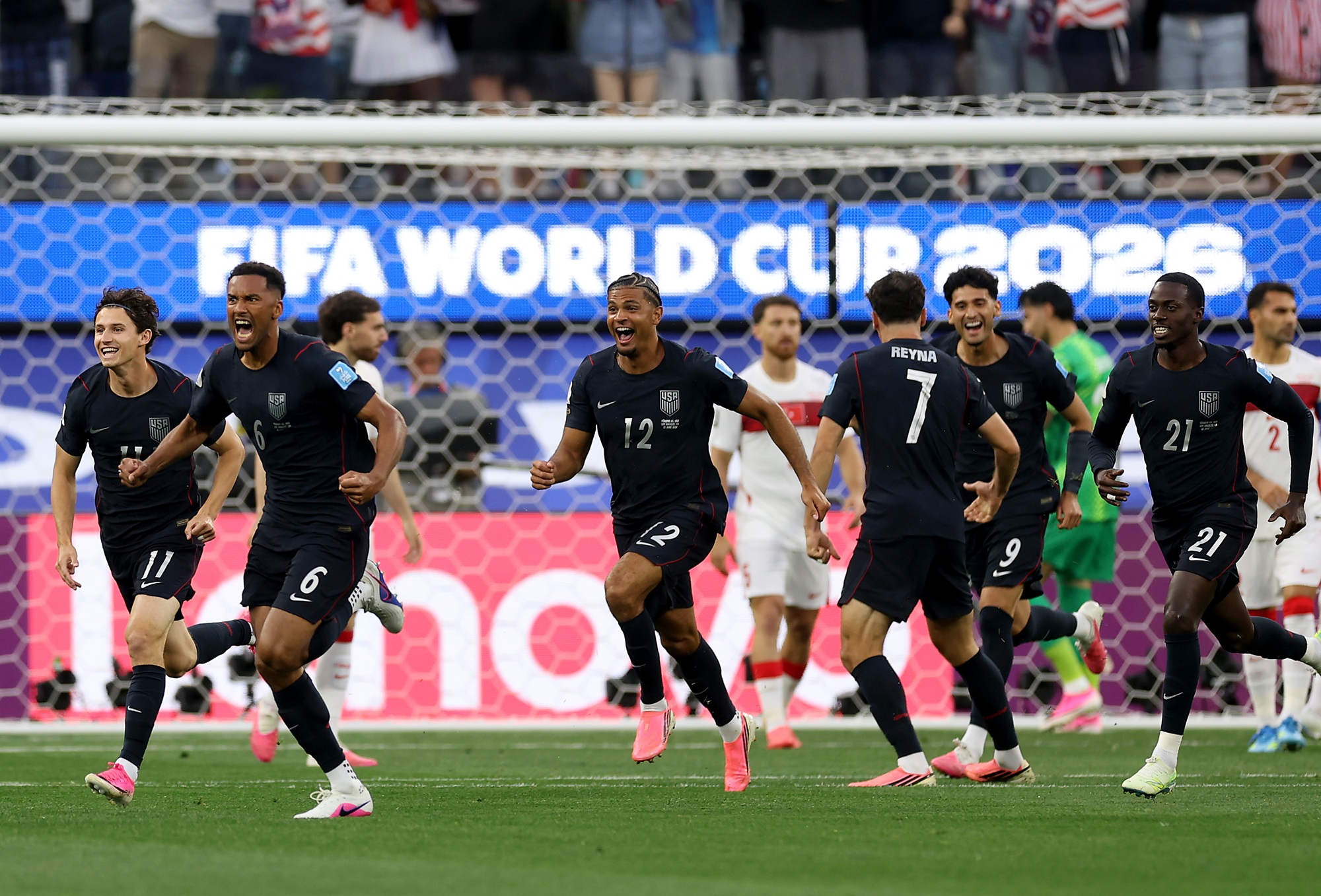
"caption": "Auston Trusty #6 of the United States celebrates with teammates after scoring his team's first goal during the FIFA World Cup 2026 Group D match between Türkiye and USA at Los Angeles Stadium on June 25, 2026, in Inglewood, California. ",
"credit": "Jamie Squire/Getty Images",
"altTag": null,
"description": null,
"imgSizes": {
"thumbnail": {
"file": "https://cdn.kqed.org/wp-content/uploads/sites/10/2026/06/USAWorldCupGetty1-160x109.jpg",
"width": 160,
"height": 109,
"mimeType": "image/jpeg"
},
"1536x1536": {
"file": "https://cdn.kqed.org/wp-content/uploads/sites/10/2026/06/USAWorldCupGetty1-1536x1042.jpg",
"width": 1536,
"height": 1042,
"mimeType": "image/jpeg"
},
"post-thumbnail": {
"file": "https://cdn.kqed.org/wp-content/uploads/sites/10/2026/06/USAWorldCupGetty1-672x372.jpg",
"width": 672,
"height": 372,
"mimeType": "image/jpeg"
},
"twentyfourteen-full-width": {
"file": "https://cdn.kqed.org/wp-content/uploads/sites/10/2026/06/USAWorldCupGetty1-1038x576.jpg",
"width": 1038,
"height": 576,
"mimeType": "image/jpeg"
},
"npr-cds-wide": {
"file": "https://cdn.kqed.org/wp-content/uploads/sites/10/2026/06/USAWorldCupGetty1-1200x675.jpg",
"width": 1200,
"height": 675,
"mimeType": "image/jpeg"
},
"npr-cds-square": {
"file": "https://cdn.kqed.org/wp-content/uploads/sites/10/2026/06/USAWorldCupGetty1-600x600.jpg",
"width": 600,
"height": 600,
"mimeType": "image/jpeg"
},
"kqedFullSize": {
"file": "https://cdn.kqed.org/wp-content/uploads/sites/10/2026/06/USAWorldCupGetty1.jpg",
"width": 2000,
"height": 1357
}
},
"isLoading": false,
"fetchFailed": false
},
"news_12088982": {
"type": "attachments",
"id": "news_12088982",
"meta": {
"index": "attachments_1716263798",
"site": "news",
"id": "12088982",
"found": true
},
"title": "260625-NATIONALARCHIVESCLOSURE-04-BL-KQED",
"publishDate": 1782491113,
"status": "inherit",
"parent": 0,
"modified": 1782491145,
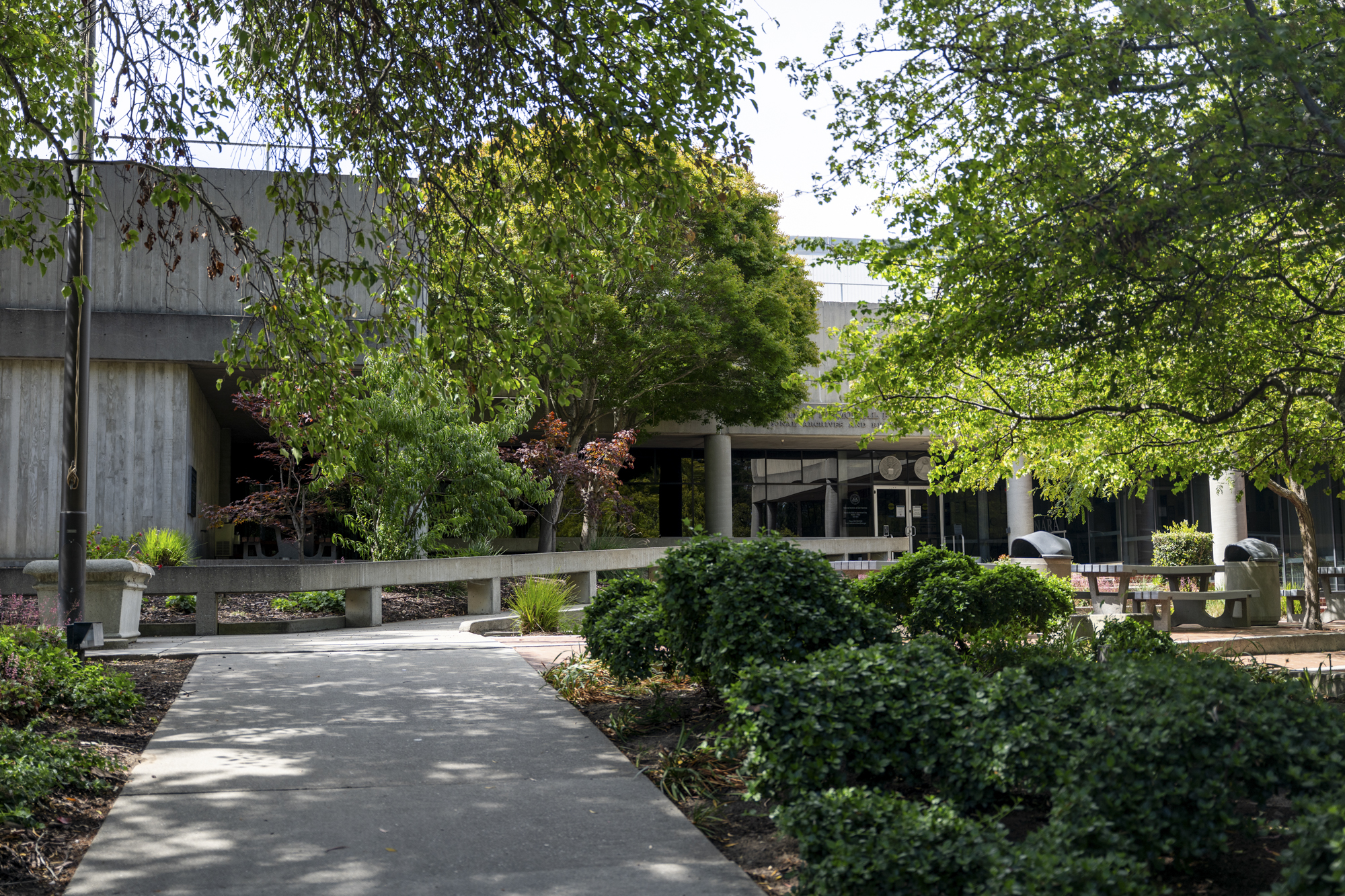
"caption": "The National Archives and Records Administration facility in San Bruno on June 25, 2026, stores historical federal records from Northern California and the Pacific region.",
"credit": "Beth LaBerge/KQED",
"altTag": null,
"description": null,
"imgSizes": {
"thumbnail": {
"file": "https://cdn.kqed.org/wp-content/uploads/sites/10/2026/06/260625-NATIONALARCHIVESCLOSURE-04-BL-KQED-160x107.jpg",
"width": 160,
"height": 107,
"mimeType": "image/jpeg"
},
"1536x1536": {
"file": "https://cdn.kqed.org/wp-content/uploads/sites/10/2026/06/260625-NATIONALARCHIVESCLOSURE-04-BL-KQED-1536x1024.jpg",
"width": 1536,
"height": 1024,
"mimeType": "image/jpeg"
},
"post-thumbnail": {
"file": "https://cdn.kqed.org/wp-content/uploads/sites/10/2026/06/260625-NATIONALARCHIVESCLOSURE-04-BL-KQED-672x372.jpg",
"width": 672,
"height": 372,
"mimeType": "image/jpeg"
},
"twentyfourteen-full-width": {
"file": "https://cdn.kqed.org/wp-content/uploads/sites/10/2026/06/260625-NATIONALARCHIVESCLOSURE-04-BL-KQED-1038x576.jpg",
"width": 1038,
"height": 576,
"mimeType": "image/jpeg"
},
"npr-cds-wide": {
"file": "https://cdn.kqed.org/wp-content/uploads/sites/10/2026/06/260625-NATIONALARCHIVESCLOSURE-04-BL-KQED-1200x675.jpg",
"width": 1200,
"height": 675,
"mimeType": "image/jpeg"
},
"npr-cds-square": {
"file": "https://cdn.kqed.org/wp-content/uploads/sites/10/2026/06/260625-NATIONALARCHIVESCLOSURE-04-BL-KQED-600x600.jpg",
"width": 600,
"height": 600,
"mimeType": "image/jpeg"
},
"kqedFullSize": {
"file": "https://cdn.kqed.org/wp-content/uploads/sites/10/2026/06/260625-NATIONALARCHIVESCLOSURE-04-BL-KQED.jpg",
"width": 2000,
"height": 1333
}
},
"isLoading": false,
"fetchFailed": false
},
"news_12088484": {
"type": "attachments",
"id": "news_12088484",
"meta": {
"index": "attachments_1716263798",
"site": "news",
"id": "12088484",
"found": true
},
"title": "Thumbnail — Text w_BG",
"publishDate": 1782236754,
"status": "inherit",
"parent": 12088479,
"modified": 1782236754,
"caption": null,
"credit": null,
"altTag": null,
"description": null,
"imgSizes": {
"thumbnail": {
"file": "https://cdn.kqed.org/wp-content/uploads/sites/10/2026/06/Thumbnail-—-Text-w_BG-160x90.jpg",
"width": 160,
"height": 90,
"mimeType": "image/jpeg"
},
"1536x1536": {
"file": "https://cdn.kqed.org/wp-content/uploads/sites/10/2026/06/Thumbnail-—-Text-w_BG-1536x864.jpg",
"width": 1536,
"height": 864,
"mimeType": "image/jpeg"
},
"post-thumbnail": {
"file": "https://cdn.kqed.org/wp-content/uploads/sites/10/2026/06/Thumbnail-—-Text-w_BG-672x372.jpg",
"width": 672,
"height": 372,
"mimeType": "image/jpeg"
},
"twentyfourteen-full-width": {
"file": "https://cdn.kqed.org/wp-content/uploads/sites/10/2026/06/Thumbnail-—-Text-w_BG-1038x576.jpg",
"width": 1038,
"height": 576,
"mimeType": "image/jpeg"
},
"npr-cds-wide": {
"file": "https://cdn.kqed.org/wp-content/uploads/sites/10/2026/06/Thumbnail-—-Text-w_BG-1200x675.jpg",
"width": 1200,
"height": 675,
"mimeType": "image/jpeg"
},
"npr-cds-square": {
"file": "https://cdn.kqed.org/wp-content/uploads/sites/10/2026/06/Thumbnail-—-Text-w_BG-600x600.jpg",
"width": 600,
"height": 600,
"mimeType": "image/jpeg"
},
"kqedFullSize": {
"file": "https://cdn.kqed.org/wp-content/uploads/sites/10/2026/06/Thumbnail-—-Text-w_BG.jpg",
"width": 1920,
"height": 1080
}
},
"isLoading": false,
"fetchFailed": false
},
"news_12088866": {
"type": "attachments",
"id": "news_12088866",
"meta": {
"index": "attachments_1716263798",
"site": "news",
"id": "12088866",
"found": true
},
"title": "Thumbnail — Photo",
"publishDate": 1782406965,
"status": "inherit",
"parent": 12088501,
"modified": 1782407038,
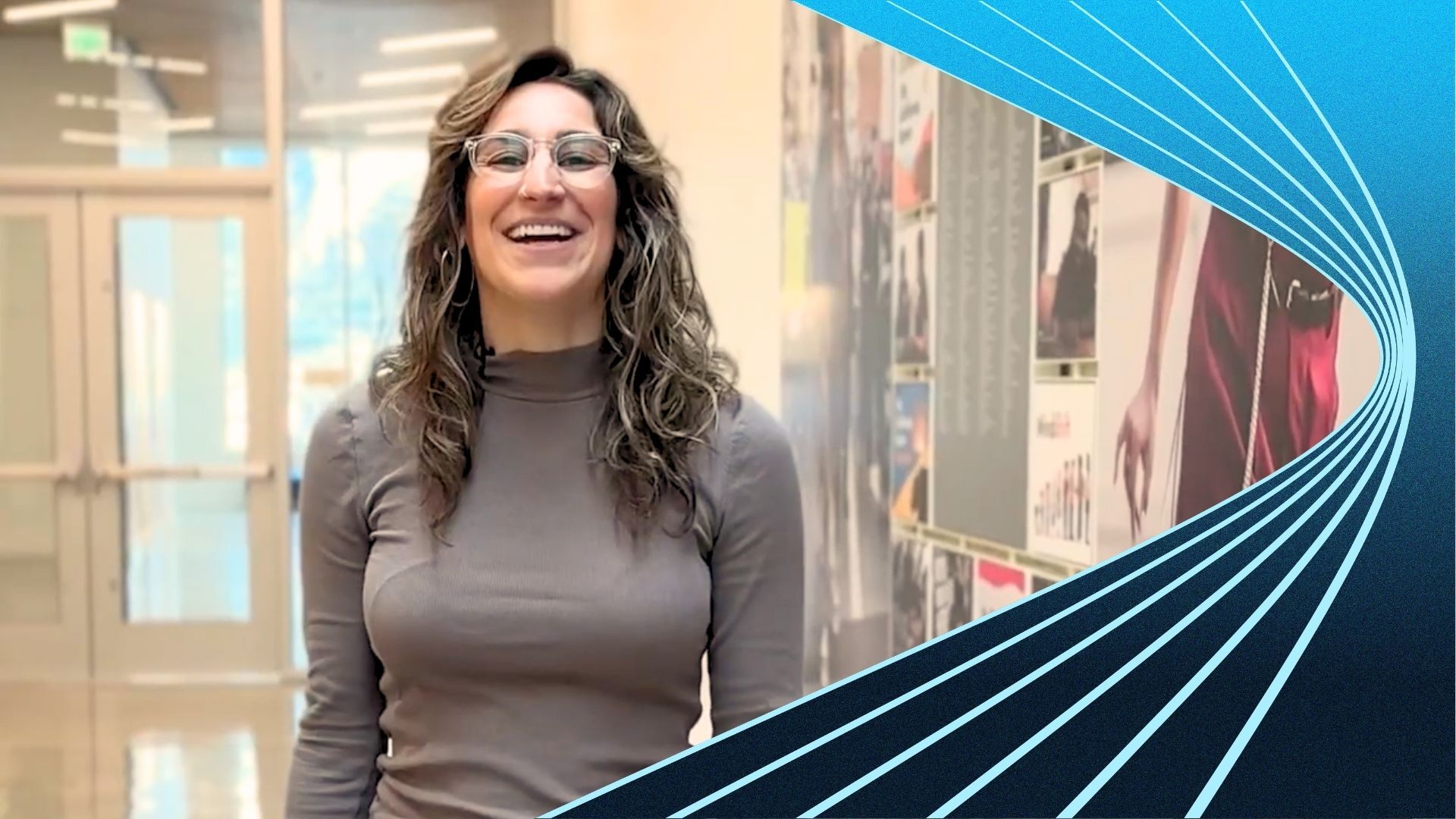
"caption": "Bianca Taylor, host of \"The Latest.\"",
"credit": "Maha Sanad/KQED",
"altTag": null,
"description": null,
"imgSizes": {
"thumbnail": {
"file": "https://cdn.kqed.org/wp-content/uploads/sites/10/2026/06/Thumbnail-—-Photo-1-160x90.jpg",
"width": 160,
"height": 90,
"mimeType": "image/jpeg"
},
"1536x1536": {
"file": "https://cdn.kqed.org/wp-content/uploads/sites/10/2026/06/Thumbnail-—-Photo-1-1536x864.jpg",
"width": 1536,
"height": 864,
"mimeType": "image/jpeg"
},
"post-thumbnail": {
"file": "https://cdn.kqed.org/wp-content/uploads/sites/10/2026/06/Thumbnail-—-Photo-1-672x372.jpg",
"width": 672,
"height": 372,
"mimeType": "image/jpeg"
},
"twentyfourteen-full-width": {
"file": "https://cdn.kqed.org/wp-content/uploads/sites/10/2026/06/Thumbnail-—-Photo-1-1038x576.jpg",
"width": 1038,
"height": 576,
"mimeType": "image/jpeg"
},
"npr-cds-wide": {
"file": "https://cdn.kqed.org/wp-content/uploads/sites/10/2026/06/Thumbnail-—-Photo-1-1200x675.jpg",
"width": 1200,
"height": 675,
"mimeType": "image/jpeg"
},
"npr-cds-square": {
"file": "https://cdn.kqed.org/wp-content/uploads/sites/10/2026/06/Thumbnail-—-Photo-1-600x600.jpg",
"width": 600,
"height": 600,
"mimeType": "image/jpeg"
},
"kqedFullSize": {
"file": "https://cdn.kqed.org/wp-content/uploads/sites/10/2026/06/Thumbnail-—-Photo-1.jpg",
"width": 1920,
"height": 1080
}
},
"isLoading": false,
"fetchFailed": false
},
"news_12084988": {
"type": "attachments",
"id": "news_12084988",
"meta": {
"index": "attachments_1716263798",
"site": "news",
"id": "12084988",
"found": true
},
"title": "260521-YEMENICOFFEE-11-BL-KQED",
"publishDate": 1779471328,
"status": "inherit",
"parent": 0,
"modified": 1779471362,
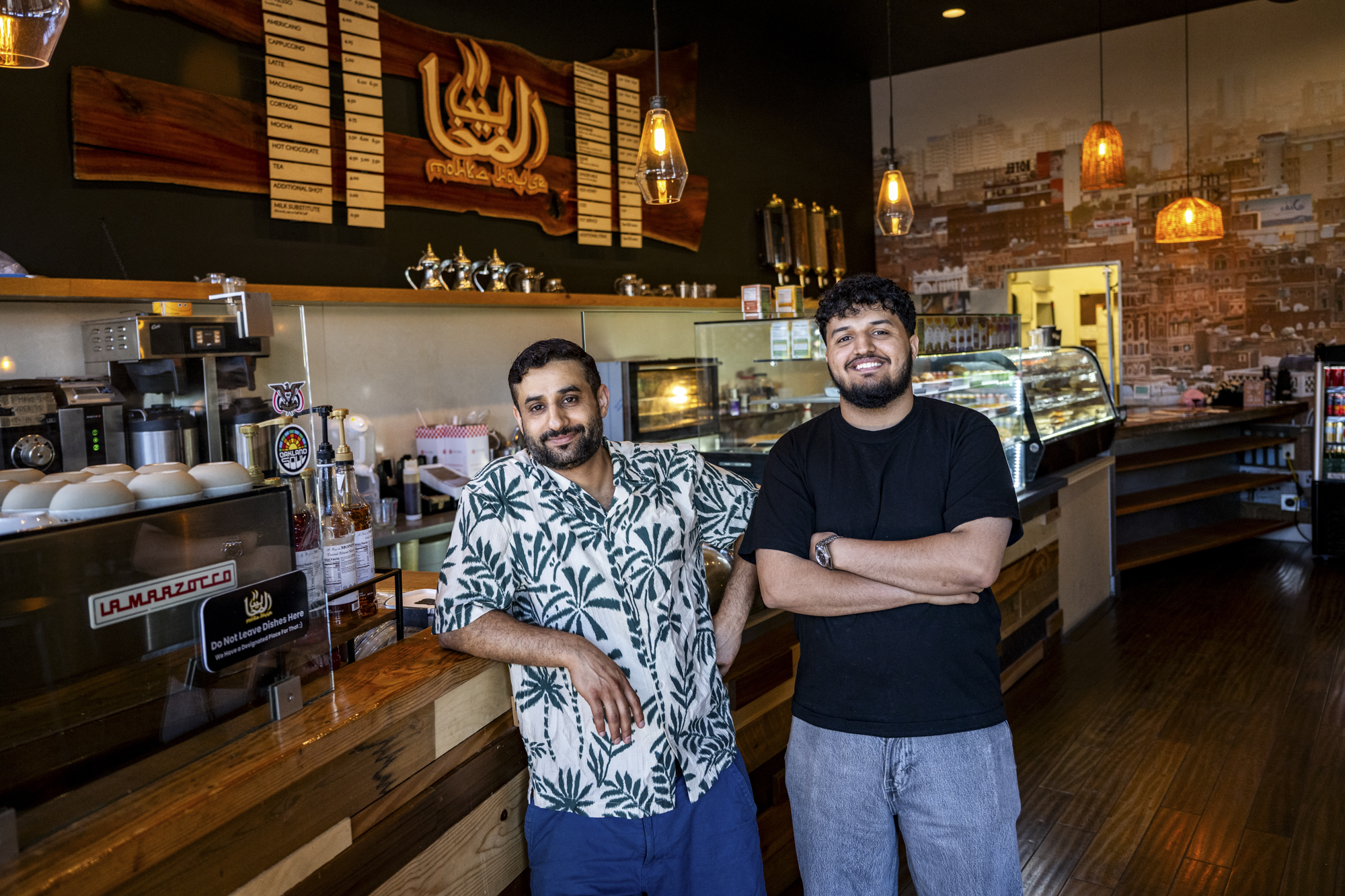
"caption": "Hamza Ghalib (left), owner of Mohka House, and his brother Yaser Ghalib at the Yemeni coffee shop in Oakland on May 21, 2026.",
"credit": "Beth LaBerge/KQED",
"altTag": null,
"description": null,
"imgSizes": {
"thumbnail": {
"file": "https://cdn.kqed.org/wp-content/uploads/sites/10/2026/05/260521-YEMENICOFFEE-11-BL-KQED-160x107.jpg",
"width": 160,
"height": 107,
"mimeType": "image/jpeg"
},
"1536x1536": {
"file": "https://cdn.kqed.org/wp-content/uploads/sites/10/2026/05/260521-YEMENICOFFEE-11-BL-KQED-1536x1024.jpg",
"width": 1536,
"height": 1024,
"mimeType": "image/jpeg"
},
"post-thumbnail": {
"file": "https://cdn.kqed.org/wp-content/uploads/sites/10/2026/05/260521-YEMENICOFFEE-11-BL-KQED-672x372.jpg",
"width": 672,
"height": 372,
"mimeType": "image/jpeg"
},
"twentyfourteen-full-width": {
"file": "https://cdn.kqed.org/wp-content/uploads/sites/10/2026/05/260521-YEMENICOFFEE-11-BL-KQED-1038x576.jpg",
"width": 1038,
"height": 576,
"mimeType": "image/jpeg"
},
"npr-cds-wide": {
"file": "https://cdn.kqed.org/wp-content/uploads/sites/10/2026/05/260521-YEMENICOFFEE-11-BL-KQED-1200x675.jpg",
"width": 1200,
"height": 675,
"mimeType": "image/jpeg"
},
"npr-cds-square": {
"file": "https://cdn.kqed.org/wp-content/uploads/sites/10/2026/05/260521-YEMENICOFFEE-11-BL-KQED-600x600.jpg",
"width": 600,
"height": 600,
"mimeType": "image/jpeg"
},
"kqedFullSize": {
"file": "https://cdn.kqed.org/wp-content/uploads/sites/10/2026/05/260521-YEMENICOFFEE-11-BL-KQED.jpg",
"width": 2000,
"height": 1333
}
},
"isLoading": false,
"fetchFailed": false
},
"news_12088806": {
"type": "attachments",
"id": "news_12088806",
"meta": {
"index": "attachments_1716263798",
"site": "news",
"id": "12088806",
"found": true
},
"title": "260624-ShipyardCleanupRally-10-BL-KQED",
"publishDate": 1782340820,
"status": "inherit",
"parent": 0,
"modified": 1782340936,
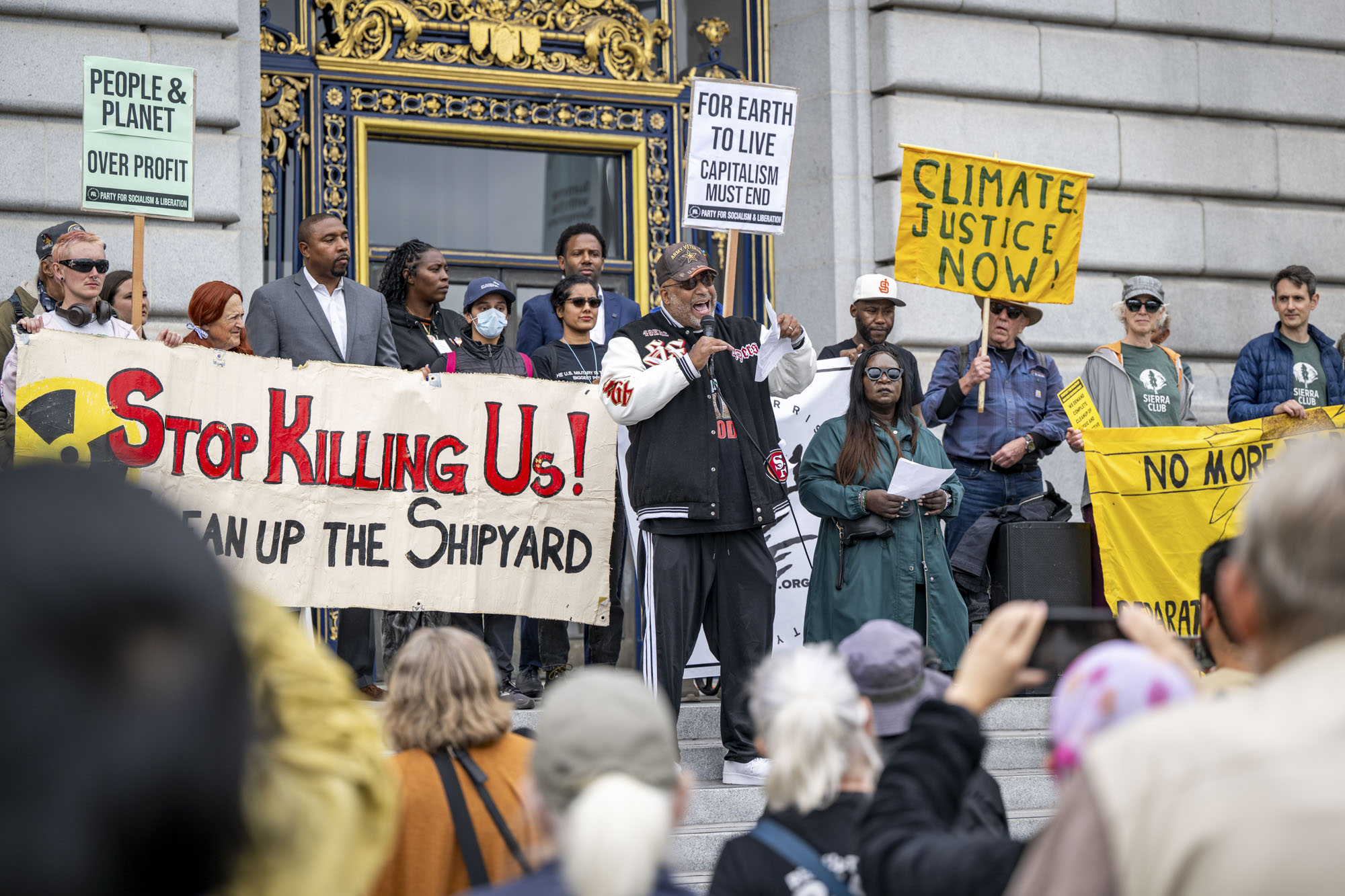
"caption": "Malik Washington speaks during a rally on the steps of San Francisco City Hall on June 24, 2026, organized by Bayview Hunters Point community groups concerned about radioactive and toxic contamination at the Hunters Point Naval Shipyard Superfund site and its impact on surrounding communities.",
"credit": "Beth LaBerge/KQED",
"altTag": null,
"description": null,
"imgSizes": {
"thumbnail": {
"file": "https://cdn.kqed.org/wp-content/uploads/sites/10/2026/06/260624-ShipyardCleanupRally-10-BL-KQED-160x107.jpg",
"width": 160,
"height": 107,
"mimeType": "image/jpeg"
},
"1536x1536": {
"file": "https://cdn.kqed.org/wp-content/uploads/sites/10/2026/06/260624-ShipyardCleanupRally-10-BL-KQED-1536x1024.jpg",
"width": 1536,
"height": 1024,
"mimeType": "image/jpeg"
},
"post-thumbnail": {
"file": "https://cdn.kqed.org/wp-content/uploads/sites/10/2026/06/260624-ShipyardCleanupRally-10-BL-KQED-672x372.jpg",
"width": 672,
"height": 372,
"mimeType": "image/jpeg"
},
"twentyfourteen-full-width": {
"file": "https://cdn.kqed.org/wp-content/uploads/sites/10/2026/06/260624-ShipyardCleanupRally-10-BL-KQED-1038x576.jpg",
"width": 1038,
"height": 576,
"mimeType": "image/jpeg"
},
"npr-cds-wide": {
"file": "https://cdn.kqed.org/wp-content/uploads/sites/10/2026/06/260624-ShipyardCleanupRally-10-BL-KQED-1200x675.jpg",
"width": 1200,
"height": 675,
"mimeType": "image/jpeg"
},
"npr-cds-square": {
"file": "https://cdn.kqed.org/wp-content/uploads/sites/10/2026/06/260624-ShipyardCleanupRally-10-BL-KQED-600x600.jpg",
"width": 600,
"height": 600,
"mimeType": "image/jpeg"
},
"kqedFullSize": {
"file": "https://cdn.kqed.org/wp-content/uploads/sites/10/2026/06/260624-ShipyardCleanupRally-10-BL-KQED.jpg",
"width": 2000,
"height": 1333
}
},
"isLoading": false,
"fetchFailed": false
},
"news_12088568": {
"type": "attachments",
"id": "news_12088568",
"meta": {
"index": "attachments_1716263798",
"site": "news",
"id": "12088568",
"found": true
},
"title": "A parking meter in San José on June 23, 2026.",
"publishDate": 1782249351,
"status": "inherit",
"parent": 0,
"modified": 1782249395,
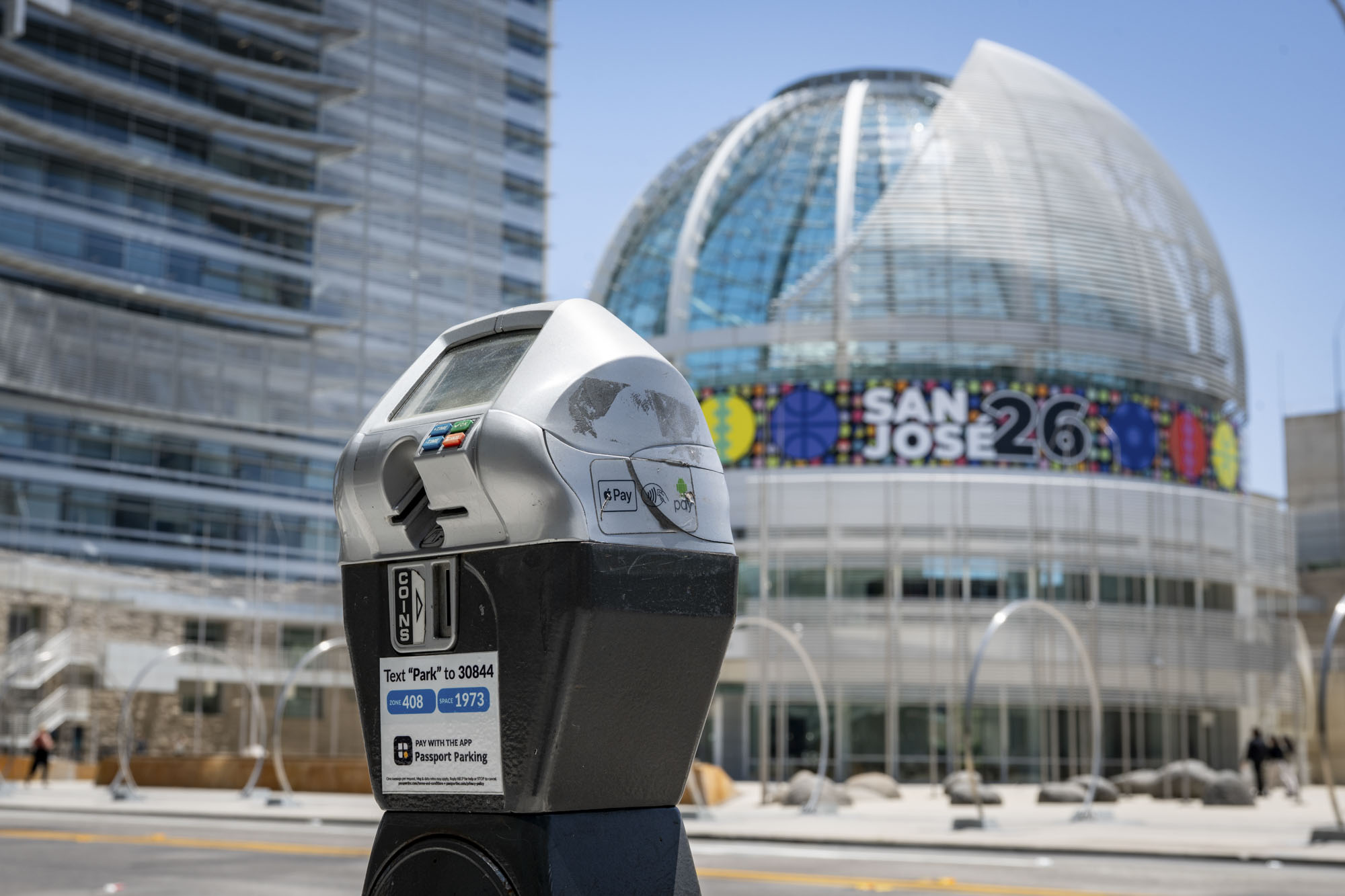
"caption": "A parking meter in San José on June 23, 2026.",
"credit": "Beth LaBerge/KQED",
"altTag": null,
"description": null,
"imgSizes": {
"thumbnail": {
"file": "https://cdn.kqed.org/wp-content/uploads/sites/10/2026/06/260623-SJParking-07-BL-KQED-160x107.jpg",
"width": 160,
"height": 107,
"mimeType": "image/jpeg"
},
"1536x1536": {
"file": "https://cdn.kqed.org/wp-content/uploads/sites/10/2026/06/260623-SJParking-07-BL-KQED-1536x1024.jpg",
"width": 1536,
"height": 1024,
"mimeType": "image/jpeg"
},
"post-thumbnail": {
"file": "https://cdn.kqed.org/wp-content/uploads/sites/10/2026/06/260623-SJParking-07-BL-KQED-672x372.jpg",
"width": 672,
"height": 372,
"mimeType": "image/jpeg"
},
"twentyfourteen-full-width": {
"file": "https://cdn.kqed.org/wp-content/uploads/sites/10/2026/06/260623-SJParking-07-BL-KQED-1038x576.jpg",
"width": 1038,
"height": 576,
"mimeType": "image/jpeg"
},
"npr-cds-wide": {
"file": "https://cdn.kqed.org/wp-content/uploads/sites/10/2026/06/260623-SJParking-07-BL-KQED-1200x675.jpg",
"width": 1200,
"height": 675,
"mimeType": "image/jpeg"
},
"npr-cds-square": {
"file": "https://cdn.kqed.org/wp-content/uploads/sites/10/2026/06/260623-SJParking-07-BL-KQED-600x600.jpg",
"width": 600,
"height": 600,
"mimeType": "image/jpeg"
},
"kqedFullSize": {
"file": "https://cdn.kqed.org/wp-content/uploads/sites/10/2026/06/260623-SJParking-07-BL-KQED.jpg",
"width": 2000,
"height": 1333
}
},
"isLoading": false,
"fetchFailed": false
},
"news_12088710": {
"type": "attachments",
"id": "news_12088710",
"meta": {
"index": "attachments_1716263798",
"site": "news",
"id": "12088710",
"found": true
},
"title": "260624_Earthquake-KQED",
"publishDate": 1782322583,
"status": "inherit",
"parent": 0,
"modified": 1782324888,
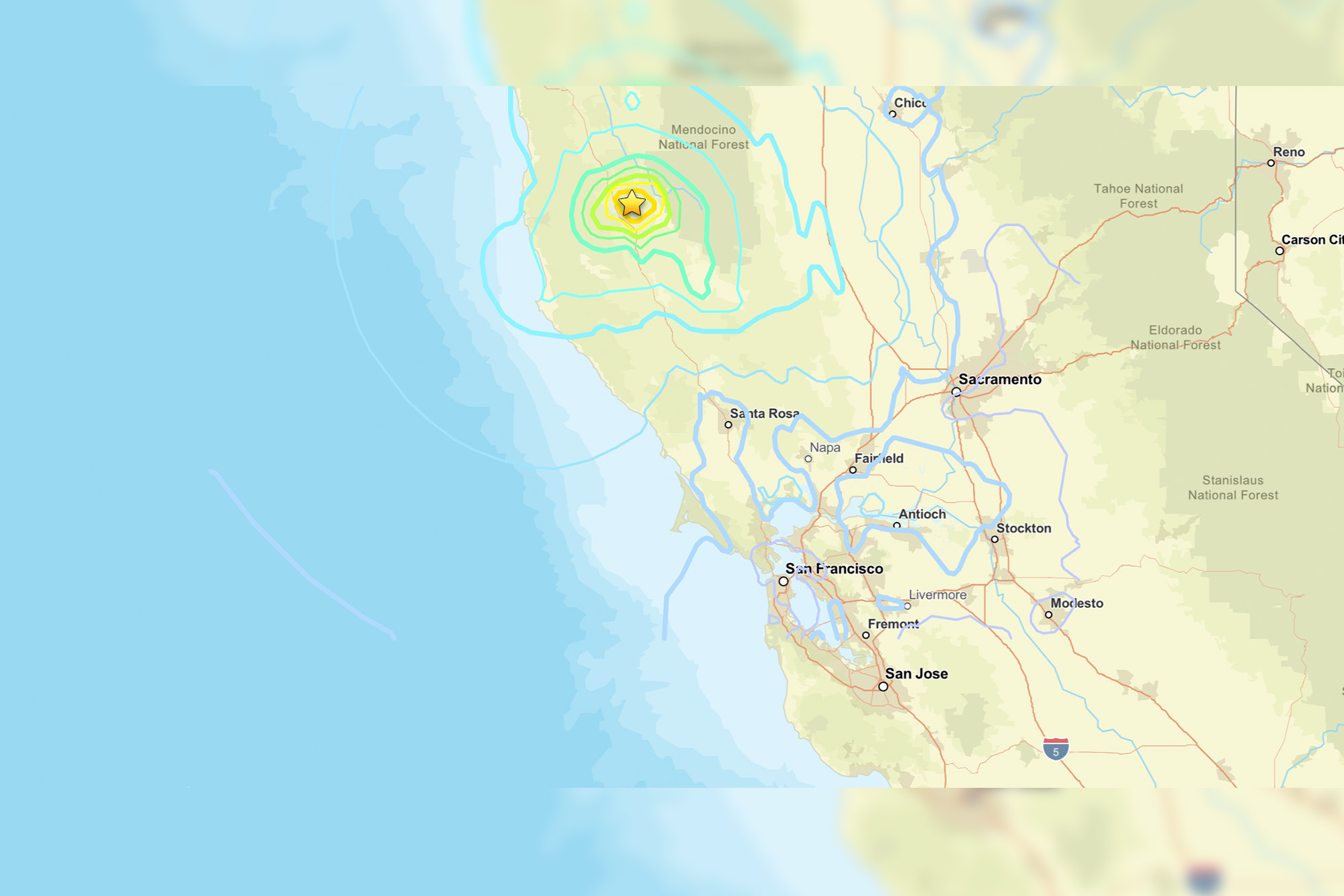
"caption": "A map showing a magnitude 5.6 earthquake that occurred in northern California on Wednesday, near Redwood Valley.",
"credit": "Gina Castro/KQED via USGS",
"altTag": null,
"description": null,
"imgSizes": {
"thumbnail": {
"file": "https://cdn.kqed.org/wp-content/uploads/sites/10/2026/06/260624_Earthquake-KQED-160x107.jpg",
"width": 160,
"height": 107,
"mimeType": "image/jpeg"
},
"1536x1536": {
"file": "https://cdn.kqed.org/wp-content/uploads/sites/10/2026/06/260624_Earthquake-KQED-1536x1025.jpg",
"width": 1536,
"height": 1025,
"mimeType": "image/jpeg"
},
"post-thumbnail": {
"file": "https://cdn.kqed.org/wp-content/uploads/sites/10/2026/06/260624_Earthquake-KQED-672x372.jpg",
"width": 672,
"height": 372,
"mimeType": "image/jpeg"
},
"twentyfourteen-full-width": {
"file": "https://cdn.kqed.org/wp-content/uploads/sites/10/2026/06/260624_Earthquake-KQED-1038x576.jpg",
"width": 1038,
"height": 576,
"mimeType": "image/jpeg"
},
"npr-cds-wide": {
"file": "https://cdn.kqed.org/wp-content/uploads/sites/10/2026/06/260624_Earthquake-KQED-1200x675.jpg",
"width": 1200,
"height": 675,
"mimeType": "image/jpeg"
},
"npr-cds-square": {
"file": "https://cdn.kqed.org/wp-content/uploads/sites/10/2026/06/260624_Earthquake-KQED-600x600.jpg",
"width": 600,
"height": 600,
"mimeType": "image/jpeg"
},
"kqedFullSize": {
"file": "https://cdn.kqed.org/wp-content/uploads/sites/10/2026/06/260624_Earthquake-KQED.jpg",
"width": 2000,
"height": 1334
}
},
"isLoading": false,
"fetchFailed": false
}
},
"audioPlayerReducer": {
"postId": "stream_live",
"isPaused": true,
"isPlaying": false,
"pfsActive": false,
"pledgeModalIsOpen": true,
"playerDrawerIsOpen": false,
"liveAudioPlayStartedAt": 0,
"liveAudioPlayContext": ""
},
"authorsReducer": {
"byline_news_12088995": {
"type": "authors",
"id": "byline_news_12088995",
"meta": {
"override": true
},
"slug": "byline_news_12088995",
"name": "Sukey Lewis and Zoë Ferrigno",
"isLoading": false
},
"byline_news_12088210": {
"type": "authors",
"id": "byline_news_12088210",
"meta": {
"override": true
},
"slug": "byline_news_12088210",
"name": "Maha Sanad",
"isLoading": false
},
"dcronin": {
"type": "authors",
"id": "11362",
"meta": {
"index": "authors_1716337520",
"id": "11362",
"found": true
},
"name": "Dana Cronin",
"firstName": "Dana",
"lastName": "Cronin",
"slug": "dcronin",
"email": "dcronin@KQED.org",
"display_author_email": true,
"staff_mastheads": [],
"title": "KQED Contributor",
"bio": "Dana Cronin is a reporter for KQED News. She loves writing stories about climate change, environmental issues, food and agriculture. She's reported across the country, from Colorado to Washington D.C. to Illinois, and has won numerous awards for her coverage. Her work is regularly featured on national broadcasts, including NPR’s Morning Edition, All Things Considered, PBS Newshour and Science Friday. She lives in Oakland and has an avocado tree in her back yard.",
"avatar": "https://secure.gravatar.com/avatar/bcf89e3455ff7235f96ab6fa7258dd95?s=600&d=blank&r=g",
"twitter": "DanaHCronin",
"facebook": null,
"instagram": null,
"linkedin": null,
"sites": [
{
"site": "arts",
"roles": [
"author"
]
},
{
"site": "news",
"roles": [
"editor"
]
},
{
"site": "science",
"roles": [
"author"
]
},
{
"site": "liveblog",
"roles": [
"author"
]
}
],
"headData": {
"title": "Dana Cronin | KQED",
"description": "KQED Contributor",
"ogImgSrc": "https://secure.gravatar.com/avatar/bcf89e3455ff7235f96ab6fa7258dd95?s=600&d=blank&r=g",
"twImgSrc": "https://secure.gravatar.com/avatar/bcf89e3455ff7235f96ab6fa7258dd95?s=600&d=blank&r=g"
},
"isLoading": false,
"link": "/author/dcronin"
},
"btaylor": {
"type": "authors",
"id": "11365",
"meta": {
"index": "authors_1716337520",
"id": "11365",
"found": true
},
"name": "Bianca Taylor",
"firstName": "Bianca",
"lastName": "Taylor",
"slug": "btaylor",
"email": "btaylor@KQED.org",
"display_author_email": false,
"staff_mastheads": [
"news"
],
"title": "Host and Producer ",
"bio": "Bianca Taylor is a news producer and host of KQED's The Latest podcast.\r\n\r\nHer work with KQED has been honored by the Society of Professional Journalists NorCal, the Webby's, the Regional Murrow Awards, and ONA. She has also worked with NPR, the BBC World Service, and the Washington Post Creative Group.\r\n\r\nBianca is represented by SAG-AFTRA.",
"avatar": "https://secure.gravatar.com/avatar/6b9d3f6552dd10470c5d1c2e58cfe717?s=600&d=blank&r=g",
"twitter": "SoundsLkeBianca",
"facebook": null,
"instagram": null,
"linkedin": null,
"sites": [
{
"site": "arts",
"roles": [
"editor"
]
},
{
"site": "news",
"roles": [
"edit_others_posts",
"editor"
]
},
{
"site": "pop",
"roles": [
"editor"
]
},
{
"site": "bayareabites",
"roles": [
"author"
]
},
{
"site": "science",
"roles": [
"editor"
]
},
{
"site": "forum",
"roles": [
"editor"
]
},
{
"site": "radio",
"roles": [
"editor"
]
},
{
"site": "podcasts",
"roles": [
"editor"
]
}
],
"headData": {
"title": "Bianca Taylor | KQED",
"description": "Host and Producer ",
"ogImgSrc": "https://secure.gravatar.com/avatar/6b9d3f6552dd10470c5d1c2e58cfe717?s=600&d=blank&r=g",
"twImgSrc": "https://secure.gravatar.com/avatar/6b9d3f6552dd10470c5d1c2e58cfe717?s=600&d=blank&r=g"
},
"isLoading": false,
"link": "/author/btaylor"
},
"abandlamudi": {
"type": "authors",
"id": "11672",
"meta": {
"index": "authors_1716337520",
"id": "11672",
"found": true
},
"name": "Adhiti Bandlamudi",
"firstName": "Adhiti",
"lastName": "Bandlamudi",
"slug": "abandlamudi",
"email": "abandlamudi@kqed.org",
"display_author_email": false,
"staff_mastheads": [
"news"
],
"title": "KQED Housing Reporter",
"bio": "Adhiti Bandlamudi reports for KQED's Housing desk. She focuses on how housing gets built across the Bay Area. Before joining KQED in 2020, she reported for WUNC in Durham, North Carolina, WABE in Atlanta, Georgia and Capital Public Radio in Sacramento. In 2017, she was awarded a Kroc Fellowship at NPR where she reported on everything from sprinkles to the Golden State Killer's arrest. When she's not reporting, she's baking new recipes in her kitchen or watching movies with friends and family. She's originally from Georgia and has strong opinions about Great British Bake Off.",
"avatar": "https://secure.gravatar.com/avatar/868129c8b257bb99a3500e2c86a65400?s=600&d=mm&r=g",
"twitter": "oddity_adhiti",
"facebook": null,
"instagram": null,
"linkedin": null,
"sites": [
{
"site": "arts",
"roles": [
"author"
]
},
{
"site": "news",
"roles": [
"editor"
]
},
{
"site": "liveblog",
"roles": [
"author"
]
}
],
"headData": {
"title": "Adhiti Bandlamudi | KQED",
"description": "KQED Housing Reporter",
"ogImgSrc": "https://secure.gravatar.com/avatar/868129c8b257bb99a3500e2c86a65400?s=600&d=mm&r=g",
"twImgSrc": "https://secure.gravatar.com/avatar/868129c8b257bb99a3500e2c86a65400?s=600&d=mm&r=g"
},
"isLoading": false,
"link": "/author/abandlamudi"
},
"ccabreralomeli": {
"type": "authors",
"id": "11708",
"meta": {
"index": "authors_1716337520",
"id": "11708",
"found": true
},
"name": "Carlos Cabrera-Lomelí",
"firstName": "Carlos",
"lastName": "Cabrera-Lomelí",
"slug": "ccabreralomeli",
"email": "ccabreralomeli@KQED.org",
"display_author_email": true,
"staff_mastheads": [
"news"
],
"title": "Community Reporter",
"bio": "Carlos Cabrera-Lomelí is a community reporter with KQED's digital engagement team. He also reports and co-produces for KQED's bilingual news hub KQED en Español. He grew up in San Francisco's Mission District and has previously worked with Univision, 48 Hills and REFORMA in Mexico City.",
"avatar": "https://secure.gravatar.com/avatar/c309be9665e484f887b818c89e273ecc673004f426f36b24d00a4d813a2e0518?s=600&d=blank&r=g",
"twitter": "@LomeliCabrera",
"bluesky": null,
"facebook": null,
"instagram": null,
"linkedin": null,
"sites": [
{
"site": "arts",
"roles": [
"editor"
]
},
{
"site": "news",
"roles": [
"editor"
]
},
{
"site": "about",
"roles": [
"editor"
]
},
{
"site": "science",
"roles": [
"editor"
]
},
{
"site": "perspectives",
"roles": [
"editor"
]
},
{
"site": "elections",
"roles": [
"editor"
]
},
{
"site": "liveblog",
"roles": [
"contributor"
]
}
],
"headData": {
"title": "Carlos Cabrera-Lomelí | KQED",
"description": "Community Reporter",
"ogImgSrc": "https://secure.gravatar.com/avatar/c309be9665e484f887b818c89e273ecc673004f426f36b24d00a4d813a2e0518?s=600&d=blank&r=g",
"twImgSrc": "https://secure.gravatar.com/avatar/c309be9665e484f887b818c89e273ecc673004f426f36b24d00a4d813a2e0518?s=600&d=blank&r=g"
},
"isLoading": false,
"link": "/author/ccabreralomeli"
},
"eromero": {
"type": "authors",
"id": "11746",
"meta": {
"index": "authors_1716337520",
"id": "11746",
"found": true
},
"name": "Ezra David Romero",
"firstName": "Ezra David",
"lastName": "Romero",
"slug": "eromero",
"email": "eromero@kqed.org",
"display_author_email": true,
"staff_mastheads": [
"news",
"science"
],
"title": "Climate Reporter",
"bio": "Ezra David Romero is a climate reporter for KQED News. He covers the absence and excess of water in the Bay Area — think sea level rise, flooding and drought. For nearly a decade he’s covered how warming temperatures are altering the lives of Californians. He’s reported on farmers worried their pistachio trees aren’t getting enough sleep, families desperate for water, scientists studying dying giant sequoias, and alongside firefighters containing wildfires. His work has appeared on local stations across California and nationally on public radio shows like Morning Edition, Here and Now, All Things Considered and Science Friday. ",
"avatar": "https://secure.gravatar.com/avatar/c76404d287c10ed40224227551ac36e24352c7306f106632caf6fead76f8801f?s=600&d=blank&r=g",
"twitter": "ezraromero",
"bluesky": null,
"facebook": null,
"instagram": null,
"linkedin": null,
"sites": [
{
"site": "arts",
"roles": [
"editor"
]
},
{
"site": "news",
"roles": [
"editor"
]
},
{
"site": "science",
"roles": [
"editor"
]
},
{
"site": "liveblog",
"roles": [
"author"
]
}
],
"headData": {
"title": "Ezra David Romero | KQED",
"description": "Climate Reporter",
"ogImgSrc": "https://secure.gravatar.com/avatar/c76404d287c10ed40224227551ac36e24352c7306f106632caf6fead76f8801f?s=600&d=blank&r=g",
"twImgSrc": "https://secure.gravatar.com/avatar/c76404d287c10ed40224227551ac36e24352c7306f106632caf6fead76f8801f?s=600&d=blank&r=g"
},
"isLoading": false,
"link": "/author/eromero"
},
"sjohnson": {
"type": "authors",
"id": "11840",
"meta": {
"index": "authors_1716337520",
"id": "11840",
"found": true
},
"name": "Sydney Johnson",
"firstName": "Sydney",
"lastName": "Johnson",
"slug": "sjohnson",
"email": "sjohnson@kqed.org",
"display_author_email": false,
"staff_mastheads": [
"news"
],
"title": "KQED Reporter",
"bio": "Sydney Johnson is a general assignment reporter at KQED. She previously reported on public health and city government at the San Francisco Examiner, and before that, she covered statewide education policy for EdSource. Her reporting has won multiple local, state and national awards. Sydney is a graduate of the University of California, Berkeley and lives in San Francisco.",
"avatar": "https://secure.gravatar.com/avatar/97855f2719b72ad6190b7c535fe642c8?s=600&d=blank&r=g",
"twitter": "sydneyfjohnson",
"facebook": null,
"instagram": null,
"linkedin": null,
"sites": [
{
"site": "news",
"roles": [
"editor"
]
}
],
"headData": {
"title": "Sydney Johnson | KQED",
"description": "KQED Reporter",
"ogImgSrc": "https://secure.gravatar.com/avatar/97855f2719b72ad6190b7c535fe642c8?s=600&d=blank&r=g",
"twImgSrc": "https://secure.gravatar.com/avatar/97855f2719b72ad6190b7c535fe642c8?s=600&d=blank&r=g"
},
"isLoading": false,
"link": "/author/sjohnson"
},
"nkhan": {
"type": "authors",
"id": "11867",
"meta": {
"index": "authors_1716337520",
"id": "11867",
"found": true
},
"name": "Nisa Khan",
"firstName": "Nisa",
"lastName": "Khan",
"slug": "nkhan",
"email": "nkhan@kqed.org",
"display_author_email": false,
"staff_mastheads": [],
"title": "KQED Contributor",
"bio": "Nisa Khan is a reporter for KQED's Audience News Desk. She was formerly a data reporter at Michigan Radio. She earned a Bachelor of Science in Information from the University of Michigan and a Master of Arts in Communication from Stanford University.",
"avatar": "https://secure.gravatar.com/avatar/8720459eef081ff64582b3506b124d58523e80e120704a0cbd9892533c914991?s=600&d=blank&r=g",
"twitter": "mnisakhan",
"bluesky": null,
"facebook": null,
"instagram": null,
"linkedin": null,
"sites": [
{
"site": "arts",
"roles": [
"editor"
]
},
{
"site": "news",
"roles": [
"editor"
]
},
{
"site": "science",
"roles": [
"editor",
"author"
]
},
{
"site": "forum",
"roles": [
"editor"
]
},
{
"site": "liveblog",
"roles": [
"contributor"
]
}
],
"headData": {
"title": "Nisa Khan | KQED",
"description": "KQED Contributor",
"ogImgSrc": "https://secure.gravatar.com/avatar/8720459eef081ff64582b3506b124d58523e80e120704a0cbd9892533c914991?s=600&d=blank&r=g",
"twImgSrc": "https://secure.gravatar.com/avatar/8720459eef081ff64582b3506b124d58523e80e120704a0cbd9892533c914991?s=600&d=blank&r=g"
},
"isLoading": false,
"link": "/author/nkhan"
},
"aaliahmad": {
"type": "authors",
"id": "11986",
"meta": {
"index": "authors_1716337520",
"id": "11986",
"found": true
},
"name": "Ayah Ali-Ahmad",
"firstName": "Ayah",
"lastName": "Ali-Ahmad",
"slug": "aaliahmad",
"email": "aaliahmad@KQED.org",
"display_author_email": false,
"staff_mastheads": [],
"title": "KQED Contributor",
"bio": null,
"avatar": "https://secure.gravatar.com/avatar/1cf54f187a5e1064b2cfef3f3d2f1e4f93e453395d56912aca6382a6071ec3ed?s=600&d=blank&r=g",
"twitter": "ayahaliahmad",
"bluesky": null,
"facebook": null,
"instagram": null,
"linkedin": null,
"sites": [
{
"site": "news",
"roles": [
"subscriber"
]
}
],
"headData": {
"title": "Ayah Ali-Ahmad | KQED",
"description": "KQED Contributor",
"ogImgSrc": "https://secure.gravatar.com/avatar/1cf54f187a5e1064b2cfef3f3d2f1e4f93e453395d56912aca6382a6071ec3ed?s=600&d=blank&r=g",
"twImgSrc": "https://secure.gravatar.com/avatar/1cf54f187a5e1064b2cfef3f3d2f1e4f93e453395d56912aca6382a6071ec3ed?s=600&d=blank&r=g"
},
"isLoading": false,
"link": "/author/aaliahmad"
}
},
"pagesReducer": {
"news_category_local": {
"type": "terms",
"id": "news_28250",
"meta": {
"index": "terms_1716263798",
"site": "news",
"id": "28250",
"score": 12.939732
},
"featImg": null,
"name": "Local",
"description": null,
"taxonomy": "category",
"headData": {
"twImgId": null,
"twTitle": null,
"ogTitle": null,
"ogImgId": null,
"twDescription": null,
"description": null,
"title": "Local Archives | KQED News",
"ogDescription": null
},
"ttid": 28267,
"slug": "local",
"isLoading": false,
"title": "Local",
"pageMeta": {
"site": "news",
"WpPageTemplate": "page-topic-editorial",
"currentPage": 25
},
"blocks": [
{
"blockName": "kqed/post-list",
"attrs": {
"layout": "cardArticle2",
"query": "posts/news?category=local",
"seeMore": false,
"paginated": true,
"page": 25
}
},
{
"blockName": "kqed/ad"
}
]
}
},
"pfsSessionReducer": {},
"postsReducer": {
"stream_live": {
"type": "live",
"id": "stream_live",
"audioUrl": "https://streams.kqed.org/kqedradio",
"title": "Live Stream",
"excerpt": "Live Stream information currently unavailable.",
"link": "/radio",
"featImg": "",
"label": {
"name": "KQED Live",
"link": "/"
}
},
"stream_kqedNewscast": {
"type": "posts",
"id": "stream_kqedNewscast",
"audioUrl": "https://www.kqed.org/.stream/anon/radio/RDnews/newscast.mp3?_=1",
"title": "KQED Newscast",
"featImg": "",
"label": {
"name": "88.5 FM",
"link": "/"
}
},
"news_12089008": {
"type": "posts",
"id": "news_12089008",
"meta": {
"index": "posts_1716263798",
"site": "news",
"id": "12089008",
"score": null,
"sort": [
1782558057000
]
},
"guestAuthors": [],
"slug": "as-sf-giants-pride-night-fallout-continues-fans-recall-historic-1994-aids-benefit",
"title": "As SF Giants’ Pride Night Fallout Continues, Fans Recall Historic 1994 AIDS Benefit",
"publishDate": 1782558057,
"format": "standard",
"headTitle": "As SF Giants’ Pride Night Fallout Continues, Fans Recall Historic 1994 AIDS Benefit | KQED",
"labelTerm": {
"site": "news"
},
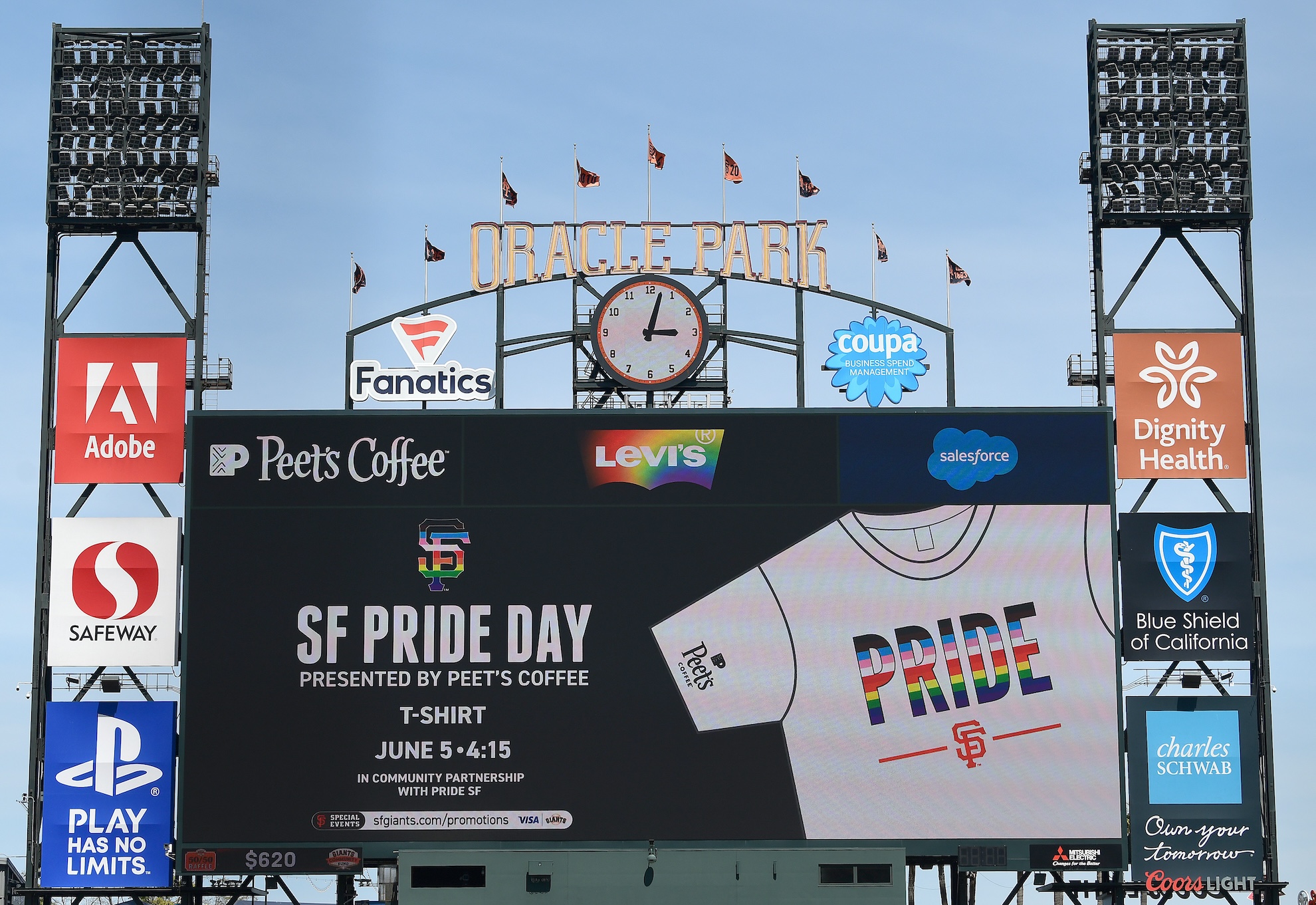
"content": "\u003cp>Thirty-two years ago, Lynn Struiksma attended a momentous \u003ca href=\"https://www.kqed.org/news/tag/giants\">San Francisco Giants\u003c/a> game.\u003c/p>\n\u003cp>A devoted San Diego Padres fan, Struiksma, then a student at San Francisco State University, decided to give Bay Area baseball a chance by buying a ticket for the July 31, 1994, afternoon game against the Colorado Rockies.\u003c/p>\n\u003cp>Only while listening to the radio in the days beforehand did he learn that the game would be observing “Until There’s a Cure Day” — an event founded by a \u003ca href=\"https://www.until.org/about-us.html\">Bay Area-based\u003c/a> national organization that promotes HIV and AIDS awareness.\u003c/p>\n\u003cp>[ad fullwidth]\u003c/p>\n\u003cp>The game, which marked the first time a major professional sports organization hosted a benefit for \u003ca href=\"https://www.mlb.com/giants/history/timeline-1990s\">HIV\u003c/a> \u003ca href=\"https://www.mlb.com/giants/history/timeline-1990s\">and AIDS\u003c/a>, has resurfaced in collective memory over the past few weeks, as the fallout continues from a protest by four pitchers during the \u003ca href=\"https://www.kqed.org/news/12087912/after-sf-giants-pride-night-culture-clash-scott-wiener-claps-back-at-republicans\">team’s Pride Month celebration\u003c/a>.\u003c/p>\n\u003cp>As lawmakers, Major League Baseball, and fans have entered the fray, KQED looked back on the sports history episode to understand how it got started — and how much has changed.\u003c/p>\n\u003ch2>‘A swell of connection’\u003c/h2>\n\u003cp>There were a couple of key figures behind the 1994 “Until There’s a Cure Day.”\u003c/p>\n\u003cp>According to \u003ca href=\"https://www.outsports.com/2020/12/1/21754607/san-francisco-giants-mlb-aids-hiv-awareness-until-theres-a-cure-day/\">OutSports\u003c/a>, one reason is that new owner Peter Magowan wanted to ask the city for a new stadium. In campaigning for the new structure, Magowan made moves to connect with people across the Bay Area through community outreach — and San Francisco was deep in HIV/AIDS advocacy.\u003c/p>\n\u003cp>At the time, \u003ca href=\"https://www.pbs.org/newshour/health/remembering-a-tough-time\">San Franciscans\u003c/a> were reeling from the devastation of the AIDS epidemic, with \u003ca href=\"https://www.pbs.org/newshour/health/remembering-a-tough-time\">around 20,000 city residents dying\u003c/a> during the crisis. Because so many were gay men or part of the LGBTQ+ community, bias and homophobia allowed their suffering to go \u003ca href=\"https://www.aclu.org/podcast/how-act-up-changed-the-face-of-aids-and-activism\">unacknowledged \u003c/a>by governments and medical authorities for years.\u003c/p>\n\u003cfigure id=\"attachment_12089147\" class=\"wp-caption aligncenter\" style=\"max-width: 1443px\">\u003cimg loading=\"lazy\" decoding=\"async\" class=\"wp-image-12089147 size-full\" src=\"https://cdn.kqed.org/wp-content/uploads/sites/10/2026/06/GettyImages-1322405139.jpg\" alt=\"\" width=\"1443\" height=\"931\" srcset=\"https://cdn.kqed.org/wp-content/uploads/sites/10/2026/06/GettyImages-1322405139.jpg 1443w, https://cdn.kqed.org/wp-content/uploads/sites/10/2026/06/GettyImages-1322405139-160x103.jpg 160w\" sizes=\"auto, (max-width: 1443px) 100vw, 1443px\">\u003cfigcaption class=\"wp-caption-text\">From left: Giants President Peter Magowan, Mary Fisher, AIDS activist and keynote speaker, along with her sons, Zachary, 6, and Max, 8, and Giants’ Rod Beck. Max Fisher, 6, slips out the back of his chair during “Until There’s A Cure” pregame ceremonies on July 28, 1996. \u003ccite>(Lea Suzuki/The San Francisco Chronicle via Getty Images)\u003c/cite>\u003c/figcaption>\u003c/figure>\n\u003cp>“This special day will give our fans an opportunity to learn more about the disease, which affects all of us,” Magowan said at the time, according to the \u003cem>Bay Area Reporter. \u003c/em>“This is not a baseball event, it’s a humanitarian event.”\u003c/p>\n\u003cp>According to the Giants’ promotional flyer for the 1994 event, the team vowed to donate $1 from every ticket sold to AIDS research and education. Players would also wear a red ribbon on their uniforms, “which I thought was very cool,” Struiksma said.\u003c/p>\n\u003cp>“It did feel like, ‘Hmm, this is something a little different,’” recalled Struiksma, who now lives in Los Angeles, where he works in the film industry. “‘Something we’re not used to.’”\u003c/p>\n\u003cp>Another major reason was \u003ca href=\"https://www.sfchronicle.com/totalsf/article/giants-rod-beck-aids-19594162.php\">a supportive manager, Dusty Baker\u003c/a>, and the fact that HIV/AIDS advocacy was already being pursued by star Giants player Rod Beck, after being deeply moved by a 1993 documentary about \u003ca href=\"https://www.sfchronicle.com/totalsf/article/giants-rod-beck-aids-19594162.php\">Ryan White\u003c/a>, a young boy living with AIDS.[aside postID=news_12087912 hero='https://cdn.kqed.org/wp-content/uploads/sites/10/2026/06/SFGiantsLandenRouppGetty.jpg']But the lead-up to the event wasn’t without some protest and pushback, according to \u003ca href=\"https://www.washingtonpost.com/archive/sports/1994/08/01/giants-join-fight-vs-aids/ac59ce23-7910-4241-a976-0410c3f094b2/?_pml=1\">the \u003cem>Washington Post\u003c/em>\u003c/a>. Giants vice president for business operations Pat Gallagher noted “some negative phone calls.”\u003c/p>\n\u003cp>The ongoing stigma around HIV and AIDs was apparent. Calling it “a controversial cause,” Magowan told \u003ca href=\"https://www.latimes.com/archives/la-xpm-1994-08-01-sp-22364-story.html\">the \u003cem>LA Times\u003c/em>\u003c/a> in 1994 that “A lot of people associate it with a certain lifestyle — I think incorrectly … AIDS can affect anybody, whatever lifestyle, whatever sex, whatever age.”\u003c/p>\n\u003cp>“I’ve worked here for 18 years, and nothing else we’ve ever done has been universally accepted by everyone in the organization,” Gallagher said\u003cem>. \u003c/em>“Because we live in San Francisco, everyone’s been touched in some way by HIV and AIDS.”\u003c/p>\n\u003cp>“I don’t care how you get it,” said \u003ca href=\"https://www.washingtonpost.com/archive/sports/1994/08/01/giants-join-fight-vs-aids/ac59ce23-7910-4241-a976-0410c3f094b2/?_pml=1\">another player, Todd Benzinger\u003c/a>. “No one deserves it.”\u003c/p>\n\u003cp>But once the game started, the commemoration felt like a natural fit, Struiksma said, “maybe because it’s San Francisco.”\u003c/p>\n\u003cp>Among thousands of fans decked in orange and black, Struiksma sat high up in the stands of Candlestick Park, \u003ca href=\"https://www.kqed.org/news/10583120/watch-the-slow-demolition-of-candlestick-park\">the Giants’ previous home before Oracle Park\u003c/a>. From his vantage point, he got a perfect view of the field where Giants players organized themselves into the shape of a giant ribbon.\u003c/p>\n\u003cp>Then, members of the opposing team that day, the Rockies, were brought onto the field where they, too, joined the formation. Outlets at the time \u003ca href=\"https://www.sfgate.com/news/article/MARK-SIMON-Atlanta-Braves-Join-Giants-AIDS-2972390.php\">reported\u003c/a> that Giants star player Barry Bonds had waved to the Rockies to bring them in.\u003c/p>\n\u003cfigure id=\"attachment_12089146\" class=\"wp-caption aligncenter\" style=\"max-width: 1925px\">\u003cimg loading=\"lazy\" decoding=\"async\" class=\"size-full wp-image-12089146\" src=\"https://cdn.kqed.org/wp-content/uploads/sites/10/2026/06/GettyImages-1195131082.jpg\" alt=\"\" width=\"1925\" height=\"1699\" srcset=\"https://cdn.kqed.org/wp-content/uploads/sites/10/2026/06/GettyImages-1195131082.jpg 1925w, https://cdn.kqed.org/wp-content/uploads/sites/10/2026/06/GettyImages-1195131082-160x141.jpg 160w, https://cdn.kqed.org/wp-content/uploads/sites/10/2026/06/GettyImages-1195131082-1536x1356.jpg 1536w\" sizes=\"auto, (max-width: 1925px) 100vw, 1925px\">\u003cfigcaption class=\"wp-caption-text\">San Francisco Giants left fielder Barry Bonds greets volunteers during a pregame benefit for Until There’s a Cure Day, the sixth annual Aids benefit program sponsored by the Giants Aug. 15, 1999. The Giants played the New York Mets after the benefit. \u003ccite>(Monica Davey/AFP via Getty Images)\u003c/cite>\u003c/figcaption>\u003c/figure>\n\u003cp>“You felt a swell of connection to the team. A connection to community,” Struiksma said. “It really was just one of those games where it’s like, ‘This is amazing, what’s happening right now.’” And over three decades later, “I’m almost getting choked up talking about it now,” he said.\u003c/p>\n\u003cp>At the event, Beck listed the names of children who died of AIDS. Quilts — a longtime way of \u003ca href=\"https://www.aidsmemorial.org/quilt\">memorializing \u003c/a>those lost to AIDS — were \u003ca href=\"https://www.sfchronicle.com/totalsf/article/giants-rod-beck-aids-19594162.php\">laid out \u003c/a>on the field.\u003c/p>\n\u003cp>“This might be the single most significant day since we’ve all heard of this disease,” Beck told the \u003cem>Washington Post \u003c/em>after the event in 1994, which ultimately raised over $100,000.\u003c/p>\n\u003cp>Of course, it was business as usual during the actual game. Struiksma said that he remembered a fight that broke out on the field. “There was a real, like, dichotomy of emotions during the game,” he said.\u003c/p>\n\u003ch2>‘A slap in the face’\u003c/h2>\n\u003cp>Many SF Giants fans have referenced the historic nature of 1994’s “Until There’s a Cure Day” event in recent weeks, after \u003ca href=\"https://www.kqed.org/news/12087912/after-sf-giants-pride-night-culture-clash-scott-wiener-claps-back-at-republicans\">four SF Giants players\u003c/a> staged an apparent protest against the team’s Pride Night on June 12.\u003c/p>\n\u003cp>Three players wrote controversial Bible verses often cited by anti-gay conservative Christians on the team’s rainbow-themed Pride Month caps. The team was \u003ca href=\"https://www.nbcbayarea.com/news/sports/mlb-commissioner-giants-pride-night/4103023/\">not required \u003c/a>to wear them, according to NBC Bay Area. One player opted to wear the standard black-and-orange cap instead.\u003c/p>\n\u003cp>The reaction was swift and strong, with LGBTQ+ \u003ca href=\"https://sfstandard.com/2026/06/24/sf-giants-pride-night-maga-backlash/\">fans and allies \u003c/a>alike protesting the team with Pride and trans flags at Oracle Park.\u003c/p>\n\u003cfigure id=\"attachment_12089153\" class=\"wp-caption aligncenter\" style=\"max-width: 2000px\">\u003cimg loading=\"lazy\" decoding=\"async\" class=\"size-full wp-image-12089153\" src=\"https://cdn.kqed.org/wp-content/uploads/sites/10/2026/06/SFGiantsProtestPrideGetty.jpg\" alt=\"\" width=\"2000\" height=\"1333\" srcset=\"https://cdn.kqed.org/wp-content/uploads/sites/10/2026/06/SFGiantsProtestPrideGetty.jpg 2000w, https://cdn.kqed.org/wp-content/uploads/sites/10/2026/06/SFGiantsProtestPrideGetty-160x107.jpg 160w, https://cdn.kqed.org/wp-content/uploads/sites/10/2026/06/SFGiantsProtestPrideGetty-1536x1024.jpg 1536w\" sizes=\"auto, (max-width: 2000px) 100vw, 2000px\">\u003cfigcaption class=\"wp-caption-text\">From left: Jim Soos, Noah Wallace, Matt Foley and a person who gave their initials as J.P., protest outside Oracle Park ahead of the San Francisco Giants’ MLB game against the Athletics at Oracle Park in San Francisco, on Tuesday, June 23, 2026. A demonstration was held against four Giants pitchers who wrote Bible verses on their caps and opted out of wearing the team’s Pride-themed gear during the Giants’ Pride Night celebration on June 12. \u003ccite>(Santiago Mejia/San Francisco Chronicle via Getty Images)\u003c/cite>\u003c/figcaption>\u003c/figure>\n\u003cp>“I didn’t see them attempting to come out with this pro-Bible rhetoric any other night of the week, so it did feel like a very specific slap in the face for their queer-coded fans,” said Sarah, a one queer Giants fan who called into \u003ca href=\"https://www.kqed.org/forum/2010101914206/sf-giants-pride-night-fallout-amplifies\">KQED Forum earlier this week\u003c/a>.\u003c/p>\n\u003cp>“Across the board, just think it was a giant ‘L’ for the Giants, who don’t need any more help with ‘L’s,’ because their record is doing that for them,” the caller said.\u003c/p>\n\u003cp>Ann Killion, a \u003cem>San Francisco Chronicle \u003c/em>sports columnist, \u003ca href=\"https://www.kqed.org/forum/2010101914206/sf-giants-pride-night-fallout-amplifies\">told Forum\u003c/a> that Giants fans “feel like on a night that was meant to celebrate the joy of inclusiveness, that these players kind of co-opted the whole event and hijacked it — and turned around and basically flipped the metaphorical bird to them.”\u003c/p>\n\u003cp>Killian said fans also felt let down by the response from the Giants’ management, who issued a “kind of both-sides-ing type of statement, full of platitudes, ‘We’re sorry if you’re hurt,’ and then went radio silent,” she said. “They kind of let this thing build and build and build.”\u003c/p>\n\u003cfigure id=\"attachment_12089144\" class=\"wp-caption aligncenter\" style=\"max-width: 1707px\">\u003cimg loading=\"lazy\" decoding=\"async\" class=\"size-full wp-image-12089144\" src=\"https://cdn.kqed.org/wp-content/uploads/sites/10/2026/06/SF-giants-poster-2000-RESIZED-scaled.jpg\" alt=\"\" width=\"1707\" height=\"2560\" srcset=\"https://cdn.kqed.org/wp-content/uploads/sites/10/2026/06/SF-giants-poster-2000-RESIZED-scaled.jpg 1707w, https://cdn.kqed.org/wp-content/uploads/sites/10/2026/06/SF-giants-poster-2000-RESIZED-160x240.jpg 160w, https://cdn.kqed.org/wp-content/uploads/sites/10/2026/06/SF-giants-poster-2000-RESIZED-1024x1536.jpg 1024w, https://cdn.kqed.org/wp-content/uploads/sites/10/2026/06/SF-giants-poster-2000-RESIZED-1366x2048.jpg 1366w\" sizes=\"auto, (max-width: 1707px) 100vw, 1707px\">\u003cfigcaption class=\"wp-caption-text\">A flyer from 1994 promoting the SF Giants’ AIDS awareness night, “Until There’s a Cure Day.” \u003ccite>(Courtesy of the San Francisco GLBT Historical Society)\u003c/cite>\u003c/figcaption>\u003c/figure>\n\u003cp>Major League Baseball issued a warning to the players for writing on their uniforms, which is against uniform regulations. However, the situation quickly escalated, with the Department of Justice under President Donald Trump announcing its intent to launch \u003ca href=\"https://www.kron4.com/sports/doj-to-investigate-mlb-over-giants-pride-night-protest/\">an investigation into the MLB\u003c/a>’s response to the Pride Night protest.\u003c/p>\n\u003cp>Baseball is “probably the most conservative of the big professional team sports in America,” with many players coming from suburbs and smaller towns, Killion said. But a protest like this in San Francisco stung extra hard.\u003c/p>\n\u003cp>“This is where the Giants are honestly hurt by their own good work in the past, because they have been so upfront,” SFGate sports editor Alex Simon said on Forum.\u003c/p>\n\u003cp>An HIV and AIDS awareness night has been a tradition for the Giants since that first event in 1994, and while the Los Angeles Dodgers hosted the first \u003ca href=\"https://www.espn.com/mlb/story?id=9670811&src=desktop\">Pride Night\u003c/a> in 2013, the Giants were the very first team to bring the \u003ca href=\"https://www.greensportsalliance.org/media/giants-to-become-first-mlb-team-to-incorporate-pride-colors-into-on-field-uniforms-in-honor-of-the-lgbtq-community-and-pride-celebrations\">Pride flag \u003c/a>onto the field in 2021. In 2023, when the league adopted \u003ca href=\"https://www.nbcbayarea.com/news/sports/mlb-commissioner-giants-pride-night/4103023/\">a policy\u003c/a> that would stop teams from wearing special uniforms on celebration days, with some exceptions, the Giants and the Dodgers requested to be exempted for Pride.\u003c/p>\n\u003cp>“The fan base is very much more upset at the team and the organization, really beyond what the players themselves have done,” Simon said.\u003c/p>\n\u003ch2>Remembering how far we’ve come\u003c/h2>\n\u003cp>Tiffany Babb, a Southern California writer who runs \u003ca href=\"https://www.thefanfiles.com/\">The Fan Files\u003c/a>, is a queer baseball fan who has been following the SF Giants case closely. Babb has felt a decline in enthusiasm for Pride Nights in sports teams in recent years — something she attributes to the U.S. becoming more conservative in many ways.\u003c/p>\n\u003cp>“I remember like three, four years ago, they kept those [Pride] logos up all month,” she said.\u003c/p>\n\u003cfigure id=\"attachment_12089154\" class=\"wp-caption aligncenter\" style=\"max-width: 2000px\">\u003cimg loading=\"lazy\" decoding=\"async\" class=\"size-full wp-image-12089154\" src=\"https://cdn.kqed.org/wp-content/uploads/sites/10/2026/06/SFGiantsPrideLogoGetty.jpg\" alt=\"\" width=\"2000\" height=\"1333\" srcset=\"https://cdn.kqed.org/wp-content/uploads/sites/10/2026/06/SFGiantsPrideLogoGetty.jpg 2000w, https://cdn.kqed.org/wp-content/uploads/sites/10/2026/06/SFGiantsPrideLogoGetty-160x107.jpg 160w, https://cdn.kqed.org/wp-content/uploads/sites/10/2026/06/SFGiantsPrideLogoGetty-1536x1024.jpg 1536w\" sizes=\"auto, (max-width: 2000px) 100vw, 2000px\">\u003cfigcaption class=\"wp-caption-text\">The San Francisco Giants’ pride logo in right field during a MLB game between the Athletics and the San Francisco Giants on June 23, 2026, at Oracle Park in San Francisco, California. \u003ccite>(Trinity Machan/Icon Sportswire via Getty Images)\u003c/cite>\u003c/figcaption>\u003c/figure>\n\u003cp>And the SF Giants debacle has presented an opportunity for the Trump administration to jump on board with the pushback. On X, Vice President J.D. Vance \u003ca href=\"https://x.com/JDVance/status/2066922921046544396\">wrote:\u003c/a> “Trump won, we don’t have to do this anymore.”\u003c/p>\n\u003cp>“Whether or not the players intended to do this, it is a very popular narrative that ‘Christians are under attack in the United States,’” Babb said. “And it is a very useful narrative for the president.”\u003c/p>\n\u003cp>It’s why, she said, remembering the 1994 “Until There’s A Cure Day” is still important for fans 32 years later.[aside postID=news_12086888 hero='https://cdn.kqed.org/wp-content/uploads/sites/10/2025/06/250629-SFPrideParade-30-BL.jpg']“Not just because of San Francisco’s long history with the queer community, but also because a lot of people like to treat activism in baseball as a brand new thing that was just invented in 2012,” she said. “There’s a long history of this — pretty much since the beginning of baseball.”\u003c/p>\n\u003cp>The Giants’ first event in 1994 “was such a good, earlier example of this kind of conversation, but in a positive way.”\u003c/p>\n\u003cp>For Babbs, it’s about reminding people what — and who — has come before. For example, \u003ca href=\"https://www.espn.com/mlb/story/_/id/48979319/dodgers-honor-gay-trailblazers-burke-bean-stadium-display\">Dodgers icon Glenn Burke, \u003c/a>who died at age 42 in 1995, was among the first major league players to come out as gay.\u003c/p>\n\u003cp>“Glenn Burke — if he hadn’t died of AIDS — he would still be around,” she said. “That generation was not that long ago.”\u003c/p>\n\u003cp>“It’s important for us to keep their memories alive … Because once you start to forget about history, people can twist it into whatever they want.”\u003c/p>\n\u003cp>\u003cem>KQED’s \u003c/em>\u003ca href=\"https://www.kqed.org/author/kdebenedetti\">\u003cem>Katie DeBenedetti\u003c/em>\u003c/a>\u003cem> and \u003c/em>\u003ca href=\"https://www.kqed.org/author/amadrigal\">\u003cem>Alexis Madrigal\u003c/em>\u003c/a>\u003cem> contributed to this report.\u003c/em>\u003c/p>\n\u003cp>[ad floatright]\u003c/p>\n",
"blocks": [],
"excerpt": "As San Francisco’s MLB team faces continued backlash over its Pride Night controversy, fans are revisiting the team's groundbreaking 1994 HIV/AIDS benefit game — the first in pro sports.",
"status": "publish",
"parent": 0,
"modified": 1782757834,
"stats": {
"hasAudio": false,
"hasVideo": false,
"hasChartOrMap": false,
"iframeSrcs": [],
"hasGoogleForm": false,
"hasGallery": false,
"hasHearkenModule": false,
"hasPolis": false,
"paragraphCount": 46,
"wordCount": 2182
},
"headData": {
"title": "As SF Giants’ Pride Night Fallout Continues, Fans Recall Historic 1994 AIDS Benefit | KQED",
"description": "As San Francisco’s MLB team faces continued backlash over its Pride Night controversy, fans are revisiting the team's groundbreaking 1994 HIV/AIDS benefit game — the first in pro sports.",
"ogTitle": "",
"ogDescription": "",
"ogImgId": "",
"twTitle": "",
"twDescription": "",
"twImgId": "",
"schema": {
"@context": "https://schema.org",
"@type": "NewsArticle",
"headline": "As SF Giants’ Pride Night Fallout Continues, Fans Recall Historic 1994 AIDS Benefit",
"datePublished": "2026-06-27T04:00:57-07:00",
"dateModified": "2026-06-29T11:30:34-07:00",
"image": "https://cdn.kqed.org/wp-content/uploads/2020/02/KQED-OG-Image@1x.png",
"isAccessibleForFree": "True",
"publisher": {
"@type": "NewsMediaOrganization",
"@id": "https://www.kqed.org/#organization",
"name": "KQED",
"logo": "https://cdn.kqed.org/wp-content/uploads/2020/02/KQED-OG-Image@1x.png",
"url": "https://www.kqed.org",
"sameAs": [
"https://www.facebook.com/KQED",
"https://twitter.com/KQED",
"https://www.instagram.com/kqed/",
"https://www.tiktok.com/@kqedofficial",
"https://www.linkedin.com/company/kqed",
"https://www.youtube.com/channel/UCeC0IOo7i1P_61zVUWbJ4nw"
]
}
}
},
"primaryCategory": {
"termId": 34168,
"slug": "guides-and-explainers",
"name": "Guides and Explainers"
},
"sticky": false,
"nprStoryId": "kqed-12089008",
"templateType": "standard",
"featuredImageType": "standard",
"excludeFromSiteSearch": "Include",
"articleAge": "0",
"path": "/news/12089008/as-sf-giants-pride-night-fallout-continues-fans-recall-historic-1994-aids-benefit",
"audioTrackLength": null,
"parsedContent": [
{
"type": "contentString",
"content": "\u003cdiv class=\"post-body\">\u003cp>\u003cp>Thirty-two years ago, Lynn Struiksma attended a momentous \u003ca href=\"https://www.kqed.org/news/tag/giants\">San Francisco Giants\u003c/a> game.\u003c/p>\n\u003cp>A devoted San Diego Padres fan, Struiksma, then a student at San Francisco State University, decided to give Bay Area baseball a chance by buying a ticket for the July 31, 1994, afternoon game against the Colorado Rockies.\u003c/p>\n\u003cp>Only while listening to the radio in the days beforehand did he learn that the game would be observing “Until There’s a Cure Day” — an event founded by a \u003ca href=\"https://www.until.org/about-us.html\">Bay Area-based\u003c/a> national organization that promotes HIV and AIDS awareness.\u003c/p>\n\u003cp>\u003c/p>\u003c/div>",
"attributes": {
"named": {},
"numeric": []
}
},
{
"type": "component",
"content": "",
"name": "ad",
"attributes": {
"named": {
"label": "fullwidth"
},
"numeric": [
"fullwidth"
]
}
},
{
"type": "contentString",
"content": "\u003cdiv class=\"post-body\">\u003cp>\u003c/p>\n\u003cp>The game, which marked the first time a major professional sports organization hosted a benefit for \u003ca href=\"https://www.mlb.com/giants/history/timeline-1990s\">HIV\u003c/a> \u003ca href=\"https://www.mlb.com/giants/history/timeline-1990s\">and AIDS\u003c/a>, has resurfaced in collective memory over the past few weeks, as the fallout continues from a protest by four pitchers during the \u003ca href=\"https://www.kqed.org/news/12087912/after-sf-giants-pride-night-culture-clash-scott-wiener-claps-back-at-republicans\">team’s Pride Month celebration\u003c/a>.\u003c/p>\n\u003cp>As lawmakers, Major League Baseball, and fans have entered the fray, KQED looked back on the sports history episode to understand how it got started — and how much has changed.\u003c/p>\n\u003ch2>‘A swell of connection’\u003c/h2>\n\u003cp>There were a couple of key figures behind the 1994 “Until There’s a Cure Day.”\u003c/p>\n\u003cp>According to \u003ca href=\"https://www.outsports.com/2020/12/1/21754607/san-francisco-giants-mlb-aids-hiv-awareness-until-theres-a-cure-day/\">OutSports\u003c/a>, one reason is that new owner Peter Magowan wanted to ask the city for a new stadium. In campaigning for the new structure, Magowan made moves to connect with people across the Bay Area through community outreach — and San Francisco was deep in HIV/AIDS advocacy.\u003c/p>\n\u003cp>At the time, \u003ca href=\"https://www.pbs.org/newshour/health/remembering-a-tough-time\">San Franciscans\u003c/a> were reeling from the devastation of the AIDS epidemic, with \u003ca href=\"https://www.pbs.org/newshour/health/remembering-a-tough-time\">around 20,000 city residents dying\u003c/a> during the crisis. Because so many were gay men or part of the LGBTQ+ community, bias and homophobia allowed their suffering to go \u003ca href=\"https://www.aclu.org/podcast/how-act-up-changed-the-face-of-aids-and-activism\">unacknowledged \u003c/a>by governments and medical authorities for years.\u003c/p>\n\u003cfigure id=\"attachment_12089147\" class=\"wp-caption aligncenter\" style=\"max-width: 1443px\">\u003cimg loading=\"lazy\" decoding=\"async\" class=\"wp-image-12089147 size-full\" src=\"https://cdn.kqed.org/wp-content/uploads/sites/10/2026/06/GettyImages-1322405139.jpg\" alt=\"\" width=\"1443\" height=\"931\" srcset=\"https://cdn.kqed.org/wp-content/uploads/sites/10/2026/06/GettyImages-1322405139.jpg 1443w, https://cdn.kqed.org/wp-content/uploads/sites/10/2026/06/GettyImages-1322405139-160x103.jpg 160w\" sizes=\"auto, (max-width: 1443px) 100vw, 1443px\">\u003cfigcaption class=\"wp-caption-text\">From left: Giants President Peter Magowan, Mary Fisher, AIDS activist and keynote speaker, along with her sons, Zachary, 6, and Max, 8, and Giants’ Rod Beck. Max Fisher, 6, slips out the back of his chair during “Until There’s A Cure” pregame ceremonies on July 28, 1996. \u003ccite>(Lea Suzuki/The San Francisco Chronicle via Getty Images)\u003c/cite>\u003c/figcaption>\u003c/figure>\n\u003cp>“This special day will give our fans an opportunity to learn more about the disease, which affects all of us,” Magowan said at the time, according to the \u003cem>Bay Area Reporter. \u003c/em>“This is not a baseball event, it’s a humanitarian event.”\u003c/p>\n\u003cp>According to the Giants’ promotional flyer for the 1994 event, the team vowed to donate $1 from every ticket sold to AIDS research and education. Players would also wear a red ribbon on their uniforms, “which I thought was very cool,” Struiksma said.\u003c/p>\n\u003cp>“It did feel like, ‘Hmm, this is something a little different,’” recalled Struiksma, who now lives in Los Angeles, where he works in the film industry. “‘Something we’re not used to.’”\u003c/p>\n\u003cp>Another major reason was \u003ca href=\"https://www.sfchronicle.com/totalsf/article/giants-rod-beck-aids-19594162.php\">a supportive manager, Dusty Baker\u003c/a>, and the fact that HIV/AIDS advocacy was already being pursued by star Giants player Rod Beck, after being deeply moved by a 1993 documentary about \u003ca href=\"https://www.sfchronicle.com/totalsf/article/giants-rod-beck-aids-19594162.php\">Ryan White\u003c/a>, a young boy living with AIDS.\u003c/p>\u003c/div>",
"attributes": {
"named": {},
"numeric": []
}
},
{
"type": "component",
"content": "",
"name": "aside",
"attributes": {
"named": {
"postid": "news_12087912",
"hero": "https://cdn.kqed.org/wp-content/uploads/sites/10/2026/06/SFGiantsLandenRouppGetty.jpg",
"label": ""
},
"numeric": []
}
},
{
"type": "contentString",
"content": "\u003cdiv class=\"post-body\">\u003cp>But the lead-up to the event wasn’t without some protest and pushback, according to \u003ca href=\"https://www.washingtonpost.com/archive/sports/1994/08/01/giants-join-fight-vs-aids/ac59ce23-7910-4241-a976-0410c3f094b2/?_pml=1\">the \u003cem>Washington Post\u003c/em>\u003c/a>. Giants vice president for business operations Pat Gallagher noted “some negative phone calls.”\u003c/p>\n\u003cp>The ongoing stigma around HIV and AIDs was apparent. Calling it “a controversial cause,” Magowan told \u003ca href=\"https://www.latimes.com/archives/la-xpm-1994-08-01-sp-22364-story.html\">the \u003cem>LA Times\u003c/em>\u003c/a> in 1994 that “A lot of people associate it with a certain lifestyle — I think incorrectly … AIDS can affect anybody, whatever lifestyle, whatever sex, whatever age.”\u003c/p>\n\u003cp>“I’ve worked here for 18 years, and nothing else we’ve ever done has been universally accepted by everyone in the organization,” Gallagher said\u003cem>. \u003c/em>“Because we live in San Francisco, everyone’s been touched in some way by HIV and AIDS.”\u003c/p>\n\u003cp>“I don’t care how you get it,” said \u003ca href=\"https://www.washingtonpost.com/archive/sports/1994/08/01/giants-join-fight-vs-aids/ac59ce23-7910-4241-a976-0410c3f094b2/?_pml=1\">another player, Todd Benzinger\u003c/a>. “No one deserves it.”\u003c/p>\n\u003cp>But once the game started, the commemoration felt like a natural fit, Struiksma said, “maybe because it’s San Francisco.”\u003c/p>\n\u003cp>Among thousands of fans decked in orange and black, Struiksma sat high up in the stands of Candlestick Park, \u003ca href=\"https://www.kqed.org/news/10583120/watch-the-slow-demolition-of-candlestick-park\">the Giants’ previous home before Oracle Park\u003c/a>. From his vantage point, he got a perfect view of the field where Giants players organized themselves into the shape of a giant ribbon.\u003c/p>\n\u003cp>Then, members of the opposing team that day, the Rockies, were brought onto the field where they, too, joined the formation. Outlets at the time \u003ca href=\"https://www.sfgate.com/news/article/MARK-SIMON-Atlanta-Braves-Join-Giants-AIDS-2972390.php\">reported\u003c/a> that Giants star player Barry Bonds had waved to the Rockies to bring them in.\u003c/p>\n\u003cfigure id=\"attachment_12089146\" class=\"wp-caption aligncenter\" style=\"max-width: 1925px\">\u003cimg loading=\"lazy\" decoding=\"async\" class=\"size-full wp-image-12089146\" src=\"https://cdn.kqed.org/wp-content/uploads/sites/10/2026/06/GettyImages-1195131082.jpg\" alt=\"\" width=\"1925\" height=\"1699\" srcset=\"https://cdn.kqed.org/wp-content/uploads/sites/10/2026/06/GettyImages-1195131082.jpg 1925w, https://cdn.kqed.org/wp-content/uploads/sites/10/2026/06/GettyImages-1195131082-160x141.jpg 160w, https://cdn.kqed.org/wp-content/uploads/sites/10/2026/06/GettyImages-1195131082-1536x1356.jpg 1536w\" sizes=\"auto, (max-width: 1925px) 100vw, 1925px\">\u003cfigcaption class=\"wp-caption-text\">San Francisco Giants left fielder Barry Bonds greets volunteers during a pregame benefit for Until There’s a Cure Day, the sixth annual Aids benefit program sponsored by the Giants Aug. 15, 1999. The Giants played the New York Mets after the benefit. \u003ccite>(Monica Davey/AFP via Getty Images)\u003c/cite>\u003c/figcaption>\u003c/figure>\n\u003cp>“You felt a swell of connection to the team. A connection to community,” Struiksma said. “It really was just one of those games where it’s like, ‘This is amazing, what’s happening right now.’” And over three decades later, “I’m almost getting choked up talking about it now,” he said.\u003c/p>\n\u003cp>At the event, Beck listed the names of children who died of AIDS. Quilts — a longtime way of \u003ca href=\"https://www.aidsmemorial.org/quilt\">memorializing \u003c/a>those lost to AIDS — were \u003ca href=\"https://www.sfchronicle.com/totalsf/article/giants-rod-beck-aids-19594162.php\">laid out \u003c/a>on the field.\u003c/p>\n\u003cp>“This might be the single most significant day since we’ve all heard of this disease,” Beck told the \u003cem>Washington Post \u003c/em>after the event in 1994, which ultimately raised over $100,000.\u003c/p>\n\u003cp>Of course, it was business as usual during the actual game. Struiksma said that he remembered a fight that broke out on the field. “There was a real, like, dichotomy of emotions during the game,” he said.\u003c/p>\n\u003ch2>‘A slap in the face’\u003c/h2>\n\u003cp>Many SF Giants fans have referenced the historic nature of 1994’s “Until There’s a Cure Day” event in recent weeks, after \u003ca href=\"https://www.kqed.org/news/12087912/after-sf-giants-pride-night-culture-clash-scott-wiener-claps-back-at-republicans\">four SF Giants players\u003c/a> staged an apparent protest against the team’s Pride Night on June 12.\u003c/p>\n\u003cp>Three players wrote controversial Bible verses often cited by anti-gay conservative Christians on the team’s rainbow-themed Pride Month caps. The team was \u003ca href=\"https://www.nbcbayarea.com/news/sports/mlb-commissioner-giants-pride-night/4103023/\">not required \u003c/a>to wear them, according to NBC Bay Area. One player opted to wear the standard black-and-orange cap instead.\u003c/p>\n\u003cp>The reaction was swift and strong, with LGBTQ+ \u003ca href=\"https://sfstandard.com/2026/06/24/sf-giants-pride-night-maga-backlash/\">fans and allies \u003c/a>alike protesting the team with Pride and trans flags at Oracle Park.\u003c/p>\n\u003cfigure id=\"attachment_12089153\" class=\"wp-caption aligncenter\" style=\"max-width: 2000px\">\u003cimg loading=\"lazy\" decoding=\"async\" class=\"size-full wp-image-12089153\" src=\"https://cdn.kqed.org/wp-content/uploads/sites/10/2026/06/SFGiantsProtestPrideGetty.jpg\" alt=\"\" width=\"2000\" height=\"1333\" srcset=\"https://cdn.kqed.org/wp-content/uploads/sites/10/2026/06/SFGiantsProtestPrideGetty.jpg 2000w, https://cdn.kqed.org/wp-content/uploads/sites/10/2026/06/SFGiantsProtestPrideGetty-160x107.jpg 160w, https://cdn.kqed.org/wp-content/uploads/sites/10/2026/06/SFGiantsProtestPrideGetty-1536x1024.jpg 1536w\" sizes=\"auto, (max-width: 2000px) 100vw, 2000px\">\u003cfigcaption class=\"wp-caption-text\">From left: Jim Soos, Noah Wallace, Matt Foley and a person who gave their initials as J.P., protest outside Oracle Park ahead of the San Francisco Giants’ MLB game against the Athletics at Oracle Park in San Francisco, on Tuesday, June 23, 2026. A demonstration was held against four Giants pitchers who wrote Bible verses on their caps and opted out of wearing the team’s Pride-themed gear during the Giants’ Pride Night celebration on June 12. \u003ccite>(Santiago Mejia/San Francisco Chronicle via Getty Images)\u003c/cite>\u003c/figcaption>\u003c/figure>\n\u003cp>“I didn’t see them attempting to come out with this pro-Bible rhetoric any other night of the week, so it did feel like a very specific slap in the face for their queer-coded fans,” said Sarah, a one queer Giants fan who called into \u003ca href=\"https://www.kqed.org/forum/2010101914206/sf-giants-pride-night-fallout-amplifies\">KQED Forum earlier this week\u003c/a>.\u003c/p>\n\u003cp>“Across the board, just think it was a giant ‘L’ for the Giants, who don’t need any more help with ‘L’s,’ because their record is doing that for them,” the caller said.\u003c/p>\n\u003cp>Ann Killion, a \u003cem>San Francisco Chronicle \u003c/em>sports columnist, \u003ca href=\"https://www.kqed.org/forum/2010101914206/sf-giants-pride-night-fallout-amplifies\">told Forum\u003c/a> that Giants fans “feel like on a night that was meant to celebrate the joy of inclusiveness, that these players kind of co-opted the whole event and hijacked it — and turned around and basically flipped the metaphorical bird to them.”\u003c/p>\n\u003cp>Killian said fans also felt let down by the response from the Giants’ management, who issued a “kind of both-sides-ing type of statement, full of platitudes, ‘We’re sorry if you’re hurt,’ and then went radio silent,” she said. “They kind of let this thing build and build and build.”\u003c/p>\n\u003cfigure id=\"attachment_12089144\" class=\"wp-caption aligncenter\" style=\"max-width: 1707px\">\u003cimg loading=\"lazy\" decoding=\"async\" class=\"size-full wp-image-12089144\" src=\"https://cdn.kqed.org/wp-content/uploads/sites/10/2026/06/SF-giants-poster-2000-RESIZED-scaled.jpg\" alt=\"\" width=\"1707\" height=\"2560\" srcset=\"https://cdn.kqed.org/wp-content/uploads/sites/10/2026/06/SF-giants-poster-2000-RESIZED-scaled.jpg 1707w, https://cdn.kqed.org/wp-content/uploads/sites/10/2026/06/SF-giants-poster-2000-RESIZED-160x240.jpg 160w, https://cdn.kqed.org/wp-content/uploads/sites/10/2026/06/SF-giants-poster-2000-RESIZED-1024x1536.jpg 1024w, https://cdn.kqed.org/wp-content/uploads/sites/10/2026/06/SF-giants-poster-2000-RESIZED-1366x2048.jpg 1366w\" sizes=\"auto, (max-width: 1707px) 100vw, 1707px\">\u003cfigcaption class=\"wp-caption-text\">A flyer from 1994 promoting the SF Giants’ AIDS awareness night, “Until There’s a Cure Day.” \u003ccite>(Courtesy of the San Francisco GLBT Historical Society)\u003c/cite>\u003c/figcaption>\u003c/figure>\n\u003cp>Major League Baseball issued a warning to the players for writing on their uniforms, which is against uniform regulations. However, the situation quickly escalated, with the Department of Justice under President Donald Trump announcing its intent to launch \u003ca href=\"https://www.kron4.com/sports/doj-to-investigate-mlb-over-giants-pride-night-protest/\">an investigation into the MLB\u003c/a>’s response to the Pride Night protest.\u003c/p>\n\u003cp>Baseball is “probably the most conservative of the big professional team sports in America,” with many players coming from suburbs and smaller towns, Killion said. But a protest like this in San Francisco stung extra hard.\u003c/p>\n\u003cp>“This is where the Giants are honestly hurt by their own good work in the past, because they have been so upfront,” SFGate sports editor Alex Simon said on Forum.\u003c/p>\n\u003cp>An HIV and AIDS awareness night has been a tradition for the Giants since that first event in 1994, and while the Los Angeles Dodgers hosted the first \u003ca href=\"https://www.espn.com/mlb/story?id=9670811&src=desktop\">Pride Night\u003c/a> in 2013, the Giants were the very first team to bring the \u003ca href=\"https://www.greensportsalliance.org/media/giants-to-become-first-mlb-team-to-incorporate-pride-colors-into-on-field-uniforms-in-honor-of-the-lgbtq-community-and-pride-celebrations\">Pride flag \u003c/a>onto the field in 2021. In 2023, when the league adopted \u003ca href=\"https://www.nbcbayarea.com/news/sports/mlb-commissioner-giants-pride-night/4103023/\">a policy\u003c/a> that would stop teams from wearing special uniforms on celebration days, with some exceptions, the Giants and the Dodgers requested to be exempted for Pride.\u003c/p>\n\u003cp>“The fan base is very much more upset at the team and the organization, really beyond what the players themselves have done,” Simon said.\u003c/p>\n\u003ch2>Remembering how far we’ve come\u003c/h2>\n\u003cp>Tiffany Babb, a Southern California writer who runs \u003ca href=\"https://www.thefanfiles.com/\">The Fan Files\u003c/a>, is a queer baseball fan who has been following the SF Giants case closely. Babb has felt a decline in enthusiasm for Pride Nights in sports teams in recent years — something she attributes to the U.S. becoming more conservative in many ways.\u003c/p>\n\u003cp>“I remember like three, four years ago, they kept those [Pride] logos up all month,” she said.\u003c/p>\n\u003cfigure id=\"attachment_12089154\" class=\"wp-caption aligncenter\" style=\"max-width: 2000px\">\u003cimg loading=\"lazy\" decoding=\"async\" class=\"size-full wp-image-12089154\" src=\"https://cdn.kqed.org/wp-content/uploads/sites/10/2026/06/SFGiantsPrideLogoGetty.jpg\" alt=\"\" width=\"2000\" height=\"1333\" srcset=\"https://cdn.kqed.org/wp-content/uploads/sites/10/2026/06/SFGiantsPrideLogoGetty.jpg 2000w, https://cdn.kqed.org/wp-content/uploads/sites/10/2026/06/SFGiantsPrideLogoGetty-160x107.jpg 160w, https://cdn.kqed.org/wp-content/uploads/sites/10/2026/06/SFGiantsPrideLogoGetty-1536x1024.jpg 1536w\" sizes=\"auto, (max-width: 2000px) 100vw, 2000px\">\u003cfigcaption class=\"wp-caption-text\">The San Francisco Giants’ pride logo in right field during a MLB game between the Athletics and the San Francisco Giants on June 23, 2026, at Oracle Park in San Francisco, California. \u003ccite>(Trinity Machan/Icon Sportswire via Getty Images)\u003c/cite>\u003c/figcaption>\u003c/figure>\n\u003cp>And the SF Giants debacle has presented an opportunity for the Trump administration to jump on board with the pushback. On X, Vice President J.D. Vance \u003ca href=\"https://x.com/JDVance/status/2066922921046544396\">wrote:\u003c/a> “Trump won, we don’t have to do this anymore.”\u003c/p>\n\u003cp>“Whether or not the players intended to do this, it is a very popular narrative that ‘Christians are under attack in the United States,’” Babb said. “And it is a very useful narrative for the president.”\u003c/p>\n\u003cp>It’s why, she said, remembering the 1994 “Until There’s A Cure Day” is still important for fans 32 years later.\u003c/p>\u003c/div>",
"attributes": {
"named": {},
"numeric": []
}
},
{
"type": "component",
"content": "",
"name": "aside",
"attributes": {
"named": {
"postid": "news_12086888",
"hero": "https://cdn.kqed.org/wp-content/uploads/sites/10/2025/06/250629-SFPrideParade-30-BL.jpg",
"label": ""
},
"numeric": []
}
},
{
"type": "contentString",
"content": "\u003cdiv class=\"post-body\">\u003cp>“Not just because of San Francisco’s long history with the queer community, but also because a lot of people like to treat activism in baseball as a brand new thing that was just invented in 2012,” she said. “There’s a long history of this — pretty much since the beginning of baseball.”\u003c/p>\n\u003cp>The Giants’ first event in 1994 “was such a good, earlier example of this kind of conversation, but in a positive way.”\u003c/p>\n\u003cp>For Babbs, it’s about reminding people what — and who — has come before. For example, \u003ca href=\"https://www.espn.com/mlb/story/_/id/48979319/dodgers-honor-gay-trailblazers-burke-bean-stadium-display\">Dodgers icon Glenn Burke, \u003c/a>who died at age 42 in 1995, was among the first major league players to come out as gay.\u003c/p>\n\u003cp>“Glenn Burke — if he hadn’t died of AIDS — he would still be around,” she said. “That generation was not that long ago.”\u003c/p>\n\u003cp>“It’s important for us to keep their memories alive … Because once you start to forget about history, people can twist it into whatever they want.”\u003c/p>\n\u003cp>\u003cem>KQED’s \u003c/em>\u003ca href=\"https://www.kqed.org/author/kdebenedetti\">\u003cem>Katie DeBenedetti\u003c/em>\u003c/a>\u003cem> and \u003c/em>\u003ca href=\"https://www.kqed.org/author/amadrigal\">\u003cem>Alexis Madrigal\u003c/em>\u003c/a>\u003cem> contributed to this report.\u003c/em>\u003c/p>\n\u003cp>\u003c/p>\u003c/div>",
"attributes": {
"named": {},
"numeric": []
}
},
{
"type": "component",
"content": "",
"name": "ad",
"attributes": {
"named": {
"label": "floatright"
},
"numeric": [
"floatright"
]
}
},
{
"type": "contentString",
"content": "\u003cdiv class=\"post-body\">\u003cp>\u003c/p>\n\u003c/div>\u003c/p>",
"attributes": {
"named": {},
"numeric": []
}
}
],
"link": "/news/12089008/as-sf-giants-pride-night-fallout-continues-fans-recall-historic-1994-aids-benefit",
"authors": [
"11867"
],
"categories": [
"news_34168",
"news_28250",
"news_8",
"news_10"
],
"tags": [
"news_32707",
"news_1386",
"news_35888",
"news_27626",
"news_138",
"news_34036",
"news_29548",
"news_20004",
"news_23464",
"news_17152",
"news_34078"
],
"featImg": "news_12089016",
"label": "news"
},
"news_12088995": {
"type": "posts",
"id": "news_12088995",
"meta": {
"index": "posts_1716263798",
"site": "news",
"id": "12088995",
"score": null,
"sort": [
1782510082000
]
},
"guestAuthors": [],
"slug": "117-dog-remains-found-at-mirandas-rescue-during-multiagency-investigation",
"title": "117 Dog Remains Found at Miranda’s Rescue During Multiagency Investigation",
"publishDate": 1782510082,
"format": "standard",
"headTitle": "117 Dog Remains Found at Miranda’s Rescue During Multiagency Investigation | KQED",
"labelTerm": {
"site": "news"
},
"content": "\u003cp>The search — and \u003ca href=\"https://www.kqed.org/news/12088544/hundreds-of-dogs-remain-missing-as-search-resumes-at-mirandas-rescue\">excavation of dead animals\u003c/a> — at a “no-kill” rescue at the center of a multi-agency investigation in Fortuna wrapped up Thursday evening.\u003c/p>\n\u003cp>Investigators from the Humboldt County Sheriff’s Office, the FBI, the USDA and the California Department of Justice have been at Miranda’s Rescue since Tuesday searching for evidence of potential fraud and animal abuse.\u003c/p>\n\u003cp>A \u003ca href=\"https://humboldtgov.org/m/newsflash/Home/Detail/6261\">press release issued Friday\u003c/a> said investigators recovered “117 intact canine remains from two dig sites.” According to the sheriff’s office, 70 of the deceased dogs were X-rayed on-site, and many had gunshot wounds or bullet fragments. “An additional 21 canine skulls, hundreds of bones, and six loose microchips” were also found.\u003c/p>\n\u003cp>[ad fullwidth]\u003c/p>\n\u003cp>“ This investigation is far from over,” Sheriff William Honsal said in a statement to KQED. “It is now just beginning.”\u003c/p>\n\u003cp>The sprawling investigation was prompted by two local animal advocates, Jennifer Raymond and Jenna Moore, who entered the rescue property at night and exhumed the bodies of eight dogs, including one they were able to \u003ca href=\"https://www.kqed.org/news/12084725/bay-area-dogs-found-dead-at-humboldt-county-no-kill-rescue\">trace back to an Oakland shelter\u003c/a>.\u003c/p>\n\u003cp>Oakland Animal Services Director Joe DeVries said Shannon Miranda told the shelter that the dog had been adopted. In May, the sheriff served a search warrant and seized firearms and ammunition, as well as a laptop, a phone, a hard drive and physical files from the property.\u003c/p>\n\u003cfigure id=\"attachment_12088666\" class=\"wp-caption aligncenter\" style=\"max-width: 2000px\">\u003cimg loading=\"lazy\" decoding=\"async\" class=\"size-full wp-image-12088666\" src=\"https://cdn.kqed.org/wp-content/uploads/sites/10/2026/06/DOG.EXHUMING.MIRADNDAS.RESCUE.DSC_8854-KQED.jpg\" alt=\"\" width=\"2000\" height=\"1334\" srcset=\"https://cdn.kqed.org/wp-content/uploads/sites/10/2026/06/DOG.EXHUMING.MIRADNDAS.RESCUE.DSC_8854-KQED.jpg 2000w, https://cdn.kqed.org/wp-content/uploads/sites/10/2026/06/DOG.EXHUMING.MIRADNDAS.RESCUE.DSC_8854-KQED-160x107.jpg 160w, https://cdn.kqed.org/wp-content/uploads/sites/10/2026/06/DOG.EXHUMING.MIRADNDAS.RESCUE.DSC_8854-KQED-1536x1025.jpg 1536w\" sizes=\"auto, (max-width: 2000px) 100vw, 2000px\">\u003cfigcaption class=\"wp-caption-text\">Patty Campbell uses binoculars to watch the search for animal remains at Miranda’s Rescue in Fortuna on June 23, 2026. \u003ccite>(Mark McKenna for KQED)\u003c/cite>\u003c/figcaption>\u003c/figure>\n\u003cp>More than 900 dogs have been transferred to the nonprofit Miranda’s Rescue from shelters around the state since January 2025, according to the sheriff.\u003c/p>\n\u003cp>Miranda, the rescue’s owner, collected fees ranging from $400 to several thousand dollars per animal, but Honsal said his office has only been able to confirm that 116 of those dogs were adopted.\u003c/p>\n\u003cp>On Thursday, the mobile command center and heavy equipment brought in to excavate the site were driven off the premises, and the white tent used for animal necropsies was dismantled. Investigators also recovered “a lot of skeletal remains,” according to the sheriff, which were reviewed on-site by a forensic veterinarian.[aside postID=news_12088544 hero='https://cdn.kqed.org/wp-content/uploads/sites/10/2026/06/DOG.EXHUMING.MIRADNDAS.RESCUE.DSC_9055-KQED.jpg']Most of the dogs were microchipped, the sheriff said, which will allow investigators to track where the animals came from. “ We’ll be reaching out to those people that have provided us chip data to try and match up animals with previous owners,” he said.\u003c/p>\n\u003cp>Moore runs a \u003ca href=\"https://www.facebook.com/profile.php?id=61590444531273\">Facebook page\u003c/a> for people seeking information about animals they surrendered to the rescue. While she hopes the recent search will provide answers for some, she said there are still “over a thousand dogs missing and over a thousand people wanting an answer.”\u003c/p>\n\u003cp>In the northern part of the field, investigators found the remains of additional dogs, according to Friday’s press release. They began excavating, but “due to the advanced stage of decomposition, investigators on scene, in consultation with the prosecution team, determined that the evidentiary value of removing the animals from the ground was not justified.”\u003c/p>\n\u003cp>The investigators documented the location and reburied the remains, “leaving the animals in their final resting place,” the press release said.\u003c/p>\n\u003cp>Two officers from Sacramento County Animal Services were also at Miranda’s Rescue on Thursday.\u003c/p>\n\u003cfigure id=\"attachment_12088664\" class=\"wp-caption aligncenter\" style=\"max-width: 2000px\">\u003cimg loading=\"lazy\" decoding=\"async\" class=\"size-full wp-image-12088664\" src=\"https://cdn.kqed.org/wp-content/uploads/sites/10/2026/06/DOG.EXHUMING.MIRADNDAS.RESCUE.DSC_8001-KQED.jpg\" alt=\"\" width=\"2000\" height=\"1333\" srcset=\"https://cdn.kqed.org/wp-content/uploads/sites/10/2026/06/DOG.EXHUMING.MIRADNDAS.RESCUE.DSC_8001-KQED.jpg 2000w, https://cdn.kqed.org/wp-content/uploads/sites/10/2026/06/DOG.EXHUMING.MIRADNDAS.RESCUE.DSC_8001-KQED-160x107.jpg 160w, https://cdn.kqed.org/wp-content/uploads/sites/10/2026/06/DOG.EXHUMING.MIRADNDAS.RESCUE.DSC_8001-KQED-1536x1024.jpg 1536w\" sizes=\"auto, (max-width: 2000px) 100vw, 2000px\">\u003cfigcaption class=\"wp-caption-text\">A Humboldt County Sheriff’s Deputy inspects dogs in a kennel at Miranda’s Rescue in Fortuna on June 23, 2026. \u003ccite>(Mark McKenna for KQED)\u003c/cite>\u003c/figcaption>\u003c/figure>\n\u003cp>They had driven nearly five hours to serve legal demands for the return of animals “wrongfully transferred from Bradshaw Animal Shelter to Miranda’s Rescue, the preservation of evidence, and notice of intended legal action,” according to an email from the agency’s public information officer Brittani Peterson.\u003c/p>\n\u003cp>A \u003ca href=\"https://animalcare.saccounty.gov/us/en/addition-resources/bradshaw-animal-shelter---miranda-s-rescue-faq.html#gsc.tab=0\">statement on the shelter’s website\u003c/a> said it severed ties with Miranda’s Rescue in March 2025. But since then, three dogs “were transferred through third-party rescue organizations without our knowledge or authorization,” according to Peterson. Peterson declined to identify the third-party organizations.\u003c/p>\n\u003cp>One dog has been successfully recovered, and Peterson wrote that the agency will “continue to pursue every available avenue to recover” the other two dogs.\u003c/p>\n\u003cp>Moore, along with other local animal advocates, plans to hold a second public vigil on Saturday in front of the courthouse in Eureka.\u003c/p>\n\u003cp>“We will not stop,” Moore said. “ If anything, we’re just gonna get more fierce.”\u003c/p>\n\u003cp>\u003c/p>\n",
"blocks": [],
"excerpt": "The FBI, California Department of Justice and local investigators are tracing microchips and examining evidence after recovering dog remains at Miranda's Rescue in Fortuna.",
"status": "publish",
"parent": 0,
"modified": 1782530136,
"stats": {
"hasAudio": false,
"hasVideo": false,
"hasChartOrMap": false,
"iframeSrcs": [],
"hasGoogleForm": false,
"hasGallery": false,
"hasHearkenModule": false,
"hasPolis": false,
"paragraphCount": 20,
"wordCount": 797
},
"headData": {
"title": "117 Dog Remains Found at Miranda’s Rescue During Multiagency Investigation | KQED",
"description": "The FBI, California Department of Justice and local investigators are tracing microchips and examining evidence after recovering dog remains at Miranda's Rescue in Fortuna.",
"ogTitle": "",
"ogDescription": "",
"ogImgId": "",
"twTitle": "",
"twDescription": "",
"twImgId": "",
"schema": {
"@context": "https://schema.org",
"@type": "NewsArticle",
"headline": "117 Dog Remains Found at Miranda’s Rescue During Multiagency Investigation",
"datePublished": "2026-06-26T14:41:22-07:00",
"dateModified": "2026-06-26T20:15:36-07:00",
"image": "https://cdn.kqed.org/wp-content/uploads/2020/02/KQED-OG-Image@1x.png",
"isAccessibleForFree": "True",
"publisher": {
"@type": "NewsMediaOrganization",
"@id": "https://www.kqed.org/#organization",
"name": "KQED",
"logo": "https://cdn.kqed.org/wp-content/uploads/2020/02/KQED-OG-Image@1x.png",
"url": "https://www.kqed.org",
"sameAs": [
"https://www.facebook.com/KQED",
"https://twitter.com/KQED",
"https://www.instagram.com/kqed/",
"https://www.tiktok.com/@kqedofficial",
"https://www.linkedin.com/company/kqed",
"https://www.youtube.com/channel/UCeC0IOo7i1P_61zVUWbJ4nw"
]
}
}
},
"primaryCategory": {
"termId": 34167,
"slug": "criminal-justice",
"name": "Criminal Justice"
},
"sticky": false,
"nprByline": "Sukey Lewis and Zoë Ferrigno",
"nprStoryId": "kqed-12088995",
"templateType": "standard",
"featuredImageType": "standard",
"excludeFromSiteSearch": "Include",
"showOnAuthorArchivePages": "No",
"articleAge": "0",
"path": "/news/12088995/117-dog-remains-found-at-mirandas-rescue-during-multiagency-investigation",
"audioTrackLength": null,
"parsedContent": [
{
"type": "contentString",
"content": "\u003cdiv class=\"post-body\">\u003cp>\u003cp>The search — and \u003ca href=\"https://www.kqed.org/news/12088544/hundreds-of-dogs-remain-missing-as-search-resumes-at-mirandas-rescue\">excavation of dead animals\u003c/a> — at a “no-kill” rescue at the center of a multi-agency investigation in Fortuna wrapped up Thursday evening.\u003c/p>\n\u003cp>Investigators from the Humboldt County Sheriff’s Office, the FBI, the USDA and the California Department of Justice have been at Miranda’s Rescue since Tuesday searching for evidence of potential fraud and animal abuse.\u003c/p>\n\u003cp>A \u003ca href=\"https://humboldtgov.org/m/newsflash/Home/Detail/6261\">press release issued Friday\u003c/a> said investigators recovered “117 intact canine remains from two dig sites.” According to the sheriff’s office, 70 of the deceased dogs were X-rayed on-site, and many had gunshot wounds or bullet fragments. “An additional 21 canine skulls, hundreds of bones, and six loose microchips” were also found.\u003c/p>\n\u003cp>\u003c/p>\u003c/div>",
"attributes": {
"named": {},
"numeric": []
}
},
{
"type": "component",
"content": "",
"name": "ad",
"attributes": {
"named": {
"label": "fullwidth"
},
"numeric": [
"fullwidth"
]
}
},
{
"type": "contentString",
"content": "\u003cdiv class=\"post-body\">\u003cp>\u003c/p>\n\u003cp>“ This investigation is far from over,” Sheriff William Honsal said in a statement to KQED. “It is now just beginning.”\u003c/p>\n\u003cp>The sprawling investigation was prompted by two local animal advocates, Jennifer Raymond and Jenna Moore, who entered the rescue property at night and exhumed the bodies of eight dogs, including one they were able to \u003ca href=\"https://www.kqed.org/news/12084725/bay-area-dogs-found-dead-at-humboldt-county-no-kill-rescue\">trace back to an Oakland shelter\u003c/a>.\u003c/p>\n\u003cp>Oakland Animal Services Director Joe DeVries said Shannon Miranda told the shelter that the dog had been adopted. In May, the sheriff served a search warrant and seized firearms and ammunition, as well as a laptop, a phone, a hard drive and physical files from the property.\u003c/p>\n\u003cfigure id=\"attachment_12088666\" class=\"wp-caption aligncenter\" style=\"max-width: 2000px\">\u003cimg loading=\"lazy\" decoding=\"async\" class=\"size-full wp-image-12088666\" src=\"https://cdn.kqed.org/wp-content/uploads/sites/10/2026/06/DOG.EXHUMING.MIRADNDAS.RESCUE.DSC_8854-KQED.jpg\" alt=\"\" width=\"2000\" height=\"1334\" srcset=\"https://cdn.kqed.org/wp-content/uploads/sites/10/2026/06/DOG.EXHUMING.MIRADNDAS.RESCUE.DSC_8854-KQED.jpg 2000w, https://cdn.kqed.org/wp-content/uploads/sites/10/2026/06/DOG.EXHUMING.MIRADNDAS.RESCUE.DSC_8854-KQED-160x107.jpg 160w, https://cdn.kqed.org/wp-content/uploads/sites/10/2026/06/DOG.EXHUMING.MIRADNDAS.RESCUE.DSC_8854-KQED-1536x1025.jpg 1536w\" sizes=\"auto, (max-width: 2000px) 100vw, 2000px\">\u003cfigcaption class=\"wp-caption-text\">Patty Campbell uses binoculars to watch the search for animal remains at Miranda’s Rescue in Fortuna on June 23, 2026. \u003ccite>(Mark McKenna for KQED)\u003c/cite>\u003c/figcaption>\u003c/figure>\n\u003cp>More than 900 dogs have been transferred to the nonprofit Miranda’s Rescue from shelters around the state since January 2025, according to the sheriff.\u003c/p>\n\u003cp>Miranda, the rescue’s owner, collected fees ranging from $400 to several thousand dollars per animal, but Honsal said his office has only been able to confirm that 116 of those dogs were adopted.\u003c/p>\n\u003cp>On Thursday, the mobile command center and heavy equipment brought in to excavate the site were driven off the premises, and the white tent used for animal necropsies was dismantled. Investigators also recovered “a lot of skeletal remains,” according to the sheriff, which were reviewed on-site by a forensic veterinarian.\u003c/p>\u003c/div>",
"attributes": {
"named": {},
"numeric": []
}
},
{
"type": "component",
"content": "",
"name": "aside",
"attributes": {
"named": {
"postid": "news_12088544",
"hero": "https://cdn.kqed.org/wp-content/uploads/sites/10/2026/06/DOG.EXHUMING.MIRADNDAS.RESCUE.DSC_9055-KQED.jpg",
"label": ""
},
"numeric": []
}
},
{
"type": "contentString",
"content": "\u003cdiv class=\"post-body\">\u003cp>Most of the dogs were microchipped, the sheriff said, which will allow investigators to track where the animals came from. “ We’ll be reaching out to those people that have provided us chip data to try and match up animals with previous owners,” he said.\u003c/p>\n\u003cp>Moore runs a \u003ca href=\"https://www.facebook.com/profile.php?id=61590444531273\">Facebook page\u003c/a> for people seeking information about animals they surrendered to the rescue. While she hopes the recent search will provide answers for some, she said there are still “over a thousand dogs missing and over a thousand people wanting an answer.”\u003c/p>\n\u003cp>In the northern part of the field, investigators found the remains of additional dogs, according to Friday’s press release. They began excavating, but “due to the advanced stage of decomposition, investigators on scene, in consultation with the prosecution team, determined that the evidentiary value of removing the animals from the ground was not justified.”\u003c/p>\n\u003cp>The investigators documented the location and reburied the remains, “leaving the animals in their final resting place,” the press release said.\u003c/p>\n\u003cp>Two officers from Sacramento County Animal Services were also at Miranda’s Rescue on Thursday.\u003c/p>\n\u003cfigure id=\"attachment_12088664\" class=\"wp-caption aligncenter\" style=\"max-width: 2000px\">\u003cimg loading=\"lazy\" decoding=\"async\" class=\"size-full wp-image-12088664\" src=\"https://cdn.kqed.org/wp-content/uploads/sites/10/2026/06/DOG.EXHUMING.MIRADNDAS.RESCUE.DSC_8001-KQED.jpg\" alt=\"\" width=\"2000\" height=\"1333\" srcset=\"https://cdn.kqed.org/wp-content/uploads/sites/10/2026/06/DOG.EXHUMING.MIRADNDAS.RESCUE.DSC_8001-KQED.jpg 2000w, https://cdn.kqed.org/wp-content/uploads/sites/10/2026/06/DOG.EXHUMING.MIRADNDAS.RESCUE.DSC_8001-KQED-160x107.jpg 160w, https://cdn.kqed.org/wp-content/uploads/sites/10/2026/06/DOG.EXHUMING.MIRADNDAS.RESCUE.DSC_8001-KQED-1536x1024.jpg 1536w\" sizes=\"auto, (max-width: 2000px) 100vw, 2000px\">\u003cfigcaption class=\"wp-caption-text\">A Humboldt County Sheriff’s Deputy inspects dogs in a kennel at Miranda’s Rescue in Fortuna on June 23, 2026. \u003ccite>(Mark McKenna for KQED)\u003c/cite>\u003c/figcaption>\u003c/figure>\n\u003cp>They had driven nearly five hours to serve legal demands for the return of animals “wrongfully transferred from Bradshaw Animal Shelter to Miranda’s Rescue, the preservation of evidence, and notice of intended legal action,” according to an email from the agency’s public information officer Brittani Peterson.\u003c/p>\n\u003cp>A \u003ca href=\"https://animalcare.saccounty.gov/us/en/addition-resources/bradshaw-animal-shelter---miranda-s-rescue-faq.html#gsc.tab=0\">statement on the shelter’s website\u003c/a> said it severed ties with Miranda’s Rescue in March 2025. But since then, three dogs “were transferred through third-party rescue organizations without our knowledge or authorization,” according to Peterson. Peterson declined to identify the third-party organizations.\u003c/p>\n\u003cp>One dog has been successfully recovered, and Peterson wrote that the agency will “continue to pursue every available avenue to recover” the other two dogs.\u003c/p>\n\u003cp>Moore, along with other local animal advocates, plans to hold a second public vigil on Saturday in front of the courthouse in Eureka.\u003c/p>\n\u003cp>“We will not stop,” Moore said. “ If anything, we’re just gonna get more fierce.”\u003c/p>\n\u003cp>\u003c/p>\n\u003c/div>\u003c/p>",
"attributes": {
"named": {},
"numeric": []
}
}
],
"link": "/news/12088995/117-dog-remains-found-at-mirandas-rescue-during-multiagency-investigation",
"authors": [
"byline_news_12088995"
],
"categories": [
"news_34167",
"news_6188",
"news_28250",
"news_8"
],
"tags": [
"news_34576",
"news_32894",
"news_425",
"news_5923",
"news_3327"
],
"featImg": "news_12088665",
"label": "news"
},
"news_12089007": {
"type": "posts",
"id": "news_12089007",
"meta": {
"index": "posts_1716263798",
"site": "news",
"id": "12089007",
"score": null,
"sort": [
1782504025000
]
},
"guestAuthors": [],
"slug": "san-francisco-finalizes-17-billion-budget-restores-millions-in-proposed-cuts",
"title": "San Francisco Finalizes $17 Billion Budget, Restores Millions in Proposed Cuts",
"publishDate": 1782504025,
"format": "standard",
"headTitle": "San Francisco Finalizes $17 Billion Budget, Restores Millions in Proposed Cuts | KQED",
"labelTerm": {
"site": "news"
},
"content": "\u003cp>San Francisco supervisors gave their stamp of approval on the city’s \u003ca href=\"https://www.kqed.org/news/12085729/with-layoffs-ahead-san-francisco-mayor-lurie-unveils-17-billion-city-budget\">$16.9 billion budget\u003c/a> early Thursday evening, after a relatively quick final round of negotiations.\u003c/p>\n\u003cp>Officials said the agreement moves the city toward closing its $600 million deficit, reverses layoffs and restores $28 million for public services for immigrants, LGBTQ+ residents, people with mental health and substance use issues, and homelessness programs, among other items previously on the chopping block.\u003c/p>\n\u003cp>Cuts from the federal government to food and healthcare assistance programs have worsened the city’s financial shortfalls. However, the final budget passed this week also includes over $1 billion in reserve to protect against further cuts from the Trump administration.\u003c/p>\n\u003cp>[ad fullwidth]\u003c/p>\n\u003cp>“Last summer, just as our city was getting back on track, the federal government cut hundreds of millions of dollars from healthcare and food assistance that San Franciscans rely on,” Mayor Daniel Lurie said in a statement. “Facing those cuts and threats of more, we chose to strengthen the social safety net and invest in our LGBTQ+ and immigrant communities.”\u003c/p>\n\u003cp>The deal came after weeks of protests from advocates, city union members, and nonprofits all aimed at stopping reductions to government services and proposed cuts to nonprofits that contract with the city.\u003c/p>\n\u003cfigure id=\"attachment_11968734\" class=\"wp-caption aligncenter\" style=\"max-width: 1920px\">\u003cimg loading=\"lazy\" decoding=\"async\" class=\"size-full wp-image-11968734\" src=\"https://cdn.kqed.org/wp-content/uploads/sites/10/2023/11/230822-CCSFCampus-01-BL-qut.jpg\" alt='A person walks toward a building labeled \"Creative Arts\" on a campus with trees, sidewalks and the street in view.' width=\"1920\" height=\"1280\" srcset=\"https://cdn.kqed.org/wp-content/uploads/sites/10/2023/11/230822-CCSFCampus-01-BL-qut.jpg 1920w, https://cdn.kqed.org/wp-content/uploads/sites/10/2023/11/230822-CCSFCampus-01-BL-qut-800x533.jpg 800w, https://cdn.kqed.org/wp-content/uploads/sites/10/2023/11/230822-CCSFCampus-01-BL-qut-1020x680.jpg 1020w, https://cdn.kqed.org/wp-content/uploads/sites/10/2023/11/230822-CCSFCampus-01-BL-qut-160x107.jpg 160w, https://cdn.kqed.org/wp-content/uploads/sites/10/2023/11/230822-CCSFCampus-01-BL-qut-1536x1024.jpg 1536w\" sizes=\"auto, (max-width: 1920px) 100vw, 1920px\">\u003cfigcaption class=\"wp-caption-text\">A student walks through the City College of San Francisco community college campus in San Francisco on Aug. 22, 2023. \u003ccite>(Beth LaBerge/KQED)\u003c/cite>\u003c/figcaption>\u003c/figure>\n\u003cp>The funding restored at the final hour also continues support for Free City College, funding for HIV prevention work and the California Academy of Sciences.\u003c/p>\n\u003cp>Lurie’s initial budget proposal had included around 500 layoffs. Earlier this year, 127 workers received pink slips, and others were notified about changes to their positions.\u003c/p>\n\u003cp>In the final add-back, the mayor and supervisors agreed to reverse layoffs for workers at the 311 call center, Laguna Honda Hospital, and the Human Services Agency, according to the office of Supervisor Connie Chan, who chairs the budget committee.[aside postID=news_12088662 hero='https://cdn.kqed.org/wp-content/uploads/sites/10/2026/06/260624-ShipyardCleanupRally-10-BL-KQED.jpg']“This budget represents a remarkable victory for every single San Francisco resident,” said Anya Worley-Ziegmann, coordinator for the San Francisco People’s Budget Coalition, a group representing unions, social services advocates and other community groups protesting the proposed cuts. “It shows that public pressure works. Showing up works.”\u003c/p>\n\u003cp>The plan is set to go before the full Board of Supervisors on July 21. Few changes are expected for the final budget vote next month following Thursday’s agreement.\u003c/p>\n\u003cp>“Over the past 4 fiscal years, my work as budget chair has been centered on reducing wasteful spending, creating guardrails against corruption, saving for the future by putting reasonable dollars on reserve, reversing cuts for the most vulnerable San Franciscans and saving essential city jobs and services,” Chan, who has served as budget chair since 2023, said in a statement. This is her final budget as chair. “We have been successful with this work.”\u003c/p>\n\u003cp>The mayor and advocates said there is still much work to do to get the city on a stronger financial footing.\u003c/p>\n\u003cfigure id=\"attachment_12086413\" class=\"wp-caption aligncenter\" style=\"max-width: 2000px\">\u003cimg loading=\"lazy\" decoding=\"async\" class=\"size-full wp-image-12086413\" src=\"https://cdn.kqed.org/wp-content/uploads/sites/10/2026/06/GettyImages-2278646743-scaled-e1782502896455.jpg\" alt=\"\" width=\"2000\" height=\"1334\">\u003cfigcaption class=\"wp-caption-text\">Mayor Daniel Lurie during a news conference on his budget proposal in San Francisco on June 1, 2026. \u003ccite>(Santiago Mejia/San Francisco Chronicle via Getty Images)\u003c/cite>\u003c/figcaption>\u003c/figure>\n\u003cp>In a statement, Lurie said the city must still focus on strengthening Muni and affordable public transportation “to keep our recovery moving forward.” Throughout the budget cycle, the mayor has emphasized that difficult decisions and cuts are necessary in order for the city to stop spending money that it doesn’t have.\u003c/p>\n\u003cp>Others say the solution should not be to trim down essential programs and cut jobs, but instead to increase city revenue through taxes and other measures. Worley-Ziegmann pointed out that not all of the proposed cuts were restored, and next year’s fiscal budget is still projected to be a deficit.\u003c/p>\n\u003cp>“San Francisco is one of the wealthiest cities in the wealthiest country in the world, and with the AI boom, it’s only getting richer,” Worley-Ziegmann said. “We need to be talking about IPO taxes, wealth taxes, mansion taxes and every policy tool available to close future deficits.”\u003c/p>\n\u003cp>\u003c/p>\n",
"blocks": [],
"excerpt": "The agreement moves the city toward closing its $600 million deficit and adds back $28 million for public services and jobs.",
"status": "publish",
"parent": 0,
"modified": 1782506076,
"stats": {
"hasAudio": false,
"hasVideo": false,
"hasChartOrMap": false,
"iframeSrcs": [],
"hasGoogleForm": false,
"hasGallery": false,
"hasHearkenModule": false,
"hasPolis": false,
"paragraphCount": 16,
"wordCount": 723
},
"headData": {
"title": "San Francisco Finalizes $17 Billion Budget, Restores Millions in Proposed Cuts | KQED",
"description": "The agreement moves the city toward closing its $600 million deficit and adds back $28 million for public services and jobs.",
"ogTitle": "",
"ogDescription": "",
"ogImgId": "",
"twTitle": "",
"twDescription": "",
"twImgId": "",
"schema": {
"@context": "https://schema.org",
"@type": "NewsArticle",
"headline": "San Francisco Finalizes $17 Billion Budget, Restores Millions in Proposed Cuts",
"datePublished": "2026-06-26T13:00:25-07:00",
"dateModified": "2026-06-26T13:34:36-07:00",
"image": "https://cdn.kqed.org/wp-content/uploads/2020/02/KQED-OG-Image@1x.png",
"isAccessibleForFree": "True",
"publisher": {
"@type": "NewsMediaOrganization",
"@id": "https://www.kqed.org/#organization",
"name": "KQED",
"logo": "https://cdn.kqed.org/wp-content/uploads/2020/02/KQED-OG-Image@1x.png",
"url": "https://www.kqed.org",
"sameAs": [
"https://www.facebook.com/KQED",
"https://twitter.com/KQED",
"https://www.instagram.com/kqed/",
"https://www.tiktok.com/@kqedofficial",
"https://www.linkedin.com/company/kqed",
"https://www.youtube.com/channel/UCeC0IOo7i1P_61zVUWbJ4nw"
]
}
}
},
"primaryCategory": {
"termId": 28250,
"slug": "local",
"name": "Local"
},
"sticky": false,
"nprStoryId": "kqed-12089007",
"templateType": "standard",
"featuredImageType": "standard",
"excludeFromSiteSearch": "Include",
"articleAge": "0",
"path": "/news/12089007/san-francisco-finalizes-17-billion-budget-restores-millions-in-proposed-cuts",
"audioTrackLength": null,
"parsedContent": [
{
"type": "contentString",
"content": "\u003cdiv class=\"post-body\">\u003cp>\u003cp>San Francisco supervisors gave their stamp of approval on the city’s \u003ca href=\"https://www.kqed.org/news/12085729/with-layoffs-ahead-san-francisco-mayor-lurie-unveils-17-billion-city-budget\">$16.9 billion budget\u003c/a> early Thursday evening, after a relatively quick final round of negotiations.\u003c/p>\n\u003cp>Officials said the agreement moves the city toward closing its $600 million deficit, reverses layoffs and restores $28 million for public services for immigrants, LGBTQ+ residents, people with mental health and substance use issues, and homelessness programs, among other items previously on the chopping block.\u003c/p>\n\u003cp>Cuts from the federal government to food and healthcare assistance programs have worsened the city’s financial shortfalls. However, the final budget passed this week also includes over $1 billion in reserve to protect against further cuts from the Trump administration.\u003c/p>\n\u003cp>\u003c/p>\u003c/div>",
"attributes": {
"named": {},
"numeric": []
}
},
{
"type": "component",
"content": "",
"name": "ad",
"attributes": {
"named": {
"label": "fullwidth"
},
"numeric": [
"fullwidth"
]
}
},
{
"type": "contentString",
"content": "\u003cdiv class=\"post-body\">\u003cp>\u003c/p>\n\u003cp>“Last summer, just as our city was getting back on track, the federal government cut hundreds of millions of dollars from healthcare and food assistance that San Franciscans rely on,” Mayor Daniel Lurie said in a statement. “Facing those cuts and threats of more, we chose to strengthen the social safety net and invest in our LGBTQ+ and immigrant communities.”\u003c/p>\n\u003cp>The deal came after weeks of protests from advocates, city union members, and nonprofits all aimed at stopping reductions to government services and proposed cuts to nonprofits that contract with the city.\u003c/p>\n\u003cfigure id=\"attachment_11968734\" class=\"wp-caption aligncenter\" style=\"max-width: 1920px\">\u003cimg loading=\"lazy\" decoding=\"async\" class=\"size-full wp-image-11968734\" src=\"https://cdn.kqed.org/wp-content/uploads/sites/10/2023/11/230822-CCSFCampus-01-BL-qut.jpg\" alt='A person walks toward a building labeled \"Creative Arts\" on a campus with trees, sidewalks and the street in view.' width=\"1920\" height=\"1280\" srcset=\"https://cdn.kqed.org/wp-content/uploads/sites/10/2023/11/230822-CCSFCampus-01-BL-qut.jpg 1920w, https://cdn.kqed.org/wp-content/uploads/sites/10/2023/11/230822-CCSFCampus-01-BL-qut-800x533.jpg 800w, https://cdn.kqed.org/wp-content/uploads/sites/10/2023/11/230822-CCSFCampus-01-BL-qut-1020x680.jpg 1020w, https://cdn.kqed.org/wp-content/uploads/sites/10/2023/11/230822-CCSFCampus-01-BL-qut-160x107.jpg 160w, https://cdn.kqed.org/wp-content/uploads/sites/10/2023/11/230822-CCSFCampus-01-BL-qut-1536x1024.jpg 1536w\" sizes=\"auto, (max-width: 1920px) 100vw, 1920px\">\u003cfigcaption class=\"wp-caption-text\">A student walks through the City College of San Francisco community college campus in San Francisco on Aug. 22, 2023. \u003ccite>(Beth LaBerge/KQED)\u003c/cite>\u003c/figcaption>\u003c/figure>\n\u003cp>The funding restored at the final hour also continues support for Free City College, funding for HIV prevention work and the California Academy of Sciences.\u003c/p>\n\u003cp>Lurie’s initial budget proposal had included around 500 layoffs. Earlier this year, 127 workers received pink slips, and others were notified about changes to their positions.\u003c/p>\n\u003cp>In the final add-back, the mayor and supervisors agreed to reverse layoffs for workers at the 311 call center, Laguna Honda Hospital, and the Human Services Agency, according to the office of Supervisor Connie Chan, who chairs the budget committee.\u003c/p>\u003c/div>",
"attributes": {
"named": {},
"numeric": []
}
},
{
"type": "component",
"content": "",
"name": "aside",
"attributes": {
"named": {
"postid": "news_12088662",
"hero": "https://cdn.kqed.org/wp-content/uploads/sites/10/2026/06/260624-ShipyardCleanupRally-10-BL-KQED.jpg",
"label": ""
},
"numeric": []
}
},
{
"type": "contentString",
"content": "\u003cdiv class=\"post-body\">\u003cp>“This budget represents a remarkable victory for every single San Francisco resident,” said Anya Worley-Ziegmann, coordinator for the San Francisco People’s Budget Coalition, a group representing unions, social services advocates and other community groups protesting the proposed cuts. “It shows that public pressure works. Showing up works.”\u003c/p>\n\u003cp>The plan is set to go before the full Board of Supervisors on July 21. Few changes are expected for the final budget vote next month following Thursday’s agreement.\u003c/p>\n\u003cp>“Over the past 4 fiscal years, my work as budget chair has been centered on reducing wasteful spending, creating guardrails against corruption, saving for the future by putting reasonable dollars on reserve, reversing cuts for the most vulnerable San Franciscans and saving essential city jobs and services,” Chan, who has served as budget chair since 2023, said in a statement. This is her final budget as chair. “We have been successful with this work.”\u003c/p>\n\u003cp>The mayor and advocates said there is still much work to do to get the city on a stronger financial footing.\u003c/p>\n\u003cfigure id=\"attachment_12086413\" class=\"wp-caption aligncenter\" style=\"max-width: 2000px\">\u003cimg loading=\"lazy\" decoding=\"async\" class=\"size-full wp-image-12086413\" src=\"https://cdn.kqed.org/wp-content/uploads/sites/10/2026/06/GettyImages-2278646743-scaled-e1782502896455.jpg\" alt=\"\" width=\"2000\" height=\"1334\">\u003cfigcaption class=\"wp-caption-text\">Mayor Daniel Lurie during a news conference on his budget proposal in San Francisco on June 1, 2026. \u003ccite>(Santiago Mejia/San Francisco Chronicle via Getty Images)\u003c/cite>\u003c/figcaption>\u003c/figure>\n\u003cp>In a statement, Lurie said the city must still focus on strengthening Muni and affordable public transportation “to keep our recovery moving forward.” Throughout the budget cycle, the mayor has emphasized that difficult decisions and cuts are necessary in order for the city to stop spending money that it doesn’t have.\u003c/p>\n\u003cp>Others say the solution should not be to trim down essential programs and cut jobs, but instead to increase city revenue through taxes and other measures. Worley-Ziegmann pointed out that not all of the proposed cuts were restored, and next year’s fiscal budget is still projected to be a deficit.\u003c/p>\n\u003cp>“San Francisco is one of the wealthiest cities in the wealthiest country in the world, and with the AI boom, it’s only getting richer,” Worley-Ziegmann said. “We need to be talking about IPO taxes, wealth taxes, mansion taxes and every policy tool available to close future deficits.”\u003c/p>\n\u003cp>\u003c/p>\n\u003c/div>\u003c/p>",
"attributes": {
"named": {},
"numeric": []
}
}
],
"link": "/news/12089007/san-francisco-finalizes-17-billion-budget-restores-millions-in-proposed-cuts",
"authors": [
"11840"
],
"categories": [
"news_28250",
"news_8",
"news_13"
],
"tags": [
"news_35038",
"news_1653",
"news_25365",
"news_36137",
"news_34055",
"news_17968",
"news_38",
"news_196"
],
"featImg": "news_12079133",
"label": "news"
},
"news_12088892": {
"type": "posts",
"id": "news_12088892",
"meta": {
"index": "posts_1716263798",
"site": "news",
"id": "12088892",
"score": null,
"sort": [
1782501791000
]
},
"guestAuthors": [],
"slug": "world-cup-brings-celebrations-mixed-emotions-for-bay-area-immigrant-communities",
"title": "World Cup Brings Celebrations, Mixed Emotions for Bay Area Immigrant Communities",
"publishDate": 1782501791,
"format": "standard",
"headTitle": "World Cup Brings Celebrations, Mixed Emotions for Bay Area Immigrant Communities | KQED",
"labelTerm": {
"site": "news"
},
"content": "\u003cp>Tucked in a side street near Fisherman’s Wharf, soccer fans like Nesrine Williams have gathered at a local Algerian restaurant, KAYMA, to watch their team compete in this year’s FIFA \u003ca href=\"https://www.kqed.org/news/tag/world-cup\">World Cup\u003c/a> tournament.\u003c/p>\n\u003cp>“It’s a really big deal, and I feel so proud to be Algerian,” said Williams, who brought her family here to watch the Algeria versus Argentina match. “A lot of people don’t know about Algeria, and oftentimes, the best players for teams like France are actually Algerian.”\u003c/p>\n\u003cp>Plus, she said, “It’s so nice to share this experience with my daughter.”\u003c/p>\n\u003cp>[ad fullwidth]\u003c/p>\n\u003cp>From watch parties like that at KAYMA to protests outside stadiums, diaspora communities across the Bay Area are coming together \u003ca href=\"https://www.kqed.org/news/12088838/2026-world-cup-is-putting-fifas-rules-on-political-neutrality-to-the-test\">around the World Cup\u003c/a>.\u003c/p>\n\u003cp>This year’s tournament is bigger than ever before, with 48 national teams — up from 32 in the 2022 tournament — and 104 games spread out across the U.S., Canada and Mexico.\u003c/p>\n\u003cfigure id=\"attachment_12089043\" class=\"wp-caption aligncenter\" style=\"max-width: 2000px\">\u003cimg loading=\"lazy\" decoding=\"async\" class=\"wp-image-12089043 size-full\" src=\"https://cdn.kqed.org/wp-content/uploads/sites/10/2026/06/260617-WORLDCUPDIASPORA01140_TV-KQED.jpg\" alt=\"\" width=\"2000\" height=\"1333\" srcset=\"https://cdn.kqed.org/wp-content/uploads/sites/10/2026/06/260617-WORLDCUPDIASPORA01140_TV-KQED.jpg 2000w, https://cdn.kqed.org/wp-content/uploads/sites/10/2026/06/260617-WORLDCUPDIASPORA01140_TV-KQED-160x107.jpg 160w, https://cdn.kqed.org/wp-content/uploads/sites/10/2026/06/260617-WORLDCUPDIASPORA01140_TV-KQED-1536x1024.jpg 1536w\" sizes=\"auto, (max-width: 2000px) 100vw, 2000px\">\u003cfigcaption class=\"wp-caption-text\">Fans watch the Argentina vs. Algeria World Cup game at KAYMA Algerian Eatery in San Francisco on June 17, 2026. \u003ccite>(Tâm Vũ/KQED)\u003c/cite>\u003c/figcaption>\u003c/figure>\n\u003cp>While ticket sales and hotel bookings have fallen short of expectations for \u003ca href=\"https://www.kqed.org/news/12086953/the-world-cup-has-arrived-in-the-san-francisco-bay-area-is-anyone-else-coming\">international travelers\u003c/a> coming for the games, it’s been a moment of celebration for many people from immigrant backgrounds watching their favorite teams play so close to their homes in the Bay Area.\u003c/p>\n\u003cp>“My whole family is in Algeria on my dad’s side. Their players are always more raw and talented than you expect,” said Ben Imadali, who was also watching the game over a bowl of lentil soup at KAYMA. “I’m just stoked for my family; they’re all sitting out there watching this game. I’m not even the biggest soccer fan, but for me it’s a familial connection, you know?”\u003c/p>\n\u003ch2>‘Just be fans and just belong’\u003c/h2>\n\u003cp>For others who were forced to leave their home countries, like \u003ca href=\"https://www.kqed.org/news/12088756/in-a-rainbow-trimmed-robe-at-the-world-cup-a-gay-qatari-doctor-advocates-for-equal-rights\">physician Nasser Mohamed\u003c/a>, the World Cup has also renewed concerns and tensions over global politics and safety.\u003c/p>\n\u003cp>At 24, Mohamed fled Qatar, where it is illegal to be openly gay, and landed in San Francisco. With the World Cup putting Qatar on the national stage, Mohamed, one of the very few Qatari people who is publicly out, is using the moment to draw attention to LGBTQ+ rights in his home country, but this comes with real risks.\u003c/p>\n\u003cfigure id=\"attachment_12087523\" class=\"wp-caption aligncenter\" style=\"max-width: 2000px\">\u003cimg loading=\"lazy\" decoding=\"async\" class=\"size-full wp-image-12087523\" src=\"https://cdn.kqed.org/wp-content/uploads/sites/10/2026/06/20260613_WorldCup_EG_046.jpg\" alt=\"\" width=\"2000\" height=\"1333\" srcset=\"https://cdn.kqed.org/wp-content/uploads/sites/10/2026/06/20260613_WorldCup_EG_046.jpg 2000w, https://cdn.kqed.org/wp-content/uploads/sites/10/2026/06/20260613_WorldCup_EG_046-160x107.jpg 160w, https://cdn.kqed.org/wp-content/uploads/sites/10/2026/06/20260613_WorldCup_EG_046-1536x1024.jpg 1536w\" sizes=\"auto, (max-width: 2000px) 100vw, 2000px\">\u003cfigcaption class=\"wp-caption-text\">Hundreds of people exit Levi’s Stadium in Santa Clara during the Qatar versus Switzerland World Cup match on Saturday, June 13, 2026. \u003ccite>(Estefany Gonzalez for KQED)\u003c/cite>\u003c/figcaption>\u003c/figure>\n\u003cp>Mohamed attended the World Cup match between Qatar and Switzerland at Levi’s Stadium, dressed in a ceremonial Arab cloak with rainbows. Even with security and a seat next to Sen. Scott Wiener, Mohamed said the attention felt dangerous.\u003c/p>\n\u003cp>“I was numb. I felt like I had to leave my body to stand there and be visible, because I know they want to hurt me. I have death threats against me right now,” Mohamed told KQED. “A lot of us in the United States have fled political persecution, and now they are all coming to us here where we have sought refuge.”[aside postID=news_12088198 hero='https://cdn.kqed.org/wp-content/uploads/sites/10/2026/06/260622-WCJORALG-KQED-05-KQED.jpg']The head-turning at the soccer stadium hasn’t slowed him down. Mohamed has been organizing Pride events around the World Cup all month to help more residents feel safe and supported around the tournament and beyond.\u003c/p>\n\u003cp>“Some people react violently to the fact that we just sit in the stands,” he said. “And that’s where we need some advocacy, to just be fans and just belong.”\u003c/p>\n\u003cp>Experts say ongoing international issues like the U.S. war in Iran and President Donald Trump’s aggressive \u003ca href=\"https://www.kqed.org/news/12086777/a-warm-world-cup-welcome-us-immigration-policies-have-chilling-effect\">immigration enforcement campaign\u003c/a> have contributed to the lower-than-expected World Cup turnout from international travelers.\u003c/p>\n\u003cp>“Ticket prices, inflation fears and the so-called ‘Trump slump’ are putting fans off, with hotel rates down by a third in host cities from Atlanta to San Francisco,” a \u003ca href=\"https://www.weforum.org/stories/2026/04/fifa-world-cup-sports-economy-growth/\">post\u003c/a> from the World Economic Forum read.\u003c/p>\n\u003cp>While travel from abroad has dipped, the matches have nonetheless drawn local demonstrators out to protest the political backdrop to the World Cup.\u003c/p>\n\u003cp>\u003ca href=\"https://www.kqed.org/news/12087615/protests-and-celebrations-iranians-in-los-angeles-have-mixed-feelings-on-world-cup\">Hundreds of Iranian Americans demonstrated\u003c/a> outside the first Iran match in Los Angeles earlier this month. While thousands of fans cheered inside SoFi Stadium, those on the outside challenged the team for supporting the Iranian government in Tehran.\u003c/p>\n\u003cfigure id=\"attachment_12089050\" class=\"wp-caption aligncenter\" style=\"max-width: 2000px\">\u003cimg loading=\"lazy\" decoding=\"async\" class=\"size-full wp-image-12089050\" src=\"https://cdn.kqed.org/wp-content/uploads/sites/10/2026/06/260625-WORLDCUPDIASPORA-07-BL-KQED.jpg\" alt=\"\" width=\"2000\" height=\"1333\" srcset=\"https://cdn.kqed.org/wp-content/uploads/sites/10/2026/06/260625-WORLDCUPDIASPORA-07-BL-KQED.jpg 2000w, https://cdn.kqed.org/wp-content/uploads/sites/10/2026/06/260625-WORLDCUPDIASPORA-07-BL-KQED-160x107.jpg 160w, https://cdn.kqed.org/wp-content/uploads/sites/10/2026/06/260625-WORLDCUPDIASPORA-07-BL-KQED-1536x1024.jpg 1536w\" sizes=\"auto, (max-width: 2000px) 100vw, 2000px\">\u003cfigcaption class=\"wp-caption-text\">Fans react to a goal during a FIFA World Cup match between the United States and Turkey at Mad Dog in the Fog in San Francisco on June 25, 2026. \u003ccite>(Beth LaBerge/KQED)\u003c/cite>\u003c/figcaption>\u003c/figure>\n\u003cp>But inside the homes, bars and restaurants where fans are gathering to watch the tournament, they’re also contending with their mixed feelings of celebration and conflict.\u003c/p>\n\u003cp>Milka Pineda is of Mexican descent and hopes the team will win this year. She attended a watch party at Mad Dog in the Fog, a bar in San Francisco’s Haight-Ashbury neighborhood, on a recent Thursday night to watch Australia versus Paraguay.\u003c/p>\n\u003cp>“It’s cool, but it would be nicer if, you know, there weren’t all of these political issues going on,” she said.\u003c/p>\n\u003ch2>‘This beautiful moment’\u003c/h2>\n\u003cp>Down the bar at Mad Dog in the Fog, Guatemala-born Kevin Ocha kept an eye on Paraguay, whose team had knocked out Guatemala to qualify for the World Cup.\u003c/p>\n\u003cp>“My country has never made it into the World Cup. This year they came very close,” he said — and if his team were to make it in the future, he said he would be thrilled. “Soccer originated out of the Mayan culture, and Guatemala is Mayan, so it’s a very big deal for us.”\u003c/p>\n\u003cfigure id=\"attachment_12089040\" class=\"wp-caption aligncenter\" style=\"max-width: 2000px\">\u003cimg loading=\"lazy\" decoding=\"async\" class=\"size-full wp-image-12089040\" src=\"https://cdn.kqed.org/wp-content/uploads/sites/10/2026/06/260617-WORLDCUPDIASPORA-TV-00451-KQED.jpg\" alt=\"\" width=\"2000\" height=\"1333\" srcset=\"https://cdn.kqed.org/wp-content/uploads/sites/10/2026/06/260617-WORLDCUPDIASPORA-TV-00451-KQED.jpg 2000w, https://cdn.kqed.org/wp-content/uploads/sites/10/2026/06/260617-WORLDCUPDIASPORA-TV-00451-KQED-160x107.jpg 160w, https://cdn.kqed.org/wp-content/uploads/sites/10/2026/06/260617-WORLDCUPDIASPORA-TV-00451-KQED-1536x1024.jpg 1536w\" sizes=\"auto, (max-width: 2000px) 100vw, 2000px\">\u003cfigcaption class=\"wp-caption-text\">Fans cheer for Mexico as they watch the team score a goal at a Mexico vs. Korea World Cup game at a watch party at Mad Dog in the Fog in San Francisco on June 18, 2026. \u003ccite>(Tâm Vũ/KQED)\u003c/cite>\u003c/figcaption>\u003c/figure>\n\u003cp>Back at KAYMA, the restaurant’s owner and head chef, Wafa Bahloul, said that the World Cup has been a chance to showcase the Algerian food and culture she loves with anyone who wants a place to sit and watch some soccer.\u003c/p>\n\u003cp>Even if they ultimately watched Algeria lose 3-0 to Argentina that night.\u003c/p>\n\u003cfigure id=\"attachment_12089045\" class=\"wp-caption aligncenter\" style=\"max-width: 2000px\">\u003cimg loading=\"lazy\" decoding=\"async\" class=\"wp-image-12089045 size-full\" src=\"https://cdn.kqed.org/wp-content/uploads/sites/10/2026/06/260617-WORLDCUPDIASPORA01364_TV-KQED.jpg\" alt=\"\" width=\"2000\" height=\"1333\" srcset=\"https://cdn.kqed.org/wp-content/uploads/sites/10/2026/06/260617-WORLDCUPDIASPORA01364_TV-KQED.jpg 2000w, https://cdn.kqed.org/wp-content/uploads/sites/10/2026/06/260617-WORLDCUPDIASPORA01364_TV-KQED-160x107.jpg 160w, https://cdn.kqed.org/wp-content/uploads/sites/10/2026/06/260617-WORLDCUPDIASPORA01364_TV-KQED-1536x1024.jpg 1536w\" sizes=\"auto, (max-width: 2000px) 100vw, 2000px\">\u003cfigcaption class=\"wp-caption-text\">Mounir Bahloul (left) and Wafa Bahloul (right) pose for a portrait at a watch party for the Argentina vs. Algeria World Cup game at KAYMA Algerian Eatery in San Francisco on June 17, 2026. \u003ccite>(Tâm Vũ/KQED)\u003c/cite>\u003c/figcaption>\u003c/figure>\n\u003cp>“This is so special for us. It reminds me of the kind of events we do in Algeria; we gather all together around the food, laughing and telling stories,” Bahloul said in between rushing out plates to customers.\u003c/p>\n\u003cp>“This is really a unique thing and doesn’t happen every day,” she said. “We really want to take advantage, as much as we can, of this beautiful moment.”\u003c/p>\n\u003cp>[ad floatright]\u003c/p>\n",
"blocks": [],
"excerpt": "From watch parties to protests, diaspora communities across the Bay Area are coming together for the World Cup. ",
"status": "publish",
"parent": 0,
"modified": 1782508552,
"stats": {
"hasAudio": false,
"hasVideo": false,
"hasChartOrMap": false,
"iframeSrcs": [],
"hasGoogleForm": false,
"hasGallery": false,
"hasHearkenModule": false,
"hasPolis": false,
"paragraphCount": 27,
"wordCount": 1230
},
"headData": {
"title": "World Cup Brings Celebrations, Mixed Emotions for Bay Area Immigrant Communities | KQED",
"description": "From watch parties to protests, diaspora communities across the Bay Area are coming together for the World Cup. ",
"ogTitle": "",
"ogDescription": "",
"ogImgId": "",
"twTitle": "",
"twDescription": "",
"twImgId": "",
"schema": {
"@context": "https://schema.org",
"@type": "NewsArticle",
"headline": "World Cup Brings Celebrations, Mixed Emotions for Bay Area Immigrant Communities",
"datePublished": "2026-06-26T12:23:11-07:00",
"dateModified": "2026-06-26T14:15:52-07:00",
"image": "https://cdn.kqed.org/wp-content/uploads/2020/02/KQED-OG-Image@1x.png",
"isAccessibleForFree": "True",
"publisher": {
"@type": "NewsMediaOrganization",
"@id": "https://www.kqed.org/#organization",
"name": "KQED",
"logo": "https://cdn.kqed.org/wp-content/uploads/2020/02/KQED-OG-Image@1x.png",
"url": "https://www.kqed.org",
"sameAs": [
"https://www.facebook.com/KQED",
"https://twitter.com/KQED",
"https://www.instagram.com/kqed/",
"https://www.tiktok.com/@kqedofficial",
"https://www.linkedin.com/company/kqed",
"https://www.youtube.com/channel/UCeC0IOo7i1P_61zVUWbJ4nw"
]
}
}
},
"primaryCategory": {
"termId": 10,
"slug": "sports",
"name": "Sports"
},
"sticky": false,
"nprStoryId": "kqed-12088892",
"templateType": "standard",
"featuredImageType": "standard",
"excludeFromSiteSearch": "Include",
"articleAge": "0",
"path": "/news/12088892/world-cup-brings-celebrations-mixed-emotions-for-bay-area-immigrant-communities",
"audioTrackLength": null,
"parsedContent": [
{
"type": "contentString",
"content": "\u003cdiv class=\"post-body\">\u003cp>\u003cp>Tucked in a side street near Fisherman’s Wharf, soccer fans like Nesrine Williams have gathered at a local Algerian restaurant, KAYMA, to watch their team compete in this year’s FIFA \u003ca href=\"https://www.kqed.org/news/tag/world-cup\">World Cup\u003c/a> tournament.\u003c/p>\n\u003cp>“It’s a really big deal, and I feel so proud to be Algerian,” said Williams, who brought her family here to watch the Algeria versus Argentina match. “A lot of people don’t know about Algeria, and oftentimes, the best players for teams like France are actually Algerian.”\u003c/p>\n\u003cp>Plus, she said, “It’s so nice to share this experience with my daughter.”\u003c/p>\n\u003cp>\u003c/p>\u003c/div>",
"attributes": {
"named": {},
"numeric": []
}
},
{
"type": "component",
"content": "",
"name": "ad",
"attributes": {
"named": {
"label": "fullwidth"
},
"numeric": [
"fullwidth"
]
}
},
{
"type": "contentString",
"content": "\u003cdiv class=\"post-body\">\u003cp>\u003c/p>\n\u003cp>From watch parties like that at KAYMA to protests outside stadiums, diaspora communities across the Bay Area are coming together \u003ca href=\"https://www.kqed.org/news/12088838/2026-world-cup-is-putting-fifas-rules-on-political-neutrality-to-the-test\">around the World Cup\u003c/a>.\u003c/p>\n\u003cp>This year’s tournament is bigger than ever before, with 48 national teams — up from 32 in the 2022 tournament — and 104 games spread out across the U.S., Canada and Mexico.\u003c/p>\n\u003cfigure id=\"attachment_12089043\" class=\"wp-caption aligncenter\" style=\"max-width: 2000px\">\u003cimg loading=\"lazy\" decoding=\"async\" class=\"wp-image-12089043 size-full\" src=\"https://cdn.kqed.org/wp-content/uploads/sites/10/2026/06/260617-WORLDCUPDIASPORA01140_TV-KQED.jpg\" alt=\"\" width=\"2000\" height=\"1333\" srcset=\"https://cdn.kqed.org/wp-content/uploads/sites/10/2026/06/260617-WORLDCUPDIASPORA01140_TV-KQED.jpg 2000w, https://cdn.kqed.org/wp-content/uploads/sites/10/2026/06/260617-WORLDCUPDIASPORA01140_TV-KQED-160x107.jpg 160w, https://cdn.kqed.org/wp-content/uploads/sites/10/2026/06/260617-WORLDCUPDIASPORA01140_TV-KQED-1536x1024.jpg 1536w\" sizes=\"auto, (max-width: 2000px) 100vw, 2000px\">\u003cfigcaption class=\"wp-caption-text\">Fans watch the Argentina vs. Algeria World Cup game at KAYMA Algerian Eatery in San Francisco on June 17, 2026. \u003ccite>(Tâm Vũ/KQED)\u003c/cite>\u003c/figcaption>\u003c/figure>\n\u003cp>While ticket sales and hotel bookings have fallen short of expectations for \u003ca href=\"https://www.kqed.org/news/12086953/the-world-cup-has-arrived-in-the-san-francisco-bay-area-is-anyone-else-coming\">international travelers\u003c/a> coming for the games, it’s been a moment of celebration for many people from immigrant backgrounds watching their favorite teams play so close to their homes in the Bay Area.\u003c/p>\n\u003cp>“My whole family is in Algeria on my dad’s side. Their players are always more raw and talented than you expect,” said Ben Imadali, who was also watching the game over a bowl of lentil soup at KAYMA. “I’m just stoked for my family; they’re all sitting out there watching this game. I’m not even the biggest soccer fan, but for me it’s a familial connection, you know?”\u003c/p>\n\u003ch2>‘Just be fans and just belong’\u003c/h2>\n\u003cp>For others who were forced to leave their home countries, like \u003ca href=\"https://www.kqed.org/news/12088756/in-a-rainbow-trimmed-robe-at-the-world-cup-a-gay-qatari-doctor-advocates-for-equal-rights\">physician Nasser Mohamed\u003c/a>, the World Cup has also renewed concerns and tensions over global politics and safety.\u003c/p>\n\u003cp>At 24, Mohamed fled Qatar, where it is illegal to be openly gay, and landed in San Francisco. With the World Cup putting Qatar on the national stage, Mohamed, one of the very few Qatari people who is publicly out, is using the moment to draw attention to LGBTQ+ rights in his home country, but this comes with real risks.\u003c/p>\n\u003cfigure id=\"attachment_12087523\" class=\"wp-caption aligncenter\" style=\"max-width: 2000px\">\u003cimg loading=\"lazy\" decoding=\"async\" class=\"size-full wp-image-12087523\" src=\"https://cdn.kqed.org/wp-content/uploads/sites/10/2026/06/20260613_WorldCup_EG_046.jpg\" alt=\"\" width=\"2000\" height=\"1333\" srcset=\"https://cdn.kqed.org/wp-content/uploads/sites/10/2026/06/20260613_WorldCup_EG_046.jpg 2000w, https://cdn.kqed.org/wp-content/uploads/sites/10/2026/06/20260613_WorldCup_EG_046-160x107.jpg 160w, https://cdn.kqed.org/wp-content/uploads/sites/10/2026/06/20260613_WorldCup_EG_046-1536x1024.jpg 1536w\" sizes=\"auto, (max-width: 2000px) 100vw, 2000px\">\u003cfigcaption class=\"wp-caption-text\">Hundreds of people exit Levi’s Stadium in Santa Clara during the Qatar versus Switzerland World Cup match on Saturday, June 13, 2026. \u003ccite>(Estefany Gonzalez for KQED)\u003c/cite>\u003c/figcaption>\u003c/figure>\n\u003cp>Mohamed attended the World Cup match between Qatar and Switzerland at Levi’s Stadium, dressed in a ceremonial Arab cloak with rainbows. Even with security and a seat next to Sen. Scott Wiener, Mohamed said the attention felt dangerous.\u003c/p>\n\u003cp>“I was numb. I felt like I had to leave my body to stand there and be visible, because I know they want to hurt me. I have death threats against me right now,” Mohamed told KQED. “A lot of us in the United States have fled political persecution, and now they are all coming to us here where we have sought refuge.”\u003c/p>\u003c/div>",
"attributes": {
"named": {},
"numeric": []
}
},
{
"type": "component",
"content": "",
"name": "aside",
"attributes": {
"named": {
"postid": "news_12088198",
"hero": "https://cdn.kqed.org/wp-content/uploads/sites/10/2026/06/260622-WCJORALG-KQED-05-KQED.jpg",
"label": ""
},
"numeric": []
}
},
{
"type": "contentString",
"content": "\u003cdiv class=\"post-body\">\u003cp>The head-turning at the soccer stadium hasn’t slowed him down. Mohamed has been organizing Pride events around the World Cup all month to help more residents feel safe and supported around the tournament and beyond.\u003c/p>\n\u003cp>“Some people react violently to the fact that we just sit in the stands,” he said. “And that’s where we need some advocacy, to just be fans and just belong.”\u003c/p>\n\u003cp>Experts say ongoing international issues like the U.S. war in Iran and President Donald Trump’s aggressive \u003ca href=\"https://www.kqed.org/news/12086777/a-warm-world-cup-welcome-us-immigration-policies-have-chilling-effect\">immigration enforcement campaign\u003c/a> have contributed to the lower-than-expected World Cup turnout from international travelers.\u003c/p>\n\u003cp>“Ticket prices, inflation fears and the so-called ‘Trump slump’ are putting fans off, with hotel rates down by a third in host cities from Atlanta to San Francisco,” a \u003ca href=\"https://www.weforum.org/stories/2026/04/fifa-world-cup-sports-economy-growth/\">post\u003c/a> from the World Economic Forum read.\u003c/p>\n\u003cp>While travel from abroad has dipped, the matches have nonetheless drawn local demonstrators out to protest the political backdrop to the World Cup.\u003c/p>\n\u003cp>\u003ca href=\"https://www.kqed.org/news/12087615/protests-and-celebrations-iranians-in-los-angeles-have-mixed-feelings-on-world-cup\">Hundreds of Iranian Americans demonstrated\u003c/a> outside the first Iran match in Los Angeles earlier this month. While thousands of fans cheered inside SoFi Stadium, those on the outside challenged the team for supporting the Iranian government in Tehran.\u003c/p>\n\u003cfigure id=\"attachment_12089050\" class=\"wp-caption aligncenter\" style=\"max-width: 2000px\">\u003cimg loading=\"lazy\" decoding=\"async\" class=\"size-full wp-image-12089050\" src=\"https://cdn.kqed.org/wp-content/uploads/sites/10/2026/06/260625-WORLDCUPDIASPORA-07-BL-KQED.jpg\" alt=\"\" width=\"2000\" height=\"1333\" srcset=\"https://cdn.kqed.org/wp-content/uploads/sites/10/2026/06/260625-WORLDCUPDIASPORA-07-BL-KQED.jpg 2000w, https://cdn.kqed.org/wp-content/uploads/sites/10/2026/06/260625-WORLDCUPDIASPORA-07-BL-KQED-160x107.jpg 160w, https://cdn.kqed.org/wp-content/uploads/sites/10/2026/06/260625-WORLDCUPDIASPORA-07-BL-KQED-1536x1024.jpg 1536w\" sizes=\"auto, (max-width: 2000px) 100vw, 2000px\">\u003cfigcaption class=\"wp-caption-text\">Fans react to a goal during a FIFA World Cup match between the United States and Turkey at Mad Dog in the Fog in San Francisco on June 25, 2026. \u003ccite>(Beth LaBerge/KQED)\u003c/cite>\u003c/figcaption>\u003c/figure>\n\u003cp>But inside the homes, bars and restaurants where fans are gathering to watch the tournament, they’re also contending with their mixed feelings of celebration and conflict.\u003c/p>\n\u003cp>Milka Pineda is of Mexican descent and hopes the team will win this year. She attended a watch party at Mad Dog in the Fog, a bar in San Francisco’s Haight-Ashbury neighborhood, on a recent Thursday night to watch Australia versus Paraguay.\u003c/p>\n\u003cp>“It’s cool, but it would be nicer if, you know, there weren’t all of these political issues going on,” she said.\u003c/p>\n\u003ch2>‘This beautiful moment’\u003c/h2>\n\u003cp>Down the bar at Mad Dog in the Fog, Guatemala-born Kevin Ocha kept an eye on Paraguay, whose team had knocked out Guatemala to qualify for the World Cup.\u003c/p>\n\u003cp>“My country has never made it into the World Cup. This year they came very close,” he said — and if his team were to make it in the future, he said he would be thrilled. “Soccer originated out of the Mayan culture, and Guatemala is Mayan, so it’s a very big deal for us.”\u003c/p>\n\u003cfigure id=\"attachment_12089040\" class=\"wp-caption aligncenter\" style=\"max-width: 2000px\">\u003cimg loading=\"lazy\" decoding=\"async\" class=\"size-full wp-image-12089040\" src=\"https://cdn.kqed.org/wp-content/uploads/sites/10/2026/06/260617-WORLDCUPDIASPORA-TV-00451-KQED.jpg\" alt=\"\" width=\"2000\" height=\"1333\" srcset=\"https://cdn.kqed.org/wp-content/uploads/sites/10/2026/06/260617-WORLDCUPDIASPORA-TV-00451-KQED.jpg 2000w, https://cdn.kqed.org/wp-content/uploads/sites/10/2026/06/260617-WORLDCUPDIASPORA-TV-00451-KQED-160x107.jpg 160w, https://cdn.kqed.org/wp-content/uploads/sites/10/2026/06/260617-WORLDCUPDIASPORA-TV-00451-KQED-1536x1024.jpg 1536w\" sizes=\"auto, (max-width: 2000px) 100vw, 2000px\">\u003cfigcaption class=\"wp-caption-text\">Fans cheer for Mexico as they watch the team score a goal at a Mexico vs. Korea World Cup game at a watch party at Mad Dog in the Fog in San Francisco on June 18, 2026. \u003ccite>(Tâm Vũ/KQED)\u003c/cite>\u003c/figcaption>\u003c/figure>\n\u003cp>Back at KAYMA, the restaurant’s owner and head chef, Wafa Bahloul, said that the World Cup has been a chance to showcase the Algerian food and culture she loves with anyone who wants a place to sit and watch some soccer.\u003c/p>\n\u003cp>Even if they ultimately watched Algeria lose 3-0 to Argentina that night.\u003c/p>\n\u003cfigure id=\"attachment_12089045\" class=\"wp-caption aligncenter\" style=\"max-width: 2000px\">\u003cimg loading=\"lazy\" decoding=\"async\" class=\"wp-image-12089045 size-full\" src=\"https://cdn.kqed.org/wp-content/uploads/sites/10/2026/06/260617-WORLDCUPDIASPORA01364_TV-KQED.jpg\" alt=\"\" width=\"2000\" height=\"1333\" srcset=\"https://cdn.kqed.org/wp-content/uploads/sites/10/2026/06/260617-WORLDCUPDIASPORA01364_TV-KQED.jpg 2000w, https://cdn.kqed.org/wp-content/uploads/sites/10/2026/06/260617-WORLDCUPDIASPORA01364_TV-KQED-160x107.jpg 160w, https://cdn.kqed.org/wp-content/uploads/sites/10/2026/06/260617-WORLDCUPDIASPORA01364_TV-KQED-1536x1024.jpg 1536w\" sizes=\"auto, (max-width: 2000px) 100vw, 2000px\">\u003cfigcaption class=\"wp-caption-text\">Mounir Bahloul (left) and Wafa Bahloul (right) pose for a portrait at a watch party for the Argentina vs. Algeria World Cup game at KAYMA Algerian Eatery in San Francisco on June 17, 2026. \u003ccite>(Tâm Vũ/KQED)\u003c/cite>\u003c/figcaption>\u003c/figure>\n\u003cp>“This is so special for us. It reminds me of the kind of events we do in Algeria; we gather all together around the food, laughing and telling stories,” Bahloul said in between rushing out plates to customers.\u003c/p>\n\u003cp>“This is really a unique thing and doesn’t happen every day,” she said. “We really want to take advantage, as much as we can, of this beautiful moment.”\u003c/p>\n\u003cp>\u003c/p>\u003c/div>",
"attributes": {
"named": {},
"numeric": []
}
},
{
"type": "component",
"content": "",
"name": "ad",
"attributes": {
"named": {
"label": "floatright"
},
"numeric": [
"floatright"
]
}
},
{
"type": "contentString",
"content": "\u003cdiv class=\"post-body\">\u003cp>\u003c/p>\n\u003c/div>\u003c/p>",
"attributes": {
"named": {},
"numeric": []
}
}
],
"link": "/news/12088892/world-cup-brings-celebrations-mixed-emotions-for-bay-area-immigrant-communities",
"authors": [
"11840"
],
"categories": [
"news_28250",
"news_8",
"news_10"
],
"tags": [
"news_27626",
"news_36837",
"news_5379",
"news_18541",
"news_18188",
"news_1489",
"news_21285",
"news_34078",
"news_6464"
],
"featImg": "news_12089041",
"label": "news"
},
"news_12088896": {
"type": "posts",
"id": "news_12088896",
"meta": {
"index": "posts_1716263798",
"site": "news",
"id": "12088896",
"score": null,
"sort": [
1782498233000
]
},
"guestAuthors": [],
"slug": "world-cup-tickets-us-mens-national-soccer-team-bay-area-july-1-bosnia-herzegovina-levis-stadium",
"title": "Want to Watch the US Play in the World Cup at Levi’s Stadium? It Won’t Be Cheap",
"publishDate": 1782498233,
"format": "standard",
"headTitle": "Want to Watch the US Play in the World Cup at Levi’s Stadium? It Won’t Be Cheap | KQED",
"labelTerm": {
"site": "news"
},
"content": "\u003cp>If you hadn’t already heard, the U.S. men’s national soccer team is coming to the \u003ca href=\"https://www.kqed.org/news/tag/bay-area\">Bay Area\u003c/a> — to play its first World Cup knockout stage match at Levi’s Stadium on Wednesday.\u003c/p>\n\u003cp>Although the team suffered its \u003ca href=\"https://www.npr.org/2026/06/25/nx-s1-5869807/2026-world-cup-fifa-usmnt-turkey\">first loss\u003c/a> in the tournament last week with a 3-2 loss against Turkey — in a true nail-biter of a match that went to overtime — the team has nonetheless advanced to the next phase of the competition after pulling off a pretty historic run in the group stage matches.\u003c/p>\n\u003cp>In the 2022 World Cup, the Americans only scored three goals in the \u003cem>whole tournament\u003c/em>. This year, they’ve already more than doubled that. And even two consecutive wins — first against Paraguay, then Australia — are something the men’s soccer team hasn’t achieved since 1930.\u003c/p>\n\u003cp>[ad fullwidth]\u003c/p>\n\u003cp>Now, the most dominant USMNT of a generation is coming to Santa Clara for the July 1 knockout stage match to play against Bosnia and Herzegovina.\u003c/p>\n\u003cp>And if the fútbol hype is getting to you and you’re tempted to try to see superstar striker Folarin Balogun score — or Christian Pulisic play after finally recovering from his calf injury — you’re not the only one.\u003c/p>\n\u003cfigure id=\"attachment_12089024\" class=\"wp-caption aligncenter\" style=\"max-width: 2000px\">\u003cimg loading=\"lazy\" decoding=\"async\" class=\"wp-image-12089024 size-full\" src=\"https://cdn.kqed.org/wp-content/uploads/sites/10/2026/06/USAWorldCupGetty2.jpg\" alt=\"\" width=\"2000\" height=\"1335\" srcset=\"https://cdn.kqed.org/wp-content/uploads/sites/10/2026/06/USAWorldCupGetty2.jpg 2000w, https://cdn.kqed.org/wp-content/uploads/sites/10/2026/06/USAWorldCupGetty2-160x107.jpg 160w, https://cdn.kqed.org/wp-content/uploads/sites/10/2026/06/USAWorldCupGetty2-1536x1025.jpg 1536w\" sizes=\"auto, (max-width: 2000px) 100vw, 2000px\">\u003cfigcaption class=\"wp-caption-text\">Sebastian Berhalter #14 of the United States celebrates scoring his team’s second goal during the FIFA World Cup 2026 Group D match between Türkiye and USA at Los Angeles Stadium on June 25, 2026, in Inglewood, California. \u003ccite>(Jamie Squire/Getty Images)\u003c/cite>\u003c/figcaption>\u003c/figure>\n\u003cp>Demand for World Cup games has only grown since the tournament kicked off, with many of the more “affordable” seats for the upcoming USMNT match listed online still going for thousands of dollars — although prices for some of these spots have dropped sharply in the immediate run-up to the game.\u003c/p>\n\u003cp>Keep reading for what to know if you’re hoping to see the USMNT play their World Cup knockout match in Santa Clara on Wednesday — how much tickets are going for and how to avoid falling prey to a ticket scam.\u003c/p>\n\u003ch2>Can I still get a ticket to see the United States men’s national soccer team’s Bay Area World Cup match?\u003c/h2>\n\u003cp>FIFA is no longer offering tickets or hospitality packages for the upcoming USMNT match on its \u003ca href=\"https://www.fifa.com/en/tournaments/mens/worldcup/canadamexicousa2026/tickets\">official website\u003c/a>.\u003c/p>\n\u003cp>This means your remaining option is to check out available resale tickets on verified resale sites like Ticketmaster, StubHub, SeatGeek and TickPick.\u003c/p>\n\u003cfigure id=\"attachment_12087136\" class=\"wp-caption aligncenter\" style=\"max-width: 2000px\">\u003cimg loading=\"lazy\" decoding=\"async\" class=\"size-full wp-image-12087136\" src=\"https://cdn.kqed.org/wp-content/uploads/sites/10/2026/06/260610-BayAreaStadiumTour-02-BL_KQED.jpg\" alt=\"\" width=\"2000\" height=\"1333\" srcset=\"https://cdn.kqed.org/wp-content/uploads/sites/10/2026/06/260610-BayAreaStadiumTour-02-BL_KQED.jpg 2000w, https://cdn.kqed.org/wp-content/uploads/sites/10/2026/06/260610-BayAreaStadiumTour-02-BL_KQED-160x107.jpg 160w, https://cdn.kqed.org/wp-content/uploads/sites/10/2026/06/260610-BayAreaStadiumTour-02-BL_KQED-1536x1024.jpg 1536w\" sizes=\"auto, (max-width: 2000px) 100vw, 2000px\">\u003cfigcaption class=\"wp-caption-text\">A team locker room at the San Francisco Bay Area Stadium, temporarily renamed from Levi’s Stadium for the 2026 FIFA World Cup, in Santa Clara on June 10, 2026, where six tournament matches will be played. \u003ccite>(Beth LaBerge/KQED)\u003c/cite>\u003c/figcaption>\u003c/figure>\n\u003cp>If you end up buying tickets on a resale site, you will choose the seat you want and make your payment on that site, but you will then have to confirm that these tickets are now yours on either the official FIFA World Cup 2026 App or the FIFA Resale Marketplace website.\u003c/p>\n\u003cp>As for the actual tickets, they will only be available on FIFA’s FWC2026 Mobile Tickets app — available in both the \u003ca href=\"https://apps.apple.com/us/app/fwc2026-mobile-tickets/id6532603739\">Apple\u003c/a> and \u003ca href=\"https://play.google.com/store/apps/details?id=io.tixngo.app.fifatickets&hl=en_US\">Play\u003c/a> stores.\u003c/p>\n\u003cp>A resale vendor can only transfer the tickets via the FIFA Resale Marketplace — they can’t promise to email or text you your tickets.\u003c/p>\n\u003ch2>How much are tickets for the USMNT’s July 1 World Cup match?\u003c/h2>\n\u003cp>What’s a fair price for tickets? Because FIFA is no longer offering tickets for this match, it’s difficult to say with accuracy. Last week, seats furthest from the field were going for between $2,000 and $4,000, while those closest to the action were surpassing $5,000.\u003c/p>\n\u003cp>However, a day before the match, prices for seats in the 100 section have dropped significantly on StubHub, SeatGeek and TickPick, with some now going for less than $2,500. A few seats in the 400 section — the farthest from the field — were being offered for less than $2,000 on Monday morning. TicketMaster is no longer offering tickets for this match.\u003c/p>\n\u003ch2>Even on verified resale sites, stay alert\u003c/h2>\n\u003cp>A few weeks before the Australia vs. Paraguay match at Levi’s Stadium on June 25, Marin County soccer fan Lei Cai bought two tickets to the game on StubHub. She soon received an email from StubHub telling her that her tickets were ready.\u003c/p>\n\u003cp>But when she logged into the FIFA portal, “that’s when I found out there’s no tickets to claim,” Cai said. And after calling StubHub multiple times for several weeks, trying to get an answer, she was eventually informed by the company that the person who listed the seats online never actually made the tickets available for her.\u003c/p>\n\u003cfigure id=\"attachment_12087142\" class=\"wp-caption aligncenter\" style=\"max-width: 2000px\">\u003cimg loading=\"lazy\" decoding=\"async\" class=\"wp-image-12087142 size-full\" src=\"https://cdn.kqed.org/wp-content/uploads/sites/10/2026/06/260610-BayAreaStadiumTour-51-BL_KQED.jpg\" alt=\"\" width=\"2000\" height=\"1333\" srcset=\"https://cdn.kqed.org/wp-content/uploads/sites/10/2026/06/260610-BayAreaStadiumTour-51-BL_KQED.jpg 2000w, https://cdn.kqed.org/wp-content/uploads/sites/10/2026/06/260610-BayAreaStadiumTour-51-BL_KQED-160x107.jpg 160w, https://cdn.kqed.org/wp-content/uploads/sites/10/2026/06/260610-BayAreaStadiumTour-51-BL_KQED-1536x1024.jpg 1536w\" sizes=\"auto, (max-width: 2000px) 100vw, 2000px\">\u003cfigcaption class=\"wp-caption-text\">The San Francisco Bay Area Stadium, temporarily renamed from Levi’s Stadium for the 2026 FIFA World Cup, in Santa Clara, on June 10, 2026, where six tournament matches will be played. \u003ccite>(Beth LaBerge/KQED)\u003c/cite>\u003c/figcaption>\u003c/figure>\n\u003cp>Cai said StubHub originally offered only a refund for her tickets after learning of the situation. “You should not be able to sell something that doesn’t exist,” Cai said after accepting she wouldn’t be going to the game. “You’re scamming families.”\u003c/p>\n\u003cp>However, after KQED contacted the company requesting comment on Cai’s situation, StubHub reached out to her directly to offer two new, free tickets to the same match — in a seating section much closer to the field.\u003c/p>\n\u003cp>Similar ticket transfer problems have plagued soccer fans \u003ca href=\"https://apnews.com/article/world-cup-ticket-problems-stubhub-fifa-21c31f5cc33012e7f4619d4bff3b44a1\">nationwide\u003c/a>. At Spain’s World Cup match against Cape Verde in Atlanta on June 15, an Associated Press journalist \u003ca href=\"https://apnews.com/article/world-cup-ticket-problems-stubhub-fifa-21c31f5cc33012e7f4619d4bff3b44a1\">encountered\u003c/a> more than a dozen fans who reported being in similar situations, stuck outside the stadium without access to the tickets they thought they’d bought.[aside postID=arts_13990640 hero='https://cdn.kqed.org/wp-content/uploads/sites/2/2026/06/20260528-WORLDCUPBARS-JY-02-KQED.jpg']StubHub told KQED that FIFA’s ticketing app has seen performance issues affecting ticket transfers across all resale platforms, leading to situations where the transfer process couldn’t be completed in time for the match.\u003c/p>\n\u003cp>“Every order is backed by our FanProtect Guarantee and getting fans to their matches remains our top priority for the rest of this tournament,” a company spokesperson said, adding that fans who are still having ticket problems should contact customer services directly and ask for “World Cup specialist support.”\u003c/p>\n\u003cp>In an emailed statement, FIFA told KQED that it “can guarantee the validity and delivery of tickets purchased through its official platforms.” However, the problems that Cai and other fans have experienced on third-party sites have arisen when they can no longer \u003cem>buy \u003c/em>tickets on FIFA’s website.\u003c/p>\n\u003cp>\u003ca href=\"https://help.ticketmaster.com/hc/en-us/articles/9781090147985-Third-Party-Resale-Tickets-Everything-You-Need-to-Know#2026_world_cup\">Ticketmaster\u003c/a>, \u003ca href=\"https://seatgeek.ca/buyer-guarantee\">SeatGeek\u003c/a> and \u003ca href=\"https://www.tickpick.com/buyertrust-guarantee/\">TickPick\u003c/a> also have consumer guarantees listed on their website that promise buyers will receive their tickets on time ahead of the event. If you’ve already bought a ticket, confirm — as soon as possible — that you actually have access to it on the FIFA Resale Marketplace and FWC2026 Mobile Tickets app.\u003c/p>\n\u003cp>And if you don’t see your tickets? Contact the resale site as soon as possible. Have your order number ready, along with any other information you had to share when you made your purchase. In past cases, these sites have usually offered affected customers a full refund, and in some instances, folks got different seats to the same game.\u003c/p>\n\u003ch2>Don’t fall for a scam\u003c/h2>\n\u003cp>Vendor problems on resale sites may encourage some soccer fans to look \u003cem>elsewhere\u003c/em> for a better deal. But talking to strangers on sites that are not verified — like Facebook Marketplace — increases the risk of getting ripped off, Santa Clara County Assistant District Attorney James Gibbons-Shapiro said.\u003c/p>\n\u003cp>“The criminal is simply looking for someone desperate enough to go to the World Cup that they’re willing to send a lot of money right away to a total stranger,” he said.\u003c/p>\n\u003cfigure id=\"attachment_12088839\" class=\"wp-caption aligncenter\" style=\"max-width: 2000px\">\u003cimg loading=\"lazy\" decoding=\"async\" class=\"size-full wp-image-12088839\" src=\"https://cdn.kqed.org/wp-content/uploads/sites/10/2026/06/GettyImages-2282393383-scaled-e1782497582317.jpg\" alt=\"\" width=\"2000\" height=\"1333\">\u003cfigcaption class=\"wp-caption-text\">Weston McKennie of the United States runs with the ball during the FIFA World Cup 2026 Group D match between USA and Australia at Seattle Stadium on June 19, 2026, in Seattle, Washington. \u003ccite>(Emilee Chinn/Getty Images)\u003c/cite>\u003c/figcaption>\u003c/figure>\n\u003cp>If you find seats you like on a verified site like Ticketmaster or SeatGeek, make sure you make the actual payment on this same website — and never on another platform. Scammers often promise you “a better deal” if you make the payment using instant payment sites like Zelle, Venmo and Cash App.\u003c/p>\n\u003cp>But fraudsters aren’t trying to save you money with this suggestion: They’re trying to make it easier for themselves to keep your money.\u003c/p>\n\u003cp>If you paid for seats that are listed on Ticketmaster, for example, but paid the “vendor” on Venmo, you can’t claim Ticketmaster’s buyer protections, as you didn’t actually use the resale site to make a purchase.\u003c/p>\n\u003ch2>No, don’t try to buy a ticket outside Levi’s Stadium on July 1\u003c/h2>\n\u003cp>While some scammers are able to print tickets that look very “realistic,” there are, in fact, no physical tickets being issued during this World Cup. FIFA has adopted a fully electronic model for fans to store and display their tickets on their phones using the FWC2026 Mobile Tickets app.\u003c/p>\n\u003cp>So if someone approaches you outside Levi’s Stadium and offers you a physical ticket, that’s a fake. “Don’t go to the stadium to try to buy a ticket there,” Gibbons-Shapiro said. “You’re not gonna be able to get in, and you’re going to lose all your money.”\u003c/p>\n\u003cfigure id=\"attachment_12087462\" class=\"wp-caption aligncenter\" style=\"max-width: 2000px\">\u003cimg loading=\"lazy\" decoding=\"async\" class=\"size-full wp-image-12087462\" src=\"https://cdn.kqed.org/wp-content/uploads/sites/10/2026/06/061226_WORLDCUPFANS_2163-KQED-1.jpg\" alt=\"\" width=\"2000\" height=\"1333\" srcset=\"https://cdn.kqed.org/wp-content/uploads/sites/10/2026/06/061226_WORLDCUPFANS_2163-KQED-1.jpg 2000w, https://cdn.kqed.org/wp-content/uploads/sites/10/2026/06/061226_WORLDCUPFANS_2163-KQED-1-160x107.jpg 160w, https://cdn.kqed.org/wp-content/uploads/sites/10/2026/06/061226_WORLDCUPFANS_2163-KQED-1-1536x1024.jpg 1536w\" sizes=\"auto, (max-width: 2000px) 100vw, 2000px\">\u003cfigcaption class=\"wp-caption-text\">Fans gather ahead of the USA vs Paraguay World Cup game in Los Angeles on June 12, 2026. \u003ccite>(Lauren Justice for KQED)\u003c/cite>\u003c/figcaption>\u003c/figure>\n\u003cp>Scalpers are actually not permitted on stadium grounds — and reselling tickets near the stadium is a misdemeanor crime in California.\u003c/p>\n\u003cp>Additionally, ticket rules require fans to claim their tickets on FIFA’s platforms at least 1 hour before the match starts; otherwise, they won’t be able to enter the stadium.\u003c/p>\n\u003cp>If someone shows you they have a virtual ticket available on the FIFA Resale Marketplace website — but the game begins in 20 minutes — it’s likely you won’t be able to claim the ticket once the seller has transferred it to you.\u003c/p>\n\u003ch2>I just got scammed buying a fake World Cup ticket. What can I do?\u003c/h2>\n\u003cp>If this were an individual you met online, make sure to document all your communication with them — including screenshots of any messages in case they attempt to delete anything from their end of the conversation.\u003c/p>\n\u003cp>\u003cstrong>If you were scammed online or over the phone:\u003c/strong>\u003c/p>\n\u003cp>You can then report the situation to your local police department, as the city where you live is defined as where the crime took place.\u003c/p>\n\u003cp>\u003cstrong>If you bought the fake ticket in person from a scalper:\u003c/strong>\u003c/p>\n\u003cp>Contact the police department of the city where the transaction took place. “If that happened right outside the stadium, that would be Santa Clara Police Department,” Gibbons-Shapiro said.\u003c/p>\n\u003cfigure id=\"attachment_12085866\" class=\"wp-caption aligncenter\" style=\"max-width: 2000px\">\u003cimg loading=\"lazy\" decoding=\"async\" class=\"size-full wp-image-12085866\" src=\"https://cdn.kqed.org/wp-content/uploads/sites/10/2026/06/FIFAWorldCupLevisStadiumGetty.jpg\" alt=\"\" width=\"2000\" height=\"1235\" srcset=\"https://cdn.kqed.org/wp-content/uploads/sites/10/2026/06/FIFAWorldCupLevisStadiumGetty.jpg 2000w, https://cdn.kqed.org/wp-content/uploads/sites/10/2026/06/FIFAWorldCupLevisStadiumGetty-160x99.jpg 160w, https://cdn.kqed.org/wp-content/uploads/sites/10/2026/06/FIFAWorldCupLevisStadiumGetty-1536x948.jpg 1536w\" sizes=\"auto, (max-width: 2000px) 100vw, 2000px\">\u003cfigcaption class=\"wp-caption-text\">San Francisco Bay Area Stadium (temporarily renamed from Levi’s Stadium for the 2026 FIFA World Cup) in Santa Clara, California, on May 19, 2026. Levi’s Stadium will host six matches during the 2026 FIFA World Cup, including five group stage matches throughout June 2026. \u003ccite>(Josh Edelson/AFP via Getty Images)\u003c/cite>\u003c/figcaption>\u003c/figure>\n\u003cp>You can also file a complaint with the \u003ca href=\"https://oag.ca.gov/contact/consumer-complaint-against-business-or-company\">California Attorney General’s office\u003c/a> or the \u003ca href=\"https://www.bbb.org/file-a-complaint\">Better Business Bureau\u003c/a>.\u003c/p>\n\u003cp>Gibbons-Shapiro said his office is ready to prosecute anyone who tricks others into buying fake World Cup tickets, adding that he would consider that to be a felony.\u003c/p>\n\u003cp>“We have robust teams for consumer protection and theft enforcement,” he said. “We’re going to prosecute the scammers.”\u003c/p>\n\u003cp>If you think you were scammed while using a verified resale site, contact the platform’s customer service team immediately. While it’s not certain that they can get you the seat you initially bought, they can usually help you get your money back — something that’s not guaranteed at all if you contact a stranger making offers on social media.\u003c/p>\n\u003cul>\n\u003cli>\u003cstrong>Ticketmaster:\u003c/strong> Call their customer service line directly at 800-653-8000, available Monday to Friday 6 a.m. to 8:30 p.m. PST, Saturdays 6 a.m. to 7 p.m. PST, and Sundays 6 a.m. to 6 p.m. PST.\u003c/li>\n\u003cli>\u003cstrong>StubHub:\u003c/strong> You can message the customer service team \u003ca href=\"https://my.stubhub.com/contactus\">online\u003c/a> or call 888-720-9452.\u003c/li>\n\u003cli>\u003cstrong>SeatGeek:\u003c/strong> You can message the customer service team \u003ca href=\"https://seatgeek.com/help/articles/8985475094931-Help-with-an-order\">online\u003c/a>, email \u003ca href=\"mailto:hi@seatgeek.com\">hi@seatgeek.com\u003c/a> or call 888-506-4101.\u003c/li>\n\u003cli>\u003cstrong>TickPick:\u003c/strong> You can fill out an \u003ca href=\"https://support.tickpick.com/hc/en-us/requests/new\">online form\u003c/a> or call 845-538-4567.\u003c/li>\n\u003c/ul>\n\u003cp>\u003cem>This story includes reporting from The Associated Press.\u003c/em>\u003c/p>\n\u003cp>[ad floatright]\u003c/p>\n",
"blocks": [],
"excerpt": "Want to see the U.S. men’s national soccer team play in the Bay Area against Bosnia and Herzegovina in the World Cup’s knockout phase? What to know about buying tickets on resale sites.",
"status": "publish",
"parent": 0,
"modified": 1784237081,
"stats": {
"hasAudio": false,
"hasVideo": false,
"hasChartOrMap": false,
"iframeSrcs": [],
"hasGoogleForm": false,
"hasGallery": false,
"hasHearkenModule": false,
"hasPolis": false,
"paragraphCount": 45,
"wordCount": 2203
},
"headData": {
"title": "Want to Watch the US Play in the World Cup at Levi’s Stadium? It Won’t Be Cheap | KQED",
"description": "Want to see the U.S. men’s national soccer team play in the Bay Area against Bosnia and Herzegovina in the World Cup’s knockout phase? What to know about buying tickets on resale sites.",
"ogTitle": "",
"ogDescription": "",
"ogImgId": "",
"twTitle": "",
"twDescription": "",
"twImgId": "",
"schema": {
"@context": "https://schema.org",
"@type": "NewsArticle",
"headline": "Want to Watch the US Play in the World Cup at Levi’s Stadium? It Won’t Be Cheap",
"datePublished": "2026-06-26T11:23:53-07:00",
"dateModified": "2026-07-16T14:24:41-07:00",
"image": "https://cdn.kqed.org/wp-content/uploads/2020/02/KQED-OG-Image@1x.png",
"isAccessibleForFree": "True",
"publisher": {
"@type": "NewsMediaOrganization",
"@id": "https://www.kqed.org/#organization",
"name": "KQED",
"logo": "https://cdn.kqed.org/wp-content/uploads/2020/02/KQED-OG-Image@1x.png",
"url": "https://www.kqed.org",
"sameAs": [
"https://www.facebook.com/KQED",
"https://twitter.com/KQED",
"https://www.instagram.com/kqed/",
"https://www.tiktok.com/@kqedofficial",
"https://www.linkedin.com/company/kqed",
"https://www.youtube.com/channel/UCeC0IOo7i1P_61zVUWbJ4nw"
]
}
}
},
"primaryCategory": {
"termId": 34168,
"slug": "guides-and-explainers",
"name": "Guides and Explainers"
},
"sticky": false,
"nprStoryId": "kqed-12088896",
"templateType": "standard",
"featuredImageType": "standard",
"excludeFromSiteSearch": "Include",
"articleAge": "0",
"path": "/news/12088896/world-cup-tickets-us-mens-national-soccer-team-bay-area-july-1-bosnia-herzegovina-levis-stadium",
"audioTrackLength": null,
"parsedContent": [
{
"type": "contentString",
"content": "\u003cdiv class=\"post-body\">\u003cp>\u003cp>If you hadn’t already heard, the U.S. men’s national soccer team is coming to the \u003ca href=\"https://www.kqed.org/news/tag/bay-area\">Bay Area\u003c/a> — to play its first World Cup knockout stage match at Levi’s Stadium on Wednesday.\u003c/p>\n\u003cp>Although the team suffered its \u003ca href=\"https://www.npr.org/2026/06/25/nx-s1-5869807/2026-world-cup-fifa-usmnt-turkey\">first loss\u003c/a> in the tournament last week with a 3-2 loss against Turkey — in a true nail-biter of a match that went to overtime — the team has nonetheless advanced to the next phase of the competition after pulling off a pretty historic run in the group stage matches.\u003c/p>\n\u003cp>In the 2022 World Cup, the Americans only scored three goals in the \u003cem>whole tournament\u003c/em>. This year, they’ve already more than doubled that. And even two consecutive wins — first against Paraguay, then Australia — are something the men’s soccer team hasn’t achieved since 1930.\u003c/p>\n\u003cp>\u003c/p>\u003c/div>",
"attributes": {
"named": {},
"numeric": []
}
},
{
"type": "component",
"content": "",
"name": "ad",
"attributes": {
"named": {
"label": "fullwidth"
},
"numeric": [
"fullwidth"
]
}
},
{
"type": "contentString",
"content": "\u003cdiv class=\"post-body\">\u003cp>\u003c/p>\n\u003cp>Now, the most dominant USMNT of a generation is coming to Santa Clara for the July 1 knockout stage match to play against Bosnia and Herzegovina.\u003c/p>\n\u003cp>And if the fútbol hype is getting to you and you’re tempted to try to see superstar striker Folarin Balogun score — or Christian Pulisic play after finally recovering from his calf injury — you’re not the only one.\u003c/p>\n\u003cfigure id=\"attachment_12089024\" class=\"wp-caption aligncenter\" style=\"max-width: 2000px\">\u003cimg loading=\"lazy\" decoding=\"async\" class=\"wp-image-12089024 size-full\" src=\"https://cdn.kqed.org/wp-content/uploads/sites/10/2026/06/USAWorldCupGetty2.jpg\" alt=\"\" width=\"2000\" height=\"1335\" srcset=\"https://cdn.kqed.org/wp-content/uploads/sites/10/2026/06/USAWorldCupGetty2.jpg 2000w, https://cdn.kqed.org/wp-content/uploads/sites/10/2026/06/USAWorldCupGetty2-160x107.jpg 160w, https://cdn.kqed.org/wp-content/uploads/sites/10/2026/06/USAWorldCupGetty2-1536x1025.jpg 1536w\" sizes=\"auto, (max-width: 2000px) 100vw, 2000px\">\u003cfigcaption class=\"wp-caption-text\">Sebastian Berhalter #14 of the United States celebrates scoring his team’s second goal during the FIFA World Cup 2026 Group D match between Türkiye and USA at Los Angeles Stadium on June 25, 2026, in Inglewood, California. \u003ccite>(Jamie Squire/Getty Images)\u003c/cite>\u003c/figcaption>\u003c/figure>\n\u003cp>Demand for World Cup games has only grown since the tournament kicked off, with many of the more “affordable” seats for the upcoming USMNT match listed online still going for thousands of dollars — although prices for some of these spots have dropped sharply in the immediate run-up to the game.\u003c/p>\n\u003cp>Keep reading for what to know if you’re hoping to see the USMNT play their World Cup knockout match in Santa Clara on Wednesday — how much tickets are going for and how to avoid falling prey to a ticket scam.\u003c/p>\n\u003ch2>Can I still get a ticket to see the United States men’s national soccer team’s Bay Area World Cup match?\u003c/h2>\n\u003cp>FIFA is no longer offering tickets or hospitality packages for the upcoming USMNT match on its \u003ca href=\"https://www.fifa.com/en/tournaments/mens/worldcup/canadamexicousa2026/tickets\">official website\u003c/a>.\u003c/p>\n\u003cp>This means your remaining option is to check out available resale tickets on verified resale sites like Ticketmaster, StubHub, SeatGeek and TickPick.\u003c/p>\n\u003cfigure id=\"attachment_12087136\" class=\"wp-caption aligncenter\" style=\"max-width: 2000px\">\u003cimg loading=\"lazy\" decoding=\"async\" class=\"size-full wp-image-12087136\" src=\"https://cdn.kqed.org/wp-content/uploads/sites/10/2026/06/260610-BayAreaStadiumTour-02-BL_KQED.jpg\" alt=\"\" width=\"2000\" height=\"1333\" srcset=\"https://cdn.kqed.org/wp-content/uploads/sites/10/2026/06/260610-BayAreaStadiumTour-02-BL_KQED.jpg 2000w, https://cdn.kqed.org/wp-content/uploads/sites/10/2026/06/260610-BayAreaStadiumTour-02-BL_KQED-160x107.jpg 160w, https://cdn.kqed.org/wp-content/uploads/sites/10/2026/06/260610-BayAreaStadiumTour-02-BL_KQED-1536x1024.jpg 1536w\" sizes=\"auto, (max-width: 2000px) 100vw, 2000px\">\u003cfigcaption class=\"wp-caption-text\">A team locker room at the San Francisco Bay Area Stadium, temporarily renamed from Levi’s Stadium for the 2026 FIFA World Cup, in Santa Clara on June 10, 2026, where six tournament matches will be played. \u003ccite>(Beth LaBerge/KQED)\u003c/cite>\u003c/figcaption>\u003c/figure>\n\u003cp>If you end up buying tickets on a resale site, you will choose the seat you want and make your payment on that site, but you will then have to confirm that these tickets are now yours on either the official FIFA World Cup 2026 App or the FIFA Resale Marketplace website.\u003c/p>\n\u003cp>As for the actual tickets, they will only be available on FIFA’s FWC2026 Mobile Tickets app — available in both the \u003ca href=\"https://apps.apple.com/us/app/fwc2026-mobile-tickets/id6532603739\">Apple\u003c/a> and \u003ca href=\"https://play.google.com/store/apps/details?id=io.tixngo.app.fifatickets&hl=en_US\">Play\u003c/a> stores.\u003c/p>\n\u003cp>A resale vendor can only transfer the tickets via the FIFA Resale Marketplace — they can’t promise to email or text you your tickets.\u003c/p>\n\u003ch2>How much are tickets for the USMNT’s July 1 World Cup match?\u003c/h2>\n\u003cp>What’s a fair price for tickets? Because FIFA is no longer offering tickets for this match, it’s difficult to say with accuracy. Last week, seats furthest from the field were going for between $2,000 and $4,000, while those closest to the action were surpassing $5,000.\u003c/p>\n\u003cp>However, a day before the match, prices for seats in the 100 section have dropped significantly on StubHub, SeatGeek and TickPick, with some now going for less than $2,500. A few seats in the 400 section — the farthest from the field — were being offered for less than $2,000 on Monday morning. TicketMaster is no longer offering tickets for this match.\u003c/p>\n\u003ch2>Even on verified resale sites, stay alert\u003c/h2>\n\u003cp>A few weeks before the Australia vs. Paraguay match at Levi’s Stadium on June 25, Marin County soccer fan Lei Cai bought two tickets to the game on StubHub. She soon received an email from StubHub telling her that her tickets were ready.\u003c/p>\n\u003cp>But when she logged into the FIFA portal, “that’s when I found out there’s no tickets to claim,” Cai said. And after calling StubHub multiple times for several weeks, trying to get an answer, she was eventually informed by the company that the person who listed the seats online never actually made the tickets available for her.\u003c/p>\n\u003cfigure id=\"attachment_12087142\" class=\"wp-caption aligncenter\" style=\"max-width: 2000px\">\u003cimg loading=\"lazy\" decoding=\"async\" class=\"wp-image-12087142 size-full\" src=\"https://cdn.kqed.org/wp-content/uploads/sites/10/2026/06/260610-BayAreaStadiumTour-51-BL_KQED.jpg\" alt=\"\" width=\"2000\" height=\"1333\" srcset=\"https://cdn.kqed.org/wp-content/uploads/sites/10/2026/06/260610-BayAreaStadiumTour-51-BL_KQED.jpg 2000w, https://cdn.kqed.org/wp-content/uploads/sites/10/2026/06/260610-BayAreaStadiumTour-51-BL_KQED-160x107.jpg 160w, https://cdn.kqed.org/wp-content/uploads/sites/10/2026/06/260610-BayAreaStadiumTour-51-BL_KQED-1536x1024.jpg 1536w\" sizes=\"auto, (max-width: 2000px) 100vw, 2000px\">\u003cfigcaption class=\"wp-caption-text\">The San Francisco Bay Area Stadium, temporarily renamed from Levi’s Stadium for the 2026 FIFA World Cup, in Santa Clara, on June 10, 2026, where six tournament matches will be played. \u003ccite>(Beth LaBerge/KQED)\u003c/cite>\u003c/figcaption>\u003c/figure>\n\u003cp>Cai said StubHub originally offered only a refund for her tickets after learning of the situation. “You should not be able to sell something that doesn’t exist,” Cai said after accepting she wouldn’t be going to the game. “You’re scamming families.”\u003c/p>\n\u003cp>However, after KQED contacted the company requesting comment on Cai’s situation, StubHub reached out to her directly to offer two new, free tickets to the same match — in a seating section much closer to the field.\u003c/p>\n\u003cp>Similar ticket transfer problems have plagued soccer fans \u003ca href=\"https://apnews.com/article/world-cup-ticket-problems-stubhub-fifa-21c31f5cc33012e7f4619d4bff3b44a1\">nationwide\u003c/a>. At Spain’s World Cup match against Cape Verde in Atlanta on June 15, an Associated Press journalist \u003ca href=\"https://apnews.com/article/world-cup-ticket-problems-stubhub-fifa-21c31f5cc33012e7f4619d4bff3b44a1\">encountered\u003c/a> more than a dozen fans who reported being in similar situations, stuck outside the stadium without access to the tickets they thought they’d bought.\u003c/p>\u003c/div>",
"attributes": {
"named": {},
"numeric": []
}
},
{
"type": "component",
"content": "",
"name": "aside",
"attributes": {
"named": {
"postid": "arts_13990640",
"hero": "https://cdn.kqed.org/wp-content/uploads/sites/2/2026/06/20260528-WORLDCUPBARS-JY-02-KQED.jpg",
"label": ""
},
"numeric": []
}
},
{
"type": "contentString",
"content": "\u003cdiv class=\"post-body\">\u003cp>StubHub told KQED that FIFA’s ticketing app has seen performance issues affecting ticket transfers across all resale platforms, leading to situations where the transfer process couldn’t be completed in time for the match.\u003c/p>\n\u003cp>“Every order is backed by our FanProtect Guarantee and getting fans to their matches remains our top priority for the rest of this tournament,” a company spokesperson said, adding that fans who are still having ticket problems should contact customer services directly and ask for “World Cup specialist support.”\u003c/p>\n\u003cp>In an emailed statement, FIFA told KQED that it “can guarantee the validity and delivery of tickets purchased through its official platforms.” However, the problems that Cai and other fans have experienced on third-party sites have arisen when they can no longer \u003cem>buy \u003c/em>tickets on FIFA’s website.\u003c/p>\n\u003cp>\u003ca href=\"https://help.ticketmaster.com/hc/en-us/articles/9781090147985-Third-Party-Resale-Tickets-Everything-You-Need-to-Know#2026_world_cup\">Ticketmaster\u003c/a>, \u003ca href=\"https://seatgeek.ca/buyer-guarantee\">SeatGeek\u003c/a> and \u003ca href=\"https://www.tickpick.com/buyertrust-guarantee/\">TickPick\u003c/a> also have consumer guarantees listed on their website that promise buyers will receive their tickets on time ahead of the event. If you’ve already bought a ticket, confirm — as soon as possible — that you actually have access to it on the FIFA Resale Marketplace and FWC2026 Mobile Tickets app.\u003c/p>\n\u003cp>And if you don’t see your tickets? Contact the resale site as soon as possible. Have your order number ready, along with any other information you had to share when you made your purchase. In past cases, these sites have usually offered affected customers a full refund, and in some instances, folks got different seats to the same game.\u003c/p>\n\u003ch2>Don’t fall for a scam\u003c/h2>\n\u003cp>Vendor problems on resale sites may encourage some soccer fans to look \u003cem>elsewhere\u003c/em> for a better deal. But talking to strangers on sites that are not verified — like Facebook Marketplace — increases the risk of getting ripped off, Santa Clara County Assistant District Attorney James Gibbons-Shapiro said.\u003c/p>\n\u003cp>“The criminal is simply looking for someone desperate enough to go to the World Cup that they’re willing to send a lot of money right away to a total stranger,” he said.\u003c/p>\n\u003cfigure id=\"attachment_12088839\" class=\"wp-caption aligncenter\" style=\"max-width: 2000px\">\u003cimg loading=\"lazy\" decoding=\"async\" class=\"size-full wp-image-12088839\" src=\"https://cdn.kqed.org/wp-content/uploads/sites/10/2026/06/GettyImages-2282393383-scaled-e1782497582317.jpg\" alt=\"\" width=\"2000\" height=\"1333\">\u003cfigcaption class=\"wp-caption-text\">Weston McKennie of the United States runs with the ball during the FIFA World Cup 2026 Group D match between USA and Australia at Seattle Stadium on June 19, 2026, in Seattle, Washington. \u003ccite>(Emilee Chinn/Getty Images)\u003c/cite>\u003c/figcaption>\u003c/figure>\n\u003cp>If you find seats you like on a verified site like Ticketmaster or SeatGeek, make sure you make the actual payment on this same website — and never on another platform. Scammers often promise you “a better deal” if you make the payment using instant payment sites like Zelle, Venmo and Cash App.\u003c/p>\n\u003cp>But fraudsters aren’t trying to save you money with this suggestion: They’re trying to make it easier for themselves to keep your money.\u003c/p>\n\u003cp>If you paid for seats that are listed on Ticketmaster, for example, but paid the “vendor” on Venmo, you can’t claim Ticketmaster’s buyer protections, as you didn’t actually use the resale site to make a purchase.\u003c/p>\n\u003ch2>No, don’t try to buy a ticket outside Levi’s Stadium on July 1\u003c/h2>\n\u003cp>While some scammers are able to print tickets that look very “realistic,” there are, in fact, no physical tickets being issued during this World Cup. FIFA has adopted a fully electronic model for fans to store and display their tickets on their phones using the FWC2026 Mobile Tickets app.\u003c/p>\n\u003cp>So if someone approaches you outside Levi’s Stadium and offers you a physical ticket, that’s a fake. “Don’t go to the stadium to try to buy a ticket there,” Gibbons-Shapiro said. “You’re not gonna be able to get in, and you’re going to lose all your money.”\u003c/p>\n\u003cfigure id=\"attachment_12087462\" class=\"wp-caption aligncenter\" style=\"max-width: 2000px\">\u003cimg loading=\"lazy\" decoding=\"async\" class=\"size-full wp-image-12087462\" src=\"https://cdn.kqed.org/wp-content/uploads/sites/10/2026/06/061226_WORLDCUPFANS_2163-KQED-1.jpg\" alt=\"\" width=\"2000\" height=\"1333\" srcset=\"https://cdn.kqed.org/wp-content/uploads/sites/10/2026/06/061226_WORLDCUPFANS_2163-KQED-1.jpg 2000w, https://cdn.kqed.org/wp-content/uploads/sites/10/2026/06/061226_WORLDCUPFANS_2163-KQED-1-160x107.jpg 160w, https://cdn.kqed.org/wp-content/uploads/sites/10/2026/06/061226_WORLDCUPFANS_2163-KQED-1-1536x1024.jpg 1536w\" sizes=\"auto, (max-width: 2000px) 100vw, 2000px\">\u003cfigcaption class=\"wp-caption-text\">Fans gather ahead of the USA vs Paraguay World Cup game in Los Angeles on June 12, 2026. \u003ccite>(Lauren Justice for KQED)\u003c/cite>\u003c/figcaption>\u003c/figure>\n\u003cp>Scalpers are actually not permitted on stadium grounds — and reselling tickets near the stadium is a misdemeanor crime in California.\u003c/p>\n\u003cp>Additionally, ticket rules require fans to claim their tickets on FIFA’s platforms at least 1 hour before the match starts; otherwise, they won’t be able to enter the stadium.\u003c/p>\n\u003cp>If someone shows you they have a virtual ticket available on the FIFA Resale Marketplace website — but the game begins in 20 minutes — it’s likely you won’t be able to claim the ticket once the seller has transferred it to you.\u003c/p>\n\u003ch2>I just got scammed buying a fake World Cup ticket. What can I do?\u003c/h2>\n\u003cp>If this were an individual you met online, make sure to document all your communication with them — including screenshots of any messages in case they attempt to delete anything from their end of the conversation.\u003c/p>\n\u003cp>\u003cstrong>If you were scammed online or over the phone:\u003c/strong>\u003c/p>\n\u003cp>You can then report the situation to your local police department, as the city where you live is defined as where the crime took place.\u003c/p>\n\u003cp>\u003cstrong>If you bought the fake ticket in person from a scalper:\u003c/strong>\u003c/p>\n\u003cp>Contact the police department of the city where the transaction took place. “If that happened right outside the stadium, that would be Santa Clara Police Department,” Gibbons-Shapiro said.\u003c/p>\n\u003cfigure id=\"attachment_12085866\" class=\"wp-caption aligncenter\" style=\"max-width: 2000px\">\u003cimg loading=\"lazy\" decoding=\"async\" class=\"size-full wp-image-12085866\" src=\"https://cdn.kqed.org/wp-content/uploads/sites/10/2026/06/FIFAWorldCupLevisStadiumGetty.jpg\" alt=\"\" width=\"2000\" height=\"1235\" srcset=\"https://cdn.kqed.org/wp-content/uploads/sites/10/2026/06/FIFAWorldCupLevisStadiumGetty.jpg 2000w, https://cdn.kqed.org/wp-content/uploads/sites/10/2026/06/FIFAWorldCupLevisStadiumGetty-160x99.jpg 160w, https://cdn.kqed.org/wp-content/uploads/sites/10/2026/06/FIFAWorldCupLevisStadiumGetty-1536x948.jpg 1536w\" sizes=\"auto, (max-width: 2000px) 100vw, 2000px\">\u003cfigcaption class=\"wp-caption-text\">San Francisco Bay Area Stadium (temporarily renamed from Levi’s Stadium for the 2026 FIFA World Cup) in Santa Clara, California, on May 19, 2026. Levi’s Stadium will host six matches during the 2026 FIFA World Cup, including five group stage matches throughout June 2026. \u003ccite>(Josh Edelson/AFP via Getty Images)\u003c/cite>\u003c/figcaption>\u003c/figure>\n\u003cp>You can also file a complaint with the \u003ca href=\"https://oag.ca.gov/contact/consumer-complaint-against-business-or-company\">California Attorney General’s office\u003c/a> or the \u003ca href=\"https://www.bbb.org/file-a-complaint\">Better Business Bureau\u003c/a>.\u003c/p>\n\u003cp>Gibbons-Shapiro said his office is ready to prosecute anyone who tricks others into buying fake World Cup tickets, adding that he would consider that to be a felony.\u003c/p>\n\u003cp>“We have robust teams for consumer protection and theft enforcement,” he said. “We’re going to prosecute the scammers.”\u003c/p>\n\u003cp>If you think you were scammed while using a verified resale site, contact the platform’s customer service team immediately. While it’s not certain that they can get you the seat you initially bought, they can usually help you get your money back — something that’s not guaranteed at all if you contact a stranger making offers on social media.\u003c/p>\n\u003cul>\n\u003cli>\u003cstrong>Ticketmaster:\u003c/strong> Call their customer service line directly at 800-653-8000, available Monday to Friday 6 a.m. to 8:30 p.m. PST, Saturdays 6 a.m. to 7 p.m. PST, and Sundays 6 a.m. to 6 p.m. PST.\u003c/li>\n\u003cli>\u003cstrong>StubHub:\u003c/strong> You can message the customer service team \u003ca href=\"https://my.stubhub.com/contactus\">online\u003c/a> or call 888-720-9452.\u003c/li>\n\u003cli>\u003cstrong>SeatGeek:\u003c/strong> You can message the customer service team \u003ca href=\"https://seatgeek.com/help/articles/8985475094931-Help-with-an-order\">online\u003c/a>, email \u003ca href=\"mailto:hi@seatgeek.com\">hi@seatgeek.com\u003c/a> or call 888-506-4101.\u003c/li>\n\u003cli>\u003cstrong>TickPick:\u003c/strong> You can fill out an \u003ca href=\"https://support.tickpick.com/hc/en-us/requests/new\">online form\u003c/a> or call 845-538-4567.\u003c/li>\n\u003c/ul>\n\u003cp>\u003cem>This story includes reporting from The Associated Press.\u003c/em>\u003c/p>\n\u003cp>\u003c/p>\u003c/div>",
"attributes": {
"named": {},
"numeric": []
}
},
{
"type": "component",
"content": "",
"name": "ad",
"attributes": {
"named": {
"label": "floatright"
},
"numeric": [
"floatright"
]
}
},
{
"type": "contentString",
"content": "\u003cdiv class=\"post-body\">\u003cp>\u003c/p>\n\u003c/div>\u003c/p>",
"attributes": {
"named": {},
"numeric": []
}
}
],
"link": "/news/12088896/world-cup-tickets-us-mens-national-soccer-team-bay-area-july-1-bosnia-herzegovina-levis-stadium",
"authors": [
"11708"
],
"categories": [
"news_34168",
"news_28250",
"news_8",
"news_10"
],
"tags": [
"news_32707",
"news_1386",
"news_35888",
"news_5379",
"news_1489",
"news_21285",
"news_6464"
],
"featImg": "news_12089021",
"label": "news"
},
"news_12088904": {
"type": "posts",
"id": "news_12088904",
"meta": {
"index": "posts_1716263798",
"site": "news",
"id": "12088904",
"score": null,
"sort": [
1782496666000
]
},
"guestAuthors": [],
"slug": "exclusive-the-bay-areas-national-archives-office-is-closing-researchers-are-worried",
"title": "Exclusive: The Bay Area’s National Archives Office Is Closing. Researchers Are Worried",
"publishDate": 1782496666,
"format": "standard",
"headTitle": "Exclusive: The Bay Area’s National Archives Office Is Closing. Researchers Are Worried | KQED",
"labelTerm": {
"site": "news"
},
"content": "\u003cp>The National Archives plans to close its \u003ca href=\"https://www.kqed.org/news/tag/bay-area\">Bay Area\u003c/a> facility, along with another in Chicago. An email to staff on Wednesday obtained by KQED said the move would begin “within the next few months.”\u003c/p>\n\u003cp>The National Archives at San Francisco, located just south of the city in San Bruno, holds more than 75,000 cubic feet of immigration, court and genealogical records, some dating back to before California became an official state. The archival holdings include documents from federal agencies spanning Northern California, Guam, Hawaii, Nevada and American Samoa.\u003c/p>\n\u003cp>The National Archives and Records Administration has not provided details on how or where these records will be relocated. Officials did not respond to KQED’s request for comment.\u003c/p>\n\u003cp>[ad fullwidth]\u003c/p>\n\u003cp>“This just feels like an attack on access to key government records,” said Kris Kasianovitz, library director at the Institute of Governmental Studies Library at UC Berkeley. “They are there in order to provide evidence for the historical record for the long-term.”\u003c/p>\n\u003cp>The Bay Area collection includes original immigration and court records for \u003ca href=\"https://www.kqed.org/news/12088125/as-america-turns-250-san-franciscos-role-in-defining-citizenship-endures\">\u003cem>United States v. Wong Kim Ark\u003c/em>\u003c/a>\u003cem>,\u003c/em> a landmark case which reaffirmed citizenship under the 14th Amendment, along with \u003ca href=\"https://www.kqed.org/news/tag/alcatraz-island\">Alcatraz\u003c/a> inmate records of Al Capone, Machine Gun Kelly and others, and Bruce Lee’s immigration records to San Francisco.\u003c/p>\n\u003cfigure id=\"attachment_12088984\" class=\"wp-caption aligncenter\" style=\"max-width: 2000px\">\u003cimg loading=\"lazy\" decoding=\"async\" class=\"size-full wp-image-12088984\" src=\"https://cdn.kqed.org/wp-content/uploads/sites/10/2026/06/260625-NATIONALARCHIVESCLOSURE-11-BL-KQED.jpg\" alt=\"\" width=\"2000\" height=\"1333\" srcset=\"https://cdn.kqed.org/wp-content/uploads/sites/10/2026/06/260625-NATIONALARCHIVESCLOSURE-11-BL-KQED.jpg 2000w, https://cdn.kqed.org/wp-content/uploads/sites/10/2026/06/260625-NATIONALARCHIVESCLOSURE-11-BL-KQED-160x107.jpg 160w, https://cdn.kqed.org/wp-content/uploads/sites/10/2026/06/260625-NATIONALARCHIVESCLOSURE-11-BL-KQED-1536x1024.jpg 1536w\" sizes=\"auto, (max-width: 2000px) 100vw, 2000px\">\u003cfigcaption class=\"wp-caption-text\">The National Archives and Records Administration facility in San Bruno, on June 25, 2026, stores historical federal records from Northern California and the Pacific region. \u003ccite>(Beth LaBerge/KQED)\u003c/cite>\u003c/figcaption>\u003c/figure>\n\u003cp>The email to staff said the effort could improve “efficiency and effectiveness,” and that the move would support “the long-term financial health and viability of the Federal Records Centers Program’s revolving fund,” which has supported the operation of facilities across the country since it was \u003ca href=\"https://www.archives.gov/publications/prologue/2008/spring/frc.html\">established\u003c/a> in 1999.\u003c/p>\n\u003cp>Cost-cutting has been an excuse to close other regional facilities in recent years. In 2024, the federal agency announced it would \u003ca href=\"https://www.archives.gov/press/press-releases/2024/nr24-37\">shut down\u003c/a> centers in New York, Illinois and Ohio to save more than $5 million in facility costs per year. Some of the records were digitized while others were relocated to other centers.\u003c/p>\n\u003cp>But an anonymous source close to the matter told KQED that some records — especially those related to Indigenous tribes — cannot be digitized because they contain private information and cannot be released online.[aside postID=news_12088125 hero='https://cdn.kqed.org/wp-content/uploads/sites/10/2026/06/20260614-ChinatownActivism-JY-02.jpg']These documents are particularly important when trying to enroll in an Indigenous tribe, a process that often requires extensive genealogical data to prove ancestry.\u003c/p>\n\u003cp>Caitlin Keliiaa, an associate professor of history at UC Santa Cruz, said she has worked with staff at the San Bruno facility for research on Native women domestic workers in San Francisco. She has also used it to track her own family history, including obtaining records of her grandparents’ enrollment in the Stewart Indian School, a boarding school in Carson City, Nevada.\u003c/p>\n\u003cp>“I literally don’t know what to do,” she said. “What will happen with these records? What will happen with my grandparents’ records? What will happen with the records of all the Native peoples whose lives I’ve looked into in the past several years?”\u003c/p>\n\u003cp>According to the email sent to staff, the records will be relocated to other facilities, though it did not specify where they will go. Regardless, Keliiaa said she has relied on the archivists in each facility, who often become experts on the records within their collection. And, she said, it’s important for these records to be easily accessible.\u003c/p>\n\u003cp>“The idea is that these should be available to your average person,” she said. “They should be able to go in and say, I need to verify my grandfather’s identity or my great-grandfather’s history. That’s what these repositories are for.”\u003c/p>\n\u003cfigure id=\"attachment_12088981\" class=\"wp-caption aligncenter\" style=\"max-width: 2000px\">\u003cimg loading=\"lazy\" decoding=\"async\" class=\"size-full wp-image-12088981\" src=\"https://cdn.kqed.org/wp-content/uploads/sites/10/2026/06/260625-NATIONALARCHIVESCLOSURE-03-BL-KQED.jpg\" alt=\"\" width=\"2000\" height=\"1333\" srcset=\"https://cdn.kqed.org/wp-content/uploads/sites/10/2026/06/260625-NATIONALARCHIVESCLOSURE-03-BL-KQED.jpg 2000w, https://cdn.kqed.org/wp-content/uploads/sites/10/2026/06/260625-NATIONALARCHIVESCLOSURE-03-BL-KQED-160x107.jpg 160w, https://cdn.kqed.org/wp-content/uploads/sites/10/2026/06/260625-NATIONALARCHIVESCLOSURE-03-BL-KQED-1536x1024.jpg 1536w\" sizes=\"auto, (max-width: 2000px) 100vw, 2000px\">\u003cfigcaption class=\"wp-caption-text\">The National Archives and Records Administration facility in San Bruno on June 25, 2026, stores historical federal records from Northern California and the Pacific region. \u003ccite>(Beth LaBerge/KQED)\u003c/cite>\u003c/figcaption>\u003c/figure>\n\u003cp>There is precedent for these closure decisions to be reversed. In October 2019, the National Archives announced plans to sell its facility \u003ca href=\"https://www.sos.wa.gov/archives/explore-our-collection/nara-seattle-facility-decision-close-and-subsequent-reversal\">in Seattle\u003c/a> to remain in compliance with a federal statute requiring agencies to identify opportunities for the government to reduce inventory of civilian real property.\u003c/p>\n\u003cp>The sale was expected to take 18 months. However, in the 15 months following the announcement, \u003ca href=\"https://www.sos.wa.gov/sites/default/files/2025-02/letter_naraseattleclosure_012720.pdf\">state\u003c/a> and \u003ca href=\"https://gallery.mailchimp.com/4cc76b29ebd6084a20161a5f6/files/4051de1b-b9b9-4e9b-992f-732fc6a80355/Congressional_Letter_to_OMB_Director_Vought_re_Seattle_Archives.pdf\">national\u003c/a> lawmakers and representatives from local tribes urged the federal agency to reverse its decision. In April 2021, the U.S. Office of Management and Budget, which had previously approved the sale of the property, reversed its decision.\u003c/p>\n\u003cp>“This is of vital importance to transparency, accountability, even if it comes 10 and 20 years later,” Kasianovitz said. “If you start getting rid of this material, if you don’t make it accessible … then it’s as good as lost.”\u003c/p>\n\u003cp>\u003c/p>\n",
"blocks": [],
"excerpt": "The Bay Area collection includes original records from landmark birthright citizenship case United States v. Wong Kim Ark, and inmate records from Alcatraz. Federal officials didn’t provide details about where the records would go.",
"status": "publish",
"parent": 0,
"modified": 1782502014,
"stats": {
"hasAudio": false,
"hasVideo": false,
"hasChartOrMap": false,
"iframeSrcs": [],
"hasGoogleForm": false,
"hasGallery": false,
"hasHearkenModule": false,
"hasPolis": false,
"paragraphCount": 17,
"wordCount": 841
},
"headData": {
"title": "Exclusive: The Bay Area’s National Archives Office Is Closing. Researchers Are Worried | KQED",
"description": "The Bay Area collection includes original records from landmark birthright citizenship case United States v. Wong Kim Ark, and inmate records from Alcatraz. Federal officials didn’t provide details about where the records would go.",
"ogTitle": "",
"ogDescription": "",
"ogImgId": "",
"twTitle": "",
"twDescription": "",
"twImgId": "",
"schema": {
"@context": "https://schema.org",
"@type": "NewsArticle",
"headline": "Exclusive: The Bay Area’s National Archives Office Is Closing. Researchers Are Worried",
"datePublished": "2026-06-26T10:57:46-07:00",
"dateModified": "2026-06-26T12:26:54-07:00",
"image": "https://cdn.kqed.org/wp-content/uploads/2020/02/KQED-OG-Image@1x.png",
"isAccessibleForFree": "True",
"publisher": {
"@type": "NewsMediaOrganization",
"@id": "https://www.kqed.org/#organization",
"name": "KQED",
"logo": "https://cdn.kqed.org/wp-content/uploads/2020/02/KQED-OG-Image@1x.png",
"url": "https://www.kqed.org",
"sameAs": [
"https://www.facebook.com/KQED",
"https://twitter.com/KQED",
"https://www.instagram.com/kqed/",
"https://www.tiktok.com/@kqedofficial",
"https://www.linkedin.com/company/kqed",
"https://www.youtube.com/channel/UCeC0IOo7i1P_61zVUWbJ4nw"
]
}
}
},
"primaryCategory": {
"termId": 28250,
"slug": "local",
"name": "Local"
},
"sticky": false,
"nprStoryId": "kqed-12088904",
"templateType": "standard",
"featuredImageType": "standard",
"excludeFromSiteSearch": "Include",
"articleAge": "0",
"path": "/news/12088904/exclusive-the-bay-areas-national-archives-office-is-closing-researchers-are-worried",
"audioTrackLength": null,
"parsedContent": [
{
"type": "contentString",
"content": "\u003cdiv class=\"post-body\">\u003cp>\u003cp>The National Archives plans to close its \u003ca href=\"https://www.kqed.org/news/tag/bay-area\">Bay Area\u003c/a> facility, along with another in Chicago. An email to staff on Wednesday obtained by KQED said the move would begin “within the next few months.”\u003c/p>\n\u003cp>The National Archives at San Francisco, located just south of the city in San Bruno, holds more than 75,000 cubic feet of immigration, court and genealogical records, some dating back to before California became an official state. The archival holdings include documents from federal agencies spanning Northern California, Guam, Hawaii, Nevada and American Samoa.\u003c/p>\n\u003cp>The National Archives and Records Administration has not provided details on how or where these records will be relocated. Officials did not respond to KQED’s request for comment.\u003c/p>\n\u003cp>\u003c/p>\u003c/div>",
"attributes": {
"named": {},
"numeric": []
}
},
{
"type": "component",
"content": "",
"name": "ad",
"attributes": {
"named": {
"label": "fullwidth"
},
"numeric": [
"fullwidth"
]
}
},
{
"type": "contentString",
"content": "\u003cdiv class=\"post-body\">\u003cp>\u003c/p>\n\u003cp>“This just feels like an attack on access to key government records,” said Kris Kasianovitz, library director at the Institute of Governmental Studies Library at UC Berkeley. “They are there in order to provide evidence for the historical record for the long-term.”\u003c/p>\n\u003cp>The Bay Area collection includes original immigration and court records for \u003ca href=\"https://www.kqed.org/news/12088125/as-america-turns-250-san-franciscos-role-in-defining-citizenship-endures\">\u003cem>United States v. Wong Kim Ark\u003c/em>\u003c/a>\u003cem>,\u003c/em> a landmark case which reaffirmed citizenship under the 14th Amendment, along with \u003ca href=\"https://www.kqed.org/news/tag/alcatraz-island\">Alcatraz\u003c/a> inmate records of Al Capone, Machine Gun Kelly and others, and Bruce Lee’s immigration records to San Francisco.\u003c/p>\n\u003cfigure id=\"attachment_12088984\" class=\"wp-caption aligncenter\" style=\"max-width: 2000px\">\u003cimg loading=\"lazy\" decoding=\"async\" class=\"size-full wp-image-12088984\" src=\"https://cdn.kqed.org/wp-content/uploads/sites/10/2026/06/260625-NATIONALARCHIVESCLOSURE-11-BL-KQED.jpg\" alt=\"\" width=\"2000\" height=\"1333\" srcset=\"https://cdn.kqed.org/wp-content/uploads/sites/10/2026/06/260625-NATIONALARCHIVESCLOSURE-11-BL-KQED.jpg 2000w, https://cdn.kqed.org/wp-content/uploads/sites/10/2026/06/260625-NATIONALARCHIVESCLOSURE-11-BL-KQED-160x107.jpg 160w, https://cdn.kqed.org/wp-content/uploads/sites/10/2026/06/260625-NATIONALARCHIVESCLOSURE-11-BL-KQED-1536x1024.jpg 1536w\" sizes=\"auto, (max-width: 2000px) 100vw, 2000px\">\u003cfigcaption class=\"wp-caption-text\">The National Archives and Records Administration facility in San Bruno, on June 25, 2026, stores historical federal records from Northern California and the Pacific region. \u003ccite>(Beth LaBerge/KQED)\u003c/cite>\u003c/figcaption>\u003c/figure>\n\u003cp>The email to staff said the effort could improve “efficiency and effectiveness,” and that the move would support “the long-term financial health and viability of the Federal Records Centers Program’s revolving fund,” which has supported the operation of facilities across the country since it was \u003ca href=\"https://www.archives.gov/publications/prologue/2008/spring/frc.html\">established\u003c/a> in 1999.\u003c/p>\n\u003cp>Cost-cutting has been an excuse to close other regional facilities in recent years. In 2024, the federal agency announced it would \u003ca href=\"https://www.archives.gov/press/press-releases/2024/nr24-37\">shut down\u003c/a> centers in New York, Illinois and Ohio to save more than $5 million in facility costs per year. Some of the records were digitized while others were relocated to other centers.\u003c/p>\n\u003cp>But an anonymous source close to the matter told KQED that some records — especially those related to Indigenous tribes — cannot be digitized because they contain private information and cannot be released online.\u003c/p>\u003c/div>",
"attributes": {
"named": {},
"numeric": []
}
},
{
"type": "component",
"content": "",
"name": "aside",
"attributes": {
"named": {
"postid": "news_12088125",
"hero": "https://cdn.kqed.org/wp-content/uploads/sites/10/2026/06/20260614-ChinatownActivism-JY-02.jpg",
"label": ""
},
"numeric": []
}
},
{
"type": "contentString",
"content": "\u003cdiv class=\"post-body\">\u003cp>These documents are particularly important when trying to enroll in an Indigenous tribe, a process that often requires extensive genealogical data to prove ancestry.\u003c/p>\n\u003cp>Caitlin Keliiaa, an associate professor of history at UC Santa Cruz, said she has worked with staff at the San Bruno facility for research on Native women domestic workers in San Francisco. She has also used it to track her own family history, including obtaining records of her grandparents’ enrollment in the Stewart Indian School, a boarding school in Carson City, Nevada.\u003c/p>\n\u003cp>“I literally don’t know what to do,” she said. “What will happen with these records? What will happen with my grandparents’ records? What will happen with the records of all the Native peoples whose lives I’ve looked into in the past several years?”\u003c/p>\n\u003cp>According to the email sent to staff, the records will be relocated to other facilities, though it did not specify where they will go. Regardless, Keliiaa said she has relied on the archivists in each facility, who often become experts on the records within their collection. And, she said, it’s important for these records to be easily accessible.\u003c/p>\n\u003cp>“The idea is that these should be available to your average person,” she said. “They should be able to go in and say, I need to verify my grandfather’s identity or my great-grandfather’s history. That’s what these repositories are for.”\u003c/p>\n\u003cfigure id=\"attachment_12088981\" class=\"wp-caption aligncenter\" style=\"max-width: 2000px\">\u003cimg loading=\"lazy\" decoding=\"async\" class=\"size-full wp-image-12088981\" src=\"https://cdn.kqed.org/wp-content/uploads/sites/10/2026/06/260625-NATIONALARCHIVESCLOSURE-03-BL-KQED.jpg\" alt=\"\" width=\"2000\" height=\"1333\" srcset=\"https://cdn.kqed.org/wp-content/uploads/sites/10/2026/06/260625-NATIONALARCHIVESCLOSURE-03-BL-KQED.jpg 2000w, https://cdn.kqed.org/wp-content/uploads/sites/10/2026/06/260625-NATIONALARCHIVESCLOSURE-03-BL-KQED-160x107.jpg 160w, https://cdn.kqed.org/wp-content/uploads/sites/10/2026/06/260625-NATIONALARCHIVESCLOSURE-03-BL-KQED-1536x1024.jpg 1536w\" sizes=\"auto, (max-width: 2000px) 100vw, 2000px\">\u003cfigcaption class=\"wp-caption-text\">The National Archives and Records Administration facility in San Bruno on June 25, 2026, stores historical federal records from Northern California and the Pacific region. \u003ccite>(Beth LaBerge/KQED)\u003c/cite>\u003c/figcaption>\u003c/figure>\n\u003cp>There is precedent for these closure decisions to be reversed. In October 2019, the National Archives announced plans to sell its facility \u003ca href=\"https://www.sos.wa.gov/archives/explore-our-collection/nara-seattle-facility-decision-close-and-subsequent-reversal\">in Seattle\u003c/a> to remain in compliance with a federal statute requiring agencies to identify opportunities for the government to reduce inventory of civilian real property.\u003c/p>\n\u003cp>The sale was expected to take 18 months. However, in the 15 months following the announcement, \u003ca href=\"https://www.sos.wa.gov/sites/default/files/2025-02/letter_naraseattleclosure_012720.pdf\">state\u003c/a> and \u003ca href=\"https://gallery.mailchimp.com/4cc76b29ebd6084a20161a5f6/files/4051de1b-b9b9-4e9b-992f-732fc6a80355/Congressional_Letter_to_OMB_Director_Vought_re_Seattle_Archives.pdf\">national\u003c/a> lawmakers and representatives from local tribes urged the federal agency to reverse its decision. In April 2021, the U.S. Office of Management and Budget, which had previously approved the sale of the property, reversed its decision.\u003c/p>\n\u003cp>“This is of vital importance to transparency, accountability, even if it comes 10 and 20 years later,” Kasianovitz said. “If you start getting rid of this material, if you don’t make it accessible … then it’s as good as lost.”\u003c/p>\n\u003cp>\u003c/p>\n\u003c/div>\u003c/p>",
"attributes": {
"named": {},
"numeric": []
}
}
],
"link": "/news/12088904/exclusive-the-bay-areas-national-archives-office-is-closing-researchers-are-worried",
"authors": [
"11672"
],
"categories": [
"news_28250",
"news_8",
"news_13"
],
"tags": [
"news_1386",
"news_27626",
"news_17968",
"news_930",
"news_21285"
],
"featImg": "news_12088982",
"label": "news"
},
"news_12088479": {
"type": "posts",
"id": "news_12088479",
"meta": {
"index": "posts_1716263798",
"site": "news",
"id": "12088479",
"score": null,
"sort": [
1782419289000
]
},
"guestAuthors": [],
"slug": "kqed-innovates-on-the-daily-news-podcast",
"title": "KQED Innovates on the Daily News Podcast",
"publishDate": 1782419289,
"format": "standard",
"headTitle": "KQED Innovates on the Daily News Podcast | KQED",
"labelTerm": {},
"content": "\u003cp>The Latest pulls fresh reporting, analysis and updates from KQED’s trusted journalists and uses cutting-edge technology to deliver a first-of-its-kind podcast that functions as a continuously updated stream, whenever you’re ready to listen.\u003c/p>\n\u003cp>\u003cstrong>What Makes The Latest Unique\u003c/strong>\u003c/p>\n\u003cp>To understand why The Latest from KQED is awesome you have to know a little bit of podcast history. So the reason we podcasters always say you can “find us wherever you get your podcasts” is because, for the most part, all podcasts are accessible on all podcast listening platforms. If you can hear it on Apple Podcasts, you can also hear it on Spotify, or Overcast, or the KQED App. And that’s because podcasts are all served via RSS or Real Simple Syndication, which is exactly what it sounds like: a super simple distribution system for digital media, in this case the audio files that make up the podcast feed. You create the feed, and then tell the podcast apps to start looking at the feed on a regular basis. As you add content to the feed every single podcast listening platform updates their end of the equation.\u003c/p>\n\u003cp>Simple. Which is great. But it doesn’t allow for a lot of flexibility for the end user. Everything is served chronologically and the user must first know about, and then be following the feed to get updates. Listening platforms can and do surface content, but this is one of the reasons for the famous “discovery problem” podcasts have. That didn’t stop the industry from growing. In 2014, “Serial” exploded onto the scene and what followed was an absolute true-crime and storytelling bonanza. And then … 2017.\u003c/p>\n\u003cp>[ad fullwidth]\u003c/p>\n\u003cp>\u003cem>The New York Times\u003c/em> released “The Daily” in February of 2017. A podcast that dropped early in the morning and proved that this medium could go beyond cold cases and interviews with comedians to play a role in disseminating fast paced daily news. Just months later NPR put out their first episode of “Up First.” The ball was rolling. Within a few years most major news outlets had a daily news podcast. KQED was there too. We started producing “The Bay,” our thrice-weekly local news podcast, barely a year after the first episode of “The Daily” was released.\u003c/p>\n\u003cp>But for a long time “daily” is where it ended. While radio audiences know that they can tune in at the top of every hour and get the new news, podcast audiences had just one shot at it. This meant breaking news or developing stories had no place in the podcast space unless you did the hard work of trying to change listener behavior. For instance, you could easily serve an ongoing stream of constantly updating news if you had your own app and could make people download it. This is exactly what NPR very successfully did. But KQED’s goal with “The Latest from KQED” was to create a platform-agnostic experience. We wanted to bring podcast listeners the latest news, when they wanted it, and, to coin a phrase, wherever they got their podcasts.\u003c/p>\n\u003cp>It took A LOT of trial and error, but here’s a somewhat simplified version of how the sausage gets made: When our newscaster walks into the studio the operator on the other side of the glass turns on the mic. That signal flows to the mixing console, where it’s sent out over the airwaves, but it’s also sent to a separate feed that’s recorded, archived and sent out again to a cloud-based computing platform that trims off any silence. That cleaned-up audio file is then sent AGAIN to our audio library where it gets a tag that identifies it as a newscast. While all this is happening more than a dozen times a day, the team at “The Latest” is compiling a bunch of other content from all over KQED to make the rest of the show. Basically if it isn’t nailed down (i.e., has another digital home) it’s going in “The Latest.” The team is also creating new custom-built pieces like interviews with our reporters, or features where we can make use of something that may have ended up on the cutting room floor because it didn’t fit into a short news hit.\u003c/p>\n\u003cp>Everything is uploaded to the content library and tagged. Then, we use our custom show creation software to update the show. When there’s something new in the library the software finds it, drags it to the correct place in the episode, and then automatically pushes a new audio file to our RSS feed. The time between that anchor walking into the studio and the audio file hitting the podcast feed is just minutes. But it’s not just ADDING another episode to the feed, that would get overwhelming quick! No, what we’re doing is updating the audio file that the RSS feed is linking to for that episode. This means, your feed stays clean but your content stays new.\u003c/p>\n\u003cp>For decades the podcast industry has struggled with RSS because it’s a double sided coin. It’s simple, effective and available everywhere. The joke today is that everyone has a podcast, and the reason that’s possible is because of open RSS. But being built on this protocol comes with challenges too; it can be hard to monetize because it’s almost impossible to get information about listener behavior. It does one thing, serve content, typically chronologically, which makes it inflexible. And some have argued that continuing to favor RSS means that it’s impossible to innovate on the listening experience. We wanted to test that theory. We wanted to push the boundaries of what you could do with an RSS-based listening experience and help new digital audiences build a local news habit …wherever they get their podcasts.\u003c/p>\n\u003cp>\u003c/p>\n",
"blocks": [],
"excerpt": "The Latest pulls fresh reporting, analysis and updates from KQED’s trusted journalists and uses cutting-edge technology to deliver a first-of-its-kind podcast that functions as a continuously updated stream, whenever you’re ready to listen.",
"status": "publish",
"parent": 0,
"modified": 1782419289,
"stats": {
"hasAudio": false,
"hasVideo": false,
"hasChartOrMap": false,
"iframeSrcs": [],
"hasGoogleForm": false,
"hasGallery": false,
"hasHearkenModule": false,
"hasPolis": false,
"paragraphCount": 11,
"wordCount": 1030
},
"headData": {
"title": "KQED Innovates on the Daily News Podcast | KQED",
"description": "The Latest pulls fresh reporting, analysis and updates from KQED’s trusted journalists and uses cutting-edge technology to deliver a first-of-its-kind podcast that functions as a continuously updated stream, whenever you’re ready to listen.",
"ogTitle": "",
"ogDescription": "",
"ogImgId": "",
"twTitle": "",
"twDescription": "",
"twImgId": "",
"schema": {
"@context": "https://schema.org",
"@type": "NewsArticle",
"headline": "KQED Innovates on the Daily News Podcast",
"datePublished": "2026-06-25T13:28:09-07:00",
"dateModified": "2026-06-25T13:28:09-07:00",
"image": "https://cdn.kqed.org/wp-content/uploads/2020/02/KQED-OG-Image@1x.png",
"isAccessibleForFree": "True",
"publisher": {
"@type": "NewsMediaOrganization",
"@id": "https://www.kqed.org/#organization",
"name": "KQED",
"logo": "https://cdn.kqed.org/wp-content/uploads/2020/02/KQED-OG-Image@1x.png",
"url": "https://www.kqed.org",
"sameAs": [
"https://www.facebook.com/KQED",
"https://twitter.com/KQED",
"https://www.instagram.com/kqed/",
"https://www.tiktok.com/@kqedofficial",
"https://www.linkedin.com/company/kqed",
"https://www.youtube.com/channel/UCeC0IOo7i1P_61zVUWbJ4nw"
]
}
}
},
"primaryCategory": {
"termId": 33520,
"slug": "podcast",
"name": "Podcast"
},
"source": "The Latest",
"sourceUrl": "https://www.kqed.org/thelatest",
"sticky": false,
"nprStoryId": "kqed-12088479",
"templateType": "standard",
"featuredImageType": "standard",
"excludeFromSiteSearch": "Include",
"articleAge": "0",
"path": "/news/12088479/kqed-innovates-on-the-daily-news-podcast",
"audioTrackLength": null,
"parsedContent": [
{
"type": "contentString",
"content": "\u003cdiv class=\"post-body\">\u003cp>\u003cp>The Latest pulls fresh reporting, analysis and updates from KQED’s trusted journalists and uses cutting-edge technology to deliver a first-of-its-kind podcast that functions as a continuously updated stream, whenever you’re ready to listen.\u003c/p>\n\u003cp>\u003cstrong>What Makes The Latest Unique\u003c/strong>\u003c/p>\n\u003cp>To understand why The Latest from KQED is awesome you have to know a little bit of podcast history. So the reason we podcasters always say you can “find us wherever you get your podcasts” is because, for the most part, all podcasts are accessible on all podcast listening platforms. If you can hear it on Apple Podcasts, you can also hear it on Spotify, or Overcast, or the KQED App. And that’s because podcasts are all served via RSS or Real Simple Syndication, which is exactly what it sounds like: a super simple distribution system for digital media, in this case the audio files that make up the podcast feed. You create the feed, and then tell the podcast apps to start looking at the feed on a regular basis. As you add content to the feed every single podcast listening platform updates their end of the equation.\u003c/p>\n\u003cp>Simple. Which is great. But it doesn’t allow for a lot of flexibility for the end user. Everything is served chronologically and the user must first know about, and then be following the feed to get updates. Listening platforms can and do surface content, but this is one of the reasons for the famous “discovery problem” podcasts have. That didn’t stop the industry from growing. In 2014, “Serial” exploded onto the scene and what followed was an absolute true-crime and storytelling bonanza. And then … 2017.\u003c/p>\n\u003cp>\u003c/p>\u003c/div>",
"attributes": {
"named": {},
"numeric": []
}
},
{
"type": "component",
"content": "",
"name": "ad",
"attributes": {
"named": {
"label": "fullwidth"
},
"numeric": [
"fullwidth"
]
}
},
{
"type": "contentString",
"content": "\u003cdiv class=\"post-body\">\u003cp>\u003c/p>\n\u003cp>\u003cem>The New York Times\u003c/em> released “The Daily” in February of 2017. A podcast that dropped early in the morning and proved that this medium could go beyond cold cases and interviews with comedians to play a role in disseminating fast paced daily news. Just months later NPR put out their first episode of “Up First.” The ball was rolling. Within a few years most major news outlets had a daily news podcast. KQED was there too. We started producing “The Bay,” our thrice-weekly local news podcast, barely a year after the first episode of “The Daily” was released.\u003c/p>\n\u003cp>But for a long time “daily” is where it ended. While radio audiences know that they can tune in at the top of every hour and get the new news, podcast audiences had just one shot at it. This meant breaking news or developing stories had no place in the podcast space unless you did the hard work of trying to change listener behavior. For instance, you could easily serve an ongoing stream of constantly updating news if you had your own app and could make people download it. This is exactly what NPR very successfully did. But KQED’s goal with “The Latest from KQED” was to create a platform-agnostic experience. We wanted to bring podcast listeners the latest news, when they wanted it, and, to coin a phrase, wherever they got their podcasts.\u003c/p>\n\u003cp>It took A LOT of trial and error, but here’s a somewhat simplified version of how the sausage gets made: When our newscaster walks into the studio the operator on the other side of the glass turns on the mic. That signal flows to the mixing console, where it’s sent out over the airwaves, but it’s also sent to a separate feed that’s recorded, archived and sent out again to a cloud-based computing platform that trims off any silence. That cleaned-up audio file is then sent AGAIN to our audio library where it gets a tag that identifies it as a newscast. While all this is happening more than a dozen times a day, the team at “The Latest” is compiling a bunch of other content from all over KQED to make the rest of the show. Basically if it isn’t nailed down (i.e., has another digital home) it’s going in “The Latest.” The team is also creating new custom-built pieces like interviews with our reporters, or features where we can make use of something that may have ended up on the cutting room floor because it didn’t fit into a short news hit.\u003c/p>\n\u003cp>Everything is uploaded to the content library and tagged. Then, we use our custom show creation software to update the show. When there’s something new in the library the software finds it, drags it to the correct place in the episode, and then automatically pushes a new audio file to our RSS feed. The time between that anchor walking into the studio and the audio file hitting the podcast feed is just minutes. But it’s not just ADDING another episode to the feed, that would get overwhelming quick! No, what we’re doing is updating the audio file that the RSS feed is linking to for that episode. This means, your feed stays clean but your content stays new.\u003c/p>\n\u003cp>For decades the podcast industry has struggled with RSS because it’s a double sided coin. It’s simple, effective and available everywhere. The joke today is that everyone has a podcast, and the reason that’s possible is because of open RSS. But being built on this protocol comes with challenges too; it can be hard to monetize because it’s almost impossible to get information about listener behavior. It does one thing, serve content, typically chronologically, which makes it inflexible. And some have argued that continuing to favor RSS means that it’s impossible to innovate on the listening experience. We wanted to test that theory. We wanted to push the boundaries of what you could do with an RSS-based listening experience and help new digital audiences build a local news habit …wherever they get their podcasts.\u003c/p>\n\u003cp>\u003c/p>\n\u003c/div>\u003c/p>",
"attributes": {
"named": {},
"numeric": []
}
}
],
"link": "/news/12088479/kqed-innovates-on-the-daily-news-podcast",
"authors": [
"11365",
"11362"
],
"programs": [
"news_37003"
],
"categories": [
"news_28250",
"news_33520"
],
"tags": [
"news_34560"
],
"featImg": "news_12088484",
"label": "source_news_12088479"
},
"news_12088501": {
"type": "posts",
"id": "news_12088501",
"meta": {
"index": "posts_1716263798",
"site": "news",
"id": "12088501",
"score": null,
"sort": [
1782418908000
]
},
"guestAuthors": [],
"slug": "watch-to-learn-more-about-the-latest-from-kqed",
"title": "How to Listen to ‘The Latest From KQED’",
"publishDate": 1782418908,
"format": "aside",
"headTitle": "How to Listen to ‘The Latest From KQED’ | KQED",
"labelTerm": {},
"content": "\u003cp>https://youtu.be/aIGQ8ahJk08\u003c/p>\n\u003cp>\u003ca href=\"https://www.kqed.org/thelatest\">The Latest\u003c/a> from KQED is a daily local news podcast that is powered by our award-winning newsroom and updates up to 19 times a day, giving you Bay Area news as it happens.\u003c/p>\n\u003cp>To make sure you hear the most up-to-date version of the show every time you listen, here are a few tips:\u003c/p>\n\u003cp>\u003cstrong>Download the KQED App\u003c/strong>\u003cbr>\nListening on the KQED app ensures you’re always getting the freshest version of the show. In the app, tap “Listen”, and look for The Latest.\u003c/p>\n\u003cp>\u003cstrong>Listen on Spotify or Overcast\u003c/strong>\u003cbr>\nThe Latest also sounds great on these platforms, just search “The Latest from KQED” and hit “Follow.”\u003c/p>\n\u003cp>\u003cstrong>Turn off automatic downloads on Apple Podcasts\u003c/strong>\u003cbr>\nIf you listen to the show on Apple Podcasts, there’s an important step you need to take: Turn off automatic downloads. That ensures you’re always streaming the most recent update.\u003c/p>\n\u003cp>Here’s how: Go to the Latest’s podcast page → tap the 3 dots → Settings → set the “Automatically Download” option to “off.” Now you’re all set!\u003c/p>\n\u003cp>[ad fullwidth]\u003c/p>\n\u003cp>\u003c/p>\n",
"blocks": [],
"excerpt": "The Latest is powered by KQED’s award-winning newsroom and updates up to 19 times a day, bringing you Bay Area news as it happens.",
"status": "publish",
"parent": 0,
"modified": 1784674953,
"stats": {
"hasAudio": false,
"hasVideo": false,
"hasChartOrMap": false,
"iframeSrcs": [],
"hasGoogleForm": false,
"hasGallery": false,
"hasHearkenModule": false,
"hasPolis": false,
"paragraphCount": 8,
"wordCount": 209
},
"headData": {
"title": "How to Listen to ‘The Latest From KQED’ | KQED",
"description": "The Latest is powered by KQED’s award-winning newsroom and updates up to 19 times a day, bringing you Bay Area news as it happens.",
"ogTitle": "",
"ogDescription": "",
"ogImgId": "",
"twTitle": "",
"twDescription": "",
"twImgId": "",
"schema": {
"@context": "https://schema.org",
"@type": "NewsArticle",
"headline": "How to Listen to ‘The Latest From KQED’",
"datePublished": "2026-06-25T13:21:48-07:00",
"dateModified": "2026-07-21T16:02:33-07:00",
"image": "https://cdn.kqed.org/wp-content/uploads/2020/02/KQED-OG-Image@1x.png",
"isAccessibleForFree": "True",
"publisher": {
"@type": "NewsMediaOrganization",
"@id": "https://www.kqed.org/#organization",
"name": "KQED",
"logo": "https://cdn.kqed.org/wp-content/uploads/2020/02/KQED-OG-Image@1x.png",
"url": "https://www.kqed.org",
"sameAs": [
"https://www.facebook.com/KQED",
"https://twitter.com/KQED",
"https://www.instagram.com/kqed/",
"https://www.tiktok.com/@kqedofficial",
"https://www.linkedin.com/company/kqed",
"https://www.youtube.com/channel/UCeC0IOo7i1P_61zVUWbJ4nw"
]
}
}
},
"primaryCategory": {
"termId": 33520,
"slug": "podcast",
"name": "Podcast"
},
"source": "The Latest",
"sourceUrl": "https://www.kqed.org/thelatest",
"sticky": false,
"nprStoryId": "kqed-12088501",
"templateType": "standard",
"featuredImageType": "standard",
"excludeFromSiteSearch": "Include",
"articleAge": "0",
"path": "/news/12088501/watch-to-learn-more-about-the-latest-from-kqed",
"audioTrackLength": null,
"parsedContent": [
{
"type": "contentString",
"content": "\u003cdiv class=\"post-body\">\u003cp>\u003c/p>\u003cp>\u003cspan class='utils-parseShortcode-shortcodes-__youtubeShortcode__embedYoutube'>\n \u003cspan class='utils-parseShortcode-shortcodes-__youtubeShortcode__embedYoutubeInside'>\n \u003ciframe\n loading='lazy'\n class='utils-parseShortcode-shortcodes-__youtubeShortcode__youtubePlayer'\n type='text/html'\n src='//www.youtube.com/embed/aIGQ8ahJk08'\n title='//www.youtube.com/embed/aIGQ8ahJk08'\n allowfullscreen='true'\n style='border:0;'>\u003c/iframe>\n \u003c/span>\n \u003c/span>\u003c/p>\u003cp>\u003cp>\u003ca href=\"https://www.kqed.org/thelatest\">The Latest\u003c/a> from KQED is a daily local news podcast that is powered by our award-winning newsroom and updates up to 19 times a day, giving you Bay Area news as it happens.\u003c/p>\n\u003cp>To make sure you hear the most up-to-date version of the show every time you listen, here are a few tips:\u003c/p>\n\u003cp>\u003cstrong>Download the KQED App\u003c/strong>\u003cbr>\nListening on the KQED app ensures you’re always getting the freshest version of the show. In the app, tap “Listen”, and look for The Latest.\u003c/p>\n\u003cp>\u003cstrong>Listen on Spotify or Overcast\u003c/strong>\u003cbr>\nThe Latest also sounds great on these platforms, just search “The Latest from KQED” and hit “Follow.”\u003c/p>\n\u003cp>\u003cstrong>Turn off automatic downloads on Apple Podcasts\u003c/strong>\u003cbr>\nIf you listen to the show on Apple Podcasts, there’s an important step you need to take: Turn off automatic downloads. That ensures you’re always streaming the most recent update.\u003c/p>\n\u003cp>Here’s how: Go to the Latest’s podcast page → tap the 3 dots → Settings → set the “Automatically Download” option to “off.” Now you’re all set!\u003c/p>\n\u003cp>\u003c/p>\u003c/div>",
"attributes": {
"named": {},
"numeric": []
}
},
{
"type": "component",
"content": "",
"name": "ad",
"attributes": {
"named": {
"label": "fullwidth"
},
"numeric": [
"fullwidth"
]
}
},
{
"type": "contentString",
"content": "\u003cdiv class=\"post-body\">\u003cp>\u003c/p>\n\u003cp>\u003c/p>\n\u003c/div>\u003c/p>",
"attributes": {
"named": {},
"numeric": []
}
}
],
"link": "/news/12088501/watch-to-learn-more-about-the-latest-from-kqed",
"authors": [
"11365",
"11362"
],
"programs": [
"news_37003"
],
"categories": [
"news_28250",
"news_33520"
],
"tags": [
"news_34560"
],
"featImg": "news_12088866",
"label": "source_news_12088501"
},
"news_12088210": {
"type": "posts",
"id": "news_12088210",
"meta": {
"index": "posts_1716263798",
"site": "news",
"id": "12088210",
"score": null,
"sort": [
1782381608000
]
},
"guestAuthors": [],
"slug": "the-yemeni-coffee-boom-how-a-niche-trend-became-a-bay-area-cultural-phenomenon",
"title": "The Yemeni Coffee Boom: How a Niche Trend Became a Bay Area Cultural Phenomenon",
"publishDate": 1782381608,
"format": "standard",
"headTitle": "The Yemeni Coffee Boom: How a Niche Trend Became a Bay Area Cultural Phenomenon | KQED",
"labelTerm": {},
"content": "\u003cp>\u003cem>\u003ca href=\"#Viewthefullepisodetranscript\">View the full episode transcript.\u003c/a>\u003c/em>\u003c/p>\n\u003cp>The first thing you notice when you walk into Mohka House in \u003ca href=\"https://www.kqed.org/news/tag/oakland\">Oakland\u003c/a> is the smell — cardamom, cinnamon, and fresh coffee. Glistening in a display case near the register, sit decadent slices of honeycomb bread and sabaya, traditional Yemeni sweets.\u003c/p>\n\u003cp>The place is often bustling with all types of people: students working on laptops, families drifting in and out, and friends catching up. Along one wall, customers lounge on floor cushions in \u003ca href=\"https://en.wikipedia.org/wiki/Majlis#/media/File:House_Interior,_Sanaa_(10720986825).jpg\">a traditional Yemeni maglis-style seating area\u003c/a>. It’s not a rare occurrence for every seat in the cafe to be occupied.\u003c/p>\n\u003cp>Just a few years ago, a scene like this would have been hard to find in the Bay Area. The first Yemeni coffee shop — \u003ca href=\"https://delahcoffee.com/\">Delah Coffee\u003c/a> — opened in San Francisco in 2022. \u003ca href=\"https://www.instagram.com/mohkahouse/?hl=en\">Mohka House\u003c/a>, in Oakland, was the second in 2023.\u003c/p>\n\u003cp>[ad fullwidth]\u003c/p>\n\u003cp>Today, more than 20 Yemeni coffee shops can be found across the region, from Oakland to San Jose, San Francisco to Fremont, and beyond. Their rise has transformed the local coffee landscape and created new gathering spaces.\u003c/p>\n\u003cp>They may be new, but the story behind them stretches back decades in time and thousands of miles away.\u003c/p>\n\u003ch2>The story starts with Yemeni migration\u003c/h2>\n\u003cp>The growth of Yemeni coffee shops is closely tied to the growth of the Yemeni-American community itself in the San Francisco Bay Area.\u003c/p>\n\u003cp>While Yemen’s \u003ca href=\"https://www.britannica.com/event/Yemeni-Civil-War\">ongoing civil war\u003c/a> has driven recent migration, Yemeni immigration to the United States stretches back to the 1970s. Many of the first Yemeni immigrants settled in places like Dearborn, Michigan, where factory jobs were abundant.\u003c/p>\n\u003cfigure id=\"attachment_12084985\" class=\"wp-caption aligncenter\" style=\"max-width: 2000px\">\u003cimg loading=\"lazy\" decoding=\"async\" class=\"size-full wp-image-12084985\" src=\"https://cdn.kqed.org/wp-content/uploads/sites/10/2026/05/260521-YEMENICOFFEE-04-BL-KQED.jpg\" alt=\"\" width=\"2000\" height=\"1333\" srcset=\"https://cdn.kqed.org/wp-content/uploads/sites/10/2026/05/260521-YEMENICOFFEE-04-BL-KQED.jpg 2000w, https://cdn.kqed.org/wp-content/uploads/sites/10/2026/05/260521-YEMENICOFFEE-04-BL-KQED-160x107.jpg 160w, https://cdn.kqed.org/wp-content/uploads/sites/10/2026/05/260521-YEMENICOFFEE-04-BL-KQED-1536x1024.jpg 1536w\" sizes=\"auto, (max-width: 2000px) 100vw, 2000px\">\u003cfigcaption class=\"wp-caption-text\">A piece of Khaliat al Nahl, or honeycomb bread, made of soft, cheese-filled rolls, sits at Mohka House, a Yemeni coffee shop in Oakland, on May 21, 2026. \u003ccite>(Beth LaBerge/KQED)\u003c/cite>\u003c/figcaption>\u003c/figure>\n\u003cp>“My father first migrated to Michigan back in the ’70s,” said Hamza Ghalib, co-owner of Mohka House. “He worked at Ford, but he did not like it there, so he moved to Southern California.”\u003c/p>\n\u003cp>California attracted many Yemenis for a different reason than Michigan. Beginning in the 1960s and ’70s, thousands of Yemeni immigrants arrived to work in the state’s agricultural industry, particularly in the Central Valley’s vineyards and fields.\u003c/p>\n\u003cp>Many of those early Yemeni farmworkers \u003ca href=\"https://oaklandlibrary.org/blogs/post/from-the-middle-east-to-the-bay-area-a-history-of-arab-immigration-to-san-francisco-and-oakland/\">worked alongside Cesar Chavez and those active in the United Farm Workers movement \u003c/a>in California’s Central Valley.\u003c/p>\n\u003cfigure id=\"attachment_12084987\" class=\"wp-caption aligncenter\" style=\"max-width: 2000px\">\u003cimg loading=\"lazy\" decoding=\"async\" class=\"size-full wp-image-12084987\" src=\"https://cdn.kqed.org/wp-content/uploads/sites/10/2026/05/260521-YEMENICOFFEE-10-BL-KQED.jpg\" alt=\"\" width=\"2000\" height=\"1333\" srcset=\"https://cdn.kqed.org/wp-content/uploads/sites/10/2026/05/260521-YEMENICOFFEE-10-BL-KQED.jpg 2000w, https://cdn.kqed.org/wp-content/uploads/sites/10/2026/05/260521-YEMENICOFFEE-10-BL-KQED-160x107.jpg 160w, https://cdn.kqed.org/wp-content/uploads/sites/10/2026/05/260521-YEMENICOFFEE-10-BL-KQED-1536x1024.jpg 1536w\" sizes=\"auto, (max-width: 2000px) 100vw, 2000px\">\u003cfigcaption class=\"wp-caption-text\">Mohka House, a Yemeni coffee shop, in Oakland on May 21, 2026. \u003ccite>(Beth LaBerge/KQED)\u003c/cite>\u003c/figcaption>\u003c/figure>\n\u003cp>Over time, family and community networks helped establish Yemeni communities in places like Oakland and the Bay Area. Ghalib eventually joined his father in the United States as a teenager and moved to the Bay Area for college.\u003c/p>\n\u003cp>“It just kind of feels like home,” he said.\u003c/p>\n\u003cp>Today, the Bay Area is home to one of the largest populations of Yemeni communities in the country, third only to Michigan and New York.\u003c/p>\n\u003ch2>Yemen’s rich coffee history\u003c/h2>\n\u003cp>The popularity of Yemeni coffee shops isn’t just about migration; it’s also about history.\u003c/p>\n\u003cp>There’s a longstanding debate over the origin of coffee. While coffee plants are native to Ethiopia, Yemen was the \u003ca href=\"https://www.bbc.com/future/bespoke/made-on-earth/how-the-world-came-to-run-on-coffee/#:~:text=The%20Oromo%20people%20from%20this,believers%20in%20its%20medicinal%20properties.\">first place\u003c/a> where coffee was cultivated, traded and consumed as a beverage.\u003c/p>\n\u003cfigure id=\"attachment_12084986\" class=\"wp-caption aligncenter\" style=\"max-width: 2000px\">\u003cimg loading=\"lazy\" decoding=\"async\" class=\"size-full wp-image-12084986\" src=\"https://cdn.kqed.org/wp-content/uploads/sites/10/2026/05/260521-YEMENICOFFEE-07-BL-KQED.jpg\" alt=\"\" width=\"2000\" height=\"1333\" srcset=\"https://cdn.kqed.org/wp-content/uploads/sites/10/2026/05/260521-YEMENICOFFEE-07-BL-KQED.jpg 2000w, https://cdn.kqed.org/wp-content/uploads/sites/10/2026/05/260521-YEMENICOFFEE-07-BL-KQED-160x107.jpg 160w, https://cdn.kqed.org/wp-content/uploads/sites/10/2026/05/260521-YEMENICOFFEE-07-BL-KQED-1536x1024.jpg 1536w\" sizes=\"auto, (max-width: 2000px) 100vw, 2000px\">\u003cfigcaption class=\"wp-caption-text\">Yaser Ghalib strains a stovetop coffee drink at Mohka House, a Yemeni coffee shop in Oakland, on May 21, 2026. \u003ccite>(Beth LaBerge/KQED)\u003c/cite>\u003c/figcaption>\u003c/figure>\n\u003cp>For centuries, the Port of Mokha served as one of the world’s most important coffee-trading centers. The word “mocha” traces its roots to the Yemeni port, which became synonymous with high-quality coffee exported throughout the world.\u003c/p>\n\u003cp>Inside Mohka House, photographs of the Port of Mokha hang on the walls.\u003c/p>\n\u003cp>“What distinguishes Yemeni coffee is the aromatic aftertaste,” Ghalib said. “The chocolatey flavor, earthy, and it’s all natural.”\u003c/p>\n\u003cfigure id=\"attachment_12084984\" class=\"wp-caption aligncenter\" style=\"max-width: 2000px\">\u003cimg loading=\"lazy\" decoding=\"async\" class=\"size-full wp-image-12084984\" src=\"https://cdn.kqed.org/wp-content/uploads/sites/10/2026/05/260521-YEMENICOFFEE-01-BL-KQED.jpg\" alt=\"\" width=\"2000\" height=\"1333\" srcset=\"https://cdn.kqed.org/wp-content/uploads/sites/10/2026/05/260521-YEMENICOFFEE-01-BL-KQED.jpg 2000w, https://cdn.kqed.org/wp-content/uploads/sites/10/2026/05/260521-YEMENICOFFEE-01-BL-KQED-160x107.jpg 160w, https://cdn.kqed.org/wp-content/uploads/sites/10/2026/05/260521-YEMENICOFFEE-01-BL-KQED-1536x1024.jpg 1536w\" sizes=\"auto, (max-width: 2000px) 100vw, 2000px\">\u003cfigcaption class=\"wp-caption-text\">Hamza Ghalib (left), owner of Mohka House, and his brother Yaser Ghalib work at the Yemeni coffee shop in Oakland on May 21, 2026. \u003ccite>(Beth LaBerge/KQED)\u003c/cite>\u003c/figcaption>\u003c/figure>\n\u003cp>Some customers said they found Yemeni cafes while looking for local alternatives to corporate chains. And Ghalib believes the cafes’ staying power comes from something bigger than just the drinks and unique atmosphere.\u003c/p>\n\u003cp>“People want a change,” Ghalib said. “Everybody knows what a Starbucks is, but they don’t know what a good quality cup of coffee can be, waiting for them right around the corner.”\u003c/p>\n\u003cp>Ghalib said many customers arrived out of curiosity or while looking for an alternative, and stayed because the cafes offered something different.\u003c/p>\n\u003cp>“People started exploring,” he said.\u003c/p>\n\u003ch2>More than coffee shops\u003c/h2>\n\u003cp>Part of what makes Yemeni cafes distinctive is that they’re designed for lingering. In Yemen and across much of the Arab world, cafes serve as social spaces as much as businesses. They’re where people gather after dinner to drink coffee and tea, and spend hours catching up with friends. Many Bay Area Yemeni cafes have carried the spirit of that tradition with them.\u003c/p>\n\u003cp>At \u003ca href=\"https://www.qamariacoffee.com/\">Qamaria\u003c/a> in Fremont on a recent Friday night, groups of friends filled nearly every table. Customers describe the cafes as welcoming, diverse and one of the few places open late, other than bars and clubs, where people can simply spend time together.\u003c/p>\n\u003cp>“It’s one of the only places to do that,” Shivanka Sharma said.\u003c/p>\n\u003cfigure id=\"attachment_12084989\" class=\"wp-caption aligncenter\" style=\"max-width: 2000px\">\u003cimg loading=\"lazy\" decoding=\"async\" class=\"size-full wp-image-12084989\" src=\"https://cdn.kqed.org/wp-content/uploads/sites/10/2026/05/260521-YEMENICOFFEE-18-BL-KQED.jpg\" alt=\"\" width=\"2000\" height=\"1333\" srcset=\"https://cdn.kqed.org/wp-content/uploads/sites/10/2026/05/260521-YEMENICOFFEE-18-BL-KQED.jpg 2000w, https://cdn.kqed.org/wp-content/uploads/sites/10/2026/05/260521-YEMENICOFFEE-18-BL-KQED-160x107.jpg 160w, https://cdn.kqed.org/wp-content/uploads/sites/10/2026/05/260521-YEMENICOFFEE-18-BL-KQED-1536x1024.jpg 1536w\" sizes=\"auto, (max-width: 2000px) 100vw, 2000px\">\u003cfigcaption class=\"wp-caption-text\">Mohka House, a Yemeni coffeehouse, in Oakland on May 21, 2026. \u003ccite>(Beth LaBerge/KQED)\u003c/cite>\u003c/figcaption>\u003c/figure>\n\u003cp>Others described it as a place where they could feel at home.\u003c/p>\n\u003cp>“It’s just really nice to see there’s a place where we can go, and people aren’t looking at us in our cultural clothes in a weird way,” Mahum Fatima said.\u003c/p>\n\u003cp>As these cafes have become the go-to gathering places, they’ve naturally taken on another role too. In some Bay Area Arab, Desi, and Muslim circles, there’s a running joke that Yemeni coffee shops have become the unofficial matchmaking hotspots.\u003c/p>\n\u003cp>And it turns out, there’s some truth to the running joke. While reporting this story at Qamaria in Fremont, I met a customer who told me he met his wife at a Yemeni coffee shop. Stories like this one speak to how deeply these cafes have become woven into community life in the Bay Area. They’re not just places to grab coffee, but places where real friendships, relationships and connections are formed.\u003c/p>\n\u003ch2>A culture that’s very much alive\u003c/h2>\n\u003cp>For Ghalib, the success of Yemeni cafes represents something larger than coffee. For years, Yemen has often appeared in American news coverage, mainly in the context of war and humanitarian crisis.\u003c/p>\n\u003cp>These cafes tell a different story. They’re places where culture is shared, traditions are preserved and new communities are built.\u003c/p>\n\u003cp>“People showcasing their talents in so many different ways,” Ghalib said.\u003c/p>\n\u003cp>And judging by the crowds filling Yemeni cafes across the Bay Area, the movement is only getting started.\u003c/p>\n\u003cp>[baycuriousquestion]\u003c/p>\n\u003ch2>\u003ca id=\"Viewthefullepisodetranscript\">\u003c/a>Episode transcript\u003c/h2>\n\u003cp>\u003cstrong>Olivia Allen-Price: \u003c/strong>Move over third-wave coffee shops. … the Bay Area has a new coffee trend – Yemeni coffee shops. They’re popping up all over from Marin…to San Francisco, Oakland, Fremont and Redwood City. Today I’m visiting one of them with KQED’s podcast engagement producer, Maha Sanad, to see what I’ve been missing …\u003cstrong>\u003cbr>\n\u003c/strong>\u003c/p>\n\u003cp>\u003cstrong>Olivia Allen-Price in scene:\u003c/strong> All right. Show us the way in.\u003c/p>\n\u003cp>\u003cstrong>Maha Sanad:\u003c/strong> Yes. Let’s go.\u003c/p>\n\u003cp>Oh, man, right away the scent in here is so, like, cinnamon. I know, right? We definitely want the Mocha House latte. Definitely. With cinnamon, ginger, and cardamom. Oh, man.\u003c/p>\n\u003cp>\u003cstrong>Maha Sanad:\u003c/strong> Cardamom and nutmeg is, that’s like a reoccurring theme in a lot of Yemeni drinks.\u003c/p>\n\u003cp>\u003cstrong>Olivia Allen-Price: \u003c/strong>Maybe just see if the waiter recommends one.\u003c/p>\n\u003cp>\u003cstrong>Maha Sanad:\u003c/strong> Okay, cool. Yeah.\u003c/p>\n\u003cp>\u003cstrong>Olivia Allen-Price:\u003c/strong> Hey. Hey. Mubarak. Mubarak. This is Olivia.\u003c/p>\n\u003cp>\u003cstrong>Olivia Allen-Price:\u003c/strong> Hi. How are you? Nice to meet you. Yes. Are you one of the owners? Yes. So nice to meet you.\u003c/p>\n\u003cp>\u003cstrong>Maha Sanad:\u003c/strong> What do you recommend? We think we’re gonna do the Mocha House latte.\u003c/p>\n\u003cp>\u003cstrong>Olivia Allen-Price:\u003c/strong> Is there another favorite that you’re like, “Definitely get this”?\u003c/p>\n\u003cp>\u003cstrong>Yasser:\u003c/strong> Chai is really good. In Arabic it’s…\u003c/p>\n\u003cp>\u003cem>Sounds of coffee making\u003c/em>\u003c/p>\n\u003cp>\u003cstrong>Maha Sanad:\u003c/strong> 10 out of 10 latte art.\u003c/p>\n\u003cp>\u003cstrong>Yasser:\u003c/strong> Oh, I’m trying, you know?\u003c/p>\n\u003cp>\u003cstrong>Olivia Allen-Price:\u003c/strong> Should we sit at a table, or do you wanna try to get a spot on the couch?\u003c/p>\n\u003cp>\u003cstrong>Maha Sanad:\u003c/strong> Yeah, we could sit over there.\u003c/p>\n\u003cp>\u003cstrong>Olivia Allen-Price: \u003c/strong>Okay, so first off, where have you brought me?\u003c/p>\n\u003cp>\u003cstrong>Maha Sanad:\u003c/strong> Well, right now we’re in Mocha House. It is a Yemeni coffee shop in Oakland.\u003c/p>\n\u003cp>\u003cstrong>Maha Sanad:\u003c/strong> I brought you here because Mocha House is one of the very many Yemeni coffee shops that I’m sure you’ve been seeing popping up across the Bay. It’s one of my favorite spots. I, I love coming here and doing work.\u003c/p>\n\u003cp>\u003cstrong>Olivia Allen-Price:\u003c/strong> What’s special about Yemeni cafes?\u003c/p>\n\u003cp>\u003cstrong>Maha Sanad:\u003c/strong> Just being around my people, my culture, hearing the Arabic music playing.\u003c/p>\n\u003cp>\u003cstrong>Maha Sanad:\u003c/strong> It really does transport me. It makes me feel like I have a little piece of home in the Bay Area.\u003c/p>\n\u003cp>\u003cstrong>Olivia Allen-Price:\u003c/strong> And this place has a sort of unique soundtrack today. What are we hearing?\u003c/p>\n\u003cp>\u003cstrong>Maha Sanad:\u003c/strong> Right now, they are playing the Quran, which is the holy book in Islam. Usually, they do have some pretty good Arabic music playing, but since we are here during Ramadan, which is the month that Muslims [00:02:00] fast, it’s more traditional to abstain from music if you can, and then usually people are listening to the Quran for the month, or trying to at least.\u003c/p>\n\u003cp>\u003cstrong>Maha Sanad: \u003c/strong>If you wanna see a very bustling space with a bunch of, you know, young Muslim people, hit up the Yemeni coffee spots after nightly prayers during Ramadan.\u003c/p>\n\u003cp>\u003cstrong>Olivia Allen-Price:\u003c/strong> That’s a hot tip, ’cause I feel like the Bay Area is often maligned because we don’t have as much of, like, a late-night bar culture as other big cities. Yeah. So I love that as a hot tip.\u003c/p>\n\u003cp>\u003cstrong>Olivia Allen-Price:\u003c/strong> Is this the only Yemeni coffee house in the Bay Area?\u003c/p>\n\u003cp>\u003cstrong>Maha Sanad:\u003c/strong> Oh, definitely not. In San Francisco, Oakland, even San Jose, they are literally [00:03:00] popping up everywhere.\u003c/p>\n\u003cp>\u003cstrong>Olivia Allen-Price:\u003c/strong> All right, well, today on Bay Curious, we are looking into why here with all these Yemeni cafes, and why now. But while you go tell us that story, I’m gonna take a sip of this delicious latte and just sit and let you teach me some stuff.\u003c/p>\n\u003cp>\u003cem>Music beings\u003c/em>\u003c/p>\n\u003cp>\u003cstrong>Maha Sanad: \u003c/strong>To understand why so many Yemeni coffee shops have come on the scene, we have to go back to Yemen. The war there has been in the news recently, but Yemeni migration to the U.S actually started long before. Going back to the 1970s, there was a lot of political instability and not a lot of work.\u003c/p>\n\u003cp>\u003cstrong>Maha Sanad: \u003c/strong>So, many men left their families in Yemen to find work abroad.\u003c/p>\n\u003cp>\u003cstrong>Maha Sanad: \u003c/strong>Cities like Dearborn, Michigan offered steady factory jobs, especially in the auto industry.\u003c/p>\n\u003cp>\u003cstrong>Maha Sanad: \u003c/strong>Those first Yemeni migrants formed \u003cem>networks. \u003c/em>Relatives helped relatives. Friends followed friends. And Michigan soon became home to the largest concentration of Yemeni Americans in the United States.\u003c/p>\n\u003cp>\u003cstrong>Hamza Ghalib:\u003c/strong> My father first migrated to Michigan back in the 70s.\u003c/p>\n\u003cp>\u003cstrong>Maha Sanad: \u003c/strong>This is Hamza Ghalib, one of the brothers who owns Mohka House. His father was part of that first wave of migration, leaving Hamza and the rest of the family in Yemen while he searched for work.\u003c/p>\n\u003cp>\u003cstrong>Hamza Ghalib: \u003c/strong>He worked at Ford, but he did not like it there, so he moved to Southern California. As for me and my brothers, most of us were born in Yemen. I came here when I was 17 and a half.”\u003c/p>\n\u003cp>\u003cstrong>Maha Sanad: \u003c/strong>Hamza joined his father in the States, but went north to the Bay Area for college, where he found a vibrant Yemeni community.\u003c/p>\n\u003cp>\u003cstrong>Hamza Ghalib: \u003c/strong>… it just kind of feels like it’s home …\u003c/p>\n\u003cp>\u003cstrong>Maha Sanad: \u003c/strong>The Bay Area now has the 3rd largest Yemeni community in the U.S., and it’s been steadily growing, especially since the most recent civil war started in 2015.\u003c/p>\n\u003cp>\u003cstrong>Hamza Ghalib:\u003c/strong> The increasing presence of the Yemeni community here is helping and attracting more Yemeni immigrants.\u003c/p>\n\u003cp>\u003cstrong>Maha Sanad: \u003c/strong>The civil war in Yemen, which is still ongoing, pushed many families to leave in search of safety. But leaving didn’t mean letting go of home. Hamza says coffee transports him back to the cafes of his childhood and the flocks of pigeons that would hover nearby.\u003c/p>\n\u003cp>\u003cstrong>Hamza Ghalib: \u003c/strong>… every sip kind of takes me back to Yemen … drinking it in the middle of the day or early in the morning … watching my pigeons humming around.\u003c/p>\n\u003cp>\u003cstrong>Maha Sanad: \u003c/strong>There’s a long-running debate about the true origins of coffee: Yemen or Ethiopia. Coffee plants \u003cem>are\u003c/em> native to the western highlands of Ethiopia, but \u003cem>Yemen\u003c/em> was the first to cultivate, trade, and brew coffee as a drink hundreds of years ago.\u003c/p>\n\u003cp>\u003cstrong>Maha Sanad: \u003c/strong>For centuries, the Port of Mokha in Yemen was the center of the global coffee trade. And yes, THAT Mokha, as in where the word for the chocolatey coffee drink comes from.\u003c/p>\n\u003cp>\u003cstrong>Maha Sanad: \u003c/strong>So when Hamza serves a cup of coffee here, it’s not just caffeine, it’s a piece of that history.\u003c/p>\n\u003cp>\u003cstrong>Hamza Ghalib: \u003c/strong>“What distinguishes the Yemeni coffees, especially the coffee that we sell, is the aromatic aftertaste flavor and the chocolatey flavor, earthy, and it’s all natural.”\u003c/p>\n\u003cp>\u003cstrong>Maha Sanad: \u003c/strong>Before opening a cafe, Hamza’s original plan was to import coffee directly from Yemen.\u003c/p>\n\u003cp>\u003cstrong>Hamza Ghalib: \u003c/strong>“One of my friends is from Haraz, that’s the origin place of coffee, debatably in the entire world. I was talking to him about importing coffee from Yemen, but with the ports shut down. And we kind of just settled.”\u003c/p>\n\u003cp>\u003cstrong>Maha Sanad: \u003c/strong>So instead of trying to pull coffee out of a country at war, Hamza decided to bring the Yemeni coffee experience \u003cem>here\u003c/em>. Delah Coffee in San Francisco was the \u003ca href=\"https://sfstandard.com/2022/12/29/sfs-first-yemeni-style-coffee-house-expands-to-the-east-bay/\">first\u003c/a> Yemeni coffee shop to open in the Bay Area in 2022. Mohka House was the second, just a year later.\u003c/p>\n\u003cp>\u003cstrong>Taj James: \u003c/strong>“Mohka House is family …”\u003c/p>\n\u003cp>\u003cstrong>Maha Sanad: \u003c/strong>Taj James is a regular at Mohka House.\u003c/p>\n\u003cp>\u003cstrong>Taj James: \u003c/strong>We’ve got these two brothers who are here every day. And when you come in here, they make everyone here feel like family …\u003c/p>\n\u003cp>\u003cstrong>Maha Sanad: \u003c/strong>You’ll see things behind the counter that you don’t really find at your typical corner cafe. Honeycomb bread and other traditional sweets. Spices like cardamom and cloves. Drinks built around those unique flavors.\u003c/p>\n\u003cp>\u003cstrong>Taj James: \u003c/strong>And there’s events that happen, and book nights, and music, and so it’s just a real vibrant community space…I think Mohka House reflects the best of what Oakland is.”\u003c/p>\n\u003cp>\u003cem>Fade in scene sound\u003c/em>\u003c/p>\n\u003cp>\u003cstrong>Olivia Allen-Price in scene\u003c/strong>: Okay let’s try the Mohka …\u003c/p>\n\u003cp>\u003cstrong>Maha Sanad in scene: \u003c/strong>The Mohka House Latte.\u003c/p>\n\u003cp>\u003cstrong>Olivia Allen-Price in scene\u003c/strong>: The Mohka House Latte.\u003c/p>\n\u003cp>\u003cem>Olivia drinking sounds\u003c/em>\u003c/p>\n\u003cp>\u003cstrong>Olivia Allen-Price in scene\u003c/strong>: Oh yum. That is really like cardamom, hello, we are present. Very just like, comforting. A little spicy. It’s like a warm hug, just like rich and creamy. I’m definitely going to order this again.\u003c/p>\n\u003cp>\u003cem>Scene fades out\u003c/em>\u003c/p>\n\u003cp>\u003cstrong>Olivia Allen-Price: \u003c/strong>We need to take a quick break, but when we come back we’ll learn how these cafes evolved into hotspots for young muslim people in the Bay Area. And hey, while you have a moment, why not give to KQED. Just visithttp://\u003ca href=\"http://donate.kqed.org/podcasts\">donate.kqed.org/podcasts\u003c/a> . It takes just a few minutes. And we really need you to help us with our $8 million budget gap now that federal funding has been cut. Again, that’s \u003ca href=\"http://donate.kqed.org/podcasts\">http://donate.kqed.org/podcasts\u003c/a> .\u003c/p>\n\u003cp>\u003cem>Music and sponsor message\u003c/em>\u003c/p>\n\u003cp>\u003cstrong>Olivia Allen-Price: \u003c/strong>Before 2022, the Bay Area didn’t have a single Yemeni cafe. Today, they’re hard to miss. And these cafes are offering more than just coffee. They’re ushering in a whole new way of gathering … Maha Sanad tells us more.\u003cstrong>\u003cbr>\n\u003c/strong>\u003c/p>\n\u003cp>\u003cstrong>Maha Sanad: \u003c/strong>In Yemen and across much of the Arab world, cafes are places to linger, socialize, and unwind. They often stay open late into the night. That’s true here in the Bay Area, too. And not just in Oakland. There are Yemeni cafes opening across the Bay Area.\u003c/p>\n\u003cp>\u003cstrong>Maha Sanad in scene:\u003c/strong> I’m at Qamaria in Fremont right now. It’s about 9:30 PM on a Friday night. A lot of groups of friends hanging out, a lot of young people. It’s a really good vibe in here.\u003c/p>\n\u003cp>\u003cstrong>Maha Sanad: \u003c/strong>The lighting is warm and inviting. Friends pull chairs together up to crowded tables. And the sound of chatter and laughter is ringing in the air. It’s a little like a bar, but there’s no alcohol.\u003c/p>\n\u003cp>\u003cstrong>Maha Sanad: \u003c/strong>To understand the appeal, I asked customers why they keep coming back.\u003c/p>\n\u003cp>\u003cstrong>Patron 1:\u003c/strong> This is, like, the only thing that’s open kind of late. Everything else closes pretty early, so, like, after work we’ll just chill here. It’s, like, very diverse when you come here.\u003c/p>\n\u003cp>\u003cstrong>Patron 2:\u003c/strong> I’m Pakistani, and so we see a lot of Pakistani and Indian people. And it’s just really nice to see there’s a place where we can go and people aren’t looking at us in our cultural clothes in, like, a weird [00:06:00] way.\u003c/p>\n\u003cp>\u003cstrong>Patron 3:\u003c/strong> I’d say it’s a more homey feel, I would say. I feel more at home.\u003c/p>\n\u003cp>\u003cstrong>Patron 4: \u003c/strong>It offers cultured chai and coffee spot that allows people to gather together, and that’s something that’s kind of lacking in the United States, especially late at night. This is one of the only places to do that.\u003c/p>\n\u003cp>\u003cstrong>Maha Sanad:\u003c/strong> That was Amara Ahmed, Mahum Fatima, Shivanka Sharma, and Rumzi.\u003c/p>\n\u003cp>\u003cstrong>Maha Sanad: \u003c/strong>Some customers also told me it’s political. They said consumer boycotts related to Gaza led them to be more \u003cem>intentional\u003c/em> about where they spend their money.\u003c/p>\n\u003cp>\u003cstrong>Rumzi: \u003c/strong>That’s what started it. That’s what ignited it, and then the vibes here is what kept people around, I would say.\u003c/p>\n\u003cp>\u003cstrong>Maha Sanad: \u003c/strong>And because these cafes are late-night hangouts, they’ve taken on another role too…\u003c/p>\n\u003cp>Nasser: “It’s a great place to meet other folks that are your age as well.”\u003c/p>\n\u003cp>\u003cstrong>Maha Sanad:\u003c/strong> In the Bay’s Arab, Desi, and Muslim communities, there’s kind of a running joke that if you’re single, this is where you go. Not just for coffee, but to see and be seen.\u003c/p>\n\u003cp>\u003cstrong>Nasser:\u003c/strong> “Yeah, I think that’s what kind of makes it attractive for young people.\u003c/p>\n\u003cp>\u003cstrong>Maha Sanad: \u003c/strong>And it didn’t take long before I found someone with firsthand experience. Rumzi introduced me to his friend Nasser.\u003c/p>\n\u003cp>\u003cstrong>Rumzi: \u003c/strong>This guy literally met his wife at Qamaria.\u003c/p>\n\u003cp>\u003cstrong>Nasser: \u003c/strong>Yeah I did meet my wife\u003c/p>\n\u003cp>\u003cstrong>Maha Sanad: \u003c/strong>You met your wife at a Yemeni coffee shop? No way!\u003c/p>\n\u003cp>\u003cstrong>Nasser: \u003c/strong>Yup!\u003c/p>\n\u003cp>\u003cstrong>Maha Sanad: \u003c/strong>Back at Mohka House, Hamza says cafes are just the beginning of what Yemeni people have to offer the Bay Area.\u003c/p>\n\u003cp>\u003cstrong>Hamza Ghalib: \u003c/strong>A complete takeover in a good way. People showcasing their talents in so many different ways. I just hope that we can all co-exist with one another, live in peace…That’s how we coexist and that’s what Oakland, specifically, and the Bay Area generally, is well known for, coexistence.\u003c/p>\n\u003cp>\u003cstrong>Maha Sanad: \u003c/strong>For Hamza and for many others, these cafes are more than just business. They are proof that Yemen is not just a place in crisis, but a \u003cem>culture\u003c/em> that is very much alive in the Bay Area.\u003c/p>\n\u003cp>\u003cstrong>CREDITS:\u003c/strong>\u003c/p>\n\u003cp>\u003cstrong>Olivia Allen-Price\u003c/strong>: That was KQED podcast engagement producer Maha Sanad.\u003c/p>\n\u003cp>Bay Curious is made in San Francisco at member supported KQED. Our show is made by Katrina Schwartz, Christopher Beale and me, Olivia Allen-Price.\u003c/p>\n\u003cp>With extra support from Katie Sprenger, Jen Chien, Maha Sanad, Ethan Toven-Lindsey and everyone on team KQED.\u003c/p>\n\u003cp>Some members of the KQED podcast team are represented by The Screen Actors Guild, American Federation of Television and Radio Artists, San Francisco Northern California Local.\u003c/p>\n\u003cp>I’m Olivia Allen-Price, have a great week.\u003c/p>\n\u003cp>[ad floatright]\u003c/p>\n",
"blocks": [],
"excerpt": "The first Yemeni cafe opened in San Francisco in 2022. Since then, more than 20 more have sprung up all over the Bay Area, offering a new type of gathering space.",
"status": "publish",
"parent": 0,
"modified": 1782341966,
"stats": {
"hasAudio": false,
"hasVideo": false,
"hasChartOrMap": false,
"iframeSrcs": [],
"hasGoogleForm": false,
"hasGallery": false,
"hasHearkenModule": true,
"hasPolis": false,
"paragraphCount": 132,
"wordCount": 3584
},
"headData": {
"title": "The Yemeni Coffee Boom: How a Niche Trend Became a Bay Area Cultural Phenomenon | KQED",
"description": "The first Yemeni cafe opened in San Francisco in 2022. Since then, more than 20 more have sprung up all over the Bay Area, offering a new type of gathering space.",
"ogTitle": "",
"ogDescription": "",
"ogImgId": "",
"twTitle": "",
"twDescription": "",
"twImgId": "",
"schema": {
"@context": "https://schema.org",
"@type": "NewsArticle",
"headline": "The Yemeni Coffee Boom: How a Niche Trend Became a Bay Area Cultural Phenomenon",
"datePublished": "2026-06-25T03:00:08-07:00",
"dateModified": "2026-06-24T15:59:26-07:00",
"image": "https://cdn.kqed.org/wp-content/uploads/2020/02/KQED-OG-Image@1x.png",
"isAccessibleForFree": "True",
"publisher": {
"@type": "NewsMediaOrganization",
"@id": "https://www.kqed.org/#organization",
"name": "KQED",
"logo": "https://cdn.kqed.org/wp-content/uploads/2020/02/KQED-OG-Image@1x.png",
"url": "https://www.kqed.org",
"sameAs": [
"https://www.facebook.com/KQED",
"https://twitter.com/KQED",
"https://www.instagram.com/kqed/",
"https://www.tiktok.com/@kqedofficial",
"https://www.linkedin.com/company/kqed",
"https://www.youtube.com/channel/UCeC0IOo7i1P_61zVUWbJ4nw"
]
}
}
},
"primaryCategory": {
"termId": 33520,
"slug": "podcast",
"name": "Podcast"
},
"source": "Bay Curious",
"sourceUrl": "https://www.kqed.org/podcasts/baycurious",
"audioUrl": "https://dcs-cached.megaphone.fm/KQINC5054084851.mp3?key=068695f04c72af4ce4c2944a4ff25cac&request_event_id=06b2e713-d473-442b-8520-1df37ef52b70&session_id=06b2e713-d473-442b-8520-1df37ef52b70&timetoken=1782341122_A549248C5135D1B0587A6139F5F53108",
"sticky": false,
"nprByline": "Maha Sanad",
"templateType": "standard",
"featuredImageType": "standard",
"excludeFromSiteSearch": "Include",
"showOnAuthorArchivePages": "No",
"articleAge": "0",
"path": "/news/12088210/the-yemeni-coffee-boom-how-a-niche-trend-became-a-bay-area-cultural-phenomenon",
"audioTrackLength": null,
"parsedContent": [
{
"type": "contentString",
"content": "\u003cdiv class=\"post-body\">\u003cp>\u003cp>\u003cem>\u003ca href=\"#Viewthefullepisodetranscript\">View the full episode transcript.\u003c/a>\u003c/em>\u003c/p>\n\u003cp>The first thing you notice when you walk into Mohka House in \u003ca href=\"https://www.kqed.org/news/tag/oakland\">Oakland\u003c/a> is the smell — cardamom, cinnamon, and fresh coffee. Glistening in a display case near the register, sit decadent slices of honeycomb bread and sabaya, traditional Yemeni sweets.\u003c/p>\n\u003cp>The place is often bustling with all types of people: students working on laptops, families drifting in and out, and friends catching up. Along one wall, customers lounge on floor cushions in \u003ca href=\"https://en.wikipedia.org/wiki/Majlis#/media/File:House_Interior,_Sanaa_(10720986825).jpg\">a traditional Yemeni maglis-style seating area\u003c/a>. It’s not a rare occurrence for every seat in the cafe to be occupied.\u003c/p>\n\u003cp>Just a few years ago, a scene like this would have been hard to find in the Bay Area. The first Yemeni coffee shop — \u003ca href=\"https://delahcoffee.com/\">Delah Coffee\u003c/a> — opened in San Francisco in 2022. \u003ca href=\"https://www.instagram.com/mohkahouse/?hl=en\">Mohka House\u003c/a>, in Oakland, was the second in 2023.\u003c/p>\n\u003cp>\u003c/p>\u003c/div>",
"attributes": {
"named": {},
"numeric": []
}
},
{
"type": "component",
"content": "",
"name": "ad",
"attributes": {
"named": {
"label": "fullwidth"
},
"numeric": [
"fullwidth"
]
}
},
{
"type": "contentString",
"content": "\u003cdiv class=\"post-body\">\u003cp>\u003c/p>\n\u003cp>Today, more than 20 Yemeni coffee shops can be found across the region, from Oakland to San Jose, San Francisco to Fremont, and beyond. Their rise has transformed the local coffee landscape and created new gathering spaces.\u003c/p>\n\u003cp>They may be new, but the story behind them stretches back decades in time and thousands of miles away.\u003c/p>\n\u003ch2>The story starts with Yemeni migration\u003c/h2>\n\u003cp>The growth of Yemeni coffee shops is closely tied to the growth of the Yemeni-American community itself in the San Francisco Bay Area.\u003c/p>\n\u003cp>While Yemen’s \u003ca href=\"https://www.britannica.com/event/Yemeni-Civil-War\">ongoing civil war\u003c/a> has driven recent migration, Yemeni immigration to the United States stretches back to the 1970s. Many of the first Yemeni immigrants settled in places like Dearborn, Michigan, where factory jobs were abundant.\u003c/p>\n\u003cfigure id=\"attachment_12084985\" class=\"wp-caption aligncenter\" style=\"max-width: 2000px\">\u003cimg loading=\"lazy\" decoding=\"async\" class=\"size-full wp-image-12084985\" src=\"https://cdn.kqed.org/wp-content/uploads/sites/10/2026/05/260521-YEMENICOFFEE-04-BL-KQED.jpg\" alt=\"\" width=\"2000\" height=\"1333\" srcset=\"https://cdn.kqed.org/wp-content/uploads/sites/10/2026/05/260521-YEMENICOFFEE-04-BL-KQED.jpg 2000w, https://cdn.kqed.org/wp-content/uploads/sites/10/2026/05/260521-YEMENICOFFEE-04-BL-KQED-160x107.jpg 160w, https://cdn.kqed.org/wp-content/uploads/sites/10/2026/05/260521-YEMENICOFFEE-04-BL-KQED-1536x1024.jpg 1536w\" sizes=\"auto, (max-width: 2000px) 100vw, 2000px\">\u003cfigcaption class=\"wp-caption-text\">A piece of Khaliat al Nahl, or honeycomb bread, made of soft, cheese-filled rolls, sits at Mohka House, a Yemeni coffee shop in Oakland, on May 21, 2026. \u003ccite>(Beth LaBerge/KQED)\u003c/cite>\u003c/figcaption>\u003c/figure>\n\u003cp>“My father first migrated to Michigan back in the ’70s,” said Hamza Ghalib, co-owner of Mohka House. “He worked at Ford, but he did not like it there, so he moved to Southern California.”\u003c/p>\n\u003cp>California attracted many Yemenis for a different reason than Michigan. Beginning in the 1960s and ’70s, thousands of Yemeni immigrants arrived to work in the state’s agricultural industry, particularly in the Central Valley’s vineyards and fields.\u003c/p>\n\u003cp>Many of those early Yemeni farmworkers \u003ca href=\"https://oaklandlibrary.org/blogs/post/from-the-middle-east-to-the-bay-area-a-history-of-arab-immigration-to-san-francisco-and-oakland/\">worked alongside Cesar Chavez and those active in the United Farm Workers movement \u003c/a>in California’s Central Valley.\u003c/p>\n\u003cfigure id=\"attachment_12084987\" class=\"wp-caption aligncenter\" style=\"max-width: 2000px\">\u003cimg loading=\"lazy\" decoding=\"async\" class=\"size-full wp-image-12084987\" src=\"https://cdn.kqed.org/wp-content/uploads/sites/10/2026/05/260521-YEMENICOFFEE-10-BL-KQED.jpg\" alt=\"\" width=\"2000\" height=\"1333\" srcset=\"https://cdn.kqed.org/wp-content/uploads/sites/10/2026/05/260521-YEMENICOFFEE-10-BL-KQED.jpg 2000w, https://cdn.kqed.org/wp-content/uploads/sites/10/2026/05/260521-YEMENICOFFEE-10-BL-KQED-160x107.jpg 160w, https://cdn.kqed.org/wp-content/uploads/sites/10/2026/05/260521-YEMENICOFFEE-10-BL-KQED-1536x1024.jpg 1536w\" sizes=\"auto, (max-width: 2000px) 100vw, 2000px\">\u003cfigcaption class=\"wp-caption-text\">Mohka House, a Yemeni coffee shop, in Oakland on May 21, 2026. \u003ccite>(Beth LaBerge/KQED)\u003c/cite>\u003c/figcaption>\u003c/figure>\n\u003cp>Over time, family and community networks helped establish Yemeni communities in places like Oakland and the Bay Area. Ghalib eventually joined his father in the United States as a teenager and moved to the Bay Area for college.\u003c/p>\n\u003cp>“It just kind of feels like home,” he said.\u003c/p>\n\u003cp>Today, the Bay Area is home to one of the largest populations of Yemeni communities in the country, third only to Michigan and New York.\u003c/p>\n\u003ch2>Yemen’s rich coffee history\u003c/h2>\n\u003cp>The popularity of Yemeni coffee shops isn’t just about migration; it’s also about history.\u003c/p>\n\u003cp>There’s a longstanding debate over the origin of coffee. While coffee plants are native to Ethiopia, Yemen was the \u003ca href=\"https://www.bbc.com/future/bespoke/made-on-earth/how-the-world-came-to-run-on-coffee/#:~:text=The%20Oromo%20people%20from%20this,believers%20in%20its%20medicinal%20properties.\">first place\u003c/a> where coffee was cultivated, traded and consumed as a beverage.\u003c/p>\n\u003cfigure id=\"attachment_12084986\" class=\"wp-caption aligncenter\" style=\"max-width: 2000px\">\u003cimg loading=\"lazy\" decoding=\"async\" class=\"size-full wp-image-12084986\" src=\"https://cdn.kqed.org/wp-content/uploads/sites/10/2026/05/260521-YEMENICOFFEE-07-BL-KQED.jpg\" alt=\"\" width=\"2000\" height=\"1333\" srcset=\"https://cdn.kqed.org/wp-content/uploads/sites/10/2026/05/260521-YEMENICOFFEE-07-BL-KQED.jpg 2000w, https://cdn.kqed.org/wp-content/uploads/sites/10/2026/05/260521-YEMENICOFFEE-07-BL-KQED-160x107.jpg 160w, https://cdn.kqed.org/wp-content/uploads/sites/10/2026/05/260521-YEMENICOFFEE-07-BL-KQED-1536x1024.jpg 1536w\" sizes=\"auto, (max-width: 2000px) 100vw, 2000px\">\u003cfigcaption class=\"wp-caption-text\">Yaser Ghalib strains a stovetop coffee drink at Mohka House, a Yemeni coffee shop in Oakland, on May 21, 2026. \u003ccite>(Beth LaBerge/KQED)\u003c/cite>\u003c/figcaption>\u003c/figure>\n\u003cp>For centuries, the Port of Mokha served as one of the world’s most important coffee-trading centers. The word “mocha” traces its roots to the Yemeni port, which became synonymous with high-quality coffee exported throughout the world.\u003c/p>\n\u003cp>Inside Mohka House, photographs of the Port of Mokha hang on the walls.\u003c/p>\n\u003cp>“What distinguishes Yemeni coffee is the aromatic aftertaste,” Ghalib said. “The chocolatey flavor, earthy, and it’s all natural.”\u003c/p>\n\u003cfigure id=\"attachment_12084984\" class=\"wp-caption aligncenter\" style=\"max-width: 2000px\">\u003cimg loading=\"lazy\" decoding=\"async\" class=\"size-full wp-image-12084984\" src=\"https://cdn.kqed.org/wp-content/uploads/sites/10/2026/05/260521-YEMENICOFFEE-01-BL-KQED.jpg\" alt=\"\" width=\"2000\" height=\"1333\" srcset=\"https://cdn.kqed.org/wp-content/uploads/sites/10/2026/05/260521-YEMENICOFFEE-01-BL-KQED.jpg 2000w, https://cdn.kqed.org/wp-content/uploads/sites/10/2026/05/260521-YEMENICOFFEE-01-BL-KQED-160x107.jpg 160w, https://cdn.kqed.org/wp-content/uploads/sites/10/2026/05/260521-YEMENICOFFEE-01-BL-KQED-1536x1024.jpg 1536w\" sizes=\"auto, (max-width: 2000px) 100vw, 2000px\">\u003cfigcaption class=\"wp-caption-text\">Hamza Ghalib (left), owner of Mohka House, and his brother Yaser Ghalib work at the Yemeni coffee shop in Oakland on May 21, 2026. \u003ccite>(Beth LaBerge/KQED)\u003c/cite>\u003c/figcaption>\u003c/figure>\n\u003cp>Some customers said they found Yemeni cafes while looking for local alternatives to corporate chains. And Ghalib believes the cafes’ staying power comes from something bigger than just the drinks and unique atmosphere.\u003c/p>\n\u003cp>“People want a change,” Ghalib said. “Everybody knows what a Starbucks is, but they don’t know what a good quality cup of coffee can be, waiting for them right around the corner.”\u003c/p>\n\u003cp>Ghalib said many customers arrived out of curiosity or while looking for an alternative, and stayed because the cafes offered something different.\u003c/p>\n\u003cp>“People started exploring,” he said.\u003c/p>\n\u003ch2>More than coffee shops\u003c/h2>\n\u003cp>Part of what makes Yemeni cafes distinctive is that they’re designed for lingering. In Yemen and across much of the Arab world, cafes serve as social spaces as much as businesses. They’re where people gather after dinner to drink coffee and tea, and spend hours catching up with friends. Many Bay Area Yemeni cafes have carried the spirit of that tradition with them.\u003c/p>\n\u003cp>At \u003ca href=\"https://www.qamariacoffee.com/\">Qamaria\u003c/a> in Fremont on a recent Friday night, groups of friends filled nearly every table. Customers describe the cafes as welcoming, diverse and one of the few places open late, other than bars and clubs, where people can simply spend time together.\u003c/p>\n\u003cp>“It’s one of the only places to do that,” Shivanka Sharma said.\u003c/p>\n\u003cfigure id=\"attachment_12084989\" class=\"wp-caption aligncenter\" style=\"max-width: 2000px\">\u003cimg loading=\"lazy\" decoding=\"async\" class=\"size-full wp-image-12084989\" src=\"https://cdn.kqed.org/wp-content/uploads/sites/10/2026/05/260521-YEMENICOFFEE-18-BL-KQED.jpg\" alt=\"\" width=\"2000\" height=\"1333\" srcset=\"https://cdn.kqed.org/wp-content/uploads/sites/10/2026/05/260521-YEMENICOFFEE-18-BL-KQED.jpg 2000w, https://cdn.kqed.org/wp-content/uploads/sites/10/2026/05/260521-YEMENICOFFEE-18-BL-KQED-160x107.jpg 160w, https://cdn.kqed.org/wp-content/uploads/sites/10/2026/05/260521-YEMENICOFFEE-18-BL-KQED-1536x1024.jpg 1536w\" sizes=\"auto, (max-width: 2000px) 100vw, 2000px\">\u003cfigcaption class=\"wp-caption-text\">Mohka House, a Yemeni coffeehouse, in Oakland on May 21, 2026. \u003ccite>(Beth LaBerge/KQED)\u003c/cite>\u003c/figcaption>\u003c/figure>\n\u003cp>Others described it as a place where they could feel at home.\u003c/p>\n\u003cp>“It’s just really nice to see there’s a place where we can go, and people aren’t looking at us in our cultural clothes in a weird way,” Mahum Fatima said.\u003c/p>\n\u003cp>As these cafes have become the go-to gathering places, they’ve naturally taken on another role too. In some Bay Area Arab, Desi, and Muslim circles, there’s a running joke that Yemeni coffee shops have become the unofficial matchmaking hotspots.\u003c/p>\n\u003cp>And it turns out, there’s some truth to the running joke. While reporting this story at Qamaria in Fremont, I met a customer who told me he met his wife at a Yemeni coffee shop. Stories like this one speak to how deeply these cafes have become woven into community life in the Bay Area. They’re not just places to grab coffee, but places where real friendships, relationships and connections are formed.\u003c/p>\n\u003ch2>A culture that’s very much alive\u003c/h2>\n\u003cp>For Ghalib, the success of Yemeni cafes represents something larger than coffee. For years, Yemen has often appeared in American news coverage, mainly in the context of war and humanitarian crisis.\u003c/p>\n\u003cp>These cafes tell a different story. They’re places where culture is shared, traditions are preserved and new communities are built.\u003c/p>\n\u003cp>“People showcasing their talents in so many different ways,” Ghalib said.\u003c/p>\n\u003cp>And judging by the crowds filling Yemeni cafes across the Bay Area, the movement is only getting started.\u003c/p>\n\u003cp>\u003c/p>\u003c/div>",
"attributes": {
"named": {},
"numeric": []
}
},
{
"type": "component",
"content": "",
"name": "baycuriousquestion",
"attributes": {
"named": {
"label": ""
},
"numeric": []
}
},
{
"type": "contentString",
"content": "\u003cdiv class=\"post-body\">\u003cp>\u003c/p>\n\u003ch2>\u003ca id=\"Viewthefullepisodetranscript\">\u003c/a>Episode transcript\u003c/h2>\n\u003cp>\u003cstrong>Olivia Allen-Price: \u003c/strong>Move over third-wave coffee shops. … the Bay Area has a new coffee trend – Yemeni coffee shops. They’re popping up all over from Marin…to San Francisco, Oakland, Fremont and Redwood City. Today I’m visiting one of them with KQED’s podcast engagement producer, Maha Sanad, to see what I’ve been missing …\u003cstrong>\u003cbr>\n\u003c/strong>\u003c/p>\n\u003cp>\u003cstrong>Olivia Allen-Price in scene:\u003c/strong> All right. Show us the way in.\u003c/p>\n\u003cp>\u003cstrong>Maha Sanad:\u003c/strong> Yes. Let’s go.\u003c/p>\n\u003cp>Oh, man, right away the scent in here is so, like, cinnamon. I know, right? We definitely want the Mocha House latte. Definitely. With cinnamon, ginger, and cardamom. Oh, man.\u003c/p>\n\u003cp>\u003cstrong>Maha Sanad:\u003c/strong> Cardamom and nutmeg is, that’s like a reoccurring theme in a lot of Yemeni drinks.\u003c/p>\n\u003cp>\u003cstrong>Olivia Allen-Price: \u003c/strong>Maybe just see if the waiter recommends one.\u003c/p>\n\u003cp>\u003cstrong>Maha Sanad:\u003c/strong> Okay, cool. Yeah.\u003c/p>\n\u003cp>\u003cstrong>Olivia Allen-Price:\u003c/strong> Hey. Hey. Mubarak. Mubarak. This is Olivia.\u003c/p>\n\u003cp>\u003cstrong>Olivia Allen-Price:\u003c/strong> Hi. How are you? Nice to meet you. Yes. Are you one of the owners? Yes. So nice to meet you.\u003c/p>\n\u003cp>\u003cstrong>Maha Sanad:\u003c/strong> What do you recommend? We think we’re gonna do the Mocha House latte.\u003c/p>\n\u003cp>\u003cstrong>Olivia Allen-Price:\u003c/strong> Is there another favorite that you’re like, “Definitely get this”?\u003c/p>\n\u003cp>\u003cstrong>Yasser:\u003c/strong> Chai is really good. In Arabic it’s…\u003c/p>\n\u003cp>\u003cem>Sounds of coffee making\u003c/em>\u003c/p>\n\u003cp>\u003cstrong>Maha Sanad:\u003c/strong> 10 out of 10 latte art.\u003c/p>\n\u003cp>\u003cstrong>Yasser:\u003c/strong> Oh, I’m trying, you know?\u003c/p>\n\u003cp>\u003cstrong>Olivia Allen-Price:\u003c/strong> Should we sit at a table, or do you wanna try to get a spot on the couch?\u003c/p>\n\u003cp>\u003cstrong>Maha Sanad:\u003c/strong> Yeah, we could sit over there.\u003c/p>\n\u003cp>\u003cstrong>Olivia Allen-Price: \u003c/strong>Okay, so first off, where have you brought me?\u003c/p>\n\u003cp>\u003cstrong>Maha Sanad:\u003c/strong> Well, right now we’re in Mocha House. It is a Yemeni coffee shop in Oakland.\u003c/p>\n\u003cp>\u003cstrong>Maha Sanad:\u003c/strong> I brought you here because Mocha House is one of the very many Yemeni coffee shops that I’m sure you’ve been seeing popping up across the Bay. It’s one of my favorite spots. I, I love coming here and doing work.\u003c/p>\n\u003cp>\u003cstrong>Olivia Allen-Price:\u003c/strong> What’s special about Yemeni cafes?\u003c/p>\n\u003cp>\u003cstrong>Maha Sanad:\u003c/strong> Just being around my people, my culture, hearing the Arabic music playing.\u003c/p>\n\u003cp>\u003cstrong>Maha Sanad:\u003c/strong> It really does transport me. It makes me feel like I have a little piece of home in the Bay Area.\u003c/p>\n\u003cp>\u003cstrong>Olivia Allen-Price:\u003c/strong> And this place has a sort of unique soundtrack today. What are we hearing?\u003c/p>\n\u003cp>\u003cstrong>Maha Sanad:\u003c/strong> Right now, they are playing the Quran, which is the holy book in Islam. Usually, they do have some pretty good Arabic music playing, but since we are here during Ramadan, which is the month that Muslims [00:02:00] fast, it’s more traditional to abstain from music if you can, and then usually people are listening to the Quran for the month, or trying to at least.\u003c/p>\n\u003cp>\u003cstrong>Maha Sanad: \u003c/strong>If you wanna see a very bustling space with a bunch of, you know, young Muslim people, hit up the Yemeni coffee spots after nightly prayers during Ramadan.\u003c/p>\n\u003cp>\u003cstrong>Olivia Allen-Price:\u003c/strong> That’s a hot tip, ’cause I feel like the Bay Area is often maligned because we don’t have as much of, like, a late-night bar culture as other big cities. Yeah. So I love that as a hot tip.\u003c/p>\n\u003cp>\u003cstrong>Olivia Allen-Price:\u003c/strong> Is this the only Yemeni coffee house in the Bay Area?\u003c/p>\n\u003cp>\u003cstrong>Maha Sanad:\u003c/strong> Oh, definitely not. In San Francisco, Oakland, even San Jose, they are literally [00:03:00] popping up everywhere.\u003c/p>\n\u003cp>\u003cstrong>Olivia Allen-Price:\u003c/strong> All right, well, today on Bay Curious, we are looking into why here with all these Yemeni cafes, and why now. But while you go tell us that story, I’m gonna take a sip of this delicious latte and just sit and let you teach me some stuff.\u003c/p>\n\u003cp>\u003cem>Music beings\u003c/em>\u003c/p>\n\u003cp>\u003cstrong>Maha Sanad: \u003c/strong>To understand why so many Yemeni coffee shops have come on the scene, we have to go back to Yemen. The war there has been in the news recently, but Yemeni migration to the U.S actually started long before. Going back to the 1970s, there was a lot of political instability and not a lot of work.\u003c/p>\n\u003cp>\u003cstrong>Maha Sanad: \u003c/strong>So, many men left their families in Yemen to find work abroad.\u003c/p>\n\u003cp>\u003cstrong>Maha Sanad: \u003c/strong>Cities like Dearborn, Michigan offered steady factory jobs, especially in the auto industry.\u003c/p>\n\u003cp>\u003cstrong>Maha Sanad: \u003c/strong>Those first Yemeni migrants formed \u003cem>networks. \u003c/em>Relatives helped relatives. Friends followed friends. And Michigan soon became home to the largest concentration of Yemeni Americans in the United States.\u003c/p>\n\u003cp>\u003cstrong>Hamza Ghalib:\u003c/strong> My father first migrated to Michigan back in the 70s.\u003c/p>\n\u003cp>\u003cstrong>Maha Sanad: \u003c/strong>This is Hamza Ghalib, one of the brothers who owns Mohka House. His father was part of that first wave of migration, leaving Hamza and the rest of the family in Yemen while he searched for work.\u003c/p>\n\u003cp>\u003cstrong>Hamza Ghalib: \u003c/strong>He worked at Ford, but he did not like it there, so he moved to Southern California. As for me and my brothers, most of us were born in Yemen. I came here when I was 17 and a half.”\u003c/p>\n\u003cp>\u003cstrong>Maha Sanad: \u003c/strong>Hamza joined his father in the States, but went north to the Bay Area for college, where he found a vibrant Yemeni community.\u003c/p>\n\u003cp>\u003cstrong>Hamza Ghalib: \u003c/strong>… it just kind of feels like it’s home …\u003c/p>\n\u003cp>\u003cstrong>Maha Sanad: \u003c/strong>The Bay Area now has the 3rd largest Yemeni community in the U.S., and it’s been steadily growing, especially since the most recent civil war started in 2015.\u003c/p>\n\u003cp>\u003cstrong>Hamza Ghalib:\u003c/strong> The increasing presence of the Yemeni community here is helping and attracting more Yemeni immigrants.\u003c/p>\n\u003cp>\u003cstrong>Maha Sanad: \u003c/strong>The civil war in Yemen, which is still ongoing, pushed many families to leave in search of safety. But leaving didn’t mean letting go of home. Hamza says coffee transports him back to the cafes of his childhood and the flocks of pigeons that would hover nearby.\u003c/p>\n\u003cp>\u003cstrong>Hamza Ghalib: \u003c/strong>… every sip kind of takes me back to Yemen … drinking it in the middle of the day or early in the morning … watching my pigeons humming around.\u003c/p>\n\u003cp>\u003cstrong>Maha Sanad: \u003c/strong>There’s a long-running debate about the true origins of coffee: Yemen or Ethiopia. Coffee plants \u003cem>are\u003c/em> native to the western highlands of Ethiopia, but \u003cem>Yemen\u003c/em> was the first to cultivate, trade, and brew coffee as a drink hundreds of years ago.\u003c/p>\n\u003cp>\u003cstrong>Maha Sanad: \u003c/strong>For centuries, the Port of Mokha in Yemen was the center of the global coffee trade. And yes, THAT Mokha, as in where the word for the chocolatey coffee drink comes from.\u003c/p>\n\u003cp>\u003cstrong>Maha Sanad: \u003c/strong>So when Hamza serves a cup of coffee here, it’s not just caffeine, it’s a piece of that history.\u003c/p>\n\u003cp>\u003cstrong>Hamza Ghalib: \u003c/strong>“What distinguishes the Yemeni coffees, especially the coffee that we sell, is the aromatic aftertaste flavor and the chocolatey flavor, earthy, and it’s all natural.”\u003c/p>\n\u003cp>\u003cstrong>Maha Sanad: \u003c/strong>Before opening a cafe, Hamza’s original plan was to import coffee directly from Yemen.\u003c/p>\n\u003cp>\u003cstrong>Hamza Ghalib: \u003c/strong>“One of my friends is from Haraz, that’s the origin place of coffee, debatably in the entire world. I was talking to him about importing coffee from Yemen, but with the ports shut down. And we kind of just settled.”\u003c/p>\n\u003cp>\u003cstrong>Maha Sanad: \u003c/strong>So instead of trying to pull coffee out of a country at war, Hamza decided to bring the Yemeni coffee experience \u003cem>here\u003c/em>. Delah Coffee in San Francisco was the \u003ca href=\"https://sfstandard.com/2022/12/29/sfs-first-yemeni-style-coffee-house-expands-to-the-east-bay/\">first\u003c/a> Yemeni coffee shop to open in the Bay Area in 2022. Mohka House was the second, just a year later.\u003c/p>\n\u003cp>\u003cstrong>Taj James: \u003c/strong>“Mohka House is family …”\u003c/p>\n\u003cp>\u003cstrong>Maha Sanad: \u003c/strong>Taj James is a regular at Mohka House.\u003c/p>\n\u003cp>\u003cstrong>Taj James: \u003c/strong>We’ve got these two brothers who are here every day. And when you come in here, they make everyone here feel like family …\u003c/p>\n\u003cp>\u003cstrong>Maha Sanad: \u003c/strong>You’ll see things behind the counter that you don’t really find at your typical corner cafe. Honeycomb bread and other traditional sweets. Spices like cardamom and cloves. Drinks built around those unique flavors.\u003c/p>\n\u003cp>\u003cstrong>Taj James: \u003c/strong>And there’s events that happen, and book nights, and music, and so it’s just a real vibrant community space…I think Mohka House reflects the best of what Oakland is.”\u003c/p>\n\u003cp>\u003cem>Fade in scene sound\u003c/em>\u003c/p>\n\u003cp>\u003cstrong>Olivia Allen-Price in scene\u003c/strong>: Okay let’s try the Mohka …\u003c/p>\n\u003cp>\u003cstrong>Maha Sanad in scene: \u003c/strong>The Mohka House Latte.\u003c/p>\n\u003cp>\u003cstrong>Olivia Allen-Price in scene\u003c/strong>: The Mohka House Latte.\u003c/p>\n\u003cp>\u003cem>Olivia drinking sounds\u003c/em>\u003c/p>\n\u003cp>\u003cstrong>Olivia Allen-Price in scene\u003c/strong>: Oh yum. That is really like cardamom, hello, we are present. Very just like, comforting. A little spicy. It’s like a warm hug, just like rich and creamy. I’m definitely going to order this again.\u003c/p>\n\u003cp>\u003cem>Scene fades out\u003c/em>\u003c/p>\n\u003cp>\u003cstrong>Olivia Allen-Price: \u003c/strong>We need to take a quick break, but when we come back we’ll learn how these cafes evolved into hotspots for young muslim people in the Bay Area. And hey, while you have a moment, why not give to KQED. Just visithttp://\u003ca href=\"http://donate.kqed.org/podcasts\">donate.kqed.org/podcasts\u003c/a> . It takes just a few minutes. And we really need you to help us with our $8 million budget gap now that federal funding has been cut. Again, that’s \u003ca href=\"http://donate.kqed.org/podcasts\">http://donate.kqed.org/podcasts\u003c/a> .\u003c/p>\n\u003cp>\u003cem>Music and sponsor message\u003c/em>\u003c/p>\n\u003cp>\u003cstrong>Olivia Allen-Price: \u003c/strong>Before 2022, the Bay Area didn’t have a single Yemeni cafe. Today, they’re hard to miss. And these cafes are offering more than just coffee. They’re ushering in a whole new way of gathering … Maha Sanad tells us more.\u003cstrong>\u003cbr>\n\u003c/strong>\u003c/p>\n\u003cp>\u003cstrong>Maha Sanad: \u003c/strong>In Yemen and across much of the Arab world, cafes are places to linger, socialize, and unwind. They often stay open late into the night. That’s true here in the Bay Area, too. And not just in Oakland. There are Yemeni cafes opening across the Bay Area.\u003c/p>\n\u003cp>\u003cstrong>Maha Sanad in scene:\u003c/strong> I’m at Qamaria in Fremont right now. It’s about 9:30 PM on a Friday night. A lot of groups of friends hanging out, a lot of young people. It’s a really good vibe in here.\u003c/p>\n\u003cp>\u003cstrong>Maha Sanad: \u003c/strong>The lighting is warm and inviting. Friends pull chairs together up to crowded tables. And the sound of chatter and laughter is ringing in the air. It’s a little like a bar, but there’s no alcohol.\u003c/p>\n\u003cp>\u003cstrong>Maha Sanad: \u003c/strong>To understand the appeal, I asked customers why they keep coming back.\u003c/p>\n\u003cp>\u003cstrong>Patron 1:\u003c/strong> This is, like, the only thing that’s open kind of late. Everything else closes pretty early, so, like, after work we’ll just chill here. It’s, like, very diverse when you come here.\u003c/p>\n\u003cp>\u003cstrong>Patron 2:\u003c/strong> I’m Pakistani, and so we see a lot of Pakistani and Indian people. And it’s just really nice to see there’s a place where we can go and people aren’t looking at us in our cultural clothes in, like, a weird [00:06:00] way.\u003c/p>\n\u003cp>\u003cstrong>Patron 3:\u003c/strong> I’d say it’s a more homey feel, I would say. I feel more at home.\u003c/p>\n\u003cp>\u003cstrong>Patron 4: \u003c/strong>It offers cultured chai and coffee spot that allows people to gather together, and that’s something that’s kind of lacking in the United States, especially late at night. This is one of the only places to do that.\u003c/p>\n\u003cp>\u003cstrong>Maha Sanad:\u003c/strong> That was Amara Ahmed, Mahum Fatima, Shivanka Sharma, and Rumzi.\u003c/p>\n\u003cp>\u003cstrong>Maha Sanad: \u003c/strong>Some customers also told me it’s political. They said consumer boycotts related to Gaza led them to be more \u003cem>intentional\u003c/em> about where they spend their money.\u003c/p>\n\u003cp>\u003cstrong>Rumzi: \u003c/strong>That’s what started it. That’s what ignited it, and then the vibes here is what kept people around, I would say.\u003c/p>\n\u003cp>\u003cstrong>Maha Sanad: \u003c/strong>And because these cafes are late-night hangouts, they’ve taken on another role too…\u003c/p>\n\u003cp>Nasser: “It’s a great place to meet other folks that are your age as well.”\u003c/p>\n\u003cp>\u003cstrong>Maha Sanad:\u003c/strong> In the Bay’s Arab, Desi, and Muslim communities, there’s kind of a running joke that if you’re single, this is where you go. Not just for coffee, but to see and be seen.\u003c/p>\n\u003cp>\u003cstrong>Nasser:\u003c/strong> “Yeah, I think that’s what kind of makes it attractive for young people.\u003c/p>\n\u003cp>\u003cstrong>Maha Sanad: \u003c/strong>And it didn’t take long before I found someone with firsthand experience. Rumzi introduced me to his friend Nasser.\u003c/p>\n\u003cp>\u003cstrong>Rumzi: \u003c/strong>This guy literally met his wife at Qamaria.\u003c/p>\n\u003cp>\u003cstrong>Nasser: \u003c/strong>Yeah I did meet my wife\u003c/p>\n\u003cp>\u003cstrong>Maha Sanad: \u003c/strong>You met your wife at a Yemeni coffee shop? No way!\u003c/p>\n\u003cp>\u003cstrong>Nasser: \u003c/strong>Yup!\u003c/p>\n\u003cp>\u003cstrong>Maha Sanad: \u003c/strong>Back at Mohka House, Hamza says cafes are just the beginning of what Yemeni people have to offer the Bay Area.\u003c/p>\n\u003cp>\u003cstrong>Hamza Ghalib: \u003c/strong>A complete takeover in a good way. People showcasing their talents in so many different ways. I just hope that we can all co-exist with one another, live in peace…That’s how we coexist and that’s what Oakland, specifically, and the Bay Area generally, is well known for, coexistence.\u003c/p>\n\u003cp>\u003cstrong>Maha Sanad: \u003c/strong>For Hamza and for many others, these cafes are more than just business. They are proof that Yemen is not just a place in crisis, but a \u003cem>culture\u003c/em> that is very much alive in the Bay Area.\u003c/p>\n\u003cp>\u003cstrong>CREDITS:\u003c/strong>\u003c/p>\n\u003cp>\u003cstrong>Olivia Allen-Price\u003c/strong>: That was KQED podcast engagement producer Maha Sanad.\u003c/p>\n\u003cp>Bay Curious is made in San Francisco at member supported KQED. Our show is made by Katrina Schwartz, Christopher Beale and me, Olivia Allen-Price.\u003c/p>\n\u003cp>With extra support from Katie Sprenger, Jen Chien, Maha Sanad, Ethan Toven-Lindsey and everyone on team KQED.\u003c/p>\n\u003cp>Some members of the KQED podcast team are represented by The Screen Actors Guild, American Federation of Television and Radio Artists, San Francisco Northern California Local.\u003c/p>\n\u003cp>I’m Olivia Allen-Price, have a great week.\u003c/p>\n\u003cp>\u003c/p>\u003c/div>",
"attributes": {
"named": {},
"numeric": []
}
},
{
"type": "component",
"content": "",
"name": "ad",
"attributes": {
"named": {
"label": "floatright"
},
"numeric": [
"floatright"
]
}
},
{
"type": "contentString",
"content": "\u003cdiv class=\"post-body\">\u003cp>\u003c/p>\n\u003c/div>\u003c/p>",
"attributes": {
"named": {},
"numeric": []
}
}
],
"link": "/news/12088210/the-yemeni-coffee-boom-how-a-niche-trend-became-a-bay-area-cultural-phenomenon",
"authors": [
"byline_news_12088210"
],
"programs": [
"news_33523",
"news_34552"
],
"series": [
"news_17986"
],
"categories": [
"news_28250",
"news_8",
"news_33520"
],
"tags": [
"news_1386",
"news_24312",
"news_18426",
"news_34441",
"news_27626",
"news_333",
"news_34560",
"news_38",
"news_20483"
],
"featImg": "news_12084988",
"label": "source_news_12088210"
},
"news_12088662": {
"type": "posts",
"id": "news_12088662",
"meta": {
"index": "posts_1716263798",
"site": "news",
"id": "12088662",
"score": null,
"sort": [
1782344926000
]
},
"guestAuthors": [],
"slug": "toxic-land-protest-targets-sf-housing-plans-at-contaminated-hunters-point-naval-shipyard",
"title": "‘Toxic Land’: Protest Targets SF Housing Plans at Contaminated Hunters Point Naval Shipyard",
"publishDate": 1782344926,
"format": "standard",
"headTitle": "‘Toxic Land’: Protest Targets SF Housing Plans at Contaminated Hunters Point Naval Shipyard | KQED",
"labelTerm": {
"site": "news"
},
"content": "\u003cp>Environmental activists and community members rallied on the steps of San Francisco City Hall on Wednesday, calling for city leaders to push for a full cleanup of radioactive contamination at the \u003ca href=\"https://www.kqed.org/science/1999631/navy-apologizes-for-11-month-delay-in-reporting-radioactive-material-at-hunters-point\">Hunters Point Naval Shipyard\u003c/a>.\u003c/p>\n\u003cp>Holding signs like “No homes on toxic land,” more than 100 members of 28 local organizations demanded a comprehensive retesting of the site, full cleanup of all contamination, greater community oversight and health reparations for residents.\u003c/p>\n\u003cp>The rally comes after the U.S. Navy \u003ca href=\"https://content.govdelivery.com/accounts/USNAVFAC/bulletins/4174021\">disclosed\u003c/a> this spring that radiological material was found in a cabinet at the former naval shipyard in April during the long-running cleanup operation. It’s the latest in a long line of discoveries of dangerous substances at the infamous superfund site, which could soon be developed into thousands of homes.\u003c/p>\n\u003cp>[ad fullwidth]\u003c/p>\n\u003cp>At a \u003ca href=\"https://hpscac.net/061526er/\">community advisory meeting\u003c/a> last week, the Navy revealed it discovered about \u003ca href=\"https://hpscac.net/061526er/\">200 radiological items\u003c/a>, including samples of uranium, and dozens of jars of other substances. The items were found in a 4,000-square-foot annex called Building 400A. Navy officials said in a \u003ca href=\"https://content.govdelivery.com/accounts/USNAVFAC/bulletins/4174021\">statement\u003c/a> that the items were “unrelated to project work being done at any time over the course of the cleanup.”\u003c/p>\n\u003cp>The materials were likely placed in the building by a former subcontractor, officials with the Navy said. They also said the subcontractor was not authorized to store the material on site and that there are “no public or contractor health and safety issues related to this incident.” The exact materials found were not disclosed.\u003c/p>\n\u003cfigure id=\"attachment_12088811\" class=\"wp-caption aligncenter\" style=\"max-width: 2000px\">\u003cimg loading=\"lazy\" decoding=\"async\" class=\"size-full wp-image-12088811\" src=\"https://cdn.kqed.org/wp-content/uploads/sites/10/2026/06/260624-ShipyardCleanupRally-42-BL-KQED.jpg\" alt=\"\" width=\"2000\" height=\"1333\" srcset=\"https://cdn.kqed.org/wp-content/uploads/sites/10/2026/06/260624-ShipyardCleanupRally-42-BL-KQED.jpg 2000w, https://cdn.kqed.org/wp-content/uploads/sites/10/2026/06/260624-ShipyardCleanupRally-42-BL-KQED-160x107.jpg 160w, https://cdn.kqed.org/wp-content/uploads/sites/10/2026/06/260624-ShipyardCleanupRally-42-BL-KQED-1536x1024.jpg 1536w\" sizes=\"auto, (max-width: 2000px) 100vw, 2000px\">\u003cfigcaption class=\"wp-caption-text\">Dr. Ahimsa Sumchai speaks during a rally on the steps of San Francisco City Hall on June 24, 2026, organized by Bayview-Hunters Point community groups concerned about radioactive and toxic contamination at the Hunters Point Naval Shipyard Superfund site and its impact on surrounding communities. \u003ccite>(Beth LaBerge/KQED)\u003c/cite>\u003c/figcaption>\u003c/figure>\n\u003cp>Michael Pound, the Navy’s environmental coordinator for the area, said the Navy and its contractors will evaluate the materials, develop a plan to dispose of them and create a summary report. He adds that the Naval Criminal Investigative Service and the U.S. Environmental Protection Agency are also developing evaluations.\u003c/p>\n\u003cp>“I’m not in a position to declare something illegal,” Pound said. “I can just say that they did not have authorization to have those materials in that building.”\u003c/p>\n\u003cp>Though he was invited, San Francisco Mayor Daniel Lurie didn’t turn up at the rally. Instead, the city sent Lila Hussain, senior project manager for the shipyard with the Office of Community Investment and Infrastructure, who said she came to “listen to all the voices” there and to work with agencies and the public. She said her department will review the reports on the contamination and share them with the community.\u003c/p>\n\u003cfigure id=\"attachment_12088807\" class=\"wp-caption aligncenter\" style=\"max-width: 2000px\">\u003cimg loading=\"lazy\" decoding=\"async\" class=\"wp-image-12088807 size-full\" src=\"https://cdn.kqed.org/wp-content/uploads/sites/10/2026/06/260624-ShipyardCleanupRally-15-BL-KQED.jpg\" alt=\"\" width=\"2000\" height=\"1333\" srcset=\"https://cdn.kqed.org/wp-content/uploads/sites/10/2026/06/260624-ShipyardCleanupRally-15-BL-KQED.jpg 2000w, https://cdn.kqed.org/wp-content/uploads/sites/10/2026/06/260624-ShipyardCleanupRally-15-BL-KQED-160x107.jpg 160w, https://cdn.kqed.org/wp-content/uploads/sites/10/2026/06/260624-ShipyardCleanupRally-15-BL-KQED-1536x1024.jpg 1536w\" sizes=\"auto, (max-width: 2000px) 100vw, 2000px\">\u003cfigcaption class=\"wp-caption-text\">Arieann Harrison speaks during a rally on the steps of San Francisco City Hall on June 24, 2026. \u003ccite>(Beth LaBerge/KQED)\u003c/cite>\u003c/figcaption>\u003c/figure>\n\u003cp>Arieann Harrison, executive director of the Marie Harrison Community Foundation, said she was skeptical of the Navy’s claim that a subcontractor brought in the material.\u003c/p>\n\u003cp>“I don’t believe that,” Harrison said. “We’ve been here before, and this is like history repeating itself. Because this fight has been going on generationally, we need to take another look and another approach at what’s actually been transpiring amongst long-term residents in District 10.”\u003c/p>\n\u003cp>Theo Ellington grew up in the area and is running for the District 10 supervisor’s seat. He said the community deserves transparency from the Navy and the city.[aside postID=news_12085617 hero='https://cdn.kqed.org/wp-content/uploads/sites/10/2026/05/260530-bayviewswim01259_TV_qed.jpg']“We’ve lived with contamination, pollution, broken promises and unanswered questions,” Ellington said. “Every time we think we’re getting closer, we learn that there is still more work to do. And so today, we are demanding that our government do right by the people it serves.”\u003c/p>\n\u003cp>During the Cold War, the soil and groundwater of the 866-acre Hunters Point site — as well as surface water and sediment in the San Francisco Bay — were contaminated with radioactive chemicals, heavy metals and petroleum fuels from ships brought to the yard after atomic bomb tests. The base was declared one of the nation’s most contaminated sites in 1989.\u003c/p>\n\u003cp>Thursday’s announcement is just the latest in a decades-long effort to clean up the site. Last year, San Francisco officials and advocates raised alarms that the Navy had failed to alert the public to high levels of \u003ca href=\"https://www.kqed.org/science/1999023/navy-took-11-months-to-alert-sf-to-airborne-plutonium-at-hunters-point-shipyard-site\">airborne radioactive material \u003c/a>detected at the site almost a year earlier.\u003c/p>\n\u003cp>In 2023, the Navy \u003ca href=\"https://www.kqed.org/science/1985646/radioactive-object-found-at-san-franciscos-hunters-point-naval-shipyard-raises-new-concerns\">unearthed two radioactive objects\u003c/a> there. Early last year, the Navy, for the first time, acknowledged what Bay Area climate scientists and residents had asked the agency to investigate for years: In just over a decade, potentially \u003ca href=\"https://www.kqed.org/science/1991758/u-s-navy-acknowledges-rising-toxic-groundwater-threat-at-sf-superfund-site\">toxic groundwater\u003c/a> could surface there, partly due to human-caused climate change.\u003c/p>\n\u003cp>Back in 2022, the San Francisco Civil Grand Jury issued a report \u003ca href=\"https://www.kqed.org/science/1980324/sf-supervisors-unhappy-with-citys-lack-of-action-to-protect-bayview-hunters-point-residents-from-toxic-sea-level-rise\">alerting the public\u003c/a> that groundwater rise — a result of sea levels rising in response to global emissions melting ice caps and expanding oceans — could have significant effects on the site in the coming decades.\u003c/p>\n\u003cfigure id=\"attachment_12088805\" class=\"wp-caption aligncenter\" style=\"max-width: 2000px\">\u003cimg loading=\"lazy\" decoding=\"async\" class=\"size-full wp-image-12088805\" src=\"https://cdn.kqed.org/wp-content/uploads/sites/10/2026/06/260624-ShipyardCleanupRally-09-BL-KQED.jpg\" alt=\"\" width=\"2000\" height=\"1333\" srcset=\"https://cdn.kqed.org/wp-content/uploads/sites/10/2026/06/260624-ShipyardCleanupRally-09-BL-KQED.jpg 2000w, https://cdn.kqed.org/wp-content/uploads/sites/10/2026/06/260624-ShipyardCleanupRally-09-BL-KQED-160x107.jpg 160w, https://cdn.kqed.org/wp-content/uploads/sites/10/2026/06/260624-ShipyardCleanupRally-09-BL-KQED-1536x1024.jpg 1536w\" sizes=\"auto, (max-width: 2000px) 100vw, 2000px\">\u003cfigcaption class=\"wp-caption-text\">Demonstrators gather on the steps of San Francisco City Hall on June 24, 2026, during a rally organized by Bayview-Hunters Point community groups raising concerns about radioactive and toxic contamination at the Hunters Point Naval Shipyard Superfund site. \u003ccite>(https://cdn.kqed.org/wp-content/uploads/sites/10/2026/06/260624-ShipyardCleanupRally-10-BL-KQED.jpg)\u003c/cite>\u003c/figcaption>\u003c/figure>\n\u003cp>The latest findings raise fresh questions about the city’s plans to build thousands of homes amid an exceedingly complex and ongoing cleanup effort. When finished, the 693-acre Candlestick Point-Hunters Point Shipyard project — which the Superfund site is part of — could have more than 10,000 housing units.\u003c/p>\n\u003cp>The development would include two new waterfront neighborhoods with housing and retail, along with over 340 acres of parks and open space.\u003c/p>\n\u003cp>Harrison said building housing on top of any lingering radioactive contamination is unacceptable.\u003c/p>\n\u003cp>“This is not a call against development,” organizers wrote in a press release. “This is a call for truth. This is a call for science. This is a call for transparency. And above all, this is a call for environmental justice.”\u003c/p>\n\u003cp>\u003c/p>\n",
"blocks": [],
"excerpt": "Radioactive material found at the Hunters Point Naval Shipyard is fueling fresh concerns about redevelopment and community health.",
"status": "publish",
"parent": 0,
"modified": 1782346164,
"stats": {
"hasAudio": false,
"hasVideo": false,
"hasChartOrMap": false,
"iframeSrcs": [],
"hasGoogleForm": false,
"hasGallery": false,
"hasHearkenModule": false,
"hasPolis": false,
"paragraphCount": 21,
"wordCount": 1078
},
"headData": {
"title": "‘Toxic Land’: Protest Targets SF Housing Plans at Contaminated Hunters Point Naval Shipyard | KQED",
"description": "Radioactive material found at the Hunters Point Naval Shipyard is fueling fresh concerns about redevelopment and community health.",
"ogTitle": "",
"ogDescription": "",
"ogImgId": "",
"twTitle": "",
"twDescription": "",
"twImgId": "",
"schema": {
"@context": "https://schema.org",
"@type": "NewsArticle",
"headline": "‘Toxic Land’: Protest Targets SF Housing Plans at Contaminated Hunters Point Naval Shipyard",
"datePublished": "2026-06-24T16:48:46-07:00",
"dateModified": "2026-06-24T17:09:24-07:00",
"image": "https://cdn.kqed.org/wp-content/uploads/2020/02/KQED-OG-Image@1x.png",
"isAccessibleForFree": "True",
"publisher": {
"@type": "NewsMediaOrganization",
"@id": "https://www.kqed.org/#organization",
"name": "KQED",
"logo": "https://cdn.kqed.org/wp-content/uploads/2020/02/KQED-OG-Image@1x.png",
"url": "https://www.kqed.org",
"sameAs": [
"https://www.facebook.com/KQED",
"https://twitter.com/KQED",
"https://www.instagram.com/kqed/",
"https://www.tiktok.com/@kqedofficial",
"https://www.linkedin.com/company/kqed",
"https://www.youtube.com/channel/UCeC0IOo7i1P_61zVUWbJ4nw"
]
}
}
},
"primaryCategory": {
"termId": 28250,
"slug": "local",
"name": "Local"
},
"sticky": false,
"nprStoryId": "kqed-12088662",
"templateType": "standard",
"featuredImageType": "standard",
"excludeFromSiteSearch": "Include",
"articleAge": "0",
"path": "/news/12088662/toxic-land-protest-targets-sf-housing-plans-at-contaminated-hunters-point-naval-shipyard",
"audioTrackLength": null,
"parsedContent": [
{
"type": "contentString",
"content": "\u003cdiv class=\"post-body\">\u003cp>\u003cp>Environmental activists and community members rallied on the steps of San Francisco City Hall on Wednesday, calling for city leaders to push for a full cleanup of radioactive contamination at the \u003ca href=\"https://www.kqed.org/science/1999631/navy-apologizes-for-11-month-delay-in-reporting-radioactive-material-at-hunters-point\">Hunters Point Naval Shipyard\u003c/a>.\u003c/p>\n\u003cp>Holding signs like “No homes on toxic land,” more than 100 members of 28 local organizations demanded a comprehensive retesting of the site, full cleanup of all contamination, greater community oversight and health reparations for residents.\u003c/p>\n\u003cp>The rally comes after the U.S. Navy \u003ca href=\"https://content.govdelivery.com/accounts/USNAVFAC/bulletins/4174021\">disclosed\u003c/a> this spring that radiological material was found in a cabinet at the former naval shipyard in April during the long-running cleanup operation. It’s the latest in a long line of discoveries of dangerous substances at the infamous superfund site, which could soon be developed into thousands of homes.\u003c/p>\n\u003cp>\u003c/p>\u003c/div>",
"attributes": {
"named": {},
"numeric": []
}
},
{
"type": "component",
"content": "",
"name": "ad",
"attributes": {
"named": {
"label": "fullwidth"
},
"numeric": [
"fullwidth"
]
}
},
{
"type": "contentString",
"content": "\u003cdiv class=\"post-body\">\u003cp>\u003c/p>\n\u003cp>At a \u003ca href=\"https://hpscac.net/061526er/\">community advisory meeting\u003c/a> last week, the Navy revealed it discovered about \u003ca href=\"https://hpscac.net/061526er/\">200 radiological items\u003c/a>, including samples of uranium, and dozens of jars of other substances. The items were found in a 4,000-square-foot annex called Building 400A. Navy officials said in a \u003ca href=\"https://content.govdelivery.com/accounts/USNAVFAC/bulletins/4174021\">statement\u003c/a> that the items were “unrelated to project work being done at any time over the course of the cleanup.”\u003c/p>\n\u003cp>The materials were likely placed in the building by a former subcontractor, officials with the Navy said. They also said the subcontractor was not authorized to store the material on site and that there are “no public or contractor health and safety issues related to this incident.” The exact materials found were not disclosed.\u003c/p>\n\u003cfigure id=\"attachment_12088811\" class=\"wp-caption aligncenter\" style=\"max-width: 2000px\">\u003cimg loading=\"lazy\" decoding=\"async\" class=\"size-full wp-image-12088811\" src=\"https://cdn.kqed.org/wp-content/uploads/sites/10/2026/06/260624-ShipyardCleanupRally-42-BL-KQED.jpg\" alt=\"\" width=\"2000\" height=\"1333\" srcset=\"https://cdn.kqed.org/wp-content/uploads/sites/10/2026/06/260624-ShipyardCleanupRally-42-BL-KQED.jpg 2000w, https://cdn.kqed.org/wp-content/uploads/sites/10/2026/06/260624-ShipyardCleanupRally-42-BL-KQED-160x107.jpg 160w, https://cdn.kqed.org/wp-content/uploads/sites/10/2026/06/260624-ShipyardCleanupRally-42-BL-KQED-1536x1024.jpg 1536w\" sizes=\"auto, (max-width: 2000px) 100vw, 2000px\">\u003cfigcaption class=\"wp-caption-text\">Dr. Ahimsa Sumchai speaks during a rally on the steps of San Francisco City Hall on June 24, 2026, organized by Bayview-Hunters Point community groups concerned about radioactive and toxic contamination at the Hunters Point Naval Shipyard Superfund site and its impact on surrounding communities. \u003ccite>(Beth LaBerge/KQED)\u003c/cite>\u003c/figcaption>\u003c/figure>\n\u003cp>Michael Pound, the Navy’s environmental coordinator for the area, said the Navy and its contractors will evaluate the materials, develop a plan to dispose of them and create a summary report. He adds that the Naval Criminal Investigative Service and the U.S. Environmental Protection Agency are also developing evaluations.\u003c/p>\n\u003cp>“I’m not in a position to declare something illegal,” Pound said. “I can just say that they did not have authorization to have those materials in that building.”\u003c/p>\n\u003cp>Though he was invited, San Francisco Mayor Daniel Lurie didn’t turn up at the rally. Instead, the city sent Lila Hussain, senior project manager for the shipyard with the Office of Community Investment and Infrastructure, who said she came to “listen to all the voices” there and to work with agencies and the public. She said her department will review the reports on the contamination and share them with the community.\u003c/p>\n\u003cfigure id=\"attachment_12088807\" class=\"wp-caption aligncenter\" style=\"max-width: 2000px\">\u003cimg loading=\"lazy\" decoding=\"async\" class=\"wp-image-12088807 size-full\" src=\"https://cdn.kqed.org/wp-content/uploads/sites/10/2026/06/260624-ShipyardCleanupRally-15-BL-KQED.jpg\" alt=\"\" width=\"2000\" height=\"1333\" srcset=\"https://cdn.kqed.org/wp-content/uploads/sites/10/2026/06/260624-ShipyardCleanupRally-15-BL-KQED.jpg 2000w, https://cdn.kqed.org/wp-content/uploads/sites/10/2026/06/260624-ShipyardCleanupRally-15-BL-KQED-160x107.jpg 160w, https://cdn.kqed.org/wp-content/uploads/sites/10/2026/06/260624-ShipyardCleanupRally-15-BL-KQED-1536x1024.jpg 1536w\" sizes=\"auto, (max-width: 2000px) 100vw, 2000px\">\u003cfigcaption class=\"wp-caption-text\">Arieann Harrison speaks during a rally on the steps of San Francisco City Hall on June 24, 2026. \u003ccite>(Beth LaBerge/KQED)\u003c/cite>\u003c/figcaption>\u003c/figure>\n\u003cp>Arieann Harrison, executive director of the Marie Harrison Community Foundation, said she was skeptical of the Navy’s claim that a subcontractor brought in the material.\u003c/p>\n\u003cp>“I don’t believe that,” Harrison said. “We’ve been here before, and this is like history repeating itself. Because this fight has been going on generationally, we need to take another look and another approach at what’s actually been transpiring amongst long-term residents in District 10.”\u003c/p>\n\u003cp>Theo Ellington grew up in the area and is running for the District 10 supervisor’s seat. He said the community deserves transparency from the Navy and the city.\u003c/p>\u003c/div>",
"attributes": {
"named": {},
"numeric": []
}
},
{
"type": "component",
"content": "",
"name": "aside",
"attributes": {
"named": {
"postid": "news_12085617",
"hero": "https://cdn.kqed.org/wp-content/uploads/sites/10/2026/05/260530-bayviewswim01259_TV_qed.jpg",
"label": ""
},
"numeric": []
}
},
{
"type": "contentString",
"content": "\u003cdiv class=\"post-body\">\u003cp>“We’ve lived with contamination, pollution, broken promises and unanswered questions,” Ellington said. “Every time we think we’re getting closer, we learn that there is still more work to do. And so today, we are demanding that our government do right by the people it serves.”\u003c/p>\n\u003cp>During the Cold War, the soil and groundwater of the 866-acre Hunters Point site — as well as surface water and sediment in the San Francisco Bay — were contaminated with radioactive chemicals, heavy metals and petroleum fuels from ships brought to the yard after atomic bomb tests. The base was declared one of the nation’s most contaminated sites in 1989.\u003c/p>\n\u003cp>Thursday’s announcement is just the latest in a decades-long effort to clean up the site. Last year, San Francisco officials and advocates raised alarms that the Navy had failed to alert the public to high levels of \u003ca href=\"https://www.kqed.org/science/1999023/navy-took-11-months-to-alert-sf-to-airborne-plutonium-at-hunters-point-shipyard-site\">airborne radioactive material \u003c/a>detected at the site almost a year earlier.\u003c/p>\n\u003cp>In 2023, the Navy \u003ca href=\"https://www.kqed.org/science/1985646/radioactive-object-found-at-san-franciscos-hunters-point-naval-shipyard-raises-new-concerns\">unearthed two radioactive objects\u003c/a> there. Early last year, the Navy, for the first time, acknowledged what Bay Area climate scientists and residents had asked the agency to investigate for years: In just over a decade, potentially \u003ca href=\"https://www.kqed.org/science/1991758/u-s-navy-acknowledges-rising-toxic-groundwater-threat-at-sf-superfund-site\">toxic groundwater\u003c/a> could surface there, partly due to human-caused climate change.\u003c/p>\n\u003cp>Back in 2022, the San Francisco Civil Grand Jury issued a report \u003ca href=\"https://www.kqed.org/science/1980324/sf-supervisors-unhappy-with-citys-lack-of-action-to-protect-bayview-hunters-point-residents-from-toxic-sea-level-rise\">alerting the public\u003c/a> that groundwater rise — a result of sea levels rising in response to global emissions melting ice caps and expanding oceans — could have significant effects on the site in the coming decades.\u003c/p>\n\u003cfigure id=\"attachment_12088805\" class=\"wp-caption aligncenter\" style=\"max-width: 2000px\">\u003cimg loading=\"lazy\" decoding=\"async\" class=\"size-full wp-image-12088805\" src=\"https://cdn.kqed.org/wp-content/uploads/sites/10/2026/06/260624-ShipyardCleanupRally-09-BL-KQED.jpg\" alt=\"\" width=\"2000\" height=\"1333\" srcset=\"https://cdn.kqed.org/wp-content/uploads/sites/10/2026/06/260624-ShipyardCleanupRally-09-BL-KQED.jpg 2000w, https://cdn.kqed.org/wp-content/uploads/sites/10/2026/06/260624-ShipyardCleanupRally-09-BL-KQED-160x107.jpg 160w, https://cdn.kqed.org/wp-content/uploads/sites/10/2026/06/260624-ShipyardCleanupRally-09-BL-KQED-1536x1024.jpg 1536w\" sizes=\"auto, (max-width: 2000px) 100vw, 2000px\">\u003cfigcaption class=\"wp-caption-text\">Demonstrators gather on the steps of San Francisco City Hall on June 24, 2026, during a rally organized by Bayview-Hunters Point community groups raising concerns about radioactive and toxic contamination at the Hunters Point Naval Shipyard Superfund site. \u003ccite>(https://cdn.kqed.org/wp-content/uploads/sites/10/2026/06/260624-ShipyardCleanupRally-10-BL-KQED.jpg)\u003c/cite>\u003c/figcaption>\u003c/figure>\n\u003cp>The latest findings raise fresh questions about the city’s plans to build thousands of homes amid an exceedingly complex and ongoing cleanup effort. When finished, the 693-acre Candlestick Point-Hunters Point Shipyard project — which the Superfund site is part of — could have more than 10,000 housing units.\u003c/p>\n\u003cp>The development would include two new waterfront neighborhoods with housing and retail, along with over 340 acres of parks and open space.\u003c/p>\n\u003cp>Harrison said building housing on top of any lingering radioactive contamination is unacceptable.\u003c/p>\n\u003cp>“This is not a call against development,” organizers wrote in a press release. “This is a call for truth. This is a call for science. This is a call for transparency. And above all, this is a call for environmental justice.”\u003c/p>\n\u003cp>\u003c/p>\n\u003c/div>\u003c/p>",
"attributes": {
"named": {},
"numeric": []
}
}
],
"link": "/news/12088662/toxic-land-protest-targets-sf-housing-plans-at-contaminated-hunters-point-naval-shipyard",
"authors": [
"11746"
],
"categories": [
"news_457",
"news_6266",
"news_28250",
"news_8",
"news_356"
],
"tags": [
"news_1700",
"news_31001",
"news_31830",
"news_27626",
"news_28199",
"news_1775",
"news_38",
"news_3187"
],
"featImg": "news_12088806",
"label": "news"
},
"news_12088496": {
"type": "posts",
"id": "news_12088496",
"meta": {
"index": "posts_1716263798",
"site": "news",
"id": "12088496",
"score": null,
"sort": [
1782327735000
]
},
"guestAuthors": [],
"slug": "san-jose-postpones-plan-to-double-downtown-parking-rates-after-business-owner-uproar",
"title": "San José Postpones Plan to Double Downtown Parking Rates After Business Owner Uproar",
"publishDate": 1782327735,
"format": "standard",
"headTitle": "San José Postpones Plan to Double Downtown Parking Rates After Business Owner Uproar | KQED",
"labelTerm": {
"site": "news"
},
"content": "\u003cp>\u003ca href=\"https://www.kqed.org/news/tag/san-jose\">San José\u003c/a> has postponed its plan to double parking meter rates and extend paid hours in the heart of downtown, after small business owners and service workers said the city never consulted them.\u003c/p>\n\u003cp>The council voted unanimously on Tuesday to defer the proposal until August, giving the city time to do community outreach that several officials acknowledged should have happened months ago.\u003c/p>\n\u003cp>The plan would raise the hourly meter rate from $2 to $4 for roughly 900 parking spaces located within two blocks of a city parking garage, and extend paid parking hours in the urban core from 6 p.m. to 9 p.m. at about 1,600 parking spaces. According to a city memo, the changes were expected to generate roughly $1.2 million in annual revenue, plus an estimated $70,000 in additional citation revenue.\u003c/p>\n\u003cp>[ad fullwidth]\u003c/p>\n\u003cp>The increase had already been built into the 2026-2027 budget adopted earlier this year, which is part of why it arrived for what was supposed to be routine approval on the consent calendar, rather than as a standalone item with dedicated public input.\u003c/p>\n\u003cp>“I had a number of small businesses, ground-floor retail businesses, reach out and express their concern over the lack of public engagement on this item,” said Councilmember George Casey, who made the motion to defer. “Somewhere along the line, the ball got dropped.”\u003c/p>\n\u003cp>The plan to capitalize on increased nightlife downtown, most recently due to a surge of traffic from the \u003ca href=\"https://www.kqed.org/news/12088198/what-it-was-like-inside-levis-for-the-algeria-vs-jordan-world-cup-match\">FIFA World Cup\u003c/a>, ran afoul of downtown restaurant and bar owners, workers and residents, who said during the meeting the increase would hit the service industry hardest and at exactly the wrong hours.\u003c/p>\n\u003cfigure id=\"attachment_12088567\" class=\"wp-caption aligncenter\" style=\"max-width: 2000px\">\u003cimg loading=\"lazy\" decoding=\"async\" class=\"size-full wp-image-12088567\" src=\"https://cdn.kqed.org/wp-content/uploads/sites/10/2026/06/260623-SJParking-05-BL-KQED.jpg\" alt=\"\" width=\"2000\" height=\"1333\" srcset=\"https://cdn.kqed.org/wp-content/uploads/sites/10/2026/06/260623-SJParking-05-BL-KQED.jpg 2000w, https://cdn.kqed.org/wp-content/uploads/sites/10/2026/06/260623-SJParking-05-BL-KQED-160x107.jpg 160w, https://cdn.kqed.org/wp-content/uploads/sites/10/2026/06/260623-SJParking-05-BL-KQED-1536x1024.jpg 1536w\" sizes=\"auto, (max-width: 2000px) 100vw, 2000px\">\u003cfigcaption class=\"wp-caption-text\">A parking compliance vehicle in San José on June 23, 2026. \u003ccite>(Beth LaBerge/KQED)\u003c/cite>\u003c/figcaption>\u003c/figure>\n\u003cp>George Lahlouh, an owner of M.O. Hospitality, which operates five bars and restaurants downtown and employs 200 people, told the council the timing of the extended hours was the main issue.\u003c/p>\n\u003cp>“Extending paid meter hours until 9 p.m. and raising key downtown meters to $4 an hour affects the exact hours when restaurants, bars, cafes, venues and events are working to bring people back to downtown,” Lahlouh said. He noted that 90 minutes of free garage parking “does not always cover dinner, drinks, shows, or a full downtown experience. For employees, it does not cover a normal shift by far.”\u003c/p>\n\u003cp>In response to questions from KQED, the city’s Department of Transportation defended the increase as long overdue. Spokesperson Colin Heyne said meter rates had not been raised since 2014, and that the operating hours for most meters had gone unchanged for more than two decades.\u003c/p>\n\u003cp>He said San José’s $2 rate sits below peer cities — Oakland charges up to $4 an hour, Sacramento up to $6, and San Francisco up to $13 — and that even after the increase, San José would remain tied for the lowest meter rates in the region while continuing to offer free parking on Sundays.[aside postID=news_12088143 hero='https://cdn.kqed.org/wp-content/uploads/sites/10/2025/12/251208-BART-SILICON-VALLEY-TOUR-MD-09-KQED.jpg']Low rates and free on-street parking after 6 p.m. appear to allow some cars to park for long stretches, limiting availability for other customers, Heyne said. San José operates \u003ca href=\"https://parksj.org/\">seven\u003c/a> public garages with more than 6,000 spaces, including roughly 3,600 downtown spaces that offer 90 minutes of free parking, with monthly passes starting at $100. The city also offers a discounted \u003ca href=\"https://parksj.org/info-for-businesses/\">permit\u003c/a> for downtown employees earning less than 30% above minimum wage, though there is no special meter rate for workers, students or commuters.\u003c/p>\n\u003cp>Jason Greer, a longtime restaurant manager who said he spoke on behalf of his back-of-house staff, said the rate hike would eat into already-thin wages.\u003c/p>\n\u003cp>“Most of the employees are not making over $20 an hour,” Greer said. “Taking $4 is taking a huge portion of their pay, and it’s inappropriate.”\u003c/p>\n\u003cp>David Faria, a small business owner and chair of the SoFA District Committee, a group advocating for downtown businesses, argued the plan assumed the city could pull $1.2 million out of the local economy without changing how people behave — that customers and workers would simply absorb the higher cost rather than spend less or stay away.\u003c/p>\n\u003cp>“That money has to come from somewhere, and it ultimately comes from the pockets of working people and customers who are already stretched,” Faria said. “If we want a stronger downtown, we should be reducing friction, not adding to it.”\u003c/p>\n\u003cp>Heather Hoshii, deputy director of the Department of Transportation, told the council most outreach had been done internally, through the budget study sessions, and that an email to the Downtown Association in early May offering a meeting had been missed. The department’s full communications push — reaching businesses, updating websites — wasn’t scheduled until July, the month before the change would take effect.\u003c/p>\n\u003cp>Vice Mayor Pam Foley called that sequence backward.\u003c/p>\n\u003cfigure id=\"attachment_12088566\" class=\"wp-caption aligncenter\" style=\"max-width: 2000px\">\u003cimg loading=\"lazy\" decoding=\"async\" class=\"size-full wp-image-12088566\" src=\"https://cdn.kqed.org/wp-content/uploads/sites/10/2026/06/260623-SJParking-04-BL-KQED.jpg\" alt=\"\" width=\"2000\" height=\"1333\" srcset=\"https://cdn.kqed.org/wp-content/uploads/sites/10/2026/06/260623-SJParking-04-BL-KQED.jpg 2000w, https://cdn.kqed.org/wp-content/uploads/sites/10/2026/06/260623-SJParking-04-BL-KQED-160x107.jpg 160w, https://cdn.kqed.org/wp-content/uploads/sites/10/2026/06/260623-SJParking-04-BL-KQED-1536x1024.jpg 1536w\" sizes=\"auto, (max-width: 2000px) 100vw, 2000px\">\u003cfigcaption class=\"wp-caption-text\">Parking meters in San José on June 23, 2026. \u003ccite>(Beth LaBerge/KQED)\u003c/cite>\u003c/figcaption>\u003c/figure>\n\u003cp>“It’s clear the community at large did not know about this increase,” Foley said. “Whether the downtown business association knew or not or attended the meetings, that’s really irrelevant. What is relevant is that the small business owners here didn’t know about it. And really, I think we need to take ownership of that outreach.”\u003c/p>\n\u003cp>Because the revenue was already counted in the budget, the deferral carries a cost. Budget Director Jim Shannon said the delay would reduce revenue by roughly $150,000 to $200,000. But he said he did not expect any impact on city services.\u003c/p>\n\u003cp>Councilmember Anthony Tordillos, who represents downtown, floated the idea of spreading a smaller increase across the whole city rather than doubling the cost for the downtown spaces. Foley raised concerns that a citywide change would require far broader outreach than could be done by August. The council also asked staff to study possible parking discounts or set-asides for downtown employees.\u003c/p>\n\u003cp>Nate LeBlanc, economic development director at the San José Downtown Association, had asked for the deferral on similar grounds and noted the proposal skipped a key step by never going before the city’s downtown parking board. He said it’s “probably inevitable that some new revenue needs to be raised,” but argued the city could find a way “without negatively impacting our service industry and our visitors.”\u003c/p>\n\u003cp>[ad floatright]\u003c/p>\n",
"blocks": [],
"excerpt": "Advocates for downtown businesses said the increase would hit the service industry hardest.",
"status": "publish",
"parent": 0,
"modified": 1782329884,
"stats": {
"hasAudio": false,
"hasVideo": false,
"hasChartOrMap": false,
"iframeSrcs": [],
"hasGoogleForm": false,
"hasGallery": false,
"hasHearkenModule": false,
"hasPolis": false,
"paragraphCount": 22,
"wordCount": 1121
},
"headData": {
"title": "San José Postpones Plan to Double Downtown Parking Rates After Business Owner Uproar | KQED",
"description": "Advocates for downtown businesses said the increase would hit the service industry hardest.",
"ogTitle": "",
"ogDescription": "",
"ogImgId": "",
"twTitle": "",
"twDescription": "",
"twImgId": "",
"schema": {
"@context": "https://schema.org",
"@type": "NewsArticle",
"headline": "San José Postpones Plan to Double Downtown Parking Rates After Business Owner Uproar",
"datePublished": "2026-06-24T12:02:15-07:00",
"dateModified": "2026-06-24T12:38:04-07:00",
"image": "https://cdn.kqed.org/wp-content/uploads/2020/02/KQED-OG-Image@1x.png",
"isAccessibleForFree": "True",
"publisher": {
"@type": "NewsMediaOrganization",
"@id": "https://www.kqed.org/#organization",
"name": "KQED",
"logo": "https://cdn.kqed.org/wp-content/uploads/2020/02/KQED-OG-Image@1x.png",
"url": "https://www.kqed.org",
"sameAs": [
"https://www.facebook.com/KQED",
"https://twitter.com/KQED",
"https://www.instagram.com/kqed/",
"https://www.tiktok.com/@kqedofficial",
"https://www.linkedin.com/company/kqed",
"https://www.youtube.com/channel/UCeC0IOo7i1P_61zVUWbJ4nw"
]
}
}
},
"primaryCategory": {
"termId": 1397,
"slug": "transportation",
"name": "Transportation"
},
"sticky": false,
"nprStoryId": "kqed-12088496",
"templateType": "standard",
"featuredImageType": "standard",
"excludeFromSiteSearch": "Include",
"articleAge": "0",
"path": "/news/12088496/san-jose-postpones-plan-to-double-downtown-parking-rates-after-business-owner-uproar",
"audioTrackLength": null,
"parsedContent": [
{
"type": "contentString",
"content": "\u003cdiv class=\"post-body\">\u003cp>\u003cp>\u003ca href=\"https://www.kqed.org/news/tag/san-jose\">San José\u003c/a> has postponed its plan to double parking meter rates and extend paid hours in the heart of downtown, after small business owners and service workers said the city never consulted them.\u003c/p>\n\u003cp>The council voted unanimously on Tuesday to defer the proposal until August, giving the city time to do community outreach that several officials acknowledged should have happened months ago.\u003c/p>\n\u003cp>The plan would raise the hourly meter rate from $2 to $4 for roughly 900 parking spaces located within two blocks of a city parking garage, and extend paid parking hours in the urban core from 6 p.m. to 9 p.m. at about 1,600 parking spaces. According to a city memo, the changes were expected to generate roughly $1.2 million in annual revenue, plus an estimated $70,000 in additional citation revenue.\u003c/p>\n\u003cp>\u003c/p>\u003c/div>",
"attributes": {
"named": {},
"numeric": []
}
},
{
"type": "component",
"content": "",
"name": "ad",
"attributes": {
"named": {
"label": "fullwidth"
},
"numeric": [
"fullwidth"
]
}
},
{
"type": "contentString",
"content": "\u003cdiv class=\"post-body\">\u003cp>\u003c/p>\n\u003cp>The increase had already been built into the 2026-2027 budget adopted earlier this year, which is part of why it arrived for what was supposed to be routine approval on the consent calendar, rather than as a standalone item with dedicated public input.\u003c/p>\n\u003cp>“I had a number of small businesses, ground-floor retail businesses, reach out and express their concern over the lack of public engagement on this item,” said Councilmember George Casey, who made the motion to defer. “Somewhere along the line, the ball got dropped.”\u003c/p>\n\u003cp>The plan to capitalize on increased nightlife downtown, most recently due to a surge of traffic from the \u003ca href=\"https://www.kqed.org/news/12088198/what-it-was-like-inside-levis-for-the-algeria-vs-jordan-world-cup-match\">FIFA World Cup\u003c/a>, ran afoul of downtown restaurant and bar owners, workers and residents, who said during the meeting the increase would hit the service industry hardest and at exactly the wrong hours.\u003c/p>\n\u003cfigure id=\"attachment_12088567\" class=\"wp-caption aligncenter\" style=\"max-width: 2000px\">\u003cimg loading=\"lazy\" decoding=\"async\" class=\"size-full wp-image-12088567\" src=\"https://cdn.kqed.org/wp-content/uploads/sites/10/2026/06/260623-SJParking-05-BL-KQED.jpg\" alt=\"\" width=\"2000\" height=\"1333\" srcset=\"https://cdn.kqed.org/wp-content/uploads/sites/10/2026/06/260623-SJParking-05-BL-KQED.jpg 2000w, https://cdn.kqed.org/wp-content/uploads/sites/10/2026/06/260623-SJParking-05-BL-KQED-160x107.jpg 160w, https://cdn.kqed.org/wp-content/uploads/sites/10/2026/06/260623-SJParking-05-BL-KQED-1536x1024.jpg 1536w\" sizes=\"auto, (max-width: 2000px) 100vw, 2000px\">\u003cfigcaption class=\"wp-caption-text\">A parking compliance vehicle in San José on June 23, 2026. \u003ccite>(Beth LaBerge/KQED)\u003c/cite>\u003c/figcaption>\u003c/figure>\n\u003cp>George Lahlouh, an owner of M.O. Hospitality, which operates five bars and restaurants downtown and employs 200 people, told the council the timing of the extended hours was the main issue.\u003c/p>\n\u003cp>“Extending paid meter hours until 9 p.m. and raising key downtown meters to $4 an hour affects the exact hours when restaurants, bars, cafes, venues and events are working to bring people back to downtown,” Lahlouh said. He noted that 90 minutes of free garage parking “does not always cover dinner, drinks, shows, or a full downtown experience. For employees, it does not cover a normal shift by far.”\u003c/p>\n\u003cp>In response to questions from KQED, the city’s Department of Transportation defended the increase as long overdue. Spokesperson Colin Heyne said meter rates had not been raised since 2014, and that the operating hours for most meters had gone unchanged for more than two decades.\u003c/p>\n\u003cp>He said San José’s $2 rate sits below peer cities — Oakland charges up to $4 an hour, Sacramento up to $6, and San Francisco up to $13 — and that even after the increase, San José would remain tied for the lowest meter rates in the region while continuing to offer free parking on Sundays.\u003c/p>\u003c/div>",
"attributes": {
"named": {},
"numeric": []
}
},
{
"type": "component",
"content": "",
"name": "aside",
"attributes": {
"named": {
"postid": "news_12088143",
"hero": "https://cdn.kqed.org/wp-content/uploads/sites/10/2025/12/251208-BART-SILICON-VALLEY-TOUR-MD-09-KQED.jpg",
"label": ""
},
"numeric": []
}
},
{
"type": "contentString",
"content": "\u003cdiv class=\"post-body\">\u003cp>Low rates and free on-street parking after 6 p.m. appear to allow some cars to park for long stretches, limiting availability for other customers, Heyne said. San José operates \u003ca href=\"https://parksj.org/\">seven\u003c/a> public garages with more than 6,000 spaces, including roughly 3,600 downtown spaces that offer 90 minutes of free parking, with monthly passes starting at $100. The city also offers a discounted \u003ca href=\"https://parksj.org/info-for-businesses/\">permit\u003c/a> for downtown employees earning less than 30% above minimum wage, though there is no special meter rate for workers, students or commuters.\u003c/p>\n\u003cp>Jason Greer, a longtime restaurant manager who said he spoke on behalf of his back-of-house staff, said the rate hike would eat into already-thin wages.\u003c/p>\n\u003cp>“Most of the employees are not making over $20 an hour,” Greer said. “Taking $4 is taking a huge portion of their pay, and it’s inappropriate.”\u003c/p>\n\u003cp>David Faria, a small business owner and chair of the SoFA District Committee, a group advocating for downtown businesses, argued the plan assumed the city could pull $1.2 million out of the local economy without changing how people behave — that customers and workers would simply absorb the higher cost rather than spend less or stay away.\u003c/p>\n\u003cp>“That money has to come from somewhere, and it ultimately comes from the pockets of working people and customers who are already stretched,” Faria said. “If we want a stronger downtown, we should be reducing friction, not adding to it.”\u003c/p>\n\u003cp>Heather Hoshii, deputy director of the Department of Transportation, told the council most outreach had been done internally, through the budget study sessions, and that an email to the Downtown Association in early May offering a meeting had been missed. The department’s full communications push — reaching businesses, updating websites — wasn’t scheduled until July, the month before the change would take effect.\u003c/p>\n\u003cp>Vice Mayor Pam Foley called that sequence backward.\u003c/p>\n\u003cfigure id=\"attachment_12088566\" class=\"wp-caption aligncenter\" style=\"max-width: 2000px\">\u003cimg loading=\"lazy\" decoding=\"async\" class=\"size-full wp-image-12088566\" src=\"https://cdn.kqed.org/wp-content/uploads/sites/10/2026/06/260623-SJParking-04-BL-KQED.jpg\" alt=\"\" width=\"2000\" height=\"1333\" srcset=\"https://cdn.kqed.org/wp-content/uploads/sites/10/2026/06/260623-SJParking-04-BL-KQED.jpg 2000w, https://cdn.kqed.org/wp-content/uploads/sites/10/2026/06/260623-SJParking-04-BL-KQED-160x107.jpg 160w, https://cdn.kqed.org/wp-content/uploads/sites/10/2026/06/260623-SJParking-04-BL-KQED-1536x1024.jpg 1536w\" sizes=\"auto, (max-width: 2000px) 100vw, 2000px\">\u003cfigcaption class=\"wp-caption-text\">Parking meters in San José on June 23, 2026. \u003ccite>(Beth LaBerge/KQED)\u003c/cite>\u003c/figcaption>\u003c/figure>\n\u003cp>“It’s clear the community at large did not know about this increase,” Foley said. “Whether the downtown business association knew or not or attended the meetings, that’s really irrelevant. What is relevant is that the small business owners here didn’t know about it. And really, I think we need to take ownership of that outreach.”\u003c/p>\n\u003cp>Because the revenue was already counted in the budget, the deferral carries a cost. Budget Director Jim Shannon said the delay would reduce revenue by roughly $150,000 to $200,000. But he said he did not expect any impact on city services.\u003c/p>\n\u003cp>Councilmember Anthony Tordillos, who represents downtown, floated the idea of spreading a smaller increase across the whole city rather than doubling the cost for the downtown spaces. Foley raised concerns that a citywide change would require far broader outreach than could be done by August. The council also asked staff to study possible parking discounts or set-asides for downtown employees.\u003c/p>\n\u003cp>Nate LeBlanc, economic development director at the San José Downtown Association, had asked for the deferral on similar grounds and noted the proposal skipped a key step by never going before the city’s downtown parking board. He said it’s “probably inevitable that some new revenue needs to be raised,” but argued the city could find a way “without negatively impacting our service industry and our visitors.”\u003c/p>\n\u003cp>\u003c/p>\u003c/div>",
"attributes": {
"named": {},
"numeric": []
}
},
{
"type": "component",
"content": "",
"name": "ad",
"attributes": {
"named": {
"label": "floatright"
},
"numeric": [
"floatright"
]
}
},
{
"type": "contentString",
"content": "\u003cdiv class=\"post-body\">\u003cp>\u003c/p>\n\u003c/div>\u003c/p>",
"attributes": {
"named": {},
"numeric": []
}
}
],
"link": "/news/12088496/san-jose-postpones-plan-to-double-downtown-parking-rates-after-business-owner-uproar",
"authors": [
"11986"
],
"categories": [
"news_28250",
"news_8",
"news_13",
"news_1397"
],
"tags": [
"news_1386",
"news_1159",
"news_17968",
"news_18541",
"news_21285",
"news_20517"
],
"featImg": "news_12088568",
"label": "news"
},
"news_12088658": {
"type": "posts",
"id": "news_12088658",
"meta": {
"index": "posts_1716263798",
"site": "news",
"id": "12088658",
"score": null,
"sort": [
1782323627000
]
},
"guestAuthors": [],
"slug": "magnitude-5-6-earthquake-in-mendocino-county-alerts-bay-area",
"title": "Magnitude 5.6 Earthquake in Mendocino County Alerts Bay Area",
"publishDate": 1782323627,
"format": "standard",
"headTitle": "Magnitude 5.6 Earthquake in Mendocino County Alerts Bay Area | KQED",
"labelTerm": {
"site": "news"
},
"content": "\u003cp>A magnitude 5.6 earthquake struck rural \u003ca href=\"https://www.kqed.org/news/tag/northern-california\">Northern California\u003c/a> on Wednesday morning, and people more than 150 miles away felt the ground move.\u003c/p>\n\u003cp>The quake hit Mendocino County at 8:10 a.m. about halfway between Willits and Ukiah, according to the U.S. Geological Survey. Elizabeth Cochran, a USGS seismologist, said a quake that size produces strong shaking near its source, but its seismic waves travel far.\u003c/p>\n\u003cp>Reports of shaking came in from near Eureka in the north to the northern Bay Area and east to the California-Nevada border — and, according to the USGS, as far south as San José and Sacramento.\u003c/p>\n\u003cp>[ad fullwidth]\u003c/p>\n\u003cp>What that felt like depended heavily on distance. Close to the epicenter, Cochran said, people experienced “very strong to severe shaking,” and the kind that is “quite frightening” and impossible to ignore.\u003c/p>\n\u003cp>Farther south, in the northern Bay Area, most people likely felt nothing, and those who did felt only a faint tremor.\u003c/p>\n\u003cp>“You might wonder, oh, did a truck just drive by or was that an earthquake,” she said.[aside postID=news_12080455 hero='https://cdn.kqed.org/wp-content/uploads/sites/10/2026/04/260415-SPUREARTHQUAKE-06-BL-KQED.jpg']The quake struck along the Maacama Fault, a long vertical fracture running between Santa Rosa and Laytonville. Cochran said it is a well-studied fault capable of producing far larger earthquakes, “probably up to north of a magnitude 7.”\u003c/p>\n\u003cp>By late morning, the 5.6 had been followed by three aftershocks of magnitude 2.5 or greater, all within the first hour, Cochran said. More are expected.\u003c/p>\n\u003cp>She put the odds of another magnitude 4 or larger quake in the coming days at about 40%, and the chance of one magnitude 5 or above — similar to Wednesday’s — at roughly 7%. There is also a small chance, about 1 in 100, of a magnitude 6 or larger event within the next week.\u003c/p>\n\u003cp>For people who got an alert on their phones, the warning came fast. Cochran said the ShakeAlert system detected the quake within five and a half seconds, with an initial magnitude estimate of 5.7 nearly exact and a location that was “essentially spot on.” Alerts went out across a wide region.\u003c/p>\n\u003cp>Cochran said the morning was a reminder to prepare.\u003c/p>\n\u003cp>“We all in California live in earthquake country,” she said, urging people to store food and water and secure shelves and bookcases so nothing falls during strong shaking.\u003c/p>\n\u003cp>Through MyShake and ShakeAlert, she added, residents can get seconds of warning before the next one arrives.\u003c/p>\n\u003cp>\u003c/p>\n",
"blocks": [],
"excerpt": "The U.S. Geological Survey said the quake on Wednesday morning is a reminder that California is “earthquake country,” and that residents should remain prepared. ",
"status": "publish",
"parent": 0,
"modified": 1782326580,
"stats": {
"hasAudio": false,
"hasVideo": false,
"hasChartOrMap": false,
"iframeSrcs": [],
"hasGoogleForm": false,
"hasGallery": false,
"hasHearkenModule": false,
"hasPolis": false,
"paragraphCount": 14,
"wordCount": 442
},
"headData": {
"title": "Magnitude 5.6 Earthquake in Mendocino County Alerts Bay Area | KQED",
"description": "The U.S. Geological Survey said the quake on Wednesday morning is a reminder that California is “earthquake country,” and that residents should remain prepared. ",
"ogTitle": "",
"ogDescription": "",
"ogImgId": "",
"twTitle": "",
"twDescription": "",
"twImgId": "",
"schema": {
"@context": "https://schema.org",
"@type": "NewsArticle",
"headline": "Magnitude 5.6 Earthquake in Mendocino County Alerts Bay Area",
"datePublished": "2026-06-24T10:53:47-07:00",
"dateModified": "2026-06-24T11:43:00-07:00",
"image": "https://cdn.kqed.org/wp-content/uploads/2020/02/KQED-OG-Image@1x.png",
"isAccessibleForFree": "True",
"publisher": {
"@type": "NewsMediaOrganization",
"@id": "https://www.kqed.org/#organization",
"name": "KQED",
"logo": "https://cdn.kqed.org/wp-content/uploads/2020/02/KQED-OG-Image@1x.png",
"url": "https://www.kqed.org",
"sameAs": [
"https://www.facebook.com/KQED",
"https://twitter.com/KQED",
"https://www.instagram.com/kqed/",
"https://www.tiktok.com/@kqedofficial",
"https://www.linkedin.com/company/kqed",
"https://www.youtube.com/channel/UCeC0IOo7i1P_61zVUWbJ4nw"
]
}
}
},
"primaryCategory": {
"termId": 31795,
"slug": "california",
"name": "California"
},
"sticky": false,
"nprStoryId": "kqed-12088658",
"templateType": "standard",
"featuredImageType": "standard",
"excludeFromSiteSearch": "Include",
"articleAge": "0",
"path": "/news/12088658/magnitude-5-6-earthquake-in-mendocino-county-alerts-bay-area",
"audioTrackLength": null,
"parsedContent": [
{
"type": "contentString",
"content": "\u003cdiv class=\"post-body\">\u003cp>\u003cp>A magnitude 5.6 earthquake struck rural \u003ca href=\"https://www.kqed.org/news/tag/northern-california\">Northern California\u003c/a> on Wednesday morning, and people more than 150 miles away felt the ground move.\u003c/p>\n\u003cp>The quake hit Mendocino County at 8:10 a.m. about halfway between Willits and Ukiah, according to the U.S. Geological Survey. Elizabeth Cochran, a USGS seismologist, said a quake that size produces strong shaking near its source, but its seismic waves travel far.\u003c/p>\n\u003cp>Reports of shaking came in from near Eureka in the north to the northern Bay Area and east to the California-Nevada border — and, according to the USGS, as far south as San José and Sacramento.\u003c/p>\n\u003cp>\u003c/p>\u003c/div>",
"attributes": {
"named": {},
"numeric": []
}
},
{
"type": "component",
"content": "",
"name": "ad",
"attributes": {
"named": {
"label": "fullwidth"
},
"numeric": [
"fullwidth"
]
}
},
{
"type": "contentString",
"content": "\u003cdiv class=\"post-body\">\u003cp>\u003c/p>\n\u003cp>What that felt like depended heavily on distance. Close to the epicenter, Cochran said, people experienced “very strong to severe shaking,” and the kind that is “quite frightening” and impossible to ignore.\u003c/p>\n\u003cp>Farther south, in the northern Bay Area, most people likely felt nothing, and those who did felt only a faint tremor.\u003c/p>\n\u003cp>“You might wonder, oh, did a truck just drive by or was that an earthquake,” she said.\u003c/p>\u003c/div>",
"attributes": {
"named": {},
"numeric": []
}
},
{
"type": "component",
"content": "",
"name": "aside",
"attributes": {
"named": {
"postid": "news_12080455",
"hero": "https://cdn.kqed.org/wp-content/uploads/sites/10/2026/04/260415-SPUREARTHQUAKE-06-BL-KQED.jpg",
"label": ""
},
"numeric": []
}
},
{
"type": "contentString",
"content": "\u003cdiv class=\"post-body\">\u003cp>The quake struck along the Maacama Fault, a long vertical fracture running between Santa Rosa and Laytonville. Cochran said it is a well-studied fault capable of producing far larger earthquakes, “probably up to north of a magnitude 7.”\u003c/p>\n\u003cp>By late morning, the 5.6 had been followed by three aftershocks of magnitude 2.5 or greater, all within the first hour, Cochran said. More are expected.\u003c/p>\n\u003cp>She put the odds of another magnitude 4 or larger quake in the coming days at about 40%, and the chance of one magnitude 5 or above — similar to Wednesday’s — at roughly 7%. There is also a small chance, about 1 in 100, of a magnitude 6 or larger event within the next week.\u003c/p>\n\u003cp>For people who got an alert on their phones, the warning came fast. Cochran said the ShakeAlert system detected the quake within five and a half seconds, with an initial magnitude estimate of 5.7 nearly exact and a location that was “essentially spot on.” Alerts went out across a wide region.\u003c/p>\n\u003cp>Cochran said the morning was a reminder to prepare.\u003c/p>\n\u003cp>“We all in California live in earthquake country,” she said, urging people to store food and water and secure shelves and bookcases so nothing falls during strong shaking.\u003c/p>\n\u003cp>Through MyShake and ShakeAlert, she added, residents can get seconds of warning before the next one arrives.\u003c/p>\n\u003cp>\u003c/p>\n\u003c/div>\u003c/p>",
"attributes": {
"named": {},
"numeric": []
}
}
],
"link": "/news/12088658/magnitude-5-6-earthquake-in-mendocino-county-alerts-bay-area",
"authors": [
"11986"
],
"categories": [
"news_31795",
"news_28250",
"news_8"
],
"tags": [
"news_1386",
"news_19204",
"news_255",
"news_17826",
"news_20023",
"news_28199",
"news_5930",
"news_3187"
],
"featImg": "news_12088710",
"label": "news"
}
},
"podcastsReducer": {
"isFetching": false,
"fetchFailed": false,
"hasFetched": false,
"podcasts": {}
},
"radioProgramsReducer": {
"isFetching": false,
"fetchFailed": false,
"hasFetched": false,
"radioPrograms": {}
},
"radioSearchSegmentsReducer": {},
"programsReducer": {
"all-things-considered": {
"id": "all-things-considered",
"title": "All Things Considered",
"info": "Every weekday, \u003cem>All Things Considered\u003c/em> hosts Robert Siegel, Audie Cornish, Ari Shapiro, and Kelly McEvers present the program's trademark mix of news, interviews, commentaries, reviews, and offbeat features. Michel Martin hosts on the weekends.",
"airtime": "MON-FRI 1pm-2pm, 4:30pm-6:30pm\u003cbr />SAT-SUN 5pm-6pm",
"imageSrc": "https://cdn.kqed.org/wp-content/uploads/2024/04/All-Things-Considered-Podcast-Tile-360x360-1.jpg",
"officialWebsiteLink": "https://www.npr.org/programs/all-things-considered/",
"meta": {
"site": "news",
"source": "npr"
},
"link": "/radio/program/all-things-considered"
},
"american-suburb-podcast": {
"id": "american-suburb-podcast",
"title": "American Suburb: The Podcast",
"tagline": "The flip side of gentrification, told through one town",
"info": "Gentrification is changing cities across America, forcing people from neighborhoods they have long called home. Call them the displaced. Now those priced out of the Bay Area are looking for a better life in an unlikely place. American Suburb follows this migration to one California town along the Delta, 45 miles from San Francisco. But is this once sleepy suburb ready for them?",
"imageSrc": "https://cdn.kqed.org/wp-content/uploads/2024/04/American-Suburb-Podcast-Tile-703x703-1.jpg",
"officialWebsiteLink": "/news/series/american-suburb-podcast",
"meta": {
"site": "news",
"source": "kqed",
"order": 19
},
"link": "/news/series/american-suburb-podcast/",
"subscribe": {
"npr": "https://rpb3r.app.goo.gl/RBrW",
"apple": "https://itunes.apple.com/WebObjects/MZStore.woa/wa/viewPodcast?mt=2&id=1287748328",
"tuneIn": "https://tunein.com/radio/American-Suburb-p1086805/",
"rss": "https://ww2.kqed.org/news/series/american-suburb-podcast/feed/podcast",
"google": "https://podcasts.google.com/feed/aHR0cHM6Ly9mZWVkcy5tZWdhcGhvbmUuZm0vS1FJTkMzMDExODgxNjA5"
}
},
"baycurious": {
"id": "baycurious",
"title": "Bay Curious",
"tagline": "Exploring the Bay Area, one question at a time",
"info": "KQED’s new podcast, Bay Curious, gets to the bottom of the mysteries — both profound and peculiar — that give the Bay Area its unique identity. And we’ll do it with your help! You ask the questions. You decide what Bay Curious investigates. And you join us on the journey to find the answers.",
"imageSrc": "https://cdn.kqed.org/wp-content/uploads/2024/04/Bay-Curious-Podcast-Tile-703x703-1.jpg",
"imageAlt": "KQED Bay Curious",
"officialWebsiteLink": "/news/series/baycurious",
"meta": {
"site": "news",
"source": "kqed",
"order": 3
},
"link": "/podcasts/baycurious",
"subscribe": {
"apple": "https://podcasts.apple.com/us/podcast/bay-curious/id1172473406",
"npr": "https://www.npr.org/podcasts/500557090/bay-curious",
"rss": "https://ww2.kqed.org/news/category/bay-curious-podcast/feed/podcast",
"amazon": "https://music.amazon.com/podcasts/9a90d476-aa04-455d-9a4c-0871ed6216d4/bay-curious",
"stitcher": "https://www.stitcher.com/podcast/kqed/bay-curious",
"spotify": "https://open.spotify.com/show/6O76IdmhixfijmhTZLIJ8k"
}
},
"bbc-world-service": {
"id": "bbc-world-service",
"title": "BBC World Service",
"info": "The day's top stories from BBC News compiled twice daily in the week, once at weekends.",
"airtime": "MON-FRI 9pm-10pm, TUE-FRI 1am-2am",
"imageSrc": "https://cdn.kqed.org/wp-content/uploads/2024/04/BBC-World-Service-Podcast-Tile-360x360-1.jpg",
"officialWebsiteLink": "https://www.bbc.co.uk/sounds/play/live:bbc_world_service",
"meta": {
"site": "news",
"source": "BBC World Service"
},
"link": "/radio/program/bbc-world-service",
"subscribe": {
"apple": "https://itunes.apple.com/us/podcast/global-news-podcast/id135067274?mt=2",
"tuneIn": "https://tunein.com/radio/BBC-World-Service-p455581/",
"rss": "https://podcasts.files.bbci.co.uk/p02nq0gn.rss"
}
},
"californiareport": {
"id": "californiareport",
"title": "The California Report",
"tagline": "California, day by day",
"info": "KQED’s statewide radio news program providing daily coverage of issues, trends and public policy decisions.",
"imageSrc": "https://cdn.kqed.org/wp-content/uploads/2024/04/The-California-Report-Podcast-Tile-703x703-1.jpg",
"imageAlt": "KQED The California Report",
"officialWebsiteLink": "/californiareport",
"meta": {
"site": "news",
"source": "kqed",
"order": 8
},
"link": "/californiareport",
"subscribe": {
"apple": "https://podcasts.apple.com/us/podcast/kqeds-the-california-report/id79681292",
"amazon": "https://music.amazon.com/podcasts/26099305-72af-4542-9dde-ac1807fe36d5/kqed-s-the-california-report",
"npr": "https://www.npr.org/podcasts/432285393/the-california-report",
"stitcher": "https://www.stitcher.com/podcast/kqedfm-kqeds-the-california-report-podcast-8838",
"rss": "https://ww2.kqed.org/news/tag/tcram/feed/podcast"
}
},
"californiareportmagazine": {
"id": "californiareportmagazine",
"title": "The California Report Magazine",
"tagline": "Your state, your stories",
"info": "Every week, The California Report Magazine takes you on a road trip for the ears: to visit the places and meet the people who make California unique. The in-depth storytelling podcast from the California Report.",
"airtime": "FRI 4:30pm-5pm, 6:30pm-7pm, 11pm-11:30pm",
"imageSrc": "https://cdn.kqed.org/wp-content/uploads/2024/04/The-California-Report-Magazine-Podcast-Tile-703x703-1.jpg",
"imageAlt": "KQED The California Report Magazine",
"officialWebsiteLink": "/californiareportmagazine",
"meta": {
"site": "news",
"source": "kqed",
"order": 10
},
"link": "/californiareportmagazine",
"subscribe": {
"apple": "https://podcasts.apple.com/us/podcast/the-california-report-magazine/id1314750545",
"google": "https://podcasts.google.com/feed/aHR0cHM6Ly9mZWVkcy5tZWdhcGhvbmUuZm0vS1FJTkM3NjkwNjk1OTAz",
"npr": "https://www.npr.org/podcasts/564733126/the-california-report-magazine",
"stitcher": "https://www.stitcher.com/podcast/kqed/the-california-report-magazine",
"rss": "https://ww2.kqed.org/news/tag/tcrmag/feed/podcast"
}
},
"city-arts": {
"id": "city-arts",
"title": "City Arts & Lectures",
"info": "A one-hour radio program to hear celebrated writers, artists and thinkers address contemporary ideas and values, often discussing the creative process. Please note: tapes or transcripts are not available",
"imageSrc": "https://ww2.kqed.org/radio/wp-content/uploads/sites/50/2018/05/cityartsandlecture-300x300.jpg",
"officialWebsiteLink": "https://www.cityarts.net/",
"airtime": "SUN 1pm-2pm, TUE 10pm, WED 1am",
"meta": {
"site": "news",
"source": "City Arts & Lectures"
},
"link": "https://www.cityarts.net",
"subscribe": {
"tuneIn": "https://tunein.com/radio/City-Arts-and-Lectures-p692/",
"rss": "https://www.cityarts.net/feed/"
}
},
"closealltabs": {
"id": "closealltabs",
"title": "Close All Tabs",
"tagline": "Your irreverent guide to the trends redefining our world",
"info": "Close All Tabs breaks down how digital culture shapes our world through thoughtful insights and irreverent humor.",
"imageSrc": "https://cdn.kqed.org/wp-content/uploads/2025/02/CAT_2_Tile-scaled.jpg",
"imageAlt": "KQED Close All Tabs",
"officialWebsiteLink": "/podcasts/closealltabs",
"meta": {
"site": "news",
"source": "kqed",
"order": 1
},
"link": "/podcasts/closealltabs",
"subscribe": {
"apple": "https://podcasts.apple.com/us/podcast/close-all-tabs/id214663465",
"rss": "https://feeds.megaphone.fm/KQINC6993880386",
"amazon": "https://music.amazon.com/podcasts/92d9d4ac-67a3-4eed-b10a-fb45d45b1ef2/close-all-tabs",
"spotify": "https://open.spotify.com/show/6LAJFHnGK1pYXYzv6SIol6?si=deb0cae19813417c"
}
},
"code-switch-life-kit": {
"id": "code-switch-life-kit",
"title": "Code Switch / Life Kit",
"info": "\u003cem>Code Switch\u003c/em>, which listeners will hear in the first part of the hour, has fearless and much-needed conversations about race. Hosted by journalists of color, the show tackles the subject of race head-on, exploring how it impacts every part of society — from politics and pop culture to history, sports and more.\u003cbr />\u003cbr />\u003cem>Life Kit\u003c/em>, which will be in the second part of the hour, guides you through spaces and feelings no one prepares you for — from finances to mental health, from workplace microaggressions to imposter syndrome, from relationships to parenting. The show features experts with real world experience and shares their knowledge. Because everyone needs a little help being human.\u003cbr />\u003cbr />\u003ca href=\"https://www.npr.org/podcasts/510312/codeswitch\">\u003cem>Code Switch\u003c/em> offical site and podcast\u003c/a>\u003cbr />\u003ca href=\"https://www.npr.org/lifekit\">\u003cem>Life Kit\u003c/em> offical site and podcast\u003c/a>\u003cbr />",
"airtime": "SUN 9pm-10pm",
"imageSrc": "https://cdn.kqed.org/wp-content/uploads/2024/04/Code-Switch-Life-Kit-Podcast-Tile-360x360-1.jpg",
"meta": {
"site": "radio",
"source": "npr"
},
"link": "/radio/program/code-switch-life-kit",
"subscribe": {
"apple": "https://podcasts.apple.com/podcast/1112190608?mt=2&at=11l79Y&ct=nprdirectory",
"google": "https://podcasts.google.com/feed/aHR0cHM6Ly93d3cubnByLm9yZy9yc3MvcG9kY2FzdC5waHA_aWQ9NTEwMzEy",
"spotify": "https://open.spotify.com/show/3bExJ9JQpkwNhoHvaIIuyV",
"rss": "https://feeds.npr.org/510312/podcast.xml"
}
},
"commonwealth-club": {
"id": "commonwealth-club",
"title": "Commonwealth Club of California Podcast",
"info": "The Commonwealth Club of California is the nation's oldest and largest public affairs forum. As a non-partisan forum, The Club brings to the public airwaves diverse viewpoints on important topics. The Club's weekly radio broadcast - the oldest in the U.S., dating back to 1924 - is carried across the nation on public radio stations and is now podcasting. Our website archive features audio of our recent programs, as well as selected speeches from our long and distinguished history. This podcast feed is usually updated twice a week and is always un-edited.",
"airtime": "THU 10pm, FRI 1am",
"imageSrc": "https://cdn.kqed.org/wp-content/uploads/2024/04/Commonwealth-Club-Podcast-Tile-360x360-1.jpg",
"officialWebsiteLink": "https://www.commonwealthclub.org/podcasts",
"meta": {
"site": "news",
"source": "Commonwealth Club of California"
},
"link": "/radio/program/commonwealth-club",
"subscribe": {
"apple": "https://itunes.apple.com/us/podcast/commonwealth-club-of-california-podcast/id976334034?mt=2",
"google": "https://podcasts.google.com/feed/aHR0cDovL3d3dy5jb21tb253ZWFsdGhjbHViLm9yZy9hdWRpby9wb2RjYXN0L3dlZWtseS54bWw",
"tuneIn": "https://tunein.com/radio/Commonwealth-Club-of-California-p1060/"
}
},
"forum": {
"id": "forum",
"title": "Forum",
"tagline": "The conversation starts here",
"info": "KQED’s live call-in program discussing local, state, national and international issues, as well as in-depth interviews.",
"airtime": "MON-FRI 9am-11am, 10pm-11pm",
"imageSrc": "https://cdn.kqed.org/wp-content/uploads/2024/04/Forum-Podcast-Tile-703x703-1.jpg",
"imageAlt": "KQED Forum with Mina Kim and Alexis Madrigal",
"officialWebsiteLink": "/forum",
"meta": {
"site": "news",
"source": "kqed",
"order": 9
},
"link": "/forum",
"subscribe": {
"apple": "https://podcasts.apple.com/us/podcast/kqeds-forum/id73329719",
"google": "https://podcasts.google.com/feed/aHR0cHM6Ly9mZWVkcy5tZWdhcGhvbmUuZm0vS1FJTkM5NTU3MzgxNjMz",
"npr": "https://www.npr.org/podcasts/432307980/forum",
"stitcher": "https://www.stitcher.com/podcast/kqedfm-kqeds-forum-podcast",
"rss": "https://feeds.megaphone.fm/KQINC9557381633"
}
},
"freakonomics-radio": {
"id": "freakonomics-radio",
"title": "Freakonomics Radio",
"info": "Freakonomics Radio is a one-hour award-winning podcast and public-radio project hosted by Stephen Dubner, with co-author Steve Levitt as a regular guest. It is produced in partnership with WNYC.",
"imageSrc": "https://ww2.kqed.org/news/wp-content/uploads/sites/10/2018/05/freakonomicsRadio.png",
"officialWebsiteLink": "http://freakonomics.com/",
"airtime": "SUN 1am-2am, SAT 3pm-4pm",
"meta": {
"site": "radio",
"source": "WNYC"
},
"link": "/radio/program/freakonomics-radio",
"subscribe": {
"npr": "https://rpb3r.app.goo.gl/4s8b",
"apple": "https://itunes.apple.com/us/podcast/freakonomics-radio/id354668519",
"tuneIn": "https://tunein.com/podcasts/WNYC-Podcasts/Freakonomics-Radio-p272293/",
"rss": "https://feeds.feedburner.com/freakonomicsradio"
}
},
"fresh-air": {
"id": "fresh-air",
"title": "Fresh Air",
"info": "Hosted by Terry Gross, \u003cem>Fresh Air from WHYY\u003c/em> is the Peabody Award-winning weekday magazine of contemporary arts and issues. One of public radio's most popular programs, Fresh Air features intimate conversations with today's biggest luminaries.",
"airtime": "MON-FRI 7pm-8pm",
"imageSrc": "https://cdn.kqed.org/wp-content/uploads/2024/04/Fresh-Air-Podcast-Tile-360x360-1.jpg",
"officialWebsiteLink": "https://www.npr.org/programs/fresh-air/",
"meta": {
"site": "radio",
"source": "npr"
},
"link": "/radio/program/fresh-air",
"subscribe": {
"npr": "https://rpb3r.app.goo.gl/4s8b",
"apple": "https://itunes.apple.com/WebObjects/MZStore.woa/wa/viewPodcast?s=143441&mt=2&id=214089682&at=11l79Y&ct=nprdirectory",
"tuneIn": "https://tunein.com/radio/Fresh-Air-p17/",
"rss": "https://feeds.npr.org/381444908/podcast.xml"
}
},
"here-and-now": {
"id": "here-and-now",
"title": "Here & Now",
"info": "A live production of NPR and WBUR Boston, in collaboration with stations across the country, Here & Now reflects the fluid world of news as it's happening in the middle of the day, with timely, in-depth news, interviews and conversation. Hosted by Robin Young, Jeremy Hobson and Tonya Mosley.",
"airtime": "MON-THU 11am-12pm",
"imageSrc": "https://cdn.kqed.org/wp-content/uploads/2024/04/Here-And-Now-Podcast-Tile-360x360-1.jpg",
"officialWebsiteLink": "http://www.wbur.org/hereandnow",
"meta": {
"site": "news",
"source": "npr"
},
"link": "/radio/program/here-and-now",
"subsdcribe": {
"apple": "https://itunes.apple.com/WebObjects/MZStore.woa/wa/viewPodcast?mt=2&id=426698661",
"tuneIn": "https://tunein.com/radio/Here--Now-p211/",
"rss": "https://feeds.npr.org/510051/podcast.xml"
}
},
"hidden-brain": {
"id": "hidden-brain",
"title": "Hidden Brain",
"info": "Shankar Vedantam uses science and storytelling to reveal the unconscious patterns that drive human behavior, shape our choices and direct our relationships.",
"imageSrc": "https://ww2.kqed.org/radio/wp-content/uploads/sites/50/2018/05/hiddenbrain.jpg",
"officialWebsiteLink": "https://www.npr.org/series/423302056/hidden-brain",
"airtime": "SUN 7pm-8pm",
"meta": {
"site": "news",
"source": "NPR"
},
"link": "/radio/program/hidden-brain",
"subscribe": {
"apple": "https://itunes.apple.com/us/podcast/hidden-brain/id1028908750?mt=2",
"tuneIn": "https://tunein.com/podcasts/Science-Podcasts/Hidden-Brain-p787503/",
"rss": "https://feeds.npr.org/510308/podcast.xml"
}
},
"how-i-built-this": {
"id": "how-i-built-this",
"title": "How I Built This with Guy Raz",
"info": "Guy Raz dives into the stories behind some of the world's best known companies. How I Built This weaves a narrative journey about innovators, entrepreneurs and idealists—and the movements they built.",
"imageSrc": "https://ww2.kqed.org/news/wp-content/uploads/sites/10/2018/05/howIBuiltThis.png",
"officialWebsiteLink": "https://www.npr.org/podcasts/510313/how-i-built-this",
"airtime": "SUN 7:30pm-8pm",
"meta": {
"site": "news",
"source": "npr"
},
"link": "/radio/program/how-i-built-this",
"subscribe": {
"npr": "https://rpb3r.app.goo.gl/3zxy",
"apple": "https://itunes.apple.com/us/podcast/how-i-built-this-with-guy-raz/id1150510297?mt=2",
"tuneIn": "https://tunein.com/podcasts/Arts--Culture-Podcasts/How-I-Built-This-p910896/",
"rss": "https://feeds.npr.org/510313/podcast.xml"
}
},
"hyphenacion": {
"id": "hyphenacion",
"title": "Hyphenación",
"tagline": "Where conversation and cultura meet",
"info": "What kind of no sabo word is Hyphenación? For us, it’s about living within a hyphenation. Like being a third-gen Mexican-American from the Texas border now living that Bay Area Chicano life. Like Xorje! Each week we bring together a couple of hyphenated Latinos to talk all about personal life choices: family, careers, relationships, belonging … everything is on the table. ",
"imageSrc": "https://cdn.kqed.org/wp-content/uploads/2025/03/Hyphenacion_FinalAssets_PodcastTile.png",
"imageAlt": "KQED Hyphenación",
"officialWebsiteLink": "/podcasts/hyphenacion",
"meta": {
"site": "news",
"source": "kqed",
"order": 15
},
"link": "/podcasts/hyphenacion",
"subscribe": {
"apple": "https://podcasts.apple.com/us/podcast/hyphenaci%C3%B3n/id1191591838",
"spotify": "https://open.spotify.com/show/2p3Fifq96nw9BPcmFdIq0o?si=39209f7b25774f38",
"youtube": "https://www.youtube.com/c/kqedarts",
"amazon": "https://music.amazon.com/podcasts/6c3dd23c-93fb-4aab-97ba-1725fa6315f1/hyphenaci%C3%B3n",
"rss": "https://feeds.megaphone.fm/KQINC2275451163"
}
},
"jerrybrown": {
"id": "jerrybrown",
"title": "The Political Mind of Jerry Brown",
"tagline": "Lessons from a lifetime in politics",
"info": "The Political Mind of Jerry Brown brings listeners the wisdom of the former Governor, Mayor, and presidential candidate. Scott Shafer interviewed Brown for more than 40 hours, covering the former governor's life and half-century in the political game – and Brown has some lessons he'd like to share. ",
"imageSrc": "https://cdn.kqed.org/wp-content/uploads/2024/04/The-Political-Mind-of-Jerry-Brown-Podcast-Tile-703x703-1.jpg",
"imageAlt": "KQED The Political Mind of Jerry Brown",
"officialWebsiteLink": "/podcasts/jerrybrown",
"meta": {
"site": "news",
"source": "kqed",
"order": 18
},
"link": "/podcasts/jerrybrown",
"subscribe": {
"npr": "https://www.npr.org/podcasts/790253322/the-political-mind-of-jerry-brown",
"apple": "https://itunes.apple.com/us/podcast/id1492194549",
"rss": "https://ww2.kqed.org/news/series/jerrybrown/feed/podcast/",
"tuneIn": "http://tun.in/pjGcK",
"stitcher": "https://www.stitcher.com/podcast/kqed/the-political-mind-of-jerry-brown",
"spotify": "https://open.spotify.com/show/54C1dmuyFyKMFttY6X2j6r?si=K8SgRCoISNK6ZbjpXrX5-w",
"amazon": "https://music.amazon.com/podcasts/44420f75-3b0e-4301-ab3b-16da6b09e543/the-political-mind-of-jerry-brown"
}
},
"latino-usa": {
"id": "latino-usa",
"title": "Latino USA",
"airtime": "MON 1am-2am, SUN 6pm-7pm",
"info": "Latino USA, the radio journal of news and culture, is the only national, English-language radio program produced from a Latino perspective.",
"imageSrc": "https://ww2.kqed.org/radio/wp-content/uploads/sites/50/2018/04/latinoUsa.jpg",
"officialWebsiteLink": "http://latinousa.org/",
"meta": {
"site": "news",
"source": "npr"
},
"link": "/radio/program/latino-usa",
"subscribe": {
"npr": "https://rpb3r.app.goo.gl/xtTd",
"apple": "https://itunes.apple.com/WebObjects/MZStore.woa/wa/viewPodcast?s=143441&mt=2&id=79681317&at=11l79Y&ct=nprdirectory",
"tuneIn": "https://tunein.com/radio/Latino-USA-p621/",
"rss": "https://feeds.npr.org/510016/podcast.xml"
}
},
"marketplace": {
"id": "marketplace",
"title": "Marketplace",
"info": "Our flagship program, helmed by Kai Ryssdal, examines what the day in money delivered, through stories, conversations, newsworthy numbers and more. Updated Monday through Friday at about 3:30 p.m. PT.",
"airtime": "MON-FRI 4pm-4:30pm, MON-WED 6:30pm-7pm",
"imageSrc": "https://cdn.kqed.org/wp-content/uploads/2024/04/Marketplace-Podcast-Tile-360x360-1.jpg",
"officialWebsiteLink": "https://www.marketplace.org/",
"meta": {
"site": "news",
"source": "American Public Media"
},
"link": "/radio/program/marketplace",
"subscribe": {
"apple": "https://itunes.apple.com/WebObjects/MZStore.woa/wa/viewPodcast?s=143441&mt=2&id=201853034&at=11l79Y&ct=nprdirectory",
"tuneIn": "https://tunein.com/radio/APM-Marketplace-p88/",
"rss": "https://feeds.publicradio.org/public_feeds/marketplace-pm/rss/rss"
}
},
"masters-of-scale": {
"id": "masters-of-scale",
"title": "Masters of Scale",
"info": "Masters of Scale is an original podcast in which LinkedIn co-founder and Greylock Partner Reid Hoffman sets out to describe and prove theories that explain how great entrepreneurs take their companies from zero to a gazillion in ingenious fashion.",
"airtime": "Every other Wednesday June 12 through October 16 at 8pm (repeats Thursdays at 2am)",
"imageSrc": "https://cdn.kqed.org/wp-content/uploads/2024/04/Masters-of-Scale-Podcast-Tile-360x360-1.jpg",
"officialWebsiteLink": "https://mastersofscale.com/",
"meta": {
"site": "radio",
"source": "WaitWhat"
},
"link": "/radio/program/masters-of-scale",
"subscribe": {
"apple": "http://mastersofscale.app.link/",
"rss": "https://rss.art19.com/masters-of-scale"
}
},
"mindshift": {
"id": "mindshift",
"title": "MindShift",
"tagline": "A podcast about the future of learning and how we raise our kids",
"info": "The MindShift podcast explores the innovations in education that are shaping how kids learn. Hosts Ki Sung and Katrina Schwartz introduce listeners to educators, researchers, parents and students who are developing effective ways to improve how kids learn. We cover topics like how fed-up administrators are developing surprising tactics to deal with classroom disruptions; how listening to podcasts are helping kids develop reading skills; the consequences of overparenting; and why interdisciplinary learning can engage students on all ends of the traditional achievement spectrum. This podcast is part of the MindShift education site, a division of KQED News. KQED is an NPR/PBS member station based in San Francisco. You can also visit the MindShift website for episodes and supplemental blog posts or tweet us \u003ca href=\"https://twitter.com/MindShiftKQED\">@MindShiftKQED\u003c/a> or visit us at \u003ca href=\"/mindshift\">MindShift.KQED.org\u003c/a>",
"imageSrc": "https://cdn.kqed.org/wp-content/uploads/2024/04/Mindshift-Podcast-Tile-703x703-1.jpg",
"imageAlt": "KQED MindShift: How We Will Learn",
"officialWebsiteLink": "/mindshift/",
"meta": {
"site": "news",
"source": "kqed",
"order": 12
},
"link": "/podcasts/mindshift",
"subscribe": {
"apple": "https://podcasts.apple.com/us/podcast/mindshift-podcast/id1078765985",
"google": "https://podcasts.google.com/feed/aHR0cHM6Ly9mZWVkcy5tZWdhcGhvbmUuZm0vS1FJTkM1NzY0NjAwNDI5",
"npr": "https://www.npr.org/podcasts/464615685/mind-shift-podcast",
"stitcher": "https://www.stitcher.com/podcast/kqed/stories-teachers-share",
"spotify": "https://open.spotify.com/show/0MxSpNYZKNprFLCl7eEtyx"
}
},
"morning-edition": {
"id": "morning-edition",
"title": "Morning Edition",
"info": "\u003cem>Morning Edition\u003c/em> takes listeners around the country and the world with multi-faceted stories and commentaries every weekday. Hosts Steve Inskeep, David Greene and Rachel Martin bring you the latest breaking news and features to prepare you for the day.",
"airtime": "MON-FRI 3am-9am",
"imageSrc": "https://cdn.kqed.org/wp-content/uploads/2024/04/Morning-Edition-Podcast-Tile-360x360-1.jpg",
"officialWebsiteLink": "https://www.npr.org/programs/morning-edition/",
"meta": {
"site": "news",
"source": "npr"
},
"link": "/radio/program/morning-edition"
},
"onourwatch": {
"id": "onourwatch",
"title": "On Our Watch",
"tagline": "Deeply-reported investigative journalism",
"info": "For decades, the process for how police police themselves has been inconsistent – if not opaque. In some states, like California, these proceedings were completely hidden. After a new police transparency law unsealed scores of internal affairs files, our reporters set out to examine these cases and the shadow world of police discipline. On Our Watch brings listeners into the rooms where officers are questioned and witnesses are interrogated to find out who this system is really protecting. Is it the officers, or the public they've sworn to serve?",
"imageSrc": "https://cdn.kqed.org/wp-content/uploads/2024/04/On-Our-Watch-Podcast-Tile-703x703-1.jpg",
"imageAlt": "On Our Watch from NPR and KQED",
"officialWebsiteLink": "/podcasts/onourwatch",
"meta": {
"site": "news",
"source": "kqed",
"order": 11
},
"link": "/podcasts/onourwatch",
"subscribe": {
"apple": "https://podcasts.apple.com/podcast/id1567098962",
"google": "https://podcasts.google.com/feed/aHR0cHM6Ly9mZWVkcy5ucHIub3JnLzUxMDM2MC9wb2RjYXN0LnhtbD9zYz1nb29nbGVwb2RjYXN0cw",
"npr": "https://rpb3r.app.goo.gl/onourwatch",
"spotify": "https://open.spotify.com/show/0OLWoyizopu6tY1XiuX70x",
"tuneIn": "https://tunein.com/radio/On-Our-Watch-p1436229/",
"stitcher": "https://www.stitcher.com/show/on-our-watch",
"rss": "https://feeds.npr.org/510360/podcast.xml"
}
},
"on-the-media": {
"id": "on-the-media",
"title": "On The Media",
"info": "Our weekly podcast explores how the media 'sausage' is made, casts an incisive eye on fluctuations in the marketplace of ideas, and examines threats to the freedom of information and expression in America and abroad. For one hour a week, the show tries to lift the veil from the process of \"making media,\" especially news media, because it's through that lens that we see the world and the world sees us",
"airtime": "SUN 2pm-3pm, MON 12am-1am",
"imageSrc": "https://ww2.kqed.org/radio/wp-content/uploads/sites/50/2018/04/onTheMedia.png",
"officialWebsiteLink": "https://www.wnycstudios.org/shows/otm",
"meta": {
"site": "news",
"source": "wnyc"
},
"link": "/radio/program/on-the-media",
"subscribe": {
"apple": "https://itunes.apple.com/us/podcast/on-the-media/id73330715?mt=2",
"tuneIn": "https://tunein.com/radio/On-the-Media-p69/",
"rss": "http://feeds.wnyc.org/onthemedia"
}
},
"pbs-newshour": {
"id": "pbs-newshour",
"title": "PBS NewsHour",
"info": "Analysis, background reports and updates from the PBS NewsHour putting today's news in context.",
"airtime": "MON-FRI 3pm-4pm",
"imageSrc": "https://cdn.kqed.org/wp-content/uploads/2024/04/PBS-News-Hour-Podcast-Tile-360x360-1.jpg",
"officialWebsiteLink": "https://www.pbs.org/newshour/",
"meta": {
"site": "news",
"source": "pbs"
},
"link": "/radio/program/pbs-newshour",
"subscribe": {
"apple": "https://itunes.apple.com/us/podcast/pbs-newshour-full-show/id394432287?mt=2",
"tuneIn": "https://tunein.com/radio/PBS-NewsHour---Full-Show-p425698/",
"rss": "https://www.pbs.org/newshour/feeds/rss/podcasts/show"
}
},
"perspectives": {
"id": "perspectives",
"title": "Perspectives",
"tagline": "KQED's series of daily listener commentaries since 1991",
"info": "KQED's series of daily listener commentaries since 1991.",
"imageSrc": "https://cdn.kqed.org/wp-content/uploads/2025/01/Perspectives_Tile_Final.jpg",
"imageAlt": "KQED Perspectives",
"officialWebsiteLink": "/perspectives/",
"meta": {
"site": "radio",
"source": "kqed",
"order": 14
},
"link": "/perspectives",
"subscribe": {
"apple": "https://podcasts.apple.com/us/podcast/id73801135",
"npr": "https://www.npr.org/podcasts/432309616/perspectives",
"rss": "https://ww2.kqed.org/perspectives/category/perspectives/feed/",
"google": "https://podcasts.google.com/feed/aHR0cHM6Ly93dzIua3FlZC5vcmcvcGVyc3BlY3RpdmVzL2NhdGVnb3J5L3BlcnNwZWN0aXZlcy9mZWVkLw"
}
},
"planet-money": {
"id": "planet-money",
"title": "Planet Money",
"info": "The economy explained. Imagine you could call up a friend and say, Meet me at the bar and tell me what's going on with the economy. Now imagine that's actually a fun evening.",
"airtime": "SUN 3pm-4pm",
"imageSrc": "https://ww2.kqed.org/radio/wp-content/uploads/sites/50/2018/04/planetmoney.jpg",
"officialWebsiteLink": "https://www.npr.org/sections/money/",
"meta": {
"site": "news",
"source": "npr"
},
"link": "/radio/program/planet-money",
"subscribe": {
"npr": "https://rpb3r.app.goo.gl/M4f5",
"apple": "https://itunes.apple.com/us/podcast/planet-money/id290783428?mt=2",
"tuneIn": "https://tunein.com/podcasts/Business--Economics-Podcasts/Planet-Money-p164680/",
"rss": "https://feeds.npr.org/510289/podcast.xml"
}
},
"politicalbreakdown": {
"id": "politicalbreakdown",
"title": "Political Breakdown",
"tagline": "Politics from a personal perspective",
"info": "Political Breakdown is a new series that explores the political intersection of California and the nation. Each week hosts Scott Shafer and Marisa Lagos are joined with a new special guest to unpack politics -- with personality — and offer an insider’s glimpse at how politics happens.",
"airtime": "THU 6:30pm-7pm",
"imageSrc": "https://cdn.kqed.org/wp-content/uploads/2024/04/Political-Breakdown-2024-Podcast-Tile-703x703-1.jpg",
"imageAlt": "KQED Political Breakdown",
"officialWebsiteLink": "/podcasts/politicalbreakdown",
"meta": {
"site": "radio",
"source": "kqed",
"order": 5
},
"link": "/podcasts/politicalbreakdown",
"subscribe": {
"apple": "https://podcasts.apple.com/us/podcast/political-breakdown/id1327641087",
"amazon": "https://music.amazon.com/podcasts/e0c2d153-ad36-4c8d-901d-f1da6a724824/political-breakdown",
"npr": "https://www.npr.org/podcasts/572155894/political-breakdown",
"stitcher": "https://www.stitcher.com/podcast/kqed/political-breakdown",
"spotify": "https://open.spotify.com/show/07RVyIjIdk2WDuVehvBMoN",
"rss": "https://ww2.kqed.org/news/tag/political-breakdown/feed/podcast"
}
},
"possible": {
"id": "possible",
"title": "Possible",
"info": "Possible is hosted by entrepreneur Reid Hoffman and writer Aria Finger. Together in Possible, Hoffman and Finger lead enlightening discussions about building a brighter collective future. The show features interviews with visionary guests like Trevor Noah, Sam Altman and Janette Sadik-Khan. Possible paints an optimistic portrait of the world we can create through science, policy, business, art and our shared humanity. It asks: What if everything goes right for once? How can we get there? Each episode also includes a short fiction story generated by advanced AI GPT-4, serving as a thought-provoking springboard to speculate how humanity could leverage technology for good.",
"airtime": "SUN 2pm",
"imageSrc": "https://cdn.kqed.org/wp-content/uploads/2024/04/Possible-Podcast-Tile-360x360-1.jpg",
"officialWebsiteLink": "https://www.possible.fm/",
"meta": {
"site": "news",
"source": "Possible"
},
"link": "/radio/program/possible",
"subscribe": {
"apple": "https://podcasts.apple.com/us/podcast/possible/id1677184070",
"spotify": "https://open.spotify.com/show/730YpdUSNlMyPQwNnyjp4k"
}
},
"pri-the-world": {
"id": "pri-the-world",
"title": "PRI's The World: Latest Edition",
"info": "Each weekday, host Marco Werman and his team of producers bring you the world's most interesting stories in an hour of radio that reminds us just how small our planet really is.",
"airtime": "MON-FRI 2pm-3pm",
"imageSrc": "https://cdn.kqed.org/wp-content/uploads/2024/04/The-World-Podcast-Tile-360x360-1.jpg",
"officialWebsiteLink": "https://www.pri.org/programs/the-world",
"meta": {
"site": "news",
"source": "PRI"
},
"link": "/radio/program/pri-the-world",
"subscribe": {
"apple": "https://itunes.apple.com/us/podcast/pris-the-world-latest-edition/id278196007?mt=2",
"tuneIn": "https://tunein.com/podcasts/News--Politics-Podcasts/PRIs-The-World-p24/",
"rss": "http://feeds.feedburner.com/pri/theworld"
}
},
"radiolab": {
"id": "radiolab",
"title": "Radiolab",
"info": "A two-time Peabody Award-winner, Radiolab is an investigation told through sounds and stories, and centered around one big idea. In the Radiolab world, information sounds like music and science and culture collide. Hosted by Jad Abumrad and Robert Krulwich, the show is designed for listeners who demand skepticism, but appreciate wonder. WNYC Studios is the producer of other leading podcasts including Freakonomics Radio, Death, Sex & Money, On the Media and many more.",
"airtime": "SUN 12am-1am, SAT 2pm-3pm",
"imageSrc": "https://ww2.kqed.org/radio/wp-content/uploads/sites/50/2018/04/radiolab1400.png",
"officialWebsiteLink": "https://www.wnycstudios.org/shows/radiolab/",
"meta": {
"site": "science",
"source": "WNYC"
},
"link": "/radio/program/radiolab",
"subscribe": {
"apple": "https://itunes.apple.com/us/podcast/radiolab/id152249110?mt=2",
"tuneIn": "https://tunein.com/radio/RadioLab-p68032/",
"rss": "https://feeds.wnyc.org/radiolab"
}
},
"reveal": {
"id": "reveal",
"title": "Reveal",
"info": "Created by The Center for Investigative Reporting and PRX, Reveal is public radios first one-hour weekly radio show and podcast dedicated to investigative reporting. Credible, fact based and without a partisan agenda, Reveal combines the power and artistry of driveway moment storytelling with data-rich reporting on critically important issues. The result is stories that inform and inspire, arming our listeners with information to right injustices, hold the powerful accountable and improve lives.Reveal is hosted by Al Letson and showcases the award-winning work of CIR and newsrooms large and small across the nation. In a radio and podcast market crowded with choices, Reveal focuses on important and often surprising stories that illuminate the world for our listeners.",
"airtime": "SAT 4pm-5pm",
"imageSrc": "https://ww2.kqed.org/radio/wp-content/uploads/sites/50/2018/04/reveal300px.png",
"officialWebsiteLink": "https://www.revealnews.org/episodes/",
"meta": {
"site": "news",
"source": "npr"
},
"link": "/radio/program/reveal",
"subscribe": {
"apple": "https://itunes.apple.com/us/podcast/reveal/id886009669",
"tuneIn": "https://tunein.com/radio/Reveal-p679597/",
"rss": "http://feeds.revealradio.org/revealpodcast"
}
},
"rightnowish": {
"id": "rightnowish",
"title": "Rightnowish",
"tagline": "Art is where you find it",
"info": "Rightnowish digs into life in the Bay Area right now… ish. Journalist Pendarvis Harshaw takes us to galleries painted on the sides of liquor stores in West Oakland. We'll dance in warehouses in the Bayview, make smoothies with kids in South Berkeley, and listen to classical music in a 1984 Cutlass Supreme in Richmond. Every week, Pen talks to movers and shakers about how the Bay Area shapes what they create, and how they shape the place we call home.",
"imageSrc": "https://cdn.kqed.org/wp-content/uploads/2024/04/Rightnowish-Podcast-Tile-500x500-1.jpg",
"imageAlt": "KQED Rightnowish with Pendarvis Harshaw",
"officialWebsiteLink": "/podcasts/rightnowish",
"meta": {
"site": "arts",
"source": "kqed",
"order": 16
},
"link": "/podcasts/rightnowish",
"subscribe": {
"npr": "https://www.npr.org/podcasts/721590300/rightnowish",
"rss": "https://ww2.kqed.org/arts/programs/rightnowish/feed/podcast",
"apple": "https://podcasts.apple.com/us/podcast/rightnowish/id1482187648",
"stitcher": "https://www.stitcher.com/podcast/kqed/rightnowish",
"google": "https://podcasts.google.com/feed/aHR0cHM6Ly9mZWVkcy5tZWdhcGhvbmUuZm0vS1FJTkMxMjU5MTY3NDc4",
"spotify": "https://open.spotify.com/show/7kEJuafTzTVan7B78ttz1I"
}
},
"science-friday": {
"id": "science-friday",
"title": "Science Friday",
"info": "Science Friday is a weekly science talk show, broadcast live over public radio stations nationwide. Each week, the show focuses on science topics that are in the news and tries to bring an educated, balanced discussion to bear on the scientific issues at hand. Panels of expert guests join host Ira Flatow, a veteran science journalist, to discuss science and to take questions from listeners during the call-in portion of the program.",
"airtime": "FRI 11am-1pm",
"imageSrc": "https://cdn.kqed.org/wp-content/uploads/2024/04/Science-Friday-Podcast-Tile-360x360-1.jpg",
"officialWebsiteLink": "https://www.wnycstudios.org/shows/science-friday",
"meta": {
"site": "news",
"source": "npr"
},
"link": "/radio/program/science-friday",
"subscribe": {
"apple": "https://itunes.apple.com/WebObjects/MZStore.woa/wa/viewPodcast?s=143441&mt=2&id=73329284&at=11l79Y&ct=nprdirectory",
"tuneIn": "https://tunein.com/radio/Science-Friday-p394/",
"rss": "http://feeds.wnyc.org/science-friday"
}
},
"snap-judgment": {
"id": "snap-judgment",
"title": "Snap Judgment",
"tagline": "Real stories with killer beats",
"info": "The Snap Judgment radio show and podcast mixes real stories with killer beats to produce cinematic, dramatic radio. Snap's musical brand of storytelling dares listeners to see the world through the eyes of another. This is storytelling... with a BEAT!! Snap first aired on public radio stations nationwide in July 2010. Today, Snap Judgment airs on over 450 public radio stations and is brought to the airwaves by KQED & PRX.",
"airtime": "SAT 1pm-2pm, 9pm-10pm",
"imageSrc": "https://cdn.kqed.org/wp-content/uploads/2024/05/Snap-Judgment-Podcast-Tile-703x703-1.jpg",
"imageAlt": "KQED Snap Judgment",
"officialWebsiteLink": "https://snapjudgment.org",
"meta": {
"site": "arts",
"source": "kqed",
"order": 4
},
"link": "https://snapjudgment.org",
"subscribe": {
"apple": "https://podcasts.apple.com/us/podcast/snap-judgment/id283657561",
"npr": "https://www.npr.org/podcasts/449018144/snap-judgment",
"stitcher": "https://www.pandora.com/podcast/snap-judgment/PC:241?source=stitcher-sunset",
"spotify": "https://open.spotify.com/show/3Cct7ZWmxHNAtLgBTqjC5v",
"rss": "https://snap.feed.snapjudgment.org/"
}
},
"soldout": {
"id": "soldout",
"title": "SOLD OUT: Rethinking Housing in America",
"tagline": "A new future for housing",
"info": "Sold Out: Rethinking Housing in America",
"imageSrc": "https://cdn.kqed.org/wp-content/uploads/2024/04/Sold-Out-Podcast-Tile-703x703-1.jpg",
"imageAlt": "KQED Sold Out: Rethinking Housing in America",
"officialWebsiteLink": "/podcasts/soldout",
"meta": {
"site": "news",
"source": "kqed",
"order": 13
},
"link": "/podcasts/soldout",
"subscribe": {
"npr": "https://www.npr.org/podcasts/911586047/s-o-l-d-o-u-t-a-new-future-for-housing",
"apple": "https://podcasts.apple.com/us/podcast/introducing-sold-out-rethinking-housing-in-america/id1531354937",
"rss": "https://feeds.megaphone.fm/soldout",
"spotify": "https://open.spotify.com/show/38dTBSk2ISFoPiyYNoKn1X",
"stitcher": "https://www.stitcher.com/podcast/kqed/sold-out-rethinking-housing-in-america",
"tunein": "https://tunein.com/radio/SOLD-OUT-Rethinking-Housing-in-America-p1365871/"
}
},
"spooked": {
"id": "spooked",
"title": "Spooked",
"tagline": "True-life supernatural stories",
"info": "",
"imageSrc": "https://cdn.kqed.org/wp-content/uploads/2024/10/Spooked-Podcast-Tile-703x703-1.jpg",
"imageAlt": "KQED Spooked",
"officialWebsiteLink": "https://spookedpodcast.org/",
"meta": {
"site": "news",
"source": "kqed",
"order": 7
},
"link": "https://spookedpodcast.org/",
"subscribe": {
"apple": "https://podcasts.apple.com/us/podcast/spooked/id1279361017",
"npr": "https://www.npr.org/podcasts/549547848/snap-judgment-presents-spooked",
"spotify": "https://open.spotify.com/show/76571Rfl3m7PLJQZKQIGCT",
"rss": "https://feeds.simplecast.com/TBotaapn"
}
},
"tech-nation": {
"id": "tech-nation",
"title": "Tech Nation Radio Podcast",
"info": "Tech Nation is a weekly public radio program, hosted by Dr. Moira Gunn. Founded in 1993, it has grown from a simple interview show to a multi-faceted production, featuring conversations with noted technology and science leaders, and a weekly science and technology-related commentary.",
"airtime": "FRI 10pm",
"imageSrc": "https://cdn.kqed.org/wp-content/uploads/2024/04/Tech-Nation-Radio-Podcast-Tile-360x360-1.jpg",
"officialWebsiteLink": "http://technation.podomatic.com/",
"meta": {
"site": "science",
"source": "Tech Nation Media"
},
"link": "/radio/program/tech-nation",
"subscribe": {
"rss": "https://technation.podomatic.com/rss2.xml"
}
},
"ted-radio-hour": {
"id": "ted-radio-hour",
"title": "TED Radio Hour",
"info": "The TED Radio Hour is a journey through fascinating ideas, astonishing inventions, fresh approaches to old problems, and new ways to think and create.",
"airtime": "SUN 3pm-4pm, SAT 10pm-11pm",
"imageSrc": "https://ww2.kqed.org/radio/wp-content/uploads/sites/50/2018/04/tedRadioHour.jpg",
"officialWebsiteLink": "https://www.npr.org/programs/ted-radio-hour/?showDate=2018-06-22",
"meta": {
"site": "news",
"source": "npr"
},
"link": "/radio/program/ted-radio-hour",
"subscribe": {
"npr": "https://rpb3r.app.goo.gl/8vsS",
"apple": "https://itunes.apple.com/WebObjects/MZStore.woa/wa/viewPodcast?s=143441&mt=2&id=523121474&at=11l79Y&ct=nprdirectory",
"tuneIn": "https://tunein.com/radio/TED-Radio-Hour-p418021/",
"rss": "https://feeds.npr.org/510298/podcast.xml"
}
},
"thebay": {
"id": "thebay",
"title": "The Bay",
"tagline": "Local news to keep you rooted",
"info": "Host Devin Katayama walks you through the biggest story of the day with reporters and newsmakers.",
"imageSrc": "https://cdn.kqed.org/wp-content/uploads/2024/04/The-Bay-Podcast-Tile-703x703-1.jpg",
"imageAlt": "KQED The Bay",
"officialWebsiteLink": "/podcasts/thebay",
"meta": {
"site": "radio",
"source": "kqed",
"order": 2
},
"link": "/podcasts/thebay",
"subscribe": {
"apple": "https://podcasts.apple.com/us/podcast/the-bay/id1350043452",
"amazon": "https://music.amazon.com/podcasts/d800ea4c-7a2c-42f2-b861-edaf78a5db0b/the-bay",
"npr": "https://www.npr.org/podcasts/586725995/the-bay",
"stitcher": "https://www.stitcher.com/podcast/kqed/the-bay",
"spotify": "https://open.spotify.com/show/4BIKBKIujizLHlIlBNaAqQ",
"rss": "https://feeds.megaphone.fm/KQINC8259786327"
}
},
"thelatest": {
"id": "thelatest",
"title": "The Latest",
"tagline": "Trusted local news in real time",
"info": "",
"imageSrc": "https://cdn.kqed.org/wp-content/uploads/2025/05/The-Latest-2025-Podcast-Tile-703x703-1.jpg",
"imageAlt": "KQED The Latest",
"officialWebsiteLink": "/thelatest",
"meta": {
"site": "news",
"source": "kqed",
"order": 6
},
"link": "/thelatest",
"subscribe": {
"apple": "https://podcasts.apple.com/us/podcast/the-latest-from-kqed/id1197721799",
"npr": "https://www.npr.org/podcasts/1257949365/the-latest-from-k-q-e-d",
"spotify": "https://open.spotify.com/show/5KIIXMgM9GTi5AepwOYvIZ?si=bd3053fec7244dba",
"rss": "https://feeds.megaphone.fm/KQINC9137121918"
}
},
"theleap": {
"id": "theleap",
"title": "The Leap",
"tagline": "What if you closed your eyes, and jumped?",
"info": "Stories about people making dramatic, risky changes, told by award-winning public radio reporter Judy Campbell.",
"imageSrc": "https://cdn.kqed.org/wp-content/uploads/2024/04/The-Leap-Podcast-Tile-703x703-1.jpg",
"imageAlt": "KQED The Leap",
"officialWebsiteLink": "/podcasts/theleap",
"meta": {
"site": "news",
"source": "kqed",
"order": 17
},
"link": "/podcasts/theleap",
"subscribe": {
"apple": "https://podcasts.apple.com/us/podcast/the-leap/id1046668171",
"npr": "https://www.npr.org/podcasts/447248267/the-leap",
"stitcher": "https://www.stitcher.com/podcast/kqed/the-leap",
"spotify": "https://open.spotify.com/show/3sSlVHHzU0ytLwuGs1SD1U",
"rss": "https://ww2.kqed.org/news/programs/the-leap/feed/podcast"
}
},
"the-moth-radio-hour": {
"id": "the-moth-radio-hour",
"title": "The Moth Radio Hour",
"info": "Since its launch in 1997, The Moth has presented thousands of true stories, told live and without notes, to standing-room-only crowds worldwide. Moth storytellers stand alone, under a spotlight, with only a microphone and a roomful of strangers. The storyteller and the audience embark on a high-wire act of shared experience which is both terrifying and exhilarating. Since 2008, The Moth podcast has featured many of our favorite stories told live on Moth stages around the country. For information on all of our programs and live events, visit themoth.org.",
"airtime": "SAT 8pm-9pm and SUN 11am-12pm",
"imageSrc": "https://ww2.kqed.org/radio/wp-content/uploads/sites/50/2018/04/theMoth.jpg",
"officialWebsiteLink": "https://themoth.org/",
"meta": {
"site": "arts",
"source": "prx"
},
"link": "/radio/program/the-moth-radio-hour",
"subscribe": {
"apple": "https://itunes.apple.com/us/podcast/the-moth-podcast/id275699983?mt=2",
"tuneIn": "https://tunein.com/radio/The-Moth-p273888/",
"rss": "http://feeds.themoth.org/themothpodcast"
}
},
"the-new-yorker-radio-hour": {
"id": "the-new-yorker-radio-hour",
"title": "The New Yorker Radio Hour",
"info": "The New Yorker Radio Hour is a weekly program presented by the magazine's editor, David Remnick, and produced by WNYC Studios and The New Yorker. Each episode features a diverse mix of interviews, profiles, storytelling, and an occasional burst of humor inspired by the magazine, and shaped by its writers, artists, and editors. This isn't a radio version of a magazine, but something all its own, reflecting the rich possibilities of audio storytelling and conversation. Theme music for the show was composed and performed by Merrill Garbus of tUnE-YArDs.",
"airtime": "SAT 10am-11am",
"imageSrc": "https://cdn.kqed.org/wp-content/uploads/2024/04/The-New-Yorker-Podcast-Tile-360x360-1.jpg",
"officialWebsiteLink": "https://www.wnycstudios.org/shows/tnyradiohour",
"meta": {
"site": "arts",
"source": "WNYC"
},
"link": "/radio/program/the-new-yorker-radio-hour",
"subscribe": {
"apple": "https://itunes.apple.com/us/podcast/id1050430296",
"tuneIn": "https://tunein.com/podcasts/WNYC-Podcasts/New-Yorker-Radio-Hour-p803804/",
"rss": "https://feeds.feedburner.com/newyorkerradiohour"
}
},
"the-sam-sanders-show": {
"id": "the-sam-sanders-show",
"title": "The Sam Sanders Show",
"info": "One of public radio's most dynamic voices, Sam Sanders helped launch The NPR Politics Podcast and hosted NPR's hit show It's Been A Minute. Now, the award-winning host returns with something brand new, The Sam Sanders Show. Every week, Sam Sanders and friends dig into the culture that shapes our lives: what's driving the biggest trends, how artists really think, and even the memes you can't stop scrolling past. Sam is beloved for his way of unpacking the world and bringing you up close to fresh currents and engaging conversations. The Sam Sanders Show is smart, funny and always a good time.",
"airtime": "FRI 12-1pm AND SAT 11am-12pm",
"imageSrc": "https://cdn.kqed.org/wp-content/uploads/2025/11/The-Sam-Sanders-Show-Podcast-Tile-400x400-1.jpg",
"officialWebsiteLink": "https://www.kcrw.com/shows/the-sam-sanders-show/latest",
"meta": {
"site": "arts",
"source": "KCRW"
},
"link": "https://www.kcrw.com/shows/the-sam-sanders-show/latest",
"subscribe": {
"rss": "https://feed.cdnstream1.com/zjb/feed/download/ac/28/59/ac28594c-e1d0-4231-8728-61865cdc80e8.xml"
}
},
"the-splendid-table": {
"id": "the-splendid-table",
"title": "The Splendid Table",
"info": "\u003cem>The Splendid Table\u003c/em> hosts our nation's conversations about cooking, sustainability and food culture.",
"imageSrc": "https://cdn.kqed.org/wp-content/uploads/2024/04/The-Splendid-Table-Podcast-Tile-360x360-1.jpg",
"officialWebsiteLink": "https://www.splendidtable.org/",
"airtime": "SUN 10-11 pm",
"meta": {
"site": "radio",
"source": "npr"
},
"link": "/radio/program/the-splendid-table"
},
"this-american-life": {
"id": "this-american-life",
"title": "This American Life",
"info": "This American Life is a weekly public radio show, heard by 2.2 million people on more than 500 stations. Another 2.5 million people download the weekly podcast. It is hosted by Ira Glass, produced in collaboration with Chicago Public Media, delivered to stations by PRX The Public Radio Exchange, and has won all of the major broadcasting awards.",
"airtime": "SAT 12pm-1pm, 7pm-8pm",
"imageSrc": "https://ww2.kqed.org/radio/wp-content/uploads/sites/50/2018/04/thisAmericanLife.png",
"officialWebsiteLink": "https://www.thisamericanlife.org/",
"meta": {
"site": "news",
"source": "wbez"
},
"link": "/radio/program/this-american-life",
"subscribe": {
"apple": "https://itunes.apple.com/WebObjects/MZStore.woa/wa/viewPodcast?s=143441&mt=2&id=201671138&at=11l79Y&ct=nprdirectory",
"rss": "https://www.thisamericanlife.org/podcast/rss.xml"
}
},
"tinydeskradio": {
"id": "tinydeskradio",
"title": "Tiny Desk Radio",
"info": "We're bringing the best of Tiny Desk to the airwaves, only on public radio.",
"airtime": "SUN 8pm and SAT 9pm",
"imageSrc": "https://cdn.kqed.org/wp-content/uploads/2025/04/300x300-For-Member-Station-Logo-Tiny-Desk-Radio-@2x.png",
"officialWebsiteLink": "https://www.npr.org/series/g-s1-52030/tiny-desk-radio",
"meta": {
"site": "news",
"source": "npr"
},
"link": "/radio/program/tinydeskradio",
"subscribe": {
"rss": "https://feeds.npr.org/g-s1-52030/rss.xml"
}
},
"wait-wait-dont-tell-me": {
"id": "wait-wait-dont-tell-me",
"title": "Wait Wait... Don't Tell Me!",
"info": "Peter Sagal and Bill Kurtis host the weekly NPR News quiz show alongside some of the best and brightest news and entertainment personalities.",
"airtime": "SUN 10am-11am, SAT 11am-12pm, SAT 6pm-7pm",
"imageSrc": "https://cdn.kqed.org/wp-content/uploads/2024/04/Wait-Wait-Podcast-Tile-300x300-1.jpg",
"officialWebsiteLink": "https://www.npr.org/programs/wait-wait-dont-tell-me/",
"meta": {
"site": "news",
"source": "npr"
},
"link": "/radio/program/wait-wait-dont-tell-me",
"subscribe": {
"npr": "https://rpb3r.app.goo.gl/Xogv",
"apple": "https://itunes.apple.com/WebObjects/MZStore.woa/wa/viewPodcast?s=143441&mt=2&id=121493804&at=11l79Y&ct=nprdirectory",
"tuneIn": "https://tunein.com/radio/Wait-Wait-Dont-Tell-Me-p46/",
"rss": "https://feeds.npr.org/344098539/podcast.xml"
}
},
"weekend-edition-saturday": {
"id": "weekend-edition-saturday",
"title": "Weekend Edition Saturday",
"info": "Weekend Edition Saturday wraps up the week's news and offers a mix of analysis and features on a wide range of topics, including arts, sports, entertainment, and human interest stories. The two-hour program is hosted by NPR's Peabody Award-winning Scott Simon.",
"airtime": "SAT 5am-10am",
"imageSrc": "https://cdn.kqed.org/wp-content/uploads/2024/04/Weekend-Edition-Podcast-Tile-360x360-1.jpg",
"officialWebsiteLink": "https://www.npr.org/programs/weekend-edition-saturday/",
"meta": {
"site": "news",
"source": "npr"
},
"link": "/radio/program/weekend-edition-saturday"
},
"weekend-edition-sunday": {
"id": "weekend-edition-sunday",
"title": "Weekend Edition Sunday",
"info": "Weekend Edition Sunday features interviews with newsmakers, artists, scientists, politicians, musicians, writers, theologians and historians. The program has covered news events from Nelson Mandela's 1990 release from a South African prison to the capture of Saddam Hussein.",
"airtime": "SUN 5am-10am",
"imageSrc": "https://cdn.kqed.org/wp-content/uploads/2024/04/Weekend-Edition-Podcast-Tile-360x360-1.jpg",
"officialWebsiteLink": "https://www.npr.org/programs/weekend-edition-sunday/",
"meta": {
"site": "news",
"source": "npr"
},
"link": "/radio/program/weekend-edition-sunday"
}
},
"racesReducer": {},
"racesGenElectionReducer": {},
"racesGenElection2026Reducer": {},
"radioSchedulesReducer": {},
"listsReducer": {
"posts/news?category=local": {
"isFetching": false,
"latestQuery": {
"from": 288,
"size": 12
},
"vitalsOnly": false,
"totalRequested": 12,
"isLoading": false,
"isLoadingMore": true,
"total": {
"value": 1966,
"relation": "eq"
},
"items": [
"news_12089008",
"news_12088995",
"news_12089007",
"news_12088892",
"news_12088896",
"news_12088904",
"news_12088479",
"news_12088501",
"news_12088210",
"news_12088662",
"news_12088496",
"news_12088658"
],
"complete": true
}
},
"recallGuideReducer": {
"intros": {},
"policy": {},
"candidates": {}
},
"savedArticleReducer": {
"articles": [],
"status": {}
},
"newslettersReducer": {
"isFetching": false,
"fetchFailed": false,
"hasFetched": false,
"newsletters": {},
"isSubscribing": false,
"isUnsubscribing": false,
"subscribedNewsletters": {}
},
"termsReducer": {
"about": {
"name": "About",
"type": "terms",
"id": "about",
"slug": "about",
"link": "/about",
"taxonomy": "site"
},
"arts": {
"name": "Arts & Culture",
"grouping": [
"arts",
"pop",
"trulyca"
],
"description": "KQED Arts provides daily in-depth coverage of the Bay Area's music, art, film, performing arts, literature and arts news, as well as cultural commentary and criticism.",
"type": "terms",
"id": "arts",
"slug": "arts",
"link": "/arts",
"taxonomy": "site"
},
"artschool": {
"name": "Art School",
"parent": "arts",
"type": "terms",
"id": "artschool",
"slug": "artschool",
"link": "/artschool",
"taxonomy": "site"
},
"bayareabites": {
"name": "KQED food",
"grouping": [
"food",
"bayareabites",
"checkplease"
],
"parent": "food",
"type": "terms",
"id": "bayareabites",
"slug": "bayareabites",
"link": "/food",
"taxonomy": "site"
},
"bayareahiphop": {
"name": "Bay Area Hiphop",
"type": "terms",
"id": "bayareahiphop",
"slug": "bayareahiphop",
"link": "/bayareahiphop",
"taxonomy": "site"
},
"campaign21": {
"name": "Campaign 21",
"type": "terms",
"id": "campaign21",
"slug": "campaign21",
"link": "/campaign21",
"taxonomy": "site"
},
"careers": {
"name": "Careers",
"type": "terms",
"id": "careers",
"slug": "careers",
"link": "/careers",
"taxonomy": "site"
},
"checkplease": {
"name": "KQED food",
"grouping": [
"food",
"bayareabites",
"checkplease"
],
"parent": "food",
"type": "terms",
"id": "checkplease",
"slug": "checkplease",
"link": "/food",
"taxonomy": "site"
},
"education": {
"name": "Education",
"grouping": [
"education"
],
"type": "terms",
"id": "education",
"slug": "education",
"link": "/education",
"taxonomy": "site"
},
"elections": {
"name": "Elections",
"type": "terms",
"id": "elections",
"slug": "elections",
"link": "/elections",
"taxonomy": "site"
},
"events": {
"name": "Events",
"type": "terms",
"id": "events",
"slug": "events",
"link": "/events",
"taxonomy": "site"
},
"event": {
"name": "Event",
"alias": "events",
"type": "terms",
"id": "event",
"slug": "event",
"link": "/event",
"taxonomy": "site"
},
"filmschoolshorts": {
"name": "Film School Shorts",
"type": "terms",
"id": "filmschoolshorts",
"slug": "filmschoolshorts",
"link": "/filmschoolshorts",
"taxonomy": "site"
},
"food": {
"name": "KQED food",
"grouping": [
"food",
"bayareabites",
"checkplease"
],
"type": "terms",
"id": "food",
"slug": "food",
"link": "/food",
"taxonomy": "site"
},
"forum": {
"name": "Forum",
"relatedContentQuery": "posts/forum?",
"parent": "news",
"type": "terms",
"id": "forum",
"slug": "forum",
"link": "/forum",
"taxonomy": "site"
},
"futureofyou": {
"name": "Future of You",
"grouping": [
"science",
"futureofyou"
],
"parent": "science",
"type": "terms",
"id": "futureofyou",
"slug": "futureofyou",
"link": "/futureofyou",
"taxonomy": "site"
},
"jpepinheart": {
"name": "KQED food",
"relatedContentQuery": "posts/food,bayareabites,checkplease",
"parent": "food",
"type": "terms",
"id": "jpepinheart",
"slug": "jpepinheart",
"link": "/food",
"taxonomy": "site"
},
"liveblog": {
"name": "Live Blog",
"type": "terms",
"id": "liveblog",
"slug": "liveblog",
"link": "/liveblog",
"taxonomy": "site"
},
"livetv": {
"name": "Live TV",
"parent": "tv",
"type": "terms",
"id": "livetv",
"slug": "livetv",
"link": "/livetv",
"taxonomy": "site"
},
"lowdown": {
"name": "The Lowdown",
"relatedContentQuery": "posts/lowdown?",
"parent": "news",
"type": "terms",
"id": "lowdown",
"slug": "lowdown",
"link": "/lowdown",
"taxonomy": "site"
},
"mindshift": {
"name": "Mindshift",
"parent": "news",
"description": "MindShift explores the future of education by highlighting the innovative – and sometimes counterintuitive – ways educators and parents are helping all children succeed.",
"type": "terms",
"id": "mindshift",
"slug": "mindshift",
"link": "/mindshift",
"taxonomy": "site"
},
"news": {
"name": "News",
"grouping": [
"news",
"forum"
],
"type": "terms",
"id": "news",
"slug": "news",
"link": "/news",
"taxonomy": "site"
},
"newsletters": {
"name": "newsletters",
"type": "terms",
"id": "newsletters",
"slug": "newsletters",
"link": "/newsletters",
"taxonomy": "site"
},
"perspectives": {
"name": "Perspectives",
"parent": "radio",
"type": "terms",
"id": "perspectives",
"slug": "perspectives",
"link": "/perspectives",
"taxonomy": "site"
},
"podcasts": {
"name": "Podcasts",
"type": "terms",
"id": "podcasts",
"slug": "podcasts",
"link": "/podcasts",
"taxonomy": "site"
},
"pop": {
"name": "Pop",
"parent": "arts",
"type": "terms",
"id": "pop",
"slug": "pop",
"link": "/pop",
"taxonomy": "site"
},
"pressroom": {
"name": "Pressroom",
"type": "terms",
"id": "pressroom",
"slug": "pressroom",
"link": "/pressroom",
"taxonomy": "site"
},
"quest": {
"name": "Quest",
"parent": "science",
"type": "terms",
"id": "quest",
"slug": "quest",
"link": "/quest",
"taxonomy": "site"
},
"radio": {
"name": "Radio",
"grouping": [
"forum",
"perspectives"
],
"description": "Listen to KQED Public Radio – home of Forum and The California Report – on 88.5 FM in San Francisco, 89.3 FM in Sacramento, 88.3 FM in Santa Rosa and 88.1 FM in Martinez.",
"type": "terms",
"id": "radio",
"slug": "radio",
"link": "/radio",
"taxonomy": "site"
},
"root": {
"name": "KQED",
"image": "https://ww2.kqed.org/app/uploads/2020/02/KQED-OG-Image@1x.png",
"imageWidth": 1200,
"imageHeight": 630,
"headData": {
"title": "KQED | News, Radio, Podcasts, TV | Public Media for Northern California",
"description": "KQED provides public radio, television, and independent reporting on issues that matter to the Bay Area. We’re the NPR and PBS member station for Northern California."
},
"type": "terms",
"id": "root",
"slug": "root",
"link": "/root",
"taxonomy": "site"
},
"science": {
"name": "Science",
"grouping": [
"science",
"futureofyou"
],
"description": "KQED Science brings you award-winning science and environment coverage from the Bay Area and beyond.",
"type": "terms",
"id": "science",
"slug": "science",
"link": "/science",
"taxonomy": "site"
},
"stateofhealth": {
"name": "State of Health",
"parent": "science",
"type": "terms",
"id": "stateofhealth",
"slug": "stateofhealth",
"link": "/stateofhealth",
"taxonomy": "site"
},
"support": {
"name": "Support",
"type": "terms",
"id": "support",
"slug": "support",
"link": "/support",
"taxonomy": "site"
},
"thedolist": {
"name": "The Do List",
"parent": "arts",
"type": "terms",
"id": "thedolist",
"slug": "thedolist",
"link": "/thedolist",
"taxonomy": "site"
},
"trulyca": {
"name": "Truly CA",
"grouping": [
"arts",
"pop",
"trulyca"
],
"parent": "arts",
"type": "terms",
"id": "trulyca",
"slug": "trulyca",
"link": "/trulyca",
"taxonomy": "site"
},
"tv": {
"name": "TV",
"type": "terms",
"id": "tv",
"slug": "tv",
"link": "/tv",
"taxonomy": "site"
},
"voterguide": {
"name": "Voter Guide",
"parent": "elections",
"alias": "elections",
"type": "terms",
"id": "voterguide",
"slug": "voterguide",
"link": "/voterguide",
"taxonomy": "site"
},
"guiaelectoral": {
"name": "Guia Electoral",
"parent": "elections",
"alias": "elections",
"type": "terms",
"id": "guiaelectoral",
"slug": "guiaelectoral",
"link": "/guiaelectoral",
"taxonomy": "site"
},
"news_category_local": {
"isLoading": true
},
"news_28250": {
"type": "terms",
"id": "news_28250",
"meta": {
"index": "terms_1716263798",
"site": "news",
"id": "28250",
"found": true
},
"relationships": {},
"featImg": null,
"name": "Local",
"description": null,
"taxonomy": "category",
"headData": {
"twImgId": null,
"twTitle": null,
"ogTitle": null,
"ogImgId": null,
"twDescription": null,
"description": null,
"title": "Local Archives | KQED News",
"ogDescription": null
},
"ttid": 28267,
"slug": "local",
"isLoading": false,
"link": "/news/category/local"
},
"source_news_12088479": {
"type": "terms",
"id": "source_news_12088479",
"meta": {
"override": true
},
"name": "The Latest",
"link": "https://www.kqed.org/thelatest",
"isLoading": false
},
"source_news_12088501": {
"type": "terms",
"id": "source_news_12088501",
"meta": {
"override": true
},
"name": "The Latest",
"link": "https://www.kqed.org/thelatest",
"isLoading": false
},
"source_news_12088210": {
"type": "terms",
"id": "source_news_12088210",
"meta": {
"override": true
},
"name": "Bay Curious",
"link": "https://www.kqed.org/podcasts/baycurious",
"isLoading": false
},
"news_34168": {
"type": "terms",
"id": "news_34168",
"meta": {
"index": "terms_1716263798",
"site": "news",
"id": "34168",
"found": true
},
"relationships": {},
"name": "Guides and Explainers",
"slug": "guides-and-explainers",
"taxonomy": "category",
"description": null,
"featImg": null,
"headData": {
"title": "Guides and Explainers Archives | KQED News",
"description": null,
"ogTitle": null,
"ogDescription": null,
"ogImgId": null,
"twTitle": null,
"twDescription": null,
"twImgId": null
},
"ttid": 34185,
"isLoading": false,
"link": "/news/category/guides-and-explainers"
},
"news_8": {
"type": "terms",
"id": "news_8",
"meta": {
"index": "terms_1716263798",
"site": "news",
"id": "8",
"found": true
},
"relationships": {},
"featImg": null,
"name": "News",
"description": null,
"taxonomy": "category",
"headData": {
"twImgId": null,
"twTitle": null,
"ogTitle": null,
"ogImgId": null,
"twDescription": null,
"description": null,
"title": "News Archives | KQED News",
"ogDescription": null
},
"ttid": 8,
"slug": "news",
"isLoading": false,
"link": "/news/category/news"
},
"news_10": {
"type": "terms",
"id": "news_10",
"meta": {
"index": "terms_1716263798",
"site": "news",
"id": "10",
"found": true
},
"relationships": {},
"featImg": null,
"name": "Sports",
"description": null,
"taxonomy": "category",
"headData": {
"twImgId": null,
"twTitle": null,
"ogTitle": null,
"ogImgId": null,
"twDescription": null,
"description": null,
"title": "Sports Archives | KQED News",
"ogDescription": null
},
"ttid": 10,
"slug": "sports",
"isLoading": false,
"link": "/news/category/sports"
},
"news_32707": {
"type": "terms",
"id": "news_32707",
"meta": {
"index": "terms_1716263798",
"site": "news",
"id": "32707",
"found": true
},
"relationships": {},
"featImg": null,
"name": "audience-news",
"description": null,
"taxonomy": "tag",
"headData": {
"twImgId": null,
"twTitle": null,
"ogTitle": null,
"ogImgId": null,
"twDescription": null,
"description": null,
"title": "audience-news Archives | KQED News",
"ogDescription": null
},
"ttid": 32724,
"slug": "audience-news",
"isLoading": false,
"link": "/news/tag/audience-news"
},
"news_1386": {
"type": "terms",
"id": "news_1386",
"meta": {
"index": "terms_1716263798",
"site": "news",
"id": "1386",
"found": true
},
"relationships": {},
"featImg": null,
"name": "Bay Area",
"description": null,
"taxonomy": "tag",
"headData": {
"twImgId": null,
"twTitle": null,
"ogTitle": null,
"ogImgId": null,
"twDescription": null,
"description": null,
"title": "Bay Area Archives | KQED News",
"ogDescription": null
},
"ttid": 1398,
"slug": "bay-area",
"isLoading": false,
"link": "/news/tag/bay-area"
},
"news_35888": {
"type": "terms",
"id": "news_35888",
"meta": {
"index": "terms_1716263798",
"site": "news",
"id": "35888",
"found": true
},
"relationships": {},
"name": "featured-audience-news",
"slug": "featured-audience-news",
"taxonomy": "tag",
"description": null,
"featImg": null,
"headData": {
"title": "featured-audience-news | KQED News",
"description": null,
"ogTitle": null,
"ogDescription": null,
"ogImgId": null,
"twTitle": null,
"twDescription": null,
"twImgId": null
},
"ttid": 35905,
"isLoading": false,
"link": "/news/tag/featured-audience-news"
},
"news_27626": {
"type": "terms",
"id": "news_27626",
"meta": {
"index": "terms_1716263798",
"site": "news",
"id": "27626",
"found": true
},
"relationships": {},
"featImg": null,
"name": "featured-news",
"description": null,
"taxonomy": "tag",
"headData": {
"twImgId": null,
"twTitle": null,
"ogTitle": null,
"ogImgId": null,
"twDescription": null,
"description": null,
"title": "featured-news Archives | KQED News",
"ogDescription": null
},
"ttid": 27643,
"slug": "featured-news",
"isLoading": false,
"link": "/news/tag/featured-news"
},
"news_138": {
"type": "terms",
"id": "news_138",
"meta": {
"index": "terms_1716263798",
"site": "news",
"id": "138",
"found": true
},
"relationships": {},
"featImg": null,
"name": "Gay Pride",
"description": null,
"taxonomy": "tag",
"headData": {
"twImgId": null,
"twTitle": null,
"ogTitle": null,
"ogImgId": null,
"twDescription": null,
"description": null,
"title": "Gay Pride Archives | KQED News",
"ogDescription": null
},
"ttid": 142,
"slug": "gay-pride",
"isLoading": false,
"link": "/news/tag/gay-pride"
},
"news_34036": {
"type": "terms",
"id": "news_34036",
"meta": {
"index": "terms_1716263798",
"site": "news",
"id": "34036",
"found": true
},
"relationships": {},
"featImg": null,
"name": "HIV",
"description": null,
"taxonomy": "tag",
"headData": {
"twImgId": null,
"twTitle": null,
"ogTitle": null,
"ogImgId": null,
"twDescription": null,
"description": null,
"title": "HIV Archives | KQED News",
"ogDescription": null
},
"ttid": 34053,
"slug": "hiv",
"isLoading": false,
"link": "/news/tag/hiv"
},
"news_29548": {
"type": "terms",
"id": "news_29548",
"meta": {
"index": "terms_1716263798",
"site": "news",
"id": "29548",
"found": true
},
"relationships": {},
"featImg": null,
"name": "HIV/AIDS",
"description": null,
"taxonomy": "tag",
"headData": {
"twImgId": null,
"twTitle": null,
"ogTitle": null,
"ogImgId": null,
"twDescription": null,
"description": null,
"title": "HIV/AIDS Archives | KQED News",
"ogDescription": null
},
"ttid": 29565,
"slug": "hiv-aids",
"isLoading": false,
"link": "/news/tag/hiv-aids"
},
"news_20004": {
"type": "terms",
"id": "news_20004",
"meta": {
"index": "terms_1716263798",
"site": "news",
"id": "20004",
"found": true
},
"relationships": {},
"featImg": null,
"name": "LGBTQ",
"description": null,
"taxonomy": "tag",
"headData": {
"twImgId": null,
"twTitle": null,
"ogTitle": null,
"ogImgId": null,
"twDescription": null,
"description": null,
"title": "LGBTQ Archives | KQED News",
"ogDescription": null
},
"ttid": 20021,
"slug": "lgbtq",
"isLoading": false,
"link": "/news/tag/lgbtq"
},
"news_23464": {
"type": "terms",
"id": "news_23464",
"meta": {
"index": "terms_1716263798",
"site": "news",
"id": "23464",
"found": true
},
"relationships": {},
"name": "Oracle Arena",
"slug": "oracle-arena",
"taxonomy": "tag",
"description": null,
"featImg": null,
"headData": {
"title": "Oracle Arena | KQED News",
"description": null,
"ogTitle": null,
"ogDescription": null,
"ogImgId": null,
"twTitle": null,
"twDescription": null,
"twImgId": null,
"metaRobotsNoIndex": "noindex"
},
"ttid": 23481,
"isLoading": false,
"link": "/news/tag/oracle-arena"
},
"news_17152": {
"type": "terms",
"id": "news_17152",
"meta": {
"index": "terms_1716263798",
"site": "news",
"id": "17152",
"found": true
},
"relationships": {},
"featImg": null,
"name": "San Francisco Giants",
"description": null,
"taxonomy": "tag",
"headData": {
"twImgId": null,
"twTitle": null,
"ogTitle": null,
"ogImgId": null,
"twDescription": null,
"description": null,
"title": "San Francisco Giants Archives | KQED News",
"ogDescription": null
},
"ttid": 17182,
"slug": "san-francisco-giants",
"isLoading": false,
"link": "/news/tag/san-francisco-giants"
},
"news_34078": {
"type": "terms",
"id": "news_34078",
"meta": {
"index": "terms_1716263798",
"site": "news",
"id": "34078",
"found": true
},
"relationships": {},
"featImg": null,
"name": "sports",
"description": null,
"taxonomy": "tag",
"headData": {
"twImgId": null,
"twTitle": null,
"ogTitle": null,
"ogImgId": null,
"twDescription": null,
"description": null,
"title": "sports Archives | KQED News",
"ogDescription": null
},
"ttid": 34095,
"slug": "sports",
"isLoading": false,
"link": "/news/tag/sports"
},
"news_33747": {
"type": "terms",
"id": "news_33747",
"meta": {
"index": "terms_1716263798",
"site": "news",
"id": "33747",
"found": true
},
"relationships": {},
"featImg": null,
"name": "Health",
"description": null,
"taxonomy": "interest",
"headData": {
"twImgId": null,
"twTitle": null,
"ogTitle": null,
"ogImgId": null,
"twDescription": null,
"description": null,
"title": "Health Archives | KQED News",
"ogDescription": null
},
"ttid": 33764,
"slug": "health",
"isLoading": false,
"link": "/news/interest/health"
},
"news_33733": {
"type": "terms",
"id": "news_33733",
"meta": {
"index": "terms_1716263798",
"site": "news",
"id": "33733",
"found": true
},
"relationships": {},
"featImg": null,
"name": "News",
"description": null,
"taxonomy": "interest",
"headData": {
"twImgId": null,
"twTitle": null,
"ogTitle": null,
"ogImgId": null,
"twDescription": null,
"description": null,
"title": "News Archives | KQED News",
"ogDescription": null
},
"ttid": 33750,
"slug": "news",
"isLoading": false,
"link": "/news/interest/news"
},
"news_33729": {
"type": "terms",
"id": "news_33729",
"meta": {
"index": "terms_1716263798",
"site": "news",
"id": "33729",
"found": true
},
"relationships": {},
"featImg": null,
"name": "San Francisco",
"description": null,
"taxonomy": "interest",
"headData": {
"twImgId": null,
"twTitle": null,
"ogTitle": null,
"ogImgId": null,
"twDescription": null,
"description": null,
"title": "San Francisco Archives | KQED News",
"ogDescription": null
},
"ttid": 33746,
"slug": "san-francisco",
"isLoading": false,
"link": "/news/interest/san-francisco"
},
"news_34167": {
"type": "terms",
"id": "news_34167",
"meta": {
"index": "terms_1716263798",
"site": "news",
"id": "34167",
"found": true
},
"relationships": {},
"name": "Criminal Justice",
"slug": "criminal-justice",
"taxonomy": "category",
"description": null,
"featImg": null,
"headData": {
"title": "Criminal Justice Archives | KQED News",
"description": null,
"ogTitle": null,
"ogDescription": null,
"ogImgId": null,
"twTitle": null,
"twDescription": null,
"twImgId": null
},
"ttid": 34184,
"isLoading": false,
"link": "/news/category/criminal-justice"
},
"news_6188": {
"type": "terms",
"id": "news_6188",
"meta": {
"index": "terms_1716263798",
"site": "news",
"id": "6188",
"found": true
},
"relationships": {},
"featImg": null,
"name": "Law and Justice",
"description": null,
"taxonomy": "category",
"headData": {
"twImgId": null,
"twTitle": null,
"ogTitle": null,
"ogImgId": null,
"twDescription": null,
"description": null,
"title": "Law and Justice Archives | KQED News",
"ogDescription": null
},
"ttid": 6212,
"slug": "law-and-justice",
"isLoading": false,
"link": "/news/category/law-and-justice"
},
"news_34576": {
"type": "terms",
"id": "news_34576",
"meta": {
"index": "terms_1716263798",
"site": "news",
"id": "34576",
"found": true
},
"relationships": {},
"name": "animal welfare",
"slug": "animal-welfare",
"taxonomy": "tag",
"description": null,
"featImg": null,
"headData": {
"title": "animal welfare | KQED News",
"description": null,
"ogTitle": null,
"ogDescription": null,
"ogImgId": null,
"twTitle": null,
"twDescription": null,
"twImgId": null
},
"ttid": 34593,
"isLoading": false,
"link": "/news/tag/animal-welfare"
},
"news_32894": {
"type": "terms",
"id": "news_32894",
"meta": {
"index": "terms_1716263798",
"site": "news",
"id": "32894",
"found": true
},
"relationships": {},
"name": "DOJ",
"slug": "doj",
"taxonomy": "tag",
"description": null,
"featImg": null,
"headData": {
"title": "DOJ | KQED News",
"description": null,
"ogTitle": null,
"ogDescription": null,
"ogImgId": null,
"twTitle": null,
"twDescription": null,
"twImgId": null,
"metaRobotsNoIndex": "noindex"
},
"ttid": 32911,
"isLoading": false,
"link": "/news/tag/doj"
},
"news_425": {
"type": "terms",
"id": "news_425",
"meta": {
"index": "terms_1716263798",
"site": "news",
"id": "425",
"found": true
},
"relationships": {},
"featImg": null,
"name": "FBI",
"description": null,
"taxonomy": "tag",
"headData": {
"twImgId": null,
"twTitle": null,
"ogTitle": null,
"ogImgId": null,
"twDescription": null,
"description": null,
"title": "FBI Archives | KQED News",
"ogDescription": null
},
"ttid": 434,
"slug": "fbi",
"isLoading": false,
"link": "/news/tag/fbi"
},
"news_5923": {
"type": "terms",
"id": "news_5923",
"meta": {
"index": "terms_1716263798",
"site": "news",
"id": "5923",
"found": true
},
"relationships": {},
"featImg": null,
"name": "Humboldt County",
"description": null,
"taxonomy": "tag",
"headData": {
"twImgId": null,
"twTitle": null,
"ogTitle": null,
"ogImgId": null,
"twDescription": null,
"description": null,
"title": "Humboldt County Archives | KQED News",
"ogDescription": null
},
"ttid": 5947,
"slug": "humboldt-county",
"isLoading": false,
"link": "/news/tag/humboldt-county"
},
"news_3327": {
"type": "terms",
"id": "news_3327",
"meta": {
"index": "terms_1716263798",
"site": "news",
"id": "3327",
"found": true
},
"relationships": {},
"featImg": null,
"name": "shelter",
"description": null,
"taxonomy": "tag",
"headData": {
"twImgId": null,
"twTitle": null,
"ogTitle": null,
"ogImgId": null,
"twDescription": null,
"description": null,
"title": "shelter Archives | KQED News",
"ogDescription": null
},
"ttid": 3345,
"slug": "shelter",
"isLoading": false,
"link": "/news/tag/shelter"
},
"news_33738": {
"type": "terms",
"id": "news_33738",
"meta": {
"index": "terms_1716263798",
"site": "news",
"id": "33738",
"found": true
},
"relationships": {},
"featImg": null,
"name": "California",
"description": null,
"taxonomy": "interest",
"headData": {
"twImgId": null,
"twTitle": null,
"ogTitle": null,
"ogImgId": null,
"twDescription": null,
"description": null,
"title": "California Archives | KQED News",
"ogDescription": null
},
"ttid": 33755,
"slug": "california",
"isLoading": false,
"link": "/news/interest/california"
},
"news_33743": {
"type": "terms",
"id": "news_33743",
"meta": {
"index": "terms_1716263798",
"site": "news",
"id": "33743",
"found": true
},
"relationships": {},
"featImg": null,
"name": "North Bay",
"description": null,
"taxonomy": "interest",
"headData": {
"twImgId": null,
"twTitle": null,
"ogTitle": null,
"ogImgId": null,
"twDescription": null,
"description": null,
"title": "North Bay Archives | KQED News",
"ogDescription": null
},
"ttid": 33760,
"slug": "north-bay",
"isLoading": false,
"link": "/news/interest/north-bay"
},
"news_13": {
"type": "terms",
"id": "news_13",
"meta": {
"index": "terms_1716263798",
"site": "news",
"id": "13",
"found": true
},
"relationships": {},
"name": "Politics",
"slug": "politics",
"taxonomy": "category",
"description": null,
"featImg": null,
"headData": {
"title": "Politics | KQED News",
"description": null,
"ogTitle": null,
"ogDescription": null,
"ogImgId": null,
"twTitle": null,
"twDescription": null,
"twImgId": null
},
"ttid": 13,
"isLoading": false,
"link": "/news/category/politics"
},
"news_35038": {
"type": "terms",
"id": "news_35038",
"meta": {
"index": "terms_1716263798",
"site": "news",
"id": "35038",
"found": true
},
"relationships": {},
"name": "budgets",
"slug": "budgets",
"taxonomy": "tag",
"description": null,
"featImg": null,
"headData": {
"title": "budgets | KQED News",
"description": null,
"ogTitle": null,
"ogDescription": null,
"ogImgId": null,
"twTitle": null,
"twDescription": null,
"twImgId": null
},
"ttid": 35055,
"isLoading": false,
"link": "/news/tag/budgets"
},
"news_1653": {
"type": "terms",
"id": "news_1653",
"meta": {
"index": "terms_1716263798",
"site": "news",
"id": "1653",
"found": true
},
"relationships": {},
"featImg": null,
"name": "California Academy of Sciences",
"description": null,
"taxonomy": "tag",
"headData": {
"twImgId": null,
"twTitle": null,
"ogTitle": null,
"ogImgId": null,
"twDescription": null,
"description": null,
"title": "California Academy of Sciences Archives | KQED News",
"ogDescription": null
},
"ttid": 1665,
"slug": "california-academy-of-sciences",
"isLoading": false,
"link": "/news/tag/california-academy-of-sciences"
},
"news_25365": {
"type": "terms",
"id": "news_25365",
"meta": {
"index": "terms_1716263798",
"site": "news",
"id": "25365",
"found": true
},
"relationships": {},
"featImg": null,
"name": "community colleges",
"description": null,
"taxonomy": "tag",
"headData": {
"twImgId": null,
"twTitle": null,
"ogTitle": null,
"ogImgId": null,
"twDescription": null,
"description": null,
"title": "community colleges Archives | KQED News",
"ogDescription": null
},
"ttid": 25382,
"slug": "community-colleges",
"isLoading": false,
"link": "/news/tag/community-colleges"
},
"news_36137": {
"type": "terms",
"id": "news_36137",
"meta": {
"index": "terms_1716263798",
"site": "news",
"id": "36137",
"found": true
},
"relationships": {},
"name": "connie chan",
"slug": "connie-chan",
"taxonomy": "tag",
"description": null,
"featImg": null,
"headData": {
"title": "connie chan | KQED News",
"description": null,
"ogTitle": null,
"ogDescription": null,
"ogImgId": null,
"twTitle": null,
"twDescription": null,
"twImgId": null
},
"ttid": 36154,
"isLoading": false,
"link": "/news/tag/connie-chan"
},
"news_34055": {
"type": "terms",
"id": "news_34055",
"meta": {
"index": "terms_1716263798",
"site": "news",
"id": "34055",
"found": true
},
"relationships": {},
"name": "Daniel Lurie",
"slug": "daniel-lurie",
"taxonomy": "tag",
"description": null,
"featImg": null,
"headData": {
"title": "Daniel Lurie | KQED News",
"description": null,
"ogTitle": null,
"ogDescription": null,
"ogImgId": null,
"twTitle": null,
"twDescription": null,
"twImgId": null
},
"ttid": 34072,
"isLoading": false,
"link": "/news/tag/daniel-lurie"
},
"news_17968": {
"type": "terms",
"id": "news_17968",
"meta": {
"index": "terms_1716263798",
"site": "news",
"id": "17968",
"found": true
},
"relationships": {},
"name": "Politics",
"slug": "politics",
"taxonomy": "tag",
"description": null,
"featImg": null,
"headData": {
"title": "Politics | KQED News",
"description": null,
"ogTitle": null,
"ogDescription": null,
"ogImgId": null,
"twTitle": null,
"twDescription": null,
"twImgId": null
},
"ttid": 18002,
"isLoading": false,
"link": "/news/tag/politics"
},
"news_38": {
"type": "terms",
"id": "news_38",
"meta": {
"index": "terms_1716263798",
"site": "news",
"id": "38",
"found": true
},
"relationships": {},
"featImg": null,
"name": "San Francisco",
"description": null,
"taxonomy": "tag",
"headData": {
"twImgId": null,
"twTitle": null,
"ogTitle": null,
"ogImgId": null,
"twDescription": null,
"description": null,
"title": "San Francisco Archives | KQED News",
"ogDescription": null
},
"ttid": 58,
"slug": "san-francisco",
"isLoading": false,
"link": "/news/tag/san-francisco"
},
"news_196": {
"type": "terms",
"id": "news_196",
"meta": {
"index": "terms_1716263798",
"site": "news",
"id": "196",
"found": true
},
"relationships": {},
"featImg": null,
"name": "San Francisco Board of Supervisors",
"description": null,
"taxonomy": "tag",
"headData": {
"twImgId": null,
"twTitle": null,
"ogTitle": null,
"ogImgId": null,
"twDescription": null,
"description": null,
"title": "San Francisco Board of Supervisors Archives | KQED News",
"ogDescription": null
},
"ttid": 204,
"slug": "san-francisco-board-of-supervisors",
"isLoading": false,
"link": "/news/tag/san-francisco-board-of-supervisors"
},
"news_33734": {
"type": "terms",
"id": "news_33734",
"meta": {
"index": "terms_1716263798",
"site": "news",
"id": "33734",
"found": true
},
"relationships": {},
"featImg": null,
"name": "Local Politics",
"description": null,
"taxonomy": "interest",
"headData": {
"twImgId": null,
"twTitle": null,
"ogTitle": null,
"ogImgId": null,
"twDescription": null,
"description": null,
"title": "Local Politics Archives | KQED News",
"ogDescription": null
},
"ttid": 33751,
"slug": "local-politics",
"isLoading": false,
"link": "/news/interest/local-politics"
},
"news_36837": {
"type": "terms",
"id": "news_36837",
"meta": {
"index": "terms_1716263798",
"site": "news",
"id": "36837",
"found": true
},
"relationships": {},
"name": "FIFA",
"slug": "fifa",
"taxonomy": "tag",
"description": null,
"featImg": null,
"headData": {
"title": "FIFA | KQED News",
"description": null,
"ogTitle": null,
"ogDescription": null,
"ogImgId": null,
"twTitle": null,
"twDescription": null,
"twImgId": null
},
"ttid": 36854,
"isLoading": false,
"link": "/news/tag/fifa"
},
"news_5379": {
"type": "terms",
"id": "news_5379",
"meta": {
"index": "terms_1716263798",
"site": "news",
"id": "5379",
"found": true
},
"relationships": {},
"featImg": null,
"name": "Levi's Stadium",
"description": null,
"taxonomy": "tag",
"headData": {
"twImgId": null,
"twTitle": null,
"ogTitle": null,
"ogImgId": null,
"twDescription": null,
"description": null,
"title": "Levi's Stadium Archives | KQED News",
"ogDescription": null
},
"ttid": 5402,
"slug": "levis-stadium",
"isLoading": false,
"link": "/news/tag/levis-stadium"
},
"news_18541": {
"type": "terms",
"id": "news_18541",
"meta": {
"index": "terms_1716263798",
"site": "news",
"id": "18541",
"found": true
},
"relationships": {},
"featImg": null,
"name": "San Jose",
"description": null,
"taxonomy": "tag",
"headData": {
"twImgId": null,
"twTitle": null,
"ogTitle": null,
"ogImgId": null,
"twDescription": null,
"description": null,
"title": "San Jose Archives | KQED News",
"ogDescription": null
},
"ttid": 91,
"slug": "san-jose",
"isLoading": false,
"link": "/news/tag/san-jose"
},
"news_18188": {
"type": "terms",
"id": "news_18188",
"meta": {
"index": "terms_1716263798",
"site": "news",
"id": "18188",
"found": true
},
"relationships": {},
"featImg": null,
"name": "Santa Clara County",
"description": null,
"taxonomy": "tag",
"headData": {
"twImgId": null,
"twTitle": null,
"ogTitle": null,
"ogImgId": null,
"twDescription": null,
"description": null,
"title": "Santa Clara County Archives | KQED News",
"ogDescription": null
},
"ttid": 18222,
"slug": "santa-clara-county",
"isLoading": false,
"link": "/news/tag/santa-clara-county"
},
"news_1489": {
"type": "terms",
"id": "news_1489",
"meta": {
"index": "terms_1716263798",
"site": "news",
"id": "1489",
"found": true
},
"relationships": {},
"featImg": null,
"name": "soccer",
"description": null,
"taxonomy": "tag",
"headData": {
"twImgId": null,
"twTitle": null,
"ogTitle": null,
"ogImgId": null,
"twDescription": null,
"description": null,
"title": "soccer Archives | KQED News",
"ogDescription": null
},
"ttid": 1501,
"slug": "soccer",
"isLoading": false,
"link": "/news/tag/soccer"
},
"news_21285": {
"type": "terms",
"id": "news_21285",
"meta": {
"index": "terms_1716263798",
"site": "news",
"id": "21285",
"found": true
},
"relationships": {},
"featImg": null,
"name": "South Bay",
"description": null,
"taxonomy": "tag",
"headData": {
"twImgId": null,
"twTitle": null,
"ogTitle": null,
"ogImgId": null,
"twDescription": null,
"description": null,
"title": "South Bay Archives | KQED News",
"ogDescription": null
},
"ttid": 21302,
"slug": "south-bay",
"isLoading": false,
"link": "/news/tag/south-bay"
},
"news_6464": {
"type": "terms",
"id": "news_6464",
"meta": {
"index": "terms_1716263798",
"site": "news",
"id": "6464",
"found": true
},
"relationships": {},
"featImg": null,
"name": "World Cup",
"description": null,
"taxonomy": "tag",
"headData": {
"twImgId": null,
"twTitle": null,
"ogTitle": null,
"ogImgId": null,
"twDescription": null,
"description": null,
"title": "World Cup Archives | KQED News",
"ogDescription": null
},
"ttid": 6488,
"slug": "world-cup",
"isLoading": false,
"link": "/news/tag/world-cup"
},
"news_33740": {
"type": "terms",
"id": "news_33740",
"meta": {
"index": "terms_1716263798",
"site": "news",
"id": "33740",
"found": true
},
"relationships": {},
"featImg": null,
"name": "Events",
"description": null,
"taxonomy": "interest",
"headData": {
"twImgId": null,
"twTitle": null,
"ogTitle": null,
"ogImgId": null,
"twDescription": null,
"description": null,
"title": "Events Archives | KQED News",
"ogDescription": null
},
"ttid": 33757,
"slug": "events",
"isLoading": false,
"link": "/news/interest/events"
},
"news_33731": {
"type": "terms",
"id": "news_33731",
"meta": {
"index": "terms_1716263798",
"site": "news",
"id": "33731",
"found": true
},
"relationships": {},
"featImg": null,
"name": "South Bay",
"description": null,
"taxonomy": "interest",
"headData": {
"twImgId": null,
"twTitle": null,
"ogTitle": null,
"ogImgId": null,
"twDescription": null,
"description": null,
"title": "South Bay Archives | KQED News",
"ogDescription": null
},
"ttid": 33748,
"slug": "south-bay",
"isLoading": false,
"link": "/news/interest/south-bay"
},
"news_930": {
"type": "terms",
"id": "news_930",
"meta": {
"index": "terms_1716263798",
"site": "news",
"id": "930",
"found": true
},
"relationships": {},
"featImg": null,
"name": "san bruno",
"description": null,
"taxonomy": "tag",
"headData": {
"twImgId": null,
"twTitle": null,
"ogTitle": null,
"ogImgId": null,
"twDescription": null,
"description": null,
"title": "san bruno Archives | KQED News",
"ogDescription": null
},
"ttid": 940,
"slug": "san-bruno",
"isLoading": false,
"link": "/news/tag/san-bruno"
},
"news_37003": {
"type": "terms",
"id": "news_37003",
"meta": {
"index": "terms_1716263798",
"site": "news",
"id": "37003",
"found": true
},
"relationships": {},
"name": "The Latest",
"slug": "the-latest",
"taxonomy": "program",
"description": null,
"featImg": null,
"headData": {
"title": "The Latest | KQED News",
"description": null,
"ogTitle": null,
"ogDescription": null,
"ogImgId": null,
"twTitle": null,
"twDescription": null,
"twImgId": null
},
"ttid": 37020,
"isLoading": false,
"link": "/news/program/the-latest"
},
"news_33520": {
"type": "terms",
"id": "news_33520",
"meta": {
"index": "terms_1716263798",
"site": "news",
"id": "33520",
"found": true
},
"relationships": {},
"featImg": null,
"name": "Podcast",
"description": null,
"taxonomy": "category",
"headData": {
"twImgId": null,
"twTitle": null,
"ogTitle": null,
"ogImgId": null,
"twDescription": null,
"description": null,
"title": "Podcast Archives | KQED News",
"ogDescription": null
},
"ttid": 33537,
"slug": "podcast",
"isLoading": false,
"link": "/news/category/podcast"
},
"news_34560": {
"type": "terms",
"id": "news_34560",
"meta": {
"index": "terms_1716263798",
"site": "news",
"id": "34560",
"found": true
},
"relationships": {},
"name": "podcasts",
"slug": "podcasts",
"taxonomy": "tag",
"description": null,
"featImg": null,
"headData": {
"title": "podcasts | KQED News",
"description": null,
"ogTitle": null,
"ogDescription": null,
"ogImgId": null,
"twTitle": null,
"twDescription": null,
"twImgId": null
},
"ttid": 34577,
"isLoading": false,
"link": "/news/tag/podcasts"
},
"news_33523": {
"type": "terms",
"id": "news_33523",
"meta": {
"index": "terms_1716263798",
"site": "news",
"id": "33523",
"found": true
},
"relationships": {},
"featImg": null,
"name": "Bay Curious",
"description": null,
"taxonomy": "program",
"headData": {
"twImgId": null,
"twTitle": null,
"ogTitle": null,
"ogImgId": null,
"twDescription": null,
"description": null,
"title": "Bay Curious Archives | KQED News",
"ogDescription": null
},
"ttid": 33540,
"slug": "bay-curious",
"isLoading": false,
"link": "/news/program/bay-curious"
},
"news_34552": {
"type": "terms",
"id": "news_34552",
"meta": {
"index": "terms_1716263798",
"site": "news",
"id": "34552",
"found": true
},
"relationships": {},
"name": "baycurious",
"slug": "baycurious",
"taxonomy": "program",
"description": null,
"featImg": null,
"headData": {
"title": "baycurious | KQED News",
"description": null,
"ogTitle": null,
"ogDescription": null,
"ogImgId": null,
"twTitle": null,
"twDescription": null,
"twImgId": null
},
"ttid": 34569,
"isLoading": false,
"link": "/news/program/baycurious"
},
"news_17986": {
"type": "terms",
"id": "news_17986",
"meta": {
"index": "terms_1716263798",
"site": "news",
"id": "17986",
"found": true
},
"relationships": {},
"featImg": "https://ww2.kqed.org/app/uploads/sites/10/2016/11/BayCuriousLogoFinal01-e1493662037229.png",
"name": "Bay Curious",
"description": "\u003ch2>A podcast exploring the Bay Area one question at a time\u003c/h2>\r\n\r\n\u003caside>\r\n\u003cdiv style=\"width: 100%; padding-right: 20px;\">\r\n\r\nKQED’s \u003cstrong>Bay Curious\u003c/strong> gets to the bottom of the mysteries — both profound and peculiar — that give the Bay Area its unique identity. And we’ll do it with your help! You ask the questions. You decide what Bay Curious investigates. And you join us on the journey to find the answers.\r\n\u003cbr />\r\n\u003cspan class=\"alignleft\">\u003ca href=\"https://itunes.apple.com/us/podcast/id1172473406\">\u003cimg width=\"75px\" src=\"https://ww2.kqed.org/news/wp-content/uploads/sites/10/2016/11/DownloadOniTunes_100x100.png\">\u003c/a> \u003ca href=\"https://goo.gl/app/playmusic?ibi=com.google.PlayMusic&isi=691797987&ius=googleplaymusic&link=https://play.google.com/music/m/Ipi2mc5aqfen4nr2daayiziiyuy?t%3DBay_Curious\">\u003cimg width=\"75px\" src=\"https://ww2.kqed.org/news/wp-content/uploads/sites/10/2016/11/Google_Play_100x100.png\">\u003c/a>\u003c/span>\u003c/div>\r\n\u003c/aside> \r\n\u003ch2>What's your question?\u003c/h2>\r\n\u003cdiv id=\"huxq6\" class=\"curiosity-module\" data-pym-src=\"//modules.wearehearken.com/kqed/curiosity_modules/133\">\u003c/div>\r\n\u003cscript src=\"//assets.wearehearken.com/production/thirdparty/p.m.js\">\u003c/script>\r\n\u003ch2>Bay Curious monthly newsletter\u003c/h2>\r\nWe're launching it soon! \u003ca href=\"https://docs.google.com/forms/d/e/1FAIpQLSdEtzbyNbSQkRHCCAkKhoGiAl3Bd0zWxhk0ZseJ1KH_o_ZDjQ/viewform\" target=\"_blank\">Sign up\u003c/a> so you don't miss it when it drops.\r\n",
"taxonomy": "series",
"headData": {
"twImgId": null,
"twTitle": null,
"ogTitle": null,
"ogImgId": null,
"twDescription": null,
"description": "A podcast exploring the Bay Area one question at a time KQED’s Bay Curious gets to the bottom of the mysteries — both profound and peculiar — that give the Bay Area its unique identity. And we’ll do it with your help! You ask the questions. You decide what Bay Curious investigates. And you join us on the journey to find the answers. What's your question? Bay Curious monthly newsletter We're launching it soon! Sign up so you don't miss it when it drops.",
"title": "Bay Curious Archives | KQED News",
"ogDescription": null
},
"ttid": 18020,
"slug": "baycurious",
"isLoading": false,
"link": "/news/series/baycurious"
},
"news_24312": {
"type": "terms",
"id": "news_24312",
"meta": {
"index": "terms_1716263798",
"site": "news",
"id": "24312",
"found": true
},
"relationships": {},
"featImg": null,
"name": "Bay Area Food",
"description": null,
"taxonomy": "tag",
"headData": {
"twImgId": null,
"twTitle": null,
"ogTitle": null,
"ogImgId": null,
"twDescription": null,
"description": null,
"title": "Bay Area Food Archives | KQED News",
"ogDescription": null
},
"ttid": 24329,
"slug": "bay-area-food",
"isLoading": false,
"link": "/news/tag/bay-area-food"
},
"news_18426": {
"type": "terms",
"id": "news_18426",
"meta": {
"index": "terms_1716263798",
"site": "news",
"id": "18426",
"found": true
},
"relationships": {},
"featImg": null,
"name": "Bay Curious",
"description": null,
"taxonomy": "tag",
"headData": {
"twImgId": null,
"twTitle": null,
"ogTitle": null,
"ogImgId": null,
"twDescription": null,
"description": null,
"title": "Bay Curious Archives | KQED News",
"ogDescription": null
},
"ttid": 18460,
"slug": "bay-curious",
"isLoading": false,
"link": "/news/tag/bay-curious"
},
"news_34441": {
"type": "terms",
"id": "news_34441",
"meta": {
"index": "terms_1716263798",
"site": "news",
"id": "34441",
"found": true
},
"relationships": {},
"name": "cafe",
"slug": "cafe",
"taxonomy": "tag",
"description": null,
"featImg": null,
"headData": {
"title": "cafe | KQED News",
"description": null,
"ogTitle": null,
"ogDescription": null,
"ogImgId": null,
"twTitle": null,
"twDescription": null,
"twImgId": null,
"metaRobotsNoIndex": "noindex"
},
"ttid": 34458,
"isLoading": false,
"link": "/news/tag/cafe"
},
"news_333": {
"type": "terms",
"id": "news_333",
"meta": {
"index": "terms_1716263798",
"site": "news",
"id": "333",
"found": true
},
"relationships": {},
"featImg": null,
"name": "Food",
"description": null,
"taxonomy": "tag",
"headData": {
"twImgId": null,
"twTitle": null,
"ogTitle": null,
"ogImgId": null,
"twDescription": null,
"description": null,
"title": "Food Archives | KQED News",
"ogDescription": null
},
"ttid": 341,
"slug": "food",
"isLoading": false,
"link": "/news/tag/food"
},
"news_20483": {
"type": "terms",
"id": "news_20483",
"meta": {
"index": "terms_1716263798",
"site": "news",
"id": "20483",
"found": true
},
"relationships": {},
"featImg": null,
"name": "Yemen",
"description": null,
"taxonomy": "tag",
"headData": {
"twImgId": null,
"twTitle": null,
"ogTitle": null,
"ogImgId": null,
"twDescription": null,
"description": null,
"title": "Yemen Archives | KQED News",
"ogDescription": null
},
"ttid": 20500,
"slug": "yemen",
"isLoading": false,
"link": "/news/tag/yemen"
},
"news_457": {
"type": "terms",
"id": "news_457",
"meta": {
"index": "terms_1716263798",
"site": "news",
"id": "457",
"found": true
},
"relationships": {},
"featImg": null,
"name": "Health",
"description": null,
"taxonomy": "category",
"headData": {
"twImgId": null,
"twTitle": null,
"ogTitle": null,
"ogImgId": null,
"twDescription": null,
"description": null,
"title": "Health Archives | KQED News",
"ogDescription": null
},
"ttid": 16998,
"slug": "health",
"isLoading": false,
"link": "/news/category/health"
},
"news_6266": {
"type": "terms",
"id": "news_6266",
"meta": {
"index": "terms_1716263798",
"site": "news",
"id": "6266",
"found": true
},
"relationships": {},
"featImg": null,
"name": "Housing",
"description": null,
"taxonomy": "category",
"headData": {
"twImgId": null,
"twTitle": null,
"ogTitle": null,
"ogImgId": null,
"twDescription": null,
"description": null,
"title": "Housing Archives | KQED News",
"ogDescription": null
},
"ttid": 6290,
"slug": "housing",
"isLoading": false,
"link": "/news/category/housing"
},
"news_356": {
"type": "terms",
"id": "news_356",
"meta": {
"index": "terms_1716263798",
"site": "news",
"id": "356",
"found": true
},
"relationships": {},
"featImg": null,
"name": "Science",
"description": null,
"taxonomy": "category",
"headData": {
"twImgId": null,
"twTitle": null,
"ogTitle": null,
"ogImgId": null,
"twDescription": null,
"description": null,
"title": "Science Archives | KQED News",
"ogDescription": null
},
"ttid": 364,
"slug": "science",
"isLoading": false,
"link": "/news/category/science"
},
"news_1700": {
"type": "terms",
"id": "news_1700",
"meta": {
"index": "terms_1716263798",
"site": "news",
"id": "1700",
"found": true
},
"relationships": {},
"featImg": null,
"name": "Bayview Hunters Point",
"description": null,
"taxonomy": "tag",
"headData": {
"twImgId": null,
"twTitle": null,
"ogTitle": null,
"ogImgId": null,
"twDescription": null,
"description": null,
"title": "Bayview Hunters Point Archives | KQED News",
"ogDescription": null
},
"ttid": 1712,
"slug": "bayview-hunters-point",
"isLoading": false,
"link": "/news/tag/bayview-hunters-point"
},
"news_31001": {
"type": "terms",
"id": "news_31001",
"meta": {
"index": "terms_1716263798",
"site": "news",
"id": "31001",
"found": true
},
"relationships": {},
"featImg": null,
"name": "climate justice",
"description": null,
"taxonomy": "tag",
"headData": {
"twImgId": null,
"twTitle": null,
"ogTitle": null,
"ogImgId": null,
"twDescription": null,
"description": null,
"title": "climate justice Archives | KQED News",
"ogDescription": null
},
"ttid": 31018,
"slug": "climate-justice",
"isLoading": false,
"link": "/news/tag/climate-justice"
},
"news_31830": {
"type": "terms",
"id": "news_31830",
"meta": {
"index": "terms_1716263798",
"site": "news",
"id": "31830",
"found": true
},
"relationships": {},
"featImg": null,
"name": "environmental pollution",
"description": null,
"taxonomy": "tag",
"headData": {
"twImgId": null,
"twTitle": null,
"ogTitle": null,
"ogImgId": null,
"twDescription": null,
"description": null,
"title": "environmental pollution Archives | KQED News",
"ogDescription": null
},
"ttid": 31847,
"slug": "environmental-pollution",
"isLoading": false,
"link": "/news/tag/environmental-pollution"
},
"news_28199": {
"type": "terms",
"id": "news_28199",
"meta": {
"index": "terms_1716263798",
"site": "news",
"id": "28199",
"found": true
},
"relationships": {},
"featImg": null,
"name": "featured-science",
"description": null,
"taxonomy": "tag",
"headData": {
"twImgId": null,
"twTitle": null,
"ogTitle": null,
"ogImgId": null,
"twDescription": null,
"description": null,
"title": "featured-science Archives | KQED News",
"ogDescription": null
},
"ttid": 28216,
"slug": "featured-science",
"isLoading": false,
"link": "/news/tag/featured-science"
},
"news_1775": {
"type": "terms",
"id": "news_1775",
"meta": {
"index": "terms_1716263798",
"site": "news",
"id": "1775",
"found": true
},
"relationships": {},
"featImg": null,
"name": "housing",
"description": null,
"taxonomy": "tag",
"headData": {
"twImgId": null,
"twTitle": null,
"ogTitle": null,
"ogImgId": null,
"twDescription": null,
"description": null,
"title": "housing Archives | KQED News",
"ogDescription": null
},
"ttid": 1790,
"slug": "housing",
"isLoading": false,
"link": "/news/tag/housing"
},
"news_3187": {
"type": "terms",
"id": "news_3187",
"meta": {
"index": "terms_1716263798",
"site": "news",
"id": "3187",
"found": true
},
"relationships": {},
"featImg": null,
"name": "science",
"description": null,
"taxonomy": "tag",
"headData": {
"twImgId": null,
"twTitle": null,
"ogTitle": null,
"ogImgId": null,
"twDescription": null,
"description": null,
"title": "science Archives | KQED News",
"ogDescription": null
},
"ttid": 3205,
"slug": "science-2",
"isLoading": false,
"link": "/news/tag/science-2"
},
"news_1397": {
"type": "terms",
"id": "news_1397",
"meta": {
"index": "terms_1716263798",
"site": "news",
"id": "1397",
"found": true
},
"relationships": {},
"featImg": null,
"name": "Transportation",
"description": null,
"taxonomy": "category",
"headData": {
"twImgId": null,
"twTitle": null,
"ogTitle": null,
"ogImgId": null,
"twDescription": null,
"description": null,
"title": "Transportation Archives | KQED News",
"ogDescription": null
},
"ttid": 1409,
"slug": "transportation",
"isLoading": false,
"link": "/news/category/transportation"
},
"news_1159": {
"type": "terms",
"id": "news_1159",
"meta": {
"index": "terms_1716263798",
"site": "news",
"id": "1159",
"found": true
},
"relationships": {},
"featImg": null,
"name": "Parking",
"description": null,
"taxonomy": "tag",
"headData": {
"twImgId": null,
"twTitle": null,
"ogTitle": null,
"ogImgId": null,
"twDescription": null,
"description": null,
"title": "Parking Archives | KQED News",
"ogDescription": null
},
"ttid": 1170,
"slug": "parking",
"isLoading": false,
"link": "/news/tag/parking"
},
"news_20517": {
"type": "terms",
"id": "news_20517",
"meta": {
"index": "terms_1716263798",
"site": "news",
"id": "20517",
"found": true
},
"relationships": {},
"featImg": null,
"name": "transportation",
"description": null,
"taxonomy": "tag",
"headData": {
"twImgId": null,
"twTitle": null,
"ogTitle": null,
"ogImgId": null,
"twDescription": null,
"description": null,
"title": "transportation Archives | KQED News",
"ogDescription": null
},
"ttid": 20534,
"slug": "transportation",
"isLoading": false,
"link": "/news/tag/transportation"
},
"news_31795": {
"type": "terms",
"id": "news_31795",
"meta": {
"index": "terms_1716263798",
"site": "news",
"id": "31795",
"found": true
},
"relationships": {},
"featImg": null,
"name": "California",
"description": null,
"taxonomy": "category",
"headData": {
"twImgId": null,
"twTitle": null,
"ogTitle": null,
"ogImgId": null,
"twDescription": null,
"description": null,
"title": "California Archives | KQED News",
"ogDescription": null
},
"ttid": 31812,
"slug": "california",
"isLoading": false,
"link": "/news/category/california"
},
"news_19204": {
"type": "terms",
"id": "news_19204",
"meta": {
"index": "terms_1716263798",
"site": "news",
"id": "19204",
"found": true
},
"relationships": {},
"featImg": null,
"name": "climate",
"description": null,
"taxonomy": "tag",
"headData": {
"twImgId": null,
"twTitle": null,
"ogTitle": null,
"ogImgId": null,
"twDescription": null,
"description": null,
"title": "climate Archives | KQED News",
"ogDescription": null
},
"ttid": 19221,
"slug": "climate",
"isLoading": false,
"link": "/news/tag/climate"
},
"news_255": {
"type": "terms",
"id": "news_255",
"meta": {
"index": "terms_1716263798",
"site": "news",
"id": "255",
"found": true
},
"relationships": {},
"featImg": null,
"name": "climate change",
"description": null,
"taxonomy": "tag",
"headData": {
"twImgId": null,
"twTitle": null,
"ogTitle": null,
"ogImgId": null,
"twDescription": null,
"description": null,
"title": "climate change Archives | KQED News",
"ogDescription": null
},
"ttid": 263,
"slug": "climate-change",
"isLoading": false,
"link": "/news/tag/climate-change"
},
"news_17826": {
"type": "terms",
"id": "news_17826",
"meta": {
"index": "terms_1716263798",
"site": "news",
"id": "17826",
"found": true
},
"relationships": {},
"featImg": null,
"name": "earthquakes",
"description": null,
"taxonomy": "tag",
"headData": {
"twImgId": null,
"twTitle": null,
"ogTitle": null,
"ogImgId": null,
"twDescription": null,
"description": null,
"title": "earthquakes Archives | KQED News",
"ogDescription": null
},
"ttid": 17860,
"slug": "earthquakes",
"isLoading": false,
"link": "/news/tag/earthquakes"
},
"news_20023": {
"type": "terms",
"id": "news_20023",
"meta": {
"index": "terms_1716263798",
"site": "news",
"id": "20023",
"found": true
},
"relationships": {},
"featImg": null,
"name": "environment",
"description": null,
"taxonomy": "tag",
"headData": {
"twImgId": null,
"twTitle": null,
"ogTitle": null,
"ogImgId": null,
"twDescription": null,
"description": null,
"title": "environment Archives | KQED News",
"ogDescription": null
},
"ttid": 20040,
"slug": "environment",
"isLoading": false,
"link": "/news/tag/environment"
},
"news_5930": {
"type": "terms",
"id": "news_5930",
"meta": {
"index": "terms_1716263798",
"site": "news",
"id": "5930",
"found": true
},
"relationships": {},
"featImg": null,
"name": "Northern California",
"description": null,
"taxonomy": "tag",
"headData": {
"twImgId": null,
"twTitle": null,
"ogTitle": null,
"ogImgId": null,
"twDescription": null,
"description": null,
"title": "Northern California Archives | KQED News",
"ogDescription": null
},
"ttid": 5954,
"slug": "northern-california",
"isLoading": false,
"link": "/news/tag/northern-california"
},
"news_33750": {
"type": "terms",
"id": "news_33750",
"meta": {
"index": "terms_1716263798",
"site": "news",
"id": "33750",
"found": true
},
"relationships": {},
"featImg": null,
"name": "Climate",
"description": null,
"taxonomy": "interest",
"headData": {
"twImgId": null,
"twTitle": null,
"ogTitle": null,
"ogImgId": null,
"twDescription": null,
"description": null,
"title": "Climate Archives | KQED News",
"ogDescription": null
},
"ttid": 33767,
"slug": "climate",
"isLoading": false,
"link": "/news/interest/climate"
}
},
"userPermissionsReducer": {
"wpLoggedIn": false
},
"eventsReducer": {},
"fssReducer": {},
"tvDailyScheduleReducer": {},
"tvWeeklyScheduleReducer": {},
"tvPrimetimeScheduleReducer": {},
"tvMonthlyScheduleReducer": {},
"userAccountReducer": {
"user": {
"email": null,
"emailStatus": "EMAIL_UNVALIDATED",
"loggedStatus": "LOGGED_OUT",
"loggingChecked": false,
"articles": [],
"firstName": null,
"lastName": null,
"phoneNumber": null,
"fetchingMembership": false,
"membershipError": false,
"memberships": [
{
"id": null,
"startDate": null,
"firstName": null,
"lastName": null,
"familyNumber": null,
"memberNumber": null,
"memberSince": null,
"expirationDate": null,
"pfsEligible": false,
"isSustaining": false,
"membershipLevel": "Prospect",
"membershipStatus": "Non Member",
"lastGiftDate": null,
"renewalDate": null,
"lastDonationAmount": null
}
]
},
"authModal": {
"isOpen": false,
"view": "LANDING_VIEW"
},
"error": null
},
"youthMediaReducer": {},
"checkPleaseReducer": {
"filterData": {
"region": {
"key": "Restaurant Region",
"filters": [
"Any Region"
]
},
"cuisine": {
"key": "Restaurant Cuisine",
"filters": [
"Any Cuisine"
]
}
},
"restaurantDataById": {},
"restaurantIdsSorted": [],
"error": null
},
"userAgentReducer": {
"userAgent": "Mozilla/5.0 AppleWebKit/537.36 (KHTML, like Gecko; compatible; ClaudeBot/1.0; +claudebot@anthropic.com)",
"isBot": true
},
"requestOutcomesReducer": {
"notFound": []
}
}