window.__IS_SSR__=true
window.__INITIAL_STATE__={
"attachmentsReducer": {
"audio_0": {
"type": "attachments",
"id": "audio_0",
"imgSizes": {
"kqedFullSize": {
"file": "https://ww2.kqed.org/news/wp-content/themes/KQED-unified/img/audio_bgs/background0.jpg"
}
}
},
"audio_1": {
"type": "attachments",
"id": "audio_1",
"imgSizes": {
"kqedFullSize": {
"file": "https://ww2.kqed.org/news/wp-content/themes/KQED-unified/img/audio_bgs/background1.jpg"
}
}
},
"audio_2": {
"type": "attachments",
"id": "audio_2",
"imgSizes": {
"kqedFullSize": {
"file": "https://ww2.kqed.org/news/wp-content/themes/KQED-unified/img/audio_bgs/background2.jpg"
}
}
},
"audio_3": {
"type": "attachments",
"id": "audio_3",
"imgSizes": {
"kqedFullSize": {
"file": "https://ww2.kqed.org/news/wp-content/themes/KQED-unified/img/audio_bgs/background3.jpg"
}
}
},
"audio_4": {
"type": "attachments",
"id": "audio_4",
"imgSizes": {
"kqedFullSize": {
"file": "https://ww2.kqed.org/news/wp-content/themes/KQED-unified/img/audio_bgs/background4.jpg"
}
}
},
"placeholder": {
"type": "attachments",
"id": "placeholder",
"imgSizes": {
"thumbnail": {
"file": "https://cdn.kqed.org/wp-content/uploads/2024/12/KQED-Default-Image-816638274-2000x1333-1-160x107.jpg",
"width": 160,
"height": 107,
"mimeType": "image/jpeg"
},
"medium": {
"file": "https://cdn.kqed.org/wp-content/uploads/2024/12/KQED-Default-Image-816638274-2000x1333-1-800x533.jpg",
"width": 800,
"height": 533,
"mimeType": "image/jpeg"
},
"medium_large": {
"file": "https://cdn.kqed.org/wp-content/uploads/2024/12/KQED-Default-Image-816638274-2000x1333-1-768x512.jpg",
"width": 768,
"height": 512,
"mimeType": "image/jpeg"
},
"large": {
"file": "https://cdn.kqed.org/wp-content/uploads/2024/12/KQED-Default-Image-816638274-2000x1333-1-1020x680.jpg",
"width": 1020,
"height": 680,
"mimeType": "image/jpeg"
},
"1536x1536": {
"file": "https://cdn.kqed.org/wp-content/uploads/2024/12/KQED-Default-Image-816638274-2000x1333-1-1536x1024.jpg",
"width": 1536,
"height": 1024,
"mimeType": "image/jpeg"
},
"fd-lrg": {
"file": "https://cdn.kqed.org/wp-content/uploads/2024/12/KQED-Default-Image-816638274-2000x1333-1-1536x1024.jpg",
"width": 1536,
"height": 1024,
"mimeType": "image/jpeg"
},
"fd-med": {
"file": "https://cdn.kqed.org/wp-content/uploads/2024/12/KQED-Default-Image-816638274-2000x1333-1-1020x680.jpg",
"width": 1020,
"height": 680,
"mimeType": "image/jpeg"
},
"fd-sm": {
"file": "https://cdn.kqed.org/wp-content/uploads/2024/12/KQED-Default-Image-816638274-2000x1333-1-800x533.jpg",
"width": 800,
"height": 533,
"mimeType": "image/jpeg"
},
"post-thumbnail": {
"file": "https://cdn.kqed.org/wp-content/uploads/2024/12/KQED-Default-Image-816638274-2000x1333-1-672x372.jpg",
"width": 672,
"height": 372,
"mimeType": "image/jpeg"
},
"twentyfourteen-full-width": {
"file": "https://cdn.kqed.org/wp-content/uploads/2024/12/KQED-Default-Image-816638274-2000x1333-1-1038x576.jpg",
"width": 1038,
"height": 576,
"mimeType": "image/jpeg"
},
"xxsmall": {
"file": "https://cdn.kqed.org/wp-content/uploads/2024/12/KQED-Default-Image-816638274-2000x1333-1-160x107.jpg",
"width": 160,
"height": 107,
"mimeType": "image/jpeg"
},
"xsmall": {
"file": "https://cdn.kqed.org/wp-content/uploads/2024/12/KQED-Default-Image-816638274-2000x1333-1-672x372.jpg",
"width": 672,
"height": 372,
"mimeType": "image/jpeg"
},
"small": {
"file": "https://cdn.kqed.org/wp-content/uploads/2024/12/KQED-Default-Image-816638274-2000x1333-1-672x372.jpg",
"width": 672,
"height": 372,
"mimeType": "image/jpeg"
},
"xlarge": {
"file": "https://cdn.kqed.org/wp-content/uploads/2024/12/KQED-Default-Image-816638274-2000x1333-1-1020x680.jpg",
"width": 1020,
"height": 680,
"mimeType": "image/jpeg"
},
"full-width": {
"file": "https://cdn.kqed.org/wp-content/uploads/2024/12/KQED-Default-Image-816638274-2000x1333-1-1920x1280.jpg",
"width": 1920,
"height": 1280,
"mimeType": "image/jpeg"
},
"guest-author-32": {
"file": "https://cdn.kqed.org/wp-content/uploads/2025/01/KQED-Default-Image-816638274-1333x1333-1-160x160.jpg",
"width": 32,
"height": 32,
"mimeType": "image/jpeg"
},
"guest-author-50": {
"file": "https://cdn.kqed.org/wp-content/uploads/2025/01/KQED-Default-Image-816638274-1333x1333-1-160x160.jpg",
"width": 50,
"height": 50,
"mimeType": "image/jpeg"
},
"guest-author-64": {
"file": "https://cdn.kqed.org/wp-content/uploads/2025/01/KQED-Default-Image-816638274-1333x1333-1-160x160.jpg",
"width": 64,
"height": 64,
"mimeType": "image/jpeg"
},
"guest-author-96": {
"file": "https://cdn.kqed.org/wp-content/uploads/2025/01/KQED-Default-Image-816638274-1333x1333-1-160x160.jpg",
"width": 96,
"height": 96,
"mimeType": "image/jpeg"
},
"guest-author-128": {
"file": "https://cdn.kqed.org/wp-content/uploads/2025/01/KQED-Default-Image-816638274-1333x1333-1-160x160.jpg",
"width": 128,
"height": 128,
"mimeType": "image/jpeg"
},
"detail": {
"file": "https://cdn.kqed.org/wp-content/uploads/2025/01/KQED-Default-Image-816638274-1333x1333-1-160x160.jpg",
"width": 160,
"height": 160,
"mimeType": "image/jpeg"
},
"kqedFullSize": {
"file": "https://cdn.kqed.org/wp-content/uploads/2024/12/KQED-Default-Image-816638274-2000x1333-1.jpg",
"width": 2000,
"height": 1333
}
}
},
"news_12015608": {
"type": "attachments",
"id": "news_12015608",
"meta": {
"index": "attachments_1716263798",
"site": "news",
"id": "12015608",
"found": true
},
"title": "241122-StormHitsBayArea-21-BL",
"publishDate": 1732310382,
"status": "inherit",
"parent": 0,
"modified": 1732310412,
"caption": "A person walks their dog on Haight Street in San Francisco on Nov. 22, 2024, during a storm bringing heavy rain and strong winds to the Bay Area. Another storm is expected to hit Northern California this week, bringing heavy rain, strong winds and high surf into the weekend. Combined with king tides, forecasters are warning of potential flooding.",
"credit": "Beth LaBerge/KQED",
"altTag": null,
"description": null,
"imgSizes": {
"medium": {
"file": "https://cdn.kqed.org/wp-content/uploads/sites/10/2024/11/241122-StormHitsBayArea-21-BL-800x533.jpg",
"width": 800,
"height": 533,
"mimeType": "image/jpeg"
},
"large": {
"file": "https://cdn.kqed.org/wp-content/uploads/sites/10/2024/11/241122-StormHitsBayArea-21-BL-1020x680.jpg",
"width": 1020,
"height": 680,
"mimeType": "image/jpeg"
},
"thumbnail": {
"file": "https://cdn.kqed.org/wp-content/uploads/sites/10/2024/11/241122-StormHitsBayArea-21-BL-160x107.jpg",
"width": 160,
"height": 107,
"mimeType": "image/jpeg"
},
"1536x1536": {
"file": "https://cdn.kqed.org/wp-content/uploads/sites/10/2024/11/241122-StormHitsBayArea-21-BL-1536x1024.jpg",
"width": 1536,
"height": 1024,
"mimeType": "image/jpeg"
},
"post-thumbnail": {
"file": "https://cdn.kqed.org/wp-content/uploads/sites/10/2024/11/241122-StormHitsBayArea-21-BL-672x372.jpg",
"width": 672,
"height": 372,
"mimeType": "image/jpeg"
},
"twentyfourteen-full-width": {
"file": "https://cdn.kqed.org/wp-content/uploads/sites/10/2024/11/241122-StormHitsBayArea-21-BL-1038x576.jpg",
"width": 1038,
"height": 576,
"mimeType": "image/jpeg"
},
"full-width": {
"file": "https://cdn.kqed.org/wp-content/uploads/sites/10/2024/11/241122-StormHitsBayArea-21-BL-1920x1280.jpg",
"width": 1920,
"height": 1280,
"mimeType": "image/jpeg"
},
"kqedFullSize": {
"file": "https://cdn.kqed.org/wp-content/uploads/sites/10/2024/11/241122-StormHitsBayArea-21-BL.jpg",
"width": 2000,
"height": 1333
}
},
"isLoading": false,
"fetchFailed": false
},
"news_12017856": {
"type": "attachments",
"id": "news_12017856",
"meta": {
"index": "attachments_1716263798",
"site": "news",
"id": "12017856",
"found": true
},
"title": "20241211-OUSDMergerVote-JY-007",
"publishDate": 1733989044,
"status": "inherit",
"parent": 12027158,
"modified": 1739578517,
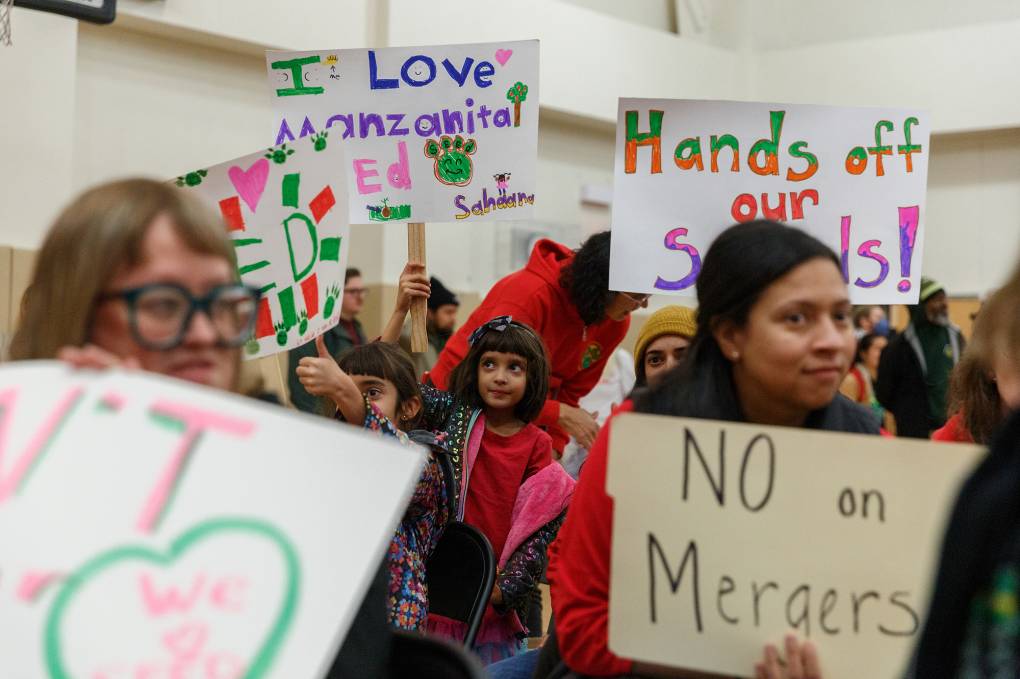
"caption": "Sahaana Garg, center, attends the Oakland Unified School District Board Meeting with her mom, Medha, right, and sister Naija, left, at La Escuelita Elementary School in Oakland on Wednesday, Dec. 11, 2024. The School Board took public comment on a proposed merger of ten different schools.",
"credit": "Juliana Yamada/KQED",
"altTag": null,
"description": null,
"imgSizes": {
"medium": {
"file": "https://cdn.kqed.org/wp-content/uploads/sites/10/2024/12/20241211-OUSDMergerVote-JY-007-800x533.jpg",
"width": 800,
"height": 533,
"mimeType": "image/jpeg"
},
"large": {
"file": "https://cdn.kqed.org/wp-content/uploads/sites/10/2024/12/20241211-OUSDMergerVote-JY-007-1020x679.jpg",
"width": 1020,
"height": 679,
"mimeType": "image/jpeg"
},
"thumbnail": {
"file": "https://cdn.kqed.org/wp-content/uploads/sites/10/2024/12/20241211-OUSDMergerVote-JY-007-160x107.jpg",
"width": 160,
"height": 107,
"mimeType": "image/jpeg"
},
"1536x1536": {
"file": "https://cdn.kqed.org/wp-content/uploads/sites/10/2024/12/20241211-OUSDMergerVote-JY-007-1536x1023.jpg",
"width": 1536,
"height": 1023,
"mimeType": "image/jpeg"
},
"post-thumbnail": {
"file": "https://cdn.kqed.org/wp-content/uploads/sites/10/2024/12/20241211-OUSDMergerVote-JY-007-672x372.jpg",
"width": 672,
"height": 372,
"mimeType": "image/jpeg"
},
"twentyfourteen-full-width": {
"file": "https://cdn.kqed.org/wp-content/uploads/sites/10/2024/12/20241211-OUSDMergerVote-JY-007-1038x576.jpg",
"width": 1038,
"height": 576,
"mimeType": "image/jpeg"
},
"full-width": {
"file": "https://cdn.kqed.org/wp-content/uploads/sites/10/2024/12/20241211-OUSDMergerVote-JY-007-1920x1279.jpg",
"width": 1920,
"height": 1279,
"mimeType": "image/jpeg"
},
"kqedFullSize": {
"file": "https://cdn.kqed.org/wp-content/uploads/sites/10/2024/12/20241211-OUSDMergerVote-JY-007.jpg",
"width": 2000,
"height": 1332
}
},
"isLoading": false,
"fetchFailed": false
},
"news_12017480": {
"type": "attachments",
"id": "news_12017480",
"meta": {
"index": "attachments_1716263798",
"site": "news",
"id": "12017480",
"found": true
},
"title": "Ellen Pham, left, and Michelle Sheu, right, look out over the Bay Bridge Lights as rain falls along the Embarcadero in San Francisco, Calif., on Sunday, December 16, 2018. The regions is poised to see a week of rainy weather",
"publishDate": 1733864598,
"status": "inherit",
"parent": 12017479,
"modified": 1733864647,
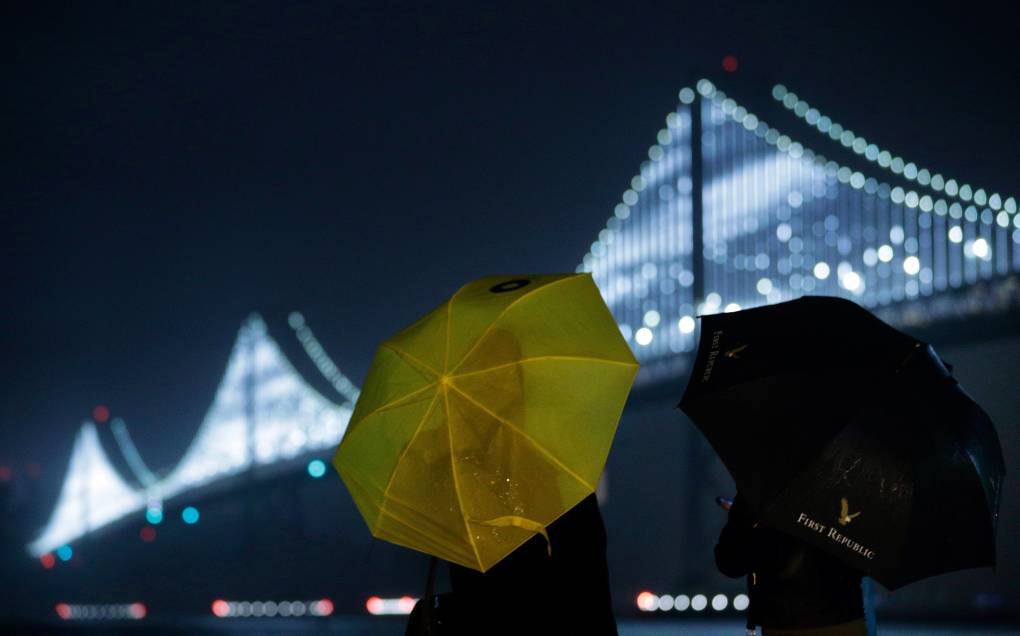
"caption": "Two people look out over the Bay Bridge Lights as rain falls along the Embarcadero in San Francisco, California, on Dec. 16, 2018. ",
"credit": "Carlos Avila Gonzalez/The San Francisco Chronicle via Getty Images",
"altTag": null,
"description": null,
"imgSizes": {
"medium": {
"file": "https://cdn.kqed.org/wp-content/uploads/sites/10/2024/12/BayBridgeLightsGetty-800x499.jpg",
"width": 800,
"height": 499,
"mimeType": "image/jpeg"
},
"large": {
"file": "https://cdn.kqed.org/wp-content/uploads/sites/10/2024/12/BayBridgeLightsGetty-1020x636.jpg",
"width": 1020,
"height": 636,
"mimeType": "image/jpeg"
},
"thumbnail": {
"file": "https://cdn.kqed.org/wp-content/uploads/sites/10/2024/12/BayBridgeLightsGetty-160x100.jpg",
"width": 160,
"height": 100,
"mimeType": "image/jpeg"
},
"1536x1536": {
"file": "https://cdn.kqed.org/wp-content/uploads/sites/10/2024/12/BayBridgeLightsGetty-1536x958.jpg",
"width": 1536,
"height": 958,
"mimeType": "image/jpeg"
},
"post-thumbnail": {
"file": "https://cdn.kqed.org/wp-content/uploads/sites/10/2024/12/BayBridgeLightsGetty-672x372.jpg",
"width": 672,
"height": 372,
"mimeType": "image/jpeg"
},
"twentyfourteen-full-width": {
"file": "https://cdn.kqed.org/wp-content/uploads/sites/10/2024/12/BayBridgeLightsGetty-1038x576.jpg",
"width": 1038,
"height": 576,
"mimeType": "image/jpeg"
},
"full-width": {
"file": "https://cdn.kqed.org/wp-content/uploads/sites/10/2024/12/BayBridgeLightsGetty-1920x1197.jpg",
"width": 1920,
"height": 1197,
"mimeType": "image/jpeg"
},
"kqedFullSize": {
"file": "https://cdn.kqed.org/wp-content/uploads/sites/10/2024/12/BayBridgeLightsGetty.jpg",
"width": 2000,
"height": 1247
}
},
"isLoading": false,
"fetchFailed": false
},
"news_12017708": {
"type": "attachments",
"id": "news_12017708",
"meta": {
"index": "attachments_1716263798",
"site": "news",
"id": "12017708",
"found": true
},
"title": "ZideDoor1",
"publishDate": 1733948387,
"status": "inherit",
"parent": 0,
"modified": 1733956682,
"caption": "Pastor Dave Hodges of the Church of Ambrosia holds psychedelic Sun Temple mushrooms at its San Francisco location on Dec. 11, 2024.",
"credit": "Azul Dahlstrom-Eckman/KQED",
"altTag": null,
"description": null,
"imgSizes": {
"medium": {
"file": "https://cdn.kqed.org/wp-content/uploads/sites/10/2024/12/ZideDoor1-800x600.jpg",
"width": 800,
"height": 600,
"mimeType": "image/jpeg"
},
"large": {
"file": "https://cdn.kqed.org/wp-content/uploads/sites/10/2024/12/ZideDoor1-1020x765.jpg",
"width": 1020,
"height": 765,
"mimeType": "image/jpeg"
},
"thumbnail": {
"file": "https://cdn.kqed.org/wp-content/uploads/sites/10/2024/12/ZideDoor1-160x120.jpg",
"width": 160,
"height": 120,
"mimeType": "image/jpeg"
},
"1536x1536": {
"file": "https://cdn.kqed.org/wp-content/uploads/sites/10/2024/12/ZideDoor1-1536x1152.jpg",
"width": 1536,
"height": 1152,
"mimeType": "image/jpeg"
},
"post-thumbnail": {
"file": "https://cdn.kqed.org/wp-content/uploads/sites/10/2024/12/ZideDoor1-672x372.jpg",
"width": 672,
"height": 372,
"mimeType": "image/jpeg"
},
"twentyfourteen-full-width": {
"file": "https://cdn.kqed.org/wp-content/uploads/sites/10/2024/12/ZideDoor1-1038x576.jpg",
"width": 1038,
"height": 576,
"mimeType": "image/jpeg"
},
"full-width": {
"file": "https://cdn.kqed.org/wp-content/uploads/sites/10/2024/12/ZideDoor1-1920x1440.jpg",
"width": 1920,
"height": 1440,
"mimeType": "image/jpeg"
},
"kqedFullSize": {
"file": "https://cdn.kqed.org/wp-content/uploads/sites/10/2024/12/ZideDoor1.jpg",
"width": 2000,
"height": 1500
}
},
"isLoading": false,
"fetchFailed": false
},
"news_12017565": {
"type": "attachments",
"id": "news_12017565",
"meta": {
"index": "attachments_1716263798",
"site": "news",
"id": "12017565",
"found": true
},
"title": "San Francisco Democrats Rally For Kamala Harris After Biden Drops Out",
"publishDate": 1733882527,
"status": "inherit",
"parent": 12017551,
"modified": 1733942134,
"caption": "Members of the San Francisco Democratic Party rally in support of Kamala Harris, following the announcement by U.S. President Joe Biden that he is dropping out of the 2024 presidential race, on July 22, 2024, at City Hall in San Francisco.",
"credit": "Loren Elliott/Getty Images",
"altTag": "Several people stand in front of SF City Hall under a waving American flag.",
"description": null,
"imgSizes": {
"medium": {
"file": "https://cdn.kqed.org/wp-content/uploads/sites/10/2024/12/GettyImages-2162428471-800x533.jpg",
"width": 800,
"height": 533,
"mimeType": "image/jpeg"
},
"large": {
"file": "https://cdn.kqed.org/wp-content/uploads/sites/10/2024/12/GettyImages-2162428471-1020x680.jpg",
"width": 1020,
"height": 680,
"mimeType": "image/jpeg"
},
"thumbnail": {
"file": "https://cdn.kqed.org/wp-content/uploads/sites/10/2024/12/GettyImages-2162428471-160x107.jpg",
"width": 160,
"height": 107,
"mimeType": "image/jpeg"
},
"1536x1536": {
"file": "https://cdn.kqed.org/wp-content/uploads/sites/10/2024/12/GettyImages-2162428471-1536x1024.jpg",
"width": 1536,
"height": 1024,
"mimeType": "image/jpeg"
},
"2048x2048": {
"file": "https://cdn.kqed.org/wp-content/uploads/sites/10/2024/12/GettyImages-2162428471-2048x1365.jpg",
"width": 2048,
"height": 1365,
"mimeType": "image/jpeg"
},
"post-thumbnail": {
"file": "https://cdn.kqed.org/wp-content/uploads/sites/10/2024/12/GettyImages-2162428471-672x372.jpg",
"width": 672,
"height": 372,
"mimeType": "image/jpeg"
},
"twentyfourteen-full-width": {
"file": "https://cdn.kqed.org/wp-content/uploads/sites/10/2024/12/GettyImages-2162428471-1038x576.jpg",
"width": 1038,
"height": 576,
"mimeType": "image/jpeg"
},
"full-width": {
"file": "https://cdn.kqed.org/wp-content/uploads/sites/10/2024/12/GettyImages-2162428471-1920x1280.jpg",
"width": 1920,
"height": 1280,
"mimeType": "image/jpeg"
},
"kqedFullSize": {
"file": "https://cdn.kqed.org/wp-content/uploads/sites/10/2024/12/GettyImages-2162428471-scaled.jpg",
"width": 2560,
"height": 1707
}
},
"isLoading": false,
"fetchFailed": false
},
"news_12006626": {
"type": "attachments",
"id": "news_12006626",
"meta": {
"index": "attachments_1716263798",
"site": "news",
"id": "12006626",
"found": true
},
"title": "04052023_downtownoaklandreactivation 181_qed",
"publishDate": 1727381155,
"status": "inherit",
"parent": 12006538,
"modified": 1727381265,
"caption": "Oakland City Hall on April 5, 2023. Simon Russell, chief investigator for Oakland’s Public Ethics Commission, has announced his resignation, citing a \"long-term\" lack of resources for the independent panel as it investigates high-profile ethics cases. Russell, who has served on the commission for eight years, including two as chief enforcement officer, informed leaders in a letter last week that he will step down in late October.",
"credit": "Kori Suzuki/KQED",
"altTag": null,
"description": null,
"imgSizes": {
"medium": {
"file": "https://cdn.kqed.org/wp-content/uploads/sites/10/2024/09/04052023_downtownoaklandreactivation-181_qed-800x532.jpg",
"width": 800,
"height": 532,
"mimeType": "image/jpeg"
},
"large": {
"file": "https://cdn.kqed.org/wp-content/uploads/sites/10/2024/09/04052023_downtownoaklandreactivation-181_qed-1020x679.jpg",
"width": 1020,
"height": 679,
"mimeType": "image/jpeg"
},
"thumbnail": {
"file": "https://cdn.kqed.org/wp-content/uploads/sites/10/2024/09/04052023_downtownoaklandreactivation-181_qed-160x106.jpg",
"width": 160,
"height": 106,
"mimeType": "image/jpeg"
},
"1536x1536": {
"file": "https://cdn.kqed.org/wp-content/uploads/sites/10/2024/09/04052023_downtownoaklandreactivation-181_qed-1536x1022.jpg",
"width": 1536,
"height": 1022,
"mimeType": "image/jpeg"
},
"post-thumbnail": {
"file": "https://cdn.kqed.org/wp-content/uploads/sites/10/2024/09/04052023_downtownoaklandreactivation-181_qed-672x372.jpg",
"width": 672,
"height": 372,
"mimeType": "image/jpeg"
},
"twentyfourteen-full-width": {
"file": "https://cdn.kqed.org/wp-content/uploads/sites/10/2024/09/04052023_downtownoaklandreactivation-181_qed-1038x576.jpg",
"width": 1038,
"height": 576,
"mimeType": "image/jpeg"
},
"full-width": {
"file": "https://cdn.kqed.org/wp-content/uploads/sites/10/2024/09/04052023_downtownoaklandreactivation-181_qed-1920x1278.jpg",
"width": 1920,
"height": 1278,
"mimeType": "image/jpeg"
},
"kqedFullSize": {
"file": "https://cdn.kqed.org/wp-content/uploads/sites/10/2024/09/04052023_downtownoaklandreactivation-181_qed.jpg",
"width": 2000,
"height": 1331
}
},
"isLoading": false,
"fetchFailed": false
},
"news_12016730": {
"type": "attachments",
"id": "news_12016730",
"meta": {
"index": "attachments_1716263798",
"site": "news",
"id": "12016730",
"found": true
},
"title": "A BART patron approaches the Lake Merritt station as service begins to wind down late Thursday leading up to a strike on Friday. People involved with negotiations between BART and its unions declared an impasse following nearly 30 hours of negotiations on",
"publishDate": 1733354055,
"status": "inherit",
"parent": 12016715,
"modified": 1733445455,
"caption": "A BART patron approaches the Lake Merritt station as service begins to wind down late Thursday, Oct. 17, 2013, in Oakland.",
"credit": "Carlos Avila Gonzalez/The San Francisco Chronicle via Getty Images",
"altTag": null,
"description": null,
"imgSizes": {
"medium": {
"file": "https://cdn.kqed.org/wp-content/uploads/sites/10/2024/12/LakeMerrittBARTGetty-800x533.jpg",
"width": 800,
"height": 533,
"mimeType": "image/jpeg"
},
"large": {
"file": "https://cdn.kqed.org/wp-content/uploads/sites/10/2024/12/LakeMerrittBARTGetty-1020x680.jpg",
"width": 1020,
"height": 680,
"mimeType": "image/jpeg"
},
"thumbnail": {
"file": "https://cdn.kqed.org/wp-content/uploads/sites/10/2024/12/LakeMerrittBARTGetty-160x107.jpg",
"width": 160,
"height": 107,
"mimeType": "image/jpeg"
},
"1536x1536": {
"file": "https://cdn.kqed.org/wp-content/uploads/sites/10/2024/12/LakeMerrittBARTGetty-1536x1024.jpg",
"width": 1536,
"height": 1024,
"mimeType": "image/jpeg"
},
"post-thumbnail": {
"file": "https://cdn.kqed.org/wp-content/uploads/sites/10/2024/12/LakeMerrittBARTGetty-672x372.jpg",
"width": 672,
"height": 372,
"mimeType": "image/jpeg"
},
"twentyfourteen-full-width": {
"file": "https://cdn.kqed.org/wp-content/uploads/sites/10/2024/12/LakeMerrittBARTGetty-1038x576.jpg",
"width": 1038,
"height": 576,
"mimeType": "image/jpeg"
},
"full-width": {
"file": "https://cdn.kqed.org/wp-content/uploads/sites/10/2024/12/LakeMerrittBARTGetty-1920x1280.jpg",
"width": 1920,
"height": 1280,
"mimeType": "image/jpeg"
},
"kqedFullSize": {
"file": "https://cdn.kqed.org/wp-content/uploads/sites/10/2024/12/LakeMerrittBARTGetty.jpg",
"width": 2000,
"height": 1333
}
},
"isLoading": false,
"fetchFailed": false
},
"news_12016604": {
"type": "attachments",
"id": "news_12016604",
"meta": {
"index": "attachments_1716263798",
"site": "news",
"id": "12016604",
"found": true
},
"title": "The UC Berkeley Campus in Berkeley on Aug. 17, 2023.",
"publishDate": 1733334753,
"status": "inherit",
"parent": 12016602,
"modified": 1733334766,
"caption": "The UC Berkeley Campus in Berkeley on Aug. 17, 2023.",
"credit": "Martin do Nascimento/KQED",
"altTag": null,
"description": null,
"imgSizes": {
"medium": {
"file": "https://cdn.kqed.org/wp-content/uploads/sites/10/2024/12/230817-UC-BERKELEY-CAMPUS-MD-02_qed-800x533.jpg",
"width": 800,
"height": 533,
"mimeType": "image/jpeg"
},
"large": {
"file": "https://cdn.kqed.org/wp-content/uploads/sites/10/2024/12/230817-UC-BERKELEY-CAMPUS-MD-02_qed-1020x680.jpg",
"width": 1020,
"height": 680,
"mimeType": "image/jpeg"
},
"thumbnail": {
"file": "https://cdn.kqed.org/wp-content/uploads/sites/10/2024/12/230817-UC-BERKELEY-CAMPUS-MD-02_qed-160x107.jpg",
"width": 160,
"height": 107,
"mimeType": "image/jpeg"
},
"1536x1536": {
"file": "https://cdn.kqed.org/wp-content/uploads/sites/10/2024/12/230817-UC-BERKELEY-CAMPUS-MD-02_qed-1536x1024.jpg",
"width": 1536,
"height": 1024,
"mimeType": "image/jpeg"
},
"post-thumbnail": {
"file": "https://cdn.kqed.org/wp-content/uploads/sites/10/2024/12/230817-UC-BERKELEY-CAMPUS-MD-02_qed-672x372.jpg",
"width": 672,
"height": 372,
"mimeType": "image/jpeg"
},
"twentyfourteen-full-width": {
"file": "https://cdn.kqed.org/wp-content/uploads/sites/10/2024/12/230817-UC-BERKELEY-CAMPUS-MD-02_qed-1038x576.jpg",
"width": 1038,
"height": 576,
"mimeType": "image/jpeg"
},
"full-width": {
"file": "https://cdn.kqed.org/wp-content/uploads/sites/10/2024/12/230817-UC-BERKELEY-CAMPUS-MD-02_qed-1920x1280.jpg",
"width": 1920,
"height": 1280,
"mimeType": "image/jpeg"
},
"kqedFullSize": {
"file": "https://cdn.kqed.org/wp-content/uploads/sites/10/2024/12/230817-UC-BERKELEY-CAMPUS-MD-02_qed.jpg",
"width": 2000,
"height": 1333
}
},
"isLoading": false,
"fetchFailed": false
},
"news_12016414": {
"type": "attachments",
"id": "news_12016414",
"meta": {
"index": "attachments_1716263798",
"site": "news",
"id": "12016414",
"found": true
},
"title": "039_KQED_SanFrancisco_Coronavirus_03132020_7340_qed",
"publishDate": 1733250586,
"status": "inherit",
"parent": 12016411,
"modified": 1733270040,
"caption": "Cable cars pass each other above Lombard Street in San Francisco on March 13, 2020. The street, known as the \"Crookedest Street in the World,\" is typically filled with cars and tourists.",
"credit": "Beth LaBerge/KQED",
"altTag": null,
"description": null,
"imgSizes": {
"medium": {
"file": "https://cdn.kqed.org/wp-content/uploads/sites/10/2024/12/039_KQED_SanFrancisco_Coronavirus_03132020_7340_qed-800x533.jpg",
"width": 800,
"height": 533,
"mimeType": "image/jpeg"
},
"large": {
"file": "https://cdn.kqed.org/wp-content/uploads/sites/10/2024/12/039_KQED_SanFrancisco_Coronavirus_03132020_7340_qed-1020x680.jpg",
"width": 1020,
"height": 680,
"mimeType": "image/jpeg"
},
"thumbnail": {
"file": "https://cdn.kqed.org/wp-content/uploads/sites/10/2024/12/039_KQED_SanFrancisco_Coronavirus_03132020_7340_qed-160x107.jpg",
"width": 160,
"height": 107,
"mimeType": "image/jpeg"
},
"1536x1536": {
"file": "https://cdn.kqed.org/wp-content/uploads/sites/10/2024/12/039_KQED_SanFrancisco_Coronavirus_03132020_7340_qed-1536x1024.jpg",
"width": 1536,
"height": 1024,
"mimeType": "image/jpeg"
},
"post-thumbnail": {
"file": "https://cdn.kqed.org/wp-content/uploads/sites/10/2024/12/039_KQED_SanFrancisco_Coronavirus_03132020_7340_qed-672x372.jpg",
"width": 672,
"height": 372,
"mimeType": "image/jpeg"
},
"twentyfourteen-full-width": {
"file": "https://cdn.kqed.org/wp-content/uploads/sites/10/2024/12/039_KQED_SanFrancisco_Coronavirus_03132020_7340_qed-1038x576.jpg",
"width": 1038,
"height": 576,
"mimeType": "image/jpeg"
},
"full-width": {
"file": "https://cdn.kqed.org/wp-content/uploads/sites/10/2024/12/039_KQED_SanFrancisco_Coronavirus_03132020_7340_qed-1920x1280.jpg",
"width": 1920,
"height": 1280,
"mimeType": "image/jpeg"
},
"kqedFullSize": {
"file": "https://cdn.kqed.org/wp-content/uploads/sites/10/2024/12/039_KQED_SanFrancisco_Coronavirus_03132020_7340_qed.jpg",
"width": 2000,
"height": 1333
}
},
"isLoading": false,
"fetchFailed": false
},
"news_12013757": {
"type": "attachments",
"id": "news_12013757",
"meta": {
"index": "attachments_1716263798",
"site": "news",
"id": "12013757",
"found": true
},
"title": "241108-LurieVictoryPresser-22-BL_qed",
"publishDate": 1731103353,
"status": "inherit",
"parent": 12013667,
"modified": 1731103364,
"caption": "San Francisco Mayor-elect Daniel Lurie speaks with supporters after an acceptance speech at St. Mary’s Square in San Francisco on Nov. 8, 2024.",
"credit": "Beth LaBerge/KQED",
"altTag": null,
"description": null,
"imgSizes": {
"medium": {
"file": "https://cdn.kqed.org/wp-content/uploads/sites/10/2024/11/241108-LurieVictoryPresser-22-BL_qed-800x533.jpg",
"width": 800,
"height": 533,
"mimeType": "image/jpeg"
},
"large": {
"file": "https://cdn.kqed.org/wp-content/uploads/sites/10/2024/11/241108-LurieVictoryPresser-22-BL_qed-1020x680.jpg",
"width": 1020,
"height": 680,
"mimeType": "image/jpeg"
},
"thumbnail": {
"file": "https://cdn.kqed.org/wp-content/uploads/sites/10/2024/11/241108-LurieVictoryPresser-22-BL_qed-160x107.jpg",
"width": 160,
"height": 107,
"mimeType": "image/jpeg"
},
"1536x1536": {
"file": "https://cdn.kqed.org/wp-content/uploads/sites/10/2024/11/241108-LurieVictoryPresser-22-BL_qed-1536x1024.jpg",
"width": 1536,
"height": 1024,
"mimeType": "image/jpeg"
},
"post-thumbnail": {
"file": "https://cdn.kqed.org/wp-content/uploads/sites/10/2024/11/241108-LurieVictoryPresser-22-BL_qed-672x372.jpg",
"width": 672,
"height": 372,
"mimeType": "image/jpeg"
},
"twentyfourteen-full-width": {
"file": "https://cdn.kqed.org/wp-content/uploads/sites/10/2024/11/241108-LurieVictoryPresser-22-BL_qed-1038x576.jpg",
"width": 1038,
"height": 576,
"mimeType": "image/jpeg"
},
"full-width": {
"file": "https://cdn.kqed.org/wp-content/uploads/sites/10/2024/11/241108-LurieVictoryPresser-22-BL_qed-1920x1280.jpg",
"width": 1920,
"height": 1280,
"mimeType": "image/jpeg"
},
"kqedFullSize": {
"file": "https://cdn.kqed.org/wp-content/uploads/sites/10/2024/11/241108-LurieVictoryPresser-22-BL_qed.jpg",
"width": 2000,
"height": 1333
}
},
"isLoading": false,
"fetchFailed": false
},
"news_12016201": {
"type": "attachments",
"id": "news_12016201",
"meta": {
"index": "attachments_1716263798",
"site": "news",
"id": "12016201",
"found": true
},
"title": "House Freedom Caucus COVID Roundtable",
"publishDate": 1732770134,
"status": "inherit",
"parent": 12016188,
"modified": 1732770214,
"caption": "Dr. Jay Bhattacharya speaks during a roundtable discussion with members of the House Freedom Caucus on the COVID-19 pandemic at The Heritage Foundation on Nov. 10, 2022. ",
"credit": "Tom Williams/CQ-Roll Call, Inc via Getty Images",
"altTag": null,
"description": null,
"imgSizes": {
"medium": {
"file": "https://cdn.kqed.org/wp-content/uploads/sites/10/2024/11/GettyImages-1244694054_qed-800x533.jpg",
"width": 800,
"height": 533,
"mimeType": "image/jpeg"
},
"large": {
"file": "https://cdn.kqed.org/wp-content/uploads/sites/10/2024/11/GettyImages-1244694054_qed-1020x680.jpg",
"width": 1020,
"height": 680,
"mimeType": "image/jpeg"
},
"thumbnail": {
"file": "https://cdn.kqed.org/wp-content/uploads/sites/10/2024/11/GettyImages-1244694054_qed-160x107.jpg",
"width": 160,
"height": 107,
"mimeType": "image/jpeg"
},
"1536x1536": {
"file": "https://cdn.kqed.org/wp-content/uploads/sites/10/2024/11/GettyImages-1244694054_qed-1536x1024.jpg",
"width": 1536,
"height": 1024,
"mimeType": "image/jpeg"
},
"post-thumbnail": {
"file": "https://cdn.kqed.org/wp-content/uploads/sites/10/2024/11/GettyImages-1244694054_qed-672x372.jpg",
"width": 672,
"height": 372,
"mimeType": "image/jpeg"
},
"twentyfourteen-full-width": {
"file": "https://cdn.kqed.org/wp-content/uploads/sites/10/2024/11/GettyImages-1244694054_qed-1038x576.jpg",
"width": 1038,
"height": 576,
"mimeType": "image/jpeg"
},
"full-width": {
"file": "https://cdn.kqed.org/wp-content/uploads/sites/10/2024/11/GettyImages-1244694054_qed-1920x1280.jpg",
"width": 1920,
"height": 1280,
"mimeType": "image/jpeg"
},
"kqedFullSize": {
"file": "https://cdn.kqed.org/wp-content/uploads/sites/10/2024/11/GettyImages-1244694054_qed.jpg",
"width": 1999,
"height": 1333
}
},
"isLoading": false,
"fetchFailed": false
},
"news_12009031": {
"type": "attachments",
"id": "news_12009031",
"meta": {
"index": "attachments_1716263798",
"site": "news",
"id": "12009031",
"found": true
},
"title": "240903-OverdoseResponse-41-BL_qed",
"publishDate": 1728605470,
"status": "inherit",
"parent": 12059914,
"modified": 1760485615,
"caption": "Counselor Chantel Hernandez-Coleman (left) and paramedic Isaac James, members of the Street Overdose Response Team, speak with a woman sitting in the Tenderloin in San Francisco on Sept. 3, 2024.",
"credit": "Beth LaBerge/KQED",
"altTag": null,
"description": null,
"imgSizes": {
"medium": {
"file": "https://cdn.kqed.org/wp-content/uploads/sites/10/2024/10/240903-OverdoseResponse-41-BL_qed-800x533.jpg",
"width": 800,
"height": 533,
"mimeType": "image/jpeg"
},
"large": {
"file": "https://cdn.kqed.org/wp-content/uploads/sites/10/2024/10/240903-OverdoseResponse-41-BL_qed-1020x680.jpg",
"width": 1020,
"height": 680,
"mimeType": "image/jpeg"
},
"thumbnail": {
"file": "https://cdn.kqed.org/wp-content/uploads/sites/10/2024/10/240903-OverdoseResponse-41-BL_qed-160x107.jpg",
"width": 160,
"height": 107,
"mimeType": "image/jpeg"
},
"1536x1536": {
"file": "https://cdn.kqed.org/wp-content/uploads/sites/10/2024/10/240903-OverdoseResponse-41-BL_qed-1536x1024.jpg",
"width": 1536,
"height": 1024,
"mimeType": "image/jpeg"
},
"post-thumbnail": {
"file": "https://cdn.kqed.org/wp-content/uploads/sites/10/2024/10/240903-OverdoseResponse-41-BL_qed-672x372.jpg",
"width": 672,
"height": 372,
"mimeType": "image/jpeg"
},
"twentyfourteen-full-width": {
"file": "https://cdn.kqed.org/wp-content/uploads/sites/10/2024/10/240903-OverdoseResponse-41-BL_qed-1038x576.jpg",
"width": 1038,
"height": 576,
"mimeType": "image/jpeg"
},
"full-width": {
"file": "https://cdn.kqed.org/wp-content/uploads/sites/10/2024/10/240903-OverdoseResponse-41-BL_qed-1920x1280.jpg",
"width": 1920,
"height": 1280,
"mimeType": "image/jpeg"
},
"kqedFullSize": {
"file": "https://cdn.kqed.org/wp-content/uploads/sites/10/2024/10/240903-OverdoseResponse-41-BL_qed.jpg",
"width": 2000,
"height": 1333
}
},
"isLoading": false,
"fetchFailed": false
}
},
"audioPlayerReducer": {
"postId": "stream_live",
"isPaused": true,
"isPlaying": false,
"pfsActive": false,
"pledgeModalIsOpen": true,
"playerDrawerIsOpen": false,
"liveAudioPlayStartedAt": 0,
"liveAudioPlayContext": ""
},
"authorsReducer": {
"danbrekke": {
"type": "authors",
"id": "222",
"meta": {
"index": "authors_1716337520",
"id": "222",
"found": true
},
"name": "Dan Brekke",
"firstName": "Dan",
"lastName": "Brekke",
"slug": "danbrekke",
"email": "dbrekke@kqed.org",
"display_author_email": true,
"staff_mastheads": [
"news",
"science"
],
"title": "KQED Editor and Reporter",
"bio": "Dan Brekke is a reporter and editor for KQED News, responsible for coverage of topics ranging from California water issues to the Bay Area's transportation challenges. In a newsroom career that began in Chicago in 1972, Dan has worked for \u003cem>The San Francisco Examiner,\u003c/em> Wired and TechTV and has been published in The New York Times, The New York Times Magazine, Business 2.0, Salon and elsewhere.\r\n\r\nSince joining KQED in 2007, Dan has reported, edited and produced both radio and online features and breaking news pieces. He has shared as both editor and reporter in four Society of Professional Journalists Norcal Excellence in Journalism awards and one Edward R. Murrow regional award. He was chosen for a spring 2017 residency at the Mesa Refuge to advance his research on California salmon.\r\n\r\nEmail Dan at: \u003ca href=\"mailto:dbrekke@kqed.org\">dbrekke@kqed.org\u003c/a>\r\n\r\n\u003cstrong>Twitter:\u003c/strong> \u003ca href=\"https://twitter.com/danbrekke\" rel=\"noopener noreferrer\">twitter.com/danbrekke\u003c/a>\r\n\u003cstrong>Facebook:\u003c/strong> \u003ca href=\"https://www.facebook.com/danbrekke\" rel=\"noopener noreferrer\">www.facebook.com/danbrekke\u003c/a>\r\n\u003cstrong>LinkedIn:\u003c/strong> \u003ca href=\"https://www.linkedin.com/in/danbrekke\" rel=\"noopener noreferrer\">www.linkedin.com/in/danbrekke\u003c/a>",
"avatar": "https://secure.gravatar.com/avatar/8f1f0d2a978fb3b23426c922c7e2af558fa36905b49c4ce76a97dc3c72d27226?s=600&d=mm&r=g",
"twitter": "danbrekke",
"bluesky": null,
"facebook": null,
"instagram": "https://www.instagram.com/dan.brekke/",
"linkedin": "https://www.linkedin.com/in/danbrekke/",
"sites": [
{
"site": "news",
"roles": [
"administrator",
"create_posts"
]
},
{
"site": "stateofhealth",
"roles": [
"editor"
]
},
{
"site": "science",
"roles": [
"editor"
]
},
{
"site": "quest",
"roles": [
"contributor"
]
},
{
"site": "food",
"roles": [
"contributor"
]
},
{
"site": "forum",
"roles": [
"contributor"
]
},
{
"site": "elections",
"roles": [
"editor"
]
},
{
"site": "liveblog",
"roles": [
"editor"
]
}
],
"headData": {
"title": "Dan Brekke | KQED",
"description": "KQED Editor and Reporter",
"ogImgSrc": "https://secure.gravatar.com/avatar/8f1f0d2a978fb3b23426c922c7e2af558fa36905b49c4ce76a97dc3c72d27226?s=600&d=mm&r=g",
"twImgSrc": "https://secure.gravatar.com/avatar/8f1f0d2a978fb3b23426c922c7e2af558fa36905b49c4ce76a97dc3c72d27226?s=600&d=mm&r=g"
},
"isLoading": false,
"link": "/author/danbrekke"
},
"eromero": {
"type": "authors",
"id": "11746",
"meta": {
"index": "authors_1716337520",
"id": "11746",
"found": true
},
"name": "Ezra David Romero",
"firstName": "Ezra David",
"lastName": "Romero",
"slug": "eromero",
"email": "eromero@kqed.org",
"display_author_email": true,
"staff_mastheads": [
"news",
"science"
],
"title": "Climate Reporter",
"bio": "Ezra David Romero is a climate reporter for KQED News. He covers the absence and excess of water in the Bay Area — think sea level rise, flooding and drought. For nearly a decade he’s covered how warming temperatures are altering the lives of Californians. He’s reported on farmers worried their pistachio trees aren’t getting enough sleep, families desperate for water, scientists studying dying giant sequoias, and alongside firefighters containing wildfires. His work has appeared on local stations across California and nationally on public radio shows like Morning Edition, Here and Now, All Things Considered and Science Friday. ",
"avatar": "https://secure.gravatar.com/avatar/c76404d287c10ed40224227551ac36e24352c7306f106632caf6fead76f8801f?s=600&d=blank&r=g",
"twitter": "ezraromero",
"bluesky": null,
"facebook": null,
"instagram": null,
"linkedin": null,
"sites": [
{
"site": "arts",
"roles": [
"editor"
]
},
{
"site": "news",
"roles": [
"editor"
]
},
{
"site": "science",
"roles": [
"editor"
]
},
{
"site": "liveblog",
"roles": [
"author"
]
}
],
"headData": {
"title": "Ezra David Romero | KQED",
"description": "Climate Reporter",
"ogImgSrc": "https://secure.gravatar.com/avatar/c76404d287c10ed40224227551ac36e24352c7306f106632caf6fead76f8801f?s=600&d=blank&r=g",
"twImgSrc": "https://secure.gravatar.com/avatar/c76404d287c10ed40224227551ac36e24352c7306f106632caf6fead76f8801f?s=600&d=blank&r=g"
},
"isLoading": false,
"link": "/author/eromero"
},
"adahlstromeckman": {
"type": "authors",
"id": "11785",
"meta": {
"index": "authors_1716337520",
"id": "11785",
"found": true
},
"name": "Azul Dahlstrom-Eckman",
"firstName": "Azul",
"lastName": "Dahlstrom-Eckman",
"slug": "adahlstromeckman",
"email": "adahlstrom-eckman@kqed.org",
"display_author_email": true,
"staff_mastheads": [],
"title": "Reporter",
"bio": "Azul is a reporter for KQED focusing on transportation and features. He joined KQED in 2021 as an alumnus of KALW's Audio Academy radio journalism training program.",
"avatar": "https://secure.gravatar.com/avatar/9cb750298435add7815a777f55bf1f46845c1386bb8452555c60a7b820b5aba3?s=600&d=blank&r=g",
"twitter": "@zuliemann",
"bluesky": "@azul415.bsky.social",
"facebook": null,
"instagram": null,
"linkedin": null,
"sites": [
{
"site": "arts",
"roles": [
"editor"
]
},
{
"site": "news",
"roles": [
"editor"
]
},
{
"site": "science",
"roles": [
"editor"
]
},
{
"site": "liveblog",
"roles": [
"author"
]
}
],
"headData": {
"title": "Azul Dahlstrom-Eckman | KQED",
"description": "Reporter",
"ogImgSrc": "https://secure.gravatar.com/avatar/9cb750298435add7815a777f55bf1f46845c1386bb8452555c60a7b820b5aba3?s=600&d=blank&r=g",
"twImgSrc": "https://secure.gravatar.com/avatar/9cb750298435add7815a777f55bf1f46845c1386bb8452555c60a7b820b5aba3?s=600&d=blank&r=g"
},
"isLoading": false,
"link": "/author/adahlstromeckman"
},
"sjohnson": {
"type": "authors",
"id": "11840",
"meta": {
"index": "authors_1716337520",
"id": "11840",
"found": true
},
"name": "Sydney Johnson",
"firstName": "Sydney",
"lastName": "Johnson",
"slug": "sjohnson",
"email": "sjohnson@kqed.org",
"display_author_email": false,
"staff_mastheads": [
"news"
],
"title": "KQED Reporter",
"bio": "Sydney Johnson is a general assignment reporter at KQED. She previously reported on public health and city government at the San Francisco Examiner, and before that, she covered statewide education policy for EdSource. Her reporting has won multiple local, state and national awards. Sydney is a graduate of the University of California, Berkeley and lives in San Francisco.",
"avatar": "https://secure.gravatar.com/avatar/97855f2719b72ad6190b7c535fe642c8?s=600&d=blank&r=g",
"twitter": "sydneyfjohnson",
"facebook": null,
"instagram": null,
"linkedin": null,
"sites": [
{
"site": "news",
"roles": [
"editor"
]
}
],
"headData": {
"title": "Sydney Johnson | KQED",
"description": "KQED Reporter",
"ogImgSrc": "https://secure.gravatar.com/avatar/97855f2719b72ad6190b7c535fe642c8?s=600&d=blank&r=g",
"twImgSrc": "https://secure.gravatar.com/avatar/97855f2719b72ad6190b7c535fe642c8?s=600&d=blank&r=g"
},
"isLoading": false,
"link": "/author/sjohnson"
},
"jservantez": {
"type": "authors",
"id": "11909",
"meta": {
"index": "authors_1716337520",
"id": "11909",
"found": true
},
"name": "Jared Servantez",
"firstName": "Jared",
"lastName": "Servantez",
"slug": "jservantez",
"email": "jservantez@kqed.org",
"display_author_email": true,
"staff_mastheads": [
"news"
],
"title": "KQED Contributor",
"bio": "Jared Servantez is the editor of KQED's Express Desk, leading the newsroom's online breaking news operation. He most recently worked for the Los Angeles Times, where he served as a breaking news editor, the Metro Desk's night editor, and a copy editor. Jared is a graduate of the USC Annenberg School for Communication and Journalism.",
"avatar": "https://secure.gravatar.com/avatar/f0e317c67bb498c3f077f033d1cc79e62f3bc1303fa20a14e8880d31fbe7e01e?s=600&d=blank&r=g",
"twitter": "jservantez",
"bluesky": null,
"facebook": null,
"instagram": null,
"linkedin": null,
"sites": [
{
"site": "news",
"roles": [
"editor"
]
},
{
"site": "science",
"roles": [
"editor",
"author"
]
},
{
"site": "liveblog",
"roles": [
"editor"
]
}
],
"headData": {
"title": "Jared Servantez | KQED",
"description": "KQED Contributor",
"ogImgSrc": "https://secure.gravatar.com/avatar/f0e317c67bb498c3f077f033d1cc79e62f3bc1303fa20a14e8880d31fbe7e01e?s=600&d=blank&r=g",
"twImgSrc": "https://secure.gravatar.com/avatar/f0e317c67bb498c3f077f033d1cc79e62f3bc1303fa20a14e8880d31fbe7e01e?s=600&d=blank&r=g"
},
"isLoading": false,
"link": "/author/jservantez"
},
"kdebenedetti": {
"type": "authors",
"id": "11913",
"meta": {
"index": "authors_1716337520",
"id": "11913",
"found": true
},
"name": "Katie DeBenedetti",
"firstName": "Katie",
"lastName": "DeBenedetti",
"slug": "kdebenedetti",
"email": "kdebenedetti@kqed.org",
"display_author_email": false,
"staff_mastheads": [
"news",
"science"
],
"title": "KQED Contributor",
"bio": "Katie DeBenedetti is a digital reporter covering daily news for the Express Desk. Prior to joining KQED as a culture reporting intern in January 2024, she covered education and city government for the Napa Valley Register.",
"avatar": "https://secure.gravatar.com/avatar/6e31073cb8f7e4214ab03f42771d0f45?s=600&d=blank&r=g",
"twitter": null,
"facebook": null,
"instagram": null,
"linkedin": null,
"sites": [
{
"site": "news",
"roles": [
"author"
]
},
{
"site": "science",
"roles": [
"author"
]
},
{
"site": "liveblog",
"roles": [
"author"
]
}
],
"headData": {
"title": "Katie DeBenedetti | KQED",
"description": "KQED Contributor",
"ogImgSrc": "https://secure.gravatar.com/avatar/6e31073cb8f7e4214ab03f42771d0f45?s=600&d=blank&r=g",
"twImgSrc": "https://secure.gravatar.com/avatar/6e31073cb8f7e4214ab03f42771d0f45?s=600&d=blank&r=g"
},
"isLoading": false,
"link": "/author/kdebenedetti"
}
},
"pagesReducer": {
"news_category_local": {
"type": "terms",
"id": "news_28250",
"meta": {
"index": "terms_1716263798",
"site": "news",
"id": "28250",
"score": 12.795576
},
"featImg": null,
"name": "Local",
"description": null,
"taxonomy": "category",
"headData": {
"twImgId": null,
"twTitle": null,
"ogTitle": null,
"ogImgId": null,
"twDescription": null,
"description": null,
"title": "Local Archives | KQED News",
"ogDescription": null
},
"ttid": 28267,
"slug": "local",
"isLoading": false,
"title": "Local",
"pageMeta": {
"site": "news",
"WpPageTemplate": "page-topic-editorial",
"currentPage": 154
},
"blocks": [
{
"blockName": "kqed/post-list",
"attrs": {
"layout": "cardArticle2",
"query": "posts/news?category=local",
"seeMore": false,
"paginated": true,
"page": 154
}
},
{
"blockName": "kqed/ad"
}
]
}
},
"pfsSessionReducer": {},
"postsReducer": {
"stream_live": {
"type": "live",
"id": "stream_live",
"audioUrl": "https://hls.kqed.org/hls/kqed_app/playlist.m3u8",
"title": "Live Stream",
"excerpt": "Live Stream information currently unavailable.",
"link": "/radio",
"featImg": "",
"label": {
"name": "KQED Live",
"link": "/"
}
},
"stream_kqedNewscast": {
"type": "posts",
"id": "stream_kqedNewscast",
"audioUrl": "https://www.kqed.org/.stream/anon/radio/RDnews/newscast.mp3?_=1",
"title": "KQED Newscast",
"featImg": "",
"label": {
"name": "88.5 FM",
"link": "/"
}
},
"news_12017880": {
"type": "posts",
"id": "news_12017880",
"meta": {
"index": "posts_1716263798",
"site": "news",
"id": "12017880",
"score": null,
"sort": [
1734040856000
]
},
"guestAuthors": [],
"slug": "bay-area-braces-quadruple-threat-rain-wind-surf-king-tides",
"title": "Bay Area Braces for Quadruple Threat: Rain, Wind, Surf and King Tides",
"publishDate": 1734040856,
"format": "standard",
"headTitle": "Bay Area Braces for Quadruple Threat: Rain, Wind, Surf and King Tides | KQED",
"labelTerm": {
"site": "news"
},
"content": "\u003cp>The Bay Area is bracing for a quadfecta of environmental conditions this week — heavy rain, strong winds, high surf and \u003ca href=\"https://www.kqed.org/news/12014611/king-tide-back-bay-area-heres-what-you-can-expect#:~:text=%E2%80%9CKing%20tide%E2%80%9D%20is%20not%20a,feet%20at%205:38%20p.m.\">king tides\u003c/a> — that will create blustery conditions and potential flooding across the region.\u003c/p>\n\u003cp>“It’s like everything all at once,” said Nicole Sarment, a meteorologist with the National Weather Service’s Bay Area office.\u003c/p>\n\u003cp>After Wednesday night brought moderate rain, Sarment said the Bay Area will get a short reprieve before a larger, windy, wet storm settles over the region late Friday through Saturday.\u003c/p>\n\u003cp>[ad fullwidth]\u003c/p>\n\u003cp>Sarment foresees flooding due to heavy rain, high surf and king tides. Starting Friday, according to the weather service’s \u003ca href=\"https://forecast.weather.gov/product.php?format=ci&glossary=1&issuedby=mtr&product=afd&site=mtr&version=1\">online forecast discussion\u003c/a>, “there are going to be poor conditions everywhere, especially on the water or at the beach.”\u003c/p>\n\u003cp>“The storm door is now opening up for us,” said Rick Canepa, a meteorologist with the weather service’s Bay Area office. “We’re still in the early stages of the winter season. So it’s a bit of a tough call, but there’s plenty of potential ahead of us.”\u003c/p>\n\u003cfigure id=\"attachment_12016722\" class=\"wp-caption aligncenter\" style=\"max-width: 2000px\">\u003cimg loading=\"lazy\" decoding=\"async\" class=\"size-full wp-image-12016722\" src=\"https://cdn.kqed.org/wp-content/uploads/sites/10/2024/12/20241122_NorcalStorm_GC-15_qed.jpg\" alt=\"\" width=\"2000\" height=\"1333\" srcset=\"https://cdn.kqed.org/wp-content/uploads/sites/10/2024/12/20241122_NorcalStorm_GC-15_qed.jpg 2000w, https://cdn.kqed.org/wp-content/uploads/sites/10/2024/12/20241122_NorcalStorm_GC-15_qed-800x533.jpg 800w, https://cdn.kqed.org/wp-content/uploads/sites/10/2024/12/20241122_NorcalStorm_GC-15_qed-1020x680.jpg 1020w, https://cdn.kqed.org/wp-content/uploads/sites/10/2024/12/20241122_NorcalStorm_GC-15_qed-160x107.jpg 160w, https://cdn.kqed.org/wp-content/uploads/sites/10/2024/12/20241122_NorcalStorm_GC-15_qed-1536x1024.jpg 1536w, https://cdn.kqed.org/wp-content/uploads/sites/10/2024/12/20241122_NorcalStorm_GC-15_qed-1920x1280.jpg 1920w\" sizes=\"auto, (max-width: 2000px) 100vw, 2000px\">\u003cfigcaption class=\"wp-caption-text\">Rohnert Park Expressway flooded due to heavy rainfall during an atmospheric river storm affecting the Bay Area on Nov. 22, 2024. \u003ccite>(Gina Castro/KQED)\u003c/cite>\u003c/figcaption>\u003c/figure>\n\u003cp>Lowland parts of the region will likely receive about an inch of rain during the 24-hour storm, but the North Bay is of top concern because up to 5 inches of rain could fall at the highest elevations, Sarment said.\u003c/p>\n\u003cp>“The North Bay just got hammered with an atmospheric river a few weeks ago, so their soils are a lot more saturated,” she said.\u003c/p>\n\u003cp>Saturated soil is unable to absorb as much rainwater, leading to more runoff during a heavy storm and raising the flood risk for rivers, streams and roadways.\u003c/p>\n\u003cp>[aside postID=news_12016813 hero='https://cdn.kqed.org/wp-content/uploads/sites/10/2024/12/170111_KingTide_bhs14-1020x680.jpg']\u003c/p>\n\u003cp>A flood watch is in effect from 2 p.m. Friday through Saturday afternoon for the North Bay. Three Sonoma County waterways could flood: Laguna de Santa Rosa, the Russian River and Mark West Creek.\u003c/p>\n\u003cp>“If a thunderstorm or really heavy showers were to develop, that poses a risk for flooding,” Sarment said.\u003c/p>\n\u003cp>King tides — caused by \u003ca href=\"https://www.kqed.org/science/1955598/king-tides-are-here-why-they-happen-and-what-they-teach-us\">a stronger than normal gravitational pull\u003c/a> when the sun, moon and Earth align — could push water up the coast and bayshore with high-tide levels between \u003ca href=\"https://www.coastal.ca.gov/kingtides/participate.html#tidemap\">5 and 12 feet through Monday\u003c/a>. On top of the higher tides, the weather service has issued a high surf advisory from 1 p.m. Thursday through 4 p.m. Saturday with large breaking waves on the order of 18 to 22 feet.\u003c/p>\n\u003cp>“Because the tide overall is going to be higher, those bigger waves will be able to run up the beach farther,” Sarment said. “Overall, it’s not going to be a good weekend to go out and about.”\u003c/p>\n\u003cp>The higher tides increase flooding risk in places like San Francisco’s Embarcadero and the Mill Valley–Sausalito Bike Path in Marin County. The highest tides could reach nearly 12 feet on Saturday north of San José’s bayshore community of Alviso, according to the California King Tides Project.\u003c/p>\n\u003cp>The California Coastal Commission asks the public \u003ca href=\"https://www.coastal.ca.gov/kingtides/#:~:text=The%20next%20California%20King%20Tide,December%2013%2D15%2C%202024.&text=Sign%20up%20to%20receive%20email,the%20highest%20tides%20of%20today.\">to submit photos of waves and rising groundwater\u003c/a> during this weekend’s king tides. The images will be used by climate scientists and government officials “to validate sea level rise models and assess local vulnerabilities to erosion and flooding,” the commission wrote in a press release.\u003c/p>\n\u003cp>Conditions will improve on Sunday before a third round of rain moves through the Bay Area on Monday, but Sarment said impacts from next week’s system look minor so far.\u003c/p>\n\u003cp>There is some good news for the not-so-distant future: After next week’s storm, she said, the region will “have better weather” just in time for the Christmas holiday.\u003c/p>\n\u003cp>\u003c/p>\n",
"blocks": [],
"excerpt": "A storm hitting Northern California will bring heavy rain, strong winds and high surf into the weekend — and combined with king tides, forecasters are warning of potential flooding.",
"status": "publish",
"parent": 0,
"modified": 1738793650,
"stats": {
"hasAudio": false,
"hasVideo": false,
"hasChartOrMap": false,
"iframeSrcs": [],
"hasGoogleForm": false,
"hasGallery": false,
"hasHearkenModule": false,
"hasPolis": false,
"paragraphCount": 19,
"wordCount": 677
},
"headData": {
"title": "Bay Area Braces for Quadruple Threat: Rain, Wind, Surf and King Tides | KQED",
"description": "A storm hitting Northern California will bring heavy rain, strong winds and high surf into the weekend — and combined with king tides, forecasters are warning of potential flooding.",
"ogTitle": "",
"ogDescription": "",
"ogImgId": "",
"twTitle": "",
"twDescription": "",
"twImgId": "",
"schema": {
"@context": "https://schema.org",
"@type": "NewsArticle",
"headline": "Bay Area Braces for Quadruple Threat: Rain, Wind, Surf and King Tides",
"datePublished": "2024-12-12T14:00:56-08:00",
"dateModified": "2025-02-05T14:14:10-08:00",
"image": "https://cdn.kqed.org/wp-content/uploads/2020/02/KQED-OG-Image@1x.png",
"isAccessibleForFree": "True",
"publisher": {
"@type": "NewsMediaOrganization",
"@id": "https://www.kqed.org/#organization",
"name": "KQED",
"logo": "https://cdn.kqed.org/wp-content/uploads/2020/02/KQED-OG-Image@1x.png",
"url": "https://www.kqed.org",
"sameAs": [
"https://www.facebook.com/KQED",
"https://twitter.com/KQED",
"https://www.instagram.com/kqed/",
"https://www.tiktok.com/@kqedofficial",
"https://www.linkedin.com/company/kqed",
"https://www.youtube.com/channel/UCeC0IOo7i1P_61zVUWbJ4nw"
]
}
}
},
"sticky": false,
"nprStoryId": "kqed-12017880",
"excludeFromSiteSearch": "Include",
"articleAge": "0",
"path": "/news/12017880/bay-area-braces-quadruple-threat-rain-wind-surf-king-tides",
"audioTrackLength": null,
"parsedContent": [
{
"type": "contentString",
"content": "\u003cdiv class=\"post-body\">\u003cp>\u003cp>The Bay Area is bracing for a quadfecta of environmental conditions this week — heavy rain, strong winds, high surf and \u003ca href=\"https://www.kqed.org/news/12014611/king-tide-back-bay-area-heres-what-you-can-expect#:~:text=%E2%80%9CKing%20tide%E2%80%9D%20is%20not%20a,feet%20at%205:38%20p.m.\">king tides\u003c/a> — that will create blustery conditions and potential flooding across the region.\u003c/p>\n\u003cp>“It’s like everything all at once,” said Nicole Sarment, a meteorologist with the National Weather Service’s Bay Area office.\u003c/p>\n\u003cp>After Wednesday night brought moderate rain, Sarment said the Bay Area will get a short reprieve before a larger, windy, wet storm settles over the region late Friday through Saturday.\u003c/p>\n\u003cp>\u003c/p>\u003c/div>",
"attributes": {
"named": {},
"numeric": []
}
},
{
"type": "component",
"content": "",
"name": "ad",
"attributes": {
"named": {
"label": "fullwidth"
},
"numeric": [
"fullwidth"
]
}
},
{
"type": "contentString",
"content": "\u003cdiv class=\"post-body\">\u003cp>\u003c/p>\n\u003cp>Sarment foresees flooding due to heavy rain, high surf and king tides. Starting Friday, according to the weather service’s \u003ca href=\"https://forecast.weather.gov/product.php?format=ci&glossary=1&issuedby=mtr&product=afd&site=mtr&version=1\">online forecast discussion\u003c/a>, “there are going to be poor conditions everywhere, especially on the water or at the beach.”\u003c/p>\n\u003cp>“The storm door is now opening up for us,” said Rick Canepa, a meteorologist with the weather service’s Bay Area office. “We’re still in the early stages of the winter season. So it’s a bit of a tough call, but there’s plenty of potential ahead of us.”\u003c/p>\n\u003cfigure id=\"attachment_12016722\" class=\"wp-caption aligncenter\" style=\"max-width: 2000px\">\u003cimg loading=\"lazy\" decoding=\"async\" class=\"size-full wp-image-12016722\" src=\"https://cdn.kqed.org/wp-content/uploads/sites/10/2024/12/20241122_NorcalStorm_GC-15_qed.jpg\" alt=\"\" width=\"2000\" height=\"1333\" srcset=\"https://cdn.kqed.org/wp-content/uploads/sites/10/2024/12/20241122_NorcalStorm_GC-15_qed.jpg 2000w, https://cdn.kqed.org/wp-content/uploads/sites/10/2024/12/20241122_NorcalStorm_GC-15_qed-800x533.jpg 800w, https://cdn.kqed.org/wp-content/uploads/sites/10/2024/12/20241122_NorcalStorm_GC-15_qed-1020x680.jpg 1020w, https://cdn.kqed.org/wp-content/uploads/sites/10/2024/12/20241122_NorcalStorm_GC-15_qed-160x107.jpg 160w, https://cdn.kqed.org/wp-content/uploads/sites/10/2024/12/20241122_NorcalStorm_GC-15_qed-1536x1024.jpg 1536w, https://cdn.kqed.org/wp-content/uploads/sites/10/2024/12/20241122_NorcalStorm_GC-15_qed-1920x1280.jpg 1920w\" sizes=\"auto, (max-width: 2000px) 100vw, 2000px\">\u003cfigcaption class=\"wp-caption-text\">Rohnert Park Expressway flooded due to heavy rainfall during an atmospheric river storm affecting the Bay Area on Nov. 22, 2024. \u003ccite>(Gina Castro/KQED)\u003c/cite>\u003c/figcaption>\u003c/figure>\n\u003cp>Lowland parts of the region will likely receive about an inch of rain during the 24-hour storm, but the North Bay is of top concern because up to 5 inches of rain could fall at the highest elevations, Sarment said.\u003c/p>\n\u003cp>“The North Bay just got hammered with an atmospheric river a few weeks ago, so their soils are a lot more saturated,” she said.\u003c/p>\n\u003cp>Saturated soil is unable to absorb as much rainwater, leading to more runoff during a heavy storm and raising the flood risk for rivers, streams and roadways.\u003c/p>\n\u003cp>\u003c/p>\u003c/div>",
"attributes": {
"named": {},
"numeric": []
}
},
{
"type": "component",
"content": "",
"name": "aside",
"attributes": {
"named": {
"postid": "news_12016813",
"hero": "https://cdn.kqed.org/wp-content/uploads/sites/10/2024/12/170111_KingTide_bhs14-1020x680.jpg",
"label": ""
},
"numeric": []
}
},
{
"type": "contentString",
"content": "\u003cdiv class=\"post-body\">\u003cp>\u003c/p>\n\u003cp>A flood watch is in effect from 2 p.m. Friday through Saturday afternoon for the North Bay. Three Sonoma County waterways could flood: Laguna de Santa Rosa, the Russian River and Mark West Creek.\u003c/p>\n\u003cp>“If a thunderstorm or really heavy showers were to develop, that poses a risk for flooding,” Sarment said.\u003c/p>\n\u003cp>King tides — caused by \u003ca href=\"https://www.kqed.org/science/1955598/king-tides-are-here-why-they-happen-and-what-they-teach-us\">a stronger than normal gravitational pull\u003c/a> when the sun, moon and Earth align — could push water up the coast and bayshore with high-tide levels between \u003ca href=\"https://www.coastal.ca.gov/kingtides/participate.html#tidemap\">5 and 12 feet through Monday\u003c/a>. On top of the higher tides, the weather service has issued a high surf advisory from 1 p.m. Thursday through 4 p.m. Saturday with large breaking waves on the order of 18 to 22 feet.\u003c/p>\n\u003cp>“Because the tide overall is going to be higher, those bigger waves will be able to run up the beach farther,” Sarment said. “Overall, it’s not going to be a good weekend to go out and about.”\u003c/p>\n\u003cp>The higher tides increase flooding risk in places like San Francisco’s Embarcadero and the Mill Valley–Sausalito Bike Path in Marin County. The highest tides could reach nearly 12 feet on Saturday north of San José’s bayshore community of Alviso, according to the California King Tides Project.\u003c/p>\n\u003cp>The California Coastal Commission asks the public \u003ca href=\"https://www.coastal.ca.gov/kingtides/#:~:text=The%20next%20California%20King%20Tide,December%2013%2D15%2C%202024.&text=Sign%20up%20to%20receive%20email,the%20highest%20tides%20of%20today.\">to submit photos of waves and rising groundwater\u003c/a> during this weekend’s king tides. The images will be used by climate scientists and government officials “to validate sea level rise models and assess local vulnerabilities to erosion and flooding,” the commission wrote in a press release.\u003c/p>\n\u003cp>Conditions will improve on Sunday before a third round of rain moves through the Bay Area on Monday, but Sarment said impacts from next week’s system look minor so far.\u003c/p>\n\u003cp>There is some good news for the not-so-distant future: After next week’s storm, she said, the region will “have better weather” just in time for the Christmas holiday.\u003c/p>\n\u003cp>\u003c/p>\n\u003c/div>\u003c/p>",
"attributes": {
"named": {},
"numeric": []
}
}
],
"link": "/news/12017880/bay-area-braces-quadruple-threat-rain-wind-surf-king-tides",
"authors": [
"11746"
],
"categories": [
"news_34165",
"news_28250",
"news_8"
],
"tags": [
"news_1386",
"news_19204",
"news_27626",
"news_28199",
"news_3431",
"news_30125",
"news_38",
"news_3187",
"news_3"
],
"featImg": "news_12015608",
"label": "news"
},
"news_12017719": {
"type": "posts",
"id": "news_12017719",
"meta": {
"index": "posts_1716263798",
"site": "news",
"id": "12017719",
"score": null,
"sort": [
1734026837000
]
},
"guestAuthors": [],
"slug": "oaklands-school-merger-plan-stalled-districts-huge-deficit-remains",
"title": "Oakland’s School Merger Plan Has Stalled, and the District’s Huge Deficit Remains",
"publishDate": 1734026837,
"format": "standard",
"headTitle": "Oakland’s School Merger Plan Has Stalled, and the District’s Huge Deficit Remains | KQED",
"labelTerm": {
"site": "news"
},
"content": "\u003cp>A controversial proposal to merge 10 schools appears to have stalled at the Oakland school board, which opted not to vote on the consolidations on Wednesday night as planned.\u003c/p>\n\u003cp>\u003ca href=\"https://www.kqed.org/news/tag/oakland-unified-school-district\">Oakland Unified School District\u003c/a> is at risk of running out of money if it does not take steps to quickly close a $95 million shortfall projected in next year’s budget and a larger structural deficit long-term, according to its most recent financial report. The mergers, which would \u003ca href=\"https://www.kqed.org/news/12013739/oakland-school-board-spurns-campus-closures-plans-merge-some-schools-instead\">combine 10 small schools that share five campuses\u003c/a>, could save $3 million, according to the district — leaving significant cuts to be made as OUSD faces a possible backslide into total state control.\u003c/p>\n\u003cp>The board did pass a resolution on Wednesday, giving the district permission to implement more than two dozen other cost-cutting measures into the 2025–26 budget to try to bridge that nearly hundred-million-dollar gap, though it represents only an initial step and no confirmed cuts.\u003c/p>\n\u003cp>[ad fullwidth]\u003c/p>\n\u003cp>Among the long list of budget-balancing proposals from district staff, the school merger plan was \u003ca href=\"https://www.kqed.org/news/12014397/parents-teachers-say-oakland-school-mergers-could-hurt-students-in-the-flatlands\">especially unpopular with families and school employees\u003c/a>, who worried it would disproportionately hurt low-income schools and remove specialized programs.\u003c/p>\n\u003cp>“The proposals, past and present … are not OK. They are not inclusive of our families and our students,” said parent Elizabeth Knight, whose child is in transitional kindergarten at International Community School, one of the schools that would have merged. “If the district’s vision to reduce the footprint is to get every elementary school to 500-plus students, say this transparently without jargon. And include the schools that are not under-resourced, that are not serving majority socio-economically disadvantaged students.”\u003c/p>\n\u003cfigure id=\"attachment_12017852\" class=\"wp-caption aligncenter\" style=\"max-width: 2000px\">\u003cimg loading=\"lazy\" decoding=\"async\" class=\"size-full wp-image-12017852\" src=\"https://cdn.kqed.org/wp-content/uploads/sites/10/2024/12/20241211-OUSDMergerVote-JY-033.jpg\" alt=\"\" width=\"2000\" height=\"1332\" srcset=\"https://cdn.kqed.org/wp-content/uploads/sites/10/2024/12/20241211-OUSDMergerVote-JY-033.jpg 2000w, https://cdn.kqed.org/wp-content/uploads/sites/10/2024/12/20241211-OUSDMergerVote-JY-033-800x533.jpg 800w, https://cdn.kqed.org/wp-content/uploads/sites/10/2024/12/20241211-OUSDMergerVote-JY-033-1020x679.jpg 1020w, https://cdn.kqed.org/wp-content/uploads/sites/10/2024/12/20241211-OUSDMergerVote-JY-033-160x107.jpg 160w, https://cdn.kqed.org/wp-content/uploads/sites/10/2024/12/20241211-OUSDMergerVote-JY-033-1536x1023.jpg 1536w, https://cdn.kqed.org/wp-content/uploads/sites/10/2024/12/20241211-OUSDMergerVote-JY-033-1920x1279.jpg 1920w\" sizes=\"auto, (max-width: 2000px) 100vw, 2000px\">\u003cfigcaption class=\"wp-caption-text\">The Oakland Unified School District Board listens to public comment during a meeting at La Escuelita Elementary School in Oakland on Wednesday, Dec. 11, 2024. Students, families, educators, and community members raised their concerns about a proposed merger of their schools. \u003ccite>(Juliana Yamada/KQED)\u003c/cite>\u003c/figcaption>\u003c/figure>\n\u003cp>After hearing from emotional students, parents and staff members, no board member made a motion to vote on the item.\u003c/p>\n\u003cp>“There has been no motion, so there is no vote, and this will not happen,” Board President Sam Davis told the packed board room. “This will not move forward. There’s nothing happening on the mergers tonight.”\u003c/p>\n\u003cp>The newly elected school board could return to some version of the merger proposal in January after it is sworn in, though the plan likely won’t gain any more support. Davis, one of the strongest advocates for the mergers, will depart the board after this term. Rachel Latta, who will fill his seat, and Patrice Berry, who will represent District 5, have both been skeptical of the effort.\u003c/p>\n\u003cp>Wednesday wasn’t the first time that school closures, posited as a cost-saving measure for the district as it battles low enrollment and rising costs, have been kicked down the road in OUSD. In 2021, a plan to shutter 11 campuses — which spurred widespread outrage and even a \u003ca href=\"https://www.kqed.org/news/11905982/how-dare-you-oakland-school-closure-decision-inspires-new-opposition-efforts\">hunger strike by two staff members\u003c/a> — was reversed.\u003c/p>\n\u003cfigure id=\"attachment_12017855\" class=\"wp-caption aligncenter\" style=\"max-width: 2000px\">\u003cimg loading=\"lazy\" decoding=\"async\" class=\"size-full wp-image-12017855\" src=\"https://cdn.kqed.org/wp-content/uploads/sites/10/2024/12/20241211-OUSDMergerVote-JY-012.jpg\" alt=\"\" width=\"2000\" height=\"1332\" srcset=\"https://cdn.kqed.org/wp-content/uploads/sites/10/2024/12/20241211-OUSDMergerVote-JY-012.jpg 2000w, https://cdn.kqed.org/wp-content/uploads/sites/10/2024/12/20241211-OUSDMergerVote-JY-012-800x533.jpg 800w, https://cdn.kqed.org/wp-content/uploads/sites/10/2024/12/20241211-OUSDMergerVote-JY-012-1020x679.jpg 1020w, https://cdn.kqed.org/wp-content/uploads/sites/10/2024/12/20241211-OUSDMergerVote-JY-012-160x107.jpg 160w, https://cdn.kqed.org/wp-content/uploads/sites/10/2024/12/20241211-OUSDMergerVote-JY-012-1536x1023.jpg 1536w, https://cdn.kqed.org/wp-content/uploads/sites/10/2024/12/20241211-OUSDMergerVote-JY-012-1920x1279.jpg 1920w\" sizes=\"auto, (max-width: 2000px) 100vw, 2000px\">\u003cfigcaption class=\"wp-caption-text\">Navie Davis, 14, becomes emotional as she makes a public comment to the Oakland Unified School District Board about a proposed merger during a meeting at La Escuelita Elementary School in Oakland on Wednesday, Dec. 11, 2024. \u003ccite>(Juliana Yamada/KQED)\u003c/cite>\u003c/figcaption>\u003c/figure>\n\u003cp>Board member Mike Hutchinson, who led the effort to reverse the earlier school closures, did not appear at the dais until after discussion of the mergers ended on Wednesday. He has also been vocally opposed to this year’s proposal for school closures, which was initially a more robust plan to shutter campuses in addition to the mergers.\u003c/p>\n\u003cp>Davis, who supported the wider closure plan, said a larger list of campus consolidations presented to board members by Superintendent Kyla Johnson-Trammell was dropped due to a lack of support.\u003c/p>\n\u003cp>Because of \u003ca href=\"https://www.kqed.org/news/11726682/why-does-oakland-have-so-many-small-schools.\">Oakland’s movement toward small schools\u003c/a> and declining enrollment, it is operating more schools than it needs to, according to the district. OUSD currently has 77 school sites, despite an efficiency analysis that suggested it should only have 46. Davis believes the true number that OUSD should maintain, considering equity and other factors, likely falls somewhere in the middle.\u003c/p>\n\u003cp>While the consolidation plan won’t go forward as of now, district staff warned the board that there isn’t time to push off deep and likely painful cuts.\u003c/p>\n\u003cfigure id=\"attachment_12017853\" class=\"wp-caption aligncenter\" style=\"max-width: 2000px\">\u003cimg loading=\"lazy\" decoding=\"async\" class=\"size-full wp-image-12017853\" src=\"https://cdn.kqed.org/wp-content/uploads/sites/10/2024/12/20241211-OUSDMergerVote-JY-029.jpg\" alt=\"\" width=\"2000\" height=\"1334\" srcset=\"https://cdn.kqed.org/wp-content/uploads/sites/10/2024/12/20241211-OUSDMergerVote-JY-029.jpg 2000w, https://cdn.kqed.org/wp-content/uploads/sites/10/2024/12/20241211-OUSDMergerVote-JY-029-800x534.jpg 800w, https://cdn.kqed.org/wp-content/uploads/sites/10/2024/12/20241211-OUSDMergerVote-JY-029-1020x680.jpg 1020w, https://cdn.kqed.org/wp-content/uploads/sites/10/2024/12/20241211-OUSDMergerVote-JY-029-160x107.jpg 160w, https://cdn.kqed.org/wp-content/uploads/sites/10/2024/12/20241211-OUSDMergerVote-JY-029-1536x1025.jpg 1536w, https://cdn.kqed.org/wp-content/uploads/sites/10/2024/12/20241211-OUSDMergerVote-JY-029-1920x1281.jpg 1920w\" sizes=\"auto, (max-width: 2000px) 100vw, 2000px\">\u003cfigcaption class=\"wp-caption-text\">Naija Garg, 8, attends the Oakland Unified School District Board Meeting at La Escuelita Elementary School in Oakland on Wednesday, Dec. 11, 2024. The School Board took public comment on a proposed merger of ten different schools. \u003ccite>(Juliana Yamada/KQED)\u003c/cite>\u003c/figcaption>\u003c/figure>\n\u003cp>“We are a billion-dollar organization, which is why you have got to make billion-dollar organization decisions,” chief business officer Lisa Grant-Dawson said. “I don’t see it, and I’m very concerned about the darkness. I don’t see how we’re going to get there.”\u003c/p>\n\u003cp>The district certified a negative budget on Wednesday, which indicates that if its spending remains as is, it will likely be unable to pay its expenses over the next two years.\u003c/p>\n\u003cp>Meanwhile, it is 18 months away from completing its final loan payment to the state and exiting state receivership. OUSD has been under state control since 2002, when it ran out of funds.\u003c/p>\n\u003cp>[aside postID=news_12017631 hero='https://cdn.kqed.org/wp-content/uploads/sites/10/2024/10/SFUSDStudentsFamiliesGetty-1020x680.jpg']\u003c/p>\n\u003cp>In recent years, OUSD has worked toward good financial standing and built up a strong reserve fund, but its growth has quickly turned into overspending, as wages and the community school model have driven up spending and pandemic relief funds dried up.\u003c/p>\n\u003cp>In June 2023, the board voted to give teachers a 10% raise after they \u003ca href=\"https://www.kqed.org/news/11949458/oakland-teachers-strike-ends-as-union-reaches-agreement-with-school-district\">went on a seven-day strike\u003c/a>. But without making necessary budget adjustments elsewhere, the district has been spending beyond its means to cover these new wages.\u003c/p>\n\u003cp>“This is a crisis that we very intentionally created because we decided as a board that we absolutely needed to prioritize giving increased compensation to all of our employees because people are leaving education, costs are rising around the Bay Area,” Davis said. “We needed to give raises to all of our employees, even though we didn’t have the resources to do it.”\u003c/p>\n\u003cp>The budget-balancing proposal passed by the board on Wednesday gives the district permission to implement 30 outlined cost-cutting solutions into the 2025–26 budget. Those include centralizing contracts, both with service manufacturers — like those that provide copiers — and community agencies. Both have historically been managed by school sites.\u003c/p>\n\u003cp>Other options are to reduce schools’ discretionary funding, potentially eliminating some positions and reducing the majority of overtime pay.\u003c/p>\n\u003cp>The motion passed with four votes. Board Directors VanCedric Williams, Valarie Bachelor and Davis dissented for differing reasons.\u003c/p>\n\u003cp>Even with the other cost-cutting measures, though, Johnson-Trammell said she believes school consolidations are only a matter of time.\u003c/p>\n\u003cp>“We can’t get to closing the deficit for good without addressing the number of schools we have,” she said. “This is math. This isn’t conjecture. There is not $95 million worth of investments, staff — support and central office — to get you out of that.”\u003c/p>\n\u003cp>[ad floatright]\u003c/p>\n",
"blocks": [],
"excerpt": "The Oakland school board opted not to vote on a controversial plan to merge 10 schools. Meanwhile, it must quickly close a $95 million projected shortfall.",
"status": "publish",
"parent": 0,
"modified": 1734030604,
"stats": {
"hasAudio": false,
"hasVideo": false,
"hasChartOrMap": false,
"iframeSrcs": [],
"hasGoogleForm": false,
"hasGallery": false,
"hasHearkenModule": false,
"hasPolis": false,
"paragraphCount": 27,
"wordCount": 1244
},
"headData": {
"title": "Oakland’s School Merger Plan Has Stalled, and the District’s Huge Deficit Remains | KQED",
"description": "The Oakland school board opted not to vote on a controversial plan to merge 10 schools. Meanwhile, it must quickly close a $95 million projected shortfall.",
"ogTitle": "",
"ogDescription": "",
"ogImgId": "",
"twTitle": "",
"twDescription": "",
"twImgId": "",
"schema": {
"@context": "https://schema.org",
"@type": "NewsArticle",
"headline": "Oakland’s School Merger Plan Has Stalled, and the District’s Huge Deficit Remains",
"datePublished": "2024-12-12T10:07:17-08:00",
"dateModified": "2024-12-12T11:10:04-08:00",
"image": "https://cdn.kqed.org/wp-content/uploads/2020/02/KQED-OG-Image@1x.png",
"isAccessibleForFree": "True",
"publisher": {
"@type": "NewsMediaOrganization",
"@id": "https://www.kqed.org/#organization",
"name": "KQED",
"logo": "https://cdn.kqed.org/wp-content/uploads/2020/02/KQED-OG-Image@1x.png",
"url": "https://www.kqed.org",
"sameAs": [
"https://www.facebook.com/KQED",
"https://twitter.com/KQED",
"https://www.instagram.com/kqed/",
"https://www.tiktok.com/@kqedofficial",
"https://www.linkedin.com/company/kqed",
"https://www.youtube.com/channel/UCeC0IOo7i1P_61zVUWbJ4nw"
]
}
}
},
"sticky": false,
"nprStoryId": "kqed-12017719",
"excludeFromSiteSearch": "Include",
"articleAge": "0",
"path": "/news/12017719/oaklands-school-merger-plan-stalled-districts-huge-deficit-remains",
"audioTrackLength": null,
"parsedContent": [
{
"type": "contentString",
"content": "\u003cdiv class=\"post-body\">\u003cp>\u003cp>A controversial proposal to merge 10 schools appears to have stalled at the Oakland school board, which opted not to vote on the consolidations on Wednesday night as planned.\u003c/p>\n\u003cp>\u003ca href=\"https://www.kqed.org/news/tag/oakland-unified-school-district\">Oakland Unified School District\u003c/a> is at risk of running out of money if it does not take steps to quickly close a $95 million shortfall projected in next year’s budget and a larger structural deficit long-term, according to its most recent financial report. The mergers, which would \u003ca href=\"https://www.kqed.org/news/12013739/oakland-school-board-spurns-campus-closures-plans-merge-some-schools-instead\">combine 10 small schools that share five campuses\u003c/a>, could save $3 million, according to the district — leaving significant cuts to be made as OUSD faces a possible backslide into total state control.\u003c/p>\n\u003cp>The board did pass a resolution on Wednesday, giving the district permission to implement more than two dozen other cost-cutting measures into the 2025–26 budget to try to bridge that nearly hundred-million-dollar gap, though it represents only an initial step and no confirmed cuts.\u003c/p>\n\u003cp>\u003c/p>\u003c/div>",
"attributes": {
"named": {},
"numeric": []
}
},
{
"type": "component",
"content": "",
"name": "ad",
"attributes": {
"named": {
"label": "fullwidth"
},
"numeric": [
"fullwidth"
]
}
},
{
"type": "contentString",
"content": "\u003cdiv class=\"post-body\">\u003cp>\u003c/p>\n\u003cp>Among the long list of budget-balancing proposals from district staff, the school merger plan was \u003ca href=\"https://www.kqed.org/news/12014397/parents-teachers-say-oakland-school-mergers-could-hurt-students-in-the-flatlands\">especially unpopular with families and school employees\u003c/a>, who worried it would disproportionately hurt low-income schools and remove specialized programs.\u003c/p>\n\u003cp>“The proposals, past and present … are not OK. They are not inclusive of our families and our students,” said parent Elizabeth Knight, whose child is in transitional kindergarten at International Community School, one of the schools that would have merged. “If the district’s vision to reduce the footprint is to get every elementary school to 500-plus students, say this transparently without jargon. And include the schools that are not under-resourced, that are not serving majority socio-economically disadvantaged students.”\u003c/p>\n\u003cfigure id=\"attachment_12017852\" class=\"wp-caption aligncenter\" style=\"max-width: 2000px\">\u003cimg loading=\"lazy\" decoding=\"async\" class=\"size-full wp-image-12017852\" src=\"https://cdn.kqed.org/wp-content/uploads/sites/10/2024/12/20241211-OUSDMergerVote-JY-033.jpg\" alt=\"\" width=\"2000\" height=\"1332\" srcset=\"https://cdn.kqed.org/wp-content/uploads/sites/10/2024/12/20241211-OUSDMergerVote-JY-033.jpg 2000w, https://cdn.kqed.org/wp-content/uploads/sites/10/2024/12/20241211-OUSDMergerVote-JY-033-800x533.jpg 800w, https://cdn.kqed.org/wp-content/uploads/sites/10/2024/12/20241211-OUSDMergerVote-JY-033-1020x679.jpg 1020w, https://cdn.kqed.org/wp-content/uploads/sites/10/2024/12/20241211-OUSDMergerVote-JY-033-160x107.jpg 160w, https://cdn.kqed.org/wp-content/uploads/sites/10/2024/12/20241211-OUSDMergerVote-JY-033-1536x1023.jpg 1536w, https://cdn.kqed.org/wp-content/uploads/sites/10/2024/12/20241211-OUSDMergerVote-JY-033-1920x1279.jpg 1920w\" sizes=\"auto, (max-width: 2000px) 100vw, 2000px\">\u003cfigcaption class=\"wp-caption-text\">The Oakland Unified School District Board listens to public comment during a meeting at La Escuelita Elementary School in Oakland on Wednesday, Dec. 11, 2024. Students, families, educators, and community members raised their concerns about a proposed merger of their schools. \u003ccite>(Juliana Yamada/KQED)\u003c/cite>\u003c/figcaption>\u003c/figure>\n\u003cp>After hearing from emotional students, parents and staff members, no board member made a motion to vote on the item.\u003c/p>\n\u003cp>“There has been no motion, so there is no vote, and this will not happen,” Board President Sam Davis told the packed board room. “This will not move forward. There’s nothing happening on the mergers tonight.”\u003c/p>\n\u003cp>The newly elected school board could return to some version of the merger proposal in January after it is sworn in, though the plan likely won’t gain any more support. Davis, one of the strongest advocates for the mergers, will depart the board after this term. Rachel Latta, who will fill his seat, and Patrice Berry, who will represent District 5, have both been skeptical of the effort.\u003c/p>\n\u003cp>Wednesday wasn’t the first time that school closures, posited as a cost-saving measure for the district as it battles low enrollment and rising costs, have been kicked down the road in OUSD. In 2021, a plan to shutter 11 campuses — which spurred widespread outrage and even a \u003ca href=\"https://www.kqed.org/news/11905982/how-dare-you-oakland-school-closure-decision-inspires-new-opposition-efforts\">hunger strike by two staff members\u003c/a> — was reversed.\u003c/p>\n\u003cfigure id=\"attachment_12017855\" class=\"wp-caption aligncenter\" style=\"max-width: 2000px\">\u003cimg loading=\"lazy\" decoding=\"async\" class=\"size-full wp-image-12017855\" src=\"https://cdn.kqed.org/wp-content/uploads/sites/10/2024/12/20241211-OUSDMergerVote-JY-012.jpg\" alt=\"\" width=\"2000\" height=\"1332\" srcset=\"https://cdn.kqed.org/wp-content/uploads/sites/10/2024/12/20241211-OUSDMergerVote-JY-012.jpg 2000w, https://cdn.kqed.org/wp-content/uploads/sites/10/2024/12/20241211-OUSDMergerVote-JY-012-800x533.jpg 800w, https://cdn.kqed.org/wp-content/uploads/sites/10/2024/12/20241211-OUSDMergerVote-JY-012-1020x679.jpg 1020w, https://cdn.kqed.org/wp-content/uploads/sites/10/2024/12/20241211-OUSDMergerVote-JY-012-160x107.jpg 160w, https://cdn.kqed.org/wp-content/uploads/sites/10/2024/12/20241211-OUSDMergerVote-JY-012-1536x1023.jpg 1536w, https://cdn.kqed.org/wp-content/uploads/sites/10/2024/12/20241211-OUSDMergerVote-JY-012-1920x1279.jpg 1920w\" sizes=\"auto, (max-width: 2000px) 100vw, 2000px\">\u003cfigcaption class=\"wp-caption-text\">Navie Davis, 14, becomes emotional as she makes a public comment to the Oakland Unified School District Board about a proposed merger during a meeting at La Escuelita Elementary School in Oakland on Wednesday, Dec. 11, 2024. \u003ccite>(Juliana Yamada/KQED)\u003c/cite>\u003c/figcaption>\u003c/figure>\n\u003cp>Board member Mike Hutchinson, who led the effort to reverse the earlier school closures, did not appear at the dais until after discussion of the mergers ended on Wednesday. He has also been vocally opposed to this year’s proposal for school closures, which was initially a more robust plan to shutter campuses in addition to the mergers.\u003c/p>\n\u003cp>Davis, who supported the wider closure plan, said a larger list of campus consolidations presented to board members by Superintendent Kyla Johnson-Trammell was dropped due to a lack of support.\u003c/p>\n\u003cp>Because of \u003ca href=\"https://www.kqed.org/news/11726682/why-does-oakland-have-so-many-small-schools.\">Oakland’s movement toward small schools\u003c/a> and declining enrollment, it is operating more schools than it needs to, according to the district. OUSD currently has 77 school sites, despite an efficiency analysis that suggested it should only have 46. Davis believes the true number that OUSD should maintain, considering equity and other factors, likely falls somewhere in the middle.\u003c/p>\n\u003cp>While the consolidation plan won’t go forward as of now, district staff warned the board that there isn’t time to push off deep and likely painful cuts.\u003c/p>\n\u003cfigure id=\"attachment_12017853\" class=\"wp-caption aligncenter\" style=\"max-width: 2000px\">\u003cimg loading=\"lazy\" decoding=\"async\" class=\"size-full wp-image-12017853\" src=\"https://cdn.kqed.org/wp-content/uploads/sites/10/2024/12/20241211-OUSDMergerVote-JY-029.jpg\" alt=\"\" width=\"2000\" height=\"1334\" srcset=\"https://cdn.kqed.org/wp-content/uploads/sites/10/2024/12/20241211-OUSDMergerVote-JY-029.jpg 2000w, https://cdn.kqed.org/wp-content/uploads/sites/10/2024/12/20241211-OUSDMergerVote-JY-029-800x534.jpg 800w, https://cdn.kqed.org/wp-content/uploads/sites/10/2024/12/20241211-OUSDMergerVote-JY-029-1020x680.jpg 1020w, https://cdn.kqed.org/wp-content/uploads/sites/10/2024/12/20241211-OUSDMergerVote-JY-029-160x107.jpg 160w, https://cdn.kqed.org/wp-content/uploads/sites/10/2024/12/20241211-OUSDMergerVote-JY-029-1536x1025.jpg 1536w, https://cdn.kqed.org/wp-content/uploads/sites/10/2024/12/20241211-OUSDMergerVote-JY-029-1920x1281.jpg 1920w\" sizes=\"auto, (max-width: 2000px) 100vw, 2000px\">\u003cfigcaption class=\"wp-caption-text\">Naija Garg, 8, attends the Oakland Unified School District Board Meeting at La Escuelita Elementary School in Oakland on Wednesday, Dec. 11, 2024. The School Board took public comment on a proposed merger of ten different schools. \u003ccite>(Juliana Yamada/KQED)\u003c/cite>\u003c/figcaption>\u003c/figure>\n\u003cp>“We are a billion-dollar organization, which is why you have got to make billion-dollar organization decisions,” chief business officer Lisa Grant-Dawson said. “I don’t see it, and I’m very concerned about the darkness. I don’t see how we’re going to get there.”\u003c/p>\n\u003cp>The district certified a negative budget on Wednesday, which indicates that if its spending remains as is, it will likely be unable to pay its expenses over the next two years.\u003c/p>\n\u003cp>Meanwhile, it is 18 months away from completing its final loan payment to the state and exiting state receivership. OUSD has been under state control since 2002, when it ran out of funds.\u003c/p>\n\u003cp>\u003c/p>\u003c/div>",
"attributes": {
"named": {},
"numeric": []
}
},
{
"type": "component",
"content": "",
"name": "aside",
"attributes": {
"named": {
"postid": "news_12017631",
"hero": "https://cdn.kqed.org/wp-content/uploads/sites/10/2024/10/SFUSDStudentsFamiliesGetty-1020x680.jpg",
"label": ""
},
"numeric": []
}
},
{
"type": "contentString",
"content": "\u003cdiv class=\"post-body\">\u003cp>\u003c/p>\n\u003cp>In recent years, OUSD has worked toward good financial standing and built up a strong reserve fund, but its growth has quickly turned into overspending, as wages and the community school model have driven up spending and pandemic relief funds dried up.\u003c/p>\n\u003cp>In June 2023, the board voted to give teachers a 10% raise after they \u003ca href=\"https://www.kqed.org/news/11949458/oakland-teachers-strike-ends-as-union-reaches-agreement-with-school-district\">went on a seven-day strike\u003c/a>. But without making necessary budget adjustments elsewhere, the district has been spending beyond its means to cover these new wages.\u003c/p>\n\u003cp>“This is a crisis that we very intentionally created because we decided as a board that we absolutely needed to prioritize giving increased compensation to all of our employees because people are leaving education, costs are rising around the Bay Area,” Davis said. “We needed to give raises to all of our employees, even though we didn’t have the resources to do it.”\u003c/p>\n\u003cp>The budget-balancing proposal passed by the board on Wednesday gives the district permission to implement 30 outlined cost-cutting solutions into the 2025–26 budget. Those include centralizing contracts, both with service manufacturers — like those that provide copiers — and community agencies. Both have historically been managed by school sites.\u003c/p>\n\u003cp>Other options are to reduce schools’ discretionary funding, potentially eliminating some positions and reducing the majority of overtime pay.\u003c/p>\n\u003cp>The motion passed with four votes. Board Directors VanCedric Williams, Valarie Bachelor and Davis dissented for differing reasons.\u003c/p>\n\u003cp>Even with the other cost-cutting measures, though, Johnson-Trammell said she believes school consolidations are only a matter of time.\u003c/p>\n\u003cp>“We can’t get to closing the deficit for good without addressing the number of schools we have,” she said. “This is math. This isn’t conjecture. There is not $95 million worth of investments, staff — support and central office — to get you out of that.”\u003c/p>\n\u003cp>\u003c/p>\u003c/div>",
"attributes": {
"named": {},
"numeric": []
}
},
{
"type": "component",
"content": "",
"name": "ad",
"attributes": {
"named": {
"label": "floatright"
},
"numeric": [
"floatright"
]
}
},
{
"type": "contentString",
"content": "\u003cdiv class=\"post-body\">\u003cp>\u003c/p>\n\u003c/div>\u003c/p>",
"attributes": {
"named": {},
"numeric": []
}
}
],
"link": "/news/12017719/oaklands-school-merger-plan-stalled-districts-huge-deficit-remains",
"authors": [
"11913"
],
"categories": [
"news_18540",
"news_28250",
"news_8"
],
"tags": [
"news_20013",
"news_27626",
"news_34054",
"news_1826",
"news_3366",
"news_24524"
],
"featImg": "news_12017856",
"label": "news"
},
"news_12017479": {
"type": "posts",
"id": "news_12017479",
"meta": {
"index": "posts_1716263798",
"site": "news",
"id": "12017479",
"score": null,
"sort": [
1733965253000
]
},
"guestAuthors": [],
"slug": "new-bay-bridge-light-installation-underway-after-nearly-2-year-shutdown",
"title": "New Bay Bridge Light Installation Is Underway After Nearly 2-Year Shutdown",
"publishDate": 1733965253,
"format": "standard",
"headTitle": "New Bay Bridge Light Installation Is Underway After Nearly 2-Year Shutdown | KQED",
"labelTerm": {
"site": "news"
},
"content": "\u003cp>The \u003ca href=\"https://www.kqed.org/news/tag/bay-bridge\">Bay Bridge\u003c/a> will soon be relit, according to the nonprofit behind the iconic light installation that spanned the San Francisco skyline for a decade.\u003c/p>\n\u003cp>Illuminate \u003ca href=\"https://x.com/IlluminatedArts/status/1866191587841077537\">announced\u003c/a> Monday that crews have begun installing 50,000 new LED bulbs across the western span of the bridge and that the renewed installation could be up and running within months.\u003c/p>\n\u003cp>Ben Davis, the founder of Illuminate, told KQED that he is eyeing late March for the grand relighting.\u003c/p>\n\u003cp>[ad fullwidth]\u003c/p>\n\u003cp>“We anticipate celebrating the return of The Bay Lights to our skyline later this winter. … We hope you will join us on the waterfront,” the company said in a post on social media platform X.\u003c/p>\n\u003cp>The Bay Lights — then thought to be the world’s largest LED sculpture — debuted in March 2013, and on its 10th anniversary, it was shut down amid uncertainty over a fundraising effort for repairs. Artist Leo Villareal designed the project, which Illuminate said was Davis’s “brainchild.”\u003c/p>\n\u003cfigure id=\"attachment_12017560\" class=\"wp-caption aligncenter\" style=\"max-width: 1024px\">\u003cimg loading=\"lazy\" decoding=\"async\" class=\"wp-image-12017560 size-full\" style=\"font-weight: bold;background-color: transparent;color: #767676\" src=\"https://cdn.kqed.org/wp-content/uploads/sites/10/2024/12/5959C8DA-A845-4FA0-AB1E-016075419E62remote25e52a08ddc676a528f12fc93bee31f32f4288ff-1-original-1.jpg\" alt=\"\" width=\"1024\" height=\"682\" srcset=\"https://cdn.kqed.org/wp-content/uploads/sites/10/2024/12/5959C8DA-A845-4FA0-AB1E-016075419E62remote25e52a08ddc676a528f12fc93bee31f32f4288ff-1-original-1.jpg 1024w, https://cdn.kqed.org/wp-content/uploads/sites/10/2024/12/5959C8DA-A845-4FA0-AB1E-016075419E62remote25e52a08ddc676a528f12fc93bee31f32f4288ff-1-original-1-800x533.jpg 800w, https://cdn.kqed.org/wp-content/uploads/sites/10/2024/12/5959C8DA-A845-4FA0-AB1E-016075419E62remote25e52a08ddc676a528f12fc93bee31f32f4288ff-1-original-1-1020x679.jpg 1020w, https://cdn.kqed.org/wp-content/uploads/sites/10/2024/12/5959C8DA-A845-4FA0-AB1E-016075419E62remote25e52a08ddc676a528f12fc93bee31f32f4288ff-1-original-1-160x107.jpg 160w\" sizes=\"auto, (max-width: 1024px) 100vw, 1024px\">\u003cfigcaption class=\"wp-caption-text\">The new “Bay Lights 360” will feature bulbs on both sides of the bridge’s cables so that the lights can be seen from the East Bay. \u003ccite>(Courtesy Ben Davis, Illuminate)\u003c/cite>\u003c/figcaption>\u003c/figure>\n\u003cp>The installation became a sensation throughout the Bay Area, attracting locals and visitors to the bridge that has long served as an essential commuter channel but not nearly the most famed way to cross the water.\u003c/p>\n\u003cp>The original Bay Lights was comprised of 25,000 bulbs fastened to the sturdy cables that extend down from the Bay Bridge’s arches. At night, lights danced through the sky, creating waves rippling between Oakland to San Francisco and beams falling like rain from the tallest points of the bridge to its road.\u003c/p>\n\u003cp>The optical illusions were the product of a program called \u003ca href=\"https://www.kqed.org/news/90202/watch-video-light-sculpture-to-brighten-the-bay-bridge\">Particle Universe\u003c/a>, which Villareal could use to change how the lights’ mass, velocity and gravity appeared to act from a remote desktop computer, he told KQED before the first official lighting.\u003c/p>\n\u003cp>“He’s spent a significant amount of time on and around the bridge looking at the patterns of nature and sort of the built environment,” Davis said. “[Villareal] has abstracted those and then cultivated them a way for beauty while they’re still randomized.”\u003c/p>\n\u003cfigure id=\"attachment_12017559\" class=\"wp-caption aligncenter\" style=\"max-width: 1024px\">\u003cimg loading=\"lazy\" decoding=\"async\" class=\"size-full wp-image-12017559\" src=\"https://cdn.kqed.org/wp-content/uploads/sites/10/2024/12/3F492A8F-D9A3-4771-A12B-22F1A5E532C3remote19f12fde2c8fe5ebbdac18488a238b51ba86246e-1-original-1.jpg\" alt=\"\" width=\"1024\" height=\"682\" srcset=\"https://cdn.kqed.org/wp-content/uploads/sites/10/2024/12/3F492A8F-D9A3-4771-A12B-22F1A5E532C3remote19f12fde2c8fe5ebbdac18488a238b51ba86246e-1-original-1.jpg 1024w, https://cdn.kqed.org/wp-content/uploads/sites/10/2024/12/3F492A8F-D9A3-4771-A12B-22F1A5E532C3remote19f12fde2c8fe5ebbdac18488a238b51ba86246e-1-original-1-800x533.jpg 800w, https://cdn.kqed.org/wp-content/uploads/sites/10/2024/12/3F492A8F-D9A3-4771-A12B-22F1A5E532C3remote19f12fde2c8fe5ebbdac18488a238b51ba86246e-1-original-1-1020x679.jpg 1020w, https://cdn.kqed.org/wp-content/uploads/sites/10/2024/12/3F492A8F-D9A3-4771-A12B-22F1A5E532C3remote19f12fde2c8fe5ebbdac18488a238b51ba86246e-1-original-1-160x107.jpg 160w\" sizes=\"auto, (max-width: 1024px) 100vw, 1024px\">\u003cfigcaption class=\"wp-caption-text\">Crews began installing the 50,000 new bulbs this week. \u003ccite>(Courtesy Ben Davis, Illuminate)\u003c/cite>\u003c/figcaption>\u003c/figure>\n\u003cp>The installation went dark in March 2023 after a decade of wear and tear from fog, wind, salt and exhaust over the bay, creating maintenance challenges with some of the bulbs.\u003c/p>\n\u003cp>Illuminate had launched a fundraising campaign to renew the installation with stronger lights, but it did not reach its goal by the time Bay Lights was shut off — leaving the project’s future in doubt.\u003c/p>\n\u003cp>[aside postID=news_12016154 hero='https://cdn.kqed.org/wp-content/uploads/sites/10/2024/11/240111-TransitFile-02-BL_qed-1020x680.jpg']\u003c/p>\n\u003cp>In May, the company announced that it had privately fundraised all $11 million needed to revitalize Bay Lights, with custom bulbs designed to withstand harsh weather for years to come. In addition to improving bulb quality with custom LEDs, the nonprofit is attempting to double the number of bulbs, wrapping them around both sides of the western span’s cables to create a wider field of view.\u003c/p>\n\u003cp>“One of the criticisms of Bay Lights was that it points at the penthouses of San Francisco and the North Bay, but it didn’t really shine on Oakland or some of the other communities on the east side of the bay,” Davis said.\u003c/p>\n\u003cp>This was largely for safety, he said — it wasn’t clear whether it would be unsafe or distracting for drivers to see lights on the inside of the cables as they drove across the bridge. But if the expanded version, Bay Lights 360, passes a safety inspection Davis expects will take place in January, the lights on the inside of the cables will be visible from the East Bay and even to commuters.\u003c/p>\n\u003cp>Davis said that in this installation, they are going to “see if we can actually, as a matter of aesthetic equity, address that concern by making it available to everyone really in an excited way.”\u003c/p>\n\u003cp>\u003c/p>\n",
"blocks": [],
"excerpt": "Crews have begun installing 50,000 new LED bulbs for the second iteration of Bay Lights after an $11 million fundraising effort, according to the nonprofit Illuminate.",
"status": "publish",
"parent": 0,
"modified": 1733965380,
"stats": {
"hasAudio": false,
"hasVideo": false,
"hasChartOrMap": false,
"iframeSrcs": [],
"hasGoogleForm": false,
"hasGallery": false,
"hasHearkenModule": false,
"hasPolis": false,
"paragraphCount": 18,
"wordCount": 715
},
"headData": {
"title": "New Bay Bridge Light Installation Is Underway After Nearly 2-Year Shutdown | KQED",
"description": "Crews have begun installing 50,000 new LED bulbs for the second iteration of Bay Lights after an $11 million fundraising effort, according to the nonprofit Illuminate.",
"ogTitle": "",
"ogDescription": "",
"ogImgId": "",
"twTitle": "",
"twDescription": "",
"twImgId": "",
"schema": {
"@context": "https://schema.org",
"@type": "NewsArticle",
"headline": "New Bay Bridge Light Installation Is Underway After Nearly 2-Year Shutdown",
"datePublished": "2024-12-11T17:00:53-08:00",
"dateModified": "2024-12-11T17:03:00-08:00",
"image": "https://cdn.kqed.org/wp-content/uploads/2020/02/KQED-OG-Image@1x.png",
"isAccessibleForFree": "True",
"publisher": {
"@type": "NewsMediaOrganization",
"@id": "https://www.kqed.org/#organization",
"name": "KQED",
"logo": "https://cdn.kqed.org/wp-content/uploads/2020/02/KQED-OG-Image@1x.png",
"url": "https://www.kqed.org",
"sameAs": [
"https://www.facebook.com/KQED",
"https://twitter.com/KQED",
"https://www.instagram.com/kqed/",
"https://www.tiktok.com/@kqedofficial",
"https://www.linkedin.com/company/kqed",
"https://www.youtube.com/channel/UCeC0IOo7i1P_61zVUWbJ4nw"
]
}
}
},
"sticky": false,
"nprStoryId": "kqed-12017479",
"excludeFromSiteSearch": "Include",
"articleAge": "0",
"path": "/news/12017479/new-bay-bridge-light-installation-underway-after-nearly-2-year-shutdown",
"audioTrackLength": null,
"parsedContent": [
{
"type": "contentString",
"content": "\u003cdiv class=\"post-body\">\u003cp>\u003cp>The \u003ca href=\"https://www.kqed.org/news/tag/bay-bridge\">Bay Bridge\u003c/a> will soon be relit, according to the nonprofit behind the iconic light installation that spanned the San Francisco skyline for a decade.\u003c/p>\n\u003cp>Illuminate \u003ca href=\"https://x.com/IlluminatedArts/status/1866191587841077537\">announced\u003c/a> Monday that crews have begun installing 50,000 new LED bulbs across the western span of the bridge and that the renewed installation could be up and running within months.\u003c/p>\n\u003cp>Ben Davis, the founder of Illuminate, told KQED that he is eyeing late March for the grand relighting.\u003c/p>\n\u003cp>\u003c/p>\u003c/div>",
"attributes": {
"named": {},
"numeric": []
}
},
{
"type": "component",
"content": "",
"name": "ad",
"attributes": {
"named": {
"label": "fullwidth"
},
"numeric": [
"fullwidth"
]
}
},
{
"type": "contentString",
"content": "\u003cdiv class=\"post-body\">\u003cp>\u003c/p>\n\u003cp>“We anticipate celebrating the return of The Bay Lights to our skyline later this winter. … We hope you will join us on the waterfront,” the company said in a post on social media platform X.\u003c/p>\n\u003cp>The Bay Lights — then thought to be the world’s largest LED sculpture — debuted in March 2013, and on its 10th anniversary, it was shut down amid uncertainty over a fundraising effort for repairs. Artist Leo Villareal designed the project, which Illuminate said was Davis’s “brainchild.”\u003c/p>\n\u003cfigure id=\"attachment_12017560\" class=\"wp-caption aligncenter\" style=\"max-width: 1024px\">\u003cimg loading=\"lazy\" decoding=\"async\" class=\"wp-image-12017560 size-full\" style=\"font-weight: bold;background-color: transparent;color: #767676\" src=\"https://cdn.kqed.org/wp-content/uploads/sites/10/2024/12/5959C8DA-A845-4FA0-AB1E-016075419E62remote25e52a08ddc676a528f12fc93bee31f32f4288ff-1-original-1.jpg\" alt=\"\" width=\"1024\" height=\"682\" srcset=\"https://cdn.kqed.org/wp-content/uploads/sites/10/2024/12/5959C8DA-A845-4FA0-AB1E-016075419E62remote25e52a08ddc676a528f12fc93bee31f32f4288ff-1-original-1.jpg 1024w, https://cdn.kqed.org/wp-content/uploads/sites/10/2024/12/5959C8DA-A845-4FA0-AB1E-016075419E62remote25e52a08ddc676a528f12fc93bee31f32f4288ff-1-original-1-800x533.jpg 800w, https://cdn.kqed.org/wp-content/uploads/sites/10/2024/12/5959C8DA-A845-4FA0-AB1E-016075419E62remote25e52a08ddc676a528f12fc93bee31f32f4288ff-1-original-1-1020x679.jpg 1020w, https://cdn.kqed.org/wp-content/uploads/sites/10/2024/12/5959C8DA-A845-4FA0-AB1E-016075419E62remote25e52a08ddc676a528f12fc93bee31f32f4288ff-1-original-1-160x107.jpg 160w\" sizes=\"auto, (max-width: 1024px) 100vw, 1024px\">\u003cfigcaption class=\"wp-caption-text\">The new “Bay Lights 360” will feature bulbs on both sides of the bridge’s cables so that the lights can be seen from the East Bay. \u003ccite>(Courtesy Ben Davis, Illuminate)\u003c/cite>\u003c/figcaption>\u003c/figure>\n\u003cp>The installation became a sensation throughout the Bay Area, attracting locals and visitors to the bridge that has long served as an essential commuter channel but not nearly the most famed way to cross the water.\u003c/p>\n\u003cp>The original Bay Lights was comprised of 25,000 bulbs fastened to the sturdy cables that extend down from the Bay Bridge’s arches. At night, lights danced through the sky, creating waves rippling between Oakland to San Francisco and beams falling like rain from the tallest points of the bridge to its road.\u003c/p>\n\u003cp>The optical illusions were the product of a program called \u003ca href=\"https://www.kqed.org/news/90202/watch-video-light-sculpture-to-brighten-the-bay-bridge\">Particle Universe\u003c/a>, which Villareal could use to change how the lights’ mass, velocity and gravity appeared to act from a remote desktop computer, he told KQED before the first official lighting.\u003c/p>\n\u003cp>“He’s spent a significant amount of time on and around the bridge looking at the patterns of nature and sort of the built environment,” Davis said. “[Villareal] has abstracted those and then cultivated them a way for beauty while they’re still randomized.”\u003c/p>\n\u003cfigure id=\"attachment_12017559\" class=\"wp-caption aligncenter\" style=\"max-width: 1024px\">\u003cimg loading=\"lazy\" decoding=\"async\" class=\"size-full wp-image-12017559\" src=\"https://cdn.kqed.org/wp-content/uploads/sites/10/2024/12/3F492A8F-D9A3-4771-A12B-22F1A5E532C3remote19f12fde2c8fe5ebbdac18488a238b51ba86246e-1-original-1.jpg\" alt=\"\" width=\"1024\" height=\"682\" srcset=\"https://cdn.kqed.org/wp-content/uploads/sites/10/2024/12/3F492A8F-D9A3-4771-A12B-22F1A5E532C3remote19f12fde2c8fe5ebbdac18488a238b51ba86246e-1-original-1.jpg 1024w, https://cdn.kqed.org/wp-content/uploads/sites/10/2024/12/3F492A8F-D9A3-4771-A12B-22F1A5E532C3remote19f12fde2c8fe5ebbdac18488a238b51ba86246e-1-original-1-800x533.jpg 800w, https://cdn.kqed.org/wp-content/uploads/sites/10/2024/12/3F492A8F-D9A3-4771-A12B-22F1A5E532C3remote19f12fde2c8fe5ebbdac18488a238b51ba86246e-1-original-1-1020x679.jpg 1020w, https://cdn.kqed.org/wp-content/uploads/sites/10/2024/12/3F492A8F-D9A3-4771-A12B-22F1A5E532C3remote19f12fde2c8fe5ebbdac18488a238b51ba86246e-1-original-1-160x107.jpg 160w\" sizes=\"auto, (max-width: 1024px) 100vw, 1024px\">\u003cfigcaption class=\"wp-caption-text\">Crews began installing the 50,000 new bulbs this week. \u003ccite>(Courtesy Ben Davis, Illuminate)\u003c/cite>\u003c/figcaption>\u003c/figure>\n\u003cp>The installation went dark in March 2023 after a decade of wear and tear from fog, wind, salt and exhaust over the bay, creating maintenance challenges with some of the bulbs.\u003c/p>\n\u003cp>Illuminate had launched a fundraising campaign to renew the installation with stronger lights, but it did not reach its goal by the time Bay Lights was shut off — leaving the project’s future in doubt.\u003c/p>\n\u003cp>\u003c/p>\u003c/div>",
"attributes": {
"named": {},
"numeric": []
}
},
{
"type": "component",
"content": "",
"name": "aside",
"attributes": {
"named": {
"postid": "news_12016154",
"hero": "https://cdn.kqed.org/wp-content/uploads/sites/10/2024/11/240111-TransitFile-02-BL_qed-1020x680.jpg",
"label": ""
},
"numeric": []
}
},
{
"type": "contentString",
"content": "\u003cdiv class=\"post-body\">\u003cp>\u003c/p>\n\u003cp>In May, the company announced that it had privately fundraised all $11 million needed to revitalize Bay Lights, with custom bulbs designed to withstand harsh weather for years to come. In addition to improving bulb quality with custom LEDs, the nonprofit is attempting to double the number of bulbs, wrapping them around both sides of the western span’s cables to create a wider field of view.\u003c/p>\n\u003cp>“One of the criticisms of Bay Lights was that it points at the penthouses of San Francisco and the North Bay, but it didn’t really shine on Oakland or some of the other communities on the east side of the bay,” Davis said.\u003c/p>\n\u003cp>This was largely for safety, he said — it wasn’t clear whether it would be unsafe or distracting for drivers to see lights on the inside of the cables as they drove across the bridge. But if the expanded version, Bay Lights 360, passes a safety inspection Davis expects will take place in January, the lights on the inside of the cables will be visible from the East Bay and even to commuters.\u003c/p>\n\u003cp>Davis said that in this installation, they are going to “see if we can actually, as a matter of aesthetic equity, address that concern by making it available to everyone really in an excited way.”\u003c/p>\n\u003cp>\u003c/p>\n\u003c/div>\u003c/p>",
"attributes": {
"named": {},
"numeric": []
}
}
],
"link": "/news/12017479/new-bay-bridge-light-installation-underway-after-nearly-2-year-shutdown",
"authors": [
"11913"
],
"categories": [
"news_28250",
"news_8",
"news_1397"
],
"tags": [
"news_32662",
"news_231",
"news_3999",
"news_18352",
"news_27626",
"news_34054",
"news_38"
],
"featImg": "news_12017480",
"label": "news"
},
"news_12017642": {
"type": "posts",
"id": "news_12017642",
"meta": {
"index": "posts_1716263798",
"site": "news",
"id": "12017642",
"score": null,
"sort": [
1733960640000
]
},
"guestAuthors": [],
"slug": "san-francisco-mushroom-church-will-close-alleging-targeted-by-city",
"title": "San Francisco Mushroom Church Will Close, Alleging It Was Targeted by City",
"publishDate": 1733960640,
"format": "standard",
"headTitle": "San Francisco Mushroom Church Will Close, Alleging It Was Targeted by City | KQED",
"labelTerm": {
"site": "news"
},
"content": "\u003cp>\u003cem>Updated 4:45 p.m. Wednesday\u003c/em>\u003c/p>\n\u003cp>Pastor Dave Hodges of the Church of Ambrosia spills out a pound of psychedelic Sun Temple mushrooms from a bag at Zide Door, the church’s\u003ca href=\"https://www.kqed.org/news/tag/san-francisco\"> San Francisco\u003c/a> location.\u003c/p>\n\u003cp>“The person who makes them actually stamps a little heart into each one, so you know they’re really putting love into making them,” Hodges said Wednesday at a press conference where he announced the San Francisco location would be closing — and blamed city officials for targeting the church.\u003c/p>\n\u003cp>Since April 2023, the Church of Ambrosia, which claims to be the world’s largest church of its kind, has been offering \u003ca href=\"https://www.kqed.org/news/11991959/california-drops-psychedelic-therapy-legalization-bill-again\">psilocybin mushrooms\u003c/a>, DMT and cannabis to over 120,000 members of its Zide Door location. (An Oakland branch of the church, founded by Hodges, has been open since 2019.) Members of the church give a suggested donation in exchange for the drugs, called “sacrament” there, which Hodges sees as a way to connect to “the divine.”\u003c/p>\n\u003cp>[ad fullwidth]\u003c/p>\n\u003cp>But Zide Door is set to close by the end of the month, as Hodges alleges that the San Francisco Planning Department has unfairly targeted the institution with a never-ending list of expensive repairs on the space it rents in the city’s SoMa neighborhood.\u003c/p>\n\u003cp>Hodges said the problems with the building began only after the Church of Ambrosia moved in.\u003c/p>\n\u003cfigure id=\"attachment_12017706\" class=\"wp-caption aligncenter\" style=\"max-width: 1920px\">\u003cimg loading=\"lazy\" decoding=\"async\" class=\"size-full wp-image-12017706\" src=\"https://cdn.kqed.org/wp-content/uploads/sites/10/2024/12/241211-PsychadelicChurch-06-BL.jpg\" alt=\"\" width=\"1920\" height=\"1280\" srcset=\"https://cdn.kqed.org/wp-content/uploads/sites/10/2024/12/241211-PsychadelicChurch-06-BL.jpg 1920w, https://cdn.kqed.org/wp-content/uploads/sites/10/2024/12/241211-PsychadelicChurch-06-BL-800x533.jpg 800w, https://cdn.kqed.org/wp-content/uploads/sites/10/2024/12/241211-PsychadelicChurch-06-BL-1020x680.jpg 1020w, https://cdn.kqed.org/wp-content/uploads/sites/10/2024/12/241211-PsychadelicChurch-06-BL-160x107.jpg 160w, https://cdn.kqed.org/wp-content/uploads/sites/10/2024/12/241211-PsychadelicChurch-06-BL-1536x1024.jpg 1536w\" sizes=\"auto, (max-width: 1920px) 100vw, 1920px\">\u003cfigcaption class=\"wp-caption-text\">Pastor Dave Hodges speaks during a press conference at Zide Door Church in San Francisco on Dec. 11, 2024. \u003ccite>(Beth LaBerge/KQED)\u003c/cite>\u003c/figcaption>\u003c/figure>\n\u003cp>“ The building has been inspected by the Planning Department many times, and it wasn’t until we opened up that all these problems started to be big issues,” Hodges said.\u003c/p>\n\u003cp>Hodges said the city initially found a problem with a sliding-door-to-nowhere on the building’s second floor that presented a fall risk to employees — something the church repaired at a cost of over $100,000.\u003c/p>\n\u003cp>“ So we fixed that, and then they found one problem after another,” Hodges said.\u003c/p>\n\u003cp>The straw that is breaking this psychedelic camel’s back is city-mandated repairs for Zide Door’s front entrance windows, which Hodges said are chronically broken by people in the neighborhood.\u003c/p>\n\u003cp>“ Even if we do that, we’re afraid that the city might still say, nope, there’s something else wrong, because that’s what they’ve done every time,” Hodges said.\u003c/p>\n\u003cp>Planning Department Chief of Staff Dan Sider said Hodges is after the wrong people.\u003c/p>\n\u003cp>“Building code compliance is handled by the Department of Building Inspection, which is independent of the Planning Department,” Sider said.\u003c/p>\n\u003cp>[aside postID=news_11990945 hero='https://cdn.kqed.org/wp-content/uploads/sites/10/2024/06/GettyImages-1887885559-1020x765.jpg']\u003c/p>\n\u003cp>“We’ve made significant strides to reduce processes and fees for small businesses of all kinds in San Francisco, and the Church of Ambrosia is no exception,” Sider added. “We’ve worked closely with the church for the last six months to legalize their occupancy and no structural work is required. Our staff is currently reviewing architectural plans that they submitted last week, so today’s closure announcement was surprising. We remain happy to facilitate their permitting process.”\u003c/p>\n\u003cp>Patrick Hannan, communications director for the Department of Building Inspection said the property has three open code violations.\u003c/p>\n\u003cp>“There are outstanding plumbing and electrical safety and installation code violations at this property. The building code represents the minimum legal safety standards for a structure,” Hannan said. “When a building isn’t meeting the minimum code standards, the Department of Building Inspection requires the property owner to fix it so it’s safe for people to occupy. That’s what we are doing here. There is no outstanding building code violation requiring structural work, just electrical and plumbing.”\u003c/p>\n\u003cp>As the church’s San Francisco location opened on Wednesday, members expressed sadness at its impending closure.\u003c/p>\n\u003cp>“ I use psilocybin for various purposes, number one being recreation, but also focus and giving myself like a little more clarity or lucidity in my days when I need a little push,” said 33-year-old Jake Winkelman of Oakland. “I really appreciate having a safe place where I can have a lot of control in what I’m getting.”\u003c/p>\n\u003cp>Kyle Richard, 38, drove in from Chico and said the church has helped him treat his depression and anxiety.\u003c/p>\n\u003cp>“ I used to be on a lot of anti-anxiety and depression medications, and through microdosing, I’ve been able to get rid of the pharmaceuticals, which I am not a fan of,” Richard said.\u003c/p>\n\u003cp>Hodges said the biggest impact of Zide Door’s closing will be on the people who live in the neighborhood, which is one of the city’s hotspots in its drug and housing crisis.\u003c/p>\n\u003cp>The church’s presence, with 24/7 security, has been positive for the immediate surroundings, Hodges said, noting that church staff have reversed overdoses using Narcan, passed out water to those in need and provided surveillance footage to police investigating crimes.\u003c/p>\n\u003cp>“Anytime that we see something where we can intervene and get somebody the help they need, we’ve been able to do it. So I think that the biggest impact is really to the people around us not having an organization that’s trying to help anymore,” Hodges said.\u003c/p>\n\u003cp>He said the Church of Ambrosia may open another site in the city at some point in the future, but for now, “the signs of the universe are saying, ‘Get out of SF as soon as possible.’”\u003c/p>\n\u003cp>\u003c/p>\n",
"blocks": [],
"excerpt": "The Church of Ambrosia will close Zide Door SF by the end of the year as its founder says city officials have required a long list of expensive repairs.",
"status": "publish",
"parent": 0,
"modified": 1734029765,
"stats": {
"hasAudio": false,
"hasVideo": false,
"hasChartOrMap": false,
"iframeSrcs": [],
"hasGoogleForm": false,
"hasGallery": false,
"hasHearkenModule": false,
"hasPolis": false,
"paragraphCount": 27,
"wordCount": 980
},
"headData": {
"title": "San Francisco Mushroom Church Will Close, Alleging It Was Targeted by City | KQED",
"description": "The Church of Ambrosia will close Zide Door SF by the end of the year as its founder says city officials have required a long list of expensive repairs.",
"ogTitle": "",
"ogDescription": "",
"ogImgId": "",
"twTitle": "",
"twDescription": "",
"twImgId": "",
"schema": {
"@context": "https://schema.org",
"@type": "NewsArticle",
"headline": "San Francisco Mushroom Church Will Close, Alleging It Was Targeted by City",
"datePublished": "2024-12-11T15:44:00-08:00",
"dateModified": "2024-12-12T10:56:05-08:00",
"image": "https://cdn.kqed.org/wp-content/uploads/2020/02/KQED-OG-Image@1x.png",
"isAccessibleForFree": "True",
"publisher": {
"@type": "NewsMediaOrganization",
"@id": "https://www.kqed.org/#organization",
"name": "KQED",
"logo": "https://cdn.kqed.org/wp-content/uploads/2020/02/KQED-OG-Image@1x.png",
"url": "https://www.kqed.org",
"sameAs": [
"https://www.facebook.com/KQED",
"https://twitter.com/KQED",
"https://www.instagram.com/kqed/",
"https://www.tiktok.com/@kqedofficial",
"https://www.linkedin.com/company/kqed",
"https://www.youtube.com/channel/UCeC0IOo7i1P_61zVUWbJ4nw"
]
}
}
},
"audioUrl": "https://traffic.omny.fm/d/clips/0af137ef-751e-4b19-a055-aaef00d2d578/ffca7e9f-6831-4[…]f-aaef00f5a073/e1cb130b-8abd-4282-8778-b244012ac9c8/audio.mp3",
"sticky": false,
"nprStoryId": "kqed-12017642",
"excludeFromSiteSearch": "Include",
"articleAge": "0",
"path": "/news/12017642/san-francisco-mushroom-church-will-close-alleging-targeted-by-city",
"audioTrackLength": null,
"parsedContent": [
{
"type": "contentString",
"content": "\u003cdiv class=\"post-body\">\u003cp>\u003cp>\u003cem>Updated 4:45 p.m. Wednesday\u003c/em>\u003c/p>\n\u003cp>Pastor Dave Hodges of the Church of Ambrosia spills out a pound of psychedelic Sun Temple mushrooms from a bag at Zide Door, the church’s\u003ca href=\"https://www.kqed.org/news/tag/san-francisco\"> San Francisco\u003c/a> location.\u003c/p>\n\u003cp>“The person who makes them actually stamps a little heart into each one, so you know they’re really putting love into making them,” Hodges said Wednesday at a press conference where he announced the San Francisco location would be closing — and blamed city officials for targeting the church.\u003c/p>\n\u003cp>Since April 2023, the Church of Ambrosia, which claims to be the world’s largest church of its kind, has been offering \u003ca href=\"https://www.kqed.org/news/11991959/california-drops-psychedelic-therapy-legalization-bill-again\">psilocybin mushrooms\u003c/a>, DMT and cannabis to over 120,000 members of its Zide Door location. (An Oakland branch of the church, founded by Hodges, has been open since 2019.) Members of the church give a suggested donation in exchange for the drugs, called “sacrament” there, which Hodges sees as a way to connect to “the divine.”\u003c/p>\n\u003cp>\u003c/p>\u003c/div>",
"attributes": {
"named": {},
"numeric": []
}
},
{
"type": "component",
"content": "",
"name": "ad",
"attributes": {
"named": {
"label": "fullwidth"
},
"numeric": [
"fullwidth"
]
}
},
{
"type": "contentString",
"content": "\u003cdiv class=\"post-body\">\u003cp>\u003c/p>\n\u003cp>But Zide Door is set to close by the end of the month, as Hodges alleges that the San Francisco Planning Department has unfairly targeted the institution with a never-ending list of expensive repairs on the space it rents in the city’s SoMa neighborhood.\u003c/p>\n\u003cp>Hodges said the problems with the building began only after the Church of Ambrosia moved in.\u003c/p>\n\u003cfigure id=\"attachment_12017706\" class=\"wp-caption aligncenter\" style=\"max-width: 1920px\">\u003cimg loading=\"lazy\" decoding=\"async\" class=\"size-full wp-image-12017706\" src=\"https://cdn.kqed.org/wp-content/uploads/sites/10/2024/12/241211-PsychadelicChurch-06-BL.jpg\" alt=\"\" width=\"1920\" height=\"1280\" srcset=\"https://cdn.kqed.org/wp-content/uploads/sites/10/2024/12/241211-PsychadelicChurch-06-BL.jpg 1920w, https://cdn.kqed.org/wp-content/uploads/sites/10/2024/12/241211-PsychadelicChurch-06-BL-800x533.jpg 800w, https://cdn.kqed.org/wp-content/uploads/sites/10/2024/12/241211-PsychadelicChurch-06-BL-1020x680.jpg 1020w, https://cdn.kqed.org/wp-content/uploads/sites/10/2024/12/241211-PsychadelicChurch-06-BL-160x107.jpg 160w, https://cdn.kqed.org/wp-content/uploads/sites/10/2024/12/241211-PsychadelicChurch-06-BL-1536x1024.jpg 1536w\" sizes=\"auto, (max-width: 1920px) 100vw, 1920px\">\u003cfigcaption class=\"wp-caption-text\">Pastor Dave Hodges speaks during a press conference at Zide Door Church in San Francisco on Dec. 11, 2024. \u003ccite>(Beth LaBerge/KQED)\u003c/cite>\u003c/figcaption>\u003c/figure>\n\u003cp>“ The building has been inspected by the Planning Department many times, and it wasn’t until we opened up that all these problems started to be big issues,” Hodges said.\u003c/p>\n\u003cp>Hodges said the city initially found a problem with a sliding-door-to-nowhere on the building’s second floor that presented a fall risk to employees — something the church repaired at a cost of over $100,000.\u003c/p>\n\u003cp>“ So we fixed that, and then they found one problem after another,” Hodges said.\u003c/p>\n\u003cp>The straw that is breaking this psychedelic camel’s back is city-mandated repairs for Zide Door’s front entrance windows, which Hodges said are chronically broken by people in the neighborhood.\u003c/p>\n\u003cp>“ Even if we do that, we’re afraid that the city might still say, nope, there’s something else wrong, because that’s what they’ve done every time,” Hodges said.\u003c/p>\n\u003cp>Planning Department Chief of Staff Dan Sider said Hodges is after the wrong people.\u003c/p>\n\u003cp>“Building code compliance is handled by the Department of Building Inspection, which is independent of the Planning Department,” Sider said.\u003c/p>\n\u003cp>\u003c/p>\u003c/div>",
"attributes": {
"named": {},
"numeric": []
}
},
{
"type": "component",
"content": "",
"name": "aside",
"attributes": {
"named": {
"postid": "news_11990945",
"hero": "https://cdn.kqed.org/wp-content/uploads/sites/10/2024/06/GettyImages-1887885559-1020x765.jpg",
"label": ""
},
"numeric": []
}
},
{
"type": "contentString",
"content": "\u003cdiv class=\"post-body\">\u003cp>\u003c/p>\n\u003cp>“We’ve made significant strides to reduce processes and fees for small businesses of all kinds in San Francisco, and the Church of Ambrosia is no exception,” Sider added. “We’ve worked closely with the church for the last six months to legalize their occupancy and no structural work is required. Our staff is currently reviewing architectural plans that they submitted last week, so today’s closure announcement was surprising. We remain happy to facilitate their permitting process.”\u003c/p>\n\u003cp>Patrick Hannan, communications director for the Department of Building Inspection said the property has three open code violations.\u003c/p>\n\u003cp>“There are outstanding plumbing and electrical safety and installation code violations at this property. The building code represents the minimum legal safety standards for a structure,” Hannan said. “When a building isn’t meeting the minimum code standards, the Department of Building Inspection requires the property owner to fix it so it’s safe for people to occupy. That’s what we are doing here. There is no outstanding building code violation requiring structural work, just electrical and plumbing.”\u003c/p>\n\u003cp>As the church’s San Francisco location opened on Wednesday, members expressed sadness at its impending closure.\u003c/p>\n\u003cp>“ I use psilocybin for various purposes, number one being recreation, but also focus and giving myself like a little more clarity or lucidity in my days when I need a little push,” said 33-year-old Jake Winkelman of Oakland. “I really appreciate having a safe place where I can have a lot of control in what I’m getting.”\u003c/p>\n\u003cp>Kyle Richard, 38, drove in from Chico and said the church has helped him treat his depression and anxiety.\u003c/p>\n\u003cp>“ I used to be on a lot of anti-anxiety and depression medications, and through microdosing, I’ve been able to get rid of the pharmaceuticals, which I am not a fan of,” Richard said.\u003c/p>\n\u003cp>Hodges said the biggest impact of Zide Door’s closing will be on the people who live in the neighborhood, which is one of the city’s hotspots in its drug and housing crisis.\u003c/p>\n\u003cp>The church’s presence, with 24/7 security, has been positive for the immediate surroundings, Hodges said, noting that church staff have reversed overdoses using Narcan, passed out water to those in need and provided surveillance footage to police investigating crimes.\u003c/p>\n\u003cp>“Anytime that we see something where we can intervene and get somebody the help they need, we’ve been able to do it. So I think that the biggest impact is really to the people around us not having an organization that’s trying to help anymore,” Hodges said.\u003c/p>\n\u003cp>He said the Church of Ambrosia may open another site in the city at some point in the future, but for now, “the signs of the universe are saying, ‘Get out of SF as soon as possible.’”\u003c/p>\n\u003cp>\u003c/p>\n\u003c/div>\u003c/p>",
"attributes": {
"named": {},
"numeric": []
}
}
],
"link": "/news/12017642/san-francisco-mushroom-church-will-close-alleging-targeted-by-city",
"authors": [
"11785"
],
"categories": [
"news_31795",
"news_28250",
"news_8"
],
"tags": [
"news_34054",
"news_29536"
],
"featImg": "news_12017708",
"label": "news"
},
"news_12017551": {
"type": "posts",
"id": "news_12017551",
"meta": {
"index": "posts_1716263798",
"site": "news",
"id": "12017551",
"score": null,
"sort": [
1733918459000
]
},
"guestAuthors": [],
"slug": "is-san-francisco-a-bellwether-for-cryptocurrency-influence-on-local-elections",
"title": "Is San Francisco a Bellwether for Cryptocurrency Influence on Local Elections?",
"publishDate": 1733918459,
"format": "standard",
"headTitle": "Is San Francisco a Bellwether for Cryptocurrency Influence on Local Elections? | KQED",
"labelTerm": {
"site": "news"
},
"content": "\u003cp>\u003cem>Updated at noon Dec. 13\u003c/em>\u003c/p>\n\u003cp>San Francisco has emerged as a microcosm of how tech and cryptocurrency leaders are expanding their growing political influence from local to national elections.\u003c/p>\n\u003cp>The 2024 election saw the city’s most expensive political action committee (PAC), created and funded by billionaire investors, successfully defeat incumbent Supervisor Dean Preston. But other campaigns with big tech money behind them, like efforts to elect a more right-leaning mayor or to unseat progressive Supervisor Connie Chan, fell flat.\u003c/p>\n\u003cp>The mixed outcomes show the limits of campaign spending in local politics, but political analysts and campaign finance experts say that won’t stop billionaires from trying in San Francisco and, increasingly, in other cities.\u003c/p>\n\u003cp>[ad fullwidth]\u003c/p>\n\u003cp>“They realize that they have skin in the game even at the local level, and it behooves them to try and have candidates on these city councils or county board of supervisors that are friendly to their policy views,” said Sean McMorris, who leads the transparency, ethics and accountability program at California Common Cause. “You will see it, I believe, in bigger cities where there are more opportunities for special interests to increase their bottom lines.”\u003c/p>\n\u003cp>Silicon Valley power players have poured money into local elections for decades. But political analysts and grassroots organizers say tech and cryptocurrency billionaires’ spending went even further this past election cycle, which brought in more than $62 million in total donations. Mayor-elect Daniel Lurie raised about $16 million — about half of which was self-funded — making his campaign the most expensive in the city’s history.\u003c/p>\n\u003cp>Chris Larsen, an early donor for Mayor London Breed who co-founded the cryptocurrency company Ripple Labs, donated more than $1 million to San Francisco races this year, largely into a PAC supporting the mayor created by the Abundance Network, a YIMBY (Yes In My Backyard) political organizing group. Started in San Francisco in 2022, the Abundance Network has expanded to Oakland, Santa Monica and has plans to grow into New York City.\u003c/p>\n\u003cp>Breed lost her bid for a second term to philanthropist Daniel Lurie, but Larsen’s investments paid off in the local supervisor race for District 5, where he donated $50,000 to a PAC started by GrowSF, another moderate political organizing group working to unseat the board’s sole Democratic Socialist, Dean Preston.\u003c/p>\n\u003cp>“What was absolutely clear was the huge amount of spending in our race by tech millionaires and billionaires against progressive candidates. That was certainly the case in District 5,” Preston told KQED. “It was much more of just a negative attack disinformation campaign on me rather than propping up a different candidate.”\u003c/p>\n\u003cp>Political watchdogs digesting this year’s election are seeing similar efforts across the Bay and nation.\u003c/p>\n\u003cp>Coinbase’s Jesse Pollak helped the Abundance Network raise nearly $500,000 to back a moderate slate of candidates for city council in Oakland.\u003c/p>\n\u003cp>In California, a Super PAC backed by crypto industry leaders spent nearly $10 million on ads against Katie Porter’s run for Senate. The progressive candidate lost to fellow Democrat Adam Schiff in the March primary.\u003c/p>\n\u003cp>Nationally, Silicon Valley poured more than $394.1 million into the presidential election this year, according to the \u003cem>\u003ca href=\"https://www.theguardian.com/us-news/2024/dec/07/campaign-spending-crypto-tech-influence\">Guardian\u003c/a>\u003c/em>. While most came from Elon Musk supporting Donald Trump, players like Larsen, who donated about $13 million to Vice President Kamala Harris’ campaign, also made a significant contribution.\u003c/p>\n\u003cp>“Ripple and Coinbase specifically are two cryptocurrency companies spending on the local level and people connected to them directly are pushing big money behind local politics,” said Jeremy Mack, executive director of the \u003ca href=\"https://www.phoenixprojectnow.com/\">Phoenix Project\u003c/a>, a nonprofit tracking money and influence in San Francisco politics. “Those two companies also ended up becoming the two biggest backers of nationwide cryptocurrency PACs that spent huge on elections across the country, largely both to unseat progressives and get the Republicans elected.”\u003c/p>\n\u003cp>The Abundance Network and GrowSF are just a few of the political organizing groups that have sprung up in San Francisco since the pandemic, tapping into some residents’ frustration over the city’s struggles with homelessness, a drug overdose crisis and crime. Others included TogetherSF, backed by tech billionaire Michael Moritz, and Stop Crime SF.\u003c/p>\n\u003cp>Throughout the 2024 election cycle, tech leaders like Garry Tan, CEO of Y-Combinator and a board member of GrowSF, got directly involved with local political action and messaging. Tan became a prominent critic of Preston on social media, along with Musk, who notably called for the supervisor to be \u003ca href=\"https://x.com/elonmusk/status/1709236386841170389?s=20\">“thrown in prison” on social media platform X\u003c/a>.\u003c/p>\n\u003cp>But tech money alone didn’t sway voters. Nancy Tung, who was elected chair of the San Francisco Democratic Party this spring as part of the board’s shift to a moderate-majority, points to how Supervisor Chan held her seat with big donations from organized labor, defeating efforts from GrowSF and TogetherSF to replace Chan with a moderate Democrat, Marjan Philhour.\u003c/p>\n\u003cp>“There is big money on both sides,” Tung told \u003ca href=\"https://www.kqed.org/news/12017320/s-f-democratic-partys-nancy-tung-on-steering-the-party-toward-the-middle\">KQED’s Political Breakdown\u003c/a>. “The misconception is that there is money being spent only on one side. Really what it is, is that voters decide.”\u003c/p>\n\u003cp>Democrat Bilal Mahmood, who unseated Preston, said the outcome came down to messaging and voters wanting change.[aside tag=\"politics,crypto\" label=\"More Related Stories\"]“Money was not the deciding factor of who won or lost in this race,” Mahmood told KQED. “[Preston] lost because his messaging was out of touch with what the district wanted. There’s now people in tech who are involved at the grassroots level, and that’s on both sides as well.”\u003c/p>\n\u003cp>Big donors themselves did not agree on candidates across the board, another reason why some efforts succeeded and others didn’t in San Francisco, said progressive political consultant Jim Ross.\u003c/p>\n\u003cp>“When you look at that District 5 race, they were able to use their money to back a new candidate and get people to knock on doors and develop strong messaging that was compelling to people in that district,” Ross said.\u003c/p>\n\u003cp>But, the rapid emergence of so many political groups at the local level in San Francisco was unique this election, Ross added. “In the past, we had one or two, but it seems like every day there was a new billionaire-backed political action committee.”\u003c/p>\n\u003cp>McMorris of Common Cause and others say strengthening campaign finance laws could help level the playing field as elections grow expensive and candidates increasingly have to navigate disinformation campaigns from special interest groups.\u003c/p>\n\u003cp>“Really, the worst lesson tech billionaires will draw from [this election] is that funding massive disinformation campaigns against progressives works,” Preston said. “Progressives will need to be prepared for that and need to battle more on rebutting disinformation early and making sure that allies and progressive donors step up.”\u003c/p>\n\u003cp>\u003cem>Correction: This story has been updated to reflect the total amount of campaign donations this past election cycle.\u003c/em>\u003c/p>\n\u003cp>[ad floatright]\u003c/p>\n",
"blocks": [],
"excerpt": "As tech and crypto investors put money into hyper-local politics in San Francisco, similar efforts are taking root across the state and nation. \r\n",
"status": "publish",
"parent": 0,
"modified": 1734381130,
"stats": {
"hasAudio": false,
"hasVideo": false,
"hasChartOrMap": false,
"iframeSrcs": [],
"hasGoogleForm": false,
"hasGallery": false,
"hasHearkenModule": false,
"hasPolis": false,
"paragraphCount": 27,
"wordCount": 1194
},
"headData": {
"title": "Is San Francisco a Bellwether for Cryptocurrency Influence on Local Elections? | KQED",
"description": "As tech and crypto investors put money into hyper-local politics in San Francisco, similar efforts are taking root across the state and nation. \r\n",
"ogTitle": "",
"ogDescription": "",
"ogImgId": "",
"twTitle": "",
"twDescription": "",
"twImgId": "",
"schema": {
"@context": "https://schema.org",
"@type": "NewsArticle",
"headline": "Is San Francisco a Bellwether for Cryptocurrency Influence on Local Elections?",
"datePublished": "2024-12-11T04:00:59-08:00",
"dateModified": "2024-12-16T12:32:10-08:00",
"image": "https://cdn.kqed.org/wp-content/uploads/2020/02/KQED-OG-Image@1x.png",
"isAccessibleForFree": "True",
"publisher": {
"@type": "NewsMediaOrganization",
"@id": "https://www.kqed.org/#organization",
"name": "KQED",
"logo": "https://cdn.kqed.org/wp-content/uploads/2020/02/KQED-OG-Image@1x.png",
"url": "https://www.kqed.org",
"sameAs": [
"https://www.facebook.com/KQED",
"https://twitter.com/KQED",
"https://www.instagram.com/kqed/",
"https://www.tiktok.com/@kqedofficial",
"https://www.linkedin.com/company/kqed",
"https://www.youtube.com/channel/UCeC0IOo7i1P_61zVUWbJ4nw"
]
}
}
},
"audioUrl": "https://traffic.omny.fm/d/clips/0af137ef-751e-4b19-a055-aaef00d2d578/ffca7e9f-6831-41c5-bcaf-aaef00f5a073/1e09cead-f89e-4f86-b6a5-b248011662a1/audio.mp3",
"sticky": false,
"nprStoryId": "kqed-12017551",
"excludeFromSiteSearch": "Include",
"articleAge": "0",
"path": "/news/12017551/is-san-francisco-a-bellwether-for-cryptocurrency-influence-on-local-elections",
"audioTrackLength": null,
"parsedContent": [
{
"type": "contentString",
"content": "\u003cdiv class=\"post-body\">\u003cp>\u003cp>\u003cem>Updated at noon Dec. 13\u003c/em>\u003c/p>\n\u003cp>San Francisco has emerged as a microcosm of how tech and cryptocurrency leaders are expanding their growing political influence from local to national elections.\u003c/p>\n\u003cp>The 2024 election saw the city’s most expensive political action committee (PAC), created and funded by billionaire investors, successfully defeat incumbent Supervisor Dean Preston. But other campaigns with big tech money behind them, like efforts to elect a more right-leaning mayor or to unseat progressive Supervisor Connie Chan, fell flat.\u003c/p>\n\u003cp>The mixed outcomes show the limits of campaign spending in local politics, but political analysts and campaign finance experts say that won’t stop billionaires from trying in San Francisco and, increasingly, in other cities.\u003c/p>\n\u003cp>\u003c/p>\u003c/div>",
"attributes": {
"named": {},
"numeric": []
}
},
{
"type": "component",
"content": "",
"name": "ad",
"attributes": {
"named": {
"label": "fullwidth"
},
"numeric": [
"fullwidth"
]
}
},
{
"type": "contentString",
"content": "\u003cdiv class=\"post-body\">\u003cp>\u003c/p>\n\u003cp>“They realize that they have skin in the game even at the local level, and it behooves them to try and have candidates on these city councils or county board of supervisors that are friendly to their policy views,” said Sean McMorris, who leads the transparency, ethics and accountability program at California Common Cause. “You will see it, I believe, in bigger cities where there are more opportunities for special interests to increase their bottom lines.”\u003c/p>\n\u003cp>Silicon Valley power players have poured money into local elections for decades. But political analysts and grassroots organizers say tech and cryptocurrency billionaires’ spending went even further this past election cycle, which brought in more than $62 million in total donations. Mayor-elect Daniel Lurie raised about $16 million — about half of which was self-funded — making his campaign the most expensive in the city’s history.\u003c/p>\n\u003cp>Chris Larsen, an early donor for Mayor London Breed who co-founded the cryptocurrency company Ripple Labs, donated more than $1 million to San Francisco races this year, largely into a PAC supporting the mayor created by the Abundance Network, a YIMBY (Yes In My Backyard) political organizing group. Started in San Francisco in 2022, the Abundance Network has expanded to Oakland, Santa Monica and has plans to grow into New York City.\u003c/p>\n\u003cp>Breed lost her bid for a second term to philanthropist Daniel Lurie, but Larsen’s investments paid off in the local supervisor race for District 5, where he donated $50,000 to a PAC started by GrowSF, another moderate political organizing group working to unseat the board’s sole Democratic Socialist, Dean Preston.\u003c/p>\n\u003cp>“What was absolutely clear was the huge amount of spending in our race by tech millionaires and billionaires against progressive candidates. That was certainly the case in District 5,” Preston told KQED. “It was much more of just a negative attack disinformation campaign on me rather than propping up a different candidate.”\u003c/p>\n\u003cp>Political watchdogs digesting this year’s election are seeing similar efforts across the Bay and nation.\u003c/p>\n\u003cp>Coinbase’s Jesse Pollak helped the Abundance Network raise nearly $500,000 to back a moderate slate of candidates for city council in Oakland.\u003c/p>\n\u003cp>In California, a Super PAC backed by crypto industry leaders spent nearly $10 million on ads against Katie Porter’s run for Senate. The progressive candidate lost to fellow Democrat Adam Schiff in the March primary.\u003c/p>\n\u003cp>Nationally, Silicon Valley poured more than $394.1 million into the presidential election this year, according to the \u003cem>\u003ca href=\"https://www.theguardian.com/us-news/2024/dec/07/campaign-spending-crypto-tech-influence\">Guardian\u003c/a>\u003c/em>. While most came from Elon Musk supporting Donald Trump, players like Larsen, who donated about $13 million to Vice President Kamala Harris’ campaign, also made a significant contribution.\u003c/p>\n\u003cp>“Ripple and Coinbase specifically are two cryptocurrency companies spending on the local level and people connected to them directly are pushing big money behind local politics,” said Jeremy Mack, executive director of the \u003ca href=\"https://www.phoenixprojectnow.com/\">Phoenix Project\u003c/a>, a nonprofit tracking money and influence in San Francisco politics. “Those two companies also ended up becoming the two biggest backers of nationwide cryptocurrency PACs that spent huge on elections across the country, largely both to unseat progressives and get the Republicans elected.”\u003c/p>\n\u003cp>The Abundance Network and GrowSF are just a few of the political organizing groups that have sprung up in San Francisco since the pandemic, tapping into some residents’ frustration over the city’s struggles with homelessness, a drug overdose crisis and crime. Others included TogetherSF, backed by tech billionaire Michael Moritz, and Stop Crime SF.\u003c/p>\n\u003cp>Throughout the 2024 election cycle, tech leaders like Garry Tan, CEO of Y-Combinator and a board member of GrowSF, got directly involved with local political action and messaging. Tan became a prominent critic of Preston on social media, along with Musk, who notably called for the supervisor to be \u003ca href=\"https://x.com/elonmusk/status/1709236386841170389?s=20\">“thrown in prison” on social media platform X\u003c/a>.\u003c/p>\n\u003cp>But tech money alone didn’t sway voters. Nancy Tung, who was elected chair of the San Francisco Democratic Party this spring as part of the board’s shift to a moderate-majority, points to how Supervisor Chan held her seat with big donations from organized labor, defeating efforts from GrowSF and TogetherSF to replace Chan with a moderate Democrat, Marjan Philhour.\u003c/p>\n\u003cp>“There is big money on both sides,” Tung told \u003ca href=\"https://www.kqed.org/news/12017320/s-f-democratic-partys-nancy-tung-on-steering-the-party-toward-the-middle\">KQED’s Political Breakdown\u003c/a>. “The misconception is that there is money being spent only on one side. Really what it is, is that voters decide.”\u003c/p>\n\u003cp>Democrat Bilal Mahmood, who unseated Preston, said the outcome came down to messaging and voters wanting change.\u003c/p>\u003c/div>",
"attributes": {
"named": {},
"numeric": []
}
},
{
"type": "component",
"content": "",
"name": "aside",
"attributes": {
"named": {
"tag": "politics,crypto",
"label": "More Related Stories "
},
"numeric": []
}
},
{
"type": "contentString",
"content": "\u003cdiv class=\"post-body\">\u003cp>“Money was not the deciding factor of who won or lost in this race,” Mahmood told KQED. “[Preston] lost because his messaging was out of touch with what the district wanted. There’s now people in tech who are involved at the grassroots level, and that’s on both sides as well.”\u003c/p>\n\u003cp>Big donors themselves did not agree on candidates across the board, another reason why some efforts succeeded and others didn’t in San Francisco, said progressive political consultant Jim Ross.\u003c/p>\n\u003cp>“When you look at that District 5 race, they were able to use their money to back a new candidate and get people to knock on doors and develop strong messaging that was compelling to people in that district,” Ross said.\u003c/p>\n\u003cp>But, the rapid emergence of so many political groups at the local level in San Francisco was unique this election, Ross added. “In the past, we had one or two, but it seems like every day there was a new billionaire-backed political action committee.”\u003c/p>\n\u003cp>McMorris of Common Cause and others say strengthening campaign finance laws could help level the playing field as elections grow expensive and candidates increasingly have to navigate disinformation campaigns from special interest groups.\u003c/p>\n\u003cp>“Really, the worst lesson tech billionaires will draw from [this election] is that funding massive disinformation campaigns against progressives works,” Preston said. “Progressives will need to be prepared for that and need to battle more on rebutting disinformation early and making sure that allies and progressive donors step up.”\u003c/p>\n\u003cp>\u003cem>Correction: This story has been updated to reflect the total amount of campaign donations this past election cycle.\u003c/em>\u003c/p>\n\u003cp>\u003c/p>\u003c/div>",
"attributes": {
"named": {},
"numeric": []
}
},
{
"type": "component",
"content": "",
"name": "ad",
"attributes": {
"named": {
"label": "floatright"
},
"numeric": [
"floatright"
]
}
},
{
"type": "contentString",
"content": "\u003cdiv class=\"post-body\">\u003cp>\u003c/p>\n\u003c/div>\u003c/p>",
"attributes": {
"named": {},
"numeric": []
}
}
],
"link": "/news/12017551/is-san-francisco-a-bellwether-for-cryptocurrency-influence-on-local-elections",
"authors": [
"11840"
],
"categories": [
"news_1758",
"news_28250",
"news_8",
"news_13",
"news_248"
],
"tags": [
"news_22757",
"news_32839",
"news_27626",
"news_38"
],
"featImg": "news_12017565",
"label": "news"
},
"news_12017244": {
"type": "posts",
"id": "news_12017244",
"meta": {
"index": "posts_1716263798",
"site": "news",
"id": "12017244",
"score": null,
"sort": [
1733780124000
]
},
"guestAuthors": [],
"slug": "oaklands-budget-crisis-forcing-police-fire-cuts-more-will-be-needed",
"title": "Oakland’s Budget Crisis Is Forcing Police, Fire Cuts. More Will Be Needed",
"publishDate": 1733780124,
"format": "standard",
"headTitle": "Oakland’s Budget Crisis Is Forcing Police, Fire Cuts. More Will Be Needed | KQED",
"labelTerm": {
"site": "news"
},
"content": "\u003cp>\u003cem>Updated 4:18 p.m. Monday \u003c/em>\u003c/p>\n\u003cp>As Oakland faces significant cuts to police and fire services and dozens of potential layoffs, the City Council is considering budget amendments to alleviate a growing deficit and \u003ca href=\"https://www.kqed.org/news/12015103/oakland-is-at-risk-of-financial-insolvency-is-bankruptcy-on-the-table\">avoid a fiscal emergency\u003c/a>.\u003c/p>\n\u003cp>At a council meeting on Monday, City Administrator Jestin Johnson shared cuts that are already being initiated, including fire station brownouts and potential layoffs of more than 90 employees, and requested that council members reallocate additional city funds to patch a $130 million budget deficit.\u003c/p>\n\u003cp>The city’s shortfall has ballooned thanks to overspending by public safety departments and a delay of funds from the \u003ca href=\"https://www.kqed.org/news/12010521/oaklands-fiscal-crisis-budget-cuts-coming-even-with-coliseum-sale\">sale of Oakland’s Coliseum ownership stake\u003c/a>. The shortfall also includes almost $30 million in funds pulled from emergency reserves to cover last year’s costs, which it must replace by July or be forced to declare a fiscal emergency.\u003c/p>\n\u003cp>Johnson shared a two-phase plan to re-balance the budget, which includes the first cuts to public safety departments since Oakland started paring down its budget in September. The fire chief is preparing for brownouts, or rotating closures, of two fire stations immediately, according to a report from Johnson last week. That will make three fire stations out of commission since one is currently closed for repairs.\u003c/p>\n\u003cp>[ad fullwidth]\u003c/p>\n\u003cp>“I want to look back three people from me in this line,” said Seth Olyer, the vice president of the firefighters’ union, standing in a long line of public commenters at Monday’s meeting. “At the end of my [one minute] time and [their time], that’s when the first fire engine would show up, without any cuts while besides the cut we already have. When you call the next batch of speakers — after your six or seven proposed closures — that’s when the fire engine will show up. I want all of you to hold your breath for that time.”\u003c/p>\n\u003cp>The Police Department — one of the biggest spenders of city money — must now get written approval from the mayor’s office and city administrator for foreseeable overtime, Johnson said. Two police academies planned for the remainder of the fiscal year will also be canceled, and the agency will pause some specialized departments, like recruiting, and reallocate their resources to patrol and other necessities.\u003c/p>\n\u003cfigure id=\"attachment_12017328\" class=\"wp-caption aligncenter\" style=\"max-width: 2000px\">\u003cimg loading=\"lazy\" decoding=\"async\" class=\"size-full wp-image-12017328\" src=\"https://cdn.kqed.org/wp-content/uploads/sites/10/2024/12/OaklandPoliceDepartment2.jpg\" alt=\"\" width=\"2000\" height=\"1500\" srcset=\"https://cdn.kqed.org/wp-content/uploads/sites/10/2024/12/OaklandPoliceDepartment2.jpg 2000w, https://cdn.kqed.org/wp-content/uploads/sites/10/2024/12/OaklandPoliceDepartment2-800x600.jpg 800w, https://cdn.kqed.org/wp-content/uploads/sites/10/2024/12/OaklandPoliceDepartment2-1020x765.jpg 1020w, https://cdn.kqed.org/wp-content/uploads/sites/10/2024/12/OaklandPoliceDepartment2-160x120.jpg 160w, https://cdn.kqed.org/wp-content/uploads/sites/10/2024/12/OaklandPoliceDepartment2-1536x1152.jpg 1536w, https://cdn.kqed.org/wp-content/uploads/sites/10/2024/12/OaklandPoliceDepartment2-1920x1440.jpg 1920w\" sizes=\"auto, (max-width: 2000px) 100vw, 2000px\">\u003cfigcaption class=\"wp-caption-text\">The Oakland Police Department on Nov. 12, 2016. \u003ccite>(Alex Emslie/KQED)\u003c/cite>\u003c/figcaption>\u003c/figure>\n\u003cp>These cuts will save the city an estimated $37.6 million, but Johnson said the council will need to make additional funding reallocations to bring the budget into balance.\u003c/p>\n\u003cp>The council will decide next week whether to move more than $22 million in restricted funds to the city’s general purpose fund, which pays for essential services like public safety, public works, and administration.\u003c/p>\n\u003cp>They will also vote on transferring an excess of about $10 million in the emergency reserve to the general purpose fund. City policy requires it to maintain its emergency reserve at least 7.5% — last year’s failure to do so added almost $30 million to the deficit, and will require declaring a fiscal emergency if it isn’t replaced by July.\u003c/p>\n\u003cp>The council voted 6-1 to preliminarily approve one part of the reallocation plan which transfers $5.7 million set aside for affordable housing to the general purpose fund on Monday. That ordinance requires two readings, and will come before the council again for final approval next Tuesday.\u003c/p>\n\u003cp>While multiple council members worried about cutting housing funds in the face of the city’s homelessness crisis, all but Councilmember Noel Gallo voted in favor. Councilmember Dan Kalb amended the ordinance to ensure at least half of the money continues to go toward affordable housing in future years.\u003c/p>\n\u003cp>Together, these actions will recover $104 million for the general purpose fund, but the remaining $16 million will require a second phase of cuts by the city administrator’s office.\u003c/p>\n\u003cp>Four more fire stations could face brownouts, and about 92 full-time equivalent employees will be laid off across most city departments, the majority of whom are in the Public Works, Police and Human Services departments.\u003c/p>\n\u003cfigure id=\"attachment_11957276\" class=\"wp-caption aligncenter\" style=\"max-width: 2000px\">\u003cimg loading=\"lazy\" decoding=\"async\" class=\"size-full wp-image-11957276\" src=\"https://cdn.kqed.org/wp-content/uploads/sites/10/2023/08/230802-OAKLAND-CITY-HALL-MHN-01-KQED.jpg\" alt=\"\" width=\"2000\" height=\"1333\" srcset=\"https://cdn.kqed.org/wp-content/uploads/sites/10/2023/08/230802-OAKLAND-CITY-HALL-MHN-01-KQED.jpg 2000w, https://cdn.kqed.org/wp-content/uploads/sites/10/2023/08/230802-OAKLAND-CITY-HALL-MHN-01-KQED-800x533.jpg 800w, https://cdn.kqed.org/wp-content/uploads/sites/10/2023/08/230802-OAKLAND-CITY-HALL-MHN-01-KQED-1020x680.jpg 1020w, https://cdn.kqed.org/wp-content/uploads/sites/10/2023/08/230802-OAKLAND-CITY-HALL-MHN-01-KQED-160x107.jpg 160w, https://cdn.kqed.org/wp-content/uploads/sites/10/2023/08/230802-OAKLAND-CITY-HALL-MHN-01-KQED-1536x1024.jpg 1536w, https://cdn.kqed.org/wp-content/uploads/sites/10/2023/08/230802-OAKLAND-CITY-HALL-MHN-01-KQED-1920x1280.jpg 1920w\" sizes=\"auto, (max-width: 2000px) 100vw, 2000px\">\u003cfigcaption class=\"wp-caption-text\">Oakland City Hall in downtown Oakland on Aug. 2, 2023. \u003ccite>(Martin do Nascimento/KQED)\u003c/cite>\u003c/figcaption>\u003c/figure>\n\u003cp>Public Works will lose around 30 positions, the Police Department will cut 18 non-sworn employees and Human Services will reduce 10.\u003c/p>\n\u003cp>Along with the staff reductions, January’s planned cuts include defunding the city’s cultural arts grant program. That’s after the city reduced funding to a new \u003ca href=\"https://www.kqed.org/arts/13969048/oakland-film-rebate-program-budget-cuts\">film rebate program\u003c/a> — meant to encourage more local production of successful films like \u003cem>Fruitvale Station \u003c/em>in Oakland — in recent weeks.\u003c/p>\n\u003cp>[aside postID=news_12016715 hero='https://cdn.kqed.org/wp-content/uploads/sites/10/2024/12/LakeMerrittBARTGetty-1020x680.jpg']\u003c/p>\n\u003cp>About 100 people lined the City Hall chambers to urge council members to come up with the money another way. Many expressed concern that taking from the city’s notable arts community would only further deplete revenue and make fewer people interested in visiting or moving to Oakland.\u003c/p>\n\u003cp>“Culture and arts aren’t just hobbies, they’re an economic driver,” said Miguel Lopez, the executive director of Peralta Hacienda Historical Park. “Last year, Oakland saw 3.4 million visitors. They spent over $600 million, generating a total economic impact of over $800 million. They supported over 505,500 jobs and generated $90 million in state and local taxes. These budgets are small compared to other departments, but their impact are enormous by visitors.”\u003c/p>\n\u003cp>While the second phase of cuts doesn’t require council approval, council members can avoid them by renegotiating contracts with labor partners, like the police and fire unions, or declaring a fiscal emergency.\u003c/p>\n\u003cp>The council will vote on reallocating restricted funds next Tuesday. Council President Nikki Fortunato Bas, who \u003ca href=\"https://www.kqed.org/news/12016605/oakland-special-election-mess-after-mayoral-recall-heres-why\">will leave the council in January\u003c/a> after her recent election to the Alameda County Board of Supervisors, said she and her fellow council members are committed to leaving new leadership, which will be sworn in next month, in a healthy fiscal position.\u003c/p>\n\u003cp>“We are planning to make sure that we take action by the end of the calendar year and set up our new city leadership for success,” she said. “I look forward to continuing to work with the administration, the mayor’s office and the City Council to ensure that we have the leadership necessary to make these hard choices.”\u003c/p>\n\u003cp>If the council does not come up with an alternative to the second phase of proposed cuts, though, they will take effect in the new year.\u003c/p>\n\u003cp>[ad floatright]\u003c/p>\n",
"blocks": [],
"excerpt": "At an Oakland City Council meeting on Monday, officials discussed a two-phase plan to close a $130 million budget deficit, including fire station brownouts and new rules on police overtime. ",
"status": "publish",
"parent": 0,
"modified": 1733789944,
"stats": {
"hasAudio": false,
"hasVideo": false,
"hasChartOrMap": false,
"iframeSrcs": [],
"hasGoogleForm": false,
"hasGallery": false,
"hasHearkenModule": false,
"hasPolis": false,
"paragraphCount": 25,
"wordCount": 1121
},
"headData": {
"title": "Oakland’s Budget Crisis Is Forcing Police, Fire Cuts. More Will Be Needed | KQED",
"description": "At an Oakland City Council meeting on Monday, officials discussed a two-phase plan to close a $130 million budget deficit, including fire station brownouts and new rules on police overtime. ",
"ogTitle": "",
"ogDescription": "",
"ogImgId": "",
"twTitle": "",
"twDescription": "",
"twImgId": "",
"schema": {
"@context": "https://schema.org",
"@type": "NewsArticle",
"headline": "Oakland’s Budget Crisis Is Forcing Police, Fire Cuts. More Will Be Needed",
"datePublished": "2024-12-09T13:35:24-08:00",
"dateModified": "2024-12-09T16:19:04-08:00",
"image": "https://cdn.kqed.org/wp-content/uploads/2020/02/KQED-OG-Image@1x.png",
"isAccessibleForFree": "True",
"publisher": {
"@type": "NewsMediaOrganization",
"@id": "https://www.kqed.org/#organization",
"name": "KQED",
"logo": "https://cdn.kqed.org/wp-content/uploads/2020/02/KQED-OG-Image@1x.png",
"url": "https://www.kqed.org",
"sameAs": [
"https://www.facebook.com/KQED",
"https://twitter.com/KQED",
"https://www.instagram.com/kqed/",
"https://www.tiktok.com/@kqedofficial",
"https://www.linkedin.com/company/kqed",
"https://www.youtube.com/channel/UCeC0IOo7i1P_61zVUWbJ4nw"
]
}
}
},
"sticky": false,
"nprStoryId": "kqed-12017244",
"excludeFromSiteSearch": "Include",
"articleAge": "0",
"path": "/news/12017244/oaklands-budget-crisis-forcing-police-fire-cuts-more-will-be-needed",
"audioTrackLength": null,
"parsedContent": [
{
"type": "contentString",
"content": "\u003cdiv class=\"post-body\">\u003cp>\u003cp>\u003cem>Updated 4:18 p.m. Monday \u003c/em>\u003c/p>\n\u003cp>As Oakland faces significant cuts to police and fire services and dozens of potential layoffs, the City Council is considering budget amendments to alleviate a growing deficit and \u003ca href=\"https://www.kqed.org/news/12015103/oakland-is-at-risk-of-financial-insolvency-is-bankruptcy-on-the-table\">avoid a fiscal emergency\u003c/a>.\u003c/p>\n\u003cp>At a council meeting on Monday, City Administrator Jestin Johnson shared cuts that are already being initiated, including fire station brownouts and potential layoffs of more than 90 employees, and requested that council members reallocate additional city funds to patch a $130 million budget deficit.\u003c/p>\n\u003cp>The city’s shortfall has ballooned thanks to overspending by public safety departments and a delay of funds from the \u003ca href=\"https://www.kqed.org/news/12010521/oaklands-fiscal-crisis-budget-cuts-coming-even-with-coliseum-sale\">sale of Oakland’s Coliseum ownership stake\u003c/a>. The shortfall also includes almost $30 million in funds pulled from emergency reserves to cover last year’s costs, which it must replace by July or be forced to declare a fiscal emergency.\u003c/p>\n\u003cp>Johnson shared a two-phase plan to re-balance the budget, which includes the first cuts to public safety departments since Oakland started paring down its budget in September. The fire chief is preparing for brownouts, or rotating closures, of two fire stations immediately, according to a report from Johnson last week. That will make three fire stations out of commission since one is currently closed for repairs.\u003c/p>\n\u003cp>\u003c/p>\u003c/div>",
"attributes": {
"named": {},
"numeric": []
}
},
{
"type": "component",
"content": "",
"name": "ad",
"attributes": {
"named": {
"label": "fullwidth"
},
"numeric": [
"fullwidth"
]
}
},
{
"type": "contentString",
"content": "\u003cdiv class=\"post-body\">\u003cp>\u003c/p>\n\u003cp>“I want to look back three people from me in this line,” said Seth Olyer, the vice president of the firefighters’ union, standing in a long line of public commenters at Monday’s meeting. “At the end of my [one minute] time and [their time], that’s when the first fire engine would show up, without any cuts while besides the cut we already have. When you call the next batch of speakers — after your six or seven proposed closures — that’s when the fire engine will show up. I want all of you to hold your breath for that time.”\u003c/p>\n\u003cp>The Police Department — one of the biggest spenders of city money — must now get written approval from the mayor’s office and city administrator for foreseeable overtime, Johnson said. Two police academies planned for the remainder of the fiscal year will also be canceled, and the agency will pause some specialized departments, like recruiting, and reallocate their resources to patrol and other necessities.\u003c/p>\n\u003cfigure id=\"attachment_12017328\" class=\"wp-caption aligncenter\" style=\"max-width: 2000px\">\u003cimg loading=\"lazy\" decoding=\"async\" class=\"size-full wp-image-12017328\" src=\"https://cdn.kqed.org/wp-content/uploads/sites/10/2024/12/OaklandPoliceDepartment2.jpg\" alt=\"\" width=\"2000\" height=\"1500\" srcset=\"https://cdn.kqed.org/wp-content/uploads/sites/10/2024/12/OaklandPoliceDepartment2.jpg 2000w, https://cdn.kqed.org/wp-content/uploads/sites/10/2024/12/OaklandPoliceDepartment2-800x600.jpg 800w, https://cdn.kqed.org/wp-content/uploads/sites/10/2024/12/OaklandPoliceDepartment2-1020x765.jpg 1020w, https://cdn.kqed.org/wp-content/uploads/sites/10/2024/12/OaklandPoliceDepartment2-160x120.jpg 160w, https://cdn.kqed.org/wp-content/uploads/sites/10/2024/12/OaklandPoliceDepartment2-1536x1152.jpg 1536w, https://cdn.kqed.org/wp-content/uploads/sites/10/2024/12/OaklandPoliceDepartment2-1920x1440.jpg 1920w\" sizes=\"auto, (max-width: 2000px) 100vw, 2000px\">\u003cfigcaption class=\"wp-caption-text\">The Oakland Police Department on Nov. 12, 2016. \u003ccite>(Alex Emslie/KQED)\u003c/cite>\u003c/figcaption>\u003c/figure>\n\u003cp>These cuts will save the city an estimated $37.6 million, but Johnson said the council will need to make additional funding reallocations to bring the budget into balance.\u003c/p>\n\u003cp>The council will decide next week whether to move more than $22 million in restricted funds to the city’s general purpose fund, which pays for essential services like public safety, public works, and administration.\u003c/p>\n\u003cp>They will also vote on transferring an excess of about $10 million in the emergency reserve to the general purpose fund. City policy requires it to maintain its emergency reserve at least 7.5% — last year’s failure to do so added almost $30 million to the deficit, and will require declaring a fiscal emergency if it isn’t replaced by July.\u003c/p>\n\u003cp>The council voted 6-1 to preliminarily approve one part of the reallocation plan which transfers $5.7 million set aside for affordable housing to the general purpose fund on Monday. That ordinance requires two readings, and will come before the council again for final approval next Tuesday.\u003c/p>\n\u003cp>While multiple council members worried about cutting housing funds in the face of the city’s homelessness crisis, all but Councilmember Noel Gallo voted in favor. Councilmember Dan Kalb amended the ordinance to ensure at least half of the money continues to go toward affordable housing in future years.\u003c/p>\n\u003cp>Together, these actions will recover $104 million for the general purpose fund, but the remaining $16 million will require a second phase of cuts by the city administrator’s office.\u003c/p>\n\u003cp>Four more fire stations could face brownouts, and about 92 full-time equivalent employees will be laid off across most city departments, the majority of whom are in the Public Works, Police and Human Services departments.\u003c/p>\n\u003cfigure id=\"attachment_11957276\" class=\"wp-caption aligncenter\" style=\"max-width: 2000px\">\u003cimg loading=\"lazy\" decoding=\"async\" class=\"size-full wp-image-11957276\" src=\"https://cdn.kqed.org/wp-content/uploads/sites/10/2023/08/230802-OAKLAND-CITY-HALL-MHN-01-KQED.jpg\" alt=\"\" width=\"2000\" height=\"1333\" srcset=\"https://cdn.kqed.org/wp-content/uploads/sites/10/2023/08/230802-OAKLAND-CITY-HALL-MHN-01-KQED.jpg 2000w, https://cdn.kqed.org/wp-content/uploads/sites/10/2023/08/230802-OAKLAND-CITY-HALL-MHN-01-KQED-800x533.jpg 800w, https://cdn.kqed.org/wp-content/uploads/sites/10/2023/08/230802-OAKLAND-CITY-HALL-MHN-01-KQED-1020x680.jpg 1020w, https://cdn.kqed.org/wp-content/uploads/sites/10/2023/08/230802-OAKLAND-CITY-HALL-MHN-01-KQED-160x107.jpg 160w, https://cdn.kqed.org/wp-content/uploads/sites/10/2023/08/230802-OAKLAND-CITY-HALL-MHN-01-KQED-1536x1024.jpg 1536w, https://cdn.kqed.org/wp-content/uploads/sites/10/2023/08/230802-OAKLAND-CITY-HALL-MHN-01-KQED-1920x1280.jpg 1920w\" sizes=\"auto, (max-width: 2000px) 100vw, 2000px\">\u003cfigcaption class=\"wp-caption-text\">Oakland City Hall in downtown Oakland on Aug. 2, 2023. \u003ccite>(Martin do Nascimento/KQED)\u003c/cite>\u003c/figcaption>\u003c/figure>\n\u003cp>Public Works will lose around 30 positions, the Police Department will cut 18 non-sworn employees and Human Services will reduce 10.\u003c/p>\n\u003cp>Along with the staff reductions, January’s planned cuts include defunding the city’s cultural arts grant program. That’s after the city reduced funding to a new \u003ca href=\"https://www.kqed.org/arts/13969048/oakland-film-rebate-program-budget-cuts\">film rebate program\u003c/a> — meant to encourage more local production of successful films like \u003cem>Fruitvale Station \u003c/em>in Oakland — in recent weeks.\u003c/p>\n\u003cp>\u003c/p>\u003c/div>",
"attributes": {
"named": {},
"numeric": []
}
},
{
"type": "component",
"content": "",
"name": "aside",
"attributes": {
"named": {
"postid": "news_12016715",
"hero": "https://cdn.kqed.org/wp-content/uploads/sites/10/2024/12/LakeMerrittBARTGetty-1020x680.jpg",
"label": ""
},
"numeric": []
}
},
{
"type": "contentString",
"content": "\u003cdiv class=\"post-body\">\u003cp>\u003c/p>\n\u003cp>About 100 people lined the City Hall chambers to urge council members to come up with the money another way. Many expressed concern that taking from the city’s notable arts community would only further deplete revenue and make fewer people interested in visiting or moving to Oakland.\u003c/p>\n\u003cp>“Culture and arts aren’t just hobbies, they’re an economic driver,” said Miguel Lopez, the executive director of Peralta Hacienda Historical Park. “Last year, Oakland saw 3.4 million visitors. They spent over $600 million, generating a total economic impact of over $800 million. They supported over 505,500 jobs and generated $90 million in state and local taxes. These budgets are small compared to other departments, but their impact are enormous by visitors.”\u003c/p>\n\u003cp>While the second phase of cuts doesn’t require council approval, council members can avoid them by renegotiating contracts with labor partners, like the police and fire unions, or declaring a fiscal emergency.\u003c/p>\n\u003cp>The council will vote on reallocating restricted funds next Tuesday. Council President Nikki Fortunato Bas, who \u003ca href=\"https://www.kqed.org/news/12016605/oakland-special-election-mess-after-mayoral-recall-heres-why\">will leave the council in January\u003c/a> after her recent election to the Alameda County Board of Supervisors, said she and her fellow council members are committed to leaving new leadership, which will be sworn in next month, in a healthy fiscal position.\u003c/p>\n\u003cp>“We are planning to make sure that we take action by the end of the calendar year and set up our new city leadership for success,” she said. “I look forward to continuing to work with the administration, the mayor’s office and the City Council to ensure that we have the leadership necessary to make these hard choices.”\u003c/p>\n\u003cp>If the council does not come up with an alternative to the second phase of proposed cuts, though, they will take effect in the new year.\u003c/p>\n\u003cp>\u003c/p>\u003c/div>",
"attributes": {
"named": {},
"numeric": []
}
},
{
"type": "component",
"content": "",
"name": "ad",
"attributes": {
"named": {
"label": "floatright"
},
"numeric": [
"floatright"
]
}
},
{
"type": "contentString",
"content": "\u003cdiv class=\"post-body\">\u003cp>\u003c/p>\n\u003c/div>\u003c/p>",
"attributes": {
"named": {},
"numeric": []
}
}
],
"link": "/news/12017244/oaklands-budget-crisis-forcing-police-fire-cuts-more-will-be-needed",
"authors": [
"11913"
],
"categories": [
"news_28250",
"news_8",
"news_13"
],
"tags": [
"news_27626",
"news_34377",
"news_34054",
"news_17968"
],
"featImg": "news_12006626",
"label": "news"
},
"news_12016715": {
"type": "posts",
"id": "news_12016715",
"meta": {
"index": "posts_1716263798",
"site": "news",
"id": "12016715",
"score": null,
"sort": [
1733440959000
]
},
"guestAuthors": [],
"slug": "bart-may-rename-oaklands-lake-merritt-station-could-cost-750000",
"title": "BART Supports Renaming Oakland's Lake Merritt Station — if Someone Else Pays for It",
"publishDate": 1733440959,
"format": "standard",
"headTitle": "BART Supports Renaming Oakland’s Lake Merritt Station — if Someone Else Pays for It | KQED",
"labelTerm": {
"site": "news"
},
"content": "\u003cp>\u003cem>Updated 3:30 p.m., Thursday\u003c/em>\u003c/p>\n\u003cp>\u003ca href=\"https://www.kqed.org/news/tag/bart\">BART\u003c/a> directors plan to move forward with renaming Oakland’s Lake Merritt station, but only after they find a funding source for the estimated $750,000 project and complete a community engagement process.\u003c/p>\n\u003cp>The unanimous vote Thursday by the transit agency’s Board of Directors delivered a setback to many community members who had hoped to walk away from the meeting with a clear timeline for the station renaming.\u003c/p>\n\u003cp>“I would ask that it not be called a name change. It really is a name correction,” said Joshua Simon, who showed up to the public comment section of the meeting. “I’ve been getting off at that station now for 40 years, and every time I get off, I look around and say, ‘Where’s Lake Merritt?’ It’s in Chinatown. I think it’s time to fix this.”\u003c/p>\n\u003cp>[ad fullwidth]\u003c/p>\n\u003cp>Board member Robert Raburn, who has spearheaded the renaming effort along with Oakland Chinatown community groups, hoped that board approval Thursday would guarantee the new name in time for the opening of a new \u003ca href=\"https://www.kqed.org/news/12009951/oaklands-lake-merritt-bart-station-renamed-soon\">transit-oriented development on top of the station\u003c/a>, planned for March 2027.\u003c/p>\n\u003cp>Though the board is generally supportive of the name change, the fact that Raburn’s initiative had not followed established BART protocol made some members uneasy.\u003c/p>\n\u003cfigure id=\"attachment_12016759\" class=\"wp-caption aligncenter\" style=\"max-width: 1999px\">\u003cimg loading=\"lazy\" decoding=\"async\" class=\"size-full wp-image-12016759\" src=\"https://cdn.kqed.org/wp-content/uploads/sites/10/2024/12/009_KQED_Oakland_Chinatown_12182020_qed.jpg\" alt=\"\" width=\"1999\" height=\"1333\" srcset=\"https://cdn.kqed.org/wp-content/uploads/sites/10/2024/12/009_KQED_Oakland_Chinatown_12182020_qed.jpg 1999w, https://cdn.kqed.org/wp-content/uploads/sites/10/2024/12/009_KQED_Oakland_Chinatown_12182020_qed-800x533.jpg 800w, https://cdn.kqed.org/wp-content/uploads/sites/10/2024/12/009_KQED_Oakland_Chinatown_12182020_qed-1020x680.jpg 1020w, https://cdn.kqed.org/wp-content/uploads/sites/10/2024/12/009_KQED_Oakland_Chinatown_12182020_qed-160x107.jpg 160w, https://cdn.kqed.org/wp-content/uploads/sites/10/2024/12/009_KQED_Oakland_Chinatown_12182020_qed-1536x1024.jpg 1536w, https://cdn.kqed.org/wp-content/uploads/sites/10/2024/12/009_KQED_Oakland_Chinatown_12182020_qed-1920x1280.jpg 1920w\" sizes=\"(max-width: 1999px) 100vw, 1999px\">\u003cfigcaption class=\"wp-caption-text\">Shoppers walk by a shop in Oakland’s Chinatown on Dec. 18, 2020. Many shops keep plywood in their windows while open. \u003ccite>(Beth LaBerge/KQED)\u003c/cite>\u003c/figcaption>\u003c/figure>\n\u003cp>Current policy requires a third-party applicant to apply for and cover all the costs associated with a station renaming. As yet, no such applicant has come forward, making some board members worry the agency could be forced to pay the full cost of the Lake Merritt station renaming.\u003c/p>\n\u003cp>“If we say we’re going to rename it, that means we are on the hook for paying for it if we cannot find the outside funding,” board member Rebecca Saltzman said.\u003c/p>\n\u003cp>Raburn had previously maintained that neither the Chinatown community groups who have advocated for the name change nor the East Bay Asian Local Development Corporation, the new housing project’s developer, should be on the hook for payment, saying instead that the money could come from grants, BART’s capital budget or elsewhere.\u003c/p>\n\u003cp>“I’m not saying that money grows on trees, but we can find the money and this isn’t the kind of dollar amount that’s going to scare us away from taking this action,” Raburn said.\u003c/p>\n\u003cp>[aside postID=news_12016154 hero='https://cdn.kqed.org/wp-content/uploads/sites/10/2024/11/240111-TransitFile-02-BL_qed-1020x680.jpg']\u003c/p>\n\u003cp>Meanwhile, BART is facing \u003ca href=\"https://www.kqed.org/news/12016154/bart-fare-increase-january-second-year-in-a-row\">a bleak fiscal future\u003c/a> as ridership has failed to recover to pre-pandemic levels and federal and state emergency assistance from the pandemic is set to dry up by the end of next year. The agency is projecting a $385 million budget deficit for the 2026 fiscal year.\u003c/p>\n\u003cp>Raburn sees the renaming as a crucial part of the new housing development at the station.\u003c/p>\n\u003cp>“I think it’s a good investment to provide the change now and say that by the time it’s occupied, it will be renamed,” Raburn said. “That gives the developer something to share with potential investors, to somebody that might want to build a hotel or offices in Oakland Chinatown. I think those are the kinds of things that can pay dividends in the long run for BART.”\u003c/p>\n\u003cp>Board policy also calls for a robust community engagement process to rename a station, including at least three public workshops and endorsements from affected local bodies. Although the Lake Merritt renaming has garnered enthusiastic support from community members in BART board meetings and is endorsed by the Oakland Chinatown Chamber of Commerce and the Oakland Chinatown Improvement Council, BART staff said that requirement had so far not been fulfilled.\u003c/p>\n\u003cp>In the end, board member Saltzman introduced a substitute motion, supporting the intent to change the station name, subject to identifying an applicant who would fund the project, and conducting proper outreach. The motion was approved unanimously.\u003c/p>\n\u003cp>BART staff said they are aware of at least two other station renaming requests, including one from the family of Oscar Grant, who was shot and killed by BART police on New Year’s Day 2009 at Fruitvale Station, to rename it after Grant.\u003c/p>\n\u003cp>Staff also said the city of Berkeley has expressed interest in renaming Ashby Station to South Berkeley Station.\u003c/p>\n\u003cp>\u003c/p>\n",
"blocks": [],
"excerpt": "BART directors voted to support renaming the station 'Oakland Chinatown,' but said funding for the $750,000 project needs to be secured and more community engagement needs to happen.",
"status": "publish",
"parent": 0,
"modified": 1733445458,
"stats": {
"hasAudio": false,
"hasVideo": false,
"hasChartOrMap": false,
"iframeSrcs": [],
"hasGoogleForm": false,
"hasGallery": false,
"hasHearkenModule": false,
"hasPolis": false,
"paragraphCount": 20,
"wordCount": 773
},
"headData": {
"title": "BART Supports Renaming Oakland's Lake Merritt Station — if Someone Else Pays for It | KQED",
"description": "BART directors voted to support renaming the station 'Oakland Chinatown,' but said funding for the $750,000 project needs to be secured and more community engagement needs to happen.",
"ogTitle": "",
"ogDescription": "",
"ogImgId": "",
"twTitle": "",
"twDescription": "",
"twImgId": "",
"schema": {
"@context": "https://schema.org",
"@type": "NewsArticle",
"headline": "BART Supports Renaming Oakland's Lake Merritt Station — if Someone Else Pays for It",
"datePublished": "2024-12-05T15:22:39-08:00",
"dateModified": "2024-12-05T16:37:38-08:00",
"image": "https://cdn.kqed.org/wp-content/uploads/2020/02/KQED-OG-Image@1x.png",
"isAccessibleForFree": "True",
"publisher": {
"@type": "NewsMediaOrganization",
"@id": "https://www.kqed.org/#organization",
"name": "KQED",
"logo": "https://cdn.kqed.org/wp-content/uploads/2020/02/KQED-OG-Image@1x.png",
"url": "https://www.kqed.org",
"sameAs": [
"https://www.facebook.com/KQED",
"https://twitter.com/KQED",
"https://www.instagram.com/kqed/",
"https://www.tiktok.com/@kqedofficial",
"https://www.linkedin.com/company/kqed",
"https://www.youtube.com/channel/UCeC0IOo7i1P_61zVUWbJ4nw"
]
}
}
},
"sticky": false,
"nprStoryId": "kqed-12016715",
"excludeFromSiteSearch": "Include",
"articleAge": "0",
"path": "/news/12016715/bart-may-rename-oaklands-lake-merritt-station-could-cost-750000",
"audioTrackLength": null,
"parsedContent": [
{
"type": "contentString",
"content": "\u003cdiv class=\"post-body\">\u003cp>\u003cp>\u003cem>Updated 3:30 p.m., Thursday\u003c/em>\u003c/p>\n\u003cp>\u003ca href=\"https://www.kqed.org/news/tag/bart\">BART\u003c/a> directors plan to move forward with renaming Oakland’s Lake Merritt station, but only after they find a funding source for the estimated $750,000 project and complete a community engagement process.\u003c/p>\n\u003cp>The unanimous vote Thursday by the transit agency’s Board of Directors delivered a setback to many community members who had hoped to walk away from the meeting with a clear timeline for the station renaming.\u003c/p>\n\u003cp>“I would ask that it not be called a name change. It really is a name correction,” said Joshua Simon, who showed up to the public comment section of the meeting. “I’ve been getting off at that station now for 40 years, and every time I get off, I look around and say, ‘Where’s Lake Merritt?’ It’s in Chinatown. I think it’s time to fix this.”\u003c/p>\n\u003cp>\u003c/p>\u003c/div>",
"attributes": {
"named": {},
"numeric": []
}
},
{
"type": "component",
"content": "",
"name": "ad",
"attributes": {
"named": {
"label": "fullwidth"
},
"numeric": [
"fullwidth"
]
}
},
{
"type": "contentString",
"content": "\u003cdiv class=\"post-body\">\u003cp>\u003c/p>\n\u003cp>Board member Robert Raburn, who has spearheaded the renaming effort along with Oakland Chinatown community groups, hoped that board approval Thursday would guarantee the new name in time for the opening of a new \u003ca href=\"https://www.kqed.org/news/12009951/oaklands-lake-merritt-bart-station-renamed-soon\">transit-oriented development on top of the station\u003c/a>, planned for March 2027.\u003c/p>\n\u003cp>Though the board is generally supportive of the name change, the fact that Raburn’s initiative had not followed established BART protocol made some members uneasy.\u003c/p>\n\u003cfigure id=\"attachment_12016759\" class=\"wp-caption aligncenter\" style=\"max-width: 1999px\">\u003cimg loading=\"lazy\" decoding=\"async\" class=\"size-full wp-image-12016759\" src=\"https://cdn.kqed.org/wp-content/uploads/sites/10/2024/12/009_KQED_Oakland_Chinatown_12182020_qed.jpg\" alt=\"\" width=\"1999\" height=\"1333\" srcset=\"https://cdn.kqed.org/wp-content/uploads/sites/10/2024/12/009_KQED_Oakland_Chinatown_12182020_qed.jpg 1999w, https://cdn.kqed.org/wp-content/uploads/sites/10/2024/12/009_KQED_Oakland_Chinatown_12182020_qed-800x533.jpg 800w, https://cdn.kqed.org/wp-content/uploads/sites/10/2024/12/009_KQED_Oakland_Chinatown_12182020_qed-1020x680.jpg 1020w, https://cdn.kqed.org/wp-content/uploads/sites/10/2024/12/009_KQED_Oakland_Chinatown_12182020_qed-160x107.jpg 160w, https://cdn.kqed.org/wp-content/uploads/sites/10/2024/12/009_KQED_Oakland_Chinatown_12182020_qed-1536x1024.jpg 1536w, https://cdn.kqed.org/wp-content/uploads/sites/10/2024/12/009_KQED_Oakland_Chinatown_12182020_qed-1920x1280.jpg 1920w\" sizes=\"(max-width: 1999px) 100vw, 1999px\">\u003cfigcaption class=\"wp-caption-text\">Shoppers walk by a shop in Oakland’s Chinatown on Dec. 18, 2020. Many shops keep plywood in their windows while open. \u003ccite>(Beth LaBerge/KQED)\u003c/cite>\u003c/figcaption>\u003c/figure>\n\u003cp>Current policy requires a third-party applicant to apply for and cover all the costs associated with a station renaming. As yet, no such applicant has come forward, making some board members worry the agency could be forced to pay the full cost of the Lake Merritt station renaming.\u003c/p>\n\u003cp>“If we say we’re going to rename it, that means we are on the hook for paying for it if we cannot find the outside funding,” board member Rebecca Saltzman said.\u003c/p>\n\u003cp>Raburn had previously maintained that neither the Chinatown community groups who have advocated for the name change nor the East Bay Asian Local Development Corporation, the new housing project’s developer, should be on the hook for payment, saying instead that the money could come from grants, BART’s capital budget or elsewhere.\u003c/p>\n\u003cp>“I’m not saying that money grows on trees, but we can find the money and this isn’t the kind of dollar amount that’s going to scare us away from taking this action,” Raburn said.\u003c/p>\n\u003cp>\u003c/p>\u003c/div>",
"attributes": {
"named": {},
"numeric": []
}
},
{
"type": "component",
"content": "",
"name": "aside",
"attributes": {
"named": {
"postid": "news_12016154",
"hero": "https://cdn.kqed.org/wp-content/uploads/sites/10/2024/11/240111-TransitFile-02-BL_qed-1020x680.jpg",
"label": ""
},
"numeric": []
}
},
{
"type": "contentString",
"content": "\u003cdiv class=\"post-body\">\u003cp>\u003c/p>\n\u003cp>Meanwhile, BART is facing \u003ca href=\"https://www.kqed.org/news/12016154/bart-fare-increase-january-second-year-in-a-row\">a bleak fiscal future\u003c/a> as ridership has failed to recover to pre-pandemic levels and federal and state emergency assistance from the pandemic is set to dry up by the end of next year. The agency is projecting a $385 million budget deficit for the 2026 fiscal year.\u003c/p>\n\u003cp>Raburn sees the renaming as a crucial part of the new housing development at the station.\u003c/p>\n\u003cp>“I think it’s a good investment to provide the change now and say that by the time it’s occupied, it will be renamed,” Raburn said. “That gives the developer something to share with potential investors, to somebody that might want to build a hotel or offices in Oakland Chinatown. I think those are the kinds of things that can pay dividends in the long run for BART.”\u003c/p>\n\u003cp>Board policy also calls for a robust community engagement process to rename a station, including at least three public workshops and endorsements from affected local bodies. Although the Lake Merritt renaming has garnered enthusiastic support from community members in BART board meetings and is endorsed by the Oakland Chinatown Chamber of Commerce and the Oakland Chinatown Improvement Council, BART staff said that requirement had so far not been fulfilled.\u003c/p>\n\u003cp>In the end, board member Saltzman introduced a substitute motion, supporting the intent to change the station name, subject to identifying an applicant who would fund the project, and conducting proper outreach. The motion was approved unanimously.\u003c/p>\n\u003cp>BART staff said they are aware of at least two other station renaming requests, including one from the family of Oscar Grant, who was shot and killed by BART police on New Year’s Day 2009 at Fruitvale Station, to rename it after Grant.\u003c/p>\n\u003cp>Staff also said the city of Berkeley has expressed interest in renaming Ashby Station to South Berkeley Station.\u003c/p>\n\u003cp>\u003c/p>\n\u003c/div>\u003c/p>",
"attributes": {
"named": {},
"numeric": []
}
}
],
"link": "/news/12016715/bart-may-rename-oaklands-lake-merritt-station-could-cost-750000",
"authors": [
"11785"
],
"categories": [
"news_28250",
"news_8",
"news_1397"
],
"tags": [
"news_269",
"news_34054",
"news_20517"
],
"featImg": "news_12016730",
"label": "news"
},
"news_12016602": {
"type": "posts",
"id": "news_12016602",
"meta": {
"index": "posts_1716263798",
"site": "news",
"id": "12016602",
"score": null,
"sort": [
1733336357000
]
},
"guestAuthors": [],
"slug": "uc-berkeley-firebombing-suspect-reaches-plea-deal-federal-arson-charge",
"title": "UC Berkeley Firebombing Suspect Reaches Plea Deal on Federal Arson Charge",
"publishDate": 1733336357,
"format": "standard",
"headTitle": "UC Berkeley Firebombing Suspect Reaches Plea Deal on Federal Arson Charge | KQED",
"labelTerm": {
"site": "news"
},
"content": "\u003cp>\u003cem>Updated 3:05 p.m. Wednesday\u003c/em>\u003c/p>\n\u003cp>The person accused of firebombing a UC Berkeley police vehicle this year has reached a plea deal, according to court documents filed late Tuesday.\u003c/p>\n\u003cp>Casey Robert Goonan, 34, previously \u003ca href=\"https://www.kqed.org/news/11997528/uc-berkeley-firebombing-suspect-pleads-not-guilty-in-federal-court\">pleaded not guilty\u003c/a> after being \u003ca href=\"https://www.kqed.org/news/11993676/suspect-in-firebombing-of-uc-berkeley-police-vehicle-could-face-20-years-in-prison\">indicted by a federal grand jury\u003c/a> in July on two arson charges and a third for possession of an unregistered firearm.\u003c/p>\n\u003cp>U.S. Senior District Judge Jeffrey White ordered that Goonan appear for a change of plea hearing next month after defense lawyers and the U.S. attorney’s office filed a joint status report Tuesday saying Goonan had agreed to plead guilty to one of the charges. Goonan will plead guilty to damaging property used in or affecting interstate commerce by fire, in exchange for dropping the other two charges.\u003c/p>\n\u003cp>[ad fullwidth]\u003c/p>\n\u003cp>Goonan is accused of lighting Molotov cocktails under the university police vehicle in June, as protests over the war in Gaza took hold of UC Berkeley’s campus and others throughout the country. They were arrested on June 17 in connection with four arson attacks — including the firebombing of the vehicle — that took place at UC Berkeley that month. Before Goonan’s arrest, anonymous pro-Palestinian activists took credit for the incidents on social media.\u003c/p>\n\u003cp>Tuesday’s report also indicates that the parties expect Goonan to admit to involvement in other “arsons and attacks,” including one on the Oakland federal building that also occurred in June, as part of their change in plea.\u003c/p>\n\u003cfigure id=\"attachment_11997446\" class=\"wp-caption aligncenter\" style=\"max-width: 2000px\">\u003cimg loading=\"lazy\" decoding=\"async\" class=\"size-full wp-image-11997446\" src=\"https://cdn.kqed.org/wp-content/uploads/sites/10/2024/07/240725-UC-BERKELEY-FIREBOMB-01-KQED.jpg\" alt=\"\" width=\"2000\" height=\"1332\" srcset=\"https://cdn.kqed.org/wp-content/uploads/sites/10/2024/07/240725-UC-BERKELEY-FIREBOMB-01-KQED.jpg 2000w, https://cdn.kqed.org/wp-content/uploads/sites/10/2024/07/240725-UC-BERKELEY-FIREBOMB-01-KQED-800x533.jpg 800w, https://cdn.kqed.org/wp-content/uploads/sites/10/2024/07/240725-UC-BERKELEY-FIREBOMB-01-KQED-1020x679.jpg 1020w, https://cdn.kqed.org/wp-content/uploads/sites/10/2024/07/240725-UC-BERKELEY-FIREBOMB-01-KQED-160x107.jpg 160w, https://cdn.kqed.org/wp-content/uploads/sites/10/2024/07/240725-UC-BERKELEY-FIREBOMB-01-KQED-1536x1023.jpg 1536w, https://cdn.kqed.org/wp-content/uploads/sites/10/2024/07/240725-UC-BERKELEY-FIREBOMB-01-KQED-1920x1279.jpg 1920w\" sizes=\"(max-width: 2000px) 100vw, 2000px\">\u003cfigcaption class=\"wp-caption-text\">An image from the indictment against Casey Robert Goonan that was filed on July 24, 2024. “Goonan kicked the shopping bag underneath the fuel tank of a marked UCPD patrol vehicle and ignited the Molotov cocktails,” reads the indictment. \u003ccite>(Courtesy of US District Court of Norther California)\u003c/cite>\u003c/figcaption>\u003c/figure>\n\u003cp>Initially, Goonan faced state charges in Alameda County before federal prosecutors took over the case.\u003c/p>\n\u003cp>In an \u003ca href=\"https://www.kqed.org/news/11993676/suspect-in-firebombing-of-uc-berkeley-police-vehicle-could-face-20-years-in-prison\">affidavit unsealed\u003c/a> ahead of the grand jury hearing, FBI special agent Tiffany Speirs said she had probable cause to believe that Goonan “used several destructive devices — Molotov cocktails — to damage and destroy a parked University of California Police Department vehicle.”\u003c/p>\n\u003cp>[aside postID=news_12000770 hero='https://cdn.kqed.org/wp-content/uploads/sites/10/2024/08/240424-BERKELEY-GAZA-ENCAMPMENT-MD-06_qed-1020x680.jpg']\u003c/p>\n\u003cp>Security footage showed a person matching Goonan’s description exiting the passenger side of a car that had a license plate associated with them. They set down a reusable shopping bag — which was later found to have six Molotov cocktails in it — under the fuel tank area of a marked UCPD vehicle, Speirs said.\u003c/p>\n\u003cp>Shortly afterward, a witness reported seeing a person use a “blow torch style lighter” to ignite an object near the rear tire of a police vehicle, and days later, the vehicle the suspect exited was found outside Goonan’s mother’s home in Pleasant Hill.\u003c/p>\n\u003cp>The criminal complaint also alleges that Goonan later returned to document the aftermath, posting the photos online with the headline “Student Intifada.”\u003c/p>\n\u003cp>The U.S. attorney’s office declined to comment on the deal.\u003c/p>\n\u003cp>The order filed Tuesday vacates Goonan’s status hearing next week and sets their change of plea hearing for Jan. 14. \u003c/p>\n\u003cp>\u003c/p>\n",
"blocks": [],
"excerpt": "Casey Robert Goonan, 34, is accused of lighting Molotov cocktails under a UC Berkeley police vehicle as protests over the war in Gaza gripped the campus in June.",
"status": "publish",
"parent": 0,
"modified": 1733353761,
"stats": {
"hasAudio": false,
"hasVideo": false,
"hasChartOrMap": false,
"iframeSrcs": [],
"hasGoogleForm": false,
"hasGallery": false,
"hasHearkenModule": false,
"hasPolis": false,
"paragraphCount": 16,
"wordCount": 553
},
"headData": {
"title": "UC Berkeley Firebombing Suspect Reaches Plea Deal on Federal Arson Charge | KQED",
"description": "Casey Robert Goonan, 34, is accused of lighting Molotov cocktails under a UC Berkeley police vehicle as protests over the war in Gaza gripped the campus in June.",
"ogTitle": "",
"ogDescription": "",
"ogImgId": "",
"twTitle": "",
"twDescription": "",
"twImgId": "",
"schema": {
"@context": "https://schema.org",
"@type": "NewsArticle",
"headline": "UC Berkeley Firebombing Suspect Reaches Plea Deal on Federal Arson Charge",
"datePublished": "2024-12-04T10:19:17-08:00",
"dateModified": "2024-12-04T15:09:21-08:00",
"image": "https://cdn.kqed.org/wp-content/uploads/2020/02/KQED-OG-Image@1x.png",
"isAccessibleForFree": "True",
"publisher": {
"@type": "NewsMediaOrganization",
"@id": "https://www.kqed.org/#organization",
"name": "KQED",
"logo": "https://cdn.kqed.org/wp-content/uploads/2020/02/KQED-OG-Image@1x.png",
"url": "https://www.kqed.org",
"sameAs": [
"https://www.facebook.com/KQED",
"https://twitter.com/KQED",
"https://www.instagram.com/kqed/",
"https://www.tiktok.com/@kqedofficial",
"https://www.linkedin.com/company/kqed",
"https://www.youtube.com/channel/UCeC0IOo7i1P_61zVUWbJ4nw"
]
}
}
},
"sticky": false,
"nprStoryId": "kqed-12016602",
"excludeFromSiteSearch": "Include",
"articleAge": "0",
"path": "/news/12016602/uc-berkeley-firebombing-suspect-reaches-plea-deal-federal-arson-charge",
"audioTrackLength": null,
"parsedContent": [
{
"type": "contentString",
"content": "\u003cdiv class=\"post-body\">\u003cp>\u003cp>\u003cem>Updated 3:05 p.m. Wednesday\u003c/em>\u003c/p>\n\u003cp>The person accused of firebombing a UC Berkeley police vehicle this year has reached a plea deal, according to court documents filed late Tuesday.\u003c/p>\n\u003cp>Casey Robert Goonan, 34, previously \u003ca href=\"https://www.kqed.org/news/11997528/uc-berkeley-firebombing-suspect-pleads-not-guilty-in-federal-court\">pleaded not guilty\u003c/a> after being \u003ca href=\"https://www.kqed.org/news/11993676/suspect-in-firebombing-of-uc-berkeley-police-vehicle-could-face-20-years-in-prison\">indicted by a federal grand jury\u003c/a> in July on two arson charges and a third for possession of an unregistered firearm.\u003c/p>\n\u003cp>U.S. Senior District Judge Jeffrey White ordered that Goonan appear for a change of plea hearing next month after defense lawyers and the U.S. attorney’s office filed a joint status report Tuesday saying Goonan had agreed to plead guilty to one of the charges. Goonan will plead guilty to damaging property used in or affecting interstate commerce by fire, in exchange for dropping the other two charges.\u003c/p>\n\u003cp>\u003c/p>\u003c/div>",
"attributes": {
"named": {},
"numeric": []
}
},
{
"type": "component",
"content": "",
"name": "ad",
"attributes": {
"named": {
"label": "fullwidth"
},
"numeric": [
"fullwidth"
]
}
},
{
"type": "contentString",
"content": "\u003cdiv class=\"post-body\">\u003cp>\u003c/p>\n\u003cp>Goonan is accused of lighting Molotov cocktails under the university police vehicle in June, as protests over the war in Gaza took hold of UC Berkeley’s campus and others throughout the country. They were arrested on June 17 in connection with four arson attacks — including the firebombing of the vehicle — that took place at UC Berkeley that month. Before Goonan’s arrest, anonymous pro-Palestinian activists took credit for the incidents on social media.\u003c/p>\n\u003cp>Tuesday’s report also indicates that the parties expect Goonan to admit to involvement in other “arsons and attacks,” including one on the Oakland federal building that also occurred in June, as part of their change in plea.\u003c/p>\n\u003cfigure id=\"attachment_11997446\" class=\"wp-caption aligncenter\" style=\"max-width: 2000px\">\u003cimg loading=\"lazy\" decoding=\"async\" class=\"size-full wp-image-11997446\" src=\"https://cdn.kqed.org/wp-content/uploads/sites/10/2024/07/240725-UC-BERKELEY-FIREBOMB-01-KQED.jpg\" alt=\"\" width=\"2000\" height=\"1332\" srcset=\"https://cdn.kqed.org/wp-content/uploads/sites/10/2024/07/240725-UC-BERKELEY-FIREBOMB-01-KQED.jpg 2000w, https://cdn.kqed.org/wp-content/uploads/sites/10/2024/07/240725-UC-BERKELEY-FIREBOMB-01-KQED-800x533.jpg 800w, https://cdn.kqed.org/wp-content/uploads/sites/10/2024/07/240725-UC-BERKELEY-FIREBOMB-01-KQED-1020x679.jpg 1020w, https://cdn.kqed.org/wp-content/uploads/sites/10/2024/07/240725-UC-BERKELEY-FIREBOMB-01-KQED-160x107.jpg 160w, https://cdn.kqed.org/wp-content/uploads/sites/10/2024/07/240725-UC-BERKELEY-FIREBOMB-01-KQED-1536x1023.jpg 1536w, https://cdn.kqed.org/wp-content/uploads/sites/10/2024/07/240725-UC-BERKELEY-FIREBOMB-01-KQED-1920x1279.jpg 1920w\" sizes=\"(max-width: 2000px) 100vw, 2000px\">\u003cfigcaption class=\"wp-caption-text\">An image from the indictment against Casey Robert Goonan that was filed on July 24, 2024. “Goonan kicked the shopping bag underneath the fuel tank of a marked UCPD patrol vehicle and ignited the Molotov cocktails,” reads the indictment. \u003ccite>(Courtesy of US District Court of Norther California)\u003c/cite>\u003c/figcaption>\u003c/figure>\n\u003cp>Initially, Goonan faced state charges in Alameda County before federal prosecutors took over the case.\u003c/p>\n\u003cp>In an \u003ca href=\"https://www.kqed.org/news/11993676/suspect-in-firebombing-of-uc-berkeley-police-vehicle-could-face-20-years-in-prison\">affidavit unsealed\u003c/a> ahead of the grand jury hearing, FBI special agent Tiffany Speirs said she had probable cause to believe that Goonan “used several destructive devices — Molotov cocktails — to damage and destroy a parked University of California Police Department vehicle.”\u003c/p>\n\u003cp>\u003c/p>\u003c/div>",
"attributes": {
"named": {},
"numeric": []
}
},
{
"type": "component",
"content": "",
"name": "aside",
"attributes": {
"named": {
"postid": "news_12000770",
"hero": "https://cdn.kqed.org/wp-content/uploads/sites/10/2024/08/240424-BERKELEY-GAZA-ENCAMPMENT-MD-06_qed-1020x680.jpg",
"label": ""
},
"numeric": []
}
},
{
"type": "contentString",
"content": "\u003cdiv class=\"post-body\">\u003cp>\u003c/p>\n\u003cp>Security footage showed a person matching Goonan’s description exiting the passenger side of a car that had a license plate associated with them. They set down a reusable shopping bag — which was later found to have six Molotov cocktails in it — under the fuel tank area of a marked UCPD vehicle, Speirs said.\u003c/p>\n\u003cp>Shortly afterward, a witness reported seeing a person use a “blow torch style lighter” to ignite an object near the rear tire of a police vehicle, and days later, the vehicle the suspect exited was found outside Goonan’s mother’s home in Pleasant Hill.\u003c/p>\n\u003cp>The criminal complaint also alleges that Goonan later returned to document the aftermath, posting the photos online with the headline “Student Intifada.”\u003c/p>\n\u003cp>The U.S. attorney’s office declined to comment on the deal.\u003c/p>\n\u003cp>The order filed Tuesday vacates Goonan’s status hearing next week and sets their change of plea hearing for Jan. 14. \u003c/p>\n\u003cp>\u003c/p>\n\u003c/div>\u003c/p>",
"attributes": {
"named": {},
"numeric": []
}
}
],
"link": "/news/12016602/uc-berkeley-firebombing-suspect-reaches-plea-deal-federal-arson-charge",
"authors": [
"11913"
],
"categories": [
"news_34167",
"news_28250",
"news_8"
],
"tags": [
"news_2385",
"news_17626",
"news_17725",
"news_6631",
"news_33333",
"news_17597"
],
"featImg": "news_12016604",
"label": "news"
},
"news_12016411": {
"type": "posts",
"id": "news_12016411",
"meta": {
"index": "posts_1716263798",
"site": "news",
"id": "12016411",
"score": null,
"sort": [
1733269010000
]
},
"guestAuthors": [],
"slug": "shutting-down-sfs-cable-cars-trim-budget-no-chance-lurie-says",
"title": "Shutting Down SF’s Cable Cars to Trim Budget? No Chance, Lurie Says",
"publishDate": 1733269010,
"format": "standard",
"headTitle": "Shutting Down SF’s Cable Cars to Trim Budget? No Chance, Lurie Says | KQED",
"labelTerm": {
"site": "news"
},
"content": "\u003cp>San Francisco Mayor-elect Daniel Lurie is pushing back against suggestions that the city may consider shutting down its trademark cable cars because of \u003ca href=\"https://www.kqed.org/news/12014573/sf-muni-dire-need-funding-without-cuts-could-be-devastating\">major deficits projected for Muni\u003c/a>.\u003c/p>\n\u003cp>“Even amidst an unprecedented budget deficit, some things are untouchable,” Lurie said in \u003ca href=\"https://x.com/DanielLurie/status/1863732128560845283\">a Monday post on social media platform X\u003c/a>. He added that the cable cars are too important to the city’s tourist economy to take them off the streets and vowed the 151-year-old system is “here to stay.”\u003c/p>\n\u003cp>Lurie, however, made no mention of the other measures under discussion at the city’s \u003ca href=\"https://www.kqed.org/news/tag/san-francisco-municipal-transportation-agency\">Municipal Transportation Agency\u003c/a>, including shutting down more than 20 bus lines and reducing the frequency of service systemwide.\u003c/p>\n\u003cp>[ad fullwidth]\u003c/p>\n\u003cp>The agency has gone out of its way to emphasize that the measures are not formal proposals for cuts but an example of what might be necessary to close annual deficits that could top $300 million if it doesn’t raise more funding.\u003c/p>\n\u003cp>Muni estimates suspending cable car service would save $33 million a year. Cuts to bus and train service and reductions in fare subsidies and other programs for low-income San Franciscans would save about $170 million more — not nearly enough to fill projected deficits that will start in 2026.\u003c/p>\n\u003cfigure id=\"attachment_12016413\" class=\"wp-caption aligncenter\" style=\"max-width: 2000px\">\u003cimg loading=\"lazy\" decoding=\"async\" class=\"size-full wp-image-12016413\" src=\"https://cdn.kqed.org/wp-content/uploads/sites/10/2024/12/025_SanFrancisco_Rain_11092021_qed.jpg\" alt=\"\" width=\"2000\" height=\"1333\" srcset=\"https://cdn.kqed.org/wp-content/uploads/sites/10/2024/12/025_SanFrancisco_Rain_11092021_qed.jpg 2000w, https://cdn.kqed.org/wp-content/uploads/sites/10/2024/12/025_SanFrancisco_Rain_11092021_qed-800x533.jpg 800w, https://cdn.kqed.org/wp-content/uploads/sites/10/2024/12/025_SanFrancisco_Rain_11092021_qed-1020x680.jpg 1020w, https://cdn.kqed.org/wp-content/uploads/sites/10/2024/12/025_SanFrancisco_Rain_11092021_qed-160x107.jpg 160w, https://cdn.kqed.org/wp-content/uploads/sites/10/2024/12/025_SanFrancisco_Rain_11092021_qed-1536x1024.jpg 1536w, https://cdn.kqed.org/wp-content/uploads/sites/10/2024/12/025_SanFrancisco_Rain_11092021_qed-1920x1280.jpg 1920w\" sizes=\"(max-width: 2000px) 100vw, 2000px\">\u003cfigcaption class=\"wp-caption-text\">Two cable cars pass over California Street as a light rain falls in San Francisco on Nov. 9, 2021. \u003ccite>(Beth LaBerge/KQED)\u003c/cite>\u003c/figcaption>\u003c/figure>\n\u003cp>Last month, SFMTA Executive Director Jeff Tumlin told a select group of city officials, the Muni Funding Working Group, that his goal in outlining the draconian service reductions is to show the importance of finding politically viable revenue sources.\u003c/p>\n\u003cp>He said he wants to avoid service cuts and continue to rebuild and improve Muni’s service, which was scaled back during the pandemic.\u003c/p>\n\u003cp>[aside postID=news_12016154 hero='https://cdn.kqed.org/wp-content/uploads/sites/10/2024/11/240111-TransitFile-02-BL_qed-1020x680.jpg']\u003c/p>\n\u003cp>“But in order to do that, we need to have a real conversation about just how dire our situation is and what is at stake so that one, we can come to agreement on new revenue, and two, we can win,” Tumlin said.\u003c/p>\n\u003cp>He made that point again Tuesday when asked about plans for service cuts during a meeting of the SFMTA Board of Directors.\u003c/p>\n\u003cp>“There seems to be a lot of confusion about the different directions that we’re going in terms of what we’re cutting, what we’re not cutting, when are we cutting these services, things like that,” board member \u003ca href=\"https://sfmta.com/blog/mta-board-directors-welcomes-stephanie-cajina\">Stephanie Cajina\u003c/a> told Tumlin. “I just want to offer you the opportunity to discuss a little bit more about the timeline of different decisions, especially around service cuts.”\u003c/p>\n\u003cp>“One of the things we’ve been trying to do on every single slide of every single presentation is offer a disclaimer: ‘There are no current plans for major service cuts,'” Tumlin said. “What we’re trying to lay out is what is at stake if we don’t solve the problem that we know is heading at us in calendar year 2026.”\u003c/p>\n\u003cp>Noting that ride-hailing services Uber, Lyft and Waymo have cut into the once-hefty revenue from the city’s parking garages, Tumlin said the goal of the current funding discussions is “to come to consensus this winter on how to rebuild the financial base for the SFMTA, which has been unsustainable already for many years.”\u003c/p>\n\u003cp>Lurie spokesman Max Szabo said the mayor-elect was not available to discuss the transit agency’s budget challenges. Instead, he offered a statement in the mayor-elect’s name.\u003c/p>\n\u003cp>“I’m building a team rooted in accountability, service and change to tackle the city’s historic challenges,” Lurie said. “That includes ensuring that transit is safe, well-funded and accessible for all.”\u003c/p>\n\u003cp>\u003c/p>\n",
"blocks": [],
"excerpt": "San Francisco’s mayor-elect says the iconic cable cars are “untouchable” and too important to the city's tourist economy to consider shutting them down. ",
"status": "publish",
"parent": 0,
"modified": 1733292540,
"stats": {
"hasAudio": false,
"hasVideo": false,
"hasChartOrMap": false,
"iframeSrcs": [],
"hasGoogleForm": false,
"hasGallery": false,
"hasHearkenModule": false,
"hasPolis": false,
"paragraphCount": 17,
"wordCount": 666
},
"headData": {
"title": "Shutting Down SF’s Cable Cars to Trim Budget? No Chance, Lurie Says | KQED",
"description": "San Francisco’s mayor-elect says the iconic cable cars are “untouchable” and too important to the city's tourist economy to consider shutting them down. ",
"ogTitle": "",
"ogDescription": "",
"ogImgId": "",
"twTitle": "",
"twDescription": "",
"twImgId": "",
"schema": {
"@context": "https://schema.org",
"@type": "NewsArticle",
"headline": "Shutting Down SF’s Cable Cars to Trim Budget? No Chance, Lurie Says",
"datePublished": "2024-12-03T15:36:50-08:00",
"dateModified": "2024-12-03T22:09:00-08:00",
"image": "https://cdn.kqed.org/wp-content/uploads/2020/02/KQED-OG-Image@1x.png",
"isAccessibleForFree": "True",
"publisher": {
"@type": "NewsMediaOrganization",
"@id": "https://www.kqed.org/#organization",
"name": "KQED",
"logo": "https://cdn.kqed.org/wp-content/uploads/2020/02/KQED-OG-Image@1x.png",
"url": "https://www.kqed.org",
"sameAs": [
"https://www.facebook.com/KQED",
"https://twitter.com/KQED",
"https://www.instagram.com/kqed/",
"https://www.tiktok.com/@kqedofficial",
"https://www.linkedin.com/company/kqed",
"https://www.youtube.com/channel/UCeC0IOo7i1P_61zVUWbJ4nw"
]
}
}
},
"sticky": false,
"nprStoryId": "kqed-12016411",
"excludeFromSiteSearch": "Include",
"articleAge": "0",
"path": "/news/12016411/shutting-down-sfs-cable-cars-trim-budget-no-chance-lurie-says",
"audioTrackLength": null,
"parsedContent": [
{
"type": "contentString",
"content": "\u003cdiv class=\"post-body\">\u003cp>\u003cp>San Francisco Mayor-elect Daniel Lurie is pushing back against suggestions that the city may consider shutting down its trademark cable cars because of \u003ca href=\"https://www.kqed.org/news/12014573/sf-muni-dire-need-funding-without-cuts-could-be-devastating\">major deficits projected for Muni\u003c/a>.\u003c/p>\n\u003cp>“Even amidst an unprecedented budget deficit, some things are untouchable,” Lurie said in \u003ca href=\"https://x.com/DanielLurie/status/1863732128560845283\">a Monday post on social media platform X\u003c/a>. He added that the cable cars are too important to the city’s tourist economy to take them off the streets and vowed the 151-year-old system is “here to stay.”\u003c/p>\n\u003cp>Lurie, however, made no mention of the other measures under discussion at the city’s \u003ca href=\"https://www.kqed.org/news/tag/san-francisco-municipal-transportation-agency\">Municipal Transportation Agency\u003c/a>, including shutting down more than 20 bus lines and reducing the frequency of service systemwide.\u003c/p>\n\u003cp>\u003c/p>\u003c/div>",
"attributes": {
"named": {},
"numeric": []
}
},
{
"type": "component",
"content": "",
"name": "ad",
"attributes": {
"named": {
"label": "fullwidth"
},
"numeric": [
"fullwidth"
]
}
},
{
"type": "contentString",
"content": "\u003cdiv class=\"post-body\">\u003cp>\u003c/p>\n\u003cp>The agency has gone out of its way to emphasize that the measures are not formal proposals for cuts but an example of what might be necessary to close annual deficits that could top $300 million if it doesn’t raise more funding.\u003c/p>\n\u003cp>Muni estimates suspending cable car service would save $33 million a year. Cuts to bus and train service and reductions in fare subsidies and other programs for low-income San Franciscans would save about $170 million more — not nearly enough to fill projected deficits that will start in 2026.\u003c/p>\n\u003cfigure id=\"attachment_12016413\" class=\"wp-caption aligncenter\" style=\"max-width: 2000px\">\u003cimg loading=\"lazy\" decoding=\"async\" class=\"size-full wp-image-12016413\" src=\"https://cdn.kqed.org/wp-content/uploads/sites/10/2024/12/025_SanFrancisco_Rain_11092021_qed.jpg\" alt=\"\" width=\"2000\" height=\"1333\" srcset=\"https://cdn.kqed.org/wp-content/uploads/sites/10/2024/12/025_SanFrancisco_Rain_11092021_qed.jpg 2000w, https://cdn.kqed.org/wp-content/uploads/sites/10/2024/12/025_SanFrancisco_Rain_11092021_qed-800x533.jpg 800w, https://cdn.kqed.org/wp-content/uploads/sites/10/2024/12/025_SanFrancisco_Rain_11092021_qed-1020x680.jpg 1020w, https://cdn.kqed.org/wp-content/uploads/sites/10/2024/12/025_SanFrancisco_Rain_11092021_qed-160x107.jpg 160w, https://cdn.kqed.org/wp-content/uploads/sites/10/2024/12/025_SanFrancisco_Rain_11092021_qed-1536x1024.jpg 1536w, https://cdn.kqed.org/wp-content/uploads/sites/10/2024/12/025_SanFrancisco_Rain_11092021_qed-1920x1280.jpg 1920w\" sizes=\"(max-width: 2000px) 100vw, 2000px\">\u003cfigcaption class=\"wp-caption-text\">Two cable cars pass over California Street as a light rain falls in San Francisco on Nov. 9, 2021. \u003ccite>(Beth LaBerge/KQED)\u003c/cite>\u003c/figcaption>\u003c/figure>\n\u003cp>Last month, SFMTA Executive Director Jeff Tumlin told a select group of city officials, the Muni Funding Working Group, that his goal in outlining the draconian service reductions is to show the importance of finding politically viable revenue sources.\u003c/p>\n\u003cp>He said he wants to avoid service cuts and continue to rebuild and improve Muni’s service, which was scaled back during the pandemic.\u003c/p>\n\u003cp>\u003c/p>\u003c/div>",
"attributes": {
"named": {},
"numeric": []
}
},
{
"type": "component",
"content": "",
"name": "aside",
"attributes": {
"named": {
"postid": "news_12016154",
"hero": "https://cdn.kqed.org/wp-content/uploads/sites/10/2024/11/240111-TransitFile-02-BL_qed-1020x680.jpg",
"label": ""
},
"numeric": []
}
},
{
"type": "contentString",
"content": "\u003cdiv class=\"post-body\">\u003cp>\u003c/p>\n\u003cp>“But in order to do that, we need to have a real conversation about just how dire our situation is and what is at stake so that one, we can come to agreement on new revenue, and two, we can win,” Tumlin said.\u003c/p>\n\u003cp>He made that point again Tuesday when asked about plans for service cuts during a meeting of the SFMTA Board of Directors.\u003c/p>\n\u003cp>“There seems to be a lot of confusion about the different directions that we’re going in terms of what we’re cutting, what we’re not cutting, when are we cutting these services, things like that,” board member \u003ca href=\"https://sfmta.com/blog/mta-board-directors-welcomes-stephanie-cajina\">Stephanie Cajina\u003c/a> told Tumlin. “I just want to offer you the opportunity to discuss a little bit more about the timeline of different decisions, especially around service cuts.”\u003c/p>\n\u003cp>“One of the things we’ve been trying to do on every single slide of every single presentation is offer a disclaimer: ‘There are no current plans for major service cuts,'” Tumlin said. “What we’re trying to lay out is what is at stake if we don’t solve the problem that we know is heading at us in calendar year 2026.”\u003c/p>\n\u003cp>Noting that ride-hailing services Uber, Lyft and Waymo have cut into the once-hefty revenue from the city’s parking garages, Tumlin said the goal of the current funding discussions is “to come to consensus this winter on how to rebuild the financial base for the SFMTA, which has been unsustainable already for many years.”\u003c/p>\n\u003cp>Lurie spokesman Max Szabo said the mayor-elect was not available to discuss the transit agency’s budget challenges. Instead, he offered a statement in the mayor-elect’s name.\u003c/p>\n\u003cp>“I’m building a team rooted in accountability, service and change to tackle the city’s historic challenges,” Lurie said. “That includes ensuring that transit is safe, well-funded and accessible for all.”\u003c/p>\n\u003cp>\u003c/p>\n\u003c/div>\u003c/p>",
"attributes": {
"named": {},
"numeric": []
}
}
],
"link": "/news/12016411/shutting-down-sfs-cable-cars-trim-budget-no-chance-lurie-says",
"authors": [
"222"
],
"categories": [
"news_28250",
"news_8",
"news_1397"
],
"tags": [
"news_34055",
"news_27626",
"news_1533",
"news_38",
"news_20517"
],
"featImg": "news_12016414",
"label": "news"
},
"news_12016350": {
"type": "posts",
"id": "news_12016350",
"meta": {
"index": "posts_1716263798",
"site": "news",
"id": "12016350",
"score": null,
"sort": [
1733227205000
]
},
"guestAuthors": [],
"slug": "san-francisco-mayor-elect-daniel-lurie-commits-to-1-annual-salary",
"title": "San Francisco Mayor-Elect Daniel Lurie Commits to $1 Annual Salary",
"publishDate": 1733227205,
"format": "standard",
"headTitle": "San Francisco Mayor-Elect Daniel Lurie Commits to $1 Annual Salary | KQED",
"labelTerm": {
"site": "news"
},
"content": "\u003cp>\u003ca href=\"https://www.kqed.org/news/tag/daniel-lurie\">Daniel Lurie\u003c/a>, San Francisco’s mayor-elect, will take a salary of $1 — yes, you read that right — once he enters office in January 2025.\u003c/p>\n\u003cp>Lurie, a philanthropist and heir to the Levi Strauss fortune, unseated \u003ca href=\"https://www.kqed.org/news/tag/london-breed\">Mayor London Breed\u003c/a> after running the \u003ca href=\"https://www.kqed.org/news/12010904/whos-pouring-millions-into-san-franciscos-expensive-mayors-race\">most expensive campaign in the city’s history\u003c/a>. He raised a total of nearly $16 million, about half of which was self-funded from his own wealth.\u003c/p>\n\u003cp>“I have spent my life fighting poverty and working to serve this community, and that commitment will continue when I take office,” Lurie said in a statement on Monday. “As part of that commitment to service, and because I have the means to forgo compensation, I’ve made the personal decision not to take a salary.”\u003c/p>\n\u003cp>[ad fullwidth]\u003c/p>\n\u003cp>The city charter requires the mayor to receive a specific salary rate, and Lurie will automatically donate all but $1 of those wages back to the city, according to his spokesperson, Max Szabo.\u003c/p>\n\u003cp>Lurie’s net worth is estimated to be up to nearly \u003ca href=\"https://sfstandard.com/2024/04/04/san-francisco-mayor-election-daniel-lurie-wealth/\">$33 million\u003c/a>, according to the \u003cem>San Francisco Standard\u003c/em>. His background represents a sharp contrast from Breed, a fellow San Francisco native who grew up in the city’s public housing. Her salary for the 2024–25 fiscal year is $383,760, according to a \u003ca href=\"https://www.sf.gov/sites/default/files/2024-05/6-3-24%20Item%20%2311%20Annual%20Salary%20Adjustment%203rd%20year%20of%205%20year%20Cycle%20of%20Salary_5.pdf\">July report\u003c/a> from the city’s Civil Service Commission.\u003c/p>\n\u003cp>Lurie will be the first San Francisco mayor in nearly a century to have never served in elected office before taking over City Hall. He previously started and ran an anti-poverty nonprofit called the Tipping Point.\u003c/p>\n\u003cp>A moderate Democrat, Lurie ran a campaign focused on bringing change to what he often referred to as a corrupt and dysfunctional political environment in San Francisco, and he embraced being the only leading candidate with no prior experience working in City Hall.\u003c/p>\n\u003cp>“Hope is alive and well in San Francisco,” Lurie told supporters at a press conference in November. “Our mandate is to show how government must deliver on its promises. Clean and safe streets for all. Tackling our drug and behavioral health crisis, shaking up the corrupt and ineffective bureaucracy, building enough housing so our neighbors can afford to live here.”\u003c/p>\n\u003cp>Lurie follows a small handful of wealthy elected officials who have given back all but $1 of their salary in the form of nontaxable donations. That list includes former New York City Mayor Michael Bloomberg, whom Lurie has said he looks up to as a model for city leadership, as well as former California Gov. Arnold Schwarzenegger and former Massachusetts Gov. Mitt Romney.\u003c/p>\n\u003cp>\u003c/p>\n",
"blocks": [],
"excerpt": "The incoming mayor, an heir to the Levi Strauss fortune, ran the city’s most expensive mayoral campaign in history. ",
"status": "publish",
"parent": 0,
"modified": 1733190236,
"stats": {
"hasAudio": false,
"hasVideo": false,
"hasChartOrMap": false,
"iframeSrcs": [],
"hasGoogleForm": false,
"hasGallery": false,
"hasHearkenModule": false,
"hasPolis": false,
"paragraphCount": 11,
"wordCount": 444
},
"headData": {
"title": "San Francisco Mayor-Elect Daniel Lurie Commits to $1 Annual Salary | KQED",
"description": "The incoming mayor, an heir to the Levi Strauss fortune, ran the city’s most expensive mayoral campaign in history. ",
"ogTitle": "",
"ogDescription": "",
"ogImgId": "",
"twTitle": "",
"twDescription": "",
"twImgId": "",
"schema": {
"@context": "https://schema.org",
"@type": "NewsArticle",
"headline": "San Francisco Mayor-Elect Daniel Lurie Commits to $1 Annual Salary",
"datePublished": "2024-12-03T04:00:05-08:00",
"dateModified": "2024-12-02T17:43:56-08:00",
"image": "https://cdn.kqed.org/wp-content/uploads/2020/02/KQED-OG-Image@1x.png",
"isAccessibleForFree": "True",
"publisher": {
"@type": "NewsMediaOrganization",
"@id": "https://www.kqed.org/#organization",
"name": "KQED",
"logo": "https://cdn.kqed.org/wp-content/uploads/2020/02/KQED-OG-Image@1x.png",
"url": "https://www.kqed.org",
"sameAs": [
"https://www.facebook.com/KQED",
"https://twitter.com/KQED",
"https://www.instagram.com/kqed/",
"https://www.tiktok.com/@kqedofficial",
"https://www.linkedin.com/company/kqed",
"https://www.youtube.com/channel/UCeC0IOo7i1P_61zVUWbJ4nw"
]
}
}
},
"sticky": false,
"excludeFromSiteSearch": "Include",
"articleAge": "0",
"path": "/news/12016350/san-francisco-mayor-elect-daniel-lurie-commits-to-1-annual-salary",
"audioTrackLength": null,
"parsedContent": [
{
"type": "contentString",
"content": "\u003cdiv class=\"post-body\">\u003cp>\u003cp>\u003ca href=\"https://www.kqed.org/news/tag/daniel-lurie\">Daniel Lurie\u003c/a>, San Francisco’s mayor-elect, will take a salary of $1 — yes, you read that right — once he enters office in January 2025.\u003c/p>\n\u003cp>Lurie, a philanthropist and heir to the Levi Strauss fortune, unseated \u003ca href=\"https://www.kqed.org/news/tag/london-breed\">Mayor London Breed\u003c/a> after running the \u003ca href=\"https://www.kqed.org/news/12010904/whos-pouring-millions-into-san-franciscos-expensive-mayors-race\">most expensive campaign in the city’s history\u003c/a>. He raised a total of nearly $16 million, about half of which was self-funded from his own wealth.\u003c/p>\n\u003cp>“I have spent my life fighting poverty and working to serve this community, and that commitment will continue when I take office,” Lurie said in a statement on Monday. “As part of that commitment to service, and because I have the means to forgo compensation, I’ve made the personal decision not to take a salary.”\u003c/p>\n\u003cp>\u003c/p>\u003c/div>",
"attributes": {
"named": {},
"numeric": []
}
},
{
"type": "component",
"content": "",
"name": "ad",
"attributes": {
"named": {
"label": "fullwidth"
},
"numeric": [
"fullwidth"
]
}
},
{
"type": "contentString",
"content": "\u003cdiv class=\"post-body\">\u003cp>\u003c/p>\n\u003cp>The city charter requires the mayor to receive a specific salary rate, and Lurie will automatically donate all but $1 of those wages back to the city, according to his spokesperson, Max Szabo.\u003c/p>\n\u003cp>Lurie’s net worth is estimated to be up to nearly \u003ca href=\"https://sfstandard.com/2024/04/04/san-francisco-mayor-election-daniel-lurie-wealth/\">$33 million\u003c/a>, according to the \u003cem>San Francisco Standard\u003c/em>. His background represents a sharp contrast from Breed, a fellow San Francisco native who grew up in the city’s public housing. Her salary for the 2024–25 fiscal year is $383,760, according to a \u003ca href=\"https://www.sf.gov/sites/default/files/2024-05/6-3-24%20Item%20%2311%20Annual%20Salary%20Adjustment%203rd%20year%20of%205%20year%20Cycle%20of%20Salary_5.pdf\">July report\u003c/a> from the city’s Civil Service Commission.\u003c/p>\n\u003cp>Lurie will be the first San Francisco mayor in nearly a century to have never served in elected office before taking over City Hall. He previously started and ran an anti-poverty nonprofit called the Tipping Point.\u003c/p>\n\u003cp>A moderate Democrat, Lurie ran a campaign focused on bringing change to what he often referred to as a corrupt and dysfunctional political environment in San Francisco, and he embraced being the only leading candidate with no prior experience working in City Hall.\u003c/p>\n\u003cp>“Hope is alive and well in San Francisco,” Lurie told supporters at a press conference in November. “Our mandate is to show how government must deliver on its promises. Clean and safe streets for all. Tackling our drug and behavioral health crisis, shaking up the corrupt and ineffective bureaucracy, building enough housing so our neighbors can afford to live here.”\u003c/p>\n\u003cp>Lurie follows a small handful of wealthy elected officials who have given back all but $1 of their salary in the form of nontaxable donations. That list includes former New York City Mayor Michael Bloomberg, whom Lurie has said he looks up to as a model for city leadership, as well as former California Gov. Arnold Schwarzenegger and former Massachusetts Gov. Mitt Romney.\u003c/p>\n\u003cp>\u003c/p>\n\u003c/div>\u003c/p>",
"attributes": {
"named": {},
"numeric": []
}
}
],
"link": "/news/12016350/san-francisco-mayor-elect-daniel-lurie-commits-to-1-annual-salary",
"authors": [
"11840"
],
"categories": [
"news_31795",
"news_28250",
"news_8",
"news_13"
],
"tags": [
"news_34055",
"news_34377",
"news_17968",
"news_38",
"news_34371"
],
"featImg": "news_12013757",
"label": "news"
},
"news_12016188": {
"type": "posts",
"id": "news_12016188",
"meta": {
"index": "posts_1716263798",
"site": "news",
"id": "12016188",
"score": null,
"sort": [
1732807808000
]
},
"guestAuthors": [],
"slug": "stanford-doctor-tapped-for-key-post-by-trump-advocated-for-letting-covid-spread",
"title": "Stanford Doctor Tapped for Key Post by Trump Advocated for Letting COVID Spread",
"publishDate": 1732807808,
"format": "standard",
"headTitle": "Stanford Doctor Tapped for Key Post by Trump Advocated for Letting COVID Spread | KQED",
"labelTerm": {
"site": "news"
},
"content": "\u003cp>President-elect \u003ca href=\"https://www.kqed.org/news/tag/donald-trump\">Donald Trump’s\u003c/a> choice this week to lead the National Institutes of Health is a controversial Stanford researcher who was highly critical of the COVID-19 pandemic response, drawing pushback from the medical community and some still suffering from the long-term effects of the disease.\u003c/p>\n\u003cp>Dr. Jay Bhattacharya, a professor of health policy and senior fellow at the Stanford Institute for Economic Policy Research, was one of three co-authors of a 2020 letter that challenged policies like lockdowns and mask mandates and called for speeding up herd immunity.\u003c/p>\n\u003cp>The so-called Great Barrington Declaration, which was written before the widespread availability of a vaccine, argued that measures should be taken to protect those who were most vulnerable to dying of COVID-19 but that others “should immediately be allowed to resume life as normal.” Allowing the virus to spread among younger, healthier people would help drive up natural immunity and “minimize mortality and social harm,” it said.\u003c/p>\n\u003cp>The strategy was brought to the attention of then-President Trump by his pandemic adviser, Dr. Scott Atlas — a Stanford colleague of Bhattacharya and Hoover Institution fellow — but the scientific community swiftly excoriated it. Dr. Anthony Fauci, director of the National Institute of Allergy and Infectious Diseases, dismissed it as “\u003ca href=\"https://www.pbs.org/newshour/health/dr-fauci-criticizes-concept-of-herd-immunity\">total nonsense\u003c/a>,” and many physicians, scientists and other experts said the “fringe” approach was unethical and would endanger millions of people.\u003c/p>\n\u003cp>“Hearing from researchers who were pushing ideas for how a health department should be responding, when they themselves were not responding or seeing patients — to me, I was like, you guys have major gaps in what expertise you’re bringing to the kind of things you’re putting forward,” said Dr. Abraar Karaan, a Stanford infectious-diseases physician who helped lead Massachusetts’ COVID-19 response.\u003c/p>\n\u003cp>[ad fullwidth]\u003c/p>\n\u003cp>Bhattacharya is not a practicing physician. \u003ca href=\"https://profiles.stanford.edu/jay-bhattacharya\">According to Stanford\u003c/a>, his research “focuses on the economics of health care around the world with a particular emphasis on the health and well-being of vulnerable populations.”\u003c/p>\n\u003cp>“Dr. Bhattacharya, who is a researcher but doesn’t see patients, was not on the front lines the way many of us as clinicians were,” Karaan said.\u003c/p>\n\u003cp>Karaan did point out Bhattacharya’s impressive track record as a researcher, including receiving the highest level of grants from the NIH.\u003c/p>\n\u003cp>The NIH conducts and funds major biomedical and public health research for the United States. If confirmed by the Senate, Bhattacharya would lead the sprawling agency — with a budget pushing $50 billion.\u003c/p>\n\u003cp>Many have concerns over where that research and funding will be directed under the next Trump administration. His choice to lead the NIH’s parent agency, the Department of Health and Human Services, is Robert F. Kennedy Jr., a vaccine skeptic and conspiracy theorist who has also called for turning the government’s public health focus away from infectious disease.\u003c/p>\n\u003cp>“I agree that chronic disease is a big problem; I totally agree with that,” Karaan said. “But we don’t get to decide where the spotlight goes when you have actual health emergencies happening. We don’t get to decide when infectious diseases are no longer something we care about.”\u003c/p>\n\u003cp>For some \u003ca href=\"https://www.kqed.org/news/11950643/screaming-into-a-void-long-covid-patients-have-waited-in-vain-for-years-for-treatments\">Bay Area patients with long COVID\u003c/a> and their advocates, Bhattacharya’s nomination is especially concerning. Millions of Americans are estimated to have had the increasingly widespread chronic condition, whose symptoms often include brain fog and fatigue.[aside postID=news_11950643 hero='https://cdn.kqed.org/wp-content/uploads/sites/10/2023/05/RS65622_005_KQED_LongCOVIDCharlieMcCone_05182023-qut.jpg']\u003c/p>\n\u003cp>Much is still unknown about long COVID, including what makes people susceptible to it. Many of those still suffering from its debilitating effects were otherwise young and healthy — the same population that Bhattacharya and his Great Barrington Declaration co-authors proposed allowing to contract and spread COVID-19 during the height of the pandemic.\u003c/p>\n\u003cp>Charlie McCone, 34, has had long COVID since March 2020. The San Francisco resident said many in the long COVID community were already frustrated with how the NIH was prioritizing funding and research, though they had seen recent signs of progress.\u003c/p>\n\u003cp>“Zero diseases in the history of the world have been solved with a one-time investment of funds,” he told KQED. “We have to be serious about having substantial funds on an annual basis to actually get somewhere with this condition.”\u003c/p>\n\u003cp>McCone praised the direction of the NIH’s approach under Dr. Jeanne Marrazzo, who was named director of the National Institute of Allergy and Infectious Diseases last year. However, he noted that advocates are still pushing for annual \u003ca href=\"https://www.kqed.org/news/12006894/bay-areas-long-covid-community-celebrates-moonshot-bill-for-10-billion-in-funding\">funding for long COVID research\u003c/a> and to give it a permanent home in the NIH.\u003c/p>\n\u003cp>“If we had allocated a one-time fund to the NIH for HIV in the mid-’80s … and decided we were going to just stop giving funds because we didn’t see a return on investment, that would have been deemed as completely irrational and completely nonsensical,” McCone said. “And so I think anybody who’s taking that perspective now, I think the same applies.”\u003c/p>\n\u003cp>\u003c/p>\n\u003cp>\u003cem>KQED’s Keith Mizuguchi contributed to this report.\u003c/em>\u003c/p>\n\n",
"blocks": [],
"excerpt": "Dr. Jay Bhattacharya was picked to lead the National Institutes of Health, drawing pushback from the medical community over his COVID-19 lockdown skepticism.",
"status": "publish",
"parent": 0,
"modified": 1733165760,
"stats": {
"hasAudio": false,
"hasVideo": false,
"hasChartOrMap": false,
"iframeSrcs": [],
"hasGoogleForm": false,
"hasGallery": false,
"hasHearkenModule": false,
"hasPolis": false,
"paragraphCount": 20,
"wordCount": 890
},
"headData": {
"title": "Stanford Doctor Tapped for Key Post by Trump Advocated for Letting COVID Spread | KQED",
"description": "Dr. Jay Bhattacharya was picked to lead the National Institutes of Health, drawing pushback from the medical community over his COVID-19 lockdown skepticism.",
"ogTitle": "",
"ogDescription": "",
"ogImgId": "",
"twTitle": "",
"twDescription": "",
"twImgId": "",
"schema": {
"@context": "https://schema.org",
"@type": "NewsArticle",
"headline": "Stanford Doctor Tapped for Key Post by Trump Advocated for Letting COVID Spread",
"datePublished": "2024-11-28T07:30:08-08:00",
"dateModified": "2024-12-02T10:56:00-08:00",
"image": "https://cdn.kqed.org/wp-content/uploads/2020/02/KQED-OG-Image@1x.png",
"isAccessibleForFree": "True",
"publisher": {
"@type": "NewsMediaOrganization",
"@id": "https://www.kqed.org/#organization",
"name": "KQED",
"logo": "https://cdn.kqed.org/wp-content/uploads/2020/02/KQED-OG-Image@1x.png",
"url": "https://www.kqed.org",
"sameAs": [
"https://www.facebook.com/KQED",
"https://twitter.com/KQED",
"https://www.instagram.com/kqed/",
"https://www.tiktok.com/@kqedofficial",
"https://www.linkedin.com/company/kqed",
"https://www.youtube.com/channel/UCeC0IOo7i1P_61zVUWbJ4nw"
]
}
}
},
"sticky": false,
"nprStoryId": "kqed-12016188",
"excludeFromSiteSearch": "Include",
"articleAge": "0",
"path": "/news/12016188/stanford-doctor-tapped-for-key-post-by-trump-advocated-for-letting-covid-spread",
"audioTrackLength": null,
"parsedContent": [
{
"type": "contentString",
"content": "\u003cdiv class=\"post-body\">\u003cp>\u003cp>President-elect \u003ca href=\"https://www.kqed.org/news/tag/donald-trump\">Donald Trump’s\u003c/a> choice this week to lead the National Institutes of Health is a controversial Stanford researcher who was highly critical of the COVID-19 pandemic response, drawing pushback from the medical community and some still suffering from the long-term effects of the disease.\u003c/p>\n\u003cp>Dr. Jay Bhattacharya, a professor of health policy and senior fellow at the Stanford Institute for Economic Policy Research, was one of three co-authors of a 2020 letter that challenged policies like lockdowns and mask mandates and called for speeding up herd immunity.\u003c/p>\n\u003cp>The so-called Great Barrington Declaration, which was written before the widespread availability of a vaccine, argued that measures should be taken to protect those who were most vulnerable to dying of COVID-19 but that others “should immediately be allowed to resume life as normal.” Allowing the virus to spread among younger, healthier people would help drive up natural immunity and “minimize mortality and social harm,” it said.\u003c/p>\n\u003cp>The strategy was brought to the attention of then-President Trump by his pandemic adviser, Dr. Scott Atlas — a Stanford colleague of Bhattacharya and Hoover Institution fellow — but the scientific community swiftly excoriated it. Dr. Anthony Fauci, director of the National Institute of Allergy and Infectious Diseases, dismissed it as “\u003ca href=\"https://www.pbs.org/newshour/health/dr-fauci-criticizes-concept-of-herd-immunity\">total nonsense\u003c/a>,” and many physicians, scientists and other experts said the “fringe” approach was unethical and would endanger millions of people.\u003c/p>\n\u003cp>“Hearing from researchers who were pushing ideas for how a health department should be responding, when they themselves were not responding or seeing patients — to me, I was like, you guys have major gaps in what expertise you’re bringing to the kind of things you’re putting forward,” said Dr. Abraar Karaan, a Stanford infectious-diseases physician who helped lead Massachusetts’ COVID-19 response.\u003c/p>\n\u003cp>\u003c/p>\u003c/div>",
"attributes": {
"named": {},
"numeric": []
}
},
{
"type": "component",
"content": "",
"name": "ad",
"attributes": {
"named": {
"label": "fullwidth"
},
"numeric": [
"fullwidth"
]
}
},
{
"type": "contentString",
"content": "\u003cdiv class=\"post-body\">\u003cp>\u003c/p>\n\u003cp>Bhattacharya is not a practicing physician. \u003ca href=\"https://profiles.stanford.edu/jay-bhattacharya\">According to Stanford\u003c/a>, his research “focuses on the economics of health care around the world with a particular emphasis on the health and well-being of vulnerable populations.”\u003c/p>\n\u003cp>“Dr. Bhattacharya, who is a researcher but doesn’t see patients, was not on the front lines the way many of us as clinicians were,” Karaan said.\u003c/p>\n\u003cp>Karaan did point out Bhattacharya’s impressive track record as a researcher, including receiving the highest level of grants from the NIH.\u003c/p>\n\u003cp>The NIH conducts and funds major biomedical and public health research for the United States. If confirmed by the Senate, Bhattacharya would lead the sprawling agency — with a budget pushing $50 billion.\u003c/p>\n\u003cp>Many have concerns over where that research and funding will be directed under the next Trump administration. His choice to lead the NIH’s parent agency, the Department of Health and Human Services, is Robert F. Kennedy Jr., a vaccine skeptic and conspiracy theorist who has also called for turning the government’s public health focus away from infectious disease.\u003c/p>\n\u003cp>“I agree that chronic disease is a big problem; I totally agree with that,” Karaan said. “But we don’t get to decide where the spotlight goes when you have actual health emergencies happening. We don’t get to decide when infectious diseases are no longer something we care about.”\u003c/p>\n\u003cp>For some \u003ca href=\"https://www.kqed.org/news/11950643/screaming-into-a-void-long-covid-patients-have-waited-in-vain-for-years-for-treatments\">Bay Area patients with long COVID\u003c/a> and their advocates, Bhattacharya’s nomination is especially concerning. Millions of Americans are estimated to have had the increasingly widespread chronic condition, whose symptoms often include brain fog and fatigue.\u003c/p>\u003c/div>",
"attributes": {
"named": {},
"numeric": []
}
},
{
"type": "component",
"content": "",
"name": "aside",
"attributes": {
"named": {
"postid": "news_11950643",
"hero": "https://cdn.kqed.org/wp-content/uploads/sites/10/2023/05/RS65622_005_KQED_LongCOVIDCharlieMcCone_05182023-qut.jpg",
"label": ""
},
"numeric": []
}
},
{
"type": "contentString",
"content": "\u003cdiv class=\"post-body\">\u003cp>\u003c/p>\n\u003cp>Much is still unknown about long COVID, including what makes people susceptible to it. Many of those still suffering from its debilitating effects were otherwise young and healthy — the same population that Bhattacharya and his Great Barrington Declaration co-authors proposed allowing to contract and spread COVID-19 during the height of the pandemic.\u003c/p>\n\u003cp>Charlie McCone, 34, has had long COVID since March 2020. The San Francisco resident said many in the long COVID community were already frustrated with how the NIH was prioritizing funding and research, though they had seen recent signs of progress.\u003c/p>\n\u003cp>“Zero diseases in the history of the world have been solved with a one-time investment of funds,” he told KQED. “We have to be serious about having substantial funds on an annual basis to actually get somewhere with this condition.”\u003c/p>\n\u003cp>McCone praised the direction of the NIH’s approach under Dr. Jeanne Marrazzo, who was named director of the National Institute of Allergy and Infectious Diseases last year. However, he noted that advocates are still pushing for annual \u003ca href=\"https://www.kqed.org/news/12006894/bay-areas-long-covid-community-celebrates-moonshot-bill-for-10-billion-in-funding\">funding for long COVID research\u003c/a> and to give it a permanent home in the NIH.\u003c/p>\n\u003cp>“If we had allocated a one-time fund to the NIH for HIV in the mid-’80s … and decided we were going to just stop giving funds because we didn’t see a return on investment, that would have been deemed as completely irrational and completely nonsensical,” McCone said. “And so I think anybody who’s taking that perspective now, I think the same applies.”\u003c/p>\n\u003cp>\u003c/p>\n\u003cp>\u003cem>KQED’s Keith Mizuguchi contributed to this report.\u003c/em>\u003c/p>\n\n\u003c/div>\u003c/p>",
"attributes": {
"named": {},
"numeric": []
}
}
],
"link": "/news/12016188/stanford-doctor-tapped-for-key-post-by-trump-advocated-for-letting-covid-spread",
"authors": [
"11909"
],
"categories": [
"news_457",
"news_28250",
"news_8"
],
"tags": [
"news_27989",
"news_1323",
"news_27626",
"news_30415",
"news_19960",
"news_178"
],
"featImg": "news_12016201",
"label": "news"
},
"news_12016183": {
"type": "posts",
"id": "news_12016183",
"meta": {
"index": "posts_1716263798",
"site": "news",
"id": "12016183",
"score": null,
"sort": [
1732795206000
]
},
"guestAuthors": [],
"slug": "ricci-wynne-exploited-sfs-ills-for-online-clout-some-say-his-arrest-draws-new-scrutiny",
"title": "Ricci Wynne Exploited SF’s Ills for Online Clout, Some Say. His Arrest Draws New Scrutiny",
"publishDate": 1732795206,
"format": "standard",
"headTitle": "Ricci Wynne Exploited SF’s Ills for Online Clout, Some Say. His Arrest Draws New Scrutiny | KQED",
"labelTerm": {
"site": "news"
},
"content": "\u003cp>Social media provocateur Ricci Wynne gained his following by sharing stark — \u003ca href=\"https://www.kqed.org/news/11910500/advocacy-or-exploitation-the-ethical-concerns-around-posting-images-of-poverty-and-addiction-in-the-tenderloin\">some would say exploitative\u003c/a> — views of a San Francisco in decline, seeing himself as a watchdog for crime. Now, he is charged with committing a serious one of his own.\u003c/p>\n\u003cp>Wynne, 39, pleaded not guilty to felony pimping charges Wednesday afternoon, two days after his arrest at San Francisco International Airport garnered national media attention. He was found in possession of phones with evidence of sex advertisements for a woman, communications saying the woman was available for sex in exchange for money, and messages collecting money, according to the district attorney’s office.\u003c/p>\n\u003cp>The case has brought renewed scrutiny to a notorious network of so-called truth tellers on X who post videos of people using drugs and struggling on the streets.\u003c/p>\n\u003cp>[ad fullwidth]\u003c/p>\n\u003cp>After serving a two-year prison sentence for drug and weapons charges that began in 2019, Wynne rose to internet micro-celebrity by posting a video parodying Mr. Rogers on X in 2022. In it, he \u003ca href=\"https://x.com/RawRicci415/status/1607859438001717248?ref_src=twsrc%5Etfw%7Ctwcamp%5Etweetembed%7Ctwterm%5E1607859438001717248%7Ctwgr%5E3106d2d842eb07d6964e932e3670ca0f50e9bc83%7Ctwcon%5Es1_&ref_url=https%3A%2F%2Fsfstandard.com%2F2022%2F12%2F29%2Fanti-drug-activist-skips-through-tenderloin-homeless-encampment-trolling-sf-in-mr-rogers-parody%2F\">skips through a homeless encampment\u003c/a> in the Tenderloin, smiling and panning the camera to tents and tarp structures scattered on the sidewalks.\u003c/p>\n\u003cp>Since then, he has become known for his videos of people passed out on the streets, in the depths of mental health episodes, or selling drugs. He has also appeared on Fox News multiple times to trash San Francisco.\u003c/p>\n\u003cp>He and others say they share their content in the name of exposing the issues the city faces and putting pressure on elected officials to do better.\u003c/p>\n\u003cp>“It’s a way to get the information out, to make sure the public is aware this is what’s happening,” said Erica Sandberg, a consumer finance reporter who shares similar content \u003ca href=\"https://x.com/EricaJSandberg\">with her 20,000 followers\u003c/a> on the social media platform. “This is what we see. This is what people are experiencing.”\u003c/p>\n\u003cp>But advocates who work in the Tenderloin aren’t sure the videos do much but hurt the people in them.\u003c/p>\n\u003cp>Mike Discepola, the director of health services at social service nonprofit GLIDE, said that even if some of these social media users have good intentions, their content can have negative effects.\u003c/p>\n\u003cp>“It’s unkind to violate people’s privacy and show them in conditions that may not be at their best, where they may be struggling, and obviously, it has impact on people’s ability to feel good about themselves,” he told KQED.\u003c/p>\n\u003cp>People living on the streets often feel vilified or judged, which only causes them to turn away from services or support, Discepola said, adding that this kind of content can perpetuate that cycle.[aside postID=news_11910500 hero='https://cdn.kqed.org/wp-content/uploads/sites/10/2022/04/RS54979_010_KQED_TraceyHeltonMitchell_04052022-qut.jpg']\u003c/p>\n\u003cp>Sandberg, who also appeared on Fox earlier this year, said she doesn’t like accounts that have a “salacious” slant. When the content is aimed at getting attention from elected officials and holding their feet to the fire, though? “Brilliant,” she said.\u003c/p>\n\u003cp>“What started me many years ago on this path was that I wasn’t seeing in the media the truth,” she said. “It was always, ‘We’re doing better,’ and nothing was making sense. Two plus two was not equaling four. So it was really important to me to get that information out in a way that I found to be accurate and respectful.”\u003c/p>\n\u003cp>She’s praised Wynne and other accounts like “bettersoma” and “jj smith” for their posts, which display similarly controversial content. Adam Mesnick, who owns Deli Board and runs @bettersoma, declined to be interviewed by KQED, saying the backlash he receives for his content is too impactful.\u003c/p>\n\u003cp>Both Mesnick and the man known as “jj smith” share photos of people using drugs, passed out on city streets, receiving overdose-reversing care, and even deceased. Mesnick also checks to see if people who look unconscious are breathing and has called 911 to get them help, he told \u003ca href=\"https://www.sfchronicle.com/food/restaurants/article/deli-board-better-soma-twitter-18166543.php\">the \u003cem>San Francisco Chronicle\u003c/em>\u003c/a> in 2023. When he’s out photographing, he carries Narcan, he said.\u003c/p>\n\u003cp>Discepola agrees that there can be value in showing the conditions of the streets — but a better way to do it might be to humanize those being photographed.\u003c/p>\n\u003cp>\u003ca href=\"https://www.instagram.com/hwilliamsjrphoto/\">Harry Williams\u003c/a>, a photographer who started a project photographing the corner of Ellis and Jones streets in the Tenderloin, has done that.\u003c/p>\n\u003cp>“I photograph the people that I meet, the random people that kind of come through there, but also just like the day-to-day kind of things that happen,” he said. “There are people who are homeless, and there are people using drugs, and sometimes that’s going on when I’m there and I’m capturing it.”\u003c/p>\n\u003cp>But his images also capture more human elements of people who live in the Tenderloin. One shows four people sitting around — in wheelchairs and on overturned five-gallon buckets — deep in conversation and laughing. Another shows a woman gazing down at an older man lying next to a shopping cart stuffed with his clothes and personal belongings. Littered needles and tinfoil are in the background of many of the images.\u003c/p>\n\u003cp>“I wanted to show like, ‘This is a reality that a family who lives there might be walking by every day,’ but not in their face,” Williams told KQED.\u003c/p>\n\u003cp>He believes the biggest difference between his work and the man-on-the-street style videos that go viral on social media is the relationship he’s formed with the people he photographs.\u003c/p>\n\u003cp>Almost daily, people living in nearby single-room occupancy housing or who are unhoused in the Tenderloin will gather on Ellis and Jones. Williams, who plasters his portraits onto a rotating collage on the corner building there, often joins.\u003c/p>\n\u003cp>When he photographs someone, he’ll bring them a copy of the image. He’s gained the trust of people who at first refused to be photographed or yelled at him to leave.\u003c/p>\n\u003cp>“A lot of the people have said to me once I put their images on the wall … ‘Now when people come through here and try to snap pictures of us, they see beautiful pictures of us on the wall and we’re larger than life,’” Williams said. “‘They’re looking up at us now and not looking down at us.’”\u003c/p>\n\u003cp>[ad floatright]\u003c/p>\n",
"blocks": [],
"excerpt": "San Francisco social media figure Ricci Wynne faces felony pimping charges. His case brought attention to a web of so-called truth-tellers who post videos of people using drugs and struggling on the streets. ",
"status": "publish",
"parent": 0,
"modified": 1733168387,
"stats": {
"hasAudio": false,
"hasVideo": false,
"hasChartOrMap": false,
"iframeSrcs": [],
"hasGoogleForm": false,
"hasGallery": false,
"hasHearkenModule": false,
"hasPolis": false,
"paragraphCount": 26,
"wordCount": 1111
},
"headData": {
"title": "Ricci Wynne Exploited SF’s Ills for Online Clout, Some Say. His Arrest Draws New Scrutiny | KQED",
"description": "San Francisco social media figure Ricci Wynne faces felony pimping charges. His case brought attention to a web of so-called truth-tellers who post videos of people using drugs and struggling on the streets. ",
"ogTitle": "",
"ogDescription": "",
"ogImgId": "",
"twTitle": "",
"twDescription": "",
"twImgId": "",
"schema": {
"@context": "https://schema.org",
"@type": "NewsArticle",
"headline": "Ricci Wynne Exploited SF’s Ills for Online Clout, Some Say. His Arrest Draws New Scrutiny",
"datePublished": "2024-11-28T04:00:06-08:00",
"dateModified": "2024-12-02T11:39:47-08:00",
"image": "https://cdn.kqed.org/wp-content/uploads/2020/02/KQED-OG-Image@1x.png",
"isAccessibleForFree": "True",
"publisher": {
"@type": "NewsMediaOrganization",
"@id": "https://www.kqed.org/#organization",
"name": "KQED",
"logo": "https://cdn.kqed.org/wp-content/uploads/2020/02/KQED-OG-Image@1x.png",
"url": "https://www.kqed.org",
"sameAs": [
"https://www.facebook.com/KQED",
"https://twitter.com/KQED",
"https://www.instagram.com/kqed/",
"https://www.tiktok.com/@kqedofficial",
"https://www.linkedin.com/company/kqed",
"https://www.youtube.com/channel/UCeC0IOo7i1P_61zVUWbJ4nw"
]
}
}
},
"sticky": false,
"nprStoryId": "kqed-12016183",
"excludeFromSiteSearch": "Include",
"articleAge": "0",
"path": "/news/12016183/ricci-wynne-exploited-sfs-ills-for-online-clout-some-say-his-arrest-draws-new-scrutiny",
"audioTrackLength": null,
"parsedContent": [
{
"type": "contentString",
"content": "\u003cdiv class=\"post-body\">\u003cp>\u003cp>Social media provocateur Ricci Wynne gained his following by sharing stark — \u003ca href=\"https://www.kqed.org/news/11910500/advocacy-or-exploitation-the-ethical-concerns-around-posting-images-of-poverty-and-addiction-in-the-tenderloin\">some would say exploitative\u003c/a> — views of a San Francisco in decline, seeing himself as a watchdog for crime. Now, he is charged with committing a serious one of his own.\u003c/p>\n\u003cp>Wynne, 39, pleaded not guilty to felony pimping charges Wednesday afternoon, two days after his arrest at San Francisco International Airport garnered national media attention. He was found in possession of phones with evidence of sex advertisements for a woman, communications saying the woman was available for sex in exchange for money, and messages collecting money, according to the district attorney’s office.\u003c/p>\n\u003cp>The case has brought renewed scrutiny to a notorious network of so-called truth tellers on X who post videos of people using drugs and struggling on the streets.\u003c/p>\n\u003cp>\u003c/p>\u003c/div>",
"attributes": {
"named": {},
"numeric": []
}
},
{
"type": "component",
"content": "",
"name": "ad",
"attributes": {
"named": {
"label": "fullwidth"
},
"numeric": [
"fullwidth"
]
}
},
{
"type": "contentString",
"content": "\u003cdiv class=\"post-body\">\u003cp>\u003c/p>\n\u003cp>After serving a two-year prison sentence for drug and weapons charges that began in 2019, Wynne rose to internet micro-celebrity by posting a video parodying Mr. Rogers on X in 2022. In it, he \u003ca href=\"https://x.com/RawRicci415/status/1607859438001717248?ref_src=twsrc%5Etfw%7Ctwcamp%5Etweetembed%7Ctwterm%5E1607859438001717248%7Ctwgr%5E3106d2d842eb07d6964e932e3670ca0f50e9bc83%7Ctwcon%5Es1_&ref_url=https%3A%2F%2Fsfstandard.com%2F2022%2F12%2F29%2Fanti-drug-activist-skips-through-tenderloin-homeless-encampment-trolling-sf-in-mr-rogers-parody%2F\">skips through a homeless encampment\u003c/a> in the Tenderloin, smiling and panning the camera to tents and tarp structures scattered on the sidewalks.\u003c/p>\n\u003cp>Since then, he has become known for his videos of people passed out on the streets, in the depths of mental health episodes, or selling drugs. He has also appeared on Fox News multiple times to trash San Francisco.\u003c/p>\n\u003cp>He and others say they share their content in the name of exposing the issues the city faces and putting pressure on elected officials to do better.\u003c/p>\n\u003cp>“It’s a way to get the information out, to make sure the public is aware this is what’s happening,” said Erica Sandberg, a consumer finance reporter who shares similar content \u003ca href=\"https://x.com/EricaJSandberg\">with her 20,000 followers\u003c/a> on the social media platform. “This is what we see. This is what people are experiencing.”\u003c/p>\n\u003cp>But advocates who work in the Tenderloin aren’t sure the videos do much but hurt the people in them.\u003c/p>\n\u003cp>Mike Discepola, the director of health services at social service nonprofit GLIDE, said that even if some of these social media users have good intentions, their content can have negative effects.\u003c/p>\n\u003cp>“It’s unkind to violate people’s privacy and show them in conditions that may not be at their best, where they may be struggling, and obviously, it has impact on people’s ability to feel good about themselves,” he told KQED.\u003c/p>\n\u003cp>People living on the streets often feel vilified or judged, which only causes them to turn away from services or support, Discepola said, adding that this kind of content can perpetuate that cycle.\u003c/p>\u003c/div>",
"attributes": {
"named": {},
"numeric": []
}
},
{
"type": "component",
"content": "",
"name": "aside",
"attributes": {
"named": {
"postid": "news_11910500",
"hero": "https://cdn.kqed.org/wp-content/uploads/sites/10/2022/04/RS54979_010_KQED_TraceyHeltonMitchell_04052022-qut.jpg",
"label": ""
},
"numeric": []
}
},
{
"type": "contentString",
"content": "\u003cdiv class=\"post-body\">\u003cp>\u003c/p>\n\u003cp>Sandberg, who also appeared on Fox earlier this year, said she doesn’t like accounts that have a “salacious” slant. When the content is aimed at getting attention from elected officials and holding their feet to the fire, though? “Brilliant,” she said.\u003c/p>\n\u003cp>“What started me many years ago on this path was that I wasn’t seeing in the media the truth,” she said. “It was always, ‘We’re doing better,’ and nothing was making sense. Two plus two was not equaling four. So it was really important to me to get that information out in a way that I found to be accurate and respectful.”\u003c/p>\n\u003cp>She’s praised Wynne and other accounts like “bettersoma” and “jj smith” for their posts, which display similarly controversial content. Adam Mesnick, who owns Deli Board and runs @bettersoma, declined to be interviewed by KQED, saying the backlash he receives for his content is too impactful.\u003c/p>\n\u003cp>Both Mesnick and the man known as “jj smith” share photos of people using drugs, passed out on city streets, receiving overdose-reversing care, and even deceased. Mesnick also checks to see if people who look unconscious are breathing and has called 911 to get them help, he told \u003ca href=\"https://www.sfchronicle.com/food/restaurants/article/deli-board-better-soma-twitter-18166543.php\">the \u003cem>San Francisco Chronicle\u003c/em>\u003c/a> in 2023. When he’s out photographing, he carries Narcan, he said.\u003c/p>\n\u003cp>Discepola agrees that there can be value in showing the conditions of the streets — but a better way to do it might be to humanize those being photographed.\u003c/p>\n\u003cp>\u003ca href=\"https://www.instagram.com/hwilliamsjrphoto/\">Harry Williams\u003c/a>, a photographer who started a project photographing the corner of Ellis and Jones streets in the Tenderloin, has done that.\u003c/p>\n\u003cp>“I photograph the people that I meet, the random people that kind of come through there, but also just like the day-to-day kind of things that happen,” he said. “There are people who are homeless, and there are people using drugs, and sometimes that’s going on when I’m there and I’m capturing it.”\u003c/p>\n\u003cp>But his images also capture more human elements of people who live in the Tenderloin. One shows four people sitting around — in wheelchairs and on overturned five-gallon buckets — deep in conversation and laughing. Another shows a woman gazing down at an older man lying next to a shopping cart stuffed with his clothes and personal belongings. Littered needles and tinfoil are in the background of many of the images.\u003c/p>\n\u003cp>“I wanted to show like, ‘This is a reality that a family who lives there might be walking by every day,’ but not in their face,” Williams told KQED.\u003c/p>\n\u003cp>He believes the biggest difference between his work and the man-on-the-street style videos that go viral on social media is the relationship he’s formed with the people he photographs.\u003c/p>\n\u003cp>Almost daily, people living in nearby single-room occupancy housing or who are unhoused in the Tenderloin will gather on Ellis and Jones. Williams, who plasters his portraits onto a rotating collage on the corner building there, often joins.\u003c/p>\n\u003cp>When he photographs someone, he’ll bring them a copy of the image. He’s gained the trust of people who at first refused to be photographed or yelled at him to leave.\u003c/p>\n\u003cp>“A lot of the people have said to me once I put their images on the wall … ‘Now when people come through here and try to snap pictures of us, they see beautiful pictures of us on the wall and we’re larger than life,’” Williams said. “‘They’re looking up at us now and not looking down at us.’”\u003c/p>\n\u003cp>\u003c/p>\u003c/div>",
"attributes": {
"named": {},
"numeric": []
}
},
{
"type": "component",
"content": "",
"name": "ad",
"attributes": {
"named": {
"label": "floatright"
},
"numeric": [
"floatright"
]
}
},
{
"type": "contentString",
"content": "\u003cdiv class=\"post-body\">\u003cp>\u003c/p>\n\u003c/div>\u003c/p>",
"attributes": {
"named": {},
"numeric": []
}
}
],
"link": "/news/12016183/ricci-wynne-exploited-sfs-ills-for-online-clout-some-say-his-arrest-draws-new-scrutiny",
"authors": [
"11913"
],
"categories": [
"news_34167",
"news_6188",
"news_28250",
"news_8"
],
"tags": [
"news_27626",
"news_23051",
"news_21214",
"news_38",
"news_3181"
],
"featImg": "news_12009031",
"label": "news"
}
},
"podcastsReducer": {
"isFetching": false,
"fetchFailed": false,
"hasFetched": false,
"podcasts": {}
},
"radioProgramsReducer": {
"isFetching": false,
"fetchFailed": false,
"hasFetched": false,
"radioPrograms": {}
},
"radioSearchSegmentsReducer": {},
"programsReducer": {
"all-things-considered": {
"id": "all-things-considered",
"title": "All Things Considered",
"info": "Every weekday, \u003cem>All Things Considered\u003c/em> hosts Robert Siegel, Audie Cornish, Ari Shapiro, and Kelly McEvers present the program's trademark mix of news, interviews, commentaries, reviews, and offbeat features. Michel Martin hosts on the weekends.",
"airtime": "MON-FRI 1pm-2pm, 4:30pm-6:30pm\u003cbr />SAT-SUN 5pm-6pm",
"imageSrc": "https://cdn.kqed.org/wp-content/uploads/2024/04/All-Things-Considered-Podcast-Tile-360x360-1.jpg",
"officialWebsiteLink": "https://www.npr.org/programs/all-things-considered/",
"meta": {
"site": "news",
"source": "npr"
},
"link": "/radio/program/all-things-considered"
},
"american-suburb-podcast": {
"id": "american-suburb-podcast",
"title": "American Suburb: The Podcast",
"tagline": "The flip side of gentrification, told through one town",
"info": "Gentrification is changing cities across America, forcing people from neighborhoods they have long called home. Call them the displaced. Now those priced out of the Bay Area are looking for a better life in an unlikely place. American Suburb follows this migration to one California town along the Delta, 45 miles from San Francisco. But is this once sleepy suburb ready for them?",
"imageSrc": "https://cdn.kqed.org/wp-content/uploads/2024/04/American-Suburb-Podcast-Tile-703x703-1.jpg",
"officialWebsiteLink": "/news/series/american-suburb-podcast",
"meta": {
"site": "news",
"source": "kqed",
"order": 19
},
"link": "/news/series/american-suburb-podcast/",
"subscribe": {
"npr": "https://rpb3r.app.goo.gl/RBrW",
"apple": "https://itunes.apple.com/WebObjects/MZStore.woa/wa/viewPodcast?mt=2&id=1287748328",
"tuneIn": "https://tunein.com/radio/American-Suburb-p1086805/",
"rss": "https://ww2.kqed.org/news/series/american-suburb-podcast/feed/podcast",
"google": "https://podcasts.google.com/feed/aHR0cHM6Ly9mZWVkcy5tZWdhcGhvbmUuZm0vS1FJTkMzMDExODgxNjA5"
}
},
"baycurious": {
"id": "baycurious",
"title": "Bay Curious",
"tagline": "Exploring the Bay Area, one question at a time",
"info": "KQED’s new podcast, Bay Curious, gets to the bottom of the mysteries — both profound and peculiar — that give the Bay Area its unique identity. And we’ll do it with your help! You ask the questions. You decide what Bay Curious investigates. And you join us on the journey to find the answers.",
"imageSrc": "https://cdn.kqed.org/wp-content/uploads/2024/04/Bay-Curious-Podcast-Tile-703x703-1.jpg",
"imageAlt": "KQED Bay Curious",
"officialWebsiteLink": "/news/series/baycurious",
"meta": {
"site": "news",
"source": "kqed",
"order": 3
},
"link": "/podcasts/baycurious",
"subscribe": {
"apple": "https://podcasts.apple.com/us/podcast/bay-curious/id1172473406",
"npr": "https://www.npr.org/podcasts/500557090/bay-curious",
"rss": "https://ww2.kqed.org/news/category/bay-curious-podcast/feed/podcast",
"amazon": "https://music.amazon.com/podcasts/9a90d476-aa04-455d-9a4c-0871ed6216d4/bay-curious",
"stitcher": "https://www.stitcher.com/podcast/kqed/bay-curious",
"spotify": "https://open.spotify.com/show/6O76IdmhixfijmhTZLIJ8k"
}
},
"bbc-world-service": {
"id": "bbc-world-service",
"title": "BBC World Service",
"info": "The day's top stories from BBC News compiled twice daily in the week, once at weekends.",
"airtime": "MON-FRI 9pm-10pm, TUE-FRI 1am-2am",
"imageSrc": "https://cdn.kqed.org/wp-content/uploads/2024/04/BBC-World-Service-Podcast-Tile-360x360-1.jpg",
"officialWebsiteLink": "https://www.bbc.co.uk/sounds/play/live:bbc_world_service",
"meta": {
"site": "news",
"source": "BBC World Service"
},
"link": "/radio/program/bbc-world-service",
"subscribe": {
"apple": "https://itunes.apple.com/us/podcast/global-news-podcast/id135067274?mt=2",
"tuneIn": "https://tunein.com/radio/BBC-World-Service-p455581/",
"rss": "https://podcasts.files.bbci.co.uk/p02nq0gn.rss"
}
},
"californiareport": {
"id": "californiareport",
"title": "The California Report",
"tagline": "California, day by day",
"info": "KQED’s statewide radio news program providing daily coverage of issues, trends and public policy decisions.",
"imageSrc": "https://cdn.kqed.org/wp-content/uploads/2024/04/The-California-Report-Podcast-Tile-703x703-1.jpg",
"imageAlt": "KQED The California Report",
"officialWebsiteLink": "/californiareport",
"meta": {
"site": "news",
"source": "kqed",
"order": 8
},
"link": "/californiareport",
"subscribe": {
"apple": "https://podcasts.apple.com/us/podcast/kqeds-the-california-report/id79681292",
"amazon": "https://music.amazon.com/podcasts/26099305-72af-4542-9dde-ac1807fe36d5/kqed-s-the-california-report",
"npr": "https://www.npr.org/podcasts/432285393/the-california-report",
"stitcher": "https://www.stitcher.com/podcast/kqedfm-kqeds-the-california-report-podcast-8838",
"rss": "https://ww2.kqed.org/news/tag/tcram/feed/podcast"
}
},
"californiareportmagazine": {
"id": "californiareportmagazine",
"title": "The California Report Magazine",
"tagline": "Your state, your stories",
"info": "Every week, The California Report Magazine takes you on a road trip for the ears: to visit the places and meet the people who make California unique. The in-depth storytelling podcast from the California Report.",
"airtime": "FRI 4:30pm-5pm, 6:30pm-7pm, 11pm-11:30pm",
"imageSrc": "https://cdn.kqed.org/wp-content/uploads/2024/04/The-California-Report-Magazine-Podcast-Tile-703x703-1.jpg",
"imageAlt": "KQED The California Report Magazine",
"officialWebsiteLink": "/californiareportmagazine",
"meta": {
"site": "news",
"source": "kqed",
"order": 10
},
"link": "/californiareportmagazine",
"subscribe": {
"apple": "https://podcasts.apple.com/us/podcast/the-california-report-magazine/id1314750545",
"google": "https://podcasts.google.com/feed/aHR0cHM6Ly9mZWVkcy5tZWdhcGhvbmUuZm0vS1FJTkM3NjkwNjk1OTAz",
"npr": "https://www.npr.org/podcasts/564733126/the-california-report-magazine",
"stitcher": "https://www.stitcher.com/podcast/kqed/the-california-report-magazine",
"rss": "https://ww2.kqed.org/news/tag/tcrmag/feed/podcast"
}
},
"city-arts": {
"id": "city-arts",
"title": "City Arts & Lectures",
"info": "A one-hour radio program to hear celebrated writers, artists and thinkers address contemporary ideas and values, often discussing the creative process. Please note: tapes or transcripts are not available",
"imageSrc": "https://ww2.kqed.org/radio/wp-content/uploads/sites/50/2018/05/cityartsandlecture-300x300.jpg",
"officialWebsiteLink": "https://www.cityarts.net/",
"airtime": "SUN 1pm-2pm, TUE 10pm, WED 1am",
"meta": {
"site": "news",
"source": "City Arts & Lectures"
},
"link": "https://www.cityarts.net",
"subscribe": {
"tuneIn": "https://tunein.com/radio/City-Arts-and-Lectures-p692/",
"rss": "https://www.cityarts.net/feed/"
}
},
"closealltabs": {
"id": "closealltabs",
"title": "Close All Tabs",
"tagline": "Your irreverent guide to the trends redefining our world",
"info": "Close All Tabs breaks down how digital culture shapes our world through thoughtful insights and irreverent humor.",
"imageSrc": "https://cdn.kqed.org/wp-content/uploads/2025/02/CAT_2_Tile-scaled.jpg",
"imageAlt": "KQED Close All Tabs",
"officialWebsiteLink": "/podcasts/closealltabs",
"meta": {
"site": "news",
"source": "kqed",
"order": 1
},
"link": "/podcasts/closealltabs",
"subscribe": {
"apple": "https://podcasts.apple.com/us/podcast/close-all-tabs/id214663465",
"rss": "https://feeds.megaphone.fm/KQINC6993880386",
"amazon": "https://music.amazon.com/podcasts/92d9d4ac-67a3-4eed-b10a-fb45d45b1ef2/close-all-tabs",
"spotify": "https://open.spotify.com/show/6LAJFHnGK1pYXYzv6SIol6?si=deb0cae19813417c"
}
},
"code-switch-life-kit": {
"id": "code-switch-life-kit",
"title": "Code Switch / Life Kit",
"info": "\u003cem>Code Switch\u003c/em>, which listeners will hear in the first part of the hour, has fearless and much-needed conversations about race. Hosted by journalists of color, the show tackles the subject of race head-on, exploring how it impacts every part of society — from politics and pop culture to history, sports and more.\u003cbr />\u003cbr />\u003cem>Life Kit\u003c/em>, which will be in the second part of the hour, guides you through spaces and feelings no one prepares you for — from finances to mental health, from workplace microaggressions to imposter syndrome, from relationships to parenting. The show features experts with real world experience and shares their knowledge. Because everyone needs a little help being human.\u003cbr />\u003cbr />\u003ca href=\"https://www.npr.org/podcasts/510312/codeswitch\">\u003cem>Code Switch\u003c/em> offical site and podcast\u003c/a>\u003cbr />\u003ca href=\"https://www.npr.org/lifekit\">\u003cem>Life Kit\u003c/em> offical site and podcast\u003c/a>\u003cbr />",
"airtime": "SUN 9pm-10pm",
"imageSrc": "https://cdn.kqed.org/wp-content/uploads/2024/04/Code-Switch-Life-Kit-Podcast-Tile-360x360-1.jpg",
"meta": {
"site": "radio",
"source": "npr"
},
"link": "/radio/program/code-switch-life-kit",
"subscribe": {
"apple": "https://podcasts.apple.com/podcast/1112190608?mt=2&at=11l79Y&ct=nprdirectory",
"google": "https://podcasts.google.com/feed/aHR0cHM6Ly93d3cubnByLm9yZy9yc3MvcG9kY2FzdC5waHA_aWQ9NTEwMzEy",
"spotify": "https://open.spotify.com/show/3bExJ9JQpkwNhoHvaIIuyV",
"rss": "https://feeds.npr.org/510312/podcast.xml"
}
},
"commonwealth-club": {
"id": "commonwealth-club",
"title": "Commonwealth Club of California Podcast",
"info": "The Commonwealth Club of California is the nation's oldest and largest public affairs forum. As a non-partisan forum, The Club brings to the public airwaves diverse viewpoints on important topics. The Club's weekly radio broadcast - the oldest in the U.S., dating back to 1924 - is carried across the nation on public radio stations and is now podcasting. Our website archive features audio of our recent programs, as well as selected speeches from our long and distinguished history. This podcast feed is usually updated twice a week and is always un-edited.",
"airtime": "THU 10pm, FRI 1am",
"imageSrc": "https://cdn.kqed.org/wp-content/uploads/2024/04/Commonwealth-Club-Podcast-Tile-360x360-1.jpg",
"officialWebsiteLink": "https://www.commonwealthclub.org/podcasts",
"meta": {
"site": "news",
"source": "Commonwealth Club of California"
},
"link": "/radio/program/commonwealth-club",
"subscribe": {
"apple": "https://itunes.apple.com/us/podcast/commonwealth-club-of-california-podcast/id976334034?mt=2",
"google": "https://podcasts.google.com/feed/aHR0cDovL3d3dy5jb21tb253ZWFsdGhjbHViLm9yZy9hdWRpby9wb2RjYXN0L3dlZWtseS54bWw",
"tuneIn": "https://tunein.com/radio/Commonwealth-Club-of-California-p1060/"
}
},
"forum": {
"id": "forum",
"title": "Forum",
"tagline": "The conversation starts here",
"info": "KQED’s live call-in program discussing local, state, national and international issues, as well as in-depth interviews.",
"airtime": "MON-FRI 9am-11am, 10pm-11pm",
"imageSrc": "https://cdn.kqed.org/wp-content/uploads/2024/04/Forum-Podcast-Tile-703x703-1.jpg",
"imageAlt": "KQED Forum with Mina Kim and Alexis Madrigal",
"officialWebsiteLink": "/forum",
"meta": {
"site": "news",
"source": "kqed",
"order": 9
},
"link": "/forum",
"subscribe": {
"apple": "https://podcasts.apple.com/us/podcast/kqeds-forum/id73329719",
"google": "https://podcasts.google.com/feed/aHR0cHM6Ly9mZWVkcy5tZWdhcGhvbmUuZm0vS1FJTkM5NTU3MzgxNjMz",
"npr": "https://www.npr.org/podcasts/432307980/forum",
"stitcher": "https://www.stitcher.com/podcast/kqedfm-kqeds-forum-podcast",
"rss": "https://feeds.megaphone.fm/KQINC9557381633"
}
},
"freakonomics-radio": {
"id": "freakonomics-radio",
"title": "Freakonomics Radio",
"info": "Freakonomics Radio is a one-hour award-winning podcast and public-radio project hosted by Stephen Dubner, with co-author Steve Levitt as a regular guest. It is produced in partnership with WNYC.",
"imageSrc": "https://ww2.kqed.org/news/wp-content/uploads/sites/10/2018/05/freakonomicsRadio.png",
"officialWebsiteLink": "http://freakonomics.com/",
"airtime": "SUN 1am-2am, SAT 3pm-4pm",
"meta": {
"site": "radio",
"source": "WNYC"
},
"link": "/radio/program/freakonomics-radio",
"subscribe": {
"npr": "https://rpb3r.app.goo.gl/4s8b",
"apple": "https://itunes.apple.com/us/podcast/freakonomics-radio/id354668519",
"tuneIn": "https://tunein.com/podcasts/WNYC-Podcasts/Freakonomics-Radio-p272293/",
"rss": "https://feeds.feedburner.com/freakonomicsradio"
}
},
"fresh-air": {
"id": "fresh-air",
"title": "Fresh Air",
"info": "Hosted by Terry Gross, \u003cem>Fresh Air from WHYY\u003c/em> is the Peabody Award-winning weekday magazine of contemporary arts and issues. One of public radio's most popular programs, Fresh Air features intimate conversations with today's biggest luminaries.",
"airtime": "MON-FRI 7pm-8pm",
"imageSrc": "https://cdn.kqed.org/wp-content/uploads/2024/04/Fresh-Air-Podcast-Tile-360x360-1.jpg",
"officialWebsiteLink": "https://www.npr.org/programs/fresh-air/",
"meta": {
"site": "radio",
"source": "npr"
},
"link": "/radio/program/fresh-air",
"subscribe": {
"npr": "https://rpb3r.app.goo.gl/4s8b",
"apple": "https://itunes.apple.com/WebObjects/MZStore.woa/wa/viewPodcast?s=143441&mt=2&id=214089682&at=11l79Y&ct=nprdirectory",
"tuneIn": "https://tunein.com/radio/Fresh-Air-p17/",
"rss": "https://feeds.npr.org/381444908/podcast.xml"
}
},
"here-and-now": {
"id": "here-and-now",
"title": "Here & Now",
"info": "A live production of NPR and WBUR Boston, in collaboration with stations across the country, Here & Now reflects the fluid world of news as it's happening in the middle of the day, with timely, in-depth news, interviews and conversation. Hosted by Robin Young, Jeremy Hobson and Tonya Mosley.",
"airtime": "MON-THU 11am-12pm",
"imageSrc": "https://cdn.kqed.org/wp-content/uploads/2024/04/Here-And-Now-Podcast-Tile-360x360-1.jpg",
"officialWebsiteLink": "http://www.wbur.org/hereandnow",
"meta": {
"site": "news",
"source": "npr"
},
"link": "/radio/program/here-and-now",
"subsdcribe": {
"apple": "https://itunes.apple.com/WebObjects/MZStore.woa/wa/viewPodcast?mt=2&id=426698661",
"tuneIn": "https://tunein.com/radio/Here--Now-p211/",
"rss": "https://feeds.npr.org/510051/podcast.xml"
}
},
"hidden-brain": {
"id": "hidden-brain",
"title": "Hidden Brain",
"info": "Shankar Vedantam uses science and storytelling to reveal the unconscious patterns that drive human behavior, shape our choices and direct our relationships.",
"imageSrc": "https://ww2.kqed.org/radio/wp-content/uploads/sites/50/2018/05/hiddenbrain.jpg",
"officialWebsiteLink": "https://www.npr.org/series/423302056/hidden-brain",
"airtime": "SUN 7pm-8pm",
"meta": {
"site": "news",
"source": "NPR"
},
"link": "/radio/program/hidden-brain",
"subscribe": {
"apple": "https://itunes.apple.com/us/podcast/hidden-brain/id1028908750?mt=2",
"tuneIn": "https://tunein.com/podcasts/Science-Podcasts/Hidden-Brain-p787503/",
"rss": "https://feeds.npr.org/510308/podcast.xml"
}
},
"how-i-built-this": {
"id": "how-i-built-this",
"title": "How I Built This with Guy Raz",
"info": "Guy Raz dives into the stories behind some of the world's best known companies. How I Built This weaves a narrative journey about innovators, entrepreneurs and idealists—and the movements they built.",
"imageSrc": "https://ww2.kqed.org/news/wp-content/uploads/sites/10/2018/05/howIBuiltThis.png",
"officialWebsiteLink": "https://www.npr.org/podcasts/510313/how-i-built-this",
"airtime": "SUN 7:30pm-8pm",
"meta": {
"site": "news",
"source": "npr"
},
"link": "/radio/program/how-i-built-this",
"subscribe": {
"npr": "https://rpb3r.app.goo.gl/3zxy",
"apple": "https://itunes.apple.com/us/podcast/how-i-built-this-with-guy-raz/id1150510297?mt=2",
"tuneIn": "https://tunein.com/podcasts/Arts--Culture-Podcasts/How-I-Built-This-p910896/",
"rss": "https://feeds.npr.org/510313/podcast.xml"
}
},
"hyphenacion": {
"id": "hyphenacion",
"title": "Hyphenación",
"tagline": "Where conversation and cultura meet",
"info": "What kind of no sabo word is Hyphenación? For us, it’s about living within a hyphenation. Like being a third-gen Mexican-American from the Texas border now living that Bay Area Chicano life. Like Xorje! Each week we bring together a couple of hyphenated Latinos to talk all about personal life choices: family, careers, relationships, belonging … everything is on the table. ",
"imageSrc": "https://cdn.kqed.org/wp-content/uploads/2025/03/Hyphenacion_FinalAssets_PodcastTile.png",
"imageAlt": "KQED Hyphenación",
"officialWebsiteLink": "/podcasts/hyphenacion",
"meta": {
"site": "news",
"source": "kqed",
"order": 15
},
"link": "/podcasts/hyphenacion",
"subscribe": {
"apple": "https://podcasts.apple.com/us/podcast/hyphenaci%C3%B3n/id1191591838",
"spotify": "https://open.spotify.com/show/2p3Fifq96nw9BPcmFdIq0o?si=39209f7b25774f38",
"youtube": "https://www.youtube.com/c/kqedarts",
"amazon": "https://music.amazon.com/podcasts/6c3dd23c-93fb-4aab-97ba-1725fa6315f1/hyphenaci%C3%B3n",
"rss": "https://feeds.megaphone.fm/KQINC2275451163"
}
},
"jerrybrown": {
"id": "jerrybrown",
"title": "The Political Mind of Jerry Brown",
"tagline": "Lessons from a lifetime in politics",
"info": "The Political Mind of Jerry Brown brings listeners the wisdom of the former Governor, Mayor, and presidential candidate. Scott Shafer interviewed Brown for more than 40 hours, covering the former governor's life and half-century in the political game – and Brown has some lessons he'd like to share. ",
"imageSrc": "https://cdn.kqed.org/wp-content/uploads/2024/04/The-Political-Mind-of-Jerry-Brown-Podcast-Tile-703x703-1.jpg",
"imageAlt": "KQED The Political Mind of Jerry Brown",
"officialWebsiteLink": "/podcasts/jerrybrown",
"meta": {
"site": "news",
"source": "kqed",
"order": 18
},
"link": "/podcasts/jerrybrown",
"subscribe": {
"npr": "https://www.npr.org/podcasts/790253322/the-political-mind-of-jerry-brown",
"apple": "https://itunes.apple.com/us/podcast/id1492194549",
"rss": "https://ww2.kqed.org/news/series/jerrybrown/feed/podcast/",
"tuneIn": "http://tun.in/pjGcK",
"stitcher": "https://www.stitcher.com/podcast/kqed/the-political-mind-of-jerry-brown",
"spotify": "https://open.spotify.com/show/54C1dmuyFyKMFttY6X2j6r?si=K8SgRCoISNK6ZbjpXrX5-w",
"amazon": "https://music.amazon.com/podcasts/44420f75-3b0e-4301-ab3b-16da6b09e543/the-political-mind-of-jerry-brown"
}
},
"latino-usa": {
"id": "latino-usa",
"title": "Latino USA",
"airtime": "MON 1am-2am, SUN 6pm-7pm",
"info": "Latino USA, the radio journal of news and culture, is the only national, English-language radio program produced from a Latino perspective.",
"imageSrc": "https://ww2.kqed.org/radio/wp-content/uploads/sites/50/2018/04/latinoUsa.jpg",
"officialWebsiteLink": "http://latinousa.org/",
"meta": {
"site": "news",
"source": "npr"
},
"link": "/radio/program/latino-usa",
"subscribe": {
"npr": "https://rpb3r.app.goo.gl/xtTd",
"apple": "https://itunes.apple.com/WebObjects/MZStore.woa/wa/viewPodcast?s=143441&mt=2&id=79681317&at=11l79Y&ct=nprdirectory",
"tuneIn": "https://tunein.com/radio/Latino-USA-p621/",
"rss": "https://feeds.npr.org/510016/podcast.xml"
}
},
"marketplace": {
"id": "marketplace",
"title": "Marketplace",
"info": "Our flagship program, helmed by Kai Ryssdal, examines what the day in money delivered, through stories, conversations, newsworthy numbers and more. Updated Monday through Friday at about 3:30 p.m. PT.",
"airtime": "MON-FRI 4pm-4:30pm, MON-WED 6:30pm-7pm",
"imageSrc": "https://cdn.kqed.org/wp-content/uploads/2024/04/Marketplace-Podcast-Tile-360x360-1.jpg",
"officialWebsiteLink": "https://www.marketplace.org/",
"meta": {
"site": "news",
"source": "American Public Media"
},
"link": "/radio/program/marketplace",
"subscribe": {
"apple": "https://itunes.apple.com/WebObjects/MZStore.woa/wa/viewPodcast?s=143441&mt=2&id=201853034&at=11l79Y&ct=nprdirectory",
"tuneIn": "https://tunein.com/radio/APM-Marketplace-p88/",
"rss": "https://feeds.publicradio.org/public_feeds/marketplace-pm/rss/rss"
}
},
"masters-of-scale": {
"id": "masters-of-scale",
"title": "Masters of Scale",
"info": "Masters of Scale is an original podcast in which LinkedIn co-founder and Greylock Partner Reid Hoffman sets out to describe and prove theories that explain how great entrepreneurs take their companies from zero to a gazillion in ingenious fashion.",
"airtime": "Every other Wednesday June 12 through October 16 at 8pm (repeats Thursdays at 2am)",
"imageSrc": "https://cdn.kqed.org/wp-content/uploads/2024/04/Masters-of-Scale-Podcast-Tile-360x360-1.jpg",
"officialWebsiteLink": "https://mastersofscale.com/",
"meta": {
"site": "radio",
"source": "WaitWhat"
},
"link": "/radio/program/masters-of-scale",
"subscribe": {
"apple": "http://mastersofscale.app.link/",
"rss": "https://rss.art19.com/masters-of-scale"
}
},
"mindshift": {
"id": "mindshift",
"title": "MindShift",
"tagline": "A podcast about the future of learning and how we raise our kids",
"info": "The MindShift podcast explores the innovations in education that are shaping how kids learn. Hosts Ki Sung and Katrina Schwartz introduce listeners to educators, researchers, parents and students who are developing effective ways to improve how kids learn. We cover topics like how fed-up administrators are developing surprising tactics to deal with classroom disruptions; how listening to podcasts are helping kids develop reading skills; the consequences of overparenting; and why interdisciplinary learning can engage students on all ends of the traditional achievement spectrum. This podcast is part of the MindShift education site, a division of KQED News. KQED is an NPR/PBS member station based in San Francisco. You can also visit the MindShift website for episodes and supplemental blog posts or tweet us \u003ca href=\"https://twitter.com/MindShiftKQED\">@MindShiftKQED\u003c/a> or visit us at \u003ca href=\"/mindshift\">MindShift.KQED.org\u003c/a>",
"imageSrc": "https://cdn.kqed.org/wp-content/uploads/2024/04/Mindshift-Podcast-Tile-703x703-1.jpg",
"imageAlt": "KQED MindShift: How We Will Learn",
"officialWebsiteLink": "/mindshift/",
"meta": {
"site": "news",
"source": "kqed",
"order": 12
},
"link": "/podcasts/mindshift",
"subscribe": {
"apple": "https://podcasts.apple.com/us/podcast/mindshift-podcast/id1078765985",
"google": "https://podcasts.google.com/feed/aHR0cHM6Ly9mZWVkcy5tZWdhcGhvbmUuZm0vS1FJTkM1NzY0NjAwNDI5",
"npr": "https://www.npr.org/podcasts/464615685/mind-shift-podcast",
"stitcher": "https://www.stitcher.com/podcast/kqed/stories-teachers-share",
"spotify": "https://open.spotify.com/show/0MxSpNYZKNprFLCl7eEtyx"
}
},
"morning-edition": {
"id": "morning-edition",
"title": "Morning Edition",
"info": "\u003cem>Morning Edition\u003c/em> takes listeners around the country and the world with multi-faceted stories and commentaries every weekday. Hosts Steve Inskeep, David Greene and Rachel Martin bring you the latest breaking news and features to prepare you for the day.",
"airtime": "MON-FRI 3am-9am",
"imageSrc": "https://cdn.kqed.org/wp-content/uploads/2024/04/Morning-Edition-Podcast-Tile-360x360-1.jpg",
"officialWebsiteLink": "https://www.npr.org/programs/morning-edition/",
"meta": {
"site": "news",
"source": "npr"
},
"link": "/radio/program/morning-edition"
},
"onourwatch": {
"id": "onourwatch",
"title": "On Our Watch",
"tagline": "Deeply-reported investigative journalism",
"info": "For decades, the process for how police police themselves has been inconsistent – if not opaque. In some states, like California, these proceedings were completely hidden. After a new police transparency law unsealed scores of internal affairs files, our reporters set out to examine these cases and the shadow world of police discipline. On Our Watch brings listeners into the rooms where officers are questioned and witnesses are interrogated to find out who this system is really protecting. Is it the officers, or the public they've sworn to serve?",
"imageSrc": "https://cdn.kqed.org/wp-content/uploads/2024/04/On-Our-Watch-Podcast-Tile-703x703-1.jpg",
"imageAlt": "On Our Watch from NPR and KQED",
"officialWebsiteLink": "/podcasts/onourwatch",
"meta": {
"site": "news",
"source": "kqed",
"order": 11
},
"link": "/podcasts/onourwatch",
"subscribe": {
"apple": "https://podcasts.apple.com/podcast/id1567098962",
"google": "https://podcasts.google.com/feed/aHR0cHM6Ly9mZWVkcy5ucHIub3JnLzUxMDM2MC9wb2RjYXN0LnhtbD9zYz1nb29nbGVwb2RjYXN0cw",
"npr": "https://rpb3r.app.goo.gl/onourwatch",
"spotify": "https://open.spotify.com/show/0OLWoyizopu6tY1XiuX70x",
"tuneIn": "https://tunein.com/radio/On-Our-Watch-p1436229/",
"stitcher": "https://www.stitcher.com/show/on-our-watch",
"rss": "https://feeds.npr.org/510360/podcast.xml"
}
},
"on-the-media": {
"id": "on-the-media",
"title": "On The Media",
"info": "Our weekly podcast explores how the media 'sausage' is made, casts an incisive eye on fluctuations in the marketplace of ideas, and examines threats to the freedom of information and expression in America and abroad. For one hour a week, the show tries to lift the veil from the process of \"making media,\" especially news media, because it's through that lens that we see the world and the world sees us",
"airtime": "SUN 2pm-3pm, MON 12am-1am",
"imageSrc": "https://ww2.kqed.org/radio/wp-content/uploads/sites/50/2018/04/onTheMedia.png",
"officialWebsiteLink": "https://www.wnycstudios.org/shows/otm",
"meta": {
"site": "news",
"source": "wnyc"
},
"link": "/radio/program/on-the-media",
"subscribe": {
"apple": "https://itunes.apple.com/us/podcast/on-the-media/id73330715?mt=2",
"tuneIn": "https://tunein.com/radio/On-the-Media-p69/",
"rss": "http://feeds.wnyc.org/onthemedia"
}
},
"pbs-newshour": {
"id": "pbs-newshour",
"title": "PBS NewsHour",
"info": "Analysis, background reports and updates from the PBS NewsHour putting today's news in context.",
"airtime": "MON-FRI 3pm-4pm",
"imageSrc": "https://cdn.kqed.org/wp-content/uploads/2024/04/PBS-News-Hour-Podcast-Tile-360x360-1.jpg",
"officialWebsiteLink": "https://www.pbs.org/newshour/",
"meta": {
"site": "news",
"source": "pbs"
},
"link": "/radio/program/pbs-newshour",
"subscribe": {
"apple": "https://itunes.apple.com/us/podcast/pbs-newshour-full-show/id394432287?mt=2",
"tuneIn": "https://tunein.com/radio/PBS-NewsHour---Full-Show-p425698/",
"rss": "https://www.pbs.org/newshour/feeds/rss/podcasts/show"
}
},
"perspectives": {
"id": "perspectives",
"title": "Perspectives",
"tagline": "KQED's series of daily listener commentaries since 1991",
"info": "KQED's series of daily listener commentaries since 1991.",
"imageSrc": "https://cdn.kqed.org/wp-content/uploads/2025/01/Perspectives_Tile_Final.jpg",
"imageAlt": "KQED Perspectives",
"officialWebsiteLink": "/perspectives/",
"meta": {
"site": "radio",
"source": "kqed",
"order": 14
},
"link": "/perspectives",
"subscribe": {
"apple": "https://podcasts.apple.com/us/podcast/id73801135",
"npr": "https://www.npr.org/podcasts/432309616/perspectives",
"rss": "https://ww2.kqed.org/perspectives/category/perspectives/feed/",
"google": "https://podcasts.google.com/feed/aHR0cHM6Ly93dzIua3FlZC5vcmcvcGVyc3BlY3RpdmVzL2NhdGVnb3J5L3BlcnNwZWN0aXZlcy9mZWVkLw"
}
},
"planet-money": {
"id": "planet-money",
"title": "Planet Money",
"info": "The economy explained. Imagine you could call up a friend and say, Meet me at the bar and tell me what's going on with the economy. Now imagine that's actually a fun evening.",
"airtime": "SUN 3pm-4pm",
"imageSrc": "https://ww2.kqed.org/radio/wp-content/uploads/sites/50/2018/04/planetmoney.jpg",
"officialWebsiteLink": "https://www.npr.org/sections/money/",
"meta": {
"site": "news",
"source": "npr"
},
"link": "/radio/program/planet-money",
"subscribe": {
"npr": "https://rpb3r.app.goo.gl/M4f5",
"apple": "https://itunes.apple.com/us/podcast/planet-money/id290783428?mt=2",
"tuneIn": "https://tunein.com/podcasts/Business--Economics-Podcasts/Planet-Money-p164680/",
"rss": "https://feeds.npr.org/510289/podcast.xml"
}
},
"politicalbreakdown": {
"id": "politicalbreakdown",
"title": "Political Breakdown",
"tagline": "Politics from a personal perspective",
"info": "Political Breakdown is a new series that explores the political intersection of California and the nation. Each week hosts Scott Shafer and Marisa Lagos are joined with a new special guest to unpack politics -- with personality — and offer an insider’s glimpse at how politics happens.",
"airtime": "THU 6:30pm-7pm",
"imageSrc": "https://cdn.kqed.org/wp-content/uploads/2024/04/Political-Breakdown-2024-Podcast-Tile-703x703-1.jpg",
"imageAlt": "KQED Political Breakdown",
"officialWebsiteLink": "/podcasts/politicalbreakdown",
"meta": {
"site": "radio",
"source": "kqed",
"order": 5
},
"link": "/podcasts/politicalbreakdown",
"subscribe": {
"apple": "https://podcasts.apple.com/us/podcast/political-breakdown/id1327641087",
"amazon": "https://music.amazon.com/podcasts/e0c2d153-ad36-4c8d-901d-f1da6a724824/political-breakdown",
"npr": "https://www.npr.org/podcasts/572155894/political-breakdown",
"stitcher": "https://www.stitcher.com/podcast/kqed/political-breakdown",
"spotify": "https://open.spotify.com/show/07RVyIjIdk2WDuVehvBMoN",
"rss": "https://ww2.kqed.org/news/tag/political-breakdown/feed/podcast"
}
},
"possible": {
"id": "possible",
"title": "Possible",
"info": "Possible is hosted by entrepreneur Reid Hoffman and writer Aria Finger. Together in Possible, Hoffman and Finger lead enlightening discussions about building a brighter collective future. The show features interviews with visionary guests like Trevor Noah, Sam Altman and Janette Sadik-Khan. Possible paints an optimistic portrait of the world we can create through science, policy, business, art and our shared humanity. It asks: What if everything goes right for once? How can we get there? Each episode also includes a short fiction story generated by advanced AI GPT-4, serving as a thought-provoking springboard to speculate how humanity could leverage technology for good.",
"airtime": "SUN 2pm",
"imageSrc": "https://cdn.kqed.org/wp-content/uploads/2024/04/Possible-Podcast-Tile-360x360-1.jpg",
"officialWebsiteLink": "https://www.possible.fm/",
"meta": {
"site": "news",
"source": "Possible"
},
"link": "/radio/program/possible",
"subscribe": {
"apple": "https://podcasts.apple.com/us/podcast/possible/id1677184070",
"spotify": "https://open.spotify.com/show/730YpdUSNlMyPQwNnyjp4k"
}
},
"pri-the-world": {
"id": "pri-the-world",
"title": "PRI's The World: Latest Edition",
"info": "Each weekday, host Marco Werman and his team of producers bring you the world's most interesting stories in an hour of radio that reminds us just how small our planet really is.",
"airtime": "MON-FRI 2pm-3pm",
"imageSrc": "https://cdn.kqed.org/wp-content/uploads/2024/04/The-World-Podcast-Tile-360x360-1.jpg",
"officialWebsiteLink": "https://www.pri.org/programs/the-world",
"meta": {
"site": "news",
"source": "PRI"
},
"link": "/radio/program/pri-the-world",
"subscribe": {
"apple": "https://itunes.apple.com/us/podcast/pris-the-world-latest-edition/id278196007?mt=2",
"tuneIn": "https://tunein.com/podcasts/News--Politics-Podcasts/PRIs-The-World-p24/",
"rss": "http://feeds.feedburner.com/pri/theworld"
}
},
"radiolab": {
"id": "radiolab",
"title": "Radiolab",
"info": "A two-time Peabody Award-winner, Radiolab is an investigation told through sounds and stories, and centered around one big idea. In the Radiolab world, information sounds like music and science and culture collide. Hosted by Jad Abumrad and Robert Krulwich, the show is designed for listeners who demand skepticism, but appreciate wonder. WNYC Studios is the producer of other leading podcasts including Freakonomics Radio, Death, Sex & Money, On the Media and many more.",
"airtime": "SUN 12am-1am, SAT 2pm-3pm",
"imageSrc": "https://ww2.kqed.org/radio/wp-content/uploads/sites/50/2018/04/radiolab1400.png",
"officialWebsiteLink": "https://www.wnycstudios.org/shows/radiolab/",
"meta": {
"site": "science",
"source": "WNYC"
},
"link": "/radio/program/radiolab",
"subscribe": {
"apple": "https://itunes.apple.com/us/podcast/radiolab/id152249110?mt=2",
"tuneIn": "https://tunein.com/radio/RadioLab-p68032/",
"rss": "https://feeds.wnyc.org/radiolab"
}
},
"reveal": {
"id": "reveal",
"title": "Reveal",
"info": "Created by The Center for Investigative Reporting and PRX, Reveal is public radios first one-hour weekly radio show and podcast dedicated to investigative reporting. Credible, fact based and without a partisan agenda, Reveal combines the power and artistry of driveway moment storytelling with data-rich reporting on critically important issues. The result is stories that inform and inspire, arming our listeners with information to right injustices, hold the powerful accountable and improve lives.Reveal is hosted by Al Letson and showcases the award-winning work of CIR and newsrooms large and small across the nation. In a radio and podcast market crowded with choices, Reveal focuses on important and often surprising stories that illuminate the world for our listeners.",
"airtime": "SAT 4pm-5pm",
"imageSrc": "https://ww2.kqed.org/radio/wp-content/uploads/sites/50/2018/04/reveal300px.png",
"officialWebsiteLink": "https://www.revealnews.org/episodes/",
"meta": {
"site": "news",
"source": "npr"
},
"link": "/radio/program/reveal",
"subscribe": {
"apple": "https://itunes.apple.com/us/podcast/reveal/id886009669",
"tuneIn": "https://tunein.com/radio/Reveal-p679597/",
"rss": "http://feeds.revealradio.org/revealpodcast"
}
},
"rightnowish": {
"id": "rightnowish",
"title": "Rightnowish",
"tagline": "Art is where you find it",
"info": "Rightnowish digs into life in the Bay Area right now… ish. Journalist Pendarvis Harshaw takes us to galleries painted on the sides of liquor stores in West Oakland. We'll dance in warehouses in the Bayview, make smoothies with kids in South Berkeley, and listen to classical music in a 1984 Cutlass Supreme in Richmond. Every week, Pen talks to movers and shakers about how the Bay Area shapes what they create, and how they shape the place we call home.",
"imageSrc": "https://cdn.kqed.org/wp-content/uploads/2024/04/Rightnowish-Podcast-Tile-500x500-1.jpg",
"imageAlt": "KQED Rightnowish with Pendarvis Harshaw",
"officialWebsiteLink": "/podcasts/rightnowish",
"meta": {
"site": "arts",
"source": "kqed",
"order": 16
},
"link": "/podcasts/rightnowish",
"subscribe": {
"npr": "https://www.npr.org/podcasts/721590300/rightnowish",
"rss": "https://ww2.kqed.org/arts/programs/rightnowish/feed/podcast",
"apple": "https://podcasts.apple.com/us/podcast/rightnowish/id1482187648",
"stitcher": "https://www.stitcher.com/podcast/kqed/rightnowish",
"google": "https://podcasts.google.com/feed/aHR0cHM6Ly9mZWVkcy5tZWdhcGhvbmUuZm0vS1FJTkMxMjU5MTY3NDc4",
"spotify": "https://open.spotify.com/show/7kEJuafTzTVan7B78ttz1I"
}
},
"science-friday": {
"id": "science-friday",
"title": "Science Friday",
"info": "Science Friday is a weekly science talk show, broadcast live over public radio stations nationwide. Each week, the show focuses on science topics that are in the news and tries to bring an educated, balanced discussion to bear on the scientific issues at hand. Panels of expert guests join host Ira Flatow, a veteran science journalist, to discuss science and to take questions from listeners during the call-in portion of the program.",
"airtime": "FRI 11am-1pm",
"imageSrc": "https://cdn.kqed.org/wp-content/uploads/2024/04/Science-Friday-Podcast-Tile-360x360-1.jpg",
"officialWebsiteLink": "https://www.wnycstudios.org/shows/science-friday",
"meta": {
"site": "news",
"source": "npr"
},
"link": "/radio/program/science-friday",
"subscribe": {
"apple": "https://itunes.apple.com/WebObjects/MZStore.woa/wa/viewPodcast?s=143441&mt=2&id=73329284&at=11l79Y&ct=nprdirectory",
"tuneIn": "https://tunein.com/radio/Science-Friday-p394/",
"rss": "http://feeds.wnyc.org/science-friday"
}
},
"snap-judgment": {
"id": "snap-judgment",
"title": "Snap Judgment",
"tagline": "Real stories with killer beats",
"info": "The Snap Judgment radio show and podcast mixes real stories with killer beats to produce cinematic, dramatic radio. Snap's musical brand of storytelling dares listeners to see the world through the eyes of another. This is storytelling... with a BEAT!! Snap first aired on public radio stations nationwide in July 2010. Today, Snap Judgment airs on over 450 public radio stations and is brought to the airwaves by KQED & PRX.",
"airtime": "SAT 1pm-2pm, 9pm-10pm",
"imageSrc": "https://cdn.kqed.org/wp-content/uploads/2024/05/Snap-Judgment-Podcast-Tile-703x703-1.jpg",
"imageAlt": "KQED Snap Judgment",
"officialWebsiteLink": "https://snapjudgment.org",
"meta": {
"site": "arts",
"source": "kqed",
"order": 4
},
"link": "https://snapjudgment.org",
"subscribe": {
"apple": "https://podcasts.apple.com/us/podcast/snap-judgment/id283657561",
"npr": "https://www.npr.org/podcasts/449018144/snap-judgment",
"stitcher": "https://www.pandora.com/podcast/snap-judgment/PC:241?source=stitcher-sunset",
"spotify": "https://open.spotify.com/show/3Cct7ZWmxHNAtLgBTqjC5v",
"rss": "https://snap.feed.snapjudgment.org/"
}
},
"soldout": {
"id": "soldout",
"title": "SOLD OUT: Rethinking Housing in America",
"tagline": "A new future for housing",
"info": "Sold Out: Rethinking Housing in America",
"imageSrc": "https://cdn.kqed.org/wp-content/uploads/2024/04/Sold-Out-Podcast-Tile-703x703-1.jpg",
"imageAlt": "KQED Sold Out: Rethinking Housing in America",
"officialWebsiteLink": "/podcasts/soldout",
"meta": {
"site": "news",
"source": "kqed",
"order": 13
},
"link": "/podcasts/soldout",
"subscribe": {
"npr": "https://www.npr.org/podcasts/911586047/s-o-l-d-o-u-t-a-new-future-for-housing",
"apple": "https://podcasts.apple.com/us/podcast/introducing-sold-out-rethinking-housing-in-america/id1531354937",
"rss": "https://feeds.megaphone.fm/soldout",
"spotify": "https://open.spotify.com/show/38dTBSk2ISFoPiyYNoKn1X",
"stitcher": "https://www.stitcher.com/podcast/kqed/sold-out-rethinking-housing-in-america",
"tunein": "https://tunein.com/radio/SOLD-OUT-Rethinking-Housing-in-America-p1365871/"
}
},
"spooked": {
"id": "spooked",
"title": "Spooked",
"tagline": "True-life supernatural stories",
"info": "",
"imageSrc": "https://cdn.kqed.org/wp-content/uploads/2024/10/Spooked-Podcast-Tile-703x703-1.jpg",
"imageAlt": "KQED Spooked",
"officialWebsiteLink": "https://spookedpodcast.org/",
"meta": {
"site": "news",
"source": "kqed",
"order": 7
},
"link": "https://spookedpodcast.org/",
"subscribe": {
"apple": "https://podcasts.apple.com/us/podcast/spooked/id1279361017",
"npr": "https://www.npr.org/podcasts/549547848/snap-judgment-presents-spooked",
"spotify": "https://open.spotify.com/show/76571Rfl3m7PLJQZKQIGCT",
"rss": "https://feeds.simplecast.com/TBotaapn"
}
},
"tech-nation": {
"id": "tech-nation",
"title": "Tech Nation Radio Podcast",
"info": "Tech Nation is a weekly public radio program, hosted by Dr. Moira Gunn. Founded in 1993, it has grown from a simple interview show to a multi-faceted production, featuring conversations with noted technology and science leaders, and a weekly science and technology-related commentary.",
"airtime": "FRI 10pm",
"imageSrc": "https://cdn.kqed.org/wp-content/uploads/2024/04/Tech-Nation-Radio-Podcast-Tile-360x360-1.jpg",
"officialWebsiteLink": "http://technation.podomatic.com/",
"meta": {
"site": "science",
"source": "Tech Nation Media"
},
"link": "/radio/program/tech-nation",
"subscribe": {
"rss": "https://technation.podomatic.com/rss2.xml"
}
},
"ted-radio-hour": {
"id": "ted-radio-hour",
"title": "TED Radio Hour",
"info": "The TED Radio Hour is a journey through fascinating ideas, astonishing inventions, fresh approaches to old problems, and new ways to think and create.",
"airtime": "SUN 3pm-4pm, SAT 10pm-11pm",
"imageSrc": "https://ww2.kqed.org/radio/wp-content/uploads/sites/50/2018/04/tedRadioHour.jpg",
"officialWebsiteLink": "https://www.npr.org/programs/ted-radio-hour/?showDate=2018-06-22",
"meta": {
"site": "news",
"source": "npr"
},
"link": "/radio/program/ted-radio-hour",
"subscribe": {
"npr": "https://rpb3r.app.goo.gl/8vsS",
"apple": "https://itunes.apple.com/WebObjects/MZStore.woa/wa/viewPodcast?s=143441&mt=2&id=523121474&at=11l79Y&ct=nprdirectory",
"tuneIn": "https://tunein.com/radio/TED-Radio-Hour-p418021/",
"rss": "https://feeds.npr.org/510298/podcast.xml"
}
},
"thebay": {
"id": "thebay",
"title": "The Bay",
"tagline": "Local news to keep you rooted",
"info": "Host Devin Katayama walks you through the biggest story of the day with reporters and newsmakers.",
"imageSrc": "https://cdn.kqed.org/wp-content/uploads/2024/04/The-Bay-Podcast-Tile-703x703-1.jpg",
"imageAlt": "KQED The Bay",
"officialWebsiteLink": "/podcasts/thebay",
"meta": {
"site": "radio",
"source": "kqed",
"order": 2
},
"link": "/podcasts/thebay",
"subscribe": {
"apple": "https://podcasts.apple.com/us/podcast/the-bay/id1350043452",
"amazon": "https://music.amazon.com/podcasts/d800ea4c-7a2c-42f2-b861-edaf78a5db0b/the-bay",
"npr": "https://www.npr.org/podcasts/586725995/the-bay",
"stitcher": "https://www.stitcher.com/podcast/kqed/the-bay",
"spotify": "https://open.spotify.com/show/4BIKBKIujizLHlIlBNaAqQ",
"rss": "https://feeds.megaphone.fm/KQINC8259786327"
}
},
"thelatest": {
"id": "thelatest",
"title": "The Latest",
"tagline": "Trusted local news in real time",
"info": "",
"imageSrc": "https://cdn.kqed.org/wp-content/uploads/2025/05/The-Latest-2025-Podcast-Tile-703x703-1.jpg",
"imageAlt": "KQED The Latest",
"officialWebsiteLink": "/thelatest",
"meta": {
"site": "news",
"source": "kqed",
"order": 6
},
"link": "/thelatest",
"subscribe": {
"apple": "https://podcasts.apple.com/us/podcast/the-latest-from-kqed/id1197721799",
"npr": "https://www.npr.org/podcasts/1257949365/the-latest-from-k-q-e-d",
"spotify": "https://open.spotify.com/show/5KIIXMgM9GTi5AepwOYvIZ?si=bd3053fec7244dba",
"rss": "https://feeds.megaphone.fm/KQINC9137121918"
}
},
"theleap": {
"id": "theleap",
"title": "The Leap",
"tagline": "What if you closed your eyes, and jumped?",
"info": "Stories about people making dramatic, risky changes, told by award-winning public radio reporter Judy Campbell.",
"imageSrc": "https://cdn.kqed.org/wp-content/uploads/2024/04/The-Leap-Podcast-Tile-703x703-1.jpg",
"imageAlt": "KQED The Leap",
"officialWebsiteLink": "/podcasts/theleap",
"meta": {
"site": "news",
"source": "kqed",
"order": 17
},
"link": "/podcasts/theleap",
"subscribe": {
"apple": "https://podcasts.apple.com/us/podcast/the-leap/id1046668171",
"npr": "https://www.npr.org/podcasts/447248267/the-leap",
"stitcher": "https://www.stitcher.com/podcast/kqed/the-leap",
"spotify": "https://open.spotify.com/show/3sSlVHHzU0ytLwuGs1SD1U",
"rss": "https://ww2.kqed.org/news/programs/the-leap/feed/podcast"
}
},
"the-moth-radio-hour": {
"id": "the-moth-radio-hour",
"title": "The Moth Radio Hour",
"info": "Since its launch in 1997, The Moth has presented thousands of true stories, told live and without notes, to standing-room-only crowds worldwide. Moth storytellers stand alone, under a spotlight, with only a microphone and a roomful of strangers. The storyteller and the audience embark on a high-wire act of shared experience which is both terrifying and exhilarating. Since 2008, The Moth podcast has featured many of our favorite stories told live on Moth stages around the country. For information on all of our programs and live events, visit themoth.org.",
"airtime": "SAT 8pm-9pm and SUN 11am-12pm",
"imageSrc": "https://ww2.kqed.org/radio/wp-content/uploads/sites/50/2018/04/theMoth.jpg",
"officialWebsiteLink": "https://themoth.org/",
"meta": {
"site": "arts",
"source": "prx"
},
"link": "/radio/program/the-moth-radio-hour",
"subscribe": {
"apple": "https://itunes.apple.com/us/podcast/the-moth-podcast/id275699983?mt=2",
"tuneIn": "https://tunein.com/radio/The-Moth-p273888/",
"rss": "http://feeds.themoth.org/themothpodcast"
}
},
"the-new-yorker-radio-hour": {
"id": "the-new-yorker-radio-hour",
"title": "The New Yorker Radio Hour",
"info": "The New Yorker Radio Hour is a weekly program presented by the magazine's editor, David Remnick, and produced by WNYC Studios and The New Yorker. Each episode features a diverse mix of interviews, profiles, storytelling, and an occasional burst of humor inspired by the magazine, and shaped by its writers, artists, and editors. This isn't a radio version of a magazine, but something all its own, reflecting the rich possibilities of audio storytelling and conversation. Theme music for the show was composed and performed by Merrill Garbus of tUnE-YArDs.",
"airtime": "SAT 10am-11am",
"imageSrc": "https://cdn.kqed.org/wp-content/uploads/2024/04/The-New-Yorker-Podcast-Tile-360x360-1.jpg",
"officialWebsiteLink": "https://www.wnycstudios.org/shows/tnyradiohour",
"meta": {
"site": "arts",
"source": "WNYC"
},
"link": "/radio/program/the-new-yorker-radio-hour",
"subscribe": {
"apple": "https://itunes.apple.com/us/podcast/id1050430296",
"tuneIn": "https://tunein.com/podcasts/WNYC-Podcasts/New-Yorker-Radio-Hour-p803804/",
"rss": "https://feeds.feedburner.com/newyorkerradiohour"
}
},
"the-sam-sanders-show": {
"id": "the-sam-sanders-show",
"title": "The Sam Sanders Show",
"info": "One of public radio's most dynamic voices, Sam Sanders helped launch The NPR Politics Podcast and hosted NPR's hit show It's Been A Minute. Now, the award-winning host returns with something brand new, The Sam Sanders Show. Every week, Sam Sanders and friends dig into the culture that shapes our lives: what's driving the biggest trends, how artists really think, and even the memes you can't stop scrolling past. Sam is beloved for his way of unpacking the world and bringing you up close to fresh currents and engaging conversations. The Sam Sanders Show is smart, funny and always a good time.",
"airtime": "FRI 12-1pm AND SAT 11am-12pm",
"imageSrc": "https://cdn.kqed.org/wp-content/uploads/2025/11/The-Sam-Sanders-Show-Podcast-Tile-400x400-1.jpg",
"officialWebsiteLink": "https://www.kcrw.com/shows/the-sam-sanders-show/latest",
"meta": {
"site": "arts",
"source": "KCRW"
},
"link": "https://www.kcrw.com/shows/the-sam-sanders-show/latest",
"subscribe": {
"rss": "https://feed.cdnstream1.com/zjb/feed/download/ac/28/59/ac28594c-e1d0-4231-8728-61865cdc80e8.xml"
}
},
"the-splendid-table": {
"id": "the-splendid-table",
"title": "The Splendid Table",
"info": "\u003cem>The Splendid Table\u003c/em> hosts our nation's conversations about cooking, sustainability and food culture.",
"imageSrc": "https://cdn.kqed.org/wp-content/uploads/2024/04/The-Splendid-Table-Podcast-Tile-360x360-1.jpg",
"officialWebsiteLink": "https://www.splendidtable.org/",
"airtime": "SUN 10-11 pm",
"meta": {
"site": "radio",
"source": "npr"
},
"link": "/radio/program/the-splendid-table"
},
"this-american-life": {
"id": "this-american-life",
"title": "This American Life",
"info": "This American Life is a weekly public radio show, heard by 2.2 million people on more than 500 stations. Another 2.5 million people download the weekly podcast. It is hosted by Ira Glass, produced in collaboration with Chicago Public Media, delivered to stations by PRX The Public Radio Exchange, and has won all of the major broadcasting awards.",
"airtime": "SAT 12pm-1pm, 7pm-8pm",
"imageSrc": "https://ww2.kqed.org/radio/wp-content/uploads/sites/50/2018/04/thisAmericanLife.png",
"officialWebsiteLink": "https://www.thisamericanlife.org/",
"meta": {
"site": "news",
"source": "wbez"
},
"link": "/radio/program/this-american-life",
"subscribe": {
"apple": "https://itunes.apple.com/WebObjects/MZStore.woa/wa/viewPodcast?s=143441&mt=2&id=201671138&at=11l79Y&ct=nprdirectory",
"rss": "https://www.thisamericanlife.org/podcast/rss.xml"
}
},
"tinydeskradio": {
"id": "tinydeskradio",
"title": "Tiny Desk Radio",
"info": "We're bringing the best of Tiny Desk to the airwaves, only on public radio.",
"airtime": "SUN 8pm and SAT 9pm",
"imageSrc": "https://cdn.kqed.org/wp-content/uploads/2025/04/300x300-For-Member-Station-Logo-Tiny-Desk-Radio-@2x.png",
"officialWebsiteLink": "https://www.npr.org/series/g-s1-52030/tiny-desk-radio",
"meta": {
"site": "news",
"source": "npr"
},
"link": "/radio/program/tinydeskradio",
"subscribe": {
"rss": "https://feeds.npr.org/g-s1-52030/rss.xml"
}
},
"wait-wait-dont-tell-me": {
"id": "wait-wait-dont-tell-me",
"title": "Wait Wait... Don't Tell Me!",
"info": "Peter Sagal and Bill Kurtis host the weekly NPR News quiz show alongside some of the best and brightest news and entertainment personalities.",
"airtime": "SUN 10am-11am, SAT 11am-12pm, SAT 6pm-7pm",
"imageSrc": "https://cdn.kqed.org/wp-content/uploads/2024/04/Wait-Wait-Podcast-Tile-300x300-1.jpg",
"officialWebsiteLink": "https://www.npr.org/programs/wait-wait-dont-tell-me/",
"meta": {
"site": "news",
"source": "npr"
},
"link": "/radio/program/wait-wait-dont-tell-me",
"subscribe": {
"npr": "https://rpb3r.app.goo.gl/Xogv",
"apple": "https://itunes.apple.com/WebObjects/MZStore.woa/wa/viewPodcast?s=143441&mt=2&id=121493804&at=11l79Y&ct=nprdirectory",
"tuneIn": "https://tunein.com/radio/Wait-Wait-Dont-Tell-Me-p46/",
"rss": "https://feeds.npr.org/344098539/podcast.xml"
}
},
"weekend-edition-saturday": {
"id": "weekend-edition-saturday",
"title": "Weekend Edition Saturday",
"info": "Weekend Edition Saturday wraps up the week's news and offers a mix of analysis and features on a wide range of topics, including arts, sports, entertainment, and human interest stories. The two-hour program is hosted by NPR's Peabody Award-winning Scott Simon.",
"airtime": "SAT 5am-10am",
"imageSrc": "https://cdn.kqed.org/wp-content/uploads/2024/04/Weekend-Edition-Podcast-Tile-360x360-1.jpg",
"officialWebsiteLink": "https://www.npr.org/programs/weekend-edition-saturday/",
"meta": {
"site": "news",
"source": "npr"
},
"link": "/radio/program/weekend-edition-saturday"
},
"weekend-edition-sunday": {
"id": "weekend-edition-sunday",
"title": "Weekend Edition Sunday",
"info": "Weekend Edition Sunday features interviews with newsmakers, artists, scientists, politicians, musicians, writers, theologians and historians. The program has covered news events from Nelson Mandela's 1990 release from a South African prison to the capture of Saddam Hussein.",
"airtime": "SUN 5am-10am",
"imageSrc": "https://cdn.kqed.org/wp-content/uploads/2024/04/Weekend-Edition-Podcast-Tile-360x360-1.jpg",
"officialWebsiteLink": "https://www.npr.org/programs/weekend-edition-sunday/",
"meta": {
"site": "news",
"source": "npr"
},
"link": "/radio/program/weekend-edition-sunday"
}
},
"racesReducer": {},
"racesGenElectionReducer": {},
"racesGenElection2026Reducer": {},
"racesGeneralEl2026Reducer": {},
"radioSchedulesReducer": {},
"listsReducer": {
"posts/news?category=local": {
"isFetching": false,
"latestQuery": {
"from": 1836,
"size": 12
},
"vitalsOnly": false,
"totalRequested": 12,
"isLoading": false,
"isLoadingMore": true,
"total": {
"value": 2253,
"relation": "eq"
},
"items": [
"news_12017880",
"news_12017719",
"news_12017479",
"news_12017642",
"news_12017551",
"news_12017244",
"news_12016715",
"news_12016602",
"news_12016411",
"news_12016350",
"news_12016188",
"news_12016183"
],
"complete": true
}
},
"recallGuideReducer": {
"intros": {},
"policy": {},
"candidates": {}
},
"savedArticleReducer": {
"articles": [],
"status": {}
},
"newslettersReducer": {
"isFetching": false,
"fetchFailed": false,
"hasFetched": false,
"newsletters": {},
"isSubscribing": false,
"isUnsubscribing": false,
"subscribedNewsletters": {}
},
"termsReducer": {
"about": {
"name": "About",
"type": "terms",
"id": "about",
"slug": "about",
"link": "/about",
"taxonomy": "site"
},
"arts": {
"name": "Arts & Culture",
"grouping": [
"arts",
"pop",
"trulyca"
],
"description": "KQED Arts provides daily in-depth coverage of the Bay Area's music, art, film, performing arts, literature and arts news, as well as cultural commentary and criticism.",
"type": "terms",
"id": "arts",
"slug": "arts",
"link": "/arts",
"taxonomy": "site"
},
"artschool": {
"name": "Art School",
"parent": "arts",
"type": "terms",
"id": "artschool",
"slug": "artschool",
"link": "/artschool",
"taxonomy": "site"
},
"bayareabites": {
"name": "KQED food",
"grouping": [
"food",
"bayareabites",
"checkplease"
],
"parent": "food",
"type": "terms",
"id": "bayareabites",
"slug": "bayareabites",
"link": "/food",
"taxonomy": "site"
},
"bayareahiphop": {
"name": "Bay Area Hiphop",
"type": "terms",
"id": "bayareahiphop",
"slug": "bayareahiphop",
"link": "/bayareahiphop",
"taxonomy": "site"
},
"campaign21": {
"name": "Campaign 21",
"type": "terms",
"id": "campaign21",
"slug": "campaign21",
"link": "/campaign21",
"taxonomy": "site"
},
"careers": {
"name": "Careers",
"type": "terms",
"id": "careers",
"slug": "careers",
"link": "/careers",
"taxonomy": "site"
},
"checkplease": {
"name": "KQED food",
"grouping": [
"food",
"bayareabites",
"checkplease"
],
"parent": "food",
"type": "terms",
"id": "checkplease",
"slug": "checkplease",
"link": "/food",
"taxonomy": "site"
},
"education": {
"name": "Education",
"grouping": [
"education"
],
"type": "terms",
"id": "education",
"slug": "education",
"link": "/education",
"taxonomy": "site"
},
"elections": {
"name": "Elections",
"type": "terms",
"id": "elections",
"slug": "elections",
"link": "/elections",
"taxonomy": "site"
},
"events": {
"name": "Events",
"type": "terms",
"id": "events",
"slug": "events",
"link": "/events",
"taxonomy": "site"
},
"event": {
"name": "Event",
"alias": "events",
"type": "terms",
"id": "event",
"slug": "event",
"link": "/event",
"taxonomy": "site"
},
"filmschoolshorts": {
"name": "Film School Shorts",
"type": "terms",
"id": "filmschoolshorts",
"slug": "filmschoolshorts",
"link": "/filmschoolshorts",
"taxonomy": "site"
},
"food": {
"name": "KQED food",
"grouping": [
"food",
"bayareabites",
"checkplease"
],
"type": "terms",
"id": "food",
"slug": "food",
"link": "/food",
"taxonomy": "site"
},
"forum": {
"name": "Forum",
"relatedContentQuery": "posts/forum?",
"parent": "news",
"type": "terms",
"id": "forum",
"slug": "forum",
"link": "/forum",
"taxonomy": "site"
},
"futureofyou": {
"name": "Future of You",
"grouping": [
"science",
"futureofyou"
],
"parent": "science",
"type": "terms",
"id": "futureofyou",
"slug": "futureofyou",
"link": "/futureofyou",
"taxonomy": "site"
},
"jpepinheart": {
"name": "KQED food",
"relatedContentQuery": "posts/food,bayareabites,checkplease",
"parent": "food",
"type": "terms",
"id": "jpepinheart",
"slug": "jpepinheart",
"link": "/food",
"taxonomy": "site"
},
"liveblog": {
"name": "Live Blog",
"type": "terms",
"id": "liveblog",
"slug": "liveblog",
"link": "/liveblog",
"taxonomy": "site"
},
"livetv": {
"name": "Live TV",
"parent": "tv",
"type": "terms",
"id": "livetv",
"slug": "livetv",
"link": "/livetv",
"taxonomy": "site"
},
"lowdown": {
"name": "The Lowdown",
"relatedContentQuery": "posts/lowdown?",
"parent": "news",
"type": "terms",
"id": "lowdown",
"slug": "lowdown",
"link": "/lowdown",
"taxonomy": "site"
},
"mindshift": {
"name": "Mindshift",
"parent": "news",
"description": "MindShift explores the future of education by highlighting the innovative – and sometimes counterintuitive – ways educators and parents are helping all children succeed.",
"type": "terms",
"id": "mindshift",
"slug": "mindshift",
"link": "/mindshift",
"taxonomy": "site"
},
"news": {
"name": "News",
"grouping": [
"news",
"forum"
],
"type": "terms",
"id": "news",
"slug": "news",
"link": "/news",
"taxonomy": "site"
},
"newsletters": {
"name": "newsletters",
"type": "terms",
"id": "newsletters",
"slug": "newsletters",
"link": "/newsletters",
"taxonomy": "site"
},
"perspectives": {
"name": "Perspectives",
"parent": "radio",
"type": "terms",
"id": "perspectives",
"slug": "perspectives",
"link": "/perspectives",
"taxonomy": "site"
},
"podcasts": {
"name": "Podcasts",
"type": "terms",
"id": "podcasts",
"slug": "podcasts",
"link": "/podcasts",
"taxonomy": "site"
},
"pop": {
"name": "Pop",
"parent": "arts",
"type": "terms",
"id": "pop",
"slug": "pop",
"link": "/pop",
"taxonomy": "site"
},
"pressroom": {
"name": "Pressroom",
"type": "terms",
"id": "pressroom",
"slug": "pressroom",
"link": "/pressroom",
"taxonomy": "site"
},
"quest": {
"name": "Quest",
"parent": "science",
"type": "terms",
"id": "quest",
"slug": "quest",
"link": "/quest",
"taxonomy": "site"
},
"radio": {
"name": "Radio",
"grouping": [
"forum",
"perspectives"
],
"description": "Listen to KQED Public Radio – home of Forum and The California Report – on 88.5 FM in San Francisco, 89.3 FM in Sacramento, 88.3 FM in Santa Rosa and 88.1 FM in Martinez.",
"type": "terms",
"id": "radio",
"slug": "radio",
"link": "/radio",
"taxonomy": "site"
},
"root": {
"name": "KQED",
"image": "https://ww2.kqed.org/app/uploads/2020/02/KQED-OG-Image@1x.png",
"imageWidth": 1200,
"imageHeight": 630,
"headData": {
"title": "KQED | News, Radio, Podcasts, TV | Public Media for Northern California",
"description": "KQED provides public radio, television, and independent reporting on issues that matter to the Bay Area. We’re the NPR and PBS member station for Northern California."
},
"type": "terms",
"id": "root",
"slug": "root",
"link": "/root",
"taxonomy": "site"
},
"science": {
"name": "Science",
"grouping": [
"science",
"futureofyou"
],
"description": "KQED Science brings you award-winning science and environment coverage from the Bay Area and beyond.",
"type": "terms",
"id": "science",
"slug": "science",
"link": "/science",
"taxonomy": "site"
},
"stateofhealth": {
"name": "State of Health",
"parent": "science",
"type": "terms",
"id": "stateofhealth",
"slug": "stateofhealth",
"link": "/stateofhealth",
"taxonomy": "site"
},
"support": {
"name": "Support",
"type": "terms",
"id": "support",
"slug": "support",
"link": "/support",
"taxonomy": "site"
},
"thedolist": {
"name": "The Do List",
"parent": "arts",
"type": "terms",
"id": "thedolist",
"slug": "thedolist",
"link": "/thedolist",
"taxonomy": "site"
},
"trulyca": {
"name": "Truly CA",
"grouping": [
"arts",
"pop",
"trulyca"
],
"parent": "arts",
"type": "terms",
"id": "trulyca",
"slug": "trulyca",
"link": "/trulyca",
"taxonomy": "site"
},
"tv": {
"name": "TV",
"type": "terms",
"id": "tv",
"slug": "tv",
"link": "/tv",
"taxonomy": "site"
},
"voterguide": {
"name": "Voter Guide",
"parent": "elections",
"alias": "elections",
"type": "terms",
"id": "voterguide",
"slug": "voterguide",
"link": "/voterguide",
"taxonomy": "site"
},
"guiaelectoral": {
"name": "Guia Electoral",
"parent": "elections",
"alias": "elections",
"type": "terms",
"id": "guiaelectoral",
"slug": "guiaelectoral",
"link": "/guiaelectoral",
"taxonomy": "site"
},
"news_category_local": {
"isLoading": true
},
"news_28250": {
"type": "terms",
"id": "news_28250",
"meta": {
"index": "terms_1716263798",
"site": "news",
"id": "28250",
"found": true
},
"relationships": {},
"featImg": null,
"name": "Local",
"description": null,
"taxonomy": "category",
"headData": {
"twImgId": null,
"twTitle": null,
"ogTitle": null,
"ogImgId": null,
"twDescription": null,
"description": null,
"title": "Local Archives | KQED News",
"ogDescription": null
},
"ttid": 28267,
"slug": "local",
"isLoading": false,
"link": "/news/category/local"
},
"news_34165": {
"type": "terms",
"id": "news_34165",
"meta": {
"index": "terms_1716263798",
"site": "news",
"id": "34165",
"found": true
},
"relationships": {},
"name": "Climate",
"slug": "climate",
"taxonomy": "category",
"description": null,
"featImg": null,
"headData": {
"title": "Climate Archives | KQED News",
"description": null,
"ogTitle": null,
"ogDescription": null,
"ogImgId": null,
"twTitle": null,
"twDescription": null,
"twImgId": null
},
"ttid": 34182,
"isLoading": false,
"link": "/news/category/climate"
},
"news_8": {
"type": "terms",
"id": "news_8",
"meta": {
"index": "terms_1716263798",
"site": "news",
"id": "8",
"found": true
},
"relationships": {},
"featImg": null,
"name": "News",
"description": null,
"taxonomy": "category",
"headData": {
"twImgId": null,
"twTitle": null,
"ogTitle": null,
"ogImgId": null,
"twDescription": null,
"description": null,
"title": "News Archives | KQED News",
"ogDescription": null
},
"ttid": 8,
"slug": "news",
"isLoading": false,
"link": "/news/category/news"
},
"news_1386": {
"type": "terms",
"id": "news_1386",
"meta": {
"index": "terms_1716263798",
"site": "news",
"id": "1386",
"found": true
},
"relationships": {},
"featImg": null,
"name": "Bay Area",
"description": null,
"taxonomy": "tag",
"headData": {
"twImgId": null,
"twTitle": null,
"ogTitle": null,
"ogImgId": null,
"twDescription": null,
"description": null,
"title": "Bay Area Archives | KQED News",
"ogDescription": null
},
"ttid": 1398,
"slug": "bay-area",
"isLoading": false,
"link": "/news/tag/bay-area"
},
"news_19204": {
"type": "terms",
"id": "news_19204",
"meta": {
"index": "terms_1716263798",
"site": "news",
"id": "19204",
"found": true
},
"relationships": {},
"featImg": null,
"name": "climate",
"description": null,
"taxonomy": "tag",
"headData": {
"twImgId": null,
"twTitle": null,
"ogTitle": null,
"ogImgId": null,
"twDescription": null,
"description": null,
"title": "climate Archives | KQED News",
"ogDescription": null
},
"ttid": 19221,
"slug": "climate",
"isLoading": false,
"link": "/news/tag/climate"
},
"news_27626": {
"type": "terms",
"id": "news_27626",
"meta": {
"index": "terms_1716263798",
"site": "news",
"id": "27626",
"found": true
},
"relationships": {},
"featImg": null,
"name": "featured-news",
"description": null,
"taxonomy": "tag",
"headData": {
"twImgId": null,
"twTitle": null,
"ogTitle": null,
"ogImgId": null,
"twDescription": null,
"description": null,
"title": "featured-news Archives | KQED News",
"ogDescription": null
},
"ttid": 27643,
"slug": "featured-news",
"isLoading": false,
"link": "/news/tag/featured-news"
},
"news_28199": {
"type": "terms",
"id": "news_28199",
"meta": {
"index": "terms_1716263798",
"site": "news",
"id": "28199",
"found": true
},
"relationships": {},
"featImg": null,
"name": "featured-science",
"description": null,
"taxonomy": "tag",
"headData": {
"twImgId": null,
"twTitle": null,
"ogTitle": null,
"ogImgId": null,
"twDescription": null,
"description": null,
"title": "featured-science Archives | KQED News",
"ogDescription": null
},
"ttid": 28216,
"slug": "featured-science",
"isLoading": false,
"link": "/news/tag/featured-science"
},
"news_3431": {
"type": "terms",
"id": "news_3431",
"meta": {
"index": "terms_1716263798",
"site": "news",
"id": "3431",
"found": true
},
"relationships": {},
"name": "Flooding",
"slug": "flooding",
"taxonomy": "tag",
"description": null,
"featImg": null,
"headData": {
"title": "Flooding | KQED News",
"description": null,
"ogTitle": null,
"ogDescription": null,
"ogImgId": null,
"twTitle": null,
"twDescription": null,
"twImgId": null
},
"ttid": 3449,
"isLoading": false,
"link": "/news/tag/flooding"
},
"news_30125": {
"type": "terms",
"id": "news_30125",
"meta": {
"index": "terms_1716263798",
"site": "news",
"id": "30125",
"found": true
},
"relationships": {},
"featImg": null,
"name": "rain storm",
"description": null,
"taxonomy": "tag",
"headData": {
"twImgId": null,
"twTitle": null,
"ogTitle": null,
"ogImgId": null,
"twDescription": null,
"description": null,
"title": "rain storm Archives | KQED News",
"ogDescription": null
},
"ttid": 30142,
"slug": "rain-storm",
"isLoading": false,
"link": "/news/tag/rain-storm"
},
"news_38": {
"type": "terms",
"id": "news_38",
"meta": {
"index": "terms_1716263798",
"site": "news",
"id": "38",
"found": true
},
"relationships": {},
"featImg": null,
"name": "San Francisco",
"description": null,
"taxonomy": "tag",
"headData": {
"twImgId": null,
"twTitle": null,
"ogTitle": null,
"ogImgId": null,
"twDescription": null,
"description": null,
"title": "San Francisco Archives | KQED News",
"ogDescription": null
},
"ttid": 58,
"slug": "san-francisco",
"isLoading": false,
"link": "/news/tag/san-francisco"
},
"news_3187": {
"type": "terms",
"id": "news_3187",
"meta": {
"index": "terms_1716263798",
"site": "news",
"id": "3187",
"found": true
},
"relationships": {},
"featImg": null,
"name": "science",
"description": null,
"taxonomy": "tag",
"headData": {
"twImgId": null,
"twTitle": null,
"ogTitle": null,
"ogImgId": null,
"twDescription": null,
"description": null,
"title": "science Archives | KQED News",
"ogDescription": null
},
"ttid": 3205,
"slug": "science-2",
"isLoading": false,
"link": "/news/tag/science-2"
},
"news_3": {
"type": "terms",
"id": "news_3",
"meta": {
"index": "terms_1716263798",
"site": "news",
"id": "3",
"found": true
},
"relationships": {},
"featImg": null,
"name": "weather",
"description": null,
"taxonomy": "tag",
"headData": {
"twImgId": null,
"twTitle": null,
"ogTitle": null,
"ogImgId": null,
"twDescription": null,
"description": null,
"title": "weather Archives | KQED News",
"ogDescription": null
},
"ttid": 3,
"slug": "weather",
"isLoading": false,
"link": "/news/tag/weather"
},
"news_33738": {
"type": "terms",
"id": "news_33738",
"meta": {
"index": "terms_1716263798",
"site": "news",
"id": "33738",
"found": true
},
"relationships": {},
"featImg": null,
"name": "California",
"description": null,
"taxonomy": "interest",
"headData": {
"twImgId": null,
"twTitle": null,
"ogTitle": null,
"ogImgId": null,
"twDescription": null,
"description": null,
"title": "California Archives | KQED News",
"ogDescription": null
},
"ttid": 33755,
"slug": "california",
"isLoading": false,
"link": "/news/interest/california"
},
"news_33750": {
"type": "terms",
"id": "news_33750",
"meta": {
"index": "terms_1716263798",
"site": "news",
"id": "33750",
"found": true
},
"relationships": {},
"featImg": null,
"name": "Climate",
"description": null,
"taxonomy": "interest",
"headData": {
"twImgId": null,
"twTitle": null,
"ogTitle": null,
"ogImgId": null,
"twDescription": null,
"description": null,
"title": "Climate Archives | KQED News",
"ogDescription": null
},
"ttid": 33767,
"slug": "climate",
"isLoading": false,
"link": "/news/interest/climate"
},
"news_33733": {
"type": "terms",
"id": "news_33733",
"meta": {
"index": "terms_1716263798",
"site": "news",
"id": "33733",
"found": true
},
"relationships": {},
"featImg": null,
"name": "News",
"description": null,
"taxonomy": "interest",
"headData": {
"twImgId": null,
"twTitle": null,
"ogTitle": null,
"ogImgId": null,
"twDescription": null,
"description": null,
"title": "News Archives | KQED News",
"ogDescription": null
},
"ttid": 33750,
"slug": "news",
"isLoading": false,
"link": "/news/interest/news"
},
"news_18540": {
"type": "terms",
"id": "news_18540",
"meta": {
"index": "terms_1716263798",
"site": "news",
"id": "18540",
"found": true
},
"relationships": {},
"featImg": null,
"name": "Education",
"description": null,
"taxonomy": "category",
"headData": {
"twImgId": null,
"twTitle": null,
"ogTitle": null,
"ogImgId": null,
"twDescription": null,
"description": null,
"title": "Education Archives | KQED News",
"ogDescription": null
},
"ttid": 2595,
"slug": "education",
"isLoading": false,
"link": "/news/category/education"
},
"news_20013": {
"type": "terms",
"id": "news_20013",
"meta": {
"index": "terms_1716263798",
"site": "news",
"id": "20013",
"found": true
},
"relationships": {},
"featImg": null,
"name": "education",
"description": null,
"taxonomy": "tag",
"headData": {
"twImgId": null,
"twTitle": null,
"ogTitle": null,
"ogImgId": null,
"twDescription": null,
"description": null,
"title": "education Archives | KQED News",
"ogDescription": null
},
"ttid": 20030,
"slug": "education",
"isLoading": false,
"link": "/news/tag/education"
},
"news_34054": {
"type": "terms",
"id": "news_34054",
"meta": {
"index": "terms_1716263798",
"site": "news",
"id": "34054",
"found": true
},
"relationships": {},
"featImg": null,
"name": "oakland",
"description": null,
"taxonomy": "tag",
"headData": {
"twImgId": null,
"twTitle": null,
"ogTitle": null,
"ogImgId": null,
"twDescription": null,
"description": null,
"title": "oakland Archives | KQED News",
"ogDescription": null
},
"ttid": 34071,
"slug": "oakland",
"isLoading": false,
"link": "/news/tag/oakland"
},
"news_1826": {
"type": "terms",
"id": "news_1826",
"meta": {
"index": "terms_1716263798",
"site": "news",
"id": "1826",
"found": true
},
"relationships": {},
"featImg": null,
"name": "Oakland Unified School District",
"description": null,
"taxonomy": "tag",
"headData": {
"twImgId": null,
"twTitle": null,
"ogTitle": null,
"ogImgId": null,
"twDescription": null,
"description": null,
"title": "Oakland Unified School District Archives | KQED News",
"ogDescription": null
},
"ttid": 1841,
"slug": "oakland-unified-school-district",
"isLoading": false,
"link": "/news/tag/oakland-unified-school-district"
},
"news_3366": {
"type": "terms",
"id": "news_3366",
"meta": {
"index": "terms_1716263798",
"site": "news",
"id": "3366",
"found": true
},
"relationships": {},
"featImg": null,
"name": "OUSD",
"description": null,
"taxonomy": "tag",
"headData": {
"twImgId": null,
"twTitle": null,
"ogTitle": null,
"ogImgId": null,
"twDescription": null,
"description": null,
"title": "OUSD Archives | KQED News",
"ogDescription": null
},
"ttid": 3384,
"slug": "ousd",
"isLoading": false,
"link": "/news/tag/ousd"
},
"news_24524": {
"type": "terms",
"id": "news_24524",
"meta": {
"index": "terms_1716263798",
"site": "news",
"id": "24524",
"found": true
},
"relationships": {},
"featImg": null,
"name": "school closures",
"description": null,
"taxonomy": "tag",
"headData": {
"twImgId": null,
"twTitle": null,
"ogTitle": null,
"ogImgId": null,
"twDescription": null,
"description": null,
"title": "school closures Archives | KQED News",
"ogDescription": null
},
"ttid": 24541,
"slug": "school-closures",
"isLoading": false,
"link": "/news/tag/school-closures"
},
"news_33746": {
"type": "terms",
"id": "news_33746",
"meta": {
"index": "terms_1716263798",
"site": "news",
"id": "33746",
"found": true
},
"relationships": {},
"featImg": null,
"name": "Education",
"description": null,
"taxonomy": "interest",
"headData": {
"twImgId": null,
"twTitle": null,
"ogTitle": null,
"ogImgId": null,
"twDescription": null,
"description": null,
"title": "Education Archives | KQED News",
"ogDescription": null
},
"ttid": 33763,
"slug": "education",
"isLoading": false,
"link": "/news/interest/education"
},
"news_33730": {
"type": "terms",
"id": "news_33730",
"meta": {
"index": "terms_1716263798",
"site": "news",
"id": "33730",
"found": true
},
"relationships": {},
"featImg": null,
"name": "Oakland",
"description": null,
"taxonomy": "interest",
"headData": {
"twImgId": null,
"twTitle": null,
"ogTitle": null,
"ogImgId": null,
"twDescription": null,
"description": null,
"title": "Oakland Archives | KQED News",
"ogDescription": null
},
"ttid": 33747,
"slug": "oakland",
"isLoading": false,
"link": "/news/interest/oakland"
},
"news_1397": {
"type": "terms",
"id": "news_1397",
"meta": {
"index": "terms_1716263798",
"site": "news",
"id": "1397",
"found": true
},
"relationships": {},
"featImg": null,
"name": "Transportation",
"description": null,
"taxonomy": "category",
"headData": {
"twImgId": null,
"twTitle": null,
"ogTitle": null,
"ogImgId": null,
"twDescription": null,
"description": null,
"title": "Transportation Archives | KQED News",
"ogDescription": null
},
"ttid": 1409,
"slug": "transportation",
"isLoading": false,
"link": "/news/category/transportation"
},
"news_32662": {
"type": "terms",
"id": "news_32662",
"meta": {
"index": "terms_1716263798",
"site": "news",
"id": "32662",
"found": true
},
"relationships": {},
"featImg": null,
"name": "arts and culture",
"description": null,
"taxonomy": "tag",
"headData": {
"twImgId": null,
"twTitle": null,
"ogTitle": null,
"ogImgId": null,
"twDescription": null,
"description": null,
"title": "arts and culture Archives | KQED News",
"ogDescription": null
},
"ttid": 32679,
"slug": "arts-and-culture",
"isLoading": false,
"link": "/news/tag/arts-and-culture"
},
"news_231": {
"type": "terms",
"id": "news_231",
"meta": {
"index": "terms_1716263798",
"site": "news",
"id": "231",
"found": true
},
"relationships": {},
"featImg": null,
"name": "Bay Bridge",
"description": null,
"taxonomy": "tag",
"headData": {
"twImgId": null,
"twTitle": null,
"ogTitle": null,
"ogImgId": null,
"twDescription": null,
"description": null,
"title": "Bay Bridge Archives | KQED News",
"ogDescription": null
},
"ttid": 239,
"slug": "bay-bridge",
"isLoading": false,
"link": "/news/tag/bay-bridge"
},
"news_3999": {
"type": "terms",
"id": "news_3999",
"meta": {
"index": "terms_1716263798",
"site": "news",
"id": "3999",
"found": true
},
"relationships": {},
"name": "bridge lights",
"slug": "bridge-lights",
"taxonomy": "tag",
"description": null,
"featImg": null,
"headData": {
"title": "bridge lights | KQED News",
"description": null,
"ogTitle": null,
"ogDescription": null,
"ogImgId": null,
"twTitle": null,
"twDescription": null,
"twImgId": null,
"metaRobotsNoIndex": "noindex"
},
"ttid": 4018,
"isLoading": false,
"link": "/news/tag/bridge-lights"
},
"news_18352": {
"type": "terms",
"id": "news_18352",
"meta": {
"index": "terms_1716263798",
"site": "news",
"id": "18352",
"found": true
},
"relationships": {},
"featImg": null,
"name": "East Bay",
"description": null,
"taxonomy": "tag",
"headData": {
"twImgId": null,
"twTitle": null,
"ogTitle": null,
"ogImgId": null,
"twDescription": null,
"description": null,
"title": "East Bay Archives | KQED News",
"ogDescription": null
},
"ttid": 18386,
"slug": "east-bay",
"isLoading": false,
"link": "/news/tag/east-bay"
},
"news_33736": {
"type": "terms",
"id": "news_33736",
"meta": {
"index": "terms_1716263798",
"site": "news",
"id": "33736",
"found": true
},
"relationships": {},
"featImg": null,
"name": "Arts and Culture",
"description": null,
"taxonomy": "interest",
"headData": {
"twImgId": null,
"twTitle": null,
"ogTitle": null,
"ogImgId": null,
"twDescription": null,
"description": null,
"title": "Arts and Culture Archives | KQED News",
"ogDescription": null
},
"ttid": 33753,
"slug": "arts-and-culture",
"isLoading": false,
"link": "/news/interest/arts-and-culture"
},
"news_33729": {
"type": "terms",
"id": "news_33729",
"meta": {
"index": "terms_1716263798",
"site": "news",
"id": "33729",
"found": true
},
"relationships": {},
"featImg": null,
"name": "San Francisco",
"description": null,
"taxonomy": "interest",
"headData": {
"twImgId": null,
"twTitle": null,
"ogTitle": null,
"ogImgId": null,
"twDescription": null,
"description": null,
"title": "San Francisco Archives | KQED News",
"ogDescription": null
},
"ttid": 33746,
"slug": "san-francisco",
"isLoading": false,
"link": "/news/interest/san-francisco"
},
"news_31795": {
"type": "terms",
"id": "news_31795",
"meta": {
"index": "terms_1716263798",
"site": "news",
"id": "31795",
"found": true
},
"relationships": {},
"featImg": null,
"name": "California",
"description": null,
"taxonomy": "category",
"headData": {
"twImgId": null,
"twTitle": null,
"ogTitle": null,
"ogImgId": null,
"twDescription": null,
"description": null,
"title": "California Archives | KQED News",
"ogDescription": null
},
"ttid": 31812,
"slug": "california",
"isLoading": false,
"link": "/news/category/california"
},
"news_29536": {
"type": "terms",
"id": "news_29536",
"meta": {
"index": "terms_1716263798",
"site": "news",
"id": "29536",
"found": true
},
"relationships": {},
"featImg": null,
"name": "psychedelics",
"description": null,
"taxonomy": "tag",
"headData": {
"twImgId": null,
"twTitle": null,
"ogTitle": null,
"ogImgId": null,
"twDescription": null,
"description": null,
"title": "psychedelics Archives | KQED News",
"ogDescription": null
},
"ttid": 29553,
"slug": "psychedelics",
"isLoading": false,
"link": "/news/tag/psychedelics"
},
"news_1758": {
"type": "terms",
"id": "news_1758",
"meta": {
"index": "terms_1716263798",
"site": "news",
"id": "1758",
"found": true
},
"relationships": {},
"featImg": null,
"name": "Economy",
"description": null,
"taxonomy": "category",
"headData": {
"twImgId": null,
"twTitle": null,
"ogTitle": null,
"ogImgId": null,
"twDescription": null,
"description": "Full coverage of the economy",
"title": "Economy Archives | KQED News",
"ogDescription": null
},
"ttid": 2648,
"slug": "economy",
"isLoading": false,
"link": "/news/category/economy"
},
"news_13": {
"type": "terms",
"id": "news_13",
"meta": {
"index": "terms_1716263798",
"site": "news",
"id": "13",
"found": true
},
"relationships": {},
"name": "Politics",
"slug": "politics",
"taxonomy": "category",
"description": null,
"featImg": null,
"headData": {
"title": "Politics | KQED News",
"description": null,
"ogTitle": null,
"ogDescription": null,
"ogImgId": null,
"twTitle": null,
"twDescription": null,
"twImgId": null
},
"ttid": 13,
"isLoading": false,
"link": "/news/category/politics"
},
"news_248": {
"type": "terms",
"id": "news_248",
"meta": {
"index": "terms_1716263798",
"site": "news",
"id": "248",
"found": true
},
"relationships": {},
"featImg": null,
"name": "Technology",
"description": null,
"taxonomy": "category",
"headData": {
"twImgId": null,
"twTitle": null,
"ogTitle": null,
"ogImgId": null,
"twDescription": null,
"description": null,
"title": "Technology Archives | KQED News",
"ogDescription": null
},
"ttid": 256,
"slug": "technology",
"isLoading": false,
"link": "/news/category/technology"
},
"news_22757": {
"type": "terms",
"id": "news_22757",
"meta": {
"index": "terms_1716263798",
"site": "news",
"id": "22757",
"found": true
},
"relationships": {},
"featImg": null,
"name": "cryptocurrency",
"description": null,
"taxonomy": "tag",
"headData": {
"twImgId": null,
"twTitle": null,
"ogTitle": null,
"ogImgId": null,
"twDescription": null,
"description": null,
"title": "cryptocurrency Archives | KQED News",
"ogDescription": null
},
"ttid": 22774,
"slug": "cryptocurrency",
"isLoading": false,
"link": "/news/tag/cryptocurrency"
},
"news_32839": {
"type": "terms",
"id": "news_32839",
"meta": {
"index": "terms_1716263798",
"site": "news",
"id": "32839",
"found": true
},
"relationships": {},
"featImg": null,
"name": "Election 2024",
"description": null,
"taxonomy": "tag",
"headData": {
"twImgId": null,
"twTitle": null,
"ogTitle": null,
"ogImgId": null,
"twDescription": null,
"description": null,
"title": "Election 2024 Archives | KQED News",
"ogDescription": null
},
"ttid": 32856,
"slug": "election-2024",
"isLoading": false,
"link": "/news/tag/election-2024"
},
"news_34377": {
"type": "terms",
"id": "news_34377",
"meta": {
"index": "terms_1716263798",
"site": "news",
"id": "34377",
"found": true
},
"relationships": {},
"name": "featured-politics",
"slug": "featured-politics",
"taxonomy": "tag",
"description": null,
"featImg": null,
"headData": {
"title": "featured-politics Archives | KQED News",
"description": null,
"ogTitle": null,
"ogDescription": null,
"ogImgId": null,
"twTitle": null,
"twDescription": null,
"twImgId": null
},
"ttid": 34394,
"isLoading": false,
"link": "/news/tag/featured-politics"
},
"news_17968": {
"type": "terms",
"id": "news_17968",
"meta": {
"index": "terms_1716263798",
"site": "news",
"id": "17968",
"found": true
},
"relationships": {},
"name": "Politics",
"slug": "politics",
"taxonomy": "tag",
"description": null,
"featImg": null,
"headData": {
"title": "Politics | KQED News",
"description": null,
"ogTitle": null,
"ogDescription": null,
"ogImgId": null,
"twTitle": null,
"twDescription": null,
"twImgId": null
},
"ttid": 18002,
"isLoading": false,
"link": "/news/tag/politics"
},
"news_33734": {
"type": "terms",
"id": "news_33734",
"meta": {
"index": "terms_1716263798",
"site": "news",
"id": "33734",
"found": true
},
"relationships": {},
"featImg": null,
"name": "Local Politics",
"description": null,
"taxonomy": "interest",
"headData": {
"twImgId": null,
"twTitle": null,
"ogTitle": null,
"ogImgId": null,
"twDescription": null,
"description": null,
"title": "Local Politics Archives | KQED News",
"ogDescription": null
},
"ttid": 33751,
"slug": "local-politics",
"isLoading": false,
"link": "/news/interest/local-politics"
},
"news_269": {
"type": "terms",
"id": "news_269",
"meta": {
"index": "terms_1716263798",
"site": "news",
"id": "269",
"found": true
},
"relationships": {},
"featImg": null,
"name": "BART",
"description": null,
"taxonomy": "tag",
"headData": {
"twImgId": null,
"twTitle": null,
"ogTitle": null,
"ogImgId": null,
"twDescription": null,
"description": null,
"title": "BART Archives | KQED News",
"ogDescription": null
},
"ttid": 277,
"slug": "bart",
"isLoading": false,
"link": "/news/tag/bart"
},
"news_20517": {
"type": "terms",
"id": "news_20517",
"meta": {
"index": "terms_1716263798",
"site": "news",
"id": "20517",
"found": true
},
"relationships": {},
"featImg": null,
"name": "transportation",
"description": null,
"taxonomy": "tag",
"headData": {
"twImgId": null,
"twTitle": null,
"ogTitle": null,
"ogImgId": null,
"twDescription": null,
"description": null,
"title": "transportation Archives | KQED News",
"ogDescription": null
},
"ttid": 20534,
"slug": "transportation",
"isLoading": false,
"link": "/news/tag/transportation"
},
"news_33741": {
"type": "terms",
"id": "news_33741",
"meta": {
"index": "terms_1716263798",
"site": "news",
"id": "33741",
"found": true
},
"relationships": {},
"featImg": null,
"name": "East Bay",
"description": null,
"taxonomy": "interest",
"headData": {
"twImgId": null,
"twTitle": null,
"ogTitle": null,
"ogImgId": null,
"twDescription": null,
"description": null,
"title": "East Bay Archives | KQED News",
"ogDescription": null
},
"ttid": 33758,
"slug": "east-bay",
"isLoading": false,
"link": "/news/interest/east-bay"
},
"news_34167": {
"type": "terms",
"id": "news_34167",
"meta": {
"index": "terms_1716263798",
"site": "news",
"id": "34167",
"found": true
},
"relationships": {},
"name": "Criminal Justice",
"slug": "criminal-justice",
"taxonomy": "category",
"description": null,
"featImg": null,
"headData": {
"title": "Criminal Justice Archives | KQED News",
"description": null,
"ogTitle": null,
"ogDescription": null,
"ogImgId": null,
"twTitle": null,
"twDescription": null,
"twImgId": null
},
"ttid": 34184,
"isLoading": false,
"link": "/news/category/criminal-justice"
},
"news_2385": {
"type": "terms",
"id": "news_2385",
"meta": {
"index": "terms_1716263798",
"site": "news",
"id": "2385",
"found": true
},
"relationships": {},
"featImg": null,
"name": "Berkeley Police",
"description": null,
"taxonomy": "tag",
"headData": {
"twImgId": null,
"twTitle": null,
"ogTitle": null,
"ogImgId": null,
"twDescription": null,
"description": null,
"title": "Berkeley Police Archives | KQED News",
"ogDescription": null
},
"ttid": 2400,
"slug": "berkeley-police",
"isLoading": false,
"link": "/news/tag/berkeley-police"
},
"news_17626": {
"type": "terms",
"id": "news_17626",
"meta": {
"index": "terms_1716263798",
"site": "news",
"id": "17626",
"found": true
},
"relationships": {},
"featImg": null,
"name": "crime",
"description": null,
"taxonomy": "tag",
"headData": {
"twImgId": null,
"twTitle": null,
"ogTitle": null,
"ogImgId": null,
"twDescription": null,
"description": null,
"title": "crime Archives | KQED News",
"ogDescription": null
},
"ttid": 17660,
"slug": "crime",
"isLoading": false,
"link": "/news/tag/crime"
},
"news_17725": {
"type": "terms",
"id": "news_17725",
"meta": {
"index": "terms_1716263798",
"site": "news",
"id": "17725",
"found": true
},
"relationships": {},
"featImg": null,
"name": "criminal justice",
"description": null,
"taxonomy": "tag",
"headData": {
"twImgId": null,
"twTitle": null,
"ogTitle": null,
"ogImgId": null,
"twDescription": null,
"description": null,
"title": "criminal justice Archives | KQED News",
"ogDescription": null
},
"ttid": 17759,
"slug": "criminal-justice",
"isLoading": false,
"link": "/news/tag/criminal-justice"
},
"news_6631": {
"type": "terms",
"id": "news_6631",
"meta": {
"index": "terms_1716263798",
"site": "news",
"id": "6631",
"found": true
},
"relationships": {},
"featImg": null,
"name": "Gaza",
"description": null,
"taxonomy": "tag",
"headData": {
"twImgId": null,
"twTitle": null,
"ogTitle": null,
"ogImgId": null,
"twDescription": null,
"description": null,
"title": "Gaza Archives | KQED News",
"ogDescription": null
},
"ttid": 6655,
"slug": "gaza",
"isLoading": false,
"link": "/news/tag/gaza"
},
"news_33333": {
"type": "terms",
"id": "news_33333",
"meta": {
"index": "terms_1716263798",
"site": "news",
"id": "33333",
"found": true
},
"relationships": {},
"featImg": null,
"name": "Israel-Hamas War",
"description": null,
"taxonomy": "tag",
"headData": {
"twImgId": null,
"twTitle": null,
"ogTitle": null,
"ogImgId": null,
"twDescription": null,
"description": null,
"title": "Israel-Hamas War Archives | KQED News",
"ogDescription": null
},
"ttid": 33350,
"slug": "israel-hamas-war",
"isLoading": false,
"link": "/news/tag/israel-hamas-war"
},
"news_17597": {
"type": "terms",
"id": "news_17597",
"meta": {
"index": "terms_1716263798",
"site": "news",
"id": "17597",
"found": true
},
"relationships": {},
"featImg": null,
"name": "UC Berkeley",
"description": null,
"taxonomy": "tag",
"headData": {
"twImgId": null,
"twTitle": null,
"ogTitle": null,
"ogImgId": null,
"twDescription": null,
"description": null,
"title": "UC Berkeley Archives | KQED News",
"ogDescription": null
},
"ttid": 17631,
"slug": "uc-berkeley",
"isLoading": false,
"link": "/news/tag/uc-berkeley"
},
"news_33742": {
"type": "terms",
"id": "news_33742",
"meta": {
"index": "terms_1716263798",
"site": "news",
"id": "33742",
"found": true
},
"relationships": {},
"featImg": null,
"name": "Berkeley",
"description": null,
"taxonomy": "interest",
"headData": {
"twImgId": null,
"twTitle": null,
"ogTitle": null,
"ogImgId": null,
"twDescription": null,
"description": null,
"title": "Berkeley Archives | KQED News",
"ogDescription": null
},
"ttid": 33759,
"slug": "berkeley",
"isLoading": false,
"link": "/news/interest/berkeley"
},
"news_33745": {
"type": "terms",
"id": "news_33745",
"meta": {
"index": "terms_1716263798",
"site": "news",
"id": "33745",
"found": true
},
"relationships": {},
"featImg": null,
"name": "Criminal Justice",
"description": null,
"taxonomy": "interest",
"headData": {
"twImgId": null,
"twTitle": null,
"ogTitle": null,
"ogImgId": null,
"twDescription": null,
"description": null,
"title": "Criminal Justice Archives | KQED News",
"ogDescription": null
},
"ttid": 33762,
"slug": "criminal-justice",
"isLoading": false,
"link": "/news/interest/criminal-justice"
},
"news_34055": {
"type": "terms",
"id": "news_34055",
"meta": {
"index": "terms_1716263798",
"site": "news",
"id": "34055",
"found": true
},
"relationships": {},
"name": "Daniel Lurie",
"slug": "daniel-lurie",
"taxonomy": "tag",
"description": null,
"featImg": null,
"headData": {
"title": "Daniel Lurie | KQED News",
"description": null,
"ogTitle": null,
"ogDescription": null,
"ogImgId": null,
"twTitle": null,
"twDescription": null,
"twImgId": null
},
"ttid": 34072,
"isLoading": false,
"link": "/news/tag/daniel-lurie"
},
"news_1533": {
"type": "terms",
"id": "news_1533",
"meta": {
"index": "terms_1716263798",
"site": "news",
"id": "1533",
"found": true
},
"relationships": {},
"featImg": null,
"name": "public transportation",
"description": null,
"taxonomy": "tag",
"headData": {
"twImgId": null,
"twTitle": null,
"ogTitle": null,
"ogImgId": null,
"twDescription": null,
"description": null,
"title": "public transportation Archives | KQED News",
"ogDescription": null
},
"ttid": 1545,
"slug": "public-transportation",
"isLoading": false,
"link": "/news/tag/public-transportation"
},
"news_34371": {
"type": "terms",
"id": "news_34371",
"meta": {
"index": "terms_1716263798",
"site": "news",
"id": "34371",
"found": true
},
"relationships": {},
"name": "San Francisco Mayor Election",
"slug": "san-francisco-mayor-election",
"taxonomy": "tag",
"description": null,
"featImg": null,
"headData": {
"title": "San Francisco Mayor Election Archives | KQED News",
"description": null,
"ogTitle": null,
"ogDescription": null,
"ogImgId": null,
"twTitle": null,
"twDescription": null,
"twImgId": null
},
"ttid": 34388,
"isLoading": false,
"link": "/news/tag/san-francisco-mayor-election"
},
"news_457": {
"type": "terms",
"id": "news_457",
"meta": {
"index": "terms_1716263798",
"site": "news",
"id": "457",
"found": true
},
"relationships": {},
"featImg": null,
"name": "Health",
"description": null,
"taxonomy": "category",
"headData": {
"twImgId": null,
"twTitle": null,
"ogTitle": null,
"ogImgId": null,
"twDescription": null,
"description": null,
"title": "Health Archives | KQED News",
"ogDescription": null
},
"ttid": 16998,
"slug": "health",
"isLoading": false,
"link": "/news/category/health"
},
"news_27989": {
"type": "terms",
"id": "news_27989",
"meta": {
"index": "terms_1716263798",
"site": "news",
"id": "27989",
"found": true
},
"relationships": {},
"featImg": null,
"name": "covid",
"description": null,
"taxonomy": "tag",
"headData": {
"twImgId": null,
"twTitle": null,
"ogTitle": null,
"ogImgId": null,
"twDescription": null,
"description": null,
"title": "covid Archives | KQED News",
"ogDescription": null
},
"ttid": 28006,
"slug": "covid",
"isLoading": false,
"link": "/news/tag/covid"
},
"news_1323": {
"type": "terms",
"id": "news_1323",
"meta": {
"index": "terms_1716263798",
"site": "news",
"id": "1323",
"found": true
},
"relationships": {},
"featImg": null,
"name": "Donald Trump",
"description": null,
"taxonomy": "tag",
"headData": {
"twImgId": null,
"twTitle": null,
"ogTitle": null,
"ogImgId": null,
"twDescription": null,
"description": null,
"title": "Donald Trump Archives | KQED News",
"ogDescription": null
},
"ttid": 1335,
"slug": "donald-trump",
"isLoading": false,
"link": "/news/tag/donald-trump"
},
"news_30415": {
"type": "terms",
"id": "news_30415",
"meta": {
"index": "terms_1716263798",
"site": "news",
"id": "30415",
"found": true
},
"relationships": {},
"featImg": null,
"name": "long covid",
"description": null,
"taxonomy": "tag",
"headData": {
"twImgId": null,
"twTitle": null,
"ogTitle": null,
"ogImgId": null,
"twDescription": null,
"description": null,
"title": "long covid Archives | KQED News",
"ogDescription": null
},
"ttid": 30432,
"slug": "long-covid",
"isLoading": false,
"link": "/news/tag/long-covid"
},
"news_19960": {
"type": "terms",
"id": "news_19960",
"meta": {
"index": "terms_1716263798",
"site": "news",
"id": "19960",
"found": true
},
"relationships": {},
"featImg": null,
"name": "public health",
"description": null,
"taxonomy": "tag",
"headData": {
"twImgId": null,
"twTitle": null,
"ogTitle": null,
"ogImgId": null,
"twDescription": null,
"description": null,
"title": "public health Archives | KQED News",
"ogDescription": null
},
"ttid": 19977,
"slug": "public-health",
"isLoading": false,
"link": "/news/tag/public-health"
},
"news_178": {
"type": "terms",
"id": "news_178",
"meta": {
"index": "terms_1716263798",
"site": "news",
"id": "178",
"found": true
},
"relationships": {},
"featImg": null,
"name": "Stanford",
"description": null,
"taxonomy": "tag",
"headData": {
"twImgId": null,
"twTitle": null,
"ogTitle": null,
"ogImgId": null,
"twDescription": null,
"description": null,
"title": "Stanford Archives | KQED News",
"ogDescription": null
},
"ttid": 185,
"slug": "stanford",
"isLoading": false,
"link": "/news/tag/stanford"
},
"news_33747": {
"type": "terms",
"id": "news_33747",
"meta": {
"index": "terms_1716263798",
"site": "news",
"id": "33747",
"found": true
},
"relationships": {},
"featImg": null,
"name": "Health",
"description": null,
"taxonomy": "interest",
"headData": {
"twImgId": null,
"twTitle": null,
"ogTitle": null,
"ogImgId": null,
"twDescription": null,
"description": null,
"title": "Health Archives | KQED News",
"ogDescription": null
},
"ttid": 33764,
"slug": "health",
"isLoading": false,
"link": "/news/interest/health"
},
"news_33737": {
"type": "terms",
"id": "news_33737",
"meta": {
"index": "terms_1716263798",
"site": "news",
"id": "33737",
"found": true
},
"relationships": {},
"featImg": null,
"name": "Science",
"description": null,
"taxonomy": "interest",
"headData": {
"twImgId": null,
"twTitle": null,
"ogTitle": null,
"ogImgId": null,
"twDescription": null,
"description": null,
"title": "Science Archives | KQED News",
"ogDescription": null
},
"ttid": 33754,
"slug": "science",
"isLoading": false,
"link": "/news/interest/science"
},
"news_33731": {
"type": "terms",
"id": "news_33731",
"meta": {
"index": "terms_1716263798",
"site": "news",
"id": "33731",
"found": true
},
"relationships": {},
"featImg": null,
"name": "South Bay",
"description": null,
"taxonomy": "interest",
"headData": {
"twImgId": null,
"twTitle": null,
"ogTitle": null,
"ogImgId": null,
"twDescription": null,
"description": null,
"title": "South Bay Archives | KQED News",
"ogDescription": null
},
"ttid": 33748,
"slug": "south-bay",
"isLoading": false,
"link": "/news/interest/south-bay"
},
"news_6188": {
"type": "terms",
"id": "news_6188",
"meta": {
"index": "terms_1716263798",
"site": "news",
"id": "6188",
"found": true
},
"relationships": {},
"featImg": null,
"name": "Law and Justice",
"description": null,
"taxonomy": "category",
"headData": {
"twImgId": null,
"twTitle": null,
"ogTitle": null,
"ogImgId": null,
"twDescription": null,
"description": null,
"title": "Law and Justice Archives | KQED News",
"ogDescription": null
},
"ttid": 6212,
"slug": "law-and-justice",
"isLoading": false,
"link": "/news/category/law-and-justice"
},
"news_23051": {
"type": "terms",
"id": "news_23051",
"meta": {
"index": "terms_1716263798",
"site": "news",
"id": "23051",
"found": true
},
"relationships": {},
"featImg": null,
"name": "fentanyl",
"description": null,
"taxonomy": "tag",
"headData": {
"twImgId": null,
"twTitle": null,
"ogTitle": null,
"ogImgId": null,
"twDescription": null,
"description": null,
"title": "fentanyl Archives | KQED News",
"ogDescription": null
},
"ttid": 23068,
"slug": "fentanyl",
"isLoading": false,
"link": "/news/tag/fentanyl"
},
"news_21214": {
"type": "terms",
"id": "news_21214",
"meta": {
"index": "terms_1716263798",
"site": "news",
"id": "21214",
"found": true
},
"relationships": {},
"featImg": null,
"name": "homeless encampments",
"description": null,
"taxonomy": "tag",
"headData": {
"twImgId": null,
"twTitle": null,
"ogTitle": null,
"ogImgId": null,
"twDescription": null,
"description": null,
"title": "homeless encampments Archives | KQED News",
"ogDescription": null
},
"ttid": 21231,
"slug": "homeless-encampments",
"isLoading": false,
"link": "/news/tag/homeless-encampments"
},
"news_3181": {
"type": "terms",
"id": "news_3181",
"meta": {
"index": "terms_1716263798",
"site": "news",
"id": "3181",
"found": true
},
"relationships": {},
"featImg": null,
"name": "Tenderloin",
"description": null,
"taxonomy": "tag",
"headData": {
"twImgId": null,
"twTitle": null,
"ogTitle": null,
"ogImgId": null,
"twDescription": null,
"description": null,
"title": "Tenderloin Archives | KQED News",
"ogDescription": null
},
"ttid": 3199,
"slug": "tenderloin",
"isLoading": false,
"link": "/news/tag/tenderloin"
}
},
"userPermissionsReducer": {
"wpLoggedIn": false
},
"eventsReducer": {},
"fssReducer": {},
"tvDailyScheduleReducer": {},
"tvWeeklyScheduleReducer": {},
"tvPrimetimeScheduleReducer": {},
"tvMonthlyScheduleReducer": {},
"userAccountReducer": {
"user": {
"email": null,
"emailStatus": "EMAIL_UNVALIDATED",
"loggedStatus": "LOGGED_OUT",
"loggingChecked": false,
"articles": [],
"firstName": null,
"lastName": null,
"phoneNumber": null,
"fetchingMembership": false,
"membershipError": false,
"memberships": [
{
"id": null,
"startDate": null,
"firstName": null,
"lastName": null,
"familyNumber": null,
"memberNumber": null,
"memberSince": null,
"expirationDate": null,
"pfsEligible": false,
"isSustaining": false,
"membershipLevel": "Prospect",
"membershipStatus": "Non Member",
"lastGiftDate": null,
"renewalDate": null,
"lastDonationAmount": null
}
]
},
"authModal": {
"isOpen": false,
"view": "LANDING_VIEW"
},
"error": null
},
"youthMediaReducer": {},
"checkPleaseReducer": {
"filterData": {
"region": {
"key": "Restaurant Region",
"filters": [
"Any Region"
]
},
"cuisine": {
"key": "Restaurant Cuisine",
"filters": [
"Any Cuisine"
]
}
},
"restaurantDataById": {},
"restaurantIdsSorted": [],
"error": null
},
"userAgentReducer": {
"userAgent": "Mozilla/5.0 AppleWebKit/537.36 (KHTML, like Gecko; compatible; ClaudeBot/1.0; +claudebot@anthropic.com)",
"isBot": true
},
"requestOutcomesReducer": {
"notFound": []
},
"navPromosReducer": {
"isFetching": false,
"fetchFailed": false,
"hasFetched": true,
"promos": {
"news": {},
"podcasts-radio": {},
"video-tv": {},
"events": {},
"support": {
"name": "Shop exclusive Bay Area offers",
"link": "https://shop.kqed.org/",
"imageURL": "https://cdn.kqed.org/wp-content/uploads/2026/11/Nav-Support-KQED-Marketplace@2x-e29b8111.png",
"description": "100% of net proceeds go to support KQED’s mission."
}
}
}
}