window.__IS_SSR__=true
window.__INITIAL_STATE__={
"attachmentsReducer": {
"audio_0": {
"type": "attachments",
"id": "audio_0",
"imgSizes": {
"kqedFullSize": {
"file": "https://ww2.kqed.org/news/wp-content/themes/KQED-unified/img/audio_bgs/background0.jpg"
}
}
},
"audio_1": {
"type": "attachments",
"id": "audio_1",
"imgSizes": {
"kqedFullSize": {
"file": "https://ww2.kqed.org/news/wp-content/themes/KQED-unified/img/audio_bgs/background1.jpg"
}
}
},
"audio_2": {
"type": "attachments",
"id": "audio_2",
"imgSizes": {
"kqedFullSize": {
"file": "https://ww2.kqed.org/news/wp-content/themes/KQED-unified/img/audio_bgs/background2.jpg"
}
}
},
"audio_3": {
"type": "attachments",
"id": "audio_3",
"imgSizes": {
"kqedFullSize": {
"file": "https://ww2.kqed.org/news/wp-content/themes/KQED-unified/img/audio_bgs/background3.jpg"
}
}
},
"audio_4": {
"type": "attachments",
"id": "audio_4",
"imgSizes": {
"kqedFullSize": {
"file": "https://ww2.kqed.org/news/wp-content/themes/KQED-unified/img/audio_bgs/background4.jpg"
}
}
},
"placeholder": {
"type": "attachments",
"id": "placeholder",
"imgSizes": {
"thumbnail": {
"file": "https://cdn.kqed.org/wp-content/uploads/2024/12/KQED-Default-Image-816638274-2000x1333-1-160x107.jpg",
"width": 160,
"height": 107,
"mimeType": "image/jpeg"
},
"medium": {
"file": "https://cdn.kqed.org/wp-content/uploads/2024/12/KQED-Default-Image-816638274-2000x1333-1-800x533.jpg",
"width": 800,
"height": 533,
"mimeType": "image/jpeg"
},
"medium_large": {
"file": "https://cdn.kqed.org/wp-content/uploads/2024/12/KQED-Default-Image-816638274-2000x1333-1-768x512.jpg",
"width": 768,
"height": 512,
"mimeType": "image/jpeg"
},
"large": {
"file": "https://cdn.kqed.org/wp-content/uploads/2024/12/KQED-Default-Image-816638274-2000x1333-1-1020x680.jpg",
"width": 1020,
"height": 680,
"mimeType": "image/jpeg"
},
"1536x1536": {
"file": "https://cdn.kqed.org/wp-content/uploads/2024/12/KQED-Default-Image-816638274-2000x1333-1-1536x1024.jpg",
"width": 1536,
"height": 1024,
"mimeType": "image/jpeg"
},
"fd-lrg": {
"file": "https://cdn.kqed.org/wp-content/uploads/2024/12/KQED-Default-Image-816638274-2000x1333-1-1536x1024.jpg",
"width": 1536,
"height": 1024,
"mimeType": "image/jpeg"
},
"fd-med": {
"file": "https://cdn.kqed.org/wp-content/uploads/2024/12/KQED-Default-Image-816638274-2000x1333-1-1020x680.jpg",
"width": 1020,
"height": 680,
"mimeType": "image/jpeg"
},
"fd-sm": {
"file": "https://cdn.kqed.org/wp-content/uploads/2024/12/KQED-Default-Image-816638274-2000x1333-1-800x533.jpg",
"width": 800,
"height": 533,
"mimeType": "image/jpeg"
},
"post-thumbnail": {
"file": "https://cdn.kqed.org/wp-content/uploads/2024/12/KQED-Default-Image-816638274-2000x1333-1-672x372.jpg",
"width": 672,
"height": 372,
"mimeType": "image/jpeg"
},
"twentyfourteen-full-width": {
"file": "https://cdn.kqed.org/wp-content/uploads/2024/12/KQED-Default-Image-816638274-2000x1333-1-1038x576.jpg",
"width": 1038,
"height": 576,
"mimeType": "image/jpeg"
},
"xxsmall": {
"file": "https://cdn.kqed.org/wp-content/uploads/2024/12/KQED-Default-Image-816638274-2000x1333-1-160x107.jpg",
"width": 160,
"height": 107,
"mimeType": "image/jpeg"
},
"xsmall": {
"file": "https://cdn.kqed.org/wp-content/uploads/2024/12/KQED-Default-Image-816638274-2000x1333-1-672x372.jpg",
"width": 672,
"height": 372,
"mimeType": "image/jpeg"
},
"small": {
"file": "https://cdn.kqed.org/wp-content/uploads/2024/12/KQED-Default-Image-816638274-2000x1333-1-672x372.jpg",
"width": 672,
"height": 372,
"mimeType": "image/jpeg"
},
"xlarge": {
"file": "https://cdn.kqed.org/wp-content/uploads/2024/12/KQED-Default-Image-816638274-2000x1333-1-1020x680.jpg",
"width": 1020,
"height": 680,
"mimeType": "image/jpeg"
},
"full-width": {
"file": "https://cdn.kqed.org/wp-content/uploads/2024/12/KQED-Default-Image-816638274-2000x1333-1-1920x1280.jpg",
"width": 1920,
"height": 1280,
"mimeType": "image/jpeg"
},
"guest-author-32": {
"file": "https://cdn.kqed.org/wp-content/uploads/2025/01/KQED-Default-Image-816638274-1333x1333-1-160x160.jpg",
"width": 32,
"height": 32,
"mimeType": "image/jpeg"
},
"guest-author-50": {
"file": "https://cdn.kqed.org/wp-content/uploads/2025/01/KQED-Default-Image-816638274-1333x1333-1-160x160.jpg",
"width": 50,
"height": 50,
"mimeType": "image/jpeg"
},
"guest-author-64": {
"file": "https://cdn.kqed.org/wp-content/uploads/2025/01/KQED-Default-Image-816638274-1333x1333-1-160x160.jpg",
"width": 64,
"height": 64,
"mimeType": "image/jpeg"
},
"guest-author-96": {
"file": "https://cdn.kqed.org/wp-content/uploads/2025/01/KQED-Default-Image-816638274-1333x1333-1-160x160.jpg",
"width": 96,
"height": 96,
"mimeType": "image/jpeg"
},
"guest-author-128": {
"file": "https://cdn.kqed.org/wp-content/uploads/2025/01/KQED-Default-Image-816638274-1333x1333-1-160x160.jpg",
"width": 128,
"height": 128,
"mimeType": "image/jpeg"
},
"detail": {
"file": "https://cdn.kqed.org/wp-content/uploads/2025/01/KQED-Default-Image-816638274-1333x1333-1-160x160.jpg",
"width": 160,
"height": 160,
"mimeType": "image/jpeg"
},
"kqedFullSize": {
"file": "https://cdn.kqed.org/wp-content/uploads/2024/12/KQED-Default-Image-816638274-2000x1333-1.jpg",
"width": 2000,
"height": 1333
}
}
},
"news_11993905": {
"type": "attachments",
"id": "news_11993905",
"meta": {
"index": "attachments_1716263798",
"site": "news",
"id": "11993905",
"found": true
},
"title": "GettyImages-2159950810",
"publishDate": 1720828217,
"status": "inherit",
"parent": 11993783,
"modified": 1720828614,
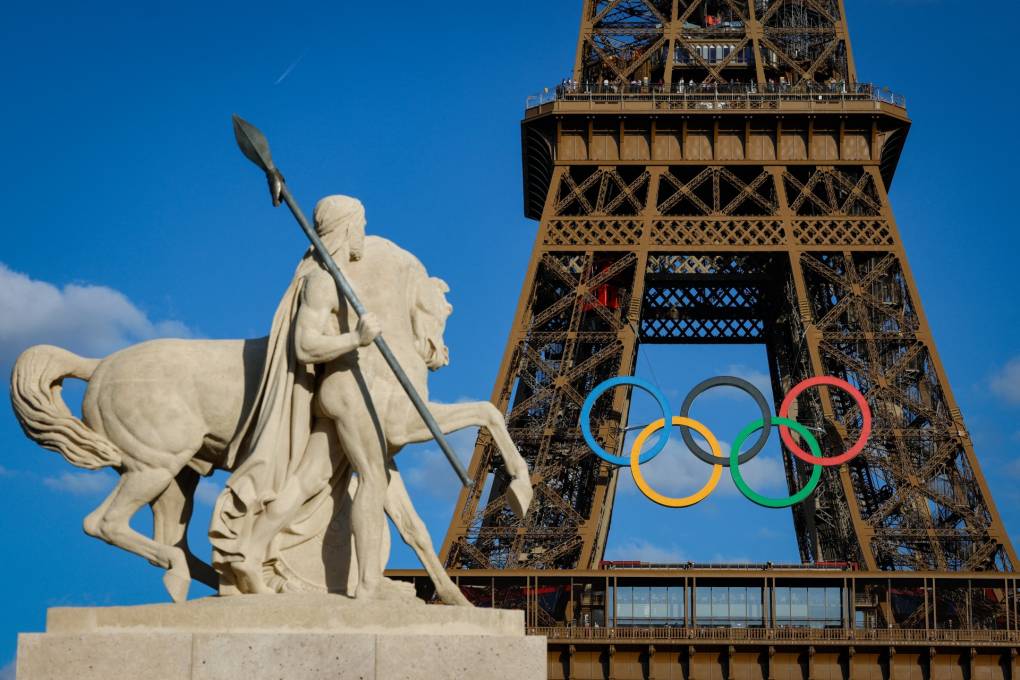
"caption": "Olympic rings are seen on the Eiffel Tower near the restored statue of 'Cavalier Arabe' (Arab rider) on the Pont d'Iena bridge in Paris on July 4, 2024, ahead of the upcoming Paris 2024 Olympic Games.",
"credit": "Geoffroy Van Der Hasselt/AFP/Getty Images",
"altTag": null,
"description": null,
"imgSizes": {
"medium": {
"file": "https://cdn.kqed.org/wp-content/uploads/sites/10/2024/07/GettyImages-2159950810-800x533.jpg",
"width": 800,
"height": 533,
"mimeType": "image/jpeg"
},
"large": {
"file": "https://cdn.kqed.org/wp-content/uploads/sites/10/2024/07/GettyImages-2159950810-1020x680.jpg",
"width": 1020,
"height": 680,
"mimeType": "image/jpeg"
},
"thumbnail": {
"file": "https://cdn.kqed.org/wp-content/uploads/sites/10/2024/07/GettyImages-2159950810-160x107.jpg",
"width": 160,
"height": 107,
"mimeType": "image/jpeg"
},
"1536x1536": {
"file": "https://cdn.kqed.org/wp-content/uploads/sites/10/2024/07/GettyImages-2159950810-1536x1024.jpg",
"width": 1536,
"height": 1024,
"mimeType": "image/jpeg"
},
"post-thumbnail": {
"file": "https://cdn.kqed.org/wp-content/uploads/sites/10/2024/07/GettyImages-2159950810-672x372.jpg",
"width": 672,
"height": 372,
"mimeType": "image/jpeg"
},
"twentyfourteen-full-width": {
"file": "https://cdn.kqed.org/wp-content/uploads/sites/10/2024/07/GettyImages-2159950810-1038x576.jpg",
"width": 1038,
"height": 576,
"mimeType": "image/jpeg"
},
"kqedFullSize": {
"file": "https://cdn.kqed.org/wp-content/uploads/sites/10/2024/07/GettyImages-2159950810.jpg",
"width": 1920,
"height": 1280
}
},
"isLoading": false,
"fetchFailed": false
},
"news_11981905": {
"type": "attachments",
"id": "news_11981905",
"meta": {
"index": "attachments_1716263798",
"site": "news",
"id": "11981905",
"found": true
},
"title": "240402-SFPDMOUNTED-JY-054-KQED",
"publishDate": 1712250400,
"status": "inherit",
"parent": 0,
"modified": 1719606083,
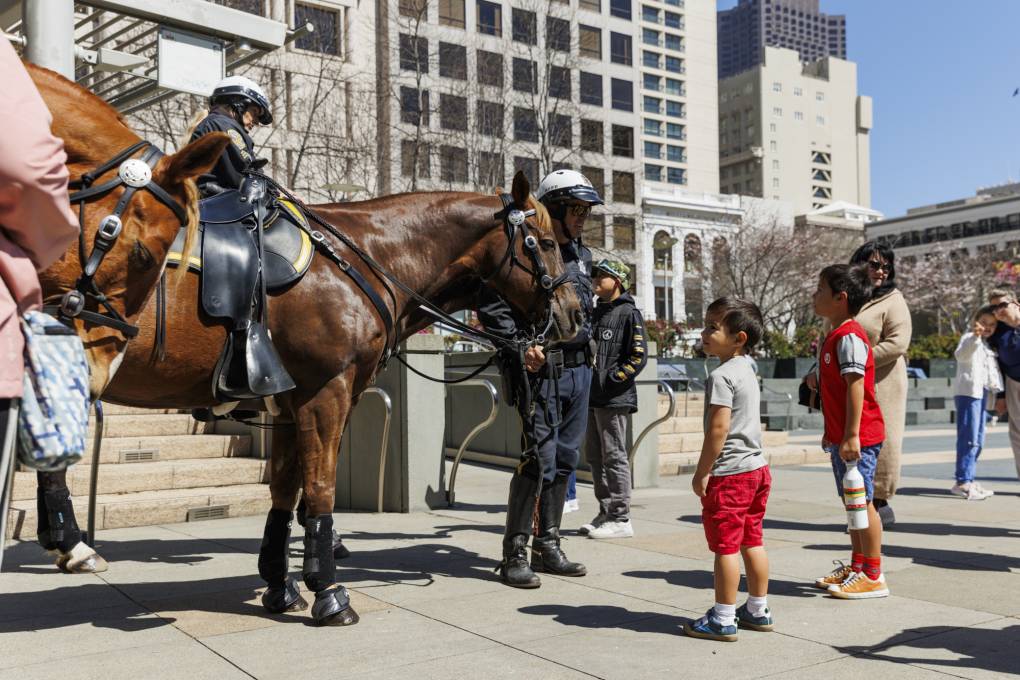
"caption": "People take photos of and approach San Francisco Police Department Mounted Patrol Unit horses in Union Square in San Francisco on Tuesday, April 2, 2024. The Mounted Patrol Unit supplements patrol all over the city, and has done so since 1874.",
"credit": "Juliana Yamada/KQED",
"altTag": "Kids interact with police officers on horseback in an urban plaza.",
"description": null,
"imgSizes": {
"medium": {
"file": "https://cdn.kqed.org/wp-content/uploads/sites/10/2024/04/240402-SFPDMOUNTED-JY-054-KQED-800x533.jpg",
"width": 800,
"height": 533,
"mimeType": "image/jpeg"
},
"large": {
"file": "https://cdn.kqed.org/wp-content/uploads/sites/10/2024/04/240402-SFPDMOUNTED-JY-054-KQED-1020x680.jpg",
"width": 1020,
"height": 680,
"mimeType": "image/jpeg"
},
"thumbnail": {
"file": "https://cdn.kqed.org/wp-content/uploads/sites/10/2024/04/240402-SFPDMOUNTED-JY-054-KQED-160x107.jpg",
"width": 160,
"height": 107,
"mimeType": "image/jpeg"
},
"1536x1536": {
"file": "https://cdn.kqed.org/wp-content/uploads/sites/10/2024/04/240402-SFPDMOUNTED-JY-054-KQED-1536x1024.jpg",
"width": 1536,
"height": 1024,
"mimeType": "image/jpeg"
},
"post-thumbnail": {
"file": "https://cdn.kqed.org/wp-content/uploads/sites/10/2024/04/240402-SFPDMOUNTED-JY-054-KQED-672x372.jpg",
"width": 672,
"height": 372,
"mimeType": "image/jpeg"
},
"twentyfourteen-full-width": {
"file": "https://cdn.kqed.org/wp-content/uploads/sites/10/2024/04/240402-SFPDMOUNTED-JY-054-KQED-1038x576.jpg",
"width": 1038,
"height": 576,
"mimeType": "image/jpeg"
},
"full-width": {
"file": "https://cdn.kqed.org/wp-content/uploads/sites/10/2024/04/240402-SFPDMOUNTED-JY-054-KQED-1920x1280.jpg",
"width": 1920,
"height": 1280,
"mimeType": "image/jpeg"
},
"kqedFullSize": {
"file": "https://cdn.kqed.org/wp-content/uploads/sites/10/2024/04/240402-SFPDMOUNTED-JY-054-KQED.jpg",
"width": 2000,
"height": 1333
}
},
"isLoading": false,
"fetchFailed": false
},
"news_11992083": {
"type": "attachments",
"id": "news_11992083",
"meta": {
"index": "attachments_1716263798",
"site": "news",
"id": "11992083",
"found": true
},
"title": "Susana Rojas outside of the Calle 24 Offices in San Francisco on June 26, 2024.",
"publishDate": 1719431731,
"status": "inherit",
"parent": 0,
"modified": 1719433248,
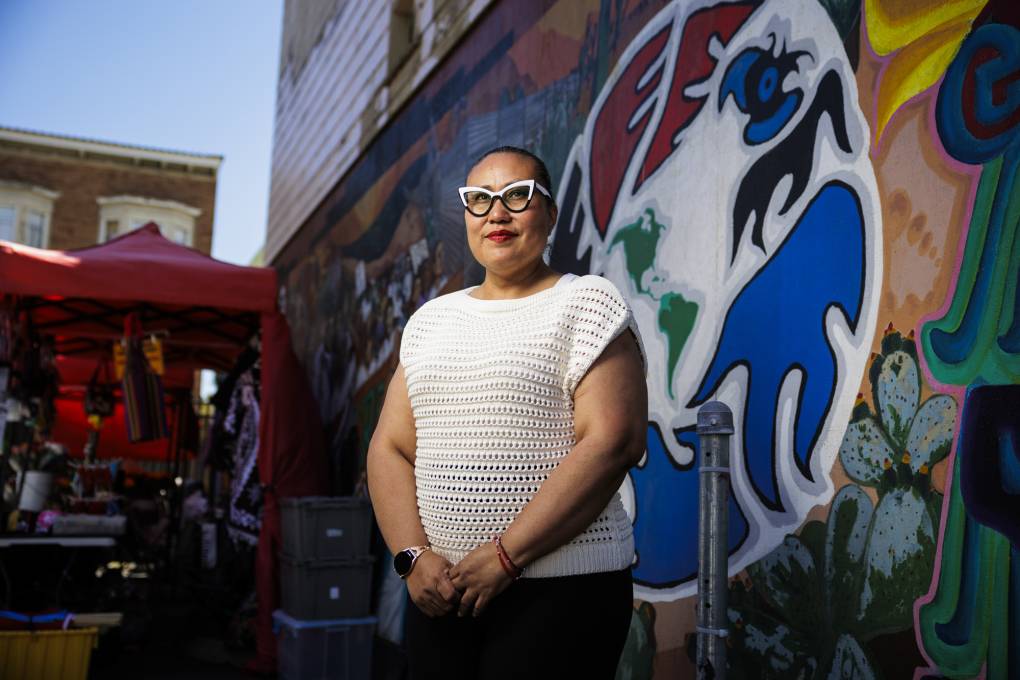
"caption": "Susana Rojas in La Placita on 24th Street in San Francisco on June 26, 2024.",
"credit": "Martin do Nascimento/KQED",
"altTag": null,
"description": null,
"imgSizes": {
"medium": {
"file": "https://cdn.kqed.org/wp-content/uploads/sites/10/2024/06/240626-SUSANA-ROJAS-MD-04-KQED-800x533.jpg",
"width": 800,
"height": 533,
"mimeType": "image/jpeg"
},
"large": {
"file": "https://cdn.kqed.org/wp-content/uploads/sites/10/2024/06/240626-SUSANA-ROJAS-MD-04-KQED-1020x680.jpg",
"width": 1020,
"height": 680,
"mimeType": "image/jpeg"
},
"thumbnail": {
"file": "https://cdn.kqed.org/wp-content/uploads/sites/10/2024/06/240626-SUSANA-ROJAS-MD-04-KQED-160x107.jpg",
"width": 160,
"height": 107,
"mimeType": "image/jpeg"
},
"1536x1536": {
"file": "https://cdn.kqed.org/wp-content/uploads/sites/10/2024/06/240626-SUSANA-ROJAS-MD-04-KQED-1536x1024.jpg",
"width": 1536,
"height": 1024,
"mimeType": "image/jpeg"
},
"post-thumbnail": {
"file": "https://cdn.kqed.org/wp-content/uploads/sites/10/2024/06/240626-SUSANA-ROJAS-MD-04-KQED-672x372.jpg",
"width": 672,
"height": 372,
"mimeType": "image/jpeg"
},
"twentyfourteen-full-width": {
"file": "https://cdn.kqed.org/wp-content/uploads/sites/10/2024/06/240626-SUSANA-ROJAS-MD-04-KQED-1038x576.jpg",
"width": 1038,
"height": 576,
"mimeType": "image/jpeg"
},
"full-width": {
"file": "https://cdn.kqed.org/wp-content/uploads/sites/10/2024/06/240626-SUSANA-ROJAS-MD-04-KQED-1920x1280.jpg",
"width": 1920,
"height": 1280,
"mimeType": "image/jpeg"
},
"kqedFullSize": {
"file": "https://cdn.kqed.org/wp-content/uploads/sites/10/2024/06/240626-SUSANA-ROJAS-MD-04-KQED.jpg",
"width": 2000,
"height": 1333
}
},
"isLoading": false,
"fetchFailed": false
},
"news_11993195": {
"type": "attachments",
"id": "news_11993195",
"meta": {
"index": "attachments_1716263798",
"site": "news",
"id": "11993195",
"found": true
},
"title": "240313-BART CRISIS INTERVENTION UNIT-MD-16_qed",
"publishDate": 1720461197,
"status": "inherit",
"parent": 11993189,
"modified": 1747766652,
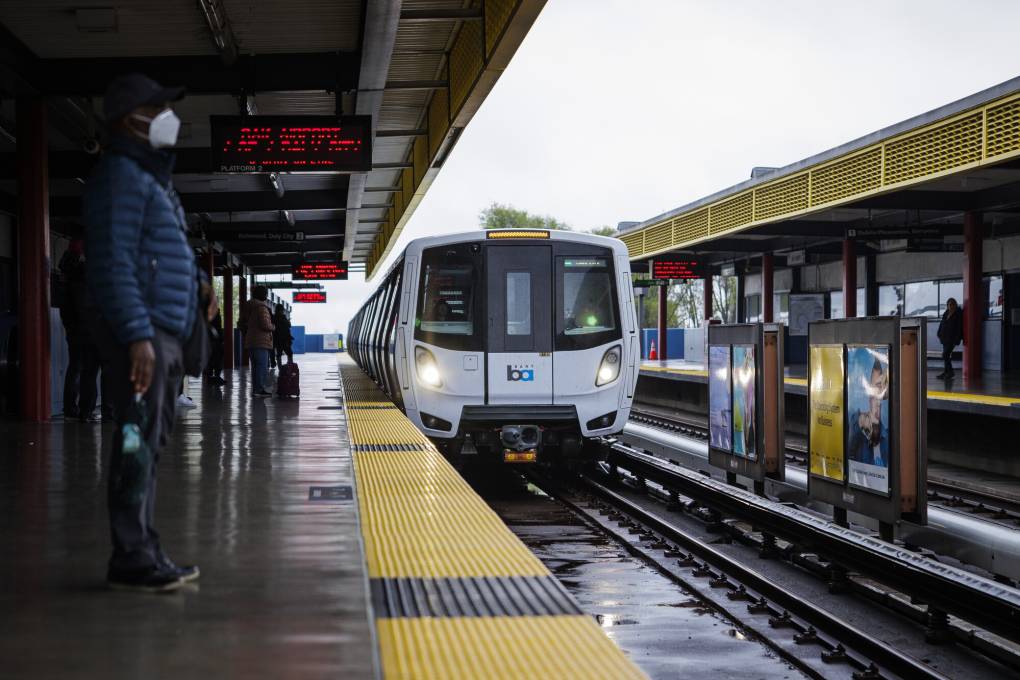
"caption": "A train approaches the San Leandro BART station on March 13, 2024.",
"credit": "Martin do Nascimento/KQED",
"altTag": null,
"description": null,
"imgSizes": {
"medium": {
"file": "https://cdn.kqed.org/wp-content/uploads/sites/10/2024/07/240313-BART-CRISIS-INTERVENTION-UNIT-MD-16_qed-800x533.jpg",
"width": 800,
"height": 533,
"mimeType": "image/jpeg"
},
"large": {
"file": "https://cdn.kqed.org/wp-content/uploads/sites/10/2024/07/240313-BART-CRISIS-INTERVENTION-UNIT-MD-16_qed-1020x680.jpg",
"width": 1020,
"height": 680,
"mimeType": "image/jpeg"
},
"thumbnail": {
"file": "https://cdn.kqed.org/wp-content/uploads/sites/10/2024/07/240313-BART-CRISIS-INTERVENTION-UNIT-MD-16_qed-160x107.jpg",
"width": 160,
"height": 107,
"mimeType": "image/jpeg"
},
"1536x1536": {
"file": "https://cdn.kqed.org/wp-content/uploads/sites/10/2024/07/240313-BART-CRISIS-INTERVENTION-UNIT-MD-16_qed-1536x1024.jpg",
"width": 1536,
"height": 1024,
"mimeType": "image/jpeg"
},
"post-thumbnail": {
"file": "https://cdn.kqed.org/wp-content/uploads/sites/10/2024/07/240313-BART-CRISIS-INTERVENTION-UNIT-MD-16_qed-672x372.jpg",
"width": 672,
"height": 372,
"mimeType": "image/jpeg"
},
"twentyfourteen-full-width": {
"file": "https://cdn.kqed.org/wp-content/uploads/sites/10/2024/07/240313-BART-CRISIS-INTERVENTION-UNIT-MD-16_qed-1038x576.jpg",
"width": 1038,
"height": 576,
"mimeType": "image/jpeg"
},
"full-width": {
"file": "https://cdn.kqed.org/wp-content/uploads/sites/10/2024/07/240313-BART-CRISIS-INTERVENTION-UNIT-MD-16_qed-1920x1280.jpg",
"width": 1920,
"height": 1280,
"mimeType": "image/jpeg"
},
"kqedFullSize": {
"file": "https://cdn.kqed.org/wp-content/uploads/sites/10/2024/07/240313-BART-CRISIS-INTERVENTION-UNIT-MD-16_qed.jpg",
"width": 1999,
"height": 1333
}
},
"isLoading": false,
"fetchFailed": false
},
"news_11993188": {
"type": "attachments",
"id": "news_11993188",
"meta": {
"index": "attachments_1716263798",
"site": "news",
"id": "11993188",
"found": true
},
"title": "230615-brooklyn basin-239-ks.NEF-04-ks_qed",
"publishDate": 1720461011,
"status": "inherit",
"parent": 11993185,
"modified": 1720461039,
"caption": "The view from at an affordable housing complex in Brooklyn Basin in Oakland, California on June 15, 2023. MidPen Housing has added nearly 1,000 homes to the new neighborhood along the city’s waterfront and plans to put in 3,000 more.",
"credit": "Kori Suzuki/KQED",
"altTag": null,
"description": null,
"imgSizes": {
"medium": {
"file": "https://cdn.kqed.org/wp-content/uploads/sites/10/2024/07/230615-brooklyn-basin-239-ks.NEF-04-ks_qed-800x532.jpg",
"width": 800,
"height": 532,
"mimeType": "image/jpeg"
},
"large": {
"file": "https://cdn.kqed.org/wp-content/uploads/sites/10/2024/07/230615-brooklyn-basin-239-ks.NEF-04-ks_qed-1020x679.jpg",
"width": 1020,
"height": 679,
"mimeType": "image/jpeg"
},
"thumbnail": {
"file": "https://cdn.kqed.org/wp-content/uploads/sites/10/2024/07/230615-brooklyn-basin-239-ks.NEF-04-ks_qed-160x106.jpg",
"width": 160,
"height": 106,
"mimeType": "image/jpeg"
},
"1536x1536": {
"file": "https://cdn.kqed.org/wp-content/uploads/sites/10/2024/07/230615-brooklyn-basin-239-ks.NEF-04-ks_qed-1536x1022.jpg",
"width": 1536,
"height": 1022,
"mimeType": "image/jpeg"
},
"post-thumbnail": {
"file": "https://cdn.kqed.org/wp-content/uploads/sites/10/2024/07/230615-brooklyn-basin-239-ks.NEF-04-ks_qed-672x372.jpg",
"width": 672,
"height": 372,
"mimeType": "image/jpeg"
},
"twentyfourteen-full-width": {
"file": "https://cdn.kqed.org/wp-content/uploads/sites/10/2024/07/230615-brooklyn-basin-239-ks.NEF-04-ks_qed-1038x576.jpg",
"width": 1038,
"height": 576,
"mimeType": "image/jpeg"
},
"full-width": {
"file": "https://cdn.kqed.org/wp-content/uploads/sites/10/2024/07/230615-brooklyn-basin-239-ks.NEF-04-ks_qed-1920x1278.jpg",
"width": 1920,
"height": 1278,
"mimeType": "image/jpeg"
},
"kqedFullSize": {
"file": "https://cdn.kqed.org/wp-content/uploads/sites/10/2024/07/230615-brooklyn-basin-239-ks.NEF-04-ks_qed.jpg",
"width": 2000,
"height": 1331
}
},
"isLoading": false,
"fetchFailed": false
},
"news_11993115": {
"type": "attachments",
"id": "news_11993115",
"meta": {
"index": "attachments_1716263798",
"site": "news",
"id": "11993115",
"found": true
},
"title": "052_KQED_SFPRIDEPARADE_06262022-KQED",
"publishDate": 1720287342,
"status": "inherit",
"parent": 11993111,
"modified": 1720287427,
"caption": "Members of the Oasis SF float close out the San Francisco Pride Parade on June 26, 2022.",
"credit": "Beth LaBerge/KQED",
"altTag": "People in colorful costumes walk down the street in San Francisco.",
"description": null,
"imgSizes": {
"medium": {
"file": "https://cdn.kqed.org/wp-content/uploads/sites/10/2024/07/052_KQED_SFPRIDEPARADE_06262022-KQED-800x533.jpg",
"width": 800,
"height": 533,
"mimeType": "image/jpeg"
},
"large": {
"file": "https://cdn.kqed.org/wp-content/uploads/sites/10/2024/07/052_KQED_SFPRIDEPARADE_06262022-KQED-1020x680.jpg",
"width": 1020,
"height": 680,
"mimeType": "image/jpeg"
},
"thumbnail": {
"file": "https://cdn.kqed.org/wp-content/uploads/sites/10/2024/07/052_KQED_SFPRIDEPARADE_06262022-KQED-160x107.jpg",
"width": 160,
"height": 107,
"mimeType": "image/jpeg"
},
"1536x1536": {
"file": "https://cdn.kqed.org/wp-content/uploads/sites/10/2024/07/052_KQED_SFPRIDEPARADE_06262022-KQED-1536x1024.jpg",
"width": 1536,
"height": 1024,
"mimeType": "image/jpeg"
},
"post-thumbnail": {
"file": "https://cdn.kqed.org/wp-content/uploads/sites/10/2024/07/052_KQED_SFPRIDEPARADE_06262022-KQED-672x372.jpg",
"width": 672,
"height": 372,
"mimeType": "image/jpeg"
},
"twentyfourteen-full-width": {
"file": "https://cdn.kqed.org/wp-content/uploads/sites/10/2024/07/052_KQED_SFPRIDEPARADE_06262022-KQED-1038x576.jpg",
"width": 1038,
"height": 576,
"mimeType": "image/jpeg"
},
"full-width": {
"file": "https://cdn.kqed.org/wp-content/uploads/sites/10/2024/07/052_KQED_SFPRIDEPARADE_06262022-KQED-1920x1280.jpg",
"width": 1920,
"height": 1280,
"mimeType": "image/jpeg"
},
"kqedFullSize": {
"file": "https://cdn.kqed.org/wp-content/uploads/sites/10/2024/07/052_KQED_SFPRIDEPARADE_06262022-KQED.jpg",
"width": 2000,
"height": 1333
}
},
"isLoading": false,
"fetchFailed": false
},
"news_11990371": {
"type": "attachments",
"id": "news_11990371",
"meta": {
"index": "attachments_1716263798",
"site": "news",
"id": "11990371",
"found": true
},
"title": "DEMONSTRATORS PICTURE",
"publishDate": 1718337373,
"status": "inherit",
"parent": 11990370,
"modified": 1718337398,
"caption": "Manifestantes contra la reelección del presidente salvadoreño Nayib Bukele en San Francisco el día de su toma de posesión el 1 de junio de 2024.",
"credit": "Gina Castro/KQED",
"altTag": null,
"description": null,
"imgSizes": {
"medium": {
"file": "https://cdn.kqed.org/wp-content/uploads/sites/10/2024/06/DEMONSTRATORS-PICTURE-800x533.jpg",
"width": 800,
"height": 533,
"mimeType": "image/jpeg"
},
"thumbnail": {
"file": "https://cdn.kqed.org/wp-content/uploads/sites/10/2024/06/DEMONSTRATORS-PICTURE-160x107.jpg",
"width": 160,
"height": 107,
"mimeType": "image/jpeg"
},
"post-thumbnail": {
"file": "https://cdn.kqed.org/wp-content/uploads/sites/10/2024/06/DEMONSTRATORS-PICTURE-672x372.jpg",
"width": 672,
"height": 372,
"mimeType": "image/jpeg"
},
"twentyfourteen-full-width": {
"file": "https://cdn.kqed.org/wp-content/uploads/sites/10/2024/06/DEMONSTRATORS-PICTURE-1020x576.jpg",
"width": 1020,
"height": 576,
"mimeType": "image/jpeg"
},
"kqedFullSize": {
"file": "https://cdn.kqed.org/wp-content/uploads/sites/10/2024/06/DEMONSTRATORS-PICTURE.jpg",
"width": 1020,
"height": 680
}
},
"isLoading": false,
"fetchFailed": false
},
"news_11992539": {
"type": "attachments",
"id": "news_11992539",
"meta": {
"index": "attachments_1716263798",
"site": "news",
"id": "11992539",
"found": true
},
"title": "240612-SFMayoralDebate-90-BL_scr",
"publishDate": 1719621722,
"status": "inherit",
"parent": 11992466,
"modified": 1719859993,
"caption": "Daniel Lurie speaks during a San Francisco mayoral debate with candidates Ahsha Safaí, former Mayor Mark Farrell, Mayor London Breed and Aaron Peskin at the Sydney Goldstein Theater on June 12, 2024.",
"credit": "Beth LaBerge/KQED",
"altTag": null,
"description": null,
"imgSizes": {
"medium": {
"file": "https://cdn.kqed.org/wp-content/uploads/sites/10/2024/07/240612-SFMayoralDebate-90-BL_scr-800x533.jpg",
"width": 800,
"height": 533,
"mimeType": "image/jpeg"
},
"large": {
"file": "https://cdn.kqed.org/wp-content/uploads/sites/10/2024/07/240612-SFMayoralDebate-90-BL_scr-1020x680.jpg",
"width": 1020,
"height": 680,
"mimeType": "image/jpeg"
},
"thumbnail": {
"file": "https://cdn.kqed.org/wp-content/uploads/sites/10/2024/07/240612-SFMayoralDebate-90-BL_scr-160x107.jpg",
"width": 160,
"height": 107,
"mimeType": "image/jpeg"
},
"post-thumbnail": {
"file": "https://cdn.kqed.org/wp-content/uploads/sites/10/2024/07/240612-SFMayoralDebate-90-BL_scr-672x372.jpg",
"width": 672,
"height": 372,
"mimeType": "image/jpeg"
},
"twentyfourteen-full-width": {
"file": "https://cdn.kqed.org/wp-content/uploads/sites/10/2024/07/240612-SFMayoralDebate-90-BL_scr-1038x576.jpg",
"width": 1038,
"height": 576,
"mimeType": "image/jpeg"
},
"kqedFullSize": {
"file": "https://cdn.kqed.org/wp-content/uploads/sites/10/2024/07/240612-SFMayoralDebate-90-BL_scr.jpg",
"width": 1200,
"height": 800
}
},
"isLoading": false,
"fetchFailed": false
},
"news_11992642": {
"type": "attachments",
"id": "news_11992642",
"meta": {
"index": "attachments_1716263798",
"site": "news",
"id": "11992642",
"found": true
},
"title": "20240630_Pride_GC-26-KQED",
"publishDate": 1719794354,
"status": "inherit",
"parent": 0,
"modified": 1719856516,
"caption": "Participants celebrate during the Pride Parade in San Francisco on June 30, 2024.",
"credit": "Gina Castro/KQED",
"altTag": "A group of people wearing light turquoise shirts wave rainbow flags and fans while walking down the street.",
"description": null,
"imgSizes": {
"medium": {
"file": "https://cdn.kqed.org/wp-content/uploads/sites/10/2024/06/20240630_Pride_GC-26-KQED-800x533.jpg",
"width": 800,
"height": 533,
"mimeType": "image/jpeg"
},
"large": {
"file": "https://cdn.kqed.org/wp-content/uploads/sites/10/2024/06/20240630_Pride_GC-26-KQED-1020x680.jpg",
"width": 1020,
"height": 680,
"mimeType": "image/jpeg"
},
"thumbnail": {
"file": "https://cdn.kqed.org/wp-content/uploads/sites/10/2024/06/20240630_Pride_GC-26-KQED-160x107.jpg",
"width": 160,
"height": 107,
"mimeType": "image/jpeg"
},
"1536x1536": {
"file": "https://cdn.kqed.org/wp-content/uploads/sites/10/2024/06/20240630_Pride_GC-26-KQED-1536x1024.jpg",
"width": 1536,
"height": 1024,
"mimeType": "image/jpeg"
},
"post-thumbnail": {
"file": "https://cdn.kqed.org/wp-content/uploads/sites/10/2024/06/20240630_Pride_GC-26-KQED-672x372.jpg",
"width": 672,
"height": 372,
"mimeType": "image/jpeg"
},
"twentyfourteen-full-width": {
"file": "https://cdn.kqed.org/wp-content/uploads/sites/10/2024/06/20240630_Pride_GC-26-KQED-1038x576.jpg",
"width": 1038,
"height": 576,
"mimeType": "image/jpeg"
},
"full-width": {
"file": "https://cdn.kqed.org/wp-content/uploads/sites/10/2024/06/20240630_Pride_GC-26-KQED-1920x1280.jpg",
"width": 1920,
"height": 1280,
"mimeType": "image/jpeg"
},
"kqedFullSize": {
"file": "https://cdn.kqed.org/wp-content/uploads/sites/10/2024/06/20240630_Pride_GC-26-KQED.jpg?ver=1719794839",
"width": 2000,
"height": 1333
}
},
"isLoading": false,
"fetchFailed": false
},
"news_11991991": {
"type": "attachments",
"id": "news_11991991",
"meta": {
"index": "attachments_1716263798",
"site": "news",
"id": "11991991",
"found": true
},
"title": "sf-pride-2025",
"publishDate": 1719370613,
"status": "inherit",
"parent": 11991990,
"modified": 1750192930,
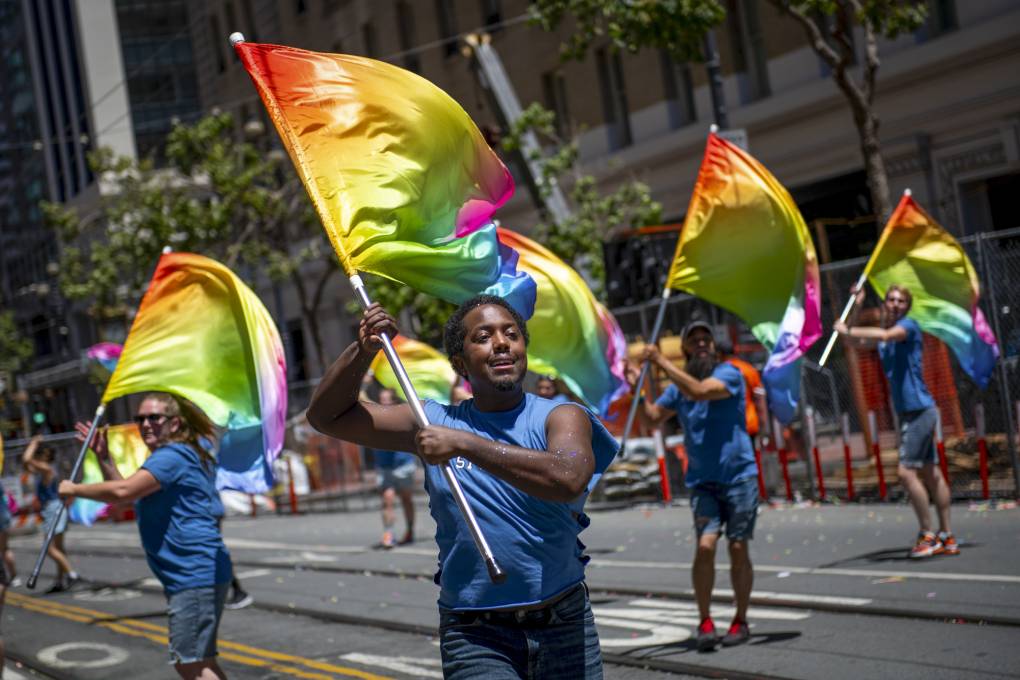
"caption": "Members of the Righteously Outrageous Twirling Corps perform during the San Francisco Pride Parade on June 26, 2022.",
"credit": "Beth LaBerge/KQED",
"altTag": "A group of flag twirlers holding rainbow flags perform on a street.",
"description": null,
"imgSizes": {
"medium": {
"file": "https://cdn.kqed.org/wp-content/uploads/sites/10/2024/06/047_KQED_SFPRIDEPARADE_06262022-KQED-800x533.jpg",
"width": 800,
"height": 533,
"mimeType": "image/jpeg"
},
"large": {
"file": "https://cdn.kqed.org/wp-content/uploads/sites/10/2024/06/047_KQED_SFPRIDEPARADE_06262022-KQED-1020x680.jpg",
"width": 1020,
"height": 680,
"mimeType": "image/jpeg"
},
"thumbnail": {
"file": "https://cdn.kqed.org/wp-content/uploads/sites/10/2024/06/047_KQED_SFPRIDEPARADE_06262022-KQED-160x107.jpg",
"width": 160,
"height": 107,
"mimeType": "image/jpeg"
},
"1536x1536": {
"file": "https://cdn.kqed.org/wp-content/uploads/sites/10/2024/06/047_KQED_SFPRIDEPARADE_06262022-KQED-1536x1024.jpg",
"width": 1536,
"height": 1024,
"mimeType": "image/jpeg"
},
"post-thumbnail": {
"file": "https://cdn.kqed.org/wp-content/uploads/sites/10/2024/06/047_KQED_SFPRIDEPARADE_06262022-KQED-672x372.jpg",
"width": 672,
"height": 372,
"mimeType": "image/jpeg"
},
"twentyfourteen-full-width": {
"file": "https://cdn.kqed.org/wp-content/uploads/sites/10/2024/06/047_KQED_SFPRIDEPARADE_06262022-KQED-1038x576.jpg",
"width": 1038,
"height": 576,
"mimeType": "image/jpeg"
},
"full-width": {
"file": "https://cdn.kqed.org/wp-content/uploads/sites/10/2024/06/047_KQED_SFPRIDEPARADE_06262022-KQED-1920x1280.jpg",
"width": 1920,
"height": 1280,
"mimeType": "image/jpeg"
},
"kqedFullSize": {
"file": "https://cdn.kqed.org/wp-content/uploads/sites/10/2024/06/047_KQED_SFPRIDEPARADE_06262022-KQED.jpg",
"width": 2000,
"height": 1333
}
},
"isLoading": false,
"fetchFailed": false
},
"news_11991940": {
"type": "attachments",
"id": "news_11991940",
"meta": {
"index": "attachments_1716263798",
"site": "news",
"id": "11991940",
"found": true
},
"title": "Buck sinks _ photo 3",
"publishDate": 1719356397,
"status": "inherit",
"parent": 11991921,
"modified": 1719517256,
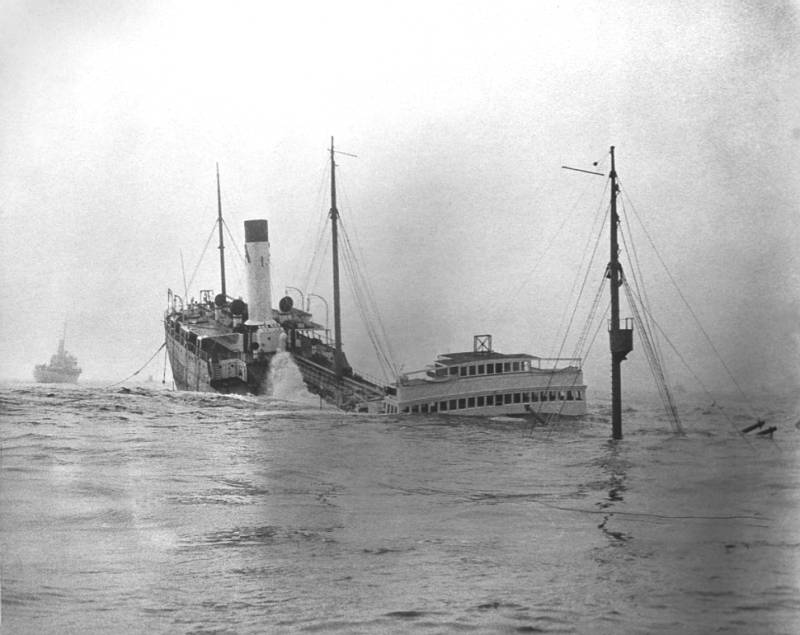
"caption": "The Frank H. Buck sank nose down near Mile Rocks Lighthouse after colliding with the SS President Coolidge on a foggy day.",
"credit": "San Francisco Maritime NHP Collections",
"altTag": "Black and white photo of a large ship sinking. Only the bow and stern poke above water.",
"description": null,
"imgSizes": {
"medium": {
"file": "https://cdn.kqed.org/wp-content/uploads/sites/10/2024/06/Buck-sinks-_-photo-3-800x635.jpeg",
"width": 800,
"height": 635,
"mimeType": "image/jpeg"
},
"thumbnail": {
"file": "https://cdn.kqed.org/wp-content/uploads/sites/10/2024/06/Buck-sinks-_-photo-3-160x127.jpeg",
"width": 160,
"height": 127,
"mimeType": "image/jpeg"
},
"post-thumbnail": {
"file": "https://cdn.kqed.org/wp-content/uploads/sites/10/2024/06/Buck-sinks-_-photo-3-672x372.jpeg",
"width": 672,
"height": 372,
"mimeType": "image/jpeg"
},
"twentyfourteen-full-width": {
"file": "https://cdn.kqed.org/wp-content/uploads/sites/10/2024/06/Buck-sinks-_-photo-3-970x576.jpeg",
"width": 970,
"height": 576,
"mimeType": "image/jpeg"
},
"kqedFullSize": {
"file": "https://cdn.kqed.org/wp-content/uploads/sites/10/2024/06/Buck-sinks-_-photo-3.jpeg",
"width": 970,
"height": 770
}
},
"isLoading": false,
"fetchFailed": false
},
"news_11990987": {
"type": "attachments",
"id": "news_11990987",
"meta": {
"index": "attachments_1716263798",
"site": "news",
"id": "11990987",
"found": true
},
"title": "240408-FCIDublin-017-BL_qut (1)",
"publishDate": 1718748119,
"status": "inherit",
"parent": 11990979,
"modified": 1718748232,
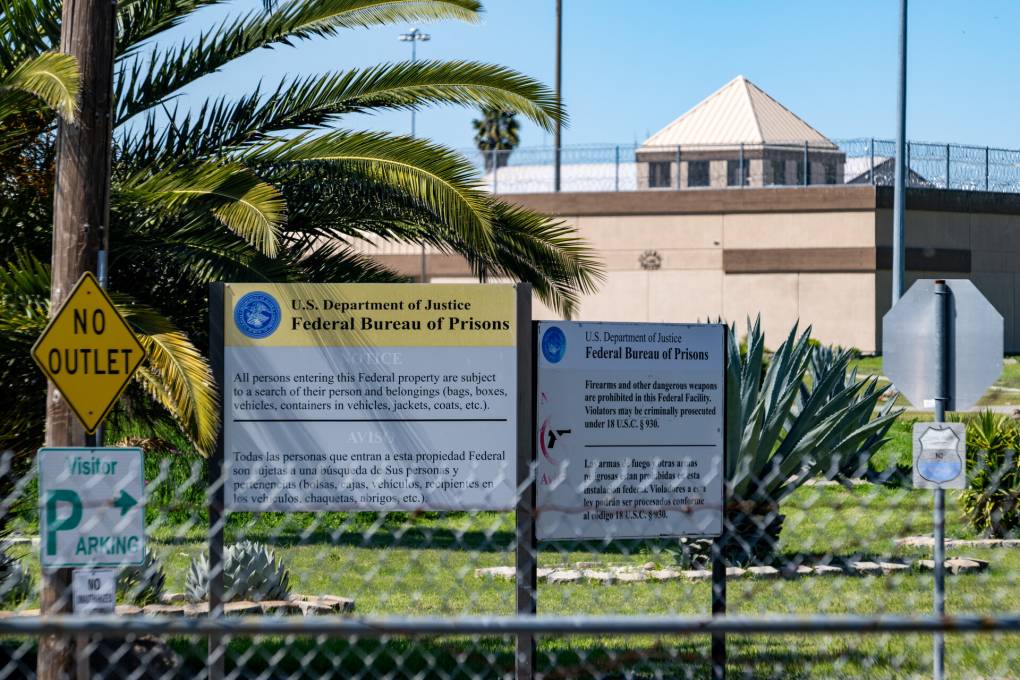
"caption": "The Federal Bureau of Prisons abruptly shut down FCI Dublin in April.",
"credit": "Beth LaBerge/KQED",
"altTag": null,
"description": null,
"imgSizes": {
"medium": {
"file": "https://cdn.kqed.org/wp-content/uploads/sites/10/2024/06/240408-FCIDublin-017-BL_qut-1-800x533.jpg",
"width": 800,
"height": 533,
"mimeType": "image/jpeg"
},
"large": {
"file": "https://cdn.kqed.org/wp-content/uploads/sites/10/2024/06/240408-FCIDublin-017-BL_qut-1-1020x680.jpg",
"width": 1020,
"height": 680,
"mimeType": "image/jpeg"
},
"thumbnail": {
"file": "https://cdn.kqed.org/wp-content/uploads/sites/10/2024/06/240408-FCIDublin-017-BL_qut-1-160x107.jpg",
"width": 160,
"height": 107,
"mimeType": "image/jpeg"
},
"1536x1536": {
"file": "https://cdn.kqed.org/wp-content/uploads/sites/10/2024/06/240408-FCIDublin-017-BL_qut-1-1536x1024.jpg",
"width": 1536,
"height": 1024,
"mimeType": "image/jpeg"
},
"post-thumbnail": {
"file": "https://cdn.kqed.org/wp-content/uploads/sites/10/2024/06/240408-FCIDublin-017-BL_qut-1-672x372.jpg",
"width": 672,
"height": 372,
"mimeType": "image/jpeg"
},
"twentyfourteen-full-width": {
"file": "https://cdn.kqed.org/wp-content/uploads/sites/10/2024/06/240408-FCIDublin-017-BL_qut-1-1038x576.jpg",
"width": 1038,
"height": 576,
"mimeType": "image/jpeg"
},
"kqedFullSize": {
"file": "https://cdn.kqed.org/wp-content/uploads/sites/10/2024/06/240408-FCIDublin-017-BL_qut-1.jpg",
"width": 1920,
"height": 1280
}
},
"isLoading": false,
"fetchFailed": false
}
},
"audioPlayerReducer": {
"postId": "stream_live",
"isPaused": true,
"isPlaying": false,
"pfsActive": false,
"pledgeModalIsOpen": true,
"playerDrawerIsOpen": false,
"liveAudioPlayStartedAt": 0,
"liveAudioPlayContext": ""
},
"authorsReducer": {
"byline_news_11990370": {
"type": "authors",
"id": "byline_news_11990370",
"meta": {
"override": true
},
"slug": "byline_news_11990370",
"name": "\u003ca href=\"https://twitter.com/latinidan\">Daniel Eduardo Hernández\u003c/a>",
"isLoading": false
},
"byline_news_11991921": {
"type": "authors",
"id": "byline_news_11991921",
"meta": {
"override": true
},
"slug": "byline_news_11991921",
"name": "Anna Marie Yanny",
"isLoading": false
},
"katrinaschwartz": {
"type": "authors",
"id": "234",
"meta": {
"index": "authors_1716337520",
"id": "234",
"found": true
},
"name": "Katrina Schwartz",
"firstName": "Katrina",
"lastName": "Schwartz",
"slug": "katrinaschwartz",
"email": "kschwartz@kqed.org",
"display_author_email": false,
"staff_mastheads": [
"news"
],
"title": "Producer",
"bio": "Katrina Schwartz is a journalist based in San Francisco. She's worked at KPCC public radio in LA and has reported on air and online for KQED since 2010. She covered how teaching and learning is changing for MindShift between 2012 and 2020. She is the co-host of the MindShift podcast and now produces KQED's Bay Curious podcast.",
"avatar": "https://secure.gravatar.com/avatar/edb4ee79070447a018538c9aae6eeecf28786515b8a0c30e43b6b7dce5aa44c8?s=600&d=blank&r=g",
"twitter": "kschwart",
"bluesky": null,
"facebook": null,
"instagram": null,
"linkedin": null,
"sites": [
{
"site": "",
"roles": [
"editor"
]
},
{
"site": "news",
"roles": [
"editor"
]
},
{
"site": "mindshift",
"roles": [
"administrator"
]
},
{
"site": "stateofhealth",
"roles": [
"author"
]
},
{
"site": "science",
"roles": [
"editor"
]
}
],
"headData": {
"title": "Katrina Schwartz | KQED",
"description": "Producer",
"ogImgSrc": "https://secure.gravatar.com/avatar/edb4ee79070447a018538c9aae6eeecf28786515b8a0c30e43b6b7dce5aa44c8?s=600&d=blank&r=g",
"twImgSrc": "https://secure.gravatar.com/avatar/edb4ee79070447a018538c9aae6eeecf28786515b8a0c30e43b6b7dce5aa44c8?s=600&d=blank&r=g"
},
"isLoading": false,
"link": "/author/katrinaschwartz"
},
"kqed": {
"type": "authors",
"id": "236",
"meta": {
"index": "authors_1716337520",
"id": "236",
"found": true
},
"name": "KQED News Staff",
"firstName": "KQED News Staff",
"lastName": null,
"slug": "kqed",
"email": "faq@kqed.org",
"display_author_email": false,
"staff_mastheads": [],
"title": null,
"bio": null,
"avatar": "https://secure.gravatar.com/avatar/ef0e801a68c4c54afa9180db14084167?s=600&d=blank&r=g",
"twitter": null,
"facebook": null,
"instagram": null,
"linkedin": null,
"sites": [
{
"site": "arts",
"roles": [
"contributor"
]
},
{
"site": "news",
"roles": [
"editor"
]
},
{
"site": "futureofyou",
"roles": [
"author"
]
}
],
"headData": {
"title": "KQED News Staff | KQED",
"description": null,
"ogImgSrc": "https://secure.gravatar.com/avatar/ef0e801a68c4c54afa9180db14084167?s=600&d=blank&r=g",
"twImgSrc": "https://secure.gravatar.com/avatar/ef0e801a68c4c54afa9180db14084167?s=600&d=blank&r=g"
},
"isLoading": false,
"link": "/author/kqed"
},
"ralexandra": {
"type": "authors",
"id": "11242",
"meta": {
"index": "authors_1716337520",
"id": "11242",
"found": true
},
"name": "Rae Alexandra",
"firstName": "Rae",
"lastName": "Alexandra",
"slug": "ralexandra",
"email": "ralexandra@kqed.org",
"display_author_email": true,
"staff_mastheads": [],
"title": "Reporter/Producer",
"bio": "Rae Alexandra is a Reporter/Producer for KQED Arts & Culture, and the creator/author of the \u003ca href=\"https://www.kqed.org/arts/program/rebel-girls-from-bay-area-history\">Rebel Girls From Bay Area History\u003c/a> and \u003ca href=\"https://www.kqed.org/bizarrebayarea\">Bizarre Bay Area\u003c/a> series. Her debut book, \u003ca href=\"https://citylights.com/politics-current-events-history/unsung-heroines35-women-who-changed/\">Unsung Heroines: 35 Women Who Changed the Bay Area\u003c/a> was published by City Lights in March 2026. In 2023, Rae was awarded an SPJ Excellence in Journalism Award for Arts & Culture. Rae was born and raised in Wales and subsequently — even after two decades in Northern California — still uses phrases that regularly baffle her coworkers.",
"avatar": "https://secure.gravatar.com/avatar/edfee8176c80cc0a382b051190f5341997df378a934a5774dcb0977732dfd401?s=600&d=blank&r=g",
"twitter": null,
"bluesky": null,
"facebook": null,
"instagram": null,
"linkedin": null,
"sites": [
{
"site": "arts",
"roles": [
"subscriber"
]
},
{
"site": "news",
"roles": [
"subscriber"
]
},
{
"site": "pop",
"roles": [
"subscriber"
]
},
{
"site": "bayareabites",
"roles": [
"subscriber"
]
},
{
"site": "science",
"roles": [
"subscriber"
]
}
],
"headData": {
"title": "Rae Alexandra | KQED",
"description": "Reporter/Producer",
"ogImgSrc": "https://secure.gravatar.com/avatar/edfee8176c80cc0a382b051190f5341997df378a934a5774dcb0977732dfd401?s=600&d=blank&r=g",
"twImgSrc": "https://secure.gravatar.com/avatar/edfee8176c80cc0a382b051190f5341997df378a934a5774dcb0977732dfd401?s=600&d=blank&r=g"
},
"isLoading": false,
"link": "/author/ralexandra"
},
"btorres": {
"type": "authors",
"id": "11666",
"meta": {
"index": "authors_1716337520",
"id": "11666",
"found": true
},
"name": "Blanca Torres",
"firstName": "Blanca",
"lastName": "Torres",
"slug": "btorres",
"email": "btorres@kqed.org",
"display_author_email": true,
"staff_mastheads": [
"news"
],
"title": "Producer, Forum",
"bio": "Blanca Torres brings sharp news judgement and keen sense of lively conversation to her work as producer for Forum. She loves producing shows that leave listeners feeling like they heard distinctive voices, learned something new and gained a fresh perspective.\r\n\r\nShe joined KQED in January of 2020 after 16 years of working as a newspaper reporter most recently at the \u003cem>San Francisco Business Times,\u003c/em> where she wrote about real estate and economic development. Before that, she covered a variety of beats including crime, education, retail, workplace, the economy, consumer issues, and small business for the \u003cem>Contra Costa Times, Baltimore Sun\u003c/em> and\u003cem> The Seattle Times\u003c/em>. In addition to reporting, she worked as an editorial writer and columnist for the \u003cem>Seattle Times\u003c/em>. From 2017 to 2020, Blanca won a total of ten awards from the National Association of Real Estate Editors and won first place for land use reporting from the California News Publishers Association two years in a row. She is also a member and former board member for the National Association of Hispanic Journalists.\r\n\r\nA native of the Pacific Northwest, Blanca earned her bachelor's degree from Vanderbilt University in Nashville and a master's in fine arts in creative writing at Mills College. She lives in the East Bay with her family.",
"avatar": "https://secure.gravatar.com/avatar/50b49d19b14a1eed34f26ebf4681152cdd81574ed21851100871ccd29e578cdc?s=600&d=blank&r=g",
"twitter": "@blancawrites",
"bluesky": null,
"facebook": null,
"instagram": null,
"linkedin": null,
"sites": [
{
"site": "arts",
"roles": [
"editor"
]
},
{
"site": "news",
"roles": [
"editor"
]
},
{
"site": "forum",
"roles": [
"editor"
]
}
],
"headData": {
"title": "Blanca Torres | KQED",
"description": "Producer, Forum",
"ogImgSrc": "https://secure.gravatar.com/avatar/50b49d19b14a1eed34f26ebf4681152cdd81574ed21851100871ccd29e578cdc?s=600&d=blank&r=g",
"twImgSrc": "https://secure.gravatar.com/avatar/50b49d19b14a1eed34f26ebf4681152cdd81574ed21851100871ccd29e578cdc?s=600&d=blank&r=g"
},
"isLoading": false,
"link": "/author/btorres"
},
"abandlamudi": {
"type": "authors",
"id": "11672",
"meta": {
"index": "authors_1716337520",
"id": "11672",
"found": true
},
"name": "Adhiti Bandlamudi",
"firstName": "Adhiti",
"lastName": "Bandlamudi",
"slug": "abandlamudi",
"email": "abandlamudi@kqed.org",
"display_author_email": false,
"staff_mastheads": [
"news"
],
"title": "KQED Housing Reporter",
"bio": "Adhiti Bandlamudi reports for KQED's Housing desk. She focuses on how housing gets built across the Bay Area. Before joining KQED in 2020, she reported for WUNC in Durham, North Carolina, WABE in Atlanta, Georgia and Capital Public Radio in Sacramento. In 2017, she was awarded a Kroc Fellowship at NPR where she reported on everything from sprinkles to the Golden State Killer's arrest. When she's not reporting, she's baking new recipes in her kitchen or watching movies with friends and family. She's originally from Georgia and has strong opinions about Great British Bake Off.",
"avatar": "https://secure.gravatar.com/avatar/868129c8b257bb99a3500e2c86a65400?s=600&d=mm&r=g",
"twitter": "oddity_adhiti",
"facebook": null,
"instagram": null,
"linkedin": null,
"sites": [
{
"site": "arts",
"roles": [
"author"
]
},
{
"site": "news",
"roles": [
"editor"
]
},
{
"site": "liveblog",
"roles": [
"author"
]
}
],
"headData": {
"title": "Adhiti Bandlamudi | KQED",
"description": "KQED Housing Reporter",
"ogImgSrc": "https://secure.gravatar.com/avatar/868129c8b257bb99a3500e2c86a65400?s=600&d=mm&r=g",
"twImgSrc": "https://secure.gravatar.com/avatar/868129c8b257bb99a3500e2c86a65400?s=600&d=mm&r=g"
},
"isLoading": false,
"link": "/author/abandlamudi"
},
"ccabreralomeli": {
"type": "authors",
"id": "11708",
"meta": {
"index": "authors_1716337520",
"id": "11708",
"found": true
},
"name": "Carlos Cabrera-Lomelí",
"firstName": "Carlos",
"lastName": "Cabrera-Lomelí",
"slug": "ccabreralomeli",
"email": "ccabreralomeli@KQED.org",
"display_author_email": true,
"staff_mastheads": [
"news"
],
"title": "Community Reporter",
"bio": "Carlos Cabrera-Lomelí is a community reporter with KQED's digital engagement team. He also reports and co-produces for KQED's bilingual news hub KQED en Español. He grew up in San Francisco's Mission District and has previously worked with Univision, 48 Hills and REFORMA in Mexico City.",
"avatar": "https://secure.gravatar.com/avatar/c309be9665e484f887b818c89e273ecc673004f426f36b24d00a4d813a2e0518?s=600&d=blank&r=g",
"twitter": "@LomeliCabrera",
"bluesky": null,
"facebook": null,
"instagram": null,
"linkedin": null,
"sites": [
{
"site": "arts",
"roles": [
"editor"
]
},
{
"site": "news",
"roles": [
"editor"
]
},
{
"site": "about",
"roles": [
"editor"
]
},
{
"site": "science",
"roles": [
"editor"
]
},
{
"site": "perspectives",
"roles": [
"editor"
]
},
{
"site": "elections",
"roles": [
"editor"
]
},
{
"site": "liveblog",
"roles": [
"contributor"
]
}
],
"headData": {
"title": "Carlos Cabrera-Lomelí | KQED",
"description": "Community Reporter",
"ogImgSrc": "https://secure.gravatar.com/avatar/c309be9665e484f887b818c89e273ecc673004f426f36b24d00a4d813a2e0518?s=600&d=blank&r=g",
"twImgSrc": "https://secure.gravatar.com/avatar/c309be9665e484f887b818c89e273ecc673004f426f36b24d00a4d813a2e0518?s=600&d=blank&r=g"
},
"isLoading": false,
"link": "/author/ccabreralomeli"
},
"sjohnson": {
"type": "authors",
"id": "11840",
"meta": {
"index": "authors_1716337520",
"id": "11840",
"found": true
},
"name": "Sydney Johnson",
"firstName": "Sydney",
"lastName": "Johnson",
"slug": "sjohnson",
"email": "sjohnson@kqed.org",
"display_author_email": false,
"staff_mastheads": [
"news"
],
"title": "KQED Reporter",
"bio": "Sydney Johnson is a general assignment reporter at KQED. She previously reported on public health and city government at the San Francisco Examiner, and before that, she covered statewide education policy for EdSource. Her reporting has won multiple local, state and national awards. Sydney is a graduate of the University of California, Berkeley and lives in San Francisco.",
"avatar": "https://secure.gravatar.com/avatar/97855f2719b72ad6190b7c535fe642c8?s=600&d=blank&r=g",
"twitter": "sydneyfjohnson",
"facebook": null,
"instagram": null,
"linkedin": null,
"sites": [
{
"site": "news",
"roles": [
"editor"
]
}
],
"headData": {
"title": "Sydney Johnson | KQED",
"description": "KQED Reporter",
"ogImgSrc": "https://secure.gravatar.com/avatar/97855f2719b72ad6190b7c535fe642c8?s=600&d=blank&r=g",
"twImgSrc": "https://secure.gravatar.com/avatar/97855f2719b72ad6190b7c535fe642c8?s=600&d=blank&r=g"
},
"isLoading": false,
"link": "/author/sjohnson"
},
"kdebenedetti": {
"type": "authors",
"id": "11913",
"meta": {
"index": "authors_1716337520",
"id": "11913",
"found": true
},
"name": "Katie DeBenedetti",
"firstName": "Katie",
"lastName": "DeBenedetti",
"slug": "kdebenedetti",
"email": "kdebenedetti@kqed.org",
"display_author_email": false,
"staff_mastheads": [
"news",
"science"
],
"title": "KQED Contributor",
"bio": "Katie DeBenedetti is a digital reporter covering daily news for the Express Desk. Prior to joining KQED as a culture reporting intern in January 2024, she covered education and city government for the Napa Valley Register.",
"avatar": "https://secure.gravatar.com/avatar/6e31073cb8f7e4214ab03f42771d0f45?s=600&d=blank&r=g",
"twitter": null,
"facebook": null,
"instagram": null,
"linkedin": null,
"sites": [
{
"site": "news",
"roles": [
"author"
]
},
{
"site": "science",
"roles": [
"author"
]
},
{
"site": "liveblog",
"roles": [
"author"
]
}
],
"headData": {
"title": "Katie DeBenedetti | KQED",
"description": "KQED Contributor",
"ogImgSrc": "https://secure.gravatar.com/avatar/6e31073cb8f7e4214ab03f42771d0f45?s=600&d=blank&r=g",
"twImgSrc": "https://secure.gravatar.com/avatar/6e31073cb8f7e4214ab03f42771d0f45?s=600&d=blank&r=g"
},
"isLoading": false,
"link": "/author/kdebenedetti"
}
},
"pagesReducer": {
"news_category_local": {
"type": "terms",
"id": "news_28250",
"meta": {
"index": "terms_1716263798",
"site": "news",
"id": "28250",
"score": 12.940872
},
"featImg": null,
"name": "Local",
"description": null,
"taxonomy": "category",
"headData": {
"twImgId": null,
"twTitle": null,
"ogTitle": null,
"ogImgId": null,
"twDescription": null,
"description": null,
"title": "Local Archives | KQED News",
"ogDescription": null
},
"ttid": 28267,
"slug": "local",
"isLoading": false,
"title": "Local",
"pageMeta": {
"site": "news",
"WpPageTemplate": "page-topic-editorial",
"currentPage": 139
},
"blocks": [
{
"blockName": "kqed/post-list",
"attrs": {
"layout": "cardArticle2",
"query": "posts/news?category=local",
"seeMore": false,
"paginated": true,
"page": 139
}
},
{
"blockName": "kqed/ad"
}
]
}
},
"pfsSessionReducer": {},
"postsReducer": {
"stream_live": {
"type": "live",
"id": "stream_live",
"audioUrl": "https://streams.kqed.org/kqedradio",
"title": "Live Stream",
"excerpt": "Live Stream information currently unavailable.",
"link": "/radio",
"featImg": "",
"label": {
"name": "KQED Live",
"link": "/"
}
},
"stream_kqedNewscast": {
"type": "posts",
"id": "stream_kqedNewscast",
"audioUrl": "https://www.kqed.org/.stream/anon/radio/RDnews/newscast.mp3?_=1",
"title": "KQED Newscast",
"featImg": "",
"label": {
"name": "88.5 FM",
"link": "/"
}
},
"news_11993783": {
"type": "posts",
"id": "news_11993783",
"meta": {
"index": "posts_1716263798",
"site": "news",
"id": "11993783",
"score": null,
"sort": [
1721053854000
]
},
"guestAuthors": [],
"slug": "paris-2024-olympic-games-san-francisco-bay-area-athletes-competing",
"title": "Bay Area Athletes to Watch at the Paris 2024 Olympic Games",
"publishDate": 1721053854,
"format": "standard",
"headTitle": "Bay Area Athletes to Watch at the Paris 2024 Olympic Games | KQED",
"labelTerm": {
"site": "news"
},
"content": "\u003cp>The Paris Olympics is almost upon us and with over 10,000 athletes competing in 32 sports, it can be tough to know what to watch and who to root for. In the interest of narrowing down your viewing options, here then are the incredible Bay Area athletes who’ll be competing in Paris.\u003c/p>\n\u003ch2>Artistic Swimming\u003c/h2>\n\u003cp>\u003cstrong>Jacklyn Luu\u003c/strong> hails from Milpitas, is a graduate student at Stanford University and a proud, second-generation Vietnamese American. She can also — like the rest of her artistic swimming team — hold her breath underwater for a frighteningly long time. This is one of the most captivating sports of the Summer Olympics, and this is the first year the U.S. women’s team has made it to the team event since 2008. Go, Jacklyn!\u003c/p>\n\u003cfigure id=\"attachment_11993805\" class=\"wp-caption aligncenter\" style=\"max-width: 1920px\">\u003cimg loading=\"lazy\" decoding=\"async\" class=\"size-full wp-image-11993805\" src=\"https://cdn.kqed.org/wp-content/uploads/sites/10/2024/07/twins-badminton-scaled-e1720808610530.jpg\" alt=\"Two young women of Asian descent stand smiling together, holding up medals and commemorative toys.\" width=\"1920\" height=\"1278\">\u003cfigcaption class=\"wp-caption-text\">Twins and badminton partners Annie Xu (left) and Kerry Xu pose with their silver medals after the women’s doubles final event of the 2023 Pan American Games in Santiago. \u003ccite>(PABLO VERA/AFP via Getty Images)\u003c/cite>\u003c/figcaption>\u003c/figure>\n\u003ch2>Badminton\u003c/h2>\n\u003cp>Imagine being the parent of an Olympian. The pride! The awe! The near-constant desire to smugly point at your perfectly formed offspring and say, “Look what I made!” Now imagine being the parents of 24-year-old twin sisters \u003cstrong>Kerry and Annie Xu\u003c/strong>. These San José-born, UC Berkeley graduates will be playing as a doubles team, having taken up badminton at the age of 8. Their friends at Milpitas’ Bay Badminton Club, where they’ve been training for the last 14 years, will be cheering them on every step of the way — just probably not as loudly as their parents.\u003c/p>\n\u003cp>The twins aren’t the Bay’s only badminton talent heading to Paris. Fremont’s \u003cstrong>Jennie Gai\u003c/strong> and Foster City’s \u003cstrong>Joshua Yuan\u003c/strong> will also be hitting the courts. Yuan has openly admitted that when he first started playing at South San Francisco’s Bay Badminton Center, he “didn’t like it, [but] my parents forced me to continue.” Gai also once said that her folks gave her the choice of tennis or badminton, and she landed on the latter because “tennis is too much sun.” Proof positive that wonderful things \u003cem>can\u003c/em> come from forcing your reluctant children to exercise.\u003c/p>\n\u003cfigure id=\"attachment_11948154\" class=\"wp-caption aligncenter\" style=\"max-width: 1024px\">\u003cimg loading=\"lazy\" decoding=\"async\" class=\"size-full wp-image-11948154\" src=\"https://cdn.kqed.org/wp-content/uploads/sites/10/2023/04/GettyImages-1486638855.jpg\" alt=\"Basketball player pumps fist and shouts in victory with crowd behind him.\" width=\"1024\" height=\"703\" srcset=\"https://cdn.kqed.org/wp-content/uploads/sites/10/2023/04/GettyImages-1486638855.jpg 1024w, https://cdn.kqed.org/wp-content/uploads/sites/10/2023/04/GettyImages-1486638855-800x549.jpg 800w, https://cdn.kqed.org/wp-content/uploads/sites/10/2023/04/GettyImages-1486638855-1020x700.jpg 1020w, https://cdn.kqed.org/wp-content/uploads/sites/10/2023/04/GettyImages-1486638855-160x110.jpg 160w\" sizes=\"(max-width: 1024px) 100vw, 1024px\">\u003cfigcaption class=\"wp-caption-text\">Stephen Curry of the Golden State Warriors celebrates during the third quarter in Game 7 of the Western Conference first-round playoffs against the Sacramento Kings at Golden 1 Center on April 30, 2023, in Sacramento. \u003ccite>(Ezra Shaw/Getty Images)\u003c/cite>\u003c/figcaption>\u003c/figure>\n\u003ch2>Basketball\u003c/h2>\n\u003cp>Warriors head coach \u003cstrong>Steve Kerr\u003c/strong> and \u003cstrong>Steph Curry\u003c/strong> are off to Paris. It’ll be Kerr’s second Olympics, having coached at the 2021 Tokyo Games, but Curry’s first time. Grant Hill, managing director of USA Basketball, said Curry was “almost giddy” when he found out he’d make the cut. Show ’em how it’s done, Chef Curry.\u003c/p>\n\u003cp>Hayward’s \u003cstrong>Chelsea Gray\u003c/strong> and Walnut Creek’s \u003cstrong>Sabrina Ionescu\u003c/strong> will be holding things down on the women’s team. Gray already has a gold medal from Tokyo and is probably about to get another — the USA women’s basketball team has won for the last seven consecutive Olympics. Ionescu is a perfect addition to keep that roll going. Last year, she set an NBA record at the annual 3-point competition, scoring 37 out of a potential 40 points.\u003c/p>\n\u003cp>[ad fullwidth]\u003c/p>\n\u003ch2>Decathlon\u003c/h2>\n\u003cp>It takes a special kind of (masochistic?) competitor to choose the decathlon as their sport of choice. After an entire day of sprinting, running, long jump, shot put and high jump competitions, athletes have to roll right on back the next day to run hurdles, throw discus, do pole vault, throw javelins and, oh yes, partake in more running.\u003c/p>\n\u003cp>Keep an eye on \u003cstrong>Harrison Williams\u003c/strong>, a 6-foot-5-inch Stanford graduate who’s competing in his first Olympics. He spent his entire time at Stanford breaking the university’s decathlon records, so fingers crossed he can perform similar feats in Paris.\u003c/p>\n\u003ch2>Discus\u003c/h2>\n\u003cp>Technically, he’s on Team Lithuania, but \u003cstrong>Mykolas Alekna\u003c/strong> will be repping UC Berkeley at the 2024 Games, too. The psychology student is already a well-known athlete in his home country, but his profile is rising across the U.S. because of the low-key manner in which he keeps performing extraordinary feats.\u003c/p>\n\u003cp>In April, Alekna broke the oldest world record in track and field when he threw the discus nearly 244 feet. Needless to say, Alekna’s gold prospects are pretty solid — especially when you consider that his dad, Virgilijus Alekna, won gold medals for discus throwing at both the Sydney 2000 and Athens 2004 Olympics.\u003c/p>\n\u003cfigure id=\"attachment_11993809\" class=\"wp-caption aligncenter\" style=\"max-width: 1920px\">\u003cimg loading=\"lazy\" decoding=\"async\" class=\"size-full wp-image-11993809\" src=\"https://cdn.kqed.org/wp-content/uploads/sites/10/2024/07/fencing-scaled-e1720808587710.jpg\" alt=\"A man wearing fencing gear sits on a log in a wooded area. He is smiling and casually holding a foil.\" width=\"1920\" height=\"1280\">\u003cfigcaption class=\"wp-caption-text\">Alexander Massialas in San Francisco, May 2020. \u003ccite>(Ezra Shaw/Getty Images)\u003c/cite>\u003c/figcaption>\u003c/figure>\n\u003ch2>Fencing\u003c/h2>\n\u003cp>Like Mykolas Alekna, \u003cstrong>Alexander Massialas\u003c/strong> had some sizable shoes to fill — his father, Greg, was on the American fencing teams that competed in the 1984 and 1988 Olympic Games. Also like Alekna, Massialas — born and raised in San Francisco — is not struggling to keep up with his talented pop. The Stanford University graduate is already in possession of three Olympic medals — a silver he won in 2016 and two bronzes he earned as part of the men’s fencing team in 2016 and 2021.\u003c/p>\n\u003cp>One of Massialas’ most notable teammates from those last two games is \u003cstrong>Gerek Meinhardt\u003c/strong>, who, in 2008, became the youngest athlete to ever compete on a U.S. Olympic fencing team. Raised in San Francisco, Meinhardt found his love of fencing early in life and via a family friend who coached the sport. That coach? None other than Greg Massialas.\u003c/p>\n\u003cp>\u003cb>Maia Chamberlain\u003c/b>, born in Menlo Park, is headed to her first Olympics as the women’s saber replacement athlete. Though she studied architecture at Princeton and now lives in New York, Chamberlain still considers the Bay Area “home turf”; she started out her Olympic year with a national gold medal at the January North American Cup in San José.\u003c/p>\n\u003ch2>Gymnastics\u003c/h2>\n\u003cp>Stanford University sophomore \u003cstrong>Asher Hong \u003c/strong>is heading to Paris in search of gold this month, having placed first on rings in the Olympic trials. And it’s no wonder — head to \u003ca href=\"https://www.instagram.com/p/C9L6DYZumnV/?hl=en\">Hong’s Instagram page\u003c/a> to see some of his truly astonishing physical feats. The 20-year-old will be accompanied by fellow Stanford gymnast \u003cstrong>Khoi Young\u003c/strong> who’ll be acting as an alternate for the U.S. team.\u003c/p>\n\u003ch2>Hammer Throwing\u003c/h2>\n\u003cp>UC Berkeley graduate \u003cstrong>Camryn Rogers\u003c/strong> will be spinning at high speeds and hurling hammers with her trademark strength and precision for Team Canada. You’ll want to root for her anyway — Rogers is the reigning world champion, has a day job working as a special education advocate, and considers her fellow Cal athletes as a second family. The \u003cem>San Francisco Chronicle\u003c/em> once called her “the Stephen Curry of her sport — dominant and engaging and likable.” Rogers is someone you can’t help but cheer for.\u003c/p>\n\u003cfigure id=\"attachment_11993810\" class=\"wp-caption aligncenter\" style=\"max-width: 1920px\">\u003cimg loading=\"lazy\" decoding=\"async\" class=\"size-full wp-image-11993810\" src=\"https://cdn.kqed.org/wp-content/uploads/sites/10/2024/07/Daniela-M-scaled-e1720808561524.jpg\" alt=\"A tanned woman kite boarding in open water.\" width=\"1920\" height=\"1187\">\u003cfigcaption class=\"wp-caption-text\">Daniela Moroz during day 4 of the Paris 2024 sailing test event in Marseille. \u003ccite>(Clive Mason/Getty Images)\u003c/cite>\u003c/figcaption>\u003c/figure>\n\u003ch2>Kiteboarding\u003c/h2>\n\u003cp>For those wondering if there’s a more peculiar Olympic activity than hammer throwing, the answer to that might be kiteboarding. After all, this sport involves humans strapping small boards to their feet, large sails to their bodies, and then throwing themselves at bodies of water. One of those humans is \u003cstrong>Daniela Moroz\u003c/strong> from Lafayette, a six-time Formula Kite World Champion who won her first at the age of 15. This is the first year that kiteboarding has been included in the Olympics, and Moroz is thrilled to face the new level of competition. “I am ready for the challenge,” she recently stated on \u003ca href=\"https://www.danielamoroz.com/about\">her website\u003c/a>, “and I can’t wait to experience everything that will happen along the way.”\u003c/p>\n\u003ch2>Long Jump\u003c/h2>\n\u003cp>Born and raised in the East Bay, \u003cstrong>Malcolm Clemons\u003c/strong> — a current student at the University of Florida in Gainesville — can’t believe how far he’s come. In a recent \u003ca href=\"https://www.instagram.com/p/C9P7piJujMT/?img_index=1\">Instagram post\u003c/a>, the long jumper wrote: “From a kid with big dreams in East Oakland, California to an Olympian — what a journey. I thank God for everything. Thank you to my family for all the love and support and to everyone in my village who believed in me.”\u003c/p>\n\u003cfigure id=\"attachment_11993814\" class=\"wp-caption aligncenter\" style=\"max-width: 1920px\">\u003cimg loading=\"lazy\" decoding=\"async\" class=\"size-full wp-image-11993814\" src=\"https://cdn.kqed.org/wp-content/uploads/sites/10/2024/07/Okeefe-scaled-e1720808653971.jpg\" alt=\"A female marathon runner smiles broadly with her arms outstretched, partially wrapped in an American flag. She has a patch of blood on the front of her shirt.\" width=\"1920\" height=\"1280\">\u003cfigcaption class=\"wp-caption-text\">Fiona O’Keeffe smiles after placing first during the 2024 US Olympic Team Trials in Florida last February. \u003ccite>(Mike Ehrmann/Getty Images)\u003c/cite>\u003c/figcaption>\u003c/figure>\n\u003ch2>Marathon\u003c/h2>\n\u003cp>Long-distance runner \u003cstrong>Fiona O’Keeffe\u003c/strong> hails from Davis, graduated from Stanford, and qualified for this year’s Olympics in record time. The fact that the Olympic trial was her first ever professionally run marathon? No biggie, apparently. “There was some level of fear of the unknown,” O’Keeffe told NBC. “But I was really excited to just go run the marathon and see what I could do.”\u003c/p>\n\u003cp>When O’Keefe crossed the finish line \u003ca href=\"https://twitter.com/CitiusMag/status/1754617970481885495\">bleeding through her track top\u003c/a>, she took it with characteristic stoicism. “Yes, the red stuff on my bib was blood,” \u003ca href=\"https://www.instagram.com/fiona_okeeffe/p/C2-7w6-LeGf/?img_index=2\">she later explained on Instagram\u003c/a>. “[I] made the rookie move of stashing a gel in my sports bra and proceeding to drench myself with water on the course, resulting in a little chafing situation.”\u003c/p>\n\u003ch2>Rowing\u003c/h2>\n\u003cp>\u003cstrong>Ben Davison\u003c/strong> has been based in Oakland since 2019 and trains with the \u003ca href=\"https://www.californiarowingclub.com/about\">California Rowing Club\u003c/a>. This will be his second Olympic competition, having competed in the U.S. Men’s 8+ in Tokyo in 2021. He’ll be cheered on by the many rowers he trains as an assistant coach at the Oakland Strokes rowing club.\u003c/p>\n\u003cp>Another Oakland-based rower heading to Paris is \u003cstrong>Sorin Koszyk \u003c/strong>who last year won the men’s championship singles race in record time. \u003ca href=\"https://usrowing.org/rosters/2023-senior-national-team/sorin-koszyk\">Koszyk’s U.S. Rowing profile\u003c/a> says, “Sorin enjoys spending time with friends and Jenga.” Someone had better have a tower lined up for him at the end of this.\u003c/p>\n\u003ch2>Skiff\u003c/h2>\n\u003cp>If you’re not a boaty person, you might not yet know what a skiff is. Technically, skiffs are any small, open, flat-bottomed sailboats. In the Olympics, the Men’s and Women’s Skiff category describes humans operating in pairs, hanging off the side of skiffs, going at ludicrously high speeds while operating a series of wires and pulleys. Skiff looks extremely challenging, but try telling that to San Francisco’s \u003cstrong>Hans Henken\u003c/strong>, who’s competing in the Olympics for the very first time. He and teammate Ian Barrows are currently ranked second in the world and are clearly not to be trifled with — especially when you consider Henken has a master’s degree from Stanford in aeronautical and astronautical engineering. That should help move things along quite nicely.\u003c/p>\n\u003cfigure id=\"attachment_11993816\" class=\"wp-caption aligncenter\" style=\"max-width: 1920px\">\u003cimg loading=\"lazy\" decoding=\"async\" class=\"size-full wp-image-11993816\" src=\"https://cdn.kqed.org/wp-content/uploads/sites/10/2024/07/minna-scaled-e1720808755545.jpg\" alt=\"A teenage girl skateboards the end of a ramp she's about to drop back into.\" width=\"1920\" height=\"1280\">\u003cfigcaption class=\"wp-caption-text\">Minna Stess skates on day 3 of the Olympic Qualifier Series in Shanghai on May 18, 2024. \u003ccite>(Fred Lee/Getty Images)\u003c/cite>\u003c/figcaption>\u003c/figure>\n\u003ch2>Skateboarding\u003c/h2>\n\u003cp>Hailing from Petaluma, 18-year-old daredevil \u003cstrong>Minna Stess\u003c/strong> has been throwing herself down unfeasibly giant ramps her whole life. (Literally — she started skating as a toddler.) Egged on by a supportive family who built a mini skatepark in their backyard for her to practice on, Stess has been sponsored by the likes of Vans, Independent Trucks and Santa Cruz Skateboards since she was a pre-teen. “I’ve always been competitive,” she told \u003cem>Teen Vogue\u003c/em> earlier this year. “But I never thought the Olympics would be something that I could be doing. It’s kind of crazy that this is all happening now.”\u003c/p>\n\u003cp>Also repping the Bay from his skateboard is \u003cstrong>Nyjah Huston\u003c/strong>, originally from Davis. Like Stess, Huston was a skateboarding child prodigy, on the X Games circuit by age 11, and now in possession of 13 gold medals from competing in them. He’s also earned six world championship trophies. Huston has long tried to use his platform for good. In 2010, he started a nonprofit called \u003ca href=\"https://letitflow.org/\">Let It Flow\u003c/a> with the hopes of getting clean water to communities in need all over the world.\u003c/p>\n\u003ch2>Soccer\u003c/h2>\n\u003cp>Menlo Park’s \u003cstrong>Tierna Davidson\u003c/strong> and San José’s \u003cstrong>Naomi Girma\u003c/strong> will both be showing off their fancy footwork on the Parisian pitch this summer. Davidson has played for Stanford, won a bronze medal in Tokyo in 2021, and is the youngest on the women’s Olympic soccer team. (She should be used to that by now — she was also the youngest person on the 2019 World Cup women’s team.)\u003c/p>\n\u003cp>Girma, another Stanford graduate, is known as a team player in every sense of the word. She credits her Ethiopian parents — who moved to the U.S. in the early 1980s — with instilling in her strong values and a generous spirit. “Their sacrifices are the only reason I am where I am today,” she recently told NBC Sports. Girma was declared player of the year by the U.S. Women’s National Soccer Team last year because, yes, she’s just that good.\u003c/p>\n\u003ch2>Swimming\u003c/h2>\n\u003cp>The Bay has a healthy number of swimmers at the Paris Olympics this year, but Stanford graduate \u003cstrong>Katie Ledecky\u003c/strong> is undoubtedly the most intimidating. Ledecky has already earned seven Olympic gold medals and another 21 world championship golds. Can anyone beat that? We’re about to find out.\u003c/p>\n\u003cp>UC Berkeley graduates \u003cstrong>Abbey Weitzel\u003c/strong> and \u003cstrong>Ryan Murphy\u003c/strong> will also be swimming in Paris. Weitzel earned two medals (one gold, one silver) at the Rio Olympics in 2016 and another two in Tokyo in 2021 (one silver, one bronze). Murphy has four Olympic golds to his name and, back in 2009, broke a backstroke world record. None of it has gone to his head, though. After marrying his college sweetheart in 2023, Murphy credited his new wife with much of his success. “I think she’s someone who definitely gets me just motivated about life,” Murphy told \u003cem>People\u003c/em> magazine. “She’s super optimistic, and I think that’s just been really helpful for me in terms of my approach to the sport.”\u003c/p>\n\u003cp>\u003cstrong>Evgenii Somov\u003c/strong>, who was born in St. Petersburg, Russia, and moved to Oakland in 2022 after swimming for the University of Louisville, will compete in Paris as an “Individual Neutral Athlete” in the 100-meter breaststroke. Since Russian (and Belarussian) athletes were banned from this year’s Olympics due to the war in Ukraine, Somov has improbably qualified and will race without any state support. Parents of swimmers he’s coached in the Bay Area launched a GoFundMe to help pay for Somov’s expenses, which include his flights and high-tech swimwear. “It comes down to, I either want to go, or I don’t want to go,” he told the \u003ci>San Francisco Chronicle\u003c/i> about his drive to compete. “And I want to go.”\u003c/p>\n\u003ch2>Table Tennis\u003c/h2>\n\u003cp>Redwood City’s \u003cstrong>Lily Zhang\u003c/strong> started her table tennis career as the youngest female on the U.S. women’s team. She was just 12 years old at the time. Zhang, a former UC Berkeley student, was the youngest member of the U.S. team to compete in 2012’s London Olympics and also took part in the 2021 Tokyo Games. She can undoubtedly provide some inspiration to San José’s \u003cstrong>Rachel Sung\u003c/strong>, who is heading to the Olympics for the very first time.\u003c/p>\n\u003cp>\u003cstrong>Kanak Jha\u003c/strong> from Milpitas — who was the U.S. national champion four years in a row (2016–2019) — is also heading to the Olympics, followed by a small cloud of controversy. Jha got hit with a one-year suspension in 2023 for failing three drug tests within 12 months. 2024 will not be Jha’s first Olympics, though. He also competed in 2016 and 2021.\u003c/p>\n\u003cfigure id=\"attachment_11993818\" class=\"wp-caption aligncenter\" style=\"max-width: 1920px\">\u003cimg loading=\"lazy\" decoding=\"async\" class=\"size-full wp-image-11993818\" src=\"https://cdn.kqed.org/wp-content/uploads/sites/10/2024/07/CJ-tae-scaled-e1720808823434.jpg\" alt=\"Two men engaged in martial arts. \" width=\"1920\" height=\"1280\">\u003cfigcaption class=\"wp-caption-text\">CJ Nickolas (left) competes against Miguel Angel Trejos at the Pan American Games in 2022. \u003ccite>(JAVIER TORRES/AFP via Getty Images)\u003c/cite>\u003c/figcaption>\u003c/figure>\n\u003ch2>Taekwondo\u003c/h2>\n\u003cp>The tale of\u003cstrong> Carl “CJ” Nickolas\u003c/strong>’ athletic career is a heartwarming one of family togetherness. Born in Oakland, Nickolas started taekwondo at the age of 3 at the same time his mom Denise took up the sport. Denise’s achievements were impressive — at 43 years old, the fourth-degree black belt won a national championship. That, and her work ethic in general, has provided Nickolas with nonstop inspiration since he was a kid.\u003c/p>\n\u003cp>“That’s where I learned about hard work,” \u003ca href=\"https://www.marinij.com/2024/07/08/how-east-bay-taekwondo-fighter-cj-nickolas-became-a-gold-medal-contender-at-the-paris-olympics/\">he told the \u003cem>Marin Independent Journal\u003c/em>\u003c/a> earlier this year. “I wanted to work harder than her.”\u003c/p>\n\u003cp>Nickolas’ prospects at the Olympics are pretty good. He’s currently ranked number two in his weight class and entering the games focused and confident — just like his mom.\u003c/p>\n\u003ch2>Water Polo\u003c/h2>\n\u003cp>The Bay Area has a ridiculous amount of female talent in the water polo category this year. There’s \u003cstrong>Jewel Roemer\u003c/strong>, who hails from Martinez and competes for Stanford. There are former Stanford students \u003cstrong>Jordan Raney,\u003c/strong> \u003cstrong>Ryann Neushul \u003c/strong>and \u003cstrong>Ella Woodhead \u003c/strong>(who was born and raised in San Anselmo) — all impressive competitors. There’s also San José’s \u003cstrong>Jenna Flynn\u003c/strong>, who earned first place in the 2024 World Aquatics Championships \u003cem>and\u003c/em> the 2023 Pan American Games.\u003c/p>\n\u003cp>Best of all, \u003cstrong>Maggie Steffens\u003c/strong> — yet another Stanford graduate — is heading back to the Olympics with the goal of winning her fourth gold medal. Originally from San Ramon and now living in Danville, Steffens has been a top goal scorer in each of the last three Olympics. What’s more, the team captain has long been a beacon for women’s water polo. One so bright, in fact, she inspired Flavor Flav to step up as the official hype man of U.S. women’s water polo. Back in May, Flav publicly pledged to sponsor Steffens and the whole team, \u003ca href=\"https://x.com/FlavorFlav/status/1786906613971865696\">stating on X\u003c/a>: “The US Women’s Waterpolo team has won the GOLD MEDAL THREE OLYMPICS IN A ROW,,, these women should not have to be working 2-3 side jobs to be able to compete.”\u003c/p>\n\u003cp>Amen to that, Flav.\u003c/p>\n\u003cp>If you’re wondering where the men are, adorable San Anselmo brothers \u003cstrong>Quinn and Dylan Woodhead\u003c/strong> are both heading to Paris, too. “When you can compete with someone out of a place of love and trust,” Dylan recently told NBC Bay Area, “it’s really easy.” Awww.\u003c/p>\n\u003ch2>Wrestling\u003c/h2>\n\u003cp>The Bay is represented by a major contender in women’s wrestling this summer. Born in Walnut Creek, \u003cstrong>Amit Elor\u003c/strong> has been wrestling since the age of 9 and wins gold medals seemingly everywhere she goes. In 2023 alone, Elor took gold at the World Championships, the Pan American Championships, the U23 World Championships and the Junior World Championships. Oh, and she won gold in three out of four of those competitions the year before as well. No reason why she won’t do the same in Paris.\u003c/p>\n\u003chr>\n\u003cp>\u003cem>The Paris Olympics will be broadcast by NBC and Peacock between July 26 and Aug. 11. Check \u003ca href=\"https://www.nbcolympics.com/schedule\">NBC’s schedule\u003c/a> for details.\u003c/em>\u003c/p>\n\u003cp>[ad floatright]\u003c/p>\n",
"blocks": [],
"excerpt": "Skateboarding, hammer throwing and kiteboarding, oh my! Bay athletes are competing across Paris. Here's where to find them.",
"status": "publish",
"parent": 0,
"modified": 1721333113,
"stats": {
"hasAudio": false,
"hasVideo": false,
"hasChartOrMap": false,
"iframeSrcs": [],
"hasGoogleForm": false,
"hasGallery": false,
"hasHearkenModule": false,
"hasPolis": false,
"paragraphCount": 42,
"wordCount": 3270
},
"headData": {
"title": "Paris 2024 Olympic Games: Bay Area Athletes to Watch | KQED",
"description": "Skateboarding, hammer throwing and kiteboarding, oh my! Bay athletes are competing across Paris. Here's where to find them.",
"ogTitle": "Bay Area Athletes to Watch at the Paris 2024 Olympic Games",
"ogDescription": "",
"ogImgId": "",
"twTitle": "Bay Area Athletes to Watch at the Paris 2024 Olympic Games",
"twDescription": "",
"twImgId": "",
"socialTitle": "Paris 2024 Olympic Games: Bay Area Athletes to Watch %%page%% %%sep%% KQED",
"schema": {
"@context": "https://schema.org",
"@type": "NewsArticle",
"headline": "Bay Area Athletes to Watch at the Paris 2024 Olympic Games",
"datePublished": "2024-07-15T07:30:54-07:00",
"dateModified": "2024-07-18T13:05:13-07:00",
"image": "https://cdn.kqed.org/wp-content/uploads/2020/02/KQED-OG-Image@1x.png",
"isAccessibleForFree": "True",
"publisher": {
"@type": "NewsMediaOrganization",
"@id": "https://www.kqed.org/#organization",
"name": "KQED",
"logo": "https://cdn.kqed.org/wp-content/uploads/2020/02/KQED-OG-Image@1x.png",
"url": "https://www.kqed.org",
"sameAs": [
"https://www.facebook.com/KQED",
"https://twitter.com/KQED",
"https://www.instagram.com/kqed/",
"https://www.tiktok.com/@kqedofficial",
"https://www.linkedin.com/company/kqed",
"https://www.youtube.com/channel/UCeC0IOo7i1P_61zVUWbJ4nw"
]
}
}
},
"sticky": false,
"nprStoryId": "kqed-11993783",
"templateType": "standard",
"featuredImageType": "standard",
"excludeFromSiteSearch": "Include",
"articleAge": "0",
"path": "/news/11993783/paris-2024-olympic-games-san-francisco-bay-area-athletes-competing",
"audioTrackLength": null,
"parsedContent": [
{
"type": "contentString",
"content": "\u003cdiv class=\"post-body\">\u003cp>\u003cp>The Paris Olympics is almost upon us and with over 10,000 athletes competing in 32 sports, it can be tough to know what to watch and who to root for. In the interest of narrowing down your viewing options, here then are the incredible Bay Area athletes who’ll be competing in Paris.\u003c/p>\n\u003ch2>Artistic Swimming\u003c/h2>\n\u003cp>\u003cstrong>Jacklyn Luu\u003c/strong> hails from Milpitas, is a graduate student at Stanford University and a proud, second-generation Vietnamese American. She can also — like the rest of her artistic swimming team — hold her breath underwater for a frighteningly long time. This is one of the most captivating sports of the Summer Olympics, and this is the first year the U.S. women’s team has made it to the team event since 2008. Go, Jacklyn!\u003c/p>\n\u003cfigure id=\"attachment_11993805\" class=\"wp-caption aligncenter\" style=\"max-width: 1920px\">\u003cimg loading=\"lazy\" decoding=\"async\" class=\"size-full wp-image-11993805\" src=\"https://cdn.kqed.org/wp-content/uploads/sites/10/2024/07/twins-badminton-scaled-e1720808610530.jpg\" alt=\"Two young women of Asian descent stand smiling together, holding up medals and commemorative toys.\" width=\"1920\" height=\"1278\">\u003cfigcaption class=\"wp-caption-text\">Twins and badminton partners Annie Xu (left) and Kerry Xu pose with their silver medals after the women’s doubles final event of the 2023 Pan American Games in Santiago. \u003ccite>(PABLO VERA/AFP via Getty Images)\u003c/cite>\u003c/figcaption>\u003c/figure>\n\u003ch2>Badminton\u003c/h2>\n\u003cp>Imagine being the parent of an Olympian. The pride! The awe! The near-constant desire to smugly point at your perfectly formed offspring and say, “Look what I made!” Now imagine being the parents of 24-year-old twin sisters \u003cstrong>Kerry and Annie Xu\u003c/strong>. These San José-born, UC Berkeley graduates will be playing as a doubles team, having taken up badminton at the age of 8. Their friends at Milpitas’ Bay Badminton Club, where they’ve been training for the last 14 years, will be cheering them on every step of the way — just probably not as loudly as their parents.\u003c/p>\n\u003cp>The twins aren’t the Bay’s only badminton talent heading to Paris. Fremont’s \u003cstrong>Jennie Gai\u003c/strong> and Foster City’s \u003cstrong>Joshua Yuan\u003c/strong> will also be hitting the courts. Yuan has openly admitted that when he first started playing at South San Francisco’s Bay Badminton Center, he “didn’t like it, [but] my parents forced me to continue.” Gai also once said that her folks gave her the choice of tennis or badminton, and she landed on the latter because “tennis is too much sun.” Proof positive that wonderful things \u003cem>can\u003c/em> come from forcing your reluctant children to exercise.\u003c/p>\n\u003cfigure id=\"attachment_11948154\" class=\"wp-caption aligncenter\" style=\"max-width: 1024px\">\u003cimg loading=\"lazy\" decoding=\"async\" class=\"size-full wp-image-11948154\" src=\"https://cdn.kqed.org/wp-content/uploads/sites/10/2023/04/GettyImages-1486638855.jpg\" alt=\"Basketball player pumps fist and shouts in victory with crowd behind him.\" width=\"1024\" height=\"703\" srcset=\"https://cdn.kqed.org/wp-content/uploads/sites/10/2023/04/GettyImages-1486638855.jpg 1024w, https://cdn.kqed.org/wp-content/uploads/sites/10/2023/04/GettyImages-1486638855-800x549.jpg 800w, https://cdn.kqed.org/wp-content/uploads/sites/10/2023/04/GettyImages-1486638855-1020x700.jpg 1020w, https://cdn.kqed.org/wp-content/uploads/sites/10/2023/04/GettyImages-1486638855-160x110.jpg 160w\" sizes=\"(max-width: 1024px) 100vw, 1024px\">\u003cfigcaption class=\"wp-caption-text\">Stephen Curry of the Golden State Warriors celebrates during the third quarter in Game 7 of the Western Conference first-round playoffs against the Sacramento Kings at Golden 1 Center on April 30, 2023, in Sacramento. \u003ccite>(Ezra Shaw/Getty Images)\u003c/cite>\u003c/figcaption>\u003c/figure>\n\u003ch2>Basketball\u003c/h2>\n\u003cp>Warriors head coach \u003cstrong>Steve Kerr\u003c/strong> and \u003cstrong>Steph Curry\u003c/strong> are off to Paris. It’ll be Kerr’s second Olympics, having coached at the 2021 Tokyo Games, but Curry’s first time. Grant Hill, managing director of USA Basketball, said Curry was “almost giddy” when he found out he’d make the cut. Show ’em how it’s done, Chef Curry.\u003c/p>\n\u003cp>Hayward’s \u003cstrong>Chelsea Gray\u003c/strong> and Walnut Creek’s \u003cstrong>Sabrina Ionescu\u003c/strong> will be holding things down on the women’s team. Gray already has a gold medal from Tokyo and is probably about to get another — the USA women’s basketball team has won for the last seven consecutive Olympics. Ionescu is a perfect addition to keep that roll going. Last year, she set an NBA record at the annual 3-point competition, scoring 37 out of a potential 40 points.\u003c/p>\n\u003cp>\u003c/p>\u003c/div>",
"attributes": {
"named": {},
"numeric": []
}
},
{
"type": "component",
"content": "",
"name": "ad",
"attributes": {
"named": {
"label": "fullwidth"
},
"numeric": [
"fullwidth"
]
}
},
{
"type": "contentString",
"content": "\u003cdiv class=\"post-body\">\u003cp>\u003c/p>\n\u003ch2>Decathlon\u003c/h2>\n\u003cp>It takes a special kind of (masochistic?) competitor to choose the decathlon as their sport of choice. After an entire day of sprinting, running, long jump, shot put and high jump competitions, athletes have to roll right on back the next day to run hurdles, throw discus, do pole vault, throw javelins and, oh yes, partake in more running.\u003c/p>\n\u003cp>Keep an eye on \u003cstrong>Harrison Williams\u003c/strong>, a 6-foot-5-inch Stanford graduate who’s competing in his first Olympics. He spent his entire time at Stanford breaking the university’s decathlon records, so fingers crossed he can perform similar feats in Paris.\u003c/p>\n\u003ch2>Discus\u003c/h2>\n\u003cp>Technically, he’s on Team Lithuania, but \u003cstrong>Mykolas Alekna\u003c/strong> will be repping UC Berkeley at the 2024 Games, too. The psychology student is already a well-known athlete in his home country, but his profile is rising across the U.S. because of the low-key manner in which he keeps performing extraordinary feats.\u003c/p>\n\u003cp>In April, Alekna broke the oldest world record in track and field when he threw the discus nearly 244 feet. Needless to say, Alekna’s gold prospects are pretty solid — especially when you consider that his dad, Virgilijus Alekna, won gold medals for discus throwing at both the Sydney 2000 and Athens 2004 Olympics.\u003c/p>\n\u003cfigure id=\"attachment_11993809\" class=\"wp-caption aligncenter\" style=\"max-width: 1920px\">\u003cimg loading=\"lazy\" decoding=\"async\" class=\"size-full wp-image-11993809\" src=\"https://cdn.kqed.org/wp-content/uploads/sites/10/2024/07/fencing-scaled-e1720808587710.jpg\" alt=\"A man wearing fencing gear sits on a log in a wooded area. He is smiling and casually holding a foil.\" width=\"1920\" height=\"1280\">\u003cfigcaption class=\"wp-caption-text\">Alexander Massialas in San Francisco, May 2020. \u003ccite>(Ezra Shaw/Getty Images)\u003c/cite>\u003c/figcaption>\u003c/figure>\n\u003ch2>Fencing\u003c/h2>\n\u003cp>Like Mykolas Alekna, \u003cstrong>Alexander Massialas\u003c/strong> had some sizable shoes to fill — his father, Greg, was on the American fencing teams that competed in the 1984 and 1988 Olympic Games. Also like Alekna, Massialas — born and raised in San Francisco — is not struggling to keep up with his talented pop. The Stanford University graduate is already in possession of three Olympic medals — a silver he won in 2016 and two bronzes he earned as part of the men’s fencing team in 2016 and 2021.\u003c/p>\n\u003cp>One of Massialas’ most notable teammates from those last two games is \u003cstrong>Gerek Meinhardt\u003c/strong>, who, in 2008, became the youngest athlete to ever compete on a U.S. Olympic fencing team. Raised in San Francisco, Meinhardt found his love of fencing early in life and via a family friend who coached the sport. That coach? None other than Greg Massialas.\u003c/p>\n\u003cp>\u003cb>Maia Chamberlain\u003c/b>, born in Menlo Park, is headed to her first Olympics as the women’s saber replacement athlete. Though she studied architecture at Princeton and now lives in New York, Chamberlain still considers the Bay Area “home turf”; she started out her Olympic year with a national gold medal at the January North American Cup in San José.\u003c/p>\n\u003ch2>Gymnastics\u003c/h2>\n\u003cp>Stanford University sophomore \u003cstrong>Asher Hong \u003c/strong>is heading to Paris in search of gold this month, having placed first on rings in the Olympic trials. And it’s no wonder — head to \u003ca href=\"https://www.instagram.com/p/C9L6DYZumnV/?hl=en\">Hong’s Instagram page\u003c/a> to see some of his truly astonishing physical feats. The 20-year-old will be accompanied by fellow Stanford gymnast \u003cstrong>Khoi Young\u003c/strong> who’ll be acting as an alternate for the U.S. team.\u003c/p>\n\u003ch2>Hammer Throwing\u003c/h2>\n\u003cp>UC Berkeley graduate \u003cstrong>Camryn Rogers\u003c/strong> will be spinning at high speeds and hurling hammers with her trademark strength and precision for Team Canada. You’ll want to root for her anyway — Rogers is the reigning world champion, has a day job working as a special education advocate, and considers her fellow Cal athletes as a second family. The \u003cem>San Francisco Chronicle\u003c/em> once called her “the Stephen Curry of her sport — dominant and engaging and likable.” Rogers is someone you can’t help but cheer for.\u003c/p>\n\u003cfigure id=\"attachment_11993810\" class=\"wp-caption aligncenter\" style=\"max-width: 1920px\">\u003cimg loading=\"lazy\" decoding=\"async\" class=\"size-full wp-image-11993810\" src=\"https://cdn.kqed.org/wp-content/uploads/sites/10/2024/07/Daniela-M-scaled-e1720808561524.jpg\" alt=\"A tanned woman kite boarding in open water.\" width=\"1920\" height=\"1187\">\u003cfigcaption class=\"wp-caption-text\">Daniela Moroz during day 4 of the Paris 2024 sailing test event in Marseille. \u003ccite>(Clive Mason/Getty Images)\u003c/cite>\u003c/figcaption>\u003c/figure>\n\u003ch2>Kiteboarding\u003c/h2>\n\u003cp>For those wondering if there’s a more peculiar Olympic activity than hammer throwing, the answer to that might be kiteboarding. After all, this sport involves humans strapping small boards to their feet, large sails to their bodies, and then throwing themselves at bodies of water. One of those humans is \u003cstrong>Daniela Moroz\u003c/strong> from Lafayette, a six-time Formula Kite World Champion who won her first at the age of 15. This is the first year that kiteboarding has been included in the Olympics, and Moroz is thrilled to face the new level of competition. “I am ready for the challenge,” she recently stated on \u003ca href=\"https://www.danielamoroz.com/about\">her website\u003c/a>, “and I can’t wait to experience everything that will happen along the way.”\u003c/p>\n\u003ch2>Long Jump\u003c/h2>\n\u003cp>Born and raised in the East Bay, \u003cstrong>Malcolm Clemons\u003c/strong> — a current student at the University of Florida in Gainesville — can’t believe how far he’s come. In a recent \u003ca href=\"https://www.instagram.com/p/C9P7piJujMT/?img_index=1\">Instagram post\u003c/a>, the long jumper wrote: “From a kid with big dreams in East Oakland, California to an Olympian — what a journey. I thank God for everything. Thank you to my family for all the love and support and to everyone in my village who believed in me.”\u003c/p>\n\u003cfigure id=\"attachment_11993814\" class=\"wp-caption aligncenter\" style=\"max-width: 1920px\">\u003cimg loading=\"lazy\" decoding=\"async\" class=\"size-full wp-image-11993814\" src=\"https://cdn.kqed.org/wp-content/uploads/sites/10/2024/07/Okeefe-scaled-e1720808653971.jpg\" alt=\"A female marathon runner smiles broadly with her arms outstretched, partially wrapped in an American flag. She has a patch of blood on the front of her shirt.\" width=\"1920\" height=\"1280\">\u003cfigcaption class=\"wp-caption-text\">Fiona O’Keeffe smiles after placing first during the 2024 US Olympic Team Trials in Florida last February. \u003ccite>(Mike Ehrmann/Getty Images)\u003c/cite>\u003c/figcaption>\u003c/figure>\n\u003ch2>Marathon\u003c/h2>\n\u003cp>Long-distance runner \u003cstrong>Fiona O’Keeffe\u003c/strong> hails from Davis, graduated from Stanford, and qualified for this year’s Olympics in record time. The fact that the Olympic trial was her first ever professionally run marathon? No biggie, apparently. “There was some level of fear of the unknown,” O’Keeffe told NBC. “But I was really excited to just go run the marathon and see what I could do.”\u003c/p>\n\u003cp>When O’Keefe crossed the finish line \u003ca href=\"https://twitter.com/CitiusMag/status/1754617970481885495\">bleeding through her track top\u003c/a>, she took it with characteristic stoicism. “Yes, the red stuff on my bib was blood,” \u003ca href=\"https://www.instagram.com/fiona_okeeffe/p/C2-7w6-LeGf/?img_index=2\">she later explained on Instagram\u003c/a>. “[I] made the rookie move of stashing a gel in my sports bra and proceeding to drench myself with water on the course, resulting in a little chafing situation.”\u003c/p>\n\u003ch2>Rowing\u003c/h2>\n\u003cp>\u003cstrong>Ben Davison\u003c/strong> has been based in Oakland since 2019 and trains with the \u003ca href=\"https://www.californiarowingclub.com/about\">California Rowing Club\u003c/a>. This will be his second Olympic competition, having competed in the U.S. Men’s 8+ in Tokyo in 2021. He’ll be cheered on by the many rowers he trains as an assistant coach at the Oakland Strokes rowing club.\u003c/p>\n\u003cp>Another Oakland-based rower heading to Paris is \u003cstrong>Sorin Koszyk \u003c/strong>who last year won the men’s championship singles race in record time. \u003ca href=\"https://usrowing.org/rosters/2023-senior-national-team/sorin-koszyk\">Koszyk’s U.S. Rowing profile\u003c/a> says, “Sorin enjoys spending time with friends and Jenga.” Someone had better have a tower lined up for him at the end of this.\u003c/p>\n\u003ch2>Skiff\u003c/h2>\n\u003cp>If you’re not a boaty person, you might not yet know what a skiff is. Technically, skiffs are any small, open, flat-bottomed sailboats. In the Olympics, the Men’s and Women’s Skiff category describes humans operating in pairs, hanging off the side of skiffs, going at ludicrously high speeds while operating a series of wires and pulleys. Skiff looks extremely challenging, but try telling that to San Francisco’s \u003cstrong>Hans Henken\u003c/strong>, who’s competing in the Olympics for the very first time. He and teammate Ian Barrows are currently ranked second in the world and are clearly not to be trifled with — especially when you consider Henken has a master’s degree from Stanford in aeronautical and astronautical engineering. That should help move things along quite nicely.\u003c/p>\n\u003cfigure id=\"attachment_11993816\" class=\"wp-caption aligncenter\" style=\"max-width: 1920px\">\u003cimg loading=\"lazy\" decoding=\"async\" class=\"size-full wp-image-11993816\" src=\"https://cdn.kqed.org/wp-content/uploads/sites/10/2024/07/minna-scaled-e1720808755545.jpg\" alt=\"A teenage girl skateboards the end of a ramp she's about to drop back into.\" width=\"1920\" height=\"1280\">\u003cfigcaption class=\"wp-caption-text\">Minna Stess skates on day 3 of the Olympic Qualifier Series in Shanghai on May 18, 2024. \u003ccite>(Fred Lee/Getty Images)\u003c/cite>\u003c/figcaption>\u003c/figure>\n\u003ch2>Skateboarding\u003c/h2>\n\u003cp>Hailing from Petaluma, 18-year-old daredevil \u003cstrong>Minna Stess\u003c/strong> has been throwing herself down unfeasibly giant ramps her whole life. (Literally — she started skating as a toddler.) Egged on by a supportive family who built a mini skatepark in their backyard for her to practice on, Stess has been sponsored by the likes of Vans, Independent Trucks and Santa Cruz Skateboards since she was a pre-teen. “I’ve always been competitive,” she told \u003cem>Teen Vogue\u003c/em> earlier this year. “But I never thought the Olympics would be something that I could be doing. It’s kind of crazy that this is all happening now.”\u003c/p>\n\u003cp>Also repping the Bay from his skateboard is \u003cstrong>Nyjah Huston\u003c/strong>, originally from Davis. Like Stess, Huston was a skateboarding child prodigy, on the X Games circuit by age 11, and now in possession of 13 gold medals from competing in them. He’s also earned six world championship trophies. Huston has long tried to use his platform for good. In 2010, he started a nonprofit called \u003ca href=\"https://letitflow.org/\">Let It Flow\u003c/a> with the hopes of getting clean water to communities in need all over the world.\u003c/p>\n\u003ch2>Soccer\u003c/h2>\n\u003cp>Menlo Park’s \u003cstrong>Tierna Davidson\u003c/strong> and San José’s \u003cstrong>Naomi Girma\u003c/strong> will both be showing off their fancy footwork on the Parisian pitch this summer. Davidson has played for Stanford, won a bronze medal in Tokyo in 2021, and is the youngest on the women’s Olympic soccer team. (She should be used to that by now — she was also the youngest person on the 2019 World Cup women’s team.)\u003c/p>\n\u003cp>Girma, another Stanford graduate, is known as a team player in every sense of the word. She credits her Ethiopian parents — who moved to the U.S. in the early 1980s — with instilling in her strong values and a generous spirit. “Their sacrifices are the only reason I am where I am today,” she recently told NBC Sports. Girma was declared player of the year by the U.S. Women’s National Soccer Team last year because, yes, she’s just that good.\u003c/p>\n\u003ch2>Swimming\u003c/h2>\n\u003cp>The Bay has a healthy number of swimmers at the Paris Olympics this year, but Stanford graduate \u003cstrong>Katie Ledecky\u003c/strong> is undoubtedly the most intimidating. Ledecky has already earned seven Olympic gold medals and another 21 world championship golds. Can anyone beat that? We’re about to find out.\u003c/p>\n\u003cp>UC Berkeley graduates \u003cstrong>Abbey Weitzel\u003c/strong> and \u003cstrong>Ryan Murphy\u003c/strong> will also be swimming in Paris. Weitzel earned two medals (one gold, one silver) at the Rio Olympics in 2016 and another two in Tokyo in 2021 (one silver, one bronze). Murphy has four Olympic golds to his name and, back in 2009, broke a backstroke world record. None of it has gone to his head, though. After marrying his college sweetheart in 2023, Murphy credited his new wife with much of his success. “I think she’s someone who definitely gets me just motivated about life,” Murphy told \u003cem>People\u003c/em> magazine. “She’s super optimistic, and I think that’s just been really helpful for me in terms of my approach to the sport.”\u003c/p>\n\u003cp>\u003cstrong>Evgenii Somov\u003c/strong>, who was born in St. Petersburg, Russia, and moved to Oakland in 2022 after swimming for the University of Louisville, will compete in Paris as an “Individual Neutral Athlete” in the 100-meter breaststroke. Since Russian (and Belarussian) athletes were banned from this year’s Olympics due to the war in Ukraine, Somov has improbably qualified and will race without any state support. Parents of swimmers he’s coached in the Bay Area launched a GoFundMe to help pay for Somov’s expenses, which include his flights and high-tech swimwear. “It comes down to, I either want to go, or I don’t want to go,” he told the \u003ci>San Francisco Chronicle\u003c/i> about his drive to compete. “And I want to go.”\u003c/p>\n\u003ch2>Table Tennis\u003c/h2>\n\u003cp>Redwood City’s \u003cstrong>Lily Zhang\u003c/strong> started her table tennis career as the youngest female on the U.S. women’s team. She was just 12 years old at the time. Zhang, a former UC Berkeley student, was the youngest member of the U.S. team to compete in 2012’s London Olympics and also took part in the 2021 Tokyo Games. She can undoubtedly provide some inspiration to San José’s \u003cstrong>Rachel Sung\u003c/strong>, who is heading to the Olympics for the very first time.\u003c/p>\n\u003cp>\u003cstrong>Kanak Jha\u003c/strong> from Milpitas — who was the U.S. national champion four years in a row (2016–2019) — is also heading to the Olympics, followed by a small cloud of controversy. Jha got hit with a one-year suspension in 2023 for failing three drug tests within 12 months. 2024 will not be Jha’s first Olympics, though. He also competed in 2016 and 2021.\u003c/p>\n\u003cfigure id=\"attachment_11993818\" class=\"wp-caption aligncenter\" style=\"max-width: 1920px\">\u003cimg loading=\"lazy\" decoding=\"async\" class=\"size-full wp-image-11993818\" src=\"https://cdn.kqed.org/wp-content/uploads/sites/10/2024/07/CJ-tae-scaled-e1720808823434.jpg\" alt=\"Two men engaged in martial arts. \" width=\"1920\" height=\"1280\">\u003cfigcaption class=\"wp-caption-text\">CJ Nickolas (left) competes against Miguel Angel Trejos at the Pan American Games in 2022. \u003ccite>(JAVIER TORRES/AFP via Getty Images)\u003c/cite>\u003c/figcaption>\u003c/figure>\n\u003ch2>Taekwondo\u003c/h2>\n\u003cp>The tale of\u003cstrong> Carl “CJ” Nickolas\u003c/strong>’ athletic career is a heartwarming one of family togetherness. Born in Oakland, Nickolas started taekwondo at the age of 3 at the same time his mom Denise took up the sport. Denise’s achievements were impressive — at 43 years old, the fourth-degree black belt won a national championship. That, and her work ethic in general, has provided Nickolas with nonstop inspiration since he was a kid.\u003c/p>\n\u003cp>“That’s where I learned about hard work,” \u003ca href=\"https://www.marinij.com/2024/07/08/how-east-bay-taekwondo-fighter-cj-nickolas-became-a-gold-medal-contender-at-the-paris-olympics/\">he told the \u003cem>Marin Independent Journal\u003c/em>\u003c/a> earlier this year. “I wanted to work harder than her.”\u003c/p>\n\u003cp>Nickolas’ prospects at the Olympics are pretty good. He’s currently ranked number two in his weight class and entering the games focused and confident — just like his mom.\u003c/p>\n\u003ch2>Water Polo\u003c/h2>\n\u003cp>The Bay Area has a ridiculous amount of female talent in the water polo category this year. There’s \u003cstrong>Jewel Roemer\u003c/strong>, who hails from Martinez and competes for Stanford. There are former Stanford students \u003cstrong>Jordan Raney,\u003c/strong> \u003cstrong>Ryann Neushul \u003c/strong>and \u003cstrong>Ella Woodhead \u003c/strong>(who was born and raised in San Anselmo) — all impressive competitors. There’s also San José’s \u003cstrong>Jenna Flynn\u003c/strong>, who earned first place in the 2024 World Aquatics Championships \u003cem>and\u003c/em> the 2023 Pan American Games.\u003c/p>\n\u003cp>Best of all, \u003cstrong>Maggie Steffens\u003c/strong> — yet another Stanford graduate — is heading back to the Olympics with the goal of winning her fourth gold medal. Originally from San Ramon and now living in Danville, Steffens has been a top goal scorer in each of the last three Olympics. What’s more, the team captain has long been a beacon for women’s water polo. One so bright, in fact, she inspired Flavor Flav to step up as the official hype man of U.S. women’s water polo. Back in May, Flav publicly pledged to sponsor Steffens and the whole team, \u003ca href=\"https://x.com/FlavorFlav/status/1786906613971865696\">stating on X\u003c/a>: “The US Women’s Waterpolo team has won the GOLD MEDAL THREE OLYMPICS IN A ROW,,, these women should not have to be working 2-3 side jobs to be able to compete.”\u003c/p>\n\u003cp>Amen to that, Flav.\u003c/p>\n\u003cp>If you’re wondering where the men are, adorable San Anselmo brothers \u003cstrong>Quinn and Dylan Woodhead\u003c/strong> are both heading to Paris, too. “When you can compete with someone out of a place of love and trust,” Dylan recently told NBC Bay Area, “it’s really easy.” Awww.\u003c/p>\n\u003ch2>Wrestling\u003c/h2>\n\u003cp>The Bay is represented by a major contender in women’s wrestling this summer. Born in Walnut Creek, \u003cstrong>Amit Elor\u003c/strong> has been wrestling since the age of 9 and wins gold medals seemingly everywhere she goes. In 2023 alone, Elor took gold at the World Championships, the Pan American Championships, the U23 World Championships and the Junior World Championships. Oh, and she won gold in three out of four of those competitions the year before as well. No reason why she won’t do the same in Paris.\u003c/p>\n\u003chr>\n\u003cp>\u003cem>The Paris Olympics will be broadcast by NBC and Peacock between July 26 and Aug. 11. Check \u003ca href=\"https://www.nbcolympics.com/schedule\">NBC’s schedule\u003c/a> for details.\u003c/em>\u003c/p>\n\u003cp>\u003c/p>\u003c/div>",
"attributes": {
"named": {},
"numeric": []
}
},
{
"type": "component",
"content": "",
"name": "ad",
"attributes": {
"named": {
"label": "floatright"
},
"numeric": [
"floatright"
]
}
},
{
"type": "contentString",
"content": "\u003cdiv class=\"post-body\">\u003cp>\u003c/p>\n\u003c/div>\u003c/p>",
"attributes": {
"named": {},
"numeric": []
}
}
],
"link": "/news/11993783/paris-2024-olympic-games-san-francisco-bay-area-athletes-competing",
"authors": [
"11242"
],
"categories": [
"news_29992",
"news_223",
"news_31795",
"news_28250",
"news_8",
"news_10"
],
"tags": [
"news_6454",
"news_30924",
"news_34272"
],
"featImg": "news_11993905",
"label": "news"
},
"news_11992428": {
"type": "posts",
"id": "news_11992428",
"meta": {
"index": "posts_1716263798",
"site": "news",
"id": "11992428",
"score": null,
"sort": [
1720692058000
]
},
"guestAuthors": [],
"slug": "after-150-years-why-do-san-francisco-police-still-have-a-mounted-unit",
"title": "After 150 Years, Why Do San Francisco Police Still Have a Mounted Unit?",
"publishDate": 1720692058,
"format": "standard",
"headTitle": "After 150 Years, Why Do San Francisco Police Still Have a Mounted Unit? | KQED",
"labelTerm": {},
"content": "\u003cp>\u003ca href=\"#episode-transcript\">View the full episode transcript.\u003c/a>\u003c/p>\n\u003cp>Attend a big parade in San Francisco, like the St. Patrick’s Day Parade or the Cherry Blossom Festival Parade, and you might see police officers on horses leading the procession. They look stately up at the front — although the poop scoopers who follow just behind are maybe a tad less elegant. They are carrying on a longstanding tradition of mounted officers in San Francisco.\u003c/p>\n\u003cp>[baycuriouspodcastinfo]\u003c/p>\n\u003cp>Abby Van Soest first noticed the mounted cops at the head of the Warriors championship parade in 2022. It got her curious to know more about something that seems a little anachronistic, so she reached out to Bay Curious.\u003c/p>\n\u003cp>“I’m curious why they still exist and what they’ve done in the past,” Van Soest said. “Also, I just want to know about the horses. Like, are there different personalities?”\u003c/p>\n\u003ch2>A day at the station\u003c/h2>\n\u003cp>San Francisco’s Mounted Unit is the second oldest in the country, established in 1874. Pictures of its long history line the walls of the barn, which doubles as a police station, near the Polo Fields in Golden Gate Park. There’s also a plaque commemorating the many horses that have served over the years.\u003c/p>\n\u003cfigure id=\"attachment_11981895\" class=\"wp-caption aligncenter\" style=\"max-width: 2000px\">\u003cimg loading=\"lazy\" decoding=\"async\" class=\"size-full wp-image-11981895\" src=\"https://cdn.kqed.org/wp-content/uploads/sites/10/2024/04/240402-SFPDMOUNTED-JY-013-KQED.jpg\" alt=\"Two people groom a horse inside a barn.\" width=\"2000\" height=\"1333\" srcset=\"https://cdn.kqed.org/wp-content/uploads/sites/10/2024/04/240402-SFPDMOUNTED-JY-013-KQED.jpg 2000w, https://cdn.kqed.org/wp-content/uploads/sites/10/2024/04/240402-SFPDMOUNTED-JY-013-KQED-800x533.jpg 800w, https://cdn.kqed.org/wp-content/uploads/sites/10/2024/04/240402-SFPDMOUNTED-JY-013-KQED-1020x680.jpg 1020w, https://cdn.kqed.org/wp-content/uploads/sites/10/2024/04/240402-SFPDMOUNTED-JY-013-KQED-160x107.jpg 160w, https://cdn.kqed.org/wp-content/uploads/sites/10/2024/04/240402-SFPDMOUNTED-JY-013-KQED-1536x1024.jpg 1536w, https://cdn.kqed.org/wp-content/uploads/sites/10/2024/04/240402-SFPDMOUNTED-JY-013-KQED-1920x1280.jpg 1920w\" sizes=\"(max-width: 2000px) 100vw, 2000px\">\u003cfigcaption class=\"wp-caption-text\">Stable attendant Katie Corrigan (left) and Officer Eric Caracciolo (right) get Sonny (center) ready for patrol in the morning at the SFPD Stables in Golden Gate Park in San Francisco on Tuesday, April 2, 2024. The San Francisco Police Department Mounted Patrol Unit supplements patrol all over the city, and has done so since 1874. \u003ccite>(Juliana Yamada/KQED)\u003c/cite>\u003c/figcaption>\u003c/figure>\n\u003cp>The current set of horses — Rusty, Bubba, Sonny, John, Duke and Gus — live outside full time, unless an extreme weather event forces them inside the barn. The stalls are mostly used to store their saddles, bridles and other equipment. Police horses have to be smart and calm in order to handle the many strange sounds and conditions of patrolling in a big city like San Francisco. Geldings, castrated male horses, are often the best personality matches.\u003c/p>\n\u003cp>The life of a police horse is pretty nice. On days when they are not out on patrol they get to rest in the corral, often sleeping in the sun, eating treats and going out on training walks with stable staff. They also might do some additional training.\u003c/p>\n\u003cfigure id=\"attachment_11981897\" class=\"wp-caption aligncenter\" style=\"max-width: 2000px\">\u003cimg loading=\"lazy\" decoding=\"async\" class=\"size-full wp-image-11981897\" src=\"https://cdn.kqed.org/wp-content/uploads/sites/10/2024/04/240402-SFPDMOUNTED-JY-022-KQED.jpg\" alt=\"Horse bridles and bits hang from labeled hooks.\" width=\"2000\" height=\"1333\" srcset=\"https://cdn.kqed.org/wp-content/uploads/sites/10/2024/04/240402-SFPDMOUNTED-JY-022-KQED.jpg 2000w, https://cdn.kqed.org/wp-content/uploads/sites/10/2024/04/240402-SFPDMOUNTED-JY-022-KQED-800x533.jpg 800w, https://cdn.kqed.org/wp-content/uploads/sites/10/2024/04/240402-SFPDMOUNTED-JY-022-KQED-1020x680.jpg 1020w, https://cdn.kqed.org/wp-content/uploads/sites/10/2024/04/240402-SFPDMOUNTED-JY-022-KQED-160x107.jpg 160w, https://cdn.kqed.org/wp-content/uploads/sites/10/2024/04/240402-SFPDMOUNTED-JY-022-KQED-1536x1024.jpg 1536w, https://cdn.kqed.org/wp-content/uploads/sites/10/2024/04/240402-SFPDMOUNTED-JY-022-KQED-1920x1280.jpg 1920w\" sizes=\"(max-width: 2000px) 100vw, 2000px\">\u003cfigcaption class=\"wp-caption-text\">Equipment for each horse of the San Francisco Police Department Mounted Patrol Unit is hung underneath their names at the SFPD Stables in Golden Gate Park in San Francisco on Tuesday, April 2, 2024. \u003ccite>(Juliana Yamada/KQED)\u003c/cite>\u003c/figcaption>\u003c/figure>\n\u003cp>“We use a lot of these props,” said stable attendant Katie Corrigan, showing me a stall filled with a wide assortment of supplies. There are gym mats to simulate walking on unfamiliar terrain, reflective emergency blankets that make a crinkling sound, trash can lids and pool noodles. Corrigan uses these props to expose the horses to various startling situations, so if they come upon that noise or sensation while patrolling they aren’t surprised by it.\u003c/p>\n\u003cp>“You’re going to hear somebody opening their trash can, dropping their trash can, sounds that can be startling,” she said. “So we use that here at the barn [to] get the horse used to it.”\u003c/p>\n\u003cp>[ad fullwidth]\u003c/p>\n\u003cp>Sometimes the horses even find joy in the training.\u003c/p>\n\u003cp>“When I start to blow bubbles, [Sonny] comes running to them,” Corrigan said. “He loves it. He’ll actually blow into the wand himself to make them.”\u003c/p>\n\u003ch2>Going out on patrol\u003c/h2>\n\u003cp>Most days, officers take the horses out on patrol, either walking right out the gate to patrol Golden Gate Park or Ocean Beach, or loading the horses into a trailer and taking them to a different part of the city. They often patrol North Beach, Union Square and the Tenderloin, but could be sent anywhere by the higher ups.\u003c/p>\n\u003cfigure id=\"attachment_11981902\" class=\"wp-caption aligncenter\" style=\"max-width: 2000px\">\u003cimg loading=\"lazy\" decoding=\"async\" class=\"size-full wp-image-11981902\" src=\"https://cdn.kqed.org/wp-content/uploads/sites/10/2024/04/240402-SFPDMOUNTED-JY-050-KQED.jpg\" alt=\"Three police officers on horseback ride down a city street near Union Square.\" width=\"2000\" height=\"1333\" srcset=\"https://cdn.kqed.org/wp-content/uploads/sites/10/2024/04/240402-SFPDMOUNTED-JY-050-KQED.jpg 2000w, https://cdn.kqed.org/wp-content/uploads/sites/10/2024/04/240402-SFPDMOUNTED-JY-050-KQED-800x533.jpg 800w, https://cdn.kqed.org/wp-content/uploads/sites/10/2024/04/240402-SFPDMOUNTED-JY-050-KQED-1020x680.jpg 1020w, https://cdn.kqed.org/wp-content/uploads/sites/10/2024/04/240402-SFPDMOUNTED-JY-050-KQED-160x107.jpg 160w, https://cdn.kqed.org/wp-content/uploads/sites/10/2024/04/240402-SFPDMOUNTED-JY-050-KQED-1536x1024.jpg 1536w, https://cdn.kqed.org/wp-content/uploads/sites/10/2024/04/240402-SFPDMOUNTED-JY-050-KQED-1920x1280.jpg 1920w\" sizes=\"(max-width: 2000px) 100vw, 2000px\">\u003cfigcaption class=\"wp-caption-text\">From left to right: Officer Eric Caracciolo and Sonny, Officer Robert Byrne and Gus, and Sergeant Theresa SanGiacomo and John of the San Francisco Police Department Mounted Patrol Unit patrol around Union Square in San Francisco on Tuesday, April 2, 2024. \u003ccite>(Juliana Yamada/KQED)\u003c/cite>\u003c/figcaption>\u003c/figure>\n\u003cp>It’s a process to get the horses ready for patrol. The officers start by grooming the horses. If they’re dusty from being outside they might vacuum their fur or give them a good brushing down. They pick out their hooves so nothing bothers their feet and check to make sure their equipment is clean, presentable and undamaged. When the horses are ready to go, the officers mount up and head out.\u003c/p>\n\u003ch2>Why does San Francisco have a mounted unit at all?\u003c/h2>\n\u003cp>When the mounted unit was established in 1874, horses were the fastest way to get around and gave officers a leg up over most citizens moving around on foot. Many of the police stations still in use today, like the Richmond, Ingleside, and Park police stations, used to have stables. Back when horses were the norm, officers used them to patrol, interact with citizens, control crowds and chase down suspects.\u003c/p>\n\u003cfigure id=\"attachment_11993259\" class=\"wp-caption aligncenter\" style=\"max-width: 2261px\">\u003ca href=\"https://digitalsf.org/islandora/object/islandora%3A145259?solr_nav%5Bid%5D=df1e2f205eae6a3921c8&solr_nav%5Bpage%5D=0&solr_nav%5Boffset%5D=8\">\u003cimg loading=\"lazy\" decoding=\"async\" class=\"size-full wp-image-11993259\" src=\"https://cdn.kqed.org/wp-content/uploads/sites/10/2024/07/guarding-candy-store.png\" alt=\"Black and white photo of police on horseback guarding a loaded truck.\" width=\"2261\" height=\"977\" srcset=\"https://cdn.kqed.org/wp-content/uploads/sites/10/2024/07/guarding-candy-store.png 2261w, https://cdn.kqed.org/wp-content/uploads/sites/10/2024/07/guarding-candy-store-800x346.png 800w, https://cdn.kqed.org/wp-content/uploads/sites/10/2024/07/guarding-candy-store-1020x441.png 1020w, https://cdn.kqed.org/wp-content/uploads/sites/10/2024/07/guarding-candy-store-160x69.png 160w, https://cdn.kqed.org/wp-content/uploads/sites/10/2024/07/guarding-candy-store-1536x664.png 1536w, https://cdn.kqed.org/wp-content/uploads/sites/10/2024/07/guarding-candy-store-2048x885.png 2048w, https://cdn.kqed.org/wp-content/uploads/sites/10/2024/07/guarding-candy-store-1920x830.png 1920w\" sizes=\"(max-width: 2261px) 100vw, 2261px\">\u003c/a>\u003cfigcaption class=\"wp-caption-text\">Mounted police guard a candy store during a 1940 strike. \u003ccite>(San Francisco History Center/San Francisco Public Library)\u003c/cite>\u003c/figcaption>\u003c/figure>\n\u003cp>As technologies have changed over time, the department has modernized too. Now, police move around in squad cars or on motorcycles and the mounted unit is primarily a community engagement tool.\u003c/p>\n\u003cp>“It really, truly is amazing to interact with people on a horse,” said Sergeant Theresa SanGiacomo of the mounted unit. “And I think San Franciscans deserve that. They deserve officers in their neighborhoods that they are comfortable approaching and talking to.”\u003c/p>\n\u003cp>SanGiacomo used to be stationed at the Tenderloin station as a beat cop. Now, she regularly patrols that same neighborhood on horseback, but her interactions with people are far different.\u003c/p>\n\u003cfigure id=\"attachment_11981904\" class=\"wp-caption aligncenter\" style=\"max-width: 2000px\">\u003cimg loading=\"lazy\" decoding=\"async\" class=\"size-full wp-image-11981904\" src=\"https://cdn.kqed.org/wp-content/uploads/sites/10/2024/04/240402-SFPDMOUNTED-JY-052-KQED.jpg\" alt=\"An older woman in sunglasses pets police horses on the street in San Francisco.\" width=\"2000\" height=\"1333\" srcset=\"https://cdn.kqed.org/wp-content/uploads/sites/10/2024/04/240402-SFPDMOUNTED-JY-052-KQED.jpg 2000w, https://cdn.kqed.org/wp-content/uploads/sites/10/2024/04/240402-SFPDMOUNTED-JY-052-KQED-800x533.jpg 800w, https://cdn.kqed.org/wp-content/uploads/sites/10/2024/04/240402-SFPDMOUNTED-JY-052-KQED-1020x680.jpg 1020w, https://cdn.kqed.org/wp-content/uploads/sites/10/2024/04/240402-SFPDMOUNTED-JY-052-KQED-160x107.jpg 160w, https://cdn.kqed.org/wp-content/uploads/sites/10/2024/04/240402-SFPDMOUNTED-JY-052-KQED-1536x1024.jpg 1536w, https://cdn.kqed.org/wp-content/uploads/sites/10/2024/04/240402-SFPDMOUNTED-JY-052-KQED-1920x1280.jpg 1920w\" sizes=\"(max-width: 2000px) 100vw, 2000px\">\u003cfigcaption class=\"wp-caption-text\">Joan Hughes, visiting from England, pets San Francisco Police Department Mounted Patrol Unit horse Gus at Union Square in San Francisco on Tuesday, April 2, 2024. \u003ccite>(Juliana Yamada/KQED)\u003c/cite>\u003c/figcaption>\u003c/figure>\n\u003cp>“I have posed for more pictures and talked to more young people in the Tenderloin on a horse than I probably ever did walking the beat,” SanGiacomo said. “It is a barrier breaker to communicate with people.”\u003c/p>\n\u003cp>Most often people want to know the horse’s name and ask if they can pet him. But once the ice is broken, SanGiacomo said there’s a natural opening to ask how folks are doing, see if they need help with anything and direct them to more services.\u003c/p>\n\u003cp>“There’s a lot of people that don’t like the police, who would not normally talk to the cops,” SanGiacomo said. “But they love animals. And so it is probably more useful than most people would gather it to be.”\u003c/p>\n\u003cfigure id=\"attachment_11981900\" class=\"wp-caption aligncenter\" style=\"max-width: 2000px\">\u003cimg loading=\"lazy\" decoding=\"async\" class=\"size-full wp-image-11981900\" src=\"https://cdn.kqed.org/wp-content/uploads/sites/10/2024/04/240402-SFPDMOUNTED-JY-037-KQED.jpg\" alt=\"A police officer in uniform leads a horse out of a trailer in downtown San Francisco.\" width=\"2000\" height=\"1333\" srcset=\"https://cdn.kqed.org/wp-content/uploads/sites/10/2024/04/240402-SFPDMOUNTED-JY-037-KQED.jpg 2000w, https://cdn.kqed.org/wp-content/uploads/sites/10/2024/04/240402-SFPDMOUNTED-JY-037-KQED-800x533.jpg 800w, https://cdn.kqed.org/wp-content/uploads/sites/10/2024/04/240402-SFPDMOUNTED-JY-037-KQED-1020x680.jpg 1020w, https://cdn.kqed.org/wp-content/uploads/sites/10/2024/04/240402-SFPDMOUNTED-JY-037-KQED-160x107.jpg 160w, https://cdn.kqed.org/wp-content/uploads/sites/10/2024/04/240402-SFPDMOUNTED-JY-037-KQED-1536x1024.jpg 1536w, https://cdn.kqed.org/wp-content/uploads/sites/10/2024/04/240402-SFPDMOUNTED-JY-037-KQED-1920x1280.jpg 1920w\" sizes=\"(max-width: 2000px) 100vw, 2000px\">\u003cfigcaption class=\"wp-caption-text\">Officer Robert Byrne of the San Francisco Police Department Mounted Patrol Unit leads Gus out of the trailer at Union Square in San Francisco on Tuesday, April 2, 2024. \u003ccite>(Juliana Yamada/KQED)\u003c/cite>\u003c/figcaption>\u003c/figure>\n\u003cp>If mounted officers see illegal behavior while on patrol, they write tickets and make arrests too. Often that involves calling for backup from squad cars because they try not to dismount for the horses’ safety. But SanGiacomo said she can often get to a location more quickly than a car can. She’s also got great visibility.\u003c/p>\n\u003cp>“You can see over everything,” she said. “You have what would be the equivalent of a bird’s eye view of things going on around you.”\u003c/p>\n\u003cp>The mounted unit used to be used for crowd control — horses are big and can be intimidating so people usually get out of their way. But SanGiacomo said the last time she remembers the horses being deployed that way was during the Iraq War protests of 2003. The protests were largely peaceful, but when police tried to clear the streets so the city could return to normal operations, protesters didn’t listen. SanGiacomo was a beat cop at the time, there on foot with about 40–50 other officers.\u003c/p>\n\u003cp>“And [the mounted unit] was successfully able to clear Market Street,” she said. “Emotions are high, but officers on horses and dirt bikes were able to do it with one pass. It was incredible.”\u003c/p>\n\u003cp>There have been a few times when horses injured civilians in crowded situations, however, so SanGiacomo said the mounted unit is no longer used for crowd control.\u003c/p>\n\u003ch2>Why has the mounted unit lasted so long?\u003c/h2>\n\u003cp>San Francisco isn’t the only Bay Area police department with a mounted unit — San José still has one and the National Parks Department has one that patrols the Golden Gate National Recreation Area. But San Francisco’s mounted unit is special — it’s protected by the city charter.\u003c/p>\n\u003cfigure id=\"attachment_11993263\" class=\"wp-caption aligncenter\" style=\"max-width: 2261px\">\u003ca href=\"https://digitalsf.org/islandora/object/islandora%3A155601?solr_nav%5Bid%5D=ee31b4445092a13ed86e&solr_nav%5Bpage%5D=0&solr_nav%5Boffset%5D=7\">\u003cimg loading=\"lazy\" decoding=\"async\" class=\"size-full wp-image-11993263\" src=\"https://cdn.kqed.org/wp-content/uploads/sites/10/2024/07/Mounted-unit-GGP-stables.png\" alt=\"Black and white posed photo of mounted unit in front of the stables in Golden Gate Park.\" width=\"2261\" height=\"977\" srcset=\"https://cdn.kqed.org/wp-content/uploads/sites/10/2024/07/Mounted-unit-GGP-stables.png 2261w, https://cdn.kqed.org/wp-content/uploads/sites/10/2024/07/Mounted-unit-GGP-stables-800x346.png 800w, https://cdn.kqed.org/wp-content/uploads/sites/10/2024/07/Mounted-unit-GGP-stables-1020x441.png 1020w, https://cdn.kqed.org/wp-content/uploads/sites/10/2024/07/Mounted-unit-GGP-stables-160x69.png 160w, https://cdn.kqed.org/wp-content/uploads/sites/10/2024/07/Mounted-unit-GGP-stables-1536x664.png 1536w, https://cdn.kqed.org/wp-content/uploads/sites/10/2024/07/Mounted-unit-GGP-stables-2048x885.png 2048w, https://cdn.kqed.org/wp-content/uploads/sites/10/2024/07/Mounted-unit-GGP-stables-1920x830.png 1920w\" sizes=\"(max-width: 2261px) 100vw, 2261px\">\u003c/a>\u003cfigcaption class=\"wp-caption-text\">Group of San Francisco Police Department mounted policemen by the SFPD stables in Golden Gate Park circa 1950. \u003ccite>(San Francisco History Center/San Francisco Public Library)\u003c/cite>\u003c/figcaption>\u003c/figure>\n\u003cp>In 1988, the city faced budget shortfalls. Then mayor, Art Agnos, was looking for ways to reduce city spending and suggested trimming the mounted unit’s budget. Police supporters got a proposition on the city ballot that proposed enshrining the mounted unit in the city charter. The proposition passed with more than 85% of the vote.\u003c/p>\n\u003cfigure id=\"attachment_11993265\" class=\"wp-caption aligncenter\" style=\"max-width: 2261px\">\u003ca href=\"https://digitalsf.org/islandora/object/islandora%3A198367?solr_nav%5Bid%5D=df1e2f205eae6a3921c8&solr_nav%5Bpage%5D=0&solr_nav%5Boffset%5D=16\">\u003cimg loading=\"lazy\" decoding=\"async\" class=\"size-full wp-image-11993265\" src=\"https://cdn.kqed.org/wp-content/uploads/sites/10/2024/07/horse-rider-city-overlook.png\" alt=\"Mounted officer in profile looks out over San Francisco from a hill.\" width=\"2261\" height=\"977\" srcset=\"https://cdn.kqed.org/wp-content/uploads/sites/10/2024/07/horse-rider-city-overlook.png 2261w, https://cdn.kqed.org/wp-content/uploads/sites/10/2024/07/horse-rider-city-overlook-800x346.png 800w, https://cdn.kqed.org/wp-content/uploads/sites/10/2024/07/horse-rider-city-overlook-1020x441.png 1020w, https://cdn.kqed.org/wp-content/uploads/sites/10/2024/07/horse-rider-city-overlook-160x69.png 160w, https://cdn.kqed.org/wp-content/uploads/sites/10/2024/07/horse-rider-city-overlook-1536x664.png 1536w, https://cdn.kqed.org/wp-content/uploads/sites/10/2024/07/horse-rider-city-overlook-2048x885.png 2048w, https://cdn.kqed.org/wp-content/uploads/sites/10/2024/07/horse-rider-city-overlook-1920x830.png 1920w\" sizes=\"(max-width: 2261px) 100vw, 2261px\">\u003c/a>\u003cfigcaption class=\"wp-caption-text\">A mounted police officer overlooking a city park and view of downtown beyond. \u003ccite>(San Francisco History Center/San Francisco Public Library)\u003c/cite>\u003c/figcaption>\u003c/figure>\n\u003cp>Today the unit is small and no new officers have been assigned in a while — although the department says there are officer shortages everywhere. The list of police officers who would like to join the unit is long. It took SanGiacomo 24 years to get into the mounted unit and she says it’s the hardest job she’s ever had. But she loves it. She encourages residents to come by, pet the horses and interact with a small piece of San Francisco history.\u003c/p>\n\u003cp>[baycuriousquestion]\u003c/p>\n\u003ch2 id=\"episode-transcript\">Episode Transcript\u003c/h2>\n\u003cp> \u003c/p>\n\u003cp>\u003cb>Olivia Allen-Price:\u003c/b>\u003cspan style=\"font-weight: 400\"> I’ve got a 3 year old and he’s super into emergency vehicles right now… \u003c/span>\u003c/p>\n\u003cp>\u003ci>\u003cspan style=\"font-weight: 400\">[child mimics emergency vehicle siren]\u003c/span>\u003c/i>\u003c/p>\n\u003cp>\u003cb>Olivia Allen-Price:\u003c/b>\u003cspan style=\"font-weight: 400\"> and he’s often mimicking fire trucks, ambulances and police cars… \u003c/span>\u003c/p>\n\u003cp>\u003ci>\u003cspan style=\"font-weight: 400\">[child mimics emergency vehicle siren]\u003c/span>\u003c/i>\u003c/p>\n\u003cp>\u003cb>Olivia Allen-Price: \u003c/b>\u003cspan style=\"font-weight: 400\">So I was delighted to share with him that this week Bay Curious was digging in on another — less abrasive sounding — way that police get around.\u003c/span>\u003c/p>\n\u003cp>\u003ci>\u003cspan style=\"font-weight: 400\">[sound of horse hooves clacking]\u003c/span>\u003c/i>\u003c/p>\n\u003cp>\u003cb>Olivia Allen-Price:\u003c/b>\u003cspan style=\"font-weight: 400\"> On horseback!\u003c/span>\u003cspan style=\"font-weight: 400\"> Our question asker first noticed San Francisco police on horseback at the 2022 Golden State Warriors parade….\u003c/span>\u003c/p>\n\u003cp>\u003cb>News Reel: \u003c/b>\u003cspan style=\"font-weight: 400\">And what a celebration it was, thousands of warriors fans…\u003c/span>\u003c/p>\n\u003cp>\u003cb>Abby Van Soest: \u003c/b>\u003cspan style=\"font-weight: 400\">They were sort of leading a, like, part of the procession. My name is Abby Van Soest, and I live in the Excelsior District of San Francisco.\u003c/span>\u003c/p>\n\u003cp>\u003cb>Olivia Allen-Price:\u003c/b>\u003cspan style=\"font-weight: 400\"> Once Abby noticed them, she started seeing the mounted police at events all over the city. It got her thinking.\u003c/span>\u003c/p>\n\u003cp>\u003cb>Abby Van Soest: \u003c/b>\u003cspan style=\"font-weight: 400\">I’m curious about why they still exist and what they’ve done in the past. Also, I just want to know about the horses. \u003c/span>\u003ci>\u003cspan style=\"font-weight: 400\">[chuckles]\u003c/span>\u003c/i>\u003cspan style=\"font-weight: 400\"> ]Like, are there, like, different personalities? Do they bring out different horses for different events? What does the care of taking care of them go into? Yeah. All of that stuff.\u003c/span>\u003ci>\u003cspan style=\"font-weight: 400\"> \u003c/span>\u003c/i>\u003c/p>\n\u003cp>\u003cb>Olivia Allen-Price:\u003c/b>\u003cspan style=\"font-weight: 400\"> San Francisco has the second oldest mounted police unit in the country…after New York City. They’ve been around more than a hundred and fifty years. Today on the show, we’ll meet the horses and their riders…learn how their role on the force has changed over time…and get a sense of what their day to day lives look like. I’m Olivia Allen-Price and this is Bay Curious.\u003c/span>\u003c/p>\n\u003cp>\u003ci>\u003cspan style=\"font-weight: 400\">[child neighs]\u003c/span>\u003c/i>\u003c/p>\n\u003cp>\u003cspan style=\"font-weight: 400\">[Sponsorship Message]\u003c/span>\u003c/p>\n\u003cp>\u003cb>Olivia Allen-Price:\u003c/b>\u003cspan style=\"font-weight: 400\"> Have you ever seen police on horses walking through Golden Gate Park or down city streets…and wondered…what’s up with that? We sent Bay Curious producer and editor Katrina Schwartz to learn more about the history and purpose of some of the police force’s most majestic members…\u003c/span>\u003c/p>\n\u003cp>\u003cb>Katrina Schwartz:\u003c/b>\u003cspan style=\"font-weight: 400\"> The San Francisco Police Stables are tucked away next to the Polo Fields in Golden Gate Park. Unlike a lot of other stations, it’s quiet here with just the sounds of birds chirping, a few lawnmowers, and the horses of course. \u003c/span>\u003c/p>\n\u003cp>\u003ci>\u003cspan style=\"font-weight: 400\">[sound of horse hooves clacking]\u003c/span>\u003c/i>\u003c/p>\n\u003cp>\u003cb>Theresa SanGiacomo: O\u003c/b>\u003cspan style=\"font-weight: 400\">h, Rusty Roo!\u003c/span>\u003c/p>\n\u003cp>\u003cb>\u003c/b>\u003cb>Katrina Schwartz:\u003c/b>\u003cspan style=\"font-weight: 400\"> Yeah who’s this we see?\u003c/span>\u003c/p>\n\u003cp>\u003cb>Theresa SanGiacomo: \u003c/b>\u003cspan style=\"font-weight: 400\">This is Rusty. He’s our resident artist and you think I’m joking, but I’m not. He’s learned how to paint. He’s a sweet, sweet, sweet horse. \u003c/span>\u003c/p>\n\u003cp>\u003cb>Katrina Schwartz:\u003c/b>\u003cspan style=\"font-weight: 400\"> His art is abstract and he favors the color red. There are currently six horses living here: Rusty, Bubba, Sonny, John, Duke and Gus. Bubba is the smiler. And John is Mr. Reliable. \u003c/span>\u003c/p>\n\u003cp>\u003cb>Katrina Schwartz:\u003c/b>\u003cspan style=\"font-weight: 400\"> Hi. Do you like that microphone? \u003c/span>\u003c/p>\n\u003cp>\u003ci>\u003cspan style=\"font-weight: 400\">[horse mouth noise]\u003c/span>\u003c/i>\u003c/p>\n\u003cp>\u003cb>Katrina Schwartz:\u003c/b>\u003cspan style=\"font-weight: 400\"> Oh, yes you do\u003c/span>\u003c/p>\n\u003cp>\u003cb>Theresa SanGiacomo: \u003c/b>\u003cspan style=\"font-weight: 400\">Well, you know, he can’t be too sure. It may be a cover for a carrot. You know, who knows?\u003c/span>\u003c/p>\n\u003cp>\u003cb>Theresa SanGiacomo: \u003c/b>\u003cspan style=\"font-weight: 400\">My name is Theresa San Giacomo. I’m a sergeant in the police department assigned to the mounted unit.\u003c/span>\u003c/p>\n\u003cp>\u003cb>Katrina Schwartz:\u003c/b>\u003cspan style=\"font-weight: 400\"> Because the mounted unit is stationed in Golden Gate Park the public is free to wander by and pet the horses if they’re near the fence.\u003c/span>\u003c/p>\n\u003cp>\u003cb>Theresa SanGiacomo: \u003c/b>\u003cspan style=\"font-weight: 400\">We’re standing in the police stables, which is also our station. It’s a police station in a barn. Two and one.\u003c/span>\u003c/p>\n\u003cp>\u003cb>Katrina Schwartz:\u003c/b>\u003cspan style=\"font-weight: 400\"> The barn is a massive concrete affair built in the 1930s. Theresa is giving me the grand tour…\u003c/span>\u003c/p>\n\u003cp>\u003cb>Theresa SanGiacomo: \u003c/b>\u003cspan style=\"font-weight: 400\">We have pictures in the barn dating back to the late 1800s.\u003c/span>\u003c/p>\n\u003cp>\u003cb>Katrina Schwartz:\u003c/b>\u003cspan style=\"font-weight: 400\"> It clearly used to house more horses than it does now. \u003c/span>\u003c/p>\n\u003cp>\u003cb>Theresa SanGiacomo:\u003c/b> \u003cspan style=\"font-weight: 400\">Each horse has their own equipment. Their saddles are specific for them, for their body shape, their size. \u003c/span>\u003c/p>\n\u003cp>\u003cb>Katrina Schwartz:\u003c/b>\u003cspan style=\"font-weight: 400\"> It’s evident Theresa and all the police officers and stable staff are very fond of their four-legged co-workers.\u003c/span>\u003c/p>\n\u003cp>\u003cb>Theresa SanGiacomo: \u003c/b>\u003cspan style=\"font-weight: 400\">They have stars. And so it has their name on it instead of a number. \u003c/span>\u003c/p>\n\u003cp>\u003cb>Katrina Schwartz:\u003c/b>\u003cspan style=\"font-weight: 400\"> Theresa has wanted this job for a long time.\u003c/span>\u003c/p>\n\u003cp>\u003cb>Theresa SanGiacomo: \u003c/b>\u003cspan style=\"font-weight: 400\">it sounds like a B.S. story, but it’s honest to God, true. I was a young girl. We were at Christmas time. We’re at pier 39. We were all dressed up. And I saw two cops on horse posing for pictures. And my mom remembers it and I remember it, I looked at my mom and I said, I want to do that when I grow up. \u003c/span>\u003c/p>\n\u003cp>\u003cb>Katrina Schwartz:\u003c/b>\u003cspan style=\"font-weight: 400\"> She joined the San Francisco Police Department in 1995 and immediately put her name on a list of officers interested in serving in the mounted unit. But it’s a long list. Theresa only made it into the unit in 2019…24 years later.\u003c/span>\u003c/p>\n\u003cp>\u003cb>Theresa SanGiacomo: \u003c/b>\u003cspan style=\"font-weight: 400\">I have posed for more pictures and talked to more young people in the Tenderloin on a horse than I probably ever did walking the beat. It is a barrier breaker to communicate with people.\u003c/span>\u003c/p>\n\u003cp>\u003cb>Katrina Schwartz:\u003c/b>\u003cspan style=\"font-weight: 400\"> The mounted unit has shrunk over the years. Currently there are only 3 officers and six working horses. So, more horses than riders. And that’s where Katie Corrigan comes in.\u003c/span>\u003c/p>\n\u003cp>\u003cb>Katie Corrigan: \u003c/b>\u003cspan style=\"font-weight: 400\">We like to keep their minds busy as well as their bodies busy.\u003c/span>\u003c/p>\n\u003cp>\u003cb>Katrina Schwartz:\u003c/b>\u003cspan style=\"font-weight: 400\"> Katie is a stable attendant.\u003c/span>\u003c/p>\n\u003cp>\u003cb>Katie Corrigan: \u003c/b>\u003cspan style=\"font-weight: 400\">We use a lot of these props.\u003c/span>\u003ci>\u003cspan style=\"font-weight: 400\"> \u003c/span>\u003c/i>\u003c/p>\n\u003cp>\u003cb>Katrina Schwartz:\u003c/b>\u003cspan style=\"font-weight: 400\"> She shows me a horse stall filled with items she uses to train the horses. \u003c/span>\u003c/p>\n\u003cp>\u003cb>Katie Corrigan:\u003c/b>\u003cspan style=\"font-weight: 400\"> We have trash can lids. \u003c/span>\u003c/p>\n\u003cp>\u003ci>\u003cspan style=\"font-weight: 400\">[metal clangs]\u003c/span>\u003c/i>\u003c/p>\n\u003cp>\u003cb>Katie Corrigan: \u003c/b>\u003cspan style=\"font-weight: 400\">You know,\u003c/span> \u003cspan style=\"font-weight: 400\">you’re walking down the street, you’re going to hear somebody opening their trash can, dropping their trash can lid. All sounds that can be startling. So we use that here at the barn, get the horse used to it so when it’s out there, it’s like, oh I’m familiar with that sound, no big deal.\u003c/span>\u003c/p>\n\u003cp>\u003cb>Katrina Schwartz:\u003c/b>\u003cspan style=\"font-weight: 400\"> The city is full of things that startle horses…muni bus air brakes, kids shrieking in bounce houses, bubbles… \u003c/span>\u003c/p>\n\u003cp>\u003cb>Katie Corrigan: \u003c/b>\u003cspan style=\"font-weight: 400\">Sonny is one of our horses. When I start to blow bubbles, he comes running to them. He loves it. He’ll actually blow into the wand himself to make them.\u003c/span>\u003c/p>\n\u003cp>\u003cb>Katrina Schwartz:\u003c/b>\u003cspan style=\"font-weight: 400\"> And the horses get plenty of time to rest and nap in the sun too. But it isn’t all fun and games. \u003c/span>\u003c/p>\n\u003cp>\u003cb>Katrina Schwartz:\u003c/b>\u003cspan style=\"font-weight: 400\"> They may seem out of date, but mounted officers are still cops. And when the first mounted officer was sworn in June 1, 1874, horses were the best available technology…the fastest way to get around. And they would have put officers at an advantage over most of the public who would be on foot. Theresa says back then \u003c/span>\u003ci>\u003cspan style=\"font-weight: 400\">many\u003c/span>\u003c/i>\u003cspan style=\"font-weight: 400\"> of the police stations were mounted units.\u003c/span>\u003c/p>\n\u003cp>\u003cb>Theresa SanGiacomo: \u003c/b>\u003cspan style=\"font-weight: 400\">A little known fact: Richmond Police Station used to be a horse police station. Ingleside police station were stables, so they were all over the city.\u003c/span>\u003ci>\u003cspan style=\"font-weight: 400\"> \u003c/span>\u003c/i>\u003c/p>\n\u003cp>\u003cb>Katrina Schwartz:\u003c/b>\u003cspan style=\"font-weight: 400\"> But as cars became more common, the police took up the new technologies. The mounted unit shifted to focus more on patrolling Golden Gate Park and the beach and doing community engagement. They’ve also been used to help with crowd control – like during the Iraq war protests in 2003. Theresa was a Tenderloin beat cop at the time, and not working with the horses yet. \u003c/span>\u003c/p>\n\u003cp>\u003cb>Theresa SanGiacomo: \u003c/b>\u003cspan style=\"font-weight: 400\">There was maybe 40 to 50 officers, including myself, on Market Street with a crowd of about 200,000 coming down Market Street towards us. \u003c/span>\u003c/p>\n\u003cp>\u003cb>Katrina Schwartz: \u003c/b>\u003cspan style=\"font-weight: 400\">She says the protest was peaceful, but police needed to clear the street of people so buses and cars could pass. Protesters weren’t listening to her and the cops on foot. But then the cops on horses and motorcycles arrived.\u003c/span>\u003c/p>\n\u003cp>\u003cb>Theresa SanGiacomo: \u003c/b>\u003cspan style=\"font-weight: 400\">It can become very confrontational very quickly. Escalates, emotions are high, but officers on horses and dirt bikes were able to do it with one pass. It was incredible.\u003c/span>\u003c/p>\n\u003cp>\u003cb>Katrina Schwartz: \u003c/b>\u003cspan style=\"font-weight: 400\">Horses have been used for crowd control because they’re big and intimidating. People tend to get out of the way when a horse advances towards them. But having a horse in a crowd can be risky too. There were a few times in the early 2000s where horses injured people — so Theresa says they’ve stopped using them in crowd control situations.\u003c/span> \u003cspan style=\"font-weight: 400\">At this point, you might be wondering, why do we even have a mounted unit anymore? \u003c/span>\u003c/p>\n\u003cp>\u003cb>Katrina Schwartz: \u003c/b>\u003cspan style=\"font-weight: 400\">Well, in the late 1980s, city leaders had the same thought and tried to save some money by cutting the mounted unit. That led police supporters to propose a ballot measure that enshrined the mounted unit in the city charter. It passed by a huge margin… more than 85-percent of the vote. \u003c/span>\u003c/p>\n\u003cp>\u003cb>Theresa SanGiacomo: \u003c/b>\u003cspan style=\"font-weight: 400\">And so now, we are protected by city charter. So the police department has to have a mounted unit.\u003c/span>\u003cb> \u003c/b>\u003c/p>\n\u003cp>\u003cb>Katrina Schwartz: \u003c/b>\u003cspan style=\"font-weight: 400\">I guess San Franciscans like their traditions! The most common place to see them now is at the head of parades…or bringing some pomp and circumstance to grand events, like the memorial for Senator Dianne Feinstein. And they do a lot of community engagement. \u003c/span>\u003c/p>\n\u003cp>\u003cb>Theresa SanGiacomo: \u003c/b>\u003cspan style=\"font-weight: 400\">It really, truly is amazing to interact with people on a horse. And I think San Franciscans deserve that. They deserve officers in their neighborhoods that they are comfortable approaching and talking to.\u003c/span>\u003c/p>\n\u003cp>\u003cb>Katrina Schwartz: \u003c/b>\u003cspan style=\"font-weight: 400\">Theresa says a lot of people have negative associations with the police. They’ve had bad experiences or associate sirens with danger. But the horses change the dynamic.\u003c/span>\u003c/p>\n\u003cp>\u003cb>Theresa SanGiacomo: \u003c/b>\u003cspan style=\"font-weight: 400\">It usually starts with, oh my gosh, horse. Can I pet your horse? Can I take a picture?\u003c/span> \u003cspan style=\"font-weight: 400\">But then it transitions to, you know, how’s things? How are you doing today? Any help you need? You know, giving them phone numbers for resources, resource centers, outreach centers. And not just young people, all people.\u003c/span>\u003c/p>\n\u003cp>\u003cb>Katrina Schwartz: \u003c/b>\u003cspan style=\"font-weight: 400\">Mounted unit officers and horses go out patrolling almost every day. They either head out the front gates to patrol Golden Gate Park or load the horses into trailers and take them to other parts of the city. Theresa suspects they are sent to be a visible presence in areas experiencing more crime. They give tickets, respond to crimes and make arrests like other officers.\u003c/span>\u003c/p>\n\u003cp>\u003cb>Theresa SanGiacomo: \u003c/b>\u003cspan style=\"font-weight: 400\">We were down in Washington Square in North Beach a few months ago.\u003c/span>\u003c/p>\n\u003cp>\u003cb>Katrina Schwartz: \u003c/b>\u003cspan style=\"font-weight: 400\">Theresa and another officer were on a routine patrol in North Beach.\u003c/span>\u003c/p>\n\u003cp>\u003cb>Theresa SanGiacomo: \u003c/b>\u003cspan style=\"font-weight: 400\">There was something going on that shouldn’t have been going on.\u003c/span>\u003c/p>\n\u003cp>\u003cb>Katrina Schwartz: \u003c/b>\u003cspan style=\"font-weight: 400\">A person was grabbing food off plates, harassing outdoor diners. To protect the horses, Theresa says mounted officers try not to dismount. She called for back up from a patrol car and followed the person on horseback.\u003c/span>\u003c/p>\n\u003cp>\u003cb>Theresa SanGiacomo: \u003c/b>\u003cspan style=\"font-weight: 400\">You can see over everything you have what would be the equivalent of a bird’s eye view of things going on around you.\u003c/span>\u003c/p>\n\u003cp>\u003cb>Katrina Schwartz: \u003c/b>\u003cspan style=\"font-weight: 400\">And once the squad car officers stopped the man, Theresa did the paperwork.\u003c/span> \u003cspan style=\"font-weight: 400\">No matter where officers are assigned to patrol, the day starts at the stables. Officers spend some quality time with their horses, cleaning and grooming them.\u003c/span>\u003c/p>\n\u003cp>\u003cb>Theresa SanGiacomo:\u003c/b> \u003cspan style=\"font-weight: 400\">If they’re extremely dusty or dirty, we vacuum them.\u003c/span>\u003c/p>\n\u003cp>\u003cb>Katrina Schwartz: \u003c/b>\u003cspan style=\"font-weight: 400\">Then they brush their tails and manes. Scrape out the sand and rocks from their hooves.\u003c/span>\u003cb>\u003cbr>\n\u003c/b>\u003cspan style=\"font-weight: 400\">\u003cbr>\n\u003c/span>\u003cb>Katrina Schwartz: \u003c/b>\u003cspan style=\"font-weight: 400\">And make sure their saddles are in good shape.\u003c/span>\u003c/p>\n\u003cp>\u003ci>\u003cspan style=\"font-weight: 400\"> [Jangling sounds]\u003c/span>\u003c/i>\u003c/p>\n\u003cp>\u003cb>Katrina Schwartz: \u003c/b>\u003cspan style=\"font-weight: 400\">Today Sonny and Bubba are heading out on patrol with officers Eric and Theresa. They mount up and head out the front gate to patrol their home turf — Golden Gate Park.\u003c/span>\u003c/p>\n\u003cp>\u003cb>Theresa SanGiacomo:\u003c/b>\u003ci>\u003cspan style=\"font-weight: 400\"> [at a distance] \u003c/span>\u003c/i>\u003cspan style=\"font-weight: 400\">Alright, See you later! Bye!\u003c/span>\u003c/p>\n\u003cp>\u003cspan style=\"font-weight: 400\">[horse hooves clacking]\u003c/span>\u003c/p>\n\u003cp>\u003cb>Olivia Allen-Price:\u003c/b>\u003cspan style=\"font-weight: 400\"> That was Bay Curious producer and editor Katrina Schwartz. This is Katrina’s last story for Bay Curious for a while because she’s headed out on maternity leave! We wish you all the best in this exciting new chapter, Katrina\u003c/span>\u003c/p>\n\u003cp>\u003cspan style=\"font-weight: 400\">Also some warm welcomes! Ana De Almeida Amaral is joining Bay Curious as an intern and producer Amanda Font is returning to the show after welcoming baby Theo into the world. \u003c/span>\u003c/p>\n\u003cp>\u003cb>Abby Van Soest: \u003c/b>\u003cspan style=\"font-weight: 400\">Bay Curious is made in San Francisco at member-supported KQED.\u003c/span>\u003c/p>\n\u003cp>\u003cb>Olivia Allen-Price:\u003c/b>\u003cspan style=\"font-weight: 400\"> This show was edited by me, Olivia Allen-Price.\u003c/span>\u003c/p>\n\u003cp>\u003cb>Katrina Schwartz: \u003c/b>\u003cspan style=\"font-weight: 400\">Produced by Katrina Schwartz, Amanda Font, and Christopher Beale.\u003c/span>\u003c/p>\n\u003cp>\u003cb>Olivia Allen-Price:\u003c/b>\u003cspan style=\"font-weight: 400\"> Big thanks to Abby, our question asker this week. Thanks also to Alex Gonzales and \u003c/span>\u003cspan style=\"font-weight: 400\">Rachael Myrow. \u003c/span>\u003cspan style=\"font-weight: 400\">I’m Olivia Allen-Price. You’ve been listening to Bay Curious. Ye-haw. \u003c/span>\u003c/p>\n\u003cp>[ad floatright]\u003c/p>\n",
"blocks": [],
"excerpt": "Started in 1874, the San Francisco Police Department’s Mounted Unit is the second oldest in the country. Here’s what the horses and riders do now.",
"status": "publish",
"parent": 0,
"modified": 1720649629,
"stats": {
"hasAudio": false,
"hasVideo": false,
"hasChartOrMap": false,
"iframeSrcs": [],
"hasGoogleForm": false,
"hasGallery": false,
"hasHearkenModule": true,
"hasPolis": false,
"paragraphCount": 113,
"wordCount": 3939
},
"headData": {
"title": "After 150 Years, Why Do San Francisco Police Still Have a Mounted Unit? | KQED",
"description": "Started in 1874, the San Francisco Police Department’s Mounted Unit is the second oldest in the country. Here’s what the horses and riders do now.",
"ogTitle": "",
"ogDescription": "",
"ogImgId": "",
"twTitle": "",
"twDescription": "",
"twImgId": "",
"schema": {
"@context": "https://schema.org",
"@type": "NewsArticle",
"headline": "After 150 Years, Why Do San Francisco Police Still Have a Mounted Unit?",
"datePublished": "2024-07-11T03:00:58-07:00",
"dateModified": "2024-07-10T15:13:49-07:00",
"image": "https://cdn.kqed.org/wp-content/uploads/2020/02/KQED-OG-Image@1x.png",
"isAccessibleForFree": "True",
"publisher": {
"@type": "NewsMediaOrganization",
"@id": "https://www.kqed.org/#organization",
"name": "KQED",
"logo": "https://cdn.kqed.org/wp-content/uploads/2020/02/KQED-OG-Image@1x.png",
"url": "https://www.kqed.org",
"sameAs": [
"https://www.facebook.com/KQED",
"https://twitter.com/KQED",
"https://www.instagram.com/kqed/",
"https://www.tiktok.com/@kqedofficial",
"https://www.linkedin.com/company/kqed",
"https://www.youtube.com/channel/UCeC0IOo7i1P_61zVUWbJ4nw"
]
}
}
},
"source": "Bay Curious",
"sourceUrl": "https://www.kqed.org/podcasts/baycurious/",
"audioUrl": "https://www.podtrac.com/pts/redirect.mp3/pdst.fm/e/chrt.fm/track/G6C7C3/traffic.megaphone.fm/KQINC9653617813.mp3?updated=1720635145",
"sticky": false,
"excludeFromSiteSearch": "Include",
"articleAge": "0",
"path": "/news/11992428/after-150-years-why-do-san-francisco-police-still-have-a-mounted-unit",
"audioTrackLength": null,
"parsedContent": [
{
"type": "contentString",
"content": "\u003cdiv class=\"post-body\">\u003cp>\u003cp>\u003ca href=\"#episode-transcript\">View the full episode transcript.\u003c/a>\u003c/p>\n\u003cp>Attend a big parade in San Francisco, like the St. Patrick’s Day Parade or the Cherry Blossom Festival Parade, and you might see police officers on horses leading the procession. They look stately up at the front — although the poop scoopers who follow just behind are maybe a tad less elegant. They are carrying on a longstanding tradition of mounted officers in San Francisco.\u003c/p>\n\u003cp>\u003c/p>\u003cp>\u003caside class=\"alignleft utils-parseShortcode-shortcodes-__bayCuriousPodcastShortcode__bayCurious\">\u003cimg src=https://cdn.kqed.org/wp-content/uploads/2023/02/bayCuriousLogo.png alt=\"Bay Curious Podcast\" loading=\"lazy\" />\n \u003ca href=\"/news/series/baycurious\">Bay Curious\u003c/a> is a podcast that answers your questions about the Bay Area.\n Subscribe on \u003ca href=\"https://itunes.apple.com/us/podcast/bay-curious/id1172473406\" target=\"_blank\" rel=\"noopener noreferrer\">Apple Podcasts\u003c/a>,\n \u003ca href=\"http://www.npr.org/podcasts/500557090/bay-curious\" target=\"_blank\" rel=\"noopener noreferrer\">NPR One\u003c/a> or your favorite podcast platform.\u003c/aside>\u003c/p>\u003cp>\u003c/p>\n\u003cp>Abby Van Soest first noticed the mounted cops at the head of the Warriors championship parade in 2022. It got her curious to know more about something that seems a little anachronistic, so she reached out to Bay Curious.\u003c/p>\n\u003cp>“I’m curious why they still exist and what they’ve done in the past,” Van Soest said. “Also, I just want to know about the horses. Like, are there different personalities?”\u003c/p>\n\u003ch2>A day at the station\u003c/h2>\n\u003cp>San Francisco’s Mounted Unit is the second oldest in the country, established in 1874. Pictures of its long history line the walls of the barn, which doubles as a police station, near the Polo Fields in Golden Gate Park. There’s also a plaque commemorating the many horses that have served over the years.\u003c/p>\n\u003cfigure id=\"attachment_11981895\" class=\"wp-caption aligncenter\" style=\"max-width: 2000px\">\u003cimg loading=\"lazy\" decoding=\"async\" class=\"size-full wp-image-11981895\" src=\"https://cdn.kqed.org/wp-content/uploads/sites/10/2024/04/240402-SFPDMOUNTED-JY-013-KQED.jpg\" alt=\"Two people groom a horse inside a barn.\" width=\"2000\" height=\"1333\" srcset=\"https://cdn.kqed.org/wp-content/uploads/sites/10/2024/04/240402-SFPDMOUNTED-JY-013-KQED.jpg 2000w, https://cdn.kqed.org/wp-content/uploads/sites/10/2024/04/240402-SFPDMOUNTED-JY-013-KQED-800x533.jpg 800w, https://cdn.kqed.org/wp-content/uploads/sites/10/2024/04/240402-SFPDMOUNTED-JY-013-KQED-1020x680.jpg 1020w, https://cdn.kqed.org/wp-content/uploads/sites/10/2024/04/240402-SFPDMOUNTED-JY-013-KQED-160x107.jpg 160w, https://cdn.kqed.org/wp-content/uploads/sites/10/2024/04/240402-SFPDMOUNTED-JY-013-KQED-1536x1024.jpg 1536w, https://cdn.kqed.org/wp-content/uploads/sites/10/2024/04/240402-SFPDMOUNTED-JY-013-KQED-1920x1280.jpg 1920w\" sizes=\"(max-width: 2000px) 100vw, 2000px\">\u003cfigcaption class=\"wp-caption-text\">Stable attendant Katie Corrigan (left) and Officer Eric Caracciolo (right) get Sonny (center) ready for patrol in the morning at the SFPD Stables in Golden Gate Park in San Francisco on Tuesday, April 2, 2024. The San Francisco Police Department Mounted Patrol Unit supplements patrol all over the city, and has done so since 1874. \u003ccite>(Juliana Yamada/KQED)\u003c/cite>\u003c/figcaption>\u003c/figure>\n\u003cp>The current set of horses — Rusty, Bubba, Sonny, John, Duke and Gus — live outside full time, unless an extreme weather event forces them inside the barn. The stalls are mostly used to store their saddles, bridles and other equipment. Police horses have to be smart and calm in order to handle the many strange sounds and conditions of patrolling in a big city like San Francisco. Geldings, castrated male horses, are often the best personality matches.\u003c/p>\n\u003cp>The life of a police horse is pretty nice. On days when they are not out on patrol they get to rest in the corral, often sleeping in the sun, eating treats and going out on training walks with stable staff. They also might do some additional training.\u003c/p>\n\u003cfigure id=\"attachment_11981897\" class=\"wp-caption aligncenter\" style=\"max-width: 2000px\">\u003cimg loading=\"lazy\" decoding=\"async\" class=\"size-full wp-image-11981897\" src=\"https://cdn.kqed.org/wp-content/uploads/sites/10/2024/04/240402-SFPDMOUNTED-JY-022-KQED.jpg\" alt=\"Horse bridles and bits hang from labeled hooks.\" width=\"2000\" height=\"1333\" srcset=\"https://cdn.kqed.org/wp-content/uploads/sites/10/2024/04/240402-SFPDMOUNTED-JY-022-KQED.jpg 2000w, https://cdn.kqed.org/wp-content/uploads/sites/10/2024/04/240402-SFPDMOUNTED-JY-022-KQED-800x533.jpg 800w, https://cdn.kqed.org/wp-content/uploads/sites/10/2024/04/240402-SFPDMOUNTED-JY-022-KQED-1020x680.jpg 1020w, https://cdn.kqed.org/wp-content/uploads/sites/10/2024/04/240402-SFPDMOUNTED-JY-022-KQED-160x107.jpg 160w, https://cdn.kqed.org/wp-content/uploads/sites/10/2024/04/240402-SFPDMOUNTED-JY-022-KQED-1536x1024.jpg 1536w, https://cdn.kqed.org/wp-content/uploads/sites/10/2024/04/240402-SFPDMOUNTED-JY-022-KQED-1920x1280.jpg 1920w\" sizes=\"(max-width: 2000px) 100vw, 2000px\">\u003cfigcaption class=\"wp-caption-text\">Equipment for each horse of the San Francisco Police Department Mounted Patrol Unit is hung underneath their names at the SFPD Stables in Golden Gate Park in San Francisco on Tuesday, April 2, 2024. \u003ccite>(Juliana Yamada/KQED)\u003c/cite>\u003c/figcaption>\u003c/figure>\n\u003cp>“We use a lot of these props,” said stable attendant Katie Corrigan, showing me a stall filled with a wide assortment of supplies. There are gym mats to simulate walking on unfamiliar terrain, reflective emergency blankets that make a crinkling sound, trash can lids and pool noodles. Corrigan uses these props to expose the horses to various startling situations, so if they come upon that noise or sensation while patrolling they aren’t surprised by it.\u003c/p>\n\u003cp>“You’re going to hear somebody opening their trash can, dropping their trash can, sounds that can be startling,” she said. “So we use that here at the barn [to] get the horse used to it.”\u003c/p>\n\u003cp>\u003c/p>\u003c/div>",
"attributes": {
"named": {},
"numeric": []
}
},
{
"type": "component",
"content": "",
"name": "ad",
"attributes": {
"named": {
"label": "fullwidth"
},
"numeric": [
"fullwidth"
]
}
},
{
"type": "contentString",
"content": "\u003cdiv class=\"post-body\">\u003cp>\u003c/p>\n\u003cp>Sometimes the horses even find joy in the training.\u003c/p>\n\u003cp>“When I start to blow bubbles, [Sonny] comes running to them,” Corrigan said. “He loves it. He’ll actually blow into the wand himself to make them.”\u003c/p>\n\u003ch2>Going out on patrol\u003c/h2>\n\u003cp>Most days, officers take the horses out on patrol, either walking right out the gate to patrol Golden Gate Park or Ocean Beach, or loading the horses into a trailer and taking them to a different part of the city. They often patrol North Beach, Union Square and the Tenderloin, but could be sent anywhere by the higher ups.\u003c/p>\n\u003cfigure id=\"attachment_11981902\" class=\"wp-caption aligncenter\" style=\"max-width: 2000px\">\u003cimg loading=\"lazy\" decoding=\"async\" class=\"size-full wp-image-11981902\" src=\"https://cdn.kqed.org/wp-content/uploads/sites/10/2024/04/240402-SFPDMOUNTED-JY-050-KQED.jpg\" alt=\"Three police officers on horseback ride down a city street near Union Square.\" width=\"2000\" height=\"1333\" srcset=\"https://cdn.kqed.org/wp-content/uploads/sites/10/2024/04/240402-SFPDMOUNTED-JY-050-KQED.jpg 2000w, https://cdn.kqed.org/wp-content/uploads/sites/10/2024/04/240402-SFPDMOUNTED-JY-050-KQED-800x533.jpg 800w, https://cdn.kqed.org/wp-content/uploads/sites/10/2024/04/240402-SFPDMOUNTED-JY-050-KQED-1020x680.jpg 1020w, https://cdn.kqed.org/wp-content/uploads/sites/10/2024/04/240402-SFPDMOUNTED-JY-050-KQED-160x107.jpg 160w, https://cdn.kqed.org/wp-content/uploads/sites/10/2024/04/240402-SFPDMOUNTED-JY-050-KQED-1536x1024.jpg 1536w, https://cdn.kqed.org/wp-content/uploads/sites/10/2024/04/240402-SFPDMOUNTED-JY-050-KQED-1920x1280.jpg 1920w\" sizes=\"(max-width: 2000px) 100vw, 2000px\">\u003cfigcaption class=\"wp-caption-text\">From left to right: Officer Eric Caracciolo and Sonny, Officer Robert Byrne and Gus, and Sergeant Theresa SanGiacomo and John of the San Francisco Police Department Mounted Patrol Unit patrol around Union Square in San Francisco on Tuesday, April 2, 2024. \u003ccite>(Juliana Yamada/KQED)\u003c/cite>\u003c/figcaption>\u003c/figure>\n\u003cp>It’s a process to get the horses ready for patrol. The officers start by grooming the horses. If they’re dusty from being outside they might vacuum their fur or give them a good brushing down. They pick out their hooves so nothing bothers their feet and check to make sure their equipment is clean, presentable and undamaged. When the horses are ready to go, the officers mount up and head out.\u003c/p>\n\u003ch2>Why does San Francisco have a mounted unit at all?\u003c/h2>\n\u003cp>When the mounted unit was established in 1874, horses were the fastest way to get around and gave officers a leg up over most citizens moving around on foot. Many of the police stations still in use today, like the Richmond, Ingleside, and Park police stations, used to have stables. Back when horses were the norm, officers used them to patrol, interact with citizens, control crowds and chase down suspects.\u003c/p>\n\u003cfigure id=\"attachment_11993259\" class=\"wp-caption aligncenter\" style=\"max-width: 2261px\">\u003ca href=\"https://digitalsf.org/islandora/object/islandora%3A145259?solr_nav%5Bid%5D=df1e2f205eae6a3921c8&solr_nav%5Bpage%5D=0&solr_nav%5Boffset%5D=8\">\u003cimg loading=\"lazy\" decoding=\"async\" class=\"size-full wp-image-11993259\" src=\"https://cdn.kqed.org/wp-content/uploads/sites/10/2024/07/guarding-candy-store.png\" alt=\"Black and white photo of police on horseback guarding a loaded truck.\" width=\"2261\" height=\"977\" srcset=\"https://cdn.kqed.org/wp-content/uploads/sites/10/2024/07/guarding-candy-store.png 2261w, https://cdn.kqed.org/wp-content/uploads/sites/10/2024/07/guarding-candy-store-800x346.png 800w, https://cdn.kqed.org/wp-content/uploads/sites/10/2024/07/guarding-candy-store-1020x441.png 1020w, https://cdn.kqed.org/wp-content/uploads/sites/10/2024/07/guarding-candy-store-160x69.png 160w, https://cdn.kqed.org/wp-content/uploads/sites/10/2024/07/guarding-candy-store-1536x664.png 1536w, https://cdn.kqed.org/wp-content/uploads/sites/10/2024/07/guarding-candy-store-2048x885.png 2048w, https://cdn.kqed.org/wp-content/uploads/sites/10/2024/07/guarding-candy-store-1920x830.png 1920w\" sizes=\"(max-width: 2261px) 100vw, 2261px\">\u003c/a>\u003cfigcaption class=\"wp-caption-text\">Mounted police guard a candy store during a 1940 strike. \u003ccite>(San Francisco History Center/San Francisco Public Library)\u003c/cite>\u003c/figcaption>\u003c/figure>\n\u003cp>As technologies have changed over time, the department has modernized too. Now, police move around in squad cars or on motorcycles and the mounted unit is primarily a community engagement tool.\u003c/p>\n\u003cp>“It really, truly is amazing to interact with people on a horse,” said Sergeant Theresa SanGiacomo of the mounted unit. “And I think San Franciscans deserve that. They deserve officers in their neighborhoods that they are comfortable approaching and talking to.”\u003c/p>\n\u003cp>SanGiacomo used to be stationed at the Tenderloin station as a beat cop. Now, she regularly patrols that same neighborhood on horseback, but her interactions with people are far different.\u003c/p>\n\u003cfigure id=\"attachment_11981904\" class=\"wp-caption aligncenter\" style=\"max-width: 2000px\">\u003cimg loading=\"lazy\" decoding=\"async\" class=\"size-full wp-image-11981904\" src=\"https://cdn.kqed.org/wp-content/uploads/sites/10/2024/04/240402-SFPDMOUNTED-JY-052-KQED.jpg\" alt=\"An older woman in sunglasses pets police horses on the street in San Francisco.\" width=\"2000\" height=\"1333\" srcset=\"https://cdn.kqed.org/wp-content/uploads/sites/10/2024/04/240402-SFPDMOUNTED-JY-052-KQED.jpg 2000w, https://cdn.kqed.org/wp-content/uploads/sites/10/2024/04/240402-SFPDMOUNTED-JY-052-KQED-800x533.jpg 800w, https://cdn.kqed.org/wp-content/uploads/sites/10/2024/04/240402-SFPDMOUNTED-JY-052-KQED-1020x680.jpg 1020w, https://cdn.kqed.org/wp-content/uploads/sites/10/2024/04/240402-SFPDMOUNTED-JY-052-KQED-160x107.jpg 160w, https://cdn.kqed.org/wp-content/uploads/sites/10/2024/04/240402-SFPDMOUNTED-JY-052-KQED-1536x1024.jpg 1536w, https://cdn.kqed.org/wp-content/uploads/sites/10/2024/04/240402-SFPDMOUNTED-JY-052-KQED-1920x1280.jpg 1920w\" sizes=\"(max-width: 2000px) 100vw, 2000px\">\u003cfigcaption class=\"wp-caption-text\">Joan Hughes, visiting from England, pets San Francisco Police Department Mounted Patrol Unit horse Gus at Union Square in San Francisco on Tuesday, April 2, 2024. \u003ccite>(Juliana Yamada/KQED)\u003c/cite>\u003c/figcaption>\u003c/figure>\n\u003cp>“I have posed for more pictures and talked to more young people in the Tenderloin on a horse than I probably ever did walking the beat,” SanGiacomo said. “It is a barrier breaker to communicate with people.”\u003c/p>\n\u003cp>Most often people want to know the horse’s name and ask if they can pet him. But once the ice is broken, SanGiacomo said there’s a natural opening to ask how folks are doing, see if they need help with anything and direct them to more services.\u003c/p>\n\u003cp>“There’s a lot of people that don’t like the police, who would not normally talk to the cops,” SanGiacomo said. “But they love animals. And so it is probably more useful than most people would gather it to be.”\u003c/p>\n\u003cfigure id=\"attachment_11981900\" class=\"wp-caption aligncenter\" style=\"max-width: 2000px\">\u003cimg loading=\"lazy\" decoding=\"async\" class=\"size-full wp-image-11981900\" src=\"https://cdn.kqed.org/wp-content/uploads/sites/10/2024/04/240402-SFPDMOUNTED-JY-037-KQED.jpg\" alt=\"A police officer in uniform leads a horse out of a trailer in downtown San Francisco.\" width=\"2000\" height=\"1333\" srcset=\"https://cdn.kqed.org/wp-content/uploads/sites/10/2024/04/240402-SFPDMOUNTED-JY-037-KQED.jpg 2000w, https://cdn.kqed.org/wp-content/uploads/sites/10/2024/04/240402-SFPDMOUNTED-JY-037-KQED-800x533.jpg 800w, https://cdn.kqed.org/wp-content/uploads/sites/10/2024/04/240402-SFPDMOUNTED-JY-037-KQED-1020x680.jpg 1020w, https://cdn.kqed.org/wp-content/uploads/sites/10/2024/04/240402-SFPDMOUNTED-JY-037-KQED-160x107.jpg 160w, https://cdn.kqed.org/wp-content/uploads/sites/10/2024/04/240402-SFPDMOUNTED-JY-037-KQED-1536x1024.jpg 1536w, https://cdn.kqed.org/wp-content/uploads/sites/10/2024/04/240402-SFPDMOUNTED-JY-037-KQED-1920x1280.jpg 1920w\" sizes=\"(max-width: 2000px) 100vw, 2000px\">\u003cfigcaption class=\"wp-caption-text\">Officer Robert Byrne of the San Francisco Police Department Mounted Patrol Unit leads Gus out of the trailer at Union Square in San Francisco on Tuesday, April 2, 2024. \u003ccite>(Juliana Yamada/KQED)\u003c/cite>\u003c/figcaption>\u003c/figure>\n\u003cp>If mounted officers see illegal behavior while on patrol, they write tickets and make arrests too. Often that involves calling for backup from squad cars because they try not to dismount for the horses’ safety. But SanGiacomo said she can often get to a location more quickly than a car can. She’s also got great visibility.\u003c/p>\n\u003cp>“You can see over everything,” she said. “You have what would be the equivalent of a bird’s eye view of things going on around you.”\u003c/p>\n\u003cp>The mounted unit used to be used for crowd control — horses are big and can be intimidating so people usually get out of their way. But SanGiacomo said the last time she remembers the horses being deployed that way was during the Iraq War protests of 2003. The protests were largely peaceful, but when police tried to clear the streets so the city could return to normal operations, protesters didn’t listen. SanGiacomo was a beat cop at the time, there on foot with about 40–50 other officers.\u003c/p>\n\u003cp>“And [the mounted unit] was successfully able to clear Market Street,” she said. “Emotions are high, but officers on horses and dirt bikes were able to do it with one pass. It was incredible.”\u003c/p>\n\u003cp>There have been a few times when horses injured civilians in crowded situations, however, so SanGiacomo said the mounted unit is no longer used for crowd control.\u003c/p>\n\u003ch2>Why has the mounted unit lasted so long?\u003c/h2>\n\u003cp>San Francisco isn’t the only Bay Area police department with a mounted unit — San José still has one and the National Parks Department has one that patrols the Golden Gate National Recreation Area. But San Francisco’s mounted unit is special — it’s protected by the city charter.\u003c/p>\n\u003cfigure id=\"attachment_11993263\" class=\"wp-caption aligncenter\" style=\"max-width: 2261px\">\u003ca href=\"https://digitalsf.org/islandora/object/islandora%3A155601?solr_nav%5Bid%5D=ee31b4445092a13ed86e&solr_nav%5Bpage%5D=0&solr_nav%5Boffset%5D=7\">\u003cimg loading=\"lazy\" decoding=\"async\" class=\"size-full wp-image-11993263\" src=\"https://cdn.kqed.org/wp-content/uploads/sites/10/2024/07/Mounted-unit-GGP-stables.png\" alt=\"Black and white posed photo of mounted unit in front of the stables in Golden Gate Park.\" width=\"2261\" height=\"977\" srcset=\"https://cdn.kqed.org/wp-content/uploads/sites/10/2024/07/Mounted-unit-GGP-stables.png 2261w, https://cdn.kqed.org/wp-content/uploads/sites/10/2024/07/Mounted-unit-GGP-stables-800x346.png 800w, https://cdn.kqed.org/wp-content/uploads/sites/10/2024/07/Mounted-unit-GGP-stables-1020x441.png 1020w, https://cdn.kqed.org/wp-content/uploads/sites/10/2024/07/Mounted-unit-GGP-stables-160x69.png 160w, https://cdn.kqed.org/wp-content/uploads/sites/10/2024/07/Mounted-unit-GGP-stables-1536x664.png 1536w, https://cdn.kqed.org/wp-content/uploads/sites/10/2024/07/Mounted-unit-GGP-stables-2048x885.png 2048w, https://cdn.kqed.org/wp-content/uploads/sites/10/2024/07/Mounted-unit-GGP-stables-1920x830.png 1920w\" sizes=\"(max-width: 2261px) 100vw, 2261px\">\u003c/a>\u003cfigcaption class=\"wp-caption-text\">Group of San Francisco Police Department mounted policemen by the SFPD stables in Golden Gate Park circa 1950. \u003ccite>(San Francisco History Center/San Francisco Public Library)\u003c/cite>\u003c/figcaption>\u003c/figure>\n\u003cp>In 1988, the city faced budget shortfalls. Then mayor, Art Agnos, was looking for ways to reduce city spending and suggested trimming the mounted unit’s budget. Police supporters got a proposition on the city ballot that proposed enshrining the mounted unit in the city charter. The proposition passed with more than 85% of the vote.\u003c/p>\n\u003cfigure id=\"attachment_11993265\" class=\"wp-caption aligncenter\" style=\"max-width: 2261px\">\u003ca href=\"https://digitalsf.org/islandora/object/islandora%3A198367?solr_nav%5Bid%5D=df1e2f205eae6a3921c8&solr_nav%5Bpage%5D=0&solr_nav%5Boffset%5D=16\">\u003cimg loading=\"lazy\" decoding=\"async\" class=\"size-full wp-image-11993265\" src=\"https://cdn.kqed.org/wp-content/uploads/sites/10/2024/07/horse-rider-city-overlook.png\" alt=\"Mounted officer in profile looks out over San Francisco from a hill.\" width=\"2261\" height=\"977\" srcset=\"https://cdn.kqed.org/wp-content/uploads/sites/10/2024/07/horse-rider-city-overlook.png 2261w, https://cdn.kqed.org/wp-content/uploads/sites/10/2024/07/horse-rider-city-overlook-800x346.png 800w, https://cdn.kqed.org/wp-content/uploads/sites/10/2024/07/horse-rider-city-overlook-1020x441.png 1020w, https://cdn.kqed.org/wp-content/uploads/sites/10/2024/07/horse-rider-city-overlook-160x69.png 160w, https://cdn.kqed.org/wp-content/uploads/sites/10/2024/07/horse-rider-city-overlook-1536x664.png 1536w, https://cdn.kqed.org/wp-content/uploads/sites/10/2024/07/horse-rider-city-overlook-2048x885.png 2048w, https://cdn.kqed.org/wp-content/uploads/sites/10/2024/07/horse-rider-city-overlook-1920x830.png 1920w\" sizes=\"(max-width: 2261px) 100vw, 2261px\">\u003c/a>\u003cfigcaption class=\"wp-caption-text\">A mounted police officer overlooking a city park and view of downtown beyond. \u003ccite>(San Francisco History Center/San Francisco Public Library)\u003c/cite>\u003c/figcaption>\u003c/figure>\n\u003cp>Today the unit is small and no new officers have been assigned in a while — although the department says there are officer shortages everywhere. The list of police officers who would like to join the unit is long. It took SanGiacomo 24 years to get into the mounted unit and she says it’s the hardest job she’s ever had. But she loves it. She encourages residents to come by, pet the horses and interact with a small piece of San Francisco history.\u003c/p>\n\u003cp>\u003c/p>\u003c/div>",
"attributes": {
"named": {},
"numeric": []
}
},
{
"type": "component",
"content": "",
"name": "baycuriousquestion",
"attributes": {
"named": {
"label": ""
},
"numeric": []
}
},
{
"type": "contentString",
"content": "\u003cdiv class=\"post-body\">\u003c/div>",
"attributes": {
"named": {},
"numeric": []
}
},
{
"type": "contentString",
"content": "\u003cdiv class=\"post-content post-body\">\u003ch2 id=\"episode-transcript\">Episode Transcript\u003c/h2>\n\u003cp> \u003c/p>\n\u003cp>\u003cb>Olivia Allen-Price:\u003c/b>\u003cspan style=\"font-weight: 400\"> I’ve got a 3 year old and he’s super into emergency vehicles right now… \u003c/span>\u003c/p>\n\u003cp>\u003ci>\u003cspan style=\"font-weight: 400\">[child mimics emergency vehicle siren]\u003c/span>\u003c/i>\u003c/p>\n\u003cp>\u003cb>Olivia Allen-Price:\u003c/b>\u003cspan style=\"font-weight: 400\"> and he’s often mimicking fire trucks, ambulances and police cars… \u003c/span>\u003c/p>\n\u003cp>\u003ci>\u003cspan style=\"font-weight: 400\">[child mimics emergency vehicle siren]\u003c/span>\u003c/i>\u003c/p>\n\u003cp>\u003cb>Olivia Allen-Price: \u003c/b>\u003cspan style=\"font-weight: 400\">So I was delighted to share with him that this week Bay Curious was digging in on another — less abrasive sounding — way that police get around.\u003c/span>\u003c/p>\n\u003cp>\u003ci>\u003cspan style=\"font-weight: 400\">[sound of horse hooves clacking]\u003c/span>\u003c/i>\u003c/p>\n\u003cp>\u003cb>Olivia Allen-Price:\u003c/b>\u003cspan style=\"font-weight: 400\"> On horseback!\u003c/span>\u003cspan style=\"font-weight: 400\"> Our question asker first noticed San Francisco police on horseback at the 2022 Golden State Warriors parade….\u003c/span>\u003c/p>\n\u003cp>\u003cb>News Reel: \u003c/b>\u003cspan style=\"font-weight: 400\">And what a celebration it was, thousands of warriors fans…\u003c/span>\u003c/p>\n\u003cp>\u003cb>Abby Van Soest: \u003c/b>\u003cspan style=\"font-weight: 400\">They were sort of leading a, like, part of the procession. My name is Abby Van Soest, and I live in the Excelsior District of San Francisco.\u003c/span>\u003c/p>\n\u003cp>\u003cb>Olivia Allen-Price:\u003c/b>\u003cspan style=\"font-weight: 400\"> Once Abby noticed them, she started seeing the mounted police at events all over the city. It got her thinking.\u003c/span>\u003c/p>\n\u003cp>\u003cb>Abby Van Soest: \u003c/b>\u003cspan style=\"font-weight: 400\">I’m curious about why they still exist and what they’ve done in the past. Also, I just want to know about the horses. \u003c/span>\u003ci>\u003cspan style=\"font-weight: 400\">[chuckles]\u003c/span>\u003c/i>\u003cspan style=\"font-weight: 400\"> ]Like, are there, like, different personalities? Do they bring out different horses for different events? What does the care of taking care of them go into? Yeah. All of that stuff.\u003c/span>\u003ci>\u003cspan style=\"font-weight: 400\"> \u003c/span>\u003c/i>\u003c/p>\n\u003cp>\u003cb>Olivia Allen-Price:\u003c/b>\u003cspan style=\"font-weight: 400\"> San Francisco has the second oldest mounted police unit in the country…after New York City. They’ve been around more than a hundred and fifty years. Today on the show, we’ll meet the horses and their riders…learn how their role on the force has changed over time…and get a sense of what their day to day lives look like. I’m Olivia Allen-Price and this is Bay Curious.\u003c/span>\u003c/p>\n\u003cp>\u003ci>\u003cspan style=\"font-weight: 400\">[child neighs]\u003c/span>\u003c/i>\u003c/p>\n\u003cp>\u003cspan style=\"font-weight: 400\">[Sponsorship Message]\u003c/span>\u003c/p>\n\u003cp>\u003cb>Olivia Allen-Price:\u003c/b>\u003cspan style=\"font-weight: 400\"> Have you ever seen police on horses walking through Golden Gate Park or down city streets…and wondered…what’s up with that? We sent Bay Curious producer and editor Katrina Schwartz to learn more about the history and purpose of some of the police force’s most majestic members…\u003c/span>\u003c/p>\n\u003cp>\u003cb>Katrina Schwartz:\u003c/b>\u003cspan style=\"font-weight: 400\"> The San Francisco Police Stables are tucked away next to the Polo Fields in Golden Gate Park. Unlike a lot of other stations, it’s quiet here with just the sounds of birds chirping, a few lawnmowers, and the horses of course. \u003c/span>\u003c/p>\n\u003cp>\u003ci>\u003cspan style=\"font-weight: 400\">[sound of horse hooves clacking]\u003c/span>\u003c/i>\u003c/p>\n\u003cp>\u003cb>Theresa SanGiacomo: O\u003c/b>\u003cspan style=\"font-weight: 400\">h, Rusty Roo!\u003c/span>\u003c/p>\n\u003cp>\u003cb>\u003c/b>\u003cb>Katrina Schwartz:\u003c/b>\u003cspan style=\"font-weight: 400\"> Yeah who’s this we see?\u003c/span>\u003c/p>\n\u003cp>\u003cb>Theresa SanGiacomo: \u003c/b>\u003cspan style=\"font-weight: 400\">This is Rusty. He’s our resident artist and you think I’m joking, but I’m not. He’s learned how to paint. He’s a sweet, sweet, sweet horse. \u003c/span>\u003c/p>\n\u003cp>\u003cb>Katrina Schwartz:\u003c/b>\u003cspan style=\"font-weight: 400\"> His art is abstract and he favors the color red. There are currently six horses living here: Rusty, Bubba, Sonny, John, Duke and Gus. Bubba is the smiler. And John is Mr. Reliable. \u003c/span>\u003c/p>\n\u003cp>\u003cb>Katrina Schwartz:\u003c/b>\u003cspan style=\"font-weight: 400\"> Hi. Do you like that microphone? \u003c/span>\u003c/p>\n\u003cp>\u003ci>\u003cspan style=\"font-weight: 400\">[horse mouth noise]\u003c/span>\u003c/i>\u003c/p>\n\u003cp>\u003cb>Katrina Schwartz:\u003c/b>\u003cspan style=\"font-weight: 400\"> Oh, yes you do\u003c/span>\u003c/p>\n\u003cp>\u003cb>Theresa SanGiacomo: \u003c/b>\u003cspan style=\"font-weight: 400\">Well, you know, he can’t be too sure. It may be a cover for a carrot. You know, who knows?\u003c/span>\u003c/p>\n\u003cp>\u003cb>Theresa SanGiacomo: \u003c/b>\u003cspan style=\"font-weight: 400\">My name is Theresa San Giacomo. I’m a sergeant in the police department assigned to the mounted unit.\u003c/span>\u003c/p>\n\u003cp>\u003cb>Katrina Schwartz:\u003c/b>\u003cspan style=\"font-weight: 400\"> Because the mounted unit is stationed in Golden Gate Park the public is free to wander by and pet the horses if they’re near the fence.\u003c/span>\u003c/p>\n\u003cp>\u003cb>Theresa SanGiacomo: \u003c/b>\u003cspan style=\"font-weight: 400\">We’re standing in the police stables, which is also our station. It’s a police station in a barn. Two and one.\u003c/span>\u003c/p>\n\u003cp>\u003cb>Katrina Schwartz:\u003c/b>\u003cspan style=\"font-weight: 400\"> The barn is a massive concrete affair built in the 1930s. Theresa is giving me the grand tour…\u003c/span>\u003c/p>\n\u003cp>\u003cb>Theresa SanGiacomo: \u003c/b>\u003cspan style=\"font-weight: 400\">We have pictures in the barn dating back to the late 1800s.\u003c/span>\u003c/p>\n\u003cp>\u003cb>Katrina Schwartz:\u003c/b>\u003cspan style=\"font-weight: 400\"> It clearly used to house more horses than it does now. \u003c/span>\u003c/p>\n\u003cp>\u003cb>Theresa SanGiacomo:\u003c/b> \u003cspan style=\"font-weight: 400\">Each horse has their own equipment. Their saddles are specific for them, for their body shape, their size. \u003c/span>\u003c/p>\n\u003cp>\u003cb>Katrina Schwartz:\u003c/b>\u003cspan style=\"font-weight: 400\"> It’s evident Theresa and all the police officers and stable staff are very fond of their four-legged co-workers.\u003c/span>\u003c/p>\n\u003cp>\u003cb>Theresa SanGiacomo: \u003c/b>\u003cspan style=\"font-weight: 400\">They have stars. And so it has their name on it instead of a number. \u003c/span>\u003c/p>\n\u003cp>\u003cb>Katrina Schwartz:\u003c/b>\u003cspan style=\"font-weight: 400\"> Theresa has wanted this job for a long time.\u003c/span>\u003c/p>\n\u003cp>\u003cb>Theresa SanGiacomo: \u003c/b>\u003cspan style=\"font-weight: 400\">it sounds like a B.S. story, but it’s honest to God, true. I was a young girl. We were at Christmas time. We’re at pier 39. We were all dressed up. And I saw two cops on horse posing for pictures. And my mom remembers it and I remember it, I looked at my mom and I said, I want to do that when I grow up. \u003c/span>\u003c/p>\n\u003cp>\u003cb>Katrina Schwartz:\u003c/b>\u003cspan style=\"font-weight: 400\"> She joined the San Francisco Police Department in 1995 and immediately put her name on a list of officers interested in serving in the mounted unit. But it’s a long list. Theresa only made it into the unit in 2019…24 years later.\u003c/span>\u003c/p>\n\u003cp>\u003cb>Theresa SanGiacomo: \u003c/b>\u003cspan style=\"font-weight: 400\">I have posed for more pictures and talked to more young people in the Tenderloin on a horse than I probably ever did walking the beat. It is a barrier breaker to communicate with people.\u003c/span>\u003c/p>\n\u003cp>\u003cb>Katrina Schwartz:\u003c/b>\u003cspan style=\"font-weight: 400\"> The mounted unit has shrunk over the years. Currently there are only 3 officers and six working horses. So, more horses than riders. And that’s where Katie Corrigan comes in.\u003c/span>\u003c/p>\n\u003cp>\u003cb>Katie Corrigan: \u003c/b>\u003cspan style=\"font-weight: 400\">We like to keep their minds busy as well as their bodies busy.\u003c/span>\u003c/p>\n\u003cp>\u003cb>Katrina Schwartz:\u003c/b>\u003cspan style=\"font-weight: 400\"> Katie is a stable attendant.\u003c/span>\u003c/p>\n\u003cp>\u003cb>Katie Corrigan: \u003c/b>\u003cspan style=\"font-weight: 400\">We use a lot of these props.\u003c/span>\u003ci>\u003cspan style=\"font-weight: 400\"> \u003c/span>\u003c/i>\u003c/p>\n\u003cp>\u003cb>Katrina Schwartz:\u003c/b>\u003cspan style=\"font-weight: 400\"> She shows me a horse stall filled with items she uses to train the horses. \u003c/span>\u003c/p>\n\u003cp>\u003cb>Katie Corrigan:\u003c/b>\u003cspan style=\"font-weight: 400\"> We have trash can lids. \u003c/span>\u003c/p>\n\u003cp>\u003ci>\u003cspan style=\"font-weight: 400\">[metal clangs]\u003c/span>\u003c/i>\u003c/p>\n\u003cp>\u003cb>Katie Corrigan: \u003c/b>\u003cspan style=\"font-weight: 400\">You know,\u003c/span> \u003cspan style=\"font-weight: 400\">you’re walking down the street, you’re going to hear somebody opening their trash can, dropping their trash can lid. All sounds that can be startling. So we use that here at the barn, get the horse used to it so when it’s out there, it’s like, oh I’m familiar with that sound, no big deal.\u003c/span>\u003c/p>\n\u003cp>\u003cb>Katrina Schwartz:\u003c/b>\u003cspan style=\"font-weight: 400\"> The city is full of things that startle horses…muni bus air brakes, kids shrieking in bounce houses, bubbles… \u003c/span>\u003c/p>\n\u003cp>\u003cb>Katie Corrigan: \u003c/b>\u003cspan style=\"font-weight: 400\">Sonny is one of our horses. When I start to blow bubbles, he comes running to them. He loves it. He’ll actually blow into the wand himself to make them.\u003c/span>\u003c/p>\n\u003cp>\u003cb>Katrina Schwartz:\u003c/b>\u003cspan style=\"font-weight: 400\"> And the horses get plenty of time to rest and nap in the sun too. But it isn’t all fun and games. \u003c/span>\u003c/p>\n\u003cp>\u003cb>Katrina Schwartz:\u003c/b>\u003cspan style=\"font-weight: 400\"> They may seem out of date, but mounted officers are still cops. And when the first mounted officer was sworn in June 1, 1874, horses were the best available technology…the fastest way to get around. And they would have put officers at an advantage over most of the public who would be on foot. Theresa says back then \u003c/span>\u003ci>\u003cspan style=\"font-weight: 400\">many\u003c/span>\u003c/i>\u003cspan style=\"font-weight: 400\"> of the police stations were mounted units.\u003c/span>\u003c/p>\n\u003cp>\u003cb>Theresa SanGiacomo: \u003c/b>\u003cspan style=\"font-weight: 400\">A little known fact: Richmond Police Station used to be a horse police station. Ingleside police station were stables, so they were all over the city.\u003c/span>\u003ci>\u003cspan style=\"font-weight: 400\"> \u003c/span>\u003c/i>\u003c/p>\n\u003cp>\u003cb>Katrina Schwartz:\u003c/b>\u003cspan style=\"font-weight: 400\"> But as cars became more common, the police took up the new technologies. The mounted unit shifted to focus more on patrolling Golden Gate Park and the beach and doing community engagement. They’ve also been used to help with crowd control – like during the Iraq war protests in 2003. Theresa was a Tenderloin beat cop at the time, and not working with the horses yet. \u003c/span>\u003c/p>\n\u003cp>\u003cb>Theresa SanGiacomo: \u003c/b>\u003cspan style=\"font-weight: 400\">There was maybe 40 to 50 officers, including myself, on Market Street with a crowd of about 200,000 coming down Market Street towards us. \u003c/span>\u003c/p>\n\u003cp>\u003cb>Katrina Schwartz: \u003c/b>\u003cspan style=\"font-weight: 400\">She says the protest was peaceful, but police needed to clear the street of people so buses and cars could pass. Protesters weren’t listening to her and the cops on foot. But then the cops on horses and motorcycles arrived.\u003c/span>\u003c/p>\n\u003cp>\u003cb>Theresa SanGiacomo: \u003c/b>\u003cspan style=\"font-weight: 400\">It can become very confrontational very quickly. Escalates, emotions are high, but officers on horses and dirt bikes were able to do it with one pass. It was incredible.\u003c/span>\u003c/p>\n\u003cp>\u003cb>Katrina Schwartz: \u003c/b>\u003cspan style=\"font-weight: 400\">Horses have been used for crowd control because they’re big and intimidating. People tend to get out of the way when a horse advances towards them. But having a horse in a crowd can be risky too. There were a few times in the early 2000s where horses injured people — so Theresa says they’ve stopped using them in crowd control situations.\u003c/span> \u003cspan style=\"font-weight: 400\">At this point, you might be wondering, why do we even have a mounted unit anymore? \u003c/span>\u003c/p>\n\u003cp>\u003cb>Katrina Schwartz: \u003c/b>\u003cspan style=\"font-weight: 400\">Well, in the late 1980s, city leaders had the same thought and tried to save some money by cutting the mounted unit. That led police supporters to propose a ballot measure that enshrined the mounted unit in the city charter. It passed by a huge margin… more than 85-percent of the vote. \u003c/span>\u003c/p>\n\u003cp>\u003cb>Theresa SanGiacomo: \u003c/b>\u003cspan style=\"font-weight: 400\">And so now, we are protected by city charter. So the police department has to have a mounted unit.\u003c/span>\u003cb> \u003c/b>\u003c/p>\n\u003cp>\u003cb>Katrina Schwartz: \u003c/b>\u003cspan style=\"font-weight: 400\">I guess San Franciscans like their traditions! The most common place to see them now is at the head of parades…or bringing some pomp and circumstance to grand events, like the memorial for Senator Dianne Feinstein. And they do a lot of community engagement. \u003c/span>\u003c/p>\n\u003cp>\u003cb>Theresa SanGiacomo: \u003c/b>\u003cspan style=\"font-weight: 400\">It really, truly is amazing to interact with people on a horse. And I think San Franciscans deserve that. They deserve officers in their neighborhoods that they are comfortable approaching and talking to.\u003c/span>\u003c/p>\n\u003cp>\u003cb>Katrina Schwartz: \u003c/b>\u003cspan style=\"font-weight: 400\">Theresa says a lot of people have negative associations with the police. They’ve had bad experiences or associate sirens with danger. But the horses change the dynamic.\u003c/span>\u003c/p>\n\u003cp>\u003cb>Theresa SanGiacomo: \u003c/b>\u003cspan style=\"font-weight: 400\">It usually starts with, oh my gosh, horse. Can I pet your horse? Can I take a picture?\u003c/span> \u003cspan style=\"font-weight: 400\">But then it transitions to, you know, how’s things? How are you doing today? Any help you need? You know, giving them phone numbers for resources, resource centers, outreach centers. And not just young people, all people.\u003c/span>\u003c/p>\n\u003cp>\u003cb>Katrina Schwartz: \u003c/b>\u003cspan style=\"font-weight: 400\">Mounted unit officers and horses go out patrolling almost every day. They either head out the front gates to patrol Golden Gate Park or load the horses into trailers and take them to other parts of the city. Theresa suspects they are sent to be a visible presence in areas experiencing more crime. They give tickets, respond to crimes and make arrests like other officers.\u003c/span>\u003c/p>\n\u003cp>\u003cb>Theresa SanGiacomo: \u003c/b>\u003cspan style=\"font-weight: 400\">We were down in Washington Square in North Beach a few months ago.\u003c/span>\u003c/p>\n\u003cp>\u003cb>Katrina Schwartz: \u003c/b>\u003cspan style=\"font-weight: 400\">Theresa and another officer were on a routine patrol in North Beach.\u003c/span>\u003c/p>\n\u003cp>\u003cb>Theresa SanGiacomo: \u003c/b>\u003cspan style=\"font-weight: 400\">There was something going on that shouldn’t have been going on.\u003c/span>\u003c/p>\n\u003cp>\u003cb>Katrina Schwartz: \u003c/b>\u003cspan style=\"font-weight: 400\">A person was grabbing food off plates, harassing outdoor diners. To protect the horses, Theresa says mounted officers try not to dismount. She called for back up from a patrol car and followed the person on horseback.\u003c/span>\u003c/p>\n\u003cp>\u003cb>Theresa SanGiacomo: \u003c/b>\u003cspan style=\"font-weight: 400\">You can see over everything you have what would be the equivalent of a bird’s eye view of things going on around you.\u003c/span>\u003c/p>\n\u003cp>\u003cb>Katrina Schwartz: \u003c/b>\u003cspan style=\"font-weight: 400\">And once the squad car officers stopped the man, Theresa did the paperwork.\u003c/span> \u003cspan style=\"font-weight: 400\">No matter where officers are assigned to patrol, the day starts at the stables. Officers spend some quality time with their horses, cleaning and grooming them.\u003c/span>\u003c/p>\n\u003cp>\u003cb>Theresa SanGiacomo:\u003c/b> \u003cspan style=\"font-weight: 400\">If they’re extremely dusty or dirty, we vacuum them.\u003c/span>\u003c/p>\n\u003cp>\u003cb>Katrina Schwartz: \u003c/b>\u003cspan style=\"font-weight: 400\">Then they brush their tails and manes. Scrape out the sand and rocks from their hooves.\u003c/span>\u003cb>\u003cbr>\n\u003c/b>\u003cspan style=\"font-weight: 400\">\u003cbr>\n\u003c/span>\u003cb>Katrina Schwartz: \u003c/b>\u003cspan style=\"font-weight: 400\">And make sure their saddles are in good shape.\u003c/span>\u003c/p>\n\u003cp>\u003ci>\u003cspan style=\"font-weight: 400\"> [Jangling sounds]\u003c/span>\u003c/i>\u003c/p>\n\u003cp>\u003cb>Katrina Schwartz: \u003c/b>\u003cspan style=\"font-weight: 400\">Today Sonny and Bubba are heading out on patrol with officers Eric and Theresa. They mount up and head out the front gate to patrol their home turf — Golden Gate Park.\u003c/span>\u003c/p>\n\u003cp>\u003cb>Theresa SanGiacomo:\u003c/b>\u003ci>\u003cspan style=\"font-weight: 400\"> [at a distance] \u003c/span>\u003c/i>\u003cspan style=\"font-weight: 400\">Alright, See you later! Bye!\u003c/span>\u003c/p>\n\u003cp>\u003cspan style=\"font-weight: 400\">[horse hooves clacking]\u003c/span>\u003c/p>\n\u003cp>\u003cb>Olivia Allen-Price:\u003c/b>\u003cspan style=\"font-weight: 400\"> That was Bay Curious producer and editor Katrina Schwartz. This is Katrina’s last story for Bay Curious for a while because she’s headed out on maternity leave! We wish you all the best in this exciting new chapter, Katrina\u003c/span>\u003c/p>\n\u003cp>\u003cspan style=\"font-weight: 400\">Also some warm welcomes! Ana De Almeida Amaral is joining Bay Curious as an intern and producer Amanda Font is returning to the show after welcoming baby Theo into the world. \u003c/span>\u003c/p>\n\u003cp>\u003cb>Abby Van Soest: \u003c/b>\u003cspan style=\"font-weight: 400\">Bay Curious is made in San Francisco at member-supported KQED.\u003c/span>\u003c/p>\n\u003cp>\u003cb>Olivia Allen-Price:\u003c/b>\u003cspan style=\"font-weight: 400\"> This show was edited by me, Olivia Allen-Price.\u003c/span>\u003c/p>\n\u003cp>\u003cb>Katrina Schwartz: \u003c/b>\u003cspan style=\"font-weight: 400\">Produced by Katrina Schwartz, Amanda Font, and Christopher Beale.\u003c/span>\u003c/p>\n\u003cp>\u003cb>Olivia Allen-Price:\u003c/b>\u003cspan style=\"font-weight: 400\"> Big thanks to Abby, our question asker this week. Thanks also to Alex Gonzales and \u003c/span>\u003cspan style=\"font-weight: 400\">Rachael Myrow. \u003c/span>\u003cspan style=\"font-weight: 400\">I’m Olivia Allen-Price. You’ve been listening to Bay Curious. Ye-haw. \u003c/span>\u003c/p>\n\u003cp>\u003c/p>\n\u003c/div>"
}
],
"link": "/news/11992428/after-150-years-why-do-san-francisco-police-still-have-a-mounted-unit",
"authors": [
"234"
],
"programs": [
"news_33523"
],
"series": [
"news_17986"
],
"categories": [
"news_28250",
"news_8"
],
"tags": [
"news_27626",
"news_2780",
"news_6627",
"news_20331"
],
"featImg": "news_11981905",
"label": "source_news_11992428"
},
"news_11993172": {
"type": "posts",
"id": "news_11993172",
"meta": {
"index": "posts_1716263798",
"site": "news",
"id": "11993172",
"score": null,
"sort": [
1720522831000
]
},
"guestAuthors": [],
"slug": "susana-rojas-and-calle-24-embody-latinidad-in-sfs-mission-district",
"title": "Susana Rojas and Calle 24 Embody Latinidad in SF's Mission District",
"publishDate": 1720522831,
"format": "standard",
"headTitle": "Susana Rojas and Calle 24 Embody Latinidad in SF’s Mission District | KQED",
"labelTerm": {
"site": "news"
},
"content": "\u003cp>On a recent weekday afternoon, Susana Rojas showed me around La Placita, an outdoor marketplace in a city-owned parking lot at 24th and Capp streets in San Francisco.\u003c/p>\n\u003cp>Calle 24 Latino Cultural District assembled the site after the city \u003ca href=\"https://www.kqed.org/news/11968298/sfs-mission-street-vending-ban-begins\">banned street vending on Mission Street\u003c/a> in November. The parking lot was mostly vacant with only a few vendors displaying jewelry, clothes, accessories and toys on the day I visited. Rojas, Calle 24’s executive director, told me this was a good thing because vendors are now back on Mission Street “where they belong.”\u003c/p>\n\u003cp>“Whenever you go to any Latin American country, you will see street vendors. You see artesanias and colorful things,” Rojas said. “[Street vending] not only represents our culture, but it also provides diversity of economy in our community.”\u003c/p>\n\u003cp>Culture can’t thrive without economic support, Rojas explained. The belief is central to Calle 24’s purpose of fostering a neighborhood where Latinx residents, entrepreneurs and immigrants feel welcomed and celebrated.\u003c/p>\n\u003cfigure id=\"attachment_11968232\" class=\"wp-caption aligncenter\" style=\"max-width: 1920px\">\u003cimg loading=\"lazy\" decoding=\"async\" class=\"size-full wp-image-11968232\" src=\"https://cdn.kqed.org/wp-content/uploads/sites/10/2023/11/231122-MissionStVendors-06-BL.jpg\" alt=\"A man holds a neon green protest sign with several people around him on a city street.\" width=\"1920\" height=\"1280\" srcset=\"https://cdn.kqed.org/wp-content/uploads/sites/10/2023/11/231122-MissionStVendors-06-BL.jpg 1920w, https://cdn.kqed.org/wp-content/uploads/sites/10/2023/11/231122-MissionStVendors-06-BL-800x533.jpg 800w, https://cdn.kqed.org/wp-content/uploads/sites/10/2023/11/231122-MissionStVendors-06-BL-1020x680.jpg 1020w, https://cdn.kqed.org/wp-content/uploads/sites/10/2023/11/231122-MissionStVendors-06-BL-160x107.jpg 160w, https://cdn.kqed.org/wp-content/uploads/sites/10/2023/11/231122-MissionStVendors-06-BL-1536x1024.jpg 1536w\" sizes=\"(max-width: 1920px) 100vw, 1920px\">\u003cfigcaption class=\"wp-caption-text\">Members of the recently formed Mission Vendor Association gather at the 24th Street BART plaza for a press conference in San Francisco on Nov. 22, 2023, condemning an upcoming rule banning vending on Mission Street. The ban would extend from Cesar Chavez Street to 14th Street on Mission Street, with some exceptions, and is set to begin on November 27. \u003ccite>(Beth LaBerge/KQED)\u003c/cite>\u003c/figcaption>\u003c/figure>\n\u003cp>The Mission’s culture, however, has been under threat for decades. Many people think efforts to combat gentrification are aimless, but Rojas disagreed. She said the community needs an organization that elevates Latinx culture now more than ever.\u003c/p>\n\u003cp>“We try to stop gentrification,” Rojas said. “We try to stop it one event at a time, one business at a time.”\u003c/p>\n\u003cp>[ad fullwidth]\u003c/p>\n\u003cp>Calle 24’s future as an organization is also under siege. Last year, the group’s annual budget was $1.7 million. But with the city facing an $800 million budget deficit, Calle 24’s funding was slashed to $430,000 for the 2024 fiscal year. Since December, Rojas has laid off five staff members.\u003c/p>\n\u003cp>The group is one of nine cultural districts San Francisco funds to preserve cultural heritage, promote arts and culture, protect vulnerable tenants, have a say in land use decisions and support business and workforce development.\u003c/p>\n\u003cp>Calle 24, established a decade ago, spans from Mission Street to Potrero Avenue and covers the area between 22nd Street and Cesar Chavez Street.\u003c/p>\n\u003cp>Calle 24 sponsors numerous festivals throughout the year. It holds educational workshops on topics such as tenants rights to help struggling residents stay in their homes, and the organization is working to bring more affordable housing to the neighborhood. The group provides financial support in the form of vouchers residents can spend at nearby grocery stores.\u003c/p>\n\u003cp>“We give a lot of resources straight to the community to keep the money circulating in the community,” Rojas said.\u003c/p>\n\u003cp>Calle 24 also meets with prospective business owners to see how they would elevate the neighborhood’s cultural legacy.\u003c/p>\n\u003cp>“We don’t block the investment. We want investment,” Rojas said. “We’re trying to make sure that when you come to the Mission, and in particular to our district, that you are valuing and honoring the Latino heritage and you’re not looking to push us out.”\u003c/p>\n\u003cp>[aside label='Related Coverage' tag='latinx']Calle 24 was criticized for keeping Jon Jacobo, who has faced allegations of rape and abusive behavior from multiple women, on its board. Jacobo, who resigned in April, was first publicly accused of rape in August 2021, according to \u003ca href=\"https://missionlocal.org/2024/04/jon-jacobo-newly-accused-rape-sexual-assault-resigns-todco/\">reporting\u003c/a> by Mission Local. Rojas declined to comment on Jacobo, as the San Francisco Democratic Party \u003ca href=\"https://www.sfchronicle.com/sf/article/new-allegations-against-s-f-politico-democrats-19552577.php\">confronts\u003c/a> sexual assault and harassment in local politics.\u003c/p>\n\u003cp>When I first met Rojas last year, I questioned how a Colombian immigrant is running the influential Calle 24. The Mission is known as San Francisco’s Latino neighborhood, but the culture has been steeped in Mexican and Central American heritage for generations.\u003c/p>\n\u003cp>For Rojas, leaning into her Latinidad was a lifeline. She spent the early part of her life in Colombia before immigrating to New York City as a child.\u003c/p>\n\u003cp>Thirty years ago, she came to San Francisco for the first time to visit her older sister, who lived in the Mission. Rojas was 20, pregnant and engaged to a man she said was abusive. During the trip, he left a threatening voicemail on her sister’s answering machine. It was clear she needed to leave New York for her safety. A few months after her daughter was born, she moved to the Mission with $200 in her pocket.\u003c/p>\n\u003cp>She felt like she belonged.\u003c/p>\n\u003cp>“The Colombianness wasn’t there, but the Latin — that was there,” said Rojas, 51, who attended City College before building a career running programs for service organizations, including Mission Neighborhood Centers and the Boys and Girls Club of San Francisco. “You’re walking down the street and you’re hearing the music, you’re hearing your language, you’re smelling that delicious food and you just feel at home.”\u003c/p>\n\u003cp>For Rojas, the feeling of home doesn’t mean that a place replicates how or where you grew up. Home is a place that provides connection, comfort and belonging.\u003c/p>\n\u003cp>The Mission is still a hub for recent immigrants to find community and familiarity, but it’s also a neighborhood where skyrocketing rents and home prices have displaced thousands of former residents, Rojas among them. She now lives in the Tenderloin.\u003c/p>\n\u003cp>Rojas remains committed to her work on 24th Street, what she calls the heart of the Mission with its tree-lined streets, Victorian homes and low building heights that create a more intimate feeling than Mission Street.\u003c/p>\n\u003cp>When I think of 24th Street, I recall visiting Casa Lucas to stock up on Mexican produce when my mom was in town, La Reyna Bakery & Coffee Shop that made conchas for my wedding and shopping at Medicine for Nightmares, one of my favorite bookstores. Another destination for me was the original Philz Coffee, which closed last year.\u003c/p>\n\u003cp>Neighborhoods change over time. Residents and businesses inevitably come and go, but the feeling of home can remain — as long as people like Rojas fight for it. But in order to keep going, Rojas said she needs to recoup funding from the city and secure money from other sources.\u003c/p>\n\u003cp>“We’re fighting for the soul of what makes San Francisco the city that [it] is — the city where dreamers come. The city where artists want to be. The city where people with hopes are coming,” she said. “What makes this city great is at stake. And I’m excited to be part of the resistance.”\u003c/p>\n\u003cp>\u003cem>This story was reported for K Onda KQED, a monthly newsletter focused on the Bay Area’s Latinx community. \u003ca href=\"https://www.kqed.org/newsletters/k-onda\">Click here to subscribe\u003c/a>.\u003c/em>\u003c/p>\n\u003cp>[ad floatright]\u003c/p>\n",
"blocks": [],
"excerpt": "In the Mission, Calle 24 fosters a neighborhood where Latinx residents, entrepreneurs and immigrants feel welcomed and celebrated. \r\n",
"status": "publish",
"parent": 0,
"modified": 1720559424,
"stats": {
"hasAudio": false,
"hasVideo": false,
"hasChartOrMap": false,
"iframeSrcs": [],
"hasGoogleForm": false,
"hasGallery": false,
"hasHearkenModule": false,
"hasPolis": false,
"paragraphCount": 28,
"wordCount": 1185
},
"headData": {
"title": "Susana Rojas and Calle 24 Embody Latinidad in SF's Mission District | KQED",
"description": "In the Mission, Calle 24 fosters a neighborhood where Latinx residents, entrepreneurs and immigrants feel welcomed and celebrated. \r\n",
"ogTitle": "",
"ogDescription": "",
"ogImgId": "",
"twTitle": "",
"twDescription": "",
"twImgId": "",
"schema": {
"@context": "https://schema.org",
"@type": "NewsArticle",
"headline": "Susana Rojas and Calle 24 Embody Latinidad in SF's Mission District",
"datePublished": "2024-07-09T04:00:31-07:00",
"dateModified": "2024-07-09T14:10:24-07:00",
"image": "https://cdn.kqed.org/wp-content/uploads/2020/02/KQED-OG-Image@1x.png",
"isAccessibleForFree": "True",
"publisher": {
"@type": "NewsMediaOrganization",
"@id": "https://www.kqed.org/#organization",
"name": "KQED",
"logo": "https://cdn.kqed.org/wp-content/uploads/2020/02/KQED-OG-Image@1x.png",
"url": "https://www.kqed.org",
"sameAs": [
"https://www.facebook.com/KQED",
"https://twitter.com/KQED",
"https://www.instagram.com/kqed/",
"https://www.tiktok.com/@kqedofficial",
"https://www.linkedin.com/company/kqed",
"https://www.youtube.com/channel/UCeC0IOo7i1P_61zVUWbJ4nw"
]
}
}
},
"sticky": false,
"nprStoryId": "kqed-11993172",
"excludeFromSiteSearch": "Include",
"articleAge": "0",
"path": "/news/11993172/susana-rojas-and-calle-24-embody-latinidad-in-sfs-mission-district",
"audioTrackLength": null,
"parsedContent": [
{
"type": "contentString",
"content": "\u003cdiv class=\"post-body\">\u003cp>\u003cp>On a recent weekday afternoon, Susana Rojas showed me around La Placita, an outdoor marketplace in a city-owned parking lot at 24th and Capp streets in San Francisco.\u003c/p>\n\u003cp>Calle 24 Latino Cultural District assembled the site after the city \u003ca href=\"https://www.kqed.org/news/11968298/sfs-mission-street-vending-ban-begins\">banned street vending on Mission Street\u003c/a> in November. The parking lot was mostly vacant with only a few vendors displaying jewelry, clothes, accessories and toys on the day I visited. Rojas, Calle 24’s executive director, told me this was a good thing because vendors are now back on Mission Street “where they belong.”\u003c/p>\n\u003cp>“Whenever you go to any Latin American country, you will see street vendors. You see artesanias and colorful things,” Rojas said. “[Street vending] not only represents our culture, but it also provides diversity of economy in our community.”\u003c/p>\n\u003cp>Culture can’t thrive without economic support, Rojas explained. The belief is central to Calle 24’s purpose of fostering a neighborhood where Latinx residents, entrepreneurs and immigrants feel welcomed and celebrated.\u003c/p>\n\u003cfigure id=\"attachment_11968232\" class=\"wp-caption aligncenter\" style=\"max-width: 1920px\">\u003cimg loading=\"lazy\" decoding=\"async\" class=\"size-full wp-image-11968232\" src=\"https://cdn.kqed.org/wp-content/uploads/sites/10/2023/11/231122-MissionStVendors-06-BL.jpg\" alt=\"A man holds a neon green protest sign with several people around him on a city street.\" width=\"1920\" height=\"1280\" srcset=\"https://cdn.kqed.org/wp-content/uploads/sites/10/2023/11/231122-MissionStVendors-06-BL.jpg 1920w, https://cdn.kqed.org/wp-content/uploads/sites/10/2023/11/231122-MissionStVendors-06-BL-800x533.jpg 800w, https://cdn.kqed.org/wp-content/uploads/sites/10/2023/11/231122-MissionStVendors-06-BL-1020x680.jpg 1020w, https://cdn.kqed.org/wp-content/uploads/sites/10/2023/11/231122-MissionStVendors-06-BL-160x107.jpg 160w, https://cdn.kqed.org/wp-content/uploads/sites/10/2023/11/231122-MissionStVendors-06-BL-1536x1024.jpg 1536w\" sizes=\"(max-width: 1920px) 100vw, 1920px\">\u003cfigcaption class=\"wp-caption-text\">Members of the recently formed Mission Vendor Association gather at the 24th Street BART plaza for a press conference in San Francisco on Nov. 22, 2023, condemning an upcoming rule banning vending on Mission Street. The ban would extend from Cesar Chavez Street to 14th Street on Mission Street, with some exceptions, and is set to begin on November 27. \u003ccite>(Beth LaBerge/KQED)\u003c/cite>\u003c/figcaption>\u003c/figure>\n\u003cp>The Mission’s culture, however, has been under threat for decades. Many people think efforts to combat gentrification are aimless, but Rojas disagreed. She said the community needs an organization that elevates Latinx culture now more than ever.\u003c/p>\n\u003cp>“We try to stop gentrification,” Rojas said. “We try to stop it one event at a time, one business at a time.”\u003c/p>\n\u003cp>\u003c/p>\u003c/div>",
"attributes": {
"named": {},
"numeric": []
}
},
{
"type": "component",
"content": "",
"name": "ad",
"attributes": {
"named": {
"label": "fullwidth"
},
"numeric": [
"fullwidth"
]
}
},
{
"type": "contentString",
"content": "\u003cdiv class=\"post-body\">\u003cp>\u003c/p>\n\u003cp>Calle 24’s future as an organization is also under siege. Last year, the group’s annual budget was $1.7 million. But with the city facing an $800 million budget deficit, Calle 24’s funding was slashed to $430,000 for the 2024 fiscal year. Since December, Rojas has laid off five staff members.\u003c/p>\n\u003cp>The group is one of nine cultural districts San Francisco funds to preserve cultural heritage, promote arts and culture, protect vulnerable tenants, have a say in land use decisions and support business and workforce development.\u003c/p>\n\u003cp>Calle 24, established a decade ago, spans from Mission Street to Potrero Avenue and covers the area between 22nd Street and Cesar Chavez Street.\u003c/p>\n\u003cp>Calle 24 sponsors numerous festivals throughout the year. It holds educational workshops on topics such as tenants rights to help struggling residents stay in their homes, and the organization is working to bring more affordable housing to the neighborhood. The group provides financial support in the form of vouchers residents can spend at nearby grocery stores.\u003c/p>\n\u003cp>“We give a lot of resources straight to the community to keep the money circulating in the community,” Rojas said.\u003c/p>\n\u003cp>Calle 24 also meets with prospective business owners to see how they would elevate the neighborhood’s cultural legacy.\u003c/p>\n\u003cp>“We don’t block the investment. We want investment,” Rojas said. “We’re trying to make sure that when you come to the Mission, and in particular to our district, that you are valuing and honoring the Latino heritage and you’re not looking to push us out.”\u003c/p>\n\u003cp>\u003c/p>\u003c/div>",
"attributes": {
"named": {},
"numeric": []
}
},
{
"type": "component",
"content": "",
"name": "aside",
"attributes": {
"named": {
"label": "Related Coverage ",
"tag": "latinx"
},
"numeric": []
}
},
{
"type": "contentString",
"content": "\u003cdiv class=\"post-body\">\u003cp>Calle 24 was criticized for keeping Jon Jacobo, who has faced allegations of rape and abusive behavior from multiple women, on its board. Jacobo, who resigned in April, was first publicly accused of rape in August 2021, according to \u003ca href=\"https://missionlocal.org/2024/04/jon-jacobo-newly-accused-rape-sexual-assault-resigns-todco/\">reporting\u003c/a> by Mission Local. Rojas declined to comment on Jacobo, as the San Francisco Democratic Party \u003ca href=\"https://www.sfchronicle.com/sf/article/new-allegations-against-s-f-politico-democrats-19552577.php\">confronts\u003c/a> sexual assault and harassment in local politics.\u003c/p>\n\u003cp>When I first met Rojas last year, I questioned how a Colombian immigrant is running the influential Calle 24. The Mission is known as San Francisco’s Latino neighborhood, but the culture has been steeped in Mexican and Central American heritage for generations.\u003c/p>\n\u003cp>For Rojas, leaning into her Latinidad was a lifeline. She spent the early part of her life in Colombia before immigrating to New York City as a child.\u003c/p>\n\u003cp>Thirty years ago, she came to San Francisco for the first time to visit her older sister, who lived in the Mission. Rojas was 20, pregnant and engaged to a man she said was abusive. During the trip, he left a threatening voicemail on her sister’s answering machine. It was clear she needed to leave New York for her safety. A few months after her daughter was born, she moved to the Mission with $200 in her pocket.\u003c/p>\n\u003cp>She felt like she belonged.\u003c/p>\n\u003cp>“The Colombianness wasn’t there, but the Latin — that was there,” said Rojas, 51, who attended City College before building a career running programs for service organizations, including Mission Neighborhood Centers and the Boys and Girls Club of San Francisco. “You’re walking down the street and you’re hearing the music, you’re hearing your language, you’re smelling that delicious food and you just feel at home.”\u003c/p>\n\u003cp>For Rojas, the feeling of home doesn’t mean that a place replicates how or where you grew up. Home is a place that provides connection, comfort and belonging.\u003c/p>\n\u003cp>The Mission is still a hub for recent immigrants to find community and familiarity, but it’s also a neighborhood where skyrocketing rents and home prices have displaced thousands of former residents, Rojas among them. She now lives in the Tenderloin.\u003c/p>\n\u003cp>Rojas remains committed to her work on 24th Street, what she calls the heart of the Mission with its tree-lined streets, Victorian homes and low building heights that create a more intimate feeling than Mission Street.\u003c/p>\n\u003cp>When I think of 24th Street, I recall visiting Casa Lucas to stock up on Mexican produce when my mom was in town, La Reyna Bakery & Coffee Shop that made conchas for my wedding and shopping at Medicine for Nightmares, one of my favorite bookstores. Another destination for me was the original Philz Coffee, which closed last year.\u003c/p>\n\u003cp>Neighborhoods change over time. Residents and businesses inevitably come and go, but the feeling of home can remain — as long as people like Rojas fight for it. But in order to keep going, Rojas said she needs to recoup funding from the city and secure money from other sources.\u003c/p>\n\u003cp>“We’re fighting for the soul of what makes San Francisco the city that [it] is — the city where dreamers come. The city where artists want to be. The city where people with hopes are coming,” she said. “What makes this city great is at stake. And I’m excited to be part of the resistance.”\u003c/p>\n\u003cp>\u003cem>This story was reported for K Onda KQED, a monthly newsletter focused on the Bay Area’s Latinx community. \u003ca href=\"https://www.kqed.org/newsletters/k-onda\">Click here to subscribe\u003c/a>.\u003c/em>\u003c/p>\n\u003cp>\u003c/p>\u003c/div>",
"attributes": {
"named": {},
"numeric": []
}
},
{
"type": "component",
"content": "",
"name": "ad",
"attributes": {
"named": {
"label": "floatright"
},
"numeric": [
"floatright"
]
}
},
{
"type": "contentString",
"content": "\u003cdiv class=\"post-body\">\u003cp>\u003c/p>\n\u003c/div>\u003c/p>",
"attributes": {
"named": {},
"numeric": []
}
}
],
"link": "/news/11993172/susana-rojas-and-calle-24-embody-latinidad-in-sfs-mission-district",
"authors": [
"11666"
],
"categories": [
"news_34169",
"news_1169",
"news_28250",
"news_8",
"news_13"
],
"tags": [
"news_31116",
"news_27626",
"news_20605",
"news_25409"
],
"featImg": "news_11992083",
"label": "news"
},
"news_11993189": {
"type": "posts",
"id": "news_11993189",
"meta": {
"index": "posts_1716263798",
"site": "news",
"id": "11993189",
"score": null,
"sort": [
1720481428000
]
},
"guestAuthors": [],
"slug": "suspect-in-bart-killing-is-in-hospital-misses-court-appearance",
"title": "Suspect in BART Killing Is in Hospital, Misses Court Appearance",
"publishDate": 1720481428,
"format": "standard",
"headTitle": "Suspect in BART Killing Is in Hospital, Misses Court Appearance | KQED",
"labelTerm": {
"site": "news"
},
"content": "\u003cp>The man accused of killing a woman by pushing her into a BART train last week did not appear at his arraignment Monday morning because he was in the hospital, according to the San Francisco public defender’s office.\u003c/p>\n\u003cp>The arraignment is set to continue Tuesday, but a spokesperson for the public defender’s office said Monday that he likely won’t be well enough to go to court. He is in the hospital for a mental health issue, the San Francisco Standard \u003ca href=\"https://sfstandard.com/2024/07/08/trevor-belmont-bart-murder-suspect-mental-illness/\">reported\u003c/a>.\u003c/p>\n\u003cp>Trevor Belmont, 49, faces charges of murder and elder abuse in connection with the alleged attack on a 74-year-old woman waiting at the Powell Street Station late on July 1. Around 11 p.m., Belmont reportedly pushed the victim, San Mateo County resident Corazon Dandan, into the path of a southbound train, causing her to hit her head and fall onto the platform.\u003c/p>\n\u003cp>BART Police officers and paramedics administered aid before Dandan was transferred to San Francisco General Hospital, where she was later pronounced dead as a result of her injuries, including severe head wounds.\u003c/p>\n\u003cp>Belmont, who is also known as Hoak Taing, was arrested on the platform following the event, BART Police said in a statement. He was booked on the morning of July 2 and is currently in custody at the San Francisco General Hospital, according to SF sheriff’s office records.\u003c/p>\n\u003cp>[ad fullwidth]\u003c/p>\n\u003cp>The criminal complaint filed by the district attorney’s office alleges that Belmont inflicted great bodily harm on the “vulnerable” victim and intentionally killed her while lying in wait. He has previously been charged in multiple criminal cases in San Francisco dating back to 2007, according to San Francisco Superior Court data.\u003c/p>\n\u003cp>Belmont’s arraignment was originally scheduled for Friday afternoon but was continued to Monday morning, and again to Tuesday morning, after he did not appear. Angela Chan, a spokesperson for the public defender’s office, said in a statement to KQED that it isn’t likely he will appear in court tomorrow, either.\u003c/p>\n\u003cp>\u003c/p>\n\u003cp>“Mr. Belmont is in the hospital. It doesn’t appear he will be well enough to go to court tomorrow,” she said via email.\u003c/p>\n\n",
"blocks": [],
"excerpt": "The man accused of pushing a 74-year-old woman into a BART train in San Francisco, killing her, likely won’t be well enough to go to court again Tuesday, the public defender’s office said.\r\n",
"status": "publish",
"parent": 0,
"modified": 1720548526,
"stats": {
"hasAudio": false,
"hasVideo": false,
"hasChartOrMap": false,
"iframeSrcs": [],
"hasGoogleForm": false,
"hasGallery": false,
"hasHearkenModule": false,
"hasPolis": false,
"paragraphCount": 10,
"wordCount": 374
},
"headData": {
"title": "Suspect in BART Killing Is in Hospital, Misses Court Appearance | KQED",
"description": "The man accused of pushing a 74-year-old woman into a BART train in San Francisco, killing her, likely won’t be well enough to go to court again Tuesday, the public defender’s office said.\r\n",
"ogTitle": "",
"ogDescription": "",
"ogImgId": "",
"twTitle": "",
"twDescription": "",
"twImgId": "",
"schema": {
"@context": "https://schema.org",
"@type": "NewsArticle",
"headline": "Suspect in BART Killing Is in Hospital, Misses Court Appearance",
"datePublished": "2024-07-08T16:30:28-07:00",
"dateModified": "2024-07-09T11:08:46-07:00",
"image": "https://cdn.kqed.org/wp-content/uploads/2020/02/KQED-OG-Image@1x.png",
"isAccessibleForFree": "True",
"publisher": {
"@type": "NewsMediaOrganization",
"@id": "https://www.kqed.org/#organization",
"name": "KQED",
"logo": "https://cdn.kqed.org/wp-content/uploads/2020/02/KQED-OG-Image@1x.png",
"url": "https://www.kqed.org",
"sameAs": [
"https://www.facebook.com/KQED",
"https://twitter.com/KQED",
"https://www.instagram.com/kqed/",
"https://www.tiktok.com/@kqedofficial",
"https://www.linkedin.com/company/kqed",
"https://www.youtube.com/channel/UCeC0IOo7i1P_61zVUWbJ4nw"
]
}
}
},
"sticky": false,
"nprStoryId": "kqed-11993189",
"excludeFromSiteSearch": "Include",
"articleAge": "0",
"path": "/news/11993189/suspect-in-bart-killing-is-in-hospital-misses-court-appearance",
"audioTrackLength": null,
"parsedContent": [
{
"type": "contentString",
"content": "\u003cdiv class=\"post-body\">\u003cp>\u003cp>The man accused of killing a woman by pushing her into a BART train last week did not appear at his arraignment Monday morning because he was in the hospital, according to the San Francisco public defender’s office.\u003c/p>\n\u003cp>The arraignment is set to continue Tuesday, but a spokesperson for the public defender’s office said Monday that he likely won’t be well enough to go to court. He is in the hospital for a mental health issue, the San Francisco Standard \u003ca href=\"https://sfstandard.com/2024/07/08/trevor-belmont-bart-murder-suspect-mental-illness/\">reported\u003c/a>.\u003c/p>\n\u003cp>Trevor Belmont, 49, faces charges of murder and elder abuse in connection with the alleged attack on a 74-year-old woman waiting at the Powell Street Station late on July 1. Around 11 p.m., Belmont reportedly pushed the victim, San Mateo County resident Corazon Dandan, into the path of a southbound train, causing her to hit her head and fall onto the platform.\u003c/p>\n\u003cp>BART Police officers and paramedics administered aid before Dandan was transferred to San Francisco General Hospital, where she was later pronounced dead as a result of her injuries, including severe head wounds.\u003c/p>\n\u003cp>Belmont, who is also known as Hoak Taing, was arrested on the platform following the event, BART Police said in a statement. He was booked on the morning of July 2 and is currently in custody at the San Francisco General Hospital, according to SF sheriff’s office records.\u003c/p>\n\u003cp>\u003c/p>\u003c/div>",
"attributes": {
"named": {},
"numeric": []
}
},
{
"type": "component",
"content": "",
"name": "ad",
"attributes": {
"named": {
"label": "fullwidth"
},
"numeric": [
"fullwidth"
]
}
},
{
"type": "contentString",
"content": "\u003cdiv class=\"post-body\">\u003cp>\u003c/p>\n\u003cp>The criminal complaint filed by the district attorney’s office alleges that Belmont inflicted great bodily harm on the “vulnerable” victim and intentionally killed her while lying in wait. He has previously been charged in multiple criminal cases in San Francisco dating back to 2007, according to San Francisco Superior Court data.\u003c/p>\n\u003cp>Belmont’s arraignment was originally scheduled for Friday afternoon but was continued to Monday morning, and again to Tuesday morning, after he did not appear. Angela Chan, a spokesperson for the public defender’s office, said in a statement to KQED that it isn’t likely he will appear in court tomorrow, either.\u003c/p>\n\u003cp>\u003c/p>\n\u003cp>“Mr. Belmont is in the hospital. It doesn’t appear he will be well enough to go to court tomorrow,” she said via email.\u003c/p>\n\n\u003c/div>\u003c/p>",
"attributes": {
"named": {},
"numeric": []
}
}
],
"link": "/news/11993189/suspect-in-bart-killing-is-in-hospital-misses-court-appearance",
"authors": [
"11913"
],
"categories": [
"news_34167",
"news_28250",
"news_8",
"news_1397"
],
"tags": [
"news_269",
"news_559",
"news_1973"
],
"featImg": "news_11993195",
"label": "news"
},
"news_11993185": {
"type": "posts",
"id": "news_11993185",
"meta": {
"index": "posts_1716263798",
"site": "news",
"id": "11993185",
"score": null,
"sort": [
1720468060000
]
},
"guestAuthors": [],
"slug": "why-a-10-billion-california-housing-bond-wont-be-on-novembers-ballot",
"title": "Why a $10 Billion California Housing Bond Won’t be on November’s Ballot",
"publishDate": 1720468060,
"format": "standard",
"headTitle": "Why a $10 Billion California Housing Bond Won’t be on November’s Ballot | KQED",
"labelTerm": {
"site": "news"
},
"content": "\u003cp>A $10 billion statewide affordable housing bond has failed to make it to \u003ca href=\"https://www.kqed.org/news/11992997/here-are-the-state-ballot-measures-californians-will-vote-on-in-november\">the November ballot\u003c/a>, raising worries from housing advocates about funding after the state cut more than a billion dollars from such programs.\u003c/p>\n\u003cp>AB 1657, introduced by Assemblymember Buffy Wicks (D-Berkeley), was poised to be the largest housing-related bond in decades and was widely supported by housing advocates and city officials across California. It would have authorized general obligation bonds to be used for affordable rental housing programs for lower income families and supportive housing for people experiencing homelessness, among other uses.\u003c/p>\n\u003cp>But the Legislature had other bonds to consider and a limited capacity for authorizing new borrowing as the state faces a multibillion-dollar budget deficit. Ultimately, two measures dedicating $10 billion each for supporting the renovation of K-12 schools and helping the state \u003ca href=\"https://www.kqed.org/science/1991836/can-californias-climate-bond-weather-the-storm-of-state-deficits\">prepare for climate change\u003c/a> won spots on the November ballot, and AB 1657 died in the appropriations committee last week.\u003c/p>\n\u003cp>Corey Smith, executive director of advocacy group Housing Action Coalition, said his organization supported the affordable housing bond.\u003c/p>\n\u003cp>“I would argue housing is a climate issue,” he said to KQED. “It’s a bummer for housing advocates but frankly understandable that the Legislature did need to make tough decisions.”\u003c/p>\n\u003cp>[ad fullwidth]\u003c/p>\n\u003cp>He said his organization is still hopeful to get much-needed funding for affordable housing through a $20 billion \u003ca href=\"https://www.kqed.org/news/11992046/20-billion-affordable-housing-bond-heads-to-bay-area-voters\">regional bond measure\u003c/a> that will appear on the November ballot after a unanimous vote in late June by the Bay Area Housing Finance Authority. In San Francisco alone, there are hundreds of units already entitled and ready to build but without the funding to start construction.\u003c/p>\n\u003cp>“We don’t have a pipeline problem; we just need more money [to build the] housing,” he said. “I fully expect the queue of projects to go faster than the dollars will come in.”\u003c/p>\n\u003cp>[aside label='Related Coverage' tag='affordable-housing']\u003c/p>\n\u003cp>The potential bond borrowing comes as the state faces a \u003ca href=\"https://calmatters.org/politics/capitol/2024/06/california-budget-deal-4/\">$56 billion revenue gap\u003c/a>, expected to last over the next two years. Gov. Gavin Newsom’s recently signed budget deal cut about $1.1 billion in funding for affordable housing programs and $500 million for student housing.\u003c/p>\n\u003cp>In November, Bay Area voters will also vote on whether to make it easier for local municipalities to pass bonds and taxes that fund affordable housing and infrastructure. Right now, those kinds of measures require a two-thirds supermajority, or 66% of residents voting in favor, to pass. Proposition 5 would lower that threshold to 55%.\u003c/p>\n\u003cp>\u003c/p>\n\u003cp>Proposition 33, also appearing in November, would ask voters to decide on expanding rent control. Many local governments are prevented from enacting rent control measures on single family homes and units built after 1955, thanks to the controversial Costa-Hawkins Rental Housing Act. Voters have already rejected attempts to appeal this act twice in 2018 and 2020, but the AIDS Healthcare Foundation is hoping the third time’s the charm.\u003c/p>\n\n",
"blocks": [],
"excerpt": "A $10 billion statewide affordable housing bond with wide support died in committee as California faces cuts to affordable housing programs while managing a multibillion-dollar budget deficit.\r\n",
"status": "publish",
"parent": 0,
"modified": 1720476562,
"stats": {
"hasAudio": false,
"hasVideo": false,
"hasChartOrMap": false,
"iframeSrcs": [],
"hasGoogleForm": false,
"hasGallery": false,
"hasHearkenModule": false,
"hasPolis": false,
"paragraphCount": 13,
"wordCount": 502
},
"headData": {
"title": "Why a $10 Billion California Housing Bond Won’t be on November’s Ballot | KQED",
"description": "A $10 billion statewide affordable housing bond with wide support died in committee as California faces cuts to affordable housing programs while managing a multibillion-dollar budget deficit.\r\n",
"ogTitle": "",
"ogDescription": "",
"ogImgId": "",
"twTitle": "",
"twDescription": "",
"twImgId": "",
"schema": {
"@context": "https://schema.org",
"@type": "NewsArticle",
"headline": "Why a $10 Billion California Housing Bond Won’t be on November’s Ballot",
"datePublished": "2024-07-08T12:47:40-07:00",
"dateModified": "2024-07-08T15:09:22-07:00",
"image": "https://cdn.kqed.org/wp-content/uploads/2020/02/KQED-OG-Image@1x.png",
"isAccessibleForFree": "True",
"publisher": {
"@type": "NewsMediaOrganization",
"@id": "https://www.kqed.org/#organization",
"name": "KQED",
"logo": "https://cdn.kqed.org/wp-content/uploads/2020/02/KQED-OG-Image@1x.png",
"url": "https://www.kqed.org",
"sameAs": [
"https://www.facebook.com/KQED",
"https://twitter.com/KQED",
"https://www.instagram.com/kqed/",
"https://www.tiktok.com/@kqedofficial",
"https://www.linkedin.com/company/kqed",
"https://www.youtube.com/channel/UCeC0IOo7i1P_61zVUWbJ4nw"
]
}
}
},
"sticky": false,
"nprStoryId": "kqed-11993185",
"excludeFromSiteSearch": "Include",
"articleAge": "0",
"path": "/news/11993185/why-a-10-billion-california-housing-bond-wont-be-on-novembers-ballot",
"audioTrackLength": null,
"parsedContent": [
{
"type": "contentString",
"content": "\u003cdiv class=\"post-body\">\u003cp>\u003cp>A $10 billion statewide affordable housing bond has failed to make it to \u003ca href=\"https://www.kqed.org/news/11992997/here-are-the-state-ballot-measures-californians-will-vote-on-in-november\">the November ballot\u003c/a>, raising worries from housing advocates about funding after the state cut more than a billion dollars from such programs.\u003c/p>\n\u003cp>AB 1657, introduced by Assemblymember Buffy Wicks (D-Berkeley), was poised to be the largest housing-related bond in decades and was widely supported by housing advocates and city officials across California. It would have authorized general obligation bonds to be used for affordable rental housing programs for lower income families and supportive housing for people experiencing homelessness, among other uses.\u003c/p>\n\u003cp>But the Legislature had other bonds to consider and a limited capacity for authorizing new borrowing as the state faces a multibillion-dollar budget deficit. Ultimately, two measures dedicating $10 billion each for supporting the renovation of K-12 schools and helping the state \u003ca href=\"https://www.kqed.org/science/1991836/can-californias-climate-bond-weather-the-storm-of-state-deficits\">prepare for climate change\u003c/a> won spots on the November ballot, and AB 1657 died in the appropriations committee last week.\u003c/p>\n\u003cp>Corey Smith, executive director of advocacy group Housing Action Coalition, said his organization supported the affordable housing bond.\u003c/p>\n\u003cp>“I would argue housing is a climate issue,” he said to KQED. “It’s a bummer for housing advocates but frankly understandable that the Legislature did need to make tough decisions.”\u003c/p>\n\u003cp>\u003c/p>\u003c/div>",
"attributes": {
"named": {},
"numeric": []
}
},
{
"type": "component",
"content": "",
"name": "ad",
"attributes": {
"named": {
"label": "fullwidth"
},
"numeric": [
"fullwidth"
]
}
},
{
"type": "contentString",
"content": "\u003cdiv class=\"post-body\">\u003cp>\u003c/p>\n\u003cp>He said his organization is still hopeful to get much-needed funding for affordable housing through a $20 billion \u003ca href=\"https://www.kqed.org/news/11992046/20-billion-affordable-housing-bond-heads-to-bay-area-voters\">regional bond measure\u003c/a> that will appear on the November ballot after a unanimous vote in late June by the Bay Area Housing Finance Authority. In San Francisco alone, there are hundreds of units already entitled and ready to build but without the funding to start construction.\u003c/p>\n\u003cp>“We don’t have a pipeline problem; we just need more money [to build the] housing,” he said. “I fully expect the queue of projects to go faster than the dollars will come in.”\u003c/p>\n\u003cp>\u003c/p>\u003c/div>",
"attributes": {
"named": {},
"numeric": []
}
},
{
"type": "component",
"content": "",
"name": "aside",
"attributes": {
"named": {
"label": "Related Coverage ",
"tag": "affordable-housing"
},
"numeric": []
}
},
{
"type": "contentString",
"content": "\u003cdiv class=\"post-body\">\u003cp>\u003c/p>\n\u003cp>The potential bond borrowing comes as the state faces a \u003ca href=\"https://calmatters.org/politics/capitol/2024/06/california-budget-deal-4/\">$56 billion revenue gap\u003c/a>, expected to last over the next two years. Gov. Gavin Newsom’s recently signed budget deal cut about $1.1 billion in funding for affordable housing programs and $500 million for student housing.\u003c/p>\n\u003cp>In November, Bay Area voters will also vote on whether to make it easier for local municipalities to pass bonds and taxes that fund affordable housing and infrastructure. Right now, those kinds of measures require a two-thirds supermajority, or 66% of residents voting in favor, to pass. Proposition 5 would lower that threshold to 55%.\u003c/p>\n\u003cp>\u003c/p>\n\u003cp>Proposition 33, also appearing in November, would ask voters to decide on expanding rent control. Many local governments are prevented from enacting rent control measures on single family homes and units built after 1955, thanks to the controversial Costa-Hawkins Rental Housing Act. Voters have already rejected attempts to appeal this act twice in 2018 and 2020, but the AIDS Healthcare Foundation is hoping the third time’s the charm.\u003c/p>\n\n\u003c/div>\u003c/p>",
"attributes": {
"named": {},
"numeric": []
}
}
],
"link": "/news/11993185/why-a-10-billion-california-housing-bond-wont-be-on-novembers-ballot",
"authors": [
"11672"
],
"categories": [
"news_6266",
"news_28250",
"news_8"
],
"tags": [
"news_20179",
"news_27626",
"news_1775",
"news_17968"
],
"featImg": "news_11993188",
"label": "news"
},
"news_11993111": {
"type": "posts",
"id": "news_11993111",
"meta": {
"index": "posts_1716263798",
"site": "news",
"id": "11993111",
"score": null,
"sort": [
1720289129000
]
},
"guestAuthors": [],
"slug": "taking-care-of-one-another-a-week-after-sf-pride",
"title": "Taking Care of One Another a Week After SF Pride",
"publishDate": 1720289129,
"format": "standard",
"headTitle": "Taking Care of One Another a Week After SF Pride | KQED",
"labelTerm": {
"site": "news"
},
"content": "\u003cp>June may be over — but Pride is all year long.\u003c/p>\n\u003cp>One week after San Francisco Pride, it’s a good time to check in with yourself and friends on a few things. If you joined the celebrations at Civic Center or Dolores Park — or maybe were among big crowds at a nightclub or party — it’s a good idea to get tested for COVID-19, especially as cases \u003ca href=\"https://www.kqed.org/news/11987343/covid-bay-area-wastewater-variant-symptoms-isolation-guidance\">are on the rise again this summer\u003c/a>.\u003c/p>\n\u003cp>For decades, Pride in the Bay Area has been \u003ca href=\"https://www.kqed.org/news/11878891/from-aids-to-covid-19-gay-activists-in-san-francisco-have-been-organizing-in-public-health-for-decades\">a time when LGBTQ+ people have come together to advocate for the health needs of their community\u003c/a>. Part of celebrating Pride is honoring that legacy and protecting our own sexual health and that of our partners. So, if you had sex with someone new last week, now is the time to take care of yourself and respond to any potential risks that may have come up.\u003c/p>\n\u003cp>Did you meet new friends and want more spaces for the queer community like you saw at Pride? There are dozens of LGBTQ+-focused events happening across the Bay Area this summer. We’ve compiled a few of them here, along with tips on caring for yourself post-Pride.\u003c/p>\n\u003ch3>Get your COVID test\u003c/h3>\n\u003cp>Since the start of summer, COVID-19 infections have been popping up all over California. In May, the average percentage of coronavirus tests coming back positive was less than 5%. By the start of July, that number had \u003ca href=\"https://www.cdph.ca.gov/Programs/CID/DCDC/Pages/Respiratory-Viruses/RespiratoryDashboard.aspx\">more than doubled and exceeded 10%\u003c/a>. Keep in mind this number doesn’t even include the number of people who are doing at-home or antigen tests.\u003c/p>\n\u003cp>[ad fullwidth]\u003c/p>\n\u003cp>While many people now experience less severe symptoms thanks to the COVID-19 vaccine and booster shots, this recent spike in cases worries many people who are immunocompromised or especially vulnerable to illness.\u003c/p>\n\u003cp>At the start of the COVID-19 pandemic, public health experts \u003ca href=\"https://time.com/6553232/covid-19-incubation-period-exposure-symptoms/\">estimated the incubation period for \u003c/a>COVID-19 — that is, the amount of time between exposure to COVID-19 and testing positive for the virus — was around five days. However, researchers have told KQED that as more COVID-19 variants pop up, it’s getting more complicated to estimate when exactly someone will develop COVID-19\u003ca href=\"https://www.kqed.org/news/11954507/covid-symptoms-after-pride-how-to-find-test\"> symptoms\u003c/a> as our bodies respond to each variant differently.\u003c/p>\n\u003cp>Now that a full week has passed since the Pride celebrations check in with yourself and your friends to see if anyone has felt symptoms this week. According to the CDC, this is the full list of the possible symptoms of COVID-19:\u003c/p>\n\u003cul>\n\u003cli>Fever or chills\u003c/li>\n\u003cli>Cough\u003c/li>\n\u003cli>Shortness of breath or difficulty breathing\u003c/li>\n\u003cli>Fatigue\u003c/li>\n\u003cli>Muscle or body aches\u003c/li>\n\u003cli>Headache\u003c/li>\n\u003cli>New loss of taste or smell\u003c/li>\n\u003cli>Sore throat\u003c/li>\n\u003cli>Congestion or runny nose\u003c/li>\n\u003cli>Nausea or vomiting\u003c/li>\n\u003cli>Diarrhea\u003c/li>\n\u003c/ul>\n\u003cp>If you took an at-home COVID-19 test and tested negative even though you feel symptoms, you may want to test yourself again tomorrow. Dr. Peter Chin-Hong, an infectious disease expert at UCSF, told KQED earlier this year that when you experience symptoms, \u003ca href=\"https://www.kqed.org/news/11957790/the-new-covid-eris-variant-and-rising-cases-what-you-need-to-know\">which means your body’s immune system is working to get rid of COVID-19\u003c/a>. For a lot of people who have already been infected in the past, their immune system is getting better at forming an immune response to COVID-19, even when the amount of virus in our body is low.\u003c/p>\n\u003cp>When your body detects a burgeoning coronavirus infection now, \u003ca href=\"https://www.kqed.org/news/11957790/the-new-covid-eris-variant-and-rising-cases-what-you-need-to-know#covidincubationperiod\">Chin-Hong told KQED\u003c/a>, “your whole immune system just gets agitated and active, and you begin to get sick sooner, but you actually don’t have as much virus in your blood yet.” However, there needs to be a specific amount of coronavirus in your body for an at-home COVID-19 test to show up positive (even if the virus is already in your system).\u003c/p>\n\u003ch3>Talk about sexual health\u003c/h3>\n\u003cp>If you met someone new during Pride weekend and were sexually active with them, public health officials recommend that you take some time to check in with yourself about any potential risks from that encounter. A few questions to ask yourself:\u003c/p>\n\u003cul>\n\u003cli>Did you get screened for STIs beforehand? Do you know if they did?\u003c/li>\n\u003cli>Did you talk with them about safe sex practices beforehand?\u003c/li>\n\u003cli>Did you use a condom?\u003c/li>\n\u003cli>Did you — or your partner — take HIV pre-exposure prophylaxis (HIV PrEP)?\u003c/li>\n\u003c/ul>\n\u003cp>If you are unsure about some of these questions, that is okay. What matters now is checking in with your healthcare provider and letting them know that you had a new sexual partner and want to take some extra steps to know if you were potentially exposed to any STIs.\u003c/p>\n\u003cp>Public health experts point out that there are now multiple ways to prevent an STI — even after a potential exposure. Doxycycline post-exposure prophylaxis (or DoxyPEP), an antibiotic taken after sex, can help prevent infections like chlamydia and syphilis. “We’ve shown through research that that strategy is very effective at preventing bacterial STIs,” said Dr. Stephanie Cohen, director of HIV and STI prevention at the San Francisco Department of Public Health (SFDPH).\u003c/p>\n\u003cp>In 2022, cases of mpox (formerly known as monkeypox) increased following SF Pride. And while officials have not yet detected a similar outbreak, it’s important to remember that getting a first shot of the monkeypox vaccine after exposure to the virus can help prevent the disease from developing and reduce symptoms if it does develop. Timing here is critical, and \u003ca href=\"https://www.kqed.org/news/11988079/2024-mpox-vaccine-formerly-monkeypox-symptoms-rash\">you can get a free mpox vaccine in San Francisco\u003c/a> — you don’t need health insurance to get this important protection.\u003c/p>\n\u003cp>Looking for an HIV test but don’t have health insurance? Several cities in the Bay Area participate in \u003ca href=\"http://Takemehome.org\">TakeMeHome\u003c/a>, a program created by several public health groups, including the Rollins School of Public Health at Emory University. TakeMeHome sends eligible participants a free at-home HIV test that they can later mail in to get their results. \u003ca href=\"https://takemehome.org/see-if-you-qualify/1\">Check if you qualify.\u003c/a>\u003c/p>\n\u003ch3>Keep seeking out community\u003c/h3>\n\u003cp>Pride is so much more than what happens in downtown San Francisco on the last weekend of June.\u003c/p>\n\u003cp>“Pride is really all year-round for us,” said Miguel Raphael Bagsit, associate director of communications at the SF LGBT Center, which, in partnership with other groups, organized a very thorough line-up of community events during June. [aside tag=\"pride, sf-pride\" label=\"More Related Stories\"]\u003c/p>\n\u003cp>Bagsit points out that the Center \u003ca href=\"https://www.sfcenter.org/calendar/\">is still offering events for July and the rest of the year\u003c/a>, including open mic nights, yoga classes for trans, intersex, and gender nonconforming people, and meet-ups for trans, gender nonconforming, and questioning young folks, ages 16–24.\u003c/p>\n\u003cp>Bagsit said that during June, the Center saw folks from all over the country visiting the Bay for Pride weekend celebrations. “Pride can often be really overwhelming for folks,” they said. “It can be a really exciting and celebratory experience, but it can also be a lot to process all at once.”\u003c/p>\n\u003cp>Bagsit encourages people to check out programming organized by local groups focused on serving the LGBTQ+ community throughout the year. “This gives folks a really great opportunity to keep building those relationships and connections they made during Pride month,” they said.\u003c/p>\n\u003cp>[ad floatright]\u003c/p>\n\u003cp>\u003cem>This guide includes reporting from KQED’s Carly Severn.\u003c/em>\u003c/p>\n\n",
"blocks": [],
"excerpt": "Get your COVID-19 test, check on your sexual health and keep supporting your community.",
"status": "publish",
"parent": 0,
"modified": 1720468124,
"stats": {
"hasAudio": false,
"hasVideo": false,
"hasChartOrMap": false,
"iframeSrcs": [],
"hasGoogleForm": false,
"hasGallery": false,
"hasHearkenModule": false,
"hasPolis": false,
"paragraphCount": 23,
"wordCount": 1231
},
"headData": {
"title": "Taking Care of One Another a Week After SF Pride | KQED",
"description": "Get your COVID-19 test, check on your sexual health and keep supporting your community.",
"ogTitle": "",
"ogDescription": "",
"ogImgId": "",
"twTitle": "",
"twDescription": "",
"twImgId": "",
"schema": {
"@context": "https://schema.org",
"@type": "NewsArticle",
"headline": "Taking Care of One Another a Week After SF Pride",
"datePublished": "2024-07-06T11:05:29-07:00",
"dateModified": "2024-07-08T12:48:44-07:00",
"image": "https://cdn.kqed.org/wp-content/uploads/2020/02/KQED-OG-Image@1x.png",
"isAccessibleForFree": "True",
"publisher": {
"@type": "NewsMediaOrganization",
"@id": "https://www.kqed.org/#organization",
"name": "KQED",
"logo": "https://cdn.kqed.org/wp-content/uploads/2020/02/KQED-OG-Image@1x.png",
"url": "https://www.kqed.org",
"sameAs": [
"https://www.facebook.com/KQED",
"https://twitter.com/KQED",
"https://www.instagram.com/kqed/",
"https://www.tiktok.com/@kqedofficial",
"https://www.linkedin.com/company/kqed",
"https://www.youtube.com/channel/UCeC0IOo7i1P_61zVUWbJ4nw"
]
}
}
},
"sticky": false,
"nprStoryId": "kqed-11993111",
"excludeFromSiteSearch": "Include",
"articleAge": "0",
"path": "/news/11993111/taking-care-of-one-another-a-week-after-sf-pride",
"audioTrackLength": null,
"parsedContent": [
{
"type": "contentString",
"content": "\u003cdiv class=\"post-body\">\u003cp>\u003cp>June may be over — but Pride is all year long.\u003c/p>\n\u003cp>One week after San Francisco Pride, it’s a good time to check in with yourself and friends on a few things. If you joined the celebrations at Civic Center or Dolores Park — or maybe were among big crowds at a nightclub or party — it’s a good idea to get tested for COVID-19, especially as cases \u003ca href=\"https://www.kqed.org/news/11987343/covid-bay-area-wastewater-variant-symptoms-isolation-guidance\">are on the rise again this summer\u003c/a>.\u003c/p>\n\u003cp>For decades, Pride in the Bay Area has been \u003ca href=\"https://www.kqed.org/news/11878891/from-aids-to-covid-19-gay-activists-in-san-francisco-have-been-organizing-in-public-health-for-decades\">a time when LGBTQ+ people have come together to advocate for the health needs of their community\u003c/a>. Part of celebrating Pride is honoring that legacy and protecting our own sexual health and that of our partners. So, if you had sex with someone new last week, now is the time to take care of yourself and respond to any potential risks that may have come up.\u003c/p>\n\u003cp>Did you meet new friends and want more spaces for the queer community like you saw at Pride? There are dozens of LGBTQ+-focused events happening across the Bay Area this summer. We’ve compiled a few of them here, along with tips on caring for yourself post-Pride.\u003c/p>\n\u003ch3>Get your COVID test\u003c/h3>\n\u003cp>Since the start of summer, COVID-19 infections have been popping up all over California. In May, the average percentage of coronavirus tests coming back positive was less than 5%. By the start of July, that number had \u003ca href=\"https://www.cdph.ca.gov/Programs/CID/DCDC/Pages/Respiratory-Viruses/RespiratoryDashboard.aspx\">more than doubled and exceeded 10%\u003c/a>. Keep in mind this number doesn’t even include the number of people who are doing at-home or antigen tests.\u003c/p>\n\u003cp>\u003c/p>\u003c/div>",
"attributes": {
"named": {},
"numeric": []
}
},
{
"type": "component",
"content": "",
"name": "ad",
"attributes": {
"named": {
"label": "fullwidth"
},
"numeric": [
"fullwidth"
]
}
},
{
"type": "contentString",
"content": "\u003cdiv class=\"post-body\">\u003cp>\u003c/p>\n\u003cp>While many people now experience less severe symptoms thanks to the COVID-19 vaccine and booster shots, this recent spike in cases worries many people who are immunocompromised or especially vulnerable to illness.\u003c/p>\n\u003cp>At the start of the COVID-19 pandemic, public health experts \u003ca href=\"https://time.com/6553232/covid-19-incubation-period-exposure-symptoms/\">estimated the incubation period for \u003c/a>COVID-19 — that is, the amount of time between exposure to COVID-19 and testing positive for the virus — was around five days. However, researchers have told KQED that as more COVID-19 variants pop up, it’s getting more complicated to estimate when exactly someone will develop COVID-19\u003ca href=\"https://www.kqed.org/news/11954507/covid-symptoms-after-pride-how-to-find-test\"> symptoms\u003c/a> as our bodies respond to each variant differently.\u003c/p>\n\u003cp>Now that a full week has passed since the Pride celebrations check in with yourself and your friends to see if anyone has felt symptoms this week. According to the CDC, this is the full list of the possible symptoms of COVID-19:\u003c/p>\n\u003cul>\n\u003cli>Fever or chills\u003c/li>\n\u003cli>Cough\u003c/li>\n\u003cli>Shortness of breath or difficulty breathing\u003c/li>\n\u003cli>Fatigue\u003c/li>\n\u003cli>Muscle or body aches\u003c/li>\n\u003cli>Headache\u003c/li>\n\u003cli>New loss of taste or smell\u003c/li>\n\u003cli>Sore throat\u003c/li>\n\u003cli>Congestion or runny nose\u003c/li>\n\u003cli>Nausea or vomiting\u003c/li>\n\u003cli>Diarrhea\u003c/li>\n\u003c/ul>\n\u003cp>If you took an at-home COVID-19 test and tested negative even though you feel symptoms, you may want to test yourself again tomorrow. Dr. Peter Chin-Hong, an infectious disease expert at UCSF, told KQED earlier this year that when you experience symptoms, \u003ca href=\"https://www.kqed.org/news/11957790/the-new-covid-eris-variant-and-rising-cases-what-you-need-to-know\">which means your body’s immune system is working to get rid of COVID-19\u003c/a>. For a lot of people who have already been infected in the past, their immune system is getting better at forming an immune response to COVID-19, even when the amount of virus in our body is low.\u003c/p>\n\u003cp>When your body detects a burgeoning coronavirus infection now, \u003ca href=\"https://www.kqed.org/news/11957790/the-new-covid-eris-variant-and-rising-cases-what-you-need-to-know#covidincubationperiod\">Chin-Hong told KQED\u003c/a>, “your whole immune system just gets agitated and active, and you begin to get sick sooner, but you actually don’t have as much virus in your blood yet.” However, there needs to be a specific amount of coronavirus in your body for an at-home COVID-19 test to show up positive (even if the virus is already in your system).\u003c/p>\n\u003ch3>Talk about sexual health\u003c/h3>\n\u003cp>If you met someone new during Pride weekend and were sexually active with them, public health officials recommend that you take some time to check in with yourself about any potential risks from that encounter. A few questions to ask yourself:\u003c/p>\n\u003cul>\n\u003cli>Did you get screened for STIs beforehand? Do you know if they did?\u003c/li>\n\u003cli>Did you talk with them about safe sex practices beforehand?\u003c/li>\n\u003cli>Did you use a condom?\u003c/li>\n\u003cli>Did you — or your partner — take HIV pre-exposure prophylaxis (HIV PrEP)?\u003c/li>\n\u003c/ul>\n\u003cp>If you are unsure about some of these questions, that is okay. What matters now is checking in with your healthcare provider and letting them know that you had a new sexual partner and want to take some extra steps to know if you were potentially exposed to any STIs.\u003c/p>\n\u003cp>Public health experts point out that there are now multiple ways to prevent an STI — even after a potential exposure. Doxycycline post-exposure prophylaxis (or DoxyPEP), an antibiotic taken after sex, can help prevent infections like chlamydia and syphilis. “We’ve shown through research that that strategy is very effective at preventing bacterial STIs,” said Dr. Stephanie Cohen, director of HIV and STI prevention at the San Francisco Department of Public Health (SFDPH).\u003c/p>\n\u003cp>In 2022, cases of mpox (formerly known as monkeypox) increased following SF Pride. And while officials have not yet detected a similar outbreak, it’s important to remember that getting a first shot of the monkeypox vaccine after exposure to the virus can help prevent the disease from developing and reduce symptoms if it does develop. Timing here is critical, and \u003ca href=\"https://www.kqed.org/news/11988079/2024-mpox-vaccine-formerly-monkeypox-symptoms-rash\">you can get a free mpox vaccine in San Francisco\u003c/a> — you don’t need health insurance to get this important protection.\u003c/p>\n\u003cp>Looking for an HIV test but don’t have health insurance? Several cities in the Bay Area participate in \u003ca href=\"http://Takemehome.org\">TakeMeHome\u003c/a>, a program created by several public health groups, including the Rollins School of Public Health at Emory University. TakeMeHome sends eligible participants a free at-home HIV test that they can later mail in to get their results. \u003ca href=\"https://takemehome.org/see-if-you-qualify/1\">Check if you qualify.\u003c/a>\u003c/p>\n\u003ch3>Keep seeking out community\u003c/h3>\n\u003cp>Pride is so much more than what happens in downtown San Francisco on the last weekend of June.\u003c/p>\n\u003cp>“Pride is really all year-round for us,” said Miguel Raphael Bagsit, associate director of communications at the SF LGBT Center, which, in partnership with other groups, organized a very thorough line-up of community events during June. \u003c/p>\u003c/div>",
"attributes": {
"named": {},
"numeric": []
}
},
{
"type": "component",
"content": "",
"name": "aside",
"attributes": {
"named": {
"tag": "pride, sf-pride",
"label": "More Related Stories "
},
"numeric": []
}
},
{
"type": "contentString",
"content": "\u003cdiv class=\"post-body\">\u003cp>\u003c/p>\n\u003cp>Bagsit points out that the Center \u003ca href=\"https://www.sfcenter.org/calendar/\">is still offering events for July and the rest of the year\u003c/a>, including open mic nights, yoga classes for trans, intersex, and gender nonconforming people, and meet-ups for trans, gender nonconforming, and questioning young folks, ages 16–24.\u003c/p>\n\u003cp>Bagsit said that during June, the Center saw folks from all over the country visiting the Bay for Pride weekend celebrations. “Pride can often be really overwhelming for folks,” they said. “It can be a really exciting and celebratory experience, but it can also be a lot to process all at once.”\u003c/p>\n\u003cp>Bagsit encourages people to check out programming organized by local groups focused on serving the LGBTQ+ community throughout the year. “This gives folks a really great opportunity to keep building those relationships and connections they made during Pride month,” they said.\u003c/p>\n\u003cp>\u003c/p>\u003c/div>",
"attributes": {
"named": {},
"numeric": []
}
},
{
"type": "component",
"content": "",
"name": "ad",
"attributes": {
"named": {
"label": "floatright"
},
"numeric": [
"floatright"
]
}
},
{
"type": "contentString",
"content": "\u003cdiv class=\"post-body\">\u003cp>\u003c/p>\n\u003cp>\u003cem>This guide includes reporting from KQED’s Carly Severn.\u003c/em>\u003c/p>\n\n\u003c/div>\u003c/p>",
"attributes": {
"named": {},
"numeric": []
}
}
],
"link": "/news/11993111/taking-care-of-one-another-a-week-after-sf-pride",
"authors": [
"11708"
],
"categories": [
"news_31795",
"news_457",
"news_28250",
"news_8"
],
"tags": [
"news_27989",
"news_27626",
"news_38",
"news_34252",
"news_1345"
],
"featImg": "news_11993115",
"label": "news"
},
"news_11990370": {
"type": "posts",
"id": "news_11990370",
"meta": {
"index": "posts_1716263798",
"site": "news",
"id": "11990370",
"score": null,
"sort": [
1719940851000
]
},
"guestAuthors": [],
"slug": "diaspora-salvadorena-san-francisco-bukele",
"title": "Bukele transformó la política de El Salvador, ¿cómo ha influido esto en la diáspora salvadoreña?",
"publishDate": 1719940851,
"format": "standard",
"headTitle": "Bukele transformó la política de El Salvador, ¿cómo ha influido esto en la diáspora salvadoreña? | KQED",
"labelTerm": {},
"content": "\u003cp>\u003cem>\u003ca href=\"https://www.kqed.org/news/11989118/salvadoran-american-voters-in-san-francisco-divided-over-tough-on-crime-approach\">Read in English\u003c/a>\u003c/em>\u003c/p>\n\u003cp>Sentada en una mesa dentro de su pupusería en San Francisco, Aminta Calderón recuerda cómo fue votar por internet en las recientes elecciones para la presidencia de El Salvador. Ella votó por el actual presidente Nayib Bukele.\u003c/p>\n\u003cp>“Mi hija me ayudó a votar desde mi teléfono móvil”, dijo Calderón. Añadió que sacó su tarjeta de identificación emitida por el gobierno salvadoreño, e “ingresé en la página web y así de fácil”.\u003c/p>\n\u003cp>Poder votar por Bukele desde el extranjero era algo que la entusiasmaba.\u003c/p>\n\u003cp>Calderón es una de los 322 mil salvadoreños que viven en el extranjero. En las elecciones presidenciales que se realizaron el pasado 4 de febrero, la mayoría de este grupo votó por Bukele. La controvertida, pero popular política de mano dura contra la delincuencia de Bukele, resultó en que el mandatario recibiera un promedio del 96.5% de los votos en línea y presenciales de saladoreños radicados en el extranjero.\u003c/p>\n\u003cp>Los salvadoreños son la segunda población latina más numerosa de San Francisco y ante la preocupación por el aumento de la delincuencia en toda la ciudad, también en la diáspora salvadoreña se ha vuelto más popular votar por un candidato que promueva una mano dura contra delincuencia. La popularidad de Bukele, sin embargo, también ha impulsado a grupos progresistas a movilizarse contra la influencia del presidente salvadoreño en San Francisco.\u003c/p>\n\u003cfigure id=\"attachment_11990372\" class=\"wp-caption aligncenter\" style=\"max-width: 1536px\">\u003cimg loading=\"lazy\" decoding=\"async\" class=\"size-full wp-image-11990372\" src=\"https://cdn.kqed.org/wp-content/uploads/sites/10/2024/06/ANA-CALDERON-1.jpg\" alt=\"\" width=\"1536\" height=\"1024\" srcset=\"https://cdn.kqed.org/wp-content/uploads/sites/10/2024/06/ANA-CALDERON-1.jpg 1536w, https://cdn.kqed.org/wp-content/uploads/sites/10/2024/06/ANA-CALDERON-1-800x533.jpg 800w, https://cdn.kqed.org/wp-content/uploads/sites/10/2024/06/ANA-CALDERON-1-1020x680.jpg 1020w, https://cdn.kqed.org/wp-content/uploads/sites/10/2024/06/ANA-CALDERON-1-160x107.jpg 160w\" sizes=\"(max-width: 1536px) 100vw, 1536px\">\u003cfigcaption class=\"wp-caption-text\">Aminta Calderón posa para una foto en el interior de la pupusería de su familia en el Distrito de la Misión, en San Francisco, el 3 de junio de 2024. Calderón votó en línea por el presidente salvadoreño Nayib Bukele en las elecciones del 4 de febrero. \u003ccite>(Gina Castro/KQED)\u003c/cite>\u003c/figcaption>\u003c/figure>\n\u003cp>Calderón, de 73 años, apoya firmemente un sistema de ley y el orden. Relata el peligro que vivió en El Salvador, tanto por la guerra civil como por la creciente violencia de las pandillas. Decidió huir de su país en 1995 tras ser tiroteada por unos hombres que intentaban robar mercancías de su negocio de transporte. Vendió lo poco que tenía y emigró a San Francisco, donde ha emprendido varios negocios de comida en el Área de la Bahía.\u003c/p>\n\u003cp>Su trabajo le permitía enviar remesas a su familia en El Salvador para que pudieran cubrir sus necesidades básicas. También se mantuvo informada sobre la violencia en su país natal y creyó que las cosas nunca cambiarían, hasta que Bukele asumió la presidencia en 2019.\u003c/p>\n\u003cp>“Eliminó todas esas masacres metiendo a muchos pandilleros en la cárcel”, dijo Calderón.\u003cbr>\n[ad fullwidth]\u003c/p>\n\u003ch3>\u003cstrong>La influencia de Bukele en los votantes latinos de EE.UU.\u003c/strong>\u003c/h3>\n\u003cp>Dos semanas después de que Bukele fuera reelegido, visitó a los Estados Unidos. El 22 de febrero dio un discurso en la Conferencia anual de Acción Política Conservadora (o CPAC por sus siglas en inglés), en Maryland. Cuando subió al escenario, la multitud lo recibió con gran entusiasmo. Algunos ondeaban banderas salvadoreñas, mientras otros coreaban su nombre.\u003c/p>\n\u003cp>En su discurso, instó a los asistentes a “luchar” contra quienes no se alinean con los valores de Bukele y sus seguidores. También criticó a los funcionarios de las principales ciudades estadounidenses por aceptar la delincuencia y promover el consumo de drogas ilícitas.\u003c/p>\n\u003cfigure id=\"attachment_11990373\" class=\"wp-caption aligncenter\" style=\"max-width: 1536px\">\u003cimg loading=\"lazy\" decoding=\"async\" class=\"size-full wp-image-11990373\" src=\"https://cdn.kqed.org/wp-content/uploads/sites/10/2024/06/MORENA-RAMIREZ-WITH-HUSBAND.jpg\" alt=\"\" width=\"1536\" height=\"1025\" srcset=\"https://cdn.kqed.org/wp-content/uploads/sites/10/2024/06/MORENA-RAMIREZ-WITH-HUSBAND.jpg 1536w, https://cdn.kqed.org/wp-content/uploads/sites/10/2024/06/MORENA-RAMIREZ-WITH-HUSBAND-800x534.jpg 800w, https://cdn.kqed.org/wp-content/uploads/sites/10/2024/06/MORENA-RAMIREZ-WITH-HUSBAND-1020x681.jpg 1020w, https://cdn.kqed.org/wp-content/uploads/sites/10/2024/06/MORENA-RAMIREZ-WITH-HUSBAND-160x107.jpg 160w\" sizes=\"(max-width: 1536px) 100vw, 1536px\">\u003cfigcaption class=\"wp-caption-text\">Morena Ramírez (derecha) y su marido observan el 45º desfile anual del Carnaval de San Francisco, en San Francisco, el 26 de mayo de 2024. La gorra de Ramírez lleva el logotipo del recién creado partido del presidente salvadoreño Nayib Bukele, Nuevas Ideas, y una camiseta con la cara del presidente. Votó a Bukele en las elecciones del 4 de febrero y tiene previsto regresar a El Salvador el año que viene. \u003ccite>(Daniel Eduardo Hernández/KQED)\u003c/cite>\u003c/figcaption>\u003c/figure>\n\u003cp>“¿Cuántos jóvenes hemos perdido en las calles de Filadelfia o San Francisco a causa del fentanilo?”, preguntó Bukele. “Lo mismo ocurría en El Salvador. En menos de una década, las pandillas tomaron el control del país y de nuestra sociedad”.\u003c/p>\n\u003cp>Bukele dijo que su administración detuvo a los pandilleros, expulsó a jueces corruptos y destituyó a fiscales corruptos para reformar El Salvador.\u003c/p>\n\u003cp>La tasa de homicidios de El Salvador alcanzó su punto máximo en 2015, llegando a 102 muertes por cada 100 mil habitantes, \u003ca href=\"https://www.pnc.gob.sv/logros-y-memorias/\">según datos del gobierno salvadoreño\u003c/a>. La tasa de homicidios disminuyó lentamente, y en 2019, el año en que Bukele asumió la presidencia, la tasa se situó en 36 por cada 100 mil. En sus cinco años de mandato, \u003ca href=\"https://www.fiscalia.gob.sv/estadisticas/\">la tasa cayó a 2.4 por 100 mil\u003c/a>, convirtiendo al pequeño país en uno de los más seguros de América Latina.\u003c/p>\n\u003cp>Muchos salvadoreños observaron el primer mandato de Bukele desde lejos, aplaudiendo al presidente por sus logros. Calderón es uno de ellos.\u003c/p>\n\u003cp>“Esperemos que esta paz que tenemos ahora perdure”, dijo Calderón. “Porque si [Bukele] deja de gobernar, y llega otro corrupto como antes, dejarán libre a los delincuentes de la cárcel, y la cosa va empeorar”.\u003c/p>\n\u003cp>Pero las medidas enérgicas contra la violencia por parte de Bukele ha preocupado a las organizacione de derechos humanos. El presidente salvadoreño ordenó un \u003ca href=\"https://travel.state.gov/content/travel/en/traveladvisories/traveladvisories/el-salvador-travel-advisory.html#:~:text=The%20State%20of%20Exception%20grants,Prison%20conditions%20are%20harsh\">“rég\u003c/a>\u003ca href=\"https://travel.state.gov/content/travel/en/traveladvisories/traveladvisories/el-salvador-travel-advisory.html#:~:text=The%20State%20of%20Exception%20grants,Prison%20conditions%20are%20harsh\">imen de excepción”\u003c/a> en marzo de 2022, una medida que suspendió cuatro derechos básicos de la Constitución de El Salvador, entre ellos el derecho a la defensa en caso de detención, la libertad de reunión, la privacidad en las comunicaciones digitales sin interceptación policial, y un plazo de detención antes del juicio.\u003c/p>\n\u003cp>Bukele dijo que era una medida necesaria para luchar contra la delincuencia violenta. En esos dos años, mientras la tasa de homicidios caía precipitadamente, la de los encarcelamientos aumentaba y ahora es una de las \u003ca href=\"https://travel.state.gov/content/travel/en/traveladvisories/traveladvisories/el-salvador-travel-advisory.html#:~:text=The%20State%20of%20Exception%20grants,Prison%20conditions%20are%20harsh\">más elevadas del mundo\u003c/a>.\u003c/p>\n\u003cp>“Si la policía se creó para imponer la ley y el orden, que imponga la ley y el orden”, dijo Bukele en su discurso en la CPAC. “Si el sistema judicial se creó para hacer justicia, que hagan justicia”\u003c/p>\n\u003ch3>\u003cstrong>Cambio en la justicia penal de San Francisco\u003c/strong>\u003c/h3>\n\u003cp>San Francisco ha sido criticada por alejarse lentamente de lo que se ha considerado una política de justicia penal progresista desde que los votantes destituyeron al entonces fiscal del distrito, Chesa Boudin, hace casi dos años.\u003c/p>\n\u003cp>La alcaldesa London Breed nombró a Brooke Jenkins como la nueva fiscal de San Francisco en 2022. Jenkins prometió dar prioridad a la seguridad en la ciudad. Fue reelegida ese mismo año.\u003c/p>\n\u003cfigure id=\"attachment_11990374\" class=\"wp-caption aligncenter\" style=\"max-width: 1536px\">\u003cimg loading=\"lazy\" decoding=\"async\" class=\"size-full wp-image-11990374\" src=\"https://cdn.kqed.org/wp-content/uploads/sites/10/2024/06/MISSION-DEMONSTATORS.jpg\" alt=\"\" width=\"1536\" height=\"1024\" srcset=\"https://cdn.kqed.org/wp-content/uploads/sites/10/2024/06/MISSION-DEMONSTATORS.jpg 1536w, https://cdn.kqed.org/wp-content/uploads/sites/10/2024/06/MISSION-DEMONSTATORS-800x533.jpg 800w, https://cdn.kqed.org/wp-content/uploads/sites/10/2024/06/MISSION-DEMONSTATORS-1020x680.jpg 1020w, https://cdn.kqed.org/wp-content/uploads/sites/10/2024/06/MISSION-DEMONSTATORS-160x107.jpg 160w\" sizes=\"(max-width: 1536px) 100vw, 1536px\">\u003cfigcaption class=\"wp-caption-text\">Manifestantes contra la reelección del presidente salvadoreño Nayib Bukele en San Francisco el día de su toma de posesión el 1 de junio de 2024. \u003ccite>(Gina Castro/KQED)\u003c/cite>\u003c/figcaption>\u003c/figure>\n\u003cp>“Sería fácil interpretar algunas de mis expresiones como un regreso a las políticas de mano dura contra la delincuencia o una estrategia que se centra exclusivamente en el encarcelamiento”, dijo Jenkins en su discurso de investidura. “Para algunos, la rendición de cuentas puede tener que ser la cárcel”.\u003c/p>\n\u003cp>Los fiscales lograron condenas en el 42% de los casos durante el primer año completo de Jenkins en el cargo, un aumento con respecto a la tasa de condenas del 36% del año anterior.\u003c/p>\n\u003cp>Jenkins también anunció un grupo de trabajo sobre opioides a finales de 2023 junto con Breed y el gobernador Gavin Newsom. Esto forma parte de una ofensiva general contra la venta de drogas en San Francisco. Mientras que en El Salvador, Bukele ha emprendido su propia campaña contra el narcotráfico.\u003c/p>\n\u003cp>Calderón dijo que la venta de fentanilo está destruyendo comunidades en los EE.UU., incluida San Francisco.\u003c/p>\n\u003cp>“Aquí hay mucha delincuencia, y si no hay mano dura”, dijo, “la delincuencia, en lugar de disminuir, aumenta”.\u003c/p>\n\u003cp>El grupo de trabajo sobre opioides, que pretende estar implementado a finales de este año, trataría las muertes por sobredosis en San Francisco atribuibles directmente a un traficante de drogas. Esta es una medida que los fiscales de otros condados de California están adoptando, como el de Riverside, para combatir el aumento de las muertes por sobredosis y a presuntos traficantes de fentanilo.\u003c/p>\n\u003cp>El sentir hacia políticas más conservadoras para hacer frente a la delincuencia y el consumo de drogas obtuvo el respaldo de los votantes de San Francisco en marzo, cuando se aprobaron dos iniciativas apoyadas por Breed.\u003c/p>\n\u003cp>La propuesta “E” permitirá al departamento de policía de la ciudad desplegar más herramientas de vigilancia pública y reducir los requisitos de notificación de los agentes cuando se produzca una situación de uso de fuerza. Mientras que la propuesta “F” exigirá que los beneficiarios de la asistencia social, sospechosos de consumir drogas, se sometan a pruebas y reciban tratamiento.[aside label='Más en español' tag='kqed-en-espanol']Breed también apoya una medida electoral de noviembre para reformar la \u003ca href=\"https://www.kqed.org/news/11982070/campaign-to-roll-back-prop-47-criminal-justice-reforms-could-head-to-voters\">Proposición 47\u003c/a>, la cual actualmente limita el poder de los fiscales para procesar ciertos delitos no violentos.\u003c/p>\n\u003cp>“Creo que se está produciendo un cambio fundamental en la economía política de San Francisco”, afirmó Roberto Lovato.\u003c/p>\n\u003cp>Lovato, de 61 años, es autor de \u003cem>Unforgetting\u003c/em>, un libro sobre el trauma intergeneracional entre EE.UU. y El Salvador. Él ha documentado los efectos a largo plazo que la violenta historia de El Salvador ha tenido en los inmigrantes.\u003c/p>\n\u003cp>Lovato compara la política del Área de la Bahía con la estrategia política actual de El Salvador: crear soluciones a corto plazo para promoverlas en las redes sociales y recibir apoyo. Es una estrategia que Lovato cree que ha funcionado con la población salvadoreña en EE.UU. a la hora de votar por Bukele.\u003c/p>\n\u003cp>“En el caso de los salvadoreños, existe una cultura fascista que influyó en nuestras familias”, dijo Lovato. “Cada vez hay menos alternativas para que la gente pueda evaluar fuera del marco fascista. Así que el recurso de Bukele no debería sorprendernos”.\u003c/p>\n\u003ch3>\u003cstrong>Salvadoreños estadounidenses en San Francisco\u003c/strong>\u003c/h3>\n\u003cp>Por varias décadas, El Salvador fue considerado uno de los países más violentos de América Latina. En el siglo XX, el país vivió el aumento de la militarización dentro de su gobierno al mismo tiempo que crecía su exportación de café. El descontento con el gobierno provocó levantamientos que fueron rápidamente sofocados, uno de etos sucedió en 1932, cuando se produjo un suceso llamado “La Matanza”.\u003c/p>\n\u003cfigure id=\"attachment_11990376\" class=\"wp-caption aligncenter\" style=\"max-width: 1536px\">\u003cimg loading=\"lazy\" decoding=\"async\" class=\"size-full wp-image-11990376\" src=\"https://cdn.kqed.org/wp-content/uploads/sites/10/2024/06/SALVADORAN-FLAG.jpg\" alt=\"\" width=\"1536\" height=\"1024\" srcset=\"https://cdn.kqed.org/wp-content/uploads/sites/10/2024/06/SALVADORAN-FLAG.jpg 1536w, https://cdn.kqed.org/wp-content/uploads/sites/10/2024/06/SALVADORAN-FLAG-800x533.jpg 800w, https://cdn.kqed.org/wp-content/uploads/sites/10/2024/06/SALVADORAN-FLAG-1020x680.jpg 1020w, https://cdn.kqed.org/wp-content/uploads/sites/10/2024/06/SALVADORAN-FLAG-160x107.jpg 160w\" sizes=\"(max-width: 1536px) 100vw, 1536px\">\u003cfigcaption class=\"wp-caption-text\">Una bandera salvadoreña ondea durante el 45º Carnaval anual de San Francisco celebrado en el Distrito de la Misión en San Francisco el 26 de mayo de 2024. \u003ccite>(Daniel Eduardo Hernández/KQED)\u003c/cite>\u003c/figcaption>\u003c/figure>\n\u003cp>Los padres de Roberto Lovato emigraron al Distrito de la Misión en San Francisco durante la década de 1940 para huir de esa violencia.\u003c/p>\n\u003cp>“Sé que es una de las sociedades en el mundo que ha experimentado el mayor número de dictaturas”, dijo Lovato. “Así que si quieres entender a nuestras familias, son familias que han huido o han sido moldeadas por el fascismo que está profundamente arraigado en el corazón de El Salvador luego de una larga dictadura militar”.\u003c/p>\n\u003cp>Durante décadas, los salvadoreños vivieron en un estado de militarización . En respuesta a estas condiciones sociopolíticas, creció un movimiento guerrillero de izquierdas llamado Frente Farabundo Martí para la Liberación Nacional (FMLN) que prometió derrocar al gobierno, un movimiento que condujo a una guerra civil en 1980 que duró 12 años.\u003c/p>\n\u003cp>La guerra mató a decenas de miles de personas, incluidas múltiples masacres de civiles, mujeres y niños. Esto impulsó otra oleada migratoria fuera de El Salvador, dijo Lovato.\u003c/p>\n\u003cp>Cuando vivía en San Francisco, Lovato estaba rodeado de activistas centroamericanos que se oponían al gobierno derechista de El Salvador. Muchos de ellos residían en el Distrito de la Misión y se reunían para planificar cómo proporcionar ayuda a los revolucionarios de toda América Latina.\u003c/p>\n\u003cp>Lovato dice que él era uno de los salvadoreños que en ese entonces vivían en San Francisco y viajaron a El Salvador para unirse al movimiento guerrillero y luchar en la guerra.\u003c/p>\n\u003cp>“Hay una larga historia de cultura revolucionaria en la Misión”, afirmó Lovato.\u003c/p>\n\u003cfigure id=\"attachment_11990381\" class=\"wp-caption aligncenter\" style=\"max-width: 1536px\">\u003cimg loading=\"lazy\" decoding=\"async\" class=\"size-full wp-image-11990381\" src=\"https://cdn.kqed.org/wp-content/uploads/sites/10/2024/06/PHYL-JOSSELYN.jpg\" alt=\"\" width=\"1536\" height=\"1024\" srcset=\"https://cdn.kqed.org/wp-content/uploads/sites/10/2024/06/PHYL-JOSSELYN.jpg 1536w, https://cdn.kqed.org/wp-content/uploads/sites/10/2024/06/PHYL-JOSSELYN-800x533.jpg 800w, https://cdn.kqed.org/wp-content/uploads/sites/10/2024/06/PHYL-JOSSELYN-1020x680.jpg 1020w, https://cdn.kqed.org/wp-content/uploads/sites/10/2024/06/PHYL-JOSSELYN-160x107.jpg 160w\" sizes=\"(max-width: 1536px) 100vw, 1536px\">\u003cfigcaption class=\"wp-caption-text\">Phil Josselyn, antiguo miembro del Comité de Solidaridad con el Pueblo de El Salvador (CISPES), asiste a una concentración contra la reelección del presidente salvadoreño Nayib Bukele en San Francisco el día de su toma de posesión, el 1 de junio de 2024. \u003ccite>(Gina Castro/KQED)\u003c/cite>\u003c/figcaption>\u003c/figure>\n\u003cp>Phil Josselyn, de 76 años, es miembro del Comité de Solidaridad con el Pueblo de El Salvador (o CISPES por sus siglas en inglés). La organización participó en el activismo en San Francisco durante la guerra civil salvadoreña.\u003c/p>\n\u003cp>Josselyn recuerda cómo ayudó a enviar vehículos con suministros donados a El Salvador y marchó por las calles de San Francisco pidiendo al alcalde que condenara el papel de los EE.UU. en la guerra.\u003c/p>\n\u003cp>“Hicimos una gran manifestación en el Centro de Suministros Navales de Oakland”, dijo Josselyn. “Había 200 personas bloqueando la entrada, y la policía entró y arrestó a todo el mundo.”.\u003c/p>\n\u003cp>Tras el fin de la guerra civil salvadoreña en 1992, el FMLN se convirtió en partido político. El partido conservador que gobernó durante la guerra civil, llamado Alianza Republicana Nacionalista, siguió siendo una fuerza opositora en la política salvadoreña durante los años posteriores a la guerra. En los últimos años, ha surgido un movimiento populista que condujo a la elección de un tercer partido creado y liderado por Bukele, debido a la percepción popular que los dos partidos históricos se habían corrompido demasiado.\u003c/p>\n\u003cp>CISPES ha continuado con su activismo en el Área de la Bahía después del fin de la guerra. En la actualidad, el grupo se centra en protestar contra las acciones presidenciales de Bukele. También mantienen comunciación con activistas en El Salvador, quienes afirman haber sufrido represalias por criticar el gobierno de Bukele. Otros miembros de CISPES llevan años observando las elecciones salvadoreñas para garantizar un proceso democrático sin problemas.\u003c/p>\n\u003cp>Leti Morales, integrante de CISPES, observó el proceso electoral en San Francisco en dos centros de votación ubicados en salas de conferencias de hoteles.\u003c/p>\n\u003cp>“El primer lugar en el que estuve era el hotel más grande. Creo que el recuento final fue de unos 2 mil 500 votantes”, dijo Morales. “En la segunda ubicación, eran como 1 mil 300 personas”.\u003c/p>\n\u003ch3>\u003cstrong>Cómo votan los salvadoreños del Área de la Bahía\u003c/strong>\u003c/h3>\n\u003cp>Según Marcela García-Castañón, profesora de ciencias políticas en la Universidad Estatal de San Francisco, los latinos de Área de la Bahía se han desenvuelto en la política de forma muy diferente a como lo han hecho en otras partes de California. Lleva casi una década estudiando los sentimientos políticos de las diferentes comunidades latinas en la región.\u003c/p>\n\u003cfigure id=\"attachment_11990385\" class=\"wp-caption aligncenter\" style=\"max-width: 1536px\">\u003cimg loading=\"lazy\" decoding=\"async\" class=\"size-full wp-image-11990385\" src=\"https://cdn.kqed.org/wp-content/uploads/sites/10/2024/06/ANA-CALDERON-2.jpg\" alt=\"\" width=\"1536\" height=\"1024\" srcset=\"https://cdn.kqed.org/wp-content/uploads/sites/10/2024/06/ANA-CALDERON-2.jpg 1536w, https://cdn.kqed.org/wp-content/uploads/sites/10/2024/06/ANA-CALDERON-2-800x533.jpg 800w, https://cdn.kqed.org/wp-content/uploads/sites/10/2024/06/ANA-CALDERON-2-1020x680.jpg 1020w, https://cdn.kqed.org/wp-content/uploads/sites/10/2024/06/ANA-CALDERON-2-160x107.jpg 160w\" sizes=\"(max-width: 1536px) 100vw, 1536px\">\u003cfigcaption class=\"wp-caption-text\">Aminta Calderón, 73 años, izquierda, entrega una olla grande a su compañera de trabajo en la pupusería de su familia en el Distrito de la Misión en San Francisco el 3 de junio de 2024. \u003ccite>(Gina Castro/KQED)\u003c/cite>\u003c/figcaption>\u003c/figure>\n\u003cp>“Una de las preguntas que hacemos, por ejemplo, es “¿Cuáles son los temas más importantes para su comunidad? Y en el Área de la Bahía, vemos que la gente se comunica de una manera muy concreta”, dijo García-Castañón. “Usan términos como la brutalidad policial o Black Lives Matter. Dan nombre a los movimientos y utilizan el lenguaje relevante”.\u003c/p>\n\u003cp>Su encuesta más reciente se realizó en el 2022. Señaló que aquellos que habían sido víctimas de la delincuencia o la violencia a mano armada buscaban que el sistema de justicia penal responda más a la realidad que ellos experimentan.\u003c/p>\n\u003cp>Pero, agrega la investigadora, esto no signica que esta comunidad ve el encarcelamiento como la única solución. La más reciente encuesta de García-Castañón incluyó un gran porcentaje de jóvenes, muchos de los cuales procedían de familias inmigrantes. Y según los resultados, muchos de los encuestados no se sienten representados por el gobierno.[aside postID=\"news_11955907\" hero=\"https://ww2.kqed.org/app/uploads/sites/10/2023/07/RS50596_019_SanFrancisco_HeatWaveImpacts_08062021-qut-1020x680-1.jpg\"]Otras encuestas recientes han demostrado que los latinos que durante mucho tiempo han sido votantes de izquierda, ahora \u003ca href=\"https://www.kqed.org/news/11982586/whats-behind-the-rightward-shift-of-voters-of-color\">se han pasado a la derecha\u003c/a>. Lovato cree que existe una mayoría silenciosa de ideología izquierdista, especialmente entre los salvadoreños más jóvenes.\u003c/p>\n\u003cp>“Creo que factores como la presión social, el dominio de los medios de comunicación y sus efectos en la sociedad tienen un efecto silenciador”, dijo Lovato. “¿Realmente quieres hablar claro cuando parece que todo el mundo, en línea y fuera de línea, está a favor de Bukele?”.\u003c/p>\n\u003cp>Por su parte, Aminta Calderón, propietaria de una pupusería en el Distrito de la Misión, dijo que ella votaría a favor de alguien en San Francisco cuya política reflejara la gestión de Bukele.\u003c/p>\n\u003cp>“Este país es muy tolerante, y muchos se aprovechan de ello”, dijo Calderón. “Si no hubiera tanta tolerancia aquí, no habrían más delincuentes”.\u003c/p>\n\u003chr>\n\u003cp>\u003cem>Este artículo fue traducido por la periodista \u003ca href=\"https://www.kqed.org/author/mpena/\">María Peña\u003c/a> y esa traducción fue editada por el periodista \u003ca href=\"https://www.kqed.org/author/ccabreralomeli\">Carlos Cabrera-Lomelí\u003c/a>.\u003c/em>\u003c/p>\n\u003cp>[ad fullwidth]\u003c/p>\n\u003cp>[ad floatright]\u003c/p>\n",
"blocks": [],
"excerpt": "En San Francisco, algunos en la comunidad salvadoreña ven la política de mano dura promovida por el presidente Nayib Bukele como una solución a los problemas que enfrenta la ciudad californiana. Pero otros están en desacuerdo.",
"status": "publish",
"parent": 0,
"modified": 1719945208,
"stats": {
"hasAudio": false,
"hasVideo": false,
"hasChartOrMap": false,
"iframeSrcs": [],
"hasGoogleForm": false,
"hasGallery": false,
"hasHearkenModule": false,
"hasPolis": false,
"paragraphCount": 58,
"wordCount": 3417
},
"headData": {
"title": "Bukele transformó la política de El Salvador, ¿cómo ha influido esto en la diáspora salvadoreña? | KQED",
"description": "En San Francisco, algunos en la comunidad salvadoreña ven la política de mano dura promovida por el presidente Nayib Bukele como una solución a los problemas que enfrenta la ciudad californiana. Pero otros están en desacuerdo.",
"ogTitle": "",
"ogDescription": "",
"ogImgId": "",
"twTitle": "",
"twDescription": "",
"twImgId": "",
"schema": {
"@context": "https://schema.org",
"@type": "NewsArticle",
"headline": "Bukele transformó la política de El Salvador, ¿cómo ha influido esto en la diáspora salvadoreña?",
"datePublished": "2024-07-02T10:20:51-07:00",
"dateModified": "2024-07-02T11:33:28-07:00",
"image": "https://cdn.kqed.org/wp-content/uploads/2020/02/KQED-OG-Image@1x.png",
"isAccessibleForFree": "True",
"publisher": {
"@type": "NewsMediaOrganization",
"@id": "https://www.kqed.org/#organization",
"name": "KQED",
"logo": "https://cdn.kqed.org/wp-content/uploads/2020/02/KQED-OG-Image@1x.png",
"url": "https://www.kqed.org",
"sameAs": [
"https://www.facebook.com/KQED",
"https://twitter.com/KQED",
"https://www.instagram.com/kqed/",
"https://www.tiktok.com/@kqedofficial",
"https://www.linkedin.com/company/kqed",
"https://www.youtube.com/channel/UCeC0IOo7i1P_61zVUWbJ4nw"
]
}
}
},
"source": "KQED en Español",
"sourceUrl": "https://www.kqed.org/kqedenespanol",
"audioUrl": "https://traffic.omny.fm/d/clips/0af137ef-751e-4b19-a055-aaef00d2d578/ffca7e9f-6831-41c5-bcaf-aaef00f5a073/7c50bea1-57cd-4db0-b26c-b18f01046e52/audio.mp3",
"sticky": false,
"nprByline": "\u003ca href=\"https://twitter.com/latinidan\">Daniel Eduardo Hernández\u003c/a>",
"nprStoryId": "kqed-11990370",
"excludeFromSiteSearch": "Include",
"showOnAuthorArchivePages": "No",
"articleAge": "0",
"path": "/news/11990370/diaspora-salvadorena-san-francisco-bukele",
"audioTrackLength": null,
"parsedContent": [
{
"type": "contentString",
"content": "\u003cdiv class=\"post-body\">\u003cp>\u003cp>\u003cem>\u003ca href=\"https://www.kqed.org/news/11989118/salvadoran-american-voters-in-san-francisco-divided-over-tough-on-crime-approach\">Read in English\u003c/a>\u003c/em>\u003c/p>\n\u003cp>Sentada en una mesa dentro de su pupusería en San Francisco, Aminta Calderón recuerda cómo fue votar por internet en las recientes elecciones para la presidencia de El Salvador. Ella votó por el actual presidente Nayib Bukele.\u003c/p>\n\u003cp>“Mi hija me ayudó a votar desde mi teléfono móvil”, dijo Calderón. Añadió que sacó su tarjeta de identificación emitida por el gobierno salvadoreño, e “ingresé en la página web y así de fácil”.\u003c/p>\n\u003cp>Poder votar por Bukele desde el extranjero era algo que la entusiasmaba.\u003c/p>\n\u003cp>Calderón es una de los 322 mil salvadoreños que viven en el extranjero. En las elecciones presidenciales que se realizaron el pasado 4 de febrero, la mayoría de este grupo votó por Bukele. La controvertida, pero popular política de mano dura contra la delincuencia de Bukele, resultó en que el mandatario recibiera un promedio del 96.5% de los votos en línea y presenciales de saladoreños radicados en el extranjero.\u003c/p>\n\u003cp>Los salvadoreños son la segunda población latina más numerosa de San Francisco y ante la preocupación por el aumento de la delincuencia en toda la ciudad, también en la diáspora salvadoreña se ha vuelto más popular votar por un candidato que promueva una mano dura contra delincuencia. La popularidad de Bukele, sin embargo, también ha impulsado a grupos progresistas a movilizarse contra la influencia del presidente salvadoreño en San Francisco.\u003c/p>\n\u003cfigure id=\"attachment_11990372\" class=\"wp-caption aligncenter\" style=\"max-width: 1536px\">\u003cimg loading=\"lazy\" decoding=\"async\" class=\"size-full wp-image-11990372\" src=\"https://cdn.kqed.org/wp-content/uploads/sites/10/2024/06/ANA-CALDERON-1.jpg\" alt=\"\" width=\"1536\" height=\"1024\" srcset=\"https://cdn.kqed.org/wp-content/uploads/sites/10/2024/06/ANA-CALDERON-1.jpg 1536w, https://cdn.kqed.org/wp-content/uploads/sites/10/2024/06/ANA-CALDERON-1-800x533.jpg 800w, https://cdn.kqed.org/wp-content/uploads/sites/10/2024/06/ANA-CALDERON-1-1020x680.jpg 1020w, https://cdn.kqed.org/wp-content/uploads/sites/10/2024/06/ANA-CALDERON-1-160x107.jpg 160w\" sizes=\"(max-width: 1536px) 100vw, 1536px\">\u003cfigcaption class=\"wp-caption-text\">Aminta Calderón posa para una foto en el interior de la pupusería de su familia en el Distrito de la Misión, en San Francisco, el 3 de junio de 2024. Calderón votó en línea por el presidente salvadoreño Nayib Bukele en las elecciones del 4 de febrero. \u003ccite>(Gina Castro/KQED)\u003c/cite>\u003c/figcaption>\u003c/figure>\n\u003cp>Calderón, de 73 años, apoya firmemente un sistema de ley y el orden. Relata el peligro que vivió en El Salvador, tanto por la guerra civil como por la creciente violencia de las pandillas. Decidió huir de su país en 1995 tras ser tiroteada por unos hombres que intentaban robar mercancías de su negocio de transporte. Vendió lo poco que tenía y emigró a San Francisco, donde ha emprendido varios negocios de comida en el Área de la Bahía.\u003c/p>\n\u003cp>Su trabajo le permitía enviar remesas a su familia en El Salvador para que pudieran cubrir sus necesidades básicas. También se mantuvo informada sobre la violencia en su país natal y creyó que las cosas nunca cambiarían, hasta que Bukele asumió la presidencia en 2019.\u003c/p>\n\u003cp>“Eliminó todas esas masacres metiendo a muchos pandilleros en la cárcel”, dijo Calderón.\u003cbr>\n\u003c/p>\u003c/div>",
"attributes": {
"named": {},
"numeric": []
}
},
{
"type": "component",
"content": "",
"name": "ad",
"attributes": {
"named": {
"label": "fullwidth"
},
"numeric": [
"fullwidth"
]
}
},
{
"type": "contentString",
"content": "\u003cdiv class=\"post-body\">\u003cp>\u003c/p>\n\u003ch3>\u003cstrong>La influencia de Bukele en los votantes latinos de EE.UU.\u003c/strong>\u003c/h3>\n\u003cp>Dos semanas después de que Bukele fuera reelegido, visitó a los Estados Unidos. El 22 de febrero dio un discurso en la Conferencia anual de Acción Política Conservadora (o CPAC por sus siglas en inglés), en Maryland. Cuando subió al escenario, la multitud lo recibió con gran entusiasmo. Algunos ondeaban banderas salvadoreñas, mientras otros coreaban su nombre.\u003c/p>\n\u003cp>En su discurso, instó a los asistentes a “luchar” contra quienes no se alinean con los valores de Bukele y sus seguidores. También criticó a los funcionarios de las principales ciudades estadounidenses por aceptar la delincuencia y promover el consumo de drogas ilícitas.\u003c/p>\n\u003cfigure id=\"attachment_11990373\" class=\"wp-caption aligncenter\" style=\"max-width: 1536px\">\u003cimg loading=\"lazy\" decoding=\"async\" class=\"size-full wp-image-11990373\" src=\"https://cdn.kqed.org/wp-content/uploads/sites/10/2024/06/MORENA-RAMIREZ-WITH-HUSBAND.jpg\" alt=\"\" width=\"1536\" height=\"1025\" srcset=\"https://cdn.kqed.org/wp-content/uploads/sites/10/2024/06/MORENA-RAMIREZ-WITH-HUSBAND.jpg 1536w, https://cdn.kqed.org/wp-content/uploads/sites/10/2024/06/MORENA-RAMIREZ-WITH-HUSBAND-800x534.jpg 800w, https://cdn.kqed.org/wp-content/uploads/sites/10/2024/06/MORENA-RAMIREZ-WITH-HUSBAND-1020x681.jpg 1020w, https://cdn.kqed.org/wp-content/uploads/sites/10/2024/06/MORENA-RAMIREZ-WITH-HUSBAND-160x107.jpg 160w\" sizes=\"(max-width: 1536px) 100vw, 1536px\">\u003cfigcaption class=\"wp-caption-text\">Morena Ramírez (derecha) y su marido observan el 45º desfile anual del Carnaval de San Francisco, en San Francisco, el 26 de mayo de 2024. La gorra de Ramírez lleva el logotipo del recién creado partido del presidente salvadoreño Nayib Bukele, Nuevas Ideas, y una camiseta con la cara del presidente. Votó a Bukele en las elecciones del 4 de febrero y tiene previsto regresar a El Salvador el año que viene. \u003ccite>(Daniel Eduardo Hernández/KQED)\u003c/cite>\u003c/figcaption>\u003c/figure>\n\u003cp>“¿Cuántos jóvenes hemos perdido en las calles de Filadelfia o San Francisco a causa del fentanilo?”, preguntó Bukele. “Lo mismo ocurría en El Salvador. En menos de una década, las pandillas tomaron el control del país y de nuestra sociedad”.\u003c/p>\n\u003cp>Bukele dijo que su administración detuvo a los pandilleros, expulsó a jueces corruptos y destituyó a fiscales corruptos para reformar El Salvador.\u003c/p>\n\u003cp>La tasa de homicidios de El Salvador alcanzó su punto máximo en 2015, llegando a 102 muertes por cada 100 mil habitantes, \u003ca href=\"https://www.pnc.gob.sv/logros-y-memorias/\">según datos del gobierno salvadoreño\u003c/a>. La tasa de homicidios disminuyó lentamente, y en 2019, el año en que Bukele asumió la presidencia, la tasa se situó en 36 por cada 100 mil. En sus cinco años de mandato, \u003ca href=\"https://www.fiscalia.gob.sv/estadisticas/\">la tasa cayó a 2.4 por 100 mil\u003c/a>, convirtiendo al pequeño país en uno de los más seguros de América Latina.\u003c/p>\n\u003cp>Muchos salvadoreños observaron el primer mandato de Bukele desde lejos, aplaudiendo al presidente por sus logros. Calderón es uno de ellos.\u003c/p>\n\u003cp>“Esperemos que esta paz que tenemos ahora perdure”, dijo Calderón. “Porque si [Bukele] deja de gobernar, y llega otro corrupto como antes, dejarán libre a los delincuentes de la cárcel, y la cosa va empeorar”.\u003c/p>\n\u003cp>Pero las medidas enérgicas contra la violencia por parte de Bukele ha preocupado a las organizacione de derechos humanos. El presidente salvadoreño ordenó un \u003ca href=\"https://travel.state.gov/content/travel/en/traveladvisories/traveladvisories/el-salvador-travel-advisory.html#:~:text=The%20State%20of%20Exception%20grants,Prison%20conditions%20are%20harsh\">“rég\u003c/a>\u003ca href=\"https://travel.state.gov/content/travel/en/traveladvisories/traveladvisories/el-salvador-travel-advisory.html#:~:text=The%20State%20of%20Exception%20grants,Prison%20conditions%20are%20harsh\">imen de excepción”\u003c/a> en marzo de 2022, una medida que suspendió cuatro derechos básicos de la Constitución de El Salvador, entre ellos el derecho a la defensa en caso de detención, la libertad de reunión, la privacidad en las comunicaciones digitales sin interceptación policial, y un plazo de detención antes del juicio.\u003c/p>\n\u003cp>Bukele dijo que era una medida necesaria para luchar contra la delincuencia violenta. En esos dos años, mientras la tasa de homicidios caía precipitadamente, la de los encarcelamientos aumentaba y ahora es una de las \u003ca href=\"https://travel.state.gov/content/travel/en/traveladvisories/traveladvisories/el-salvador-travel-advisory.html#:~:text=The%20State%20of%20Exception%20grants,Prison%20conditions%20are%20harsh\">más elevadas del mundo\u003c/a>.\u003c/p>\n\u003cp>“Si la policía se creó para imponer la ley y el orden, que imponga la ley y el orden”, dijo Bukele en su discurso en la CPAC. “Si el sistema judicial se creó para hacer justicia, que hagan justicia”\u003c/p>\n\u003ch3>\u003cstrong>Cambio en la justicia penal de San Francisco\u003c/strong>\u003c/h3>\n\u003cp>San Francisco ha sido criticada por alejarse lentamente de lo que se ha considerado una política de justicia penal progresista desde que los votantes destituyeron al entonces fiscal del distrito, Chesa Boudin, hace casi dos años.\u003c/p>\n\u003cp>La alcaldesa London Breed nombró a Brooke Jenkins como la nueva fiscal de San Francisco en 2022. Jenkins prometió dar prioridad a la seguridad en la ciudad. Fue reelegida ese mismo año.\u003c/p>\n\u003cfigure id=\"attachment_11990374\" class=\"wp-caption aligncenter\" style=\"max-width: 1536px\">\u003cimg loading=\"lazy\" decoding=\"async\" class=\"size-full wp-image-11990374\" src=\"https://cdn.kqed.org/wp-content/uploads/sites/10/2024/06/MISSION-DEMONSTATORS.jpg\" alt=\"\" width=\"1536\" height=\"1024\" srcset=\"https://cdn.kqed.org/wp-content/uploads/sites/10/2024/06/MISSION-DEMONSTATORS.jpg 1536w, https://cdn.kqed.org/wp-content/uploads/sites/10/2024/06/MISSION-DEMONSTATORS-800x533.jpg 800w, https://cdn.kqed.org/wp-content/uploads/sites/10/2024/06/MISSION-DEMONSTATORS-1020x680.jpg 1020w, https://cdn.kqed.org/wp-content/uploads/sites/10/2024/06/MISSION-DEMONSTATORS-160x107.jpg 160w\" sizes=\"(max-width: 1536px) 100vw, 1536px\">\u003cfigcaption class=\"wp-caption-text\">Manifestantes contra la reelección del presidente salvadoreño Nayib Bukele en San Francisco el día de su toma de posesión el 1 de junio de 2024. \u003ccite>(Gina Castro/KQED)\u003c/cite>\u003c/figcaption>\u003c/figure>\n\u003cp>“Sería fácil interpretar algunas de mis expresiones como un regreso a las políticas de mano dura contra la delincuencia o una estrategia que se centra exclusivamente en el encarcelamiento”, dijo Jenkins en su discurso de investidura. “Para algunos, la rendición de cuentas puede tener que ser la cárcel”.\u003c/p>\n\u003cp>Los fiscales lograron condenas en el 42% de los casos durante el primer año completo de Jenkins en el cargo, un aumento con respecto a la tasa de condenas del 36% del año anterior.\u003c/p>\n\u003cp>Jenkins también anunció un grupo de trabajo sobre opioides a finales de 2023 junto con Breed y el gobernador Gavin Newsom. Esto forma parte de una ofensiva general contra la venta de drogas en San Francisco. Mientras que en El Salvador, Bukele ha emprendido su propia campaña contra el narcotráfico.\u003c/p>\n\u003cp>Calderón dijo que la venta de fentanilo está destruyendo comunidades en los EE.UU., incluida San Francisco.\u003c/p>\n\u003cp>“Aquí hay mucha delincuencia, y si no hay mano dura”, dijo, “la delincuencia, en lugar de disminuir, aumenta”.\u003c/p>\n\u003cp>El grupo de trabajo sobre opioides, que pretende estar implementado a finales de este año, trataría las muertes por sobredosis en San Francisco atribuibles directmente a un traficante de drogas. Esta es una medida que los fiscales de otros condados de California están adoptando, como el de Riverside, para combatir el aumento de las muertes por sobredosis y a presuntos traficantes de fentanilo.\u003c/p>\n\u003cp>El sentir hacia políticas más conservadoras para hacer frente a la delincuencia y el consumo de drogas obtuvo el respaldo de los votantes de San Francisco en marzo, cuando se aprobaron dos iniciativas apoyadas por Breed.\u003c/p>\n\u003cp>La propuesta “E” permitirá al departamento de policía de la ciudad desplegar más herramientas de vigilancia pública y reducir los requisitos de notificación de los agentes cuando se produzca una situación de uso de fuerza. Mientras que la propuesta “F” exigirá que los beneficiarios de la asistencia social, sospechosos de consumir drogas, se sometan a pruebas y reciban tratamiento.\u003c/p>\u003c/div>",
"attributes": {
"named": {},
"numeric": []
}
},
{
"type": "component",
"content": "",
"name": "aside",
"attributes": {
"named": {
"label": "Más en español ",
"tag": "kqed-en-espanol"
},
"numeric": []
}
},
{
"type": "contentString",
"content": "\u003cdiv class=\"post-body\">\u003cp>Breed también apoya una medida electoral de noviembre para reformar la \u003ca href=\"https://www.kqed.org/news/11982070/campaign-to-roll-back-prop-47-criminal-justice-reforms-could-head-to-voters\">Proposición 47\u003c/a>, la cual actualmente limita el poder de los fiscales para procesar ciertos delitos no violentos.\u003c/p>\n\u003cp>“Creo que se está produciendo un cambio fundamental en la economía política de San Francisco”, afirmó Roberto Lovato.\u003c/p>\n\u003cp>Lovato, de 61 años, es autor de \u003cem>Unforgetting\u003c/em>, un libro sobre el trauma intergeneracional entre EE.UU. y El Salvador. Él ha documentado los efectos a largo plazo que la violenta historia de El Salvador ha tenido en los inmigrantes.\u003c/p>\n\u003cp>Lovato compara la política del Área de la Bahía con la estrategia política actual de El Salvador: crear soluciones a corto plazo para promoverlas en las redes sociales y recibir apoyo. Es una estrategia que Lovato cree que ha funcionado con la población salvadoreña en EE.UU. a la hora de votar por Bukele.\u003c/p>\n\u003cp>“En el caso de los salvadoreños, existe una cultura fascista que influyó en nuestras familias”, dijo Lovato. “Cada vez hay menos alternativas para que la gente pueda evaluar fuera del marco fascista. Así que el recurso de Bukele no debería sorprendernos”.\u003c/p>\n\u003ch3>\u003cstrong>Salvadoreños estadounidenses en San Francisco\u003c/strong>\u003c/h3>\n\u003cp>Por varias décadas, El Salvador fue considerado uno de los países más violentos de América Latina. En el siglo XX, el país vivió el aumento de la militarización dentro de su gobierno al mismo tiempo que crecía su exportación de café. El descontento con el gobierno provocó levantamientos que fueron rápidamente sofocados, uno de etos sucedió en 1932, cuando se produjo un suceso llamado “La Matanza”.\u003c/p>\n\u003cfigure id=\"attachment_11990376\" class=\"wp-caption aligncenter\" style=\"max-width: 1536px\">\u003cimg loading=\"lazy\" decoding=\"async\" class=\"size-full wp-image-11990376\" src=\"https://cdn.kqed.org/wp-content/uploads/sites/10/2024/06/SALVADORAN-FLAG.jpg\" alt=\"\" width=\"1536\" height=\"1024\" srcset=\"https://cdn.kqed.org/wp-content/uploads/sites/10/2024/06/SALVADORAN-FLAG.jpg 1536w, https://cdn.kqed.org/wp-content/uploads/sites/10/2024/06/SALVADORAN-FLAG-800x533.jpg 800w, https://cdn.kqed.org/wp-content/uploads/sites/10/2024/06/SALVADORAN-FLAG-1020x680.jpg 1020w, https://cdn.kqed.org/wp-content/uploads/sites/10/2024/06/SALVADORAN-FLAG-160x107.jpg 160w\" sizes=\"(max-width: 1536px) 100vw, 1536px\">\u003cfigcaption class=\"wp-caption-text\">Una bandera salvadoreña ondea durante el 45º Carnaval anual de San Francisco celebrado en el Distrito de la Misión en San Francisco el 26 de mayo de 2024. \u003ccite>(Daniel Eduardo Hernández/KQED)\u003c/cite>\u003c/figcaption>\u003c/figure>\n\u003cp>Los padres de Roberto Lovato emigraron al Distrito de la Misión en San Francisco durante la década de 1940 para huir de esa violencia.\u003c/p>\n\u003cp>“Sé que es una de las sociedades en el mundo que ha experimentado el mayor número de dictaturas”, dijo Lovato. “Así que si quieres entender a nuestras familias, son familias que han huido o han sido moldeadas por el fascismo que está profundamente arraigado en el corazón de El Salvador luego de una larga dictadura militar”.\u003c/p>\n\u003cp>Durante décadas, los salvadoreños vivieron en un estado de militarización . En respuesta a estas condiciones sociopolíticas, creció un movimiento guerrillero de izquierdas llamado Frente Farabundo Martí para la Liberación Nacional (FMLN) que prometió derrocar al gobierno, un movimiento que condujo a una guerra civil en 1980 que duró 12 años.\u003c/p>\n\u003cp>La guerra mató a decenas de miles de personas, incluidas múltiples masacres de civiles, mujeres y niños. Esto impulsó otra oleada migratoria fuera de El Salvador, dijo Lovato.\u003c/p>\n\u003cp>Cuando vivía en San Francisco, Lovato estaba rodeado de activistas centroamericanos que se oponían al gobierno derechista de El Salvador. Muchos de ellos residían en el Distrito de la Misión y se reunían para planificar cómo proporcionar ayuda a los revolucionarios de toda América Latina.\u003c/p>\n\u003cp>Lovato dice que él era uno de los salvadoreños que en ese entonces vivían en San Francisco y viajaron a El Salvador para unirse al movimiento guerrillero y luchar en la guerra.\u003c/p>\n\u003cp>“Hay una larga historia de cultura revolucionaria en la Misión”, afirmó Lovato.\u003c/p>\n\u003cfigure id=\"attachment_11990381\" class=\"wp-caption aligncenter\" style=\"max-width: 1536px\">\u003cimg loading=\"lazy\" decoding=\"async\" class=\"size-full wp-image-11990381\" src=\"https://cdn.kqed.org/wp-content/uploads/sites/10/2024/06/PHYL-JOSSELYN.jpg\" alt=\"\" width=\"1536\" height=\"1024\" srcset=\"https://cdn.kqed.org/wp-content/uploads/sites/10/2024/06/PHYL-JOSSELYN.jpg 1536w, https://cdn.kqed.org/wp-content/uploads/sites/10/2024/06/PHYL-JOSSELYN-800x533.jpg 800w, https://cdn.kqed.org/wp-content/uploads/sites/10/2024/06/PHYL-JOSSELYN-1020x680.jpg 1020w, https://cdn.kqed.org/wp-content/uploads/sites/10/2024/06/PHYL-JOSSELYN-160x107.jpg 160w\" sizes=\"(max-width: 1536px) 100vw, 1536px\">\u003cfigcaption class=\"wp-caption-text\">Phil Josselyn, antiguo miembro del Comité de Solidaridad con el Pueblo de El Salvador (CISPES), asiste a una concentración contra la reelección del presidente salvadoreño Nayib Bukele en San Francisco el día de su toma de posesión, el 1 de junio de 2024. \u003ccite>(Gina Castro/KQED)\u003c/cite>\u003c/figcaption>\u003c/figure>\n\u003cp>Phil Josselyn, de 76 años, es miembro del Comité de Solidaridad con el Pueblo de El Salvador (o CISPES por sus siglas en inglés). La organización participó en el activismo en San Francisco durante la guerra civil salvadoreña.\u003c/p>\n\u003cp>Josselyn recuerda cómo ayudó a enviar vehículos con suministros donados a El Salvador y marchó por las calles de San Francisco pidiendo al alcalde que condenara el papel de los EE.UU. en la guerra.\u003c/p>\n\u003cp>“Hicimos una gran manifestación en el Centro de Suministros Navales de Oakland”, dijo Josselyn. “Había 200 personas bloqueando la entrada, y la policía entró y arrestó a todo el mundo.”.\u003c/p>\n\u003cp>Tras el fin de la guerra civil salvadoreña en 1992, el FMLN se convirtió en partido político. El partido conservador que gobernó durante la guerra civil, llamado Alianza Republicana Nacionalista, siguió siendo una fuerza opositora en la política salvadoreña durante los años posteriores a la guerra. En los últimos años, ha surgido un movimiento populista que condujo a la elección de un tercer partido creado y liderado por Bukele, debido a la percepción popular que los dos partidos históricos se habían corrompido demasiado.\u003c/p>\n\u003cp>CISPES ha continuado con su activismo en el Área de la Bahía después del fin de la guerra. En la actualidad, el grupo se centra en protestar contra las acciones presidenciales de Bukele. También mantienen comunciación con activistas en El Salvador, quienes afirman haber sufrido represalias por criticar el gobierno de Bukele. Otros miembros de CISPES llevan años observando las elecciones salvadoreñas para garantizar un proceso democrático sin problemas.\u003c/p>\n\u003cp>Leti Morales, integrante de CISPES, observó el proceso electoral en San Francisco en dos centros de votación ubicados en salas de conferencias de hoteles.\u003c/p>\n\u003cp>“El primer lugar en el que estuve era el hotel más grande. Creo que el recuento final fue de unos 2 mil 500 votantes”, dijo Morales. “En la segunda ubicación, eran como 1 mil 300 personas”.\u003c/p>\n\u003ch3>\u003cstrong>Cómo votan los salvadoreños del Área de la Bahía\u003c/strong>\u003c/h3>\n\u003cp>Según Marcela García-Castañón, profesora de ciencias políticas en la Universidad Estatal de San Francisco, los latinos de Área de la Bahía se han desenvuelto en la política de forma muy diferente a como lo han hecho en otras partes de California. Lleva casi una década estudiando los sentimientos políticos de las diferentes comunidades latinas en la región.\u003c/p>\n\u003cfigure id=\"attachment_11990385\" class=\"wp-caption aligncenter\" style=\"max-width: 1536px\">\u003cimg loading=\"lazy\" decoding=\"async\" class=\"size-full wp-image-11990385\" src=\"https://cdn.kqed.org/wp-content/uploads/sites/10/2024/06/ANA-CALDERON-2.jpg\" alt=\"\" width=\"1536\" height=\"1024\" srcset=\"https://cdn.kqed.org/wp-content/uploads/sites/10/2024/06/ANA-CALDERON-2.jpg 1536w, https://cdn.kqed.org/wp-content/uploads/sites/10/2024/06/ANA-CALDERON-2-800x533.jpg 800w, https://cdn.kqed.org/wp-content/uploads/sites/10/2024/06/ANA-CALDERON-2-1020x680.jpg 1020w, https://cdn.kqed.org/wp-content/uploads/sites/10/2024/06/ANA-CALDERON-2-160x107.jpg 160w\" sizes=\"(max-width: 1536px) 100vw, 1536px\">\u003cfigcaption class=\"wp-caption-text\">Aminta Calderón, 73 años, izquierda, entrega una olla grande a su compañera de trabajo en la pupusería de su familia en el Distrito de la Misión en San Francisco el 3 de junio de 2024. \u003ccite>(Gina Castro/KQED)\u003c/cite>\u003c/figcaption>\u003c/figure>\n\u003cp>“Una de las preguntas que hacemos, por ejemplo, es “¿Cuáles son los temas más importantes para su comunidad? Y en el Área de la Bahía, vemos que la gente se comunica de una manera muy concreta”, dijo García-Castañón. “Usan términos como la brutalidad policial o Black Lives Matter. Dan nombre a los movimientos y utilizan el lenguaje relevante”.\u003c/p>\n\u003cp>Su encuesta más reciente se realizó en el 2022. Señaló que aquellos que habían sido víctimas de la delincuencia o la violencia a mano armada buscaban que el sistema de justicia penal responda más a la realidad que ellos experimentan.\u003c/p>\n\u003cp>Pero, agrega la investigadora, esto no signica que esta comunidad ve el encarcelamiento como la única solución. La más reciente encuesta de García-Castañón incluyó un gran porcentaje de jóvenes, muchos de los cuales procedían de familias inmigrantes. Y según los resultados, muchos de los encuestados no se sienten representados por el gobierno.\u003c/p>\u003c/div>",
"attributes": {
"named": {},
"numeric": []
}
},
{
"type": "component",
"content": "",
"name": "aside",
"attributes": {
"named": {
"postid": "news_11955907",
"hero": "https://ww2.kqed.org/app/uploads/sites/10/2023/07/RS50596_019_SanFrancisco_HeatWaveImpacts_08062021-qut-1020x680-1.jpg",
"label": ""
},
"numeric": []
}
},
{
"type": "contentString",
"content": "\u003cdiv class=\"post-body\">\u003cp>Otras encuestas recientes han demostrado que los latinos que durante mucho tiempo han sido votantes de izquierda, ahora \u003ca href=\"https://www.kqed.org/news/11982586/whats-behind-the-rightward-shift-of-voters-of-color\">se han pasado a la derecha\u003c/a>. Lovato cree que existe una mayoría silenciosa de ideología izquierdista, especialmente entre los salvadoreños más jóvenes.\u003c/p>\n\u003cp>“Creo que factores como la presión social, el dominio de los medios de comunicación y sus efectos en la sociedad tienen un efecto silenciador”, dijo Lovato. “¿Realmente quieres hablar claro cuando parece que todo el mundo, en línea y fuera de línea, está a favor de Bukele?”.\u003c/p>\n\u003cp>Por su parte, Aminta Calderón, propietaria de una pupusería en el Distrito de la Misión, dijo que ella votaría a favor de alguien en San Francisco cuya política reflejara la gestión de Bukele.\u003c/p>\n\u003cp>“Este país es muy tolerante, y muchos se aprovechan de ello”, dijo Calderón. “Si no hubiera tanta tolerancia aquí, no habrían más delincuentes”.\u003c/p>\n\u003chr>\n\u003cp>\u003cem>Este artículo fue traducido por la periodista \u003ca href=\"https://www.kqed.org/author/mpena/\">María Peña\u003c/a> y esa traducción fue editada por el periodista \u003ca href=\"https://www.kqed.org/author/ccabreralomeli\">Carlos Cabrera-Lomelí\u003c/a>.\u003c/em>\u003c/p>\n\u003cp>\u003c/p>\u003c/div>",
"attributes": {
"named": {},
"numeric": []
}
},
{
"type": "component",
"content": "",
"name": "ad",
"attributes": {
"named": {
"label": "fullwidth"
},
"numeric": [
"fullwidth"
]
}
},
{
"type": "contentString",
"content": "\u003cdiv class=\"post-body\">\u003cp>\u003c/p>\n\u003cp>\u003c/p>\u003c/div>",
"attributes": {
"named": {},
"numeric": []
}
},
{
"type": "component",
"content": "",
"name": "ad",
"attributes": {
"named": {
"label": "floatright"
},
"numeric": [
"floatright"
]
}
},
{
"type": "contentString",
"content": "\u003cdiv class=\"post-body\">\u003cp>\u003c/p>\n\u003c/div>\u003c/p>",
"attributes": {
"named": {},
"numeric": []
}
}
],
"link": "/news/11990370/diaspora-salvadorena-san-francisco-bukele",
"authors": [
"byline_news_11990370"
],
"categories": [
"news_31795",
"news_34167",
"news_1169",
"news_28523",
"news_28250",
"news_8"
],
"tags": [
"news_31298",
"news_17626",
"news_22334",
"news_27775",
"news_28444",
"news_25409",
"news_5270",
"news_38"
],
"featImg": "news_11990371",
"label": "source_news_11990370"
},
"news_11992466": {
"type": "posts",
"id": "news_11992466",
"meta": {
"index": "posts_1716263798",
"site": "news",
"id": "11992466",
"score": null,
"sort": [
1719838808000
]
},
"guestAuthors": [],
"slug": "san-francisco-sees-competing-proposals-to-reform-byzantine-city-commissions",
"title": "San Francisco Sees Competing Proposals to Reform 'Byzantine' City Commissions",
"publishDate": 1719838808,
"format": "standard",
"headTitle": "San Francisco Sees Competing Proposals to Reform ‘Byzantine’ City Commissions | KQED",
"labelTerm": {
"site": "news"
},
"content": "\u003cp>A billionaire-backed moderate political advocacy group said it gathered enough signatures to put a measure on the November ballot that would overhaul local government commissions and give the mayor more power.\u003c/p>\n\u003cp>It’s the latest ballot measure attempt by TogetherSF Action, which in May withdrew another measure specifically aimed at increasing mayoral authority and restricting commissions after it appeared headed for defeat. The announcement also comes as the number of commissions in San Francisco has swelled to more than 100, “which is significantly more than the commission count in larger peer cities and counties in California,” according to a recent \u003ca href=\"https://www.sf.gov/sites/default/files/2024-06/Commissions%20Impossible%20Report%20-%20FINAL%20VERSION%202024-05-30.pdf\">San Francisco Civil Grand Jury Report (PDF)\u003c/a>.\u003c/p>\n\u003cp>“There is no rhyme or reason on what powers commissions have,” TogetherSF Action Founder and CEO Kanishka Cheng said. “It’s become its own complicated bureaucracy that was intended to be a way to have transparency and oversight and has really fallen short in that effort.”\u003c/p>\n\u003cp>[ad fullwidth]\u003c/p>\n\u003cp>Such oversight bodies were first created in San Francisco in 1898 to provide accountability and greater participation in government. However, critics say the current commission system has grown ineffective and stymies change.\u003c/p>\n\u003cp>The group behind the ballot measure has come under increased scrutiny for its close ties to mayoral candidate Mark Farrell. A recent debate hosted by TogetherSF Action was canceled after \u003ca href=\"https://www.sfchronicle.com/sf/article/more-s-f-mayor-s-race-drama-as-debate-canceled-19462496.php\">multiple candidates dropped out\u003c/a>, claiming Farrell, a former supervisor and appointed mayor, is \u003ca href=\"https://www.sfchronicle.com/sf/article/s-f-mayoral-candidate-farrell-s-fundraising-19526243.php\">too involved with the group\u003c/a>.\u003c/p>\n\u003cp>However, TogetherSF’s ballot measure is not the only attempt to declutter the city’s commissions.\u003c/p>\n\u003cp>In May, Board of Supervisors President Aaron Peskin, who is running for mayor, proposed a competing measure to establish a process for reforming the commission system by first creating a task force to recommend improvements and developing a charter amendment based on those recommendations.\u003c/p>\n\u003cp>“This is commission reform done right, in the light of day, with public and expert input,” Peskin told KQED. “Our commission system has evolved over the decades, and there is room to make it more effective and responsive. There are bodies that are no longer needed and could be consolidated. But this should be done with public input. There are many commissions that are remarkably important and effective.”\u003c/p>\n\u003cfigure id=\"attachment_11984687\" class=\"wp-caption alignright\" style=\"max-width: 800px\">\u003cimg loading=\"lazy\" decoding=\"async\" class=\"size-medium wp-image-11984687\" src=\"https://cdn.kqed.org/wp-content/uploads/sites/10/2024/05/240501-KanishkaChengPB-03-BL-800x533.jpg\" alt=\"\" width=\"800\" height=\"533\" srcset=\"https://cdn.kqed.org/wp-content/uploads/sites/10/2024/05/240501-KanishkaChengPB-03-BL-800x533.jpg 800w, https://cdn.kqed.org/wp-content/uploads/sites/10/2024/05/240501-KanishkaChengPB-03-BL-1020x680.jpg 1020w, https://cdn.kqed.org/wp-content/uploads/sites/10/2024/05/240501-KanishkaChengPB-03-BL-160x107.jpg 160w, https://cdn.kqed.org/wp-content/uploads/sites/10/2024/05/240501-KanishkaChengPB-03-BL-1536x1024.jpg 1536w, https://cdn.kqed.org/wp-content/uploads/sites/10/2024/05/240501-KanishkaChengPB-03-BL.jpg 1824w\" sizes=\"(max-width: 800px) 100vw, 800px\">\u003cfigcaption class=\"wp-caption-text\">Kanishka Cheng, cofounder of TogetherSF, poses for a portrait at the KQED headquarters in San Francisco on May 1, 2024. \u003ccite>(Beth LaBerge/KQED)\u003c/cite>\u003c/figcaption>\u003c/figure>\n\u003cp>Peskin’s proposal has been in the works for over a year, he said and would require public input on the charter amendment itself.\u003c/p>\n\u003cp>Meanwhile, if passed by voters, the TogetherSF ballot measure, called the Cut the Dysfunctional Bureaucracy Initiative, would amend the city’s charter and include slashing the number of commissions by nearly half and capping the total at 65. It would also create a short-term task force to oversee the consolidation of the commissions.\u003c/p>\n\u003cp>It would also give the mayor more powers to remove appointed department heads and allow appointed authorities to directly hire and remove their commissioners. And it requires each commission to be evaluated every 10 years.\u003c/p>\n\u003cp>According to a \u003ca href=\"https://roseinstitute.org/togethersf-report/\">report\u003c/a> by the Rose Institute of State and Local Government at Claremont McKenna College that TogetherSF commissioned, San Francisco has a total of 130 advisory committees and commissions, including state-mandated advisory boards, compared to 37 in Oakland, 39 in San José and 49 in Los Angeles. Outside of California, San Francisco still had more commissions than most major metro areas, except for Denver, Colorado, which also has 130 commissions, according to the report.\u003c/p>\n\u003cp>[aside label=\"Related Stories\" postID=\"forum_2010101905375,news_11990177,news_11984718\"]Supporters of Peskin’s proposal argue the commissions play a critical role in providing government transparency accountability. Margaret Brodkin helped create the city’s Department of Children, Youth and Their Families and sits on the Juvenile Probation Commission.\u003c/p>\n\u003cp>“This measure takes a sledgehammer to a very important part of the governance of San Francisco that has taken years to put in place,” Brodkin told KQED. “This is backwards, just the process of it is so appalling and a case example of how not to make public policy.”\u003c/p>\n\u003cp>Mayor London Breed, along with Supervisors Catherine Stefani, Matt Dorsey and Joel Engardio, has endorsed support for TogetherSF’s latest ballot measure.\u003c/p>\n\u003cp>“Petty and performative politics have created excessive bureaucracy and commissions that must be fixed,” said state Sen. Scott Wiener (D-San Francisco), who also came out in support of the ballot measure. “As a member of the Board of Supervisors, I witnessed firsthand the unnecessary roadblocks and delays created by our byzantine governance structure.”\u003c/p>\n\u003cp>\u003c/p>\n",
"blocks": [],
"excerpt": "Political advocacy group TogetherSF is pursuing a ballot measure to slash the number of city commissions.",
"status": "publish",
"parent": 0,
"modified": 1722986705,
"stats": {
"hasAudio": false,
"hasVideo": false,
"hasChartOrMap": false,
"iframeSrcs": [],
"hasGoogleForm": false,
"hasGallery": false,
"hasHearkenModule": false,
"hasPolis": false,
"paragraphCount": 18,
"wordCount": 776
},
"headData": {
"title": "San Francisco Sees Competing Proposals to Reform 'Byzantine' City Commissions | KQED",
"description": "Political advocacy group TogetherSF is pursuing a ballot measure to slash the number of city commissions.",
"ogTitle": "",
"ogDescription": "",
"ogImgId": "",
"twTitle": "",
"twDescription": "",
"twImgId": "",
"schema": {
"@context": "https://schema.org",
"@type": "NewsArticle",
"headline": "San Francisco Sees Competing Proposals to Reform 'Byzantine' City Commissions",
"datePublished": "2024-07-01T06:00:08-07:00",
"dateModified": "2024-08-06T16:25:05-07:00",
"image": "https://cdn.kqed.org/wp-content/uploads/2020/02/KQED-OG-Image@1x.png",
"isAccessibleForFree": "True",
"publisher": {
"@type": "NewsMediaOrganization",
"@id": "https://www.kqed.org/#organization",
"name": "KQED",
"logo": "https://cdn.kqed.org/wp-content/uploads/2020/02/KQED-OG-Image@1x.png",
"url": "https://www.kqed.org",
"sameAs": [
"https://www.facebook.com/KQED",
"https://twitter.com/KQED",
"https://www.instagram.com/kqed/",
"https://www.tiktok.com/@kqedofficial",
"https://www.linkedin.com/company/kqed",
"https://www.youtube.com/channel/UCeC0IOo7i1P_61zVUWbJ4nw"
]
}
}
},
"sticky": false,
"nprStoryId": "kqed-11992466",
"excludeFromSiteSearch": "Include",
"articleAge": "0",
"path": "/news/11992466/san-francisco-sees-competing-proposals-to-reform-byzantine-city-commissions",
"audioTrackLength": null,
"parsedContent": [
{
"type": "contentString",
"content": "\u003cdiv class=\"post-body\">\u003cp>\u003cp>A billionaire-backed moderate political advocacy group said it gathered enough signatures to put a measure on the November ballot that would overhaul local government commissions and give the mayor more power.\u003c/p>\n\u003cp>It’s the latest ballot measure attempt by TogetherSF Action, which in May withdrew another measure specifically aimed at increasing mayoral authority and restricting commissions after it appeared headed for defeat. The announcement also comes as the number of commissions in San Francisco has swelled to more than 100, “which is significantly more than the commission count in larger peer cities and counties in California,” according to a recent \u003ca href=\"https://www.sf.gov/sites/default/files/2024-06/Commissions%20Impossible%20Report%20-%20FINAL%20VERSION%202024-05-30.pdf\">San Francisco Civil Grand Jury Report (PDF)\u003c/a>.\u003c/p>\n\u003cp>“There is no rhyme or reason on what powers commissions have,” TogetherSF Action Founder and CEO Kanishka Cheng said. “It’s become its own complicated bureaucracy that was intended to be a way to have transparency and oversight and has really fallen short in that effort.”\u003c/p>\n\u003cp>\u003c/p>\u003c/div>",
"attributes": {
"named": {},
"numeric": []
}
},
{
"type": "component",
"content": "",
"name": "ad",
"attributes": {
"named": {
"label": "fullwidth"
},
"numeric": [
"fullwidth"
]
}
},
{
"type": "contentString",
"content": "\u003cdiv class=\"post-body\">\u003cp>\u003c/p>\n\u003cp>Such oversight bodies were first created in San Francisco in 1898 to provide accountability and greater participation in government. However, critics say the current commission system has grown ineffective and stymies change.\u003c/p>\n\u003cp>The group behind the ballot measure has come under increased scrutiny for its close ties to mayoral candidate Mark Farrell. A recent debate hosted by TogetherSF Action was canceled after \u003ca href=\"https://www.sfchronicle.com/sf/article/more-s-f-mayor-s-race-drama-as-debate-canceled-19462496.php\">multiple candidates dropped out\u003c/a>, claiming Farrell, a former supervisor and appointed mayor, is \u003ca href=\"https://www.sfchronicle.com/sf/article/s-f-mayoral-candidate-farrell-s-fundraising-19526243.php\">too involved with the group\u003c/a>.\u003c/p>\n\u003cp>However, TogetherSF’s ballot measure is not the only attempt to declutter the city’s commissions.\u003c/p>\n\u003cp>In May, Board of Supervisors President Aaron Peskin, who is running for mayor, proposed a competing measure to establish a process for reforming the commission system by first creating a task force to recommend improvements and developing a charter amendment based on those recommendations.\u003c/p>\n\u003cp>“This is commission reform done right, in the light of day, with public and expert input,” Peskin told KQED. “Our commission system has evolved over the decades, and there is room to make it more effective and responsive. There are bodies that are no longer needed and could be consolidated. But this should be done with public input. There are many commissions that are remarkably important and effective.”\u003c/p>\n\u003cfigure id=\"attachment_11984687\" class=\"wp-caption alignright\" style=\"max-width: 800px\">\u003cimg loading=\"lazy\" decoding=\"async\" class=\"size-medium wp-image-11984687\" src=\"https://cdn.kqed.org/wp-content/uploads/sites/10/2024/05/240501-KanishkaChengPB-03-BL-800x533.jpg\" alt=\"\" width=\"800\" height=\"533\" srcset=\"https://cdn.kqed.org/wp-content/uploads/sites/10/2024/05/240501-KanishkaChengPB-03-BL-800x533.jpg 800w, https://cdn.kqed.org/wp-content/uploads/sites/10/2024/05/240501-KanishkaChengPB-03-BL-1020x680.jpg 1020w, https://cdn.kqed.org/wp-content/uploads/sites/10/2024/05/240501-KanishkaChengPB-03-BL-160x107.jpg 160w, https://cdn.kqed.org/wp-content/uploads/sites/10/2024/05/240501-KanishkaChengPB-03-BL-1536x1024.jpg 1536w, https://cdn.kqed.org/wp-content/uploads/sites/10/2024/05/240501-KanishkaChengPB-03-BL.jpg 1824w\" sizes=\"(max-width: 800px) 100vw, 800px\">\u003cfigcaption class=\"wp-caption-text\">Kanishka Cheng, cofounder of TogetherSF, poses for a portrait at the KQED headquarters in San Francisco on May 1, 2024. \u003ccite>(Beth LaBerge/KQED)\u003c/cite>\u003c/figcaption>\u003c/figure>\n\u003cp>Peskin’s proposal has been in the works for over a year, he said and would require public input on the charter amendment itself.\u003c/p>\n\u003cp>Meanwhile, if passed by voters, the TogetherSF ballot measure, called the Cut the Dysfunctional Bureaucracy Initiative, would amend the city’s charter and include slashing the number of commissions by nearly half and capping the total at 65. It would also create a short-term task force to oversee the consolidation of the commissions.\u003c/p>\n\u003cp>It would also give the mayor more powers to remove appointed department heads and allow appointed authorities to directly hire and remove their commissioners. And it requires each commission to be evaluated every 10 years.\u003c/p>\n\u003cp>According to a \u003ca href=\"https://roseinstitute.org/togethersf-report/\">report\u003c/a> by the Rose Institute of State and Local Government at Claremont McKenna College that TogetherSF commissioned, San Francisco has a total of 130 advisory committees and commissions, including state-mandated advisory boards, compared to 37 in Oakland, 39 in San José and 49 in Los Angeles. Outside of California, San Francisco still had more commissions than most major metro areas, except for Denver, Colorado, which also has 130 commissions, according to the report.\u003c/p>\n\u003cp>\u003c/p>\u003c/div>",
"attributes": {
"named": {},
"numeric": []
}
},
{
"type": "component",
"content": "",
"name": "aside",
"attributes": {
"named": {
"label": "Related Stories ",
"postid": "forum_2010101905375,news_11990177,news_11984718"
},
"numeric": []
}
},
{
"type": "contentString",
"content": "\u003cdiv class=\"post-body\">\u003cp>Supporters of Peskin’s proposal argue the commissions play a critical role in providing government transparency accountability. Margaret Brodkin helped create the city’s Department of Children, Youth and Their Families and sits on the Juvenile Probation Commission.\u003c/p>\n\u003cp>“This measure takes a sledgehammer to a very important part of the governance of San Francisco that has taken years to put in place,” Brodkin told KQED. “This is backwards, just the process of it is so appalling and a case example of how not to make public policy.”\u003c/p>\n\u003cp>Mayor London Breed, along with Supervisors Catherine Stefani, Matt Dorsey and Joel Engardio, has endorsed support for TogetherSF’s latest ballot measure.\u003c/p>\n\u003cp>“Petty and performative politics have created excessive bureaucracy and commissions that must be fixed,” said state Sen. Scott Wiener (D-San Francisco), who also came out in support of the ballot measure. “As a member of the Board of Supervisors, I witnessed firsthand the unnecessary roadblocks and delays created by our byzantine governance structure.”\u003c/p>\n\u003cp>\u003c/p>\n\u003c/div>\u003c/p>",
"attributes": {
"named": {},
"numeric": []
}
}
],
"link": "/news/11992466/san-francisco-sees-competing-proposals-to-reform-byzantine-city-commissions",
"authors": [
"11840"
],
"categories": [
"news_28250",
"news_8",
"news_13"
],
"tags": [
"news_27626",
"news_6931",
"news_17968",
"news_38",
"news_34371"
],
"featImg": "news_11992539",
"label": "news"
},
"news_11992567": {
"type": "posts",
"id": "news_11992567",
"meta": {
"index": "posts_1716263798",
"site": "news",
"id": "11992567",
"score": null,
"sort": [
1719799859000
]
},
"guestAuthors": [],
"slug": "san-francisco-beacon-of-love-pride-parade-shines-bright-other-march-calls-for-boycott",
"title": "San Francisco 'Beacon of Love' Pride Parade Shines Bright, Other March Calls for Boycott",
"publishDate": 1719799859,
"format": "standard",
"headTitle": "San Francisco ‘Beacon of Love’ Pride Parade Shines Bright, Other March Calls for Boycott | KQED",
"labelTerm": {
"site": "news"
},
"content": "\u003cp>San Francisco’s 54th annual pride parade on Sunday kicked off with music blaring from speakers and cheers as thousands of spectators, members of the LGBTQ+ community and allies celebrated one of the largest pride parades in the world. The event included over 200 parade groups and exhibitors, as well as community-run stages and venues.\u003c/p>\n\u003cfigure id=\"attachment_11992643\" class=\"wp-caption aligncenter\" style=\"max-width: 2000px\">\u003ca href=\"https://cdn.kqed.org/wp-content/uploads/sites/10/2024/06/20240630_Pride_GC-31-KQED.jpg\">\u003cimg loading=\"lazy\" decoding=\"async\" class=\"size-full wp-image-11992643\" src=\"https://cdn.kqed.org/wp-content/uploads/sites/10/2024/06/20240630_Pride_GC-31-KQED.jpg\" alt=\"A person pushes a stroller with a dog in it down the street.\" width=\"2000\" height=\"1333\" srcset=\"https://cdn.kqed.org/wp-content/uploads/sites/10/2024/06/20240630_Pride_GC-31-KQED.jpg 2000w, https://cdn.kqed.org/wp-content/uploads/sites/10/2024/06/20240630_Pride_GC-31-KQED-800x533.jpg 800w, https://cdn.kqed.org/wp-content/uploads/sites/10/2024/06/20240630_Pride_GC-31-KQED-1020x680.jpg 1020w, https://cdn.kqed.org/wp-content/uploads/sites/10/2024/06/20240630_Pride_GC-31-KQED-160x107.jpg 160w, https://cdn.kqed.org/wp-content/uploads/sites/10/2024/06/20240630_Pride_GC-31-KQED-1536x1024.jpg 1536w, https://cdn.kqed.org/wp-content/uploads/sites/10/2024/06/20240630_Pride_GC-31-KQED-1920x1280.jpg 1920w\" sizes=\"(max-width: 2000px) 100vw, 2000px\">\u003c/a>\u003cfigcaption class=\"wp-caption-text\">The Muttville Senior Dog Rescue contingent during the Pride Parade in San Francisco on June 30, 2024. \u003ccite>(Gina Castro/KQED)\u003c/cite>\u003c/figcaption>\u003c/figure>\n\u003cp>“It’s like a thousand psychic rainbows barfed all over San Francisco [and] it is the best thing you could ever want to do,” said Rachel Levine, who marched with Muttville Senior Dog Rescue in the parade. “Wherever you are in the world, you can come here, and you’ll have family when you get here.”\u003c/p>\n\u003cfigure id=\"attachment_11992634\" class=\"wp-caption aligncenter\" style=\"max-width: 2000px\">\u003ca href=\"https://cdn.kqed.org/wp-content/uploads/sites/10/2024/06/20240630_Pride_GC-6-KQED.jpg\">\u003cimg loading=\"lazy\" decoding=\"async\" class=\"size-full wp-image-11992634\" src=\"https://cdn.kqed.org/wp-content/uploads/sites/10/2024/06/20240630_Pride_GC-6-KQED.jpg\" alt=\"People dressed in colorful costumes dance down the street.\" width=\"2000\" height=\"1333\" srcset=\"https://cdn.kqed.org/wp-content/uploads/sites/10/2024/06/20240630_Pride_GC-6-KQED.jpg 2000w, https://cdn.kqed.org/wp-content/uploads/sites/10/2024/06/20240630_Pride_GC-6-KQED-800x533.jpg 800w, https://cdn.kqed.org/wp-content/uploads/sites/10/2024/06/20240630_Pride_GC-6-KQED-1020x680.jpg 1020w, https://cdn.kqed.org/wp-content/uploads/sites/10/2024/06/20240630_Pride_GC-6-KQED-160x107.jpg 160w, https://cdn.kqed.org/wp-content/uploads/sites/10/2024/06/20240630_Pride_GC-6-KQED-1536x1024.jpg 1536w, https://cdn.kqed.org/wp-content/uploads/sites/10/2024/06/20240630_Pride_GC-6-KQED-1920x1280.jpg 1920w\" sizes=\"(max-width: 2000px) 100vw, 2000px\">\u003c/a>\u003cfigcaption class=\"wp-caption-text\">Dancers make their way down the street during the Pride Parade in San Francisco on June 30, 2024. \u003ccite>(Gina Castro/KQED)\u003c/cite>\u003c/figcaption>\u003c/figure>\n\u003cp>The parade began Sunday at 10:30 a.m. at Market and Beale streets, traveling down Market until 8th Street and ending with a party in front of City Hall. Hundreds of colorful floats filled the street along with thousands of people marching, representing the wide variety of LGBTQ+ experiences.\u003c/p>\n\u003cfigure id=\"attachment_11992644\" class=\"wp-caption aligncenter\" style=\"max-width: 2000px\">\u003ca href=\"https://cdn.kqed.org/wp-content/uploads/sites/10/2024/06/20240630_Pride_GC-35-KQED.jpg\">\u003cimg loading=\"lazy\" decoding=\"async\" class=\"size-full wp-image-11992644\" src=\"https://cdn.kqed.org/wp-content/uploads/sites/10/2024/06/20240630_Pride_GC-35-KQED.jpg\" alt='A white person kisses another person on the cheek while holding a smartphone with other people holding signs that say \"Haney\" in rainbow lettering.' width=\"2000\" height=\"1333\" srcset=\"https://cdn.kqed.org/wp-content/uploads/sites/10/2024/06/20240630_Pride_GC-35-KQED.jpg 2000w, https://cdn.kqed.org/wp-content/uploads/sites/10/2024/06/20240630_Pride_GC-35-KQED-800x533.jpg 800w, https://cdn.kqed.org/wp-content/uploads/sites/10/2024/06/20240630_Pride_GC-35-KQED-1020x680.jpg 1020w, https://cdn.kqed.org/wp-content/uploads/sites/10/2024/06/20240630_Pride_GC-35-KQED-160x107.jpg 160w, https://cdn.kqed.org/wp-content/uploads/sites/10/2024/06/20240630_Pride_GC-35-KQED-1536x1024.jpg 1536w, https://cdn.kqed.org/wp-content/uploads/sites/10/2024/06/20240630_Pride_GC-35-KQED-1920x1280.jpg 1920w\" sizes=\"(max-width: 2000px) 100vw, 2000px\">\u003c/a>\u003cfigcaption class=\"wp-caption-text\">Two individuals rejoice during the Pride Parade in San Francisco on June 30, 2024. \u003ccite>(Gina Castro/KQED)\u003c/cite>\u003c/figcaption>\u003c/figure>\n\u003cp>Jesse Ryder Salveson, with the San Francisco Department of Public Health, drove a decorated vehicle in the parade and shared why the celebration was so important.\u003c/p>\n\u003cp>“[SF Pride] means the celebration of life and loving and being in love with yourself and the world and the people around you that you love to be with,” Salveson said. “I was born in this city, and it’s just such an honor to be able to drive my art car up Market Street in pride.”\u003c/p>\n\u003cfigure id=\"attachment_11992640\" class=\"wp-caption aligncenter\" style=\"max-width: 2000px\">\u003ca href=\"https://cdn.kqed.org/wp-content/uploads/sites/10/2024/06/20240630_Pride_GC-21-KQED.jpg\">\u003cimg loading=\"lazy\" decoding=\"async\" class=\"size-full wp-image-11992640\" src=\"https://cdn.kqed.org/wp-content/uploads/sites/10/2024/06/20240630_Pride_GC-21-KQED.jpg\" alt=\"A person dressed in an elaborate yellow costume walks and waves at people by a barricade.\" width=\"2000\" height=\"1333\" srcset=\"https://cdn.kqed.org/wp-content/uploads/sites/10/2024/06/20240630_Pride_GC-21-KQED.jpg 2000w, https://cdn.kqed.org/wp-content/uploads/sites/10/2024/06/20240630_Pride_GC-21-KQED-800x533.jpg 800w, https://cdn.kqed.org/wp-content/uploads/sites/10/2024/06/20240630_Pride_GC-21-KQED-1020x680.jpg 1020w, https://cdn.kqed.org/wp-content/uploads/sites/10/2024/06/20240630_Pride_GC-21-KQED-160x107.jpg 160w, https://cdn.kqed.org/wp-content/uploads/sites/10/2024/06/20240630_Pride_GC-21-KQED-1536x1024.jpg 1536w, https://cdn.kqed.org/wp-content/uploads/sites/10/2024/06/20240630_Pride_GC-21-KQED-1920x1280.jpg 1920w\" sizes=\"(max-width: 2000px) 100vw, 2000px\">\u003c/a>\u003cfigcaption class=\"wp-caption-text\">A participant engages with the crowd during the Pride Parade in San Francisco on June 30, 2024. \u003ccite>(Gina Castro/KQED)\u003c/cite>\u003c/figcaption>\u003c/figure>\n\u003cp>For Dr. Gina M. Fromer, president and CEO for the GLIDE Foundation, a charity organization that helps unhoused people in the city, this year’s parade was the first time she’d been able to attend in person and participate.\u003c/p>\n\u003cp>“I feel beyond happy right now,” Fromer said. “There’s color, flair, beauty, love, [and] transparency [with] just amazing camaraderie among people in San Francisco. I’m excited to ride for Pride.”\u003c/p>\n\u003cfigure id=\"attachment_11992637\" class=\"wp-caption aligncenter\" style=\"max-width: 2000px\">\u003ca href=\"https://cdn.kqed.org/wp-content/uploads/sites/10/2024/06/20240630_Pride_GC-13-KQED.jpg\">\u003cimg loading=\"lazy\" decoding=\"async\" class=\"size-full wp-image-11992637\" src=\"https://cdn.kqed.org/wp-content/uploads/sites/10/2024/06/20240630_Pride_GC-13-KQED.jpg\" alt=\"A Black person holding a rainbow fan and wearing a white shirt with a rainbow logo poses outside.\" width=\"2000\" height=\"1333\" srcset=\"https://cdn.kqed.org/wp-content/uploads/sites/10/2024/06/20240630_Pride_GC-13-KQED.jpg 2000w, https://cdn.kqed.org/wp-content/uploads/sites/10/2024/06/20240630_Pride_GC-13-KQED-800x533.jpg 800w, https://cdn.kqed.org/wp-content/uploads/sites/10/2024/06/20240630_Pride_GC-13-KQED-1020x680.jpg 1020w, https://cdn.kqed.org/wp-content/uploads/sites/10/2024/06/20240630_Pride_GC-13-KQED-160x107.jpg 160w, https://cdn.kqed.org/wp-content/uploads/sites/10/2024/06/20240630_Pride_GC-13-KQED-1536x1024.jpg 1536w, https://cdn.kqed.org/wp-content/uploads/sites/10/2024/06/20240630_Pride_GC-13-KQED-1920x1280.jpg 1920w\" sizes=\"(max-width: 2000px) 100vw, 2000px\">\u003c/a>\u003cfigcaption class=\"wp-caption-text\">A participant during the Pride Parade in San Francisco on June 30, 2024. \u003ccite>(Gina Castro/KQED)\u003c/cite>\u003c/figcaption>\u003c/figure>\n\u003cp>[aside postID=news_13960283,news_11991990]The parade came as Attorney General Rob Bonta released the 2023 statewide \u003ca href=\"https://oag.ca.gov/news/press-releases/attorney-general-bonta-releases-2023-hate-crime-report-highlights-continued#:~:text=Reports%20of%20hate%20incidents%20can,agent%20in%20over%2\">Hate Crime Report\u003c/a> on Friday. The report showed hate crimes in California based on sexual orientation rose by over 4% in 2023, marking three years of consecutive increases.\u003c/p>\n\u003cfigure id=\"attachment_11992641\" class=\"wp-caption aligncenter\" style=\"max-width: 2000px\">\u003ca href=\"https://cdn.kqed.org/wp-content/uploads/sites/10/2024/06/20240630_Pride_GC-24-KQED.jpg\">\u003cimg loading=\"lazy\" decoding=\"async\" class=\"size-full wp-image-11992641\" src=\"https://cdn.kqed.org/wp-content/uploads/sites/10/2024/06/20240630_Pride_GC-24-KQED.jpg\" alt=\"A child with rainbow-dyed hair in a large group of people.\" width=\"2000\" height=\"1333\" srcset=\"https://cdn.kqed.org/wp-content/uploads/sites/10/2024/06/20240630_Pride_GC-24-KQED.jpg 2000w, https://cdn.kqed.org/wp-content/uploads/sites/10/2024/06/20240630_Pride_GC-24-KQED-800x533.jpg 800w, https://cdn.kqed.org/wp-content/uploads/sites/10/2024/06/20240630_Pride_GC-24-KQED-1020x680.jpg 1020w, https://cdn.kqed.org/wp-content/uploads/sites/10/2024/06/20240630_Pride_GC-24-KQED-160x107.jpg 160w, https://cdn.kqed.org/wp-content/uploads/sites/10/2024/06/20240630_Pride_GC-24-KQED-1536x1024.jpg 1536w, https://cdn.kqed.org/wp-content/uploads/sites/10/2024/06/20240630_Pride_GC-24-KQED-1920x1280.jpg 1920w\" sizes=\"(max-width: 2000px) 100vw, 2000px\">\u003c/a>\u003cfigcaption class=\"wp-caption-text\">A child with rainbow-dyed hair during the Pride Parade in San Francisco on June 30, 2024. \u003ccite>(Gina Castro/KQED)\u003c/cite>\u003c/figcaption>\u003c/figure>\n\u003cfigure id=\"attachment_11992639\" class=\"wp-caption aligncenter\" style=\"max-width: 2000px\">\u003ca href=\"https://cdn.kqed.org/wp-content/uploads/sites/10/2024/06/20240630_Pride_GC-19-KQED.jpg\">\u003cimg loading=\"lazy\" decoding=\"async\" class=\"size-full wp-image-11992639\" src=\"https://cdn.kqed.org/wp-content/uploads/sites/10/2024/06/20240630_Pride_GC-19-KQED.jpg\" alt=\"A group of children and adults wave and wear rainbow headbands.\" width=\"2000\" height=\"1333\" srcset=\"https://cdn.kqed.org/wp-content/uploads/sites/10/2024/06/20240630_Pride_GC-19-KQED.jpg 2000w, https://cdn.kqed.org/wp-content/uploads/sites/10/2024/06/20240630_Pride_GC-19-KQED-800x533.jpg 800w, https://cdn.kqed.org/wp-content/uploads/sites/10/2024/06/20240630_Pride_GC-19-KQED-1020x680.jpg 1020w, https://cdn.kqed.org/wp-content/uploads/sites/10/2024/06/20240630_Pride_GC-19-KQED-160x107.jpg 160w, https://cdn.kqed.org/wp-content/uploads/sites/10/2024/06/20240630_Pride_GC-19-KQED-1536x1024.jpg 1536w, https://cdn.kqed.org/wp-content/uploads/sites/10/2024/06/20240630_Pride_GC-19-KQED-1920x1280.jpg 1920w\" sizes=\"(max-width: 2000px) 100vw, 2000px\">\u003c/a>\u003cfigcaption class=\"wp-caption-text\">Spectators celebrate the Pride Parade in San Francisco on June 30, 2024. \u003ccite>(Gina Castro/KQED)\u003c/cite>\u003c/figcaption>\u003c/figure>\n\u003cp>“While it is heartening to see an overall decrease in hate crimes in 2023, some of our communities, including our LGBTQ+, Jewish and Muslim communities, continue to be targeted and endangered by hate at alarming rates. An attack against one of us is an attack against all of us — there is no place for hate in California,” Attorney General Bonta said.\u003c/p>\n\u003cfigure id=\"attachment_11992633\" class=\"wp-caption aligncenter\" style=\"max-width: 2000px\">\u003ca href=\"https://cdn.kqed.org/wp-content/uploads/sites/10/2024/06/20240630_Pride_GC-1-KQED.jpg\">\u003cimg loading=\"lazy\" decoding=\"async\" class=\"size-full wp-image-11992633\" src=\"https://cdn.kqed.org/wp-content/uploads/sites/10/2024/06/20240630_Pride_GC-1-KQED.jpg\" alt=\"Dancers dressed in colorful and elaborate costumes walk down the street.\" width=\"2000\" height=\"1333\" srcset=\"https://cdn.kqed.org/wp-content/uploads/sites/10/2024/06/20240630_Pride_GC-1-KQED.jpg 2000w, https://cdn.kqed.org/wp-content/uploads/sites/10/2024/06/20240630_Pride_GC-1-KQED-800x533.jpg 800w, https://cdn.kqed.org/wp-content/uploads/sites/10/2024/06/20240630_Pride_GC-1-KQED-1020x680.jpg 1020w, https://cdn.kqed.org/wp-content/uploads/sites/10/2024/06/20240630_Pride_GC-1-KQED-160x107.jpg 160w, https://cdn.kqed.org/wp-content/uploads/sites/10/2024/06/20240630_Pride_GC-1-KQED-1536x1024.jpg 1536w, https://cdn.kqed.org/wp-content/uploads/sites/10/2024/06/20240630_Pride_GC-1-KQED-1920x1280.jpg 1920w\" sizes=\"(max-width: 2000px) 100vw, 2000px\">\u003c/a>\u003cfigcaption class=\"wp-caption-text\">Dancers during the Pride Parade in San Francisco on June 30, 2024. \u003ccite>(Gina Castro/KQED)\u003c/cite>\u003c/figcaption>\u003c/figure>\n\u003cp>The report also shows anti-trans hate crimes have risen by over 10% and incidents involving anti-LGBTQ bias have risen by more than 80% since last year.\u003c/p>\n\u003cp>“Unfortunately, bad people think that it’s okay to go and perform a crime against LGBTQ+ people and put their lives at risk,” said Jorge Reyes Salinas, communications director for Equality California, which claims to be the largest statewide LBBTQ+ civil rights organization. Reyes Salinas said hate crimes in California rose alongside anti-LGBTQ rhetoric across the country and encouraged people to report them.\u003c/p>\n\u003cfigure id=\"attachment_11992635\" class=\"wp-caption aligncenter\" style=\"max-width: 2000px\">\u003ca href=\"https://cdn.kqed.org/wp-content/uploads/sites/10/2024/06/20240630_Pride_GC-10-KQED.jpg\">\u003cimg loading=\"lazy\" decoding=\"async\" class=\"size-full wp-image-11992635\" src=\"https://cdn.kqed.org/wp-content/uploads/sites/10/2024/06/20240630_Pride_GC-10-KQED.jpg\" alt=\"A group of people celebrate behind a barricade on the street.\" width=\"2000\" height=\"1333\" srcset=\"https://cdn.kqed.org/wp-content/uploads/sites/10/2024/06/20240630_Pride_GC-10-KQED.jpg 2000w, https://cdn.kqed.org/wp-content/uploads/sites/10/2024/06/20240630_Pride_GC-10-KQED-800x533.jpg 800w, https://cdn.kqed.org/wp-content/uploads/sites/10/2024/06/20240630_Pride_GC-10-KQED-1020x680.jpg 1020w, https://cdn.kqed.org/wp-content/uploads/sites/10/2024/06/20240630_Pride_GC-10-KQED-160x107.jpg 160w, https://cdn.kqed.org/wp-content/uploads/sites/10/2024/06/20240630_Pride_GC-10-KQED-1536x1024.jpg 1536w, https://cdn.kqed.org/wp-content/uploads/sites/10/2024/06/20240630_Pride_GC-10-KQED-1920x1280.jpg 1920w\" sizes=\"(max-width: 2000px) 100vw, 2000px\">\u003c/a>\u003cfigcaption class=\"wp-caption-text\">Spectators celebrate the Pride Parade in San Francisco on June 30, 2024. \u003ccite>(Gina Castro/KQED)\u003c/cite>\u003c/figcaption>\u003c/figure>\n\u003cp>The city’s Pride Parade is the capstone of celebrations throughout the region taking place this weekend. This year, a number of changes were made to smaller, community-organized events that also mark LGBTQ+ celebrations in the area.\u003c/p>\n\u003cfigure id=\"attachment_11992638\" class=\"wp-caption aligncenter\" style=\"max-width: 2000px\">\u003ca href=\"https://cdn.kqed.org/wp-content/uploads/sites/10/2024/06/20240630_Pride_GC-16-KQED.jpg\">\u003cimg loading=\"lazy\" decoding=\"async\" class=\"size-full wp-image-11992638\" src=\"https://cdn.kqed.org/wp-content/uploads/sites/10/2024/06/20240630_Pride_GC-16-KQED.jpg\" alt=\"A group of people behind a barricade hold a rainbow flag.\" width=\"2000\" height=\"1333\" srcset=\"https://cdn.kqed.org/wp-content/uploads/sites/10/2024/06/20240630_Pride_GC-16-KQED.jpg 2000w, https://cdn.kqed.org/wp-content/uploads/sites/10/2024/06/20240630_Pride_GC-16-KQED-800x533.jpg 800w, https://cdn.kqed.org/wp-content/uploads/sites/10/2024/06/20240630_Pride_GC-16-KQED-1020x680.jpg 1020w, https://cdn.kqed.org/wp-content/uploads/sites/10/2024/06/20240630_Pride_GC-16-KQED-160x107.jpg 160w, https://cdn.kqed.org/wp-content/uploads/sites/10/2024/06/20240630_Pride_GC-16-KQED-1536x1024.jpg 1536w, https://cdn.kqed.org/wp-content/uploads/sites/10/2024/06/20240630_Pride_GC-16-KQED-1920x1280.jpg 1920w\" sizes=\"(max-width: 2000px) 100vw, 2000px\">\u003c/a>\u003cfigcaption class=\"wp-caption-text\">Spectators celebrate the Pride Parade in San Francisco on June 30, 2024. \u003ccite>(Gina Castro/KQED)\u003c/cite>\u003c/figcaption>\u003c/figure>\n\u003cp>\u003ca href=\"https://www.kqed.org/author/nnavarro\">\u003cspan style=\"font-weight: 400\">As KQED’s Natalia V Navarro reported earlier in the week\u003c/span>\u003c/a>\u003cspan style=\"font-weight: 400\">, there wasn’t an official Dyke March this Pride weekend.\u003c/span>\u003c/p>\n\u003cp>Organizers of the Dyke March said their organizing committee has dwindled due to a combination of factors, including inter-community conflicts around racism and trans-inclusion, the deaths of several leaders, and burnout. The remaining members of the group resigned earlier this month.\u003c/p>\n\u003cp>“Marginalized groups [and] communities don’t always have the time and resources available to get through difficult times, such as reviving after a global pandemic,” said M. Rocket, one of the committee members, in an emailed statement. “Many of us are working class, holding down multiple jobs to stay afloat in one of the most expensive cities in the country.”\u003c/p>\n\u003cfigure id=\"attachment_11992636\" class=\"wp-caption aligncenter\" style=\"max-width: 2000px\">\u003ca href=\"https://cdn.kqed.org/wp-content/uploads/sites/10/2024/06/20240630_Pride_GC-11-KQED.jpg\">\u003cimg loading=\"lazy\" decoding=\"async\" class=\"size-full wp-image-11992636\" src=\"https://cdn.kqed.org/wp-content/uploads/sites/10/2024/06/20240630_Pride_GC-11-KQED.jpg\" alt=\"A group of people celebrate behind a barricade on the street.\" width=\"2000\" height=\"1333\" srcset=\"https://cdn.kqed.org/wp-content/uploads/sites/10/2024/06/20240630_Pride_GC-11-KQED.jpg 2000w, https://cdn.kqed.org/wp-content/uploads/sites/10/2024/06/20240630_Pride_GC-11-KQED-800x533.jpg 800w, https://cdn.kqed.org/wp-content/uploads/sites/10/2024/06/20240630_Pride_GC-11-KQED-1020x680.jpg 1020w, https://cdn.kqed.org/wp-content/uploads/sites/10/2024/06/20240630_Pride_GC-11-KQED-160x107.jpg 160w, https://cdn.kqed.org/wp-content/uploads/sites/10/2024/06/20240630_Pride_GC-11-KQED-1536x1024.jpg 1536w, https://cdn.kqed.org/wp-content/uploads/sites/10/2024/06/20240630_Pride_GC-11-KQED-1920x1280.jpg 1920w\" sizes=\"(max-width: 2000px) 100vw, 2000px\">\u003c/a>\u003cfigcaption class=\"wp-caption-text\">Spectators celebrate the Pride Parade in San Francisco on June 30, 2024. \u003ccite>(Gina Castro/KQED)\u003c/cite>\u003c/figcaption>\u003c/figure>\n\u003cp>Organizers said they planned to use Saturday — the day the march would normally take place — to recruit community members and plan ahead for Pride 2025.\u003c/p>\n\u003cp>“It’s going to take a lot of community healing,” Rocket said. “There’s been so much unrest over the years and then so much disconnection during the pandemic.”\u003c/p>\n\u003cfigure id=\"attachment_11992649\" class=\"wp-caption aligncenter\" style=\"max-width: 2000px\">\u003ca href=\"https://cdn.kqed.org/wp-content/uploads/sites/10/2024/06/20240630_NoPrideinGenocide_GC-5-KQED.jpg\">\u003cimg loading=\"lazy\" decoding=\"async\" class=\"size-full wp-image-11992649\" src=\"https://cdn.kqed.org/wp-content/uploads/sites/10/2024/06/20240630_NoPrideinGenocide_GC-5-KQED.jpg\" alt='A large group of people wearing masks walk down the street with one person holding a pink triangle sign that said \"No Pride in Genocide.\" ' width=\"2000\" height=\"1333\" srcset=\"https://cdn.kqed.org/wp-content/uploads/sites/10/2024/06/20240630_NoPrideinGenocide_GC-5-KQED.jpg 2000w, https://cdn.kqed.org/wp-content/uploads/sites/10/2024/06/20240630_NoPrideinGenocide_GC-5-KQED-800x533.jpg 800w, https://cdn.kqed.org/wp-content/uploads/sites/10/2024/06/20240630_NoPrideinGenocide_GC-5-KQED-1020x680.jpg 1020w, https://cdn.kqed.org/wp-content/uploads/sites/10/2024/06/20240630_NoPrideinGenocide_GC-5-KQED-160x107.jpg 160w, https://cdn.kqed.org/wp-content/uploads/sites/10/2024/06/20240630_NoPrideinGenocide_GC-5-KQED-1536x1024.jpg 1536w, https://cdn.kqed.org/wp-content/uploads/sites/10/2024/06/20240630_NoPrideinGenocide_GC-5-KQED-1920x1280.jpg 1920w\" sizes=\"(max-width: 2000px) 100vw, 2000px\">\u003c/a>\u003cfigcaption class=\"wp-caption-text\">Pro-Palestinian demonstrators rallied on Church and Market streets during the ‘No Pride in Genocide’ protest in San Francisco on June 30, 2024. \u003ccite>(Gina Castro/KQED)\u003c/cite>\u003c/figcaption>\u003c/figure>\n\u003cp>This year’s celebrations also saw a separate Pride protest march. As KQED’s Nisa Khan \u003ca href=\"https://www.kqed.org/news/11990430/why-these-queer-pro-palestinian-advocates-are-calling-for-a-boycott-of-sf-pride\">\u003cspan style=\"font-weight: 400\">reported earlier this month\u003c/span>\u003c/a>\u003cspan style=\"font-weight: 400\">, amid the ongoing siege in Gaza, several pro-Palestinian queer activists and artists \u003ca href=\"https://www.instagram.com/reel/C7U1blVS6tX/?igsh=MWQ1ZGUxMzBkMA%3D%3D\">\u003cspan style=\"font-weight: 400\">are calling for a boycott of official San Francisco Pride events\u003c/span>\u003c/a>\u003cspan style=\"font-weight: 400\"> by both performers and attendees.\u003cbr>\n\u003c/span>\u003c/span>\u003c/p>\n\u003cfigure id=\"attachment_11992647\" class=\"wp-caption aligncenter\" style=\"max-width: 2000px\">\u003ca href=\"https://cdn.kqed.org/wp-content/uploads/sites/10/2024/06/20240630_NoPrideinGenocide_GC-15-KQED.jpg\">\u003cimg loading=\"lazy\" decoding=\"async\" class=\"size-full wp-image-11992647\" src=\"https://cdn.kqed.org/wp-content/uploads/sites/10/2024/06/20240630_NoPrideinGenocide_GC-15-KQED.jpg\" alt='Several people march down the street holding signs and banners. One red and black sign says \"Ceasefire Now.\"' width=\"2000\" height=\"1333\" srcset=\"https://cdn.kqed.org/wp-content/uploads/sites/10/2024/06/20240630_NoPrideinGenocide_GC-15-KQED.jpg 2000w, https://cdn.kqed.org/wp-content/uploads/sites/10/2024/06/20240630_NoPrideinGenocide_GC-15-KQED-800x533.jpg 800w, https://cdn.kqed.org/wp-content/uploads/sites/10/2024/06/20240630_NoPrideinGenocide_GC-15-KQED-1020x680.jpg 1020w, https://cdn.kqed.org/wp-content/uploads/sites/10/2024/06/20240630_NoPrideinGenocide_GC-15-KQED-160x107.jpg 160w, https://cdn.kqed.org/wp-content/uploads/sites/10/2024/06/20240630_NoPrideinGenocide_GC-15-KQED-1536x1024.jpg 1536w, https://cdn.kqed.org/wp-content/uploads/sites/10/2024/06/20240630_NoPrideinGenocide_GC-15-KQED-1920x1280.jpg 1920w\" sizes=\"(max-width: 2000px) 100vw, 2000px\">\u003c/a>\u003cfigcaption class=\"wp-caption-text\">Pro-Palestinian demonstrators march on 18th Street in San Francisco on June 30, 2024, during the ‘No Pride in Genocide’ protest. \u003ccite>(Gina Castro/KQED)\u003c/cite>\u003c/figcaption>\u003c/figure>\n\u003cp>In a now-removed \u003ca href=\"https://www.instagram.com/reel/C7U1blVS6tX/?igsh=MWQ1ZGUxMzBkMA%3D%3D\">\u003cspan style=\"font-weight: 400\">Instagram post\u003c/span>\u003c/a>\u003cspan style=\"font-weight: 400\">, African Palestinian drag artist Mama Ganuush called for a boycott of the parade on several grounds: corporate sponsors with ties to Israel, the potential for a pro-Israel presence at the parade, the \u003c/span>\u003ca href=\"https://www.kqed.org/news/11917710/sfpd-officers-to-march-in-pride-amid-complicated-feelings-uniform-compromise\">\u003cspan style=\"font-weight: 400\">long-controversial attendance of police at the Pride Parade\u003c/span>\u003c/a>\u003cspan style=\"font-weight: 400\">, and the appointment of an actor who made several public statements in support of Israel — as the 2024 Pride Parade’s grand marshal. The call for a boycott also pointed out criticism of some of \u003c/span>\u003ca href=\"https://sfpride.org/sponsors\">\u003cspan style=\"font-weight: 400\">SF Pride’s corporate sponsors.\u003c/span>\u003c/a>\u003c/p>\n\u003cp>Despite the joyous atmosphere of the city’s Pride Parade, down the street from the celebrations, the mood was more somber at the “No Pride in Genocide: Queer and Trans March for Palestinian Liberation” protest. Several hundred people waved both pride flags and Palestinian flags while others carried signs with watermelons and poppies on them that said “no pride in genocide.” The Brass Liberation Orchestra, the Balkan Contingent and other groups provided music.\u003c/p>\n\u003cfigure id=\"attachment_11992648\" class=\"wp-caption aligncenter\" style=\"max-width: 2000px\">\u003ca href=\"https://cdn.kqed.org/wp-content/uploads/sites/10/2024/06/20240630_NoPrideinGenocide_GC-53-KQED.jpg\">\u003cimg loading=\"lazy\" decoding=\"async\" class=\"size-full wp-image-11992648\" src=\"https://cdn.kqed.org/wp-content/uploads/sites/10/2024/06/20240630_NoPrideinGenocide_GC-53-KQED.jpg\" alt=\"Several people march down the street holding signs and banners.\" width=\"2000\" height=\"1333\" srcset=\"https://cdn.kqed.org/wp-content/uploads/sites/10/2024/06/20240630_NoPrideinGenocide_GC-53-KQED.jpg 2000w, https://cdn.kqed.org/wp-content/uploads/sites/10/2024/06/20240630_NoPrideinGenocide_GC-53-KQED-800x533.jpg 800w, https://cdn.kqed.org/wp-content/uploads/sites/10/2024/06/20240630_NoPrideinGenocide_GC-53-KQED-1020x680.jpg 1020w, https://cdn.kqed.org/wp-content/uploads/sites/10/2024/06/20240630_NoPrideinGenocide_GC-53-KQED-160x107.jpg 160w, https://cdn.kqed.org/wp-content/uploads/sites/10/2024/06/20240630_NoPrideinGenocide_GC-53-KQED-1536x1024.jpg 1536w, https://cdn.kqed.org/wp-content/uploads/sites/10/2024/06/20240630_NoPrideinGenocide_GC-53-KQED-1920x1280.jpg 1920w\" sizes=\"(max-width: 2000px) 100vw, 2000px\">\u003c/a>\u003cfigcaption class=\"wp-caption-text\">Pro-Palestinian demonstrators rallied on Church and Market streets during the ‘No Pride in Genocide’ protest in San Francisco on June 30, 2024. \u003ccite>(Gina Castro/KQED)\u003c/cite>\u003c/figcaption>\u003c/figure>\n\u003cp>Jesse Ehrensaft-Hawley, a volunteer with the communications team for the Jewish Voice for Peace Bay Area, attended the protest march and said they believe that the safety and freedom of LGBTQ Jewish people is directly related to the freedom of Palestinians, both locally as well as abroad.\u003c/p>\n\u003cp>“Our identities as queers and as Jews will not be weaponized to support a genocide that is being directly funded by this country and politicians, corporations and community organizations based in the Bay Area have a responsibility to say ‘no,'” they said.\u003c/p>\n\u003cp>Carla Schick, one of the organizers of the protest with Queers Undermining Israeli Terrorism (QUIT!), a Bay Area group that supports Palestinian liberation, said the true message behind Pride isn’t just about rights for the LGBTQ+ community but making systemic changes.\u003c/p>\n\u003cp>“The original queer liberation [movement] was not about assimilation, it was about changing the structures in the society,” they said. “Having rights is different than liberation, and we want to see all people be liberated. And the only way to do that is to challenge the very structures that created that oppression.”\u003c/p>\n\u003cfigure id=\"attachment_11992646\" class=\"wp-caption aligncenter\" style=\"max-width: 2000px\">\u003ca href=\"https://cdn.kqed.org/wp-content/uploads/sites/10/2024/06/20240630_NoPrideinGenocide_GC-12-KQED.jpg\">\u003cimg loading=\"lazy\" decoding=\"async\" class=\"size-full wp-image-11992646\" src=\"https://cdn.kqed.org/wp-content/uploads/sites/10/2024/06/20240630_NoPrideinGenocide_GC-12-KQED.jpg\" alt=\"Several people march down the street holding signs and banners.\" width=\"2000\" height=\"1333\" srcset=\"https://cdn.kqed.org/wp-content/uploads/sites/10/2024/06/20240630_NoPrideinGenocide_GC-12-KQED.jpg 2000w, https://cdn.kqed.org/wp-content/uploads/sites/10/2024/06/20240630_NoPrideinGenocide_GC-12-KQED-800x533.jpg 800w, https://cdn.kqed.org/wp-content/uploads/sites/10/2024/06/20240630_NoPrideinGenocide_GC-12-KQED-1020x680.jpg 1020w, https://cdn.kqed.org/wp-content/uploads/sites/10/2024/06/20240630_NoPrideinGenocide_GC-12-KQED-160x107.jpg 160w, https://cdn.kqed.org/wp-content/uploads/sites/10/2024/06/20240630_NoPrideinGenocide_GC-12-KQED-1536x1024.jpg 1536w, https://cdn.kqed.org/wp-content/uploads/sites/10/2024/06/20240630_NoPrideinGenocide_GC-12-KQED-1920x1280.jpg 1920w\" sizes=\"(max-width: 2000px) 100vw, 2000px\">\u003c/a>\u003cfigcaption class=\"wp-caption-text\">Pro-Palestinian demonstrators march on 15th Street in San Francisco on June 30, 2024, during the ‘No Pride in Genocide’ protest. \u003ccite>(Gina Castro/KQED)\u003c/cite>\u003c/figcaption>\u003c/figure>\n\u003cp>Schick said that they aren’t telling people not to celebrate Pride or acknowledge attacks on the LGBTQ+ community in the U.S. Rather, they want to make sure that those attacks are challenged alongside the country’s militarism and all the money that supports those efforts. They see a ceasefire as the ‘bare minimum’ and would like negotiations to take place for Palestine to be its own country.\u003c/p>\n\u003cp>[aside postID=news_11990430]In 2021, \u003ca href=\"https://sfpride.org/sponsors\">\u003cspan style=\"font-weight: 400\">Amazon\u003c/span>\u003c/a> signed \u003ca href=\"https://www.aljazeera.com/news/2024/4/23/what-is-project-nimbus-and-why-are-google-workers-protesting-israel-deal\">a billion-dollar contract\u003c/a> alongside Google Cloud to provide technology (including artificial intelligence) to the Israeli government and military. Current and former employees at both companies staged protests this year against \u003ca href=\"https://www.kqed.org/news/11986743/the-tech-employees-who-want-to-sever-silicon-valleys-deep-ties-with-israel\">\u003cspan style=\"font-weight: 400\">Silicon Valley’s deep ties to Israel.\u003c/span>\u003c/a>\u003c/p>\n\u003cp>[ad fullwidth]\u003c/p>\n\u003cp>For years, queer communities have grappled with the \u003ca href=\"https://www.vox.com/2018/6/25/17476850/pride-month-lgbtq-corporate-explained\">\u003cspan style=\"font-weight: 400\">increased corporatization of Pride\u003c/span>\u003c/a>\u003cspan style=\"font-weight: 400\"> as companies sponsor events and employees march in the parade.\u003cbr>\n\u003c/span>\u003c/p>\n\u003cfigure id=\"attachment_11992645\" class=\"wp-caption aligncenter\" style=\"max-width: 2000px\">\u003ca href=\"https://cdn.kqed.org/wp-content/uploads/sites/10/2024/06/20240630_NoPrideinGenocide_GC-6-KQED.jpg\">\u003cimg loading=\"lazy\" decoding=\"async\" class=\"size-full wp-image-11992645\" src=\"https://cdn.kqed.org/wp-content/uploads/sites/10/2024/06/20240630_NoPrideinGenocide_GC-6-KQED.jpg\" alt=\"A person poses with butterfly wings as several people march behind them in the street holding signs and banners.\" width=\"2000\" height=\"1333\" srcset=\"https://cdn.kqed.org/wp-content/uploads/sites/10/2024/06/20240630_NoPrideinGenocide_GC-6-KQED.jpg 2000w, https://cdn.kqed.org/wp-content/uploads/sites/10/2024/06/20240630_NoPrideinGenocide_GC-6-KQED-800x533.jpg 800w, https://cdn.kqed.org/wp-content/uploads/sites/10/2024/06/20240630_NoPrideinGenocide_GC-6-KQED-1020x680.jpg 1020w, https://cdn.kqed.org/wp-content/uploads/sites/10/2024/06/20240630_NoPrideinGenocide_GC-6-KQED-160x107.jpg 160w, https://cdn.kqed.org/wp-content/uploads/sites/10/2024/06/20240630_NoPrideinGenocide_GC-6-KQED-1536x1024.jpg 1536w, https://cdn.kqed.org/wp-content/uploads/sites/10/2024/06/20240630_NoPrideinGenocide_GC-6-KQED-1920x1280.jpg 1920w\" sizes=\"(max-width: 2000px) 100vw, 2000px\">\u003c/a>\u003cfigcaption class=\"wp-caption-text\">Pro-Palestinian demonstrators rallied on Church and Market streets during the ‘No Pride in Genocide’ protest in San Francisco on June 30, 2024. \u003ccite>(Gina Castro/KQED)\u003c/cite>\u003c/figcaption>\u003c/figure>\n\u003cp>In a June 4 statement, SF Pride said: “SF Pride’s sponsors, corporate and otherwise, have no influence over the content of our programming or the stance of the organization. The high cost of infrastructure and other safety measures at such a large-scale public and free event is currently possible only with financial commitments from corporate and government funders.”\u003c/p>\n\u003cp>[ad floatright]\u003c/p>\n",
"blocks": [],
"excerpt": "San Francisco’s 54th annual pride parade had thousands of LGBTQ+ community members and allies celebrating one of the largest pride parades in the world, while others held a pro-Palestinian march.",
"status": "publish",
"parent": 0,
"modified": 1719860177,
"stats": {
"hasAudio": false,
"hasVideo": false,
"hasChartOrMap": false,
"iframeSrcs": [],
"hasGoogleForm": false,
"hasGallery": false,
"hasHearkenModule": false,
"hasPolis": false,
"paragraphCount": 30,
"wordCount": 1718
},
"headData": {
"title": "San Francisco 'Beacon of Love' Pride Parade Shines Bright, Other March Calls for Boycott | KQED",
"description": "San Francisco’s 54th annual pride parade had thousands of LGBTQ+ community members and allies celebrating one of the largest pride parades in the world, while others held a pro-Palestinian march.",
"ogTitle": "",
"ogDescription": "",
"ogImgId": "",
"twTitle": "",
"twDescription": "",
"twImgId": "",
"schema": {
"@context": "https://schema.org",
"@type": "NewsArticle",
"headline": "San Francisco 'Beacon of Love' Pride Parade Shines Bright, Other March Calls for Boycott",
"datePublished": "2024-06-30T19:10:59-07:00",
"dateModified": "2024-07-01T11:56:17-07:00",
"image": "https://cdn.kqed.org/wp-content/uploads/2020/02/KQED-OG-Image@1x.png",
"isAccessibleForFree": "True",
"publisher": {
"@type": "NewsMediaOrganization",
"@id": "https://www.kqed.org/#organization",
"name": "KQED",
"logo": "https://cdn.kqed.org/wp-content/uploads/2020/02/KQED-OG-Image@1x.png",
"url": "https://www.kqed.org",
"sameAs": [
"https://www.facebook.com/KQED",
"https://twitter.com/KQED",
"https://www.instagram.com/kqed/",
"https://www.tiktok.com/@kqedofficial",
"https://www.linkedin.com/company/kqed",
"https://www.youtube.com/channel/UCeC0IOo7i1P_61zVUWbJ4nw"
]
}
}
},
"sticky": false,
"nprStoryId": "kqed-11992567",
"excludeFromSiteSearch": "Include",
"articleAge": "0",
"path": "/news/11992567/san-francisco-beacon-of-love-pride-parade-shines-bright-other-march-calls-for-boycott",
"audioTrackLength": null,
"parsedContent": [
{
"type": "contentString",
"content": "\u003cdiv class=\"post-body\">\u003cp>\u003cp>San Francisco’s 54th annual pride parade on Sunday kicked off with music blaring from speakers and cheers as thousands of spectators, members of the LGBTQ+ community and allies celebrated one of the largest pride parades in the world. The event included over 200 parade groups and exhibitors, as well as community-run stages and venues.\u003c/p>\n\u003cfigure id=\"attachment_11992643\" class=\"wp-caption aligncenter\" style=\"max-width: 2000px\">\u003ca href=\"https://cdn.kqed.org/wp-content/uploads/sites/10/2024/06/20240630_Pride_GC-31-KQED.jpg\">\u003cimg loading=\"lazy\" decoding=\"async\" class=\"size-full wp-image-11992643\" src=\"https://cdn.kqed.org/wp-content/uploads/sites/10/2024/06/20240630_Pride_GC-31-KQED.jpg\" alt=\"A person pushes a stroller with a dog in it down the street.\" width=\"2000\" height=\"1333\" srcset=\"https://cdn.kqed.org/wp-content/uploads/sites/10/2024/06/20240630_Pride_GC-31-KQED.jpg 2000w, https://cdn.kqed.org/wp-content/uploads/sites/10/2024/06/20240630_Pride_GC-31-KQED-800x533.jpg 800w, https://cdn.kqed.org/wp-content/uploads/sites/10/2024/06/20240630_Pride_GC-31-KQED-1020x680.jpg 1020w, https://cdn.kqed.org/wp-content/uploads/sites/10/2024/06/20240630_Pride_GC-31-KQED-160x107.jpg 160w, https://cdn.kqed.org/wp-content/uploads/sites/10/2024/06/20240630_Pride_GC-31-KQED-1536x1024.jpg 1536w, https://cdn.kqed.org/wp-content/uploads/sites/10/2024/06/20240630_Pride_GC-31-KQED-1920x1280.jpg 1920w\" sizes=\"(max-width: 2000px) 100vw, 2000px\">\u003c/a>\u003cfigcaption class=\"wp-caption-text\">The Muttville Senior Dog Rescue contingent during the Pride Parade in San Francisco on June 30, 2024. \u003ccite>(Gina Castro/KQED)\u003c/cite>\u003c/figcaption>\u003c/figure>\n\u003cp>“It’s like a thousand psychic rainbows barfed all over San Francisco [and] it is the best thing you could ever want to do,” said Rachel Levine, who marched with Muttville Senior Dog Rescue in the parade. “Wherever you are in the world, you can come here, and you’ll have family when you get here.”\u003c/p>\n\u003cfigure id=\"attachment_11992634\" class=\"wp-caption aligncenter\" style=\"max-width: 2000px\">\u003ca href=\"https://cdn.kqed.org/wp-content/uploads/sites/10/2024/06/20240630_Pride_GC-6-KQED.jpg\">\u003cimg loading=\"lazy\" decoding=\"async\" class=\"size-full wp-image-11992634\" src=\"https://cdn.kqed.org/wp-content/uploads/sites/10/2024/06/20240630_Pride_GC-6-KQED.jpg\" alt=\"People dressed in colorful costumes dance down the street.\" width=\"2000\" height=\"1333\" srcset=\"https://cdn.kqed.org/wp-content/uploads/sites/10/2024/06/20240630_Pride_GC-6-KQED.jpg 2000w, https://cdn.kqed.org/wp-content/uploads/sites/10/2024/06/20240630_Pride_GC-6-KQED-800x533.jpg 800w, https://cdn.kqed.org/wp-content/uploads/sites/10/2024/06/20240630_Pride_GC-6-KQED-1020x680.jpg 1020w, https://cdn.kqed.org/wp-content/uploads/sites/10/2024/06/20240630_Pride_GC-6-KQED-160x107.jpg 160w, https://cdn.kqed.org/wp-content/uploads/sites/10/2024/06/20240630_Pride_GC-6-KQED-1536x1024.jpg 1536w, https://cdn.kqed.org/wp-content/uploads/sites/10/2024/06/20240630_Pride_GC-6-KQED-1920x1280.jpg 1920w\" sizes=\"(max-width: 2000px) 100vw, 2000px\">\u003c/a>\u003cfigcaption class=\"wp-caption-text\">Dancers make their way down the street during the Pride Parade in San Francisco on June 30, 2024. \u003ccite>(Gina Castro/KQED)\u003c/cite>\u003c/figcaption>\u003c/figure>\n\u003cp>The parade began Sunday at 10:30 a.m. at Market and Beale streets, traveling down Market until 8th Street and ending with a party in front of City Hall. Hundreds of colorful floats filled the street along with thousands of people marching, representing the wide variety of LGBTQ+ experiences.\u003c/p>\n\u003cfigure id=\"attachment_11992644\" class=\"wp-caption aligncenter\" style=\"max-width: 2000px\">\u003ca href=\"https://cdn.kqed.org/wp-content/uploads/sites/10/2024/06/20240630_Pride_GC-35-KQED.jpg\">\u003cimg loading=\"lazy\" decoding=\"async\" class=\"size-full wp-image-11992644\" src=\"https://cdn.kqed.org/wp-content/uploads/sites/10/2024/06/20240630_Pride_GC-35-KQED.jpg\" alt='A white person kisses another person on the cheek while holding a smartphone with other people holding signs that say \"Haney\" in rainbow lettering.' width=\"2000\" height=\"1333\" srcset=\"https://cdn.kqed.org/wp-content/uploads/sites/10/2024/06/20240630_Pride_GC-35-KQED.jpg 2000w, https://cdn.kqed.org/wp-content/uploads/sites/10/2024/06/20240630_Pride_GC-35-KQED-800x533.jpg 800w, https://cdn.kqed.org/wp-content/uploads/sites/10/2024/06/20240630_Pride_GC-35-KQED-1020x680.jpg 1020w, https://cdn.kqed.org/wp-content/uploads/sites/10/2024/06/20240630_Pride_GC-35-KQED-160x107.jpg 160w, https://cdn.kqed.org/wp-content/uploads/sites/10/2024/06/20240630_Pride_GC-35-KQED-1536x1024.jpg 1536w, https://cdn.kqed.org/wp-content/uploads/sites/10/2024/06/20240630_Pride_GC-35-KQED-1920x1280.jpg 1920w\" sizes=\"(max-width: 2000px) 100vw, 2000px\">\u003c/a>\u003cfigcaption class=\"wp-caption-text\">Two individuals rejoice during the Pride Parade in San Francisco on June 30, 2024. \u003ccite>(Gina Castro/KQED)\u003c/cite>\u003c/figcaption>\u003c/figure>\n\u003cp>Jesse Ryder Salveson, with the San Francisco Department of Public Health, drove a decorated vehicle in the parade and shared why the celebration was so important.\u003c/p>\n\u003cp>“[SF Pride] means the celebration of life and loving and being in love with yourself and the world and the people around you that you love to be with,” Salveson said. “I was born in this city, and it’s just such an honor to be able to drive my art car up Market Street in pride.”\u003c/p>\n\u003cfigure id=\"attachment_11992640\" class=\"wp-caption aligncenter\" style=\"max-width: 2000px\">\u003ca href=\"https://cdn.kqed.org/wp-content/uploads/sites/10/2024/06/20240630_Pride_GC-21-KQED.jpg\">\u003cimg loading=\"lazy\" decoding=\"async\" class=\"size-full wp-image-11992640\" src=\"https://cdn.kqed.org/wp-content/uploads/sites/10/2024/06/20240630_Pride_GC-21-KQED.jpg\" alt=\"A person dressed in an elaborate yellow costume walks and waves at people by a barricade.\" width=\"2000\" height=\"1333\" srcset=\"https://cdn.kqed.org/wp-content/uploads/sites/10/2024/06/20240630_Pride_GC-21-KQED.jpg 2000w, https://cdn.kqed.org/wp-content/uploads/sites/10/2024/06/20240630_Pride_GC-21-KQED-800x533.jpg 800w, https://cdn.kqed.org/wp-content/uploads/sites/10/2024/06/20240630_Pride_GC-21-KQED-1020x680.jpg 1020w, https://cdn.kqed.org/wp-content/uploads/sites/10/2024/06/20240630_Pride_GC-21-KQED-160x107.jpg 160w, https://cdn.kqed.org/wp-content/uploads/sites/10/2024/06/20240630_Pride_GC-21-KQED-1536x1024.jpg 1536w, https://cdn.kqed.org/wp-content/uploads/sites/10/2024/06/20240630_Pride_GC-21-KQED-1920x1280.jpg 1920w\" sizes=\"(max-width: 2000px) 100vw, 2000px\">\u003c/a>\u003cfigcaption class=\"wp-caption-text\">A participant engages with the crowd during the Pride Parade in San Francisco on June 30, 2024. \u003ccite>(Gina Castro/KQED)\u003c/cite>\u003c/figcaption>\u003c/figure>\n\u003cp>For Dr. Gina M. Fromer, president and CEO for the GLIDE Foundation, a charity organization that helps unhoused people in the city, this year’s parade was the first time she’d been able to attend in person and participate.\u003c/p>\n\u003cp>“I feel beyond happy right now,” Fromer said. “There’s color, flair, beauty, love, [and] transparency [with] just amazing camaraderie among people in San Francisco. I’m excited to ride for Pride.”\u003c/p>\n\u003cfigure id=\"attachment_11992637\" class=\"wp-caption aligncenter\" style=\"max-width: 2000px\">\u003ca href=\"https://cdn.kqed.org/wp-content/uploads/sites/10/2024/06/20240630_Pride_GC-13-KQED.jpg\">\u003cimg loading=\"lazy\" decoding=\"async\" class=\"size-full wp-image-11992637\" src=\"https://cdn.kqed.org/wp-content/uploads/sites/10/2024/06/20240630_Pride_GC-13-KQED.jpg\" alt=\"A Black person holding a rainbow fan and wearing a white shirt with a rainbow logo poses outside.\" width=\"2000\" height=\"1333\" srcset=\"https://cdn.kqed.org/wp-content/uploads/sites/10/2024/06/20240630_Pride_GC-13-KQED.jpg 2000w, https://cdn.kqed.org/wp-content/uploads/sites/10/2024/06/20240630_Pride_GC-13-KQED-800x533.jpg 800w, https://cdn.kqed.org/wp-content/uploads/sites/10/2024/06/20240630_Pride_GC-13-KQED-1020x680.jpg 1020w, https://cdn.kqed.org/wp-content/uploads/sites/10/2024/06/20240630_Pride_GC-13-KQED-160x107.jpg 160w, https://cdn.kqed.org/wp-content/uploads/sites/10/2024/06/20240630_Pride_GC-13-KQED-1536x1024.jpg 1536w, https://cdn.kqed.org/wp-content/uploads/sites/10/2024/06/20240630_Pride_GC-13-KQED-1920x1280.jpg 1920w\" sizes=\"(max-width: 2000px) 100vw, 2000px\">\u003c/a>\u003cfigcaption class=\"wp-caption-text\">A participant during the Pride Parade in San Francisco on June 30, 2024. \u003ccite>(Gina Castro/KQED)\u003c/cite>\u003c/figcaption>\u003c/figure>\n\u003cp>\u003c/p>\u003c/div>",
"attributes": {
"named": {},
"numeric": []
}
},
{
"type": "component",
"content": "",
"name": "aside",
"attributes": {
"named": {
"postid": "news_13960283,news_11991990",
"label": ""
},
"numeric": []
}
},
{
"type": "contentString",
"content": "\u003cdiv class=\"post-body\">\u003cp>The parade came as Attorney General Rob Bonta released the 2023 statewide \u003ca href=\"https://oag.ca.gov/news/press-releases/attorney-general-bonta-releases-2023-hate-crime-report-highlights-continued#:~:text=Reports%20of%20hate%20incidents%20can,agent%20in%20over%2\">Hate Crime Report\u003c/a> on Friday. The report showed hate crimes in California based on sexual orientation rose by over 4% in 2023, marking three years of consecutive increases.\u003c/p>\n\u003cfigure id=\"attachment_11992641\" class=\"wp-caption aligncenter\" style=\"max-width: 2000px\">\u003ca href=\"https://cdn.kqed.org/wp-content/uploads/sites/10/2024/06/20240630_Pride_GC-24-KQED.jpg\">\u003cimg loading=\"lazy\" decoding=\"async\" class=\"size-full wp-image-11992641\" src=\"https://cdn.kqed.org/wp-content/uploads/sites/10/2024/06/20240630_Pride_GC-24-KQED.jpg\" alt=\"A child with rainbow-dyed hair in a large group of people.\" width=\"2000\" height=\"1333\" srcset=\"https://cdn.kqed.org/wp-content/uploads/sites/10/2024/06/20240630_Pride_GC-24-KQED.jpg 2000w, https://cdn.kqed.org/wp-content/uploads/sites/10/2024/06/20240630_Pride_GC-24-KQED-800x533.jpg 800w, https://cdn.kqed.org/wp-content/uploads/sites/10/2024/06/20240630_Pride_GC-24-KQED-1020x680.jpg 1020w, https://cdn.kqed.org/wp-content/uploads/sites/10/2024/06/20240630_Pride_GC-24-KQED-160x107.jpg 160w, https://cdn.kqed.org/wp-content/uploads/sites/10/2024/06/20240630_Pride_GC-24-KQED-1536x1024.jpg 1536w, https://cdn.kqed.org/wp-content/uploads/sites/10/2024/06/20240630_Pride_GC-24-KQED-1920x1280.jpg 1920w\" sizes=\"(max-width: 2000px) 100vw, 2000px\">\u003c/a>\u003cfigcaption class=\"wp-caption-text\">A child with rainbow-dyed hair during the Pride Parade in San Francisco on June 30, 2024. \u003ccite>(Gina Castro/KQED)\u003c/cite>\u003c/figcaption>\u003c/figure>\n\u003cfigure id=\"attachment_11992639\" class=\"wp-caption aligncenter\" style=\"max-width: 2000px\">\u003ca href=\"https://cdn.kqed.org/wp-content/uploads/sites/10/2024/06/20240630_Pride_GC-19-KQED.jpg\">\u003cimg loading=\"lazy\" decoding=\"async\" class=\"size-full wp-image-11992639\" src=\"https://cdn.kqed.org/wp-content/uploads/sites/10/2024/06/20240630_Pride_GC-19-KQED.jpg\" alt=\"A group of children and adults wave and wear rainbow headbands.\" width=\"2000\" height=\"1333\" srcset=\"https://cdn.kqed.org/wp-content/uploads/sites/10/2024/06/20240630_Pride_GC-19-KQED.jpg 2000w, https://cdn.kqed.org/wp-content/uploads/sites/10/2024/06/20240630_Pride_GC-19-KQED-800x533.jpg 800w, https://cdn.kqed.org/wp-content/uploads/sites/10/2024/06/20240630_Pride_GC-19-KQED-1020x680.jpg 1020w, https://cdn.kqed.org/wp-content/uploads/sites/10/2024/06/20240630_Pride_GC-19-KQED-160x107.jpg 160w, https://cdn.kqed.org/wp-content/uploads/sites/10/2024/06/20240630_Pride_GC-19-KQED-1536x1024.jpg 1536w, https://cdn.kqed.org/wp-content/uploads/sites/10/2024/06/20240630_Pride_GC-19-KQED-1920x1280.jpg 1920w\" sizes=\"(max-width: 2000px) 100vw, 2000px\">\u003c/a>\u003cfigcaption class=\"wp-caption-text\">Spectators celebrate the Pride Parade in San Francisco on June 30, 2024. \u003ccite>(Gina Castro/KQED)\u003c/cite>\u003c/figcaption>\u003c/figure>\n\u003cp>“While it is heartening to see an overall decrease in hate crimes in 2023, some of our communities, including our LGBTQ+, Jewish and Muslim communities, continue to be targeted and endangered by hate at alarming rates. An attack against one of us is an attack against all of us — there is no place for hate in California,” Attorney General Bonta said.\u003c/p>\n\u003cfigure id=\"attachment_11992633\" class=\"wp-caption aligncenter\" style=\"max-width: 2000px\">\u003ca href=\"https://cdn.kqed.org/wp-content/uploads/sites/10/2024/06/20240630_Pride_GC-1-KQED.jpg\">\u003cimg loading=\"lazy\" decoding=\"async\" class=\"size-full wp-image-11992633\" src=\"https://cdn.kqed.org/wp-content/uploads/sites/10/2024/06/20240630_Pride_GC-1-KQED.jpg\" alt=\"Dancers dressed in colorful and elaborate costumes walk down the street.\" width=\"2000\" height=\"1333\" srcset=\"https://cdn.kqed.org/wp-content/uploads/sites/10/2024/06/20240630_Pride_GC-1-KQED.jpg 2000w, https://cdn.kqed.org/wp-content/uploads/sites/10/2024/06/20240630_Pride_GC-1-KQED-800x533.jpg 800w, https://cdn.kqed.org/wp-content/uploads/sites/10/2024/06/20240630_Pride_GC-1-KQED-1020x680.jpg 1020w, https://cdn.kqed.org/wp-content/uploads/sites/10/2024/06/20240630_Pride_GC-1-KQED-160x107.jpg 160w, https://cdn.kqed.org/wp-content/uploads/sites/10/2024/06/20240630_Pride_GC-1-KQED-1536x1024.jpg 1536w, https://cdn.kqed.org/wp-content/uploads/sites/10/2024/06/20240630_Pride_GC-1-KQED-1920x1280.jpg 1920w\" sizes=\"(max-width: 2000px) 100vw, 2000px\">\u003c/a>\u003cfigcaption class=\"wp-caption-text\">Dancers during the Pride Parade in San Francisco on June 30, 2024. \u003ccite>(Gina Castro/KQED)\u003c/cite>\u003c/figcaption>\u003c/figure>\n\u003cp>The report also shows anti-trans hate crimes have risen by over 10% and incidents involving anti-LGBTQ bias have risen by more than 80% since last year.\u003c/p>\n\u003cp>“Unfortunately, bad people think that it’s okay to go and perform a crime against LGBTQ+ people and put their lives at risk,” said Jorge Reyes Salinas, communications director for Equality California, which claims to be the largest statewide LBBTQ+ civil rights organization. Reyes Salinas said hate crimes in California rose alongside anti-LGBTQ rhetoric across the country and encouraged people to report them.\u003c/p>\n\u003cfigure id=\"attachment_11992635\" class=\"wp-caption aligncenter\" style=\"max-width: 2000px\">\u003ca href=\"https://cdn.kqed.org/wp-content/uploads/sites/10/2024/06/20240630_Pride_GC-10-KQED.jpg\">\u003cimg loading=\"lazy\" decoding=\"async\" class=\"size-full wp-image-11992635\" src=\"https://cdn.kqed.org/wp-content/uploads/sites/10/2024/06/20240630_Pride_GC-10-KQED.jpg\" alt=\"A group of people celebrate behind a barricade on the street.\" width=\"2000\" height=\"1333\" srcset=\"https://cdn.kqed.org/wp-content/uploads/sites/10/2024/06/20240630_Pride_GC-10-KQED.jpg 2000w, https://cdn.kqed.org/wp-content/uploads/sites/10/2024/06/20240630_Pride_GC-10-KQED-800x533.jpg 800w, https://cdn.kqed.org/wp-content/uploads/sites/10/2024/06/20240630_Pride_GC-10-KQED-1020x680.jpg 1020w, https://cdn.kqed.org/wp-content/uploads/sites/10/2024/06/20240630_Pride_GC-10-KQED-160x107.jpg 160w, https://cdn.kqed.org/wp-content/uploads/sites/10/2024/06/20240630_Pride_GC-10-KQED-1536x1024.jpg 1536w, https://cdn.kqed.org/wp-content/uploads/sites/10/2024/06/20240630_Pride_GC-10-KQED-1920x1280.jpg 1920w\" sizes=\"(max-width: 2000px) 100vw, 2000px\">\u003c/a>\u003cfigcaption class=\"wp-caption-text\">Spectators celebrate the Pride Parade in San Francisco on June 30, 2024. \u003ccite>(Gina Castro/KQED)\u003c/cite>\u003c/figcaption>\u003c/figure>\n\u003cp>The city’s Pride Parade is the capstone of celebrations throughout the region taking place this weekend. This year, a number of changes were made to smaller, community-organized events that also mark LGBTQ+ celebrations in the area.\u003c/p>\n\u003cfigure id=\"attachment_11992638\" class=\"wp-caption aligncenter\" style=\"max-width: 2000px\">\u003ca href=\"https://cdn.kqed.org/wp-content/uploads/sites/10/2024/06/20240630_Pride_GC-16-KQED.jpg\">\u003cimg loading=\"lazy\" decoding=\"async\" class=\"size-full wp-image-11992638\" src=\"https://cdn.kqed.org/wp-content/uploads/sites/10/2024/06/20240630_Pride_GC-16-KQED.jpg\" alt=\"A group of people behind a barricade hold a rainbow flag.\" width=\"2000\" height=\"1333\" srcset=\"https://cdn.kqed.org/wp-content/uploads/sites/10/2024/06/20240630_Pride_GC-16-KQED.jpg 2000w, https://cdn.kqed.org/wp-content/uploads/sites/10/2024/06/20240630_Pride_GC-16-KQED-800x533.jpg 800w, https://cdn.kqed.org/wp-content/uploads/sites/10/2024/06/20240630_Pride_GC-16-KQED-1020x680.jpg 1020w, https://cdn.kqed.org/wp-content/uploads/sites/10/2024/06/20240630_Pride_GC-16-KQED-160x107.jpg 160w, https://cdn.kqed.org/wp-content/uploads/sites/10/2024/06/20240630_Pride_GC-16-KQED-1536x1024.jpg 1536w, https://cdn.kqed.org/wp-content/uploads/sites/10/2024/06/20240630_Pride_GC-16-KQED-1920x1280.jpg 1920w\" sizes=\"(max-width: 2000px) 100vw, 2000px\">\u003c/a>\u003cfigcaption class=\"wp-caption-text\">Spectators celebrate the Pride Parade in San Francisco on June 30, 2024. \u003ccite>(Gina Castro/KQED)\u003c/cite>\u003c/figcaption>\u003c/figure>\n\u003cp>\u003ca href=\"https://www.kqed.org/author/nnavarro\">\u003cspan style=\"font-weight: 400\">As KQED’s Natalia V Navarro reported earlier in the week\u003c/span>\u003c/a>\u003cspan style=\"font-weight: 400\">, there wasn’t an official Dyke March this Pride weekend.\u003c/span>\u003c/p>\n\u003cp>Organizers of the Dyke March said their organizing committee has dwindled due to a combination of factors, including inter-community conflicts around racism and trans-inclusion, the deaths of several leaders, and burnout. The remaining members of the group resigned earlier this month.\u003c/p>\n\u003cp>“Marginalized groups [and] communities don’t always have the time and resources available to get through difficult times, such as reviving after a global pandemic,” said M. Rocket, one of the committee members, in an emailed statement. “Many of us are working class, holding down multiple jobs to stay afloat in one of the most expensive cities in the country.”\u003c/p>\n\u003cfigure id=\"attachment_11992636\" class=\"wp-caption aligncenter\" style=\"max-width: 2000px\">\u003ca href=\"https://cdn.kqed.org/wp-content/uploads/sites/10/2024/06/20240630_Pride_GC-11-KQED.jpg\">\u003cimg loading=\"lazy\" decoding=\"async\" class=\"size-full wp-image-11992636\" src=\"https://cdn.kqed.org/wp-content/uploads/sites/10/2024/06/20240630_Pride_GC-11-KQED.jpg\" alt=\"A group of people celebrate behind a barricade on the street.\" width=\"2000\" height=\"1333\" srcset=\"https://cdn.kqed.org/wp-content/uploads/sites/10/2024/06/20240630_Pride_GC-11-KQED.jpg 2000w, https://cdn.kqed.org/wp-content/uploads/sites/10/2024/06/20240630_Pride_GC-11-KQED-800x533.jpg 800w, https://cdn.kqed.org/wp-content/uploads/sites/10/2024/06/20240630_Pride_GC-11-KQED-1020x680.jpg 1020w, https://cdn.kqed.org/wp-content/uploads/sites/10/2024/06/20240630_Pride_GC-11-KQED-160x107.jpg 160w, https://cdn.kqed.org/wp-content/uploads/sites/10/2024/06/20240630_Pride_GC-11-KQED-1536x1024.jpg 1536w, https://cdn.kqed.org/wp-content/uploads/sites/10/2024/06/20240630_Pride_GC-11-KQED-1920x1280.jpg 1920w\" sizes=\"(max-width: 2000px) 100vw, 2000px\">\u003c/a>\u003cfigcaption class=\"wp-caption-text\">Spectators celebrate the Pride Parade in San Francisco on June 30, 2024. \u003ccite>(Gina Castro/KQED)\u003c/cite>\u003c/figcaption>\u003c/figure>\n\u003cp>Organizers said they planned to use Saturday — the day the march would normally take place — to recruit community members and plan ahead for Pride 2025.\u003c/p>\n\u003cp>“It’s going to take a lot of community healing,” Rocket said. “There’s been so much unrest over the years and then so much disconnection during the pandemic.”\u003c/p>\n\u003cfigure id=\"attachment_11992649\" class=\"wp-caption aligncenter\" style=\"max-width: 2000px\">\u003ca href=\"https://cdn.kqed.org/wp-content/uploads/sites/10/2024/06/20240630_NoPrideinGenocide_GC-5-KQED.jpg\">\u003cimg loading=\"lazy\" decoding=\"async\" class=\"size-full wp-image-11992649\" src=\"https://cdn.kqed.org/wp-content/uploads/sites/10/2024/06/20240630_NoPrideinGenocide_GC-5-KQED.jpg\" alt='A large group of people wearing masks walk down the street with one person holding a pink triangle sign that said \"No Pride in Genocide.\" ' width=\"2000\" height=\"1333\" srcset=\"https://cdn.kqed.org/wp-content/uploads/sites/10/2024/06/20240630_NoPrideinGenocide_GC-5-KQED.jpg 2000w, https://cdn.kqed.org/wp-content/uploads/sites/10/2024/06/20240630_NoPrideinGenocide_GC-5-KQED-800x533.jpg 800w, https://cdn.kqed.org/wp-content/uploads/sites/10/2024/06/20240630_NoPrideinGenocide_GC-5-KQED-1020x680.jpg 1020w, https://cdn.kqed.org/wp-content/uploads/sites/10/2024/06/20240630_NoPrideinGenocide_GC-5-KQED-160x107.jpg 160w, https://cdn.kqed.org/wp-content/uploads/sites/10/2024/06/20240630_NoPrideinGenocide_GC-5-KQED-1536x1024.jpg 1536w, https://cdn.kqed.org/wp-content/uploads/sites/10/2024/06/20240630_NoPrideinGenocide_GC-5-KQED-1920x1280.jpg 1920w\" sizes=\"(max-width: 2000px) 100vw, 2000px\">\u003c/a>\u003cfigcaption class=\"wp-caption-text\">Pro-Palestinian demonstrators rallied on Church and Market streets during the ‘No Pride in Genocide’ protest in San Francisco on June 30, 2024. \u003ccite>(Gina Castro/KQED)\u003c/cite>\u003c/figcaption>\u003c/figure>\n\u003cp>This year’s celebrations also saw a separate Pride protest march. As KQED’s Nisa Khan \u003ca href=\"https://www.kqed.org/news/11990430/why-these-queer-pro-palestinian-advocates-are-calling-for-a-boycott-of-sf-pride\">\u003cspan style=\"font-weight: 400\">reported earlier this month\u003c/span>\u003c/a>\u003cspan style=\"font-weight: 400\">, amid the ongoing siege in Gaza, several pro-Palestinian queer activists and artists \u003ca href=\"https://www.instagram.com/reel/C7U1blVS6tX/?igsh=MWQ1ZGUxMzBkMA%3D%3D\">\u003cspan style=\"font-weight: 400\">are calling for a boycott of official San Francisco Pride events\u003c/span>\u003c/a>\u003cspan style=\"font-weight: 400\"> by both performers and attendees.\u003cbr>\n\u003c/span>\u003c/span>\u003c/p>\n\u003cfigure id=\"attachment_11992647\" class=\"wp-caption aligncenter\" style=\"max-width: 2000px\">\u003ca href=\"https://cdn.kqed.org/wp-content/uploads/sites/10/2024/06/20240630_NoPrideinGenocide_GC-15-KQED.jpg\">\u003cimg loading=\"lazy\" decoding=\"async\" class=\"size-full wp-image-11992647\" src=\"https://cdn.kqed.org/wp-content/uploads/sites/10/2024/06/20240630_NoPrideinGenocide_GC-15-KQED.jpg\" alt='Several people march down the street holding signs and banners. One red and black sign says \"Ceasefire Now.\"' width=\"2000\" height=\"1333\" srcset=\"https://cdn.kqed.org/wp-content/uploads/sites/10/2024/06/20240630_NoPrideinGenocide_GC-15-KQED.jpg 2000w, https://cdn.kqed.org/wp-content/uploads/sites/10/2024/06/20240630_NoPrideinGenocide_GC-15-KQED-800x533.jpg 800w, https://cdn.kqed.org/wp-content/uploads/sites/10/2024/06/20240630_NoPrideinGenocide_GC-15-KQED-1020x680.jpg 1020w, https://cdn.kqed.org/wp-content/uploads/sites/10/2024/06/20240630_NoPrideinGenocide_GC-15-KQED-160x107.jpg 160w, https://cdn.kqed.org/wp-content/uploads/sites/10/2024/06/20240630_NoPrideinGenocide_GC-15-KQED-1536x1024.jpg 1536w, https://cdn.kqed.org/wp-content/uploads/sites/10/2024/06/20240630_NoPrideinGenocide_GC-15-KQED-1920x1280.jpg 1920w\" sizes=\"(max-width: 2000px) 100vw, 2000px\">\u003c/a>\u003cfigcaption class=\"wp-caption-text\">Pro-Palestinian demonstrators march on 18th Street in San Francisco on June 30, 2024, during the ‘No Pride in Genocide’ protest. \u003ccite>(Gina Castro/KQED)\u003c/cite>\u003c/figcaption>\u003c/figure>\n\u003cp>In a now-removed \u003ca href=\"https://www.instagram.com/reel/C7U1blVS6tX/?igsh=MWQ1ZGUxMzBkMA%3D%3D\">\u003cspan style=\"font-weight: 400\">Instagram post\u003c/span>\u003c/a>\u003cspan style=\"font-weight: 400\">, African Palestinian drag artist Mama Ganuush called for a boycott of the parade on several grounds: corporate sponsors with ties to Israel, the potential for a pro-Israel presence at the parade, the \u003c/span>\u003ca href=\"https://www.kqed.org/news/11917710/sfpd-officers-to-march-in-pride-amid-complicated-feelings-uniform-compromise\">\u003cspan style=\"font-weight: 400\">long-controversial attendance of police at the Pride Parade\u003c/span>\u003c/a>\u003cspan style=\"font-weight: 400\">, and the appointment of an actor who made several public statements in support of Israel — as the 2024 Pride Parade’s grand marshal. The call for a boycott also pointed out criticism of some of \u003c/span>\u003ca href=\"https://sfpride.org/sponsors\">\u003cspan style=\"font-weight: 400\">SF Pride’s corporate sponsors.\u003c/span>\u003c/a>\u003c/p>\n\u003cp>Despite the joyous atmosphere of the city’s Pride Parade, down the street from the celebrations, the mood was more somber at the “No Pride in Genocide: Queer and Trans March for Palestinian Liberation” protest. Several hundred people waved both pride flags and Palestinian flags while others carried signs with watermelons and poppies on them that said “no pride in genocide.” The Brass Liberation Orchestra, the Balkan Contingent and other groups provided music.\u003c/p>\n\u003cfigure id=\"attachment_11992648\" class=\"wp-caption aligncenter\" style=\"max-width: 2000px\">\u003ca href=\"https://cdn.kqed.org/wp-content/uploads/sites/10/2024/06/20240630_NoPrideinGenocide_GC-53-KQED.jpg\">\u003cimg loading=\"lazy\" decoding=\"async\" class=\"size-full wp-image-11992648\" src=\"https://cdn.kqed.org/wp-content/uploads/sites/10/2024/06/20240630_NoPrideinGenocide_GC-53-KQED.jpg\" alt=\"Several people march down the street holding signs and banners.\" width=\"2000\" height=\"1333\" srcset=\"https://cdn.kqed.org/wp-content/uploads/sites/10/2024/06/20240630_NoPrideinGenocide_GC-53-KQED.jpg 2000w, https://cdn.kqed.org/wp-content/uploads/sites/10/2024/06/20240630_NoPrideinGenocide_GC-53-KQED-800x533.jpg 800w, https://cdn.kqed.org/wp-content/uploads/sites/10/2024/06/20240630_NoPrideinGenocide_GC-53-KQED-1020x680.jpg 1020w, https://cdn.kqed.org/wp-content/uploads/sites/10/2024/06/20240630_NoPrideinGenocide_GC-53-KQED-160x107.jpg 160w, https://cdn.kqed.org/wp-content/uploads/sites/10/2024/06/20240630_NoPrideinGenocide_GC-53-KQED-1536x1024.jpg 1536w, https://cdn.kqed.org/wp-content/uploads/sites/10/2024/06/20240630_NoPrideinGenocide_GC-53-KQED-1920x1280.jpg 1920w\" sizes=\"(max-width: 2000px) 100vw, 2000px\">\u003c/a>\u003cfigcaption class=\"wp-caption-text\">Pro-Palestinian demonstrators rallied on Church and Market streets during the ‘No Pride in Genocide’ protest in San Francisco on June 30, 2024. \u003ccite>(Gina Castro/KQED)\u003c/cite>\u003c/figcaption>\u003c/figure>\n\u003cp>Jesse Ehrensaft-Hawley, a volunteer with the communications team for the Jewish Voice for Peace Bay Area, attended the protest march and said they believe that the safety and freedom of LGBTQ Jewish people is directly related to the freedom of Palestinians, both locally as well as abroad.\u003c/p>\n\u003cp>“Our identities as queers and as Jews will not be weaponized to support a genocide that is being directly funded by this country and politicians, corporations and community organizations based in the Bay Area have a responsibility to say ‘no,'” they said.\u003c/p>\n\u003cp>Carla Schick, one of the organizers of the protest with Queers Undermining Israeli Terrorism (QUIT!), a Bay Area group that supports Palestinian liberation, said the true message behind Pride isn’t just about rights for the LGBTQ+ community but making systemic changes.\u003c/p>\n\u003cp>“The original queer liberation [movement] was not about assimilation, it was about changing the structures in the society,” they said. “Having rights is different than liberation, and we want to see all people be liberated. And the only way to do that is to challenge the very structures that created that oppression.”\u003c/p>\n\u003cfigure id=\"attachment_11992646\" class=\"wp-caption aligncenter\" style=\"max-width: 2000px\">\u003ca href=\"https://cdn.kqed.org/wp-content/uploads/sites/10/2024/06/20240630_NoPrideinGenocide_GC-12-KQED.jpg\">\u003cimg loading=\"lazy\" decoding=\"async\" class=\"size-full wp-image-11992646\" src=\"https://cdn.kqed.org/wp-content/uploads/sites/10/2024/06/20240630_NoPrideinGenocide_GC-12-KQED.jpg\" alt=\"Several people march down the street holding signs and banners.\" width=\"2000\" height=\"1333\" srcset=\"https://cdn.kqed.org/wp-content/uploads/sites/10/2024/06/20240630_NoPrideinGenocide_GC-12-KQED.jpg 2000w, https://cdn.kqed.org/wp-content/uploads/sites/10/2024/06/20240630_NoPrideinGenocide_GC-12-KQED-800x533.jpg 800w, https://cdn.kqed.org/wp-content/uploads/sites/10/2024/06/20240630_NoPrideinGenocide_GC-12-KQED-1020x680.jpg 1020w, https://cdn.kqed.org/wp-content/uploads/sites/10/2024/06/20240630_NoPrideinGenocide_GC-12-KQED-160x107.jpg 160w, https://cdn.kqed.org/wp-content/uploads/sites/10/2024/06/20240630_NoPrideinGenocide_GC-12-KQED-1536x1024.jpg 1536w, https://cdn.kqed.org/wp-content/uploads/sites/10/2024/06/20240630_NoPrideinGenocide_GC-12-KQED-1920x1280.jpg 1920w\" sizes=\"(max-width: 2000px) 100vw, 2000px\">\u003c/a>\u003cfigcaption class=\"wp-caption-text\">Pro-Palestinian demonstrators march on 15th Street in San Francisco on June 30, 2024, during the ‘No Pride in Genocide’ protest. \u003ccite>(Gina Castro/KQED)\u003c/cite>\u003c/figcaption>\u003c/figure>\n\u003cp>Schick said that they aren’t telling people not to celebrate Pride or acknowledge attacks on the LGBTQ+ community in the U.S. Rather, they want to make sure that those attacks are challenged alongside the country’s militarism and all the money that supports those efforts. They see a ceasefire as the ‘bare minimum’ and would like negotiations to take place for Palestine to be its own country.\u003c/p>\n\u003cp>\u003c/p>\u003c/div>",
"attributes": {
"named": {},
"numeric": []
}
},
{
"type": "component",
"content": "",
"name": "aside",
"attributes": {
"named": {
"postid": "news_11990430",
"label": ""
},
"numeric": []
}
},
{
"type": "contentString",
"content": "\u003cdiv class=\"post-body\">\u003cp>In 2021, \u003ca href=\"https://sfpride.org/sponsors\">\u003cspan style=\"font-weight: 400\">Amazon\u003c/span>\u003c/a> signed \u003ca href=\"https://www.aljazeera.com/news/2024/4/23/what-is-project-nimbus-and-why-are-google-workers-protesting-israel-deal\">a billion-dollar contract\u003c/a> alongside Google Cloud to provide technology (including artificial intelligence) to the Israeli government and military. Current and former employees at both companies staged protests this year against \u003ca href=\"https://www.kqed.org/news/11986743/the-tech-employees-who-want-to-sever-silicon-valleys-deep-ties-with-israel\">\u003cspan style=\"font-weight: 400\">Silicon Valley’s deep ties to Israel.\u003c/span>\u003c/a>\u003c/p>\n\u003cp>\u003c/p>\u003c/div>",
"attributes": {
"named": {},
"numeric": []
}
},
{
"type": "component",
"content": "",
"name": "ad",
"attributes": {
"named": {
"label": "fullwidth"
},
"numeric": [
"fullwidth"
]
}
},
{
"type": "contentString",
"content": "\u003cdiv class=\"post-body\">\u003cp>\u003c/p>\n\u003cp>For years, queer communities have grappled with the \u003ca href=\"https://www.vox.com/2018/6/25/17476850/pride-month-lgbtq-corporate-explained\">\u003cspan style=\"font-weight: 400\">increased corporatization of Pride\u003c/span>\u003c/a>\u003cspan style=\"font-weight: 400\"> as companies sponsor events and employees march in the parade.\u003cbr>\n\u003c/span>\u003c/p>\n\u003cfigure id=\"attachment_11992645\" class=\"wp-caption aligncenter\" style=\"max-width: 2000px\">\u003ca href=\"https://cdn.kqed.org/wp-content/uploads/sites/10/2024/06/20240630_NoPrideinGenocide_GC-6-KQED.jpg\">\u003cimg loading=\"lazy\" decoding=\"async\" class=\"size-full wp-image-11992645\" src=\"https://cdn.kqed.org/wp-content/uploads/sites/10/2024/06/20240630_NoPrideinGenocide_GC-6-KQED.jpg\" alt=\"A person poses with butterfly wings as several people march behind them in the street holding signs and banners.\" width=\"2000\" height=\"1333\" srcset=\"https://cdn.kqed.org/wp-content/uploads/sites/10/2024/06/20240630_NoPrideinGenocide_GC-6-KQED.jpg 2000w, https://cdn.kqed.org/wp-content/uploads/sites/10/2024/06/20240630_NoPrideinGenocide_GC-6-KQED-800x533.jpg 800w, https://cdn.kqed.org/wp-content/uploads/sites/10/2024/06/20240630_NoPrideinGenocide_GC-6-KQED-1020x680.jpg 1020w, https://cdn.kqed.org/wp-content/uploads/sites/10/2024/06/20240630_NoPrideinGenocide_GC-6-KQED-160x107.jpg 160w, https://cdn.kqed.org/wp-content/uploads/sites/10/2024/06/20240630_NoPrideinGenocide_GC-6-KQED-1536x1024.jpg 1536w, https://cdn.kqed.org/wp-content/uploads/sites/10/2024/06/20240630_NoPrideinGenocide_GC-6-KQED-1920x1280.jpg 1920w\" sizes=\"(max-width: 2000px) 100vw, 2000px\">\u003c/a>\u003cfigcaption class=\"wp-caption-text\">Pro-Palestinian demonstrators rallied on Church and Market streets during the ‘No Pride in Genocide’ protest in San Francisco on June 30, 2024. \u003ccite>(Gina Castro/KQED)\u003c/cite>\u003c/figcaption>\u003c/figure>\n\u003cp>In a June 4 statement, SF Pride said: “SF Pride’s sponsors, corporate and otherwise, have no influence over the content of our programming or the stance of the organization. The high cost of infrastructure and other safety measures at such a large-scale public and free event is currently possible only with financial commitments from corporate and government funders.”\u003c/p>\n\u003cp>\u003c/p>\u003c/div>",
"attributes": {
"named": {},
"numeric": []
}
},
{
"type": "component",
"content": "",
"name": "ad",
"attributes": {
"named": {
"label": "floatright"
},
"numeric": [
"floatright"
]
}
},
{
"type": "contentString",
"content": "\u003cdiv class=\"post-body\">\u003cp>\u003c/p>\n\u003c/div>\u003c/p>",
"attributes": {
"named": {},
"numeric": []
}
}
],
"link": "/news/11992567/san-francisco-beacon-of-love-pride-parade-shines-bright-other-march-calls-for-boycott",
"authors": [
"236"
],
"categories": [
"news_31795",
"news_28250",
"news_8"
],
"tags": [
"news_34240",
"news_27626",
"news_1741",
"news_20003",
"news_19345",
"news_2672",
"news_33647",
"news_1345"
],
"featImg": "news_11992642",
"label": "news"
},
"news_11991990": {
"type": "posts",
"id": "news_11991990",
"meta": {
"index": "posts_1716263798",
"site": "news",
"id": "11991990",
"score": null,
"sort": [
1719525615000
]
},
"guestAuthors": [],
"slug": "san-francisco-pride-2024-parade-logistics-transportation-and-partying-safely",
"title": "San Francisco Pride 2024: Parade Logistics, Transportation and Partying Safely",
"publishDate": 1719525615,
"format": "standard",
"headTitle": "San Francisco Pride 2024: Parade Logistics, Transportation and Partying Safely | KQED",
"labelTerm": {
"site": "news"
},
"content": "\u003cp>San Francisco Pride — one of the biggest LGBTQ+ events in the world — is happening Saturday and Sunday, June 29–30. Whether it’s your first Pride or your 30th, stay up to date with our guide on all the details about the parade and celebrations happening at Civic Center.\u003c/p>\n\u003cp>Besides the official festivities, there will also be fabulous parties happening all weekend throughout the Bay Area. Regardless of how you plan to celebrate or who you hope to meet, this guide offers some important tips on how to reduce STI and overdose risks.[aside postID=\"arts_13960283\" hero=\"https://ww2.kqed.org/app/uploads/sites/2/2022/06/RS56872_002_KQED_SFPrideParade_06262022-qut-1020x680.jpg\"]“It’s Pride — we’re all going to these events to have a good time,” said Samuel Cuadra, associate director of community engagement at the \u003ca href=\"https://www.sfcommunityhealth.org/about\">San Francisco Community Health Center\u003c/a>, which provides medical services to lower-income residents, primarily communities of color, as well as LGBTQ+ and unhoused individuals.\u003c/p>\n\u003cp>“Having a plan in place ensures you have a good time, you’re safe, you hang out with your friends and make memories at Pride that are good and not regretful,” he said.\u003c/p>\n\u003cp>\u003cstrong>Jump straight to:\u003c/strong>\u003c/p>\n\u003cul>\n\u003cli>\u003ca href=\"#anchor1\">\u003cstrong>Is there a map of the Pride celebrations in San Francisco’s Civic Center?\u003c/strong>\u003c/a>\u003c/li>\n\u003cli>\u003cstrong>\u003ca href=\"#anchor2\">\u003cstrong>What are my transportation options?\u003c/strong>\u003c/a>\u003c/strong>\u003c/li>\n\u003cli>\u003ca href=\"#anchor3\">\u003cstrong>Are there things I \u003ci>can’t\u003c/i> bring into Pride?\u003c/strong>\u003c/a>\u003c/li>\n\u003cli>\u003ca href=\"#anchor4\">\u003cstrong>What’s the weather going to be like?\u003c/strong>\u003c/a>\u003c/li>\n\u003cli>\u003ca href=\"#anchor5\">\u003cstrong>What accessibility accommodations will there be?\u003c/strong>\u003c/a>\u003c/li>\n\u003cli>\u003ca href=\"#anchor6\">\u003cstrong>If doing drugs, what are some safety precautions to take?\u003c/strong>\u003c/a>\u003c/li>\n\u003cli>\u003ca href=\"#anchor7\">\u003cstrong>How do I prepare for potentially having new sexual partners?\u003c/strong>\u003c/a>\u003c/li>\n\u003c/ul>\n\u003ch2>When is the Pride parade? And what’s the parade route?\u003c/h2>\n\u003cp>During Pride weekend, there will be two completely free events in downtown San Francisco. One of them is \u003ca href=\"https://sfpride.org/map\">a two-day celebration in the city’s Civic Center\u003c/a> that includes several block parties and musical performances. And then, of course, on Sunday is the legendary \u003ca href=\"https://sfpride.org/parade\">Pride Parade\u003c/a>. The parade is one of the nation’s oldest Pride traditions, with hundreds of different floats and thousands of people marching, representing the wide variety of LGBTQ+ experiences.\u003c/p>\n\u003cp>The parade on Sunday starts at 10:30 a.m. at Market and Beale streets, goes down Market Street and ends at Market and 8th streets, where the rest of the celebration will take place.\u003c/p>\n\u003cp>The parade takes up most of downtown San Francisco on Sunday, so save this map to your phone’s camera roll to keep track of what’s happening where.\u003c/p>\n\u003cfigure id=\"attachment_11991995\" class=\"wp-caption alignnone\" style=\"max-width: 1200px\">\u003ca href=\"https://cdn.kqed.org/wp-content/uploads/sites/10/2024/06/image2.jpg\">\u003cimg loading=\"lazy\" decoding=\"async\" class=\"size-full wp-image-11991995\" src=\"https://cdn.kqed.org/wp-content/uploads/sites/10/2024/06/image2.jpg\" alt=\"A map showing the SF Pride Parade route.\" width=\"1200\" height=\"1154\" srcset=\"https://cdn.kqed.org/wp-content/uploads/sites/10/2024/06/image2.jpg 1200w, https://cdn.kqed.org/wp-content/uploads/sites/10/2024/06/image2-800x769.jpg 800w, https://cdn.kqed.org/wp-content/uploads/sites/10/2024/06/image2-1020x981.jpg 1020w, https://cdn.kqed.org/wp-content/uploads/sites/10/2024/06/image2-160x154.jpg 160w\" sizes=\"(max-width: 1200px) 100vw, 1200px\">\u003c/a>\u003cfigcaption class=\"wp-caption-text\">San Francisco Pride Parade route. \u003ccite>(Courtesy of SF Pride)\u003c/cite>\u003c/figcaption>\u003c/figure>\n\u003cp>The area between City Hall and the Civic Center BART station (highlighted in pink in the previous map) is where many of the bigger dance parties will take place on both Saturday and Sunday, including hip hop and Asian & Pacific Islander stages on Saturday and a Trans Futures and Latin music stages on Sunday, each featuring live performances.\u003c/p>\n\u003cp>On both days, Civic Center fills up with tens of thousands of people, so it’s possible you may have limited cell phone service. Save the map below that shows the different stages, along with the different locations of restrooms, food spots and medical tents.\u003c/p>\n\u003cfigure id=\"attachment_11991994\" class=\"wp-caption alignnone\" style=\"max-width: 2000px\">\u003ca href=\"https://cdn.kqed.org/wp-content/uploads/sites/10/2024/06/image1-1.jpg\">\u003cimg loading=\"lazy\" decoding=\"async\" class=\"size-full wp-image-11991994\" src=\"https://cdn.kqed.org/wp-content/uploads/sites/10/2024/06/image1-1.jpg\" alt=\"A map showing SF Pride festivities.\" width=\"2000\" height=\"2000\" srcset=\"https://cdn.kqed.org/wp-content/uploads/sites/10/2024/06/image1-1.jpg 2000w, https://cdn.kqed.org/wp-content/uploads/sites/10/2024/06/image1-1-800x800.jpg 800w, https://cdn.kqed.org/wp-content/uploads/sites/10/2024/06/image1-1-1020x1020.jpg 1020w, https://cdn.kqed.org/wp-content/uploads/sites/10/2024/06/image1-1-160x160.jpg 160w, https://cdn.kqed.org/wp-content/uploads/sites/10/2024/06/image1-1-1536x1536.jpg 1536w, https://cdn.kqed.org/wp-content/uploads/sites/10/2024/06/image1-1-1920x1920.jpg 1920w\" sizes=\"(max-width: 2000px) 100vw, 2000px\">\u003c/a>\u003cfigcaption class=\"wp-caption-text\">SF Pride festival grounds at Civic Center. \u003ccite>(Courtesy of SF Pride)\u003c/cite>\u003c/figcaption>\u003c/figure>\n\u003ch2>Thinking of driving to Pride on Sunday?\u003c/h2>\n\u003cp>If you plan to park near Market Street on Sunday, you may want to rethink that strategy. Finding a public parking spot in downtown San Francisco is already difficult on any other day of the year and nearly impossible during Pride. That said, there are private parking lots downtown, but they can be pricey, usually charging at least $30–$40 per car — and likely more during big events. You may need to drive to pretty far-off neighborhoods to find a spot, or you can \u003ca href=\"https://spothero.com/search?kind=address&latitude=37.793301236424945&longitude=-122.39645940189274&%243p=a_hasoffers&%24affiliate_json=http%3A%2F%2Ftracking.spothero.com%2Faff_c%3Foffer_id%3D1%26aff_id%3D1433%26file_id%3D28%26source%3Dsfpridestartline%26aff_sub2%3Dparkingpage%26format%3Djson&_branch_match_id=1326649323374618505&utm_source=Partnerships&utm_campaign=Tune_Platform&utm_medium=paid+advertising&_branch_referrer=H4sIAAAAAAAAA32SwU7EIBCGn6bc7LZA260JMSbq0Yvx3MxSusVlCwI18e0dtnWzrsaEy%2FzDzPzzwRijC7ebTXA2jsrbHJzLjZ4OmxhKR5%2FfX1R5d9BTL6DvvQqBGIg6zr0SrMmblrGipKzmlLe8IsZO%2ByV5U1Kas7bmVcuLctvShpOMcuYEdCMEOwzKh6TAMGijIaruLdhJjOgnY%2FcZfcITPUicvc%2FP7qQ9oo41nczY06lLp%2FuMPZQZrZO8BJwxjLGxWgS6xTDY2UuFURic170KEXzEVdVaGuYdxawDn2Y62KfEYP0RIsrJHZm9OTkMZ4u%2FuCXbZ3LoMaNVWhs7XCyOja%2B8Z82jNFoeVqWgTVNx4JzSpq4L2FY71ZYVg%2B1OFut1G2InZ%2B%2FVJD%2Bx5vXl4SLxAWZOu66Xg5J26sF%2Fdm7eGR3QMiYTlBG68xOs0j%2Bc9hZMgkRJkKM6qoUGGXGk%2BIWCOIij%2BAHkjz9waiko%2BQYiSrI4ENfzyQUk8T8icg1IIB7yA44ovgD2DmjT%2FAIAAA%3D%3D&view=dl\">reserve a parking spot ahead of time using SpotHero\u003c/a>.\u003c/p>\n\u003cp>Another option is to drive to a BART station outside the city, park there, and take BART to any of the downtown San Francisco stations on Market Street (Civic Center, Powell, Montgomery and Embarcadero). That way, you’ll avoid the weekend traffic coming into the city on the Bay Bridge or Highway 101.\u003cbr>\n\u003ca id=\"anchor3\">\u003c/a>\u003c/p>\n\u003ch2>Are there things I \u003ci>can’t\u003c/i> bring to San Francisco Pride?\u003c/h2>\n\u003cp>There will be security checkpoints to get into both the Pride parade and celebrations taking place at the Civic Center.\u003c/p>\n\u003cp>Event organizers strongly discourage people from bringing “bags of any kind into the celebration.” But there are still some bags that will be allowed into the event, including:\u003c/p>\n\u003cul>\n\u003cli>Totally clear plastic bags that do not exceed 12” x 6” x 12”\u003c/li>\n\u003cli>Small clutch bags, smaller than 4.5” x 6.5” in size, with or without a handle\u003c/li>\n\u003cli>Fanny packs/crossbody bags that are smaller than 12” x 6” x 4”\u003c/li>\n\u003c/ul>\n\u003cp>Organizers have also published a list of prohibited items at the parade and celebrations. The list includes:\u003c/p>\n\u003cul>\n\u003cli>Water bottles with any liquid in them (even if they are sealed). Empty water bottles, however, are allowed, and refilling stations are available in the Civic Center celebration space.\u003c/li>\n\u003cli>Weapons, regardless of permit\u003c/li>\n\u003cli>Umbrellas\u003c/li>\n\u003cli>Cans, thermoses and glass bottles\u003c/li>\n\u003cli>Outside food products and containers\u003c/li>\n\u003cli>Alcoholic beverages\u003c/li>\n\u003cli>Chairs of any kind\u003c/li>\n\u003cli>Brooms, poles and sticks (including selfie sticks)\u003c/li>\n\u003cli>Beach balls and inflatables\u003c/li>\n\u003cli>Banners, totems or oversized signage\u003c/li>\n\u003c/ul>\n\u003cp>\u003ca href=\"https://sfpride.org/faq\">See the complete list of prohibited items at SF Pride.\u003c/a>\u003cbr>\n\u003ca id=\"anchor4\">\u003c/a>\u003c/p>\n\u003ch2>What’s the weather like in San Francisco during Pride weekend?\u003c/h2>\n\u003cp>Believe it or not, downtown San Francisco is expected to have clear, sunny weather this weekend. The National Weather Service forecast \u003ca href=\"https://forecast.weather.gov/MapClick.php?lat=37.781539&lon=-122.416571\">shows mostly sunny skies on Saturday with highs in the mid-60s\u003c/a>. Sunday looks to be a tad warmer, with the expected high near 70 degrees.\u003c/p>\n\u003cp>But remember that this is San Francisco and the weather can change very quickly. Even on a sunny day, it’s normal for the weather to still feel chilly, thanks to the strong winds pushing in from the bay.\u003c/p>\n\u003cp>No matter the weather, remember to drink water, especially if you’re planning on drinking alcohol or taking any drugs. Cuadra, from SFCHC, said some mistakenly think that drinking water will prevent you from feeling the effects of alcohol or drugs.\u003c/p>\n\u003cp>[ad fullwidth]\u003c/p>\n\u003cp>“But it really doesn’t — it will just help your body regulate itself,” he said. “So if you’re drinking alcohol, having a cup of water between each [drink] isn’t going to stop you from getting drunk … but you will feel much less hungover the next day.”\u003c/p>\n\u003cp>If you plan to bring water bottles to either the parade or the celebration at the Civic Center, don’t forget that they have to be empty plastic bottles that you can refill at each event.\u003cbr>\n\u003ca id=\"anchor5\">\u003c/a>\u003c/p>\n\u003ch2>What to know about accessibility at Pride\u003c/h2>\n\u003cp>Sunday’s Pride parade has a free accessible viewing area, which organizers say provides an “unobstructed view” of the parade for each person who needs it, plus one guest. This area at the parade grandstands also has accessible restroom facilities. In order to request a spot, \u003ca href=\"https://forecast.weather.gov/MapClick.php?lat=37.781539&lon=-122.416571\">you will need to complete an online form\u003c/a>.\u003c/p>\n\u003cp>SF Pride also offers American Sign Language (ASL) interpretation and a special seating platform at the main stage on both days for people with hearing difficulties. To access this service, you will need to pick up a wristband at the SF Pride information booth at Fulton and Larkin streets.\u003c/p>\n\u003cp>\u003cstrong>If you are taking BART to Pride:\u003c/strong> All BART stations have accessible elevators, but being prepared for issues with those elevators is a good idea. You can sign up for \u003ca href=\"https://www.bart.gov/news/alerts\">BART alerts\u003c/a> to be notified of an issue with the elevator at the station you plan to use or check the status of elevator operations at any station by calling 510-834-LIFT.\u003c/p>\n\u003cfigure id=\"attachment_11991999\" class=\"wp-caption alignnone\" style=\"max-width: 2560px\">\u003ca href=\"https://cdn.kqed.org/wp-content/uploads/sites/10/2024/06/043_KQED_SFPrideParade_06262022-scaled.jpg\">\u003cimg loading=\"lazy\" decoding=\"async\" class=\"wp-image-11991999 size-full\" src=\"https://cdn.kqed.org/wp-content/uploads/sites/10/2024/06/043_KQED_SFPrideParade_06262022-scaled.jpg\" alt=\"A festively dressed dancer performs in front of samba drummer on the street, with the San Francisco Ferry Building in the background.\" width=\"2560\" height=\"1707\" srcset=\"https://cdn.kqed.org/wp-content/uploads/sites/10/2024/06/043_KQED_SFPrideParade_06262022-scaled.jpg 2560w, https://cdn.kqed.org/wp-content/uploads/sites/10/2024/06/043_KQED_SFPrideParade_06262022-800x533.jpg 800w, https://cdn.kqed.org/wp-content/uploads/sites/10/2024/06/043_KQED_SFPrideParade_06262022-1020x680.jpg 1020w, https://cdn.kqed.org/wp-content/uploads/sites/10/2024/06/043_KQED_SFPrideParade_06262022-160x107.jpg 160w, https://cdn.kqed.org/wp-content/uploads/sites/10/2024/06/043_KQED_SFPrideParade_06262022-1536x1024.jpg 1536w, https://cdn.kqed.org/wp-content/uploads/sites/10/2024/06/043_KQED_SFPrideParade_06262022-2048x1365.jpg 2048w, https://cdn.kqed.org/wp-content/uploads/sites/10/2024/06/043_KQED_SFPrideParade_06262022-1920x1280.jpg 1920w\" sizes=\"(max-width: 2560px) 100vw, 2560px\">\u003c/a>\u003cfigcaption class=\"wp-caption-text\">A group of samba dancers and drummers participate in the Pride Parade on Market Street in San Francisco on June 26, 2022. \u003ccite>(Beth LaBerge/KQED)\u003c/cite>\u003c/figcaption>\u003c/figure>\n\u003cp> \u003c/p>\n\u003ch2>My friends and I are thinking of doing drugs during Pride weekend. How do we keep each other safe?\u003c/h2>\n\u003cp>Taking party drugs (molly, cocaine, ketamine, 2C-B or “tusi”) has become more dangerous in recent years as these drugs are now being laced with fentanyl more frequently. And while we’re certainly not encouraging folks to do drugs at Pride, we do hope this information can help reduce the risk of a bad trip or an accidental overdose.\u003c/p>\n\u003cp>\u003cstrong>Before going out …\u003c/strong>\u003c/p>\n\u003cp>First off, Cuadra said, check in with yourself now, before the weekend starts, about what type of experience you want to have. “If you’re being realistic with yourself and you would like to do some drugs this weekend,” he said, “that’s probably something you want to prepare for ahead of time.”\u003c/p>\n\u003cp>Making a decision now about what you want to do can keep you from making risky decisions later on, Cuadra said.\u003c/p>\n\u003cp>“You run a risk whenever you take any drugs, but I think the risk is heightened if you’re at a club and looking for drugs right there and then,” he said. “Maybe you don’t know the person that’s selling it to you at the club. You just might be a little bit more desperate for whatever you can get your hands on.”\u003c/p>\n\u003cp>Cuadra adds that if you do buy drugs, it’s best to do so in advance and from someone you know and trust — which, in turn, gives you more time to test for fentanyl. Many party drugs are increasingly laced with fentanyl, many times without the user’s knowledge. A 2022 scientific study found that \u003ca href=\"https://www.npr.org/sections/health-shots/2023/09/14/1199396794/fentanyl-mixed-with-cocaine-or-meth-is-driving-the-4th-wave-of-the-overdose-cris\">nearly a third of overdoses reported nationwide in 2021 involved both fentanyl and stimulants such as \u003c/a>cocaine.\u003c/p>\n\u003cp>Even if you were told by someone else that none of your drugs have fentanyl, it’s still a good idea to test them for yourself, Cuadra said.\u003c/p>\n\u003cp>“People who do drugs that are not opioids sometimes think, ‘Well, I’m not doing opioids, so why should I be testing for fentanyl?’” he said. “Unfortunately, more opioid overdoses happen with people who are not used to those drugs because your body hasn’t built up a tolerance.”\u003c/p>\n\u003cp>The nonprofit FentCheck \u003ca href=\"https://fentcheck.org/check-your-drugs-1\">provides a list of bars and other community spaces\u003c/a> that offer fentanyl test strips and Narcan. The group also has a \u003ca href=\"https://fentcheck.org/check-your-drugs\">step-by-step tutorial on using test strips\u003c/a>.\u003c/p>\n\u003cp>\u003cstrong>While you’re out …\u003c/strong>\u003c/p>\n\u003cp>Wherever you end up on Pride weekend, go with a group of friends. Even if you end up meeting someone else, Cuadra said, having your friends nearby can make the night less anxiety-inducing, especially if you’re having a bad trip.\u003c/p>\n\u003cp>“Even if you’re taking a drug regularly, it might not have the desired effect that day,” he said. “It might just mean you’re in a different space, and it’s just nice to check in with someone and take whatever steps you need to get into a better headspace or a safer environment.”\u003c/p>\n\u003cp>Something else to consider bringing with you when going out: Narcan. Narcan is the brand name for a naloxone nasal spray that is administered to someone when they are experiencing an opioid overdose (including from fentanyl).\u003c/p>\n\u003cp>Anyone can buy Narcan at a pharmacy without needing a prescription, and you can also get it free of charge at the \u003ca href=\"https://www.sf.gov/location/behavioral-health-access-center-bhac\">San Francisco Department of Public Health’s Community Behavioral Health Services\u003c/a> pharmacy at 1380 Howard St. The pharmacy is open Monday to Friday from 8 a.m. to 7 p.m. and on weekdays from 9 a.m. to 4 p.m.\u003cbr>\n\u003ca id=\"anchor7\">\u003c/a>\u003c/p>\n\u003ch2>Hooking up with somebody new? Protect each other’s sexual health\u003c/h2>\n\u003cp>For decades, Pride in San Francisco has been a time when LGBTQ+ people have come together \u003ca href=\"https://www.sfaf.org/resource-library/sfaf-history/\">to advocate for the health needs of their community\u003c/a>. Part of celebrating Pride is honoring that legacy and protecting our own sexual health and that of our partners.\u003c/p>\n\u003cp>“One of the most important things one can do before initiating a new sexual relationship is to get screened for HIV and STIs (sexually transmitted infections) and to know your status,” said Dr. Stephanie Cohen, director of HIV and STI prevention at the San Francisco Department of Public Health (SFDPH).\u003c/p>\n\u003cp>If you have insurance, call your healthcare provider and share that you need to know your status ahead of this weekend. And if you are uninsured, multiple clinics around the Bay Area offer free or low-cost STI testing. Here’s just a handful of them:\u003c/p>\n\u003cul>\n\u003cli>San Francisco: \u003ca href=\"https://www.sfaf.org/programs/magnet/\">Magnet (the sexual health clinic located at Strut\u003c/a>) and the \u003ca href=\"https://www.sfcityclinic.org/services/sti-and-hiv-testing\">SF Free Clinic\u003c/a>.\u003c/li>\n\u003cli>Oakland: \u003ca href=\"https://www.oaklandlgbtqcenter.org/sexual-health-services\">The Glenn Burke Wellness Clinic at the LGBTQ Community Center\u003c/a>.\u003c/li>\n\u003cli>San José: \u003ca href=\"https://publichealth.sccgov.org/sti-and-hiv-testing-services\">The Crane Center\u003c/a>.\u003c/li>\n\u003c/ul>\n\u003cp>“We have more ways than ever to stay healthy and protect ourselves from HIV and STIs,” Cohen said, adding that people can talk to their providers about HIV pre-exposure prophylaxis — or HIV PrEP — which comes either as a pill or injection and can help protect people from HIV infection.\u003c/p>\n\u003cp>“HIV PrEP starts working quickly,” she said. “If somebody is not on HIV PrEP but anticipates that they may be having new partners during Pride, they can start and will be protected by [Pride] weekend.”\u003c/p>\n\u003cfigure id=\"attachment_11992016\" class=\"wp-caption alignnone\" style=\"max-width: 2560px\">\u003ca href=\"https://cdn.kqed.org/wp-content/uploads/sites/10/2024/06/017_KQED_SFPrideParade_06262022-scaled.jpg\">\u003cimg loading=\"lazy\" decoding=\"async\" class=\"size-full wp-image-11992016\" src=\"https://cdn.kqed.org/wp-content/uploads/sites/10/2024/06/017_KQED_SFPrideParade_06262022-scaled.jpg\" alt=\"Drag dancer dance on an outdoor stage.\" width=\"2560\" height=\"1707\" srcset=\"https://cdn.kqed.org/wp-content/uploads/sites/10/2024/06/017_KQED_SFPrideParade_06262022-scaled.jpg 2560w, https://cdn.kqed.org/wp-content/uploads/sites/10/2024/06/017_KQED_SFPrideParade_06262022-800x533.jpg 800w, https://cdn.kqed.org/wp-content/uploads/sites/10/2024/06/017_KQED_SFPrideParade_06262022-1020x680.jpg 1020w, https://cdn.kqed.org/wp-content/uploads/sites/10/2024/06/017_KQED_SFPrideParade_06262022-160x107.jpg 160w, https://cdn.kqed.org/wp-content/uploads/sites/10/2024/06/017_KQED_SFPrideParade_06262022-1536x1024.jpg 1536w, https://cdn.kqed.org/wp-content/uploads/sites/10/2024/06/017_KQED_SFPrideParade_06262022-2048x1365.jpg 2048w, https://cdn.kqed.org/wp-content/uploads/sites/10/2024/06/017_KQED_SFPrideParade_06262022-1920x1280.jpg 1920w\" sizes=\"(max-width: 2560px) 100vw, 2560px\">\u003c/a>\u003cfigcaption class=\"wp-caption-text\">Drag queens Nicki Jizz, Heaven on Earth and Snaxx dance on the Oasis SF float during the San Francisco Pride Parade on June 26, 2022. \u003ccite>(Beth LaBerge/KQED)\u003c/cite>\u003c/figcaption>\u003c/figure>\n\u003cp>Cohen also points out that \u003ca href=\"https://www.ucsf.edu/news/2023/02/424861/doxycycline-sti-prevention-highly-effective-minimal-drug-resistance\">doxycycline post-exposure prophylaxis — or DoxyPEP —\u003c/a> an antibiotic taken after sex, can help prevent infections from other STIs, like chlamydia and syphilis. “We’ve shown through research that that strategy is very effective at preventing bacterial STIs,” she said.\u003c/p>\n\u003cp>Vaccines for mpox are now also widely available, and San Francisco health officials are encouraging at-risk populations, like men who have sex with men, to get vaccinated. Public health experts say we haven’t seen an outbreak this year like the one in 2022, \u003ca href=\"https://www.kqed.org/news/11988079/2024-mpox-vaccine-formerly-monkeypox-symptoms-rash\">but getting vaccinated is one way to protect the wider community from another potential outbreak\u003c/a>.\u003c/p>\n\u003cp>Cohen said that although talking to your physician about STI prevention is critical, the conversations you have with your partner before having sex are equally important.\u003c/p>\n\u003cp>“We never want to leave out talking to your partner,” she said. She acknowledges these talks can sometimes be a bit awkward, especially if you are just getting to know the person. “Some people prefer to have those conversations via chat, especially if they’re meeting someone on an app,” she said. “That’s perhaps a little lower stress than a face-to-face conversation.”\u003c/p>\n\u003cp>And remember, these conversations don’t have to be a thorough examination of each other’s dating history. They can be pretty straightforward.\u003c/p>\n\u003cp>“Make sure to ask your partner if they’ve been tested, what prevention strategies they use and decide if condoms or something that you or your partner also want to use as an additional layer of protection,” Cohen said. “We always want to think about all these different options together.”\u003c/p>\n\u003cp>\u003cem>This guide includes reporting from KQED’s Carly Severn.\u003c/em>\u003c/p>\n\u003cp>[ad floatright]\u003c/p>\n",
"blocks": [],
"excerpt": "From the parade on Sunday to the many parties throughout the Bay Area, here are tips from experts on how to navigate the festivities and enjoy them safely.",
"status": "publish",
"parent": 0,
"modified": 1719525726,
"stats": {
"hasAudio": false,
"hasVideo": false,
"hasChartOrMap": false,
"iframeSrcs": [],
"hasGoogleForm": false,
"hasGallery": false,
"hasHearkenModule": false,
"hasPolis": false,
"paragraphCount": 51,
"wordCount": 2606
},
"headData": {
"title": "San Francisco Pride 2024: Parade Logistics, Transportation and Partying Safely | KQED",
"description": "From the parade on Sunday to the many parties throughout the Bay Area, here are tips from experts on how to navigate the festivities and enjoy them safely.",
"ogTitle": "",
"ogDescription": "",
"ogImgId": "",
"twTitle": "",
"twDescription": "",
"twImgId": "",
"schema": {
"@context": "https://schema.org",
"@type": "NewsArticle",
"headline": "San Francisco Pride 2024: Parade Logistics, Transportation and Partying Safely",
"datePublished": "2024-06-27T15:00:15-07:00",
"dateModified": "2024-06-27T15:02:06-07:00",
"image": "https://cdn.kqed.org/wp-content/uploads/2020/02/KQED-OG-Image@1x.png",
"isAccessibleForFree": "True",
"publisher": {
"@type": "NewsMediaOrganization",
"@id": "https://www.kqed.org/#organization",
"name": "KQED",
"logo": "https://cdn.kqed.org/wp-content/uploads/2020/02/KQED-OG-Image@1x.png",
"url": "https://www.kqed.org",
"sameAs": [
"https://www.facebook.com/KQED",
"https://twitter.com/KQED",
"https://www.instagram.com/kqed/",
"https://www.tiktok.com/@kqedofficial",
"https://www.linkedin.com/company/kqed",
"https://www.youtube.com/channel/UCeC0IOo7i1P_61zVUWbJ4nw"
]
}
}
},
"sticky": false,
"nprStoryId": "kqed-11991990",
"excludeFromSiteSearch": "Include",
"articleAge": "0",
"path": "/news/11991990/san-francisco-pride-2024-parade-logistics-transportation-and-partying-safely",
"audioTrackLength": null,
"parsedContent": [
{
"type": "contentString",
"content": "\u003cdiv class=\"post-body\">\u003cp>\u003cp>San Francisco Pride — one of the biggest LGBTQ+ events in the world — is happening Saturday and Sunday, June 29–30. Whether it’s your first Pride or your 30th, stay up to date with our guide on all the details about the parade and celebrations happening at Civic Center.\u003c/p>\n\u003cp>Besides the official festivities, there will also be fabulous parties happening all weekend throughout the Bay Area. Regardless of how you plan to celebrate or who you hope to meet, this guide offers some important tips on how to reduce STI and overdose risks.\u003c/p>\u003c/div>",
"attributes": {
"named": {},
"numeric": []
}
},
{
"type": "component",
"content": "",
"name": "aside",
"attributes": {
"named": {
"postid": "arts_13960283",
"hero": "https://ww2.kqed.org/app/uploads/sites/2/2022/06/RS56872_002_KQED_SFPrideParade_06262022-qut-1020x680.jpg",
"label": ""
},
"numeric": []
}
},
{
"type": "contentString",
"content": "\u003cdiv class=\"post-body\">\u003cp>“It’s Pride — we’re all going to these events to have a good time,” said Samuel Cuadra, associate director of community engagement at the \u003ca href=\"https://www.sfcommunityhealth.org/about\">San Francisco Community Health Center\u003c/a>, which provides medical services to lower-income residents, primarily communities of color, as well as LGBTQ+ and unhoused individuals.\u003c/p>\n\u003cp>“Having a plan in place ensures you have a good time, you’re safe, you hang out with your friends and make memories at Pride that are good and not regretful,” he said.\u003c/p>\n\u003cp>\u003cstrong>Jump straight to:\u003c/strong>\u003c/p>\n\u003cul>\n\u003cli>\u003ca href=\"#anchor1\">\u003cstrong>Is there a map of the Pride celebrations in San Francisco’s Civic Center?\u003c/strong>\u003c/a>\u003c/li>\n\u003cli>\u003cstrong>\u003ca href=\"#anchor2\">\u003cstrong>What are my transportation options?\u003c/strong>\u003c/a>\u003c/strong>\u003c/li>\n\u003cli>\u003ca href=\"#anchor3\">\u003cstrong>Are there things I \u003ci>can’t\u003c/i> bring into Pride?\u003c/strong>\u003c/a>\u003c/li>\n\u003cli>\u003ca href=\"#anchor4\">\u003cstrong>What’s the weather going to be like?\u003c/strong>\u003c/a>\u003c/li>\n\u003cli>\u003ca href=\"#anchor5\">\u003cstrong>What accessibility accommodations will there be?\u003c/strong>\u003c/a>\u003c/li>\n\u003cli>\u003ca href=\"#anchor6\">\u003cstrong>If doing drugs, what are some safety precautions to take?\u003c/strong>\u003c/a>\u003c/li>\n\u003cli>\u003ca href=\"#anchor7\">\u003cstrong>How do I prepare for potentially having new sexual partners?\u003c/strong>\u003c/a>\u003c/li>\n\u003c/ul>\n\u003ch2>When is the Pride parade? And what’s the parade route?\u003c/h2>\n\u003cp>During Pride weekend, there will be two completely free events in downtown San Francisco. One of them is \u003ca href=\"https://sfpride.org/map\">a two-day celebration in the city’s Civic Center\u003c/a> that includes several block parties and musical performances. And then, of course, on Sunday is the legendary \u003ca href=\"https://sfpride.org/parade\">Pride Parade\u003c/a>. The parade is one of the nation’s oldest Pride traditions, with hundreds of different floats and thousands of people marching, representing the wide variety of LGBTQ+ experiences.\u003c/p>\n\u003cp>The parade on Sunday starts at 10:30 a.m. at Market and Beale streets, goes down Market Street and ends at Market and 8th streets, where the rest of the celebration will take place.\u003c/p>\n\u003cp>The parade takes up most of downtown San Francisco on Sunday, so save this map to your phone’s camera roll to keep track of what’s happening where.\u003c/p>\n\u003cfigure id=\"attachment_11991995\" class=\"wp-caption alignnone\" style=\"max-width: 1200px\">\u003ca href=\"https://cdn.kqed.org/wp-content/uploads/sites/10/2024/06/image2.jpg\">\u003cimg loading=\"lazy\" decoding=\"async\" class=\"size-full wp-image-11991995\" src=\"https://cdn.kqed.org/wp-content/uploads/sites/10/2024/06/image2.jpg\" alt=\"A map showing the SF Pride Parade route.\" width=\"1200\" height=\"1154\" srcset=\"https://cdn.kqed.org/wp-content/uploads/sites/10/2024/06/image2.jpg 1200w, https://cdn.kqed.org/wp-content/uploads/sites/10/2024/06/image2-800x769.jpg 800w, https://cdn.kqed.org/wp-content/uploads/sites/10/2024/06/image2-1020x981.jpg 1020w, https://cdn.kqed.org/wp-content/uploads/sites/10/2024/06/image2-160x154.jpg 160w\" sizes=\"(max-width: 1200px) 100vw, 1200px\">\u003c/a>\u003cfigcaption class=\"wp-caption-text\">San Francisco Pride Parade route. \u003ccite>(Courtesy of SF Pride)\u003c/cite>\u003c/figcaption>\u003c/figure>\n\u003cp>The area between City Hall and the Civic Center BART station (highlighted in pink in the previous map) is where many of the bigger dance parties will take place on both Saturday and Sunday, including hip hop and Asian & Pacific Islander stages on Saturday and a Trans Futures and Latin music stages on Sunday, each featuring live performances.\u003c/p>\n\u003cp>On both days, Civic Center fills up with tens of thousands of people, so it’s possible you may have limited cell phone service. Save the map below that shows the different stages, along with the different locations of restrooms, food spots and medical tents.\u003c/p>\n\u003cfigure id=\"attachment_11991994\" class=\"wp-caption alignnone\" style=\"max-width: 2000px\">\u003ca href=\"https://cdn.kqed.org/wp-content/uploads/sites/10/2024/06/image1-1.jpg\">\u003cimg loading=\"lazy\" decoding=\"async\" class=\"size-full wp-image-11991994\" src=\"https://cdn.kqed.org/wp-content/uploads/sites/10/2024/06/image1-1.jpg\" alt=\"A map showing SF Pride festivities.\" width=\"2000\" height=\"2000\" srcset=\"https://cdn.kqed.org/wp-content/uploads/sites/10/2024/06/image1-1.jpg 2000w, https://cdn.kqed.org/wp-content/uploads/sites/10/2024/06/image1-1-800x800.jpg 800w, https://cdn.kqed.org/wp-content/uploads/sites/10/2024/06/image1-1-1020x1020.jpg 1020w, https://cdn.kqed.org/wp-content/uploads/sites/10/2024/06/image1-1-160x160.jpg 160w, https://cdn.kqed.org/wp-content/uploads/sites/10/2024/06/image1-1-1536x1536.jpg 1536w, https://cdn.kqed.org/wp-content/uploads/sites/10/2024/06/image1-1-1920x1920.jpg 1920w\" sizes=\"(max-width: 2000px) 100vw, 2000px\">\u003c/a>\u003cfigcaption class=\"wp-caption-text\">SF Pride festival grounds at Civic Center. \u003ccite>(Courtesy of SF Pride)\u003c/cite>\u003c/figcaption>\u003c/figure>\n\u003ch2>Thinking of driving to Pride on Sunday?\u003c/h2>\n\u003cp>If you plan to park near Market Street on Sunday, you may want to rethink that strategy. Finding a public parking spot in downtown San Francisco is already difficult on any other day of the year and nearly impossible during Pride. That said, there are private parking lots downtown, but they can be pricey, usually charging at least $30–$40 per car — and likely more during big events. You may need to drive to pretty far-off neighborhoods to find a spot, or you can \u003ca href=\"https://spothero.com/search?kind=address&latitude=37.793301236424945&longitude=-122.39645940189274&%243p=a_hasoffers&%24affiliate_json=http%3A%2F%2Ftracking.spothero.com%2Faff_c%3Foffer_id%3D1%26aff_id%3D1433%26file_id%3D28%26source%3Dsfpridestartline%26aff_sub2%3Dparkingpage%26format%3Djson&_branch_match_id=1326649323374618505&utm_source=Partnerships&utm_campaign=Tune_Platform&utm_medium=paid+advertising&_branch_referrer=H4sIAAAAAAAAA32SwU7EIBCGn6bc7LZA260JMSbq0Yvx3MxSusVlCwI18e0dtnWzrsaEy%2FzDzPzzwRijC7ebTXA2jsrbHJzLjZ4OmxhKR5%2FfX1R5d9BTL6DvvQqBGIg6zr0SrMmblrGipKzmlLe8IsZO%2ByV5U1Kas7bmVcuLctvShpOMcuYEdCMEOwzKh6TAMGijIaruLdhJjOgnY%2FcZfcITPUicvc%2FP7qQ9oo41nczY06lLp%2FuMPZQZrZO8BJwxjLGxWgS6xTDY2UuFURic170KEXzEVdVaGuYdxawDn2Y62KfEYP0RIsrJHZm9OTkMZ4u%2FuCXbZ3LoMaNVWhs7XCyOja%2B8Z82jNFoeVqWgTVNx4JzSpq4L2FY71ZYVg%2B1OFut1G2InZ%2B%2FVJD%2Bx5vXl4SLxAWZOu66Xg5J26sF%2Fdm7eGR3QMiYTlBG68xOs0j%2Bc9hZMgkRJkKM6qoUGGXGk%2BIWCOIij%2BAHkjz9waiko%2BQYiSrI4ENfzyQUk8T8icg1IIB7yA44ovgD2DmjT%2FAIAAA%3D%3D&view=dl\">reserve a parking spot ahead of time using SpotHero\u003c/a>.\u003c/p>\n\u003cp>Another option is to drive to a BART station outside the city, park there, and take BART to any of the downtown San Francisco stations on Market Street (Civic Center, Powell, Montgomery and Embarcadero). That way, you’ll avoid the weekend traffic coming into the city on the Bay Bridge or Highway 101.\u003cbr>\n\u003ca id=\"anchor3\">\u003c/a>\u003c/p>\n\u003ch2>Are there things I \u003ci>can’t\u003c/i> bring to San Francisco Pride?\u003c/h2>\n\u003cp>There will be security checkpoints to get into both the Pride parade and celebrations taking place at the Civic Center.\u003c/p>\n\u003cp>Event organizers strongly discourage people from bringing “bags of any kind into the celebration.” But there are still some bags that will be allowed into the event, including:\u003c/p>\n\u003cul>\n\u003cli>Totally clear plastic bags that do not exceed 12” x 6” x 12”\u003c/li>\n\u003cli>Small clutch bags, smaller than 4.5” x 6.5” in size, with or without a handle\u003c/li>\n\u003cli>Fanny packs/crossbody bags that are smaller than 12” x 6” x 4”\u003c/li>\n\u003c/ul>\n\u003cp>Organizers have also published a list of prohibited items at the parade and celebrations. The list includes:\u003c/p>\n\u003cul>\n\u003cli>Water bottles with any liquid in them (even if they are sealed). Empty water bottles, however, are allowed, and refilling stations are available in the Civic Center celebration space.\u003c/li>\n\u003cli>Weapons, regardless of permit\u003c/li>\n\u003cli>Umbrellas\u003c/li>\n\u003cli>Cans, thermoses and glass bottles\u003c/li>\n\u003cli>Outside food products and containers\u003c/li>\n\u003cli>Alcoholic beverages\u003c/li>\n\u003cli>Chairs of any kind\u003c/li>\n\u003cli>Brooms, poles and sticks (including selfie sticks)\u003c/li>\n\u003cli>Beach balls and inflatables\u003c/li>\n\u003cli>Banners, totems or oversized signage\u003c/li>\n\u003c/ul>\n\u003cp>\u003ca href=\"https://sfpride.org/faq\">See the complete list of prohibited items at SF Pride.\u003c/a>\u003cbr>\n\u003ca id=\"anchor4\">\u003c/a>\u003c/p>\n\u003ch2>What’s the weather like in San Francisco during Pride weekend?\u003c/h2>\n\u003cp>Believe it or not, downtown San Francisco is expected to have clear, sunny weather this weekend. The National Weather Service forecast \u003ca href=\"https://forecast.weather.gov/MapClick.php?lat=37.781539&lon=-122.416571\">shows mostly sunny skies on Saturday with highs in the mid-60s\u003c/a>. Sunday looks to be a tad warmer, with the expected high near 70 degrees.\u003c/p>\n\u003cp>But remember that this is San Francisco and the weather can change very quickly. Even on a sunny day, it’s normal for the weather to still feel chilly, thanks to the strong winds pushing in from the bay.\u003c/p>\n\u003cp>No matter the weather, remember to drink water, especially if you’re planning on drinking alcohol or taking any drugs. Cuadra, from SFCHC, said some mistakenly think that drinking water will prevent you from feeling the effects of alcohol or drugs.\u003c/p>\n\u003cp>\u003c/p>\u003c/div>",
"attributes": {
"named": {},
"numeric": []
}
},
{
"type": "component",
"content": "",
"name": "ad",
"attributes": {
"named": {
"label": "fullwidth"
},
"numeric": [
"fullwidth"
]
}
},
{
"type": "contentString",
"content": "\u003cdiv class=\"post-body\">\u003cp>\u003c/p>\n\u003cp>“But it really doesn’t — it will just help your body regulate itself,” he said. “So if you’re drinking alcohol, having a cup of water between each [drink] isn’t going to stop you from getting drunk … but you will feel much less hungover the next day.”\u003c/p>\n\u003cp>If you plan to bring water bottles to either the parade or the celebration at the Civic Center, don’t forget that they have to be empty plastic bottles that you can refill at each event.\u003cbr>\n\u003ca id=\"anchor5\">\u003c/a>\u003c/p>\n\u003ch2>What to know about accessibility at Pride\u003c/h2>\n\u003cp>Sunday’s Pride parade has a free accessible viewing area, which organizers say provides an “unobstructed view” of the parade for each person who needs it, plus one guest. This area at the parade grandstands also has accessible restroom facilities. In order to request a spot, \u003ca href=\"https://forecast.weather.gov/MapClick.php?lat=37.781539&lon=-122.416571\">you will need to complete an online form\u003c/a>.\u003c/p>\n\u003cp>SF Pride also offers American Sign Language (ASL) interpretation and a special seating platform at the main stage on both days for people with hearing difficulties. To access this service, you will need to pick up a wristband at the SF Pride information booth at Fulton and Larkin streets.\u003c/p>\n\u003cp>\u003cstrong>If you are taking BART to Pride:\u003c/strong> All BART stations have accessible elevators, but being prepared for issues with those elevators is a good idea. You can sign up for \u003ca href=\"https://www.bart.gov/news/alerts\">BART alerts\u003c/a> to be notified of an issue with the elevator at the station you plan to use or check the status of elevator operations at any station by calling 510-834-LIFT.\u003c/p>\n\u003cfigure id=\"attachment_11991999\" class=\"wp-caption alignnone\" style=\"max-width: 2560px\">\u003ca href=\"https://cdn.kqed.org/wp-content/uploads/sites/10/2024/06/043_KQED_SFPrideParade_06262022-scaled.jpg\">\u003cimg loading=\"lazy\" decoding=\"async\" class=\"wp-image-11991999 size-full\" src=\"https://cdn.kqed.org/wp-content/uploads/sites/10/2024/06/043_KQED_SFPrideParade_06262022-scaled.jpg\" alt=\"A festively dressed dancer performs in front of samba drummer on the street, with the San Francisco Ferry Building in the background.\" width=\"2560\" height=\"1707\" srcset=\"https://cdn.kqed.org/wp-content/uploads/sites/10/2024/06/043_KQED_SFPrideParade_06262022-scaled.jpg 2560w, https://cdn.kqed.org/wp-content/uploads/sites/10/2024/06/043_KQED_SFPrideParade_06262022-800x533.jpg 800w, https://cdn.kqed.org/wp-content/uploads/sites/10/2024/06/043_KQED_SFPrideParade_06262022-1020x680.jpg 1020w, https://cdn.kqed.org/wp-content/uploads/sites/10/2024/06/043_KQED_SFPrideParade_06262022-160x107.jpg 160w, https://cdn.kqed.org/wp-content/uploads/sites/10/2024/06/043_KQED_SFPrideParade_06262022-1536x1024.jpg 1536w, https://cdn.kqed.org/wp-content/uploads/sites/10/2024/06/043_KQED_SFPrideParade_06262022-2048x1365.jpg 2048w, https://cdn.kqed.org/wp-content/uploads/sites/10/2024/06/043_KQED_SFPrideParade_06262022-1920x1280.jpg 1920w\" sizes=\"(max-width: 2560px) 100vw, 2560px\">\u003c/a>\u003cfigcaption class=\"wp-caption-text\">A group of samba dancers and drummers participate in the Pride Parade on Market Street in San Francisco on June 26, 2022. \u003ccite>(Beth LaBerge/KQED)\u003c/cite>\u003c/figcaption>\u003c/figure>\n\u003cp> \u003c/p>\n\u003ch2>My friends and I are thinking of doing drugs during Pride weekend. How do we keep each other safe?\u003c/h2>\n\u003cp>Taking party drugs (molly, cocaine, ketamine, 2C-B or “tusi”) has become more dangerous in recent years as these drugs are now being laced with fentanyl more frequently. And while we’re certainly not encouraging folks to do drugs at Pride, we do hope this information can help reduce the risk of a bad trip or an accidental overdose.\u003c/p>\n\u003cp>\u003cstrong>Before going out …\u003c/strong>\u003c/p>\n\u003cp>First off, Cuadra said, check in with yourself now, before the weekend starts, about what type of experience you want to have. “If you’re being realistic with yourself and you would like to do some drugs this weekend,” he said, “that’s probably something you want to prepare for ahead of time.”\u003c/p>\n\u003cp>Making a decision now about what you want to do can keep you from making risky decisions later on, Cuadra said.\u003c/p>\n\u003cp>“You run a risk whenever you take any drugs, but I think the risk is heightened if you’re at a club and looking for drugs right there and then,” he said. “Maybe you don’t know the person that’s selling it to you at the club. You just might be a little bit more desperate for whatever you can get your hands on.”\u003c/p>\n\u003cp>Cuadra adds that if you do buy drugs, it’s best to do so in advance and from someone you know and trust — which, in turn, gives you more time to test for fentanyl. Many party drugs are increasingly laced with fentanyl, many times without the user’s knowledge. A 2022 scientific study found that \u003ca href=\"https://www.npr.org/sections/health-shots/2023/09/14/1199396794/fentanyl-mixed-with-cocaine-or-meth-is-driving-the-4th-wave-of-the-overdose-cris\">nearly a third of overdoses reported nationwide in 2021 involved both fentanyl and stimulants such as \u003c/a>cocaine.\u003c/p>\n\u003cp>Even if you were told by someone else that none of your drugs have fentanyl, it’s still a good idea to test them for yourself, Cuadra said.\u003c/p>\n\u003cp>“People who do drugs that are not opioids sometimes think, ‘Well, I’m not doing opioids, so why should I be testing for fentanyl?’” he said. “Unfortunately, more opioid overdoses happen with people who are not used to those drugs because your body hasn’t built up a tolerance.”\u003c/p>\n\u003cp>The nonprofit FentCheck \u003ca href=\"https://fentcheck.org/check-your-drugs-1\">provides a list of bars and other community spaces\u003c/a> that offer fentanyl test strips and Narcan. The group also has a \u003ca href=\"https://fentcheck.org/check-your-drugs\">step-by-step tutorial on using test strips\u003c/a>.\u003c/p>\n\u003cp>\u003cstrong>While you’re out …\u003c/strong>\u003c/p>\n\u003cp>Wherever you end up on Pride weekend, go with a group of friends. Even if you end up meeting someone else, Cuadra said, having your friends nearby can make the night less anxiety-inducing, especially if you’re having a bad trip.\u003c/p>\n\u003cp>“Even if you’re taking a drug regularly, it might not have the desired effect that day,” he said. “It might just mean you’re in a different space, and it’s just nice to check in with someone and take whatever steps you need to get into a better headspace or a safer environment.”\u003c/p>\n\u003cp>Something else to consider bringing with you when going out: Narcan. Narcan is the brand name for a naloxone nasal spray that is administered to someone when they are experiencing an opioid overdose (including from fentanyl).\u003c/p>\n\u003cp>Anyone can buy Narcan at a pharmacy without needing a prescription, and you can also get it free of charge at the \u003ca href=\"https://www.sf.gov/location/behavioral-health-access-center-bhac\">San Francisco Department of Public Health’s Community Behavioral Health Services\u003c/a> pharmacy at 1380 Howard St. The pharmacy is open Monday to Friday from 8 a.m. to 7 p.m. and on weekdays from 9 a.m. to 4 p.m.\u003cbr>\n\u003ca id=\"anchor7\">\u003c/a>\u003c/p>\n\u003ch2>Hooking up with somebody new? Protect each other’s sexual health\u003c/h2>\n\u003cp>For decades, Pride in San Francisco has been a time when LGBTQ+ people have come together \u003ca href=\"https://www.sfaf.org/resource-library/sfaf-history/\">to advocate for the health needs of their community\u003c/a>. Part of celebrating Pride is honoring that legacy and protecting our own sexual health and that of our partners.\u003c/p>\n\u003cp>“One of the most important things one can do before initiating a new sexual relationship is to get screened for HIV and STIs (sexually transmitted infections) and to know your status,” said Dr. Stephanie Cohen, director of HIV and STI prevention at the San Francisco Department of Public Health (SFDPH).\u003c/p>\n\u003cp>If you have insurance, call your healthcare provider and share that you need to know your status ahead of this weekend. And if you are uninsured, multiple clinics around the Bay Area offer free or low-cost STI testing. Here’s just a handful of them:\u003c/p>\n\u003cul>\n\u003cli>San Francisco: \u003ca href=\"https://www.sfaf.org/programs/magnet/\">Magnet (the sexual health clinic located at Strut\u003c/a>) and the \u003ca href=\"https://www.sfcityclinic.org/services/sti-and-hiv-testing\">SF Free Clinic\u003c/a>.\u003c/li>\n\u003cli>Oakland: \u003ca href=\"https://www.oaklandlgbtqcenter.org/sexual-health-services\">The Glenn Burke Wellness Clinic at the LGBTQ Community Center\u003c/a>.\u003c/li>\n\u003cli>San José: \u003ca href=\"https://publichealth.sccgov.org/sti-and-hiv-testing-services\">The Crane Center\u003c/a>.\u003c/li>\n\u003c/ul>\n\u003cp>“We have more ways than ever to stay healthy and protect ourselves from HIV and STIs,” Cohen said, adding that people can talk to their providers about HIV pre-exposure prophylaxis — or HIV PrEP — which comes either as a pill or injection and can help protect people from HIV infection.\u003c/p>\n\u003cp>“HIV PrEP starts working quickly,” she said. “If somebody is not on HIV PrEP but anticipates that they may be having new partners during Pride, they can start and will be protected by [Pride] weekend.”\u003c/p>\n\u003cfigure id=\"attachment_11992016\" class=\"wp-caption alignnone\" style=\"max-width: 2560px\">\u003ca href=\"https://cdn.kqed.org/wp-content/uploads/sites/10/2024/06/017_KQED_SFPrideParade_06262022-scaled.jpg\">\u003cimg loading=\"lazy\" decoding=\"async\" class=\"size-full wp-image-11992016\" src=\"https://cdn.kqed.org/wp-content/uploads/sites/10/2024/06/017_KQED_SFPrideParade_06262022-scaled.jpg\" alt=\"Drag dancer dance on an outdoor stage.\" width=\"2560\" height=\"1707\" srcset=\"https://cdn.kqed.org/wp-content/uploads/sites/10/2024/06/017_KQED_SFPrideParade_06262022-scaled.jpg 2560w, https://cdn.kqed.org/wp-content/uploads/sites/10/2024/06/017_KQED_SFPrideParade_06262022-800x533.jpg 800w, https://cdn.kqed.org/wp-content/uploads/sites/10/2024/06/017_KQED_SFPrideParade_06262022-1020x680.jpg 1020w, https://cdn.kqed.org/wp-content/uploads/sites/10/2024/06/017_KQED_SFPrideParade_06262022-160x107.jpg 160w, https://cdn.kqed.org/wp-content/uploads/sites/10/2024/06/017_KQED_SFPrideParade_06262022-1536x1024.jpg 1536w, https://cdn.kqed.org/wp-content/uploads/sites/10/2024/06/017_KQED_SFPrideParade_06262022-2048x1365.jpg 2048w, https://cdn.kqed.org/wp-content/uploads/sites/10/2024/06/017_KQED_SFPrideParade_06262022-1920x1280.jpg 1920w\" sizes=\"(max-width: 2560px) 100vw, 2560px\">\u003c/a>\u003cfigcaption class=\"wp-caption-text\">Drag queens Nicki Jizz, Heaven on Earth and Snaxx dance on the Oasis SF float during the San Francisco Pride Parade on June 26, 2022. \u003ccite>(Beth LaBerge/KQED)\u003c/cite>\u003c/figcaption>\u003c/figure>\n\u003cp>Cohen also points out that \u003ca href=\"https://www.ucsf.edu/news/2023/02/424861/doxycycline-sti-prevention-highly-effective-minimal-drug-resistance\">doxycycline post-exposure prophylaxis — or DoxyPEP —\u003c/a> an antibiotic taken after sex, can help prevent infections from other STIs, like chlamydia and syphilis. “We’ve shown through research that that strategy is very effective at preventing bacterial STIs,” she said.\u003c/p>\n\u003cp>Vaccines for mpox are now also widely available, and San Francisco health officials are encouraging at-risk populations, like men who have sex with men, to get vaccinated. Public health experts say we haven’t seen an outbreak this year like the one in 2022, \u003ca href=\"https://www.kqed.org/news/11988079/2024-mpox-vaccine-formerly-monkeypox-symptoms-rash\">but getting vaccinated is one way to protect the wider community from another potential outbreak\u003c/a>.\u003c/p>\n\u003cp>Cohen said that although talking to your physician about STI prevention is critical, the conversations you have with your partner before having sex are equally important.\u003c/p>\n\u003cp>“We never want to leave out talking to your partner,” she said. She acknowledges these talks can sometimes be a bit awkward, especially if you are just getting to know the person. “Some people prefer to have those conversations via chat, especially if they’re meeting someone on an app,” she said. “That’s perhaps a little lower stress than a face-to-face conversation.”\u003c/p>\n\u003cp>And remember, these conversations don’t have to be a thorough examination of each other’s dating history. They can be pretty straightforward.\u003c/p>\n\u003cp>“Make sure to ask your partner if they’ve been tested, what prevention strategies they use and decide if condoms or something that you or your partner also want to use as an additional layer of protection,” Cohen said. “We always want to think about all these different options together.”\u003c/p>\n\u003cp>\u003cem>This guide includes reporting from KQED’s Carly Severn.\u003c/em>\u003c/p>\n\u003cp>\u003c/p>\u003c/div>",
"attributes": {
"named": {},
"numeric": []
}
},
{
"type": "component",
"content": "",
"name": "ad",
"attributes": {
"named": {
"label": "floatright"
},
"numeric": [
"floatright"
]
}
},
{
"type": "contentString",
"content": "\u003cdiv class=\"post-body\">\u003cp>\u003c/p>\n\u003c/div>\u003c/p>",
"attributes": {
"named": {},
"numeric": []
}
}
],
"link": "/news/11991990/san-francisco-pride-2024-parade-logistics-transportation-and-partying-safely",
"authors": [
"11708"
],
"categories": [
"news_28250",
"news_8"
],
"tags": [
"news_138",
"news_20004",
"news_20003",
"news_19345",
"news_38",
"news_1345"
],
"featImg": "news_11991991",
"label": "news"
},
"news_11991921": {
"type": "posts",
"id": "news_11991921",
"meta": {
"index": "posts_1716263798",
"site": "news",
"id": "11991921",
"score": null,
"sort": [
1719482480000
]
},
"guestAuthors": [],
"slug": "is-there-treasure-at-the-bottom-of-san-francisco-bay",
"title": "Is There Treasure At the Bottom Of San Francisco Bay?",
"publishDate": 1719482480,
"format": "standard",
"headTitle": "Is There Treasure At the Bottom Of San Francisco Bay? | KQED",
"labelTerm": {},
"content": "\u003cp>\u003ca href=\"#episode-transcript\">View the full episode transcript.\u003c/a>\u003c/p>\n\u003cp>Every winter, Brian Teaff takes a chartered trip from the Berkeley Marina to go fishing for a culinary treasure: Dungeness crab. This winter, as the boat motored through the bay, Teaff wondered what other riches sat down there.\u003c/p>\n\u003cp>[baycuriouspodcastinfo]\u003c/p>\n\u003cp>“What is at the bottom of the bay?” Teaff asked Bay Curious. And then, “I wonder if there’s any treasure down there?”\u003c/p>\n\u003cp>On the treasure front, the simple and tragic answer is: No.\u003c/p>\n\u003cp>[ad fullwidth]\u003c/p>\n\u003cp>If you’re looking for precious metals, gems or valuable keepsakes, you probably won’t find them at the bottom of the bay. According to bay researchers and maritime experts, while there may be specks of gold mixed in with sediment that flowed into the bay during the Gold Rush, it’s not really worth salvaging.\u003c/p>\n\u003cp>“Literally no treasure to be found in the bay at all,” maritime archeologist, historian and author James Delgado said. “Other than history — that either can be studied or left to slowly sit there and…rust in peace.”\u003c/p>\n\u003cp>Ok, so no treasure. But let’s take a closer look at what is down there.\u003c/p>\n\u003ch2>\u003cb>‘The Titanic of San Francisco Bay’\u003c/b>\u003c/h2>\n\u003cp>To Delgado, and maybe to many of us, history \u003ci>is\u003c/i> the treasure. What the bay lacks in pirate booty, it makes up for in historical artifacts — like shipwrecks.\u003c/p>\n\u003cp>About a decade ago, Delgado mapped shipwrecks using sonar as the Director of the Maritime Heritage Program for NOAA, the U.S. agency tasked with monitoring our weather and oceans.\u003c/p>\n\u003cp>“There’s probably several dozen [shipwrecks] that sit in and around the entrance to the bay and in the bay itself,” Delgado said.\u003c/p>\n\u003cp>In 2014, Delgado’s research team and collaborators used underwater robots to relocate one of the bay’s deadliest wrecks: a steamship named the SS City of Rio de Janeiro. It’s around five semi-trucks long and lies at the bottom of a deep channel \u003ca href=\"https://farallones.noaa.gov/heritage/shipwreck-storymap.html\">west of the Golden Gate Bridge\u003c/a>.\u003c/p>\n\u003cp>“The SS City of Rio de Janeiro was literally the Titanic of San Francisco Bay,” Delgado said.\u003c/p>\n\u003cfigure id=\"attachment_11991926\" class=\"wp-caption aligncenter\" style=\"max-width: 1920px\">\u003ca href=\"https://nmssanctuaries.blob.core.windows.net/sanctuaries-prod/media/archive/shipwrecks/city-of-rio-de-janeiro/city-of-rio-janeiro_san-francisco-maritime-national-historical-park-_safr_21374_j07-18337_gl.jpg\">\u003cimg loading=\"lazy\" decoding=\"async\" class=\"size-full wp-image-11991926\" src=\"https://cdn.kqed.org/wp-content/uploads/sites/10/2024/06/city-of-rio-janeiro_san-francisco-maritime-national-historical-park-sized.jpg\" alt=\"Black and white drawing of four masted ship on rough seas.\" width=\"1920\" height=\"1136\" srcset=\"https://cdn.kqed.org/wp-content/uploads/sites/10/2024/06/city-of-rio-janeiro_san-francisco-maritime-national-historical-park-sized.jpg 1920w, https://cdn.kqed.org/wp-content/uploads/sites/10/2024/06/city-of-rio-janeiro_san-francisco-maritime-national-historical-park-sized-800x473.jpg 800w, https://cdn.kqed.org/wp-content/uploads/sites/10/2024/06/city-of-rio-janeiro_san-francisco-maritime-national-historical-park-sized-1020x604.jpg 1020w, https://cdn.kqed.org/wp-content/uploads/sites/10/2024/06/city-of-rio-janeiro_san-francisco-maritime-national-historical-park-sized-160x95.jpg 160w, https://cdn.kqed.org/wp-content/uploads/sites/10/2024/06/city-of-rio-janeiro_san-francisco-maritime-national-historical-park-sized-1536x909.jpg 1536w\" sizes=\"(max-width: 1920px) 100vw, 1920px\">\u003c/a>\u003cfigcaption class=\"wp-caption-text\">A painting of the SS City of Rio de Janeiro. \u003ccite>(San Francisco Maritime National Historical Park safr_21374_j07-18337_gl)\u003c/cite>\u003c/figcaption>\u003c/figure>\n\u003cp>In 1901, the ship arrived at San Francisco Bay in thick fog after a more than two-month voyage to China, Japan and Hawaii. It carried 210 people — many of them Chinese and Japanese immigrants. Around 5 a.m., the steamer headed through the fog into Fort Point.\u003c/p>\n\u003cp>“It hit the rocks and backed off and sank so rapidly that many people who were still asleep in their cabins never had a chance to get out,” Delgado said.\u003c/p>\n\u003cp>In total, 128 people died in the wreck. Many of the survivors were saved by early morning fishermen.\u003c/p>\n\u003cfigure id=\"attachment_11991928\" class=\"wp-caption aligncenter\" style=\"max-width: 1920px\">\u003ca href=\"https://nmssanctuaries.blob.core.windows.net/sanctuaries-prod/media/archive/shipwrecks/city-of-rio-de-janeiro/survivors-san-francisco-maritime-national-historical-park-_safr_21374_a11-14617_p.jpg\">\u003cimg loading=\"lazy\" decoding=\"async\" class=\"size-full wp-image-11991928\" src=\"https://cdn.kqed.org/wp-content/uploads/sites/10/2024/06/survivors-san-francisco-maritime-national-historical-park-_safr_21374_a11-14617_p-sized.jpg\" alt=\"Black and white photo of desolate looking people surrounded by their belongings.\" width=\"1920\" height=\"1158\" srcset=\"https://cdn.kqed.org/wp-content/uploads/sites/10/2024/06/survivors-san-francisco-maritime-national-historical-park-_safr_21374_a11-14617_p-sized.jpg 1920w, https://cdn.kqed.org/wp-content/uploads/sites/10/2024/06/survivors-san-francisco-maritime-national-historical-park-_safr_21374_a11-14617_p-sized-800x483.jpg 800w, https://cdn.kqed.org/wp-content/uploads/sites/10/2024/06/survivors-san-francisco-maritime-national-historical-park-_safr_21374_a11-14617_p-sized-1020x615.jpg 1020w, https://cdn.kqed.org/wp-content/uploads/sites/10/2024/06/survivors-san-francisco-maritime-national-historical-park-_safr_21374_a11-14617_p-sized-160x97.jpg 160w, https://cdn.kqed.org/wp-content/uploads/sites/10/2024/06/survivors-san-francisco-maritime-national-historical-park-_safr_21374_a11-14617_p-sized-1536x926.jpg 1536w\" sizes=\"(max-width: 1920px) 100vw, 1920px\">\u003c/a>\u003cfigcaption class=\"wp-caption-text\">Survivors from the City of Rio de Janeiro shipwreck gathered at Baker Beach. \u003ccite>(San Francisco Maritime National Historical Park)\u003c/cite>\u003c/figcaption>\u003c/figure>\n\u003cp>The large iron-hulled boat was swallowed by the bay. About a year and a half later, its pilot house floated to the surface.\u003c/p>\n\u003cp>“In it was the skeleton of the captain who was identified by his gold watch,” Delgado said. “Its chain had tangled in his ribcage.”\u003c/p>\n\u003cp>But that’s it for gold in the Rio. The only metal of value left now is tin, and that’s not worth salvaging, Delgado said. The ship is covered in mud and located near dangerous currents.\u003c/p>\n\u003cp>This turns out to be true for many of the wrecks in the bay. The cost of reaching them could be greater than anything you might recover.\u003c/p>\n\u003ch2>\u003cb>The bay’s sunken ghost towns\u003c/b>\u003cb>\u003cbr>\n\u003c/b>\u003c/h2>\n\u003cp>“Why do ghost towns [fascinate] so many people?” asked Christopher Edwards, a park ranger at the \u003ca href=\"https://www.nps.gov/safr/index.htm\">San Francisco Maritime National Historical Park\u003c/a>. “For me, a shipwreck site has that same fascination because it was where people existed.”\u003c/p>\n\u003cp>One wreck that stands out to Edwards is that of the Frank H. Buck, which now lies \u003ca href=\"https://farallones.noaa.gov/heritage/shipwreck-storymap.html\">off Lands End\u003c/a> in San Francisco.\u003c/p>\n\u003cp>On March 6, 1937, the oil tanker was making its way to San Francisco Bay from down the coast, in Ventura. It was a foggy day as the Frank H. Buck entered the Golden Gate. Nowadays, ships use \u003ca href=\"https://www.sciencedirect.com/topics/engineering/marine-radar\">radar\u003c/a> to detect each other in bad weather. But back then, the Buck just had its foghorn, Edwards said.\u003c/p>\n\u003cp>The SS President Coolidge, a luxury liner carrying about 700 passengers, headed West towards Hawaii, then Japan, which was nearby. Its foghorn was also blaring. But sound can bounce off the terrain near the Golden Gate and make it difficult to know precisely where you are, Edwards said.\u003c/p>\n\u003cp>“Until the last minute, they didn’t realize they were going directly at each other,” he said.\u003c/p>\n\u003cp>Both ships reached the Western side of the Golden Gate Bridge. There, they collided, nose to nose. The luxury Coolidge punctured the Buck.\u003c/p>\n\u003cfigure id=\"attachment_11991932\" class=\"wp-caption aligncenter\" style=\"max-width: 695px\">\u003cimg loading=\"lazy\" decoding=\"async\" class=\"size-full wp-image-11991932\" src=\"https://cdn.kqed.org/wp-content/uploads/sites/10/2024/06/Buck-sinks_photo-2.jpeg\" alt=\"Black and white photo from above looking down on a large ship beginning to take on water and sink.\" width=\"695\" height=\"760\" srcset=\"https://cdn.kqed.org/wp-content/uploads/sites/10/2024/06/Buck-sinks_photo-2.jpeg 695w, https://cdn.kqed.org/wp-content/uploads/sites/10/2024/06/Buck-sinks_photo-2-160x175.jpeg 160w\" sizes=\"(max-width: 695px) 100vw, 695px\">\u003cfigcaption class=\"wp-caption-text\">The Frank H. Buck’s front decks awash after the collision. \u003ccite>(San Francisco Maritime NHP Collections)\u003c/cite>\u003c/figcaption>\u003c/figure>\n\u003cp>The Coolidge captain shouted a plan over to the Buck captain. The \u003cem>San Francisco Examiner\u003c/em> quoted him saying: “When we collided I megaphoned Captain Kelly of the Frank H. Buck to hold her where she was. ‘I’ll keep my bow in you,’ I said, ‘so you’ll stay afloat.’ Or words to that effect.”\u003c/p>\n\u003cp>The Coolidge captain held his position until rescue boats and the Coast Guard could get everyone off the Buck. Then, the Coolidge backed away. The body of the Frank H. Buck, which was more than 400 feet long, began sinking and was carried to the rocks off Lands End.\u003c/p>\n\u003cfigure id=\"attachment_11991933\" class=\"wp-caption aligncenter\" style=\"max-width: 985px\">\u003cimg loading=\"lazy\" decoding=\"async\" class=\"size-full wp-image-11991933\" src=\"https://cdn.kqed.org/wp-content/uploads/sites/10/2024/06/Buck-sinks_photo-4.jpeg\" alt=\"Black and white photo of a half sunk ship just off shore.\" width=\"985\" height=\"770\" srcset=\"https://cdn.kqed.org/wp-content/uploads/sites/10/2024/06/Buck-sinks_photo-4.jpeg 985w, https://cdn.kqed.org/wp-content/uploads/sites/10/2024/06/Buck-sinks_photo-4-800x625.jpeg 800w, https://cdn.kqed.org/wp-content/uploads/sites/10/2024/06/Buck-sinks_photo-4-160x125.jpeg 160w\" sizes=\"(max-width: 985px) 100vw, 985px\">\u003cfigcaption class=\"wp-caption-text\">The Buck sank, nose down, near Mile Rock Lighthouse. \u003ccite>(San Francisco Maritime NHP Collections)\u003c/cite>\u003c/figcaption>\u003c/figure>\n\u003cp>The San Francisco Maritime National Historical Park’s Visitor Center has a life ring from the Buck on display. Edwards hopes such artifacts will help visitors picture a seafaring life that, centuries ago, could have been theirs.\u003c/p>\n\u003ch2>\u003cb>Mud as treasure? \u003c/b>\u003c/h2>\n\u003cp>Beyond shipwrecks, environmentalists say the bay floor is home to an even more unlikely treasure: mud. For a long time, mud was seen as a problem for the bay, said Julie Beagle, an estuarine geomorphologist. It had flowed into the bay from \u003ca href=\"https://ca.water.usgs.gov/pubs/2013/BarnardEtAl2013.pdf\">urban development, watersheds and mining\u003c/a> from the mid-1800s through the 1900’s.\u003c/p>\n\u003cp>“The idea of keeping sediment out of the bay was really the guiding principle for a long time, as it should be,” Beagle said. “Macroinvertebrates couldn’t live, and there wasn’t enough food for the fish, and [it] really clogged important spawning habitat.”\u003c/p>\n\u003cp>\u003ca href=\"https://link.springer.com/article/10.1007/s12237-011-9382-x\">Research around 2011 showed\u003c/a> that their plan was working. Between development regulations and some natural fluctuations, less sediment was floating in the bay.\u003c/p>\n\u003cp>But there was a new problem. With less sediment being deposited onto the bay’s marshes, sea-level rise was threatening to erode them away. The bay’s marshes don’t just provide good views and habitat for endangered species, they also protect bay neighborhoods and highways from flooding by blocking \u003ca href=\"https://oceanservice.noaa.gov/facts/stormsurge-stormtide.html\">storm surges\u003c/a> and \u003ca href=\"https://oceanservice.noaa.gov/facts/saltmarsh.html\">absorbing floodwaters\u003c/a>.\u003c/p>\n\u003cp>Suddenly, mud didn’t seem so bad.\u003c/p>\n\u003cp>“Sediment is this treasure that we need to keep,” Beagle said. “We need to maintain it in the system.”\u003c/p>\n\u003cp>To build the marshes back up and fortify them against sea-level rise, scientists would need a lot of mud — approximately \u003ca href=\"https://www.sfei.org/sites/default/files/biblio_files/Sediment-for-Survival-factsheet_1.pdf\">450 million cubic yards\u003c/a>, by some estimates. Beagle started working for the local district of the U.S. Army Corps of Engineers, who regularly dredge mud in ports so ships can navigate the bay. There, she helps lead their “Engineering with Nature” team.\u003c/p>\n\u003cp>They recently launched a pilot project to try building up Bay marshlands with routine doses of mud from the bottom of the bay, along with collaborators from the U.S. Geological Survey and other local and government partners. It’s the first time this method is being tested in the bay.\u003c/p>\n\u003cp>“This is such a place-based thing to me,” said Beagle, who was born and raised in Oakland. “It really requires understanding of the watersheds, of the landscape, of the people, of the values.”\u003c/p>\n\u003cp>In December, the team moved 90,000 cubic yards of dredged sediment from the Port of Redwood City to the shores of Eden Landing, an eroding marsh near Hayward.\u003c/p>\n\u003cfigure id=\"attachment_11991934\" class=\"wp-caption aligncenter\" style=\"max-width: 1920px\">\u003ca href=\"https://www.spn.usace.army.mil/Media/News-Stories/Article/3644567/shallow-water-strategic-placement-pilot-project-kicks-off-in-san-francisco-bay/\">\u003cimg loading=\"lazy\" decoding=\"async\" class=\"size-full wp-image-11991934\" src=\"https://cdn.kqed.org/wp-content/uploads/sites/10/2024/06/mud-boat-sized.jpg\" alt=\"A square, blue modern looking boat chugs out into the bay.\" width=\"1920\" height=\"1356\" srcset=\"https://cdn.kqed.org/wp-content/uploads/sites/10/2024/06/mud-boat-sized.jpg 1920w, https://cdn.kqed.org/wp-content/uploads/sites/10/2024/06/mud-boat-sized-800x565.jpg 800w, https://cdn.kqed.org/wp-content/uploads/sites/10/2024/06/mud-boat-sized-1020x720.jpg 1020w, https://cdn.kqed.org/wp-content/uploads/sites/10/2024/06/mud-boat-sized-160x113.jpg 160w, https://cdn.kqed.org/wp-content/uploads/sites/10/2024/06/mud-boat-sized-1536x1085.jpg 1536w\" sizes=\"(max-width: 1920px) 100vw, 1920px\">\u003c/a>\u003cfigcaption class=\"wp-caption-text\">A dredge loads a boat with sediment, destined for eroding marshlands at Eden Landing. \u003ccite>(Brandon Beach/US Army Corps of Engineers)\u003c/cite>\u003c/figcaption>\u003c/figure>\n\u003cp>If the pilot study achieves its goal, the marshes will stay healthy and fortified against sea-level rise. Next, Beagle hopes to test the method at other bay marshlands.\u003c/p>\n\u003cp>“It’s really this move, nationally and internationally toward nature-based adaptation to all the climate risks that we face,” Beagle said. “Because we know that the way we’ve done business for the last 150 years is not going to solve the problems of the future.”\u003c/p>\n\u003cp>So, there you have it. There is treasure at the bottom of the bay, just maybe not the type you expected. But if the artifacts down there tie us to our past, and the mud helps us ensure our future, maybe that’s more valuable than gold.\u003c/p>\n\u003cp>Although, some gold would have been nice.\u003c/p>\n\u003cp>[baycuriousquestion]\u003c/p>\n\u003ch2 id=\"episode-transcript\">Episode Transcript\u003c/h2>\n\u003cp>\u003cb>\u003cbr>\nOlivia Allen-Price:\u003c/b> Every winter, Brian Teaff takes a chartered fishing trip from the Berkeley Marina to go fishing for Dungeness crab. They leave before dawn and motor out through the Bay, under the Golden Gate Bridge.\u003c/p>\n\u003cp>\u003ci>Music starts\u003c/i>\u003c/p>\n\u003cp>\u003cb>Brian Teaff: \u003c/b>There’s crazy stuff going on. I mean, there’s all kinds of water and it’s moving in all directions, and you can just tell the bay is just deep there.\u003c/p>\n\u003cp>\u003cb>Olivia Allen-Price:\u003c/b> This winter, Brian stood on the boat and looked into the swirling abyss below.\u003c/p>\n\u003cp>\u003cb>Brian Teaff: \u003c/b>Riding on the Bay going, there’s a lot of water that moves through here. And what’s underneath? I know there’s fish, what else is there? So it was just what’s underneath the water?\u003c/p>\n\u003cp>\u003cb>\u003c/b>\u003cb>Olivia Allen-Price:\u003c/b> Are there maybe … shipwrecks down there?\u003c/p>\n\u003cp>\u003cb>Brian Teaff: \u003c/b>And then of course, you know, the next question is, oh, boy, I wonder if there’s any treasure down there.\u003c/p>\n\u003cp>\u003cb>Olivia Allen-Price:\u003c/b> Treasure like precious metals, gems, valuable keepsakes. If you ask Brian to answer his own question, he says:\u003c/p>\n\u003cp>\u003cb>Brian Teaff: \u003c/b>I think that it’s probably just full of mud down there. But boy, I’d like to know.\u003c/p>\n\u003cp>\u003ci>[Bay Curious theme song starts playing]\u003c/i>\u003c/p>\n\u003cp>\u003cb>Olivia Allen-Price:\u003c/b> Brian wrote to Bay Curious, to learn more about what’s at the bottom of the Bay. Today on the show, we’ll hear about two shipwrecks that haunt Bay Area lore. Plus, we’ll go searching for treasure and find it in something … unexpected. I’m Olivia Allen-Price. We’ll be right back.\u003c/p>\n\u003cp>\u003ci>Sponsor message\u003c/i>\u003c/p>\n\u003cp>\u003cb>Olivia Allen-Price: \u003c/b>Like many of us, KQED Reporter Anna Marie Yanny lives a short walk from the Bay. Like our question-asker Brian, she was eager to find out what’s down there.\u003c/p>\n\u003cp>\u003cb>Anna Marie Yanny:\u003c/b> The first thing that came to my mind was the beginning of the \u003ci>Little Mermaid\u003c/i> movie. Mermaid Ariel and her fish friend, Flounder, are diving in a shipwreck looking for treasures. Could there be any wrecks at the bottom of the bay?\u003c/p>\n\u003cp>\u003ci>[The Little Mermaid movie clip starts]\u003c/i>\u003c/p>\n\u003cp>\u003cb>Flounder:\u003c/b> Ariel, wait for me!\u003c/p>\n\u003cp>\u003cb>Ariel:\u003c/b> Wow, have you seen anything so incredible in your entire life?\u003c/p>\n\u003cp>\u003cb>Anna Marie Yanny: \u003c/b>I had to talk to James Delgado. He’s a renowned maritime archeologist and has worn many hats in the field. And back in the 70s, he was the first historian for the Golden Gate National Recreation Area.\u003c/p>\n\u003cp>\u003cb>James Delgado: \u003c/b>Those early years at the park were magic because we were literally just new as a national park, and everything needed to be done. So, we conducted wide-sweeping inventories and explorations.\u003c/p>\n\u003cp>\u003cb>Anna Marie Yanny: \u003c/b>He dove in the muddy waters of the bay in search of shipwrecks. And decades later, he mapped them with federal researchers, using sonar. I asked him just how many wrecks are in the Bay.\u003c/p>\n\u003cp>\u003cb>James Delgado: \u003c/b>There’s probably several dozen that sit in and around the entrance to the Bay and in the Bay itself.\u003c/p>\n\u003cp>\u003cb>Anna Marie Yanny: \u003c/b>A few wrecks stand out to him and other historians. He tells me about one of the deadliest, a steamship called the SS City of Rio de Janeiro. Named for the city in Brazil.\u003c/p>\n\u003cp>James and a team of researchers and underwater robots used sonar to relocate this wreck in 2014. It’s around five semi-trucks long and lies at the bottom of a deep channel west of Golden Gate Bridge.\u003c/p>\n\u003cp>\u003cb>James Delgado: \u003c/b>The SS City of Rio de Janeiro was literally the Titanic of San Francisco Bay.\u003c/p>\n\u003cp>\u003ci>[Music starts playing]\u003c/i>\u003c/p>\n\u003cp>\u003cb>Anna Marie Yanny: \u003c/b>It was February 1901. The Rio was sailing to San Francisco from Asia \u003ci>[sounds of waves and wind] \u003c/i>after an over two-month voyage to China, Japan, Hawaii. It was a big iron-hulled ship and had three masts, with sails billowing off them. Around 5 a.m., shrouded in fog, it headed towards Fort Point carrying more than 200 people — many of them Chinese and Japanese immigrants.\u003c/p>\n\u003cp>\u003ci>[Sounds of a collision]\u003c/i>\u003c/p>\n\u003cp>\u003cb>James Delgado: \u003c/b>It hit the rocks and backed off and sank so rapidly that many people who were still asleep in their cabins never had a chance to get out.\u003c/p>\n\u003cp>\u003cb>Anna Marie Yanny: \u003c/b>Less than half the passengers survived. Many who did were saved by early morning fishermen. There’s photos of them gathered at Baker Beach.\u003c/p>\n\u003cp>\u003cb>James Delgado: \u003c/b>The wreck itself disappeared. Though it remained intact enough that months later, the pilot house tore free, and in it was the skeleton of the captain, who was identified by his gold watch, which its chain had tangled in his ribcage.\u003c/p>\n\u003cp>\u003cb>\u003c/b>\u003cb>Anna Marie Yanny: \u003c/b>But no, he says there’s no more gold down there — maybe tin, but nothing salvageable.\u003c/p>\n\u003cp>In fact, I was told, many of those few dozen shipwrecks in and around the Bay are hard to reach. They’re covered in mud that ran down from the Sierras during the Gold Rush or near currents rushing in and out of the Bay.\u003c/p>\n\u003cp>I wanted to know what other shipwrecks sat in the fathoms below, so I went to the San Francisco Maritime National Historical Park.\u003c/p>\n\u003cp>\u003ci>[Sounds of waves, seagulls]\u003c/i>\u003c/p>\n\u003cp>\u003cb>Anna Marie Yanny: \u003c/b>The park sits on the water across from Ghirardelli Square. It has a ship-shaped museum and a visitor and research center dedicated to West Coast maritime history.\u003c/p>\n\u003cp>I’m here on a foggy morning. It’s cold. Brave open-water swimmers glide past these pirate-ship-looking boats docked at Hyde Street Pier. Each of the ships have narrowly avoided becoming wrecks themselves, and are instead retired in the park, and open to visitors on the weekend.\u003c/p>\n\u003cp>\u003cb>Anna Marie Yanny in tape:\u003c/b> Wow, this is awesome. I can’t believe I haven’t been yet.\u003c/p>\n\u003cp>\u003cb>Christopher Edwards:\u003c/b> We can certainly sort of get a feel for the place, take a walk through. We could also…\u003c/p>\n\u003cp>\u003cb>Anna Marie Yanny: \u003c/b>Park Ranger Christopher Edwards lets me into the Visitor Center.\u003c/p>\n\u003cp>There, he tells me about another wreck. An oil tanker called the Frank H. Buck. He brings me back to the day of the wreck.\u003c/p>\n\u003cp>\u003cb>Christopher Edwards: \u003c/b>It was like a worse version of today. You know, today we’ve got sort of the classic morning San Francisco fog.\u003c/p>\n\u003cp>[Sounds of foghorns, water lapping, creaking boat]\u003c/p>\n\u003cp>\u003cb>Anna Marie Yanny: \u003c/b>It was March 6, 1937. The Frank H Buck tanker was coming into San Francisco Bay with oil from just down the coast, in Ventura.\u003c/p>\n\u003cp>Christopher says it was a working ship, and the 30 to 40 person crew were probably dressed in modest work clothes. And nearby, the SS President Coolidge was a luxury liner carrying about 700 passengers headed outbound…west towards Hawaii, then Japan.\u003c/p>\n\u003cp>There, Christopher says the few-hundred-person crew were dressed in uniform, and the ship was organized by class — with the low-ranking crew traveling through below-deck passages to avoid disturbing the passengers. On that foggy day, both ship’s crews were using foghorns.\u003c/p>\n\u003cp>\u003cb>Christopher Edwards: \u003c/b>But the Golden Gate, which is the entrance into the bay, you know, it’s steep sided. And so those foghorns help, but the sound bounces around off the terrain. And it just makes it really difficult to know precisely where you are.\u003c/p>\n\u003cp>\u003cb>Anna Marie Yanny: \u003c/b>They both reached the Western side of the Golden Gate Bridge.\u003c/p>\n\u003cp>\u003cb>Christopher Edwards: \u003c/b>And until the last minute, they didn’t realize they were going directly at each other. And everything happens in slow motion with a ship. You can tell that a disaster is about to happen. But as soon as you realize that that disaster is happening, it might be too late to do anything about it.\u003c/p>\n\u003cp>\u003cb>Anna Marie Yanny: \u003c/b>The ships collided. Nose to nose. The lookout at Lands End \u003ca href=\"https://nmssanctuaries.blob.core.windows.net/sanctuaries-prod/media/archive/farallones-shipwrecks/FRANK_H_BUCK_LYMAN_STEWART-Fact_Sheet.pdf\">said\u003c/a> it sounded like a booming Presidio gun through the fog. The luxury Coolidge punctured the Buck. And it’s Captain thought fast.\u003c/p>\n\u003cp>\u003cb>Christopher Edwards: \u003c/b>He didn’t want to pull his ship back immediately and realized deliberately that if he did that, the Buck could sink very quickly.\u003cb> \u003c/b>\u003c/p>\n\u003cp>\u003cb>Anna Marie Yanny: \u003c/b>The Coolidge captain shouted to the Buck captain. They were that close. They got everyone off the Buck. The crew was loaded into lifeboats and paddled away from the ship before the Coolidge backed away.\u003c/p>\n\u003cp>\u003cb>Christopher Edwards: \u003c/b>The photographs, what they seem to capture is just the crew knowing what they needed to do and ensuring that nobody got hurt, nobody was left behind.\u003c/p>\n\u003cp>\u003cb>Anna Marie Yanny: \u003c/b>What was left behind was the massive body of the Frank H Buck, which began sinking, nose down. It was carried by currents to the rocks off Lands End. Oil pooled out of it, like blood, from the once hearty vessel.\u003c/p>\n\u003cp>The body of an oil tanker likely didn’t have any treasure. And honestly, Christopher says, the bottom of the bay probably doesn’t have the type of treasure our question asker Brian was asking about.\u003c/p>\n\u003cp>\u003cb>Christopher Edwards: \u003c/b>What’s underneath? Is there gold? Is there other precious valuables down there? To the best of my knowledge. The short answer is no. But there’s a treasure down there. I’d say absolutely.\u003cbr>\n\u003cb>\u003cbr>\n\u003c/b>\u003cb>Anna Marie Yanny: \u003c/b>Christopher says, despite there being no gold, we have a lot to learn from wrecks like these.\u003c/p>\n\u003cp>\u003cb>Christopher Edwards: \u003c/b>There’s archeological treasures down there. There’s stuff that tells you that somebody just like you existed there, that was their home, that was their community.\u003c/p>\n\u003cp>\u003cb>Anna Marie Yanny: \u003c/b>I thought back to Ariel in \u003ci>The Little Mermaid\u003c/i>. To her, treasures were relics of the human world. Candlesticks, wine stoppers…a fork. Hints of a world that wasn’t hers, but could have been.\u003c/p>\n\u003cp>To Ariel — and to Christopher — and maybe to many of us — history is its own kind of treasure. Not the type our question asker hoped for, but something of value nonetheless.\u003c/p>\n\u003cp>On our way out, Christopher shows me a model of the entrance to San Francisco Bay, complete with a hand-sized Golden Gate bridge. Along the entrance to the bay, the names of about 50 wrecks are written in red. All their graveyards. All little ghost towns. All ships that needed to move between the big, open ocean and the thin ship channel that enters San Francisco Bay. All ships that didn’t quite make it. But still have a story to tell.\u003c/p>\n\u003cp>\u003ci>[Music playing]\u003c/i>\u003c/p>\n\u003cp>\u003cb>Olivia Allen-Price:\u003c/b> Wow! I had no idea about those shipwrecks. But I do wish there had been some gold, though.\u003c/p>\n\u003cp>\u003cb>Anna Marie Yanny:\u003c/b> Yeah, I asked around and seriously, no. Maybe flecks of gold mixed in with the sediment.. leftover from the Gold Rush, but nothing worth trying to collect.\u003c/p>\n\u003cp>And it could be dangerous trying to reach some of these shipwrecks — James says the first team that tried to reach the Rio wreck lost their robot because of the strong currents down there.\u003c/p>\n\u003cp>\u003cb>Olivia Allen-Price:\u003c/b> That also sounds super costly!\u003c/p>\n\u003cp>\u003cb>Anna Marie Yanny:\u003c/b> But to James and Christoper, it sounds like the treasure really is the history, and how it can help you picture the life that someone else had. Also….there’s another treasure learned about that I wanted to tell you about.\u003c/p>\n\u003cp>\u003cb>Olivia Allen-Price:\u003c/b> What’s that?\u003c/p>\n\u003cp>\u003cb>Anna Marie Yanny:\u003c/b> The other treasure is….Mud\u003c/p>\n\u003cp>\u003cb>Olivia Allen-Price:\u003c/b> Mud?\u003c/p>\n\u003cp>\u003cb>Anna Marie Yanny:\u003c/b> Mud. Go with me here.\u003c/p>\n\u003cp>Until about 15 years ago, environmentalists thought of mud as a nuisance in the bay. It flowed in from urban development, watersheds and mining through the mid-18 and 1900s.\u003c/p>\n\u003cp>\u003cb>Julie Beagle: \u003c/b>Macroinvertebrates couldn’t live, and there wasn’t enough food for the fish and really clogged important spawning habitat.\u003c/p>\n\u003cp>\u003cb>Anna Marie Yanny: \u003c/b>That’s Julie Beagle. She’s an estuarine geomorphologist. Meaning she studies how water and sediment move to shape estuaries like the Bay.\u003c/p>\n\u003cp>\u003cb>Julie Beagle: \u003c/b>The idea of keeping sediment, keeping development out of the Bay was really the guiding principle for a long time.\u003c/p>\n\u003cp>\u003cb>Anna Marie Yanny: \u003c/b>But around 2011 Julie and her colleagues began to change how they think about mud. They’d been successful at keeping it out. But, between that and some natural fluctuations, there was a new problem. With less sediment being deposited onto the bay’s marshes, sea-level rise was threatening to erode them away. Suddenly, mud didn’t seem so bad.\u003c/p>\n\u003cp>\u003cb>Julie Beagle: \u003c/b>Sediment is this treasure that we need to keep. We need to maintain it in the system.\u003c/p>\n\u003cp>\u003cb>Anna Marie Yanny: \u003c/b>Not pirate treasure like our question asker wanted, but certainly treasure to scientists. The bay’s marshes don’t just provide good views and habitat for endangered species, they also protect bay neighborhoods and highways from flooding by blocking storm surges and absorbing floodwaters.\u003c/p>\n\u003cp>\u003cb>Julie Beagle: \u003c/b>As we adapt to sea-level rise, I think the world has this choice. Are we going to adapt with walls, with rock, with riprap.\u003c/p>\n\u003cp>\u003cb>Anna Marie Yanny: \u003c/b>Or do we adapt with natural infrastructure, like marshes? To rebuild marshes that are at risk of drowning from sea-level rise, Julie and her colleagues would need a lot of this — now treasured mud — from the bottom of the Bay.\u003c/p>\n\u003cp>They turned to the local district of the U.S. Army Corps of Engineers, who regularly dredge the mud in ports so ships can navigate the Bay. Julie applied to work for them.\u003c/p>\n\u003cp>\u003cb>Julie Beagle: \u003c/b>Part of the reason I switched to the Army Corps is I said, who has the sediment, and how can we get that sediment to the places that it needs to be.\u003c/p>\n\u003cp>\u003cb>Anna Marie Yanny: \u003c/b>Now, she helps lead their “Engineering with Nature” team. Along with the Corps and collaborators at the USGS and other local and government partners, Julie is using mud in pilot studies. They’re hoping bay marshlands can be built back up with routine doses of mud from the bottom of the bay. They tried this method for the first time in December.\u003c/p>\n\u003cp>\u003cb>Julie Beagle:\u003c/b> We placed 90,000 cubic yards in 169 trips. So the boats were going back and forth 24 hours a day.\u003c/p>\n\u003cp>\u003cb>Anna Marie Yanny: \u003c/b>Down at the Port of Redwood City, a dredge with a clamshell mouth loaded a flat bottom boat over and over until it was full.\u003c/p>\n\u003cp>\u003ci>[Sound of a crane dumping mud into a boat]\u003c/i>\u003c/p>\n\u003cp>\u003cb>Anna Marie Yanny: \u003c/b>Then a tugboat pushed that boat just across the Bay\u003c/p>\n\u003cp>\u003ci>[Sound of boat motor]\u003c/i>\u003c/p>\n\u003cp>\u003cb>Anna Marie Yanny: \u003c/b>To the shores of Eden Landing, near Hayward. There, Julie says, the marshes have been eroding. Ponds behind it have been breached.\u003c/p>\n\u003cp>\u003ci>[Sound of boat moving]\u003c/i>\u003c/p>\n\u003cp>\u003cb>Anna Marie Yanny: \u003c/b>The boats reached about a mile offshore. It was a spot strategically chosen so the sediment will be carried towards the marshes by waves and tides naturally.\u003c/p>\n\u003cp>\u003cb>Julie Beagle: \u003c/b>And then the bottom just opens up and the sediment just comes down. And it happened so fast. It’s like 13 seconds. It was just like a “juh–zoupp!”\u003c/p>\n\u003cp>\u003cb>Anna Marie Yanny in tape: \u003c/b>So. the bottom of the boat just opens?\u003c/p>\n\u003cp>\u003cb>Julie Beagle: \u003c/b>The bottom of the boat just opens\u003c/p>\n\u003cp>\u003cb>Anna Marie Yanny in tape: \u003c/b>No way\u003c/p>\n\u003cp>\u003cb>Julie Beagle: \u003c/b>It places the material, and then the boat would go back and get another scow and come do it over and over again.\u003c/p>\n\u003cp>\u003cb>Anna Marie Yanny in tape: \u003c/b>One hundred and…?\u003c/p>\n\u003cp>\u003cb>Julie Beagle: \u003c/b>169 times. 24 hours a day. They took Christmas off.\u003c/p>\n\u003cp>\u003cb>Anna Marie Yanny in tape: \u003c/b>Wow, that’s incredible.\u003c/p>\n\u003cp>\u003cb>Julie Beagle: \u003c/b>And I’ve never been so excited to move dirt from one place to another in the Bay, you know?…\u003cb> \u003c/b>\u003c/p>\n\u003cp>\u003cb>Anna Marie Yanny: \u003c/b>The boats went back and forth nearly the whole month of December. Julie says if the pilot achieves its goal, and the marshes stay healthy and fortified against sea-level rise, she hopes to someday give them regular boosts of mud every few years.\u003c/p>\n\u003cp>So, there you have it. There is treasure at the bottom of the Bay, just maybe not the type you expected.\u003c/p>\n\u003cp>But if the history down there ties us to our past, and the mud helps us ensure our future, maybe that’s more valuable than gold. Although, some gold would have been nice.\u003c/p>\n\u003cp>\u003cb>Olivia Allen-Price:\u003c/b> That was KQED’s Anna Marie Yanny.\u003c/p>\n\u003cp>Thanks to Brian Teaff for asking this week’s question. And thanks to Peter Pearsall from the USGS for the boat sounds from Julie’s mud pilot project.\u003c/p>\n\u003cp>If you’ve got a question you’d like to hear answered on Bay Curious, head to \u003ca href=\"http://baycurious.org\">BayCurious.org\u003c/a> and ask! While you’re there, sign up for our monthly newsletter, where we often answer even more listener questions than we can get to on the podcast. Again, it’s all at \u003ca href=\"http://baycurious.org\">BayCurious.org\u003c/a>.\u003c/p>\n\u003cp>We are off next week for the July 4 holiday — back in your podcast feeds on July 11.\u003c/p>\n\u003cp>\u003cb>Brian Teaff: \u003c/b>Bay Curious is made in San Francisco at member-supported KQED.\u003c/p>\n\u003cp>\u003cb>Olivia Allen-Price: \u003c/b>This episode was edited by Kevin Stark and me, Olivia Allen-Price.\u003c/p>\n\u003cp>\u003cb>Katrina Schwartz: \u003c/b>Produced by Katrina Schwartz.\u003c/p>\n\u003cp>\u003cb>Christopher Beale:\u003c/b> And me, Christopher Beale.\u003c/p>\n\u003cp>\u003cb>Olivia Allen-Price: \u003c/b>Special shout-out this week to Chris Egusa.\u003c/p>\n\u003cp>\u003cb>Paul Lancour:\u003c/b> Additional support from Paul Lancour.\u003c/p>\n\u003cp>\u003cb>Everyone saying their own name:\u003c/b> Jen Chien, Katie Sprenger, Cesar Saldana, Maha Sanad, Holly Kernan.\u003c/p>\n\u003cp>[ad floatright]\u003c/p>\n\u003cp>\u003cb>Olivia Allen-Price:\u003c/b> And the whole KQED family. I’m Olivia Allen-Price. Have a great week.\u003c/p>\n\n",
"blocks": [],
"excerpt": "At the bottom of San Francisco Bay and near the Golden Gate Bridge lie dozens of shipwrecks, but their “treasure” isn't conventional. ",
"status": "publish",
"parent": 0,
"modified": 1721152984,
"stats": {
"hasAudio": false,
"hasVideo": false,
"hasChartOrMap": false,
"iframeSrcs": [],
"hasGoogleForm": false,
"hasGallery": false,
"hasHearkenModule": true,
"hasPolis": false,
"paragraphCount": 159,
"wordCount": 4594
},
"headData": {
"title": "Is There Treasure At the Bottom Of San Francisco Bay? | KQED",
"description": "At the bottom of San Francisco Bay and near the Golden Gate Bridge lie dozens of shipwrecks, but their “treasure” isn't conventional. ",
"ogTitle": "",
"ogDescription": "",
"ogImgId": "",
"twTitle": "",
"twDescription": "",
"twImgId": "",
"schema": {
"@context": "https://schema.org",
"@type": "NewsArticle",
"headline": "Is There Treasure At the Bottom Of San Francisco Bay?",
"datePublished": "2024-06-27T03:01:20-07:00",
"dateModified": "2024-07-16T11:03:04-07:00",
"image": "https://cdn.kqed.org/wp-content/uploads/2020/02/KQED-OG-Image@1x.png",
"isAccessibleForFree": "True",
"publisher": {
"@type": "NewsMediaOrganization",
"@id": "https://www.kqed.org/#organization",
"name": "KQED",
"logo": "https://cdn.kqed.org/wp-content/uploads/2020/02/KQED-OG-Image@1x.png",
"url": "https://www.kqed.org",
"sameAs": [
"https://www.facebook.com/KQED",
"https://twitter.com/KQED",
"https://www.instagram.com/kqed/",
"https://www.tiktok.com/@kqedofficial",
"https://www.linkedin.com/company/kqed",
"https://www.youtube.com/channel/UCeC0IOo7i1P_61zVUWbJ4nw"
]
}
}
},
"source": "Bay Curious",
"sourceUrl": "https://www.kqed.org/podcasts/baycurious/",
"audioUrl": "https://www.podtrac.com/pts/redirect.mp3/pdst.fm/e/chrt.fm/track/G6C7C3/traffic.megaphone.fm/KQINC7646914526.mp3?updated=1719436254",
"sticky": false,
"nprByline": "Anna Marie Yanny",
"nprStoryId": "kqed-11991921",
"excludeFromSiteSearch": "Include",
"showOnAuthorArchivePages": "No",
"articleAge": "0",
"path": "/news/11991921/is-there-treasure-at-the-bottom-of-san-francisco-bay",
"audioTrackLength": null,
"parsedContent": [
{
"type": "contentString",
"content": "\u003cdiv class=\"post-body\">\u003cp>\u003cp>\u003ca href=\"#episode-transcript\">View the full episode transcript.\u003c/a>\u003c/p>\n\u003cp>Every winter, Brian Teaff takes a chartered trip from the Berkeley Marina to go fishing for a culinary treasure: Dungeness crab. This winter, as the boat motored through the bay, Teaff wondered what other riches sat down there.\u003c/p>\n\u003cp>\u003c/p>\u003cp>\u003caside class=\"alignleft utils-parseShortcode-shortcodes-__bayCuriousPodcastShortcode__bayCurious\">\u003cimg src=https://cdn.kqed.org/wp-content/uploads/2023/02/bayCuriousLogo.png alt=\"Bay Curious Podcast\" loading=\"lazy\" />\n \u003ca href=\"/news/series/baycurious\">Bay Curious\u003c/a> is a podcast that answers your questions about the Bay Area.\n Subscribe on \u003ca href=\"https://itunes.apple.com/us/podcast/bay-curious/id1172473406\" target=\"_blank\" rel=\"noopener noreferrer\">Apple Podcasts\u003c/a>,\n \u003ca href=\"http://www.npr.org/podcasts/500557090/bay-curious\" target=\"_blank\" rel=\"noopener noreferrer\">NPR One\u003c/a> or your favorite podcast platform.\u003c/aside>\u003c/p>\u003cp>\u003c/p>\n\u003cp>“What is at the bottom of the bay?” Teaff asked Bay Curious. And then, “I wonder if there’s any treasure down there?”\u003c/p>\n\u003cp>On the treasure front, the simple and tragic answer is: No.\u003c/p>\n\u003cp>\u003c/p>\u003c/div>",
"attributes": {
"named": {},
"numeric": []
}
},
{
"type": "component",
"content": "",
"name": "ad",
"attributes": {
"named": {
"label": "fullwidth"
},
"numeric": [
"fullwidth"
]
}
},
{
"type": "contentString",
"content": "\u003cdiv class=\"post-body\">\u003cp>\u003c/p>\n\u003cp>If you’re looking for precious metals, gems or valuable keepsakes, you probably won’t find them at the bottom of the bay. According to bay researchers and maritime experts, while there may be specks of gold mixed in with sediment that flowed into the bay during the Gold Rush, it’s not really worth salvaging.\u003c/p>\n\u003cp>“Literally no treasure to be found in the bay at all,” maritime archeologist, historian and author James Delgado said. “Other than history — that either can be studied or left to slowly sit there and…rust in peace.”\u003c/p>\n\u003cp>Ok, so no treasure. But let’s take a closer look at what is down there.\u003c/p>\n\u003ch2>\u003cb>‘The Titanic of San Francisco Bay’\u003c/b>\u003c/h2>\n\u003cp>To Delgado, and maybe to many of us, history \u003ci>is\u003c/i> the treasure. What the bay lacks in pirate booty, it makes up for in historical artifacts — like shipwrecks.\u003c/p>\n\u003cp>About a decade ago, Delgado mapped shipwrecks using sonar as the Director of the Maritime Heritage Program for NOAA, the U.S. agency tasked with monitoring our weather and oceans.\u003c/p>\n\u003cp>“There’s probably several dozen [shipwrecks] that sit in and around the entrance to the bay and in the bay itself,” Delgado said.\u003c/p>\n\u003cp>In 2014, Delgado’s research team and collaborators used underwater robots to relocate one of the bay’s deadliest wrecks: a steamship named the SS City of Rio de Janeiro. It’s around five semi-trucks long and lies at the bottom of a deep channel \u003ca href=\"https://farallones.noaa.gov/heritage/shipwreck-storymap.html\">west of the Golden Gate Bridge\u003c/a>.\u003c/p>\n\u003cp>“The SS City of Rio de Janeiro was literally the Titanic of San Francisco Bay,” Delgado said.\u003c/p>\n\u003cfigure id=\"attachment_11991926\" class=\"wp-caption aligncenter\" style=\"max-width: 1920px\">\u003ca href=\"https://nmssanctuaries.blob.core.windows.net/sanctuaries-prod/media/archive/shipwrecks/city-of-rio-de-janeiro/city-of-rio-janeiro_san-francisco-maritime-national-historical-park-_safr_21374_j07-18337_gl.jpg\">\u003cimg loading=\"lazy\" decoding=\"async\" class=\"size-full wp-image-11991926\" src=\"https://cdn.kqed.org/wp-content/uploads/sites/10/2024/06/city-of-rio-janeiro_san-francisco-maritime-national-historical-park-sized.jpg\" alt=\"Black and white drawing of four masted ship on rough seas.\" width=\"1920\" height=\"1136\" srcset=\"https://cdn.kqed.org/wp-content/uploads/sites/10/2024/06/city-of-rio-janeiro_san-francisco-maritime-national-historical-park-sized.jpg 1920w, https://cdn.kqed.org/wp-content/uploads/sites/10/2024/06/city-of-rio-janeiro_san-francisco-maritime-national-historical-park-sized-800x473.jpg 800w, https://cdn.kqed.org/wp-content/uploads/sites/10/2024/06/city-of-rio-janeiro_san-francisco-maritime-national-historical-park-sized-1020x604.jpg 1020w, https://cdn.kqed.org/wp-content/uploads/sites/10/2024/06/city-of-rio-janeiro_san-francisco-maritime-national-historical-park-sized-160x95.jpg 160w, https://cdn.kqed.org/wp-content/uploads/sites/10/2024/06/city-of-rio-janeiro_san-francisco-maritime-national-historical-park-sized-1536x909.jpg 1536w\" sizes=\"(max-width: 1920px) 100vw, 1920px\">\u003c/a>\u003cfigcaption class=\"wp-caption-text\">A painting of the SS City of Rio de Janeiro. \u003ccite>(San Francisco Maritime National Historical Park safr_21374_j07-18337_gl)\u003c/cite>\u003c/figcaption>\u003c/figure>\n\u003cp>In 1901, the ship arrived at San Francisco Bay in thick fog after a more than two-month voyage to China, Japan and Hawaii. It carried 210 people — many of them Chinese and Japanese immigrants. Around 5 a.m., the steamer headed through the fog into Fort Point.\u003c/p>\n\u003cp>“It hit the rocks and backed off and sank so rapidly that many people who were still asleep in their cabins never had a chance to get out,” Delgado said.\u003c/p>\n\u003cp>In total, 128 people died in the wreck. Many of the survivors were saved by early morning fishermen.\u003c/p>\n\u003cfigure id=\"attachment_11991928\" class=\"wp-caption aligncenter\" style=\"max-width: 1920px\">\u003ca href=\"https://nmssanctuaries.blob.core.windows.net/sanctuaries-prod/media/archive/shipwrecks/city-of-rio-de-janeiro/survivors-san-francisco-maritime-national-historical-park-_safr_21374_a11-14617_p.jpg\">\u003cimg loading=\"lazy\" decoding=\"async\" class=\"size-full wp-image-11991928\" src=\"https://cdn.kqed.org/wp-content/uploads/sites/10/2024/06/survivors-san-francisco-maritime-national-historical-park-_safr_21374_a11-14617_p-sized.jpg\" alt=\"Black and white photo of desolate looking people surrounded by their belongings.\" width=\"1920\" height=\"1158\" srcset=\"https://cdn.kqed.org/wp-content/uploads/sites/10/2024/06/survivors-san-francisco-maritime-national-historical-park-_safr_21374_a11-14617_p-sized.jpg 1920w, https://cdn.kqed.org/wp-content/uploads/sites/10/2024/06/survivors-san-francisco-maritime-national-historical-park-_safr_21374_a11-14617_p-sized-800x483.jpg 800w, https://cdn.kqed.org/wp-content/uploads/sites/10/2024/06/survivors-san-francisco-maritime-national-historical-park-_safr_21374_a11-14617_p-sized-1020x615.jpg 1020w, https://cdn.kqed.org/wp-content/uploads/sites/10/2024/06/survivors-san-francisco-maritime-national-historical-park-_safr_21374_a11-14617_p-sized-160x97.jpg 160w, https://cdn.kqed.org/wp-content/uploads/sites/10/2024/06/survivors-san-francisco-maritime-national-historical-park-_safr_21374_a11-14617_p-sized-1536x926.jpg 1536w\" sizes=\"(max-width: 1920px) 100vw, 1920px\">\u003c/a>\u003cfigcaption class=\"wp-caption-text\">Survivors from the City of Rio de Janeiro shipwreck gathered at Baker Beach. \u003ccite>(San Francisco Maritime National Historical Park)\u003c/cite>\u003c/figcaption>\u003c/figure>\n\u003cp>The large iron-hulled boat was swallowed by the bay. About a year and a half later, its pilot house floated to the surface.\u003c/p>\n\u003cp>“In it was the skeleton of the captain who was identified by his gold watch,” Delgado said. “Its chain had tangled in his ribcage.”\u003c/p>\n\u003cp>But that’s it for gold in the Rio. The only metal of value left now is tin, and that’s not worth salvaging, Delgado said. The ship is covered in mud and located near dangerous currents.\u003c/p>\n\u003cp>This turns out to be true for many of the wrecks in the bay. The cost of reaching them could be greater than anything you might recover.\u003c/p>\n\u003ch2>\u003cb>The bay’s sunken ghost towns\u003c/b>\u003cb>\u003cbr>\n\u003c/b>\u003c/h2>\n\u003cp>“Why do ghost towns [fascinate] so many people?” asked Christopher Edwards, a park ranger at the \u003ca href=\"https://www.nps.gov/safr/index.htm\">San Francisco Maritime National Historical Park\u003c/a>. “For me, a shipwreck site has that same fascination because it was where people existed.”\u003c/p>\n\u003cp>One wreck that stands out to Edwards is that of the Frank H. Buck, which now lies \u003ca href=\"https://farallones.noaa.gov/heritage/shipwreck-storymap.html\">off Lands End\u003c/a> in San Francisco.\u003c/p>\n\u003cp>On March 6, 1937, the oil tanker was making its way to San Francisco Bay from down the coast, in Ventura. It was a foggy day as the Frank H. Buck entered the Golden Gate. Nowadays, ships use \u003ca href=\"https://www.sciencedirect.com/topics/engineering/marine-radar\">radar\u003c/a> to detect each other in bad weather. But back then, the Buck just had its foghorn, Edwards said.\u003c/p>\n\u003cp>The SS President Coolidge, a luxury liner carrying about 700 passengers, headed West towards Hawaii, then Japan, which was nearby. Its foghorn was also blaring. But sound can bounce off the terrain near the Golden Gate and make it difficult to know precisely where you are, Edwards said.\u003c/p>\n\u003cp>“Until the last minute, they didn’t realize they were going directly at each other,” he said.\u003c/p>\n\u003cp>Both ships reached the Western side of the Golden Gate Bridge. There, they collided, nose to nose. The luxury Coolidge punctured the Buck.\u003c/p>\n\u003cfigure id=\"attachment_11991932\" class=\"wp-caption aligncenter\" style=\"max-width: 695px\">\u003cimg loading=\"lazy\" decoding=\"async\" class=\"size-full wp-image-11991932\" src=\"https://cdn.kqed.org/wp-content/uploads/sites/10/2024/06/Buck-sinks_photo-2.jpeg\" alt=\"Black and white photo from above looking down on a large ship beginning to take on water and sink.\" width=\"695\" height=\"760\" srcset=\"https://cdn.kqed.org/wp-content/uploads/sites/10/2024/06/Buck-sinks_photo-2.jpeg 695w, https://cdn.kqed.org/wp-content/uploads/sites/10/2024/06/Buck-sinks_photo-2-160x175.jpeg 160w\" sizes=\"(max-width: 695px) 100vw, 695px\">\u003cfigcaption class=\"wp-caption-text\">The Frank H. Buck’s front decks awash after the collision. \u003ccite>(San Francisco Maritime NHP Collections)\u003c/cite>\u003c/figcaption>\u003c/figure>\n\u003cp>The Coolidge captain shouted a plan over to the Buck captain. The \u003cem>San Francisco Examiner\u003c/em> quoted him saying: “When we collided I megaphoned Captain Kelly of the Frank H. Buck to hold her where she was. ‘I’ll keep my bow in you,’ I said, ‘so you’ll stay afloat.’ Or words to that effect.”\u003c/p>\n\u003cp>The Coolidge captain held his position until rescue boats and the Coast Guard could get everyone off the Buck. Then, the Coolidge backed away. The body of the Frank H. Buck, which was more than 400 feet long, began sinking and was carried to the rocks off Lands End.\u003c/p>\n\u003cfigure id=\"attachment_11991933\" class=\"wp-caption aligncenter\" style=\"max-width: 985px\">\u003cimg loading=\"lazy\" decoding=\"async\" class=\"size-full wp-image-11991933\" src=\"https://cdn.kqed.org/wp-content/uploads/sites/10/2024/06/Buck-sinks_photo-4.jpeg\" alt=\"Black and white photo of a half sunk ship just off shore.\" width=\"985\" height=\"770\" srcset=\"https://cdn.kqed.org/wp-content/uploads/sites/10/2024/06/Buck-sinks_photo-4.jpeg 985w, https://cdn.kqed.org/wp-content/uploads/sites/10/2024/06/Buck-sinks_photo-4-800x625.jpeg 800w, https://cdn.kqed.org/wp-content/uploads/sites/10/2024/06/Buck-sinks_photo-4-160x125.jpeg 160w\" sizes=\"(max-width: 985px) 100vw, 985px\">\u003cfigcaption class=\"wp-caption-text\">The Buck sank, nose down, near Mile Rock Lighthouse. \u003ccite>(San Francisco Maritime NHP Collections)\u003c/cite>\u003c/figcaption>\u003c/figure>\n\u003cp>The San Francisco Maritime National Historical Park’s Visitor Center has a life ring from the Buck on display. Edwards hopes such artifacts will help visitors picture a seafaring life that, centuries ago, could have been theirs.\u003c/p>\n\u003ch2>\u003cb>Mud as treasure? \u003c/b>\u003c/h2>\n\u003cp>Beyond shipwrecks, environmentalists say the bay floor is home to an even more unlikely treasure: mud. For a long time, mud was seen as a problem for the bay, said Julie Beagle, an estuarine geomorphologist. It had flowed into the bay from \u003ca href=\"https://ca.water.usgs.gov/pubs/2013/BarnardEtAl2013.pdf\">urban development, watersheds and mining\u003c/a> from the mid-1800s through the 1900’s.\u003c/p>\n\u003cp>“The idea of keeping sediment out of the bay was really the guiding principle for a long time, as it should be,” Beagle said. “Macroinvertebrates couldn’t live, and there wasn’t enough food for the fish, and [it] really clogged important spawning habitat.”\u003c/p>\n\u003cp>\u003ca href=\"https://link.springer.com/article/10.1007/s12237-011-9382-x\">Research around 2011 showed\u003c/a> that their plan was working. Between development regulations and some natural fluctuations, less sediment was floating in the bay.\u003c/p>\n\u003cp>But there was a new problem. With less sediment being deposited onto the bay’s marshes, sea-level rise was threatening to erode them away. The bay’s marshes don’t just provide good views and habitat for endangered species, they also protect bay neighborhoods and highways from flooding by blocking \u003ca href=\"https://oceanservice.noaa.gov/facts/stormsurge-stormtide.html\">storm surges\u003c/a> and \u003ca href=\"https://oceanservice.noaa.gov/facts/saltmarsh.html\">absorbing floodwaters\u003c/a>.\u003c/p>\n\u003cp>Suddenly, mud didn’t seem so bad.\u003c/p>\n\u003cp>“Sediment is this treasure that we need to keep,” Beagle said. “We need to maintain it in the system.”\u003c/p>\n\u003cp>To build the marshes back up and fortify them against sea-level rise, scientists would need a lot of mud — approximately \u003ca href=\"https://www.sfei.org/sites/default/files/biblio_files/Sediment-for-Survival-factsheet_1.pdf\">450 million cubic yards\u003c/a>, by some estimates. Beagle started working for the local district of the U.S. Army Corps of Engineers, who regularly dredge mud in ports so ships can navigate the bay. There, she helps lead their “Engineering with Nature” team.\u003c/p>\n\u003cp>They recently launched a pilot project to try building up Bay marshlands with routine doses of mud from the bottom of the bay, along with collaborators from the U.S. Geological Survey and other local and government partners. It’s the first time this method is being tested in the bay.\u003c/p>\n\u003cp>“This is such a place-based thing to me,” said Beagle, who was born and raised in Oakland. “It really requires understanding of the watersheds, of the landscape, of the people, of the values.”\u003c/p>\n\u003cp>In December, the team moved 90,000 cubic yards of dredged sediment from the Port of Redwood City to the shores of Eden Landing, an eroding marsh near Hayward.\u003c/p>\n\u003cfigure id=\"attachment_11991934\" class=\"wp-caption aligncenter\" style=\"max-width: 1920px\">\u003ca href=\"https://www.spn.usace.army.mil/Media/News-Stories/Article/3644567/shallow-water-strategic-placement-pilot-project-kicks-off-in-san-francisco-bay/\">\u003cimg loading=\"lazy\" decoding=\"async\" class=\"size-full wp-image-11991934\" src=\"https://cdn.kqed.org/wp-content/uploads/sites/10/2024/06/mud-boat-sized.jpg\" alt=\"A square, blue modern looking boat chugs out into the bay.\" width=\"1920\" height=\"1356\" srcset=\"https://cdn.kqed.org/wp-content/uploads/sites/10/2024/06/mud-boat-sized.jpg 1920w, https://cdn.kqed.org/wp-content/uploads/sites/10/2024/06/mud-boat-sized-800x565.jpg 800w, https://cdn.kqed.org/wp-content/uploads/sites/10/2024/06/mud-boat-sized-1020x720.jpg 1020w, https://cdn.kqed.org/wp-content/uploads/sites/10/2024/06/mud-boat-sized-160x113.jpg 160w, https://cdn.kqed.org/wp-content/uploads/sites/10/2024/06/mud-boat-sized-1536x1085.jpg 1536w\" sizes=\"(max-width: 1920px) 100vw, 1920px\">\u003c/a>\u003cfigcaption class=\"wp-caption-text\">A dredge loads a boat with sediment, destined for eroding marshlands at Eden Landing. \u003ccite>(Brandon Beach/US Army Corps of Engineers)\u003c/cite>\u003c/figcaption>\u003c/figure>\n\u003cp>If the pilot study achieves its goal, the marshes will stay healthy and fortified against sea-level rise. Next, Beagle hopes to test the method at other bay marshlands.\u003c/p>\n\u003cp>“It’s really this move, nationally and internationally toward nature-based adaptation to all the climate risks that we face,” Beagle said. “Because we know that the way we’ve done business for the last 150 years is not going to solve the problems of the future.”\u003c/p>\n\u003cp>So, there you have it. There is treasure at the bottom of the bay, just maybe not the type you expected. But if the artifacts down there tie us to our past, and the mud helps us ensure our future, maybe that’s more valuable than gold.\u003c/p>\n\u003cp>Although, some gold would have been nice.\u003c/p>\n\u003cp>\u003c/p>\u003c/div>",
"attributes": {
"named": {},
"numeric": []
}
},
{
"type": "component",
"content": "",
"name": "baycuriousquestion",
"attributes": {
"named": {
"label": ""
},
"numeric": []
}
},
{
"type": "contentString",
"content": "\u003cdiv class=\"post-body\">\u003c/div>",
"attributes": {
"named": {},
"numeric": []
}
},
{
"type": "contentString",
"content": "\u003cdiv class=\"post-content post-body\">\u003ch2 id=\"episode-transcript\">Episode Transcript\u003c/h2>\n\u003cp>\u003cb>\u003cbr>\nOlivia Allen-Price:\u003c/b> Every winter, Brian Teaff takes a chartered fishing trip from the Berkeley Marina to go fishing for Dungeness crab. They leave before dawn and motor out through the Bay, under the Golden Gate Bridge.\u003c/p>\n\u003cp>\u003ci>Music starts\u003c/i>\u003c/p>\n\u003cp>\u003cb>Brian Teaff: \u003c/b>There’s crazy stuff going on. I mean, there’s all kinds of water and it’s moving in all directions, and you can just tell the bay is just deep there.\u003c/p>\n\u003cp>\u003cb>Olivia Allen-Price:\u003c/b> This winter, Brian stood on the boat and looked into the swirling abyss below.\u003c/p>\n\u003cp>\u003cb>Brian Teaff: \u003c/b>Riding on the Bay going, there’s a lot of water that moves through here. And what’s underneath? I know there’s fish, what else is there? So it was just what’s underneath the water?\u003c/p>\n\u003cp>\u003cb>\u003c/b>\u003cb>Olivia Allen-Price:\u003c/b> Are there maybe … shipwrecks down there?\u003c/p>\n\u003cp>\u003cb>Brian Teaff: \u003c/b>And then of course, you know, the next question is, oh, boy, I wonder if there’s any treasure down there.\u003c/p>\n\u003cp>\u003cb>Olivia Allen-Price:\u003c/b> Treasure like precious metals, gems, valuable keepsakes. If you ask Brian to answer his own question, he says:\u003c/p>\n\u003cp>\u003cb>Brian Teaff: \u003c/b>I think that it’s probably just full of mud down there. But boy, I’d like to know.\u003c/p>\n\u003cp>\u003ci>[Bay Curious theme song starts playing]\u003c/i>\u003c/p>\n\u003cp>\u003cb>Olivia Allen-Price:\u003c/b> Brian wrote to Bay Curious, to learn more about what’s at the bottom of the Bay. Today on the show, we’ll hear about two shipwrecks that haunt Bay Area lore. Plus, we’ll go searching for treasure and find it in something … unexpected. I’m Olivia Allen-Price. We’ll be right back.\u003c/p>\n\u003cp>\u003ci>Sponsor message\u003c/i>\u003c/p>\n\u003cp>\u003cb>Olivia Allen-Price: \u003c/b>Like many of us, KQED Reporter Anna Marie Yanny lives a short walk from the Bay. Like our question-asker Brian, she was eager to find out what’s down there.\u003c/p>\n\u003cp>\u003cb>Anna Marie Yanny:\u003c/b> The first thing that came to my mind was the beginning of the \u003ci>Little Mermaid\u003c/i> movie. Mermaid Ariel and her fish friend, Flounder, are diving in a shipwreck looking for treasures. Could there be any wrecks at the bottom of the bay?\u003c/p>\n\u003cp>\u003ci>[The Little Mermaid movie clip starts]\u003c/i>\u003c/p>\n\u003cp>\u003cb>Flounder:\u003c/b> Ariel, wait for me!\u003c/p>\n\u003cp>\u003cb>Ariel:\u003c/b> Wow, have you seen anything so incredible in your entire life?\u003c/p>\n\u003cp>\u003cb>Anna Marie Yanny: \u003c/b>I had to talk to James Delgado. He’s a renowned maritime archeologist and has worn many hats in the field. And back in the 70s, he was the first historian for the Golden Gate National Recreation Area.\u003c/p>\n\u003cp>\u003cb>James Delgado: \u003c/b>Those early years at the park were magic because we were literally just new as a national park, and everything needed to be done. So, we conducted wide-sweeping inventories and explorations.\u003c/p>\n\u003cp>\u003cb>Anna Marie Yanny: \u003c/b>He dove in the muddy waters of the bay in search of shipwrecks. And decades later, he mapped them with federal researchers, using sonar. I asked him just how many wrecks are in the Bay.\u003c/p>\n\u003cp>\u003cb>James Delgado: \u003c/b>There’s probably several dozen that sit in and around the entrance to the Bay and in the Bay itself.\u003c/p>\n\u003cp>\u003cb>Anna Marie Yanny: \u003c/b>A few wrecks stand out to him and other historians. He tells me about one of the deadliest, a steamship called the SS City of Rio de Janeiro. Named for the city in Brazil.\u003c/p>\n\u003cp>James and a team of researchers and underwater robots used sonar to relocate this wreck in 2014. It’s around five semi-trucks long and lies at the bottom of a deep channel west of Golden Gate Bridge.\u003c/p>\n\u003cp>\u003cb>James Delgado: \u003c/b>The SS City of Rio de Janeiro was literally the Titanic of San Francisco Bay.\u003c/p>\n\u003cp>\u003ci>[Music starts playing]\u003c/i>\u003c/p>\n\u003cp>\u003cb>Anna Marie Yanny: \u003c/b>It was February 1901. The Rio was sailing to San Francisco from Asia \u003ci>[sounds of waves and wind] \u003c/i>after an over two-month voyage to China, Japan, Hawaii. It was a big iron-hulled ship and had three masts, with sails billowing off them. Around 5 a.m., shrouded in fog, it headed towards Fort Point carrying more than 200 people — many of them Chinese and Japanese immigrants.\u003c/p>\n\u003cp>\u003ci>[Sounds of a collision]\u003c/i>\u003c/p>\n\u003cp>\u003cb>James Delgado: \u003c/b>It hit the rocks and backed off and sank so rapidly that many people who were still asleep in their cabins never had a chance to get out.\u003c/p>\n\u003cp>\u003cb>Anna Marie Yanny: \u003c/b>Less than half the passengers survived. Many who did were saved by early morning fishermen. There’s photos of them gathered at Baker Beach.\u003c/p>\n\u003cp>\u003cb>James Delgado: \u003c/b>The wreck itself disappeared. Though it remained intact enough that months later, the pilot house tore free, and in it was the skeleton of the captain, who was identified by his gold watch, which its chain had tangled in his ribcage.\u003c/p>\n\u003cp>\u003cb>\u003c/b>\u003cb>Anna Marie Yanny: \u003c/b>But no, he says there’s no more gold down there — maybe tin, but nothing salvageable.\u003c/p>\n\u003cp>In fact, I was told, many of those few dozen shipwrecks in and around the Bay are hard to reach. They’re covered in mud that ran down from the Sierras during the Gold Rush or near currents rushing in and out of the Bay.\u003c/p>\n\u003cp>I wanted to know what other shipwrecks sat in the fathoms below, so I went to the San Francisco Maritime National Historical Park.\u003c/p>\n\u003cp>\u003ci>[Sounds of waves, seagulls]\u003c/i>\u003c/p>\n\u003cp>\u003cb>Anna Marie Yanny: \u003c/b>The park sits on the water across from Ghirardelli Square. It has a ship-shaped museum and a visitor and research center dedicated to West Coast maritime history.\u003c/p>\n\u003cp>I’m here on a foggy morning. It’s cold. Brave open-water swimmers glide past these pirate-ship-looking boats docked at Hyde Street Pier. Each of the ships have narrowly avoided becoming wrecks themselves, and are instead retired in the park, and open to visitors on the weekend.\u003c/p>\n\u003cp>\u003cb>Anna Marie Yanny in tape:\u003c/b> Wow, this is awesome. I can’t believe I haven’t been yet.\u003c/p>\n\u003cp>\u003cb>Christopher Edwards:\u003c/b> We can certainly sort of get a feel for the place, take a walk through. We could also…\u003c/p>\n\u003cp>\u003cb>Anna Marie Yanny: \u003c/b>Park Ranger Christopher Edwards lets me into the Visitor Center.\u003c/p>\n\u003cp>There, he tells me about another wreck. An oil tanker called the Frank H. Buck. He brings me back to the day of the wreck.\u003c/p>\n\u003cp>\u003cb>Christopher Edwards: \u003c/b>It was like a worse version of today. You know, today we’ve got sort of the classic morning San Francisco fog.\u003c/p>\n\u003cp>[Sounds of foghorns, water lapping, creaking boat]\u003c/p>\n\u003cp>\u003cb>Anna Marie Yanny: \u003c/b>It was March 6, 1937. The Frank H Buck tanker was coming into San Francisco Bay with oil from just down the coast, in Ventura.\u003c/p>\n\u003cp>Christopher says it was a working ship, and the 30 to 40 person crew were probably dressed in modest work clothes. And nearby, the SS President Coolidge was a luxury liner carrying about 700 passengers headed outbound…west towards Hawaii, then Japan.\u003c/p>\n\u003cp>There, Christopher says the few-hundred-person crew were dressed in uniform, and the ship was organized by class — with the low-ranking crew traveling through below-deck passages to avoid disturbing the passengers. On that foggy day, both ship’s crews were using foghorns.\u003c/p>\n\u003cp>\u003cb>Christopher Edwards: \u003c/b>But the Golden Gate, which is the entrance into the bay, you know, it’s steep sided. And so those foghorns help, but the sound bounces around off the terrain. And it just makes it really difficult to know precisely where you are.\u003c/p>\n\u003cp>\u003cb>Anna Marie Yanny: \u003c/b>They both reached the Western side of the Golden Gate Bridge.\u003c/p>\n\u003cp>\u003cb>Christopher Edwards: \u003c/b>And until the last minute, they didn’t realize they were going directly at each other. And everything happens in slow motion with a ship. You can tell that a disaster is about to happen. But as soon as you realize that that disaster is happening, it might be too late to do anything about it.\u003c/p>\n\u003cp>\u003cb>Anna Marie Yanny: \u003c/b>The ships collided. Nose to nose. The lookout at Lands End \u003ca href=\"https://nmssanctuaries.blob.core.windows.net/sanctuaries-prod/media/archive/farallones-shipwrecks/FRANK_H_BUCK_LYMAN_STEWART-Fact_Sheet.pdf\">said\u003c/a> it sounded like a booming Presidio gun through the fog. The luxury Coolidge punctured the Buck. And it’s Captain thought fast.\u003c/p>\n\u003cp>\u003cb>Christopher Edwards: \u003c/b>He didn’t want to pull his ship back immediately and realized deliberately that if he did that, the Buck could sink very quickly.\u003cb> \u003c/b>\u003c/p>\n\u003cp>\u003cb>Anna Marie Yanny: \u003c/b>The Coolidge captain shouted to the Buck captain. They were that close. They got everyone off the Buck. The crew was loaded into lifeboats and paddled away from the ship before the Coolidge backed away.\u003c/p>\n\u003cp>\u003cb>Christopher Edwards: \u003c/b>The photographs, what they seem to capture is just the crew knowing what they needed to do and ensuring that nobody got hurt, nobody was left behind.\u003c/p>\n\u003cp>\u003cb>Anna Marie Yanny: \u003c/b>What was left behind was the massive body of the Frank H Buck, which began sinking, nose down. It was carried by currents to the rocks off Lands End. Oil pooled out of it, like blood, from the once hearty vessel.\u003c/p>\n\u003cp>The body of an oil tanker likely didn’t have any treasure. And honestly, Christopher says, the bottom of the bay probably doesn’t have the type of treasure our question asker Brian was asking about.\u003c/p>\n\u003cp>\u003cb>Christopher Edwards: \u003c/b>What’s underneath? Is there gold? Is there other precious valuables down there? To the best of my knowledge. The short answer is no. But there’s a treasure down there. I’d say absolutely.\u003cbr>\n\u003cb>\u003cbr>\n\u003c/b>\u003cb>Anna Marie Yanny: \u003c/b>Christopher says, despite there being no gold, we have a lot to learn from wrecks like these.\u003c/p>\n\u003cp>\u003cb>Christopher Edwards: \u003c/b>There’s archeological treasures down there. There’s stuff that tells you that somebody just like you existed there, that was their home, that was their community.\u003c/p>\n\u003cp>\u003cb>Anna Marie Yanny: \u003c/b>I thought back to Ariel in \u003ci>The Little Mermaid\u003c/i>. To her, treasures were relics of the human world. Candlesticks, wine stoppers…a fork. Hints of a world that wasn’t hers, but could have been.\u003c/p>\n\u003cp>To Ariel — and to Christopher — and maybe to many of us — history is its own kind of treasure. Not the type our question asker hoped for, but something of value nonetheless.\u003c/p>\n\u003cp>On our way out, Christopher shows me a model of the entrance to San Francisco Bay, complete with a hand-sized Golden Gate bridge. Along the entrance to the bay, the names of about 50 wrecks are written in red. All their graveyards. All little ghost towns. All ships that needed to move between the big, open ocean and the thin ship channel that enters San Francisco Bay. All ships that didn’t quite make it. But still have a story to tell.\u003c/p>\n\u003cp>\u003ci>[Music playing]\u003c/i>\u003c/p>\n\u003cp>\u003cb>Olivia Allen-Price:\u003c/b> Wow! I had no idea about those shipwrecks. But I do wish there had been some gold, though.\u003c/p>\n\u003cp>\u003cb>Anna Marie Yanny:\u003c/b> Yeah, I asked around and seriously, no. Maybe flecks of gold mixed in with the sediment.. leftover from the Gold Rush, but nothing worth trying to collect.\u003c/p>\n\u003cp>And it could be dangerous trying to reach some of these shipwrecks — James says the first team that tried to reach the Rio wreck lost their robot because of the strong currents down there.\u003c/p>\n\u003cp>\u003cb>Olivia Allen-Price:\u003c/b> That also sounds super costly!\u003c/p>\n\u003cp>\u003cb>Anna Marie Yanny:\u003c/b> But to James and Christoper, it sounds like the treasure really is the history, and how it can help you picture the life that someone else had. Also….there’s another treasure learned about that I wanted to tell you about.\u003c/p>\n\u003cp>\u003cb>Olivia Allen-Price:\u003c/b> What’s that?\u003c/p>\n\u003cp>\u003cb>Anna Marie Yanny:\u003c/b> The other treasure is….Mud\u003c/p>\n\u003cp>\u003cb>Olivia Allen-Price:\u003c/b> Mud?\u003c/p>\n\u003cp>\u003cb>Anna Marie Yanny:\u003c/b> Mud. Go with me here.\u003c/p>\n\u003cp>Until about 15 years ago, environmentalists thought of mud as a nuisance in the bay. It flowed in from urban development, watersheds and mining through the mid-18 and 1900s.\u003c/p>\n\u003cp>\u003cb>Julie Beagle: \u003c/b>Macroinvertebrates couldn’t live, and there wasn’t enough food for the fish and really clogged important spawning habitat.\u003c/p>\n\u003cp>\u003cb>Anna Marie Yanny: \u003c/b>That’s Julie Beagle. She’s an estuarine geomorphologist. Meaning she studies how water and sediment move to shape estuaries like the Bay.\u003c/p>\n\u003cp>\u003cb>Julie Beagle: \u003c/b>The idea of keeping sediment, keeping development out of the Bay was really the guiding principle for a long time.\u003c/p>\n\u003cp>\u003cb>Anna Marie Yanny: \u003c/b>But around 2011 Julie and her colleagues began to change how they think about mud. They’d been successful at keeping it out. But, between that and some natural fluctuations, there was a new problem. With less sediment being deposited onto the bay’s marshes, sea-level rise was threatening to erode them away. Suddenly, mud didn’t seem so bad.\u003c/p>\n\u003cp>\u003cb>Julie Beagle: \u003c/b>Sediment is this treasure that we need to keep. We need to maintain it in the system.\u003c/p>\n\u003cp>\u003cb>Anna Marie Yanny: \u003c/b>Not pirate treasure like our question asker wanted, but certainly treasure to scientists. The bay’s marshes don’t just provide good views and habitat for endangered species, they also protect bay neighborhoods and highways from flooding by blocking storm surges and absorbing floodwaters.\u003c/p>\n\u003cp>\u003cb>Julie Beagle: \u003c/b>As we adapt to sea-level rise, I think the world has this choice. Are we going to adapt with walls, with rock, with riprap.\u003c/p>\n\u003cp>\u003cb>Anna Marie Yanny: \u003c/b>Or do we adapt with natural infrastructure, like marshes? To rebuild marshes that are at risk of drowning from sea-level rise, Julie and her colleagues would need a lot of this — now treasured mud — from the bottom of the Bay.\u003c/p>\n\u003cp>They turned to the local district of the U.S. Army Corps of Engineers, who regularly dredge the mud in ports so ships can navigate the Bay. Julie applied to work for them.\u003c/p>\n\u003cp>\u003cb>Julie Beagle: \u003c/b>Part of the reason I switched to the Army Corps is I said, who has the sediment, and how can we get that sediment to the places that it needs to be.\u003c/p>\n\u003cp>\u003cb>Anna Marie Yanny: \u003c/b>Now, she helps lead their “Engineering with Nature” team. Along with the Corps and collaborators at the USGS and other local and government partners, Julie is using mud in pilot studies. They’re hoping bay marshlands can be built back up with routine doses of mud from the bottom of the bay. They tried this method for the first time in December.\u003c/p>\n\u003cp>\u003cb>Julie Beagle:\u003c/b> We placed 90,000 cubic yards in 169 trips. So the boats were going back and forth 24 hours a day.\u003c/p>\n\u003cp>\u003cb>Anna Marie Yanny: \u003c/b>Down at the Port of Redwood City, a dredge with a clamshell mouth loaded a flat bottom boat over and over until it was full.\u003c/p>\n\u003cp>\u003ci>[Sound of a crane dumping mud into a boat]\u003c/i>\u003c/p>\n\u003cp>\u003cb>Anna Marie Yanny: \u003c/b>Then a tugboat pushed that boat just across the Bay\u003c/p>\n\u003cp>\u003ci>[Sound of boat motor]\u003c/i>\u003c/p>\n\u003cp>\u003cb>Anna Marie Yanny: \u003c/b>To the shores of Eden Landing, near Hayward. There, Julie says, the marshes have been eroding. Ponds behind it have been breached.\u003c/p>\n\u003cp>\u003ci>[Sound of boat moving]\u003c/i>\u003c/p>\n\u003cp>\u003cb>Anna Marie Yanny: \u003c/b>The boats reached about a mile offshore. It was a spot strategically chosen so the sediment will be carried towards the marshes by waves and tides naturally.\u003c/p>\n\u003cp>\u003cb>Julie Beagle: \u003c/b>And then the bottom just opens up and the sediment just comes down. And it happened so fast. It’s like 13 seconds. It was just like a “juh–zoupp!”\u003c/p>\n\u003cp>\u003cb>Anna Marie Yanny in tape: \u003c/b>So. the bottom of the boat just opens?\u003c/p>\n\u003cp>\u003cb>Julie Beagle: \u003c/b>The bottom of the boat just opens\u003c/p>\n\u003cp>\u003cb>Anna Marie Yanny in tape: \u003c/b>No way\u003c/p>\n\u003cp>\u003cb>Julie Beagle: \u003c/b>It places the material, and then the boat would go back and get another scow and come do it over and over again.\u003c/p>\n\u003cp>\u003cb>Anna Marie Yanny in tape: \u003c/b>One hundred and…?\u003c/p>\n\u003cp>\u003cb>Julie Beagle: \u003c/b>169 times. 24 hours a day. They took Christmas off.\u003c/p>\n\u003cp>\u003cb>Anna Marie Yanny in tape: \u003c/b>Wow, that’s incredible.\u003c/p>\n\u003cp>\u003cb>Julie Beagle: \u003c/b>And I’ve never been so excited to move dirt from one place to another in the Bay, you know?…\u003cb> \u003c/b>\u003c/p>\n\u003cp>\u003cb>Anna Marie Yanny: \u003c/b>The boats went back and forth nearly the whole month of December. Julie says if the pilot achieves its goal, and the marshes stay healthy and fortified against sea-level rise, she hopes to someday give them regular boosts of mud every few years.\u003c/p>\n\u003cp>So, there you have it. There is treasure at the bottom of the Bay, just maybe not the type you expected.\u003c/p>\n\u003cp>But if the history down there ties us to our past, and the mud helps us ensure our future, maybe that’s more valuable than gold. Although, some gold would have been nice.\u003c/p>\n\u003cp>\u003cb>Olivia Allen-Price:\u003c/b> That was KQED’s Anna Marie Yanny.\u003c/p>\n\u003cp>Thanks to Brian Teaff for asking this week’s question. And thanks to Peter Pearsall from the USGS for the boat sounds from Julie’s mud pilot project.\u003c/p>\n\u003cp>If you’ve got a question you’d like to hear answered on Bay Curious, head to \u003ca href=\"http://baycurious.org\">BayCurious.org\u003c/a> and ask! While you’re there, sign up for our monthly newsletter, where we often answer even more listener questions than we can get to on the podcast. Again, it’s all at \u003ca href=\"http://baycurious.org\">BayCurious.org\u003c/a>.\u003c/p>\n\u003cp>We are off next week for the July 4 holiday — back in your podcast feeds on July 11.\u003c/p>\n\u003cp>\u003cb>Brian Teaff: \u003c/b>Bay Curious is made in San Francisco at member-supported KQED.\u003c/p>\n\u003cp>\u003cb>Olivia Allen-Price: \u003c/b>This episode was edited by Kevin Stark and me, Olivia Allen-Price.\u003c/p>\n\u003cp>\u003cb>Katrina Schwartz: \u003c/b>Produced by Katrina Schwartz.\u003c/p>\n\u003cp>\u003cb>Christopher Beale:\u003c/b> And me, Christopher Beale.\u003c/p>\n\u003cp>\u003cb>Olivia Allen-Price: \u003c/b>Special shout-out this week to Chris Egusa.\u003c/p>\n\u003cp>\u003cb>Paul Lancour:\u003c/b> Additional support from Paul Lancour.\u003c/p>\n\u003cp>\u003cb>Everyone saying their own name:\u003c/b> Jen Chien, Katie Sprenger, Cesar Saldana, Maha Sanad, Holly Kernan.\u003c/p>\n\u003cp>\u003c/p>\n\u003cp>\u003cb>Olivia Allen-Price:\u003c/b> And the whole KQED family. I’m Olivia Allen-Price. Have a great week.\u003c/p>\n\n\u003c/div>"
}
],
"link": "/news/11991921/is-there-treasure-at-the-bottom-of-san-francisco-bay",
"authors": [
"byline_news_11991921"
],
"programs": [
"news_33523"
],
"series": [
"news_17986"
],
"categories": [
"news_34165",
"news_19906",
"news_28250",
"news_8",
"news_356"
],
"tags": [
"news_6627",
"news_34226",
"news_3553"
],
"featImg": "news_11991940",
"label": "source_news_11991921"
},
"news_11990979": {
"type": "posts",
"id": "news_11990979",
"meta": {
"index": "posts_1716263798",
"site": "news",
"id": "11990979",
"score": null,
"sort": [
1718749826000
]
},
"guestAuthors": [],
"slug": "biden-administration-seeks-to-dismiss-lawsuit-over-bay-area-womens-prison-abuses",
"title": "Biden Administration Seeks to Dismiss Lawsuit Over Bay Area Women's Prison Abuses",
"publishDate": 1718749826,
"format": "standard",
"headTitle": "Biden Administration Seeks to Dismiss Lawsuit Over Bay Area Women’s Prison Abuses | KQED",
"labelTerm": {
"site": "news"
},
"content": "\u003cp>The Federal Bureau of Prisons is seeking to dismiss a \u003ca href=\"https://www.kqed.org/news/11987292/trial-for-class-action-lawsuit-over-troubled-womens-prison-slated-for-june-2025\">class action lawsuit\u003c/a> demanding systemic changes at a federal East Bay women’s prison where eight former officers have been convicted of sexual assault.\u003c/p>\n\u003cp>Attorneys filed the class action lawsuit last August on behalf of women formerly incarcerated at Federal Correctional Institution, Dublin, who alleged rampant sexual assault and retaliation by officers at the low-security facility. But, BOP \u003ca href=\"https://www.kqed.org/news/11982973/feds-abruptly-close-east-bay-womens-prison-following-sexual-abuse-scandals\">abruptly shut down the facility in April\u003c/a>, shortly after a federal judge ordered a special master to oversee changes aimed at improving conditions at the prison.\u003c/p>\n\u003cp>Now that the facility has shuttered, the government is asking a federal judge to dismiss the class action case entirely.\u003c/p>\n\u003cp>“The injunctive claims addressing conditions of confinement at FCI Dublin—a facility where no inmates are confined—must be dismissed as moot,” the motion filed on Tuesday reads.\u003c/p>\n\u003cp>In addition to the class action case, FCI Dublin is facing nearly 60 lawsuits around sexual assault, retaliation and medical neglect from allegations dating back to around 2021, when an \u003cem>Associated Press\u003c/em> investigation found a culture of abuse and cover-ups that had persisted for years at the low-security federal women’s prison, which had more than 650 inmates.\u003c/p>\n\u003cp>[ad fullwidth]\u003c/p>\n\u003cp>Both the BOP and the court recognized that FCI Dublin was in “dire need of immediate change,” the motion reads.\u003c/p>\n\u003cp>In early April, U.S. District Judge Yvonne Gonzalez Rogers \u003ca href=\"https://www.kqed.org/news/11982014/judge-chooses-top-pick-for-special-master-to-oversee-womens-prison-following-rampant-abuse\">appointed Wendy Still as the first-ever “special master” for the U.S. Bureau of Prisons\u003c/a> and ordered her to produce a report on conditions at the facility and facilitate mandatory changes at the prison, including improving sexual assault reporting protocols and access to mental and physical health care.\u003c/p>\n\u003cp>The Biden administration responded by shutting down the facility and \u003ca href=\"https://www.kqed.org/news/11984115/women-forced-to-relocate-from-fci-dublin-prison-report-traumatizing-journey-seek-compassionate-release\">sending hundreds of women previously housed there to prisons across the country\u003c/a>, in many cases far away from family and attorneys.\u003c/p>\n\u003cp>Advocates for women previously incarcerated at FCI Dublin say dismissing the class action lawsuit would ignore the life-threatening patterns of abuse that women at the prison had to endure — and in some cases at the facilities they were moved to.\u003c/p>\n\u003cp>“If BOP succeeds in its plan to evade court scrutiny, there will be no accountability as they continue to abuse and retaliate against people behind closed doors,” Emily Shapiro of the California Coalition for Women Prisoners, an organizational plaintiff in the class action lawsuit, said in an email. “The next person assaulted by one of their guards or punished for coming forward will know that the Biden BOP and Director Colette Peters are responsible.”\u003c/p>\n\u003cp>[aside label='Related Coverage' tag='fci-dublin']Nearly 60 plaintiffs’ individual damages cases are still active. If Dublin is eventually reopened, it will not be used to house women again, according to the government’s motion.\u003c/p>\n\u003cp>Meanwhile, members of Congress are ramping up their inquiries into how the BOP handled closing FCI Dublin and are seeking an explanation from BOP Director Collette Peters on the chaotic situation.\u003c/p>\n\u003cp>“In the weeks since BOP announced the closure of FCI Dublin on April 15, we have heard … shocking abuses that allegedly took place during the mass AIC transfers,” reads a \u003ca href=\"https://desaulnier.house.gov/sites/evo-subsites/desaulnier.house.gov/files/evo-media-document/Letter%20to%20BOP%20Director%20Peters%2024.6.13.pdf\">letter sent to Peters on June 13, signed by nearly two dozen Congress members\u003c/a>. The letter lists several of the abuses women have alleged took place during the transfer process, including whistleblower retaliation, inhumane treatment, and withholding of medical care. “This level of disregard for human dignity cannot be tolerated.”\u003c/p>\n\u003cp>Despite BOP’s order to close FCI Dublin, Special Master Wendy Still has continued her assignment and submitted a report to the court about the conditions and culture at the facility based on interviews and various records released to her for the assessment.\u003c/p>\n\u003cp>That report has not yet been released to the public, and the federal government is simultaneously seeking to keep it private, according to another motion filed on Monday, calling its findings “demonstrably incorrect.”\u003c/p>\n\u003cp>\u003c/p>\n\u003cp>“At every turn, the BOP has tried to silence incarcerated people and avoid public scrutiny. For years, they failed to prevent rampant sexual abuse and allowed survivors to be punished with solitary confinement simply for speaking out,” Kendra Drysdale, who was formerly incarcerated at Dublin, said in an email. “These are not the actions of an agency interested in public safety or community accountability. They are not the actions of an agency that takes seriously learning from its mistakes and protecting the people in its custody.”\u003c/p>\n\n",
"blocks": [],
"excerpt": "The class action lawsuit demanded systemic changes at FCI Dublin, where women alleged rampant sexual assault and retaliation by officers.",
"status": "publish",
"parent": 0,
"modified": 1718752019,
"stats": {
"hasAudio": false,
"hasVideo": false,
"hasChartOrMap": false,
"iframeSrcs": [],
"hasGoogleForm": false,
"hasGallery": false,
"hasHearkenModule": false,
"hasPolis": false,
"paragraphCount": 18,
"wordCount": 768
},
"headData": {
"title": "Biden Administration Seeks to Dismiss Lawsuit Over Bay Area Women's Prison Abuses | KQED",
"description": "The class action lawsuit demanded systemic changes at FCI Dublin, where women alleged rampant sexual assault and retaliation by officers.",
"ogTitle": "",
"ogDescription": "",
"ogImgId": "",
"twTitle": "",
"twDescription": "",
"twImgId": "",
"schema": {
"@context": "https://schema.org",
"@type": "NewsArticle",
"headline": "Biden Administration Seeks to Dismiss Lawsuit Over Bay Area Women's Prison Abuses",
"datePublished": "2024-06-18T15:30:26-07:00",
"dateModified": "2024-06-18T16:06:59-07:00",
"image": "https://cdn.kqed.org/wp-content/uploads/2020/02/KQED-OG-Image@1x.png",
"isAccessibleForFree": "True",
"publisher": {
"@type": "NewsMediaOrganization",
"@id": "https://www.kqed.org/#organization",
"name": "KQED",
"logo": "https://cdn.kqed.org/wp-content/uploads/2020/02/KQED-OG-Image@1x.png",
"url": "https://www.kqed.org",
"sameAs": [
"https://www.facebook.com/KQED",
"https://twitter.com/KQED",
"https://www.instagram.com/kqed/",
"https://www.tiktok.com/@kqedofficial",
"https://www.linkedin.com/company/kqed",
"https://www.youtube.com/channel/UCeC0IOo7i1P_61zVUWbJ4nw"
]
}
}
},
"sticky": false,
"nprStoryId": "kqed-11990979",
"excludeFromSiteSearch": "Include",
"articleAge": "0",
"path": "/news/11990979/biden-administration-seeks-to-dismiss-lawsuit-over-bay-area-womens-prison-abuses",
"audioTrackLength": null,
"parsedContent": [
{
"type": "contentString",
"content": "\u003cdiv class=\"post-body\">\u003cp>\u003cp>The Federal Bureau of Prisons is seeking to dismiss a \u003ca href=\"https://www.kqed.org/news/11987292/trial-for-class-action-lawsuit-over-troubled-womens-prison-slated-for-june-2025\">class action lawsuit\u003c/a> demanding systemic changes at a federal East Bay women’s prison where eight former officers have been convicted of sexual assault.\u003c/p>\n\u003cp>Attorneys filed the class action lawsuit last August on behalf of women formerly incarcerated at Federal Correctional Institution, Dublin, who alleged rampant sexual assault and retaliation by officers at the low-security facility. But, BOP \u003ca href=\"https://www.kqed.org/news/11982973/feds-abruptly-close-east-bay-womens-prison-following-sexual-abuse-scandals\">abruptly shut down the facility in April\u003c/a>, shortly after a federal judge ordered a special master to oversee changes aimed at improving conditions at the prison.\u003c/p>\n\u003cp>Now that the facility has shuttered, the government is asking a federal judge to dismiss the class action case entirely.\u003c/p>\n\u003cp>“The injunctive claims addressing conditions of confinement at FCI Dublin—a facility where no inmates are confined—must be dismissed as moot,” the motion filed on Tuesday reads.\u003c/p>\n\u003cp>In addition to the class action case, FCI Dublin is facing nearly 60 lawsuits around sexual assault, retaliation and medical neglect from allegations dating back to around 2021, when an \u003cem>Associated Press\u003c/em> investigation found a culture of abuse and cover-ups that had persisted for years at the low-security federal women’s prison, which had more than 650 inmates.\u003c/p>\n\u003cp>\u003c/p>\u003c/div>",
"attributes": {
"named": {},
"numeric": []
}
},
{
"type": "component",
"content": "",
"name": "ad",
"attributes": {
"named": {
"label": "fullwidth"
},
"numeric": [
"fullwidth"
]
}
},
{
"type": "contentString",
"content": "\u003cdiv class=\"post-body\">\u003cp>\u003c/p>\n\u003cp>Both the BOP and the court recognized that FCI Dublin was in “dire need of immediate change,” the motion reads.\u003c/p>\n\u003cp>In early April, U.S. District Judge Yvonne Gonzalez Rogers \u003ca href=\"https://www.kqed.org/news/11982014/judge-chooses-top-pick-for-special-master-to-oversee-womens-prison-following-rampant-abuse\">appointed Wendy Still as the first-ever “special master” for the U.S. Bureau of Prisons\u003c/a> and ordered her to produce a report on conditions at the facility and facilitate mandatory changes at the prison, including improving sexual assault reporting protocols and access to mental and physical health care.\u003c/p>\n\u003cp>The Biden administration responded by shutting down the facility and \u003ca href=\"https://www.kqed.org/news/11984115/women-forced-to-relocate-from-fci-dublin-prison-report-traumatizing-journey-seek-compassionate-release\">sending hundreds of women previously housed there to prisons across the country\u003c/a>, in many cases far away from family and attorneys.\u003c/p>\n\u003cp>Advocates for women previously incarcerated at FCI Dublin say dismissing the class action lawsuit would ignore the life-threatening patterns of abuse that women at the prison had to endure — and in some cases at the facilities they were moved to.\u003c/p>\n\u003cp>“If BOP succeeds in its plan to evade court scrutiny, there will be no accountability as they continue to abuse and retaliate against people behind closed doors,” Emily Shapiro of the California Coalition for Women Prisoners, an organizational plaintiff in the class action lawsuit, said in an email. “The next person assaulted by one of their guards or punished for coming forward will know that the Biden BOP and Director Colette Peters are responsible.”\u003c/p>\n\u003cp>\u003c/p>\u003c/div>",
"attributes": {
"named": {},
"numeric": []
}
},
{
"type": "component",
"content": "",
"name": "aside",
"attributes": {
"named": {
"label": "Related Coverage ",
"tag": "fci-dublin"
},
"numeric": []
}
},
{
"type": "contentString",
"content": "\u003cdiv class=\"post-body\">\u003cp>Nearly 60 plaintiffs’ individual damages cases are still active. If Dublin is eventually reopened, it will not be used to house women again, according to the government’s motion.\u003c/p>\n\u003cp>Meanwhile, members of Congress are ramping up their inquiries into how the BOP handled closing FCI Dublin and are seeking an explanation from BOP Director Collette Peters on the chaotic situation.\u003c/p>\n\u003cp>“In the weeks since BOP announced the closure of FCI Dublin on April 15, we have heard … shocking abuses that allegedly took place during the mass AIC transfers,” reads a \u003ca href=\"https://desaulnier.house.gov/sites/evo-subsites/desaulnier.house.gov/files/evo-media-document/Letter%20to%20BOP%20Director%20Peters%2024.6.13.pdf\">letter sent to Peters on June 13, signed by nearly two dozen Congress members\u003c/a>. The letter lists several of the abuses women have alleged took place during the transfer process, including whistleblower retaliation, inhumane treatment, and withholding of medical care. “This level of disregard for human dignity cannot be tolerated.”\u003c/p>\n\u003cp>Despite BOP’s order to close FCI Dublin, Special Master Wendy Still has continued her assignment and submitted a report to the court about the conditions and culture at the facility based on interviews and various records released to her for the assessment.\u003c/p>\n\u003cp>That report has not yet been released to the public, and the federal government is simultaneously seeking to keep it private, according to another motion filed on Monday, calling its findings “demonstrably incorrect.”\u003c/p>\n\u003cp>\u003c/p>\n\u003cp>“At every turn, the BOP has tried to silence incarcerated people and avoid public scrutiny. For years, they failed to prevent rampant sexual abuse and allowed survivors to be punished with solitary confinement simply for speaking out,” Kendra Drysdale, who was formerly incarcerated at Dublin, said in an email. “These are not the actions of an agency interested in public safety or community accountability. They are not the actions of an agency that takes seriously learning from its mistakes and protecting the people in its custody.”\u003c/p>\n\n\u003c/div>\u003c/p>",
"attributes": {
"named": {},
"numeric": []
}
}
],
"link": "/news/11990979/biden-administration-seeks-to-dismiss-lawsuit-over-bay-area-womens-prison-abuses",
"authors": [
"11840"
],
"categories": [
"news_34167",
"news_28250",
"news_8",
"news_13"
],
"tags": [
"news_17725",
"news_33723",
"news_17968"
],
"featImg": "news_11990987",
"label": "news"
}
},
"podcastsReducer": {
"isFetching": false,
"fetchFailed": false,
"hasFetched": false,
"podcasts": {}
},
"radioProgramsReducer": {
"isFetching": false,
"fetchFailed": false,
"hasFetched": false,
"radioPrograms": {}
},
"radioSearchSegmentsReducer": {},
"programsReducer": {
"all-things-considered": {
"id": "all-things-considered",
"title": "All Things Considered",
"info": "Every weekday, \u003cem>All Things Considered\u003c/em> hosts Robert Siegel, Audie Cornish, Ari Shapiro, and Kelly McEvers present the program's trademark mix of news, interviews, commentaries, reviews, and offbeat features. Michel Martin hosts on the weekends.",
"airtime": "MON-FRI 1pm-2pm, 4:30pm-6:30pm\u003cbr />SAT-SUN 5pm-6pm",
"imageSrc": "https://cdn.kqed.org/wp-content/uploads/2024/04/All-Things-Considered-Podcast-Tile-360x360-1.jpg",
"officialWebsiteLink": "https://www.npr.org/programs/all-things-considered/",
"meta": {
"site": "news",
"source": "npr"
},
"link": "/radio/program/all-things-considered"
},
"american-suburb-podcast": {
"id": "american-suburb-podcast",
"title": "American Suburb: The Podcast",
"tagline": "The flip side of gentrification, told through one town",
"info": "Gentrification is changing cities across America, forcing people from neighborhoods they have long called home. Call them the displaced. Now those priced out of the Bay Area are looking for a better life in an unlikely place. American Suburb follows this migration to one California town along the Delta, 45 miles from San Francisco. But is this once sleepy suburb ready for them?",
"imageSrc": "https://cdn.kqed.org/wp-content/uploads/2024/04/American-Suburb-Podcast-Tile-703x703-1.jpg",
"officialWebsiteLink": "/news/series/american-suburb-podcast",
"meta": {
"site": "news",
"source": "kqed",
"order": 19
},
"link": "/news/series/american-suburb-podcast/",
"subscribe": {
"npr": "https://rpb3r.app.goo.gl/RBrW",
"apple": "https://itunes.apple.com/WebObjects/MZStore.woa/wa/viewPodcast?mt=2&id=1287748328",
"tuneIn": "https://tunein.com/radio/American-Suburb-p1086805/",
"rss": "https://ww2.kqed.org/news/series/american-suburb-podcast/feed/podcast",
"google": "https://podcasts.google.com/feed/aHR0cHM6Ly9mZWVkcy5tZWdhcGhvbmUuZm0vS1FJTkMzMDExODgxNjA5"
}
},
"baycurious": {
"id": "baycurious",
"title": "Bay Curious",
"tagline": "Exploring the Bay Area, one question at a time",
"info": "KQED’s new podcast, Bay Curious, gets to the bottom of the mysteries — both profound and peculiar — that give the Bay Area its unique identity. And we’ll do it with your help! You ask the questions. You decide what Bay Curious investigates. And you join us on the journey to find the answers.",
"imageSrc": "https://cdn.kqed.org/wp-content/uploads/2024/04/Bay-Curious-Podcast-Tile-703x703-1.jpg",
"imageAlt": "KQED Bay Curious",
"officialWebsiteLink": "/news/series/baycurious",
"meta": {
"site": "news",
"source": "kqed",
"order": 3
},
"link": "/podcasts/baycurious",
"subscribe": {
"apple": "https://podcasts.apple.com/us/podcast/bay-curious/id1172473406",
"npr": "https://www.npr.org/podcasts/500557090/bay-curious",
"rss": "https://ww2.kqed.org/news/category/bay-curious-podcast/feed/podcast",
"amazon": "https://music.amazon.com/podcasts/9a90d476-aa04-455d-9a4c-0871ed6216d4/bay-curious",
"stitcher": "https://www.stitcher.com/podcast/kqed/bay-curious",
"spotify": "https://open.spotify.com/show/6O76IdmhixfijmhTZLIJ8k"
}
},
"bbc-world-service": {
"id": "bbc-world-service",
"title": "BBC World Service",
"info": "The day's top stories from BBC News compiled twice daily in the week, once at weekends.",
"airtime": "MON-FRI 9pm-10pm, TUE-FRI 1am-2am",
"imageSrc": "https://cdn.kqed.org/wp-content/uploads/2024/04/BBC-World-Service-Podcast-Tile-360x360-1.jpg",
"officialWebsiteLink": "https://www.bbc.co.uk/sounds/play/live:bbc_world_service",
"meta": {
"site": "news",
"source": "BBC World Service"
},
"link": "/radio/program/bbc-world-service",
"subscribe": {
"apple": "https://itunes.apple.com/us/podcast/global-news-podcast/id135067274?mt=2",
"tuneIn": "https://tunein.com/radio/BBC-World-Service-p455581/",
"rss": "https://podcasts.files.bbci.co.uk/p02nq0gn.rss"
}
},
"californiareport": {
"id": "californiareport",
"title": "The California Report",
"tagline": "California, day by day",
"info": "KQED’s statewide radio news program providing daily coverage of issues, trends and public policy decisions.",
"imageSrc": "https://cdn.kqed.org/wp-content/uploads/2024/04/The-California-Report-Podcast-Tile-703x703-1.jpg",
"imageAlt": "KQED The California Report",
"officialWebsiteLink": "/californiareport",
"meta": {
"site": "news",
"source": "kqed",
"order": 8
},
"link": "/californiareport",
"subscribe": {
"apple": "https://podcasts.apple.com/us/podcast/kqeds-the-california-report/id79681292",
"amazon": "https://music.amazon.com/podcasts/26099305-72af-4542-9dde-ac1807fe36d5/kqed-s-the-california-report",
"npr": "https://www.npr.org/podcasts/432285393/the-california-report",
"stitcher": "https://www.stitcher.com/podcast/kqedfm-kqeds-the-california-report-podcast-8838",
"rss": "https://ww2.kqed.org/news/tag/tcram/feed/podcast"
}
},
"californiareportmagazine": {
"id": "californiareportmagazine",
"title": "The California Report Magazine",
"tagline": "Your state, your stories",
"info": "Every week, The California Report Magazine takes you on a road trip for the ears: to visit the places and meet the people who make California unique. The in-depth storytelling podcast from the California Report.",
"airtime": "FRI 4:30pm-5pm, 6:30pm-7pm, 11pm-11:30pm",
"imageSrc": "https://cdn.kqed.org/wp-content/uploads/2024/04/The-California-Report-Magazine-Podcast-Tile-703x703-1.jpg",
"imageAlt": "KQED The California Report Magazine",
"officialWebsiteLink": "/californiareportmagazine",
"meta": {
"site": "news",
"source": "kqed",
"order": 10
},
"link": "/californiareportmagazine",
"subscribe": {
"apple": "https://podcasts.apple.com/us/podcast/the-california-report-magazine/id1314750545",
"google": "https://podcasts.google.com/feed/aHR0cHM6Ly9mZWVkcy5tZWdhcGhvbmUuZm0vS1FJTkM3NjkwNjk1OTAz",
"npr": "https://www.npr.org/podcasts/564733126/the-california-report-magazine",
"stitcher": "https://www.stitcher.com/podcast/kqed/the-california-report-magazine",
"rss": "https://ww2.kqed.org/news/tag/tcrmag/feed/podcast"
}
},
"city-arts": {
"id": "city-arts",
"title": "City Arts & Lectures",
"info": "A one-hour radio program to hear celebrated writers, artists and thinkers address contemporary ideas and values, often discussing the creative process. Please note: tapes or transcripts are not available",
"imageSrc": "https://ww2.kqed.org/radio/wp-content/uploads/sites/50/2018/05/cityartsandlecture-300x300.jpg",
"officialWebsiteLink": "https://www.cityarts.net/",
"airtime": "SUN 1pm-2pm, TUE 10pm, WED 1am",
"meta": {
"site": "news",
"source": "City Arts & Lectures"
},
"link": "https://www.cityarts.net",
"subscribe": {
"tuneIn": "https://tunein.com/radio/City-Arts-and-Lectures-p692/",
"rss": "https://www.cityarts.net/feed/"
}
},
"closealltabs": {
"id": "closealltabs",
"title": "Close All Tabs",
"tagline": "Your irreverent guide to the trends redefining our world",
"info": "Close All Tabs breaks down how digital culture shapes our world through thoughtful insights and irreverent humor.",
"imageSrc": "https://cdn.kqed.org/wp-content/uploads/2025/02/CAT_2_Tile-scaled.jpg",
"imageAlt": "KQED Close All Tabs",
"officialWebsiteLink": "/podcasts/closealltabs",
"meta": {
"site": "news",
"source": "kqed",
"order": 1
},
"link": "/podcasts/closealltabs",
"subscribe": {
"apple": "https://podcasts.apple.com/us/podcast/close-all-tabs/id214663465",
"rss": "https://feeds.megaphone.fm/KQINC6993880386",
"amazon": "https://music.amazon.com/podcasts/92d9d4ac-67a3-4eed-b10a-fb45d45b1ef2/close-all-tabs",
"spotify": "https://open.spotify.com/show/6LAJFHnGK1pYXYzv6SIol6?si=deb0cae19813417c"
}
},
"code-switch-life-kit": {
"id": "code-switch-life-kit",
"title": "Code Switch / Life Kit",
"info": "\u003cem>Code Switch\u003c/em>, which listeners will hear in the first part of the hour, has fearless and much-needed conversations about race. Hosted by journalists of color, the show tackles the subject of race head-on, exploring how it impacts every part of society — from politics and pop culture to history, sports and more.\u003cbr />\u003cbr />\u003cem>Life Kit\u003c/em>, which will be in the second part of the hour, guides you through spaces and feelings no one prepares you for — from finances to mental health, from workplace microaggressions to imposter syndrome, from relationships to parenting. The show features experts with real world experience and shares their knowledge. Because everyone needs a little help being human.\u003cbr />\u003cbr />\u003ca href=\"https://www.npr.org/podcasts/510312/codeswitch\">\u003cem>Code Switch\u003c/em> offical site and podcast\u003c/a>\u003cbr />\u003ca href=\"https://www.npr.org/lifekit\">\u003cem>Life Kit\u003c/em> offical site and podcast\u003c/a>\u003cbr />",
"airtime": "SUN 9pm-10pm",
"imageSrc": "https://cdn.kqed.org/wp-content/uploads/2024/04/Code-Switch-Life-Kit-Podcast-Tile-360x360-1.jpg",
"meta": {
"site": "radio",
"source": "npr"
},
"link": "/radio/program/code-switch-life-kit",
"subscribe": {
"apple": "https://podcasts.apple.com/podcast/1112190608?mt=2&at=11l79Y&ct=nprdirectory",
"google": "https://podcasts.google.com/feed/aHR0cHM6Ly93d3cubnByLm9yZy9yc3MvcG9kY2FzdC5waHA_aWQ9NTEwMzEy",
"spotify": "https://open.spotify.com/show/3bExJ9JQpkwNhoHvaIIuyV",
"rss": "https://feeds.npr.org/510312/podcast.xml"
}
},
"commonwealth-club": {
"id": "commonwealth-club",
"title": "Commonwealth Club of California Podcast",
"info": "The Commonwealth Club of California is the nation's oldest and largest public affairs forum. As a non-partisan forum, The Club brings to the public airwaves diverse viewpoints on important topics. The Club's weekly radio broadcast - the oldest in the U.S., dating back to 1924 - is carried across the nation on public radio stations and is now podcasting. Our website archive features audio of our recent programs, as well as selected speeches from our long and distinguished history. This podcast feed is usually updated twice a week and is always un-edited.",
"airtime": "THU 10pm, FRI 1am",
"imageSrc": "https://cdn.kqed.org/wp-content/uploads/2024/04/Commonwealth-Club-Podcast-Tile-360x360-1.jpg",
"officialWebsiteLink": "https://www.commonwealthclub.org/podcasts",
"meta": {
"site": "news",
"source": "Commonwealth Club of California"
},
"link": "/radio/program/commonwealth-club",
"subscribe": {
"apple": "https://itunes.apple.com/us/podcast/commonwealth-club-of-california-podcast/id976334034?mt=2",
"google": "https://podcasts.google.com/feed/aHR0cDovL3d3dy5jb21tb253ZWFsdGhjbHViLm9yZy9hdWRpby9wb2RjYXN0L3dlZWtseS54bWw",
"tuneIn": "https://tunein.com/radio/Commonwealth-Club-of-California-p1060/"
}
},
"forum": {
"id": "forum",
"title": "Forum",
"tagline": "The conversation starts here",
"info": "KQED’s live call-in program discussing local, state, national and international issues, as well as in-depth interviews.",
"airtime": "MON-FRI 9am-11am, 10pm-11pm",
"imageSrc": "https://cdn.kqed.org/wp-content/uploads/2024/04/Forum-Podcast-Tile-703x703-1.jpg",
"imageAlt": "KQED Forum with Mina Kim and Alexis Madrigal",
"officialWebsiteLink": "/forum",
"meta": {
"site": "news",
"source": "kqed",
"order": 9
},
"link": "/forum",
"subscribe": {
"apple": "https://podcasts.apple.com/us/podcast/kqeds-forum/id73329719",
"google": "https://podcasts.google.com/feed/aHR0cHM6Ly9mZWVkcy5tZWdhcGhvbmUuZm0vS1FJTkM5NTU3MzgxNjMz",
"npr": "https://www.npr.org/podcasts/432307980/forum",
"stitcher": "https://www.stitcher.com/podcast/kqedfm-kqeds-forum-podcast",
"rss": "https://feeds.megaphone.fm/KQINC9557381633"
}
},
"freakonomics-radio": {
"id": "freakonomics-radio",
"title": "Freakonomics Radio",
"info": "Freakonomics Radio is a one-hour award-winning podcast and public-radio project hosted by Stephen Dubner, with co-author Steve Levitt as a regular guest. It is produced in partnership with WNYC.",
"imageSrc": "https://ww2.kqed.org/news/wp-content/uploads/sites/10/2018/05/freakonomicsRadio.png",
"officialWebsiteLink": "http://freakonomics.com/",
"airtime": "SUN 1am-2am, SAT 3pm-4pm",
"meta": {
"site": "radio",
"source": "WNYC"
},
"link": "/radio/program/freakonomics-radio",
"subscribe": {
"npr": "https://rpb3r.app.goo.gl/4s8b",
"apple": "https://itunes.apple.com/us/podcast/freakonomics-radio/id354668519",
"tuneIn": "https://tunein.com/podcasts/WNYC-Podcasts/Freakonomics-Radio-p272293/",
"rss": "https://feeds.feedburner.com/freakonomicsradio"
}
},
"fresh-air": {
"id": "fresh-air",
"title": "Fresh Air",
"info": "Hosted by Terry Gross, \u003cem>Fresh Air from WHYY\u003c/em> is the Peabody Award-winning weekday magazine of contemporary arts and issues. One of public radio's most popular programs, Fresh Air features intimate conversations with today's biggest luminaries.",
"airtime": "MON-FRI 7pm-8pm",
"imageSrc": "https://cdn.kqed.org/wp-content/uploads/2024/04/Fresh-Air-Podcast-Tile-360x360-1.jpg",
"officialWebsiteLink": "https://www.npr.org/programs/fresh-air/",
"meta": {
"site": "radio",
"source": "npr"
},
"link": "/radio/program/fresh-air",
"subscribe": {
"npr": "https://rpb3r.app.goo.gl/4s8b",
"apple": "https://itunes.apple.com/WebObjects/MZStore.woa/wa/viewPodcast?s=143441&mt=2&id=214089682&at=11l79Y&ct=nprdirectory",
"tuneIn": "https://tunein.com/radio/Fresh-Air-p17/",
"rss": "https://feeds.npr.org/381444908/podcast.xml"
}
},
"here-and-now": {
"id": "here-and-now",
"title": "Here & Now",
"info": "A live production of NPR and WBUR Boston, in collaboration with stations across the country, Here & Now reflects the fluid world of news as it's happening in the middle of the day, with timely, in-depth news, interviews and conversation. Hosted by Robin Young, Jeremy Hobson and Tonya Mosley.",
"airtime": "MON-THU 11am-12pm",
"imageSrc": "https://cdn.kqed.org/wp-content/uploads/2024/04/Here-And-Now-Podcast-Tile-360x360-1.jpg",
"officialWebsiteLink": "http://www.wbur.org/hereandnow",
"meta": {
"site": "news",
"source": "npr"
},
"link": "/radio/program/here-and-now",
"subsdcribe": {
"apple": "https://itunes.apple.com/WebObjects/MZStore.woa/wa/viewPodcast?mt=2&id=426698661",
"tuneIn": "https://tunein.com/radio/Here--Now-p211/",
"rss": "https://feeds.npr.org/510051/podcast.xml"
}
},
"hidden-brain": {
"id": "hidden-brain",
"title": "Hidden Brain",
"info": "Shankar Vedantam uses science and storytelling to reveal the unconscious patterns that drive human behavior, shape our choices and direct our relationships.",
"imageSrc": "https://ww2.kqed.org/radio/wp-content/uploads/sites/50/2018/05/hiddenbrain.jpg",
"officialWebsiteLink": "https://www.npr.org/series/423302056/hidden-brain",
"airtime": "SUN 7pm-8pm",
"meta": {
"site": "news",
"source": "NPR"
},
"link": "/radio/program/hidden-brain",
"subscribe": {
"apple": "https://itunes.apple.com/us/podcast/hidden-brain/id1028908750?mt=2",
"tuneIn": "https://tunein.com/podcasts/Science-Podcasts/Hidden-Brain-p787503/",
"rss": "https://feeds.npr.org/510308/podcast.xml"
}
},
"how-i-built-this": {
"id": "how-i-built-this",
"title": "How I Built This with Guy Raz",
"info": "Guy Raz dives into the stories behind some of the world's best known companies. How I Built This weaves a narrative journey about innovators, entrepreneurs and idealists—and the movements they built.",
"imageSrc": "https://ww2.kqed.org/news/wp-content/uploads/sites/10/2018/05/howIBuiltThis.png",
"officialWebsiteLink": "https://www.npr.org/podcasts/510313/how-i-built-this",
"airtime": "SUN 7:30pm-8pm",
"meta": {
"site": "news",
"source": "npr"
},
"link": "/radio/program/how-i-built-this",
"subscribe": {
"npr": "https://rpb3r.app.goo.gl/3zxy",
"apple": "https://itunes.apple.com/us/podcast/how-i-built-this-with-guy-raz/id1150510297?mt=2",
"tuneIn": "https://tunein.com/podcasts/Arts--Culture-Podcasts/How-I-Built-This-p910896/",
"rss": "https://feeds.npr.org/510313/podcast.xml"
}
},
"hyphenacion": {
"id": "hyphenacion",
"title": "Hyphenación",
"tagline": "Where conversation and cultura meet",
"info": "What kind of no sabo word is Hyphenación? For us, it’s about living within a hyphenation. Like being a third-gen Mexican-American from the Texas border now living that Bay Area Chicano life. Like Xorje! Each week we bring together a couple of hyphenated Latinos to talk all about personal life choices: family, careers, relationships, belonging … everything is on the table. ",
"imageSrc": "https://cdn.kqed.org/wp-content/uploads/2025/03/Hyphenacion_FinalAssets_PodcastTile.png",
"imageAlt": "KQED Hyphenación",
"officialWebsiteLink": "/podcasts/hyphenacion",
"meta": {
"site": "news",
"source": "kqed",
"order": 15
},
"link": "/podcasts/hyphenacion",
"subscribe": {
"apple": "https://podcasts.apple.com/us/podcast/hyphenaci%C3%B3n/id1191591838",
"spotify": "https://open.spotify.com/show/2p3Fifq96nw9BPcmFdIq0o?si=39209f7b25774f38",
"youtube": "https://www.youtube.com/c/kqedarts",
"amazon": "https://music.amazon.com/podcasts/6c3dd23c-93fb-4aab-97ba-1725fa6315f1/hyphenaci%C3%B3n",
"rss": "https://feeds.megaphone.fm/KQINC2275451163"
}
},
"jerrybrown": {
"id": "jerrybrown",
"title": "The Political Mind of Jerry Brown",
"tagline": "Lessons from a lifetime in politics",
"info": "The Political Mind of Jerry Brown brings listeners the wisdom of the former Governor, Mayor, and presidential candidate. Scott Shafer interviewed Brown for more than 40 hours, covering the former governor's life and half-century in the political game – and Brown has some lessons he'd like to share. ",
"imageSrc": "https://cdn.kqed.org/wp-content/uploads/2024/04/The-Political-Mind-of-Jerry-Brown-Podcast-Tile-703x703-1.jpg",
"imageAlt": "KQED The Political Mind of Jerry Brown",
"officialWebsiteLink": "/podcasts/jerrybrown",
"meta": {
"site": "news",
"source": "kqed",
"order": 18
},
"link": "/podcasts/jerrybrown",
"subscribe": {
"npr": "https://www.npr.org/podcasts/790253322/the-political-mind-of-jerry-brown",
"apple": "https://itunes.apple.com/us/podcast/id1492194549",
"rss": "https://ww2.kqed.org/news/series/jerrybrown/feed/podcast/",
"tuneIn": "http://tun.in/pjGcK",
"stitcher": "https://www.stitcher.com/podcast/kqed/the-political-mind-of-jerry-brown",
"spotify": "https://open.spotify.com/show/54C1dmuyFyKMFttY6X2j6r?si=K8SgRCoISNK6ZbjpXrX5-w",
"amazon": "https://music.amazon.com/podcasts/44420f75-3b0e-4301-ab3b-16da6b09e543/the-political-mind-of-jerry-brown"
}
},
"latino-usa": {
"id": "latino-usa",
"title": "Latino USA",
"airtime": "MON 1am-2am, SUN 6pm-7pm",
"info": "Latino USA, the radio journal of news and culture, is the only national, English-language radio program produced from a Latino perspective.",
"imageSrc": "https://ww2.kqed.org/radio/wp-content/uploads/sites/50/2018/04/latinoUsa.jpg",
"officialWebsiteLink": "http://latinousa.org/",
"meta": {
"site": "news",
"source": "npr"
},
"link": "/radio/program/latino-usa",
"subscribe": {
"npr": "https://rpb3r.app.goo.gl/xtTd",
"apple": "https://itunes.apple.com/WebObjects/MZStore.woa/wa/viewPodcast?s=143441&mt=2&id=79681317&at=11l79Y&ct=nprdirectory",
"tuneIn": "https://tunein.com/radio/Latino-USA-p621/",
"rss": "https://feeds.npr.org/510016/podcast.xml"
}
},
"marketplace": {
"id": "marketplace",
"title": "Marketplace",
"info": "Our flagship program, helmed by Kai Ryssdal, examines what the day in money delivered, through stories, conversations, newsworthy numbers and more. Updated Monday through Friday at about 3:30 p.m. PT.",
"airtime": "MON-FRI 4pm-4:30pm, MON-WED 6:30pm-7pm",
"imageSrc": "https://cdn.kqed.org/wp-content/uploads/2024/04/Marketplace-Podcast-Tile-360x360-1.jpg",
"officialWebsiteLink": "https://www.marketplace.org/",
"meta": {
"site": "news",
"source": "American Public Media"
},
"link": "/radio/program/marketplace",
"subscribe": {
"apple": "https://itunes.apple.com/WebObjects/MZStore.woa/wa/viewPodcast?s=143441&mt=2&id=201853034&at=11l79Y&ct=nprdirectory",
"tuneIn": "https://tunein.com/radio/APM-Marketplace-p88/",
"rss": "https://feeds.publicradio.org/public_feeds/marketplace-pm/rss/rss"
}
},
"masters-of-scale": {
"id": "masters-of-scale",
"title": "Masters of Scale",
"info": "Masters of Scale is an original podcast in which LinkedIn co-founder and Greylock Partner Reid Hoffman sets out to describe and prove theories that explain how great entrepreneurs take their companies from zero to a gazillion in ingenious fashion.",
"airtime": "Every other Wednesday June 12 through October 16 at 8pm (repeats Thursdays at 2am)",
"imageSrc": "https://cdn.kqed.org/wp-content/uploads/2024/04/Masters-of-Scale-Podcast-Tile-360x360-1.jpg",
"officialWebsiteLink": "https://mastersofscale.com/",
"meta": {
"site": "radio",
"source": "WaitWhat"
},
"link": "/radio/program/masters-of-scale",
"subscribe": {
"apple": "http://mastersofscale.app.link/",
"rss": "https://rss.art19.com/masters-of-scale"
}
},
"mindshift": {
"id": "mindshift",
"title": "MindShift",
"tagline": "A podcast about the future of learning and how we raise our kids",
"info": "The MindShift podcast explores the innovations in education that are shaping how kids learn. Hosts Ki Sung and Katrina Schwartz introduce listeners to educators, researchers, parents and students who are developing effective ways to improve how kids learn. We cover topics like how fed-up administrators are developing surprising tactics to deal with classroom disruptions; how listening to podcasts are helping kids develop reading skills; the consequences of overparenting; and why interdisciplinary learning can engage students on all ends of the traditional achievement spectrum. This podcast is part of the MindShift education site, a division of KQED News. KQED is an NPR/PBS member station based in San Francisco. You can also visit the MindShift website for episodes and supplemental blog posts or tweet us \u003ca href=\"https://twitter.com/MindShiftKQED\">@MindShiftKQED\u003c/a> or visit us at \u003ca href=\"/mindshift\">MindShift.KQED.org\u003c/a>",
"imageSrc": "https://cdn.kqed.org/wp-content/uploads/2024/04/Mindshift-Podcast-Tile-703x703-1.jpg",
"imageAlt": "KQED MindShift: How We Will Learn",
"officialWebsiteLink": "/mindshift/",
"meta": {
"site": "news",
"source": "kqed",
"order": 12
},
"link": "/podcasts/mindshift",
"subscribe": {
"apple": "https://podcasts.apple.com/us/podcast/mindshift-podcast/id1078765985",
"google": "https://podcasts.google.com/feed/aHR0cHM6Ly9mZWVkcy5tZWdhcGhvbmUuZm0vS1FJTkM1NzY0NjAwNDI5",
"npr": "https://www.npr.org/podcasts/464615685/mind-shift-podcast",
"stitcher": "https://www.stitcher.com/podcast/kqed/stories-teachers-share",
"spotify": "https://open.spotify.com/show/0MxSpNYZKNprFLCl7eEtyx"
}
},
"morning-edition": {
"id": "morning-edition",
"title": "Morning Edition",
"info": "\u003cem>Morning Edition\u003c/em> takes listeners around the country and the world with multi-faceted stories and commentaries every weekday. Hosts Steve Inskeep, David Greene and Rachel Martin bring you the latest breaking news and features to prepare you for the day.",
"airtime": "MON-FRI 3am-9am",
"imageSrc": "https://cdn.kqed.org/wp-content/uploads/2024/04/Morning-Edition-Podcast-Tile-360x360-1.jpg",
"officialWebsiteLink": "https://www.npr.org/programs/morning-edition/",
"meta": {
"site": "news",
"source": "npr"
},
"link": "/radio/program/morning-edition"
},
"onourwatch": {
"id": "onourwatch",
"title": "On Our Watch",
"tagline": "Deeply-reported investigative journalism",
"info": "For decades, the process for how police police themselves has been inconsistent – if not opaque. In some states, like California, these proceedings were completely hidden. After a new police transparency law unsealed scores of internal affairs files, our reporters set out to examine these cases and the shadow world of police discipline. On Our Watch brings listeners into the rooms where officers are questioned and witnesses are interrogated to find out who this system is really protecting. Is it the officers, or the public they've sworn to serve?",
"imageSrc": "https://cdn.kqed.org/wp-content/uploads/2024/04/On-Our-Watch-Podcast-Tile-703x703-1.jpg",
"imageAlt": "On Our Watch from NPR and KQED",
"officialWebsiteLink": "/podcasts/onourwatch",
"meta": {
"site": "news",
"source": "kqed",
"order": 11
},
"link": "/podcasts/onourwatch",
"subscribe": {
"apple": "https://podcasts.apple.com/podcast/id1567098962",
"google": "https://podcasts.google.com/feed/aHR0cHM6Ly9mZWVkcy5ucHIub3JnLzUxMDM2MC9wb2RjYXN0LnhtbD9zYz1nb29nbGVwb2RjYXN0cw",
"npr": "https://rpb3r.app.goo.gl/onourwatch",
"spotify": "https://open.spotify.com/show/0OLWoyizopu6tY1XiuX70x",
"tuneIn": "https://tunein.com/radio/On-Our-Watch-p1436229/",
"stitcher": "https://www.stitcher.com/show/on-our-watch",
"rss": "https://feeds.npr.org/510360/podcast.xml"
}
},
"on-the-media": {
"id": "on-the-media",
"title": "On The Media",
"info": "Our weekly podcast explores how the media 'sausage' is made, casts an incisive eye on fluctuations in the marketplace of ideas, and examines threats to the freedom of information and expression in America and abroad. For one hour a week, the show tries to lift the veil from the process of \"making media,\" especially news media, because it's through that lens that we see the world and the world sees us",
"airtime": "SUN 2pm-3pm, MON 12am-1am",
"imageSrc": "https://ww2.kqed.org/radio/wp-content/uploads/sites/50/2018/04/onTheMedia.png",
"officialWebsiteLink": "https://www.wnycstudios.org/shows/otm",
"meta": {
"site": "news",
"source": "wnyc"
},
"link": "/radio/program/on-the-media",
"subscribe": {
"apple": "https://itunes.apple.com/us/podcast/on-the-media/id73330715?mt=2",
"tuneIn": "https://tunein.com/radio/On-the-Media-p69/",
"rss": "http://feeds.wnyc.org/onthemedia"
}
},
"pbs-newshour": {
"id": "pbs-newshour",
"title": "PBS NewsHour",
"info": "Analysis, background reports and updates from the PBS NewsHour putting today's news in context.",
"airtime": "MON-FRI 3pm-4pm",
"imageSrc": "https://cdn.kqed.org/wp-content/uploads/2024/04/PBS-News-Hour-Podcast-Tile-360x360-1.jpg",
"officialWebsiteLink": "https://www.pbs.org/newshour/",
"meta": {
"site": "news",
"source": "pbs"
},
"link": "/radio/program/pbs-newshour",
"subscribe": {
"apple": "https://itunes.apple.com/us/podcast/pbs-newshour-full-show/id394432287?mt=2",
"tuneIn": "https://tunein.com/radio/PBS-NewsHour---Full-Show-p425698/",
"rss": "https://www.pbs.org/newshour/feeds/rss/podcasts/show"
}
},
"perspectives": {
"id": "perspectives",
"title": "Perspectives",
"tagline": "KQED's series of daily listener commentaries since 1991",
"info": "KQED's series of daily listener commentaries since 1991.",
"imageSrc": "https://cdn.kqed.org/wp-content/uploads/2025/01/Perspectives_Tile_Final.jpg",
"imageAlt": "KQED Perspectives",
"officialWebsiteLink": "/perspectives/",
"meta": {
"site": "radio",
"source": "kqed",
"order": 14
},
"link": "/perspectives",
"subscribe": {
"apple": "https://podcasts.apple.com/us/podcast/id73801135",
"npr": "https://www.npr.org/podcasts/432309616/perspectives",
"rss": "https://ww2.kqed.org/perspectives/category/perspectives/feed/",
"google": "https://podcasts.google.com/feed/aHR0cHM6Ly93dzIua3FlZC5vcmcvcGVyc3BlY3RpdmVzL2NhdGVnb3J5L3BlcnNwZWN0aXZlcy9mZWVkLw"
}
},
"planet-money": {
"id": "planet-money",
"title": "Planet Money",
"info": "The economy explained. Imagine you could call up a friend and say, Meet me at the bar and tell me what's going on with the economy. Now imagine that's actually a fun evening.",
"airtime": "SUN 3pm-4pm",
"imageSrc": "https://ww2.kqed.org/radio/wp-content/uploads/sites/50/2018/04/planetmoney.jpg",
"officialWebsiteLink": "https://www.npr.org/sections/money/",
"meta": {
"site": "news",
"source": "npr"
},
"link": "/radio/program/planet-money",
"subscribe": {
"npr": "https://rpb3r.app.goo.gl/M4f5",
"apple": "https://itunes.apple.com/us/podcast/planet-money/id290783428?mt=2",
"tuneIn": "https://tunein.com/podcasts/Business--Economics-Podcasts/Planet-Money-p164680/",
"rss": "https://feeds.npr.org/510289/podcast.xml"
}
},
"politicalbreakdown": {
"id": "politicalbreakdown",
"title": "Political Breakdown",
"tagline": "Politics from a personal perspective",
"info": "Political Breakdown is a new series that explores the political intersection of California and the nation. Each week hosts Scott Shafer and Marisa Lagos are joined with a new special guest to unpack politics -- with personality — and offer an insider’s glimpse at how politics happens.",
"airtime": "THU 6:30pm-7pm",
"imageSrc": "https://cdn.kqed.org/wp-content/uploads/2024/04/Political-Breakdown-2024-Podcast-Tile-703x703-1.jpg",
"imageAlt": "KQED Political Breakdown",
"officialWebsiteLink": "/podcasts/politicalbreakdown",
"meta": {
"site": "radio",
"source": "kqed",
"order": 5
},
"link": "/podcasts/politicalbreakdown",
"subscribe": {
"apple": "https://podcasts.apple.com/us/podcast/political-breakdown/id1327641087",
"amazon": "https://music.amazon.com/podcasts/e0c2d153-ad36-4c8d-901d-f1da6a724824/political-breakdown",
"npr": "https://www.npr.org/podcasts/572155894/political-breakdown",
"stitcher": "https://www.stitcher.com/podcast/kqed/political-breakdown",
"spotify": "https://open.spotify.com/show/07RVyIjIdk2WDuVehvBMoN",
"rss": "https://ww2.kqed.org/news/tag/political-breakdown/feed/podcast"
}
},
"possible": {
"id": "possible",
"title": "Possible",
"info": "Possible is hosted by entrepreneur Reid Hoffman and writer Aria Finger. Together in Possible, Hoffman and Finger lead enlightening discussions about building a brighter collective future. The show features interviews with visionary guests like Trevor Noah, Sam Altman and Janette Sadik-Khan. Possible paints an optimistic portrait of the world we can create through science, policy, business, art and our shared humanity. It asks: What if everything goes right for once? How can we get there? Each episode also includes a short fiction story generated by advanced AI GPT-4, serving as a thought-provoking springboard to speculate how humanity could leverage technology for good.",
"airtime": "SUN 2pm",
"imageSrc": "https://cdn.kqed.org/wp-content/uploads/2024/04/Possible-Podcast-Tile-360x360-1.jpg",
"officialWebsiteLink": "https://www.possible.fm/",
"meta": {
"site": "news",
"source": "Possible"
},
"link": "/radio/program/possible",
"subscribe": {
"apple": "https://podcasts.apple.com/us/podcast/possible/id1677184070",
"spotify": "https://open.spotify.com/show/730YpdUSNlMyPQwNnyjp4k"
}
},
"pri-the-world": {
"id": "pri-the-world",
"title": "PRI's The World: Latest Edition",
"info": "Each weekday, host Marco Werman and his team of producers bring you the world's most interesting stories in an hour of radio that reminds us just how small our planet really is.",
"airtime": "MON-FRI 2pm-3pm",
"imageSrc": "https://cdn.kqed.org/wp-content/uploads/2024/04/The-World-Podcast-Tile-360x360-1.jpg",
"officialWebsiteLink": "https://www.pri.org/programs/the-world",
"meta": {
"site": "news",
"source": "PRI"
},
"link": "/radio/program/pri-the-world",
"subscribe": {
"apple": "https://itunes.apple.com/us/podcast/pris-the-world-latest-edition/id278196007?mt=2",
"tuneIn": "https://tunein.com/podcasts/News--Politics-Podcasts/PRIs-The-World-p24/",
"rss": "http://feeds.feedburner.com/pri/theworld"
}
},
"radiolab": {
"id": "radiolab",
"title": "Radiolab",
"info": "A two-time Peabody Award-winner, Radiolab is an investigation told through sounds and stories, and centered around one big idea. In the Radiolab world, information sounds like music and science and culture collide. Hosted by Jad Abumrad and Robert Krulwich, the show is designed for listeners who demand skepticism, but appreciate wonder. WNYC Studios is the producer of other leading podcasts including Freakonomics Radio, Death, Sex & Money, On the Media and many more.",
"airtime": "SUN 12am-1am, SAT 2pm-3pm",
"imageSrc": "https://ww2.kqed.org/radio/wp-content/uploads/sites/50/2018/04/radiolab1400.png",
"officialWebsiteLink": "https://www.wnycstudios.org/shows/radiolab/",
"meta": {
"site": "science",
"source": "WNYC"
},
"link": "/radio/program/radiolab",
"subscribe": {
"apple": "https://itunes.apple.com/us/podcast/radiolab/id152249110?mt=2",
"tuneIn": "https://tunein.com/radio/RadioLab-p68032/",
"rss": "https://feeds.wnyc.org/radiolab"
}
},
"reveal": {
"id": "reveal",
"title": "Reveal",
"info": "Created by The Center for Investigative Reporting and PRX, Reveal is public radios first one-hour weekly radio show and podcast dedicated to investigative reporting. Credible, fact based and without a partisan agenda, Reveal combines the power and artistry of driveway moment storytelling with data-rich reporting on critically important issues. The result is stories that inform and inspire, arming our listeners with information to right injustices, hold the powerful accountable and improve lives.Reveal is hosted by Al Letson and showcases the award-winning work of CIR and newsrooms large and small across the nation. In a radio and podcast market crowded with choices, Reveal focuses on important and often surprising stories that illuminate the world for our listeners.",
"airtime": "SAT 4pm-5pm",
"imageSrc": "https://ww2.kqed.org/radio/wp-content/uploads/sites/50/2018/04/reveal300px.png",
"officialWebsiteLink": "https://www.revealnews.org/episodes/",
"meta": {
"site": "news",
"source": "npr"
},
"link": "/radio/program/reveal",
"subscribe": {
"apple": "https://itunes.apple.com/us/podcast/reveal/id886009669",
"tuneIn": "https://tunein.com/radio/Reveal-p679597/",
"rss": "http://feeds.revealradio.org/revealpodcast"
}
},
"rightnowish": {
"id": "rightnowish",
"title": "Rightnowish",
"tagline": "Art is where you find it",
"info": "Rightnowish digs into life in the Bay Area right now… ish. Journalist Pendarvis Harshaw takes us to galleries painted on the sides of liquor stores in West Oakland. We'll dance in warehouses in the Bayview, make smoothies with kids in South Berkeley, and listen to classical music in a 1984 Cutlass Supreme in Richmond. Every week, Pen talks to movers and shakers about how the Bay Area shapes what they create, and how they shape the place we call home.",
"imageSrc": "https://cdn.kqed.org/wp-content/uploads/2024/04/Rightnowish-Podcast-Tile-500x500-1.jpg",
"imageAlt": "KQED Rightnowish with Pendarvis Harshaw",
"officialWebsiteLink": "/podcasts/rightnowish",
"meta": {
"site": "arts",
"source": "kqed",
"order": 16
},
"link": "/podcasts/rightnowish",
"subscribe": {
"npr": "https://www.npr.org/podcasts/721590300/rightnowish",
"rss": "https://ww2.kqed.org/arts/programs/rightnowish/feed/podcast",
"apple": "https://podcasts.apple.com/us/podcast/rightnowish/id1482187648",
"stitcher": "https://www.stitcher.com/podcast/kqed/rightnowish",
"google": "https://podcasts.google.com/feed/aHR0cHM6Ly9mZWVkcy5tZWdhcGhvbmUuZm0vS1FJTkMxMjU5MTY3NDc4",
"spotify": "https://open.spotify.com/show/7kEJuafTzTVan7B78ttz1I"
}
},
"science-friday": {
"id": "science-friday",
"title": "Science Friday",
"info": "Science Friday is a weekly science talk show, broadcast live over public radio stations nationwide. Each week, the show focuses on science topics that are in the news and tries to bring an educated, balanced discussion to bear on the scientific issues at hand. Panels of expert guests join host Ira Flatow, a veteran science journalist, to discuss science and to take questions from listeners during the call-in portion of the program.",
"airtime": "FRI 11am-1pm",
"imageSrc": "https://cdn.kqed.org/wp-content/uploads/2024/04/Science-Friday-Podcast-Tile-360x360-1.jpg",
"officialWebsiteLink": "https://www.wnycstudios.org/shows/science-friday",
"meta": {
"site": "news",
"source": "npr"
},
"link": "/radio/program/science-friday",
"subscribe": {
"apple": "https://itunes.apple.com/WebObjects/MZStore.woa/wa/viewPodcast?s=143441&mt=2&id=73329284&at=11l79Y&ct=nprdirectory",
"tuneIn": "https://tunein.com/radio/Science-Friday-p394/",
"rss": "http://feeds.wnyc.org/science-friday"
}
},
"snap-judgment": {
"id": "snap-judgment",
"title": "Snap Judgment",
"tagline": "Real stories with killer beats",
"info": "The Snap Judgment radio show and podcast mixes real stories with killer beats to produce cinematic, dramatic radio. Snap's musical brand of storytelling dares listeners to see the world through the eyes of another. This is storytelling... with a BEAT!! Snap first aired on public radio stations nationwide in July 2010. Today, Snap Judgment airs on over 450 public radio stations and is brought to the airwaves by KQED & PRX.",
"airtime": "SAT 1pm-2pm, 9pm-10pm",
"imageSrc": "https://cdn.kqed.org/wp-content/uploads/2024/05/Snap-Judgment-Podcast-Tile-703x703-1.jpg",
"imageAlt": "KQED Snap Judgment",
"officialWebsiteLink": "https://snapjudgment.org",
"meta": {
"site": "arts",
"source": "kqed",
"order": 4
},
"link": "https://snapjudgment.org",
"subscribe": {
"apple": "https://podcasts.apple.com/us/podcast/snap-judgment/id283657561",
"npr": "https://www.npr.org/podcasts/449018144/snap-judgment",
"stitcher": "https://www.pandora.com/podcast/snap-judgment/PC:241?source=stitcher-sunset",
"spotify": "https://open.spotify.com/show/3Cct7ZWmxHNAtLgBTqjC5v",
"rss": "https://snap.feed.snapjudgment.org/"
}
},
"soldout": {
"id": "soldout",
"title": "SOLD OUT: Rethinking Housing in America",
"tagline": "A new future for housing",
"info": "Sold Out: Rethinking Housing in America",
"imageSrc": "https://cdn.kqed.org/wp-content/uploads/2024/04/Sold-Out-Podcast-Tile-703x703-1.jpg",
"imageAlt": "KQED Sold Out: Rethinking Housing in America",
"officialWebsiteLink": "/podcasts/soldout",
"meta": {
"site": "news",
"source": "kqed",
"order": 13
},
"link": "/podcasts/soldout",
"subscribe": {
"npr": "https://www.npr.org/podcasts/911586047/s-o-l-d-o-u-t-a-new-future-for-housing",
"apple": "https://podcasts.apple.com/us/podcast/introducing-sold-out-rethinking-housing-in-america/id1531354937",
"rss": "https://feeds.megaphone.fm/soldout",
"spotify": "https://open.spotify.com/show/38dTBSk2ISFoPiyYNoKn1X",
"stitcher": "https://www.stitcher.com/podcast/kqed/sold-out-rethinking-housing-in-america",
"tunein": "https://tunein.com/radio/SOLD-OUT-Rethinking-Housing-in-America-p1365871/"
}
},
"spooked": {
"id": "spooked",
"title": "Spooked",
"tagline": "True-life supernatural stories",
"info": "",
"imageSrc": "https://cdn.kqed.org/wp-content/uploads/2024/10/Spooked-Podcast-Tile-703x703-1.jpg",
"imageAlt": "KQED Spooked",
"officialWebsiteLink": "https://spookedpodcast.org/",
"meta": {
"site": "news",
"source": "kqed",
"order": 7
},
"link": "https://spookedpodcast.org/",
"subscribe": {
"apple": "https://podcasts.apple.com/us/podcast/spooked/id1279361017",
"npr": "https://www.npr.org/podcasts/549547848/snap-judgment-presents-spooked",
"spotify": "https://open.spotify.com/show/76571Rfl3m7PLJQZKQIGCT",
"rss": "https://feeds.simplecast.com/TBotaapn"
}
},
"tech-nation": {
"id": "tech-nation",
"title": "Tech Nation Radio Podcast",
"info": "Tech Nation is a weekly public radio program, hosted by Dr. Moira Gunn. Founded in 1993, it has grown from a simple interview show to a multi-faceted production, featuring conversations with noted technology and science leaders, and a weekly science and technology-related commentary.",
"airtime": "FRI 10pm",
"imageSrc": "https://cdn.kqed.org/wp-content/uploads/2024/04/Tech-Nation-Radio-Podcast-Tile-360x360-1.jpg",
"officialWebsiteLink": "http://technation.podomatic.com/",
"meta": {
"site": "science",
"source": "Tech Nation Media"
},
"link": "/radio/program/tech-nation",
"subscribe": {
"rss": "https://technation.podomatic.com/rss2.xml"
}
},
"ted-radio-hour": {
"id": "ted-radio-hour",
"title": "TED Radio Hour",
"info": "The TED Radio Hour is a journey through fascinating ideas, astonishing inventions, fresh approaches to old problems, and new ways to think and create.",
"airtime": "SUN 3pm-4pm, SAT 10pm-11pm",
"imageSrc": "https://ww2.kqed.org/radio/wp-content/uploads/sites/50/2018/04/tedRadioHour.jpg",
"officialWebsiteLink": "https://www.npr.org/programs/ted-radio-hour/?showDate=2018-06-22",
"meta": {
"site": "news",
"source": "npr"
},
"link": "/radio/program/ted-radio-hour",
"subscribe": {
"npr": "https://rpb3r.app.goo.gl/8vsS",
"apple": "https://itunes.apple.com/WebObjects/MZStore.woa/wa/viewPodcast?s=143441&mt=2&id=523121474&at=11l79Y&ct=nprdirectory",
"tuneIn": "https://tunein.com/radio/TED-Radio-Hour-p418021/",
"rss": "https://feeds.npr.org/510298/podcast.xml"
}
},
"thebay": {
"id": "thebay",
"title": "The Bay",
"tagline": "Local news to keep you rooted",
"info": "Host Devin Katayama walks you through the biggest story of the day with reporters and newsmakers.",
"imageSrc": "https://cdn.kqed.org/wp-content/uploads/2024/04/The-Bay-Podcast-Tile-703x703-1.jpg",
"imageAlt": "KQED The Bay",
"officialWebsiteLink": "/podcasts/thebay",
"meta": {
"site": "radio",
"source": "kqed",
"order": 2
},
"link": "/podcasts/thebay",
"subscribe": {
"apple": "https://podcasts.apple.com/us/podcast/the-bay/id1350043452",
"amazon": "https://music.amazon.com/podcasts/d800ea4c-7a2c-42f2-b861-edaf78a5db0b/the-bay",
"npr": "https://www.npr.org/podcasts/586725995/the-bay",
"stitcher": "https://www.stitcher.com/podcast/kqed/the-bay",
"spotify": "https://open.spotify.com/show/4BIKBKIujizLHlIlBNaAqQ",
"rss": "https://feeds.megaphone.fm/KQINC8259786327"
}
},
"thelatest": {
"id": "thelatest",
"title": "The Latest",
"tagline": "Trusted local news in real time",
"info": "",
"imageSrc": "https://cdn.kqed.org/wp-content/uploads/2025/05/The-Latest-2025-Podcast-Tile-703x703-1.jpg",
"imageAlt": "KQED The Latest",
"officialWebsiteLink": "/thelatest",
"meta": {
"site": "news",
"source": "kqed",
"order": 6
},
"link": "/thelatest",
"subscribe": {
"apple": "https://podcasts.apple.com/us/podcast/the-latest-from-kqed/id1197721799",
"npr": "https://www.npr.org/podcasts/1257949365/the-latest-from-k-q-e-d",
"spotify": "https://open.spotify.com/show/5KIIXMgM9GTi5AepwOYvIZ?si=bd3053fec7244dba",
"rss": "https://feeds.megaphone.fm/KQINC9137121918"
}
},
"theleap": {
"id": "theleap",
"title": "The Leap",
"tagline": "What if you closed your eyes, and jumped?",
"info": "Stories about people making dramatic, risky changes, told by award-winning public radio reporter Judy Campbell.",
"imageSrc": "https://cdn.kqed.org/wp-content/uploads/2024/04/The-Leap-Podcast-Tile-703x703-1.jpg",
"imageAlt": "KQED The Leap",
"officialWebsiteLink": "/podcasts/theleap",
"meta": {
"site": "news",
"source": "kqed",
"order": 17
},
"link": "/podcasts/theleap",
"subscribe": {
"apple": "https://podcasts.apple.com/us/podcast/the-leap/id1046668171",
"npr": "https://www.npr.org/podcasts/447248267/the-leap",
"stitcher": "https://www.stitcher.com/podcast/kqed/the-leap",
"spotify": "https://open.spotify.com/show/3sSlVHHzU0ytLwuGs1SD1U",
"rss": "https://ww2.kqed.org/news/programs/the-leap/feed/podcast"
}
},
"the-moth-radio-hour": {
"id": "the-moth-radio-hour",
"title": "The Moth Radio Hour",
"info": "Since its launch in 1997, The Moth has presented thousands of true stories, told live and without notes, to standing-room-only crowds worldwide. Moth storytellers stand alone, under a spotlight, with only a microphone and a roomful of strangers. The storyteller and the audience embark on a high-wire act of shared experience which is both terrifying and exhilarating. Since 2008, The Moth podcast has featured many of our favorite stories told live on Moth stages around the country. For information on all of our programs and live events, visit themoth.org.",
"airtime": "SAT 8pm-9pm and SUN 11am-12pm",
"imageSrc": "https://ww2.kqed.org/radio/wp-content/uploads/sites/50/2018/04/theMoth.jpg",
"officialWebsiteLink": "https://themoth.org/",
"meta": {
"site": "arts",
"source": "prx"
},
"link": "/radio/program/the-moth-radio-hour",
"subscribe": {
"apple": "https://itunes.apple.com/us/podcast/the-moth-podcast/id275699983?mt=2",
"tuneIn": "https://tunein.com/radio/The-Moth-p273888/",
"rss": "http://feeds.themoth.org/themothpodcast"
}
},
"the-new-yorker-radio-hour": {
"id": "the-new-yorker-radio-hour",
"title": "The New Yorker Radio Hour",
"info": "The New Yorker Radio Hour is a weekly program presented by the magazine's editor, David Remnick, and produced by WNYC Studios and The New Yorker. Each episode features a diverse mix of interviews, profiles, storytelling, and an occasional burst of humor inspired by the magazine, and shaped by its writers, artists, and editors. This isn't a radio version of a magazine, but something all its own, reflecting the rich possibilities of audio storytelling and conversation. Theme music for the show was composed and performed by Merrill Garbus of tUnE-YArDs.",
"airtime": "SAT 10am-11am",
"imageSrc": "https://cdn.kqed.org/wp-content/uploads/2024/04/The-New-Yorker-Podcast-Tile-360x360-1.jpg",
"officialWebsiteLink": "https://www.wnycstudios.org/shows/tnyradiohour",
"meta": {
"site": "arts",
"source": "WNYC"
},
"link": "/radio/program/the-new-yorker-radio-hour",
"subscribe": {
"apple": "https://itunes.apple.com/us/podcast/id1050430296",
"tuneIn": "https://tunein.com/podcasts/WNYC-Podcasts/New-Yorker-Radio-Hour-p803804/",
"rss": "https://feeds.feedburner.com/newyorkerradiohour"
}
},
"the-sam-sanders-show": {
"id": "the-sam-sanders-show",
"title": "The Sam Sanders Show",
"info": "One of public radio's most dynamic voices, Sam Sanders helped launch The NPR Politics Podcast and hosted NPR's hit show It's Been A Minute. Now, the award-winning host returns with something brand new, The Sam Sanders Show. Every week, Sam Sanders and friends dig into the culture that shapes our lives: what's driving the biggest trends, how artists really think, and even the memes you can't stop scrolling past. Sam is beloved for his way of unpacking the world and bringing you up close to fresh currents and engaging conversations. The Sam Sanders Show is smart, funny and always a good time.",
"airtime": "FRI 12-1pm AND SAT 11am-12pm",
"imageSrc": "https://cdn.kqed.org/wp-content/uploads/2025/11/The-Sam-Sanders-Show-Podcast-Tile-400x400-1.jpg",
"officialWebsiteLink": "https://www.kcrw.com/shows/the-sam-sanders-show/latest",
"meta": {
"site": "arts",
"source": "KCRW"
},
"link": "https://www.kcrw.com/shows/the-sam-sanders-show/latest",
"subscribe": {
"rss": "https://feed.cdnstream1.com/zjb/feed/download/ac/28/59/ac28594c-e1d0-4231-8728-61865cdc80e8.xml"
}
},
"the-splendid-table": {
"id": "the-splendid-table",
"title": "The Splendid Table",
"info": "\u003cem>The Splendid Table\u003c/em> hosts our nation's conversations about cooking, sustainability and food culture.",
"imageSrc": "https://cdn.kqed.org/wp-content/uploads/2024/04/The-Splendid-Table-Podcast-Tile-360x360-1.jpg",
"officialWebsiteLink": "https://www.splendidtable.org/",
"airtime": "SUN 10-11 pm",
"meta": {
"site": "radio",
"source": "npr"
},
"link": "/radio/program/the-splendid-table"
},
"this-american-life": {
"id": "this-american-life",
"title": "This American Life",
"info": "This American Life is a weekly public radio show, heard by 2.2 million people on more than 500 stations. Another 2.5 million people download the weekly podcast. It is hosted by Ira Glass, produced in collaboration with Chicago Public Media, delivered to stations by PRX The Public Radio Exchange, and has won all of the major broadcasting awards.",
"airtime": "SAT 12pm-1pm, 7pm-8pm",
"imageSrc": "https://ww2.kqed.org/radio/wp-content/uploads/sites/50/2018/04/thisAmericanLife.png",
"officialWebsiteLink": "https://www.thisamericanlife.org/",
"meta": {
"site": "news",
"source": "wbez"
},
"link": "/radio/program/this-american-life",
"subscribe": {
"apple": "https://itunes.apple.com/WebObjects/MZStore.woa/wa/viewPodcast?s=143441&mt=2&id=201671138&at=11l79Y&ct=nprdirectory",
"rss": "https://www.thisamericanlife.org/podcast/rss.xml"
}
},
"tinydeskradio": {
"id": "tinydeskradio",
"title": "Tiny Desk Radio",
"info": "We're bringing the best of Tiny Desk to the airwaves, only on public radio.",
"airtime": "SUN 8pm and SAT 9pm",
"imageSrc": "https://cdn.kqed.org/wp-content/uploads/2025/04/300x300-For-Member-Station-Logo-Tiny-Desk-Radio-@2x.png",
"officialWebsiteLink": "https://www.npr.org/series/g-s1-52030/tiny-desk-radio",
"meta": {
"site": "news",
"source": "npr"
},
"link": "/radio/program/tinydeskradio",
"subscribe": {
"rss": "https://feeds.npr.org/g-s1-52030/rss.xml"
}
},
"wait-wait-dont-tell-me": {
"id": "wait-wait-dont-tell-me",
"title": "Wait Wait... Don't Tell Me!",
"info": "Peter Sagal and Bill Kurtis host the weekly NPR News quiz show alongside some of the best and brightest news and entertainment personalities.",
"airtime": "SUN 10am-11am, SAT 11am-12pm, SAT 6pm-7pm",
"imageSrc": "https://cdn.kqed.org/wp-content/uploads/2024/04/Wait-Wait-Podcast-Tile-300x300-1.jpg",
"officialWebsiteLink": "https://www.npr.org/programs/wait-wait-dont-tell-me/",
"meta": {
"site": "news",
"source": "npr"
},
"link": "/radio/program/wait-wait-dont-tell-me",
"subscribe": {
"npr": "https://rpb3r.app.goo.gl/Xogv",
"apple": "https://itunes.apple.com/WebObjects/MZStore.woa/wa/viewPodcast?s=143441&mt=2&id=121493804&at=11l79Y&ct=nprdirectory",
"tuneIn": "https://tunein.com/radio/Wait-Wait-Dont-Tell-Me-p46/",
"rss": "https://feeds.npr.org/344098539/podcast.xml"
}
},
"weekend-edition-saturday": {
"id": "weekend-edition-saturday",
"title": "Weekend Edition Saturday",
"info": "Weekend Edition Saturday wraps up the week's news and offers a mix of analysis and features on a wide range of topics, including arts, sports, entertainment, and human interest stories. The two-hour program is hosted by NPR's Peabody Award-winning Scott Simon.",
"airtime": "SAT 5am-10am",
"imageSrc": "https://cdn.kqed.org/wp-content/uploads/2024/04/Weekend-Edition-Podcast-Tile-360x360-1.jpg",
"officialWebsiteLink": "https://www.npr.org/programs/weekend-edition-saturday/",
"meta": {
"site": "news",
"source": "npr"
},
"link": "/radio/program/weekend-edition-saturday"
},
"weekend-edition-sunday": {
"id": "weekend-edition-sunday",
"title": "Weekend Edition Sunday",
"info": "Weekend Edition Sunday features interviews with newsmakers, artists, scientists, politicians, musicians, writers, theologians and historians. The program has covered news events from Nelson Mandela's 1990 release from a South African prison to the capture of Saddam Hussein.",
"airtime": "SUN 5am-10am",
"imageSrc": "https://cdn.kqed.org/wp-content/uploads/2024/04/Weekend-Edition-Podcast-Tile-360x360-1.jpg",
"officialWebsiteLink": "https://www.npr.org/programs/weekend-edition-sunday/",
"meta": {
"site": "news",
"source": "npr"
},
"link": "/radio/program/weekend-edition-sunday"
}
},
"racesReducer": {},
"racesGenElectionReducer": {},
"racesGenElection2026Reducer": {},
"racesGenElection2026PresidentialReducer": {},
"radioSchedulesReducer": {},
"listsReducer": {
"posts/news?category=local": {
"isFetching": false,
"latestQuery": {
"from": 1656,
"size": 12
},
"vitalsOnly": false,
"totalRequested": 12,
"isLoading": false,
"isLoadingMore": true,
"total": {
"value": 1998,
"relation": "eq"
},
"items": [
"news_11993783",
"news_11992428",
"news_11993172",
"news_11993189",
"news_11993185",
"news_11993111",
"news_11990370",
"news_11992466",
"news_11992567",
"news_11991990",
"news_11991921",
"news_11990979"
],
"complete": true
}
},
"recallGuideReducer": {
"intros": {},
"policy": {},
"candidates": {}
},
"savedArticleReducer": {
"articles": [],
"status": {}
},
"newslettersReducer": {
"isFetching": false,
"fetchFailed": false,
"hasFetched": false,
"newsletters": {},
"isSubscribing": false,
"isUnsubscribing": false,
"subscribedNewsletters": {}
},
"termsReducer": {
"about": {
"name": "About",
"type": "terms",
"id": "about",
"slug": "about",
"link": "/about",
"taxonomy": "site"
},
"arts": {
"name": "Arts & Culture",
"grouping": [
"arts",
"pop",
"trulyca"
],
"description": "KQED Arts provides daily in-depth coverage of the Bay Area's music, art, film, performing arts, literature and arts news, as well as cultural commentary and criticism.",
"type": "terms",
"id": "arts",
"slug": "arts",
"link": "/arts",
"taxonomy": "site"
},
"artschool": {
"name": "Art School",
"parent": "arts",
"type": "terms",
"id": "artschool",
"slug": "artschool",
"link": "/artschool",
"taxonomy": "site"
},
"bayareabites": {
"name": "KQED food",
"grouping": [
"food",
"bayareabites",
"checkplease"
],
"parent": "food",
"type": "terms",
"id": "bayareabites",
"slug": "bayareabites",
"link": "/food",
"taxonomy": "site"
},
"bayareahiphop": {
"name": "Bay Area Hiphop",
"type": "terms",
"id": "bayareahiphop",
"slug": "bayareahiphop",
"link": "/bayareahiphop",
"taxonomy": "site"
},
"campaign21": {
"name": "Campaign 21",
"type": "terms",
"id": "campaign21",
"slug": "campaign21",
"link": "/campaign21",
"taxonomy": "site"
},
"careers": {
"name": "Careers",
"type": "terms",
"id": "careers",
"slug": "careers",
"link": "/careers",
"taxonomy": "site"
},
"checkplease": {
"name": "KQED food",
"grouping": [
"food",
"bayareabites",
"checkplease"
],
"parent": "food",
"type": "terms",
"id": "checkplease",
"slug": "checkplease",
"link": "/food",
"taxonomy": "site"
},
"education": {
"name": "Education",
"grouping": [
"education"
],
"type": "terms",
"id": "education",
"slug": "education",
"link": "/education",
"taxonomy": "site"
},
"elections": {
"name": "Elections",
"type": "terms",
"id": "elections",
"slug": "elections",
"link": "/elections",
"taxonomy": "site"
},
"events": {
"name": "Events",
"type": "terms",
"id": "events",
"slug": "events",
"link": "/events",
"taxonomy": "site"
},
"event": {
"name": "Event",
"alias": "events",
"type": "terms",
"id": "event",
"slug": "event",
"link": "/event",
"taxonomy": "site"
},
"filmschoolshorts": {
"name": "Film School Shorts",
"type": "terms",
"id": "filmschoolshorts",
"slug": "filmschoolshorts",
"link": "/filmschoolshorts",
"taxonomy": "site"
},
"food": {
"name": "KQED food",
"grouping": [
"food",
"bayareabites",
"checkplease"
],
"type": "terms",
"id": "food",
"slug": "food",
"link": "/food",
"taxonomy": "site"
},
"forum": {
"name": "Forum",
"relatedContentQuery": "posts/forum?",
"parent": "news",
"type": "terms",
"id": "forum",
"slug": "forum",
"link": "/forum",
"taxonomy": "site"
},
"futureofyou": {
"name": "Future of You",
"grouping": [
"science",
"futureofyou"
],
"parent": "science",
"type": "terms",
"id": "futureofyou",
"slug": "futureofyou",
"link": "/futureofyou",
"taxonomy": "site"
},
"jpepinheart": {
"name": "KQED food",
"relatedContentQuery": "posts/food,bayareabites,checkplease",
"parent": "food",
"type": "terms",
"id": "jpepinheart",
"slug": "jpepinheart",
"link": "/food",
"taxonomy": "site"
},
"liveblog": {
"name": "Live Blog",
"type": "terms",
"id": "liveblog",
"slug": "liveblog",
"link": "/liveblog",
"taxonomy": "site"
},
"livetv": {
"name": "Live TV",
"parent": "tv",
"type": "terms",
"id": "livetv",
"slug": "livetv",
"link": "/livetv",
"taxonomy": "site"
},
"lowdown": {
"name": "The Lowdown",
"relatedContentQuery": "posts/lowdown?",
"parent": "news",
"type": "terms",
"id": "lowdown",
"slug": "lowdown",
"link": "/lowdown",
"taxonomy": "site"
},
"mindshift": {
"name": "Mindshift",
"parent": "news",
"description": "MindShift explores the future of education by highlighting the innovative – and sometimes counterintuitive – ways educators and parents are helping all children succeed.",
"type": "terms",
"id": "mindshift",
"slug": "mindshift",
"link": "/mindshift",
"taxonomy": "site"
},
"news": {
"name": "News",
"grouping": [
"news",
"forum"
],
"type": "terms",
"id": "news",
"slug": "news",
"link": "/news",
"taxonomy": "site"
},
"newsletters": {
"name": "newsletters",
"type": "terms",
"id": "newsletters",
"slug": "newsletters",
"link": "/newsletters",
"taxonomy": "site"
},
"perspectives": {
"name": "Perspectives",
"parent": "radio",
"type": "terms",
"id": "perspectives",
"slug": "perspectives",
"link": "/perspectives",
"taxonomy": "site"
},
"podcasts": {
"name": "Podcasts",
"type": "terms",
"id": "podcasts",
"slug": "podcasts",
"link": "/podcasts",
"taxonomy": "site"
},
"pop": {
"name": "Pop",
"parent": "arts",
"type": "terms",
"id": "pop",
"slug": "pop",
"link": "/pop",
"taxonomy": "site"
},
"pressroom": {
"name": "Pressroom",
"type": "terms",
"id": "pressroom",
"slug": "pressroom",
"link": "/pressroom",
"taxonomy": "site"
},
"quest": {
"name": "Quest",
"parent": "science",
"type": "terms",
"id": "quest",
"slug": "quest",
"link": "/quest",
"taxonomy": "site"
},
"radio": {
"name": "Radio",
"grouping": [
"forum",
"perspectives"
],
"description": "Listen to KQED Public Radio – home of Forum and The California Report – on 88.5 FM in San Francisco, 89.3 FM in Sacramento, 88.3 FM in Santa Rosa and 88.1 FM in Martinez.",
"type": "terms",
"id": "radio",
"slug": "radio",
"link": "/radio",
"taxonomy": "site"
},
"root": {
"name": "KQED",
"image": "https://ww2.kqed.org/app/uploads/2020/02/KQED-OG-Image@1x.png",
"imageWidth": 1200,
"imageHeight": 630,
"headData": {
"title": "KQED | News, Radio, Podcasts, TV | Public Media for Northern California",
"description": "KQED provides public radio, television, and independent reporting on issues that matter to the Bay Area. We’re the NPR and PBS member station for Northern California."
},
"type": "terms",
"id": "root",
"slug": "root",
"link": "/root",
"taxonomy": "site"
},
"science": {
"name": "Science",
"grouping": [
"science",
"futureofyou"
],
"description": "KQED Science brings you award-winning science and environment coverage from the Bay Area and beyond.",
"type": "terms",
"id": "science",
"slug": "science",
"link": "/science",
"taxonomy": "site"
},
"stateofhealth": {
"name": "State of Health",
"parent": "science",
"type": "terms",
"id": "stateofhealth",
"slug": "stateofhealth",
"link": "/stateofhealth",
"taxonomy": "site"
},
"support": {
"name": "Support",
"type": "terms",
"id": "support",
"slug": "support",
"link": "/support",
"taxonomy": "site"
},
"thedolist": {
"name": "The Do List",
"parent": "arts",
"type": "terms",
"id": "thedolist",
"slug": "thedolist",
"link": "/thedolist",
"taxonomy": "site"
},
"trulyca": {
"name": "Truly CA",
"grouping": [
"arts",
"pop",
"trulyca"
],
"parent": "arts",
"type": "terms",
"id": "trulyca",
"slug": "trulyca",
"link": "/trulyca",
"taxonomy": "site"
},
"tv": {
"name": "TV",
"type": "terms",
"id": "tv",
"slug": "tv",
"link": "/tv",
"taxonomy": "site"
},
"voterguide": {
"name": "Voter Guide",
"parent": "elections",
"alias": "elections",
"type": "terms",
"id": "voterguide",
"slug": "voterguide",
"link": "/voterguide",
"taxonomy": "site"
},
"guiaelectoral": {
"name": "Guia Electoral",
"parent": "elections",
"alias": "elections",
"type": "terms",
"id": "guiaelectoral",
"slug": "guiaelectoral",
"link": "/guiaelectoral",
"taxonomy": "site"
},
"news_category_local": {
"isLoading": true
},
"news_28250": {
"type": "terms",
"id": "news_28250",
"meta": {
"index": "terms_1716263798",
"site": "news",
"id": "28250",
"found": true
},
"relationships": {},
"featImg": null,
"name": "Local",
"description": null,
"taxonomy": "category",
"headData": {
"twImgId": null,
"twTitle": null,
"ogTitle": null,
"ogImgId": null,
"twDescription": null,
"description": null,
"title": "Local Archives | KQED News",
"ogDescription": null
},
"ttid": 28267,
"slug": "local",
"isLoading": false,
"link": "/news/category/local"
},
"source_news_11992428": {
"type": "terms",
"id": "source_news_11992428",
"meta": {
"override": true
},
"name": "Bay Curious",
"link": "https://www.kqed.org/podcasts/baycurious/",
"isLoading": false
},
"source_news_11990370": {
"type": "terms",
"id": "source_news_11990370",
"meta": {
"override": true
},
"name": "KQED en Español",
"link": "https://www.kqed.org/kqedenespanol",
"isLoading": false
},
"source_news_11991921": {
"type": "terms",
"id": "source_news_11991921",
"meta": {
"override": true
},
"name": "Bay Curious",
"link": "https://www.kqed.org/podcasts/baycurious/",
"isLoading": false
},
"news_29992": {
"type": "terms",
"id": "news_29992",
"meta": {
"index": "terms_1716263798",
"site": "news",
"id": "29992",
"found": true
},
"relationships": {},
"featImg": null,
"name": "Arts",
"description": null,
"taxonomy": "category",
"headData": {
"twImgId": null,
"twTitle": null,
"ogTitle": null,
"ogImgId": null,
"twDescription": null,
"description": null,
"title": "Arts Archives | KQED News",
"ogDescription": null
},
"ttid": 30009,
"slug": "arts",
"isLoading": false,
"link": "/news/category/arts"
},
"news_223": {
"type": "terms",
"id": "news_223",
"meta": {
"index": "terms_1716263798",
"site": "news",
"id": "223",
"found": true
},
"relationships": {},
"featImg": null,
"name": "Arts and Culture",
"description": null,
"taxonomy": "category",
"headData": {
"twImgId": null,
"twTitle": null,
"ogTitle": null,
"ogImgId": null,
"twDescription": null,
"description": null,
"title": "Arts and Culture Archives | KQED News",
"ogDescription": null
},
"ttid": 231,
"slug": "arts-and-culture",
"isLoading": false,
"link": "/news/category/arts-and-culture"
},
"news_31795": {
"type": "terms",
"id": "news_31795",
"meta": {
"index": "terms_1716263798",
"site": "news",
"id": "31795",
"found": true
},
"relationships": {},
"featImg": null,
"name": "California",
"description": null,
"taxonomy": "category",
"headData": {
"twImgId": null,
"twTitle": null,
"ogTitle": null,
"ogImgId": null,
"twDescription": null,
"description": null,
"title": "California Archives | KQED News",
"ogDescription": null
},
"ttid": 31812,
"slug": "california",
"isLoading": false,
"link": "/news/category/california"
},
"news_8": {
"type": "terms",
"id": "news_8",
"meta": {
"index": "terms_1716263798",
"site": "news",
"id": "8",
"found": true
},
"relationships": {},
"featImg": null,
"name": "News",
"description": null,
"taxonomy": "category",
"headData": {
"twImgId": null,
"twTitle": null,
"ogTitle": null,
"ogImgId": null,
"twDescription": null,
"description": null,
"title": "News Archives | KQED News",
"ogDescription": null
},
"ttid": 8,
"slug": "news",
"isLoading": false,
"link": "/news/category/news"
},
"news_10": {
"type": "terms",
"id": "news_10",
"meta": {
"index": "terms_1716263798",
"site": "news",
"id": "10",
"found": true
},
"relationships": {},
"featImg": null,
"name": "Sports",
"description": null,
"taxonomy": "category",
"headData": {
"twImgId": null,
"twTitle": null,
"ogTitle": null,
"ogImgId": null,
"twDescription": null,
"description": null,
"title": "Sports Archives | KQED News",
"ogDescription": null
},
"ttid": 10,
"slug": "sports",
"isLoading": false,
"link": "/news/category/sports"
},
"news_6454": {
"type": "terms",
"id": "news_6454",
"meta": {
"index": "terms_1716263798",
"site": "news",
"id": "6454",
"found": true
},
"relationships": {},
"name": "2024 Olympics",
"slug": "2024-olympics",
"taxonomy": "tag",
"description": null,
"featImg": null,
"headData": {
"title": "2024 Olympics | KQED News",
"description": null,
"ogTitle": null,
"ogDescription": null,
"ogImgId": null,
"twTitle": null,
"twDescription": null,
"twImgId": null,
"metaRobotsNoIndex": "noindex"
},
"ttid": 6478,
"isLoading": false,
"link": "/news/tag/2024-olympics"
},
"news_30924": {
"type": "terms",
"id": "news_30924",
"meta": {
"index": "terms_1716263798",
"site": "news",
"id": "30924",
"found": true
},
"relationships": {},
"featImg": null,
"name": "featured-arts",
"description": null,
"taxonomy": "tag",
"headData": {
"twImgId": null,
"twTitle": null,
"ogTitle": null,
"ogImgId": null,
"twDescription": null,
"description": null,
"title": "featured-arts Archives | KQED News",
"ogDescription": null
},
"ttid": 30941,
"slug": "featured-arts",
"isLoading": false,
"link": "/news/tag/featured-arts"
},
"news_34272": {
"type": "terms",
"id": "news_34272",
"meta": {
"index": "terms_1716263798",
"site": "news",
"id": "34272",
"found": true
},
"relationships": {},
"name": "Paris",
"slug": "paris",
"taxonomy": "tag",
"description": null,
"featImg": null,
"headData": {
"title": "Paris | KQED News",
"description": null,
"ogTitle": null,
"ogDescription": null,
"ogImgId": null,
"twTitle": null,
"twDescription": null,
"twImgId": null,
"metaRobotsNoIndex": "noindex"
},
"ttid": 34289,
"isLoading": false,
"link": "/news/tag/paris"
},
"news_33741": {
"type": "terms",
"id": "news_33741",
"meta": {
"index": "terms_1716263798",
"site": "news",
"id": "33741",
"found": true
},
"relationships": {},
"featImg": null,
"name": "East Bay",
"description": null,
"taxonomy": "interest",
"headData": {
"twImgId": null,
"twTitle": null,
"ogTitle": null,
"ogImgId": null,
"twDescription": null,
"description": null,
"title": "East Bay Archives | KQED News",
"ogDescription": null
},
"ttid": 33758,
"slug": "east-bay",
"isLoading": false,
"link": "/news/interest/east-bay"
},
"news_33733": {
"type": "terms",
"id": "news_33733",
"meta": {
"index": "terms_1716263798",
"site": "news",
"id": "33733",
"found": true
},
"relationships": {},
"featImg": null,
"name": "News",
"description": null,
"taxonomy": "interest",
"headData": {
"twImgId": null,
"twTitle": null,
"ogTitle": null,
"ogImgId": null,
"twDescription": null,
"description": null,
"title": "News Archives | KQED News",
"ogDescription": null
},
"ttid": 33750,
"slug": "news",
"isLoading": false,
"link": "/news/interest/news"
},
"news_33744": {
"type": "terms",
"id": "news_33744",
"meta": {
"index": "terms_1716263798",
"site": "news",
"id": "33744",
"found": true
},
"relationships": {},
"featImg": null,
"name": "Peninsula",
"description": null,
"taxonomy": "interest",
"headData": {
"twImgId": null,
"twTitle": null,
"ogTitle": null,
"ogImgId": null,
"twDescription": null,
"description": null,
"title": "Peninsula Archives | KQED News",
"ogDescription": null
},
"ttid": 33761,
"slug": "peninsula",
"isLoading": false,
"link": "/news/interest/peninsula"
},
"news_33729": {
"type": "terms",
"id": "news_33729",
"meta": {
"index": "terms_1716263798",
"site": "news",
"id": "33729",
"found": true
},
"relationships": {},
"featImg": null,
"name": "San Francisco",
"description": null,
"taxonomy": "interest",
"headData": {
"twImgId": null,
"twTitle": null,
"ogTitle": null,
"ogImgId": null,
"twDescription": null,
"description": null,
"title": "San Francisco Archives | KQED News",
"ogDescription": null
},
"ttid": 33746,
"slug": "san-francisco",
"isLoading": false,
"link": "/news/interest/san-francisco"
},
"news_33523": {
"type": "terms",
"id": "news_33523",
"meta": {
"index": "terms_1716263798",
"site": "news",
"id": "33523",
"found": true
},
"relationships": {},
"featImg": null,
"name": "Bay Curious",
"description": null,
"taxonomy": "program",
"headData": {
"twImgId": null,
"twTitle": null,
"ogTitle": null,
"ogImgId": null,
"twDescription": null,
"description": null,
"title": "Bay Curious Archives | KQED News",
"ogDescription": null
},
"ttid": 33540,
"slug": "bay-curious",
"isLoading": false,
"link": "/news/program/bay-curious"
},
"news_17986": {
"type": "terms",
"id": "news_17986",
"meta": {
"index": "terms_1716263798",
"site": "news",
"id": "17986",
"found": true
},
"relationships": {},
"featImg": "https://ww2.kqed.org/app/uploads/sites/10/2016/11/BayCuriousLogoFinal01-e1493662037229.png",
"name": "Bay Curious",
"description": "\u003ch2>A podcast exploring the Bay Area one question at a time\u003c/h2>\r\n\r\n\u003caside>\r\n\u003cdiv style=\"width: 100%; padding-right: 20px;\">\r\n\r\nKQED’s \u003cstrong>Bay Curious\u003c/strong> gets to the bottom of the mysteries — both profound and peculiar — that give the Bay Area its unique identity. And we’ll do it with your help! You ask the questions. You decide what Bay Curious investigates. And you join us on the journey to find the answers.\r\n\u003cbr />\r\n\u003cspan class=\"alignleft\">\u003ca href=\"https://itunes.apple.com/us/podcast/id1172473406\">\u003cimg width=\"75px\" src=\"https://ww2.kqed.org/news/wp-content/uploads/sites/10/2016/11/DownloadOniTunes_100x100.png\">\u003c/a> \u003ca href=\"https://goo.gl/app/playmusic?ibi=com.google.PlayMusic&isi=691797987&ius=googleplaymusic&link=https://play.google.com/music/m/Ipi2mc5aqfen4nr2daayiziiyuy?t%3DBay_Curious\">\u003cimg width=\"75px\" src=\"https://ww2.kqed.org/news/wp-content/uploads/sites/10/2016/11/Google_Play_100x100.png\">\u003c/a>\u003c/span>\u003c/div>\r\n\u003c/aside> \r\n\u003ch2>What's your question?\u003c/h2>\r\n\u003cdiv id=\"huxq6\" class=\"curiosity-module\" data-pym-src=\"//modules.wearehearken.com/kqed/curiosity_modules/133\">\u003c/div>\r\n\u003cscript src=\"//assets.wearehearken.com/production/thirdparty/p.m.js\">\u003c/script>\r\n\u003ch2>Bay Curious monthly newsletter\u003c/h2>\r\nWe're launching it soon! \u003ca href=\"https://docs.google.com/forms/d/e/1FAIpQLSdEtzbyNbSQkRHCCAkKhoGiAl3Bd0zWxhk0ZseJ1KH_o_ZDjQ/viewform\" target=\"_blank\">Sign up\u003c/a> so you don't miss it when it drops.\r\n",
"taxonomy": "series",
"headData": {
"twImgId": null,
"twTitle": null,
"ogTitle": null,
"ogImgId": null,
"twDescription": null,
"description": "A podcast exploring the Bay Area one question at a time KQED’s Bay Curious gets to the bottom of the mysteries — both profound and peculiar — that give the Bay Area its unique identity. And we’ll do it with your help! You ask the questions. You decide what Bay Curious investigates. And you join us on the journey to find the answers. What's your question? Bay Curious monthly newsletter We're launching it soon! Sign up so you don't miss it when it drops.",
"title": "Bay Curious Archives | KQED News",
"ogDescription": null
},
"ttid": 18020,
"slug": "baycurious",
"isLoading": false,
"link": "/news/series/baycurious"
},
"news_27626": {
"type": "terms",
"id": "news_27626",
"meta": {
"index": "terms_1716263798",
"site": "news",
"id": "27626",
"found": true
},
"relationships": {},
"featImg": null,
"name": "featured-news",
"description": null,
"taxonomy": "tag",
"headData": {
"twImgId": null,
"twTitle": null,
"ogTitle": null,
"ogImgId": null,
"twDescription": null,
"description": null,
"title": "featured-news Archives | KQED News",
"ogDescription": null
},
"ttid": 27643,
"slug": "featured-news",
"isLoading": false,
"link": "/news/tag/featured-news"
},
"news_2780": {
"type": "terms",
"id": "news_2780",
"meta": {
"index": "terms_1716263798",
"site": "news",
"id": "2780",
"found": true
},
"relationships": {},
"featImg": null,
"name": "horses",
"description": null,
"taxonomy": "tag",
"headData": {
"twImgId": null,
"twTitle": null,
"ogTitle": null,
"ogImgId": null,
"twDescription": null,
"description": null,
"title": "horses Archives | KQED News",
"ogDescription": null
},
"ttid": 2798,
"slug": "horses",
"isLoading": false,
"link": "/news/tag/horses"
},
"news_6627": {
"type": "terms",
"id": "news_6627",
"meta": {
"index": "terms_1716263798",
"site": "news",
"id": "6627",
"found": true
},
"relationships": {},
"featImg": null,
"name": "San Francisco history",
"description": null,
"taxonomy": "tag",
"headData": {
"twImgId": null,
"twTitle": null,
"ogTitle": null,
"ogImgId": null,
"twDescription": null,
"description": null,
"title": "San Francisco history Archives | KQED News",
"ogDescription": null
},
"ttid": 6651,
"slug": "san-francisco-history",
"isLoading": false,
"link": "/news/tag/san-francisco-history"
},
"news_20331": {
"type": "terms",
"id": "news_20331",
"meta": {
"index": "terms_1716263798",
"site": "news",
"id": "20331",
"found": true
},
"relationships": {},
"featImg": null,
"name": "SFPD",
"description": null,
"taxonomy": "tag",
"headData": {
"twImgId": null,
"twTitle": null,
"ogTitle": null,
"ogImgId": null,
"twDescription": null,
"description": null,
"title": "SFPD Archives | KQED News",
"ogDescription": null
},
"ttid": 20348,
"slug": "sfpd",
"isLoading": false,
"link": "/news/tag/sfpd"
},
"news_34169": {
"type": "terms",
"id": "news_34169",
"meta": {
"index": "terms_1716263798",
"site": "news",
"id": "34169",
"found": true
},
"relationships": {},
"name": "Cultural Commentary",
"slug": "cultural-commentary",
"taxonomy": "category",
"description": null,
"featImg": null,
"headData": {
"title": "Cultural Commentary Archives | KQED News",
"description": null,
"ogTitle": null,
"ogDescription": null,
"ogImgId": null,
"twTitle": null,
"twDescription": null,
"twImgId": null
},
"ttid": 34186,
"isLoading": false,
"link": "/news/category/cultural-commentary"
},
"news_1169": {
"type": "terms",
"id": "news_1169",
"meta": {
"index": "terms_1716263798",
"site": "news",
"id": "1169",
"found": true
},
"relationships": {},
"featImg": null,
"name": "Immigration",
"description": null,
"taxonomy": "category",
"headData": {
"twImgId": null,
"twTitle": null,
"ogTitle": null,
"ogImgId": null,
"twDescription": null,
"description": null,
"title": "Immigration Archives | KQED News",
"ogDescription": null
},
"ttid": 1180,
"slug": "immigration",
"isLoading": false,
"link": "/news/category/immigration"
},
"news_13": {
"type": "terms",
"id": "news_13",
"meta": {
"index": "terms_1716263798",
"site": "news",
"id": "13",
"found": true
},
"relationships": {},
"name": "Politics",
"slug": "politics",
"taxonomy": "category",
"description": null,
"featImg": null,
"headData": {
"title": "Politics | KQED News",
"description": null,
"ogTitle": null,
"ogDescription": null,
"ogImgId": null,
"twTitle": null,
"twDescription": null,
"twImgId": null
},
"ttid": 13,
"isLoading": false,
"link": "/news/category/politics"
},
"news_31116": {
"type": "terms",
"id": "news_31116",
"meta": {
"index": "terms_1716263798",
"site": "news",
"id": "31116",
"found": true
},
"relationships": {},
"featImg": null,
"name": "commentary",
"description": null,
"taxonomy": "tag",
"headData": {
"twImgId": null,
"twTitle": null,
"ogTitle": null,
"ogImgId": null,
"twDescription": null,
"description": null,
"title": "commentary Archives | KQED News",
"ogDescription": null
},
"ttid": 31133,
"slug": "commentary",
"isLoading": false,
"link": "/news/tag/commentary"
},
"news_20605": {
"type": "terms",
"id": "news_20605",
"meta": {
"index": "terms_1716263798",
"site": "news",
"id": "20605",
"found": true
},
"relationships": {},
"featImg": null,
"name": "Latino",
"description": null,
"taxonomy": "tag",
"headData": {
"twImgId": null,
"twTitle": null,
"ogTitle": null,
"ogImgId": null,
"twDescription": null,
"description": null,
"title": "Latino Archives | KQED News",
"ogDescription": null
},
"ttid": 20622,
"slug": "latino",
"isLoading": false,
"link": "/news/tag/latino"
},
"news_25409": {
"type": "terms",
"id": "news_25409",
"meta": {
"index": "terms_1716263798",
"site": "news",
"id": "25409",
"found": true
},
"relationships": {},
"featImg": null,
"name": "Latinx",
"description": null,
"taxonomy": "tag",
"headData": {
"twImgId": null,
"twTitle": null,
"ogTitle": null,
"ogImgId": null,
"twDescription": null,
"description": null,
"title": "Latinx Archives | KQED News",
"ogDescription": null
},
"ttid": 25426,
"slug": "latinx",
"isLoading": false,
"link": "/news/tag/latinx"
},
"news_33734": {
"type": "terms",
"id": "news_33734",
"meta": {
"index": "terms_1716263798",
"site": "news",
"id": "33734",
"found": true
},
"relationships": {},
"featImg": null,
"name": "Local Politics",
"description": null,
"taxonomy": "interest",
"headData": {
"twImgId": null,
"twTitle": null,
"ogTitle": null,
"ogImgId": null,
"twDescription": null,
"description": null,
"title": "Local Politics Archives | KQED News",
"ogDescription": null
},
"ttid": 33751,
"slug": "local-politics",
"isLoading": false,
"link": "/news/interest/local-politics"
},
"news_34167": {
"type": "terms",
"id": "news_34167",
"meta": {
"index": "terms_1716263798",
"site": "news",
"id": "34167",
"found": true
},
"relationships": {},
"name": "Criminal Justice",
"slug": "criminal-justice",
"taxonomy": "category",
"description": null,
"featImg": null,
"headData": {
"title": "Criminal Justice Archives | KQED News",
"description": null,
"ogTitle": null,
"ogDescription": null,
"ogImgId": null,
"twTitle": null,
"twDescription": null,
"twImgId": null
},
"ttid": 34184,
"isLoading": false,
"link": "/news/category/criminal-justice"
},
"news_1397": {
"type": "terms",
"id": "news_1397",
"meta": {
"index": "terms_1716263798",
"site": "news",
"id": "1397",
"found": true
},
"relationships": {},
"featImg": null,
"name": "Transportation",
"description": null,
"taxonomy": "category",
"headData": {
"twImgId": null,
"twTitle": null,
"ogTitle": null,
"ogImgId": null,
"twDescription": null,
"description": null,
"title": "Transportation Archives | KQED News",
"ogDescription": null
},
"ttid": 1409,
"slug": "transportation",
"isLoading": false,
"link": "/news/category/transportation"
},
"news_269": {
"type": "terms",
"id": "news_269",
"meta": {
"index": "terms_1716263798",
"site": "news",
"id": "269",
"found": true
},
"relationships": {},
"featImg": null,
"name": "BART",
"description": null,
"taxonomy": "tag",
"headData": {
"twImgId": null,
"twTitle": null,
"ogTitle": null,
"ogImgId": null,
"twDescription": null,
"description": null,
"title": "BART Archives | KQED News",
"ogDescription": null
},
"ttid": 277,
"slug": "bart",
"isLoading": false,
"link": "/news/tag/bart"
},
"news_559": {
"type": "terms",
"id": "news_559",
"meta": {
"index": "terms_1716263798",
"site": "news",
"id": "559",
"found": true
},
"relationships": {},
"featImg": null,
"name": "San Francisco District Attorney",
"description": null,
"taxonomy": "tag",
"headData": {
"twImgId": null,
"twTitle": null,
"ogTitle": null,
"ogImgId": null,
"twDescription": null,
"description": null,
"title": "San Francisco District Attorney Archives | KQED News",
"ogDescription": null
},
"ttid": 568,
"slug": "san-francisco-district-attorney",
"isLoading": false,
"link": "/news/tag/san-francisco-district-attorney"
},
"news_1973": {
"type": "terms",
"id": "news_1973",
"meta": {
"index": "terms_1716263798",
"site": "news",
"id": "1973",
"found": true
},
"relationships": {},
"featImg": null,
"name": "San Francisco Sheriff",
"description": null,
"taxonomy": "tag",
"headData": {
"twImgId": null,
"twTitle": null,
"ogTitle": null,
"ogImgId": null,
"twDescription": null,
"description": null,
"title": "San Francisco Sheriff Archives | KQED News",
"ogDescription": null
},
"ttid": 1988,
"slug": "san-francisco-sheriff",
"isLoading": false,
"link": "/news/tag/san-francisco-sheriff"
},
"news_33745": {
"type": "terms",
"id": "news_33745",
"meta": {
"index": "terms_1716263798",
"site": "news",
"id": "33745",
"found": true
},
"relationships": {},
"featImg": null,
"name": "Criminal Justice",
"description": null,
"taxonomy": "interest",
"headData": {
"twImgId": null,
"twTitle": null,
"ogTitle": null,
"ogImgId": null,
"twDescription": null,
"description": null,
"title": "Criminal Justice Archives | KQED News",
"ogDescription": null
},
"ttid": 33762,
"slug": "criminal-justice",
"isLoading": false,
"link": "/news/interest/criminal-justice"
},
"news_6266": {
"type": "terms",
"id": "news_6266",
"meta": {
"index": "terms_1716263798",
"site": "news",
"id": "6266",
"found": true
},
"relationships": {},
"featImg": null,
"name": "Housing",
"description": null,
"taxonomy": "category",
"headData": {
"twImgId": null,
"twTitle": null,
"ogTitle": null,
"ogImgId": null,
"twDescription": null,
"description": null,
"title": "Housing Archives | KQED News",
"ogDescription": null
},
"ttid": 6290,
"slug": "housing",
"isLoading": false,
"link": "/news/category/housing"
},
"news_20179": {
"type": "terms",
"id": "news_20179",
"meta": {
"index": "terms_1716263798",
"site": "news",
"id": "20179",
"found": true
},
"relationships": {},
"featImg": null,
"name": "Buffy Wicks",
"description": null,
"taxonomy": "tag",
"headData": {
"twImgId": null,
"twTitle": null,
"ogTitle": null,
"ogImgId": null,
"twDescription": null,
"description": null,
"title": "Buffy Wicks Archives | KQED News",
"ogDescription": null
},
"ttid": 20196,
"slug": "buffy-wicks",
"isLoading": false,
"link": "/news/tag/buffy-wicks"
},
"news_1775": {
"type": "terms",
"id": "news_1775",
"meta": {
"index": "terms_1716263798",
"site": "news",
"id": "1775",
"found": true
},
"relationships": {},
"featImg": null,
"name": "housing",
"description": null,
"taxonomy": "tag",
"headData": {
"twImgId": null,
"twTitle": null,
"ogTitle": null,
"ogImgId": null,
"twDescription": null,
"description": null,
"title": "housing Archives | KQED News",
"ogDescription": null
},
"ttid": 1790,
"slug": "housing",
"isLoading": false,
"link": "/news/tag/housing"
},
"news_17968": {
"type": "terms",
"id": "news_17968",
"meta": {
"index": "terms_1716263798",
"site": "news",
"id": "17968",
"found": true
},
"relationships": {},
"name": "Politics",
"slug": "politics",
"taxonomy": "tag",
"description": null,
"featImg": null,
"headData": {
"title": "Politics | KQED News",
"description": null,
"ogTitle": null,
"ogDescription": null,
"ogImgId": null,
"twTitle": null,
"twDescription": null,
"twImgId": null
},
"ttid": 18002,
"isLoading": false,
"link": "/news/tag/politics"
},
"news_33738": {
"type": "terms",
"id": "news_33738",
"meta": {
"index": "terms_1716263798",
"site": "news",
"id": "33738",
"found": true
},
"relationships": {},
"featImg": null,
"name": "California",
"description": null,
"taxonomy": "interest",
"headData": {
"twImgId": null,
"twTitle": null,
"ogTitle": null,
"ogImgId": null,
"twDescription": null,
"description": null,
"title": "California Archives | KQED News",
"ogDescription": null
},
"ttid": 33755,
"slug": "california",
"isLoading": false,
"link": "/news/interest/california"
},
"news_33739": {
"type": "terms",
"id": "news_33739",
"meta": {
"index": "terms_1716263798",
"site": "news",
"id": "33739",
"found": true
},
"relationships": {},
"featImg": null,
"name": "Housing",
"description": null,
"taxonomy": "interest",
"headData": {
"twImgId": null,
"twTitle": null,
"ogTitle": null,
"ogImgId": null,
"twDescription": null,
"description": null,
"title": "Housing Archives | KQED News",
"ogDescription": null
},
"ttid": 33756,
"slug": "housing",
"isLoading": false,
"link": "/news/interest/housing"
},
"news_457": {
"type": "terms",
"id": "news_457",
"meta": {
"index": "terms_1716263798",
"site": "news",
"id": "457",
"found": true
},
"relationships": {},
"featImg": null,
"name": "Health",
"description": null,
"taxonomy": "category",
"headData": {
"twImgId": null,
"twTitle": null,
"ogTitle": null,
"ogImgId": null,
"twDescription": null,
"description": null,
"title": "Health Archives | KQED News",
"ogDescription": null
},
"ttid": 16998,
"slug": "health",
"isLoading": false,
"link": "/news/category/health"
},
"news_27989": {
"type": "terms",
"id": "news_27989",
"meta": {
"index": "terms_1716263798",
"site": "news",
"id": "27989",
"found": true
},
"relationships": {},
"featImg": null,
"name": "covid",
"description": null,
"taxonomy": "tag",
"headData": {
"twImgId": null,
"twTitle": null,
"ogTitle": null,
"ogImgId": null,
"twDescription": null,
"description": null,
"title": "covid Archives | KQED News",
"ogDescription": null
},
"ttid": 28006,
"slug": "covid",
"isLoading": false,
"link": "/news/tag/covid"
},
"news_38": {
"type": "terms",
"id": "news_38",
"meta": {
"index": "terms_1716263798",
"site": "news",
"id": "38",
"found": true
},
"relationships": {},
"featImg": null,
"name": "San Francisco",
"description": null,
"taxonomy": "tag",
"headData": {
"twImgId": null,
"twTitle": null,
"ogTitle": null,
"ogImgId": null,
"twDescription": null,
"description": null,
"title": "San Francisco Archives | KQED News",
"ogDescription": null
},
"ttid": 58,
"slug": "san-francisco",
"isLoading": false,
"link": "/news/tag/san-francisco"
},
"news_34252": {
"type": "terms",
"id": "news_34252",
"meta": {
"index": "terms_1716263798",
"site": "news",
"id": "34252",
"found": true
},
"relationships": {},
"name": "sexual health",
"slug": "sexual-health",
"taxonomy": "tag",
"description": null,
"featImg": null,
"headData": {
"title": "sexual health | KQED News",
"description": null,
"ogTitle": null,
"ogDescription": null,
"ogImgId": null,
"twTitle": null,
"twDescription": null,
"twImgId": null,
"metaRobotsNoIndex": "noindex"
},
"ttid": 34269,
"isLoading": false,
"link": "/news/tag/sexual-health"
},
"news_1345": {
"type": "terms",
"id": "news_1345",
"meta": {
"index": "terms_1716263798",
"site": "news",
"id": "1345",
"found": true
},
"relationships": {},
"featImg": null,
"name": "SF Pride",
"description": null,
"taxonomy": "tag",
"headData": {
"twImgId": null,
"twTitle": null,
"ogTitle": null,
"ogImgId": null,
"twDescription": null,
"description": null,
"title": "SF Pride Archives | KQED News",
"ogDescription": null
},
"ttid": 1357,
"slug": "sf-pride",
"isLoading": false,
"link": "/news/tag/sf-pride"
},
"news_28523": {
"type": "terms",
"id": "news_28523",
"meta": {
"index": "terms_1716263798",
"site": "news",
"id": "28523",
"found": true
},
"relationships": {},
"featImg": null,
"name": "KQED en Español",
"description": null,
"taxonomy": "category",
"headData": {
"twImgId": null,
"twTitle": null,
"ogTitle": null,
"ogImgId": null,
"twDescription": null,
"description": null,
"title": "KQED en Español Archives | KQED News",
"ogDescription": null
},
"ttid": 28540,
"slug": "kqed-en-espanol",
"isLoading": false,
"link": "/news/category/kqed-en-espanol"
},
"news_31298": {
"type": "terms",
"id": "news_31298",
"meta": {
"index": "terms_1716263798",
"site": "news",
"id": "31298",
"found": true
},
"relationships": {},
"name": "Brooke Jenkins",
"slug": "brooke-jenkins",
"taxonomy": "tag",
"description": null,
"featImg": null,
"headData": {
"title": "Brooke Jenkins | KQED News",
"description": null,
"ogTitle": null,
"ogDescription": null,
"ogImgId": null,
"twTitle": null,
"twDescription": null,
"twImgId": null,
"metaRobotsNoIndex": "index"
},
"ttid": 31315,
"isLoading": false,
"link": "/news/tag/brooke-jenkins"
},
"news_17626": {
"type": "terms",
"id": "news_17626",
"meta": {
"index": "terms_1716263798",
"site": "news",
"id": "17626",
"found": true
},
"relationships": {},
"featImg": null,
"name": "crime",
"description": null,
"taxonomy": "tag",
"headData": {
"twImgId": null,
"twTitle": null,
"ogTitle": null,
"ogImgId": null,
"twDescription": null,
"description": null,
"title": "crime Archives | KQED News",
"ogDescription": null
},
"ttid": 17660,
"slug": "crime",
"isLoading": false,
"link": "/news/tag/crime"
},
"news_22334": {
"type": "terms",
"id": "news_22334",
"meta": {
"index": "terms_1716263798",
"site": "news",
"id": "22334",
"found": true
},
"relationships": {},
"featImg": null,
"name": "El Salvador",
"description": null,
"taxonomy": "tag",
"headData": {
"twImgId": null,
"twTitle": null,
"ogTitle": null,
"ogImgId": null,
"twDescription": null,
"description": null,
"title": "El Salvador Archives | KQED News",
"ogDescription": null
},
"ttid": 22351,
"slug": "el-salvador",
"isLoading": false,
"link": "/news/tag/el-salvador"
},
"news_27775": {
"type": "terms",
"id": "news_27775",
"meta": {
"index": "terms_1716263798",
"site": "news",
"id": "27775",
"found": true
},
"relationships": {},
"featImg": null,
"name": "kqed en español",
"description": null,
"taxonomy": "tag",
"headData": {
"twImgId": null,
"twTitle": null,
"ogTitle": null,
"ogImgId": null,
"twDescription": null,
"description": null,
"title": "kqed en español Archives | KQED News",
"ogDescription": null
},
"ttid": 27792,
"slug": "kqed-en-espanol",
"isLoading": false,
"link": "/news/tag/kqed-en-espanol"
},
"news_28444": {
"type": "terms",
"id": "news_28444",
"meta": {
"index": "terms_1716263798",
"site": "news",
"id": "28444",
"found": true
},
"relationships": {},
"featImg": null,
"name": "kqedenespanol",
"description": null,
"taxonomy": "tag",
"headData": {
"twImgId": null,
"twTitle": null,
"ogTitle": null,
"ogImgId": null,
"twDescription": null,
"description": null,
"title": "kqedenespanol Archives | KQED News",
"ogDescription": null
},
"ttid": 28461,
"slug": "kqedenespanol",
"isLoading": false,
"link": "/news/tag/kqedenespanol"
},
"news_5270": {
"type": "terms",
"id": "news_5270",
"meta": {
"index": "terms_1716263798",
"site": "news",
"id": "5270",
"found": true
},
"relationships": {},
"featImg": null,
"name": "Mission District",
"description": null,
"taxonomy": "tag",
"headData": {
"twImgId": null,
"twTitle": null,
"ogTitle": null,
"ogImgId": null,
"twDescription": null,
"description": null,
"title": "Mission District Archives | KQED News",
"ogDescription": null
},
"ttid": 5292,
"slug": "mission-district",
"isLoading": false,
"link": "/news/tag/mission-district"
},
"news_6931": {
"type": "terms",
"id": "news_6931",
"meta": {
"index": "terms_1716263798",
"site": "news",
"id": "6931",
"found": true
},
"relationships": {},
"featImg": null,
"name": "London Breed",
"description": null,
"taxonomy": "tag",
"headData": {
"twImgId": null,
"twTitle": null,
"ogTitle": null,
"ogImgId": null,
"twDescription": null,
"description": null,
"title": "London Breed Archives | KQED News",
"ogDescription": null
},
"ttid": 6955,
"slug": "london-breed",
"isLoading": false,
"link": "/news/tag/london-breed"
},
"news_34371": {
"type": "terms",
"id": "news_34371",
"meta": {
"index": "terms_1716263798",
"site": "news",
"id": "34371",
"found": true
},
"relationships": {},
"name": "San Francisco Mayor Election",
"slug": "san-francisco-mayor-election",
"taxonomy": "tag",
"description": null,
"featImg": null,
"headData": {
"title": "San Francisco Mayor Election Archives | KQED News",
"description": null,
"ogTitle": null,
"ogDescription": null,
"ogImgId": null,
"twTitle": null,
"twDescription": null,
"twImgId": null
},
"ttid": 34388,
"isLoading": false,
"link": "/news/tag/san-francisco-mayor-election"
},
"news_34240": {
"type": "terms",
"id": "news_34240",
"meta": {
"index": "terms_1716263798",
"site": "news",
"id": "34240",
"found": true
},
"relationships": {},
"name": "boycott",
"slug": "boycott",
"taxonomy": "tag",
"description": null,
"featImg": null,
"headData": {
"title": "boycott | KQED News",
"description": null,
"ogTitle": null,
"ogDescription": null,
"ogImgId": null,
"twTitle": null,
"twDescription": null,
"twImgId": null,
"metaRobotsNoIndex": "noindex"
},
"ttid": 34257,
"isLoading": false,
"link": "/news/tag/boycott"
},
"news_1741": {
"type": "terms",
"id": "news_1741",
"meta": {
"index": "terms_1716263798",
"site": "news",
"id": "1741",
"found": true
},
"relationships": {},
"featImg": null,
"name": "Israel",
"description": null,
"taxonomy": "tag",
"headData": {
"twImgId": null,
"twTitle": null,
"ogTitle": null,
"ogImgId": null,
"twDescription": null,
"description": null,
"title": "Israel Archives | KQED News",
"ogDescription": null
},
"ttid": 1753,
"slug": "israel",
"isLoading": false,
"link": "/news/tag/israel"
},
"news_20003": {
"type": "terms",
"id": "news_20003",
"meta": {
"index": "terms_1716263798",
"site": "news",
"id": "20003",
"found": true
},
"relationships": {},
"featImg": null,
"name": "LGBTQ community",
"description": null,
"taxonomy": "tag",
"headData": {
"twImgId": null,
"twTitle": null,
"ogTitle": null,
"ogImgId": null,
"twDescription": null,
"description": null,
"title": "LGBTQ community Archives | KQED News",
"ogDescription": null
},
"ttid": 20020,
"slug": "lgbtq-community",
"isLoading": false,
"link": "/news/tag/lgbtq-community"
},
"news_19345": {
"type": "terms",
"id": "news_19345",
"meta": {
"index": "terms_1716263798",
"site": "news",
"id": "19345",
"found": true
},
"relationships": {},
"featImg": null,
"name": "LGBTQ rights",
"description": null,
"taxonomy": "tag",
"headData": {
"twImgId": null,
"twTitle": null,
"ogTitle": null,
"ogImgId": null,
"twDescription": null,
"description": null,
"title": "LGBTQ rights Archives | KQED News",
"ogDescription": null
},
"ttid": 19362,
"slug": "lgbtq-rights",
"isLoading": false,
"link": "/news/tag/lgbtq-rights"
},
"news_2672": {
"type": "terms",
"id": "news_2672",
"meta": {
"index": "terms_1716263798",
"site": "news",
"id": "2672",
"found": true
},
"relationships": {},
"featImg": null,
"name": "Photography",
"description": "Witness the Bay Area through captivating images and compelling narratives. Explore the latest visually-driven storytelling by KQED and immerse yourself in the heart of our community.",
"taxonomy": "tag",
"headData": {
"twImgId": null,
"twTitle": null,
"ogTitle": null,
"ogImgId": null,
"twDescription": null,
"description": "Witness the Bay Area through captivating images and compelling narratives. Explore the latest visually-driven storytelling by KQED and immerse yourself in the heart of our community.",
"title": "Photography Archives | KQED News",
"ogDescription": null
},
"ttid": 2689,
"slug": "photography",
"isLoading": false,
"link": "/news/tag/photography"
},
"news_33647": {
"type": "terms",
"id": "news_33647",
"meta": {
"index": "terms_1716263798",
"site": "news",
"id": "33647",
"found": true
},
"relationships": {},
"featImg": null,
"name": "pro-palestinian protest",
"description": null,
"taxonomy": "tag",
"headData": {
"twImgId": null,
"twTitle": null,
"ogTitle": null,
"ogImgId": null,
"twDescription": null,
"description": null,
"title": "pro-palestinian protest Archives | KQED News",
"ogDescription": null
},
"ttid": 33664,
"slug": "pro-palestinian-protest",
"isLoading": false,
"link": "/news/tag/pro-palestinian-protest"
},
"news_33740": {
"type": "terms",
"id": "news_33740",
"meta": {
"index": "terms_1716263798",
"site": "news",
"id": "33740",
"found": true
},
"relationships": {},
"featImg": null,
"name": "Events",
"description": null,
"taxonomy": "interest",
"headData": {
"twImgId": null,
"twTitle": null,
"ogTitle": null,
"ogImgId": null,
"twDescription": null,
"description": null,
"title": "Events Archives | KQED News",
"ogDescription": null
},
"ttid": 33757,
"slug": "events",
"isLoading": false,
"link": "/news/interest/events"
},
"news_138": {
"type": "terms",
"id": "news_138",
"meta": {
"index": "terms_1716263798",
"site": "news",
"id": "138",
"found": true
},
"relationships": {},
"featImg": null,
"name": "Gay Pride",
"description": null,
"taxonomy": "tag",
"headData": {
"twImgId": null,
"twTitle": null,
"ogTitle": null,
"ogImgId": null,
"twDescription": null,
"description": null,
"title": "Gay Pride Archives | KQED News",
"ogDescription": null
},
"ttid": 142,
"slug": "gay-pride",
"isLoading": false,
"link": "/news/tag/gay-pride"
},
"news_20004": {
"type": "terms",
"id": "news_20004",
"meta": {
"index": "terms_1716263798",
"site": "news",
"id": "20004",
"found": true
},
"relationships": {},
"featImg": null,
"name": "LGBTQ",
"description": null,
"taxonomy": "tag",
"headData": {
"twImgId": null,
"twTitle": null,
"ogTitle": null,
"ogImgId": null,
"twDescription": null,
"description": null,
"title": "LGBTQ Archives | KQED News",
"ogDescription": null
},
"ttid": 20021,
"slug": "lgbtq",
"isLoading": false,
"link": "/news/tag/lgbtq"
},
"news_33749": {
"type": "terms",
"id": "news_33749",
"meta": {
"index": "terms_1716263798",
"site": "news",
"id": "33749",
"found": true
},
"relationships": {},
"featImg": null,
"name": "Entertainment",
"description": null,
"taxonomy": "interest",
"headData": {
"twImgId": null,
"twTitle": null,
"ogTitle": null,
"ogImgId": null,
"twDescription": null,
"description": null,
"title": "Entertainment Archives | KQED News",
"ogDescription": null
},
"ttid": 33766,
"slug": "entertainment",
"isLoading": false,
"link": "/news/interest/entertainment"
},
"news_34165": {
"type": "terms",
"id": "news_34165",
"meta": {
"index": "terms_1716263798",
"site": "news",
"id": "34165",
"found": true
},
"relationships": {},
"name": "Climate",
"slug": "climate",
"taxonomy": "category",
"description": null,
"featImg": null,
"headData": {
"title": "Climate Archives | KQED News",
"description": null,
"ogTitle": null,
"ogDescription": null,
"ogImgId": null,
"twTitle": null,
"twDescription": null,
"twImgId": null
},
"ttid": 34182,
"isLoading": false,
"link": "/news/category/climate"
},
"news_19906": {
"type": "terms",
"id": "news_19906",
"meta": {
"index": "terms_1716263798",
"site": "news",
"id": "19906",
"found": true
},
"relationships": {},
"featImg": null,
"name": "Environment",
"description": null,
"taxonomy": "category",
"headData": {
"twImgId": null,
"twTitle": null,
"ogTitle": null,
"ogImgId": null,
"twDescription": null,
"description": null,
"title": "Environment Archives | KQED News",
"ogDescription": null
},
"ttid": 19923,
"slug": "environment",
"isLoading": false,
"link": "/news/category/environment"
},
"news_356": {
"type": "terms",
"id": "news_356",
"meta": {
"index": "terms_1716263798",
"site": "news",
"id": "356",
"found": true
},
"relationships": {},
"featImg": null,
"name": "Science",
"description": null,
"taxonomy": "category",
"headData": {
"twImgId": null,
"twTitle": null,
"ogTitle": null,
"ogImgId": null,
"twDescription": null,
"description": null,
"title": "Science Archives | KQED News",
"ogDescription": null
},
"ttid": 364,
"slug": "science",
"isLoading": false,
"link": "/news/category/science"
},
"news_34226": {
"type": "terms",
"id": "news_34226",
"meta": {
"index": "terms_1716263798",
"site": "news",
"id": "34226",
"found": true
},
"relationships": {},
"name": "shipwreck",
"slug": "shipwreck",
"taxonomy": "tag",
"description": null,
"featImg": null,
"headData": {
"title": "shipwreck | KQED News",
"description": null,
"ogTitle": null,
"ogDescription": null,
"ogImgId": null,
"twTitle": null,
"twDescription": null,
"twImgId": null,
"metaRobotsNoIndex": "noindex"
},
"ttid": 34243,
"isLoading": false,
"link": "/news/tag/shipwreck"
},
"news_3553": {
"type": "terms",
"id": "news_3553",
"meta": {
"index": "terms_1716263798",
"site": "news",
"id": "3553",
"found": true
},
"relationships": {},
"featImg": null,
"name": "wetlands",
"description": null,
"taxonomy": "tag",
"headData": {
"twImgId": null,
"twTitle": null,
"ogTitle": null,
"ogImgId": null,
"twDescription": null,
"description": null,
"title": "wetlands Archives | KQED News",
"ogDescription": null
},
"ttid": 3571,
"slug": "wetlands",
"isLoading": false,
"link": "/news/tag/wetlands"
},
"news_33742": {
"type": "terms",
"id": "news_33742",
"meta": {
"index": "terms_1716263798",
"site": "news",
"id": "33742",
"found": true
},
"relationships": {},
"featImg": null,
"name": "Berkeley",
"description": null,
"taxonomy": "interest",
"headData": {
"twImgId": null,
"twTitle": null,
"ogTitle": null,
"ogImgId": null,
"twDescription": null,
"description": null,
"title": "Berkeley Archives | KQED News",
"ogDescription": null
},
"ttid": 33759,
"slug": "berkeley",
"isLoading": false,
"link": "/news/interest/berkeley"
},
"news_33737": {
"type": "terms",
"id": "news_33737",
"meta": {
"index": "terms_1716263798",
"site": "news",
"id": "33737",
"found": true
},
"relationships": {},
"featImg": null,
"name": "Science",
"description": null,
"taxonomy": "interest",
"headData": {
"twImgId": null,
"twTitle": null,
"ogTitle": null,
"ogImgId": null,
"twDescription": null,
"description": null,
"title": "Science Archives | KQED News",
"ogDescription": null
},
"ttid": 33754,
"slug": "science",
"isLoading": false,
"link": "/news/interest/science"
},
"news_17725": {
"type": "terms",
"id": "news_17725",
"meta": {
"index": "terms_1716263798",
"site": "news",
"id": "17725",
"found": true
},
"relationships": {},
"featImg": null,
"name": "criminal justice",
"description": null,
"taxonomy": "tag",
"headData": {
"twImgId": null,
"twTitle": null,
"ogTitle": null,
"ogImgId": null,
"twDescription": null,
"description": null,
"title": "criminal justice Archives | KQED News",
"ogDescription": null
},
"ttid": 17759,
"slug": "criminal-justice",
"isLoading": false,
"link": "/news/tag/criminal-justice"
},
"news_33723": {
"type": "terms",
"id": "news_33723",
"meta": {
"index": "terms_1716263798",
"site": "news",
"id": "33723",
"found": true
},
"relationships": {},
"featImg": null,
"name": "fci dublin",
"description": null,
"taxonomy": "tag",
"headData": {
"twImgId": null,
"twTitle": null,
"ogTitle": null,
"ogImgId": null,
"twDescription": null,
"description": null,
"title": "fci dublin Archives | KQED News",
"ogDescription": null
},
"ttid": 33740,
"slug": "fci-dublin",
"isLoading": false,
"link": "/news/tag/fci-dublin"
}
},
"userPermissionsReducer": {
"wpLoggedIn": false
},
"eventsReducer": {},
"fssReducer": {},
"tvDailyScheduleReducer": {},
"tvWeeklyScheduleReducer": {},
"tvPrimetimeScheduleReducer": {},
"tvMonthlyScheduleReducer": {},
"userAccountReducer": {
"user": {
"email": null,
"emailStatus": "EMAIL_UNVALIDATED",
"loggedStatus": "LOGGED_OUT",
"loggingChecked": false,
"articles": [],
"firstName": null,
"lastName": null,
"phoneNumber": null,
"fetchingMembership": false,
"membershipError": false,
"memberships": [
{
"id": null,
"startDate": null,
"firstName": null,
"lastName": null,
"familyNumber": null,
"memberNumber": null,
"memberSince": null,
"expirationDate": null,
"pfsEligible": false,
"isSustaining": false,
"membershipLevel": "Prospect",
"membershipStatus": "Non Member",
"lastGiftDate": null,
"renewalDate": null,
"lastDonationAmount": null
}
]
},
"authModal": {
"isOpen": false,
"view": "LANDING_VIEW"
},
"error": null
},
"youthMediaReducer": {},
"checkPleaseReducer": {
"filterData": {
"region": {
"key": "Restaurant Region",
"filters": [
"Any Region"
]
},
"cuisine": {
"key": "Restaurant Cuisine",
"filters": [
"Any Cuisine"
]
}
},
"restaurantDataById": {},
"restaurantIdsSorted": [],
"error": null
},
"userAgentReducer": {
"userAgent": "Mozilla/5.0 AppleWebKit/537.36 (KHTML, like Gecko; compatible; ClaudeBot/1.0; +claudebot@anthropic.com)",
"isBot": true
},
"requestOutcomesReducer": {
"notFound": []
}
}