window.__IS_SSR__=true
window.__INITIAL_STATE__={
"attachmentsReducer": {
"audio_0": {
"type": "attachments",
"id": "audio_0",
"imgSizes": {
"kqedFullSize": {
"file": "https://ww2.kqed.org/news/wp-content/themes/KQED-unified/img/audio_bgs/background0.jpg"
}
}
},
"audio_1": {
"type": "attachments",
"id": "audio_1",
"imgSizes": {
"kqedFullSize": {
"file": "https://ww2.kqed.org/news/wp-content/themes/KQED-unified/img/audio_bgs/background1.jpg"
}
}
},
"audio_2": {
"type": "attachments",
"id": "audio_2",
"imgSizes": {
"kqedFullSize": {
"file": "https://ww2.kqed.org/news/wp-content/themes/KQED-unified/img/audio_bgs/background2.jpg"
}
}
},
"audio_3": {
"type": "attachments",
"id": "audio_3",
"imgSizes": {
"kqedFullSize": {
"file": "https://ww2.kqed.org/news/wp-content/themes/KQED-unified/img/audio_bgs/background3.jpg"
}
}
},
"audio_4": {
"type": "attachments",
"id": "audio_4",
"imgSizes": {
"kqedFullSize": {
"file": "https://ww2.kqed.org/news/wp-content/themes/KQED-unified/img/audio_bgs/background4.jpg"
}
}
},
"placeholder": {
"type": "attachments",
"id": "placeholder",
"imgSizes": {
"thumbnail": {
"file": "https://cdn.kqed.org/wp-content/uploads/2024/12/KQED-Default-Image-816638274-2000x1333-1-160x107.jpg",
"width": 160,
"height": 107,
"mimeType": "image/jpeg"
},
"medium": {
"file": "https://cdn.kqed.org/wp-content/uploads/2024/12/KQED-Default-Image-816638274-2000x1333-1-800x533.jpg",
"width": 800,
"height": 533,
"mimeType": "image/jpeg"
},
"medium_large": {
"file": "https://cdn.kqed.org/wp-content/uploads/2024/12/KQED-Default-Image-816638274-2000x1333-1-768x512.jpg",
"width": 768,
"height": 512,
"mimeType": "image/jpeg"
},
"large": {
"file": "https://cdn.kqed.org/wp-content/uploads/2024/12/KQED-Default-Image-816638274-2000x1333-1-1020x680.jpg",
"width": 1020,
"height": 680,
"mimeType": "image/jpeg"
},
"1536x1536": {
"file": "https://cdn.kqed.org/wp-content/uploads/2024/12/KQED-Default-Image-816638274-2000x1333-1-1536x1024.jpg",
"width": 1536,
"height": 1024,
"mimeType": "image/jpeg"
},
"fd-lrg": {
"file": "https://cdn.kqed.org/wp-content/uploads/2024/12/KQED-Default-Image-816638274-2000x1333-1-1536x1024.jpg",
"width": 1536,
"height": 1024,
"mimeType": "image/jpeg"
},
"fd-med": {
"file": "https://cdn.kqed.org/wp-content/uploads/2024/12/KQED-Default-Image-816638274-2000x1333-1-1020x680.jpg",
"width": 1020,
"height": 680,
"mimeType": "image/jpeg"
},
"fd-sm": {
"file": "https://cdn.kqed.org/wp-content/uploads/2024/12/KQED-Default-Image-816638274-2000x1333-1-800x533.jpg",
"width": 800,
"height": 533,
"mimeType": "image/jpeg"
},
"post-thumbnail": {
"file": "https://cdn.kqed.org/wp-content/uploads/2024/12/KQED-Default-Image-816638274-2000x1333-1-672x372.jpg",
"width": 672,
"height": 372,
"mimeType": "image/jpeg"
},
"twentyfourteen-full-width": {
"file": "https://cdn.kqed.org/wp-content/uploads/2024/12/KQED-Default-Image-816638274-2000x1333-1-1038x576.jpg",
"width": 1038,
"height": 576,
"mimeType": "image/jpeg"
},
"xxsmall": {
"file": "https://cdn.kqed.org/wp-content/uploads/2024/12/KQED-Default-Image-816638274-2000x1333-1-160x107.jpg",
"width": 160,
"height": 107,
"mimeType": "image/jpeg"
},
"xsmall": {
"file": "https://cdn.kqed.org/wp-content/uploads/2024/12/KQED-Default-Image-816638274-2000x1333-1-672x372.jpg",
"width": 672,
"height": 372,
"mimeType": "image/jpeg"
},
"small": {
"file": "https://cdn.kqed.org/wp-content/uploads/2024/12/KQED-Default-Image-816638274-2000x1333-1-672x372.jpg",
"width": 672,
"height": 372,
"mimeType": "image/jpeg"
},
"xlarge": {
"file": "https://cdn.kqed.org/wp-content/uploads/2024/12/KQED-Default-Image-816638274-2000x1333-1-1020x680.jpg",
"width": 1020,
"height": 680,
"mimeType": "image/jpeg"
},
"full-width": {
"file": "https://cdn.kqed.org/wp-content/uploads/2024/12/KQED-Default-Image-816638274-2000x1333-1-1920x1280.jpg",
"width": 1920,
"height": 1280,
"mimeType": "image/jpeg"
},
"guest-author-32": {
"file": "https://cdn.kqed.org/wp-content/uploads/2025/01/KQED-Default-Image-816638274-1333x1333-1-160x160.jpg",
"width": 32,
"height": 32,
"mimeType": "image/jpeg"
},
"guest-author-50": {
"file": "https://cdn.kqed.org/wp-content/uploads/2025/01/KQED-Default-Image-816638274-1333x1333-1-160x160.jpg",
"width": 50,
"height": 50,
"mimeType": "image/jpeg"
},
"guest-author-64": {
"file": "https://cdn.kqed.org/wp-content/uploads/2025/01/KQED-Default-Image-816638274-1333x1333-1-160x160.jpg",
"width": 64,
"height": 64,
"mimeType": "image/jpeg"
},
"guest-author-96": {
"file": "https://cdn.kqed.org/wp-content/uploads/2025/01/KQED-Default-Image-816638274-1333x1333-1-160x160.jpg",
"width": 96,
"height": 96,
"mimeType": "image/jpeg"
},
"guest-author-128": {
"file": "https://cdn.kqed.org/wp-content/uploads/2025/01/KQED-Default-Image-816638274-1333x1333-1-160x160.jpg",
"width": 128,
"height": 128,
"mimeType": "image/jpeg"
},
"detail": {
"file": "https://cdn.kqed.org/wp-content/uploads/2025/01/KQED-Default-Image-816638274-1333x1333-1-160x160.jpg",
"width": 160,
"height": 160,
"mimeType": "image/jpeg"
},
"kqedFullSize": {
"file": "https://cdn.kqed.org/wp-content/uploads/2024/12/KQED-Default-Image-816638274-2000x1333-1.jpg",
"width": 2000,
"height": 1333
}
}
},
"news_12008172": {
"type": "attachments",
"id": "news_12008172",
"meta": {
"index": "attachments_1716263798",
"site": "news",
"id": "12008172",
"found": true
},
"title": "241005-OaklandBlackCowboyParade-031-BL",
"publishDate": 1728170800,
"status": "inherit",
"parent": 0,
"modified": 1728170828,
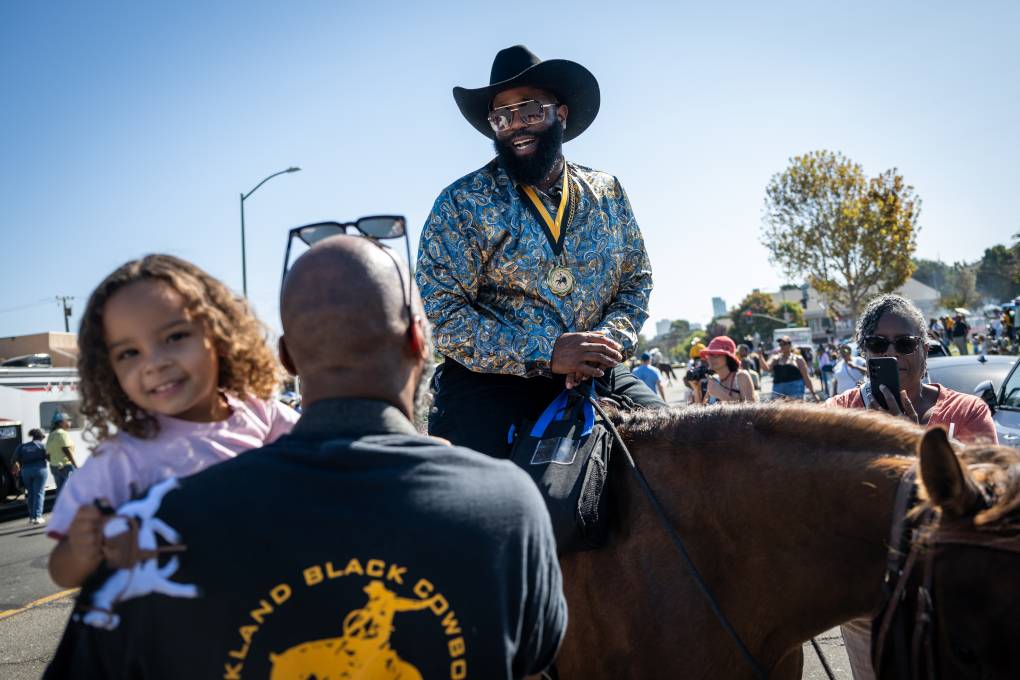
"caption": "Samuel Styles, also known as Cowboy Styles, talks to a group gathered after the Oakland Black Cowboy Association parade in Oakland on Oct. 5, 2024.",
"credit": "Beth LaBerge/KQED",
"altTag": null,
"description": null,
"imgSizes": {
"medium": {
"file": "https://cdn.kqed.org/wp-content/uploads/sites/10/2024/10/241005-OaklandBlackCowboyParade-031-BL-800x533.jpg",
"width": 800,
"height": 533,
"mimeType": "image/jpeg"
},
"large": {
"file": "https://cdn.kqed.org/wp-content/uploads/sites/10/2024/10/241005-OaklandBlackCowboyParade-031-BL-1020x680.jpg",
"width": 1020,
"height": 680,
"mimeType": "image/jpeg"
},
"thumbnail": {
"file": "https://cdn.kqed.org/wp-content/uploads/sites/10/2024/10/241005-OaklandBlackCowboyParade-031-BL-160x107.jpg",
"width": 160,
"height": 107,
"mimeType": "image/jpeg"
},
"1536x1536": {
"file": "https://cdn.kqed.org/wp-content/uploads/sites/10/2024/10/241005-OaklandBlackCowboyParade-031-BL-1536x1024.jpg",
"width": 1536,
"height": 1024,
"mimeType": "image/jpeg"
},
"2048x2048": {
"file": "https://cdn.kqed.org/wp-content/uploads/sites/10/2024/10/241005-OaklandBlackCowboyParade-031-BL-2048x1365.jpg",
"width": 2048,
"height": 1365,
"mimeType": "image/jpeg"
},
"post-thumbnail": {
"file": "https://cdn.kqed.org/wp-content/uploads/sites/10/2024/10/241005-OaklandBlackCowboyParade-031-BL-672x372.jpg",
"width": 672,
"height": 372,
"mimeType": "image/jpeg"
},
"twentyfourteen-full-width": {
"file": "https://cdn.kqed.org/wp-content/uploads/sites/10/2024/10/241005-OaklandBlackCowboyParade-031-BL-1038x576.jpg",
"width": 1038,
"height": 576,
"mimeType": "image/jpeg"
},
"full-width": {
"file": "https://cdn.kqed.org/wp-content/uploads/sites/10/2024/10/241005-OaklandBlackCowboyParade-031-BL-1920x1280.jpg",
"width": 1920,
"height": 1280,
"mimeType": "image/jpeg"
},
"kqedFullSize": {
"file": "https://cdn.kqed.org/wp-content/uploads/sites/10/2024/10/241005-OaklandBlackCowboyParade-031-BL-scaled.jpg",
"width": 2560,
"height": 1707
}
},
"isLoading": false,
"fetchFailed": false
},
"news_12008023": {
"type": "attachments",
"id": "news_12008023",
"meta": {
"index": "attachments_1716263798",
"site": "news",
"id": "12008023",
"found": true
},
"title": "Annie's Annuals 1",
"publishDate": 1728073670,
"status": "inherit",
"parent": 12007947,
"modified": 1728086367,
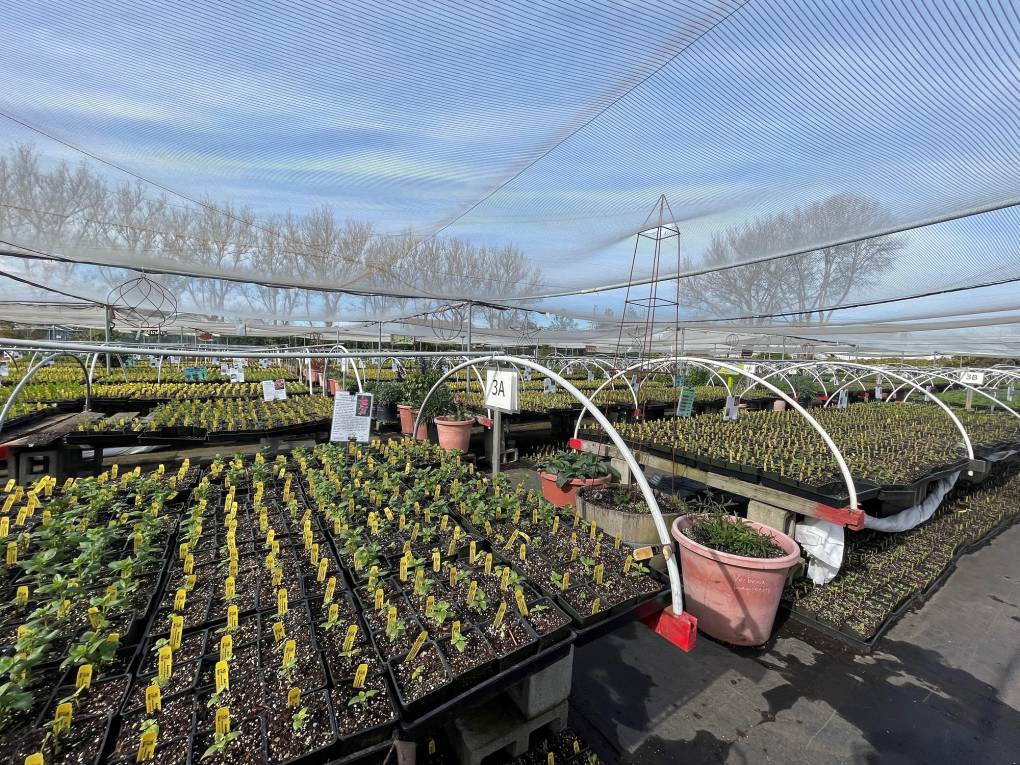
"caption": "Annie's Annuals and Perennials in Richmond, California, in February 2022. Annie’s, known for rare and beautiful plants, posted to social media on Thursday that it was closing after serving the East Bay community for more than 30 years.\n",
"credit": "Courtesy Kaylan Segev",
"altTag": null,
"description": null,
"imgSizes": {
"medium": {
"file": "https://cdn.kqed.org/wp-content/uploads/sites/10/2024/10/Annies-Annuals-1-800x600.jpg",
"width": 800,
"height": 600,
"mimeType": "image/jpeg"
},
"large": {
"file": "https://cdn.kqed.org/wp-content/uploads/sites/10/2024/10/Annies-Annuals-1-1020x765.jpg",
"width": 1020,
"height": 765,
"mimeType": "image/jpeg"
},
"thumbnail": {
"file": "https://cdn.kqed.org/wp-content/uploads/sites/10/2024/10/Annies-Annuals-1-160x120.jpg",
"width": 160,
"height": 120,
"mimeType": "image/jpeg"
},
"1536x1536": {
"file": "https://cdn.kqed.org/wp-content/uploads/sites/10/2024/10/Annies-Annuals-1-1536x1152.jpg",
"width": 1536,
"height": 1152,
"mimeType": "image/jpeg"
},
"post-thumbnail": {
"file": "https://cdn.kqed.org/wp-content/uploads/sites/10/2024/10/Annies-Annuals-1-672x372.jpg",
"width": 672,
"height": 372,
"mimeType": "image/jpeg"
},
"twentyfourteen-full-width": {
"file": "https://cdn.kqed.org/wp-content/uploads/sites/10/2024/10/Annies-Annuals-1-1038x576.jpg",
"width": 1038,
"height": 576,
"mimeType": "image/jpeg"
},
"full-width": {
"file": "https://cdn.kqed.org/wp-content/uploads/sites/10/2024/10/Annies-Annuals-1-1920x1440.jpg",
"width": 1920,
"height": 1440,
"mimeType": "image/jpeg"
},
"kqedFullSize": {
"file": "https://cdn.kqed.org/wp-content/uploads/sites/10/2024/10/Annies-Annuals-1.jpg",
"width": 2000,
"height": 1500
}
},
"isLoading": false,
"fetchFailed": false
},
"news_12007015": {
"type": "attachments",
"id": "news_12007015",
"meta": {
"index": "attachments_1716263798",
"site": "news",
"id": "12007015",
"found": true
},
"title": "US-POLITICS-HARRIS",
"publishDate": 1727564353,
"status": "inherit",
"parent": 12007013,
"modified": 1727720126,
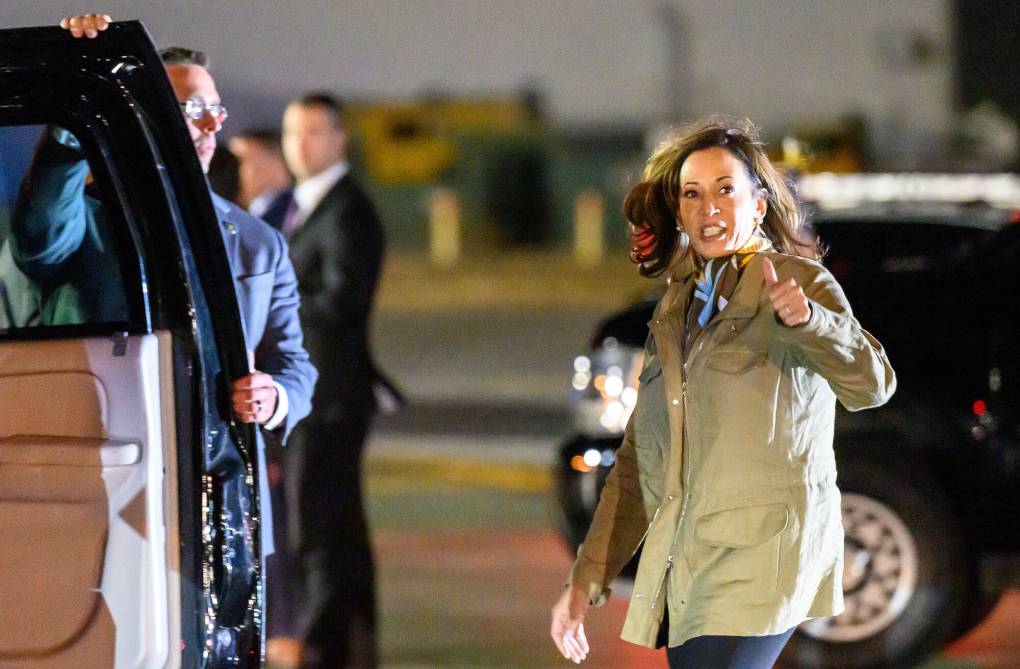
"caption": "U.S. Vice President and Democratic presidential candidate Kamala Harris gives a thumbs up as she walks to a vehicle after arriving at San Francisco International Airport in San Francisco, California, on Sept. 27, 2024.",
"credit": "Josh Edelson/AFP via Getty Images",
"altTag": "VP Harris gives a thumbs-up as she walks to a car.",
"description": null,
"imgSizes": {
"medium": {
"file": "https://cdn.kqed.org/wp-content/uploads/sites/10/2024/09/GettyImages-2174099092_qed-800x525.jpg",
"width": 800,
"height": 525,
"mimeType": "image/jpeg"
},
"large": {
"file": "https://cdn.kqed.org/wp-content/uploads/sites/10/2024/09/GettyImages-2174099092_qed-1020x669.jpg",
"width": 1020,
"height": 669,
"mimeType": "image/jpeg"
},
"thumbnail": {
"file": "https://cdn.kqed.org/wp-content/uploads/sites/10/2024/09/GettyImages-2174099092_qed-160x105.jpg",
"width": 160,
"height": 105,
"mimeType": "image/jpeg"
},
"1536x1536": {
"file": "https://cdn.kqed.org/wp-content/uploads/sites/10/2024/09/GettyImages-2174099092_qed-1536x1008.jpg",
"width": 1536,
"height": 1008,
"mimeType": "image/jpeg"
},
"post-thumbnail": {
"file": "https://cdn.kqed.org/wp-content/uploads/sites/10/2024/09/GettyImages-2174099092_qed-672x372.jpg",
"width": 672,
"height": 372,
"mimeType": "image/jpeg"
},
"twentyfourteen-full-width": {
"file": "https://cdn.kqed.org/wp-content/uploads/sites/10/2024/09/GettyImages-2174099092_qed-1038x576.jpg",
"width": 1038,
"height": 576,
"mimeType": "image/jpeg"
},
"full-width": {
"file": "https://cdn.kqed.org/wp-content/uploads/sites/10/2024/09/GettyImages-2174099092_qed-1920x1260.jpg",
"width": 1920,
"height": 1260,
"mimeType": "image/jpeg"
},
"kqedFullSize": {
"file": "https://cdn.kqed.org/wp-content/uploads/sites/10/2024/09/GettyImages-2174099092_qed.jpg",
"width": 2000,
"height": 1312
}
},
"isLoading": false,
"fetchFailed": false
},
"news_12006249": {
"type": "attachments",
"id": "news_12006249",
"meta": {
"index": "attachments_1716263798",
"site": "news",
"id": "12006249",
"found": true
},
"title": "GettyImages-2149604838",
"publishDate": 1727219241,
"status": "inherit",
"parent": 12006231,
"modified": 1727284106,
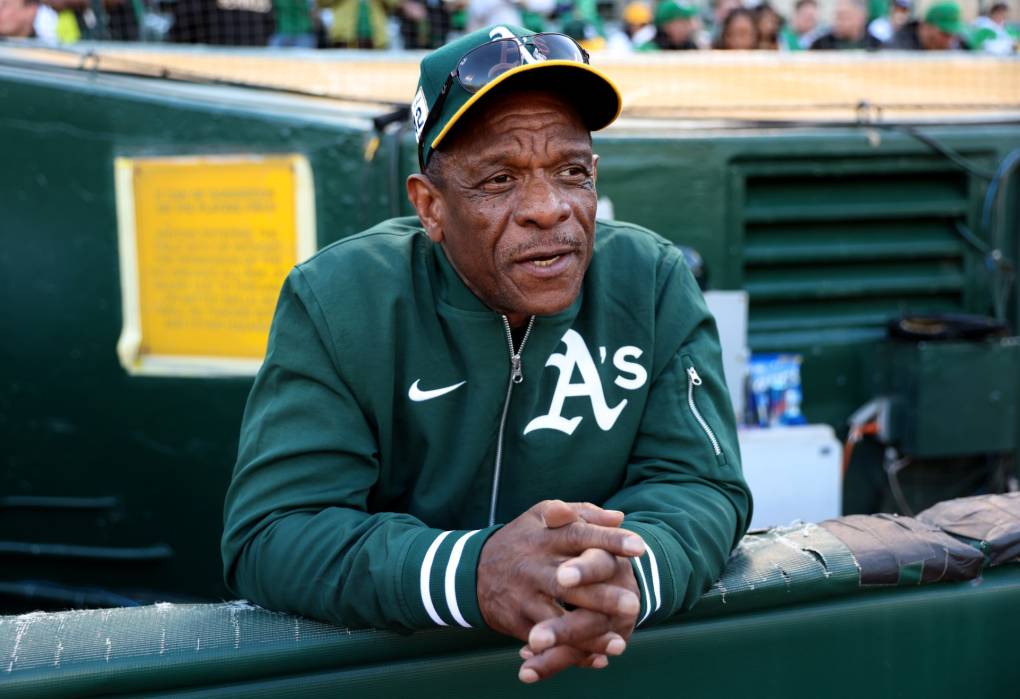
"caption": "Oakland A's legend Rickey Henderson looks out at the field before an A's game against the St. Louis Cardinals at the Coliseum on April 15, 2024.",
"credit": "Jane Tyska/Digital First Media/East Bay Times via Getty Images",
"altTag": null,
"description": null,
"imgSizes": {
"medium": {
"file": "https://cdn.kqed.org/wp-content/uploads/sites/10/2024/09/GettyImages-2149604838-800x548.jpg",
"width": 800,
"height": 548,
"mimeType": "image/jpeg"
},
"large": {
"file": "https://cdn.kqed.org/wp-content/uploads/sites/10/2024/09/GettyImages-2149604838-1020x699.jpg",
"width": 1020,
"height": 699,
"mimeType": "image/jpeg"
},
"thumbnail": {
"file": "https://cdn.kqed.org/wp-content/uploads/sites/10/2024/09/GettyImages-2149604838-160x110.jpg",
"width": 160,
"height": 110,
"mimeType": "image/jpeg"
},
"1536x1536": {
"file": "https://cdn.kqed.org/wp-content/uploads/sites/10/2024/09/GettyImages-2149604838-1536x1052.jpg",
"width": 1536,
"height": 1052,
"mimeType": "image/jpeg"
},
"post-thumbnail": {
"file": "https://cdn.kqed.org/wp-content/uploads/sites/10/2024/09/GettyImages-2149604838-672x372.jpg",
"width": 672,
"height": 372,
"mimeType": "image/jpeg"
},
"twentyfourteen-full-width": {
"file": "https://cdn.kqed.org/wp-content/uploads/sites/10/2024/09/GettyImages-2149604838-1038x576.jpg",
"width": 1038,
"height": 576,
"mimeType": "image/jpeg"
},
"kqedFullSize": {
"file": "https://cdn.kqed.org/wp-content/uploads/sites/10/2024/09/GettyImages-2149604838.jpg",
"width": 1920,
"height": 1315
}
},
"isLoading": false,
"fetchFailed": false
},
"news_12006558": {
"type": "attachments",
"id": "news_12006558",
"meta": {
"index": "attachments_1716263798",
"site": "news",
"id": "12006558",
"found": true
},
"title": "240926-LAST A'S HOME GAME-MD-08-KQED",
"publishDate": 1727372227,
"status": "inherit",
"parent": 0,
"modified": 1727385390,
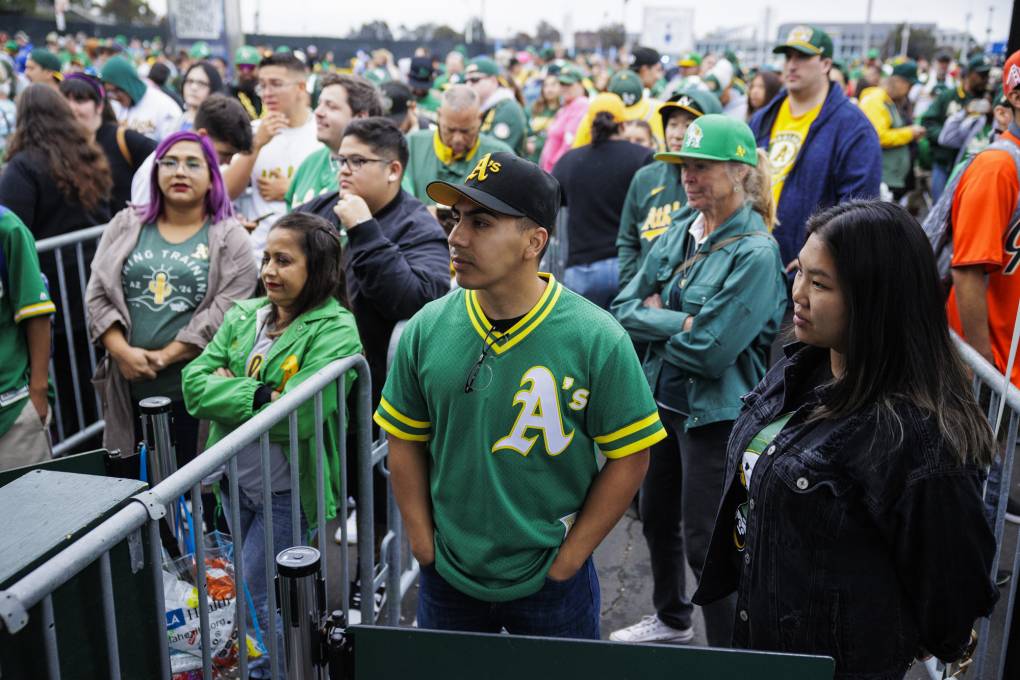
"caption": "Ian Alvarado (center) and Shang Yang wait in line for the last A's home game at the Oakland Coliseum on Thursday.",
"credit": "Martin do Nascimento/KQED",
"altTag": "A man in an A's shirt and hat stand among a large outdoor crowd.",
"description": null,
"imgSizes": {
"medium": {
"file": "https://cdn.kqed.org/wp-content/uploads/sites/10/2024/09/240926-LAST-AS-HOME-GAME-MD-08-KQED-800x533.jpg",
"width": 800,
"height": 533,
"mimeType": "image/jpeg"
},
"large": {
"file": "https://cdn.kqed.org/wp-content/uploads/sites/10/2024/09/240926-LAST-AS-HOME-GAME-MD-08-KQED-1020x680.jpg",
"width": 1020,
"height": 680,
"mimeType": "image/jpeg"
},
"thumbnail": {
"file": "https://cdn.kqed.org/wp-content/uploads/sites/10/2024/09/240926-LAST-AS-HOME-GAME-MD-08-KQED-160x107.jpg",
"width": 160,
"height": 107,
"mimeType": "image/jpeg"
},
"1536x1536": {
"file": "https://cdn.kqed.org/wp-content/uploads/sites/10/2024/09/240926-LAST-AS-HOME-GAME-MD-08-KQED-1536x1024.jpg",
"width": 1536,
"height": 1024,
"mimeType": "image/jpeg"
},
"post-thumbnail": {
"file": "https://cdn.kqed.org/wp-content/uploads/sites/10/2024/09/240926-LAST-AS-HOME-GAME-MD-08-KQED-672x372.jpg",
"width": 672,
"height": 372,
"mimeType": "image/jpeg"
},
"twentyfourteen-full-width": {
"file": "https://cdn.kqed.org/wp-content/uploads/sites/10/2024/09/240926-LAST-AS-HOME-GAME-MD-08-KQED-1038x576.jpg",
"width": 1038,
"height": 576,
"mimeType": "image/jpeg"
},
"full-width": {
"file": "https://cdn.kqed.org/wp-content/uploads/sites/10/2024/09/240926-LAST-AS-HOME-GAME-MD-08-KQED-1920x1280.jpg",
"width": 1920,
"height": 1280,
"mimeType": "image/jpeg"
},
"kqedFullSize": {
"file": "https://cdn.kqed.org/wp-content/uploads/sites/10/2024/09/240926-LAST-AS-HOME-GAME-MD-08-KQED.jpg",
"width": 2000,
"height": 1333
}
},
"isLoading": false,
"fetchFailed": false
},
"news_12002678": {
"type": "attachments",
"id": "news_12002678",
"meta": {
"index": "attachments_1716263798",
"site": "news",
"id": "12002678",
"found": true
},
"title": "Ricky Pearsall",
"publishDate": 1725201275,
"status": "inherit",
"parent": 12002674,
"modified": 1725201397,
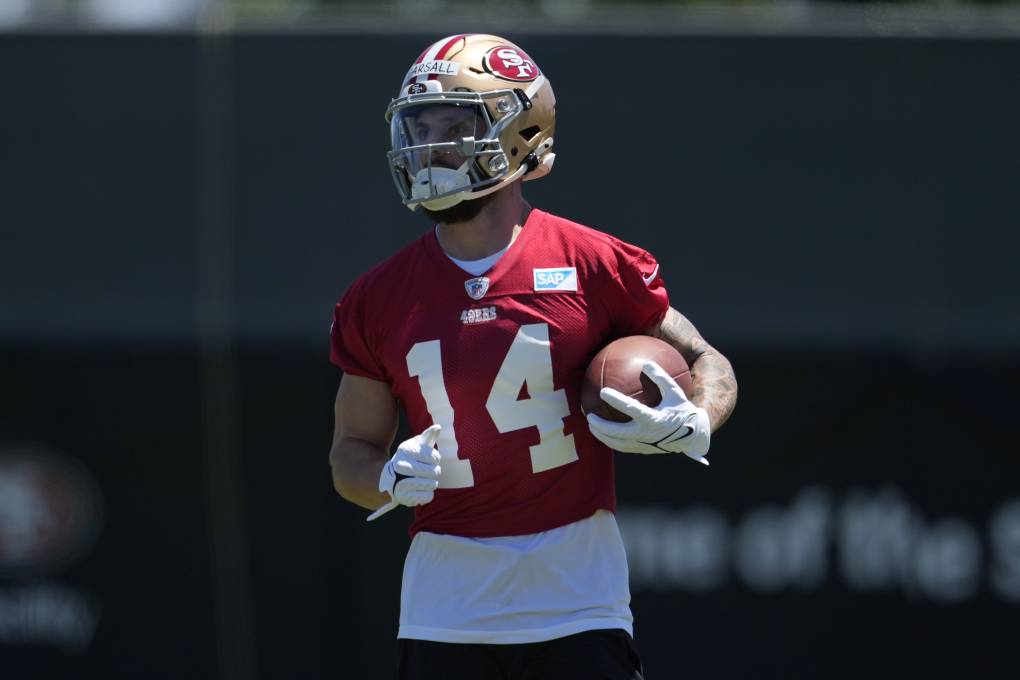
"caption": "San Francisco 49ers wide receiver Ricky Pearsall carries the ball during the NFL football team's rookie minicamp in Santa Clara, Calif., May 10, 2024.",
"credit": "Jeff Chiu/AP Photo",
"altTag": "A football player wearing a number 14 jersey.",
"description": null,
"imgSizes": {
"medium": {
"file": "https://cdn.kqed.org/wp-content/uploads/sites/10/2024/09/AP24245013452303-800x533.jpg",
"width": 800,
"height": 533,
"mimeType": "image/jpeg"
},
"large": {
"file": "https://cdn.kqed.org/wp-content/uploads/sites/10/2024/09/AP24245013452303-1020x680.jpg",
"width": 1020,
"height": 680,
"mimeType": "image/jpeg"
},
"thumbnail": {
"file": "https://cdn.kqed.org/wp-content/uploads/sites/10/2024/09/AP24245013452303-160x107.jpg",
"width": 160,
"height": 107,
"mimeType": "image/jpeg"
},
"1536x1536": {
"file": "https://cdn.kqed.org/wp-content/uploads/sites/10/2024/09/AP24245013452303-1536x1024.jpg",
"width": 1536,
"height": 1024,
"mimeType": "image/jpeg"
},
"2048x2048": {
"file": "https://cdn.kqed.org/wp-content/uploads/sites/10/2024/09/AP24245013452303-2048x1365.jpg",
"width": 2048,
"height": 1365,
"mimeType": "image/jpeg"
},
"post-thumbnail": {
"file": "https://cdn.kqed.org/wp-content/uploads/sites/10/2024/09/AP24245013452303-672x372.jpg",
"width": 672,
"height": 372,
"mimeType": "image/jpeg"
},
"twentyfourteen-full-width": {
"file": "https://cdn.kqed.org/wp-content/uploads/sites/10/2024/09/AP24245013452303-1038x576.jpg",
"width": 1038,
"height": 576,
"mimeType": "image/jpeg"
},
"full-width": {
"file": "https://cdn.kqed.org/wp-content/uploads/sites/10/2024/09/AP24245013452303-1920x1280.jpg",
"width": 1920,
"height": 1280,
"mimeType": "image/jpeg"
},
"kqedFullSize": {
"file": "https://cdn.kqed.org/wp-content/uploads/sites/10/2024/09/AP24245013452303-scaled.jpg",
"width": 2560,
"height": 1706
}
},
"isLoading": false,
"fetchFailed": false
},
"news_11990527": {
"type": "attachments",
"id": "news_11990527",
"meta": {
"index": "attachments_1716263798",
"site": "news",
"id": "11990527",
"found": true
},
"title": "240611-DestinyMuhammad-10-BL_qut",
"publishDate": 1718406976,
"status": "inherit",
"parent": 0,
"modified": 1724108239,
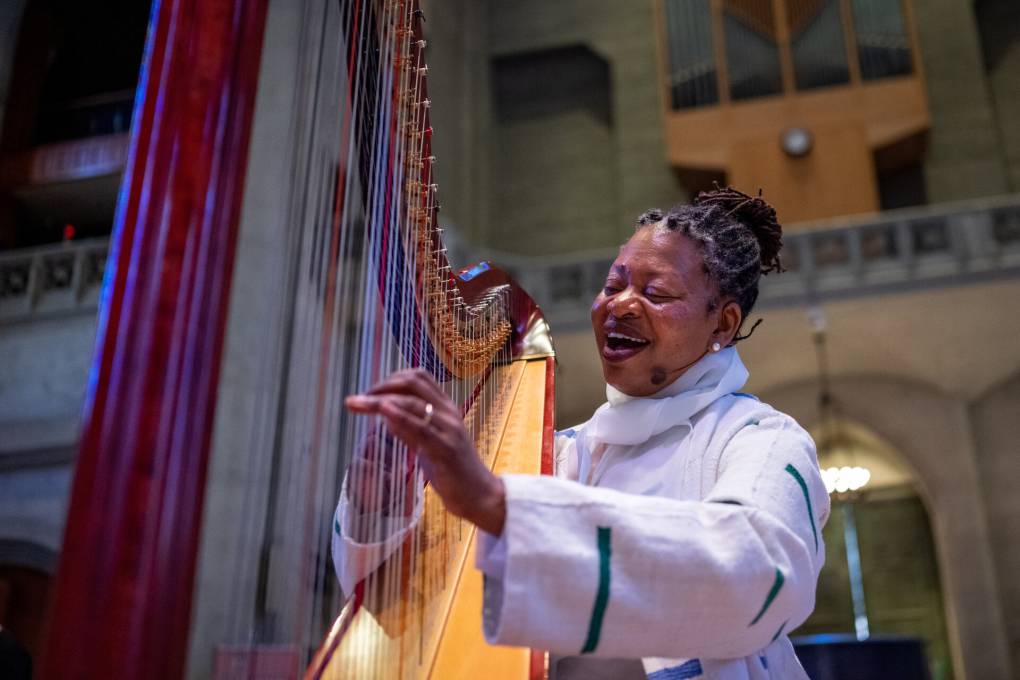
"caption": "Destiny Muhammad, a Bay Area musician, vocalist and composer, plays the harp during a yoga class at Grace Cathedral in San Francisco on June 12.",
"credit": "Beth LaBerge/KQED",
"altTag": "A woman dressed in white plays the harp.",
"description": null,
"imgSizes": {
"medium": {
"file": "https://cdn.kqed.org/wp-content/uploads/sites/10/2024/06/240611-DestinyMuhammad-10-BL_qut-800x533.jpg",
"width": 800,
"height": 533,
"mimeType": "image/jpeg"
},
"large": {
"file": "https://cdn.kqed.org/wp-content/uploads/sites/10/2024/06/240611-DestinyMuhammad-10-BL_qut-1020x680.jpg",
"width": 1020,
"height": 680,
"mimeType": "image/jpeg"
},
"thumbnail": {
"file": "https://cdn.kqed.org/wp-content/uploads/sites/10/2024/06/240611-DestinyMuhammad-10-BL_qut-160x107.jpg",
"width": 160,
"height": 107,
"mimeType": "image/jpeg"
},
"1536x1536": {
"file": "https://cdn.kqed.org/wp-content/uploads/sites/10/2024/06/240611-DestinyMuhammad-10-BL_qut-1536x1024.jpg",
"width": 1536,
"height": 1024,
"mimeType": "image/jpeg"
},
"post-thumbnail": {
"file": "https://cdn.kqed.org/wp-content/uploads/sites/10/2024/06/240611-DestinyMuhammad-10-BL_qut-672x372.jpg",
"width": 672,
"height": 372,
"mimeType": "image/jpeg"
},
"twentyfourteen-full-width": {
"file": "https://cdn.kqed.org/wp-content/uploads/sites/10/2024/06/240611-DestinyMuhammad-10-BL_qut-1038x576.jpg",
"width": 1038,
"height": 576,
"mimeType": "image/jpeg"
},
"kqedFullSize": {
"file": "https://cdn.kqed.org/wp-content/uploads/sites/10/2024/06/240611-DestinyMuhammad-10-BL_qut.jpg",
"width": 1920,
"height": 1280
}
},
"isLoading": false,
"fetchFailed": false
},
"news_12000664": {
"type": "attachments",
"id": "news_12000664",
"meta": {
"index": "attachments_1716263798",
"site": "news",
"id": "12000664",
"found": true
},
"title": "20240818_LastBoB_GC-42_qed",
"publishDate": 1724024340,
"status": "inherit",
"parent": 12000643,
"modified": 1724092619,
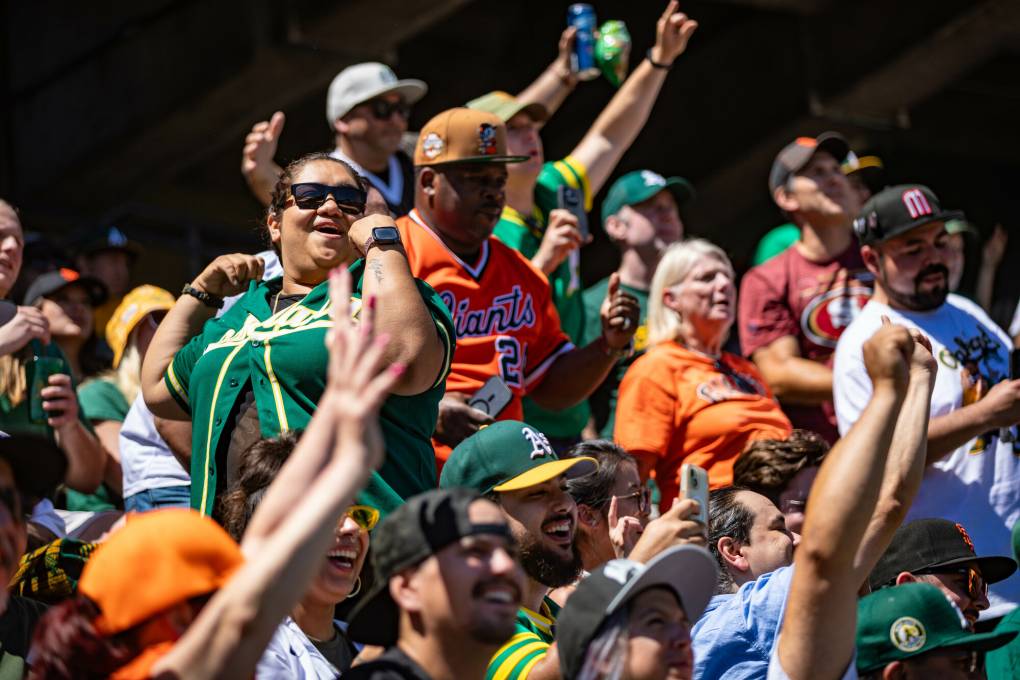
"caption": "Fans cheer during the final Battle of the Bay game between the A’s and the Giants at the Oakland Coliseum on Aug. 18, 2024.",
"credit": "Gina Castro/KQED",
"altTag": "Several fans wearing green and orange cheer in the stands.",
"description": null,
"imgSizes": {
"medium": {
"file": "https://cdn.kqed.org/wp-content/uploads/sites/10/2024/08/20240818_LastBoB_GC-42_qed-800x533.jpg",
"width": 800,
"height": 533,
"mimeType": "image/jpeg"
},
"large": {
"file": "https://cdn.kqed.org/wp-content/uploads/sites/10/2024/08/20240818_LastBoB_GC-42_qed-1020x680.jpg",
"width": 1020,
"height": 680,
"mimeType": "image/jpeg"
},
"thumbnail": {
"file": "https://cdn.kqed.org/wp-content/uploads/sites/10/2024/08/20240818_LastBoB_GC-42_qed-160x107.jpg",
"width": 160,
"height": 107,
"mimeType": "image/jpeg"
},
"1536x1536": {
"file": "https://cdn.kqed.org/wp-content/uploads/sites/10/2024/08/20240818_LastBoB_GC-42_qed-1536x1024.jpg",
"width": 1536,
"height": 1024,
"mimeType": "image/jpeg"
},
"post-thumbnail": {
"file": "https://cdn.kqed.org/wp-content/uploads/sites/10/2024/08/20240818_LastBoB_GC-42_qed-672x372.jpg",
"width": 672,
"height": 372,
"mimeType": "image/jpeg"
},
"twentyfourteen-full-width": {
"file": "https://cdn.kqed.org/wp-content/uploads/sites/10/2024/08/20240818_LastBoB_GC-42_qed-1038x576.jpg",
"width": 1038,
"height": 576,
"mimeType": "image/jpeg"
},
"full-width": {
"file": "https://cdn.kqed.org/wp-content/uploads/sites/10/2024/08/20240818_LastBoB_GC-42_qed-1920x1280.jpg",
"width": 1920,
"height": 1280,
"mimeType": "image/jpeg"
},
"kqedFullSize": {
"file": "https://cdn.kqed.org/wp-content/uploads/sites/10/2024/08/20240818_LastBoB_GC-42_qed.jpg",
"width": 2000,
"height": 1333
}
},
"isLoading": false,
"fetchFailed": false
},
"news_11999742": {
"type": "attachments",
"id": "news_11999742",
"meta": {
"index": "attachments_1716263798",
"site": "news",
"id": "11999742",
"found": true
},
"title": "Oakland City Hall",
"publishDate": 1723319064,
"status": "inherit",
"parent": 11999739,
"modified": 1723319168,
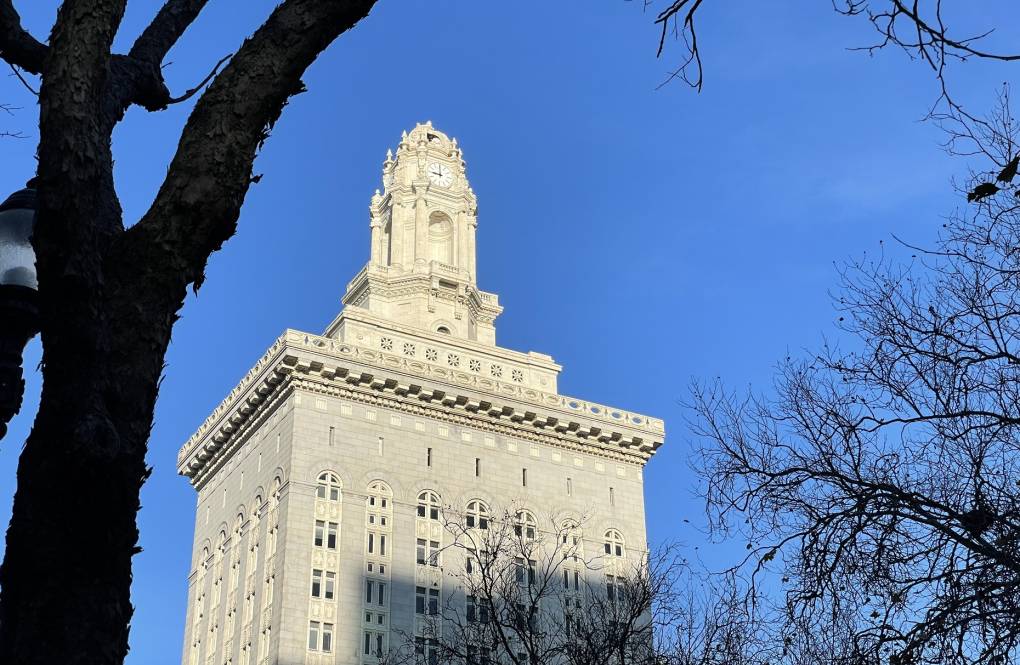
"caption": "A view of Oakland City Hall from 14th Street. ",
"credit": "Conrad J. Camit/Getty Images",
"altTag": null,
"description": null,
"imgSizes": {
"medium": {
"file": "https://cdn.kqed.org/wp-content/uploads/sites/10/2024/08/GettyImages-1389383320-e1723319096894-800x522.jpg",
"width": 800,
"height": 522,
"mimeType": "image/jpeg"
},
"large": {
"file": "https://cdn.kqed.org/wp-content/uploads/sites/10/2024/08/GettyImages-1389383320-e1723319096894-1020x665.jpg",
"width": 1020,
"height": 665,
"mimeType": "image/jpeg"
},
"thumbnail": {
"file": "https://cdn.kqed.org/wp-content/uploads/sites/10/2024/08/GettyImages-1389383320-e1723319096894-160x104.jpg",
"width": 160,
"height": 104,
"mimeType": "image/jpeg"
},
"1536x1536": {
"file": "https://cdn.kqed.org/wp-content/uploads/sites/10/2024/08/GettyImages-1389383320-e1723319096894-1536x1002.jpg",
"width": 1536,
"height": 1002,
"mimeType": "image/jpeg"
},
"post-thumbnail": {
"file": "https://cdn.kqed.org/wp-content/uploads/sites/10/2024/08/GettyImages-1389383320-e1723319096894-672x372.jpg",
"width": 672,
"height": 372,
"mimeType": "image/jpeg"
},
"twentyfourteen-full-width": {
"file": "https://cdn.kqed.org/wp-content/uploads/sites/10/2024/08/GettyImages-1389383320-e1723319096894-1038x576.jpg",
"width": 1038,
"height": 576,
"mimeType": "image/jpeg"
},
"full-width": {
"file": "https://cdn.kqed.org/wp-content/uploads/sites/10/2024/08/GettyImages-1389383320-1920x1440.jpg",
"width": 1920,
"height": 1440,
"mimeType": "image/jpeg"
},
"kqedFullSize": {
"file": "https://cdn.kqed.org/wp-content/uploads/sites/10/2024/08/GettyImages-1389383320-e1723319096894.jpg",
"width": 1860,
"height": 1213
}
},
"isLoading": false,
"fetchFailed": false
},
"news_11999707": {
"type": "attachments",
"id": "news_11999707",
"meta": {
"index": "attachments_1716263798",
"site": "news",
"id": "11999707",
"found": true
},
"title": "Unite Here Local 2 members, Flagship cafeteria contract workers and supporters march with signs during a protest held outside of the Facebook offices in San Francisco, Calif. Tuesday, July 16, 2019.",
"publishDate": 1723247922,
"status": "inherit",
"parent": 11999702,
"modified": 1723493524,
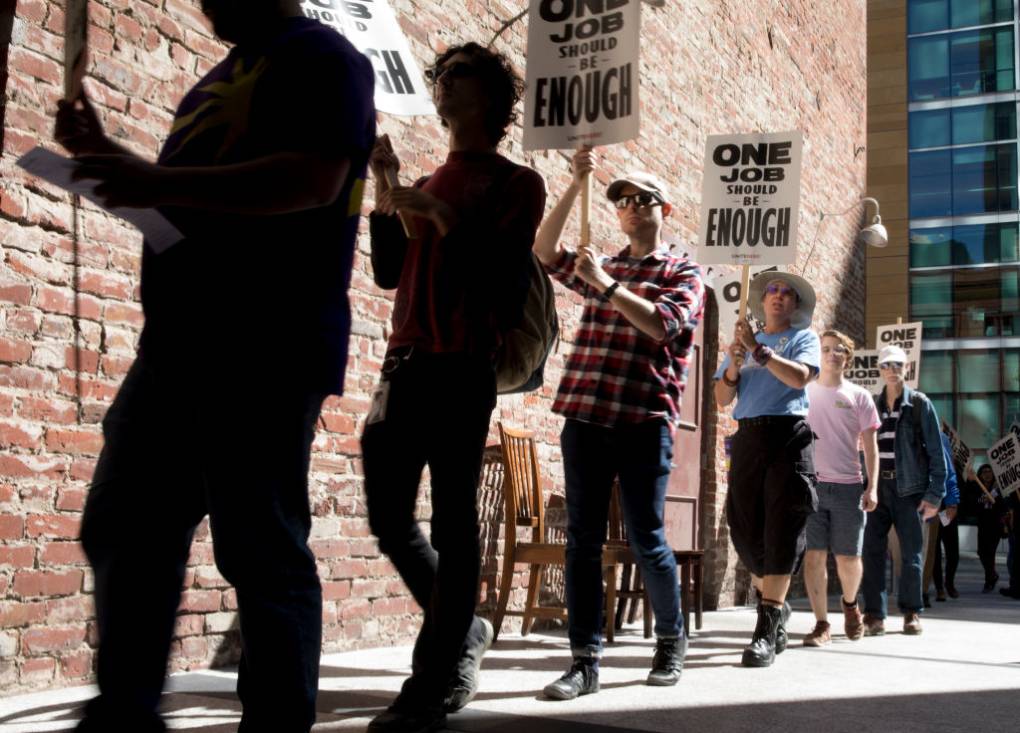
"caption": "Unite Here Local 2 members, Flagship cafeteria contract workers and supporters march with signs during a protest held outside of the Facebook offices in San Francisco on Tuesday, July 16, 2019. ",
"credit": "Jessica Christian/San Francisco Chronicle via Getty Images",
"altTag": null,
"description": null,
"imgSizes": {
"medium": {
"file": "https://cdn.kqed.org/wp-content/uploads/sites/10/2024/08/GettyImages-1298781702-800x575.jpg",
"width": 800,
"height": 575,
"mimeType": "image/jpeg"
},
"large": {
"file": "https://cdn.kqed.org/wp-content/uploads/sites/10/2024/08/GettyImages-1298781702-1020x733.jpg",
"width": 1020,
"height": 733,
"mimeType": "image/jpeg"
},
"thumbnail": {
"file": "https://cdn.kqed.org/wp-content/uploads/sites/10/2024/08/GettyImages-1298781702-160x115.jpg",
"width": 160,
"height": 115,
"mimeType": "image/jpeg"
},
"post-thumbnail": {
"file": "https://cdn.kqed.org/wp-content/uploads/sites/10/2024/08/GettyImages-1298781702-672x372.jpg",
"width": 672,
"height": 372,
"mimeType": "image/jpeg"
},
"twentyfourteen-full-width": {
"file": "https://cdn.kqed.org/wp-content/uploads/sites/10/2024/08/GettyImages-1298781702-1024x576.jpg",
"width": 1024,
"height": 576,
"mimeType": "image/jpeg"
},
"kqedFullSize": {
"file": "https://cdn.kqed.org/wp-content/uploads/sites/10/2024/08/GettyImages-1298781702.jpg",
"width": 1024,
"height": 736
}
},
"isLoading": false,
"fetchFailed": false
},
"news_11998573": {
"type": "attachments",
"id": "news_11998573",
"meta": {
"index": "attachments_1716263798",
"site": "news",
"id": "11998573",
"found": true
},
"title": "240801-ENCAMPMENT SWEEPS-MD-04-KQED",
"publishDate": 1722601927,
"status": "inherit",
"parent": 0,
"modified": 1722901039,
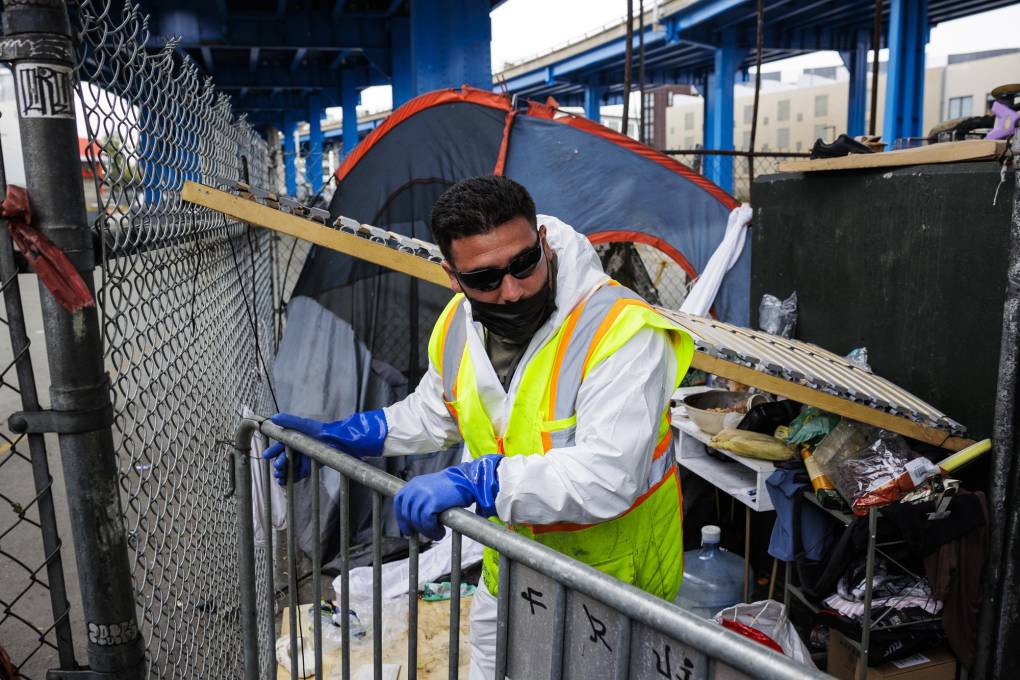
"caption": "A San Francisco Department of Public Works employee helps sweep an encampment around Showplace Square on Aug. 1, 2024.",
"credit": "Martin do Nascimento/KQED",
"altTag": null,
"description": null,
"imgSizes": {
"medium": {
"file": "https://cdn.kqed.org/wp-content/uploads/sites/10/2024/08/240801-ENCAMPMENT-SWEEPS-MD-04-KQED-800x533.jpg",
"width": 800,
"height": 533,
"mimeType": "image/jpeg"
},
"large": {
"file": "https://cdn.kqed.org/wp-content/uploads/sites/10/2024/08/240801-ENCAMPMENT-SWEEPS-MD-04-KQED-1020x680.jpg",
"width": 1020,
"height": 680,
"mimeType": "image/jpeg"
},
"thumbnail": {
"file": "https://cdn.kqed.org/wp-content/uploads/sites/10/2024/08/240801-ENCAMPMENT-SWEEPS-MD-04-KQED-160x107.jpg",
"width": 160,
"height": 107,
"mimeType": "image/jpeg"
},
"1536x1536": {
"file": "https://cdn.kqed.org/wp-content/uploads/sites/10/2024/08/240801-ENCAMPMENT-SWEEPS-MD-04-KQED-1536x1024.jpg",
"width": 1536,
"height": 1024,
"mimeType": "image/jpeg"
},
"post-thumbnail": {
"file": "https://cdn.kqed.org/wp-content/uploads/sites/10/2024/08/240801-ENCAMPMENT-SWEEPS-MD-04-KQED-672x372.jpg",
"width": 672,
"height": 372,
"mimeType": "image/jpeg"
},
"twentyfourteen-full-width": {
"file": "https://cdn.kqed.org/wp-content/uploads/sites/10/2024/08/240801-ENCAMPMENT-SWEEPS-MD-04-KQED-1038x576.jpg",
"width": 1038,
"height": 576,
"mimeType": "image/jpeg"
},
"full-width": {
"file": "https://cdn.kqed.org/wp-content/uploads/sites/10/2024/08/240801-ENCAMPMENT-SWEEPS-MD-04-KQED-1920x1280.jpg",
"width": 1920,
"height": 1280,
"mimeType": "image/jpeg"
},
"kqedFullSize": {
"file": "https://cdn.kqed.org/wp-content/uploads/sites/10/2024/08/240801-ENCAMPMENT-SWEEPS-MD-04-KQED.jpg",
"width": 2000,
"height": 1333
}
},
"isLoading": false,
"fetchFailed": false
},
"news_11981873": {
"type": "attachments",
"id": "news_11981873",
"meta": {
"index": "attachments_1716263798",
"site": "news",
"id": "11981873",
"found": true
},
"title": "240403-AARONPESKIN-003-BL-KQED",
"publishDate": 1712247440,
"status": "inherit",
"parent": 0,
"modified": 1722383571,
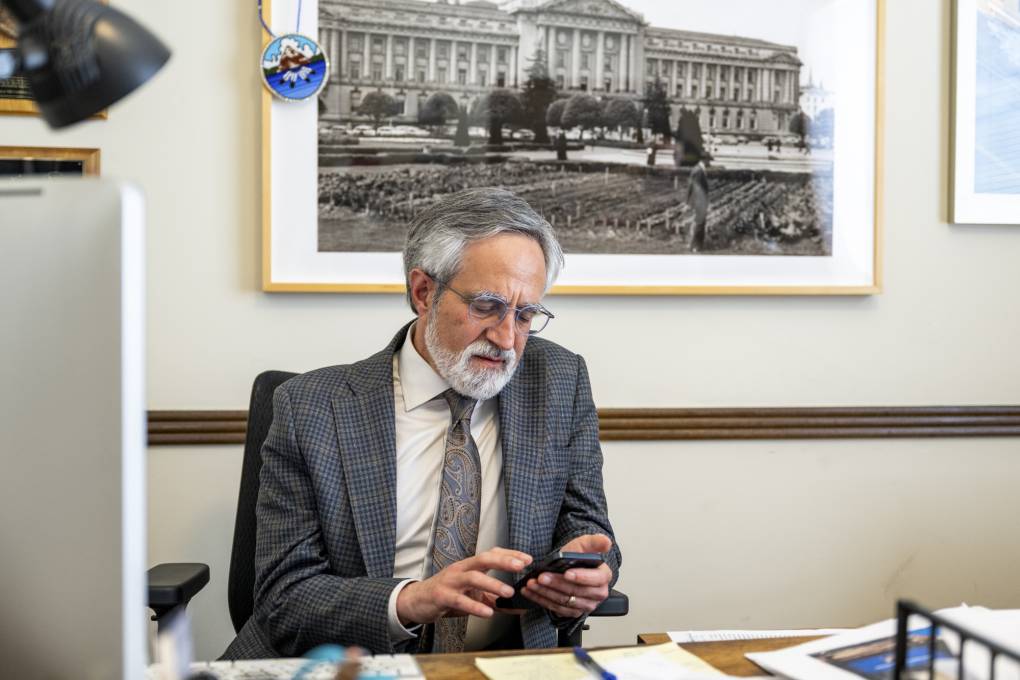
"caption": "Aaron Peskin, President of the Board of Supervisors, sits in his office in San Francisco on April 3, 2024.",
"credit": "Beth LaBerge/KQED",
"altTag": null,
"description": null,
"imgSizes": {
"medium": {
"file": "https://cdn.kqed.org/wp-content/uploads/sites/10/2024/04/240403-AARONPESKIN-003-BL-KQED-800x533.jpg",
"width": 800,
"height": 533,
"mimeType": "image/jpeg"
},
"large": {
"file": "https://cdn.kqed.org/wp-content/uploads/sites/10/2024/04/240403-AARONPESKIN-003-BL-KQED-1020x680.jpg",
"width": 1020,
"height": 680,
"mimeType": "image/jpeg"
},
"thumbnail": {
"file": "https://cdn.kqed.org/wp-content/uploads/sites/10/2024/04/240403-AARONPESKIN-003-BL-KQED-160x107.jpg",
"width": 160,
"height": 107,
"mimeType": "image/jpeg"
},
"1536x1536": {
"file": "https://cdn.kqed.org/wp-content/uploads/sites/10/2024/04/240403-AARONPESKIN-003-BL-KQED-1536x1024.jpg",
"width": 1536,
"height": 1024,
"mimeType": "image/jpeg"
},
"post-thumbnail": {
"file": "https://cdn.kqed.org/wp-content/uploads/sites/10/2024/04/240403-AARONPESKIN-003-BL-KQED-672x372.jpg",
"width": 672,
"height": 372,
"mimeType": "image/jpeg"
},
"twentyfourteen-full-width": {
"file": "https://cdn.kqed.org/wp-content/uploads/sites/10/2024/04/240403-AARONPESKIN-003-BL-KQED-1038x576.jpg",
"width": 1038,
"height": 576,
"mimeType": "image/jpeg"
},
"full-width": {
"file": "https://cdn.kqed.org/wp-content/uploads/sites/10/2024/04/240403-AARONPESKIN-003-BL-KQED-1920x1280.jpg",
"width": 1920,
"height": 1280,
"mimeType": "image/jpeg"
},
"kqedFullSize": {
"file": "https://cdn.kqed.org/wp-content/uploads/sites/10/2024/04/240403-AARONPESKIN-003-BL-KQED.jpg",
"width": 2000,
"height": 1333
}
},
"isLoading": false,
"fetchFailed": false
}
},
"audioPlayerReducer": {
"postId": "stream_live",
"isPaused": true,
"isPlaying": false,
"pfsActive": false,
"pledgeModalIsOpen": true,
"playerDrawerIsOpen": false,
"liveAudioPlayStartedAt": 0,
"liveAudioPlayContext": ""
},
"authorsReducer": {
"byline_news_12002674": {
"type": "authors",
"id": "byline_news_12002674",
"meta": {
"override": true
},
"slug": "byline_news_12002674",
"name": "Associated Press",
"isLoading": false
},
"kqed": {
"type": "authors",
"id": "236",
"meta": {
"index": "authors_1716337520",
"id": "236",
"found": true
},
"name": "KQED News Staff",
"firstName": "KQED News Staff",
"lastName": null,
"slug": "kqed",
"email": "faq@kqed.org",
"display_author_email": false,
"staff_mastheads": [],
"title": null,
"bio": null,
"avatar": "https://secure.gravatar.com/avatar/ef0e801a68c4c54afa9180db14084167?s=600&d=blank&r=g",
"twitter": null,
"facebook": null,
"instagram": null,
"linkedin": null,
"sites": [
{
"site": "arts",
"roles": [
"contributor"
]
},
{
"site": "news",
"roles": [
"editor"
]
},
{
"site": "futureofyou",
"roles": [
"author"
]
}
],
"headData": {
"title": "KQED News Staff | KQED",
"description": null,
"ogImgSrc": "https://secure.gravatar.com/avatar/ef0e801a68c4c54afa9180db14084167?s=600&d=blank&r=g",
"twImgSrc": "https://secure.gravatar.com/avatar/ef0e801a68c4c54afa9180db14084167?s=600&d=blank&r=g"
},
"isLoading": false,
"link": "/author/kqed"
},
"shossaini": {
"type": "authors",
"id": "3214",
"meta": {
"index": "authors_1716337520",
"id": "3214",
"found": true
},
"name": "Sara Hossaini",
"firstName": "Sara",
"lastName": "Hossaini",
"slug": "shossaini",
"email": "shossaini@kqed.org",
"display_author_email": true,
"staff_mastheads": [
"news"
],
"title": "KQED Reporter",
"bio": "Sara Hossaini came to general assignment reporting at KQED in 2013 after two winters reporting at Wyoming Public Radio. She holds a bachelor's degree in broadcast journalism from the University of Nebraska-Lincoln. Her radio romance began after a bitter breakup with documentary film (Ok, maybe it's still complicated). Her first simultaneous jobs in San Francisco were as Associate Producer on a PBS film series through the Center for Asian American Media and as a butler. She likes to trot, plot and make things with her hands.",
"avatar": "https://secure.gravatar.com/avatar/060e9f56b9554e17942e89f413242774?s=600&d=blank&r=g",
"twitter": "mshossaini",
"facebook": null,
"instagram": null,
"linkedin": null,
"sites": [
{
"site": "news",
"roles": [
"author"
]
},
{
"site": "stateofhealth",
"roles": [
"author"
]
}
],
"headData": {
"title": "Sara Hossaini | KQED",
"description": "KQED Reporter",
"ogImgSrc": "https://secure.gravatar.com/avatar/060e9f56b9554e17942e89f413242774?s=600&d=blank&r=g",
"twImgSrc": "https://secure.gravatar.com/avatar/060e9f56b9554e17942e89f413242774?s=600&d=blank&r=g"
},
"isLoading": false,
"link": "/author/shossaini"
},
"mlagos": {
"type": "authors",
"id": "3239",
"meta": {
"index": "authors_1716337520",
"id": "3239",
"found": true
},
"name": "Marisa Lagos",
"firstName": "Marisa",
"lastName": "Lagos",
"slug": "mlagos",
"email": "mlagos@kqed.org",
"display_author_email": false,
"staff_mastheads": [
"news"
],
"title": "KQED Contributor",
"bio": "Marisa Lagos is a correspondent for KQED’s California Politics and Government Desk and co-hosts the award-winning show and podcast, Political Breakdown. At KQED, Lagos also conducts reporting, analysis and investigations into state, local and national politics for radio, TV, online and onstage. In 2022, she and co-host, Scott Shafer, moderated the only gubernatorial debate in California. In 2020, the \u003ci>Washington Post\u003c/i> named her one of the top political journalists in California; she was nominated for a Peabody and won several other awards for her work investigating the 2017 California wildfires. She has worked at the \u003ci>San Francisco Chronicle\u003c/i>, \u003ci>San Francisco Examiner\u003c/i> and \u003ci>Los Angeles Times\u003c/i>. A UC Santa Barbara graduate, she lives in San Francisco with her two sons and husband.",
"avatar": "https://secure.gravatar.com/avatar/a261a0d3696fc066871ef96b85b5e7d2?s=600&d=blank&r=g",
"twitter": "@mlagos",
"facebook": null,
"instagram": null,
"linkedin": null,
"sites": [
{
"site": "arts",
"roles": [
"author"
]
},
{
"site": "news",
"roles": [
"editor"
]
},
{
"site": "science",
"roles": [
"editor"
]
},
{
"site": "forum",
"roles": [
"author"
]
},
{
"site": "liveblog",
"roles": [
"author"
]
}
],
"headData": {
"title": "Marisa Lagos | KQED",
"description": "KQED Contributor",
"ogImgSrc": "https://secure.gravatar.com/avatar/a261a0d3696fc066871ef96b85b5e7d2?s=600&d=blank&r=g",
"twImgSrc": "https://secure.gravatar.com/avatar/a261a0d3696fc066871ef96b85b5e7d2?s=600&d=blank&r=g"
},
"isLoading": false,
"link": "/author/mlagos"
},
"fjhabvala": {
"type": "authors",
"id": "8659",
"meta": {
"index": "authors_1716337520",
"id": "8659",
"found": true
},
"name": "Farida Jhabvala Romero",
"firstName": "Farida",
"lastName": "Jhabvala Romero",
"slug": "fjhabvala",
"email": "fjhabvala@kqed.org",
"display_author_email": true,
"staff_mastheads": [
"news"
],
"title": "KQED Contributor",
"bio": "Farida Jhabvala Romero is a Labor Correspondent for KQED. She previously covered immigration. Farida was \u003ca href=\"https://www.ccnma.org/2022-most-influential-latina-journalists\">named\u003c/a> one of the 10 Most Influential Latina Journalists in California in 2022 by the California Chicano News Media Association. Her work has won awards from the Society of Professional Journalists (Northern California), as well as a national and regional Edward M. Murrow Award for the collaborative reporting projects “Dangerous Air” and “Graying California.” Before joining KQED, Farida worked as a producer at Radio Bilingüe, a national public radio network. Farida earned her master’s degree in journalism from Stanford University.",
"avatar": "https://secure.gravatar.com/avatar/f9f022d4e2609741874222a1e9d41f48fea74011aa7c615eef91d9a50c944ebe?s=600&d=blank&r=g",
"twitter": "FaridaJhabvala",
"bluesky": null,
"facebook": null,
"instagram": null,
"linkedin": "https://www.linkedin.com/in/faridajhabvala/",
"sites": [
{
"site": "news",
"roles": [
"editor"
]
},
{
"site": "stateofhealth",
"roles": [
"author"
]
},
{
"site": "liveblog",
"roles": [
"author"
]
}
],
"headData": {
"title": "Farida Jhabvala Romero | KQED",
"description": "KQED Contributor",
"ogImgSrc": "https://secure.gravatar.com/avatar/f9f022d4e2609741874222a1e9d41f48fea74011aa7c615eef91d9a50c944ebe?s=600&d=blank&r=g",
"twImgSrc": "https://secure.gravatar.com/avatar/f9f022d4e2609741874222a1e9d41f48fea74011aa7c615eef91d9a50c944ebe?s=600&d=blank&r=g"
},
"isLoading": false,
"link": "/author/fjhabvala"
},
"bwatt": {
"type": "authors",
"id": "11238",
"meta": {
"index": "authors_1716337520",
"id": "11238",
"found": true
},
"name": "Brian Watt",
"firstName": "Brian",
"lastName": "Watt",
"slug": "bwatt",
"email": "bwatt@KQED.org",
"display_author_email": false,
"staff_mastheads": [
"news"
],
"title": "Morning News Anchor",
"bio": "Brian Watt is KQED's morning radio news anchor. He joined the KQED News team in April of 2016. Prior to that, he worked as a Reporter for KPCC in Los Angeles and a producer at \u003cem>Marketplace.\u003c/em>\r\n\r\nDuring eight years at KPCC, Brian covered business and economics, and his work won several awards. In 2008, he won the Los Angeles Press Club’s first-place award for Business and Financial Reporting, Broadcast. He’s also received honorable mention and been first runner up for the Press Club’s Radio Journalist of the Year. He won two Golden Mike awards from the Radio and TV News Association of Southern California.\r\n\r\nBrian holds degrees in theater from Yale University and the Sorbonne, and has worked as an actor in France, Italy, Brazil, Hungary and . . . Hollywood. He appeared in a few television shows, including \u003cem>The West Wing, Judging Amy\u003c/em> and \u003cem>The District.\u003c/em>\r\n\r\nEmail: bwatt@KQED.org Twitter: @RadioBWatt",
"avatar": "https://secure.gravatar.com/avatar/55393ff57ed34e2be773ba4789dd6a19?s=600&d=blank&r=g",
"twitter": "@RadioBWatt",
"facebook": null,
"instagram": null,
"linkedin": null,
"sites": [
{
"site": "arts",
"roles": [
"contributor"
]
},
{
"site": "news",
"roles": [
"editor"
]
}
],
"headData": {
"title": "Brian Watt | KQED",
"description": "Morning News Anchor",
"ogImgSrc": "https://secure.gravatar.com/avatar/55393ff57ed34e2be773ba4789dd6a19?s=600&d=blank&r=g",
"twImgSrc": "https://secure.gravatar.com/avatar/55393ff57ed34e2be773ba4789dd6a19?s=600&d=blank&r=g"
},
"isLoading": false,
"link": "/author/bwatt"
},
"btaylor": {
"type": "authors",
"id": "11365",
"meta": {
"index": "authors_1716337520",
"id": "11365",
"found": true
},
"name": "Bianca Taylor",
"firstName": "Bianca",
"lastName": "Taylor",
"slug": "btaylor",
"email": "btaylor@KQED.org",
"display_author_email": false,
"staff_mastheads": [
"news"
],
"title": "Host and Producer ",
"bio": "Bianca Taylor is a news producer and host of KQED's The Latest podcast.\r\n\r\nHer work with KQED has been honored by the Society of Professional Journalists NorCal, the Webby's, the Regional Murrow Awards, and ONA. She has also worked with NPR, the BBC World Service, and the Washington Post Creative Group.\r\n\r\nBianca is represented by SAG-AFTRA.",
"avatar": "https://secure.gravatar.com/avatar/6b9d3f6552dd10470c5d1c2e58cfe717?s=600&d=blank&r=g",
"twitter": "SoundsLkeBianca",
"facebook": null,
"instagram": null,
"linkedin": null,
"sites": [
{
"site": "arts",
"roles": [
"editor"
]
},
{
"site": "news",
"roles": [
"edit_others_posts",
"editor"
]
},
{
"site": "pop",
"roles": [
"editor"
]
},
{
"site": "bayareabites",
"roles": [
"author"
]
},
{
"site": "science",
"roles": [
"editor"
]
},
{
"site": "forum",
"roles": [
"editor"
]
},
{
"site": "radio",
"roles": [
"editor"
]
},
{
"site": "podcasts",
"roles": [
"editor"
]
}
],
"headData": {
"title": "Bianca Taylor | KQED",
"description": "Host and Producer ",
"ogImgSrc": "https://secure.gravatar.com/avatar/6b9d3f6552dd10470c5d1c2e58cfe717?s=600&d=blank&r=g",
"twImgSrc": "https://secure.gravatar.com/avatar/6b9d3f6552dd10470c5d1c2e58cfe717?s=600&d=blank&r=g"
},
"isLoading": false,
"link": "/author/btaylor"
},
"mfederis": {
"type": "authors",
"id": "11509",
"meta": {
"index": "authors_1716337520",
"id": "11509",
"found": true
},
"name": "Marnette Federis",
"firstName": "Marnette",
"lastName": "Federis",
"slug": "mfederis",
"email": "mfederis@kqed.org",
"display_author_email": false,
"staff_mastheads": [],
"title": "KQED Contributor",
"bio": null,
"avatar": "https://secure.gravatar.com/avatar/4e22db56276fd54eaeb4ec94c12662c6c695a321a263331af03448665369ad7f?s=600&d=mm&r=g",
"twitter": null,
"bluesky": null,
"facebook": null,
"instagram": null,
"linkedin": null,
"sites": [
{
"site": "arts",
"roles": [
"editor"
]
},
{
"site": "news",
"roles": [
"editor"
]
},
{
"site": "mindshift",
"roles": [
"editor"
]
},
{
"site": "science",
"roles": [
"editor"
]
},
{
"site": "forum",
"roles": [
"editor"
]
},
{
"site": "podcasts",
"roles": [
"editor"
]
},
{
"site": "elections",
"roles": [
"editor"
]
}
],
"headData": {
"title": "Marnette Federis | KQED",
"description": "KQED Contributor",
"ogImgSrc": "https://secure.gravatar.com/avatar/4e22db56276fd54eaeb4ec94c12662c6c695a321a263331af03448665369ad7f?s=600&d=mm&r=g",
"twImgSrc": "https://secure.gravatar.com/avatar/4e22db56276fd54eaeb4ec94c12662c6c695a321a263331af03448665369ad7f?s=600&d=mm&r=g"
},
"isLoading": false,
"link": "/author/mfederis"
},
"blaberge": {
"type": "authors",
"id": "11667",
"meta": {
"index": "authors_1716337520",
"id": "11667",
"found": true
},
"name": "Beth LaBerge",
"firstName": "Beth",
"lastName": "LaBerge",
"slug": "blaberge",
"email": "blaberge@KQED.org",
"display_author_email": true,
"staff_mastheads": [
"news"
],
"title": "Photographer, News",
"bio": "Beth LaBerge is a visual journalist for \u003ca href=\"https://www.kqed.org/news\">KQED News\u003c/a>.",
"avatar": "https://secure.gravatar.com/avatar/ce49ecd7a1306685637b45a1f6f5dedfc4ae9481966eb596fea5160466dd6319?s=600&d=blank&r=g",
"twitter": null,
"bluesky": null,
"facebook": null,
"instagram": "https://www.instagram.com/bethlaberge/",
"linkedin": null,
"sites": [
{
"site": "arts",
"roles": [
"editor",
"manage_categories"
]
},
{
"site": "news",
"roles": [
"editor",
"edit_plugins",
"manage_categories"
]
},
{
"site": "science",
"roles": [
"editor",
"contributor",
"author",
"manage_categories"
]
},
{
"site": "perspectives",
"roles": [
"editor"
]
},
{
"site": "liveblog",
"roles": [
"editor"
]
}
],
"headData": {
"title": "Beth LaBerge | KQED",
"description": "Photographer, News",
"ogImgSrc": "https://secure.gravatar.com/avatar/ce49ecd7a1306685637b45a1f6f5dedfc4ae9481966eb596fea5160466dd6319?s=600&d=blank&r=g",
"twImgSrc": "https://secure.gravatar.com/avatar/ce49ecd7a1306685637b45a1f6f5dedfc4ae9481966eb596fea5160466dd6319?s=600&d=blank&r=g"
},
"isLoading": false,
"link": "/author/blaberge"
},
"jlara": {
"type": "authors",
"id": "11761",
"meta": {
"index": "authors_1716337520",
"id": "11761",
"found": true
},
"name": "Juan Carlos Lara",
"firstName": "Juan Carlos",
"lastName": "Lara",
"slug": "jlara",
"email": "jlara@kqed.org",
"display_author_email": false,
"staff_mastheads": [],
"title": "KQED Contributor",
"bio": null,
"avatar": "https://secure.gravatar.com/avatar/19e2052b9b05657c5ff2af2121846e9c?s=600&d=blank&r=g",
"twitter": null,
"facebook": null,
"instagram": null,
"linkedin": null,
"sites": [
{
"site": "arts",
"roles": [
"editor"
]
},
{
"site": "news",
"roles": [
"editor"
]
},
{
"site": "forum",
"roles": [
"editor"
]
},
{
"site": "liveblog",
"roles": [
"contributor"
]
}
],
"headData": {
"title": "Juan Carlos Lara | KQED",
"description": "KQED Contributor",
"ogImgSrc": "https://secure.gravatar.com/avatar/19e2052b9b05657c5ff2af2121846e9c?s=600&d=blank&r=g",
"twImgSrc": "https://secure.gravatar.com/avatar/19e2052b9b05657c5ff2af2121846e9c?s=600&d=blank&r=g"
},
"isLoading": false,
"link": "/author/jlara"
},
"afinney": {
"type": "authors",
"id": "11772",
"meta": {
"index": "authors_1716337520",
"id": "11772",
"found": true
},
"name": "Annelise Finney",
"firstName": "Annelise",
"lastName": "Finney",
"slug": "afinney",
"email": "afinney@kqed.org",
"display_author_email": false,
"staff_mastheads": [],
"title": "Reporter",
"bio": "Annelise reports on reparations in California and East Bay politics. She co-produced the Sunday Music Drop, a limited-term radio series featuring Bay Area musicians that aired between Sept 2022 and Oct 2024. She joined KQED in 2021 as a general assignment reporter and is an alumna of KALW's Audio Academy. She was born and raised in the East Bay. She is currently away from KQED completing a year-long reporting project in Berlin, Germany as a Alexander Von Humboldt German Chancellor Fellow.",
"avatar": "https://secure.gravatar.com/avatar/b439010ea6540bec1060ee74b3c94314480991106a4a84e774fe5a0fd6605878?s=600&d=mm&r=g",
"twitter": null,
"bluesky": null,
"facebook": null,
"instagram": null,
"linkedin": null,
"sites": [
{
"site": "news",
"roles": [
"subscriber"
]
},
{
"site": "liveblog",
"roles": [
"subscriber"
]
}
],
"headData": {
"title": "Annelise Finney | KQED",
"description": "Reporter",
"ogImgSrc": "https://secure.gravatar.com/avatar/b439010ea6540bec1060ee74b3c94314480991106a4a84e774fe5a0fd6605878?s=600&d=mm&r=g",
"twImgSrc": "https://secure.gravatar.com/avatar/b439010ea6540bec1060ee74b3c94314480991106a4a84e774fe5a0fd6605878?s=600&d=mm&r=g"
},
"isLoading": false,
"link": "/author/afinney"
},
"adahlstromeckman": {
"type": "authors",
"id": "11785",
"meta": {
"index": "authors_1716337520",
"id": "11785",
"found": true
},
"name": "Azul Dahlstrom-Eckman",
"firstName": "Azul",
"lastName": "Dahlstrom-Eckman",
"slug": "adahlstromeckman",
"email": "adahlstrom-eckman@kqed.org",
"display_author_email": true,
"staff_mastheads": [],
"title": "Reporter",
"bio": "Azul is a reporter for KQED focusing on transportation and features. He joined KQED in 2021 as an alumna of KALW's Audio Academy radio journalism training program.",
"avatar": "https://secure.gravatar.com/avatar/9cb750298435add7815a777f55bf1f46845c1386bb8452555c60a7b820b5aba3?s=600&d=blank&r=g",
"twitter": "@zuliemann",
"bluesky": "@azul415.bsky.social",
"facebook": null,
"instagram": null,
"linkedin": null,
"sites": [
{
"site": "arts",
"roles": [
"editor"
]
},
{
"site": "news",
"roles": [
"editor"
]
},
{
"site": "science",
"roles": [
"editor"
]
},
{
"site": "liveblog",
"roles": [
"author"
]
}
],
"headData": {
"title": "Azul Dahlstrom-Eckman | KQED",
"description": "Reporter",
"ogImgSrc": "https://secure.gravatar.com/avatar/9cb750298435add7815a777f55bf1f46845c1386bb8452555c60a7b820b5aba3?s=600&d=blank&r=g",
"twImgSrc": "https://secure.gravatar.com/avatar/9cb750298435add7815a777f55bf1f46845c1386bb8452555c60a7b820b5aba3?s=600&d=blank&r=g"
},
"isLoading": false,
"link": "/author/adahlstromeckman"
},
"sjohnson": {
"type": "authors",
"id": "11840",
"meta": {
"index": "authors_1716337520",
"id": "11840",
"found": true
},
"name": "Sydney Johnson",
"firstName": "Sydney",
"lastName": "Johnson",
"slug": "sjohnson",
"email": "sjohnson@kqed.org",
"display_author_email": false,
"staff_mastheads": [
"news"
],
"title": "KQED Reporter",
"bio": "Sydney Johnson is a general assignment reporter at KQED. She previously reported on public health and city government at the San Francisco Examiner, and before that, she covered statewide education policy for EdSource. Her reporting has won multiple local, state and national awards. Sydney is a graduate of the University of California, Berkeley and lives in San Francisco.",
"avatar": "https://secure.gravatar.com/avatar/97855f2719b72ad6190b7c535fe642c8?s=600&d=blank&r=g",
"twitter": "sydneyfjohnson",
"facebook": null,
"instagram": null,
"linkedin": null,
"sites": [
{
"site": "news",
"roles": [
"editor"
]
}
],
"headData": {
"title": "Sydney Johnson | KQED",
"description": "KQED Reporter",
"ogImgSrc": "https://secure.gravatar.com/avatar/97855f2719b72ad6190b7c535fe642c8?s=600&d=blank&r=g",
"twImgSrc": "https://secure.gravatar.com/avatar/97855f2719b72ad6190b7c535fe642c8?s=600&d=blank&r=g"
},
"isLoading": false,
"link": "/author/sjohnson"
},
"kdebenedetti": {
"type": "authors",
"id": "11913",
"meta": {
"index": "authors_1716337520",
"id": "11913",
"found": true
},
"name": "Katie DeBenedetti",
"firstName": "Katie",
"lastName": "DeBenedetti",
"slug": "kdebenedetti",
"email": "kdebenedetti@kqed.org",
"display_author_email": false,
"staff_mastheads": [
"news",
"science"
],
"title": "KQED Contributor",
"bio": "Katie DeBenedetti is a digital reporter covering daily news for the Express Desk. Prior to joining KQED as a culture reporting intern in January 2024, she covered education and city government for the Napa Valley Register.",
"avatar": "https://secure.gravatar.com/avatar/6e31073cb8f7e4214ab03f42771d0f45?s=600&d=blank&r=g",
"twitter": null,
"facebook": null,
"instagram": null,
"linkedin": null,
"sites": [
{
"site": "news",
"roles": [
"author"
]
},
{
"site": "science",
"roles": [
"author"
]
},
{
"site": "liveblog",
"roles": [
"author"
]
}
],
"headData": {
"title": "Katie DeBenedetti | KQED",
"description": "KQED Contributor",
"ogImgSrc": "https://secure.gravatar.com/avatar/6e31073cb8f7e4214ab03f42771d0f45?s=600&d=blank&r=g",
"twImgSrc": "https://secure.gravatar.com/avatar/6e31073cb8f7e4214ab03f42771d0f45?s=600&d=blank&r=g"
},
"isLoading": false,
"link": "/author/kdebenedetti"
}
},
"pagesReducer": {
"news_category_local": {
"type": "terms",
"id": "news_28250",
"meta": {
"index": "terms_1716263798",
"site": "news",
"id": "28250",
"score": 12.940829
},
"featImg": null,
"name": "Local",
"description": null,
"taxonomy": "category",
"headData": {
"twImgId": null,
"twTitle": null,
"ogTitle": null,
"ogImgId": null,
"twDescription": null,
"description": null,
"title": "Local Archives | KQED News",
"ogDescription": null
},
"ttid": 28267,
"slug": "local",
"isLoading": false,
"title": "Local",
"pageMeta": {
"site": "news",
"WpPageTemplate": "page-topic-editorial",
"currentPage": 138
},
"blocks": [
{
"blockName": "kqed/post-list",
"attrs": {
"layout": "cardArticle2",
"query": "posts/news?category=local",
"seeMore": false,
"paginated": true,
"page": 138
}
},
{
"blockName": "kqed/ad"
}
]
}
},
"pfsSessionReducer": {},
"postsReducer": {
"stream_live": {
"type": "live",
"id": "stream_live",
"audioUrl": "https://streams.kqed.org/kqedradio",
"title": "Live Stream",
"excerpt": "Live Stream information currently unavailable.",
"link": "/radio",
"featImg": "",
"label": {
"name": "KQED Live",
"link": "/"
}
},
"stream_kqedNewscast": {
"type": "posts",
"id": "stream_kqedNewscast",
"audioUrl": "https://www.kqed.org/.stream/anon/radio/RDnews/newscast.mp3?_=1",
"title": "KQED Newscast",
"featImg": "",
"label": {
"name": "88.5 FM",
"link": "/"
}
},
"news_12008139": {
"type": "posts",
"id": "news_12008139",
"meta": {
"index": "posts_1716263798",
"site": "news",
"id": "12008139",
"score": null,
"sort": [
1728234051000
]
},
"guestAuthors": [],
"slug": "oaklands-black-cowboy-association-celebrates-50-years-with-parade-and-festival",
"title": "Oakland's Black Cowboy Association Celebrates 50 Years With Parade and Festival",
"publishDate": 1728234051,
"format": "standard",
"headTitle": "Oakland’s Black Cowboy Association Celebrates 50 Years With Parade and Festival | KQED",
"labelTerm": {
"site": "news"
},
"content": "\u003cp>The \u003ca href=\"https://www.visitoakland.com/event/obca-50th-annual-black-cowboy-parade-and-festival/32722/#about\">Oakland Black Cowboy Association celebrated 50 years\u003c/a> this weekend as hundreds of Black Oaklanders flocked to De Fremery Park to enjoy music, good food, a shared love of horses and to celebrate and honor the contribution of Black cowboys to the history and settling of the American West.\u003c/p>\n\u003cp>OBCA President Wilbert McAlister said what he likes most about the parade is seeing the community come together.\u003c/p>\n\u003cp>“\u003cb>\u003c/b>The smiles on children’s faces, the smiles on young adults when they see the child happy and in a safe environment. The smiles on grandma … and grandpa, when they see the grandchildren having clean, safe, fun and they’re not worried and nervous and scared,” said McAlister, a grandparent himself.\u003c/p>\n\u003cfigure id=\"attachment_12008150\" class=\"wp-caption aligncenter\" style=\"max-width: 2000px\">\u003cimg loading=\"lazy\" decoding=\"async\" class=\"size-full wp-image-12008150\" src=\"https://cdn.kqed.org/wp-content/uploads/sites/10/2024/10/241005-OaklandBlackCowboyParade-Diptych-01-2000.jpg\" alt=\"\" width=\"2000\" height=\"1333\" srcset=\"https://cdn.kqed.org/wp-content/uploads/sites/10/2024/10/241005-OaklandBlackCowboyParade-Diptych-01-2000.jpg 2000w, https://cdn.kqed.org/wp-content/uploads/sites/10/2024/10/241005-OaklandBlackCowboyParade-Diptych-01-2000-800x533.jpg 800w, https://cdn.kqed.org/wp-content/uploads/sites/10/2024/10/241005-OaklandBlackCowboyParade-Diptych-01-2000-1020x680.jpg 1020w, https://cdn.kqed.org/wp-content/uploads/sites/10/2024/10/241005-OaklandBlackCowboyParade-Diptych-01-2000-160x107.jpg 160w, https://cdn.kqed.org/wp-content/uploads/sites/10/2024/10/241005-OaklandBlackCowboyParade-Diptych-01-2000-1536x1024.jpg 1536w, https://cdn.kqed.org/wp-content/uploads/sites/10/2024/10/241005-OaklandBlackCowboyParade-Diptych-01-2000-1920x1280.jpg 1920w\" sizes=\"(max-width: 2000px) 100vw, 2000px\">\u003cfigcaption class=\"wp-caption-text\">Left: Wilbert McAlister, president of the Oakland Black Cowboy Association, poses for a photo after the OBCA parade. Right: A belt buckle worn by McAlister. \u003ccite>(Beth LaBerge/KQED)\u003c/cite>\u003c/figcaption>\u003c/figure>\n\u003cp>“We have a lot of people out here, and we have the same clean pride. And since I’ve been a president, we just try to keep it going on. And today, it’s a beautiful day,” he added.\u003c/p>\n\u003cfigure id=\"attachment_12008155\" class=\"wp-caption aligncenter\" style=\"max-width: 2000px\">\u003cimg loading=\"lazy\" decoding=\"async\" class=\"size-full wp-image-12008155\" src=\"https://cdn.kqed.org/wp-content/uploads/sites/10/2024/10/241005-OaklandBlackCowboyParade-019-BL.jpg\" alt=\"\" width=\"2000\" height=\"1333\" srcset=\"https://cdn.kqed.org/wp-content/uploads/sites/10/2024/10/241005-OaklandBlackCowboyParade-019-BL.jpg 2000w, https://cdn.kqed.org/wp-content/uploads/sites/10/2024/10/241005-OaklandBlackCowboyParade-019-BL-800x533.jpg 800w, https://cdn.kqed.org/wp-content/uploads/sites/10/2024/10/241005-OaklandBlackCowboyParade-019-BL-1020x680.jpg 1020w, https://cdn.kqed.org/wp-content/uploads/sites/10/2024/10/241005-OaklandBlackCowboyParade-019-BL-160x107.jpg 160w, https://cdn.kqed.org/wp-content/uploads/sites/10/2024/10/241005-OaklandBlackCowboyParade-019-BL-1536x1024.jpg 1536w, https://cdn.kqed.org/wp-content/uploads/sites/10/2024/10/241005-OaklandBlackCowboyParade-019-BL-1920x1280.jpg 1920w\" sizes=\"(max-width: 2000px) 100vw, 2000px\">\u003cfigcaption class=\"wp-caption-text\">Jaelah (left), 12, a member of the Blue Bird Riders from Manteca, rides with her friend Aniyah, 13, during the parade. \u003ccite>(Beth LaBerge/KQED)\u003c/cite>\u003c/figcaption>\u003c/figure>\n\u003cfigure id=\"attachment_12008162\" class=\"wp-caption aligncenter\" style=\"max-width: 2000px\">\u003cimg loading=\"lazy\" decoding=\"async\" class=\"size-full wp-image-12008162\" src=\"https://cdn.kqed.org/wp-content/uploads/sites/10/2024/10/241005-OaklandBlackCowboyParade-012-BL.jpg\" alt=\"\" width=\"2000\" height=\"1333\" srcset=\"https://cdn.kqed.org/wp-content/uploads/sites/10/2024/10/241005-OaklandBlackCowboyParade-012-BL.jpg 2000w, https://cdn.kqed.org/wp-content/uploads/sites/10/2024/10/241005-OaklandBlackCowboyParade-012-BL-800x533.jpg 800w, https://cdn.kqed.org/wp-content/uploads/sites/10/2024/10/241005-OaklandBlackCowboyParade-012-BL-1020x680.jpg 1020w, https://cdn.kqed.org/wp-content/uploads/sites/10/2024/10/241005-OaklandBlackCowboyParade-012-BL-160x107.jpg 160w, https://cdn.kqed.org/wp-content/uploads/sites/10/2024/10/241005-OaklandBlackCowboyParade-012-BL-1536x1024.jpg 1536w, https://cdn.kqed.org/wp-content/uploads/sites/10/2024/10/241005-OaklandBlackCowboyParade-012-BL-1920x1280.jpg 1920w\" sizes=\"(max-width: 2000px) 100vw, 2000px\">\u003cfigcaption class=\"wp-caption-text\">Tolani King (left) cheers as the parade passes. \u003ccite>(Beth LaBerge/KQED)\u003c/cite>\u003c/figcaption>\u003c/figure>\n\u003cfigure id=\"attachment_12008207\" class=\"wp-caption aligncenter\" style=\"max-width: 2000px\">\u003cimg loading=\"lazy\" decoding=\"async\" class=\"size-full wp-image-12008207\" src=\"https://cdn.kqed.org/wp-content/uploads/sites/10/2024/10/241005-OaklandBlackCowboyParade-030-BL_qed.jpg\" alt=\"\" width=\"2000\" height=\"1333\" srcset=\"https://cdn.kqed.org/wp-content/uploads/sites/10/2024/10/241005-OaklandBlackCowboyParade-030-BL_qed.jpg 2000w, https://cdn.kqed.org/wp-content/uploads/sites/10/2024/10/241005-OaklandBlackCowboyParade-030-BL_qed-800x533.jpg 800w, https://cdn.kqed.org/wp-content/uploads/sites/10/2024/10/241005-OaklandBlackCowboyParade-030-BL_qed-1020x680.jpg 1020w, https://cdn.kqed.org/wp-content/uploads/sites/10/2024/10/241005-OaklandBlackCowboyParade-030-BL_qed-160x107.jpg 160w, https://cdn.kqed.org/wp-content/uploads/sites/10/2024/10/241005-OaklandBlackCowboyParade-030-BL_qed-1536x1024.jpg 1536w, https://cdn.kqed.org/wp-content/uploads/sites/10/2024/10/241005-OaklandBlackCowboyParade-030-BL_qed-1920x1280.jpg 1920w\" sizes=\"(max-width: 2000px) 100vw, 2000px\">\u003cfigcaption class=\"wp-caption-text\">Earl Riley (center) rides his horse Big Momma alongside Joe Cummings on Ghost during the parade. \u003ccite>(Beth LaBerge/KQED)\u003c/cite>\u003c/figcaption>\u003c/figure>\n\u003cp>Attendees reflected on the sense of community they’ve worked to preserve over the years and shared their hopes that future generations will keep the scene alive.\u003c/p>\n\u003cp>Melanie Jackson comes from a family of horse enthusiasts and is introducing her 3-year-old daughter to riding as well.\u003c/p>\n\u003cp>“Being able to learn things from both my parents, my mom and my dad have been riding for years and years, and then them passing on that passion to me and being able to just pass that along to my daughter, who’s just a toddler has been great,” Jackson said.\u003c/p>\n\u003cfigure id=\"attachment_12008182\" class=\"wp-caption aligncenter\" style=\"max-width: 2000px\">\u003cimg loading=\"lazy\" decoding=\"async\" class=\"size-full wp-image-12008182\" src=\"https://cdn.kqed.org/wp-content/uploads/sites/10/2024/10/241005-OaklandBlackCowboyParade-039-BL.jpg\" alt=\"\" width=\"2000\" height=\"1333\" srcset=\"https://cdn.kqed.org/wp-content/uploads/sites/10/2024/10/241005-OaklandBlackCowboyParade-039-BL.jpg 2000w, https://cdn.kqed.org/wp-content/uploads/sites/10/2024/10/241005-OaklandBlackCowboyParade-039-BL-800x533.jpg 800w, https://cdn.kqed.org/wp-content/uploads/sites/10/2024/10/241005-OaklandBlackCowboyParade-039-BL-1020x680.jpg 1020w, https://cdn.kqed.org/wp-content/uploads/sites/10/2024/10/241005-OaklandBlackCowboyParade-039-BL-160x107.jpg 160w, https://cdn.kqed.org/wp-content/uploads/sites/10/2024/10/241005-OaklandBlackCowboyParade-039-BL-1536x1024.jpg 1536w, https://cdn.kqed.org/wp-content/uploads/sites/10/2024/10/241005-OaklandBlackCowboyParade-039-BL-1920x1280.jpg 1920w\" sizes=\"(max-width: 2000px) 100vw, 2000px\">\u003cfigcaption class=\"wp-caption-text\">Jade, 3, rides Paloma alongside her mother, Melanie Jackson, during the OBCA parade. \u003ccite>(Beth LaBerge/KQED)\u003c/cite>\u003c/figcaption>\u003c/figure>\n\u003cfigure id=\"attachment_12008205\" class=\"wp-caption aligncenter\" style=\"max-width: 2000px\">\u003cimg loading=\"lazy\" decoding=\"async\" class=\"size-full wp-image-12008205\" src=\"https://cdn.kqed.org/wp-content/uploads/sites/10/2024/10/241005-OaklandBlackCowboyParade-Diptych-02-2.jpg\" alt=\"\" width=\"2000\" height=\"1333\" srcset=\"https://cdn.kqed.org/wp-content/uploads/sites/10/2024/10/241005-OaklandBlackCowboyParade-Diptych-02-2.jpg 2000w, https://cdn.kqed.org/wp-content/uploads/sites/10/2024/10/241005-OaklandBlackCowboyParade-Diptych-02-2-800x533.jpg 800w, https://cdn.kqed.org/wp-content/uploads/sites/10/2024/10/241005-OaklandBlackCowboyParade-Diptych-02-2-1020x680.jpg 1020w, https://cdn.kqed.org/wp-content/uploads/sites/10/2024/10/241005-OaklandBlackCowboyParade-Diptych-02-2-160x107.jpg 160w, https://cdn.kqed.org/wp-content/uploads/sites/10/2024/10/241005-OaklandBlackCowboyParade-Diptych-02-2-1536x1024.jpg 1536w, https://cdn.kqed.org/wp-content/uploads/sites/10/2024/10/241005-OaklandBlackCowboyParade-Diptych-02-2-1920x1280.jpg 1920w\" sizes=\"(max-width: 2000px) 100vw, 2000px\">\u003cfigcaption class=\"wp-caption-text\">Left: Levar, 12, rides Mocha before the Oakland Black Cowboy Association parade in Oakland on Oct. 5, 2024. Right: Kona Wood stands on the back of his horse Whiskey Smoke. \u003ccite>(Beth LaBerge/KQED)\u003c/cite>\u003c/figcaption>\u003c/figure>\n\u003cp>Samuel Styles is an avid horse rider who works with the Oakland Black Cowboy Association and traces his lifelong passion back to a moment over three decades ago.\u003c/p>\n\u003cp>“First time I saw black people on horses was at the Oakland Black Cowboy Parade when I was 5 years old. I’m 38 now,” Styles said.\u003c/p>\n\u003cfigure id=\"attachment_12008186\" class=\"wp-caption aligncenter\" style=\"max-width: 1999px\">\u003cimg loading=\"lazy\" decoding=\"async\" class=\"size-full wp-image-12008186\" src=\"https://cdn.kqed.org/wp-content/uploads/sites/10/2024/10/241005-OaklandBlackCowboyParade-018-BL_qed.jpg\" alt=\"\" width=\"1999\" height=\"1333\" srcset=\"https://cdn.kqed.org/wp-content/uploads/sites/10/2024/10/241005-OaklandBlackCowboyParade-018-BL_qed.jpg 1999w, https://cdn.kqed.org/wp-content/uploads/sites/10/2024/10/241005-OaklandBlackCowboyParade-018-BL_qed-800x533.jpg 800w, https://cdn.kqed.org/wp-content/uploads/sites/10/2024/10/241005-OaklandBlackCowboyParade-018-BL_qed-1020x680.jpg 1020w, https://cdn.kqed.org/wp-content/uploads/sites/10/2024/10/241005-OaklandBlackCowboyParade-018-BL_qed-160x107.jpg 160w, https://cdn.kqed.org/wp-content/uploads/sites/10/2024/10/241005-OaklandBlackCowboyParade-018-BL_qed-1536x1024.jpg 1536w, https://cdn.kqed.org/wp-content/uploads/sites/10/2024/10/241005-OaklandBlackCowboyParade-018-BL_qed-1920x1280.jpg 1920w\" sizes=\"(max-width: 1999px) 100vw, 1999px\">\u003cfigcaption class=\"wp-caption-text\">Samuel Styles (left), aka Cowboy Styles, rides in the parade near De Fremery Park. He’s talking to a member of ‘Shadows of The Knight’ whom Styles said helped block off side streets. \u003ccite>(Beth LaBerge/KQED)\u003c/cite>\u003c/figcaption>\u003c/figure>\n\u003cfigure id=\"attachment_12008187\" class=\"wp-caption aligncenter\" style=\"max-width: 2000px\">\u003cimg loading=\"lazy\" decoding=\"async\" class=\"size-full wp-image-12008187\" src=\"https://cdn.kqed.org/wp-content/uploads/sites/10/2024/10/241005-OaklandBlackCowboyParade-033-BL_qed.jpg\" alt=\"\" width=\"2000\" height=\"1333\" srcset=\"https://cdn.kqed.org/wp-content/uploads/sites/10/2024/10/241005-OaklandBlackCowboyParade-033-BL_qed.jpg 2000w, https://cdn.kqed.org/wp-content/uploads/sites/10/2024/10/241005-OaklandBlackCowboyParade-033-BL_qed-800x533.jpg 800w, https://cdn.kqed.org/wp-content/uploads/sites/10/2024/10/241005-OaklandBlackCowboyParade-033-BL_qed-1020x680.jpg 1020w, https://cdn.kqed.org/wp-content/uploads/sites/10/2024/10/241005-OaklandBlackCowboyParade-033-BL_qed-160x107.jpg 160w, https://cdn.kqed.org/wp-content/uploads/sites/10/2024/10/241005-OaklandBlackCowboyParade-033-BL_qed-1536x1024.jpg 1536w, https://cdn.kqed.org/wp-content/uploads/sites/10/2024/10/241005-OaklandBlackCowboyParade-033-BL_qed-1920x1280.jpg 1920w\" sizes=\"(max-width: 2000px) 100vw, 2000px\">\u003cfigcaption class=\"wp-caption-text\">Samuel Styles holds a medal after riding in the parade. \u003ccite>(Beth LaBerge/KQED)\u003c/cite>\u003c/figcaption>\u003c/figure>\n\u003cfigure id=\"attachment_12008198\" class=\"wp-caption aligncenter\" style=\"max-width: 2000px\">\u003cimg loading=\"lazy\" decoding=\"async\" class=\"size-full wp-image-12008198\" src=\"https://cdn.kqed.org/wp-content/uploads/sites/10/2024/10/241005-OaklandBlackCowboyParade-007-BL_qed.jpg\" alt=\"\" width=\"2000\" height=\"1333\" srcset=\"https://cdn.kqed.org/wp-content/uploads/sites/10/2024/10/241005-OaklandBlackCowboyParade-007-BL_qed.jpg 2000w, https://cdn.kqed.org/wp-content/uploads/sites/10/2024/10/241005-OaklandBlackCowboyParade-007-BL_qed-800x533.jpg 800w, https://cdn.kqed.org/wp-content/uploads/sites/10/2024/10/241005-OaklandBlackCowboyParade-007-BL_qed-1020x680.jpg 1020w, https://cdn.kqed.org/wp-content/uploads/sites/10/2024/10/241005-OaklandBlackCowboyParade-007-BL_qed-160x107.jpg 160w, https://cdn.kqed.org/wp-content/uploads/sites/10/2024/10/241005-OaklandBlackCowboyParade-007-BL_qed-1536x1024.jpg 1536w, https://cdn.kqed.org/wp-content/uploads/sites/10/2024/10/241005-OaklandBlackCowboyParade-007-BL_qed-1920x1280.jpg 1920w\" sizes=\"(max-width: 2000px) 100vw, 2000px\">\u003cfigcaption class=\"wp-caption-text\">A crowd watches as the Oakland Black Cowboy Association parade starts at De Fremery Park. \u003ccite>(Beth LaBerge/KQED)\u003c/cite>\u003c/figcaption>\u003c/figure>\n\u003cp>Styles said that while the parade has become shorter over the years, the celebration has been drawing more people at each parade, with music and horse rides serving as part of the attraction.\u003c/p>\n\u003cp>“\u003cb>\u003c/b>I usually have my family … we’ll come out and we’ll barbecue and be cowboys … just partying, playing music, having a good time, chilling as people kind of disperse amongst the day,” he said.\u003c/p>\n\u003cfigure id=\"attachment_12008183\" class=\"wp-caption aligncenter\" style=\"max-width: 2000px\">\u003cimg loading=\"lazy\" decoding=\"async\" class=\"size-full wp-image-12008183\" src=\"https://cdn.kqed.org/wp-content/uploads/sites/10/2024/10/241005-OaklandBlackCowboyParade-040-BL.jpg\" alt=\"\" width=\"2000\" height=\"1333\" srcset=\"https://cdn.kqed.org/wp-content/uploads/sites/10/2024/10/241005-OaklandBlackCowboyParade-040-BL.jpg 2000w, https://cdn.kqed.org/wp-content/uploads/sites/10/2024/10/241005-OaklandBlackCowboyParade-040-BL-800x533.jpg 800w, https://cdn.kqed.org/wp-content/uploads/sites/10/2024/10/241005-OaklandBlackCowboyParade-040-BL-1020x680.jpg 1020w, https://cdn.kqed.org/wp-content/uploads/sites/10/2024/10/241005-OaklandBlackCowboyParade-040-BL-160x107.jpg 160w, https://cdn.kqed.org/wp-content/uploads/sites/10/2024/10/241005-OaklandBlackCowboyParade-040-BL-1536x1024.jpg 1536w, https://cdn.kqed.org/wp-content/uploads/sites/10/2024/10/241005-OaklandBlackCowboyParade-040-BL-1920x1280.jpg 1920w\" sizes=\"(max-width: 2000px) 100vw, 2000px\">\u003cfigcaption class=\"wp-caption-text\">Oakland mayor Sheng Thao rides in the OBCA parade near De Fremery Park in Oakland on Oct. 5, 2024. \u003ccite>(Beth LaBerge/KQED)\u003c/cite>\u003c/figcaption>\u003c/figure>\n\u003cfigure id=\"attachment_12008196\" class=\"wp-caption aligncenter\" style=\"max-width: 1999px\">\u003cimg loading=\"lazy\" decoding=\"async\" class=\"size-full wp-image-12008196\" src=\"https://cdn.kqed.org/wp-content/uploads/sites/10/2024/10/241005-OaklandBlackCowboyParade-016-BL_qed.jpg\" alt=\"\" width=\"1999\" height=\"1333\" srcset=\"https://cdn.kqed.org/wp-content/uploads/sites/10/2024/10/241005-OaklandBlackCowboyParade-016-BL_qed.jpg 1999w, https://cdn.kqed.org/wp-content/uploads/sites/10/2024/10/241005-OaklandBlackCowboyParade-016-BL_qed-800x533.jpg 800w, https://cdn.kqed.org/wp-content/uploads/sites/10/2024/10/241005-OaklandBlackCowboyParade-016-BL_qed-1020x680.jpg 1020w, https://cdn.kqed.org/wp-content/uploads/sites/10/2024/10/241005-OaklandBlackCowboyParade-016-BL_qed-160x107.jpg 160w, https://cdn.kqed.org/wp-content/uploads/sites/10/2024/10/241005-OaklandBlackCowboyParade-016-BL_qed-1536x1024.jpg 1536w, https://cdn.kqed.org/wp-content/uploads/sites/10/2024/10/241005-OaklandBlackCowboyParade-016-BL_qed-1920x1280.jpg 1920w\" sizes=\"(max-width: 1999px) 100vw, 1999px\">\u003cfigcaption class=\"wp-caption-text\">Pete Taylor rides his horse Bueno during the OBCA parade. \u003ccite>(Beth LaBerge/KQED)\u003c/cite>\u003c/figcaption>\u003c/figure>\n\u003cfigure id=\"attachment_12008175\" class=\"wp-caption aligncenter\" style=\"max-width: 2560px\">\u003cimg loading=\"lazy\" decoding=\"async\" class=\"size-full wp-image-12008175\" src=\"https://cdn.kqed.org/wp-content/uploads/sites/10/2024/10/241005-OaklandBlackCowboyParade-020-BL-scaled.jpg\" alt=\"\" width=\"2560\" height=\"1707\" srcset=\"https://cdn.kqed.org/wp-content/uploads/sites/10/2024/10/241005-OaklandBlackCowboyParade-020-BL-scaled.jpg 2560w, https://cdn.kqed.org/wp-content/uploads/sites/10/2024/10/241005-OaklandBlackCowboyParade-020-BL-800x533.jpg 800w, https://cdn.kqed.org/wp-content/uploads/sites/10/2024/10/241005-OaklandBlackCowboyParade-020-BL-1020x680.jpg 1020w, https://cdn.kqed.org/wp-content/uploads/sites/10/2024/10/241005-OaklandBlackCowboyParade-020-BL-160x107.jpg 160w, https://cdn.kqed.org/wp-content/uploads/sites/10/2024/10/241005-OaklandBlackCowboyParade-020-BL-1536x1024.jpg 1536w, https://cdn.kqed.org/wp-content/uploads/sites/10/2024/10/241005-OaklandBlackCowboyParade-020-BL-2048x1365.jpg 2048w, https://cdn.kqed.org/wp-content/uploads/sites/10/2024/10/241005-OaklandBlackCowboyParade-020-BL-1920x1280.jpg 1920w\" sizes=\"(max-width: 2560px) 100vw, 2560px\">\u003cfigcaption class=\"wp-caption-text\">A group of riders participate in the parade. \u003ccite>(Beth LaBerge/KQED)\u003c/cite>\u003c/figcaption>\u003c/figure>\n\u003cp>Carolyn Jackson calls herself “an avid horseman” who has been at it for over 40 years. She has her own association of Black riders, too, but comes out to the OBCA parade to show support and celebrate a shared passion together.\u003c/p>\n\u003cp>“I am just so glad to see so many Black horsemen,” Jackson said. “I thought that after COVID and the recession, a lot of people got out of it. So I’m very happy to see,e especially younger people,e still trying to keep it alive. I love to see it.”\u003c/p>\n\u003cfigure id=\"attachment_12008188\" class=\"wp-caption aligncenter\" style=\"max-width: 2000px\">\u003cimg loading=\"lazy\" decoding=\"async\" class=\"size-full wp-image-12008188\" src=\"https://cdn.kqed.org/wp-content/uploads/sites/10/2024/10/241005-OaklandBlackCowboyParade-003-BL_qed.jpg\" alt=\"\" width=\"2000\" height=\"1333\" srcset=\"https://cdn.kqed.org/wp-content/uploads/sites/10/2024/10/241005-OaklandBlackCowboyParade-003-BL_qed.jpg 2000w, https://cdn.kqed.org/wp-content/uploads/sites/10/2024/10/241005-OaklandBlackCowboyParade-003-BL_qed-800x533.jpg 800w, https://cdn.kqed.org/wp-content/uploads/sites/10/2024/10/241005-OaklandBlackCowboyParade-003-BL_qed-1020x680.jpg 1020w, https://cdn.kqed.org/wp-content/uploads/sites/10/2024/10/241005-OaklandBlackCowboyParade-003-BL_qed-160x107.jpg 160w, https://cdn.kqed.org/wp-content/uploads/sites/10/2024/10/241005-OaklandBlackCowboyParade-003-BL_qed-1536x1024.jpg 1536w, https://cdn.kqed.org/wp-content/uploads/sites/10/2024/10/241005-OaklandBlackCowboyParade-003-BL_qed-1920x1280.jpg 1920w\" sizes=\"(max-width: 2000px) 100vw, 2000px\">\u003cfigcaption class=\"wp-caption-text\">Mariella, 9, gets her hair done before performing with the dance group Royal Chaos at the OBCA parade. \u003ccite>(Beth LaBerge/KQED)\u003c/cite>\u003c/figcaption>\u003c/figure>\n\u003cfigure id=\"attachment_12008192\" class=\"wp-caption aligncenter\" style=\"max-width: 2000px\">\u003cimg loading=\"lazy\" decoding=\"async\" class=\"size-full wp-image-12008192\" src=\"https://cdn.kqed.org/wp-content/uploads/sites/10/2024/10/241005-OaklandBlackCowboyParade-002-BL_qed.jpg\" alt=\"\" width=\"2000\" height=\"1333\" srcset=\"https://cdn.kqed.org/wp-content/uploads/sites/10/2024/10/241005-OaklandBlackCowboyParade-002-BL_qed.jpg 2000w, https://cdn.kqed.org/wp-content/uploads/sites/10/2024/10/241005-OaklandBlackCowboyParade-002-BL_qed-800x533.jpg 800w, https://cdn.kqed.org/wp-content/uploads/sites/10/2024/10/241005-OaklandBlackCowboyParade-002-BL_qed-1020x680.jpg 1020w, https://cdn.kqed.org/wp-content/uploads/sites/10/2024/10/241005-OaklandBlackCowboyParade-002-BL_qed-160x107.jpg 160w, https://cdn.kqed.org/wp-content/uploads/sites/10/2024/10/241005-OaklandBlackCowboyParade-002-BL_qed-1536x1024.jpg 1536w, https://cdn.kqed.org/wp-content/uploads/sites/10/2024/10/241005-OaklandBlackCowboyParade-002-BL_qed-1920x1280.jpg 1920w\" sizes=\"(max-width: 2000px) 100vw, 2000px\">\u003cfigcaption class=\"wp-caption-text\">Jaelah, 12, a member of the Blue Bird Riders from Manteca, prepares her horse Honey for her friend to ride before the OBCA parade. \u003ccite>(Beth LaBerge/KQED)\u003c/cite>\u003c/figcaption>\u003c/figure>\n\u003cp>In a hopeful sign that the parade will live on, kids lined up by the dozens to get a short ride.\u003c/p>\n\u003cfigure id=\"attachment_12008156\" class=\"wp-caption aligncenter\" style=\"max-width: 2000px\">\u003cimg loading=\"lazy\" decoding=\"async\" class=\"size-full wp-image-12008156\" src=\"https://cdn.kqed.org/wp-content/uploads/sites/10/2024/10/241005-OaklandBlackCowboyParade-006-BL.jpg\" alt=\"\" width=\"2000\" height=\"1333\" srcset=\"https://cdn.kqed.org/wp-content/uploads/sites/10/2024/10/241005-OaklandBlackCowboyParade-006-BL.jpg 2000w, https://cdn.kqed.org/wp-content/uploads/sites/10/2024/10/241005-OaklandBlackCowboyParade-006-BL-800x533.jpg 800w, https://cdn.kqed.org/wp-content/uploads/sites/10/2024/10/241005-OaklandBlackCowboyParade-006-BL-1020x680.jpg 1020w, https://cdn.kqed.org/wp-content/uploads/sites/10/2024/10/241005-OaklandBlackCowboyParade-006-BL-160x107.jpg 160w, https://cdn.kqed.org/wp-content/uploads/sites/10/2024/10/241005-OaklandBlackCowboyParade-006-BL-1536x1024.jpg 1536w, https://cdn.kqed.org/wp-content/uploads/sites/10/2024/10/241005-OaklandBlackCowboyParade-006-BL-1920x1280.jpg 1920w\" sizes=\"(max-width: 2000px) 100vw, 2000px\">\u003cfigcaption class=\"wp-caption-text\">Bryant Johnson rides his horse Cane with his son Bryant Jr. on the back during the Oakland Black Cowboy Association parade in Oakland on Oct. 5, 2024. \u003ccite>(Beth LaBerge/KQED)\u003c/cite>\u003c/figcaption>\u003c/figure>\n\u003cp>Mia Marshall explains how she started out just coming out to enjoy the parade, and after riding the same horse three parades in a row, she ended up becoming a Black cowgirl herself. She loves letting others ride the horses.\u003c/p>\n\u003cp>“\u003cb>\u003c/b>We love doing the parades. We set up shop and let people ride [the horses],” Marshall said. “We’ve gone to elderly facilities because horses are very therapeutic for the elderly, for people with dementia, old-timers, and so forth. And veterans.”\u003c/p>\n\u003cfigure id=\"attachment_12008193\" class=\"wp-caption aligncenter\" style=\"max-width: 2000px\">\u003cimg loading=\"lazy\" decoding=\"async\" class=\"size-full wp-image-12008193\" src=\"https://cdn.kqed.org/wp-content/uploads/sites/10/2024/10/241005-OaklandBlackCowboyParade-027-BL_qed.jpg\" alt=\"\" width=\"2000\" height=\"1333\" srcset=\"https://cdn.kqed.org/wp-content/uploads/sites/10/2024/10/241005-OaklandBlackCowboyParade-027-BL_qed.jpg 2000w, https://cdn.kqed.org/wp-content/uploads/sites/10/2024/10/241005-OaklandBlackCowboyParade-027-BL_qed-800x533.jpg 800w, https://cdn.kqed.org/wp-content/uploads/sites/10/2024/10/241005-OaklandBlackCowboyParade-027-BL_qed-1020x680.jpg 1020w, https://cdn.kqed.org/wp-content/uploads/sites/10/2024/10/241005-OaklandBlackCowboyParade-027-BL_qed-160x107.jpg 160w, https://cdn.kqed.org/wp-content/uploads/sites/10/2024/10/241005-OaklandBlackCowboyParade-027-BL_qed-1536x1024.jpg 1536w, https://cdn.kqed.org/wp-content/uploads/sites/10/2024/10/241005-OaklandBlackCowboyParade-027-BL_qed-1920x1280.jpg 1920w\" sizes=\"(max-width: 2000px) 100vw, 2000px\">\u003cfigcaption class=\"wp-caption-text\">A group of riders participate in the OBCA parade. \u003ccite>(Beth LaBerge/KQED)\u003c/cite>\u003c/figcaption>\u003c/figure>\n\u003cfigure id=\"attachment_12008194\" class=\"wp-caption aligncenter\" style=\"max-width: 1999px\">\u003cimg loading=\"lazy\" decoding=\"async\" class=\"size-full wp-image-12008194\" src=\"https://cdn.kqed.org/wp-content/uploads/sites/10/2024/10/241005-OaklandBlackCowboyParade-021-BL_qed.jpg\" alt=\"\" width=\"1999\" height=\"1333\" srcset=\"https://cdn.kqed.org/wp-content/uploads/sites/10/2024/10/241005-OaklandBlackCowboyParade-021-BL_qed.jpg 1999w, https://cdn.kqed.org/wp-content/uploads/sites/10/2024/10/241005-OaklandBlackCowboyParade-021-BL_qed-800x533.jpg 800w, https://cdn.kqed.org/wp-content/uploads/sites/10/2024/10/241005-OaklandBlackCowboyParade-021-BL_qed-1020x680.jpg 1020w, https://cdn.kqed.org/wp-content/uploads/sites/10/2024/10/241005-OaklandBlackCowboyParade-021-BL_qed-160x107.jpg 160w, https://cdn.kqed.org/wp-content/uploads/sites/10/2024/10/241005-OaklandBlackCowboyParade-021-BL_qed-1536x1024.jpg 1536w, https://cdn.kqed.org/wp-content/uploads/sites/10/2024/10/241005-OaklandBlackCowboyParade-021-BL_qed-1920x1280.jpg 1920w\" sizes=\"(max-width: 1999px) 100vw, 1999px\">\u003cfigcaption class=\"wp-caption-text\">Spectators watch as the parade passes by. \u003ccite>(Beth LaBerge/KQED)\u003c/cite>\u003c/figcaption>\u003c/figure>\n\u003cfigure id=\"attachment_12008195\" class=\"wp-caption aligncenter\" style=\"max-width: 2000px\">\u003cimg loading=\"lazy\" decoding=\"async\" class=\"size-full wp-image-12008195\" src=\"https://cdn.kqed.org/wp-content/uploads/sites/10/2024/10/241005-OaklandBlackCowboyParade-001-BL_qed.jpg\" alt=\"\" width=\"2000\" height=\"1333\" srcset=\"https://cdn.kqed.org/wp-content/uploads/sites/10/2024/10/241005-OaklandBlackCowboyParade-001-BL_qed.jpg 2000w, https://cdn.kqed.org/wp-content/uploads/sites/10/2024/10/241005-OaklandBlackCowboyParade-001-BL_qed-800x533.jpg 800w, https://cdn.kqed.org/wp-content/uploads/sites/10/2024/10/241005-OaklandBlackCowboyParade-001-BL_qed-1020x680.jpg 1020w, https://cdn.kqed.org/wp-content/uploads/sites/10/2024/10/241005-OaklandBlackCowboyParade-001-BL_qed-160x107.jpg 160w, https://cdn.kqed.org/wp-content/uploads/sites/10/2024/10/241005-OaklandBlackCowboyParade-001-BL_qed-1536x1024.jpg 1536w, https://cdn.kqed.org/wp-content/uploads/sites/10/2024/10/241005-OaklandBlackCowboyParade-001-BL_qed-1920x1280.jpg 1920w\" sizes=\"(max-width: 2000px) 100vw, 2000px\">\u003cfigcaption class=\"wp-caption-text\">Trophies sit on top of a vehicle representing Lonnie Scoggins Sr., one of the original members of the Oakland Black Cowboy Association, which was started in 1974, during the OBCA parade. \u003ccite>(Beth LaBerge/KQED)\u003c/cite>\u003c/figcaption>\u003c/figure>\n\u003cp>[ad fullwidth]\u003c/p>\n\u003cp>\u003c/p>\n",
"blocks": [],
"excerpt": "The OBCA marked its 50th anniversary in Oakland with a parade, rides and partying, celebrating the contribution of people of color in the settling of the West.",
"status": "publish",
"parent": 0,
"modified": 1728324392,
"stats": {
"hasAudio": false,
"hasVideo": false,
"hasChartOrMap": false,
"iframeSrcs": [],
"hasGoogleForm": false,
"hasGallery": false,
"hasHearkenModule": false,
"hasPolis": false,
"paragraphCount": 18,
"wordCount": 992
},
"headData": {
"title": "Oakland's Black Cowboy Association Celebrates 50 Years With Parade and Festival | KQED",
"description": "The OBCA marked its 50th anniversary in Oakland with a parade, rides and partying, celebrating the contribution of people of color in the settling of the West.",
"ogTitle": "",
"ogDescription": "",
"ogImgId": "",
"twTitle": "",
"twDescription": "",
"twImgId": "",
"schema": {
"@context": "https://schema.org",
"@type": "NewsArticle",
"headline": "Oakland's Black Cowboy Association Celebrates 50 Years With Parade and Festival",
"datePublished": "2024-10-06T10:00:51-07:00",
"dateModified": "2024-10-07T11:06:32-07:00",
"image": "https://cdn.kqed.org/wp-content/uploads/2020/02/KQED-OG-Image@1x.png",
"isAccessibleForFree": "True",
"publisher": {
"@type": "NewsMediaOrganization",
"@id": "https://www.kqed.org/#organization",
"name": "KQED",
"logo": "https://cdn.kqed.org/wp-content/uploads/2020/02/KQED-OG-Image@1x.png",
"url": "https://www.kqed.org",
"sameAs": [
"https://www.facebook.com/KQED",
"https://twitter.com/KQED",
"https://www.instagram.com/kqed/",
"https://www.tiktok.com/@kqedofficial",
"https://www.linkedin.com/company/kqed",
"https://www.youtube.com/channel/UCeC0IOo7i1P_61zVUWbJ4nw"
]
}
}
},
"sticky": false,
"nprStoryId": "kqed-12008139",
"excludeFromSiteSearch": "Include",
"articleAge": "0",
"path": "/news/12008139/oaklands-black-cowboy-association-celebrates-50-years-with-parade-and-festival",
"audioTrackLength": null,
"parsedContent": [
{
"type": "contentString",
"content": "\u003cdiv class=\"post-body\">\u003cp>\u003cp>The \u003ca href=\"https://www.visitoakland.com/event/obca-50th-annual-black-cowboy-parade-and-festival/32722/#about\">Oakland Black Cowboy Association celebrated 50 years\u003c/a> this weekend as hundreds of Black Oaklanders flocked to De Fremery Park to enjoy music, good food, a shared love of horses and to celebrate and honor the contribution of Black cowboys to the history and settling of the American West.\u003c/p>\n\u003cp>OBCA President Wilbert McAlister said what he likes most about the parade is seeing the community come together.\u003c/p>\n\u003cp>“\u003cb>\u003c/b>The smiles on children’s faces, the smiles on young adults when they see the child happy and in a safe environment. The smiles on grandma … and grandpa, when they see the grandchildren having clean, safe, fun and they’re not worried and nervous and scared,” said McAlister, a grandparent himself.\u003c/p>\n\u003cfigure id=\"attachment_12008150\" class=\"wp-caption aligncenter\" style=\"max-width: 2000px\">\u003cimg loading=\"lazy\" decoding=\"async\" class=\"size-full wp-image-12008150\" src=\"https://cdn.kqed.org/wp-content/uploads/sites/10/2024/10/241005-OaklandBlackCowboyParade-Diptych-01-2000.jpg\" alt=\"\" width=\"2000\" height=\"1333\" srcset=\"https://cdn.kqed.org/wp-content/uploads/sites/10/2024/10/241005-OaklandBlackCowboyParade-Diptych-01-2000.jpg 2000w, https://cdn.kqed.org/wp-content/uploads/sites/10/2024/10/241005-OaklandBlackCowboyParade-Diptych-01-2000-800x533.jpg 800w, https://cdn.kqed.org/wp-content/uploads/sites/10/2024/10/241005-OaklandBlackCowboyParade-Diptych-01-2000-1020x680.jpg 1020w, https://cdn.kqed.org/wp-content/uploads/sites/10/2024/10/241005-OaklandBlackCowboyParade-Diptych-01-2000-160x107.jpg 160w, https://cdn.kqed.org/wp-content/uploads/sites/10/2024/10/241005-OaklandBlackCowboyParade-Diptych-01-2000-1536x1024.jpg 1536w, https://cdn.kqed.org/wp-content/uploads/sites/10/2024/10/241005-OaklandBlackCowboyParade-Diptych-01-2000-1920x1280.jpg 1920w\" sizes=\"(max-width: 2000px) 100vw, 2000px\">\u003cfigcaption class=\"wp-caption-text\">Left: Wilbert McAlister, president of the Oakland Black Cowboy Association, poses for a photo after the OBCA parade. Right: A belt buckle worn by McAlister. \u003ccite>(Beth LaBerge/KQED)\u003c/cite>\u003c/figcaption>\u003c/figure>\n\u003cp>“We have a lot of people out here, and we have the same clean pride. And since I’ve been a president, we just try to keep it going on. And today, it’s a beautiful day,” he added.\u003c/p>\n\u003cfigure id=\"attachment_12008155\" class=\"wp-caption aligncenter\" style=\"max-width: 2000px\">\u003cimg loading=\"lazy\" decoding=\"async\" class=\"size-full wp-image-12008155\" src=\"https://cdn.kqed.org/wp-content/uploads/sites/10/2024/10/241005-OaklandBlackCowboyParade-019-BL.jpg\" alt=\"\" width=\"2000\" height=\"1333\" srcset=\"https://cdn.kqed.org/wp-content/uploads/sites/10/2024/10/241005-OaklandBlackCowboyParade-019-BL.jpg 2000w, https://cdn.kqed.org/wp-content/uploads/sites/10/2024/10/241005-OaklandBlackCowboyParade-019-BL-800x533.jpg 800w, https://cdn.kqed.org/wp-content/uploads/sites/10/2024/10/241005-OaklandBlackCowboyParade-019-BL-1020x680.jpg 1020w, https://cdn.kqed.org/wp-content/uploads/sites/10/2024/10/241005-OaklandBlackCowboyParade-019-BL-160x107.jpg 160w, https://cdn.kqed.org/wp-content/uploads/sites/10/2024/10/241005-OaklandBlackCowboyParade-019-BL-1536x1024.jpg 1536w, https://cdn.kqed.org/wp-content/uploads/sites/10/2024/10/241005-OaklandBlackCowboyParade-019-BL-1920x1280.jpg 1920w\" sizes=\"(max-width: 2000px) 100vw, 2000px\">\u003cfigcaption class=\"wp-caption-text\">Jaelah (left), 12, a member of the Blue Bird Riders from Manteca, rides with her friend Aniyah, 13, during the parade. \u003ccite>(Beth LaBerge/KQED)\u003c/cite>\u003c/figcaption>\u003c/figure>\n\u003cfigure id=\"attachment_12008162\" class=\"wp-caption aligncenter\" style=\"max-width: 2000px\">\u003cimg loading=\"lazy\" decoding=\"async\" class=\"size-full wp-image-12008162\" src=\"https://cdn.kqed.org/wp-content/uploads/sites/10/2024/10/241005-OaklandBlackCowboyParade-012-BL.jpg\" alt=\"\" width=\"2000\" height=\"1333\" srcset=\"https://cdn.kqed.org/wp-content/uploads/sites/10/2024/10/241005-OaklandBlackCowboyParade-012-BL.jpg 2000w, https://cdn.kqed.org/wp-content/uploads/sites/10/2024/10/241005-OaklandBlackCowboyParade-012-BL-800x533.jpg 800w, https://cdn.kqed.org/wp-content/uploads/sites/10/2024/10/241005-OaklandBlackCowboyParade-012-BL-1020x680.jpg 1020w, https://cdn.kqed.org/wp-content/uploads/sites/10/2024/10/241005-OaklandBlackCowboyParade-012-BL-160x107.jpg 160w, https://cdn.kqed.org/wp-content/uploads/sites/10/2024/10/241005-OaklandBlackCowboyParade-012-BL-1536x1024.jpg 1536w, https://cdn.kqed.org/wp-content/uploads/sites/10/2024/10/241005-OaklandBlackCowboyParade-012-BL-1920x1280.jpg 1920w\" sizes=\"(max-width: 2000px) 100vw, 2000px\">\u003cfigcaption class=\"wp-caption-text\">Tolani King (left) cheers as the parade passes. \u003ccite>(Beth LaBerge/KQED)\u003c/cite>\u003c/figcaption>\u003c/figure>\n\u003cfigure id=\"attachment_12008207\" class=\"wp-caption aligncenter\" style=\"max-width: 2000px\">\u003cimg loading=\"lazy\" decoding=\"async\" class=\"size-full wp-image-12008207\" src=\"https://cdn.kqed.org/wp-content/uploads/sites/10/2024/10/241005-OaklandBlackCowboyParade-030-BL_qed.jpg\" alt=\"\" width=\"2000\" height=\"1333\" srcset=\"https://cdn.kqed.org/wp-content/uploads/sites/10/2024/10/241005-OaklandBlackCowboyParade-030-BL_qed.jpg 2000w, https://cdn.kqed.org/wp-content/uploads/sites/10/2024/10/241005-OaklandBlackCowboyParade-030-BL_qed-800x533.jpg 800w, https://cdn.kqed.org/wp-content/uploads/sites/10/2024/10/241005-OaklandBlackCowboyParade-030-BL_qed-1020x680.jpg 1020w, https://cdn.kqed.org/wp-content/uploads/sites/10/2024/10/241005-OaklandBlackCowboyParade-030-BL_qed-160x107.jpg 160w, https://cdn.kqed.org/wp-content/uploads/sites/10/2024/10/241005-OaklandBlackCowboyParade-030-BL_qed-1536x1024.jpg 1536w, https://cdn.kqed.org/wp-content/uploads/sites/10/2024/10/241005-OaklandBlackCowboyParade-030-BL_qed-1920x1280.jpg 1920w\" sizes=\"(max-width: 2000px) 100vw, 2000px\">\u003cfigcaption class=\"wp-caption-text\">Earl Riley (center) rides his horse Big Momma alongside Joe Cummings on Ghost during the parade. \u003ccite>(Beth LaBerge/KQED)\u003c/cite>\u003c/figcaption>\u003c/figure>\n\u003cp>Attendees reflected on the sense of community they’ve worked to preserve over the years and shared their hopes that future generations will keep the scene alive.\u003c/p>\n\u003cp>Melanie Jackson comes from a family of horse enthusiasts and is introducing her 3-year-old daughter to riding as well.\u003c/p>\n\u003cp>“Being able to learn things from both my parents, my mom and my dad have been riding for years and years, and then them passing on that passion to me and being able to just pass that along to my daughter, who’s just a toddler has been great,” Jackson said.\u003c/p>\n\u003cfigure id=\"attachment_12008182\" class=\"wp-caption aligncenter\" style=\"max-width: 2000px\">\u003cimg loading=\"lazy\" decoding=\"async\" class=\"size-full wp-image-12008182\" src=\"https://cdn.kqed.org/wp-content/uploads/sites/10/2024/10/241005-OaklandBlackCowboyParade-039-BL.jpg\" alt=\"\" width=\"2000\" height=\"1333\" srcset=\"https://cdn.kqed.org/wp-content/uploads/sites/10/2024/10/241005-OaklandBlackCowboyParade-039-BL.jpg 2000w, https://cdn.kqed.org/wp-content/uploads/sites/10/2024/10/241005-OaklandBlackCowboyParade-039-BL-800x533.jpg 800w, https://cdn.kqed.org/wp-content/uploads/sites/10/2024/10/241005-OaklandBlackCowboyParade-039-BL-1020x680.jpg 1020w, https://cdn.kqed.org/wp-content/uploads/sites/10/2024/10/241005-OaklandBlackCowboyParade-039-BL-160x107.jpg 160w, https://cdn.kqed.org/wp-content/uploads/sites/10/2024/10/241005-OaklandBlackCowboyParade-039-BL-1536x1024.jpg 1536w, https://cdn.kqed.org/wp-content/uploads/sites/10/2024/10/241005-OaklandBlackCowboyParade-039-BL-1920x1280.jpg 1920w\" sizes=\"(max-width: 2000px) 100vw, 2000px\">\u003cfigcaption class=\"wp-caption-text\">Jade, 3, rides Paloma alongside her mother, Melanie Jackson, during the OBCA parade. \u003ccite>(Beth LaBerge/KQED)\u003c/cite>\u003c/figcaption>\u003c/figure>\n\u003cfigure id=\"attachment_12008205\" class=\"wp-caption aligncenter\" style=\"max-width: 2000px\">\u003cimg loading=\"lazy\" decoding=\"async\" class=\"size-full wp-image-12008205\" src=\"https://cdn.kqed.org/wp-content/uploads/sites/10/2024/10/241005-OaklandBlackCowboyParade-Diptych-02-2.jpg\" alt=\"\" width=\"2000\" height=\"1333\" srcset=\"https://cdn.kqed.org/wp-content/uploads/sites/10/2024/10/241005-OaklandBlackCowboyParade-Diptych-02-2.jpg 2000w, https://cdn.kqed.org/wp-content/uploads/sites/10/2024/10/241005-OaklandBlackCowboyParade-Diptych-02-2-800x533.jpg 800w, https://cdn.kqed.org/wp-content/uploads/sites/10/2024/10/241005-OaklandBlackCowboyParade-Diptych-02-2-1020x680.jpg 1020w, https://cdn.kqed.org/wp-content/uploads/sites/10/2024/10/241005-OaklandBlackCowboyParade-Diptych-02-2-160x107.jpg 160w, https://cdn.kqed.org/wp-content/uploads/sites/10/2024/10/241005-OaklandBlackCowboyParade-Diptych-02-2-1536x1024.jpg 1536w, https://cdn.kqed.org/wp-content/uploads/sites/10/2024/10/241005-OaklandBlackCowboyParade-Diptych-02-2-1920x1280.jpg 1920w\" sizes=\"(max-width: 2000px) 100vw, 2000px\">\u003cfigcaption class=\"wp-caption-text\">Left: Levar, 12, rides Mocha before the Oakland Black Cowboy Association parade in Oakland on Oct. 5, 2024. Right: Kona Wood stands on the back of his horse Whiskey Smoke. \u003ccite>(Beth LaBerge/KQED)\u003c/cite>\u003c/figcaption>\u003c/figure>\n\u003cp>Samuel Styles is an avid horse rider who works with the Oakland Black Cowboy Association and traces his lifelong passion back to a moment over three decades ago.\u003c/p>\n\u003cp>“First time I saw black people on horses was at the Oakland Black Cowboy Parade when I was 5 years old. I’m 38 now,” Styles said.\u003c/p>\n\u003cfigure id=\"attachment_12008186\" class=\"wp-caption aligncenter\" style=\"max-width: 1999px\">\u003cimg loading=\"lazy\" decoding=\"async\" class=\"size-full wp-image-12008186\" src=\"https://cdn.kqed.org/wp-content/uploads/sites/10/2024/10/241005-OaklandBlackCowboyParade-018-BL_qed.jpg\" alt=\"\" width=\"1999\" height=\"1333\" srcset=\"https://cdn.kqed.org/wp-content/uploads/sites/10/2024/10/241005-OaklandBlackCowboyParade-018-BL_qed.jpg 1999w, https://cdn.kqed.org/wp-content/uploads/sites/10/2024/10/241005-OaklandBlackCowboyParade-018-BL_qed-800x533.jpg 800w, https://cdn.kqed.org/wp-content/uploads/sites/10/2024/10/241005-OaklandBlackCowboyParade-018-BL_qed-1020x680.jpg 1020w, https://cdn.kqed.org/wp-content/uploads/sites/10/2024/10/241005-OaklandBlackCowboyParade-018-BL_qed-160x107.jpg 160w, https://cdn.kqed.org/wp-content/uploads/sites/10/2024/10/241005-OaklandBlackCowboyParade-018-BL_qed-1536x1024.jpg 1536w, https://cdn.kqed.org/wp-content/uploads/sites/10/2024/10/241005-OaklandBlackCowboyParade-018-BL_qed-1920x1280.jpg 1920w\" sizes=\"(max-width: 1999px) 100vw, 1999px\">\u003cfigcaption class=\"wp-caption-text\">Samuel Styles (left), aka Cowboy Styles, rides in the parade near De Fremery Park. He’s talking to a member of ‘Shadows of The Knight’ whom Styles said helped block off side streets. \u003ccite>(Beth LaBerge/KQED)\u003c/cite>\u003c/figcaption>\u003c/figure>\n\u003cfigure id=\"attachment_12008187\" class=\"wp-caption aligncenter\" style=\"max-width: 2000px\">\u003cimg loading=\"lazy\" decoding=\"async\" class=\"size-full wp-image-12008187\" src=\"https://cdn.kqed.org/wp-content/uploads/sites/10/2024/10/241005-OaklandBlackCowboyParade-033-BL_qed.jpg\" alt=\"\" width=\"2000\" height=\"1333\" srcset=\"https://cdn.kqed.org/wp-content/uploads/sites/10/2024/10/241005-OaklandBlackCowboyParade-033-BL_qed.jpg 2000w, https://cdn.kqed.org/wp-content/uploads/sites/10/2024/10/241005-OaklandBlackCowboyParade-033-BL_qed-800x533.jpg 800w, https://cdn.kqed.org/wp-content/uploads/sites/10/2024/10/241005-OaklandBlackCowboyParade-033-BL_qed-1020x680.jpg 1020w, https://cdn.kqed.org/wp-content/uploads/sites/10/2024/10/241005-OaklandBlackCowboyParade-033-BL_qed-160x107.jpg 160w, https://cdn.kqed.org/wp-content/uploads/sites/10/2024/10/241005-OaklandBlackCowboyParade-033-BL_qed-1536x1024.jpg 1536w, https://cdn.kqed.org/wp-content/uploads/sites/10/2024/10/241005-OaklandBlackCowboyParade-033-BL_qed-1920x1280.jpg 1920w\" sizes=\"(max-width: 2000px) 100vw, 2000px\">\u003cfigcaption class=\"wp-caption-text\">Samuel Styles holds a medal after riding in the parade. \u003ccite>(Beth LaBerge/KQED)\u003c/cite>\u003c/figcaption>\u003c/figure>\n\u003cfigure id=\"attachment_12008198\" class=\"wp-caption aligncenter\" style=\"max-width: 2000px\">\u003cimg loading=\"lazy\" decoding=\"async\" class=\"size-full wp-image-12008198\" src=\"https://cdn.kqed.org/wp-content/uploads/sites/10/2024/10/241005-OaklandBlackCowboyParade-007-BL_qed.jpg\" alt=\"\" width=\"2000\" height=\"1333\" srcset=\"https://cdn.kqed.org/wp-content/uploads/sites/10/2024/10/241005-OaklandBlackCowboyParade-007-BL_qed.jpg 2000w, https://cdn.kqed.org/wp-content/uploads/sites/10/2024/10/241005-OaklandBlackCowboyParade-007-BL_qed-800x533.jpg 800w, https://cdn.kqed.org/wp-content/uploads/sites/10/2024/10/241005-OaklandBlackCowboyParade-007-BL_qed-1020x680.jpg 1020w, https://cdn.kqed.org/wp-content/uploads/sites/10/2024/10/241005-OaklandBlackCowboyParade-007-BL_qed-160x107.jpg 160w, https://cdn.kqed.org/wp-content/uploads/sites/10/2024/10/241005-OaklandBlackCowboyParade-007-BL_qed-1536x1024.jpg 1536w, https://cdn.kqed.org/wp-content/uploads/sites/10/2024/10/241005-OaklandBlackCowboyParade-007-BL_qed-1920x1280.jpg 1920w\" sizes=\"(max-width: 2000px) 100vw, 2000px\">\u003cfigcaption class=\"wp-caption-text\">A crowd watches as the Oakland Black Cowboy Association parade starts at De Fremery Park. \u003ccite>(Beth LaBerge/KQED)\u003c/cite>\u003c/figcaption>\u003c/figure>\n\u003cp>Styles said that while the parade has become shorter over the years, the celebration has been drawing more people at each parade, with music and horse rides serving as part of the attraction.\u003c/p>\n\u003cp>“\u003cb>\u003c/b>I usually have my family … we’ll come out and we’ll barbecue and be cowboys … just partying, playing music, having a good time, chilling as people kind of disperse amongst the day,” he said.\u003c/p>\n\u003cfigure id=\"attachment_12008183\" class=\"wp-caption aligncenter\" style=\"max-width: 2000px\">\u003cimg loading=\"lazy\" decoding=\"async\" class=\"size-full wp-image-12008183\" src=\"https://cdn.kqed.org/wp-content/uploads/sites/10/2024/10/241005-OaklandBlackCowboyParade-040-BL.jpg\" alt=\"\" width=\"2000\" height=\"1333\" srcset=\"https://cdn.kqed.org/wp-content/uploads/sites/10/2024/10/241005-OaklandBlackCowboyParade-040-BL.jpg 2000w, https://cdn.kqed.org/wp-content/uploads/sites/10/2024/10/241005-OaklandBlackCowboyParade-040-BL-800x533.jpg 800w, https://cdn.kqed.org/wp-content/uploads/sites/10/2024/10/241005-OaklandBlackCowboyParade-040-BL-1020x680.jpg 1020w, https://cdn.kqed.org/wp-content/uploads/sites/10/2024/10/241005-OaklandBlackCowboyParade-040-BL-160x107.jpg 160w, https://cdn.kqed.org/wp-content/uploads/sites/10/2024/10/241005-OaklandBlackCowboyParade-040-BL-1536x1024.jpg 1536w, https://cdn.kqed.org/wp-content/uploads/sites/10/2024/10/241005-OaklandBlackCowboyParade-040-BL-1920x1280.jpg 1920w\" sizes=\"(max-width: 2000px) 100vw, 2000px\">\u003cfigcaption class=\"wp-caption-text\">Oakland mayor Sheng Thao rides in the OBCA parade near De Fremery Park in Oakland on Oct. 5, 2024. \u003ccite>(Beth LaBerge/KQED)\u003c/cite>\u003c/figcaption>\u003c/figure>\n\u003cfigure id=\"attachment_12008196\" class=\"wp-caption aligncenter\" style=\"max-width: 1999px\">\u003cimg loading=\"lazy\" decoding=\"async\" class=\"size-full wp-image-12008196\" src=\"https://cdn.kqed.org/wp-content/uploads/sites/10/2024/10/241005-OaklandBlackCowboyParade-016-BL_qed.jpg\" alt=\"\" width=\"1999\" height=\"1333\" srcset=\"https://cdn.kqed.org/wp-content/uploads/sites/10/2024/10/241005-OaklandBlackCowboyParade-016-BL_qed.jpg 1999w, https://cdn.kqed.org/wp-content/uploads/sites/10/2024/10/241005-OaklandBlackCowboyParade-016-BL_qed-800x533.jpg 800w, https://cdn.kqed.org/wp-content/uploads/sites/10/2024/10/241005-OaklandBlackCowboyParade-016-BL_qed-1020x680.jpg 1020w, https://cdn.kqed.org/wp-content/uploads/sites/10/2024/10/241005-OaklandBlackCowboyParade-016-BL_qed-160x107.jpg 160w, https://cdn.kqed.org/wp-content/uploads/sites/10/2024/10/241005-OaklandBlackCowboyParade-016-BL_qed-1536x1024.jpg 1536w, https://cdn.kqed.org/wp-content/uploads/sites/10/2024/10/241005-OaklandBlackCowboyParade-016-BL_qed-1920x1280.jpg 1920w\" sizes=\"(max-width: 1999px) 100vw, 1999px\">\u003cfigcaption class=\"wp-caption-text\">Pete Taylor rides his horse Bueno during the OBCA parade. \u003ccite>(Beth LaBerge/KQED)\u003c/cite>\u003c/figcaption>\u003c/figure>\n\u003cfigure id=\"attachment_12008175\" class=\"wp-caption aligncenter\" style=\"max-width: 2560px\">\u003cimg loading=\"lazy\" decoding=\"async\" class=\"size-full wp-image-12008175\" src=\"https://cdn.kqed.org/wp-content/uploads/sites/10/2024/10/241005-OaklandBlackCowboyParade-020-BL-scaled.jpg\" alt=\"\" width=\"2560\" height=\"1707\" srcset=\"https://cdn.kqed.org/wp-content/uploads/sites/10/2024/10/241005-OaklandBlackCowboyParade-020-BL-scaled.jpg 2560w, https://cdn.kqed.org/wp-content/uploads/sites/10/2024/10/241005-OaklandBlackCowboyParade-020-BL-800x533.jpg 800w, https://cdn.kqed.org/wp-content/uploads/sites/10/2024/10/241005-OaklandBlackCowboyParade-020-BL-1020x680.jpg 1020w, https://cdn.kqed.org/wp-content/uploads/sites/10/2024/10/241005-OaklandBlackCowboyParade-020-BL-160x107.jpg 160w, https://cdn.kqed.org/wp-content/uploads/sites/10/2024/10/241005-OaklandBlackCowboyParade-020-BL-1536x1024.jpg 1536w, https://cdn.kqed.org/wp-content/uploads/sites/10/2024/10/241005-OaklandBlackCowboyParade-020-BL-2048x1365.jpg 2048w, https://cdn.kqed.org/wp-content/uploads/sites/10/2024/10/241005-OaklandBlackCowboyParade-020-BL-1920x1280.jpg 1920w\" sizes=\"(max-width: 2560px) 100vw, 2560px\">\u003cfigcaption class=\"wp-caption-text\">A group of riders participate in the parade. \u003ccite>(Beth LaBerge/KQED)\u003c/cite>\u003c/figcaption>\u003c/figure>\n\u003cp>Carolyn Jackson calls herself “an avid horseman” who has been at it for over 40 years. She has her own association of Black riders, too, but comes out to the OBCA parade to show support and celebrate a shared passion together.\u003c/p>\n\u003cp>“I am just so glad to see so many Black horsemen,” Jackson said. “I thought that after COVID and the recession, a lot of people got out of it. So I’m very happy to see,e especially younger people,e still trying to keep it alive. I love to see it.”\u003c/p>\n\u003cfigure id=\"attachment_12008188\" class=\"wp-caption aligncenter\" style=\"max-width: 2000px\">\u003cimg loading=\"lazy\" decoding=\"async\" class=\"size-full wp-image-12008188\" src=\"https://cdn.kqed.org/wp-content/uploads/sites/10/2024/10/241005-OaklandBlackCowboyParade-003-BL_qed.jpg\" alt=\"\" width=\"2000\" height=\"1333\" srcset=\"https://cdn.kqed.org/wp-content/uploads/sites/10/2024/10/241005-OaklandBlackCowboyParade-003-BL_qed.jpg 2000w, https://cdn.kqed.org/wp-content/uploads/sites/10/2024/10/241005-OaklandBlackCowboyParade-003-BL_qed-800x533.jpg 800w, https://cdn.kqed.org/wp-content/uploads/sites/10/2024/10/241005-OaklandBlackCowboyParade-003-BL_qed-1020x680.jpg 1020w, https://cdn.kqed.org/wp-content/uploads/sites/10/2024/10/241005-OaklandBlackCowboyParade-003-BL_qed-160x107.jpg 160w, https://cdn.kqed.org/wp-content/uploads/sites/10/2024/10/241005-OaklandBlackCowboyParade-003-BL_qed-1536x1024.jpg 1536w, https://cdn.kqed.org/wp-content/uploads/sites/10/2024/10/241005-OaklandBlackCowboyParade-003-BL_qed-1920x1280.jpg 1920w\" sizes=\"(max-width: 2000px) 100vw, 2000px\">\u003cfigcaption class=\"wp-caption-text\">Mariella, 9, gets her hair done before performing with the dance group Royal Chaos at the OBCA parade. \u003ccite>(Beth LaBerge/KQED)\u003c/cite>\u003c/figcaption>\u003c/figure>\n\u003cfigure id=\"attachment_12008192\" class=\"wp-caption aligncenter\" style=\"max-width: 2000px\">\u003cimg loading=\"lazy\" decoding=\"async\" class=\"size-full wp-image-12008192\" src=\"https://cdn.kqed.org/wp-content/uploads/sites/10/2024/10/241005-OaklandBlackCowboyParade-002-BL_qed.jpg\" alt=\"\" width=\"2000\" height=\"1333\" srcset=\"https://cdn.kqed.org/wp-content/uploads/sites/10/2024/10/241005-OaklandBlackCowboyParade-002-BL_qed.jpg 2000w, https://cdn.kqed.org/wp-content/uploads/sites/10/2024/10/241005-OaklandBlackCowboyParade-002-BL_qed-800x533.jpg 800w, https://cdn.kqed.org/wp-content/uploads/sites/10/2024/10/241005-OaklandBlackCowboyParade-002-BL_qed-1020x680.jpg 1020w, https://cdn.kqed.org/wp-content/uploads/sites/10/2024/10/241005-OaklandBlackCowboyParade-002-BL_qed-160x107.jpg 160w, https://cdn.kqed.org/wp-content/uploads/sites/10/2024/10/241005-OaklandBlackCowboyParade-002-BL_qed-1536x1024.jpg 1536w, https://cdn.kqed.org/wp-content/uploads/sites/10/2024/10/241005-OaklandBlackCowboyParade-002-BL_qed-1920x1280.jpg 1920w\" sizes=\"(max-width: 2000px) 100vw, 2000px\">\u003cfigcaption class=\"wp-caption-text\">Jaelah, 12, a member of the Blue Bird Riders from Manteca, prepares her horse Honey for her friend to ride before the OBCA parade. \u003ccite>(Beth LaBerge/KQED)\u003c/cite>\u003c/figcaption>\u003c/figure>\n\u003cp>In a hopeful sign that the parade will live on, kids lined up by the dozens to get a short ride.\u003c/p>\n\u003cfigure id=\"attachment_12008156\" class=\"wp-caption aligncenter\" style=\"max-width: 2000px\">\u003cimg loading=\"lazy\" decoding=\"async\" class=\"size-full wp-image-12008156\" src=\"https://cdn.kqed.org/wp-content/uploads/sites/10/2024/10/241005-OaklandBlackCowboyParade-006-BL.jpg\" alt=\"\" width=\"2000\" height=\"1333\" srcset=\"https://cdn.kqed.org/wp-content/uploads/sites/10/2024/10/241005-OaklandBlackCowboyParade-006-BL.jpg 2000w, https://cdn.kqed.org/wp-content/uploads/sites/10/2024/10/241005-OaklandBlackCowboyParade-006-BL-800x533.jpg 800w, https://cdn.kqed.org/wp-content/uploads/sites/10/2024/10/241005-OaklandBlackCowboyParade-006-BL-1020x680.jpg 1020w, https://cdn.kqed.org/wp-content/uploads/sites/10/2024/10/241005-OaklandBlackCowboyParade-006-BL-160x107.jpg 160w, https://cdn.kqed.org/wp-content/uploads/sites/10/2024/10/241005-OaklandBlackCowboyParade-006-BL-1536x1024.jpg 1536w, https://cdn.kqed.org/wp-content/uploads/sites/10/2024/10/241005-OaklandBlackCowboyParade-006-BL-1920x1280.jpg 1920w\" sizes=\"(max-width: 2000px) 100vw, 2000px\">\u003cfigcaption class=\"wp-caption-text\">Bryant Johnson rides his horse Cane with his son Bryant Jr. on the back during the Oakland Black Cowboy Association parade in Oakland on Oct. 5, 2024. \u003ccite>(Beth LaBerge/KQED)\u003c/cite>\u003c/figcaption>\u003c/figure>\n\u003cp>Mia Marshall explains how she started out just coming out to enjoy the parade, and after riding the same horse three parades in a row, she ended up becoming a Black cowgirl herself. She loves letting others ride the horses.\u003c/p>\n\u003cp>“\u003cb>\u003c/b>We love doing the parades. We set up shop and let people ride [the horses],” Marshall said. “We’ve gone to elderly facilities because horses are very therapeutic for the elderly, for people with dementia, old-timers, and so forth. And veterans.”\u003c/p>\n\u003cfigure id=\"attachment_12008193\" class=\"wp-caption aligncenter\" style=\"max-width: 2000px\">\u003cimg loading=\"lazy\" decoding=\"async\" class=\"size-full wp-image-12008193\" src=\"https://cdn.kqed.org/wp-content/uploads/sites/10/2024/10/241005-OaklandBlackCowboyParade-027-BL_qed.jpg\" alt=\"\" width=\"2000\" height=\"1333\" srcset=\"https://cdn.kqed.org/wp-content/uploads/sites/10/2024/10/241005-OaklandBlackCowboyParade-027-BL_qed.jpg 2000w, https://cdn.kqed.org/wp-content/uploads/sites/10/2024/10/241005-OaklandBlackCowboyParade-027-BL_qed-800x533.jpg 800w, https://cdn.kqed.org/wp-content/uploads/sites/10/2024/10/241005-OaklandBlackCowboyParade-027-BL_qed-1020x680.jpg 1020w, https://cdn.kqed.org/wp-content/uploads/sites/10/2024/10/241005-OaklandBlackCowboyParade-027-BL_qed-160x107.jpg 160w, https://cdn.kqed.org/wp-content/uploads/sites/10/2024/10/241005-OaklandBlackCowboyParade-027-BL_qed-1536x1024.jpg 1536w, https://cdn.kqed.org/wp-content/uploads/sites/10/2024/10/241005-OaklandBlackCowboyParade-027-BL_qed-1920x1280.jpg 1920w\" sizes=\"(max-width: 2000px) 100vw, 2000px\">\u003cfigcaption class=\"wp-caption-text\">A group of riders participate in the OBCA parade. \u003ccite>(Beth LaBerge/KQED)\u003c/cite>\u003c/figcaption>\u003c/figure>\n\u003cfigure id=\"attachment_12008194\" class=\"wp-caption aligncenter\" style=\"max-width: 1999px\">\u003cimg loading=\"lazy\" decoding=\"async\" class=\"size-full wp-image-12008194\" src=\"https://cdn.kqed.org/wp-content/uploads/sites/10/2024/10/241005-OaklandBlackCowboyParade-021-BL_qed.jpg\" alt=\"\" width=\"1999\" height=\"1333\" srcset=\"https://cdn.kqed.org/wp-content/uploads/sites/10/2024/10/241005-OaklandBlackCowboyParade-021-BL_qed.jpg 1999w, https://cdn.kqed.org/wp-content/uploads/sites/10/2024/10/241005-OaklandBlackCowboyParade-021-BL_qed-800x533.jpg 800w, https://cdn.kqed.org/wp-content/uploads/sites/10/2024/10/241005-OaklandBlackCowboyParade-021-BL_qed-1020x680.jpg 1020w, https://cdn.kqed.org/wp-content/uploads/sites/10/2024/10/241005-OaklandBlackCowboyParade-021-BL_qed-160x107.jpg 160w, https://cdn.kqed.org/wp-content/uploads/sites/10/2024/10/241005-OaklandBlackCowboyParade-021-BL_qed-1536x1024.jpg 1536w, https://cdn.kqed.org/wp-content/uploads/sites/10/2024/10/241005-OaklandBlackCowboyParade-021-BL_qed-1920x1280.jpg 1920w\" sizes=\"(max-width: 1999px) 100vw, 1999px\">\u003cfigcaption class=\"wp-caption-text\">Spectators watch as the parade passes by. \u003ccite>(Beth LaBerge/KQED)\u003c/cite>\u003c/figcaption>\u003c/figure>\n\u003cfigure id=\"attachment_12008195\" class=\"wp-caption aligncenter\" style=\"max-width: 2000px\">\u003cimg loading=\"lazy\" decoding=\"async\" class=\"size-full wp-image-12008195\" src=\"https://cdn.kqed.org/wp-content/uploads/sites/10/2024/10/241005-OaklandBlackCowboyParade-001-BL_qed.jpg\" alt=\"\" width=\"2000\" height=\"1333\" srcset=\"https://cdn.kqed.org/wp-content/uploads/sites/10/2024/10/241005-OaklandBlackCowboyParade-001-BL_qed.jpg 2000w, https://cdn.kqed.org/wp-content/uploads/sites/10/2024/10/241005-OaklandBlackCowboyParade-001-BL_qed-800x533.jpg 800w, https://cdn.kqed.org/wp-content/uploads/sites/10/2024/10/241005-OaklandBlackCowboyParade-001-BL_qed-1020x680.jpg 1020w, https://cdn.kqed.org/wp-content/uploads/sites/10/2024/10/241005-OaklandBlackCowboyParade-001-BL_qed-160x107.jpg 160w, https://cdn.kqed.org/wp-content/uploads/sites/10/2024/10/241005-OaklandBlackCowboyParade-001-BL_qed-1536x1024.jpg 1536w, https://cdn.kqed.org/wp-content/uploads/sites/10/2024/10/241005-OaklandBlackCowboyParade-001-BL_qed-1920x1280.jpg 1920w\" sizes=\"(max-width: 2000px) 100vw, 2000px\">\u003cfigcaption class=\"wp-caption-text\">Trophies sit on top of a vehicle representing Lonnie Scoggins Sr., one of the original members of the Oakland Black Cowboy Association, which was started in 1974, during the OBCA parade. \u003ccite>(Beth LaBerge/KQED)\u003c/cite>\u003c/figcaption>\u003c/figure>\n\u003cp>\u003c/p>\u003c/div>",
"attributes": {
"named": {},
"numeric": []
}
},
{
"type": "component",
"content": "",
"name": "ad",
"attributes": {
"named": {
"label": "fullwidth"
},
"numeric": [
"fullwidth"
]
}
},
{
"type": "contentString",
"content": "\u003cdiv class=\"post-body\">\u003cp>\u003c/p>\n\u003cp>\u003c/p>\n\u003c/div>\u003c/p>",
"attributes": {
"named": {},
"numeric": []
}
}
],
"link": "/news/12008139/oaklands-black-cowboy-association-celebrates-50-years-with-parade-and-festival",
"authors": [
"11761",
"11667"
],
"categories": [
"news_223",
"news_28250",
"news_8"
],
"tags": [
"news_2780",
"news_34054",
"news_34619",
"news_2672"
],
"featImg": "news_12008172",
"label": "news"
},
"news_12007947": {
"type": "posts",
"id": "news_12007947",
"meta": {
"index": "posts_1716263798",
"site": "news",
"id": "12007947",
"score": null,
"sort": [
1728126029000
]
},
"guestAuthors": [],
"slug": "richmond-nursery-employees-allege-owners-bullying-abrupt-closure",
"title": "Richmond Nursery Employees Allege Owner Bullied Them Amid Abrupt Closure",
"publishDate": 1728126029,
"format": "standard",
"headTitle": "Richmond Nursery Employees Allege Owner Bullied Them Amid Abrupt Closure | KQED",
"labelTerm": {
"site": "news"
},
"content": "\u003cp>After a famed Richmond nursery abruptly shut down Thursday, former and current employees are accusing its owner of being a “bully” and driving the business into the ground.\u003c/p>\n\u003cp>Sarah Hundley took over Annie’s Annuals and Perennials when owner Annie Hayes retired in 2021 after 30 years of running the nursery known for rare and beautiful plant varietals, native plants and knowledgeable staff. In a note posted on the company’s social media on Thursday and attributed to her, Hundley said that health issues had played a significant role in needing to shut down the nursery.\u003c/p>\n\u003cp>“Despite my best efforts, the challenges — both personal and business-related — escalated much faster than I ever anticipated, and I could no longer maintain business operations,” the statement reads.\u003c/p>\n\u003cp>[ad fullwidth]\u003c/p>\n\u003cp>Melanie Williams, who began working at Annie’s Annuals and Perennials in 2013, said that since Hundley took over, the business has gone downhill.\u003c/p>\n\u003cp>“A shady person bought a wonderful business. She was able to convince [Hayes] that she was a great person and [Hayes] believed her,” Williams told KQED. “We’ve been fighting ever since to keep our sanity and keep the business productive. Now that’s all gone.”\u003c/p>\n\u003cfigure id=\"attachment_12008025\" class=\"wp-caption aligncenter\" style=\"max-width: 2000px\">\u003cimg loading=\"lazy\" decoding=\"async\" class=\"size-full wp-image-12008025\" src=\"https://cdn.kqed.org/wp-content/uploads/sites/10/2024/10/Annies-Annuals-3.jpg\" alt=\"\" width=\"2000\" height=\"1500\" srcset=\"https://cdn.kqed.org/wp-content/uploads/sites/10/2024/10/Annies-Annuals-3.jpg 2000w, https://cdn.kqed.org/wp-content/uploads/sites/10/2024/10/Annies-Annuals-3-800x600.jpg 800w, https://cdn.kqed.org/wp-content/uploads/sites/10/2024/10/Annies-Annuals-3-1020x765.jpg 1020w, https://cdn.kqed.org/wp-content/uploads/sites/10/2024/10/Annies-Annuals-3-160x120.jpg 160w, https://cdn.kqed.org/wp-content/uploads/sites/10/2024/10/Annies-Annuals-3-1536x1152.jpg 1536w, https://cdn.kqed.org/wp-content/uploads/sites/10/2024/10/Annies-Annuals-3-1920x1440.jpg 1920w\" sizes=\"(max-width: 2000px) 100vw, 2000px\">\u003cfigcaption class=\"wp-caption-text\">Sarah Hundley took over ownership of Annie’s Annuals and Perennials in 2021 after founder Annie Hayes’ 30-year tenure. \u003ccite>(Courtesy Kaylan Segev)\u003c/cite>\u003c/figcaption>\u003c/figure>\n\u003cp>On Tuesday, after KQED’s story was published, Hundley denied the allegations made by her former employees, saying that she cares about her employees.\u003c/p>\n\u003cp>“I have tried since the day I purchased Annie’s to make changes that would improve the lives and safety of each team member, and I closed the business in a way that I could best take care of them one last time by providing them with severance,” Hundley said via email.\u003c/p>\n\u003cp>Williams said that a condition of that severance was to not speak negatively of Hundley or the business.\u003c/p>\n\u003cp>Beth VanTassell, who had also worked at Annie’s since 2013, shared a story similar to Williams’.\u003c/p>\n\u003cp>VanTassell, who a colleague described as one of the “matriarchs” of the nursery, told KQED that soon after Hundley took over, she began acting verbally abusive to managers, seemingly in an effort to drive them to quit. Two other former employees, who spoke to KQED on the condition of anonymity for fear of retaliation and litigation, corroborated this claim.\u003c/p>\n\u003cp>According to Williams, only four of the roughly 10 managers on staff when Hundley became the owner remained by the time the business shut down this week, and three of those leaders had quit their managerial roles and come back on the condition that they would not have to interact with Hundley.\u003c/p>\n\u003cp>“I have so many coworkers who have left under mental, emotional and physical duress,” Williams said.\u003c/p>\n\u003cp>[aside postID=news_12006203 hero='https://cdn.kqed.org/wp-content/uploads/sites/10/2024/08/017_Richmond_ChevronRefinery_01132022_qed-1020x680.jpg']\u003c/p>\n\u003cp>VanTassell said that despite Hundley’s behavior, she didn’t want to leave her job and stayed because of the relationships she had with other employees, including several who worked under her.\u003c/p>\n\u003cp>She said one of the final straws came after Hundley repeatedly reprimanded her for placing an order and accusing her of spending too much money and causing budgetary strain on the business.\u003c/p>\n\u003cp>“She would call me to her office and just belittle me and tell me how horrible I was and how I was ruining everything for the business,” she told KQED.\u003c/p>\n\u003cp>After months of this, VanTassel said, Hundley yelled at her in front of coworkers during a managers’ meeting, kicked her out and told her she was no longer welcome at these high-level staff discussions. Williams and another coworker, Roxanne Seraphin, confirmed VanTassel’s telling of the events.\u003c/p>\n\u003cp>“I left the room, and I proceeded to fall on the ground and just burst into tears,” she told KQED.\u003c/p>\n\u003cp>“I continued to work until I knew that everybody that I cared about, and I was in charge of, was gone. And sure enough, they left,” VanTassell said. She left Annie’s in 2023.\u003c/p>\n\u003cp>Hundley said that VanTassell made the decision without consulting her, and it “cost the company a great deal of money that could not be recovered.”\u003c/p>\n\u003cp>Williams said that the business had been losing money for at least a few years, and there were signs that the nursery might close, but Wednesday’s announcement that they would be shutting down almost immediately came as a surprise.\u003c/p>\n\u003cp>She found out about the closure on Wednesday when another employee shared a photo of a letter they received. On Thursday, a message went out on social media alerting the public that it would shut down the same day.\u003c/p>\n\u003cp>Staff gathered at the nursery on Friday for a meeting to discuss severance, according to Williams.\u003c/p>\n\u003cp>Hundley said that current health issues she is experiencing needed to be addressed immediately, and made it impossible to run the nursery, which is a strenuous task. She said that she has not found a buyer for the business at this time.\u003c/p>\n\u003cp>It is unclear what will happen to the store’s current stock, though Williams said she believes a few employees might be retained to ensure the plants stay alive in the short term. Customers with gift cards or items to return were told they were not able to be accommodated, according to a \u003ca href=\"https://blog.anniesannuals.com/annies-annuals-closure_notice/\">frequently asked questions page\u003c/a> posted on the nursery’s website.\u003c/p>\n\u003cp>She isn’t sure what she’ll do next but said she’s worried about her coworkers — especially at least two households that two of Annie’s employees support.\u003c/p>\n\u003cp>“I love what I do, and that’s how everybody there feels. It’s a wonderful group of people, and we just couldn’t imagine it ending this way,” Williams said. “There were signs, but we didn’t see this coming.”\u003c/p>\n\u003cp>\u003cem>This story has been updated to include Sarah Hundley’s responses to KQED’s questions. \u003c/em>\u003c/p>\n\u003cp>\u003c/p>\n",
"blocks": [],
"excerpt": "Annie’s Annuals and Perennials, known for rare and beautiful plants, posted to social media on Thursday that it was closing after serving the East Bay community for more than 30 years.",
"status": "publish",
"parent": 0,
"modified": 1728592226,
"stats": {
"hasAudio": false,
"hasVideo": false,
"hasChartOrMap": false,
"iframeSrcs": [],
"hasGoogleForm": false,
"hasGallery": false,
"hasHearkenModule": false,
"hasPolis": false,
"paragraphCount": 30,
"wordCount": 1040
},
"headData": {
"title": "Richmond Nursery Employees Allege Owner Bullied Them Amid Abrupt Closure | KQED",
"description": "Annie’s Annuals and Perennials, known for rare and beautiful plants, posted to social media on Thursday that it was closing after serving the East Bay community for more than 30 years.",
"ogTitle": "",
"ogDescription": "",
"ogImgId": "",
"twTitle": "",
"twDescription": "",
"twImgId": "",
"schema": {
"@context": "https://schema.org",
"@type": "NewsArticle",
"headline": "Richmond Nursery Employees Allege Owner Bullied Them Amid Abrupt Closure",
"datePublished": "2024-10-05T04:00:29-07:00",
"dateModified": "2024-10-10T13:30:26-07:00",
"image": "https://cdn.kqed.org/wp-content/uploads/2020/02/KQED-OG-Image@1x.png",
"isAccessibleForFree": "True",
"publisher": {
"@type": "NewsMediaOrganization",
"@id": "https://www.kqed.org/#organization",
"name": "KQED",
"logo": "https://cdn.kqed.org/wp-content/uploads/2020/02/KQED-OG-Image@1x.png",
"url": "https://www.kqed.org",
"sameAs": [
"https://www.facebook.com/KQED",
"https://twitter.com/KQED",
"https://www.instagram.com/kqed/",
"https://www.tiktok.com/@kqedofficial",
"https://www.linkedin.com/company/kqed",
"https://www.youtube.com/channel/UCeC0IOo7i1P_61zVUWbJ4nw"
]
}
}
},
"sticky": false,
"nprStoryId": "kqed-12007947",
"excludeFromSiteSearch": "Include",
"articleAge": "0",
"path": "/news/12007947/richmond-nursery-employees-allege-owners-bullying-abrupt-closure",
"audioTrackLength": null,
"parsedContent": [
{
"type": "contentString",
"content": "\u003cdiv class=\"post-body\">\u003cp>\u003cp>After a famed Richmond nursery abruptly shut down Thursday, former and current employees are accusing its owner of being a “bully” and driving the business into the ground.\u003c/p>\n\u003cp>Sarah Hundley took over Annie’s Annuals and Perennials when owner Annie Hayes retired in 2021 after 30 years of running the nursery known for rare and beautiful plant varietals, native plants and knowledgeable staff. In a note posted on the company’s social media on Thursday and attributed to her, Hundley said that health issues had played a significant role in needing to shut down the nursery.\u003c/p>\n\u003cp>“Despite my best efforts, the challenges — both personal and business-related — escalated much faster than I ever anticipated, and I could no longer maintain business operations,” the statement reads.\u003c/p>\n\u003cp>\u003c/p>\u003c/div>",
"attributes": {
"named": {},
"numeric": []
}
},
{
"type": "component",
"content": "",
"name": "ad",
"attributes": {
"named": {
"label": "fullwidth"
},
"numeric": [
"fullwidth"
]
}
},
{
"type": "contentString",
"content": "\u003cdiv class=\"post-body\">\u003cp>\u003c/p>\n\u003cp>Melanie Williams, who began working at Annie’s Annuals and Perennials in 2013, said that since Hundley took over, the business has gone downhill.\u003c/p>\n\u003cp>“A shady person bought a wonderful business. She was able to convince [Hayes] that she was a great person and [Hayes] believed her,” Williams told KQED. “We’ve been fighting ever since to keep our sanity and keep the business productive. Now that’s all gone.”\u003c/p>\n\u003cfigure id=\"attachment_12008025\" class=\"wp-caption aligncenter\" style=\"max-width: 2000px\">\u003cimg loading=\"lazy\" decoding=\"async\" class=\"size-full wp-image-12008025\" src=\"https://cdn.kqed.org/wp-content/uploads/sites/10/2024/10/Annies-Annuals-3.jpg\" alt=\"\" width=\"2000\" height=\"1500\" srcset=\"https://cdn.kqed.org/wp-content/uploads/sites/10/2024/10/Annies-Annuals-3.jpg 2000w, https://cdn.kqed.org/wp-content/uploads/sites/10/2024/10/Annies-Annuals-3-800x600.jpg 800w, https://cdn.kqed.org/wp-content/uploads/sites/10/2024/10/Annies-Annuals-3-1020x765.jpg 1020w, https://cdn.kqed.org/wp-content/uploads/sites/10/2024/10/Annies-Annuals-3-160x120.jpg 160w, https://cdn.kqed.org/wp-content/uploads/sites/10/2024/10/Annies-Annuals-3-1536x1152.jpg 1536w, https://cdn.kqed.org/wp-content/uploads/sites/10/2024/10/Annies-Annuals-3-1920x1440.jpg 1920w\" sizes=\"(max-width: 2000px) 100vw, 2000px\">\u003cfigcaption class=\"wp-caption-text\">Sarah Hundley took over ownership of Annie’s Annuals and Perennials in 2021 after founder Annie Hayes’ 30-year tenure. \u003ccite>(Courtesy Kaylan Segev)\u003c/cite>\u003c/figcaption>\u003c/figure>\n\u003cp>On Tuesday, after KQED’s story was published, Hundley denied the allegations made by her former employees, saying that she cares about her employees.\u003c/p>\n\u003cp>“I have tried since the day I purchased Annie’s to make changes that would improve the lives and safety of each team member, and I closed the business in a way that I could best take care of them one last time by providing them with severance,” Hundley said via email.\u003c/p>\n\u003cp>Williams said that a condition of that severance was to not speak negatively of Hundley or the business.\u003c/p>\n\u003cp>Beth VanTassell, who had also worked at Annie’s since 2013, shared a story similar to Williams’.\u003c/p>\n\u003cp>VanTassell, who a colleague described as one of the “matriarchs” of the nursery, told KQED that soon after Hundley took over, she began acting verbally abusive to managers, seemingly in an effort to drive them to quit. Two other former employees, who spoke to KQED on the condition of anonymity for fear of retaliation and litigation, corroborated this claim.\u003c/p>\n\u003cp>According to Williams, only four of the roughly 10 managers on staff when Hundley became the owner remained by the time the business shut down this week, and three of those leaders had quit their managerial roles and come back on the condition that they would not have to interact with Hundley.\u003c/p>\n\u003cp>“I have so many coworkers who have left under mental, emotional and physical duress,” Williams said.\u003c/p>\n\u003cp>\u003c/p>\u003c/div>",
"attributes": {
"named": {},
"numeric": []
}
},
{
"type": "component",
"content": "",
"name": "aside",
"attributes": {
"named": {
"postid": "news_12006203",
"hero": "https://cdn.kqed.org/wp-content/uploads/sites/10/2024/08/017_Richmond_ChevronRefinery_01132022_qed-1020x680.jpg",
"label": ""
},
"numeric": []
}
},
{
"type": "contentString",
"content": "\u003cdiv class=\"post-body\">\u003cp>\u003c/p>\n\u003cp>VanTassell said that despite Hundley’s behavior, she didn’t want to leave her job and stayed because of the relationships she had with other employees, including several who worked under her.\u003c/p>\n\u003cp>She said one of the final straws came after Hundley repeatedly reprimanded her for placing an order and accusing her of spending too much money and causing budgetary strain on the business.\u003c/p>\n\u003cp>“She would call me to her office and just belittle me and tell me how horrible I was and how I was ruining everything for the business,” she told KQED.\u003c/p>\n\u003cp>After months of this, VanTassel said, Hundley yelled at her in front of coworkers during a managers’ meeting, kicked her out and told her she was no longer welcome at these high-level staff discussions. Williams and another coworker, Roxanne Seraphin, confirmed VanTassel’s telling of the events.\u003c/p>\n\u003cp>“I left the room, and I proceeded to fall on the ground and just burst into tears,” she told KQED.\u003c/p>\n\u003cp>“I continued to work until I knew that everybody that I cared about, and I was in charge of, was gone. And sure enough, they left,” VanTassell said. She left Annie’s in 2023.\u003c/p>\n\u003cp>Hundley said that VanTassell made the decision without consulting her, and it “cost the company a great deal of money that could not be recovered.”\u003c/p>\n\u003cp>Williams said that the business had been losing money for at least a few years, and there were signs that the nursery might close, but Wednesday’s announcement that they would be shutting down almost immediately came as a surprise.\u003c/p>\n\u003cp>She found out about the closure on Wednesday when another employee shared a photo of a letter they received. On Thursday, a message went out on social media alerting the public that it would shut down the same day.\u003c/p>\n\u003cp>Staff gathered at the nursery on Friday for a meeting to discuss severance, according to Williams.\u003c/p>\n\u003cp>Hundley said that current health issues she is experiencing needed to be addressed immediately, and made it impossible to run the nursery, which is a strenuous task. She said that she has not found a buyer for the business at this time.\u003c/p>\n\u003cp>It is unclear what will happen to the store’s current stock, though Williams said she believes a few employees might be retained to ensure the plants stay alive in the short term. Customers with gift cards or items to return were told they were not able to be accommodated, according to a \u003ca href=\"https://blog.anniesannuals.com/annies-annuals-closure_notice/\">frequently asked questions page\u003c/a> posted on the nursery’s website.\u003c/p>\n\u003cp>She isn’t sure what she’ll do next but said she’s worried about her coworkers — especially at least two households that two of Annie’s employees support.\u003c/p>\n\u003cp>“I love what I do, and that’s how everybody there feels. It’s a wonderful group of people, and we just couldn’t imagine it ending this way,” Williams said. “There were signs, but we didn’t see this coming.”\u003c/p>\n\u003cp>\u003cem>This story has been updated to include Sarah Hundley’s responses to KQED’s questions. \u003c/em>\u003c/p>\n\u003cp>\u003c/p>\n\u003c/div>\u003c/p>",
"attributes": {
"named": {},
"numeric": []
}
}
],
"link": "/news/12007947/richmond-nursery-employees-allege-owners-bullying-abrupt-closure",
"authors": [
"11913"
],
"categories": [
"news_31795",
"news_28250",
"news_8"
],
"tags": [
"news_1386",
"news_18352",
"news_27626",
"news_23518",
"news_579",
"news_20920",
"news_27734"
],
"featImg": "news_12008023",
"label": "news"
},
"news_12007013": {
"type": "posts",
"id": "news_12007013",
"meta": {
"index": "posts_1716263798",
"site": "news",
"id": "12007013",
"score": null,
"sort": [
1727569165000
]
},
"guestAuthors": [],
"slug": "underdog-vice-president-harris-implores-san-francisco-supporters-to-help-her-win-the-white-house",
"title": "‘Underdog’ Vice President Harris Implores San Francisco Supporters to Help Her Win the White House",
"publishDate": 1727569165,
"format": "standard",
"headTitle": "‘Underdog’ Vice President Harris Implores San Francisco Supporters to Help Her Win the White House | KQED",
"labelTerm": {
"site": "news"
},
"content": "\u003cp>\u003cspan style=\"font-weight: 400\">With just over a month left before Election Day, Vice President Kamala Harris spoke to a boisterous and rapt crowd at a fundraiser for her presidential campaign in San Francisco — the city where she first was elected to public office. \u003c/span>\u003c/p>\n\u003cp>\u003cspan style=\"font-weight: 400\">“It really is good to be home — so many friends, my goodness,” she said to sustained applause and wild cheering. “OK, c’mon — we have work to do. Let’s sit down\u003c/span>\u003cspan style=\"font-weight: 400\">.”\u003c/span>\u003c/p>\n\u003cp>\u003cspan style=\"font-weight: 400\">Thousands of people gathered inside the cavernous Palace of Fine Arts along San Francisco’s northern waterfront — a Greco-Roman building originally built for the 1915 Panama-Pacific International Exposition. They packed into chairs and onto a balcony to hear Harris lay out her vision for America in a truncated stump speech that hit on her main messages, including her plans to strengthen the middle class, lower costs and sign a national abortion law.\u003c/span>\u003c/p>\n\u003cp>\u003cspan style=\"font-weight: 400\">She also warned the adoring crowd of the danger of returning former President Donald Trump to the White House.\u003c/span>\u003c/p>\n\u003cp>\u003cspan style=\"font-weight: 400\">“\u003c/span>\u003cspan style=\"font-weight: 400\">In many ways, he is an unserious man, he is an unserious man — however the consequences of putting him back in the White House are extremely serious,” Harris said before listing some of what she sees as those consequences including: cuts to Social Security and Medicaid, ending the Affordable Care Act, and imposing tariffs on foreign goods, which she called the “Trump tax hike.”\u003c/span>\u003c/p>\n\u003cp>[ad fullwidth]\u003c/p>\n\u003cp>\u003cspan style=\"font-weight: 400\">Harris warned the crowd that this was a “margin of error race,” saying she believed she was the underdog and imploring them to work hard for the next 38 days. \u003c/span>\u003c/p>\n\u003cp>\u003cspan style=\"font-weight: 400\">“We are leaving it all on the field,” she said. “The leaders in this room have done so much already — and I am gonna ask for a little bit more. Each one of you is part of large networks, and I am asking you to activate those networks, tell your friends and colleagues and neighbors what is at stake, tell them why you came out today.”\u003c/span>\u003c/p>\n\u003cp>\u003cspan style=\"font-weight: 400\">Tickets for the fundraiser started at $500 and went up to $926,300 for the title of event chair, as well as four tickets, a reception with Harris, lunch and a photo with the vice president. \u003c/span>\u003c/p>\n\u003cp>\u003cspan style=\"font-weight: 400\">According to an invite sent out last week, San Francisco City Attorney David Chiu is among the hosts. In the invitation, Chiu wrote that he’s known Harris for 26 years since they were prosecutors together and that with the presidential race, “incredibly close … she needs our support more than ever.”\u003c/span>\u003c/p>\n\u003cp>\u003cspan style=\"font-weight: 400\">Harris traveled to the Bay Area after\u003c/span>\u003ca href=\"https://www.npr.org/2024/09/27/nx-s1-5127374/harris-arizona-border-migration-asylum\">\u003cspan style=\"font-weight: 400\"> spending Friday at the border in Arizona\u003c/span>\u003c/a>\u003cspan style=\"font-weight: 400\">, where she made her first detailed remarks on how she plans to tackle border security and immigration reform since declaring her candidacy in July. \u003c/span>\u003c/p>\n\u003cp>\u003cspan style=\"font-weight: 400\">The crowd in San Francisco was packed with a who’s who of local and state elected leaders, including California Lt. Governor Eleni Kounalakis, Treasurer Fiona Ma and Controller Malia Cohen. Also in attendance was longtime Harris friend and BART Board member Lateefah Simon, who is running for the Oakland congressional seat long held by Rep. Barbara Lee, \u003c/span>\u003c/p>\n\u003cp>\u003cspan style=\"font-weight: 400\">Among those firing up the crowd ahead of Harris: Former Speaker Nancy Pelosi, who gave brief remarks, and R&B singer Andra Day. \u003c/span>\u003c/p>\n\u003cp>\u003cspan style=\"font-weight: 400\">After the event, Cohen said she hoped that Harris — who she considers a mentor — inspired attendees to get out and campaign.\u003c/span>\u003c/p>\n\u003cp>\u003c/p>\n\u003cp>\u003cspan style=\"font-weight: 400\">“Today was very special. I brought my 4-year-old daughter,” she said. “Personally, I’m very proud and excited of Kamala. I’m fired up. I’m energized … I hope everyone gets off the sideline and gets into the game and really does more than just put up a sign.”\u003c/span>\u003c/p>\n\n",
"blocks": [],
"excerpt": "Vice President Kamala Harris was in San Francisco Saturday, raising money for her presidential campaign just over a month before Election Day.",
"status": "publish",
"parent": 0,
"modified": 1727722693,
"stats": {
"hasAudio": false,
"hasVideo": false,
"hasChartOrMap": false,
"iframeSrcs": [],
"hasGoogleForm": false,
"hasGallery": false,
"hasHearkenModule": false,
"hasPolis": false,
"paragraphCount": 16,
"wordCount": 650
},
"headData": {
"title": "‘Underdog’ Vice President Harris Implores San Francisco Supporters to Help Her Win the White House | KQED",
"description": "Vice President Kamala Harris was in San Francisco Saturday, raising money for her presidential campaign just over a month before Election Day.",
"ogTitle": "",
"ogDescription": "",
"ogImgId": "",
"twTitle": "",
"twDescription": "",
"twImgId": "",
"schema": {
"@context": "https://schema.org",
"@type": "NewsArticle",
"headline": "‘Underdog’ Vice President Harris Implores San Francisco Supporters to Help Her Win the White House",
"datePublished": "2024-09-28T17:19:25-07:00",
"dateModified": "2024-09-30T11:58:13-07:00",
"image": "https://cdn.kqed.org/wp-content/uploads/2020/02/KQED-OG-Image@1x.png",
"isAccessibleForFree": "True",
"publisher": {
"@type": "NewsMediaOrganization",
"@id": "https://www.kqed.org/#organization",
"name": "KQED",
"logo": "https://cdn.kqed.org/wp-content/uploads/2020/02/KQED-OG-Image@1x.png",
"url": "https://www.kqed.org",
"sameAs": [
"https://www.facebook.com/KQED",
"https://twitter.com/KQED",
"https://www.instagram.com/kqed/",
"https://www.tiktok.com/@kqedofficial",
"https://www.linkedin.com/company/kqed",
"https://www.youtube.com/channel/UCeC0IOo7i1P_61zVUWbJ4nw"
]
}
}
},
"sticky": false,
"nprStoryId": "kqed-12007013",
"excludeFromSiteSearch": "Include",
"articleAge": "0",
"path": "/news/12007013/underdog-vice-president-harris-implores-san-francisco-supporters-to-help-her-win-the-white-house",
"audioTrackLength": null,
"parsedContent": [
{
"type": "contentString",
"content": "\u003cdiv class=\"post-body\">\u003cp>\u003cp>\u003cspan style=\"font-weight: 400\">With just over a month left before Election Day, Vice President Kamala Harris spoke to a boisterous and rapt crowd at a fundraiser for her presidential campaign in San Francisco — the city where she first was elected to public office. \u003c/span>\u003c/p>\n\u003cp>\u003cspan style=\"font-weight: 400\">“It really is good to be home — so many friends, my goodness,” she said to sustained applause and wild cheering. “OK, c’mon — we have work to do. Let’s sit down\u003c/span>\u003cspan style=\"font-weight: 400\">.”\u003c/span>\u003c/p>\n\u003cp>\u003cspan style=\"font-weight: 400\">Thousands of people gathered inside the cavernous Palace of Fine Arts along San Francisco’s northern waterfront — a Greco-Roman building originally built for the 1915 Panama-Pacific International Exposition. They packed into chairs and onto a balcony to hear Harris lay out her vision for America in a truncated stump speech that hit on her main messages, including her plans to strengthen the middle class, lower costs and sign a national abortion law.\u003c/span>\u003c/p>\n\u003cp>\u003cspan style=\"font-weight: 400\">She also warned the adoring crowd of the danger of returning former President Donald Trump to the White House.\u003c/span>\u003c/p>\n\u003cp>\u003cspan style=\"font-weight: 400\">“\u003c/span>\u003cspan style=\"font-weight: 400\">In many ways, he is an unserious man, he is an unserious man — however the consequences of putting him back in the White House are extremely serious,” Harris said before listing some of what she sees as those consequences including: cuts to Social Security and Medicaid, ending the Affordable Care Act, and imposing tariffs on foreign goods, which she called the “Trump tax hike.”\u003c/span>\u003c/p>\n\u003cp>\u003c/p>\u003c/div>",
"attributes": {
"named": {},
"numeric": []
}
},
{
"type": "component",
"content": "",
"name": "ad",
"attributes": {
"named": {
"label": "fullwidth"
},
"numeric": [
"fullwidth"
]
}
},
{
"type": "contentString",
"content": "\u003cdiv class=\"post-body\">\u003cp>\u003c/p>\n\u003cp>\u003cspan style=\"font-weight: 400\">Harris warned the crowd that this was a “margin of error race,” saying she believed she was the underdog and imploring them to work hard for the next 38 days. \u003c/span>\u003c/p>\n\u003cp>\u003cspan style=\"font-weight: 400\">“We are leaving it all on the field,” she said. “The leaders in this room have done so much already — and I am gonna ask for a little bit more. Each one of you is part of large networks, and I am asking you to activate those networks, tell your friends and colleagues and neighbors what is at stake, tell them why you came out today.”\u003c/span>\u003c/p>\n\u003cp>\u003cspan style=\"font-weight: 400\">Tickets for the fundraiser started at $500 and went up to $926,300 for the title of event chair, as well as four tickets, a reception with Harris, lunch and a photo with the vice president. \u003c/span>\u003c/p>\n\u003cp>\u003cspan style=\"font-weight: 400\">According to an invite sent out last week, San Francisco City Attorney David Chiu is among the hosts. In the invitation, Chiu wrote that he’s known Harris for 26 years since they were prosecutors together and that with the presidential race, “incredibly close … she needs our support more than ever.”\u003c/span>\u003c/p>\n\u003cp>\u003cspan style=\"font-weight: 400\">Harris traveled to the Bay Area after\u003c/span>\u003ca href=\"https://www.npr.org/2024/09/27/nx-s1-5127374/harris-arizona-border-migration-asylum\">\u003cspan style=\"font-weight: 400\"> spending Friday at the border in Arizona\u003c/span>\u003c/a>\u003cspan style=\"font-weight: 400\">, where she made her first detailed remarks on how she plans to tackle border security and immigration reform since declaring her candidacy in July. \u003c/span>\u003c/p>\n\u003cp>\u003cspan style=\"font-weight: 400\">The crowd in San Francisco was packed with a who’s who of local and state elected leaders, including California Lt. Governor Eleni Kounalakis, Treasurer Fiona Ma and Controller Malia Cohen. Also in attendance was longtime Harris friend and BART Board member Lateefah Simon, who is running for the Oakland congressional seat long held by Rep. Barbara Lee, \u003c/span>\u003c/p>\n\u003cp>\u003cspan style=\"font-weight: 400\">Among those firing up the crowd ahead of Harris: Former Speaker Nancy Pelosi, who gave brief remarks, and R&B singer Andra Day. \u003c/span>\u003c/p>\n\u003cp>\u003cspan style=\"font-weight: 400\">After the event, Cohen said she hoped that Harris — who she considers a mentor — inspired attendees to get out and campaign.\u003c/span>\u003c/p>\n\u003cp>\u003c/p>\n\u003cp>\u003cspan style=\"font-weight: 400\">“Today was very special. I brought my 4-year-old daughter,” she said. “Personally, I’m very proud and excited of Kamala. I’m fired up. I’m energized … I hope everyone gets off the sideline and gets into the game and really does more than just put up a sign.”\u003c/span>\u003c/p>\n\n\u003c/div>\u003c/p>",
"attributes": {
"named": {},
"numeric": []
}
}
],
"link": "/news/12007013/underdog-vice-president-harris-implores-san-francisco-supporters-to-help-her-win-the-white-house",
"authors": [
"3239"
],
"categories": [
"news_31795",
"news_28250",
"news_8",
"news_13"
],
"tags": [
"news_32839",
"news_61"
],
"featImg": "news_12007015",
"label": "news"
},
"news_12006231": {
"type": "posts",
"id": "news_12006231",
"meta": {
"index": "posts_1716263798",
"site": "news",
"id": "12006231",
"score": null,
"sort": [
1727290818000
]
},
"guestAuthors": [],
"slug": "how-oakland-style-empowered-as-great-rickey-henderson-and-other-athletes",
"title": "How Oakland Style Empowered A's Great Rickey Henderson and Other Athletes",
"publishDate": 1727290818,
"format": "standard",
"headTitle": "How Oakland Style Empowered A’s Great Rickey Henderson and Other Athletes | KQED",
"labelTerm": {
"site": "news"
},
"content": "\u003cp>The A’s began their final series of games at the Oakland Coliseum on Tuesday.\u003c/p>\n\u003cp>While the A’s haven’t had much success in recent years, the team has a long history of producing some of baseball’s greatest players. Among them is legendary batter and base-stealer Rickey Henderson. In 2017, the team named its diamond Rickey Henderson Field.\u003c/p>\n\u003cp>Henderson played for the A’s in the 1980s through the 1990s and was a product of the Oakland sports hotbed going back generations.\u003c/p>\n\u003cp>“I think the thing that made Rickey the greatest leadoff man of all time … was just that combination of speed, power, and obviously, the thing that people pay most attention to in baseball now, his eye,” said Howard Bryant, a sports historian and author of “Rickey: The Life and Legend of an American Original.”\u003c/p>\n\u003cp>Henderson’s family was from Arkansas but followed the path of many African American families who moved West during the Second Great Migration between 1940 and 1970 — ending up in West Oakland.\u003c/p>\n\u003cp>[ad fullwidth]\u003c/p>\n\u003cp>In telling the story of Henderson, Bryant points to Huey Newton, who founded the Black Panthers and lived on the same Oakland Street as \u003ca href=\"https://www.kqed.org/arts/13916840/the-day-bill-russell-roasted-me-at-mcclymonds\">iconic basketball player Bill Russell\u003c/a>. Russell and Newton’s families lived in the same neighborhood in Monroe, Louisiana, before settling in West Oakland. The migration stories of Henderson, as well as of other famous athletes — Paul Silas, Dave Stewart, Gary Pettis, Lloyd Moseby and more — all mirror that movement.\u003c/p>\n\u003cp>Bryant spoke with KQED’s Brian Watt about what made Henderson a special player and how growing up in Oakland helped shape him as an athlete.\u003c/p>\n\u003cp>\u003cem>This interview has been edited for length and clarity\u003c/em>\u003c/p>\n\u003ch2>On how Rickey Henderson’s feats on the field made him a legend\u003c/h2>\n\u003cp>What it is with him is the style, the confidence, the fearlessness in which he played baseball. When I look at the type of player that Rickey would be today and other eras, he wouldn’t be a leadoff hitter. He would be in the middle of the order with all the other power hitters.\u003c/p>\n\u003cp>But he was just such a unique player who could do anything he wanted on a baseball field. You couldn’t keep your eyes off him.\u003c/p>\n\u003cfigure id=\"attachment_12006247\" class=\"wp-caption aligncenter\" style=\"max-width: 1920px\">\u003cimg loading=\"lazy\" decoding=\"async\" class=\"size-full wp-image-12006247\" src=\"https://cdn.kqed.org/wp-content/uploads/sites/10/2024/09/GettyImages-88770054.jpg\" alt=\"\" width=\"1920\" height=\"1296\" srcset=\"https://cdn.kqed.org/wp-content/uploads/sites/10/2024/09/GettyImages-88770054.jpg 1920w, https://cdn.kqed.org/wp-content/uploads/sites/10/2024/09/GettyImages-88770054-800x540.jpg 800w, https://cdn.kqed.org/wp-content/uploads/sites/10/2024/09/GettyImages-88770054-1020x689.jpg 1020w, https://cdn.kqed.org/wp-content/uploads/sites/10/2024/09/GettyImages-88770054-160x108.jpg 160w, https://cdn.kqed.org/wp-content/uploads/sites/10/2024/09/GettyImages-88770054-1536x1037.jpg 1536w\" sizes=\"(max-width: 1920px) 100vw, 1920px\">\u003cfigcaption class=\"wp-caption-text\">Rickey Henderson takes off to steal second base against the California Angles, tying former St. Louis Cardinals Lou Brocks’ record of 938 career stolen bases during a game on April 28, 1991, at the Coliseum.\u003c/figcaption>\u003c/figure>\n\u003ch2>On how Rickey Henderson and the way he got to Oakland became part of the city’s history\u003c/h2>\n\u003cp>We always talk about Oakland as one of the great sports cities in terms of the development of the players. Where are they from? And that’s what I wanted to do with the first couple of chapters of this book.\u003c/p>\n\u003cp>The players all come from Texas, Louisiana and Arkansas. That pipeline coming out of World War II all the way to West Oakland. And it wasn’t a migration to Oakland; it was a migration specifically to West Oakland. When you think about the concentration of African Americans in that one neighborhood, what also came with that was a massive concentration of athletic talent. It’s an unbelievable story in terms of talent for a town that is not very big.\u003c/p>\n\u003ch2>On the concentration of athletes in Oakland\u003c/h2>\n\u003cp>And all of these players are coming from a great distance. They are playing on the same Little League teams as kids. And then they end up playing in the major leagues together, and they’re on All-Star teams together.\u003c/p>\n\u003cp>So it was amazing to me talking to these players and asking, Rickey, When did you realize you had world class talent? And he was like, I don’t know, fifth or sixth grade? It’s incredible. But part of the reason that he had that much confidence was the legacy of Oakland sports — there were so many great players there.\u003c/p>\n\u003cfigure id=\"attachment_12006250\" class=\"wp-caption aligncenter\" style=\"max-width: 640px\">\u003cimg loading=\"lazy\" decoding=\"async\" class=\"size-large wp-image-12006250\" src=\"https://cdn.kqed.org/wp-content/uploads/sites/10/2024/09/GettyImages-88769995-1020x1511.jpg\" alt=\"\" width=\"640\" height=\"948\" srcset=\"https://cdn.kqed.org/wp-content/uploads/sites/10/2024/09/GettyImages-88769995-1020x1511.jpg 1020w, https://cdn.kqed.org/wp-content/uploads/sites/10/2024/09/GettyImages-88769995-800x1185.jpg 800w, https://cdn.kqed.org/wp-content/uploads/sites/10/2024/09/GettyImages-88769995-160x237.jpg 160w, https://cdn.kqed.org/wp-content/uploads/sites/10/2024/09/GettyImages-88769995-1037x1536.jpg 1037w, https://cdn.kqed.org/wp-content/uploads/sites/10/2024/09/GettyImages-88769995.jpg 1296w\" sizes=\"(max-width: 640px) 100vw, 640px\">\u003cfigcaption class=\"wp-caption-text\">Rickey Henderson hits during an early 1990s game at the Coliseum. \u003ccite>(Focus on Sport/Getty Images)\u003c/cite>\u003c/figcaption>\u003c/figure>\n\u003cp>It wasn’t rare for those guys to see players be that good and to feel like, well, if Joe Morgan could make the big leagues, I could make the big leagues. If Bill Russell’s in the big leagues or if Curt Flood is in the big leagues, I can do it because they actually had those examples in their own neighborhoods.\u003c/p>\n\u003cp>In Oakland, there’s a history there. There’s a legacy there that all of those kids feel like they’re next.\u003c/p>\n\u003ch2>On the ‘spirit of Oakland’ and how it empowered athletes like Rickey Henderson\u003c/h2>\n\u003cp>There’s an Oakland style, and you can feel it when you watch Rickey, and you talk to Rickey. You can see it with a Marshawn Lynch and with Gary Payton and Damian Lillard. All of them have that same Oakland-style confidence — they don’t back down from anything or anybody.\u003c/p>\n\u003cp>[aside postID=\"news_12004485,news_12004710,forum_2010101907199\" label=”Related Stories”]\u003c/p>\n\u003cp>When you grew up down the street from the Black Panthers headquarters, and you’ve seen your neighbors challenge institutions at the highest level, challenging police, challenging government, asserting your independence — that spirit permeates everything. And I thought it was fascinating that you could connect those dots all the way back to the ‘40s.\u003c/p>\n\u003cp>It is something that you see in the style of play. Rickey’s rookie year was 1979. His first 10 years in the league were unbelievable labor struggles in baseball — strikes and lockouts. Baseball players and the owners hated each other during those years. You had a 1980 lockout. You had a 1981 strike; you had another in 1985. Then, you had collusion going on during that same time, where the owners were purposely not signing players to keep salaries down.\u003c/p>\n\u003cp>And yet Rickey was one of those guys who was completely unafraid to tell you exactly what he’s worth. Most of those players during that time period were very shy and sheepish and almost embarrassed about making that much money and saying so publicly. Rickey was one of the first guys who was like, “Hey, pay me what I’m worth.”\u003c/p>\n\u003ch2>On the Oakland A’s leaving the city and its long sports history\u003c/h2>\n\u003cp>Well, it’s devastating. And it’s even more devastating when you think about it from a different standpoint. Over the past five years, they’re all gone. The A’s are gone. The Warriors are back in San Francisco. The Raiders are in Las Vegas. And so this is the first city in modern North American sports that lost all of their teams.\u003c/p>\n\u003cp>There’s not a city in this country that produced as many homegrown players at that level as Oakland — Jason Kidd, Gary Payton, Damian Lillard, Rickey Henderson, Bill Russell — the list goes on and on. And also had the same amount of great team success. The A’s win three straight World Series in the ’70s, the Warriors win in 75, the Raiders win three Super Bowls, the A’s win again in the ’80s, the Warriors then have their dynasty in the 2010s. And now it’s all gone. It’s incredibly painful for that fan base.\u003c/p>\n\u003cp>At the end of the day, the biggest loser is the fans. The fans lose, and they always lose. And they lose because we have created a society in our sports and our sports political culture that, as much as we call these institutions “local treasures,” they still belong to private industry, even though public money is what houses them. And so I still feel, at some point, something has to change.\u003c/p>\n\u003cp>[ad floatright]\u003c/p>\n",
"blocks": [],
"excerpt": "Sports historian Howard Bryant talked with KQED about what made Rickey Henderson such a special player and how growing up in Oakland shaped him and other iconic athletes.\r\n",
"status": "publish",
"parent": 0,
"modified": 1727383446,
"stats": {
"hasAudio": false,
"hasVideo": false,
"hasChartOrMap": false,
"iframeSrcs": [],
"hasGoogleForm": false,
"hasGallery": false,
"hasHearkenModule": false,
"hasPolis": false,
"paragraphCount": 26,
"wordCount": 1344
},
"headData": {
"title": "How Oakland Style Empowered A's Great Rickey Henderson and Other Athletes | KQED",
"description": "Sports historian Howard Bryant talked with KQED about what made Rickey Henderson such a special player and how growing up in Oakland shaped him and other iconic athletes.\r\n",
"ogTitle": "",
"ogDescription": "",
"ogImgId": "",
"twTitle": "",
"twDescription": "",
"twImgId": "",
"schema": {
"@context": "https://schema.org",
"@type": "NewsArticle",
"headline": "How Oakland Style Empowered A's Great Rickey Henderson and Other Athletes",
"datePublished": "2024-09-25T12:00:18-07:00",
"dateModified": "2024-09-26T13:44:06-07:00",
"image": "https://cdn.kqed.org/wp-content/uploads/2020/02/KQED-OG-Image@1x.png",
"isAccessibleForFree": "True",
"publisher": {
"@type": "NewsMediaOrganization",
"@id": "https://www.kqed.org/#organization",
"name": "KQED",
"logo": "https://cdn.kqed.org/wp-content/uploads/2020/02/KQED-OG-Image@1x.png",
"url": "https://www.kqed.org",
"sameAs": [
"https://www.facebook.com/KQED",
"https://twitter.com/KQED",
"https://www.instagram.com/kqed/",
"https://www.tiktok.com/@kqedofficial",
"https://www.linkedin.com/company/kqed",
"https://www.youtube.com/channel/UCeC0IOo7i1P_61zVUWbJ4nw"
]
}
}
},
"audioUrl": "https://traffic.omny.fm/d/clips/0af137ef-751e-4b19-a055-aaef00d2d578/ffca7e9f-6831-4[…]f-aaef00f5a073/eb56a1b0-1153-4a18-9024-b1f50100d4d2/audio.mp3",
"sticky": false,
"excludeFromSiteSearch": "Include",
"articleAge": "0",
"path": "/news/12006231/how-oakland-style-empowered-as-great-rickey-henderson-and-other-athletes",
"audioTrackLength": null,
"parsedContent": [
{
"type": "contentString",
"content": "\u003cdiv class=\"post-body\">\u003cp>\u003cp>The A’s began their final series of games at the Oakland Coliseum on Tuesday.\u003c/p>\n\u003cp>While the A’s haven’t had much success in recent years, the team has a long history of producing some of baseball’s greatest players. Among them is legendary batter and base-stealer Rickey Henderson. In 2017, the team named its diamond Rickey Henderson Field.\u003c/p>\n\u003cp>Henderson played for the A’s in the 1980s through the 1990s and was a product of the Oakland sports hotbed going back generations.\u003c/p>\n\u003cp>“I think the thing that made Rickey the greatest leadoff man of all time … was just that combination of speed, power, and obviously, the thing that people pay most attention to in baseball now, his eye,” said Howard Bryant, a sports historian and author of “Rickey: The Life and Legend of an American Original.”\u003c/p>\n\u003cp>Henderson’s family was from Arkansas but followed the path of many African American families who moved West during the Second Great Migration between 1940 and 1970 — ending up in West Oakland.\u003c/p>\n\u003cp>\u003c/p>\u003c/div>",
"attributes": {
"named": {},
"numeric": []
}
},
{
"type": "component",
"content": "",
"name": "ad",
"attributes": {
"named": {
"label": "fullwidth"
},
"numeric": [
"fullwidth"
]
}
},
{
"type": "contentString",
"content": "\u003cdiv class=\"post-body\">\u003cp>\u003c/p>\n\u003cp>In telling the story of Henderson, Bryant points to Huey Newton, who founded the Black Panthers and lived on the same Oakland Street as \u003ca href=\"https://www.kqed.org/arts/13916840/the-day-bill-russell-roasted-me-at-mcclymonds\">iconic basketball player Bill Russell\u003c/a>. Russell and Newton’s families lived in the same neighborhood in Monroe, Louisiana, before settling in West Oakland. The migration stories of Henderson, as well as of other famous athletes — Paul Silas, Dave Stewart, Gary Pettis, Lloyd Moseby and more — all mirror that movement.\u003c/p>\n\u003cp>Bryant spoke with KQED’s Brian Watt about what made Henderson a special player and how growing up in Oakland helped shape him as an athlete.\u003c/p>\n\u003cp>\u003cem>This interview has been edited for length and clarity\u003c/em>\u003c/p>\n\u003ch2>On how Rickey Henderson’s feats on the field made him a legend\u003c/h2>\n\u003cp>What it is with him is the style, the confidence, the fearlessness in which he played baseball. When I look at the type of player that Rickey would be today and other eras, he wouldn’t be a leadoff hitter. He would be in the middle of the order with all the other power hitters.\u003c/p>\n\u003cp>But he was just such a unique player who could do anything he wanted on a baseball field. You couldn’t keep your eyes off him.\u003c/p>\n\u003cfigure id=\"attachment_12006247\" class=\"wp-caption aligncenter\" style=\"max-width: 1920px\">\u003cimg loading=\"lazy\" decoding=\"async\" class=\"size-full wp-image-12006247\" src=\"https://cdn.kqed.org/wp-content/uploads/sites/10/2024/09/GettyImages-88770054.jpg\" alt=\"\" width=\"1920\" height=\"1296\" srcset=\"https://cdn.kqed.org/wp-content/uploads/sites/10/2024/09/GettyImages-88770054.jpg 1920w, https://cdn.kqed.org/wp-content/uploads/sites/10/2024/09/GettyImages-88770054-800x540.jpg 800w, https://cdn.kqed.org/wp-content/uploads/sites/10/2024/09/GettyImages-88770054-1020x689.jpg 1020w, https://cdn.kqed.org/wp-content/uploads/sites/10/2024/09/GettyImages-88770054-160x108.jpg 160w, https://cdn.kqed.org/wp-content/uploads/sites/10/2024/09/GettyImages-88770054-1536x1037.jpg 1536w\" sizes=\"(max-width: 1920px) 100vw, 1920px\">\u003cfigcaption class=\"wp-caption-text\">Rickey Henderson takes off to steal second base against the California Angles, tying former St. Louis Cardinals Lou Brocks’ record of 938 career stolen bases during a game on April 28, 1991, at the Coliseum.\u003c/figcaption>\u003c/figure>\n\u003ch2>On how Rickey Henderson and the way he got to Oakland became part of the city’s history\u003c/h2>\n\u003cp>We always talk about Oakland as one of the great sports cities in terms of the development of the players. Where are they from? And that’s what I wanted to do with the first couple of chapters of this book.\u003c/p>\n\u003cp>The players all come from Texas, Louisiana and Arkansas. That pipeline coming out of World War II all the way to West Oakland. And it wasn’t a migration to Oakland; it was a migration specifically to West Oakland. When you think about the concentration of African Americans in that one neighborhood, what also came with that was a massive concentration of athletic talent. It’s an unbelievable story in terms of talent for a town that is not very big.\u003c/p>\n\u003ch2>On the concentration of athletes in Oakland\u003c/h2>\n\u003cp>And all of these players are coming from a great distance. They are playing on the same Little League teams as kids. And then they end up playing in the major leagues together, and they’re on All-Star teams together.\u003c/p>\n\u003cp>So it was amazing to me talking to these players and asking, Rickey, When did you realize you had world class talent? And he was like, I don’t know, fifth or sixth grade? It’s incredible. But part of the reason that he had that much confidence was the legacy of Oakland sports — there were so many great players there.\u003c/p>\n\u003cfigure id=\"attachment_12006250\" class=\"wp-caption aligncenter\" style=\"max-width: 640px\">\u003cimg loading=\"lazy\" decoding=\"async\" class=\"size-large wp-image-12006250\" src=\"https://cdn.kqed.org/wp-content/uploads/sites/10/2024/09/GettyImages-88769995-1020x1511.jpg\" alt=\"\" width=\"640\" height=\"948\" srcset=\"https://cdn.kqed.org/wp-content/uploads/sites/10/2024/09/GettyImages-88769995-1020x1511.jpg 1020w, https://cdn.kqed.org/wp-content/uploads/sites/10/2024/09/GettyImages-88769995-800x1185.jpg 800w, https://cdn.kqed.org/wp-content/uploads/sites/10/2024/09/GettyImages-88769995-160x237.jpg 160w, https://cdn.kqed.org/wp-content/uploads/sites/10/2024/09/GettyImages-88769995-1037x1536.jpg 1037w, https://cdn.kqed.org/wp-content/uploads/sites/10/2024/09/GettyImages-88769995.jpg 1296w\" sizes=\"(max-width: 640px) 100vw, 640px\">\u003cfigcaption class=\"wp-caption-text\">Rickey Henderson hits during an early 1990s game at the Coliseum. \u003ccite>(Focus on Sport/Getty Images)\u003c/cite>\u003c/figcaption>\u003c/figure>\n\u003cp>It wasn’t rare for those guys to see players be that good and to feel like, well, if Joe Morgan could make the big leagues, I could make the big leagues. If Bill Russell’s in the big leagues or if Curt Flood is in the big leagues, I can do it because they actually had those examples in their own neighborhoods.\u003c/p>\n\u003cp>In Oakland, there’s a history there. There’s a legacy there that all of those kids feel like they’re next.\u003c/p>\n\u003ch2>On the ‘spirit of Oakland’ and how it empowered athletes like Rickey Henderson\u003c/h2>\n\u003cp>There’s an Oakland style, and you can feel it when you watch Rickey, and you talk to Rickey. You can see it with a Marshawn Lynch and with Gary Payton and Damian Lillard. All of them have that same Oakland-style confidence — they don’t back down from anything or anybody.\u003c/p>\n\u003cp>\u003c/p>\u003c/div>",
"attributes": {
"named": {},
"numeric": []
}
},
{
"type": "component",
"content": "",
"name": "aside",
"attributes": {
"named": {
"postid": "news_12004485,news_12004710,forum_2010101907199",
"label": "Related Stories"
},
"numeric": [
"Stories”"
]
}
},
{
"type": "contentString",
"content": "\u003cdiv class=\"post-body\">\u003cp>\u003c/p>\n\u003cp>When you grew up down the street from the Black Panthers headquarters, and you’ve seen your neighbors challenge institutions at the highest level, challenging police, challenging government, asserting your independence — that spirit permeates everything. And I thought it was fascinating that you could connect those dots all the way back to the ‘40s.\u003c/p>\n\u003cp>It is something that you see in the style of play. Rickey’s rookie year was 1979. His first 10 years in the league were unbelievable labor struggles in baseball — strikes and lockouts. Baseball players and the owners hated each other during those years. You had a 1980 lockout. You had a 1981 strike; you had another in 1985. Then, you had collusion going on during that same time, where the owners were purposely not signing players to keep salaries down.\u003c/p>\n\u003cp>And yet Rickey was one of those guys who was completely unafraid to tell you exactly what he’s worth. Most of those players during that time period were very shy and sheepish and almost embarrassed about making that much money and saying so publicly. Rickey was one of the first guys who was like, “Hey, pay me what I’m worth.”\u003c/p>\n\u003ch2>On the Oakland A’s leaving the city and its long sports history\u003c/h2>\n\u003cp>Well, it’s devastating. And it’s even more devastating when you think about it from a different standpoint. Over the past five years, they’re all gone. The A’s are gone. The Warriors are back in San Francisco. The Raiders are in Las Vegas. And so this is the first city in modern North American sports that lost all of their teams.\u003c/p>\n\u003cp>There’s not a city in this country that produced as many homegrown players at that level as Oakland — Jason Kidd, Gary Payton, Damian Lillard, Rickey Henderson, Bill Russell — the list goes on and on. And also had the same amount of great team success. The A’s win three straight World Series in the ’70s, the Warriors win in 75, the Raiders win three Super Bowls, the A’s win again in the ’80s, the Warriors then have their dynasty in the 2010s. And now it’s all gone. It’s incredibly painful for that fan base.\u003c/p>\n\u003cp>At the end of the day, the biggest loser is the fans. The fans lose, and they always lose. And they lose because we have created a society in our sports and our sports political culture that, as much as we call these institutions “local treasures,” they still belong to private industry, even though public money is what houses them. And so I still feel, at some point, something has to change.\u003c/p>\n\u003cp>\u003c/p>\u003c/div>",
"attributes": {
"named": {},
"numeric": []
}
},
{
"type": "component",
"content": "",
"name": "ad",
"attributes": {
"named": {
"label": "floatright"
},
"numeric": [
"floatright"
]
}
},
{
"type": "contentString",
"content": "\u003cdiv class=\"post-body\">\u003cp>\u003c/p>\n\u003c/div>\u003c/p>",
"attributes": {
"named": {},
"numeric": []
}
}
],
"link": "/news/12006231/how-oakland-style-empowered-as-great-rickey-henderson-and-other-athletes",
"authors": [
"11238",
"11509"
],
"categories": [
"news_28250",
"news_8",
"news_10"
],
"tags": [
"news_27626",
"news_161",
"news_17596"
],
"featImg": "news_12006249",
"label": "news"
},
"news_12005787": {
"type": "posts",
"id": "news_12005787",
"meta": {
"index": "posts_1716263798",
"site": "news",
"id": "12005787",
"score": null,
"sort": [
1727286816000
]
},
"guestAuthors": [],
"slug": "the-as-last-game-in-oakland-live-updates",
"title": "The A's Last Game in Oakland: Live Updates",
"publishDate": 1727286816,
"format": "standard",
"headTitle": "The A’s Last Game in Oakland: Live Updates | KQED",
"labelTerm": {
"site": "news"
},
"content": "\u003cp>Follow our live coverage of the last A’s game: \u003ca href=\"https://www.kqed.org/liveblog/lastoaklandasgame\">https://www.kqed.org/liveblog/lastoaklandasgame\u003c/a>\u003c/p>\n\u003cp>[ad fullwidth]\u003c/p>\u003cp>\u003c/p>\n",
"blocks": [],
"excerpt": "Follow live coverage from KQED reporters and photographers of the A's final game at the Oakland Coliseum.",
"status": "publish",
"parent": 0,
"modified": 1727374606,
"stats": {
"hasAudio": false,
"hasVideo": false,
"hasChartOrMap": false,
"iframeSrcs": [],
"hasGoogleForm": false,
"hasGallery": false,
"hasHearkenModule": false,
"hasPolis": false,
"paragraphCount": 3,
"wordCount": 19
},
"headData": {
"title": "The A's Last Game in Oakland: Live Updates | KQED",
"description": "Follow live coverage from KQED reporters and photographers of the A's final game at the Oakland Coliseum.",
"ogTitle": "",
"ogDescription": "",
"ogImgId": "",
"twTitle": "",
"twDescription": "",
"twImgId": "",
"schema": {
"@context": "https://schema.org",
"@type": "NewsArticle",
"headline": "The A's Last Game in Oakland: Live Updates",
"datePublished": "2024-09-25T10:53:36-07:00",
"dateModified": "2024-09-26T11:16:46-07:00",
"image": "https://cdn.kqed.org/wp-content/uploads/2020/02/KQED-OG-Image@1x.png",
"isAccessibleForFree": "True",
"publisher": {
"@type": "NewsMediaOrganization",
"@id": "https://www.kqed.org/#organization",
"name": "KQED",
"logo": "https://cdn.kqed.org/wp-content/uploads/2020/02/KQED-OG-Image@1x.png",
"url": "https://www.kqed.org",
"sameAs": [
"https://www.facebook.com/KQED",
"https://twitter.com/KQED",
"https://www.instagram.com/kqed/",
"https://www.tiktok.com/@kqedofficial",
"https://www.linkedin.com/company/kqed",
"https://www.youtube.com/channel/UCeC0IOo7i1P_61zVUWbJ4nw"
]
}
}
},
"sticky": false,
"nprStoryId": "kqed-12005787",
"templateType": "standard",
"featuredImageType": "standard",
"excludeFromSiteSearch": "Exclude",
"articleAge": "0",
"path": "/news/12005787/the-as-last-game-in-oakland-live-updates",
"audioTrackLength": null,
"parsedContent": [
{
"type": "contentString",
"content": "\u003cdiv class=\"post-body\">\u003cp>\u003cp>Follow our live coverage of the last A’s game: \u003ca href=\"https://www.kqed.org/liveblog/lastoaklandasgame\">https://www.kqed.org/liveblog/lastoaklandasgame\u003c/a>\u003c/p>\n\u003cp>\u003c/p>\u003c/div>",
"attributes": {
"named": {},
"numeric": []
}
},
{
"type": "component",
"content": "",
"name": "ad",
"attributes": {
"named": {
"label": "fullwidth"
},
"numeric": [
"fullwidth"
]
}
},
{
"type": "contentString",
"content": "\u003cdiv class=\"post-body\">\u003cp>\u003c/p>\u003cp>\u003c/p>\n\u003c/div>\u003c/p>",
"attributes": {
"named": {},
"numeric": []
}
}
],
"link": "/news/12005787/the-as-last-game-in-oakland-live-updates",
"authors": [
"236"
],
"categories": [
"news_28250",
"news_8",
"news_10"
],
"tags": [
"news_34054",
"news_161"
],
"featImg": "news_12006558",
"label": "news"
},
"news_12002674": {
"type": "posts",
"id": "news_12002674",
"meta": {
"index": "posts_1716263798",
"site": "news",
"id": "12002674",
"score": null,
"sort": [
1725201634000
]
},
"guestAuthors": [],
"slug": "san-francisco-49ers-player-ricky-pearsall-stable-after-shooting-during-attempted-robbery-police-say",
"title": "San Francisco 49ers Player Ricky Pearsall Stable After Shooting During Attempted Robbery, Police Say",
"publishDate": 1725201634,
"format": "standard",
"headTitle": "San Francisco 49ers Player Ricky Pearsall Stable After Shooting During Attempted Robbery, Police Say | KQED",
"labelTerm": {
"site": "news"
},
"content": "\u003cp>A juvenile suspect is in custody after allegedly shooting San Francisco 49ers wide receiver Ricky Pearsall in the chest Saturday afternoon during an attempted robbery in central San Francisco, officials said.\u003c/p>\n\u003cp>Pearsall, 23, was in stable condition at San Francisco General Hospital and Trauma Center, San Francisco Police Chief Bill Scott said during a news briefing Saturday.\u003c/p>\n\u003cp>Pearsall was walking alone shortly after 3:30 p.m. when a suspect attempted to rob him with a gun on Geary Boulevard in the Union Square area.\u003c/p>\n\u003cp>“A struggle between Mr. Pearsall and the suspect ensued and gunfire from the suspect’s gun struck both Mr. Pearsall and the subject,” Scott said, who noted more than one shot was fired.\u003c/p>\n\u003cp>https://twitter.com/49ers/status/1830061807140290831\u003c/p>\n\u003cp>Officers in the area responded immediately and provided emergency medical aid and arrested the suspect.\u003c/p>\n\u003cp>Police identified the suspect as a 17-year-old male resident of Tracy, California, about 63 miles east of San Francisco, who also was transported to San Francisco General. His condition was not immediately disclosed.\u003c/p>\n\u003cp>A gun allegedly belonging to the suspect was recovered and investigators believe he acted alone, Scott said.\u003c/p>\n\u003cp>“This kind of violence is simply unacceptable in our city and we will do everything in our power to work with District Attorney Brooke Jenkins to ensure that justice is served in this matter,” Scott said.\u003c/p>\n\u003cp>Jenkins told reporters at the briefing that her office expects to make a charging decision by Tuesday or Wednesday and initially will file any charges in the juvenile court system.\u003c/p>\n\u003cp>[ad fullwidth]\u003c/p>\n\u003cp>Scott said there was no indication Pearsall was targeted because he is a player for the city’s football team.\u003c/p>\n\u003cp>The 49ers issued a statement earlier saying Pearsall was hit by a bullet in the chest and gave his condition as serious but stable.\u003c/p>\n\u003cp>“We ask that you please respect his privacy at this time,” the team said, adding, “Our thoughts and prayers are with Ricky and the entire Pearsall family.”\u003c/p>\n\u003cp>“He’s good,” 49ers teammate Deebo Samuel \u003ca href=\"https://x.com/19problemz/status/1830035787255332995\">posted on X\u003c/a>. “Thank god!!!!”\u003c/p>\n\u003cp>Mayor London Breed said she was confident in the district attorney’s actions to prosecute the case.\u003c/p>\n\u003cp>“This is how we hold people accountable in San Francisco. Robberies and any violence like this will not be tolerated in our city,” Breed said during the briefing, offering her gratitude to the hospital staff, police and first responders including San Francisco Fire Department personnel.\u003c/p>\n\u003cp>“This was a terrible and rare incident in Union Square and our thoughts are with Ricky Pearsall and his family. He has a bright future and I look forward to seeing him recover and get back on the field,” Breed said.\u003c/p>\n\u003cfigure id=\"attachment_12002675\" class=\"wp-caption alignnone\" style=\"max-width: 2560px\">\u003cimg loading=\"lazy\" decoding=\"async\" class=\"size-full wp-image-12002675\" src=\"https://cdn.kqed.org/wp-content/uploads/sites/10/2024/09/AP24245013477068-scaled.jpg\" alt=\"A man in a black hat speaks at a press conference.\" width=\"2560\" height=\"1707\" srcset=\"https://cdn.kqed.org/wp-content/uploads/sites/10/2024/09/AP24245013477068-scaled.jpg 2560w, https://cdn.kqed.org/wp-content/uploads/sites/10/2024/09/AP24245013477068-800x533.jpg 800w, https://cdn.kqed.org/wp-content/uploads/sites/10/2024/09/AP24245013477068-1020x680.jpg 1020w, https://cdn.kqed.org/wp-content/uploads/sites/10/2024/09/AP24245013477068-160x107.jpg 160w, https://cdn.kqed.org/wp-content/uploads/sites/10/2024/09/AP24245013477068-1536x1024.jpg 1536w, https://cdn.kqed.org/wp-content/uploads/sites/10/2024/09/AP24245013477068-2048x1365.jpg 2048w, https://cdn.kqed.org/wp-content/uploads/sites/10/2024/09/AP24245013477068-1920x1280.jpg 1920w\" sizes=\"(max-width: 2560px) 100vw, 2560px\">\u003cfigcaption class=\"wp-caption-text\">San Francisco 49ers first round draft pick Ricky Pearsall speaks at an NFL football news conference, April 26, 2024, at the team’s facility in Santa Clara. \u003ccite>(Godofredo A. Vásquez/AP Photo)\u003c/cite>\u003c/figcaption>\u003c/figure>\n\u003cp>Pearsall was drafted in the first round in April by the 49ers with the 31st overall pick but has been slowed by injuries since joining the team.\u003c/p>\n\u003cp>He missed time during training camp due to hamstring and shoulder issues before returning to practice this past week with a noncontact blue jersey while his shoulder heals.\u003c/p>\n\u003cp>Pearsall began his college career at Arizona State and transferred to Florida for his final two seasons. He had 65 catches for 965 yards and four touchdowns last season for the Gators and finished his college career with 159 catches for 2,420 yards and 14 TDs.\u003c/p>\n\u003cp>The Niners have hoped Pearsall could contribute as a rookie as a backup to starters Brandon Aiyuk and Samuel.\u003c/p>\n\u003cp>\u003c/p>\n",
"blocks": [],
"excerpt": "'We ask that you please respect his privacy at this time,' the 49ers team said, adding, 'Our thoughts and prayers are with Ricky and the entire Pearsall family.'",
"status": "publish",
"parent": 0,
"modified": 1725294341,
"stats": {
"hasAudio": false,
"hasVideo": false,
"hasChartOrMap": false,
"iframeSrcs": [],
"hasGoogleForm": false,
"hasGallery": false,
"hasHearkenModule": false,
"hasPolis": false,
"paragraphCount": 22,
"wordCount": 621
},
"headData": {
"title": "San Francisco 49ers Player Ricky Pearsall Stable After Shooting During Attempted Robbery, Police Say | KQED",
"description": "'We ask that you please respect his privacy at this time,' the 49ers team said, adding, 'Our thoughts and prayers are with Ricky and the entire Pearsall family.'",
"ogTitle": "",
"ogDescription": "",
"ogImgId": "",
"twTitle": "",
"twDescription": "",
"twImgId": "",
"schema": {
"@context": "https://schema.org",
"@type": "NewsArticle",
"headline": "San Francisco 49ers Player Ricky Pearsall Stable After Shooting During Attempted Robbery, Police Say",
"datePublished": "2024-09-01T07:40:34-07:00",
"dateModified": "2024-09-02T09:25:41-07:00",
"image": "https://cdn.kqed.org/wp-content/uploads/2020/02/KQED-OG-Image@1x.png",
"isAccessibleForFree": "True",
"publisher": {
"@type": "NewsMediaOrganization",
"@id": "https://www.kqed.org/#organization",
"name": "KQED",
"logo": "https://cdn.kqed.org/wp-content/uploads/2020/02/KQED-OG-Image@1x.png",
"url": "https://www.kqed.org",
"sameAs": [
"https://www.facebook.com/KQED",
"https://twitter.com/KQED",
"https://www.instagram.com/kqed/",
"https://www.tiktok.com/@kqedofficial",
"https://www.linkedin.com/company/kqed",
"https://www.youtube.com/channel/UCeC0IOo7i1P_61zVUWbJ4nw"
]
}
}
},
"sticky": false,
"nprByline": "Associated Press",
"nprStoryId": "kqed-12002674",
"excludeFromSiteSearch": "Include",
"showOnAuthorArchivePages": "No",
"articleAge": "0",
"path": "/news/12002674/san-francisco-49ers-player-ricky-pearsall-stable-after-shooting-during-attempted-robbery-police-say",
"audioTrackLength": null,
"parsedContent": [
{
"type": "contentString",
"content": "\u003cdiv class=\"post-body\">\u003cp>\u003cp>A juvenile suspect is in custody after allegedly shooting San Francisco 49ers wide receiver Ricky Pearsall in the chest Saturday afternoon during an attempted robbery in central San Francisco, officials said.\u003c/p>\n\u003cp>Pearsall, 23, was in stable condition at San Francisco General Hospital and Trauma Center, San Francisco Police Chief Bill Scott said during a news briefing Saturday.\u003c/p>\n\u003cp>Pearsall was walking alone shortly after 3:30 p.m. when a suspect attempted to rob him with a gun on Geary Boulevard in the Union Square area.\u003c/p>\n\u003cp>“A struggle between Mr. Pearsall and the suspect ensued and gunfire from the suspect’s gun struck both Mr. Pearsall and the subject,” Scott said, who noted more than one shot was fired.\u003c/p>\u003c/p>\u003c/div>",
"attributes": {
"named": {},
"numeric": []
}
},
{
"type": "component",
"content": "",
"name": "singleTwitterStatus",
"attributes": {
"named": {
"id": "1830061807140290831"
},
"numeric": []
}
},
{
"type": "contentString",
"content": "\u003cdiv class=\"post-body\">\u003cp>\n\u003cp>Officers in the area responded immediately and provided emergency medical aid and arrested the suspect.\u003c/p>\n\u003cp>Police identified the suspect as a 17-year-old male resident of Tracy, California, about 63 miles east of San Francisco, who also was transported to San Francisco General. His condition was not immediately disclosed.\u003c/p>\n\u003cp>A gun allegedly belonging to the suspect was recovered and investigators believe he acted alone, Scott said.\u003c/p>\n\u003cp>“This kind of violence is simply unacceptable in our city and we will do everything in our power to work with District Attorney Brooke Jenkins to ensure that justice is served in this matter,” Scott said.\u003c/p>\n\u003cp>Jenkins told reporters at the briefing that her office expects to make a charging decision by Tuesday or Wednesday and initially will file any charges in the juvenile court system.\u003c/p>\n\u003cp>\u003c/p>\u003c/div>",
"attributes": {
"named": {},
"numeric": []
}
},
{
"type": "component",
"content": "",
"name": "ad",
"attributes": {
"named": {
"label": "fullwidth"
},
"numeric": [
"fullwidth"
]
}
},
{
"type": "contentString",
"content": "\u003cdiv class=\"post-body\">\u003cp>\u003c/p>\n\u003cp>Scott said there was no indication Pearsall was targeted because he is a player for the city’s football team.\u003c/p>\n\u003cp>The 49ers issued a statement earlier saying Pearsall was hit by a bullet in the chest and gave his condition as serious but stable.\u003c/p>\n\u003cp>“We ask that you please respect his privacy at this time,” the team said, adding, “Our thoughts and prayers are with Ricky and the entire Pearsall family.”\u003c/p>\n\u003cp>“He’s good,” 49ers teammate Deebo Samuel \u003ca href=\"https://x.com/19problemz/status/1830035787255332995\">posted on X\u003c/a>. “Thank god!!!!”\u003c/p>\n\u003cp>Mayor London Breed said she was confident in the district attorney’s actions to prosecute the case.\u003c/p>\n\u003cp>“This is how we hold people accountable in San Francisco. Robberies and any violence like this will not be tolerated in our city,” Breed said during the briefing, offering her gratitude to the hospital staff, police and first responders including San Francisco Fire Department personnel.\u003c/p>\n\u003cp>“This was a terrible and rare incident in Union Square and our thoughts are with Ricky Pearsall and his family. He has a bright future and I look forward to seeing him recover and get back on the field,” Breed said.\u003c/p>\n\u003cfigure id=\"attachment_12002675\" class=\"wp-caption alignnone\" style=\"max-width: 2560px\">\u003cimg loading=\"lazy\" decoding=\"async\" class=\"size-full wp-image-12002675\" src=\"https://cdn.kqed.org/wp-content/uploads/sites/10/2024/09/AP24245013477068-scaled.jpg\" alt=\"A man in a black hat speaks at a press conference.\" width=\"2560\" height=\"1707\" srcset=\"https://cdn.kqed.org/wp-content/uploads/sites/10/2024/09/AP24245013477068-scaled.jpg 2560w, https://cdn.kqed.org/wp-content/uploads/sites/10/2024/09/AP24245013477068-800x533.jpg 800w, https://cdn.kqed.org/wp-content/uploads/sites/10/2024/09/AP24245013477068-1020x680.jpg 1020w, https://cdn.kqed.org/wp-content/uploads/sites/10/2024/09/AP24245013477068-160x107.jpg 160w, https://cdn.kqed.org/wp-content/uploads/sites/10/2024/09/AP24245013477068-1536x1024.jpg 1536w, https://cdn.kqed.org/wp-content/uploads/sites/10/2024/09/AP24245013477068-2048x1365.jpg 2048w, https://cdn.kqed.org/wp-content/uploads/sites/10/2024/09/AP24245013477068-1920x1280.jpg 1920w\" sizes=\"(max-width: 2560px) 100vw, 2560px\">\u003cfigcaption class=\"wp-caption-text\">San Francisco 49ers first round draft pick Ricky Pearsall speaks at an NFL football news conference, April 26, 2024, at the team’s facility in Santa Clara. \u003ccite>(Godofredo A. Vásquez/AP Photo)\u003c/cite>\u003c/figcaption>\u003c/figure>\n\u003cp>Pearsall was drafted in the first round in April by the 49ers with the 31st overall pick but has been slowed by injuries since joining the team.\u003c/p>\n\u003cp>He missed time during training camp due to hamstring and shoulder issues before returning to practice this past week with a noncontact blue jersey while his shoulder heals.\u003c/p>\n\u003cp>Pearsall began his college career at Arizona State and transferred to Florida for his final two seasons. He had 65 catches for 965 yards and four touchdowns last season for the Gators and finished his college career with 159 catches for 2,420 yards and 14 TDs.\u003c/p>\n\u003cp>The Niners have hoped Pearsall could contribute as a rookie as a backup to starters Brandon Aiyuk and Samuel.\u003c/p>\n\u003cp>\u003c/p>\n\u003c/div>\u003c/p>",
"attributes": {
"named": {},
"numeric": []
}
}
],
"link": "/news/12002674/san-francisco-49ers-player-ricky-pearsall-stable-after-shooting-during-attempted-robbery-police-say",
"authors": [
"byline_news_12002674"
],
"categories": [
"news_28250",
"news_8"
],
"tags": [
"news_17681",
"news_1103",
"news_505"
],
"featImg": "news_12002678",
"label": "news"
},
"news_12000787": {
"type": "posts",
"id": "news_12000787",
"meta": {
"index": "posts_1716263798",
"site": "news",
"id": "12000787",
"score": null,
"sort": [
1724439625000
]
},
"guestAuthors": [],
"slug": "oakland-composer-and-harpist-destiny-muhammad-has-always-charted-her-own-path",
"title": "Oakland Composer and Harpist Destiny Muhammad Has Always Charted Her Own Path",
"publishDate": 1724439625,
"format": "standard",
"headTitle": "Oakland Composer and Harpist Destiny Muhammad Has Always Charted Her Own Path | KQED",
"labelTerm": {
"term": 26731,
"site": "news"
},
"content": "\u003cp>[dropcap]S[/dropcap]itting on stage with her harp resting in her lap, Destiny Muhammad repeats this mantra: “Excellence, Beauty, and Success.” It’s part mic-check and part pump-up.\u003c/p>\n\u003cp>When she first started learning to play the harp, the Oakland-based composer and musician used to suffer from stage fright. Now, more than 30 years later, she commands the stage with a presence fit for a woman who calls herself the “sound sculptress.”\u003c/p>\n\u003cp>Her acclaimed career has been peppered with awards and honors, including \u003ca href=\"https://www.recordingacademy.com/membership/governance\">Governor of the Board for the SF Chapter of the Recording Academy\u003c/a> and \u003ca href=\"https://arts.ca.gov/wp-content/uploads/2021/10/CAC_INA_2021_Fellows.pdf\">California Arts Council Legacy Fellow\u003c/a>. But before she was any of this, she was a self-described “shorty in Compton,” inspired by \u003ca href=\"https://www.youtube.com/watch?v=IZuh8r93yqM\">watching Harpo Marx play the harp on an episode of \u003cem>I Love Lucy\u003c/em>\u003c/a>.\u003c/p>\n\u003cp>Muhammad was 9 years old, and that was the first time she had ever seen a harp. She was mesmerized. “That’s what I want to do,” she remembers saying. But when she ran out to tell her mom her revelation, she was stopped in her tracks. Her mother had just gotten divorced from her father, and they were struggling, living in what she calls the “projects,” surviving on welfare and food stamps. Playing the harp was not a dream that Muhammad could afford to have. So she put it in the back of her mind, where it lived quietly for the next decade.\u003c/p>\n\u003cp>When she graduated high school, she hoped to go to college to finally be able to study music, but financial circumstances required her to follow her mother’s advice instead and get her barber’s license. She opened her first barber shop when she was 21 years old. It was the height of the crack epidemic, but she was making a good living for herself, and she liked the work.\u003c/p>\n\u003cfigure id=\"attachment_11995890\" class=\"wp-caption alignnone\" style=\"max-width: 2000px\">\u003cimg loading=\"lazy\" decoding=\"async\" class=\"size-full wp-image-11995890\" src=\"https://cdn.kqed.org/wp-content/uploads/sites/10/2024/07/DESTINY-MUHAMMAD-02-KQED.jpg\" alt=\"Two people in a barber shop, one about to cut the other's hair.\" width=\"2000\" height=\"1500\" srcset=\"https://cdn.kqed.org/wp-content/uploads/sites/10/2024/07/DESTINY-MUHAMMAD-02-KQED.jpg 2000w, https://cdn.kqed.org/wp-content/uploads/sites/10/2024/07/DESTINY-MUHAMMAD-02-KQED-800x600.jpg 800w, https://cdn.kqed.org/wp-content/uploads/sites/10/2024/07/DESTINY-MUHAMMAD-02-KQED-1020x765.jpg 1020w, https://cdn.kqed.org/wp-content/uploads/sites/10/2024/07/DESTINY-MUHAMMAD-02-KQED-160x120.jpg 160w, https://cdn.kqed.org/wp-content/uploads/sites/10/2024/07/DESTINY-MUHAMMAD-02-KQED-1536x1152.jpg 1536w, https://cdn.kqed.org/wp-content/uploads/sites/10/2024/07/DESTINY-MUHAMMAD-02-KQED-1920x1440.jpg 1920w\" sizes=\"(max-width: 2000px) 100vw, 2000px\">\u003cfigcaption class=\"wp-caption-text\">Destiny Muhammad at her barbershop circa 1990. \u003ccite>(Photo Courtesy of Destiny Muhammad)\u003c/cite>\u003c/figcaption>\u003c/figure>\n\u003cp>Then, serendipity struck. She was dating a man who was friends with a harp builder.\u003c/p>\n\u003cp>“That’s when the dream came rushing back,” Muhammad says.\u003c/p>\n\u003cp>“Didn’t I say I wanted to do this when I was a shorty back in Compton, watching an episode of \u003cem>I Love Lucy\u003c/em>? I said I wanted to do this!”\u003c/p>\n\u003ch3>‘Do we, as Black people, do this?’\u003c/h3>\n\u003cp>Muhammad bought her first harp on layaway for $400. But she had no idea how to play it, so she started taking lessons. It was a humbling experience. At 30 years old, she was the oldest student in the class. Her peers also had more resources and a lineage of European classical music training. And one other big thing stood out: the color of her skin. Her friends and family questioned what she, a Black woman, was doing playing a harp: “Do we, as Black people, do that?” she says, remembering those conversations. She recalls one particularly painful moment when a friend called her up to go out dancing.\u003c/p>\n\u003cp>“‘Hey girl, I can’t go, I’m practicing. I’m learning how to play the harp,’” she told her friend.\u003c/p>\n\u003cp>The friend says: “‘Harp? Girl, you are old and Black, and we don’t do that.’”\u003c/p>\n\u003cp>She remembers looking at the phone and then looking at her harp. Back then, she says, you could slam the phone down. But she didn’t. She just hung up and let her talk to the dial tone.\u003c/p>\n\u003cp>But Destiny Muhammad wasn’t deterred by her friend’s doubts or the obstacles that stood in her way. In her heart, she knew she didn’t have a choice: “Even though the path didn’t appear charted, I knew that I had to move forward on it in the only way I could,” she says. “For Destiny Muhammad, the path was always invisible until I would take the step.”\u003c/p>\n\u003cfigure id=\"attachment_11995889\" class=\"wp-caption alignnone\" style=\"max-width: 2000px\">\u003cimg loading=\"lazy\" decoding=\"async\" class=\"size-full wp-image-11995889\" src=\"https://cdn.kqed.org/wp-content/uploads/sites/10/2024/07/DESTINY-MUHAMMAD-01-KQED.jpg\" alt=\"A woman playing the harp with several sunflowers behind her.\" width=\"2000\" height=\"1500\" srcset=\"https://cdn.kqed.org/wp-content/uploads/sites/10/2024/07/DESTINY-MUHAMMAD-01-KQED.jpg 2000w, https://cdn.kqed.org/wp-content/uploads/sites/10/2024/07/DESTINY-MUHAMMAD-01-KQED-800x600.jpg 800w, https://cdn.kqed.org/wp-content/uploads/sites/10/2024/07/DESTINY-MUHAMMAD-01-KQED-1020x765.jpg 1020w, https://cdn.kqed.org/wp-content/uploads/sites/10/2024/07/DESTINY-MUHAMMAD-01-KQED-160x120.jpg 160w, https://cdn.kqed.org/wp-content/uploads/sites/10/2024/07/DESTINY-MUHAMMAD-01-KQED-1536x1152.jpg 1536w, https://cdn.kqed.org/wp-content/uploads/sites/10/2024/07/DESTINY-MUHAMMAD-01-KQED-1920x1440.jpg 1920w\" sizes=\"(max-width: 2000px) 100vw, 2000px\">\u003cfigcaption class=\"wp-caption-text\">Destiny Muhammad at a Bay Area Farmers Market circa 2005. \u003ccite>(Photo Courtesy of Destiny Muhammad)\u003c/cite>\u003c/figcaption>\u003c/figure>\n\u003cp>Her big break came when she started playing at farmers markets around the Bay Area. She would spend hours playing to no one in particular, slowly adding more songs into her sets and then her own improvised pieces as she got more comfortable. And then someone walked up to her and asked her to play at their wedding. That was her first paid gig.\u003c/p>\n\u003ch3>From Celtic to Coltrane\u003c/h3>\n\u003cp>Destiny Muhammad calls her musical style “Celtic to Coltrane.”\u003c/p>\n\u003cp>“I’m cross-pollinating between straight-ahead Celtic music and straight-ahead jazz… I hear the jazz in the Celtic music,” she explains.\u003c/p>\n\u003cp>Some of the first songs she learned to play were traditional Celtic compositions. She was captivated by the stories behind these classics, like \u003ca href=\"https://www.youtube.com/watch?v=ZeP5tDroavw\">the Irish song “The Butterfly Jig” from the early 1900s\u003c/a>.\u003c/p>\n\u003cp>Muhammad says that when researching the song, she found it was originally called “The Widow’s Jig” because so many women lost their husbands during the Irish Potato Famine. When these widows came with their children to the United States, the song’s name changed.\u003c/p>\n\u003cp>“Butterflies are symbolic, at least for me, of transformation and evolution,” Muhammad says. “And that just brought it to life for me. I have kept it in at least a part of my sets because I love that story of transformation.”\u003c/p>\n\u003cp>https://youtu.be/q-0flgjUBfE?si=myjmd6-4sLBYDDVP&t=117\u003c/p>\n\u003cp>The Coltrane in “Celtic to Coltrane” refers to none other than the multi-instrumentalist Alice Coltrane. Known as Alice McLeod before she married fellow jazz musician John Coltrane, Alice was one of the few harpists in the jazz world in the late 1960s. Her music is ethereal, free, and genre-bending.\u003c/p>\n\u003cfigure id=\"attachment_12000831\" class=\"wp-caption alignnone\" style=\"max-width: 2502px\">\u003cimg loading=\"lazy\" decoding=\"async\" class=\"size-full wp-image-12000831\" src=\"https://cdn.kqed.org/wp-content/uploads/sites/10/2024/08/Cropped_Coltrane.jpg\" alt=\"A black and white photo of a Black woman playing the harp\" width=\"2502\" height=\"2424\" srcset=\"https://cdn.kqed.org/wp-content/uploads/sites/10/2024/08/Cropped_Coltrane.jpg 2502w, https://cdn.kqed.org/wp-content/uploads/sites/10/2024/08/Cropped_Coltrane-800x775.jpg 800w, https://cdn.kqed.org/wp-content/uploads/sites/10/2024/08/Cropped_Coltrane-1020x988.jpg 1020w, https://cdn.kqed.org/wp-content/uploads/sites/10/2024/08/Cropped_Coltrane-160x155.jpg 160w, https://cdn.kqed.org/wp-content/uploads/sites/10/2024/08/Cropped_Coltrane-1536x1488.jpg 1536w, https://cdn.kqed.org/wp-content/uploads/sites/10/2024/08/Cropped_Coltrane-2048x1984.jpg 2048w, https://cdn.kqed.org/wp-content/uploads/sites/10/2024/08/Cropped_Coltrane-1920x1860.jpg 1920w\" sizes=\"(max-width: 2502px) 100vw, 2502px\">\u003cfigcaption class=\"wp-caption-text\">American jazz musician and composer Alice Coltrane (1937 – 2007), playing a harp, circa 1965. (Photo by Michael Ochs Archives/Getty Images)\u003c/figcaption>\u003c/figure>\n\u003cp>“I heard Alice Coltrane on the radio on the jazz station. And I’m hearing this pentatonic empress just flourishing. I was like, ‘Oh my God, what is that?’” Muhammad remembers. She plays songs written by both Coltranes in her sets, and you can hear the influence of these two jazz greats in her original compositions.\u003c/p>\n\u003ch3>Composing with the edginess of Oakland\u003c/h3>\n\u003cp>Today, Destiny Muhammad works as a composer, performer and teacher in the Bay Area, where she’s been for the last 30 years. She composes original scores for her group, The Destiny Muhammad Trio.\u003c/p>\n\u003cp>https://www.youtube.com/watch?v=WWuJKGB3nCM\u003c/p>\n\u003cp>Her style of composition is personal and inspired by another jazz great: “Duke Ellington would write scores out for his musicians. But as opposed to putting sax here, drum here, he would put the person’s name because he knew exactly how they were going to interpret what he shared with them,” Muhammad says. “And that’s the way I feel with many of the musicians. When I pick a person … I’ve already felt them breathe life into my composition.”\u003c/p>\n\u003cp>She also doesn’t feel constrained to rely on traditional sheet music notation: “If you ever look at sheet music, especially music that’s scored out for a particular type of ensemble, the composer will have markings or words in there about how to interpret. They might even usually have it in Italian. My Italian is at zero. So I wrote, “‘Give me a gangsta feel right here. Hella gangster right here.’ You know, I live in Oakland. We say stuff like that.”\u003c/p>\n\u003cp>She says her musicians in Oakland respond well to this unorthodox composition because they play with a unique “gutsiness” and “edginess” that she loves. “There’s a level of refinement without being edited,” she says. “I love Oakland and the Bay Area for that.”\u003c/p>\n\u003cp>[ad fullwidth]\u003c/p>\n\u003ch3>The long way around\u003c/h3>\n\u003cp>Destiny Muhammad describes her career trajectory as “the long way around.” She says she probably could have been famous earlier, but it would have compromised her integrity. Like the time, a photographer asked her if she wanted to do a photoshoot naked in the woods with her harp.\u003c/p>\n\u003cp>“I said, ‘How about we don’t!’” Muhammad says, laughing. “There are just some things I’m just not going to do. I have too many ancestors to answer to.”\u003c/p>\n\u003cp>This doesn’t mean she hasn’t had brushes with major celebrity though. In 2019, Kanye West, who now goes by Ye, invited her to play at his infamous Sunday Services in Los Angeles. These weekly concerts were hosted at secret locations and featured a gospel choir, music, and speakers. Guests included David Letterman, Katy Perry, Brad Pitt, and A$AP Rocky.\u003c/p>\n\u003cp>Muhammad played a few Sundays before she was cut. “I am grateful. I can honestly say he paid on time,” she says of the experience working with Ye.\u003c/p>\n\u003cp>“And the funds that I secured from my work with him helped us to purchase another vehicle. Amen.”\u003c/p>\n\u003cfigure id=\"attachment_11990530\" class=\"wp-caption aligncenter\" style=\"max-width: 1920px\">\u003cimg loading=\"lazy\" decoding=\"async\" class=\"size-full wp-image-11990530\" src=\"https://cdn.kqed.org/wp-content/uploads/sites/10/2024/06/240611-DestinyMuhammad-22-BL_qut.jpg\" alt=\"Woman playing the harp in white while people do yoga behind her. \" width=\"1920\" height=\"1280\" srcset=\"https://cdn.kqed.org/wp-content/uploads/sites/10/2024/06/240611-DestinyMuhammad-22-BL_qut.jpg 1920w, https://cdn.kqed.org/wp-content/uploads/sites/10/2024/06/240611-DestinyMuhammad-22-BL_qut-800x533.jpg 800w, https://cdn.kqed.org/wp-content/uploads/sites/10/2024/06/240611-DestinyMuhammad-22-BL_qut-1020x680.jpg 1020w, https://cdn.kqed.org/wp-content/uploads/sites/10/2024/06/240611-DestinyMuhammad-22-BL_qut-160x107.jpg 160w, https://cdn.kqed.org/wp-content/uploads/sites/10/2024/06/240611-DestinyMuhammad-22-BL_qut-1536x1024.jpg 1536w\" sizes=\"(max-width: 1920px) 100vw, 1920px\">\u003cfigcaption class=\"wp-caption-text\">Destiny Muhammad, a Bay Area musician, vocalist and composer, plays the harp during a yoga class at Grace Cathedral in San Francisco on June 12. \u003ccite>(Beth LaBerge/KQED)\u003c/cite>\u003c/figcaption>\u003c/figure>\n\u003cp>One of her weekly gigs now is playing the harp during a yoga class at San Francisco’s Grace Cathedral. Hearing her play in this space with soaring ceilings and light filtering in through stained glass windows adds a reverence to her music. She plays with her eyes closed, head bowed as if in prayer. Here, Muhammad isn’t just playing music; she’s channeling something bigger through it.\u003c/p>\n\u003cp>“The spirit of humanity, even in the midst of the madness as we see it now. I know the spirit is good. The real spirit is good. I get a chance to evoke it every opportunity I get.”\u003c/p>\n\u003cp>It’s what keeps her as excited about the harp today as she was when she got her first one on layaway 30 years ago.\u003c/p>\n\u003cp>[ad floatright]\u003c/p>\n",
"blocks": [],
"excerpt": "When she first started learning to play the harp, she suffered from stage fright. Now, more than 30 years later, she commands the stage with a presence fit for a woman who calls herself the 'sound sculptress.",
"status": "publish",
"parent": 0,
"modified": 1729132102,
"stats": {
"hasAudio": false,
"hasVideo": true,
"hasChartOrMap": false,
"iframeSrcs": [],
"hasGoogleForm": false,
"hasGallery": false,
"hasHearkenModule": false,
"hasPolis": false,
"paragraphCount": 35,
"wordCount": 1737
},
"headData": {
"title": "Oakland Composer and Harpist Destiny Muhammad Has Always Charted Her Own Path | KQED",
"description": "When she first started learning to play the harp, she suffered from stage fright. Now, more than 30 years later, she commands the stage with a presence fit for a woman who calls herself the 'sound sculptress.",
"ogTitle": "",
"ogDescription": "",
"ogImgId": "",
"twTitle": "",
"twDescription": "",
"twImgId": "",
"schema": {
"@context": "https://schema.org",
"@type": "NewsArticle",
"headline": "Oakland Composer and Harpist Destiny Muhammad Has Always Charted Her Own Path",
"datePublished": "2024-08-23T12:00:25-07:00",
"dateModified": "2024-10-16T19:28:22-07:00",
"image": "https://cdn.kqed.org/wp-content/uploads/2020/02/KQED-OG-Image@1x.png",
"isAccessibleForFree": "True",
"publisher": {
"@type": "NewsMediaOrganization",
"@id": "https://www.kqed.org/#organization",
"name": "KQED",
"logo": "https://cdn.kqed.org/wp-content/uploads/2020/02/KQED-OG-Image@1x.png",
"url": "https://www.kqed.org",
"sameAs": [
"https://www.facebook.com/KQED",
"https://twitter.com/KQED",
"https://www.instagram.com/kqed/",
"https://www.tiktok.com/@kqedofficial",
"https://www.linkedin.com/company/kqed",
"https://www.youtube.com/channel/UCeC0IOo7i1P_61zVUWbJ4nw"
]
}
}
},
"audioUrl": "https://traffic.omny.fm/d/clips/0af137ef-751e-4b19-a055-aaef00d2d578/ffca7e9f-6831-41c5-bcaf-aaef00f5a073/2cef5feb-2226-4469-8500-b1d1013ba299/audio.mp3",
"sticky": false,
"nprStoryId": "kqed-12000787",
"excludeFromSiteSearch": "Include",
"articleAge": "0",
"path": "/news/12000787/oakland-composer-and-harpist-destiny-muhammad-has-always-charted-her-own-path",
"audioTrackLength": null,
"parsedContent": [
{
"type": "contentString",
"content": "\u003cdiv class=\"post-body\">\u003cp>\u003cp>\u003c/p>\u003cp>\u003cspan class=\"utils-parseShortcode-shortcodes-__dropcapShortcode__dropcap\">S\u003c/span>\u003c/p>\u003cp>itting on stage with her harp resting in her lap, Destiny Muhammad repeats this mantra: “Excellence, Beauty, and Success.” It’s part mic-check and part pump-up.\u003c/p>\n\u003cp>When she first started learning to play the harp, the Oakland-based composer and musician used to suffer from stage fright. Now, more than 30 years later, she commands the stage with a presence fit for a woman who calls herself the “sound sculptress.”\u003c/p>\n\u003cp>Her acclaimed career has been peppered with awards and honors, including \u003ca href=\"https://www.recordingacademy.com/membership/governance\">Governor of the Board for the SF Chapter of the Recording Academy\u003c/a> and \u003ca href=\"https://arts.ca.gov/wp-content/uploads/2021/10/CAC_INA_2021_Fellows.pdf\">California Arts Council Legacy Fellow\u003c/a>. But before she was any of this, she was a self-described “shorty in Compton,” inspired by \u003ca href=\"https://www.youtube.com/watch?v=IZuh8r93yqM\">watching Harpo Marx play the harp on an episode of \u003cem>I Love Lucy\u003c/em>\u003c/a>.\u003c/p>\n\u003cp>Muhammad was 9 years old, and that was the first time she had ever seen a harp. She was mesmerized. “That’s what I want to do,” she remembers saying. But when she ran out to tell her mom her revelation, she was stopped in her tracks. Her mother had just gotten divorced from her father, and they were struggling, living in what she calls the “projects,” surviving on welfare and food stamps. Playing the harp was not a dream that Muhammad could afford to have. So she put it in the back of her mind, where it lived quietly for the next decade.\u003c/p>\n\u003cp>When she graduated high school, she hoped to go to college to finally be able to study music, but financial circumstances required her to follow her mother’s advice instead and get her barber’s license. She opened her first barber shop when she was 21 years old. It was the height of the crack epidemic, but she was making a good living for herself, and she liked the work.\u003c/p>\n\u003cfigure id=\"attachment_11995890\" class=\"wp-caption alignnone\" style=\"max-width: 2000px\">\u003cimg loading=\"lazy\" decoding=\"async\" class=\"size-full wp-image-11995890\" src=\"https://cdn.kqed.org/wp-content/uploads/sites/10/2024/07/DESTINY-MUHAMMAD-02-KQED.jpg\" alt=\"Two people in a barber shop, one about to cut the other's hair.\" width=\"2000\" height=\"1500\" srcset=\"https://cdn.kqed.org/wp-content/uploads/sites/10/2024/07/DESTINY-MUHAMMAD-02-KQED.jpg 2000w, https://cdn.kqed.org/wp-content/uploads/sites/10/2024/07/DESTINY-MUHAMMAD-02-KQED-800x600.jpg 800w, https://cdn.kqed.org/wp-content/uploads/sites/10/2024/07/DESTINY-MUHAMMAD-02-KQED-1020x765.jpg 1020w, https://cdn.kqed.org/wp-content/uploads/sites/10/2024/07/DESTINY-MUHAMMAD-02-KQED-160x120.jpg 160w, https://cdn.kqed.org/wp-content/uploads/sites/10/2024/07/DESTINY-MUHAMMAD-02-KQED-1536x1152.jpg 1536w, https://cdn.kqed.org/wp-content/uploads/sites/10/2024/07/DESTINY-MUHAMMAD-02-KQED-1920x1440.jpg 1920w\" sizes=\"(max-width: 2000px) 100vw, 2000px\">\u003cfigcaption class=\"wp-caption-text\">Destiny Muhammad at her barbershop circa 1990. \u003ccite>(Photo Courtesy of Destiny Muhammad)\u003c/cite>\u003c/figcaption>\u003c/figure>\n\u003cp>Then, serendipity struck. She was dating a man who was friends with a harp builder.\u003c/p>\n\u003cp>“That’s when the dream came rushing back,” Muhammad says.\u003c/p>\n\u003cp>“Didn’t I say I wanted to do this when I was a shorty back in Compton, watching an episode of \u003cem>I Love Lucy\u003c/em>? I said I wanted to do this!”\u003c/p>\n\u003ch3>‘Do we, as Black people, do this?’\u003c/h3>\n\u003cp>Muhammad bought her first harp on layaway for $400. But she had no idea how to play it, so she started taking lessons. It was a humbling experience. At 30 years old, she was the oldest student in the class. Her peers also had more resources and a lineage of European classical music training. And one other big thing stood out: the color of her skin. Her friends and family questioned what she, a Black woman, was doing playing a harp: “Do we, as Black people, do that?” she says, remembering those conversations. She recalls one particularly painful moment when a friend called her up to go out dancing.\u003c/p>\n\u003cp>“‘Hey girl, I can’t go, I’m practicing. I’m learning how to play the harp,’” she told her friend.\u003c/p>\n\u003cp>The friend says: “‘Harp? Girl, you are old and Black, and we don’t do that.’”\u003c/p>\n\u003cp>She remembers looking at the phone and then looking at her harp. Back then, she says, you could slam the phone down. But she didn’t. She just hung up and let her talk to the dial tone.\u003c/p>\n\u003cp>But Destiny Muhammad wasn’t deterred by her friend’s doubts or the obstacles that stood in her way. In her heart, she knew she didn’t have a choice: “Even though the path didn’t appear charted, I knew that I had to move forward on it in the only way I could,” she says. “For Destiny Muhammad, the path was always invisible until I would take the step.”\u003c/p>\n\u003cfigure id=\"attachment_11995889\" class=\"wp-caption alignnone\" style=\"max-width: 2000px\">\u003cimg loading=\"lazy\" decoding=\"async\" class=\"size-full wp-image-11995889\" src=\"https://cdn.kqed.org/wp-content/uploads/sites/10/2024/07/DESTINY-MUHAMMAD-01-KQED.jpg\" alt=\"A woman playing the harp with several sunflowers behind her.\" width=\"2000\" height=\"1500\" srcset=\"https://cdn.kqed.org/wp-content/uploads/sites/10/2024/07/DESTINY-MUHAMMAD-01-KQED.jpg 2000w, https://cdn.kqed.org/wp-content/uploads/sites/10/2024/07/DESTINY-MUHAMMAD-01-KQED-800x600.jpg 800w, https://cdn.kqed.org/wp-content/uploads/sites/10/2024/07/DESTINY-MUHAMMAD-01-KQED-1020x765.jpg 1020w, https://cdn.kqed.org/wp-content/uploads/sites/10/2024/07/DESTINY-MUHAMMAD-01-KQED-160x120.jpg 160w, https://cdn.kqed.org/wp-content/uploads/sites/10/2024/07/DESTINY-MUHAMMAD-01-KQED-1536x1152.jpg 1536w, https://cdn.kqed.org/wp-content/uploads/sites/10/2024/07/DESTINY-MUHAMMAD-01-KQED-1920x1440.jpg 1920w\" sizes=\"(max-width: 2000px) 100vw, 2000px\">\u003cfigcaption class=\"wp-caption-text\">Destiny Muhammad at a Bay Area Farmers Market circa 2005. \u003ccite>(Photo Courtesy of Destiny Muhammad)\u003c/cite>\u003c/figcaption>\u003c/figure>\n\u003cp>Her big break came when she started playing at farmers markets around the Bay Area. She would spend hours playing to no one in particular, slowly adding more songs into her sets and then her own improvised pieces as she got more comfortable. And then someone walked up to her and asked her to play at their wedding. That was her first paid gig.\u003c/p>\n\u003ch3>From Celtic to Coltrane\u003c/h3>\n\u003cp>Destiny Muhammad calls her musical style “Celtic to Coltrane.”\u003c/p>\n\u003cp>“I’m cross-pollinating between straight-ahead Celtic music and straight-ahead jazz… I hear the jazz in the Celtic music,” she explains.\u003c/p>\n\u003cp>Some of the first songs she learned to play were traditional Celtic compositions. She was captivated by the stories behind these classics, like \u003ca href=\"https://www.youtube.com/watch?v=ZeP5tDroavw\">the Irish song “The Butterfly Jig” from the early 1900s\u003c/a>.\u003c/p>\n\u003cp>Muhammad says that when researching the song, she found it was originally called “The Widow’s Jig” because so many women lost their husbands during the Irish Potato Famine. When these widows came with their children to the United States, the song’s name changed.\u003c/p>\n\u003cp>“Butterflies are symbolic, at least for me, of transformation and evolution,” Muhammad says. “And that just brought it to life for me. I have kept it in at least a part of my sets because I love that story of transformation.”\u003c/p>\u003c/p>\u003cp>\u003cspan class='utils-parseShortcode-shortcodes-__youtubeShortcode__embedYoutube'>\n \u003cspan class='utils-parseShortcode-shortcodes-__youtubeShortcode__embedYoutubeInside'>\n \u003ciframe\n loading='lazy'\n class='utils-parseShortcode-shortcodes-__youtubeShortcode__youtubePlayer'\n type='text/html'\n src='//www.youtube.com/embed/q-0flgjUBfE'\n title='//www.youtube.com/embed/q-0flgjUBfE'\n allowfullscreen='true'\n style='border:0;'>\u003c/iframe>\n \u003c/span>\n \u003c/span>\u003c/p>\u003cp>\u003cp>The Coltrane in “Celtic to Coltrane” refers to none other than the multi-instrumentalist Alice Coltrane. Known as Alice McLeod before she married fellow jazz musician John Coltrane, Alice was one of the few harpists in the jazz world in the late 1960s. Her music is ethereal, free, and genre-bending.\u003c/p>\n\u003cfigure id=\"attachment_12000831\" class=\"wp-caption alignnone\" style=\"max-width: 2502px\">\u003cimg loading=\"lazy\" decoding=\"async\" class=\"size-full wp-image-12000831\" src=\"https://cdn.kqed.org/wp-content/uploads/sites/10/2024/08/Cropped_Coltrane.jpg\" alt=\"A black and white photo of a Black woman playing the harp\" width=\"2502\" height=\"2424\" srcset=\"https://cdn.kqed.org/wp-content/uploads/sites/10/2024/08/Cropped_Coltrane.jpg 2502w, https://cdn.kqed.org/wp-content/uploads/sites/10/2024/08/Cropped_Coltrane-800x775.jpg 800w, https://cdn.kqed.org/wp-content/uploads/sites/10/2024/08/Cropped_Coltrane-1020x988.jpg 1020w, https://cdn.kqed.org/wp-content/uploads/sites/10/2024/08/Cropped_Coltrane-160x155.jpg 160w, https://cdn.kqed.org/wp-content/uploads/sites/10/2024/08/Cropped_Coltrane-1536x1488.jpg 1536w, https://cdn.kqed.org/wp-content/uploads/sites/10/2024/08/Cropped_Coltrane-2048x1984.jpg 2048w, https://cdn.kqed.org/wp-content/uploads/sites/10/2024/08/Cropped_Coltrane-1920x1860.jpg 1920w\" sizes=\"(max-width: 2502px) 100vw, 2502px\">\u003cfigcaption class=\"wp-caption-text\">American jazz musician and composer Alice Coltrane (1937 – 2007), playing a harp, circa 1965. (Photo by Michael Ochs Archives/Getty Images)\u003c/figcaption>\u003c/figure>\n\u003cp>“I heard Alice Coltrane on the radio on the jazz station. And I’m hearing this pentatonic empress just flourishing. I was like, ‘Oh my God, what is that?’” Muhammad remembers. She plays songs written by both Coltranes in her sets, and you can hear the influence of these two jazz greats in her original compositions.\u003c/p>\n\u003ch3>Composing with the edginess of Oakland\u003c/h3>\n\u003cp>Today, Destiny Muhammad works as a composer, performer and teacher in the Bay Area, where she’s been for the last 30 years. She composes original scores for her group, The Destiny Muhammad Trio.\u003c/p>\u003c/p>\u003cp>\u003cspan class='utils-parseShortcode-shortcodes-__youtubeShortcode__embedYoutube'>\n \u003cspan class='utils-parseShortcode-shortcodes-__youtubeShortcode__embedYoutubeInside'>\n \u003ciframe\n loading='lazy'\n class='utils-parseShortcode-shortcodes-__youtubeShortcode__youtubePlayer'\n type='text/html'\n src='//www.youtube.com/embed/WWuJKGB3nCM'\n title='//www.youtube.com/embed/WWuJKGB3nCM'\n allowfullscreen='true'\n style='border:0;'>\u003c/iframe>\n \u003c/span>\n \u003c/span>\u003c/p>\u003cp>\u003cp>Her style of composition is personal and inspired by another jazz great: “Duke Ellington would write scores out for his musicians. But as opposed to putting sax here, drum here, he would put the person’s name because he knew exactly how they were going to interpret what he shared with them,” Muhammad says. “And that’s the way I feel with many of the musicians. When I pick a person … I’ve already felt them breathe life into my composition.”\u003c/p>\n\u003cp>She also doesn’t feel constrained to rely on traditional sheet music notation: “If you ever look at sheet music, especially music that’s scored out for a particular type of ensemble, the composer will have markings or words in there about how to interpret. They might even usually have it in Italian. My Italian is at zero. So I wrote, “‘Give me a gangsta feel right here. Hella gangster right here.’ You know, I live in Oakland. We say stuff like that.”\u003c/p>\n\u003cp>She says her musicians in Oakland respond well to this unorthodox composition because they play with a unique “gutsiness” and “edginess” that she loves. “There’s a level of refinement without being edited,” she says. “I love Oakland and the Bay Area for that.”\u003c/p>\n\u003cp>\u003c/p>\u003c/div>",
"attributes": {
"named": {},
"numeric": []
}
},
{
"type": "component",
"content": "",
"name": "ad",
"attributes": {
"named": {
"label": "fullwidth"
},
"numeric": [
"fullwidth"
]
}
},
{
"type": "contentString",
"content": "\u003cdiv class=\"post-body\">\u003cp>\u003c/p>\n\u003ch3>The long way around\u003c/h3>\n\u003cp>Destiny Muhammad describes her career trajectory as “the long way around.” She says she probably could have been famous earlier, but it would have compromised her integrity. Like the time, a photographer asked her if she wanted to do a photoshoot naked in the woods with her harp.\u003c/p>\n\u003cp>“I said, ‘How about we don’t!’” Muhammad says, laughing. “There are just some things I’m just not going to do. I have too many ancestors to answer to.”\u003c/p>\n\u003cp>This doesn’t mean she hasn’t had brushes with major celebrity though. In 2019, Kanye West, who now goes by Ye, invited her to play at his infamous Sunday Services in Los Angeles. These weekly concerts were hosted at secret locations and featured a gospel choir, music, and speakers. Guests included David Letterman, Katy Perry, Brad Pitt, and A$AP Rocky.\u003c/p>\n\u003cp>Muhammad played a few Sundays before she was cut. “I am grateful. I can honestly say he paid on time,” she says of the experience working with Ye.\u003c/p>\n\u003cp>“And the funds that I secured from my work with him helped us to purchase another vehicle. Amen.”\u003c/p>\n\u003cfigure id=\"attachment_11990530\" class=\"wp-caption aligncenter\" style=\"max-width: 1920px\">\u003cimg loading=\"lazy\" decoding=\"async\" class=\"size-full wp-image-11990530\" src=\"https://cdn.kqed.org/wp-content/uploads/sites/10/2024/06/240611-DestinyMuhammad-22-BL_qut.jpg\" alt=\"Woman playing the harp in white while people do yoga behind her. \" width=\"1920\" height=\"1280\" srcset=\"https://cdn.kqed.org/wp-content/uploads/sites/10/2024/06/240611-DestinyMuhammad-22-BL_qut.jpg 1920w, https://cdn.kqed.org/wp-content/uploads/sites/10/2024/06/240611-DestinyMuhammad-22-BL_qut-800x533.jpg 800w, https://cdn.kqed.org/wp-content/uploads/sites/10/2024/06/240611-DestinyMuhammad-22-BL_qut-1020x680.jpg 1020w, https://cdn.kqed.org/wp-content/uploads/sites/10/2024/06/240611-DestinyMuhammad-22-BL_qut-160x107.jpg 160w, https://cdn.kqed.org/wp-content/uploads/sites/10/2024/06/240611-DestinyMuhammad-22-BL_qut-1536x1024.jpg 1536w\" sizes=\"(max-width: 1920px) 100vw, 1920px\">\u003cfigcaption class=\"wp-caption-text\">Destiny Muhammad, a Bay Area musician, vocalist and composer, plays the harp during a yoga class at Grace Cathedral in San Francisco on June 12. \u003ccite>(Beth LaBerge/KQED)\u003c/cite>\u003c/figcaption>\u003c/figure>\n\u003cp>One of her weekly gigs now is playing the harp during a yoga class at San Francisco’s Grace Cathedral. Hearing her play in this space with soaring ceilings and light filtering in through stained glass windows adds a reverence to her music. She plays with her eyes closed, head bowed as if in prayer. Here, Muhammad isn’t just playing music; she’s channeling something bigger through it.\u003c/p>\n\u003cp>“The spirit of humanity, even in the midst of the madness as we see it now. I know the spirit is good. The real spirit is good. I get a chance to evoke it every opportunity I get.”\u003c/p>\n\u003cp>It’s what keeps her as excited about the harp today as she was when she got her first one on layaway 30 years ago.\u003c/p>\n\u003cp>\u003c/p>\u003c/div>",
"attributes": {
"named": {},
"numeric": []
}
},
{
"type": "component",
"content": "",
"name": "ad",
"attributes": {
"named": {
"label": "floatright"
},
"numeric": [
"floatright"
]
}
},
{
"type": "contentString",
"content": "\u003cdiv class=\"post-body\">\u003cp>\u003c/p>\n\u003c/div>\u003c/p>",
"attributes": {
"named": {},
"numeric": []
}
}
],
"link": "/news/12000787/oakland-composer-and-harpist-destiny-muhammad-has-always-charted-her-own-path",
"authors": [
"11365"
],
"programs": [
"news_26731"
],
"categories": [
"news_223",
"news_28250",
"news_8",
"news_33520"
],
"tags": [
"news_34341",
"news_27626",
"news_1425",
"news_30233",
"news_30162"
],
"featImg": "news_11990527",
"label": "news_26731"
},
"news_12000643": {
"type": "posts",
"id": "news_12000643",
"meta": {
"index": "posts_1716263798",
"site": "news",
"id": "12000643",
"score": null,
"sort": [
1724016324000
]
},
"guestAuthors": [],
"slug": "giants-and-as-fans-gather-for-one-last-battle-of-the-bay",
"title": "Giants and A’s Fans Gather for One Last Battle of the Bay",
"publishDate": 1724016324,
"format": "standard",
"headTitle": "Giants and A’s Fans Gather for One Last Battle of the Bay | KQED",
"labelTerm": {
"site": "news"
},
"content": "\u003cp>Baseball fans from both sides of the Bay took to the Oakland Coliseum on Sunday, hot dogs and beer in hand, to mark the end of an era for Bay Area baseball.\u003c/p>\n\u003cp>The game was the final meeting of the San Francisco Giants and the Oakland A’s, a matchup known for decades as the “Battle of the Bay” or the “Bay Bridge Series,” before the A’s head to their temporary new home in West Sacramento next season.\u003c/p>\n\u003cfigure id=\"attachment_12000672\" class=\"wp-caption alignnone\" style=\"max-width: 2000px\">\u003cimg loading=\"lazy\" decoding=\"async\" class=\"wp-image-12000672 size-full\" src=\"https://cdn.kqed.org/wp-content/uploads/sites/10/2024/08/20240818_LastBoB_GC-38_qed.jpg\" alt=\"A fan waving a yellow towl in Oakland\" width=\"2000\" height=\"1333\" srcset=\"https://cdn.kqed.org/wp-content/uploads/sites/10/2024/08/20240818_LastBoB_GC-38_qed.jpg 2000w, https://cdn.kqed.org/wp-content/uploads/sites/10/2024/08/20240818_LastBoB_GC-38_qed-800x533.jpg 800w, https://cdn.kqed.org/wp-content/uploads/sites/10/2024/08/20240818_LastBoB_GC-38_qed-1020x680.jpg 1020w, https://cdn.kqed.org/wp-content/uploads/sites/10/2024/08/20240818_LastBoB_GC-38_qed-160x107.jpg 160w, https://cdn.kqed.org/wp-content/uploads/sites/10/2024/08/20240818_LastBoB_GC-38_qed-1536x1024.jpg 1536w, https://cdn.kqed.org/wp-content/uploads/sites/10/2024/08/20240818_LastBoB_GC-38_qed-1920x1280.jpg 1920w\" sizes=\"(max-width: 2000px) 100vw, 2000px\">\u003cfigcaption class=\"wp-caption-text\">Renato Almanzor cheers for the A’s during the final Battle of the Bay game between the A’s and the Giants at the Oakland Coliseum on Aug. 18, 2024. \u003ccite>(Gina Castro/KQED)\u003c/cite>\u003c/figcaption>\u003c/figure>\n\u003cp>The mood was festive and friendly, with dancing, tailgating and a tinge of wistfulness from A’s fans. Some tailgating parties had mixed-family allegiances to both teams. Samantha Quiñones, Angelina Castro and Myra Martinez drove up from San José with several family members, both A’s and Giant’s fans, to grill and watch the game.\u003c/p>\n\u003cp>Quiñones described the Battle of the Bay as an authentic Bay Area experience.\u003c/p>\n\u003cp>“Just being able to take Bart up here and hop off and get to the Coliseum,” Quiñones said. “We really do have strong roots here in Oakland. And that’s definitely gonna be something I’m really gonna miss.”\u003c/p>\n\u003cfigure id=\"attachment_12000665\" class=\"wp-caption alignnone\" style=\"max-width: 2000px\">\u003cimg loading=\"lazy\" decoding=\"async\" class=\"wp-image-12000665 size-full\" src=\"https://cdn.kqed.org/wp-content/uploads/sites/10/2024/08/20240818_LastBoB_GC-51_qed.jpg\" alt=\"A young kid stands with back to camera with an green Oakland jacket. The green of the baseball field can be seen in the background. \" width=\"2000\" height=\"1333\" srcset=\"https://cdn.kqed.org/wp-content/uploads/sites/10/2024/08/20240818_LastBoB_GC-51_qed.jpg 2000w, https://cdn.kqed.org/wp-content/uploads/sites/10/2024/08/20240818_LastBoB_GC-51_qed-800x533.jpg 800w, https://cdn.kqed.org/wp-content/uploads/sites/10/2024/08/20240818_LastBoB_GC-51_qed-1020x680.jpg 1020w, https://cdn.kqed.org/wp-content/uploads/sites/10/2024/08/20240818_LastBoB_GC-51_qed-160x107.jpg 160w, https://cdn.kqed.org/wp-content/uploads/sites/10/2024/08/20240818_LastBoB_GC-51_qed-1536x1024.jpg 1536w, https://cdn.kqed.org/wp-content/uploads/sites/10/2024/08/20240818_LastBoB_GC-51_qed-1920x1280.jpg 1920w\" sizes=\"(max-width: 2000px) 100vw, 2000px\">\u003cfigcaption class=\"wp-caption-text\">JJ Ramos, 4, watches the final Battle of the Bay game between the A’s and the Giants at the Oakland Coliseum on Aug. 18, 2024.\u003c/figcaption>\u003c/figure>\n\u003cp>A’s ownership is continuing to work on securing a new home in Las Vegas for the team, but getting a stadium built there is likely to take a few more years. A’s owner John Fisher announced in April that the team will relocate to Sacramento next season and play at the home of the minor league \u003ca href=\"https://www.kqed.org/news/11981876/oakland-as-relocate-to-sacramento-river-cats-home-stadium-for-3-seasons\">Sacramento River Cats\u003c/a> for at least three years in the meantime.[ad fullwidth]\u003c/p>\n\u003cp>Interleague games between the A’s and Giants didn’t start until 1997, but the competition dates back to the infamous 1989 World Series.\u003c/p>\n\u003cfigure id=\"attachment_12000649\" class=\"wp-caption alignnone\" style=\"max-width: 2000px\">\u003cimg loading=\"lazy\" decoding=\"async\" class=\"wp-image-12000649 size-full\" src=\"https://cdn.kqed.org/wp-content/uploads/sites/10/2024/08/20240818_LastBoB_GC-1_qed.jpg\" alt=\"A person wearing an A's jersey and a necklace with a large A's pendant poses for the camera.\" width=\"2000\" height=\"1333\" srcset=\"https://cdn.kqed.org/wp-content/uploads/sites/10/2024/08/20240818_LastBoB_GC-1_qed.jpg 2000w, https://cdn.kqed.org/wp-content/uploads/sites/10/2024/08/20240818_LastBoB_GC-1_qed-800x533.jpg 800w, https://cdn.kqed.org/wp-content/uploads/sites/10/2024/08/20240818_LastBoB_GC-1_qed-1020x680.jpg 1020w, https://cdn.kqed.org/wp-content/uploads/sites/10/2024/08/20240818_LastBoB_GC-1_qed-160x107.jpg 160w, https://cdn.kqed.org/wp-content/uploads/sites/10/2024/08/20240818_LastBoB_GC-1_qed-1536x1024.jpg 1536w, https://cdn.kqed.org/wp-content/uploads/sites/10/2024/08/20240818_LastBoB_GC-1_qed-1920x1280.jpg 1920w\" sizes=\"(max-width: 2000px) 100vw, 2000px\">\u003cfigcaption class=\"wp-caption-text\">Louie Maldonado, from Tracy, wears an A’s chain necklace for the last Battle of the Bay game at the Oakland Coliseum on Aug. 18, 2024. \u003ccite>(Gina Castro/KQED)\u003c/cite>\u003c/figcaption>\u003c/figure>\n\u003cp>As World Series go, the one in 1989 was not a particularly grueling competition. The A’s swept the series 4-0, winning it in the minimum number of games. But when the Loma Prieta Earthquake struck just before the start of game three, the cross-bay contest was cemented in local history.\u003c/p>\n\u003cp>Television coverage at Candlestick Park \u003ca href=\"https://youtu.be/P5fJdM69pbQ?si=V8GJnpHVWj10BqVc&t=129\">was already underway,\u003c/a> with ABC Sports replaying part of game two when the earthquake interrupted the feed. \u003ca href=\"https://www.kqed.org/news/121413/inside-candlestick-park-on-the-night-the-earth-shook\">KQED’s Scott Shafer\u003c/a> recalls being there, feeling the shaking and seeing then-mayor of San Francisco, Art Agnos, flown out of the arena by helicopter.\u003c/p>\n\u003cfigure id=\"attachment_12000667\" class=\"wp-caption alignnone\" style=\"max-width: 2000px\">\u003cimg loading=\"lazy\" decoding=\"async\" class=\"wp-image-12000667 size-full\" src=\"https://cdn.kqed.org/wp-content/uploads/sites/10/2024/08/20240818_LastBoB_GC-33_qed.jpg\" alt=\"A woman in a baseball hat smiles for the camera with a green fanny pack and jeans. \" width=\"2000\" height=\"1333\" srcset=\"https://cdn.kqed.org/wp-content/uploads/sites/10/2024/08/20240818_LastBoB_GC-33_qed.jpg 2000w, https://cdn.kqed.org/wp-content/uploads/sites/10/2024/08/20240818_LastBoB_GC-33_qed-800x533.jpg 800w, https://cdn.kqed.org/wp-content/uploads/sites/10/2024/08/20240818_LastBoB_GC-33_qed-1020x680.jpg 1020w, https://cdn.kqed.org/wp-content/uploads/sites/10/2024/08/20240818_LastBoB_GC-33_qed-160x107.jpg 160w, https://cdn.kqed.org/wp-content/uploads/sites/10/2024/08/20240818_LastBoB_GC-33_qed-1536x1024.jpg 1536w, https://cdn.kqed.org/wp-content/uploads/sites/10/2024/08/20240818_LastBoB_GC-33_qed-1920x1280.jpg 1920w\" sizes=\"(max-width: 2000px) 100vw, 2000px\">\u003cfigcaption class=\"wp-caption-text\">Dianna Jess, 84, poses for a photo at the Oakland Coliseum during the final Battle of the Bay game on Aug. 18, 2024. Jess was at the 1989 game between the A’s and the Giants during the earthquake. She has been attending games since 1972. \u003ccite>(Gina Castro/KQED)\u003c/cite>\u003c/figcaption>\u003c/figure>\n\u003cp>Dianna Jess, 84, said she has been coming to games at the Coliseum since 1972 and has been an A’s season ticket holder for 40 years. She also remembers being at Candlestick Park when the Loma Prieta earthquake struck, “All of a sudden, it just sounded like a roar in the ballpark,” Jess recalled.\u003c/p>\n\u003cp>With the A’s headed to West Sacramento next season, Jess said she probably won’t go to that many games, “It’s a little bit far to travel because I don’t like to drive that much.”\u003c/p>\n\u003cfigure id=\"attachment_12000655\" class=\"wp-caption alignnone\" style=\"max-width: 2000px\">\u003cimg loading=\"lazy\" decoding=\"async\" class=\"wp-image-12000655 size-full\" src=\"https://cdn.kqed.org/wp-content/uploads/sites/10/2024/08/20240818_LastBoB_GC-2_qed.jpg\" alt=\"A person takes a photo of two people posing at a baseball game.\" width=\"2000\" height=\"1333\" srcset=\"https://cdn.kqed.org/wp-content/uploads/sites/10/2024/08/20240818_LastBoB_GC-2_qed.jpg 2000w, https://cdn.kqed.org/wp-content/uploads/sites/10/2024/08/20240818_LastBoB_GC-2_qed-800x533.jpg 800w, https://cdn.kqed.org/wp-content/uploads/sites/10/2024/08/20240818_LastBoB_GC-2_qed-1020x680.jpg 1020w, https://cdn.kqed.org/wp-content/uploads/sites/10/2024/08/20240818_LastBoB_GC-2_qed-160x107.jpg 160w, https://cdn.kqed.org/wp-content/uploads/sites/10/2024/08/20240818_LastBoB_GC-2_qed-1536x1024.jpg 1536w, https://cdn.kqed.org/wp-content/uploads/sites/10/2024/08/20240818_LastBoB_GC-2_qed-1920x1280.jpg 1920w\" sizes=\"(max-width: 2000px) 100vw, 2000px\">\u003cfigcaption class=\"wp-caption-text\">Oakland A’s fans pose for photo outside of the Oakland Coliseum for the last Battle of the Bay game on Aug. 18, 2024. \u003ccite>(Gina Castro/KQED )\u003c/cite>\u003c/figcaption>\u003c/figure>\n\u003cp>Self-described A’s “superfan” Andy Ngim came to the game with 40 family members. He says he doesn’t plan on going to see the team play in West Sacramento.\u003c/p>\n\u003cp>“Being a lifelong A’s fan and growing up in Oakland, it just doesn’t feel right,” Ngim said of the possibility of continuing to attend games in Sacramento or Las Vegas.\u003c/p>\n\u003cfigure id=\"attachment_12000673\" class=\"wp-caption alignnone\" style=\"max-width: 2000px\">\u003cimg loading=\"lazy\" decoding=\"async\" class=\"wp-image-12000673 size-full\" src=\"https://cdn.kqed.org/wp-content/uploads/sites/10/2024/08/20240818_LastBoB_GC-53_qed.jpg\" alt=\"A green baseball field with blue sky\" width=\"2000\" height=\"1333\" srcset=\"https://cdn.kqed.org/wp-content/uploads/sites/10/2024/08/20240818_LastBoB_GC-53_qed.jpg 2000w, https://cdn.kqed.org/wp-content/uploads/sites/10/2024/08/20240818_LastBoB_GC-53_qed-800x533.jpg 800w, https://cdn.kqed.org/wp-content/uploads/sites/10/2024/08/20240818_LastBoB_GC-53_qed-1020x680.jpg 1020w, https://cdn.kqed.org/wp-content/uploads/sites/10/2024/08/20240818_LastBoB_GC-53_qed-160x107.jpg 160w, https://cdn.kqed.org/wp-content/uploads/sites/10/2024/08/20240818_LastBoB_GC-53_qed-1536x1024.jpg 1536w, https://cdn.kqed.org/wp-content/uploads/sites/10/2024/08/20240818_LastBoB_GC-53_qed-1920x1280.jpg 1920w\" sizes=\"(max-width: 2000px) 100vw, 2000px\">\u003cfigcaption class=\"wp-caption-text\">The Oakland Coliseum stadium hosts the final Battle of the Bay game between the A’s and the Giants at the Oakland Coliseum on Aug. 18, 2024. \u003ccite>(Gina Castro/KQED)\u003c/cite>\u003c/figcaption>\u003c/figure>\n\u003cp>Sunday’s game went scoreless for five innings until the A’s Miguel Andujar hit an RBI single in the 6th inning. Next inning, the Giants’ Heliot Ramos responded with a well-hit 448-foot solo home run to tie the game. The game went into extra innings tied at one run a piece.\u003c/p>\n\u003cp>In the 10th, the Giants took control of the game with a 2-run homer by Jerar Encarnacion and another solo home run by Michael Conforto.\u003c/p>\n\u003cp>The A’s Max Schuemann kept the team’s hopes alive with an RBI single in the bottom of the tenth to bring the score to 4 to 2, but Giants relief pitcher Ryan Walker was able to hold the A’s to just that one run to finish the game.\u003c/p>\n\u003cfigure id=\"attachment_12000671\" class=\"wp-caption alignnone\" style=\"max-width: 2000px\">\u003cimg loading=\"lazy\" decoding=\"async\" class=\"wp-image-12000671 size-full\" src=\"https://cdn.kqed.org/wp-content/uploads/sites/10/2024/08/20240818_LastBoB_GC-47_qed.jpg\" alt=\"Fans wearing green in the stands at the Oakland Coliseum.\" width=\"2000\" height=\"1333\" srcset=\"https://cdn.kqed.org/wp-content/uploads/sites/10/2024/08/20240818_LastBoB_GC-47_qed.jpg 2000w, https://cdn.kqed.org/wp-content/uploads/sites/10/2024/08/20240818_LastBoB_GC-47_qed-800x533.jpg 800w, https://cdn.kqed.org/wp-content/uploads/sites/10/2024/08/20240818_LastBoB_GC-47_qed-1020x680.jpg 1020w, https://cdn.kqed.org/wp-content/uploads/sites/10/2024/08/20240818_LastBoB_GC-47_qed-160x107.jpg 160w, https://cdn.kqed.org/wp-content/uploads/sites/10/2024/08/20240818_LastBoB_GC-47_qed-1536x1024.jpg 1536w, https://cdn.kqed.org/wp-content/uploads/sites/10/2024/08/20240818_LastBoB_GC-47_qed-1920x1280.jpg 1920w\" sizes=\"(max-width: 2000px) 100vw, 2000px\">\u003cfigcaption class=\"wp-caption-text\">Fans wave to Stomper during the final Battle of the Bay game between the A’s and the Giants at the Oakland Coliseum on Aug. 18, 2024. \u003ccite>(Gina Castro/KQED)\u003c/cite>\u003c/figcaption>\u003c/figure>\n\u003cp>The Battle of the Bay has spanned 148 regular season games. The A’s have the winning record in that series, with 76 wins and 72 losses to the Giants.\u003c/p>\n\u003cp>In that time, fans on both sides have seen tremendous victories and outrageous losses. In a June 2005 game, the A’s dominated with a final score of 16-0. In another 2006 game, Barry Bonds hit his 714th home run, tying him with Babe Ruth for second place in the sport’s history of career home runs on Oakland’s home turf.[aside tag=\"baseball\" label=\"More Related Stories\"]\u003c/p>\n\u003cp>In 2018, the cross-bay competition was memorialized through a trophy named “The Bridge.” The 30-pound steel prize was made from part of the East Span of the old Bay Bridge, according to \u003ca href=\"https://www.nbcsportsbayarea.com/mlb/giants-as-raise-the-stakes-of-the-bay-bridge-series-with-the-bridge-trophy/1294754/\">NBC Sports Bay Area\u003c/a>.\u003c/p>\n\u003cp>Before Sunday’s game, both teams had held the trophy for three years each. It’s unclear if the tradition will continue after the A’s leave Oakland.\u003c/p>\n\u003cp>The two teams will continue to face off, eventually as the San Francisco Giants versus the Las Vegas A’s, but it won’t be in Oakland, and it won’t be the same.\u003c/p>\n\u003cfigure id=\"attachment_12000670\" class=\"wp-caption alignnone\" style=\"max-width: 2000px\">\u003cimg loading=\"lazy\" decoding=\"async\" class=\"wp-image-12000670 size-full\" src=\"https://cdn.kqed.org/wp-content/uploads/sites/10/2024/08/20240818_LastBoB_GC-14_qed.jpg\" alt=\"Several fans at the Oakland Coliseum.\" width=\"2000\" height=\"1333\" srcset=\"https://cdn.kqed.org/wp-content/uploads/sites/10/2024/08/20240818_LastBoB_GC-14_qed.jpg 2000w, https://cdn.kqed.org/wp-content/uploads/sites/10/2024/08/20240818_LastBoB_GC-14_qed-800x533.jpg 800w, https://cdn.kqed.org/wp-content/uploads/sites/10/2024/08/20240818_LastBoB_GC-14_qed-1020x680.jpg 1020w, https://cdn.kqed.org/wp-content/uploads/sites/10/2024/08/20240818_LastBoB_GC-14_qed-160x107.jpg 160w, https://cdn.kqed.org/wp-content/uploads/sites/10/2024/08/20240818_LastBoB_GC-14_qed-1536x1024.jpg 1536w, https://cdn.kqed.org/wp-content/uploads/sites/10/2024/08/20240818_LastBoB_GC-14_qed-1920x1280.jpg 1920w\" sizes=\"(max-width: 2000px) 100vw, 2000px\">\u003cfigcaption class=\"wp-caption-text\">An A’s fan takes a video during the last Battle of the Bay game between the A’s and the Giants at the Oakland Coliseum on Aug. 18, 2024. \u003ccite>(Gina Castro/KQED)\u003c/cite>\u003c/figcaption>\u003c/figure>\n\u003cp>[ad floatright]\u003c/p>\n",
"blocks": [],
"excerpt": "Sunday’s game is the last time the two teams will play before the A’s move to West Sacramento.",
"status": "publish",
"parent": 0,
"modified": 1724093342,
"stats": {
"hasAudio": false,
"hasVideo": false,
"hasChartOrMap": false,
"iframeSrcs": [],
"hasGoogleForm": false,
"hasGallery": false,
"hasHearkenModule": false,
"hasPolis": false,
"paragraphCount": 22,
"wordCount": 1201
},
"headData": {
"title": "Giants and A’s Fans Gather for One Last Battle of the Bay | KQED",
"description": "Sunday’s game is the last time the two teams will play before the A’s move to West Sacramento.",
"ogTitle": "",
"ogDescription": "",
"ogImgId": "",
"twTitle": "",
"twDescription": "",
"twImgId": "",
"schema": {
"@context": "https://schema.org",
"@type": "NewsArticle",
"headline": "Giants and A’s Fans Gather for One Last Battle of the Bay",
"datePublished": "2024-08-18T14:25:24-07:00",
"dateModified": "2024-08-19T11:49:02-07:00",
"image": "https://cdn.kqed.org/wp-content/uploads/2020/02/KQED-OG-Image@1x.png",
"isAccessibleForFree": "True",
"publisher": {
"@type": "NewsMediaOrganization",
"@id": "https://www.kqed.org/#organization",
"name": "KQED",
"logo": "https://cdn.kqed.org/wp-content/uploads/2020/02/KQED-OG-Image@1x.png",
"url": "https://www.kqed.org",
"sameAs": [
"https://www.facebook.com/KQED",
"https://twitter.com/KQED",
"https://www.instagram.com/kqed/",
"https://www.tiktok.com/@kqedofficial",
"https://www.linkedin.com/company/kqed",
"https://www.youtube.com/channel/UCeC0IOo7i1P_61zVUWbJ4nw"
]
}
}
},
"sticky": false,
"nprStoryId": "kqed-12000643",
"excludeFromSiteSearch": "Include",
"articleAge": "0",
"path": "/news/12000643/giants-and-as-fans-gather-for-one-last-battle-of-the-bay",
"audioTrackLength": null,
"parsedContent": [
{
"type": "contentString",
"content": "\u003cdiv class=\"post-body\">\u003cp>\u003cp>Baseball fans from both sides of the Bay took to the Oakland Coliseum on Sunday, hot dogs and beer in hand, to mark the end of an era for Bay Area baseball.\u003c/p>\n\u003cp>The game was the final meeting of the San Francisco Giants and the Oakland A’s, a matchup known for decades as the “Battle of the Bay” or the “Bay Bridge Series,” before the A’s head to their temporary new home in West Sacramento next season.\u003c/p>\n\u003cfigure id=\"attachment_12000672\" class=\"wp-caption alignnone\" style=\"max-width: 2000px\">\u003cimg loading=\"lazy\" decoding=\"async\" class=\"wp-image-12000672 size-full\" src=\"https://cdn.kqed.org/wp-content/uploads/sites/10/2024/08/20240818_LastBoB_GC-38_qed.jpg\" alt=\"A fan waving a yellow towl in Oakland\" width=\"2000\" height=\"1333\" srcset=\"https://cdn.kqed.org/wp-content/uploads/sites/10/2024/08/20240818_LastBoB_GC-38_qed.jpg 2000w, https://cdn.kqed.org/wp-content/uploads/sites/10/2024/08/20240818_LastBoB_GC-38_qed-800x533.jpg 800w, https://cdn.kqed.org/wp-content/uploads/sites/10/2024/08/20240818_LastBoB_GC-38_qed-1020x680.jpg 1020w, https://cdn.kqed.org/wp-content/uploads/sites/10/2024/08/20240818_LastBoB_GC-38_qed-160x107.jpg 160w, https://cdn.kqed.org/wp-content/uploads/sites/10/2024/08/20240818_LastBoB_GC-38_qed-1536x1024.jpg 1536w, https://cdn.kqed.org/wp-content/uploads/sites/10/2024/08/20240818_LastBoB_GC-38_qed-1920x1280.jpg 1920w\" sizes=\"(max-width: 2000px) 100vw, 2000px\">\u003cfigcaption class=\"wp-caption-text\">Renato Almanzor cheers for the A’s during the final Battle of the Bay game between the A’s and the Giants at the Oakland Coliseum on Aug. 18, 2024. \u003ccite>(Gina Castro/KQED)\u003c/cite>\u003c/figcaption>\u003c/figure>\n\u003cp>The mood was festive and friendly, with dancing, tailgating and a tinge of wistfulness from A’s fans. Some tailgating parties had mixed-family allegiances to both teams. Samantha Quiñones, Angelina Castro and Myra Martinez drove up from San José with several family members, both A’s and Giant’s fans, to grill and watch the game.\u003c/p>\n\u003cp>Quiñones described the Battle of the Bay as an authentic Bay Area experience.\u003c/p>\n\u003cp>“Just being able to take Bart up here and hop off and get to the Coliseum,” Quiñones said. “We really do have strong roots here in Oakland. And that’s definitely gonna be something I’m really gonna miss.”\u003c/p>\n\u003cfigure id=\"attachment_12000665\" class=\"wp-caption alignnone\" style=\"max-width: 2000px\">\u003cimg loading=\"lazy\" decoding=\"async\" class=\"wp-image-12000665 size-full\" src=\"https://cdn.kqed.org/wp-content/uploads/sites/10/2024/08/20240818_LastBoB_GC-51_qed.jpg\" alt=\"A young kid stands with back to camera with an green Oakland jacket. The green of the baseball field can be seen in the background. \" width=\"2000\" height=\"1333\" srcset=\"https://cdn.kqed.org/wp-content/uploads/sites/10/2024/08/20240818_LastBoB_GC-51_qed.jpg 2000w, https://cdn.kqed.org/wp-content/uploads/sites/10/2024/08/20240818_LastBoB_GC-51_qed-800x533.jpg 800w, https://cdn.kqed.org/wp-content/uploads/sites/10/2024/08/20240818_LastBoB_GC-51_qed-1020x680.jpg 1020w, https://cdn.kqed.org/wp-content/uploads/sites/10/2024/08/20240818_LastBoB_GC-51_qed-160x107.jpg 160w, https://cdn.kqed.org/wp-content/uploads/sites/10/2024/08/20240818_LastBoB_GC-51_qed-1536x1024.jpg 1536w, https://cdn.kqed.org/wp-content/uploads/sites/10/2024/08/20240818_LastBoB_GC-51_qed-1920x1280.jpg 1920w\" sizes=\"(max-width: 2000px) 100vw, 2000px\">\u003cfigcaption class=\"wp-caption-text\">JJ Ramos, 4, watches the final Battle of the Bay game between the A’s and the Giants at the Oakland Coliseum on Aug. 18, 2024.\u003c/figcaption>\u003c/figure>\n\u003cp>A’s ownership is continuing to work on securing a new home in Las Vegas for the team, but getting a stadium built there is likely to take a few more years. A’s owner John Fisher announced in April that the team will relocate to Sacramento next season and play at the home of the minor league \u003ca href=\"https://www.kqed.org/news/11981876/oakland-as-relocate-to-sacramento-river-cats-home-stadium-for-3-seasons\">Sacramento River Cats\u003c/a> for at least three years in the meantime.\u003c/p>\u003c/div>",
"attributes": {
"named": {},
"numeric": []
}
},
{
"type": "component",
"content": "",
"name": "ad",
"attributes": {
"named": {
"label": "fullwidth"
},
"numeric": [
"fullwidth"
]
}
},
{
"type": "contentString",
"content": "\u003cdiv class=\"post-body\">\u003cp>\u003c/p>\n\u003cp>Interleague games between the A’s and Giants didn’t start until 1997, but the competition dates back to the infamous 1989 World Series.\u003c/p>\n\u003cfigure id=\"attachment_12000649\" class=\"wp-caption alignnone\" style=\"max-width: 2000px\">\u003cimg loading=\"lazy\" decoding=\"async\" class=\"wp-image-12000649 size-full\" src=\"https://cdn.kqed.org/wp-content/uploads/sites/10/2024/08/20240818_LastBoB_GC-1_qed.jpg\" alt=\"A person wearing an A's jersey and a necklace with a large A's pendant poses for the camera.\" width=\"2000\" height=\"1333\" srcset=\"https://cdn.kqed.org/wp-content/uploads/sites/10/2024/08/20240818_LastBoB_GC-1_qed.jpg 2000w, https://cdn.kqed.org/wp-content/uploads/sites/10/2024/08/20240818_LastBoB_GC-1_qed-800x533.jpg 800w, https://cdn.kqed.org/wp-content/uploads/sites/10/2024/08/20240818_LastBoB_GC-1_qed-1020x680.jpg 1020w, https://cdn.kqed.org/wp-content/uploads/sites/10/2024/08/20240818_LastBoB_GC-1_qed-160x107.jpg 160w, https://cdn.kqed.org/wp-content/uploads/sites/10/2024/08/20240818_LastBoB_GC-1_qed-1536x1024.jpg 1536w, https://cdn.kqed.org/wp-content/uploads/sites/10/2024/08/20240818_LastBoB_GC-1_qed-1920x1280.jpg 1920w\" sizes=\"(max-width: 2000px) 100vw, 2000px\">\u003cfigcaption class=\"wp-caption-text\">Louie Maldonado, from Tracy, wears an A’s chain necklace for the last Battle of the Bay game at the Oakland Coliseum on Aug. 18, 2024. \u003ccite>(Gina Castro/KQED)\u003c/cite>\u003c/figcaption>\u003c/figure>\n\u003cp>As World Series go, the one in 1989 was not a particularly grueling competition. The A’s swept the series 4-0, winning it in the minimum number of games. But when the Loma Prieta Earthquake struck just before the start of game three, the cross-bay contest was cemented in local history.\u003c/p>\n\u003cp>Television coverage at Candlestick Park \u003ca href=\"https://youtu.be/P5fJdM69pbQ?si=V8GJnpHVWj10BqVc&t=129\">was already underway,\u003c/a> with ABC Sports replaying part of game two when the earthquake interrupted the feed. \u003ca href=\"https://www.kqed.org/news/121413/inside-candlestick-park-on-the-night-the-earth-shook\">KQED’s Scott Shafer\u003c/a> recalls being there, feeling the shaking and seeing then-mayor of San Francisco, Art Agnos, flown out of the arena by helicopter.\u003c/p>\n\u003cfigure id=\"attachment_12000667\" class=\"wp-caption alignnone\" style=\"max-width: 2000px\">\u003cimg loading=\"lazy\" decoding=\"async\" class=\"wp-image-12000667 size-full\" src=\"https://cdn.kqed.org/wp-content/uploads/sites/10/2024/08/20240818_LastBoB_GC-33_qed.jpg\" alt=\"A woman in a baseball hat smiles for the camera with a green fanny pack and jeans. \" width=\"2000\" height=\"1333\" srcset=\"https://cdn.kqed.org/wp-content/uploads/sites/10/2024/08/20240818_LastBoB_GC-33_qed.jpg 2000w, https://cdn.kqed.org/wp-content/uploads/sites/10/2024/08/20240818_LastBoB_GC-33_qed-800x533.jpg 800w, https://cdn.kqed.org/wp-content/uploads/sites/10/2024/08/20240818_LastBoB_GC-33_qed-1020x680.jpg 1020w, https://cdn.kqed.org/wp-content/uploads/sites/10/2024/08/20240818_LastBoB_GC-33_qed-160x107.jpg 160w, https://cdn.kqed.org/wp-content/uploads/sites/10/2024/08/20240818_LastBoB_GC-33_qed-1536x1024.jpg 1536w, https://cdn.kqed.org/wp-content/uploads/sites/10/2024/08/20240818_LastBoB_GC-33_qed-1920x1280.jpg 1920w\" sizes=\"(max-width: 2000px) 100vw, 2000px\">\u003cfigcaption class=\"wp-caption-text\">Dianna Jess, 84, poses for a photo at the Oakland Coliseum during the final Battle of the Bay game on Aug. 18, 2024. Jess was at the 1989 game between the A’s and the Giants during the earthquake. She has been attending games since 1972. \u003ccite>(Gina Castro/KQED)\u003c/cite>\u003c/figcaption>\u003c/figure>\n\u003cp>Dianna Jess, 84, said she has been coming to games at the Coliseum since 1972 and has been an A’s season ticket holder for 40 years. She also remembers being at Candlestick Park when the Loma Prieta earthquake struck, “All of a sudden, it just sounded like a roar in the ballpark,” Jess recalled.\u003c/p>\n\u003cp>With the A’s headed to West Sacramento next season, Jess said she probably won’t go to that many games, “It’s a little bit far to travel because I don’t like to drive that much.”\u003c/p>\n\u003cfigure id=\"attachment_12000655\" class=\"wp-caption alignnone\" style=\"max-width: 2000px\">\u003cimg loading=\"lazy\" decoding=\"async\" class=\"wp-image-12000655 size-full\" src=\"https://cdn.kqed.org/wp-content/uploads/sites/10/2024/08/20240818_LastBoB_GC-2_qed.jpg\" alt=\"A person takes a photo of two people posing at a baseball game.\" width=\"2000\" height=\"1333\" srcset=\"https://cdn.kqed.org/wp-content/uploads/sites/10/2024/08/20240818_LastBoB_GC-2_qed.jpg 2000w, https://cdn.kqed.org/wp-content/uploads/sites/10/2024/08/20240818_LastBoB_GC-2_qed-800x533.jpg 800w, https://cdn.kqed.org/wp-content/uploads/sites/10/2024/08/20240818_LastBoB_GC-2_qed-1020x680.jpg 1020w, https://cdn.kqed.org/wp-content/uploads/sites/10/2024/08/20240818_LastBoB_GC-2_qed-160x107.jpg 160w, https://cdn.kqed.org/wp-content/uploads/sites/10/2024/08/20240818_LastBoB_GC-2_qed-1536x1024.jpg 1536w, https://cdn.kqed.org/wp-content/uploads/sites/10/2024/08/20240818_LastBoB_GC-2_qed-1920x1280.jpg 1920w\" sizes=\"(max-width: 2000px) 100vw, 2000px\">\u003cfigcaption class=\"wp-caption-text\">Oakland A’s fans pose for photo outside of the Oakland Coliseum for the last Battle of the Bay game on Aug. 18, 2024. \u003ccite>(Gina Castro/KQED )\u003c/cite>\u003c/figcaption>\u003c/figure>\n\u003cp>Self-described A’s “superfan” Andy Ngim came to the game with 40 family members. He says he doesn’t plan on going to see the team play in West Sacramento.\u003c/p>\n\u003cp>“Being a lifelong A’s fan and growing up in Oakland, it just doesn’t feel right,” Ngim said of the possibility of continuing to attend games in Sacramento or Las Vegas.\u003c/p>\n\u003cfigure id=\"attachment_12000673\" class=\"wp-caption alignnone\" style=\"max-width: 2000px\">\u003cimg loading=\"lazy\" decoding=\"async\" class=\"wp-image-12000673 size-full\" src=\"https://cdn.kqed.org/wp-content/uploads/sites/10/2024/08/20240818_LastBoB_GC-53_qed.jpg\" alt=\"A green baseball field with blue sky\" width=\"2000\" height=\"1333\" srcset=\"https://cdn.kqed.org/wp-content/uploads/sites/10/2024/08/20240818_LastBoB_GC-53_qed.jpg 2000w, https://cdn.kqed.org/wp-content/uploads/sites/10/2024/08/20240818_LastBoB_GC-53_qed-800x533.jpg 800w, https://cdn.kqed.org/wp-content/uploads/sites/10/2024/08/20240818_LastBoB_GC-53_qed-1020x680.jpg 1020w, https://cdn.kqed.org/wp-content/uploads/sites/10/2024/08/20240818_LastBoB_GC-53_qed-160x107.jpg 160w, https://cdn.kqed.org/wp-content/uploads/sites/10/2024/08/20240818_LastBoB_GC-53_qed-1536x1024.jpg 1536w, https://cdn.kqed.org/wp-content/uploads/sites/10/2024/08/20240818_LastBoB_GC-53_qed-1920x1280.jpg 1920w\" sizes=\"(max-width: 2000px) 100vw, 2000px\">\u003cfigcaption class=\"wp-caption-text\">The Oakland Coliseum stadium hosts the final Battle of the Bay game between the A’s and the Giants at the Oakland Coliseum on Aug. 18, 2024. \u003ccite>(Gina Castro/KQED)\u003c/cite>\u003c/figcaption>\u003c/figure>\n\u003cp>Sunday’s game went scoreless for five innings until the A’s Miguel Andujar hit an RBI single in the 6th inning. Next inning, the Giants’ Heliot Ramos responded with a well-hit 448-foot solo home run to tie the game. The game went into extra innings tied at one run a piece.\u003c/p>\n\u003cp>In the 10th, the Giants took control of the game with a 2-run homer by Jerar Encarnacion and another solo home run by Michael Conforto.\u003c/p>\n\u003cp>The A’s Max Schuemann kept the team’s hopes alive with an RBI single in the bottom of the tenth to bring the score to 4 to 2, but Giants relief pitcher Ryan Walker was able to hold the A’s to just that one run to finish the game.\u003c/p>\n\u003cfigure id=\"attachment_12000671\" class=\"wp-caption alignnone\" style=\"max-width: 2000px\">\u003cimg loading=\"lazy\" decoding=\"async\" class=\"wp-image-12000671 size-full\" src=\"https://cdn.kqed.org/wp-content/uploads/sites/10/2024/08/20240818_LastBoB_GC-47_qed.jpg\" alt=\"Fans wearing green in the stands at the Oakland Coliseum.\" width=\"2000\" height=\"1333\" srcset=\"https://cdn.kqed.org/wp-content/uploads/sites/10/2024/08/20240818_LastBoB_GC-47_qed.jpg 2000w, https://cdn.kqed.org/wp-content/uploads/sites/10/2024/08/20240818_LastBoB_GC-47_qed-800x533.jpg 800w, https://cdn.kqed.org/wp-content/uploads/sites/10/2024/08/20240818_LastBoB_GC-47_qed-1020x680.jpg 1020w, https://cdn.kqed.org/wp-content/uploads/sites/10/2024/08/20240818_LastBoB_GC-47_qed-160x107.jpg 160w, https://cdn.kqed.org/wp-content/uploads/sites/10/2024/08/20240818_LastBoB_GC-47_qed-1536x1024.jpg 1536w, https://cdn.kqed.org/wp-content/uploads/sites/10/2024/08/20240818_LastBoB_GC-47_qed-1920x1280.jpg 1920w\" sizes=\"(max-width: 2000px) 100vw, 2000px\">\u003cfigcaption class=\"wp-caption-text\">Fans wave to Stomper during the final Battle of the Bay game between the A’s and the Giants at the Oakland Coliseum on Aug. 18, 2024. \u003ccite>(Gina Castro/KQED)\u003c/cite>\u003c/figcaption>\u003c/figure>\n\u003cp>The Battle of the Bay has spanned 148 regular season games. The A’s have the winning record in that series, with 76 wins and 72 losses to the Giants.\u003c/p>\n\u003cp>In that time, fans on both sides have seen tremendous victories and outrageous losses. In a June 2005 game, the A’s dominated with a final score of 16-0. In another 2006 game, Barry Bonds hit his 714th home run, tying him with Babe Ruth for second place in the sport’s history of career home runs on Oakland’s home turf.\u003c/p>\u003c/div>",
"attributes": {
"named": {},
"numeric": []
}
},
{
"type": "component",
"content": "",
"name": "aside",
"attributes": {
"named": {
"tag": "baseball",
"label": "More Related Stories "
},
"numeric": []
}
},
{
"type": "contentString",
"content": "\u003cdiv class=\"post-body\">\u003cp>\u003c/p>\n\u003cp>In 2018, the cross-bay competition was memorialized through a trophy named “The Bridge.” The 30-pound steel prize was made from part of the East Span of the old Bay Bridge, according to \u003ca href=\"https://www.nbcsportsbayarea.com/mlb/giants-as-raise-the-stakes-of-the-bay-bridge-series-with-the-bridge-trophy/1294754/\">NBC Sports Bay Area\u003c/a>.\u003c/p>\n\u003cp>Before Sunday’s game, both teams had held the trophy for three years each. It’s unclear if the tradition will continue after the A’s leave Oakland.\u003c/p>\n\u003cp>The two teams will continue to face off, eventually as the San Francisco Giants versus the Las Vegas A’s, but it won’t be in Oakland, and it won’t be the same.\u003c/p>\n\u003cfigure id=\"attachment_12000670\" class=\"wp-caption alignnone\" style=\"max-width: 2000px\">\u003cimg loading=\"lazy\" decoding=\"async\" class=\"wp-image-12000670 size-full\" src=\"https://cdn.kqed.org/wp-content/uploads/sites/10/2024/08/20240818_LastBoB_GC-14_qed.jpg\" alt=\"Several fans at the Oakland Coliseum.\" width=\"2000\" height=\"1333\" srcset=\"https://cdn.kqed.org/wp-content/uploads/sites/10/2024/08/20240818_LastBoB_GC-14_qed.jpg 2000w, https://cdn.kqed.org/wp-content/uploads/sites/10/2024/08/20240818_LastBoB_GC-14_qed-800x533.jpg 800w, https://cdn.kqed.org/wp-content/uploads/sites/10/2024/08/20240818_LastBoB_GC-14_qed-1020x680.jpg 1020w, https://cdn.kqed.org/wp-content/uploads/sites/10/2024/08/20240818_LastBoB_GC-14_qed-160x107.jpg 160w, https://cdn.kqed.org/wp-content/uploads/sites/10/2024/08/20240818_LastBoB_GC-14_qed-1536x1024.jpg 1536w, https://cdn.kqed.org/wp-content/uploads/sites/10/2024/08/20240818_LastBoB_GC-14_qed-1920x1280.jpg 1920w\" sizes=\"(max-width: 2000px) 100vw, 2000px\">\u003cfigcaption class=\"wp-caption-text\">An A’s fan takes a video during the last Battle of the Bay game between the A’s and the Giants at the Oakland Coliseum on Aug. 18, 2024. \u003ccite>(Gina Castro/KQED)\u003c/cite>\u003c/figcaption>\u003c/figure>\n\u003cp>\u003c/p>\u003c/div>",
"attributes": {
"named": {},
"numeric": []
}
},
{
"type": "component",
"content": "",
"name": "ad",
"attributes": {
"named": {
"label": "floatright"
},
"numeric": [
"floatright"
]
}
},
{
"type": "contentString",
"content": "\u003cdiv class=\"post-body\">\u003cp>\u003c/p>\n\u003c/div>\u003c/p>",
"attributes": {
"named": {},
"numeric": []
}
}
],
"link": "/news/12000643/giants-and-as-fans-gather-for-one-last-battle-of-the-bay",
"authors": [
"11761",
"3214",
"11785"
],
"categories": [
"news_28250",
"news_8",
"news_10"
],
"tags": [
"news_29692",
"news_18203",
"news_27626",
"news_27",
"news_2672"
],
"featImg": "news_12000664",
"label": "news"
},
"news_11999739": {
"type": "posts",
"id": "news_11999739",
"meta": {
"index": "posts_1716263798",
"site": "news",
"id": "11999739",
"score": null,
"sort": [
1723319556000
]
},
"guestAuthors": [],
"slug": "oakland-city-councilmember-treva-reid-is-not-seeking-reelection",
"title": "Oakland City Councilmember Treva Reid Is Not Seeking Reelection",
"publishDate": 1723319556,
"format": "standard",
"headTitle": "Oakland City Councilmember Treva Reid Is Not Seeking Reelection | KQED",
"labelTerm": {
"site": "news"
},
"content": "\u003cp>Oakland City Councilmember Treva Reid announced Friday that she is not running for reelection this November.\u003c/p>\n\u003cp>In \u003ca href=\"https://us1.campaign-archive.com/?u=dbcf3520f52a180f0bcd13c35&id=dd1926345c\">a statement\u003c/a>, Reid said that she has been balancing her work as a council member with her role as primary caregiver for her mother, who now needs additional support.\u003c/p>\n\u003cp>“This decision came after much prayer, processing with family, and wise counsel,” Reid said in a statement.\u003c/p>\n\u003cp>[ad fullwidth]\u003c/p>\n\u003cp>Reid has only served one term on the council. She represents District 7, which comprises deep East Oakland, including the San Francisco Bay Oakland International Airport, part of the Hegenberger Corridor and the Castlemont, Iveywood and Brookfield Village neighborhoods. Her father, Larry Reid, represented the district from 1997 to 2021.\u003c/p>\n\u003cp>Ried’s announcement means that the deadline for candidates to enter the District 7 race, which was Friday, has been extended to this coming Wednesday. State law requires an automatic five-day extension when no eligible incumbent files for reelection.\u003c/p>\n\u003cp>Before the announcement, three people had already filed initial paperwork to run for Reid’s seat. They include LeRe Garrett, whose LinkedIn page says they run a music talent and management organization; Merika Goolsby, a farm manager at the Oakland Community Land Trust; and Marcie Hodge, a nonprofit executive director and former Peralta Community College trustee. Hodge ran unsuccessfully for Oakland mayor in 2010 and for the District 7 City Council seat in 2006, 2016 and 2020.\u003c/p>\n\u003cp>[aside label=\"Other Oakland News\" postID=\"news_11992752,news_11992367,news_11992073\"]\u003c/p>\n\u003cp>When reached by phone on Saturday, Hodge said Reid’s departure creates an opening for new candidates from the district.\u003c/p>\n\u003cp>“We really need someone to really go in and commit, you know, full time, to offering ideas on how to resolve a lot of the challenges that District 7 faces,” said Hodge, who added that reducing crime, blight and homelessness are her top priorities.\u003c/p>\n\u003cp>Reid is the third incumbent council member, alongside Dan Kalb and Rebecca Kaplan, to announce they won’t run for reelection this fall.\u003c/p>\n\u003cp>Two other council members, Carroll Fife and Noel Gallo, are up for reelection this year. Council President Nikki Fortunato Bas is running for a seat on the Alameda County Board of Supervisors.\u003c/p>\n\u003cp>If Fife and Gallo are not reelected and Fortunato Bas wins her race for supervisor, it would mean a major shake-up for the council. All but two members of the eight-person body would be new to the council come the new year.\u003c/p>\n\u003cp>\u003c/p>\n",
"blocks": [],
"excerpt": "The move makes Reid the third incumbent council member, alongside Dan Kalb and Rebecca Kaplan, to announce they won't run for reelection this fall. ",
"status": "publish",
"parent": 0,
"modified": 1723512329,
"stats": {
"hasAudio": false,
"hasVideo": false,
"hasChartOrMap": false,
"iframeSrcs": [],
"hasGoogleForm": false,
"hasGallery": false,
"hasHearkenModule": false,
"hasPolis": false,
"paragraphCount": 14,
"wordCount": 412
},
"headData": {
"title": "Oakland City Councilmember Treva Reid Is Not Seeking Reelection | KQED",
"description": "The move makes Reid the third incumbent council member, alongside Dan Kalb and Rebecca Kaplan, to announce they won't run for reelection this fall. ",
"ogTitle": "",
"ogDescription": "",
"ogImgId": "",
"twTitle": "",
"twDescription": "",
"twImgId": "",
"schema": {
"@context": "https://schema.org",
"@type": "NewsArticle",
"headline": "Oakland City Councilmember Treva Reid Is Not Seeking Reelection",
"datePublished": "2024-08-10T12:52:36-07:00",
"dateModified": "2024-08-12T18:25:29-07:00",
"image": "https://cdn.kqed.org/wp-content/uploads/2020/02/KQED-OG-Image@1x.png",
"isAccessibleForFree": "True",
"publisher": {
"@type": "NewsMediaOrganization",
"@id": "https://www.kqed.org/#organization",
"name": "KQED",
"logo": "https://cdn.kqed.org/wp-content/uploads/2020/02/KQED-OG-Image@1x.png",
"url": "https://www.kqed.org",
"sameAs": [
"https://www.facebook.com/KQED",
"https://twitter.com/KQED",
"https://www.instagram.com/kqed/",
"https://www.tiktok.com/@kqedofficial",
"https://www.linkedin.com/company/kqed",
"https://www.youtube.com/channel/UCeC0IOo7i1P_61zVUWbJ4nw"
]
}
}
},
"sticky": false,
"nprStoryId": "kqed-11999739",
"excludeFromSiteSearch": "Include",
"articleAge": "0",
"path": "/news/11999739/oakland-city-councilmember-treva-reid-is-not-seeking-reelection",
"audioTrackLength": null,
"parsedContent": [
{
"type": "contentString",
"content": "\u003cdiv class=\"post-body\">\u003cp>\u003cp>Oakland City Councilmember Treva Reid announced Friday that she is not running for reelection this November.\u003c/p>\n\u003cp>In \u003ca href=\"https://us1.campaign-archive.com/?u=dbcf3520f52a180f0bcd13c35&id=dd1926345c\">a statement\u003c/a>, Reid said that she has been balancing her work as a council member with her role as primary caregiver for her mother, who now needs additional support.\u003c/p>\n\u003cp>“This decision came after much prayer, processing with family, and wise counsel,” Reid said in a statement.\u003c/p>\n\u003cp>\u003c/p>\u003c/div>",
"attributes": {
"named": {},
"numeric": []
}
},
{
"type": "component",
"content": "",
"name": "ad",
"attributes": {
"named": {
"label": "fullwidth"
},
"numeric": [
"fullwidth"
]
}
},
{
"type": "contentString",
"content": "\u003cdiv class=\"post-body\">\u003cp>\u003c/p>\n\u003cp>Reid has only served one term on the council. She represents District 7, which comprises deep East Oakland, including the San Francisco Bay Oakland International Airport, part of the Hegenberger Corridor and the Castlemont, Iveywood and Brookfield Village neighborhoods. Her father, Larry Reid, represented the district from 1997 to 2021.\u003c/p>\n\u003cp>Ried’s announcement means that the deadline for candidates to enter the District 7 race, which was Friday, has been extended to this coming Wednesday. State law requires an automatic five-day extension when no eligible incumbent files for reelection.\u003c/p>\n\u003cp>Before the announcement, three people had already filed initial paperwork to run for Reid’s seat. They include LeRe Garrett, whose LinkedIn page says they run a music talent and management organization; Merika Goolsby, a farm manager at the Oakland Community Land Trust; and Marcie Hodge, a nonprofit executive director and former Peralta Community College trustee. Hodge ran unsuccessfully for Oakland mayor in 2010 and for the District 7 City Council seat in 2006, 2016 and 2020.\u003c/p>\n\u003cp>\u003c/p>\u003c/div>",
"attributes": {
"named": {},
"numeric": []
}
},
{
"type": "component",
"content": "",
"name": "aside",
"attributes": {
"named": {
"label": "Other Oakland News ",
"postid": "news_11992752,news_11992367,news_11992073"
},
"numeric": []
}
},
{
"type": "contentString",
"content": "\u003cdiv class=\"post-body\">\u003cp>\u003c/p>\n\u003cp>When reached by phone on Saturday, Hodge said Reid’s departure creates an opening for new candidates from the district.\u003c/p>\n\u003cp>“We really need someone to really go in and commit, you know, full time, to offering ideas on how to resolve a lot of the challenges that District 7 faces,” said Hodge, who added that reducing crime, blight and homelessness are her top priorities.\u003c/p>\n\u003cp>Reid is the third incumbent council member, alongside Dan Kalb and Rebecca Kaplan, to announce they won’t run for reelection this fall.\u003c/p>\n\u003cp>Two other council members, Carroll Fife and Noel Gallo, are up for reelection this year. Council President Nikki Fortunato Bas is running for a seat on the Alameda County Board of Supervisors.\u003c/p>\n\u003cp>If Fife and Gallo are not reelected and Fortunato Bas wins her race for supervisor, it would mean a major shake-up for the council. All but two members of the eight-person body would be new to the council come the new year.\u003c/p>\n\u003cp>\u003c/p>\n\u003c/div>\u003c/p>",
"attributes": {
"named": {},
"numeric": []
}
}
],
"link": "/news/11999739/oakland-city-councilmember-treva-reid-is-not-seeking-reelection",
"authors": [
"11772"
],
"categories": [
"news_28250",
"news_8",
"news_13"
],
"tags": [
"news_34054",
"news_643"
],
"featImg": "news_11999742",
"label": "news"
},
"news_11999702": {
"type": "posts",
"id": "news_11999702",
"meta": {
"index": "posts_1716263798",
"site": "news",
"id": "11999702",
"score": null,
"sort": [
1723302014000
]
},
"guestAuthors": [],
"slug": "san-francisco-hotel-workers-vote-yes-to-potential-strike",
"title": "San Francisco Hotel Workers Vote 'Yes' to Potential Strike",
"publishDate": 1723302014,
"format": "standard",
"headTitle": "San Francisco Hotel Workers Vote ‘Yes’ to Potential Strike | KQED",
"labelTerm": {
"site": "news"
},
"content": "\u003cp>Thousands of San Francisco hotel workers authorized their union on Friday to call a strike as early as next week, joining other industry employees in several cities who also approved potential walkouts as contract negotiations with large employers have yet to produce a deal.\u003c/p>\n\u003cp>The hospitality union Unite Here could hold a work stoppage after Aug. 14, when contracts covering 3,000 employees at eight Marriott, Hyatt and Hilton hotels in downtown San Francisco expire. The strike authorization vote passed with 94% support, according to the union, which represents housekeepers, bellmen, dishwashers, bartenders and other workers.\u003c/p>\n\u003cp>Lizzy Tapia, president of Unite Here Local 2, said the union and the hotels remain far apart in negotiations on increases in wages and staffing levels, which the union argues management keeps too low, even when there is a surge of guests.\u003c/p>\n\u003cp>[ad fullwidth]\u003c/p>\n\u003cp>According to Tapia, large hotel corporations are taking advantage of COVID-era staffing cuts to squeeze workers for profit. She pointed to \u003ca href=\"https://unitehere.app.box.com/s/r2pamwcphbonlux5a9lckheq7298na50\">union estimates\u003c/a> showing the U.S. hotel industry’s gross operating profit was 27% higher in 2022 than in 2019, while staffing per occupied room was down 13%.\u003c/p>\n\u003cp>“Hotel workers are tired of wages that don’t actually cover the cost of living and painful workloads that leave us exhausted at the end of the day,” Tapia said in a statement. “This overwhelming strike vote demonstrates hotel workers’ strong resolve to get the respect they deserve. We’re ready to strike if that’s what it takes.”\u003c/p>\n\u003cp>Workers in Honolulu, Boston and other cities have overwhelmingly voted yes to potential strikes, according to Unite Here. Strike authorization elections are also expected in San José, San Diego, Seattle and Baltimore. Overall, about 10,000 workers in nine cities could walk off the job in the coming months.\u003c/p>\n\u003cp>Marriott, Hilton and Hyatt did not immediately respond to requests for comment.\u003c/p>\n\u003cp>Michael D’Angelo, who leads Hyatt’s labor relations in the Americas, told KQED earlier this week that the company’s hotels continue to offer employees competitive wages and benefits, including comprehensive healthcare coverage.\u003c/p>\n\u003cp>“We recognize the contributions of our employees and respect their right to voice their opinions,” D’Angelo said in a statement. “Our colleagues are the heart of our business, and their wellbeing is always a top priority.”\u003c/p>\n\u003cp>San Francisco’s hotel industry, which relies heavily on business travel and conventions, is still struggling to recover from the COVID-19 pandemic, even as tourism in other cities rebounded. Hotel occupancy rates remain lower than in 2019. The hotel tax revenue collected for the 2022–2023 fiscal year was just over two-thirds of the $414 million collected in 2018–19, according to Ted Egan, San Francisco’s chief economist.\u003c/p>\n\u003cp>[aside label=\"Related Stories\" postID=\"news_11996902,news_11995935,news_11709707\"]\u003c/p>\n\u003cp>The drop in visitors has led to fewer shifts for workers and some \u003ca href=\"https://www.sfchronicle.com/sf/article/huntington-hotel-san-francisco-sold-17849497.php\">hotel closures\u003c/a>, according to Alex Bastian, president and CEO of the Hotel Council of San Francisco, an industry trade group not involved in the contract negotiations.\u003c/p>\n\u003cp>Consuelo Escorcia said she must work faster and harder because management has cut the number of other lobby attendants on her shift. Escorcia, 60, worries the strain could aggravate work-related injuries she’s suffered in her hand and shoulder.\u003c/p>\n\u003cp>“I’m working in pain,” said Escorcia, who has cleaned lobby bathrooms and trash cans at the San Francisco Marriott Marquis for 35 years. “The hotel has made my job harder, and I’m ready to fight for my respect and a fair workload.”\u003c/p>\n\u003cp>Elena Duran, who is a server at the Palace Hotel and a member of the union’s negotiating committee, said, “I think every person on a regular basis are struggling to bring food to the table to pay rent, and we are just asking for a fair wages increase.”\u003c/p>\n\u003cp>Last year, Unite Here reached deals with dozens of hotels in Southern California after months of large, intermittent strikes. The workers won higher wages and better benefits, the union said.\u003c/p>\n\u003cp>\u003c/p>\n",
"blocks": [],
"excerpt": "About 3,000 workers at Marriott, Hyatt and Hilton hotels could walk off the job this month if their union deems insufficient progress in contract negotiations.",
"status": "publish",
"parent": 0,
"modified": 1723512439,
"stats": {
"hasAudio": false,
"hasVideo": false,
"hasChartOrMap": false,
"iframeSrcs": [],
"hasGoogleForm": false,
"hasGallery": false,
"hasHearkenModule": false,
"hasPolis": false,
"paragraphCount": 18,
"wordCount": 694
},
"headData": {
"title": "San Francisco Hotel Workers Vote 'Yes' to Potential Strike | KQED",
"description": "About 3,000 workers at Marriott, Hyatt and Hilton hotels could walk off the job this month if their union deems insufficient progress in contract negotiations.",
"ogTitle": "",
"ogDescription": "",
"ogImgId": "",
"twTitle": "",
"twDescription": "",
"twImgId": "",
"schema": {
"@context": "https://schema.org",
"@type": "NewsArticle",
"headline": "San Francisco Hotel Workers Vote 'Yes' to Potential Strike",
"datePublished": "2024-08-10T08:00:14-07:00",
"dateModified": "2024-08-12T18:27:19-07:00",
"image": "https://cdn.kqed.org/wp-content/uploads/2020/02/KQED-OG-Image@1x.png",
"isAccessibleForFree": "True",
"publisher": {
"@type": "NewsMediaOrganization",
"@id": "https://www.kqed.org/#organization",
"name": "KQED",
"logo": "https://cdn.kqed.org/wp-content/uploads/2020/02/KQED-OG-Image@1x.png",
"url": "https://www.kqed.org",
"sameAs": [
"https://www.facebook.com/KQED",
"https://twitter.com/KQED",
"https://www.instagram.com/kqed/",
"https://www.tiktok.com/@kqedofficial",
"https://www.linkedin.com/company/kqed",
"https://www.youtube.com/channel/UCeC0IOo7i1P_61zVUWbJ4nw"
]
}
}
},
"sticky": false,
"nprStoryId": "kqed-11999702",
"excludeFromSiteSearch": "Include",
"articleAge": "0",
"path": "/news/11999702/san-francisco-hotel-workers-vote-yes-to-potential-strike",
"audioTrackLength": null,
"parsedContent": [
{
"type": "contentString",
"content": "\u003cdiv class=\"post-body\">\u003cp>\u003cp>Thousands of San Francisco hotel workers authorized their union on Friday to call a strike as early as next week, joining other industry employees in several cities who also approved potential walkouts as contract negotiations with large employers have yet to produce a deal.\u003c/p>\n\u003cp>The hospitality union Unite Here could hold a work stoppage after Aug. 14, when contracts covering 3,000 employees at eight Marriott, Hyatt and Hilton hotels in downtown San Francisco expire. The strike authorization vote passed with 94% support, according to the union, which represents housekeepers, bellmen, dishwashers, bartenders and other workers.\u003c/p>\n\u003cp>Lizzy Tapia, president of Unite Here Local 2, said the union and the hotels remain far apart in negotiations on increases in wages and staffing levels, which the union argues management keeps too low, even when there is a surge of guests.\u003c/p>\n\u003cp>\u003c/p>\u003c/div>",
"attributes": {
"named": {},
"numeric": []
}
},
{
"type": "component",
"content": "",
"name": "ad",
"attributes": {
"named": {
"label": "fullwidth"
},
"numeric": [
"fullwidth"
]
}
},
{
"type": "contentString",
"content": "\u003cdiv class=\"post-body\">\u003cp>\u003c/p>\n\u003cp>According to Tapia, large hotel corporations are taking advantage of COVID-era staffing cuts to squeeze workers for profit. She pointed to \u003ca href=\"https://unitehere.app.box.com/s/r2pamwcphbonlux5a9lckheq7298na50\">union estimates\u003c/a> showing the U.S. hotel industry’s gross operating profit was 27% higher in 2022 than in 2019, while staffing per occupied room was down 13%.\u003c/p>\n\u003cp>“Hotel workers are tired of wages that don’t actually cover the cost of living and painful workloads that leave us exhausted at the end of the day,” Tapia said in a statement. “This overwhelming strike vote demonstrates hotel workers’ strong resolve to get the respect they deserve. We’re ready to strike if that’s what it takes.”\u003c/p>\n\u003cp>Workers in Honolulu, Boston and other cities have overwhelmingly voted yes to potential strikes, according to Unite Here. Strike authorization elections are also expected in San José, San Diego, Seattle and Baltimore. Overall, about 10,000 workers in nine cities could walk off the job in the coming months.\u003c/p>\n\u003cp>Marriott, Hilton and Hyatt did not immediately respond to requests for comment.\u003c/p>\n\u003cp>Michael D’Angelo, who leads Hyatt’s labor relations in the Americas, told KQED earlier this week that the company’s hotels continue to offer employees competitive wages and benefits, including comprehensive healthcare coverage.\u003c/p>\n\u003cp>“We recognize the contributions of our employees and respect their right to voice their opinions,” D’Angelo said in a statement. “Our colleagues are the heart of our business, and their wellbeing is always a top priority.”\u003c/p>\n\u003cp>San Francisco’s hotel industry, which relies heavily on business travel and conventions, is still struggling to recover from the COVID-19 pandemic, even as tourism in other cities rebounded. Hotel occupancy rates remain lower than in 2019. The hotel tax revenue collected for the 2022–2023 fiscal year was just over two-thirds of the $414 million collected in 2018–19, according to Ted Egan, San Francisco’s chief economist.\u003c/p>\n\u003cp>\u003c/p>\u003c/div>",
"attributes": {
"named": {},
"numeric": []
}
},
{
"type": "component",
"content": "",
"name": "aside",
"attributes": {
"named": {
"label": "Related Stories ",
"postid": "news_11996902,news_11995935,news_11709707"
},
"numeric": []
}
},
{
"type": "contentString",
"content": "\u003cdiv class=\"post-body\">\u003cp>\u003c/p>\n\u003cp>The drop in visitors has led to fewer shifts for workers and some \u003ca href=\"https://www.sfchronicle.com/sf/article/huntington-hotel-san-francisco-sold-17849497.php\">hotel closures\u003c/a>, according to Alex Bastian, president and CEO of the Hotel Council of San Francisco, an industry trade group not involved in the contract negotiations.\u003c/p>\n\u003cp>Consuelo Escorcia said she must work faster and harder because management has cut the number of other lobby attendants on her shift. Escorcia, 60, worries the strain could aggravate work-related injuries she’s suffered in her hand and shoulder.\u003c/p>\n\u003cp>“I’m working in pain,” said Escorcia, who has cleaned lobby bathrooms and trash cans at the San Francisco Marriott Marquis for 35 years. “The hotel has made my job harder, and I’m ready to fight for my respect and a fair workload.”\u003c/p>\n\u003cp>Elena Duran, who is a server at the Palace Hotel and a member of the union’s negotiating committee, said, “I think every person on a regular basis are struggling to bring food to the table to pay rent, and we are just asking for a fair wages increase.”\u003c/p>\n\u003cp>Last year, Unite Here reached deals with dozens of hotels in Southern California after months of large, intermittent strikes. The workers won higher wages and better benefits, the union said.\u003c/p>\n\u003cp>\u003c/p>\n\u003c/div>\u003c/p>",
"attributes": {
"named": {},
"numeric": []
}
}
],
"link": "/news/11999702/san-francisco-hotel-workers-vote-yes-to-potential-strike",
"authors": [
"8659"
],
"categories": [
"news_28250",
"news_8"
],
"tags": [
"news_20482",
"news_17996",
"news_794"
],
"featImg": "news_11999707",
"label": "news"
},
"news_11998871": {
"type": "posts",
"id": "news_11998871",
"meta": {
"index": "posts_1716263798",
"site": "news",
"id": "11998871",
"score": null,
"sort": [
1722942039000
]
},
"guestAuthors": [],
"slug": "the-rhetoric-is-amplified-sf-homeless-sweeps-a-focal-point-of-mayors-race",
"title": "'The Rhetoric Is Amplified': SF Homeless Sweeps a Focal Point of Mayor's Race",
"publishDate": 1722942039,
"format": "standard",
"headTitle": "‘The Rhetoric Is Amplified’: SF Homeless Sweeps a Focal Point of Mayor’s Race | KQED",
"labelTerm": {
"site": "news"
},
"content": "\u003cp>Facing a tough reelection this November, San Francisco Mayor London Breed’s “tough-love” approach to homelessness in the city has become increasingly vitriolic — an approach some critics say could put actual lives at risk.\u003c/p>\n\u003cp>Last month, \u003ca href=\"https://www.kqed.org/news/11996234/sf-mayor-says-very-aggressive-encampment-sweeps-will-start-in-august\">Breed vowed to begin “aggressively” removing people experiencing homelessness\u003c/a> from encampments beginning in August. She told reporters, “We are going to make them so uncomfortable on the streets of San Francisco that they have to take our offer” of shelter or housing. She continued, “We will be using law enforcement to cite, and those citations can get progressive and can lead to a misdemeanor.”\u003c/p>\n\u003cp>The intensified rhetoric comes as voter polling \u003ca href=\"https://www.bayareacouncil.org/press-releases/2022-bay-area-council-poll-voters-demand-get-tough-approach-on-homelessness/\">frequently shows homelessness is a top issue for San Franciscans\u003c/a> and as the incumbent seeks to overcome challengers’ accusations that she hasn’t done enough to clean the city’s streets.\u003c/p>\n\u003cp>It follows \u003ca href=\"https://www.kqed.org/news/11997352/newsom-orders-state-agencies-to-dismantle-homeless-encampments-across-california\">Gov. Gavin Newsom’s order last month\u003c/a>, directing state agencies to clear encampments from state properties, along with a majority-conservative U.S. Supreme Court’s ruling in June, which gave cities greater leeway to \u003ca href=\"https://www.kqed.org/news/11991340/supreme-court-says-laws-criminalizing-homeless-camping-do-not-violate-constitution\">fine or jail people for camping on sidewalks and in parks\u003c/a> — even if no alternative shelter is available.\u003c/p>\n\u003cp>[ad fullwidth]\u003c/p>\n\u003cp>Last week, Breed appeared to deliver on her promises: A \u003ca href=\"https://apnews.com/article/san-francisco-mayor-california-homeless-encampments-3f8b79c8446bb60b5168711f8b06695c\">flurry\u003c/a> of \u003ca href=\"https://sfstandard.com/2024/07/30/san-francisco-aggressive-homeless-camp-sweeps-begin/\">media\u003c/a> \u003ca href=\"https://www.sfchronicle.com/sf/article/homeless-encampments-sweeps-breed-19607448.php\">reports\u003c/a> detailed encampment sweeps taking place throughout the city despite a shortage of available shelter. At last count, there were \u003ca href=\"https://www.kqed.org/news/11986620/san-francisco-homelessness-up-7-despite-decline-in-street-camping\">more than 4,300 people sleeping in tents or cars on San Francisco’s streets\u003c/a> on any given night, and only around 3,600 shelter beds, of which more than 90% were \u003ca href=\"https://hsh.sfgov.org/services/the-homelessness-response-system/shelter/#:~:text=Capacity%20Card%20showing%20the%20total,Use%20Escape%20to%20exit.\">already occupied\u003c/a>. On Monday, there were 170 people on the city’s \u003ca href=\"https://hsh.sfgov.org/services/how-to-get-services/accessing-temporary-shelter/adult-temporary-shelter/shelter-reservation-waitlist/\">online reservation system\u003c/a> for shelter.\u003c/p>\n\u003ch2>What Breed’s Opponents Are Saying\u003c/h2>\n\u003cfigure id=\"attachment_11998904\" class=\"wp-caption aligncenter\" style=\"max-width: 1999px\">\u003cimg loading=\"lazy\" decoding=\"async\" class=\"size-full wp-image-11998904\" src=\"https://cdn.kqed.org/wp-content/uploads/sites/10/2024/08/240612-SFMayoralDebate-36-BL_qed.jpg\" alt=\"\" width=\"1999\" height=\"1333\" srcset=\"https://cdn.kqed.org/wp-content/uploads/sites/10/2024/08/240612-SFMayoralDebate-36-BL_qed.jpg 1999w, https://cdn.kqed.org/wp-content/uploads/sites/10/2024/08/240612-SFMayoralDebate-36-BL_qed-800x533.jpg 800w, https://cdn.kqed.org/wp-content/uploads/sites/10/2024/08/240612-SFMayoralDebate-36-BL_qed-1020x680.jpg 1020w, https://cdn.kqed.org/wp-content/uploads/sites/10/2024/08/240612-SFMayoralDebate-36-BL_qed-160x107.jpg 160w, https://cdn.kqed.org/wp-content/uploads/sites/10/2024/08/240612-SFMayoralDebate-36-BL_qed-1536x1024.jpg 1536w, https://cdn.kqed.org/wp-content/uploads/sites/10/2024/08/240612-SFMayoralDebate-36-BL_qed-1920x1280.jpg 1920w\" sizes=\"(max-width: 1999px) 100vw, 1999px\">\u003cfigcaption class=\"wp-caption-text\">Mayor London Breed speaks during a San Francisco mayoral debate on June 12. \u003ccite>(Beth LaBerge/KQED)\u003c/cite>\u003c/figcaption>\u003c/figure>\n\u003cp>Not all Democrats are falling in line with the gloves-off approach. Los Angeles Mayor Karen Bass, for example, criticized the governor’s encampment order, and the county’s Board of Supervisors recently passed a motion to prevent jail time for simply living in an encampment.\u003c/p>\n\u003cp>In San Francisco, mayoral candidates to Breed’s left and right jumped at the opportunity to critique the recent blitz.\u003c/p>\n\u003cp>“Let’s be clear: Nothing prohibited the city from clearing encampments pre-Grants Pass,” Mark Farrell, a former supervisor and interim mayor who is running to unseat Breed, posted to social media last week, referring to the recent Supreme Court ruling. “Mayor Breed used ongoing litigation as an excuse.”\u003c/p>\n\u003cp>Farrell is campaigning on promises to sweep all of the city’s major encampments if elected and has positioned himself as the most conservative among a largely moderate slate of candidates.\u003c/p>\n\u003cp>Nonprofit founder and Levi Strauss heir Daniel Lurie echoed the criticism, calling it a “lack of action” and pointing out that the city does not have enough shelter beds or supportive housing to move people.\u003c/p>\n\u003cp>“Pushing encampments from one block to another didn’t work when Mark Farrell tried it, and it’s not going to work under this mayor,” Lurie said in a statement.\u003c/p>\n\u003cfigure id=\"attachment_11998907\" class=\"wp-caption aligncenter\" style=\"max-width: 2000px\">\u003cimg loading=\"lazy\" decoding=\"async\" class=\"size-full wp-image-11998907\" src=\"https://cdn.kqed.org/wp-content/uploads/sites/10/2024/08/240612-SFMayoralDebate-90-BL_qed.jpg\" alt=\"\" width=\"2000\" height=\"1333\" srcset=\"https://cdn.kqed.org/wp-content/uploads/sites/10/2024/08/240612-SFMayoralDebate-90-BL_qed.jpg 2000w, https://cdn.kqed.org/wp-content/uploads/sites/10/2024/08/240612-SFMayoralDebate-90-BL_qed-800x533.jpg 800w, https://cdn.kqed.org/wp-content/uploads/sites/10/2024/08/240612-SFMayoralDebate-90-BL_qed-1020x680.jpg 1020w, https://cdn.kqed.org/wp-content/uploads/sites/10/2024/08/240612-SFMayoralDebate-90-BL_qed-160x107.jpg 160w, https://cdn.kqed.org/wp-content/uploads/sites/10/2024/08/240612-SFMayoralDebate-90-BL_qed-1536x1024.jpg 1536w, https://cdn.kqed.org/wp-content/uploads/sites/10/2024/08/240612-SFMayoralDebate-90-BL_qed-1920x1280.jpg 1920w\" sizes=\"(max-width: 2000px) 100vw, 2000px\">\u003cfigcaption class=\"wp-caption-text\">Daniel Lurie speaks during a San Francisco mayoral debate on June 12, flanked by former Mayor Mark Farrell (left), Mayor London Breed and Aaron Peskin (right). \u003ccite>(Beth LaBerge/KQED)\u003c/cite>\u003c/figcaption>\u003c/figure>\n\u003cp>Breed’s progressive opponent, Board of Supervisors President Aaron Peskin, said Breed is promoting harsh policies that often fail to efficiently and compassionately move people into long-term housing after an encampment is removed.\u003c/p>\n\u003cp>“Policies to address homelessness must be humane, lawful and effective — not implemented just because someone’s job is on the line…What is happening now is a quick and performative election-year gimmick,” Peskin said in a statement. “Mayor Breed and former Mayor Farrell are advocating for failed policies from the past that simply sweep our homeless problem from one neighborhood to another without any long-term solutions.”\u003c/p>\n\u003ch2>Tough Love\u003c/h2>\n\u003cp>Advocates for people experiencing homelessness say that although Breed’s rhetoric has ramped up, her actual policies have not changed as dramatically.\u003c/p>\n\u003cp>“Her narratives have shifted as she has seen political opportunity,” said Christin Evans, a small business owner in the Haight Ashbury neighborhood and vice chair of the city’s Homelessness Oversight Commission. “I think in this particular political moment, the rhetoric is amplified.”\u003c/p>\n\u003cp>Evans pointed to the mayor’s recent order \u003cspan style=\"margin: 0px;padding: 0px\">that city workers conducting sweeps first offer homeless people \u003ca href=\"https://www.kqed.org/news/11998474/breed-orders-sf-homeless-outreach-workers-to-offer-relocation-out-of-city-before-shelter\" target=\"_blank\" rel=\"noopener\">a bus ticket out of the city\u003c/a> — \u003c/span>a tool the city has had available and used since 2005.\u003c/p>\n\u003cp>“She is amplifying these things to make it sound like she is doing something when it’s really theater,” Evans said. “She has been capable and able to address these issues all along, and she hasn’t done that.”\u003c/p>\n\u003cp>Back in 2018, when running for mayor, Breed promoted a tough-love approach in her plans to address homelessness. “There is nothing compassionate or safe about relegating people, particularly those suffering from mental health or addiction issues, to sleep on our streets,” she said at the time.\u003c/p>\n\u003cp>Breed was also careful to contextualize homelessness as the result of larger structural inequalities.\u003c/p>\n\u003cp>“Homelessness often seems like a uniquely, or at least, acutely San Francisco problem. But it isn’t,” she \u003ca href=\"https://londonbreed.medium.com/a-bold-approach-to-homelessness-a42121dc586c\">wrote in a Medium post\u003c/a> during her campaign. “The federal government has been cutting supportive housing and homelessness funding for decades and leaving cities holding the bag. West Coast cities, with high costs of living and scarce housing, are particularly susceptible to homelessness.”\u003c/p>\n\u003cfigure id=\"attachment_11998920\" class=\"wp-caption aligncenter\" style=\"max-width: 1999px\">\u003cimg loading=\"lazy\" decoding=\"async\" class=\"size-full wp-image-11998920\" src=\"https://cdn.kqed.org/wp-content/uploads/sites/10/2024/08/M6A2369_qed.jpg\" alt=\"\" width=\"1999\" height=\"1333\" srcset=\"https://cdn.kqed.org/wp-content/uploads/sites/10/2024/08/M6A2369_qed.jpg 1999w, https://cdn.kqed.org/wp-content/uploads/sites/10/2024/08/M6A2369_qed-800x533.jpg 800w, https://cdn.kqed.org/wp-content/uploads/sites/10/2024/08/M6A2369_qed-1020x680.jpg 1020w, https://cdn.kqed.org/wp-content/uploads/sites/10/2024/08/M6A2369_qed-160x107.jpg 160w, https://cdn.kqed.org/wp-content/uploads/sites/10/2024/08/M6A2369_qed-1536x1024.jpg 1536w, https://cdn.kqed.org/wp-content/uploads/sites/10/2024/08/M6A2369_qed-1920x1280.jpg 1920w\" sizes=\"(max-width: 1999px) 100vw, 1999px\">\u003cfigcaption class=\"wp-caption-text\">Mayor London Breed talks to members of the press after a dramatic meeting in April 2019 about the Embarcadero SAFE Navigation Center. \u003ccite>(Stephanie Lister/KQED)\u003c/cite>\u003c/figcaption>\u003c/figure>\n\u003cp>In December 2022, a U.S. judge barred San Francisco from enforcing sit-lie laws without first offering an alternative shelter as part of an \u003ca href=\"https://www.kqed.org/news/11958939/sf-homelessness-lawsuit-faces-critical-hearing-over-sweeps-ban\">ongoing lawsuit against the city\u003c/a> for not following its own homelessness response policies. The Supreme Court’s ruling in Grants Pass \u003ca href=\"https://www.kqed.org/news/11993312/court-lifts-restrictions-on-sf-encampment-sweeps\">overturned that ruling\u003c/a>, giving the city more freedom to clear encampments even if shelters are full. The lower court, however, kept the city bound to its own requirement to “bag and tag” personal items during sweeps so people could later recover them.\u003c/p>\n\u003cp>“There has always been some level of (homeless) criminalization that’s taken place in San Francisco, but it’s been more behind the scenes,” said Jennifer Friedenbach, who leads the Coalition on Homelessness. “Fast-forward to today, and this administration is calling for arrests of unhoused people as if that is a potential solution to homelessness. That’s what’s changed significantly.”\u003c/p>\n\u003cp>[aside label='Related Coverage' tag='homelessness']\u003c/p>\n\u003cp>In Breed’s six years as mayor, San Francisco’s \u003ca href=\"https://hsh.sfgov.org/services/the-homelessness-response-system/shelter/\">temporary shelter supply\u003c/a> has increased by more than 60%, according to the Department of Homelessness and Supportive Housing, thousands of new permanent supportive housing units \u003ca href=\"https://www.sf.gov/data/ocoh-fund-annual-report-fy22-23-executive-summary?_gl=1*edbb9g*_ga*MTk2Mzg5NzE0NS4xNzE0Njc0NTIx*_ga_BT9NDE0NFC*MTcyMjg4NDk0MC4zNi4xLjE3MjI4ODUyMzMuMC4wLjA.*_ga_63SCS846YP*MTcyMjg4NDk0MC4zNi4xLjE3MjI4ODUyMzMuMC4wLjA.#ocoh-capacity-added\">have come online\u003c/a>, and the city has invested millions of dollars into affordable housing.\u003c/p>\n\u003cp>Breed’s administration helped 2,400 people move into San Francisco’s temporary shelter last year and \u003ca href=\"https://www.sf.gov/news/new-data-san-francisco-street-homelessness-hits-10-year-low\">more than 15,000 people off the street\u003c/a> during her overall tenure, according to the mayor’s office. And, while the city’s overall homeless population has increased in recent years, the number of people in San Francisco sleeping in tents, cars and RVs has \u003ca href=\"https://hsh.sfgov.org/about/research-and-reports/pit/\">decreased by 16%\u003c/a> since 2019, according to data from the federal Point-in-Time count.\u003c/p>\n\u003cp>Even with those efforts, a drop-off of pandemic-era rent and eviction relief, persistent economic inequality, and the ongoing shortage of both emergency and permanent affordable housing have all enabled a steady flow of people falling into homelessness.\u003c/p>\n\u003cp>“The numbers don’t show that kind of impact because, sadly, we’re dealing with the influx of people from everywhere,” Breed said.\u003c/p>\n\u003ch2>A Dangerous Precedent\u003c/h2>\n\u003cp>Caught in the middle of the political winds are people actually living on the street.\u003c/p>\n\u003cp>“It’s really fueling some very mean-spirited policies and acts of vigilantism and attacks on homeless people,” Supervisor Dean Preston said.\u003c/p>\n\u003cp>Preston joined other government officials and unhoused San Francisco residents at a recent rally outside Hotel Whitcomb, where attendees decried Breed’s recent actions. Advocates are calling on the city to acquire the hotel and use it to house people who are experiencing homelessness.\u003c/p>\n\u003cp>Several speakers highlighted the fact that people living on the street are \u003ca href=\"https://jamanetwork.com/journals/jama/article-abstract/2803839\">more likely to die of overdose\u003c/a>, \u003ca href=\"https://nhchc.org/study-shows-involuntary-displacement-of-people-experiencing-homelessness-may-cause-significant-spikes-in-mortality-overdoses-and-hospitalizations/\">end up in the hospital\u003c/a>, and experience other traumatic setbacks when they are forcefully displaced.\u003c/p>\n\u003cp>“Unfortunately, we have seen in an election year over and over again, going back decades in this city, that ramped-up rhetoric and talk of criminalizing homeless people is viewed by some as a ticket to electoral success in this city,” Preston said. “And it’s disgusting.”\u003c/p>\n\u003cfigure id=\"attachment_11998912\" class=\"wp-caption aligncenter\" style=\"max-width: 2000px\">\u003cimg loading=\"lazy\" decoding=\"async\" class=\"size-full wp-image-11998912\" src=\"https://cdn.kqed.org/wp-content/uploads/sites/10/2024/08/240801-ENCAMPMENT-SWEEPS-MD-01_qed.jpg\" alt=\"\" width=\"2000\" height=\"1333\" srcset=\"https://cdn.kqed.org/wp-content/uploads/sites/10/2024/08/240801-ENCAMPMENT-SWEEPS-MD-01_qed.jpg 2000w, https://cdn.kqed.org/wp-content/uploads/sites/10/2024/08/240801-ENCAMPMENT-SWEEPS-MD-01_qed-800x533.jpg 800w, https://cdn.kqed.org/wp-content/uploads/sites/10/2024/08/240801-ENCAMPMENT-SWEEPS-MD-01_qed-1020x680.jpg 1020w, https://cdn.kqed.org/wp-content/uploads/sites/10/2024/08/240801-ENCAMPMENT-SWEEPS-MD-01_qed-160x107.jpg 160w, https://cdn.kqed.org/wp-content/uploads/sites/10/2024/08/240801-ENCAMPMENT-SWEEPS-MD-01_qed-1536x1024.jpg 1536w, https://cdn.kqed.org/wp-content/uploads/sites/10/2024/08/240801-ENCAMPMENT-SWEEPS-MD-01_qed-1920x1280.jpg 1920w\" sizes=\"(max-width: 2000px) 100vw, 2000px\">\u003cfigcaption class=\"wp-caption-text\">A man experiencing homelessness packs up his belongings in anticipation of an encampment sweep by San Francisco’s Dept. of Public Works around Showplace Square on Aug. 1. \u003ccite>(Martin do Nascimento/KQED)\u003c/cite>\u003c/figcaption>\u003c/figure>\n\u003cp>Breed did not confirm when reporters asked last week whether jail time is on the table for people who defy sit-lie laws. Legal advocates, however, say that is already happening.\u003c/p>\n\u003cp>“Unhoused folks are being criminalized purely for being poor. And we have lots of clients coming to us who have been arrested and have faced harassment from police,” said Angela Chan, attorney and advocate at the San Francisco Public Defender’s Office.\u003c/p>\n\u003cp>Advocates at the rally said they would like to see the city further expand rental and eviction relief, housing subsidies like Section 8 vouchers, and continue to invest in both shelter and permanent housing for extremely low-income people. Chan and others also urged the city to rapidly fill the city’s \u003ca href=\"https://www.sfchronicle.com/sf/article/sf-homeless-crisis-tents-vacancy-sros-street-18348739.php\">hundreds of empty permanent supportive housing units\u003c/a>.\u003c/p>\n\u003cp>“The irony of people who are denied housing but are offered jail on a daily basis is really concerning,” Chan said. “I think every San Franciscan should really take stock of this moment and push our city to use our resources much more wisely and much more humanely.”\u003c/p>\n\u003cp>[ad floatright]\u003c/p>\n",
"blocks": [],
"excerpt": "San Francisco mayoral candidates are intensifying their language around clearing street homelessness ahead of the November election.\r\n",
"status": "publish",
"parent": 0,
"modified": 1722902981,
"stats": {
"hasAudio": false,
"hasVideo": false,
"hasChartOrMap": false,
"iframeSrcs": [],
"hasGoogleForm": false,
"hasGallery": false,
"hasHearkenModule": false,
"hasPolis": false,
"paragraphCount": 38,
"wordCount": 1756
},
"headData": {
"title": "'The Rhetoric Is Amplified': SF Homeless Sweeps a Focal Point of Mayor's Race | KQED",
"description": "San Francisco mayoral candidates are intensifying their language around clearing street homelessness ahead of the November election.\r\n",
"ogTitle": "",
"ogDescription": "",
"ogImgId": "",
"twTitle": "",
"twDescription": "",
"twImgId": "",
"schema": {
"@context": "https://schema.org",
"@type": "NewsArticle",
"headline": "'The Rhetoric Is Amplified': SF Homeless Sweeps a Focal Point of Mayor's Race",
"datePublished": "2024-08-06T04:00:39-07:00",
"dateModified": "2024-08-05T17:09:41-07:00",
"image": "https://cdn.kqed.org/wp-content/uploads/2020/02/KQED-OG-Image@1x.png",
"isAccessibleForFree": "True",
"publisher": {
"@type": "NewsMediaOrganization",
"@id": "https://www.kqed.org/#organization",
"name": "KQED",
"logo": "https://cdn.kqed.org/wp-content/uploads/2020/02/KQED-OG-Image@1x.png",
"url": "https://www.kqed.org",
"sameAs": [
"https://www.facebook.com/KQED",
"https://twitter.com/KQED",
"https://www.instagram.com/kqed/",
"https://www.tiktok.com/@kqedofficial",
"https://www.linkedin.com/company/kqed",
"https://www.youtube.com/channel/UCeC0IOo7i1P_61zVUWbJ4nw"
]
}
}
},
"sticky": false,
"excludeFromSiteSearch": "Include",
"articleAge": "0",
"path": "/news/11998871/the-rhetoric-is-amplified-sf-homeless-sweeps-a-focal-point-of-mayors-race",
"audioTrackLength": null,
"parsedContent": [
{
"type": "contentString",
"content": "\u003cdiv class=\"post-body\">\u003cp>\u003cp>Facing a tough reelection this November, San Francisco Mayor London Breed’s “tough-love” approach to homelessness in the city has become increasingly vitriolic — an approach some critics say could put actual lives at risk.\u003c/p>\n\u003cp>Last month, \u003ca href=\"https://www.kqed.org/news/11996234/sf-mayor-says-very-aggressive-encampment-sweeps-will-start-in-august\">Breed vowed to begin “aggressively” removing people experiencing homelessness\u003c/a> from encampments beginning in August. She told reporters, “We are going to make them so uncomfortable on the streets of San Francisco that they have to take our offer” of shelter or housing. She continued, “We will be using law enforcement to cite, and those citations can get progressive and can lead to a misdemeanor.”\u003c/p>\n\u003cp>The intensified rhetoric comes as voter polling \u003ca href=\"https://www.bayareacouncil.org/press-releases/2022-bay-area-council-poll-voters-demand-get-tough-approach-on-homelessness/\">frequently shows homelessness is a top issue for San Franciscans\u003c/a> and as the incumbent seeks to overcome challengers’ accusations that she hasn’t done enough to clean the city’s streets.\u003c/p>\n\u003cp>It follows \u003ca href=\"https://www.kqed.org/news/11997352/newsom-orders-state-agencies-to-dismantle-homeless-encampments-across-california\">Gov. Gavin Newsom’s order last month\u003c/a>, directing state agencies to clear encampments from state properties, along with a majority-conservative U.S. Supreme Court’s ruling in June, which gave cities greater leeway to \u003ca href=\"https://www.kqed.org/news/11991340/supreme-court-says-laws-criminalizing-homeless-camping-do-not-violate-constitution\">fine or jail people for camping on sidewalks and in parks\u003c/a> — even if no alternative shelter is available.\u003c/p>\n\u003cp>\u003c/p>\u003c/div>",
"attributes": {
"named": {},
"numeric": []
}
},
{
"type": "component",
"content": "",
"name": "ad",
"attributes": {
"named": {
"label": "fullwidth"
},
"numeric": [
"fullwidth"
]
}
},
{
"type": "contentString",
"content": "\u003cdiv class=\"post-body\">\u003cp>\u003c/p>\n\u003cp>Last week, Breed appeared to deliver on her promises: A \u003ca href=\"https://apnews.com/article/san-francisco-mayor-california-homeless-encampments-3f8b79c8446bb60b5168711f8b06695c\">flurry\u003c/a> of \u003ca href=\"https://sfstandard.com/2024/07/30/san-francisco-aggressive-homeless-camp-sweeps-begin/\">media\u003c/a> \u003ca href=\"https://www.sfchronicle.com/sf/article/homeless-encampments-sweeps-breed-19607448.php\">reports\u003c/a> detailed encampment sweeps taking place throughout the city despite a shortage of available shelter. At last count, there were \u003ca href=\"https://www.kqed.org/news/11986620/san-francisco-homelessness-up-7-despite-decline-in-street-camping\">more than 4,300 people sleeping in tents or cars on San Francisco’s streets\u003c/a> on any given night, and only around 3,600 shelter beds, of which more than 90% were \u003ca href=\"https://hsh.sfgov.org/services/the-homelessness-response-system/shelter/#:~:text=Capacity%20Card%20showing%20the%20total,Use%20Escape%20to%20exit.\">already occupied\u003c/a>. On Monday, there were 170 people on the city’s \u003ca href=\"https://hsh.sfgov.org/services/how-to-get-services/accessing-temporary-shelter/adult-temporary-shelter/shelter-reservation-waitlist/\">online reservation system\u003c/a> for shelter.\u003c/p>\n\u003ch2>What Breed’s Opponents Are Saying\u003c/h2>\n\u003cfigure id=\"attachment_11998904\" class=\"wp-caption aligncenter\" style=\"max-width: 1999px\">\u003cimg loading=\"lazy\" decoding=\"async\" class=\"size-full wp-image-11998904\" src=\"https://cdn.kqed.org/wp-content/uploads/sites/10/2024/08/240612-SFMayoralDebate-36-BL_qed.jpg\" alt=\"\" width=\"1999\" height=\"1333\" srcset=\"https://cdn.kqed.org/wp-content/uploads/sites/10/2024/08/240612-SFMayoralDebate-36-BL_qed.jpg 1999w, https://cdn.kqed.org/wp-content/uploads/sites/10/2024/08/240612-SFMayoralDebate-36-BL_qed-800x533.jpg 800w, https://cdn.kqed.org/wp-content/uploads/sites/10/2024/08/240612-SFMayoralDebate-36-BL_qed-1020x680.jpg 1020w, https://cdn.kqed.org/wp-content/uploads/sites/10/2024/08/240612-SFMayoralDebate-36-BL_qed-160x107.jpg 160w, https://cdn.kqed.org/wp-content/uploads/sites/10/2024/08/240612-SFMayoralDebate-36-BL_qed-1536x1024.jpg 1536w, https://cdn.kqed.org/wp-content/uploads/sites/10/2024/08/240612-SFMayoralDebate-36-BL_qed-1920x1280.jpg 1920w\" sizes=\"(max-width: 1999px) 100vw, 1999px\">\u003cfigcaption class=\"wp-caption-text\">Mayor London Breed speaks during a San Francisco mayoral debate on June 12. \u003ccite>(Beth LaBerge/KQED)\u003c/cite>\u003c/figcaption>\u003c/figure>\n\u003cp>Not all Democrats are falling in line with the gloves-off approach. Los Angeles Mayor Karen Bass, for example, criticized the governor’s encampment order, and the county’s Board of Supervisors recently passed a motion to prevent jail time for simply living in an encampment.\u003c/p>\n\u003cp>In San Francisco, mayoral candidates to Breed’s left and right jumped at the opportunity to critique the recent blitz.\u003c/p>\n\u003cp>“Let’s be clear: Nothing prohibited the city from clearing encampments pre-Grants Pass,” Mark Farrell, a former supervisor and interim mayor who is running to unseat Breed, posted to social media last week, referring to the recent Supreme Court ruling. “Mayor Breed used ongoing litigation as an excuse.”\u003c/p>\n\u003cp>Farrell is campaigning on promises to sweep all of the city’s major encampments if elected and has positioned himself as the most conservative among a largely moderate slate of candidates.\u003c/p>\n\u003cp>Nonprofit founder and Levi Strauss heir Daniel Lurie echoed the criticism, calling it a “lack of action” and pointing out that the city does not have enough shelter beds or supportive housing to move people.\u003c/p>\n\u003cp>“Pushing encampments from one block to another didn’t work when Mark Farrell tried it, and it’s not going to work under this mayor,” Lurie said in a statement.\u003c/p>\n\u003cfigure id=\"attachment_11998907\" class=\"wp-caption aligncenter\" style=\"max-width: 2000px\">\u003cimg loading=\"lazy\" decoding=\"async\" class=\"size-full wp-image-11998907\" src=\"https://cdn.kqed.org/wp-content/uploads/sites/10/2024/08/240612-SFMayoralDebate-90-BL_qed.jpg\" alt=\"\" width=\"2000\" height=\"1333\" srcset=\"https://cdn.kqed.org/wp-content/uploads/sites/10/2024/08/240612-SFMayoralDebate-90-BL_qed.jpg 2000w, https://cdn.kqed.org/wp-content/uploads/sites/10/2024/08/240612-SFMayoralDebate-90-BL_qed-800x533.jpg 800w, https://cdn.kqed.org/wp-content/uploads/sites/10/2024/08/240612-SFMayoralDebate-90-BL_qed-1020x680.jpg 1020w, https://cdn.kqed.org/wp-content/uploads/sites/10/2024/08/240612-SFMayoralDebate-90-BL_qed-160x107.jpg 160w, https://cdn.kqed.org/wp-content/uploads/sites/10/2024/08/240612-SFMayoralDebate-90-BL_qed-1536x1024.jpg 1536w, https://cdn.kqed.org/wp-content/uploads/sites/10/2024/08/240612-SFMayoralDebate-90-BL_qed-1920x1280.jpg 1920w\" sizes=\"(max-width: 2000px) 100vw, 2000px\">\u003cfigcaption class=\"wp-caption-text\">Daniel Lurie speaks during a San Francisco mayoral debate on June 12, flanked by former Mayor Mark Farrell (left), Mayor London Breed and Aaron Peskin (right). \u003ccite>(Beth LaBerge/KQED)\u003c/cite>\u003c/figcaption>\u003c/figure>\n\u003cp>Breed’s progressive opponent, Board of Supervisors President Aaron Peskin, said Breed is promoting harsh policies that often fail to efficiently and compassionately move people into long-term housing after an encampment is removed.\u003c/p>\n\u003cp>“Policies to address homelessness must be humane, lawful and effective — not implemented just because someone’s job is on the line…What is happening now is a quick and performative election-year gimmick,” Peskin said in a statement. “Mayor Breed and former Mayor Farrell are advocating for failed policies from the past that simply sweep our homeless problem from one neighborhood to another without any long-term solutions.”\u003c/p>\n\u003ch2>Tough Love\u003c/h2>\n\u003cp>Advocates for people experiencing homelessness say that although Breed’s rhetoric has ramped up, her actual policies have not changed as dramatically.\u003c/p>\n\u003cp>“Her narratives have shifted as she has seen political opportunity,” said Christin Evans, a small business owner in the Haight Ashbury neighborhood and vice chair of the city’s Homelessness Oversight Commission. “I think in this particular political moment, the rhetoric is amplified.”\u003c/p>\n\u003cp>Evans pointed to the mayor’s recent order \u003cspan style=\"margin: 0px;padding: 0px\">that city workers conducting sweeps first offer homeless people \u003ca href=\"https://www.kqed.org/news/11998474/breed-orders-sf-homeless-outreach-workers-to-offer-relocation-out-of-city-before-shelter\" target=\"_blank\" rel=\"noopener\">a bus ticket out of the city\u003c/a> — \u003c/span>a tool the city has had available and used since 2005.\u003c/p>\n\u003cp>“She is amplifying these things to make it sound like she is doing something when it’s really theater,” Evans said. “She has been capable and able to address these issues all along, and she hasn’t done that.”\u003c/p>\n\u003cp>Back in 2018, when running for mayor, Breed promoted a tough-love approach in her plans to address homelessness. “There is nothing compassionate or safe about relegating people, particularly those suffering from mental health or addiction issues, to sleep on our streets,” she said at the time.\u003c/p>\n\u003cp>Breed was also careful to contextualize homelessness as the result of larger structural inequalities.\u003c/p>\n\u003cp>“Homelessness often seems like a uniquely, or at least, acutely San Francisco problem. But it isn’t,” she \u003ca href=\"https://londonbreed.medium.com/a-bold-approach-to-homelessness-a42121dc586c\">wrote in a Medium post\u003c/a> during her campaign. “The federal government has been cutting supportive housing and homelessness funding for decades and leaving cities holding the bag. West Coast cities, with high costs of living and scarce housing, are particularly susceptible to homelessness.”\u003c/p>\n\u003cfigure id=\"attachment_11998920\" class=\"wp-caption aligncenter\" style=\"max-width: 1999px\">\u003cimg loading=\"lazy\" decoding=\"async\" class=\"size-full wp-image-11998920\" src=\"https://cdn.kqed.org/wp-content/uploads/sites/10/2024/08/M6A2369_qed.jpg\" alt=\"\" width=\"1999\" height=\"1333\" srcset=\"https://cdn.kqed.org/wp-content/uploads/sites/10/2024/08/M6A2369_qed.jpg 1999w, https://cdn.kqed.org/wp-content/uploads/sites/10/2024/08/M6A2369_qed-800x533.jpg 800w, https://cdn.kqed.org/wp-content/uploads/sites/10/2024/08/M6A2369_qed-1020x680.jpg 1020w, https://cdn.kqed.org/wp-content/uploads/sites/10/2024/08/M6A2369_qed-160x107.jpg 160w, https://cdn.kqed.org/wp-content/uploads/sites/10/2024/08/M6A2369_qed-1536x1024.jpg 1536w, https://cdn.kqed.org/wp-content/uploads/sites/10/2024/08/M6A2369_qed-1920x1280.jpg 1920w\" sizes=\"(max-width: 1999px) 100vw, 1999px\">\u003cfigcaption class=\"wp-caption-text\">Mayor London Breed talks to members of the press after a dramatic meeting in April 2019 about the Embarcadero SAFE Navigation Center. \u003ccite>(Stephanie Lister/KQED)\u003c/cite>\u003c/figcaption>\u003c/figure>\n\u003cp>In December 2022, a U.S. judge barred San Francisco from enforcing sit-lie laws without first offering an alternative shelter as part of an \u003ca href=\"https://www.kqed.org/news/11958939/sf-homelessness-lawsuit-faces-critical-hearing-over-sweeps-ban\">ongoing lawsuit against the city\u003c/a> for not following its own homelessness response policies. The Supreme Court’s ruling in Grants Pass \u003ca href=\"https://www.kqed.org/news/11993312/court-lifts-restrictions-on-sf-encampment-sweeps\">overturned that ruling\u003c/a>, giving the city more freedom to clear encampments even if shelters are full. The lower court, however, kept the city bound to its own requirement to “bag and tag” personal items during sweeps so people could later recover them.\u003c/p>\n\u003cp>“There has always been some level of (homeless) criminalization that’s taken place in San Francisco, but it’s been more behind the scenes,” said Jennifer Friedenbach, who leads the Coalition on Homelessness. “Fast-forward to today, and this administration is calling for arrests of unhoused people as if that is a potential solution to homelessness. That’s what’s changed significantly.”\u003c/p>\n\u003cp>\u003c/p>\u003c/div>",
"attributes": {
"named": {},
"numeric": []
}
},
{
"type": "component",
"content": "",
"name": "aside",
"attributes": {
"named": {
"label": "Related Coverage ",
"tag": "homelessness"
},
"numeric": []
}
},
{
"type": "contentString",
"content": "\u003cdiv class=\"post-body\">\u003cp>\u003c/p>\n\u003cp>In Breed’s six years as mayor, San Francisco’s \u003ca href=\"https://hsh.sfgov.org/services/the-homelessness-response-system/shelter/\">temporary shelter supply\u003c/a> has increased by more than 60%, according to the Department of Homelessness and Supportive Housing, thousands of new permanent supportive housing units \u003ca href=\"https://www.sf.gov/data/ocoh-fund-annual-report-fy22-23-executive-summary?_gl=1*edbb9g*_ga*MTk2Mzg5NzE0NS4xNzE0Njc0NTIx*_ga_BT9NDE0NFC*MTcyMjg4NDk0MC4zNi4xLjE3MjI4ODUyMzMuMC4wLjA.*_ga_63SCS846YP*MTcyMjg4NDk0MC4zNi4xLjE3MjI4ODUyMzMuMC4wLjA.#ocoh-capacity-added\">have come online\u003c/a>, and the city has invested millions of dollars into affordable housing.\u003c/p>\n\u003cp>Breed’s administration helped 2,400 people move into San Francisco’s temporary shelter last year and \u003ca href=\"https://www.sf.gov/news/new-data-san-francisco-street-homelessness-hits-10-year-low\">more than 15,000 people off the street\u003c/a> during her overall tenure, according to the mayor’s office. And, while the city’s overall homeless population has increased in recent years, the number of people in San Francisco sleeping in tents, cars and RVs has \u003ca href=\"https://hsh.sfgov.org/about/research-and-reports/pit/\">decreased by 16%\u003c/a> since 2019, according to data from the federal Point-in-Time count.\u003c/p>\n\u003cp>Even with those efforts, a drop-off of pandemic-era rent and eviction relief, persistent economic inequality, and the ongoing shortage of both emergency and permanent affordable housing have all enabled a steady flow of people falling into homelessness.\u003c/p>\n\u003cp>“The numbers don’t show that kind of impact because, sadly, we’re dealing with the influx of people from everywhere,” Breed said.\u003c/p>\n\u003ch2>A Dangerous Precedent\u003c/h2>\n\u003cp>Caught in the middle of the political winds are people actually living on the street.\u003c/p>\n\u003cp>“It’s really fueling some very mean-spirited policies and acts of vigilantism and attacks on homeless people,” Supervisor Dean Preston said.\u003c/p>\n\u003cp>Preston joined other government officials and unhoused San Francisco residents at a recent rally outside Hotel Whitcomb, where attendees decried Breed’s recent actions. Advocates are calling on the city to acquire the hotel and use it to house people who are experiencing homelessness.\u003c/p>\n\u003cp>Several speakers highlighted the fact that people living on the street are \u003ca href=\"https://jamanetwork.com/journals/jama/article-abstract/2803839\">more likely to die of overdose\u003c/a>, \u003ca href=\"https://nhchc.org/study-shows-involuntary-displacement-of-people-experiencing-homelessness-may-cause-significant-spikes-in-mortality-overdoses-and-hospitalizations/\">end up in the hospital\u003c/a>, and experience other traumatic setbacks when they are forcefully displaced.\u003c/p>\n\u003cp>“Unfortunately, we have seen in an election year over and over again, going back decades in this city, that ramped-up rhetoric and talk of criminalizing homeless people is viewed by some as a ticket to electoral success in this city,” Preston said. “And it’s disgusting.”\u003c/p>\n\u003cfigure id=\"attachment_11998912\" class=\"wp-caption aligncenter\" style=\"max-width: 2000px\">\u003cimg loading=\"lazy\" decoding=\"async\" class=\"size-full wp-image-11998912\" src=\"https://cdn.kqed.org/wp-content/uploads/sites/10/2024/08/240801-ENCAMPMENT-SWEEPS-MD-01_qed.jpg\" alt=\"\" width=\"2000\" height=\"1333\" srcset=\"https://cdn.kqed.org/wp-content/uploads/sites/10/2024/08/240801-ENCAMPMENT-SWEEPS-MD-01_qed.jpg 2000w, https://cdn.kqed.org/wp-content/uploads/sites/10/2024/08/240801-ENCAMPMENT-SWEEPS-MD-01_qed-800x533.jpg 800w, https://cdn.kqed.org/wp-content/uploads/sites/10/2024/08/240801-ENCAMPMENT-SWEEPS-MD-01_qed-1020x680.jpg 1020w, https://cdn.kqed.org/wp-content/uploads/sites/10/2024/08/240801-ENCAMPMENT-SWEEPS-MD-01_qed-160x107.jpg 160w, https://cdn.kqed.org/wp-content/uploads/sites/10/2024/08/240801-ENCAMPMENT-SWEEPS-MD-01_qed-1536x1024.jpg 1536w, https://cdn.kqed.org/wp-content/uploads/sites/10/2024/08/240801-ENCAMPMENT-SWEEPS-MD-01_qed-1920x1280.jpg 1920w\" sizes=\"(max-width: 2000px) 100vw, 2000px\">\u003cfigcaption class=\"wp-caption-text\">A man experiencing homelessness packs up his belongings in anticipation of an encampment sweep by San Francisco’s Dept. of Public Works around Showplace Square on Aug. 1. \u003ccite>(Martin do Nascimento/KQED)\u003c/cite>\u003c/figcaption>\u003c/figure>\n\u003cp>Breed did not confirm when reporters asked last week whether jail time is on the table for people who defy sit-lie laws. Legal advocates, however, say that is already happening.\u003c/p>\n\u003cp>“Unhoused folks are being criminalized purely for being poor. And we have lots of clients coming to us who have been arrested and have faced harassment from police,” said Angela Chan, attorney and advocate at the San Francisco Public Defender’s Office.\u003c/p>\n\u003cp>Advocates at the rally said they would like to see the city further expand rental and eviction relief, housing subsidies like Section 8 vouchers, and continue to invest in both shelter and permanent housing for extremely low-income people. Chan and others also urged the city to rapidly fill the city’s \u003ca href=\"https://www.sfchronicle.com/sf/article/sf-homeless-crisis-tents-vacancy-sros-street-18348739.php\">hundreds of empty permanent supportive housing units\u003c/a>.\u003c/p>\n\u003cp>“The irony of people who are denied housing but are offered jail on a daily basis is really concerning,” Chan said. “I think every San Franciscan should really take stock of this moment and push our city to use our resources much more wisely and much more humanely.”\u003c/p>\n\u003cp>\u003c/p>\u003c/div>",
"attributes": {
"named": {},
"numeric": []
}
},
{
"type": "component",
"content": "",
"name": "ad",
"attributes": {
"named": {
"label": "floatright"
},
"numeric": [
"floatright"
]
}
},
{
"type": "contentString",
"content": "\u003cdiv class=\"post-body\">\u003cp>\u003c/p>\n\u003c/div>\u003c/p>",
"attributes": {
"named": {},
"numeric": []
}
}
],
"link": "/news/11998871/the-rhetoric-is-amplified-sf-homeless-sweeps-a-focal-point-of-mayors-race",
"authors": [
"11840"
],
"categories": [
"news_457",
"news_6266",
"news_28250",
"news_8",
"news_13"
],
"tags": [
"news_195",
"news_34055",
"news_27045",
"news_32839",
"news_27626",
"news_4020",
"news_6931",
"news_22439",
"news_38",
"news_34371"
],
"featImg": "news_11998573",
"label": "news"
},
"news_11998121": {
"type": "posts",
"id": "news_11998121",
"meta": {
"index": "posts_1716263798",
"site": "news",
"id": "11998121",
"score": null,
"sort": [
1722434448000
]
},
"guestAuthors": [],
"slug": "sf-moves-to-ban-ai-housing-tools-linked-to-price-fixing-in-thousands-of-rentals",
"title": "SF Moves to Ban AI Housing Tools Linked to Price Fixing in Thousands of Rentals",
"publishDate": 1722434448,
"format": "standard",
"headTitle": "SF Moves to Ban AI Housing Tools Linked to Price Fixing in Thousands of Rentals | KQED",
"labelTerm": {
"site": "news"
},
"content": "\u003cp>San Francisco is poised to become the first city in the country to \u003ca href=\"https://www.kqed.org/news/11995878/ai-raising-the-rent-san-francisco-could-be-the-first-city-to-ban-the-practice\">ban algorithmic software\u003c/a> used to set and raise rental prices.\u003c/p>\n\u003cp>The Board of Supervisors on Tuesday unanimously adopted an ordinance blocking the use and sale of artificial intelligence tools that allegedly enable price fixing by large corporate landlords.\u003c/p>\n\u003cp>The city’s ordinance comes as the U.S. Department of Justice is \u003ca href=\"https://www.politico.com/news/2024/03/20/rental-housing-market-doj-investigation-00147333\">investigating RealPage\u003c/a>, a revenue management company whose software is used by landlords to maximize rents. Attorney generals across the country have filed \u003ca href=\"https://url.us.m.mimecastprotect.com/s/wPwFCwpkPvsy6WkvSKomPN?domain=reuters.com\">lawsuits\u003c/a> alleging RealPage’s tools empower collusion and price-gouging among large corporate property owners.\u003c/p>\n\u003cp>“Banning algorithmic price gouging is pro-housing policy, and it’s entirely consistent with our shared goal of a functioning housing market that meets our real housing needs,” Board President Aaron Peskin, who introduced the legislation, said at Tuesday’s meeting. “Wall Street has gotten into the housing business, and it’s a phenomenon we have seen here locally.”\u003c/p>\n\u003cp>Tens of thousands of units in San Francisco are estimated to be owned by companies that use AI technology, according to Lee Hepner, senior legal counsel at the American Economic Liberties Project.\u003c/p>\n\u003cp>[ad fullwidth]\u003c/p>\n\u003cp>“Landlords, who should be ordinarily competing against each other, are instead adopting the price recommendations of this third-party revenue management software. And the effect of that is an old-fashioned price-fixing scheme,” Hepner said. “It is not unlike the kind of price fixing that antitrust laws have addressed for well over a century.”\u003c/p>\n\u003cp>Tenant advocates have similarly raised concerns about rent hikes coordinated by property owners using software to artificially inflate rents and vacancy rates.\u003c/p>\n\u003cp>“Tenants experience the effects of RealPage in the form of rent hikes, miscellaneous fees to get around rent control and arbitrary evictions. It’s a dangerous tool in the hands of well-resourced corporate landlords,” Lenea Maibaum, a tenant organizer for the Housing Rights Committee and a member of the Veritas Tenants Association, said in a statement. “Since Veritas, then Brookfield (Properties), took over my apartment building and the management of thousands of other rental units in San Francisco, we’ve noticed dramatic increases in rent for new tenants and new tactics to harass and displace long-term tenants.”\u003c/p>\n\u003cp>The legislation will go before the board for final approval on Sept. 3.\u003c/p>\n\u003cp>Peskin said he hopes the legislation will be a model for other local governments around the country, comparing the urgency around the ordinance to the city’s early regulation of Airbnb.\u003c/p>\n\u003cp>\u003c/p>\n\u003cp>“Let’s build housing for renters, not real estate investors,” he said.\u003c/p>\n\n",
"blocks": [],
"excerpt": "Thousands of homes in San Francisco are estimated to be owned by landlords who use artificial intelligence-based revenue management companies. ",
"status": "publish",
"parent": 0,
"modified": 1726245023,
"stats": {
"hasAudio": false,
"hasVideo": false,
"hasChartOrMap": false,
"iframeSrcs": [],
"hasGoogleForm": false,
"hasGallery": false,
"hasHearkenModule": false,
"hasPolis": false,
"paragraphCount": 13,
"wordCount": 449
},
"headData": {
"title": "SF Moves to Ban AI Housing Tools Linked to Price Fixing in Thousands of Rentals | KQED",
"description": "Thousands of homes in San Francisco are estimated to be owned by landlords who use artificial intelligence-based revenue management companies. ",
"ogTitle": "",
"ogDescription": "",
"ogImgId": "",
"twTitle": "",
"twDescription": "",
"twImgId": "",
"schema": {
"@context": "https://schema.org",
"@type": "NewsArticle",
"headline": "SF Moves to Ban AI Housing Tools Linked to Price Fixing in Thousands of Rentals",
"datePublished": "2024-07-31T07:00:48-07:00",
"dateModified": "2024-09-13T09:30:23-07:00",
"image": "https://cdn.kqed.org/wp-content/uploads/2020/02/KQED-OG-Image@1x.png",
"isAccessibleForFree": "True",
"publisher": {
"@type": "NewsMediaOrganization",
"@id": "https://www.kqed.org/#organization",
"name": "KQED",
"logo": "https://cdn.kqed.org/wp-content/uploads/2020/02/KQED-OG-Image@1x.png",
"url": "https://www.kqed.org",
"sameAs": [
"https://www.facebook.com/KQED",
"https://twitter.com/KQED",
"https://www.instagram.com/kqed/",
"https://www.tiktok.com/@kqedofficial",
"https://www.linkedin.com/company/kqed",
"https://www.youtube.com/channel/UCeC0IOo7i1P_61zVUWbJ4nw"
]
}
}
},
"sticky": false,
"excludeFromSiteSearch": "Include",
"articleAge": "0",
"path": "/news/11998121/sf-moves-to-ban-ai-housing-tools-linked-to-price-fixing-in-thousands-of-rentals",
"audioTrackLength": null,
"parsedContent": [
{
"type": "contentString",
"content": "\u003cdiv class=\"post-body\">\u003cp>\u003cp>San Francisco is poised to become the first city in the country to \u003ca href=\"https://www.kqed.org/news/11995878/ai-raising-the-rent-san-francisco-could-be-the-first-city-to-ban-the-practice\">ban algorithmic software\u003c/a> used to set and raise rental prices.\u003c/p>\n\u003cp>The Board of Supervisors on Tuesday unanimously adopted an ordinance blocking the use and sale of artificial intelligence tools that allegedly enable price fixing by large corporate landlords.\u003c/p>\n\u003cp>The city’s ordinance comes as the U.S. Department of Justice is \u003ca href=\"https://www.politico.com/news/2024/03/20/rental-housing-market-doj-investigation-00147333\">investigating RealPage\u003c/a>, a revenue management company whose software is used by landlords to maximize rents. Attorney generals across the country have filed \u003ca href=\"https://url.us.m.mimecastprotect.com/s/wPwFCwpkPvsy6WkvSKomPN?domain=reuters.com\">lawsuits\u003c/a> alleging RealPage’s tools empower collusion and price-gouging among large corporate property owners.\u003c/p>\n\u003cp>“Banning algorithmic price gouging is pro-housing policy, and it’s entirely consistent with our shared goal of a functioning housing market that meets our real housing needs,” Board President Aaron Peskin, who introduced the legislation, said at Tuesday’s meeting. “Wall Street has gotten into the housing business, and it’s a phenomenon we have seen here locally.”\u003c/p>\n\u003cp>Tens of thousands of units in San Francisco are estimated to be owned by companies that use AI technology, according to Lee Hepner, senior legal counsel at the American Economic Liberties Project.\u003c/p>\n\u003cp>\u003c/p>\u003c/div>",
"attributes": {
"named": {},
"numeric": []
}
},
{
"type": "component",
"content": "",
"name": "ad",
"attributes": {
"named": {
"label": "fullwidth"
},
"numeric": [
"fullwidth"
]
}
},
{
"type": "contentString",
"content": "\u003cdiv class=\"post-body\">\u003cp>\u003c/p>\n\u003cp>“Landlords, who should be ordinarily competing against each other, are instead adopting the price recommendations of this third-party revenue management software. And the effect of that is an old-fashioned price-fixing scheme,” Hepner said. “It is not unlike the kind of price fixing that antitrust laws have addressed for well over a century.”\u003c/p>\n\u003cp>Tenant advocates have similarly raised concerns about rent hikes coordinated by property owners using software to artificially inflate rents and vacancy rates.\u003c/p>\n\u003cp>“Tenants experience the effects of RealPage in the form of rent hikes, miscellaneous fees to get around rent control and arbitrary evictions. It’s a dangerous tool in the hands of well-resourced corporate landlords,” Lenea Maibaum, a tenant organizer for the Housing Rights Committee and a member of the Veritas Tenants Association, said in a statement. “Since Veritas, then Brookfield (Properties), took over my apartment building and the management of thousands of other rental units in San Francisco, we’ve noticed dramatic increases in rent for new tenants and new tactics to harass and displace long-term tenants.”\u003c/p>\n\u003cp>The legislation will go before the board for final approval on Sept. 3.\u003c/p>\n\u003cp>Peskin said he hopes the legislation will be a model for other local governments around the country, comparing the urgency around the ordinance to the city’s early regulation of Airbnb.\u003c/p>\n\u003cp>\u003c/p>\n\u003cp>“Let’s build housing for renters, not real estate investors,” he said.\u003c/p>\n\n\u003c/div>\u003c/p>",
"attributes": {
"named": {},
"numeric": []
}
}
],
"link": "/news/11998121/sf-moves-to-ban-ai-housing-tools-linked-to-price-fixing-in-thousands-of-rentals",
"authors": [
"11840"
],
"categories": [
"news_6266",
"news_28250",
"news_8",
"news_13"
],
"tags": [
"news_195",
"news_3921",
"news_25184",
"news_1775",
"news_38"
],
"featImg": "news_11981873",
"label": "news"
}
},
"podcastsReducer": {
"isFetching": false,
"fetchFailed": false,
"hasFetched": false,
"podcasts": {}
},
"radioProgramsReducer": {
"isFetching": false,
"fetchFailed": false,
"hasFetched": false,
"radioPrograms": {}
},
"radioSearchSegmentsReducer": {},
"programsReducer": {
"all-things-considered": {
"id": "all-things-considered",
"title": "All Things Considered",
"info": "Every weekday, \u003cem>All Things Considered\u003c/em> hosts Robert Siegel, Audie Cornish, Ari Shapiro, and Kelly McEvers present the program's trademark mix of news, interviews, commentaries, reviews, and offbeat features. Michel Martin hosts on the weekends.",
"airtime": "MON-FRI 1pm-2pm, 4:30pm-6:30pm\u003cbr />SAT-SUN 5pm-6pm",
"imageSrc": "https://cdn.kqed.org/wp-content/uploads/2024/04/All-Things-Considered-Podcast-Tile-360x360-1.jpg",
"officialWebsiteLink": "https://www.npr.org/programs/all-things-considered/",
"meta": {
"site": "news",
"source": "npr"
},
"link": "/radio/program/all-things-considered"
},
"american-suburb-podcast": {
"id": "american-suburb-podcast",
"title": "American Suburb: The Podcast",
"tagline": "The flip side of gentrification, told through one town",
"info": "Gentrification is changing cities across America, forcing people from neighborhoods they have long called home. Call them the displaced. Now those priced out of the Bay Area are looking for a better life in an unlikely place. American Suburb follows this migration to one California town along the Delta, 45 miles from San Francisco. But is this once sleepy suburb ready for them?",
"imageSrc": "https://cdn.kqed.org/wp-content/uploads/2024/04/American-Suburb-Podcast-Tile-703x703-1.jpg",
"officialWebsiteLink": "/news/series/american-suburb-podcast",
"meta": {
"site": "news",
"source": "kqed",
"order": 19
},
"link": "/news/series/american-suburb-podcast/",
"subscribe": {
"npr": "https://rpb3r.app.goo.gl/RBrW",
"apple": "https://itunes.apple.com/WebObjects/MZStore.woa/wa/viewPodcast?mt=2&id=1287748328",
"tuneIn": "https://tunein.com/radio/American-Suburb-p1086805/",
"rss": "https://ww2.kqed.org/news/series/american-suburb-podcast/feed/podcast",
"google": "https://podcasts.google.com/feed/aHR0cHM6Ly9mZWVkcy5tZWdhcGhvbmUuZm0vS1FJTkMzMDExODgxNjA5"
}
},
"baycurious": {
"id": "baycurious",
"title": "Bay Curious",
"tagline": "Exploring the Bay Area, one question at a time",
"info": "KQED’s new podcast, Bay Curious, gets to the bottom of the mysteries — both profound and peculiar — that give the Bay Area its unique identity. And we’ll do it with your help! You ask the questions. You decide what Bay Curious investigates. And you join us on the journey to find the answers.",
"imageSrc": "https://cdn.kqed.org/wp-content/uploads/2024/04/Bay-Curious-Podcast-Tile-703x703-1.jpg",
"imageAlt": "KQED Bay Curious",
"officialWebsiteLink": "/news/series/baycurious",
"meta": {
"site": "news",
"source": "kqed",
"order": 3
},
"link": "/podcasts/baycurious",
"subscribe": {
"apple": "https://podcasts.apple.com/us/podcast/bay-curious/id1172473406",
"npr": "https://www.npr.org/podcasts/500557090/bay-curious",
"rss": "https://ww2.kqed.org/news/category/bay-curious-podcast/feed/podcast",
"amazon": "https://music.amazon.com/podcasts/9a90d476-aa04-455d-9a4c-0871ed6216d4/bay-curious",
"stitcher": "https://www.stitcher.com/podcast/kqed/bay-curious",
"spotify": "https://open.spotify.com/show/6O76IdmhixfijmhTZLIJ8k"
}
},
"bbc-world-service": {
"id": "bbc-world-service",
"title": "BBC World Service",
"info": "The day's top stories from BBC News compiled twice daily in the week, once at weekends.",
"airtime": "MON-FRI 9pm-10pm, TUE-FRI 1am-2am",
"imageSrc": "https://cdn.kqed.org/wp-content/uploads/2024/04/BBC-World-Service-Podcast-Tile-360x360-1.jpg",
"officialWebsiteLink": "https://www.bbc.co.uk/sounds/play/live:bbc_world_service",
"meta": {
"site": "news",
"source": "BBC World Service"
},
"link": "/radio/program/bbc-world-service",
"subscribe": {
"apple": "https://itunes.apple.com/us/podcast/global-news-podcast/id135067274?mt=2",
"tuneIn": "https://tunein.com/radio/BBC-World-Service-p455581/",
"rss": "https://podcasts.files.bbci.co.uk/p02nq0gn.rss"
}
},
"californiareport": {
"id": "californiareport",
"title": "The California Report",
"tagline": "California, day by day",
"info": "KQED’s statewide radio news program providing daily coverage of issues, trends and public policy decisions.",
"imageSrc": "https://cdn.kqed.org/wp-content/uploads/2024/04/The-California-Report-Podcast-Tile-703x703-1.jpg",
"imageAlt": "KQED The California Report",
"officialWebsiteLink": "/californiareport",
"meta": {
"site": "news",
"source": "kqed",
"order": 8
},
"link": "/californiareport",
"subscribe": {
"apple": "https://podcasts.apple.com/us/podcast/kqeds-the-california-report/id79681292",
"amazon": "https://music.amazon.com/podcasts/26099305-72af-4542-9dde-ac1807fe36d5/kqed-s-the-california-report",
"npr": "https://www.npr.org/podcasts/432285393/the-california-report",
"stitcher": "https://www.stitcher.com/podcast/kqedfm-kqeds-the-california-report-podcast-8838",
"rss": "https://ww2.kqed.org/news/tag/tcram/feed/podcast"
}
},
"californiareportmagazine": {
"id": "californiareportmagazine",
"title": "The California Report Magazine",
"tagline": "Your state, your stories",
"info": "Every week, The California Report Magazine takes you on a road trip for the ears: to visit the places and meet the people who make California unique. The in-depth storytelling podcast from the California Report.",
"airtime": "FRI 4:30pm-5pm, 6:30pm-7pm, 11pm-11:30pm",
"imageSrc": "https://cdn.kqed.org/wp-content/uploads/2024/04/The-California-Report-Magazine-Podcast-Tile-703x703-1.jpg",
"imageAlt": "KQED The California Report Magazine",
"officialWebsiteLink": "/californiareportmagazine",
"meta": {
"site": "news",
"source": "kqed",
"order": 10
},
"link": "/californiareportmagazine",
"subscribe": {
"apple": "https://podcasts.apple.com/us/podcast/the-california-report-magazine/id1314750545",
"google": "https://podcasts.google.com/feed/aHR0cHM6Ly9mZWVkcy5tZWdhcGhvbmUuZm0vS1FJTkM3NjkwNjk1OTAz",
"npr": "https://www.npr.org/podcasts/564733126/the-california-report-magazine",
"stitcher": "https://www.stitcher.com/podcast/kqed/the-california-report-magazine",
"rss": "https://ww2.kqed.org/news/tag/tcrmag/feed/podcast"
}
},
"city-arts": {
"id": "city-arts",
"title": "City Arts & Lectures",
"info": "A one-hour radio program to hear celebrated writers, artists and thinkers address contemporary ideas and values, often discussing the creative process. Please note: tapes or transcripts are not available",
"imageSrc": "https://ww2.kqed.org/radio/wp-content/uploads/sites/50/2018/05/cityartsandlecture-300x300.jpg",
"officialWebsiteLink": "https://www.cityarts.net/",
"airtime": "SUN 1pm-2pm, TUE 10pm, WED 1am",
"meta": {
"site": "news",
"source": "City Arts & Lectures"
},
"link": "https://www.cityarts.net",
"subscribe": {
"tuneIn": "https://tunein.com/radio/City-Arts-and-Lectures-p692/",
"rss": "https://www.cityarts.net/feed/"
}
},
"closealltabs": {
"id": "closealltabs",
"title": "Close All Tabs",
"tagline": "Your irreverent guide to the trends redefining our world",
"info": "Close All Tabs breaks down how digital culture shapes our world through thoughtful insights and irreverent humor.",
"imageSrc": "https://cdn.kqed.org/wp-content/uploads/2025/02/CAT_2_Tile-scaled.jpg",
"imageAlt": "KQED Close All Tabs",
"officialWebsiteLink": "/podcasts/closealltabs",
"meta": {
"site": "news",
"source": "kqed",
"order": 1
},
"link": "/podcasts/closealltabs",
"subscribe": {
"apple": "https://podcasts.apple.com/us/podcast/close-all-tabs/id214663465",
"rss": "https://feeds.megaphone.fm/KQINC6993880386",
"amazon": "https://music.amazon.com/podcasts/92d9d4ac-67a3-4eed-b10a-fb45d45b1ef2/close-all-tabs",
"spotify": "https://open.spotify.com/show/6LAJFHnGK1pYXYzv6SIol6?si=deb0cae19813417c"
}
},
"code-switch-life-kit": {
"id": "code-switch-life-kit",
"title": "Code Switch / Life Kit",
"info": "\u003cem>Code Switch\u003c/em>, which listeners will hear in the first part of the hour, has fearless and much-needed conversations about race. Hosted by journalists of color, the show tackles the subject of race head-on, exploring how it impacts every part of society — from politics and pop culture to history, sports and more.\u003cbr />\u003cbr />\u003cem>Life Kit\u003c/em>, which will be in the second part of the hour, guides you through spaces and feelings no one prepares you for — from finances to mental health, from workplace microaggressions to imposter syndrome, from relationships to parenting. The show features experts with real world experience and shares their knowledge. Because everyone needs a little help being human.\u003cbr />\u003cbr />\u003ca href=\"https://www.npr.org/podcasts/510312/codeswitch\">\u003cem>Code Switch\u003c/em> offical site and podcast\u003c/a>\u003cbr />\u003ca href=\"https://www.npr.org/lifekit\">\u003cem>Life Kit\u003c/em> offical site and podcast\u003c/a>\u003cbr />",
"airtime": "SUN 9pm-10pm",
"imageSrc": "https://cdn.kqed.org/wp-content/uploads/2024/04/Code-Switch-Life-Kit-Podcast-Tile-360x360-1.jpg",
"meta": {
"site": "radio",
"source": "npr"
},
"link": "/radio/program/code-switch-life-kit",
"subscribe": {
"apple": "https://podcasts.apple.com/podcast/1112190608?mt=2&at=11l79Y&ct=nprdirectory",
"google": "https://podcasts.google.com/feed/aHR0cHM6Ly93d3cubnByLm9yZy9yc3MvcG9kY2FzdC5waHA_aWQ9NTEwMzEy",
"spotify": "https://open.spotify.com/show/3bExJ9JQpkwNhoHvaIIuyV",
"rss": "https://feeds.npr.org/510312/podcast.xml"
}
},
"commonwealth-club": {
"id": "commonwealth-club",
"title": "Commonwealth Club of California Podcast",
"info": "The Commonwealth Club of California is the nation's oldest and largest public affairs forum. As a non-partisan forum, The Club brings to the public airwaves diverse viewpoints on important topics. The Club's weekly radio broadcast - the oldest in the U.S., dating back to 1924 - is carried across the nation on public radio stations and is now podcasting. Our website archive features audio of our recent programs, as well as selected speeches from our long and distinguished history. This podcast feed is usually updated twice a week and is always un-edited.",
"airtime": "THU 10pm, FRI 1am",
"imageSrc": "https://cdn.kqed.org/wp-content/uploads/2024/04/Commonwealth-Club-Podcast-Tile-360x360-1.jpg",
"officialWebsiteLink": "https://www.commonwealthclub.org/podcasts",
"meta": {
"site": "news",
"source": "Commonwealth Club of California"
},
"link": "/radio/program/commonwealth-club",
"subscribe": {
"apple": "https://itunes.apple.com/us/podcast/commonwealth-club-of-california-podcast/id976334034?mt=2",
"google": "https://podcasts.google.com/feed/aHR0cDovL3d3dy5jb21tb253ZWFsdGhjbHViLm9yZy9hdWRpby9wb2RjYXN0L3dlZWtseS54bWw",
"tuneIn": "https://tunein.com/radio/Commonwealth-Club-of-California-p1060/"
}
},
"forum": {
"id": "forum",
"title": "Forum",
"tagline": "The conversation starts here",
"info": "KQED’s live call-in program discussing local, state, national and international issues, as well as in-depth interviews.",
"airtime": "MON-FRI 9am-11am, 10pm-11pm",
"imageSrc": "https://cdn.kqed.org/wp-content/uploads/2024/04/Forum-Podcast-Tile-703x703-1.jpg",
"imageAlt": "KQED Forum with Mina Kim and Alexis Madrigal",
"officialWebsiteLink": "/forum",
"meta": {
"site": "news",
"source": "kqed",
"order": 9
},
"link": "/forum",
"subscribe": {
"apple": "https://podcasts.apple.com/us/podcast/kqeds-forum/id73329719",
"google": "https://podcasts.google.com/feed/aHR0cHM6Ly9mZWVkcy5tZWdhcGhvbmUuZm0vS1FJTkM5NTU3MzgxNjMz",
"npr": "https://www.npr.org/podcasts/432307980/forum",
"stitcher": "https://www.stitcher.com/podcast/kqedfm-kqeds-forum-podcast",
"rss": "https://feeds.megaphone.fm/KQINC9557381633"
}
},
"freakonomics-radio": {
"id": "freakonomics-radio",
"title": "Freakonomics Radio",
"info": "Freakonomics Radio is a one-hour award-winning podcast and public-radio project hosted by Stephen Dubner, with co-author Steve Levitt as a regular guest. It is produced in partnership with WNYC.",
"imageSrc": "https://ww2.kqed.org/news/wp-content/uploads/sites/10/2018/05/freakonomicsRadio.png",
"officialWebsiteLink": "http://freakonomics.com/",
"airtime": "SUN 1am-2am, SAT 3pm-4pm",
"meta": {
"site": "radio",
"source": "WNYC"
},
"link": "/radio/program/freakonomics-radio",
"subscribe": {
"npr": "https://rpb3r.app.goo.gl/4s8b",
"apple": "https://itunes.apple.com/us/podcast/freakonomics-radio/id354668519",
"tuneIn": "https://tunein.com/podcasts/WNYC-Podcasts/Freakonomics-Radio-p272293/",
"rss": "https://feeds.feedburner.com/freakonomicsradio"
}
},
"fresh-air": {
"id": "fresh-air",
"title": "Fresh Air",
"info": "Hosted by Terry Gross, \u003cem>Fresh Air from WHYY\u003c/em> is the Peabody Award-winning weekday magazine of contemporary arts and issues. One of public radio's most popular programs, Fresh Air features intimate conversations with today's biggest luminaries.",
"airtime": "MON-FRI 7pm-8pm",
"imageSrc": "https://cdn.kqed.org/wp-content/uploads/2024/04/Fresh-Air-Podcast-Tile-360x360-1.jpg",
"officialWebsiteLink": "https://www.npr.org/programs/fresh-air/",
"meta": {
"site": "radio",
"source": "npr"
},
"link": "/radio/program/fresh-air",
"subscribe": {
"npr": "https://rpb3r.app.goo.gl/4s8b",
"apple": "https://itunes.apple.com/WebObjects/MZStore.woa/wa/viewPodcast?s=143441&mt=2&id=214089682&at=11l79Y&ct=nprdirectory",
"tuneIn": "https://tunein.com/radio/Fresh-Air-p17/",
"rss": "https://feeds.npr.org/381444908/podcast.xml"
}
},
"here-and-now": {
"id": "here-and-now",
"title": "Here & Now",
"info": "A live production of NPR and WBUR Boston, in collaboration with stations across the country, Here & Now reflects the fluid world of news as it's happening in the middle of the day, with timely, in-depth news, interviews and conversation. Hosted by Robin Young, Jeremy Hobson and Tonya Mosley.",
"airtime": "MON-THU 11am-12pm",
"imageSrc": "https://cdn.kqed.org/wp-content/uploads/2024/04/Here-And-Now-Podcast-Tile-360x360-1.jpg",
"officialWebsiteLink": "http://www.wbur.org/hereandnow",
"meta": {
"site": "news",
"source": "npr"
},
"link": "/radio/program/here-and-now",
"subsdcribe": {
"apple": "https://itunes.apple.com/WebObjects/MZStore.woa/wa/viewPodcast?mt=2&id=426698661",
"tuneIn": "https://tunein.com/radio/Here--Now-p211/",
"rss": "https://feeds.npr.org/510051/podcast.xml"
}
},
"hidden-brain": {
"id": "hidden-brain",
"title": "Hidden Brain",
"info": "Shankar Vedantam uses science and storytelling to reveal the unconscious patterns that drive human behavior, shape our choices and direct our relationships.",
"imageSrc": "https://ww2.kqed.org/radio/wp-content/uploads/sites/50/2018/05/hiddenbrain.jpg",
"officialWebsiteLink": "https://www.npr.org/series/423302056/hidden-brain",
"airtime": "SUN 7pm-8pm",
"meta": {
"site": "news",
"source": "NPR"
},
"link": "/radio/program/hidden-brain",
"subscribe": {
"apple": "https://itunes.apple.com/us/podcast/hidden-brain/id1028908750?mt=2",
"tuneIn": "https://tunein.com/podcasts/Science-Podcasts/Hidden-Brain-p787503/",
"rss": "https://feeds.npr.org/510308/podcast.xml"
}
},
"how-i-built-this": {
"id": "how-i-built-this",
"title": "How I Built This with Guy Raz",
"info": "Guy Raz dives into the stories behind some of the world's best known companies. How I Built This weaves a narrative journey about innovators, entrepreneurs and idealists—and the movements they built.",
"imageSrc": "https://ww2.kqed.org/news/wp-content/uploads/sites/10/2018/05/howIBuiltThis.png",
"officialWebsiteLink": "https://www.npr.org/podcasts/510313/how-i-built-this",
"airtime": "SUN 7:30pm-8pm",
"meta": {
"site": "news",
"source": "npr"
},
"link": "/radio/program/how-i-built-this",
"subscribe": {
"npr": "https://rpb3r.app.goo.gl/3zxy",
"apple": "https://itunes.apple.com/us/podcast/how-i-built-this-with-guy-raz/id1150510297?mt=2",
"tuneIn": "https://tunein.com/podcasts/Arts--Culture-Podcasts/How-I-Built-This-p910896/",
"rss": "https://feeds.npr.org/510313/podcast.xml"
}
},
"hyphenacion": {
"id": "hyphenacion",
"title": "Hyphenación",
"tagline": "Where conversation and cultura meet",
"info": "What kind of no sabo word is Hyphenación? For us, it’s about living within a hyphenation. Like being a third-gen Mexican-American from the Texas border now living that Bay Area Chicano life. Like Xorje! Each week we bring together a couple of hyphenated Latinos to talk all about personal life choices: family, careers, relationships, belonging … everything is on the table. ",
"imageSrc": "https://cdn.kqed.org/wp-content/uploads/2025/03/Hyphenacion_FinalAssets_PodcastTile.png",
"imageAlt": "KQED Hyphenación",
"officialWebsiteLink": "/podcasts/hyphenacion",
"meta": {
"site": "news",
"source": "kqed",
"order": 15
},
"link": "/podcasts/hyphenacion",
"subscribe": {
"apple": "https://podcasts.apple.com/us/podcast/hyphenaci%C3%B3n/id1191591838",
"spotify": "https://open.spotify.com/show/2p3Fifq96nw9BPcmFdIq0o?si=39209f7b25774f38",
"youtube": "https://www.youtube.com/c/kqedarts",
"amazon": "https://music.amazon.com/podcasts/6c3dd23c-93fb-4aab-97ba-1725fa6315f1/hyphenaci%C3%B3n",
"rss": "https://feeds.megaphone.fm/KQINC2275451163"
}
},
"jerrybrown": {
"id": "jerrybrown",
"title": "The Political Mind of Jerry Brown",
"tagline": "Lessons from a lifetime in politics",
"info": "The Political Mind of Jerry Brown brings listeners the wisdom of the former Governor, Mayor, and presidential candidate. Scott Shafer interviewed Brown for more than 40 hours, covering the former governor's life and half-century in the political game – and Brown has some lessons he'd like to share. ",
"imageSrc": "https://cdn.kqed.org/wp-content/uploads/2024/04/The-Political-Mind-of-Jerry-Brown-Podcast-Tile-703x703-1.jpg",
"imageAlt": "KQED The Political Mind of Jerry Brown",
"officialWebsiteLink": "/podcasts/jerrybrown",
"meta": {
"site": "news",
"source": "kqed",
"order": 18
},
"link": "/podcasts/jerrybrown",
"subscribe": {
"npr": "https://www.npr.org/podcasts/790253322/the-political-mind-of-jerry-brown",
"apple": "https://itunes.apple.com/us/podcast/id1492194549",
"rss": "https://ww2.kqed.org/news/series/jerrybrown/feed/podcast/",
"tuneIn": "http://tun.in/pjGcK",
"stitcher": "https://www.stitcher.com/podcast/kqed/the-political-mind-of-jerry-brown",
"spotify": "https://open.spotify.com/show/54C1dmuyFyKMFttY6X2j6r?si=K8SgRCoISNK6ZbjpXrX5-w",
"amazon": "https://music.amazon.com/podcasts/44420f75-3b0e-4301-ab3b-16da6b09e543/the-political-mind-of-jerry-brown"
}
},
"latino-usa": {
"id": "latino-usa",
"title": "Latino USA",
"airtime": "MON 1am-2am, SUN 6pm-7pm",
"info": "Latino USA, the radio journal of news and culture, is the only national, English-language radio program produced from a Latino perspective.",
"imageSrc": "https://ww2.kqed.org/radio/wp-content/uploads/sites/50/2018/04/latinoUsa.jpg",
"officialWebsiteLink": "http://latinousa.org/",
"meta": {
"site": "news",
"source": "npr"
},
"link": "/radio/program/latino-usa",
"subscribe": {
"npr": "https://rpb3r.app.goo.gl/xtTd",
"apple": "https://itunes.apple.com/WebObjects/MZStore.woa/wa/viewPodcast?s=143441&mt=2&id=79681317&at=11l79Y&ct=nprdirectory",
"tuneIn": "https://tunein.com/radio/Latino-USA-p621/",
"rss": "https://feeds.npr.org/510016/podcast.xml"
}
},
"marketplace": {
"id": "marketplace",
"title": "Marketplace",
"info": "Our flagship program, helmed by Kai Ryssdal, examines what the day in money delivered, through stories, conversations, newsworthy numbers and more. Updated Monday through Friday at about 3:30 p.m. PT.",
"airtime": "MON-FRI 4pm-4:30pm, MON-WED 6:30pm-7pm",
"imageSrc": "https://cdn.kqed.org/wp-content/uploads/2024/04/Marketplace-Podcast-Tile-360x360-1.jpg",
"officialWebsiteLink": "https://www.marketplace.org/",
"meta": {
"site": "news",
"source": "American Public Media"
},
"link": "/radio/program/marketplace",
"subscribe": {
"apple": "https://itunes.apple.com/WebObjects/MZStore.woa/wa/viewPodcast?s=143441&mt=2&id=201853034&at=11l79Y&ct=nprdirectory",
"tuneIn": "https://tunein.com/radio/APM-Marketplace-p88/",
"rss": "https://feeds.publicradio.org/public_feeds/marketplace-pm/rss/rss"
}
},
"masters-of-scale": {
"id": "masters-of-scale",
"title": "Masters of Scale",
"info": "Masters of Scale is an original podcast in which LinkedIn co-founder and Greylock Partner Reid Hoffman sets out to describe and prove theories that explain how great entrepreneurs take their companies from zero to a gazillion in ingenious fashion.",
"airtime": "Every other Wednesday June 12 through October 16 at 8pm (repeats Thursdays at 2am)",
"imageSrc": "https://cdn.kqed.org/wp-content/uploads/2024/04/Masters-of-Scale-Podcast-Tile-360x360-1.jpg",
"officialWebsiteLink": "https://mastersofscale.com/",
"meta": {
"site": "radio",
"source": "WaitWhat"
},
"link": "/radio/program/masters-of-scale",
"subscribe": {
"apple": "http://mastersofscale.app.link/",
"rss": "https://rss.art19.com/masters-of-scale"
}
},
"mindshift": {
"id": "mindshift",
"title": "MindShift",
"tagline": "A podcast about the future of learning and how we raise our kids",
"info": "The MindShift podcast explores the innovations in education that are shaping how kids learn. Hosts Ki Sung and Katrina Schwartz introduce listeners to educators, researchers, parents and students who are developing effective ways to improve how kids learn. We cover topics like how fed-up administrators are developing surprising tactics to deal with classroom disruptions; how listening to podcasts are helping kids develop reading skills; the consequences of overparenting; and why interdisciplinary learning can engage students on all ends of the traditional achievement spectrum. This podcast is part of the MindShift education site, a division of KQED News. KQED is an NPR/PBS member station based in San Francisco. You can also visit the MindShift website for episodes and supplemental blog posts or tweet us \u003ca href=\"https://twitter.com/MindShiftKQED\">@MindShiftKQED\u003c/a> or visit us at \u003ca href=\"/mindshift\">MindShift.KQED.org\u003c/a>",
"imageSrc": "https://cdn.kqed.org/wp-content/uploads/2024/04/Mindshift-Podcast-Tile-703x703-1.jpg",
"imageAlt": "KQED MindShift: How We Will Learn",
"officialWebsiteLink": "/mindshift/",
"meta": {
"site": "news",
"source": "kqed",
"order": 12
},
"link": "/podcasts/mindshift",
"subscribe": {
"apple": "https://podcasts.apple.com/us/podcast/mindshift-podcast/id1078765985",
"google": "https://podcasts.google.com/feed/aHR0cHM6Ly9mZWVkcy5tZWdhcGhvbmUuZm0vS1FJTkM1NzY0NjAwNDI5",
"npr": "https://www.npr.org/podcasts/464615685/mind-shift-podcast",
"stitcher": "https://www.stitcher.com/podcast/kqed/stories-teachers-share",
"spotify": "https://open.spotify.com/show/0MxSpNYZKNprFLCl7eEtyx"
}
},
"morning-edition": {
"id": "morning-edition",
"title": "Morning Edition",
"info": "\u003cem>Morning Edition\u003c/em> takes listeners around the country and the world with multi-faceted stories and commentaries every weekday. Hosts Steve Inskeep, David Greene and Rachel Martin bring you the latest breaking news and features to prepare you for the day.",
"airtime": "MON-FRI 3am-9am",
"imageSrc": "https://cdn.kqed.org/wp-content/uploads/2024/04/Morning-Edition-Podcast-Tile-360x360-1.jpg",
"officialWebsiteLink": "https://www.npr.org/programs/morning-edition/",
"meta": {
"site": "news",
"source": "npr"
},
"link": "/radio/program/morning-edition"
},
"onourwatch": {
"id": "onourwatch",
"title": "On Our Watch",
"tagline": "Deeply-reported investigative journalism",
"info": "For decades, the process for how police police themselves has been inconsistent – if not opaque. In some states, like California, these proceedings were completely hidden. After a new police transparency law unsealed scores of internal affairs files, our reporters set out to examine these cases and the shadow world of police discipline. On Our Watch brings listeners into the rooms where officers are questioned and witnesses are interrogated to find out who this system is really protecting. Is it the officers, or the public they've sworn to serve?",
"imageSrc": "https://cdn.kqed.org/wp-content/uploads/2024/04/On-Our-Watch-Podcast-Tile-703x703-1.jpg",
"imageAlt": "On Our Watch from NPR and KQED",
"officialWebsiteLink": "/podcasts/onourwatch",
"meta": {
"site": "news",
"source": "kqed",
"order": 11
},
"link": "/podcasts/onourwatch",
"subscribe": {
"apple": "https://podcasts.apple.com/podcast/id1567098962",
"google": "https://podcasts.google.com/feed/aHR0cHM6Ly9mZWVkcy5ucHIub3JnLzUxMDM2MC9wb2RjYXN0LnhtbD9zYz1nb29nbGVwb2RjYXN0cw",
"npr": "https://rpb3r.app.goo.gl/onourwatch",
"spotify": "https://open.spotify.com/show/0OLWoyizopu6tY1XiuX70x",
"tuneIn": "https://tunein.com/radio/On-Our-Watch-p1436229/",
"stitcher": "https://www.stitcher.com/show/on-our-watch",
"rss": "https://feeds.npr.org/510360/podcast.xml"
}
},
"on-the-media": {
"id": "on-the-media",
"title": "On The Media",
"info": "Our weekly podcast explores how the media 'sausage' is made, casts an incisive eye on fluctuations in the marketplace of ideas, and examines threats to the freedom of information and expression in America and abroad. For one hour a week, the show tries to lift the veil from the process of \"making media,\" especially news media, because it's through that lens that we see the world and the world sees us",
"airtime": "SUN 2pm-3pm, MON 12am-1am",
"imageSrc": "https://ww2.kqed.org/radio/wp-content/uploads/sites/50/2018/04/onTheMedia.png",
"officialWebsiteLink": "https://www.wnycstudios.org/shows/otm",
"meta": {
"site": "news",
"source": "wnyc"
},
"link": "/radio/program/on-the-media",
"subscribe": {
"apple": "https://itunes.apple.com/us/podcast/on-the-media/id73330715?mt=2",
"tuneIn": "https://tunein.com/radio/On-the-Media-p69/",
"rss": "http://feeds.wnyc.org/onthemedia"
}
},
"pbs-newshour": {
"id": "pbs-newshour",
"title": "PBS NewsHour",
"info": "Analysis, background reports and updates from the PBS NewsHour putting today's news in context.",
"airtime": "MON-FRI 3pm-4pm",
"imageSrc": "https://cdn.kqed.org/wp-content/uploads/2024/04/PBS-News-Hour-Podcast-Tile-360x360-1.jpg",
"officialWebsiteLink": "https://www.pbs.org/newshour/",
"meta": {
"site": "news",
"source": "pbs"
},
"link": "/radio/program/pbs-newshour",
"subscribe": {
"apple": "https://itunes.apple.com/us/podcast/pbs-newshour-full-show/id394432287?mt=2",
"tuneIn": "https://tunein.com/radio/PBS-NewsHour---Full-Show-p425698/",
"rss": "https://www.pbs.org/newshour/feeds/rss/podcasts/show"
}
},
"perspectives": {
"id": "perspectives",
"title": "Perspectives",
"tagline": "KQED's series of daily listener commentaries since 1991",
"info": "KQED's series of daily listener commentaries since 1991.",
"imageSrc": "https://cdn.kqed.org/wp-content/uploads/2025/01/Perspectives_Tile_Final.jpg",
"imageAlt": "KQED Perspectives",
"officialWebsiteLink": "/perspectives/",
"meta": {
"site": "radio",
"source": "kqed",
"order": 14
},
"link": "/perspectives",
"subscribe": {
"apple": "https://podcasts.apple.com/us/podcast/id73801135",
"npr": "https://www.npr.org/podcasts/432309616/perspectives",
"rss": "https://ww2.kqed.org/perspectives/category/perspectives/feed/",
"google": "https://podcasts.google.com/feed/aHR0cHM6Ly93dzIua3FlZC5vcmcvcGVyc3BlY3RpdmVzL2NhdGVnb3J5L3BlcnNwZWN0aXZlcy9mZWVkLw"
}
},
"planet-money": {
"id": "planet-money",
"title": "Planet Money",
"info": "The economy explained. Imagine you could call up a friend and say, Meet me at the bar and tell me what's going on with the economy. Now imagine that's actually a fun evening.",
"airtime": "SUN 3pm-4pm",
"imageSrc": "https://ww2.kqed.org/radio/wp-content/uploads/sites/50/2018/04/planetmoney.jpg",
"officialWebsiteLink": "https://www.npr.org/sections/money/",
"meta": {
"site": "news",
"source": "npr"
},
"link": "/radio/program/planet-money",
"subscribe": {
"npr": "https://rpb3r.app.goo.gl/M4f5",
"apple": "https://itunes.apple.com/us/podcast/planet-money/id290783428?mt=2",
"tuneIn": "https://tunein.com/podcasts/Business--Economics-Podcasts/Planet-Money-p164680/",
"rss": "https://feeds.npr.org/510289/podcast.xml"
}
},
"politicalbreakdown": {
"id": "politicalbreakdown",
"title": "Political Breakdown",
"tagline": "Politics from a personal perspective",
"info": "Political Breakdown is a new series that explores the political intersection of California and the nation. Each week hosts Scott Shafer and Marisa Lagos are joined with a new special guest to unpack politics -- with personality — and offer an insider’s glimpse at how politics happens.",
"airtime": "THU 6:30pm-7pm",
"imageSrc": "https://cdn.kqed.org/wp-content/uploads/2024/04/Political-Breakdown-2024-Podcast-Tile-703x703-1.jpg",
"imageAlt": "KQED Political Breakdown",
"officialWebsiteLink": "/podcasts/politicalbreakdown",
"meta": {
"site": "radio",
"source": "kqed",
"order": 5
},
"link": "/podcasts/politicalbreakdown",
"subscribe": {
"apple": "https://podcasts.apple.com/us/podcast/political-breakdown/id1327641087",
"amazon": "https://music.amazon.com/podcasts/e0c2d153-ad36-4c8d-901d-f1da6a724824/political-breakdown",
"npr": "https://www.npr.org/podcasts/572155894/political-breakdown",
"stitcher": "https://www.stitcher.com/podcast/kqed/political-breakdown",
"spotify": "https://open.spotify.com/show/07RVyIjIdk2WDuVehvBMoN",
"rss": "https://ww2.kqed.org/news/tag/political-breakdown/feed/podcast"
}
},
"possible": {
"id": "possible",
"title": "Possible",
"info": "Possible is hosted by entrepreneur Reid Hoffman and writer Aria Finger. Together in Possible, Hoffman and Finger lead enlightening discussions about building a brighter collective future. The show features interviews with visionary guests like Trevor Noah, Sam Altman and Janette Sadik-Khan. Possible paints an optimistic portrait of the world we can create through science, policy, business, art and our shared humanity. It asks: What if everything goes right for once? How can we get there? Each episode also includes a short fiction story generated by advanced AI GPT-4, serving as a thought-provoking springboard to speculate how humanity could leverage technology for good.",
"airtime": "SUN 2pm",
"imageSrc": "https://cdn.kqed.org/wp-content/uploads/2024/04/Possible-Podcast-Tile-360x360-1.jpg",
"officialWebsiteLink": "https://www.possible.fm/",
"meta": {
"site": "news",
"source": "Possible"
},
"link": "/radio/program/possible",
"subscribe": {
"apple": "https://podcasts.apple.com/us/podcast/possible/id1677184070",
"spotify": "https://open.spotify.com/show/730YpdUSNlMyPQwNnyjp4k"
}
},
"pri-the-world": {
"id": "pri-the-world",
"title": "PRI's The World: Latest Edition",
"info": "Each weekday, host Marco Werman and his team of producers bring you the world's most interesting stories in an hour of radio that reminds us just how small our planet really is.",
"airtime": "MON-FRI 2pm-3pm",
"imageSrc": "https://cdn.kqed.org/wp-content/uploads/2024/04/The-World-Podcast-Tile-360x360-1.jpg",
"officialWebsiteLink": "https://www.pri.org/programs/the-world",
"meta": {
"site": "news",
"source": "PRI"
},
"link": "/radio/program/pri-the-world",
"subscribe": {
"apple": "https://itunes.apple.com/us/podcast/pris-the-world-latest-edition/id278196007?mt=2",
"tuneIn": "https://tunein.com/podcasts/News--Politics-Podcasts/PRIs-The-World-p24/",
"rss": "http://feeds.feedburner.com/pri/theworld"
}
},
"radiolab": {
"id": "radiolab",
"title": "Radiolab",
"info": "A two-time Peabody Award-winner, Radiolab is an investigation told through sounds and stories, and centered around one big idea. In the Radiolab world, information sounds like music and science and culture collide. Hosted by Jad Abumrad and Robert Krulwich, the show is designed for listeners who demand skepticism, but appreciate wonder. WNYC Studios is the producer of other leading podcasts including Freakonomics Radio, Death, Sex & Money, On the Media and many more.",
"airtime": "SUN 12am-1am, SAT 2pm-3pm",
"imageSrc": "https://ww2.kqed.org/radio/wp-content/uploads/sites/50/2018/04/radiolab1400.png",
"officialWebsiteLink": "https://www.wnycstudios.org/shows/radiolab/",
"meta": {
"site": "science",
"source": "WNYC"
},
"link": "/radio/program/radiolab",
"subscribe": {
"apple": "https://itunes.apple.com/us/podcast/radiolab/id152249110?mt=2",
"tuneIn": "https://tunein.com/radio/RadioLab-p68032/",
"rss": "https://feeds.wnyc.org/radiolab"
}
},
"reveal": {
"id": "reveal",
"title": "Reveal",
"info": "Created by The Center for Investigative Reporting and PRX, Reveal is public radios first one-hour weekly radio show and podcast dedicated to investigative reporting. Credible, fact based and without a partisan agenda, Reveal combines the power and artistry of driveway moment storytelling with data-rich reporting on critically important issues. The result is stories that inform and inspire, arming our listeners with information to right injustices, hold the powerful accountable and improve lives.Reveal is hosted by Al Letson and showcases the award-winning work of CIR and newsrooms large and small across the nation. In a radio and podcast market crowded with choices, Reveal focuses on important and often surprising stories that illuminate the world for our listeners.",
"airtime": "SAT 4pm-5pm",
"imageSrc": "https://ww2.kqed.org/radio/wp-content/uploads/sites/50/2018/04/reveal300px.png",
"officialWebsiteLink": "https://www.revealnews.org/episodes/",
"meta": {
"site": "news",
"source": "npr"
},
"link": "/radio/program/reveal",
"subscribe": {
"apple": "https://itunes.apple.com/us/podcast/reveal/id886009669",
"tuneIn": "https://tunein.com/radio/Reveal-p679597/",
"rss": "http://feeds.revealradio.org/revealpodcast"
}
},
"rightnowish": {
"id": "rightnowish",
"title": "Rightnowish",
"tagline": "Art is where you find it",
"info": "Rightnowish digs into life in the Bay Area right now… ish. Journalist Pendarvis Harshaw takes us to galleries painted on the sides of liquor stores in West Oakland. We'll dance in warehouses in the Bayview, make smoothies with kids in South Berkeley, and listen to classical music in a 1984 Cutlass Supreme in Richmond. Every week, Pen talks to movers and shakers about how the Bay Area shapes what they create, and how they shape the place we call home.",
"imageSrc": "https://cdn.kqed.org/wp-content/uploads/2024/04/Rightnowish-Podcast-Tile-500x500-1.jpg",
"imageAlt": "KQED Rightnowish with Pendarvis Harshaw",
"officialWebsiteLink": "/podcasts/rightnowish",
"meta": {
"site": "arts",
"source": "kqed",
"order": 16
},
"link": "/podcasts/rightnowish",
"subscribe": {
"npr": "https://www.npr.org/podcasts/721590300/rightnowish",
"rss": "https://ww2.kqed.org/arts/programs/rightnowish/feed/podcast",
"apple": "https://podcasts.apple.com/us/podcast/rightnowish/id1482187648",
"stitcher": "https://www.stitcher.com/podcast/kqed/rightnowish",
"google": "https://podcasts.google.com/feed/aHR0cHM6Ly9mZWVkcy5tZWdhcGhvbmUuZm0vS1FJTkMxMjU5MTY3NDc4",
"spotify": "https://open.spotify.com/show/7kEJuafTzTVan7B78ttz1I"
}
},
"science-friday": {
"id": "science-friday",
"title": "Science Friday",
"info": "Science Friday is a weekly science talk show, broadcast live over public radio stations nationwide. Each week, the show focuses on science topics that are in the news and tries to bring an educated, balanced discussion to bear on the scientific issues at hand. Panels of expert guests join host Ira Flatow, a veteran science journalist, to discuss science and to take questions from listeners during the call-in portion of the program.",
"airtime": "FRI 11am-1pm",
"imageSrc": "https://cdn.kqed.org/wp-content/uploads/2024/04/Science-Friday-Podcast-Tile-360x360-1.jpg",
"officialWebsiteLink": "https://www.wnycstudios.org/shows/science-friday",
"meta": {
"site": "news",
"source": "npr"
},
"link": "/radio/program/science-friday",
"subscribe": {
"apple": "https://itunes.apple.com/WebObjects/MZStore.woa/wa/viewPodcast?s=143441&mt=2&id=73329284&at=11l79Y&ct=nprdirectory",
"tuneIn": "https://tunein.com/radio/Science-Friday-p394/",
"rss": "http://feeds.wnyc.org/science-friday"
}
},
"snap-judgment": {
"id": "snap-judgment",
"title": "Snap Judgment",
"tagline": "Real stories with killer beats",
"info": "The Snap Judgment radio show and podcast mixes real stories with killer beats to produce cinematic, dramatic radio. Snap's musical brand of storytelling dares listeners to see the world through the eyes of another. This is storytelling... with a BEAT!! Snap first aired on public radio stations nationwide in July 2010. Today, Snap Judgment airs on over 450 public radio stations and is brought to the airwaves by KQED & PRX.",
"airtime": "SAT 1pm-2pm, 9pm-10pm",
"imageSrc": "https://cdn.kqed.org/wp-content/uploads/2024/05/Snap-Judgment-Podcast-Tile-703x703-1.jpg",
"imageAlt": "KQED Snap Judgment",
"officialWebsiteLink": "https://snapjudgment.org",
"meta": {
"site": "arts",
"source": "kqed",
"order": 4
},
"link": "https://snapjudgment.org",
"subscribe": {
"apple": "https://podcasts.apple.com/us/podcast/snap-judgment/id283657561",
"npr": "https://www.npr.org/podcasts/449018144/snap-judgment",
"stitcher": "https://www.pandora.com/podcast/snap-judgment/PC:241?source=stitcher-sunset",
"spotify": "https://open.spotify.com/show/3Cct7ZWmxHNAtLgBTqjC5v",
"rss": "https://snap.feed.snapjudgment.org/"
}
},
"soldout": {
"id": "soldout",
"title": "SOLD OUT: Rethinking Housing in America",
"tagline": "A new future for housing",
"info": "Sold Out: Rethinking Housing in America",
"imageSrc": "https://cdn.kqed.org/wp-content/uploads/2024/04/Sold-Out-Podcast-Tile-703x703-1.jpg",
"imageAlt": "KQED Sold Out: Rethinking Housing in America",
"officialWebsiteLink": "/podcasts/soldout",
"meta": {
"site": "news",
"source": "kqed",
"order": 13
},
"link": "/podcasts/soldout",
"subscribe": {
"npr": "https://www.npr.org/podcasts/911586047/s-o-l-d-o-u-t-a-new-future-for-housing",
"apple": "https://podcasts.apple.com/us/podcast/introducing-sold-out-rethinking-housing-in-america/id1531354937",
"rss": "https://feeds.megaphone.fm/soldout",
"spotify": "https://open.spotify.com/show/38dTBSk2ISFoPiyYNoKn1X",
"stitcher": "https://www.stitcher.com/podcast/kqed/sold-out-rethinking-housing-in-america",
"tunein": "https://tunein.com/radio/SOLD-OUT-Rethinking-Housing-in-America-p1365871/"
}
},
"spooked": {
"id": "spooked",
"title": "Spooked",
"tagline": "True-life supernatural stories",
"info": "",
"imageSrc": "https://cdn.kqed.org/wp-content/uploads/2024/10/Spooked-Podcast-Tile-703x703-1.jpg",
"imageAlt": "KQED Spooked",
"officialWebsiteLink": "https://spookedpodcast.org/",
"meta": {
"site": "news",
"source": "kqed",
"order": 7
},
"link": "https://spookedpodcast.org/",
"subscribe": {
"apple": "https://podcasts.apple.com/us/podcast/spooked/id1279361017",
"npr": "https://www.npr.org/podcasts/549547848/snap-judgment-presents-spooked",
"spotify": "https://open.spotify.com/show/76571Rfl3m7PLJQZKQIGCT",
"rss": "https://feeds.simplecast.com/TBotaapn"
}
},
"tech-nation": {
"id": "tech-nation",
"title": "Tech Nation Radio Podcast",
"info": "Tech Nation is a weekly public radio program, hosted by Dr. Moira Gunn. Founded in 1993, it has grown from a simple interview show to a multi-faceted production, featuring conversations with noted technology and science leaders, and a weekly science and technology-related commentary.",
"airtime": "FRI 10pm",
"imageSrc": "https://cdn.kqed.org/wp-content/uploads/2024/04/Tech-Nation-Radio-Podcast-Tile-360x360-1.jpg",
"officialWebsiteLink": "http://technation.podomatic.com/",
"meta": {
"site": "science",
"source": "Tech Nation Media"
},
"link": "/radio/program/tech-nation",
"subscribe": {
"rss": "https://technation.podomatic.com/rss2.xml"
}
},
"ted-radio-hour": {
"id": "ted-radio-hour",
"title": "TED Radio Hour",
"info": "The TED Radio Hour is a journey through fascinating ideas, astonishing inventions, fresh approaches to old problems, and new ways to think and create.",
"airtime": "SUN 3pm-4pm, SAT 10pm-11pm",
"imageSrc": "https://ww2.kqed.org/radio/wp-content/uploads/sites/50/2018/04/tedRadioHour.jpg",
"officialWebsiteLink": "https://www.npr.org/programs/ted-radio-hour/?showDate=2018-06-22",
"meta": {
"site": "news",
"source": "npr"
},
"link": "/radio/program/ted-radio-hour",
"subscribe": {
"npr": "https://rpb3r.app.goo.gl/8vsS",
"apple": "https://itunes.apple.com/WebObjects/MZStore.woa/wa/viewPodcast?s=143441&mt=2&id=523121474&at=11l79Y&ct=nprdirectory",
"tuneIn": "https://tunein.com/radio/TED-Radio-Hour-p418021/",
"rss": "https://feeds.npr.org/510298/podcast.xml"
}
},
"thebay": {
"id": "thebay",
"title": "The Bay",
"tagline": "Local news to keep you rooted",
"info": "Host Devin Katayama walks you through the biggest story of the day with reporters and newsmakers.",
"imageSrc": "https://cdn.kqed.org/wp-content/uploads/2024/04/The-Bay-Podcast-Tile-703x703-1.jpg",
"imageAlt": "KQED The Bay",
"officialWebsiteLink": "/podcasts/thebay",
"meta": {
"site": "radio",
"source": "kqed",
"order": 2
},
"link": "/podcasts/thebay",
"subscribe": {
"apple": "https://podcasts.apple.com/us/podcast/the-bay/id1350043452",
"amazon": "https://music.amazon.com/podcasts/d800ea4c-7a2c-42f2-b861-edaf78a5db0b/the-bay",
"npr": "https://www.npr.org/podcasts/586725995/the-bay",
"stitcher": "https://www.stitcher.com/podcast/kqed/the-bay",
"spotify": "https://open.spotify.com/show/4BIKBKIujizLHlIlBNaAqQ",
"rss": "https://feeds.megaphone.fm/KQINC8259786327"
}
},
"thelatest": {
"id": "thelatest",
"title": "The Latest",
"tagline": "Trusted local news in real time",
"info": "",
"imageSrc": "https://cdn.kqed.org/wp-content/uploads/2025/05/The-Latest-2025-Podcast-Tile-703x703-1.jpg",
"imageAlt": "KQED The Latest",
"officialWebsiteLink": "/thelatest",
"meta": {
"site": "news",
"source": "kqed",
"order": 6
},
"link": "/thelatest",
"subscribe": {
"apple": "https://podcasts.apple.com/us/podcast/the-latest-from-kqed/id1197721799",
"npr": "https://www.npr.org/podcasts/1257949365/the-latest-from-k-q-e-d",
"spotify": "https://open.spotify.com/show/5KIIXMgM9GTi5AepwOYvIZ?si=bd3053fec7244dba",
"rss": "https://feeds.megaphone.fm/KQINC9137121918"
}
},
"theleap": {
"id": "theleap",
"title": "The Leap",
"tagline": "What if you closed your eyes, and jumped?",
"info": "Stories about people making dramatic, risky changes, told by award-winning public radio reporter Judy Campbell.",
"imageSrc": "https://cdn.kqed.org/wp-content/uploads/2024/04/The-Leap-Podcast-Tile-703x703-1.jpg",
"imageAlt": "KQED The Leap",
"officialWebsiteLink": "/podcasts/theleap",
"meta": {
"site": "news",
"source": "kqed",
"order": 17
},
"link": "/podcasts/theleap",
"subscribe": {
"apple": "https://podcasts.apple.com/us/podcast/the-leap/id1046668171",
"npr": "https://www.npr.org/podcasts/447248267/the-leap",
"stitcher": "https://www.stitcher.com/podcast/kqed/the-leap",
"spotify": "https://open.spotify.com/show/3sSlVHHzU0ytLwuGs1SD1U",
"rss": "https://ww2.kqed.org/news/programs/the-leap/feed/podcast"
}
},
"the-moth-radio-hour": {
"id": "the-moth-radio-hour",
"title": "The Moth Radio Hour",
"info": "Since its launch in 1997, The Moth has presented thousands of true stories, told live and without notes, to standing-room-only crowds worldwide. Moth storytellers stand alone, under a spotlight, with only a microphone and a roomful of strangers. The storyteller and the audience embark on a high-wire act of shared experience which is both terrifying and exhilarating. Since 2008, The Moth podcast has featured many of our favorite stories told live on Moth stages around the country. For information on all of our programs and live events, visit themoth.org.",
"airtime": "SAT 8pm-9pm and SUN 11am-12pm",
"imageSrc": "https://ww2.kqed.org/radio/wp-content/uploads/sites/50/2018/04/theMoth.jpg",
"officialWebsiteLink": "https://themoth.org/",
"meta": {
"site": "arts",
"source": "prx"
},
"link": "/radio/program/the-moth-radio-hour",
"subscribe": {
"apple": "https://itunes.apple.com/us/podcast/the-moth-podcast/id275699983?mt=2",
"tuneIn": "https://tunein.com/radio/The-Moth-p273888/",
"rss": "http://feeds.themoth.org/themothpodcast"
}
},
"the-new-yorker-radio-hour": {
"id": "the-new-yorker-radio-hour",
"title": "The New Yorker Radio Hour",
"info": "The New Yorker Radio Hour is a weekly program presented by the magazine's editor, David Remnick, and produced by WNYC Studios and The New Yorker. Each episode features a diverse mix of interviews, profiles, storytelling, and an occasional burst of humor inspired by the magazine, and shaped by its writers, artists, and editors. This isn't a radio version of a magazine, but something all its own, reflecting the rich possibilities of audio storytelling and conversation. Theme music for the show was composed and performed by Merrill Garbus of tUnE-YArDs.",
"airtime": "SAT 10am-11am",
"imageSrc": "https://cdn.kqed.org/wp-content/uploads/2024/04/The-New-Yorker-Podcast-Tile-360x360-1.jpg",
"officialWebsiteLink": "https://www.wnycstudios.org/shows/tnyradiohour",
"meta": {
"site": "arts",
"source": "WNYC"
},
"link": "/radio/program/the-new-yorker-radio-hour",
"subscribe": {
"apple": "https://itunes.apple.com/us/podcast/id1050430296",
"tuneIn": "https://tunein.com/podcasts/WNYC-Podcasts/New-Yorker-Radio-Hour-p803804/",
"rss": "https://feeds.feedburner.com/newyorkerradiohour"
}
},
"the-sam-sanders-show": {
"id": "the-sam-sanders-show",
"title": "The Sam Sanders Show",
"info": "One of public radio's most dynamic voices, Sam Sanders helped launch The NPR Politics Podcast and hosted NPR's hit show It's Been A Minute. Now, the award-winning host returns with something brand new, The Sam Sanders Show. Every week, Sam Sanders and friends dig into the culture that shapes our lives: what's driving the biggest trends, how artists really think, and even the memes you can't stop scrolling past. Sam is beloved for his way of unpacking the world and bringing you up close to fresh currents and engaging conversations. The Sam Sanders Show is smart, funny and always a good time.",
"airtime": "FRI 12-1pm AND SAT 11am-12pm",
"imageSrc": "https://cdn.kqed.org/wp-content/uploads/2025/11/The-Sam-Sanders-Show-Podcast-Tile-400x400-1.jpg",
"officialWebsiteLink": "https://www.kcrw.com/shows/the-sam-sanders-show/latest",
"meta": {
"site": "arts",
"source": "KCRW"
},
"link": "https://www.kcrw.com/shows/the-sam-sanders-show/latest",
"subscribe": {
"rss": "https://feed.cdnstream1.com/zjb/feed/download/ac/28/59/ac28594c-e1d0-4231-8728-61865cdc80e8.xml"
}
},
"the-splendid-table": {
"id": "the-splendid-table",
"title": "The Splendid Table",
"info": "\u003cem>The Splendid Table\u003c/em> hosts our nation's conversations about cooking, sustainability and food culture.",
"imageSrc": "https://cdn.kqed.org/wp-content/uploads/2024/04/The-Splendid-Table-Podcast-Tile-360x360-1.jpg",
"officialWebsiteLink": "https://www.splendidtable.org/",
"airtime": "SUN 10-11 pm",
"meta": {
"site": "radio",
"source": "npr"
},
"link": "/radio/program/the-splendid-table"
},
"this-american-life": {
"id": "this-american-life",
"title": "This American Life",
"info": "This American Life is a weekly public radio show, heard by 2.2 million people on more than 500 stations. Another 2.5 million people download the weekly podcast. It is hosted by Ira Glass, produced in collaboration with Chicago Public Media, delivered to stations by PRX The Public Radio Exchange, and has won all of the major broadcasting awards.",
"airtime": "SAT 12pm-1pm, 7pm-8pm",
"imageSrc": "https://ww2.kqed.org/radio/wp-content/uploads/sites/50/2018/04/thisAmericanLife.png",
"officialWebsiteLink": "https://www.thisamericanlife.org/",
"meta": {
"site": "news",
"source": "wbez"
},
"link": "/radio/program/this-american-life",
"subscribe": {
"apple": "https://itunes.apple.com/WebObjects/MZStore.woa/wa/viewPodcast?s=143441&mt=2&id=201671138&at=11l79Y&ct=nprdirectory",
"rss": "https://www.thisamericanlife.org/podcast/rss.xml"
}
},
"tinydeskradio": {
"id": "tinydeskradio",
"title": "Tiny Desk Radio",
"info": "We're bringing the best of Tiny Desk to the airwaves, only on public radio.",
"airtime": "SUN 8pm and SAT 9pm",
"imageSrc": "https://cdn.kqed.org/wp-content/uploads/2025/04/300x300-For-Member-Station-Logo-Tiny-Desk-Radio-@2x.png",
"officialWebsiteLink": "https://www.npr.org/series/g-s1-52030/tiny-desk-radio",
"meta": {
"site": "news",
"source": "npr"
},
"link": "/radio/program/tinydeskradio",
"subscribe": {
"rss": "https://feeds.npr.org/g-s1-52030/rss.xml"
}
},
"wait-wait-dont-tell-me": {
"id": "wait-wait-dont-tell-me",
"title": "Wait Wait... Don't Tell Me!",
"info": "Peter Sagal and Bill Kurtis host the weekly NPR News quiz show alongside some of the best and brightest news and entertainment personalities.",
"airtime": "SUN 10am-11am, SAT 11am-12pm, SAT 6pm-7pm",
"imageSrc": "https://cdn.kqed.org/wp-content/uploads/2024/04/Wait-Wait-Podcast-Tile-300x300-1.jpg",
"officialWebsiteLink": "https://www.npr.org/programs/wait-wait-dont-tell-me/",
"meta": {
"site": "news",
"source": "npr"
},
"link": "/radio/program/wait-wait-dont-tell-me",
"subscribe": {
"npr": "https://rpb3r.app.goo.gl/Xogv",
"apple": "https://itunes.apple.com/WebObjects/MZStore.woa/wa/viewPodcast?s=143441&mt=2&id=121493804&at=11l79Y&ct=nprdirectory",
"tuneIn": "https://tunein.com/radio/Wait-Wait-Dont-Tell-Me-p46/",
"rss": "https://feeds.npr.org/344098539/podcast.xml"
}
},
"weekend-edition-saturday": {
"id": "weekend-edition-saturday",
"title": "Weekend Edition Saturday",
"info": "Weekend Edition Saturday wraps up the week's news and offers a mix of analysis and features on a wide range of topics, including arts, sports, entertainment, and human interest stories. The two-hour program is hosted by NPR's Peabody Award-winning Scott Simon.",
"airtime": "SAT 5am-10am",
"imageSrc": "https://cdn.kqed.org/wp-content/uploads/2024/04/Weekend-Edition-Podcast-Tile-360x360-1.jpg",
"officialWebsiteLink": "https://www.npr.org/programs/weekend-edition-saturday/",
"meta": {
"site": "news",
"source": "npr"
},
"link": "/radio/program/weekend-edition-saturday"
},
"weekend-edition-sunday": {
"id": "weekend-edition-sunday",
"title": "Weekend Edition Sunday",
"info": "Weekend Edition Sunday features interviews with newsmakers, artists, scientists, politicians, musicians, writers, theologians and historians. The program has covered news events from Nelson Mandela's 1990 release from a South African prison to the capture of Saddam Hussein.",
"airtime": "SUN 5am-10am",
"imageSrc": "https://cdn.kqed.org/wp-content/uploads/2024/04/Weekend-Edition-Podcast-Tile-360x360-1.jpg",
"officialWebsiteLink": "https://www.npr.org/programs/weekend-edition-sunday/",
"meta": {
"site": "news",
"source": "npr"
},
"link": "/radio/program/weekend-edition-sunday"
}
},
"racesReducer": {},
"racesGenElectionReducer": {},
"racesGenElection2026Reducer": {},
"racesGenElection2026PresidentialReducer": {},
"radioSchedulesReducer": {},
"listsReducer": {
"posts/news?category=local": {
"isFetching": false,
"latestQuery": {
"from": 1644,
"size": 12
},
"vitalsOnly": false,
"totalRequested": 12,
"isLoading": false,
"isLoadingMore": true,
"total": {
"value": 1998,
"relation": "eq"
},
"items": [
"news_12008139",
"news_12007947",
"news_12007013",
"news_12006231",
"news_12005787",
"news_12002674",
"news_12000787",
"news_12000643",
"news_11999739",
"news_11999702",
"news_11998871",
"news_11998121"
],
"complete": true
}
},
"recallGuideReducer": {
"intros": {},
"policy": {},
"candidates": {}
},
"savedArticleReducer": {
"articles": [],
"status": {}
},
"newslettersReducer": {
"isFetching": false,
"fetchFailed": false,
"hasFetched": false,
"newsletters": {},
"isSubscribing": false,
"isUnsubscribing": false,
"subscribedNewsletters": {}
},
"termsReducer": {
"about": {
"name": "About",
"type": "terms",
"id": "about",
"slug": "about",
"link": "/about",
"taxonomy": "site"
},
"arts": {
"name": "Arts & Culture",
"grouping": [
"arts",
"pop",
"trulyca"
],
"description": "KQED Arts provides daily in-depth coverage of the Bay Area's music, art, film, performing arts, literature and arts news, as well as cultural commentary and criticism.",
"type": "terms",
"id": "arts",
"slug": "arts",
"link": "/arts",
"taxonomy": "site"
},
"artschool": {
"name": "Art School",
"parent": "arts",
"type": "terms",
"id": "artschool",
"slug": "artschool",
"link": "/artschool",
"taxonomy": "site"
},
"bayareabites": {
"name": "KQED food",
"grouping": [
"food",
"bayareabites",
"checkplease"
],
"parent": "food",
"type": "terms",
"id": "bayareabites",
"slug": "bayareabites",
"link": "/food",
"taxonomy": "site"
},
"bayareahiphop": {
"name": "Bay Area Hiphop",
"type": "terms",
"id": "bayareahiphop",
"slug": "bayareahiphop",
"link": "/bayareahiphop",
"taxonomy": "site"
},
"campaign21": {
"name": "Campaign 21",
"type": "terms",
"id": "campaign21",
"slug": "campaign21",
"link": "/campaign21",
"taxonomy": "site"
},
"careers": {
"name": "Careers",
"type": "terms",
"id": "careers",
"slug": "careers",
"link": "/careers",
"taxonomy": "site"
},
"checkplease": {
"name": "KQED food",
"grouping": [
"food",
"bayareabites",
"checkplease"
],
"parent": "food",
"type": "terms",
"id": "checkplease",
"slug": "checkplease",
"link": "/food",
"taxonomy": "site"
},
"education": {
"name": "Education",
"grouping": [
"education"
],
"type": "terms",
"id": "education",
"slug": "education",
"link": "/education",
"taxonomy": "site"
},
"elections": {
"name": "Elections",
"type": "terms",
"id": "elections",
"slug": "elections",
"link": "/elections",
"taxonomy": "site"
},
"events": {
"name": "Events",
"type": "terms",
"id": "events",
"slug": "events",
"link": "/events",
"taxonomy": "site"
},
"event": {
"name": "Event",
"alias": "events",
"type": "terms",
"id": "event",
"slug": "event",
"link": "/event",
"taxonomy": "site"
},
"filmschoolshorts": {
"name": "Film School Shorts",
"type": "terms",
"id": "filmschoolshorts",
"slug": "filmschoolshorts",
"link": "/filmschoolshorts",
"taxonomy": "site"
},
"food": {
"name": "KQED food",
"grouping": [
"food",
"bayareabites",
"checkplease"
],
"type": "terms",
"id": "food",
"slug": "food",
"link": "/food",
"taxonomy": "site"
},
"forum": {
"name": "Forum",
"relatedContentQuery": "posts/forum?",
"parent": "news",
"type": "terms",
"id": "forum",
"slug": "forum",
"link": "/forum",
"taxonomy": "site"
},
"futureofyou": {
"name": "Future of You",
"grouping": [
"science",
"futureofyou"
],
"parent": "science",
"type": "terms",
"id": "futureofyou",
"slug": "futureofyou",
"link": "/futureofyou",
"taxonomy": "site"
},
"jpepinheart": {
"name": "KQED food",
"relatedContentQuery": "posts/food,bayareabites,checkplease",
"parent": "food",
"type": "terms",
"id": "jpepinheart",
"slug": "jpepinheart",
"link": "/food",
"taxonomy": "site"
},
"liveblog": {
"name": "Live Blog",
"type": "terms",
"id": "liveblog",
"slug": "liveblog",
"link": "/liveblog",
"taxonomy": "site"
},
"livetv": {
"name": "Live TV",
"parent": "tv",
"type": "terms",
"id": "livetv",
"slug": "livetv",
"link": "/livetv",
"taxonomy": "site"
},
"lowdown": {
"name": "The Lowdown",
"relatedContentQuery": "posts/lowdown?",
"parent": "news",
"type": "terms",
"id": "lowdown",
"slug": "lowdown",
"link": "/lowdown",
"taxonomy": "site"
},
"mindshift": {
"name": "Mindshift",
"parent": "news",
"description": "MindShift explores the future of education by highlighting the innovative – and sometimes counterintuitive – ways educators and parents are helping all children succeed.",
"type": "terms",
"id": "mindshift",
"slug": "mindshift",
"link": "/mindshift",
"taxonomy": "site"
},
"news": {
"name": "News",
"grouping": [
"news",
"forum"
],
"type": "terms",
"id": "news",
"slug": "news",
"link": "/news",
"taxonomy": "site"
},
"newsletters": {
"name": "newsletters",
"type": "terms",
"id": "newsletters",
"slug": "newsletters",
"link": "/newsletters",
"taxonomy": "site"
},
"perspectives": {
"name": "Perspectives",
"parent": "radio",
"type": "terms",
"id": "perspectives",
"slug": "perspectives",
"link": "/perspectives",
"taxonomy": "site"
},
"podcasts": {
"name": "Podcasts",
"type": "terms",
"id": "podcasts",
"slug": "podcasts",
"link": "/podcasts",
"taxonomy": "site"
},
"pop": {
"name": "Pop",
"parent": "arts",
"type": "terms",
"id": "pop",
"slug": "pop",
"link": "/pop",
"taxonomy": "site"
},
"pressroom": {
"name": "Pressroom",
"type": "terms",
"id": "pressroom",
"slug": "pressroom",
"link": "/pressroom",
"taxonomy": "site"
},
"quest": {
"name": "Quest",
"parent": "science",
"type": "terms",
"id": "quest",
"slug": "quest",
"link": "/quest",
"taxonomy": "site"
},
"radio": {
"name": "Radio",
"grouping": [
"forum",
"perspectives"
],
"description": "Listen to KQED Public Radio – home of Forum and The California Report – on 88.5 FM in San Francisco, 89.3 FM in Sacramento, 88.3 FM in Santa Rosa and 88.1 FM in Martinez.",
"type": "terms",
"id": "radio",
"slug": "radio",
"link": "/radio",
"taxonomy": "site"
},
"root": {
"name": "KQED",
"image": "https://ww2.kqed.org/app/uploads/2020/02/KQED-OG-Image@1x.png",
"imageWidth": 1200,
"imageHeight": 630,
"headData": {
"title": "KQED | News, Radio, Podcasts, TV | Public Media for Northern California",
"description": "KQED provides public radio, television, and independent reporting on issues that matter to the Bay Area. We’re the NPR and PBS member station for Northern California."
},
"type": "terms",
"id": "root",
"slug": "root",
"link": "/root",
"taxonomy": "site"
},
"science": {
"name": "Science",
"grouping": [
"science",
"futureofyou"
],
"description": "KQED Science brings you award-winning science and environment coverage from the Bay Area and beyond.",
"type": "terms",
"id": "science",
"slug": "science",
"link": "/science",
"taxonomy": "site"
},
"stateofhealth": {
"name": "State of Health",
"parent": "science",
"type": "terms",
"id": "stateofhealth",
"slug": "stateofhealth",
"link": "/stateofhealth",
"taxonomy": "site"
},
"support": {
"name": "Support",
"type": "terms",
"id": "support",
"slug": "support",
"link": "/support",
"taxonomy": "site"
},
"thedolist": {
"name": "The Do List",
"parent": "arts",
"type": "terms",
"id": "thedolist",
"slug": "thedolist",
"link": "/thedolist",
"taxonomy": "site"
},
"trulyca": {
"name": "Truly CA",
"grouping": [
"arts",
"pop",
"trulyca"
],
"parent": "arts",
"type": "terms",
"id": "trulyca",
"slug": "trulyca",
"link": "/trulyca",
"taxonomy": "site"
},
"tv": {
"name": "TV",
"type": "terms",
"id": "tv",
"slug": "tv",
"link": "/tv",
"taxonomy": "site"
},
"voterguide": {
"name": "Voter Guide",
"parent": "elections",
"alias": "elections",
"type": "terms",
"id": "voterguide",
"slug": "voterguide",
"link": "/voterguide",
"taxonomy": "site"
},
"guiaelectoral": {
"name": "Guia Electoral",
"parent": "elections",
"alias": "elections",
"type": "terms",
"id": "guiaelectoral",
"slug": "guiaelectoral",
"link": "/guiaelectoral",
"taxonomy": "site"
},
"news_category_local": {
"isLoading": true
},
"news_28250": {
"type": "terms",
"id": "news_28250",
"meta": {
"index": "terms_1716263798",
"site": "news",
"id": "28250",
"found": true
},
"relationships": {},
"featImg": null,
"name": "Local",
"description": null,
"taxonomy": "category",
"headData": {
"twImgId": null,
"twTitle": null,
"ogTitle": null,
"ogImgId": null,
"twDescription": null,
"description": null,
"title": "Local Archives | KQED News",
"ogDescription": null
},
"ttid": 28267,
"slug": "local",
"isLoading": false,
"link": "/news/category/local"
},
"news_223": {
"type": "terms",
"id": "news_223",
"meta": {
"index": "terms_1716263798",
"site": "news",
"id": "223",
"found": true
},
"relationships": {},
"featImg": null,
"name": "Arts and Culture",
"description": null,
"taxonomy": "category",
"headData": {
"twImgId": null,
"twTitle": null,
"ogTitle": null,
"ogImgId": null,
"twDescription": null,
"description": null,
"title": "Arts and Culture Archives | KQED News",
"ogDescription": null
},
"ttid": 231,
"slug": "arts-and-culture",
"isLoading": false,
"link": "/news/category/arts-and-culture"
},
"news_8": {
"type": "terms",
"id": "news_8",
"meta": {
"index": "terms_1716263798",
"site": "news",
"id": "8",
"found": true
},
"relationships": {},
"featImg": null,
"name": "News",
"description": null,
"taxonomy": "category",
"headData": {
"twImgId": null,
"twTitle": null,
"ogTitle": null,
"ogImgId": null,
"twDescription": null,
"description": null,
"title": "News Archives | KQED News",
"ogDescription": null
},
"ttid": 8,
"slug": "news",
"isLoading": false,
"link": "/news/category/news"
},
"news_2780": {
"type": "terms",
"id": "news_2780",
"meta": {
"index": "terms_1716263798",
"site": "news",
"id": "2780",
"found": true
},
"relationships": {},
"featImg": null,
"name": "horses",
"description": null,
"taxonomy": "tag",
"headData": {
"twImgId": null,
"twTitle": null,
"ogTitle": null,
"ogImgId": null,
"twDescription": null,
"description": null,
"title": "horses Archives | KQED News",
"ogDescription": null
},
"ttid": 2798,
"slug": "horses",
"isLoading": false,
"link": "/news/tag/horses"
},
"news_34054": {
"type": "terms",
"id": "news_34054",
"meta": {
"index": "terms_1716263798",
"site": "news",
"id": "34054",
"found": true
},
"relationships": {},
"featImg": null,
"name": "oakland",
"description": null,
"taxonomy": "tag",
"headData": {
"twImgId": null,
"twTitle": null,
"ogTitle": null,
"ogImgId": null,
"twDescription": null,
"description": null,
"title": "oakland Archives | KQED News",
"ogDescription": null
},
"ttid": 34071,
"slug": "oakland",
"isLoading": false,
"link": "/news/tag/oakland"
},
"news_34619": {
"type": "terms",
"id": "news_34619",
"meta": {
"index": "terms_1716263798",
"site": "news",
"id": "34619",
"found": true
},
"relationships": {},
"name": "Oakland Black Cowboy Association",
"slug": "oakland-black-cowboy-association",
"taxonomy": "tag",
"description": null,
"featImg": null,
"headData": {
"title": "Oakland Black Cowboy Association | KQED News",
"description": null,
"ogTitle": null,
"ogDescription": null,
"ogImgId": null,
"twTitle": null,
"twDescription": null,
"twImgId": null,
"metaRobotsNoIndex": "noindex"
},
"ttid": 34636,
"isLoading": false,
"link": "/news/tag/oakland-black-cowboy-association"
},
"news_2672": {
"type": "terms",
"id": "news_2672",
"meta": {
"index": "terms_1716263798",
"site": "news",
"id": "2672",
"found": true
},
"relationships": {},
"featImg": null,
"name": "Photography",
"description": "Witness the Bay Area through captivating images and compelling narratives. Explore the latest visually-driven storytelling by KQED and immerse yourself in the heart of our community.",
"taxonomy": "tag",
"headData": {
"twImgId": null,
"twTitle": null,
"ogTitle": null,
"ogImgId": null,
"twDescription": null,
"description": "Witness the Bay Area through captivating images and compelling narratives. Explore the latest visually-driven storytelling by KQED and immerse yourself in the heart of our community.",
"title": "Photography Archives | KQED News",
"ogDescription": null
},
"ttid": 2689,
"slug": "photography",
"isLoading": false,
"link": "/news/tag/photography"
},
"news_33736": {
"type": "terms",
"id": "news_33736",
"meta": {
"index": "terms_1716263798",
"site": "news",
"id": "33736",
"found": true
},
"relationships": {},
"featImg": null,
"name": "Arts and Culture",
"description": null,
"taxonomy": "interest",
"headData": {
"twImgId": null,
"twTitle": null,
"ogTitle": null,
"ogImgId": null,
"twDescription": null,
"description": null,
"title": "Arts and Culture Archives | KQED News",
"ogDescription": null
},
"ttid": 33753,
"slug": "arts-and-culture",
"isLoading": false,
"link": "/news/interest/arts-and-culture"
},
"news_33733": {
"type": "terms",
"id": "news_33733",
"meta": {
"index": "terms_1716263798",
"site": "news",
"id": "33733",
"found": true
},
"relationships": {},
"featImg": null,
"name": "News",
"description": null,
"taxonomy": "interest",
"headData": {
"twImgId": null,
"twTitle": null,
"ogTitle": null,
"ogImgId": null,
"twDescription": null,
"description": null,
"title": "News Archives | KQED News",
"ogDescription": null
},
"ttid": 33750,
"slug": "news",
"isLoading": false,
"link": "/news/interest/news"
},
"news_33730": {
"type": "terms",
"id": "news_33730",
"meta": {
"index": "terms_1716263798",
"site": "news",
"id": "33730",
"found": true
},
"relationships": {},
"featImg": null,
"name": "Oakland",
"description": null,
"taxonomy": "interest",
"headData": {
"twImgId": null,
"twTitle": null,
"ogTitle": null,
"ogImgId": null,
"twDescription": null,
"description": null,
"title": "Oakland Archives | KQED News",
"ogDescription": null
},
"ttid": 33747,
"slug": "oakland",
"isLoading": false,
"link": "/news/interest/oakland"
},
"news_31795": {
"type": "terms",
"id": "news_31795",
"meta": {
"index": "terms_1716263798",
"site": "news",
"id": "31795",
"found": true
},
"relationships": {},
"featImg": null,
"name": "California",
"description": null,
"taxonomy": "category",
"headData": {
"twImgId": null,
"twTitle": null,
"ogTitle": null,
"ogImgId": null,
"twDescription": null,
"description": null,
"title": "California Archives | KQED News",
"ogDescription": null
},
"ttid": 31812,
"slug": "california",
"isLoading": false,
"link": "/news/category/california"
},
"news_1386": {
"type": "terms",
"id": "news_1386",
"meta": {
"index": "terms_1716263798",
"site": "news",
"id": "1386",
"found": true
},
"relationships": {},
"featImg": null,
"name": "Bay Area",
"description": null,
"taxonomy": "tag",
"headData": {
"twImgId": null,
"twTitle": null,
"ogTitle": null,
"ogImgId": null,
"twDescription": null,
"description": null,
"title": "Bay Area Archives | KQED News",
"ogDescription": null
},
"ttid": 1398,
"slug": "bay-area",
"isLoading": false,
"link": "/news/tag/bay-area"
},
"news_18352": {
"type": "terms",
"id": "news_18352",
"meta": {
"index": "terms_1716263798",
"site": "news",
"id": "18352",
"found": true
},
"relationships": {},
"featImg": null,
"name": "East Bay",
"description": null,
"taxonomy": "tag",
"headData": {
"twImgId": null,
"twTitle": null,
"ogTitle": null,
"ogImgId": null,
"twDescription": null,
"description": null,
"title": "East Bay Archives | KQED News",
"ogDescription": null
},
"ttid": 18386,
"slug": "east-bay",
"isLoading": false,
"link": "/news/tag/east-bay"
},
"news_27626": {
"type": "terms",
"id": "news_27626",
"meta": {
"index": "terms_1716263798",
"site": "news",
"id": "27626",
"found": true
},
"relationships": {},
"featImg": null,
"name": "featured-news",
"description": null,
"taxonomy": "tag",
"headData": {
"twImgId": null,
"twTitle": null,
"ogTitle": null,
"ogImgId": null,
"twDescription": null,
"description": null,
"title": "featured-news Archives | KQED News",
"ogDescription": null
},
"ttid": 27643,
"slug": "featured-news",
"isLoading": false,
"link": "/news/tag/featured-news"
},
"news_23518": {
"type": "terms",
"id": "news_23518",
"meta": {
"index": "terms_1716263798",
"site": "news",
"id": "23518",
"found": true
},
"relationships": {},
"featImg": null,
"name": "plants",
"description": null,
"taxonomy": "tag",
"headData": {
"twImgId": null,
"twTitle": null,
"ogTitle": null,
"ogImgId": null,
"twDescription": null,
"description": null,
"title": "plants Archives | KQED News",
"ogDescription": null
},
"ttid": 23535,
"slug": "plants",
"isLoading": false,
"link": "/news/tag/plants"
},
"news_579": {
"type": "terms",
"id": "news_579",
"meta": {
"index": "terms_1716263798",
"site": "news",
"id": "579",
"found": true
},
"relationships": {},
"featImg": null,
"name": "Richmond",
"description": null,
"taxonomy": "tag",
"headData": {
"twImgId": null,
"twTitle": null,
"ogTitle": null,
"ogImgId": null,
"twDescription": null,
"description": null,
"title": "Richmond Archives | KQED News",
"ogDescription": null
},
"ttid": 2717,
"slug": "richmond",
"isLoading": false,
"link": "/news/tag/richmond"
},
"news_20920": {
"type": "terms",
"id": "news_20920",
"meta": {
"index": "terms_1716263798",
"site": "news",
"id": "20920",
"found": true
},
"relationships": {},
"featImg": null,
"name": "small business",
"description": null,
"taxonomy": "tag",
"headData": {
"twImgId": null,
"twTitle": null,
"ogTitle": null,
"ogImgId": null,
"twDescription": null,
"description": null,
"title": "small business Archives | KQED News",
"ogDescription": null
},
"ttid": 20937,
"slug": "small-business",
"isLoading": false,
"link": "/news/tag/small-business"
},
"news_27734": {
"type": "terms",
"id": "news_27734",
"meta": {
"index": "terms_1716263798",
"site": "news",
"id": "27734",
"found": true
},
"relationships": {},
"featImg": null,
"name": "small businesses",
"description": null,
"taxonomy": "tag",
"headData": {
"twImgId": null,
"twTitle": null,
"ogTitle": null,
"ogImgId": null,
"twDescription": null,
"description": null,
"title": "small businesses Archives | KQED News",
"ogDescription": null
},
"ttid": 27751,
"slug": "small-businesses",
"isLoading": false,
"link": "/news/tag/small-businesses"
},
"news_33741": {
"type": "terms",
"id": "news_33741",
"meta": {
"index": "terms_1716263798",
"site": "news",
"id": "33741",
"found": true
},
"relationships": {},
"featImg": null,
"name": "East Bay",
"description": null,
"taxonomy": "interest",
"headData": {
"twImgId": null,
"twTitle": null,
"ogTitle": null,
"ogImgId": null,
"twDescription": null,
"description": null,
"title": "East Bay Archives | KQED News",
"ogDescription": null
},
"ttid": 33758,
"slug": "east-bay",
"isLoading": false,
"link": "/news/interest/east-bay"
},
"news_13": {
"type": "terms",
"id": "news_13",
"meta": {
"index": "terms_1716263798",
"site": "news",
"id": "13",
"found": true
},
"relationships": {},
"name": "Politics",
"slug": "politics",
"taxonomy": "category",
"description": null,
"featImg": null,
"headData": {
"title": "Politics | KQED News",
"description": null,
"ogTitle": null,
"ogDescription": null,
"ogImgId": null,
"twTitle": null,
"twDescription": null,
"twImgId": null
},
"ttid": 13,
"isLoading": false,
"link": "/news/category/politics"
},
"news_32839": {
"type": "terms",
"id": "news_32839",
"meta": {
"index": "terms_1716263798",
"site": "news",
"id": "32839",
"found": true
},
"relationships": {},
"featImg": null,
"name": "Election 2024",
"description": null,
"taxonomy": "tag",
"headData": {
"twImgId": null,
"twTitle": null,
"ogTitle": null,
"ogImgId": null,
"twDescription": null,
"description": null,
"title": "Election 2024 Archives | KQED News",
"ogDescription": null
},
"ttid": 32856,
"slug": "election-2024",
"isLoading": false,
"link": "/news/tag/election-2024"
},
"news_61": {
"type": "terms",
"id": "news_61",
"meta": {
"index": "terms_1716263798",
"site": "news",
"id": "61",
"found": true
},
"relationships": {},
"name": "Kamala Harris",
"slug": "kamala-harris",
"taxonomy": "tag",
"description": "Browse all our stories on Vice President Kamala Harris, including archive coverage of her accomplishments — and controversies — during her time in Bay Area and California politics before 2020.\r\n\r\nThe Oakland-born, Berkeley-raised Harris was San Francisco district attorney from 2004–10, California attorney general from 2011–17 and United States senator for California from 2017–21. In 2020, she became the first woman, the first Black woman and the first South Asian woman to be elected to vice president.",
"featImg": null,
"headData": {
"title": "Kamala Harris Archives | KQED News",
"description": "Browse all our stories on Vice President Kamala Harris, including archive coverage of her accomplishments — and controversies — during her time in Bay Area and California politics before 2020. The Oakland-born, Berkeley-raised Harris was San Francisco district attorney from 2004–10, California attorney general from 2011–17 and United States senator for California from 2017–21. In 2020, she became the first woman, the first Black woman and the first South Asian woman to be elected to vice president.",
"ogTitle": null,
"ogDescription": null,
"ogImgId": null,
"twTitle": null,
"twDescription": null,
"twImgId": null
},
"ttid": 62,
"isLoading": false,
"link": "/news/tag/kamala-harris"
},
"news_33738": {
"type": "terms",
"id": "news_33738",
"meta": {
"index": "terms_1716263798",
"site": "news",
"id": "33738",
"found": true
},
"relationships": {},
"featImg": null,
"name": "California",
"description": null,
"taxonomy": "interest",
"headData": {
"twImgId": null,
"twTitle": null,
"ogTitle": null,
"ogImgId": null,
"twDescription": null,
"description": null,
"title": "California Archives | KQED News",
"ogDescription": null
},
"ttid": 33755,
"slug": "california",
"isLoading": false,
"link": "/news/interest/california"
},
"news_33729": {
"type": "terms",
"id": "news_33729",
"meta": {
"index": "terms_1716263798",
"site": "news",
"id": "33729",
"found": true
},
"relationships": {},
"featImg": null,
"name": "San Francisco",
"description": null,
"taxonomy": "interest",
"headData": {
"twImgId": null,
"twTitle": null,
"ogTitle": null,
"ogImgId": null,
"twDescription": null,
"description": null,
"title": "San Francisco Archives | KQED News",
"ogDescription": null
},
"ttid": 33746,
"slug": "san-francisco",
"isLoading": false,
"link": "/news/interest/san-francisco"
},
"news_10": {
"type": "terms",
"id": "news_10",
"meta": {
"index": "terms_1716263798",
"site": "news",
"id": "10",
"found": true
},
"relationships": {},
"featImg": null,
"name": "Sports",
"description": null,
"taxonomy": "category",
"headData": {
"twImgId": null,
"twTitle": null,
"ogTitle": null,
"ogImgId": null,
"twDescription": null,
"description": null,
"title": "Sports Archives | KQED News",
"ogDescription": null
},
"ttid": 10,
"slug": "sports",
"isLoading": false,
"link": "/news/category/sports"
},
"news_161": {
"type": "terms",
"id": "news_161",
"meta": {
"index": "terms_1716263798",
"site": "news",
"id": "161",
"found": true
},
"relationships": {},
"name": "Oakland As",
"slug": "oakland-as",
"taxonomy": "tag",
"description": null,
"featImg": null,
"headData": {
"title": "Oakland As | KQED News",
"description": null,
"ogTitle": null,
"ogDescription": null,
"ogImgId": null,
"twTitle": null,
"twDescription": null,
"twImgId": null
},
"ttid": 168,
"isLoading": false,
"link": "/news/tag/oakland-as"
},
"news_17596": {
"type": "terms",
"id": "news_17596",
"meta": {
"index": "terms_1716263798",
"site": "news",
"id": "17596",
"found": true
},
"relationships": {},
"featImg": null,
"name": "Oakland Coliseum",
"description": null,
"taxonomy": "tag",
"headData": {
"twImgId": null,
"twTitle": null,
"ogTitle": null,
"ogImgId": null,
"twDescription": null,
"description": null,
"title": "Oakland Coliseum Archives | KQED News",
"ogDescription": null
},
"ttid": 17630,
"slug": "oakland-coliseum",
"isLoading": false,
"link": "/news/tag/oakland-coliseum"
},
"news_17681": {
"type": "terms",
"id": "news_17681",
"meta": {
"index": "terms_1716263798",
"site": "news",
"id": "17681",
"found": true
},
"relationships": {},
"name": "49ers",
"slug": "49ers",
"taxonomy": "tag",
"description": null,
"featImg": null,
"headData": {
"title": "49ers | KQED News",
"description": null,
"ogTitle": null,
"ogDescription": null,
"ogImgId": null,
"twTitle": null,
"twDescription": null,
"twImgId": null
},
"ttid": 17715,
"isLoading": false,
"link": "/news/tag/49ers"
},
"news_1103": {
"type": "terms",
"id": "news_1103",
"meta": {
"index": "terms_1716263798",
"site": "news",
"id": "1103",
"found": true
},
"relationships": {},
"featImg": null,
"name": "guns",
"description": null,
"taxonomy": "tag",
"headData": {
"twImgId": null,
"twTitle": null,
"ogTitle": null,
"ogImgId": null,
"twDescription": null,
"description": null,
"title": "guns Archives | KQED News",
"ogDescription": null
},
"ttid": 1114,
"slug": "guns",
"isLoading": false,
"link": "/news/tag/guns"
},
"news_505": {
"type": "terms",
"id": "news_505",
"meta": {
"index": "terms_1716263798",
"site": "news",
"id": "505",
"found": true
},
"relationships": {},
"featImg": null,
"name": "San Francisco 49ers",
"description": null,
"taxonomy": "tag",
"headData": {
"twImgId": null,
"twTitle": null,
"ogTitle": null,
"ogImgId": null,
"twDescription": null,
"description": null,
"title": "San Francisco 49ers Archives | KQED News",
"ogDescription": null
},
"ttid": 514,
"slug": "san-francisco-49ers",
"isLoading": false,
"link": "/news/tag/san-francisco-49ers"
},
"news_26731": {
"type": "terms",
"id": "news_26731",
"meta": {
"index": "terms_1716263798",
"site": "news",
"id": "26731",
"found": true
},
"relationships": {},
"featImg": null,
"name": "The California Report Magazine",
"description": null,
"taxonomy": "program",
"headData": {
"twImgId": null,
"twTitle": null,
"ogTitle": null,
"ogImgId": null,
"twDescription": null,
"description": null,
"title": "The California Report Magazine Archives | KQED News",
"ogDescription": null
},
"ttid": 26748,
"slug": "the-california-report-magazine",
"isLoading": false,
"link": "/news/program/the-california-report-magazine"
},
"news_33520": {
"type": "terms",
"id": "news_33520",
"meta": {
"index": "terms_1716263798",
"site": "news",
"id": "33520",
"found": true
},
"relationships": {},
"featImg": null,
"name": "Podcast",
"description": null,
"taxonomy": "category",
"headData": {
"twImgId": null,
"twTitle": null,
"ogTitle": null,
"ogImgId": null,
"twDescription": null,
"description": null,
"title": "Podcast Archives | KQED News",
"ogDescription": null
},
"ttid": 33537,
"slug": "podcast",
"isLoading": false,
"link": "/news/category/podcast"
},
"news_34341": {
"type": "terms",
"id": "news_34341",
"meta": {
"index": "terms_1716263798",
"site": "news",
"id": "34341",
"found": true
},
"relationships": {},
"name": "California composers",
"slug": "california-composers",
"taxonomy": "tag",
"description": null,
"featImg": null,
"headData": {
"title": "California composers Archives | KQED News",
"description": null,
"ogTitle": null,
"ogDescription": null,
"ogImgId": null,
"twTitle": null,
"twDescription": null,
"twImgId": null
},
"ttid": 34358,
"isLoading": false,
"link": "/news/tag/california-composers"
},
"news_1425": {
"type": "terms",
"id": "news_1425",
"meta": {
"index": "terms_1716263798",
"site": "news",
"id": "1425",
"found": true
},
"relationships": {},
"featImg": null,
"name": "music",
"description": null,
"taxonomy": "tag",
"headData": {
"twImgId": null,
"twTitle": null,
"ogTitle": null,
"ogImgId": null,
"twDescription": null,
"description": null,
"title": "music Archives | KQED News",
"ogDescription": null
},
"ttid": 1437,
"slug": "music",
"isLoading": false,
"link": "/news/tag/music"
},
"news_30233": {
"type": "terms",
"id": "news_30233",
"meta": {
"index": "terms_1716263798",
"site": "news",
"id": "30233",
"found": true
},
"relationships": {},
"featImg": null,
"name": "TCR Mag",
"description": null,
"taxonomy": "tag",
"headData": {
"twImgId": null,
"twTitle": null,
"ogTitle": null,
"ogImgId": null,
"twDescription": null,
"description": null,
"title": "TCR Mag Archives | KQED News",
"ogDescription": null
},
"ttid": 30250,
"slug": "tcr-mag",
"isLoading": false,
"link": "/news/tag/tcr-mag"
},
"news_30162": {
"type": "terms",
"id": "news_30162",
"meta": {
"index": "terms_1716263798",
"site": "news",
"id": "30162",
"found": true
},
"relationships": {},
"featImg": null,
"name": "The California Report Magazine",
"description": null,
"taxonomy": "tag",
"headData": {
"twImgId": null,
"twTitle": null,
"ogTitle": null,
"ogImgId": null,
"twDescription": null,
"description": null,
"title": "The California Report Magazine Archives | KQED News",
"ogDescription": null
},
"ttid": 30179,
"slug": "the-california-report-magazine",
"isLoading": false,
"link": "/news/tag/the-california-report-magazine"
},
"news_29692": {
"type": "terms",
"id": "news_29692",
"meta": {
"index": "terms_1716263798",
"site": "news",
"id": "29692",
"found": true
},
"relationships": {},
"featImg": null,
"name": "Athletics",
"description": null,
"taxonomy": "tag",
"headData": {
"twImgId": null,
"twTitle": null,
"ogTitle": null,
"ogImgId": null,
"twDescription": null,
"description": null,
"title": "Athletics Archives | KQED News",
"ogDescription": null
},
"ttid": 29709,
"slug": "athletics",
"isLoading": false,
"link": "/news/tag/athletics"
},
"news_18203": {
"type": "terms",
"id": "news_18203",
"meta": {
"index": "terms_1716263798",
"site": "news",
"id": "18203",
"found": true
},
"relationships": {},
"featImg": null,
"name": "baseball",
"description": null,
"taxonomy": "tag",
"headData": {
"twImgId": null,
"twTitle": null,
"ogTitle": null,
"ogImgId": null,
"twDescription": null,
"description": null,
"title": "baseball Archives | KQED News",
"ogDescription": null
},
"ttid": 18237,
"slug": "baseball",
"isLoading": false,
"link": "/news/tag/baseball"
},
"news_27": {
"type": "terms",
"id": "news_27",
"meta": {
"index": "terms_1716263798",
"site": "news",
"id": "27",
"found": true
},
"relationships": {},
"featImg": null,
"name": "Giants",
"description": null,
"taxonomy": "tag",
"headData": {
"twImgId": null,
"twTitle": null,
"ogTitle": null,
"ogImgId": null,
"twDescription": null,
"description": null,
"title": "Giants Archives | KQED News",
"ogDescription": null
},
"ttid": 27,
"slug": "giants",
"isLoading": false,
"link": "/news/tag/giants"
},
"news_643": {
"type": "terms",
"id": "news_643",
"meta": {
"index": "terms_1716263798",
"site": "news",
"id": "643",
"found": true
},
"relationships": {},
"featImg": null,
"name": "Oakland City Council",
"description": null,
"taxonomy": "tag",
"headData": {
"twImgId": null,
"twTitle": null,
"ogTitle": null,
"ogImgId": null,
"twDescription": null,
"description": null,
"title": "Oakland City Council Archives | KQED News",
"ogDescription": null
},
"ttid": 652,
"slug": "oakland-city-council",
"isLoading": false,
"link": "/news/tag/oakland-city-council"
},
"news_33734": {
"type": "terms",
"id": "news_33734",
"meta": {
"index": "terms_1716263798",
"site": "news",
"id": "33734",
"found": true
},
"relationships": {},
"featImg": null,
"name": "Local Politics",
"description": null,
"taxonomy": "interest",
"headData": {
"twImgId": null,
"twTitle": null,
"ogTitle": null,
"ogImgId": null,
"twDescription": null,
"description": null,
"title": "Local Politics Archives | KQED News",
"ogDescription": null
},
"ttid": 33751,
"slug": "local-politics",
"isLoading": false,
"link": "/news/interest/local-politics"
},
"news_20482": {
"type": "terms",
"id": "news_20482",
"meta": {
"index": "terms_1716263798",
"site": "news",
"id": "20482",
"found": true
},
"relationships": {},
"featImg": null,
"name": "labor unions",
"description": null,
"taxonomy": "tag",
"headData": {
"twImgId": null,
"twTitle": null,
"ogTitle": null,
"ogImgId": null,
"twDescription": null,
"description": null,
"title": "labor unions Archives | KQED News",
"ogDescription": null
},
"ttid": 20499,
"slug": "labor-unions",
"isLoading": false,
"link": "/news/tag/labor-unions"
},
"news_17996": {
"type": "terms",
"id": "news_17996",
"meta": {
"index": "terms_1716263798",
"site": "news",
"id": "17996",
"found": true
},
"relationships": {},
"featImg": null,
"name": "News",
"description": null,
"taxonomy": "tag",
"headData": {
"twImgId": null,
"twTitle": null,
"ogTitle": null,
"ogImgId": null,
"twDescription": null,
"description": null,
"title": "News Archives | KQED News",
"ogDescription": null
},
"ttid": 18030,
"slug": "news",
"isLoading": false,
"link": "/news/tag/news"
},
"news_794": {
"type": "terms",
"id": "news_794",
"meta": {
"index": "terms_1716263798",
"site": "news",
"id": "794",
"found": true
},
"relationships": {},
"name": "Unions",
"slug": "unions",
"taxonomy": "tag",
"description": null,
"featImg": null,
"headData": {
"title": "Unions | KQED News",
"description": null,
"ogTitle": null,
"ogDescription": null,
"ogImgId": null,
"twTitle": null,
"twDescription": null,
"twImgId": null
},
"ttid": 804,
"isLoading": false,
"link": "/news/tag/unions"
},
"news_457": {
"type": "terms",
"id": "news_457",
"meta": {
"index": "terms_1716263798",
"site": "news",
"id": "457",
"found": true
},
"relationships": {},
"featImg": null,
"name": "Health",
"description": null,
"taxonomy": "category",
"headData": {
"twImgId": null,
"twTitle": null,
"ogTitle": null,
"ogImgId": null,
"twDescription": null,
"description": null,
"title": "Health Archives | KQED News",
"ogDescription": null
},
"ttid": 16998,
"slug": "health",
"isLoading": false,
"link": "/news/category/health"
},
"news_6266": {
"type": "terms",
"id": "news_6266",
"meta": {
"index": "terms_1716263798",
"site": "news",
"id": "6266",
"found": true
},
"relationships": {},
"featImg": null,
"name": "Housing",
"description": null,
"taxonomy": "category",
"headData": {
"twImgId": null,
"twTitle": null,
"ogTitle": null,
"ogImgId": null,
"twDescription": null,
"description": null,
"title": "Housing Archives | KQED News",
"ogDescription": null
},
"ttid": 6290,
"slug": "housing",
"isLoading": false,
"link": "/news/category/housing"
},
"news_195": {
"type": "terms",
"id": "news_195",
"meta": {
"index": "terms_1716263798",
"site": "news",
"id": "195",
"found": true
},
"relationships": {},
"featImg": null,
"name": "Aaron Peskin",
"description": null,
"taxonomy": "tag",
"headData": {
"twImgId": null,
"twTitle": null,
"ogTitle": null,
"ogImgId": null,
"twDescription": null,
"description": null,
"title": "Aaron Peskin Archives | KQED News",
"ogDescription": null
},
"ttid": 203,
"slug": "aaron-peskin",
"isLoading": false,
"link": "/news/tag/aaron-peskin"
},
"news_34055": {
"type": "terms",
"id": "news_34055",
"meta": {
"index": "terms_1716263798",
"site": "news",
"id": "34055",
"found": true
},
"relationships": {},
"name": "Daniel Lurie",
"slug": "daniel-lurie",
"taxonomy": "tag",
"description": null,
"featImg": null,
"headData": {
"title": "Daniel Lurie | KQED News",
"description": null,
"ogTitle": null,
"ogDescription": null,
"ogImgId": null,
"twTitle": null,
"twDescription": null,
"twImgId": null
},
"ttid": 34072,
"isLoading": false,
"link": "/news/tag/daniel-lurie"
},
"news_27045": {
"type": "terms",
"id": "news_27045",
"meta": {
"index": "terms_1716263798",
"site": "news",
"id": "27045",
"found": true
},
"relationships": {},
"featImg": null,
"name": "Dean Preston",
"description": null,
"taxonomy": "tag",
"headData": {
"twImgId": null,
"twTitle": null,
"ogTitle": null,
"ogImgId": null,
"twDescription": null,
"description": null,
"title": "Dean Preston Archives | KQED News",
"ogDescription": null
},
"ttid": 27062,
"slug": "dean-preston",
"isLoading": false,
"link": "/news/tag/dean-preston"
},
"news_4020": {
"type": "terms",
"id": "news_4020",
"meta": {
"index": "terms_1716263798",
"site": "news",
"id": "4020",
"found": true
},
"relationships": {},
"name": "Homelessness",
"slug": "homelessness",
"taxonomy": "tag",
"description": null,
"featImg": null,
"headData": {
"title": "Homelessness | KQED News",
"description": null,
"ogTitle": null,
"ogDescription": null,
"ogImgId": null,
"twTitle": null,
"twDescription": null,
"twImgId": null,
"metaRobotsNoIndex": "index"
},
"ttid": 4039,
"isLoading": false,
"link": "/news/tag/homelessness"
},
"news_6931": {
"type": "terms",
"id": "news_6931",
"meta": {
"index": "terms_1716263798",
"site": "news",
"id": "6931",
"found": true
},
"relationships": {},
"featImg": null,
"name": "London Breed",
"description": null,
"taxonomy": "tag",
"headData": {
"twImgId": null,
"twTitle": null,
"ogTitle": null,
"ogImgId": null,
"twDescription": null,
"description": null,
"title": "London Breed Archives | KQED News",
"ogDescription": null
},
"ttid": 6955,
"slug": "london-breed",
"isLoading": false,
"link": "/news/tag/london-breed"
},
"news_22439": {
"type": "terms",
"id": "news_22439",
"meta": {
"index": "terms_1716263798",
"site": "news",
"id": "22439",
"found": true
},
"relationships": {},
"featImg": null,
"name": "Mark Farrell",
"description": null,
"taxonomy": "tag",
"headData": {
"twImgId": null,
"twTitle": null,
"ogTitle": null,
"ogImgId": null,
"twDescription": null,
"description": null,
"title": "Mark Farrell Archives | KQED News",
"ogDescription": null
},
"ttid": 22456,
"slug": "mark-farrell",
"isLoading": false,
"link": "/news/tag/mark-farrell"
},
"news_38": {
"type": "terms",
"id": "news_38",
"meta": {
"index": "terms_1716263798",
"site": "news",
"id": "38",
"found": true
},
"relationships": {},
"featImg": null,
"name": "San Francisco",
"description": null,
"taxonomy": "tag",
"headData": {
"twImgId": null,
"twTitle": null,
"ogTitle": null,
"ogImgId": null,
"twDescription": null,
"description": null,
"title": "San Francisco Archives | KQED News",
"ogDescription": null
},
"ttid": 58,
"slug": "san-francisco",
"isLoading": false,
"link": "/news/tag/san-francisco"
},
"news_34371": {
"type": "terms",
"id": "news_34371",
"meta": {
"index": "terms_1716263798",
"site": "news",
"id": "34371",
"found": true
},
"relationships": {},
"name": "San Francisco Mayor Election",
"slug": "san-francisco-mayor-election",
"taxonomy": "tag",
"description": null,
"featImg": null,
"headData": {
"title": "San Francisco Mayor Election Archives | KQED News",
"description": null,
"ogTitle": null,
"ogDescription": null,
"ogImgId": null,
"twTitle": null,
"twDescription": null,
"twImgId": null
},
"ttid": 34388,
"isLoading": false,
"link": "/news/tag/san-francisco-mayor-election"
},
"news_33739": {
"type": "terms",
"id": "news_33739",
"meta": {
"index": "terms_1716263798",
"site": "news",
"id": "33739",
"found": true
},
"relationships": {},
"featImg": null,
"name": "Housing",
"description": null,
"taxonomy": "interest",
"headData": {
"twImgId": null,
"twTitle": null,
"ogTitle": null,
"ogImgId": null,
"twDescription": null,
"description": null,
"title": "Housing Archives | KQED News",
"ogDescription": null
},
"ttid": 33756,
"slug": "housing",
"isLoading": false,
"link": "/news/interest/housing"
},
"news_3921": {
"type": "terms",
"id": "news_3921",
"meta": {
"index": "terms_1716263798",
"site": "news",
"id": "3921",
"found": true
},
"relationships": {},
"featImg": null,
"name": "affordable housing",
"description": null,
"taxonomy": "tag",
"headData": {
"twImgId": null,
"twTitle": null,
"ogTitle": null,
"ogImgId": null,
"twDescription": null,
"description": null,
"title": "affordable housing Archives | KQED News",
"ogDescription": null
},
"ttid": 3940,
"slug": "affordable-housing",
"isLoading": false,
"link": "/news/tag/affordable-housing"
},
"news_25184": {
"type": "terms",
"id": "news_25184",
"meta": {
"index": "terms_1716263798",
"site": "news",
"id": "25184",
"found": true
},
"relationships": {},
"featImg": null,
"name": "AI",
"description": null,
"taxonomy": "tag",
"headData": {
"twImgId": null,
"twTitle": null,
"ogTitle": null,
"ogImgId": null,
"twDescription": null,
"description": null,
"title": "AI Archives | KQED News",
"ogDescription": null
},
"ttid": 25201,
"slug": "ai",
"isLoading": false,
"link": "/news/tag/ai"
},
"news_1775": {
"type": "terms",
"id": "news_1775",
"meta": {
"index": "terms_1716263798",
"site": "news",
"id": "1775",
"found": true
},
"relationships": {},
"featImg": null,
"name": "housing",
"description": null,
"taxonomy": "tag",
"headData": {
"twImgId": null,
"twTitle": null,
"ogTitle": null,
"ogImgId": null,
"twDescription": null,
"description": null,
"title": "housing Archives | KQED News",
"ogDescription": null
},
"ttid": 1790,
"slug": "housing",
"isLoading": false,
"link": "/news/tag/housing"
}
},
"userPermissionsReducer": {
"wpLoggedIn": false
},
"eventsReducer": {},
"fssReducer": {},
"tvDailyScheduleReducer": {},
"tvWeeklyScheduleReducer": {},
"tvPrimetimeScheduleReducer": {},
"tvMonthlyScheduleReducer": {},
"userAccountReducer": {
"user": {
"email": null,
"emailStatus": "EMAIL_UNVALIDATED",
"loggedStatus": "LOGGED_OUT",
"loggingChecked": false,
"articles": [],
"firstName": null,
"lastName": null,
"phoneNumber": null,
"fetchingMembership": false,
"membershipError": false,
"memberships": [
{
"id": null,
"startDate": null,
"firstName": null,
"lastName": null,
"familyNumber": null,
"memberNumber": null,
"memberSince": null,
"expirationDate": null,
"pfsEligible": false,
"isSustaining": false,
"membershipLevel": "Prospect",
"membershipStatus": "Non Member",
"lastGiftDate": null,
"renewalDate": null,
"lastDonationAmount": null
}
]
},
"authModal": {
"isOpen": false,
"view": "LANDING_VIEW"
},
"error": null
},
"youthMediaReducer": {},
"checkPleaseReducer": {
"filterData": {
"region": {
"key": "Restaurant Region",
"filters": [
"Any Region"
]
},
"cuisine": {
"key": "Restaurant Cuisine",
"filters": [
"Any Cuisine"
]
}
},
"restaurantDataById": {},
"restaurantIdsSorted": [],
"error": null
},
"userAgentReducer": {
"userAgent": "Mozilla/5.0 AppleWebKit/537.36 (KHTML, like Gecko; compatible; ClaudeBot/1.0; +claudebot@anthropic.com)",
"isBot": true
},
"requestOutcomesReducer": {
"notFound": []
}
}