window.__IS_SSR__=true
window.__INITIAL_STATE__={
"attachmentsReducer": {
"audio_0": {
"type": "attachments",
"id": "audio_0",
"imgSizes": {
"kqedFullSize": {
"file": "https://ww2.kqed.org/news/wp-content/themes/KQED-unified/img/audio_bgs/background0.jpg"
}
}
},
"audio_1": {
"type": "attachments",
"id": "audio_1",
"imgSizes": {
"kqedFullSize": {
"file": "https://ww2.kqed.org/news/wp-content/themes/KQED-unified/img/audio_bgs/background1.jpg"
}
}
},
"audio_2": {
"type": "attachments",
"id": "audio_2",
"imgSizes": {
"kqedFullSize": {
"file": "https://ww2.kqed.org/news/wp-content/themes/KQED-unified/img/audio_bgs/background2.jpg"
}
}
},
"audio_3": {
"type": "attachments",
"id": "audio_3",
"imgSizes": {
"kqedFullSize": {
"file": "https://ww2.kqed.org/news/wp-content/themes/KQED-unified/img/audio_bgs/background3.jpg"
}
}
},
"audio_4": {
"type": "attachments",
"id": "audio_4",
"imgSizes": {
"kqedFullSize": {
"file": "https://ww2.kqed.org/news/wp-content/themes/KQED-unified/img/audio_bgs/background4.jpg"
}
}
},
"placeholder": {
"type": "attachments",
"id": "placeholder",
"imgSizes": {
"thumbnail": {
"file": "https://cdn.kqed.org/wp-content/uploads/2024/12/KQED-Default-Image-816638274-2000x1333-1-160x107.jpg",
"width": 160,
"height": 107,
"mimeType": "image/jpeg"
},
"medium": {
"file": "https://cdn.kqed.org/wp-content/uploads/2024/12/KQED-Default-Image-816638274-2000x1333-1-800x533.jpg",
"width": 800,
"height": 533,
"mimeType": "image/jpeg"
},
"medium_large": {
"file": "https://cdn.kqed.org/wp-content/uploads/2024/12/KQED-Default-Image-816638274-2000x1333-1-768x512.jpg",
"width": 768,
"height": 512,
"mimeType": "image/jpeg"
},
"large": {
"file": "https://cdn.kqed.org/wp-content/uploads/2024/12/KQED-Default-Image-816638274-2000x1333-1-1020x680.jpg",
"width": 1020,
"height": 680,
"mimeType": "image/jpeg"
},
"1536x1536": {
"file": "https://cdn.kqed.org/wp-content/uploads/2024/12/KQED-Default-Image-816638274-2000x1333-1-1536x1024.jpg",
"width": 1536,
"height": 1024,
"mimeType": "image/jpeg"
},
"fd-lrg": {
"file": "https://cdn.kqed.org/wp-content/uploads/2024/12/KQED-Default-Image-816638274-2000x1333-1-1536x1024.jpg",
"width": 1536,
"height": 1024,
"mimeType": "image/jpeg"
},
"fd-med": {
"file": "https://cdn.kqed.org/wp-content/uploads/2024/12/KQED-Default-Image-816638274-2000x1333-1-1020x680.jpg",
"width": 1020,
"height": 680,
"mimeType": "image/jpeg"
},
"fd-sm": {
"file": "https://cdn.kqed.org/wp-content/uploads/2024/12/KQED-Default-Image-816638274-2000x1333-1-800x533.jpg",
"width": 800,
"height": 533,
"mimeType": "image/jpeg"
},
"post-thumbnail": {
"file": "https://cdn.kqed.org/wp-content/uploads/2024/12/KQED-Default-Image-816638274-2000x1333-1-672x372.jpg",
"width": 672,
"height": 372,
"mimeType": "image/jpeg"
},
"twentyfourteen-full-width": {
"file": "https://cdn.kqed.org/wp-content/uploads/2024/12/KQED-Default-Image-816638274-2000x1333-1-1038x576.jpg",
"width": 1038,
"height": 576,
"mimeType": "image/jpeg"
},
"xxsmall": {
"file": "https://cdn.kqed.org/wp-content/uploads/2024/12/KQED-Default-Image-816638274-2000x1333-1-160x107.jpg",
"width": 160,
"height": 107,
"mimeType": "image/jpeg"
},
"xsmall": {
"file": "https://cdn.kqed.org/wp-content/uploads/2024/12/KQED-Default-Image-816638274-2000x1333-1-672x372.jpg",
"width": 672,
"height": 372,
"mimeType": "image/jpeg"
},
"small": {
"file": "https://cdn.kqed.org/wp-content/uploads/2024/12/KQED-Default-Image-816638274-2000x1333-1-672x372.jpg",
"width": 672,
"height": 372,
"mimeType": "image/jpeg"
},
"xlarge": {
"file": "https://cdn.kqed.org/wp-content/uploads/2024/12/KQED-Default-Image-816638274-2000x1333-1-1020x680.jpg",
"width": 1020,
"height": 680,
"mimeType": "image/jpeg"
},
"full-width": {
"file": "https://cdn.kqed.org/wp-content/uploads/2024/12/KQED-Default-Image-816638274-2000x1333-1-1920x1280.jpg",
"width": 1920,
"height": 1280,
"mimeType": "image/jpeg"
},
"guest-author-32": {
"file": "https://cdn.kqed.org/wp-content/uploads/2025/01/KQED-Default-Image-816638274-1333x1333-1-160x160.jpg",
"width": 32,
"height": 32,
"mimeType": "image/jpeg"
},
"guest-author-50": {
"file": "https://cdn.kqed.org/wp-content/uploads/2025/01/KQED-Default-Image-816638274-1333x1333-1-160x160.jpg",
"width": 50,
"height": 50,
"mimeType": "image/jpeg"
},
"guest-author-64": {
"file": "https://cdn.kqed.org/wp-content/uploads/2025/01/KQED-Default-Image-816638274-1333x1333-1-160x160.jpg",
"width": 64,
"height": 64,
"mimeType": "image/jpeg"
},
"guest-author-96": {
"file": "https://cdn.kqed.org/wp-content/uploads/2025/01/KQED-Default-Image-816638274-1333x1333-1-160x160.jpg",
"width": 96,
"height": 96,
"mimeType": "image/jpeg"
},
"guest-author-128": {
"file": "https://cdn.kqed.org/wp-content/uploads/2025/01/KQED-Default-Image-816638274-1333x1333-1-160x160.jpg",
"width": 128,
"height": 128,
"mimeType": "image/jpeg"
},
"detail": {
"file": "https://cdn.kqed.org/wp-content/uploads/2025/01/KQED-Default-Image-816638274-1333x1333-1-160x160.jpg",
"width": 160,
"height": 160,
"mimeType": "image/jpeg"
},
"kqedFullSize": {
"file": "https://cdn.kqed.org/wp-content/uploads/2024/12/KQED-Default-Image-816638274-2000x1333-1.jpg",
"width": 2000,
"height": 1333
}
}
},
"news_12021978": {
"type": "attachments",
"id": "news_12021978",
"meta": {
"index": "attachments_1716263798",
"site": "news",
"id": "12021978",
"found": true
},
"title": "Powerful Winds Fuel Multiple Fires Across Los Angeles Area",
"publishDate": 1736816932,
"status": "inherit",
"parent": 12021954,
"modified": 1736879425,
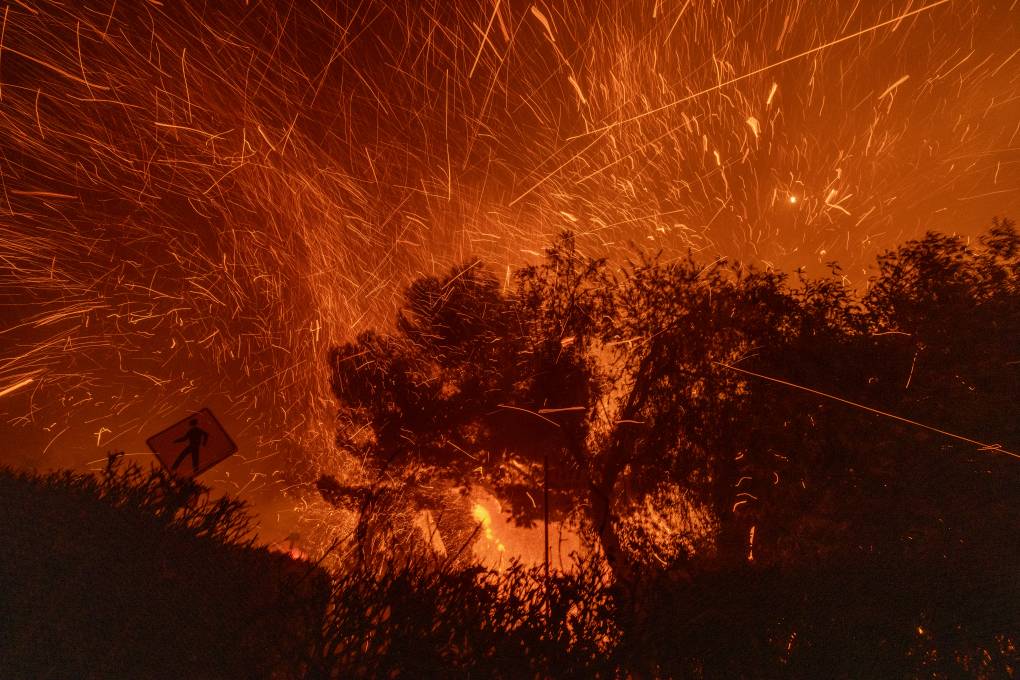
"caption": "Strong winds blow embers from homes burning in the Eaton Fire on Jan. 7, 2025, in Pasadena.",
"credit": "David McNew/Getty Images",
"altTag": null,
"description": null,
"imgSizes": {
"medium": {
"file": "https://cdn.kqed.org/wp-content/uploads/sites/10/2025/01/GettyImages-2192365794-800x534.jpg",
"width": 800,
"height": 534,
"mimeType": "image/jpeg"
},
"large": {
"file": "https://cdn.kqed.org/wp-content/uploads/sites/10/2025/01/GettyImages-2192365794-1020x680.jpg",
"width": 1020,
"height": 680,
"mimeType": "image/jpeg"
},
"thumbnail": {
"file": "https://cdn.kqed.org/wp-content/uploads/sites/10/2025/01/GettyImages-2192365794-160x107.jpg",
"width": 160,
"height": 107,
"mimeType": "image/jpeg"
},
"1536x1536": {
"file": "https://cdn.kqed.org/wp-content/uploads/sites/10/2025/01/GettyImages-2192365794-1536x1025.jpg",
"width": 1536,
"height": 1025,
"mimeType": "image/jpeg"
},
"2048x2048": {
"file": "https://cdn.kqed.org/wp-content/uploads/sites/10/2025/01/GettyImages-2192365794-2048x1366.jpg",
"width": 2048,
"height": 1366,
"mimeType": "image/jpeg"
},
"post-thumbnail": {
"file": "https://cdn.kqed.org/wp-content/uploads/sites/10/2025/01/GettyImages-2192365794-672x372.jpg",
"width": 672,
"height": 372,
"mimeType": "image/jpeg"
},
"twentyfourteen-full-width": {
"file": "https://cdn.kqed.org/wp-content/uploads/sites/10/2025/01/GettyImages-2192365794-1038x576.jpg",
"width": 1038,
"height": 576,
"mimeType": "image/jpeg"
},
"full-width": {
"file": "https://cdn.kqed.org/wp-content/uploads/sites/10/2025/01/GettyImages-2192365794-1920x1281.jpg",
"width": 1920,
"height": 1281,
"mimeType": "image/jpeg"
},
"kqedFullSize": {
"file": "https://cdn.kqed.org/wp-content/uploads/sites/10/2025/01/GettyImages-2192365794-scaled.jpg",
"width": 2560,
"height": 1708
}
},
"isLoading": false,
"fetchFailed": false
},
"news_12021903": {
"type": "attachments",
"id": "news_12021903",
"meta": {
"index": "attachments_1716263798",
"site": "news",
"id": "12021903",
"found": true
},
"title": "20240608_PriceRecallKickoff_GC-10_qed",
"publishDate": 1736805232,
"status": "inherit",
"parent": 12021827,
"modified": 1736805621,
"caption": "An individual holds up a sign during a Pamela Price recall campaign kickoff rally in Oakland on June 8, 2024. Alameda County supervisors will announce finalists for district attorney this week after Price was recalled less than two years into her term, with public interviews scheduled for Jan. 21.",
"credit": "Gina Castro/KQED",
"altTag": null,
"description": null,
"imgSizes": {
"medium": {
"file": "https://cdn.kqed.org/wp-content/uploads/sites/10/2025/01/20240608_PriceRecallKickoff_GC-10_qed-800x533.jpg",
"width": 800,
"height": 533,
"mimeType": "image/jpeg"
},
"large": {
"file": "https://cdn.kqed.org/wp-content/uploads/sites/10/2025/01/20240608_PriceRecallKickoff_GC-10_qed-1020x680.jpg",
"width": 1020,
"height": 680,
"mimeType": "image/jpeg"
},
"thumbnail": {
"file": "https://cdn.kqed.org/wp-content/uploads/sites/10/2025/01/20240608_PriceRecallKickoff_GC-10_qed-160x107.jpg",
"width": 160,
"height": 107,
"mimeType": "image/jpeg"
},
"1536x1536": {
"file": "https://cdn.kqed.org/wp-content/uploads/sites/10/2025/01/20240608_PriceRecallKickoff_GC-10_qed-1536x1024.jpg",
"width": 1536,
"height": 1024,
"mimeType": "image/jpeg"
},
"post-thumbnail": {
"file": "https://cdn.kqed.org/wp-content/uploads/sites/10/2025/01/20240608_PriceRecallKickoff_GC-10_qed-672x372.jpg",
"width": 672,
"height": 372,
"mimeType": "image/jpeg"
},
"twentyfourteen-full-width": {
"file": "https://cdn.kqed.org/wp-content/uploads/sites/10/2025/01/20240608_PriceRecallKickoff_GC-10_qed-1038x576.jpg",
"width": 1038,
"height": 576,
"mimeType": "image/jpeg"
},
"full-width": {
"file": "https://cdn.kqed.org/wp-content/uploads/sites/10/2025/01/20240608_PriceRecallKickoff_GC-10_qed-1920x1280.jpg",
"width": 1920,
"height": 1280,
"mimeType": "image/jpeg"
},
"kqedFullSize": {
"file": "https://cdn.kqed.org/wp-content/uploads/sites/10/2025/01/20240608_PriceRecallKickoff_GC-10_qed.jpg",
"width": 2000,
"height": 1333
}
},
"isLoading": false,
"fetchFailed": false
},
"news_12021639": {
"type": "attachments",
"id": "news_12021639",
"meta": {
"index": "attachments_1716263798",
"site": "news",
"id": "12021639",
"found": true
},
"title": "010625-Newsom-Budget-AP-CM",
"publishDate": 1736555497,
"status": "inherit",
"parent": 12021637,
"modified": 1736555532,
"caption": "Gov. Gavin Newsom outlines his proposed 2025-2026 state budget during a news conference at California State University, Stanislaus in Turlock, on Jan. 6, 2025.",
"credit": "Rich Pedroncelli, AP Photo",
"altTag": null,
"description": null,
"imgSizes": {
"medium": {
"file": "https://cdn.kqed.org/wp-content/uploads/sites/10/2025/01/010625-Newsom-Budget-AP-CM-800x533.jpg",
"width": 800,
"height": 533,
"mimeType": "image/jpeg"
},
"large": {
"file": "https://cdn.kqed.org/wp-content/uploads/sites/10/2025/01/010625-Newsom-Budget-AP-CM-1020x680.jpg",
"width": 1020,
"height": 680,
"mimeType": "image/jpeg"
},
"thumbnail": {
"file": "https://cdn.kqed.org/wp-content/uploads/sites/10/2025/01/010625-Newsom-Budget-AP-CM-160x107.jpg",
"width": 160,
"height": 107,
"mimeType": "image/jpeg"
},
"1536x1536": {
"file": "https://cdn.kqed.org/wp-content/uploads/sites/10/2025/01/010625-Newsom-Budget-AP-CM-1536x1024.jpg",
"width": 1536,
"height": 1024,
"mimeType": "image/jpeg"
},
"post-thumbnail": {
"file": "https://cdn.kqed.org/wp-content/uploads/sites/10/2025/01/010625-Newsom-Budget-AP-CM-672x372.jpg",
"width": 672,
"height": 372,
"mimeType": "image/jpeg"
},
"twentyfourteen-full-width": {
"file": "https://cdn.kqed.org/wp-content/uploads/sites/10/2025/01/010625-Newsom-Budget-AP-CM-1038x576.jpg",
"width": 1038,
"height": 576,
"mimeType": "image/jpeg"
},
"full-width": {
"file": "https://cdn.kqed.org/wp-content/uploads/sites/10/2025/01/010625-Newsom-Budget-AP-CM-1920x1280.jpg",
"width": 1920,
"height": 1280,
"mimeType": "image/jpeg"
},
"kqedFullSize": {
"file": "https://cdn.kqed.org/wp-content/uploads/sites/10/2025/01/010625-Newsom-Budget-AP-CM.jpg",
"width": 2000,
"height": 1333
}
},
"isLoading": false,
"fetchFailed": false
},
"news_12021431": {
"type": "attachments",
"id": "news_12021431",
"meta": {
"index": "attachments_1716263798",
"site": "news",
"id": "12021431",
"found": true
},
"title": "240108-LurieInaugurationDay-49_qed",
"publishDate": 1736530852,
"status": "inherit",
"parent": 12021429,
"modified": 1736530864,
"caption": "Mayor Daniel Lurie signs the oath of office at City Hall in San Francisco on Jan. 8, 2025.",
"credit": "Beth LaBerge/KQED",
"altTag": null,
"description": null,
"imgSizes": {
"medium": {
"file": "https://cdn.kqed.org/wp-content/uploads/sites/10/2025/01/240108-LurieInaugurationDay-49_qed-800x533.jpg",
"width": 800,
"height": 533,
"mimeType": "image/jpeg"
},
"large": {
"file": "https://cdn.kqed.org/wp-content/uploads/sites/10/2025/01/240108-LurieInaugurationDay-49_qed-1020x680.jpg",
"width": 1020,
"height": 680,
"mimeType": "image/jpeg"
},
"thumbnail": {
"file": "https://cdn.kqed.org/wp-content/uploads/sites/10/2025/01/240108-LurieInaugurationDay-49_qed-160x107.jpg",
"width": 160,
"height": 107,
"mimeType": "image/jpeg"
},
"1536x1536": {
"file": "https://cdn.kqed.org/wp-content/uploads/sites/10/2025/01/240108-LurieInaugurationDay-49_qed-1536x1024.jpg",
"width": 1536,
"height": 1024,
"mimeType": "image/jpeg"
},
"post-thumbnail": {
"file": "https://cdn.kqed.org/wp-content/uploads/sites/10/2025/01/240108-LurieInaugurationDay-49_qed-672x372.jpg",
"width": 672,
"height": 372,
"mimeType": "image/jpeg"
},
"twentyfourteen-full-width": {
"file": "https://cdn.kqed.org/wp-content/uploads/sites/10/2025/01/240108-LurieInaugurationDay-49_qed-1038x576.jpg",
"width": 1038,
"height": 576,
"mimeType": "image/jpeg"
},
"full-width": {
"file": "https://cdn.kqed.org/wp-content/uploads/sites/10/2025/01/240108-LurieInaugurationDay-49_qed-1920x1280.jpg",
"width": 1920,
"height": 1280,
"mimeType": "image/jpeg"
},
"kqedFullSize": {
"file": "https://cdn.kqed.org/wp-content/uploads/sites/10/2025/01/240108-LurieInaugurationDay-49_qed.jpg",
"width": 2000,
"height": 1333
}
},
"isLoading": false,
"fetchFailed": false
},
"news_10476556": {
"type": "attachments",
"id": "news_10476556",
"meta": {
"index": "attachments_1716263798",
"site": "news",
"id": "10476556",
"found": true
},
"title": "SFPD",
"publishDate": 1428090550,
"status": "inherit",
"parent": 10476086,
"modified": 1736362166,
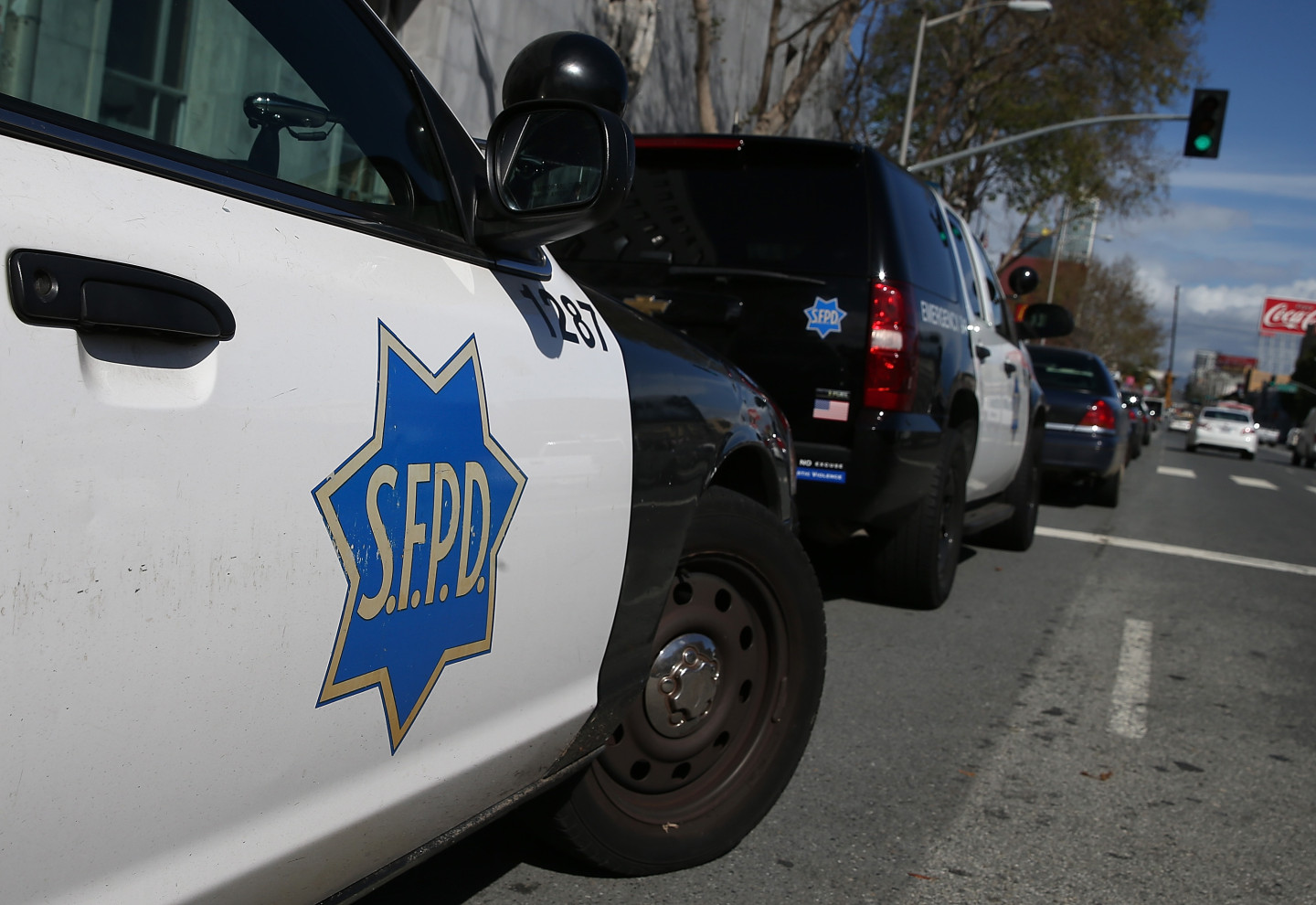
"caption": "The SFPD has finished an internal probe of 14 officers involved in a text messaging scandal.",
"credit": "Justin Sullivan/Getty Images",
"altTag": "A police car with an emblem reads \"S.F.P.D\" on it.",
"description": "The SFPD has finished an internal probe of 14 officers involved in a text messaging scandal.",
"imgSizes": {
"thumbnail": {
"file": "https://cdn.kqed.org/wp-content/uploads/sites/10/2015/04/RS9050_475371683-400x275.jpg",
"width": 400,
"height": 275,
"mimeType": "image/jpeg"
},
"medium": {
"file": "https://cdn.kqed.org/wp-content/uploads/sites/10/2015/04/RS9050_475371683-800x550.jpg",
"width": 800,
"height": 550,
"mimeType": "image/jpeg"
},
"large": {
"file": "https://cdn.kqed.org/wp-content/uploads/sites/10/2015/04/RS9050_475371683-1440x990.jpg",
"width": 1440,
"height": 990,
"mimeType": "image/jpeg"
},
"fd-lrg": {
"file": "https://cdn.kqed.org/wp-content/uploads/sites/10/2015/04/RS9050_475371683-1180x811.jpg",
"width": 1180,
"height": 811,
"mimeType": "image/jpeg"
},
"fd-med": {
"file": "https://cdn.kqed.org/wp-content/uploads/sites/10/2015/04/RS9050_475371683-768x528.jpg",
"width": 768,
"height": 528,
"mimeType": "image/jpeg"
},
"fd-sm": {
"file": "https://cdn.kqed.org/wp-content/uploads/sites/10/2015/04/RS9050_475371683-320x220.jpg",
"width": 320,
"height": 220,
"mimeType": "image/jpeg"
},
"post-thumbnail": {
"file": "https://cdn.kqed.org/wp-content/uploads/sites/10/2015/04/RS9050_475371683-672x372.jpg",
"width": 672,
"height": 372,
"mimeType": "image/jpeg"
},
"twentyfourteen-full-width": {
"file": "https://cdn.kqed.org/wp-content/uploads/sites/10/2015/04/RS9050_475371683-1038x576.jpg",
"width": 1038,
"height": 576,
"mimeType": "image/jpeg"
},
"guest-author-32": {
"file": "https://cdn.kqed.org/wp-content/uploads/sites/10/2015/04/RS9050_475371683-32x32.jpg",
"width": 32,
"height": 32,
"mimeType": "image/jpeg"
},
"guest-author-64": {
"file": "https://cdn.kqed.org/wp-content/uploads/sites/10/2015/04/RS9050_475371683-64x64.jpg",
"width": 64,
"height": 64,
"mimeType": "image/jpeg"
},
"guest-author-96": {
"file": "https://cdn.kqed.org/wp-content/uploads/sites/10/2015/04/RS9050_475371683-96x96.jpg",
"width": 96,
"height": 96,
"mimeType": "image/jpeg"
},
"guest-author-128": {
"file": "https://cdn.kqed.org/wp-content/uploads/sites/10/2015/04/RS9050_475371683-128x128.jpg",
"width": 128,
"height": 128,
"mimeType": "image/jpeg"
},
"detail": {
"file": "https://cdn.kqed.org/wp-content/uploads/sites/10/2015/04/RS9050_475371683-75x75.jpg",
"width": 75,
"height": 75,
"mimeType": "image/jpeg"
},
"kqedFullSize": {
"file": "https://cdn.kqed.org/wp-content/uploads/sites/10/2015/04/RS9050_475371683-e1428090565437.jpg",
"width": 1920,
"height": 1320
}
},
"isLoading": false,
"fetchFailed": false
},
"news_12021180": {
"type": "attachments",
"id": "news_12021180",
"meta": {
"index": "attachments_1716263798",
"site": "news",
"id": "12021180",
"found": true
},
"title": "Muni",
"publishDate": 1736454557,
"status": "inherit",
"parent": 12021178,
"modified": 1736454591,
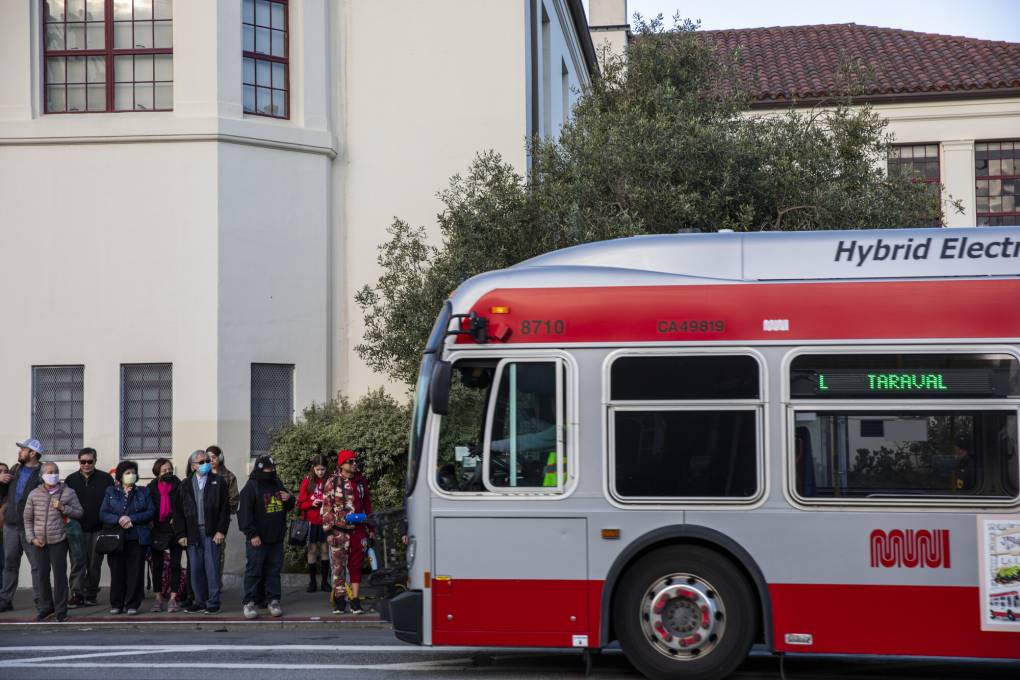
"caption": "Passengers wait to board the L Bus outside of West Portal Station in San Francisco on Nov. 28, 2023.",
"credit": "Juliana Yamada/KQED",
"altTag": null,
"description": null,
"imgSizes": {
"medium": {
"file": "https://cdn.kqed.org/wp-content/uploads/sites/10/2025/01/20231128-Muni-013-JY_qed-800x533.jpg",
"width": 800,
"height": 533,
"mimeType": "image/jpeg"
},
"large": {
"file": "https://cdn.kqed.org/wp-content/uploads/sites/10/2025/01/20231128-Muni-013-JY_qed-1020x680.jpg",
"width": 1020,
"height": 680,
"mimeType": "image/jpeg"
},
"thumbnail": {
"file": "https://cdn.kqed.org/wp-content/uploads/sites/10/2025/01/20231128-Muni-013-JY_qed-160x107.jpg",
"width": 160,
"height": 107,
"mimeType": "image/jpeg"
},
"1536x1536": {
"file": "https://cdn.kqed.org/wp-content/uploads/sites/10/2025/01/20231128-Muni-013-JY_qed-1536x1024.jpg",
"width": 1536,
"height": 1024,
"mimeType": "image/jpeg"
},
"post-thumbnail": {
"file": "https://cdn.kqed.org/wp-content/uploads/sites/10/2025/01/20231128-Muni-013-JY_qed-672x372.jpg",
"width": 672,
"height": 372,
"mimeType": "image/jpeg"
},
"twentyfourteen-full-width": {
"file": "https://cdn.kqed.org/wp-content/uploads/sites/10/2025/01/20231128-Muni-013-JY_qed-1038x576.jpg",
"width": 1038,
"height": 576,
"mimeType": "image/jpeg"
},
"full-width": {
"file": "https://cdn.kqed.org/wp-content/uploads/sites/10/2025/01/20231128-Muni-013-JY_qed-1920x1280.jpg",
"width": 1920,
"height": 1280,
"mimeType": "image/jpeg"
},
"kqedFullSize": {
"file": "https://cdn.kqed.org/wp-content/uploads/sites/10/2025/01/20231128-Muni-013-JY_qed.jpg",
"width": 2000,
"height": 1333
}
},
"isLoading": false,
"fetchFailed": false
},
"news_12020584": {
"type": "attachments",
"id": "news_12020584",
"meta": {
"index": "attachments_1716263798",
"site": "news",
"id": "12020584",
"found": true
},
"title": "Bay-Curious",
"publishDate": 1736277189,
"status": "inherit",
"parent": 0,
"modified": 1736357943,
"caption": "Kerianne Brownlie poses for a portrait during an interview for KQED at Albany Beach in Albany, Calif., Friday, Dec. 20, 2024.",
"credit": "David M. Barreda/KQED",
"altTag": "A woman in a bathing suit and swim cap wades out into a vast body of water.",
"description": null,
"imgSizes": {
"medium": {
"file": "https://cdn.kqed.org/wp-content/uploads/sites/10/2025/01/20241220_BaySwim_DMB_00710-800x533.jpg",
"width": 800,
"height": 533,
"mimeType": "image/jpeg"
},
"large": {
"file": "https://cdn.kqed.org/wp-content/uploads/sites/10/2025/01/20241220_BaySwim_DMB_00710-1020x680.jpg",
"width": 1020,
"height": 680,
"mimeType": "image/jpeg"
},
"thumbnail": {
"file": "https://cdn.kqed.org/wp-content/uploads/sites/10/2025/01/20241220_BaySwim_DMB_00710-160x107.jpg",
"width": 160,
"height": 107,
"mimeType": "image/jpeg"
},
"1536x1536": {
"file": "https://cdn.kqed.org/wp-content/uploads/sites/10/2025/01/20241220_BaySwim_DMB_00710-1536x1024.jpg",
"width": 1536,
"height": 1024,
"mimeType": "image/jpeg"
},
"post-thumbnail": {
"file": "https://cdn.kqed.org/wp-content/uploads/sites/10/2025/01/20241220_BaySwim_DMB_00710-672x372.jpg",
"width": 672,
"height": 372,
"mimeType": "image/jpeg"
},
"twentyfourteen-full-width": {
"file": "https://cdn.kqed.org/wp-content/uploads/sites/10/2025/01/20241220_BaySwim_DMB_00710-1038x576.jpg",
"width": 1038,
"height": 576,
"mimeType": "image/jpeg"
},
"full-width": {
"file": "https://cdn.kqed.org/wp-content/uploads/sites/10/2025/01/20241220_BaySwim_DMB_00710-1920x1280.jpg",
"width": 1920,
"height": 1280,
"mimeType": "image/jpeg"
},
"kqedFullSize": {
"file": "https://cdn.kqed.org/wp-content/uploads/sites/10/2025/01/20241220_BaySwim_DMB_00710.jpg",
"width": 2000,
"height": 1333
}
},
"isLoading": false,
"fetchFailed": false
},
"news_12020969": {
"type": "attachments",
"id": "news_12020969",
"meta": {
"index": "attachments_1716263798",
"site": "news",
"id": "12020969",
"found": true
},
"title": "20250108_LurieInauguration_GC-9",
"publishDate": 1736379831,
"status": "inherit",
"parent": 0,
"modified": 1736380075,
"caption": "Mayor-elect Daniel Lurie waves to the audience during his inauguration ceremony at Civic Center Plaza in San Francisco on Jan. 8, 2025.",
"credit": "Gina Castro/KQED",
"altTag": null,
"description": null,
"imgSizes": {
"medium": {
"file": "https://cdn.kqed.org/wp-content/uploads/sites/10/2025/01/20250108_LurieInauguration_GC-9-800x536.jpg",
"width": 800,
"height": 536,
"mimeType": "image/jpeg"
},
"large": {
"file": "https://cdn.kqed.org/wp-content/uploads/sites/10/2025/01/20250108_LurieInauguration_GC-9-1020x683.jpg",
"width": 1020,
"height": 683,
"mimeType": "image/jpeg"
},
"thumbnail": {
"file": "https://cdn.kqed.org/wp-content/uploads/sites/10/2025/01/20250108_LurieInauguration_GC-9-160x107.jpg",
"width": 160,
"height": 107,
"mimeType": "image/jpeg"
},
"1536x1536": {
"file": "https://cdn.kqed.org/wp-content/uploads/sites/10/2025/01/20250108_LurieInauguration_GC-9-1536x1028.jpg",
"width": 1536,
"height": 1028,
"mimeType": "image/jpeg"
},
"post-thumbnail": {
"file": "https://cdn.kqed.org/wp-content/uploads/sites/10/2025/01/20250108_LurieInauguration_GC-9-672x372.jpg",
"width": 672,
"height": 372,
"mimeType": "image/jpeg"
},
"twentyfourteen-full-width": {
"file": "https://cdn.kqed.org/wp-content/uploads/sites/10/2025/01/20250108_LurieInauguration_GC-9-1038x576.jpg",
"width": 1038,
"height": 576,
"mimeType": "image/jpeg"
},
"full-width": {
"file": "https://cdn.kqed.org/wp-content/uploads/sites/10/2025/01/20250108_LurieInauguration_GC-9-1920x1285.jpg",
"width": 1920,
"height": 1285,
"mimeType": "image/jpeg"
},
"kqedFullSize": {
"file": "https://cdn.kqed.org/wp-content/uploads/sites/10/2025/01/20250108_LurieInauguration_GC-9.jpg",
"width": 2000,
"height": 1339
}
},
"isLoading": false,
"fetchFailed": false
},
"news_12020873": {
"type": "attachments",
"id": "news_12020873",
"meta": {
"index": "attachments_1716263798",
"site": "news",
"id": "12020873",
"found": true
},
"title": "la-fires-eaton-fire-palisades-pasadena",
"publishDate": 1736369424,
"status": "inherit",
"parent": 12020872,
"modified": 1736373909,
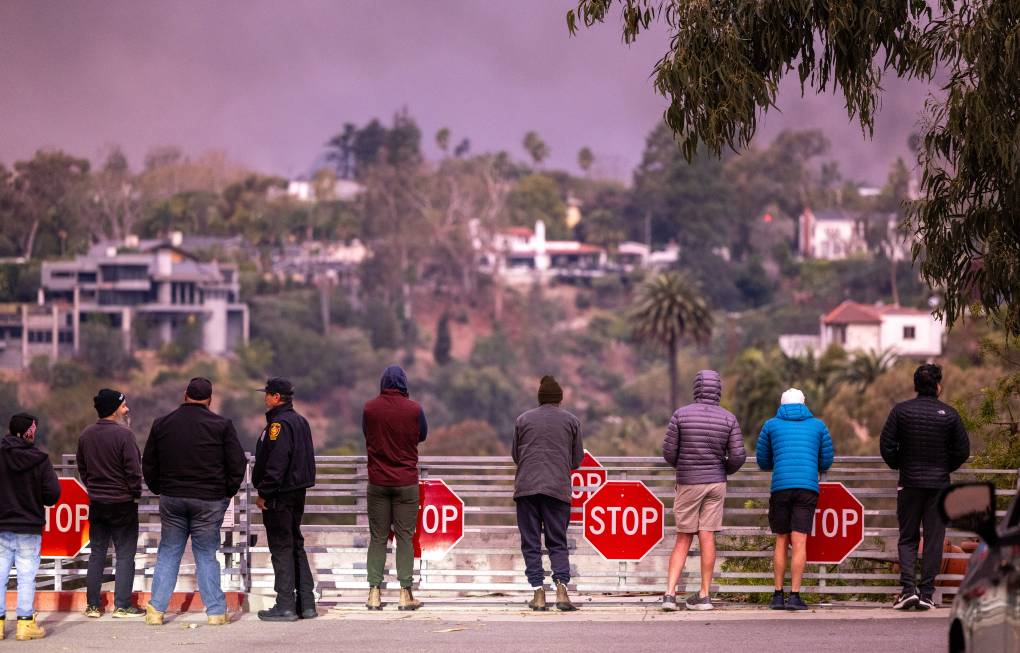
"caption": "People watch the smoke and flames from the Palisades Fire on Jan. 8, 2025, in Santa Monica, California. Fueled by intense Santa Ana Winds, the Palisades Fire has grown to over 2,900 acres and 30,000 people have been ordered to evacuate while a second major fire has emerged near Eaton Canyon and Altadena. ",
"credit": "Tiffany Rose/Getty Images",
"altTag": null,
"description": null,
"imgSizes": {
"medium": {
"file": "https://cdn.kqed.org/wp-content/uploads/sites/10/2025/01/GettyImages-2193000280-800x512.jpg",
"width": 800,
"height": 512,
"mimeType": "image/jpeg"
},
"large": {
"file": "https://cdn.kqed.org/wp-content/uploads/sites/10/2025/01/GettyImages-2193000280-1020x653.jpg",
"width": 1020,
"height": 653,
"mimeType": "image/jpeg"
},
"thumbnail": {
"file": "https://cdn.kqed.org/wp-content/uploads/sites/10/2025/01/GettyImages-2193000280-160x102.jpg",
"width": 160,
"height": 102,
"mimeType": "image/jpeg"
},
"1536x1536": {
"file": "https://cdn.kqed.org/wp-content/uploads/sites/10/2025/01/GettyImages-2193000280-1536x983.jpg",
"width": 1536,
"height": 983,
"mimeType": "image/jpeg"
},
"2048x2048": {
"file": "https://cdn.kqed.org/wp-content/uploads/sites/10/2025/01/GettyImages-2193000280-2048x1311.jpg",
"width": 2048,
"height": 1311,
"mimeType": "image/jpeg"
},
"post-thumbnail": {
"file": "https://cdn.kqed.org/wp-content/uploads/sites/10/2025/01/GettyImages-2193000280-672x372.jpg",
"width": 672,
"height": 372,
"mimeType": "image/jpeg"
},
"twentyfourteen-full-width": {
"file": "https://cdn.kqed.org/wp-content/uploads/sites/10/2025/01/GettyImages-2193000280-1038x576.jpg",
"width": 1038,
"height": 576,
"mimeType": "image/jpeg"
},
"full-width": {
"file": "https://cdn.kqed.org/wp-content/uploads/sites/10/2025/01/GettyImages-2193000280-1920x1229.jpg",
"width": 1920,
"height": 1229,
"mimeType": "image/jpeg"
},
"kqedFullSize": {
"file": "https://cdn.kqed.org/wp-content/uploads/sites/10/2025/01/GettyImages-2193000280-scaled.jpg",
"width": 2560,
"height": 1639
}
},
"isLoading": false,
"fetchFailed": false
},
"news_12020851": {
"type": "attachments",
"id": "news_12020851",
"meta": {
"index": "attachments_1716263798",
"site": "news",
"id": "12020851",
"found": true
},
"title": "20250108_LurieInaugurationDay_GC_00196",
"publishDate": 1736367654,
"status": "inherit",
"parent": 0,
"modified": 1736367796,
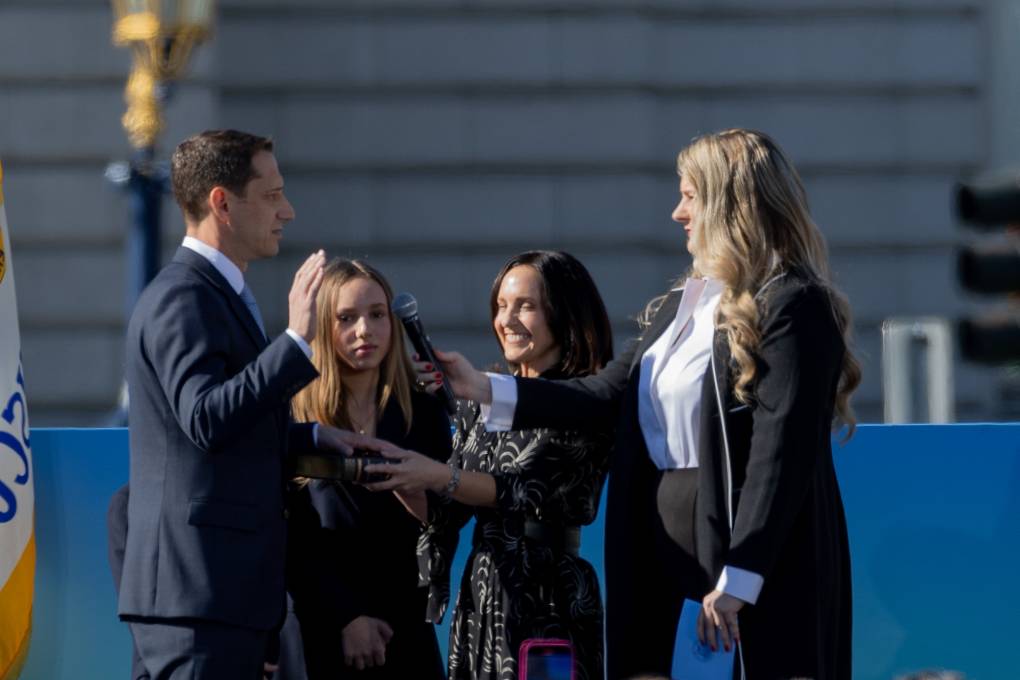
"caption": "Mayor-elect Daniel Lurie takes the oath of office with his family on Inauguration Day at Civic Center in downtown San Francisco, California, on Jan. 8, 2025.",
"credit": "Gina Castro/KQED",
"altTag": null,
"description": null,
"imgSizes": {
"medium": {
"file": "https://cdn.kqed.org/wp-content/uploads/sites/10/2025/01/20250108_LurieInaugurationDay_GC_00196-800x533.jpg",
"width": 800,
"height": 533,
"mimeType": "image/jpeg"
},
"large": {
"file": "https://cdn.kqed.org/wp-content/uploads/sites/10/2025/01/20250108_LurieInaugurationDay_GC_00196-1020x680.jpg",
"width": 1020,
"height": 680,
"mimeType": "image/jpeg"
},
"thumbnail": {
"file": "https://cdn.kqed.org/wp-content/uploads/sites/10/2025/01/20250108_LurieInaugurationDay_GC_00196-160x107.jpg",
"width": 160,
"height": 107,
"mimeType": "image/jpeg"
},
"1536x1536": {
"file": "https://cdn.kqed.org/wp-content/uploads/sites/10/2025/01/20250108_LurieInaugurationDay_GC_00196-1536x1024.jpg",
"width": 1536,
"height": 1024,
"mimeType": "image/jpeg"
},
"post-thumbnail": {
"file": "https://cdn.kqed.org/wp-content/uploads/sites/10/2025/01/20250108_LurieInaugurationDay_GC_00196-672x372.jpg",
"width": 672,
"height": 372,
"mimeType": "image/jpeg"
},
"twentyfourteen-full-width": {
"file": "https://cdn.kqed.org/wp-content/uploads/sites/10/2025/01/20250108_LurieInaugurationDay_GC_00196-1038x576.jpg",
"width": 1038,
"height": 576,
"mimeType": "image/jpeg"
},
"full-width": {
"file": "https://cdn.kqed.org/wp-content/uploads/sites/10/2025/01/20250108_LurieInaugurationDay_GC_00196-1920x1280.jpg",
"width": 1920,
"height": 1280,
"mimeType": "image/jpeg"
},
"kqedFullSize": {
"file": "https://cdn.kqed.org/wp-content/uploads/sites/10/2025/01/20250108_LurieInaugurationDay_GC_00196.jpg",
"width": 2000,
"height": 1333
}
},
"isLoading": false,
"fetchFailed": false
},
"news_12020546": {
"type": "attachments",
"id": "news_12020546",
"meta": {
"index": "attachments_1716263798",
"site": "news",
"id": "12020546",
"found": true
},
"title": "250106-BarbaraLeeExitInterview-10",
"publishDate": 1736258657,
"status": "inherit",
"parent": 0,
"modified": 1736272407,
"caption": "Former Rep. Barbara Lee poses for a portrait at the KQED offices in San Francisco on Jan. 6, 2024.",
"credit": "Beth LaBerge/KQED",
"altTag": null,
"description": null,
"imgSizes": {
"medium": {
"file": "https://cdn.kqed.org/wp-content/uploads/sites/10/2025/01/250106-BarbaraLeeExitInterview-10-800x534.jpg",
"width": 800,
"height": 534,
"mimeType": "image/jpeg"
},
"large": {
"file": "https://cdn.kqed.org/wp-content/uploads/sites/10/2025/01/250106-BarbaraLeeExitInterview-10-1020x680.jpg",
"width": 1020,
"height": 680,
"mimeType": "image/jpeg"
},
"thumbnail": {
"file": "https://cdn.kqed.org/wp-content/uploads/sites/10/2025/01/250106-BarbaraLeeExitInterview-10-160x107.jpg",
"width": 160,
"height": 107,
"mimeType": "image/jpeg"
},
"1536x1536": {
"file": "https://cdn.kqed.org/wp-content/uploads/sites/10/2025/01/250106-BarbaraLeeExitInterview-10-1536x1025.jpg",
"width": 1536,
"height": 1025,
"mimeType": "image/jpeg"
},
"post-thumbnail": {
"file": "https://cdn.kqed.org/wp-content/uploads/sites/10/2025/01/250106-BarbaraLeeExitInterview-10-672x372.jpg",
"width": 672,
"height": 372,
"mimeType": "image/jpeg"
},
"twentyfourteen-full-width": {
"file": "https://cdn.kqed.org/wp-content/uploads/sites/10/2025/01/250106-BarbaraLeeExitInterview-10-1038x576.jpg",
"width": 1038,
"height": 576,
"mimeType": "image/jpeg"
},
"full-width": {
"file": "https://cdn.kqed.org/wp-content/uploads/sites/10/2025/01/250106-BarbaraLeeExitInterview-10-1920x1281.jpg",
"width": 1920,
"height": 1281,
"mimeType": "image/jpeg"
},
"kqedFullSize": {
"file": "https://cdn.kqed.org/wp-content/uploads/sites/10/2025/01/250106-BarbaraLeeExitInterview-10.jpg",
"width": 2000,
"height": 1334
}
},
"isLoading": false,
"fetchFailed": false
},
"news_12014759": {
"type": "attachments",
"id": "news_12014759",
"meta": {
"index": "attachments_1716263798",
"site": "news",
"id": "12014759",
"found": true
},
"title": "241108-LurieVictoryPresser-29-BL_qed",
"publishDate": 1731717025,
"status": "inherit",
"parent": 12014714,
"modified": 1731717058,
"caption": "San Francisco Mayor-elect Daniel Lurie gives an acceptance speech at St. Mary’s Square in San Francisco on Nov. 8, 2024.",
"credit": "Beth LaBerge/KQED",
"altTag": null,
"description": null,
"imgSizes": {
"medium": {
"file": "https://cdn.kqed.org/wp-content/uploads/sites/10/2024/11/241108-LurieVictoryPresser-29-BL_qed-800x533.jpg",
"width": 800,
"height": 533,
"mimeType": "image/jpeg"
},
"large": {
"file": "https://cdn.kqed.org/wp-content/uploads/sites/10/2024/11/241108-LurieVictoryPresser-29-BL_qed-1020x680.jpg",
"width": 1020,
"height": 680,
"mimeType": "image/jpeg"
},
"thumbnail": {
"file": "https://cdn.kqed.org/wp-content/uploads/sites/10/2024/11/241108-LurieVictoryPresser-29-BL_qed-160x107.jpg",
"width": 160,
"height": 107,
"mimeType": "image/jpeg"
},
"1536x1536": {
"file": "https://cdn.kqed.org/wp-content/uploads/sites/10/2024/11/241108-LurieVictoryPresser-29-BL_qed-1536x1024.jpg",
"width": 1536,
"height": 1024,
"mimeType": "image/jpeg"
},
"post-thumbnail": {
"file": "https://cdn.kqed.org/wp-content/uploads/sites/10/2024/11/241108-LurieVictoryPresser-29-BL_qed-672x372.jpg",
"width": 672,
"height": 372,
"mimeType": "image/jpeg"
},
"twentyfourteen-full-width": {
"file": "https://cdn.kqed.org/wp-content/uploads/sites/10/2024/11/241108-LurieVictoryPresser-29-BL_qed-1038x576.jpg",
"width": 1038,
"height": 576,
"mimeType": "image/jpeg"
},
"full-width": {
"file": "https://cdn.kqed.org/wp-content/uploads/sites/10/2024/11/241108-LurieVictoryPresser-29-BL_qed-1920x1280.jpg",
"width": 1920,
"height": 1280,
"mimeType": "image/jpeg"
},
"kqedFullSize": {
"file": "https://cdn.kqed.org/wp-content/uploads/sites/10/2024/11/241108-LurieVictoryPresser-29-BL_qed.jpg",
"width": 1999,
"height": 1333
}
},
"isLoading": false,
"fetchFailed": false
}
},
"audioPlayerReducer": {
"postId": "stream_live",
"isPaused": true,
"isPlaying": false,
"pfsActive": false,
"pledgeModalIsOpen": true,
"playerDrawerIsOpen": false,
"liveAudioPlayStartedAt": 0,
"liveAudioPlayContext": ""
},
"authorsReducer": {
"byline_news_12021637": {
"type": "authors",
"id": "byline_news_12021637",
"meta": {
"override": true
},
"slug": "byline_news_12021637",
"name": "\u003ca href=\"https://calmatters.org/author/mikhailzinshteyn/\">Mikhail Zinshteyn\u003c/a> and \u003ca href=\"https://calmatters.org/author/yue-yu/\">Yue Stella Yu\u003c/a>, CalMatters",
"isLoading": false
},
"danbrekke": {
"type": "authors",
"id": "222",
"meta": {
"index": "authors_1716337520",
"id": "222",
"found": true
},
"name": "Dan Brekke",
"firstName": "Dan",
"lastName": "Brekke",
"slug": "danbrekke",
"email": "dbrekke@kqed.org",
"display_author_email": true,
"staff_mastheads": [
"news",
"science"
],
"title": "KQED Editor and Reporter",
"bio": "Dan Brekke is a reporter and editor for KQED News, responsible for coverage of topics ranging from California water issues to the Bay Area's transportation challenges. In a newsroom career that began in Chicago in 1972, Dan has worked for \u003cem>The San Francisco Examiner,\u003c/em> Wired and TechTV and has been published in The New York Times, The New York Times Magazine, Business 2.0, Salon and elsewhere.\r\n\r\nSince joining KQED in 2007, Dan has reported, edited and produced both radio and online features and breaking news pieces. He has shared as both editor and reporter in four Society of Professional Journalists Norcal Excellence in Journalism awards and one Edward R. Murrow regional award. He was chosen for a spring 2017 residency at the Mesa Refuge to advance his research on California salmon.\r\n\r\nEmail Dan at: \u003ca href=\"mailto:dbrekke@kqed.org\">dbrekke@kqed.org\u003c/a>\r\n\r\n\u003cstrong>Twitter:\u003c/strong> \u003ca href=\"https://twitter.com/danbrekke\" rel=\"noopener noreferrer\">twitter.com/danbrekke\u003c/a>\r\n\u003cstrong>Facebook:\u003c/strong> \u003ca href=\"https://www.facebook.com/danbrekke\" rel=\"noopener noreferrer\">www.facebook.com/danbrekke\u003c/a>\r\n\u003cstrong>LinkedIn:\u003c/strong> \u003ca href=\"https://www.linkedin.com/in/danbrekke\" rel=\"noopener noreferrer\">www.linkedin.com/in/danbrekke\u003c/a>",
"avatar": "https://secure.gravatar.com/avatar/8f1f0d2a978fb3b23426c922c7e2af558fa36905b49c4ce76a97dc3c72d27226?s=600&d=mm&r=g",
"twitter": "danbrekke",
"bluesky": null,
"facebook": null,
"instagram": "https://www.instagram.com/dan.brekke/",
"linkedin": "https://www.linkedin.com/in/danbrekke/",
"sites": [
{
"site": "news",
"roles": [
"administrator",
"create_posts"
]
},
{
"site": "stateofhealth",
"roles": [
"editor"
]
},
{
"site": "science",
"roles": [
"editor"
]
},
{
"site": "quest",
"roles": [
"contributor"
]
},
{
"site": "food",
"roles": [
"contributor"
]
},
{
"site": "forum",
"roles": [
"contributor"
]
},
{
"site": "elections",
"roles": [
"editor"
]
},
{
"site": "liveblog",
"roles": [
"editor"
]
}
],
"headData": {
"title": "Dan Brekke | KQED",
"description": "KQED Editor and Reporter",
"ogImgSrc": "https://secure.gravatar.com/avatar/8f1f0d2a978fb3b23426c922c7e2af558fa36905b49c4ce76a97dc3c72d27226?s=600&d=mm&r=g",
"twImgSrc": "https://secure.gravatar.com/avatar/8f1f0d2a978fb3b23426c922c7e2af558fa36905b49c4ce76a97dc3c72d27226?s=600&d=mm&r=g"
},
"isLoading": false,
"link": "/author/danbrekke"
},
"carlysevern": {
"type": "authors",
"id": "3243",
"meta": {
"index": "authors_1716337520",
"id": "3243",
"found": true
},
"name": "Carly Severn",
"firstName": "Carly",
"lastName": "Severn",
"slug": "carlysevern",
"email": "csevern@kqed.org",
"display_author_email": false,
"staff_mastheads": [
"news"
],
"title": "Senior Editor, Audience News ",
"bio": "Carly is KQED's Senior Editor of Audience News on the Digital News team, and has reported for the California Report Magazine, Bay Curious and KQED Arts. She's formerly the host of \u003ca href=\"http://ww2.kqed.org/pop/category/the-cooler/\" rel=\"noopener noreferrer\">The Cooler\u003c/a> podcast.",
"avatar": "https://secure.gravatar.com/avatar/54037bf5c128fe678f0ef26cec97a93f2e7f220a22d7285703328f12c42c1b1d?s=600&d=blank&r=g",
"twitter": "teacupinthebay",
"bluesky": null,
"facebook": null,
"instagram": null,
"linkedin": null,
"sites": [
{
"site": "",
"roles": [
"editor"
]
},
{
"site": "arts",
"roles": [
"editor"
]
},
{
"site": "news",
"roles": [
"administrator"
]
},
{
"site": "pop",
"roles": [
"editor"
]
},
{
"site": "futureofyou",
"roles": [
"editor"
]
},
{
"site": "about",
"roles": [
"administrator"
]
},
{
"site": "mindshift",
"roles": [
"editor"
]
},
{
"site": "bayareabites",
"roles": [
"editor"
]
},
{
"site": "stateofhealth",
"roles": [
"editor"
]
},
{
"site": "science",
"roles": [
"editor"
]
},
{
"site": "food",
"roles": [
"contributor"
]
},
{
"site": "forum",
"roles": [
"editor"
]
},
{
"site": "perspectives",
"roles": [
"administrator"
]
},
{
"site": "liveblog",
"roles": [
"editor"
]
}
],
"headData": {
"title": "Carly Severn | KQED",
"description": "Senior Editor, Audience News ",
"ogImgSrc": "https://secure.gravatar.com/avatar/54037bf5c128fe678f0ef26cec97a93f2e7f220a22d7285703328f12c42c1b1d?s=600&d=blank&r=g",
"twImgSrc": "https://secure.gravatar.com/avatar/54037bf5c128fe678f0ef26cec97a93f2e7f220a22d7285703328f12c42c1b1d?s=600&d=blank&r=g"
},
"isLoading": false,
"link": "/author/carlysevern"
},
"dcronin": {
"type": "authors",
"id": "11362",
"meta": {
"index": "authors_1716337520",
"id": "11362",
"found": true
},
"name": "Dana Cronin",
"firstName": "Dana",
"lastName": "Cronin",
"slug": "dcronin",
"email": "dcronin@KQED.org",
"display_author_email": true,
"staff_mastheads": [],
"title": "KQED Contributor",
"bio": "Dana Cronin is a reporter for KQED News. She loves writing stories about climate change, environmental issues, food and agriculture. She's reported across the country, from Colorado to Washington D.C. to Illinois, and has won numerous awards for her coverage. Her work is regularly featured on national broadcasts, including NPR’s Morning Edition, All Things Considered, PBS Newshour and Science Friday. She lives in Oakland and has an avocado tree in her back yard.",
"avatar": "https://secure.gravatar.com/avatar/bcf89e3455ff7235f96ab6fa7258dd95?s=600&d=blank&r=g",
"twitter": "DanaHCronin",
"facebook": null,
"instagram": null,
"linkedin": null,
"sites": [
{
"site": "arts",
"roles": [
"author"
]
},
{
"site": "news",
"roles": [
"editor"
]
},
{
"site": "science",
"roles": [
"author"
]
},
{
"site": "liveblog",
"roles": [
"author"
]
}
],
"headData": {
"title": "Dana Cronin | KQED",
"description": "KQED Contributor",
"ogImgSrc": "https://secure.gravatar.com/avatar/bcf89e3455ff7235f96ab6fa7258dd95?s=600&d=blank&r=g",
"twImgSrc": "https://secure.gravatar.com/avatar/bcf89e3455ff7235f96ab6fa7258dd95?s=600&d=blank&r=g"
},
"isLoading": false,
"link": "/author/dcronin"
},
"ahall": {
"type": "authors",
"id": "11490",
"meta": {
"index": "authors_1716337520",
"id": "11490",
"found": true
},
"name": "Alex Hall",
"firstName": "Alex",
"lastName": "Hall",
"slug": "ahall",
"email": "ahall@kqed.org",
"display_author_email": false,
"staff_mastheads": [
"news"
],
"title": "KQED Enterprise & Accountability Reporter",
"bio": "Alex Hall is KQED's Enterprise and Accountability Reporter. She previously covered the Central Valley for five years from KQED's bureau in Fresno. Before joining KQED, Alex was an investigative reporting fellow at Wisconsin Public Radio and the Wisconsin Center for Investigative Journalism. She has also worked as a bilingual producer for NPR's investigative unit and freelance video producer for Reuters TV on the Latin America desk. She got her start in journalism in South America, where she worked as a radio producer and Spanish-English translator for CNN Chile. Her documentary and investigation into the series of deadly COVID-19 outbreaks at Foster Farms won a national Edward R. Murrow award and was named an Investigative Reporters & Editors award finalist. Alex's reporting for Reveal on the Wisconsin dairy industry's reliance on undocumented immigrant labor was made into a film, Los Lecheros, which won a regional Edward R. Murrow award for best news documentary.",
"avatar": "https://secure.gravatar.com/avatar/04c28ad4a7caa7ac2ef39c655c4030c993a3f331481d1da4799bb76ea85b9afa?s=600&d=blank&r=g",
"twitter": "@chalexhall",
"bluesky": null,
"facebook": null,
"instagram": null,
"linkedin": null,
"sites": [
{
"site": "news",
"roles": [
"editor"
]
},
{
"site": "liveblog",
"roles": [
"author"
]
}
],
"headData": {
"title": "Alex Hall | KQED",
"description": "KQED Enterprise & Accountability Reporter",
"ogImgSrc": "https://secure.gravatar.com/avatar/04c28ad4a7caa7ac2ef39c655c4030c993a3f331481d1da4799bb76ea85b9afa?s=600&d=blank&r=g",
"twImgSrc": "https://secure.gravatar.com/avatar/04c28ad4a7caa7ac2ef39c655c4030c993a3f331481d1da4799bb76ea85b9afa?s=600&d=blank&r=g"
},
"isLoading": false,
"link": "/author/ahall"
},
"ebaldassari": {
"type": "authors",
"id": "11652",
"meta": {
"index": "authors_1716337520",
"id": "11652",
"found": true
},
"name": "Erin Baldassari",
"firstName": "Erin",
"lastName": "Baldassari",
"slug": "ebaldassari",
"email": "ebaldassari@KQED.org",
"display_author_email": true,
"staff_mastheads": [
"news"
],
"title": "Staff Writer",
"bio": "Erin Baldassari covers housing for KQED. She's a former print journalist and most recently worked as the transportation reporter for the \u003cem>Mercury News\u003c/em> and \u003cem>East Bay Times. \u003c/em>There, she focused on how the Bay Area’s housing shortage has changed the way people move around the region. She also served on the \u003cem>East Bay Times\u003c/em>’ 2017 Pulitzer Prize-winning team for coverage of the Ghost Ship Fire in Oakland. Prior to that, Erin worked as a breaking news and general assignment reporter for a variety of outlets in the Bay Area and the greater Boston area. A Tufts University alumna, Erin grew up in the foothills of the Sierra Nevada mountains and in Sonoma County. She is a life-long KQED listener.",
"avatar": "https://secure.gravatar.com/avatar/5e95cad64a8ca08288082212e199d2b0cbeb4fd8e8ef5339395f361032bbe005?s=600&d=blank&r=g",
"twitter": "e_baldi",
"bluesky": null,
"facebook": null,
"instagram": null,
"linkedin": null,
"sites": [
{
"site": "news",
"roles": [
"edit_others_posts",
"editor"
]
},
{
"site": "science",
"roles": [
"editor"
]
},
{
"site": "liveblog",
"roles": [
"editor"
]
}
],
"headData": {
"title": "Erin Baldassari | KQED",
"description": "Staff Writer",
"ogImgSrc": "https://secure.gravatar.com/avatar/5e95cad64a8ca08288082212e199d2b0cbeb4fd8e8ef5339395f361032bbe005?s=600&d=blank&r=g",
"twImgSrc": "https://secure.gravatar.com/avatar/5e95cad64a8ca08288082212e199d2b0cbeb4fd8e8ef5339395f361032bbe005?s=600&d=blank&r=g"
},
"isLoading": false,
"link": "/author/ebaldassari"
},
"sjohnson": {
"type": "authors",
"id": "11840",
"meta": {
"index": "authors_1716337520",
"id": "11840",
"found": true
},
"name": "Sydney Johnson",
"firstName": "Sydney",
"lastName": "Johnson",
"slug": "sjohnson",
"email": "sjohnson@kqed.org",
"display_author_email": false,
"staff_mastheads": [
"news"
],
"title": "KQED Reporter",
"bio": "Sydney Johnson is a general assignment reporter at KQED. She previously reported on public health and city government at the San Francisco Examiner, and before that, she covered statewide education policy for EdSource. Her reporting has won multiple local, state and national awards. Sydney is a graduate of the University of California, Berkeley and lives in San Francisco.",
"avatar": "https://secure.gravatar.com/avatar/97855f2719b72ad6190b7c535fe642c8?s=600&d=blank&r=g",
"twitter": "sydneyfjohnson",
"facebook": null,
"instagram": null,
"linkedin": null,
"sites": [
{
"site": "news",
"roles": [
"editor"
]
}
],
"headData": {
"title": "Sydney Johnson | KQED",
"description": "KQED Reporter",
"ogImgSrc": "https://secure.gravatar.com/avatar/97855f2719b72ad6190b7c535fe642c8?s=600&d=blank&r=g",
"twImgSrc": "https://secure.gravatar.com/avatar/97855f2719b72ad6190b7c535fe642c8?s=600&d=blank&r=g"
},
"isLoading": false,
"link": "/author/sjohnson"
},
"nkhan": {
"type": "authors",
"id": "11867",
"meta": {
"index": "authors_1716337520",
"id": "11867",
"found": true
},
"name": "Nisa Khan",
"firstName": "Nisa",
"lastName": "Khan",
"slug": "nkhan",
"email": "nkhan@kqed.org",
"display_author_email": false,
"staff_mastheads": [],
"title": "KQED Contributor",
"bio": "Nisa Khan is a reporter for KQED's Audience News Desk. She was formerly a data reporter at Michigan Radio. She earned a Bachelor of Science in Information from the University of Michigan and a Master of Arts in Communication from Stanford University.",
"avatar": "https://secure.gravatar.com/avatar/8720459eef081ff64582b3506b124d58523e80e120704a0cbd9892533c914991?s=600&d=blank&r=g",
"twitter": "mnisakhan",
"bluesky": null,
"facebook": null,
"instagram": null,
"linkedin": null,
"sites": [
{
"site": "arts",
"roles": [
"editor"
]
},
{
"site": "news",
"roles": [
"editor"
]
},
{
"site": "science",
"roles": [
"editor",
"author"
]
},
{
"site": "forum",
"roles": [
"editor"
]
},
{
"site": "liveblog",
"roles": [
"contributor"
]
}
],
"headData": {
"title": "Nisa Khan | KQED",
"description": "KQED Contributor",
"ogImgSrc": "https://secure.gravatar.com/avatar/8720459eef081ff64582b3506b124d58523e80e120704a0cbd9892533c914991?s=600&d=blank&r=g",
"twImgSrc": "https://secure.gravatar.com/avatar/8720459eef081ff64582b3506b124d58523e80e120704a0cbd9892533c914991?s=600&d=blank&r=g"
},
"isLoading": false,
"link": "/author/nkhan"
},
"kdebenedetti": {
"type": "authors",
"id": "11913",
"meta": {
"index": "authors_1716337520",
"id": "11913",
"found": true
},
"name": "Katie DeBenedetti",
"firstName": "Katie",
"lastName": "DeBenedetti",
"slug": "kdebenedetti",
"email": "kdebenedetti@kqed.org",
"display_author_email": false,
"staff_mastheads": [
"news",
"science"
],
"title": "KQED Contributor",
"bio": "Katie DeBenedetti is a digital reporter covering daily news for the Express Desk. Prior to joining KQED as a culture reporting intern in January 2024, she covered education and city government for the Napa Valley Register.",
"avatar": "https://secure.gravatar.com/avatar/6e31073cb8f7e4214ab03f42771d0f45?s=600&d=blank&r=g",
"twitter": null,
"facebook": null,
"instagram": null,
"linkedin": null,
"sites": [
{
"site": "news",
"roles": [
"author"
]
},
{
"site": "science",
"roles": [
"author"
]
},
{
"site": "liveblog",
"roles": [
"author"
]
}
],
"headData": {
"title": "Katie DeBenedetti | KQED",
"description": "KQED Contributor",
"ogImgSrc": "https://secure.gravatar.com/avatar/6e31073cb8f7e4214ab03f42771d0f45?s=600&d=blank&r=g",
"twImgSrc": "https://secure.gravatar.com/avatar/6e31073cb8f7e4214ab03f42771d0f45?s=600&d=blank&r=g"
},
"isLoading": false,
"link": "/author/kdebenedetti"
},
"slim": {
"type": "authors",
"id": "11920",
"meta": {
"index": "authors_1716337520",
"id": "11920",
"found": true
},
"name": "Samantha Lim",
"firstName": "Samantha",
"lastName": "Lim",
"slug": "slim",
"email": "slim@KQED.org",
"display_author_email": false,
"staff_mastheads": [],
"title": "KQED Contributor",
"bio": null,
"avatar": "https://secure.gravatar.com/avatar/82e592e6c15fe1a04d385e8ad0fb0b4e?s=600&d=blank&r=g",
"twitter": null,
"facebook": null,
"instagram": null,
"linkedin": null,
"sites": [
{
"site": "news",
"roles": []
}
],
"headData": {
"title": "Samantha Lim | KQED",
"description": "KQED Contributor",
"ogImgSrc": "https://secure.gravatar.com/avatar/82e592e6c15fe1a04d385e8ad0fb0b4e?s=600&d=blank&r=g",
"twImgSrc": "https://secure.gravatar.com/avatar/82e592e6c15fe1a04d385e8ad0fb0b4e?s=600&d=blank&r=g"
},
"isLoading": false,
"link": "/author/slim"
},
"emanoukian": {
"type": "authors",
"id": "11925",
"meta": {
"index": "authors_1716337520",
"id": "11925",
"found": true
},
"name": "Elize Manoukian",
"firstName": "Elize",
"lastName": "Manoukian",
"slug": "emanoukian",
"email": "emanoukian@KQED.org",
"display_author_email": false,
"staff_mastheads": [
"news"
],
"title": "Digital News Editor",
"bio": "Elize Manoukian is an award-winning audio producer and Senior Editor on the Express Desk, KQED's digital news platform. Her work has appeared on KPFA, Interlochen Public Radio, Oregon Public Broadcast, the New York Daily News, LA Times and the San Diego Union-Tribune.",
"avatar": "https://secure.gravatar.com/avatar/4525f1a8e46ccb30933b32653d9772064cfefe3fa655eb45b3b3a80341f6bdad?s=600&d=blank&r=g",
"twitter": null,
"bluesky": null,
"facebook": null,
"instagram": null,
"linkedin": null,
"sites": [
{
"site": "arts",
"roles": [
"editor"
]
},
{
"site": "news",
"roles": [
"editor"
]
},
{
"site": "science",
"roles": [
"editor"
]
}
],
"headData": {
"title": "Elize Manoukian | KQED",
"description": "Digital News Editor",
"ogImgSrc": "https://secure.gravatar.com/avatar/4525f1a8e46ccb30933b32653d9772064cfefe3fa655eb45b3b3a80341f6bdad?s=600&d=blank&r=g",
"twImgSrc": "https://secure.gravatar.com/avatar/4525f1a8e46ccb30933b32653d9772064cfefe3fa655eb45b3b3a80341f6bdad?s=600&d=blank&r=g"
},
"isLoading": false,
"link": "/author/emanoukian"
}
},
"pagesReducer": {
"news_category_local": {
"type": "terms",
"id": "news_28250",
"meta": {
"index": "terms_1716263798",
"site": "news",
"id": "28250",
"score": 12.940577
},
"featImg": null,
"name": "Local",
"description": null,
"taxonomy": "category",
"headData": {
"twImgId": null,
"twTitle": null,
"ogTitle": null,
"ogImgId": null,
"twDescription": null,
"description": null,
"title": "Local Archives | KQED News",
"ogDescription": null
},
"ttid": 28267,
"slug": "local",
"isLoading": false,
"title": "Local",
"pageMeta": {
"site": "news",
"WpPageTemplate": "page-topic-editorial",
"currentPage": 129
},
"blocks": [
{
"blockName": "kqed/post-list",
"attrs": {
"layout": "cardArticle2",
"query": "posts/news?category=local",
"seeMore": false,
"paginated": true,
"page": 129
}
},
{
"blockName": "kqed/ad"
}
]
}
},
"pfsSessionReducer": {},
"postsReducer": {
"stream_live": {
"type": "live",
"id": "stream_live",
"audioUrl": "https://streams.kqed.org/kqedradio",
"title": "Live Stream",
"excerpt": "Live Stream information currently unavailable.",
"link": "/radio",
"featImg": "",
"label": {
"name": "KQED Live",
"link": "/"
}
},
"stream_kqedNewscast": {
"type": "posts",
"id": "stream_kqedNewscast",
"audioUrl": "https://www.kqed.org/.stream/anon/radio/RDnews/newscast.mp3?_=1",
"title": "KQED Newscast",
"featImg": "",
"label": {
"name": "88.5 FM",
"link": "/"
}
},
"news_12021954": {
"type": "posts",
"id": "news_12021954",
"meta": {
"index": "posts_1716263798",
"site": "news",
"id": "12021954",
"score": null,
"sort": [
1736856022000
]
},
"guestAuthors": [],
"slug": "misinformation-about-the-la-fires-spreads-fast-heres-how-to-spot-it",
"title": "Misinformation About the LA Fires Spreads Fast. Here’s How To Spot It",
"publishDate": 1736856022,
"format": "standard",
"headTitle": "Misinformation About the LA Fires Spreads Fast. Here’s How To Spot It | KQED",
"labelTerm": {
"site": "news"
},
"content": "\u003cp>\u003cem>Updated 9:40 a.m. on Tuesday\u003c/em>\u003c/p>\n\u003cp>Los Angeles remains in the grip of the \u003ca href=\"https://www.kqed.org/news/12021150/where-to-donate-help-los-angeles-wildfire-eaton-fire-palisades-pasadena\">most destructive wildfire event in the region’s history\u003c/a>, with the combined fires claiming at least \u003ca href=\"https://www.kqed.org/news/12021834/la-fire-death-toll-reaches-24-as-high-winds-forecasted-to-return\">24 lives\u003c/a> and \u003ca href=\"https://www.fire.ca.gov/incidents\">destroying over 12,300 homes\u003c/a>, buildings and landmarks.\u003c/p>\n\u003cp>In the midst of the ongoing disaster — and on the heels of Meta CEO Mark Zuckerberg’s announcement that the company Meta is \u003ca href=\"https://www.factcheck.org/2025/01/our-partnership-with-meta-is-ending/\">ending its partnership\u003c/a> with \u003ca href=\"https://www.kqed.org/news/12020606/meta-ends-fact-checking-ahead-of-2nd-trump-term\">third-party fact-checking organizations\u003c/a> — many social media users and news experts have expressed concern about the spread of false information online about the L.A. fires.\u003c/p>\n\u003cul>\n\u003cli>\u003cstrong>Jump to: \u003ca href=\"#how-to-spot-ai-and-misinformation\">How to recognize misinformation online yourself\u003c/a>\u003c/strong>\u003c/li>\n\u003c/ul>\n\u003cp>This kind of misinformation, which has ranged from AI-generated footage created by artificial intelligence programs like Chat GPT to \u003ca href=\"https://www.kqed.org/news/12021798/why-right-wing-pundits-point-fingers-at-diversity-efforts-for-los-angeles-wildfires\">politically motivated false claims\u003c/a>, spikes “whenever there’s any kind of crisis,” said Sam Wineburg, Emeritus Professor at Stanford University and the \u003ca href=\"https://inquirygroup.org/about\">founder of Digital Inquiry Group\u003c/a>, a nonprofit dedicated to digital education.\u003c/p>\n\u003cp>Inaccurate information can also bog down users’ news feeds during times of disaster, making it harder to find genuine resources and timely updates. Bad actors “are at the ready, just waiting to jump in order to sow discord” in the “information stream,” Wineburg said. “Crisis sells. Mischief sells. Anger sells.”[aside postID=news_12021150 hero='https://cdn.kqed.org/wp-content/uploads/sites/10/2025/01/240109-CAWindStorm-082_qed-1020x680.jpg']\u003c/p>\n\u003cp>Keep reading for just a few examples of misinformation that’s been spreading online during the L.A. fires and how to spot these kinds of fake postings and false claims.\u003c/p>\n\u003ch2>‘Ready and waiting in order to create chaos’\u003c/h2>\n\u003cp>The spread of misinformation is especially heightened during \u003ca href=\"https://www.kqed.org/science/1995420/climate-scientists-warn-of-growing-whiplash-effect-on-weather-patterns\">extreme weather events exacerbated by climate change\u003c/a>, which has become highly politicized. The L.A. fires have shown how this dynamic can play out in California — a state that’s already a target for right-wing media and influencers.\u003c/p>\n\u003cp>“People immediately perceive California as on the left side of the political spectrum,” Wineburg said. “There are going to be people on the other side — not all people, there are trolls on both sides — and they’re ready and waiting in order to create chaos.”\u003c/p>\n\u003cp>\u003ca href=\"https://www.kqed.org/science/1995420/climate-scientists-warn-of-growing-whiplash-effect-on-weather-patterns\">A Republican user with over 100,000 followers on social media platform X\u003c/a> — whose \u003ca href=\"https://www.theverge.com/2024/11/17/24298669/musk-trump-endorsement-x-boosting-republican-posts-july-algorithm-change\">algorithm and owner, billionaire Elon Musk,\u003c/a> have favored \u003ca href=\"https://www.npr.org/2024/10/22/nx-s1-5156184/elon-musk-trump-election-x-twitter\">right-leaning posts\u003c/a> — claimed last week that California turned away fire trucks from Oregon because of their emission levels, writing that “California is a JOKE. Get out while you can.” The Oregon State Fire Marshall subsequently \u003ca href=\"https://www.npr.org/2024/10/22/nx-s1-5156184/elon-musk-trump-election-x-twitter\">debunked this claim\u003c/a>, \u003ca href=\"https://x.com/caplesweb/status/1878109017089728854?s=46&t=7BBzFwo6eYLzJIVfAlumEQ\">adding that\u003c/a> Oregon’s firefighters had arrived on Jan. 9 “and are working around the clock to help our neighbors.”\u003c/p>\n\u003cp>[ad fullwidth]\u003c/p>\n\u003cp>Even before the L.A. fires, AI-generated photos and videos were already rampant on platforms like Facebook and X, which has also \u003ca href=\"https://foreignpolicy.com/2023/07/15/elon-musk-twitter-blue-checks-verification-disinformation-propaganda-russia-china-trust-safety/\">de-emphasized news in its platform\u003c/a> since Musk’s acquisition. Last week, fake images and videos made with AI and purporting to depict the blazes — including imagery of the \u003ca href=\"https://www.snopes.com/fact-check/hollywood-sign-la-wildfires/\">Hollywood sign apparently burning\u003c/a> — began to proliferate.\u003c/p>\n\u003cp>These images have often driven a particular political narrative. \u003ca href=\"https://x.com/lmatsakis/status/1877071716679025039?s=46&t=PMxn5DJx4Cr-fWgaQBUvVA\">A widely circulated AI image\u003c/a> that the poster claimed was created using X’s own Grok AI tool depicted people in dark clothing in a burning suburban area, with the poster predicting that Pacific Palisades homes would be “picked clean.”\u003c/p>\n\u003cp>Another \u003ca href=\"https://x.com/shayan86/status/1877537853372039481?s=46&t=7BBzFwo6eYLzJIVfAlumEQ\">recent viral post\u003c/a> presented local news footage of Black families attempting to save their household items and described them as “looters.” Accusations of looting often erupt during times of disasters and crisis, and while officials say that the Los Angeles County Sheriff’s Department has \u003ca href=\"https://www.cbsnews.com/losangeles/news/more-than-20-arrested-palisades-eaton-fire-zones-looting-concerns-sheriff/\">arrested nearly 30 people\u003c/a> for looting, police presence and reporting during disasters have a \u003ca href=\"https://x.com/suhaunah/status/1877570458310099428?s=46&t=7BBzFwo6eYLzJIVfAlumEQ\">complicated history\u003c/a> — \u003ca href=\"https://cretscmhd.psych.ucla.edu/nola/volunteer/EmpiricalStudies/Race%20and%20media%20coverage%20of%20hurricane%20katrina%20-%20analysis,%20implications,%20and%20future%20research%20questions.pdf\">especially for Black and brown people\u003c/a>.\u003c/p>\n\u003ch2>Politically-motivated claims\u003c/h2>\n\u003cp>\u003ca href=\"https://www.kqed.org/news/12021798/why-right-wing-pundits-point-fingers-at-diversity-efforts-for-los-angeles-wildfires\">Right-wing media and commentators have been quick to blame\u003c/a> the devastation wrought by the fires on diversity, equity and inclusion (DEI) policies.\u003c/p>\n\u003cp>[aside tag='wildfire' label='More Wildfire Coverage']\u003c/p>\n\u003cp>Musk was one of those circulating screenshots of the Los Angeles Fire Department’s four-year-old ‘racial equity action plan,’ claiming the agency “prioritized DEI over saving lives and homes” and that “\u003ca href=\"https://x.com/elonmusk/status/1877224004680843539\">DEI means people DIE\u003c/a>.” Musk provided \u003ca href=\"https://www.forbes.com/sites/conormurray/2025/01/09/elon-musk-and-more-right-wing-critics-blame-diversity-equity-and-inclusion-for-la-wildfires-with-little-evidence/'\">no evidence for this claim\u003c/a>, and, like \u003ca href=\"https://www.theguardian.com/society/shortcuts/2020/jan/21/how-the-word-woke-was-weaponised-by-the-right\">the word “woke\u003c/a>,” “\u003ca href=\"https://www.theguardian.com/culture/2024/apr/21/dei-language-conservatives-baltimore\">DEI” has been a phrase claimed by right-wing commentators\u003c/a> to lodge baseless claims against institutions they perceive as left-leaning.\u003c/p>\n\u003cp>Misinformation has also come directly from politicians themselves. According to \u003ca href=\"https://truthsocial.com/@realDonaldTrump/posts/113793724958051185\">President-elect Donald Trump’s Jan. 8 social media post\u003c/a>, Gov. Gavin Newsom had “refused to sign the water restoration declaration put before him that would have allowed millions of gallons of water” to flow into the parts of California currently affected by wildfire.\u003c/p>\n\u003cp>Newsom responded that such a declaration does not exist, and the BBC confirmed it was \u003ca href=\"https://www.bbc.com/news/articles/czj3yk90kpyo\">not able to find such documents\u003c/a>, although a Trump spokesperson told BBC that the incoming president was referring to \u003ca href=\"https://www.fresnobee.com/news/politics-government/article240434781.html\">Newsom opposing Trump’s plans in 2020\u003c/a> to divert water from Northern California to the southern parts of the state. Newsom’s team at the time said it would have \u003ca href=\"https://www.fresnobee.com/news/politics-government/article240434781.html\">further endangered a species of fish\u003c/a>, and experts said it was unrelated to the current water available for firefighting.\u003c/p>\n\u003cp>With Trump pushing some of the misinformation about wildfires, \u003ca href=\"https://www.kqed.org/news/12021435/trumps-misinformation-la-fires-fuels-concerns-over-future-disaster-aid-california\">some California leaders are worried\u003c/a> about the incoming president’s willingness to disperse aid to the state in future disasters.\u003c/p>\n\u003ch2>\u003ca id=\"how-to-spot-ai-and-misinformation\">\u003c/a>How can I spot misinformation?\u003c/h2>\n\u003cp>One of the most pernicious aspects of misinformation online is how anyone can be susceptible — and guilty of spreading it too, even inadvertently. Here’s how to catch common indicators of false information and bad-faith posting:\u003c/p>\n\u003cp>\u003cstrong>Don’t think ‘I can always tell’\u003c/strong>\u003c/p>\n\u003cp>Wineburg said users should let go of the idea that “they can immediately tell” whether an online image or video is AI-generated.\u003c/p>\n\u003cp>AI generation — once mocked for its inability to produce details like \u003ca href=\"https://hyperallergic.com/808778/ai-image-generators-finally-figured-out-hands/#:~:text=The%20newest%20version%20of%20the,full%20set%20of%20five%20fingers.\">anatomically correct human fingers\u003c/a> or shadows — has gotten more sophisticated. Someone with a photo editing program like Photoshop could further polish these images.\u003c/p>\n\u003cp>\u003cstrong>Consider the source\u003c/strong>\u003c/p>\n\u003cp>For bad actors, “their goal is to dispense information that keeps us online, so more ads can be shown to us,” Wineburg said. “And the information that keeps us online is anger, chaos, crisis.”\u003c/p>\n\u003cp>He suggested that users wait before interacting with a post and sift through the comments to see what people are saying about it.\u003c/p>\n\u003cp>Check the organization that is posting the content, and look for \u003ca href=\"https://guides.law.stanford.edu/c.php?g=1255722&p=9200578\">any sources for their information\u003c/a>. Keep in mind that \u003ca href=\"https://www.cnn.com/2023/04/24/tech/musk-twitter-blue-check-mark/index.html\">X users can purchase “blue check marks\u003c/a>,” so a blue check alone isn’t proof of reliability.\u003c/p>\n\u003cp>\u003cstrong>Do some digging\u003c/strong>\u003c/p>\n\u003cp>\u003ca href=\"https://sites.google.com/view/reverse-images/home\">Google’s reverse image search\u003c/a> can be a \u003ca href=\"https://firstdraftnews.org/long-form-article/too-much-information/\">quick way\u003c/a> to see where a photo has been used on the internet, for example, if an image purporting to show a person during the L.A. fires is, in fact, an archive image from another year entirely. However, keep in mind that Google prioritizes its own AI results at the top of the page. Those results have been proven to sometimes be \u003ca href=\"https://apnews.com/article/google-ai-overviews-96e763ea2a6203978f581ca9c10f1b07\">unreliable, inconsistent\u003c/a> and \u003ca href=\"https://www.404media.co/google-ai-overview-search-magic-wand/\">even inappropriate\u003c/a>, so it’s best if you actually visit the source through the links provided.\u003c/p>\n\u003cp>“The idea that technology is going to solve a problem that technology has created gets us into trouble every time we go down that particular path,” Wineburg said. “What we need is to develop human technologies. We need to develop a skill set for dealing with an information stream where it is difficult to tell what’s true or false.”\u003c/p>\n\u003cp>\u003cstrong>Wait before sharing\u003c/strong>\u003c/p>\n\u003cp>Wineburg said patience is key, especially if you are unsure of a video, post, or image.\u003c/p>\n\u003cp>Even if the post is depicting something momentous, he said users should wait for experts “who will verify whether a video can be trusted or whether it should be distrusted.” In many extreme cases, misinformation has fanned the \u003ca href=\"https://firstdraftnews.org/long-form-article/too-much-information/\">flames of racism, xenophobia, \u003c/a>and \u003ca href=\"https://www.amnesty.org/en/latest/news/2022/09/myanmar-facebooks-systems-promoted-violence-against-rohingya-meta-owes-reparations-new-report/\">real-life organized violence\u003c/a>.\u003c/p>\n\u003cp>Even if you have the best intentions, spreading a faulty post can hurt people. A \u003cem>Washington Post\u003c/em> investigation found that a QAnon conspiracy theory about furniture company Wayfair trafficking children resulted in \u003ca href=\"https://www.washingtonpost.com/dc-md-va/interactive/2021/wayfair-qanon-sex-trafficking-conspiracy/\">serious trauma for the young people\u003c/a> whose images were used in those posts.\u003c/p>\n\u003cp>\u003cstrong>Get a second opinion\u003c/strong>\u003c/p>\n\u003cp>A gut check with a trusted friend, colleague, or family member \u003ca href=\"https://www.rtdna.org/preventing-the-spread-of-misinformation-and-disinformation\">may be useful\u003c/a> in figuring out if a post seems valid — or at least can alert you that it might not be all it seems.\u003c/p>\n\u003cp>\u003cstrong>Remember that Gen-Z is susceptible, too\u003c/strong>\u003c/p>\n\u003cp>Wineburg said the idea of the \u003ca href=\"https://www.ala.org/future/trends/digitalnatives\">“digital native”\u003c/a> — someone who’s used technology and social media from a very young age — has been “completely overturned for at least a decade.”\u003c/p>\n\u003cp>“The idea that somehow Gen-Z and today’s young people are savvy at determining what is true and what’s fictitious — that itself is a fiction,” he said. Wineburg cited \u003ca href=\"https://purl.stanford.edu/cz440cm8408\">a 2021 study\u003c/a> he conducted of 3,446 high school students where they had to find out the source of a video they were shown. Only three students were able to correctly discern the video was from \u003ca href=\"https://engineering.stanford.edu/news/sam-wineburg-how-improve-american-students-fact-checking-skills\">a Russian disinformation campaign\u003c/a>.\u003c/p>\n\u003cp>“It’s incumbent that we teach these skills in school, which we are not presently doing,” he said. Well-meaning teachers and adults may see young people are comfortable with their devices, and assume that is accompanied by the ability to “discern the information that that device produces,” Wineburg said.\u003c/p>\n\u003cp>“And that’s simply not the case.”\u003c/p>\n\u003cp>\u003cstrong>More reliable fact-checkers:\u003c/strong>\u003c/p>\n\u003cul>\n\u003cli>\u003ca href=\"https://www.politifact.com/\">PolitiFact\u003c/a>\u003c/li>\n\u003cli>\u003ca href=\"http://Factcheck.org\">Factcheck.org\u003c/a>\u003c/li>\n\u003cli>\u003ca href=\"https://www.snopes.com/\">Snopes\u003c/a>\u003c/li>\n\u003cli>\u003ca href=\"https://www.bbc.com/news/reality_check\">BBC Verify\u003c/a>\u003c/li>\n\u003c/ul>\n\u003cp>\u003cstrong>Verification resources and best practices:\u003c/strong>\u003c/p>\n\u003cul>\n\u003cli>\u003ca href=\"https://firstdraftnews.org/long-form-article/too-much-information/\">First Draft News\u003c/a>\u003c/li>\n\u003cli>\u003ca href=\"https://cor.inquirygroup.org/curriculum/?tab=collections\">Civic Online Reasoning\u003c/a>\u003c/li>\n\u003cli>\u003ca href=\"https://libguides.uvic.ca/fakenews/how-it-spreads#:~:text=False%20news%20can%20spread%20through,misinformation%20and%20perpetuate%20the%20cycle.\">University of Victoria’s library\u003c/a>\u003c/li>\n\u003c/ul>\n\u003cp>[ad floatright]\u003c/p>\n",
"blocks": [],
"excerpt": "Misinformation about the L.A. fires has ranged from AI-generated footage created by programs like Chat GPT to politically motivated false claims.",
"status": "publish",
"parent": 0,
"modified": 1741881553,
"stats": {
"hasAudio": false,
"hasVideo": false,
"hasChartOrMap": false,
"iframeSrcs": [],
"hasGoogleForm": false,
"hasGallery": false,
"hasHearkenModule": false,
"hasPolis": false,
"paragraphCount": 44,
"wordCount": 1697
},
"headData": {
"title": "Misinformation About the LA Fires Spreads Fast. Here’s How To Spot It | KQED",
"description": "Misinformation about the L.A. fires has ranged from AI-generated footage created by programs like Chat GPT to politically motivated false claims.",
"ogTitle": "",
"ogDescription": "",
"ogImgId": "",
"twTitle": "",
"twDescription": "",
"twImgId": "",
"schema": {
"@context": "https://schema.org",
"@type": "NewsArticle",
"headline": "Misinformation About the LA Fires Spreads Fast. Here’s How To Spot It",
"datePublished": "2025-01-14T04:00:22-08:00",
"dateModified": "2025-03-13T08:59:13-07:00",
"image": "https://cdn.kqed.org/wp-content/uploads/2020/02/KQED-OG-Image@1x.png",
"isAccessibleForFree": "True",
"publisher": {
"@type": "NewsMediaOrganization",
"@id": "https://www.kqed.org/#organization",
"name": "KQED",
"logo": "https://cdn.kqed.org/wp-content/uploads/2020/02/KQED-OG-Image@1x.png",
"url": "https://www.kqed.org",
"sameAs": [
"https://www.facebook.com/KQED",
"https://twitter.com/KQED",
"https://www.instagram.com/kqed/",
"https://www.tiktok.com/@kqedofficial",
"https://www.linkedin.com/company/kqed",
"https://www.youtube.com/channel/UCeC0IOo7i1P_61zVUWbJ4nw"
]
}
}
},
"sticky": false,
"nprStoryId": "kqed-12021954",
"templateType": "standard",
"featuredImageType": "standard",
"excludeFromSiteSearch": "Include",
"articleAge": "0",
"path": "/news/12021954/misinformation-about-the-la-fires-spreads-fast-heres-how-to-spot-it",
"audioTrackLength": null,
"parsedContent": [
{
"type": "contentString",
"content": "\u003cdiv class=\"post-body\">\u003cp>\u003cp>\u003cem>Updated 9:40 a.m. on Tuesday\u003c/em>\u003c/p>\n\u003cp>Los Angeles remains in the grip of the \u003ca href=\"https://www.kqed.org/news/12021150/where-to-donate-help-los-angeles-wildfire-eaton-fire-palisades-pasadena\">most destructive wildfire event in the region’s history\u003c/a>, with the combined fires claiming at least \u003ca href=\"https://www.kqed.org/news/12021834/la-fire-death-toll-reaches-24-as-high-winds-forecasted-to-return\">24 lives\u003c/a> and \u003ca href=\"https://www.fire.ca.gov/incidents\">destroying over 12,300 homes\u003c/a>, buildings and landmarks.\u003c/p>\n\u003cp>In the midst of the ongoing disaster — and on the heels of Meta CEO Mark Zuckerberg’s announcement that the company Meta is \u003ca href=\"https://www.factcheck.org/2025/01/our-partnership-with-meta-is-ending/\">ending its partnership\u003c/a> with \u003ca href=\"https://www.kqed.org/news/12020606/meta-ends-fact-checking-ahead-of-2nd-trump-term\">third-party fact-checking organizations\u003c/a> — many social media users and news experts have expressed concern about the spread of false information online about the L.A. fires.\u003c/p>\n\u003cul>\n\u003cli>\u003cstrong>Jump to: \u003ca href=\"#how-to-spot-ai-and-misinformation\">How to recognize misinformation online yourself\u003c/a>\u003c/strong>\u003c/li>\n\u003c/ul>\n\u003cp>This kind of misinformation, which has ranged from AI-generated footage created by artificial intelligence programs like Chat GPT to \u003ca href=\"https://www.kqed.org/news/12021798/why-right-wing-pundits-point-fingers-at-diversity-efforts-for-los-angeles-wildfires\">politically motivated false claims\u003c/a>, spikes “whenever there’s any kind of crisis,” said Sam Wineburg, Emeritus Professor at Stanford University and the \u003ca href=\"https://inquirygroup.org/about\">founder of Digital Inquiry Group\u003c/a>, a nonprofit dedicated to digital education.\u003c/p>\n\u003cp>Inaccurate information can also bog down users’ news feeds during times of disaster, making it harder to find genuine resources and timely updates. Bad actors “are at the ready, just waiting to jump in order to sow discord” in the “information stream,” Wineburg said. “Crisis sells. Mischief sells. Anger sells.”\u003c/p>\u003c/div>",
"attributes": {
"named": {},
"numeric": []
}
},
{
"type": "component",
"content": "",
"name": "aside",
"attributes": {
"named": {
"postid": "news_12021150",
"hero": "https://cdn.kqed.org/wp-content/uploads/sites/10/2025/01/240109-CAWindStorm-082_qed-1020x680.jpg",
"label": ""
},
"numeric": []
}
},
{
"type": "contentString",
"content": "\u003cdiv class=\"post-body\">\u003cp>\u003c/p>\n\u003cp>Keep reading for just a few examples of misinformation that’s been spreading online during the L.A. fires and how to spot these kinds of fake postings and false claims.\u003c/p>\n\u003ch2>‘Ready and waiting in order to create chaos’\u003c/h2>\n\u003cp>The spread of misinformation is especially heightened during \u003ca href=\"https://www.kqed.org/science/1995420/climate-scientists-warn-of-growing-whiplash-effect-on-weather-patterns\">extreme weather events exacerbated by climate change\u003c/a>, which has become highly politicized. The L.A. fires have shown how this dynamic can play out in California — a state that’s already a target for right-wing media and influencers.\u003c/p>\n\u003cp>“People immediately perceive California as on the left side of the political spectrum,” Wineburg said. “There are going to be people on the other side — not all people, there are trolls on both sides — and they’re ready and waiting in order to create chaos.”\u003c/p>\n\u003cp>\u003ca href=\"https://www.kqed.org/science/1995420/climate-scientists-warn-of-growing-whiplash-effect-on-weather-patterns\">A Republican user with over 100,000 followers on social media platform X\u003c/a> — whose \u003ca href=\"https://www.theverge.com/2024/11/17/24298669/musk-trump-endorsement-x-boosting-republican-posts-july-algorithm-change\">algorithm and owner, billionaire Elon Musk,\u003c/a> have favored \u003ca href=\"https://www.npr.org/2024/10/22/nx-s1-5156184/elon-musk-trump-election-x-twitter\">right-leaning posts\u003c/a> — claimed last week that California turned away fire trucks from Oregon because of their emission levels, writing that “California is a JOKE. Get out while you can.” The Oregon State Fire Marshall subsequently \u003ca href=\"https://www.npr.org/2024/10/22/nx-s1-5156184/elon-musk-trump-election-x-twitter\">debunked this claim\u003c/a>, \u003ca href=\"https://x.com/caplesweb/status/1878109017089728854?s=46&t=7BBzFwo6eYLzJIVfAlumEQ\">adding that\u003c/a> Oregon’s firefighters had arrived on Jan. 9 “and are working around the clock to help our neighbors.”\u003c/p>\n\u003cp>\u003c/p>\u003c/div>",
"attributes": {
"named": {},
"numeric": []
}
},
{
"type": "component",
"content": "",
"name": "ad",
"attributes": {
"named": {
"label": "fullwidth"
},
"numeric": [
"fullwidth"
]
}
},
{
"type": "contentString",
"content": "\u003cdiv class=\"post-body\">\u003cp>\u003c/p>\n\u003cp>Even before the L.A. fires, AI-generated photos and videos were already rampant on platforms like Facebook and X, which has also \u003ca href=\"https://foreignpolicy.com/2023/07/15/elon-musk-twitter-blue-checks-verification-disinformation-propaganda-russia-china-trust-safety/\">de-emphasized news in its platform\u003c/a> since Musk’s acquisition. Last week, fake images and videos made with AI and purporting to depict the blazes — including imagery of the \u003ca href=\"https://www.snopes.com/fact-check/hollywood-sign-la-wildfires/\">Hollywood sign apparently burning\u003c/a> — began to proliferate.\u003c/p>\n\u003cp>These images have often driven a particular political narrative. \u003ca href=\"https://x.com/lmatsakis/status/1877071716679025039?s=46&t=PMxn5DJx4Cr-fWgaQBUvVA\">A widely circulated AI image\u003c/a> that the poster claimed was created using X’s own Grok AI tool depicted people in dark clothing in a burning suburban area, with the poster predicting that Pacific Palisades homes would be “picked clean.”\u003c/p>\n\u003cp>Another \u003ca href=\"https://x.com/shayan86/status/1877537853372039481?s=46&t=7BBzFwo6eYLzJIVfAlumEQ\">recent viral post\u003c/a> presented local news footage of Black families attempting to save their household items and described them as “looters.” Accusations of looting often erupt during times of disasters and crisis, and while officials say that the Los Angeles County Sheriff’s Department has \u003ca href=\"https://www.cbsnews.com/losangeles/news/more-than-20-arrested-palisades-eaton-fire-zones-looting-concerns-sheriff/\">arrested nearly 30 people\u003c/a> for looting, police presence and reporting during disasters have a \u003ca href=\"https://x.com/suhaunah/status/1877570458310099428?s=46&t=7BBzFwo6eYLzJIVfAlumEQ\">complicated history\u003c/a> — \u003ca href=\"https://cretscmhd.psych.ucla.edu/nola/volunteer/EmpiricalStudies/Race%20and%20media%20coverage%20of%20hurricane%20katrina%20-%20analysis,%20implications,%20and%20future%20research%20questions.pdf\">especially for Black and brown people\u003c/a>.\u003c/p>\n\u003ch2>Politically-motivated claims\u003c/h2>\n\u003cp>\u003ca href=\"https://www.kqed.org/news/12021798/why-right-wing-pundits-point-fingers-at-diversity-efforts-for-los-angeles-wildfires\">Right-wing media and commentators have been quick to blame\u003c/a> the devastation wrought by the fires on diversity, equity and inclusion (DEI) policies.\u003c/p>\n\u003cp>\u003c/p>\u003c/div>",
"attributes": {
"named": {},
"numeric": []
}
},
{
"type": "component",
"content": "",
"name": "aside",
"attributes": {
"named": {
"tag": "wildfire",
"label": "More Wildfire Coverage "
},
"numeric": []
}
},
{
"type": "contentString",
"content": "\u003cdiv class=\"post-body\">\u003cp>\u003c/p>\n\u003cp>Musk was one of those circulating screenshots of the Los Angeles Fire Department’s four-year-old ‘racial equity action plan,’ claiming the agency “prioritized DEI over saving lives and homes” and that “\u003ca href=\"https://x.com/elonmusk/status/1877224004680843539\">DEI means people DIE\u003c/a>.” Musk provided \u003ca href=\"https://www.forbes.com/sites/conormurray/2025/01/09/elon-musk-and-more-right-wing-critics-blame-diversity-equity-and-inclusion-for-la-wildfires-with-little-evidence/'\">no evidence for this claim\u003c/a>, and, like \u003ca href=\"https://www.theguardian.com/society/shortcuts/2020/jan/21/how-the-word-woke-was-weaponised-by-the-right\">the word “woke\u003c/a>,” “\u003ca href=\"https://www.theguardian.com/culture/2024/apr/21/dei-language-conservatives-baltimore\">DEI” has been a phrase claimed by right-wing commentators\u003c/a> to lodge baseless claims against institutions they perceive as left-leaning.\u003c/p>\n\u003cp>Misinformation has also come directly from politicians themselves. According to \u003ca href=\"https://truthsocial.com/@realDonaldTrump/posts/113793724958051185\">President-elect Donald Trump’s Jan. 8 social media post\u003c/a>, Gov. Gavin Newsom had “refused to sign the water restoration declaration put before him that would have allowed millions of gallons of water” to flow into the parts of California currently affected by wildfire.\u003c/p>\n\u003cp>Newsom responded that such a declaration does not exist, and the BBC confirmed it was \u003ca href=\"https://www.bbc.com/news/articles/czj3yk90kpyo\">not able to find such documents\u003c/a>, although a Trump spokesperson told BBC that the incoming president was referring to \u003ca href=\"https://www.fresnobee.com/news/politics-government/article240434781.html\">Newsom opposing Trump’s plans in 2020\u003c/a> to divert water from Northern California to the southern parts of the state. Newsom’s team at the time said it would have \u003ca href=\"https://www.fresnobee.com/news/politics-government/article240434781.html\">further endangered a species of fish\u003c/a>, and experts said it was unrelated to the current water available for firefighting.\u003c/p>\n\u003cp>With Trump pushing some of the misinformation about wildfires, \u003ca href=\"https://www.kqed.org/news/12021435/trumps-misinformation-la-fires-fuels-concerns-over-future-disaster-aid-california\">some California leaders are worried\u003c/a> about the incoming president’s willingness to disperse aid to the state in future disasters.\u003c/p>\n\u003ch2>\u003ca id=\"how-to-spot-ai-and-misinformation\">\u003c/a>How can I spot misinformation?\u003c/h2>\n\u003cp>One of the most pernicious aspects of misinformation online is how anyone can be susceptible — and guilty of spreading it too, even inadvertently. Here’s how to catch common indicators of false information and bad-faith posting:\u003c/p>\n\u003cp>\u003cstrong>Don’t think ‘I can always tell’\u003c/strong>\u003c/p>\n\u003cp>Wineburg said users should let go of the idea that “they can immediately tell” whether an online image or video is AI-generated.\u003c/p>\n\u003cp>AI generation — once mocked for its inability to produce details like \u003ca href=\"https://hyperallergic.com/808778/ai-image-generators-finally-figured-out-hands/#:~:text=The%20newest%20version%20of%20the,full%20set%20of%20five%20fingers.\">anatomically correct human fingers\u003c/a> or shadows — has gotten more sophisticated. Someone with a photo editing program like Photoshop could further polish these images.\u003c/p>\n\u003cp>\u003cstrong>Consider the source\u003c/strong>\u003c/p>\n\u003cp>For bad actors, “their goal is to dispense information that keeps us online, so more ads can be shown to us,” Wineburg said. “And the information that keeps us online is anger, chaos, crisis.”\u003c/p>\n\u003cp>He suggested that users wait before interacting with a post and sift through the comments to see what people are saying about it.\u003c/p>\n\u003cp>Check the organization that is posting the content, and look for \u003ca href=\"https://guides.law.stanford.edu/c.php?g=1255722&p=9200578\">any sources for their information\u003c/a>. Keep in mind that \u003ca href=\"https://www.cnn.com/2023/04/24/tech/musk-twitter-blue-check-mark/index.html\">X users can purchase “blue check marks\u003c/a>,” so a blue check alone isn’t proof of reliability.\u003c/p>\n\u003cp>\u003cstrong>Do some digging\u003c/strong>\u003c/p>\n\u003cp>\u003ca href=\"https://sites.google.com/view/reverse-images/home\">Google’s reverse image search\u003c/a> can be a \u003ca href=\"https://firstdraftnews.org/long-form-article/too-much-information/\">quick way\u003c/a> to see where a photo has been used on the internet, for example, if an image purporting to show a person during the L.A. fires is, in fact, an archive image from another year entirely. However, keep in mind that Google prioritizes its own AI results at the top of the page. Those results have been proven to sometimes be \u003ca href=\"https://apnews.com/article/google-ai-overviews-96e763ea2a6203978f581ca9c10f1b07\">unreliable, inconsistent\u003c/a> and \u003ca href=\"https://www.404media.co/google-ai-overview-search-magic-wand/\">even inappropriate\u003c/a>, so it’s best if you actually visit the source through the links provided.\u003c/p>\n\u003cp>“The idea that technology is going to solve a problem that technology has created gets us into trouble every time we go down that particular path,” Wineburg said. “What we need is to develop human technologies. We need to develop a skill set for dealing with an information stream where it is difficult to tell what’s true or false.”\u003c/p>\n\u003cp>\u003cstrong>Wait before sharing\u003c/strong>\u003c/p>\n\u003cp>Wineburg said patience is key, especially if you are unsure of a video, post, or image.\u003c/p>\n\u003cp>Even if the post is depicting something momentous, he said users should wait for experts “who will verify whether a video can be trusted or whether it should be distrusted.” In many extreme cases, misinformation has fanned the \u003ca href=\"https://firstdraftnews.org/long-form-article/too-much-information/\">flames of racism, xenophobia, \u003c/a>and \u003ca href=\"https://www.amnesty.org/en/latest/news/2022/09/myanmar-facebooks-systems-promoted-violence-against-rohingya-meta-owes-reparations-new-report/\">real-life organized violence\u003c/a>.\u003c/p>\n\u003cp>Even if you have the best intentions, spreading a faulty post can hurt people. A \u003cem>Washington Post\u003c/em> investigation found that a QAnon conspiracy theory about furniture company Wayfair trafficking children resulted in \u003ca href=\"https://www.washingtonpost.com/dc-md-va/interactive/2021/wayfair-qanon-sex-trafficking-conspiracy/\">serious trauma for the young people\u003c/a> whose images were used in those posts.\u003c/p>\n\u003cp>\u003cstrong>Get a second opinion\u003c/strong>\u003c/p>\n\u003cp>A gut check with a trusted friend, colleague, or family member \u003ca href=\"https://www.rtdna.org/preventing-the-spread-of-misinformation-and-disinformation\">may be useful\u003c/a> in figuring out if a post seems valid — or at least can alert you that it might not be all it seems.\u003c/p>\n\u003cp>\u003cstrong>Remember that Gen-Z is susceptible, too\u003c/strong>\u003c/p>\n\u003cp>Wineburg said the idea of the \u003ca href=\"https://www.ala.org/future/trends/digitalnatives\">“digital native”\u003c/a> — someone who’s used technology and social media from a very young age — has been “completely overturned for at least a decade.”\u003c/p>\n\u003cp>“The idea that somehow Gen-Z and today’s young people are savvy at determining what is true and what’s fictitious — that itself is a fiction,” he said. Wineburg cited \u003ca href=\"https://purl.stanford.edu/cz440cm8408\">a 2021 study\u003c/a> he conducted of 3,446 high school students where they had to find out the source of a video they were shown. Only three students were able to correctly discern the video was from \u003ca href=\"https://engineering.stanford.edu/news/sam-wineburg-how-improve-american-students-fact-checking-skills\">a Russian disinformation campaign\u003c/a>.\u003c/p>\n\u003cp>“It’s incumbent that we teach these skills in school, which we are not presently doing,” he said. Well-meaning teachers and adults may see young people are comfortable with their devices, and assume that is accompanied by the ability to “discern the information that that device produces,” Wineburg said.\u003c/p>\n\u003cp>“And that’s simply not the case.”\u003c/p>\n\u003cp>\u003cstrong>More reliable fact-checkers:\u003c/strong>\u003c/p>\n\u003cul>\n\u003cli>\u003ca href=\"https://www.politifact.com/\">PolitiFact\u003c/a>\u003c/li>\n\u003cli>\u003ca href=\"http://Factcheck.org\">Factcheck.org\u003c/a>\u003c/li>\n\u003cli>\u003ca href=\"https://www.snopes.com/\">Snopes\u003c/a>\u003c/li>\n\u003cli>\u003ca href=\"https://www.bbc.com/news/reality_check\">BBC Verify\u003c/a>\u003c/li>\n\u003c/ul>\n\u003cp>\u003cstrong>Verification resources and best practices:\u003c/strong>\u003c/p>\n\u003cul>\n\u003cli>\u003ca href=\"https://firstdraftnews.org/long-form-article/too-much-information/\">First Draft News\u003c/a>\u003c/li>\n\u003cli>\u003ca href=\"https://cor.inquirygroup.org/curriculum/?tab=collections\">Civic Online Reasoning\u003c/a>\u003c/li>\n\u003cli>\u003ca href=\"https://libguides.uvic.ca/fakenews/how-it-spreads#:~:text=False%20news%20can%20spread%20through,misinformation%20and%20perpetuate%20the%20cycle.\">University of Victoria’s library\u003c/a>\u003c/li>\n\u003c/ul>\n\u003cp>\u003c/p>\u003c/div>",
"attributes": {
"named": {},
"numeric": []
}
},
{
"type": "component",
"content": "",
"name": "ad",
"attributes": {
"named": {
"label": "floatright"
},
"numeric": [
"floatright"
]
}
},
{
"type": "contentString",
"content": "\u003cdiv class=\"post-body\">\u003cp>\u003c/p>\n\u003c/div>\u003c/p>",
"attributes": {
"named": {},
"numeric": []
}
}
],
"link": "/news/12021954/misinformation-about-the-la-fires-spreads-fast-heres-how-to-spot-it",
"authors": [
"11867"
],
"categories": [
"news_31795",
"news_34168",
"news_28250",
"news_8",
"news_248"
],
"tags": [
"news_32707",
"news_27626",
"news_26264",
"news_34684",
"news_4463"
],
"featImg": "news_12021978",
"label": "news"
},
"news_12021827": {
"type": "posts",
"id": "news_12021827",
"meta": {
"index": "posts_1716263798",
"site": "news",
"id": "12021827",
"score": null,
"sort": [
1736805640000
]
},
"guestAuthors": [],
"slug": "alameda-county-leaders-soon-pick-next-da-after-pamela-price-recall",
"title": "Alameda County Leaders Will Soon Pick the Next DA After Pamela Price Recall",
"publishDate": 1736805640,
"format": "standard",
"headTitle": "Alameda County Leaders Will Soon Pick the Next DA After Pamela Price Recall | KQED",
"labelTerm": {
"site": "news"
},
"content": "\u003cp>The Alameda County Board of Supervisors this week will announce the shortlist for a new district attorney, two months after \u003ca href=\"https://www.kqed.org/news/tag/pamela-price\">Pamela Price\u003c/a> was ousted from the office less than two years into her term.\u003c/p>\n\u003cp>On Thursday, the board will select at least three finalists from the \u003ca href=\"https://acgov.org/documents/Applications-for-District-Attorney-Redacted-for-Online-Posting-Redacted-1825.pdf\">pool of 15 candidates \u003c/a>who applied for the role. Once the selections are made, the finalists seeking to replace Price will be publicly interviewed during a special meeting on Jan. 21.\u003c/p>\n\u003cp>From there, the Board of Supervisors will deliberate before announcing its decision on Jan. 28. The newly appointed district attorney is set to be sworn in by Feb. 4 and, according to the county charter, will serve until the next general election, which is scheduled for June 2026.\u003c/p>\n\u003cp>[ad fullwidth]\u003c/p>\n\u003cp>Voters will then have the opportunity to select a new district attorney to serve out the remainder of Price’s term, which was set irregularly for six years due to a \u003ca href=\"https://casetext.com/statute/california-codes/california-elections-code/division-1-established-election-dates/chapter-4-local-elections/section-1300-election-to-select-district-attorney-and-sheriff\">state law\u003c/a> that aligned district attorney elections with the presidential primary.\u003c/p>\n\u003cp>After \u003ca href=\"https://www.kqed.org/news/12017506/these-maps-show-where-pamela-price-lost-the-most-support-from-voters-in-the-recall-election\">Price was recalled\u003c/a>, Chief Assistant District Attorney Royl Roberts took over as interim district attorney while the Board of Supervisors conducted its search. Interestingly, Roberts was not among the 15 people who applied, although he had previously begun the process of filling out paperwork.\u003c/p>\n\u003cp>Candidates being considered include:\u003c/p>\n\u003cul>\n\u003cli>\u003cstrong>Miiko Anderson\u003c/strong>, former senior deputy district attorney in Fresno County\u003c/li>\n\u003cli>\u003cstrong>Annie Esposito\u003c/strong>, assistant district attorney in Contra Costa County and former senior assistant DA in Alameda County\u003c/li>\n\u003cli>\u003cstrong>Simona Farrise Best\u003c/strong>, senior assistant district attorney in Alameda County’s Consumer Justice Bureau\u003c/li>\n\u003cli>\u003cstrong>Amilcar Ford\u003c/strong>, assistant district attorney in San Francisco and former deputy district attorney in Alameda County\u003c/li>\n\u003cli>\u003cstrong>Venus Johnson\u003c/strong>, chief deputy attorney general in the California Department of Justice and former director of public safety in Oakland\u003c/li>\n\u003cli>\u003cstrong>Ursula Jones Dickson\u003c/strong>, Alameda County Superior Court judge and former deputy district attorney in Alameda County\u003c/li>\n\u003cli>\u003cstrong>LaTricia Louis\u003c/strong>, deputy county counsel in Alameda County and former assistant district attorney in Alameda County\u003c/li>\n\u003cli>\u003cstrong>Elgin Lowe\u003c/strong>, senior deputy district attorney in Alameda County\u003c/li>\n\u003cli>\u003cstrong>Kwixuan Maloof\u003c/strong>, assistant district attorney in Alameda County and former San Francisco deputy public defender\u003c/li>\n\u003cli>\u003cstrong>Ocean Mottley\u003c/strong>, a private attorney in San Francisco and senior staff attorney with the nonprofit Bay Area Legal Aid\u003c/li>\n\u003cli>\u003cstrong>Arvon Perteet\u003c/strong>, deputy attorney general in the California Department of Justice and former federal prosecutor\u003c/li>\n\u003cli>\u003cstrong>Yibin Shen\u003c/strong>, city attorney in the city of Alameda\u003c/li>\n\u003cli>\u003cstrong>Ian Seth Steward\u003c/strong>, executive director of the nonprofit Crucible in Oakland and former assistant district attorney in San Francisco\u003c/li>\n\u003cli>\u003cstrong>Scott Tsui\u003c/strong>, former assistant district attorney in Santa Clara County\u003c/li>\n\u003cli>\u003cstrong>Jimmie Wilson\u003c/strong>, deputy district attorney in Alameda County\u003c/li>\n\u003c/ul>\n\u003cp>The search for a new district attorney stems from the \u003ca href=\"https://www.kqed.org/news/12013442/alameda-county-voters-recall-district-attorney-pamela-price\">campaign to recall\u003c/a> Price, which started only six months after she took office in 2023. Headed by the group Save Alameda For Everyone, or SAFE, the recall effort gained traction as some voters became frustrated with the office’s progressive bent and Oakland’s rising crime rates.\u003c/p>\n\u003cp>Other criticisms included Price’s mismanagement of old cases — misfilings in the case of \u003ca href=\"https://www.kqed.org/news/tag/mario-gonzalez\">Mario Gonzalez\u003c/a>’s death allowed the statute of limitations to pass for two of the officers involved — and allegations that her office had failed to prosecute misdemeanor cases and to support victims’ families.\u003c/p>\n\u003cp>[aside postID=news_12020556 hero='https://cdn.kqed.org/wp-content/uploads/sites/10/2025/01/250106-BarbaraLeeExitInterview-10-1020x680.jpg']\u003c/p>\n\u003cp>The recall campaign was endorsed by all of the county’s law enforcement unions and the union representing Alameda County prosecutors. Price’s predecessor, Nancy O’Malley, also supported the recall.\u003c/p>\n\u003cp>Price “created her own directives that were not in the best interests of the citizens of Alameda County as a whole,” said Brenda Grisham, one of the recall’s organizers and principal officer of SAFE. “Not just the families of the murdered victims. The business owners, anyone who had been the victim of crime, her directives just were not in their best interest.”\u003c/p>\n\u003cp>After leading the recall effort, SAFE and a coalition of law enforcement groups and community organizers are recommending three candidates to lead the district attorney’s office. In a letter to the Board of Supervisors on Friday, the group listed Alameda County Superior Court Judge Jones Dickson, Contra Costa County Assistant District Attorney Esposito and former Alameda County Deputy District Attorney Ford.\u003c/p>\n\u003cp>“They need to be balanced,” Grisham said of whoever is appointed to the role. “It’s not about what you want to see. It’s about what the county needs as a whole. That’s what we’re looking for.”\u003c/p>\n\u003cp>According to Grisham, the next district attorney should be familiar with the role and should also be prepared to run again in 2026 with the experience they gain over the next two years.\u003c/p>\n\u003cp>She continued: “I’m hoping that they can go in and sort out the things that need to be sorted out.”\u003c/p>\n\u003cp>\u003c/p>\n",
"blocks": [],
"excerpt": "Here’s what to know about the process for selecting the next Alameda County district attorney, which will see at least three finalists named this week.",
"status": "publish",
"parent": 0,
"modified": 1738521896,
"stats": {
"hasAudio": false,
"hasVideo": false,
"hasChartOrMap": false,
"iframeSrcs": [],
"hasGoogleForm": false,
"hasGallery": false,
"hasHearkenModule": false,
"hasPolis": false,
"paragraphCount": 17,
"wordCount": 834
},
"headData": {
"title": "Alameda County Leaders Will Soon Pick the Next DA After Pamela Price Recall | KQED",
"description": "Here’s what to know about the process for selecting the next Alameda County district attorney, which will see at least three finalists named this week.",
"ogTitle": "",
"ogDescription": "",
"ogImgId": "",
"twTitle": "",
"twDescription": "",
"twImgId": "",
"schema": {
"@context": "https://schema.org",
"@type": "NewsArticle",
"headline": "Alameda County Leaders Will Soon Pick the Next DA After Pamela Price Recall",
"datePublished": "2025-01-13T14:00:40-08:00",
"dateModified": "2025-02-02T10:44:56-08:00",
"image": "https://cdn.kqed.org/wp-content/uploads/2020/02/KQED-OG-Image@1x.png",
"isAccessibleForFree": "True",
"publisher": {
"@type": "NewsMediaOrganization",
"@id": "https://www.kqed.org/#organization",
"name": "KQED",
"logo": "https://cdn.kqed.org/wp-content/uploads/2020/02/KQED-OG-Image@1x.png",
"url": "https://www.kqed.org",
"sameAs": [
"https://www.facebook.com/KQED",
"https://twitter.com/KQED",
"https://www.instagram.com/kqed/",
"https://www.tiktok.com/@kqedofficial",
"https://www.linkedin.com/company/kqed",
"https://www.youtube.com/channel/UCeC0IOo7i1P_61zVUWbJ4nw"
]
}
}
},
"sticky": false,
"nprStoryId": "kqed-12021827",
"excludeFromSiteSearch": "Include",
"articleAge": "0",
"path": "/news/12021827/alameda-county-leaders-soon-pick-next-da-after-pamela-price-recall",
"audioTrackLength": null,
"parsedContent": [
{
"type": "contentString",
"content": "\u003cdiv class=\"post-body\">\u003cp>\u003cp>The Alameda County Board of Supervisors this week will announce the shortlist for a new district attorney, two months after \u003ca href=\"https://www.kqed.org/news/tag/pamela-price\">Pamela Price\u003c/a> was ousted from the office less than two years into her term.\u003c/p>\n\u003cp>On Thursday, the board will select at least three finalists from the \u003ca href=\"https://acgov.org/documents/Applications-for-District-Attorney-Redacted-for-Online-Posting-Redacted-1825.pdf\">pool of 15 candidates \u003c/a>who applied for the role. Once the selections are made, the finalists seeking to replace Price will be publicly interviewed during a special meeting on Jan. 21.\u003c/p>\n\u003cp>From there, the Board of Supervisors will deliberate before announcing its decision on Jan. 28. The newly appointed district attorney is set to be sworn in by Feb. 4 and, according to the county charter, will serve until the next general election, which is scheduled for June 2026.\u003c/p>\n\u003cp>\u003c/p>\u003c/div>",
"attributes": {
"named": {},
"numeric": []
}
},
{
"type": "component",
"content": "",
"name": "ad",
"attributes": {
"named": {
"label": "fullwidth"
},
"numeric": [
"fullwidth"
]
}
},
{
"type": "contentString",
"content": "\u003cdiv class=\"post-body\">\u003cp>\u003c/p>\n\u003cp>Voters will then have the opportunity to select a new district attorney to serve out the remainder of Price’s term, which was set irregularly for six years due to a \u003ca href=\"https://casetext.com/statute/california-codes/california-elections-code/division-1-established-election-dates/chapter-4-local-elections/section-1300-election-to-select-district-attorney-and-sheriff\">state law\u003c/a> that aligned district attorney elections with the presidential primary.\u003c/p>\n\u003cp>After \u003ca href=\"https://www.kqed.org/news/12017506/these-maps-show-where-pamela-price-lost-the-most-support-from-voters-in-the-recall-election\">Price was recalled\u003c/a>, Chief Assistant District Attorney Royl Roberts took over as interim district attorney while the Board of Supervisors conducted its search. Interestingly, Roberts was not among the 15 people who applied, although he had previously begun the process of filling out paperwork.\u003c/p>\n\u003cp>Candidates being considered include:\u003c/p>\n\u003cul>\n\u003cli>\u003cstrong>Miiko Anderson\u003c/strong>, former senior deputy district attorney in Fresno County\u003c/li>\n\u003cli>\u003cstrong>Annie Esposito\u003c/strong>, assistant district attorney in Contra Costa County and former senior assistant DA in Alameda County\u003c/li>\n\u003cli>\u003cstrong>Simona Farrise Best\u003c/strong>, senior assistant district attorney in Alameda County’s Consumer Justice Bureau\u003c/li>\n\u003cli>\u003cstrong>Amilcar Ford\u003c/strong>, assistant district attorney in San Francisco and former deputy district attorney in Alameda County\u003c/li>\n\u003cli>\u003cstrong>Venus Johnson\u003c/strong>, chief deputy attorney general in the California Department of Justice and former director of public safety in Oakland\u003c/li>\n\u003cli>\u003cstrong>Ursula Jones Dickson\u003c/strong>, Alameda County Superior Court judge and former deputy district attorney in Alameda County\u003c/li>\n\u003cli>\u003cstrong>LaTricia Louis\u003c/strong>, deputy county counsel in Alameda County and former assistant district attorney in Alameda County\u003c/li>\n\u003cli>\u003cstrong>Elgin Lowe\u003c/strong>, senior deputy district attorney in Alameda County\u003c/li>\n\u003cli>\u003cstrong>Kwixuan Maloof\u003c/strong>, assistant district attorney in Alameda County and former San Francisco deputy public defender\u003c/li>\n\u003cli>\u003cstrong>Ocean Mottley\u003c/strong>, a private attorney in San Francisco and senior staff attorney with the nonprofit Bay Area Legal Aid\u003c/li>\n\u003cli>\u003cstrong>Arvon Perteet\u003c/strong>, deputy attorney general in the California Department of Justice and former federal prosecutor\u003c/li>\n\u003cli>\u003cstrong>Yibin Shen\u003c/strong>, city attorney in the city of Alameda\u003c/li>\n\u003cli>\u003cstrong>Ian Seth Steward\u003c/strong>, executive director of the nonprofit Crucible in Oakland and former assistant district attorney in San Francisco\u003c/li>\n\u003cli>\u003cstrong>Scott Tsui\u003c/strong>, former assistant district attorney in Santa Clara County\u003c/li>\n\u003cli>\u003cstrong>Jimmie Wilson\u003c/strong>, deputy district attorney in Alameda County\u003c/li>\n\u003c/ul>\n\u003cp>The search for a new district attorney stems from the \u003ca href=\"https://www.kqed.org/news/12013442/alameda-county-voters-recall-district-attorney-pamela-price\">campaign to recall\u003c/a> Price, which started only six months after she took office in 2023. Headed by the group Save Alameda For Everyone, or SAFE, the recall effort gained traction as some voters became frustrated with the office’s progressive bent and Oakland’s rising crime rates.\u003c/p>\n\u003cp>Other criticisms included Price’s mismanagement of old cases — misfilings in the case of \u003ca href=\"https://www.kqed.org/news/tag/mario-gonzalez\">Mario Gonzalez\u003c/a>’s death allowed the statute of limitations to pass for two of the officers involved — and allegations that her office had failed to prosecute misdemeanor cases and to support victims’ families.\u003c/p>\n\u003cp>\u003c/p>\u003c/div>",
"attributes": {
"named": {},
"numeric": []
}
},
{
"type": "component",
"content": "",
"name": "aside",
"attributes": {
"named": {
"postid": "news_12020556",
"hero": "https://cdn.kqed.org/wp-content/uploads/sites/10/2025/01/250106-BarbaraLeeExitInterview-10-1020x680.jpg",
"label": ""
},
"numeric": []
}
},
{
"type": "contentString",
"content": "\u003cdiv class=\"post-body\">\u003cp>\u003c/p>\n\u003cp>The recall campaign was endorsed by all of the county’s law enforcement unions and the union representing Alameda County prosecutors. Price’s predecessor, Nancy O’Malley, also supported the recall.\u003c/p>\n\u003cp>Price “created her own directives that were not in the best interests of the citizens of Alameda County as a whole,” said Brenda Grisham, one of the recall’s organizers and principal officer of SAFE. “Not just the families of the murdered victims. The business owners, anyone who had been the victim of crime, her directives just were not in their best interest.”\u003c/p>\n\u003cp>After leading the recall effort, SAFE and a coalition of law enforcement groups and community organizers are recommending three candidates to lead the district attorney’s office. In a letter to the Board of Supervisors on Friday, the group listed Alameda County Superior Court Judge Jones Dickson, Contra Costa County Assistant District Attorney Esposito and former Alameda County Deputy District Attorney Ford.\u003c/p>\n\u003cp>“They need to be balanced,” Grisham said of whoever is appointed to the role. “It’s not about what you want to see. It’s about what the county needs as a whole. That’s what we’re looking for.”\u003c/p>\n\u003cp>According to Grisham, the next district attorney should be familiar with the role and should also be prepared to run again in 2026 with the experience they gain over the next two years.\u003c/p>\n\u003cp>She continued: “I’m hoping that they can go in and sort out the things that need to be sorted out.”\u003c/p>\n\u003cp>\u003c/p>\n\u003c/div>\u003c/p>",
"attributes": {
"named": {},
"numeric": []
}
}
],
"link": "/news/12021827/alameda-county-leaders-soon-pick-next-da-after-pamela-price-recall",
"authors": [
"11920"
],
"categories": [
"news_28250",
"news_8",
"news_13"
],
"tags": [
"news_260",
"news_23318",
"news_18352",
"news_34377",
"news_34512",
"news_24461",
"news_17968"
],
"featImg": "news_12021903",
"label": "news"
},
"news_12021637": {
"type": "posts",
"id": "news_12021637",
"meta": {
"index": "posts_1716263798",
"site": "news",
"id": "12021637",
"score": null,
"sort": [
1736557860000
]
},
"guestAuthors": [],
"slug": "california-has-more-money-than-expected-heres-how-gov-newsom-wants-to-spend-it",
"title": "California Has More Money Than Expected. Here's How Gov. Newsom Wants to Spend It",
"publishDate": 1736557860,
"format": "standard",
"headTitle": "California Has More Money Than Expected. Here’s How Gov. Newsom Wants to Spend It | KQED",
"labelTerm": {
"term": 18481,
"site": "news"
},
"content": "\u003cp>No deficits. A “modest” surplus of $363 million. Almost $17 billion more in revenue than planned.\u003c/p>\n\u003cp>Gov. \u003ca href=\"https://dof.ca.gov/wp-content/uploads/sites/352/2023/03/CHART-B.pdf\">Gavin Newsom\u003c/a>’s office laid out its vision today for how California should spend its considerable bounty, a total budget of $322 billion — projected to be the \u003ca href=\"https://dof.ca.gov/wp-content/uploads/sites/352/2023/03/CHART-B.pdf\">second largest\u003c/a> state spending plan ever.\u003c/p>\n\u003cp>It released the proposal — on the date required by law — at a moment of deep uncertainty with devastating fires continuing to burn in Los Angeles County and President-elect Donald Trump preparing to take office this month. Those developments could require significant changes to Newsom’s plan before he finalizes the state budget in late June.\u003c/p>\n\u003cp>The economic impact of the ongoing Los Angeles-area fires alone is estimated to be at least $135 billion. That’s based on damage caused to homes, cars, businesses and lost economic activity, said Dan DePodwin, senior director of forecasting operations at AccuWeather. A spokesperson for the Governor’s Office of Emergency Services said it’s too soon to calculate the cost of the fires to the state.\u003c/p>\n\u003cp>\u003ca href=\"https://calmatters.org/environment/wildfires/2025/01/california-fires-donald-trump-money/\">Trump, meanwhile, has repeatedly threatened\u003c/a> to withhold federal disaster aid from California, which is facing \u003ca href=\"https://calmatters.org/explainers/california-wildfire-season-worsening-explained/\">one of its most destructive wildfires this week\u003c/a>. While outgoing President Joe Biden has approved Newsom’s request for a major disaster declaration — allowing the state to tap into \u003ca href=\"https://www.gov.ca.gov/2025/01/08/governor-newsom-quickly-secures-major-disaster-declaration-from-president-biden-for-los-angeles-fires/\">federal funding and assistance programs\u003c/a> — the state could still need more federal disaster funding under Trump’s administration.\u003c/p>\n\u003cp>[ad fullwidth]\u003c/p>\n\u003cp>“The bottom could completely fall out,” Newsom said in a preview of his budget proposal earlier this week.\u003c/p>\n\u003cp>Nonetheless, the fiscal outlook is far rosier than the pall that hung over California last year when lawmakers and the governor scrambled to plug a more than $46 billion budget hole. \u003ca href=\"https://calmatters.org/politics/capitol/2024/06/california-budget-deal-4/\">In June\u003c/a>, they struck a deal to cut $16 billion in spending, delay another $3 billion in funding for various services and draw a total $12 billion from the state’s rainy day fund for two fiscal years.\u003c/p>\n\u003cp>Now, the administration projects the state budget’s main tranche of cash, the general fund, will rise to $229 billion in 2025-26. That’s about \u003ca href=\"https://ebudget.ca.gov/reference/MultiYearProjection.pdf\">$10 billion more\u003c/a> than what his office and lawmakers predicted last June and roughly $17 billion more than what’s in this year’s budget.\u003c/p>\n\u003cp>But Newsom’s also sticking to last year’s deal with the Legislature to \u003ca href=\"https://ebudget.ca.gov/2024-25/pdf/Enacted/BudgetSummary/Introduction.pdf#page=2\">pull $7.1 billion\u003c/a> from the state’s main reserve account — even though his office projected on Monday that revenues are up by $16.5 billion more than planned across a three-year budget window.\u003c/p>\n\u003cp>Sen. \u003ca href=\"https://calmatters.digitaldemocracy.org/legislators/roger-niello-165442\">Roger Niello\u003c/a>, a Republican representing Roseville, criticized Newsom’s plan to continue drawing from reserves.\u003c/p>\n\u003cp>“We’re talking about increased revenues and a relatively strong economy, and yet we have to pull from reserves, which doesn’t make sense to a lot of people,” said Niello, the top Republican on the Senate budget committee. “And it also kind of doesn’t make sense that you’re talking about actually having a surplus when you had to pull from the reserves to create that surplus.”\u003c/p>\n\u003ch2>New homeless agency, free diapers\u003c/h2>\n\u003cp>Those conditions allowed Newsom to make several new proposals, including creating a state agency to better coordinate homelessness and housing policies. The administration did not propose new spending on homelessness, and it did not release details on how it would reorganize existing departments under the agency Newsom envisions.\u003c/p>\n\u003cp>Finance Director Joe Stepenshaw said the spending plan proposes just $1.2 billion in new funding. “There is very limited new commitments in this budget,” he said.\u003c/p>\n\u003ch2>Most state revenue comes from personal income tax\u003c/h2>\n\u003cp>The personal income Californians pay accounts for about 60% of money that goes toward the state’s general fund. Corporate taxes as well as sales and use taxes make up another third. \u003cem>General fund revenue by source for the past three budget years\u003c/em>\u003c/p>\n\u003cp>\u003c!-- iframe plugin v.4.3 wordpress.org/plugins/iframe/ -->\u003cbr>\n\u003ciframe loading=\"lazy\" src=\"https://datawrapper.dwcdn.net/Owxvx/4/\" width=\"800\" height=\"500\" scrolling=\"yes\" class=\"iframe-class\" frameborder=\"0\">\u003c/iframe>\u003cbr>\n In a small item that could make a meaningful difference to new parents, Newsom wants to spend $7.4 million to provide a three month supply of diapers for newborns. He also seeks to \u003ca href=\"https://ebudget.ca.gov/2025-26/pdf/BudgetSummary/TK-12Education.pdf#page=7\">add $40 million in funds\u003c/a> for schools to screen students for reading difficulties, including dyslexia.\u003c/p>\n\u003cp>Newsom also wants to add 700 firefighters next fiscal year, bringing the total number of firefighters almost 10,000. \u003ca href=\"https://eservices.calhr.ca.gov/enterprisehrblazorpublic/public/api/MOU/GetPublicDocumentContentByID?DocumentIdentifier=8926a1bc-88b3-40e9-9585-fa00c065083f\">Cal Fire had about 5,800 firefighters\u003c/a> just seven years ago. The state has been increasing their headcount because of the growing intensity of California wildfires to accommodate contract changes that are meant to \u003ca href=\"https://calmatters.org/environment/wildfires/2022/12/cal-fire-labor-contract/\">give firefighters better schedules\u003c/a>.\u003c/p>\n\u003cp>And, voters gave Newsom more flexibility last year when they approved three substantial bonds, which allow the state to borrow money and repay it over time.\u003c/p>\n\u003cp>As a result, the budget includes $2.7 billion in \u003ca href=\"https://calmatters.org/politics/elections/2024/11/california-election-news-proposition-4-environment/\">new climate spending\u003c/a> stemming from Proposition 4; $8.5 billion for \u003ca href=\"https://calmatters.org/education/k-12-education/2024/11/california-election-result-prop-2/\">school facilities\u003c/a> thanks to Proposition 2; and $6.4 billion for \u003ca href=\"https://calmatters.org/health/mental-health/2024/05/mental-health-housing-proposition-1/\">mental health housing\u003c/a> from Proposition 1.\u003c/p>\n\u003cfigure id=\"attachment_11971855\" class=\"wp-caption aligncenter\" style=\"max-width: 2560px\">\u003cimg loading=\"lazy\" decoding=\"async\" class=\"size-full wp-image-11971855\" src=\"https://cdn.kqed.org/wp-content/uploads/sites/10/2024/01/230726-SAN-QUENTIN-MHN-24-scaled.jpg\" alt=\"A prison guard in uniform stands in front of a gate with a building in the background.\" width=\"2560\" height=\"1707\" srcset=\"https://cdn.kqed.org/wp-content/uploads/sites/10/2024/01/230726-SAN-QUENTIN-MHN-24-scaled.jpg 2560w, https://cdn.kqed.org/wp-content/uploads/sites/10/2024/01/230726-SAN-QUENTIN-MHN-24-800x533.jpg 800w, https://cdn.kqed.org/wp-content/uploads/sites/10/2024/01/230726-SAN-QUENTIN-MHN-24-1020x680.jpg 1020w, https://cdn.kqed.org/wp-content/uploads/sites/10/2024/01/230726-SAN-QUENTIN-MHN-24-160x107.jpg 160w, https://cdn.kqed.org/wp-content/uploads/sites/10/2024/01/230726-SAN-QUENTIN-MHN-24-1536x1024.jpg 1536w, https://cdn.kqed.org/wp-content/uploads/sites/10/2024/01/230726-SAN-QUENTIN-MHN-24-2048x1365.jpg 2048w, https://cdn.kqed.org/wp-content/uploads/sites/10/2024/01/230726-SAN-QUENTIN-MHN-24-1920x1280.jpg 1920w\" sizes=\"auto, (max-width: 2560px) 100vw, 2560px\">\u003cfigcaption class=\"wp-caption-text\">The entry gate at San Quentin State Prison on July 26, 2023. \u003ccite>(Martin do Nascimento/KQED)\u003c/cite>\u003c/figcaption>\u003c/figure>\n\u003ch2>Lower spending on prisons, tight budgets for UC and Cal State\u003c/h2>\n\u003cp>Still, the balanced budget rests on proceeding with cuts to many state programs that Newsom and the Legislature agreed to last June, including a 7.95% cut in operational budget to nearly all state agencies.\u003c/p>\n\u003cp>Newsom said earlier this week that his administration has been tightening spending, including by eliminating 6,500 vacant positions. By eliminating those positions, the state saves $1.2 billion, Newsom said.\u003c/p>\n\u003cp>The administration also projects lower spending in state prisons even though it expects California’s incarcerated population to increase in the short term because of the sentencing changes voters approved when \u003ca href=\"https://calmatters.org/justice/2024/11/retail-theft-proposition-36-election/\">they passed Proposition 36\u003c/a> in November. Newsom’s budget would cut corrections spending by $400 million, bringing it down to $13.6 billion.\u003c/p>\n\u003cp>Most of the cuts took hold last summer, but Newsom is going forward with slashing state support to the University of California and California State University by nearly 8% in 2025–26 — a combined hit of $772 million.\u003c/p>\n\u003cp>“Larger class sizes, fewer course offerings and a reduced workforce will hinder students’ ability to graduate on time,” said Cal State’s chancellor, Mildred Garcia, in a statement.\u003c/p>\n\u003cp>For UC, the cuts and delays mean that the system will end up with $400 million more in state support in 2027–28 than it got in 2023–24. Ongoing increases to tuition also will bring in more money. But, with growing labor and academic costs to teach its students of roughly half a billion dollars annually, the UC told CalMatters that it expects to see a revenue shortfall of more than $700 million in 2027–28.\u003c/p>\n\u003cp>[aside tag='education' label='More Education Coverage']\u003c/p>\n\u003cp>“I am disappointed reductions have been proposed in both the University of California and California State University budgets. We will explore ways to restore these cuts, particularly to the CSUs,” said John Sen. Laird, the Santa Cruz Democrat who is the chairperson the budget committee that oversees education spending.\u003c/p>\n\u003cp>Student financial aid remains mostly untouched in the budget plan. The state’s flagship tuition waiver program, the Cal Grant, remains unscathed — a $2.6 billion behemoth benefiting more than 400,000 students.\u003c/p>\n\u003cp>Public K–12 education and community colleges would be fully funded under Newsom’s proposal. Newsom intends to proceed with fully funding the state’s \u003ca href=\"https://calmatters.org/education/k-12-education/2024/07/transitional-kindergarten/\">expanded early education programming\u003c/a>, transitional kindergarten, to all eligible 4-year-olds. His budget would mean the \u003ca href=\"https://ebudget.ca.gov/2025-26/pdf/BudgetSummary/TK-12Education.pdf#page=4\">second largest amount of state support\u003c/a> for K–12 and community colleges. About half of the state’s general fund \u003ca href=\"https://ebudget.ca.gov/budget/2025-26/#/BudgetDetail\">supports education\u003c/a>, and most of that flows to public K–12.\u003c/p>\n\u003cp>The proposed budget includes \u003ca href=\"https://ebudget.ca.gov/2025-26/pdf/BudgetSummary/HigherEducation.pdf#page=3\">$100 million in new money\u003c/a> to help community colleges provide students with course credit for prior work experience. The end goal in \u003ca href=\"https://calmatters.org/education/higher-education/2024/12/job-training/\">his master plan for career education\u003c/a> is to overhaul the state’s \u003ca href=\"https://calmatters.org/economy/2024/09/trade-schools-job-training-california/\">convoluted job training programs\u003c/a>.\u003c/p>\n\u003ch2>Asking voters to put more money in reserves\u003c/h2>\n\u003cp>Newsom’s budget proposal includes $17 billion in reserves. But, he cautioned, the state may decide to set aside more money because of the economic uncertainty his administration anticipates from Trump’s trade and immigration policies.\u003c/p>\n\u003cp>That’s partly why his office wants to raise the cap on how much money the state can deposit to its rainy day fund. As a \u003ca href=\"https://www.sacbee.com/news/politics-government/article5369607.html\">result of Proposition 2\u003c/a> — a ballot measure approved by voters in 2014 — the state is required to make deposits until the balance reaches 10% of the state’s general fund tax revenue.\u003c/p>\n\u003cp>During the budget presentation, Stephenshaw said Newsom wants to up the limit to 20%. That change would require voters to pass a ballot measure allowing it.\u003c/p>\n\u003cp>[ad floatright]\u003c/p>\n\u003cp>“This will enable us to save a lot more during the upswings and be able to provide a more stable management of our funds going forward to protect the programs and services that the Californians rely upon,” Stephenshaw said.\u003c/p>\n\n",
"blocks": [],
"excerpt": "Gov. Gavin Newsom expects a small California budget surplus after facing a deficit one year ago. ",
"status": "publish",
"parent": 0,
"modified": 1736635602,
"stats": {
"hasAudio": false,
"hasVideo": false,
"hasChartOrMap": true,
"iframeSrcs": [
"https://datawrapper.dwcdn.net/Owxvx/4/"
],
"hasGoogleForm": false,
"hasGallery": false,
"hasHearkenModule": false,
"hasPolis": false,
"paragraphCount": 35,
"wordCount": 1541
},
"headData": {
"title": "California Has More Money Than Expected. Here's How Gov. Newsom Wants to Spend It | KQED",
"description": "Gov. Gavin Newsom expects a small California budget surplus after facing a deficit one year ago. ",
"ogTitle": "",
"ogDescription": "",
"ogImgId": "",
"twTitle": "",
"twDescription": "",
"twImgId": "",
"schema": {
"@context": "https://schema.org",
"@type": "NewsArticle",
"headline": "California Has More Money Than Expected. Here's How Gov. Newsom Wants to Spend It",
"datePublished": "2025-01-10T17:11:00-08:00",
"dateModified": "2025-01-11T14:46:42-08:00",
"image": "https://cdn.kqed.org/wp-content/uploads/2020/02/KQED-OG-Image@1x.png",
"isAccessibleForFree": "True",
"publisher": {
"@type": "NewsMediaOrganization",
"@id": "https://www.kqed.org/#organization",
"name": "KQED",
"logo": "https://cdn.kqed.org/wp-content/uploads/2020/02/KQED-OG-Image@1x.png",
"url": "https://www.kqed.org",
"sameAs": [
"https://www.facebook.com/KQED",
"https://twitter.com/KQED",
"https://www.instagram.com/kqed/",
"https://www.tiktok.com/@kqedofficial",
"https://www.linkedin.com/company/kqed",
"https://www.youtube.com/channel/UCeC0IOo7i1P_61zVUWbJ4nw"
]
}
}
},
"sticky": false,
"nprByline": "\u003ca href=\"https://calmatters.org/author/mikhailzinshteyn/\">Mikhail Zinshteyn\u003c/a> and \u003ca href=\"https://calmatters.org/author/yue-yu/\">Yue Stella Yu\u003c/a>, CalMatters",
"nprStoryId": "kqed-12021637",
"excludeFromSiteSearch": "Include",
"showOnAuthorArchivePages": "No",
"articleAge": "0",
"path": "/news/12021637/california-has-more-money-than-expected-heres-how-gov-newsom-wants-to-spend-it",
"audioTrackLength": null,
"parsedContent": [
{
"type": "contentString",
"content": "\u003cdiv class=\"post-body\">\u003cp>\u003cp>No deficits. A “modest” surplus of $363 million. Almost $17 billion more in revenue than planned.\u003c/p>\n\u003cp>Gov. \u003ca href=\"https://dof.ca.gov/wp-content/uploads/sites/352/2023/03/CHART-B.pdf\">Gavin Newsom\u003c/a>’s office laid out its vision today for how California should spend its considerable bounty, a total budget of $322 billion — projected to be the \u003ca href=\"https://dof.ca.gov/wp-content/uploads/sites/352/2023/03/CHART-B.pdf\">second largest\u003c/a> state spending plan ever.\u003c/p>\n\u003cp>It released the proposal — on the date required by law — at a moment of deep uncertainty with devastating fires continuing to burn in Los Angeles County and President-elect Donald Trump preparing to take office this month. Those developments could require significant changes to Newsom’s plan before he finalizes the state budget in late June.\u003c/p>\n\u003cp>The economic impact of the ongoing Los Angeles-area fires alone is estimated to be at least $135 billion. That’s based on damage caused to homes, cars, businesses and lost economic activity, said Dan DePodwin, senior director of forecasting operations at AccuWeather. A spokesperson for the Governor’s Office of Emergency Services said it’s too soon to calculate the cost of the fires to the state.\u003c/p>\n\u003cp>\u003ca href=\"https://calmatters.org/environment/wildfires/2025/01/california-fires-donald-trump-money/\">Trump, meanwhile, has repeatedly threatened\u003c/a> to withhold federal disaster aid from California, which is facing \u003ca href=\"https://calmatters.org/explainers/california-wildfire-season-worsening-explained/\">one of its most destructive wildfires this week\u003c/a>. While outgoing President Joe Biden has approved Newsom’s request for a major disaster declaration — allowing the state to tap into \u003ca href=\"https://www.gov.ca.gov/2025/01/08/governor-newsom-quickly-secures-major-disaster-declaration-from-president-biden-for-los-angeles-fires/\">federal funding and assistance programs\u003c/a> — the state could still need more federal disaster funding under Trump’s administration.\u003c/p>\n\u003cp>\u003c/p>\u003c/div>",
"attributes": {
"named": {},
"numeric": []
}
},
{
"type": "component",
"content": "",
"name": "ad",
"attributes": {
"named": {
"label": "fullwidth"
},
"numeric": [
"fullwidth"
]
}
},
{
"type": "contentString",
"content": "\u003cdiv class=\"post-body\">\u003cp>\u003c/p>\n\u003cp>“The bottom could completely fall out,” Newsom said in a preview of his budget proposal earlier this week.\u003c/p>\n\u003cp>Nonetheless, the fiscal outlook is far rosier than the pall that hung over California last year when lawmakers and the governor scrambled to plug a more than $46 billion budget hole. \u003ca href=\"https://calmatters.org/politics/capitol/2024/06/california-budget-deal-4/\">In June\u003c/a>, they struck a deal to cut $16 billion in spending, delay another $3 billion in funding for various services and draw a total $12 billion from the state’s rainy day fund for two fiscal years.\u003c/p>\n\u003cp>Now, the administration projects the state budget’s main tranche of cash, the general fund, will rise to $229 billion in 2025-26. That’s about \u003ca href=\"https://ebudget.ca.gov/reference/MultiYearProjection.pdf\">$10 billion more\u003c/a> than what his office and lawmakers predicted last June and roughly $17 billion more than what’s in this year’s budget.\u003c/p>\n\u003cp>But Newsom’s also sticking to last year’s deal with the Legislature to \u003ca href=\"https://ebudget.ca.gov/2024-25/pdf/Enacted/BudgetSummary/Introduction.pdf#page=2\">pull $7.1 billion\u003c/a> from the state’s main reserve account — even though his office projected on Monday that revenues are up by $16.5 billion more than planned across a three-year budget window.\u003c/p>\n\u003cp>Sen. \u003ca href=\"https://calmatters.digitaldemocracy.org/legislators/roger-niello-165442\">Roger Niello\u003c/a>, a Republican representing Roseville, criticized Newsom’s plan to continue drawing from reserves.\u003c/p>\n\u003cp>“We’re talking about increased revenues and a relatively strong economy, and yet we have to pull from reserves, which doesn’t make sense to a lot of people,” said Niello, the top Republican on the Senate budget committee. “And it also kind of doesn’t make sense that you’re talking about actually having a surplus when you had to pull from the reserves to create that surplus.”\u003c/p>\n\u003ch2>New homeless agency, free diapers\u003c/h2>\n\u003cp>Those conditions allowed Newsom to make several new proposals, including creating a state agency to better coordinate homelessness and housing policies. The administration did not propose new spending on homelessness, and it did not release details on how it would reorganize existing departments under the agency Newsom envisions.\u003c/p>\n\u003cp>Finance Director Joe Stepenshaw said the spending plan proposes just $1.2 billion in new funding. “There is very limited new commitments in this budget,” he said.\u003c/p>\n\u003ch2>Most state revenue comes from personal income tax\u003c/h2>\n\u003cp>The personal income Californians pay accounts for about 60% of money that goes toward the state’s general fund. Corporate taxes as well as sales and use taxes make up another third. \u003cem>General fund revenue by source for the past three budget years\u003c/em>\u003c/p>\n\u003cp>\u003c!-- iframe plugin v.4.3 wordpress.org/plugins/iframe/ -->\u003cbr>\n\u003ciframe loading=\"lazy\" src=\"https://datawrapper.dwcdn.net/Owxvx/4/\" width=\"800\" height=\"500\" scrolling=\"yes\" class=\"iframe-class\" frameborder=\"0\">\u003c/iframe>\u003cbr>\n In a small item that could make a meaningful difference to new parents, Newsom wants to spend $7.4 million to provide a three month supply of diapers for newborns. He also seeks to \u003ca href=\"https://ebudget.ca.gov/2025-26/pdf/BudgetSummary/TK-12Education.pdf#page=7\">add $40 million in funds\u003c/a> for schools to screen students for reading difficulties, including dyslexia.\u003c/p>\n\u003cp>Newsom also wants to add 700 firefighters next fiscal year, bringing the total number of firefighters almost 10,000. \u003ca href=\"https://eservices.calhr.ca.gov/enterprisehrblazorpublic/public/api/MOU/GetPublicDocumentContentByID?DocumentIdentifier=8926a1bc-88b3-40e9-9585-fa00c065083f\">Cal Fire had about 5,800 firefighters\u003c/a> just seven years ago. The state has been increasing their headcount because of the growing intensity of California wildfires to accommodate contract changes that are meant to \u003ca href=\"https://calmatters.org/environment/wildfires/2022/12/cal-fire-labor-contract/\">give firefighters better schedules\u003c/a>.\u003c/p>\n\u003cp>And, voters gave Newsom more flexibility last year when they approved three substantial bonds, which allow the state to borrow money and repay it over time.\u003c/p>\n\u003cp>As a result, the budget includes $2.7 billion in \u003ca href=\"https://calmatters.org/politics/elections/2024/11/california-election-news-proposition-4-environment/\">new climate spending\u003c/a> stemming from Proposition 4; $8.5 billion for \u003ca href=\"https://calmatters.org/education/k-12-education/2024/11/california-election-result-prop-2/\">school facilities\u003c/a> thanks to Proposition 2; and $6.4 billion for \u003ca href=\"https://calmatters.org/health/mental-health/2024/05/mental-health-housing-proposition-1/\">mental health housing\u003c/a> from Proposition 1.\u003c/p>\n\u003cfigure id=\"attachment_11971855\" class=\"wp-caption aligncenter\" style=\"max-width: 2560px\">\u003cimg loading=\"lazy\" decoding=\"async\" class=\"size-full wp-image-11971855\" src=\"https://cdn.kqed.org/wp-content/uploads/sites/10/2024/01/230726-SAN-QUENTIN-MHN-24-scaled.jpg\" alt=\"A prison guard in uniform stands in front of a gate with a building in the background.\" width=\"2560\" height=\"1707\" srcset=\"https://cdn.kqed.org/wp-content/uploads/sites/10/2024/01/230726-SAN-QUENTIN-MHN-24-scaled.jpg 2560w, https://cdn.kqed.org/wp-content/uploads/sites/10/2024/01/230726-SAN-QUENTIN-MHN-24-800x533.jpg 800w, https://cdn.kqed.org/wp-content/uploads/sites/10/2024/01/230726-SAN-QUENTIN-MHN-24-1020x680.jpg 1020w, https://cdn.kqed.org/wp-content/uploads/sites/10/2024/01/230726-SAN-QUENTIN-MHN-24-160x107.jpg 160w, https://cdn.kqed.org/wp-content/uploads/sites/10/2024/01/230726-SAN-QUENTIN-MHN-24-1536x1024.jpg 1536w, https://cdn.kqed.org/wp-content/uploads/sites/10/2024/01/230726-SAN-QUENTIN-MHN-24-2048x1365.jpg 2048w, https://cdn.kqed.org/wp-content/uploads/sites/10/2024/01/230726-SAN-QUENTIN-MHN-24-1920x1280.jpg 1920w\" sizes=\"auto, (max-width: 2560px) 100vw, 2560px\">\u003cfigcaption class=\"wp-caption-text\">The entry gate at San Quentin State Prison on July 26, 2023. \u003ccite>(Martin do Nascimento/KQED)\u003c/cite>\u003c/figcaption>\u003c/figure>\n\u003ch2>Lower spending on prisons, tight budgets for UC and Cal State\u003c/h2>\n\u003cp>Still, the balanced budget rests on proceeding with cuts to many state programs that Newsom and the Legislature agreed to last June, including a 7.95% cut in operational budget to nearly all state agencies.\u003c/p>\n\u003cp>Newsom said earlier this week that his administration has been tightening spending, including by eliminating 6,500 vacant positions. By eliminating those positions, the state saves $1.2 billion, Newsom said.\u003c/p>\n\u003cp>The administration also projects lower spending in state prisons even though it expects California’s incarcerated population to increase in the short term because of the sentencing changes voters approved when \u003ca href=\"https://calmatters.org/justice/2024/11/retail-theft-proposition-36-election/\">they passed Proposition 36\u003c/a> in November. Newsom’s budget would cut corrections spending by $400 million, bringing it down to $13.6 billion.\u003c/p>\n\u003cp>Most of the cuts took hold last summer, but Newsom is going forward with slashing state support to the University of California and California State University by nearly 8% in 2025–26 — a combined hit of $772 million.\u003c/p>\n\u003cp>“Larger class sizes, fewer course offerings and a reduced workforce will hinder students’ ability to graduate on time,” said Cal State’s chancellor, Mildred Garcia, in a statement.\u003c/p>\n\u003cp>For UC, the cuts and delays mean that the system will end up with $400 million more in state support in 2027–28 than it got in 2023–24. Ongoing increases to tuition also will bring in more money. But, with growing labor and academic costs to teach its students of roughly half a billion dollars annually, the UC told CalMatters that it expects to see a revenue shortfall of more than $700 million in 2027–28.\u003c/p>\n\u003cp>\u003c/p>\u003c/div>",
"attributes": {
"named": {},
"numeric": []
}
},
{
"type": "component",
"content": "",
"name": "aside",
"attributes": {
"named": {
"tag": "education",
"label": "More Education Coverage "
},
"numeric": []
}
},
{
"type": "contentString",
"content": "\u003cdiv class=\"post-body\">\u003cp>\u003c/p>\n\u003cp>“I am disappointed reductions have been proposed in both the University of California and California State University budgets. We will explore ways to restore these cuts, particularly to the CSUs,” said John Sen. Laird, the Santa Cruz Democrat who is the chairperson the budget committee that oversees education spending.\u003c/p>\n\u003cp>Student financial aid remains mostly untouched in the budget plan. The state’s flagship tuition waiver program, the Cal Grant, remains unscathed — a $2.6 billion behemoth benefiting more than 400,000 students.\u003c/p>\n\u003cp>Public K–12 education and community colleges would be fully funded under Newsom’s proposal. Newsom intends to proceed with fully funding the state’s \u003ca href=\"https://calmatters.org/education/k-12-education/2024/07/transitional-kindergarten/\">expanded early education programming\u003c/a>, transitional kindergarten, to all eligible 4-year-olds. His budget would mean the \u003ca href=\"https://ebudget.ca.gov/2025-26/pdf/BudgetSummary/TK-12Education.pdf#page=4\">second largest amount of state support\u003c/a> for K–12 and community colleges. About half of the state’s general fund \u003ca href=\"https://ebudget.ca.gov/budget/2025-26/#/BudgetDetail\">supports education\u003c/a>, and most of that flows to public K–12.\u003c/p>\n\u003cp>The proposed budget includes \u003ca href=\"https://ebudget.ca.gov/2025-26/pdf/BudgetSummary/HigherEducation.pdf#page=3\">$100 million in new money\u003c/a> to help community colleges provide students with course credit for prior work experience. The end goal in \u003ca href=\"https://calmatters.org/education/higher-education/2024/12/job-training/\">his master plan for career education\u003c/a> is to overhaul the state’s \u003ca href=\"https://calmatters.org/economy/2024/09/trade-schools-job-training-california/\">convoluted job training programs\u003c/a>.\u003c/p>\n\u003ch2>Asking voters to put more money in reserves\u003c/h2>\n\u003cp>Newsom’s budget proposal includes $17 billion in reserves. But, he cautioned, the state may decide to set aside more money because of the economic uncertainty his administration anticipates from Trump’s trade and immigration policies.\u003c/p>\n\u003cp>That’s partly why his office wants to raise the cap on how much money the state can deposit to its rainy day fund. As a \u003ca href=\"https://www.sacbee.com/news/politics-government/article5369607.html\">result of Proposition 2\u003c/a> — a ballot measure approved by voters in 2014 — the state is required to make deposits until the balance reaches 10% of the state’s general fund tax revenue.\u003c/p>\n\u003cp>During the budget presentation, Stephenshaw said Newsom wants to up the limit to 20%. That change would require voters to pass a ballot measure allowing it.\u003c/p>\n\u003cp>\u003c/p>\u003c/div>",
"attributes": {
"named": {},
"numeric": []
}
},
{
"type": "component",
"content": "",
"name": "ad",
"attributes": {
"named": {
"label": "floatright"
},
"numeric": [
"floatright"
]
}
},
{
"type": "contentString",
"content": "\u003cdiv class=\"post-body\">\u003cp>\u003c/p>\n\u003cp>“This will enable us to save a lot more during the upswings and be able to provide a more stable management of our funds going forward to protect the programs and services that the Californians rely upon,” Stephenshaw said.\u003c/p>\n\n\u003c/div>\u003c/p>",
"attributes": {
"named": {},
"numeric": []
}
}
],
"link": "/news/12021637/california-has-more-money-than-expected-heres-how-gov-newsom-wants-to-spend-it",
"authors": [
"byline_news_12021637"
],
"categories": [
"news_31795",
"news_1758",
"news_28250",
"news_8"
],
"tags": [
"news_1759",
"news_29447",
"news_402",
"news_20013",
"news_16",
"news_4020",
"news_25694"
],
"affiliates": [
"news_18481"
],
"featImg": "news_12021639",
"label": "news_18481"
},
"news_12021429": {
"type": "posts",
"id": "news_12021429",
"meta": {
"index": "posts_1716263798",
"site": "news",
"id": "12021429",
"score": null,
"sort": [
1736536416000
]
},
"guestAuthors": [],
"slug": "san-francisco-mayor-daniel-lurie-appoints-new-fire-chief-1st-week-in-office",
"title": "San Francisco Mayor Daniel Lurie Appoints New Fire Chief 1st Week in Office",
"publishDate": 1736536416,
"format": "standard",
"headTitle": "San Francisco Mayor Daniel Lurie Appoints New Fire Chief 1st Week in Office | KQED",
"labelTerm": {
"site": "news"
},
"content": "\u003cp>\u003cem>Updated 1:42 p.m. Friday\u003c/em>\u003c/p>\n\u003cp>\u003ca href=\"https://www.kqed.org/news/tag/daniel-lurie\">Mayor Daniel Lurie\u003c/a> made his first official appointment after being sworn into office this week, tapping Dean Crispen as the new chief of the San Francisco Fire Department.\u003c/p>\n\u003cp>Crispen, a battalion chief, grew up in San Francisco and is a 34-year veteran of the fire department, where his father worked before him. He will replace Sandy Tong, who former \u003ca href=\"https://www.kqed.org/news/tag/london-breed\">Mayor London Breed\u003c/a> appointed as interim chief of the department last fall.\u003c/p>\n\u003cp>“My goal for this department is to ensure it remains in touch with the communities it serves. Department members must concern themselves not just with the beauty of the fire engine or ambulance, but the beauty and health of the neighborhood,” Crispen said at a press conference on Friday, standing beside family and other fire officials. “I will ask our members to engage with the public to form bonds that will move our city forward.”\u003c/p>\n\u003cp>[ad fullwidth]\u003c/p>\n\u003cp>Lurie’s appointment comes one day after he \u003ca href=\"https://www.kqed.org/news/12021378/sf-mayor-daniel-lurie-freezes-most-city-hiring-on-day-1-in-office\">announced a citywide hiring freeze\u003c/a> for most departments. The \u003cem>San Francisco Chronicle \u003c/em>first reported the appointment.\u003c/p>\n\u003cp>Lurie said the freeze is part of efforts to stabilize the city’s nearly $900 million budget deficit. On Thursday, Lurie met with all of the city’s department heads to discuss budget priorities. That’s after Breed directed department heads to identify areas for cuts of at least 15% last December.\u003c/p>\n\u003cp>“I’m acutely aware of the potential budget shortfalls we face,” Crispen said Friday. “I’ll work collaboratively with other departments and the mayor’s office to tackle these issues head-on.”\u003c/p>\n\u003cp>[aside postID=news_12021378 hero='https://cdn.kqed.org/wp-content/uploads/sites/10/2025/01/20250108_LurieInaugurationDay_GC_00155-1020x680.jpg']\u003c/p>\n\u003cp>However, during his \u003ca href=\"https://www.kqed.org/news/12020613/daniel-lurie-hope-for-san-francisco-first-day-celebration\">inaugural address\u003c/a> on Wednesday, Lurie said he does not plan to cut funding for first responders and emergency service providers like police, firefighters and nurses.\u003c/p>\n\u003cp>“You have my guarantee that there will be zero cuts to sworn officers, 911 operators, EMTs, firefighters and nurses,” he said.\u003c/p>\n\u003cp>This week, San Francisco deployed nearly 30 firefighters to help battle \u003ca href=\"https://www.kqed.org/wildfires\">wildfires in Southern California\u003c/a>. Blazes across Los Angeles County this week have destroyed thousands of structures, putting them on track to be the most destructive wildfire in the state’s history. As of Friday, 10 people have been confirmed dead.\u003c/p>\n\u003cp>San Francisco is anticipating additional requests for resources and help fighting the fires and cleaning up the aftermath, officials said Friday. That could include sending public works crews down to Los Angeles to assist with debris cleanup, according to Mary Ellen Carroll, who leads the city’s Department of Emergency Management.\u003c/p>\n\u003cp>Lurie acknowledged the firefighters who were traveling to fight the blazes during his announcement Friday.\u003c/p>\n\u003cp>“I want to express my deep concern for everyone affected by the wildfires down in Southern California and our first responders working to keep them safe,” Lurie said. “When one of our communities is hurting, we all feel it. The very best thing that we can do right now is to come together.”\u003c/p>\n\u003cp>\u003c/p>\n",
"blocks": [],
"excerpt": "Lurie’s appointment comes one day after he announced a citywide hiring freeze for most departments.",
"status": "publish",
"parent": 0,
"modified": 1736545493,
"stats": {
"hasAudio": false,
"hasVideo": false,
"hasChartOrMap": false,
"iframeSrcs": [],
"hasGoogleForm": false,
"hasGallery": false,
"hasHearkenModule": false,
"hasPolis": false,
"paragraphCount": 16,
"wordCount": 524
},
"headData": {
"title": "San Francisco Mayor Daniel Lurie Appoints New Fire Chief 1st Week in Office | KQED",
"description": "Lurie’s appointment comes one day after he announced a citywide hiring freeze for most departments.",
"ogTitle": "",
"ogDescription": "",
"ogImgId": "",
"twTitle": "",
"twDescription": "",
"twImgId": "",
"schema": {
"@context": "https://schema.org",
"@type": "NewsArticle",
"headline": "San Francisco Mayor Daniel Lurie Appoints New Fire Chief 1st Week in Office",
"datePublished": "2025-01-10T11:13:36-08:00",
"dateModified": "2025-01-10T13:44:53-08:00",
"image": "https://cdn.kqed.org/wp-content/uploads/2020/02/KQED-OG-Image@1x.png",
"isAccessibleForFree": "True",
"publisher": {
"@type": "NewsMediaOrganization",
"@id": "https://www.kqed.org/#organization",
"name": "KQED",
"logo": "https://cdn.kqed.org/wp-content/uploads/2020/02/KQED-OG-Image@1x.png",
"url": "https://www.kqed.org",
"sameAs": [
"https://www.facebook.com/KQED",
"https://twitter.com/KQED",
"https://www.instagram.com/kqed/",
"https://www.tiktok.com/@kqedofficial",
"https://www.linkedin.com/company/kqed",
"https://www.youtube.com/channel/UCeC0IOo7i1P_61zVUWbJ4nw"
]
}
}
},
"sticky": false,
"nprStoryId": "kqed-12021429",
"excludeFromSiteSearch": "Include",
"articleAge": "0",
"path": "/news/12021429/san-francisco-mayor-daniel-lurie-appoints-new-fire-chief-1st-week-in-office",
"audioTrackLength": null,
"parsedContent": [
{
"type": "contentString",
"content": "\u003cdiv class=\"post-body\">\u003cp>\u003cp>\u003cem>Updated 1:42 p.m. Friday\u003c/em>\u003c/p>\n\u003cp>\u003ca href=\"https://www.kqed.org/news/tag/daniel-lurie\">Mayor Daniel Lurie\u003c/a> made his first official appointment after being sworn into office this week, tapping Dean Crispen as the new chief of the San Francisco Fire Department.\u003c/p>\n\u003cp>Crispen, a battalion chief, grew up in San Francisco and is a 34-year veteran of the fire department, where his father worked before him. He will replace Sandy Tong, who former \u003ca href=\"https://www.kqed.org/news/tag/london-breed\">Mayor London Breed\u003c/a> appointed as interim chief of the department last fall.\u003c/p>\n\u003cp>“My goal for this department is to ensure it remains in touch with the communities it serves. Department members must concern themselves not just with the beauty of the fire engine or ambulance, but the beauty and health of the neighborhood,” Crispen said at a press conference on Friday, standing beside family and other fire officials. “I will ask our members to engage with the public to form bonds that will move our city forward.”\u003c/p>\n\u003cp>\u003c/p>\u003c/div>",
"attributes": {
"named": {},
"numeric": []
}
},
{
"type": "component",
"content": "",
"name": "ad",
"attributes": {
"named": {
"label": "fullwidth"
},
"numeric": [
"fullwidth"
]
}
},
{
"type": "contentString",
"content": "\u003cdiv class=\"post-body\">\u003cp>\u003c/p>\n\u003cp>Lurie’s appointment comes one day after he \u003ca href=\"https://www.kqed.org/news/12021378/sf-mayor-daniel-lurie-freezes-most-city-hiring-on-day-1-in-office\">announced a citywide hiring freeze\u003c/a> for most departments. The \u003cem>San Francisco Chronicle \u003c/em>first reported the appointment.\u003c/p>\n\u003cp>Lurie said the freeze is part of efforts to stabilize the city’s nearly $900 million budget deficit. On Thursday, Lurie met with all of the city’s department heads to discuss budget priorities. That’s after Breed directed department heads to identify areas for cuts of at least 15% last December.\u003c/p>\n\u003cp>“I’m acutely aware of the potential budget shortfalls we face,” Crispen said Friday. “I’ll work collaboratively with other departments and the mayor’s office to tackle these issues head-on.”\u003c/p>\n\u003cp>\u003c/p>\u003c/div>",
"attributes": {
"named": {},
"numeric": []
}
},
{
"type": "component",
"content": "",
"name": "aside",
"attributes": {
"named": {
"postid": "news_12021378",
"hero": "https://cdn.kqed.org/wp-content/uploads/sites/10/2025/01/20250108_LurieInaugurationDay_GC_00155-1020x680.jpg",
"label": ""
},
"numeric": []
}
},
{
"type": "contentString",
"content": "\u003cdiv class=\"post-body\">\u003cp>\u003c/p>\n\u003cp>However, during his \u003ca href=\"https://www.kqed.org/news/12020613/daniel-lurie-hope-for-san-francisco-first-day-celebration\">inaugural address\u003c/a> on Wednesday, Lurie said he does not plan to cut funding for first responders and emergency service providers like police, firefighters and nurses.\u003c/p>\n\u003cp>“You have my guarantee that there will be zero cuts to sworn officers, 911 operators, EMTs, firefighters and nurses,” he said.\u003c/p>\n\u003cp>This week, San Francisco deployed nearly 30 firefighters to help battle \u003ca href=\"https://www.kqed.org/wildfires\">wildfires in Southern California\u003c/a>. Blazes across Los Angeles County this week have destroyed thousands of structures, putting them on track to be the most destructive wildfire in the state’s history. As of Friday, 10 people have been confirmed dead.\u003c/p>\n\u003cp>San Francisco is anticipating additional requests for resources and help fighting the fires and cleaning up the aftermath, officials said Friday. That could include sending public works crews down to Los Angeles to assist with debris cleanup, according to Mary Ellen Carroll, who leads the city’s Department of Emergency Management.\u003c/p>\n\u003cp>Lurie acknowledged the firefighters who were traveling to fight the blazes during his announcement Friday.\u003c/p>\n\u003cp>“I want to express my deep concern for everyone affected by the wildfires down in Southern California and our first responders working to keep them safe,” Lurie said. “When one of our communities is hurting, we all feel it. The very best thing that we can do right now is to come together.”\u003c/p>\n\u003cp>\u003c/p>\n\u003c/div>\u003c/p>",
"attributes": {
"named": {},
"numeric": []
}
}
],
"link": "/news/12021429/san-francisco-mayor-daniel-lurie-appoints-new-fire-chief-1st-week-in-office",
"authors": [
"11840"
],
"categories": [
"news_28250",
"news_8",
"news_13"
],
"tags": [
"news_34055",
"news_27626",
"news_34377",
"news_17968",
"news_38"
],
"featImg": "news_12021431",
"label": "news"
},
"news_12020778": {
"type": "posts",
"id": "news_12020778",
"meta": {
"index": "posts_1716263798",
"site": "news",
"id": "12020778",
"score": null,
"sort": [
1736533450000
]
},
"guestAuthors": [],
"slug": "state-ends-oversight-sfpd-after-long-reform-effort-followed-fatal-shootings",
"title": "State Ends Oversight of SFPD After Long Reform Effort That Followed Fatal Shootings",
"publishDate": 1736533450,
"format": "standard",
"headTitle": "State Ends Oversight of SFPD After Long Reform Effort That Followed Fatal Shootings | KQED",
"labelTerm": {
"site": "news"
},
"content": "\u003cp>\u003cem>Updated 10:23 a.m. Friday\u003c/em>\u003c/p>\n\u003cp>California state officials are formally ending their yearslong oversight of the \u003ca href=\"https://www.kqed.org/news/tag/san-francisco-police-department\">San Francisco Police Department\u003c/a>, capping a process that called for the implementation of over 200 recommended reforms.\u003c/p>\n\u003cp>The California Department of Justice announced Tuesday that the SFPD had successfully adopted 96.7% of the reforms recommended by the U.S. Department of Justice in 2016 after outcry over a series of fatal police shootings. Officials with the DOJ said that police had made significant progress during the collaborative effort and that the remainder of the reforms could be carried out without external supervision.\u003c/p>\n\u003cp>“Today marks a significant milestone for the SFPD and for the future of policing,” Police Chief Bill Scott said in a statement. “The SFPD will continue to make our city safer as we stand as a model for 21st Century Policing for the nation. I want to thank our officers who continue to police San Francisco with dignity and respect. This is an ongoing effort that we will sustain for years to come.”\u003c/p>\n\u003cp>[ad fullwidth]\u003c/p>\n\u003cp>In the \u003ca href=\"https://oag.ca.gov/system/files/attachments/press-docs/SFPD%20Collaborative%20Reform%20Initiative%20-%20Final%20Jensen%20Hughes%20Report%20-%202025-01-06.pdf\">124-page report\u003c/a> issued by the state Justice Department, officials praised the SFPD for its commitment to the reform efforts and to improving accountability. According to the report, the department’s \u003ca href=\"https://www.kqed.org/news/12018845/sf-police-accused-using-excessive-force-woman-who-walked-up-protest-arrest\">use of force\u003c/a> rate had gone down significantly between 2017 and 2023, and its yearly average number of shootings by officers has also declined by 50%.\u003c/p>\n\u003cp>But the SFPD still has room for improvement, the report notes. \u003ca href=\"https://www.kqed.org/news/12020124/police-more-likely-use-force-against-young-people-of-color-california-report-finds\">Racial disparities\u003c/a> in the rates of stops, searches and uses of force persist, and the San Francisco Department of Police Accountability has also accused officers of reporting inaccurate data when it comes to race.\u003c/p>\n\u003cp>“There are issues that the department still needs to look at,” said Barbara Attard, a police accountability consultant in San Francisco who pushed for SFPD reforms for several years. “We’re not totally out of the woods yet, but it’s a big step to be out from under the collaborative reform initiative.”\u003c/p>\n\u003cp>According to a letter from the office of California Attorney General Rob Bonta, the state DOJ is “cautiously optimistic” that upon its departure, SFPD will stay committed to its process of reform and that public oversight and accountability boards will ensure that progress continues.\u003c/p>\n\u003cp>[aside postID=news_12020422 hero='https://cdn.kqed.org/wp-content/uploads/sites/10/2025/01/250107-LurieInterfaithCeremony-23-1020x680.jpg']\u003c/p>\n\u003cp>The San Francisco Public Defender’s Office has some concerns, however. The office has previously made attempts to address issues within SFPD, including creating a \u003ca href=\"https://sfpublicdefender.org/copmonitor/\">public database\u003c/a> with records of police misconduct.\u003c/p>\n\u003cp>Elected Public Defender Mano Raju said there is little “meaningful” oversight in the Police Department when it comes to holding officers responsible for cases of misconduct accountable.\u003c/p>\n\u003cp>“Precious little has changed since implicit bias trainer Dante King described SFPD’s anti-Black bias as ‘pervasive’ and ‘unchecked,’” Raju said. “Celebrating the completion of paper reforms underscores the gap between the stated intentions and real outcomes.”\u003c/p>\n\u003cp>The announcement of the DOJ’s departure marks the end of a nearly decade-long reform initiative within SFPD that began in 2016. After a series of fatal police shootings — including the \u003ca href=\"https://www.kqed.org/news/11752153/san-francisco-to-pay-400000-to-settle-lawsuit-over-police-killing-of-mario-woods\">killing of Mario Woods\u003c/a> in 2015 — SFPD had faced an onslaught of public criticism and widespread protest.\u003c/p>\n\u003cp>As a result of the public outcry, SFPD began working with the U.S. Department of Justice to determine what changes needed to be made. In an initial assessment, the Justice Department found that \u003ca href=\"https://www.sanfranciscopolice.org/sites/default/files/2018-11/DOJ_COPS%20CRI_SFPD%20OCT%202016%20Assessment.pdf\">SFPD officers\u003c/a> had engaged in multiple instances of unnecessary use of force and other concerning behaviors. They provided 272 recommendations for improving police accountability and transparency within SFPD in the same report.\u003c/p>\n\u003cp>In 2018, the California DOJ took over the collaboration. The city of San Francisco, SFPD and the DOJ entered into an agreement that would allow the state to independently monitor SFPD and its gradual adoption of the recommended reforms.\u003c/p>\n\u003cp>“It certainly seems like a long time, doesn’t it?” Attard said. “But considering the number of reforms that were recommended in the report, I don’t think that eight years is necessarily outrageously long at all.”\u003c/p>\n\u003cp>\u003c/p>\n",
"blocks": [],
"excerpt": "The San Francisco Police Department has nearly completed all of the reforms recommended by the U.S. Department of Justice in 2016, California officials said.",
"status": "publish",
"parent": 0,
"modified": 1736533544,
"stats": {
"hasAudio": false,
"hasVideo": false,
"hasChartOrMap": false,
"iframeSrcs": [],
"hasGoogleForm": false,
"hasGallery": false,
"hasHearkenModule": false,
"hasPolis": false,
"paragraphCount": 18,
"wordCount": 718
},
"headData": {
"title": "State Ends Oversight of SFPD After Long Reform Effort That Followed Fatal Shootings | KQED",
"description": "The San Francisco Police Department has nearly completed all of the reforms recommended by the U.S. Department of Justice in 2016, California officials said.",
"ogTitle": "",
"ogDescription": "",
"ogImgId": "",
"twTitle": "",
"twDescription": "",
"twImgId": "",
"schema": {
"@context": "https://schema.org",
"@type": "NewsArticle",
"headline": "State Ends Oversight of SFPD After Long Reform Effort That Followed Fatal Shootings",
"datePublished": "2025-01-10T10:24:10-08:00",
"dateModified": "2025-01-10T10:25:44-08:00",
"image": "https://cdn.kqed.org/wp-content/uploads/2020/02/KQED-OG-Image@1x.png",
"isAccessibleForFree": "True",
"publisher": {
"@type": "NewsMediaOrganization",
"@id": "https://www.kqed.org/#organization",
"name": "KQED",
"logo": "https://cdn.kqed.org/wp-content/uploads/2020/02/KQED-OG-Image@1x.png",
"url": "https://www.kqed.org",
"sameAs": [
"https://www.facebook.com/KQED",
"https://twitter.com/KQED",
"https://www.instagram.com/kqed/",
"https://www.tiktok.com/@kqedofficial",
"https://www.linkedin.com/company/kqed",
"https://www.youtube.com/channel/UCeC0IOo7i1P_61zVUWbJ4nw"
]
}
}
},
"sticky": false,
"nprStoryId": "kqed-12020778",
"excludeFromSiteSearch": "Include",
"articleAge": "0",
"path": "/news/12020778/state-ends-oversight-sfpd-after-long-reform-effort-followed-fatal-shootings",
"audioTrackLength": null,
"parsedContent": [
{
"type": "contentString",
"content": "\u003cdiv class=\"post-body\">\u003cp>\u003cp>\u003cem>Updated 10:23 a.m. Friday\u003c/em>\u003c/p>\n\u003cp>California state officials are formally ending their yearslong oversight of the \u003ca href=\"https://www.kqed.org/news/tag/san-francisco-police-department\">San Francisco Police Department\u003c/a>, capping a process that called for the implementation of over 200 recommended reforms.\u003c/p>\n\u003cp>The California Department of Justice announced Tuesday that the SFPD had successfully adopted 96.7% of the reforms recommended by the U.S. Department of Justice in 2016 after outcry over a series of fatal police shootings. Officials with the DOJ said that police had made significant progress during the collaborative effort and that the remainder of the reforms could be carried out without external supervision.\u003c/p>\n\u003cp>“Today marks a significant milestone for the SFPD and for the future of policing,” Police Chief Bill Scott said in a statement. “The SFPD will continue to make our city safer as we stand as a model for 21st Century Policing for the nation. I want to thank our officers who continue to police San Francisco with dignity and respect. This is an ongoing effort that we will sustain for years to come.”\u003c/p>\n\u003cp>\u003c/p>\u003c/div>",
"attributes": {
"named": {},
"numeric": []
}
},
{
"type": "component",
"content": "",
"name": "ad",
"attributes": {
"named": {
"label": "fullwidth"
},
"numeric": [
"fullwidth"
]
}
},
{
"type": "contentString",
"content": "\u003cdiv class=\"post-body\">\u003cp>\u003c/p>\n\u003cp>In the \u003ca href=\"https://oag.ca.gov/system/files/attachments/press-docs/SFPD%20Collaborative%20Reform%20Initiative%20-%20Final%20Jensen%20Hughes%20Report%20-%202025-01-06.pdf\">124-page report\u003c/a> issued by the state Justice Department, officials praised the SFPD for its commitment to the reform efforts and to improving accountability. According to the report, the department’s \u003ca href=\"https://www.kqed.org/news/12018845/sf-police-accused-using-excessive-force-woman-who-walked-up-protest-arrest\">use of force\u003c/a> rate had gone down significantly between 2017 and 2023, and its yearly average number of shootings by officers has also declined by 50%.\u003c/p>\n\u003cp>But the SFPD still has room for improvement, the report notes. \u003ca href=\"https://www.kqed.org/news/12020124/police-more-likely-use-force-against-young-people-of-color-california-report-finds\">Racial disparities\u003c/a> in the rates of stops, searches and uses of force persist, and the San Francisco Department of Police Accountability has also accused officers of reporting inaccurate data when it comes to race.\u003c/p>\n\u003cp>“There are issues that the department still needs to look at,” said Barbara Attard, a police accountability consultant in San Francisco who pushed for SFPD reforms for several years. “We’re not totally out of the woods yet, but it’s a big step to be out from under the collaborative reform initiative.”\u003c/p>\n\u003cp>According to a letter from the office of California Attorney General Rob Bonta, the state DOJ is “cautiously optimistic” that upon its departure, SFPD will stay committed to its process of reform and that public oversight and accountability boards will ensure that progress continues.\u003c/p>\n\u003cp>\u003c/p>\u003c/div>",
"attributes": {
"named": {},
"numeric": []
}
},
{
"type": "component",
"content": "",
"name": "aside",
"attributes": {
"named": {
"postid": "news_12020422",
"hero": "https://cdn.kqed.org/wp-content/uploads/sites/10/2025/01/250107-LurieInterfaithCeremony-23-1020x680.jpg",
"label": ""
},
"numeric": []
}
},
{
"type": "contentString",
"content": "\u003cdiv class=\"post-body\">\u003cp>\u003c/p>\n\u003cp>The San Francisco Public Defender’s Office has some concerns, however. The office has previously made attempts to address issues within SFPD, including creating a \u003ca href=\"https://sfpublicdefender.org/copmonitor/\">public database\u003c/a> with records of police misconduct.\u003c/p>\n\u003cp>Elected Public Defender Mano Raju said there is little “meaningful” oversight in the Police Department when it comes to holding officers responsible for cases of misconduct accountable.\u003c/p>\n\u003cp>“Precious little has changed since implicit bias trainer Dante King described SFPD’s anti-Black bias as ‘pervasive’ and ‘unchecked,’” Raju said. “Celebrating the completion of paper reforms underscores the gap between the stated intentions and real outcomes.”\u003c/p>\n\u003cp>The announcement of the DOJ’s departure marks the end of a nearly decade-long reform initiative within SFPD that began in 2016. After a series of fatal police shootings — including the \u003ca href=\"https://www.kqed.org/news/11752153/san-francisco-to-pay-400000-to-settle-lawsuit-over-police-killing-of-mario-woods\">killing of Mario Woods\u003c/a> in 2015 — SFPD had faced an onslaught of public criticism and widespread protest.\u003c/p>\n\u003cp>As a result of the public outcry, SFPD began working with the U.S. Department of Justice to determine what changes needed to be made. In an initial assessment, the Justice Department found that \u003ca href=\"https://www.sanfranciscopolice.org/sites/default/files/2018-11/DOJ_COPS%20CRI_SFPD%20OCT%202016%20Assessment.pdf\">SFPD officers\u003c/a> had engaged in multiple instances of unnecessary use of force and other concerning behaviors. They provided 272 recommendations for improving police accountability and transparency within SFPD in the same report.\u003c/p>\n\u003cp>In 2018, the California DOJ took over the collaboration. The city of San Francisco, SFPD and the DOJ entered into an agreement that would allow the state to independently monitor SFPD and its gradual adoption of the recommended reforms.\u003c/p>\n\u003cp>“It certainly seems like a long time, doesn’t it?” Attard said. “But considering the number of reforms that were recommended in the report, I don’t think that eight years is necessarily outrageously long at all.”\u003c/p>\n\u003cp>\u003c/p>\n\u003c/div>\u003c/p>",
"attributes": {
"named": {},
"numeric": []
}
}
],
"link": "/news/12020778/state-ends-oversight-sfpd-after-long-reform-effort-followed-fatal-shootings",
"authors": [
"11920"
],
"categories": [
"news_34167",
"news_28250",
"news_8"
],
"tags": [
"news_18538"
],
"featImg": "news_10476556",
"label": "news"
},
"news_12021178": {
"type": "posts",
"id": "news_12021178",
"meta": {
"index": "posts_1716263798",
"site": "news",
"id": "12021178",
"score": null,
"sort": [
1736459755000
]
},
"guestAuthors": [],
"slug": "sf-muni-reducing-bus-light-rail-service-amid-fiscal-crisis-more-cuts-loom",
"title": "SF Muni Is Reducing Bus, Light-Rail Service Amid Fiscal Crisis. More Cuts Loom",
"publishDate": 1736459755,
"format": "standard",
"headTitle": "SF Muni Is Reducing Bus, Light-Rail Service Amid Fiscal Crisis. More Cuts Loom | KQED",
"labelTerm": {
"site": "news"
},
"content": "\u003cp>\u003ca href=\"https://www.kqed.org/news/tag/sfmta\">San Francisco Muni\u003c/a> said it will reduce service on several bus and light-rail lines starting Feb. 1 because of the agency’s budget crisis.\u003c/p>\n\u003cp>Service reductions include canceling two morning runs of the 1X-California Express and reducing midday trips on three other lines, including the busy 38-Geary. Muni will also run shorter weekend trains on its K-Ingleside and M-Ocean light-rail service.\u003c/p>\n\u003cp>In \u003ca href=\"https://www.sfmta.com/blog/new-downtown-express-service-and-other-route-changes-start-feb-1\">its announcement\u003c/a> on Wednesday, the San Francisco Municipal Transportation Agency also said it was restoring the 30X-Marina Express bus route, with two morning rush-hour runs from the Marina District to downtown on weekdays. Afternoon and evening service on the line will remain suspended.\u003c/p>\n\u003cp>[ad fullwidth]\u003c/p>\n\u003cp>The SFMTA, which oversees a range of city services, including parking, taxi regulation, traffic safety initiatives and transit, is facing \u003ca href=\"https://www.kqed.org/news/12014573/sf-muni-dire-need-funding-without-cuts-could-be-devastating\">a deficit that could top $300 million a year\u003c/a> beginning in mid-2026, mainly because of continuing revenue losses connected to the pandemic.\u003c/p>\n\u003cp>The cuts outlined this week were first announced in November, when the SFMTA announced it had slowed down the hiring of bus and train operators because of the imminent deficits. That hiring slowdown, in turn, prompted the agency to search for what it called “incremental” service reductions.\u003c/p>\n\u003cfigure id=\"attachment_12021182\" class=\"wp-caption aligncenter\" style=\"max-width: 1920px\">\u003cimg loading=\"lazy\" decoding=\"async\" class=\"size-full wp-image-12021182\" src=\"https://cdn.kqed.org/wp-content/uploads/sites/10/2025/01/102015_bus_cyclist_10.jpg\" alt=\"\" width=\"1920\" height=\"1280\" srcset=\"https://cdn.kqed.org/wp-content/uploads/sites/10/2025/01/102015_bus_cyclist_10.jpg 1920w, https://cdn.kqed.org/wp-content/uploads/sites/10/2025/01/102015_bus_cyclist_10-800x533.jpg 800w, https://cdn.kqed.org/wp-content/uploads/sites/10/2025/01/102015_bus_cyclist_10-1020x680.jpg 1020w, https://cdn.kqed.org/wp-content/uploads/sites/10/2025/01/102015_bus_cyclist_10-160x107.jpg 160w, https://cdn.kqed.org/wp-content/uploads/sites/10/2025/01/102015_bus_cyclist_10-1536x1024.jpg 1536w\" sizes=\"auto, (max-width: 1920px) 100vw, 1920px\">\u003cfigcaption class=\"wp-caption-text\">Two westbound Muni buses at the corner of Market Street and Sutter Street in San Francisco on Oct. 15, 2020. \u003ccite>(Alan Toth/KQED)\u003c/cite>\u003c/figcaption>\u003c/figure>\n\u003cp>Muni said its next round of schedule changes, which could include further service cuts, is due this summer.\u003c/p>\n\u003cp>The extent of service reductions this year depends in large part on what remedies city officials come up with to close the coming budget gaps. The \u003ca href=\"https://www.sf.gov/muni-funding-working-group\">Muni Funding Working Group\u003c/a>, an effort led by the city controller’s office, will resume meetings later this month.\u003c/p>\n\u003cp>The panel, which includes members of the Board of Supervisors and officials from the SFMTA and other agencies, is expected to begin discussing potential sources of new revenue when it reconvenes Jan. 23.\u003c/p>\n\u003cp>[aside postID=news_12020242 hero='https://cdn.kqed.org/wp-content/uploads/sites/10/2022/04/GettyImages-1383559813-1020x660.jpg']\u003c/p>\n\u003cp>In October, the working group focused on steps that could improve the SFMTA’s efficiency, such as automating parking enforcement. In November, the group reviewed \u003ca href=\"https://www.kqed.org/news/12014573/sf-muni-dire-need-funding-without-cuts-could-be-devastating\">the level of Muni service reductions\u003c/a> that would be necessary to make a significant dent in the projected $300 million-plus deficit the agency faces beginning July 1, 2026.\u003c/p>\n\u003cp>The scenarios presented include the wholesale abandonment of about 20 bus lines and reduced trip frequencies throughout Muni’s system. One possible cut SFMTA leaders mentioned — mothballing the city’s historic cable cars — was \u003ca href=\"https://www.kqed.org/news/12016411/shutting-down-sfs-cable-cars-trim-budget-no-chance-lurie-says\">quickly rejected\u003c/a> by newly elected Mayor Daniel Lurie.\u003c/p>\n\u003cp>Lurie, who was \u003ca href=\"https://www.kqed.org/news/12020613/daniel-lurie-hope-for-san-francisco-first-day-celebration\">sworn into office\u003c/a> on Wednesday, hasn’t yet shared what steps he believes might be necessary to rescue Muni or which measures he’d support.\u003c/p>\n\u003cp>Earlier this week, his administration \u003ca href=\"https://www.kqed.org/news/12020575/lurie-makes-final-picks-major-new-sf-city-hall-roles-ahead-inauguration\">announced the appointment\u003c/a> of Alicia John-Baptiste, president of the San Francisco Bay Area Planning and Urban Research Association (SPUR), to the newly created city position of chief of infrastructure, which will oversee SFMTA.\u003c/p>\n\u003cp>SPUR is one of the region’s most important proponents of transit improvement and transportation reform, and John-Baptiste has been closely involved with efforts over the last year to develop a regional tax measure to help fund day-to-day operations for Muni, BART and the region’s other major transit operators.\u003c/p>\n\u003cp>\u003c/p>\n",
"blocks": [],
"excerpt": "San Francisco Muni says it will reduce service on several lines starting Feb. 1. Further cuts could come this summer as it faces a deficit that could top $300 million a year.",
"status": "publish",
"parent": 0,
"modified": 1736460832,
"stats": {
"hasAudio": false,
"hasVideo": false,
"hasChartOrMap": false,
"iframeSrcs": [],
"hasGoogleForm": false,
"hasGallery": false,
"hasHearkenModule": false,
"hasPolis": false,
"paragraphCount": 16,
"wordCount": 572
},
"headData": {
"title": "SF Muni Is Reducing Bus, Light-Rail Service Amid Fiscal Crisis. More Cuts Loom | KQED",
"description": "San Francisco Muni says it will reduce service on several lines starting Feb. 1. Further cuts could come this summer as it faces a deficit that could top $300 million a year.",
"ogTitle": "",
"ogDescription": "",
"ogImgId": "",
"twTitle": "",
"twDescription": "",
"twImgId": "",
"schema": {
"@context": "https://schema.org",
"@type": "NewsArticle",
"headline": "SF Muni Is Reducing Bus, Light-Rail Service Amid Fiscal Crisis. More Cuts Loom",
"datePublished": "2025-01-09T13:55:55-08:00",
"dateModified": "2025-01-09T14:13:52-08:00",
"image": "https://cdn.kqed.org/wp-content/uploads/2020/02/KQED-OG-Image@1x.png",
"isAccessibleForFree": "True",
"publisher": {
"@type": "NewsMediaOrganization",
"@id": "https://www.kqed.org/#organization",
"name": "KQED",
"logo": "https://cdn.kqed.org/wp-content/uploads/2020/02/KQED-OG-Image@1x.png",
"url": "https://www.kqed.org",
"sameAs": [
"https://www.facebook.com/KQED",
"https://twitter.com/KQED",
"https://www.instagram.com/kqed/",
"https://www.tiktok.com/@kqedofficial",
"https://www.linkedin.com/company/kqed",
"https://www.youtube.com/channel/UCeC0IOo7i1P_61zVUWbJ4nw"
]
}
}
},
"sticky": false,
"nprStoryId": "kqed-12021178",
"excludeFromSiteSearch": "Include",
"articleAge": "0",
"path": "/news/12021178/sf-muni-reducing-bus-light-rail-service-amid-fiscal-crisis-more-cuts-loom",
"audioTrackLength": null,
"parsedContent": [
{
"type": "contentString",
"content": "\u003cdiv class=\"post-body\">\u003cp>\u003cp>\u003ca href=\"https://www.kqed.org/news/tag/sfmta\">San Francisco Muni\u003c/a> said it will reduce service on several bus and light-rail lines starting Feb. 1 because of the agency’s budget crisis.\u003c/p>\n\u003cp>Service reductions include canceling two morning runs of the 1X-California Express and reducing midday trips on three other lines, including the busy 38-Geary. Muni will also run shorter weekend trains on its K-Ingleside and M-Ocean light-rail service.\u003c/p>\n\u003cp>In \u003ca href=\"https://www.sfmta.com/blog/new-downtown-express-service-and-other-route-changes-start-feb-1\">its announcement\u003c/a> on Wednesday, the San Francisco Municipal Transportation Agency also said it was restoring the 30X-Marina Express bus route, with two morning rush-hour runs from the Marina District to downtown on weekdays. Afternoon and evening service on the line will remain suspended.\u003c/p>\n\u003cp>\u003c/p>\u003c/div>",
"attributes": {
"named": {},
"numeric": []
}
},
{
"type": "component",
"content": "",
"name": "ad",
"attributes": {
"named": {
"label": "fullwidth"
},
"numeric": [
"fullwidth"
]
}
},
{
"type": "contentString",
"content": "\u003cdiv class=\"post-body\">\u003cp>\u003c/p>\n\u003cp>The SFMTA, which oversees a range of city services, including parking, taxi regulation, traffic safety initiatives and transit, is facing \u003ca href=\"https://www.kqed.org/news/12014573/sf-muni-dire-need-funding-without-cuts-could-be-devastating\">a deficit that could top $300 million a year\u003c/a> beginning in mid-2026, mainly because of continuing revenue losses connected to the pandemic.\u003c/p>\n\u003cp>The cuts outlined this week were first announced in November, when the SFMTA announced it had slowed down the hiring of bus and train operators because of the imminent deficits. That hiring slowdown, in turn, prompted the agency to search for what it called “incremental” service reductions.\u003c/p>\n\u003cfigure id=\"attachment_12021182\" class=\"wp-caption aligncenter\" style=\"max-width: 1920px\">\u003cimg loading=\"lazy\" decoding=\"async\" class=\"size-full wp-image-12021182\" src=\"https://cdn.kqed.org/wp-content/uploads/sites/10/2025/01/102015_bus_cyclist_10.jpg\" alt=\"\" width=\"1920\" height=\"1280\" srcset=\"https://cdn.kqed.org/wp-content/uploads/sites/10/2025/01/102015_bus_cyclist_10.jpg 1920w, https://cdn.kqed.org/wp-content/uploads/sites/10/2025/01/102015_bus_cyclist_10-800x533.jpg 800w, https://cdn.kqed.org/wp-content/uploads/sites/10/2025/01/102015_bus_cyclist_10-1020x680.jpg 1020w, https://cdn.kqed.org/wp-content/uploads/sites/10/2025/01/102015_bus_cyclist_10-160x107.jpg 160w, https://cdn.kqed.org/wp-content/uploads/sites/10/2025/01/102015_bus_cyclist_10-1536x1024.jpg 1536w\" sizes=\"auto, (max-width: 1920px) 100vw, 1920px\">\u003cfigcaption class=\"wp-caption-text\">Two westbound Muni buses at the corner of Market Street and Sutter Street in San Francisco on Oct. 15, 2020. \u003ccite>(Alan Toth/KQED)\u003c/cite>\u003c/figcaption>\u003c/figure>\n\u003cp>Muni said its next round of schedule changes, which could include further service cuts, is due this summer.\u003c/p>\n\u003cp>The extent of service reductions this year depends in large part on what remedies city officials come up with to close the coming budget gaps. The \u003ca href=\"https://www.sf.gov/muni-funding-working-group\">Muni Funding Working Group\u003c/a>, an effort led by the city controller’s office, will resume meetings later this month.\u003c/p>\n\u003cp>The panel, which includes members of the Board of Supervisors and officials from the SFMTA and other agencies, is expected to begin discussing potential sources of new revenue when it reconvenes Jan. 23.\u003c/p>\n\u003cp>\u003c/p>\u003c/div>",
"attributes": {
"named": {},
"numeric": []
}
},
{
"type": "component",
"content": "",
"name": "aside",
"attributes": {
"named": {
"postid": "news_12020242",
"hero": "https://cdn.kqed.org/wp-content/uploads/sites/10/2022/04/GettyImages-1383559813-1020x660.jpg",
"label": ""
},
"numeric": []
}
},
{
"type": "contentString",
"content": "\u003cdiv class=\"post-body\">\u003cp>\u003c/p>\n\u003cp>In October, the working group focused on steps that could improve the SFMTA’s efficiency, such as automating parking enforcement. In November, the group reviewed \u003ca href=\"https://www.kqed.org/news/12014573/sf-muni-dire-need-funding-without-cuts-could-be-devastating\">the level of Muni service reductions\u003c/a> that would be necessary to make a significant dent in the projected $300 million-plus deficit the agency faces beginning July 1, 2026.\u003c/p>\n\u003cp>The scenarios presented include the wholesale abandonment of about 20 bus lines and reduced trip frequencies throughout Muni’s system. One possible cut SFMTA leaders mentioned — mothballing the city’s historic cable cars — was \u003ca href=\"https://www.kqed.org/news/12016411/shutting-down-sfs-cable-cars-trim-budget-no-chance-lurie-says\">quickly rejected\u003c/a> by newly elected Mayor Daniel Lurie.\u003c/p>\n\u003cp>Lurie, who was \u003ca href=\"https://www.kqed.org/news/12020613/daniel-lurie-hope-for-san-francisco-first-day-celebration\">sworn into office\u003c/a> on Wednesday, hasn’t yet shared what steps he believes might be necessary to rescue Muni or which measures he’d support.\u003c/p>\n\u003cp>Earlier this week, his administration \u003ca href=\"https://www.kqed.org/news/12020575/lurie-makes-final-picks-major-new-sf-city-hall-roles-ahead-inauguration\">announced the appointment\u003c/a> of Alicia John-Baptiste, president of the San Francisco Bay Area Planning and Urban Research Association (SPUR), to the newly created city position of chief of infrastructure, which will oversee SFMTA.\u003c/p>\n\u003cp>SPUR is one of the region’s most important proponents of transit improvement and transportation reform, and John-Baptiste has been closely involved with efforts over the last year to develop a regional tax measure to help fund day-to-day operations for Muni, BART and the region’s other major transit operators.\u003c/p>\n\u003cp>\u003c/p>\n\u003c/div>\u003c/p>",
"attributes": {
"named": {},
"numeric": []
}
}
],
"link": "/news/12021178/sf-muni-reducing-bus-light-rail-service-amid-fiscal-crisis-more-cuts-loom",
"authors": [
"222"
],
"categories": [
"news_28250",
"news_8",
"news_1397"
],
"tags": [
"news_1386",
"news_17768",
"news_320",
"news_1764",
"news_1533",
"news_38",
"news_20517"
],
"featImg": "news_12021180",
"label": "news"
},
"news_12020761": {
"type": "posts",
"id": "news_12020761",
"meta": {
"index": "posts_1716263798",
"site": "news",
"id": "12020761",
"score": null,
"sort": [
1736420406000
]
},
"guestAuthors": [],
"slug": "is-it-safe-to-swim-in-the-bay-braving-the-cold-and-sometimes-dirty-water",
"title": "Is It Safe to Swim in the Bay? Braving the Cold (and Sometimes Dirty) Water",
"publishDate": 1736420406,
"format": "standard",
"headTitle": "Is It Safe to Swim in the Bay? Braving the Cold (and Sometimes Dirty) Water | KQED",
"labelTerm": {},
"content": "\u003cp>\u003ca href=\"#episode-transcript\">\u003ci>View the full episode transcript.\u003c/i>\u003c/a>\u003c/p>\n\u003cp>Swimming in the San Francisco Bay is more than a hobby or a form of exercise for the avid community of swimmers who show up regularly to take a dip. It’s practically a spiritual experience.\u003c/p>\n\u003cp>“I work a pretty stressful job as a cardiac ICU nurse. Being in the water is the time that my mind is quiet and I’m able to just be in the present moment,” said Kerianne Brownlie, who regularly swims at Albany Beach, among other spots around the region. “It’s just you and the water. You feel every little piece of seaweed touching you. You feel the full chilliness of whatever the temperature is that day. And you get really in tune with your body in a way that I haven’t found in other sports on land.”\u003c/p>\n\u003cp>Brownlie swims without a wetsuit — it’s less to fuss with — and doesn’t worry too much about water quality. But that’s not the case for Bay Curious listener Robbe Verhofste. He’s been curious about swimming in the bay since he moved here five years ago, but he’s been hesitant.\u003c/p>\n\u003cp>Robbe grew up in Iowa, where agriculture pollution is a big problem in lakes and rivers. It can make water dangerous — even lethal — for swimmers. So, he’s always cautious of water so close to industry.\u003c/p>\n\u003cp>[ad fullwidth]\u003c/p>\n\u003cp>“[In Iowa], it was really clear when the water was safe and the water was not safe,” he said. He finds the question a lot murkier in the Bay Area.\u003c/p>\n\u003cp>“For some reason, I’m always drawn to jumping into the waters that face the Pacific, so Stinson Beach or Pacifica or Ocean Beach,” Robbe said. “I’m quite a bit more timid to jump in around the interior of the bay itself.”\u003c/p>\n\u003cp>Is Robbe right to be timid? Is it safe to swim in the bay? And if so, are there certain areas or times of year to avoid?\u003c/p>\n\u003cp>\u003cb>Cleaner than it was in the ‘60s\u003c/b>\u003c/p>\n\u003cp>Before diving (pun intended) into \u003ci>current \u003c/i>water quality in the bay, let’s take a step back in order to appreciate how far we’ve come.\u003c/p>\n\u003cp>Sixty years ago, the answer to Robbe’s question would have unequivocally been: No, it’s not safe to swim in the bay. That’s because, in the 1960s, raw sewage from treatment plants flowed directly into the bay, untreated. In other words, when residents flushed the toilet, it essentially went straight into the bay. Refineries and industrial facilities also pumped their waste directly into San Francisco bay.\u003c/p>\n\u003cp>However, all that started to change in 1972 with the passage of the Clean Water Act, which required wastewater treatment plants to do a secondary treatment before discharging water into the bay.\u003c/p>\n\u003cp>“I think we should feel proud,” said Eileen White, executive officer with the San Francisco Bay Regional Water Quality Control Board, \u003ca href=\"https://www.waterboards.ca.gov/sanfranciscobay/\">the local agency in charge of regulating\u003c/a> what goes into the bay. “We’ve come a long way.”\u003c/p>\n\u003cp>According to White, back in the 1960s, the bay met national water quality standards only 20% of the time. Now, she estimates that number is closer to 95%.\u003c/p>\n\u003cp>\u003cb>Toxic algae is the biggest threat\u003c/b>\u003c/p>\n\u003cp>Raw sewage may no longer be pumping into the bay, but now there’s a new challenge — harmful algae blooms, which are \u003ca href=\"https://www.kqed.org/science/1983631/last-summers-fish-killing-algae-bloom-is-back-in-the-bay\">cropping up more often\u003c/a> due in part to human-caused climate change.\u003c/p>\n\u003cfigure id=\"attachment_12020588\" class=\"wp-caption aligncenter\" style=\"max-width: 2000px\">\u003cimg loading=\"lazy\" decoding=\"async\" class=\"size-full wp-image-12020588\" src=\"https://cdn.kqed.org/wp-content/uploads/sites/10/2025/01/20250106_BaySwim_DMB_00138.jpg\" alt=\"Three people with lanterns stand in a body of dark water.\" width=\"2000\" height=\"1333\" srcset=\"https://cdn.kqed.org/wp-content/uploads/sites/10/2025/01/20250106_BaySwim_DMB_00138.jpg 2000w, https://cdn.kqed.org/wp-content/uploads/sites/10/2025/01/20250106_BaySwim_DMB_00138-800x533.jpg 800w, https://cdn.kqed.org/wp-content/uploads/sites/10/2025/01/20250106_BaySwim_DMB_00138-1020x680.jpg 1020w, https://cdn.kqed.org/wp-content/uploads/sites/10/2025/01/20250106_BaySwim_DMB_00138-160x107.jpg 160w, https://cdn.kqed.org/wp-content/uploads/sites/10/2025/01/20250106_BaySwim_DMB_00138-1536x1024.jpg 1536w, https://cdn.kqed.org/wp-content/uploads/sites/10/2025/01/20250106_BaySwim_DMB_00138-1920x1280.jpg 1920w\" sizes=\"auto, (max-width: 2000px) 100vw, 2000px\">\u003cfigcaption class=\"wp-caption-text\">(from left) Alison LaBonte, of Berkeley, David Meyer of Berkeley, Kerianne Brownlie, and Maja Harren, of Oakland, meet at Albany Beach for an early morning swim in Albany, Calif., Monday, Jan. 6, 2025. The group meets at 6 a.m. to get a swim in before work. The swimmers wear lights on their heads and inside floatations attached to their bodies for increased visibility. \u003ccite>(David M. Barreda/KQED)\u003c/cite>\u003c/figcaption>\u003c/figure>\n\u003cp>Algae blooms occur when the water is warm and calm and the algae has plenty of nitrogen and phosphorus to eat. Algae is a naturally occurring plant in the bay, and when it blooms, it’s not always a bad thing. However, certain algae blooms produce toxins that are dangerous to animals and humans. Other types of algae blooms are not toxic, but they eat up all the oxygen in the water, which suffocates fish and other wildlife living there.\u003c/p>\n\u003cp>That’s what happened in Oakland’s Lake Merritt in 2022, when an algae bloom killed tens of thousands of fish and other aquatic critters.\u003c/p>\n\u003cp>“You could see corpses everywhere,” said Kristina Yoshida, environmental scientist with the San Francisco Bay Regional Water Quality Control Board. “That was a sad day.”\u003c/p>\n\u003cp>Lake Merritt is a tidal estuary, meaning it’s not fully enclosed and is fed by both salt and freshwater. It’s connected to — and is essentially an extension of — the bay.\u003c/p>\n\u003cp>And while the city of Oakland \u003ca href=\"https://www.kqed.org/news/10900605/what-would-it-take-to-make-lake-merritt-swimmable\">does \u003ci>not \u003c/i>recommend humans swim\u003c/a> in Lake Merritt, the lake is home to plenty of aquatic creatures.\u003c/p>\n\u003cp>“I think it took the fish kill for people to realize how much was in here when they saw all the dead sharks and the bat rays and the huge striped bass,” Yoshida said.\u003c/p>\n\u003cp>She and her team recently started collecting nutrient samples around Lake Merritt in order to help the city of Oakland establish a nutrient management plan. The plan, still in its infancy, aims to minimize the impacts of future algae blooms.\u003c/p>\n\u003cp>“We’re trying to get baseline data to help us inform what sort of management plan we’re going to do for the lake,” Yoshida said. “We’re trying to understand the system better.”\u003c/p>\n\u003cp>Algae blooms are becoming more common in the Bay Area for a variety of reasons. Climate change is a major contributor.\u003c/p>\n\u003cp>“We have longer, warmer summers and less precipitation. And so those situations set up perfect conditions for these algae blooms to occur,” Yoshida said.\u003c/p>\n\u003cp>Blooms are largely fed by nutrient runoff from sewage treatment plants. Although treatment plants have improved their water cleanup strategies since the 1960s, they are still the top contributors of nutrients into the bay, \u003ca href=\"https://baykeeper.org/harmful-algae-blooms/\">according to San Francisco Baykeeper\u003c/a>. And in fact, the San Francisco bay has some of the highest levels of nutrient pollutants of any estuary in the world.\u003c/p>\n\u003cp>Nutrients on their own aren’t a bad thing, but they can increase the frequency and severity of algae blooms – like wind fueling a wildfire. That’s why the local water quality control board is working to cut down on that pollution by setting limits on wastewater discharge. And treatment agencies themselves are also piloting projects to reduce nutrient output.\u003c/p>\n\u003cp>“We understand that nutrient discharges from wastewater treatment plants need to be reduced,” said Alicia Chakrabarti, manager of the Waste Water Environmental Services Division at the East Bay Municipal Utility District (EMBUD). “Because whatever factors are causing increased algal blooms and less resilience to the nutrients is clearly changing.”\u003c/p>\n\u003cp>\u003cb>So… is it safe to swim in the bay?\u003c/b>\u003c/p>\n\u003cp>The short answer to Robbe’s question is: Yes — with some caveats.\u003c/p>\n\u003cfigure id=\"attachment_12020582\" class=\"wp-caption aligncenter\" style=\"max-width: 2000px\">\u003cimg loading=\"lazy\" decoding=\"async\" class=\"size-full wp-image-12020582\" src=\"https://cdn.kqed.org/wp-content/uploads/sites/10/2025/01/20241220_BaySwim_DMB_00422.jpg\" alt=\"A swimmer in an orange cap cuts through a large open body of water.\" width=\"2000\" height=\"1333\" srcset=\"https://cdn.kqed.org/wp-content/uploads/sites/10/2025/01/20241220_BaySwim_DMB_00422.jpg 2000w, https://cdn.kqed.org/wp-content/uploads/sites/10/2025/01/20241220_BaySwim_DMB_00422-800x533.jpg 800w, https://cdn.kqed.org/wp-content/uploads/sites/10/2025/01/20241220_BaySwim_DMB_00422-1020x680.jpg 1020w, https://cdn.kqed.org/wp-content/uploads/sites/10/2025/01/20241220_BaySwim_DMB_00422-160x107.jpg 160w, https://cdn.kqed.org/wp-content/uploads/sites/10/2025/01/20241220_BaySwim_DMB_00422-1536x1024.jpg 1536w, https://cdn.kqed.org/wp-content/uploads/sites/10/2025/01/20241220_BaySwim_DMB_00422-1920x1280.jpg 1920w\" sizes=\"auto, (max-width: 2000px) 100vw, 2000px\">\u003cfigcaption class=\"wp-caption-text\">Kerianne Brownlie swims in the bay near Albany Beach in Albany, Calif., Friday, Dec. 20, 2024. \u003ccite>(David M. Barreda/KQED)\u003c/cite>\u003c/figcaption>\u003c/figure>\n\u003cp>White does \u003ci>not \u003c/i>recommend swimming after the first big rainstorm of the year.\u003c/p>\n\u003cp>“The first storm of the year usually brings a lot of pollutants into the bay because it’s washing down all that stuff that’s been there, accumulating all summer and all fall,” White said.\u003c/p>\n\u003cp>Rain washes trash, bird and dog poop and oil from the roads into the bay, increasing the risk of infections and skin rashes for swimmers.\u003c/p>\n\u003cp>And those big rainstorms are becoming more frequent and intense in the Bay Area. Multiple atmospheric rivers — which can transport \u003ca href=\"https://www.kqed.org/science/1935067/rivers-in-the-sky-what-you-need-to-know-about-atmospheric-river-storms\">more than 25 times the moisture\u003c/a> that flows through the mouth of the Mississippi River — have hit our region over the past several years, bringing with them \u003ca href=\"https://www.kqed.org/news/12016676/intense-california-storm-caused-2-6-million-damage-sonoma-county\">intense flooding and storm damage\u003c/a>.\u003c/p>\n\u003cp>Storms not only increase stormwater runoff, they can also overwhelm our wastewater treatment facilities. They don’t have the storage to handle all the incoming water and, as a result, bacteria can end up in parts of the bay, according to White.\u003c/p>\n\u003cp>San Francisco is the only coastal city in California with a \u003ca href=\"https://www.sfpuc.gov/about-us/our-systems/sewer-system/our-combined-sewer\">combined stormwater and wastewater system\u003c/a>. That means there’s only one set of pipes for both sewage and storm runoff, making it particularly vulnerable to big storms.\u003c/p>\n\u003cp>Each year, San Francisco discharges nearly 2 billion gallons of combined stormwater and raw sewage into the bay. That poses a big public health risk for those who recreate in the bay — especially swimmers.\u003c/p>\n\u003cp>The Environmental Protection Agency is currently suing San Francisco for what it says are repeated violations of the Clean Water Act. San Francisco, in turn, is suing the EPA, saying the agency’s restrictions on how much sewage it can discharge are too vague.\u003c/p>\n\u003cp>That lawsuit \u003ca href=\"https://www.kqed.org/news/12009496/san-francisco-challenges-epa-in-supreme-court-over-water-pollution-standards\">made it all the way to the Supreme Court\u003c/a> this year. The justices heard arguments in October and are expected to present a decision by the time the term ends in June 2025.\u003c/p>\n\u003cp>In the meantime, wastewater agencies are required to conduct tests after they accidentally leak sewage. They’re also required to put up signs in affected areas, which can be anywhere around the bay, including right offshore.\u003c/p>\n\u003cp>White’s advice? Look for signs on the beach and check local news and \u003ca href=\"https://webapps.sfpuc.org/sapps/beachesandbay.html\">city websites\u003c/a> before you dive in.\u003c/p>\n\u003cp>That’s exactly what question asker Robbe Verhofste did when he decided to take a plunge into the bay after hearing this report. When he saw that water conditions were considered safe near Albany Beach, he stripped down to his bathing suit and braved the cold water.\u003c/p>\n\u003cfigure id=\"attachment_12020816\" class=\"wp-caption aligncenter\" style=\"max-width: 1920px\">\u003cimg loading=\"lazy\" decoding=\"async\" class=\"size-full wp-image-12020816\" src=\"https://cdn.kqed.org/wp-content/uploads/sites/10/2025/01/Robbe-sized.jpg\" alt=\"A man gives the thumbs up sign standing on a beach next to a large body of water.\" width=\"1920\" height=\"1040\" srcset=\"https://cdn.kqed.org/wp-content/uploads/sites/10/2025/01/Robbe-sized.jpg 1920w, https://cdn.kqed.org/wp-content/uploads/sites/10/2025/01/Robbe-sized-800x433.jpg 800w, https://cdn.kqed.org/wp-content/uploads/sites/10/2025/01/Robbe-sized-1020x553.jpg 1020w, https://cdn.kqed.org/wp-content/uploads/sites/10/2025/01/Robbe-sized-160x87.jpg 160w, https://cdn.kqed.org/wp-content/uploads/sites/10/2025/01/Robbe-sized-1536x832.jpg 1536w\" sizes=\"auto, (max-width: 1920px) 100vw, 1920px\">\u003cfigcaption class=\"wp-caption-text\">Robbe Verhofste takes the plunge into the bay after learning the water is often safe for swimming. \u003ccite>(Dana Cronin/KQED)\u003c/cite>\u003c/figcaption>\u003c/figure>\n\u003cp>“My whole body’s kind of tingling,” he said. “It’s definitely a little chilly, but, yeah, I’d recommend others who are curious to give it a shot.”\u003c/p>\n\u003cfigure id=\"attachment_12020818\" class=\"wp-caption aligncenter\" style=\"max-width: 1920px\">\u003cimg loading=\"lazy\" decoding=\"async\" class=\"size-full wp-image-12020818\" src=\"https://cdn.kqed.org/wp-content/uploads/sites/10/2025/01/Robbe-sunset-sized.jpg\" alt=\"The silhouette of man standing out in a large body of water, looking at the sunset behind a cityscape.\" width=\"1920\" height=\"1040\" srcset=\"https://cdn.kqed.org/wp-content/uploads/sites/10/2025/01/Robbe-sunset-sized.jpg 1920w, https://cdn.kqed.org/wp-content/uploads/sites/10/2025/01/Robbe-sunset-sized-800x433.jpg 800w, https://cdn.kqed.org/wp-content/uploads/sites/10/2025/01/Robbe-sunset-sized-1020x553.jpg 1020w, https://cdn.kqed.org/wp-content/uploads/sites/10/2025/01/Robbe-sunset-sized-160x87.jpg 160w, https://cdn.kqed.org/wp-content/uploads/sites/10/2025/01/Robbe-sunset-sized-1536x832.jpg 1536w\" sizes=\"auto, (max-width: 1920px) 100vw, 1920px\">\u003cfigcaption class=\"wp-caption-text\">Robbe Verhofste takes in the sunset after a swim in San Francisco Bay. \u003ccite>(Dana Cronin/KQED)\u003c/cite>\u003c/figcaption>\u003c/figure>\n\u003cp>In fact, as he trains for an upcoming triathlon, he’s thinking the bay will be the perfect place to get some open-water swimming experience.\u003c/p>\n\u003cp>[baycuriousquestion]\u003c/p>\n\u003ch2 id=\"episode-transcript\">Episode Transcript\u003c/h2>\n\u003cp>\u003cb>Olivia Allen-Price:\u003c/b> It’s a brisk winter day on Albany Beach in the East Bay. Kerianne Brownlie and I are sitting on a piece of driftwood, overlooking a calm and flat San Francisco Bay. I’m wearing my big winter puffy jacket. Kerianne? She’s in a swimsuit.\u003c/p>\n\u003cp>\u003cb>Kerianne Brownlie: \u003c/b>In 2020, I had made the decision to get back into swimming. I wanted to join a pool team, and with everything closed, I just decided, well, we have a bay right here. That water seems to be open. And so I actually went down to the Berkeley Marina one day on my own and just hopped in.\u003c/p>\n\u003cp>\u003cb>\u003c/b>\u003ci>Stepping into water sounds\u003c/i>\u003c/p>\n\u003cp>\u003cb>\u003c/b>\u003cb>Kerianne Brownlie: \u003c/b>I remember just getting in and thinking like, okay, this is cold, but it feels okay.\u003c/p>\n\u003cp>\u003cb>Olivia Allen-Price: \u003c/b>She picked a landmark about 500 yards away, put her head down and started swimming toward it. By the time she returned to where she started, she knew she’d discovered something special.\u003c/p>\n\u003cp>\u003cb>Kerianne Brownlie: \u003c/b>And then I felt totally hooked.\u003c/p>\n\u003cp>\u003ci>Bring up swimming ambi \u003c/i>\u003c/p>\n\u003cp>\u003cb>Kerianne Brownlie: \u003c/b>So I work a pretty stressful job as a cardiac ICU nurse. And so really being in the water is the time that my mind is quiet and all of those thoughts shut off and I’m able to just be in the present moment. You feel every little piece of seaweed touching you. You know, you feel the full chilliness of of whatever the temperature is that day. And you get really in tune with your body in a way that I haven’t found in other sports on land.\u003c/p>\n\u003cp>\u003cb>Olivia Allen-Price: \u003c/b>Swimming in the Bay is more than a hobby or a form of exercise. It’s practically a spiritual experience.\u003c/p>\n\u003cp>Kerianne started out swimming 20, 30 minutes, but was soon drawn to longer swims. Right now, she’s training to swim the English Channel — some 21 miles.\u003c/p>\n\u003cp>All that brings us to our question asker this week, Robbe Verhofste. He’s taken notice of swimmers in the Bay like Kerianne. He’s been curious about giving it a try himself since he moved here 5 years ago. But, he’s been hesitant.\u003c/p>\n\u003cp>\u003cb>Robbe Verhofste: \u003c/b>For some reason, I’m always drawn to jumping into the waters that face the Pacific. So Stinson Beach or Pacifica or Ocean Beach, and I’m quite a bit more timid to jump in around the interior of the bay itself.\u003c/p>\n\u003cp>\u003cb>Olivia Allen-Price: \u003c/b>Timid because he’s not sure whether it’s safe! No, he’s not afraid of sharks or the cold water.\u003c/p>\n\u003cp>Robbe grew up in Iowa, where \u003ci>agriculture \u003c/i>pollution is a big problem. It can make water dangerous — even lethal — to swim in. So he’s used to thinking twice before jumping into a body of water.\u003c/p>\n\u003cp>\u003cb>Robbe Verhofste: \u003c/b>There it was really clear when the water was safe and the water was not safe.\u003c/p>\n\u003cp>\u003cb>Olivia Allen-Price: \u003c/b>So he’s wondering: what about the bay? Is it safe to swim in?\u003c/p>\n\u003cp>\u003cb>Robbe Verhofste: \u003c/b>If I knew that I was going to come out without issue I would absolutely love to spend more time in this body of water.\u003c/p>\n\u003cp>\u003ci>Bay Curious theme music begins\u003c/i>\u003c/p>\n\u003cp>\u003cb>Olivia Allen-Price: \u003c/b>I’m Olivia Allen-Price, and on today’s episode of Bay Curious: Is it safe to swim in the Bay? Are there certain areas, or times of year, to avoid? Can we convince Robbe to take the plunge? Or will what we find scare him away? That’s all coming up, after this quick break.\u003c/p>\n\u003cp>\u003cb>Olivia Allen-Price: \u003c/b>To find out more about water quality in the bay and to advise Robbe on whether or not to take the plunge we sent out reporter Dana Cronin.\u003c/p>\n\u003cp>\u003cb>Dana Cronin:\u003c/b> Before we get into the \u003ci>current \u003c/i>water quality in the bay, I think we need to back up to appreciate how far we’ve come.\u003c/p>\n\u003cp>Because 60 years ago the answer to Robbe’s question would unequivocally have been “No.”\u003c/p>\n\u003cp>\u003cb>Eileen White: \u003c/b>Back in the 60s, raw sewage from the various treatment plants in the Bay area were going untreated into San Francisco Bay.\u003c/p>\n\u003cp>\u003cb>Dana Cronin: \u003c/b>Eileen White is the executive officer for the San Francisco Bay Regional Water Quality Control Board. That’s the local agency in charge of tracking and regulating what goes into the bay.\u003c/p>\n\u003cp>And yes, she’s saying that, 60 years ago, when you flushed the toilet, it essentially went straight into the bay. Refineries and industrial facilities also pumped their waste directly into the bay.\u003c/p>\n\u003cp>But we’ve come a long way since then, in large part because of the passage of the Clean Water Act in 1972.\u003c/p>\n\u003cp>\u003cb>Eileen White: \u003c/b>That required the wastewater treatment plants to do secondary treatment and monitoring, and really cleaned up San Francisco Bay.\u003c/p>\n\u003cp>\u003cb>Dana Cronin: \u003c/b>Now, Eileen estimates that 95 percent of the time, the bay meets national water quality standards. Sixty years ago that number was closer to 20 percent.\u003c/p>\n\u003cp>So we’ve come a long way!\u003c/p>\n\u003cp>But, if you’ve been paying attention lately, you know that the bay still has some big problems.\u003c/p>\n\u003cp>\u003cb>News Clip 1:\u003c/b> This is the scene folks up and down the San Francisco Bay have been witnessing for the past two weeks as a harmful algae bloom has taken off.\u003c/p>\n\u003cp>\u003cb>News Clip 2:\u003c/b> Enviro groups say the toxic algae bloom is acting like a deadly wildfire underwater.\u003c/p>\n\u003cp>\u003cb>News Clip 3:\u003c/b> The algae has been found along the shoreline along the shoreline from Emeryville to Albany.\u003c/p>\n\u003cp>\u003cb>News Clip 4: \u003c/b>Algae blooms closing down lakes not in late AUgust or September, but in the beginning of July. That’s unusual.\u003c/p>\n\u003cp>\u003cb>Dana Cronin: \u003c/b>Algae blooms occur when conditions are right: the water’s warm and calm, and the algae has nutrients — like sewage or other runoff — to feed on. Algae is a naturally occurring plant in the bay, and when it blooms, it’s not always a bad thing. But certain algae blooms produce toxins that make them dangerous for animals and humans. Other algae blooms are not toxic, but they eat up all the oxygen in the water, which suffocates fish and other wildlife living there.\u003c/p>\n\u003cp>That’s what happened two years ago at Lake Merritt in Oakland, when tens of thousands of dead fish and other aquatic critters started washing up on shore. Tests later confirmed, it was an algae bloom, and it killed almost \u003ci>everything \u003c/i>living in Lake Merritt.\u003c/p>\n\u003cp>Environmental scientist Kristina Yoshida remembers it well.\u003c/p>\n\u003cp>\u003cb>Kristina Yoshida: \u003c/b>Honestly, I think it took the fish kills for people to realize how much was in here when they saw all the dead sharks and the bat rays. And there’s the huge striped bass.\u003c/p>\n\u003cp>\u003cb>Dana Cronin: \u003c/b>Lake Merritt is a tidal estuary, meaning it’s not fully enclosed, and is fed by both salt and freshwater. It’s basically an extension of the bay.\u003c/p>\n\u003cp>I meet Kristina at a boat launch on Lake Merritt. And soon after we get there, we spot what Kristina thinks are tunicates, chunky, worm-like creatures suctioned onto the concrete launch pad.\u003c/p>\n\u003cp>\u003cb>Kristina Yoshida: \u003c/b>It’s sure exciting to see how much the wildlife has come back after the fish kill in 2022, when most of everything died in here.\u003c/p>\n\u003cp>\u003cb>Dana Cronin: \u003c/b>Recently, Kristina and her team started collecting nutrient samples at various locations around the lake to help put together a nutrient management plan, to try to avoid — or at least minimize the impacts — of future algae blooms.\u003c/p>\n\u003cp>\u003ci>Sounds of a speed boat\u003c/i>\u003c/p>\n\u003cp>\u003cb>Dana Cronin: \u003c/b>We launch a small speed boat and start slowly cruising around the lake, going from site to site to collect samples and take down some measurements.\u003c/p>\n\u003cp>\u003cb>Kristina Yoshida: \u003c/b>Here’s your bottles. And I’m going to grab coordinates so we know where we are.\u003c/p>\n\u003cp>\u003cb>Dana Cronin: \u003c/b>She pulls a device hooked to a buoy out of the water, which tracks things like temperature, dissolved oxygen and pH.\u003c/p>\n\u003cp>\u003cb>Kristina Yoshida: \u003c/b>Temperature right now is 21.6.\u003c/p>\n\u003cp>\u003cb>Dana Cronin: \u003c/b>That’s celsius. And it’s cooler than Kristina was expecting. Because we went out in October, just days after an intense heat wave, which warms up the water and can ripen it for an algae bloom.\u003c/p>\n\u003cp>\u003cb>Kristina Yoshida: \u003c/b>I was worried with the heat wave that we were going to get another red tide or algae bloom. Yesterday I got three calls for harmful algal blooms in our region.\u003c/p>\n\u003cp>\u003cb>Dana Cronin: \u003c/b>Luckily, this year, Lake Merritt — and most of the bay — was spared. But algae blooms pop up every year, all over the Bay Area, and they’re getting worse.\u003c/p>\n\u003cp>It’s another consequence of, you guessed it, climate change.\u003c/p>\n\u003cp>\u003cb>Kristina Yoshida: \u003c/b>We have longer, warmer summers, less precipitation. And so those situations set up perfect conditions for these algae blooms to occur.\u003c/p>\n\u003cp>\u003cb>Dana Cronin: \u003c/b>Kristina says Lake Merritt is primed for another big algae bloom.\u003c/p>\n\u003cp>And that’s why the sampling is so important because it’s going to help the city take on a plan to make it more resilient to these blooms. The plan is still in its infancy, but the idea is to try to come up with ways to save as many creatures as possible when the next inevitable algae bloom hits.\u003c/p>\n\u003cp>Quick little disclaimer here, the city of Oakland does not recommend swimming in Lake Merritt. Its relatively small surface area and urban surroundings make it more polluted than other parts of the bay and accidentally ingesting the lake water could be dangerous.\u003c/p>\n\u003cp>\u003ci>Music starts\u003c/i>\u003c/p>\n\u003cp>\u003cb>Dana Cronin: \u003c/b>Let’s get back now to Robbe’s question: Is it safe to swim in the bay? I asked Eileen White, with the water quality control board.\u003c/p>\n\u003cp>\u003cb>Eileen White: \u003c/b>I would say yes, the bay is definitely swimmable…\u003c/p>\n\u003cp>\u003cb>Dana Cronin: \u003c/b>You may sense the caveats coming.\u003c/p>\n\u003cp>Eileen says she would not recommend swimming in the bay after the first big rainstorm of the year.\u003c/p>\n\u003cp>\u003cb>Eileen White: \u003c/b>The first storm of the year usually brings a lot of pollutants into the bay because it’s washing down all that stuff that’s been there, accumulating all summer and all fall.\u003c/p>\n\u003cp>\u003cb>Dana Cronin: \u003c/b>Things like:\u003c/p>\n\u003cp>\u003cb>Eileen White: \u003c/b>It can be litter. It can be bird poop. It can be dog poop.\u003c/p>\n\u003cp>\u003cb>Dana Cronin: \u003c/b>After any big rain storm, really, Eileen says swimming is riskier.\u003c/p>\n\u003cp>And in the Bay Area, those big rain storms are becoming more common and more intense with climate change. So-called atmospheric rivers, which park themselves in the sky and can dump feet of rain within a few days, cause even more stormwater to runoff into the bay.\u003c/p>\n\u003cp>And, Eileen says, that can complicate things for our wastewater treatment agencies. Especially in San Francisco, which has a \u003ci>combined \u003c/i>stormwater and wastewater system. That means they have one set of pipes underground through which all water flows out of your toilet, and your storm drain.\u003c/p>\n\u003cp>That system can get easily overwhelmed, Eileen says.\u003c/p>\n\u003cp>\u003cb>Eileen White: \u003c/b>When they get these really big storms, they can’t store enough, you know, that the runoff is coming. And so not all the stormwater can get treated and the wastewater, full treatment at their plants. And so that can result in some bacteria in the bay in certain parts of the bay.\u003c/p>\n\u003cp>\u003cb>Dana Cronin: \u003c/b>That happens about 10 times per year on average. In total, San Francisco discharges nearly 2 billion gallons of combined stormwater and raw sewage each year.\u003c/p>\n\u003cp>And that poses a big public health risk for those who recreate in the bay… especially swimmers.\u003c/p>\n\u003cp>The Environmental Protection Agency along with local environmental groups are currently suing San Francisco for what they say are repeated violations of the Clean Water Act.\u003c/p>\n\u003cp>San Francisco, in turn, is suing the EPA, saying the agency’s restrictions on how much sewage it can discharge are too vague.\u003c/p>\n\u003cp>That lawsuit made it all the way to the Supreme Court last year. The justices heard arguments in October, and are expected to present a decision by the time the current term ends in June 2025.\u003c/p>\n\u003cp>\u003ci>Music starts\u003c/i>\u003c/p>\n\u003cp>\u003cb>Dana Cronin: \u003c/b>In the meantime, Eileen says wastewater agencies are required to conduct tests after they accidentally leak sewage and also put up signs in affected areas, which can be anywhere around the bay, including right offshore.\u003c/p>\n\u003cp>But that doesn’t always deter everyone.\u003c/p>\n\u003cp>\u003cb>Eileen White: \u003c/b>Some swimmers will still decide, you know, they’re the diehard swimmers in the bay. And they may risk getting some skin rash or an infection if they swim in the bay.\u003c/p>\n\u003cp>\u003cb>Dana Cronin: \u003c/b>It might not kill you, but swimming in contaminated water could lead to a fever, vomiting and diarrhea.\u003c/p>\n\u003cp>My advice? Check local news, city and wastewater agency websites… and look for signs on the beach before you dive in.\u003c/p>\n\u003cp>There’s no real satisfying yes-or-no answer to Robbe’s question. It’s more like yes, \u003ci>sometimes \u003c/i>and no \u003ci>sometimes. \u003c/i>It’s yes in \u003ci>some \u003c/i>places and no in others.\u003c/p>\n\u003cp>Is that enough to convince Robbe to take the plunge?\u003c/p>\n\u003cp>\u003ci>Sounds of waves breaking softly\u003c/i>\u003c/p>\n\u003cp>\u003cb>Dana Cronin: \u003c/b>Maybe you could just start off kind of telling me, like, where we are right now and. And what we’re here to do.\u003c/p>\n\u003cp>\u003cb>Robbe Verhofste: \u003c/b>Yeah, we’re on Albany Beach, near sunset, and I’m about to probably jump into the water here.\u003c/p>\n\u003cp>\u003cb>Dana Cronin: \u003c/b>After listening to this episode, Robbe very bravely agreed to meet up with me for his first-ever swim in the bay.\u003c/p>\n\u003cp>But first, we had to check if the conditions were safe.\u003c/p>\n\u003cp>\u003cb>Robbe Verhofste: \u003c/b>I haven’t seen any signs posted, but I was curious to check out if there are any swim advisories. I just looked up water quality East Bay, and there’s this great website with all of these different parks around the advisories.\u003c/p>\n\u003cp>\u003cb>Dana Cronin: \u003c/b>Robbe pulls out his phone and pulls up the East Bay parks website, which has a map of different sampling points around the East Bay.\u003c/p>\n\u003cp>\u003cb>Robbe Verhofste: \u003c/b>Let’s see, swim beach conditions. It opens as a PDF… All right! Low risk. It’s green.\u003c/p>\n\u003cp>\u003cb>Dana Cronin: \u003c/b>And with that, Robbe takes off his shoes, strips down to his bathing suit and starts walking down toward the water.\u003c/p>\n\u003cp>He stands on the edge of where the waves are breaking.\u003c/p>\n\u003cp>\u003cb>Robbe Verhofste: \u003c/b>It’s cleaner than I thought at the edge. From a distance it looks a lot more muddy.\u003c/p>\n\u003cp>\u003cb>Dana Cronin: \u003c/b>He wades out, until the water is up to his stomach, almost beyond the reach of my microphone.\u003c/p>\n\u003cp>He seems ready to plunge, so I give him a countdown.\u003c/p>\n\u003cp>\u003cb>Dana Cronin: Three, two, one. \u003c/b>\u003c/p>\n\u003cp>\u003ci>Sounds of splashing\u003c/i>\u003c/p>\n\u003cp>\u003cb>Dana Cronin: \u003c/b>How’s it feel?\u003c/p>\n\u003cp>\u003cb>Robbe Verhofste: \u003c/b>It’s a bit colder. But I kind of want some more!\u003c/p>\n\u003cp>\u003cb>Dana Cronin: \u003c/b>Yeah!\u003c/p>\n\u003cp>\u003cb>Dana Cronin: \u003c/b>Robbe swims freestyle a few lengths, seems to be enjoying himself. But the cold eventually gets the best of him, and he sloshes back out.\u003c/p>\n\u003cp>\u003cb>Dana Cronin: \u003c/b>Man, How does that feel?\u003c/p>\n\u003cp>\u003cb>Robbe Verhofste: \u003c/b>Exhilarating. Yeah, it’s my whole body’s kind of tingling. It’s definitely a little chilly, but, yeah, I’d recommend others who are curious to give it a shot.\u003c/p>\n\u003cp>\u003cb>Dana Cronin:\u003c/b> Robbe told me he recently signed up for a triathlon. And now that he knows it’s safe to swim in — most of the time — the bay may have just become his new training ground.\u003c/p>\n\u003cp>\u003cb>Olivia Allen-Price:\u003c/b> That was KQED’s Dana Cronin.\u003c/p>\n\u003cp>After a little hiatus in December, we are back with a new voting round this January. Head online to BayCurious.org to cast your vote — no signing up or annoying hoops to jump through. Here are your options:\u003c/p>\n\u003cp>\u003cb>Voice Over 1:\u003c/b> Who is “Stevens” and why is Stevens Creek in San Jose and Cupertino named after him or her?\u003c/p>\n\u003cp>\u003cb>Voice Over 2:\u003c/b> Why does San Jose have such a high concentration of Vietnamese people?\u003c/p>\n\u003cp>\u003cb>Voice Over 3:\u003c/b> I see peacocks sometimes in the East Foothills of San Jose. They certainly are not native to California. How did they get here?\u003c/p>\n\u003cp>\u003cb>Olivia Allen-Price:\u003c/b> Bay Curious is made by Amanda Font, Christopher Beale and me, Olivia Allen-Price. Katrina Schwartz rejoins us this week after her maternity leave, and we’ve got a new Bay Curious team member — baby Esme.\u003c/p>\n\u003cp>\u003ci>Sounds of baby babbling\u003c/i>\u003c/p>\n\u003cp>We get additional support from Jen Chien, Katie Sprenger, Maha Sanad, Holly Kernan and the whole KQED Family.\u003c/p>\n\u003cp>[ad floatright]\u003c/p>\n\u003cp>We hope you’ve had a great start to 2025. I’m Olivia Allen-Price. Thanks for listening!\u003c/p>\n\n",
"blocks": [],
"excerpt": null,
"status": "publish",
"parent": 0,
"modified": 1736962624,
"stats": {
"hasAudio": false,
"hasVideo": false,
"hasChartOrMap": false,
"iframeSrcs": [],
"hasGoogleForm": false,
"hasGallery": false,
"hasHearkenModule": true,
"hasPolis": false,
"paragraphCount": 160,
"wordCount": 4660
},
"headData": {
"title": "Is It Safe to Swim in the Bay? Braving the Cold (and Sometimes Dirty) Water | KQED",
"description": "View the full episode transcript. Swimming in the San Francisco Bay is more than a hobby or a form of exercise for the avid community of swimmers who show up regularly to take a dip. It’s practically a spiritual experience. "I work a pretty stressful job as a cardiac ICU nurse. Being in the water is the time that my mind is quiet and I'm able to just be in the present moment,” said Kerianne Brownlie, who regularly swims at Albany Beach, among other spots around the region. “It's just you and the water. You feel every little piece of",
"ogTitle": "",
"ogDescription": "",
"ogImgId": "",
"twTitle": "",
"twDescription": "",
"twImgId": "",
"schema": {
"@context": "https://schema.org",
"@type": "NewsArticle",
"headline": "Is It Safe to Swim in the Bay? Braving the Cold (and Sometimes Dirty) Water",
"datePublished": "2025-01-09T03:00:06-08:00",
"dateModified": "2025-01-15T09:37:04-08:00",
"image": "https://cdn.kqed.org/wp-content/uploads/2020/02/KQED-OG-Image@1x.png",
"isAccessibleForFree": "True",
"publisher": {
"@type": "NewsMediaOrganization",
"@id": "https://www.kqed.org/#organization",
"name": "KQED",
"logo": "https://cdn.kqed.org/wp-content/uploads/2020/02/KQED-OG-Image@1x.png",
"url": "https://www.kqed.org",
"sameAs": [
"https://www.facebook.com/KQED",
"https://twitter.com/KQED",
"https://www.instagram.com/kqed/",
"https://www.tiktok.com/@kqedofficial",
"https://www.linkedin.com/company/kqed",
"https://www.youtube.com/channel/UCeC0IOo7i1P_61zVUWbJ4nw"
]
}
}
},
"source": "Bay Curious",
"sourceUrl": "https://www.kqed.org/podcasts/baycurious",
"audioUrl": "https://dcs-spotify.megaphone.fm/KQINC8148952088.mp3?key=c147e7359652a74756ac1e647bea0fb6&request_event_id=2ff4f911-a4f5-4e5f-8e5c-6351cedaf846&timetoken=1736969708_187BAD935578E2C978BD058FC17BB270",
"sticky": false,
"nprStoryId": "kqed-12020761",
"excludeFromSiteSearch": "Include",
"articleAge": "0",
"path": "/news/12020761/is-it-safe-to-swim-in-the-bay-braving-the-cold-and-sometimes-dirty-water",
"audioTrackLength": null,
"parsedContent": [
{
"type": "contentString",
"content": "\u003cdiv class=\"post-body\">\u003cp>\u003cp>\u003ca href=\"#episode-transcript\">\u003ci>View the full episode transcript.\u003c/i>\u003c/a>\u003c/p>\n\u003cp>Swimming in the San Francisco Bay is more than a hobby or a form of exercise for the avid community of swimmers who show up regularly to take a dip. It’s practically a spiritual experience.\u003c/p>\n\u003cp>“I work a pretty stressful job as a cardiac ICU nurse. Being in the water is the time that my mind is quiet and I’m able to just be in the present moment,” said Kerianne Brownlie, who regularly swims at Albany Beach, among other spots around the region. “It’s just you and the water. You feel every little piece of seaweed touching you. You feel the full chilliness of whatever the temperature is that day. And you get really in tune with your body in a way that I haven’t found in other sports on land.”\u003c/p>\n\u003cp>Brownlie swims without a wetsuit — it’s less to fuss with — and doesn’t worry too much about water quality. But that’s not the case for Bay Curious listener Robbe Verhofste. He’s been curious about swimming in the bay since he moved here five years ago, but he’s been hesitant.\u003c/p>\n\u003cp>Robbe grew up in Iowa, where agriculture pollution is a big problem in lakes and rivers. It can make water dangerous — even lethal — for swimmers. So, he’s always cautious of water so close to industry.\u003c/p>\n\u003cp>\u003c/p>\u003c/div>",
"attributes": {
"named": {},
"numeric": []
}
},
{
"type": "component",
"content": "",
"name": "ad",
"attributes": {
"named": {
"label": "fullwidth"
},
"numeric": [
"fullwidth"
]
}
},
{
"type": "contentString",
"content": "\u003cdiv class=\"post-body\">\u003cp>\u003c/p>\n\u003cp>“[In Iowa], it was really clear when the water was safe and the water was not safe,” he said. He finds the question a lot murkier in the Bay Area.\u003c/p>\n\u003cp>“For some reason, I’m always drawn to jumping into the waters that face the Pacific, so Stinson Beach or Pacifica or Ocean Beach,” Robbe said. “I’m quite a bit more timid to jump in around the interior of the bay itself.”\u003c/p>\n\u003cp>Is Robbe right to be timid? Is it safe to swim in the bay? And if so, are there certain areas or times of year to avoid?\u003c/p>\n\u003cp>\u003cb>Cleaner than it was in the ‘60s\u003c/b>\u003c/p>\n\u003cp>Before diving (pun intended) into \u003ci>current \u003c/i>water quality in the bay, let’s take a step back in order to appreciate how far we’ve come.\u003c/p>\n\u003cp>Sixty years ago, the answer to Robbe’s question would have unequivocally been: No, it’s not safe to swim in the bay. That’s because, in the 1960s, raw sewage from treatment plants flowed directly into the bay, untreated. In other words, when residents flushed the toilet, it essentially went straight into the bay. Refineries and industrial facilities also pumped their waste directly into San Francisco bay.\u003c/p>\n\u003cp>However, all that started to change in 1972 with the passage of the Clean Water Act, which required wastewater treatment plants to do a secondary treatment before discharging water into the bay.\u003c/p>\n\u003cp>“I think we should feel proud,” said Eileen White, executive officer with the San Francisco Bay Regional Water Quality Control Board, \u003ca href=\"https://www.waterboards.ca.gov/sanfranciscobay/\">the local agency in charge of regulating\u003c/a> what goes into the bay. “We’ve come a long way.”\u003c/p>\n\u003cp>According to White, back in the 1960s, the bay met national water quality standards only 20% of the time. Now, she estimates that number is closer to 95%.\u003c/p>\n\u003cp>\u003cb>Toxic algae is the biggest threat\u003c/b>\u003c/p>\n\u003cp>Raw sewage may no longer be pumping into the bay, but now there’s a new challenge — harmful algae blooms, which are \u003ca href=\"https://www.kqed.org/science/1983631/last-summers-fish-killing-algae-bloom-is-back-in-the-bay\">cropping up more often\u003c/a> due in part to human-caused climate change.\u003c/p>\n\u003cfigure id=\"attachment_12020588\" class=\"wp-caption aligncenter\" style=\"max-width: 2000px\">\u003cimg loading=\"lazy\" decoding=\"async\" class=\"size-full wp-image-12020588\" src=\"https://cdn.kqed.org/wp-content/uploads/sites/10/2025/01/20250106_BaySwim_DMB_00138.jpg\" alt=\"Three people with lanterns stand in a body of dark water.\" width=\"2000\" height=\"1333\" srcset=\"https://cdn.kqed.org/wp-content/uploads/sites/10/2025/01/20250106_BaySwim_DMB_00138.jpg 2000w, https://cdn.kqed.org/wp-content/uploads/sites/10/2025/01/20250106_BaySwim_DMB_00138-800x533.jpg 800w, https://cdn.kqed.org/wp-content/uploads/sites/10/2025/01/20250106_BaySwim_DMB_00138-1020x680.jpg 1020w, https://cdn.kqed.org/wp-content/uploads/sites/10/2025/01/20250106_BaySwim_DMB_00138-160x107.jpg 160w, https://cdn.kqed.org/wp-content/uploads/sites/10/2025/01/20250106_BaySwim_DMB_00138-1536x1024.jpg 1536w, https://cdn.kqed.org/wp-content/uploads/sites/10/2025/01/20250106_BaySwim_DMB_00138-1920x1280.jpg 1920w\" sizes=\"auto, (max-width: 2000px) 100vw, 2000px\">\u003cfigcaption class=\"wp-caption-text\">(from left) Alison LaBonte, of Berkeley, David Meyer of Berkeley, Kerianne Brownlie, and Maja Harren, of Oakland, meet at Albany Beach for an early morning swim in Albany, Calif., Monday, Jan. 6, 2025. The group meets at 6 a.m. to get a swim in before work. The swimmers wear lights on their heads and inside floatations attached to their bodies for increased visibility. \u003ccite>(David M. Barreda/KQED)\u003c/cite>\u003c/figcaption>\u003c/figure>\n\u003cp>Algae blooms occur when the water is warm and calm and the algae has plenty of nitrogen and phosphorus to eat. Algae is a naturally occurring plant in the bay, and when it blooms, it’s not always a bad thing. However, certain algae blooms produce toxins that are dangerous to animals and humans. Other types of algae blooms are not toxic, but they eat up all the oxygen in the water, which suffocates fish and other wildlife living there.\u003c/p>\n\u003cp>That’s what happened in Oakland’s Lake Merritt in 2022, when an algae bloom killed tens of thousands of fish and other aquatic critters.\u003c/p>\n\u003cp>“You could see corpses everywhere,” said Kristina Yoshida, environmental scientist with the San Francisco Bay Regional Water Quality Control Board. “That was a sad day.”\u003c/p>\n\u003cp>Lake Merritt is a tidal estuary, meaning it’s not fully enclosed and is fed by both salt and freshwater. It’s connected to — and is essentially an extension of — the bay.\u003c/p>\n\u003cp>And while the city of Oakland \u003ca href=\"https://www.kqed.org/news/10900605/what-would-it-take-to-make-lake-merritt-swimmable\">does \u003ci>not \u003c/i>recommend humans swim\u003c/a> in Lake Merritt, the lake is home to plenty of aquatic creatures.\u003c/p>\n\u003cp>“I think it took the fish kill for people to realize how much was in here when they saw all the dead sharks and the bat rays and the huge striped bass,” Yoshida said.\u003c/p>\n\u003cp>She and her team recently started collecting nutrient samples around Lake Merritt in order to help the city of Oakland establish a nutrient management plan. The plan, still in its infancy, aims to minimize the impacts of future algae blooms.\u003c/p>\n\u003cp>“We’re trying to get baseline data to help us inform what sort of management plan we’re going to do for the lake,” Yoshida said. “We’re trying to understand the system better.”\u003c/p>\n\u003cp>Algae blooms are becoming more common in the Bay Area for a variety of reasons. Climate change is a major contributor.\u003c/p>\n\u003cp>“We have longer, warmer summers and less precipitation. And so those situations set up perfect conditions for these algae blooms to occur,” Yoshida said.\u003c/p>\n\u003cp>Blooms are largely fed by nutrient runoff from sewage treatment plants. Although treatment plants have improved their water cleanup strategies since the 1960s, they are still the top contributors of nutrients into the bay, \u003ca href=\"https://baykeeper.org/harmful-algae-blooms/\">according to San Francisco Baykeeper\u003c/a>. And in fact, the San Francisco bay has some of the highest levels of nutrient pollutants of any estuary in the world.\u003c/p>\n\u003cp>Nutrients on their own aren’t a bad thing, but they can increase the frequency and severity of algae blooms – like wind fueling a wildfire. That’s why the local water quality control board is working to cut down on that pollution by setting limits on wastewater discharge. And treatment agencies themselves are also piloting projects to reduce nutrient output.\u003c/p>\n\u003cp>“We understand that nutrient discharges from wastewater treatment plants need to be reduced,” said Alicia Chakrabarti, manager of the Waste Water Environmental Services Division at the East Bay Municipal Utility District (EMBUD). “Because whatever factors are causing increased algal blooms and less resilience to the nutrients is clearly changing.”\u003c/p>\n\u003cp>\u003cb>So… is it safe to swim in the bay?\u003c/b>\u003c/p>\n\u003cp>The short answer to Robbe’s question is: Yes — with some caveats.\u003c/p>\n\u003cfigure id=\"attachment_12020582\" class=\"wp-caption aligncenter\" style=\"max-width: 2000px\">\u003cimg loading=\"lazy\" decoding=\"async\" class=\"size-full wp-image-12020582\" src=\"https://cdn.kqed.org/wp-content/uploads/sites/10/2025/01/20241220_BaySwim_DMB_00422.jpg\" alt=\"A swimmer in an orange cap cuts through a large open body of water.\" width=\"2000\" height=\"1333\" srcset=\"https://cdn.kqed.org/wp-content/uploads/sites/10/2025/01/20241220_BaySwim_DMB_00422.jpg 2000w, https://cdn.kqed.org/wp-content/uploads/sites/10/2025/01/20241220_BaySwim_DMB_00422-800x533.jpg 800w, https://cdn.kqed.org/wp-content/uploads/sites/10/2025/01/20241220_BaySwim_DMB_00422-1020x680.jpg 1020w, https://cdn.kqed.org/wp-content/uploads/sites/10/2025/01/20241220_BaySwim_DMB_00422-160x107.jpg 160w, https://cdn.kqed.org/wp-content/uploads/sites/10/2025/01/20241220_BaySwim_DMB_00422-1536x1024.jpg 1536w, https://cdn.kqed.org/wp-content/uploads/sites/10/2025/01/20241220_BaySwim_DMB_00422-1920x1280.jpg 1920w\" sizes=\"auto, (max-width: 2000px) 100vw, 2000px\">\u003cfigcaption class=\"wp-caption-text\">Kerianne Brownlie swims in the bay near Albany Beach in Albany, Calif., Friday, Dec. 20, 2024. \u003ccite>(David M. Barreda/KQED)\u003c/cite>\u003c/figcaption>\u003c/figure>\n\u003cp>White does \u003ci>not \u003c/i>recommend swimming after the first big rainstorm of the year.\u003c/p>\n\u003cp>“The first storm of the year usually brings a lot of pollutants into the bay because it’s washing down all that stuff that’s been there, accumulating all summer and all fall,” White said.\u003c/p>\n\u003cp>Rain washes trash, bird and dog poop and oil from the roads into the bay, increasing the risk of infections and skin rashes for swimmers.\u003c/p>\n\u003cp>And those big rainstorms are becoming more frequent and intense in the Bay Area. Multiple atmospheric rivers — which can transport \u003ca href=\"https://www.kqed.org/science/1935067/rivers-in-the-sky-what-you-need-to-know-about-atmospheric-river-storms\">more than 25 times the moisture\u003c/a> that flows through the mouth of the Mississippi River — have hit our region over the past several years, bringing with them \u003ca href=\"https://www.kqed.org/news/12016676/intense-california-storm-caused-2-6-million-damage-sonoma-county\">intense flooding and storm damage\u003c/a>.\u003c/p>\n\u003cp>Storms not only increase stormwater runoff, they can also overwhelm our wastewater treatment facilities. They don’t have the storage to handle all the incoming water and, as a result, bacteria can end up in parts of the bay, according to White.\u003c/p>\n\u003cp>San Francisco is the only coastal city in California with a \u003ca href=\"https://www.sfpuc.gov/about-us/our-systems/sewer-system/our-combined-sewer\">combined stormwater and wastewater system\u003c/a>. That means there’s only one set of pipes for both sewage and storm runoff, making it particularly vulnerable to big storms.\u003c/p>\n\u003cp>Each year, San Francisco discharges nearly 2 billion gallons of combined stormwater and raw sewage into the bay. That poses a big public health risk for those who recreate in the bay — especially swimmers.\u003c/p>\n\u003cp>The Environmental Protection Agency is currently suing San Francisco for what it says are repeated violations of the Clean Water Act. San Francisco, in turn, is suing the EPA, saying the agency’s restrictions on how much sewage it can discharge are too vague.\u003c/p>\n\u003cp>That lawsuit \u003ca href=\"https://www.kqed.org/news/12009496/san-francisco-challenges-epa-in-supreme-court-over-water-pollution-standards\">made it all the way to the Supreme Court\u003c/a> this year. The justices heard arguments in October and are expected to present a decision by the time the term ends in June 2025.\u003c/p>\n\u003cp>In the meantime, wastewater agencies are required to conduct tests after they accidentally leak sewage. They’re also required to put up signs in affected areas, which can be anywhere around the bay, including right offshore.\u003c/p>\n\u003cp>White’s advice? Look for signs on the beach and check local news and \u003ca href=\"https://webapps.sfpuc.org/sapps/beachesandbay.html\">city websites\u003c/a> before you dive in.\u003c/p>\n\u003cp>That’s exactly what question asker Robbe Verhofste did when he decided to take a plunge into the bay after hearing this report. When he saw that water conditions were considered safe near Albany Beach, he stripped down to his bathing suit and braved the cold water.\u003c/p>\n\u003cfigure id=\"attachment_12020816\" class=\"wp-caption aligncenter\" style=\"max-width: 1920px\">\u003cimg loading=\"lazy\" decoding=\"async\" class=\"size-full wp-image-12020816\" src=\"https://cdn.kqed.org/wp-content/uploads/sites/10/2025/01/Robbe-sized.jpg\" alt=\"A man gives the thumbs up sign standing on a beach next to a large body of water.\" width=\"1920\" height=\"1040\" srcset=\"https://cdn.kqed.org/wp-content/uploads/sites/10/2025/01/Robbe-sized.jpg 1920w, https://cdn.kqed.org/wp-content/uploads/sites/10/2025/01/Robbe-sized-800x433.jpg 800w, https://cdn.kqed.org/wp-content/uploads/sites/10/2025/01/Robbe-sized-1020x553.jpg 1020w, https://cdn.kqed.org/wp-content/uploads/sites/10/2025/01/Robbe-sized-160x87.jpg 160w, https://cdn.kqed.org/wp-content/uploads/sites/10/2025/01/Robbe-sized-1536x832.jpg 1536w\" sizes=\"auto, (max-width: 1920px) 100vw, 1920px\">\u003cfigcaption class=\"wp-caption-text\">Robbe Verhofste takes the plunge into the bay after learning the water is often safe for swimming. \u003ccite>(Dana Cronin/KQED)\u003c/cite>\u003c/figcaption>\u003c/figure>\n\u003cp>“My whole body’s kind of tingling,” he said. “It’s definitely a little chilly, but, yeah, I’d recommend others who are curious to give it a shot.”\u003c/p>\n\u003cfigure id=\"attachment_12020818\" class=\"wp-caption aligncenter\" style=\"max-width: 1920px\">\u003cimg loading=\"lazy\" decoding=\"async\" class=\"size-full wp-image-12020818\" src=\"https://cdn.kqed.org/wp-content/uploads/sites/10/2025/01/Robbe-sunset-sized.jpg\" alt=\"The silhouette of man standing out in a large body of water, looking at the sunset behind a cityscape.\" width=\"1920\" height=\"1040\" srcset=\"https://cdn.kqed.org/wp-content/uploads/sites/10/2025/01/Robbe-sunset-sized.jpg 1920w, https://cdn.kqed.org/wp-content/uploads/sites/10/2025/01/Robbe-sunset-sized-800x433.jpg 800w, https://cdn.kqed.org/wp-content/uploads/sites/10/2025/01/Robbe-sunset-sized-1020x553.jpg 1020w, https://cdn.kqed.org/wp-content/uploads/sites/10/2025/01/Robbe-sunset-sized-160x87.jpg 160w, https://cdn.kqed.org/wp-content/uploads/sites/10/2025/01/Robbe-sunset-sized-1536x832.jpg 1536w\" sizes=\"auto, (max-width: 1920px) 100vw, 1920px\">\u003cfigcaption class=\"wp-caption-text\">Robbe Verhofste takes in the sunset after a swim in San Francisco Bay. \u003ccite>(Dana Cronin/KQED)\u003c/cite>\u003c/figcaption>\u003c/figure>\n\u003cp>In fact, as he trains for an upcoming triathlon, he’s thinking the bay will be the perfect place to get some open-water swimming experience.\u003c/p>\n\u003cp>\u003c/p>\u003c/div>",
"attributes": {
"named": {},
"numeric": []
}
},
{
"type": "component",
"content": "",
"name": "baycuriousquestion",
"attributes": {
"named": {
"label": ""
},
"numeric": []
}
},
{
"type": "contentString",
"content": "\u003cdiv class=\"post-body\">\u003c/div>",
"attributes": {
"named": {},
"numeric": []
}
},
{
"type": "contentString",
"content": "\u003cdiv class=\"post-content post-body\">\u003ch2 id=\"episode-transcript\">Episode Transcript\u003c/h2>\n\u003cp>\u003cb>Olivia Allen-Price:\u003c/b> It’s a brisk winter day on Albany Beach in the East Bay. Kerianne Brownlie and I are sitting on a piece of driftwood, overlooking a calm and flat San Francisco Bay. I’m wearing my big winter puffy jacket. Kerianne? She’s in a swimsuit.\u003c/p>\n\u003cp>\u003cb>Kerianne Brownlie: \u003c/b>In 2020, I had made the decision to get back into swimming. I wanted to join a pool team, and with everything closed, I just decided, well, we have a bay right here. That water seems to be open. And so I actually went down to the Berkeley Marina one day on my own and just hopped in.\u003c/p>\n\u003cp>\u003cb>\u003c/b>\u003ci>Stepping into water sounds\u003c/i>\u003c/p>\n\u003cp>\u003cb>\u003c/b>\u003cb>Kerianne Brownlie: \u003c/b>I remember just getting in and thinking like, okay, this is cold, but it feels okay.\u003c/p>\n\u003cp>\u003cb>Olivia Allen-Price: \u003c/b>She picked a landmark about 500 yards away, put her head down and started swimming toward it. By the time she returned to where she started, she knew she’d discovered something special.\u003c/p>\n\u003cp>\u003cb>Kerianne Brownlie: \u003c/b>And then I felt totally hooked.\u003c/p>\n\u003cp>\u003ci>Bring up swimming ambi \u003c/i>\u003c/p>\n\u003cp>\u003cb>Kerianne Brownlie: \u003c/b>So I work a pretty stressful job as a cardiac ICU nurse. And so really being in the water is the time that my mind is quiet and all of those thoughts shut off and I’m able to just be in the present moment. You feel every little piece of seaweed touching you. You know, you feel the full chilliness of of whatever the temperature is that day. And you get really in tune with your body in a way that I haven’t found in other sports on land.\u003c/p>\n\u003cp>\u003cb>Olivia Allen-Price: \u003c/b>Swimming in the Bay is more than a hobby or a form of exercise. It’s practically a spiritual experience.\u003c/p>\n\u003cp>Kerianne started out swimming 20, 30 minutes, but was soon drawn to longer swims. Right now, she’s training to swim the English Channel — some 21 miles.\u003c/p>\n\u003cp>All that brings us to our question asker this week, Robbe Verhofste. He’s taken notice of swimmers in the Bay like Kerianne. He’s been curious about giving it a try himself since he moved here 5 years ago. But, he’s been hesitant.\u003c/p>\n\u003cp>\u003cb>Robbe Verhofste: \u003c/b>For some reason, I’m always drawn to jumping into the waters that face the Pacific. So Stinson Beach or Pacifica or Ocean Beach, and I’m quite a bit more timid to jump in around the interior of the bay itself.\u003c/p>\n\u003cp>\u003cb>Olivia Allen-Price: \u003c/b>Timid because he’s not sure whether it’s safe! No, he’s not afraid of sharks or the cold water.\u003c/p>\n\u003cp>Robbe grew up in Iowa, where \u003ci>agriculture \u003c/i>pollution is a big problem. It can make water dangerous — even lethal — to swim in. So he’s used to thinking twice before jumping into a body of water.\u003c/p>\n\u003cp>\u003cb>Robbe Verhofste: \u003c/b>There it was really clear when the water was safe and the water was not safe.\u003c/p>\n\u003cp>\u003cb>Olivia Allen-Price: \u003c/b>So he’s wondering: what about the bay? Is it safe to swim in?\u003c/p>\n\u003cp>\u003cb>Robbe Verhofste: \u003c/b>If I knew that I was going to come out without issue I would absolutely love to spend more time in this body of water.\u003c/p>\n\u003cp>\u003ci>Bay Curious theme music begins\u003c/i>\u003c/p>\n\u003cp>\u003cb>Olivia Allen-Price: \u003c/b>I’m Olivia Allen-Price, and on today’s episode of Bay Curious: Is it safe to swim in the Bay? Are there certain areas, or times of year, to avoid? Can we convince Robbe to take the plunge? Or will what we find scare him away? That’s all coming up, after this quick break.\u003c/p>\n\u003cp>\u003cb>Olivia Allen-Price: \u003c/b>To find out more about water quality in the bay and to advise Robbe on whether or not to take the plunge we sent out reporter Dana Cronin.\u003c/p>\n\u003cp>\u003cb>Dana Cronin:\u003c/b> Before we get into the \u003ci>current \u003c/i>water quality in the bay, I think we need to back up to appreciate how far we’ve come.\u003c/p>\n\u003cp>Because 60 years ago the answer to Robbe’s question would unequivocally have been “No.”\u003c/p>\n\u003cp>\u003cb>Eileen White: \u003c/b>Back in the 60s, raw sewage from the various treatment plants in the Bay area were going untreated into San Francisco Bay.\u003c/p>\n\u003cp>\u003cb>Dana Cronin: \u003c/b>Eileen White is the executive officer for the San Francisco Bay Regional Water Quality Control Board. That’s the local agency in charge of tracking and regulating what goes into the bay.\u003c/p>\n\u003cp>And yes, she’s saying that, 60 years ago, when you flushed the toilet, it essentially went straight into the bay. Refineries and industrial facilities also pumped their waste directly into the bay.\u003c/p>\n\u003cp>But we’ve come a long way since then, in large part because of the passage of the Clean Water Act in 1972.\u003c/p>\n\u003cp>\u003cb>Eileen White: \u003c/b>That required the wastewater treatment plants to do secondary treatment and monitoring, and really cleaned up San Francisco Bay.\u003c/p>\n\u003cp>\u003cb>Dana Cronin: \u003c/b>Now, Eileen estimates that 95 percent of the time, the bay meets national water quality standards. Sixty years ago that number was closer to 20 percent.\u003c/p>\n\u003cp>So we’ve come a long way!\u003c/p>\n\u003cp>But, if you’ve been paying attention lately, you know that the bay still has some big problems.\u003c/p>\n\u003cp>\u003cb>News Clip 1:\u003c/b> This is the scene folks up and down the San Francisco Bay have been witnessing for the past two weeks as a harmful algae bloom has taken off.\u003c/p>\n\u003cp>\u003cb>News Clip 2:\u003c/b> Enviro groups say the toxic algae bloom is acting like a deadly wildfire underwater.\u003c/p>\n\u003cp>\u003cb>News Clip 3:\u003c/b> The algae has been found along the shoreline along the shoreline from Emeryville to Albany.\u003c/p>\n\u003cp>\u003cb>News Clip 4: \u003c/b>Algae blooms closing down lakes not in late AUgust or September, but in the beginning of July. That’s unusual.\u003c/p>\n\u003cp>\u003cb>Dana Cronin: \u003c/b>Algae blooms occur when conditions are right: the water’s warm and calm, and the algae has nutrients — like sewage or other runoff — to feed on. Algae is a naturally occurring plant in the bay, and when it blooms, it’s not always a bad thing. But certain algae blooms produce toxins that make them dangerous for animals and humans. Other algae blooms are not toxic, but they eat up all the oxygen in the water, which suffocates fish and other wildlife living there.\u003c/p>\n\u003cp>That’s what happened two years ago at Lake Merritt in Oakland, when tens of thousands of dead fish and other aquatic critters started washing up on shore. Tests later confirmed, it was an algae bloom, and it killed almost \u003ci>everything \u003c/i>living in Lake Merritt.\u003c/p>\n\u003cp>Environmental scientist Kristina Yoshida remembers it well.\u003c/p>\n\u003cp>\u003cb>Kristina Yoshida: \u003c/b>Honestly, I think it took the fish kills for people to realize how much was in here when they saw all the dead sharks and the bat rays. And there’s the huge striped bass.\u003c/p>\n\u003cp>\u003cb>Dana Cronin: \u003c/b>Lake Merritt is a tidal estuary, meaning it’s not fully enclosed, and is fed by both salt and freshwater. It’s basically an extension of the bay.\u003c/p>\n\u003cp>I meet Kristina at a boat launch on Lake Merritt. And soon after we get there, we spot what Kristina thinks are tunicates, chunky, worm-like creatures suctioned onto the concrete launch pad.\u003c/p>\n\u003cp>\u003cb>Kristina Yoshida: \u003c/b>It’s sure exciting to see how much the wildlife has come back after the fish kill in 2022, when most of everything died in here.\u003c/p>\n\u003cp>\u003cb>Dana Cronin: \u003c/b>Recently, Kristina and her team started collecting nutrient samples at various locations around the lake to help put together a nutrient management plan, to try to avoid — or at least minimize the impacts — of future algae blooms.\u003c/p>\n\u003cp>\u003ci>Sounds of a speed boat\u003c/i>\u003c/p>\n\u003cp>\u003cb>Dana Cronin: \u003c/b>We launch a small speed boat and start slowly cruising around the lake, going from site to site to collect samples and take down some measurements.\u003c/p>\n\u003cp>\u003cb>Kristina Yoshida: \u003c/b>Here’s your bottles. And I’m going to grab coordinates so we know where we are.\u003c/p>\n\u003cp>\u003cb>Dana Cronin: \u003c/b>She pulls a device hooked to a buoy out of the water, which tracks things like temperature, dissolved oxygen and pH.\u003c/p>\n\u003cp>\u003cb>Kristina Yoshida: \u003c/b>Temperature right now is 21.6.\u003c/p>\n\u003cp>\u003cb>Dana Cronin: \u003c/b>That’s celsius. And it’s cooler than Kristina was expecting. Because we went out in October, just days after an intense heat wave, which warms up the water and can ripen it for an algae bloom.\u003c/p>\n\u003cp>\u003cb>Kristina Yoshida: \u003c/b>I was worried with the heat wave that we were going to get another red tide or algae bloom. Yesterday I got three calls for harmful algal blooms in our region.\u003c/p>\n\u003cp>\u003cb>Dana Cronin: \u003c/b>Luckily, this year, Lake Merritt — and most of the bay — was spared. But algae blooms pop up every year, all over the Bay Area, and they’re getting worse.\u003c/p>\n\u003cp>It’s another consequence of, you guessed it, climate change.\u003c/p>\n\u003cp>\u003cb>Kristina Yoshida: \u003c/b>We have longer, warmer summers, less precipitation. And so those situations set up perfect conditions for these algae blooms to occur.\u003c/p>\n\u003cp>\u003cb>Dana Cronin: \u003c/b>Kristina says Lake Merritt is primed for another big algae bloom.\u003c/p>\n\u003cp>And that’s why the sampling is so important because it’s going to help the city take on a plan to make it more resilient to these blooms. The plan is still in its infancy, but the idea is to try to come up with ways to save as many creatures as possible when the next inevitable algae bloom hits.\u003c/p>\n\u003cp>Quick little disclaimer here, the city of Oakland does not recommend swimming in Lake Merritt. Its relatively small surface area and urban surroundings make it more polluted than other parts of the bay and accidentally ingesting the lake water could be dangerous.\u003c/p>\n\u003cp>\u003ci>Music starts\u003c/i>\u003c/p>\n\u003cp>\u003cb>Dana Cronin: \u003c/b>Let’s get back now to Robbe’s question: Is it safe to swim in the bay? I asked Eileen White, with the water quality control board.\u003c/p>\n\u003cp>\u003cb>Eileen White: \u003c/b>I would say yes, the bay is definitely swimmable…\u003c/p>\n\u003cp>\u003cb>Dana Cronin: \u003c/b>You may sense the caveats coming.\u003c/p>\n\u003cp>Eileen says she would not recommend swimming in the bay after the first big rainstorm of the year.\u003c/p>\n\u003cp>\u003cb>Eileen White: \u003c/b>The first storm of the year usually brings a lot of pollutants into the bay because it’s washing down all that stuff that’s been there, accumulating all summer and all fall.\u003c/p>\n\u003cp>\u003cb>Dana Cronin: \u003c/b>Things like:\u003c/p>\n\u003cp>\u003cb>Eileen White: \u003c/b>It can be litter. It can be bird poop. It can be dog poop.\u003c/p>\n\u003cp>\u003cb>Dana Cronin: \u003c/b>After any big rain storm, really, Eileen says swimming is riskier.\u003c/p>\n\u003cp>And in the Bay Area, those big rain storms are becoming more common and more intense with climate change. So-called atmospheric rivers, which park themselves in the sky and can dump feet of rain within a few days, cause even more stormwater to runoff into the bay.\u003c/p>\n\u003cp>And, Eileen says, that can complicate things for our wastewater treatment agencies. Especially in San Francisco, which has a \u003ci>combined \u003c/i>stormwater and wastewater system. That means they have one set of pipes underground through which all water flows out of your toilet, and your storm drain.\u003c/p>\n\u003cp>That system can get easily overwhelmed, Eileen says.\u003c/p>\n\u003cp>\u003cb>Eileen White: \u003c/b>When they get these really big storms, they can’t store enough, you know, that the runoff is coming. And so not all the stormwater can get treated and the wastewater, full treatment at their plants. And so that can result in some bacteria in the bay in certain parts of the bay.\u003c/p>\n\u003cp>\u003cb>Dana Cronin: \u003c/b>That happens about 10 times per year on average. In total, San Francisco discharges nearly 2 billion gallons of combined stormwater and raw sewage each year.\u003c/p>\n\u003cp>And that poses a big public health risk for those who recreate in the bay… especially swimmers.\u003c/p>\n\u003cp>The Environmental Protection Agency along with local environmental groups are currently suing San Francisco for what they say are repeated violations of the Clean Water Act.\u003c/p>\n\u003cp>San Francisco, in turn, is suing the EPA, saying the agency’s restrictions on how much sewage it can discharge are too vague.\u003c/p>\n\u003cp>That lawsuit made it all the way to the Supreme Court last year. The justices heard arguments in October, and are expected to present a decision by the time the current term ends in June 2025.\u003c/p>\n\u003cp>\u003ci>Music starts\u003c/i>\u003c/p>\n\u003cp>\u003cb>Dana Cronin: \u003c/b>In the meantime, Eileen says wastewater agencies are required to conduct tests after they accidentally leak sewage and also put up signs in affected areas, which can be anywhere around the bay, including right offshore.\u003c/p>\n\u003cp>But that doesn’t always deter everyone.\u003c/p>\n\u003cp>\u003cb>Eileen White: \u003c/b>Some swimmers will still decide, you know, they’re the diehard swimmers in the bay. And they may risk getting some skin rash or an infection if they swim in the bay.\u003c/p>\n\u003cp>\u003cb>Dana Cronin: \u003c/b>It might not kill you, but swimming in contaminated water could lead to a fever, vomiting and diarrhea.\u003c/p>\n\u003cp>My advice? Check local news, city and wastewater agency websites… and look for signs on the beach before you dive in.\u003c/p>\n\u003cp>There’s no real satisfying yes-or-no answer to Robbe’s question. It’s more like yes, \u003ci>sometimes \u003c/i>and no \u003ci>sometimes. \u003c/i>It’s yes in \u003ci>some \u003c/i>places and no in others.\u003c/p>\n\u003cp>Is that enough to convince Robbe to take the plunge?\u003c/p>\n\u003cp>\u003ci>Sounds of waves breaking softly\u003c/i>\u003c/p>\n\u003cp>\u003cb>Dana Cronin: \u003c/b>Maybe you could just start off kind of telling me, like, where we are right now and. And what we’re here to do.\u003c/p>\n\u003cp>\u003cb>Robbe Verhofste: \u003c/b>Yeah, we’re on Albany Beach, near sunset, and I’m about to probably jump into the water here.\u003c/p>\n\u003cp>\u003cb>Dana Cronin: \u003c/b>After listening to this episode, Robbe very bravely agreed to meet up with me for his first-ever swim in the bay.\u003c/p>\n\u003cp>But first, we had to check if the conditions were safe.\u003c/p>\n\u003cp>\u003cb>Robbe Verhofste: \u003c/b>I haven’t seen any signs posted, but I was curious to check out if there are any swim advisories. I just looked up water quality East Bay, and there’s this great website with all of these different parks around the advisories.\u003c/p>\n\u003cp>\u003cb>Dana Cronin: \u003c/b>Robbe pulls out his phone and pulls up the East Bay parks website, which has a map of different sampling points around the East Bay.\u003c/p>\n\u003cp>\u003cb>Robbe Verhofste: \u003c/b>Let’s see, swim beach conditions. It opens as a PDF… All right! Low risk. It’s green.\u003c/p>\n\u003cp>\u003cb>Dana Cronin: \u003c/b>And with that, Robbe takes off his shoes, strips down to his bathing suit and starts walking down toward the water.\u003c/p>\n\u003cp>He stands on the edge of where the waves are breaking.\u003c/p>\n\u003cp>\u003cb>Robbe Verhofste: \u003c/b>It’s cleaner than I thought at the edge. From a distance it looks a lot more muddy.\u003c/p>\n\u003cp>\u003cb>Dana Cronin: \u003c/b>He wades out, until the water is up to his stomach, almost beyond the reach of my microphone.\u003c/p>\n\u003cp>He seems ready to plunge, so I give him a countdown.\u003c/p>\n\u003cp>\u003cb>Dana Cronin: Three, two, one. \u003c/b>\u003c/p>\n\u003cp>\u003ci>Sounds of splashing\u003c/i>\u003c/p>\n\u003cp>\u003cb>Dana Cronin: \u003c/b>How’s it feel?\u003c/p>\n\u003cp>\u003cb>Robbe Verhofste: \u003c/b>It’s a bit colder. But I kind of want some more!\u003c/p>\n\u003cp>\u003cb>Dana Cronin: \u003c/b>Yeah!\u003c/p>\n\u003cp>\u003cb>Dana Cronin: \u003c/b>Robbe swims freestyle a few lengths, seems to be enjoying himself. But the cold eventually gets the best of him, and he sloshes back out.\u003c/p>\n\u003cp>\u003cb>Dana Cronin: \u003c/b>Man, How does that feel?\u003c/p>\n\u003cp>\u003cb>Robbe Verhofste: \u003c/b>Exhilarating. Yeah, it’s my whole body’s kind of tingling. It’s definitely a little chilly, but, yeah, I’d recommend others who are curious to give it a shot.\u003c/p>\n\u003cp>\u003cb>Dana Cronin:\u003c/b> Robbe told me he recently signed up for a triathlon. And now that he knows it’s safe to swim in — most of the time — the bay may have just become his new training ground.\u003c/p>\n\u003cp>\u003cb>Olivia Allen-Price:\u003c/b> That was KQED’s Dana Cronin.\u003c/p>\n\u003cp>After a little hiatus in December, we are back with a new voting round this January. Head online to BayCurious.org to cast your vote — no signing up or annoying hoops to jump through. Here are your options:\u003c/p>\n\u003cp>\u003cb>Voice Over 1:\u003c/b> Who is “Stevens” and why is Stevens Creek in San Jose and Cupertino named after him or her?\u003c/p>\n\u003cp>\u003cb>Voice Over 2:\u003c/b> Why does San Jose have such a high concentration of Vietnamese people?\u003c/p>\n\u003cp>\u003cb>Voice Over 3:\u003c/b> I see peacocks sometimes in the East Foothills of San Jose. They certainly are not native to California. How did they get here?\u003c/p>\n\u003cp>\u003cb>Olivia Allen-Price:\u003c/b> Bay Curious is made by Amanda Font, Christopher Beale and me, Olivia Allen-Price. Katrina Schwartz rejoins us this week after her maternity leave, and we’ve got a new Bay Curious team member — baby Esme.\u003c/p>\n\u003cp>\u003ci>Sounds of baby babbling\u003c/i>\u003c/p>\n\u003cp>We get additional support from Jen Chien, Katie Sprenger, Maha Sanad, Holly Kernan and the whole KQED Family.\u003c/p>\n\u003cp>\u003c/p>\n\u003cp>We hope you’ve had a great start to 2025. I’m Olivia Allen-Price. Thanks for listening!\u003c/p>\n\n\u003c/div>"
}
],
"link": "/news/12020761/is-it-safe-to-swim-in-the-bay-braving-the-cold-and-sometimes-dirty-water",
"authors": [
"11362"
],
"programs": [
"news_33523"
],
"series": [
"news_17986"
],
"categories": [
"news_19906",
"news_457",
"news_28250",
"news_33520"
],
"tags": [
"news_18383"
],
"featImg": "news_12020584",
"label": "source_news_12020761"
},
"news_12020613": {
"type": "posts",
"id": "news_12020613",
"meta": {
"index": "posts_1716263798",
"site": "news",
"id": "12020613",
"score": null,
"sort": [
1736381387000
]
},
"guestAuthors": [],
"slug": "daniel-lurie-hope-for-san-francisco-first-day-celebration",
"title": "Daniel Lurie Has Hope for San Francisco. But 1st, a Day of Celebration",
"publishDate": 1736381387,
"format": "standard",
"headTitle": "Daniel Lurie Has Hope for San Francisco. But 1st, a Day of Celebration | KQED",
"labelTerm": {
"site": "news"
},
"content": "\u003cp>Daniel Lurie’s \u003ca href=\"https://www.kqed.org/news/12020420/san-francisco-mayor-daniel-lurie-sworn-in-today-heres-what-to-know\">first day as mayor of San Francisco\u003c/a> is in the books, and the energy around the political outsider — who won’t be able to claim that status much longer — feels warily optimistic.\u003c/p>\n\u003cp>The mayor \u003ca href=\"https://www.kqed.org/news/12020422/san-francisco-mayor-elect-daniel-lurie-launches-political-career-cable-cars-chinatown-market-prayer\">started the celebratory day in the Tenderloin\u003c/a>, where he was congratulated and greeted by residents as he served breakfast at St. Anthony Foundation and walked the streets with Police Chief Bill Scott.\u003c/p>\n\u003cp>He also hit some San Francisco staples, taking a morning cable car ride down Powell Street and stopping into Ghirardelli Square for hot chocolate with his family before arriving to a buzzing Civic Center — on time — for his midday inauguration.\u003c/p>\n\u003cp>[ad fullwidth]\u003c/p>\n\u003cp>Among the crowd of political bigwigs and business leaders was Warriors coach Steve Kerr, who praised Lurie in a reflection.\u003c/p>\n\u003cp>“There’s a spirit in the air, an optimism, and it’s authentic,” Kerr told the crowd. “We have been through an awful lot in recent years, and our city has taken some hits, but we are bouncing back, and Mayor-elect Lurie is ready to guide our city to new heights.”\u003c/p>\n\u003cfigure id=\"attachment_12020970\" class=\"wp-caption aligncenter\" style=\"max-width: 2000px\">\u003cimg loading=\"lazy\" decoding=\"async\" class=\"size-full wp-image-12020970\" src=\"https://cdn.kqed.org/wp-content/uploads/sites/10/2025/01/20250108_LurieInauguration_GC-13.jpg\" alt=\"\" width=\"2000\" height=\"1333\" srcset=\"https://cdn.kqed.org/wp-content/uploads/sites/10/2025/01/20250108_LurieInauguration_GC-13.jpg 2000w, https://cdn.kqed.org/wp-content/uploads/sites/10/2025/01/20250108_LurieInauguration_GC-13-800x533.jpg 800w, https://cdn.kqed.org/wp-content/uploads/sites/10/2025/01/20250108_LurieInauguration_GC-13-1020x680.jpg 1020w, https://cdn.kqed.org/wp-content/uploads/sites/10/2025/01/20250108_LurieInauguration_GC-13-160x107.jpg 160w, https://cdn.kqed.org/wp-content/uploads/sites/10/2025/01/20250108_LurieInauguration_GC-13-1536x1024.jpg 1536w, https://cdn.kqed.org/wp-content/uploads/sites/10/2025/01/20250108_LurieInauguration_GC-13-1920x1280.jpg 1920w\" sizes=\"auto, (max-width: 2000px) 100vw, 2000px\">\u003cfigcaption class=\"wp-caption-text\">Audience members attend Mayor-elect Daniel Lurie’s inauguration ceremony at Civic Center Plaza in San Francisco on Jan. 8, 2025. \u003ccite>(Gina Castro/KQED)\u003c/cite>\u003c/figcaption>\u003c/figure>\n\u003cp>City public school students announced each of the speakers, including Lurie’s wife, Becca Prowda, who serves as Gov. \u003ca href=\"https://www.kqed.org/news/tag/gavin-newsom\">Gavin Newsom\u003c/a>’s chief of protocol in Sacramento and worked as an aide in his San Francisco mayoral administration. She said proudly that she and her husband were both committed to serving the city in their new roles.\u003c/p>\n\u003cp>“Daniel and I both believe it’s not enough to just live in a place; you have to take action to make that place better,” she said. “For us, San Francisco is that place.”\u003c/p>\n\u003cp>After being sworn in, Lurie \u003ca href=\"https://www.kqed.org/news/12020848/now-sf-mayor-lurie-unveils-emergency-plans-drug-homelessness-crises\">announced plans\u003c/a> for legislation cracking down on fentanyl and speeding up City Hall’s work. He walked off the stage to applause and a performance by Oakland musician Michael Franti.\u003c/p>\n\u003cfigure id=\"attachment_12020971\" class=\"wp-caption aligncenter\" style=\"max-width: 2000px\">\u003cimg loading=\"lazy\" decoding=\"async\" class=\"size-full wp-image-12020971\" src=\"https://cdn.kqed.org/wp-content/uploads/sites/10/2025/01/20250108_LurieInauguration_GC-18.jpg\" alt=\"\" width=\"2000\" height=\"1333\" srcset=\"https://cdn.kqed.org/wp-content/uploads/sites/10/2025/01/20250108_LurieInauguration_GC-18.jpg 2000w, https://cdn.kqed.org/wp-content/uploads/sites/10/2025/01/20250108_LurieInauguration_GC-18-800x533.jpg 800w, https://cdn.kqed.org/wp-content/uploads/sites/10/2025/01/20250108_LurieInauguration_GC-18-1020x680.jpg 1020w, https://cdn.kqed.org/wp-content/uploads/sites/10/2025/01/20250108_LurieInauguration_GC-18-160x107.jpg 160w, https://cdn.kqed.org/wp-content/uploads/sites/10/2025/01/20250108_LurieInauguration_GC-18-1536x1024.jpg 1536w, https://cdn.kqed.org/wp-content/uploads/sites/10/2025/01/20250108_LurieInauguration_GC-18-1920x1280.jpg 1920w\" sizes=\"auto, (max-width: 2000px) 100vw, 2000px\">\u003cfigcaption class=\"wp-caption-text\">Mayor Daniel Lurie and his family cheer after his signing of the oath to office inside City Hall, during his Inauguration Day, in San Francisco on Jan. 8, 2025. \u003ccite>(Gina Castro/KQED)\u003c/cite>\u003c/figcaption>\u003c/figure>\n\u003cp>“The Sound of Sunshine” carried hundreds of attendees inside City Hall, where the public was invited to share snacks, listen to a live jazz band and write letters outlining their wishes for the city and the new administration.\u003c/p>\n\u003cp>Seven-year-old Amelia Rose, whose dad picked her up from school early to attend the inauguration, wished for the city to be welcoming and united.\u003c/p>\n\u003cp>“Dear San Francisco, I want everybody to have love and loyalty in others,” she said. “We love you, San Francisco, and have faith in you.”\u003c/p>\n\u003cp>Lurie shared Amelia’s optimism in his speech, saying hope was in the air and promising that the city — for all its challenges and stories of decline — was beginning a comeback. However, he also tempered expectations, warning that the work would take time to bear fruit.\u003c/p>\n\u003cfigure id=\"attachment_12020966\" class=\"wp-caption aligncenter\" style=\"max-width: 2000px\">\u003cimg loading=\"lazy\" decoding=\"async\" class=\"size-full wp-image-12020966\" src=\"https://cdn.kqed.org/wp-content/uploads/sites/10/2025/01/240108-LurieInaugurationDay-43.jpg\" alt=\"\" width=\"2000\" height=\"1333\" srcset=\"https://cdn.kqed.org/wp-content/uploads/sites/10/2025/01/240108-LurieInaugurationDay-43.jpg 2000w, https://cdn.kqed.org/wp-content/uploads/sites/10/2025/01/240108-LurieInaugurationDay-43-800x533.jpg 800w, https://cdn.kqed.org/wp-content/uploads/sites/10/2025/01/240108-LurieInaugurationDay-43-1020x680.jpg 1020w, https://cdn.kqed.org/wp-content/uploads/sites/10/2025/01/240108-LurieInaugurationDay-43-160x107.jpg 160w, https://cdn.kqed.org/wp-content/uploads/sites/10/2025/01/240108-LurieInaugurationDay-43-1536x1024.jpg 1536w, https://cdn.kqed.org/wp-content/uploads/sites/10/2025/01/240108-LurieInaugurationDay-43-1920x1280.jpg 1920w\" sizes=\"auto, (max-width: 2000px) 100vw, 2000px\">\u003cfigcaption class=\"wp-caption-text\">Mayor Daniel Lurie shakes hands with Willie Brown after taking the oath of office on Inauguration Day at Civic Center in San Francisco on Jan. 8, 2025. \u003ccite>(Beth LaBerge/KQED)\u003c/cite>\u003c/figcaption>\u003c/figure>\n\u003cp>“Lasting change doesn’t happen overnight,” he said. “But if we are consistent, if we have vision, if we aren’t afraid to make tough decisions — San Francisco will rise to new heights.”\u003c/p>\n\u003cp>Lurie held true to his promise to \u003ca href=\"https://www.kqed.org/news/12018663/san-francisco-overdose-deaths-up-in-november-but-still-below-peak-last-year\">tackle fentanyl\u003c/a> on day one, offering a list of emergency ordinances he plans to put forward at the new Board of Supervisors’ first meeting next week.\u003c/p>\n\u003cp>[aside postID=news_12020848 hero='https://cdn.kqed.org/wp-content/uploads/sites/10/2025/01/20250108_LurieInaugurationDay_GC_00196-1020x680.jpg']\u003c/p>\n\u003cp>Although his campaign refrains about revitalizing downtown and cracking down on drugs have started to take shape, it remains to be seen how they’ll come to pass. As a \u003ca href=\"https://www.kqed.org/news/12020409/a-lot-can-go-wrong-san-francisco-mayoral-transition-i-would-know\">new mayor with no government experience\u003c/a>, Lurie must soon contend with an $876 million budget deficit, five new supervisors whose legislating strategies are still unknown, and a notoriously challenging bureaucratic structure.\u003c/p>\n\u003cp>“A lot of people always say they’re gonna do this stuff,” said Deonte Dial, a resident Lurie greeted on his Tenderloin walk.\u003c/p>\n\u003cp>“All we can do is kick back, and you see what he does,” Darrell Luckett, who’s lived in the Tenderloin for 40 years, added.\u003c/p>\n\u003cp>After the formal festivities, Lurie will head to Chinatown for a party featuring a special night market and more local music from \u003ca href=\"https://www.kqed.org/arts/13969982/sf-edm-star-zhu-to-headline-daniel-luries-free-inauguration-party\">San Francisco EDM artist Zhu\u003c/a>.\u003c/p>\n\u003cp>Thursday, some of Lurie’s sunnier visions could give way as he gets down to crunching numbers for service provider budgets and hosts a meeting with city department heads, who he said earlier this month are all re-interviewing for their roles.\u003c/p>\n\u003cp>“As your mayor, I will always tell you the truth, even when they are hard truths,” Lurie told the inauguration crowd. “The challenges ahead of us are enormous, but in the words of Harvey Milk, ‘You have to give people hope. Hope for a better world, hope for a better tomorrow.’ And as I look out on this crowd, I feel that hope.”\u003c/p>\n\u003cp>\u003cem>KQED’s \u003c/em>\u003ca href=\"https://www.kqed.org/author/sjohnson\">\u003cem>Sydney Johnson\u003c/em>\u003c/a>\u003cem> contributed to this report.\u003c/em>\u003c/p>\n\u003cp>\u003c/p>\n",
"blocks": [],
"excerpt": "San Francisco Mayor Daniel Lurie’s inauguration festivities struck an optimistic chord. Still, major challenges await the political outsider.",
"status": "publish",
"parent": 0,
"modified": 1736383230,
"stats": {
"hasAudio": false,
"hasVideo": false,
"hasChartOrMap": false,
"iframeSrcs": [],
"hasGoogleForm": false,
"hasGallery": false,
"hasHearkenModule": false,
"hasPolis": false,
"paragraphCount": 24,
"wordCount": 916
},
"headData": {
"title": "Daniel Lurie Has Hope for San Francisco. But 1st, a Day of Celebration | KQED",
"description": "San Francisco Mayor Daniel Lurie’s inauguration festivities struck an optimistic chord. Still, major challenges await the political outsider.",
"ogTitle": "",
"ogDescription": "",
"ogImgId": "",
"twTitle": "",
"twDescription": "",
"twImgId": "",
"schema": {
"@context": "https://schema.org",
"@type": "NewsArticle",
"headline": "Daniel Lurie Has Hope for San Francisco. But 1st, a Day of Celebration",
"datePublished": "2025-01-08T16:09:47-08:00",
"dateModified": "2025-01-08T16:40:30-08:00",
"image": "https://cdn.kqed.org/wp-content/uploads/2020/02/KQED-OG-Image@1x.png",
"isAccessibleForFree": "True",
"publisher": {
"@type": "NewsMediaOrganization",
"@id": "https://www.kqed.org/#organization",
"name": "KQED",
"logo": "https://cdn.kqed.org/wp-content/uploads/2020/02/KQED-OG-Image@1x.png",
"url": "https://www.kqed.org",
"sameAs": [
"https://www.facebook.com/KQED",
"https://twitter.com/KQED",
"https://www.instagram.com/kqed/",
"https://www.tiktok.com/@kqedofficial",
"https://www.linkedin.com/company/kqed",
"https://www.youtube.com/channel/UCeC0IOo7i1P_61zVUWbJ4nw"
]
}
}
},
"sticky": false,
"nprStoryId": "kqed-12020613",
"excludeFromSiteSearch": "Include",
"articleAge": "0",
"path": "/news/12020613/daniel-lurie-hope-for-san-francisco-first-day-celebration",
"audioTrackLength": null,
"parsedContent": [
{
"type": "contentString",
"content": "\u003cdiv class=\"post-body\">\u003cp>\u003cp>Daniel Lurie’s \u003ca href=\"https://www.kqed.org/news/12020420/san-francisco-mayor-daniel-lurie-sworn-in-today-heres-what-to-know\">first day as mayor of San Francisco\u003c/a> is in the books, and the energy around the political outsider — who won’t be able to claim that status much longer — feels warily optimistic.\u003c/p>\n\u003cp>The mayor \u003ca href=\"https://www.kqed.org/news/12020422/san-francisco-mayor-elect-daniel-lurie-launches-political-career-cable-cars-chinatown-market-prayer\">started the celebratory day in the Tenderloin\u003c/a>, where he was congratulated and greeted by residents as he served breakfast at St. Anthony Foundation and walked the streets with Police Chief Bill Scott.\u003c/p>\n\u003cp>He also hit some San Francisco staples, taking a morning cable car ride down Powell Street and stopping into Ghirardelli Square for hot chocolate with his family before arriving to a buzzing Civic Center — on time — for his midday inauguration.\u003c/p>\n\u003cp>\u003c/p>\u003c/div>",
"attributes": {
"named": {},
"numeric": []
}
},
{
"type": "component",
"content": "",
"name": "ad",
"attributes": {
"named": {
"label": "fullwidth"
},
"numeric": [
"fullwidth"
]
}
},
{
"type": "contentString",
"content": "\u003cdiv class=\"post-body\">\u003cp>\u003c/p>\n\u003cp>Among the crowd of political bigwigs and business leaders was Warriors coach Steve Kerr, who praised Lurie in a reflection.\u003c/p>\n\u003cp>“There’s a spirit in the air, an optimism, and it’s authentic,” Kerr told the crowd. “We have been through an awful lot in recent years, and our city has taken some hits, but we are bouncing back, and Mayor-elect Lurie is ready to guide our city to new heights.”\u003c/p>\n\u003cfigure id=\"attachment_12020970\" class=\"wp-caption aligncenter\" style=\"max-width: 2000px\">\u003cimg loading=\"lazy\" decoding=\"async\" class=\"size-full wp-image-12020970\" src=\"https://cdn.kqed.org/wp-content/uploads/sites/10/2025/01/20250108_LurieInauguration_GC-13.jpg\" alt=\"\" width=\"2000\" height=\"1333\" srcset=\"https://cdn.kqed.org/wp-content/uploads/sites/10/2025/01/20250108_LurieInauguration_GC-13.jpg 2000w, https://cdn.kqed.org/wp-content/uploads/sites/10/2025/01/20250108_LurieInauguration_GC-13-800x533.jpg 800w, https://cdn.kqed.org/wp-content/uploads/sites/10/2025/01/20250108_LurieInauguration_GC-13-1020x680.jpg 1020w, https://cdn.kqed.org/wp-content/uploads/sites/10/2025/01/20250108_LurieInauguration_GC-13-160x107.jpg 160w, https://cdn.kqed.org/wp-content/uploads/sites/10/2025/01/20250108_LurieInauguration_GC-13-1536x1024.jpg 1536w, https://cdn.kqed.org/wp-content/uploads/sites/10/2025/01/20250108_LurieInauguration_GC-13-1920x1280.jpg 1920w\" sizes=\"auto, (max-width: 2000px) 100vw, 2000px\">\u003cfigcaption class=\"wp-caption-text\">Audience members attend Mayor-elect Daniel Lurie’s inauguration ceremony at Civic Center Plaza in San Francisco on Jan. 8, 2025. \u003ccite>(Gina Castro/KQED)\u003c/cite>\u003c/figcaption>\u003c/figure>\n\u003cp>City public school students announced each of the speakers, including Lurie’s wife, Becca Prowda, who serves as Gov. \u003ca href=\"https://www.kqed.org/news/tag/gavin-newsom\">Gavin Newsom\u003c/a>’s chief of protocol in Sacramento and worked as an aide in his San Francisco mayoral administration. She said proudly that she and her husband were both committed to serving the city in their new roles.\u003c/p>\n\u003cp>“Daniel and I both believe it’s not enough to just live in a place; you have to take action to make that place better,” she said. “For us, San Francisco is that place.”\u003c/p>\n\u003cp>After being sworn in, Lurie \u003ca href=\"https://www.kqed.org/news/12020848/now-sf-mayor-lurie-unveils-emergency-plans-drug-homelessness-crises\">announced plans\u003c/a> for legislation cracking down on fentanyl and speeding up City Hall’s work. He walked off the stage to applause and a performance by Oakland musician Michael Franti.\u003c/p>\n\u003cfigure id=\"attachment_12020971\" class=\"wp-caption aligncenter\" style=\"max-width: 2000px\">\u003cimg loading=\"lazy\" decoding=\"async\" class=\"size-full wp-image-12020971\" src=\"https://cdn.kqed.org/wp-content/uploads/sites/10/2025/01/20250108_LurieInauguration_GC-18.jpg\" alt=\"\" width=\"2000\" height=\"1333\" srcset=\"https://cdn.kqed.org/wp-content/uploads/sites/10/2025/01/20250108_LurieInauguration_GC-18.jpg 2000w, https://cdn.kqed.org/wp-content/uploads/sites/10/2025/01/20250108_LurieInauguration_GC-18-800x533.jpg 800w, https://cdn.kqed.org/wp-content/uploads/sites/10/2025/01/20250108_LurieInauguration_GC-18-1020x680.jpg 1020w, https://cdn.kqed.org/wp-content/uploads/sites/10/2025/01/20250108_LurieInauguration_GC-18-160x107.jpg 160w, https://cdn.kqed.org/wp-content/uploads/sites/10/2025/01/20250108_LurieInauguration_GC-18-1536x1024.jpg 1536w, https://cdn.kqed.org/wp-content/uploads/sites/10/2025/01/20250108_LurieInauguration_GC-18-1920x1280.jpg 1920w\" sizes=\"auto, (max-width: 2000px) 100vw, 2000px\">\u003cfigcaption class=\"wp-caption-text\">Mayor Daniel Lurie and his family cheer after his signing of the oath to office inside City Hall, during his Inauguration Day, in San Francisco on Jan. 8, 2025. \u003ccite>(Gina Castro/KQED)\u003c/cite>\u003c/figcaption>\u003c/figure>\n\u003cp>“The Sound of Sunshine” carried hundreds of attendees inside City Hall, where the public was invited to share snacks, listen to a live jazz band and write letters outlining their wishes for the city and the new administration.\u003c/p>\n\u003cp>Seven-year-old Amelia Rose, whose dad picked her up from school early to attend the inauguration, wished for the city to be welcoming and united.\u003c/p>\n\u003cp>“Dear San Francisco, I want everybody to have love and loyalty in others,” she said. “We love you, San Francisco, and have faith in you.”\u003c/p>\n\u003cp>Lurie shared Amelia’s optimism in his speech, saying hope was in the air and promising that the city — for all its challenges and stories of decline — was beginning a comeback. However, he also tempered expectations, warning that the work would take time to bear fruit.\u003c/p>\n\u003cfigure id=\"attachment_12020966\" class=\"wp-caption aligncenter\" style=\"max-width: 2000px\">\u003cimg loading=\"lazy\" decoding=\"async\" class=\"size-full wp-image-12020966\" src=\"https://cdn.kqed.org/wp-content/uploads/sites/10/2025/01/240108-LurieInaugurationDay-43.jpg\" alt=\"\" width=\"2000\" height=\"1333\" srcset=\"https://cdn.kqed.org/wp-content/uploads/sites/10/2025/01/240108-LurieInaugurationDay-43.jpg 2000w, https://cdn.kqed.org/wp-content/uploads/sites/10/2025/01/240108-LurieInaugurationDay-43-800x533.jpg 800w, https://cdn.kqed.org/wp-content/uploads/sites/10/2025/01/240108-LurieInaugurationDay-43-1020x680.jpg 1020w, https://cdn.kqed.org/wp-content/uploads/sites/10/2025/01/240108-LurieInaugurationDay-43-160x107.jpg 160w, https://cdn.kqed.org/wp-content/uploads/sites/10/2025/01/240108-LurieInaugurationDay-43-1536x1024.jpg 1536w, https://cdn.kqed.org/wp-content/uploads/sites/10/2025/01/240108-LurieInaugurationDay-43-1920x1280.jpg 1920w\" sizes=\"auto, (max-width: 2000px) 100vw, 2000px\">\u003cfigcaption class=\"wp-caption-text\">Mayor Daniel Lurie shakes hands with Willie Brown after taking the oath of office on Inauguration Day at Civic Center in San Francisco on Jan. 8, 2025. \u003ccite>(Beth LaBerge/KQED)\u003c/cite>\u003c/figcaption>\u003c/figure>\n\u003cp>“Lasting change doesn’t happen overnight,” he said. “But if we are consistent, if we have vision, if we aren’t afraid to make tough decisions — San Francisco will rise to new heights.”\u003c/p>\n\u003cp>Lurie held true to his promise to \u003ca href=\"https://www.kqed.org/news/12018663/san-francisco-overdose-deaths-up-in-november-but-still-below-peak-last-year\">tackle fentanyl\u003c/a> on day one, offering a list of emergency ordinances he plans to put forward at the new Board of Supervisors’ first meeting next week.\u003c/p>\n\u003cp>\u003c/p>\u003c/div>",
"attributes": {
"named": {},
"numeric": []
}
},
{
"type": "component",
"content": "",
"name": "aside",
"attributes": {
"named": {
"postid": "news_12020848",
"hero": "https://cdn.kqed.org/wp-content/uploads/sites/10/2025/01/20250108_LurieInaugurationDay_GC_00196-1020x680.jpg",
"label": ""
},
"numeric": []
}
},
{
"type": "contentString",
"content": "\u003cdiv class=\"post-body\">\u003cp>\u003c/p>\n\u003cp>Although his campaign refrains about revitalizing downtown and cracking down on drugs have started to take shape, it remains to be seen how they’ll come to pass. As a \u003ca href=\"https://www.kqed.org/news/12020409/a-lot-can-go-wrong-san-francisco-mayoral-transition-i-would-know\">new mayor with no government experience\u003c/a>, Lurie must soon contend with an $876 million budget deficit, five new supervisors whose legislating strategies are still unknown, and a notoriously challenging bureaucratic structure.\u003c/p>\n\u003cp>“A lot of people always say they’re gonna do this stuff,” said Deonte Dial, a resident Lurie greeted on his Tenderloin walk.\u003c/p>\n\u003cp>“All we can do is kick back, and you see what he does,” Darrell Luckett, who’s lived in the Tenderloin for 40 years, added.\u003c/p>\n\u003cp>After the formal festivities, Lurie will head to Chinatown for a party featuring a special night market and more local music from \u003ca href=\"https://www.kqed.org/arts/13969982/sf-edm-star-zhu-to-headline-daniel-luries-free-inauguration-party\">San Francisco EDM artist Zhu\u003c/a>.\u003c/p>\n\u003cp>Thursday, some of Lurie’s sunnier visions could give way as he gets down to crunching numbers for service provider budgets and hosts a meeting with city department heads, who he said earlier this month are all re-interviewing for their roles.\u003c/p>\n\u003cp>“As your mayor, I will always tell you the truth, even when they are hard truths,” Lurie told the inauguration crowd. “The challenges ahead of us are enormous, but in the words of Harvey Milk, ‘You have to give people hope. Hope for a better world, hope for a better tomorrow.’ And as I look out on this crowd, I feel that hope.”\u003c/p>\n\u003cp>\u003cem>KQED’s \u003c/em>\u003ca href=\"https://www.kqed.org/author/sjohnson\">\u003cem>Sydney Johnson\u003c/em>\u003c/a>\u003cem> contributed to this report.\u003c/em>\u003c/p>\n\u003cp>\u003c/p>\n\u003c/div>\u003c/p>",
"attributes": {
"named": {},
"numeric": []
}
}
],
"link": "/news/12020613/daniel-lurie-hope-for-san-francisco-first-day-celebration",
"authors": [
"11913"
],
"categories": [
"news_28250",
"news_8",
"news_13"
],
"tags": [
"news_34055",
"news_32839",
"news_27626",
"news_34377",
"news_20222",
"news_17968",
"news_38",
"news_34371"
],
"featImg": "news_12020969",
"label": "news"
},
"news_12020872": {
"type": "posts",
"id": "news_12020872",
"meta": {
"index": "posts_1716263798",
"site": "news",
"id": "12020872",
"score": null,
"sort": [
1736373098000
]
},
"guestAuthors": [],
"slug": "la-fires-eaton-fire-palisades-pasadena-wildfire-resources-air-quality",
"title": "Got Loved Ones Affected by LA Fires? These Wildfire Resources May Help",
"publishDate": 1736373098,
"format": "standard",
"headTitle": "Got Loved Ones Affected by LA Fires? These Wildfire Resources May Help | KQED",
"labelTerm": {
"site": "news"
},
"content": "\u003cp>For many of us with family or friends in the Los Angeles area, it’s a scary time right now.\u003c/p>\n\u003cp>\u003ca href=\"https://www.kqed.org/news/12020765/thousands-flee-los-angeles-area-as-wildfires-burn-out-of-control-destroying-homes\">The major wildfires devastating L.A. County communities\u003c/a> have already claimed at least two lives, destroyed more than a thousand homes and buildings and forced at least 70,000 people to evacuate. As the largest fires — the Palisades, Eaton and Hurst — continue to grow, fanned by strong Santa Ana winds, a fourth fire began on Wednesday morning, and Gov. Gavin Newsom has declared a state of emergency.\u003c/p>\n\u003cp>It’s easy to feel helpless when disaster hits the people you care about — especially if you’re far away. But if you’ve got loved ones in the L.A. area who have already been impacted by these fires or who you’re worried could be affected soon, we’ve collected these guides below to coping in a wildfire situation that you can send your family and friends in Southern California. You can also use these guides to familiarize yourself with what happens during an active wildfire situation so you can advise your loved ones if they’re in a tough spot right now.\u003c/p>\n\u003cp>Another thing you can do: Make sure your loved ones are signed up for their county’s emergency alerts right now. Our friends at LAist have a \u003ca href=\"https://laist.com/news/climate-environment/evacuation-orders-warnings-what-they-mean-emergency-wildfire-earthquake\">comprehensive list of emergency alert sign-up links\u003c/a> in their guide to the wildfires raging in Los Angeles County right now. They can also \u003ca href=\"https://www.npr.org/2024/09/25/g-s1-24534/wildfire-app-watch-duty-firefighting\">download the free Watch Duty app\u003c/a> to monitor where fires are burning near them.\u003c/p>\n\u003cp>\u003cstrong>Jump straight to:\u003c/strong>\u003c/p>\n\u003cul>\n\u003cli>\u003cstrong>\u003ca href=\"#emergency-bag-la-fires\">What to pack in an emergency bag\u003c/a>\u003c/strong>\u003c/li>\n\u003cli>\u003cstrong>\u003ca href=\"#air-quality-la-fires\">How to protect yourself from toxic wildfire smoke\u003c/a>\u003c/strong>\u003c/li>\n\u003cli>\u003cstrong>\u003ca href=\"#why-does-my-phone-not-work\">Why our phones can stop working during wildfires\u003c/a>\u003c/strong>\u003c/li>\n\u003c/ul>\n\u003ch2>\u003ca href=\"https://www.kqed.org/news/11834901/fire-evacuation-what-actually-happens-and-how-can-you-plan\">GUIDE: How does fire evacuation work — and how can you plan for it?\u003c/a>\u003c/h2>\n\u003cp>Having to evacuate your home due to the threat of wildfire is a scary prospect — especially if you’ve never had to do it before. Tens of thousands have already evacuated their homes in L.A. County, but fire can travel in highly unpredictable ways, affecting communities that would never have suspected themselves to be under threat of wildfires or evacuation.\u003c/p>\n\u003cp>Even if your loved ones in L.A. haven’t yet had to evacuate or think they’re too far away to be affected, it’s really important that they still know the best procedures for safely leaving their home and to be prepared ahead of time to actually do it. According to L.A. County Fire Chief Anthony Marrone, there have already been “a high number of significant injuries to residents who did not evacuate.”\u003c/p>\n\u003cp>Some of the takeaways:\u003c/p>\n\u003cul>\n\u003cli>An evacuation warning comes before an evacuation order and is a warning that you might need to evacuate soon — that’s the time to prep your emergency bags. The evacuation order is mandatory, i.e., “go time.”\u003c/li>\n\u003cli>Cal Fire recommends that you dress to cover your skin to protect against heat and flying embers while evacuation and says 100% cotton is preferable: long pants, a long sleeve shirt, heavy shoes/boots, a cap, a dry bandana for a face cover and goggles or glasses.\u003c/li>\n\u003cli>If you’re anticipating evacuation, put your emergency bag and supplies in your car, if you have one, then back your car into your driveway with all doors and windows closed — and then carry your car keys with you at all times.\u003c/li>\n\u003c/ul>\n\u003cp>\u003ca href=\"https://www.kqed.org/news/11834901/fire-evacuation-what-actually-happens-and-how-can-you-plan\">Read the full guide to how to evacuate from a wildfire\u003c/a>.\u003c/p>\n\u003cp>\u003c!-- iframe plugin v.4.3 wordpress.org/plugins/iframe/ -->\u003cbr>\n\u003ciframe loading=\"lazy\" src=\"https://kqedsf.maps.arcgis.com/apps/instant/basic/index.html?appid=c7285ba9ce524bbba6c689e96d013112\" width=\"1000\" height=\"700\" scrolling=\"yes\" class=\"iframe-class\" frameborder=\"0\">\u003c/iframe>\u003c/p>\n\u003cp>\u003cem>A map of wildfires currently burning in the Los Angeles area\u003c/em>\u003c/p>\n\u003ch2>\u003ca id=\"emergency-bag-la-fires\">\u003c/a>\u003ca href=\"https://www.kqed.org/news/11833686/what-to-pack-in-your-emergency-bag-with-covid-19-in-mind\">GUIDE: What to pack in your emergency bag to prepare for a wildfire\u003c/a>\u003c/h2>\n\u003cp>A crucial part of being ready to evacuate is having a “go bag” ready. Experts advise keeping such a bag by the front door — or inside a car — so a person can easily grab it and go. If your L.A.-based loved ones do wind up evacuating, they may have to walk to safety and should so choose a bag that’s durable and easy to carry, such as a backpack or duffle bag. For heavier items, such as food and water, using a tub or chest on wheels may make it easier to transport — but they should make sure it’s still light enough to lift.\u003c/p>\n\u003cp>We have comprehensive checklists for an emergency bag — including medications, food and items for pets — \u003ca href=\"https://www.kqed.org/news/11833686/what-to-pack-in-your-emergency-bag-with-covid-19-in-mind\">in this story\u003c/a>, but the personal safety essential items include:\u003c/p>\n\u003cul>\n\u003cli>An extra set of keys to the home\u003c/li>\n\u003cli>Eyeglasses or contact lenses\u003c/li>\n\u003cli>Flashlight\u003c/li>\n\u003cli>A copy of ID and other important documents (birth certificates, passports, etc.)\u003c/li>\n\u003cli>A change of clothes\u003c/li>\n\u003cli>Cash, ideally in small bills\u003c/li>\n\u003cli>A map marked with at least two evacuation routes from your home\u003c/li>\n\u003c/ul>\n\u003cp>\u003ca href=\"https://www.kqed.org/news/11833686/what-to-pack-in-your-emergency-bag-with-covid-19-in-mind\">Read the full guide to preparing an emergency evacuation bag.\u003c/a>\u003c/p>\n\u003cfigure id=\"attachment_12020902\" class=\"wp-caption alignnone\" style=\"max-width: 1920px\">\u003cimg loading=\"lazy\" decoding=\"async\" class=\"size-full wp-image-12020902\" src=\"https://cdn.kqed.org/wp-content/uploads/sites/10/2025/01/GettyImages-2192874110_resize.jpg\" alt=\"\" width=\"1920\" height=\"1280\" srcset=\"https://cdn.kqed.org/wp-content/uploads/sites/10/2025/01/GettyImages-2192874110_resize.jpg 1920w, https://cdn.kqed.org/wp-content/uploads/sites/10/2025/01/GettyImages-2192874110_resize-800x533.jpg 800w, https://cdn.kqed.org/wp-content/uploads/sites/10/2025/01/GettyImages-2192874110_resize-1020x680.jpg 1020w, https://cdn.kqed.org/wp-content/uploads/sites/10/2025/01/GettyImages-2192874110_resize-160x107.jpg 160w, https://cdn.kqed.org/wp-content/uploads/sites/10/2025/01/GettyImages-2192874110_resize-1536x1024.jpg 1536w\" sizes=\"auto, (max-width: 1920px) 100vw, 1920px\">\u003cfigcaption class=\"wp-caption-text\">Residents evacuate their home as a brush fire, pushed by gusting Santa Ana winds, burns on Jan. 7, 2025, in Pacific Palisades, Los Angeles, California. A fire in the Pacific Palisades area of Los Angeles has forced some residents to evacuate amid “life-threatening and destructive” winds.\u003c/figcaption>\u003c/figure>\n\u003ch2>\u003ca id=\"air-quality-la-fires\">\u003c/a>\u003ca href=\"https://www.kqed.org/science/1926793/protecting-your-health-from-toxic-wildfire-smoke\">GUIDE: Why protecting yourself from toxic wildfire smoke is so important — and how to do it\u003c/a>\u003c/h2>\n\u003cp>Even brief exposure to wildfire smoke can cause potentially serious health problems for everyone. What we call “wildfire smoke” is actually an ever-changing mix of particles and gasses and many of these compounds are toxic. But the most dangerous thing for your health in wildfire smoke is the fine particulate matter: that is, the tiny pieces of soot and ash that are invisible to the naked eye. These particles — also known as PM 2.5 — are so small and light that they can travel huge distances from a raging wildfire and then cause damage to your body just by entering it, setting off inflammatory reactions that can make breathing difficult.\u003c/p>\n\u003cp>In serious cases, these reactions can even trigger a heart attack or stroke in people already at risk of those events. The particles can travel deep into your lungs, and within a few days, the damage they cause can result in bronchitis or pneumonia. So it’s crucial for your loved ones in L.A. to protect themselves against smoke right now, even if they’re not super close to the fire areas.\u003c/p>\n\u003cp>Some of the takeaways:\u003c/p>\n\u003cul>\n\u003cli>N95 or KN95 masks — the kind you may have stocked up on due to COVID-19 — are still the best option for protecting you against smoke\u003c/li>\n\u003cli>The least effective options are cloth masks and one‐strap paper dust masks or surgical masks that hook around your ears — they don’t protect against inhaling fine particles\u003c/li>\n\u003cli>When it’s smoky from fires, run a portable air purifier indoors if you have one, ideally in a “clean air room” you create. The link to a guide to making your own DIY air purifier is below.\u003c/li>\n\u003c/ul>\n\u003cp>\u003ca href=\"https://www.kqed.org/science/1926793/protecting-your-health-from-toxic-wildfire-smoke\">Read the full guide to protecting yourself against wildfire smoke\u003c/a>.\u003c/p>\n\u003cp>[ad fullwidth]\u003c/p>\n\u003ch2>\u003ca id=\"why-does-my-phone-not-work\">\u003c/a>\u003ca href=\"https://www.kqed.org/news/11840047/during-a-disaster-your-phone-might-stop-working-how-can-you-communicate\">GUIDE: Why our phones can stop working during wildfires — and how to communicate when they do\u003c/a>\u003c/h2>\n\u003cp>Phone service can be reduced or vanish altogether during emergencies, as cell towers go down amid power shutoffs or when overhead fiber lines on utility poles are damaged by fire itself.\u003c/p>\n\u003cp>You may have already encountered these kinds of phone blackouts with your loved ones in L.A., and it’s scary when that happens. Service interruptions like these stop people from being able to get in touch with family and friends to confirm their safety and also prevent them from receiving \u003ca href=\"https://laist.com/news/climate-environment/evacuation-orders-warnings-what-they-mean-emergency-wildfire-earthquake\">the very emergency alerts they’re relying on for evacuation updates\u003c/a>.\u003c/p>\n\u003cp>Some of the takeaways:\u003c/p>\n\u003cul>\n\u003cli>In wildfire situations, damaged phone lines will mean calls won’t go through, but texts (which place less demand on cell towers) might\u003c/li>\n\u003cli>Conversely, outages because of power shutoffs mean that smaller cell towers might not get power from the system’s battery backup, meaning cellphone data clogs up and texts can’t get through\u003c/li>\n\u003cli>If neither calls nor texts are working, seek Wi-Fi at places like large stores (think Walmart) or coffee shops, where you’ll be able to pick up the signal outside in the parking lot — or evacuation centers\u003c/li>\n\u003cli>Change your cellphone settings to allow voice calls over Wi-Fi (we have a guide in this link) or make calls using social media apps like Instagram\u003c/li>\n\u003cli>Change your voicemail welcome recording when you get cell or Wi-Fi service, and use it to let anyone who calls know your safety status — even when their calls can’t get through to you.\u003c/li>\n\u003cli>If you spot a payphone, give it a try, as buried landlines are typically more resilient to natural disasters than cell phone towers.\u003c/li>\n\u003c/ul>\n\u003cp>\u003ca href=\"https://www.kqed.org/news/11840047/during-a-disaster-your-phone-might-stop-working-how-can-you-communicate\">Read the full guide to how to make your phone work during a wildfire\u003c/a>.\u003c/p>\n\u003cp>[ad floatright]\u003c/p>\n",
"blocks": [],
"excerpt": "From the Eaton fire in Pasadena to the Palisades Fire, devastating wildfires in L.A. have many preparing to evacuate. What you need to know about air quality, evacuation protocol and more.",
"status": "publish",
"parent": 0,
"modified": 1736376757,
"stats": {
"hasAudio": false,
"hasVideo": false,
"hasChartOrMap": true,
"iframeSrcs": [
"https://kqedsf.maps.arcgis.com/apps/instant/basic/index.html"
],
"hasGoogleForm": false,
"hasGallery": false,
"hasHearkenModule": false,
"hasPolis": false,
"paragraphCount": 24,
"wordCount": 1511
},
"headData": {
"title": "Got Loved Ones Affected by LA Fires? These Wildfire Resources May Help | KQED",
"description": "From the Eaton fire in Pasadena to the Palisades Fire, devastating wildfires in L.A. have many preparing to evacuate. What you need to know about air quality, evacuation protocol and more.",
"ogTitle": "",
"ogDescription": "",
"ogImgId": "",
"twTitle": "",
"twDescription": "",
"twImgId": "",
"schema": {
"@context": "https://schema.org",
"@type": "NewsArticle",
"headline": "Got Loved Ones Affected by LA Fires? These Wildfire Resources May Help",
"datePublished": "2025-01-08T13:51:38-08:00",
"dateModified": "2025-01-08T14:52:37-08:00",
"image": "https://cdn.kqed.org/wp-content/uploads/2020/02/KQED-OG-Image@1x.png",
"isAccessibleForFree": "True",
"publisher": {
"@type": "NewsMediaOrganization",
"@id": "https://www.kqed.org/#organization",
"name": "KQED",
"logo": "https://cdn.kqed.org/wp-content/uploads/2020/02/KQED-OG-Image@1x.png",
"url": "https://www.kqed.org",
"sameAs": [
"https://www.facebook.com/KQED",
"https://twitter.com/KQED",
"https://www.instagram.com/kqed/",
"https://www.tiktok.com/@kqedofficial",
"https://www.linkedin.com/company/kqed",
"https://www.youtube.com/channel/UCeC0IOo7i1P_61zVUWbJ4nw"
]
}
}
},
"sticky": false,
"nprStoryId": "kqed-12020872",
"excludeFromSiteSearch": "Include",
"articleAge": "0",
"path": "/news/12020872/la-fires-eaton-fire-palisades-pasadena-wildfire-resources-air-quality",
"audioTrackLength": null,
"parsedContent": [
{
"type": "contentString",
"content": "\u003cdiv class=\"post-body\">\u003cp>\u003cp>For many of us with family or friends in the Los Angeles area, it’s a scary time right now.\u003c/p>\n\u003cp>\u003ca href=\"https://www.kqed.org/news/12020765/thousands-flee-los-angeles-area-as-wildfires-burn-out-of-control-destroying-homes\">The major wildfires devastating L.A. County communities\u003c/a> have already claimed at least two lives, destroyed more than a thousand homes and buildings and forced at least 70,000 people to evacuate. As the largest fires — the Palisades, Eaton and Hurst — continue to grow, fanned by strong Santa Ana winds, a fourth fire began on Wednesday morning, and Gov. Gavin Newsom has declared a state of emergency.\u003c/p>\n\u003cp>It’s easy to feel helpless when disaster hits the people you care about — especially if you’re far away. But if you’ve got loved ones in the L.A. area who have already been impacted by these fires or who you’re worried could be affected soon, we’ve collected these guides below to coping in a wildfire situation that you can send your family and friends in Southern California. You can also use these guides to familiarize yourself with what happens during an active wildfire situation so you can advise your loved ones if they’re in a tough spot right now.\u003c/p>\n\u003cp>Another thing you can do: Make sure your loved ones are signed up for their county’s emergency alerts right now. Our friends at LAist have a \u003ca href=\"https://laist.com/news/climate-environment/evacuation-orders-warnings-what-they-mean-emergency-wildfire-earthquake\">comprehensive list of emergency alert sign-up links\u003c/a> in their guide to the wildfires raging in Los Angeles County right now. They can also \u003ca href=\"https://www.npr.org/2024/09/25/g-s1-24534/wildfire-app-watch-duty-firefighting\">download the free Watch Duty app\u003c/a> to monitor where fires are burning near them.\u003c/p>\n\u003cp>\u003cstrong>Jump straight to:\u003c/strong>\u003c/p>\n\u003cul>\n\u003cli>\u003cstrong>\u003ca href=\"#emergency-bag-la-fires\">What to pack in an emergency bag\u003c/a>\u003c/strong>\u003c/li>\n\u003cli>\u003cstrong>\u003ca href=\"#air-quality-la-fires\">How to protect yourself from toxic wildfire smoke\u003c/a>\u003c/strong>\u003c/li>\n\u003cli>\u003cstrong>\u003ca href=\"#why-does-my-phone-not-work\">Why our phones can stop working during wildfires\u003c/a>\u003c/strong>\u003c/li>\n\u003c/ul>\n\u003ch2>\u003ca href=\"https://www.kqed.org/news/11834901/fire-evacuation-what-actually-happens-and-how-can-you-plan\">GUIDE: How does fire evacuation work — and how can you plan for it?\u003c/a>\u003c/h2>\n\u003cp>Having to evacuate your home due to the threat of wildfire is a scary prospect — especially if you’ve never had to do it before. Tens of thousands have already evacuated their homes in L.A. County, but fire can travel in highly unpredictable ways, affecting communities that would never have suspected themselves to be under threat of wildfires or evacuation.\u003c/p>\n\u003cp>Even if your loved ones in L.A. haven’t yet had to evacuate or think they’re too far away to be affected, it’s really important that they still know the best procedures for safely leaving their home and to be prepared ahead of time to actually do it. According to L.A. County Fire Chief Anthony Marrone, there have already been “a high number of significant injuries to residents who did not evacuate.”\u003c/p>\n\u003cp>Some of the takeaways:\u003c/p>\n\u003cul>\n\u003cli>An evacuation warning comes before an evacuation order and is a warning that you might need to evacuate soon — that’s the time to prep your emergency bags. The evacuation order is mandatory, i.e., “go time.”\u003c/li>\n\u003cli>Cal Fire recommends that you dress to cover your skin to protect against heat and flying embers while evacuation and says 100% cotton is preferable: long pants, a long sleeve shirt, heavy shoes/boots, a cap, a dry bandana for a face cover and goggles or glasses.\u003c/li>\n\u003cli>If you’re anticipating evacuation, put your emergency bag and supplies in your car, if you have one, then back your car into your driveway with all doors and windows closed — and then carry your car keys with you at all times.\u003c/li>\n\u003c/ul>\n\u003cp>\u003ca href=\"https://www.kqed.org/news/11834901/fire-evacuation-what-actually-happens-and-how-can-you-plan\">Read the full guide to how to evacuate from a wildfire\u003c/a>.\u003c/p>\n\u003cp>\u003c!-- iframe plugin v.4.3 wordpress.org/plugins/iframe/ -->\u003cbr>\n\u003ciframe loading=\"lazy\" src=\"https://kqedsf.maps.arcgis.com/apps/instant/basic/index.html?appid=c7285ba9ce524bbba6c689e96d013112\" width=\"1000\" height=\"700\" scrolling=\"yes\" class=\"iframe-class\" frameborder=\"0\">\u003c/iframe>\u003c/p>\n\u003cp>\u003cem>A map of wildfires currently burning in the Los Angeles area\u003c/em>\u003c/p>\n\u003ch2>\u003ca id=\"emergency-bag-la-fires\">\u003c/a>\u003ca href=\"https://www.kqed.org/news/11833686/what-to-pack-in-your-emergency-bag-with-covid-19-in-mind\">GUIDE: What to pack in your emergency bag to prepare for a wildfire\u003c/a>\u003c/h2>\n\u003cp>A crucial part of being ready to evacuate is having a “go bag” ready. Experts advise keeping such a bag by the front door — or inside a car — so a person can easily grab it and go. If your L.A.-based loved ones do wind up evacuating, they may have to walk to safety and should so choose a bag that’s durable and easy to carry, such as a backpack or duffle bag. For heavier items, such as food and water, using a tub or chest on wheels may make it easier to transport — but they should make sure it’s still light enough to lift.\u003c/p>\n\u003cp>We have comprehensive checklists for an emergency bag — including medications, food and items for pets — \u003ca href=\"https://www.kqed.org/news/11833686/what-to-pack-in-your-emergency-bag-with-covid-19-in-mind\">in this story\u003c/a>, but the personal safety essential items include:\u003c/p>\n\u003cul>\n\u003cli>An extra set of keys to the home\u003c/li>\n\u003cli>Eyeglasses or contact lenses\u003c/li>\n\u003cli>Flashlight\u003c/li>\n\u003cli>A copy of ID and other important documents (birth certificates, passports, etc.)\u003c/li>\n\u003cli>A change of clothes\u003c/li>\n\u003cli>Cash, ideally in small bills\u003c/li>\n\u003cli>A map marked with at least two evacuation routes from your home\u003c/li>\n\u003c/ul>\n\u003cp>\u003ca href=\"https://www.kqed.org/news/11833686/what-to-pack-in-your-emergency-bag-with-covid-19-in-mind\">Read the full guide to preparing an emergency evacuation bag.\u003c/a>\u003c/p>\n\u003cfigure id=\"attachment_12020902\" class=\"wp-caption alignnone\" style=\"max-width: 1920px\">\u003cimg loading=\"lazy\" decoding=\"async\" class=\"size-full wp-image-12020902\" src=\"https://cdn.kqed.org/wp-content/uploads/sites/10/2025/01/GettyImages-2192874110_resize.jpg\" alt=\"\" width=\"1920\" height=\"1280\" srcset=\"https://cdn.kqed.org/wp-content/uploads/sites/10/2025/01/GettyImages-2192874110_resize.jpg 1920w, https://cdn.kqed.org/wp-content/uploads/sites/10/2025/01/GettyImages-2192874110_resize-800x533.jpg 800w, https://cdn.kqed.org/wp-content/uploads/sites/10/2025/01/GettyImages-2192874110_resize-1020x680.jpg 1020w, https://cdn.kqed.org/wp-content/uploads/sites/10/2025/01/GettyImages-2192874110_resize-160x107.jpg 160w, https://cdn.kqed.org/wp-content/uploads/sites/10/2025/01/GettyImages-2192874110_resize-1536x1024.jpg 1536w\" sizes=\"auto, (max-width: 1920px) 100vw, 1920px\">\u003cfigcaption class=\"wp-caption-text\">Residents evacuate their home as a brush fire, pushed by gusting Santa Ana winds, burns on Jan. 7, 2025, in Pacific Palisades, Los Angeles, California. A fire in the Pacific Palisades area of Los Angeles has forced some residents to evacuate amid “life-threatening and destructive” winds.\u003c/figcaption>\u003c/figure>\n\u003ch2>\u003ca id=\"air-quality-la-fires\">\u003c/a>\u003ca href=\"https://www.kqed.org/science/1926793/protecting-your-health-from-toxic-wildfire-smoke\">GUIDE: Why protecting yourself from toxic wildfire smoke is so important — and how to do it\u003c/a>\u003c/h2>\n\u003cp>Even brief exposure to wildfire smoke can cause potentially serious health problems for everyone. What we call “wildfire smoke” is actually an ever-changing mix of particles and gasses and many of these compounds are toxic. But the most dangerous thing for your health in wildfire smoke is the fine particulate matter: that is, the tiny pieces of soot and ash that are invisible to the naked eye. These particles — also known as PM 2.5 — are so small and light that they can travel huge distances from a raging wildfire and then cause damage to your body just by entering it, setting off inflammatory reactions that can make breathing difficult.\u003c/p>\n\u003cp>In serious cases, these reactions can even trigger a heart attack or stroke in people already at risk of those events. The particles can travel deep into your lungs, and within a few days, the damage they cause can result in bronchitis or pneumonia. So it’s crucial for your loved ones in L.A. to protect themselves against smoke right now, even if they’re not super close to the fire areas.\u003c/p>\n\u003cp>Some of the takeaways:\u003c/p>\n\u003cul>\n\u003cli>N95 or KN95 masks — the kind you may have stocked up on due to COVID-19 — are still the best option for protecting you against smoke\u003c/li>\n\u003cli>The least effective options are cloth masks and one‐strap paper dust masks or surgical masks that hook around your ears — they don’t protect against inhaling fine particles\u003c/li>\n\u003cli>When it’s smoky from fires, run a portable air purifier indoors if you have one, ideally in a “clean air room” you create. The link to a guide to making your own DIY air purifier is below.\u003c/li>\n\u003c/ul>\n\u003cp>\u003ca href=\"https://www.kqed.org/science/1926793/protecting-your-health-from-toxic-wildfire-smoke\">Read the full guide to protecting yourself against wildfire smoke\u003c/a>.\u003c/p>\n\u003cp>\u003c/p>\u003c/div>",
"attributes": {
"named": {},
"numeric": []
}
},
{
"type": "component",
"content": "",
"name": "ad",
"attributes": {
"named": {
"label": "fullwidth"
},
"numeric": [
"fullwidth"
]
}
},
{
"type": "contentString",
"content": "\u003cdiv class=\"post-body\">\u003cp>\u003c/p>\n\u003ch2>\u003ca id=\"why-does-my-phone-not-work\">\u003c/a>\u003ca href=\"https://www.kqed.org/news/11840047/during-a-disaster-your-phone-might-stop-working-how-can-you-communicate\">GUIDE: Why our phones can stop working during wildfires — and how to communicate when they do\u003c/a>\u003c/h2>\n\u003cp>Phone service can be reduced or vanish altogether during emergencies, as cell towers go down amid power shutoffs or when overhead fiber lines on utility poles are damaged by fire itself.\u003c/p>\n\u003cp>You may have already encountered these kinds of phone blackouts with your loved ones in L.A., and it’s scary when that happens. Service interruptions like these stop people from being able to get in touch with family and friends to confirm their safety and also prevent them from receiving \u003ca href=\"https://laist.com/news/climate-environment/evacuation-orders-warnings-what-they-mean-emergency-wildfire-earthquake\">the very emergency alerts they’re relying on for evacuation updates\u003c/a>.\u003c/p>\n\u003cp>Some of the takeaways:\u003c/p>\n\u003cul>\n\u003cli>In wildfire situations, damaged phone lines will mean calls won’t go through, but texts (which place less demand on cell towers) might\u003c/li>\n\u003cli>Conversely, outages because of power shutoffs mean that smaller cell towers might not get power from the system’s battery backup, meaning cellphone data clogs up and texts can’t get through\u003c/li>\n\u003cli>If neither calls nor texts are working, seek Wi-Fi at places like large stores (think Walmart) or coffee shops, where you’ll be able to pick up the signal outside in the parking lot — or evacuation centers\u003c/li>\n\u003cli>Change your cellphone settings to allow voice calls over Wi-Fi (we have a guide in this link) or make calls using social media apps like Instagram\u003c/li>\n\u003cli>Change your voicemail welcome recording when you get cell or Wi-Fi service, and use it to let anyone who calls know your safety status — even when their calls can’t get through to you.\u003c/li>\n\u003cli>If you spot a payphone, give it a try, as buried landlines are typically more resilient to natural disasters than cell phone towers.\u003c/li>\n\u003c/ul>\n\u003cp>\u003ca href=\"https://www.kqed.org/news/11840047/during-a-disaster-your-phone-might-stop-working-how-can-you-communicate\">Read the full guide to how to make your phone work during a wildfire\u003c/a>.\u003c/p>\n\u003cp>\u003c/p>\u003c/div>",
"attributes": {
"named": {},
"numeric": []
}
},
{
"type": "component",
"content": "",
"name": "ad",
"attributes": {
"named": {
"label": "floatright"
},
"numeric": [
"floatright"
]
}
},
{
"type": "contentString",
"content": "\u003cdiv class=\"post-body\">\u003cp>\u003c/p>\n\u003c/div>\u003c/p>",
"attributes": {
"named": {},
"numeric": []
}
}
],
"link": "/news/12020872/la-fires-eaton-fire-palisades-pasadena-wildfire-resources-air-quality",
"authors": [
"3243"
],
"categories": [
"news_31795",
"news_34165",
"news_34168",
"news_28250",
"news_8"
],
"tags": [
"news_32707",
"news_25135",
"news_27626",
"news_26702",
"news_4",
"news_3901"
],
"featImg": "news_12020873",
"label": "news"
},
"news_12020848": {
"type": "posts",
"id": "news_12020848",
"meta": {
"index": "posts_1716263798",
"site": "news",
"id": "12020848",
"score": null,
"sort": [
1736369444000
]
},
"guestAuthors": [],
"slug": "now-sf-mayor-lurie-unveils-emergency-plans-drug-homelessness-crises",
"title": "Now SF Mayor, Lurie Unveils Emergency Plans to Tackle Drug, Homelessness Crises",
"publishDate": 1736369444,
"format": "standard",
"headTitle": "Now SF Mayor, Lurie Unveils Emergency Plans to Tackle Drug, Homelessness Crises | KQED",
"labelTerm": {
"site": "news"
},
"content": "\u003cp>Daniel Lurie is \u003ca href=\"https://www.kqed.org/news/12020420/san-francisco-mayor-daniel-lurie-sworn-in-today-heres-what-to-know\">officially San Francisco’s mayor\u003c/a> — and he’s not wasting any time easing into his first elected office. In his inaugural address on Wednesday, Lurie outlined plans to crack down on the city’s drug and homelessness crises and expedite notoriously slow City Hall functions.\u003c/p>\n\u003cp>Lurie made a move toward a much-discussed campaign promise, announcing a package of fentanyl emergency ordinances. Though he had often vowed to declare a fentanyl state of emergency on his first day in office, experts had said it likely wouldn’t be possible under city rules.\u003c/p>\n\u003cp>“As we speak, the San Francisco Police Department and Sheriff’s Department are rapidly shifting resources and personnel to bring drug dealers to justice and clean up our streets,” he told the hundreds of people gathered at Civic Center, including former mayors Willie Brown, Art Agnos, Frank Jordan and the incoming Board of Supervisors.\u003c/p>\n\u003cp>[ad fullwidth]\u003c/p>\n\u003cp>Lurie’s administration will make permanent the \u003ca href=\"https://www.kqed.org/news/11989112/can-san-francisco-arrest-its-way-out-of-tenderloins-drug-crisis\">Drug Market Agency Coordination Center\u003c/a>, a move spearheaded by former Mayor London Breed to streamline efforts by local law enforcement and other city departments to shut down open-air drug dealing in the Tenderloin and South of Market neighborhoods.\u003c/p>\n\u003cp>San Francisco Police Chief Bill Scott has also been tasked with creating a road map to extend its operation to 24 hours a day and expand its reach to the 6th Street corridor, which has seen an increase in drug activity in recent months.\u003c/p>\n\u003cfigure id=\"attachment_12020854\" class=\"wp-caption aligncenter\" style=\"max-width: 2000px\">\u003cimg loading=\"lazy\" decoding=\"async\" class=\"size-full wp-image-12020854\" src=\"https://cdn.kqed.org/wp-content/uploads/sites/10/2025/01/20250108_LurieInaugurationDay_GC_00309.jpg\" alt=\"\" width=\"2000\" height=\"1333\" srcset=\"https://cdn.kqed.org/wp-content/uploads/sites/10/2025/01/20250108_LurieInaugurationDay_GC_00309.jpg 2000w, https://cdn.kqed.org/wp-content/uploads/sites/10/2025/01/20250108_LurieInaugurationDay_GC_00309-800x533.jpg 800w, https://cdn.kqed.org/wp-content/uploads/sites/10/2025/01/20250108_LurieInaugurationDay_GC_00309-1020x680.jpg 1020w, https://cdn.kqed.org/wp-content/uploads/sites/10/2025/01/20250108_LurieInaugurationDay_GC_00309-160x107.jpg 160w, https://cdn.kqed.org/wp-content/uploads/sites/10/2025/01/20250108_LurieInaugurationDay_GC_00309-1536x1024.jpg 1536w, https://cdn.kqed.org/wp-content/uploads/sites/10/2025/01/20250108_LurieInaugurationDay_GC_00309-1920x1280.jpg 1920w\" sizes=\"auto, (max-width: 2000px) 100vw, 2000px\">\u003cfigcaption class=\"wp-caption-text\">Daniel Lurie addresses a crowd of hundreds for the first time as city mayor on Inauguration Day at Civic Center in downtown San Francisco, California, on Jan. 8, 2025. \u003ccite>(Gina Castro/KQED)\u003c/cite>\u003c/figcaption>\u003c/figure>\n\u003cp>As of December, the DMACC has made more than 5,000 arrests and seized 277 lbs of fentanyl, according to SFPD data — numbers Lurie hopes will grow with a wider reach.\u003c/p>\n\u003cp>“The fentanyl crisis is not a 9-to-5 operation, and neither can we be. We have to have a response 24-7,” he told reporters ahead of his speech, \u003ca href=\"https://www.kqed.org/news/12020422/san-francisco-mayor-elect-daniel-lurie-launches-political-career-cable-cars-chinatown-market-prayer\">riding a cable car down Powell Street\u003c/a> with his family.\u003c/p>\n\u003cp>Lurie, who has made efforts to connect with the incoming and returning members of the Board of Supervisors since \u003ca href=\"https://www.kqed.org/news/12013464/daniel-lurie-clinches-victory-become-sfs-next-mayor-unseating-london-breed\">his November election\u003c/a>, said that the package of emergency ordinances will go before the board on Tuesday and with an expedited approval process, could go into effect in about a month.\u003c/p>\n\u003cp>If passed, it would expand his and certain department leaders’ emergency powers to roll out drug and homelessness initiatives without the regular policy approval process, which can take six to 12 weeks.\u003c/p>\n\u003cp>[aside postID=news_12020422 hero='https://cdn.kqed.org/wp-content/uploads/sites/10/2025/01/250107-LurieInterfaithCeremony-23-1020x680.jpg']\u003c/p>\n\u003cp>The package will ask supervisors to waive certain rules around executing contracts and grants and speed up approval of contracts and leases for behavioral health, substance abuse and shelter services.\u003c/p>\n\u003cp>“This is truly a new era of cooperation and mutual respect between City Hall, the Board of Supervisors, law enforcement, and the thousands of city employees working on the front lines,” he said.\u003c/p>\n\u003cp>A career philanthropist, Lurie is also asking the board to authorize the use of private funds for public initiatives to address the fentanyl crisis. The ordinance would grant behested payment waivers to designated staff members, allowing them to fundraise and pre-authorize the city’s acceptance of private gifts.\u003c/p>\n\u003cp>This isn’t unheard of — Breed fundraised privately to \u003ca href=\"https://www.kqed.org/news/11989335/sf-mayors-bid-to-raise-25-million-for-pandas-spurs-skepticism-amid-budget-crunch\">bring pandas back to the San Francisco Zoo\u003c/a> last spring.\u003c/p>\n\u003cp>If the board approves the package, it would also increase the city controller’s ability to transfer or repurpose funds and, together with the city administrator, to regulate and review the ordinances as a whole.\u003c/p>\n\u003cfigure id=\"attachment_12020863\" class=\"wp-caption aligncenter\" style=\"max-width: 2000px\">\u003cimg loading=\"lazy\" decoding=\"async\" class=\"size-full wp-image-12020863\" src=\"https://cdn.kqed.org/wp-content/uploads/sites/10/2025/01/20250108_LurieInaugurationDayQuick_BL_00005.jpg\" alt=\"\" width=\"2000\" height=\"1333\" srcset=\"https://cdn.kqed.org/wp-content/uploads/sites/10/2025/01/20250108_LurieInaugurationDayQuick_BL_00005.jpg 2000w, https://cdn.kqed.org/wp-content/uploads/sites/10/2025/01/20250108_LurieInaugurationDayQuick_BL_00005-800x533.jpg 800w, https://cdn.kqed.org/wp-content/uploads/sites/10/2025/01/20250108_LurieInaugurationDayQuick_BL_00005-1020x680.jpg 1020w, https://cdn.kqed.org/wp-content/uploads/sites/10/2025/01/20250108_LurieInaugurationDayQuick_BL_00005-160x107.jpg 160w, https://cdn.kqed.org/wp-content/uploads/sites/10/2025/01/20250108_LurieInaugurationDayQuick_BL_00005-1536x1024.jpg 1536w, https://cdn.kqed.org/wp-content/uploads/sites/10/2025/01/20250108_LurieInaugurationDayQuick_BL_00005-1920x1280.jpg 1920w\" sizes=\"auto, (max-width: 2000px) 100vw, 2000px\">\u003cfigcaption class=\"wp-caption-text\">Mayor Daniel Lurie celebrates with his family having taken the oath of office on Inauguration Day at Civic Center in downtown San Francisco, California, on Jan. 8, 2025. \u003ccite>(Beth LaBerge/KQED)\u003c/cite>\u003c/figcaption>\u003c/figure>\n\u003cp>Lurie plans to lean heavily on the Police Department in his early days, launching two new police units in the coming months. In the spring, the Crisis Stabilization Unit will begin operating a 24-hour drop-off location where police can take people struggling on the streets who don’t need to go to the emergency room or be taken to jail.\u003c/p>\n\u003cp>SFPD Chief Scott said the unit would help the department deal with the volume of calls that it gets daily and can’t keep up with.\u003c/p>\n\u003cp>[aside postID=news_12020420 hero='https://cdn.kqed.org/wp-content/uploads/sites/10/2025/01/250105-LurieInaugurationCleanup-17-1020x680.jpg']\u003c/p>\n\u003cp>“You see people that need help, and jail is not always the appropriate solution, the emergency room is not always the appropriate solution,” he said. “You need a place for those [people], and we don’t have the capacity right now to handle the volume of people that need help.”\u003c/p>\n\u003cp>Lurie will also create another police-led team dedicated to \u003ca href=\"https://www.kqed.org/news/12017695/san-francisco-wants-to-make-it-cheaper-for-developers-to-build-housing-downtown\">revitalizing the downtown corridor\u003c/a> in a bid to make it more welcoming to tourists, businesses, and the city’s workforce. San Francisco has been slower than other major cities to bounce back from the pandemic, with companies pulling their offices out of downtown and leaving previously bustling streets ominously quiet.\u003c/p>\n\u003cp>“My job is not to demand that the private sector be back in the office every day,” Lurie said. “My job is to make you want to be downtown again — for work, with your family, and with your friends.”\u003c/p>\n\u003cp>He said the area should be inviting all year, not only when a conference like 2023’s Asia-Pacific Environmental Cooperation forum or next week’s JP Morgan Healthcare Conference comes to town.\u003c/p>\n\u003cp>“This is where our comeback begins,” he said. “It is the greatest honor of my life to serve as your mayor at this critical moment in our history. I’m asking all of you, every single one of you, to join me in reclaiming our place as the greatest city in the world — with a new era of accountability, service, and change. It’s time to roll up our sleeves and get to work.”\u003c/p>\n\u003cp>\u003c/p>\n",
"blocks": [],
"excerpt": "In his inaugural address, San Francisco Mayor Daniel Lurie announced a package of fentanyl emergency ordinances and efforts to expedite City Hall functions.",
"status": "publish",
"parent": 0,
"modified": 1736371429,
"stats": {
"hasAudio": false,
"hasVideo": false,
"hasChartOrMap": false,
"iframeSrcs": [],
"hasGoogleForm": false,
"hasGallery": false,
"hasHearkenModule": false,
"hasPolis": false,
"paragraphCount": 25,
"wordCount": 1050
},
"headData": {
"title": "Now SF Mayor, Lurie Unveils Emergency Plans to Tackle Drug, Homelessness Crises | KQED",
"description": "In his inaugural address, San Francisco Mayor Daniel Lurie announced a package of fentanyl emergency ordinances and efforts to expedite City Hall functions.",
"ogTitle": "",
"ogDescription": "",
"ogImgId": "",
"twTitle": "",
"twDescription": "",
"twImgId": "",
"schema": {
"@context": "https://schema.org",
"@type": "NewsArticle",
"headline": "Now SF Mayor, Lurie Unveils Emergency Plans to Tackle Drug, Homelessness Crises",
"datePublished": "2025-01-08T12:50:44-08:00",
"dateModified": "2025-01-08T13:23:49-08:00",
"image": "https://cdn.kqed.org/wp-content/uploads/2020/02/KQED-OG-Image@1x.png",
"isAccessibleForFree": "True",
"publisher": {
"@type": "NewsMediaOrganization",
"@id": "https://www.kqed.org/#organization",
"name": "KQED",
"logo": "https://cdn.kqed.org/wp-content/uploads/2020/02/KQED-OG-Image@1x.png",
"url": "https://www.kqed.org",
"sameAs": [
"https://www.facebook.com/KQED",
"https://twitter.com/KQED",
"https://www.instagram.com/kqed/",
"https://www.tiktok.com/@kqedofficial",
"https://www.linkedin.com/company/kqed",
"https://www.youtube.com/channel/UCeC0IOo7i1P_61zVUWbJ4nw"
]
}
}
},
"sticky": false,
"nprStoryId": "kqed-12020848",
"excludeFromSiteSearch": "Include",
"articleAge": "0",
"path": "/news/12020848/now-sf-mayor-lurie-unveils-emergency-plans-drug-homelessness-crises",
"audioTrackLength": null,
"parsedContent": [
{
"type": "contentString",
"content": "\u003cdiv class=\"post-body\">\u003cp>\u003cp>Daniel Lurie is \u003ca href=\"https://www.kqed.org/news/12020420/san-francisco-mayor-daniel-lurie-sworn-in-today-heres-what-to-know\">officially San Francisco’s mayor\u003c/a> — and he’s not wasting any time easing into his first elected office. In his inaugural address on Wednesday, Lurie outlined plans to crack down on the city’s drug and homelessness crises and expedite notoriously slow City Hall functions.\u003c/p>\n\u003cp>Lurie made a move toward a much-discussed campaign promise, announcing a package of fentanyl emergency ordinances. Though he had often vowed to declare a fentanyl state of emergency on his first day in office, experts had said it likely wouldn’t be possible under city rules.\u003c/p>\n\u003cp>“As we speak, the San Francisco Police Department and Sheriff’s Department are rapidly shifting resources and personnel to bring drug dealers to justice and clean up our streets,” he told the hundreds of people gathered at Civic Center, including former mayors Willie Brown, Art Agnos, Frank Jordan and the incoming Board of Supervisors.\u003c/p>\n\u003cp>\u003c/p>\u003c/div>",
"attributes": {
"named": {},
"numeric": []
}
},
{
"type": "component",
"content": "",
"name": "ad",
"attributes": {
"named": {
"label": "fullwidth"
},
"numeric": [
"fullwidth"
]
}
},
{
"type": "contentString",
"content": "\u003cdiv class=\"post-body\">\u003cp>\u003c/p>\n\u003cp>Lurie’s administration will make permanent the \u003ca href=\"https://www.kqed.org/news/11989112/can-san-francisco-arrest-its-way-out-of-tenderloins-drug-crisis\">Drug Market Agency Coordination Center\u003c/a>, a move spearheaded by former Mayor London Breed to streamline efforts by local law enforcement and other city departments to shut down open-air drug dealing in the Tenderloin and South of Market neighborhoods.\u003c/p>\n\u003cp>San Francisco Police Chief Bill Scott has also been tasked with creating a road map to extend its operation to 24 hours a day and expand its reach to the 6th Street corridor, which has seen an increase in drug activity in recent months.\u003c/p>\n\u003cfigure id=\"attachment_12020854\" class=\"wp-caption aligncenter\" style=\"max-width: 2000px\">\u003cimg loading=\"lazy\" decoding=\"async\" class=\"size-full wp-image-12020854\" src=\"https://cdn.kqed.org/wp-content/uploads/sites/10/2025/01/20250108_LurieInaugurationDay_GC_00309.jpg\" alt=\"\" width=\"2000\" height=\"1333\" srcset=\"https://cdn.kqed.org/wp-content/uploads/sites/10/2025/01/20250108_LurieInaugurationDay_GC_00309.jpg 2000w, https://cdn.kqed.org/wp-content/uploads/sites/10/2025/01/20250108_LurieInaugurationDay_GC_00309-800x533.jpg 800w, https://cdn.kqed.org/wp-content/uploads/sites/10/2025/01/20250108_LurieInaugurationDay_GC_00309-1020x680.jpg 1020w, https://cdn.kqed.org/wp-content/uploads/sites/10/2025/01/20250108_LurieInaugurationDay_GC_00309-160x107.jpg 160w, https://cdn.kqed.org/wp-content/uploads/sites/10/2025/01/20250108_LurieInaugurationDay_GC_00309-1536x1024.jpg 1536w, https://cdn.kqed.org/wp-content/uploads/sites/10/2025/01/20250108_LurieInaugurationDay_GC_00309-1920x1280.jpg 1920w\" sizes=\"auto, (max-width: 2000px) 100vw, 2000px\">\u003cfigcaption class=\"wp-caption-text\">Daniel Lurie addresses a crowd of hundreds for the first time as city mayor on Inauguration Day at Civic Center in downtown San Francisco, California, on Jan. 8, 2025. \u003ccite>(Gina Castro/KQED)\u003c/cite>\u003c/figcaption>\u003c/figure>\n\u003cp>As of December, the DMACC has made more than 5,000 arrests and seized 277 lbs of fentanyl, according to SFPD data — numbers Lurie hopes will grow with a wider reach.\u003c/p>\n\u003cp>“The fentanyl crisis is not a 9-to-5 operation, and neither can we be. We have to have a response 24-7,” he told reporters ahead of his speech, \u003ca href=\"https://www.kqed.org/news/12020422/san-francisco-mayor-elect-daniel-lurie-launches-political-career-cable-cars-chinatown-market-prayer\">riding a cable car down Powell Street\u003c/a> with his family.\u003c/p>\n\u003cp>Lurie, who has made efforts to connect with the incoming and returning members of the Board of Supervisors since \u003ca href=\"https://www.kqed.org/news/12013464/daniel-lurie-clinches-victory-become-sfs-next-mayor-unseating-london-breed\">his November election\u003c/a>, said that the package of emergency ordinances will go before the board on Tuesday and with an expedited approval process, could go into effect in about a month.\u003c/p>\n\u003cp>If passed, it would expand his and certain department leaders’ emergency powers to roll out drug and homelessness initiatives without the regular policy approval process, which can take six to 12 weeks.\u003c/p>\n\u003cp>\u003c/p>\u003c/div>",
"attributes": {
"named": {},
"numeric": []
}
},
{
"type": "component",
"content": "",
"name": "aside",
"attributes": {
"named": {
"postid": "news_12020422",
"hero": "https://cdn.kqed.org/wp-content/uploads/sites/10/2025/01/250107-LurieInterfaithCeremony-23-1020x680.jpg",
"label": ""
},
"numeric": []
}
},
{
"type": "contentString",
"content": "\u003cdiv class=\"post-body\">\u003cp>\u003c/p>\n\u003cp>The package will ask supervisors to waive certain rules around executing contracts and grants and speed up approval of contracts and leases for behavioral health, substance abuse and shelter services.\u003c/p>\n\u003cp>“This is truly a new era of cooperation and mutual respect between City Hall, the Board of Supervisors, law enforcement, and the thousands of city employees working on the front lines,” he said.\u003c/p>\n\u003cp>A career philanthropist, Lurie is also asking the board to authorize the use of private funds for public initiatives to address the fentanyl crisis. The ordinance would grant behested payment waivers to designated staff members, allowing them to fundraise and pre-authorize the city’s acceptance of private gifts.\u003c/p>\n\u003cp>This isn’t unheard of — Breed fundraised privately to \u003ca href=\"https://www.kqed.org/news/11989335/sf-mayors-bid-to-raise-25-million-for-pandas-spurs-skepticism-amid-budget-crunch\">bring pandas back to the San Francisco Zoo\u003c/a> last spring.\u003c/p>\n\u003cp>If the board approves the package, it would also increase the city controller’s ability to transfer or repurpose funds and, together with the city administrator, to regulate and review the ordinances as a whole.\u003c/p>\n\u003cfigure id=\"attachment_12020863\" class=\"wp-caption aligncenter\" style=\"max-width: 2000px\">\u003cimg loading=\"lazy\" decoding=\"async\" class=\"size-full wp-image-12020863\" src=\"https://cdn.kqed.org/wp-content/uploads/sites/10/2025/01/20250108_LurieInaugurationDayQuick_BL_00005.jpg\" alt=\"\" width=\"2000\" height=\"1333\" srcset=\"https://cdn.kqed.org/wp-content/uploads/sites/10/2025/01/20250108_LurieInaugurationDayQuick_BL_00005.jpg 2000w, https://cdn.kqed.org/wp-content/uploads/sites/10/2025/01/20250108_LurieInaugurationDayQuick_BL_00005-800x533.jpg 800w, https://cdn.kqed.org/wp-content/uploads/sites/10/2025/01/20250108_LurieInaugurationDayQuick_BL_00005-1020x680.jpg 1020w, https://cdn.kqed.org/wp-content/uploads/sites/10/2025/01/20250108_LurieInaugurationDayQuick_BL_00005-160x107.jpg 160w, https://cdn.kqed.org/wp-content/uploads/sites/10/2025/01/20250108_LurieInaugurationDayQuick_BL_00005-1536x1024.jpg 1536w, https://cdn.kqed.org/wp-content/uploads/sites/10/2025/01/20250108_LurieInaugurationDayQuick_BL_00005-1920x1280.jpg 1920w\" sizes=\"auto, (max-width: 2000px) 100vw, 2000px\">\u003cfigcaption class=\"wp-caption-text\">Mayor Daniel Lurie celebrates with his family having taken the oath of office on Inauguration Day at Civic Center in downtown San Francisco, California, on Jan. 8, 2025. \u003ccite>(Beth LaBerge/KQED)\u003c/cite>\u003c/figcaption>\u003c/figure>\n\u003cp>Lurie plans to lean heavily on the Police Department in his early days, launching two new police units in the coming months. In the spring, the Crisis Stabilization Unit will begin operating a 24-hour drop-off location where police can take people struggling on the streets who don’t need to go to the emergency room or be taken to jail.\u003c/p>\n\u003cp>SFPD Chief Scott said the unit would help the department deal with the volume of calls that it gets daily and can’t keep up with.\u003c/p>\n\u003cp>\u003c/p>\u003c/div>",
"attributes": {
"named": {},
"numeric": []
}
},
{
"type": "component",
"content": "",
"name": "aside",
"attributes": {
"named": {
"postid": "news_12020420",
"hero": "https://cdn.kqed.org/wp-content/uploads/sites/10/2025/01/250105-LurieInaugurationCleanup-17-1020x680.jpg",
"label": ""
},
"numeric": []
}
},
{
"type": "contentString",
"content": "\u003cdiv class=\"post-body\">\u003cp>\u003c/p>\n\u003cp>“You see people that need help, and jail is not always the appropriate solution, the emergency room is not always the appropriate solution,” he said. “You need a place for those [people], and we don’t have the capacity right now to handle the volume of people that need help.”\u003c/p>\n\u003cp>Lurie will also create another police-led team dedicated to \u003ca href=\"https://www.kqed.org/news/12017695/san-francisco-wants-to-make-it-cheaper-for-developers-to-build-housing-downtown\">revitalizing the downtown corridor\u003c/a> in a bid to make it more welcoming to tourists, businesses, and the city’s workforce. San Francisco has been slower than other major cities to bounce back from the pandemic, with companies pulling their offices out of downtown and leaving previously bustling streets ominously quiet.\u003c/p>\n\u003cp>“My job is not to demand that the private sector be back in the office every day,” Lurie said. “My job is to make you want to be downtown again — for work, with your family, and with your friends.”\u003c/p>\n\u003cp>He said the area should be inviting all year, not only when a conference like 2023’s Asia-Pacific Environmental Cooperation forum or next week’s JP Morgan Healthcare Conference comes to town.\u003c/p>\n\u003cp>“This is where our comeback begins,” he said. “It is the greatest honor of my life to serve as your mayor at this critical moment in our history. I’m asking all of you, every single one of you, to join me in reclaiming our place as the greatest city in the world — with a new era of accountability, service, and change. It’s time to roll up our sleeves and get to work.”\u003c/p>\n\u003cp>\u003c/p>\n\u003c/div>\u003c/p>",
"attributes": {
"named": {},
"numeric": []
}
}
],
"link": "/news/12020848/now-sf-mayor-lurie-unveils-emergency-plans-drug-homelessness-crises",
"authors": [
"11913"
],
"categories": [
"news_28250",
"news_8",
"news_13"
],
"tags": [
"news_34055",
"news_27626",
"news_34377",
"news_20222",
"news_17968",
"news_38",
"news_34371"
],
"featImg": "news_12020851",
"label": "news"
},
"news_12020556": {
"type": "posts",
"id": "news_12020556",
"meta": {
"index": "posts_1716263798",
"site": "news",
"id": "12020556",
"score": null,
"sort": [
1736354991000
]
},
"guestAuthors": [],
"slug": "barbara-lee-launches-campaign-for-oakland-mayor-after-contentious-recall",
"title": "Barbara Lee Launches Campaign for Oakland Mayor After Contentious Recall",
"publishDate": 1736354991,
"format": "standard",
"headTitle": "Barbara Lee Launches Campaign for Oakland Mayor After Contentious Recall | KQED",
"labelTerm": {
"site": "news"
},
"content": "\u003cp>\u003cem>Updated 11:26 a.m. Wednesday\u003c/em>\u003c/p>\n\u003cp>\u003ca href=\"https://www.kqed.org/news/tag/barbara-lee\">Barbara Lee\u003c/a>, whose term in the U.S. House ended this month, announced Wednesday morning that she is running for Oakland mayor in this year’s special election.\u003c/p>\n\u003cp>Her announcement comes after a turbulent year for Oakland, during which the city contended with recall campaigns, \u003ca href=\"https://www.kqed.org/news/12018688/oakland-broad-cuts-public-safety-city-agencies-amid-massive-deficit\">a massive budget deficit\u003c/a> and criticisms over public safety. Former Mayor Sheng Thao was recalled by \u003ca href=\"https://www.kqed.org/elections/results/alameda\">a significant margin\u003c/a> in November, less than two years into her term as Oakland’s 51st mayor.\u003c/p>\n\u003cp>Lee, a 13-term member of Congress and a leading progressive voice, is likely to have broad support in Oakland.\u003c/p>\n\u003cp>[ad fullwidth]\u003c/p>\n\u003cp>“Oaklanders have always overcome challenges by coming together,” she said in \u003ca href=\"https://x.com/barbaralee_ca/status/1877023784382734772?s=46\">a social media post\u003c/a> announcing her candidacy. “At this critical moment, we must not be a city divided, but a community united.”\u003c/p>\n\u003cp>Following Thao’s recall, Oakland’s mayoral picture was muddy. City Council President Nikki Fortunato Bas only served as interim mayor for a few weeks before stepping down to take her seat on the Alameda County Board of Supervisors, which she won in November.\u003c/p>\n\u003cfigure id=\"attachment_12012459\" class=\"wp-caption aligncenter\" style=\"max-width: 2000px\">\u003cimg loading=\"lazy\" decoding=\"async\" class=\"size-full wp-image-12012459\" src=\"https://cdn.kqed.org/wp-content/uploads/sites/10/2024/11/EastBayElection1.jpg\" alt=\"\" width=\"2000\" height=\"1500\" srcset=\"https://cdn.kqed.org/wp-content/uploads/sites/10/2024/11/EastBayElection1.jpg 2000w, https://cdn.kqed.org/wp-content/uploads/sites/10/2024/11/EastBayElection1-800x600.jpg 800w, https://cdn.kqed.org/wp-content/uploads/sites/10/2024/11/EastBayElection1-1020x765.jpg 1020w, https://cdn.kqed.org/wp-content/uploads/sites/10/2024/11/EastBayElection1-160x120.jpg 160w, https://cdn.kqed.org/wp-content/uploads/sites/10/2024/11/EastBayElection1-1536x1152.jpg 1536w, https://cdn.kqed.org/wp-content/uploads/sites/10/2024/11/EastBayElection1-1920x1440.jpg 1920w\" sizes=\"auto, (max-width: 2000px) 100vw, 2000px\">\u003cfigcaption class=\"wp-caption-text\">Oakland City Councilmember Treva Reed (left), Congressional candidate Lateefah Simon and Congresswoman Barbara Lee (center) at a campaign event on Saturday, Nov. 2, 2024, at Mills College in Oakland. \u003ccite>(Annelise Finney/KQED)\u003c/cite>\u003c/figcaption>\u003c/figure>\n\u003cp>Bas has since been replaced by Councilmember Kevin Jenkins, who was sworn in Monday morning as interim mayor and will serve until a \u003ca href=\"https://www.kqed.org/news/12016605/oakland-special-election-mess-after-mayoral-recall-heres-why\">special election\u003c/a> is held in April to fill out the rest of Thao’s term.\u003c/p>\n\u003cp>Candidates for the special election must declare by Jan. 17. So far, 15 others in addition to Lee have \u003ca href=\"https://cao-94612.s3.us-west-2.amazonaws.com/documents/Apr-2025-Election-Candidate-List_2025-01-08-011658_dmom.pdf\">filed paperwork\u003c/a> at some point in the process. They include former Oakland City Councilmember Loren Taylor, who ran against Thao two years ago and said shortly after the recall that he would \u003ca href=\"https://www.kqed.org/news/12012357/sheng-thao-accepts-defeat-in-contentious-oakland-mayoral-recall\">enter the race\u003c/a>.\u003c/p>\n\u003cp>Taylor told KQED on Wednesday that he will continue his campaign and that Lee’s announcement does not change his strategy.\u003c/p>\n\u003cp>“Oakland needs new, fresh perspectives when it comes to leadership and governance,” he said. “That’s what I intend to bring on the campaign trail in terms of how to address our tough challenges in ways that are diverging from the past administration and leadership.”\u003c/p>\n\u003cp>Taylor also noted that while Lee’s progressive values may work in guiding policymaking in Washington, they may not be practical in Oakland when it comes to issues like minimum wage.\u003c/p>\n\u003cp>[aside postID=news_12020609 hero='https://cdn.kqed.org/wp-content/uploads/sites/10/2025/01/250106-BarbaraLeeExitInterview-07.jpg']\u003c/p>\n\u003cp>Renia Webb, another candidate and a former staffer in Thao’s District 4 City Council office, said she has respect for Lee and “was inspired by her courage to stand up against the Iraq war,” but said it was time for her to step aside.\u003c/p>\n\u003cp>“Oakland cannot afford to put Barbara Lee in place,” Webb said. “It will only further bankrupt our city and continue with the lawlessness that has plagued Oakland for far too long. She is the continuation of the progressive agenda that has ruined Oakland.”\u003c/p>\n\u003cp>Lee, who served in Congress for more than two decades before choosing not to run for reelection last year to mount an unsuccessful bid for the Senate, has had her name floated by many Oakland leaders as a potential mayoral candidate since Thao’s recall was confirmed.\u003c/p>\n\u003cp>“I can’t think of a person better suited who truly loves this city and has the expertise and understanding of the legislative process to hold that position than Congresswoman Lee,” said Councilmember Carroll Fife. “She has the acumen, the temperament, the relationships and the experience to unite the city in a way I don’t see any candidates on the horizon being able to do.”\u003c/p>\n\u003cp>A \u003ca href=\"https://medium.com/@oaklandneedsbarbaralee/oakland-needs-barbara-lee-1ee21c4e3ae6\">letter\u003c/a> issued by a coalition of Oakland’s “business, labor, community, government and faith leaders” in December urged Lee to run for office due to her robust legislative experience and her previous involvement in the East Bay.\u003c/p>\n\u003cp>“We know that to solve Oakland’s problems and unlock its powerful potential, it is going to take a unique combination of courage and proven experience. Barbara Lee embodies that,” the letter reads.\u003c/p>\n\u003cp>Signatories of the letter include former City Council President Bas and Councilmember Dan Kalb.\u003c/p>\n\u003cp>In Lee’s announcement on Wednesday morning, she said she had the support of Oakland firefighters and business and labor leaders.\u003c/p>\n\u003cp>Firefighters have “been an early supporter of Barbara Lee both at the state and the federal level and we are 100% behind her campaign as Oakland’s mayor,” said Seth Olyer, president of the firefighters union.\u003c/p>\n\u003cp>“Oakland is a very difficult place to work, and so, we all believe in the mission of Oakland. We all believe in Oakland. We are Oaklanders,” Olyer continued. “We give our bodies and everything else to Oakland, and so, we’re all in this fight together. I know she has our back and we have hers.”\u003c/p>\n\u003cp>Lee took her first steps toward running for Oakland mayor on Monday, opening a \u003ca href=\"https://cal-access.sos.ca.gov/Campaign/Committees/Detail.aspx?id=1477668\">campaign account\u003c/a> titled “Barbara Lee for Oakland Mayor 2025.” She also filed paperwork with the Secretary of State and with the city’s Public Ethics Commission.\u003c/p>\n\u003cp>\u003c/p>\n",
"blocks": [],
"excerpt": "Lee, a 13-term member of Congress and a leading progressive voice, announced Wednesday morning that she is running for Oakland mayor after the recall of Sheng Thao.",
"status": "publish",
"parent": 0,
"modified": 1736364782,
"stats": {
"hasAudio": false,
"hasVideo": false,
"hasChartOrMap": false,
"iframeSrcs": [],
"hasGoogleForm": false,
"hasGallery": false,
"hasHearkenModule": false,
"hasPolis": false,
"paragraphCount": 25,
"wordCount": 911
},
"headData": {
"title": "Barbara Lee Launches Campaign for Oakland Mayor After Contentious Recall | KQED",
"description": "Lee, a 13-term member of Congress and a leading progressive voice, announced Wednesday morning that she is running for Oakland mayor after the recall of Sheng Thao.",
"ogTitle": "",
"ogDescription": "",
"ogImgId": "",
"twTitle": "",
"twDescription": "",
"twImgId": "",
"schema": {
"@context": "https://schema.org",
"@type": "NewsArticle",
"headline": "Barbara Lee Launches Campaign for Oakland Mayor After Contentious Recall",
"datePublished": "2025-01-08T08:49:51-08:00",
"dateModified": "2025-01-08T11:33:02-08:00",
"image": "https://cdn.kqed.org/wp-content/uploads/2020/02/KQED-OG-Image@1x.png",
"isAccessibleForFree": "True",
"publisher": {
"@type": "NewsMediaOrganization",
"@id": "https://www.kqed.org/#organization",
"name": "KQED",
"logo": "https://cdn.kqed.org/wp-content/uploads/2020/02/KQED-OG-Image@1x.png",
"url": "https://www.kqed.org",
"sameAs": [
"https://www.facebook.com/KQED",
"https://twitter.com/KQED",
"https://www.instagram.com/kqed/",
"https://www.tiktok.com/@kqedofficial",
"https://www.linkedin.com/company/kqed",
"https://www.youtube.com/channel/UCeC0IOo7i1P_61zVUWbJ4nw"
]
}
}
},
"sticky": false,
"nprStoryId": "kqed-12020556",
"excludeFromSiteSearch": "Include",
"articleAge": "0",
"path": "/news/12020556/barbara-lee-launches-campaign-for-oakland-mayor-after-contentious-recall",
"audioTrackLength": null,
"parsedContent": [
{
"type": "contentString",
"content": "\u003cdiv class=\"post-body\">\u003cp>\u003cp>\u003cem>Updated 11:26 a.m. Wednesday\u003c/em>\u003c/p>\n\u003cp>\u003ca href=\"https://www.kqed.org/news/tag/barbara-lee\">Barbara Lee\u003c/a>, whose term in the U.S. House ended this month, announced Wednesday morning that she is running for Oakland mayor in this year’s special election.\u003c/p>\n\u003cp>Her announcement comes after a turbulent year for Oakland, during which the city contended with recall campaigns, \u003ca href=\"https://www.kqed.org/news/12018688/oakland-broad-cuts-public-safety-city-agencies-amid-massive-deficit\">a massive budget deficit\u003c/a> and criticisms over public safety. Former Mayor Sheng Thao was recalled by \u003ca href=\"https://www.kqed.org/elections/results/alameda\">a significant margin\u003c/a> in November, less than two years into her term as Oakland’s 51st mayor.\u003c/p>\n\u003cp>Lee, a 13-term member of Congress and a leading progressive voice, is likely to have broad support in Oakland.\u003c/p>\n\u003cp>\u003c/p>\u003c/div>",
"attributes": {
"named": {},
"numeric": []
}
},
{
"type": "component",
"content": "",
"name": "ad",
"attributes": {
"named": {
"label": "fullwidth"
},
"numeric": [
"fullwidth"
]
}
},
{
"type": "contentString",
"content": "\u003cdiv class=\"post-body\">\u003cp>\u003c/p>\n\u003cp>“Oaklanders have always overcome challenges by coming together,” she said in \u003ca href=\"https://x.com/barbaralee_ca/status/1877023784382734772?s=46\">a social media post\u003c/a> announcing her candidacy. “At this critical moment, we must not be a city divided, but a community united.”\u003c/p>\n\u003cp>Following Thao’s recall, Oakland’s mayoral picture was muddy. City Council President Nikki Fortunato Bas only served as interim mayor for a few weeks before stepping down to take her seat on the Alameda County Board of Supervisors, which she won in November.\u003c/p>\n\u003cfigure id=\"attachment_12012459\" class=\"wp-caption aligncenter\" style=\"max-width: 2000px\">\u003cimg loading=\"lazy\" decoding=\"async\" class=\"size-full wp-image-12012459\" src=\"https://cdn.kqed.org/wp-content/uploads/sites/10/2024/11/EastBayElection1.jpg\" alt=\"\" width=\"2000\" height=\"1500\" srcset=\"https://cdn.kqed.org/wp-content/uploads/sites/10/2024/11/EastBayElection1.jpg 2000w, https://cdn.kqed.org/wp-content/uploads/sites/10/2024/11/EastBayElection1-800x600.jpg 800w, https://cdn.kqed.org/wp-content/uploads/sites/10/2024/11/EastBayElection1-1020x765.jpg 1020w, https://cdn.kqed.org/wp-content/uploads/sites/10/2024/11/EastBayElection1-160x120.jpg 160w, https://cdn.kqed.org/wp-content/uploads/sites/10/2024/11/EastBayElection1-1536x1152.jpg 1536w, https://cdn.kqed.org/wp-content/uploads/sites/10/2024/11/EastBayElection1-1920x1440.jpg 1920w\" sizes=\"auto, (max-width: 2000px) 100vw, 2000px\">\u003cfigcaption class=\"wp-caption-text\">Oakland City Councilmember Treva Reed (left), Congressional candidate Lateefah Simon and Congresswoman Barbara Lee (center) at a campaign event on Saturday, Nov. 2, 2024, at Mills College in Oakland. \u003ccite>(Annelise Finney/KQED)\u003c/cite>\u003c/figcaption>\u003c/figure>\n\u003cp>Bas has since been replaced by Councilmember Kevin Jenkins, who was sworn in Monday morning as interim mayor and will serve until a \u003ca href=\"https://www.kqed.org/news/12016605/oakland-special-election-mess-after-mayoral-recall-heres-why\">special election\u003c/a> is held in April to fill out the rest of Thao’s term.\u003c/p>\n\u003cp>Candidates for the special election must declare by Jan. 17. So far, 15 others in addition to Lee have \u003ca href=\"https://cao-94612.s3.us-west-2.amazonaws.com/documents/Apr-2025-Election-Candidate-List_2025-01-08-011658_dmom.pdf\">filed paperwork\u003c/a> at some point in the process. They include former Oakland City Councilmember Loren Taylor, who ran against Thao two years ago and said shortly after the recall that he would \u003ca href=\"https://www.kqed.org/news/12012357/sheng-thao-accepts-defeat-in-contentious-oakland-mayoral-recall\">enter the race\u003c/a>.\u003c/p>\n\u003cp>Taylor told KQED on Wednesday that he will continue his campaign and that Lee’s announcement does not change his strategy.\u003c/p>\n\u003cp>“Oakland needs new, fresh perspectives when it comes to leadership and governance,” he said. “That’s what I intend to bring on the campaign trail in terms of how to address our tough challenges in ways that are diverging from the past administration and leadership.”\u003c/p>\n\u003cp>Taylor also noted that while Lee’s progressive values may work in guiding policymaking in Washington, they may not be practical in Oakland when it comes to issues like minimum wage.\u003c/p>\n\u003cp>\u003c/p>\u003c/div>",
"attributes": {
"named": {},
"numeric": []
}
},
{
"type": "component",
"content": "",
"name": "aside",
"attributes": {
"named": {
"postid": "news_12020609",
"hero": "https://cdn.kqed.org/wp-content/uploads/sites/10/2025/01/250106-BarbaraLeeExitInterview-07.jpg",
"label": ""
},
"numeric": []
}
},
{
"type": "contentString",
"content": "\u003cdiv class=\"post-body\">\u003cp>\u003c/p>\n\u003cp>Renia Webb, another candidate and a former staffer in Thao’s District 4 City Council office, said she has respect for Lee and “was inspired by her courage to stand up against the Iraq war,” but said it was time for her to step aside.\u003c/p>\n\u003cp>“Oakland cannot afford to put Barbara Lee in place,” Webb said. “It will only further bankrupt our city and continue with the lawlessness that has plagued Oakland for far too long. She is the continuation of the progressive agenda that has ruined Oakland.”\u003c/p>\n\u003cp>Lee, who served in Congress for more than two decades before choosing not to run for reelection last year to mount an unsuccessful bid for the Senate, has had her name floated by many Oakland leaders as a potential mayoral candidate since Thao’s recall was confirmed.\u003c/p>\n\u003cp>“I can’t think of a person better suited who truly loves this city and has the expertise and understanding of the legislative process to hold that position than Congresswoman Lee,” said Councilmember Carroll Fife. “She has the acumen, the temperament, the relationships and the experience to unite the city in a way I don’t see any candidates on the horizon being able to do.”\u003c/p>\n\u003cp>A \u003ca href=\"https://medium.com/@oaklandneedsbarbaralee/oakland-needs-barbara-lee-1ee21c4e3ae6\">letter\u003c/a> issued by a coalition of Oakland’s “business, labor, community, government and faith leaders” in December urged Lee to run for office due to her robust legislative experience and her previous involvement in the East Bay.\u003c/p>\n\u003cp>“We know that to solve Oakland’s problems and unlock its powerful potential, it is going to take a unique combination of courage and proven experience. Barbara Lee embodies that,” the letter reads.\u003c/p>\n\u003cp>Signatories of the letter include former City Council President Bas and Councilmember Dan Kalb.\u003c/p>\n\u003cp>In Lee’s announcement on Wednesday morning, she said she had the support of Oakland firefighters and business and labor leaders.\u003c/p>\n\u003cp>Firefighters have “been an early supporter of Barbara Lee both at the state and the federal level and we are 100% behind her campaign as Oakland’s mayor,” said Seth Olyer, president of the firefighters union.\u003c/p>\n\u003cp>“Oakland is a very difficult place to work, and so, we all believe in the mission of Oakland. We all believe in Oakland. We are Oaklanders,” Olyer continued. “We give our bodies and everything else to Oakland, and so, we’re all in this fight together. I know she has our back and we have hers.”\u003c/p>\n\u003cp>Lee took her first steps toward running for Oakland mayor on Monday, opening a \u003ca href=\"https://cal-access.sos.ca.gov/Campaign/Committees/Detail.aspx?id=1477668\">campaign account\u003c/a> titled “Barbara Lee for Oakland Mayor 2025.” She also filed paperwork with the Secretary of State and with the city’s Public Ethics Commission.\u003c/p>\n\u003cp>\u003c/p>\n\u003c/div>\u003c/p>",
"attributes": {
"named": {},
"numeric": []
}
}
],
"link": "/news/12020556/barbara-lee-launches-campaign-for-oakland-mayor-after-contentious-recall",
"authors": [
"11920",
"11490"
],
"categories": [
"news_28250",
"news_8",
"news_13"
],
"tags": [
"news_27626",
"news_34377",
"news_34054",
"news_17968"
],
"featImg": "news_12020546",
"label": "news"
},
"news_12020575": {
"type": "posts",
"id": "news_12020575",
"meta": {
"index": "posts_1716263798",
"site": "news",
"id": "12020575",
"score": null,
"sort": [
1736293675000
]
},
"guestAuthors": [],
"slug": "lurie-makes-final-picks-major-new-sf-city-hall-roles-ahead-inauguration",
"title": "Lurie Makes Final Picks for Major New SF City Hall Roles Ahead of Inauguration",
"publishDate": 1736293675,
"format": "standard",
"headTitle": "Lurie Makes Final Picks for Major New SF City Hall Roles Ahead of Inauguration | KQED",
"labelTerm": {
"site": "news"
},
"content": "\u003cp>In the final days before his inauguration, San Francisco Mayor-elect \u003ca href=\"https://www.kqed.org/news/tag/daniel-lurie\">Daniel Lurie\u003c/a> announced his final two picks for policy director positions as part of his ongoing redesign of City Hall.\u003c/p>\n\u003cp>On Monday, Lurie named Alicia John-Baptiste, former Municipal Transportation Agency chief of staff and head of an influential urbanism nonprofit, as the city’s first-ever chief of infrastructure, climate and mobility. On Tuesday, he tapped Kunal Modi, a management consultant from McKinsey & Co., as the city’s first chief of health, homelessness and family services.\u003c/p>\n\u003cp>These choices rounded out Lurie’s roster of \u003ca href=\"https://www.kqed.org/news/12017698/lurie-unveils-major-shakeup-san-francisco-mayors-office\">four close advisers\u003c/a> tasked with streamlining accountability within the city’s vast bureaucracy.\u003c/p>\n\u003cp>[ad fullwidth]\u003c/p>\n\u003cp>John-Baptiste and Modi will act as intermediaries between the mayor and the city’s 56 agencies, along with \u003ca href=\"https://www.kqed.org/news/12020118/lurie-names-sf-first-chief-public-safety-tapping-former-police-commander\">former SFPD commander Paul Yep,\u003c/a> who will lead public safety and emergency management efforts, and \u003ca href=\"https://www.kqed.org/news/12018617/lurie-taps-ex-twitter-exec-tackle-sfs-housing-shortage-economic-rebound\">ex-Twitter executive Ned Segal\u003c/a>, who will oversee housing and economic development.\u003c/p>\n\u003cp>The new deputy positions are intended to tighten the chain of command by reducing the number of the mayor’s direct reports. The idea behind the cabinet came from \u003ca href=\"https://www.spur.org/sites/default/files/2024-09/SPUR_Designed_to_Serve.pdf\">recommendations \u003c/a>published last year by SPUR (the San Francisco Bay Area Planning and Urban Research Association), the city-planning group John-Baptiste has led for the past six years as CEO and three years as deputy director.\u003c/p>\n\u003cfigure id=\"attachment_12020592\" class=\"wp-caption aligncenter\" style=\"max-width: 2000px\">\u003cimg loading=\"lazy\" decoding=\"async\" class=\"size-full wp-image-12020592\" src=\"https://cdn.kqed.org/wp-content/uploads/sites/10/2025/01/20220422_MediaPreviewBatteryBluff-09_qed.jpg\" alt=\"\" width=\"2000\" height=\"1333\" srcset=\"https://cdn.kqed.org/wp-content/uploads/sites/10/2025/01/20220422_MediaPreviewBatteryBluff-09_qed.jpg 2000w, https://cdn.kqed.org/wp-content/uploads/sites/10/2025/01/20220422_MediaPreviewBatteryBluff-09_qed-800x533.jpg 800w, https://cdn.kqed.org/wp-content/uploads/sites/10/2025/01/20220422_MediaPreviewBatteryBluff-09_qed-1020x680.jpg 1020w, https://cdn.kqed.org/wp-content/uploads/sites/10/2025/01/20220422_MediaPreviewBatteryBluff-09_qed-160x107.jpg 160w, https://cdn.kqed.org/wp-content/uploads/sites/10/2025/01/20220422_MediaPreviewBatteryBluff-09_qed-1536x1024.jpg 1536w, https://cdn.kqed.org/wp-content/uploads/sites/10/2025/01/20220422_MediaPreviewBatteryBluff-09_qed-1920x1280.jpg 1920w\" sizes=\"auto, (max-width: 2000px) 100vw, 2000px\">\u003cfigcaption class=\"wp-caption-text\">Alicia John-Baptiste speaks during the Battery Bluff’s opening celebration, a private event hosted by the Presidio Trust, on April 22, 2022. Jean-Baptiste is the president and CEO of San Francisco Planning Urban Research (SPUR), a member-supported nonprofit organization. She was tapped by Mayor-elect Daniel Lurie as the city’s first-ever chief of infrastructure, climate and mobility. \u003ccite>(Courtesy Amaya Edwards)\u003c/cite>\u003c/figcaption>\u003c/figure>\n\u003cp>“I am thrilled to be returning to government service at such a critical time for the future of San Francisco,” said John-Baptiste. “I’m also excited to directly implement a recommendation from SPUR’s good government work by joining the newly-created team of policy chiefs.”\u003c/p>\n\u003cp>In her new position, John-Baptiste will help Lurie coordinate between a large portfolio of departments: the SFMTA, the Port of San Francisco, the Public Utilities Commission, the Department of Public Works, the Environment Department and the Recreation and Parks Department.\u003c/p>\n\u003cp>“Alicia brings extensive expertise in shaping bold, transformative policies, and whose leadership will enhance communication and transparency as we pursue a more sustainable, connected, and resilient San Francisco,” Lurie said in a statement.\u003c/p>\n\u003cp>Prior to her time at SPUR, John-Baptiste worked at City Hall for about 16 years, moving between the SFMTA and the Planning Department.\u003c/p>\n\u003cp>[aside postID=news_12020409 hero='https://cdn.kqed.org/wp-content/uploads/sites/10/2024/11/BreedLurie02-1020x680.jpg']\u003c/p>\n\u003cp>“We are thrilled to partner with a leader in the transportation space that really understands our organization from the inside out,” Erica Kato, a spokesperson for the SFMTA, told KQED.\u003c/p>\n\u003cp>The agency is rebounding from a brutal period for public transportation in every American city. Lurie has yet to announce who will fill the vacancy left following the resignation of \u003ca href=\"https://www.kqed.org/news/12018056/san-francisco-public-transit-boss-jeffrey-tumlin-to-resign\">former SFMTA director Jeffrey Tumlin\u003c/a> in December after steering the agency through \u003ca href=\"https://www.kqed.org/news/12014573/sf-muni-dire-need-funding-without-cuts-could-be-devastating\">one of its worst fiscal crises\u003c/a> in recent history. Despite recent improvements in ridership, SFMTA is facing a nearly $300 million deficit starting in 2026 after state and federal relief is exhausted — a major challenge for both the incoming director and mobility policy chief.\u003c/p>\n\u003cp>Meanwhile, a worrying increase in traffic deaths last year has led to widespread calls for the city to intensify its street safety efforts, as well as \u003ca href=\"https://www.kqed.org/news/12020110/sf-speed-cameras-coming-march-will-they-help-cut-traffic-deaths\">criticism of the SFMTA\u003c/a> for falling behind on its “quick build” program to improve conditions at hundreds of locations by the end of 2024.\u003c/p>\n\u003cp>Jodie Medeiros, executive director of advocacy organization Walk SF, was encouraged by Lurie’s pick.\u003c/p>\n\u003cp>“Alicia is a problem-solver and public servant who understands that safe streets and sustainable transportation are crucial for San Francisco. This is a great choice for the city’s future,” Medeiros said.\u003c/p>\n\u003cp>San Francisco’s housing advocacy community also celebrated the news of John-Baptiste’s appointment as a victory for the movement to change city zoning regulations to encourage building housing at all income levels.\u003c/p>\n\u003cfigure id=\"attachment_12020020\" class=\"wp-caption aligncenter\" style=\"max-width: 2000px\">\u003cimg loading=\"lazy\" decoding=\"async\" class=\"size-full wp-image-12020020\" src=\"https://cdn.kqed.org/wp-content/uploads/sites/10/2300/12/GettyImages-2174968250-e1736293413905.jpg\" alt=\"\" width=\"2000\" height=\"1333\">\u003cfigcaption class=\"wp-caption-text\">San Francisco City Hall in a photo from November 2024. \u003ccite>(James Carter-Johnson/Getty Images)\u003c/cite>\u003c/figcaption>\u003c/figure>\n\u003cp>Corey Smith, the executive director of Housing Action Coalition, a group which he said spun out of SPUR 26 years ago, said John-Baptiste uniquely understands the “nitty-gritty” of policy while also maintaining “a big picture idea of what the future could hold for San Francisco.”\u003c/p>\n\u003cp>“Alicia is an expert in her world, in urbanism. She’s been in the advocacy space for a long time, but she’s been in the machine and knows how it works. It’s a good combination,” Smith said.\u003c/p>\n\u003cp>Modi, who will lead policy on public health and wellbeing, is a \u003ca href=\"https://www.mckinsey.com/our-people/kunal-modi\">partner at McKinsey and \u003c/a>also served on the board of directors for \u003ca href=\"https://larkinstreetyouth.org/impact/who-we-are/meet-our-team/board-of-directors/\">Larkin Street Youth Center\u003c/a> and the \u003ca href=\"https://www.stanthonysf.org/about/team/\">St. Anthony Foundation. \u003c/a>\u003c/p>\n\u003cp>[aside postID=news_12018617 hero='https://cdn.kqed.org/wp-content/uploads/sites/10/2024/12/NedSegalGetty-1020x680.jpg']\u003c/p>\n\u003cp>\u003ca href=\"https://www.stanthonysf.org/about/team/\">He\u003c/a> will oversee eight departments that collectively administer some $6 billion in public funds, according to Lurie’s office. Modi is charged with streamlining operations across those departments to ensure greater coordination and accountability.\u003c/p>\n\u003cp>“Kunal has a track record of delivering results in some of the most complex and critical areas of public service,” Lurie said in a statement on Tuesday. “His leadership will be instrumental as we act urgently and compassionately to address homelessness, strengthen behavioral health systems, and ensure that all San Franciscans — especially our most vulnerable — have access to the support and services they need to thrive.”\u003c/p>\n\u003cp>At McKinsey, Modi helmed the company’s global social responsibility initiative and led its community service efforts in the Bay Area. As part of his work there, he co-wrote \u003ca href=\"https://www.mckinsey.com/industries/public-sector/our-insights/great-expectations-how-us-government-agencies-can-meet-public-demand-for-better-service\">several\u003c/a> \u003ca href=\"https://www.mckinsey.com/industries/public-sector/our-insights/the-call-to-rethink-government-customer-experience\">papers\u003c/a> \u003ca href=\"https://www.mckinsey.com/industries/public-sector/our-insights/are-states-ready-to-close-the-us-digital-divide\">focused\u003c/a> on improving customer experience within government services and two that looked specifically at how best to \u003ca href=\"https://www.mckinsey.com/industries/public-sector/our-insights/the-ongoing-crisis-of-homelessness-in-the-bay-area-whats-working-whats-not\">address homelessness\u003c/a> in the \u003ca href=\"https://www.mckinsey.com/industries/social-sector/our-insights/homelessness-in-the-san-francisco-bay-area-the-crisis-and-a-path-forward\">Bay Area\u003c/a>.\u003c/p>\n\u003cp>Stanford Professor Keith Humphreys, who served on the St. Anthony’s board with Modi, said he is a good fit for his new role.\u003c/p>\n\u003cp>“He has a strong management sensibility … but he’s not a mirthless bean counter,” Humphreys said. “He’s also someone who just cares deeply about the most vulnerable citizens in San Francisco.”\u003c/p>\n\u003cp>That management sensibility will be especially helpful if he hopes to wrangle the dozens of organizations that serve the city’s more than 8,300 homeless residents, Humphreys said.\u003c/p>\n\u003cp>“We have all these different outreach teams scattered across departments, different nonprofits doing this and that, and it’s literally impossible to figure out what everybody is doing and are they all working in concert?” Humphreys said. “That is a really big management challenge, and he’s exactly the kind of person who can handle that challenge.”\u003c/p>\n\u003cp>[ad floatright]\u003c/p>\n",
"blocks": [],
"excerpt": "San Francisco Mayor-elect Daniel Lurie tapped an urbanism nonprofit head and McKinsey partner to tackle some of the city’s interconnected challenges.",
"status": "publish",
"parent": 0,
"modified": 1736296198,
"stats": {
"hasAudio": false,
"hasVideo": false,
"hasChartOrMap": false,
"iframeSrcs": [],
"hasGoogleForm": false,
"hasGallery": false,
"hasHearkenModule": false,
"hasPolis": false,
"paragraphCount": 29,
"wordCount": 1211
},
"headData": {
"title": "Lurie Makes Final Picks for Major New SF City Hall Roles Ahead of Inauguration | KQED",
"description": "San Francisco Mayor-elect Daniel Lurie tapped an urbanism nonprofit head and McKinsey partner to tackle some of the city’s interconnected challenges.",
"ogTitle": "",
"ogDescription": "",
"ogImgId": "",
"twTitle": "",
"twDescription": "",
"twImgId": "",
"schema": {
"@context": "https://schema.org",
"@type": "NewsArticle",
"headline": "Lurie Makes Final Picks for Major New SF City Hall Roles Ahead of Inauguration",
"datePublished": "2025-01-07T15:47:55-08:00",
"dateModified": "2025-01-07T16:29:58-08:00",
"image": "https://cdn.kqed.org/wp-content/uploads/2020/02/KQED-OG-Image@1x.png",
"isAccessibleForFree": "True",
"publisher": {
"@type": "NewsMediaOrganization",
"@id": "https://www.kqed.org/#organization",
"name": "KQED",
"logo": "https://cdn.kqed.org/wp-content/uploads/2020/02/KQED-OG-Image@1x.png",
"url": "https://www.kqed.org",
"sameAs": [
"https://www.facebook.com/KQED",
"https://twitter.com/KQED",
"https://www.instagram.com/kqed/",
"https://www.tiktok.com/@kqedofficial",
"https://www.linkedin.com/company/kqed",
"https://www.youtube.com/channel/UCeC0IOo7i1P_61zVUWbJ4nw"
]
}
}
},
"sticky": false,
"nprStoryId": "kqed-12020575",
"excludeFromSiteSearch": "Include",
"articleAge": "0",
"path": "/news/12020575/lurie-makes-final-picks-major-new-sf-city-hall-roles-ahead-inauguration",
"audioTrackLength": null,
"parsedContent": [
{
"type": "contentString",
"content": "\u003cdiv class=\"post-body\">\u003cp>\u003cp>In the final days before his inauguration, San Francisco Mayor-elect \u003ca href=\"https://www.kqed.org/news/tag/daniel-lurie\">Daniel Lurie\u003c/a> announced his final two picks for policy director positions as part of his ongoing redesign of City Hall.\u003c/p>\n\u003cp>On Monday, Lurie named Alicia John-Baptiste, former Municipal Transportation Agency chief of staff and head of an influential urbanism nonprofit, as the city’s first-ever chief of infrastructure, climate and mobility. On Tuesday, he tapped Kunal Modi, a management consultant from McKinsey & Co., as the city’s first chief of health, homelessness and family services.\u003c/p>\n\u003cp>These choices rounded out Lurie’s roster of \u003ca href=\"https://www.kqed.org/news/12017698/lurie-unveils-major-shakeup-san-francisco-mayors-office\">four close advisers\u003c/a> tasked with streamlining accountability within the city’s vast bureaucracy.\u003c/p>\n\u003cp>\u003c/p>\u003c/div>",
"attributes": {
"named": {},
"numeric": []
}
},
{
"type": "component",
"content": "",
"name": "ad",
"attributes": {
"named": {
"label": "fullwidth"
},
"numeric": [
"fullwidth"
]
}
},
{
"type": "contentString",
"content": "\u003cdiv class=\"post-body\">\u003cp>\u003c/p>\n\u003cp>John-Baptiste and Modi will act as intermediaries between the mayor and the city’s 56 agencies, along with \u003ca href=\"https://www.kqed.org/news/12020118/lurie-names-sf-first-chief-public-safety-tapping-former-police-commander\">former SFPD commander Paul Yep,\u003c/a> who will lead public safety and emergency management efforts, and \u003ca href=\"https://www.kqed.org/news/12018617/lurie-taps-ex-twitter-exec-tackle-sfs-housing-shortage-economic-rebound\">ex-Twitter executive Ned Segal\u003c/a>, who will oversee housing and economic development.\u003c/p>\n\u003cp>The new deputy positions are intended to tighten the chain of command by reducing the number of the mayor’s direct reports. The idea behind the cabinet came from \u003ca href=\"https://www.spur.org/sites/default/files/2024-09/SPUR_Designed_to_Serve.pdf\">recommendations \u003c/a>published last year by SPUR (the San Francisco Bay Area Planning and Urban Research Association), the city-planning group John-Baptiste has led for the past six years as CEO and three years as deputy director.\u003c/p>\n\u003cfigure id=\"attachment_12020592\" class=\"wp-caption aligncenter\" style=\"max-width: 2000px\">\u003cimg loading=\"lazy\" decoding=\"async\" class=\"size-full wp-image-12020592\" src=\"https://cdn.kqed.org/wp-content/uploads/sites/10/2025/01/20220422_MediaPreviewBatteryBluff-09_qed.jpg\" alt=\"\" width=\"2000\" height=\"1333\" srcset=\"https://cdn.kqed.org/wp-content/uploads/sites/10/2025/01/20220422_MediaPreviewBatteryBluff-09_qed.jpg 2000w, https://cdn.kqed.org/wp-content/uploads/sites/10/2025/01/20220422_MediaPreviewBatteryBluff-09_qed-800x533.jpg 800w, https://cdn.kqed.org/wp-content/uploads/sites/10/2025/01/20220422_MediaPreviewBatteryBluff-09_qed-1020x680.jpg 1020w, https://cdn.kqed.org/wp-content/uploads/sites/10/2025/01/20220422_MediaPreviewBatteryBluff-09_qed-160x107.jpg 160w, https://cdn.kqed.org/wp-content/uploads/sites/10/2025/01/20220422_MediaPreviewBatteryBluff-09_qed-1536x1024.jpg 1536w, https://cdn.kqed.org/wp-content/uploads/sites/10/2025/01/20220422_MediaPreviewBatteryBluff-09_qed-1920x1280.jpg 1920w\" sizes=\"auto, (max-width: 2000px) 100vw, 2000px\">\u003cfigcaption class=\"wp-caption-text\">Alicia John-Baptiste speaks during the Battery Bluff’s opening celebration, a private event hosted by the Presidio Trust, on April 22, 2022. Jean-Baptiste is the president and CEO of San Francisco Planning Urban Research (SPUR), a member-supported nonprofit organization. She was tapped by Mayor-elect Daniel Lurie as the city’s first-ever chief of infrastructure, climate and mobility. \u003ccite>(Courtesy Amaya Edwards)\u003c/cite>\u003c/figcaption>\u003c/figure>\n\u003cp>“I am thrilled to be returning to government service at such a critical time for the future of San Francisco,” said John-Baptiste. “I’m also excited to directly implement a recommendation from SPUR’s good government work by joining the newly-created team of policy chiefs.”\u003c/p>\n\u003cp>In her new position, John-Baptiste will help Lurie coordinate between a large portfolio of departments: the SFMTA, the Port of San Francisco, the Public Utilities Commission, the Department of Public Works, the Environment Department and the Recreation and Parks Department.\u003c/p>\n\u003cp>“Alicia brings extensive expertise in shaping bold, transformative policies, and whose leadership will enhance communication and transparency as we pursue a more sustainable, connected, and resilient San Francisco,” Lurie said in a statement.\u003c/p>\n\u003cp>Prior to her time at SPUR, John-Baptiste worked at City Hall for about 16 years, moving between the SFMTA and the Planning Department.\u003c/p>\n\u003cp>\u003c/p>\u003c/div>",
"attributes": {
"named": {},
"numeric": []
}
},
{
"type": "component",
"content": "",
"name": "aside",
"attributes": {
"named": {
"postid": "news_12020409",
"hero": "https://cdn.kqed.org/wp-content/uploads/sites/10/2024/11/BreedLurie02-1020x680.jpg",
"label": ""
},
"numeric": []
}
},
{
"type": "contentString",
"content": "\u003cdiv class=\"post-body\">\u003cp>\u003c/p>\n\u003cp>“We are thrilled to partner with a leader in the transportation space that really understands our organization from the inside out,” Erica Kato, a spokesperson for the SFMTA, told KQED.\u003c/p>\n\u003cp>The agency is rebounding from a brutal period for public transportation in every American city. Lurie has yet to announce who will fill the vacancy left following the resignation of \u003ca href=\"https://www.kqed.org/news/12018056/san-francisco-public-transit-boss-jeffrey-tumlin-to-resign\">former SFMTA director Jeffrey Tumlin\u003c/a> in December after steering the agency through \u003ca href=\"https://www.kqed.org/news/12014573/sf-muni-dire-need-funding-without-cuts-could-be-devastating\">one of its worst fiscal crises\u003c/a> in recent history. Despite recent improvements in ridership, SFMTA is facing a nearly $300 million deficit starting in 2026 after state and federal relief is exhausted — a major challenge for both the incoming director and mobility policy chief.\u003c/p>\n\u003cp>Meanwhile, a worrying increase in traffic deaths last year has led to widespread calls for the city to intensify its street safety efforts, as well as \u003ca href=\"https://www.kqed.org/news/12020110/sf-speed-cameras-coming-march-will-they-help-cut-traffic-deaths\">criticism of the SFMTA\u003c/a> for falling behind on its “quick build” program to improve conditions at hundreds of locations by the end of 2024.\u003c/p>\n\u003cp>Jodie Medeiros, executive director of advocacy organization Walk SF, was encouraged by Lurie’s pick.\u003c/p>\n\u003cp>“Alicia is a problem-solver and public servant who understands that safe streets and sustainable transportation are crucial for San Francisco. This is a great choice for the city’s future,” Medeiros said.\u003c/p>\n\u003cp>San Francisco’s housing advocacy community also celebrated the news of John-Baptiste’s appointment as a victory for the movement to change city zoning regulations to encourage building housing at all income levels.\u003c/p>\n\u003cfigure id=\"attachment_12020020\" class=\"wp-caption aligncenter\" style=\"max-width: 2000px\">\u003cimg loading=\"lazy\" decoding=\"async\" class=\"size-full wp-image-12020020\" src=\"https://cdn.kqed.org/wp-content/uploads/sites/10/2300/12/GettyImages-2174968250-e1736293413905.jpg\" alt=\"\" width=\"2000\" height=\"1333\">\u003cfigcaption class=\"wp-caption-text\">San Francisco City Hall in a photo from November 2024. \u003ccite>(James Carter-Johnson/Getty Images)\u003c/cite>\u003c/figcaption>\u003c/figure>\n\u003cp>Corey Smith, the executive director of Housing Action Coalition, a group which he said spun out of SPUR 26 years ago, said John-Baptiste uniquely understands the “nitty-gritty” of policy while also maintaining “a big picture idea of what the future could hold for San Francisco.”\u003c/p>\n\u003cp>“Alicia is an expert in her world, in urbanism. She’s been in the advocacy space for a long time, but she’s been in the machine and knows how it works. It’s a good combination,” Smith said.\u003c/p>\n\u003cp>Modi, who will lead policy on public health and wellbeing, is a \u003ca href=\"https://www.mckinsey.com/our-people/kunal-modi\">partner at McKinsey and \u003c/a>also served on the board of directors for \u003ca href=\"https://larkinstreetyouth.org/impact/who-we-are/meet-our-team/board-of-directors/\">Larkin Street Youth Center\u003c/a> and the \u003ca href=\"https://www.stanthonysf.org/about/team/\">St. Anthony Foundation. \u003c/a>\u003c/p>\n\u003cp>\u003c/p>\u003c/div>",
"attributes": {
"named": {},
"numeric": []
}
},
{
"type": "component",
"content": "",
"name": "aside",
"attributes": {
"named": {
"postid": "news_12018617",
"hero": "https://cdn.kqed.org/wp-content/uploads/sites/10/2024/12/NedSegalGetty-1020x680.jpg",
"label": ""
},
"numeric": []
}
},
{
"type": "contentString",
"content": "\u003cdiv class=\"post-body\">\u003cp>\u003c/p>\n\u003cp>\u003ca href=\"https://www.stanthonysf.org/about/team/\">He\u003c/a> will oversee eight departments that collectively administer some $6 billion in public funds, according to Lurie’s office. Modi is charged with streamlining operations across those departments to ensure greater coordination and accountability.\u003c/p>\n\u003cp>“Kunal has a track record of delivering results in some of the most complex and critical areas of public service,” Lurie said in a statement on Tuesday. “His leadership will be instrumental as we act urgently and compassionately to address homelessness, strengthen behavioral health systems, and ensure that all San Franciscans — especially our most vulnerable — have access to the support and services they need to thrive.”\u003c/p>\n\u003cp>At McKinsey, Modi helmed the company’s global social responsibility initiative and led its community service efforts in the Bay Area. As part of his work there, he co-wrote \u003ca href=\"https://www.mckinsey.com/industries/public-sector/our-insights/great-expectations-how-us-government-agencies-can-meet-public-demand-for-better-service\">several\u003c/a> \u003ca href=\"https://www.mckinsey.com/industries/public-sector/our-insights/the-call-to-rethink-government-customer-experience\">papers\u003c/a> \u003ca href=\"https://www.mckinsey.com/industries/public-sector/our-insights/are-states-ready-to-close-the-us-digital-divide\">focused\u003c/a> on improving customer experience within government services and two that looked specifically at how best to \u003ca href=\"https://www.mckinsey.com/industries/public-sector/our-insights/the-ongoing-crisis-of-homelessness-in-the-bay-area-whats-working-whats-not\">address homelessness\u003c/a> in the \u003ca href=\"https://www.mckinsey.com/industries/social-sector/our-insights/homelessness-in-the-san-francisco-bay-area-the-crisis-and-a-path-forward\">Bay Area\u003c/a>.\u003c/p>\n\u003cp>Stanford Professor Keith Humphreys, who served on the St. Anthony’s board with Modi, said he is a good fit for his new role.\u003c/p>\n\u003cp>“He has a strong management sensibility … but he’s not a mirthless bean counter,” Humphreys said. “He’s also someone who just cares deeply about the most vulnerable citizens in San Francisco.”\u003c/p>\n\u003cp>That management sensibility will be especially helpful if he hopes to wrangle the dozens of organizations that serve the city’s more than 8,300 homeless residents, Humphreys said.\u003c/p>\n\u003cp>“We have all these different outreach teams scattered across departments, different nonprofits doing this and that, and it’s literally impossible to figure out what everybody is doing and are they all working in concert?” Humphreys said. “That is a really big management challenge, and he’s exactly the kind of person who can handle that challenge.”\u003c/p>\n\u003cp>\u003c/p>\u003c/div>",
"attributes": {
"named": {},
"numeric": []
}
},
{
"type": "component",
"content": "",
"name": "ad",
"attributes": {
"named": {
"label": "floatright"
},
"numeric": [
"floatright"
]
}
},
{
"type": "contentString",
"content": "\u003cdiv class=\"post-body\">\u003cp>\u003c/p>\n\u003c/div>\u003c/p>",
"attributes": {
"named": {},
"numeric": []
}
}
],
"link": "/news/12020575/lurie-makes-final-picks-major-new-sf-city-hall-roles-ahead-inauguration",
"authors": [
"11925",
"11652"
],
"categories": [
"news_28250",
"news_8",
"news_13"
],
"tags": [
"news_34055",
"news_27626",
"news_34377",
"news_17968",
"news_38",
"news_34371"
],
"featImg": "news_12014759",
"label": "news"
}
},
"podcastsReducer": {
"isFetching": false,
"fetchFailed": false,
"hasFetched": false,
"podcasts": {}
},
"radioProgramsReducer": {
"isFetching": false,
"fetchFailed": false,
"hasFetched": false,
"radioPrograms": {}
},
"radioSearchSegmentsReducer": {},
"programsReducer": {
"all-things-considered": {
"id": "all-things-considered",
"title": "All Things Considered",
"info": "Every weekday, \u003cem>All Things Considered\u003c/em> hosts Robert Siegel, Audie Cornish, Ari Shapiro, and Kelly McEvers present the program's trademark mix of news, interviews, commentaries, reviews, and offbeat features. Michel Martin hosts on the weekends.",
"airtime": "MON-FRI 1pm-2pm, 4:30pm-6:30pm\u003cbr />SAT-SUN 5pm-6pm",
"imageSrc": "https://cdn.kqed.org/wp-content/uploads/2024/04/All-Things-Considered-Podcast-Tile-360x360-1.jpg",
"officialWebsiteLink": "https://www.npr.org/programs/all-things-considered/",
"meta": {
"site": "news",
"source": "npr"
},
"link": "/radio/program/all-things-considered"
},
"american-suburb-podcast": {
"id": "american-suburb-podcast",
"title": "American Suburb: The Podcast",
"tagline": "The flip side of gentrification, told through one town",
"info": "Gentrification is changing cities across America, forcing people from neighborhoods they have long called home. Call them the displaced. Now those priced out of the Bay Area are looking for a better life in an unlikely place. American Suburb follows this migration to one California town along the Delta, 45 miles from San Francisco. But is this once sleepy suburb ready for them?",
"imageSrc": "https://cdn.kqed.org/wp-content/uploads/2024/04/American-Suburb-Podcast-Tile-703x703-1.jpg",
"officialWebsiteLink": "/news/series/american-suburb-podcast",
"meta": {
"site": "news",
"source": "kqed",
"order": 19
},
"link": "/news/series/american-suburb-podcast/",
"subscribe": {
"npr": "https://rpb3r.app.goo.gl/RBrW",
"apple": "https://itunes.apple.com/WebObjects/MZStore.woa/wa/viewPodcast?mt=2&id=1287748328",
"tuneIn": "https://tunein.com/radio/American-Suburb-p1086805/",
"rss": "https://ww2.kqed.org/news/series/american-suburb-podcast/feed/podcast",
"google": "https://podcasts.google.com/feed/aHR0cHM6Ly9mZWVkcy5tZWdhcGhvbmUuZm0vS1FJTkMzMDExODgxNjA5"
}
},
"baycurious": {
"id": "baycurious",
"title": "Bay Curious",
"tagline": "Exploring the Bay Area, one question at a time",
"info": "KQED’s new podcast, Bay Curious, gets to the bottom of the mysteries — both profound and peculiar — that give the Bay Area its unique identity. And we’ll do it with your help! You ask the questions. You decide what Bay Curious investigates. And you join us on the journey to find the answers.",
"imageSrc": "https://cdn.kqed.org/wp-content/uploads/2024/04/Bay-Curious-Podcast-Tile-703x703-1.jpg",
"imageAlt": "KQED Bay Curious",
"officialWebsiteLink": "/news/series/baycurious",
"meta": {
"site": "news",
"source": "kqed",
"order": 3
},
"link": "/podcasts/baycurious",
"subscribe": {
"apple": "https://podcasts.apple.com/us/podcast/bay-curious/id1172473406",
"npr": "https://www.npr.org/podcasts/500557090/bay-curious",
"rss": "https://ww2.kqed.org/news/category/bay-curious-podcast/feed/podcast",
"amazon": "https://music.amazon.com/podcasts/9a90d476-aa04-455d-9a4c-0871ed6216d4/bay-curious",
"stitcher": "https://www.stitcher.com/podcast/kqed/bay-curious",
"spotify": "https://open.spotify.com/show/6O76IdmhixfijmhTZLIJ8k"
}
},
"bbc-world-service": {
"id": "bbc-world-service",
"title": "BBC World Service",
"info": "The day's top stories from BBC News compiled twice daily in the week, once at weekends.",
"airtime": "MON-FRI 9pm-10pm, TUE-FRI 1am-2am",
"imageSrc": "https://cdn.kqed.org/wp-content/uploads/2024/04/BBC-World-Service-Podcast-Tile-360x360-1.jpg",
"officialWebsiteLink": "https://www.bbc.co.uk/sounds/play/live:bbc_world_service",
"meta": {
"site": "news",
"source": "BBC World Service"
},
"link": "/radio/program/bbc-world-service",
"subscribe": {
"apple": "https://itunes.apple.com/us/podcast/global-news-podcast/id135067274?mt=2",
"tuneIn": "https://tunein.com/radio/BBC-World-Service-p455581/",
"rss": "https://podcasts.files.bbci.co.uk/p02nq0gn.rss"
}
},
"californiareport": {
"id": "californiareport",
"title": "The California Report",
"tagline": "California, day by day",
"info": "KQED’s statewide radio news program providing daily coverage of issues, trends and public policy decisions.",
"imageSrc": "https://cdn.kqed.org/wp-content/uploads/2024/04/The-California-Report-Podcast-Tile-703x703-1.jpg",
"imageAlt": "KQED The California Report",
"officialWebsiteLink": "/californiareport",
"meta": {
"site": "news",
"source": "kqed",
"order": 8
},
"link": "/californiareport",
"subscribe": {
"apple": "https://podcasts.apple.com/us/podcast/kqeds-the-california-report/id79681292",
"amazon": "https://music.amazon.com/podcasts/26099305-72af-4542-9dde-ac1807fe36d5/kqed-s-the-california-report",
"npr": "https://www.npr.org/podcasts/432285393/the-california-report",
"stitcher": "https://www.stitcher.com/podcast/kqedfm-kqeds-the-california-report-podcast-8838",
"rss": "https://ww2.kqed.org/news/tag/tcram/feed/podcast"
}
},
"californiareportmagazine": {
"id": "californiareportmagazine",
"title": "The California Report Magazine",
"tagline": "Your state, your stories",
"info": "Every week, The California Report Magazine takes you on a road trip for the ears: to visit the places and meet the people who make California unique. The in-depth storytelling podcast from the California Report.",
"airtime": "FRI 4:30pm-5pm, 6:30pm-7pm, 11pm-11:30pm",
"imageSrc": "https://cdn.kqed.org/wp-content/uploads/2024/04/The-California-Report-Magazine-Podcast-Tile-703x703-1.jpg",
"imageAlt": "KQED The California Report Magazine",
"officialWebsiteLink": "/californiareportmagazine",
"meta": {
"site": "news",
"source": "kqed",
"order": 10
},
"link": "/californiareportmagazine",
"subscribe": {
"apple": "https://podcasts.apple.com/us/podcast/the-california-report-magazine/id1314750545",
"google": "https://podcasts.google.com/feed/aHR0cHM6Ly9mZWVkcy5tZWdhcGhvbmUuZm0vS1FJTkM3NjkwNjk1OTAz",
"npr": "https://www.npr.org/podcasts/564733126/the-california-report-magazine",
"stitcher": "https://www.stitcher.com/podcast/kqed/the-california-report-magazine",
"rss": "https://ww2.kqed.org/news/tag/tcrmag/feed/podcast"
}
},
"city-arts": {
"id": "city-arts",
"title": "City Arts & Lectures",
"info": "A one-hour radio program to hear celebrated writers, artists and thinkers address contemporary ideas and values, often discussing the creative process. Please note: tapes or transcripts are not available",
"imageSrc": "https://ww2.kqed.org/radio/wp-content/uploads/sites/50/2018/05/cityartsandlecture-300x300.jpg",
"officialWebsiteLink": "https://www.cityarts.net/",
"airtime": "SUN 1pm-2pm, TUE 10pm, WED 1am",
"meta": {
"site": "news",
"source": "City Arts & Lectures"
},
"link": "https://www.cityarts.net",
"subscribe": {
"tuneIn": "https://tunein.com/radio/City-Arts-and-Lectures-p692/",
"rss": "https://www.cityarts.net/feed/"
}
},
"closealltabs": {
"id": "closealltabs",
"title": "Close All Tabs",
"tagline": "Your irreverent guide to the trends redefining our world",
"info": "Close All Tabs breaks down how digital culture shapes our world through thoughtful insights and irreverent humor.",
"imageSrc": "https://cdn.kqed.org/wp-content/uploads/2025/02/CAT_2_Tile-scaled.jpg",
"imageAlt": "KQED Close All Tabs",
"officialWebsiteLink": "/podcasts/closealltabs",
"meta": {
"site": "news",
"source": "kqed",
"order": 1
},
"link": "/podcasts/closealltabs",
"subscribe": {
"apple": "https://podcasts.apple.com/us/podcast/close-all-tabs/id214663465",
"rss": "https://feeds.megaphone.fm/KQINC6993880386",
"amazon": "https://music.amazon.com/podcasts/92d9d4ac-67a3-4eed-b10a-fb45d45b1ef2/close-all-tabs",
"spotify": "https://open.spotify.com/show/6LAJFHnGK1pYXYzv6SIol6?si=deb0cae19813417c"
}
},
"code-switch-life-kit": {
"id": "code-switch-life-kit",
"title": "Code Switch / Life Kit",
"info": "\u003cem>Code Switch\u003c/em>, which listeners will hear in the first part of the hour, has fearless and much-needed conversations about race. Hosted by journalists of color, the show tackles the subject of race head-on, exploring how it impacts every part of society — from politics and pop culture to history, sports and more.\u003cbr />\u003cbr />\u003cem>Life Kit\u003c/em>, which will be in the second part of the hour, guides you through spaces and feelings no one prepares you for — from finances to mental health, from workplace microaggressions to imposter syndrome, from relationships to parenting. The show features experts with real world experience and shares their knowledge. Because everyone needs a little help being human.\u003cbr />\u003cbr />\u003ca href=\"https://www.npr.org/podcasts/510312/codeswitch\">\u003cem>Code Switch\u003c/em> offical site and podcast\u003c/a>\u003cbr />\u003ca href=\"https://www.npr.org/lifekit\">\u003cem>Life Kit\u003c/em> offical site and podcast\u003c/a>\u003cbr />",
"airtime": "SUN 9pm-10pm",
"imageSrc": "https://cdn.kqed.org/wp-content/uploads/2024/04/Code-Switch-Life-Kit-Podcast-Tile-360x360-1.jpg",
"meta": {
"site": "radio",
"source": "npr"
},
"link": "/radio/program/code-switch-life-kit",
"subscribe": {
"apple": "https://podcasts.apple.com/podcast/1112190608?mt=2&at=11l79Y&ct=nprdirectory",
"google": "https://podcasts.google.com/feed/aHR0cHM6Ly93d3cubnByLm9yZy9yc3MvcG9kY2FzdC5waHA_aWQ9NTEwMzEy",
"spotify": "https://open.spotify.com/show/3bExJ9JQpkwNhoHvaIIuyV",
"rss": "https://feeds.npr.org/510312/podcast.xml"
}
},
"commonwealth-club": {
"id": "commonwealth-club",
"title": "Commonwealth Club of California Podcast",
"info": "The Commonwealth Club of California is the nation's oldest and largest public affairs forum. As a non-partisan forum, The Club brings to the public airwaves diverse viewpoints on important topics. The Club's weekly radio broadcast - the oldest in the U.S., dating back to 1924 - is carried across the nation on public radio stations and is now podcasting. Our website archive features audio of our recent programs, as well as selected speeches from our long and distinguished history. This podcast feed is usually updated twice a week and is always un-edited.",
"airtime": "THU 10pm, FRI 1am",
"imageSrc": "https://cdn.kqed.org/wp-content/uploads/2024/04/Commonwealth-Club-Podcast-Tile-360x360-1.jpg",
"officialWebsiteLink": "https://www.commonwealthclub.org/podcasts",
"meta": {
"site": "news",
"source": "Commonwealth Club of California"
},
"link": "/radio/program/commonwealth-club",
"subscribe": {
"apple": "https://itunes.apple.com/us/podcast/commonwealth-club-of-california-podcast/id976334034?mt=2",
"google": "https://podcasts.google.com/feed/aHR0cDovL3d3dy5jb21tb253ZWFsdGhjbHViLm9yZy9hdWRpby9wb2RjYXN0L3dlZWtseS54bWw",
"tuneIn": "https://tunein.com/radio/Commonwealth-Club-of-California-p1060/"
}
},
"forum": {
"id": "forum",
"title": "Forum",
"tagline": "The conversation starts here",
"info": "KQED’s live call-in program discussing local, state, national and international issues, as well as in-depth interviews.",
"airtime": "MON-FRI 9am-11am, 10pm-11pm",
"imageSrc": "https://cdn.kqed.org/wp-content/uploads/2024/04/Forum-Podcast-Tile-703x703-1.jpg",
"imageAlt": "KQED Forum with Mina Kim and Alexis Madrigal",
"officialWebsiteLink": "/forum",
"meta": {
"site": "news",
"source": "kqed",
"order": 9
},
"link": "/forum",
"subscribe": {
"apple": "https://podcasts.apple.com/us/podcast/kqeds-forum/id73329719",
"google": "https://podcasts.google.com/feed/aHR0cHM6Ly9mZWVkcy5tZWdhcGhvbmUuZm0vS1FJTkM5NTU3MzgxNjMz",
"npr": "https://www.npr.org/podcasts/432307980/forum",
"stitcher": "https://www.stitcher.com/podcast/kqedfm-kqeds-forum-podcast",
"rss": "https://feeds.megaphone.fm/KQINC9557381633"
}
},
"freakonomics-radio": {
"id": "freakonomics-radio",
"title": "Freakonomics Radio",
"info": "Freakonomics Radio is a one-hour award-winning podcast and public-radio project hosted by Stephen Dubner, with co-author Steve Levitt as a regular guest. It is produced in partnership with WNYC.",
"imageSrc": "https://ww2.kqed.org/news/wp-content/uploads/sites/10/2018/05/freakonomicsRadio.png",
"officialWebsiteLink": "http://freakonomics.com/",
"airtime": "SUN 1am-2am, SAT 3pm-4pm",
"meta": {
"site": "radio",
"source": "WNYC"
},
"link": "/radio/program/freakonomics-radio",
"subscribe": {
"npr": "https://rpb3r.app.goo.gl/4s8b",
"apple": "https://itunes.apple.com/us/podcast/freakonomics-radio/id354668519",
"tuneIn": "https://tunein.com/podcasts/WNYC-Podcasts/Freakonomics-Radio-p272293/",
"rss": "https://feeds.feedburner.com/freakonomicsradio"
}
},
"fresh-air": {
"id": "fresh-air",
"title": "Fresh Air",
"info": "Hosted by Terry Gross, \u003cem>Fresh Air from WHYY\u003c/em> is the Peabody Award-winning weekday magazine of contemporary arts and issues. One of public radio's most popular programs, Fresh Air features intimate conversations with today's biggest luminaries.",
"airtime": "MON-FRI 7pm-8pm",
"imageSrc": "https://cdn.kqed.org/wp-content/uploads/2024/04/Fresh-Air-Podcast-Tile-360x360-1.jpg",
"officialWebsiteLink": "https://www.npr.org/programs/fresh-air/",
"meta": {
"site": "radio",
"source": "npr"
},
"link": "/radio/program/fresh-air",
"subscribe": {
"npr": "https://rpb3r.app.goo.gl/4s8b",
"apple": "https://itunes.apple.com/WebObjects/MZStore.woa/wa/viewPodcast?s=143441&mt=2&id=214089682&at=11l79Y&ct=nprdirectory",
"tuneIn": "https://tunein.com/radio/Fresh-Air-p17/",
"rss": "https://feeds.npr.org/381444908/podcast.xml"
}
},
"here-and-now": {
"id": "here-and-now",
"title": "Here & Now",
"info": "A live production of NPR and WBUR Boston, in collaboration with stations across the country, Here & Now reflects the fluid world of news as it's happening in the middle of the day, with timely, in-depth news, interviews and conversation. Hosted by Robin Young, Jeremy Hobson and Tonya Mosley.",
"airtime": "MON-THU 11am-12pm",
"imageSrc": "https://cdn.kqed.org/wp-content/uploads/2024/04/Here-And-Now-Podcast-Tile-360x360-1.jpg",
"officialWebsiteLink": "http://www.wbur.org/hereandnow",
"meta": {
"site": "news",
"source": "npr"
},
"link": "/radio/program/here-and-now",
"subsdcribe": {
"apple": "https://itunes.apple.com/WebObjects/MZStore.woa/wa/viewPodcast?mt=2&id=426698661",
"tuneIn": "https://tunein.com/radio/Here--Now-p211/",
"rss": "https://feeds.npr.org/510051/podcast.xml"
}
},
"hidden-brain": {
"id": "hidden-brain",
"title": "Hidden Brain",
"info": "Shankar Vedantam uses science and storytelling to reveal the unconscious patterns that drive human behavior, shape our choices and direct our relationships.",
"imageSrc": "https://ww2.kqed.org/radio/wp-content/uploads/sites/50/2018/05/hiddenbrain.jpg",
"officialWebsiteLink": "https://www.npr.org/series/423302056/hidden-brain",
"airtime": "SUN 7pm-8pm",
"meta": {
"site": "news",
"source": "NPR"
},
"link": "/radio/program/hidden-brain",
"subscribe": {
"apple": "https://itunes.apple.com/us/podcast/hidden-brain/id1028908750?mt=2",
"tuneIn": "https://tunein.com/podcasts/Science-Podcasts/Hidden-Brain-p787503/",
"rss": "https://feeds.npr.org/510308/podcast.xml"
}
},
"how-i-built-this": {
"id": "how-i-built-this",
"title": "How I Built This with Guy Raz",
"info": "Guy Raz dives into the stories behind some of the world's best known companies. How I Built This weaves a narrative journey about innovators, entrepreneurs and idealists—and the movements they built.",
"imageSrc": "https://ww2.kqed.org/news/wp-content/uploads/sites/10/2018/05/howIBuiltThis.png",
"officialWebsiteLink": "https://www.npr.org/podcasts/510313/how-i-built-this",
"airtime": "SUN 7:30pm-8pm",
"meta": {
"site": "news",
"source": "npr"
},
"link": "/radio/program/how-i-built-this",
"subscribe": {
"npr": "https://rpb3r.app.goo.gl/3zxy",
"apple": "https://itunes.apple.com/us/podcast/how-i-built-this-with-guy-raz/id1150510297?mt=2",
"tuneIn": "https://tunein.com/podcasts/Arts--Culture-Podcasts/How-I-Built-This-p910896/",
"rss": "https://feeds.npr.org/510313/podcast.xml"
}
},
"hyphenacion": {
"id": "hyphenacion",
"title": "Hyphenación",
"tagline": "Where conversation and cultura meet",
"info": "What kind of no sabo word is Hyphenación? For us, it’s about living within a hyphenation. Like being a third-gen Mexican-American from the Texas border now living that Bay Area Chicano life. Like Xorje! Each week we bring together a couple of hyphenated Latinos to talk all about personal life choices: family, careers, relationships, belonging … everything is on the table. ",
"imageSrc": "https://cdn.kqed.org/wp-content/uploads/2025/03/Hyphenacion_FinalAssets_PodcastTile.png",
"imageAlt": "KQED Hyphenación",
"officialWebsiteLink": "/podcasts/hyphenacion",
"meta": {
"site": "news",
"source": "kqed",
"order": 15
},
"link": "/podcasts/hyphenacion",
"subscribe": {
"apple": "https://podcasts.apple.com/us/podcast/hyphenaci%C3%B3n/id1191591838",
"spotify": "https://open.spotify.com/show/2p3Fifq96nw9BPcmFdIq0o?si=39209f7b25774f38",
"youtube": "https://www.youtube.com/c/kqedarts",
"amazon": "https://music.amazon.com/podcasts/6c3dd23c-93fb-4aab-97ba-1725fa6315f1/hyphenaci%C3%B3n",
"rss": "https://feeds.megaphone.fm/KQINC2275451163"
}
},
"jerrybrown": {
"id": "jerrybrown",
"title": "The Political Mind of Jerry Brown",
"tagline": "Lessons from a lifetime in politics",
"info": "The Political Mind of Jerry Brown brings listeners the wisdom of the former Governor, Mayor, and presidential candidate. Scott Shafer interviewed Brown for more than 40 hours, covering the former governor's life and half-century in the political game – and Brown has some lessons he'd like to share. ",
"imageSrc": "https://cdn.kqed.org/wp-content/uploads/2024/04/The-Political-Mind-of-Jerry-Brown-Podcast-Tile-703x703-1.jpg",
"imageAlt": "KQED The Political Mind of Jerry Brown",
"officialWebsiteLink": "/podcasts/jerrybrown",
"meta": {
"site": "news",
"source": "kqed",
"order": 18
},
"link": "/podcasts/jerrybrown",
"subscribe": {
"npr": "https://www.npr.org/podcasts/790253322/the-political-mind-of-jerry-brown",
"apple": "https://itunes.apple.com/us/podcast/id1492194549",
"rss": "https://ww2.kqed.org/news/series/jerrybrown/feed/podcast/",
"tuneIn": "http://tun.in/pjGcK",
"stitcher": "https://www.stitcher.com/podcast/kqed/the-political-mind-of-jerry-brown",
"spotify": "https://open.spotify.com/show/54C1dmuyFyKMFttY6X2j6r?si=K8SgRCoISNK6ZbjpXrX5-w",
"amazon": "https://music.amazon.com/podcasts/44420f75-3b0e-4301-ab3b-16da6b09e543/the-political-mind-of-jerry-brown"
}
},
"latino-usa": {
"id": "latino-usa",
"title": "Latino USA",
"airtime": "MON 1am-2am, SUN 6pm-7pm",
"info": "Latino USA, the radio journal of news and culture, is the only national, English-language radio program produced from a Latino perspective.",
"imageSrc": "https://ww2.kqed.org/radio/wp-content/uploads/sites/50/2018/04/latinoUsa.jpg",
"officialWebsiteLink": "http://latinousa.org/",
"meta": {
"site": "news",
"source": "npr"
},
"link": "/radio/program/latino-usa",
"subscribe": {
"npr": "https://rpb3r.app.goo.gl/xtTd",
"apple": "https://itunes.apple.com/WebObjects/MZStore.woa/wa/viewPodcast?s=143441&mt=2&id=79681317&at=11l79Y&ct=nprdirectory",
"tuneIn": "https://tunein.com/radio/Latino-USA-p621/",
"rss": "https://feeds.npr.org/510016/podcast.xml"
}
},
"marketplace": {
"id": "marketplace",
"title": "Marketplace",
"info": "Our flagship program, helmed by Kai Ryssdal, examines what the day in money delivered, through stories, conversations, newsworthy numbers and more. Updated Monday through Friday at about 3:30 p.m. PT.",
"airtime": "MON-FRI 4pm-4:30pm, MON-WED 6:30pm-7pm",
"imageSrc": "https://cdn.kqed.org/wp-content/uploads/2024/04/Marketplace-Podcast-Tile-360x360-1.jpg",
"officialWebsiteLink": "https://www.marketplace.org/",
"meta": {
"site": "news",
"source": "American Public Media"
},
"link": "/radio/program/marketplace",
"subscribe": {
"apple": "https://itunes.apple.com/WebObjects/MZStore.woa/wa/viewPodcast?s=143441&mt=2&id=201853034&at=11l79Y&ct=nprdirectory",
"tuneIn": "https://tunein.com/radio/APM-Marketplace-p88/",
"rss": "https://feeds.publicradio.org/public_feeds/marketplace-pm/rss/rss"
}
},
"masters-of-scale": {
"id": "masters-of-scale",
"title": "Masters of Scale",
"info": "Masters of Scale is an original podcast in which LinkedIn co-founder and Greylock Partner Reid Hoffman sets out to describe and prove theories that explain how great entrepreneurs take their companies from zero to a gazillion in ingenious fashion.",
"airtime": "Every other Wednesday June 12 through October 16 at 8pm (repeats Thursdays at 2am)",
"imageSrc": "https://cdn.kqed.org/wp-content/uploads/2024/04/Masters-of-Scale-Podcast-Tile-360x360-1.jpg",
"officialWebsiteLink": "https://mastersofscale.com/",
"meta": {
"site": "radio",
"source": "WaitWhat"
},
"link": "/radio/program/masters-of-scale",
"subscribe": {
"apple": "http://mastersofscale.app.link/",
"rss": "https://rss.art19.com/masters-of-scale"
}
},
"mindshift": {
"id": "mindshift",
"title": "MindShift",
"tagline": "A podcast about the future of learning and how we raise our kids",
"info": "The MindShift podcast explores the innovations in education that are shaping how kids learn. Hosts Ki Sung and Katrina Schwartz introduce listeners to educators, researchers, parents and students who are developing effective ways to improve how kids learn. We cover topics like how fed-up administrators are developing surprising tactics to deal with classroom disruptions; how listening to podcasts are helping kids develop reading skills; the consequences of overparenting; and why interdisciplinary learning can engage students on all ends of the traditional achievement spectrum. This podcast is part of the MindShift education site, a division of KQED News. KQED is an NPR/PBS member station based in San Francisco. You can also visit the MindShift website for episodes and supplemental blog posts or tweet us \u003ca href=\"https://twitter.com/MindShiftKQED\">@MindShiftKQED\u003c/a> or visit us at \u003ca href=\"/mindshift\">MindShift.KQED.org\u003c/a>",
"imageSrc": "https://cdn.kqed.org/wp-content/uploads/2024/04/Mindshift-Podcast-Tile-703x703-1.jpg",
"imageAlt": "KQED MindShift: How We Will Learn",
"officialWebsiteLink": "/mindshift/",
"meta": {
"site": "news",
"source": "kqed",
"order": 12
},
"link": "/podcasts/mindshift",
"subscribe": {
"apple": "https://podcasts.apple.com/us/podcast/mindshift-podcast/id1078765985",
"google": "https://podcasts.google.com/feed/aHR0cHM6Ly9mZWVkcy5tZWdhcGhvbmUuZm0vS1FJTkM1NzY0NjAwNDI5",
"npr": "https://www.npr.org/podcasts/464615685/mind-shift-podcast",
"stitcher": "https://www.stitcher.com/podcast/kqed/stories-teachers-share",
"spotify": "https://open.spotify.com/show/0MxSpNYZKNprFLCl7eEtyx"
}
},
"morning-edition": {
"id": "morning-edition",
"title": "Morning Edition",
"info": "\u003cem>Morning Edition\u003c/em> takes listeners around the country and the world with multi-faceted stories and commentaries every weekday. Hosts Steve Inskeep, David Greene and Rachel Martin bring you the latest breaking news and features to prepare you for the day.",
"airtime": "MON-FRI 3am-9am",
"imageSrc": "https://cdn.kqed.org/wp-content/uploads/2024/04/Morning-Edition-Podcast-Tile-360x360-1.jpg",
"officialWebsiteLink": "https://www.npr.org/programs/morning-edition/",
"meta": {
"site": "news",
"source": "npr"
},
"link": "/radio/program/morning-edition"
},
"onourwatch": {
"id": "onourwatch",
"title": "On Our Watch",
"tagline": "Deeply-reported investigative journalism",
"info": "For decades, the process for how police police themselves has been inconsistent – if not opaque. In some states, like California, these proceedings were completely hidden. After a new police transparency law unsealed scores of internal affairs files, our reporters set out to examine these cases and the shadow world of police discipline. On Our Watch brings listeners into the rooms where officers are questioned and witnesses are interrogated to find out who this system is really protecting. Is it the officers, or the public they've sworn to serve?",
"imageSrc": "https://cdn.kqed.org/wp-content/uploads/2024/04/On-Our-Watch-Podcast-Tile-703x703-1.jpg",
"imageAlt": "On Our Watch from NPR and KQED",
"officialWebsiteLink": "/podcasts/onourwatch",
"meta": {
"site": "news",
"source": "kqed",
"order": 11
},
"link": "/podcasts/onourwatch",
"subscribe": {
"apple": "https://podcasts.apple.com/podcast/id1567098962",
"google": "https://podcasts.google.com/feed/aHR0cHM6Ly9mZWVkcy5ucHIub3JnLzUxMDM2MC9wb2RjYXN0LnhtbD9zYz1nb29nbGVwb2RjYXN0cw",
"npr": "https://rpb3r.app.goo.gl/onourwatch",
"spotify": "https://open.spotify.com/show/0OLWoyizopu6tY1XiuX70x",
"tuneIn": "https://tunein.com/radio/On-Our-Watch-p1436229/",
"stitcher": "https://www.stitcher.com/show/on-our-watch",
"rss": "https://feeds.npr.org/510360/podcast.xml"
}
},
"on-the-media": {
"id": "on-the-media",
"title": "On The Media",
"info": "Our weekly podcast explores how the media 'sausage' is made, casts an incisive eye on fluctuations in the marketplace of ideas, and examines threats to the freedom of information and expression in America and abroad. For one hour a week, the show tries to lift the veil from the process of \"making media,\" especially news media, because it's through that lens that we see the world and the world sees us",
"airtime": "SUN 2pm-3pm, MON 12am-1am",
"imageSrc": "https://ww2.kqed.org/radio/wp-content/uploads/sites/50/2018/04/onTheMedia.png",
"officialWebsiteLink": "https://www.wnycstudios.org/shows/otm",
"meta": {
"site": "news",
"source": "wnyc"
},
"link": "/radio/program/on-the-media",
"subscribe": {
"apple": "https://itunes.apple.com/us/podcast/on-the-media/id73330715?mt=2",
"tuneIn": "https://tunein.com/radio/On-the-Media-p69/",
"rss": "http://feeds.wnyc.org/onthemedia"
}
},
"pbs-newshour": {
"id": "pbs-newshour",
"title": "PBS NewsHour",
"info": "Analysis, background reports and updates from the PBS NewsHour putting today's news in context.",
"airtime": "MON-FRI 3pm-4pm",
"imageSrc": "https://cdn.kqed.org/wp-content/uploads/2024/04/PBS-News-Hour-Podcast-Tile-360x360-1.jpg",
"officialWebsiteLink": "https://www.pbs.org/newshour/",
"meta": {
"site": "news",
"source": "pbs"
},
"link": "/radio/program/pbs-newshour",
"subscribe": {
"apple": "https://itunes.apple.com/us/podcast/pbs-newshour-full-show/id394432287?mt=2",
"tuneIn": "https://tunein.com/radio/PBS-NewsHour---Full-Show-p425698/",
"rss": "https://www.pbs.org/newshour/feeds/rss/podcasts/show"
}
},
"perspectives": {
"id": "perspectives",
"title": "Perspectives",
"tagline": "KQED's series of daily listener commentaries since 1991",
"info": "KQED's series of daily listener commentaries since 1991.",
"imageSrc": "https://cdn.kqed.org/wp-content/uploads/2025/01/Perspectives_Tile_Final.jpg",
"imageAlt": "KQED Perspectives",
"officialWebsiteLink": "/perspectives/",
"meta": {
"site": "radio",
"source": "kqed",
"order": 14
},
"link": "/perspectives",
"subscribe": {
"apple": "https://podcasts.apple.com/us/podcast/id73801135",
"npr": "https://www.npr.org/podcasts/432309616/perspectives",
"rss": "https://ww2.kqed.org/perspectives/category/perspectives/feed/",
"google": "https://podcasts.google.com/feed/aHR0cHM6Ly93dzIua3FlZC5vcmcvcGVyc3BlY3RpdmVzL2NhdGVnb3J5L3BlcnNwZWN0aXZlcy9mZWVkLw"
}
},
"planet-money": {
"id": "planet-money",
"title": "Planet Money",
"info": "The economy explained. Imagine you could call up a friend and say, Meet me at the bar and tell me what's going on with the economy. Now imagine that's actually a fun evening.",
"airtime": "SUN 3pm-4pm",
"imageSrc": "https://ww2.kqed.org/radio/wp-content/uploads/sites/50/2018/04/planetmoney.jpg",
"officialWebsiteLink": "https://www.npr.org/sections/money/",
"meta": {
"site": "news",
"source": "npr"
},
"link": "/radio/program/planet-money",
"subscribe": {
"npr": "https://rpb3r.app.goo.gl/M4f5",
"apple": "https://itunes.apple.com/us/podcast/planet-money/id290783428?mt=2",
"tuneIn": "https://tunein.com/podcasts/Business--Economics-Podcasts/Planet-Money-p164680/",
"rss": "https://feeds.npr.org/510289/podcast.xml"
}
},
"politicalbreakdown": {
"id": "politicalbreakdown",
"title": "Political Breakdown",
"tagline": "Politics from a personal perspective",
"info": "Political Breakdown is a new series that explores the political intersection of California and the nation. Each week hosts Scott Shafer and Marisa Lagos are joined with a new special guest to unpack politics -- with personality — and offer an insider’s glimpse at how politics happens.",
"airtime": "THU 6:30pm-7pm",
"imageSrc": "https://cdn.kqed.org/wp-content/uploads/2024/04/Political-Breakdown-2024-Podcast-Tile-703x703-1.jpg",
"imageAlt": "KQED Political Breakdown",
"officialWebsiteLink": "/podcasts/politicalbreakdown",
"meta": {
"site": "radio",
"source": "kqed",
"order": 5
},
"link": "/podcasts/politicalbreakdown",
"subscribe": {
"apple": "https://podcasts.apple.com/us/podcast/political-breakdown/id1327641087",
"amazon": "https://music.amazon.com/podcasts/e0c2d153-ad36-4c8d-901d-f1da6a724824/political-breakdown",
"npr": "https://www.npr.org/podcasts/572155894/political-breakdown",
"stitcher": "https://www.stitcher.com/podcast/kqed/political-breakdown",
"spotify": "https://open.spotify.com/show/07RVyIjIdk2WDuVehvBMoN",
"rss": "https://ww2.kqed.org/news/tag/political-breakdown/feed/podcast"
}
},
"possible": {
"id": "possible",
"title": "Possible",
"info": "Possible is hosted by entrepreneur Reid Hoffman and writer Aria Finger. Together in Possible, Hoffman and Finger lead enlightening discussions about building a brighter collective future. The show features interviews with visionary guests like Trevor Noah, Sam Altman and Janette Sadik-Khan. Possible paints an optimistic portrait of the world we can create through science, policy, business, art and our shared humanity. It asks: What if everything goes right for once? How can we get there? Each episode also includes a short fiction story generated by advanced AI GPT-4, serving as a thought-provoking springboard to speculate how humanity could leverage technology for good.",
"airtime": "SUN 2pm",
"imageSrc": "https://cdn.kqed.org/wp-content/uploads/2024/04/Possible-Podcast-Tile-360x360-1.jpg",
"officialWebsiteLink": "https://www.possible.fm/",
"meta": {
"site": "news",
"source": "Possible"
},
"link": "/radio/program/possible",
"subscribe": {
"apple": "https://podcasts.apple.com/us/podcast/possible/id1677184070",
"spotify": "https://open.spotify.com/show/730YpdUSNlMyPQwNnyjp4k"
}
},
"pri-the-world": {
"id": "pri-the-world",
"title": "PRI's The World: Latest Edition",
"info": "Each weekday, host Marco Werman and his team of producers bring you the world's most interesting stories in an hour of radio that reminds us just how small our planet really is.",
"airtime": "MON-FRI 2pm-3pm",
"imageSrc": "https://cdn.kqed.org/wp-content/uploads/2024/04/The-World-Podcast-Tile-360x360-1.jpg",
"officialWebsiteLink": "https://www.pri.org/programs/the-world",
"meta": {
"site": "news",
"source": "PRI"
},
"link": "/radio/program/pri-the-world",
"subscribe": {
"apple": "https://itunes.apple.com/us/podcast/pris-the-world-latest-edition/id278196007?mt=2",
"tuneIn": "https://tunein.com/podcasts/News--Politics-Podcasts/PRIs-The-World-p24/",
"rss": "http://feeds.feedburner.com/pri/theworld"
}
},
"radiolab": {
"id": "radiolab",
"title": "Radiolab",
"info": "A two-time Peabody Award-winner, Radiolab is an investigation told through sounds and stories, and centered around one big idea. In the Radiolab world, information sounds like music and science and culture collide. Hosted by Jad Abumrad and Robert Krulwich, the show is designed for listeners who demand skepticism, but appreciate wonder. WNYC Studios is the producer of other leading podcasts including Freakonomics Radio, Death, Sex & Money, On the Media and many more.",
"airtime": "SUN 12am-1am, SAT 2pm-3pm",
"imageSrc": "https://ww2.kqed.org/radio/wp-content/uploads/sites/50/2018/04/radiolab1400.png",
"officialWebsiteLink": "https://www.wnycstudios.org/shows/radiolab/",
"meta": {
"site": "science",
"source": "WNYC"
},
"link": "/radio/program/radiolab",
"subscribe": {
"apple": "https://itunes.apple.com/us/podcast/radiolab/id152249110?mt=2",
"tuneIn": "https://tunein.com/radio/RadioLab-p68032/",
"rss": "https://feeds.wnyc.org/radiolab"
}
},
"reveal": {
"id": "reveal",
"title": "Reveal",
"info": "Created by The Center for Investigative Reporting and PRX, Reveal is public radios first one-hour weekly radio show and podcast dedicated to investigative reporting. Credible, fact based and without a partisan agenda, Reveal combines the power and artistry of driveway moment storytelling with data-rich reporting on critically important issues. The result is stories that inform and inspire, arming our listeners with information to right injustices, hold the powerful accountable and improve lives.Reveal is hosted by Al Letson and showcases the award-winning work of CIR and newsrooms large and small across the nation. In a radio and podcast market crowded with choices, Reveal focuses on important and often surprising stories that illuminate the world for our listeners.",
"airtime": "SAT 4pm-5pm",
"imageSrc": "https://ww2.kqed.org/radio/wp-content/uploads/sites/50/2018/04/reveal300px.png",
"officialWebsiteLink": "https://www.revealnews.org/episodes/",
"meta": {
"site": "news",
"source": "npr"
},
"link": "/radio/program/reveal",
"subscribe": {
"apple": "https://itunes.apple.com/us/podcast/reveal/id886009669",
"tuneIn": "https://tunein.com/radio/Reveal-p679597/",
"rss": "http://feeds.revealradio.org/revealpodcast"
}
},
"rightnowish": {
"id": "rightnowish",
"title": "Rightnowish",
"tagline": "Art is where you find it",
"info": "Rightnowish digs into life in the Bay Area right now… ish. Journalist Pendarvis Harshaw takes us to galleries painted on the sides of liquor stores in West Oakland. We'll dance in warehouses in the Bayview, make smoothies with kids in South Berkeley, and listen to classical music in a 1984 Cutlass Supreme in Richmond. Every week, Pen talks to movers and shakers about how the Bay Area shapes what they create, and how they shape the place we call home.",
"imageSrc": "https://cdn.kqed.org/wp-content/uploads/2024/04/Rightnowish-Podcast-Tile-500x500-1.jpg",
"imageAlt": "KQED Rightnowish with Pendarvis Harshaw",
"officialWebsiteLink": "/podcasts/rightnowish",
"meta": {
"site": "arts",
"source": "kqed",
"order": 16
},
"link": "/podcasts/rightnowish",
"subscribe": {
"npr": "https://www.npr.org/podcasts/721590300/rightnowish",
"rss": "https://ww2.kqed.org/arts/programs/rightnowish/feed/podcast",
"apple": "https://podcasts.apple.com/us/podcast/rightnowish/id1482187648",
"stitcher": "https://www.stitcher.com/podcast/kqed/rightnowish",
"google": "https://podcasts.google.com/feed/aHR0cHM6Ly9mZWVkcy5tZWdhcGhvbmUuZm0vS1FJTkMxMjU5MTY3NDc4",
"spotify": "https://open.spotify.com/show/7kEJuafTzTVan7B78ttz1I"
}
},
"science-friday": {
"id": "science-friday",
"title": "Science Friday",
"info": "Science Friday is a weekly science talk show, broadcast live over public radio stations nationwide. Each week, the show focuses on science topics that are in the news and tries to bring an educated, balanced discussion to bear on the scientific issues at hand. Panels of expert guests join host Ira Flatow, a veteran science journalist, to discuss science and to take questions from listeners during the call-in portion of the program.",
"airtime": "FRI 11am-1pm",
"imageSrc": "https://cdn.kqed.org/wp-content/uploads/2024/04/Science-Friday-Podcast-Tile-360x360-1.jpg",
"officialWebsiteLink": "https://www.wnycstudios.org/shows/science-friday",
"meta": {
"site": "news",
"source": "npr"
},
"link": "/radio/program/science-friday",
"subscribe": {
"apple": "https://itunes.apple.com/WebObjects/MZStore.woa/wa/viewPodcast?s=143441&mt=2&id=73329284&at=11l79Y&ct=nprdirectory",
"tuneIn": "https://tunein.com/radio/Science-Friday-p394/",
"rss": "http://feeds.wnyc.org/science-friday"
}
},
"snap-judgment": {
"id": "snap-judgment",
"title": "Snap Judgment",
"tagline": "Real stories with killer beats",
"info": "The Snap Judgment radio show and podcast mixes real stories with killer beats to produce cinematic, dramatic radio. Snap's musical brand of storytelling dares listeners to see the world through the eyes of another. This is storytelling... with a BEAT!! Snap first aired on public radio stations nationwide in July 2010. Today, Snap Judgment airs on over 450 public radio stations and is brought to the airwaves by KQED & PRX.",
"airtime": "SAT 1pm-2pm, 9pm-10pm",
"imageSrc": "https://cdn.kqed.org/wp-content/uploads/2024/05/Snap-Judgment-Podcast-Tile-703x703-1.jpg",
"imageAlt": "KQED Snap Judgment",
"officialWebsiteLink": "https://snapjudgment.org",
"meta": {
"site": "arts",
"source": "kqed",
"order": 4
},
"link": "https://snapjudgment.org",
"subscribe": {
"apple": "https://podcasts.apple.com/us/podcast/snap-judgment/id283657561",
"npr": "https://www.npr.org/podcasts/449018144/snap-judgment",
"stitcher": "https://www.pandora.com/podcast/snap-judgment/PC:241?source=stitcher-sunset",
"spotify": "https://open.spotify.com/show/3Cct7ZWmxHNAtLgBTqjC5v",
"rss": "https://snap.feed.snapjudgment.org/"
}
},
"soldout": {
"id": "soldout",
"title": "SOLD OUT: Rethinking Housing in America",
"tagline": "A new future for housing",
"info": "Sold Out: Rethinking Housing in America",
"imageSrc": "https://cdn.kqed.org/wp-content/uploads/2024/04/Sold-Out-Podcast-Tile-703x703-1.jpg",
"imageAlt": "KQED Sold Out: Rethinking Housing in America",
"officialWebsiteLink": "/podcasts/soldout",
"meta": {
"site": "news",
"source": "kqed",
"order": 13
},
"link": "/podcasts/soldout",
"subscribe": {
"npr": "https://www.npr.org/podcasts/911586047/s-o-l-d-o-u-t-a-new-future-for-housing",
"apple": "https://podcasts.apple.com/us/podcast/introducing-sold-out-rethinking-housing-in-america/id1531354937",
"rss": "https://feeds.megaphone.fm/soldout",
"spotify": "https://open.spotify.com/show/38dTBSk2ISFoPiyYNoKn1X",
"stitcher": "https://www.stitcher.com/podcast/kqed/sold-out-rethinking-housing-in-america",
"tunein": "https://tunein.com/radio/SOLD-OUT-Rethinking-Housing-in-America-p1365871/"
}
},
"spooked": {
"id": "spooked",
"title": "Spooked",
"tagline": "True-life supernatural stories",
"info": "",
"imageSrc": "https://cdn.kqed.org/wp-content/uploads/2024/10/Spooked-Podcast-Tile-703x703-1.jpg",
"imageAlt": "KQED Spooked",
"officialWebsiteLink": "https://spookedpodcast.org/",
"meta": {
"site": "news",
"source": "kqed",
"order": 7
},
"link": "https://spookedpodcast.org/",
"subscribe": {
"apple": "https://podcasts.apple.com/us/podcast/spooked/id1279361017",
"npr": "https://www.npr.org/podcasts/549547848/snap-judgment-presents-spooked",
"spotify": "https://open.spotify.com/show/76571Rfl3m7PLJQZKQIGCT",
"rss": "https://feeds.simplecast.com/TBotaapn"
}
},
"tech-nation": {
"id": "tech-nation",
"title": "Tech Nation Radio Podcast",
"info": "Tech Nation is a weekly public radio program, hosted by Dr. Moira Gunn. Founded in 1993, it has grown from a simple interview show to a multi-faceted production, featuring conversations with noted technology and science leaders, and a weekly science and technology-related commentary.",
"airtime": "FRI 10pm",
"imageSrc": "https://cdn.kqed.org/wp-content/uploads/2024/04/Tech-Nation-Radio-Podcast-Tile-360x360-1.jpg",
"officialWebsiteLink": "http://technation.podomatic.com/",
"meta": {
"site": "science",
"source": "Tech Nation Media"
},
"link": "/radio/program/tech-nation",
"subscribe": {
"rss": "https://technation.podomatic.com/rss2.xml"
}
},
"ted-radio-hour": {
"id": "ted-radio-hour",
"title": "TED Radio Hour",
"info": "The TED Radio Hour is a journey through fascinating ideas, astonishing inventions, fresh approaches to old problems, and new ways to think and create.",
"airtime": "SUN 3pm-4pm, SAT 10pm-11pm",
"imageSrc": "https://ww2.kqed.org/radio/wp-content/uploads/sites/50/2018/04/tedRadioHour.jpg",
"officialWebsiteLink": "https://www.npr.org/programs/ted-radio-hour/?showDate=2018-06-22",
"meta": {
"site": "news",
"source": "npr"
},
"link": "/radio/program/ted-radio-hour",
"subscribe": {
"npr": "https://rpb3r.app.goo.gl/8vsS",
"apple": "https://itunes.apple.com/WebObjects/MZStore.woa/wa/viewPodcast?s=143441&mt=2&id=523121474&at=11l79Y&ct=nprdirectory",
"tuneIn": "https://tunein.com/radio/TED-Radio-Hour-p418021/",
"rss": "https://feeds.npr.org/510298/podcast.xml"
}
},
"thebay": {
"id": "thebay",
"title": "The Bay",
"tagline": "Local news to keep you rooted",
"info": "Host Devin Katayama walks you through the biggest story of the day with reporters and newsmakers.",
"imageSrc": "https://cdn.kqed.org/wp-content/uploads/2024/04/The-Bay-Podcast-Tile-703x703-1.jpg",
"imageAlt": "KQED The Bay",
"officialWebsiteLink": "/podcasts/thebay",
"meta": {
"site": "radio",
"source": "kqed",
"order": 2
},
"link": "/podcasts/thebay",
"subscribe": {
"apple": "https://podcasts.apple.com/us/podcast/the-bay/id1350043452",
"amazon": "https://music.amazon.com/podcasts/d800ea4c-7a2c-42f2-b861-edaf78a5db0b/the-bay",
"npr": "https://www.npr.org/podcasts/586725995/the-bay",
"stitcher": "https://www.stitcher.com/podcast/kqed/the-bay",
"spotify": "https://open.spotify.com/show/4BIKBKIujizLHlIlBNaAqQ",
"rss": "https://feeds.megaphone.fm/KQINC8259786327"
}
},
"thelatest": {
"id": "thelatest",
"title": "The Latest",
"tagline": "Trusted local news in real time",
"info": "",
"imageSrc": "https://cdn.kqed.org/wp-content/uploads/2025/05/The-Latest-2025-Podcast-Tile-703x703-1.jpg",
"imageAlt": "KQED The Latest",
"officialWebsiteLink": "/thelatest",
"meta": {
"site": "news",
"source": "kqed",
"order": 6
},
"link": "/thelatest",
"subscribe": {
"apple": "https://podcasts.apple.com/us/podcast/the-latest-from-kqed/id1197721799",
"npr": "https://www.npr.org/podcasts/1257949365/the-latest-from-k-q-e-d",
"spotify": "https://open.spotify.com/show/5KIIXMgM9GTi5AepwOYvIZ?si=bd3053fec7244dba",
"rss": "https://feeds.megaphone.fm/KQINC9137121918"
}
},
"theleap": {
"id": "theleap",
"title": "The Leap",
"tagline": "What if you closed your eyes, and jumped?",
"info": "Stories about people making dramatic, risky changes, told by award-winning public radio reporter Judy Campbell.",
"imageSrc": "https://cdn.kqed.org/wp-content/uploads/2024/04/The-Leap-Podcast-Tile-703x703-1.jpg",
"imageAlt": "KQED The Leap",
"officialWebsiteLink": "/podcasts/theleap",
"meta": {
"site": "news",
"source": "kqed",
"order": 17
},
"link": "/podcasts/theleap",
"subscribe": {
"apple": "https://podcasts.apple.com/us/podcast/the-leap/id1046668171",
"npr": "https://www.npr.org/podcasts/447248267/the-leap",
"stitcher": "https://www.stitcher.com/podcast/kqed/the-leap",
"spotify": "https://open.spotify.com/show/3sSlVHHzU0ytLwuGs1SD1U",
"rss": "https://ww2.kqed.org/news/programs/the-leap/feed/podcast"
}
},
"the-moth-radio-hour": {
"id": "the-moth-radio-hour",
"title": "The Moth Radio Hour",
"info": "Since its launch in 1997, The Moth has presented thousands of true stories, told live and without notes, to standing-room-only crowds worldwide. Moth storytellers stand alone, under a spotlight, with only a microphone and a roomful of strangers. The storyteller and the audience embark on a high-wire act of shared experience which is both terrifying and exhilarating. Since 2008, The Moth podcast has featured many of our favorite stories told live on Moth stages around the country. For information on all of our programs and live events, visit themoth.org.",
"airtime": "SAT 8pm-9pm and SUN 11am-12pm",
"imageSrc": "https://ww2.kqed.org/radio/wp-content/uploads/sites/50/2018/04/theMoth.jpg",
"officialWebsiteLink": "https://themoth.org/",
"meta": {
"site": "arts",
"source": "prx"
},
"link": "/radio/program/the-moth-radio-hour",
"subscribe": {
"apple": "https://itunes.apple.com/us/podcast/the-moth-podcast/id275699983?mt=2",
"tuneIn": "https://tunein.com/radio/The-Moth-p273888/",
"rss": "http://feeds.themoth.org/themothpodcast"
}
},
"the-new-yorker-radio-hour": {
"id": "the-new-yorker-radio-hour",
"title": "The New Yorker Radio Hour",
"info": "The New Yorker Radio Hour is a weekly program presented by the magazine's editor, David Remnick, and produced by WNYC Studios and The New Yorker. Each episode features a diverse mix of interviews, profiles, storytelling, and an occasional burst of humor inspired by the magazine, and shaped by its writers, artists, and editors. This isn't a radio version of a magazine, but something all its own, reflecting the rich possibilities of audio storytelling and conversation. Theme music for the show was composed and performed by Merrill Garbus of tUnE-YArDs.",
"airtime": "SAT 10am-11am",
"imageSrc": "https://cdn.kqed.org/wp-content/uploads/2024/04/The-New-Yorker-Podcast-Tile-360x360-1.jpg",
"officialWebsiteLink": "https://www.wnycstudios.org/shows/tnyradiohour",
"meta": {
"site": "arts",
"source": "WNYC"
},
"link": "/radio/program/the-new-yorker-radio-hour",
"subscribe": {
"apple": "https://itunes.apple.com/us/podcast/id1050430296",
"tuneIn": "https://tunein.com/podcasts/WNYC-Podcasts/New-Yorker-Radio-Hour-p803804/",
"rss": "https://feeds.feedburner.com/newyorkerradiohour"
}
},
"the-sam-sanders-show": {
"id": "the-sam-sanders-show",
"title": "The Sam Sanders Show",
"info": "One of public radio's most dynamic voices, Sam Sanders helped launch The NPR Politics Podcast and hosted NPR's hit show It's Been A Minute. Now, the award-winning host returns with something brand new, The Sam Sanders Show. Every week, Sam Sanders and friends dig into the culture that shapes our lives: what's driving the biggest trends, how artists really think, and even the memes you can't stop scrolling past. Sam is beloved for his way of unpacking the world and bringing you up close to fresh currents and engaging conversations. The Sam Sanders Show is smart, funny and always a good time.",
"airtime": "FRI 12-1pm AND SAT 11am-12pm",
"imageSrc": "https://cdn.kqed.org/wp-content/uploads/2025/11/The-Sam-Sanders-Show-Podcast-Tile-400x400-1.jpg",
"officialWebsiteLink": "https://www.kcrw.com/shows/the-sam-sanders-show/latest",
"meta": {
"site": "arts",
"source": "KCRW"
},
"link": "https://www.kcrw.com/shows/the-sam-sanders-show/latest",
"subscribe": {
"rss": "https://feed.cdnstream1.com/zjb/feed/download/ac/28/59/ac28594c-e1d0-4231-8728-61865cdc80e8.xml"
}
},
"the-splendid-table": {
"id": "the-splendid-table",
"title": "The Splendid Table",
"info": "\u003cem>The Splendid Table\u003c/em> hosts our nation's conversations about cooking, sustainability and food culture.",
"imageSrc": "https://cdn.kqed.org/wp-content/uploads/2024/04/The-Splendid-Table-Podcast-Tile-360x360-1.jpg",
"officialWebsiteLink": "https://www.splendidtable.org/",
"airtime": "SUN 10-11 pm",
"meta": {
"site": "radio",
"source": "npr"
},
"link": "/radio/program/the-splendid-table"
},
"this-american-life": {
"id": "this-american-life",
"title": "This American Life",
"info": "This American Life is a weekly public radio show, heard by 2.2 million people on more than 500 stations. Another 2.5 million people download the weekly podcast. It is hosted by Ira Glass, produced in collaboration with Chicago Public Media, delivered to stations by PRX The Public Radio Exchange, and has won all of the major broadcasting awards.",
"airtime": "SAT 12pm-1pm, 7pm-8pm",
"imageSrc": "https://ww2.kqed.org/radio/wp-content/uploads/sites/50/2018/04/thisAmericanLife.png",
"officialWebsiteLink": "https://www.thisamericanlife.org/",
"meta": {
"site": "news",
"source": "wbez"
},
"link": "/radio/program/this-american-life",
"subscribe": {
"apple": "https://itunes.apple.com/WebObjects/MZStore.woa/wa/viewPodcast?s=143441&mt=2&id=201671138&at=11l79Y&ct=nprdirectory",
"rss": "https://www.thisamericanlife.org/podcast/rss.xml"
}
},
"tinydeskradio": {
"id": "tinydeskradio",
"title": "Tiny Desk Radio",
"info": "We're bringing the best of Tiny Desk to the airwaves, only on public radio.",
"airtime": "SUN 8pm and SAT 9pm",
"imageSrc": "https://cdn.kqed.org/wp-content/uploads/2025/04/300x300-For-Member-Station-Logo-Tiny-Desk-Radio-@2x.png",
"officialWebsiteLink": "https://www.npr.org/series/g-s1-52030/tiny-desk-radio",
"meta": {
"site": "news",
"source": "npr"
},
"link": "/radio/program/tinydeskradio",
"subscribe": {
"rss": "https://feeds.npr.org/g-s1-52030/rss.xml"
}
},
"wait-wait-dont-tell-me": {
"id": "wait-wait-dont-tell-me",
"title": "Wait Wait... Don't Tell Me!",
"info": "Peter Sagal and Bill Kurtis host the weekly NPR News quiz show alongside some of the best and brightest news and entertainment personalities.",
"airtime": "SUN 10am-11am, SAT 11am-12pm, SAT 6pm-7pm",
"imageSrc": "https://cdn.kqed.org/wp-content/uploads/2024/04/Wait-Wait-Podcast-Tile-300x300-1.jpg",
"officialWebsiteLink": "https://www.npr.org/programs/wait-wait-dont-tell-me/",
"meta": {
"site": "news",
"source": "npr"
},
"link": "/radio/program/wait-wait-dont-tell-me",
"subscribe": {
"npr": "https://rpb3r.app.goo.gl/Xogv",
"apple": "https://itunes.apple.com/WebObjects/MZStore.woa/wa/viewPodcast?s=143441&mt=2&id=121493804&at=11l79Y&ct=nprdirectory",
"tuneIn": "https://tunein.com/radio/Wait-Wait-Dont-Tell-Me-p46/",
"rss": "https://feeds.npr.org/344098539/podcast.xml"
}
},
"weekend-edition-saturday": {
"id": "weekend-edition-saturday",
"title": "Weekend Edition Saturday",
"info": "Weekend Edition Saturday wraps up the week's news and offers a mix of analysis and features on a wide range of topics, including arts, sports, entertainment, and human interest stories. The two-hour program is hosted by NPR's Peabody Award-winning Scott Simon.",
"airtime": "SAT 5am-10am",
"imageSrc": "https://cdn.kqed.org/wp-content/uploads/2024/04/Weekend-Edition-Podcast-Tile-360x360-1.jpg",
"officialWebsiteLink": "https://www.npr.org/programs/weekend-edition-saturday/",
"meta": {
"site": "news",
"source": "npr"
},
"link": "/radio/program/weekend-edition-saturday"
},
"weekend-edition-sunday": {
"id": "weekend-edition-sunday",
"title": "Weekend Edition Sunday",
"info": "Weekend Edition Sunday features interviews with newsmakers, artists, scientists, politicians, musicians, writers, theologians and historians. The program has covered news events from Nelson Mandela's 1990 release from a South African prison to the capture of Saddam Hussein.",
"airtime": "SUN 5am-10am",
"imageSrc": "https://cdn.kqed.org/wp-content/uploads/2024/04/Weekend-Edition-Podcast-Tile-360x360-1.jpg",
"officialWebsiteLink": "https://www.npr.org/programs/weekend-edition-sunday/",
"meta": {
"site": "news",
"source": "npr"
},
"link": "/radio/program/weekend-edition-sunday"
}
},
"racesReducer": {},
"racesGenElectionReducer": {},
"racesGenElection2026Reducer": {},
"racesGenElection2026PresidentialReducer": {},
"radioSchedulesReducer": {},
"listsReducer": {
"posts/news?category=local": {
"isFetching": false,
"latestQuery": {
"from": 1536,
"size": 12
},
"vitalsOnly": false,
"totalRequested": 12,
"isLoading": false,
"isLoadingMore": true,
"total": {
"value": 1994,
"relation": "eq"
},
"items": [
"news_12021954",
"news_12021827",
"news_12021637",
"news_12021429",
"news_12020778",
"news_12021178",
"news_12020761",
"news_12020613",
"news_12020872",
"news_12020848",
"news_12020556",
"news_12020575"
],
"complete": true
}
},
"recallGuideReducer": {
"intros": {},
"policy": {},
"candidates": {}
},
"savedArticleReducer": {
"articles": [],
"status": {}
},
"newslettersReducer": {
"isFetching": false,
"fetchFailed": false,
"hasFetched": false,
"newsletters": {},
"isSubscribing": false,
"isUnsubscribing": false,
"subscribedNewsletters": {}
},
"termsReducer": {
"about": {
"name": "About",
"type": "terms",
"id": "about",
"slug": "about",
"link": "/about",
"taxonomy": "site"
},
"arts": {
"name": "Arts & Culture",
"grouping": [
"arts",
"pop",
"trulyca"
],
"description": "KQED Arts provides daily in-depth coverage of the Bay Area's music, art, film, performing arts, literature and arts news, as well as cultural commentary and criticism.",
"type": "terms",
"id": "arts",
"slug": "arts",
"link": "/arts",
"taxonomy": "site"
},
"artschool": {
"name": "Art School",
"parent": "arts",
"type": "terms",
"id": "artschool",
"slug": "artschool",
"link": "/artschool",
"taxonomy": "site"
},
"bayareabites": {
"name": "KQED food",
"grouping": [
"food",
"bayareabites",
"checkplease"
],
"parent": "food",
"type": "terms",
"id": "bayareabites",
"slug": "bayareabites",
"link": "/food",
"taxonomy": "site"
},
"bayareahiphop": {
"name": "Bay Area Hiphop",
"type": "terms",
"id": "bayareahiphop",
"slug": "bayareahiphop",
"link": "/bayareahiphop",
"taxonomy": "site"
},
"campaign21": {
"name": "Campaign 21",
"type": "terms",
"id": "campaign21",
"slug": "campaign21",
"link": "/campaign21",
"taxonomy": "site"
},
"careers": {
"name": "Careers",
"type": "terms",
"id": "careers",
"slug": "careers",
"link": "/careers",
"taxonomy": "site"
},
"checkplease": {
"name": "KQED food",
"grouping": [
"food",
"bayareabites",
"checkplease"
],
"parent": "food",
"type": "terms",
"id": "checkplease",
"slug": "checkplease",
"link": "/food",
"taxonomy": "site"
},
"education": {
"name": "Education",
"grouping": [
"education"
],
"type": "terms",
"id": "education",
"slug": "education",
"link": "/education",
"taxonomy": "site"
},
"elections": {
"name": "Elections",
"type": "terms",
"id": "elections",
"slug": "elections",
"link": "/elections",
"taxonomy": "site"
},
"events": {
"name": "Events",
"type": "terms",
"id": "events",
"slug": "events",
"link": "/events",
"taxonomy": "site"
},
"event": {
"name": "Event",
"alias": "events",
"type": "terms",
"id": "event",
"slug": "event",
"link": "/event",
"taxonomy": "site"
},
"filmschoolshorts": {
"name": "Film School Shorts",
"type": "terms",
"id": "filmschoolshorts",
"slug": "filmschoolshorts",
"link": "/filmschoolshorts",
"taxonomy": "site"
},
"food": {
"name": "KQED food",
"grouping": [
"food",
"bayareabites",
"checkplease"
],
"type": "terms",
"id": "food",
"slug": "food",
"link": "/food",
"taxonomy": "site"
},
"forum": {
"name": "Forum",
"relatedContentQuery": "posts/forum?",
"parent": "news",
"type": "terms",
"id": "forum",
"slug": "forum",
"link": "/forum",
"taxonomy": "site"
},
"futureofyou": {
"name": "Future of You",
"grouping": [
"science",
"futureofyou"
],
"parent": "science",
"type": "terms",
"id": "futureofyou",
"slug": "futureofyou",
"link": "/futureofyou",
"taxonomy": "site"
},
"jpepinheart": {
"name": "KQED food",
"relatedContentQuery": "posts/food,bayareabites,checkplease",
"parent": "food",
"type": "terms",
"id": "jpepinheart",
"slug": "jpepinheart",
"link": "/food",
"taxonomy": "site"
},
"liveblog": {
"name": "Live Blog",
"type": "terms",
"id": "liveblog",
"slug": "liveblog",
"link": "/liveblog",
"taxonomy": "site"
},
"livetv": {
"name": "Live TV",
"parent": "tv",
"type": "terms",
"id": "livetv",
"slug": "livetv",
"link": "/livetv",
"taxonomy": "site"
},
"lowdown": {
"name": "The Lowdown",
"relatedContentQuery": "posts/lowdown?",
"parent": "news",
"type": "terms",
"id": "lowdown",
"slug": "lowdown",
"link": "/lowdown",
"taxonomy": "site"
},
"mindshift": {
"name": "Mindshift",
"parent": "news",
"description": "MindShift explores the future of education by highlighting the innovative – and sometimes counterintuitive – ways educators and parents are helping all children succeed.",
"type": "terms",
"id": "mindshift",
"slug": "mindshift",
"link": "/mindshift",
"taxonomy": "site"
},
"news": {
"name": "News",
"grouping": [
"news",
"forum"
],
"type": "terms",
"id": "news",
"slug": "news",
"link": "/news",
"taxonomy": "site"
},
"newsletters": {
"name": "newsletters",
"type": "terms",
"id": "newsletters",
"slug": "newsletters",
"link": "/newsletters",
"taxonomy": "site"
},
"perspectives": {
"name": "Perspectives",
"parent": "radio",
"type": "terms",
"id": "perspectives",
"slug": "perspectives",
"link": "/perspectives",
"taxonomy": "site"
},
"podcasts": {
"name": "Podcasts",
"type": "terms",
"id": "podcasts",
"slug": "podcasts",
"link": "/podcasts",
"taxonomy": "site"
},
"pop": {
"name": "Pop",
"parent": "arts",
"type": "terms",
"id": "pop",
"slug": "pop",
"link": "/pop",
"taxonomy": "site"
},
"pressroom": {
"name": "Pressroom",
"type": "terms",
"id": "pressroom",
"slug": "pressroom",
"link": "/pressroom",
"taxonomy": "site"
},
"quest": {
"name": "Quest",
"parent": "science",
"type": "terms",
"id": "quest",
"slug": "quest",
"link": "/quest",
"taxonomy": "site"
},
"radio": {
"name": "Radio",
"grouping": [
"forum",
"perspectives"
],
"description": "Listen to KQED Public Radio – home of Forum and The California Report – on 88.5 FM in San Francisco, 89.3 FM in Sacramento, 88.3 FM in Santa Rosa and 88.1 FM in Martinez.",
"type": "terms",
"id": "radio",
"slug": "radio",
"link": "/radio",
"taxonomy": "site"
},
"root": {
"name": "KQED",
"image": "https://ww2.kqed.org/app/uploads/2020/02/KQED-OG-Image@1x.png",
"imageWidth": 1200,
"imageHeight": 630,
"headData": {
"title": "KQED | News, Radio, Podcasts, TV | Public Media for Northern California",
"description": "KQED provides public radio, television, and independent reporting on issues that matter to the Bay Area. We’re the NPR and PBS member station for Northern California."
},
"type": "terms",
"id": "root",
"slug": "root",
"link": "/root",
"taxonomy": "site"
},
"science": {
"name": "Science",
"grouping": [
"science",
"futureofyou"
],
"description": "KQED Science brings you award-winning science and environment coverage from the Bay Area and beyond.",
"type": "terms",
"id": "science",
"slug": "science",
"link": "/science",
"taxonomy": "site"
},
"stateofhealth": {
"name": "State of Health",
"parent": "science",
"type": "terms",
"id": "stateofhealth",
"slug": "stateofhealth",
"link": "/stateofhealth",
"taxonomy": "site"
},
"support": {
"name": "Support",
"type": "terms",
"id": "support",
"slug": "support",
"link": "/support",
"taxonomy": "site"
},
"thedolist": {
"name": "The Do List",
"parent": "arts",
"type": "terms",
"id": "thedolist",
"slug": "thedolist",
"link": "/thedolist",
"taxonomy": "site"
},
"trulyca": {
"name": "Truly CA",
"grouping": [
"arts",
"pop",
"trulyca"
],
"parent": "arts",
"type": "terms",
"id": "trulyca",
"slug": "trulyca",
"link": "/trulyca",
"taxonomy": "site"
},
"tv": {
"name": "TV",
"type": "terms",
"id": "tv",
"slug": "tv",
"link": "/tv",
"taxonomy": "site"
},
"voterguide": {
"name": "Voter Guide",
"parent": "elections",
"alias": "elections",
"type": "terms",
"id": "voterguide",
"slug": "voterguide",
"link": "/voterguide",
"taxonomy": "site"
},
"guiaelectoral": {
"name": "Guia Electoral",
"parent": "elections",
"alias": "elections",
"type": "terms",
"id": "guiaelectoral",
"slug": "guiaelectoral",
"link": "/guiaelectoral",
"taxonomy": "site"
},
"news_category_local": {
"isLoading": true
},
"news_28250": {
"type": "terms",
"id": "news_28250",
"meta": {
"index": "terms_1716263798",
"site": "news",
"id": "28250",
"found": true
},
"relationships": {},
"featImg": null,
"name": "Local",
"description": null,
"taxonomy": "category",
"headData": {
"twImgId": null,
"twTitle": null,
"ogTitle": null,
"ogImgId": null,
"twDescription": null,
"description": null,
"title": "Local Archives | KQED News",
"ogDescription": null
},
"ttid": 28267,
"slug": "local",
"isLoading": false,
"link": "/news/category/local"
},
"source_news_12020761": {
"type": "terms",
"id": "source_news_12020761",
"meta": {
"override": true
},
"name": "Bay Curious",
"link": "https://www.kqed.org/podcasts/baycurious",
"isLoading": false
},
"news_31795": {
"type": "terms",
"id": "news_31795",
"meta": {
"index": "terms_1716263798",
"site": "news",
"id": "31795",
"found": true
},
"relationships": {},
"featImg": null,
"name": "California",
"description": null,
"taxonomy": "category",
"headData": {
"twImgId": null,
"twTitle": null,
"ogTitle": null,
"ogImgId": null,
"twDescription": null,
"description": null,
"title": "California Archives | KQED News",
"ogDescription": null
},
"ttid": 31812,
"slug": "california",
"isLoading": false,
"link": "/news/category/california"
},
"news_34168": {
"type": "terms",
"id": "news_34168",
"meta": {
"index": "terms_1716263798",
"site": "news",
"id": "34168",
"found": true
},
"relationships": {},
"name": "Guides and Explainers",
"slug": "guides-and-explainers",
"taxonomy": "category",
"description": null,
"featImg": null,
"headData": {
"title": "Guides and Explainers Archives | KQED News",
"description": null,
"ogTitle": null,
"ogDescription": null,
"ogImgId": null,
"twTitle": null,
"twDescription": null,
"twImgId": null
},
"ttid": 34185,
"isLoading": false,
"link": "/news/category/guides-and-explainers"
},
"news_8": {
"type": "terms",
"id": "news_8",
"meta": {
"index": "terms_1716263798",
"site": "news",
"id": "8",
"found": true
},
"relationships": {},
"featImg": null,
"name": "News",
"description": null,
"taxonomy": "category",
"headData": {
"twImgId": null,
"twTitle": null,
"ogTitle": null,
"ogImgId": null,
"twDescription": null,
"description": null,
"title": "News Archives | KQED News",
"ogDescription": null
},
"ttid": 8,
"slug": "news",
"isLoading": false,
"link": "/news/category/news"
},
"news_248": {
"type": "terms",
"id": "news_248",
"meta": {
"index": "terms_1716263798",
"site": "news",
"id": "248",
"found": true
},
"relationships": {},
"featImg": null,
"name": "Technology",
"description": null,
"taxonomy": "category",
"headData": {
"twImgId": null,
"twTitle": null,
"ogTitle": null,
"ogImgId": null,
"twDescription": null,
"description": null,
"title": "Technology Archives | KQED News",
"ogDescription": null
},
"ttid": 256,
"slug": "technology",
"isLoading": false,
"link": "/news/category/technology"
},
"news_32707": {
"type": "terms",
"id": "news_32707",
"meta": {
"index": "terms_1716263798",
"site": "news",
"id": "32707",
"found": true
},
"relationships": {},
"featImg": null,
"name": "audience-news",
"description": null,
"taxonomy": "tag",
"headData": {
"twImgId": null,
"twTitle": null,
"ogTitle": null,
"ogImgId": null,
"twDescription": null,
"description": null,
"title": "audience-news Archives | KQED News",
"ogDescription": null
},
"ttid": 32724,
"slug": "audience-news",
"isLoading": false,
"link": "/news/tag/audience-news"
},
"news_27626": {
"type": "terms",
"id": "news_27626",
"meta": {
"index": "terms_1716263798",
"site": "news",
"id": "27626",
"found": true
},
"relationships": {},
"featImg": null,
"name": "featured-news",
"description": null,
"taxonomy": "tag",
"headData": {
"twImgId": null,
"twTitle": null,
"ogTitle": null,
"ogImgId": null,
"twDescription": null,
"description": null,
"title": "featured-news Archives | KQED News",
"ogDescription": null
},
"ttid": 27643,
"slug": "featured-news",
"isLoading": false,
"link": "/news/tag/featured-news"
},
"news_26264": {
"type": "terms",
"id": "news_26264",
"meta": {
"index": "terms_1716263798",
"site": "news",
"id": "26264",
"found": true
},
"relationships": {},
"featImg": null,
"name": "misinformation",
"description": null,
"taxonomy": "tag",
"headData": {
"twImgId": null,
"twTitle": null,
"ogTitle": null,
"ogImgId": null,
"twDescription": null,
"description": null,
"title": "misinformation Archives | KQED News",
"ogDescription": null
},
"ttid": 26281,
"slug": "misinformation",
"isLoading": false,
"link": "/news/tag/misinformation"
},
"news_34684": {
"type": "terms",
"id": "news_34684",
"meta": {
"index": "terms_1716263798",
"site": "news",
"id": "34684",
"found": true
},
"relationships": {},
"name": "wildfire",
"slug": "wildfire",
"taxonomy": "tag",
"description": null,
"featImg": null,
"headData": {
"title": "wildfire | KQED News",
"description": null,
"ogTitle": null,
"ogDescription": null,
"ogImgId": null,
"twTitle": null,
"twDescription": null,
"twImgId": null
},
"ttid": 34701,
"isLoading": false,
"link": "/news/tag/wildfire"
},
"news_4463": {
"type": "terms",
"id": "news_4463",
"meta": {
"index": "terms_1716263798",
"site": "news",
"id": "4463",
"found": true
},
"relationships": {},
"featImg": null,
"name": "wildfires",
"description": null,
"taxonomy": "tag",
"headData": {
"twImgId": null,
"twTitle": null,
"ogTitle": null,
"ogImgId": null,
"twDescription": null,
"description": null,
"title": "wildfires Archives | KQED News",
"ogDescription": null
},
"ttid": 4482,
"slug": "wildfires",
"isLoading": false,
"link": "/news/tag/wildfires"
},
"news_33738": {
"type": "terms",
"id": "news_33738",
"meta": {
"index": "terms_1716263798",
"site": "news",
"id": "33738",
"found": true
},
"relationships": {},
"featImg": null,
"name": "California",
"description": null,
"taxonomy": "interest",
"headData": {
"twImgId": null,
"twTitle": null,
"ogTitle": null,
"ogImgId": null,
"twDescription": null,
"description": null,
"title": "California Archives | KQED News",
"ogDescription": null
},
"ttid": 33755,
"slug": "california",
"isLoading": false,
"link": "/news/interest/california"
},
"news_33750": {
"type": "terms",
"id": "news_33750",
"meta": {
"index": "terms_1716263798",
"site": "news",
"id": "33750",
"found": true
},
"relationships": {},
"featImg": null,
"name": "Climate",
"description": null,
"taxonomy": "interest",
"headData": {
"twImgId": null,
"twTitle": null,
"ogTitle": null,
"ogImgId": null,
"twDescription": null,
"description": null,
"title": "Climate Archives | KQED News",
"ogDescription": null
},
"ttid": 33767,
"slug": "climate",
"isLoading": false,
"link": "/news/interest/climate"
},
"news_33734": {
"type": "terms",
"id": "news_33734",
"meta": {
"index": "terms_1716263798",
"site": "news",
"id": "33734",
"found": true
},
"relationships": {},
"featImg": null,
"name": "Local Politics",
"description": null,
"taxonomy": "interest",
"headData": {
"twImgId": null,
"twTitle": null,
"ogTitle": null,
"ogImgId": null,
"twDescription": null,
"description": null,
"title": "Local Politics Archives | KQED News",
"ogDescription": null
},
"ttid": 33751,
"slug": "local-politics",
"isLoading": false,
"link": "/news/interest/local-politics"
},
"news_33733": {
"type": "terms",
"id": "news_33733",
"meta": {
"index": "terms_1716263798",
"site": "news",
"id": "33733",
"found": true
},
"relationships": {},
"featImg": null,
"name": "News",
"description": null,
"taxonomy": "interest",
"headData": {
"twImgId": null,
"twTitle": null,
"ogTitle": null,
"ogImgId": null,
"twDescription": null,
"description": null,
"title": "News Archives | KQED News",
"ogDescription": null
},
"ttid": 33750,
"slug": "news",
"isLoading": false,
"link": "/news/interest/news"
},
"news_33732": {
"type": "terms",
"id": "news_33732",
"meta": {
"index": "terms_1716263798",
"site": "news",
"id": "33732",
"found": true
},
"relationships": {},
"featImg": null,
"name": "Technology",
"description": null,
"taxonomy": "interest",
"headData": {
"twImgId": null,
"twTitle": null,
"ogTitle": null,
"ogImgId": null,
"twDescription": null,
"description": null,
"title": "Technology Archives | KQED News",
"ogDescription": null
},
"ttid": 33749,
"slug": "technology",
"isLoading": false,
"link": "/news/interest/technology"
},
"news_13": {
"type": "terms",
"id": "news_13",
"meta": {
"index": "terms_1716263798",
"site": "news",
"id": "13",
"found": true
},
"relationships": {},
"name": "Politics",
"slug": "politics",
"taxonomy": "category",
"description": null,
"featImg": null,
"headData": {
"title": "Politics | KQED News",
"description": null,
"ogTitle": null,
"ogDescription": null,
"ogImgId": null,
"twTitle": null,
"twDescription": null,
"twImgId": null
},
"ttid": 13,
"isLoading": false,
"link": "/news/category/politics"
},
"news_260": {
"type": "terms",
"id": "news_260",
"meta": {
"index": "terms_1716263798",
"site": "news",
"id": "260",
"found": true
},
"relationships": {},
"featImg": null,
"name": "Alameda County",
"description": null,
"taxonomy": "tag",
"headData": {
"twImgId": null,
"twTitle": null,
"ogTitle": null,
"ogImgId": null,
"twDescription": null,
"description": null,
"title": "Alameda County Archives | KQED News",
"ogDescription": null
},
"ttid": 268,
"slug": "alameda-county",
"isLoading": false,
"link": "/news/tag/alameda-county"
},
"news_23318": {
"type": "terms",
"id": "news_23318",
"meta": {
"index": "terms_1716263798",
"site": "news",
"id": "23318",
"found": true
},
"relationships": {},
"featImg": null,
"name": "Alameda County District Attorney's Office",
"description": null,
"taxonomy": "tag",
"headData": {
"twImgId": null,
"twTitle": null,
"ogTitle": null,
"ogImgId": null,
"twDescription": null,
"description": null,
"title": "Alameda County District Attorney's Office Archives | KQED News",
"ogDescription": null
},
"ttid": 23335,
"slug": "alameda-county-district-attorneys-office",
"isLoading": false,
"link": "/news/tag/alameda-county-district-attorneys-office"
},
"news_18352": {
"type": "terms",
"id": "news_18352",
"meta": {
"index": "terms_1716263798",
"site": "news",
"id": "18352",
"found": true
},
"relationships": {},
"featImg": null,
"name": "East Bay",
"description": null,
"taxonomy": "tag",
"headData": {
"twImgId": null,
"twTitle": null,
"ogTitle": null,
"ogImgId": null,
"twDescription": null,
"description": null,
"title": "East Bay Archives | KQED News",
"ogDescription": null
},
"ttid": 18386,
"slug": "east-bay",
"isLoading": false,
"link": "/news/tag/east-bay"
},
"news_34377": {
"type": "terms",
"id": "news_34377",
"meta": {
"index": "terms_1716263798",
"site": "news",
"id": "34377",
"found": true
},
"relationships": {},
"name": "featured-politics",
"slug": "featured-politics",
"taxonomy": "tag",
"description": null,
"featImg": null,
"headData": {
"title": "featured-politics Archives | KQED News",
"description": null,
"ogTitle": null,
"ogDescription": null,
"ogImgId": null,
"twTitle": null,
"twDescription": null,
"twImgId": null
},
"ttid": 34394,
"isLoading": false,
"link": "/news/tag/featured-politics"
},
"news_34512": {
"type": "terms",
"id": "news_34512",
"meta": {
"index": "terms_1716263798",
"site": "news",
"id": "34512",
"found": true
},
"relationships": {},
"name": "featured-reparations",
"slug": "featured-reparations",
"taxonomy": "tag",
"description": null,
"featImg": null,
"headData": {
"title": "featured-reparations | KQED News",
"description": null,
"ogTitle": null,
"ogDescription": null,
"ogImgId": null,
"twTitle": null,
"twDescription": null,
"twImgId": null
},
"ttid": 34529,
"isLoading": false,
"link": "/news/tag/featured-reparations"
},
"news_24461": {
"type": "terms",
"id": "news_24461",
"meta": {
"index": "terms_1716263798",
"site": "news",
"id": "24461",
"found": true
},
"relationships": {},
"name": "Pamela Price",
"slug": "pamela-price",
"taxonomy": "tag",
"description": null,
"featImg": null,
"headData": {
"title": "Pamela Price | KQED News",
"description": null,
"ogTitle": null,
"ogDescription": null,
"ogImgId": null,
"twTitle": null,
"twDescription": null,
"twImgId": null
},
"ttid": 24478,
"isLoading": false,
"link": "/news/tag/pamela-price"
},
"news_17968": {
"type": "terms",
"id": "news_17968",
"meta": {
"index": "terms_1716263798",
"site": "news",
"id": "17968",
"found": true
},
"relationships": {},
"name": "Politics",
"slug": "politics",
"taxonomy": "tag",
"description": null,
"featImg": null,
"headData": {
"title": "Politics | KQED News",
"description": null,
"ogTitle": null,
"ogDescription": null,
"ogImgId": null,
"twTitle": null,
"twDescription": null,
"twImgId": null
},
"ttid": 18002,
"isLoading": false,
"link": "/news/tag/politics"
},
"news_33741": {
"type": "terms",
"id": "news_33741",
"meta": {
"index": "terms_1716263798",
"site": "news",
"id": "33741",
"found": true
},
"relationships": {},
"featImg": null,
"name": "East Bay",
"description": null,
"taxonomy": "interest",
"headData": {
"twImgId": null,
"twTitle": null,
"ogTitle": null,
"ogImgId": null,
"twDescription": null,
"description": null,
"title": "East Bay Archives | KQED News",
"ogDescription": null
},
"ttid": 33758,
"slug": "east-bay",
"isLoading": false,
"link": "/news/interest/east-bay"
},
"news_1758": {
"type": "terms",
"id": "news_1758",
"meta": {
"index": "terms_1716263798",
"site": "news",
"id": "1758",
"found": true
},
"relationships": {},
"featImg": null,
"name": "Economy",
"description": null,
"taxonomy": "category",
"headData": {
"twImgId": null,
"twTitle": null,
"ogTitle": null,
"ogImgId": null,
"twDescription": null,
"description": "Full coverage of the economy",
"title": "Economy Archives | KQED News",
"ogDescription": null
},
"ttid": 2648,
"slug": "economy",
"isLoading": false,
"link": "/news/category/economy"
},
"news_1759": {
"type": "terms",
"id": "news_1759",
"meta": {
"index": "terms_1716263798",
"site": "news",
"id": "1759",
"found": true
},
"relationships": {},
"featImg": null,
"name": "budget",
"description": null,
"taxonomy": "tag",
"headData": {
"twImgId": null,
"twTitle": null,
"ogTitle": null,
"ogImgId": null,
"twDescription": null,
"description": null,
"title": "budget Archives | KQED News",
"ogDescription": null
},
"ttid": 1772,
"slug": "budget",
"isLoading": false,
"link": "/news/tag/budget"
},
"news_29447": {
"type": "terms",
"id": "news_29447",
"meta": {
"index": "terms_1716263798",
"site": "news",
"id": "29447",
"found": true
},
"relationships": {},
"featImg": null,
"name": "budget surplus",
"description": null,
"taxonomy": "tag",
"headData": {
"twImgId": null,
"twTitle": null,
"ogTitle": null,
"ogImgId": null,
"twDescription": null,
"description": null,
"title": "budget surplus Archives | KQED News",
"ogDescription": null
},
"ttid": 29464,
"slug": "budget-surplus",
"isLoading": false,
"link": "/news/tag/budget-surplus"
},
"news_402": {
"type": "terms",
"id": "news_402",
"meta": {
"index": "terms_1716263798",
"site": "news",
"id": "402",
"found": true
},
"relationships": {},
"featImg": null,
"name": "California budget",
"description": null,
"taxonomy": "tag",
"headData": {
"twImgId": null,
"twTitle": null,
"ogTitle": null,
"ogImgId": null,
"twDescription": null,
"description": null,
"title": "California budget Archives | KQED News",
"ogDescription": null
},
"ttid": 410,
"slug": "california-budget",
"isLoading": false,
"link": "/news/tag/california-budget"
},
"news_20013": {
"type": "terms",
"id": "news_20013",
"meta": {
"index": "terms_1716263798",
"site": "news",
"id": "20013",
"found": true
},
"relationships": {},
"featImg": null,
"name": "education",
"description": null,
"taxonomy": "tag",
"headData": {
"twImgId": null,
"twTitle": null,
"ogTitle": null,
"ogImgId": null,
"twDescription": null,
"description": null,
"title": "education Archives | KQED News",
"ogDescription": null
},
"ttid": 20030,
"slug": "education",
"isLoading": false,
"link": "/news/tag/education"
},
"news_16": {
"type": "terms",
"id": "news_16",
"meta": {
"index": "terms_1716263798",
"site": "news",
"id": "16",
"found": true
},
"relationships": {},
"featImg": null,
"name": "Gavin Newsom",
"description": null,
"taxonomy": "tag",
"headData": {
"twImgId": null,
"twTitle": null,
"ogTitle": null,
"ogImgId": null,
"twDescription": null,
"description": null,
"title": "Gavin Newsom Archives | KQED News",
"ogDescription": null
},
"ttid": 16,
"slug": "gavin-newsom",
"isLoading": false,
"link": "/news/tag/gavin-newsom"
},
"news_4020": {
"type": "terms",
"id": "news_4020",
"meta": {
"index": "terms_1716263798",
"site": "news",
"id": "4020",
"found": true
},
"relationships": {},
"name": "Homelessness",
"slug": "homelessness",
"taxonomy": "tag",
"description": null,
"featImg": null,
"headData": {
"title": "Homelessness | KQED News",
"description": null,
"ogTitle": null,
"ogDescription": null,
"ogImgId": null,
"twTitle": null,
"twDescription": null,
"twImgId": null,
"metaRobotsNoIndex": "index"
},
"ttid": 4039,
"isLoading": false,
"link": "/news/tag/homelessness"
},
"news_25694": {
"type": "terms",
"id": "news_25694",
"meta": {
"index": "terms_1716263798",
"site": "news",
"id": "25694",
"found": true
},
"relationships": {},
"featImg": null,
"name": "income taxes",
"description": null,
"taxonomy": "tag",
"headData": {
"twImgId": null,
"twTitle": null,
"ogTitle": null,
"ogImgId": null,
"twDescription": null,
"description": null,
"title": "income taxes Archives | KQED News",
"ogDescription": null
},
"ttid": 25711,
"slug": "income-taxes",
"isLoading": false,
"link": "/news/tag/income-taxes"
},
"news_18481": {
"type": "terms",
"id": "news_18481",
"meta": {
"index": "terms_1716263798",
"site": "news",
"id": "18481",
"found": true
},
"relationships": {},
"featImg": null,
"name": "CALmatters",
"description": null,
"taxonomy": "affiliate",
"headData": {
"twImgId": null,
"twTitle": null,
"ogTitle": null,
"ogImgId": null,
"twDescription": null,
"description": null,
"title": "CALmatters Archives | KQED Arts",
"ogDescription": null
},
"ttid": 18515,
"slug": "calmatters",
"isLoading": false,
"link": "/news/affiliate/calmatters"
},
"news_34055": {
"type": "terms",
"id": "news_34055",
"meta": {
"index": "terms_1716263798",
"site": "news",
"id": "34055",
"found": true
},
"relationships": {},
"name": "Daniel Lurie",
"slug": "daniel-lurie",
"taxonomy": "tag",
"description": null,
"featImg": null,
"headData": {
"title": "Daniel Lurie | KQED News",
"description": null,
"ogTitle": null,
"ogDescription": null,
"ogImgId": null,
"twTitle": null,
"twDescription": null,
"twImgId": null
},
"ttid": 34072,
"isLoading": false,
"link": "/news/tag/daniel-lurie"
},
"news_38": {
"type": "terms",
"id": "news_38",
"meta": {
"index": "terms_1716263798",
"site": "news",
"id": "38",
"found": true
},
"relationships": {},
"featImg": null,
"name": "San Francisco",
"description": null,
"taxonomy": "tag",
"headData": {
"twImgId": null,
"twTitle": null,
"ogTitle": null,
"ogImgId": null,
"twDescription": null,
"description": null,
"title": "San Francisco Archives | KQED News",
"ogDescription": null
},
"ttid": 58,
"slug": "san-francisco",
"isLoading": false,
"link": "/news/tag/san-francisco"
},
"news_33729": {
"type": "terms",
"id": "news_33729",
"meta": {
"index": "terms_1716263798",
"site": "news",
"id": "33729",
"found": true
},
"relationships": {},
"featImg": null,
"name": "San Francisco",
"description": null,
"taxonomy": "interest",
"headData": {
"twImgId": null,
"twTitle": null,
"ogTitle": null,
"ogImgId": null,
"twDescription": null,
"description": null,
"title": "San Francisco Archives | KQED News",
"ogDescription": null
},
"ttid": 33746,
"slug": "san-francisco",
"isLoading": false,
"link": "/news/interest/san-francisco"
},
"news_34167": {
"type": "terms",
"id": "news_34167",
"meta": {
"index": "terms_1716263798",
"site": "news",
"id": "34167",
"found": true
},
"relationships": {},
"name": "Criminal Justice",
"slug": "criminal-justice",
"taxonomy": "category",
"description": null,
"featImg": null,
"headData": {
"title": "Criminal Justice Archives | KQED News",
"description": null,
"ogTitle": null,
"ogDescription": null,
"ogImgId": null,
"twTitle": null,
"twDescription": null,
"twImgId": null
},
"ttid": 34184,
"isLoading": false,
"link": "/news/category/criminal-justice"
},
"news_18538": {
"type": "terms",
"id": "news_18538",
"meta": {
"index": "terms_1716263798",
"site": "news",
"id": "18538",
"found": true
},
"relationships": {},
"featImg": null,
"name": "California",
"description": null,
"taxonomy": "tag",
"headData": {
"twImgId": null,
"twTitle": null,
"ogTitle": null,
"ogImgId": null,
"twDescription": null,
"description": null,
"title": "California Archives | KQED News",
"ogDescription": null
},
"ttid": 31,
"slug": "california",
"isLoading": false,
"link": "/news/tag/california"
},
"news_33745": {
"type": "terms",
"id": "news_33745",
"meta": {
"index": "terms_1716263798",
"site": "news",
"id": "33745",
"found": true
},
"relationships": {},
"featImg": null,
"name": "Criminal Justice",
"description": null,
"taxonomy": "interest",
"headData": {
"twImgId": null,
"twTitle": null,
"ogTitle": null,
"ogImgId": null,
"twDescription": null,
"description": null,
"title": "Criminal Justice Archives | KQED News",
"ogDescription": null
},
"ttid": 33762,
"slug": "criminal-justice",
"isLoading": false,
"link": "/news/interest/criminal-justice"
},
"news_1397": {
"type": "terms",
"id": "news_1397",
"meta": {
"index": "terms_1716263798",
"site": "news",
"id": "1397",
"found": true
},
"relationships": {},
"featImg": null,
"name": "Transportation",
"description": null,
"taxonomy": "category",
"headData": {
"twImgId": null,
"twTitle": null,
"ogTitle": null,
"ogImgId": null,
"twDescription": null,
"description": null,
"title": "Transportation Archives | KQED News",
"ogDescription": null
},
"ttid": 1409,
"slug": "transportation",
"isLoading": false,
"link": "/news/category/transportation"
},
"news_1386": {
"type": "terms",
"id": "news_1386",
"meta": {
"index": "terms_1716263798",
"site": "news",
"id": "1386",
"found": true
},
"relationships": {},
"featImg": null,
"name": "Bay Area",
"description": null,
"taxonomy": "tag",
"headData": {
"twImgId": null,
"twTitle": null,
"ogTitle": null,
"ogImgId": null,
"twDescription": null,
"description": null,
"title": "Bay Area Archives | KQED News",
"ogDescription": null
},
"ttid": 1398,
"slug": "bay-area",
"isLoading": false,
"link": "/news/tag/bay-area"
},
"news_17768": {
"type": "terms",
"id": "news_17768",
"meta": {
"index": "terms_1716263798",
"site": "news",
"id": "17768",
"found": true
},
"relationships": {},
"featImg": null,
"name": "commuting",
"description": null,
"taxonomy": "tag",
"headData": {
"twImgId": null,
"twTitle": null,
"ogTitle": null,
"ogImgId": null,
"twDescription": null,
"description": null,
"title": "commuting Archives | KQED News",
"ogDescription": null
},
"ttid": 17802,
"slug": "commuting",
"isLoading": false,
"link": "/news/tag/commuting"
},
"news_320": {
"type": "terms",
"id": "news_320",
"meta": {
"index": "terms_1716263798",
"site": "news",
"id": "320",
"found": true
},
"relationships": {},
"featImg": null,
"name": "Muni",
"description": null,
"taxonomy": "tag",
"headData": {
"twImgId": null,
"twTitle": null,
"ogTitle": null,
"ogImgId": null,
"twDescription": null,
"description": null,
"title": "Muni Archives | KQED News",
"ogDescription": null
},
"ttid": 328,
"slug": "muni",
"isLoading": false,
"link": "/news/tag/muni"
},
"news_1764": {
"type": "terms",
"id": "news_1764",
"meta": {
"index": "terms_1716263798",
"site": "news",
"id": "1764",
"found": true
},
"relationships": {},
"featImg": null,
"name": "public transit",
"description": null,
"taxonomy": "tag",
"headData": {
"twImgId": null,
"twTitle": null,
"ogTitle": null,
"ogImgId": null,
"twDescription": null,
"description": null,
"title": "public transit Archives | KQED News",
"ogDescription": null
},
"ttid": 1777,
"slug": "public-transit",
"isLoading": false,
"link": "/news/tag/public-transit"
},
"news_1533": {
"type": "terms",
"id": "news_1533",
"meta": {
"index": "terms_1716263798",
"site": "news",
"id": "1533",
"found": true
},
"relationships": {},
"featImg": null,
"name": "public transportation",
"description": null,
"taxonomy": "tag",
"headData": {
"twImgId": null,
"twTitle": null,
"ogTitle": null,
"ogImgId": null,
"twDescription": null,
"description": null,
"title": "public transportation Archives | KQED News",
"ogDescription": null
},
"ttid": 1545,
"slug": "public-transportation",
"isLoading": false,
"link": "/news/tag/public-transportation"
},
"news_20517": {
"type": "terms",
"id": "news_20517",
"meta": {
"index": "terms_1716263798",
"site": "news",
"id": "20517",
"found": true
},
"relationships": {},
"featImg": null,
"name": "transportation",
"description": null,
"taxonomy": "tag",
"headData": {
"twImgId": null,
"twTitle": null,
"ogTitle": null,
"ogImgId": null,
"twDescription": null,
"description": null,
"title": "transportation Archives | KQED News",
"ogDescription": null
},
"ttid": 20534,
"slug": "transportation",
"isLoading": false,
"link": "/news/tag/transportation"
},
"news_33523": {
"type": "terms",
"id": "news_33523",
"meta": {
"index": "terms_1716263798",
"site": "news",
"id": "33523",
"found": true
},
"relationships": {},
"featImg": null,
"name": "Bay Curious",
"description": null,
"taxonomy": "program",
"headData": {
"twImgId": null,
"twTitle": null,
"ogTitle": null,
"ogImgId": null,
"twDescription": null,
"description": null,
"title": "Bay Curious Archives | KQED News",
"ogDescription": null
},
"ttid": 33540,
"slug": "bay-curious",
"isLoading": false,
"link": "/news/program/bay-curious"
},
"news_17986": {
"type": "terms",
"id": "news_17986",
"meta": {
"index": "terms_1716263798",
"site": "news",
"id": "17986",
"found": true
},
"relationships": {},
"featImg": "https://ww2.kqed.org/app/uploads/sites/10/2016/11/BayCuriousLogoFinal01-e1493662037229.png",
"name": "Bay Curious",
"description": "\u003ch2>A podcast exploring the Bay Area one question at a time\u003c/h2>\r\n\r\n\u003caside>\r\n\u003cdiv style=\"width: 100%; padding-right: 20px;\">\r\n\r\nKQED’s \u003cstrong>Bay Curious\u003c/strong> gets to the bottom of the mysteries — both profound and peculiar — that give the Bay Area its unique identity. And we’ll do it with your help! You ask the questions. You decide what Bay Curious investigates. And you join us on the journey to find the answers.\r\n\u003cbr />\r\n\u003cspan class=\"alignleft\">\u003ca href=\"https://itunes.apple.com/us/podcast/id1172473406\">\u003cimg width=\"75px\" src=\"https://ww2.kqed.org/news/wp-content/uploads/sites/10/2016/11/DownloadOniTunes_100x100.png\">\u003c/a> \u003ca href=\"https://goo.gl/app/playmusic?ibi=com.google.PlayMusic&isi=691797987&ius=googleplaymusic&link=https://play.google.com/music/m/Ipi2mc5aqfen4nr2daayiziiyuy?t%3DBay_Curious\">\u003cimg width=\"75px\" src=\"https://ww2.kqed.org/news/wp-content/uploads/sites/10/2016/11/Google_Play_100x100.png\">\u003c/a>\u003c/span>\u003c/div>\r\n\u003c/aside> \r\n\u003ch2>What's your question?\u003c/h2>\r\n\u003cdiv id=\"huxq6\" class=\"curiosity-module\" data-pym-src=\"//modules.wearehearken.com/kqed/curiosity_modules/133\">\u003c/div>\r\n\u003cscript src=\"//assets.wearehearken.com/production/thirdparty/p.m.js\">\u003c/script>\r\n\u003ch2>Bay Curious monthly newsletter\u003c/h2>\r\nWe're launching it soon! \u003ca href=\"https://docs.google.com/forms/d/e/1FAIpQLSdEtzbyNbSQkRHCCAkKhoGiAl3Bd0zWxhk0ZseJ1KH_o_ZDjQ/viewform\" target=\"_blank\">Sign up\u003c/a> so you don't miss it when it drops.\r\n",
"taxonomy": "series",
"headData": {
"twImgId": null,
"twTitle": null,
"ogTitle": null,
"ogImgId": null,
"twDescription": null,
"description": "A podcast exploring the Bay Area one question at a time KQED’s Bay Curious gets to the bottom of the mysteries — both profound and peculiar — that give the Bay Area its unique identity. And we’ll do it with your help! You ask the questions. You decide what Bay Curious investigates. And you join us on the journey to find the answers. What's your question? Bay Curious monthly newsletter We're launching it soon! Sign up so you don't miss it when it drops.",
"title": "Bay Curious Archives | KQED News",
"ogDescription": null
},
"ttid": 18020,
"slug": "baycurious",
"isLoading": false,
"link": "/news/series/baycurious"
},
"news_19906": {
"type": "terms",
"id": "news_19906",
"meta": {
"index": "terms_1716263798",
"site": "news",
"id": "19906",
"found": true
},
"relationships": {},
"featImg": null,
"name": "Environment",
"description": null,
"taxonomy": "category",
"headData": {
"twImgId": null,
"twTitle": null,
"ogTitle": null,
"ogImgId": null,
"twDescription": null,
"description": null,
"title": "Environment Archives | KQED News",
"ogDescription": null
},
"ttid": 19923,
"slug": "environment",
"isLoading": false,
"link": "/news/category/environment"
},
"news_457": {
"type": "terms",
"id": "news_457",
"meta": {
"index": "terms_1716263798",
"site": "news",
"id": "457",
"found": true
},
"relationships": {},
"featImg": null,
"name": "Health",
"description": null,
"taxonomy": "category",
"headData": {
"twImgId": null,
"twTitle": null,
"ogTitle": null,
"ogImgId": null,
"twDescription": null,
"description": null,
"title": "Health Archives | KQED News",
"ogDescription": null
},
"ttid": 16998,
"slug": "health",
"isLoading": false,
"link": "/news/category/health"
},
"news_33520": {
"type": "terms",
"id": "news_33520",
"meta": {
"index": "terms_1716263798",
"site": "news",
"id": "33520",
"found": true
},
"relationships": {},
"featImg": null,
"name": "Podcast",
"description": null,
"taxonomy": "category",
"headData": {
"twImgId": null,
"twTitle": null,
"ogTitle": null,
"ogImgId": null,
"twDescription": null,
"description": null,
"title": "Podcast Archives | KQED News",
"ogDescription": null
},
"ttid": 33537,
"slug": "podcast",
"isLoading": false,
"link": "/news/category/podcast"
},
"news_18383": {
"type": "terms",
"id": "news_18383",
"meta": {
"index": "terms_1716263798",
"site": "news",
"id": "18383",
"found": true
},
"relationships": {},
"featImg": null,
"name": "swimming",
"description": null,
"taxonomy": "tag",
"headData": {
"twImgId": null,
"twTitle": null,
"ogTitle": null,
"ogImgId": null,
"twDescription": null,
"description": null,
"title": "swimming Archives | KQED News",
"ogDescription": null
},
"ttid": 18417,
"slug": "swimming",
"isLoading": false,
"link": "/news/tag/swimming"
},
"news_32839": {
"type": "terms",
"id": "news_32839",
"meta": {
"index": "terms_1716263798",
"site": "news",
"id": "32839",
"found": true
},
"relationships": {},
"featImg": null,
"name": "Election 2024",
"description": null,
"taxonomy": "tag",
"headData": {
"twImgId": null,
"twTitle": null,
"ogTitle": null,
"ogImgId": null,
"twDescription": null,
"description": null,
"title": "Election 2024 Archives | KQED News",
"ogDescription": null
},
"ttid": 32856,
"slug": "election-2024",
"isLoading": false,
"link": "/news/tag/election-2024"
},
"news_20222": {
"type": "terms",
"id": "news_20222",
"meta": {
"index": "terms_1716263798",
"site": "news",
"id": "20222",
"found": true
},
"relationships": {},
"featImg": null,
"name": "inauguration",
"description": null,
"taxonomy": "tag",
"headData": {
"twImgId": null,
"twTitle": null,
"ogTitle": null,
"ogImgId": null,
"twDescription": null,
"description": null,
"title": "inauguration Archives | KQED News",
"ogDescription": null
},
"ttid": 20239,
"slug": "inauguration",
"isLoading": false,
"link": "/news/tag/inauguration"
},
"news_34371": {
"type": "terms",
"id": "news_34371",
"meta": {
"index": "terms_1716263798",
"site": "news",
"id": "34371",
"found": true
},
"relationships": {},
"name": "San Francisco Mayor Election",
"slug": "san-francisco-mayor-election",
"taxonomy": "tag",
"description": null,
"featImg": null,
"headData": {
"title": "San Francisco Mayor Election Archives | KQED News",
"description": null,
"ogTitle": null,
"ogDescription": null,
"ogImgId": null,
"twTitle": null,
"twDescription": null,
"twImgId": null
},
"ttid": 34388,
"isLoading": false,
"link": "/news/tag/san-francisco-mayor-election"
},
"news_34165": {
"type": "terms",
"id": "news_34165",
"meta": {
"index": "terms_1716263798",
"site": "news",
"id": "34165",
"found": true
},
"relationships": {},
"name": "Climate",
"slug": "climate",
"taxonomy": "category",
"description": null,
"featImg": null,
"headData": {
"title": "Climate Archives | KQED News",
"description": null,
"ogTitle": null,
"ogDescription": null,
"ogImgId": null,
"twTitle": null,
"twDescription": null,
"twImgId": null
},
"ttid": 34182,
"isLoading": false,
"link": "/news/category/climate"
},
"news_25135": {
"type": "terms",
"id": "news_25135",
"meta": {
"index": "terms_1716263798",
"site": "news",
"id": "25135",
"found": true
},
"relationships": {},
"featImg": null,
"name": "California fires",
"description": null,
"taxonomy": "tag",
"headData": {
"twImgId": null,
"twTitle": null,
"ogTitle": null,
"ogImgId": null,
"twDescription": null,
"description": null,
"title": "California fires Archives | KQED News",
"ogDescription": null
},
"ttid": 25152,
"slug": "california-fires",
"isLoading": false,
"link": "/news/tag/california-fires"
},
"news_26702": {
"type": "terms",
"id": "news_26702",
"meta": {
"index": "terms_1716263798",
"site": "news",
"id": "26702",
"found": true
},
"relationships": {},
"featImg": null,
"name": "KQED guides",
"description": null,
"taxonomy": "tag",
"headData": {
"twImgId": null,
"twTitle": null,
"ogTitle": null,
"ogImgId": null,
"twDescription": null,
"description": null,
"title": "KQED guides Archives | KQED News",
"ogDescription": null
},
"ttid": 26719,
"slug": "kqed-guides",
"isLoading": false,
"link": "/news/tag/kqed-guides"
},
"news_4": {
"type": "terms",
"id": "news_4",
"meta": {
"index": "terms_1716263798",
"site": "news",
"id": "4",
"found": true
},
"relationships": {},
"featImg": null,
"name": "los angeles",
"description": null,
"taxonomy": "tag",
"headData": {
"twImgId": null,
"twTitle": null,
"ogTitle": null,
"ogImgId": null,
"twDescription": null,
"description": null,
"title": "los angeles Archives | KQED News",
"ogDescription": null
},
"ttid": 4,
"slug": "los-angeles",
"isLoading": false,
"link": "/news/tag/los-angeles"
},
"news_3901": {
"type": "terms",
"id": "news_3901",
"meta": {
"index": "terms_1716263798",
"site": "news",
"id": "3901",
"found": true
},
"relationships": {},
"featImg": null,
"name": "urban wildlife",
"description": null,
"taxonomy": "tag",
"headData": {
"twImgId": null,
"twTitle": null,
"ogTitle": null,
"ogImgId": null,
"twDescription": null,
"description": null,
"title": "urban wildlife Archives | KQED News",
"ogDescription": null
},
"ttid": 3920,
"slug": "urban-wildlife",
"isLoading": false,
"link": "/news/tag/urban-wildlife"
},
"news_34054": {
"type": "terms",
"id": "news_34054",
"meta": {
"index": "terms_1716263798",
"site": "news",
"id": "34054",
"found": true
},
"relationships": {},
"featImg": null,
"name": "oakland",
"description": null,
"taxonomy": "tag",
"headData": {
"twImgId": null,
"twTitle": null,
"ogTitle": null,
"ogImgId": null,
"twDescription": null,
"description": null,
"title": "oakland Archives | KQED News",
"ogDescription": null
},
"ttid": 34071,
"slug": "oakland",
"isLoading": false,
"link": "/news/tag/oakland"
},
"news_33730": {
"type": "terms",
"id": "news_33730",
"meta": {
"index": "terms_1716263798",
"site": "news",
"id": "33730",
"found": true
},
"relationships": {},
"featImg": null,
"name": "Oakland",
"description": null,
"taxonomy": "interest",
"headData": {
"twImgId": null,
"twTitle": null,
"ogTitle": null,
"ogImgId": null,
"twDescription": null,
"description": null,
"title": "Oakland Archives | KQED News",
"ogDescription": null
},
"ttid": 33747,
"slug": "oakland",
"isLoading": false,
"link": "/news/interest/oakland"
}
},
"userPermissionsReducer": {
"wpLoggedIn": false
},
"eventsReducer": {},
"fssReducer": {},
"tvDailyScheduleReducer": {},
"tvWeeklyScheduleReducer": {},
"tvPrimetimeScheduleReducer": {},
"tvMonthlyScheduleReducer": {},
"userAccountReducer": {
"user": {
"email": null,
"emailStatus": "EMAIL_UNVALIDATED",
"loggedStatus": "LOGGED_OUT",
"loggingChecked": false,
"articles": [],
"firstName": null,
"lastName": null,
"phoneNumber": null,
"fetchingMembership": false,
"membershipError": false,
"memberships": [
{
"id": null,
"startDate": null,
"firstName": null,
"lastName": null,
"familyNumber": null,
"memberNumber": null,
"memberSince": null,
"expirationDate": null,
"pfsEligible": false,
"isSustaining": false,
"membershipLevel": "Prospect",
"membershipStatus": "Non Member",
"lastGiftDate": null,
"renewalDate": null,
"lastDonationAmount": null
}
]
},
"authModal": {
"isOpen": false,
"view": "LANDING_VIEW"
},
"error": null
},
"youthMediaReducer": {},
"checkPleaseReducer": {
"filterData": {
"region": {
"key": "Restaurant Region",
"filters": [
"Any Region"
]
},
"cuisine": {
"key": "Restaurant Cuisine",
"filters": [
"Any Cuisine"
]
}
},
"restaurantDataById": {},
"restaurantIdsSorted": [],
"error": null
},
"userAgentReducer": {
"userAgent": "Mozilla/5.0 AppleWebKit/537.36 (KHTML, like Gecko; compatible; ClaudeBot/1.0; +claudebot@anthropic.com)",
"isBot": true
},
"requestOutcomesReducer": {
"notFound": []
}
}