window.__IS_SSR__=true
window.__INITIAL_STATE__={
"attachmentsReducer": {
"audio_0": {
"type": "attachments",
"id": "audio_0",
"imgSizes": {
"kqedFullSize": {
"file": "https://ww2.kqed.org/news/wp-content/themes/KQED-unified/img/audio_bgs/background0.jpg"
}
}
},
"audio_1": {
"type": "attachments",
"id": "audio_1",
"imgSizes": {
"kqedFullSize": {
"file": "https://ww2.kqed.org/news/wp-content/themes/KQED-unified/img/audio_bgs/background1.jpg"
}
}
},
"audio_2": {
"type": "attachments",
"id": "audio_2",
"imgSizes": {
"kqedFullSize": {
"file": "https://ww2.kqed.org/news/wp-content/themes/KQED-unified/img/audio_bgs/background2.jpg"
}
}
},
"audio_3": {
"type": "attachments",
"id": "audio_3",
"imgSizes": {
"kqedFullSize": {
"file": "https://ww2.kqed.org/news/wp-content/themes/KQED-unified/img/audio_bgs/background3.jpg"
}
}
},
"audio_4": {
"type": "attachments",
"id": "audio_4",
"imgSizes": {
"kqedFullSize": {
"file": "https://ww2.kqed.org/news/wp-content/themes/KQED-unified/img/audio_bgs/background4.jpg"
}
}
},
"placeholder": {
"type": "attachments",
"id": "placeholder",
"imgSizes": {
"thumbnail": {
"file": "https://cdn.kqed.org/wp-content/uploads/2024/12/KQED-Default-Image-816638274-2000x1333-1-160x107.jpg",
"width": 160,
"height": 107,
"mimeType": "image/jpeg"
},
"medium": {
"file": "https://cdn.kqed.org/wp-content/uploads/2024/12/KQED-Default-Image-816638274-2000x1333-1-800x533.jpg",
"width": 800,
"height": 533,
"mimeType": "image/jpeg"
},
"medium_large": {
"file": "https://cdn.kqed.org/wp-content/uploads/2024/12/KQED-Default-Image-816638274-2000x1333-1-768x512.jpg",
"width": 768,
"height": 512,
"mimeType": "image/jpeg"
},
"large": {
"file": "https://cdn.kqed.org/wp-content/uploads/2024/12/KQED-Default-Image-816638274-2000x1333-1-1020x680.jpg",
"width": 1020,
"height": 680,
"mimeType": "image/jpeg"
},
"1536x1536": {
"file": "https://cdn.kqed.org/wp-content/uploads/2024/12/KQED-Default-Image-816638274-2000x1333-1-1536x1024.jpg",
"width": 1536,
"height": 1024,
"mimeType": "image/jpeg"
},
"fd-lrg": {
"file": "https://cdn.kqed.org/wp-content/uploads/2024/12/KQED-Default-Image-816638274-2000x1333-1-1536x1024.jpg",
"width": 1536,
"height": 1024,
"mimeType": "image/jpeg"
},
"fd-med": {
"file": "https://cdn.kqed.org/wp-content/uploads/2024/12/KQED-Default-Image-816638274-2000x1333-1-1020x680.jpg",
"width": 1020,
"height": 680,
"mimeType": "image/jpeg"
},
"fd-sm": {
"file": "https://cdn.kqed.org/wp-content/uploads/2024/12/KQED-Default-Image-816638274-2000x1333-1-800x533.jpg",
"width": 800,
"height": 533,
"mimeType": "image/jpeg"
},
"post-thumbnail": {
"file": "https://cdn.kqed.org/wp-content/uploads/2024/12/KQED-Default-Image-816638274-2000x1333-1-672x372.jpg",
"width": 672,
"height": 372,
"mimeType": "image/jpeg"
},
"twentyfourteen-full-width": {
"file": "https://cdn.kqed.org/wp-content/uploads/2024/12/KQED-Default-Image-816638274-2000x1333-1-1038x576.jpg",
"width": 1038,
"height": 576,
"mimeType": "image/jpeg"
},
"xxsmall": {
"file": "https://cdn.kqed.org/wp-content/uploads/2024/12/KQED-Default-Image-816638274-2000x1333-1-160x107.jpg",
"width": 160,
"height": 107,
"mimeType": "image/jpeg"
},
"xsmall": {
"file": "https://cdn.kqed.org/wp-content/uploads/2024/12/KQED-Default-Image-816638274-2000x1333-1-672x372.jpg",
"width": 672,
"height": 372,
"mimeType": "image/jpeg"
},
"small": {
"file": "https://cdn.kqed.org/wp-content/uploads/2024/12/KQED-Default-Image-816638274-2000x1333-1-672x372.jpg",
"width": 672,
"height": 372,
"mimeType": "image/jpeg"
},
"xlarge": {
"file": "https://cdn.kqed.org/wp-content/uploads/2024/12/KQED-Default-Image-816638274-2000x1333-1-1020x680.jpg",
"width": 1020,
"height": 680,
"mimeType": "image/jpeg"
},
"full-width": {
"file": "https://cdn.kqed.org/wp-content/uploads/2024/12/KQED-Default-Image-816638274-2000x1333-1-1920x1280.jpg",
"width": 1920,
"height": 1280,
"mimeType": "image/jpeg"
},
"guest-author-32": {
"file": "https://cdn.kqed.org/wp-content/uploads/2025/01/KQED-Default-Image-816638274-1333x1333-1-160x160.jpg",
"width": 32,
"height": 32,
"mimeType": "image/jpeg"
},
"guest-author-50": {
"file": "https://cdn.kqed.org/wp-content/uploads/2025/01/KQED-Default-Image-816638274-1333x1333-1-160x160.jpg",
"width": 50,
"height": 50,
"mimeType": "image/jpeg"
},
"guest-author-64": {
"file": "https://cdn.kqed.org/wp-content/uploads/2025/01/KQED-Default-Image-816638274-1333x1333-1-160x160.jpg",
"width": 64,
"height": 64,
"mimeType": "image/jpeg"
},
"guest-author-96": {
"file": "https://cdn.kqed.org/wp-content/uploads/2025/01/KQED-Default-Image-816638274-1333x1333-1-160x160.jpg",
"width": 96,
"height": 96,
"mimeType": "image/jpeg"
},
"guest-author-128": {
"file": "https://cdn.kqed.org/wp-content/uploads/2025/01/KQED-Default-Image-816638274-1333x1333-1-160x160.jpg",
"width": 128,
"height": 128,
"mimeType": "image/jpeg"
},
"detail": {
"file": "https://cdn.kqed.org/wp-content/uploads/2025/01/KQED-Default-Image-816638274-1333x1333-1-160x160.jpg",
"width": 160,
"height": 160,
"mimeType": "image/jpeg"
},
"kqedFullSize": {
"file": "https://cdn.kqed.org/wp-content/uploads/2024/12/KQED-Default-Image-816638274-2000x1333-1.jpg",
"width": 2000,
"height": 1333
}
}
},
"news_12020741": {
"type": "attachments",
"id": "news_12020741",
"meta": {
"index": "attachments_1716263798",
"site": "news",
"id": "12020741",
"found": true
},
"title": "250107-PedestrianDeathStepback-26",
"publishDate": 1736348527,
"status": "inherit",
"parent": 0,
"modified": 1736443135,
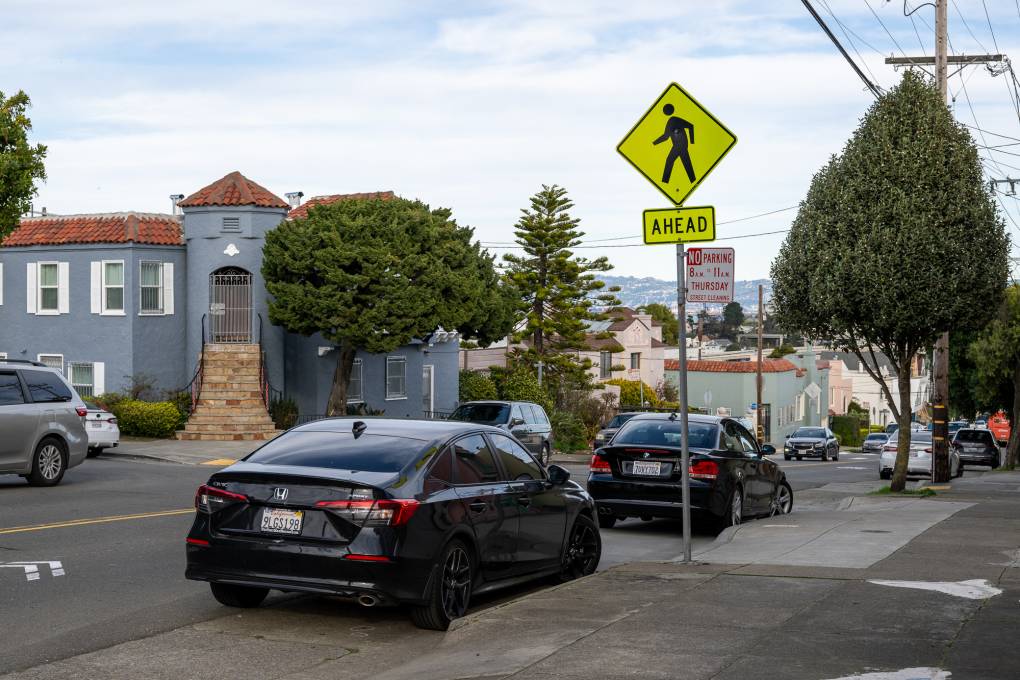
"caption": "A pedestrian crosswalk sign on Silver Avenue, near the site of the first pedestrian fatality in San Francisco in 2025, in the Portola neighborhood of San Francisco on Jan. 7, 2025.",
"credit": "Beth LaBerge/KQED",
"altTag": null,
"description": null,
"imgSizes": {
"medium": {
"file": "https://cdn.kqed.org/wp-content/uploads/sites/10/2025/01/250107-PedestrianDeathStepback-26-800x533.jpg",
"width": 800,
"height": 533,
"mimeType": "image/jpeg"
},
"large": {
"file": "https://cdn.kqed.org/wp-content/uploads/sites/10/2025/01/250107-PedestrianDeathStepback-26-1020x680.jpg",
"width": 1020,
"height": 680,
"mimeType": "image/jpeg"
},
"thumbnail": {
"file": "https://cdn.kqed.org/wp-content/uploads/sites/10/2025/01/250107-PedestrianDeathStepback-26-160x107.jpg",
"width": 160,
"height": 107,
"mimeType": "image/jpeg"
},
"1536x1536": {
"file": "https://cdn.kqed.org/wp-content/uploads/sites/10/2025/01/250107-PedestrianDeathStepback-26-1536x1024.jpg",
"width": 1536,
"height": 1024,
"mimeType": "image/jpeg"
},
"post-thumbnail": {
"file": "https://cdn.kqed.org/wp-content/uploads/sites/10/2025/01/250107-PedestrianDeathStepback-26-672x372.jpg",
"width": 672,
"height": 372,
"mimeType": "image/jpeg"
},
"twentyfourteen-full-width": {
"file": "https://cdn.kqed.org/wp-content/uploads/sites/10/2025/01/250107-PedestrianDeathStepback-26-1038x576.jpg",
"width": 1038,
"height": 576,
"mimeType": "image/jpeg"
},
"full-width": {
"file": "https://cdn.kqed.org/wp-content/uploads/sites/10/2025/01/250107-PedestrianDeathStepback-26-1920x1280.jpg",
"width": 1920,
"height": 1280,
"mimeType": "image/jpeg"
},
"kqedFullSize": {
"file": "https://cdn.kqed.org/wp-content/uploads/sites/10/2025/01/250107-PedestrianDeathStepback-26.jpg",
"width": 2000,
"height": 1333
}
},
"isLoading": false,
"fetchFailed": false
},
"news_12022786": {
"type": "attachments",
"id": "news_12022786",
"meta": {
"index": "attachments_1716263798",
"site": "news",
"id": "12022786",
"found": true
},
"title": "20250117_Thao-Recall_BL_00001",
"publishDate": 1737144330,
"status": "inherit",
"parent": 12022612,
"modified": 1737154786,
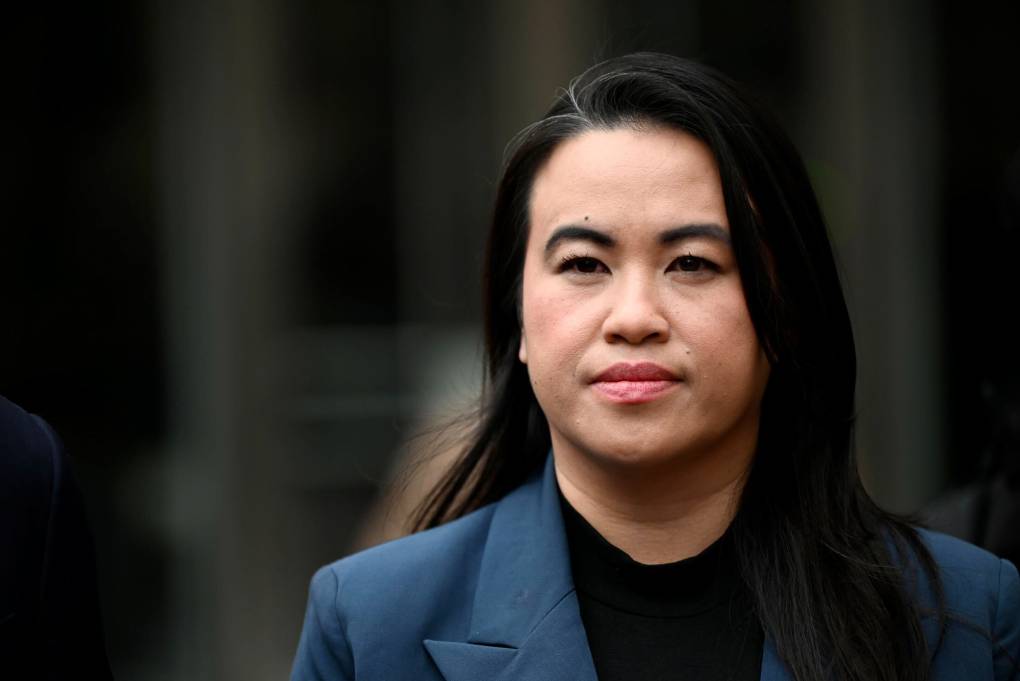
"caption": "Sheng Thao stands outside of the Ronald V. Dellums Federal Building and U.S. Courthouse in Oakland, on Friday, Jan. 17, 2025.",
"credit": "Beth LaBerge/KQED",
"altTag": null,
"description": null,
"imgSizes": {
"medium": {
"file": "https://cdn.kqed.org/wp-content/uploads/sites/10/2025/01/20250117_Thao-Recall_BL_00001-800x534.jpg",
"width": 800,
"height": 534,
"mimeType": "image/jpeg"
},
"large": {
"file": "https://cdn.kqed.org/wp-content/uploads/sites/10/2025/01/20250117_Thao-Recall_BL_00001-1020x681.jpg",
"width": 1020,
"height": 681,
"mimeType": "image/jpeg"
},
"thumbnail": {
"file": "https://cdn.kqed.org/wp-content/uploads/sites/10/2025/01/20250117_Thao-Recall_BL_00001-160x107.jpg",
"width": 160,
"height": 107,
"mimeType": "image/jpeg"
},
"1536x1536": {
"file": "https://cdn.kqed.org/wp-content/uploads/sites/10/2025/01/20250117_Thao-Recall_BL_00001-1536x1025.jpg",
"width": 1536,
"height": 1025,
"mimeType": "image/jpeg"
},
"post-thumbnail": {
"file": "https://cdn.kqed.org/wp-content/uploads/sites/10/2025/01/20250117_Thao-Recall_BL_00001-672x372.jpg",
"width": 672,
"height": 372,
"mimeType": "image/jpeg"
},
"twentyfourteen-full-width": {
"file": "https://cdn.kqed.org/wp-content/uploads/sites/10/2025/01/20250117_Thao-Recall_BL_00001-1038x576.jpg",
"width": 1038,
"height": 576,
"mimeType": "image/jpeg"
},
"full-width": {
"file": "https://cdn.kqed.org/wp-content/uploads/sites/10/2025/01/20250117_Thao-Recall_BL_00001-1920x1282.jpg",
"width": 1920,
"height": 1282,
"mimeType": "image/jpeg"
},
"kqedFullSize": {
"file": "https://cdn.kqed.org/wp-content/uploads/sites/10/2025/01/20250117_Thao-Recall_BL_00001.jpg",
"width": 2000,
"height": 1335
}
},
"isLoading": false,
"fetchFailed": false
},
"news_12022660": {
"type": "attachments",
"id": "news_12022660",
"meta": {
"index": "attachments_1716263798",
"site": "news",
"id": "12022660",
"found": true
},
"title": "20240608_PriceRecallKickoff_GC-29_qed",
"publishDate": 1737073028,
"status": "inherit",
"parent": 12022635,
"modified": 1737073076,
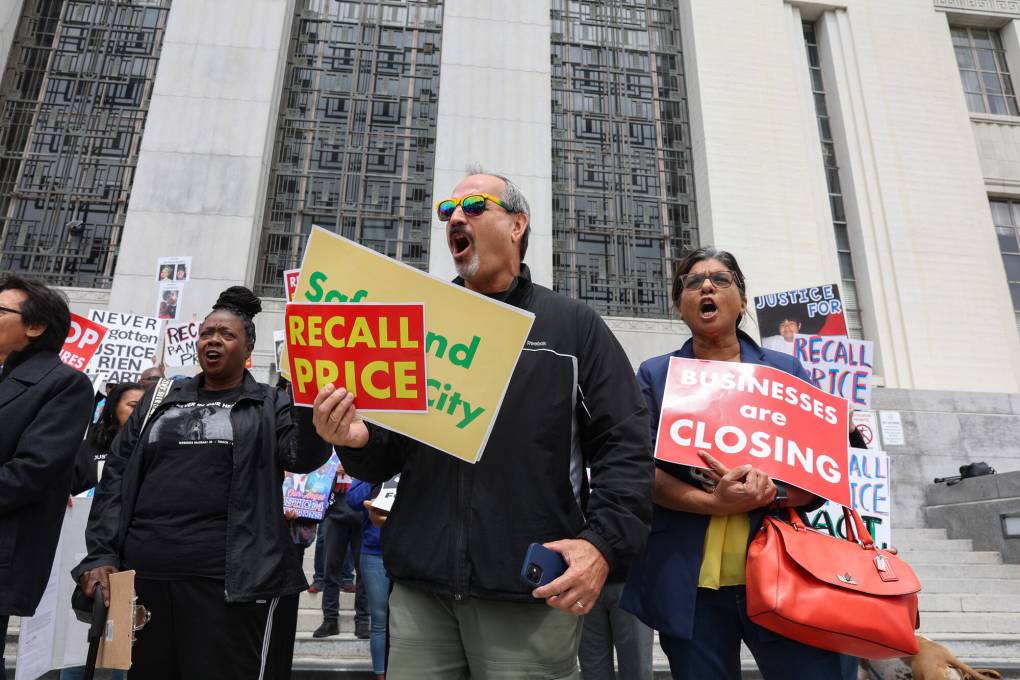
"caption": "Demonstrators during a Pamela Price recall campaign kickoff rally in Oakland on June 8, 2024. ",
"credit": "Gina Castro/KQED",
"altTag": null,
"description": null,
"imgSizes": {
"medium": {
"file": "https://cdn.kqed.org/wp-content/uploads/sites/10/2025/01/20240608_PriceRecallKickoff_GC-29_qed-800x533.jpg",
"width": 800,
"height": 533,
"mimeType": "image/jpeg"
},
"large": {
"file": "https://cdn.kqed.org/wp-content/uploads/sites/10/2025/01/20240608_PriceRecallKickoff_GC-29_qed-1020x680.jpg",
"width": 1020,
"height": 680,
"mimeType": "image/jpeg"
},
"thumbnail": {
"file": "https://cdn.kqed.org/wp-content/uploads/sites/10/2025/01/20240608_PriceRecallKickoff_GC-29_qed-160x107.jpg",
"width": 160,
"height": 107,
"mimeType": "image/jpeg"
},
"1536x1536": {
"file": "https://cdn.kqed.org/wp-content/uploads/sites/10/2025/01/20240608_PriceRecallKickoff_GC-29_qed-1536x1024.jpg",
"width": 1536,
"height": 1024,
"mimeType": "image/jpeg"
},
"post-thumbnail": {
"file": "https://cdn.kqed.org/wp-content/uploads/sites/10/2025/01/20240608_PriceRecallKickoff_GC-29_qed-672x372.jpg",
"width": 672,
"height": 372,
"mimeType": "image/jpeg"
},
"twentyfourteen-full-width": {
"file": "https://cdn.kqed.org/wp-content/uploads/sites/10/2025/01/20240608_PriceRecallKickoff_GC-29_qed-1038x576.jpg",
"width": 1038,
"height": 576,
"mimeType": "image/jpeg"
},
"full-width": {
"file": "https://cdn.kqed.org/wp-content/uploads/sites/10/2025/01/20240608_PriceRecallKickoff_GC-29_qed-1920x1280.jpg",
"width": 1920,
"height": 1280,
"mimeType": "image/jpeg"
},
"kqedFullSize": {
"file": "https://cdn.kqed.org/wp-content/uploads/sites/10/2025/01/20240608_PriceRecallKickoff_GC-29_qed.jpg",
"width": 2000,
"height": 1333
}
},
"isLoading": false,
"fetchFailed": false
},
"news_12022556": {
"type": "attachments",
"id": "news_12022556",
"meta": {
"index": "attachments_1716263798",
"site": "news",
"id": "12022556",
"found": true
},
"title": "20240619_JuneteenthCookout_GC-5_qed",
"publishDate": 1737051858,
"status": "inherit",
"parent": 12022427,
"modified": 1737051953,
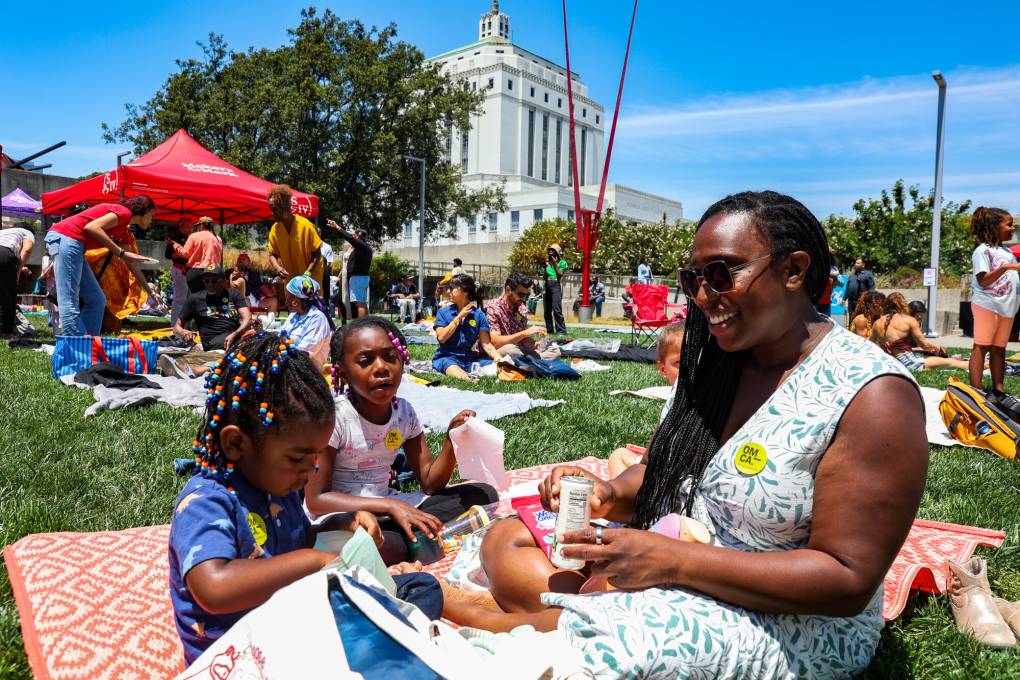
"caption": "Alexandria Osei-Amoako enjoys the day with her children at the Hella Juneteenth 'The Cookout' at the Oakland Museum of California’s Garden on June 19, 2024. ",
"credit": "Gina Castro/KQED",
"altTag": null,
"description": null,
"imgSizes": {
"medium": {
"file": "https://cdn.kqed.org/wp-content/uploads/sites/10/2025/01/20240619_JuneteenthCookout_GC-5_qed-800x533.jpg",
"width": 800,
"height": 533,
"mimeType": "image/jpeg"
},
"large": {
"file": "https://cdn.kqed.org/wp-content/uploads/sites/10/2025/01/20240619_JuneteenthCookout_GC-5_qed-1020x680.jpg",
"width": 1020,
"height": 680,
"mimeType": "image/jpeg"
},
"thumbnail": {
"file": "https://cdn.kqed.org/wp-content/uploads/sites/10/2025/01/20240619_JuneteenthCookout_GC-5_qed-160x107.jpg",
"width": 160,
"height": 107,
"mimeType": "image/jpeg"
},
"1536x1536": {
"file": "https://cdn.kqed.org/wp-content/uploads/sites/10/2025/01/20240619_JuneteenthCookout_GC-5_qed-1536x1024.jpg",
"width": 1536,
"height": 1024,
"mimeType": "image/jpeg"
},
"post-thumbnail": {
"file": "https://cdn.kqed.org/wp-content/uploads/sites/10/2025/01/20240619_JuneteenthCookout_GC-5_qed-672x372.jpg",
"width": 672,
"height": 372,
"mimeType": "image/jpeg"
},
"twentyfourteen-full-width": {
"file": "https://cdn.kqed.org/wp-content/uploads/sites/10/2025/01/20240619_JuneteenthCookout_GC-5_qed-1038x576.jpg",
"width": 1038,
"height": 576,
"mimeType": "image/jpeg"
},
"full-width": {
"file": "https://cdn.kqed.org/wp-content/uploads/sites/10/2025/01/20240619_JuneteenthCookout_GC-5_qed-1920x1280.jpg",
"width": 1920,
"height": 1280,
"mimeType": "image/jpeg"
},
"kqedFullSize": {
"file": "https://cdn.kqed.org/wp-content/uploads/sites/10/2025/01/20240619_JuneteenthCookout_GC-5_qed.jpg",
"width": 2000,
"height": 1333
}
},
"isLoading": false,
"fetchFailed": false
},
"news_12022355": {
"type": "attachments",
"id": "news_12022355",
"meta": {
"index": "attachments_1716263798",
"site": "news",
"id": "12022355",
"found": true
},
"title": "APTOPIX Israel Palestinians",
"publishDate": 1736972314,
"status": "inherit",
"parent": 12022344,
"modified": 1736972344,
"caption": "Palestinians celebrate the announcement of a ceasefire deal between Hamas and Israel in Deir al-Balah, central Gaza Strip, on Wednesday, Jan. 15, 2025.",
"credit": "Abdel Kareem Hana/AP Photo",
"altTag": null,
"description": null,
"imgSizes": {
"medium": {
"file": "https://cdn.kqed.org/wp-content/uploads/sites/10/2025/01/CeasefireGazaAP-800x533.jpg",
"width": 800,
"height": 533,
"mimeType": "image/jpeg"
},
"large": {
"file": "https://cdn.kqed.org/wp-content/uploads/sites/10/2025/01/CeasefireGazaAP-1020x680.jpg",
"width": 1020,
"height": 680,
"mimeType": "image/jpeg"
},
"thumbnail": {
"file": "https://cdn.kqed.org/wp-content/uploads/sites/10/2025/01/CeasefireGazaAP-160x107.jpg",
"width": 160,
"height": 107,
"mimeType": "image/jpeg"
},
"1536x1536": {
"file": "https://cdn.kqed.org/wp-content/uploads/sites/10/2025/01/CeasefireGazaAP-1536x1024.jpg",
"width": 1536,
"height": 1024,
"mimeType": "image/jpeg"
},
"post-thumbnail": {
"file": "https://cdn.kqed.org/wp-content/uploads/sites/10/2025/01/CeasefireGazaAP-672x372.jpg",
"width": 672,
"height": 372,
"mimeType": "image/jpeg"
},
"twentyfourteen-full-width": {
"file": "https://cdn.kqed.org/wp-content/uploads/sites/10/2025/01/CeasefireGazaAP-1038x576.jpg",
"width": 1038,
"height": 576,
"mimeType": "image/jpeg"
},
"full-width": {
"file": "https://cdn.kqed.org/wp-content/uploads/sites/10/2025/01/CeasefireGazaAP-1920x1280.jpg",
"width": 1920,
"height": 1280,
"mimeType": "image/jpeg"
},
"kqedFullSize": {
"file": "https://cdn.kqed.org/wp-content/uploads/sites/10/2025/01/CeasefireGazaAP.jpg",
"width": 2000,
"height": 1333
}
},
"isLoading": false,
"fetchFailed": false
},
"news_12022242": {
"type": "attachments",
"id": "news_12022242",
"meta": {
"index": "attachments_1716263798",
"site": "news",
"id": "12022242",
"found": true
},
"title": "20250113_Oakland-Fires_DMB_01810_qed",
"publishDate": 1736902061,
"status": "inherit",
"parent": 12021911,
"modified": 1736902122,
"caption": "David and Nancy Kessler recall how their lives changed when they lost their home in the Oakland Hills in the blaze of 1991, as they stand in the main part of their home on Vicente Drive, on Jan. 13, 2025. They eventually rebuilt their home with fire-hardened measures and David has become the Chair of the North Hills Community Association.",
"credit": "David M. Barreda/KQED",
"altTag": null,
"description": null,
"imgSizes": {
"medium": {
"file": "https://cdn.kqed.org/wp-content/uploads/sites/10/2025/01/20250113_Oakland-Fires_DMB_01810_qed-800x533.jpg",
"width": 800,
"height": 533,
"mimeType": "image/jpeg"
},
"large": {
"file": "https://cdn.kqed.org/wp-content/uploads/sites/10/2025/01/20250113_Oakland-Fires_DMB_01810_qed-1020x680.jpg",
"width": 1020,
"height": 680,
"mimeType": "image/jpeg"
},
"thumbnail": {
"file": "https://cdn.kqed.org/wp-content/uploads/sites/10/2025/01/20250113_Oakland-Fires_DMB_01810_qed-160x107.jpg",
"width": 160,
"height": 107,
"mimeType": "image/jpeg"
},
"1536x1536": {
"file": "https://cdn.kqed.org/wp-content/uploads/sites/10/2025/01/20250113_Oakland-Fires_DMB_01810_qed-1536x1024.jpg",
"width": 1536,
"height": 1024,
"mimeType": "image/jpeg"
},
"post-thumbnail": {
"file": "https://cdn.kqed.org/wp-content/uploads/sites/10/2025/01/20250113_Oakland-Fires_DMB_01810_qed-672x372.jpg",
"width": 672,
"height": 372,
"mimeType": "image/jpeg"
},
"twentyfourteen-full-width": {
"file": "https://cdn.kqed.org/wp-content/uploads/sites/10/2025/01/20250113_Oakland-Fires_DMB_01810_qed-1038x576.jpg",
"width": 1038,
"height": 576,
"mimeType": "image/jpeg"
},
"full-width": {
"file": "https://cdn.kqed.org/wp-content/uploads/sites/10/2025/01/20250113_Oakland-Fires_DMB_01810_qed-1920x1280.jpg",
"width": 1920,
"height": 1280,
"mimeType": "image/jpeg"
},
"kqedFullSize": {
"file": "https://cdn.kqed.org/wp-content/uploads/sites/10/2025/01/20250113_Oakland-Fires_DMB_01810_qed.jpg",
"width": 2000,
"height": 1333
}
},
"isLoading": false,
"fetchFailed": false
},
"news_12020545": {
"type": "attachments",
"id": "news_12020545",
"meta": {
"index": "attachments_1716263798",
"site": "news",
"id": "12020545",
"found": true
},
"title": "250106-BarbaraLeeExitInterview-09",
"publishDate": 1736258651,
"status": "inherit",
"parent": 0,
"modified": 1736806163,
"caption": "Former Rep. Barbara Lee poses for a portrait at the KQED offices in San Francisco on Jan. 6, 2024.",
"credit": "Beth LaBerge/KQED",
"altTag": null,
"description": null,
"imgSizes": {
"medium": {
"file": "https://cdn.kqed.org/wp-content/uploads/sites/10/2025/01/250106-BarbaraLeeExitInterview-09-800x533.jpg",
"width": 800,
"height": 533,
"mimeType": "image/jpeg"
},
"large": {
"file": "https://cdn.kqed.org/wp-content/uploads/sites/10/2025/01/250106-BarbaraLeeExitInterview-09-1020x680.jpg",
"width": 1020,
"height": 680,
"mimeType": "image/jpeg"
},
"thumbnail": {
"file": "https://cdn.kqed.org/wp-content/uploads/sites/10/2025/01/250106-BarbaraLeeExitInterview-09-160x107.jpg",
"width": 160,
"height": 107,
"mimeType": "image/jpeg"
},
"1536x1536": {
"file": "https://cdn.kqed.org/wp-content/uploads/sites/10/2025/01/250106-BarbaraLeeExitInterview-09-1536x1024.jpg",
"width": 1536,
"height": 1024,
"mimeType": "image/jpeg"
},
"post-thumbnail": {
"file": "https://cdn.kqed.org/wp-content/uploads/sites/10/2025/01/250106-BarbaraLeeExitInterview-09-672x372.jpg",
"width": 672,
"height": 372,
"mimeType": "image/jpeg"
},
"twentyfourteen-full-width": {
"file": "https://cdn.kqed.org/wp-content/uploads/sites/10/2025/01/250106-BarbaraLeeExitInterview-09-1038x576.jpg",
"width": 1038,
"height": 576,
"mimeType": "image/jpeg"
},
"full-width": {
"file": "https://cdn.kqed.org/wp-content/uploads/sites/10/2025/01/250106-BarbaraLeeExitInterview-09-1920x1280.jpg",
"width": 1920,
"height": 1280,
"mimeType": "image/jpeg"
},
"kqedFullSize": {
"file": "https://cdn.kqed.org/wp-content/uploads/sites/10/2025/01/250106-BarbaraLeeExitInterview-09.jpg",
"width": 2000,
"height": 1333
}
},
"isLoading": false,
"fetchFailed": false
},
"news_12022110": {
"type": "attachments",
"id": "news_12022110",
"meta": {
"index": "attachments_1716263798",
"site": "news",
"id": "12022110",
"found": true
},
"title": "Texas Rangers v Oakland Athletics",
"publishDate": 1736888356,
"status": "inherit",
"parent": 12022106,
"modified": 1736888438,
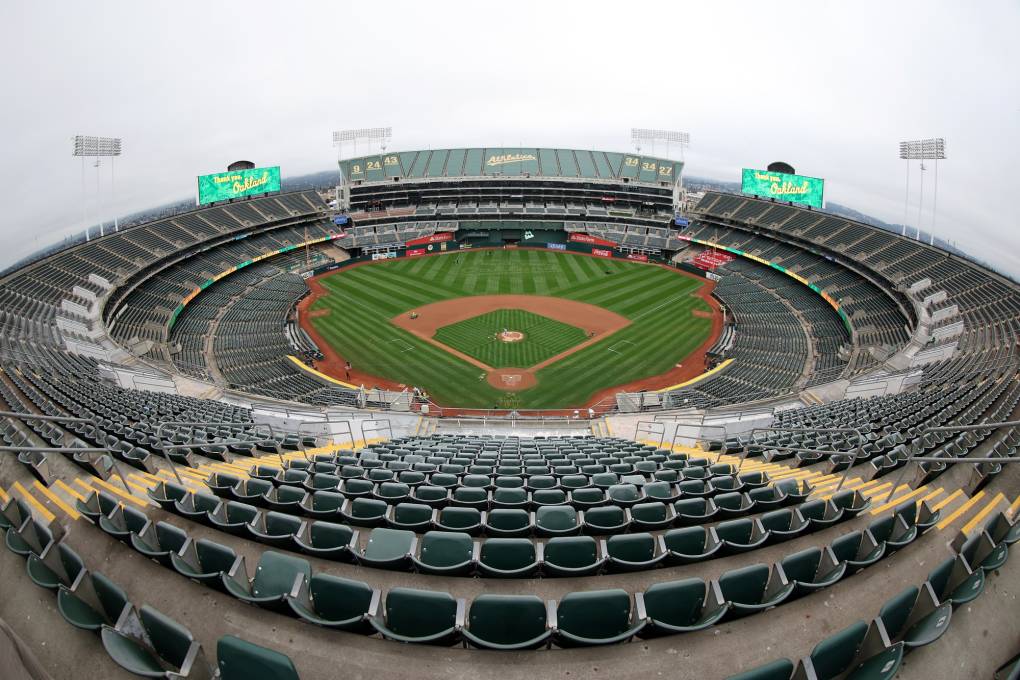
"caption": "The Oakland Coliseum sits empty before the Oakland Athletics game against the Texas Rangers on Sept. 26, 2024, in Oakland, California. ",
"credit": "Ezra Shaw/Getty Images",
"altTag": null,
"description": null,
"imgSizes": {
"medium": {
"file": "https://cdn.kqed.org/wp-content/uploads/sites/10/2025/01/OaklandColiseumEmptyGetty1-800x533.jpg",
"width": 800,
"height": 533,
"mimeType": "image/jpeg"
},
"large": {
"file": "https://cdn.kqed.org/wp-content/uploads/sites/10/2025/01/OaklandColiseumEmptyGetty1-1020x680.jpg",
"width": 1020,
"height": 680,
"mimeType": "image/jpeg"
},
"thumbnail": {
"file": "https://cdn.kqed.org/wp-content/uploads/sites/10/2025/01/OaklandColiseumEmptyGetty1-160x107.jpg",
"width": 160,
"height": 107,
"mimeType": "image/jpeg"
},
"1536x1536": {
"file": "https://cdn.kqed.org/wp-content/uploads/sites/10/2025/01/OaklandColiseumEmptyGetty1-1536x1024.jpg",
"width": 1536,
"height": 1024,
"mimeType": "image/jpeg"
},
"post-thumbnail": {
"file": "https://cdn.kqed.org/wp-content/uploads/sites/10/2025/01/OaklandColiseumEmptyGetty1-672x372.jpg",
"width": 672,
"height": 372,
"mimeType": "image/jpeg"
},
"twentyfourteen-full-width": {
"file": "https://cdn.kqed.org/wp-content/uploads/sites/10/2025/01/OaklandColiseumEmptyGetty1-1038x576.jpg",
"width": 1038,
"height": 576,
"mimeType": "image/jpeg"
},
"full-width": {
"file": "https://cdn.kqed.org/wp-content/uploads/sites/10/2025/01/OaklandColiseumEmptyGetty1-1920x1280.jpg",
"width": 1920,
"height": 1280,
"mimeType": "image/jpeg"
},
"kqedFullSize": {
"file": "https://cdn.kqed.org/wp-content/uploads/sites/10/2025/01/OaklandColiseumEmptyGetty1.jpg",
"width": 2000,
"height": 1333
}
},
"isLoading": false,
"fetchFailed": false
},
"news_12022073": {
"type": "attachments",
"id": "news_12022073",
"meta": {
"index": "attachments_1716263798",
"site": "news",
"id": "12022073",
"found": true
},
"title": "Stege-Elementary34-1280x765",
"publishDate": 1736883763,
"status": "inherit",
"parent": 12022069,
"modified": 1736883791,
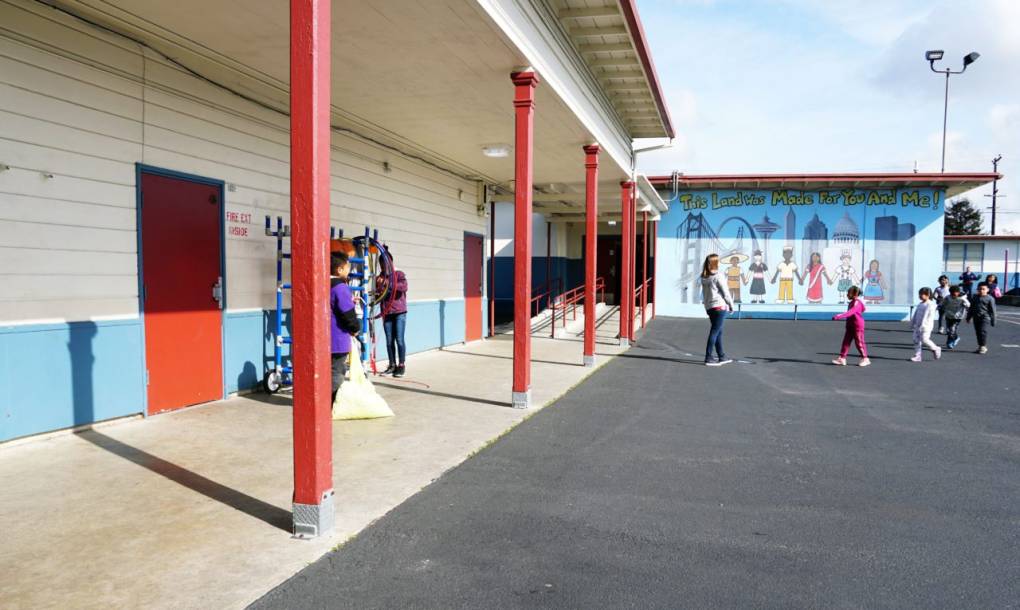
"caption": "West Contra Costa Unified's Stege Elementary School in Richmond.",
"credit": "Andrew Reed/EdSource",
"altTag": null,
"description": null,
"imgSizes": {
"medium": {
"file": "https://cdn.kqed.org/wp-content/uploads/sites/10/2025/01/Stege-Elementary34-1280x765-1-800x478.jpg",
"width": 800,
"height": 478,
"mimeType": "image/jpeg"
},
"large": {
"file": "https://cdn.kqed.org/wp-content/uploads/sites/10/2025/01/Stege-Elementary34-1280x765-1-1020x610.jpg",
"width": 1020,
"height": 610,
"mimeType": "image/jpeg"
},
"thumbnail": {
"file": "https://cdn.kqed.org/wp-content/uploads/sites/10/2025/01/Stege-Elementary34-1280x765-1-160x96.jpg",
"width": 160,
"height": 96,
"mimeType": "image/jpeg"
},
"post-thumbnail": {
"file": "https://cdn.kqed.org/wp-content/uploads/sites/10/2025/01/Stege-Elementary34-1280x765-1-672x372.jpg",
"width": 672,
"height": 372,
"mimeType": "image/jpeg"
},
"twentyfourteen-full-width": {
"file": "https://cdn.kqed.org/wp-content/uploads/sites/10/2025/01/Stege-Elementary34-1280x765-1-1038x576.jpg",
"width": 1038,
"height": 576,
"mimeType": "image/jpeg"
},
"kqedFullSize": {
"file": "https://cdn.kqed.org/wp-content/uploads/sites/10/2025/01/Stege-Elementary34-1280x765-1.jpg",
"width": 1280,
"height": 765
}
},
"isLoading": false,
"fetchFailed": false
},
"news_12020498": {
"type": "attachments",
"id": "news_12020498",
"meta": {
"index": "attachments_1716263798",
"site": "news",
"id": "12020498",
"found": true
},
"title": "250105-LurieInaugurationCleanup-51",
"publishDate": 1736206956,
"status": "inherit",
"parent": 0,
"modified": 1736207201,
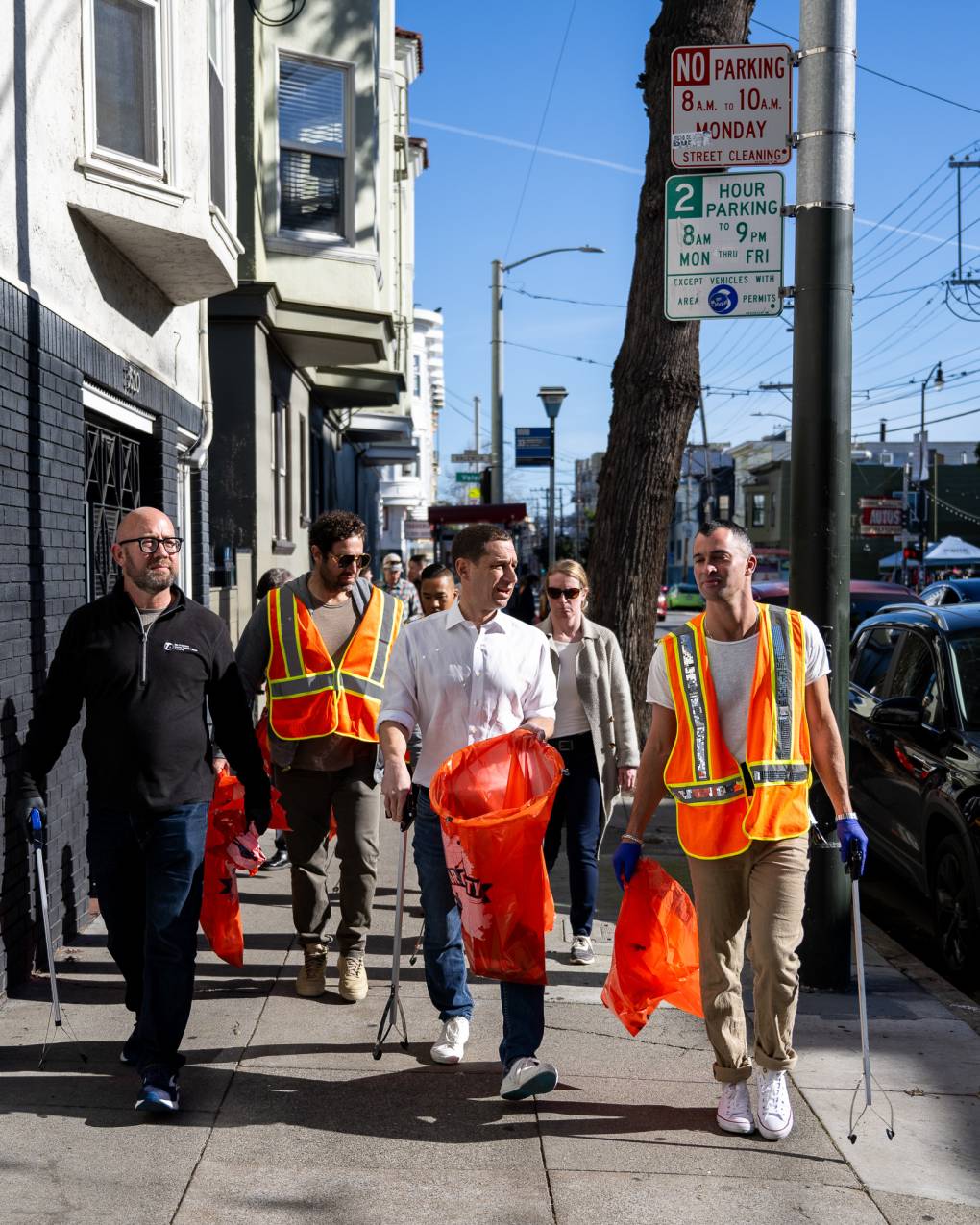
"caption": "San Francisco Mayor-elect Daniel Lurie walks with Supervisor Rafael Mandelman and Manny Yekutiel during a trash pick up in the Mission District on Jan. 5, 2025, during a weekend of service before his inauguration.",
"credit": "Beth LaBerge/KQED",
"altTag": null,
"description": null,
"imgSizes": {
"medium": {
"file": "https://cdn.kqed.org/wp-content/uploads/sites/10/2025/01/250105-LurieInaugurationCleanup-51-800x1000.jpg",
"width": 800,
"height": 1000,
"mimeType": "image/jpeg"
},
"large": {
"file": "https://cdn.kqed.org/wp-content/uploads/sites/10/2025/01/250105-LurieInaugurationCleanup-51-1020x1275.jpg",
"width": 1020,
"height": 1275,
"mimeType": "image/jpeg"
},
"thumbnail": {
"file": "https://cdn.kqed.org/wp-content/uploads/sites/10/2025/01/250105-LurieInaugurationCleanup-51-160x200.jpg",
"width": 160,
"height": 200,
"mimeType": "image/jpeg"
},
"1536x1536": {
"file": "https://cdn.kqed.org/wp-content/uploads/sites/10/2025/01/250105-LurieInaugurationCleanup-51-1229x1536.jpg",
"width": 1229,
"height": 1536,
"mimeType": "image/jpeg"
},
"post-thumbnail": {
"file": "https://cdn.kqed.org/wp-content/uploads/sites/10/2025/01/250105-LurieInaugurationCleanup-51-672x372.jpg",
"width": 672,
"height": 372,
"mimeType": "image/jpeg"
},
"twentyfourteen-full-width": {
"file": "https://cdn.kqed.org/wp-content/uploads/sites/10/2025/01/250105-LurieInaugurationCleanup-51-1038x576.jpg",
"width": 1038,
"height": 576,
"mimeType": "image/jpeg"
},
"kqedFullSize": {
"file": "https://cdn.kqed.org/wp-content/uploads/sites/10/2025/01/250105-LurieInaugurationCleanup-51.jpg",
"width": 1600,
"height": 2000
}
},
"isLoading": false,
"fetchFailed": false
},
"news_11850681": {
"type": "attachments",
"id": "news_11850681",
"meta": {
"index": "attachments_1716263798",
"site": "news",
"id": "11850681",
"found": true
},
"parent": 11850646,
"imgSizes": {
"apple_news_ca_landscape_5_5": {
"file": "https://ww2.kqed.org/app/uploads/sites/10/2020/12/RS46311_031_KQED_SanFrancisco_COVIDShutdown_12062020-qut-1044x783.jpg",
"width": 1044,
"mimeType": "image/jpeg",
"height": 783
},
"apple_news_ca_square_4_0": {
"file": "https://ww2.kqed.org/app/uploads/sites/10/2020/12/RS46311_031_KQED_SanFrancisco_COVIDShutdown_12062020-qut-470x470.jpg",
"width": 470,
"mimeType": "image/jpeg",
"height": 470
},
"twentyfourteen-full-width": {
"file": "https://ww2.kqed.org/app/uploads/sites/10/2020/12/RS46311_031_KQED_SanFrancisco_COVIDShutdown_12062020-qut-1038x576.jpg",
"width": 1038,
"mimeType": "image/jpeg",
"height": 576
},
"thumbnail": {
"file": "https://ww2.kqed.org/app/uploads/sites/10/2020/12/RS46311_031_KQED_SanFrancisco_COVIDShutdown_12062020-qut-160x107.jpg",
"width": 160,
"mimeType": "image/jpeg",
"height": 107
},
"post-thumbnail": {
"file": "https://ww2.kqed.org/app/uploads/sites/10/2020/12/RS46311_031_KQED_SanFrancisco_COVIDShutdown_12062020-qut-672x372.jpg",
"width": 672,
"mimeType": "image/jpeg",
"height": 372
},
"kqedFullSize": {
"file": "https://ww2.kqed.org/app/uploads/sites/10/2020/12/RS46311_031_KQED_SanFrancisco_COVIDShutdown_12062020-qut.jpg",
"width": 1920,
"height": 1280
},
"apple_news_ca_landscape_4_7": {
"file": "https://ww2.kqed.org/app/uploads/sites/10/2020/12/RS46311_031_KQED_SanFrancisco_COVIDShutdown_12062020-qut-632x474.jpg",
"width": 632,
"mimeType": "image/jpeg",
"height": 474
},
"large": {
"file": "https://ww2.kqed.org/app/uploads/sites/10/2020/12/RS46311_031_KQED_SanFrancisco_COVIDShutdown_12062020-qut-1020x680.jpg",
"width": 1020,
"mimeType": "image/jpeg",
"height": 680
},
"apple_news_ca_landscape_4_0": {
"file": "https://ww2.kqed.org/app/uploads/sites/10/2020/12/RS46311_031_KQED_SanFrancisco_COVIDShutdown_12062020-qut-536x402.jpg",
"width": 536,
"mimeType": "image/jpeg",
"height": 402
},
"apple_news_ca_portrait_12_9": {
"file": "https://ww2.kqed.org/app/uploads/sites/10/2020/12/RS46311_031_KQED_SanFrancisco_COVIDShutdown_12062020-qut-1122x1280.jpg",
"width": 1122,
"mimeType": "image/jpeg",
"height": 1280
},
"medium": {
"file": "https://ww2.kqed.org/app/uploads/sites/10/2020/12/RS46311_031_KQED_SanFrancisco_COVIDShutdown_12062020-qut-800x533.jpg",
"width": 800,
"mimeType": "image/jpeg",
"height": 533
},
"apple_news_ca_portrait_4_0": {
"file": "https://ww2.kqed.org/app/uploads/sites/10/2020/12/RS46311_031_KQED_SanFrancisco_COVIDShutdown_12062020-qut-354x472.jpg",
"width": 354,
"mimeType": "image/jpeg",
"height": 472
},
"apple_news_ca_portrait_9_7": {
"file": "https://ww2.kqed.org/app/uploads/sites/10/2020/12/RS46311_031_KQED_SanFrancisco_COVIDShutdown_12062020-qut-840x1120.jpg",
"width": 840,
"mimeType": "image/jpeg",
"height": 1120
},
"apple_news_ca_landscape_12_9": {
"file": "https://ww2.kqed.org/app/uploads/sites/10/2020/12/RS46311_031_KQED_SanFrancisco_COVIDShutdown_12062020-qut-1832x1280.jpg",
"width": 1832,
"mimeType": "image/jpeg",
"height": 1280
},
"apple_news_ca_square_9_7": {
"file": "https://ww2.kqed.org/app/uploads/sites/10/2020/12/RS46311_031_KQED_SanFrancisco_COVIDShutdown_12062020-qut-1104x1104.jpg",
"width": 1104,
"mimeType": "image/jpeg",
"height": 1104
},
"1536x1536": {
"file": "https://ww2.kqed.org/app/uploads/sites/10/2020/12/RS46311_031_KQED_SanFrancisco_COVIDShutdown_12062020-qut-1536x1024.jpg",
"width": 1536,
"mimeType": "image/jpeg",
"height": 1024
},
"apple_news_ca_portrait_4_7": {
"file": "https://ww2.kqed.org/app/uploads/sites/10/2020/12/RS46311_031_KQED_SanFrancisco_COVIDShutdown_12062020-qut-414x552.jpg",
"width": 414,
"mimeType": "image/jpeg",
"height": 552
},
"apple_news_ca_square_12_9": {
"file": "https://ww2.kqed.org/app/uploads/sites/10/2020/12/RS46311_031_KQED_SanFrancisco_COVIDShutdown_12062020-qut-1472x1280.jpg",
"width": 1472,
"mimeType": "image/jpeg",
"height": 1280
},
"apple_news_ca_portrait_5_5": {
"file": "https://ww2.kqed.org/app/uploads/sites/10/2020/12/RS46311_031_KQED_SanFrancisco_COVIDShutdown_12062020-qut-687x916.jpg",
"width": 687,
"mimeType": "image/jpeg",
"height": 916
},
"apple_news_ca_square_4_7": {
"file": "https://ww2.kqed.org/app/uploads/sites/10/2020/12/RS46311_031_KQED_SanFrancisco_COVIDShutdown_12062020-qut-550x550.jpg",
"width": 550,
"mimeType": "image/jpeg",
"height": 550
},
"apple_news_ca_landscape_9_7": {
"file": "https://ww2.kqed.org/app/uploads/sites/10/2020/12/RS46311_031_KQED_SanFrancisco_COVIDShutdown_12062020-qut-1376x1032.jpg",
"width": 1376,
"mimeType": "image/jpeg",
"height": 1032
},
"apple_news_ca_square_5_5": {
"file": "https://ww2.kqed.org/app/uploads/sites/10/2020/12/RS46311_031_KQED_SanFrancisco_COVIDShutdown_12062020-qut-912x912.jpg",
"width": 912,
"mimeType": "image/jpeg",
"height": 912
}
},
"publishDate": 1607644424,
"modified": 1607994322,
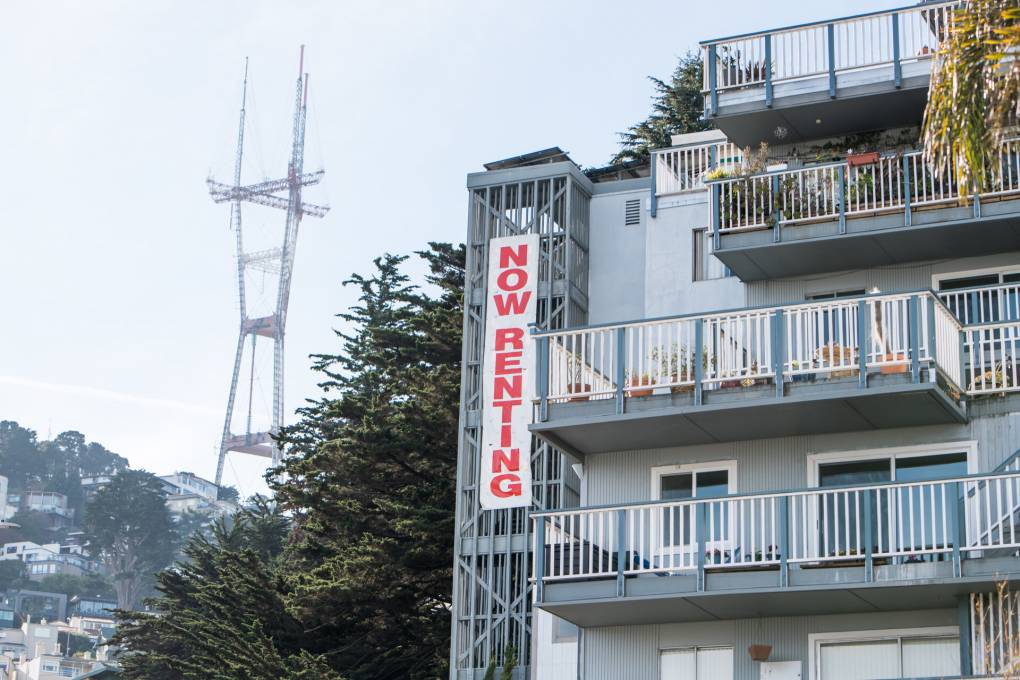
"caption": "A 'Now Renting' sign on an apartment building on Market Street in San Francisco on Dec. 6, 2020.",
"description": null,
"title": "RS46311_031_KQED_SanFrancisco_COVIDShutdown_12062020-qut",
"credit": "Beth LaBerge/KQED",
"status": "inherit",
"altTag": null,
"isLoading": false,
"fetchFailed": false
},
"news_12021978": {
"type": "attachments",
"id": "news_12021978",
"meta": {
"index": "attachments_1716263798",
"site": "news",
"id": "12021978",
"found": true
},
"title": "Powerful Winds Fuel Multiple Fires Across Los Angeles Area",
"publishDate": 1736816932,
"status": "inherit",
"parent": 12021954,
"modified": 1736879425,
"caption": "Strong winds blow embers from homes burning in the Eaton Fire on Jan. 7, 2025, in Pasadena.",
"credit": "David McNew/Getty Images",
"altTag": null,
"description": null,
"imgSizes": {
"medium": {
"file": "https://cdn.kqed.org/wp-content/uploads/sites/10/2025/01/GettyImages-2192365794-800x534.jpg",
"width": 800,
"height": 534,
"mimeType": "image/jpeg"
},
"large": {
"file": "https://cdn.kqed.org/wp-content/uploads/sites/10/2025/01/GettyImages-2192365794-1020x680.jpg",
"width": 1020,
"height": 680,
"mimeType": "image/jpeg"
},
"thumbnail": {
"file": "https://cdn.kqed.org/wp-content/uploads/sites/10/2025/01/GettyImages-2192365794-160x107.jpg",
"width": 160,
"height": 107,
"mimeType": "image/jpeg"
},
"1536x1536": {
"file": "https://cdn.kqed.org/wp-content/uploads/sites/10/2025/01/GettyImages-2192365794-1536x1025.jpg",
"width": 1536,
"height": 1025,
"mimeType": "image/jpeg"
},
"2048x2048": {
"file": "https://cdn.kqed.org/wp-content/uploads/sites/10/2025/01/GettyImages-2192365794-2048x1366.jpg",
"width": 2048,
"height": 1366,
"mimeType": "image/jpeg"
},
"post-thumbnail": {
"file": "https://cdn.kqed.org/wp-content/uploads/sites/10/2025/01/GettyImages-2192365794-672x372.jpg",
"width": 672,
"height": 372,
"mimeType": "image/jpeg"
},
"twentyfourteen-full-width": {
"file": "https://cdn.kqed.org/wp-content/uploads/sites/10/2025/01/GettyImages-2192365794-1038x576.jpg",
"width": 1038,
"height": 576,
"mimeType": "image/jpeg"
},
"full-width": {
"file": "https://cdn.kqed.org/wp-content/uploads/sites/10/2025/01/GettyImages-2192365794-1920x1281.jpg",
"width": 1920,
"height": 1281,
"mimeType": "image/jpeg"
},
"kqedFullSize": {
"file": "https://cdn.kqed.org/wp-content/uploads/sites/10/2025/01/GettyImages-2192365794-scaled.jpg",
"width": 2560,
"height": 1708
}
},
"isLoading": false,
"fetchFailed": false
}
},
"audioPlayerReducer": {
"postId": "stream_live",
"isPaused": true,
"isPlaying": false,
"pfsActive": false,
"pledgeModalIsOpen": true,
"playerDrawerIsOpen": false,
"liveAudioPlayStartedAt": 0,
"liveAudioPlayContext": ""
},
"authorsReducer": {
"byline_news_12022069": {
"type": "authors",
"id": "byline_news_12022069",
"meta": {
"override": true
},
"slug": "byline_news_12022069",
"name": "Kenneth Howe, EdSource",
"isLoading": false
},
"gmarzorati": {
"type": "authors",
"id": "227",
"meta": {
"index": "authors_1716337520",
"id": "227",
"found": true
},
"name": "Guy Marzorati",
"firstName": "Guy",
"lastName": "Marzorati",
"slug": "gmarzorati",
"email": "gmarzorati@KQED.org",
"display_author_email": true,
"staff_mastheads": [
"news"
],
"title": "Correspondent",
"bio": "Guy Marzorati is a correspondent on KQED's California Politics and Government Desk, based in San Jose. A graduate of Santa Clara University, Guy joined KQED in 2013. He reports on state and local politics and produces KQED's digital voter guide.",
"avatar": "https://secure.gravatar.com/avatar/e7038b8dbfd55b104369b76b1cd0b9de?s=600&d=blank&r=g",
"twitter": "guymarzorati",
"facebook": null,
"instagram": null,
"linkedin": null,
"sites": [
{
"site": "",
"roles": [
"editor"
]
},
{
"site": "news",
"roles": [
"editor"
]
},
{
"site": "science",
"roles": [
"editor"
]
},
{
"site": "forum",
"roles": [
"editor"
]
},
{
"site": "elections",
"roles": [
"editor"
]
},
{
"site": "liveblog",
"roles": [
"editor"
]
}
],
"headData": {
"title": "Guy Marzorati | KQED",
"description": "Correspondent",
"ogImgSrc": "https://secure.gravatar.com/avatar/e7038b8dbfd55b104369b76b1cd0b9de?s=600&d=blank&r=g",
"twImgSrc": "https://secure.gravatar.com/avatar/e7038b8dbfd55b104369b76b1cd0b9de?s=600&d=blank&r=g"
},
"isLoading": false,
"link": "/author/gmarzorati"
},
"ahall": {
"type": "authors",
"id": "11490",
"meta": {
"index": "authors_1716337520",
"id": "11490",
"found": true
},
"name": "Alex Hall",
"firstName": "Alex",
"lastName": "Hall",
"slug": "ahall",
"email": "ahall@kqed.org",
"display_author_email": false,
"staff_mastheads": [
"news"
],
"title": "KQED Enterprise & Accountability Reporter",
"bio": "Alex Hall is KQED's Enterprise and Accountability Reporter. She previously covered the Central Valley for five years from KQED's bureau in Fresno. Before joining KQED, Alex was an investigative reporting fellow at Wisconsin Public Radio and the Wisconsin Center for Investigative Journalism. She has also worked as a bilingual producer for NPR's investigative unit and freelance video producer for Reuters TV on the Latin America desk. She got her start in journalism in South America, where she worked as a radio producer and Spanish-English translator for CNN Chile. Her documentary and investigation into the series of deadly COVID-19 outbreaks at Foster Farms won a national Edward R. Murrow award and was named an Investigative Reporters & Editors award finalist. Alex's reporting for Reveal on the Wisconsin dairy industry's reliance on undocumented immigrant labor was made into a film, Los Lecheros, which won a regional Edward R. Murrow award for best news documentary.",
"avatar": "https://secure.gravatar.com/avatar/04c28ad4a7caa7ac2ef39c655c4030c993a3f331481d1da4799bb76ea85b9afa?s=600&d=blank&r=g",
"twitter": "@chalexhall",
"bluesky": null,
"facebook": null,
"instagram": null,
"linkedin": null,
"sites": [
{
"site": "news",
"roles": [
"editor"
]
},
{
"site": "liveblog",
"roles": [
"author"
]
}
],
"headData": {
"title": "Alex Hall | KQED",
"description": "KQED Enterprise & Accountability Reporter",
"ogImgSrc": "https://secure.gravatar.com/avatar/04c28ad4a7caa7ac2ef39c655c4030c993a3f331481d1da4799bb76ea85b9afa?s=600&d=blank&r=g",
"twImgSrc": "https://secure.gravatar.com/avatar/04c28ad4a7caa7ac2ef39c655c4030c993a3f331481d1da4799bb76ea85b9afa?s=600&d=blank&r=g"
},
"isLoading": false,
"link": "/author/ahall"
},
"abandlamudi": {
"type": "authors",
"id": "11672",
"meta": {
"index": "authors_1716337520",
"id": "11672",
"found": true
},
"name": "Adhiti Bandlamudi",
"firstName": "Adhiti",
"lastName": "Bandlamudi",
"slug": "abandlamudi",
"email": "abandlamudi@kqed.org",
"display_author_email": false,
"staff_mastheads": [
"news"
],
"title": "KQED Housing Reporter",
"bio": "Adhiti Bandlamudi reports for KQED's Housing desk. She focuses on how housing gets built across the Bay Area. Before joining KQED in 2020, she reported for WUNC in Durham, North Carolina, WABE in Atlanta, Georgia and Capital Public Radio in Sacramento. In 2017, she was awarded a Kroc Fellowship at NPR where she reported on everything from sprinkles to the Golden State Killer's arrest. When she's not reporting, she's baking new recipes in her kitchen or watching movies with friends and family. She's originally from Georgia and has strong opinions about Great British Bake Off.",
"avatar": "https://secure.gravatar.com/avatar/868129c8b257bb99a3500e2c86a65400?s=600&d=mm&r=g",
"twitter": "oddity_adhiti",
"facebook": null,
"instagram": null,
"linkedin": null,
"sites": [
{
"site": "arts",
"roles": [
"author"
]
},
{
"site": "news",
"roles": [
"editor"
]
},
{
"site": "liveblog",
"roles": [
"author"
]
}
],
"headData": {
"title": "Adhiti Bandlamudi | KQED",
"description": "KQED Housing Reporter",
"ogImgSrc": "https://secure.gravatar.com/avatar/868129c8b257bb99a3500e2c86a65400?s=600&d=mm&r=g",
"twImgSrc": "https://secure.gravatar.com/avatar/868129c8b257bb99a3500e2c86a65400?s=600&d=mm&r=g"
},
"isLoading": false,
"link": "/author/abandlamudi"
},
"ccabreralomeli": {
"type": "authors",
"id": "11708",
"meta": {
"index": "authors_1716337520",
"id": "11708",
"found": true
},
"name": "Carlos Cabrera-Lomelí",
"firstName": "Carlos",
"lastName": "Cabrera-Lomelí",
"slug": "ccabreralomeli",
"email": "ccabreralomeli@KQED.org",
"display_author_email": true,
"staff_mastheads": [
"news"
],
"title": "Community Reporter",
"bio": "Carlos Cabrera-Lomelí is a community reporter with KQED's digital engagement team. He also reports and co-produces for KQED's bilingual news hub KQED en Español. He grew up in San Francisco's Mission District and has previously worked with Univision, 48 Hills and REFORMA in Mexico City.",
"avatar": "https://secure.gravatar.com/avatar/c309be9665e484f887b818c89e273ecc673004f426f36b24d00a4d813a2e0518?s=600&d=blank&r=g",
"twitter": "@LomeliCabrera",
"bluesky": null,
"facebook": null,
"instagram": null,
"linkedin": null,
"sites": [
{
"site": "arts",
"roles": [
"editor"
]
},
{
"site": "news",
"roles": [
"editor"
]
},
{
"site": "about",
"roles": [
"editor"
]
},
{
"site": "science",
"roles": [
"editor"
]
},
{
"site": "perspectives",
"roles": [
"editor"
]
},
{
"site": "elections",
"roles": [
"editor"
]
},
{
"site": "liveblog",
"roles": [
"contributor"
]
}
],
"headData": {
"title": "Carlos Cabrera-Lomelí | KQED",
"description": "Community Reporter",
"ogImgSrc": "https://secure.gravatar.com/avatar/c309be9665e484f887b818c89e273ecc673004f426f36b24d00a4d813a2e0518?s=600&d=blank&r=g",
"twImgSrc": "https://secure.gravatar.com/avatar/c309be9665e484f887b818c89e273ecc673004f426f36b24d00a4d813a2e0518?s=600&d=blank&r=g"
},
"isLoading": false,
"link": "/author/ccabreralomeli"
},
"sjohnson": {
"type": "authors",
"id": "11840",
"meta": {
"index": "authors_1716337520",
"id": "11840",
"found": true
},
"name": "Sydney Johnson",
"firstName": "Sydney",
"lastName": "Johnson",
"slug": "sjohnson",
"email": "sjohnson@kqed.org",
"display_author_email": false,
"staff_mastheads": [
"news"
],
"title": "KQED Reporter",
"bio": "Sydney Johnson is a general assignment reporter at KQED. She previously reported on public health and city government at the San Francisco Examiner, and before that, she covered statewide education policy for EdSource. Her reporting has won multiple local, state and national awards. Sydney is a graduate of the University of California, Berkeley and lives in San Francisco.",
"avatar": "https://secure.gravatar.com/avatar/97855f2719b72ad6190b7c535fe642c8?s=600&d=blank&r=g",
"twitter": "sydneyfjohnson",
"facebook": null,
"instagram": null,
"linkedin": null,
"sites": [
{
"site": "news",
"roles": [
"editor"
]
}
],
"headData": {
"title": "Sydney Johnson | KQED",
"description": "KQED Reporter",
"ogImgSrc": "https://secure.gravatar.com/avatar/97855f2719b72ad6190b7c535fe642c8?s=600&d=blank&r=g",
"twImgSrc": "https://secure.gravatar.com/avatar/97855f2719b72ad6190b7c535fe642c8?s=600&d=blank&r=g"
},
"isLoading": false,
"link": "/author/sjohnson"
},
"nkhan": {
"type": "authors",
"id": "11867",
"meta": {
"index": "authors_1716337520",
"id": "11867",
"found": true
},
"name": "Nisa Khan",
"firstName": "Nisa",
"lastName": "Khan",
"slug": "nkhan",
"email": "nkhan@kqed.org",
"display_author_email": false,
"staff_mastheads": [],
"title": "KQED Contributor",
"bio": "Nisa Khan is a reporter for KQED's Audience News Desk. She was formerly a data reporter at Michigan Radio. She earned a Bachelor of Science in Information from the University of Michigan and a Master of Arts in Communication from Stanford University.",
"avatar": "https://secure.gravatar.com/avatar/8720459eef081ff64582b3506b124d58523e80e120704a0cbd9892533c914991?s=600&d=blank&r=g",
"twitter": "mnisakhan",
"bluesky": null,
"facebook": null,
"instagram": null,
"linkedin": null,
"sites": [
{
"site": "arts",
"roles": [
"editor"
]
},
{
"site": "news",
"roles": [
"editor"
]
},
{
"site": "science",
"roles": [
"editor",
"author"
]
},
{
"site": "forum",
"roles": [
"editor"
]
},
{
"site": "liveblog",
"roles": [
"contributor"
]
}
],
"headData": {
"title": "Nisa Khan | KQED",
"description": "KQED Contributor",
"ogImgSrc": "https://secure.gravatar.com/avatar/8720459eef081ff64582b3506b124d58523e80e120704a0cbd9892533c914991?s=600&d=blank&r=g",
"twImgSrc": "https://secure.gravatar.com/avatar/8720459eef081ff64582b3506b124d58523e80e120704a0cbd9892533c914991?s=600&d=blank&r=g"
},
"isLoading": false,
"link": "/author/nkhan"
},
"kdebenedetti": {
"type": "authors",
"id": "11913",
"meta": {
"index": "authors_1716337520",
"id": "11913",
"found": true
},
"name": "Katie DeBenedetti",
"firstName": "Katie",
"lastName": "DeBenedetti",
"slug": "kdebenedetti",
"email": "kdebenedetti@kqed.org",
"display_author_email": false,
"staff_mastheads": [
"news",
"science"
],
"title": "KQED Contributor",
"bio": "Katie DeBenedetti is a digital reporter covering daily news for the Express Desk. Prior to joining KQED as a culture reporting intern in January 2024, she covered education and city government for the Napa Valley Register.",
"avatar": "https://secure.gravatar.com/avatar/6e31073cb8f7e4214ab03f42771d0f45?s=600&d=blank&r=g",
"twitter": null,
"facebook": null,
"instagram": null,
"linkedin": null,
"sites": [
{
"site": "news",
"roles": [
"author"
]
},
{
"site": "science",
"roles": [
"author"
]
},
{
"site": "liveblog",
"roles": [
"author"
]
}
],
"headData": {
"title": "Katie DeBenedetti | KQED",
"description": "KQED Contributor",
"ogImgSrc": "https://secure.gravatar.com/avatar/6e31073cb8f7e4214ab03f42771d0f45?s=600&d=blank&r=g",
"twImgSrc": "https://secure.gravatar.com/avatar/6e31073cb8f7e4214ab03f42771d0f45?s=600&d=blank&r=g"
},
"isLoading": false,
"link": "/author/kdebenedetti"
},
"slim": {
"type": "authors",
"id": "11920",
"meta": {
"index": "authors_1716337520",
"id": "11920",
"found": true
},
"name": "Samantha Lim",
"firstName": "Samantha",
"lastName": "Lim",
"slug": "slim",
"email": "slim@KQED.org",
"display_author_email": false,
"staff_mastheads": [],
"title": "KQED Contributor",
"bio": null,
"avatar": "https://secure.gravatar.com/avatar/82e592e6c15fe1a04d385e8ad0fb0b4e?s=600&d=blank&r=g",
"twitter": null,
"facebook": null,
"instagram": null,
"linkedin": null,
"sites": [
{
"site": "news",
"roles": []
}
],
"headData": {
"title": "Samantha Lim | KQED",
"description": "KQED Contributor",
"ogImgSrc": "https://secure.gravatar.com/avatar/82e592e6c15fe1a04d385e8ad0fb0b4e?s=600&d=blank&r=g",
"twImgSrc": "https://secure.gravatar.com/avatar/82e592e6c15fe1a04d385e8ad0fb0b4e?s=600&d=blank&r=g"
},
"isLoading": false,
"link": "/author/slim"
},
"emanoukian": {
"type": "authors",
"id": "11925",
"meta": {
"index": "authors_1716337520",
"id": "11925",
"found": true
},
"name": "Elize Manoukian",
"firstName": "Elize",
"lastName": "Manoukian",
"slug": "emanoukian",
"email": "emanoukian@KQED.org",
"display_author_email": false,
"staff_mastheads": [
"news"
],
"title": "Digital News Editor",
"bio": "Elize Manoukian is an award-winning audio producer and Senior Editor on the Express Desk, KQED's digital news platform. Her work has appeared on KPFA, Interlochen Public Radio, Oregon Public Broadcast, the New York Daily News, LA Times and the San Diego Union-Tribune.",
"avatar": "https://secure.gravatar.com/avatar/4525f1a8e46ccb30933b32653d9772064cfefe3fa655eb45b3b3a80341f6bdad?s=600&d=blank&r=g",
"twitter": null,
"bluesky": null,
"facebook": null,
"instagram": null,
"linkedin": null,
"sites": [
{
"site": "arts",
"roles": [
"editor"
]
},
{
"site": "news",
"roles": [
"editor"
]
},
{
"site": "science",
"roles": [
"editor"
]
}
],
"headData": {
"title": "Elize Manoukian | KQED",
"description": "Digital News Editor",
"ogImgSrc": "https://secure.gravatar.com/avatar/4525f1a8e46ccb30933b32653d9772064cfefe3fa655eb45b3b3a80341f6bdad?s=600&d=blank&r=g",
"twImgSrc": "https://secure.gravatar.com/avatar/4525f1a8e46ccb30933b32653d9772064cfefe3fa655eb45b3b3a80341f6bdad?s=600&d=blank&r=g"
},
"isLoading": false,
"link": "/author/emanoukian"
}
},
"pagesReducer": {
"news_category_local": {
"type": "terms",
"id": "news_28250",
"meta": {
"index": "terms_1716263798",
"site": "news",
"id": "28250",
"score": 12.940618
},
"featImg": null,
"name": "Local",
"description": null,
"taxonomy": "category",
"headData": {
"twImgId": null,
"twTitle": null,
"ogTitle": null,
"ogImgId": null,
"twDescription": null,
"description": null,
"title": "Local Archives | KQED News",
"ogDescription": null
},
"ttid": 28267,
"slug": "local",
"isLoading": false,
"title": "Local",
"pageMeta": {
"site": "news",
"WpPageTemplate": "page-topic-editorial",
"currentPage": 128
},
"blocks": [
{
"blockName": "kqed/post-list",
"attrs": {
"layout": "cardArticle2",
"query": "posts/news?category=local",
"seeMore": false,
"paginated": true,
"page": 128
}
},
{
"blockName": "kqed/ad"
}
]
}
},
"pfsSessionReducer": {},
"postsReducer": {
"stream_live": {
"type": "live",
"id": "stream_live",
"audioUrl": "https://streams.kqed.org/kqedradio",
"title": "Live Stream",
"excerpt": "Live Stream information currently unavailable.",
"link": "/radio",
"featImg": "",
"label": {
"name": "KQED Live",
"link": "/"
}
},
"stream_kqedNewscast": {
"type": "posts",
"id": "stream_kqedNewscast",
"audioUrl": "https://www.kqed.org/.stream/anon/radio/RDnews/newscast.mp3?_=1",
"title": "KQED Newscast",
"featImg": "",
"label": {
"name": "88.5 FM",
"link": "/"
}
},
"news_12020559": {
"type": "posts",
"id": "news_12020559",
"meta": {
"index": "posts_1716263798",
"site": "news",
"id": "12020559",
"score": null,
"sort": [
1737241215000
]
},
"guestAuthors": [],
"slug": "can-san-francisco-stop-traffic-violence-so-far-efforts-failing",
"title": "Can San Francisco Stop Traffic Violence? So Far, Efforts Are Failing",
"publishDate": 1737241215,
"format": "standard",
"headTitle": "Can San Francisco Stop Traffic Violence? So Far, Efforts Are Failing | KQED",
"labelTerm": {
"site": "news"
},
"content": "\u003cp>The last time Susan Civitts heard her brother’s voice was a phone call on Christmas. He promised Civitts that in the new year, he would come home to Pennsylvania to visit his sister and their family.\u003c/p>\n\u003cp>But around 5:30 p.m. on Jan. 4, Charles Albert Bollinger, 81, was struck by a car on Silver Avenue, just steps away from his home in San Francisco’s residential Portola District. Police said the driver fled immediately after the crash. Shortly after, Bollinger died of his injuries.\u003c/p>\n\u003cp>“He was a very special person,” Civitts told KQED. “He was my best friend.”\u003c/p>\n\u003cp>[ad fullwidth]\u003c/p>\n\u003cp>Bollinger’s death marked the city’s first traffic fatality of 2025, coming just days after the end of the deadliest year for San Francisco pedestrians in nearly two decades. The city’s 24th pedestrian was killed on the Great Highway on Dec. 27, only eight days before Bollinger.\u003c/p>\n\u003cp>A total of 41 people, including cyclists and motorists, were killed in traffic crashes in San Francisco in 2024. That’s the most since 2007, which also had 41 overall traffic deaths, 24 of which were pedestrians, according to the city’s \u003ca href=\"https://data.sfgov.org/Public-Safety/Traffic-Crashes-Resulting-in-Injury/ubvf-ztfx/about_data\">publicly available data\u003c/a>.\u003c/p>\n\u003cp>\u003c!-- iframe plugin v.4.3 wordpress.org/plugins/iframe/ -->\u003cbr>\n\u003ciframe loading=\"lazy\" title=\"San Francisco traffic fatalities since 2014 \" aria-label=\"Stacked Columns\" id=\"datawrapper-chart-C8akl\" src=\"https://datawrapper.dwcdn.net/C8akl/2/\" scrolling=\"no\" frameborder=\"0\" style=\"border: none;\" width=\"800\" height=\"525\" data-external=\"1\" class=\"iframe-class\">\u003c/iframe>\u003c/p>\n\u003cp>The worrying surge came despite Vision Zero, a decadelong initiative to eliminate traffic deaths on the city’s roadways by 2024. It’s clear something needs to change, and some observers hold out hope that new laws and automated enforcement coming this year could do just that — and \u003ca href=\"https://www.kqed.org/news/12010882/tragic-sf-pedestrian-death-raises-question-vision-zero-failure\">revitalize the city’s commitment to Vision Zero\u003c/a>.\u003c/p>\n\u003cp>“My hope is that 2025 is a pivot point,” said Marta Lindsey, communications director for Walk SF, a group that tracks pedestrian deaths and agitates for data-based, preventive approaches to reducing traffic violence. “Please, let this be the year we start to see the trajectory shift in a positive direction. It’s possible that we will see that change — if the city gets its act together.”\u003c/p>\n\u003cp>Throughout the Vision Zero initiative, some of the city’s most visible street changes have come in response to tragic deaths. Just last March, a \u003ca href=\"https://www.kqed.org/news/11992918/san-francisco-driver-78-arrested-months-after-crash-that-killed-family-of-4\">family of four\u003c/a> waiting for a bus in the West Portal neighborhood was killed by a speeding driver, a horrifying loss that \u003ca href=\"https://www.kqed.org/news/11981195/in-wake-of-deadly-west-portal-collision-breed-announces-initiatives-to-improve-traffic-safety\">briefly galvanized the city\u003c/a> around the issue of traffic violence and spurred expedited safety improvements.\u003c/p>\n\u003cp>But for cities to rein in traffic deaths, advocates say, they will have to be less reactive and more proactive.\u003c/p>\n\u003cp>Lindsey and other proponents are encouraged by two moves in particular, set to roll out in the spring: \u003ca href=\"https://www.kqed.org/news/12020110/sf-speed-cameras-coming-march-will-they-help-cut-traffic-deaths\">automated speed cameras\u003c/a> and a new \u003ca href=\"https://www.kqed.org/news/12019725/daylighting-laws-will-be-enforced-in-the-bay-area-in-2025-heres-how-to-avoid-a-ticket\">daylighting\u003c/a> law, which aims to prevent parked cars from obstructing drivers’ views at intersections.\u003c/p>\n\u003cp>These new policies, Vision Zero Network founder Leah Shahum said, are a good example of what happens when cities anticipate crashes instead of reacting to them.\u003c/p>\n\u003cp>“The sooner that a city can transition to incorporating that more proactive approach, the better,” Shahum said. “That’s where you’re going to see the big, big safety gains.”\u003c/p>\n\u003ch2>Speed poses a deadly danger\u003c/h2>\n\u003cp>When Jenny Yu talks about what happened to her mother in 2011, she uses the word “crash” or “collision” — not “accident” — because she and other advocates believe her mother’s life-changing injuries were preventable.\u003c/p>\n\u003cp>Yu’s mother, Judy, was walking to the beach when she was struck by a speeding 94-year-old driver turning left on Park Presidio Boulevard. Judy survived, but she suffered broken bones, a collapsed lung and a traumatic brain injury.\u003c/p>\n\u003cp>“She was a vibrant woman who really enjoyed being a mom and a grandma,” Yu said.\u003c/p>\n\u003cfigure id=\"attachment_12022940\" class=\"wp-caption aligncenter\" style=\"max-width: 2000px\">\u003cimg loading=\"lazy\" decoding=\"async\" class=\"size-full wp-image-12022940\" src=\"https://cdn.kqed.org/wp-content/uploads/sites/10/2025/01/250107-PedestrianDeathStepback-15_qed.jpg\" alt=\"\" width=\"2000\" height=\"1333\" srcset=\"https://cdn.kqed.org/wp-content/uploads/sites/10/2025/01/250107-PedestrianDeathStepback-15_qed.jpg 2000w, https://cdn.kqed.org/wp-content/uploads/sites/10/2025/01/250107-PedestrianDeathStepback-15_qed-800x533.jpg 800w, https://cdn.kqed.org/wp-content/uploads/sites/10/2025/01/250107-PedestrianDeathStepback-15_qed-1020x680.jpg 1020w, https://cdn.kqed.org/wp-content/uploads/sites/10/2025/01/250107-PedestrianDeathStepback-15_qed-160x107.jpg 160w, https://cdn.kqed.org/wp-content/uploads/sites/10/2025/01/250107-PedestrianDeathStepback-15_qed-1536x1024.jpg 1536w, https://cdn.kqed.org/wp-content/uploads/sites/10/2025/01/250107-PedestrianDeathStepback-15_qed-1920x1280.jpg 1920w\" sizes=\"auto, (max-width: 2000px) 100vw, 2000px\">\u003cfigcaption class=\"wp-caption-text\">A memorial sign hangs at the site of San Francisco’s first pedestrian fatality of 2025 at the intersection of Colby Street and Silver Avenue in the Portola neighborhood of San Francisco on Jan. 7, 2025. \u003ccite>(Beth LaBerge/KQED)\u003c/cite>\u003c/figcaption>\u003c/figure>\n\u003cp>In the years after the crash, Yu started attending Walk SF community events and met others in the Bay Area affected by traffic violence. She learned about the connection between speed and safety: Speed was the No. 1 cause of all traffic crashes in San Francisco last year, according to the \u003ca href=\"https://www.sfmta.com/media/41214/download?inline\">Municipal Transportation Agency\u003c/a>.\u003c/p>\n\u003cp>In March, San Francisco will become the first city in California to turn on speed cameras, nearly a year and a half after Gov. Gavin Newsom signed a bill authorizing the technology in six cities across the state. San Francisco will install 33 over the coming months, each in areas identified as having a high number of injuries.\u003c/p>\n\u003cp>Yu, a founding member of the Bay Area chapter of Families for Safe Streets, traveled to Sacramento with groups like Walk SF four times to fight for the cameras.\u003c/p>\n\u003cp>\u003c!-- iframe plugin v.4.3 wordpress.org/plugins/iframe/ -->\u003cbr>\n\u003ciframe loading=\"lazy\" src=\"https://datawrapper.dwcdn.net/Vc9hv/8/\" width=\"1000\" height=\"710\" scrolling=\"yes\" class=\"iframe-class\" frameborder=\"0\">\u003c/iframe>\u003c/p>\n\u003cp>“This tool has been proven to help in other states and other countries,” Yu told KQED. “There’s a track record of this change that — if we’re willing to adopt it — has shown to save lives.”\u003c/p>\n\u003cp>Slowing down drivers, whether through speed cameras or street changes, would have a substantial effect on street safety. Last year, speed was responsible for a quarter of all fatalities in San Francisco — a figure that has reached as high as 40% in recent years. Statewide, more than a third of all traffic deaths are due to speeding and aggressive driving, according to data collected by \u003ca href=\"https://safetrec.berkeley.edu/tools/california-safe-speeds-toolkit/california-safe-speeds-toolkit-research-speeds-speed-limits-and#:~:text=Speed%20is%20a%20significant%20concern,aggressive%20driving%20(Caltrans%202023%20).\">UC Berkeley’s Safe Transportation Research and Education Center\u003c/a>.\u003c/p>\n\u003cp>Speed can also make a significant difference in a pedestrian’s chances of surviving a crash. A person hit by a car traveling at 35 mph is five times more likely to die than a pedestrian hit by a car at 20 mph, notes a guide by the \u003ca href=\"https://nacto.org/publication/city-limits/the-need/speed-kills/#:~:text=Vehicle%20speed%20at%20the%20time,at%2020%20miles%20per%20hour.\">National Association of City Transportation Officials\u003c/a>.\u003c/p>\n\u003cp>In addition to the cameras, San Francisco is experimenting with \u003ca href=\"https://www.sfmta.com/getting-around/walk/speed-management\">lower speed limits\u003c/a>, which will be proposed on 11 more streets this year. The strategy stems from \u003ca href=\"https://leginfo.legislature.ca.gov/faces/billNavClient.xhtml?bill_id=202120220AB43\">AB 43\u003c/a>, a law passed in 2021 that gives local governments the ability to lower speed limits that were previously set by the state.\u003c/p>\n\u003cfigure id=\"attachment_12020739\" class=\"wp-caption aligncenter\" style=\"max-width: 2000px\">\u003cimg loading=\"lazy\" decoding=\"async\" class=\"size-full wp-image-12020739\" src=\"https://cdn.kqed.org/wp-content/uploads/sites/10/2025/01/250107-PedestrianDeathStepback-05.jpg\" alt=\"\" width=\"2000\" height=\"1333\" srcset=\"https://cdn.kqed.org/wp-content/uploads/sites/10/2025/01/250107-PedestrianDeathStepback-05.jpg 2000w, https://cdn.kqed.org/wp-content/uploads/sites/10/2025/01/250107-PedestrianDeathStepback-05-800x533.jpg 800w, https://cdn.kqed.org/wp-content/uploads/sites/10/2025/01/250107-PedestrianDeathStepback-05-1020x680.jpg 1020w, https://cdn.kqed.org/wp-content/uploads/sites/10/2025/01/250107-PedestrianDeathStepback-05-160x107.jpg 160w, https://cdn.kqed.org/wp-content/uploads/sites/10/2025/01/250107-PedestrianDeathStepback-05-1536x1024.jpg 1536w, https://cdn.kqed.org/wp-content/uploads/sites/10/2025/01/250107-PedestrianDeathStepback-05-1920x1280.jpg 1920w\" sizes=\"auto, (max-width: 2000px) 100vw, 2000px\">\u003cfigcaption class=\"wp-caption-text\">Blair Czarecki, with the community advocacy group Walk SF, hangs a sign at the site of San Francisco’s first pedestrian fatality of 2025 in the Portola neighborhood of San Francisco on Jan. 7, 2025. \u003ccite>(Beth LaBerge/KQED)\u003c/cite>\u003c/figcaption>\u003c/figure>\n\u003cp>Until AB 43 took effect, California required cities to set speed limits by using the 85th percentile rule. It’s defined as the speed below which 85% of drivers were already going on a road, which, in theory, should be what they consider to be a safe speed. \u003ca href=\"https://dot.ca.gov/programs/safety-programs/setting-speed-limits\">Caltrans\u003c/a> calls this measure “the single most influential indicator” of what is safe and reasonable.\u003c/p>\n\u003cp>“It’s like setting a curfew based on when a teenager comes home,” Lindsey said.\u003c/p>\n\u003cp>The 85th percentile did not take into account pedestrians, cycling traffic, schools or any other conditions that might make the speed limit unsafe. AB 43 allows local governments to consider those factors.\u003c/p>\n\u003cp>Most of San Francisco’s streets have 25 mph speed limits, though some are higher. Lake Merced Boulevard, for example, is 35 mph and 40 in some sections, even near schools. In a 2022 survey, Walk SF documented numerous drivers exceeding 50 mph.\u003c/p>\n\u003cp>While not a silver bullet, lower speed limits are already making an impact in the Tenderloin — the neighborhood with the highest number of \u003ca href=\"https://sfplanning.org/sites/default/files/documents/citywide/tenderloin-community-action-plan/tcap-youth-gap-analysis-report.pdf\">children\u003c/a> in the city. Despite having one of the lowest rates of \u003ca href=\"https://underscoresf.com/remember-theres-a-car-ownership-map-of-san-francisco/#:~:text=Braitsch%20found%20in%20his%20research,those%20zones%20without%20a%20car.\">car ownership\u003c/a>, every street in the neighborhood falls on the\u003ca href=\"https://www.sfmta.com/blog/speed-and-turn-limits-boost-safety-tenderloin-streets-0\"> high-injury network\u003c/a>.\u003c/p>\n\u003cp>Jaime Viloria, a Tenderloin resident and organizer with San Francisco Transit Riders, said neighborhood mobilization around infrastructure has helped reduce crashes and pedestrian deaths.\u003c/p>\n\u003cp>“In a dense neighborhood, we don’t have a lot of open space,” Viloria said. “The streets are open space.”\u003c/p>\n\u003ch2>Making pedestrians more visible to drivers\u003c/h2>\n\u003cp>After California’s new daylighting law took effect this year, making it illegal to park within 20 feet of the vehicle approach side of a crosswalk, San Francisco will begin issuing tickets on March 1, regardless of whether or not the curb is painted.\u003c/p>\n\u003cp>While the new law has drawn some frustration for reducing street parking, experts on urban design and transportation have celebrated it as a way to rethink public space.\u003c/p>\n\u003cfigure id=\"attachment_12022925\" class=\"wp-caption aligncenter\" style=\"max-width: 2000px\">\u003cimg loading=\"lazy\" decoding=\"async\" class=\"size-full wp-image-12022925\" src=\"https://cdn.kqed.org/wp-content/uploads/sites/10/2025/01/250107-PedestrianDeathStepback-19_qed.jpg\" alt=\"\" width=\"2000\" height=\"1333\" srcset=\"https://cdn.kqed.org/wp-content/uploads/sites/10/2025/01/250107-PedestrianDeathStepback-19_qed.jpg 2000w, https://cdn.kqed.org/wp-content/uploads/sites/10/2025/01/250107-PedestrianDeathStepback-19_qed-800x533.jpg 800w, https://cdn.kqed.org/wp-content/uploads/sites/10/2025/01/250107-PedestrianDeathStepback-19_qed-1020x680.jpg 1020w, https://cdn.kqed.org/wp-content/uploads/sites/10/2025/01/250107-PedestrianDeathStepback-19_qed-160x107.jpg 160w, https://cdn.kqed.org/wp-content/uploads/sites/10/2025/01/250107-PedestrianDeathStepback-19_qed-1536x1024.jpg 1536w, https://cdn.kqed.org/wp-content/uploads/sites/10/2025/01/250107-PedestrianDeathStepback-19_qed-1920x1280.jpg 1920w\" sizes=\"auto, (max-width: 2000px) 100vw, 2000px\">\u003cfigcaption class=\"wp-caption-text\">A memorial sign hangs at the site of San Francisco’s first pedestrian fatality of 2025 at the intersection of Colby Street and Silver Avenue in the Portola neighborhood of San Francisco on Jan. 7, 2025. \u003ccite>(Beth LaBerge/KQED)\u003c/cite>\u003c/figcaption>\u003c/figure>\n\u003cp>“Street space is really, really precious in a city like San Francisco,” said David Zipper, a senior fellow at the MIT Mobility Initiative. “It’s worth asking: If we care about safety in the city, should we be using that space to store private property — which is what automobiles are — or should we be using it to create safe spaces for those who are walking and biking?\u003cem>”\u003c/em>\u003c/p>\n\u003cp>Proponents frequently point to Hoboken, New Jersey, a city of 60,000 people that hasn’t had a pedestrian death in more than \u003ca href=\"https://apnews.com/article/hoboken-zero-traffic-deaths-daylighting-pedestrian-safety-007dec67706c1c09129da1436a3d9762\">seven years\u003c/a>. After an elderly resident was hit and killed by a van in 2015, the city limited street parking in its daylighting efforts, part of its commitment to Vision Zero.\u003c/p>\n\u003cp>On Silver Avenue in Portola, daylighting might have saved Bollinger’s life. Cars are frequently parked in front of the intersection, neighbors said, making it difficult for drivers to register pedestrians crossing on both sides.\u003c/p>\n\u003cp>Michelle Tsang, whose family lives above the unmarked crosswalk, said she avoids crossing there when she can.\u003c/p>\n\u003cp>“A lot of people assume that the cars will stop for them,” said Tsang, 22. “There’s not many stop signs on this part of the street, so sometimes you see cars going really fast.”\u003c/p>\n\u003cp>Too fast, said Steve and Therese Heller, who live next door to Bollinger and his son. While they were shocked to learn about Bollinger’s death, they weren’t surprised that the fatal collision happened at that corner.\u003c/p>\n\u003cp>“The visibility there is just really poor,” Steve Heller said. “No one thinks it’s an intersection.”\u003c/p>\n\u003ch2>A nationwide struggle with traffic deaths\u003c/h2>\n\u003cp>For all the efforts to make San Francisco’s streets safer for all, there are some factors that lie outside local control.\u003c/p>\n\u003cp>Although traffic fatalities nationwide have declined in recent years, the numbers overall remain at what U.S. Transportation Secretary Pete Buttigieg called “\u003ca href=\"https://www.transportation.gov/briefing-room/nhtsa-estimates-traffic-fatalities-declined-first-half-2024\">crisis levels\u003c/a>” in a National Highway Traffic Safety Administration report from September.\u003c/p>\n\u003cfigure id=\"attachment_12022926\" class=\"wp-caption aligncenter\" style=\"max-width: 2000px\">\u003cimg loading=\"lazy\" decoding=\"async\" class=\"size-full wp-image-12022926\" src=\"https://cdn.kqed.org/wp-content/uploads/sites/10/2025/01/250107-PedestrianDeathStepback-22_qed.jpg\" alt=\"\" width=\"2000\" height=\"1333\" srcset=\"https://cdn.kqed.org/wp-content/uploads/sites/10/2025/01/250107-PedestrianDeathStepback-22_qed.jpg 2000w, https://cdn.kqed.org/wp-content/uploads/sites/10/2025/01/250107-PedestrianDeathStepback-22_qed-800x533.jpg 800w, https://cdn.kqed.org/wp-content/uploads/sites/10/2025/01/250107-PedestrianDeathStepback-22_qed-1020x680.jpg 1020w, https://cdn.kqed.org/wp-content/uploads/sites/10/2025/01/250107-PedestrianDeathStepback-22_qed-160x107.jpg 160w, https://cdn.kqed.org/wp-content/uploads/sites/10/2025/01/250107-PedestrianDeathStepback-22_qed-1536x1024.jpg 1536w, https://cdn.kqed.org/wp-content/uploads/sites/10/2025/01/250107-PedestrianDeathStepback-22_qed-1920x1280.jpg 1920w\" sizes=\"auto, (max-width: 2000px) 100vw, 2000px\">\u003cfigcaption class=\"wp-caption-text\">A memorial sign hangs at the site of San Francisco’s first pedestrian fatality of 2025 at the intersection of Colby Street and Silver Avenue in the Portola neighborhood of San Francisco on Jan. 7, 2025. \u003ccite>(Beth LaBerge/KQED)\u003c/cite>\u003c/figcaption>\u003c/figure>\n\u003cp>One key reason is that cars are bigger and faster than ever before. SUVs and pickup trucks — which have themselves steadily\u003ca href=\"https://www.usatoday.com/story/money/cars/2019/12/27/suvs-gm-ford-toyota-chevrolet/4408728002/\"> added pounds and inches\u003c/a> — now constitute more than \u003ca href=\"https://jalopnik.com/trucks-and-suvs-are-now-over-80-percent-of-new-car-sale-1848427797\">four out of every five new cars sold\u003c/a> in the U.S., up from just over half in 2013, even as national household size \u003ca href=\"https://www.statista.com/statistics/183648/average-size-of-households-in-the-us/\">steadily declines\u003c/a>.\u003c/p>\n\u003cp>“We reward car manufacturers who make their vehicles more like tanks,” outgoing SFMTA Chief Jeffrey Tumlin told KQED’s Forum this month. “And that, of course, simply exports the safety problem to more vulnerable road users.”\u003c/p>\n\u003cp>While SUVs may be safer for the person behind the wheel, research has shown them to be much more dangerous for everyone else on the road, including other drivers. Children \u003ca href=\"https://www.sciencedirect.com/science/article/abs/pii/S0022437522000810?casa_token=u6DQpGM5NB0AAAAA:GKZdIHNMWcRpPu6omlgmCSVD5N1Eq4PFbHHwQIwcP6GZn-OXYgqdtOObsFkT1K2RbV1TFDv_ZQ\">are\u003c/a> eight times more likely to die when struck by an SUV compared to lighter and smaller cars.\u003c/p>\n\u003cp>Meanwhile, studies have shown \u003ca href=\"https://www.sciencedirect.com/science/article/pii/S2212012221000241?casa_token=KYdWSu-CAaUAAAAA:O0Co6cx8XMXThwDKoYelaO6k_TTxsLnUppJoZpA5uCiscNUCO3uvqNaKNZRKULBvCWV_h5Xacg\">a correlation\u003c/a> between the surge in sales of larger vehicles and a staggering increase in pedestrian fatalities in the United States between 2000 and 2023.\u003c/p>\n\u003cp>Annie Fryman, director of special projects at the Bay Area urban policy think tank SPUR, said that the explosion in the size of vehicles, coupled with an increase in \u003ca href=\"https://www.pewresearch.org/short-reads/2024/11/20/what-the-data-says-about-dangerous-driving-and-road-rage-in-the-us/#:~:text=What%20the%20data%20says%20about%20dangerous%20driving%20and%20road%20rage%20in%20the%20U.S.&text=About%20half%20of%20Americans%20(49,new%20Pew%20Research%20Center%20survey.\">erratic driving\u003c/a> since the pandemic and \u003ca href=\"https://www.kqed.org/news/11929172/sf-on-track-for-deadliest-year-in-traffic-deaths-and-new-report-blames-inadequate-misdirected-police-enforcement\">a lack of SFPD traffic enforcement\u003c/a>, has been a deadly combo.\u003c/p>\n\u003cp>“It’s been a perfect storm,” Fryman said.\u003c/p>\n\u003cp>[aside postID=news_12018833 hero='https://cdn.kqed.org/wp-content/uploads/sites/10/2024/07/SFPD-1020x765.jpg']\u003c/p>\n\u003cp>Data collected by city-owned vehicles reveal a dangerous accountability gap with speeding and erratic driving within the city’s fleet. In 2016, the city launched a telematics program to install black boxes in a number of city vehicles. This program followed a deadly string of crashes involving public employees and contractors and was spearheaded by former Supervisor Norman Yee after he was \u003ca href=\"https://www.sfgate.com/bayarea/article/yee-beginning-to-walk-sf-school-board-president-2657972.php\">hit \u003c/a>by a car.\u003c/p>\n\u003cp>While the program led to \u003ca href=\"https://sfbos.org/sites/default/files/BLA.VehicleTelematicsUpdate.081920.pdf\">initial reductions\u003c/a> in driver speeds, progress flagged as the pandemic took hold. By 2021,\u003ca href=\"https://walksf.org/wp-content/uploads/2022/10/san-francisco-annual-telematics-report-calendar-year-2021-final.pdf\"> the city’s report\u003c/a> shows a jump in speeding incidents over 80 mph, with thousands every day. The report also shows a backlog of more than 1,700 vehicles slated for telematics that did not have the boxes installed. Little progress and underutilization of these findings have led to hundreds of collisions each year, according to recent reporting by \u003ca href=\"https://sfstandard.com/2024/12/18/city-employee-traffic-crashes/\">the San Francisco Standard\u003c/a>.\u003c/p>\n\u003cp>This kind of technology has been successfully implemented in pilots in New York City, where fleet management and safety have been a \u003ca href=\"https://www.nyc.gov/site/dcas/agencies/vision-zero-and-nyc-fleet.page\">pillar \u003c/a>of Vision Zero.\u003c/p>\n\u003cp>“You don’t actually need every car on the road to have it to get the safety benefits,” Zipper said. “If only one car has the technology, that vehicle is probably going to be able to slow down vehicles behind it that might otherwise be driving recklessly.”\u003c/p>\n\u003cp>In the coming years, San Francisco should expect little from the federal government on reining in traffic deaths, advocates say. The Trump administration is likely to oppose regulations of the auto industry, and some of the new standards proposed by NHTSA — like one requiring that new passenger vehicles be designed \u003ca href=\"https://www.nhtsa.gov/press-releases/nhtsa-proposes-new-vehicle-safety-standard-protect-pedestrians\">with risks to pedestrians\u003c/a> in mind — may get rolled back.\u003c/p>\n\u003cp>“If we want to see road safety improve in a city like San Francisco,” Zipper said, “I would encourage residents to look to their own leaders in City Hall and to perhaps look toward Sacramento and to not expect much of anything by way of a tailwind to come from Washington.”\u003c/p>\n\u003cp>Zipper and others in the transportation and urban design community believe that part of the problem is embedded into American ideas about road safety: the principle that everyone shares responsibility for preventing injuries and deaths on the road. The idea of “shared responsibility” is built into the “safe-systems approach,” the guiding paradigm of American roadway safety, which draws from Vision Zero.\u003c/p>\n\u003cp>While seemingly anodyne, Zipper argues that this principle subtly obscures who is responsible for causing the vast majority of collisions — drivers.\u003c/p>\n\u003cp>“If we actually want to save lives and reduce crashes, then we need to really put the spotlight on who has disproportionate power to save lives,” Zipper said.\u003c/p>\n\u003cp>Roger Rudick, the editor of transit-focused Streetsblog SF, put it bluntly: “We can talk about shared responsibility when somebody rides through a crowd and kills 14 people with a bicycle.”\u003c/p>\n\u003ch2>What comes next in SF?\u003c/h2>\n\u003cp>With a new mayor — and, soon, a new director of the SFMTA — the city would seem to be at a natural inflection point in its push to tackle traffic fatalities. Six safe streets activists interviewed by KQED all agreed this opportunity would be missed without meaningful action from city leadership.\u003c/p>\n\u003cp>“It’s really not up to the MTA,” said Stephen Braitsch, a data engineer who maps \u003ca href=\"https://transpomaps.org/projects\">streets’ data\u003c/a>. “For us to achieve Vision Zero, it’s a political decision — full stop.”\u003c/p>\n\u003cfigure id=\"attachment_12022929\" class=\"wp-caption aligncenter\" style=\"max-width: 2000px\">\u003cimg loading=\"lazy\" decoding=\"async\" class=\"size-full wp-image-12022929\" src=\"https://cdn.kqed.org/wp-content/uploads/sites/10/2025/01/250107-PedestrianDeathStepback-23_qed.jpg\" alt=\"\" width=\"2000\" height=\"1333\" srcset=\"https://cdn.kqed.org/wp-content/uploads/sites/10/2025/01/250107-PedestrianDeathStepback-23_qed.jpg 2000w, https://cdn.kqed.org/wp-content/uploads/sites/10/2025/01/250107-PedestrianDeathStepback-23_qed-800x533.jpg 800w, https://cdn.kqed.org/wp-content/uploads/sites/10/2025/01/250107-PedestrianDeathStepback-23_qed-1020x680.jpg 1020w, https://cdn.kqed.org/wp-content/uploads/sites/10/2025/01/250107-PedestrianDeathStepback-23_qed-160x107.jpg 160w, https://cdn.kqed.org/wp-content/uploads/sites/10/2025/01/250107-PedestrianDeathStepback-23_qed-1536x1024.jpg 1536w, https://cdn.kqed.org/wp-content/uploads/sites/10/2025/01/250107-PedestrianDeathStepback-23_qed-1920x1280.jpg 1920w\" sizes=\"auto, (max-width: 2000px) 100vw, 2000px\">\u003cfigcaption class=\"wp-caption-text\">A pedestrian crosswalk sign on Silver Avenue, near the site of the first pedestrian fatality in San Francisco in 2025, in the Portola neighborhood of San Francisco on Jan. 7, 2025. \u003ccite>(Beth LaBerge/KQED)\u003c/cite>\u003c/figcaption>\u003c/figure>\n\u003cp>Though new Mayor Daniel Lurie didn’t mention safe streets in his inauguration speech, many are heartened by the appointment of former MTA official and influential urbanism expert \u003ca href=\"https://www.kqed.org/news/12020575/lurie-makes-final-picks-major-new-sf-city-hall-roles-ahead-inauguration\">Alicia John-Baptiste\u003c/a> as the city’s first-ever chief of infrastructure, climate and mobility.\u003c/p>\n\u003cp>“Alicia knows how to solve these problems,” Rudick said. “What it’s going to require is for Mayor Lurie to give her the ability to do it.”\u003c/p>\n\u003cp>Yu and other advocates, in the meantime, will continue pushing legislators for change.\u003c/p>\n\u003cp>\u003ca href=\"https://www.kqed.org/news/12006976/san-francisco-advocates-intensify-call-for-newsom-to-sign-traffic-safety-bill-after-recent-pedestrian-deaths\">In September, Newsom vetoed\u003c/a> a first-of-its-kind bill proposed by state Sen. Scott Wiener, which would have required \u003ca href=\"https://www.npr.org/2023/12/06/1216557190/car-crash-accident-speeding-technology-slow-down-speed-assistance\">alerts \u003c/a>in cars to \u003ca href=\"https://www.kqed.org/news/12003239/should-your-car-warn-you-that-youre-speeding-california-lawmakers-vote-yes\">caution speeding drivers\u003c/a>. Intelligent Speed Assistance (ISA), which became mandatory for all new cars sold in Europe last year, warns drivers every 10 miles that they exceed the speed limit.\u003c/p>\n\u003cp>Yu is undeterred. After her experience taking her fight for speed cameras to Sacramento, she knows these campaigns can take multiple attempts. The Bay Area chapter of Families for Safe Streets is also helping chapters in other states push for similar legislation.\u003c/p>\n\u003cp>“Even if it’s just one less family that experiences this tragedy,” Yu said, “that’s worth it to us.”\u003c/p>\n\u003cp>[ad floatright]\u003c/p>\n",
"blocks": [],
"excerpt": "After the deadliest year for pedestrians in nearly two decades, advocates hope new laws and enforcement will bring much-needed change to improving city streets. ",
"status": "publish",
"parent": 0,
"modified": 1737241700,
"stats": {
"hasAudio": false,
"hasVideo": false,
"hasChartOrMap": true,
"iframeSrcs": [
"https://datawrapper.dwcdn.net/C8akl/2/",
"https://datawrapper.dwcdn.net/Vc9hv/8/"
],
"hasGoogleForm": false,
"hasGallery": false,
"hasHearkenModule": false,
"hasPolis": false,
"paragraphCount": 69,
"wordCount": 2938
},
"headData": {
"title": "Can San Francisco Stop Traffic Violence? So Far, Efforts Are Failing | KQED",
"description": "After the deadliest year for pedestrians in nearly two decades, advocates hope new laws and enforcement will bring much-needed change to improving city streets. ",
"ogTitle": "",
"ogDescription": "",
"ogImgId": "",
"twTitle": "",
"twDescription": "",
"twImgId": "",
"schema": {
"@context": "https://schema.org",
"@type": "NewsArticle",
"headline": "Can San Francisco Stop Traffic Violence? So Far, Efforts Are Failing",
"datePublished": "2025-01-18T15:00:15-08:00",
"dateModified": "2025-01-18T15:08:20-08:00",
"image": "https://cdn.kqed.org/wp-content/uploads/2020/02/KQED-OG-Image@1x.png",
"isAccessibleForFree": "True",
"publisher": {
"@type": "NewsMediaOrganization",
"@id": "https://www.kqed.org/#organization",
"name": "KQED",
"logo": "https://cdn.kqed.org/wp-content/uploads/2020/02/KQED-OG-Image@1x.png",
"url": "https://www.kqed.org",
"sameAs": [
"https://www.facebook.com/KQED",
"https://twitter.com/KQED",
"https://www.instagram.com/kqed/",
"https://www.tiktok.com/@kqedofficial",
"https://www.linkedin.com/company/kqed",
"https://www.youtube.com/channel/UCeC0IOo7i1P_61zVUWbJ4nw"
]
}
}
},
"sticky": false,
"nprStoryId": "kqed-12020559",
"excludeFromSiteSearch": "Include",
"articleAge": "0",
"path": "/news/12020559/can-san-francisco-stop-traffic-violence-so-far-efforts-failing",
"audioTrackLength": null,
"parsedContent": [
{
"type": "contentString",
"content": "\u003cdiv class=\"post-body\">\u003cp>\u003cp>The last time Susan Civitts heard her brother’s voice was a phone call on Christmas. He promised Civitts that in the new year, he would come home to Pennsylvania to visit his sister and their family.\u003c/p>\n\u003cp>But around 5:30 p.m. on Jan. 4, Charles Albert Bollinger, 81, was struck by a car on Silver Avenue, just steps away from his home in San Francisco’s residential Portola District. Police said the driver fled immediately after the crash. Shortly after, Bollinger died of his injuries.\u003c/p>\n\u003cp>“He was a very special person,” Civitts told KQED. “He was my best friend.”\u003c/p>\n\u003cp>\u003c/p>\u003c/div>",
"attributes": {
"named": {},
"numeric": []
}
},
{
"type": "component",
"content": "",
"name": "ad",
"attributes": {
"named": {
"label": "fullwidth"
},
"numeric": [
"fullwidth"
]
}
},
{
"type": "contentString",
"content": "\u003cdiv class=\"post-body\">\u003cp>\u003c/p>\n\u003cp>Bollinger’s death marked the city’s first traffic fatality of 2025, coming just days after the end of the deadliest year for San Francisco pedestrians in nearly two decades. The city’s 24th pedestrian was killed on the Great Highway on Dec. 27, only eight days before Bollinger.\u003c/p>\n\u003cp>A total of 41 people, including cyclists and motorists, were killed in traffic crashes in San Francisco in 2024. That’s the most since 2007, which also had 41 overall traffic deaths, 24 of which were pedestrians, according to the city’s \u003ca href=\"https://data.sfgov.org/Public-Safety/Traffic-Crashes-Resulting-in-Injury/ubvf-ztfx/about_data\">publicly available data\u003c/a>.\u003c/p>\n\u003cp>\u003c!-- iframe plugin v.4.3 wordpress.org/plugins/iframe/ -->\u003cbr>\n\u003ciframe loading=\"lazy\" title=\"San Francisco traffic fatalities since 2014 \" aria-label=\"Stacked Columns\" id=\"datawrapper-chart-C8akl\" src=\"https://datawrapper.dwcdn.net/C8akl/2/\" scrolling=\"no\" frameborder=\"0\" style=\"border: none;\" width=\"800\" height=\"525\" data-external=\"1\" class=\"iframe-class\">\u003c/iframe>\u003c/p>\n\u003cp>The worrying surge came despite Vision Zero, a decadelong initiative to eliminate traffic deaths on the city’s roadways by 2024. It’s clear something needs to change, and some observers hold out hope that new laws and automated enforcement coming this year could do just that — and \u003ca href=\"https://www.kqed.org/news/12010882/tragic-sf-pedestrian-death-raises-question-vision-zero-failure\">revitalize the city’s commitment to Vision Zero\u003c/a>.\u003c/p>\n\u003cp>“My hope is that 2025 is a pivot point,” said Marta Lindsey, communications director for Walk SF, a group that tracks pedestrian deaths and agitates for data-based, preventive approaches to reducing traffic violence. “Please, let this be the year we start to see the trajectory shift in a positive direction. It’s possible that we will see that change — if the city gets its act together.”\u003c/p>\n\u003cp>Throughout the Vision Zero initiative, some of the city’s most visible street changes have come in response to tragic deaths. Just last March, a \u003ca href=\"https://www.kqed.org/news/11992918/san-francisco-driver-78-arrested-months-after-crash-that-killed-family-of-4\">family of four\u003c/a> waiting for a bus in the West Portal neighborhood was killed by a speeding driver, a horrifying loss that \u003ca href=\"https://www.kqed.org/news/11981195/in-wake-of-deadly-west-portal-collision-breed-announces-initiatives-to-improve-traffic-safety\">briefly galvanized the city\u003c/a> around the issue of traffic violence and spurred expedited safety improvements.\u003c/p>\n\u003cp>But for cities to rein in traffic deaths, advocates say, they will have to be less reactive and more proactive.\u003c/p>\n\u003cp>Lindsey and other proponents are encouraged by two moves in particular, set to roll out in the spring: \u003ca href=\"https://www.kqed.org/news/12020110/sf-speed-cameras-coming-march-will-they-help-cut-traffic-deaths\">automated speed cameras\u003c/a> and a new \u003ca href=\"https://www.kqed.org/news/12019725/daylighting-laws-will-be-enforced-in-the-bay-area-in-2025-heres-how-to-avoid-a-ticket\">daylighting\u003c/a> law, which aims to prevent parked cars from obstructing drivers’ views at intersections.\u003c/p>\n\u003cp>These new policies, Vision Zero Network founder Leah Shahum said, are a good example of what happens when cities anticipate crashes instead of reacting to them.\u003c/p>\n\u003cp>“The sooner that a city can transition to incorporating that more proactive approach, the better,” Shahum said. “That’s where you’re going to see the big, big safety gains.”\u003c/p>\n\u003ch2>Speed poses a deadly danger\u003c/h2>\n\u003cp>When Jenny Yu talks about what happened to her mother in 2011, she uses the word “crash” or “collision” — not “accident” — because she and other advocates believe her mother’s life-changing injuries were preventable.\u003c/p>\n\u003cp>Yu’s mother, Judy, was walking to the beach when she was struck by a speeding 94-year-old driver turning left on Park Presidio Boulevard. Judy survived, but she suffered broken bones, a collapsed lung and a traumatic brain injury.\u003c/p>\n\u003cp>“She was a vibrant woman who really enjoyed being a mom and a grandma,” Yu said.\u003c/p>\n\u003cfigure id=\"attachment_12022940\" class=\"wp-caption aligncenter\" style=\"max-width: 2000px\">\u003cimg loading=\"lazy\" decoding=\"async\" class=\"size-full wp-image-12022940\" src=\"https://cdn.kqed.org/wp-content/uploads/sites/10/2025/01/250107-PedestrianDeathStepback-15_qed.jpg\" alt=\"\" width=\"2000\" height=\"1333\" srcset=\"https://cdn.kqed.org/wp-content/uploads/sites/10/2025/01/250107-PedestrianDeathStepback-15_qed.jpg 2000w, https://cdn.kqed.org/wp-content/uploads/sites/10/2025/01/250107-PedestrianDeathStepback-15_qed-800x533.jpg 800w, https://cdn.kqed.org/wp-content/uploads/sites/10/2025/01/250107-PedestrianDeathStepback-15_qed-1020x680.jpg 1020w, https://cdn.kqed.org/wp-content/uploads/sites/10/2025/01/250107-PedestrianDeathStepback-15_qed-160x107.jpg 160w, https://cdn.kqed.org/wp-content/uploads/sites/10/2025/01/250107-PedestrianDeathStepback-15_qed-1536x1024.jpg 1536w, https://cdn.kqed.org/wp-content/uploads/sites/10/2025/01/250107-PedestrianDeathStepback-15_qed-1920x1280.jpg 1920w\" sizes=\"auto, (max-width: 2000px) 100vw, 2000px\">\u003cfigcaption class=\"wp-caption-text\">A memorial sign hangs at the site of San Francisco’s first pedestrian fatality of 2025 at the intersection of Colby Street and Silver Avenue in the Portola neighborhood of San Francisco on Jan. 7, 2025. \u003ccite>(Beth LaBerge/KQED)\u003c/cite>\u003c/figcaption>\u003c/figure>\n\u003cp>In the years after the crash, Yu started attending Walk SF community events and met others in the Bay Area affected by traffic violence. She learned about the connection between speed and safety: Speed was the No. 1 cause of all traffic crashes in San Francisco last year, according to the \u003ca href=\"https://www.sfmta.com/media/41214/download?inline\">Municipal Transportation Agency\u003c/a>.\u003c/p>\n\u003cp>In March, San Francisco will become the first city in California to turn on speed cameras, nearly a year and a half after Gov. Gavin Newsom signed a bill authorizing the technology in six cities across the state. San Francisco will install 33 over the coming months, each in areas identified as having a high number of injuries.\u003c/p>\n\u003cp>Yu, a founding member of the Bay Area chapter of Families for Safe Streets, traveled to Sacramento with groups like Walk SF four times to fight for the cameras.\u003c/p>\n\u003cp>\u003c!-- iframe plugin v.4.3 wordpress.org/plugins/iframe/ -->\u003cbr>\n\u003ciframe loading=\"lazy\" src=\"https://datawrapper.dwcdn.net/Vc9hv/8/\" width=\"1000\" height=\"710\" scrolling=\"yes\" class=\"iframe-class\" frameborder=\"0\">\u003c/iframe>\u003c/p>\n\u003cp>“This tool has been proven to help in other states and other countries,” Yu told KQED. “There’s a track record of this change that — if we’re willing to adopt it — has shown to save lives.”\u003c/p>\n\u003cp>Slowing down drivers, whether through speed cameras or street changes, would have a substantial effect on street safety. Last year, speed was responsible for a quarter of all fatalities in San Francisco — a figure that has reached as high as 40% in recent years. Statewide, more than a third of all traffic deaths are due to speeding and aggressive driving, according to data collected by \u003ca href=\"https://safetrec.berkeley.edu/tools/california-safe-speeds-toolkit/california-safe-speeds-toolkit-research-speeds-speed-limits-and#:~:text=Speed%20is%20a%20significant%20concern,aggressive%20driving%20(Caltrans%202023%20).\">UC Berkeley’s Safe Transportation Research and Education Center\u003c/a>.\u003c/p>\n\u003cp>Speed can also make a significant difference in a pedestrian’s chances of surviving a crash. A person hit by a car traveling at 35 mph is five times more likely to die than a pedestrian hit by a car at 20 mph, notes a guide by the \u003ca href=\"https://nacto.org/publication/city-limits/the-need/speed-kills/#:~:text=Vehicle%20speed%20at%20the%20time,at%2020%20miles%20per%20hour.\">National Association of City Transportation Officials\u003c/a>.\u003c/p>\n\u003cp>In addition to the cameras, San Francisco is experimenting with \u003ca href=\"https://www.sfmta.com/getting-around/walk/speed-management\">lower speed limits\u003c/a>, which will be proposed on 11 more streets this year. The strategy stems from \u003ca href=\"https://leginfo.legislature.ca.gov/faces/billNavClient.xhtml?bill_id=202120220AB43\">AB 43\u003c/a>, a law passed in 2021 that gives local governments the ability to lower speed limits that were previously set by the state.\u003c/p>\n\u003cfigure id=\"attachment_12020739\" class=\"wp-caption aligncenter\" style=\"max-width: 2000px\">\u003cimg loading=\"lazy\" decoding=\"async\" class=\"size-full wp-image-12020739\" src=\"https://cdn.kqed.org/wp-content/uploads/sites/10/2025/01/250107-PedestrianDeathStepback-05.jpg\" alt=\"\" width=\"2000\" height=\"1333\" srcset=\"https://cdn.kqed.org/wp-content/uploads/sites/10/2025/01/250107-PedestrianDeathStepback-05.jpg 2000w, https://cdn.kqed.org/wp-content/uploads/sites/10/2025/01/250107-PedestrianDeathStepback-05-800x533.jpg 800w, https://cdn.kqed.org/wp-content/uploads/sites/10/2025/01/250107-PedestrianDeathStepback-05-1020x680.jpg 1020w, https://cdn.kqed.org/wp-content/uploads/sites/10/2025/01/250107-PedestrianDeathStepback-05-160x107.jpg 160w, https://cdn.kqed.org/wp-content/uploads/sites/10/2025/01/250107-PedestrianDeathStepback-05-1536x1024.jpg 1536w, https://cdn.kqed.org/wp-content/uploads/sites/10/2025/01/250107-PedestrianDeathStepback-05-1920x1280.jpg 1920w\" sizes=\"auto, (max-width: 2000px) 100vw, 2000px\">\u003cfigcaption class=\"wp-caption-text\">Blair Czarecki, with the community advocacy group Walk SF, hangs a sign at the site of San Francisco’s first pedestrian fatality of 2025 in the Portola neighborhood of San Francisco on Jan. 7, 2025. \u003ccite>(Beth LaBerge/KQED)\u003c/cite>\u003c/figcaption>\u003c/figure>\n\u003cp>Until AB 43 took effect, California required cities to set speed limits by using the 85th percentile rule. It’s defined as the speed below which 85% of drivers were already going on a road, which, in theory, should be what they consider to be a safe speed. \u003ca href=\"https://dot.ca.gov/programs/safety-programs/setting-speed-limits\">Caltrans\u003c/a> calls this measure “the single most influential indicator” of what is safe and reasonable.\u003c/p>\n\u003cp>“It’s like setting a curfew based on when a teenager comes home,” Lindsey said.\u003c/p>\n\u003cp>The 85th percentile did not take into account pedestrians, cycling traffic, schools or any other conditions that might make the speed limit unsafe. AB 43 allows local governments to consider those factors.\u003c/p>\n\u003cp>Most of San Francisco’s streets have 25 mph speed limits, though some are higher. Lake Merced Boulevard, for example, is 35 mph and 40 in some sections, even near schools. In a 2022 survey, Walk SF documented numerous drivers exceeding 50 mph.\u003c/p>\n\u003cp>While not a silver bullet, lower speed limits are already making an impact in the Tenderloin — the neighborhood with the highest number of \u003ca href=\"https://sfplanning.org/sites/default/files/documents/citywide/tenderloin-community-action-plan/tcap-youth-gap-analysis-report.pdf\">children\u003c/a> in the city. Despite having one of the lowest rates of \u003ca href=\"https://underscoresf.com/remember-theres-a-car-ownership-map-of-san-francisco/#:~:text=Braitsch%20found%20in%20his%20research,those%20zones%20without%20a%20car.\">car ownership\u003c/a>, every street in the neighborhood falls on the\u003ca href=\"https://www.sfmta.com/blog/speed-and-turn-limits-boost-safety-tenderloin-streets-0\"> high-injury network\u003c/a>.\u003c/p>\n\u003cp>Jaime Viloria, a Tenderloin resident and organizer with San Francisco Transit Riders, said neighborhood mobilization around infrastructure has helped reduce crashes and pedestrian deaths.\u003c/p>\n\u003cp>“In a dense neighborhood, we don’t have a lot of open space,” Viloria said. “The streets are open space.”\u003c/p>\n\u003ch2>Making pedestrians more visible to drivers\u003c/h2>\n\u003cp>After California’s new daylighting law took effect this year, making it illegal to park within 20 feet of the vehicle approach side of a crosswalk, San Francisco will begin issuing tickets on March 1, regardless of whether or not the curb is painted.\u003c/p>\n\u003cp>While the new law has drawn some frustration for reducing street parking, experts on urban design and transportation have celebrated it as a way to rethink public space.\u003c/p>\n\u003cfigure id=\"attachment_12022925\" class=\"wp-caption aligncenter\" style=\"max-width: 2000px\">\u003cimg loading=\"lazy\" decoding=\"async\" class=\"size-full wp-image-12022925\" src=\"https://cdn.kqed.org/wp-content/uploads/sites/10/2025/01/250107-PedestrianDeathStepback-19_qed.jpg\" alt=\"\" width=\"2000\" height=\"1333\" srcset=\"https://cdn.kqed.org/wp-content/uploads/sites/10/2025/01/250107-PedestrianDeathStepback-19_qed.jpg 2000w, https://cdn.kqed.org/wp-content/uploads/sites/10/2025/01/250107-PedestrianDeathStepback-19_qed-800x533.jpg 800w, https://cdn.kqed.org/wp-content/uploads/sites/10/2025/01/250107-PedestrianDeathStepback-19_qed-1020x680.jpg 1020w, https://cdn.kqed.org/wp-content/uploads/sites/10/2025/01/250107-PedestrianDeathStepback-19_qed-160x107.jpg 160w, https://cdn.kqed.org/wp-content/uploads/sites/10/2025/01/250107-PedestrianDeathStepback-19_qed-1536x1024.jpg 1536w, https://cdn.kqed.org/wp-content/uploads/sites/10/2025/01/250107-PedestrianDeathStepback-19_qed-1920x1280.jpg 1920w\" sizes=\"auto, (max-width: 2000px) 100vw, 2000px\">\u003cfigcaption class=\"wp-caption-text\">A memorial sign hangs at the site of San Francisco’s first pedestrian fatality of 2025 at the intersection of Colby Street and Silver Avenue in the Portola neighborhood of San Francisco on Jan. 7, 2025. \u003ccite>(Beth LaBerge/KQED)\u003c/cite>\u003c/figcaption>\u003c/figure>\n\u003cp>“Street space is really, really precious in a city like San Francisco,” said David Zipper, a senior fellow at the MIT Mobility Initiative. “It’s worth asking: If we care about safety in the city, should we be using that space to store private property — which is what automobiles are — or should we be using it to create safe spaces for those who are walking and biking?\u003cem>”\u003c/em>\u003c/p>\n\u003cp>Proponents frequently point to Hoboken, New Jersey, a city of 60,000 people that hasn’t had a pedestrian death in more than \u003ca href=\"https://apnews.com/article/hoboken-zero-traffic-deaths-daylighting-pedestrian-safety-007dec67706c1c09129da1436a3d9762\">seven years\u003c/a>. After an elderly resident was hit and killed by a van in 2015, the city limited street parking in its daylighting efforts, part of its commitment to Vision Zero.\u003c/p>\n\u003cp>On Silver Avenue in Portola, daylighting might have saved Bollinger’s life. Cars are frequently parked in front of the intersection, neighbors said, making it difficult for drivers to register pedestrians crossing on both sides.\u003c/p>\n\u003cp>Michelle Tsang, whose family lives above the unmarked crosswalk, said she avoids crossing there when she can.\u003c/p>\n\u003cp>“A lot of people assume that the cars will stop for them,” said Tsang, 22. “There’s not many stop signs on this part of the street, so sometimes you see cars going really fast.”\u003c/p>\n\u003cp>Too fast, said Steve and Therese Heller, who live next door to Bollinger and his son. While they were shocked to learn about Bollinger’s death, they weren’t surprised that the fatal collision happened at that corner.\u003c/p>\n\u003cp>“The visibility there is just really poor,” Steve Heller said. “No one thinks it’s an intersection.”\u003c/p>\n\u003ch2>A nationwide struggle with traffic deaths\u003c/h2>\n\u003cp>For all the efforts to make San Francisco’s streets safer for all, there are some factors that lie outside local control.\u003c/p>\n\u003cp>Although traffic fatalities nationwide have declined in recent years, the numbers overall remain at what U.S. Transportation Secretary Pete Buttigieg called “\u003ca href=\"https://www.transportation.gov/briefing-room/nhtsa-estimates-traffic-fatalities-declined-first-half-2024\">crisis levels\u003c/a>” in a National Highway Traffic Safety Administration report from September.\u003c/p>\n\u003cfigure id=\"attachment_12022926\" class=\"wp-caption aligncenter\" style=\"max-width: 2000px\">\u003cimg loading=\"lazy\" decoding=\"async\" class=\"size-full wp-image-12022926\" src=\"https://cdn.kqed.org/wp-content/uploads/sites/10/2025/01/250107-PedestrianDeathStepback-22_qed.jpg\" alt=\"\" width=\"2000\" height=\"1333\" srcset=\"https://cdn.kqed.org/wp-content/uploads/sites/10/2025/01/250107-PedestrianDeathStepback-22_qed.jpg 2000w, https://cdn.kqed.org/wp-content/uploads/sites/10/2025/01/250107-PedestrianDeathStepback-22_qed-800x533.jpg 800w, https://cdn.kqed.org/wp-content/uploads/sites/10/2025/01/250107-PedestrianDeathStepback-22_qed-1020x680.jpg 1020w, https://cdn.kqed.org/wp-content/uploads/sites/10/2025/01/250107-PedestrianDeathStepback-22_qed-160x107.jpg 160w, https://cdn.kqed.org/wp-content/uploads/sites/10/2025/01/250107-PedestrianDeathStepback-22_qed-1536x1024.jpg 1536w, https://cdn.kqed.org/wp-content/uploads/sites/10/2025/01/250107-PedestrianDeathStepback-22_qed-1920x1280.jpg 1920w\" sizes=\"auto, (max-width: 2000px) 100vw, 2000px\">\u003cfigcaption class=\"wp-caption-text\">A memorial sign hangs at the site of San Francisco’s first pedestrian fatality of 2025 at the intersection of Colby Street and Silver Avenue in the Portola neighborhood of San Francisco on Jan. 7, 2025. \u003ccite>(Beth LaBerge/KQED)\u003c/cite>\u003c/figcaption>\u003c/figure>\n\u003cp>One key reason is that cars are bigger and faster than ever before. SUVs and pickup trucks — which have themselves steadily\u003ca href=\"https://www.usatoday.com/story/money/cars/2019/12/27/suvs-gm-ford-toyota-chevrolet/4408728002/\"> added pounds and inches\u003c/a> — now constitute more than \u003ca href=\"https://jalopnik.com/trucks-and-suvs-are-now-over-80-percent-of-new-car-sale-1848427797\">four out of every five new cars sold\u003c/a> in the U.S., up from just over half in 2013, even as national household size \u003ca href=\"https://www.statista.com/statistics/183648/average-size-of-households-in-the-us/\">steadily declines\u003c/a>.\u003c/p>\n\u003cp>“We reward car manufacturers who make their vehicles more like tanks,” outgoing SFMTA Chief Jeffrey Tumlin told KQED’s Forum this month. “And that, of course, simply exports the safety problem to more vulnerable road users.”\u003c/p>\n\u003cp>While SUVs may be safer for the person behind the wheel, research has shown them to be much more dangerous for everyone else on the road, including other drivers. Children \u003ca href=\"https://www.sciencedirect.com/science/article/abs/pii/S0022437522000810?casa_token=u6DQpGM5NB0AAAAA:GKZdIHNMWcRpPu6omlgmCSVD5N1Eq4PFbHHwQIwcP6GZn-OXYgqdtOObsFkT1K2RbV1TFDv_ZQ\">are\u003c/a> eight times more likely to die when struck by an SUV compared to lighter and smaller cars.\u003c/p>\n\u003cp>Meanwhile, studies have shown \u003ca href=\"https://www.sciencedirect.com/science/article/pii/S2212012221000241?casa_token=KYdWSu-CAaUAAAAA:O0Co6cx8XMXThwDKoYelaO6k_TTxsLnUppJoZpA5uCiscNUCO3uvqNaKNZRKULBvCWV_h5Xacg\">a correlation\u003c/a> between the surge in sales of larger vehicles and a staggering increase in pedestrian fatalities in the United States between 2000 and 2023.\u003c/p>\n\u003cp>Annie Fryman, director of special projects at the Bay Area urban policy think tank SPUR, said that the explosion in the size of vehicles, coupled with an increase in \u003ca href=\"https://www.pewresearch.org/short-reads/2024/11/20/what-the-data-says-about-dangerous-driving-and-road-rage-in-the-us/#:~:text=What%20the%20data%20says%20about%20dangerous%20driving%20and%20road%20rage%20in%20the%20U.S.&text=About%20half%20of%20Americans%20(49,new%20Pew%20Research%20Center%20survey.\">erratic driving\u003c/a> since the pandemic and \u003ca href=\"https://www.kqed.org/news/11929172/sf-on-track-for-deadliest-year-in-traffic-deaths-and-new-report-blames-inadequate-misdirected-police-enforcement\">a lack of SFPD traffic enforcement\u003c/a>, has been a deadly combo.\u003c/p>\n\u003cp>“It’s been a perfect storm,” Fryman said.\u003c/p>\n\u003cp>\u003c/p>\u003c/div>",
"attributes": {
"named": {},
"numeric": []
}
},
{
"type": "component",
"content": "",
"name": "aside",
"attributes": {
"named": {
"postid": "news_12018833",
"hero": "https://cdn.kqed.org/wp-content/uploads/sites/10/2024/07/SFPD-1020x765.jpg",
"label": ""
},
"numeric": []
}
},
{
"type": "contentString",
"content": "\u003cdiv class=\"post-body\">\u003cp>\u003c/p>\n\u003cp>Data collected by city-owned vehicles reveal a dangerous accountability gap with speeding and erratic driving within the city’s fleet. In 2016, the city launched a telematics program to install black boxes in a number of city vehicles. This program followed a deadly string of crashes involving public employees and contractors and was spearheaded by former Supervisor Norman Yee after he was \u003ca href=\"https://www.sfgate.com/bayarea/article/yee-beginning-to-walk-sf-school-board-president-2657972.php\">hit \u003c/a>by a car.\u003c/p>\n\u003cp>While the program led to \u003ca href=\"https://sfbos.org/sites/default/files/BLA.VehicleTelematicsUpdate.081920.pdf\">initial reductions\u003c/a> in driver speeds, progress flagged as the pandemic took hold. By 2021,\u003ca href=\"https://walksf.org/wp-content/uploads/2022/10/san-francisco-annual-telematics-report-calendar-year-2021-final.pdf\"> the city’s report\u003c/a> shows a jump in speeding incidents over 80 mph, with thousands every day. The report also shows a backlog of more than 1,700 vehicles slated for telematics that did not have the boxes installed. Little progress and underutilization of these findings have led to hundreds of collisions each year, according to recent reporting by \u003ca href=\"https://sfstandard.com/2024/12/18/city-employee-traffic-crashes/\">the San Francisco Standard\u003c/a>.\u003c/p>\n\u003cp>This kind of technology has been successfully implemented in pilots in New York City, where fleet management and safety have been a \u003ca href=\"https://www.nyc.gov/site/dcas/agencies/vision-zero-and-nyc-fleet.page\">pillar \u003c/a>of Vision Zero.\u003c/p>\n\u003cp>“You don’t actually need every car on the road to have it to get the safety benefits,” Zipper said. “If only one car has the technology, that vehicle is probably going to be able to slow down vehicles behind it that might otherwise be driving recklessly.”\u003c/p>\n\u003cp>In the coming years, San Francisco should expect little from the federal government on reining in traffic deaths, advocates say. The Trump administration is likely to oppose regulations of the auto industry, and some of the new standards proposed by NHTSA — like one requiring that new passenger vehicles be designed \u003ca href=\"https://www.nhtsa.gov/press-releases/nhtsa-proposes-new-vehicle-safety-standard-protect-pedestrians\">with risks to pedestrians\u003c/a> in mind — may get rolled back.\u003c/p>\n\u003cp>“If we want to see road safety improve in a city like San Francisco,” Zipper said, “I would encourage residents to look to their own leaders in City Hall and to perhaps look toward Sacramento and to not expect much of anything by way of a tailwind to come from Washington.”\u003c/p>\n\u003cp>Zipper and others in the transportation and urban design community believe that part of the problem is embedded into American ideas about road safety: the principle that everyone shares responsibility for preventing injuries and deaths on the road. The idea of “shared responsibility” is built into the “safe-systems approach,” the guiding paradigm of American roadway safety, which draws from Vision Zero.\u003c/p>\n\u003cp>While seemingly anodyne, Zipper argues that this principle subtly obscures who is responsible for causing the vast majority of collisions — drivers.\u003c/p>\n\u003cp>“If we actually want to save lives and reduce crashes, then we need to really put the spotlight on who has disproportionate power to save lives,” Zipper said.\u003c/p>\n\u003cp>Roger Rudick, the editor of transit-focused Streetsblog SF, put it bluntly: “We can talk about shared responsibility when somebody rides through a crowd and kills 14 people with a bicycle.”\u003c/p>\n\u003ch2>What comes next in SF?\u003c/h2>\n\u003cp>With a new mayor — and, soon, a new director of the SFMTA — the city would seem to be at a natural inflection point in its push to tackle traffic fatalities. Six safe streets activists interviewed by KQED all agreed this opportunity would be missed without meaningful action from city leadership.\u003c/p>\n\u003cp>“It’s really not up to the MTA,” said Stephen Braitsch, a data engineer who maps \u003ca href=\"https://transpomaps.org/projects\">streets’ data\u003c/a>. “For us to achieve Vision Zero, it’s a political decision — full stop.”\u003c/p>\n\u003cfigure id=\"attachment_12022929\" class=\"wp-caption aligncenter\" style=\"max-width: 2000px\">\u003cimg loading=\"lazy\" decoding=\"async\" class=\"size-full wp-image-12022929\" src=\"https://cdn.kqed.org/wp-content/uploads/sites/10/2025/01/250107-PedestrianDeathStepback-23_qed.jpg\" alt=\"\" width=\"2000\" height=\"1333\" srcset=\"https://cdn.kqed.org/wp-content/uploads/sites/10/2025/01/250107-PedestrianDeathStepback-23_qed.jpg 2000w, https://cdn.kqed.org/wp-content/uploads/sites/10/2025/01/250107-PedestrianDeathStepback-23_qed-800x533.jpg 800w, https://cdn.kqed.org/wp-content/uploads/sites/10/2025/01/250107-PedestrianDeathStepback-23_qed-1020x680.jpg 1020w, https://cdn.kqed.org/wp-content/uploads/sites/10/2025/01/250107-PedestrianDeathStepback-23_qed-160x107.jpg 160w, https://cdn.kqed.org/wp-content/uploads/sites/10/2025/01/250107-PedestrianDeathStepback-23_qed-1536x1024.jpg 1536w, https://cdn.kqed.org/wp-content/uploads/sites/10/2025/01/250107-PedestrianDeathStepback-23_qed-1920x1280.jpg 1920w\" sizes=\"auto, (max-width: 2000px) 100vw, 2000px\">\u003cfigcaption class=\"wp-caption-text\">A pedestrian crosswalk sign on Silver Avenue, near the site of the first pedestrian fatality in San Francisco in 2025, in the Portola neighborhood of San Francisco on Jan. 7, 2025. \u003ccite>(Beth LaBerge/KQED)\u003c/cite>\u003c/figcaption>\u003c/figure>\n\u003cp>Though new Mayor Daniel Lurie didn’t mention safe streets in his inauguration speech, many are heartened by the appointment of former MTA official and influential urbanism expert \u003ca href=\"https://www.kqed.org/news/12020575/lurie-makes-final-picks-major-new-sf-city-hall-roles-ahead-inauguration\">Alicia John-Baptiste\u003c/a> as the city’s first-ever chief of infrastructure, climate and mobility.\u003c/p>\n\u003cp>“Alicia knows how to solve these problems,” Rudick said. “What it’s going to require is for Mayor Lurie to give her the ability to do it.”\u003c/p>\n\u003cp>Yu and other advocates, in the meantime, will continue pushing legislators for change.\u003c/p>\n\u003cp>\u003ca href=\"https://www.kqed.org/news/12006976/san-francisco-advocates-intensify-call-for-newsom-to-sign-traffic-safety-bill-after-recent-pedestrian-deaths\">In September, Newsom vetoed\u003c/a> a first-of-its-kind bill proposed by state Sen. Scott Wiener, which would have required \u003ca href=\"https://www.npr.org/2023/12/06/1216557190/car-crash-accident-speeding-technology-slow-down-speed-assistance\">alerts \u003c/a>in cars to \u003ca href=\"https://www.kqed.org/news/12003239/should-your-car-warn-you-that-youre-speeding-california-lawmakers-vote-yes\">caution speeding drivers\u003c/a>. Intelligent Speed Assistance (ISA), which became mandatory for all new cars sold in Europe last year, warns drivers every 10 miles that they exceed the speed limit.\u003c/p>\n\u003cp>Yu is undeterred. After her experience taking her fight for speed cameras to Sacramento, she knows these campaigns can take multiple attempts. The Bay Area chapter of Families for Safe Streets is also helping chapters in other states push for similar legislation.\u003c/p>\n\u003cp>“Even if it’s just one less family that experiences this tragedy,” Yu said, “that’s worth it to us.”\u003c/p>\n\u003cp>\u003c/p>\u003c/div>",
"attributes": {
"named": {},
"numeric": []
}
},
{
"type": "component",
"content": "",
"name": "ad",
"attributes": {
"named": {
"label": "floatright"
},
"numeric": [
"floatright"
]
}
},
{
"type": "contentString",
"content": "\u003cdiv class=\"post-body\">\u003cp>\u003c/p>\n\u003c/div>\u003c/p>",
"attributes": {
"named": {},
"numeric": []
}
}
],
"link": "/news/12020559/can-san-francisco-stop-traffic-violence-so-far-efforts-failing",
"authors": [
"11925"
],
"categories": [
"news_31795",
"news_28250",
"news_8"
],
"tags": [
"news_22434",
"news_5535",
"news_22456",
"news_38",
"news_1334",
"news_92"
],
"featImg": "news_12020741",
"label": "news"
},
"news_12022900": {
"type": "posts",
"id": "news_12022900",
"meta": {
"index": "posts_1716263798",
"site": "news",
"id": "12022900",
"score": null,
"sort": [
1737212446000
]
},
"guestAuthors": [],
"slug": "oakland-officials-react-to-indictment-of-former-mayor-thao-in-corruption-case",
"title": "Oakland Officials React to Indictment of Former Mayor Thao in Corruption Case",
"publishDate": 1737212446,
"format": "standard",
"headTitle": "Oakland Officials React to Indictment of Former Mayor Thao in Corruption Case | KQED",
"labelTerm": {
"site": "news"
},
"content": "\u003cp>Former and current Oakland officials expressed a combination of shock, hope and cynicism at the announcement Friday that the city’s recently recalled mayor was \u003ca href=\"https://www.kqed.org/news/12022612/ex-oakland-mayor-sheng-thao-3-others-charged-with-bribery-sprawling-corruption-probe\">indicted on bribery and conspiracy charges\u003c/a>, with four who are campaigning to replace her promising a brighter future for the city.\u003c/p>\n\u003cp>“The news that we got this morning was absolutely a blow to public trust at a time where trust is already so marginally slim,” said Oakland City Councilmember Janani Ramachandran, adding that she was disappointed but not completely surprised.\u003cbr>\n“Unfortunately, this is probably not the first time we’ve seen corruption at city hall and pay-to-play politics really define some of our leadership here in the city.”\u003c/p>\n\u003cp>Former \u003ca href=\"https://www.kqed.org/news/tag/sheng-thao\">Oakland Mayor Sheng Thao\u003c/a>, her longtime romantic partner Andre Jones, and David and Andy Duong, the father and son of a politically-connected East Bay family that owns the city’s recycling provider, California Waste Solutions, were charged Jan. 9 in an eight-count indictment that federal authorities announced publicly Friday.\u003c/p>\n\u003cp>[ad fullwidth]\u003c/p>\n\u003cp>Federal prosecutors allege Thao and Jones were engaged in a corruption scandal with the Duongs that involved promises of extending the city’s contract with California Waste Solutions; committing the city of Oakland to purchase housing units from the Duongs’ company; and appointing city officials selected by the Duongs, in exchange for monetary compensation and paying for negative mailers targeting Thao’s opponents in the 2022 mayoral election.\u003c/p>\n\u003cp>Prosecutors charged Thao and Jones each with six counts of conspiracy, bribery concerning programs receiving federal funds, conspiracy to commit honest services mail fraud and honest services wire fraud, honest services mail fraud and honest services wire fraud.\u003c/p>\n\u003cp>David and Andy Duong were each charged with five counts of conspiracy, bribery concerning programs receiving federal funds, conspiracy to commit honest services mail fraud and honest services wire fraud, honest services mail fraud and honest services wire fraud. Andy Duong was charged with giving a false statement.\u003c/p>\n\u003cp>Officials with the FBI, U.S. Attorney’s Office, U.S. Postal Inspection Service and IRS Criminal Investigation announced the charges in a Friday press conference in San Francisco.[aside postID=news_12022612 hero='https://cdn.kqed.org/wp-content/uploads/sites/10/2025/01/20250117_Thao-Recall_BL_00005.jpg']\u003c/p>\n\u003cp>Thao and the other defendants appeared for arraignment before U.S. Magistrate Judge Kandice A. Westmoore at the Ronald V. Dellums Federal Building and U.S. Courthouse in downtown Oakland. All four pleaded not guilty and were released on bond.\u003c/p>\n\u003cp>Thao’s attorney, Jeffrey Tsai, speaking to reporters outside the courthouse afterwards, said the indictment did not serve the ends of justice.\u003c/p>\n\u003cp>“The indictment itself is chock-full of allegations, but it is not chock-full of evidence and that is what we are going to prove in the course of our defense in this case,” Tsai said.\u003c/p>\n\u003cp>Jones appeared in court alongside attorney Walter Riley, who said Jones plans to request an attorney be appointed for him.\u003c/p>\n\u003cp>Attorneys for David and Andy Duong denied the allegations.\u003c/p>\n\u003cp>“We have kept quiet despite the media frenzy of the past months in the hope that the government would correctly come to see through objective investigation that the allegations are baseless, and being fanned by nothing more than gossip and supposition stitched together by the fabrications and delusions of those who lack all fundamental credibility,” said Winston Chan, Doug Sprague and Erik Babcock, lawyers representing Andy Duong, in a statement.\u003c/p>\n\u003cp>Ed Swanson and August Gugelmann, said their client, David Duong, will vigorously defend the allegations.\u003c/p>\n\u003cp>“He looks forward to prevailing in this case and continuing his decades of service, philanthropy and devotion to our community and the Bay Area,” they said in a statement.\u003c/p>\n\u003cp>Renia Webb, Thao’s former chief of staff while she was on the Oakland City Council and who worked for her during her transition to mayor, told KQED she testified before the federal grand jury in early December.\u003c/p>\n\u003cp>“I’m just extremely proud of Oakland,” Webb said. “We as a city said enough is enough. We voted for the recall, and today is confirmation that we did the right thing.”\u003c/p>\n\u003cp>“We said we wanted different. Change. We want a different tomorrow for Oakland,” Webb, who is running for Oakland mayor, continued. “This is what today means. It’s like a rebirth and a reset for our city.”\u003c/p>\n\u003cfigure id=\"attachment_12022808\" class=\"wp-caption aligncenter\" style=\"max-width: 2000px\">\u003cimg loading=\"lazy\" decoding=\"async\" class=\"size-full wp-image-12022808\" src=\"https://cdn.kqed.org/wp-content/uploads/sites/10/2025/01/20250117_Thao-Recall_BL_00006.jpg\" alt=\"\" width=\"2000\" height=\"1333\" srcset=\"https://cdn.kqed.org/wp-content/uploads/sites/10/2025/01/20250117_Thao-Recall_BL_00006.jpg 2000w, https://cdn.kqed.org/wp-content/uploads/sites/10/2025/01/20250117_Thao-Recall_BL_00006-800x533.jpg 800w, https://cdn.kqed.org/wp-content/uploads/sites/10/2025/01/20250117_Thao-Recall_BL_00006-1020x680.jpg 1020w, https://cdn.kqed.org/wp-content/uploads/sites/10/2025/01/20250117_Thao-Recall_BL_00006-160x107.jpg 160w, https://cdn.kqed.org/wp-content/uploads/sites/10/2025/01/20250117_Thao-Recall_BL_00006-1536x1024.jpg 1536w, https://cdn.kqed.org/wp-content/uploads/sites/10/2025/01/20250117_Thao-Recall_BL_00006-1920x1280.jpg 1920w\" sizes=\"auto, (max-width: 2000px) 100vw, 2000px\">\u003cfigcaption class=\"wp-caption-text\">Loren Taylor, a former District 6 Councilmember and current candidate for Oakland mayor, hugs a supporter outside of the Ronald V. Dellums Federal Building and U.S. Courthouse in Oakland on Jan. 17, 2025. \u003ccite>(Beth LaBerge/KQED)\u003c/cite>\u003c/figcaption>\u003c/figure>\n\u003cp>While the indictment brought to light a months-long FBI investigation of public corruption in Oakland, some said it confirmed why many Oakland residents have become distrustful and disillusioned with the city’s leadership.\u003c/p>\n\u003cp>“It’s going to take a lot to restore the trust so that we can start to rebuild, come together and get on top of these challenges,” said Loren Taylor, a former city council member and current candidate for mayor, standing outside the courthouse following Thao’s arraignment.\u003c/p>\n\u003cp>“Oakland’s progress has been undermined by having leaders in place that are not focused on the priorities that Oaklanders have on improving quality of life here. And instead have been pursuing personal gain or supporting those who have backed them, either financially or politically.”\u003c/p>\n\u003cp>In an emailed statement, former East Bay Congresswoman Barbara Lee called the allegations “devastating.”\u003c/p>\n\u003cp>“There should be no tolerance whatsoever for secret pay-to-play schemes that erode the public trust,” said Lee, who recently announced she is running for mayor. “We need a fresh start in Oakland. Our local governance and political system must be beyond reproach. Every Oaklander deserves no less.”[aside postID=news_12015215 hero='https://cdn.kqed.org/wp-content/uploads/sites/10/2024/10/241015-OAKLANDCHINATOWNTHAORECALL-24-BL-KQED-1.jpg']\u003c/p>\n\u003cp>Mayoral candidate Mindy Pechenuk was also at the courthouse Friday with campaign flyers. She said she was glad Thao was indicted.\u003c/p>\n\u003cp>“It’s about time we clean up the corruption that’s been decades in this city and actually get new leadership, which is why I’m running for mayor of Oakland,” Pechenuk said. “I was part of the recall effort right from the very beginning, from day one. Because I knew the corruption that existed. I knew her leadership was failed.\u003c/p>\n\u003cp>“This city is suffering, it’s being destroyed because of pay-to-play, because of the leadership that has gone along with all these dirty deals.”\u003c/p>\n\u003cp>At a Friday press conference, California Attorney General Rob Bonta, who in the past received political donations from the Duongs, said Oakland was “obviously under some difficult times and challenges,” pointing to public safety and homelessness.\u003c/p>\n\u003cp>“I believe that everyone should be following the law and that our elected officials certainly should be held to the highest standard,” Bonta said.\u003c/p>\n\u003cp>Bonta \u003ca href=\"https://www.sfchronicle.com/eastbay/article/rob-bonta-viridis-oakland-19789139.php\">returned\u003c/a> some of those donations last year after the \u003ca href=\"https://www.kqed.org/news/11991426/oakland-fbi-raids-also-targeted-this-powerful-family-heres-what-we-know\">FBI raided the Duong family’s homes and business\u003c/a>.\u003c/p>\n\u003cp>[ad floatright]\u003c/p>\n",
"blocks": [],
"excerpt": "Former Oakland Mayor Sheng Thao, her longtime partner and two members of a family that owns California Waste Solutions, were indicted on bribery, conspiracy charges. ",
"status": "publish",
"parent": 0,
"modified": 1737400834,
"stats": {
"hasAudio": false,
"hasVideo": false,
"hasChartOrMap": false,
"iframeSrcs": [],
"hasGoogleForm": false,
"hasGallery": false,
"hasHearkenModule": false,
"hasPolis": false,
"paragraphCount": 31,
"wordCount": 1213
},
"headData": {
"title": "Oakland Officials React to Indictment of Former Mayor Thao in Corruption Case | KQED",
"description": "Former Oakland Mayor Sheng Thao, her longtime partner and two members of a family that owns California Waste Solutions, were indicted on bribery, conspiracy charges. ",
"ogTitle": "",
"ogDescription": "",
"ogImgId": "",
"twTitle": "",
"twDescription": "",
"twImgId": "",
"schema": {
"@context": "https://schema.org",
"@type": "NewsArticle",
"headline": "Oakland Officials React to Indictment of Former Mayor Thao in Corruption Case",
"datePublished": "2025-01-18T07:00:46-08:00",
"dateModified": "2025-01-20T11:20:34-08:00",
"image": "https://cdn.kqed.org/wp-content/uploads/2020/02/KQED-OG-Image@1x.png",
"isAccessibleForFree": "True",
"publisher": {
"@type": "NewsMediaOrganization",
"@id": "https://www.kqed.org/#organization",
"name": "KQED",
"logo": "https://cdn.kqed.org/wp-content/uploads/2020/02/KQED-OG-Image@1x.png",
"url": "https://www.kqed.org",
"sameAs": [
"https://www.facebook.com/KQED",
"https://twitter.com/KQED",
"https://www.instagram.com/kqed/",
"https://www.tiktok.com/@kqedofficial",
"https://www.linkedin.com/company/kqed",
"https://www.youtube.com/channel/UCeC0IOo7i1P_61zVUWbJ4nw"
]
}
}
},
"sticky": false,
"nprStoryId": "kqed-12022900",
"excludeFromSiteSearch": "Include",
"articleAge": "0",
"path": "/news/12022900/oakland-officials-react-to-indictment-of-former-mayor-thao-in-corruption-case",
"audioTrackLength": null,
"parsedContent": [
{
"type": "contentString",
"content": "\u003cdiv class=\"post-body\">\u003cp>\u003cp>Former and current Oakland officials expressed a combination of shock, hope and cynicism at the announcement Friday that the city’s recently recalled mayor was \u003ca href=\"https://www.kqed.org/news/12022612/ex-oakland-mayor-sheng-thao-3-others-charged-with-bribery-sprawling-corruption-probe\">indicted on bribery and conspiracy charges\u003c/a>, with four who are campaigning to replace her promising a brighter future for the city.\u003c/p>\n\u003cp>“The news that we got this morning was absolutely a blow to public trust at a time where trust is already so marginally slim,” said Oakland City Councilmember Janani Ramachandran, adding that she was disappointed but not completely surprised.\u003cbr>\n“Unfortunately, this is probably not the first time we’ve seen corruption at city hall and pay-to-play politics really define some of our leadership here in the city.”\u003c/p>\n\u003cp>Former \u003ca href=\"https://www.kqed.org/news/tag/sheng-thao\">Oakland Mayor Sheng Thao\u003c/a>, her longtime romantic partner Andre Jones, and David and Andy Duong, the father and son of a politically-connected East Bay family that owns the city’s recycling provider, California Waste Solutions, were charged Jan. 9 in an eight-count indictment that federal authorities announced publicly Friday.\u003c/p>\n\u003cp>\u003c/p>\u003c/div>",
"attributes": {
"named": {},
"numeric": []
}
},
{
"type": "component",
"content": "",
"name": "ad",
"attributes": {
"named": {
"label": "fullwidth"
},
"numeric": [
"fullwidth"
]
}
},
{
"type": "contentString",
"content": "\u003cdiv class=\"post-body\">\u003cp>\u003c/p>\n\u003cp>Federal prosecutors allege Thao and Jones were engaged in a corruption scandal with the Duongs that involved promises of extending the city’s contract with California Waste Solutions; committing the city of Oakland to purchase housing units from the Duongs’ company; and appointing city officials selected by the Duongs, in exchange for monetary compensation and paying for negative mailers targeting Thao’s opponents in the 2022 mayoral election.\u003c/p>\n\u003cp>Prosecutors charged Thao and Jones each with six counts of conspiracy, bribery concerning programs receiving federal funds, conspiracy to commit honest services mail fraud and honest services wire fraud, honest services mail fraud and honest services wire fraud.\u003c/p>\n\u003cp>David and Andy Duong were each charged with five counts of conspiracy, bribery concerning programs receiving federal funds, conspiracy to commit honest services mail fraud and honest services wire fraud, honest services mail fraud and honest services wire fraud. Andy Duong was charged with giving a false statement.\u003c/p>\n\u003cp>Officials with the FBI, U.S. Attorney’s Office, U.S. Postal Inspection Service and IRS Criminal Investigation announced the charges in a Friday press conference in San Francisco.\u003c/p>\u003c/div>",
"attributes": {
"named": {},
"numeric": []
}
},
{
"type": "component",
"content": "",
"name": "aside",
"attributes": {
"named": {
"postid": "news_12022612",
"hero": "https://cdn.kqed.org/wp-content/uploads/sites/10/2025/01/20250117_Thao-Recall_BL_00005.jpg",
"label": ""
},
"numeric": []
}
},
{
"type": "contentString",
"content": "\u003cdiv class=\"post-body\">\u003cp>\u003c/p>\n\u003cp>Thao and the other defendants appeared for arraignment before U.S. Magistrate Judge Kandice A. Westmoore at the Ronald V. Dellums Federal Building and U.S. Courthouse in downtown Oakland. All four pleaded not guilty and were released on bond.\u003c/p>\n\u003cp>Thao’s attorney, Jeffrey Tsai, speaking to reporters outside the courthouse afterwards, said the indictment did not serve the ends of justice.\u003c/p>\n\u003cp>“The indictment itself is chock-full of allegations, but it is not chock-full of evidence and that is what we are going to prove in the course of our defense in this case,” Tsai said.\u003c/p>\n\u003cp>Jones appeared in court alongside attorney Walter Riley, who said Jones plans to request an attorney be appointed for him.\u003c/p>\n\u003cp>Attorneys for David and Andy Duong denied the allegations.\u003c/p>\n\u003cp>“We have kept quiet despite the media frenzy of the past months in the hope that the government would correctly come to see through objective investigation that the allegations are baseless, and being fanned by nothing more than gossip and supposition stitched together by the fabrications and delusions of those who lack all fundamental credibility,” said Winston Chan, Doug Sprague and Erik Babcock, lawyers representing Andy Duong, in a statement.\u003c/p>\n\u003cp>Ed Swanson and August Gugelmann, said their client, David Duong, will vigorously defend the allegations.\u003c/p>\n\u003cp>“He looks forward to prevailing in this case and continuing his decades of service, philanthropy and devotion to our community and the Bay Area,” they said in a statement.\u003c/p>\n\u003cp>Renia Webb, Thao’s former chief of staff while she was on the Oakland City Council and who worked for her during her transition to mayor, told KQED she testified before the federal grand jury in early December.\u003c/p>\n\u003cp>“I’m just extremely proud of Oakland,” Webb said. “We as a city said enough is enough. We voted for the recall, and today is confirmation that we did the right thing.”\u003c/p>\n\u003cp>“We said we wanted different. Change. We want a different tomorrow for Oakland,” Webb, who is running for Oakland mayor, continued. “This is what today means. It’s like a rebirth and a reset for our city.”\u003c/p>\n\u003cfigure id=\"attachment_12022808\" class=\"wp-caption aligncenter\" style=\"max-width: 2000px\">\u003cimg loading=\"lazy\" decoding=\"async\" class=\"size-full wp-image-12022808\" src=\"https://cdn.kqed.org/wp-content/uploads/sites/10/2025/01/20250117_Thao-Recall_BL_00006.jpg\" alt=\"\" width=\"2000\" height=\"1333\" srcset=\"https://cdn.kqed.org/wp-content/uploads/sites/10/2025/01/20250117_Thao-Recall_BL_00006.jpg 2000w, https://cdn.kqed.org/wp-content/uploads/sites/10/2025/01/20250117_Thao-Recall_BL_00006-800x533.jpg 800w, https://cdn.kqed.org/wp-content/uploads/sites/10/2025/01/20250117_Thao-Recall_BL_00006-1020x680.jpg 1020w, https://cdn.kqed.org/wp-content/uploads/sites/10/2025/01/20250117_Thao-Recall_BL_00006-160x107.jpg 160w, https://cdn.kqed.org/wp-content/uploads/sites/10/2025/01/20250117_Thao-Recall_BL_00006-1536x1024.jpg 1536w, https://cdn.kqed.org/wp-content/uploads/sites/10/2025/01/20250117_Thao-Recall_BL_00006-1920x1280.jpg 1920w\" sizes=\"auto, (max-width: 2000px) 100vw, 2000px\">\u003cfigcaption class=\"wp-caption-text\">Loren Taylor, a former District 6 Councilmember and current candidate for Oakland mayor, hugs a supporter outside of the Ronald V. Dellums Federal Building and U.S. Courthouse in Oakland on Jan. 17, 2025. \u003ccite>(Beth LaBerge/KQED)\u003c/cite>\u003c/figcaption>\u003c/figure>\n\u003cp>While the indictment brought to light a months-long FBI investigation of public corruption in Oakland, some said it confirmed why many Oakland residents have become distrustful and disillusioned with the city’s leadership.\u003c/p>\n\u003cp>“It’s going to take a lot to restore the trust so that we can start to rebuild, come together and get on top of these challenges,” said Loren Taylor, a former city council member and current candidate for mayor, standing outside the courthouse following Thao’s arraignment.\u003c/p>\n\u003cp>“Oakland’s progress has been undermined by having leaders in place that are not focused on the priorities that Oaklanders have on improving quality of life here. And instead have been pursuing personal gain or supporting those who have backed them, either financially or politically.”\u003c/p>\n\u003cp>In an emailed statement, former East Bay Congresswoman Barbara Lee called the allegations “devastating.”\u003c/p>\n\u003cp>“There should be no tolerance whatsoever for secret pay-to-play schemes that erode the public trust,” said Lee, who recently announced she is running for mayor. “We need a fresh start in Oakland. Our local governance and political system must be beyond reproach. Every Oaklander deserves no less.”\u003c/p>\u003c/div>",
"attributes": {
"named": {},
"numeric": []
}
},
{
"type": "component",
"content": "",
"name": "aside",
"attributes": {
"named": {
"postid": "news_12015215",
"hero": "https://cdn.kqed.org/wp-content/uploads/sites/10/2024/10/241015-OAKLANDCHINATOWNTHAORECALL-24-BL-KQED-1.jpg",
"label": ""
},
"numeric": []
}
},
{
"type": "contentString",
"content": "\u003cdiv class=\"post-body\">\u003cp>\u003c/p>\n\u003cp>Mayoral candidate Mindy Pechenuk was also at the courthouse Friday with campaign flyers. She said she was glad Thao was indicted.\u003c/p>\n\u003cp>“It’s about time we clean up the corruption that’s been decades in this city and actually get new leadership, which is why I’m running for mayor of Oakland,” Pechenuk said. “I was part of the recall effort right from the very beginning, from day one. Because I knew the corruption that existed. I knew her leadership was failed.\u003c/p>\n\u003cp>“This city is suffering, it’s being destroyed because of pay-to-play, because of the leadership that has gone along with all these dirty deals.”\u003c/p>\n\u003cp>At a Friday press conference, California Attorney General Rob Bonta, who in the past received political donations from the Duongs, said Oakland was “obviously under some difficult times and challenges,” pointing to public safety and homelessness.\u003c/p>\n\u003cp>“I believe that everyone should be following the law and that our elected officials certainly should be held to the highest standard,” Bonta said.\u003c/p>\n\u003cp>Bonta \u003ca href=\"https://www.sfchronicle.com/eastbay/article/rob-bonta-viridis-oakland-19789139.php\">returned\u003c/a> some of those donations last year after the \u003ca href=\"https://www.kqed.org/news/11991426/oakland-fbi-raids-also-targeted-this-powerful-family-heres-what-we-know\">FBI raided the Duong family’s homes and business\u003c/a>.\u003c/p>\n\u003cp>\u003c/p>\u003c/div>",
"attributes": {
"named": {},
"numeric": []
}
},
{
"type": "component",
"content": "",
"name": "ad",
"attributes": {
"named": {
"label": "floatright"
},
"numeric": [
"floatright"
]
}
},
{
"type": "contentString",
"content": "\u003cdiv class=\"post-body\">\u003cp>\u003c/p>\n\u003c/div>\u003c/p>",
"attributes": {
"named": {},
"numeric": []
}
}
],
"link": "/news/12022900/oakland-officials-react-to-indictment-of-former-mayor-thao-in-corruption-case",
"authors": [
"11490"
],
"categories": [
"news_28250",
"news_8",
"news_13"
],
"tags": [
"news_3014",
"news_19522",
"news_17725",
"news_18352",
"news_425",
"news_34377",
"news_34054",
"news_34661",
"news_5690",
"news_17968",
"news_31962",
"news_20058"
],
"featImg": "news_12022786",
"label": "news"
},
"news_12022635": {
"type": "posts",
"id": "news_12022635",
"meta": {
"index": "posts_1716263798",
"site": "news",
"id": "12022635",
"score": null,
"sort": [
1737130209000
]
},
"guestAuthors": [],
"slug": "alameda-county-leaders-announce-da-finalists-to-replace-pamela-price",
"title": "Alameda County Leaders Announce DA Finalists to Replace Pamela Price",
"publishDate": 1737130209,
"format": "standard",
"headTitle": "Alameda County Leaders Announce DA Finalists to Replace Pamela Price | KQED",
"labelTerm": {
"site": "news"
},
"content": "\u003cp>Two months after \u003ca href=\"https://www.kqed.org/news/12014858/alameda-county-da-pamela-price-concedes-recall-defeat-after-long-holdout\">Pamela Price was recalled\u003c/a>, the Alameda County Board of Supervisors announced seven finalists for district attorney.\u003c/p>\n\u003cp>Board members \u003ca href=\"https://www.kqed.org/news/12021827/alameda-county-leaders-soon-pick-next-da-after-pamela-price-recall\">selected from 15 applicants\u003c/a>, several of whom worked in Alameda County as deputy district attorneys, at a special meeting Thursday. During public comment, county residents encouraged the board to consider the candidates’ varied criminal justice and accountability stances.\u003c/p>\n\u003cp>[ad fullwidth]\u003c/p>\n\u003cp>Here are the finalists who will be interviewed:\u003c/p>\n\u003cul>\n\u003cli>\u003cstrong>Annie Esposito\u003c/strong>, assistant district attorney in Contra Costa County and former senior assistant district attorney in Alameda County.\u003c/li>\n\u003cli>\u003cstrong>Venus Johnson\u003c/strong>, chief deputy attorney general in the California Department of Justice and former director of public safety in Oakland.\u003c/li>\n\u003cli>\u003cstrong>Ursula Jones Dickson\u003c/strong>, Alameda County Superior Court judge and former deputy district attorney in Alameda County.\u003c/li>\n\u003cli>\u003cstrong>Elgin Lowe\u003c/strong>, senior deputy district attorney in Alameda County.\u003c/li>\n\u003cli>\u003cstrong>Jimmie Wilson\u003c/strong>, deputy district attorney in Alameda County.\u003c/li>\n\u003cli>\u003cstrong>Yibin Shen\u003c/strong>, city attorney in the City of Alameda\u003c/li>\n\u003cli>\u003cstrong>Latricia Louis\u003c/strong>, deputy county counsel in Alameda County and former assistant district attorney in Alameda County.\u003c/li>\n\u003c/ul>\n\u003cp>The board will interview the candidates during a special meeting on Tuesday and will announce its decision on Jan. 28. The new district attorney will serve until the next general election, which is scheduled for June 2026.\u003c/p>\n\u003cp>[aside postID=news_12022517 hero='https://cdn.kqed.org/wp-content/uploads/sites/10/2025/01/241015-OaklandChinatownThaoRecall-20-BL_qed.jpg']\u003c/p>\n\u003cp>Voters who recalled Price in November were frustrated with her responses to Oakland’s rising crime rates, said Brenda Grisham, who \u003ca href=\"https://www.kqed.org/news/12013442/alameda-county-voters-recall-district-attorney-pamela-price\">led the recall campaign against Price\u003c/a>. Grisham told KQED that voters want a district attorney who will aggressively uphold public safety and hold people who commit crimes accountable.\u003c/p>\n\u003cp>However, several people who participated in Thursday’s meeting asked that the board appoint a district attorney to support non-punitive responses to crime.\u003c/p>\n\u003cp>“We need a DA who understands and is going to push to divert people who are mentally ill, who are struggling with addiction into treatment,” said Natasha Baker, an attorney and member of the Care First Community Coalition. “Hurt people hurt people, and that sensitivity is not something that all candidates share.”\u003c/p>\n\u003cp>\u003c/p>\n",
"blocks": [],
"excerpt": "The Alameda County Board of Supervisors is expected to select a district attorney by the end of the month.",
"status": "publish",
"parent": 0,
"modified": 1737137854,
"stats": {
"hasAudio": false,
"hasVideo": false,
"hasChartOrMap": false,
"iframeSrcs": [],
"hasGoogleForm": false,
"hasGallery": false,
"hasHearkenModule": false,
"hasPolis": false,
"paragraphCount": 10,
"wordCount": 354
},
"headData": {
"title": "Alameda County Leaders Announce DA Finalists to Replace Pamela Price | KQED",
"description": "The Alameda County Board of Supervisors is expected to select a district attorney by the end of the month.",
"ogTitle": "",
"ogDescription": "",
"ogImgId": "",
"twTitle": "",
"twDescription": "",
"twImgId": "",
"schema": {
"@context": "https://schema.org",
"@type": "NewsArticle",
"headline": "Alameda County Leaders Announce DA Finalists to Replace Pamela Price",
"datePublished": "2025-01-17T08:10:09-08:00",
"dateModified": "2025-01-17T10:17:34-08:00",
"image": "https://cdn.kqed.org/wp-content/uploads/2020/02/KQED-OG-Image@1x.png",
"isAccessibleForFree": "True",
"publisher": {
"@type": "NewsMediaOrganization",
"@id": "https://www.kqed.org/#organization",
"name": "KQED",
"logo": "https://cdn.kqed.org/wp-content/uploads/2020/02/KQED-OG-Image@1x.png",
"url": "https://www.kqed.org",
"sameAs": [
"https://www.facebook.com/KQED",
"https://twitter.com/KQED",
"https://www.instagram.com/kqed/",
"https://www.tiktok.com/@kqedofficial",
"https://www.linkedin.com/company/kqed",
"https://www.youtube.com/channel/UCeC0IOo7i1P_61zVUWbJ4nw"
]
}
}
},
"sticky": false,
"nprStoryId": "kqed-12022635",
"excludeFromSiteSearch": "Include",
"articleAge": "0",
"path": "/news/12022635/alameda-county-leaders-announce-da-finalists-to-replace-pamela-price",
"audioTrackLength": null,
"parsedContent": [
{
"type": "contentString",
"content": "\u003cdiv class=\"post-body\">\u003cp>\u003cp>Two months after \u003ca href=\"https://www.kqed.org/news/12014858/alameda-county-da-pamela-price-concedes-recall-defeat-after-long-holdout\">Pamela Price was recalled\u003c/a>, the Alameda County Board of Supervisors announced seven finalists for district attorney.\u003c/p>\n\u003cp>Board members \u003ca href=\"https://www.kqed.org/news/12021827/alameda-county-leaders-soon-pick-next-da-after-pamela-price-recall\">selected from 15 applicants\u003c/a>, several of whom worked in Alameda County as deputy district attorneys, at a special meeting Thursday. During public comment, county residents encouraged the board to consider the candidates’ varied criminal justice and accountability stances.\u003c/p>\n\u003cp>\u003c/p>\u003c/div>",
"attributes": {
"named": {},
"numeric": []
}
},
{
"type": "component",
"content": "",
"name": "ad",
"attributes": {
"named": {
"label": "fullwidth"
},
"numeric": [
"fullwidth"
]
}
},
{
"type": "contentString",
"content": "\u003cdiv class=\"post-body\">\u003cp>\u003c/p>\n\u003cp>Here are the finalists who will be interviewed:\u003c/p>\n\u003cul>\n\u003cli>\u003cstrong>Annie Esposito\u003c/strong>, assistant district attorney in Contra Costa County and former senior assistant district attorney in Alameda County.\u003c/li>\n\u003cli>\u003cstrong>Venus Johnson\u003c/strong>, chief deputy attorney general in the California Department of Justice and former director of public safety in Oakland.\u003c/li>\n\u003cli>\u003cstrong>Ursula Jones Dickson\u003c/strong>, Alameda County Superior Court judge and former deputy district attorney in Alameda County.\u003c/li>\n\u003cli>\u003cstrong>Elgin Lowe\u003c/strong>, senior deputy district attorney in Alameda County.\u003c/li>\n\u003cli>\u003cstrong>Jimmie Wilson\u003c/strong>, deputy district attorney in Alameda County.\u003c/li>\n\u003cli>\u003cstrong>Yibin Shen\u003c/strong>, city attorney in the City of Alameda\u003c/li>\n\u003cli>\u003cstrong>Latricia Louis\u003c/strong>, deputy county counsel in Alameda County and former assistant district attorney in Alameda County.\u003c/li>\n\u003c/ul>\n\u003cp>The board will interview the candidates during a special meeting on Tuesday and will announce its decision on Jan. 28. The new district attorney will serve until the next general election, which is scheduled for June 2026.\u003c/p>\n\u003cp>\u003c/p>\u003c/div>",
"attributes": {
"named": {},
"numeric": []
}
},
{
"type": "component",
"content": "",
"name": "aside",
"attributes": {
"named": {
"postid": "news_12022517",
"hero": "https://cdn.kqed.org/wp-content/uploads/sites/10/2025/01/241015-OaklandChinatownThaoRecall-20-BL_qed.jpg",
"label": ""
},
"numeric": []
}
},
{
"type": "contentString",
"content": "\u003cdiv class=\"post-body\">\u003cp>\u003c/p>\n\u003cp>Voters who recalled Price in November were frustrated with her responses to Oakland’s rising crime rates, said Brenda Grisham, who \u003ca href=\"https://www.kqed.org/news/12013442/alameda-county-voters-recall-district-attorney-pamela-price\">led the recall campaign against Price\u003c/a>. Grisham told KQED that voters want a district attorney who will aggressively uphold public safety and hold people who commit crimes accountable.\u003c/p>\n\u003cp>However, several people who participated in Thursday’s meeting asked that the board appoint a district attorney to support non-punitive responses to crime.\u003c/p>\n\u003cp>“We need a DA who understands and is going to push to divert people who are mentally ill, who are struggling with addiction into treatment,” said Natasha Baker, an attorney and member of the Care First Community Coalition. “Hurt people hurt people, and that sensitivity is not something that all candidates share.”\u003c/p>\n\u003cp>\u003c/p>\n\u003c/div>\u003c/p>",
"attributes": {
"named": {},
"numeric": []
}
}
],
"link": "/news/12022635/alameda-county-leaders-announce-da-finalists-to-replace-pamela-price",
"authors": [
"11920"
],
"categories": [
"news_28250",
"news_8",
"news_13"
],
"tags": [
"news_260",
"news_23318",
"news_20332",
"news_34377",
"news_34054",
"news_24461",
"news_17968"
],
"featImg": "news_12022660",
"label": "news"
},
"news_12022427": {
"type": "posts",
"id": "news_12022427",
"meta": {
"index": "posts_1716263798",
"site": "news",
"id": "12022427",
"score": null,
"sort": [
1737115214000
]
},
"guestAuthors": [],
"slug": "things-to-do-in-the-bay-area-families-events-live-music-listings-newsletters",
"title": "Free Things to Do in the Bay Area: Bookmark These Sites and Newsletters",
"publishDate": 1737115214,
"format": "standard",
"headTitle": "Free Things to Do in the Bay Area: Bookmark These Sites and Newsletters | KQED",
"labelTerm": {},
"content": "\u003cp>Was “getting out more” one of your resolutions for 2025? Thinking about how to keep this resolution? Good news: in the Bay Area, you’ll never run out of things to do when San Francisco, Oakland, San José and everywhere in between offer \u003ca href=\"https://www.kqed.org/thedolist\">concerts, art shows, family activities and more\u003c/a> virtually every day.\u003c/p>\n\u003cp>But how do you know exactly \u003cem>when \u003c/em>all these things are happening? And how do you find what’s low-cost or free? (Especially when scrolling through social media may now only be showing you \u003ca href=\"https://dl.acm.org/doi/10.1145/3687046\">content that you’re already familiar with\u003c/a> rather than giving you new ideas for local goings-on?)\u003c/p>\n\u003cp>Luckily, Bay Area residents have been using the Internet to circulate information about free local events way before social media was even invented — after all, \u003ca href=\"https://www.indybay.org/newsitems/2005/03/11/17262451.php\">independent media collective IndyBay got its start in the year 2000\u003c/a>. And 25 years later, this tradition of online event listings is going strong.\u003c/p>\n\u003cp>[ad fullwidth]\u003c/p>\n\u003cp>\u003cstrong>Jump straight to:\u003c/strong>\u003c/p>\n\u003cul>\n\u003cli>\u003cstrong>\u003ca href=\"#things-to-do-in-the-bay-area\">The Bay Area’s classic listings sites\u003c/a>\u003c/strong>\u003c/li>\n\u003cli>\u003cstrong>\u003ca href=\"#live-music-bay-area\">Live music in the Bay Area\u003c/a>\u003c/strong>\u003c/li>\n\u003cli>\u003cstrong>\u003ca href=\"#things-to-do-for-families-bay-area\">Events for families in the Bay Area\u003c/a>\u003c/strong>\u003c/li>\n\u003cli>\u003cstrong>\u003ca href=\"#art-shows-bay-area\">Arts and culture events in the Bay Area\u003c/a>\u003c/strong>\u003c/li>\n\u003c/ul>\n\u003cp>Keep reading for our collection of Bay Area social calendars for you to browse and consult for your next day (or night) out — with a focus on those with newsletters so you can keep up with all the happenings in your inbox.\u003c/p>\n\u003cfigure id=\"attachment_12022557\" class=\"wp-caption aligncenter\" style=\"max-width: 2000px\">\u003cimg loading=\"lazy\" decoding=\"async\" class=\"size-full wp-image-12022557\" src=\"https://cdn.kqed.org/wp-content/uploads/sites/10/2025/01/015_SanFrancisco_AquariumoftheBay_03042021_qed.jpg\" alt=\"\" width=\"2000\" height=\"1333\" srcset=\"https://cdn.kqed.org/wp-content/uploads/sites/10/2025/01/015_SanFrancisco_AquariumoftheBay_03042021_qed.jpg 2000w, https://cdn.kqed.org/wp-content/uploads/sites/10/2025/01/015_SanFrancisco_AquariumoftheBay_03042021_qed-800x533.jpg 800w, https://cdn.kqed.org/wp-content/uploads/sites/10/2025/01/015_SanFrancisco_AquariumoftheBay_03042021_qed-1020x680.jpg 1020w, https://cdn.kqed.org/wp-content/uploads/sites/10/2025/01/015_SanFrancisco_AquariumoftheBay_03042021_qed-160x107.jpg 160w, https://cdn.kqed.org/wp-content/uploads/sites/10/2025/01/015_SanFrancisco_AquariumoftheBay_03042021_qed-1536x1024.jpg 1536w, https://cdn.kqed.org/wp-content/uploads/sites/10/2025/01/015_SanFrancisco_AquariumoftheBay_03042021_qed-1920x1280.jpg 1920w\" sizes=\"auto, (max-width: 2000px) 100vw, 2000px\">\u003cfigcaption class=\"wp-caption-text\">Helen Yool and Jacky Romano at the Under the Bay gallery at the Aquarium of the Bay in San Francisco on March 4, 2021. \u003ccite>(Beth LaBerge/KQED)\u003c/cite>\u003c/figcaption>\u003c/figure>\n\u003ch2>\u003cstrong>\u003ca id=\"things-to-do-in-the-bay-area\">\u003c/a>The Bay Area’s classic event listing sites\u003c/strong>\u003c/h2>\n\u003cp>You know the scene: It’s your day off, you head over to the park to chill, and as soon as you get there, a huge event is taking place … that you had no idea about. If you’ve been left thinking, ‘How did all these people know this was happening and not me?’ you’re not alone. Folks organize very quickly in the Bay Area, but there are several places online that always have details about the biggest free events in the region:\u003c/p>\n\u003cp>\u003ca href=\"https://sf.funcheap.com/free-events/\">\u003cstrong>FunCheapSF\u003c/strong>\u003c/a>\u003c/p>\n\u003cp>Now in its 22nd year, FunCheapSF is one of the most reliable places to find free museum days, cheap concert tickets and event-free ticket giveaways. Despite the name, FunCheapSF has info about events all over the Bay.\u003c/p>\n\u003cp>\u003cem>Newsletter: Find the FunCheapSF newsletter sign-up link on the right side of the page.\u003c/em>\u003c/p>\n\u003cfigure id=\"attachment_12063214\" class=\"wp-caption aligncenter\" style=\"max-width: 2000px\">\u003cimg loading=\"lazy\" decoding=\"async\" class=\"wp-image-12063214 size-full\" src=\"https://cdn.kqed.org/wp-content/uploads/sites/10/2024/08/20240802_OliviaRodrigo_GC-22_qed.jpg\" alt=\"\" width=\"2000\" height=\"1333\" srcset=\"https://cdn.kqed.org/wp-content/uploads/sites/10/2024/08/20240802_OliviaRodrigo_GC-22_qed.jpg 2000w, https://cdn.kqed.org/wp-content/uploads/sites/10/2024/08/20240802_OliviaRodrigo_GC-22_qed-160x107.jpg 160w, https://cdn.kqed.org/wp-content/uploads/sites/10/2024/08/20240802_OliviaRodrigo_GC-22_qed-1536x1024.jpg 1536w\" sizes=\"auto, (max-width: 2000px) 100vw, 2000px\">\u003cfigcaption class=\"wp-caption-text\">Olivia Rodrigo performs during her “Guts” World Tour at the Chase Center in San Francisco on August 2, 2024. \u003ccite>(Gina Castro/KQED)\u003c/cite>\u003c/figcaption>\u003c/figure>\n\u003cp>\u003ca href=\"https://www.indybay.org/calendar/?page_id=12\">\u003cstrong>IndyBay\u003c/strong>\u003c/a>\u003c/p>\n\u003cp>A place with deep connections to the region’s organizing spaces, IndyBay also has a very detailed calendar of free workshops, teach-ins and family-friendly activities with a social focus.\u003c/p>\n\u003cp>\u003cem>Newsletter: Yes, although \u003c/em>\u003ca href=\"https://lists.riseup.net/www/subscribe/indybay-news\">\u003cem>an additional sign-up to riseup.net is required\u003c/em>\u003c/a>\u003cem>.\u003c/em>\u003c/p>\n\u003cp>\u003ca href=\"http://sf-events.brokeassstuart.com/\">\u003cstrong>Broke-Ass Stuart\u003c/strong>\u003c/a>\u003c/p>\n\u003cp>[aside postID=news_11979339 hero='https://cdn.kqed.org/wp-content/uploads/sites/10/2024/03/GettyImages-1244474782_qut-1038x576.jpg']\u003c/p>\n\u003cp>What began in the 2000s as a zine from Stuart Schuffman, alias Broke-Ass Stuart, is now one of the best places online to find concerts and nightlife events in the Bay Area.\u003c/p>\n\u003cp>\u003cem>Newsletter: \u003c/em>\u003ca href=\"https://brokeassstuart.com/stuart-2/\">\u003cem>Sign up for the Broke-Ass Stuart newsletter\u003c/em>\u003c/a>\u003cem> on his site.\u003c/em>\u003c/p>\n\u003cfigure id=\"attachment_12034579\" class=\"wp-caption alignnone\" style=\"max-width: 1920px\">\u003cimg loading=\"lazy\" decoding=\"async\" class=\"size-full wp-image-12034579\" src=\"https://cdn.kqed.org/wp-content/uploads/sites/10/2025/01/Free-Things-to-Do-1920x1280-Resize.jpg\" alt=\"\" width=\"1920\" height=\"1280\" srcset=\"https://cdn.kqed.org/wp-content/uploads/sites/10/2025/01/Free-Things-to-Do-1920x1280-Resize.jpg 1920w, https://cdn.kqed.org/wp-content/uploads/sites/10/2025/01/Free-Things-to-Do-1920x1280-Resize-800x533.jpg 800w, https://cdn.kqed.org/wp-content/uploads/sites/10/2025/01/Free-Things-to-Do-1920x1280-Resize-1020x680.jpg 1020w, https://cdn.kqed.org/wp-content/uploads/sites/10/2025/01/Free-Things-to-Do-1920x1280-Resize-160x107.jpg 160w, https://cdn.kqed.org/wp-content/uploads/sites/10/2025/01/Free-Things-to-Do-1920x1280-Resize-1536x1024.jpg 1536w\" sizes=\"auto, (max-width: 1920px) 100vw, 1920px\">\u003cfigcaption class=\"wp-caption-text\">The Conservatory of Flowers in San Francisco’s Golden Gate Park. \u003ccite>(Lisa Aliferis/KQED)\u003c/cite>\u003c/figcaption>\u003c/figure>\n\u003cp>\u003ca href=\"https://bartable.bart.gov/\">\u003cstrong>BARTable\u003c/strong>\u003c/a>\u003c/p>\n\u003cp>A collection of both events and year-round activities that — you guessed it — are all reachable by BART. Everything included is either free or low-cost.\u003c/p>\n\u003cp>\u003cem>Newsletter: \u003c/em>\u003ca href=\"https://bartable.bart.gov/\">\u003cem>Sign up for the BARTable This Week newsletter\u003c/em>\u003c/a>\u003cem>.\u003c/em>\u003c/p>\n\u003cp>\u003ca href=\"https://oaklandside.org/events/\">\u003cstrong>Oaklandside\u003c/strong>\u003c/a>\u003cstrong> and \u003c/strong>\u003ca href=\"https://richmondside.org/events/\">\u003cstrong>Richmondside\u003c/strong>\u003c/a>\u003c/p>\n\u003cp>These two local news publications are always updating their events calendar, which includes both journalism-focused events but also fun activities for both families, seniors and young people.\u003c/p>\n\u003cp>\u003cem>Newsletter: You can sign up for \u003c/em>\u003ca href=\"https://oaklandside.org/newsletters/\">\u003cem>Oaklandside’s newsletter\u003c/em>\u003c/a>\u003cem> or \u003c/em>\u003ca href=\"https://richmondside.org/newsletters/\">\u003cem>Richmond’s newsletter\u003c/em>\u003c/a>\u003cem> (or both.)\u003c/em>\u003c/p>\n\u003cfigure id=\"attachment_12022560\" class=\"wp-caption aligncenter\" style=\"max-width: 2000px\">\u003cimg loading=\"lazy\" decoding=\"async\" class=\"size-full wp-image-12022560\" src=\"https://cdn.kqed.org/wp-content/uploads/sites/10/2025/01/022_KQED_SanFrancisco_Playgrounds_12102020_qed.jpg\" alt=\"\" width=\"2000\" height=\"1333\" srcset=\"https://cdn.kqed.org/wp-content/uploads/sites/10/2025/01/022_KQED_SanFrancisco_Playgrounds_12102020_qed.jpg 2000w, https://cdn.kqed.org/wp-content/uploads/sites/10/2025/01/022_KQED_SanFrancisco_Playgrounds_12102020_qed-800x533.jpg 800w, https://cdn.kqed.org/wp-content/uploads/sites/10/2025/01/022_KQED_SanFrancisco_Playgrounds_12102020_qed-1020x680.jpg 1020w, https://cdn.kqed.org/wp-content/uploads/sites/10/2025/01/022_KQED_SanFrancisco_Playgrounds_12102020_qed-160x107.jpg 160w, https://cdn.kqed.org/wp-content/uploads/sites/10/2025/01/022_KQED_SanFrancisco_Playgrounds_12102020_qed-1536x1024.jpg 1536w, https://cdn.kqed.org/wp-content/uploads/sites/10/2025/01/022_KQED_SanFrancisco_Playgrounds_12102020_qed-1920x1280.jpg 1920w\" sizes=\"auto, (max-width: 2000px) 100vw, 2000px\">\u003cfigcaption class=\"wp-caption-text\">Children go down a concrete slide at Youngblood Colman Community Learning Hub in San Francisco on Dec. 10, 2020. \u003ccite>(Beth LaBerge/KQED)\u003c/cite>\u003c/figcaption>\u003c/figure>\n\u003cp>\u003ca href=\"https://www.kqed.org/events\">\u003cstrong>KQED Live\u003c/strong>\u003c/a>\u003c/p>\n\u003cp>Of course, we have to highlight the work done by the KQED Live Events team. Free and low-cost events, many of them featuring KQED journalists, are held throughout the year at both KQED headquarters in San Francisco and throughout the Bay Area.\u003c/p>\n\u003cp>\u003cem>Newsletter: \u003c/em>\u003ca href=\"https://www.kqed.org/newsletters\">\u003cem>Sign up for the KQED Live newsletter\u003c/em>\u003c/a>\u003cem> to receive advance notice of events.\u003c/em>\u003c/p>\n\u003ch2>\u003cstrong>\u003ca id=\"live-music-bay-area\">\u003c/a>More live music, please\u003c/strong>\u003c/h2>\n\u003cp>The Bay Area does \u003cem>not \u003c/em>lack a live music scene, and you may even find your new favorite band performing at a small bar somewhere in Solano County or a plaza in the middle of San José. Since everything is happening everywhere — all at once — keep yourself organized with these sites and listings.\u003c/p>\n\u003cfigure id=\"attachment_12022561\" class=\"wp-caption aligncenter\" style=\"max-width: 2000px\">\u003cimg loading=\"lazy\" decoding=\"async\" class=\"size-full wp-image-12022561\" src=\"https://cdn.kqed.org/wp-content/uploads/sites/10/2025/01/240501-DannyLux-JY-019_qed.jpg\" alt=\"\" width=\"2000\" height=\"1333\" srcset=\"https://cdn.kqed.org/wp-content/uploads/sites/10/2025/01/240501-DannyLux-JY-019_qed.jpg 2000w, https://cdn.kqed.org/wp-content/uploads/sites/10/2025/01/240501-DannyLux-JY-019_qed-800x533.jpg 800w, https://cdn.kqed.org/wp-content/uploads/sites/10/2025/01/240501-DannyLux-JY-019_qed-1020x680.jpg 1020w, https://cdn.kqed.org/wp-content/uploads/sites/10/2025/01/240501-DannyLux-JY-019_qed-160x107.jpg 160w, https://cdn.kqed.org/wp-content/uploads/sites/10/2025/01/240501-DannyLux-JY-019_qed-1536x1024.jpg 1536w, https://cdn.kqed.org/wp-content/uploads/sites/10/2025/01/240501-DannyLux-JY-019_qed-1920x1280.jpg 1920w\" sizes=\"auto, (max-width: 2000px) 100vw, 2000px\">\u003cfigcaption class=\"wp-caption-text\">Melanie Arias, 12, sings along with Mexican American singer-songwriter DannyLux as he performs during his ‘Tour of Lux’ at the Regency Ballroom in San Francisco on Wednesday, May 1, 2024. \u003ccite>(Juliana Yamada for KQED)\u003c/cite>\u003c/figcaption>\u003c/figure>\n\u003cp>\u003ca href=\"https://www.sfstation.com/calendar/bay-area/free-events\">\u003cstrong>SF Station\u003c/strong>\u003c/a>\u003c/p>\n\u003cp>What began as a site to promote local artists in 1996 keeps going strong. These listings contain free concerts, details on how to enter contests for free tickets and other cool stuff too, like community service events, wine dinners and workshops.\u003c/p>\n\u003cp>\u003ca href=\"http://www.foopee.com/punk/the-list/\">\u003cstrong>The List\u003c/strong>\u003c/a>\u003c/p>\n\u003cp>In almost 30 years, this website’s format has been updated only a handful of times. But don’t be fooled by its lo-fi look: The List is incredibly thorough, curated by Steve Koepke with details for punk and rock concerts for almost every venue and bar in the Bay Area and Santa Cruz area. It’s also helpful for keeping up with emerging local musicians. You can also \u003ca href=\"https://stevelist.com/\">subscribe to Koepke’s List via email. \u003c/a>\u003c/p>\n\u003cfigure id=\"attachment_12022562\" class=\"wp-caption aligncenter\" style=\"max-width: 2000px\">\u003cimg loading=\"lazy\" decoding=\"async\" class=\"size-full wp-image-12022562\" src=\"https://cdn.kqed.org/wp-content/uploads/sites/10/2025/01/20241127_CyndiLauper_GC-21_qed.jpg\" alt=\"\" width=\"2000\" height=\"1333\" srcset=\"https://cdn.kqed.org/wp-content/uploads/sites/10/2025/01/20241127_CyndiLauper_GC-21_qed.jpg 2000w, https://cdn.kqed.org/wp-content/uploads/sites/10/2025/01/20241127_CyndiLauper_GC-21_qed-800x533.jpg 800w, https://cdn.kqed.org/wp-content/uploads/sites/10/2025/01/20241127_CyndiLauper_GC-21_qed-1020x680.jpg 1020w, https://cdn.kqed.org/wp-content/uploads/sites/10/2025/01/20241127_CyndiLauper_GC-21_qed-160x107.jpg 160w, https://cdn.kqed.org/wp-content/uploads/sites/10/2025/01/20241127_CyndiLauper_GC-21_qed-1536x1024.jpg 1536w, https://cdn.kqed.org/wp-content/uploads/sites/10/2025/01/20241127_CyndiLauper_GC-21_qed-1920x1280.jpg 1920w\" sizes=\"auto, (max-width: 2000px) 100vw, 2000px\">\u003cfigcaption class=\"wp-caption-text\">An attendee of the Cyndi Lauper concert looks up at the crowd during the Girls Just Wanna Have Fun Farewell Tour at the Chase Center in San Francisco on Nov. 27, 2024. \u003ccite>(Gina Castro for KQED)\u003c/cite>\u003c/figcaption>\u003c/figure>\n\u003cp>\u003ca href=\"https://latinbayarea.com/\">\u003cstrong>LatinBayArea\u003c/strong>\u003c/a>\u003c/p>\n\u003cp>A site that mostly highlights concerts featuring both established and rising stars in Latin music and also includes \u003ca href=\"https://latinbayarea.com/events/category/free/\">a free events section\u003c/a>.\u003c/p>\n\u003cp>\u003ca href=\"https://dothebay.com/\">\u003cstrong>DoTheBay\u003c/strong>\u003c/a>\u003c/p>\n\u003cp>Mostly focused on nightlife and parties, DoTheBay also has \u003ca href=\"https://dothebay.com/free\">a free events section\u003c/a>, along with plenty of promotions for free or discounted tickets to big concerts.\u003c/p>\n\u003cp>\u003ca href=\"https://www.kqed.org/thedolist\">\u003cstrong>KQED Arts: The To-Do List\u003c/strong>\u003c/a>\u003c/p>\n\u003cp>The Arts team interviews Bay Area artists as they tour the region or release new music. Around-the-year concert and festival coverage complemented by great journalism.\u003c/p>\n\u003cp>\u003cem>Newsletter: \u003c/em>\u003ca href=\"https://www.kqed.org/newsletters\">\u003cem>Sign up for the KQED Arts & Culture newsletter.\u003c/em>\u003c/a>\u003c/p>\n\u003cfigure id=\"attachment_12022565\" class=\"wp-caption aligncenter\" style=\"max-width: 2000px\">\u003cimg loading=\"lazy\" decoding=\"async\" class=\"size-full wp-image-12022565\" src=\"https://cdn.kqed.org/wp-content/uploads/sites/10/2025/01/240524_BottleRock_EG_77_qed.jpg\" alt=\"\" width=\"2000\" height=\"1333\" srcset=\"https://cdn.kqed.org/wp-content/uploads/sites/10/2025/01/240524_BottleRock_EG_77_qed.jpg 2000w, https://cdn.kqed.org/wp-content/uploads/sites/10/2025/01/240524_BottleRock_EG_77_qed-800x533.jpg 800w, https://cdn.kqed.org/wp-content/uploads/sites/10/2025/01/240524_BottleRock_EG_77_qed-1020x680.jpg 1020w, https://cdn.kqed.org/wp-content/uploads/sites/10/2025/01/240524_BottleRock_EG_77_qed-160x107.jpg 160w, https://cdn.kqed.org/wp-content/uploads/sites/10/2025/01/240524_BottleRock_EG_77_qed-1536x1024.jpg 1536w, https://cdn.kqed.org/wp-content/uploads/sites/10/2025/01/240524_BottleRock_EG_77_qed-1920x1280.jpg 1920w\" sizes=\"auto, (max-width: 2000px) 100vw, 2000px\">\u003cfigcaption class=\"wp-caption-text\">Ariel Thomas (left) and her 5-year-old daughter Aurora Duarte soak in The Offspring’s performance from the front row of the Verizon Stage at BottleRock Napa Valley festival on Sunday, May 26, 2024. \u003ccite>(Estefany Gonzalez for KQED)\u003c/cite>\u003c/figcaption>\u003c/figure>\n\u003ch2>\u003cstrong>\u003ca id=\"things-to-do-for-families-bay-area\">\u003c/a>Events for Bay Area families\u003c/strong>\u003c/h2>\n\u003cp>Sometimes, the newsletter with details about the latest club or rave just isn’t going to work with the 7-year-old. But no worries: there are sites keeping track of events for infants, older kids and teens. And even KQED \u003ca href=\"https://www.kqed.org/newsletters/kid-friendly-kqed\">has its own monthly newsletter full of programming for families: Kid Friendly\u003c/a>.\u003c/p>\n\u003cp>\u003ca href=\"https://bayareaparent.com/event-calendar/#/\">\u003cstrong>Bay Area Parent\u003c/strong>\u003c/a>\u003c/p>\n\u003cp>Created, read and shared by parents across the nine-county Bay Area, BAP is a great resource for planning your family’s week — and comes with great family-focused reporting as well.\u003c/p>\n\u003cp>Newsletter: You can sign up \u003ca href=\"https://www.bayareaparent.com/subscribe/\">for several subscriptions Bay Area Parent has\u003c/a>, including newsletters for Editors’ top picks, promotions and special offers.\u003c/p>\n\u003cfigure id=\"attachment_12022566\" class=\"wp-caption aligncenter\" style=\"max-width: 1988px\">\u003cimg loading=\"lazy\" decoding=\"async\" class=\"size-full wp-image-12022566\" src=\"https://cdn.kqed.org/wp-content/uploads/sites/10/2025/01/20240524_MobileHeadStart-14_qed.jpg\" alt=\"\" width=\"1988\" height=\"1333\" srcset=\"https://cdn.kqed.org/wp-content/uploads/sites/10/2025/01/20240524_MobileHeadStart-14_qed.jpg 1988w, https://cdn.kqed.org/wp-content/uploads/sites/10/2025/01/20240524_MobileHeadStart-14_qed-800x536.jpg 800w, https://cdn.kqed.org/wp-content/uploads/sites/10/2025/01/20240524_MobileHeadStart-14_qed-1020x684.jpg 1020w, https://cdn.kqed.org/wp-content/uploads/sites/10/2025/01/20240524_MobileHeadStart-14_qed-160x107.jpg 160w, https://cdn.kqed.org/wp-content/uploads/sites/10/2025/01/20240524_MobileHeadStart-14_qed-1536x1030.jpg 1536w, https://cdn.kqed.org/wp-content/uploads/sites/10/2025/01/20240524_MobileHeadStart-14_qed-1920x1287.jpg 1920w\" sizes=\"auto, (max-width: 1988px) 100vw, 1988px\">\u003cfigcaption class=\"wp-caption-text\">Children play under a giant parachute at Lincoln Square Park in Oakland on Friday, May 24, 2024. Last year, the city of Oakland introduced their ‘Ready, Set, Go’ vehicle, an RV converted into a Head Start classroom, which travels to homeless shelters, providing educational and social services to families experiencing housing instability. \u003ccite>(Gina Castro/KQED)\u003c/cite>\u003c/figcaption>\u003c/figure>\n\u003cp>\u003ca href=\"https://www.bayareakidfun.com/family-friendly-events-in-the-bay-area/\">\u003cstrong>Bay Area Kid Fun\u003c/strong>\u003c/a>\u003c/p>\n\u003cp>Storytime, soccer, family-friendly marches and more can be found on this listings site, which particularly boasts a lot of events for folks in the South Bay and on the Peninsula.\u003c/p>\n\u003cp>\u003ca href=\"https://www.510families.com/calendar/\">\u003cstrong>510families\u003c/strong>\u003c/a>\u003c/p>\n\u003cp>Are you an Alameda or Contra Costa County family? Keep this website close. 510families’ listings are especially helpful for families with younger kids.\u003c/p>\n\u003ch2>\u003cstrong>\u003ca id=\"art-shows-bay-area\">\u003c/a>Arts and culture event listings in the Bay Area\u003c/strong>\u003c/h2>\n\u003cp>Missed \u003ca href=\"https://www.kqed.org/news/11943906/how-to-find-free-museum-tickets-in-the-bay-area\">a free museum day\u003c/a>? Want to learn more about photography but don’t know where to start?\u003c/p>\n\u003cp>Not only is the Bay full of creative talent, it’s also full of people working hard to make sure you check out their work — and below are just of few of these arts and culture listings in the Bay:\u003c/p>\n\u003cfigure id=\"attachment_12022567\" class=\"wp-caption aligncenter\" style=\"max-width: 2000px\">\u003cimg loading=\"lazy\" decoding=\"async\" class=\"size-full wp-image-12022567\" src=\"https://cdn.kqed.org/wp-content/uploads/sites/10/2025/01/046_KQED_SanFrancisco_ElectionDayVoting_11032020_qed.jpg\" alt=\"\" width=\"2000\" height=\"1333\" srcset=\"https://cdn.kqed.org/wp-content/uploads/sites/10/2025/01/046_KQED_SanFrancisco_ElectionDayVoting_11032020_qed.jpg 2000w, https://cdn.kqed.org/wp-content/uploads/sites/10/2025/01/046_KQED_SanFrancisco_ElectionDayVoting_11032020_qed-800x533.jpg 800w, https://cdn.kqed.org/wp-content/uploads/sites/10/2025/01/046_KQED_SanFrancisco_ElectionDayVoting_11032020_qed-1020x680.jpg 1020w, https://cdn.kqed.org/wp-content/uploads/sites/10/2025/01/046_KQED_SanFrancisco_ElectionDayVoting_11032020_qed-160x107.jpg 160w, https://cdn.kqed.org/wp-content/uploads/sites/10/2025/01/046_KQED_SanFrancisco_ElectionDayVoting_11032020_qed-1536x1024.jpg 1536w, https://cdn.kqed.org/wp-content/uploads/sites/10/2025/01/046_KQED_SanFrancisco_ElectionDayVoting_11032020_qed-1920x1280.jpg 1920w\" sizes=\"auto, (max-width: 2000px) 100vw, 2000px\">\u003cfigcaption class=\"wp-caption-text\">Southern Exposure art gallery polling place in San Francisco on Nov. 3, 2020. \u003ccite>(Beth LaBerge/KQED)\u003c/cite>\u003c/figcaption>\u003c/figure>\n\u003cp>\u003ca href=\"https://www.bayartagenda.com/\">\u003cstrong>Bay Art Agenda\u003c/strong>\u003c/a>\u003c/p>\n\u003cp>Bookmark this one just in time for San Francisco Art Week (which \u003ca href=\"https://www.eventbrite.com/e/sf-art-week-kickoff-party-at-ica-sf-tickets-1127100210069?aff=ehometext\">kicks off on Jan. 18\u003c/a>). The Bay Area Art Agenda includes gallery openings, free showings and plenty of community activities.\u003c/p>\n\u003cp>\u003ca href=\"https://docs.google.com/document/d/1EPuQY0pmQEolKP1764UwgB1sXGJw6oG72_rZL4D9nhk/edit?tab=t.0\">\u003cstrong>Bay Area Art Happenings\u003c/strong>\u003c/a>\u003c/p>\n\u003cp>\u003ca href=\"https://www.kqed.org/author/shotchkiss\">KQED Arts’ very own Sarah Hotchkiss\u003c/a> maintains an annual list of gallery openings and closings, with opportunities to meet artists and see in person what the Arts team reports on — which you can keep up with by bookmarking KQED Arts’ \u003ca href=\"https://www.kqed.org/thedolist\">\u003cstrong>The Do List\u003c/strong>\u003c/a>\u003c/p>\n\u003cp>\u003ca href=\"https://www.sfarts.org/calendar/?experiences=Free\">\u003cstrong>SF/Arts Free Calendar\u003c/strong>\u003c/a>\u003c/p>\n\u003cp>A must-have listing resource from SF/Arts magazine, full of film screenings, author talks and performances.\u003c/p>\n\u003cp>\u003cem>Newsletter: You can sign up at the bottom of the \u003c/em>\u003ca href=\"https://www.sfarts.org/calendar\">\u003cem>calendar page\u003c/em>\u003c/a>\u003cem>.\u003c/em>\u003c/p>\n\u003cfigure id=\"attachment_12022568\" class=\"wp-caption aligncenter\" style=\"max-width: 1999px\">\u003cimg loading=\"lazy\" decoding=\"async\" class=\"size-full wp-image-12022568\" src=\"https://cdn.kqed.org/wp-content/uploads/sites/10/2025/01/009_SanFrancisco_SkyStarWheel_03042021_qed.jpg\" alt=\"\" width=\"1999\" height=\"1333\" srcset=\"https://cdn.kqed.org/wp-content/uploads/sites/10/2025/01/009_SanFrancisco_SkyStarWheel_03042021_qed.jpg 1999w, https://cdn.kqed.org/wp-content/uploads/sites/10/2025/01/009_SanFrancisco_SkyStarWheel_03042021_qed-800x533.jpg 800w, https://cdn.kqed.org/wp-content/uploads/sites/10/2025/01/009_SanFrancisco_SkyStarWheel_03042021_qed-1020x680.jpg 1020w, https://cdn.kqed.org/wp-content/uploads/sites/10/2025/01/009_SanFrancisco_SkyStarWheel_03042021_qed-160x107.jpg 160w, https://cdn.kqed.org/wp-content/uploads/sites/10/2025/01/009_SanFrancisco_SkyStarWheel_03042021_qed-1536x1024.jpg 1536w, https://cdn.kqed.org/wp-content/uploads/sites/10/2025/01/009_SanFrancisco_SkyStarWheel_03042021_qed-1920x1280.jpg 1920w\" sizes=\"auto, (max-width: 1999px) 100vw, 1999px\">\u003cfigcaption class=\"wp-caption-text\">View from the SkyStar Observation Wheel of the de Young Museum in Golden Gate Park on March 4, 2021. \u003ccite>(Beth LaBerge/KQED)\u003c/cite>\u003c/figcaption>\u003c/figure>\n\u003cp>\u003ca href=\"https://eltecolote.org/content/en/newsletter/\">\u003cstrong>Acción Latina and El Tecolote\u003c/strong>\u003c/a>\u003c/p>\n\u003cp>El Tecolote is one of the oldest bilingual newspapers in the country and its Calendario section has been keeping up with some of the biggest events targeted to the Latino community for decades, including rallies, teach-ins and family cultural events.\u003c/p>\n\u003cp>\u003cem>Newsletter: You can sign up \u003c/em>\u003ca href=\"https://eltecolote.org/content/en/newsletter/\">\u003cem>for the newsletter from El Tecolote’s parent organization, Acción Latina\u003c/em>\u003c/a>\u003cem>.\u003c/em>\u003c/p>\n\u003cp>\u003cstrong>SFGate’s \u003c/strong>\u003ca href=\"https://www.sfgate.com/sf-culture/article/sf-underrated-venue-closes-10-20025871.php\">\u003cstrong>Fogcutter\u003c/strong>\u003c/a>\u003cstrong> column\u003c/strong>\u003c/p>\n\u003cp>SFGate began \u003ca href=\"https://www.sfgate.com/sf-culture/article/sf-underrated-venue-closes-10-20025871.php\">Fogcutter\u003c/a> as a weekly column “tracking the coolest events in the Bay Area,” from concerts and restaurants to hikes, bars and comedy.\u003c/p>\n\u003cfigure id=\"attachment_12022569\" class=\"wp-caption aligncenter\" style=\"max-width: 1999px\">\u003cimg loading=\"lazy\" decoding=\"async\" class=\"size-full wp-image-12022569\" src=\"https://cdn.kqed.org/wp-content/uploads/sites/10/2025/01/240723-DIYMuseum-17-BL_qed.jpg\" alt=\"\" width=\"1999\" height=\"1333\" srcset=\"https://cdn.kqed.org/wp-content/uploads/sites/10/2025/01/240723-DIYMuseum-17-BL_qed.jpg 1999w, https://cdn.kqed.org/wp-content/uploads/sites/10/2025/01/240723-DIYMuseum-17-BL_qed-800x533.jpg 800w, https://cdn.kqed.org/wp-content/uploads/sites/10/2025/01/240723-DIYMuseum-17-BL_qed-1020x680.jpg 1020w, https://cdn.kqed.org/wp-content/uploads/sites/10/2025/01/240723-DIYMuseum-17-BL_qed-160x107.jpg 160w, https://cdn.kqed.org/wp-content/uploads/sites/10/2025/01/240723-DIYMuseum-17-BL_qed-1536x1024.jpg 1536w, https://cdn.kqed.org/wp-content/uploads/sites/10/2025/01/240723-DIYMuseum-17-BL_qed-1920x1280.jpg 1920w\" sizes=\"auto, (max-width: 1999px) 100vw, 1999px\">\u003cfigcaption class=\"wp-caption-text\">Members of the DIY Museum meet at the Crisis Club Gallery in Oakland on July 23, 2024. \u003ccite>(Beth LaBerge/KQED)\u003c/cite>\u003c/figcaption>\u003c/figure>\n\u003cp>\u003cstrong>And don’t forget … your local library\u003c/strong>\u003c/p>\n\u003cp>While it may feel like many events are focused around big cities, remember that your local library is also home to often fantastic programming that highlights local writers and artists.\u003c/p>\n\u003cp>For example, check out all the free events planned for this month at \u003ca href=\"https://events.sonomalibrary.org/events/month\">Sonoma County Library\u003c/a>, which has branches all over the county. You’ll also likely find events listed on posters on your library’s lobby pinboard.\u003c/p>\n\u003cfigure id=\"attachment_12022571\" class=\"wp-caption aligncenter\" style=\"max-width: 2500px\">\u003cimg loading=\"lazy\" decoding=\"async\" class=\"size-full wp-image-12022571\" src=\"https://cdn.kqed.org/wp-content/uploads/sites/10/2025/01/Copy-of-KQED-side-by-side-downpage-image-1.jpg\" alt=\"\" width=\"2500\" height=\"833\" srcset=\"https://cdn.kqed.org/wp-content/uploads/sites/10/2025/01/Copy-of-KQED-side-by-side-downpage-image-1.jpg 2500w, https://cdn.kqed.org/wp-content/uploads/sites/10/2025/01/Copy-of-KQED-side-by-side-downpage-image-1-800x267.jpg 800w, https://cdn.kqed.org/wp-content/uploads/sites/10/2025/01/Copy-of-KQED-side-by-side-downpage-image-1-1020x340.jpg 1020w, https://cdn.kqed.org/wp-content/uploads/sites/10/2025/01/Copy-of-KQED-side-by-side-downpage-image-1-160x53.jpg 160w, https://cdn.kqed.org/wp-content/uploads/sites/10/2025/01/Copy-of-KQED-side-by-side-downpage-image-1-1536x512.jpg 1536w, https://cdn.kqed.org/wp-content/uploads/sites/10/2025/01/Copy-of-KQED-side-by-side-downpage-image-1-2048x682.jpg 2048w, https://cdn.kqed.org/wp-content/uploads/sites/10/2025/01/Copy-of-KQED-side-by-side-downpage-image-1-1920x640.jpg 1920w\" sizes=\"auto, (max-width: 2500px) 100vw, 2500px\">\u003cfigcaption class=\"wp-caption-text\">Left: Mychal Threets works organizing and displaying books in the children’s section of the Fairfield Civic Center Library in Fairfield on Oct. 19, 2023. Right: King Art Babe reads the book ‘This Day in June’ to children and parents during a Drag Queen Story Hour event at the Castro Valley Library in Castro Valley on Tuesday, June 21, 2022. \u003ccite>(Left: Martin do Nascimento/KQED, right: Beth LaBerge/KQED)\u003c/cite>\u003c/figcaption>\u003c/figure>\n\u003cp>[ad floatright]\u003c/p>\n",
"blocks": [],
"excerpt": null,
"status": "publish",
"parent": 0,
"modified": 1762453068,
"stats": {
"hasAudio": false,
"hasVideo": false,
"hasChartOrMap": false,
"iframeSrcs": [],
"hasGoogleForm": false,
"hasGallery": false,
"hasHearkenModule": false,
"hasPolis": false,
"paragraphCount": 64,
"wordCount": 1863
},
"headData": {
"title": "Free Things to Do in the Bay Area: Bookmark These Sites and Newsletters | KQED",
"description": "Was “getting out more” one of your resolutions for 2025? Thinking about how to keep this resolution? Good news: in the Bay Area, you’ll never run out of things to do when San Francisco, Oakland, San José and everywhere in between offer concerts, art shows, family activities and more virtually every day. But how do you know exactly when all these things are happening? And how do you find what’s low-cost or free? (Especially when scrolling through social media may now only be showing you content that you’re already familiar with rather than giving you new ideas for local goings-on?) Luckily,",
"ogTitle": "",
"ogDescription": "",
"ogImgId": "",
"twTitle": "",
"twDescription": "",
"twImgId": "",
"schema": {
"@context": "https://schema.org",
"@type": "NewsArticle",
"headline": "Free Things to Do in the Bay Area: Bookmark These Sites and Newsletters",
"datePublished": "2025-01-17T04:00:14-08:00",
"dateModified": "2025-11-06T10:17:48-08:00",
"image": "https://cdn.kqed.org/wp-content/uploads/2020/02/KQED-OG-Image@1x.png",
"isAccessibleForFree": "True",
"publisher": {
"@type": "NewsMediaOrganization",
"@id": "https://www.kqed.org/#organization",
"name": "KQED",
"logo": "https://cdn.kqed.org/wp-content/uploads/2020/02/KQED-OG-Image@1x.png",
"url": "https://www.kqed.org",
"sameAs": [
"https://www.facebook.com/KQED",
"https://twitter.com/KQED",
"https://www.instagram.com/kqed/",
"https://www.tiktok.com/@kqedofficial",
"https://www.linkedin.com/company/kqed",
"https://www.youtube.com/channel/UCeC0IOo7i1P_61zVUWbJ4nw"
]
}
}
},
"primaryCategory": {
"termId": 8,
"slug": "news",
"name": "News"
},
"source": "Food",
"sourceUrl": "https://www.kqed.org/food",
"sticky": false,
"nprStoryId": "kqed-12022427",
"templateType": "standard",
"featuredImageType": "standard",
"excludeFromSiteSearch": "Include",
"articleAge": "0",
"path": "/news/12022427/things-to-do-in-the-bay-area-families-events-live-music-listings-newsletters",
"audioTrackLength": null,
"parsedContent": [
{
"type": "contentString",
"content": "\u003cdiv class=\"post-body\">\u003cp>\u003cp>Was “getting out more” one of your resolutions for 2025? Thinking about how to keep this resolution? Good news: in the Bay Area, you’ll never run out of things to do when San Francisco, Oakland, San José and everywhere in between offer \u003ca href=\"https://www.kqed.org/thedolist\">concerts, art shows, family activities and more\u003c/a> virtually every day.\u003c/p>\n\u003cp>But how do you know exactly \u003cem>when \u003c/em>all these things are happening? And how do you find what’s low-cost or free? (Especially when scrolling through social media may now only be showing you \u003ca href=\"https://dl.acm.org/doi/10.1145/3687046\">content that you’re already familiar with\u003c/a> rather than giving you new ideas for local goings-on?)\u003c/p>\n\u003cp>Luckily, Bay Area residents have been using the Internet to circulate information about free local events way before social media was even invented — after all, \u003ca href=\"https://www.indybay.org/newsitems/2005/03/11/17262451.php\">independent media collective IndyBay got its start in the year 2000\u003c/a>. And 25 years later, this tradition of online event listings is going strong.\u003c/p>\n\u003cp>\u003c/p>\u003c/div>",
"attributes": {
"named": {},
"numeric": []
}
},
{
"type": "component",
"content": "",
"name": "ad",
"attributes": {
"named": {
"label": "fullwidth"
},
"numeric": [
"fullwidth"
]
}
},
{
"type": "contentString",
"content": "\u003cdiv class=\"post-body\">\u003cp>\u003c/p>\n\u003cp>\u003cstrong>Jump straight to:\u003c/strong>\u003c/p>\n\u003cul>\n\u003cli>\u003cstrong>\u003ca href=\"#things-to-do-in-the-bay-area\">The Bay Area’s classic listings sites\u003c/a>\u003c/strong>\u003c/li>\n\u003cli>\u003cstrong>\u003ca href=\"#live-music-bay-area\">Live music in the Bay Area\u003c/a>\u003c/strong>\u003c/li>\n\u003cli>\u003cstrong>\u003ca href=\"#things-to-do-for-families-bay-area\">Events for families in the Bay Area\u003c/a>\u003c/strong>\u003c/li>\n\u003cli>\u003cstrong>\u003ca href=\"#art-shows-bay-area\">Arts and culture events in the Bay Area\u003c/a>\u003c/strong>\u003c/li>\n\u003c/ul>\n\u003cp>Keep reading for our collection of Bay Area social calendars for you to browse and consult for your next day (or night) out — with a focus on those with newsletters so you can keep up with all the happenings in your inbox.\u003c/p>\n\u003cfigure id=\"attachment_12022557\" class=\"wp-caption aligncenter\" style=\"max-width: 2000px\">\u003cimg loading=\"lazy\" decoding=\"async\" class=\"size-full wp-image-12022557\" src=\"https://cdn.kqed.org/wp-content/uploads/sites/10/2025/01/015_SanFrancisco_AquariumoftheBay_03042021_qed.jpg\" alt=\"\" width=\"2000\" height=\"1333\" srcset=\"https://cdn.kqed.org/wp-content/uploads/sites/10/2025/01/015_SanFrancisco_AquariumoftheBay_03042021_qed.jpg 2000w, https://cdn.kqed.org/wp-content/uploads/sites/10/2025/01/015_SanFrancisco_AquariumoftheBay_03042021_qed-800x533.jpg 800w, https://cdn.kqed.org/wp-content/uploads/sites/10/2025/01/015_SanFrancisco_AquariumoftheBay_03042021_qed-1020x680.jpg 1020w, https://cdn.kqed.org/wp-content/uploads/sites/10/2025/01/015_SanFrancisco_AquariumoftheBay_03042021_qed-160x107.jpg 160w, https://cdn.kqed.org/wp-content/uploads/sites/10/2025/01/015_SanFrancisco_AquariumoftheBay_03042021_qed-1536x1024.jpg 1536w, https://cdn.kqed.org/wp-content/uploads/sites/10/2025/01/015_SanFrancisco_AquariumoftheBay_03042021_qed-1920x1280.jpg 1920w\" sizes=\"auto, (max-width: 2000px) 100vw, 2000px\">\u003cfigcaption class=\"wp-caption-text\">Helen Yool and Jacky Romano at the Under the Bay gallery at the Aquarium of the Bay in San Francisco on March 4, 2021. \u003ccite>(Beth LaBerge/KQED)\u003c/cite>\u003c/figcaption>\u003c/figure>\n\u003ch2>\u003cstrong>\u003ca id=\"things-to-do-in-the-bay-area\">\u003c/a>The Bay Area’s classic event listing sites\u003c/strong>\u003c/h2>\n\u003cp>You know the scene: It’s your day off, you head over to the park to chill, and as soon as you get there, a huge event is taking place … that you had no idea about. If you’ve been left thinking, ‘How did all these people know this was happening and not me?’ you’re not alone. Folks organize very quickly in the Bay Area, but there are several places online that always have details about the biggest free events in the region:\u003c/p>\n\u003cp>\u003ca href=\"https://sf.funcheap.com/free-events/\">\u003cstrong>FunCheapSF\u003c/strong>\u003c/a>\u003c/p>\n\u003cp>Now in its 22nd year, FunCheapSF is one of the most reliable places to find free museum days, cheap concert tickets and event-free ticket giveaways. Despite the name, FunCheapSF has info about events all over the Bay.\u003c/p>\n\u003cp>\u003cem>Newsletter: Find the FunCheapSF newsletter sign-up link on the right side of the page.\u003c/em>\u003c/p>\n\u003cfigure id=\"attachment_12063214\" class=\"wp-caption aligncenter\" style=\"max-width: 2000px\">\u003cimg loading=\"lazy\" decoding=\"async\" class=\"wp-image-12063214 size-full\" src=\"https://cdn.kqed.org/wp-content/uploads/sites/10/2024/08/20240802_OliviaRodrigo_GC-22_qed.jpg\" alt=\"\" width=\"2000\" height=\"1333\" srcset=\"https://cdn.kqed.org/wp-content/uploads/sites/10/2024/08/20240802_OliviaRodrigo_GC-22_qed.jpg 2000w, https://cdn.kqed.org/wp-content/uploads/sites/10/2024/08/20240802_OliviaRodrigo_GC-22_qed-160x107.jpg 160w, https://cdn.kqed.org/wp-content/uploads/sites/10/2024/08/20240802_OliviaRodrigo_GC-22_qed-1536x1024.jpg 1536w\" sizes=\"auto, (max-width: 2000px) 100vw, 2000px\">\u003cfigcaption class=\"wp-caption-text\">Olivia Rodrigo performs during her “Guts” World Tour at the Chase Center in San Francisco on August 2, 2024. \u003ccite>(Gina Castro/KQED)\u003c/cite>\u003c/figcaption>\u003c/figure>\n\u003cp>\u003ca href=\"https://www.indybay.org/calendar/?page_id=12\">\u003cstrong>IndyBay\u003c/strong>\u003c/a>\u003c/p>\n\u003cp>A place with deep connections to the region’s organizing spaces, IndyBay also has a very detailed calendar of free workshops, teach-ins and family-friendly activities with a social focus.\u003c/p>\n\u003cp>\u003cem>Newsletter: Yes, although \u003c/em>\u003ca href=\"https://lists.riseup.net/www/subscribe/indybay-news\">\u003cem>an additional sign-up to riseup.net is required\u003c/em>\u003c/a>\u003cem>.\u003c/em>\u003c/p>\n\u003cp>\u003ca href=\"http://sf-events.brokeassstuart.com/\">\u003cstrong>Broke-Ass Stuart\u003c/strong>\u003c/a>\u003c/p>\n\u003cp>\u003c/p>\u003c/div>",
"attributes": {
"named": {},
"numeric": []
}
},
{
"type": "component",
"content": "",
"name": "aside",
"attributes": {
"named": {
"postid": "news_11979339",
"hero": "https://cdn.kqed.org/wp-content/uploads/sites/10/2024/03/GettyImages-1244474782_qut-1038x576.jpg",
"label": ""
},
"numeric": []
}
},
{
"type": "contentString",
"content": "\u003cdiv class=\"post-body\">\u003cp>\u003c/p>\n\u003cp>What began in the 2000s as a zine from Stuart Schuffman, alias Broke-Ass Stuart, is now one of the best places online to find concerts and nightlife events in the Bay Area.\u003c/p>\n\u003cp>\u003cem>Newsletter: \u003c/em>\u003ca href=\"https://brokeassstuart.com/stuart-2/\">\u003cem>Sign up for the Broke-Ass Stuart newsletter\u003c/em>\u003c/a>\u003cem> on his site.\u003c/em>\u003c/p>\n\u003cfigure id=\"attachment_12034579\" class=\"wp-caption alignnone\" style=\"max-width: 1920px\">\u003cimg loading=\"lazy\" decoding=\"async\" class=\"size-full wp-image-12034579\" src=\"https://cdn.kqed.org/wp-content/uploads/sites/10/2025/01/Free-Things-to-Do-1920x1280-Resize.jpg\" alt=\"\" width=\"1920\" height=\"1280\" srcset=\"https://cdn.kqed.org/wp-content/uploads/sites/10/2025/01/Free-Things-to-Do-1920x1280-Resize.jpg 1920w, https://cdn.kqed.org/wp-content/uploads/sites/10/2025/01/Free-Things-to-Do-1920x1280-Resize-800x533.jpg 800w, https://cdn.kqed.org/wp-content/uploads/sites/10/2025/01/Free-Things-to-Do-1920x1280-Resize-1020x680.jpg 1020w, https://cdn.kqed.org/wp-content/uploads/sites/10/2025/01/Free-Things-to-Do-1920x1280-Resize-160x107.jpg 160w, https://cdn.kqed.org/wp-content/uploads/sites/10/2025/01/Free-Things-to-Do-1920x1280-Resize-1536x1024.jpg 1536w\" sizes=\"auto, (max-width: 1920px) 100vw, 1920px\">\u003cfigcaption class=\"wp-caption-text\">The Conservatory of Flowers in San Francisco’s Golden Gate Park. \u003ccite>(Lisa Aliferis/KQED)\u003c/cite>\u003c/figcaption>\u003c/figure>\n\u003cp>\u003ca href=\"https://bartable.bart.gov/\">\u003cstrong>BARTable\u003c/strong>\u003c/a>\u003c/p>\n\u003cp>A collection of both events and year-round activities that — you guessed it — are all reachable by BART. Everything included is either free or low-cost.\u003c/p>\n\u003cp>\u003cem>Newsletter: \u003c/em>\u003ca href=\"https://bartable.bart.gov/\">\u003cem>Sign up for the BARTable This Week newsletter\u003c/em>\u003c/a>\u003cem>.\u003c/em>\u003c/p>\n\u003cp>\u003ca href=\"https://oaklandside.org/events/\">\u003cstrong>Oaklandside\u003c/strong>\u003c/a>\u003cstrong> and \u003c/strong>\u003ca href=\"https://richmondside.org/events/\">\u003cstrong>Richmondside\u003c/strong>\u003c/a>\u003c/p>\n\u003cp>These two local news publications are always updating their events calendar, which includes both journalism-focused events but also fun activities for both families, seniors and young people.\u003c/p>\n\u003cp>\u003cem>Newsletter: You can sign up for \u003c/em>\u003ca href=\"https://oaklandside.org/newsletters/\">\u003cem>Oaklandside’s newsletter\u003c/em>\u003c/a>\u003cem> or \u003c/em>\u003ca href=\"https://richmondside.org/newsletters/\">\u003cem>Richmond’s newsletter\u003c/em>\u003c/a>\u003cem> (or both.)\u003c/em>\u003c/p>\n\u003cfigure id=\"attachment_12022560\" class=\"wp-caption aligncenter\" style=\"max-width: 2000px\">\u003cimg loading=\"lazy\" decoding=\"async\" class=\"size-full wp-image-12022560\" src=\"https://cdn.kqed.org/wp-content/uploads/sites/10/2025/01/022_KQED_SanFrancisco_Playgrounds_12102020_qed.jpg\" alt=\"\" width=\"2000\" height=\"1333\" srcset=\"https://cdn.kqed.org/wp-content/uploads/sites/10/2025/01/022_KQED_SanFrancisco_Playgrounds_12102020_qed.jpg 2000w, https://cdn.kqed.org/wp-content/uploads/sites/10/2025/01/022_KQED_SanFrancisco_Playgrounds_12102020_qed-800x533.jpg 800w, https://cdn.kqed.org/wp-content/uploads/sites/10/2025/01/022_KQED_SanFrancisco_Playgrounds_12102020_qed-1020x680.jpg 1020w, https://cdn.kqed.org/wp-content/uploads/sites/10/2025/01/022_KQED_SanFrancisco_Playgrounds_12102020_qed-160x107.jpg 160w, https://cdn.kqed.org/wp-content/uploads/sites/10/2025/01/022_KQED_SanFrancisco_Playgrounds_12102020_qed-1536x1024.jpg 1536w, https://cdn.kqed.org/wp-content/uploads/sites/10/2025/01/022_KQED_SanFrancisco_Playgrounds_12102020_qed-1920x1280.jpg 1920w\" sizes=\"auto, (max-width: 2000px) 100vw, 2000px\">\u003cfigcaption class=\"wp-caption-text\">Children go down a concrete slide at Youngblood Colman Community Learning Hub in San Francisco on Dec. 10, 2020. \u003ccite>(Beth LaBerge/KQED)\u003c/cite>\u003c/figcaption>\u003c/figure>\n\u003cp>\u003ca href=\"https://www.kqed.org/events\">\u003cstrong>KQED Live\u003c/strong>\u003c/a>\u003c/p>\n\u003cp>Of course, we have to highlight the work done by the KQED Live Events team. Free and low-cost events, many of them featuring KQED journalists, are held throughout the year at both KQED headquarters in San Francisco and throughout the Bay Area.\u003c/p>\n\u003cp>\u003cem>Newsletter: \u003c/em>\u003ca href=\"https://www.kqed.org/newsletters\">\u003cem>Sign up for the KQED Live newsletter\u003c/em>\u003c/a>\u003cem> to receive advance notice of events.\u003c/em>\u003c/p>\n\u003ch2>\u003cstrong>\u003ca id=\"live-music-bay-area\">\u003c/a>More live music, please\u003c/strong>\u003c/h2>\n\u003cp>The Bay Area does \u003cem>not \u003c/em>lack a live music scene, and you may even find your new favorite band performing at a small bar somewhere in Solano County or a plaza in the middle of San José. Since everything is happening everywhere — all at once — keep yourself organized with these sites and listings.\u003c/p>\n\u003cfigure id=\"attachment_12022561\" class=\"wp-caption aligncenter\" style=\"max-width: 2000px\">\u003cimg loading=\"lazy\" decoding=\"async\" class=\"size-full wp-image-12022561\" src=\"https://cdn.kqed.org/wp-content/uploads/sites/10/2025/01/240501-DannyLux-JY-019_qed.jpg\" alt=\"\" width=\"2000\" height=\"1333\" srcset=\"https://cdn.kqed.org/wp-content/uploads/sites/10/2025/01/240501-DannyLux-JY-019_qed.jpg 2000w, https://cdn.kqed.org/wp-content/uploads/sites/10/2025/01/240501-DannyLux-JY-019_qed-800x533.jpg 800w, https://cdn.kqed.org/wp-content/uploads/sites/10/2025/01/240501-DannyLux-JY-019_qed-1020x680.jpg 1020w, https://cdn.kqed.org/wp-content/uploads/sites/10/2025/01/240501-DannyLux-JY-019_qed-160x107.jpg 160w, https://cdn.kqed.org/wp-content/uploads/sites/10/2025/01/240501-DannyLux-JY-019_qed-1536x1024.jpg 1536w, https://cdn.kqed.org/wp-content/uploads/sites/10/2025/01/240501-DannyLux-JY-019_qed-1920x1280.jpg 1920w\" sizes=\"auto, (max-width: 2000px) 100vw, 2000px\">\u003cfigcaption class=\"wp-caption-text\">Melanie Arias, 12, sings along with Mexican American singer-songwriter DannyLux as he performs during his ‘Tour of Lux’ at the Regency Ballroom in San Francisco on Wednesday, May 1, 2024. \u003ccite>(Juliana Yamada for KQED)\u003c/cite>\u003c/figcaption>\u003c/figure>\n\u003cp>\u003ca href=\"https://www.sfstation.com/calendar/bay-area/free-events\">\u003cstrong>SF Station\u003c/strong>\u003c/a>\u003c/p>\n\u003cp>What began as a site to promote local artists in 1996 keeps going strong. These listings contain free concerts, details on how to enter contests for free tickets and other cool stuff too, like community service events, wine dinners and workshops.\u003c/p>\n\u003cp>\u003ca href=\"http://www.foopee.com/punk/the-list/\">\u003cstrong>The List\u003c/strong>\u003c/a>\u003c/p>\n\u003cp>In almost 30 years, this website’s format has been updated only a handful of times. But don’t be fooled by its lo-fi look: The List is incredibly thorough, curated by Steve Koepke with details for punk and rock concerts for almost every venue and bar in the Bay Area and Santa Cruz area. It’s also helpful for keeping up with emerging local musicians. You can also \u003ca href=\"https://stevelist.com/\">subscribe to Koepke’s List via email. \u003c/a>\u003c/p>\n\u003cfigure id=\"attachment_12022562\" class=\"wp-caption aligncenter\" style=\"max-width: 2000px\">\u003cimg loading=\"lazy\" decoding=\"async\" class=\"size-full wp-image-12022562\" src=\"https://cdn.kqed.org/wp-content/uploads/sites/10/2025/01/20241127_CyndiLauper_GC-21_qed.jpg\" alt=\"\" width=\"2000\" height=\"1333\" srcset=\"https://cdn.kqed.org/wp-content/uploads/sites/10/2025/01/20241127_CyndiLauper_GC-21_qed.jpg 2000w, https://cdn.kqed.org/wp-content/uploads/sites/10/2025/01/20241127_CyndiLauper_GC-21_qed-800x533.jpg 800w, https://cdn.kqed.org/wp-content/uploads/sites/10/2025/01/20241127_CyndiLauper_GC-21_qed-1020x680.jpg 1020w, https://cdn.kqed.org/wp-content/uploads/sites/10/2025/01/20241127_CyndiLauper_GC-21_qed-160x107.jpg 160w, https://cdn.kqed.org/wp-content/uploads/sites/10/2025/01/20241127_CyndiLauper_GC-21_qed-1536x1024.jpg 1536w, https://cdn.kqed.org/wp-content/uploads/sites/10/2025/01/20241127_CyndiLauper_GC-21_qed-1920x1280.jpg 1920w\" sizes=\"auto, (max-width: 2000px) 100vw, 2000px\">\u003cfigcaption class=\"wp-caption-text\">An attendee of the Cyndi Lauper concert looks up at the crowd during the Girls Just Wanna Have Fun Farewell Tour at the Chase Center in San Francisco on Nov. 27, 2024. \u003ccite>(Gina Castro for KQED)\u003c/cite>\u003c/figcaption>\u003c/figure>\n\u003cp>\u003ca href=\"https://latinbayarea.com/\">\u003cstrong>LatinBayArea\u003c/strong>\u003c/a>\u003c/p>\n\u003cp>A site that mostly highlights concerts featuring both established and rising stars in Latin music and also includes \u003ca href=\"https://latinbayarea.com/events/category/free/\">a free events section\u003c/a>.\u003c/p>\n\u003cp>\u003ca href=\"https://dothebay.com/\">\u003cstrong>DoTheBay\u003c/strong>\u003c/a>\u003c/p>\n\u003cp>Mostly focused on nightlife and parties, DoTheBay also has \u003ca href=\"https://dothebay.com/free\">a free events section\u003c/a>, along with plenty of promotions for free or discounted tickets to big concerts.\u003c/p>\n\u003cp>\u003ca href=\"https://www.kqed.org/thedolist\">\u003cstrong>KQED Arts: The To-Do List\u003c/strong>\u003c/a>\u003c/p>\n\u003cp>The Arts team interviews Bay Area artists as they tour the region or release new music. Around-the-year concert and festival coverage complemented by great journalism.\u003c/p>\n\u003cp>\u003cem>Newsletter: \u003c/em>\u003ca href=\"https://www.kqed.org/newsletters\">\u003cem>Sign up for the KQED Arts & Culture newsletter.\u003c/em>\u003c/a>\u003c/p>\n\u003cfigure id=\"attachment_12022565\" class=\"wp-caption aligncenter\" style=\"max-width: 2000px\">\u003cimg loading=\"lazy\" decoding=\"async\" class=\"size-full wp-image-12022565\" src=\"https://cdn.kqed.org/wp-content/uploads/sites/10/2025/01/240524_BottleRock_EG_77_qed.jpg\" alt=\"\" width=\"2000\" height=\"1333\" srcset=\"https://cdn.kqed.org/wp-content/uploads/sites/10/2025/01/240524_BottleRock_EG_77_qed.jpg 2000w, https://cdn.kqed.org/wp-content/uploads/sites/10/2025/01/240524_BottleRock_EG_77_qed-800x533.jpg 800w, https://cdn.kqed.org/wp-content/uploads/sites/10/2025/01/240524_BottleRock_EG_77_qed-1020x680.jpg 1020w, https://cdn.kqed.org/wp-content/uploads/sites/10/2025/01/240524_BottleRock_EG_77_qed-160x107.jpg 160w, https://cdn.kqed.org/wp-content/uploads/sites/10/2025/01/240524_BottleRock_EG_77_qed-1536x1024.jpg 1536w, https://cdn.kqed.org/wp-content/uploads/sites/10/2025/01/240524_BottleRock_EG_77_qed-1920x1280.jpg 1920w\" sizes=\"auto, (max-width: 2000px) 100vw, 2000px\">\u003cfigcaption class=\"wp-caption-text\">Ariel Thomas (left) and her 5-year-old daughter Aurora Duarte soak in The Offspring’s performance from the front row of the Verizon Stage at BottleRock Napa Valley festival on Sunday, May 26, 2024. \u003ccite>(Estefany Gonzalez for KQED)\u003c/cite>\u003c/figcaption>\u003c/figure>\n\u003ch2>\u003cstrong>\u003ca id=\"things-to-do-for-families-bay-area\">\u003c/a>Events for Bay Area families\u003c/strong>\u003c/h2>\n\u003cp>Sometimes, the newsletter with details about the latest club or rave just isn’t going to work with the 7-year-old. But no worries: there are sites keeping track of events for infants, older kids and teens. And even KQED \u003ca href=\"https://www.kqed.org/newsletters/kid-friendly-kqed\">has its own monthly newsletter full of programming for families: Kid Friendly\u003c/a>.\u003c/p>\n\u003cp>\u003ca href=\"https://bayareaparent.com/event-calendar/#/\">\u003cstrong>Bay Area Parent\u003c/strong>\u003c/a>\u003c/p>\n\u003cp>Created, read and shared by parents across the nine-county Bay Area, BAP is a great resource for planning your family’s week — and comes with great family-focused reporting as well.\u003c/p>\n\u003cp>Newsletter: You can sign up \u003ca href=\"https://www.bayareaparent.com/subscribe/\">for several subscriptions Bay Area Parent has\u003c/a>, including newsletters for Editors’ top picks, promotions and special offers.\u003c/p>\n\u003cfigure id=\"attachment_12022566\" class=\"wp-caption aligncenter\" style=\"max-width: 1988px\">\u003cimg loading=\"lazy\" decoding=\"async\" class=\"size-full wp-image-12022566\" src=\"https://cdn.kqed.org/wp-content/uploads/sites/10/2025/01/20240524_MobileHeadStart-14_qed.jpg\" alt=\"\" width=\"1988\" height=\"1333\" srcset=\"https://cdn.kqed.org/wp-content/uploads/sites/10/2025/01/20240524_MobileHeadStart-14_qed.jpg 1988w, https://cdn.kqed.org/wp-content/uploads/sites/10/2025/01/20240524_MobileHeadStart-14_qed-800x536.jpg 800w, https://cdn.kqed.org/wp-content/uploads/sites/10/2025/01/20240524_MobileHeadStart-14_qed-1020x684.jpg 1020w, https://cdn.kqed.org/wp-content/uploads/sites/10/2025/01/20240524_MobileHeadStart-14_qed-160x107.jpg 160w, https://cdn.kqed.org/wp-content/uploads/sites/10/2025/01/20240524_MobileHeadStart-14_qed-1536x1030.jpg 1536w, https://cdn.kqed.org/wp-content/uploads/sites/10/2025/01/20240524_MobileHeadStart-14_qed-1920x1287.jpg 1920w\" sizes=\"auto, (max-width: 1988px) 100vw, 1988px\">\u003cfigcaption class=\"wp-caption-text\">Children play under a giant parachute at Lincoln Square Park in Oakland on Friday, May 24, 2024. Last year, the city of Oakland introduced their ‘Ready, Set, Go’ vehicle, an RV converted into a Head Start classroom, which travels to homeless shelters, providing educational and social services to families experiencing housing instability. \u003ccite>(Gina Castro/KQED)\u003c/cite>\u003c/figcaption>\u003c/figure>\n\u003cp>\u003ca href=\"https://www.bayareakidfun.com/family-friendly-events-in-the-bay-area/\">\u003cstrong>Bay Area Kid Fun\u003c/strong>\u003c/a>\u003c/p>\n\u003cp>Storytime, soccer, family-friendly marches and more can be found on this listings site, which particularly boasts a lot of events for folks in the South Bay and on the Peninsula.\u003c/p>\n\u003cp>\u003ca href=\"https://www.510families.com/calendar/\">\u003cstrong>510families\u003c/strong>\u003c/a>\u003c/p>\n\u003cp>Are you an Alameda or Contra Costa County family? Keep this website close. 510families’ listings are especially helpful for families with younger kids.\u003c/p>\n\u003ch2>\u003cstrong>\u003ca id=\"art-shows-bay-area\">\u003c/a>Arts and culture event listings in the Bay Area\u003c/strong>\u003c/h2>\n\u003cp>Missed \u003ca href=\"https://www.kqed.org/news/11943906/how-to-find-free-museum-tickets-in-the-bay-area\">a free museum day\u003c/a>? Want to learn more about photography but don’t know where to start?\u003c/p>\n\u003cp>Not only is the Bay full of creative talent, it’s also full of people working hard to make sure you check out their work — and below are just of few of these arts and culture listings in the Bay:\u003c/p>\n\u003cfigure id=\"attachment_12022567\" class=\"wp-caption aligncenter\" style=\"max-width: 2000px\">\u003cimg loading=\"lazy\" decoding=\"async\" class=\"size-full wp-image-12022567\" src=\"https://cdn.kqed.org/wp-content/uploads/sites/10/2025/01/046_KQED_SanFrancisco_ElectionDayVoting_11032020_qed.jpg\" alt=\"\" width=\"2000\" height=\"1333\" srcset=\"https://cdn.kqed.org/wp-content/uploads/sites/10/2025/01/046_KQED_SanFrancisco_ElectionDayVoting_11032020_qed.jpg 2000w, https://cdn.kqed.org/wp-content/uploads/sites/10/2025/01/046_KQED_SanFrancisco_ElectionDayVoting_11032020_qed-800x533.jpg 800w, https://cdn.kqed.org/wp-content/uploads/sites/10/2025/01/046_KQED_SanFrancisco_ElectionDayVoting_11032020_qed-1020x680.jpg 1020w, https://cdn.kqed.org/wp-content/uploads/sites/10/2025/01/046_KQED_SanFrancisco_ElectionDayVoting_11032020_qed-160x107.jpg 160w, https://cdn.kqed.org/wp-content/uploads/sites/10/2025/01/046_KQED_SanFrancisco_ElectionDayVoting_11032020_qed-1536x1024.jpg 1536w, https://cdn.kqed.org/wp-content/uploads/sites/10/2025/01/046_KQED_SanFrancisco_ElectionDayVoting_11032020_qed-1920x1280.jpg 1920w\" sizes=\"auto, (max-width: 2000px) 100vw, 2000px\">\u003cfigcaption class=\"wp-caption-text\">Southern Exposure art gallery polling place in San Francisco on Nov. 3, 2020. \u003ccite>(Beth LaBerge/KQED)\u003c/cite>\u003c/figcaption>\u003c/figure>\n\u003cp>\u003ca href=\"https://www.bayartagenda.com/\">\u003cstrong>Bay Art Agenda\u003c/strong>\u003c/a>\u003c/p>\n\u003cp>Bookmark this one just in time for San Francisco Art Week (which \u003ca href=\"https://www.eventbrite.com/e/sf-art-week-kickoff-party-at-ica-sf-tickets-1127100210069?aff=ehometext\">kicks off on Jan. 18\u003c/a>). The Bay Area Art Agenda includes gallery openings, free showings and plenty of community activities.\u003c/p>\n\u003cp>\u003ca href=\"https://docs.google.com/document/d/1EPuQY0pmQEolKP1764UwgB1sXGJw6oG72_rZL4D9nhk/edit?tab=t.0\">\u003cstrong>Bay Area Art Happenings\u003c/strong>\u003c/a>\u003c/p>\n\u003cp>\u003ca href=\"https://www.kqed.org/author/shotchkiss\">KQED Arts’ very own Sarah Hotchkiss\u003c/a> maintains an annual list of gallery openings and closings, with opportunities to meet artists and see in person what the Arts team reports on — which you can keep up with by bookmarking KQED Arts’ \u003ca href=\"https://www.kqed.org/thedolist\">\u003cstrong>The Do List\u003c/strong>\u003c/a>\u003c/p>\n\u003cp>\u003ca href=\"https://www.sfarts.org/calendar/?experiences=Free\">\u003cstrong>SF/Arts Free Calendar\u003c/strong>\u003c/a>\u003c/p>\n\u003cp>A must-have listing resource from SF/Arts magazine, full of film screenings, author talks and performances.\u003c/p>\n\u003cp>\u003cem>Newsletter: You can sign up at the bottom of the \u003c/em>\u003ca href=\"https://www.sfarts.org/calendar\">\u003cem>calendar page\u003c/em>\u003c/a>\u003cem>.\u003c/em>\u003c/p>\n\u003cfigure id=\"attachment_12022568\" class=\"wp-caption aligncenter\" style=\"max-width: 1999px\">\u003cimg loading=\"lazy\" decoding=\"async\" class=\"size-full wp-image-12022568\" src=\"https://cdn.kqed.org/wp-content/uploads/sites/10/2025/01/009_SanFrancisco_SkyStarWheel_03042021_qed.jpg\" alt=\"\" width=\"1999\" height=\"1333\" srcset=\"https://cdn.kqed.org/wp-content/uploads/sites/10/2025/01/009_SanFrancisco_SkyStarWheel_03042021_qed.jpg 1999w, https://cdn.kqed.org/wp-content/uploads/sites/10/2025/01/009_SanFrancisco_SkyStarWheel_03042021_qed-800x533.jpg 800w, https://cdn.kqed.org/wp-content/uploads/sites/10/2025/01/009_SanFrancisco_SkyStarWheel_03042021_qed-1020x680.jpg 1020w, https://cdn.kqed.org/wp-content/uploads/sites/10/2025/01/009_SanFrancisco_SkyStarWheel_03042021_qed-160x107.jpg 160w, https://cdn.kqed.org/wp-content/uploads/sites/10/2025/01/009_SanFrancisco_SkyStarWheel_03042021_qed-1536x1024.jpg 1536w, https://cdn.kqed.org/wp-content/uploads/sites/10/2025/01/009_SanFrancisco_SkyStarWheel_03042021_qed-1920x1280.jpg 1920w\" sizes=\"auto, (max-width: 1999px) 100vw, 1999px\">\u003cfigcaption class=\"wp-caption-text\">View from the SkyStar Observation Wheel of the de Young Museum in Golden Gate Park on March 4, 2021. \u003ccite>(Beth LaBerge/KQED)\u003c/cite>\u003c/figcaption>\u003c/figure>\n\u003cp>\u003ca href=\"https://eltecolote.org/content/en/newsletter/\">\u003cstrong>Acción Latina and El Tecolote\u003c/strong>\u003c/a>\u003c/p>\n\u003cp>El Tecolote is one of the oldest bilingual newspapers in the country and its Calendario section has been keeping up with some of the biggest events targeted to the Latino community for decades, including rallies, teach-ins and family cultural events.\u003c/p>\n\u003cp>\u003cem>Newsletter: You can sign up \u003c/em>\u003ca href=\"https://eltecolote.org/content/en/newsletter/\">\u003cem>for the newsletter from El Tecolote’s parent organization, Acción Latina\u003c/em>\u003c/a>\u003cem>.\u003c/em>\u003c/p>\n\u003cp>\u003cstrong>SFGate’s \u003c/strong>\u003ca href=\"https://www.sfgate.com/sf-culture/article/sf-underrated-venue-closes-10-20025871.php\">\u003cstrong>Fogcutter\u003c/strong>\u003c/a>\u003cstrong> column\u003c/strong>\u003c/p>\n\u003cp>SFGate began \u003ca href=\"https://www.sfgate.com/sf-culture/article/sf-underrated-venue-closes-10-20025871.php\">Fogcutter\u003c/a> as a weekly column “tracking the coolest events in the Bay Area,” from concerts and restaurants to hikes, bars and comedy.\u003c/p>\n\u003cfigure id=\"attachment_12022569\" class=\"wp-caption aligncenter\" style=\"max-width: 1999px\">\u003cimg loading=\"lazy\" decoding=\"async\" class=\"size-full wp-image-12022569\" src=\"https://cdn.kqed.org/wp-content/uploads/sites/10/2025/01/240723-DIYMuseum-17-BL_qed.jpg\" alt=\"\" width=\"1999\" height=\"1333\" srcset=\"https://cdn.kqed.org/wp-content/uploads/sites/10/2025/01/240723-DIYMuseum-17-BL_qed.jpg 1999w, https://cdn.kqed.org/wp-content/uploads/sites/10/2025/01/240723-DIYMuseum-17-BL_qed-800x533.jpg 800w, https://cdn.kqed.org/wp-content/uploads/sites/10/2025/01/240723-DIYMuseum-17-BL_qed-1020x680.jpg 1020w, https://cdn.kqed.org/wp-content/uploads/sites/10/2025/01/240723-DIYMuseum-17-BL_qed-160x107.jpg 160w, https://cdn.kqed.org/wp-content/uploads/sites/10/2025/01/240723-DIYMuseum-17-BL_qed-1536x1024.jpg 1536w, https://cdn.kqed.org/wp-content/uploads/sites/10/2025/01/240723-DIYMuseum-17-BL_qed-1920x1280.jpg 1920w\" sizes=\"auto, (max-width: 1999px) 100vw, 1999px\">\u003cfigcaption class=\"wp-caption-text\">Members of the DIY Museum meet at the Crisis Club Gallery in Oakland on July 23, 2024. \u003ccite>(Beth LaBerge/KQED)\u003c/cite>\u003c/figcaption>\u003c/figure>\n\u003cp>\u003cstrong>And don’t forget … your local library\u003c/strong>\u003c/p>\n\u003cp>While it may feel like many events are focused around big cities, remember that your local library is also home to often fantastic programming that highlights local writers and artists.\u003c/p>\n\u003cp>For example, check out all the free events planned for this month at \u003ca href=\"https://events.sonomalibrary.org/events/month\">Sonoma County Library\u003c/a>, which has branches all over the county. You’ll also likely find events listed on posters on your library’s lobby pinboard.\u003c/p>\n\u003cfigure id=\"attachment_12022571\" class=\"wp-caption aligncenter\" style=\"max-width: 2500px\">\u003cimg loading=\"lazy\" decoding=\"async\" class=\"size-full wp-image-12022571\" src=\"https://cdn.kqed.org/wp-content/uploads/sites/10/2025/01/Copy-of-KQED-side-by-side-downpage-image-1.jpg\" alt=\"\" width=\"2500\" height=\"833\" srcset=\"https://cdn.kqed.org/wp-content/uploads/sites/10/2025/01/Copy-of-KQED-side-by-side-downpage-image-1.jpg 2500w, https://cdn.kqed.org/wp-content/uploads/sites/10/2025/01/Copy-of-KQED-side-by-side-downpage-image-1-800x267.jpg 800w, https://cdn.kqed.org/wp-content/uploads/sites/10/2025/01/Copy-of-KQED-side-by-side-downpage-image-1-1020x340.jpg 1020w, https://cdn.kqed.org/wp-content/uploads/sites/10/2025/01/Copy-of-KQED-side-by-side-downpage-image-1-160x53.jpg 160w, https://cdn.kqed.org/wp-content/uploads/sites/10/2025/01/Copy-of-KQED-side-by-side-downpage-image-1-1536x512.jpg 1536w, https://cdn.kqed.org/wp-content/uploads/sites/10/2025/01/Copy-of-KQED-side-by-side-downpage-image-1-2048x682.jpg 2048w, https://cdn.kqed.org/wp-content/uploads/sites/10/2025/01/Copy-of-KQED-side-by-side-downpage-image-1-1920x640.jpg 1920w\" sizes=\"auto, (max-width: 2500px) 100vw, 2500px\">\u003cfigcaption class=\"wp-caption-text\">Left: Mychal Threets works organizing and displaying books in the children’s section of the Fairfield Civic Center Library in Fairfield on Oct. 19, 2023. Right: King Art Babe reads the book ‘This Day in June’ to children and parents during a Drag Queen Story Hour event at the Castro Valley Library in Castro Valley on Tuesday, June 21, 2022. \u003ccite>(Left: Martin do Nascimento/KQED, right: Beth LaBerge/KQED)\u003c/cite>\u003c/figcaption>\u003c/figure>\n\u003cp>\u003c/p>\u003c/div>",
"attributes": {
"named": {},
"numeric": []
}
},
{
"type": "component",
"content": "",
"name": "ad",
"attributes": {
"named": {
"label": "floatright"
},
"numeric": [
"floatright"
]
}
},
{
"type": "contentString",
"content": "\u003cdiv class=\"post-body\">\u003cp>\u003c/p>\n\u003c/div>\u003c/p>",
"attributes": {
"named": {},
"numeric": []
}
}
],
"link": "/news/12022427/things-to-do-in-the-bay-area-families-events-live-music-listings-newsletters",
"authors": [
"11708"
],
"categories": [
"news_223",
"news_24114",
"news_34168",
"news_28250",
"news_8",
"news_10"
],
"tags": [
"news_32707",
"news_34081"
],
"featImg": "news_12022556",
"label": "source_news_12022427"
},
"news_12022344": {
"type": "posts",
"id": "news_12022344",
"meta": {
"index": "posts_1716263798",
"site": "news",
"id": "12022344",
"score": null,
"sort": [
1736972464000
]
},
"guestAuthors": [],
"slug": "israel-hamas-cease-fire-not-end-humanitarian-crisis-bay-area-activists-say",
"title": "Israel-Hamas Ceasefire Is Not the End of Humanitarian Crisis, Bay Area Activists Say",
"publishDate": 1736972464,
"format": "standard",
"headTitle": "Israel-Hamas Ceasefire Is Not the End of Humanitarian Crisis, Bay Area Activists Say | KQED",
"labelTerm": {
"site": "news"
},
"content": "\u003cp>As Israel and Hamas \u003ca href=\"https://www.kqed.org/news/12022288/israel-and-hamas-agree-to-ceasefire-and-hostage-deal\">reached a ceasefire agreement\u003c/a> on Wednesday, pro-Palestinian activists in the Bay Area said they had hope for a possible end to the 15-month war but that it wouldn’t mark the end of their work for Palestinians in Gaza.\u003c/p>\n\u003cp>“We still demand the lifting of the siege that’s been imposed on Gaza for at least 17 years,” Palestinian Youth Movement organizer Suzanne Ali said. “This war on Gaza did not start on Oct. 7; it’s been occupied for decades now.”\u003c/p>\n\u003cp>Still, she said, “We’re cautiously optimistic. Of course, we’ve been dying to see our people in Gaza finally excited to see a glimmer of hope for life.”\u003c/p>\n\u003cp>[ad fullwidth]\u003c/p>\n\u003cp>The war, which began after Hamas-led militants attacked Israel on Oct. 7, killing around 1,200 people and taking more than 250 hostages, has caused mass displacement, destruction and starvation in Gaza. Palestinian health authorities say Israeli forces have killed more than \u003ca href=\"https://www.reuters.com/world/middle-east/how-many-palestinians-has-israels-gaza-offensive-killed-2025-01-15/\">46,600 people\u003c/a>, about half of whom are women, children and elderly people.\u003c/p>\n\u003cp>On Wednesday, President Joe Biden announced that Israel and Hamas had reached a multi-phase ceasefire and hostage deal brokered by negotiators from the United States, Egypt and Qatar, including members of both the Biden administration and President-elect Donald Trump’s team.\u003c/p>\n\u003cfigure id=\"attachment_12022352\" class=\"wp-caption aligncenter\" style=\"max-width: 2000px\">\u003cimg loading=\"lazy\" decoding=\"async\" class=\"size-full wp-image-12022352\" src=\"https://cdn.kqed.org/wp-content/uploads/sites/10/2025/01/GazaBidenAP.jpg\" alt=\"\" width=\"2000\" height=\"1333\" srcset=\"https://cdn.kqed.org/wp-content/uploads/sites/10/2025/01/GazaBidenAP.jpg 2000w, https://cdn.kqed.org/wp-content/uploads/sites/10/2025/01/GazaBidenAP-800x533.jpg 800w, https://cdn.kqed.org/wp-content/uploads/sites/10/2025/01/GazaBidenAP-1020x680.jpg 1020w, https://cdn.kqed.org/wp-content/uploads/sites/10/2025/01/GazaBidenAP-160x107.jpg 160w, https://cdn.kqed.org/wp-content/uploads/sites/10/2025/01/GazaBidenAP-1536x1024.jpg 1536w, https://cdn.kqed.org/wp-content/uploads/sites/10/2025/01/GazaBidenAP-1920x1280.jpg 1920w\" sizes=\"auto, (max-width: 2000px) 100vw, 2000px\">\u003cfigcaption class=\"wp-caption-text\">President Joe Biden, center, with Vice President Kamala Harris, left, and Secretary of State Anthony Blinken, right, speaks in the Cross Hall of the White House on the announcement of a ceasefire deal in Gaza and the release of dozens of hostages after more than 15 months of war, on Wednesday, Jan. 15, 2025, in Washington. \u003ccite>(Evan Vucci/AP Photo)\u003c/cite>\u003c/figcaption>\u003c/figure>\n\u003cp>“This deal will halt the fighting in Gaza, surge much-needed humanitarian assistance to Palestinian civilians, and reunite the hostages with their families after more than 15 months in captivity,” he said in a statement.\u003c/p>\n\u003cp>Seth Brysk, the Northern California regional director for the pro-Israel American Jewish Committee, said he would like to see a return of “peace and security” for all Israelis and Palestinians in the region.\u003c/p>\n\u003cp>“We certainly would welcome this first stage of the agreement, and it would be truly, I would say, a pivotal moment in the war,” he told KQED. “For [the released] hostages, this would mark the end of more than 15 months of captivity at the hands of Hamas. And living under brutal conditions. But I also think it’s really important to remember that all this came about because of the Hamas massacre in Israel on Oct. 7.”\u003c/p>\n\u003cp>Rounds of unsuccessful negotiations have been ongoing for much of the war, and many pro-Palestinian activists in the Bay Area criticized the U.S. for not doing more to end the fighting sooner.\u003c/p>\n\u003cp>[aside postID=news_12020400 hero='https://cdn.kqed.org/wp-content/uploads/sites/10/2025/01/20250106_SFGHRally_GC-26-1020x680.jpg']\u003c/p>\n\u003cp>“We know that the U.S. always has the power to stop the war, especially as it’s the number one supplier of the weapons that are being used in Gaza,” Ali said. “We’ve been demanding a ceasefire from the very get because it’s the primary thing needed to stop the constant death of our people in Palestine. But the bar is below the ground, so to speak.”\u003c/p>\n\u003cp>Biden said that the deal, which comes after weeks of indirect negotiations, is based on the three-phase deal he announced in May to permanently end the war.\u003c/p>\n\u003cp>During the first phase, there would be a “full and complete ceasefire,” during which Israeli forces would withdraw from populated areas in Gaza, and “a number” of Israeli hostages would be released in exchange for hundreds of Palestinian detainees.\u003c/p>\n\u003cp>The ceasefire would continue throughout negotiations of the second phase when male soldiers being held hostage would be released, and remaining Israeli forces would withdraw. Biden said the ceasefire would then become permanent.\u003c/p>\n\u003cp>The third phase would see the release of the remains of dead hostages, and the rebuilding of Gaza would begin.\u003c/p>\n\u003cp>The Arab Resource and Organizing Center said in a statement that while it welcomes the ceasefire agreement, it will continue to advocate for “long-term solutions to address the humanitarian crisis and to hold those responsible accountable.”\u003c/p>\n\u003cp>Their demands include a permanent ceasefire and end to the blockade on Gaza, accountability for Israeli war crimes and the removal of Israeli forces in Lebanon and Syria.\u003c/p>\n\u003cp>AROC is also calling for an end to U.S. military and financial support to Israel.\u003c/p>\n\u003cp>“This ceasefire is not the end — it is a call to intensify efforts for an arms embargo on apartheid Israel, for boycott, divest and sanctions, and for lasting peace and freedom,” Lara Kiswani, the executive director of AROC, said in a statement.\u003c/p>\n\u003cp>\u003cem>KQED’s \u003c/em>\u003ca href=\"https://www.kqed.org/author/jlara\">\u003cem>Juan Carlos Lara\u003c/em>\u003c/a>\u003cem> and \u003c/em>\u003ca href=\"https://www.kqed.org/author/adahlstromeckman\">\u003cem>Azul Dahlstrom-Eckman\u003c/em>\u003c/a>\u003cem> contributed to this report.\u003c/em>\u003c/p>\n\u003cp>\u003c/p>\n",
"blocks": [],
"excerpt": "Pro-Palestinian activists said they had hoped but would continue their work for Palestinians in Gaza, and pro-Israel groups welcomed the agreement to release hostages.",
"status": "publish",
"parent": 0,
"modified": 1736975861,
"stats": {
"hasAudio": false,
"hasVideo": false,
"hasChartOrMap": false,
"iframeSrcs": [],
"hasGoogleForm": false,
"hasGallery": false,
"hasHearkenModule": false,
"hasPolis": false,
"paragraphCount": 22,
"wordCount": 842
},
"headData": {
"title": "Israel-Hamas Ceasefire Is Not the End of Humanitarian Crisis, Bay Area Activists Say | KQED",
"description": "Pro-Palestinian activists said they had hoped but would continue their work for Palestinians in Gaza, and pro-Israel groups welcomed the agreement to release hostages.",
"ogTitle": "",
"ogDescription": "",
"ogImgId": "",
"twTitle": "",
"twDescription": "",
"twImgId": "",
"schema": {
"@context": "https://schema.org",
"@type": "NewsArticle",
"headline": "Israel-Hamas Ceasefire Is Not the End of Humanitarian Crisis, Bay Area Activists Say",
"datePublished": "2025-01-15T12:21:04-08:00",
"dateModified": "2025-01-15T13:17:41-08:00",
"image": "https://cdn.kqed.org/wp-content/uploads/2020/02/KQED-OG-Image@1x.png",
"isAccessibleForFree": "True",
"publisher": {
"@type": "NewsMediaOrganization",
"@id": "https://www.kqed.org/#organization",
"name": "KQED",
"logo": "https://cdn.kqed.org/wp-content/uploads/2020/02/KQED-OG-Image@1x.png",
"url": "https://www.kqed.org",
"sameAs": [
"https://www.facebook.com/KQED",
"https://twitter.com/KQED",
"https://www.instagram.com/kqed/",
"https://www.tiktok.com/@kqedofficial",
"https://www.linkedin.com/company/kqed",
"https://www.youtube.com/channel/UCeC0IOo7i1P_61zVUWbJ4nw"
]
}
}
},
"sticky": false,
"nprStoryId": "kqed-12022344",
"excludeFromSiteSearch": "Include",
"articleAge": "0",
"path": "/news/12022344/israel-hamas-cease-fire-not-end-humanitarian-crisis-bay-area-activists-say",
"audioTrackLength": null,
"parsedContent": [
{
"type": "contentString",
"content": "\u003cdiv class=\"post-body\">\u003cp>\u003cp>As Israel and Hamas \u003ca href=\"https://www.kqed.org/news/12022288/israel-and-hamas-agree-to-ceasefire-and-hostage-deal\">reached a ceasefire agreement\u003c/a> on Wednesday, pro-Palestinian activists in the Bay Area said they had hope for a possible end to the 15-month war but that it wouldn’t mark the end of their work for Palestinians in Gaza.\u003c/p>\n\u003cp>“We still demand the lifting of the siege that’s been imposed on Gaza for at least 17 years,” Palestinian Youth Movement organizer Suzanne Ali said. “This war on Gaza did not start on Oct. 7; it’s been occupied for decades now.”\u003c/p>\n\u003cp>Still, she said, “We’re cautiously optimistic. Of course, we’ve been dying to see our people in Gaza finally excited to see a glimmer of hope for life.”\u003c/p>\n\u003cp>\u003c/p>\u003c/div>",
"attributes": {
"named": {},
"numeric": []
}
},
{
"type": "component",
"content": "",
"name": "ad",
"attributes": {
"named": {
"label": "fullwidth"
},
"numeric": [
"fullwidth"
]
}
},
{
"type": "contentString",
"content": "\u003cdiv class=\"post-body\">\u003cp>\u003c/p>\n\u003cp>The war, which began after Hamas-led militants attacked Israel on Oct. 7, killing around 1,200 people and taking more than 250 hostages, has caused mass displacement, destruction and starvation in Gaza. Palestinian health authorities say Israeli forces have killed more than \u003ca href=\"https://www.reuters.com/world/middle-east/how-many-palestinians-has-israels-gaza-offensive-killed-2025-01-15/\">46,600 people\u003c/a>, about half of whom are women, children and elderly people.\u003c/p>\n\u003cp>On Wednesday, President Joe Biden announced that Israel and Hamas had reached a multi-phase ceasefire and hostage deal brokered by negotiators from the United States, Egypt and Qatar, including members of both the Biden administration and President-elect Donald Trump’s team.\u003c/p>\n\u003cfigure id=\"attachment_12022352\" class=\"wp-caption aligncenter\" style=\"max-width: 2000px\">\u003cimg loading=\"lazy\" decoding=\"async\" class=\"size-full wp-image-12022352\" src=\"https://cdn.kqed.org/wp-content/uploads/sites/10/2025/01/GazaBidenAP.jpg\" alt=\"\" width=\"2000\" height=\"1333\" srcset=\"https://cdn.kqed.org/wp-content/uploads/sites/10/2025/01/GazaBidenAP.jpg 2000w, https://cdn.kqed.org/wp-content/uploads/sites/10/2025/01/GazaBidenAP-800x533.jpg 800w, https://cdn.kqed.org/wp-content/uploads/sites/10/2025/01/GazaBidenAP-1020x680.jpg 1020w, https://cdn.kqed.org/wp-content/uploads/sites/10/2025/01/GazaBidenAP-160x107.jpg 160w, https://cdn.kqed.org/wp-content/uploads/sites/10/2025/01/GazaBidenAP-1536x1024.jpg 1536w, https://cdn.kqed.org/wp-content/uploads/sites/10/2025/01/GazaBidenAP-1920x1280.jpg 1920w\" sizes=\"auto, (max-width: 2000px) 100vw, 2000px\">\u003cfigcaption class=\"wp-caption-text\">President Joe Biden, center, with Vice President Kamala Harris, left, and Secretary of State Anthony Blinken, right, speaks in the Cross Hall of the White House on the announcement of a ceasefire deal in Gaza and the release of dozens of hostages after more than 15 months of war, on Wednesday, Jan. 15, 2025, in Washington. \u003ccite>(Evan Vucci/AP Photo)\u003c/cite>\u003c/figcaption>\u003c/figure>\n\u003cp>“This deal will halt the fighting in Gaza, surge much-needed humanitarian assistance to Palestinian civilians, and reunite the hostages with their families after more than 15 months in captivity,” he said in a statement.\u003c/p>\n\u003cp>Seth Brysk, the Northern California regional director for the pro-Israel American Jewish Committee, said he would like to see a return of “peace and security” for all Israelis and Palestinians in the region.\u003c/p>\n\u003cp>“We certainly would welcome this first stage of the agreement, and it would be truly, I would say, a pivotal moment in the war,” he told KQED. “For [the released] hostages, this would mark the end of more than 15 months of captivity at the hands of Hamas. And living under brutal conditions. But I also think it’s really important to remember that all this came about because of the Hamas massacre in Israel on Oct. 7.”\u003c/p>\n\u003cp>Rounds of unsuccessful negotiations have been ongoing for much of the war, and many pro-Palestinian activists in the Bay Area criticized the U.S. for not doing more to end the fighting sooner.\u003c/p>\n\u003cp>\u003c/p>\u003c/div>",
"attributes": {
"named": {},
"numeric": []
}
},
{
"type": "component",
"content": "",
"name": "aside",
"attributes": {
"named": {
"postid": "news_12020400",
"hero": "https://cdn.kqed.org/wp-content/uploads/sites/10/2025/01/20250106_SFGHRally_GC-26-1020x680.jpg",
"label": ""
},
"numeric": []
}
},
{
"type": "contentString",
"content": "\u003cdiv class=\"post-body\">\u003cp>\u003c/p>\n\u003cp>“We know that the U.S. always has the power to stop the war, especially as it’s the number one supplier of the weapons that are being used in Gaza,” Ali said. “We’ve been demanding a ceasefire from the very get because it’s the primary thing needed to stop the constant death of our people in Palestine. But the bar is below the ground, so to speak.”\u003c/p>\n\u003cp>Biden said that the deal, which comes after weeks of indirect negotiations, is based on the three-phase deal he announced in May to permanently end the war.\u003c/p>\n\u003cp>During the first phase, there would be a “full and complete ceasefire,” during which Israeli forces would withdraw from populated areas in Gaza, and “a number” of Israeli hostages would be released in exchange for hundreds of Palestinian detainees.\u003c/p>\n\u003cp>The ceasefire would continue throughout negotiations of the second phase when male soldiers being held hostage would be released, and remaining Israeli forces would withdraw. Biden said the ceasefire would then become permanent.\u003c/p>\n\u003cp>The third phase would see the release of the remains of dead hostages, and the rebuilding of Gaza would begin.\u003c/p>\n\u003cp>The Arab Resource and Organizing Center said in a statement that while it welcomes the ceasefire agreement, it will continue to advocate for “long-term solutions to address the humanitarian crisis and to hold those responsible accountable.”\u003c/p>\n\u003cp>Their demands include a permanent ceasefire and end to the blockade on Gaza, accountability for Israeli war crimes and the removal of Israeli forces in Lebanon and Syria.\u003c/p>\n\u003cp>AROC is also calling for an end to U.S. military and financial support to Israel.\u003c/p>\n\u003cp>“This ceasefire is not the end — it is a call to intensify efforts for an arms embargo on apartheid Israel, for boycott, divest and sanctions, and for lasting peace and freedom,” Lara Kiswani, the executive director of AROC, said in a statement.\u003c/p>\n\u003cp>\u003cem>KQED’s \u003c/em>\u003ca href=\"https://www.kqed.org/author/jlara\">\u003cem>Juan Carlos Lara\u003c/em>\u003c/a>\u003cem> and \u003c/em>\u003ca href=\"https://www.kqed.org/author/adahlstromeckman\">\u003cem>Azul Dahlstrom-Eckman\u003c/em>\u003c/a>\u003cem> contributed to this report.\u003c/em>\u003c/p>\n\u003cp>\u003c/p>\n\u003c/div>\u003c/p>",
"attributes": {
"named": {},
"numeric": []
}
}
],
"link": "/news/12022344/israel-hamas-cease-fire-not-end-humanitarian-crisis-bay-area-activists-say",
"authors": [
"11913"
],
"categories": [
"news_28250",
"news_8",
"news_13"
],
"tags": [
"news_1386",
"news_1323",
"news_27626",
"news_34377",
"news_6631",
"news_33333",
"news_717",
"news_17968"
],
"featImg": "news_12022355",
"label": "news"
},
"news_12021911": {
"type": "posts",
"id": "news_12021911",
"meta": {
"index": "posts_1716263798",
"site": "news",
"id": "12021911",
"score": null,
"sort": [
1736955028000
]
},
"guestAuthors": [],
"slug": "oakland-hills-burned-before-la-fires-have-many-terrified-it-will-happen-again",
"title": "The Oakland Hills Burned Before. LA Fires Have Many Terrified It Will Happen Again",
"publishDate": 1736955028,
"format": "standard",
"headTitle": "The Oakland Hills Burned Before. LA Fires Have Many Terrified It Will Happen Again | KQED",
"labelTerm": {
"site": "news"
},
"content": "\u003cp>As he drives the streets that wind through the Claremont Hills, David Kessler points out sites that burned nearly 35 years ago.\u003c/p>\n\u003cp>The house that one family and their baby narrowly evacuated after a neighbor rattled them awake; the reservoir on Drury Road that failed as pumps burned up, drying out the garden hose his wife, Nancy, was using to ward off flames; the now-overgrown hillsides and new builds that David walked straight through in the days after \u003ca href=\"https://www.kqed.org/news/11893199/the-oakland-hills-fire-transformed-firefighting-along-a-citys-edge-in-california\">the Oakland Hills firestorm\u003c/a>.\u003c/p>\n\u003cp>David and Nancy’s was one of nearly 3,500 homes lost in that deadly blaze in October 1991.\u003c/p>\n\u003cp>[ad fullwidth]\u003c/p>\n\u003cp>Now, watching wind-whipped wildfires \u003ca href=\"https://www.kqed.org/news/12022057/the-california-wildfires-could-be-leaving-deeper-inequality-in-their-wake\">devastate Los Angeles\u003c/a>, they’re among the residents of the hills who worry about when another could strike here and how prepared the city will be.\u003c/p>\n\u003cp>When the wind roars, “it wakes up,” Nancy said. “It’s loud, and it certainly triggers [thoughts of] ‘Uh-oh, this is bad.’”\u003c/p>\n\u003cfigure id=\"attachment_12022193\" class=\"wp-caption aligncenter\" style=\"max-width: 2000px\">\u003cimg loading=\"lazy\" decoding=\"async\" class=\"wp-image-12022193 size-full\" src=\"https://cdn.kqed.org/wp-content/uploads/sites/10/2025/01/20250113_Oakland-Fires_DMB_02798.jpg\" alt=\"\" width=\"2000\" height=\"1333\" srcset=\"https://cdn.kqed.org/wp-content/uploads/sites/10/2025/01/20250113_Oakland-Fires_DMB_02798.jpg 2000w, https://cdn.kqed.org/wp-content/uploads/sites/10/2025/01/20250113_Oakland-Fires_DMB_02798-800x533.jpg 800w, https://cdn.kqed.org/wp-content/uploads/sites/10/2025/01/20250113_Oakland-Fires_DMB_02798-1020x680.jpg 1020w, https://cdn.kqed.org/wp-content/uploads/sites/10/2025/01/20250113_Oakland-Fires_DMB_02798-160x107.jpg 160w, https://cdn.kqed.org/wp-content/uploads/sites/10/2025/01/20250113_Oakland-Fires_DMB_02798-1536x1024.jpg 1536w, https://cdn.kqed.org/wp-content/uploads/sites/10/2025/01/20250113_Oakland-Fires_DMB_02798-1920x1280.jpg 1920w\" sizes=\"auto, (max-width: 2000px) 100vw, 2000px\">\u003cfigcaption class=\"wp-caption-text\">The Golden Gate, as seen from Claremont Canyon Regional Preserve, on Monday, Jan. 13, 2025. This area was spared from severe damage during the Oakland Hills fire in 1991, possibly due to its unique terrain and moist wind coming east from the Golden Gate. \u003ccite>(David M. Barreda/KQED)\u003c/cite>\u003c/figcaption>\u003c/figure>\n\u003cp>Northern California has mostly \u003ca href=\"https://www.kqed.org/news/12020521/winds-raise-extreme-fire-risk-in-southern-california-but-bay-area-is-spared-by-rain\">steered clear of fire risk\u003c/a> this month thanks to a rainy November and December. But a second round of dry winds, known as the Santa Anas in Southern California and Diablos here, are drying out the brush and vegetation in the East Bay Hills, and as fire officials have warned repeatedly in recent weeks, there is no longer an off-season when it comes to wildfire.\u003c/p>\n\u003cp>Alternating periods of abundant rain and drought, homes nestled in hilly terrain, dry winds that howl through the canyons — many of the factors driving the disaster in Los Angeles are all too familiar to residents of the Oakland Hills. They have given rise to heightened concern, but also a concerted effort to better prepare the community for fire in the decades since 1991.\u003c/p>\n\u003cp>“You can feel the wind right now,” Elizabeth Stage said from her deck overlooking Oakland’s Claremont Canyon on Monday. The ’91 firestorm, formally known as the Tunnel Fire, narrowly missed her home on Alvarado Drive, stopping just two houses up the street.\u003c/p>\n\u003cp>“It doesn’t have to be a Diablo wind, it just has to be a steady wind like this that’s drying out the vegetation. And in the high winds, embers can go a couple of miles,” she continued.\u003c/p>\n\u003cfigure id=\"attachment_12022195\" class=\"wp-caption aligncenter\" style=\"max-width: 2000px\">\u003cimg loading=\"lazy\" decoding=\"async\" class=\"size-full wp-image-12022195\" src=\"https://cdn.kqed.org/wp-content/uploads/sites/10/2025/01/20250113_Oakland-Fires_DMB_03372.jpg\" alt=\"\" width=\"2000\" height=\"1333\" srcset=\"https://cdn.kqed.org/wp-content/uploads/sites/10/2025/01/20250113_Oakland-Fires_DMB_03372.jpg 2000w, https://cdn.kqed.org/wp-content/uploads/sites/10/2025/01/20250113_Oakland-Fires_DMB_03372-800x533.jpg 800w, https://cdn.kqed.org/wp-content/uploads/sites/10/2025/01/20250113_Oakland-Fires_DMB_03372-1020x680.jpg 1020w, https://cdn.kqed.org/wp-content/uploads/sites/10/2025/01/20250113_Oakland-Fires_DMB_03372-160x107.jpg 160w, https://cdn.kqed.org/wp-content/uploads/sites/10/2025/01/20250113_Oakland-Fires_DMB_03372-1536x1024.jpg 1536w, https://cdn.kqed.org/wp-content/uploads/sites/10/2025/01/20250113_Oakland-Fires_DMB_03372-1920x1280.jpg 1920w\" sizes=\"auto, (max-width: 2000px) 100vw, 2000px\">\u003cfigcaption class=\"wp-caption-text\">Elizabeth Stage, president of the Oakland Fire Safe Council, talks about the 1991 Oakland Firestorm/Tunnel Fire, in her home on Alvarado Road, above Claremont Canyon Regional Preserve, on Monday, Jan. 13, 2025. \u003ccite>(David M. Barreda/KQED)\u003c/cite>\u003c/figcaption>\u003c/figure>\n\u003cp>When the wind picks up or \u003ca href=\"https://www.kqed.org/news/12022118/particularly-dangerous-situation-red-flag-warning-and-other-wildfire-terms-explained\">a red flag warning\u003c/a> is issued, she tests the batteries on the flashlights in her bedroom and car, pulls out her \u003ca href=\"https://www.kqed.org/news/11834901/fire-evacuation-what-actually-happens-and-how-can-you-plan\">go-bag\u003c/a> to add clothes and refill out-of-date medications, and reminds herself how to open her garage door without power.\u003c/p>\n\u003cp>Stage, who is the president of the grassroots Oakland Firesafe Council, has also invested in hardening her home, adding a fireproof deck, double-pane sliding glass doors and cement siding near her gutters.\u003c/p>\n\u003cp>The Kesslers now keep their passports and birth certificates in a carry case by the front door, ready to grab at a moment’s notice year-round. In ’91, they lost Nancy’s family Bible, which had been passed down for 200 years, and portraits David’s mother painted of him throughout his childhood.\u003c/p>\n\u003cp>Over the past few weeks, they’ve also been trimming trees and taking out plants on their property that have grown too close to their home.\u003c/p>\n\u003cfigure id=\"attachment_12022189\" class=\"wp-caption aligncenter\" style=\"max-width: 2000px\">\u003cimg loading=\"lazy\" decoding=\"async\" class=\"size-full wp-image-12022189\" src=\"https://cdn.kqed.org/wp-content/uploads/sites/10/2025/01/20250113_Oakland-Fires_DMB_01127.jpg\" alt=\"\" width=\"2000\" height=\"1333\" srcset=\"https://cdn.kqed.org/wp-content/uploads/sites/10/2025/01/20250113_Oakland-Fires_DMB_01127.jpg 2000w, https://cdn.kqed.org/wp-content/uploads/sites/10/2025/01/20250113_Oakland-Fires_DMB_01127-800x533.jpg 800w, https://cdn.kqed.org/wp-content/uploads/sites/10/2025/01/20250113_Oakland-Fires_DMB_01127-1020x680.jpg 1020w, https://cdn.kqed.org/wp-content/uploads/sites/10/2025/01/20250113_Oakland-Fires_DMB_01127-160x107.jpg 160w, https://cdn.kqed.org/wp-content/uploads/sites/10/2025/01/20250113_Oakland-Fires_DMB_01127-1536x1024.jpg 1536w, https://cdn.kqed.org/wp-content/uploads/sites/10/2025/01/20250113_Oakland-Fires_DMB_01127-1920x1280.jpg 1920w\" sizes=\"auto, (max-width: 2000px) 100vw, 2000px\">\u003cfigcaption class=\"wp-caption-text\">David Kessler searches for a postcard of a painting by his mother in a filing cabinet in his home on Vicente Drive on Jan. 13, 2025. He and his wife lost almost all of their belongings, including a number of original paintings by his mother. \u003ccite>(David M. Barreda/KQED)\u003c/cite>\u003c/figcaption>\u003c/figure>\n\u003cp>“We took out this rose that Nancy went to Santa Rosa to get 20 years ago,” David said. “We’ll probably have to trim that oleander some, it’s probably too close to the house.”\u003c/p>\n\u003cp>The work, never-ending labor for many here, is a reminder that the hills remain vulnerable decades after the Tunnel Fire.\u003c/p>\n\u003cp>“The topography hasn’t changed,” said Dan Robertson, a retired firefighter who lives above Montclair Park. “Historically, the portion of the Oakland Hills that burned during the firestorm in ‘91 has burned similarly about once every 20 to 30 years. It’ll take a combination of factors and some things are definitely better, but I think really people don’t understand how fast these things can happen and move in the right conditions and right situations.”\u003c/p>\n\u003ch2>A more fire-resilient community\u003c/h2>\n\u003cp>Fire danger looms in the minds of people in the East Bay Hills because it can and likely will happen again, Robertson said.\u003c/p>\n\u003cp>Still, he pointed out, circumstances have changed since ’91, and the city has worked to better prepare the area for disaster.\u003c/p>\n\u003cfigure id=\"attachment_12022246\" class=\"wp-caption aligncenter\" style=\"max-width: 2000px\">\u003cimg loading=\"lazy\" decoding=\"async\" class=\"size-full wp-image-12022246\" src=\"https://cdn.kqed.org/wp-content/uploads/sites/10/2025/01/6218125110_eccb0db938_o_qed.jpg\" alt=\"\" width=\"2000\" height=\"1316\" srcset=\"https://cdn.kqed.org/wp-content/uploads/sites/10/2025/01/6218125110_eccb0db938_o_qed.jpg 2000w, https://cdn.kqed.org/wp-content/uploads/sites/10/2025/01/6218125110_eccb0db938_o_qed-800x526.jpg 800w, https://cdn.kqed.org/wp-content/uploads/sites/10/2025/01/6218125110_eccb0db938_o_qed-1020x671.jpg 1020w, https://cdn.kqed.org/wp-content/uploads/sites/10/2025/01/6218125110_eccb0db938_o_qed-160x105.jpg 160w, https://cdn.kqed.org/wp-content/uploads/sites/10/2025/01/6218125110_eccb0db938_o_qed-1536x1011.jpg 1536w, https://cdn.kqed.org/wp-content/uploads/sites/10/2025/01/6218125110_eccb0db938_o_qed-1920x1263.jpg 1920w\" sizes=\"auto, (max-width: 2000px) 100vw, 2000px\">\u003cfigcaption class=\"wp-caption-text\">Shot from a helicopter, photographer Robert Eplett captured this image of dozens of burned-down homes and scorched trees after the 1991 fire in the Oakland Hills. \u003ccite>(Courtesy Robert Eplett)\u003c/cite>\u003c/figcaption>\u003c/figure>\n\u003cp>One way the East Bay differs from L.A. is the network of \u003ca href=\"https://www.kqed.org/news/11786138/fire-safe-councils-help-vulnerable-communities-prepare-for-wildfires\">community advocacy groups\u003c/a> residents have built since the Tunnel Fire, Stage said. The Oakland Firesafe Council, which she leads, promotes public safety improvements, along with the North Hills Community Association, which David chairs, and Claremont Canyon Conservancy.\u003c/p>\n\u003cp>“Look up your address and see how many fire-safe councils are within 10 miles of you, and then look at my sister’s address down in L.A. and see how many are within 10 miles of her,” Stage said. “She’s on the boundary of L.A., right by Culver City. There’s one in Newport.”\u003c/p>\n\u003cp>They’ve taught homeowners ways to harden their homes and \u003ca href=\"http://v\">clear out risky vegetation\u003c/a>. All of the Kesslers’ neighbors have upgraded to grade-A fire-safe roofs, they said.\u003c/p>\n\u003cp>California’s fire departments have also improved mutual aid since the ’90s. Before the \u003ca href=\"https://www.kqed.org/news/12010151/oakland-fire-spreads-to-nearby-homes-amid-dry-windy-conditions\">Keller Fire\u003c/a> broke out close to Interstate 580 in October, California’s Office of Emergency Services had pre-positioned a strike team in strategic locations in the hills, and the Oakland Fire Department had sent crews on roving patrols, according to spokesperson Michael Hunt.\u003c/p>\n\u003cfigure id=\"attachment_12010226\" class=\"wp-caption aligncenter\" style=\"max-width: 2000px\">\u003cimg loading=\"lazy\" decoding=\"async\" class=\"size-full wp-image-12010226\" src=\"https://cdn.kqed.org/wp-content/uploads/sites/10/2024/10/241018-KELLER-FIRE-MD-07-KQED.jpg\" alt=\"\" width=\"2000\" height=\"1333\" srcset=\"https://cdn.kqed.org/wp-content/uploads/sites/10/2024/10/241018-KELLER-FIRE-MD-07-KQED.jpg 2000w, https://cdn.kqed.org/wp-content/uploads/sites/10/2024/10/241018-KELLER-FIRE-MD-07-KQED-800x533.jpg 800w, https://cdn.kqed.org/wp-content/uploads/sites/10/2024/10/241018-KELLER-FIRE-MD-07-KQED-1020x680.jpg 1020w, https://cdn.kqed.org/wp-content/uploads/sites/10/2024/10/241018-KELLER-FIRE-MD-07-KQED-160x107.jpg 160w, https://cdn.kqed.org/wp-content/uploads/sites/10/2024/10/241018-KELLER-FIRE-MD-07-KQED-1536x1024.jpg 1536w, https://cdn.kqed.org/wp-content/uploads/sites/10/2024/10/241018-KELLER-FIRE-MD-07-KQED-1920x1280.jpg 1920w\" sizes=\"auto, (max-width: 2000px) 100vw, 2000px\">\u003cfigcaption class=\"wp-caption-text\">Fire crews respond to the Keller Fire in Oakland on Oct. 18, 2024. \u003ccite>(Martin do Nascimento/KQED)\u003c/cite>\u003c/figcaption>\u003c/figure>\n\u003cp>While Oakland has grappled with \u003ca href=\"https://www.kqed.org/news/12021147/la-fire-chief-warned-budget-cuts-would-hurt-in-a-disaster-oakland-has-heard-similar\">cuts to public safety services\u003c/a> in the face of a massive city deficit, Hunt said the Fire Department’s roaming patrols will continue on all red flag days “no matter the budget.”\u003c/p>\n\u003cp>[aside postID=news_12021872 hero='https://cdn.kqed.org/wp-content/uploads/sites/10/2025/01/240109-CAWindStorm-043-1020x680.jpg']\u003c/p>\n\u003cp>OFD also opened Station 7 in the northern Oakland Hills in 1999 and — until the latest round of budget cuts — had reopened Station 28 near Joaquin Miller Park, which Robertson recalls was closed during the Tunnel Fire.\u003c/p>\n\u003cp>In November, Oakland also passed Measure MM, which will fund a vegetation management plan designed to reduce wildfire risk across 1,900 acres of city property and 300 miles of roadside.\u003c/p>\n\u003cp>Stage, who spearheaded the effort, said the annual $99 parcel tax will remove brush and flammable, dead and dying trees within 100 feet of roadsides and increase the presence of grazing goats, which munch on vegetation in the steep hills, among other prevention efforts.\u003c/p>\n\u003cp>Hunt said that money would likely become available in July and would fund efforts starting next winter and spring.\u003c/p>\n\u003ch2>More complicated evacuation efforts\u003c/h2>\n\u003cp>As residents and officials take steps to prevent another disaster in the Oakland Hills, they face some challenges that didn’t exist in 1991.\u003c/p>\n\u003cp>For one, more people are living in the hillside neighborhoods than there were three decades ago. Stage told KQED that while door-knocking for MM, she learned that many households had also become multigenerational, and even some groups of UC Berkeley students were renting in the Claremont Hills.\u003c/p>\n\u003cp>Residents also generally have more, bigger cars, which can \u003ca href=\"https://www.kqed.org/news/12021444/many-communities-arent-ready-for-wildfire-evacuations-heres-what-they-can-do\">slow evacuations\u003c/a>. Stage said if every household took just one car, it would go fairly smoothly, but people seldom want to risk leaving their vehicles to burn.\u003c/p>\n\u003cp>“This was supposed to be one of our neighbor’s son’s college education,” David Kessler said, pointing to a photograph of his neighbor waving from a red sedan in an album he keeps from the years just before and after the Tunnel Fire. “He was supposed to pay for it with that little sports car, but it didn’t happen.”\u003c/p>\n\u003cfigure id=\"attachment_12022188\" class=\"wp-caption aligncenter\" style=\"max-width: 2000px\">\u003cimg loading=\"lazy\" decoding=\"async\" class=\"size-full wp-image-12022188\" src=\"https://cdn.kqed.org/wp-content/uploads/sites/10/2025/01/20250113_Oakland-Fires_DMB_00686_duo-scaled-e1736903093685.jpg\" alt=\"\" width=\"2000\" height=\"1420\">\u003cfigcaption class=\"wp-caption-text\">Personal photographs of David and Nancy Kessler’s residence seen after they lost their home in the Oakland Hills in the blaze of 1991 on Vicente Driv, on Jan. 13, 2025. \u003ccite>(David M. Barreda/KQED)\u003c/cite>\u003c/figcaption>\u003c/figure>\n\u003cp>The Oakland Firesafe Council is hoping to get an evacuation message out this month, urging people to learn a few routes they can take out of the hills, depending on where a blaze starts, and to \u003ca href=\"https://www.kqed.org/news/12020808/as-la-fires-rage-harrowing-evacuations-play-out-on-traffic-choked-roads\">take just one vehicle in an emergency\u003c/a>.\u003c/p>\n\u003cp>“The best thing you can do is when you hear that National Weather Service or whomsoever is forecasting the likelihood of high fire conditions, if you are mobility impaired in any way, if you have three children and a dog and grandma to get down the hill, etc., — just go visit a relative, just get out of dodge,” Stage told KQED.\u003c/p>\n\u003cp>The council is also helping parking enforcement crackdown on visitors who park along the streets’ sides — many of which are designated no-parking zones and fire lanes — but even without vehicles lining them, many of the roadways are extremely narrow.\u003c/p>\n\u003cp>“People underestimate how big a fire truck is driving around these streets,” Robertson said. “Parking rules and enforcing parking laws is one thing, but the streets were designed when cars were much smaller and people didn’t have as many.”\u003c/p>\n\u003ch2>Budget cuts hamper plans\u003c/h2>\n\u003cp>Meanwhile, a \u003ca href=\"https://www.kqed.org/news/12020393/2-oakland-fire-stations-close-amid-budget-crisis-more-could-follow\">budget crisis at City Hall\u003c/a> has forced some cost-saving measures at the Fire Department, prompting \u003ca href=\"https://www.kqed.org/news/12021147/la-fire-chief-warned-budget-cuts-would-hurt-in-a-disaster-oakland-has-heard-similar\">dire warnings from firefighters\u003c/a> about their ability to respond to an emergency in the hills.\u003c/p>\n\u003cp>Three stations in Oakland are currently closed, and four more could shutter next month as the city \u003ca href=\"https://www.kqed.org/news/12018688/oakland-broad-cuts-public-safety-city-agencies-amid-massive-deficit\">slashes spending across departments\u003c/a> to cure a nearly $130 million budget deficit. Residents are pressuring officials to restore the fire services.\u003c/p>\n\u003cfigure id=\"attachment_12022194\" class=\"wp-caption aligncenter\" style=\"max-width: 2000px\">\u003cimg loading=\"lazy\" decoding=\"async\" class=\"size-full wp-image-12022194\" src=\"https://cdn.kqed.org/wp-content/uploads/sites/10/2025/01/20250113_Oakland-Fires_DMB_03162.jpg\" alt=\"\" width=\"2000\" height=\"1600\" srcset=\"https://cdn.kqed.org/wp-content/uploads/sites/10/2025/01/20250113_Oakland-Fires_DMB_03162.jpg 2000w, https://cdn.kqed.org/wp-content/uploads/sites/10/2025/01/20250113_Oakland-Fires_DMB_03162-800x640.jpg 800w, https://cdn.kqed.org/wp-content/uploads/sites/10/2025/01/20250113_Oakland-Fires_DMB_03162-1020x816.jpg 1020w, https://cdn.kqed.org/wp-content/uploads/sites/10/2025/01/20250113_Oakland-Fires_DMB_03162-160x128.jpg 160w, https://cdn.kqed.org/wp-content/uploads/sites/10/2025/01/20250113_Oakland-Fires_DMB_03162-1536x1229.jpg 1536w, https://cdn.kqed.org/wp-content/uploads/sites/10/2025/01/20250113_Oakland-Fires_DMB_03162-1920x1536.jpg 1920w\" sizes=\"auto, (max-width: 2000px) 100vw, 2000px\">\u003cfigcaption class=\"wp-caption-text\">A dry rain gauge sits on the front deck of Elizabeth Stage’s home on Alvarado Road, above Claremont Canyon Regional Preserve, on Jan. 13, 2025. \u003ccite>(David M. Barreda/KQED)\u003c/cite>\u003c/figcaption>\u003c/figure>\n\u003cp>“Closing four more firehouses would be the end of fire protection as we know it in Oakland,” said Councilmember Zac Unger, who led the city firefighters union before retiring to take his City Council seat this month. “There is no way to close seven firehouses and not have devastating impacts on both the citizens and on firefighter safety.”\u003c/p>\n\u003cp>Funding from the sale of the Oakland Coliseum is earmarked to reopen the fire stations when it becomes available, but the deal has been stalled as the developers seeking to buy the stadium work with Alameda County on their plan to buy the other 50% stake from the A’s.\u003c/p>\n\u003cp>A vote on Tuesday committed\u003cspan style=\"color: #000000\"> \u003c/span>the body to \u003ca href=\"https://www.kqed.org/news/12022106/alameda-county-moves-closer-to-oakland-coliseum-sale-final-vote-expected-in-30-days\">reaching a deal within a month\u003c/a>, but if that goes through, Oakland’s funds will still be tied up in escrow until closing.\u003c/p>\n\u003cp>In the meantime, David Kessler sticks to the belief that his house won’t burn down twice. But he also knows well that it isn’t invincible.\u003c/p>\n\u003cp>“It’s kind of like no one person can start a nuclear war,” he said. “One person can start a huge fire, one arsonist or one careless person can just destroy a whole neighborhood and kill people. Because when it’s dry and the wind is blowing, the fire starts, it’s almost impossible to put it out.”\u003c/p>\n\u003cp>[ad floatright]\u003c/p>\n",
"blocks": [],
"excerpt": "Watching the fires devastating Los Angeles, residents of the Oakland Hills worry about when disaster could strike again — despite efforts to prepare since the 1991 firestorm.",
"status": "publish",
"parent": 0,
"modified": 1736965796,
"stats": {
"hasAudio": false,
"hasVideo": false,
"hasChartOrMap": false,
"iframeSrcs": [],
"hasGoogleForm": false,
"hasGallery": false,
"hasHearkenModule": false,
"hasPolis": false,
"paragraphCount": 45,
"wordCount": 2095
},
"headData": {
"title": "The Oakland Hills Burned Before. LA Fires Have Many Terrified It Will Happen Again | KQED",
"description": "Watching the fires devastating Los Angeles, residents of the Oakland Hills worry about when disaster could strike again — despite efforts to prepare since the 1991 firestorm.",
"ogTitle": "",
"ogDescription": "",
"ogImgId": "",
"twTitle": "",
"twDescription": "",
"twImgId": "",
"schema": {
"@context": "https://schema.org",
"@type": "NewsArticle",
"headline": "The Oakland Hills Burned Before. LA Fires Have Many Terrified It Will Happen Again",
"datePublished": "2025-01-15T07:30:28-08:00",
"dateModified": "2025-01-15T10:29:56-08:00",
"image": "https://cdn.kqed.org/wp-content/uploads/2020/02/KQED-OG-Image@1x.png",
"isAccessibleForFree": "True",
"publisher": {
"@type": "NewsMediaOrganization",
"@id": "https://www.kqed.org/#organization",
"name": "KQED",
"logo": "https://cdn.kqed.org/wp-content/uploads/2020/02/KQED-OG-Image@1x.png",
"url": "https://www.kqed.org",
"sameAs": [
"https://www.facebook.com/KQED",
"https://twitter.com/KQED",
"https://www.instagram.com/kqed/",
"https://www.tiktok.com/@kqedofficial",
"https://www.linkedin.com/company/kqed",
"https://www.youtube.com/channel/UCeC0IOo7i1P_61zVUWbJ4nw"
]
}
}
},
"sticky": false,
"nprStoryId": "kqed-12021911",
"excludeFromSiteSearch": "Include",
"articleAge": "0",
"path": "/news/12021911/oakland-hills-burned-before-la-fires-have-many-terrified-it-will-happen-again",
"audioTrackLength": null,
"parsedContent": [
{
"type": "contentString",
"content": "\u003cdiv class=\"post-body\">\u003cp>\u003cp>As he drives the streets that wind through the Claremont Hills, David Kessler points out sites that burned nearly 35 years ago.\u003c/p>\n\u003cp>The house that one family and their baby narrowly evacuated after a neighbor rattled them awake; the reservoir on Drury Road that failed as pumps burned up, drying out the garden hose his wife, Nancy, was using to ward off flames; the now-overgrown hillsides and new builds that David walked straight through in the days after \u003ca href=\"https://www.kqed.org/news/11893199/the-oakland-hills-fire-transformed-firefighting-along-a-citys-edge-in-california\">the Oakland Hills firestorm\u003c/a>.\u003c/p>\n\u003cp>David and Nancy’s was one of nearly 3,500 homes lost in that deadly blaze in October 1991.\u003c/p>\n\u003cp>\u003c/p>\u003c/div>",
"attributes": {
"named": {},
"numeric": []
}
},
{
"type": "component",
"content": "",
"name": "ad",
"attributes": {
"named": {
"label": "fullwidth"
},
"numeric": [
"fullwidth"
]
}
},
{
"type": "contentString",
"content": "\u003cdiv class=\"post-body\">\u003cp>\u003c/p>\n\u003cp>Now, watching wind-whipped wildfires \u003ca href=\"https://www.kqed.org/news/12022057/the-california-wildfires-could-be-leaving-deeper-inequality-in-their-wake\">devastate Los Angeles\u003c/a>, they’re among the residents of the hills who worry about when another could strike here and how prepared the city will be.\u003c/p>\n\u003cp>When the wind roars, “it wakes up,” Nancy said. “It’s loud, and it certainly triggers [thoughts of] ‘Uh-oh, this is bad.’”\u003c/p>\n\u003cfigure id=\"attachment_12022193\" class=\"wp-caption aligncenter\" style=\"max-width: 2000px\">\u003cimg loading=\"lazy\" decoding=\"async\" class=\"wp-image-12022193 size-full\" src=\"https://cdn.kqed.org/wp-content/uploads/sites/10/2025/01/20250113_Oakland-Fires_DMB_02798.jpg\" alt=\"\" width=\"2000\" height=\"1333\" srcset=\"https://cdn.kqed.org/wp-content/uploads/sites/10/2025/01/20250113_Oakland-Fires_DMB_02798.jpg 2000w, https://cdn.kqed.org/wp-content/uploads/sites/10/2025/01/20250113_Oakland-Fires_DMB_02798-800x533.jpg 800w, https://cdn.kqed.org/wp-content/uploads/sites/10/2025/01/20250113_Oakland-Fires_DMB_02798-1020x680.jpg 1020w, https://cdn.kqed.org/wp-content/uploads/sites/10/2025/01/20250113_Oakland-Fires_DMB_02798-160x107.jpg 160w, https://cdn.kqed.org/wp-content/uploads/sites/10/2025/01/20250113_Oakland-Fires_DMB_02798-1536x1024.jpg 1536w, https://cdn.kqed.org/wp-content/uploads/sites/10/2025/01/20250113_Oakland-Fires_DMB_02798-1920x1280.jpg 1920w\" sizes=\"auto, (max-width: 2000px) 100vw, 2000px\">\u003cfigcaption class=\"wp-caption-text\">The Golden Gate, as seen from Claremont Canyon Regional Preserve, on Monday, Jan. 13, 2025. This area was spared from severe damage during the Oakland Hills fire in 1991, possibly due to its unique terrain and moist wind coming east from the Golden Gate. \u003ccite>(David M. Barreda/KQED)\u003c/cite>\u003c/figcaption>\u003c/figure>\n\u003cp>Northern California has mostly \u003ca href=\"https://www.kqed.org/news/12020521/winds-raise-extreme-fire-risk-in-southern-california-but-bay-area-is-spared-by-rain\">steered clear of fire risk\u003c/a> this month thanks to a rainy November and December. But a second round of dry winds, known as the Santa Anas in Southern California and Diablos here, are drying out the brush and vegetation in the East Bay Hills, and as fire officials have warned repeatedly in recent weeks, there is no longer an off-season when it comes to wildfire.\u003c/p>\n\u003cp>Alternating periods of abundant rain and drought, homes nestled in hilly terrain, dry winds that howl through the canyons — many of the factors driving the disaster in Los Angeles are all too familiar to residents of the Oakland Hills. They have given rise to heightened concern, but also a concerted effort to better prepare the community for fire in the decades since 1991.\u003c/p>\n\u003cp>“You can feel the wind right now,” Elizabeth Stage said from her deck overlooking Oakland’s Claremont Canyon on Monday. The ’91 firestorm, formally known as the Tunnel Fire, narrowly missed her home on Alvarado Drive, stopping just two houses up the street.\u003c/p>\n\u003cp>“It doesn’t have to be a Diablo wind, it just has to be a steady wind like this that’s drying out the vegetation. And in the high winds, embers can go a couple of miles,” she continued.\u003c/p>\n\u003cfigure id=\"attachment_12022195\" class=\"wp-caption aligncenter\" style=\"max-width: 2000px\">\u003cimg loading=\"lazy\" decoding=\"async\" class=\"size-full wp-image-12022195\" src=\"https://cdn.kqed.org/wp-content/uploads/sites/10/2025/01/20250113_Oakland-Fires_DMB_03372.jpg\" alt=\"\" width=\"2000\" height=\"1333\" srcset=\"https://cdn.kqed.org/wp-content/uploads/sites/10/2025/01/20250113_Oakland-Fires_DMB_03372.jpg 2000w, https://cdn.kqed.org/wp-content/uploads/sites/10/2025/01/20250113_Oakland-Fires_DMB_03372-800x533.jpg 800w, https://cdn.kqed.org/wp-content/uploads/sites/10/2025/01/20250113_Oakland-Fires_DMB_03372-1020x680.jpg 1020w, https://cdn.kqed.org/wp-content/uploads/sites/10/2025/01/20250113_Oakland-Fires_DMB_03372-160x107.jpg 160w, https://cdn.kqed.org/wp-content/uploads/sites/10/2025/01/20250113_Oakland-Fires_DMB_03372-1536x1024.jpg 1536w, https://cdn.kqed.org/wp-content/uploads/sites/10/2025/01/20250113_Oakland-Fires_DMB_03372-1920x1280.jpg 1920w\" sizes=\"auto, (max-width: 2000px) 100vw, 2000px\">\u003cfigcaption class=\"wp-caption-text\">Elizabeth Stage, president of the Oakland Fire Safe Council, talks about the 1991 Oakland Firestorm/Tunnel Fire, in her home on Alvarado Road, above Claremont Canyon Regional Preserve, on Monday, Jan. 13, 2025. \u003ccite>(David M. Barreda/KQED)\u003c/cite>\u003c/figcaption>\u003c/figure>\n\u003cp>When the wind picks up or \u003ca href=\"https://www.kqed.org/news/12022118/particularly-dangerous-situation-red-flag-warning-and-other-wildfire-terms-explained\">a red flag warning\u003c/a> is issued, she tests the batteries on the flashlights in her bedroom and car, pulls out her \u003ca href=\"https://www.kqed.org/news/11834901/fire-evacuation-what-actually-happens-and-how-can-you-plan\">go-bag\u003c/a> to add clothes and refill out-of-date medications, and reminds herself how to open her garage door without power.\u003c/p>\n\u003cp>Stage, who is the president of the grassroots Oakland Firesafe Council, has also invested in hardening her home, adding a fireproof deck, double-pane sliding glass doors and cement siding near her gutters.\u003c/p>\n\u003cp>The Kesslers now keep their passports and birth certificates in a carry case by the front door, ready to grab at a moment’s notice year-round. In ’91, they lost Nancy’s family Bible, which had been passed down for 200 years, and portraits David’s mother painted of him throughout his childhood.\u003c/p>\n\u003cp>Over the past few weeks, they’ve also been trimming trees and taking out plants on their property that have grown too close to their home.\u003c/p>\n\u003cfigure id=\"attachment_12022189\" class=\"wp-caption aligncenter\" style=\"max-width: 2000px\">\u003cimg loading=\"lazy\" decoding=\"async\" class=\"size-full wp-image-12022189\" src=\"https://cdn.kqed.org/wp-content/uploads/sites/10/2025/01/20250113_Oakland-Fires_DMB_01127.jpg\" alt=\"\" width=\"2000\" height=\"1333\" srcset=\"https://cdn.kqed.org/wp-content/uploads/sites/10/2025/01/20250113_Oakland-Fires_DMB_01127.jpg 2000w, https://cdn.kqed.org/wp-content/uploads/sites/10/2025/01/20250113_Oakland-Fires_DMB_01127-800x533.jpg 800w, https://cdn.kqed.org/wp-content/uploads/sites/10/2025/01/20250113_Oakland-Fires_DMB_01127-1020x680.jpg 1020w, https://cdn.kqed.org/wp-content/uploads/sites/10/2025/01/20250113_Oakland-Fires_DMB_01127-160x107.jpg 160w, https://cdn.kqed.org/wp-content/uploads/sites/10/2025/01/20250113_Oakland-Fires_DMB_01127-1536x1024.jpg 1536w, https://cdn.kqed.org/wp-content/uploads/sites/10/2025/01/20250113_Oakland-Fires_DMB_01127-1920x1280.jpg 1920w\" sizes=\"auto, (max-width: 2000px) 100vw, 2000px\">\u003cfigcaption class=\"wp-caption-text\">David Kessler searches for a postcard of a painting by his mother in a filing cabinet in his home on Vicente Drive on Jan. 13, 2025. He and his wife lost almost all of their belongings, including a number of original paintings by his mother. \u003ccite>(David M. Barreda/KQED)\u003c/cite>\u003c/figcaption>\u003c/figure>\n\u003cp>“We took out this rose that Nancy went to Santa Rosa to get 20 years ago,” David said. “We’ll probably have to trim that oleander some, it’s probably too close to the house.”\u003c/p>\n\u003cp>The work, never-ending labor for many here, is a reminder that the hills remain vulnerable decades after the Tunnel Fire.\u003c/p>\n\u003cp>“The topography hasn’t changed,” said Dan Robertson, a retired firefighter who lives above Montclair Park. “Historically, the portion of the Oakland Hills that burned during the firestorm in ‘91 has burned similarly about once every 20 to 30 years. It’ll take a combination of factors and some things are definitely better, but I think really people don’t understand how fast these things can happen and move in the right conditions and right situations.”\u003c/p>\n\u003ch2>A more fire-resilient community\u003c/h2>\n\u003cp>Fire danger looms in the minds of people in the East Bay Hills because it can and likely will happen again, Robertson said.\u003c/p>\n\u003cp>Still, he pointed out, circumstances have changed since ’91, and the city has worked to better prepare the area for disaster.\u003c/p>\n\u003cfigure id=\"attachment_12022246\" class=\"wp-caption aligncenter\" style=\"max-width: 2000px\">\u003cimg loading=\"lazy\" decoding=\"async\" class=\"size-full wp-image-12022246\" src=\"https://cdn.kqed.org/wp-content/uploads/sites/10/2025/01/6218125110_eccb0db938_o_qed.jpg\" alt=\"\" width=\"2000\" height=\"1316\" srcset=\"https://cdn.kqed.org/wp-content/uploads/sites/10/2025/01/6218125110_eccb0db938_o_qed.jpg 2000w, https://cdn.kqed.org/wp-content/uploads/sites/10/2025/01/6218125110_eccb0db938_o_qed-800x526.jpg 800w, https://cdn.kqed.org/wp-content/uploads/sites/10/2025/01/6218125110_eccb0db938_o_qed-1020x671.jpg 1020w, https://cdn.kqed.org/wp-content/uploads/sites/10/2025/01/6218125110_eccb0db938_o_qed-160x105.jpg 160w, https://cdn.kqed.org/wp-content/uploads/sites/10/2025/01/6218125110_eccb0db938_o_qed-1536x1011.jpg 1536w, https://cdn.kqed.org/wp-content/uploads/sites/10/2025/01/6218125110_eccb0db938_o_qed-1920x1263.jpg 1920w\" sizes=\"auto, (max-width: 2000px) 100vw, 2000px\">\u003cfigcaption class=\"wp-caption-text\">Shot from a helicopter, photographer Robert Eplett captured this image of dozens of burned-down homes and scorched trees after the 1991 fire in the Oakland Hills. \u003ccite>(Courtesy Robert Eplett)\u003c/cite>\u003c/figcaption>\u003c/figure>\n\u003cp>One way the East Bay differs from L.A. is the network of \u003ca href=\"https://www.kqed.org/news/11786138/fire-safe-councils-help-vulnerable-communities-prepare-for-wildfires\">community advocacy groups\u003c/a> residents have built since the Tunnel Fire, Stage said. The Oakland Firesafe Council, which she leads, promotes public safety improvements, along with the North Hills Community Association, which David chairs, and Claremont Canyon Conservancy.\u003c/p>\n\u003cp>“Look up your address and see how many fire-safe councils are within 10 miles of you, and then look at my sister’s address down in L.A. and see how many are within 10 miles of her,” Stage said. “She’s on the boundary of L.A., right by Culver City. There’s one in Newport.”\u003c/p>\n\u003cp>They’ve taught homeowners ways to harden their homes and \u003ca href=\"http://v\">clear out risky vegetation\u003c/a>. All of the Kesslers’ neighbors have upgraded to grade-A fire-safe roofs, they said.\u003c/p>\n\u003cp>California’s fire departments have also improved mutual aid since the ’90s. Before the \u003ca href=\"https://www.kqed.org/news/12010151/oakland-fire-spreads-to-nearby-homes-amid-dry-windy-conditions\">Keller Fire\u003c/a> broke out close to Interstate 580 in October, California’s Office of Emergency Services had pre-positioned a strike team in strategic locations in the hills, and the Oakland Fire Department had sent crews on roving patrols, according to spokesperson Michael Hunt.\u003c/p>\n\u003cfigure id=\"attachment_12010226\" class=\"wp-caption aligncenter\" style=\"max-width: 2000px\">\u003cimg loading=\"lazy\" decoding=\"async\" class=\"size-full wp-image-12010226\" src=\"https://cdn.kqed.org/wp-content/uploads/sites/10/2024/10/241018-KELLER-FIRE-MD-07-KQED.jpg\" alt=\"\" width=\"2000\" height=\"1333\" srcset=\"https://cdn.kqed.org/wp-content/uploads/sites/10/2024/10/241018-KELLER-FIRE-MD-07-KQED.jpg 2000w, https://cdn.kqed.org/wp-content/uploads/sites/10/2024/10/241018-KELLER-FIRE-MD-07-KQED-800x533.jpg 800w, https://cdn.kqed.org/wp-content/uploads/sites/10/2024/10/241018-KELLER-FIRE-MD-07-KQED-1020x680.jpg 1020w, https://cdn.kqed.org/wp-content/uploads/sites/10/2024/10/241018-KELLER-FIRE-MD-07-KQED-160x107.jpg 160w, https://cdn.kqed.org/wp-content/uploads/sites/10/2024/10/241018-KELLER-FIRE-MD-07-KQED-1536x1024.jpg 1536w, https://cdn.kqed.org/wp-content/uploads/sites/10/2024/10/241018-KELLER-FIRE-MD-07-KQED-1920x1280.jpg 1920w\" sizes=\"auto, (max-width: 2000px) 100vw, 2000px\">\u003cfigcaption class=\"wp-caption-text\">Fire crews respond to the Keller Fire in Oakland on Oct. 18, 2024. \u003ccite>(Martin do Nascimento/KQED)\u003c/cite>\u003c/figcaption>\u003c/figure>\n\u003cp>While Oakland has grappled with \u003ca href=\"https://www.kqed.org/news/12021147/la-fire-chief-warned-budget-cuts-would-hurt-in-a-disaster-oakland-has-heard-similar\">cuts to public safety services\u003c/a> in the face of a massive city deficit, Hunt said the Fire Department’s roaming patrols will continue on all red flag days “no matter the budget.”\u003c/p>\n\u003cp>\u003c/p>\u003c/div>",
"attributes": {
"named": {},
"numeric": []
}
},
{
"type": "component",
"content": "",
"name": "aside",
"attributes": {
"named": {
"postid": "news_12021872",
"hero": "https://cdn.kqed.org/wp-content/uploads/sites/10/2025/01/240109-CAWindStorm-043-1020x680.jpg",
"label": ""
},
"numeric": []
}
},
{
"type": "contentString",
"content": "\u003cdiv class=\"post-body\">\u003cp>\u003c/p>\n\u003cp>OFD also opened Station 7 in the northern Oakland Hills in 1999 and — until the latest round of budget cuts — had reopened Station 28 near Joaquin Miller Park, which Robertson recalls was closed during the Tunnel Fire.\u003c/p>\n\u003cp>In November, Oakland also passed Measure MM, which will fund a vegetation management plan designed to reduce wildfire risk across 1,900 acres of city property and 300 miles of roadside.\u003c/p>\n\u003cp>Stage, who spearheaded the effort, said the annual $99 parcel tax will remove brush and flammable, dead and dying trees within 100 feet of roadsides and increase the presence of grazing goats, which munch on vegetation in the steep hills, among other prevention efforts.\u003c/p>\n\u003cp>Hunt said that money would likely become available in July and would fund efforts starting next winter and spring.\u003c/p>\n\u003ch2>More complicated evacuation efforts\u003c/h2>\n\u003cp>As residents and officials take steps to prevent another disaster in the Oakland Hills, they face some challenges that didn’t exist in 1991.\u003c/p>\n\u003cp>For one, more people are living in the hillside neighborhoods than there were three decades ago. Stage told KQED that while door-knocking for MM, she learned that many households had also become multigenerational, and even some groups of UC Berkeley students were renting in the Claremont Hills.\u003c/p>\n\u003cp>Residents also generally have more, bigger cars, which can \u003ca href=\"https://www.kqed.org/news/12021444/many-communities-arent-ready-for-wildfire-evacuations-heres-what-they-can-do\">slow evacuations\u003c/a>. Stage said if every household took just one car, it would go fairly smoothly, but people seldom want to risk leaving their vehicles to burn.\u003c/p>\n\u003cp>“This was supposed to be one of our neighbor’s son’s college education,” David Kessler said, pointing to a photograph of his neighbor waving from a red sedan in an album he keeps from the years just before and after the Tunnel Fire. “He was supposed to pay for it with that little sports car, but it didn’t happen.”\u003c/p>\n\u003cfigure id=\"attachment_12022188\" class=\"wp-caption aligncenter\" style=\"max-width: 2000px\">\u003cimg loading=\"lazy\" decoding=\"async\" class=\"size-full wp-image-12022188\" src=\"https://cdn.kqed.org/wp-content/uploads/sites/10/2025/01/20250113_Oakland-Fires_DMB_00686_duo-scaled-e1736903093685.jpg\" alt=\"\" width=\"2000\" height=\"1420\">\u003cfigcaption class=\"wp-caption-text\">Personal photographs of David and Nancy Kessler’s residence seen after they lost their home in the Oakland Hills in the blaze of 1991 on Vicente Driv, on Jan. 13, 2025. \u003ccite>(David M. Barreda/KQED)\u003c/cite>\u003c/figcaption>\u003c/figure>\n\u003cp>The Oakland Firesafe Council is hoping to get an evacuation message out this month, urging people to learn a few routes they can take out of the hills, depending on where a blaze starts, and to \u003ca href=\"https://www.kqed.org/news/12020808/as-la-fires-rage-harrowing-evacuations-play-out-on-traffic-choked-roads\">take just one vehicle in an emergency\u003c/a>.\u003c/p>\n\u003cp>“The best thing you can do is when you hear that National Weather Service or whomsoever is forecasting the likelihood of high fire conditions, if you are mobility impaired in any way, if you have three children and a dog and grandma to get down the hill, etc., — just go visit a relative, just get out of dodge,” Stage told KQED.\u003c/p>\n\u003cp>The council is also helping parking enforcement crackdown on visitors who park along the streets’ sides — many of which are designated no-parking zones and fire lanes — but even without vehicles lining them, many of the roadways are extremely narrow.\u003c/p>\n\u003cp>“People underestimate how big a fire truck is driving around these streets,” Robertson said. “Parking rules and enforcing parking laws is one thing, but the streets were designed when cars were much smaller and people didn’t have as many.”\u003c/p>\n\u003ch2>Budget cuts hamper plans\u003c/h2>\n\u003cp>Meanwhile, a \u003ca href=\"https://www.kqed.org/news/12020393/2-oakland-fire-stations-close-amid-budget-crisis-more-could-follow\">budget crisis at City Hall\u003c/a> has forced some cost-saving measures at the Fire Department, prompting \u003ca href=\"https://www.kqed.org/news/12021147/la-fire-chief-warned-budget-cuts-would-hurt-in-a-disaster-oakland-has-heard-similar\">dire warnings from firefighters\u003c/a> about their ability to respond to an emergency in the hills.\u003c/p>\n\u003cp>Three stations in Oakland are currently closed, and four more could shutter next month as the city \u003ca href=\"https://www.kqed.org/news/12018688/oakland-broad-cuts-public-safety-city-agencies-amid-massive-deficit\">slashes spending across departments\u003c/a> to cure a nearly $130 million budget deficit. Residents are pressuring officials to restore the fire services.\u003c/p>\n\u003cfigure id=\"attachment_12022194\" class=\"wp-caption aligncenter\" style=\"max-width: 2000px\">\u003cimg loading=\"lazy\" decoding=\"async\" class=\"size-full wp-image-12022194\" src=\"https://cdn.kqed.org/wp-content/uploads/sites/10/2025/01/20250113_Oakland-Fires_DMB_03162.jpg\" alt=\"\" width=\"2000\" height=\"1600\" srcset=\"https://cdn.kqed.org/wp-content/uploads/sites/10/2025/01/20250113_Oakland-Fires_DMB_03162.jpg 2000w, https://cdn.kqed.org/wp-content/uploads/sites/10/2025/01/20250113_Oakland-Fires_DMB_03162-800x640.jpg 800w, https://cdn.kqed.org/wp-content/uploads/sites/10/2025/01/20250113_Oakland-Fires_DMB_03162-1020x816.jpg 1020w, https://cdn.kqed.org/wp-content/uploads/sites/10/2025/01/20250113_Oakland-Fires_DMB_03162-160x128.jpg 160w, https://cdn.kqed.org/wp-content/uploads/sites/10/2025/01/20250113_Oakland-Fires_DMB_03162-1536x1229.jpg 1536w, https://cdn.kqed.org/wp-content/uploads/sites/10/2025/01/20250113_Oakland-Fires_DMB_03162-1920x1536.jpg 1920w\" sizes=\"auto, (max-width: 2000px) 100vw, 2000px\">\u003cfigcaption class=\"wp-caption-text\">A dry rain gauge sits on the front deck of Elizabeth Stage’s home on Alvarado Road, above Claremont Canyon Regional Preserve, on Jan. 13, 2025. \u003ccite>(David M. Barreda/KQED)\u003c/cite>\u003c/figcaption>\u003c/figure>\n\u003cp>“Closing four more firehouses would be the end of fire protection as we know it in Oakland,” said Councilmember Zac Unger, who led the city firefighters union before retiring to take his City Council seat this month. “There is no way to close seven firehouses and not have devastating impacts on both the citizens and on firefighter safety.”\u003c/p>\n\u003cp>Funding from the sale of the Oakland Coliseum is earmarked to reopen the fire stations when it becomes available, but the deal has been stalled as the developers seeking to buy the stadium work with Alameda County on their plan to buy the other 50% stake from the A’s.\u003c/p>\n\u003cp>A vote on Tuesday committed\u003cspan style=\"color: #000000\"> \u003c/span>the body to \u003ca href=\"https://www.kqed.org/news/12022106/alameda-county-moves-closer-to-oakland-coliseum-sale-final-vote-expected-in-30-days\">reaching a deal within a month\u003c/a>, but if that goes through, Oakland’s funds will still be tied up in escrow until closing.\u003c/p>\n\u003cp>In the meantime, David Kessler sticks to the belief that his house won’t burn down twice. But he also knows well that it isn’t invincible.\u003c/p>\n\u003cp>“It’s kind of like no one person can start a nuclear war,” he said. “One person can start a huge fire, one arsonist or one careless person can just destroy a whole neighborhood and kill people. Because when it’s dry and the wind is blowing, the fire starts, it’s almost impossible to put it out.”\u003c/p>\n\u003cp>\u003c/p>\u003c/div>",
"attributes": {
"named": {},
"numeric": []
}
},
{
"type": "component",
"content": "",
"name": "ad",
"attributes": {
"named": {
"label": "floatright"
},
"numeric": [
"floatright"
]
}
},
{
"type": "contentString",
"content": "\u003cdiv class=\"post-body\">\u003cp>\u003c/p>\n\u003c/div>\u003c/p>",
"attributes": {
"named": {},
"numeric": []
}
}
],
"link": "/news/12021911/oakland-hills-burned-before-la-fires-have-many-terrified-it-will-happen-again",
"authors": [
"11913"
],
"categories": [
"news_34165",
"news_28250",
"news_8"
],
"tags": [
"news_18538",
"news_19204",
"news_27626",
"news_34054",
"news_4463"
],
"featImg": "news_12022242",
"label": "news"
},
"news_12021907": {
"type": "posts",
"id": "news_12021907",
"meta": {
"index": "posts_1716263798",
"site": "news",
"id": "12021907",
"score": null,
"sort": [
1736942435000
]
},
"guestAuthors": [],
"slug": "can-barbara-lee-avoid-mentors-missteps-run-oakland-mayor",
"title": "From Congress to City Hall: Can Barbara Lee Avoid Her Mentor’s Missteps in Run for Oakland Mayor?",
"publishDate": 1736942435,
"format": "standard",
"headTitle": "From Congress to City Hall: Can Barbara Lee Avoid Her Mentor’s Missteps in Run for Oakland Mayor? | KQED",
"labelTerm": {
"site": "news"
},
"content": "\u003cp>The premise may sound familiar: A revered progressive Congressmember puts their legacy on the line by staging a final act as mayor of \u003ca href=\"https://www.kqed.org/news/tag/oakland\">Oakland\u003c/a>.\u003c/p>\n\u003cp>After winning Oakland’s top job in 2006, Ron Dellums \u003ca href=\"https://www.kqed.org/news/11683649/ron-dellums-longtime-lawmaker-and-progressive-icon-dies-at\">entered City Hall as a liberal icon\u003c/a>, known for his strong opposition to the Vietnam War and leadership in the divestment movement against apartheid-era South Africa. He left office after one term, embattled by tax scandals, police layoffs and criticism over his lack of public engagement.\u003c/p>\n\u003cp>Now, there’s a potential sequel: Barbara Lee, who spent years working for Dellums on Capitol Hill before her trailblazing tenure in the House, \u003ca href=\"https://www.kqed.org/news/12020556/barbara-lee-launches-campaign-for-oakland-mayor-after-contentious-recall\">announced last week that she will run for mayor\u003c/a> in the April special election that was called after \u003ca href=\"https://www.kqed.org/news/12012357/sheng-thao-accepts-defeat-in-contentious-oakland-mayoral-recall\">the recall of former mayor Sheng Thao\u003c/a>.\u003c/p>\n\u003cp>[ad fullwidth]\u003c/p>\n\u003cp>Dellums’ shadow looms large over Lee’s entrance into the race. Like her former boss, she returns to local politics with impeccable progressive credentials. Lee was mentored by Shirley Chisholm, the first Black woman elected to Congress. She \u003ca href=\"https://www.kqed.org/news/11679219/rep-barbara-lee-on-activism-with-pom-poms-fundraising-for-the-panthers-her-toughest-votes-and-first-pitch-jitters\">organized for Black Panthers founder Bobby Seale during his run for mayor,\u003c/a> and she pushed former President George W. Bush to fund global AIDS relief. Most notably, she\u003ca href=\"https://www.kqed.org/news/11973684/heres-what-you-should-know-about-barbara\"> cast the lone vote against military force\u003c/a> in Afghanistan in 2001.\u003c/p>\n\u003cp>However, governing Oakland will require Lee to oversee a city administrator and police chief, negotiate development deals and craft a budget that will necessitate hard cuts affecting traditional allies in labor — all at the age of 78.\u003c/p>\n\u003cfigure id=\"attachment_11683654\" class=\"wp-caption aligncenter\" style=\"max-width: 1935px\">\u003cimg loading=\"lazy\" decoding=\"async\" class=\"size-full wp-image-11683654\" src=\"https://cdn.kqed.org/wp-content/uploads/sites/10/2018/07/GettyImages-85549543-e1532964292187.jpg\" alt=\"\" width=\"1935\" height=\"1440\" srcset=\"https://cdn.kqed.org/wp-content/uploads/sites/10/2018/07/GettyImages-85549543-e1532964292187.jpg 1935w, https://cdn.kqed.org/wp-content/uploads/sites/10/2018/07/GettyImages-85549543-e1532964292187-160x119.jpg 160w, https://cdn.kqed.org/wp-content/uploads/sites/10/2018/07/GettyImages-85549543-e1532964292187-800x595.jpg 800w, https://cdn.kqed.org/wp-content/uploads/sites/10/2018/07/GettyImages-85549543-e1532964292187-1020x759.jpg 1020w, https://cdn.kqed.org/wp-content/uploads/sites/10/2018/07/GettyImages-85549543-e1532964292187-1200x893.jpg 1200w, https://cdn.kqed.org/wp-content/uploads/sites/10/2018/07/GettyImages-85549543-e1532964292187-1920x1429.jpg 1920w, https://cdn.kqed.org/wp-content/uploads/sites/10/2018/07/GettyImages-85549543-e1532964292187-1180x878.jpg 1180w, https://cdn.kqed.org/wp-content/uploads/sites/10/2018/07/GettyImages-85549543-e1532964292187-960x714.jpg 960w, https://cdn.kqed.org/wp-content/uploads/sites/10/2018/07/GettyImages-85549543-e1532964292187-240x179.jpg 240w, https://cdn.kqed.org/wp-content/uploads/sites/10/2018/07/GettyImages-85549543-e1532964292187-375x279.jpg 375w, https://cdn.kqed.org/wp-content/uploads/sites/10/2018/07/GettyImages-85549543-e1532964292187-520x387.jpg 520w\" sizes=\"auto, (max-width: 1935px) 100vw, 1935px\">\u003cfigcaption class=\"wp-caption-text\">Ron Dellums, pictured during his tenure as mayor of Oakland, on March 21, 2009. \u003ccite>(Justin Sullivan/Getty Images)\u003c/cite>\u003c/figcaption>\u003c/figure>\n\u003cp>“It’s a totally different ballgame when you’re one of 400-plus people in Congress,” said Ignacio De La Fuente, a former Oakland City Council president. “When you’re in Oakland, especially Oakland, where the unions are so powerful, you have to be able to manage the realities, especially your financial realities. She is going to have to be very, very willing to piss people off.”\u003c/p>\n\u003cp>In addition to rising homelessness and the \u003ca href=\"https://www.mercurynews.com/2024/09/08/crime-has-surged-in-oakland-since-pandemic-leveled-off-in-san-jose-san-francisco/\">highest rates of crime in the Bay Area\u003c/a>, Lee would face an \u003ca href=\"https://oaklandside.org/2024/12/06/oakland-budget-cuts-police-overtime-firehouses-and-potentially-dozens-of-city-jobs/#:~:text=These%20budget%20reductions%20only%20get,budget%20shortfall%20over%20that%20period.\">estimated structural shortfall of $280 million\u003c/a> in the upcoming budget cycle, a deficit so severe that Dan Lindheim, Dellums’ former city administrator, was \u003ca href=\"https://www.kqed.org/forum/2010101907824/oakland-recalled-its-mayor-now-what\">left to offer this diagnosis on KQED’s \u003cem>Forum\u003c/em>\u003c/a>: “The next mayor has to be certifiable to really want to be mayor because balancing the budget [in 2025] is going to be virtually impossible.”\u003c/p>\n\u003cp>Lee’s supporters said she is more than up to the task, arguing that she understands the mechanics of city government and is well-positioned to unite a city facing a leadership vacuum in the wake of the recall. Lee also appears to relish the challenge.\u003c/p>\n\u003cp>“Believe you me, if I make a decision to run, it’s going to be because I want to do it, and I think I can help make life better for everyone,” Lee \u003ca href=\"https://www.kqed.org/news/12020609/exit-interview-barbara-lees-political-accomplishments-and-possible-future\">told KQED’s \u003cem>Political Breakdown\u003c/em> last week\u003c/a> before announcing her campaign.\u003c/p>\n\u003cfigure id=\"attachment_12020544\" class=\"wp-caption aligncenter\" style=\"max-width: 2000px\">\u003cimg loading=\"lazy\" decoding=\"async\" class=\"size-full wp-image-12020544\" src=\"https://cdn.kqed.org/wp-content/uploads/sites/10/2025/01/250106-BarbaraLeeExitInterview-07.jpg\" alt=\"\" width=\"2000\" height=\"1333\" srcset=\"https://cdn.kqed.org/wp-content/uploads/sites/10/2025/01/250106-BarbaraLeeExitInterview-07.jpg 2000w, https://cdn.kqed.org/wp-content/uploads/sites/10/2025/01/250106-BarbaraLeeExitInterview-07-800x533.jpg 800w, https://cdn.kqed.org/wp-content/uploads/sites/10/2025/01/250106-BarbaraLeeExitInterview-07-1020x680.jpg 1020w, https://cdn.kqed.org/wp-content/uploads/sites/10/2025/01/250106-BarbaraLeeExitInterview-07-160x107.jpg 160w, https://cdn.kqed.org/wp-content/uploads/sites/10/2025/01/250106-BarbaraLeeExitInterview-07-1536x1024.jpg 1536w, https://cdn.kqed.org/wp-content/uploads/sites/10/2025/01/250106-BarbaraLeeExitInterview-07-1920x1280.jpg 1920w\" sizes=\"auto, (max-width: 2000px) 100vw, 2000px\">\u003cfigcaption class=\"wp-caption-text\">Former Rep. Barbara Lee speaks with politics reporters Scott Shafer and Marisa Lagos for Political Breakdown at the KQED offices in San Francisco on Jan. 6, 2024. \u003ccite>(Beth LaBerge/KQED)\u003c/cite>\u003c/figcaption>\u003c/figure>\n\u003cp>Compare that to Dellums, coaxed into the campaign by adoring supporters who \u003ca href=\"https://www.latimes.com/archives/la-xpm-2005-oct-08-me-dellums8-story.html\">chanted “Run, Ron, run!” at a rally at Laney College\u003c/a> in late 2005. By the end of his term, Dellums seemed to regret having taken the crowd up on their offer.\u003c/p>\n\u003cp>“It’s not something that I wanted to do,” Dellums told \u003ca href=\"https://www.latimes.com/archives/la-xpm-2011-jan-02-la-me-dellums-20110102-story.html\">the \u003cem>Los Angeles Times\u003c/em> in 2011\u003c/a>. “It has been painful. It has been perhaps the most difficult thing that I’ve ever done in my life.”\u003c/p>\n\u003cp>Dellums’ 2006 mayoral campaign was heavy on nostalgia, reminding voters of his family’s history in West Oakland, his uncle C.L. Dellums’ leadership in the \u003ca href=\"https://www.kqed.org/news/12019051/all-aboard-how-railroad-cars-and-workers-shaped-race-relations-and-agriculture-in-california\">Brotherhood of Sleeping Car Porters\u003c/a> and his own legacy in Congress, said Greg Hodge, a former Oakland school board member.\u003c/p>\n\u003cp>“The quintessential moment where I knew he didn’t quite get it was when people in the candidate forums asked him about potholes,” Hodge recalled. “And he would pooh-pooh it like, ‘Well, why are you asking me about potholes? I’ve dealt with the multibillion-dollar foreign relations budget in Congress.’ And then, people go like, ‘Yeah, but what about the potholes?’”\u003c/p>\n\u003cfigure id=\"attachment_12022049\" class=\"wp-caption aligncenter\" style=\"max-width: 2000px\">\u003cimg loading=\"lazy\" decoding=\"async\" class=\"size-full wp-image-12022049\" src=\"https://cdn.kqed.org/wp-content/uploads/sites/10/2025/01/RonDellumsGetty1.jpg\" alt=\"\" width=\"2000\" height=\"1333\" srcset=\"https://cdn.kqed.org/wp-content/uploads/sites/10/2025/01/RonDellumsGetty1.jpg 2000w, https://cdn.kqed.org/wp-content/uploads/sites/10/2025/01/RonDellumsGetty1-800x533.jpg 800w, https://cdn.kqed.org/wp-content/uploads/sites/10/2025/01/RonDellumsGetty1-1020x680.jpg 1020w, https://cdn.kqed.org/wp-content/uploads/sites/10/2025/01/RonDellumsGetty1-160x107.jpg 160w, https://cdn.kqed.org/wp-content/uploads/sites/10/2025/01/RonDellumsGetty1-1536x1024.jpg 1536w, https://cdn.kqed.org/wp-content/uploads/sites/10/2025/01/RonDellumsGetty1-1920x1280.jpg 1920w\" sizes=\"auto, (max-width: 2000px) 100vw, 2000px\">\u003cfigcaption class=\"wp-caption-text\">Guinea President Alpha Conde (center) mingles with Rev. Jesse Jackson (left), Rep. Karen Bass (D-CA) and Ron Dellums (right), former Mayor of Oakland and former Member of Congress, on Capitol Hill on April 15, 2015, in Washington, D.C. \u003ccite>(Pete Marovich/The Washington Post via Getty Images)\u003c/cite>\u003c/figcaption>\u003c/figure>\n\u003cp>Sandré Swanson, a former state Assemblymember who worked for both Dellums and Lee, said Lee has plenty of Oakland-based accomplishments to highlight, such as the federal funding she secured to extend BART to Oakland International Airport and deepen the harbor at the Port of Oakland.\u003c/p>\n\u003cp>“I think during the course of the campaign, many of these things are going to come out,” Swanson said. “People [will] say, ‘Well, I didn’t know that she actually helped the expansion of the airport or that she helped the port success or that she dealt with environmental grants that helped with the quality of air in the neighborhood.’”\u003c/p>\n\u003cp>Like any mayor, Lee’s campaign and potential tenure will be shaped by events out of her control. Dellums faced the fallout from the Great Recession, as well as protests following the killing of Oscar Grant by a BART police officer.\u003c/p>\n\u003cp>[aside postID=news_12021147 hero='https://cdn.kqed.org/wp-content/uploads/sites/10/2025/01/20250105_OakFireClose_DMB_00056_qed-1020x680.jpg']\u003c/p>\n\u003cp>Aimee Allison, founder of She the People, a group dedicated to building political power for women of color, said those events overshadowed Dellums’ accomplishments, such as attracting investment from foundations and nonprofits, steering the development of the Oakland Army Base and overseeing a decline in violent crimes and homicides.\u003c/p>\n\u003cp>Allison said a better parallel for Lee is Los Angeles Mayor Karen Bass, another former Congressmember who, before getting \u003ca href=\"https://www.nytimes.com/2025/01/12/us/karen-bass-ghana-wildfire-travel-los-angeles.html\">criticized for being out of the country\u003c/a> when the ongoing wildfires erupted, received praise for leading a \u003ca href=\"https://www.latimes.com/opinion/story/2024-06-28/editorial-homeless-count-for-2024-shows-programs-to-house-people-work\">reduction in homelessness\u003c/a> and \u003ca href=\"https://calmatters.org/commentary/2024/11/measure-a-los-angeles-homelessness/\">winning support from voters on a sales tax\u003c/a> to fund shelters and services.\u003c/p>\n\u003cp>“In my conversations with [Lee] it was pretty clear that … she understands the difference between her years of legislation and leadership at the federal level to being an executive here in Oakland,” Allison said. “I think she is well-positioned to leverage her long relationships and her experience to bring in the A-Team and to understand, have clear eyes about what’s happening.”\u003c/p>\n\u003cp>Hodge agreed that it would be crucial for Lee to hire experienced staff with a deep understanding of Oakland to avoid a repeat of Dellums, \u003ca href=\"https://www.sfgate.com/bayarea/article/Chief-of-staff-out-only-Dellums-loyalists-left-3287068.php\">whose rotating door of chiefs of staff\u003c/a> included advisers from Berkeley, San Francisco and even his own executive assistant.\u003c/p>\n\u003cp>Allison said the lesson from the Dellums era is that Lee’s political ideology will not be the dividing line between her success and failure as mayor, if she is elected.\u003c/p>\n\u003cp>“The lines are, are we going to have a functioning city, and do we have a mayor that’s willing to make the hard decisions?” Allison said.\u003c/p>\n\u003cp>[ad floatright]\u003c/p>\n",
"blocks": [],
"excerpt": "Lee’s run for mayor in the upcoming special election has drawn comparisons to the embattled tenure of her mentor, Ron Dellums. ",
"status": "publish",
"parent": 0,
"modified": 1737496083,
"stats": {
"hasAudio": false,
"hasVideo": false,
"hasChartOrMap": false,
"iframeSrcs": [],
"hasGoogleForm": false,
"hasGallery": false,
"hasHearkenModule": false,
"hasPolis": false,
"paragraphCount": 25,
"wordCount": 1261
},
"headData": {
"title": "From Congress to City Hall: Can Barbara Lee Avoid Her Mentor’s Missteps in Run for Oakland Mayor? | KQED",
"description": "Lee’s run for mayor in the upcoming special election has drawn comparisons to the embattled tenure of her mentor, Ron Dellums. ",
"ogTitle": "",
"ogDescription": "",
"ogImgId": "",
"twTitle": "",
"twDescription": "",
"twImgId": "",
"schema": {
"@context": "https://schema.org",
"@type": "NewsArticle",
"headline": "From Congress to City Hall: Can Barbara Lee Avoid Her Mentor’s Missteps in Run for Oakland Mayor?",
"datePublished": "2025-01-15T04:00:35-08:00",
"dateModified": "2025-01-21T13:48:03-08:00",
"image": "https://cdn.kqed.org/wp-content/uploads/2020/02/KQED-OG-Image@1x.png",
"isAccessibleForFree": "True",
"publisher": {
"@type": "NewsMediaOrganization",
"@id": "https://www.kqed.org/#organization",
"name": "KQED",
"logo": "https://cdn.kqed.org/wp-content/uploads/2020/02/KQED-OG-Image@1x.png",
"url": "https://www.kqed.org",
"sameAs": [
"https://www.facebook.com/KQED",
"https://twitter.com/KQED",
"https://www.instagram.com/kqed/",
"https://www.tiktok.com/@kqedofficial",
"https://www.linkedin.com/company/kqed",
"https://www.youtube.com/channel/UCeC0IOo7i1P_61zVUWbJ4nw"
]
}
}
},
"audioUrl": "https://traffic.omny.fm/d/clips/0af137ef-751e-4b19-a055-aaef00d2d578/ffca7e9f-6831-41c5-bcaf-aaef00f5a073/da276a77-7580-4bcc-896c-b26c0118238d/audio.mp3",
"sticky": false,
"nprStoryId": "kqed-12021907",
"excludeFromSiteSearch": "Include",
"articleAge": "0",
"path": "/news/12021907/can-barbara-lee-avoid-mentors-missteps-run-oakland-mayor",
"audioTrackLength": null,
"parsedContent": [
{
"type": "contentString",
"content": "\u003cdiv class=\"post-body\">\u003cp>\u003cp>The premise may sound familiar: A revered progressive Congressmember puts their legacy on the line by staging a final act as mayor of \u003ca href=\"https://www.kqed.org/news/tag/oakland\">Oakland\u003c/a>.\u003c/p>\n\u003cp>After winning Oakland’s top job in 2006, Ron Dellums \u003ca href=\"https://www.kqed.org/news/11683649/ron-dellums-longtime-lawmaker-and-progressive-icon-dies-at\">entered City Hall as a liberal icon\u003c/a>, known for his strong opposition to the Vietnam War and leadership in the divestment movement against apartheid-era South Africa. He left office after one term, embattled by tax scandals, police layoffs and criticism over his lack of public engagement.\u003c/p>\n\u003cp>Now, there’s a potential sequel: Barbara Lee, who spent years working for Dellums on Capitol Hill before her trailblazing tenure in the House, \u003ca href=\"https://www.kqed.org/news/12020556/barbara-lee-launches-campaign-for-oakland-mayor-after-contentious-recall\">announced last week that she will run for mayor\u003c/a> in the April special election that was called after \u003ca href=\"https://www.kqed.org/news/12012357/sheng-thao-accepts-defeat-in-contentious-oakland-mayoral-recall\">the recall of former mayor Sheng Thao\u003c/a>.\u003c/p>\n\u003cp>\u003c/p>\u003c/div>",
"attributes": {
"named": {},
"numeric": []
}
},
{
"type": "component",
"content": "",
"name": "ad",
"attributes": {
"named": {
"label": "fullwidth"
},
"numeric": [
"fullwidth"
]
}
},
{
"type": "contentString",
"content": "\u003cdiv class=\"post-body\">\u003cp>\u003c/p>\n\u003cp>Dellums’ shadow looms large over Lee’s entrance into the race. Like her former boss, she returns to local politics with impeccable progressive credentials. Lee was mentored by Shirley Chisholm, the first Black woman elected to Congress. She \u003ca href=\"https://www.kqed.org/news/11679219/rep-barbara-lee-on-activism-with-pom-poms-fundraising-for-the-panthers-her-toughest-votes-and-first-pitch-jitters\">organized for Black Panthers founder Bobby Seale during his run for mayor,\u003c/a> and she pushed former President George W. Bush to fund global AIDS relief. Most notably, she\u003ca href=\"https://www.kqed.org/news/11973684/heres-what-you-should-know-about-barbara\"> cast the lone vote against military force\u003c/a> in Afghanistan in 2001.\u003c/p>\n\u003cp>However, governing Oakland will require Lee to oversee a city administrator and police chief, negotiate development deals and craft a budget that will necessitate hard cuts affecting traditional allies in labor — all at the age of 78.\u003c/p>\n\u003cfigure id=\"attachment_11683654\" class=\"wp-caption aligncenter\" style=\"max-width: 1935px\">\u003cimg loading=\"lazy\" decoding=\"async\" class=\"size-full wp-image-11683654\" src=\"https://cdn.kqed.org/wp-content/uploads/sites/10/2018/07/GettyImages-85549543-e1532964292187.jpg\" alt=\"\" width=\"1935\" height=\"1440\" srcset=\"https://cdn.kqed.org/wp-content/uploads/sites/10/2018/07/GettyImages-85549543-e1532964292187.jpg 1935w, https://cdn.kqed.org/wp-content/uploads/sites/10/2018/07/GettyImages-85549543-e1532964292187-160x119.jpg 160w, https://cdn.kqed.org/wp-content/uploads/sites/10/2018/07/GettyImages-85549543-e1532964292187-800x595.jpg 800w, https://cdn.kqed.org/wp-content/uploads/sites/10/2018/07/GettyImages-85549543-e1532964292187-1020x759.jpg 1020w, https://cdn.kqed.org/wp-content/uploads/sites/10/2018/07/GettyImages-85549543-e1532964292187-1200x893.jpg 1200w, https://cdn.kqed.org/wp-content/uploads/sites/10/2018/07/GettyImages-85549543-e1532964292187-1920x1429.jpg 1920w, https://cdn.kqed.org/wp-content/uploads/sites/10/2018/07/GettyImages-85549543-e1532964292187-1180x878.jpg 1180w, https://cdn.kqed.org/wp-content/uploads/sites/10/2018/07/GettyImages-85549543-e1532964292187-960x714.jpg 960w, https://cdn.kqed.org/wp-content/uploads/sites/10/2018/07/GettyImages-85549543-e1532964292187-240x179.jpg 240w, https://cdn.kqed.org/wp-content/uploads/sites/10/2018/07/GettyImages-85549543-e1532964292187-375x279.jpg 375w, https://cdn.kqed.org/wp-content/uploads/sites/10/2018/07/GettyImages-85549543-e1532964292187-520x387.jpg 520w\" sizes=\"auto, (max-width: 1935px) 100vw, 1935px\">\u003cfigcaption class=\"wp-caption-text\">Ron Dellums, pictured during his tenure as mayor of Oakland, on March 21, 2009. \u003ccite>(Justin Sullivan/Getty Images)\u003c/cite>\u003c/figcaption>\u003c/figure>\n\u003cp>“It’s a totally different ballgame when you’re one of 400-plus people in Congress,” said Ignacio De La Fuente, a former Oakland City Council president. “When you’re in Oakland, especially Oakland, where the unions are so powerful, you have to be able to manage the realities, especially your financial realities. She is going to have to be very, very willing to piss people off.”\u003c/p>\n\u003cp>In addition to rising homelessness and the \u003ca href=\"https://www.mercurynews.com/2024/09/08/crime-has-surged-in-oakland-since-pandemic-leveled-off-in-san-jose-san-francisco/\">highest rates of crime in the Bay Area\u003c/a>, Lee would face an \u003ca href=\"https://oaklandside.org/2024/12/06/oakland-budget-cuts-police-overtime-firehouses-and-potentially-dozens-of-city-jobs/#:~:text=These%20budget%20reductions%20only%20get,budget%20shortfall%20over%20that%20period.\">estimated structural shortfall of $280 million\u003c/a> in the upcoming budget cycle, a deficit so severe that Dan Lindheim, Dellums’ former city administrator, was \u003ca href=\"https://www.kqed.org/forum/2010101907824/oakland-recalled-its-mayor-now-what\">left to offer this diagnosis on KQED’s \u003cem>Forum\u003c/em>\u003c/a>: “The next mayor has to be certifiable to really want to be mayor because balancing the budget [in 2025] is going to be virtually impossible.”\u003c/p>\n\u003cp>Lee’s supporters said she is more than up to the task, arguing that she understands the mechanics of city government and is well-positioned to unite a city facing a leadership vacuum in the wake of the recall. Lee also appears to relish the challenge.\u003c/p>\n\u003cp>“Believe you me, if I make a decision to run, it’s going to be because I want to do it, and I think I can help make life better for everyone,” Lee \u003ca href=\"https://www.kqed.org/news/12020609/exit-interview-barbara-lees-political-accomplishments-and-possible-future\">told KQED’s \u003cem>Political Breakdown\u003c/em> last week\u003c/a> before announcing her campaign.\u003c/p>\n\u003cfigure id=\"attachment_12020544\" class=\"wp-caption aligncenter\" style=\"max-width: 2000px\">\u003cimg loading=\"lazy\" decoding=\"async\" class=\"size-full wp-image-12020544\" src=\"https://cdn.kqed.org/wp-content/uploads/sites/10/2025/01/250106-BarbaraLeeExitInterview-07.jpg\" alt=\"\" width=\"2000\" height=\"1333\" srcset=\"https://cdn.kqed.org/wp-content/uploads/sites/10/2025/01/250106-BarbaraLeeExitInterview-07.jpg 2000w, https://cdn.kqed.org/wp-content/uploads/sites/10/2025/01/250106-BarbaraLeeExitInterview-07-800x533.jpg 800w, https://cdn.kqed.org/wp-content/uploads/sites/10/2025/01/250106-BarbaraLeeExitInterview-07-1020x680.jpg 1020w, https://cdn.kqed.org/wp-content/uploads/sites/10/2025/01/250106-BarbaraLeeExitInterview-07-160x107.jpg 160w, https://cdn.kqed.org/wp-content/uploads/sites/10/2025/01/250106-BarbaraLeeExitInterview-07-1536x1024.jpg 1536w, https://cdn.kqed.org/wp-content/uploads/sites/10/2025/01/250106-BarbaraLeeExitInterview-07-1920x1280.jpg 1920w\" sizes=\"auto, (max-width: 2000px) 100vw, 2000px\">\u003cfigcaption class=\"wp-caption-text\">Former Rep. Barbara Lee speaks with politics reporters Scott Shafer and Marisa Lagos for Political Breakdown at the KQED offices in San Francisco on Jan. 6, 2024. \u003ccite>(Beth LaBerge/KQED)\u003c/cite>\u003c/figcaption>\u003c/figure>\n\u003cp>Compare that to Dellums, coaxed into the campaign by adoring supporters who \u003ca href=\"https://www.latimes.com/archives/la-xpm-2005-oct-08-me-dellums8-story.html\">chanted “Run, Ron, run!” at a rally at Laney College\u003c/a> in late 2005. By the end of his term, Dellums seemed to regret having taken the crowd up on their offer.\u003c/p>\n\u003cp>“It’s not something that I wanted to do,” Dellums told \u003ca href=\"https://www.latimes.com/archives/la-xpm-2011-jan-02-la-me-dellums-20110102-story.html\">the \u003cem>Los Angeles Times\u003c/em> in 2011\u003c/a>. “It has been painful. It has been perhaps the most difficult thing that I’ve ever done in my life.”\u003c/p>\n\u003cp>Dellums’ 2006 mayoral campaign was heavy on nostalgia, reminding voters of his family’s history in West Oakland, his uncle C.L. Dellums’ leadership in the \u003ca href=\"https://www.kqed.org/news/12019051/all-aboard-how-railroad-cars-and-workers-shaped-race-relations-and-agriculture-in-california\">Brotherhood of Sleeping Car Porters\u003c/a> and his own legacy in Congress, said Greg Hodge, a former Oakland school board member.\u003c/p>\n\u003cp>“The quintessential moment where I knew he didn’t quite get it was when people in the candidate forums asked him about potholes,” Hodge recalled. “And he would pooh-pooh it like, ‘Well, why are you asking me about potholes? I’ve dealt with the multibillion-dollar foreign relations budget in Congress.’ And then, people go like, ‘Yeah, but what about the potholes?’”\u003c/p>\n\u003cfigure id=\"attachment_12022049\" class=\"wp-caption aligncenter\" style=\"max-width: 2000px\">\u003cimg loading=\"lazy\" decoding=\"async\" class=\"size-full wp-image-12022049\" src=\"https://cdn.kqed.org/wp-content/uploads/sites/10/2025/01/RonDellumsGetty1.jpg\" alt=\"\" width=\"2000\" height=\"1333\" srcset=\"https://cdn.kqed.org/wp-content/uploads/sites/10/2025/01/RonDellumsGetty1.jpg 2000w, https://cdn.kqed.org/wp-content/uploads/sites/10/2025/01/RonDellumsGetty1-800x533.jpg 800w, https://cdn.kqed.org/wp-content/uploads/sites/10/2025/01/RonDellumsGetty1-1020x680.jpg 1020w, https://cdn.kqed.org/wp-content/uploads/sites/10/2025/01/RonDellumsGetty1-160x107.jpg 160w, https://cdn.kqed.org/wp-content/uploads/sites/10/2025/01/RonDellumsGetty1-1536x1024.jpg 1536w, https://cdn.kqed.org/wp-content/uploads/sites/10/2025/01/RonDellumsGetty1-1920x1280.jpg 1920w\" sizes=\"auto, (max-width: 2000px) 100vw, 2000px\">\u003cfigcaption class=\"wp-caption-text\">Guinea President Alpha Conde (center) mingles with Rev. Jesse Jackson (left), Rep. Karen Bass (D-CA) and Ron Dellums (right), former Mayor of Oakland and former Member of Congress, on Capitol Hill on April 15, 2015, in Washington, D.C. \u003ccite>(Pete Marovich/The Washington Post via Getty Images)\u003c/cite>\u003c/figcaption>\u003c/figure>\n\u003cp>Sandré Swanson, a former state Assemblymember who worked for both Dellums and Lee, said Lee has plenty of Oakland-based accomplishments to highlight, such as the federal funding she secured to extend BART to Oakland International Airport and deepen the harbor at the Port of Oakland.\u003c/p>\n\u003cp>“I think during the course of the campaign, many of these things are going to come out,” Swanson said. “People [will] say, ‘Well, I didn’t know that she actually helped the expansion of the airport or that she helped the port success or that she dealt with environmental grants that helped with the quality of air in the neighborhood.’”\u003c/p>\n\u003cp>Like any mayor, Lee’s campaign and potential tenure will be shaped by events out of her control. Dellums faced the fallout from the Great Recession, as well as protests following the killing of Oscar Grant by a BART police officer.\u003c/p>\n\u003cp>\u003c/p>\u003c/div>",
"attributes": {
"named": {},
"numeric": []
}
},
{
"type": "component",
"content": "",
"name": "aside",
"attributes": {
"named": {
"postid": "news_12021147",
"hero": "https://cdn.kqed.org/wp-content/uploads/sites/10/2025/01/20250105_OakFireClose_DMB_00056_qed-1020x680.jpg",
"label": ""
},
"numeric": []
}
},
{
"type": "contentString",
"content": "\u003cdiv class=\"post-body\">\u003cp>\u003c/p>\n\u003cp>Aimee Allison, founder of She the People, a group dedicated to building political power for women of color, said those events overshadowed Dellums’ accomplishments, such as attracting investment from foundations and nonprofits, steering the development of the Oakland Army Base and overseeing a decline in violent crimes and homicides.\u003c/p>\n\u003cp>Allison said a better parallel for Lee is Los Angeles Mayor Karen Bass, another former Congressmember who, before getting \u003ca href=\"https://www.nytimes.com/2025/01/12/us/karen-bass-ghana-wildfire-travel-los-angeles.html\">criticized for being out of the country\u003c/a> when the ongoing wildfires erupted, received praise for leading a \u003ca href=\"https://www.latimes.com/opinion/story/2024-06-28/editorial-homeless-count-for-2024-shows-programs-to-house-people-work\">reduction in homelessness\u003c/a> and \u003ca href=\"https://calmatters.org/commentary/2024/11/measure-a-los-angeles-homelessness/\">winning support from voters on a sales tax\u003c/a> to fund shelters and services.\u003c/p>\n\u003cp>“In my conversations with [Lee] it was pretty clear that … she understands the difference between her years of legislation and leadership at the federal level to being an executive here in Oakland,” Allison said. “I think she is well-positioned to leverage her long relationships and her experience to bring in the A-Team and to understand, have clear eyes about what’s happening.”\u003c/p>\n\u003cp>Hodge agreed that it would be crucial for Lee to hire experienced staff with a deep understanding of Oakland to avoid a repeat of Dellums, \u003ca href=\"https://www.sfgate.com/bayarea/article/Chief-of-staff-out-only-Dellums-loyalists-left-3287068.php\">whose rotating door of chiefs of staff\u003c/a> included advisers from Berkeley, San Francisco and even his own executive assistant.\u003c/p>\n\u003cp>Allison said the lesson from the Dellums era is that Lee’s political ideology will not be the dividing line between her success and failure as mayor, if she is elected.\u003c/p>\n\u003cp>“The lines are, are we going to have a functioning city, and do we have a mayor that’s willing to make the hard decisions?” Allison said.\u003c/p>\n\u003cp>\u003c/p>\u003c/div>",
"attributes": {
"named": {},
"numeric": []
}
},
{
"type": "component",
"content": "",
"name": "ad",
"attributes": {
"named": {
"label": "floatright"
},
"numeric": [
"floatright"
]
}
},
{
"type": "contentString",
"content": "\u003cdiv class=\"post-body\">\u003cp>\u003c/p>\n\u003c/div>\u003c/p>",
"attributes": {
"named": {},
"numeric": []
}
}
],
"link": "/news/12021907/can-barbara-lee-avoid-mentors-missteps-run-oakland-mayor",
"authors": [
"227"
],
"categories": [
"news_28250",
"news_8",
"news_13"
],
"tags": [
"news_18538",
"news_27626",
"news_34377",
"news_34054",
"news_17968"
],
"featImg": "news_12020545",
"label": "news"
},
"news_12022106": {
"type": "posts",
"id": "news_12022106",
"meta": {
"index": "posts_1716263798",
"site": "news",
"id": "12022106",
"score": null,
"sort": [
1736896412000
]
},
"guestAuthors": [],
"slug": "alameda-county-moves-closer-to-oakland-coliseum-sale-final-vote-expected-in-30-days",
"title": "Alameda County Moves Closer to Oakland Coliseum Sale; Final Vote Expected in 30 Days",
"publishDate": 1736896412,
"format": "standard",
"headTitle": "Alameda County Moves Closer to Oakland Coliseum Sale; Final Vote Expected in 30 Days | KQED",
"labelTerm": {
"site": "news"
},
"content": "\u003cp>\u003cem>Updated at 6 p.m.\u003c/em>\u003c/p>\n\u003cp>The long-awaited deal to sell the \u003ca href=\"https://www.kqed.org/news/tag/oakland-coliseum\">Oakland Coliseum\u003c/a> could be finalized as soon as next month, after a vote by the Alameda County Board of Supervisors on Tuesday.\u003c/p>\n\u003cp>The county, which jointly owned the property with the city of Oakland until it sold its stake to the A’s in 2019, voted unanimously to formally cut ties with the site after reaching an agreement with the \u003ca href=\"https://www.kqed.org/news/12007771/new-oakland-coliseum-sale-deal-raises-questions-about-delayed-payment-and-citys-budget\">African American Sports and Entertainment Group\u003c/a>, local developers aiming to redevelop the site. The lengthy negotiations have garnered attention partly because they’ve delayed AASEG’s purchase of Oakland’s 50% share, which would bring badly needed revenue to \u003ca href=\"https://www.kqed.org/news/12020393/2-oakland-fire-stations-close-amid-budget-crisis-more-could-follow\">restore fire services\u003c/a> and soften the city’s nearly \u003ca href=\"https://www.kqed.org/news/12018688/oakland-broad-cuts-public-safety-city-agencies-amid-massive-deficit\">$130 million budget deficit\u003c/a>.\u003c/p>\n\u003cp>AASEG founder and managing member Ray Bobbitt said before the vote that the resolution and term sheet will finally put a deadline on the deal.\u003c/p>\n\u003cp>“It gives us a timeline to complete it, which is 30 days,” he told KQED. “We’ve reached outline terms, and so this would be a great opportunity for us to just sort of come out of today with some certainty.”\u003c/p>\n\u003cp>[ad fullwidth]\u003c/p>\n\u003cp>The resolution directs the county’s counsel to approve the assignment of the A’s still-pending purchase of the land to AASEG. The Board of Supervisors also instructed the county counsel and negotiators to finalize deal terms within 30 days.\u003c/p>\n\u003cp>Board President David Haubert wrote in the resolution that he expects the supervisors to be ready to vote publicly on the deal in an upcoming meeting.\u003c/p>\n\u003cp>“I firmly believe that OAC’s acquisition of the County’s property interest will achieve two long-standing goals of the County … the Oakland-Alameda County Coliseum complex will finally be under the control of a sole owner with capacity to make unilateral decisions regarding the property; and (2) the County will be out of the sports and entertainment business,” it reads.\u003c/p>\n\u003cp>Bobbitt said the deal has taken a long time to finalize because AASEG had to negotiate with four different entities. First, they made an acquisition agreement with the A’s, and then, had to settle pending litigation that the nonprofit Communities for a Better Environment had against the county \u003ca href=\"https://www.sfchronicle.com/eastbay/article/State-investigates-Alameda-County-s-partial-16409648.php\">over an alleged violation of the Surplus Land Act\u003c/a> when it sold to the team.\u003c/p>\n\u003cp>AASEG also worked with the Oakland-Alameda County Coliseum Authority to guarantee that the stadium and arena’s outstanding lease revenue bond debt is defeased before reaching the current negotiating phase with the county.[aside postID=news_11997946 hero='https://cdn.kqed.org/wp-content/uploads/sites/10/2024/09/240926-LAST-AS-HOME-GAME-MD-09KQED-5.jpg']\u003c/p>\n\u003cp>“We thought this was going to be more of just an administrative process, but it turns out that there were all these elements that had to be addressed,” Bobbitt told KQED. “It was a really complex process, so that’s what took so long.”\u003c/p>\n\u003cp>Delays finalizing the county agreement have stalled AASEG’s scheduled payments to Oakland for the city’s 50% stake in the site since November. That \u003ca href=\"https://www.kqed.org/news/11992883/oakland-city-council-passes-budget-amid-concerns-over-pending-coliseum-sale\">controversial deal\u003c/a> was already \u003ca href=\"https://www.kqed.org/news/12007771/new-oakland-coliseum-sale-deal-raises-questions-about-delayed-payment-and-citys-budget\">amended\u003c/a> in the weeks after it was finalized, changing the payment schedule to complete the purchase sooner but halt the immediate transfer of revenue that former Mayor Sheng Thao had \u003ca href=\"https://www.kqed.org/news/11997946/oakland-reaches-deal-on-105-million-coliseum-sale-to-stave-off-budget-cuts\">slotted into this year’s budget to save public safety funding\u003c/a> and ward off layoffs.\u003c/p>\n\u003cp>The schedule change forced the city to implement a contingency plan that initiated drastic budget cuts across departments, including more than 90 layoffs and rotating closures of up to six fire stations.\u003c/p>\n\u003cp>While Oakland officials have been watching the Alameda County deal closely, it won’t immediately get the city out of hot water.\u003c/p>\n\u003cp>According to Bobbitt, AASEG will resume payments to Oakland when a deal with the county is final, but the funds won’t be available until the deal closes. He believes the deal is still on track to close by the end of the fiscal year.\u003c/p>\n\u003cp>“Once we get the vote and then the deal papered and executed, I think at that time, we can certainly, we’ll be in alignment with the city,” Bobbitt told KQED. “We will be trying to work together with the city to make sure everything aligns correctly.”\u003c/p>\n\u003cp>\u003c/p>\n",
"blocks": [],
"excerpt": "The Alameda County Board of Supervisors voted to advance the Coliseum sale, setting a 30-day deadline to finalize terms with the African American Sports and Entertainment Group and secure critical funds for Oakland.",
"status": "publish",
"parent": 0,
"modified": 1736906266,
"stats": {
"hasAudio": false,
"hasVideo": false,
"hasChartOrMap": false,
"iframeSrcs": [],
"hasGoogleForm": false,
"hasGallery": false,
"hasHearkenModule": false,
"hasPolis": false,
"paragraphCount": 18,
"wordCount": 741
},
"headData": {
"title": "Alameda County Moves Closer to Oakland Coliseum Sale; Final Vote Expected in 30 Days | KQED",
"description": "The Alameda County Board of Supervisors voted to advance the Coliseum sale, setting a 30-day deadline to finalize terms with the African American Sports and Entertainment Group and secure critical funds for Oakland.",
"ogTitle": "",
"ogDescription": "",
"ogImgId": "",
"twTitle": "",
"twDescription": "",
"twImgId": "",
"schema": {
"@context": "https://schema.org",
"@type": "NewsArticle",
"headline": "Alameda County Moves Closer to Oakland Coliseum Sale; Final Vote Expected in 30 Days",
"datePublished": "2025-01-14T15:13:32-08:00",
"dateModified": "2025-01-14T17:57:46-08:00",
"image": "https://cdn.kqed.org/wp-content/uploads/2020/02/KQED-OG-Image@1x.png",
"isAccessibleForFree": "True",
"publisher": {
"@type": "NewsMediaOrganization",
"@id": "https://www.kqed.org/#organization",
"name": "KQED",
"logo": "https://cdn.kqed.org/wp-content/uploads/2020/02/KQED-OG-Image@1x.png",
"url": "https://www.kqed.org",
"sameAs": [
"https://www.facebook.com/KQED",
"https://twitter.com/KQED",
"https://www.instagram.com/kqed/",
"https://www.tiktok.com/@kqedofficial",
"https://www.linkedin.com/company/kqed",
"https://www.youtube.com/channel/UCeC0IOo7i1P_61zVUWbJ4nw"
]
}
}
},
"sticky": false,
"nprStoryId": "kqed-12022106",
"excludeFromSiteSearch": "Include",
"articleAge": "0",
"path": "/news/12022106/alameda-county-moves-closer-to-oakland-coliseum-sale-final-vote-expected-in-30-days",
"audioTrackLength": null,
"parsedContent": [
{
"type": "contentString",
"content": "\u003cdiv class=\"post-body\">\u003cp>\u003cp>\u003cem>Updated at 6 p.m.\u003c/em>\u003c/p>\n\u003cp>The long-awaited deal to sell the \u003ca href=\"https://www.kqed.org/news/tag/oakland-coliseum\">Oakland Coliseum\u003c/a> could be finalized as soon as next month, after a vote by the Alameda County Board of Supervisors on Tuesday.\u003c/p>\n\u003cp>The county, which jointly owned the property with the city of Oakland until it sold its stake to the A’s in 2019, voted unanimously to formally cut ties with the site after reaching an agreement with the \u003ca href=\"https://www.kqed.org/news/12007771/new-oakland-coliseum-sale-deal-raises-questions-about-delayed-payment-and-citys-budget\">African American Sports and Entertainment Group\u003c/a>, local developers aiming to redevelop the site. The lengthy negotiations have garnered attention partly because they’ve delayed AASEG’s purchase of Oakland’s 50% share, which would bring badly needed revenue to \u003ca href=\"https://www.kqed.org/news/12020393/2-oakland-fire-stations-close-amid-budget-crisis-more-could-follow\">restore fire services\u003c/a> and soften the city’s nearly \u003ca href=\"https://www.kqed.org/news/12018688/oakland-broad-cuts-public-safety-city-agencies-amid-massive-deficit\">$130 million budget deficit\u003c/a>.\u003c/p>\n\u003cp>AASEG founder and managing member Ray Bobbitt said before the vote that the resolution and term sheet will finally put a deadline on the deal.\u003c/p>\n\u003cp>“It gives us a timeline to complete it, which is 30 days,” he told KQED. “We’ve reached outline terms, and so this would be a great opportunity for us to just sort of come out of today with some certainty.”\u003c/p>\n\u003cp>\u003c/p>\u003c/div>",
"attributes": {
"named": {},
"numeric": []
}
},
{
"type": "component",
"content": "",
"name": "ad",
"attributes": {
"named": {
"label": "fullwidth"
},
"numeric": [
"fullwidth"
]
}
},
{
"type": "contentString",
"content": "\u003cdiv class=\"post-body\">\u003cp>\u003c/p>\n\u003cp>The resolution directs the county’s counsel to approve the assignment of the A’s still-pending purchase of the land to AASEG. The Board of Supervisors also instructed the county counsel and negotiators to finalize deal terms within 30 days.\u003c/p>\n\u003cp>Board President David Haubert wrote in the resolution that he expects the supervisors to be ready to vote publicly on the deal in an upcoming meeting.\u003c/p>\n\u003cp>“I firmly believe that OAC’s acquisition of the County’s property interest will achieve two long-standing goals of the County … the Oakland-Alameda County Coliseum complex will finally be under the control of a sole owner with capacity to make unilateral decisions regarding the property; and (2) the County will be out of the sports and entertainment business,” it reads.\u003c/p>\n\u003cp>Bobbitt said the deal has taken a long time to finalize because AASEG had to negotiate with four different entities. First, they made an acquisition agreement with the A’s, and then, had to settle pending litigation that the nonprofit Communities for a Better Environment had against the county \u003ca href=\"https://www.sfchronicle.com/eastbay/article/State-investigates-Alameda-County-s-partial-16409648.php\">over an alleged violation of the Surplus Land Act\u003c/a> when it sold to the team.\u003c/p>\n\u003cp>AASEG also worked with the Oakland-Alameda County Coliseum Authority to guarantee that the stadium and arena’s outstanding lease revenue bond debt is defeased before reaching the current negotiating phase with the county.\u003c/p>\u003c/div>",
"attributes": {
"named": {},
"numeric": []
}
},
{
"type": "component",
"content": "",
"name": "aside",
"attributes": {
"named": {
"postid": "news_11997946",
"hero": "https://cdn.kqed.org/wp-content/uploads/sites/10/2024/09/240926-LAST-AS-HOME-GAME-MD-09KQED-5.jpg",
"label": ""
},
"numeric": []
}
},
{
"type": "contentString",
"content": "\u003cdiv class=\"post-body\">\u003cp>\u003c/p>\n\u003cp>“We thought this was going to be more of just an administrative process, but it turns out that there were all these elements that had to be addressed,” Bobbitt told KQED. “It was a really complex process, so that’s what took so long.”\u003c/p>\n\u003cp>Delays finalizing the county agreement have stalled AASEG’s scheduled payments to Oakland for the city’s 50% stake in the site since November. That \u003ca href=\"https://www.kqed.org/news/11992883/oakland-city-council-passes-budget-amid-concerns-over-pending-coliseum-sale\">controversial deal\u003c/a> was already \u003ca href=\"https://www.kqed.org/news/12007771/new-oakland-coliseum-sale-deal-raises-questions-about-delayed-payment-and-citys-budget\">amended\u003c/a> in the weeks after it was finalized, changing the payment schedule to complete the purchase sooner but halt the immediate transfer of revenue that former Mayor Sheng Thao had \u003ca href=\"https://www.kqed.org/news/11997946/oakland-reaches-deal-on-105-million-coliseum-sale-to-stave-off-budget-cuts\">slotted into this year’s budget to save public safety funding\u003c/a> and ward off layoffs.\u003c/p>\n\u003cp>The schedule change forced the city to implement a contingency plan that initiated drastic budget cuts across departments, including more than 90 layoffs and rotating closures of up to six fire stations.\u003c/p>\n\u003cp>While Oakland officials have been watching the Alameda County deal closely, it won’t immediately get the city out of hot water.\u003c/p>\n\u003cp>According to Bobbitt, AASEG will resume payments to Oakland when a deal with the county is final, but the funds won’t be available until the deal closes. He believes the deal is still on track to close by the end of the fiscal year.\u003c/p>\n\u003cp>“Once we get the vote and then the deal papered and executed, I think at that time, we can certainly, we’ll be in alignment with the city,” Bobbitt told KQED. “We will be trying to work together with the city to make sure everything aligns correctly.”\u003c/p>\n\u003cp>\u003c/p>\n\u003c/div>\u003c/p>",
"attributes": {
"named": {},
"numeric": []
}
}
],
"link": "/news/12022106/alameda-county-moves-closer-to-oakland-coliseum-sale-final-vote-expected-in-30-days",
"authors": [
"11913"
],
"categories": [
"news_28250",
"news_8",
"news_13"
],
"tags": [
"news_34186",
"news_32983",
"news_34377",
"news_34054",
"news_643",
"news_17596",
"news_34661",
"news_17968",
"news_31962"
],
"featImg": "news_12022110",
"label": "news"
},
"news_12022069": {
"type": "posts",
"id": "news_12022069",
"meta": {
"index": "posts_1716263798",
"site": "news",
"id": "12022069",
"score": null,
"sort": [
1736892003000
]
},
"guestAuthors": [],
"slug": "west-contra-costa-unified-struggles-to-stay-solvent-and-avoid-state-takeover",
"title": "West Contra Costa Unified Struggles to Stay Solvent Amid Looming Threat of State Takeover",
"publishDate": 1736892003,
"format": "standard",
"headTitle": "West Contra Costa Unified Struggles to Stay Solvent Amid Looming Threat of State Takeover | KQED",
"labelTerm": {
"term": 33681,
"site": "news"
},
"content": "\u003cp>West Contra Costa Unified School District is on the cusp of a new and uncertain era following the retirement of its superintendent, Chris Hurst, who \u003ca class=\"external\" href=\"https://www.kqed.org/news/12007378/west-contra-costa-school-district-to-appoint-interim-leader-after-superintendent-announces-retirement\">stepped down in December\u003c/a> after just over three years on the job.\u003c/p>\n\u003cp>Whoever is chosen to permanently replace him will face a daunting set of concerns, including ensuring that the district is not placed under state control. For now, that job is in the hands of interim Superintendent Kim Moses, who, until December, was the district’s associate superintendent for business services.\u003c/p>\n\u003cp>With an enrollment of just under 30,000 students, more than half from lower-income families, the district comprises 54 schools in El Cerrito, Richmond and other East Bay communities in the San Francisco Bay Area.\u003c/p>\n\u003cp>Chief among the issues the district faces are declining enrollment, persistent budget deficits, a sluggish improvement in post-COVID test scores, teacher shortages, and meeting the multiple needs of a diverse and largely lower-income student body, along with a sometimes-contentious school board not always in alignment with its superintendent.\u003c/p>\n\u003cp>[ad fullwidth]\u003c/p>\n\u003cp>To a greater or lesser extent, these are problems facing many urban districts across California, including some larger neighbors around the Bay Area.\u003c/p>\n\u003cp>San Francisco Unified also got a new superintendent last month and is grappling with \u003ca href=\"https://edsource.org/2024/san-francisco-schools-must-avoid-state-takeover-at-all-costs-education-veteran-warns/720851\">severe budget deficits\u003c/a> and intense pressure to close schools.\u003c/p>\n\u003cp>While Oakland Unified’s superintendent, Kyla Johnson-Trammell, is still in her job after seven years, surviving a teacher strike, the pandemic, and other travails, the district is dealing with similar \u003ca class=\"external\" href=\"https://abc7news.com/post/ousd-budget-deficit-oakland-unified-schools/15438418/\">profound challenges\u003c/a>. Both San Francisco and Oakland also face the prospect \u003ca class=\"external\" href=\"https://oaklandside.org/2024/12/12/oakland-school-board-mergers-vote-budget/\">of a state takeover\u003c/a>.\u003c/p>\n\u003cp>Last Wednesday, at West Contra Costa’s first board meeting of 2025, Moses issued a blunt warning about the need to make further budget cuts to avoid insolvency.\u003c/p>\n\u003cp>After making $19 million in cuts during the current year, the district still has a “significant structural deficit,” she said, and warned that under current scenarios, its budget reserves “will be exhausted within three years.”\u003c/p>\n\u003cp>Without further reductions in the next two school years, the district would be “placed under (state) receivership, which means we’ll no longer be in charge of making financial decisions for our district,” she said.\u003c/p>\n\u003cp>In 1991, the district had the unfortunate distinction of being the \u003ca class=\"external\" href=\"https://www.sfgate.com/bayarea/article/west-contra-costa-school-district-pays-off-debt-3603036.php\">first in the state\u003c/a> to go insolvent. To rescue it, the district received a $29 million bailout loan, which took 21 years to pay off. Now, it is trying to head off a similar fate.\u003c/p>\n\u003cp>In December, the West Contra Costa school board passed a budget that members said met the standard to receive a “positive certification,” which, under state regulations, means it would not spend its entire reserve over the next three years.\u003c/p>\n\u003cp>However, the county office of education has refused to approve that certification without the district providing a multiyear deficit-reduction plan. That is what Moses \u003ca class=\"external\" href=\"https://simbli.eboardsolutions.com/SB_Meetings/ViewMeeting.aspx?S=36030499&MID=35548&Tab=Agenda&enIID=RHWWplusB2gtQOQVppslshZ6fPAw%3D%3D\">presented to the board \u003c/a>on Wednesday night, involving cuts of $7 million next year and an additional $6 million the following year.\u003c/p>\n\u003cp>Declining enrollment — by 8% over the past four years alone — is perhaps West Contra Costa’s primary concern, according to Michael Fine, CEO of California’s \u003ca class=\"external\" href=\"https://www.fcmat.org/\">Fiscal Crisis and Management Assistance Team\u003c/a>, an agency created by the state to help districts resolve financial and management problems.\u003c/p>\n\u003cp>Fine largely attributes the decline — which is mirrored in many other districts and the \u003ca class=\"external\" href=\"https://www.the74million.org/article/california-lost-420k-public-school-kids-in-4-years-may-drop-1m-more-by-2031/\">state as a whole\u003c/a> — to lower birth rates.\u003c/p>\n\u003cp>“It’s a long-term problem” for schools, he said. “Right now, schools are feeling it most in kindergarten and elementary school. In 10 years, it will be middle school, then high school.”\u003c/p>\n\u003cp>The problem translates directly into money. In California, schools have a variety of sources of funds, but they are primarily based on “average daily attendance,” that is, the number of kids in the classroom each day. In 2022-23, the district received \u003ca class=\"external\" href=\"https://ed-data.org/ShareData/Html/120187\">nearly $24,000\u003c/a> per student from various sources, most of it from the state based on actual attendance, according to Ed-Data.\u003c/p>\n\u003cp>As enrollment declines — either through lower birth rates or families leaving the expensive Bay Area — so, too, does the district’s revenues. Another factor reducing income is the end of the federal government’s Elementary and Secondary School Emergency Relief fund, designed to help with COVID-19 recovery. The fund brought the district some $53 million by 2023.\u003c/p>\n\u003cp>All of which has had an effect on West Contra Costa Unified’s budget.\u003c/p>\n\u003cp>One approach the district is examining to reduce its deficit is so-called “purpose-based budgeting.” The method, designed to more tightly control expenses, is to evaluate how well specific funds match the district’s priorities.\u003c/p>\n\u003cp>But that may not be enough.\u003c/p>\n\u003cp>“Look, I understand. No one joins a school board to lay off people,” Fine said. “But your revenue is going away, and they’re overstaffed compared to their enrollment.”\u003c/p>\n\u003cp>However, Francisco Ortiz, president of United Teachers of Richmond, the union representing teachers, said there are already too many unfilled positions in West Contra Costa, and the district cannot afford to save more by further reducing staff.\u003c/p>\n\u003cp>“In secondary schools alone, we have 27 vacant FTEs — full-time equivalent (positions),” he said. “And in elementary, it’s 30.8 vacancies and 22 in special ed. The majority of these folks are teachers, some counselors, in elementary, but the majority are classroom teachers.” Most schools, he said, have to use substitutes on a daily basis.[aside label=\"Related Stories\" postID=\"news_12007378,news_11996607,news_11806638\"]At the board meeting this week, interim Superintendent Moses argued that increasing student attendance and enrollment is the only realistic way to reduce the district’s deficits without making further cuts. For every 1% increase in attendance, the district would generate $2.75 million in additional state funding. To that end, the district is launching what it calls its “Why We Show Up” campaign. “It’s really cut and dried,” Moses said. “We only get revenue based upon the number of children we have in a seat.”\u003c/p>\n\u003cp>At last week’s board meeting, many parents and teachers expressed concerns that there would be cuts in district offerings like its International Baccalaureate and bilingual and dual immersion programs.\u003c/p>\n\u003cp>But Moses tried to reassure the school community that no programs would be cut. A big chunk of reductions she is proposing would come from central office reductions, moving teachers out of classrooms with small numbers of students, and so on.\u003c/p>\n\u003cp>Part of the problem, union leader Ortiz said, is that the district has done a poor job of budgeting for how many teachers it will need each year. As for covering the district’s deficit — to pay for more teachers — he said the district should draw further on its reserve. “The reserve is for a rainy day, and right now, it’s flooding. Our most vulnerable students are the ones receiving the blunt end of this. Cutting classroom teachers is not the answer.”\u003c/p>\n\u003cp>However, FCMAT’s Fine argues that it has to be part of the equation. “Lots of school boards say cut as far away from the classroom as you can, but when you have declining enrollment, you cut at the classroom level. But it’s really tough. It’s difficult as heck. It is horrendous.”\u003c/p>\n\u003cp>Fine argues that the issue of teacher vacancies is a nuanced one and that there may be possible solutions. There may, for example, may be too many English teachers and not enough math teachers or too many PE teachers and not enough special education teachers. He suggests that districts consider offering programs to re-credential teachers, even though this is not a short-term strategy.\u003c/p>\n\u003cp>“The solution doesn’t work for everyone, but why don’t we pay, say, English teachers, to get credentialed to teach the sixth grade? Or invest in someone to get a special ed credential?”\u003c/p>\n\u003cp>Before his departure, outgoing superintendent Hurst outlined several of the district’s recent accomplishments in his \u003ca class=\"external\" href=\"https://www.wccusd.net/cms/lib/CA01001466/Centricity/Domain/77/State%20of%20Our%20District_Presentation_9_30.pdf\">State of Our District (PDF)\u003c/a> report — a reminder that putting all the attention on finances can obscure progress in other areas.\u003c/p>\n\u003cp>Among those is the return to 100% in-person learning in the district after the pandemic. Another is “improved staff recruitment, development and retention,” with teacher vacancies declining from 143 two years ago to 64 in the current school year.\u003c/p>\n\u003cp>Test scores have also improved somewhat in the district, according to \u003ca class=\"external\" href=\"https://caaspp.edsource.org/sbac/west-contra-costa-unified-07617960000000\">results of the Smarter Balanced assessments\u003c/a> students took last spring, though they still lag statewide averages and, like almost all districts in the state, are not yet up to pre-pandemic levels.\u003c/p>\n\u003cp>The board recently hired David Hart as chief business manager, at least through the remainder of the school year. He’s the highly regarded former chief financial officer of the massive Los Angeles Unified, a district 20 times the size of West Contra Costa. Fine is hopeful Hart’s experience with a vastly more complex district will accelerate the district’s path to recovery.\u003c/p>\n\u003cp>“They are hiring a very skilled interim CBO,” he said. “I hope they listen to him.”\u003c/p>\n\u003cp>\u003cem>Louis Freedberg contributed to this report, \u003ca href=\"https://edsource.org/2025/west-contra-costa-unified-struggles-to-stay-solvent-avoid-state-takeover/725039\">which originally appeared in EdSource.\u003c/a>\u003c/em>\u003c/p>\n\u003cp>[ad floatright]\u003c/p>\n",
"blocks": [],
"excerpt": "The district has struggled with declining enrollment, budget deficits, post-COVID test scores, teacher shortages and meeting the multiple needs of a diverse and largely lower-income student body, among other issues.",
"status": "publish",
"parent": 0,
"modified": 1736891760,
"stats": {
"hasAudio": false,
"hasVideo": false,
"hasChartOrMap": false,
"iframeSrcs": [],
"hasGoogleForm": false,
"hasGallery": false,
"hasHearkenModule": false,
"hasPolis": false,
"paragraphCount": 38,
"wordCount": 1615
},
"headData": {
"title": "West Contra Costa Unified Struggles to Stay Solvent Amid Looming Threat of State Takeover | KQED",
"description": "The district has struggled with declining enrollment, budget deficits, post-COVID test scores, teacher shortages and meeting the multiple needs of a diverse and largely lower-income student body, among other issues.",
"ogTitle": "",
"ogDescription": "",
"ogImgId": "",
"twTitle": "",
"twDescription": "",
"twImgId": "",
"schema": {
"@context": "https://schema.org",
"@type": "NewsArticle",
"headline": "West Contra Costa Unified Struggles to Stay Solvent Amid Looming Threat of State Takeover",
"datePublished": "2025-01-14T14:00:03-08:00",
"dateModified": "2025-01-14T13:56:00-08:00",
"image": "https://cdn.kqed.org/wp-content/uploads/2020/02/KQED-OG-Image@1x.png",
"isAccessibleForFree": "True",
"publisher": {
"@type": "NewsMediaOrganization",
"@id": "https://www.kqed.org/#organization",
"name": "KQED",
"logo": "https://cdn.kqed.org/wp-content/uploads/2020/02/KQED-OG-Image@1x.png",
"url": "https://www.kqed.org",
"sameAs": [
"https://www.facebook.com/KQED",
"https://twitter.com/KQED",
"https://www.instagram.com/kqed/",
"https://www.tiktok.com/@kqedofficial",
"https://www.linkedin.com/company/kqed",
"https://www.youtube.com/channel/UCeC0IOo7i1P_61zVUWbJ4nw"
]
}
}
},
"sticky": false,
"nprByline": "Kenneth Howe, EdSource",
"excludeFromSiteSearch": "Include",
"showOnAuthorArchivePages": "No",
"articleAge": "0",
"path": "/news/12022069/west-contra-costa-unified-struggles-to-stay-solvent-and-avoid-state-takeover",
"audioTrackLength": null,
"parsedContent": [
{
"type": "contentString",
"content": "\u003cdiv class=\"post-body\">\u003cp>\u003cp>West Contra Costa Unified School District is on the cusp of a new and uncertain era following the retirement of its superintendent, Chris Hurst, who \u003ca class=\"external\" href=\"https://www.kqed.org/news/12007378/west-contra-costa-school-district-to-appoint-interim-leader-after-superintendent-announces-retirement\">stepped down in December\u003c/a> after just over three years on the job.\u003c/p>\n\u003cp>Whoever is chosen to permanently replace him will face a daunting set of concerns, including ensuring that the district is not placed under state control. For now, that job is in the hands of interim Superintendent Kim Moses, who, until December, was the district’s associate superintendent for business services.\u003c/p>\n\u003cp>With an enrollment of just under 30,000 students, more than half from lower-income families, the district comprises 54 schools in El Cerrito, Richmond and other East Bay communities in the San Francisco Bay Area.\u003c/p>\n\u003cp>Chief among the issues the district faces are declining enrollment, persistent budget deficits, a sluggish improvement in post-COVID test scores, teacher shortages, and meeting the multiple needs of a diverse and largely lower-income student body, along with a sometimes-contentious school board not always in alignment with its superintendent.\u003c/p>\n\u003cp>\u003c/p>\u003c/div>",
"attributes": {
"named": {},
"numeric": []
}
},
{
"type": "component",
"content": "",
"name": "ad",
"attributes": {
"named": {
"label": "fullwidth"
},
"numeric": [
"fullwidth"
]
}
},
{
"type": "contentString",
"content": "\u003cdiv class=\"post-body\">\u003cp>\u003c/p>\n\u003cp>To a greater or lesser extent, these are problems facing many urban districts across California, including some larger neighbors around the Bay Area.\u003c/p>\n\u003cp>San Francisco Unified also got a new superintendent last month and is grappling with \u003ca href=\"https://edsource.org/2024/san-francisco-schools-must-avoid-state-takeover-at-all-costs-education-veteran-warns/720851\">severe budget deficits\u003c/a> and intense pressure to close schools.\u003c/p>\n\u003cp>While Oakland Unified’s superintendent, Kyla Johnson-Trammell, is still in her job after seven years, surviving a teacher strike, the pandemic, and other travails, the district is dealing with similar \u003ca class=\"external\" href=\"https://abc7news.com/post/ousd-budget-deficit-oakland-unified-schools/15438418/\">profound challenges\u003c/a>. Both San Francisco and Oakland also face the prospect \u003ca class=\"external\" href=\"https://oaklandside.org/2024/12/12/oakland-school-board-mergers-vote-budget/\">of a state takeover\u003c/a>.\u003c/p>\n\u003cp>Last Wednesday, at West Contra Costa’s first board meeting of 2025, Moses issued a blunt warning about the need to make further budget cuts to avoid insolvency.\u003c/p>\n\u003cp>After making $19 million in cuts during the current year, the district still has a “significant structural deficit,” she said, and warned that under current scenarios, its budget reserves “will be exhausted within three years.”\u003c/p>\n\u003cp>Without further reductions in the next two school years, the district would be “placed under (state) receivership, which means we’ll no longer be in charge of making financial decisions for our district,” she said.\u003c/p>\n\u003cp>In 1991, the district had the unfortunate distinction of being the \u003ca class=\"external\" href=\"https://www.sfgate.com/bayarea/article/west-contra-costa-school-district-pays-off-debt-3603036.php\">first in the state\u003c/a> to go insolvent. To rescue it, the district received a $29 million bailout loan, which took 21 years to pay off. Now, it is trying to head off a similar fate.\u003c/p>\n\u003cp>In December, the West Contra Costa school board passed a budget that members said met the standard to receive a “positive certification,” which, under state regulations, means it would not spend its entire reserve over the next three years.\u003c/p>\n\u003cp>However, the county office of education has refused to approve that certification without the district providing a multiyear deficit-reduction plan. That is what Moses \u003ca class=\"external\" href=\"https://simbli.eboardsolutions.com/SB_Meetings/ViewMeeting.aspx?S=36030499&MID=35548&Tab=Agenda&enIID=RHWWplusB2gtQOQVppslshZ6fPAw%3D%3D\">presented to the board \u003c/a>on Wednesday night, involving cuts of $7 million next year and an additional $6 million the following year.\u003c/p>\n\u003cp>Declining enrollment — by 8% over the past four years alone — is perhaps West Contra Costa’s primary concern, according to Michael Fine, CEO of California’s \u003ca class=\"external\" href=\"https://www.fcmat.org/\">Fiscal Crisis and Management Assistance Team\u003c/a>, an agency created by the state to help districts resolve financial and management problems.\u003c/p>\n\u003cp>Fine largely attributes the decline — which is mirrored in many other districts and the \u003ca class=\"external\" href=\"https://www.the74million.org/article/california-lost-420k-public-school-kids-in-4-years-may-drop-1m-more-by-2031/\">state as a whole\u003c/a> — to lower birth rates.\u003c/p>\n\u003cp>“It’s a long-term problem” for schools, he said. “Right now, schools are feeling it most in kindergarten and elementary school. In 10 years, it will be middle school, then high school.”\u003c/p>\n\u003cp>The problem translates directly into money. In California, schools have a variety of sources of funds, but they are primarily based on “average daily attendance,” that is, the number of kids in the classroom each day. In 2022-23, the district received \u003ca class=\"external\" href=\"https://ed-data.org/ShareData/Html/120187\">nearly $24,000\u003c/a> per student from various sources, most of it from the state based on actual attendance, according to Ed-Data.\u003c/p>\n\u003cp>As enrollment declines — either through lower birth rates or families leaving the expensive Bay Area — so, too, does the district’s revenues. Another factor reducing income is the end of the federal government’s Elementary and Secondary School Emergency Relief fund, designed to help with COVID-19 recovery. The fund brought the district some $53 million by 2023.\u003c/p>\n\u003cp>All of which has had an effect on West Contra Costa Unified’s budget.\u003c/p>\n\u003cp>One approach the district is examining to reduce its deficit is so-called “purpose-based budgeting.” The method, designed to more tightly control expenses, is to evaluate how well specific funds match the district’s priorities.\u003c/p>\n\u003cp>But that may not be enough.\u003c/p>\n\u003cp>“Look, I understand. No one joins a school board to lay off people,” Fine said. “But your revenue is going away, and they’re overstaffed compared to their enrollment.”\u003c/p>\n\u003cp>However, Francisco Ortiz, president of United Teachers of Richmond, the union representing teachers, said there are already too many unfilled positions in West Contra Costa, and the district cannot afford to save more by further reducing staff.\u003c/p>\n\u003cp>“In secondary schools alone, we have 27 vacant FTEs — full-time equivalent (positions),” he said. “And in elementary, it’s 30.8 vacancies and 22 in special ed. The majority of these folks are teachers, some counselors, in elementary, but the majority are classroom teachers.” Most schools, he said, have to use substitutes on a daily basis.\u003c/p>\u003c/div>",
"attributes": {
"named": {},
"numeric": []
}
},
{
"type": "component",
"content": "",
"name": "aside",
"attributes": {
"named": {
"label": "Related Stories ",
"postid": "news_12007378,news_11996607,news_11806638"
},
"numeric": []
}
},
{
"type": "contentString",
"content": "\u003cdiv class=\"post-body\">\u003cp>At the board meeting this week, interim Superintendent Moses argued that increasing student attendance and enrollment is the only realistic way to reduce the district’s deficits without making further cuts. For every 1% increase in attendance, the district would generate $2.75 million in additional state funding. To that end, the district is launching what it calls its “Why We Show Up” campaign. “It’s really cut and dried,” Moses said. “We only get revenue based upon the number of children we have in a seat.”\u003c/p>\n\u003cp>At last week’s board meeting, many parents and teachers expressed concerns that there would be cuts in district offerings like its International Baccalaureate and bilingual and dual immersion programs.\u003c/p>\n\u003cp>But Moses tried to reassure the school community that no programs would be cut. A big chunk of reductions she is proposing would come from central office reductions, moving teachers out of classrooms with small numbers of students, and so on.\u003c/p>\n\u003cp>Part of the problem, union leader Ortiz said, is that the district has done a poor job of budgeting for how many teachers it will need each year. As for covering the district’s deficit — to pay for more teachers — he said the district should draw further on its reserve. “The reserve is for a rainy day, and right now, it’s flooding. Our most vulnerable students are the ones receiving the blunt end of this. Cutting classroom teachers is not the answer.”\u003c/p>\n\u003cp>However, FCMAT’s Fine argues that it has to be part of the equation. “Lots of school boards say cut as far away from the classroom as you can, but when you have declining enrollment, you cut at the classroom level. But it’s really tough. It’s difficult as heck. It is horrendous.”\u003c/p>\n\u003cp>Fine argues that the issue of teacher vacancies is a nuanced one and that there may be possible solutions. There may, for example, may be too many English teachers and not enough math teachers or too many PE teachers and not enough special education teachers. He suggests that districts consider offering programs to re-credential teachers, even though this is not a short-term strategy.\u003c/p>\n\u003cp>“The solution doesn’t work for everyone, but why don’t we pay, say, English teachers, to get credentialed to teach the sixth grade? Or invest in someone to get a special ed credential?”\u003c/p>\n\u003cp>Before his departure, outgoing superintendent Hurst outlined several of the district’s recent accomplishments in his \u003ca class=\"external\" href=\"https://www.wccusd.net/cms/lib/CA01001466/Centricity/Domain/77/State%20of%20Our%20District_Presentation_9_30.pdf\">State of Our District (PDF)\u003c/a> report — a reminder that putting all the attention on finances can obscure progress in other areas.\u003c/p>\n\u003cp>Among those is the return to 100% in-person learning in the district after the pandemic. Another is “improved staff recruitment, development and retention,” with teacher vacancies declining from 143 two years ago to 64 in the current school year.\u003c/p>\n\u003cp>Test scores have also improved somewhat in the district, according to \u003ca class=\"external\" href=\"https://caaspp.edsource.org/sbac/west-contra-costa-unified-07617960000000\">results of the Smarter Balanced assessments\u003c/a> students took last spring, though they still lag statewide averages and, like almost all districts in the state, are not yet up to pre-pandemic levels.\u003c/p>\n\u003cp>The board recently hired David Hart as chief business manager, at least through the remainder of the school year. He’s the highly regarded former chief financial officer of the massive Los Angeles Unified, a district 20 times the size of West Contra Costa. Fine is hopeful Hart’s experience with a vastly more complex district will accelerate the district’s path to recovery.\u003c/p>\n\u003cp>“They are hiring a very skilled interim CBO,” he said. “I hope they listen to him.”\u003c/p>\n\u003cp>\u003cem>Louis Freedberg contributed to this report, \u003ca href=\"https://edsource.org/2025/west-contra-costa-unified-struggles-to-stay-solvent-avoid-state-takeover/725039\">which originally appeared in EdSource.\u003c/a>\u003c/em>\u003c/p>\n\u003cp>\u003c/p>\u003c/div>",
"attributes": {
"named": {},
"numeric": []
}
},
{
"type": "component",
"content": "",
"name": "ad",
"attributes": {
"named": {
"label": "floatright"
},
"numeric": [
"floatright"
]
}
},
{
"type": "contentString",
"content": "\u003cdiv class=\"post-body\">\u003cp>\u003c/p>\n\u003c/div>\u003c/p>",
"attributes": {
"named": {},
"numeric": []
}
}
],
"link": "/news/12022069/west-contra-costa-unified-struggles-to-stay-solvent-and-avoid-state-takeover",
"authors": [
"byline_news_12022069"
],
"categories": [
"news_18540",
"news_28250",
"news_8"
],
"tags": [
"news_1467",
"news_20013",
"news_579",
"news_27458"
],
"affiliates": [
"news_33681"
],
"featImg": "news_12022073",
"label": "news_33681"
},
"news_12021879": {
"type": "posts",
"id": "news_12021879",
"meta": {
"index": "posts_1716263798",
"site": "news",
"id": "12021879",
"score": null,
"sort": [
1736863236000
]
},
"guestAuthors": [],
"slug": "sf-mayor-lurie-launches-1st-legislative-push-fentanyl-emergency-response",
"title": "SF Mayor Lurie Launches His 1st Legislative Push: Fentanyl Emergency Response",
"publishDate": 1736863236,
"format": "standard",
"headTitle": "SF Mayor Lurie Launches His 1st Legislative Push: Fentanyl Emergency Response | KQED",
"labelTerm": {
"site": "news"
},
"content": "\u003cp>Newly sworn-in \u003ca href=\"https://www.kqed.org/news/tag/daniel-lurie\">Mayor Daniel Lurie\u003c/a> promised voters he would make big strides on San Francisco’s most pressing issues around homelessness and drugs. Now comes the heavy lifting.\u003c/p>\n\u003cp>On Tuesday, he’ll ask the Board of Supervisors to approve a handful of bureaucratic policy changes that he said will speed up permitting to build elements of his campaign platform, like opening 1,500 shelter beds in his first six months in office.\u003c/p>\n\u003cp>On the campaign trail, Lurie had vowed to declare a state of emergency around fentanyl. During his inaugural address on Wednesday, the mayor told the sun-kissed masses he is \u003ca href=\"https://www.kqed.org/news/12020848/now-sf-mayor-lurie-unveils-emergency-plans-drug-homelessness-crises\">introducing what he’s called “Fentanyl State of Emergency Ordinances”\u003c/a> — not exactly an emergency proclamation, but a legislative move that he’ll need supervisors to pass.\u003c/p>\n\u003cp>[ad fullwidth]\u003c/p>\n\u003cp>“This will allow us to further surge resources and bypass the bureaucratic hurdles standing in the way of tackling this crisis,” Lurie said. Hinting at the clearance, he still needs to move forward on his idea, Lurie added: “I look forward to working with the incoming Board of Supervisors for their quick approval.”\u003c/p>\n\u003cp>Lurie’s “Fentanyl State of Emergency Ordinances” should not be confused with an official state of emergency, a specific legal action that can allow mayors to bypass regulations and bureaucracy in response to a disaster. The difference means Lurie has to get permission from colleagues to streamline these efforts since, legally, he can’t declare an emergency over fentanyl (or any other drug) specifically, \u003ca href=\"https://missionlocal.org/2024/11/san-francisco-has-no-idea-how-daniel-lurie-will-govern-does-he/\">\u003cem>Mission Local\u003c/em> reports\u003c/a>.\u003c/p>\n\u003cfigure id=\"attachment_12021881\" class=\"wp-caption aligncenter\" style=\"max-width: 2000px\">\u003cimg loading=\"lazy\" decoding=\"async\" class=\"size-full wp-image-12021881\" src=\"https://cdn.kqed.org/wp-content/uploads/sites/10/2025/01/240108-LurieInaugurationDay-34_qed.jpg\" alt=\"\" width=\"2000\" height=\"1333\" srcset=\"https://cdn.kqed.org/wp-content/uploads/sites/10/2025/01/240108-LurieInaugurationDay-34_qed.jpg 2000w, https://cdn.kqed.org/wp-content/uploads/sites/10/2025/01/240108-LurieInaugurationDay-34_qed-800x533.jpg 800w, https://cdn.kqed.org/wp-content/uploads/sites/10/2025/01/240108-LurieInaugurationDay-34_qed-1020x680.jpg 1020w, https://cdn.kqed.org/wp-content/uploads/sites/10/2025/01/240108-LurieInaugurationDay-34_qed-160x107.jpg 160w, https://cdn.kqed.org/wp-content/uploads/sites/10/2025/01/240108-LurieInaugurationDay-34_qed-1536x1024.jpg 1536w, https://cdn.kqed.org/wp-content/uploads/sites/10/2025/01/240108-LurieInaugurationDay-34_qed-1920x1280.jpg 1920w\" sizes=\"auto, (max-width: 2000px) 100vw, 2000px\">\u003cfigcaption class=\"wp-caption-text\">Daniel Lurie addresses a crowd of hundreds for the first time as city mayor on Inauguration Day at Civic Center in San Francisco on Jan. 8, 2025. \u003ccite>(Beth LaBerge/KQED)\u003c/cite>\u003c/figcaption>\u003c/figure>\n\u003cp>Supervisor Bilal Mahmood represents the Tenderloin, where the majority of overdose deaths have occurred in recent years in San Francisco. He said he’s optimistic about the plan, which was still sparse on details as of Monday.\u003c/p>\n\u003cp>“It gives us the same powers we had during COVID to work with urgency to spin up new command centers and shelters and give us the personnel we need to shut down open-air drug markets,” Mahmood said.\u003c/p>\n\u003cp>If supervisors pass his legislative package, Lurie wants to first expand evening hours for the city’s Drug Market Agency Coordination Center — which targets outdoor drug users, drug dealers and illegal street vending — and asked the police chief to come up with a budget to make the effort permanent. He also wants to create a “Hospitality Zone Task Force,” essentially a police unit for the city’s tourist areas, including Union Square, Market Street and Moscone Center.\u003c/p>\n\u003cp>Lurie also wants to open up an additional 24/7 drop-off center for people experiencing a behavioral health crisis. In his speech last week, Lurie said the center would be “police-friendly” while serving as an alternative to overnight stays in jail or the city’s emergency rooms.\u003c/p>\n\u003cp>San Francisco already has several street intervention teams that respond to overdoses and other crises that police may be less equipped to handle. But the mayor also said he wants to streamline those initiatives — which could mean cuts or reorganization ahead.\u003c/p>\n\u003cp>“We currently have at least nine street teams operated by five different departments. Despite having made a vast investment of resources and personnel, no one thinks the current structure is working,” Lurie said. “Our first step in streamlining our crisis response is to mandate that all departments coordinate to build and maintain a single public-facing Street Conditions Dashboard.”\u003c/p>\n\u003ch2>Who’s paying?\u003c/h2>\n\u003cp>Lurie, an heir to the Levi Strauss fortune who ran an anti-poverty nonprofit but has no prior experience in elected office, said he wants to fund his ambitious promises using a mix of private and public funding.\u003c/p>\n\u003cp>“This authorization will fast track a public-private partnership to stand up temporary emergency shelter and address the homelessness crisis on our streets,” Lurie said last Wednesday. “It is time to move past the politics of demonizing each other on every single issue. It’s time to redefine how politics works in San Francisco.”\u003c/p>\n\u003cfigure id=\"attachment_12020807\" class=\"wp-caption aligncenter\" style=\"max-width: 2000px\">\u003cimg loading=\"lazy\" decoding=\"async\" class=\"size-full wp-image-12020807\" src=\"https://cdn.kqed.org/wp-content/uploads/sites/10/2025/01/250108-LurieInaugurationDay-10.jpg\" alt=\"\" width=\"2000\" height=\"1333\" srcset=\"https://cdn.kqed.org/wp-content/uploads/sites/10/2025/01/250108-LurieInaugurationDay-10.jpg 2000w, https://cdn.kqed.org/wp-content/uploads/sites/10/2025/01/250108-LurieInaugurationDay-10-800x533.jpg 800w, https://cdn.kqed.org/wp-content/uploads/sites/10/2025/01/250108-LurieInaugurationDay-10-1020x680.jpg 1020w, https://cdn.kqed.org/wp-content/uploads/sites/10/2025/01/250108-LurieInaugurationDay-10-160x107.jpg 160w, https://cdn.kqed.org/wp-content/uploads/sites/10/2025/01/250108-LurieInaugurationDay-10-1536x1024.jpg 1536w, https://cdn.kqed.org/wp-content/uploads/sites/10/2025/01/250108-LurieInaugurationDay-10-1920x1280.jpg 1920w\" sizes=\"auto, (max-width: 2000px) 100vw, 2000px\">\u003cfigcaption class=\"wp-caption-text\">Mayor-elect Daniel Lurie and his family serve food at St. Anthony’s Foundation, a nonprofit providing meals, medical care, clothing, shelter and addiction recovery in San Francisco, on Jan. 8, 2025, before his inauguration ceremony. \u003ccite>(Beth LaBerge/KQED)\u003c/cite>\u003c/figcaption>\u003c/figure>\n\u003cp>On the campaign trail, Lurie maintained a steadfast message that he would bring accountability and change to San Francisco as a political outsider with no ties to corruption scandals and other status quo operations in City Hall. But Lurie’s first major ask to his colleagues on the Board of Supervisors would essentially give supervisors less authority to block or approve contracts that departments will need to make in order to, for example, expand shelters and staff them.\u003c/p>\n\u003cp>A policy memo provided by the mayor’s office said the mayor would propose to “speed procurement processes by waiving code procurement rules for executing contracts and grants” and authorize the use of private funding in the form of behested payments, which are essentially donations. The city administrator and controller will also be tasked with reviewing and auditing the ordinances.\u003c/p>\n\u003cp>[aside postID=news_12020848 hero='https://cdn.kqed.org/wp-content/uploads/sites/10/2025/01/20250108_LurieInaugurationDay_GC_00196-1020x680.jpg']\u003c/p>\n\u003cp>“There are good reasons we have processes in place to avoid conflicts of interest and ethical problems. But with something this high profile, I have confidence in the fourth estate and city government that we can get this right,” said Supervisor Matt Dorsey, whose district includes the South of Market neighborhood. “Fentanyl is a moral emergency and personal to me as someone with experience recovering from drug addiction. We have an opportunity to bring solutions that are as big as the problem and surge resources where they are needed.”\u003c/p>\n\u003cp>The city has had a fraught relationship with behested payments in the past, however, and critics and government watchdogs say they can open the floodgates for corruption.\u003c/p>\n\u003cp>After a spiraling corruption scandal involving behested payments sent former Public Works head Mohammad Nuru to prison, San Francisco voters in June 2022 passed legislation that made it harder for city officials to solicit donations in an effort to limit misconduct.\u003c/p>\n\u003cp>The city can grant waivers to its behested payment laws, and it has done so several times already, including Mayor London Breed’s effort to fundraise for pandas at the city’s zoo and the city’s unsuccessfully attempt to open overdose prevention centers with private funding.\u003c/p>\n\u003cp>Supervisor Rafael Mandelman, who recently was elected board president, didn’t comment on Lurie’s plan specifically since the legislation was still underway but said he supports giving the mayor more flexibility to carry out his platform.\u003c/p>\n\u003cp>“It is reasonable to ask private parties to contribute to the city’s efforts, and if people want to do it as a gift, that is laudable, and the mayor should have the authority to do that,” Mandelman said. “I think our behested payment restrictions are pretty cumbersome and hard for the mayor and BOS to navigate. I would be open to reforms of that.”\u003c/p>\n\u003cp>[ad floatright]\u003c/p>\n",
"blocks": [],
"excerpt": "Mayor Daniel Lurie promised to make big strides on San Francisco’s most pressing issues around homelessness and drugs. Now comes the heavy lifting.",
"status": "publish",
"parent": 0,
"modified": 1740520827,
"stats": {
"hasAudio": false,
"hasVideo": false,
"hasChartOrMap": false,
"iframeSrcs": [],
"hasGoogleForm": false,
"hasGallery": false,
"hasHearkenModule": false,
"hasPolis": false,
"paragraphCount": 24,
"wordCount": 1237
},
"headData": {
"title": "SF Mayor Lurie Launches His 1st Legislative Push: Fentanyl Emergency Response | KQED",
"description": "Mayor Daniel Lurie promised to make big strides on San Francisco’s most pressing issues around homelessness and drugs. Now comes the heavy lifting.",
"ogTitle": "",
"ogDescription": "",
"ogImgId": "",
"twTitle": "",
"twDescription": "",
"twImgId": "",
"schema": {
"@context": "https://schema.org",
"@type": "NewsArticle",
"headline": "SF Mayor Lurie Launches His 1st Legislative Push: Fentanyl Emergency Response",
"datePublished": "2025-01-14T06:00:36-08:00",
"dateModified": "2025-02-25T14:00:27-08:00",
"image": "https://cdn.kqed.org/wp-content/uploads/2020/02/KQED-OG-Image@1x.png",
"isAccessibleForFree": "True",
"publisher": {
"@type": "NewsMediaOrganization",
"@id": "https://www.kqed.org/#organization",
"name": "KQED",
"logo": "https://cdn.kqed.org/wp-content/uploads/2020/02/KQED-OG-Image@1x.png",
"url": "https://www.kqed.org",
"sameAs": [
"https://www.facebook.com/KQED",
"https://twitter.com/KQED",
"https://www.instagram.com/kqed/",
"https://www.tiktok.com/@kqedofficial",
"https://www.linkedin.com/company/kqed",
"https://www.youtube.com/channel/UCeC0IOo7i1P_61zVUWbJ4nw"
]
}
}
},
"sticky": false,
"nprStoryId": "kqed-12021879",
"excludeFromSiteSearch": "Include",
"articleAge": "0",
"path": "/news/12021879/sf-mayor-lurie-launches-1st-legislative-push-fentanyl-emergency-response",
"audioTrackLength": null,
"parsedContent": [
{
"type": "contentString",
"content": "\u003cdiv class=\"post-body\">\u003cp>\u003cp>Newly sworn-in \u003ca href=\"https://www.kqed.org/news/tag/daniel-lurie\">Mayor Daniel Lurie\u003c/a> promised voters he would make big strides on San Francisco’s most pressing issues around homelessness and drugs. Now comes the heavy lifting.\u003c/p>\n\u003cp>On Tuesday, he’ll ask the Board of Supervisors to approve a handful of bureaucratic policy changes that he said will speed up permitting to build elements of his campaign platform, like opening 1,500 shelter beds in his first six months in office.\u003c/p>\n\u003cp>On the campaign trail, Lurie had vowed to declare a state of emergency around fentanyl. During his inaugural address on Wednesday, the mayor told the sun-kissed masses he is \u003ca href=\"https://www.kqed.org/news/12020848/now-sf-mayor-lurie-unveils-emergency-plans-drug-homelessness-crises\">introducing what he’s called “Fentanyl State of Emergency Ordinances”\u003c/a> — not exactly an emergency proclamation, but a legislative move that he’ll need supervisors to pass.\u003c/p>\n\u003cp>\u003c/p>\u003c/div>",
"attributes": {
"named": {},
"numeric": []
}
},
{
"type": "component",
"content": "",
"name": "ad",
"attributes": {
"named": {
"label": "fullwidth"
},
"numeric": [
"fullwidth"
]
}
},
{
"type": "contentString",
"content": "\u003cdiv class=\"post-body\">\u003cp>\u003c/p>\n\u003cp>“This will allow us to further surge resources and bypass the bureaucratic hurdles standing in the way of tackling this crisis,” Lurie said. Hinting at the clearance, he still needs to move forward on his idea, Lurie added: “I look forward to working with the incoming Board of Supervisors for their quick approval.”\u003c/p>\n\u003cp>Lurie’s “Fentanyl State of Emergency Ordinances” should not be confused with an official state of emergency, a specific legal action that can allow mayors to bypass regulations and bureaucracy in response to a disaster. The difference means Lurie has to get permission from colleagues to streamline these efforts since, legally, he can’t declare an emergency over fentanyl (or any other drug) specifically, \u003ca href=\"https://missionlocal.org/2024/11/san-francisco-has-no-idea-how-daniel-lurie-will-govern-does-he/\">\u003cem>Mission Local\u003c/em> reports\u003c/a>.\u003c/p>\n\u003cfigure id=\"attachment_12021881\" class=\"wp-caption aligncenter\" style=\"max-width: 2000px\">\u003cimg loading=\"lazy\" decoding=\"async\" class=\"size-full wp-image-12021881\" src=\"https://cdn.kqed.org/wp-content/uploads/sites/10/2025/01/240108-LurieInaugurationDay-34_qed.jpg\" alt=\"\" width=\"2000\" height=\"1333\" srcset=\"https://cdn.kqed.org/wp-content/uploads/sites/10/2025/01/240108-LurieInaugurationDay-34_qed.jpg 2000w, https://cdn.kqed.org/wp-content/uploads/sites/10/2025/01/240108-LurieInaugurationDay-34_qed-800x533.jpg 800w, https://cdn.kqed.org/wp-content/uploads/sites/10/2025/01/240108-LurieInaugurationDay-34_qed-1020x680.jpg 1020w, https://cdn.kqed.org/wp-content/uploads/sites/10/2025/01/240108-LurieInaugurationDay-34_qed-160x107.jpg 160w, https://cdn.kqed.org/wp-content/uploads/sites/10/2025/01/240108-LurieInaugurationDay-34_qed-1536x1024.jpg 1536w, https://cdn.kqed.org/wp-content/uploads/sites/10/2025/01/240108-LurieInaugurationDay-34_qed-1920x1280.jpg 1920w\" sizes=\"auto, (max-width: 2000px) 100vw, 2000px\">\u003cfigcaption class=\"wp-caption-text\">Daniel Lurie addresses a crowd of hundreds for the first time as city mayor on Inauguration Day at Civic Center in San Francisco on Jan. 8, 2025. \u003ccite>(Beth LaBerge/KQED)\u003c/cite>\u003c/figcaption>\u003c/figure>\n\u003cp>Supervisor Bilal Mahmood represents the Tenderloin, where the majority of overdose deaths have occurred in recent years in San Francisco. He said he’s optimistic about the plan, which was still sparse on details as of Monday.\u003c/p>\n\u003cp>“It gives us the same powers we had during COVID to work with urgency to spin up new command centers and shelters and give us the personnel we need to shut down open-air drug markets,” Mahmood said.\u003c/p>\n\u003cp>If supervisors pass his legislative package, Lurie wants to first expand evening hours for the city’s Drug Market Agency Coordination Center — which targets outdoor drug users, drug dealers and illegal street vending — and asked the police chief to come up with a budget to make the effort permanent. He also wants to create a “Hospitality Zone Task Force,” essentially a police unit for the city’s tourist areas, including Union Square, Market Street and Moscone Center.\u003c/p>\n\u003cp>Lurie also wants to open up an additional 24/7 drop-off center for people experiencing a behavioral health crisis. In his speech last week, Lurie said the center would be “police-friendly” while serving as an alternative to overnight stays in jail or the city’s emergency rooms.\u003c/p>\n\u003cp>San Francisco already has several street intervention teams that respond to overdoses and other crises that police may be less equipped to handle. But the mayor also said he wants to streamline those initiatives — which could mean cuts or reorganization ahead.\u003c/p>\n\u003cp>“We currently have at least nine street teams operated by five different departments. Despite having made a vast investment of resources and personnel, no one thinks the current structure is working,” Lurie said. “Our first step in streamlining our crisis response is to mandate that all departments coordinate to build and maintain a single public-facing Street Conditions Dashboard.”\u003c/p>\n\u003ch2>Who’s paying?\u003c/h2>\n\u003cp>Lurie, an heir to the Levi Strauss fortune who ran an anti-poverty nonprofit but has no prior experience in elected office, said he wants to fund his ambitious promises using a mix of private and public funding.\u003c/p>\n\u003cp>“This authorization will fast track a public-private partnership to stand up temporary emergency shelter and address the homelessness crisis on our streets,” Lurie said last Wednesday. “It is time to move past the politics of demonizing each other on every single issue. It’s time to redefine how politics works in San Francisco.”\u003c/p>\n\u003cfigure id=\"attachment_12020807\" class=\"wp-caption aligncenter\" style=\"max-width: 2000px\">\u003cimg loading=\"lazy\" decoding=\"async\" class=\"size-full wp-image-12020807\" src=\"https://cdn.kqed.org/wp-content/uploads/sites/10/2025/01/250108-LurieInaugurationDay-10.jpg\" alt=\"\" width=\"2000\" height=\"1333\" srcset=\"https://cdn.kqed.org/wp-content/uploads/sites/10/2025/01/250108-LurieInaugurationDay-10.jpg 2000w, https://cdn.kqed.org/wp-content/uploads/sites/10/2025/01/250108-LurieInaugurationDay-10-800x533.jpg 800w, https://cdn.kqed.org/wp-content/uploads/sites/10/2025/01/250108-LurieInaugurationDay-10-1020x680.jpg 1020w, https://cdn.kqed.org/wp-content/uploads/sites/10/2025/01/250108-LurieInaugurationDay-10-160x107.jpg 160w, https://cdn.kqed.org/wp-content/uploads/sites/10/2025/01/250108-LurieInaugurationDay-10-1536x1024.jpg 1536w, https://cdn.kqed.org/wp-content/uploads/sites/10/2025/01/250108-LurieInaugurationDay-10-1920x1280.jpg 1920w\" sizes=\"auto, (max-width: 2000px) 100vw, 2000px\">\u003cfigcaption class=\"wp-caption-text\">Mayor-elect Daniel Lurie and his family serve food at St. Anthony’s Foundation, a nonprofit providing meals, medical care, clothing, shelter and addiction recovery in San Francisco, on Jan. 8, 2025, before his inauguration ceremony. \u003ccite>(Beth LaBerge/KQED)\u003c/cite>\u003c/figcaption>\u003c/figure>\n\u003cp>On the campaign trail, Lurie maintained a steadfast message that he would bring accountability and change to San Francisco as a political outsider with no ties to corruption scandals and other status quo operations in City Hall. But Lurie’s first major ask to his colleagues on the Board of Supervisors would essentially give supervisors less authority to block or approve contracts that departments will need to make in order to, for example, expand shelters and staff them.\u003c/p>\n\u003cp>A policy memo provided by the mayor’s office said the mayor would propose to “speed procurement processes by waiving code procurement rules for executing contracts and grants” and authorize the use of private funding in the form of behested payments, which are essentially donations. The city administrator and controller will also be tasked with reviewing and auditing the ordinances.\u003c/p>\n\u003cp>\u003c/p>\u003c/div>",
"attributes": {
"named": {},
"numeric": []
}
},
{
"type": "component",
"content": "",
"name": "aside",
"attributes": {
"named": {
"postid": "news_12020848",
"hero": "https://cdn.kqed.org/wp-content/uploads/sites/10/2025/01/20250108_LurieInaugurationDay_GC_00196-1020x680.jpg",
"label": ""
},
"numeric": []
}
},
{
"type": "contentString",
"content": "\u003cdiv class=\"post-body\">\u003cp>\u003c/p>\n\u003cp>“There are good reasons we have processes in place to avoid conflicts of interest and ethical problems. But with something this high profile, I have confidence in the fourth estate and city government that we can get this right,” said Supervisor Matt Dorsey, whose district includes the South of Market neighborhood. “Fentanyl is a moral emergency and personal to me as someone with experience recovering from drug addiction. We have an opportunity to bring solutions that are as big as the problem and surge resources where they are needed.”\u003c/p>\n\u003cp>The city has had a fraught relationship with behested payments in the past, however, and critics and government watchdogs say they can open the floodgates for corruption.\u003c/p>\n\u003cp>After a spiraling corruption scandal involving behested payments sent former Public Works head Mohammad Nuru to prison, San Francisco voters in June 2022 passed legislation that made it harder for city officials to solicit donations in an effort to limit misconduct.\u003c/p>\n\u003cp>The city can grant waivers to its behested payment laws, and it has done so several times already, including Mayor London Breed’s effort to fundraise for pandas at the city’s zoo and the city’s unsuccessfully attempt to open overdose prevention centers with private funding.\u003c/p>\n\u003cp>Supervisor Rafael Mandelman, who recently was elected board president, didn’t comment on Lurie’s plan specifically since the legislation was still underway but said he supports giving the mayor more flexibility to carry out his platform.\u003c/p>\n\u003cp>“It is reasonable to ask private parties to contribute to the city’s efforts, and if people want to do it as a gift, that is laudable, and the mayor should have the authority to do that,” Mandelman said. “I think our behested payment restrictions are pretty cumbersome and hard for the mayor and BOS to navigate. I would be open to reforms of that.”\u003c/p>\n\u003cp>\u003c/p>\u003c/div>",
"attributes": {
"named": {},
"numeric": []
}
},
{
"type": "component",
"content": "",
"name": "ad",
"attributes": {
"named": {
"label": "floatright"
},
"numeric": [
"floatright"
]
}
},
{
"type": "contentString",
"content": "\u003cdiv class=\"post-body\">\u003cp>\u003c/p>\n\u003c/div>\u003c/p>",
"attributes": {
"named": {},
"numeric": []
}
}
],
"link": "/news/12021879/sf-mayor-lurie-launches-1st-legislative-push-fentanyl-emergency-response",
"authors": [
"11840"
],
"categories": [
"news_457",
"news_28250",
"news_8"
],
"tags": [
"news_34055",
"news_34377",
"news_23051",
"news_18543",
"news_4020",
"news_1775",
"news_17968",
"news_25113",
"news_38",
"news_3181"
],
"featImg": "news_12020498",
"label": "news"
},
"news_12021928": {
"type": "posts",
"id": "news_12021928",
"meta": {
"index": "posts_1716263798",
"site": "news",
"id": "12021928",
"score": null,
"sort": [
1736856056000
]
},
"guestAuthors": [],
"slug": "new-laws-california-renters-and-landlords-need-to-know-in-2025",
"title": "New Laws California Renters and Landlords Need to Know in 2025",
"publishDate": 1736856056,
"format": "standard",
"headTitle": "New Laws California Renters and Landlords Need to Know in 2025 | KQED",
"labelTerm": {
"site": "news"
},
"content": "\u003cp>\u003ca href=\"https://ternercenter.berkeley.edu/blog/california-housing-laws-that-go-into-effect-in-2025/\">Sixty new housing laws\u003c/a> will go into effect in California this year, including several that apply to renters and landlords, placing new rules on evictions, security deposits and “junk fees.”\u003c/p>\n\u003cp>And while tenant advocates welcome the changes, they’re warning that renters need to be aware of their rights in order for the laws to be truly effective.\u003c/p>\n\u003cp>“There is a huge power imbalance between landlords and tenants statewide,” said Sam Beckett, directing attorney for tenants’ rights at Centro Legal de la Raza, an East Bay nonprofit. “These laws represent important, significant developments toward counteracting that imbalance and preventing the exploitation of tenants.”\u003c/p>\n\u003cp>In an effort to protect tenants while also sparing small landlords from extra costs, many of the laws target landlords who own multiple properties and include exceptions for those who own fewer than 15 units. But Debra Carlton, executive vice president for state and government affairs for the California Apartment Association, said more regulations often mean more expenses for landlords.\u003c/p>\n\u003cp>“The more regulations you place on the rental housing industry,” she said, “the more landlords exit.”\u003c/p>\n\u003cp>Keep reading for some of the 2025 laws that impact renters and landlords:\u003c/p>\n\u003ch2>\u003ca href=\"https://leginfo.legislature.ca.gov/faces/billTextClient.xhtml?bill_id=202320240AB2747\">Credit reporting\u003c/a>\u003c/h2>\n\u003cp>Credit scores can play a big role in whether a prospective tenant gets accepted for an apartment. However, it can be hard to build good credit without a long credit history and consistent payment of debts, \u003ca href=\"https://www.consumerfinance.gov/ask-cfpb/how-do-i-get-and-keep-a-good-credit-score-en-318/\">among other factors\u003c/a>.\u003c/p>\n\u003cp>AB 2724, which goes into effect in April, aims to give tenants the \u003ca href=\"https://leginfo.legislature.ca.gov/faces/billTextClient.xhtml?bill_id=202320240AB2747\">opportunity to build their credit scores\u003c/a> by allowing them the option of reporting their rent payments to a credit reporting agency. Landlords are now required to report the payments for tenants who opt in but are also allowed to pass on any related costs to the tenant. The law only applies to landlords who rent out more than 15 units.\u003c/p>\n\u003cp>“We always work to exempt small landlords, and we were successful with that one,” Carlton said. “We try, number one, to make it so that it’s at least beneficial by way of the tenant and doesn’t cost the owner any more money.”\u003c/p>\n\u003cp>\u003cspan style=\"font-weight: 400\">[ad fullwidth]\u003c/span>\u003c/p>\n\u003ch2>\u003ca href=\"https://leginfo.legislature.ca.gov/faces/billNavClient.xhtml?bill_id=202320240AB2347\">Eviction notices\u003c/a>\u003c/h2>\n\u003cp>Starting this month, if a tenant receives an eviction notice, they \u003ca href=\"https://leginfo.legislature.ca.gov/faces/billNavClient.xhtml?bill_id=202320240AB2347\">now have 10 days to respond\u003c/a>, as opposed to five days, thanks to AB 2347.\u003c/p>\n\u003cp>In an effort to protect landlords from lengthy and costly court proceedings, the new law also requires the tenant’s lawyer to file certain motions by the day before the court hearing.\u003c/p>\n\u003ch2>\u003ca href=\"https://leginfo.legislature.ca.gov/faces/billNavClient.xhtml?bill_id=202320240AB2801\">Security deposits\u003c/a>\u003c/h2>\n\u003cp>Sometimes, when a tenant moves out of their apartment, \u003ca href=\"https://www.kqed.org/news/12005287/landlord-security-deposit-california-renters-law-notice\">their landlord will hold onto a security deposit\u003c/a> to pay for professional cleaning services and even to cover normal wear-and-tear. AB 2801, which goes into effect in April, \u003ca href=\"https://leginfo.legislature.ca.gov/faces/billNavClient.xhtml?bill_id=202320240AB2801\">prohibits landlords from keeping security deposits\u003c/a> to pay for professional cleaning or other maintenance services, unless it’s necessary to repair significant damage to the unit.\u003c/p>\n\u003cp>Betty Gabaldon, an organizer with tenants’ rights group East Bay Alliance for a Sustainable Economy, welcomes the change. When she recently left an apartment after five years, she said her landlord refused to return her security deposit and told her she would also have to pay for professional carpet cleaning and new paint for the walls.\u003c/p>\n\u003cp>Gabaldon protested and eventually got her deposit back. AB 2801 would tighten the rules around when landlords can keep security deposits and could prevent renters like Gabaldon from having to protest these kinds of charges after moving out. However, she warns, tenants still need to be aware of their rights and ready to hold their landlords accountable. She noted some renters might hesitate out of fear of retaliation or dealing with the sometimes laborious process of contesting a charge.\u003c/p>\n\u003cp>“I was lucky that I sent the letter, and I was able to exercise my rights, but not a lot of people are lucky,” Gabaldon said. “These laws are there, but people need to start exercising them for [the laws] to work.”\u003c/p>\n\u003cp>When the California Apartment Association first learned about this bill, Carlton said her organization was concerned that landlords would have little recourse if a tenant did destroy an apartment. The law specifies that property owners must take photographs and send an itemized statement along with a written explanation of the cost of repairs and cleaning.\u003c/p>\n\u003cp>“Take pictures of the unit, then take pictures when the tenant takes possession, and then take pictures of the unit when the tenant exits and when you’ve done [repair and cleaning] work,” she said — adding that such photos would be necessary if a landlord has to go to small claims court. “If [landlords] have to go to small claims court, they’re going to have to show them to the judge.”\u003c/p>\n\u003ch2>\u003ca href=\"https://leginfo.legislature.ca.gov/faces/billTextClient.xhtml?bill_id=202320240AB2493\">Junk fees and application fees\u003c/a>\u003c/h2>\n\u003cp>Two new California laws follow promises from \u003ca href=\"https://www.whitehouse.gov/briefing-room/statements-releases/2023/10/11/biden-harris-administration-announces-broad-new-actions-to-protect-consumers-from-billions-in-junk-fees/\">federal\u003c/a> and \u003ca href=\"https://calmatters.org/economy/2024/12/california-banking-new-laws-2025/\">state\u003c/a> governments to crack down on junk fees — \u003ca href=\"https://www.whitehouse.gov/cea/written-materials/2024/03/05/the-price-isnt-right-how-junk-fees-cost-consumers-and-undermine-competition/\">costs “that are mandatory but not transparently disclosed to consumers\u003c/a>,” according to the White House. Last year, the \u003ca href=\"https://www.kqed.org/news/12006174/the-feds-sued-a-major-corporate-landlord-heres-what-it-means-for-renters\">Federal Trade Commission sued Invitation Homes\u003c/a>, the country’s largest corporate landlord of single-family homes, for illegally charging tenants such fees.\u003c/p>\n\u003cp>[aside postID='news_12019437']\u003c/p>\n\u003cp>SB 611 goes after “convenience” fees, pet fees, guest-related fees and others that landlords might charge, which are sometimes hidden from tenants until they look closely at their monthly bill. Starting in April, landlords now have to be transparent about the maximum amount of money a tenant could be charged for certain services.\u003c/p>\n\u003cp>AB 2493 regulates application or screening fees that landlords charge prospective tenants to cover the cost of background checks and other data collection.\u003c/p>\n\u003cp>The new law, already in effect, makes it clear that landlords can only charge screening fees to applicants who are being seriously considered, and they must refund the screening fee to anyone who didn’t get accepted. In an effort to prevent discrimination against applicants, landlords also have to accept the first qualified applicant who applies.\u003c/p>\n\u003cp>Carlton said she understands why tenants want to fight for their rights and why landlords want to fight against more regulation but that this tension might not exist if there was enough housing to match demand. Until that need is met, she said both tenants and landlords will make sure they are being treated fairly.\u003c/p>\n\u003cp>“I don’t think we’d see as many of these bills if we had enough housing for everybody,” she said. “I think that’s our biggest challenge.”\u003c/p>\n\u003ch2>What other housing questions do you have for KQED?\u003c/h2>\n\u003cp>Housing is one of the most crucial — and contentious — issues in the Bay Area, and here at KQED, we have a whole team dedicated to exploring \u003ca href=\"https://www.kqed.org/housing\">stories about housing affordability\u003c/a>.\u003c/p>\n\u003cp>As part of our work, we also want to bring you explainers and guides about housing in the region, offering practical advice and insight for renters, homeowners and unhoused folks on a wide range of housing situations. We also want you to send us your story ideas and tips, share your personal experience with housing in the Bay Area or volunteer to be one of the KQED readers and listeners we consult about housing stories.\u003c/p>\n\u003cp>\u003cstrong>So tell us: What housing question should we answer next?\u003c/strong>\u003cbr>\nYou can use the comment box below to submit your question about housing in the Bay Area or California more widely. Or, maybe there’s a housing program you want explained or investigated. Whatever’s on your mind, use the Google Form below to talk to us. The information you provide here will be shared with the folks who work on KQED’s housing coverage, and we may follow up with you directly through the contact details you provide. (We’ll never share your information outside of KQED without your permission.) We won’t be able to reply to everyone who submits a question, but what you tell us will make our reporting stronger on KQED.org, KQED Public Radio and our social media channels.\u003cbr>\nhttps://docs.google.com/forms/d/e/1FAIpQLSfZ-ZKtuSHdeWqxooQwfEcr-oiOpdpJcf2RLZInU7aqjjQlRQ/viewform?embedded=true\u003c/p>\n\u003cp>[ad floatright]\u003c/p>\n",
"blocks": [],
"excerpt": "Evictions, security deposits and so-called “junk fees” are the targets of some of the new regulations.",
"status": "publish",
"parent": 0,
"modified": 1738787385,
"stats": {
"hasAudio": false,
"hasVideo": false,
"hasChartOrMap": false,
"iframeSrcs": [],
"hasGoogleForm": false,
"hasGallery": false,
"hasHearkenModule": false,
"hasPolis": false,
"paragraphCount": 29,
"wordCount": 1381
},
"headData": {
"title": "New Laws California Renters and Landlords Need to Know in 2025 | KQED",
"description": "Evictions, security deposits and so-called “junk fees” are the targets of some of the new regulations.",
"ogTitle": "",
"ogDescription": "",
"ogImgId": "",
"twTitle": "",
"twDescription": "",
"twImgId": "",
"schema": {
"@context": "https://schema.org",
"@type": "NewsArticle",
"headline": "New Laws California Renters and Landlords Need to Know in 2025",
"datePublished": "2025-01-14T04:00:56-08:00",
"dateModified": "2025-02-05T12:29:45-08:00",
"image": "https://cdn.kqed.org/wp-content/uploads/2020/02/KQED-OG-Image@1x.png",
"isAccessibleForFree": "True",
"publisher": {
"@type": "NewsMediaOrganization",
"@id": "https://www.kqed.org/#organization",
"name": "KQED",
"logo": "https://cdn.kqed.org/wp-content/uploads/2020/02/KQED-OG-Image@1x.png",
"url": "https://www.kqed.org",
"sameAs": [
"https://www.facebook.com/KQED",
"https://twitter.com/KQED",
"https://www.instagram.com/kqed/",
"https://www.tiktok.com/@kqedofficial",
"https://www.linkedin.com/company/kqed",
"https://www.youtube.com/channel/UCeC0IOo7i1P_61zVUWbJ4nw"
]
}
}
},
"sticky": false,
"nprStoryId": "kqed-12021928",
"excludeFromSiteSearch": "Include",
"articleAge": "0",
"path": "/news/12021928/new-laws-california-renters-and-landlords-need-to-know-in-2025",
"audioTrackLength": null,
"parsedContent": [
{
"type": "contentString",
"content": "\u003cdiv class=\"post-body\">\u003cp>\u003cp>\u003ca href=\"https://ternercenter.berkeley.edu/blog/california-housing-laws-that-go-into-effect-in-2025/\">Sixty new housing laws\u003c/a> will go into effect in California this year, including several that apply to renters and landlords, placing new rules on evictions, security deposits and “junk fees.”\u003c/p>\n\u003cp>And while tenant advocates welcome the changes, they’re warning that renters need to be aware of their rights in order for the laws to be truly effective.\u003c/p>\n\u003cp>“There is a huge power imbalance between landlords and tenants statewide,” said Sam Beckett, directing attorney for tenants’ rights at Centro Legal de la Raza, an East Bay nonprofit. “These laws represent important, significant developments toward counteracting that imbalance and preventing the exploitation of tenants.”\u003c/p>\n\u003cp>In an effort to protect tenants while also sparing small landlords from extra costs, many of the laws target landlords who own multiple properties and include exceptions for those who own fewer than 15 units. But Debra Carlton, executive vice president for state and government affairs for the California Apartment Association, said more regulations often mean more expenses for landlords.\u003c/p>\n\u003cp>“The more regulations you place on the rental housing industry,” she said, “the more landlords exit.”\u003c/p>\n\u003cp>Keep reading for some of the 2025 laws that impact renters and landlords:\u003c/p>\n\u003ch2>\u003ca href=\"https://leginfo.legislature.ca.gov/faces/billTextClient.xhtml?bill_id=202320240AB2747\">Credit reporting\u003c/a>\u003c/h2>\n\u003cp>Credit scores can play a big role in whether a prospective tenant gets accepted for an apartment. However, it can be hard to build good credit without a long credit history and consistent payment of debts, \u003ca href=\"https://www.consumerfinance.gov/ask-cfpb/how-do-i-get-and-keep-a-good-credit-score-en-318/\">among other factors\u003c/a>.\u003c/p>\n\u003cp>AB 2724, which goes into effect in April, aims to give tenants the \u003ca href=\"https://leginfo.legislature.ca.gov/faces/billTextClient.xhtml?bill_id=202320240AB2747\">opportunity to build their credit scores\u003c/a> by allowing them the option of reporting their rent payments to a credit reporting agency. Landlords are now required to report the payments for tenants who opt in but are also allowed to pass on any related costs to the tenant. The law only applies to landlords who rent out more than 15 units.\u003c/p>\n\u003cp>“We always work to exempt small landlords, and we were successful with that one,” Carlton said. “We try, number one, to make it so that it’s at least beneficial by way of the tenant and doesn’t cost the owner any more money.”\u003c/p>\n\u003cp>\u003cspan style=\"font-weight: 400\">\u003c/p>\u003c/div>",
"attributes": {
"named": {},
"numeric": []
}
},
{
"type": "component",
"content": "",
"name": "ad",
"attributes": {
"named": {
"label": "fullwidth"
},
"numeric": [
"fullwidth"
]
}
},
{
"type": "contentString",
"content": "\u003cdiv class=\"post-body\">\u003cp>\u003c/span>\u003c/p>\n\u003ch2>\u003ca href=\"https://leginfo.legislature.ca.gov/faces/billNavClient.xhtml?bill_id=202320240AB2347\">Eviction notices\u003c/a>\u003c/h2>\n\u003cp>Starting this month, if a tenant receives an eviction notice, they \u003ca href=\"https://leginfo.legislature.ca.gov/faces/billNavClient.xhtml?bill_id=202320240AB2347\">now have 10 days to respond\u003c/a>, as opposed to five days, thanks to AB 2347.\u003c/p>\n\u003cp>In an effort to protect landlords from lengthy and costly court proceedings, the new law also requires the tenant’s lawyer to file certain motions by the day before the court hearing.\u003c/p>\n\u003ch2>\u003ca href=\"https://leginfo.legislature.ca.gov/faces/billNavClient.xhtml?bill_id=202320240AB2801\">Security deposits\u003c/a>\u003c/h2>\n\u003cp>Sometimes, when a tenant moves out of their apartment, \u003ca href=\"https://www.kqed.org/news/12005287/landlord-security-deposit-california-renters-law-notice\">their landlord will hold onto a security deposit\u003c/a> to pay for professional cleaning services and even to cover normal wear-and-tear. AB 2801, which goes into effect in April, \u003ca href=\"https://leginfo.legislature.ca.gov/faces/billNavClient.xhtml?bill_id=202320240AB2801\">prohibits landlords from keeping security deposits\u003c/a> to pay for professional cleaning or other maintenance services, unless it’s necessary to repair significant damage to the unit.\u003c/p>\n\u003cp>Betty Gabaldon, an organizer with tenants’ rights group East Bay Alliance for a Sustainable Economy, welcomes the change. When she recently left an apartment after five years, she said her landlord refused to return her security deposit and told her she would also have to pay for professional carpet cleaning and new paint for the walls.\u003c/p>\n\u003cp>Gabaldon protested and eventually got her deposit back. AB 2801 would tighten the rules around when landlords can keep security deposits and could prevent renters like Gabaldon from having to protest these kinds of charges after moving out. However, she warns, tenants still need to be aware of their rights and ready to hold their landlords accountable. She noted some renters might hesitate out of fear of retaliation or dealing with the sometimes laborious process of contesting a charge.\u003c/p>\n\u003cp>“I was lucky that I sent the letter, and I was able to exercise my rights, but not a lot of people are lucky,” Gabaldon said. “These laws are there, but people need to start exercising them for [the laws] to work.”\u003c/p>\n\u003cp>When the California Apartment Association first learned about this bill, Carlton said her organization was concerned that landlords would have little recourse if a tenant did destroy an apartment. The law specifies that property owners must take photographs and send an itemized statement along with a written explanation of the cost of repairs and cleaning.\u003c/p>\n\u003cp>“Take pictures of the unit, then take pictures when the tenant takes possession, and then take pictures of the unit when the tenant exits and when you’ve done [repair and cleaning] work,” she said — adding that such photos would be necessary if a landlord has to go to small claims court. “If [landlords] have to go to small claims court, they’re going to have to show them to the judge.”\u003c/p>\n\u003ch2>\u003ca href=\"https://leginfo.legislature.ca.gov/faces/billTextClient.xhtml?bill_id=202320240AB2493\">Junk fees and application fees\u003c/a>\u003c/h2>\n\u003cp>Two new California laws follow promises from \u003ca href=\"https://www.whitehouse.gov/briefing-room/statements-releases/2023/10/11/biden-harris-administration-announces-broad-new-actions-to-protect-consumers-from-billions-in-junk-fees/\">federal\u003c/a> and \u003ca href=\"https://calmatters.org/economy/2024/12/california-banking-new-laws-2025/\">state\u003c/a> governments to crack down on junk fees — \u003ca href=\"https://www.whitehouse.gov/cea/written-materials/2024/03/05/the-price-isnt-right-how-junk-fees-cost-consumers-and-undermine-competition/\">costs “that are mandatory but not transparently disclosed to consumers\u003c/a>,” according to the White House. Last year, the \u003ca href=\"https://www.kqed.org/news/12006174/the-feds-sued-a-major-corporate-landlord-heres-what-it-means-for-renters\">Federal Trade Commission sued Invitation Homes\u003c/a>, the country’s largest corporate landlord of single-family homes, for illegally charging tenants such fees.\u003c/p>\n\u003cp>\u003c/p>\u003c/div>",
"attributes": {
"named": {},
"numeric": []
}
},
{
"type": "component",
"content": "",
"name": "aside",
"attributes": {
"named": {
"postid": "news_12019437",
"label": ""
},
"numeric": []
}
},
{
"type": "contentString",
"content": "\u003cdiv class=\"post-body\">\u003cp>\u003c/p>\n\u003cp>SB 611 goes after “convenience” fees, pet fees, guest-related fees and others that landlords might charge, which are sometimes hidden from tenants until they look closely at their monthly bill. Starting in April, landlords now have to be transparent about the maximum amount of money a tenant could be charged for certain services.\u003c/p>\n\u003cp>AB 2493 regulates application or screening fees that landlords charge prospective tenants to cover the cost of background checks and other data collection.\u003c/p>\n\u003cp>The new law, already in effect, makes it clear that landlords can only charge screening fees to applicants who are being seriously considered, and they must refund the screening fee to anyone who didn’t get accepted. In an effort to prevent discrimination against applicants, landlords also have to accept the first qualified applicant who applies.\u003c/p>\n\u003cp>Carlton said she understands why tenants want to fight for their rights and why landlords want to fight against more regulation but that this tension might not exist if there was enough housing to match demand. Until that need is met, she said both tenants and landlords will make sure they are being treated fairly.\u003c/p>\n\u003cp>“I don’t think we’d see as many of these bills if we had enough housing for everybody,” she said. “I think that’s our biggest challenge.”\u003c/p>\n\u003ch2>What other housing questions do you have for KQED?\u003c/h2>\n\u003cp>Housing is one of the most crucial — and contentious — issues in the Bay Area, and here at KQED, we have a whole team dedicated to exploring \u003ca href=\"https://www.kqed.org/housing\">stories about housing affordability\u003c/a>.\u003c/p>\n\u003cp>As part of our work, we also want to bring you explainers and guides about housing in the region, offering practical advice and insight for renters, homeowners and unhoused folks on a wide range of housing situations. We also want you to send us your story ideas and tips, share your personal experience with housing in the Bay Area or volunteer to be one of the KQED readers and listeners we consult about housing stories.\u003c/p>\n\u003cp>\u003cstrong>So tell us: What housing question should we answer next?\u003c/strong>\u003cbr>\nYou can use the comment box below to submit your question about housing in the Bay Area or California more widely. Or, maybe there’s a housing program you want explained or investigated. Whatever’s on your mind, use the Google Form below to talk to us. The information you provide here will be shared with the folks who work on KQED’s housing coverage, and we may follow up with you directly through the contact details you provide. (We’ll never share your information outside of KQED without your permission.) We won’t be able to reply to everyone who submits a question, but what you tell us will make our reporting stronger on KQED.org, KQED Public Radio and our social media channels.\u003cbr>\u003c/p>\u003cp>\u003cdiv class='utils-parseShortcode-shortcodes-__shortcodes__shortcodeWrapper'>\n \u003ciframe\n src='https://docs.google.com/forms/d/e/1FAIpQLSfZ-ZKtuSHdeWqxooQwfEcr-oiOpdpJcf2RLZInU7aqjjQlRQ/viewform?embedded=true?embedded=true'\n title='https://docs.google.com/forms/d/e/1FAIpQLSfZ-ZKtuSHdeWqxooQwfEcr-oiOpdpJcf2RLZInU7aqjjQlRQ/viewform?embedded=true'\n width='760' height='500'\n frameborder='0'\n marginheight='0' marginwidth='0'>\u003c/iframe>\u003c/div>\u003c/p>\u003cp>\u003cp>\u003c/p>\u003c/div>",
"attributes": {
"named": {},
"numeric": []
}
},
{
"type": "component",
"content": "",
"name": "ad",
"attributes": {
"named": {
"label": "floatright"
},
"numeric": [
"floatright"
]
}
},
{
"type": "contentString",
"content": "\u003cdiv class=\"post-body\">\u003cp>\u003c/p>\n\u003c/div>\u003c/p>",
"attributes": {
"named": {},
"numeric": []
}
}
],
"link": "/news/12021928/new-laws-california-renters-and-landlords-need-to-know-in-2025",
"authors": [
"11672"
],
"categories": [
"news_31795",
"news_6266",
"news_28250",
"news_8",
"news_13"
],
"tags": [
"news_3921",
"news_24805",
"news_32707",
"news_32945",
"news_2960",
"news_20967"
],
"featImg": "news_11850681",
"label": "news"
},
"news_12021954": {
"type": "posts",
"id": "news_12021954",
"meta": {
"index": "posts_1716263798",
"site": "news",
"id": "12021954",
"score": null,
"sort": [
1736856022000
]
},
"guestAuthors": [],
"slug": "misinformation-about-the-la-fires-spreads-fast-heres-how-to-spot-it",
"title": "Misinformation About the LA Fires Spreads Fast. Here’s How To Spot It",
"publishDate": 1736856022,
"format": "standard",
"headTitle": "Misinformation About the LA Fires Spreads Fast. Here’s How To Spot It | KQED",
"labelTerm": {
"site": "news"
},
"content": "\u003cp>\u003cem>Updated 9:40 a.m. on Tuesday\u003c/em>\u003c/p>\n\u003cp>Los Angeles remains in the grip of the \u003ca href=\"https://www.kqed.org/news/12021150/where-to-donate-help-los-angeles-wildfire-eaton-fire-palisades-pasadena\">most destructive wildfire event in the region’s history\u003c/a>, with the combined fires claiming at least \u003ca href=\"https://www.kqed.org/news/12021834/la-fire-death-toll-reaches-24-as-high-winds-forecasted-to-return\">24 lives\u003c/a> and \u003ca href=\"https://www.fire.ca.gov/incidents\">destroying over 12,300 homes\u003c/a>, buildings and landmarks.\u003c/p>\n\u003cp>In the midst of the ongoing disaster — and on the heels of Meta CEO Mark Zuckerberg’s announcement that the company Meta is \u003ca href=\"https://www.factcheck.org/2025/01/our-partnership-with-meta-is-ending/\">ending its partnership\u003c/a> with \u003ca href=\"https://www.kqed.org/news/12020606/meta-ends-fact-checking-ahead-of-2nd-trump-term\">third-party fact-checking organizations\u003c/a> — many social media users and news experts have expressed concern about the spread of false information online about the L.A. fires.\u003c/p>\n\u003cul>\n\u003cli>\u003cstrong>Jump to: \u003ca href=\"#how-to-spot-ai-and-misinformation\">How to recognize misinformation online yourself\u003c/a>\u003c/strong>\u003c/li>\n\u003c/ul>\n\u003cp>This kind of misinformation, which has ranged from AI-generated footage created by artificial intelligence programs like Chat GPT to \u003ca href=\"https://www.kqed.org/news/12021798/why-right-wing-pundits-point-fingers-at-diversity-efforts-for-los-angeles-wildfires\">politically motivated false claims\u003c/a>, spikes “whenever there’s any kind of crisis,” said Sam Wineburg, Emeritus Professor at Stanford University and the \u003ca href=\"https://inquirygroup.org/about\">founder of Digital Inquiry Group\u003c/a>, a nonprofit dedicated to digital education.\u003c/p>\n\u003cp>Inaccurate information can also bog down users’ news feeds during times of disaster, making it harder to find genuine resources and timely updates. Bad actors “are at the ready, just waiting to jump in order to sow discord” in the “information stream,” Wineburg said. “Crisis sells. Mischief sells. Anger sells.”[aside postID=news_12021150 hero='https://cdn.kqed.org/wp-content/uploads/sites/10/2025/01/240109-CAWindStorm-082_qed-1020x680.jpg']\u003c/p>\n\u003cp>Keep reading for just a few examples of misinformation that’s been spreading online during the L.A. fires and how to spot these kinds of fake postings and false claims.\u003c/p>\n\u003ch2>‘Ready and waiting in order to create chaos’\u003c/h2>\n\u003cp>The spread of misinformation is especially heightened during \u003ca href=\"https://www.kqed.org/science/1995420/climate-scientists-warn-of-growing-whiplash-effect-on-weather-patterns\">extreme weather events exacerbated by climate change\u003c/a>, which has become highly politicized. The L.A. fires have shown how this dynamic can play out in California — a state that’s already a target for right-wing media and influencers.\u003c/p>\n\u003cp>“People immediately perceive California as on the left side of the political spectrum,” Wineburg said. “There are going to be people on the other side — not all people, there are trolls on both sides — and they’re ready and waiting in order to create chaos.”\u003c/p>\n\u003cp>\u003ca href=\"https://www.kqed.org/science/1995420/climate-scientists-warn-of-growing-whiplash-effect-on-weather-patterns\">A Republican user with over 100,000 followers on social media platform X\u003c/a> — whose \u003ca href=\"https://www.theverge.com/2024/11/17/24298669/musk-trump-endorsement-x-boosting-republican-posts-july-algorithm-change\">algorithm and owner, billionaire Elon Musk,\u003c/a> have favored \u003ca href=\"https://www.npr.org/2024/10/22/nx-s1-5156184/elon-musk-trump-election-x-twitter\">right-leaning posts\u003c/a> — claimed last week that California turned away fire trucks from Oregon because of their emission levels, writing that “California is a JOKE. Get out while you can.” The Oregon State Fire Marshall subsequently \u003ca href=\"https://www.npr.org/2024/10/22/nx-s1-5156184/elon-musk-trump-election-x-twitter\">debunked this claim\u003c/a>, \u003ca href=\"https://x.com/caplesweb/status/1878109017089728854?s=46&t=7BBzFwo6eYLzJIVfAlumEQ\">adding that\u003c/a> Oregon’s firefighters had arrived on Jan. 9 “and are working around the clock to help our neighbors.”\u003c/p>\n\u003cp>[ad fullwidth]\u003c/p>\n\u003cp>Even before the L.A. fires, AI-generated photos and videos were already rampant on platforms like Facebook and X, which has also \u003ca href=\"https://foreignpolicy.com/2023/07/15/elon-musk-twitter-blue-checks-verification-disinformation-propaganda-russia-china-trust-safety/\">de-emphasized news in its platform\u003c/a> since Musk’s acquisition. Last week, fake images and videos made with AI and purporting to depict the blazes — including imagery of the \u003ca href=\"https://www.snopes.com/fact-check/hollywood-sign-la-wildfires/\">Hollywood sign apparently burning\u003c/a> — began to proliferate.\u003c/p>\n\u003cp>These images have often driven a particular political narrative. \u003ca href=\"https://x.com/lmatsakis/status/1877071716679025039?s=46&t=PMxn5DJx4Cr-fWgaQBUvVA\">A widely circulated AI image\u003c/a> that the poster claimed was created using X’s own Grok AI tool depicted people in dark clothing in a burning suburban area, with the poster predicting that Pacific Palisades homes would be “picked clean.”\u003c/p>\n\u003cp>Another \u003ca href=\"https://x.com/shayan86/status/1877537853372039481?s=46&t=7BBzFwo6eYLzJIVfAlumEQ\">recent viral post\u003c/a> presented local news footage of Black families attempting to save their household items and described them as “looters.” Accusations of looting often erupt during times of disasters and crisis, and while officials say that the Los Angeles County Sheriff’s Department has \u003ca href=\"https://www.cbsnews.com/losangeles/news/more-than-20-arrested-palisades-eaton-fire-zones-looting-concerns-sheriff/\">arrested nearly 30 people\u003c/a> for looting, police presence and reporting during disasters have a \u003ca href=\"https://x.com/suhaunah/status/1877570458310099428?s=46&t=7BBzFwo6eYLzJIVfAlumEQ\">complicated history\u003c/a> — \u003ca href=\"https://cretscmhd.psych.ucla.edu/nola/volunteer/EmpiricalStudies/Race%20and%20media%20coverage%20of%20hurricane%20katrina%20-%20analysis,%20implications,%20and%20future%20research%20questions.pdf\">especially for Black and brown people\u003c/a>.\u003c/p>\n\u003ch2>Politically-motivated claims\u003c/h2>\n\u003cp>\u003ca href=\"https://www.kqed.org/news/12021798/why-right-wing-pundits-point-fingers-at-diversity-efforts-for-los-angeles-wildfires\">Right-wing media and commentators have been quick to blame\u003c/a> the devastation wrought by the fires on diversity, equity and inclusion (DEI) policies.\u003c/p>\n\u003cp>[aside tag='wildfire' label='More Wildfire Coverage']\u003c/p>\n\u003cp>Musk was one of those circulating screenshots of the Los Angeles Fire Department’s four-year-old ‘racial equity action plan,’ claiming the agency “prioritized DEI over saving lives and homes” and that “\u003ca href=\"https://x.com/elonmusk/status/1877224004680843539\">DEI means people DIE\u003c/a>.” Musk provided \u003ca href=\"https://www.forbes.com/sites/conormurray/2025/01/09/elon-musk-and-more-right-wing-critics-blame-diversity-equity-and-inclusion-for-la-wildfires-with-little-evidence/'\">no evidence for this claim\u003c/a>, and, like \u003ca href=\"https://www.theguardian.com/society/shortcuts/2020/jan/21/how-the-word-woke-was-weaponised-by-the-right\">the word “woke\u003c/a>,” “\u003ca href=\"https://www.theguardian.com/culture/2024/apr/21/dei-language-conservatives-baltimore\">DEI” has been a phrase claimed by right-wing commentators\u003c/a> to lodge baseless claims against institutions they perceive as left-leaning.\u003c/p>\n\u003cp>Misinformation has also come directly from politicians themselves. According to \u003ca href=\"https://truthsocial.com/@realDonaldTrump/posts/113793724958051185\">President-elect Donald Trump’s Jan. 8 social media post\u003c/a>, Gov. Gavin Newsom had “refused to sign the water restoration declaration put before him that would have allowed millions of gallons of water” to flow into the parts of California currently affected by wildfire.\u003c/p>\n\u003cp>Newsom responded that such a declaration does not exist, and the BBC confirmed it was \u003ca href=\"https://www.bbc.com/news/articles/czj3yk90kpyo\">not able to find such documents\u003c/a>, although a Trump spokesperson told BBC that the incoming president was referring to \u003ca href=\"https://www.fresnobee.com/news/politics-government/article240434781.html\">Newsom opposing Trump’s plans in 2020\u003c/a> to divert water from Northern California to the southern parts of the state. Newsom’s team at the time said it would have \u003ca href=\"https://www.fresnobee.com/news/politics-government/article240434781.html\">further endangered a species of fish\u003c/a>, and experts said it was unrelated to the current water available for firefighting.\u003c/p>\n\u003cp>With Trump pushing some of the misinformation about wildfires, \u003ca href=\"https://www.kqed.org/news/12021435/trumps-misinformation-la-fires-fuels-concerns-over-future-disaster-aid-california\">some California leaders are worried\u003c/a> about the incoming president’s willingness to disperse aid to the state in future disasters.\u003c/p>\n\u003ch2>\u003ca id=\"how-to-spot-ai-and-misinformation\">\u003c/a>How can I spot misinformation?\u003c/h2>\n\u003cp>One of the most pernicious aspects of misinformation online is how anyone can be susceptible — and guilty of spreading it too, even inadvertently. Here’s how to catch common indicators of false information and bad-faith posting:\u003c/p>\n\u003cp>\u003cstrong>Don’t think ‘I can always tell’\u003c/strong>\u003c/p>\n\u003cp>Wineburg said users should let go of the idea that “they can immediately tell” whether an online image or video is AI-generated.\u003c/p>\n\u003cp>AI generation — once mocked for its inability to produce details like \u003ca href=\"https://hyperallergic.com/808778/ai-image-generators-finally-figured-out-hands/#:~:text=The%20newest%20version%20of%20the,full%20set%20of%20five%20fingers.\">anatomically correct human fingers\u003c/a> or shadows — has gotten more sophisticated. Someone with a photo editing program like Photoshop could further polish these images.\u003c/p>\n\u003cp>\u003cstrong>Consider the source\u003c/strong>\u003c/p>\n\u003cp>For bad actors, “their goal is to dispense information that keeps us online, so more ads can be shown to us,” Wineburg said. “And the information that keeps us online is anger, chaos, crisis.”\u003c/p>\n\u003cp>He suggested that users wait before interacting with a post and sift through the comments to see what people are saying about it.\u003c/p>\n\u003cp>Check the organization that is posting the content, and look for \u003ca href=\"https://guides.law.stanford.edu/c.php?g=1255722&p=9200578\">any sources for their information\u003c/a>. Keep in mind that \u003ca href=\"https://www.cnn.com/2023/04/24/tech/musk-twitter-blue-check-mark/index.html\">X users can purchase “blue check marks\u003c/a>,” so a blue check alone isn’t proof of reliability.\u003c/p>\n\u003cp>\u003cstrong>Do some digging\u003c/strong>\u003c/p>\n\u003cp>\u003ca href=\"https://sites.google.com/view/reverse-images/home\">Google’s reverse image search\u003c/a> can be a \u003ca href=\"https://firstdraftnews.org/long-form-article/too-much-information/\">quick way\u003c/a> to see where a photo has been used on the internet, for example, if an image purporting to show a person during the L.A. fires is, in fact, an archive image from another year entirely. However, keep in mind that Google prioritizes its own AI results at the top of the page. Those results have been proven to sometimes be \u003ca href=\"https://apnews.com/article/google-ai-overviews-96e763ea2a6203978f581ca9c10f1b07\">unreliable, inconsistent\u003c/a> and \u003ca href=\"https://www.404media.co/google-ai-overview-search-magic-wand/\">even inappropriate\u003c/a>, so it’s best if you actually visit the source through the links provided.\u003c/p>\n\u003cp>“The idea that technology is going to solve a problem that technology has created gets us into trouble every time we go down that particular path,” Wineburg said. “What we need is to develop human technologies. We need to develop a skill set for dealing with an information stream where it is difficult to tell what’s true or false.”\u003c/p>\n\u003cp>\u003cstrong>Wait before sharing\u003c/strong>\u003c/p>\n\u003cp>Wineburg said patience is key, especially if you are unsure of a video, post, or image.\u003c/p>\n\u003cp>Even if the post is depicting something momentous, he said users should wait for experts “who will verify whether a video can be trusted or whether it should be distrusted.” In many extreme cases, misinformation has fanned the \u003ca href=\"https://firstdraftnews.org/long-form-article/too-much-information/\">flames of racism, xenophobia, \u003c/a>and \u003ca href=\"https://www.amnesty.org/en/latest/news/2022/09/myanmar-facebooks-systems-promoted-violence-against-rohingya-meta-owes-reparations-new-report/\">real-life organized violence\u003c/a>.\u003c/p>\n\u003cp>Even if you have the best intentions, spreading a faulty post can hurt people. A \u003cem>Washington Post\u003c/em> investigation found that a QAnon conspiracy theory about furniture company Wayfair trafficking children resulted in \u003ca href=\"https://www.washingtonpost.com/dc-md-va/interactive/2021/wayfair-qanon-sex-trafficking-conspiracy/\">serious trauma for the young people\u003c/a> whose images were used in those posts.\u003c/p>\n\u003cp>\u003cstrong>Get a second opinion\u003c/strong>\u003c/p>\n\u003cp>A gut check with a trusted friend, colleague, or family member \u003ca href=\"https://www.rtdna.org/preventing-the-spread-of-misinformation-and-disinformation\">may be useful\u003c/a> in figuring out if a post seems valid — or at least can alert you that it might not be all it seems.\u003c/p>\n\u003cp>\u003cstrong>Remember that Gen-Z is susceptible, too\u003c/strong>\u003c/p>\n\u003cp>Wineburg said the idea of the \u003ca href=\"https://www.ala.org/future/trends/digitalnatives\">“digital native”\u003c/a> — someone who’s used technology and social media from a very young age — has been “completely overturned for at least a decade.”\u003c/p>\n\u003cp>“The idea that somehow Gen-Z and today’s young people are savvy at determining what is true and what’s fictitious — that itself is a fiction,” he said. Wineburg cited \u003ca href=\"https://purl.stanford.edu/cz440cm8408\">a 2021 study\u003c/a> he conducted of 3,446 high school students where they had to find out the source of a video they were shown. Only three students were able to correctly discern the video was from \u003ca href=\"https://engineering.stanford.edu/news/sam-wineburg-how-improve-american-students-fact-checking-skills\">a Russian disinformation campaign\u003c/a>.\u003c/p>\n\u003cp>“It’s incumbent that we teach these skills in school, which we are not presently doing,” he said. Well-meaning teachers and adults may see young people are comfortable with their devices, and assume that is accompanied by the ability to “discern the information that that device produces,” Wineburg said.\u003c/p>\n\u003cp>“And that’s simply not the case.”\u003c/p>\n\u003cp>\u003cstrong>More reliable fact-checkers:\u003c/strong>\u003c/p>\n\u003cul>\n\u003cli>\u003ca href=\"https://www.politifact.com/\">PolitiFact\u003c/a>\u003c/li>\n\u003cli>\u003ca href=\"http://Factcheck.org\">Factcheck.org\u003c/a>\u003c/li>\n\u003cli>\u003ca href=\"https://www.snopes.com/\">Snopes\u003c/a>\u003c/li>\n\u003cli>\u003ca href=\"https://www.bbc.com/news/reality_check\">BBC Verify\u003c/a>\u003c/li>\n\u003c/ul>\n\u003cp>\u003cstrong>Verification resources and best practices:\u003c/strong>\u003c/p>\n\u003cul>\n\u003cli>\u003ca href=\"https://firstdraftnews.org/long-form-article/too-much-information/\">First Draft News\u003c/a>\u003c/li>\n\u003cli>\u003ca href=\"https://cor.inquirygroup.org/curriculum/?tab=collections\">Civic Online Reasoning\u003c/a>\u003c/li>\n\u003cli>\u003ca href=\"https://libguides.uvic.ca/fakenews/how-it-spreads#:~:text=False%20news%20can%20spread%20through,misinformation%20and%20perpetuate%20the%20cycle.\">University of Victoria’s library\u003c/a>\u003c/li>\n\u003c/ul>\n\u003cp>[ad floatright]\u003c/p>\n",
"blocks": [],
"excerpt": "Misinformation about the L.A. fires has ranged from AI-generated footage created by programs like Chat GPT to politically motivated false claims.",
"status": "publish",
"parent": 0,
"modified": 1741881553,
"stats": {
"hasAudio": false,
"hasVideo": false,
"hasChartOrMap": false,
"iframeSrcs": [],
"hasGoogleForm": false,
"hasGallery": false,
"hasHearkenModule": false,
"hasPolis": false,
"paragraphCount": 44,
"wordCount": 1697
},
"headData": {
"title": "Misinformation About the LA Fires Spreads Fast. Here’s How To Spot It | KQED",
"description": "Misinformation about the L.A. fires has ranged from AI-generated footage created by programs like Chat GPT to politically motivated false claims.",
"ogTitle": "",
"ogDescription": "",
"ogImgId": "",
"twTitle": "",
"twDescription": "",
"twImgId": "",
"schema": {
"@context": "https://schema.org",
"@type": "NewsArticle",
"headline": "Misinformation About the LA Fires Spreads Fast. Here’s How To Spot It",
"datePublished": "2025-01-14T04:00:22-08:00",
"dateModified": "2025-03-13T08:59:13-07:00",
"image": "https://cdn.kqed.org/wp-content/uploads/2020/02/KQED-OG-Image@1x.png",
"isAccessibleForFree": "True",
"publisher": {
"@type": "NewsMediaOrganization",
"@id": "https://www.kqed.org/#organization",
"name": "KQED",
"logo": "https://cdn.kqed.org/wp-content/uploads/2020/02/KQED-OG-Image@1x.png",
"url": "https://www.kqed.org",
"sameAs": [
"https://www.facebook.com/KQED",
"https://twitter.com/KQED",
"https://www.instagram.com/kqed/",
"https://www.tiktok.com/@kqedofficial",
"https://www.linkedin.com/company/kqed",
"https://www.youtube.com/channel/UCeC0IOo7i1P_61zVUWbJ4nw"
]
}
}
},
"sticky": false,
"nprStoryId": "kqed-12021954",
"templateType": "standard",
"featuredImageType": "standard",
"excludeFromSiteSearch": "Include",
"articleAge": "0",
"path": "/news/12021954/misinformation-about-the-la-fires-spreads-fast-heres-how-to-spot-it",
"audioTrackLength": null,
"parsedContent": [
{
"type": "contentString",
"content": "\u003cdiv class=\"post-body\">\u003cp>\u003cp>\u003cem>Updated 9:40 a.m. on Tuesday\u003c/em>\u003c/p>\n\u003cp>Los Angeles remains in the grip of the \u003ca href=\"https://www.kqed.org/news/12021150/where-to-donate-help-los-angeles-wildfire-eaton-fire-palisades-pasadena\">most destructive wildfire event in the region’s history\u003c/a>, with the combined fires claiming at least \u003ca href=\"https://www.kqed.org/news/12021834/la-fire-death-toll-reaches-24-as-high-winds-forecasted-to-return\">24 lives\u003c/a> and \u003ca href=\"https://www.fire.ca.gov/incidents\">destroying over 12,300 homes\u003c/a>, buildings and landmarks.\u003c/p>\n\u003cp>In the midst of the ongoing disaster — and on the heels of Meta CEO Mark Zuckerberg’s announcement that the company Meta is \u003ca href=\"https://www.factcheck.org/2025/01/our-partnership-with-meta-is-ending/\">ending its partnership\u003c/a> with \u003ca href=\"https://www.kqed.org/news/12020606/meta-ends-fact-checking-ahead-of-2nd-trump-term\">third-party fact-checking organizations\u003c/a> — many social media users and news experts have expressed concern about the spread of false information online about the L.A. fires.\u003c/p>\n\u003cul>\n\u003cli>\u003cstrong>Jump to: \u003ca href=\"#how-to-spot-ai-and-misinformation\">How to recognize misinformation online yourself\u003c/a>\u003c/strong>\u003c/li>\n\u003c/ul>\n\u003cp>This kind of misinformation, which has ranged from AI-generated footage created by artificial intelligence programs like Chat GPT to \u003ca href=\"https://www.kqed.org/news/12021798/why-right-wing-pundits-point-fingers-at-diversity-efforts-for-los-angeles-wildfires\">politically motivated false claims\u003c/a>, spikes “whenever there’s any kind of crisis,” said Sam Wineburg, Emeritus Professor at Stanford University and the \u003ca href=\"https://inquirygroup.org/about\">founder of Digital Inquiry Group\u003c/a>, a nonprofit dedicated to digital education.\u003c/p>\n\u003cp>Inaccurate information can also bog down users’ news feeds during times of disaster, making it harder to find genuine resources and timely updates. Bad actors “are at the ready, just waiting to jump in order to sow discord” in the “information stream,” Wineburg said. “Crisis sells. Mischief sells. Anger sells.”\u003c/p>\u003c/div>",
"attributes": {
"named": {},
"numeric": []
}
},
{
"type": "component",
"content": "",
"name": "aside",
"attributes": {
"named": {
"postid": "news_12021150",
"hero": "https://cdn.kqed.org/wp-content/uploads/sites/10/2025/01/240109-CAWindStorm-082_qed-1020x680.jpg",
"label": ""
},
"numeric": []
}
},
{
"type": "contentString",
"content": "\u003cdiv class=\"post-body\">\u003cp>\u003c/p>\n\u003cp>Keep reading for just a few examples of misinformation that’s been spreading online during the L.A. fires and how to spot these kinds of fake postings and false claims.\u003c/p>\n\u003ch2>‘Ready and waiting in order to create chaos’\u003c/h2>\n\u003cp>The spread of misinformation is especially heightened during \u003ca href=\"https://www.kqed.org/science/1995420/climate-scientists-warn-of-growing-whiplash-effect-on-weather-patterns\">extreme weather events exacerbated by climate change\u003c/a>, which has become highly politicized. The L.A. fires have shown how this dynamic can play out in California — a state that’s already a target for right-wing media and influencers.\u003c/p>\n\u003cp>“People immediately perceive California as on the left side of the political spectrum,” Wineburg said. “There are going to be people on the other side — not all people, there are trolls on both sides — and they’re ready and waiting in order to create chaos.”\u003c/p>\n\u003cp>\u003ca href=\"https://www.kqed.org/science/1995420/climate-scientists-warn-of-growing-whiplash-effect-on-weather-patterns\">A Republican user with over 100,000 followers on social media platform X\u003c/a> — whose \u003ca href=\"https://www.theverge.com/2024/11/17/24298669/musk-trump-endorsement-x-boosting-republican-posts-july-algorithm-change\">algorithm and owner, billionaire Elon Musk,\u003c/a> have favored \u003ca href=\"https://www.npr.org/2024/10/22/nx-s1-5156184/elon-musk-trump-election-x-twitter\">right-leaning posts\u003c/a> — claimed last week that California turned away fire trucks from Oregon because of their emission levels, writing that “California is a JOKE. Get out while you can.” The Oregon State Fire Marshall subsequently \u003ca href=\"https://www.npr.org/2024/10/22/nx-s1-5156184/elon-musk-trump-election-x-twitter\">debunked this claim\u003c/a>, \u003ca href=\"https://x.com/caplesweb/status/1878109017089728854?s=46&t=7BBzFwo6eYLzJIVfAlumEQ\">adding that\u003c/a> Oregon’s firefighters had arrived on Jan. 9 “and are working around the clock to help our neighbors.”\u003c/p>\n\u003cp>\u003c/p>\u003c/div>",
"attributes": {
"named": {},
"numeric": []
}
},
{
"type": "component",
"content": "",
"name": "ad",
"attributes": {
"named": {
"label": "fullwidth"
},
"numeric": [
"fullwidth"
]
}
},
{
"type": "contentString",
"content": "\u003cdiv class=\"post-body\">\u003cp>\u003c/p>\n\u003cp>Even before the L.A. fires, AI-generated photos and videos were already rampant on platforms like Facebook and X, which has also \u003ca href=\"https://foreignpolicy.com/2023/07/15/elon-musk-twitter-blue-checks-verification-disinformation-propaganda-russia-china-trust-safety/\">de-emphasized news in its platform\u003c/a> since Musk’s acquisition. Last week, fake images and videos made with AI and purporting to depict the blazes — including imagery of the \u003ca href=\"https://www.snopes.com/fact-check/hollywood-sign-la-wildfires/\">Hollywood sign apparently burning\u003c/a> — began to proliferate.\u003c/p>\n\u003cp>These images have often driven a particular political narrative. \u003ca href=\"https://x.com/lmatsakis/status/1877071716679025039?s=46&t=PMxn5DJx4Cr-fWgaQBUvVA\">A widely circulated AI image\u003c/a> that the poster claimed was created using X’s own Grok AI tool depicted people in dark clothing in a burning suburban area, with the poster predicting that Pacific Palisades homes would be “picked clean.”\u003c/p>\n\u003cp>Another \u003ca href=\"https://x.com/shayan86/status/1877537853372039481?s=46&t=7BBzFwo6eYLzJIVfAlumEQ\">recent viral post\u003c/a> presented local news footage of Black families attempting to save their household items and described them as “looters.” Accusations of looting often erupt during times of disasters and crisis, and while officials say that the Los Angeles County Sheriff’s Department has \u003ca href=\"https://www.cbsnews.com/losangeles/news/more-than-20-arrested-palisades-eaton-fire-zones-looting-concerns-sheriff/\">arrested nearly 30 people\u003c/a> for looting, police presence and reporting during disasters have a \u003ca href=\"https://x.com/suhaunah/status/1877570458310099428?s=46&t=7BBzFwo6eYLzJIVfAlumEQ\">complicated history\u003c/a> — \u003ca href=\"https://cretscmhd.psych.ucla.edu/nola/volunteer/EmpiricalStudies/Race%20and%20media%20coverage%20of%20hurricane%20katrina%20-%20analysis,%20implications,%20and%20future%20research%20questions.pdf\">especially for Black and brown people\u003c/a>.\u003c/p>\n\u003ch2>Politically-motivated claims\u003c/h2>\n\u003cp>\u003ca href=\"https://www.kqed.org/news/12021798/why-right-wing-pundits-point-fingers-at-diversity-efforts-for-los-angeles-wildfires\">Right-wing media and commentators have been quick to blame\u003c/a> the devastation wrought by the fires on diversity, equity and inclusion (DEI) policies.\u003c/p>\n\u003cp>\u003c/p>\u003c/div>",
"attributes": {
"named": {},
"numeric": []
}
},
{
"type": "component",
"content": "",
"name": "aside",
"attributes": {
"named": {
"tag": "wildfire",
"label": "More Wildfire Coverage "
},
"numeric": []
}
},
{
"type": "contentString",
"content": "\u003cdiv class=\"post-body\">\u003cp>\u003c/p>\n\u003cp>Musk was one of those circulating screenshots of the Los Angeles Fire Department’s four-year-old ‘racial equity action plan,’ claiming the agency “prioritized DEI over saving lives and homes” and that “\u003ca href=\"https://x.com/elonmusk/status/1877224004680843539\">DEI means people DIE\u003c/a>.” Musk provided \u003ca href=\"https://www.forbes.com/sites/conormurray/2025/01/09/elon-musk-and-more-right-wing-critics-blame-diversity-equity-and-inclusion-for-la-wildfires-with-little-evidence/'\">no evidence for this claim\u003c/a>, and, like \u003ca href=\"https://www.theguardian.com/society/shortcuts/2020/jan/21/how-the-word-woke-was-weaponised-by-the-right\">the word “woke\u003c/a>,” “\u003ca href=\"https://www.theguardian.com/culture/2024/apr/21/dei-language-conservatives-baltimore\">DEI” has been a phrase claimed by right-wing commentators\u003c/a> to lodge baseless claims against institutions they perceive as left-leaning.\u003c/p>\n\u003cp>Misinformation has also come directly from politicians themselves. According to \u003ca href=\"https://truthsocial.com/@realDonaldTrump/posts/113793724958051185\">President-elect Donald Trump’s Jan. 8 social media post\u003c/a>, Gov. Gavin Newsom had “refused to sign the water restoration declaration put before him that would have allowed millions of gallons of water” to flow into the parts of California currently affected by wildfire.\u003c/p>\n\u003cp>Newsom responded that such a declaration does not exist, and the BBC confirmed it was \u003ca href=\"https://www.bbc.com/news/articles/czj3yk90kpyo\">not able to find such documents\u003c/a>, although a Trump spokesperson told BBC that the incoming president was referring to \u003ca href=\"https://www.fresnobee.com/news/politics-government/article240434781.html\">Newsom opposing Trump’s plans in 2020\u003c/a> to divert water from Northern California to the southern parts of the state. Newsom’s team at the time said it would have \u003ca href=\"https://www.fresnobee.com/news/politics-government/article240434781.html\">further endangered a species of fish\u003c/a>, and experts said it was unrelated to the current water available for firefighting.\u003c/p>\n\u003cp>With Trump pushing some of the misinformation about wildfires, \u003ca href=\"https://www.kqed.org/news/12021435/trumps-misinformation-la-fires-fuels-concerns-over-future-disaster-aid-california\">some California leaders are worried\u003c/a> about the incoming president’s willingness to disperse aid to the state in future disasters.\u003c/p>\n\u003ch2>\u003ca id=\"how-to-spot-ai-and-misinformation\">\u003c/a>How can I spot misinformation?\u003c/h2>\n\u003cp>One of the most pernicious aspects of misinformation online is how anyone can be susceptible — and guilty of spreading it too, even inadvertently. Here’s how to catch common indicators of false information and bad-faith posting:\u003c/p>\n\u003cp>\u003cstrong>Don’t think ‘I can always tell’\u003c/strong>\u003c/p>\n\u003cp>Wineburg said users should let go of the idea that “they can immediately tell” whether an online image or video is AI-generated.\u003c/p>\n\u003cp>AI generation — once mocked for its inability to produce details like \u003ca href=\"https://hyperallergic.com/808778/ai-image-generators-finally-figured-out-hands/#:~:text=The%20newest%20version%20of%20the,full%20set%20of%20five%20fingers.\">anatomically correct human fingers\u003c/a> or shadows — has gotten more sophisticated. Someone with a photo editing program like Photoshop could further polish these images.\u003c/p>\n\u003cp>\u003cstrong>Consider the source\u003c/strong>\u003c/p>\n\u003cp>For bad actors, “their goal is to dispense information that keeps us online, so more ads can be shown to us,” Wineburg said. “And the information that keeps us online is anger, chaos, crisis.”\u003c/p>\n\u003cp>He suggested that users wait before interacting with a post and sift through the comments to see what people are saying about it.\u003c/p>\n\u003cp>Check the organization that is posting the content, and look for \u003ca href=\"https://guides.law.stanford.edu/c.php?g=1255722&p=9200578\">any sources for their information\u003c/a>. Keep in mind that \u003ca href=\"https://www.cnn.com/2023/04/24/tech/musk-twitter-blue-check-mark/index.html\">X users can purchase “blue check marks\u003c/a>,” so a blue check alone isn’t proof of reliability.\u003c/p>\n\u003cp>\u003cstrong>Do some digging\u003c/strong>\u003c/p>\n\u003cp>\u003ca href=\"https://sites.google.com/view/reverse-images/home\">Google’s reverse image search\u003c/a> can be a \u003ca href=\"https://firstdraftnews.org/long-form-article/too-much-information/\">quick way\u003c/a> to see where a photo has been used on the internet, for example, if an image purporting to show a person during the L.A. fires is, in fact, an archive image from another year entirely. However, keep in mind that Google prioritizes its own AI results at the top of the page. Those results have been proven to sometimes be \u003ca href=\"https://apnews.com/article/google-ai-overviews-96e763ea2a6203978f581ca9c10f1b07\">unreliable, inconsistent\u003c/a> and \u003ca href=\"https://www.404media.co/google-ai-overview-search-magic-wand/\">even inappropriate\u003c/a>, so it’s best if you actually visit the source through the links provided.\u003c/p>\n\u003cp>“The idea that technology is going to solve a problem that technology has created gets us into trouble every time we go down that particular path,” Wineburg said. “What we need is to develop human technologies. We need to develop a skill set for dealing with an information stream where it is difficult to tell what’s true or false.”\u003c/p>\n\u003cp>\u003cstrong>Wait before sharing\u003c/strong>\u003c/p>\n\u003cp>Wineburg said patience is key, especially if you are unsure of a video, post, or image.\u003c/p>\n\u003cp>Even if the post is depicting something momentous, he said users should wait for experts “who will verify whether a video can be trusted or whether it should be distrusted.” In many extreme cases, misinformation has fanned the \u003ca href=\"https://firstdraftnews.org/long-form-article/too-much-information/\">flames of racism, xenophobia, \u003c/a>and \u003ca href=\"https://www.amnesty.org/en/latest/news/2022/09/myanmar-facebooks-systems-promoted-violence-against-rohingya-meta-owes-reparations-new-report/\">real-life organized violence\u003c/a>.\u003c/p>\n\u003cp>Even if you have the best intentions, spreading a faulty post can hurt people. A \u003cem>Washington Post\u003c/em> investigation found that a QAnon conspiracy theory about furniture company Wayfair trafficking children resulted in \u003ca href=\"https://www.washingtonpost.com/dc-md-va/interactive/2021/wayfair-qanon-sex-trafficking-conspiracy/\">serious trauma for the young people\u003c/a> whose images were used in those posts.\u003c/p>\n\u003cp>\u003cstrong>Get a second opinion\u003c/strong>\u003c/p>\n\u003cp>A gut check with a trusted friend, colleague, or family member \u003ca href=\"https://www.rtdna.org/preventing-the-spread-of-misinformation-and-disinformation\">may be useful\u003c/a> in figuring out if a post seems valid — or at least can alert you that it might not be all it seems.\u003c/p>\n\u003cp>\u003cstrong>Remember that Gen-Z is susceptible, too\u003c/strong>\u003c/p>\n\u003cp>Wineburg said the idea of the \u003ca href=\"https://www.ala.org/future/trends/digitalnatives\">“digital native”\u003c/a> — someone who’s used technology and social media from a very young age — has been “completely overturned for at least a decade.”\u003c/p>\n\u003cp>“The idea that somehow Gen-Z and today’s young people are savvy at determining what is true and what’s fictitious — that itself is a fiction,” he said. Wineburg cited \u003ca href=\"https://purl.stanford.edu/cz440cm8408\">a 2021 study\u003c/a> he conducted of 3,446 high school students where they had to find out the source of a video they were shown. Only three students were able to correctly discern the video was from \u003ca href=\"https://engineering.stanford.edu/news/sam-wineburg-how-improve-american-students-fact-checking-skills\">a Russian disinformation campaign\u003c/a>.\u003c/p>\n\u003cp>“It’s incumbent that we teach these skills in school, which we are not presently doing,” he said. Well-meaning teachers and adults may see young people are comfortable with their devices, and assume that is accompanied by the ability to “discern the information that that device produces,” Wineburg said.\u003c/p>\n\u003cp>“And that’s simply not the case.”\u003c/p>\n\u003cp>\u003cstrong>More reliable fact-checkers:\u003c/strong>\u003c/p>\n\u003cul>\n\u003cli>\u003ca href=\"https://www.politifact.com/\">PolitiFact\u003c/a>\u003c/li>\n\u003cli>\u003ca href=\"http://Factcheck.org\">Factcheck.org\u003c/a>\u003c/li>\n\u003cli>\u003ca href=\"https://www.snopes.com/\">Snopes\u003c/a>\u003c/li>\n\u003cli>\u003ca href=\"https://www.bbc.com/news/reality_check\">BBC Verify\u003c/a>\u003c/li>\n\u003c/ul>\n\u003cp>\u003cstrong>Verification resources and best practices:\u003c/strong>\u003c/p>\n\u003cul>\n\u003cli>\u003ca href=\"https://firstdraftnews.org/long-form-article/too-much-information/\">First Draft News\u003c/a>\u003c/li>\n\u003cli>\u003ca href=\"https://cor.inquirygroup.org/curriculum/?tab=collections\">Civic Online Reasoning\u003c/a>\u003c/li>\n\u003cli>\u003ca href=\"https://libguides.uvic.ca/fakenews/how-it-spreads#:~:text=False%20news%20can%20spread%20through,misinformation%20and%20perpetuate%20the%20cycle.\">University of Victoria’s library\u003c/a>\u003c/li>\n\u003c/ul>\n\u003cp>\u003c/p>\u003c/div>",
"attributes": {
"named": {},
"numeric": []
}
},
{
"type": "component",
"content": "",
"name": "ad",
"attributes": {
"named": {
"label": "floatright"
},
"numeric": [
"floatright"
]
}
},
{
"type": "contentString",
"content": "\u003cdiv class=\"post-body\">\u003cp>\u003c/p>\n\u003c/div>\u003c/p>",
"attributes": {
"named": {},
"numeric": []
}
}
],
"link": "/news/12021954/misinformation-about-the-la-fires-spreads-fast-heres-how-to-spot-it",
"authors": [
"11867"
],
"categories": [
"news_31795",
"news_34168",
"news_28250",
"news_8",
"news_248"
],
"tags": [
"news_32707",
"news_27626",
"news_26264",
"news_34684",
"news_4463"
],
"featImg": "news_12021978",
"label": "news"
}
},
"podcastsReducer": {
"isFetching": false,
"fetchFailed": false,
"hasFetched": false,
"podcasts": {}
},
"radioProgramsReducer": {
"isFetching": false,
"fetchFailed": false,
"hasFetched": false,
"radioPrograms": {}
},
"radioSearchSegmentsReducer": {},
"programsReducer": {
"all-things-considered": {
"id": "all-things-considered",
"title": "All Things Considered",
"info": "Every weekday, \u003cem>All Things Considered\u003c/em> hosts Robert Siegel, Audie Cornish, Ari Shapiro, and Kelly McEvers present the program's trademark mix of news, interviews, commentaries, reviews, and offbeat features. Michel Martin hosts on the weekends.",
"airtime": "MON-FRI 1pm-2pm, 4:30pm-6:30pm\u003cbr />SAT-SUN 5pm-6pm",
"imageSrc": "https://cdn.kqed.org/wp-content/uploads/2024/04/All-Things-Considered-Podcast-Tile-360x360-1.jpg",
"officialWebsiteLink": "https://www.npr.org/programs/all-things-considered/",
"meta": {
"site": "news",
"source": "npr"
},
"link": "/radio/program/all-things-considered"
},
"american-suburb-podcast": {
"id": "american-suburb-podcast",
"title": "American Suburb: The Podcast",
"tagline": "The flip side of gentrification, told through one town",
"info": "Gentrification is changing cities across America, forcing people from neighborhoods they have long called home. Call them the displaced. Now those priced out of the Bay Area are looking for a better life in an unlikely place. American Suburb follows this migration to one California town along the Delta, 45 miles from San Francisco. But is this once sleepy suburb ready for them?",
"imageSrc": "https://cdn.kqed.org/wp-content/uploads/2024/04/American-Suburb-Podcast-Tile-703x703-1.jpg",
"officialWebsiteLink": "/news/series/american-suburb-podcast",
"meta": {
"site": "news",
"source": "kqed",
"order": 19
},
"link": "/news/series/american-suburb-podcast/",
"subscribe": {
"npr": "https://rpb3r.app.goo.gl/RBrW",
"apple": "https://itunes.apple.com/WebObjects/MZStore.woa/wa/viewPodcast?mt=2&id=1287748328",
"tuneIn": "https://tunein.com/radio/American-Suburb-p1086805/",
"rss": "https://ww2.kqed.org/news/series/american-suburb-podcast/feed/podcast",
"google": "https://podcasts.google.com/feed/aHR0cHM6Ly9mZWVkcy5tZWdhcGhvbmUuZm0vS1FJTkMzMDExODgxNjA5"
}
},
"baycurious": {
"id": "baycurious",
"title": "Bay Curious",
"tagline": "Exploring the Bay Area, one question at a time",
"info": "KQED’s new podcast, Bay Curious, gets to the bottom of the mysteries — both profound and peculiar — that give the Bay Area its unique identity. And we’ll do it with your help! You ask the questions. You decide what Bay Curious investigates. And you join us on the journey to find the answers.",
"imageSrc": "https://cdn.kqed.org/wp-content/uploads/2024/04/Bay-Curious-Podcast-Tile-703x703-1.jpg",
"imageAlt": "KQED Bay Curious",
"officialWebsiteLink": "/news/series/baycurious",
"meta": {
"site": "news",
"source": "kqed",
"order": 3
},
"link": "/podcasts/baycurious",
"subscribe": {
"apple": "https://podcasts.apple.com/us/podcast/bay-curious/id1172473406",
"npr": "https://www.npr.org/podcasts/500557090/bay-curious",
"rss": "https://ww2.kqed.org/news/category/bay-curious-podcast/feed/podcast",
"amazon": "https://music.amazon.com/podcasts/9a90d476-aa04-455d-9a4c-0871ed6216d4/bay-curious",
"stitcher": "https://www.stitcher.com/podcast/kqed/bay-curious",
"spotify": "https://open.spotify.com/show/6O76IdmhixfijmhTZLIJ8k"
}
},
"bbc-world-service": {
"id": "bbc-world-service",
"title": "BBC World Service",
"info": "The day's top stories from BBC News compiled twice daily in the week, once at weekends.",
"airtime": "MON-FRI 9pm-10pm, TUE-FRI 1am-2am",
"imageSrc": "https://cdn.kqed.org/wp-content/uploads/2024/04/BBC-World-Service-Podcast-Tile-360x360-1.jpg",
"officialWebsiteLink": "https://www.bbc.co.uk/sounds/play/live:bbc_world_service",
"meta": {
"site": "news",
"source": "BBC World Service"
},
"link": "/radio/program/bbc-world-service",
"subscribe": {
"apple": "https://itunes.apple.com/us/podcast/global-news-podcast/id135067274?mt=2",
"tuneIn": "https://tunein.com/radio/BBC-World-Service-p455581/",
"rss": "https://podcasts.files.bbci.co.uk/p02nq0gn.rss"
}
},
"californiareport": {
"id": "californiareport",
"title": "The California Report",
"tagline": "California, day by day",
"info": "KQED’s statewide radio news program providing daily coverage of issues, trends and public policy decisions.",
"imageSrc": "https://cdn.kqed.org/wp-content/uploads/2024/04/The-California-Report-Podcast-Tile-703x703-1.jpg",
"imageAlt": "KQED The California Report",
"officialWebsiteLink": "/californiareport",
"meta": {
"site": "news",
"source": "kqed",
"order": 8
},
"link": "/californiareport",
"subscribe": {
"apple": "https://podcasts.apple.com/us/podcast/kqeds-the-california-report/id79681292",
"amazon": "https://music.amazon.com/podcasts/26099305-72af-4542-9dde-ac1807fe36d5/kqed-s-the-california-report",
"npr": "https://www.npr.org/podcasts/432285393/the-california-report",
"stitcher": "https://www.stitcher.com/podcast/kqedfm-kqeds-the-california-report-podcast-8838",
"rss": "https://ww2.kqed.org/news/tag/tcram/feed/podcast"
}
},
"californiareportmagazine": {
"id": "californiareportmagazine",
"title": "The California Report Magazine",
"tagline": "Your state, your stories",
"info": "Every week, The California Report Magazine takes you on a road trip for the ears: to visit the places and meet the people who make California unique. The in-depth storytelling podcast from the California Report.",
"airtime": "FRI 4:30pm-5pm, 6:30pm-7pm, 11pm-11:30pm",
"imageSrc": "https://cdn.kqed.org/wp-content/uploads/2024/04/The-California-Report-Magazine-Podcast-Tile-703x703-1.jpg",
"imageAlt": "KQED The California Report Magazine",
"officialWebsiteLink": "/californiareportmagazine",
"meta": {
"site": "news",
"source": "kqed",
"order": 10
},
"link": "/californiareportmagazine",
"subscribe": {
"apple": "https://podcasts.apple.com/us/podcast/the-california-report-magazine/id1314750545",
"google": "https://podcasts.google.com/feed/aHR0cHM6Ly9mZWVkcy5tZWdhcGhvbmUuZm0vS1FJTkM3NjkwNjk1OTAz",
"npr": "https://www.npr.org/podcasts/564733126/the-california-report-magazine",
"stitcher": "https://www.stitcher.com/podcast/kqed/the-california-report-magazine",
"rss": "https://ww2.kqed.org/news/tag/tcrmag/feed/podcast"
}
},
"city-arts": {
"id": "city-arts",
"title": "City Arts & Lectures",
"info": "A one-hour radio program to hear celebrated writers, artists and thinkers address contemporary ideas and values, often discussing the creative process. Please note: tapes or transcripts are not available",
"imageSrc": "https://ww2.kqed.org/radio/wp-content/uploads/sites/50/2018/05/cityartsandlecture-300x300.jpg",
"officialWebsiteLink": "https://www.cityarts.net/",
"airtime": "SUN 1pm-2pm, TUE 10pm, WED 1am",
"meta": {
"site": "news",
"source": "City Arts & Lectures"
},
"link": "https://www.cityarts.net",
"subscribe": {
"tuneIn": "https://tunein.com/radio/City-Arts-and-Lectures-p692/",
"rss": "https://www.cityarts.net/feed/"
}
},
"closealltabs": {
"id": "closealltabs",
"title": "Close All Tabs",
"tagline": "Your irreverent guide to the trends redefining our world",
"info": "Close All Tabs breaks down how digital culture shapes our world through thoughtful insights and irreverent humor.",
"imageSrc": "https://cdn.kqed.org/wp-content/uploads/2025/02/CAT_2_Tile-scaled.jpg",
"imageAlt": "KQED Close All Tabs",
"officialWebsiteLink": "/podcasts/closealltabs",
"meta": {
"site": "news",
"source": "kqed",
"order": 1
},
"link": "/podcasts/closealltabs",
"subscribe": {
"apple": "https://podcasts.apple.com/us/podcast/close-all-tabs/id214663465",
"rss": "https://feeds.megaphone.fm/KQINC6993880386",
"amazon": "https://music.amazon.com/podcasts/92d9d4ac-67a3-4eed-b10a-fb45d45b1ef2/close-all-tabs",
"spotify": "https://open.spotify.com/show/6LAJFHnGK1pYXYzv6SIol6?si=deb0cae19813417c"
}
},
"code-switch-life-kit": {
"id": "code-switch-life-kit",
"title": "Code Switch / Life Kit",
"info": "\u003cem>Code Switch\u003c/em>, which listeners will hear in the first part of the hour, has fearless and much-needed conversations about race. Hosted by journalists of color, the show tackles the subject of race head-on, exploring how it impacts every part of society — from politics and pop culture to history, sports and more.\u003cbr />\u003cbr />\u003cem>Life Kit\u003c/em>, which will be in the second part of the hour, guides you through spaces and feelings no one prepares you for — from finances to mental health, from workplace microaggressions to imposter syndrome, from relationships to parenting. The show features experts with real world experience and shares their knowledge. Because everyone needs a little help being human.\u003cbr />\u003cbr />\u003ca href=\"https://www.npr.org/podcasts/510312/codeswitch\">\u003cem>Code Switch\u003c/em> offical site and podcast\u003c/a>\u003cbr />\u003ca href=\"https://www.npr.org/lifekit\">\u003cem>Life Kit\u003c/em> offical site and podcast\u003c/a>\u003cbr />",
"airtime": "SUN 9pm-10pm",
"imageSrc": "https://cdn.kqed.org/wp-content/uploads/2024/04/Code-Switch-Life-Kit-Podcast-Tile-360x360-1.jpg",
"meta": {
"site": "radio",
"source": "npr"
},
"link": "/radio/program/code-switch-life-kit",
"subscribe": {
"apple": "https://podcasts.apple.com/podcast/1112190608?mt=2&at=11l79Y&ct=nprdirectory",
"google": "https://podcasts.google.com/feed/aHR0cHM6Ly93d3cubnByLm9yZy9yc3MvcG9kY2FzdC5waHA_aWQ9NTEwMzEy",
"spotify": "https://open.spotify.com/show/3bExJ9JQpkwNhoHvaIIuyV",
"rss": "https://feeds.npr.org/510312/podcast.xml"
}
},
"commonwealth-club": {
"id": "commonwealth-club",
"title": "Commonwealth Club of California Podcast",
"info": "The Commonwealth Club of California is the nation's oldest and largest public affairs forum. As a non-partisan forum, The Club brings to the public airwaves diverse viewpoints on important topics. The Club's weekly radio broadcast - the oldest in the U.S., dating back to 1924 - is carried across the nation on public radio stations and is now podcasting. Our website archive features audio of our recent programs, as well as selected speeches from our long and distinguished history. This podcast feed is usually updated twice a week and is always un-edited.",
"airtime": "THU 10pm, FRI 1am",
"imageSrc": "https://cdn.kqed.org/wp-content/uploads/2024/04/Commonwealth-Club-Podcast-Tile-360x360-1.jpg",
"officialWebsiteLink": "https://www.commonwealthclub.org/podcasts",
"meta": {
"site": "news",
"source": "Commonwealth Club of California"
},
"link": "/radio/program/commonwealth-club",
"subscribe": {
"apple": "https://itunes.apple.com/us/podcast/commonwealth-club-of-california-podcast/id976334034?mt=2",
"google": "https://podcasts.google.com/feed/aHR0cDovL3d3dy5jb21tb253ZWFsdGhjbHViLm9yZy9hdWRpby9wb2RjYXN0L3dlZWtseS54bWw",
"tuneIn": "https://tunein.com/radio/Commonwealth-Club-of-California-p1060/"
}
},
"forum": {
"id": "forum",
"title": "Forum",
"tagline": "The conversation starts here",
"info": "KQED’s live call-in program discussing local, state, national and international issues, as well as in-depth interviews.",
"airtime": "MON-FRI 9am-11am, 10pm-11pm",
"imageSrc": "https://cdn.kqed.org/wp-content/uploads/2024/04/Forum-Podcast-Tile-703x703-1.jpg",
"imageAlt": "KQED Forum with Mina Kim and Alexis Madrigal",
"officialWebsiteLink": "/forum",
"meta": {
"site": "news",
"source": "kqed",
"order": 9
},
"link": "/forum",
"subscribe": {
"apple": "https://podcasts.apple.com/us/podcast/kqeds-forum/id73329719",
"google": "https://podcasts.google.com/feed/aHR0cHM6Ly9mZWVkcy5tZWdhcGhvbmUuZm0vS1FJTkM5NTU3MzgxNjMz",
"npr": "https://www.npr.org/podcasts/432307980/forum",
"stitcher": "https://www.stitcher.com/podcast/kqedfm-kqeds-forum-podcast",
"rss": "https://feeds.megaphone.fm/KQINC9557381633"
}
},
"freakonomics-radio": {
"id": "freakonomics-radio",
"title": "Freakonomics Radio",
"info": "Freakonomics Radio is a one-hour award-winning podcast and public-radio project hosted by Stephen Dubner, with co-author Steve Levitt as a regular guest. It is produced in partnership with WNYC.",
"imageSrc": "https://ww2.kqed.org/news/wp-content/uploads/sites/10/2018/05/freakonomicsRadio.png",
"officialWebsiteLink": "http://freakonomics.com/",
"airtime": "SUN 1am-2am, SAT 3pm-4pm",
"meta": {
"site": "radio",
"source": "WNYC"
},
"link": "/radio/program/freakonomics-radio",
"subscribe": {
"npr": "https://rpb3r.app.goo.gl/4s8b",
"apple": "https://itunes.apple.com/us/podcast/freakonomics-radio/id354668519",
"tuneIn": "https://tunein.com/podcasts/WNYC-Podcasts/Freakonomics-Radio-p272293/",
"rss": "https://feeds.feedburner.com/freakonomicsradio"
}
},
"fresh-air": {
"id": "fresh-air",
"title": "Fresh Air",
"info": "Hosted by Terry Gross, \u003cem>Fresh Air from WHYY\u003c/em> is the Peabody Award-winning weekday magazine of contemporary arts and issues. One of public radio's most popular programs, Fresh Air features intimate conversations with today's biggest luminaries.",
"airtime": "MON-FRI 7pm-8pm",
"imageSrc": "https://cdn.kqed.org/wp-content/uploads/2024/04/Fresh-Air-Podcast-Tile-360x360-1.jpg",
"officialWebsiteLink": "https://www.npr.org/programs/fresh-air/",
"meta": {
"site": "radio",
"source": "npr"
},
"link": "/radio/program/fresh-air",
"subscribe": {
"npr": "https://rpb3r.app.goo.gl/4s8b",
"apple": "https://itunes.apple.com/WebObjects/MZStore.woa/wa/viewPodcast?s=143441&mt=2&id=214089682&at=11l79Y&ct=nprdirectory",
"tuneIn": "https://tunein.com/radio/Fresh-Air-p17/",
"rss": "https://feeds.npr.org/381444908/podcast.xml"
}
},
"here-and-now": {
"id": "here-and-now",
"title": "Here & Now",
"info": "A live production of NPR and WBUR Boston, in collaboration with stations across the country, Here & Now reflects the fluid world of news as it's happening in the middle of the day, with timely, in-depth news, interviews and conversation. Hosted by Robin Young, Jeremy Hobson and Tonya Mosley.",
"airtime": "MON-THU 11am-12pm",
"imageSrc": "https://cdn.kqed.org/wp-content/uploads/2024/04/Here-And-Now-Podcast-Tile-360x360-1.jpg",
"officialWebsiteLink": "http://www.wbur.org/hereandnow",
"meta": {
"site": "news",
"source": "npr"
},
"link": "/radio/program/here-and-now",
"subsdcribe": {
"apple": "https://itunes.apple.com/WebObjects/MZStore.woa/wa/viewPodcast?mt=2&id=426698661",
"tuneIn": "https://tunein.com/radio/Here--Now-p211/",
"rss": "https://feeds.npr.org/510051/podcast.xml"
}
},
"hidden-brain": {
"id": "hidden-brain",
"title": "Hidden Brain",
"info": "Shankar Vedantam uses science and storytelling to reveal the unconscious patterns that drive human behavior, shape our choices and direct our relationships.",
"imageSrc": "https://ww2.kqed.org/radio/wp-content/uploads/sites/50/2018/05/hiddenbrain.jpg",
"officialWebsiteLink": "https://www.npr.org/series/423302056/hidden-brain",
"airtime": "SUN 7pm-8pm",
"meta": {
"site": "news",
"source": "NPR"
},
"link": "/radio/program/hidden-brain",
"subscribe": {
"apple": "https://itunes.apple.com/us/podcast/hidden-brain/id1028908750?mt=2",
"tuneIn": "https://tunein.com/podcasts/Science-Podcasts/Hidden-Brain-p787503/",
"rss": "https://feeds.npr.org/510308/podcast.xml"
}
},
"how-i-built-this": {
"id": "how-i-built-this",
"title": "How I Built This with Guy Raz",
"info": "Guy Raz dives into the stories behind some of the world's best known companies. How I Built This weaves a narrative journey about innovators, entrepreneurs and idealists—and the movements they built.",
"imageSrc": "https://ww2.kqed.org/news/wp-content/uploads/sites/10/2018/05/howIBuiltThis.png",
"officialWebsiteLink": "https://www.npr.org/podcasts/510313/how-i-built-this",
"airtime": "SUN 7:30pm-8pm",
"meta": {
"site": "news",
"source": "npr"
},
"link": "/radio/program/how-i-built-this",
"subscribe": {
"npr": "https://rpb3r.app.goo.gl/3zxy",
"apple": "https://itunes.apple.com/us/podcast/how-i-built-this-with-guy-raz/id1150510297?mt=2",
"tuneIn": "https://tunein.com/podcasts/Arts--Culture-Podcasts/How-I-Built-This-p910896/",
"rss": "https://feeds.npr.org/510313/podcast.xml"
}
},
"hyphenacion": {
"id": "hyphenacion",
"title": "Hyphenación",
"tagline": "Where conversation and cultura meet",
"info": "What kind of no sabo word is Hyphenación? For us, it’s about living within a hyphenation. Like being a third-gen Mexican-American from the Texas border now living that Bay Area Chicano life. Like Xorje! Each week we bring together a couple of hyphenated Latinos to talk all about personal life choices: family, careers, relationships, belonging … everything is on the table. ",
"imageSrc": "https://cdn.kqed.org/wp-content/uploads/2025/03/Hyphenacion_FinalAssets_PodcastTile.png",
"imageAlt": "KQED Hyphenación",
"officialWebsiteLink": "/podcasts/hyphenacion",
"meta": {
"site": "news",
"source": "kqed",
"order": 15
},
"link": "/podcasts/hyphenacion",
"subscribe": {
"apple": "https://podcasts.apple.com/us/podcast/hyphenaci%C3%B3n/id1191591838",
"spotify": "https://open.spotify.com/show/2p3Fifq96nw9BPcmFdIq0o?si=39209f7b25774f38",
"youtube": "https://www.youtube.com/c/kqedarts",
"amazon": "https://music.amazon.com/podcasts/6c3dd23c-93fb-4aab-97ba-1725fa6315f1/hyphenaci%C3%B3n",
"rss": "https://feeds.megaphone.fm/KQINC2275451163"
}
},
"jerrybrown": {
"id": "jerrybrown",
"title": "The Political Mind of Jerry Brown",
"tagline": "Lessons from a lifetime in politics",
"info": "The Political Mind of Jerry Brown brings listeners the wisdom of the former Governor, Mayor, and presidential candidate. Scott Shafer interviewed Brown for more than 40 hours, covering the former governor's life and half-century in the political game – and Brown has some lessons he'd like to share. ",
"imageSrc": "https://cdn.kqed.org/wp-content/uploads/2024/04/The-Political-Mind-of-Jerry-Brown-Podcast-Tile-703x703-1.jpg",
"imageAlt": "KQED The Political Mind of Jerry Brown",
"officialWebsiteLink": "/podcasts/jerrybrown",
"meta": {
"site": "news",
"source": "kqed",
"order": 18
},
"link": "/podcasts/jerrybrown",
"subscribe": {
"npr": "https://www.npr.org/podcasts/790253322/the-political-mind-of-jerry-brown",
"apple": "https://itunes.apple.com/us/podcast/id1492194549",
"rss": "https://ww2.kqed.org/news/series/jerrybrown/feed/podcast/",
"tuneIn": "http://tun.in/pjGcK",
"stitcher": "https://www.stitcher.com/podcast/kqed/the-political-mind-of-jerry-brown",
"spotify": "https://open.spotify.com/show/54C1dmuyFyKMFttY6X2j6r?si=K8SgRCoISNK6ZbjpXrX5-w",
"amazon": "https://music.amazon.com/podcasts/44420f75-3b0e-4301-ab3b-16da6b09e543/the-political-mind-of-jerry-brown"
}
},
"latino-usa": {
"id": "latino-usa",
"title": "Latino USA",
"airtime": "MON 1am-2am, SUN 6pm-7pm",
"info": "Latino USA, the radio journal of news and culture, is the only national, English-language radio program produced from a Latino perspective.",
"imageSrc": "https://ww2.kqed.org/radio/wp-content/uploads/sites/50/2018/04/latinoUsa.jpg",
"officialWebsiteLink": "http://latinousa.org/",
"meta": {
"site": "news",
"source": "npr"
},
"link": "/radio/program/latino-usa",
"subscribe": {
"npr": "https://rpb3r.app.goo.gl/xtTd",
"apple": "https://itunes.apple.com/WebObjects/MZStore.woa/wa/viewPodcast?s=143441&mt=2&id=79681317&at=11l79Y&ct=nprdirectory",
"tuneIn": "https://tunein.com/radio/Latino-USA-p621/",
"rss": "https://feeds.npr.org/510016/podcast.xml"
}
},
"marketplace": {
"id": "marketplace",
"title": "Marketplace",
"info": "Our flagship program, helmed by Kai Ryssdal, examines what the day in money delivered, through stories, conversations, newsworthy numbers and more. Updated Monday through Friday at about 3:30 p.m. PT.",
"airtime": "MON-FRI 4pm-4:30pm, MON-WED 6:30pm-7pm",
"imageSrc": "https://cdn.kqed.org/wp-content/uploads/2024/04/Marketplace-Podcast-Tile-360x360-1.jpg",
"officialWebsiteLink": "https://www.marketplace.org/",
"meta": {
"site": "news",
"source": "American Public Media"
},
"link": "/radio/program/marketplace",
"subscribe": {
"apple": "https://itunes.apple.com/WebObjects/MZStore.woa/wa/viewPodcast?s=143441&mt=2&id=201853034&at=11l79Y&ct=nprdirectory",
"tuneIn": "https://tunein.com/radio/APM-Marketplace-p88/",
"rss": "https://feeds.publicradio.org/public_feeds/marketplace-pm/rss/rss"
}
},
"masters-of-scale": {
"id": "masters-of-scale",
"title": "Masters of Scale",
"info": "Masters of Scale is an original podcast in which LinkedIn co-founder and Greylock Partner Reid Hoffman sets out to describe and prove theories that explain how great entrepreneurs take their companies from zero to a gazillion in ingenious fashion.",
"airtime": "Every other Wednesday June 12 through October 16 at 8pm (repeats Thursdays at 2am)",
"imageSrc": "https://cdn.kqed.org/wp-content/uploads/2024/04/Masters-of-Scale-Podcast-Tile-360x360-1.jpg",
"officialWebsiteLink": "https://mastersofscale.com/",
"meta": {
"site": "radio",
"source": "WaitWhat"
},
"link": "/radio/program/masters-of-scale",
"subscribe": {
"apple": "http://mastersofscale.app.link/",
"rss": "https://rss.art19.com/masters-of-scale"
}
},
"mindshift": {
"id": "mindshift",
"title": "MindShift",
"tagline": "A podcast about the future of learning and how we raise our kids",
"info": "The MindShift podcast explores the innovations in education that are shaping how kids learn. Hosts Ki Sung and Katrina Schwartz introduce listeners to educators, researchers, parents and students who are developing effective ways to improve how kids learn. We cover topics like how fed-up administrators are developing surprising tactics to deal with classroom disruptions; how listening to podcasts are helping kids develop reading skills; the consequences of overparenting; and why interdisciplinary learning can engage students on all ends of the traditional achievement spectrum. This podcast is part of the MindShift education site, a division of KQED News. KQED is an NPR/PBS member station based in San Francisco. You can also visit the MindShift website for episodes and supplemental blog posts or tweet us \u003ca href=\"https://twitter.com/MindShiftKQED\">@MindShiftKQED\u003c/a> or visit us at \u003ca href=\"/mindshift\">MindShift.KQED.org\u003c/a>",
"imageSrc": "https://cdn.kqed.org/wp-content/uploads/2024/04/Mindshift-Podcast-Tile-703x703-1.jpg",
"imageAlt": "KQED MindShift: How We Will Learn",
"officialWebsiteLink": "/mindshift/",
"meta": {
"site": "news",
"source": "kqed",
"order": 12
},
"link": "/podcasts/mindshift",
"subscribe": {
"apple": "https://podcasts.apple.com/us/podcast/mindshift-podcast/id1078765985",
"google": "https://podcasts.google.com/feed/aHR0cHM6Ly9mZWVkcy5tZWdhcGhvbmUuZm0vS1FJTkM1NzY0NjAwNDI5",
"npr": "https://www.npr.org/podcasts/464615685/mind-shift-podcast",
"stitcher": "https://www.stitcher.com/podcast/kqed/stories-teachers-share",
"spotify": "https://open.spotify.com/show/0MxSpNYZKNprFLCl7eEtyx"
}
},
"morning-edition": {
"id": "morning-edition",
"title": "Morning Edition",
"info": "\u003cem>Morning Edition\u003c/em> takes listeners around the country and the world with multi-faceted stories and commentaries every weekday. Hosts Steve Inskeep, David Greene and Rachel Martin bring you the latest breaking news and features to prepare you for the day.",
"airtime": "MON-FRI 3am-9am",
"imageSrc": "https://cdn.kqed.org/wp-content/uploads/2024/04/Morning-Edition-Podcast-Tile-360x360-1.jpg",
"officialWebsiteLink": "https://www.npr.org/programs/morning-edition/",
"meta": {
"site": "news",
"source": "npr"
},
"link": "/radio/program/morning-edition"
},
"onourwatch": {
"id": "onourwatch",
"title": "On Our Watch",
"tagline": "Deeply-reported investigative journalism",
"info": "For decades, the process for how police police themselves has been inconsistent – if not opaque. In some states, like California, these proceedings were completely hidden. After a new police transparency law unsealed scores of internal affairs files, our reporters set out to examine these cases and the shadow world of police discipline. On Our Watch brings listeners into the rooms where officers are questioned and witnesses are interrogated to find out who this system is really protecting. Is it the officers, or the public they've sworn to serve?",
"imageSrc": "https://cdn.kqed.org/wp-content/uploads/2024/04/On-Our-Watch-Podcast-Tile-703x703-1.jpg",
"imageAlt": "On Our Watch from NPR and KQED",
"officialWebsiteLink": "/podcasts/onourwatch",
"meta": {
"site": "news",
"source": "kqed",
"order": 11
},
"link": "/podcasts/onourwatch",
"subscribe": {
"apple": "https://podcasts.apple.com/podcast/id1567098962",
"google": "https://podcasts.google.com/feed/aHR0cHM6Ly9mZWVkcy5ucHIub3JnLzUxMDM2MC9wb2RjYXN0LnhtbD9zYz1nb29nbGVwb2RjYXN0cw",
"npr": "https://rpb3r.app.goo.gl/onourwatch",
"spotify": "https://open.spotify.com/show/0OLWoyizopu6tY1XiuX70x",
"tuneIn": "https://tunein.com/radio/On-Our-Watch-p1436229/",
"stitcher": "https://www.stitcher.com/show/on-our-watch",
"rss": "https://feeds.npr.org/510360/podcast.xml"
}
},
"on-the-media": {
"id": "on-the-media",
"title": "On The Media",
"info": "Our weekly podcast explores how the media 'sausage' is made, casts an incisive eye on fluctuations in the marketplace of ideas, and examines threats to the freedom of information and expression in America and abroad. For one hour a week, the show tries to lift the veil from the process of \"making media,\" especially news media, because it's through that lens that we see the world and the world sees us",
"airtime": "SUN 2pm-3pm, MON 12am-1am",
"imageSrc": "https://ww2.kqed.org/radio/wp-content/uploads/sites/50/2018/04/onTheMedia.png",
"officialWebsiteLink": "https://www.wnycstudios.org/shows/otm",
"meta": {
"site": "news",
"source": "wnyc"
},
"link": "/radio/program/on-the-media",
"subscribe": {
"apple": "https://itunes.apple.com/us/podcast/on-the-media/id73330715?mt=2",
"tuneIn": "https://tunein.com/radio/On-the-Media-p69/",
"rss": "http://feeds.wnyc.org/onthemedia"
}
},
"pbs-newshour": {
"id": "pbs-newshour",
"title": "PBS NewsHour",
"info": "Analysis, background reports and updates from the PBS NewsHour putting today's news in context.",
"airtime": "MON-FRI 3pm-4pm",
"imageSrc": "https://cdn.kqed.org/wp-content/uploads/2024/04/PBS-News-Hour-Podcast-Tile-360x360-1.jpg",
"officialWebsiteLink": "https://www.pbs.org/newshour/",
"meta": {
"site": "news",
"source": "pbs"
},
"link": "/radio/program/pbs-newshour",
"subscribe": {
"apple": "https://itunes.apple.com/us/podcast/pbs-newshour-full-show/id394432287?mt=2",
"tuneIn": "https://tunein.com/radio/PBS-NewsHour---Full-Show-p425698/",
"rss": "https://www.pbs.org/newshour/feeds/rss/podcasts/show"
}
},
"perspectives": {
"id": "perspectives",
"title": "Perspectives",
"tagline": "KQED's series of daily listener commentaries since 1991",
"info": "KQED's series of daily listener commentaries since 1991.",
"imageSrc": "https://cdn.kqed.org/wp-content/uploads/2025/01/Perspectives_Tile_Final.jpg",
"imageAlt": "KQED Perspectives",
"officialWebsiteLink": "/perspectives/",
"meta": {
"site": "radio",
"source": "kqed",
"order": 14
},
"link": "/perspectives",
"subscribe": {
"apple": "https://podcasts.apple.com/us/podcast/id73801135",
"npr": "https://www.npr.org/podcasts/432309616/perspectives",
"rss": "https://ww2.kqed.org/perspectives/category/perspectives/feed/",
"google": "https://podcasts.google.com/feed/aHR0cHM6Ly93dzIua3FlZC5vcmcvcGVyc3BlY3RpdmVzL2NhdGVnb3J5L3BlcnNwZWN0aXZlcy9mZWVkLw"
}
},
"planet-money": {
"id": "planet-money",
"title": "Planet Money",
"info": "The economy explained. Imagine you could call up a friend and say, Meet me at the bar and tell me what's going on with the economy. Now imagine that's actually a fun evening.",
"airtime": "SUN 3pm-4pm",
"imageSrc": "https://ww2.kqed.org/radio/wp-content/uploads/sites/50/2018/04/planetmoney.jpg",
"officialWebsiteLink": "https://www.npr.org/sections/money/",
"meta": {
"site": "news",
"source": "npr"
},
"link": "/radio/program/planet-money",
"subscribe": {
"npr": "https://rpb3r.app.goo.gl/M4f5",
"apple": "https://itunes.apple.com/us/podcast/planet-money/id290783428?mt=2",
"tuneIn": "https://tunein.com/podcasts/Business--Economics-Podcasts/Planet-Money-p164680/",
"rss": "https://feeds.npr.org/510289/podcast.xml"
}
},
"politicalbreakdown": {
"id": "politicalbreakdown",
"title": "Political Breakdown",
"tagline": "Politics from a personal perspective",
"info": "Political Breakdown is a new series that explores the political intersection of California and the nation. Each week hosts Scott Shafer and Marisa Lagos are joined with a new special guest to unpack politics -- with personality — and offer an insider’s glimpse at how politics happens.",
"airtime": "THU 6:30pm-7pm",
"imageSrc": "https://cdn.kqed.org/wp-content/uploads/2024/04/Political-Breakdown-2024-Podcast-Tile-703x703-1.jpg",
"imageAlt": "KQED Political Breakdown",
"officialWebsiteLink": "/podcasts/politicalbreakdown",
"meta": {
"site": "radio",
"source": "kqed",
"order": 5
},
"link": "/podcasts/politicalbreakdown",
"subscribe": {
"apple": "https://podcasts.apple.com/us/podcast/political-breakdown/id1327641087",
"amazon": "https://music.amazon.com/podcasts/e0c2d153-ad36-4c8d-901d-f1da6a724824/political-breakdown",
"npr": "https://www.npr.org/podcasts/572155894/political-breakdown",
"stitcher": "https://www.stitcher.com/podcast/kqed/political-breakdown",
"spotify": "https://open.spotify.com/show/07RVyIjIdk2WDuVehvBMoN",
"rss": "https://ww2.kqed.org/news/tag/political-breakdown/feed/podcast"
}
},
"possible": {
"id": "possible",
"title": "Possible",
"info": "Possible is hosted by entrepreneur Reid Hoffman and writer Aria Finger. Together in Possible, Hoffman and Finger lead enlightening discussions about building a brighter collective future. The show features interviews with visionary guests like Trevor Noah, Sam Altman and Janette Sadik-Khan. Possible paints an optimistic portrait of the world we can create through science, policy, business, art and our shared humanity. It asks: What if everything goes right for once? How can we get there? Each episode also includes a short fiction story generated by advanced AI GPT-4, serving as a thought-provoking springboard to speculate how humanity could leverage technology for good.",
"airtime": "SUN 2pm",
"imageSrc": "https://cdn.kqed.org/wp-content/uploads/2024/04/Possible-Podcast-Tile-360x360-1.jpg",
"officialWebsiteLink": "https://www.possible.fm/",
"meta": {
"site": "news",
"source": "Possible"
},
"link": "/radio/program/possible",
"subscribe": {
"apple": "https://podcasts.apple.com/us/podcast/possible/id1677184070",
"spotify": "https://open.spotify.com/show/730YpdUSNlMyPQwNnyjp4k"
}
},
"pri-the-world": {
"id": "pri-the-world",
"title": "PRI's The World: Latest Edition",
"info": "Each weekday, host Marco Werman and his team of producers bring you the world's most interesting stories in an hour of radio that reminds us just how small our planet really is.",
"airtime": "MON-FRI 2pm-3pm",
"imageSrc": "https://cdn.kqed.org/wp-content/uploads/2024/04/The-World-Podcast-Tile-360x360-1.jpg",
"officialWebsiteLink": "https://www.pri.org/programs/the-world",
"meta": {
"site": "news",
"source": "PRI"
},
"link": "/radio/program/pri-the-world",
"subscribe": {
"apple": "https://itunes.apple.com/us/podcast/pris-the-world-latest-edition/id278196007?mt=2",
"tuneIn": "https://tunein.com/podcasts/News--Politics-Podcasts/PRIs-The-World-p24/",
"rss": "http://feeds.feedburner.com/pri/theworld"
}
},
"radiolab": {
"id": "radiolab",
"title": "Radiolab",
"info": "A two-time Peabody Award-winner, Radiolab is an investigation told through sounds and stories, and centered around one big idea. In the Radiolab world, information sounds like music and science and culture collide. Hosted by Jad Abumrad and Robert Krulwich, the show is designed for listeners who demand skepticism, but appreciate wonder. WNYC Studios is the producer of other leading podcasts including Freakonomics Radio, Death, Sex & Money, On the Media and many more.",
"airtime": "SUN 12am-1am, SAT 2pm-3pm",
"imageSrc": "https://ww2.kqed.org/radio/wp-content/uploads/sites/50/2018/04/radiolab1400.png",
"officialWebsiteLink": "https://www.wnycstudios.org/shows/radiolab/",
"meta": {
"site": "science",
"source": "WNYC"
},
"link": "/radio/program/radiolab",
"subscribe": {
"apple": "https://itunes.apple.com/us/podcast/radiolab/id152249110?mt=2",
"tuneIn": "https://tunein.com/radio/RadioLab-p68032/",
"rss": "https://feeds.wnyc.org/radiolab"
}
},
"reveal": {
"id": "reveal",
"title": "Reveal",
"info": "Created by The Center for Investigative Reporting and PRX, Reveal is public radios first one-hour weekly radio show and podcast dedicated to investigative reporting. Credible, fact based and without a partisan agenda, Reveal combines the power and artistry of driveway moment storytelling with data-rich reporting on critically important issues. The result is stories that inform and inspire, arming our listeners with information to right injustices, hold the powerful accountable and improve lives.Reveal is hosted by Al Letson and showcases the award-winning work of CIR and newsrooms large and small across the nation. In a radio and podcast market crowded with choices, Reveal focuses on important and often surprising stories that illuminate the world for our listeners.",
"airtime": "SAT 4pm-5pm",
"imageSrc": "https://ww2.kqed.org/radio/wp-content/uploads/sites/50/2018/04/reveal300px.png",
"officialWebsiteLink": "https://www.revealnews.org/episodes/",
"meta": {
"site": "news",
"source": "npr"
},
"link": "/radio/program/reveal",
"subscribe": {
"apple": "https://itunes.apple.com/us/podcast/reveal/id886009669",
"tuneIn": "https://tunein.com/radio/Reveal-p679597/",
"rss": "http://feeds.revealradio.org/revealpodcast"
}
},
"rightnowish": {
"id": "rightnowish",
"title": "Rightnowish",
"tagline": "Art is where you find it",
"info": "Rightnowish digs into life in the Bay Area right now… ish. Journalist Pendarvis Harshaw takes us to galleries painted on the sides of liquor stores in West Oakland. We'll dance in warehouses in the Bayview, make smoothies with kids in South Berkeley, and listen to classical music in a 1984 Cutlass Supreme in Richmond. Every week, Pen talks to movers and shakers about how the Bay Area shapes what they create, and how they shape the place we call home.",
"imageSrc": "https://cdn.kqed.org/wp-content/uploads/2024/04/Rightnowish-Podcast-Tile-500x500-1.jpg",
"imageAlt": "KQED Rightnowish with Pendarvis Harshaw",
"officialWebsiteLink": "/podcasts/rightnowish",
"meta": {
"site": "arts",
"source": "kqed",
"order": 16
},
"link": "/podcasts/rightnowish",
"subscribe": {
"npr": "https://www.npr.org/podcasts/721590300/rightnowish",
"rss": "https://ww2.kqed.org/arts/programs/rightnowish/feed/podcast",
"apple": "https://podcasts.apple.com/us/podcast/rightnowish/id1482187648",
"stitcher": "https://www.stitcher.com/podcast/kqed/rightnowish",
"google": "https://podcasts.google.com/feed/aHR0cHM6Ly9mZWVkcy5tZWdhcGhvbmUuZm0vS1FJTkMxMjU5MTY3NDc4",
"spotify": "https://open.spotify.com/show/7kEJuafTzTVan7B78ttz1I"
}
},
"science-friday": {
"id": "science-friday",
"title": "Science Friday",
"info": "Science Friday is a weekly science talk show, broadcast live over public radio stations nationwide. Each week, the show focuses on science topics that are in the news and tries to bring an educated, balanced discussion to bear on the scientific issues at hand. Panels of expert guests join host Ira Flatow, a veteran science journalist, to discuss science and to take questions from listeners during the call-in portion of the program.",
"airtime": "FRI 11am-1pm",
"imageSrc": "https://cdn.kqed.org/wp-content/uploads/2024/04/Science-Friday-Podcast-Tile-360x360-1.jpg",
"officialWebsiteLink": "https://www.wnycstudios.org/shows/science-friday",
"meta": {
"site": "news",
"source": "npr"
},
"link": "/radio/program/science-friday",
"subscribe": {
"apple": "https://itunes.apple.com/WebObjects/MZStore.woa/wa/viewPodcast?s=143441&mt=2&id=73329284&at=11l79Y&ct=nprdirectory",
"tuneIn": "https://tunein.com/radio/Science-Friday-p394/",
"rss": "http://feeds.wnyc.org/science-friday"
}
},
"snap-judgment": {
"id": "snap-judgment",
"title": "Snap Judgment",
"tagline": "Real stories with killer beats",
"info": "The Snap Judgment radio show and podcast mixes real stories with killer beats to produce cinematic, dramatic radio. Snap's musical brand of storytelling dares listeners to see the world through the eyes of another. This is storytelling... with a BEAT!! Snap first aired on public radio stations nationwide in July 2010. Today, Snap Judgment airs on over 450 public radio stations and is brought to the airwaves by KQED & PRX.",
"airtime": "SAT 1pm-2pm, 9pm-10pm",
"imageSrc": "https://cdn.kqed.org/wp-content/uploads/2024/05/Snap-Judgment-Podcast-Tile-703x703-1.jpg",
"imageAlt": "KQED Snap Judgment",
"officialWebsiteLink": "https://snapjudgment.org",
"meta": {
"site": "arts",
"source": "kqed",
"order": 4
},
"link": "https://snapjudgment.org",
"subscribe": {
"apple": "https://podcasts.apple.com/us/podcast/snap-judgment/id283657561",
"npr": "https://www.npr.org/podcasts/449018144/snap-judgment",
"stitcher": "https://www.pandora.com/podcast/snap-judgment/PC:241?source=stitcher-sunset",
"spotify": "https://open.spotify.com/show/3Cct7ZWmxHNAtLgBTqjC5v",
"rss": "https://snap.feed.snapjudgment.org/"
}
},
"soldout": {
"id": "soldout",
"title": "SOLD OUT: Rethinking Housing in America",
"tagline": "A new future for housing",
"info": "Sold Out: Rethinking Housing in America",
"imageSrc": "https://cdn.kqed.org/wp-content/uploads/2024/04/Sold-Out-Podcast-Tile-703x703-1.jpg",
"imageAlt": "KQED Sold Out: Rethinking Housing in America",
"officialWebsiteLink": "/podcasts/soldout",
"meta": {
"site": "news",
"source": "kqed",
"order": 13
},
"link": "/podcasts/soldout",
"subscribe": {
"npr": "https://www.npr.org/podcasts/911586047/s-o-l-d-o-u-t-a-new-future-for-housing",
"apple": "https://podcasts.apple.com/us/podcast/introducing-sold-out-rethinking-housing-in-america/id1531354937",
"rss": "https://feeds.megaphone.fm/soldout",
"spotify": "https://open.spotify.com/show/38dTBSk2ISFoPiyYNoKn1X",
"stitcher": "https://www.stitcher.com/podcast/kqed/sold-out-rethinking-housing-in-america",
"tunein": "https://tunein.com/radio/SOLD-OUT-Rethinking-Housing-in-America-p1365871/"
}
},
"spooked": {
"id": "spooked",
"title": "Spooked",
"tagline": "True-life supernatural stories",
"info": "",
"imageSrc": "https://cdn.kqed.org/wp-content/uploads/2024/10/Spooked-Podcast-Tile-703x703-1.jpg",
"imageAlt": "KQED Spooked",
"officialWebsiteLink": "https://spookedpodcast.org/",
"meta": {
"site": "news",
"source": "kqed",
"order": 7
},
"link": "https://spookedpodcast.org/",
"subscribe": {
"apple": "https://podcasts.apple.com/us/podcast/spooked/id1279361017",
"npr": "https://www.npr.org/podcasts/549547848/snap-judgment-presents-spooked",
"spotify": "https://open.spotify.com/show/76571Rfl3m7PLJQZKQIGCT",
"rss": "https://feeds.simplecast.com/TBotaapn"
}
},
"tech-nation": {
"id": "tech-nation",
"title": "Tech Nation Radio Podcast",
"info": "Tech Nation is a weekly public radio program, hosted by Dr. Moira Gunn. Founded in 1993, it has grown from a simple interview show to a multi-faceted production, featuring conversations with noted technology and science leaders, and a weekly science and technology-related commentary.",
"airtime": "FRI 10pm",
"imageSrc": "https://cdn.kqed.org/wp-content/uploads/2024/04/Tech-Nation-Radio-Podcast-Tile-360x360-1.jpg",
"officialWebsiteLink": "http://technation.podomatic.com/",
"meta": {
"site": "science",
"source": "Tech Nation Media"
},
"link": "/radio/program/tech-nation",
"subscribe": {
"rss": "https://technation.podomatic.com/rss2.xml"
}
},
"ted-radio-hour": {
"id": "ted-radio-hour",
"title": "TED Radio Hour",
"info": "The TED Radio Hour is a journey through fascinating ideas, astonishing inventions, fresh approaches to old problems, and new ways to think and create.",
"airtime": "SUN 3pm-4pm, SAT 10pm-11pm",
"imageSrc": "https://ww2.kqed.org/radio/wp-content/uploads/sites/50/2018/04/tedRadioHour.jpg",
"officialWebsiteLink": "https://www.npr.org/programs/ted-radio-hour/?showDate=2018-06-22",
"meta": {
"site": "news",
"source": "npr"
},
"link": "/radio/program/ted-radio-hour",
"subscribe": {
"npr": "https://rpb3r.app.goo.gl/8vsS",
"apple": "https://itunes.apple.com/WebObjects/MZStore.woa/wa/viewPodcast?s=143441&mt=2&id=523121474&at=11l79Y&ct=nprdirectory",
"tuneIn": "https://tunein.com/radio/TED-Radio-Hour-p418021/",
"rss": "https://feeds.npr.org/510298/podcast.xml"
}
},
"thebay": {
"id": "thebay",
"title": "The Bay",
"tagline": "Local news to keep you rooted",
"info": "Host Devin Katayama walks you through the biggest story of the day with reporters and newsmakers.",
"imageSrc": "https://cdn.kqed.org/wp-content/uploads/2024/04/The-Bay-Podcast-Tile-703x703-1.jpg",
"imageAlt": "KQED The Bay",
"officialWebsiteLink": "/podcasts/thebay",
"meta": {
"site": "radio",
"source": "kqed",
"order": 2
},
"link": "/podcasts/thebay",
"subscribe": {
"apple": "https://podcasts.apple.com/us/podcast/the-bay/id1350043452",
"amazon": "https://music.amazon.com/podcasts/d800ea4c-7a2c-42f2-b861-edaf78a5db0b/the-bay",
"npr": "https://www.npr.org/podcasts/586725995/the-bay",
"stitcher": "https://www.stitcher.com/podcast/kqed/the-bay",
"spotify": "https://open.spotify.com/show/4BIKBKIujizLHlIlBNaAqQ",
"rss": "https://feeds.megaphone.fm/KQINC8259786327"
}
},
"thelatest": {
"id": "thelatest",
"title": "The Latest",
"tagline": "Trusted local news in real time",
"info": "",
"imageSrc": "https://cdn.kqed.org/wp-content/uploads/2025/05/The-Latest-2025-Podcast-Tile-703x703-1.jpg",
"imageAlt": "KQED The Latest",
"officialWebsiteLink": "/thelatest",
"meta": {
"site": "news",
"source": "kqed",
"order": 6
},
"link": "/thelatest",
"subscribe": {
"apple": "https://podcasts.apple.com/us/podcast/the-latest-from-kqed/id1197721799",
"npr": "https://www.npr.org/podcasts/1257949365/the-latest-from-k-q-e-d",
"spotify": "https://open.spotify.com/show/5KIIXMgM9GTi5AepwOYvIZ?si=bd3053fec7244dba",
"rss": "https://feeds.megaphone.fm/KQINC9137121918"
}
},
"theleap": {
"id": "theleap",
"title": "The Leap",
"tagline": "What if you closed your eyes, and jumped?",
"info": "Stories about people making dramatic, risky changes, told by award-winning public radio reporter Judy Campbell.",
"imageSrc": "https://cdn.kqed.org/wp-content/uploads/2024/04/The-Leap-Podcast-Tile-703x703-1.jpg",
"imageAlt": "KQED The Leap",
"officialWebsiteLink": "/podcasts/theleap",
"meta": {
"site": "news",
"source": "kqed",
"order": 17
},
"link": "/podcasts/theleap",
"subscribe": {
"apple": "https://podcasts.apple.com/us/podcast/the-leap/id1046668171",
"npr": "https://www.npr.org/podcasts/447248267/the-leap",
"stitcher": "https://www.stitcher.com/podcast/kqed/the-leap",
"spotify": "https://open.spotify.com/show/3sSlVHHzU0ytLwuGs1SD1U",
"rss": "https://ww2.kqed.org/news/programs/the-leap/feed/podcast"
}
},
"the-moth-radio-hour": {
"id": "the-moth-radio-hour",
"title": "The Moth Radio Hour",
"info": "Since its launch in 1997, The Moth has presented thousands of true stories, told live and without notes, to standing-room-only crowds worldwide. Moth storytellers stand alone, under a spotlight, with only a microphone and a roomful of strangers. The storyteller and the audience embark on a high-wire act of shared experience which is both terrifying and exhilarating. Since 2008, The Moth podcast has featured many of our favorite stories told live on Moth stages around the country. For information on all of our programs and live events, visit themoth.org.",
"airtime": "SAT 8pm-9pm and SUN 11am-12pm",
"imageSrc": "https://ww2.kqed.org/radio/wp-content/uploads/sites/50/2018/04/theMoth.jpg",
"officialWebsiteLink": "https://themoth.org/",
"meta": {
"site": "arts",
"source": "prx"
},
"link": "/radio/program/the-moth-radio-hour",
"subscribe": {
"apple": "https://itunes.apple.com/us/podcast/the-moth-podcast/id275699983?mt=2",
"tuneIn": "https://tunein.com/radio/The-Moth-p273888/",
"rss": "http://feeds.themoth.org/themothpodcast"
}
},
"the-new-yorker-radio-hour": {
"id": "the-new-yorker-radio-hour",
"title": "The New Yorker Radio Hour",
"info": "The New Yorker Radio Hour is a weekly program presented by the magazine's editor, David Remnick, and produced by WNYC Studios and The New Yorker. Each episode features a diverse mix of interviews, profiles, storytelling, and an occasional burst of humor inspired by the magazine, and shaped by its writers, artists, and editors. This isn't a radio version of a magazine, but something all its own, reflecting the rich possibilities of audio storytelling and conversation. Theme music for the show was composed and performed by Merrill Garbus of tUnE-YArDs.",
"airtime": "SAT 10am-11am",
"imageSrc": "https://cdn.kqed.org/wp-content/uploads/2024/04/The-New-Yorker-Podcast-Tile-360x360-1.jpg",
"officialWebsiteLink": "https://www.wnycstudios.org/shows/tnyradiohour",
"meta": {
"site": "arts",
"source": "WNYC"
},
"link": "/radio/program/the-new-yorker-radio-hour",
"subscribe": {
"apple": "https://itunes.apple.com/us/podcast/id1050430296",
"tuneIn": "https://tunein.com/podcasts/WNYC-Podcasts/New-Yorker-Radio-Hour-p803804/",
"rss": "https://feeds.feedburner.com/newyorkerradiohour"
}
},
"the-sam-sanders-show": {
"id": "the-sam-sanders-show",
"title": "The Sam Sanders Show",
"info": "One of public radio's most dynamic voices, Sam Sanders helped launch The NPR Politics Podcast and hosted NPR's hit show It's Been A Minute. Now, the award-winning host returns with something brand new, The Sam Sanders Show. Every week, Sam Sanders and friends dig into the culture that shapes our lives: what's driving the biggest trends, how artists really think, and even the memes you can't stop scrolling past. Sam is beloved for his way of unpacking the world and bringing you up close to fresh currents and engaging conversations. The Sam Sanders Show is smart, funny and always a good time.",
"airtime": "FRI 12-1pm AND SAT 11am-12pm",
"imageSrc": "https://cdn.kqed.org/wp-content/uploads/2025/11/The-Sam-Sanders-Show-Podcast-Tile-400x400-1.jpg",
"officialWebsiteLink": "https://www.kcrw.com/shows/the-sam-sanders-show/latest",
"meta": {
"site": "arts",
"source": "KCRW"
},
"link": "https://www.kcrw.com/shows/the-sam-sanders-show/latest",
"subscribe": {
"rss": "https://feed.cdnstream1.com/zjb/feed/download/ac/28/59/ac28594c-e1d0-4231-8728-61865cdc80e8.xml"
}
},
"the-splendid-table": {
"id": "the-splendid-table",
"title": "The Splendid Table",
"info": "\u003cem>The Splendid Table\u003c/em> hosts our nation's conversations about cooking, sustainability and food culture.",
"imageSrc": "https://cdn.kqed.org/wp-content/uploads/2024/04/The-Splendid-Table-Podcast-Tile-360x360-1.jpg",
"officialWebsiteLink": "https://www.splendidtable.org/",
"airtime": "SUN 10-11 pm",
"meta": {
"site": "radio",
"source": "npr"
},
"link": "/radio/program/the-splendid-table"
},
"this-american-life": {
"id": "this-american-life",
"title": "This American Life",
"info": "This American Life is a weekly public radio show, heard by 2.2 million people on more than 500 stations. Another 2.5 million people download the weekly podcast. It is hosted by Ira Glass, produced in collaboration with Chicago Public Media, delivered to stations by PRX The Public Radio Exchange, and has won all of the major broadcasting awards.",
"airtime": "SAT 12pm-1pm, 7pm-8pm",
"imageSrc": "https://ww2.kqed.org/radio/wp-content/uploads/sites/50/2018/04/thisAmericanLife.png",
"officialWebsiteLink": "https://www.thisamericanlife.org/",
"meta": {
"site": "news",
"source": "wbez"
},
"link": "/radio/program/this-american-life",
"subscribe": {
"apple": "https://itunes.apple.com/WebObjects/MZStore.woa/wa/viewPodcast?s=143441&mt=2&id=201671138&at=11l79Y&ct=nprdirectory",
"rss": "https://www.thisamericanlife.org/podcast/rss.xml"
}
},
"tinydeskradio": {
"id": "tinydeskradio",
"title": "Tiny Desk Radio",
"info": "We're bringing the best of Tiny Desk to the airwaves, only on public radio.",
"airtime": "SUN 8pm and SAT 9pm",
"imageSrc": "https://cdn.kqed.org/wp-content/uploads/2025/04/300x300-For-Member-Station-Logo-Tiny-Desk-Radio-@2x.png",
"officialWebsiteLink": "https://www.npr.org/series/g-s1-52030/tiny-desk-radio",
"meta": {
"site": "news",
"source": "npr"
},
"link": "/radio/program/tinydeskradio",
"subscribe": {
"rss": "https://feeds.npr.org/g-s1-52030/rss.xml"
}
},
"wait-wait-dont-tell-me": {
"id": "wait-wait-dont-tell-me",
"title": "Wait Wait... Don't Tell Me!",
"info": "Peter Sagal and Bill Kurtis host the weekly NPR News quiz show alongside some of the best and brightest news and entertainment personalities.",
"airtime": "SUN 10am-11am, SAT 11am-12pm, SAT 6pm-7pm",
"imageSrc": "https://cdn.kqed.org/wp-content/uploads/2024/04/Wait-Wait-Podcast-Tile-300x300-1.jpg",
"officialWebsiteLink": "https://www.npr.org/programs/wait-wait-dont-tell-me/",
"meta": {
"site": "news",
"source": "npr"
},
"link": "/radio/program/wait-wait-dont-tell-me",
"subscribe": {
"npr": "https://rpb3r.app.goo.gl/Xogv",
"apple": "https://itunes.apple.com/WebObjects/MZStore.woa/wa/viewPodcast?s=143441&mt=2&id=121493804&at=11l79Y&ct=nprdirectory",
"tuneIn": "https://tunein.com/radio/Wait-Wait-Dont-Tell-Me-p46/",
"rss": "https://feeds.npr.org/344098539/podcast.xml"
}
},
"weekend-edition-saturday": {
"id": "weekend-edition-saturday",
"title": "Weekend Edition Saturday",
"info": "Weekend Edition Saturday wraps up the week's news and offers a mix of analysis and features on a wide range of topics, including arts, sports, entertainment, and human interest stories. The two-hour program is hosted by NPR's Peabody Award-winning Scott Simon.",
"airtime": "SAT 5am-10am",
"imageSrc": "https://cdn.kqed.org/wp-content/uploads/2024/04/Weekend-Edition-Podcast-Tile-360x360-1.jpg",
"officialWebsiteLink": "https://www.npr.org/programs/weekend-edition-saturday/",
"meta": {
"site": "news",
"source": "npr"
},
"link": "/radio/program/weekend-edition-saturday"
},
"weekend-edition-sunday": {
"id": "weekend-edition-sunday",
"title": "Weekend Edition Sunday",
"info": "Weekend Edition Sunday features interviews with newsmakers, artists, scientists, politicians, musicians, writers, theologians and historians. The program has covered news events from Nelson Mandela's 1990 release from a South African prison to the capture of Saddam Hussein.",
"airtime": "SUN 5am-10am",
"imageSrc": "https://cdn.kqed.org/wp-content/uploads/2024/04/Weekend-Edition-Podcast-Tile-360x360-1.jpg",
"officialWebsiteLink": "https://www.npr.org/programs/weekend-edition-sunday/",
"meta": {
"site": "news",
"source": "npr"
},
"link": "/radio/program/weekend-edition-sunday"
}
},
"racesReducer": {},
"racesGenElectionReducer": {},
"racesGenElection2026Reducer": {},
"racesGenElection2026PresidentialReducer": {},
"radioSchedulesReducer": {},
"listsReducer": {
"posts/news?category=local": {
"isFetching": false,
"latestQuery": {
"from": 1524,
"size": 12
},
"vitalsOnly": false,
"totalRequested": 12,
"isLoading": false,
"isLoadingMore": true,
"total": {
"value": 1993,
"relation": "eq"
},
"items": [
"news_12020559",
"news_12022900",
"news_12022635",
"news_12022427",
"news_12022344",
"news_12021911",
"news_12021907",
"news_12022106",
"news_12022069",
"news_12021879",
"news_12021928",
"news_12021954"
],
"complete": true
}
},
"recallGuideReducer": {
"intros": {},
"policy": {},
"candidates": {}
},
"savedArticleReducer": {
"articles": [],
"status": {}
},
"newslettersReducer": {
"isFetching": false,
"fetchFailed": false,
"hasFetched": false,
"newsletters": {},
"isSubscribing": false,
"isUnsubscribing": false,
"subscribedNewsletters": {}
},
"termsReducer": {
"about": {
"name": "About",
"type": "terms",
"id": "about",
"slug": "about",
"link": "/about",
"taxonomy": "site"
},
"arts": {
"name": "Arts & Culture",
"grouping": [
"arts",
"pop",
"trulyca"
],
"description": "KQED Arts provides daily in-depth coverage of the Bay Area's music, art, film, performing arts, literature and arts news, as well as cultural commentary and criticism.",
"type": "terms",
"id": "arts",
"slug": "arts",
"link": "/arts",
"taxonomy": "site"
},
"artschool": {
"name": "Art School",
"parent": "arts",
"type": "terms",
"id": "artschool",
"slug": "artschool",
"link": "/artschool",
"taxonomy": "site"
},
"bayareabites": {
"name": "KQED food",
"grouping": [
"food",
"bayareabites",
"checkplease"
],
"parent": "food",
"type": "terms",
"id": "bayareabites",
"slug": "bayareabites",
"link": "/food",
"taxonomy": "site"
},
"bayareahiphop": {
"name": "Bay Area Hiphop",
"type": "terms",
"id": "bayareahiphop",
"slug": "bayareahiphop",
"link": "/bayareahiphop",
"taxonomy": "site"
},
"campaign21": {
"name": "Campaign 21",
"type": "terms",
"id": "campaign21",
"slug": "campaign21",
"link": "/campaign21",
"taxonomy": "site"
},
"careers": {
"name": "Careers",
"type": "terms",
"id": "careers",
"slug": "careers",
"link": "/careers",
"taxonomy": "site"
},
"checkplease": {
"name": "KQED food",
"grouping": [
"food",
"bayareabites",
"checkplease"
],
"parent": "food",
"type": "terms",
"id": "checkplease",
"slug": "checkplease",
"link": "/food",
"taxonomy": "site"
},
"education": {
"name": "Education",
"grouping": [
"education"
],
"type": "terms",
"id": "education",
"slug": "education",
"link": "/education",
"taxonomy": "site"
},
"elections": {
"name": "Elections",
"type": "terms",
"id": "elections",
"slug": "elections",
"link": "/elections",
"taxonomy": "site"
},
"events": {
"name": "Events",
"type": "terms",
"id": "events",
"slug": "events",
"link": "/events",
"taxonomy": "site"
},
"event": {
"name": "Event",
"alias": "events",
"type": "terms",
"id": "event",
"slug": "event",
"link": "/event",
"taxonomy": "site"
},
"filmschoolshorts": {
"name": "Film School Shorts",
"type": "terms",
"id": "filmschoolshorts",
"slug": "filmschoolshorts",
"link": "/filmschoolshorts",
"taxonomy": "site"
},
"food": {
"name": "KQED food",
"grouping": [
"food",
"bayareabites",
"checkplease"
],
"type": "terms",
"id": "food",
"slug": "food",
"link": "/food",
"taxonomy": "site"
},
"forum": {
"name": "Forum",
"relatedContentQuery": "posts/forum?",
"parent": "news",
"type": "terms",
"id": "forum",
"slug": "forum",
"link": "/forum",
"taxonomy": "site"
},
"futureofyou": {
"name": "Future of You",
"grouping": [
"science",
"futureofyou"
],
"parent": "science",
"type": "terms",
"id": "futureofyou",
"slug": "futureofyou",
"link": "/futureofyou",
"taxonomy": "site"
},
"jpepinheart": {
"name": "KQED food",
"relatedContentQuery": "posts/food,bayareabites,checkplease",
"parent": "food",
"type": "terms",
"id": "jpepinheart",
"slug": "jpepinheart",
"link": "/food",
"taxonomy": "site"
},
"liveblog": {
"name": "Live Blog",
"type": "terms",
"id": "liveblog",
"slug": "liveblog",
"link": "/liveblog",
"taxonomy": "site"
},
"livetv": {
"name": "Live TV",
"parent": "tv",
"type": "terms",
"id": "livetv",
"slug": "livetv",
"link": "/livetv",
"taxonomy": "site"
},
"lowdown": {
"name": "The Lowdown",
"relatedContentQuery": "posts/lowdown?",
"parent": "news",
"type": "terms",
"id": "lowdown",
"slug": "lowdown",
"link": "/lowdown",
"taxonomy": "site"
},
"mindshift": {
"name": "Mindshift",
"parent": "news",
"description": "MindShift explores the future of education by highlighting the innovative – and sometimes counterintuitive – ways educators and parents are helping all children succeed.",
"type": "terms",
"id": "mindshift",
"slug": "mindshift",
"link": "/mindshift",
"taxonomy": "site"
},
"news": {
"name": "News",
"grouping": [
"news",
"forum"
],
"type": "terms",
"id": "news",
"slug": "news",
"link": "/news",
"taxonomy": "site"
},
"newsletters": {
"name": "newsletters",
"type": "terms",
"id": "newsletters",
"slug": "newsletters",
"link": "/newsletters",
"taxonomy": "site"
},
"perspectives": {
"name": "Perspectives",
"parent": "radio",
"type": "terms",
"id": "perspectives",
"slug": "perspectives",
"link": "/perspectives",
"taxonomy": "site"
},
"podcasts": {
"name": "Podcasts",
"type": "terms",
"id": "podcasts",
"slug": "podcasts",
"link": "/podcasts",
"taxonomy": "site"
},
"pop": {
"name": "Pop",
"parent": "arts",
"type": "terms",
"id": "pop",
"slug": "pop",
"link": "/pop",
"taxonomy": "site"
},
"pressroom": {
"name": "Pressroom",
"type": "terms",
"id": "pressroom",
"slug": "pressroom",
"link": "/pressroom",
"taxonomy": "site"
},
"quest": {
"name": "Quest",
"parent": "science",
"type": "terms",
"id": "quest",
"slug": "quest",
"link": "/quest",
"taxonomy": "site"
},
"radio": {
"name": "Radio",
"grouping": [
"forum",
"perspectives"
],
"description": "Listen to KQED Public Radio – home of Forum and The California Report – on 88.5 FM in San Francisco, 89.3 FM in Sacramento, 88.3 FM in Santa Rosa and 88.1 FM in Martinez.",
"type": "terms",
"id": "radio",
"slug": "radio",
"link": "/radio",
"taxonomy": "site"
},
"root": {
"name": "KQED",
"image": "https://ww2.kqed.org/app/uploads/2020/02/KQED-OG-Image@1x.png",
"imageWidth": 1200,
"imageHeight": 630,
"headData": {
"title": "KQED | News, Radio, Podcasts, TV | Public Media for Northern California",
"description": "KQED provides public radio, television, and independent reporting on issues that matter to the Bay Area. We’re the NPR and PBS member station for Northern California."
},
"type": "terms",
"id": "root",
"slug": "root",
"link": "/root",
"taxonomy": "site"
},
"science": {
"name": "Science",
"grouping": [
"science",
"futureofyou"
],
"description": "KQED Science brings you award-winning science and environment coverage from the Bay Area and beyond.",
"type": "terms",
"id": "science",
"slug": "science",
"link": "/science",
"taxonomy": "site"
},
"stateofhealth": {
"name": "State of Health",
"parent": "science",
"type": "terms",
"id": "stateofhealth",
"slug": "stateofhealth",
"link": "/stateofhealth",
"taxonomy": "site"
},
"support": {
"name": "Support",
"type": "terms",
"id": "support",
"slug": "support",
"link": "/support",
"taxonomy": "site"
},
"thedolist": {
"name": "The Do List",
"parent": "arts",
"type": "terms",
"id": "thedolist",
"slug": "thedolist",
"link": "/thedolist",
"taxonomy": "site"
},
"trulyca": {
"name": "Truly CA",
"grouping": [
"arts",
"pop",
"trulyca"
],
"parent": "arts",
"type": "terms",
"id": "trulyca",
"slug": "trulyca",
"link": "/trulyca",
"taxonomy": "site"
},
"tv": {
"name": "TV",
"type": "terms",
"id": "tv",
"slug": "tv",
"link": "/tv",
"taxonomy": "site"
},
"voterguide": {
"name": "Voter Guide",
"parent": "elections",
"alias": "elections",
"type": "terms",
"id": "voterguide",
"slug": "voterguide",
"link": "/voterguide",
"taxonomy": "site"
},
"guiaelectoral": {
"name": "Guia Electoral",
"parent": "elections",
"alias": "elections",
"type": "terms",
"id": "guiaelectoral",
"slug": "guiaelectoral",
"link": "/guiaelectoral",
"taxonomy": "site"
},
"news_category_local": {
"isLoading": true
},
"news_28250": {
"type": "terms",
"id": "news_28250",
"meta": {
"index": "terms_1716263798",
"site": "news",
"id": "28250",
"found": true
},
"relationships": {},
"featImg": null,
"name": "Local",
"description": null,
"taxonomy": "category",
"headData": {
"twImgId": null,
"twTitle": null,
"ogTitle": null,
"ogImgId": null,
"twDescription": null,
"description": null,
"title": "Local Archives | KQED News",
"ogDescription": null
},
"ttid": 28267,
"slug": "local",
"isLoading": false,
"link": "/news/category/local"
},
"source_news_12022427": {
"type": "terms",
"id": "source_news_12022427",
"meta": {
"override": true
},
"name": "Food",
"link": "https://www.kqed.org/food",
"isLoading": false
},
"news_31795": {
"type": "terms",
"id": "news_31795",
"meta": {
"index": "terms_1716263798",
"site": "news",
"id": "31795",
"found": true
},
"relationships": {},
"featImg": null,
"name": "California",
"description": null,
"taxonomy": "category",
"headData": {
"twImgId": null,
"twTitle": null,
"ogTitle": null,
"ogImgId": null,
"twDescription": null,
"description": null,
"title": "California Archives | KQED News",
"ogDescription": null
},
"ttid": 31812,
"slug": "california",
"isLoading": false,
"link": "/news/category/california"
},
"news_8": {
"type": "terms",
"id": "news_8",
"meta": {
"index": "terms_1716263798",
"site": "news",
"id": "8",
"found": true
},
"relationships": {},
"featImg": null,
"name": "News",
"description": null,
"taxonomy": "category",
"headData": {
"twImgId": null,
"twTitle": null,
"ogTitle": null,
"ogImgId": null,
"twDescription": null,
"description": null,
"title": "News Archives | KQED News",
"ogDescription": null
},
"ttid": 8,
"slug": "news",
"isLoading": false,
"link": "/news/category/news"
},
"news_22434": {
"type": "terms",
"id": "news_22434",
"meta": {
"index": "terms_1716263798",
"site": "news",
"id": "22434",
"found": true
},
"relationships": {},
"featImg": null,
"name": "death",
"description": null,
"taxonomy": "tag",
"headData": {
"twImgId": null,
"twTitle": null,
"ogTitle": null,
"ogImgId": null,
"twDescription": null,
"description": null,
"title": "death Archives | KQED News",
"ogDescription": null
},
"ttid": 22451,
"slug": "death",
"isLoading": false,
"link": "/news/tag/death"
},
"news_5535": {
"type": "terms",
"id": "news_5535",
"meta": {
"index": "terms_1716263798",
"site": "news",
"id": "5535",
"found": true
},
"relationships": {},
"featImg": null,
"name": "pedestrian safety",
"description": null,
"taxonomy": "tag",
"headData": {
"twImgId": null,
"twTitle": null,
"ogTitle": null,
"ogImgId": null,
"twDescription": null,
"description": null,
"title": "pedestrian safety Archives | KQED News",
"ogDescription": null
},
"ttid": 5558,
"slug": "pedestrian-safety",
"isLoading": false,
"link": "/news/tag/pedestrian-safety"
},
"news_22456": {
"type": "terms",
"id": "news_22456",
"meta": {
"index": "terms_1716263798",
"site": "news",
"id": "22456",
"found": true
},
"relationships": {},
"featImg": null,
"name": "public safety",
"description": null,
"taxonomy": "tag",
"headData": {
"twImgId": null,
"twTitle": null,
"ogTitle": null,
"ogImgId": null,
"twDescription": null,
"description": null,
"title": "public safety Archives | KQED News",
"ogDescription": null
},
"ttid": 22473,
"slug": "public-safety",
"isLoading": false,
"link": "/news/tag/public-safety"
},
"news_38": {
"type": "terms",
"id": "news_38",
"meta": {
"index": "terms_1716263798",
"site": "news",
"id": "38",
"found": true
},
"relationships": {},
"featImg": null,
"name": "San Francisco",
"description": null,
"taxonomy": "tag",
"headData": {
"twImgId": null,
"twTitle": null,
"ogTitle": null,
"ogImgId": null,
"twDescription": null,
"description": null,
"title": "San Francisco Archives | KQED News",
"ogDescription": null
},
"ttid": 58,
"slug": "san-francisco",
"isLoading": false,
"link": "/news/tag/san-francisco"
},
"news_1334": {
"type": "terms",
"id": "news_1334",
"meta": {
"index": "terms_1716263798",
"site": "news",
"id": "1334",
"found": true
},
"relationships": {},
"featImg": null,
"name": "SFMTA",
"description": null,
"taxonomy": "tag",
"headData": {
"twImgId": null,
"twTitle": null,
"ogTitle": null,
"ogImgId": null,
"twDescription": null,
"description": null,
"title": "SFMTA Archives | KQED News",
"ogDescription": null
},
"ttid": 1346,
"slug": "sfmta",
"isLoading": false,
"link": "/news/tag/sfmta"
},
"news_92": {
"type": "terms",
"id": "news_92",
"meta": {
"index": "terms_1716263798",
"site": "news",
"id": "92",
"found": true
},
"relationships": {},
"featImg": null,
"name": "traffic",
"description": null,
"taxonomy": "tag",
"headData": {
"twImgId": null,
"twTitle": null,
"ogTitle": null,
"ogImgId": null,
"twDescription": null,
"description": null,
"title": "traffic Archives | KQED News",
"ogDescription": null
},
"ttid": 95,
"slug": "traffic",
"isLoading": false,
"link": "/news/tag/traffic"
},
"news_33738": {
"type": "terms",
"id": "news_33738",
"meta": {
"index": "terms_1716263798",
"site": "news",
"id": "33738",
"found": true
},
"relationships": {},
"featImg": null,
"name": "California",
"description": null,
"taxonomy": "interest",
"headData": {
"twImgId": null,
"twTitle": null,
"ogTitle": null,
"ogImgId": null,
"twDescription": null,
"description": null,
"title": "California Archives | KQED News",
"ogDescription": null
},
"ttid": 33755,
"slug": "california",
"isLoading": false,
"link": "/news/interest/california"
},
"news_33733": {
"type": "terms",
"id": "news_33733",
"meta": {
"index": "terms_1716263798",
"site": "news",
"id": "33733",
"found": true
},
"relationships": {},
"featImg": null,
"name": "News",
"description": null,
"taxonomy": "interest",
"headData": {
"twImgId": null,
"twTitle": null,
"ogTitle": null,
"ogImgId": null,
"twDescription": null,
"description": null,
"title": "News Archives | KQED News",
"ogDescription": null
},
"ttid": 33750,
"slug": "news",
"isLoading": false,
"link": "/news/interest/news"
},
"news_33729": {
"type": "terms",
"id": "news_33729",
"meta": {
"index": "terms_1716263798",
"site": "news",
"id": "33729",
"found": true
},
"relationships": {},
"featImg": null,
"name": "San Francisco",
"description": null,
"taxonomy": "interest",
"headData": {
"twImgId": null,
"twTitle": null,
"ogTitle": null,
"ogImgId": null,
"twDescription": null,
"description": null,
"title": "San Francisco Archives | KQED News",
"ogDescription": null
},
"ttid": 33746,
"slug": "san-francisco",
"isLoading": false,
"link": "/news/interest/san-francisco"
},
"news_13": {
"type": "terms",
"id": "news_13",
"meta": {
"index": "terms_1716263798",
"site": "news",
"id": "13",
"found": true
},
"relationships": {},
"name": "Politics",
"slug": "politics",
"taxonomy": "category",
"description": null,
"featImg": null,
"headData": {
"title": "Politics | KQED News",
"description": null,
"ogTitle": null,
"ogDescription": null,
"ogImgId": null,
"twTitle": null,
"twDescription": null,
"twImgId": null
},
"ttid": 13,
"isLoading": false,
"link": "/news/category/politics"
},
"news_3014": {
"type": "terms",
"id": "news_3014",
"meta": {
"index": "terms_1716263798",
"site": "news",
"id": "3014",
"found": true
},
"relationships": {},
"featImg": null,
"name": "California Department of Justice",
"description": null,
"taxonomy": "tag",
"headData": {
"twImgId": null,
"twTitle": null,
"ogTitle": null,
"ogImgId": null,
"twDescription": null,
"description": null,
"title": "California Department of Justice Archives | KQED News",
"ogDescription": null
},
"ttid": 3032,
"slug": "california-department-of-justice",
"isLoading": false,
"link": "/news/tag/california-department-of-justice"
},
"news_19522": {
"type": "terms",
"id": "news_19522",
"meta": {
"index": "terms_1716263798",
"site": "news",
"id": "19522",
"found": true
},
"relationships": {},
"featImg": null,
"name": "corruption",
"description": null,
"taxonomy": "tag",
"headData": {
"twImgId": null,
"twTitle": null,
"ogTitle": null,
"ogImgId": null,
"twDescription": null,
"description": null,
"title": "corruption Archives | KQED News",
"ogDescription": null
},
"ttid": 19539,
"slug": "corruption",
"isLoading": false,
"link": "/news/tag/corruption"
},
"news_17725": {
"type": "terms",
"id": "news_17725",
"meta": {
"index": "terms_1716263798",
"site": "news",
"id": "17725",
"found": true
},
"relationships": {},
"featImg": null,
"name": "criminal justice",
"description": null,
"taxonomy": "tag",
"headData": {
"twImgId": null,
"twTitle": null,
"ogTitle": null,
"ogImgId": null,
"twDescription": null,
"description": null,
"title": "criminal justice Archives | KQED News",
"ogDescription": null
},
"ttid": 17759,
"slug": "criminal-justice",
"isLoading": false,
"link": "/news/tag/criminal-justice"
},
"news_18352": {
"type": "terms",
"id": "news_18352",
"meta": {
"index": "terms_1716263798",
"site": "news",
"id": "18352",
"found": true
},
"relationships": {},
"featImg": null,
"name": "East Bay",
"description": null,
"taxonomy": "tag",
"headData": {
"twImgId": null,
"twTitle": null,
"ogTitle": null,
"ogImgId": null,
"twDescription": null,
"description": null,
"title": "East Bay Archives | KQED News",
"ogDescription": null
},
"ttid": 18386,
"slug": "east-bay",
"isLoading": false,
"link": "/news/tag/east-bay"
},
"news_425": {
"type": "terms",
"id": "news_425",
"meta": {
"index": "terms_1716263798",
"site": "news",
"id": "425",
"found": true
},
"relationships": {},
"featImg": null,
"name": "FBI",
"description": null,
"taxonomy": "tag",
"headData": {
"twImgId": null,
"twTitle": null,
"ogTitle": null,
"ogImgId": null,
"twDescription": null,
"description": null,
"title": "FBI Archives | KQED News",
"ogDescription": null
},
"ttid": 434,
"slug": "fbi",
"isLoading": false,
"link": "/news/tag/fbi"
},
"news_34377": {
"type": "terms",
"id": "news_34377",
"meta": {
"index": "terms_1716263798",
"site": "news",
"id": "34377",
"found": true
},
"relationships": {},
"name": "featured-politics",
"slug": "featured-politics",
"taxonomy": "tag",
"description": null,
"featImg": null,
"headData": {
"title": "featured-politics Archives | KQED News",
"description": null,
"ogTitle": null,
"ogDescription": null,
"ogImgId": null,
"twTitle": null,
"twDescription": null,
"twImgId": null
},
"ttid": 34394,
"isLoading": false,
"link": "/news/tag/featured-politics"
},
"news_34054": {
"type": "terms",
"id": "news_34054",
"meta": {
"index": "terms_1716263798",
"site": "news",
"id": "34054",
"found": true
},
"relationships": {},
"featImg": null,
"name": "oakland",
"description": null,
"taxonomy": "tag",
"headData": {
"twImgId": null,
"twTitle": null,
"ogTitle": null,
"ogImgId": null,
"twDescription": null,
"description": null,
"title": "oakland Archives | KQED News",
"ogDescription": null
},
"ttid": 34071,
"slug": "oakland",
"isLoading": false,
"link": "/news/tag/oakland"
},
"news_34661": {
"type": "terms",
"id": "news_34661",
"meta": {
"index": "terms_1716263798",
"site": "news",
"id": "34661",
"found": true
},
"relationships": {},
"name": "Oakland Mayor",
"slug": "oakland-mayor",
"taxonomy": "tag",
"description": null,
"featImg": null,
"headData": {
"title": "Oakland Mayor | KQED News",
"description": null,
"ogTitle": null,
"ogDescription": null,
"ogImgId": null,
"twTitle": null,
"twDescription": null,
"twImgId": null
},
"ttid": 34678,
"isLoading": false,
"link": "/news/tag/oakland-mayor"
},
"news_5690": {
"type": "terms",
"id": "news_5690",
"meta": {
"index": "terms_1716263798",
"site": "news",
"id": "5690",
"found": true
},
"relationships": {},
"featImg": null,
"name": "political corruption",
"description": null,
"taxonomy": "tag",
"headData": {
"twImgId": null,
"twTitle": null,
"ogTitle": null,
"ogImgId": null,
"twDescription": null,
"description": null,
"title": "political corruption Archives | KQED News",
"ogDescription": null
},
"ttid": 5714,
"slug": "political-corruption",
"isLoading": false,
"link": "/news/tag/political-corruption"
},
"news_17968": {
"type": "terms",
"id": "news_17968",
"meta": {
"index": "terms_1716263798",
"site": "news",
"id": "17968",
"found": true
},
"relationships": {},
"name": "Politics",
"slug": "politics",
"taxonomy": "tag",
"description": null,
"featImg": null,
"headData": {
"title": "Politics | KQED News",
"description": null,
"ogTitle": null,
"ogDescription": null,
"ogImgId": null,
"twTitle": null,
"twDescription": null,
"twImgId": null
},
"ttid": 18002,
"isLoading": false,
"link": "/news/tag/politics"
},
"news_31962": {
"type": "terms",
"id": "news_31962",
"meta": {
"index": "terms_1716263798",
"site": "news",
"id": "31962",
"found": true
},
"relationships": {},
"name": "Sheng Thao",
"slug": "sheng-thao",
"taxonomy": "tag",
"description": null,
"featImg": null,
"headData": {
"title": "Sheng Thao Archives | KQED News",
"description": null,
"ogTitle": null,
"ogDescription": null,
"ogImgId": null,
"twTitle": null,
"twDescription": null,
"twImgId": null
},
"ttid": 31979,
"isLoading": false,
"link": "/news/tag/sheng-thao"
},
"news_20058": {
"type": "terms",
"id": "news_20058",
"meta": {
"index": "terms_1716263798",
"site": "news",
"id": "20058",
"found": true
},
"relationships": {},
"featImg": null,
"name": "U.S. Department of Justice",
"description": null,
"taxonomy": "tag",
"headData": {
"twImgId": null,
"twTitle": null,
"ogTitle": null,
"ogImgId": null,
"twDescription": null,
"description": null,
"title": "U.S. Department of Justice Archives | KQED News",
"ogDescription": null
},
"ttid": 20075,
"slug": "u-s-department-of-justice",
"isLoading": false,
"link": "/news/tag/u-s-department-of-justice"
},
"news_33734": {
"type": "terms",
"id": "news_33734",
"meta": {
"index": "terms_1716263798",
"site": "news",
"id": "33734",
"found": true
},
"relationships": {},
"featImg": null,
"name": "Local Politics",
"description": null,
"taxonomy": "interest",
"headData": {
"twImgId": null,
"twTitle": null,
"ogTitle": null,
"ogImgId": null,
"twDescription": null,
"description": null,
"title": "Local Politics Archives | KQED News",
"ogDescription": null
},
"ttid": 33751,
"slug": "local-politics",
"isLoading": false,
"link": "/news/interest/local-politics"
},
"news_33730": {
"type": "terms",
"id": "news_33730",
"meta": {
"index": "terms_1716263798",
"site": "news",
"id": "33730",
"found": true
},
"relationships": {},
"featImg": null,
"name": "Oakland",
"description": null,
"taxonomy": "interest",
"headData": {
"twImgId": null,
"twTitle": null,
"ogTitle": null,
"ogImgId": null,
"twDescription": null,
"description": null,
"title": "Oakland Archives | KQED News",
"ogDescription": null
},
"ttid": 33747,
"slug": "oakland",
"isLoading": false,
"link": "/news/interest/oakland"
},
"news_260": {
"type": "terms",
"id": "news_260",
"meta": {
"index": "terms_1716263798",
"site": "news",
"id": "260",
"found": true
},
"relationships": {},
"featImg": null,
"name": "Alameda County",
"description": null,
"taxonomy": "tag",
"headData": {
"twImgId": null,
"twTitle": null,
"ogTitle": null,
"ogImgId": null,
"twDescription": null,
"description": null,
"title": "Alameda County Archives | KQED News",
"ogDescription": null
},
"ttid": 268,
"slug": "alameda-county",
"isLoading": false,
"link": "/news/tag/alameda-county"
},
"news_23318": {
"type": "terms",
"id": "news_23318",
"meta": {
"index": "terms_1716263798",
"site": "news",
"id": "23318",
"found": true
},
"relationships": {},
"featImg": null,
"name": "Alameda County District Attorney's Office",
"description": null,
"taxonomy": "tag",
"headData": {
"twImgId": null,
"twTitle": null,
"ogTitle": null,
"ogImgId": null,
"twDescription": null,
"description": null,
"title": "Alameda County District Attorney's Office Archives | KQED News",
"ogDescription": null
},
"ttid": 23335,
"slug": "alameda-county-district-attorneys-office",
"isLoading": false,
"link": "/news/tag/alameda-county-district-attorneys-office"
},
"news_20332": {
"type": "terms",
"id": "news_20332",
"meta": {
"index": "terms_1716263798",
"site": "news",
"id": "20332",
"found": true
},
"relationships": {},
"featImg": null,
"name": "Board of Supervisors",
"description": null,
"taxonomy": "tag",
"headData": {
"twImgId": null,
"twTitle": null,
"ogTitle": null,
"ogImgId": null,
"twDescription": null,
"description": null,
"title": "Board of Supervisors Archives | KQED News",
"ogDescription": null
},
"ttid": 20349,
"slug": "board-of-supervisors",
"isLoading": false,
"link": "/news/tag/board-of-supervisors"
},
"news_24461": {
"type": "terms",
"id": "news_24461",
"meta": {
"index": "terms_1716263798",
"site": "news",
"id": "24461",
"found": true
},
"relationships": {},
"name": "Pamela Price",
"slug": "pamela-price",
"taxonomy": "tag",
"description": null,
"featImg": null,
"headData": {
"title": "Pamela Price | KQED News",
"description": null,
"ogTitle": null,
"ogDescription": null,
"ogImgId": null,
"twTitle": null,
"twDescription": null,
"twImgId": null
},
"ttid": 24478,
"isLoading": false,
"link": "/news/tag/pamela-price"
},
"news_33741": {
"type": "terms",
"id": "news_33741",
"meta": {
"index": "terms_1716263798",
"site": "news",
"id": "33741",
"found": true
},
"relationships": {},
"featImg": null,
"name": "East Bay",
"description": null,
"taxonomy": "interest",
"headData": {
"twImgId": null,
"twTitle": null,
"ogTitle": null,
"ogImgId": null,
"twDescription": null,
"description": null,
"title": "East Bay Archives | KQED News",
"ogDescription": null
},
"ttid": 33758,
"slug": "east-bay",
"isLoading": false,
"link": "/news/interest/east-bay"
},
"news_223": {
"type": "terms",
"id": "news_223",
"meta": {
"index": "terms_1716263798",
"site": "news",
"id": "223",
"found": true
},
"relationships": {},
"featImg": null,
"name": "Arts and Culture",
"description": null,
"taxonomy": "category",
"headData": {
"twImgId": null,
"twTitle": null,
"ogTitle": null,
"ogImgId": null,
"twDescription": null,
"description": null,
"title": "Arts and Culture Archives | KQED News",
"ogDescription": null
},
"ttid": 231,
"slug": "arts-and-culture",
"isLoading": false,
"link": "/news/category/arts-and-culture"
},
"news_24114": {
"type": "terms",
"id": "news_24114",
"meta": {
"index": "terms_1716263798",
"site": "news",
"id": "24114",
"found": true
},
"relationships": {},
"featImg": null,
"name": "Food",
"description": null,
"taxonomy": "category",
"headData": {
"twImgId": null,
"twTitle": null,
"ogTitle": null,
"ogImgId": null,
"twDescription": null,
"description": null,
"title": "Food Archives | KQED News",
"ogDescription": null
},
"ttid": 24131,
"slug": "food",
"isLoading": false,
"link": "/news/category/food"
},
"news_34168": {
"type": "terms",
"id": "news_34168",
"meta": {
"index": "terms_1716263798",
"site": "news",
"id": "34168",
"found": true
},
"relationships": {},
"name": "Guides and Explainers",
"slug": "guides-and-explainers",
"taxonomy": "category",
"description": null,
"featImg": null,
"headData": {
"title": "Guides and Explainers Archives | KQED News",
"description": null,
"ogTitle": null,
"ogDescription": null,
"ogImgId": null,
"twTitle": null,
"twDescription": null,
"twImgId": null
},
"ttid": 34185,
"isLoading": false,
"link": "/news/category/guides-and-explainers"
},
"news_10": {
"type": "terms",
"id": "news_10",
"meta": {
"index": "terms_1716263798",
"site": "news",
"id": "10",
"found": true
},
"relationships": {},
"featImg": null,
"name": "Sports",
"description": null,
"taxonomy": "category",
"headData": {
"twImgId": null,
"twTitle": null,
"ogTitle": null,
"ogImgId": null,
"twDescription": null,
"description": null,
"title": "Sports Archives | KQED News",
"ogDescription": null
},
"ttid": 10,
"slug": "sports",
"isLoading": false,
"link": "/news/category/sports"
},
"news_32707": {
"type": "terms",
"id": "news_32707",
"meta": {
"index": "terms_1716263798",
"site": "news",
"id": "32707",
"found": true
},
"relationships": {},
"featImg": null,
"name": "audience-news",
"description": null,
"taxonomy": "tag",
"headData": {
"twImgId": null,
"twTitle": null,
"ogTitle": null,
"ogImgId": null,
"twDescription": null,
"description": null,
"title": "audience-news Archives | KQED News",
"ogDescription": null
},
"ttid": 32724,
"slug": "audience-news",
"isLoading": false,
"link": "/news/tag/audience-news"
},
"news_34081": {
"type": "terms",
"id": "news_34081",
"meta": {
"index": "terms_1716263798",
"site": "news",
"id": "34081",
"found": true
},
"relationships": {},
"featImg": null,
"name": "events",
"description": null,
"taxonomy": "tag",
"headData": {
"twImgId": null,
"twTitle": null,
"ogTitle": null,
"ogImgId": null,
"twDescription": null,
"description": null,
"title": "events Archives | KQED News",
"ogDescription": null
},
"ttid": 34098,
"slug": "events",
"isLoading": false,
"link": "/news/tag/events"
},
"news_33736": {
"type": "terms",
"id": "news_33736",
"meta": {
"index": "terms_1716263798",
"site": "news",
"id": "33736",
"found": true
},
"relationships": {},
"featImg": null,
"name": "Arts and Culture",
"description": null,
"taxonomy": "interest",
"headData": {
"twImgId": null,
"twTitle": null,
"ogTitle": null,
"ogImgId": null,
"twDescription": null,
"description": null,
"title": "Arts and Culture Archives | KQED News",
"ogDescription": null
},
"ttid": 33753,
"slug": "arts-and-culture",
"isLoading": false,
"link": "/news/interest/arts-and-culture"
},
"news_33742": {
"type": "terms",
"id": "news_33742",
"meta": {
"index": "terms_1716263798",
"site": "news",
"id": "33742",
"found": true
},
"relationships": {},
"featImg": null,
"name": "Berkeley",
"description": null,
"taxonomy": "interest",
"headData": {
"twImgId": null,
"twTitle": null,
"ogTitle": null,
"ogImgId": null,
"twDescription": null,
"description": null,
"title": "Berkeley Archives | KQED News",
"ogDescription": null
},
"ttid": 33759,
"slug": "berkeley",
"isLoading": false,
"link": "/news/interest/berkeley"
},
"news_33749": {
"type": "terms",
"id": "news_33749",
"meta": {
"index": "terms_1716263798",
"site": "news",
"id": "33749",
"found": true
},
"relationships": {},
"featImg": null,
"name": "Entertainment",
"description": null,
"taxonomy": "interest",
"headData": {
"twImgId": null,
"twTitle": null,
"ogTitle": null,
"ogImgId": null,
"twDescription": null,
"description": null,
"title": "Entertainment Archives | KQED News",
"ogDescription": null
},
"ttid": 33766,
"slug": "entertainment",
"isLoading": false,
"link": "/news/interest/entertainment"
},
"news_33740": {
"type": "terms",
"id": "news_33740",
"meta": {
"index": "terms_1716263798",
"site": "news",
"id": "33740",
"found": true
},
"relationships": {},
"featImg": null,
"name": "Events",
"description": null,
"taxonomy": "interest",
"headData": {
"twImgId": null,
"twTitle": null,
"ogTitle": null,
"ogImgId": null,
"twDescription": null,
"description": null,
"title": "Events Archives | KQED News",
"ogDescription": null
},
"ttid": 33757,
"slug": "events",
"isLoading": false,
"link": "/news/interest/events"
},
"news_33735": {
"type": "terms",
"id": "news_33735",
"meta": {
"index": "terms_1716263798",
"site": "news",
"id": "33735",
"found": true
},
"relationships": {},
"featImg": null,
"name": "Food and Drink",
"description": null,
"taxonomy": "interest",
"headData": {
"twImgId": null,
"twTitle": null,
"ogTitle": null,
"ogImgId": null,
"twDescription": null,
"description": null,
"title": "Food and Drink Archives | KQED News",
"ogDescription": null
},
"ttid": 33752,
"slug": "food-and-drink",
"isLoading": false,
"link": "/news/interest/food-and-drink"
},
"news_33743": {
"type": "terms",
"id": "news_33743",
"meta": {
"index": "terms_1716263798",
"site": "news",
"id": "33743",
"found": true
},
"relationships": {},
"featImg": null,
"name": "North Bay",
"description": null,
"taxonomy": "interest",
"headData": {
"twImgId": null,
"twTitle": null,
"ogTitle": null,
"ogImgId": null,
"twDescription": null,
"description": null,
"title": "North Bay Archives | KQED News",
"ogDescription": null
},
"ttid": 33760,
"slug": "north-bay",
"isLoading": false,
"link": "/news/interest/north-bay"
},
"news_33744": {
"type": "terms",
"id": "news_33744",
"meta": {
"index": "terms_1716263798",
"site": "news",
"id": "33744",
"found": true
},
"relationships": {},
"featImg": null,
"name": "Peninsula",
"description": null,
"taxonomy": "interest",
"headData": {
"twImgId": null,
"twTitle": null,
"ogTitle": null,
"ogImgId": null,
"twDescription": null,
"description": null,
"title": "Peninsula Archives | KQED News",
"ogDescription": null
},
"ttid": 33761,
"slug": "peninsula",
"isLoading": false,
"link": "/news/interest/peninsula"
},
"news_33731": {
"type": "terms",
"id": "news_33731",
"meta": {
"index": "terms_1716263798",
"site": "news",
"id": "33731",
"found": true
},
"relationships": {},
"featImg": null,
"name": "South Bay",
"description": null,
"taxonomy": "interest",
"headData": {
"twImgId": null,
"twTitle": null,
"ogTitle": null,
"ogImgId": null,
"twDescription": null,
"description": null,
"title": "South Bay Archives | KQED News",
"ogDescription": null
},
"ttid": 33748,
"slug": "south-bay",
"isLoading": false,
"link": "/news/interest/south-bay"
},
"news_1386": {
"type": "terms",
"id": "news_1386",
"meta": {
"index": "terms_1716263798",
"site": "news",
"id": "1386",
"found": true
},
"relationships": {},
"featImg": null,
"name": "Bay Area",
"description": null,
"taxonomy": "tag",
"headData": {
"twImgId": null,
"twTitle": null,
"ogTitle": null,
"ogImgId": null,
"twDescription": null,
"description": null,
"title": "Bay Area Archives | KQED News",
"ogDescription": null
},
"ttid": 1398,
"slug": "bay-area",
"isLoading": false,
"link": "/news/tag/bay-area"
},
"news_1323": {
"type": "terms",
"id": "news_1323",
"meta": {
"index": "terms_1716263798",
"site": "news",
"id": "1323",
"found": true
},
"relationships": {},
"featImg": null,
"name": "Donald Trump",
"description": null,
"taxonomy": "tag",
"headData": {
"twImgId": null,
"twTitle": null,
"ogTitle": null,
"ogImgId": null,
"twDescription": null,
"description": null,
"title": "Donald Trump Archives | KQED News",
"ogDescription": null
},
"ttid": 1335,
"slug": "donald-trump",
"isLoading": false,
"link": "/news/tag/donald-trump"
},
"news_27626": {
"type": "terms",
"id": "news_27626",
"meta": {
"index": "terms_1716263798",
"site": "news",
"id": "27626",
"found": true
},
"relationships": {},
"featImg": null,
"name": "featured-news",
"description": null,
"taxonomy": "tag",
"headData": {
"twImgId": null,
"twTitle": null,
"ogTitle": null,
"ogImgId": null,
"twDescription": null,
"description": null,
"title": "featured-news Archives | KQED News",
"ogDescription": null
},
"ttid": 27643,
"slug": "featured-news",
"isLoading": false,
"link": "/news/tag/featured-news"
},
"news_6631": {
"type": "terms",
"id": "news_6631",
"meta": {
"index": "terms_1716263798",
"site": "news",
"id": "6631",
"found": true
},
"relationships": {},
"featImg": null,
"name": "Gaza",
"description": null,
"taxonomy": "tag",
"headData": {
"twImgId": null,
"twTitle": null,
"ogTitle": null,
"ogImgId": null,
"twDescription": null,
"description": null,
"title": "Gaza Archives | KQED News",
"ogDescription": null
},
"ttid": 6655,
"slug": "gaza",
"isLoading": false,
"link": "/news/tag/gaza"
},
"news_33333": {
"type": "terms",
"id": "news_33333",
"meta": {
"index": "terms_1716263798",
"site": "news",
"id": "33333",
"found": true
},
"relationships": {},
"featImg": null,
"name": "Israel-Hamas War",
"description": null,
"taxonomy": "tag",
"headData": {
"twImgId": null,
"twTitle": null,
"ogTitle": null,
"ogImgId": null,
"twDescription": null,
"description": null,
"title": "Israel-Hamas War Archives | KQED News",
"ogDescription": null
},
"ttid": 33350,
"slug": "israel-hamas-war",
"isLoading": false,
"link": "/news/tag/israel-hamas-war"
},
"news_717": {
"type": "terms",
"id": "news_717",
"meta": {
"index": "terms_1716263798",
"site": "news",
"id": "717",
"found": true
},
"relationships": {},
"featImg": null,
"name": "Joe Biden",
"description": null,
"taxonomy": "tag",
"headData": {
"twImgId": null,
"twTitle": null,
"ogTitle": null,
"ogImgId": null,
"twDescription": null,
"description": null,
"title": "Joe Biden Archives | KQED News",
"ogDescription": null
},
"ttid": 726,
"slug": "joe-biden",
"isLoading": false,
"link": "/news/tag/joe-biden"
},
"news_34165": {
"type": "terms",
"id": "news_34165",
"meta": {
"index": "terms_1716263798",
"site": "news",
"id": "34165",
"found": true
},
"relationships": {},
"name": "Climate",
"slug": "climate",
"taxonomy": "category",
"description": null,
"featImg": null,
"headData": {
"title": "Climate Archives | KQED News",
"description": null,
"ogTitle": null,
"ogDescription": null,
"ogImgId": null,
"twTitle": null,
"twDescription": null,
"twImgId": null
},
"ttid": 34182,
"isLoading": false,
"link": "/news/category/climate"
},
"news_18538": {
"type": "terms",
"id": "news_18538",
"meta": {
"index": "terms_1716263798",
"site": "news",
"id": "18538",
"found": true
},
"relationships": {},
"featImg": null,
"name": "California",
"description": null,
"taxonomy": "tag",
"headData": {
"twImgId": null,
"twTitle": null,
"ogTitle": null,
"ogImgId": null,
"twDescription": null,
"description": null,
"title": "California Archives | KQED News",
"ogDescription": null
},
"ttid": 31,
"slug": "california",
"isLoading": false,
"link": "/news/tag/california"
},
"news_19204": {
"type": "terms",
"id": "news_19204",
"meta": {
"index": "terms_1716263798",
"site": "news",
"id": "19204",
"found": true
},
"relationships": {},
"featImg": null,
"name": "climate",
"description": null,
"taxonomy": "tag",
"headData": {
"twImgId": null,
"twTitle": null,
"ogTitle": null,
"ogImgId": null,
"twDescription": null,
"description": null,
"title": "climate Archives | KQED News",
"ogDescription": null
},
"ttid": 19221,
"slug": "climate",
"isLoading": false,
"link": "/news/tag/climate"
},
"news_4463": {
"type": "terms",
"id": "news_4463",
"meta": {
"index": "terms_1716263798",
"site": "news",
"id": "4463",
"found": true
},
"relationships": {},
"featImg": null,
"name": "wildfires",
"description": null,
"taxonomy": "tag",
"headData": {
"twImgId": null,
"twTitle": null,
"ogTitle": null,
"ogImgId": null,
"twDescription": null,
"description": null,
"title": "wildfires Archives | KQED News",
"ogDescription": null
},
"ttid": 4482,
"slug": "wildfires",
"isLoading": false,
"link": "/news/tag/wildfires"
},
"news_33750": {
"type": "terms",
"id": "news_33750",
"meta": {
"index": "terms_1716263798",
"site": "news",
"id": "33750",
"found": true
},
"relationships": {},
"featImg": null,
"name": "Climate",
"description": null,
"taxonomy": "interest",
"headData": {
"twImgId": null,
"twTitle": null,
"ogTitle": null,
"ogImgId": null,
"twDescription": null,
"description": null,
"title": "Climate Archives | KQED News",
"ogDescription": null
},
"ttid": 33767,
"slug": "climate",
"isLoading": false,
"link": "/news/interest/climate"
},
"news_34186": {
"type": "terms",
"id": "news_34186",
"meta": {
"index": "terms_1716263798",
"site": "news",
"id": "34186",
"found": true
},
"relationships": {},
"name": "budget deficit",
"slug": "budget-deficit",
"taxonomy": "tag",
"description": null,
"featImg": null,
"headData": {
"title": "budget deficit Archives | KQED News",
"description": null,
"ogTitle": null,
"ogDescription": null,
"ogImgId": null,
"twTitle": null,
"twDescription": null,
"twImgId": null
},
"ttid": 34203,
"isLoading": false,
"link": "/news/tag/budget-deficit"
},
"news_32983": {
"type": "terms",
"id": "news_32983",
"meta": {
"index": "terms_1716263798",
"site": "news",
"id": "32983",
"found": true
},
"relationships": {},
"featImg": null,
"name": "city budgets",
"description": null,
"taxonomy": "tag",
"headData": {
"twImgId": null,
"twTitle": null,
"ogTitle": null,
"ogImgId": null,
"twDescription": null,
"description": null,
"title": "city budgets Archives | KQED News",
"ogDescription": null
},
"ttid": 33000,
"slug": "city-budgets",
"isLoading": false,
"link": "/news/tag/city-budgets"
},
"news_643": {
"type": "terms",
"id": "news_643",
"meta": {
"index": "terms_1716263798",
"site": "news",
"id": "643",
"found": true
},
"relationships": {},
"featImg": null,
"name": "Oakland City Council",
"description": null,
"taxonomy": "tag",
"headData": {
"twImgId": null,
"twTitle": null,
"ogTitle": null,
"ogImgId": null,
"twDescription": null,
"description": null,
"title": "Oakland City Council Archives | KQED News",
"ogDescription": null
},
"ttid": 652,
"slug": "oakland-city-council",
"isLoading": false,
"link": "/news/tag/oakland-city-council"
},
"news_17596": {
"type": "terms",
"id": "news_17596",
"meta": {
"index": "terms_1716263798",
"site": "news",
"id": "17596",
"found": true
},
"relationships": {},
"featImg": null,
"name": "Oakland Coliseum",
"description": null,
"taxonomy": "tag",
"headData": {
"twImgId": null,
"twTitle": null,
"ogTitle": null,
"ogImgId": null,
"twDescription": null,
"description": null,
"title": "Oakland Coliseum Archives | KQED News",
"ogDescription": null
},
"ttid": 17630,
"slug": "oakland-coliseum",
"isLoading": false,
"link": "/news/tag/oakland-coliseum"
},
"news_18540": {
"type": "terms",
"id": "news_18540",
"meta": {
"index": "terms_1716263798",
"site": "news",
"id": "18540",
"found": true
},
"relationships": {},
"featImg": null,
"name": "Education",
"description": null,
"taxonomy": "category",
"headData": {
"twImgId": null,
"twTitle": null,
"ogTitle": null,
"ogImgId": null,
"twDescription": null,
"description": null,
"title": "Education Archives | KQED News",
"ogDescription": null
},
"ttid": 2595,
"slug": "education",
"isLoading": false,
"link": "/news/category/education"
},
"news_1467": {
"type": "terms",
"id": "news_1467",
"meta": {
"index": "terms_1716263798",
"site": "news",
"id": "1467",
"found": true
},
"relationships": {},
"featImg": null,
"name": "Contra Costa County",
"description": null,
"taxonomy": "tag",
"headData": {
"twImgId": null,
"twTitle": null,
"ogTitle": null,
"ogImgId": null,
"twDescription": null,
"description": null,
"title": "Contra Costa County Archives | KQED News",
"ogDescription": null
},
"ttid": 1479,
"slug": "contra-costa-county",
"isLoading": false,
"link": "/news/tag/contra-costa-county"
},
"news_20013": {
"type": "terms",
"id": "news_20013",
"meta": {
"index": "terms_1716263798",
"site": "news",
"id": "20013",
"found": true
},
"relationships": {},
"featImg": null,
"name": "education",
"description": null,
"taxonomy": "tag",
"headData": {
"twImgId": null,
"twTitle": null,
"ogTitle": null,
"ogImgId": null,
"twDescription": null,
"description": null,
"title": "education Archives | KQED News",
"ogDescription": null
},
"ttid": 20030,
"slug": "education",
"isLoading": false,
"link": "/news/tag/education"
},
"news_579": {
"type": "terms",
"id": "news_579",
"meta": {
"index": "terms_1716263798",
"site": "news",
"id": "579",
"found": true
},
"relationships": {},
"featImg": null,
"name": "Richmond",
"description": null,
"taxonomy": "tag",
"headData": {
"twImgId": null,
"twTitle": null,
"ogTitle": null,
"ogImgId": null,
"twDescription": null,
"description": null,
"title": "Richmond Archives | KQED News",
"ogDescription": null
},
"ttid": 2717,
"slug": "richmond",
"isLoading": false,
"link": "/news/tag/richmond"
},
"news_27458": {
"type": "terms",
"id": "news_27458",
"meta": {
"index": "terms_1716263798",
"site": "news",
"id": "27458",
"found": true
},
"relationships": {},
"featImg": null,
"name": "West Contra Costa Unified School District",
"description": null,
"taxonomy": "tag",
"headData": {
"twImgId": null,
"twTitle": null,
"ogTitle": null,
"ogImgId": null,
"twDescription": null,
"description": null,
"title": "West Contra Costa Unified School District Archives | KQED News",
"ogDescription": null
},
"ttid": 27475,
"slug": "west-contra-costa-unified-school-district",
"isLoading": false,
"link": "/news/tag/west-contra-costa-unified-school-district"
},
"news_33681": {
"type": "terms",
"id": "news_33681",
"meta": {
"index": "terms_1716263798",
"site": "news",
"id": "33681",
"found": true
},
"relationships": {},
"featImg": null,
"name": "EdSource",
"description": null,
"taxonomy": "affiliate",
"headData": {
"twImgId": null,
"twTitle": null,
"ogTitle": null,
"ogImgId": null,
"twDescription": null,
"description": null,
"title": "EdSource Archives | KQED News",
"ogDescription": null
},
"ttid": 33698,
"slug": "edsource",
"isLoading": false,
"link": "/news/affiliate/edsource"
},
"news_33746": {
"type": "terms",
"id": "news_33746",
"meta": {
"index": "terms_1716263798",
"site": "news",
"id": "33746",
"found": true
},
"relationships": {},
"featImg": null,
"name": "Education",
"description": null,
"taxonomy": "interest",
"headData": {
"twImgId": null,
"twTitle": null,
"ogTitle": null,
"ogImgId": null,
"twDescription": null,
"description": null,
"title": "Education Archives | KQED News",
"ogDescription": null
},
"ttid": 33763,
"slug": "education",
"isLoading": false,
"link": "/news/interest/education"
},
"news_457": {
"type": "terms",
"id": "news_457",
"meta": {
"index": "terms_1716263798",
"site": "news",
"id": "457",
"found": true
},
"relationships": {},
"featImg": null,
"name": "Health",
"description": null,
"taxonomy": "category",
"headData": {
"twImgId": null,
"twTitle": null,
"ogTitle": null,
"ogImgId": null,
"twDescription": null,
"description": null,
"title": "Health Archives | KQED News",
"ogDescription": null
},
"ttid": 16998,
"slug": "health",
"isLoading": false,
"link": "/news/category/health"
},
"news_34055": {
"type": "terms",
"id": "news_34055",
"meta": {
"index": "terms_1716263798",
"site": "news",
"id": "34055",
"found": true
},
"relationships": {},
"name": "Daniel Lurie",
"slug": "daniel-lurie",
"taxonomy": "tag",
"description": null,
"featImg": null,
"headData": {
"title": "Daniel Lurie | KQED News",
"description": null,
"ogTitle": null,
"ogDescription": null,
"ogImgId": null,
"twTitle": null,
"twDescription": null,
"twImgId": null
},
"ttid": 34072,
"isLoading": false,
"link": "/news/tag/daniel-lurie"
},
"news_23051": {
"type": "terms",
"id": "news_23051",
"meta": {
"index": "terms_1716263798",
"site": "news",
"id": "23051",
"found": true
},
"relationships": {},
"featImg": null,
"name": "fentanyl",
"description": null,
"taxonomy": "tag",
"headData": {
"twImgId": null,
"twTitle": null,
"ogTitle": null,
"ogImgId": null,
"twDescription": null,
"description": null,
"title": "fentanyl Archives | KQED News",
"ogDescription": null
},
"ttid": 23068,
"slug": "fentanyl",
"isLoading": false,
"link": "/news/tag/fentanyl"
},
"news_18543": {
"type": "terms",
"id": "news_18543",
"meta": {
"index": "terms_1716263798",
"site": "news",
"id": "18543",
"found": true
},
"relationships": {},
"featImg": null,
"name": "Health",
"description": null,
"taxonomy": "tag",
"headData": {
"twImgId": null,
"twTitle": null,
"ogTitle": null,
"ogImgId": null,
"twDescription": null,
"description": null,
"title": "Health Archives | KQED News",
"ogDescription": null
},
"ttid": 466,
"slug": "health",
"isLoading": false,
"link": "/news/tag/health"
},
"news_4020": {
"type": "terms",
"id": "news_4020",
"meta": {
"index": "terms_1716263798",
"site": "news",
"id": "4020",
"found": true
},
"relationships": {},
"name": "Homelessness",
"slug": "homelessness",
"taxonomy": "tag",
"description": null,
"featImg": null,
"headData": {
"title": "Homelessness | KQED News",
"description": null,
"ogTitle": null,
"ogDescription": null,
"ogImgId": null,
"twTitle": null,
"twDescription": null,
"twImgId": null,
"metaRobotsNoIndex": "index"
},
"ttid": 4039,
"isLoading": false,
"link": "/news/tag/homelessness"
},
"news_1775": {
"type": "terms",
"id": "news_1775",
"meta": {
"index": "terms_1716263798",
"site": "news",
"id": "1775",
"found": true
},
"relationships": {},
"featImg": null,
"name": "housing",
"description": null,
"taxonomy": "tag",
"headData": {
"twImgId": null,
"twTitle": null,
"ogTitle": null,
"ogImgId": null,
"twDescription": null,
"description": null,
"title": "housing Archives | KQED News",
"ogDescription": null
},
"ttid": 1790,
"slug": "housing",
"isLoading": false,
"link": "/news/tag/housing"
},
"news_25113": {
"type": "terms",
"id": "news_25113",
"meta": {
"index": "terms_1716263798",
"site": "news",
"id": "25113",
"found": true
},
"relationships": {},
"featImg": null,
"name": "Rafael Mandelman",
"description": null,
"taxonomy": "tag",
"headData": {
"twImgId": null,
"twTitle": null,
"ogTitle": null,
"ogImgId": null,
"twDescription": null,
"description": null,
"title": "Rafael Mandelman Archives | KQED News",
"ogDescription": null
},
"ttid": 25130,
"slug": "rafael-mandelman",
"isLoading": false,
"link": "/news/tag/rafael-mandelman"
},
"news_3181": {
"type": "terms",
"id": "news_3181",
"meta": {
"index": "terms_1716263798",
"site": "news",
"id": "3181",
"found": true
},
"relationships": {},
"featImg": null,
"name": "Tenderloin",
"description": null,
"taxonomy": "tag",
"headData": {
"twImgId": null,
"twTitle": null,
"ogTitle": null,
"ogImgId": null,
"twDescription": null,
"description": null,
"title": "Tenderloin Archives | KQED News",
"ogDescription": null
},
"ttid": 3199,
"slug": "tenderloin",
"isLoading": false,
"link": "/news/tag/tenderloin"
},
"news_33747": {
"type": "terms",
"id": "news_33747",
"meta": {
"index": "terms_1716263798",
"site": "news",
"id": "33747",
"found": true
},
"relationships": {},
"featImg": null,
"name": "Health",
"description": null,
"taxonomy": "interest",
"headData": {
"twImgId": null,
"twTitle": null,
"ogTitle": null,
"ogImgId": null,
"twDescription": null,
"description": null,
"title": "Health Archives | KQED News",
"ogDescription": null
},
"ttid": 33764,
"slug": "health",
"isLoading": false,
"link": "/news/interest/health"
},
"news_6266": {
"type": "terms",
"id": "news_6266",
"meta": {
"index": "terms_1716263798",
"site": "news",
"id": "6266",
"found": true
},
"relationships": {},
"featImg": null,
"name": "Housing",
"description": null,
"taxonomy": "category",
"headData": {
"twImgId": null,
"twTitle": null,
"ogTitle": null,
"ogImgId": null,
"twDescription": null,
"description": null,
"title": "Housing Archives | KQED News",
"ogDescription": null
},
"ttid": 6290,
"slug": "housing",
"isLoading": false,
"link": "/news/category/housing"
},
"news_3921": {
"type": "terms",
"id": "news_3921",
"meta": {
"index": "terms_1716263798",
"site": "news",
"id": "3921",
"found": true
},
"relationships": {},
"featImg": null,
"name": "affordable housing",
"description": null,
"taxonomy": "tag",
"headData": {
"twImgId": null,
"twTitle": null,
"ogTitle": null,
"ogImgId": null,
"twDescription": null,
"description": null,
"title": "affordable housing Archives | KQED News",
"ogDescription": null
},
"ttid": 3940,
"slug": "affordable-housing",
"isLoading": false,
"link": "/news/tag/affordable-housing"
},
"news_24805": {
"type": "terms",
"id": "news_24805",
"meta": {
"index": "terms_1716263798",
"site": "news",
"id": "24805",
"found": true
},
"relationships": {},
"featImg": null,
"name": "affordable housing crisis",
"description": null,
"taxonomy": "tag",
"headData": {
"twImgId": null,
"twTitle": null,
"ogTitle": null,
"ogImgId": null,
"twDescription": null,
"description": null,
"title": "affordable housing crisis Archives | KQED News",
"ogDescription": null
},
"ttid": 24822,
"slug": "affordable-housing-crisis",
"isLoading": false,
"link": "/news/tag/affordable-housing-crisis"
},
"news_32945": {
"type": "terms",
"id": "news_32945",
"meta": {
"index": "terms_1716263798",
"site": "news",
"id": "32945",
"found": true
},
"relationships": {},
"featImg": null,
"name": "bay area housing",
"description": null,
"taxonomy": "tag",
"headData": {
"twImgId": null,
"twTitle": null,
"ogTitle": null,
"ogImgId": null,
"twDescription": null,
"description": null,
"title": "bay area housing Archives | KQED News",
"ogDescription": null
},
"ttid": 32962,
"slug": "bay-area-housing",
"isLoading": false,
"link": "/news/tag/bay-area-housing"
},
"news_2960": {
"type": "terms",
"id": "news_2960",
"meta": {
"index": "terms_1716263798",
"site": "news",
"id": "2960",
"found": true
},
"relationships": {},
"featImg": null,
"name": "legislation",
"description": null,
"taxonomy": "tag",
"headData": {
"twImgId": null,
"twTitle": null,
"ogTitle": null,
"ogImgId": null,
"twDescription": null,
"description": null,
"title": "legislation Archives | KQED News",
"ogDescription": null
},
"ttid": 2978,
"slug": "legislation",
"isLoading": false,
"link": "/news/tag/legislation"
},
"news_20967": {
"type": "terms",
"id": "news_20967",
"meta": {
"index": "terms_1716263798",
"site": "news",
"id": "20967",
"found": true
},
"relationships": {},
"featImg": null,
"name": "Rent",
"description": null,
"taxonomy": "tag",
"headData": {
"twImgId": null,
"twTitle": null,
"ogTitle": null,
"ogImgId": null,
"twDescription": null,
"description": null,
"title": "Rent Archives | KQED News",
"ogDescription": null
},
"ttid": 20984,
"slug": "rent",
"isLoading": false,
"link": "/news/tag/rent"
},
"news_33739": {
"type": "terms",
"id": "news_33739",
"meta": {
"index": "terms_1716263798",
"site": "news",
"id": "33739",
"found": true
},
"relationships": {},
"featImg": null,
"name": "Housing",
"description": null,
"taxonomy": "interest",
"headData": {
"twImgId": null,
"twTitle": null,
"ogTitle": null,
"ogImgId": null,
"twDescription": null,
"description": null,
"title": "Housing Archives | KQED News",
"ogDescription": null
},
"ttid": 33756,
"slug": "housing",
"isLoading": false,
"link": "/news/interest/housing"
},
"news_248": {
"type": "terms",
"id": "news_248",
"meta": {
"index": "terms_1716263798",
"site": "news",
"id": "248",
"found": true
},
"relationships": {},
"featImg": null,
"name": "Technology",
"description": null,
"taxonomy": "category",
"headData": {
"twImgId": null,
"twTitle": null,
"ogTitle": null,
"ogImgId": null,
"twDescription": null,
"description": null,
"title": "Technology Archives | KQED News",
"ogDescription": null
},
"ttid": 256,
"slug": "technology",
"isLoading": false,
"link": "/news/category/technology"
},
"news_26264": {
"type": "terms",
"id": "news_26264",
"meta": {
"index": "terms_1716263798",
"site": "news",
"id": "26264",
"found": true
},
"relationships": {},
"featImg": null,
"name": "misinformation",
"description": null,
"taxonomy": "tag",
"headData": {
"twImgId": null,
"twTitle": null,
"ogTitle": null,
"ogImgId": null,
"twDescription": null,
"description": null,
"title": "misinformation Archives | KQED News",
"ogDescription": null
},
"ttid": 26281,
"slug": "misinformation",
"isLoading": false,
"link": "/news/tag/misinformation"
},
"news_34684": {
"type": "terms",
"id": "news_34684",
"meta": {
"index": "terms_1716263798",
"site": "news",
"id": "34684",
"found": true
},
"relationships": {},
"name": "wildfire",
"slug": "wildfire",
"taxonomy": "tag",
"description": null,
"featImg": null,
"headData": {
"title": "wildfire | KQED News",
"description": null,
"ogTitle": null,
"ogDescription": null,
"ogImgId": null,
"twTitle": null,
"twDescription": null,
"twImgId": null
},
"ttid": 34701,
"isLoading": false,
"link": "/news/tag/wildfire"
},
"news_33732": {
"type": "terms",
"id": "news_33732",
"meta": {
"index": "terms_1716263798",
"site": "news",
"id": "33732",
"found": true
},
"relationships": {},
"featImg": null,
"name": "Technology",
"description": null,
"taxonomy": "interest",
"headData": {
"twImgId": null,
"twTitle": null,
"ogTitle": null,
"ogImgId": null,
"twDescription": null,
"description": null,
"title": "Technology Archives | KQED News",
"ogDescription": null
},
"ttid": 33749,
"slug": "technology",
"isLoading": false,
"link": "/news/interest/technology"
}
},
"userPermissionsReducer": {
"wpLoggedIn": false
},
"eventsReducer": {},
"fssReducer": {},
"tvDailyScheduleReducer": {},
"tvWeeklyScheduleReducer": {},
"tvPrimetimeScheduleReducer": {},
"tvMonthlyScheduleReducer": {},
"userAccountReducer": {
"user": {
"email": null,
"emailStatus": "EMAIL_UNVALIDATED",
"loggedStatus": "LOGGED_OUT",
"loggingChecked": false,
"articles": [],
"firstName": null,
"lastName": null,
"phoneNumber": null,
"fetchingMembership": false,
"membershipError": false,
"memberships": [
{
"id": null,
"startDate": null,
"firstName": null,
"lastName": null,
"familyNumber": null,
"memberNumber": null,
"memberSince": null,
"expirationDate": null,
"pfsEligible": false,
"isSustaining": false,
"membershipLevel": "Prospect",
"membershipStatus": "Non Member",
"lastGiftDate": null,
"renewalDate": null,
"lastDonationAmount": null
}
]
},
"authModal": {
"isOpen": false,
"view": "LANDING_VIEW"
},
"error": null
},
"youthMediaReducer": {},
"checkPleaseReducer": {
"filterData": {
"region": {
"key": "Restaurant Region",
"filters": [
"Any Region"
]
},
"cuisine": {
"key": "Restaurant Cuisine",
"filters": [
"Any Cuisine"
]
}
},
"restaurantDataById": {},
"restaurantIdsSorted": [],
"error": null
},
"userAgentReducer": {
"userAgent": "Mozilla/5.0 AppleWebKit/537.36 (KHTML, like Gecko; compatible; ClaudeBot/1.0; +claudebot@anthropic.com)",
"isBot": true
},
"requestOutcomesReducer": {
"notFound": []
}
}