window.__IS_SSR__=true
window.__INITIAL_STATE__={
"attachmentsReducer": {
"audio_0": {
"type": "attachments",
"id": "audio_0",
"imgSizes": {
"kqedFullSize": {
"file": "https://ww2.kqed.org/news/wp-content/themes/KQED-unified/img/audio_bgs/background0.jpg"
}
}
},
"audio_1": {
"type": "attachments",
"id": "audio_1",
"imgSizes": {
"kqedFullSize": {
"file": "https://ww2.kqed.org/news/wp-content/themes/KQED-unified/img/audio_bgs/background1.jpg"
}
}
},
"audio_2": {
"type": "attachments",
"id": "audio_2",
"imgSizes": {
"kqedFullSize": {
"file": "https://ww2.kqed.org/news/wp-content/themes/KQED-unified/img/audio_bgs/background2.jpg"
}
}
},
"audio_3": {
"type": "attachments",
"id": "audio_3",
"imgSizes": {
"kqedFullSize": {
"file": "https://ww2.kqed.org/news/wp-content/themes/KQED-unified/img/audio_bgs/background3.jpg"
}
}
},
"audio_4": {
"type": "attachments",
"id": "audio_4",
"imgSizes": {
"kqedFullSize": {
"file": "https://ww2.kqed.org/news/wp-content/themes/KQED-unified/img/audio_bgs/background4.jpg"
}
}
},
"placeholder": {
"type": "attachments",
"id": "placeholder",
"imgSizes": {
"thumbnail": {
"file": "https://cdn.kqed.org/wp-content/uploads/2024/12/KQED-Default-Image-816638274-2000x1333-1-160x107.jpg",
"width": 160,
"height": 107,
"mimeType": "image/jpeg"
},
"medium": {
"file": "https://cdn.kqed.org/wp-content/uploads/2024/12/KQED-Default-Image-816638274-2000x1333-1-800x533.jpg",
"width": 800,
"height": 533,
"mimeType": "image/jpeg"
},
"medium_large": {
"file": "https://cdn.kqed.org/wp-content/uploads/2024/12/KQED-Default-Image-816638274-2000x1333-1-768x512.jpg",
"width": 768,
"height": 512,
"mimeType": "image/jpeg"
},
"large": {
"file": "https://cdn.kqed.org/wp-content/uploads/2024/12/KQED-Default-Image-816638274-2000x1333-1-1020x680.jpg",
"width": 1020,
"height": 680,
"mimeType": "image/jpeg"
},
"1536x1536": {
"file": "https://cdn.kqed.org/wp-content/uploads/2024/12/KQED-Default-Image-816638274-2000x1333-1-1536x1024.jpg",
"width": 1536,
"height": 1024,
"mimeType": "image/jpeg"
},
"fd-lrg": {
"file": "https://cdn.kqed.org/wp-content/uploads/2024/12/KQED-Default-Image-816638274-2000x1333-1-1536x1024.jpg",
"width": 1536,
"height": 1024,
"mimeType": "image/jpeg"
},
"fd-med": {
"file": "https://cdn.kqed.org/wp-content/uploads/2024/12/KQED-Default-Image-816638274-2000x1333-1-1020x680.jpg",
"width": 1020,
"height": 680,
"mimeType": "image/jpeg"
},
"fd-sm": {
"file": "https://cdn.kqed.org/wp-content/uploads/2024/12/KQED-Default-Image-816638274-2000x1333-1-800x533.jpg",
"width": 800,
"height": 533,
"mimeType": "image/jpeg"
},
"post-thumbnail": {
"file": "https://cdn.kqed.org/wp-content/uploads/2024/12/KQED-Default-Image-816638274-2000x1333-1-672x372.jpg",
"width": 672,
"height": 372,
"mimeType": "image/jpeg"
},
"twentyfourteen-full-width": {
"file": "https://cdn.kqed.org/wp-content/uploads/2024/12/KQED-Default-Image-816638274-2000x1333-1-1038x576.jpg",
"width": 1038,
"height": 576,
"mimeType": "image/jpeg"
},
"xxsmall": {
"file": "https://cdn.kqed.org/wp-content/uploads/2024/12/KQED-Default-Image-816638274-2000x1333-1-160x107.jpg",
"width": 160,
"height": 107,
"mimeType": "image/jpeg"
},
"xsmall": {
"file": "https://cdn.kqed.org/wp-content/uploads/2024/12/KQED-Default-Image-816638274-2000x1333-1-672x372.jpg",
"width": 672,
"height": 372,
"mimeType": "image/jpeg"
},
"small": {
"file": "https://cdn.kqed.org/wp-content/uploads/2024/12/KQED-Default-Image-816638274-2000x1333-1-672x372.jpg",
"width": 672,
"height": 372,
"mimeType": "image/jpeg"
},
"xlarge": {
"file": "https://cdn.kqed.org/wp-content/uploads/2024/12/KQED-Default-Image-816638274-2000x1333-1-1020x680.jpg",
"width": 1020,
"height": 680,
"mimeType": "image/jpeg"
},
"full-width": {
"file": "https://cdn.kqed.org/wp-content/uploads/2024/12/KQED-Default-Image-816638274-2000x1333-1-1920x1280.jpg",
"width": 1920,
"height": 1280,
"mimeType": "image/jpeg"
},
"guest-author-32": {
"file": "https://cdn.kqed.org/wp-content/uploads/2025/01/KQED-Default-Image-816638274-1333x1333-1-160x160.jpg",
"width": 32,
"height": 32,
"mimeType": "image/jpeg"
},
"guest-author-50": {
"file": "https://cdn.kqed.org/wp-content/uploads/2025/01/KQED-Default-Image-816638274-1333x1333-1-160x160.jpg",
"width": 50,
"height": 50,
"mimeType": "image/jpeg"
},
"guest-author-64": {
"file": "https://cdn.kqed.org/wp-content/uploads/2025/01/KQED-Default-Image-816638274-1333x1333-1-160x160.jpg",
"width": 64,
"height": 64,
"mimeType": "image/jpeg"
},
"guest-author-96": {
"file": "https://cdn.kqed.org/wp-content/uploads/2025/01/KQED-Default-Image-816638274-1333x1333-1-160x160.jpg",
"width": 96,
"height": 96,
"mimeType": "image/jpeg"
},
"guest-author-128": {
"file": "https://cdn.kqed.org/wp-content/uploads/2025/01/KQED-Default-Image-816638274-1333x1333-1-160x160.jpg",
"width": 128,
"height": 128,
"mimeType": "image/jpeg"
},
"detail": {
"file": "https://cdn.kqed.org/wp-content/uploads/2025/01/KQED-Default-Image-816638274-1333x1333-1-160x160.jpg",
"width": 160,
"height": 160,
"mimeType": "image/jpeg"
},
"kqedFullSize": {
"file": "https://cdn.kqed.org/wp-content/uploads/2024/12/KQED-Default-Image-816638274-2000x1333-1.jpg",
"width": 2000,
"height": 1333
}
}
},
"news_12037997": {
"type": "attachments",
"id": "news_12037997",
"meta": {
"index": "attachments_1716263798",
"site": "news",
"id": "12037997",
"found": true
},
"title": "The Oakland Unified School District Offices in Oakland on April 28, 2025.",
"publishDate": 1745884016,
"status": "inherit",
"parent": 12038078,
"modified": 1745954220,
"caption": "The Oakland Unified School District Offices in Oakland on April 28, 2025. More than 2,500 educators in the Oakland Unified School District were poised to walk out Thursday before a deal was struck on teacher contracts and campus-based substitutes.",
"credit": "Martin do Nascimento/KQED",
"altTag": null,
"description": null,
"imgSizes": {
"medium": {
"file": "https://cdn.kqed.org/wp-content/uploads/sites/10/2025/04/250428-OUSD-OFFICE-FILE-MD-01-KQED-800x533.jpg",
"width": 800,
"height": 533,
"mimeType": "image/jpeg"
},
"large": {
"file": "https://cdn.kqed.org/wp-content/uploads/sites/10/2025/04/250428-OUSD-OFFICE-FILE-MD-01-KQED-1020x680.jpg",
"width": 1020,
"height": 680,
"mimeType": "image/jpeg"
},
"thumbnail": {
"file": "https://cdn.kqed.org/wp-content/uploads/sites/10/2025/04/250428-OUSD-OFFICE-FILE-MD-01-KQED-160x107.jpg",
"width": 160,
"height": 107,
"mimeType": "image/jpeg"
},
"1536x1536": {
"file": "https://cdn.kqed.org/wp-content/uploads/sites/10/2025/04/250428-OUSD-OFFICE-FILE-MD-01-KQED-1536x1024.jpg",
"width": 1536,
"height": 1024,
"mimeType": "image/jpeg"
},
"post-thumbnail": {
"file": "https://cdn.kqed.org/wp-content/uploads/sites/10/2025/04/250428-OUSD-OFFICE-FILE-MD-01-KQED-672x372.jpg",
"width": 672,
"height": 372,
"mimeType": "image/jpeg"
},
"twentyfourteen-full-width": {
"file": "https://cdn.kqed.org/wp-content/uploads/sites/10/2025/04/250428-OUSD-OFFICE-FILE-MD-01-KQED-1038x576.jpg",
"width": 1038,
"height": 576,
"mimeType": "image/jpeg"
},
"full-width": {
"file": "https://cdn.kqed.org/wp-content/uploads/sites/10/2025/04/250428-OUSD-OFFICE-FILE-MD-01-KQED-1920x1280.jpg",
"width": 1920,
"height": 1280,
"mimeType": "image/jpeg"
},
"kqedFullSize": {
"file": "https://cdn.kqed.org/wp-content/uploads/sites/10/2025/04/250428-OUSD-OFFICE-FILE-MD-01-KQED.jpg",
"width": 2000,
"height": 1333
}
},
"isLoading": false,
"fetchFailed": false
},
"news_12038081": {
"type": "attachments",
"id": "news_12038081",
"meta": {
"index": "attachments_1716263798",
"site": "news",
"id": "12038081",
"found": true
},
"title": "021_KQED_OUSDTeacherStrike_05112023_qed",
"publishDate": 1745954372,
"status": "inherit",
"parent": 12038078,
"modified": 1745954386,
"caption": "Oakland Unified School District teachers, parents and students rally outside of Glenview Elementary in Oakland on May 11, 2023, during a teacher strike in the district.",
"credit": "Beth LaBerge/KQED",
"altTag": null,
"description": null,
"imgSizes": {
"medium": {
"file": "https://cdn.kqed.org/wp-content/uploads/sites/10/2025/04/021_KQED_OUSDTeacherStrike_05112023_qed-800x533.jpg",
"width": 800,
"height": 533,
"mimeType": "image/jpeg"
},
"large": {
"file": "https://cdn.kqed.org/wp-content/uploads/sites/10/2025/04/021_KQED_OUSDTeacherStrike_05112023_qed-1020x680.jpg",
"width": 1020,
"height": 680,
"mimeType": "image/jpeg"
},
"thumbnail": {
"file": "https://cdn.kqed.org/wp-content/uploads/sites/10/2025/04/021_KQED_OUSDTeacherStrike_05112023_qed-160x107.jpg",
"width": 160,
"height": 107,
"mimeType": "image/jpeg"
},
"1536x1536": {
"file": "https://cdn.kqed.org/wp-content/uploads/sites/10/2025/04/021_KQED_OUSDTeacherStrike_05112023_qed-1536x1024.jpg",
"width": 1536,
"height": 1024,
"mimeType": "image/jpeg"
},
"post-thumbnail": {
"file": "https://cdn.kqed.org/wp-content/uploads/sites/10/2025/04/021_KQED_OUSDTeacherStrike_05112023_qed-672x372.jpg",
"width": 672,
"height": 372,
"mimeType": "image/jpeg"
},
"twentyfourteen-full-width": {
"file": "https://cdn.kqed.org/wp-content/uploads/sites/10/2025/04/021_KQED_OUSDTeacherStrike_05112023_qed-1038x576.jpg",
"width": 1038,
"height": 576,
"mimeType": "image/jpeg"
},
"full-width": {
"file": "https://cdn.kqed.org/wp-content/uploads/sites/10/2025/04/021_KQED_OUSDTeacherStrike_05112023_qed-1920x1280.jpg",
"width": 1920,
"height": 1280,
"mimeType": "image/jpeg"
},
"kqedFullSize": {
"file": "https://cdn.kqed.org/wp-content/uploads/sites/10/2025/04/021_KQED_OUSDTeacherStrike_05112023_qed.jpg",
"width": 2000,
"height": 1333
}
},
"isLoading": false,
"fetchFailed": false
},
"news_10846895": {
"type": "attachments",
"id": "news_10846895",
"meta": {
"index": "attachments_1716263798",
"site": "news",
"id": "10846895",
"found": true
},
"title": "California Voters Participate In The State's Pivotal Primary",
"publishDate": 1453931158,
"status": "inherit",
"parent": 10845688,
"modified": 1745886676,
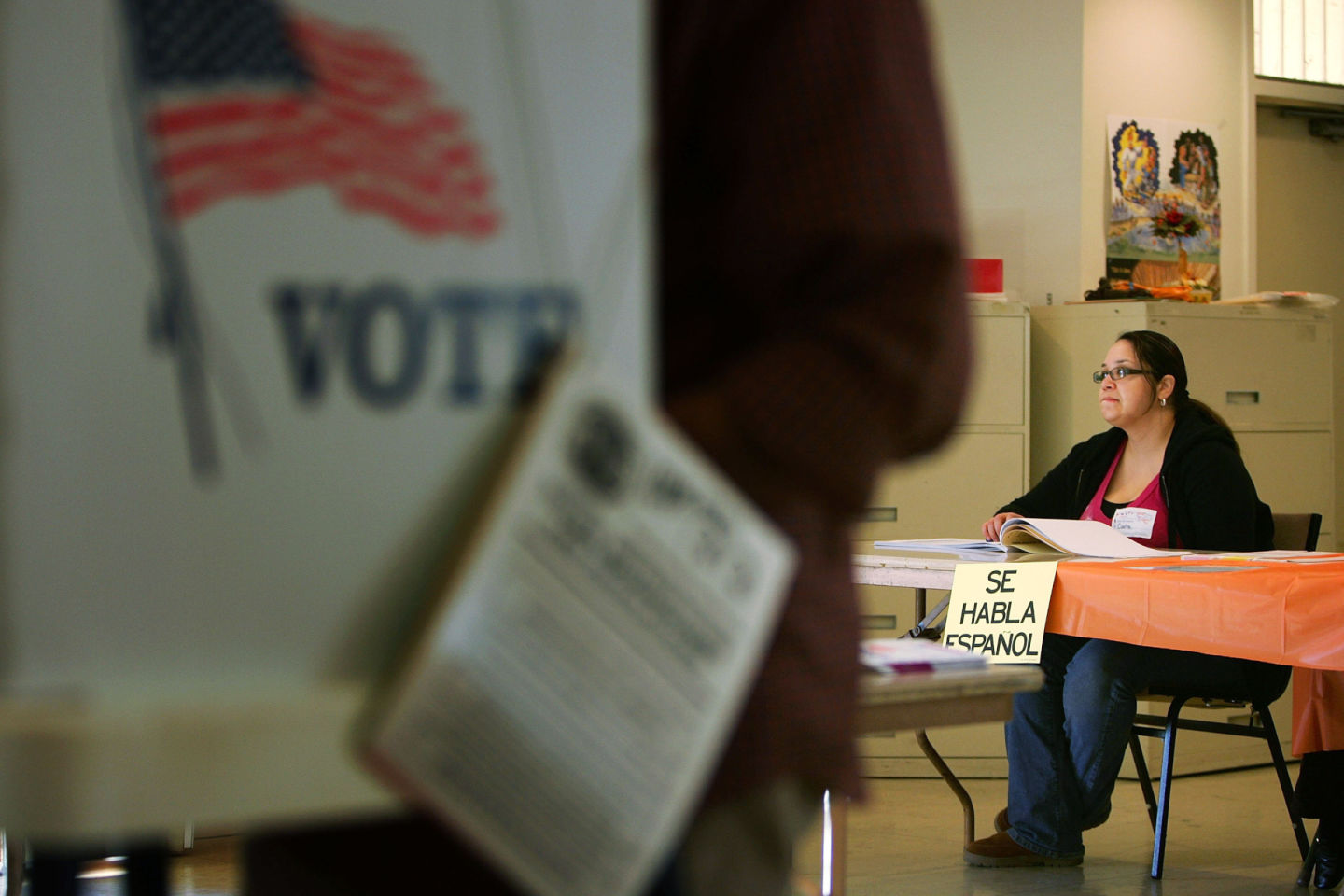
"caption": "A \"Se Habla Español\" sign identifies a bilingual election official in the predominantly Latino neighborhood of Boyle Heights on Feb. 5, 2008, in Los Angeles.",
"credit": "David McNew/Getty Images",
"altTag": "A \"Se Habla Español\" sign identifies a bilingual election official in the predominantly Latino neighborhood of Boyle Heights on Feb. 5, 2008, in Los Angeles.",
"description": "A \"Se habla Espanol\" sign identifies a bilingual election official in the predominantly Latino neighborhood of Boyle Heights on Feb. 5, 2008, in Los Angeles.",
"imgSizes": {
"thumbnail": {
"file": "https://cdn.kqed.org/wp-content/uploads/sites/10/2016/01/3527_transform-400x267.jpg",
"width": 400,
"height": 267,
"mimeType": "image/jpeg"
},
"medium": {
"file": "https://cdn.kqed.org/wp-content/uploads/sites/10/2016/01/3527_transform-800x533.jpg",
"width": 800,
"height": 533,
"mimeType": "image/jpeg"
},
"medium_large": {
"file": "https://cdn.kqed.org/wp-content/uploads/sites/10/2016/01/3527_transform-768x512.jpg",
"width": 768,
"height": 512,
"mimeType": "image/jpeg"
},
"large": {
"file": "https://cdn.kqed.org/wp-content/uploads/sites/10/2016/01/3527_transform-1440x960.jpg",
"width": 1440,
"height": 960,
"mimeType": "image/jpeg"
},
"fd-lrg": {
"file": "https://cdn.kqed.org/wp-content/uploads/sites/10/2016/01/3527_transform-1920x1280.jpg",
"width": 1920,
"height": 1280,
"mimeType": "image/jpeg"
},
"fd-med": {
"file": "https://cdn.kqed.org/wp-content/uploads/sites/10/2016/01/3527_transform-1180x787.jpg",
"width": 1180,
"height": 787,
"mimeType": "image/jpeg"
},
"fd-sm": {
"file": "https://cdn.kqed.org/wp-content/uploads/sites/10/2016/01/3527_transform-960x640.jpg",
"width": 960,
"height": 640,
"mimeType": "image/jpeg"
},
"post-thumbnail": {
"file": "https://cdn.kqed.org/wp-content/uploads/sites/10/2016/01/3527_transform-672x372.jpg",
"width": 672,
"height": 372,
"mimeType": "image/jpeg"
},
"twentyfourteen-full-width": {
"file": "https://cdn.kqed.org/wp-content/uploads/sites/10/2016/01/3527_transform-1038x576.jpg",
"width": 1038,
"height": 576,
"mimeType": "image/jpeg"
},
"guest-author-32": {
"file": "https://cdn.kqed.org/wp-content/uploads/sites/10/2016/01/3527_transform-32x32.jpg",
"width": 32,
"height": 32,
"mimeType": "image/jpeg"
},
"guest-author-64": {
"file": "https://cdn.kqed.org/wp-content/uploads/sites/10/2016/01/3527_transform-64x64.jpg",
"width": 64,
"height": 64,
"mimeType": "image/jpeg"
},
"guest-author-96": {
"file": "https://cdn.kqed.org/wp-content/uploads/sites/10/2016/01/3527_transform-96x96.jpg",
"width": 96,
"height": 96,
"mimeType": "image/jpeg"
},
"guest-author-128": {
"file": "https://cdn.kqed.org/wp-content/uploads/sites/10/2016/01/3527_transform-128x128.jpg",
"width": 128,
"height": 128,
"mimeType": "image/jpeg"
},
"detail": {
"file": "https://cdn.kqed.org/wp-content/uploads/sites/10/2016/01/3527_transform-75x75.jpg",
"width": 75,
"height": 75,
"mimeType": "image/jpeg"
},
"jmtc-small-thumb": {
"file": "https://cdn.kqed.org/wp-content/uploads/sites/10/2016/01/3527_transform-280x150.jpg",
"width": 280,
"height": 150,
"mimeType": "image/jpeg"
},
"kqedFullSize": {
"file": "https://cdn.kqed.org/wp-content/uploads/sites/10/2016/01/3527_transform.jpg",
"width": 1920,
"height": 1280
}
},
"isLoading": false,
"fetchFailed": false
},
"news_12037949": {
"type": "attachments",
"id": "news_12037949",
"meta": {
"index": "attachments_1716263798",
"site": "news",
"id": "12037949",
"found": true
},
"title": "20250428_WARRANTLESSSEARCHES_GC-19-KQED",
"publishDate": 1745872932,
"status": "inherit",
"parent": 12053019,
"modified": 1755735334,
"caption": "San Francisco Sheriff Paul Miyamoto, center, speaks during a press conference announcing the San Francisco Sheriff’s Office’s plan to resume warrantless searches of criminal defendants who have been released and awaiting trial, outside of City Hall on April 28, 2025.",
"credit": "Gina Castro/KQED",
"altTag": null,
"description": null,
"imgSizes": {
"medium": {
"file": "https://cdn.kqed.org/wp-content/uploads/sites/10/2025/04/20250428_WARRANTLESSSEARCHES_GC-19-KQED-800x533.jpg",
"width": 800,
"height": 533,
"mimeType": "image/jpeg"
},
"large": {
"file": "https://cdn.kqed.org/wp-content/uploads/sites/10/2025/04/20250428_WARRANTLESSSEARCHES_GC-19-KQED-1020x680.jpg",
"width": 1020,
"height": 680,
"mimeType": "image/jpeg"
},
"thumbnail": {
"file": "https://cdn.kqed.org/wp-content/uploads/sites/10/2025/04/20250428_WARRANTLESSSEARCHES_GC-19-KQED-160x107.jpg",
"width": 160,
"height": 107,
"mimeType": "image/jpeg"
},
"1536x1536": {
"file": "https://cdn.kqed.org/wp-content/uploads/sites/10/2025/04/20250428_WARRANTLESSSEARCHES_GC-19-KQED-1536x1024.jpg",
"width": 1536,
"height": 1024,
"mimeType": "image/jpeg"
},
"post-thumbnail": {
"file": "https://cdn.kqed.org/wp-content/uploads/sites/10/2025/04/20250428_WARRANTLESSSEARCHES_GC-19-KQED-672x372.jpg",
"width": 672,
"height": 372,
"mimeType": "image/jpeg"
},
"twentyfourteen-full-width": {
"file": "https://cdn.kqed.org/wp-content/uploads/sites/10/2025/04/20250428_WARRANTLESSSEARCHES_GC-19-KQED-1038x576.jpg",
"width": 1038,
"height": 576,
"mimeType": "image/jpeg"
},
"full-width": {
"file": "https://cdn.kqed.org/wp-content/uploads/sites/10/2025/04/20250428_WARRANTLESSSEARCHES_GC-19-KQED-1920x1280.jpg",
"width": 1920,
"height": 1280,
"mimeType": "image/jpeg"
},
"kqedFullSize": {
"file": "https://cdn.kqed.org/wp-content/uploads/sites/10/2025/04/20250428_WARRANTLESSSEARCHES_GC-19-KQED.jpg",
"width": 2000,
"height": 1333
}
},
"isLoading": false,
"fetchFailed": false
},
"news_12034771": {
"type": "attachments",
"id": "news_12034771",
"meta": {
"index": "attachments_1716263798",
"site": "news",
"id": "12034771",
"found": true
},
"title": "20240403_BETTYDUONG_GC-12-KQED",
"publishDate": 1744051873,
"status": "inherit",
"parent": 0,
"modified": 1745623201,
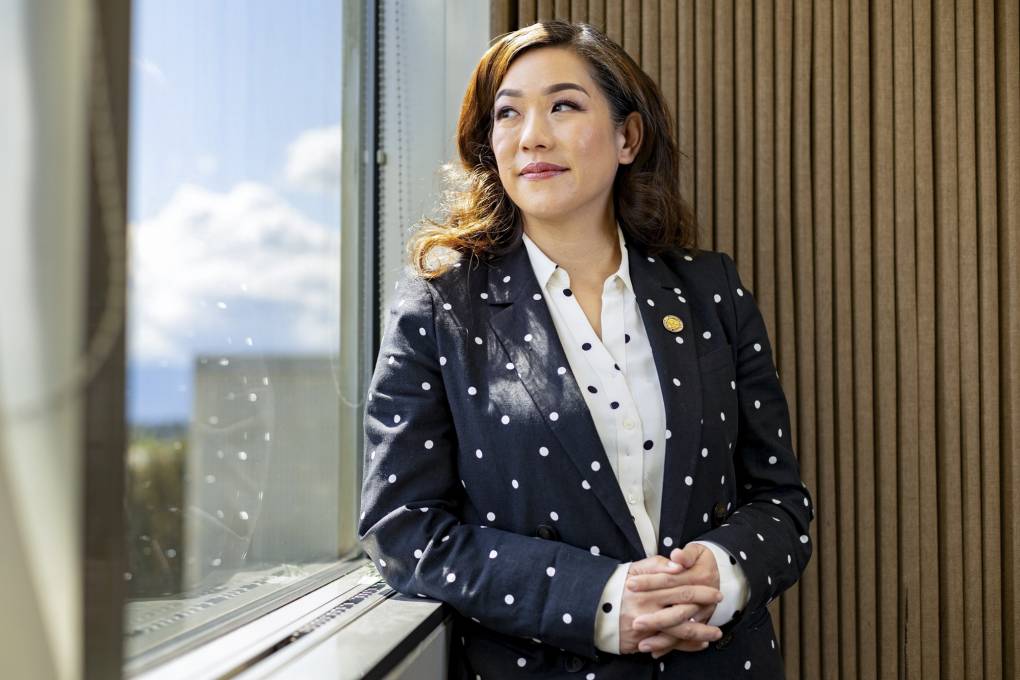
"caption": "Betty Duong, Santa Clara County supervisor, poses for a photo at the Santa Clara County Administration Building in San José on April 3, 2025.",
"credit": "Gina Castro/KQED",
"altTag": null,
"description": null,
"imgSizes": {
"medium": {
"file": "https://cdn.kqed.org/wp-content/uploads/sites/10/2025/04/20240403_BETTYDUONG_GC-12-KQED-800x533.jpg",
"width": 800,
"height": 533,
"mimeType": "image/jpeg"
},
"large": {
"file": "https://cdn.kqed.org/wp-content/uploads/sites/10/2025/04/20240403_BETTYDUONG_GC-12-KQED-1020x680.jpg",
"width": 1020,
"height": 680,
"mimeType": "image/jpeg"
},
"thumbnail": {
"file": "https://cdn.kqed.org/wp-content/uploads/sites/10/2025/04/20240403_BETTYDUONG_GC-12-KQED-160x107.jpg",
"width": 160,
"height": 107,
"mimeType": "image/jpeg"
},
"1536x1536": {
"file": "https://cdn.kqed.org/wp-content/uploads/sites/10/2025/04/20240403_BETTYDUONG_GC-12-KQED-1536x1024.jpg",
"width": 1536,
"height": 1024,
"mimeType": "image/jpeg"
},
"post-thumbnail": {
"file": "https://cdn.kqed.org/wp-content/uploads/sites/10/2025/04/20240403_BETTYDUONG_GC-12-KQED-672x372.jpg",
"width": 672,
"height": 372,
"mimeType": "image/jpeg"
},
"twentyfourteen-full-width": {
"file": "https://cdn.kqed.org/wp-content/uploads/sites/10/2025/04/20240403_BETTYDUONG_GC-12-KQED-1038x576.jpg",
"width": 1038,
"height": 576,
"mimeType": "image/jpeg"
},
"full-width": {
"file": "https://cdn.kqed.org/wp-content/uploads/sites/10/2025/04/20240403_BETTYDUONG_GC-12-KQED-1920x1280.jpg",
"width": 1920,
"height": 1280,
"mimeType": "image/jpeg"
},
"kqedFullSize": {
"file": "https://cdn.kqed.org/wp-content/uploads/sites/10/2025/04/20240403_BETTYDUONG_GC-12-KQED.jpg",
"width": 2000,
"height": 1333
}
},
"isLoading": false,
"fetchFailed": false
},
"news_12037246": {
"type": "attachments",
"id": "news_12037246",
"meta": {
"index": "attachments_1716263798",
"site": "news",
"id": "12037246",
"found": true
},
"title": "250421-CHINATOWNTARIFFS-32-BL-KQED",
"publishDate": 1745410880,
"status": "inherit",
"parent": 0,
"modified": 1745411031,
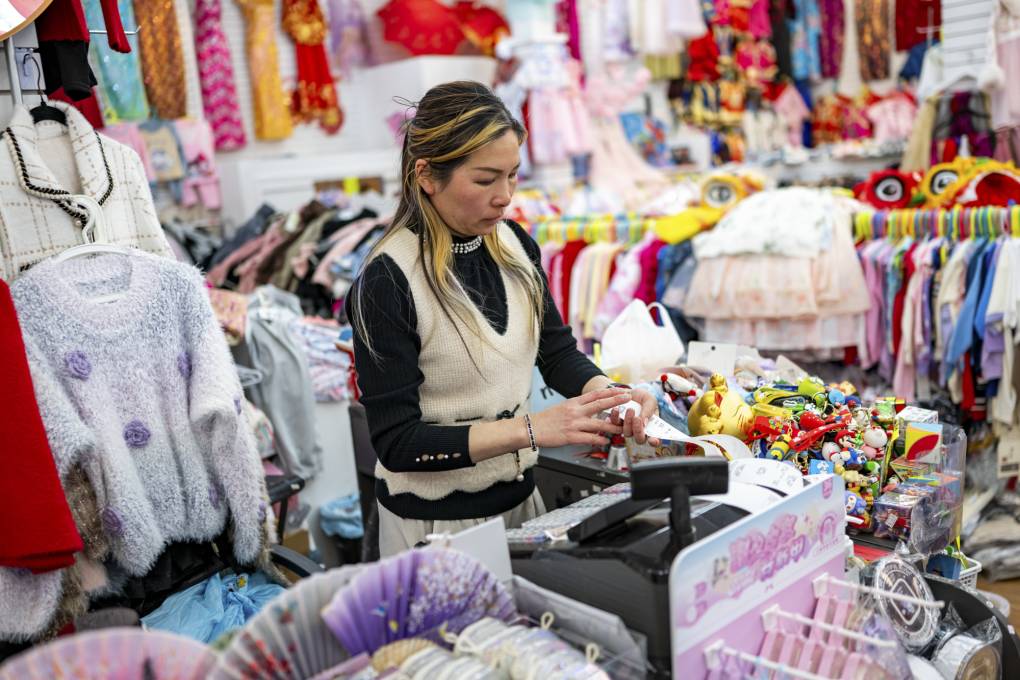
"caption": "Owner Tracy Liu works at her shop, Beijing Shopping Center, in San Francisco’s Chinatown neighborhood on April 21, 2025.",
"credit": "Beth LaBerge/KQED",
"altTag": null,
"description": null,
"imgSizes": {
"medium": {
"file": "https://cdn.kqed.org/wp-content/uploads/sites/10/2025/04/250421-CHINATOWNTARIFFS-32-BL-KQED-800x533.jpg",
"width": 800,
"height": 533,
"mimeType": "image/jpeg"
},
"large": {
"file": "https://cdn.kqed.org/wp-content/uploads/sites/10/2025/04/250421-CHINATOWNTARIFFS-32-BL-KQED-1020x680.jpg",
"width": 1020,
"height": 680,
"mimeType": "image/jpeg"
},
"thumbnail": {
"file": "https://cdn.kqed.org/wp-content/uploads/sites/10/2025/04/250421-CHINATOWNTARIFFS-32-BL-KQED-160x107.jpg",
"width": 160,
"height": 107,
"mimeType": "image/jpeg"
},
"1536x1536": {
"file": "https://cdn.kqed.org/wp-content/uploads/sites/10/2025/04/250421-CHINATOWNTARIFFS-32-BL-KQED-1536x1024.jpg",
"width": 1536,
"height": 1024,
"mimeType": "image/jpeg"
},
"post-thumbnail": {
"file": "https://cdn.kqed.org/wp-content/uploads/sites/10/2025/04/250421-CHINATOWNTARIFFS-32-BL-KQED-672x372.jpg",
"width": 672,
"height": 372,
"mimeType": "image/jpeg"
},
"twentyfourteen-full-width": {
"file": "https://cdn.kqed.org/wp-content/uploads/sites/10/2025/04/250421-CHINATOWNTARIFFS-32-BL-KQED-1038x576.jpg",
"width": 1038,
"height": 576,
"mimeType": "image/jpeg"
},
"full-width": {
"file": "https://cdn.kqed.org/wp-content/uploads/sites/10/2025/04/250421-CHINATOWNTARIFFS-32-BL-KQED-1920x1280.jpg",
"width": 1920,
"height": 1280,
"mimeType": "image/jpeg"
},
"kqedFullSize": {
"file": "https://cdn.kqed.org/wp-content/uploads/sites/10/2025/04/250421-CHINATOWNTARIFFS-32-BL-KQED.jpg",
"width": 2000,
"height": 1333
}
},
"isLoading": false,
"fetchFailed": false
},
"news_12035114": {
"type": "attachments",
"id": "news_12035114",
"meta": {
"index": "attachments_1716263798",
"site": "news",
"id": "12035114",
"found": true
},
"title": "250408-SanJoseSpecialElection-26-BL",
"publishDate": 1744174818,
"status": "inherit",
"parent": 12034920,
"modified": 1744219756,
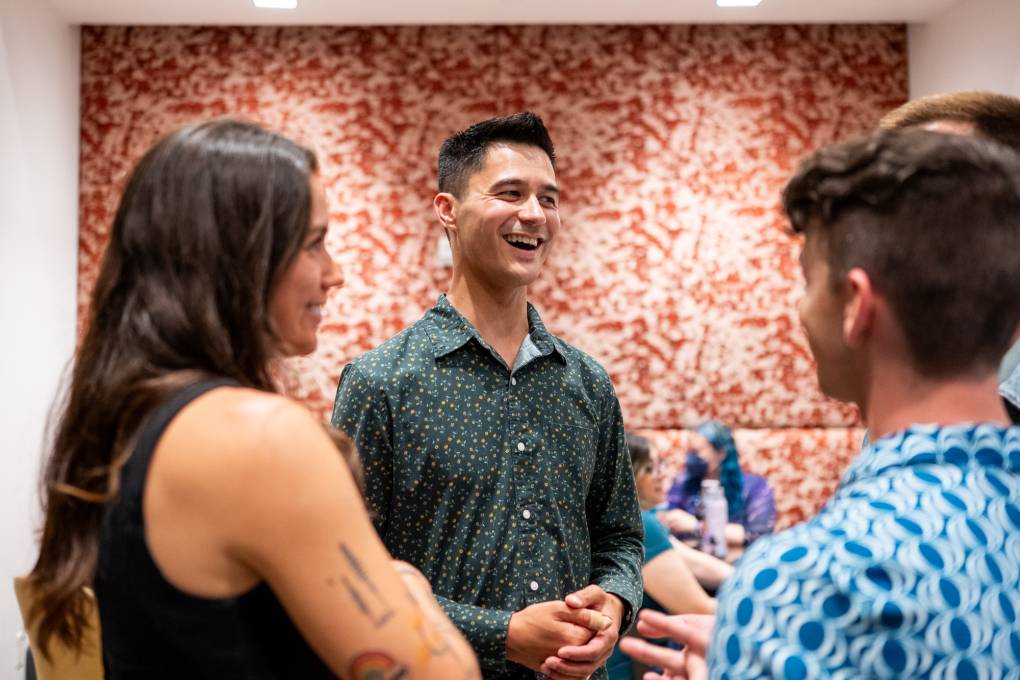
"caption": "Anthony Tordillos, San José Council District 3 candidate, speaks with supporters during an election night party in San José on April 8, 2025.",
"credit": "Beth LaBerge/KQED",
"altTag": null,
"description": null,
"imgSizes": {
"medium": {
"file": "https://cdn.kqed.org/wp-content/uploads/sites/10/2025/04/250408-SanJoseSpecialElection-26-BL-800x533.jpg",
"width": 800,
"height": 533,
"mimeType": "image/jpeg"
},
"large": {
"file": "https://cdn.kqed.org/wp-content/uploads/sites/10/2025/04/250408-SanJoseSpecialElection-26-BL-1020x680.jpg",
"width": 1020,
"height": 680,
"mimeType": "image/jpeg"
},
"thumbnail": {
"file": "https://cdn.kqed.org/wp-content/uploads/sites/10/2025/04/250408-SanJoseSpecialElection-26-BL-160x107.jpg",
"width": 160,
"height": 107,
"mimeType": "image/jpeg"
},
"1536x1536": {
"file": "https://cdn.kqed.org/wp-content/uploads/sites/10/2025/04/250408-SanJoseSpecialElection-26-BL-1536x1024.jpg",
"width": 1536,
"height": 1024,
"mimeType": "image/jpeg"
},
"post-thumbnail": {
"file": "https://cdn.kqed.org/wp-content/uploads/sites/10/2025/04/250408-SanJoseSpecialElection-26-BL-672x372.jpg",
"width": 672,
"height": 372,
"mimeType": "image/jpeg"
},
"twentyfourteen-full-width": {
"file": "https://cdn.kqed.org/wp-content/uploads/sites/10/2025/04/250408-SanJoseSpecialElection-26-BL-1038x576.jpg",
"width": 1038,
"height": 576,
"mimeType": "image/jpeg"
},
"full-width": {
"file": "https://cdn.kqed.org/wp-content/uploads/sites/10/2025/04/250408-SanJoseSpecialElection-26-BL-1920x1280.jpg",
"width": 1920,
"height": 1280,
"mimeType": "image/jpeg"
},
"kqedFullSize": {
"file": "https://cdn.kqed.org/wp-content/uploads/sites/10/2025/04/250408-SanJoseSpecialElection-26-BL.jpg",
"width": 2000,
"height": 1333
}
},
"isLoading": false,
"fetchFailed": false
},
"news_12037666": {
"type": "attachments",
"id": "news_12037666",
"meta": {
"index": "attachments_1716263798",
"site": "news",
"id": "12037666",
"found": true
},
"title": "_DSC7276_qed",
"publishDate": 1745604009,
"status": "inherit",
"parent": 12037661,
"modified": 1745604051,
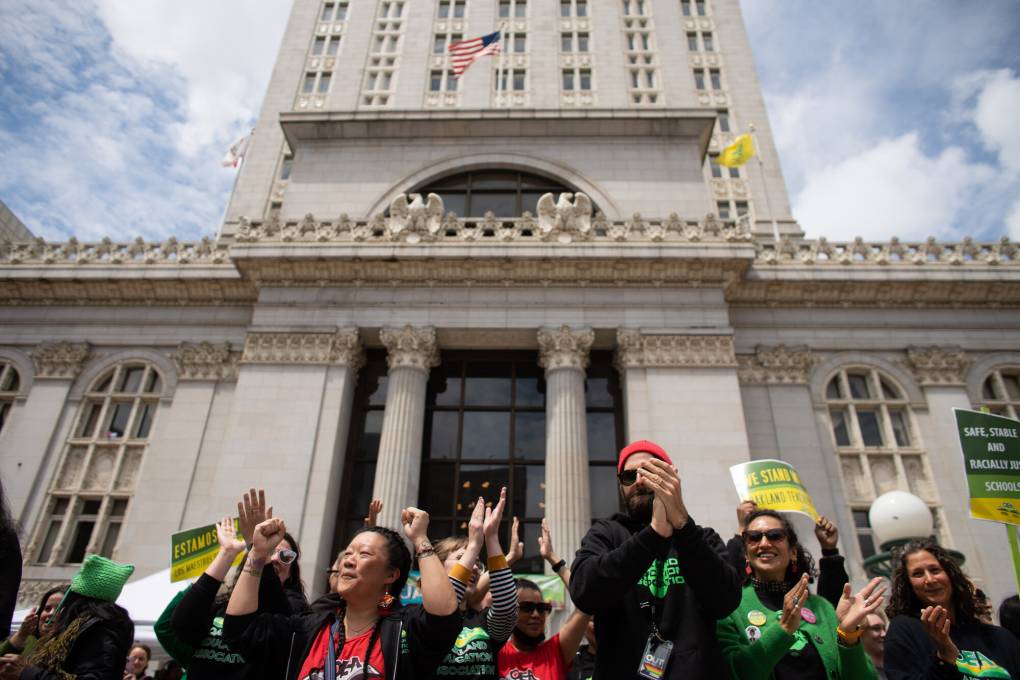
"caption": "Hundreds of Oakland teachers and their supporters converged on Frank H. Ogawa Plaza in front of City Hall on May 4, 2023, for a festive rally to close out the first day of an open-ended strike.",
"credit": "Aryk Copley for KQED",
"altTag": null,
"description": null,
"imgSizes": {
"medium": {
"file": "https://cdn.kqed.org/wp-content/uploads/sites/10/2025/04/DSC7276_qed-800x533.jpg",
"width": 800,
"height": 533,
"mimeType": "image/jpeg"
},
"large": {
"file": "https://cdn.kqed.org/wp-content/uploads/sites/10/2025/04/DSC7276_qed-1020x680.jpg",
"width": 1020,
"height": 680,
"mimeType": "image/jpeg"
},
"thumbnail": {
"file": "https://cdn.kqed.org/wp-content/uploads/sites/10/2025/04/DSC7276_qed-160x107.jpg",
"width": 160,
"height": 107,
"mimeType": "image/jpeg"
},
"1536x1536": {
"file": "https://cdn.kqed.org/wp-content/uploads/sites/10/2025/04/DSC7276_qed-1536x1024.jpg",
"width": 1536,
"height": 1024,
"mimeType": "image/jpeg"
},
"post-thumbnail": {
"file": "https://cdn.kqed.org/wp-content/uploads/sites/10/2025/04/DSC7276_qed-672x372.jpg",
"width": 672,
"height": 372,
"mimeType": "image/jpeg"
},
"twentyfourteen-full-width": {
"file": "https://cdn.kqed.org/wp-content/uploads/sites/10/2025/04/DSC7276_qed-1038x576.jpg",
"width": 1038,
"height": 576,
"mimeType": "image/jpeg"
},
"full-width": {
"file": "https://cdn.kqed.org/wp-content/uploads/sites/10/2025/04/DSC7276_qed-1920x1280.jpg",
"width": 1920,
"height": 1280,
"mimeType": "image/jpeg"
},
"kqedFullSize": {
"file": "https://cdn.kqed.org/wp-content/uploads/sites/10/2025/04/DSC7276_qed.jpg",
"width": 2000,
"height": 1333
}
},
"isLoading": false,
"fetchFailed": false
},
"news_12037800": {
"type": "attachments",
"id": "news_12037800",
"meta": {
"index": "attachments_1716263798",
"site": "news",
"id": "12037800",
"found": true
},
"title": "The Valero refinery in Benicia on Sept. 21, 2023.",
"publishDate": 1745627579,
"status": "inherit",
"parent": 12037668,
"modified": 1745627596,
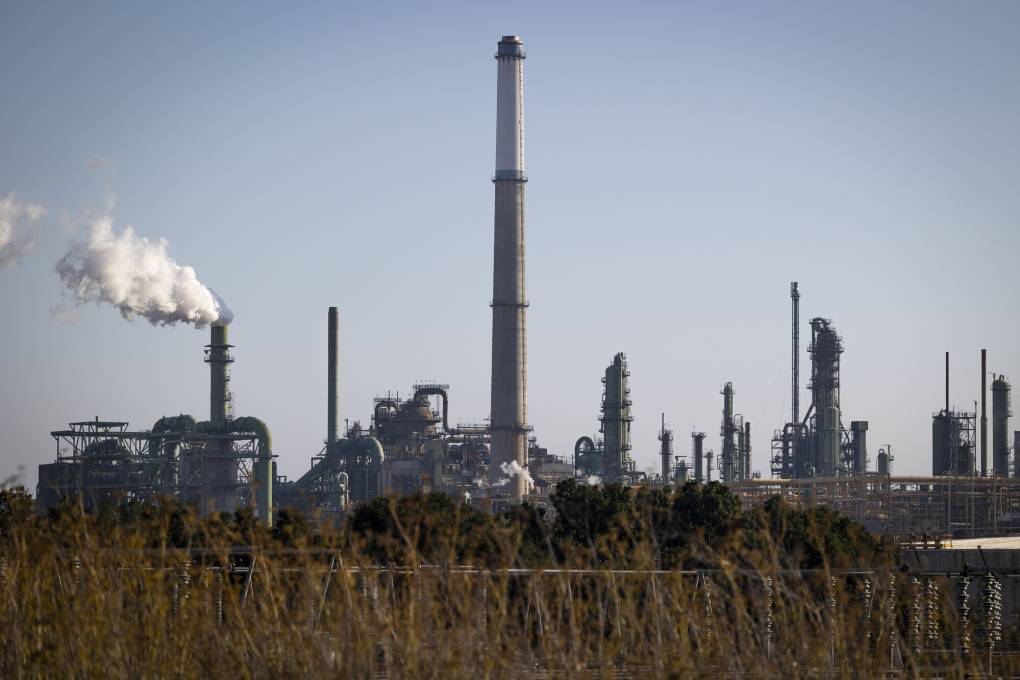
"caption": "The Valero refinery in Benicia on Sept. 21, 2023.",
"credit": "Martin do Nascimento/KQED",
"altTag": null,
"description": null,
"imgSizes": {
"medium": {
"file": "https://cdn.kqed.org/wp-content/uploads/sites/10/2025/04/230921-VALERO-BENICIA-REFINERY-MD-01_qed-800x533.jpg",
"width": 800,
"height": 533,
"mimeType": "image/jpeg"
},
"large": {
"file": "https://cdn.kqed.org/wp-content/uploads/sites/10/2025/04/230921-VALERO-BENICIA-REFINERY-MD-01_qed-1020x680.jpg",
"width": 1020,
"height": 680,
"mimeType": "image/jpeg"
},
"thumbnail": {
"file": "https://cdn.kqed.org/wp-content/uploads/sites/10/2025/04/230921-VALERO-BENICIA-REFINERY-MD-01_qed-160x107.jpg",
"width": 160,
"height": 107,
"mimeType": "image/jpeg"
},
"1536x1536": {
"file": "https://cdn.kqed.org/wp-content/uploads/sites/10/2025/04/230921-VALERO-BENICIA-REFINERY-MD-01_qed-1536x1024.jpg",
"width": 1536,
"height": 1024,
"mimeType": "image/jpeg"
},
"post-thumbnail": {
"file": "https://cdn.kqed.org/wp-content/uploads/sites/10/2025/04/230921-VALERO-BENICIA-REFINERY-MD-01_qed-672x372.jpg",
"width": 672,
"height": 372,
"mimeType": "image/jpeg"
},
"twentyfourteen-full-width": {
"file": "https://cdn.kqed.org/wp-content/uploads/sites/10/2025/04/230921-VALERO-BENICIA-REFINERY-MD-01_qed-1038x576.jpg",
"width": 1038,
"height": 576,
"mimeType": "image/jpeg"
},
"full-width": {
"file": "https://cdn.kqed.org/wp-content/uploads/sites/10/2025/04/230921-VALERO-BENICIA-REFINERY-MD-01_qed-1920x1280.jpg",
"width": 1920,
"height": 1280,
"mimeType": "image/jpeg"
},
"kqedFullSize": {
"file": "https://cdn.kqed.org/wp-content/uploads/sites/10/2025/04/230921-VALERO-BENICIA-REFINERY-MD-01_qed.jpg",
"width": 1999,
"height": 1333
}
},
"isLoading": false,
"fetchFailed": false
},
"news_12037658": {
"type": "attachments",
"id": "news_12037658",
"meta": {
"index": "attachments_1716263798",
"site": "news",
"id": "12037658",
"found": true
},
"title": "Muni",
"publishDate": 1745603535,
"status": "inherit",
"parent": 12046678,
"modified": 1751395267,
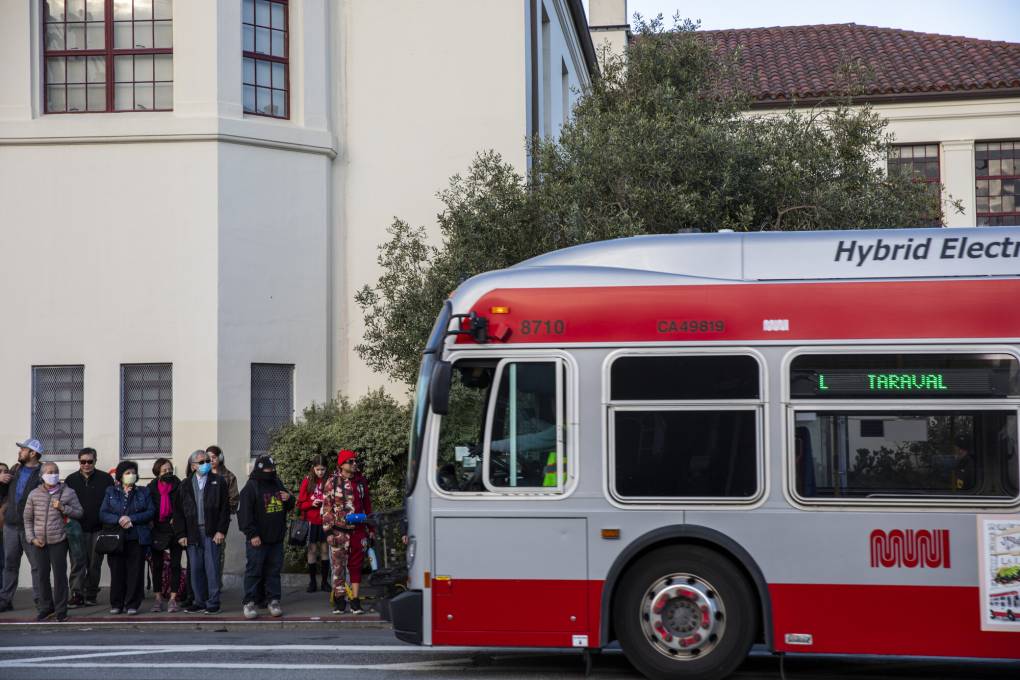
"caption": "Passengers wait to board the L Bus outside of West Portal Station in San Francisco on Tuesday, Nov. 28, 2023.",
"credit": "Juliana Yamada/KQED",
"altTag": null,
"description": null,
"imgSizes": {
"medium": {
"file": "https://cdn.kqed.org/wp-content/uploads/sites/10/2025/04/20231128-Muni-013-JY_qed-1-800x533.jpg",
"width": 800,
"height": 533,
"mimeType": "image/jpeg"
},
"large": {
"file": "https://cdn.kqed.org/wp-content/uploads/sites/10/2025/04/20231128-Muni-013-JY_qed-1-1020x680.jpg",
"width": 1020,
"height": 680,
"mimeType": "image/jpeg"
},
"thumbnail": {
"file": "https://cdn.kqed.org/wp-content/uploads/sites/10/2025/04/20231128-Muni-013-JY_qed-1-160x107.jpg",
"width": 160,
"height": 107,
"mimeType": "image/jpeg"
},
"1536x1536": {
"file": "https://cdn.kqed.org/wp-content/uploads/sites/10/2025/04/20231128-Muni-013-JY_qed-1-1536x1024.jpg",
"width": 1536,
"height": 1024,
"mimeType": "image/jpeg"
},
"post-thumbnail": {
"file": "https://cdn.kqed.org/wp-content/uploads/sites/10/2025/04/20231128-Muni-013-JY_qed-1-672x372.jpg",
"width": 672,
"height": 372,
"mimeType": "image/jpeg"
},
"twentyfourteen-full-width": {
"file": "https://cdn.kqed.org/wp-content/uploads/sites/10/2025/04/20231128-Muni-013-JY_qed-1-1038x576.jpg",
"width": 1038,
"height": 576,
"mimeType": "image/jpeg"
},
"full-width": {
"file": "https://cdn.kqed.org/wp-content/uploads/sites/10/2025/04/20231128-Muni-013-JY_qed-1-1920x1280.jpg",
"width": 1920,
"height": 1280,
"mimeType": "image/jpeg"
},
"kqedFullSize": {
"file": "https://cdn.kqed.org/wp-content/uploads/sites/10/2025/04/20231128-Muni-013-JY_qed-1.jpg",
"width": 2000,
"height": 1333
}
},
"isLoading": false,
"fetchFailed": false
},
"news_12020020": {
"type": "attachments",
"id": "news_12020020",
"meta": {
"index": "attachments_1716263798",
"site": "news",
"id": "12020020",
"found": true
},
"title": "San Francisco City Hall - American flags and trees lining the avenue to the main entrance",
"publishDate": 1735595155,
"status": "inherit",
"parent": 12020017,
"modified": 1742841811,
"caption": "San Francisco City Hall in November 2024.",
"credit": "James Carter-Johnson/Getty Images",
"altTag": null,
"description": null,
"imgSizes": {
"medium": {
"file": "https://cdn.kqed.org/wp-content/uploads/sites/10/2300/12/GettyImages-2174968250-800x533.jpg",
"width": 800,
"height": 533,
"mimeType": "image/jpeg"
},
"large": {
"file": "https://cdn.kqed.org/wp-content/uploads/sites/10/2300/12/GettyImages-2174968250-1020x680.jpg",
"width": 1020,
"height": 680,
"mimeType": "image/jpeg"
},
"thumbnail": {
"file": "https://cdn.kqed.org/wp-content/uploads/sites/10/2300/12/GettyImages-2174968250-160x107.jpg",
"width": 160,
"height": 107,
"mimeType": "image/jpeg"
},
"1536x1536": {
"file": "https://cdn.kqed.org/wp-content/uploads/sites/10/2300/12/GettyImages-2174968250-1536x1024.jpg",
"width": 1536,
"height": 1024,
"mimeType": "image/jpeg"
},
"2048x2048": {
"file": "https://cdn.kqed.org/wp-content/uploads/sites/10/2300/12/GettyImages-2174968250-2048x1365.jpg",
"width": 2048,
"height": 1365,
"mimeType": "image/jpeg"
},
"post-thumbnail": {
"file": "https://cdn.kqed.org/wp-content/uploads/sites/10/2300/12/GettyImages-2174968250-672x372.jpg",
"width": 672,
"height": 372,
"mimeType": "image/jpeg"
},
"twentyfourteen-full-width": {
"file": "https://cdn.kqed.org/wp-content/uploads/sites/10/2300/12/GettyImages-2174968250-1038x576.jpg",
"width": 1038,
"height": 576,
"mimeType": "image/jpeg"
},
"full-width": {
"file": "https://cdn.kqed.org/wp-content/uploads/sites/10/2300/12/GettyImages-2174968250-1920x1280.jpg",
"width": 1920,
"height": 1280,
"mimeType": "image/jpeg"
},
"kqedFullSize": {
"file": "https://cdn.kqed.org/wp-content/uploads/sites/10/2300/12/GettyImages-2174968250-e1736293413905.jpg",
"width": 2000,
"height": 1333
}
},
"isLoading": false,
"fetchFailed": false
},
"news_12037464": {
"type": "attachments",
"id": "news_12037464",
"meta": {
"index": "attachments_1716263798",
"site": "news",
"id": "12037464",
"found": true
},
"title": "20250423_OUSDSupe_GC-11_qed",
"publishDate": 1745512311,
"status": "inherit",
"parent": 12040189,
"modified": 1747264165,
"caption": "The Oakland Unified School District Board listens to public comment during a meeting at Metwest High School in Oakland on April 23, 2025.",
"credit": "Gina Castro/KQED",
"altTag": null,
"description": null,
"imgSizes": {
"medium": {
"file": "https://cdn.kqed.org/wp-content/uploads/sites/10/2025/04/20250423_OUSDSupe_GC-11_qed-800x515.jpg",
"width": 800,
"height": 515,
"mimeType": "image/jpeg"
},
"large": {
"file": "https://cdn.kqed.org/wp-content/uploads/sites/10/2025/04/20250423_OUSDSupe_GC-11_qed-1020x656.jpg",
"width": 1020,
"height": 656,
"mimeType": "image/jpeg"
},
"thumbnail": {
"file": "https://cdn.kqed.org/wp-content/uploads/sites/10/2025/04/20250423_OUSDSupe_GC-11_qed-160x103.jpg",
"width": 160,
"height": 103,
"mimeType": "image/jpeg"
},
"1536x1536": {
"file": "https://cdn.kqed.org/wp-content/uploads/sites/10/2025/04/20250423_OUSDSupe_GC-11_qed-1536x988.jpg",
"width": 1536,
"height": 988,
"mimeType": "image/jpeg"
},
"post-thumbnail": {
"file": "https://cdn.kqed.org/wp-content/uploads/sites/10/2025/04/20250423_OUSDSupe_GC-11_qed-672x372.jpg",
"width": 672,
"height": 372,
"mimeType": "image/jpeg"
},
"twentyfourteen-full-width": {
"file": "https://cdn.kqed.org/wp-content/uploads/sites/10/2025/04/20250423_OUSDSupe_GC-11_qed-1038x576.jpg",
"width": 1038,
"height": 576,
"mimeType": "image/jpeg"
},
"full-width": {
"file": "https://cdn.kqed.org/wp-content/uploads/sites/10/2025/04/20250423_OUSDSupe_GC-11_qed-1920x1236.jpg",
"width": 1920,
"height": 1236,
"mimeType": "image/jpeg"
},
"kqedFullSize": {
"file": "https://cdn.kqed.org/wp-content/uploads/sites/10/2025/04/20250423_OUSDSupe_GC-11_qed.jpg",
"width": 2000,
"height": 1287
}
},
"isLoading": false,
"fetchFailed": false
}
},
"audioPlayerReducer": {
"postId": "stream_live",
"isPaused": true,
"isPlaying": false,
"pfsActive": false,
"pledgeModalIsOpen": true,
"playerDrawerIsOpen": false,
"liveAudioPlayStartedAt": 0,
"liveAudioPlayContext": ""
},
"authorsReducer": {
"gmarzorati": {
"type": "authors",
"id": "227",
"meta": {
"index": "authors_1716337520",
"id": "227",
"found": true
},
"name": "Guy Marzorati",
"firstName": "Guy",
"lastName": "Marzorati",
"slug": "gmarzorati",
"email": "gmarzorati@KQED.org",
"display_author_email": true,
"staff_mastheads": [
"news"
],
"title": "Correspondent",
"bio": "Guy Marzorati is a correspondent on KQED's California Politics and Government Desk, based in San Jose. A graduate of Santa Clara University, Guy joined KQED in 2013. He reports on state and local politics and produces KQED's digital voter guide.",
"avatar": "https://secure.gravatar.com/avatar/e7038b8dbfd55b104369b76b1cd0b9de?s=600&d=blank&r=g",
"twitter": "guymarzorati",
"facebook": null,
"instagram": null,
"linkedin": null,
"sites": [
{
"site": "",
"roles": [
"editor"
]
},
{
"site": "news",
"roles": [
"editor"
]
},
{
"site": "science",
"roles": [
"editor"
]
},
{
"site": "forum",
"roles": [
"editor"
]
},
{
"site": "elections",
"roles": [
"editor"
]
},
{
"site": "liveblog",
"roles": [
"editor"
]
}
],
"headData": {
"title": "Guy Marzorati | KQED",
"description": "Correspondent",
"ogImgSrc": "https://secure.gravatar.com/avatar/e7038b8dbfd55b104369b76b1cd0b9de?s=600&d=blank&r=g",
"twImgSrc": "https://secure.gravatar.com/avatar/e7038b8dbfd55b104369b76b1cd0b9de?s=600&d=blank&r=g"
},
"isLoading": false,
"link": "/author/gmarzorati"
},
"matthewgreen": {
"type": "authors",
"id": "1263",
"meta": {
"index": "authors_1716337520",
"id": "1263",
"found": true
},
"name": "Matthew Green",
"firstName": "Matthew",
"lastName": "Green",
"slug": "matthewgreen",
"email": "mgreen@kqed.org",
"display_author_email": false,
"staff_mastheads": [],
"title": "KQED Editor/Reporter",
"bio": "Matthew Green is a digital media producer for KQED News. He previously produced \u003ca href=\"http://www.kqed.org/lowdown\">The Lowdown\u003c/a>, KQED’s multimedia news education blog. Matthew's written for numerous Bay Area publications, including the Oakland Tribune and San Francisco Chronicle. He also taught journalism classes at Fremont High School in East Oakland.\r\n\r\nEmail: mgreen@kqed.org; Twitter: @MGreenKQED",
"avatar": "https://secure.gravatar.com/avatar/3bf498d1267ca02c8494f33d8cfc575e?s=600&d=blank&r=g",
"twitter": "MGreenKQED",
"facebook": null,
"instagram": null,
"linkedin": null,
"sites": [
{
"site": "news",
"roles": []
},
{
"site": "lowdown",
"roles": []
},
{
"site": "science",
"roles": []
},
{
"site": "education",
"roles": []
},
{
"site": "quest",
"roles": []
},
{
"site": "liveblog",
"roles": []
}
],
"headData": {
"title": "Matthew Green | KQED",
"description": "KQED Editor/Reporter",
"ogImgSrc": "https://secure.gravatar.com/avatar/3bf498d1267ca02c8494f33d8cfc575e?s=600&d=blank&r=g",
"twImgSrc": "https://secure.gravatar.com/avatar/3bf498d1267ca02c8494f33d8cfc575e?s=600&d=blank&r=g"
},
"isLoading": false,
"link": "/author/matthewgreen"
},
"adahlstromeckman": {
"type": "authors",
"id": "11785",
"meta": {
"index": "authors_1716337520",
"id": "11785",
"found": true
},
"name": "Azul Dahlstrom-Eckman",
"firstName": "Azul",
"lastName": "Dahlstrom-Eckman",
"slug": "adahlstromeckman",
"email": "adahlstrom-eckman@kqed.org",
"display_author_email": true,
"staff_mastheads": [],
"title": "Reporter",
"bio": "Azul is a reporter for KQED focusing on transportation and features. He joined KQED in 2021 as an alumna of KALW's Audio Academy radio journalism training program.",
"avatar": "https://secure.gravatar.com/avatar/9cb750298435add7815a777f55bf1f46845c1386bb8452555c60a7b820b5aba3?s=600&d=blank&r=g",
"twitter": "@zuliemann",
"bluesky": "@azul415.bsky.social",
"facebook": null,
"instagram": null,
"linkedin": null,
"sites": [
{
"site": "arts",
"roles": [
"editor"
]
},
{
"site": "news",
"roles": [
"editor"
]
},
{
"site": "science",
"roles": [
"editor"
]
},
{
"site": "liveblog",
"roles": [
"author"
]
}
],
"headData": {
"title": "Azul Dahlstrom-Eckman | KQED",
"description": "Reporter",
"ogImgSrc": "https://secure.gravatar.com/avatar/9cb750298435add7815a777f55bf1f46845c1386bb8452555c60a7b820b5aba3?s=600&d=blank&r=g",
"twImgSrc": "https://secure.gravatar.com/avatar/9cb750298435add7815a777f55bf1f46845c1386bb8452555c60a7b820b5aba3?s=600&d=blank&r=g"
},
"isLoading": false,
"link": "/author/adahlstromeckman"
},
"sjohnson": {
"type": "authors",
"id": "11840",
"meta": {
"index": "authors_1716337520",
"id": "11840",
"found": true
},
"name": "Sydney Johnson",
"firstName": "Sydney",
"lastName": "Johnson",
"slug": "sjohnson",
"email": "sjohnson@kqed.org",
"display_author_email": false,
"staff_mastheads": [
"news"
],
"title": "KQED Reporter",
"bio": "Sydney Johnson is a general assignment reporter at KQED. She previously reported on public health and city government at the San Francisco Examiner, and before that, she covered statewide education policy for EdSource. Her reporting has won multiple local, state and national awards. Sydney is a graduate of the University of California, Berkeley and lives in San Francisco.",
"avatar": "https://secure.gravatar.com/avatar/97855f2719b72ad6190b7c535fe642c8?s=600&d=blank&r=g",
"twitter": "sydneyfjohnson",
"facebook": null,
"instagram": null,
"linkedin": null,
"sites": [
{
"site": "news",
"roles": [
"editor"
]
}
],
"headData": {
"title": "Sydney Johnson | KQED",
"description": "KQED Reporter",
"ogImgSrc": "https://secure.gravatar.com/avatar/97855f2719b72ad6190b7c535fe642c8?s=600&d=blank&r=g",
"twImgSrc": "https://secure.gravatar.com/avatar/97855f2719b72ad6190b7c535fe642c8?s=600&d=blank&r=g"
},
"isLoading": false,
"link": "/author/sjohnson"
},
"jgeha": {
"type": "authors",
"id": "11906",
"meta": {
"index": "authors_1716337520",
"id": "11906",
"found": true
},
"name": "Joseph Geha",
"firstName": "Joseph",
"lastName": "Geha",
"slug": "jgeha",
"email": "jgeha@kqed.org",
"display_author_email": false,
"staff_mastheads": [
"news",
"science"
],
"title": "KQED Contributor",
"bio": null,
"avatar": "https://secure.gravatar.com/avatar/ea84d2b6dd93d6369d453edf19dd583f117cd1759d2d9c9c92f9de77017354fe?s=600&d=blank&r=g",
"twitter": null,
"bluesky": null,
"facebook": null,
"instagram": null,
"linkedin": null,
"sites": [
{
"site": "news",
"roles": [
"editor"
]
},
{
"site": "liveblog",
"roles": [
"author"
]
}
],
"headData": {
"title": "Joseph Geha | KQED",
"description": "KQED Contributor",
"ogImgSrc": "https://secure.gravatar.com/avatar/ea84d2b6dd93d6369d453edf19dd583f117cd1759d2d9c9c92f9de77017354fe?s=600&d=blank&r=g",
"twImgSrc": "https://secure.gravatar.com/avatar/ea84d2b6dd93d6369d453edf19dd583f117cd1759d2d9c9c92f9de77017354fe?s=600&d=blank&r=g"
},
"isLoading": false,
"link": "/author/jgeha"
},
"kdebenedetti": {
"type": "authors",
"id": "11913",
"meta": {
"index": "authors_1716337520",
"id": "11913",
"found": true
},
"name": "Katie DeBenedetti",
"firstName": "Katie",
"lastName": "DeBenedetti",
"slug": "kdebenedetti",
"email": "kdebenedetti@kqed.org",
"display_author_email": false,
"staff_mastheads": [
"news",
"science"
],
"title": "KQED Contributor",
"bio": "Katie DeBenedetti is a digital reporter covering daily news for the Express Desk. Prior to joining KQED as a culture reporting intern in January 2024, she covered education and city government for the Napa Valley Register.",
"avatar": "https://secure.gravatar.com/avatar/6e31073cb8f7e4214ab03f42771d0f45?s=600&d=blank&r=g",
"twitter": null,
"facebook": null,
"instagram": null,
"linkedin": null,
"sites": [
{
"site": "news",
"roles": [
"author"
]
},
{
"site": "science",
"roles": [
"author"
]
},
{
"site": "liveblog",
"roles": [
"author"
]
}
],
"headData": {
"title": "Katie DeBenedetti | KQED",
"description": "KQED Contributor",
"ogImgSrc": "https://secure.gravatar.com/avatar/6e31073cb8f7e4214ab03f42771d0f45?s=600&d=blank&r=g",
"twImgSrc": "https://secure.gravatar.com/avatar/6e31073cb8f7e4214ab03f42771d0f45?s=600&d=blank&r=g"
},
"isLoading": false,
"link": "/author/kdebenedetti"
},
"rcooke": {
"type": "authors",
"id": "11921",
"meta": {
"index": "authors_1716337520",
"id": "11921",
"found": true
},
"name": "Riley Cooke",
"firstName": "Riley",
"lastName": "Cooke",
"slug": "rcooke",
"email": "rcooke@kqed.org",
"display_author_email": true,
"staff_mastheads": [
"news"
],
"title": "KQED Contributor",
"bio": "Riley is a senior at UC Berkeley, where she studies political science and journalism. Her work has appeared in SFGate, NBC Bay Area, Local News Matters and more. She enjoys reporting on politics, housing and homelessness — and using as many em dashes as her editors will allow.",
"avatar": "https://secure.gravatar.com/avatar/792f98c126cc5e270a8a96f77f7224ea?s=600&d=blank&r=g",
"twitter": "rrileycooke",
"facebook": null,
"instagram": null,
"linkedin": null,
"sites": [
{
"site": "arts",
"roles": [
"author"
]
},
{
"site": "news",
"roles": [
"author"
]
}
],
"headData": {
"title": "Riley Cooke | KQED",
"description": "KQED Contributor",
"ogImgSrc": "https://secure.gravatar.com/avatar/792f98c126cc5e270a8a96f77f7224ea?s=600&d=blank&r=g",
"twImgSrc": "https://secure.gravatar.com/avatar/792f98c126cc5e270a8a96f77f7224ea?s=600&d=blank&r=g"
},
"isLoading": false,
"link": "/author/rcooke"
}
},
"pagesReducer": {
"news_category_local": {
"type": "terms",
"id": "news_28250",
"meta": {
"index": "terms_1716263798",
"site": "news",
"id": "28250",
"score": 12.940577
},
"featImg": null,
"name": "Local",
"description": null,
"taxonomy": "category",
"headData": {
"twImgId": null,
"twTitle": null,
"ogTitle": null,
"ogImgId": null,
"twDescription": null,
"description": null,
"title": "Local Archives | KQED News",
"ogDescription": null
},
"ttid": 28267,
"slug": "local",
"isLoading": false,
"title": "Local",
"pageMeta": {
"site": "news",
"WpPageTemplate": "page-topic-editorial",
"currentPage": 118
},
"blocks": [
{
"blockName": "kqed/post-list",
"attrs": {
"layout": "cardArticle2",
"query": "posts/news?category=local",
"seeMore": false,
"paginated": true,
"page": 118
}
},
{
"blockName": "kqed/ad"
}
]
}
},
"pfsSessionReducer": {},
"postsReducer": {
"stream_live": {
"type": "live",
"id": "stream_live",
"audioUrl": "https://streams.kqed.org/kqedradio",
"title": "Live Stream",
"excerpt": "Live Stream information currently unavailable.",
"link": "/radio",
"featImg": "",
"label": {
"name": "KQED Live",
"link": "/"
}
},
"stream_kqedNewscast": {
"type": "posts",
"id": "stream_kqedNewscast",
"audioUrl": "https://www.kqed.org/.stream/anon/radio/RDnews/newscast.mp3?_=1",
"title": "KQED Newscast",
"featImg": "",
"label": {
"name": "88.5 FM",
"link": "/"
}
},
"news_12038227": {
"type": "posts",
"id": "news_12038227",
"meta": {
"index": "posts_1716263798",
"site": "news",
"id": "12038227",
"score": null,
"sort": [
1746039255000
]
},
"guestAuthors": [],
"slug": "oakland-teachers-strike-called-off-after-union-reaches-deal-school-district",
"title": "Oakland Teachers Strike Is Called Off After Union Reaches Deal With School District",
"publishDate": 1746039255,
"format": "standard",
"headTitle": "Oakland Teachers Strike Is Called Off After Union Reaches Deal With School District | KQED",
"labelTerm": {
"site": "news"
},
"content": "\u003cp>\u003cem>Updated 3:46 p.m. Wednesday\u003c/em>\u003c/p>\n\u003cp>Oakland public school teachers reached a tentative deal with the city’s school district on Wednesday to \u003ca href=\"https://www.kqed.org/news/12038078/oakland-teachers-set-strike-this-week-union-tells-school-district\">avoid a one-day strike\u003c/a> scheduled for May Day.\u003c/p>\n\u003cp>In a statement, the Oakland Education Association said the district agreed to maintain contracts for 120 high school teachers whose hours \u003ca href=\"https://www.kqed.org/news/12029001/oakland-school-board-approves-over-100-layoffs-a-day-after-similar-vote-in-sf\">would have been reduced\u003c/a> in next year’s budget to shrink the district’s deficit.\u003c/p>\n\u003cp>Campus-based substitute teachers, whose roles would have been centralized after this year as part of the proposed budget cuts, will also remain at their assigned school sites under the new $2.5 million deal with the \u003ca href=\"https://www.kqed.org/news/tag/oakland-unified-school-district\">Oakland Unified School District\u003c/a>.\u003c/p>\n\u003cp>[ad fullwidth]\u003c/p>\n\u003cp>“This outcome reflects the power of educators standing together against cuts harmful to our goal of retaining experienced teachers in Oakland’s hardest-to-staff classrooms,” OEA President Kampala Taiz-Rancifer said.\u003c/p>\n\u003cp>The district said Wednesday that it reached an agreement with the union after extensive negotiations throughout the beginning of the week.\u003c/p>\n\u003cp>“It was a process that ended with both sides putting students first, and keeping all of our young people in school through the end of the academic year, which is now less than a month away,” a spokesperson said in a midday email to families.\u003c/p>\n\u003cfigure id=\"attachment_12019083\" class=\"wp-caption aligncenter\" style=\"max-width: 2560px\">\u003cimg loading=\"lazy\" decoding=\"async\" class=\"size-full wp-image-12019083\" src=\"https://cdn.kqed.org/wp-content/uploads/sites/10/2024/12/21_240517-TKBilingualLearners-80-BL-scaled.jpg\" alt=\"\" width=\"2560\" height=\"1707\" srcset=\"https://cdn.kqed.org/wp-content/uploads/sites/10/2024/12/21_240517-TKBilingualLearners-80-BL-scaled.jpg 2560w, https://cdn.kqed.org/wp-content/uploads/sites/10/2024/12/21_240517-TKBilingualLearners-80-BL-800x533.jpg 800w, https://cdn.kqed.org/wp-content/uploads/sites/10/2024/12/21_240517-TKBilingualLearners-80-BL-1020x680.jpg 1020w, https://cdn.kqed.org/wp-content/uploads/sites/10/2024/12/21_240517-TKBilingualLearners-80-BL-160x107.jpg 160w, https://cdn.kqed.org/wp-content/uploads/sites/10/2024/12/21_240517-TKBilingualLearners-80-BL-1536x1024.jpg 1536w, https://cdn.kqed.org/wp-content/uploads/sites/10/2024/12/21_240517-TKBilingualLearners-80-BL-2048x1365.jpg 2048w, https://cdn.kqed.org/wp-content/uploads/sites/10/2024/12/21_240517-TKBilingualLearners-80-BL-1920x1280.jpg 1920w\" sizes=\"auto, (max-width: 2560px) 100vw, 2560px\">\u003cfigcaption class=\"wp-caption-text\">Transitional kindergarten students play outside during recess at the International Community School in Oakland on May 17, 2024. \u003ccite>(Beth LaBerge/KQED)\u003c/cite>\u003c/figcaption>\u003c/figure>\n\u003cp>More than 2,500 educators were poised to walk off the job for a single day on Thursday in \u003ca href=\"https://www.kqed.org/news/12037661/oakland-teachers-ok-a-may-day-strike-amid-districts-budget-cuts\">protest of unfair labor practices\u003c/a>, the union informed OUSD on Tuesday, after the district failed to deliver transparent financial information, according to Taiz-Rancifer.\u003c/p>\n\u003cp>The union had previously accused the district of manufacturing its budget shortfall, which was estimated as high as \u003ca href=\"https://www.kqed.org/news/12017719/oaklands-school-merger-plan-stalled-districts-huge-deficit-remains\">$95 million in December\u003c/a>, to justify cutting teachers while inflating the district’s administrative overhead.\u003c/p>\n\u003cp>In February, the district proposed reducing more than 100 teacher positions from 11-month to 10-month roles, which would have cut hours they worked over the summer with students on college readiness and curriculum development, according to the union. It said the cuts would have resulted in lower pay for employees and harmed students.[aside postID=news_12037315 hero='https://cdn.kqed.org/wp-content/uploads/sites/10/2025/04/20250423_OUSDSupe_GC-11_qed-1020x656.jpg']The district also proposed centralizing substitute teaching positions that had been allocated to individual school sites during the COVID-19 pandemic, to give students more continuity in who their substitutes are when their teachers miss school or have to attend meetings.\u003c/p>\n\u003cp>OUSD’s school board also gave staff permission to incorporate a \u003ca href=\"https://www.kqed.org/news/12017719/oaklands-school-merger-plan-stalled-districts-huge-deficit-remains\">laundry list of other cuts\u003c/a> in next year’s budget, including centralizing contracts and reducing campus discretionary spending.\u003c/p>\n\u003cp>Projections of the district’s deficit for the 2025–26 academic year have swung wildly in recent months, shrinking from the December high to $12 million after factoring in some of those cuts. This year, the district is operating at a deficit of $70 million, it said.\u003c/p>\n\u003cp>Now, where the deficit stands is unclear. Board director Mike Hutchinson said the deal, which is subject to county approval, doesn’t specify where the funding will come from.\u003c/p>\n\u003cp>“Either we’re going to have to find someplace else to cut — and at this point, it’s going to really impact a lot of things to cut this way — or there’s also a really good chance that either the trustee will stay this decision because we have not identified how to pay for it,” he said. … “The contracts still have to be approved by the county as well, and I will expect the county not to approve this either.”\u003c/p>\n\u003cfigure id=\"attachment_12038298\" class=\"wp-caption aligncenter\" style=\"max-width: 1958px\">\u003cimg loading=\"lazy\" decoding=\"async\" class=\"size-full wp-image-12038298\" src=\"https://cdn.kqed.org/wp-content/uploads/sites/10/2025/04/20250423_OUSDSupe_GC-14_qed.jpg\" alt=\"\" width=\"1958\" height=\"1333\" srcset=\"https://cdn.kqed.org/wp-content/uploads/sites/10/2025/04/20250423_OUSDSupe_GC-14_qed.jpg 1958w, https://cdn.kqed.org/wp-content/uploads/sites/10/2025/04/20250423_OUSDSupe_GC-14_qed-800x545.jpg 800w, https://cdn.kqed.org/wp-content/uploads/sites/10/2025/04/20250423_OUSDSupe_GC-14_qed-1020x694.jpg 1020w, https://cdn.kqed.org/wp-content/uploads/sites/10/2025/04/20250423_OUSDSupe_GC-14_qed-160x109.jpg 160w, https://cdn.kqed.org/wp-content/uploads/sites/10/2025/04/20250423_OUSDSupe_GC-14_qed-1536x1046.jpg 1536w, https://cdn.kqed.org/wp-content/uploads/sites/10/2025/04/20250423_OUSDSupe_GC-14_qed-1920x1307.jpg 1920w\" sizes=\"auto, (max-width: 1958px) 100vw, 1958px\">\u003cfigcaption class=\"wp-caption-text\">Oakland Unified School District board member, Mike Hutchinson, speaks during a meeting at Metwest High School in Oakland on April 23, 2025. \u003ccite>(Gina Castro/KQED)\u003c/cite>\u003c/figcaption>\u003c/figure>\n\u003cp>The deal did not make mention of the financial transparency requests that the union said spurred the strike. On Friday, spokesperson John Sasaki said the district had been committed to delivering those documents.\u003c/p>\n\u003cp>“[The union] acknowledged that the district has fully responded to all but two complex, budget-related [requests for information] that were recently submitted,” he wrote in an email to families.\u003c/p>\n\u003cp>Hutchinson believes that the union’s claim that the district hasn’t been financially transparent was not the reason it proposed the strike.\u003c/p>\n\u003cp>“It was very clear that this was all just an effort and a threat to our whole community just to leverage a payout from their friendly school board directors.”\u003c/p>\n\u003cp>Just last week, he said, the same school board members voted to\u003ca href=\"https://www.kqed.org/news/12037315/oakland-school-board-votes-remove-superintendent-sparking-worries-instability\"> push out the district’s longtime superintendent \u003c/a>two years before the end of her term. Kyla Johnson-Trammell, who has been credited for the district’s impending exit from state receivership, often butted heads with the union as the district has navigated layoffs and possible school closures in recent years.\u003c/p>\n\u003cp>The district said in a statement Tuesday that the planned strike, which would have been the fourth by OUSD teachers in recent years, would have worsened mistrust and instability at a tenuous time for the city’s public schools.\u003c/p>\n\u003cp>“This ongoing turmoil puts the entire district at risk — including the very real threat of returning to state receivership,” OUSD wrote in a statement urging families to oppose the strike at a special Tuesday night school board meeting discussing the potential action. “Every strike weakens our ability to deliver stable services and sustain improvements families and students deserve.”\u003c/p>\n\u003cp>\u003c/p>\n",
"blocks": [],
"excerpt": "More than 2,500 educators in the Oakland Unified School District were poised to walk out Thursday before a deal was struck on teacher contracts and campus-based substitutes.",
"status": "publish",
"parent": 0,
"modified": 1746053800,
"stats": {
"hasAudio": false,
"hasVideo": false,
"hasChartOrMap": false,
"iframeSrcs": [],
"hasGoogleForm": false,
"hasGallery": false,
"hasHearkenModule": false,
"hasPolis": false,
"paragraphCount": 23,
"wordCount": 944
},
"headData": {
"title": "Oakland Teachers Strike Is Called Off After Union Reaches Deal With School District | KQED",
"description": "More than 2,500 educators in the Oakland Unified School District were poised to walk out Thursday before a deal was struck on teacher contracts and campus-based substitutes.",
"ogTitle": "",
"ogDescription": "",
"ogImgId": "",
"twTitle": "",
"twDescription": "",
"twImgId": "",
"schema": {
"@context": "https://schema.org",
"@type": "NewsArticle",
"headline": "Oakland Teachers Strike Is Called Off After Union Reaches Deal With School District",
"datePublished": "2025-04-30T11:54:15-07:00",
"dateModified": "2025-04-30T15:56:40-07:00",
"image": "https://cdn.kqed.org/wp-content/uploads/2020/02/KQED-OG-Image@1x.png",
"isAccessibleForFree": "True",
"publisher": {
"@type": "NewsMediaOrganization",
"@id": "https://www.kqed.org/#organization",
"name": "KQED",
"logo": "https://cdn.kqed.org/wp-content/uploads/2020/02/KQED-OG-Image@1x.png",
"url": "https://www.kqed.org",
"sameAs": [
"https://www.facebook.com/KQED",
"https://twitter.com/KQED",
"https://www.instagram.com/kqed/",
"https://www.tiktok.com/@kqedofficial",
"https://www.linkedin.com/company/kqed",
"https://www.youtube.com/channel/UCeC0IOo7i1P_61zVUWbJ4nw"
]
}
}
},
"sticky": false,
"nprStoryId": "kqed-12038227",
"templateType": "standard",
"featuredImageType": "standard",
"excludeFromSiteSearch": "Include",
"articleAge": "0",
"path": "/news/12038227/oakland-teachers-strike-called-off-after-union-reaches-deal-school-district",
"audioTrackLength": null,
"parsedContent": [
{
"type": "contentString",
"content": "\u003cdiv class=\"post-body\">\u003cp>\u003cp>\u003cem>Updated 3:46 p.m. Wednesday\u003c/em>\u003c/p>\n\u003cp>Oakland public school teachers reached a tentative deal with the city’s school district on Wednesday to \u003ca href=\"https://www.kqed.org/news/12038078/oakland-teachers-set-strike-this-week-union-tells-school-district\">avoid a one-day strike\u003c/a> scheduled for May Day.\u003c/p>\n\u003cp>In a statement, the Oakland Education Association said the district agreed to maintain contracts for 120 high school teachers whose hours \u003ca href=\"https://www.kqed.org/news/12029001/oakland-school-board-approves-over-100-layoffs-a-day-after-similar-vote-in-sf\">would have been reduced\u003c/a> in next year’s budget to shrink the district’s deficit.\u003c/p>\n\u003cp>Campus-based substitute teachers, whose roles would have been centralized after this year as part of the proposed budget cuts, will also remain at their assigned school sites under the new $2.5 million deal with the \u003ca href=\"https://www.kqed.org/news/tag/oakland-unified-school-district\">Oakland Unified School District\u003c/a>.\u003c/p>\n\u003cp>\u003c/p>\u003c/div>",
"attributes": {
"named": {},
"numeric": []
}
},
{
"type": "component",
"content": "",
"name": "ad",
"attributes": {
"named": {
"label": "fullwidth"
},
"numeric": [
"fullwidth"
]
}
},
{
"type": "contentString",
"content": "\u003cdiv class=\"post-body\">\u003cp>\u003c/p>\n\u003cp>“This outcome reflects the power of educators standing together against cuts harmful to our goal of retaining experienced teachers in Oakland’s hardest-to-staff classrooms,” OEA President Kampala Taiz-Rancifer said.\u003c/p>\n\u003cp>The district said Wednesday that it reached an agreement with the union after extensive negotiations throughout the beginning of the week.\u003c/p>\n\u003cp>“It was a process that ended with both sides putting students first, and keeping all of our young people in school through the end of the academic year, which is now less than a month away,” a spokesperson said in a midday email to families.\u003c/p>\n\u003cfigure id=\"attachment_12019083\" class=\"wp-caption aligncenter\" style=\"max-width: 2560px\">\u003cimg loading=\"lazy\" decoding=\"async\" class=\"size-full wp-image-12019083\" src=\"https://cdn.kqed.org/wp-content/uploads/sites/10/2024/12/21_240517-TKBilingualLearners-80-BL-scaled.jpg\" alt=\"\" width=\"2560\" height=\"1707\" srcset=\"https://cdn.kqed.org/wp-content/uploads/sites/10/2024/12/21_240517-TKBilingualLearners-80-BL-scaled.jpg 2560w, https://cdn.kqed.org/wp-content/uploads/sites/10/2024/12/21_240517-TKBilingualLearners-80-BL-800x533.jpg 800w, https://cdn.kqed.org/wp-content/uploads/sites/10/2024/12/21_240517-TKBilingualLearners-80-BL-1020x680.jpg 1020w, https://cdn.kqed.org/wp-content/uploads/sites/10/2024/12/21_240517-TKBilingualLearners-80-BL-160x107.jpg 160w, https://cdn.kqed.org/wp-content/uploads/sites/10/2024/12/21_240517-TKBilingualLearners-80-BL-1536x1024.jpg 1536w, https://cdn.kqed.org/wp-content/uploads/sites/10/2024/12/21_240517-TKBilingualLearners-80-BL-2048x1365.jpg 2048w, https://cdn.kqed.org/wp-content/uploads/sites/10/2024/12/21_240517-TKBilingualLearners-80-BL-1920x1280.jpg 1920w\" sizes=\"auto, (max-width: 2560px) 100vw, 2560px\">\u003cfigcaption class=\"wp-caption-text\">Transitional kindergarten students play outside during recess at the International Community School in Oakland on May 17, 2024. \u003ccite>(Beth LaBerge/KQED)\u003c/cite>\u003c/figcaption>\u003c/figure>\n\u003cp>More than 2,500 educators were poised to walk off the job for a single day on Thursday in \u003ca href=\"https://www.kqed.org/news/12037661/oakland-teachers-ok-a-may-day-strike-amid-districts-budget-cuts\">protest of unfair labor practices\u003c/a>, the union informed OUSD on Tuesday, after the district failed to deliver transparent financial information, according to Taiz-Rancifer.\u003c/p>\n\u003cp>The union had previously accused the district of manufacturing its budget shortfall, which was estimated as high as \u003ca href=\"https://www.kqed.org/news/12017719/oaklands-school-merger-plan-stalled-districts-huge-deficit-remains\">$95 million in December\u003c/a>, to justify cutting teachers while inflating the district’s administrative overhead.\u003c/p>\n\u003cp>In February, the district proposed reducing more than 100 teacher positions from 11-month to 10-month roles, which would have cut hours they worked over the summer with students on college readiness and curriculum development, according to the union. It said the cuts would have resulted in lower pay for employees and harmed students.\u003c/p>\u003c/div>",
"attributes": {
"named": {},
"numeric": []
}
},
{
"type": "component",
"content": "",
"name": "aside",
"attributes": {
"named": {
"postid": "news_12037315",
"hero": "https://cdn.kqed.org/wp-content/uploads/sites/10/2025/04/20250423_OUSDSupe_GC-11_qed-1020x656.jpg",
"label": ""
},
"numeric": []
}
},
{
"type": "contentString",
"content": "\u003cdiv class=\"post-body\">\u003cp>The district also proposed centralizing substitute teaching positions that had been allocated to individual school sites during the COVID-19 pandemic, to give students more continuity in who their substitutes are when their teachers miss school or have to attend meetings.\u003c/p>\n\u003cp>OUSD’s school board also gave staff permission to incorporate a \u003ca href=\"https://www.kqed.org/news/12017719/oaklands-school-merger-plan-stalled-districts-huge-deficit-remains\">laundry list of other cuts\u003c/a> in next year’s budget, including centralizing contracts and reducing campus discretionary spending.\u003c/p>\n\u003cp>Projections of the district’s deficit for the 2025–26 academic year have swung wildly in recent months, shrinking from the December high to $12 million after factoring in some of those cuts. This year, the district is operating at a deficit of $70 million, it said.\u003c/p>\n\u003cp>Now, where the deficit stands is unclear. Board director Mike Hutchinson said the deal, which is subject to county approval, doesn’t specify where the funding will come from.\u003c/p>\n\u003cp>“Either we’re going to have to find someplace else to cut — and at this point, it’s going to really impact a lot of things to cut this way — or there’s also a really good chance that either the trustee will stay this decision because we have not identified how to pay for it,” he said. … “The contracts still have to be approved by the county as well, and I will expect the county not to approve this either.”\u003c/p>\n\u003cfigure id=\"attachment_12038298\" class=\"wp-caption aligncenter\" style=\"max-width: 1958px\">\u003cimg loading=\"lazy\" decoding=\"async\" class=\"size-full wp-image-12038298\" src=\"https://cdn.kqed.org/wp-content/uploads/sites/10/2025/04/20250423_OUSDSupe_GC-14_qed.jpg\" alt=\"\" width=\"1958\" height=\"1333\" srcset=\"https://cdn.kqed.org/wp-content/uploads/sites/10/2025/04/20250423_OUSDSupe_GC-14_qed.jpg 1958w, https://cdn.kqed.org/wp-content/uploads/sites/10/2025/04/20250423_OUSDSupe_GC-14_qed-800x545.jpg 800w, https://cdn.kqed.org/wp-content/uploads/sites/10/2025/04/20250423_OUSDSupe_GC-14_qed-1020x694.jpg 1020w, https://cdn.kqed.org/wp-content/uploads/sites/10/2025/04/20250423_OUSDSupe_GC-14_qed-160x109.jpg 160w, https://cdn.kqed.org/wp-content/uploads/sites/10/2025/04/20250423_OUSDSupe_GC-14_qed-1536x1046.jpg 1536w, https://cdn.kqed.org/wp-content/uploads/sites/10/2025/04/20250423_OUSDSupe_GC-14_qed-1920x1307.jpg 1920w\" sizes=\"auto, (max-width: 1958px) 100vw, 1958px\">\u003cfigcaption class=\"wp-caption-text\">Oakland Unified School District board member, Mike Hutchinson, speaks during a meeting at Metwest High School in Oakland on April 23, 2025. \u003ccite>(Gina Castro/KQED)\u003c/cite>\u003c/figcaption>\u003c/figure>\n\u003cp>The deal did not make mention of the financial transparency requests that the union said spurred the strike. On Friday, spokesperson John Sasaki said the district had been committed to delivering those documents.\u003c/p>\n\u003cp>“[The union] acknowledged that the district has fully responded to all but two complex, budget-related [requests for information] that were recently submitted,” he wrote in an email to families.\u003c/p>\n\u003cp>Hutchinson believes that the union’s claim that the district hasn’t been financially transparent was not the reason it proposed the strike.\u003c/p>\n\u003cp>“It was very clear that this was all just an effort and a threat to our whole community just to leverage a payout from their friendly school board directors.”\u003c/p>\n\u003cp>Just last week, he said, the same school board members voted to\u003ca href=\"https://www.kqed.org/news/12037315/oakland-school-board-votes-remove-superintendent-sparking-worries-instability\"> push out the district’s longtime superintendent \u003c/a>two years before the end of her term. Kyla Johnson-Trammell, who has been credited for the district’s impending exit from state receivership, often butted heads with the union as the district has navigated layoffs and possible school closures in recent years.\u003c/p>\n\u003cp>The district said in a statement Tuesday that the planned strike, which would have been the fourth by OUSD teachers in recent years, would have worsened mistrust and instability at a tenuous time for the city’s public schools.\u003c/p>\n\u003cp>“This ongoing turmoil puts the entire district at risk — including the very real threat of returning to state receivership,” OUSD wrote in a statement urging families to oppose the strike at a special Tuesday night school board meeting discussing the potential action. “Every strike weakens our ability to deliver stable services and sustain improvements families and students deserve.”\u003c/p>\n\u003cp>\u003c/p>\n\u003c/div>\u003c/p>",
"attributes": {
"named": {},
"numeric": []
}
}
],
"link": "/news/12038227/oakland-teachers-strike-called-off-after-union-reaches-deal-school-district",
"authors": [
"11913"
],
"categories": [
"news_18540",
"news_34551",
"news_28250",
"news_8"
],
"tags": [
"news_1386",
"news_18352",
"news_20013",
"news_24590",
"news_34054",
"news_2432",
"news_24851",
"news_31016",
"news_1826",
"news_3366",
"news_31988"
],
"featImg": "news_12037997",
"label": "news"
},
"news_12038078": {
"type": "posts",
"id": "news_12038078",
"meta": {
"index": "posts_1716263798",
"site": "news",
"id": "12038078",
"score": null,
"sort": [
1745954580000
]
},
"guestAuthors": [],
"slug": "oakland-teachers-set-strike-this-week-union-tells-school-district",
"title": "Oakland Teachers Are Set to Strike This Week, Union Tells School District",
"publishDate": 1745954580,
"format": "standard",
"headTitle": "Oakland Teachers Are Set to Strike This Week, Union Tells School District | KQED",
"labelTerm": {
"site": "news"
},
"content": "\u003cp>Oakland’s teachers union informed the district on Tuesday morning that its nearly 3,000 members \u003ca href=\"https://www.kqed.org/news/12037661/oakland-teachers-ok-a-may-day-strike-amid-districts-budget-cuts\">plan to strike\u003c/a> on Thursday over what it called unfair labor practices surrounding the district’s budget shortfall.\u003c/p>\n\u003cp>The announcement comes after 65% of voting members elected last week to support a one-day work stoppage on May Day, accusing Oakland Unified School District leadership of withholding requested financial information and manufacturing a budget crisis to justify \u003ca href=\"https://www.kqed.org/news/12029001/oakland-school-board-approves-over-100-layoffs-a-day-after-similar-vote-in-sf\">teacher layoffs\u003c/a> and significant budget cuts.\u003c/p>\n\u003cp>OUSD officials said in an update to families on Tuesday that schools would remain open during the strike, though it was not clear exactly what students would do.\u003c/p>\n\u003cp>[ad fullwidth]\u003c/p>\n\u003cp>The strike would be the fourth by Oakland teachers since 2019.\u003c/p>\n\u003cp>“Oakland’s cycle of strikes has created decades of mistrust and instability,” the district said in its email to families. “This ongoing turmoil puts the entire district at risk — including the very real threat of returning to state receivership. Every strike weakens our ability to deliver stable services and sustain improvements families and students deserve.”\u003c/p>\n\u003cp>Oakland Educators Association President Kampala Taiz-Rancifer told KQED last week that the strike vote was spurred by the district’s lack of financial transparency as it prepares to make layoffs and cuts to contracts.\u003c/p>\n\u003cfigure id=\"attachment_12037997\" class=\"wp-caption aligncenter\" style=\"max-width: 2000px\">\u003cimg loading=\"lazy\" decoding=\"async\" class=\"size-full wp-image-12037997\" src=\"https://cdn.kqed.org/wp-content/uploads/sites/10/2025/04/250428-OUSD-OFFICE-FILE-MD-01-KQED.jpg\" alt=\"\" width=\"2000\" height=\"1333\" srcset=\"https://cdn.kqed.org/wp-content/uploads/sites/10/2025/04/250428-OUSD-OFFICE-FILE-MD-01-KQED.jpg 2000w, https://cdn.kqed.org/wp-content/uploads/sites/10/2025/04/250428-OUSD-OFFICE-FILE-MD-01-KQED-800x533.jpg 800w, https://cdn.kqed.org/wp-content/uploads/sites/10/2025/04/250428-OUSD-OFFICE-FILE-MD-01-KQED-1020x680.jpg 1020w, https://cdn.kqed.org/wp-content/uploads/sites/10/2025/04/250428-OUSD-OFFICE-FILE-MD-01-KQED-160x107.jpg 160w, https://cdn.kqed.org/wp-content/uploads/sites/10/2025/04/250428-OUSD-OFFICE-FILE-MD-01-KQED-1536x1024.jpg 1536w, https://cdn.kqed.org/wp-content/uploads/sites/10/2025/04/250428-OUSD-OFFICE-FILE-MD-01-KQED-1920x1280.jpg 1920w\" sizes=\"auto, (max-width: 2000px) 100vw, 2000px\">\u003cfigcaption class=\"wp-caption-text\">The Oakland Unified School District Offices in Oakland on April 28, 2025. \u003ccite>(Martin do Nascimento/KQED)\u003c/cite>\u003c/figcaption>\u003c/figure>\n\u003cp>“OUSD’s response to those requests [for financial information] has been delayed,” Taiz-Rancifer said. “They have cut members’ jobs, and we have to … understand what are the resources in the school district, along with whether or not the job losses are actually necessary.”\u003c/p>\n\u003cp>She has accused the district of manufacturing a budget deficit that was projected as high as $95 million in December, while adding nearly as much in overhead to the central office’s spending.\u003c/p>\n\u003cp>Projections of the shortfall for the 2025–2026 academic year have swung wildly in recent months, recently shrinking to $12 million after factoring in some of the district’s cuts. This year, the district is operating at a deficit of $70 million, it said.\u003c/p>\n\u003cp>On Friday, district spokesperson John Sasaki said the district had responded to 30 information requests from the union this year.[aside postID=news_12037315 hero='https://cdn.kqed.org/wp-content/uploads/sites/10/2025/04/20250423_OUSDSupe_GC-11_qed-1020x656.jpg']“[The union] acknowledged that the district has fully responded to all but two complex, budget-related [requests for information] that were recently submitted,” he wrote in an email to families. “We remain committed to transparency, open communication, and working in good faith.”\u003c/p>\n\u003cp>Although Taiz-Rancifer had told members that the union’s bargaining team was focused on finding a resolution in negotiations with the district over the weekend, the situation escalated Tuesday when she said the strike would go forward Thursday without an agreement.\u003c/p>\n\u003cp>The planned strike comes as tensions have mounted between top district officials and the teachers’ union. The union-backed school board majority voted last Wednesday to \u003ca href=\"https://www.kqed.org/news/12037315/oakland-school-board-votes-remove-superintendent-sparking-worries-instability\">remove Oakland’s longtime superintendent\u003c/a>, Kyla Johnson-Trammell, two years before the end of her contract.\u003c/p>\n\u003cp>The school board set a special meeting for Tuesday night to discuss the decision and the impending strike, which the district urged families to speak at.\u003c/p>\n\u003cp>Taiz-Rancifer said her union has had significant labor challenges with the district, pointing to the three strikes that have taken place during Johnson-Trammell’s eight-year tenure. A strike in 2022 closed schools for more than a week and ended after educators were promised a retroactive 10% raise and continuing wage increases, which the district has blamed in part for its budget shortage.\u003c/p>\n\u003cp>The teachers’ union accuses OUSD of using an inflated budget shortfall in December to justify layoffs of about 100 teachers and hundreds of contract changes that will result in lower salaries for its members. The district also gave administrators the option to make more than 30 spending reductions in its upcoming budget proposal, including centralizing services and eliminating some contracts.\u003c/p>\n\u003cp>In February, school board President Jennifer Brouhard and Vice President Valarie Bachelor proposed an \u003ca href=\"https://www.kqed.org/news/12029333/oaklands-school-board-long-been-disarray-is-it-turning-corner\">alternative budget solution plan\u003c/a> that puts caps on some central office spending. Although the union supported that proposal, it said it still wants access to financial documentation that it hasn’t received.\u003c/p>\n\u003cp>\u003c/p>\n",
"blocks": [],
"excerpt": "OUSD officials told families that schools would remain open during the single-day strike on Thursday, the fourth walkout by Oakland teachers since 2019.",
"status": "publish",
"parent": 0,
"modified": 1745956777,
"stats": {
"hasAudio": false,
"hasVideo": false,
"hasChartOrMap": false,
"iframeSrcs": [],
"hasGoogleForm": false,
"hasGallery": false,
"hasHearkenModule": false,
"hasPolis": false,
"paragraphCount": 18,
"wordCount": 738
},
"headData": {
"title": "Oakland Teachers Are Set to Strike This Week, Union Tells School District | KQED",
"description": "OUSD officials told families that schools would remain open during the single-day strike on Thursday, the fourth walkout by Oakland teachers since 2019.",
"ogTitle": "",
"ogDescription": "",
"ogImgId": "",
"twTitle": "",
"twDescription": "",
"twImgId": "",
"schema": {
"@context": "https://schema.org",
"@type": "NewsArticle",
"headline": "Oakland Teachers Are Set to Strike This Week, Union Tells School District",
"datePublished": "2025-04-29T12:23:00-07:00",
"dateModified": "2025-04-29T12:59:37-07:00",
"image": "https://cdn.kqed.org/wp-content/uploads/2020/02/KQED-OG-Image@1x.png",
"isAccessibleForFree": "True",
"publisher": {
"@type": "NewsMediaOrganization",
"@id": "https://www.kqed.org/#organization",
"name": "KQED",
"logo": "https://cdn.kqed.org/wp-content/uploads/2020/02/KQED-OG-Image@1x.png",
"url": "https://www.kqed.org",
"sameAs": [
"https://www.facebook.com/KQED",
"https://twitter.com/KQED",
"https://www.instagram.com/kqed/",
"https://www.tiktok.com/@kqedofficial",
"https://www.linkedin.com/company/kqed",
"https://www.youtube.com/channel/UCeC0IOo7i1P_61zVUWbJ4nw"
]
}
}
},
"sticky": false,
"nprStoryId": "kqed-12038078",
"templateType": "standard",
"featuredImageType": "standard",
"excludeFromSiteSearch": "Include",
"articleAge": "0",
"path": "/news/12038078/oakland-teachers-set-strike-this-week-union-tells-school-district",
"audioTrackLength": null,
"parsedContent": [
{
"type": "contentString",
"content": "\u003cdiv class=\"post-body\">\u003cp>\u003cp>Oakland’s teachers union informed the district on Tuesday morning that its nearly 3,000 members \u003ca href=\"https://www.kqed.org/news/12037661/oakland-teachers-ok-a-may-day-strike-amid-districts-budget-cuts\">plan to strike\u003c/a> on Thursday over what it called unfair labor practices surrounding the district’s budget shortfall.\u003c/p>\n\u003cp>The announcement comes after 65% of voting members elected last week to support a one-day work stoppage on May Day, accusing Oakland Unified School District leadership of withholding requested financial information and manufacturing a budget crisis to justify \u003ca href=\"https://www.kqed.org/news/12029001/oakland-school-board-approves-over-100-layoffs-a-day-after-similar-vote-in-sf\">teacher layoffs\u003c/a> and significant budget cuts.\u003c/p>\n\u003cp>OUSD officials said in an update to families on Tuesday that schools would remain open during the strike, though it was not clear exactly what students would do.\u003c/p>\n\u003cp>\u003c/p>\u003c/div>",
"attributes": {
"named": {},
"numeric": []
}
},
{
"type": "component",
"content": "",
"name": "ad",
"attributes": {
"named": {
"label": "fullwidth"
},
"numeric": [
"fullwidth"
]
}
},
{
"type": "contentString",
"content": "\u003cdiv class=\"post-body\">\u003cp>\u003c/p>\n\u003cp>The strike would be the fourth by Oakland teachers since 2019.\u003c/p>\n\u003cp>“Oakland’s cycle of strikes has created decades of mistrust and instability,” the district said in its email to families. “This ongoing turmoil puts the entire district at risk — including the very real threat of returning to state receivership. Every strike weakens our ability to deliver stable services and sustain improvements families and students deserve.”\u003c/p>\n\u003cp>Oakland Educators Association President Kampala Taiz-Rancifer told KQED last week that the strike vote was spurred by the district’s lack of financial transparency as it prepares to make layoffs and cuts to contracts.\u003c/p>\n\u003cfigure id=\"attachment_12037997\" class=\"wp-caption aligncenter\" style=\"max-width: 2000px\">\u003cimg loading=\"lazy\" decoding=\"async\" class=\"size-full wp-image-12037997\" src=\"https://cdn.kqed.org/wp-content/uploads/sites/10/2025/04/250428-OUSD-OFFICE-FILE-MD-01-KQED.jpg\" alt=\"\" width=\"2000\" height=\"1333\" srcset=\"https://cdn.kqed.org/wp-content/uploads/sites/10/2025/04/250428-OUSD-OFFICE-FILE-MD-01-KQED.jpg 2000w, https://cdn.kqed.org/wp-content/uploads/sites/10/2025/04/250428-OUSD-OFFICE-FILE-MD-01-KQED-800x533.jpg 800w, https://cdn.kqed.org/wp-content/uploads/sites/10/2025/04/250428-OUSD-OFFICE-FILE-MD-01-KQED-1020x680.jpg 1020w, https://cdn.kqed.org/wp-content/uploads/sites/10/2025/04/250428-OUSD-OFFICE-FILE-MD-01-KQED-160x107.jpg 160w, https://cdn.kqed.org/wp-content/uploads/sites/10/2025/04/250428-OUSD-OFFICE-FILE-MD-01-KQED-1536x1024.jpg 1536w, https://cdn.kqed.org/wp-content/uploads/sites/10/2025/04/250428-OUSD-OFFICE-FILE-MD-01-KQED-1920x1280.jpg 1920w\" sizes=\"auto, (max-width: 2000px) 100vw, 2000px\">\u003cfigcaption class=\"wp-caption-text\">The Oakland Unified School District Offices in Oakland on April 28, 2025. \u003ccite>(Martin do Nascimento/KQED)\u003c/cite>\u003c/figcaption>\u003c/figure>\n\u003cp>“OUSD’s response to those requests [for financial information] has been delayed,” Taiz-Rancifer said. “They have cut members’ jobs, and we have to … understand what are the resources in the school district, along with whether or not the job losses are actually necessary.”\u003c/p>\n\u003cp>She has accused the district of manufacturing a budget deficit that was projected as high as $95 million in December, while adding nearly as much in overhead to the central office’s spending.\u003c/p>\n\u003cp>Projections of the shortfall for the 2025–2026 academic year have swung wildly in recent months, recently shrinking to $12 million after factoring in some of the district’s cuts. This year, the district is operating at a deficit of $70 million, it said.\u003c/p>\n\u003cp>On Friday, district spokesperson John Sasaki said the district had responded to 30 information requests from the union this year.\u003c/p>\u003c/div>",
"attributes": {
"named": {},
"numeric": []
}
},
{
"type": "component",
"content": "",
"name": "aside",
"attributes": {
"named": {
"postid": "news_12037315",
"hero": "https://cdn.kqed.org/wp-content/uploads/sites/10/2025/04/20250423_OUSDSupe_GC-11_qed-1020x656.jpg",
"label": ""
},
"numeric": []
}
},
{
"type": "contentString",
"content": "\u003cdiv class=\"post-body\">\u003cp>“[The union] acknowledged that the district has fully responded to all but two complex, budget-related [requests for information] that were recently submitted,” he wrote in an email to families. “We remain committed to transparency, open communication, and working in good faith.”\u003c/p>\n\u003cp>Although Taiz-Rancifer had told members that the union’s bargaining team was focused on finding a resolution in negotiations with the district over the weekend, the situation escalated Tuesday when she said the strike would go forward Thursday without an agreement.\u003c/p>\n\u003cp>The planned strike comes as tensions have mounted between top district officials and the teachers’ union. The union-backed school board majority voted last Wednesday to \u003ca href=\"https://www.kqed.org/news/12037315/oakland-school-board-votes-remove-superintendent-sparking-worries-instability\">remove Oakland’s longtime superintendent\u003c/a>, Kyla Johnson-Trammell, two years before the end of her contract.\u003c/p>\n\u003cp>The school board set a special meeting for Tuesday night to discuss the decision and the impending strike, which the district urged families to speak at.\u003c/p>\n\u003cp>Taiz-Rancifer said her union has had significant labor challenges with the district, pointing to the three strikes that have taken place during Johnson-Trammell’s eight-year tenure. A strike in 2022 closed schools for more than a week and ended after educators were promised a retroactive 10% raise and continuing wage increases, which the district has blamed in part for its budget shortage.\u003c/p>\n\u003cp>The teachers’ union accuses OUSD of using an inflated budget shortfall in December to justify layoffs of about 100 teachers and hundreds of contract changes that will result in lower salaries for its members. The district also gave administrators the option to make more than 30 spending reductions in its upcoming budget proposal, including centralizing services and eliminating some contracts.\u003c/p>\n\u003cp>In February, school board President Jennifer Brouhard and Vice President Valarie Bachelor proposed an \u003ca href=\"https://www.kqed.org/news/12029333/oaklands-school-board-long-been-disarray-is-it-turning-corner\">alternative budget solution plan\u003c/a> that puts caps on some central office spending. Although the union supported that proposal, it said it still wants access to financial documentation that it hasn’t received.\u003c/p>\n\u003cp>\u003c/p>\n\u003c/div>\u003c/p>",
"attributes": {
"named": {},
"numeric": []
}
}
],
"link": "/news/12038078/oakland-teachers-set-strike-this-week-union-tells-school-district",
"authors": [
"11913"
],
"categories": [
"news_18540",
"news_34551",
"news_28250",
"news_8"
],
"tags": [
"news_18352",
"news_19904",
"news_34054",
"news_2432",
"news_24851",
"news_31016",
"news_1826",
"news_3366",
"news_31988"
],
"featImg": "news_12038081",
"label": "news"
},
"news_12037900": {
"type": "posts",
"id": "news_12037900",
"meta": {
"index": "posts_1716263798",
"site": "news",
"id": "12037900",
"score": null,
"sort": [
1745931610000
]
},
"guestAuthors": [],
"slug": "latino-voters-say-trump-is-missing-the-mark-in-first-100-days-new-poll-finds",
"title": "Trump Is ‘Missing the Mark’ With Latino Voters in First 100 Days, New Poll Finds",
"publishDate": 1745931610,
"format": "standard",
"headTitle": "Trump Is ‘Missing the Mark’ With Latino Voters in First 100 Days, New Poll Finds | KQED",
"labelTerm": {
"site": "news"
},
"content": "\u003cp>“Worried, angry and afraid.”\u003c/p>\n\u003cp>That’s how most Latino voters say they’re feeling about President Donald Trump’s frenetic first 100 days in office, according to \u003ca href=\"https://latinocf.org/wp-content/uploads/2025/04/FULL-RESULTS_LCF_VL_Poll-Results-1.pdf\">a new nationwide poll\u003c/a> out this week from the San Francisco-based Latino Community Foundation and Voto Latino.\u003c/p>\n\u003cp>“The poll reflects that there’s a lot of anxiety, disappointment, and sometimes anger, especially around the economy,” said Julián Castro, CEO of the Latino Community Foundation. “People feel like the administration has made things worse in a lot of instances. And also they feel like he’s gone too far on immigration enforcement.”\u003c/p>\n\u003cp>[ad fullwidth]\u003c/p>\n\u003cp>The survey — of 1,000 Latino voters across the country who cast ballots in the 2024 election — found inflation and the cost of living to be the top concern (66%), followed by the economy and jobs (50%), and the cost of health care (34%).\u003c/p>\n\u003cp>“Across the board, whether you’re talking about the Latino community or just all Americans, people are giving him low marks for his handling of the economy,” said Castro, a Democratic presidential candidate in 2020, who previously served as U.S. secretary of housing and urban development during President Barack Obama’s second term.\u003c/p>\n\u003cfigure id=\"attachment_12037989\" class=\"wp-caption aligncenter\" style=\"max-width: 2000px\">\u003cimg loading=\"lazy\" decoding=\"async\" class=\"size-full wp-image-12037989\" src=\"https://cdn.kqed.org/wp-content/uploads/sites/10/2025/04/Julian-Castro-AP.jpg\" alt=\"\" width=\"2000\" height=\"1312\" srcset=\"https://cdn.kqed.org/wp-content/uploads/sites/10/2025/04/Julian-Castro-AP.jpg 2000w, https://cdn.kqed.org/wp-content/uploads/sites/10/2025/04/Julian-Castro-AP-800x525.jpg 800w, https://cdn.kqed.org/wp-content/uploads/sites/10/2025/04/Julian-Castro-AP-1020x669.jpg 1020w, https://cdn.kqed.org/wp-content/uploads/sites/10/2025/04/Julian-Castro-AP-160x105.jpg 160w, https://cdn.kqed.org/wp-content/uploads/sites/10/2025/04/Julian-Castro-AP-1536x1008.jpg 1536w, https://cdn.kqed.org/wp-content/uploads/sites/10/2025/04/Julian-Castro-AP-1920x1260.jpg 1920w\" sizes=\"auto, (max-width: 2000px) 100vw, 2000px\">\u003cfigcaption class=\"wp-caption-text\">Former Housing and Urban Development Secretary and Democratic presidential candidate Julian Castro speaks at the Iowa Democratic Wing Ding at the Surf Ballroom on Aug. 9, 2019, in Clear Lake, Iowa. \u003ccite>(John Locher/AP Photo)\u003c/cite>\u003c/figcaption>\u003c/figure>\n\u003cp>The chaos and instability Trump has injected into the economy, through a barrage of tariffs and trade wars, have left voters feeling deeply concerned about “their own pocketbook and their family’s future,” Castro added.\u003c/p>\n\u003cp>“Time and again, when people have said they support him, it was because they believed that he could make the economy better. He’s not doing it. They feel like he’s made the economy worse,” Castro added, noting that continued economic instability could spell serious trouble for Republicans heading into the 2026 midterm elections.\u003c/p>\n\u003cp>The poll, conducted in mid-April, also found that the surge in support for Trump among Latino voters, especially among young men, that helped propel him to the White House in November, had fallen considerably — from 46% in November to under 40%. That roughly tracks with the president’s overall approval rating of just 41%, the lowest for any newly elected president at the 100-day mark in at least seven decades, \u003ca href=\"https://www.cnn.com/2025/04/27/politics/approval-rating-trump-100-days/index.html\">according to CNN\u003c/a>.[aside postID=news_12037247 hero='https://cdn.kqed.org/wp-content/uploads/sites/10/2025/04/download-6808ee26cc542-1020x574.jpg']More than 36 million Hispanic citizens in the U.S. \u003ca href=\"https://www.pewresearch.org/short-reads/2024/01/10/key-facts-about-hispanic-eligible-voters-in-2024/\">were eligible to vote\u003c/a> in 2024 — up 12% since 2020 — accounting for nearly 15% of the electorate.\u003c/p>\n\u003cp>Inflation and the cost of living were a serious concern for Latino voters before the election, and a big reason why many who didn’t vote for Trump in 2020 chose to back him this time around, said Elizabeth Sena of the polling firm GQR, which helped conduct the survey.\u003c/p>\n\u003cp>“The fact that he hasn’t been able to reduce that level of concern, I think, is really a standout issue,” she said. “So he’s very much missing the mark with what Latino voters want.”\u003c/p>\n\u003cp>A significant majority also said they were critical of the Trump administration’s aggressive immigration crackdown, with 63% saying it had gone too far in trying to stop illegal immigration and deport undocumented migrants.\u003c/p>\n\u003cp>More than 1 in 10 people surveyed said they know someone who has been deported since Trump took office, and nearly half said they feared for people in their communities.\u003c/p>\n\u003cp>Despite Trump’s campaign pledge to conduct the largest mass deportation in U.S. history, Castro said most Latino voters thought that the crackdown would be largely focused on people who had committed serious offenses.\u003c/p>\n\u003cp>“They convinced a large segment of the Latino community that who they really meant in terms of deporting people were people who were rapists and murderers and committed major crimes,” he said. “Not that they were going to deport people regardless of what they’ve done, even people that don’t have any kind of criminal record in the United States.”\u003c/p>\n\u003cp>A majority also had negative views of both major political parties, although Democrats fared slightly better, garnering 43% approval, compared to just 37% for Republicans.\u003c/p>\n\u003cp>In reviewing a list of political figures on the national stage, respondents had the most favorable impression of Bernie Sanders, the 83-year-old independent senator from Vermont who has drawn huge crowds across the country on his \u003ca href=\"https://www.nytimes.com/2025/04/16/us/politics/bernie-sanders-aoc-trump-democrats.html\">“Fighting Oligarchy” tour\u003c/a>. More than 50% said they appreciated the self-described democratic socialist and the message he was delivering. (By contrast, just 33% held a favorable view of Vice President JD Vance, 31% of Elon Musk, and 18% of Sen. Minority Leader Chuck Schumer.)\u003c/p>\n\u003cp>“A lot of what Bernie’s talking about resonates with not only Latinos, but [all] Americans these days — about billionaires running the United States at the expense of regular everyday Americans,” Castro said. “Perhaps there’s no politician right now whose message more meets the moment, in some ways, than Bernie Sanders.”\u003c/p>\n\u003cp>\u003c/p>\n",
"blocks": [],
"excerpt": "Latino voters nationwide said inflation, the cost of living and the economy are their top concerns, with many reporting that Trump’s policies have made conditions worse. ",
"status": "publish",
"parent": 0,
"modified": 1745948665,
"stats": {
"hasAudio": false,
"hasVideo": false,
"hasChartOrMap": false,
"iframeSrcs": [],
"hasGoogleForm": false,
"hasGallery": false,
"hasHearkenModule": false,
"hasPolis": false,
"paragraphCount": 19,
"wordCount": 905
},
"headData": {
"title": "Trump Is ‘Missing the Mark’ With Latino Voters in First 100 Days, New Poll Finds | KQED",
"description": "Latino voters nationwide said inflation, the cost of living and the economy are their top concerns, with many reporting that Trump’s policies have made conditions worse. ",
"ogTitle": "",
"ogDescription": "",
"ogImgId": "",
"twTitle": "",
"twDescription": "",
"twImgId": "",
"schema": {
"@context": "https://schema.org",
"@type": "NewsArticle",
"headline": "Trump Is ‘Missing the Mark’ With Latino Voters in First 100 Days, New Poll Finds",
"datePublished": "2025-04-29T06:00:10-07:00",
"dateModified": "2025-04-29T10:44:25-07:00",
"image": "https://cdn.kqed.org/wp-content/uploads/2020/02/KQED-OG-Image@1x.png",
"isAccessibleForFree": "True",
"publisher": {
"@type": "NewsMediaOrganization",
"@id": "https://www.kqed.org/#organization",
"name": "KQED",
"logo": "https://cdn.kqed.org/wp-content/uploads/2020/02/KQED-OG-Image@1x.png",
"url": "https://www.kqed.org",
"sameAs": [
"https://www.facebook.com/KQED",
"https://twitter.com/KQED",
"https://www.instagram.com/kqed/",
"https://www.tiktok.com/@kqedofficial",
"https://www.linkedin.com/company/kqed",
"https://www.youtube.com/channel/UCeC0IOo7i1P_61zVUWbJ4nw"
]
}
}
},
"sticky": false,
"nprStoryId": "kqed-12037900",
"templateType": "standard",
"featuredImageType": "standard",
"excludeFromSiteSearch": "Include",
"articleAge": "0",
"path": "/news/12037900/latino-voters-say-trump-is-missing-the-mark-in-first-100-days-new-poll-finds",
"audioTrackLength": null,
"parsedContent": [
{
"type": "contentString",
"content": "\u003cdiv class=\"post-body\">\u003cp>\u003cp>“Worried, angry and afraid.”\u003c/p>\n\u003cp>That’s how most Latino voters say they’re feeling about President Donald Trump’s frenetic first 100 days in office, according to \u003ca href=\"https://latinocf.org/wp-content/uploads/2025/04/FULL-RESULTS_LCF_VL_Poll-Results-1.pdf\">a new nationwide poll\u003c/a> out this week from the San Francisco-based Latino Community Foundation and Voto Latino.\u003c/p>\n\u003cp>“The poll reflects that there’s a lot of anxiety, disappointment, and sometimes anger, especially around the economy,” said Julián Castro, CEO of the Latino Community Foundation. “People feel like the administration has made things worse in a lot of instances. And also they feel like he’s gone too far on immigration enforcement.”\u003c/p>\n\u003cp>\u003c/p>\u003c/div>",
"attributes": {
"named": {},
"numeric": []
}
},
{
"type": "component",
"content": "",
"name": "ad",
"attributes": {
"named": {
"label": "fullwidth"
},
"numeric": [
"fullwidth"
]
}
},
{
"type": "contentString",
"content": "\u003cdiv class=\"post-body\">\u003cp>\u003c/p>\n\u003cp>The survey — of 1,000 Latino voters across the country who cast ballots in the 2024 election — found inflation and the cost of living to be the top concern (66%), followed by the economy and jobs (50%), and the cost of health care (34%).\u003c/p>\n\u003cp>“Across the board, whether you’re talking about the Latino community or just all Americans, people are giving him low marks for his handling of the economy,” said Castro, a Democratic presidential candidate in 2020, who previously served as U.S. secretary of housing and urban development during President Barack Obama’s second term.\u003c/p>\n\u003cfigure id=\"attachment_12037989\" class=\"wp-caption aligncenter\" style=\"max-width: 2000px\">\u003cimg loading=\"lazy\" decoding=\"async\" class=\"size-full wp-image-12037989\" src=\"https://cdn.kqed.org/wp-content/uploads/sites/10/2025/04/Julian-Castro-AP.jpg\" alt=\"\" width=\"2000\" height=\"1312\" srcset=\"https://cdn.kqed.org/wp-content/uploads/sites/10/2025/04/Julian-Castro-AP.jpg 2000w, https://cdn.kqed.org/wp-content/uploads/sites/10/2025/04/Julian-Castro-AP-800x525.jpg 800w, https://cdn.kqed.org/wp-content/uploads/sites/10/2025/04/Julian-Castro-AP-1020x669.jpg 1020w, https://cdn.kqed.org/wp-content/uploads/sites/10/2025/04/Julian-Castro-AP-160x105.jpg 160w, https://cdn.kqed.org/wp-content/uploads/sites/10/2025/04/Julian-Castro-AP-1536x1008.jpg 1536w, https://cdn.kqed.org/wp-content/uploads/sites/10/2025/04/Julian-Castro-AP-1920x1260.jpg 1920w\" sizes=\"auto, (max-width: 2000px) 100vw, 2000px\">\u003cfigcaption class=\"wp-caption-text\">Former Housing and Urban Development Secretary and Democratic presidential candidate Julian Castro speaks at the Iowa Democratic Wing Ding at the Surf Ballroom on Aug. 9, 2019, in Clear Lake, Iowa. \u003ccite>(John Locher/AP Photo)\u003c/cite>\u003c/figcaption>\u003c/figure>\n\u003cp>The chaos and instability Trump has injected into the economy, through a barrage of tariffs and trade wars, have left voters feeling deeply concerned about “their own pocketbook and their family’s future,” Castro added.\u003c/p>\n\u003cp>“Time and again, when people have said they support him, it was because they believed that he could make the economy better. He’s not doing it. They feel like he’s made the economy worse,” Castro added, noting that continued economic instability could spell serious trouble for Republicans heading into the 2026 midterm elections.\u003c/p>\n\u003cp>The poll, conducted in mid-April, also found that the surge in support for Trump among Latino voters, especially among young men, that helped propel him to the White House in November, had fallen considerably — from 46% in November to under 40%. That roughly tracks with the president’s overall approval rating of just 41%, the lowest for any newly elected president at the 100-day mark in at least seven decades, \u003ca href=\"https://www.cnn.com/2025/04/27/politics/approval-rating-trump-100-days/index.html\">according to CNN\u003c/a>.\u003c/p>\u003c/div>",
"attributes": {
"named": {},
"numeric": []
}
},
{
"type": "component",
"content": "",
"name": "aside",
"attributes": {
"named": {
"postid": "news_12037247",
"hero": "https://cdn.kqed.org/wp-content/uploads/sites/10/2025/04/download-6808ee26cc542-1020x574.jpg",
"label": ""
},
"numeric": []
}
},
{
"type": "contentString",
"content": "\u003cdiv class=\"post-body\">\u003cp>More than 36 million Hispanic citizens in the U.S. \u003ca href=\"https://www.pewresearch.org/short-reads/2024/01/10/key-facts-about-hispanic-eligible-voters-in-2024/\">were eligible to vote\u003c/a> in 2024 — up 12% since 2020 — accounting for nearly 15% of the electorate.\u003c/p>\n\u003cp>Inflation and the cost of living were a serious concern for Latino voters before the election, and a big reason why many who didn’t vote for Trump in 2020 chose to back him this time around, said Elizabeth Sena of the polling firm GQR, which helped conduct the survey.\u003c/p>\n\u003cp>“The fact that he hasn’t been able to reduce that level of concern, I think, is really a standout issue,” she said. “So he’s very much missing the mark with what Latino voters want.”\u003c/p>\n\u003cp>A significant majority also said they were critical of the Trump administration’s aggressive immigration crackdown, with 63% saying it had gone too far in trying to stop illegal immigration and deport undocumented migrants.\u003c/p>\n\u003cp>More than 1 in 10 people surveyed said they know someone who has been deported since Trump took office, and nearly half said they feared for people in their communities.\u003c/p>\n\u003cp>Despite Trump’s campaign pledge to conduct the largest mass deportation in U.S. history, Castro said most Latino voters thought that the crackdown would be largely focused on people who had committed serious offenses.\u003c/p>\n\u003cp>“They convinced a large segment of the Latino community that who they really meant in terms of deporting people were people who were rapists and murderers and committed major crimes,” he said. “Not that they were going to deport people regardless of what they’ve done, even people that don’t have any kind of criminal record in the United States.”\u003c/p>\n\u003cp>A majority also had negative views of both major political parties, although Democrats fared slightly better, garnering 43% approval, compared to just 37% for Republicans.\u003c/p>\n\u003cp>In reviewing a list of political figures on the national stage, respondents had the most favorable impression of Bernie Sanders, the 83-year-old independent senator from Vermont who has drawn huge crowds across the country on his \u003ca href=\"https://www.nytimes.com/2025/04/16/us/politics/bernie-sanders-aoc-trump-democrats.html\">“Fighting Oligarchy” tour\u003c/a>. More than 50% said they appreciated the self-described democratic socialist and the message he was delivering. (By contrast, just 33% held a favorable view of Vice President JD Vance, 31% of Elon Musk, and 18% of Sen. Minority Leader Chuck Schumer.)\u003c/p>\n\u003cp>“A lot of what Bernie’s talking about resonates with not only Latinos, but [all] Americans these days — about billionaires running the United States at the expense of regular everyday Americans,” Castro said. “Perhaps there’s no politician right now whose message more meets the moment, in some ways, than Bernie Sanders.”\u003c/p>\n\u003cp>\u003c/p>\n\u003c/div>\u003c/p>",
"attributes": {
"named": {},
"numeric": []
}
}
],
"link": "/news/12037900/latino-voters-say-trump-is-missing-the-mark-in-first-100-days-new-poll-finds",
"authors": [
"1263"
],
"categories": [
"news_28250",
"news_8",
"news_13"
],
"tags": [
"news_1386",
"news_18538",
"news_1323",
"news_34377",
"news_20202",
"news_31420",
"news_27600",
"news_18142",
"news_25409",
"news_17968",
"news_38"
],
"featImg": "news_10846895",
"label": "news"
},
"news_12037898": {
"type": "posts",
"id": "news_12037898",
"meta": {
"index": "posts_1716263798",
"site": "news",
"id": "12037898",
"score": null,
"sort": [
1745878612000
]
},
"guestAuthors": [],
"slug": "sf-to-bring-back-warrantless-searches-and-gps-monitoring-for-pretrial-release",
"title": "SF to Bring Back Warrantless Searches and GPS Monitoring for Pretrial Release",
"publishDate": 1745878612,
"format": "standard",
"headTitle": "SF to Bring Back Warrantless Searches and GPS Monitoring for Pretrial Release | KQED",
"labelTerm": {
"site": "news"
},
"content": "\u003cp>The \u003ca href=\"https://www.kqed.org/news/tag/san-francisco-sheriff\">San Francisco Sheriff’s Office\u003c/a> will resume warrantless searches and GPS monitoring of criminal defendants in its pretrial release program “as soon as possible,” officials announced Monday after an appellate court overturned a block on the controversial practice.\u003c/p>\n\u003cp>A panel of three U.S. 9th Circuit Court of Appeals judges ruled 2–1 last week to reverse a preliminary injunction ordering the sheriff to stop conducting the warrantless searches and sharing defendants’ GPS information with other law enforcement agencies. The program \u003ca href=\"https://www.kqed.org/news/12008089/san-francisco-appeals-federal-court-injunction-on-warrantless-searches-shuts-down-pretrial-release-program\">was suspended for new enrollees in October\u003c/a>, a week after a federal judge found that the sheriff’s office had been \u003ca href=\"https://www.kqed.org/news/12006835/federal-judge-san-francisco-could-be-held-in-contempt-for-violating-warrantless-search-ban\">routinely violating that order\u003c/a>.\u003c/p>\n\u003cp>After the GPS monitoring program was suspended, advocates and authorities prepared for an increase in the jail population due to fewer people being released pretrial.\u003c/p>\n\u003cp>“We can now reopen this program and move forward,” Sheriff Paul Miyamoto said during a press conference on Monday. “We’re currently in the planning process, conferring with Superior Court first and making sure our next steps are consistent with the opinion. Our priority is to roll out new enrollments in a thoughtful and deliberate way.”\u003c/p>\n\u003cp>[ad fullwidth]\u003c/p>\n\u003cp>The appellate ruling stems from a class action lawsuit filed by the American Civil Liberties Union of Northern California in 2022 on behalf of three criminal defendants. The suit alleged that the defendants had their Fourth Amendment right to privacy violated when they enrolled in the sheriff’s pretrial electronic monitoring program, which requires consenting to searches of their person and property without probable cause.\u003c/p>\n\u003cp>The ACLU argued that the monitoring program’s warrantless search requirement oversteps the sheriff department’s authority in cases where the trial court judge does not specifically order such a condition for pretrial release.\u003c/p>\n\u003cfigure id=\"attachment_11827707\" class=\"wp-caption aligncenter\" style=\"max-width: 1920px\">\u003ca href=\"https://cdn.kqed.org/wp-content/uploads/sites/10/2020/07/RS24072_RS6733_2504549-qut.jpg\">\u003cimg loading=\"lazy\" decoding=\"async\" class=\"size-full wp-image-11827707\" src=\"https://cdn.kqed.org/wp-content/uploads/sites/10/2020/07/RS24072_RS6733_2504549-qut.jpg\" alt=\"\" width=\"1920\" height=\"1324\" srcset=\"https://cdn.kqed.org/wp-content/uploads/sites/10/2020/07/RS24072_RS6733_2504549-qut.jpg 1920w, https://cdn.kqed.org/wp-content/uploads/sites/10/2020/07/RS24072_RS6733_2504549-qut-800x552.jpg 800w, https://cdn.kqed.org/wp-content/uploads/sites/10/2020/07/RS24072_RS6733_2504549-qut-1020x703.jpg 1020w, https://cdn.kqed.org/wp-content/uploads/sites/10/2020/07/RS24072_RS6733_2504549-qut-160x110.jpg 160w, https://cdn.kqed.org/wp-content/uploads/sites/10/2020/07/RS24072_RS6733_2504549-qut-1536x1059.jpg 1536w\" sizes=\"auto, (max-width: 1920px) 100vw, 1920px\">\u003c/a>\u003cfigcaption class=\"wp-caption-text\">The United States Court of Appeals for the Ninth Circuit building is seen Feb. 6, 2017, in San Francisco, California. \u003ccite>(Justin Sullivan/Getty Images)\u003c/cite>\u003c/figcaption>\u003c/figure>\n\u003cp>After the 9th Circuit panel declared the search requirement legal, Mayor Daniel Lurie said the ruling will bolster public safety efforts in San Francisco.\u003c/p>\n\u003cp>“This federal ruling reinstates an important tool for our law enforcement partners,” he said. “If you are charged with a serious crime and are released before trial, the public has a right to expect that there are safeguards in place. The pretrial electronic monitoring program will help keep neighborhoods safer while offering people a pathway to succeed outside of jail.”\u003c/p>\n\u003cp>9th Circuit Judge Jay S. Bybee wrote in last week’s majority opinion that the monitoring program’s requirements do not exceed the sheriff’s authority because the Superior Court maintains the right to order the release conditions it deems appropriate. Enrollment in the pretrial electronic monitoring program, which he called a “standardized program,” is one option.\u003c/p>\n\u003cp>[aside postID=news_12037299 hero='https://cdn.kqed.org/wp-content/uploads/sites/10/2025/03/IMG_5881-KQED-1020x574.jpg']\u003c/p>\n\u003cp>“The sheriff’s office has designed a program, complete with a set of clear, mandatory rules that it believes it can reasonably administer,” the decision reads. “The sheriff, therefore, has some control over the set-up and administration of the … program, but no control over whether the courts will actually order any defendants to participate as a condition of release.”\u003c/p>\n\u003cp>Judge Salvador Mendoza dissented, saying the program’s requirements “defeat” and “impair” the court’s power to order that released defendants enroll in GPS monitoring.\u003c/p>\n\u003cp>“When the Sheriff requires and enforces his conditions-on-conditions, he unequivocally ‘undermine[s] the authority and independence’ of the Superior Court to decide how far a pretrial defendant’s liberty ought to be curtailed to accomplish the goals of own recognizance release,” he wrote.\u003c/p>\n\u003cp>The ACLU of Northern California said in a statement last week that it plans to appeal the 9th Circuit’s decision.\u003c/p>\n\u003cp>“It is notable that the court did not reach consensus,” said Shilpi Agarwal, the organization’s legal director. “We disagree with the majority’s opinion and maintain that the San Francisco Sheriff’s Office exceeded its authority by intruding on the privacy of people released pretrial on electronic monitoring.”\u003c/p>\n\u003cp>\u003c/p>\n",
"blocks": [],
"excerpt": "The San Francisco Sheriff’s Office will resume its pretrial release program after 9th Circuit judges ruled that the requirement for warrantless searches and ankle monitors is legal.\r\n",
"status": "publish",
"parent": 0,
"modified": 1745881892,
"stats": {
"hasAudio": false,
"hasVideo": false,
"hasChartOrMap": false,
"iframeSrcs": [],
"hasGoogleForm": false,
"hasGallery": false,
"hasHearkenModule": false,
"hasPolis": false,
"paragraphCount": 17,
"wordCount": 721
},
"headData": {
"title": "SF to Bring Back Warrantless Searches and GPS Monitoring for Pretrial Release | KQED",
"description": "The San Francisco Sheriff’s Office will resume its pretrial release program after 9th Circuit judges ruled that the requirement for warrantless searches and ankle monitors is legal.\r\n",
"ogTitle": "",
"ogDescription": "",
"ogImgId": "",
"twTitle": "",
"twDescription": "",
"twImgId": "",
"schema": {
"@context": "https://schema.org",
"@type": "NewsArticle",
"headline": "SF to Bring Back Warrantless Searches and GPS Monitoring for Pretrial Release",
"datePublished": "2025-04-28T15:16:52-07:00",
"dateModified": "2025-04-28T16:11:32-07:00",
"image": "https://cdn.kqed.org/wp-content/uploads/2020/02/KQED-OG-Image@1x.png",
"isAccessibleForFree": "True",
"publisher": {
"@type": "NewsMediaOrganization",
"@id": "https://www.kqed.org/#organization",
"name": "KQED",
"logo": "https://cdn.kqed.org/wp-content/uploads/2020/02/KQED-OG-Image@1x.png",
"url": "https://www.kqed.org",
"sameAs": [
"https://www.facebook.com/KQED",
"https://twitter.com/KQED",
"https://www.instagram.com/kqed/",
"https://www.tiktok.com/@kqedofficial",
"https://www.linkedin.com/company/kqed",
"https://www.youtube.com/channel/UCeC0IOo7i1P_61zVUWbJ4nw"
]
}
}
},
"sticky": false,
"nprStoryId": "kqed-12037898",
"templateType": "standard",
"featuredImageType": "standard",
"excludeFromSiteSearch": "Include",
"articleAge": "0",
"path": "/news/12037898/sf-to-bring-back-warrantless-searches-and-gps-monitoring-for-pretrial-release",
"audioTrackLength": null,
"parsedContent": [
{
"type": "contentString",
"content": "\u003cdiv class=\"post-body\">\u003cp>\u003cp>The \u003ca href=\"https://www.kqed.org/news/tag/san-francisco-sheriff\">San Francisco Sheriff’s Office\u003c/a> will resume warrantless searches and GPS monitoring of criminal defendants in its pretrial release program “as soon as possible,” officials announced Monday after an appellate court overturned a block on the controversial practice.\u003c/p>\n\u003cp>A panel of three U.S. 9th Circuit Court of Appeals judges ruled 2–1 last week to reverse a preliminary injunction ordering the sheriff to stop conducting the warrantless searches and sharing defendants’ GPS information with other law enforcement agencies. The program \u003ca href=\"https://www.kqed.org/news/12008089/san-francisco-appeals-federal-court-injunction-on-warrantless-searches-shuts-down-pretrial-release-program\">was suspended for new enrollees in October\u003c/a>, a week after a federal judge found that the sheriff’s office had been \u003ca href=\"https://www.kqed.org/news/12006835/federal-judge-san-francisco-could-be-held-in-contempt-for-violating-warrantless-search-ban\">routinely violating that order\u003c/a>.\u003c/p>\n\u003cp>After the GPS monitoring program was suspended, advocates and authorities prepared for an increase in the jail population due to fewer people being released pretrial.\u003c/p>\n\u003cp>“We can now reopen this program and move forward,” Sheriff Paul Miyamoto said during a press conference on Monday. “We’re currently in the planning process, conferring with Superior Court first and making sure our next steps are consistent with the opinion. Our priority is to roll out new enrollments in a thoughtful and deliberate way.”\u003c/p>\n\u003cp>\u003c/p>\u003c/div>",
"attributes": {
"named": {},
"numeric": []
}
},
{
"type": "component",
"content": "",
"name": "ad",
"attributes": {
"named": {
"label": "fullwidth"
},
"numeric": [
"fullwidth"
]
}
},
{
"type": "contentString",
"content": "\u003cdiv class=\"post-body\">\u003cp>\u003c/p>\n\u003cp>The appellate ruling stems from a class action lawsuit filed by the American Civil Liberties Union of Northern California in 2022 on behalf of three criminal defendants. The suit alleged that the defendants had their Fourth Amendment right to privacy violated when they enrolled in the sheriff’s pretrial electronic monitoring program, which requires consenting to searches of their person and property without probable cause.\u003c/p>\n\u003cp>The ACLU argued that the monitoring program’s warrantless search requirement oversteps the sheriff department’s authority in cases where the trial court judge does not specifically order such a condition for pretrial release.\u003c/p>\n\u003cfigure id=\"attachment_11827707\" class=\"wp-caption aligncenter\" style=\"max-width: 1920px\">\u003ca href=\"https://cdn.kqed.org/wp-content/uploads/sites/10/2020/07/RS24072_RS6733_2504549-qut.jpg\">\u003cimg loading=\"lazy\" decoding=\"async\" class=\"size-full wp-image-11827707\" src=\"https://cdn.kqed.org/wp-content/uploads/sites/10/2020/07/RS24072_RS6733_2504549-qut.jpg\" alt=\"\" width=\"1920\" height=\"1324\" srcset=\"https://cdn.kqed.org/wp-content/uploads/sites/10/2020/07/RS24072_RS6733_2504549-qut.jpg 1920w, https://cdn.kqed.org/wp-content/uploads/sites/10/2020/07/RS24072_RS6733_2504549-qut-800x552.jpg 800w, https://cdn.kqed.org/wp-content/uploads/sites/10/2020/07/RS24072_RS6733_2504549-qut-1020x703.jpg 1020w, https://cdn.kqed.org/wp-content/uploads/sites/10/2020/07/RS24072_RS6733_2504549-qut-160x110.jpg 160w, https://cdn.kqed.org/wp-content/uploads/sites/10/2020/07/RS24072_RS6733_2504549-qut-1536x1059.jpg 1536w\" sizes=\"auto, (max-width: 1920px) 100vw, 1920px\">\u003c/a>\u003cfigcaption class=\"wp-caption-text\">The United States Court of Appeals for the Ninth Circuit building is seen Feb. 6, 2017, in San Francisco, California. \u003ccite>(Justin Sullivan/Getty Images)\u003c/cite>\u003c/figcaption>\u003c/figure>\n\u003cp>After the 9th Circuit panel declared the search requirement legal, Mayor Daniel Lurie said the ruling will bolster public safety efforts in San Francisco.\u003c/p>\n\u003cp>“This federal ruling reinstates an important tool for our law enforcement partners,” he said. “If you are charged with a serious crime and are released before trial, the public has a right to expect that there are safeguards in place. The pretrial electronic monitoring program will help keep neighborhoods safer while offering people a pathway to succeed outside of jail.”\u003c/p>\n\u003cp>9th Circuit Judge Jay S. Bybee wrote in last week’s majority opinion that the monitoring program’s requirements do not exceed the sheriff’s authority because the Superior Court maintains the right to order the release conditions it deems appropriate. Enrollment in the pretrial electronic monitoring program, which he called a “standardized program,” is one option.\u003c/p>\n\u003cp>\u003c/p>\u003c/div>",
"attributes": {
"named": {},
"numeric": []
}
},
{
"type": "component",
"content": "",
"name": "aside",
"attributes": {
"named": {
"postid": "news_12037299",
"hero": "https://cdn.kqed.org/wp-content/uploads/sites/10/2025/03/IMG_5881-KQED-1020x574.jpg",
"label": ""
},
"numeric": []
}
},
{
"type": "contentString",
"content": "\u003cdiv class=\"post-body\">\u003cp>\u003c/p>\n\u003cp>“The sheriff’s office has designed a program, complete with a set of clear, mandatory rules that it believes it can reasonably administer,” the decision reads. “The sheriff, therefore, has some control over the set-up and administration of the … program, but no control over whether the courts will actually order any defendants to participate as a condition of release.”\u003c/p>\n\u003cp>Judge Salvador Mendoza dissented, saying the program’s requirements “defeat” and “impair” the court’s power to order that released defendants enroll in GPS monitoring.\u003c/p>\n\u003cp>“When the Sheriff requires and enforces his conditions-on-conditions, he unequivocally ‘undermine[s] the authority and independence’ of the Superior Court to decide how far a pretrial defendant’s liberty ought to be curtailed to accomplish the goals of own recognizance release,” he wrote.\u003c/p>\n\u003cp>The ACLU of Northern California said in a statement last week that it plans to appeal the 9th Circuit’s decision.\u003c/p>\n\u003cp>“It is notable that the court did not reach consensus,” said Shilpi Agarwal, the organization’s legal director. “We disagree with the majority’s opinion and maintain that the San Francisco Sheriff’s Office exceeded its authority by intruding on the privacy of people released pretrial on electronic monitoring.”\u003c/p>\n\u003cp>\u003c/p>\n\u003c/div>\u003c/p>",
"attributes": {
"named": {},
"numeric": []
}
}
],
"link": "/news/12037898/sf-to-bring-back-warrantless-searches-and-gps-monitoring-for-pretrial-release",
"authors": [
"11913"
],
"categories": [
"news_34167",
"news_28250",
"news_8"
],
"tags": [
"news_1386",
"news_17725",
"news_19954",
"news_38",
"news_34766"
],
"featImg": "news_12037949",
"label": "news"
},
"news_12037680": {
"type": "posts",
"id": "news_12037680",
"meta": {
"index": "posts_1716263798",
"site": "news",
"id": "12037680",
"score": null,
"sort": [
1745848847000
]
},
"guestAuthors": [],
"slug": "san-jose-became-home-betty-duong-vietnamese-americans",
"title": "‘Beginning of Our Identity’: How San José Became Home for Betty Duong and Vietnamese Americans",
"publishDate": 1745848847,
"format": "standard",
"headTitle": "‘Beginning of Our Identity’: How San José Became Home for Betty Duong and Vietnamese Americans | KQED",
"labelTerm": {
"site": "news"
},
"content": "\u003cp>\u003ca href=\"https://www.kqed.org/news/12017754/meet-betty-duong-santa-clara-countys-first-vietnamese-american-supervisor\">Betty Duong\u003c/a> said that everyone she speaks with in her Vietnamese American community has a different feeling about April 30, 1975, when American soldiers pulled out of South Vietnam and the war officially ended. But they all agree on its significance.\u003c/p>\n\u003cp>Just two years after that day, Duong’s recently married mother fled Vietnam in the middle of the night with her husband on a fishing boat packed with people. She watched helplessly as her brother, who was on board a different vessel, was captured by pirates. Their survival was uncertain.\u003c/p>\n\u003cp>“It’s still a very painful part of time in their lives, that I don’t know if they’ve completely gotten past or processed fully,” Duong, 44, said of her family.\u003c/p>\n\u003cp>[ad fullwidth]\u003c/p>\n\u003cp>For her parents’ generation, that day marks the loss of their home country and a day of mourning. Duong’s peers see it somewhat differently.\u003c/p>\n\u003cp>“When I talk to my second-generation colleagues and counterparts, they say it was the beginning of our identity as a diaspora,” she said. “It’s how we end up here in America.”\u003c/p>\n\u003cp>Today, Duong stands as an example of the growth and influence of the Vietnamese American diaspora in San José. Beginning with the arrival of tens of thousands of refugees in the years after the war, the community has grown, along with its political power, spurred by a need for cultural understanding and by critical events, like the police killing of a Vietnamese American mother.\u003c/p>\n\u003cfigure id=\"attachment_12034774\" class=\"wp-caption aligncenter\" style=\"max-width: 2000px\">\u003cimg loading=\"lazy\" decoding=\"async\" class=\"wp-image-12034774 size-full\" src=\"https://cdn.kqed.org/wp-content/uploads/sites/10/2025/04/20240403_BETTYDUONG_GC-20-KQED.jpg\" alt=\"\" width=\"2000\" height=\"1333\" srcset=\"https://cdn.kqed.org/wp-content/uploads/sites/10/2025/04/20240403_BETTYDUONG_GC-20-KQED.jpg 2000w, https://cdn.kqed.org/wp-content/uploads/sites/10/2025/04/20240403_BETTYDUONG_GC-20-KQED-800x533.jpg 800w, https://cdn.kqed.org/wp-content/uploads/sites/10/2025/04/20240403_BETTYDUONG_GC-20-KQED-1020x680.jpg 1020w, https://cdn.kqed.org/wp-content/uploads/sites/10/2025/04/20240403_BETTYDUONG_GC-20-KQED-160x107.jpg 160w, https://cdn.kqed.org/wp-content/uploads/sites/10/2025/04/20240403_BETTYDUONG_GC-20-KQED-1536x1024.jpg 1536w, https://cdn.kqed.org/wp-content/uploads/sites/10/2025/04/20240403_BETTYDUONG_GC-20-KQED-1920x1280.jpg 1920w\" sizes=\"auto, (max-width: 2000px) 100vw, 2000px\">\u003cfigcaption class=\"wp-caption-text\">From left, Betty Duong holding her daughter, Harper, and her marriage photo with her husband, Khai, are displayed in her office at the Santa Clara County Administration Building in San José on April 3, 2025. \u003ccite>(Gina Castro/KQED)\u003c/cite>\u003c/figcaption>\u003c/figure>\n\u003cp>Duong grew up in the city and attended local schools before going on to UC Berkeley and Davis. After graduating, she became an attorney and then began work in the public sector for the county.\u003c/p>\n\u003cp>Last November, she became the first Vietnamese American elected to the office of Santa Clara County Supervisor. Her success, some say, is rooted in her ability to connect with varied voting groups, developed through her own upbringing in the community and her reliance on public services.\u003c/p>\n\u003cp>Duong was born in San José after her parents arrived here with the help of Santa Clara County’s refugee resettlement program; her uncle, after escaping from the pirates, eventually ended up in Australia.\u003c/p>\n\u003cp>She learned English in school, picking it up faster than her parents, and she often found herself translating for them at parent-teacher conferences, medical appointments and the DMV, an experience children of many immigrants and refugees are familiar with.\u003c/p>\n\u003cfigure id=\"attachment_12037737\" class=\"wp-caption alignright\" style=\"max-width: 400px\">\u003cimg loading=\"lazy\" decoding=\"async\" class=\"wp-image-12037737 size-full\" src=\"https://cdn.kqed.org/wp-content/uploads/sites/10/2025/04/ECEFCE9F-8AED-48FC-8C07-64265BE40EB9_KQED-1.jpg\" alt=\"\" width=\"400\" height=\"508\" srcset=\"https://cdn.kqed.org/wp-content/uploads/sites/10/2025/04/ECEFCE9F-8AED-48FC-8C07-64265BE40EB9_KQED-1.jpg 400w, https://cdn.kqed.org/wp-content/uploads/sites/10/2025/04/ECEFCE9F-8AED-48FC-8C07-64265BE40EB9_KQED-1-160x203.jpg 160w\" sizes=\"auto, (max-width: 400px) 100vw, 400px\">\u003cfigcaption class=\"wp-caption-text\">Betty Duong as a baby, being held by her father, Thông Dương, and her sister, Kathy, being held by her mother, Ngọc Từ, outside of San José State University. \u003ccite>(Courtesy of Betty Duong)\u003c/cite>\u003c/figcaption>\u003c/figure>\n\u003cp>“This was also during the time when police officers and first responders didn’t have a language line or language access, so when 911 was called, I was also volunteered to help translate these very serious situations,” Duong said, something she feels a child should never have to do.\u003c/p>\n\u003cp>Growing up in Section 8 housing in downtown San José, Duong thought the whole world looked like the five-block radius around her, made up largely of Vietnamese and Latino families, with doors left open all day in the warmer months for lack of air conditioning. Many families were reliant on county services to help make ends meet, put food on the table and access medical care.\u003c/p>\n\u003cp>Duong sings the praises of the county for welcoming Vietnamese refugees with open arms and offering support to her family at a critical time.\u003c/p>\n\u003cp>However, her work in public service has been shaped by her family’s experience with poorly implemented or culturally insensitive safety net programs that didn’t consider the different ways people might need assistance.\u003c/p>\n\u003cp>“It always kind of fell short, and it always added a sense of chaos to the world,” she said of the services she received. “It was always somebody else’s call what we were going to eat, how we were going to eat, where we were going to live, how are we going to live and what that entailed.”\u003c/p>\n\u003cp>Today, Vietnamese American culture helps define San José and the region, and politicians have understood for many years the value of the group as a coveted voting bloc. About 122,000 residents identify as Vietnamese American, representing more than 10% of the city’s population, according to the U.S. Census Bureau.\u003c/p>\n\u003cp>But Vietnamese Americans had to make major strides to overcome ignorance, racism, systemic exclusion and cultural and language access barriers along the way.\u003c/p>\n\u003ch2>“We weren’t wanted”\u003c/h2>\n\u003cp>When Duong was growing up, her family experienced blunt racism and bigotry, with people directing slurs at her parents, or telling her father to learn English or go back to his country.\u003c/p>\n\u003cp>Vietnamese refugees arrived in America at a fraught time. The country was in an economic recession, and the war itself was causing division, according to Hien Duc Do, a professor of sociology and Asian American studies at San José State University.\u003c/p>\n\u003cfigure id=\"attachment_12037728\" class=\"wp-caption aligncenter\" style=\"max-width: 1600px\">\u003cimg loading=\"lazy\" decoding=\"async\" class=\"wp-image-12037728 size-full\" src=\"https://cdn.kqed.org/wp-content/uploads/sites/10/2025/04/Photo_2025-03-19_151258-2.jpeg\" alt=\"\" width=\"1600\" height=\"1072\" srcset=\"https://cdn.kqed.org/wp-content/uploads/sites/10/2025/04/Photo_2025-03-19_151258-2.jpeg 1600w, https://cdn.kqed.org/wp-content/uploads/sites/10/2025/04/Photo_2025-03-19_151258-2-800x536.jpeg 800w, https://cdn.kqed.org/wp-content/uploads/sites/10/2025/04/Photo_2025-03-19_151258-2-1020x683.jpeg 1020w, https://cdn.kqed.org/wp-content/uploads/sites/10/2025/04/Photo_2025-03-19_151258-2-160x107.jpeg 160w, https://cdn.kqed.org/wp-content/uploads/sites/10/2025/04/Photo_2025-03-19_151258-2-1536x1029.jpeg 1536w\" sizes=\"auto, (max-width: 1600px) 100vw, 1600px\">\u003cfigcaption class=\"wp-caption-text\">Betty Duong as a toddler with her mom, Ngọc Từ, standing outside an apartment complex on South Fifth Street where they lived at the time, across from San José State University. \u003ccite>(Courtesy of Betty Duong)\u003c/cite>\u003c/figcaption>\u003c/figure>\n\u003cp>“There were people who were happy with the refugees. There were people who weren’t happy with refugees,” said Do, who has written extensively about Vietnamese Americans. “ You have about 100,000 people or so coming from a war-torn country and a lot of them came literally without anything but the clothes on their backs. So for them, it was a very traumatic experience.”\u003c/p>\n\u003cp>President Gerald Ford, in his attempt to avoid “ghettoism,” ordered the initial waves of refugees from Vietnam to be dispersed into different areas in the U.S.\u003c/p>\n\u003cp>Do said that broke apart networks of extended families and people who had come to know each other in refugee camps, making it harder for them to find stability. Ford’s plan didn’t last long, as groups of refugees eventually coalesced around warm weather areas such as Orange County, the Bay Area, and Texas, according to the Immigration Policy Center.\u003c/p>\n\u003cp>“There are all these laws that were passed against people like us when we first came, because we weren’t wanted, in the same way that every community had gone through that,” Do said. “And sometimes people tend to forget that. Sometimes, success breeds this idea that America is this land of meritocracy, it’s this open society, when in fact it is not. It could be, but it’s not quite there yet.”\u003c/p>\n\u003ch2>Government cheese\u003c/h2>\n\u003cp>Duong recalls how she and other low-income families received so-called “government cheese” from food banks. “But for a population that’s like 90% lactose intolerant, that was just not a viable option,” Duong said of her family and other Vietnamese Americans.\u003c/p>\n\u003cp>It’s just one example of the sometimes ham-fisted approaches to public welfare that she experienced growing up. She learned that building effective safety net programs requires collective input and designing empathetically for the unique needs of people with different backgrounds and experiences.\u003c/p>\n\u003cfigure id=\"attachment_12037745\" class=\"wp-caption aligncenter\" style=\"max-width: 2184px\">\u003cimg loading=\"lazy\" decoding=\"async\" class=\"wp-image-12037745 size-full\" src=\"https://cdn.kqed.org/wp-content/uploads/sites/10/2025/04/Photo_2024-11-02_190608_Original-2.jpg\" alt=\"\" width=\"2184\" height=\"1536\" srcset=\"https://cdn.kqed.org/wp-content/uploads/sites/10/2025/04/Photo_2024-11-02_190608_Original-2.jpg 2184w, https://cdn.kqed.org/wp-content/uploads/sites/10/2025/04/Photo_2024-11-02_190608_Original-2-800x563.jpg 800w, https://cdn.kqed.org/wp-content/uploads/sites/10/2025/04/Photo_2024-11-02_190608_Original-2-1020x717.jpg 1020w, https://cdn.kqed.org/wp-content/uploads/sites/10/2025/04/Photo_2024-11-02_190608_Original-2-160x113.jpg 160w, https://cdn.kqed.org/wp-content/uploads/sites/10/2025/04/Photo_2024-11-02_190608_Original-2-1536x1080.jpg 1536w, https://cdn.kqed.org/wp-content/uploads/sites/10/2025/04/Photo_2024-11-02_190608_Original-2-2048x1440.jpg 2048w, https://cdn.kqed.org/wp-content/uploads/sites/10/2025/04/Photo_2024-11-02_190608_Original-2-1920x1350.jpg 1920w\" sizes=\"auto, (max-width: 2184px) 100vw, 2184px\">\u003cfigcaption class=\"wp-caption-text\">Betty Duong’s parents, Thông Dương and Ngọc Từ, seen in front of the old Hammer Theater in San José. \u003ccite>(Courtesy of Betty Duong)\u003c/cite>\u003c/figcaption>\u003c/figure>\n\u003cp>To receive health care, her mother often had to make elaborate public transit plans, seeing a primary doctor in one area of San José and then being sent to see a specialist across the city.\u003c/p>\n\u003cp>She wasn’t alone. Decades later, a 2012 county study showed that Vietnamese Americans still faced physical and mental health challenges, as well as intergenerational conflict and difficulty in navigating county services, according to the county.[aside postID=news_12017754 hero='https://cdn.kqed.org/wp-content/uploads/sites/10/2024/12/Betty-and-Community-Member-1020x680.jpg']To help address those needs, former Santa Clara County Supervisors Dave Cortese and Cindy Chavez, for whom Duong served as chief of staff, helped spearhead the opening of the Vietnamese American Services Center in 2021 on Senter Road, close to Vietnamese American neighborhoods and businesses.\u003c/p>\n\u003cp>The center is meant to be a one-stop shop, with culturally competent services for mental and behavioral health, a general health center, dental clinic, pharmacy, social services and nutrition programs for older adults. Duong was the project’s lead for the county.\u003c/p>\n\u003cp>“Why does it take this long for us to have this?” Duong said of equitable services and centers.\u003c/p>\n\u003cp>“There needs to be more Vietnamese representation. There needs to be more Latino representation. There needs to be more South Asian representation. Our elected bodies don’t look like our communities yet, quite yet,” she said.\u003c/p>\n\u003cp>For Duong and so much of the Vietnamese American community, the need for that representation became more urgent about two decades ago.\u003c/p>\n\u003ch2>Police killing of Bich Cau Thi Tran\u003c/h2>\n\u003cp>In the summer of 2003, Duong was attending De Anza College when she, like many others in the community, was shaken by the fatal police shooting of a Vietnamese American woman who was experiencing a mental health crisis in her San José home.\u003c/p>\n\u003cp>Bich Cau Thi Tran was a small woman weighing less than 100 pounds, and a mother of two young boys who struggled with her mental health. She was killed by San José Police Officer Chad Marshall when he responded to a call about a domestic concern at Tran’s apartment in the Northside neighborhood.\u003c/p>\n\u003cp>Tran was holding a Vietnamese-style vegetable peeler, known as a dao bào. Marshall said later he thought it was a knife, and he thought she was going to kill him. Seconds after confronting Tran, he shot her in the chest, and she died on her kitchen floor.\u003c/p>\n\u003cfigure id=\"attachment_12034770\" class=\"wp-caption aligncenter\" style=\"max-width: 2000px\">\u003cimg loading=\"lazy\" decoding=\"async\" class=\"wp-image-12034770 size-full\" src=\"https://cdn.kqed.org/wp-content/uploads/sites/10/2025/04/20240403_BETTYDUONG_GC-4-KQED.jpg\" alt=\"\" width=\"2000\" height=\"1333\" srcset=\"https://cdn.kqed.org/wp-content/uploads/sites/10/2025/04/20240403_BETTYDUONG_GC-4-KQED.jpg 2000w, https://cdn.kqed.org/wp-content/uploads/sites/10/2025/04/20240403_BETTYDUONG_GC-4-KQED-800x533.jpg 800w, https://cdn.kqed.org/wp-content/uploads/sites/10/2025/04/20240403_BETTYDUONG_GC-4-KQED-1020x680.jpg 1020w, https://cdn.kqed.org/wp-content/uploads/sites/10/2025/04/20240403_BETTYDUONG_GC-4-KQED-160x107.jpg 160w, https://cdn.kqed.org/wp-content/uploads/sites/10/2025/04/20240403_BETTYDUONG_GC-4-KQED-1536x1024.jpg 1536w, https://cdn.kqed.org/wp-content/uploads/sites/10/2025/04/20240403_BETTYDUONG_GC-4-KQED-1920x1280.jpg 1920w\" sizes=\"auto, (max-width: 2000px) 100vw, 2000px\">\u003cfigcaption class=\"wp-caption-text\">Betty Duong, Santa Clara County Supervisor, speaks to KQED reporter Joseph Geha for an interview at the Santa Clara County Administration Building in San José on April 3, 2025. \u003ccite>(Gina Castro/KQED)\u003c/cite>\u003c/figcaption>\u003c/figure>\n\u003cp>“When the story first broke, we were hearing on TV that this woman attacked the officer with a butcher knife,” Duong said. It was only through testimony in a rare open grand jury proceeding that more details were revealed.\u003c/p>\n\u003cp>“And then, when we saw that it was the same vegetable peeler that’s in every single Asian household … it was just really heartbreaking,” Duong said.\u003c/p>\n\u003cp>The killing touched off protests, marches and a reckoning within the community about how police treat residents in American communities. It helped propel Madison Nguyen into a San José City Council seat in 2005, becoming the first Vietnamese American person elected in the city.\u003c/p>\n\u003cp>Tam Nguyen, a 45-year resident of San José, attorney and former council member, said before Tran’s killing, the Vietnamese American community was less engaged in local politics, and often treated as an afterthought by power brokers and the establishment in City Hall.\u003c/p>\n\u003cp>“Because we were poor, we were busy earning a living, we didn’t know about politics or civic engagement. So out of ignorance, out of economic and cultural disadvantage, and also because of the system and how it was designed, to keep Asian people quiet,” Nguyen said. “That was the mentality, and how things were going during the 80s and 90s.”\u003c/p>\n\u003cfigure id=\"attachment_12037760\" class=\"wp-caption aligncenter\" style=\"max-width: 1804px\">\u003cimg loading=\"lazy\" decoding=\"async\" class=\"wp-image-12037760 size-full\" src=\"https://cdn.kqed.org/wp-content/uploads/sites/10/2025/04/GettyImages-1408373497.jpg\" alt=\"\" width=\"1804\" height=\"1145\" srcset=\"https://cdn.kqed.org/wp-content/uploads/sites/10/2025/04/GettyImages-1408373497.jpg 1804w, https://cdn.kqed.org/wp-content/uploads/sites/10/2025/04/GettyImages-1408373497-800x508.jpg 800w, https://cdn.kqed.org/wp-content/uploads/sites/10/2025/04/GettyImages-1408373497-1020x647.jpg 1020w, https://cdn.kqed.org/wp-content/uploads/sites/10/2025/04/GettyImages-1408373497-160x102.jpg 160w, https://cdn.kqed.org/wp-content/uploads/sites/10/2025/04/GettyImages-1408373497-1536x975.jpg 1536w\" sizes=\"auto, (max-width: 1804px) 100vw, 1804px\">\u003cfigcaption class=\"wp-caption-text\">Protesters marched to the civic center about a mile away from Bich Cau Thi Tran’s home. The Vietnamese community and others from around the Santa Clara Valley turned out in force for a vigil and march on City Hall on July 16, 2003, in San José to denounce the fatal police shooting of the single mother. \u003ccite>(Paul Chinn/The San Francisco Chronicle via Getty Images)\u003c/cite>\u003c/figcaption>\u003c/figure>\n\u003cp>He recalls being on Mayor Tom McEnery’s Advisory Group on Minority Affairs, which amounted to monthly meetings where the mayor told the group things were going well, but didn’t seek their input.\u003c/p>\n\u003cp>In the 1990s, Nguyen said the community began clamoring about the lack of Vietnamese American representation on the city council and in city staffing ranks, and the lack of a clear path to apply for city contracts or grants. In response, a city hall emissary was sent to tell the community they were being heard, but not to “burden yourself” by putting up a Vietnamese American candidate for office, and not to confuse “equal rights for equal representation,” Nguyen said.\u003c/p>\n\u003cp>“It’s always been that things don’t change until people speak out, get together and act with their votes,” he said. Tran’s killing “woke people up, that we need to stand up, we need to raise our voice, we need to get our act together, get our votes together.”\u003c/p>\n\u003cp>Richard Konda, the executive director of the Asian Law Alliance, also helped form the Coalition for Justice and Accountability in the wake of Tran’s killing, calling for greater cultural sensitivity in San José’s policing.\u003c/p>\n\u003cp>Konda said the shooting shifted the sole focus of many in the Vietnamese American community in San José away from the issues in their home country, which were still looming large in the collective consciousness.\u003c/p>\n\u003cfigure id=\"attachment_12037773\" class=\"wp-caption aligncenter\" style=\"max-width: 1999px\">\u003cimg loading=\"lazy\" decoding=\"async\" class=\"size-full wp-image-12037773\" src=\"https://cdn.kqed.org/wp-content/uploads/sites/10/2025/04/20230801-SJCityHall-04-JY_qed.jpg\" alt=\"\" width=\"1999\" height=\"1333\" srcset=\"https://cdn.kqed.org/wp-content/uploads/sites/10/2025/04/20230801-SJCityHall-04-JY_qed.jpg 1999w, https://cdn.kqed.org/wp-content/uploads/sites/10/2025/04/20230801-SJCityHall-04-JY_qed-800x533.jpg 800w, https://cdn.kqed.org/wp-content/uploads/sites/10/2025/04/20230801-SJCityHall-04-JY_qed-1020x680.jpg 1020w, https://cdn.kqed.org/wp-content/uploads/sites/10/2025/04/20230801-SJCityHall-04-JY_qed-160x107.jpg 160w, https://cdn.kqed.org/wp-content/uploads/sites/10/2025/04/20230801-SJCityHall-04-JY_qed-1536x1024.jpg 1536w, https://cdn.kqed.org/wp-content/uploads/sites/10/2025/04/20230801-SJCityHall-04-JY_qed-1920x1280.jpg 1920w\" sizes=\"auto, (max-width: 1999px) 100vw, 1999px\">\u003cfigcaption class=\"wp-caption-text\">Flags at City Hall in San José, California, on Aug. 1, 2023. \u003ccite>(Juliana Yamada/KQED)\u003c/cite>\u003c/figcaption>\u003c/figure>\n\u003cp>“For many of them, they weren’t really looking inward in terms of the politics of local or state government,” Konda said. “This may have been, I don’t know if you want to call it a triggering point, but something that maybe caused some people to kind of think about, ‘Hey, we need to maybe get more involved locally.’”\u003c/p>\n\u003cp>Duong called Tran’s death a “defining moment” for herself and her community, and she still becomes emotional when speaking about her.\u003c/p>\n\u003cp>“Ms. Tran’s killing — that was the first time that we were faced with this reality that, as a whole, as a community, it was really undeniable at that point that there is a problem, a challenge. There is a rift between police and community in this country,” she said.\u003c/p>\n\u003cp>Duong, who translated for her community in police interactions as a child, said those experiences inspired her to help develop language access policies in 2014. The county built on that, establishing a dedicated language access unit in 2020.\u003c/p>\n\u003cp>She said it was a rare moment that she and her father saw eye to eye on law enforcement during that time.\u003c/p>\n\u003cp>“My dad has been very, very, very pro-police, very pro-law and order,” Duong said. However, as more details emerged about the killing, “he and I really agreed that significant missteps, inherent biases, camouflaged racism — these were all at play.”\u003c/p>\n\u003ch2>More representation\u003c/h2>\n\u003cp>Since then, the community has grown in power and influence, and for decades now, politicians and city and county officials have courted Vietnamese American voters. They often show up to celebrations or events near the Grand Century Mall and the Vietnam Town shopping center in Little Saigon to talk with residents. Some wear traditional Vietnamese clothing known as an ao dai, or carry the flag of South Vietnam, and learn short phrases in Vietnamese to show solidarity.\u003c/p>\n\u003cp>But having a seat at the table is a recent accomplishment.\u003c/p>\n\u003cp>Only five Vietnamese Americans have been elected to the San José City Council in 50 years, and Duong is the first to become a county supervisor.\u003c/p>\n\u003cfigure id=\"attachment_12037727\" class=\"wp-caption aligncenter\" style=\"max-width: 1024px\">\u003cimg loading=\"lazy\" decoding=\"async\" class=\"wp-image-12037727 size-full\" src=\"https://cdn.kqed.org/wp-content/uploads/sites/10/2025/04/IMG_9346.jpg\" alt=\"\" width=\"1024\" height=\"768\" srcset=\"https://cdn.kqed.org/wp-content/uploads/sites/10/2025/04/IMG_9346.jpg 1024w, https://cdn.kqed.org/wp-content/uploads/sites/10/2025/04/IMG_9346-800x600.jpg 800w, https://cdn.kqed.org/wp-content/uploads/sites/10/2025/04/IMG_9346-1020x765.jpg 1020w, https://cdn.kqed.org/wp-content/uploads/sites/10/2025/04/IMG_9346-160x120.jpg 160w\" sizes=\"auto, (max-width: 1024px) 100vw, 1024px\">\u003cfigcaption class=\"wp-caption-text\">The Duong family at Betty Duong’s Santa Clara County Supervisor swearing-in ceremony in January 2025. \u003ccite>(Courtesy of Betty Duong)\u003c/cite>\u003c/figcaption>\u003c/figure>\n\u003cp>Do, the San José State professor, credits Duong’s election victory to her ability to appeal to the common humanity across many different constituencies, not just Vietnamese Americans, which he said represents a maturation for politicians from the community.\u003c/p>\n\u003cp>“She was able to build this coalition that she’s not only seen as this great, amazing, young politician, but one that really understands how to work the system to benefit all of us, not just her own Vietnamese American community, because that would not have been enough to elect her,” he said. “She really can bridge a lot of these amazing stories from different communities.”\u003c/p>\n\u003ch2>Looking forward, looking back\u003c/h2>\n\u003cp>This year marks half a century as a Vietnamese American community for so many in San José. As the culture continues to change, newer generations keep the memories and feelings of their elders close at heart, but also hold different concerns, like how to best honor the past.\u003c/p>\n\u003cp>Duong, like so many Vietnamese Americans, said she faces a “constant negotiation” about how to share her Vietnamese American identity with her young, third-generation daughter, and what to reinforce and what to let go.\u003c/p>\n\u003cfigure id=\"attachment_12017798\" class=\"wp-caption aligncenter\" style=\"max-width: 2000px\">\u003cimg loading=\"lazy\" decoding=\"async\" class=\"size-full wp-image-12017798\" src=\"https://cdn.kqed.org/wp-content/uploads/sites/10/2024/12/Betty-and-Community-Member-scaled-e1745619585830.jpg\" alt=\"\" width=\"2000\" height=\"1334\">\u003cfigcaption class=\"wp-caption-text\">Betty Duong won the election to represent Santa Clara County’s District 2, which includes San José, Alum Rock and the East Foothills. \u003ccite>(Photo courtesy of Betty Duong)\u003c/cite>\u003c/figcaption>\u003c/figure>\n\u003cp>“Our ancestors, our heritage, why we eat certain foods, why we do certain things, our cultural traditions and ceremonies — that originated in a country called Vietnam,” she said, as she tells her daughter.\u003c/p>\n\u003cp>“I hope that my daughter will learn as much as possible, know as much as I do about her grandparents’ journey to America and how that translates to why we need to take care of each other in community,” Duong said.\u003c/p>\n\u003cp>Do noted that over the decades, as groups hold annual remembrances for the Fall of Saigon, there has at times been tension between the generations, or a disconnect about what they experienced. He attributed that to a lack of education in American schools about the war, and that elders may sometimes be hesitant to share details about their trauma, guilt and memories because they want to protect youth from it.\u003c/p>\n\u003cp>So many Vietnamese refugees who ended up in San José were forced to start over professionally, facing major setbacks. Even if they were business professionals, educators or high-ranking military officers in Vietnam, in America, some had to learn new skills to become engineers or assembly line workers, others became janitors and dishwashers, while some opened restaurants and grocery stores, some of which proliferated widely, like Lee’s Sandwiches.\u003c/p>\n\u003cp>The remembrances are important, especially for older generations, “to renew their friendship, to be in community together, to eat together, to cry together, to just to be in a space where they don’t have to explain to people how and why they feel the way that they feel,” Do said.\u003c/p>\n\u003cfigure id=\"attachment_11299999\" class=\"wp-caption aligncenter\" style=\"max-width: 1920px\">\u003cimg loading=\"lazy\" decoding=\"async\" class=\"size-full wp-image-11299999\" src=\"https://cdn.kqed.org/wp-content/uploads/sites/10/2017/02/Viet-Thanh-Nguyen-1.jpg\" alt=\"\" width=\"1920\" height=\"1280\" srcset=\"https://cdn.kqed.org/wp-content/uploads/sites/10/2017/02/Viet-Thanh-Nguyen-1.jpg 1920w, https://cdn.kqed.org/wp-content/uploads/sites/10/2017/02/Viet-Thanh-Nguyen-1-160x107.jpg 160w, https://cdn.kqed.org/wp-content/uploads/sites/10/2017/02/Viet-Thanh-Nguyen-1-800x533.jpg 800w, https://cdn.kqed.org/wp-content/uploads/sites/10/2017/02/Viet-Thanh-Nguyen-1-1020x680.jpg 1020w, https://cdn.kqed.org/wp-content/uploads/sites/10/2017/02/Viet-Thanh-Nguyen-1-1180x787.jpg 1180w, https://cdn.kqed.org/wp-content/uploads/sites/10/2017/02/Viet-Thanh-Nguyen-1-960x640.jpg 960w, https://cdn.kqed.org/wp-content/uploads/sites/10/2017/02/Viet-Thanh-Nguyen-1-240x160.jpg 240w, https://cdn.kqed.org/wp-content/uploads/sites/10/2017/02/Viet-Thanh-Nguyen-1-375x250.jpg 375w, https://cdn.kqed.org/wp-content/uploads/sites/10/2017/02/Viet-Thanh-Nguyen-1-520x347.jpg 520w\" sizes=\"auto, (max-width: 1920px) 100vw, 1920px\">\u003cfigcaption class=\"wp-caption-text\">Pulitzer Prize-winning author Viet Thanh Nguyen signs copies of his new collection of short stories, “The Refugees.” Nguyen came to the United States with his family as a refugee from Vietnam after the end of the Vietnam War in 1975. \u003ccite>(Sasha Khokha/KQED)\u003c/cite>\u003c/figcaption>\u003c/figure>\n\u003cp>Viet Thanh Nguyen, a Pulitzer Prize-winning author and professor who grew up in San José after fleeing Vietnam with his parents at a young age, also spoke of the difficulties Vietnamese Americans face in trying to ensure younger generations know the history of their elders and the war, while allowing them enough freedom from horrific experiences to create their own paths.\u003c/p>\n\u003cp>He drew inspiration from the conclusion of Toni Morrison’s novel about slavery, Beloved, in which she wrote, “This is not a story to pass on.”\u003c/p>\n\u003cp>“This is not a story that we should avoid, but it’s also not a story that we should pass on to another generation. These two things are contradictory, but they exist simultaneously because we haven’t escaped from history yet,” Nguyen said. “And I think that’s true for the Vietnam War. It’s something that we should remember, but it’s also something that we shouldn’t pass on. How do we do that?” he said. “That’s a balancing act that I think is part of our challenge.”\u003c/p>\n\u003cp>What is undeniable is the growth of the Vietnamese American community in Santa Clara County in political and cultural prominence, which may have been tough to see in the beginning years after the Fall of Saigon.\u003c/p>\n\u003cp>“From my childhood to my adulthood, something shifted at some point where now we were welcomed,” Duong said.\u003c/p>\n\u003cp>“It’s night and day. I wish I could go back and tell my younger self that this world gets better, it changes. This life becomes more integrated and surrounded with joy and you would be proud to be Vietnamese American,” she said.\u003c/p>\n\u003cp>[ad floatright]\u003c/p>\n",
"blocks": [],
"excerpt": "Half a century removed from the Fall of Saigon, Vietnamese American culture is woven into the fabric of San José. However, the group faced a rocky path in the South Bay as it grew in influence and political power. ",
"status": "publish",
"parent": 0,
"modified": 1745625791,
"stats": {
"hasAudio": false,
"hasVideo": false,
"hasChartOrMap": false,
"iframeSrcs": [],
"hasGoogleForm": false,
"hasGallery": false,
"hasHearkenModule": false,
"hasPolis": false,
"paragraphCount": 70,
"wordCount": 3576
},
"headData": {
"title": "‘Beginning of Our Identity’: How San José Became Home for Betty Duong and Vietnamese Americans | KQED",
"description": "Half a century removed from the Fall of Saigon, Vietnamese American culture is woven into the fabric of San José. However, the group faced a rocky path in the South Bay as it grew in influence and political power. ",
"ogTitle": "",
"ogDescription": "",
"ogImgId": "",
"twTitle": "",
"twDescription": "",
"twImgId": "",
"schema": {
"@context": "https://schema.org",
"@type": "NewsArticle",
"headline": "‘Beginning of Our Identity’: How San José Became Home for Betty Duong and Vietnamese Americans",
"datePublished": "2025-04-28T07:00:47-07:00",
"dateModified": "2025-04-25T17:03:11-07:00",
"image": "https://cdn.kqed.org/wp-content/uploads/2020/02/KQED-OG-Image@1x.png",
"isAccessibleForFree": "True",
"publisher": {
"@type": "NewsMediaOrganization",
"@id": "https://www.kqed.org/#organization",
"name": "KQED",
"logo": "https://cdn.kqed.org/wp-content/uploads/2020/02/KQED-OG-Image@1x.png",
"url": "https://www.kqed.org",
"sameAs": [
"https://www.facebook.com/KQED",
"https://twitter.com/KQED",
"https://www.instagram.com/kqed/",
"https://www.tiktok.com/@kqedofficial",
"https://www.linkedin.com/company/kqed",
"https://www.youtube.com/channel/UCeC0IOo7i1P_61zVUWbJ4nw"
]
}
}
},
"sticky": false,
"templateType": "standard",
"featuredImageType": "standard",
"excludeFromSiteSearch": "Include",
"articleAge": "0",
"path": "/news/12037680/san-jose-became-home-betty-duong-vietnamese-americans",
"audioTrackLength": null,
"parsedContent": [
{
"type": "contentString",
"content": "\u003cdiv class=\"post-body\">\u003cp>\u003cp>\u003ca href=\"https://www.kqed.org/news/12017754/meet-betty-duong-santa-clara-countys-first-vietnamese-american-supervisor\">Betty Duong\u003c/a> said that everyone she speaks with in her Vietnamese American community has a different feeling about April 30, 1975, when American soldiers pulled out of South Vietnam and the war officially ended. But they all agree on its significance.\u003c/p>\n\u003cp>Just two years after that day, Duong’s recently married mother fled Vietnam in the middle of the night with her husband on a fishing boat packed with people. She watched helplessly as her brother, who was on board a different vessel, was captured by pirates. Their survival was uncertain.\u003c/p>\n\u003cp>“It’s still a very painful part of time in their lives, that I don’t know if they’ve completely gotten past or processed fully,” Duong, 44, said of her family.\u003c/p>\n\u003cp>\u003c/p>\u003c/div>",
"attributes": {
"named": {},
"numeric": []
}
},
{
"type": "component",
"content": "",
"name": "ad",
"attributes": {
"named": {
"label": "fullwidth"
},
"numeric": [
"fullwidth"
]
}
},
{
"type": "contentString",
"content": "\u003cdiv class=\"post-body\">\u003cp>\u003c/p>\n\u003cp>For her parents’ generation, that day marks the loss of their home country and a day of mourning. Duong’s peers see it somewhat differently.\u003c/p>\n\u003cp>“When I talk to my second-generation colleagues and counterparts, they say it was the beginning of our identity as a diaspora,” she said. “It’s how we end up here in America.”\u003c/p>\n\u003cp>Today, Duong stands as an example of the growth and influence of the Vietnamese American diaspora in San José. Beginning with the arrival of tens of thousands of refugees in the years after the war, the community has grown, along with its political power, spurred by a need for cultural understanding and by critical events, like the police killing of a Vietnamese American mother.\u003c/p>\n\u003cfigure id=\"attachment_12034774\" class=\"wp-caption aligncenter\" style=\"max-width: 2000px\">\u003cimg loading=\"lazy\" decoding=\"async\" class=\"wp-image-12034774 size-full\" src=\"https://cdn.kqed.org/wp-content/uploads/sites/10/2025/04/20240403_BETTYDUONG_GC-20-KQED.jpg\" alt=\"\" width=\"2000\" height=\"1333\" srcset=\"https://cdn.kqed.org/wp-content/uploads/sites/10/2025/04/20240403_BETTYDUONG_GC-20-KQED.jpg 2000w, https://cdn.kqed.org/wp-content/uploads/sites/10/2025/04/20240403_BETTYDUONG_GC-20-KQED-800x533.jpg 800w, https://cdn.kqed.org/wp-content/uploads/sites/10/2025/04/20240403_BETTYDUONG_GC-20-KQED-1020x680.jpg 1020w, https://cdn.kqed.org/wp-content/uploads/sites/10/2025/04/20240403_BETTYDUONG_GC-20-KQED-160x107.jpg 160w, https://cdn.kqed.org/wp-content/uploads/sites/10/2025/04/20240403_BETTYDUONG_GC-20-KQED-1536x1024.jpg 1536w, https://cdn.kqed.org/wp-content/uploads/sites/10/2025/04/20240403_BETTYDUONG_GC-20-KQED-1920x1280.jpg 1920w\" sizes=\"auto, (max-width: 2000px) 100vw, 2000px\">\u003cfigcaption class=\"wp-caption-text\">From left, Betty Duong holding her daughter, Harper, and her marriage photo with her husband, Khai, are displayed in her office at the Santa Clara County Administration Building in San José on April 3, 2025. \u003ccite>(Gina Castro/KQED)\u003c/cite>\u003c/figcaption>\u003c/figure>\n\u003cp>Duong grew up in the city and attended local schools before going on to UC Berkeley and Davis. After graduating, she became an attorney and then began work in the public sector for the county.\u003c/p>\n\u003cp>Last November, she became the first Vietnamese American elected to the office of Santa Clara County Supervisor. Her success, some say, is rooted in her ability to connect with varied voting groups, developed through her own upbringing in the community and her reliance on public services.\u003c/p>\n\u003cp>Duong was born in San José after her parents arrived here with the help of Santa Clara County’s refugee resettlement program; her uncle, after escaping from the pirates, eventually ended up in Australia.\u003c/p>\n\u003cp>She learned English in school, picking it up faster than her parents, and she often found herself translating for them at parent-teacher conferences, medical appointments and the DMV, an experience children of many immigrants and refugees are familiar with.\u003c/p>\n\u003cfigure id=\"attachment_12037737\" class=\"wp-caption alignright\" style=\"max-width: 400px\">\u003cimg loading=\"lazy\" decoding=\"async\" class=\"wp-image-12037737 size-full\" src=\"https://cdn.kqed.org/wp-content/uploads/sites/10/2025/04/ECEFCE9F-8AED-48FC-8C07-64265BE40EB9_KQED-1.jpg\" alt=\"\" width=\"400\" height=\"508\" srcset=\"https://cdn.kqed.org/wp-content/uploads/sites/10/2025/04/ECEFCE9F-8AED-48FC-8C07-64265BE40EB9_KQED-1.jpg 400w, https://cdn.kqed.org/wp-content/uploads/sites/10/2025/04/ECEFCE9F-8AED-48FC-8C07-64265BE40EB9_KQED-1-160x203.jpg 160w\" sizes=\"auto, (max-width: 400px) 100vw, 400px\">\u003cfigcaption class=\"wp-caption-text\">Betty Duong as a baby, being held by her father, Thông Dương, and her sister, Kathy, being held by her mother, Ngọc Từ, outside of San José State University. \u003ccite>(Courtesy of Betty Duong)\u003c/cite>\u003c/figcaption>\u003c/figure>\n\u003cp>“This was also during the time when police officers and first responders didn’t have a language line or language access, so when 911 was called, I was also volunteered to help translate these very serious situations,” Duong said, something she feels a child should never have to do.\u003c/p>\n\u003cp>Growing up in Section 8 housing in downtown San José, Duong thought the whole world looked like the five-block radius around her, made up largely of Vietnamese and Latino families, with doors left open all day in the warmer months for lack of air conditioning. Many families were reliant on county services to help make ends meet, put food on the table and access medical care.\u003c/p>\n\u003cp>Duong sings the praises of the county for welcoming Vietnamese refugees with open arms and offering support to her family at a critical time.\u003c/p>\n\u003cp>However, her work in public service has been shaped by her family’s experience with poorly implemented or culturally insensitive safety net programs that didn’t consider the different ways people might need assistance.\u003c/p>\n\u003cp>“It always kind of fell short, and it always added a sense of chaos to the world,” she said of the services she received. “It was always somebody else’s call what we were going to eat, how we were going to eat, where we were going to live, how are we going to live and what that entailed.”\u003c/p>\n\u003cp>Today, Vietnamese American culture helps define San José and the region, and politicians have understood for many years the value of the group as a coveted voting bloc. About 122,000 residents identify as Vietnamese American, representing more than 10% of the city’s population, according to the U.S. Census Bureau.\u003c/p>\n\u003cp>But Vietnamese Americans had to make major strides to overcome ignorance, racism, systemic exclusion and cultural and language access barriers along the way.\u003c/p>\n\u003ch2>“We weren’t wanted”\u003c/h2>\n\u003cp>When Duong was growing up, her family experienced blunt racism and bigotry, with people directing slurs at her parents, or telling her father to learn English or go back to his country.\u003c/p>\n\u003cp>Vietnamese refugees arrived in America at a fraught time. The country was in an economic recession, and the war itself was causing division, according to Hien Duc Do, a professor of sociology and Asian American studies at San José State University.\u003c/p>\n\u003cfigure id=\"attachment_12037728\" class=\"wp-caption aligncenter\" style=\"max-width: 1600px\">\u003cimg loading=\"lazy\" decoding=\"async\" class=\"wp-image-12037728 size-full\" src=\"https://cdn.kqed.org/wp-content/uploads/sites/10/2025/04/Photo_2025-03-19_151258-2.jpeg\" alt=\"\" width=\"1600\" height=\"1072\" srcset=\"https://cdn.kqed.org/wp-content/uploads/sites/10/2025/04/Photo_2025-03-19_151258-2.jpeg 1600w, https://cdn.kqed.org/wp-content/uploads/sites/10/2025/04/Photo_2025-03-19_151258-2-800x536.jpeg 800w, https://cdn.kqed.org/wp-content/uploads/sites/10/2025/04/Photo_2025-03-19_151258-2-1020x683.jpeg 1020w, https://cdn.kqed.org/wp-content/uploads/sites/10/2025/04/Photo_2025-03-19_151258-2-160x107.jpeg 160w, https://cdn.kqed.org/wp-content/uploads/sites/10/2025/04/Photo_2025-03-19_151258-2-1536x1029.jpeg 1536w\" sizes=\"auto, (max-width: 1600px) 100vw, 1600px\">\u003cfigcaption class=\"wp-caption-text\">Betty Duong as a toddler with her mom, Ngọc Từ, standing outside an apartment complex on South Fifth Street where they lived at the time, across from San José State University. \u003ccite>(Courtesy of Betty Duong)\u003c/cite>\u003c/figcaption>\u003c/figure>\n\u003cp>“There were people who were happy with the refugees. There were people who weren’t happy with refugees,” said Do, who has written extensively about Vietnamese Americans. “ You have about 100,000 people or so coming from a war-torn country and a lot of them came literally without anything but the clothes on their backs. So for them, it was a very traumatic experience.”\u003c/p>\n\u003cp>President Gerald Ford, in his attempt to avoid “ghettoism,” ordered the initial waves of refugees from Vietnam to be dispersed into different areas in the U.S.\u003c/p>\n\u003cp>Do said that broke apart networks of extended families and people who had come to know each other in refugee camps, making it harder for them to find stability. Ford’s plan didn’t last long, as groups of refugees eventually coalesced around warm weather areas such as Orange County, the Bay Area, and Texas, according to the Immigration Policy Center.\u003c/p>\n\u003cp>“There are all these laws that were passed against people like us when we first came, because we weren’t wanted, in the same way that every community had gone through that,” Do said. “And sometimes people tend to forget that. Sometimes, success breeds this idea that America is this land of meritocracy, it’s this open society, when in fact it is not. It could be, but it’s not quite there yet.”\u003c/p>\n\u003ch2>Government cheese\u003c/h2>\n\u003cp>Duong recalls how she and other low-income families received so-called “government cheese” from food banks. “But for a population that’s like 90% lactose intolerant, that was just not a viable option,” Duong said of her family and other Vietnamese Americans.\u003c/p>\n\u003cp>It’s just one example of the sometimes ham-fisted approaches to public welfare that she experienced growing up. She learned that building effective safety net programs requires collective input and designing empathetically for the unique needs of people with different backgrounds and experiences.\u003c/p>\n\u003cfigure id=\"attachment_12037745\" class=\"wp-caption aligncenter\" style=\"max-width: 2184px\">\u003cimg loading=\"lazy\" decoding=\"async\" class=\"wp-image-12037745 size-full\" src=\"https://cdn.kqed.org/wp-content/uploads/sites/10/2025/04/Photo_2024-11-02_190608_Original-2.jpg\" alt=\"\" width=\"2184\" height=\"1536\" srcset=\"https://cdn.kqed.org/wp-content/uploads/sites/10/2025/04/Photo_2024-11-02_190608_Original-2.jpg 2184w, https://cdn.kqed.org/wp-content/uploads/sites/10/2025/04/Photo_2024-11-02_190608_Original-2-800x563.jpg 800w, https://cdn.kqed.org/wp-content/uploads/sites/10/2025/04/Photo_2024-11-02_190608_Original-2-1020x717.jpg 1020w, https://cdn.kqed.org/wp-content/uploads/sites/10/2025/04/Photo_2024-11-02_190608_Original-2-160x113.jpg 160w, https://cdn.kqed.org/wp-content/uploads/sites/10/2025/04/Photo_2024-11-02_190608_Original-2-1536x1080.jpg 1536w, https://cdn.kqed.org/wp-content/uploads/sites/10/2025/04/Photo_2024-11-02_190608_Original-2-2048x1440.jpg 2048w, https://cdn.kqed.org/wp-content/uploads/sites/10/2025/04/Photo_2024-11-02_190608_Original-2-1920x1350.jpg 1920w\" sizes=\"auto, (max-width: 2184px) 100vw, 2184px\">\u003cfigcaption class=\"wp-caption-text\">Betty Duong’s parents, Thông Dương and Ngọc Từ, seen in front of the old Hammer Theater in San José. \u003ccite>(Courtesy of Betty Duong)\u003c/cite>\u003c/figcaption>\u003c/figure>\n\u003cp>To receive health care, her mother often had to make elaborate public transit plans, seeing a primary doctor in one area of San José and then being sent to see a specialist across the city.\u003c/p>\n\u003cp>She wasn’t alone. Decades later, a 2012 county study showed that Vietnamese Americans still faced physical and mental health challenges, as well as intergenerational conflict and difficulty in navigating county services, according to the county.\u003c/p>\u003c/div>",
"attributes": {
"named": {},
"numeric": []
}
},
{
"type": "component",
"content": "",
"name": "aside",
"attributes": {
"named": {
"postid": "news_12017754",
"hero": "https://cdn.kqed.org/wp-content/uploads/sites/10/2024/12/Betty-and-Community-Member-1020x680.jpg",
"label": ""
},
"numeric": []
}
},
{
"type": "contentString",
"content": "\u003cdiv class=\"post-body\">\u003cp>To help address those needs, former Santa Clara County Supervisors Dave Cortese and Cindy Chavez, for whom Duong served as chief of staff, helped spearhead the opening of the Vietnamese American Services Center in 2021 on Senter Road, close to Vietnamese American neighborhoods and businesses.\u003c/p>\n\u003cp>The center is meant to be a one-stop shop, with culturally competent services for mental and behavioral health, a general health center, dental clinic, pharmacy, social services and nutrition programs for older adults. Duong was the project’s lead for the county.\u003c/p>\n\u003cp>“Why does it take this long for us to have this?” Duong said of equitable services and centers.\u003c/p>\n\u003cp>“There needs to be more Vietnamese representation. There needs to be more Latino representation. There needs to be more South Asian representation. Our elected bodies don’t look like our communities yet, quite yet,” she said.\u003c/p>\n\u003cp>For Duong and so much of the Vietnamese American community, the need for that representation became more urgent about two decades ago.\u003c/p>\n\u003ch2>Police killing of Bich Cau Thi Tran\u003c/h2>\n\u003cp>In the summer of 2003, Duong was attending De Anza College when she, like many others in the community, was shaken by the fatal police shooting of a Vietnamese American woman who was experiencing a mental health crisis in her San José home.\u003c/p>\n\u003cp>Bich Cau Thi Tran was a small woman weighing less than 100 pounds, and a mother of two young boys who struggled with her mental health. She was killed by San José Police Officer Chad Marshall when he responded to a call about a domestic concern at Tran’s apartment in the Northside neighborhood.\u003c/p>\n\u003cp>Tran was holding a Vietnamese-style vegetable peeler, known as a dao bào. Marshall said later he thought it was a knife, and he thought she was going to kill him. Seconds after confronting Tran, he shot her in the chest, and she died on her kitchen floor.\u003c/p>\n\u003cfigure id=\"attachment_12034770\" class=\"wp-caption aligncenter\" style=\"max-width: 2000px\">\u003cimg loading=\"lazy\" decoding=\"async\" class=\"wp-image-12034770 size-full\" src=\"https://cdn.kqed.org/wp-content/uploads/sites/10/2025/04/20240403_BETTYDUONG_GC-4-KQED.jpg\" alt=\"\" width=\"2000\" height=\"1333\" srcset=\"https://cdn.kqed.org/wp-content/uploads/sites/10/2025/04/20240403_BETTYDUONG_GC-4-KQED.jpg 2000w, https://cdn.kqed.org/wp-content/uploads/sites/10/2025/04/20240403_BETTYDUONG_GC-4-KQED-800x533.jpg 800w, https://cdn.kqed.org/wp-content/uploads/sites/10/2025/04/20240403_BETTYDUONG_GC-4-KQED-1020x680.jpg 1020w, https://cdn.kqed.org/wp-content/uploads/sites/10/2025/04/20240403_BETTYDUONG_GC-4-KQED-160x107.jpg 160w, https://cdn.kqed.org/wp-content/uploads/sites/10/2025/04/20240403_BETTYDUONG_GC-4-KQED-1536x1024.jpg 1536w, https://cdn.kqed.org/wp-content/uploads/sites/10/2025/04/20240403_BETTYDUONG_GC-4-KQED-1920x1280.jpg 1920w\" sizes=\"auto, (max-width: 2000px) 100vw, 2000px\">\u003cfigcaption class=\"wp-caption-text\">Betty Duong, Santa Clara County Supervisor, speaks to KQED reporter Joseph Geha for an interview at the Santa Clara County Administration Building in San José on April 3, 2025. \u003ccite>(Gina Castro/KQED)\u003c/cite>\u003c/figcaption>\u003c/figure>\n\u003cp>“When the story first broke, we were hearing on TV that this woman attacked the officer with a butcher knife,” Duong said. It was only through testimony in a rare open grand jury proceeding that more details were revealed.\u003c/p>\n\u003cp>“And then, when we saw that it was the same vegetable peeler that’s in every single Asian household … it was just really heartbreaking,” Duong said.\u003c/p>\n\u003cp>The killing touched off protests, marches and a reckoning within the community about how police treat residents in American communities. It helped propel Madison Nguyen into a San José City Council seat in 2005, becoming the first Vietnamese American person elected in the city.\u003c/p>\n\u003cp>Tam Nguyen, a 45-year resident of San José, attorney and former council member, said before Tran’s killing, the Vietnamese American community was less engaged in local politics, and often treated as an afterthought by power brokers and the establishment in City Hall.\u003c/p>\n\u003cp>“Because we were poor, we were busy earning a living, we didn’t know about politics or civic engagement. So out of ignorance, out of economic and cultural disadvantage, and also because of the system and how it was designed, to keep Asian people quiet,” Nguyen said. “That was the mentality, and how things were going during the 80s and 90s.”\u003c/p>\n\u003cfigure id=\"attachment_12037760\" class=\"wp-caption aligncenter\" style=\"max-width: 1804px\">\u003cimg loading=\"lazy\" decoding=\"async\" class=\"wp-image-12037760 size-full\" src=\"https://cdn.kqed.org/wp-content/uploads/sites/10/2025/04/GettyImages-1408373497.jpg\" alt=\"\" width=\"1804\" height=\"1145\" srcset=\"https://cdn.kqed.org/wp-content/uploads/sites/10/2025/04/GettyImages-1408373497.jpg 1804w, https://cdn.kqed.org/wp-content/uploads/sites/10/2025/04/GettyImages-1408373497-800x508.jpg 800w, https://cdn.kqed.org/wp-content/uploads/sites/10/2025/04/GettyImages-1408373497-1020x647.jpg 1020w, https://cdn.kqed.org/wp-content/uploads/sites/10/2025/04/GettyImages-1408373497-160x102.jpg 160w, https://cdn.kqed.org/wp-content/uploads/sites/10/2025/04/GettyImages-1408373497-1536x975.jpg 1536w\" sizes=\"auto, (max-width: 1804px) 100vw, 1804px\">\u003cfigcaption class=\"wp-caption-text\">Protesters marched to the civic center about a mile away from Bich Cau Thi Tran’s home. The Vietnamese community and others from around the Santa Clara Valley turned out in force for a vigil and march on City Hall on July 16, 2003, in San José to denounce the fatal police shooting of the single mother. \u003ccite>(Paul Chinn/The San Francisco Chronicle via Getty Images)\u003c/cite>\u003c/figcaption>\u003c/figure>\n\u003cp>He recalls being on Mayor Tom McEnery’s Advisory Group on Minority Affairs, which amounted to monthly meetings where the mayor told the group things were going well, but didn’t seek their input.\u003c/p>\n\u003cp>In the 1990s, Nguyen said the community began clamoring about the lack of Vietnamese American representation on the city council and in city staffing ranks, and the lack of a clear path to apply for city contracts or grants. In response, a city hall emissary was sent to tell the community they were being heard, but not to “burden yourself” by putting up a Vietnamese American candidate for office, and not to confuse “equal rights for equal representation,” Nguyen said.\u003c/p>\n\u003cp>“It’s always been that things don’t change until people speak out, get together and act with their votes,” he said. Tran’s killing “woke people up, that we need to stand up, we need to raise our voice, we need to get our act together, get our votes together.”\u003c/p>\n\u003cp>Richard Konda, the executive director of the Asian Law Alliance, also helped form the Coalition for Justice and Accountability in the wake of Tran’s killing, calling for greater cultural sensitivity in San José’s policing.\u003c/p>\n\u003cp>Konda said the shooting shifted the sole focus of many in the Vietnamese American community in San José away from the issues in their home country, which were still looming large in the collective consciousness.\u003c/p>\n\u003cfigure id=\"attachment_12037773\" class=\"wp-caption aligncenter\" style=\"max-width: 1999px\">\u003cimg loading=\"lazy\" decoding=\"async\" class=\"size-full wp-image-12037773\" src=\"https://cdn.kqed.org/wp-content/uploads/sites/10/2025/04/20230801-SJCityHall-04-JY_qed.jpg\" alt=\"\" width=\"1999\" height=\"1333\" srcset=\"https://cdn.kqed.org/wp-content/uploads/sites/10/2025/04/20230801-SJCityHall-04-JY_qed.jpg 1999w, https://cdn.kqed.org/wp-content/uploads/sites/10/2025/04/20230801-SJCityHall-04-JY_qed-800x533.jpg 800w, https://cdn.kqed.org/wp-content/uploads/sites/10/2025/04/20230801-SJCityHall-04-JY_qed-1020x680.jpg 1020w, https://cdn.kqed.org/wp-content/uploads/sites/10/2025/04/20230801-SJCityHall-04-JY_qed-160x107.jpg 160w, https://cdn.kqed.org/wp-content/uploads/sites/10/2025/04/20230801-SJCityHall-04-JY_qed-1536x1024.jpg 1536w, https://cdn.kqed.org/wp-content/uploads/sites/10/2025/04/20230801-SJCityHall-04-JY_qed-1920x1280.jpg 1920w\" sizes=\"auto, (max-width: 1999px) 100vw, 1999px\">\u003cfigcaption class=\"wp-caption-text\">Flags at City Hall in San José, California, on Aug. 1, 2023. \u003ccite>(Juliana Yamada/KQED)\u003c/cite>\u003c/figcaption>\u003c/figure>\n\u003cp>“For many of them, they weren’t really looking inward in terms of the politics of local or state government,” Konda said. “This may have been, I don’t know if you want to call it a triggering point, but something that maybe caused some people to kind of think about, ‘Hey, we need to maybe get more involved locally.’”\u003c/p>\n\u003cp>Duong called Tran’s death a “defining moment” for herself and her community, and she still becomes emotional when speaking about her.\u003c/p>\n\u003cp>“Ms. Tran’s killing — that was the first time that we were faced with this reality that, as a whole, as a community, it was really undeniable at that point that there is a problem, a challenge. There is a rift between police and community in this country,” she said.\u003c/p>\n\u003cp>Duong, who translated for her community in police interactions as a child, said those experiences inspired her to help develop language access policies in 2014. The county built on that, establishing a dedicated language access unit in 2020.\u003c/p>\n\u003cp>She said it was a rare moment that she and her father saw eye to eye on law enforcement during that time.\u003c/p>\n\u003cp>“My dad has been very, very, very pro-police, very pro-law and order,” Duong said. However, as more details emerged about the killing, “he and I really agreed that significant missteps, inherent biases, camouflaged racism — these were all at play.”\u003c/p>\n\u003ch2>More representation\u003c/h2>\n\u003cp>Since then, the community has grown in power and influence, and for decades now, politicians and city and county officials have courted Vietnamese American voters. They often show up to celebrations or events near the Grand Century Mall and the Vietnam Town shopping center in Little Saigon to talk with residents. Some wear traditional Vietnamese clothing known as an ao dai, or carry the flag of South Vietnam, and learn short phrases in Vietnamese to show solidarity.\u003c/p>\n\u003cp>But having a seat at the table is a recent accomplishment.\u003c/p>\n\u003cp>Only five Vietnamese Americans have been elected to the San José City Council in 50 years, and Duong is the first to become a county supervisor.\u003c/p>\n\u003cfigure id=\"attachment_12037727\" class=\"wp-caption aligncenter\" style=\"max-width: 1024px\">\u003cimg loading=\"lazy\" decoding=\"async\" class=\"wp-image-12037727 size-full\" src=\"https://cdn.kqed.org/wp-content/uploads/sites/10/2025/04/IMG_9346.jpg\" alt=\"\" width=\"1024\" height=\"768\" srcset=\"https://cdn.kqed.org/wp-content/uploads/sites/10/2025/04/IMG_9346.jpg 1024w, https://cdn.kqed.org/wp-content/uploads/sites/10/2025/04/IMG_9346-800x600.jpg 800w, https://cdn.kqed.org/wp-content/uploads/sites/10/2025/04/IMG_9346-1020x765.jpg 1020w, https://cdn.kqed.org/wp-content/uploads/sites/10/2025/04/IMG_9346-160x120.jpg 160w\" sizes=\"auto, (max-width: 1024px) 100vw, 1024px\">\u003cfigcaption class=\"wp-caption-text\">The Duong family at Betty Duong’s Santa Clara County Supervisor swearing-in ceremony in January 2025. \u003ccite>(Courtesy of Betty Duong)\u003c/cite>\u003c/figcaption>\u003c/figure>\n\u003cp>Do, the San José State professor, credits Duong’s election victory to her ability to appeal to the common humanity across many different constituencies, not just Vietnamese Americans, which he said represents a maturation for politicians from the community.\u003c/p>\n\u003cp>“She was able to build this coalition that she’s not only seen as this great, amazing, young politician, but one that really understands how to work the system to benefit all of us, not just her own Vietnamese American community, because that would not have been enough to elect her,” he said. “She really can bridge a lot of these amazing stories from different communities.”\u003c/p>\n\u003ch2>Looking forward, looking back\u003c/h2>\n\u003cp>This year marks half a century as a Vietnamese American community for so many in San José. As the culture continues to change, newer generations keep the memories and feelings of their elders close at heart, but also hold different concerns, like how to best honor the past.\u003c/p>\n\u003cp>Duong, like so many Vietnamese Americans, said she faces a “constant negotiation” about how to share her Vietnamese American identity with her young, third-generation daughter, and what to reinforce and what to let go.\u003c/p>\n\u003cfigure id=\"attachment_12017798\" class=\"wp-caption aligncenter\" style=\"max-width: 2000px\">\u003cimg loading=\"lazy\" decoding=\"async\" class=\"size-full wp-image-12017798\" src=\"https://cdn.kqed.org/wp-content/uploads/sites/10/2024/12/Betty-and-Community-Member-scaled-e1745619585830.jpg\" alt=\"\" width=\"2000\" height=\"1334\">\u003cfigcaption class=\"wp-caption-text\">Betty Duong won the election to represent Santa Clara County’s District 2, which includes San José, Alum Rock and the East Foothills. \u003ccite>(Photo courtesy of Betty Duong)\u003c/cite>\u003c/figcaption>\u003c/figure>\n\u003cp>“Our ancestors, our heritage, why we eat certain foods, why we do certain things, our cultural traditions and ceremonies — that originated in a country called Vietnam,” she said, as she tells her daughter.\u003c/p>\n\u003cp>“I hope that my daughter will learn as much as possible, know as much as I do about her grandparents’ journey to America and how that translates to why we need to take care of each other in community,” Duong said.\u003c/p>\n\u003cp>Do noted that over the decades, as groups hold annual remembrances for the Fall of Saigon, there has at times been tension between the generations, or a disconnect about what they experienced. He attributed that to a lack of education in American schools about the war, and that elders may sometimes be hesitant to share details about their trauma, guilt and memories because they want to protect youth from it.\u003c/p>\n\u003cp>So many Vietnamese refugees who ended up in San José were forced to start over professionally, facing major setbacks. Even if they were business professionals, educators or high-ranking military officers in Vietnam, in America, some had to learn new skills to become engineers or assembly line workers, others became janitors and dishwashers, while some opened restaurants and grocery stores, some of which proliferated widely, like Lee’s Sandwiches.\u003c/p>\n\u003cp>The remembrances are important, especially for older generations, “to renew their friendship, to be in community together, to eat together, to cry together, to just to be in a space where they don’t have to explain to people how and why they feel the way that they feel,” Do said.\u003c/p>\n\u003cfigure id=\"attachment_11299999\" class=\"wp-caption aligncenter\" style=\"max-width: 1920px\">\u003cimg loading=\"lazy\" decoding=\"async\" class=\"size-full wp-image-11299999\" src=\"https://cdn.kqed.org/wp-content/uploads/sites/10/2017/02/Viet-Thanh-Nguyen-1.jpg\" alt=\"\" width=\"1920\" height=\"1280\" srcset=\"https://cdn.kqed.org/wp-content/uploads/sites/10/2017/02/Viet-Thanh-Nguyen-1.jpg 1920w, https://cdn.kqed.org/wp-content/uploads/sites/10/2017/02/Viet-Thanh-Nguyen-1-160x107.jpg 160w, https://cdn.kqed.org/wp-content/uploads/sites/10/2017/02/Viet-Thanh-Nguyen-1-800x533.jpg 800w, https://cdn.kqed.org/wp-content/uploads/sites/10/2017/02/Viet-Thanh-Nguyen-1-1020x680.jpg 1020w, https://cdn.kqed.org/wp-content/uploads/sites/10/2017/02/Viet-Thanh-Nguyen-1-1180x787.jpg 1180w, https://cdn.kqed.org/wp-content/uploads/sites/10/2017/02/Viet-Thanh-Nguyen-1-960x640.jpg 960w, https://cdn.kqed.org/wp-content/uploads/sites/10/2017/02/Viet-Thanh-Nguyen-1-240x160.jpg 240w, https://cdn.kqed.org/wp-content/uploads/sites/10/2017/02/Viet-Thanh-Nguyen-1-375x250.jpg 375w, https://cdn.kqed.org/wp-content/uploads/sites/10/2017/02/Viet-Thanh-Nguyen-1-520x347.jpg 520w\" sizes=\"auto, (max-width: 1920px) 100vw, 1920px\">\u003cfigcaption class=\"wp-caption-text\">Pulitzer Prize-winning author Viet Thanh Nguyen signs copies of his new collection of short stories, “The Refugees.” Nguyen came to the United States with his family as a refugee from Vietnam after the end of the Vietnam War in 1975. \u003ccite>(Sasha Khokha/KQED)\u003c/cite>\u003c/figcaption>\u003c/figure>\n\u003cp>Viet Thanh Nguyen, a Pulitzer Prize-winning author and professor who grew up in San José after fleeing Vietnam with his parents at a young age, also spoke of the difficulties Vietnamese Americans face in trying to ensure younger generations know the history of their elders and the war, while allowing them enough freedom from horrific experiences to create their own paths.\u003c/p>\n\u003cp>He drew inspiration from the conclusion of Toni Morrison’s novel about slavery, Beloved, in which she wrote, “This is not a story to pass on.”\u003c/p>\n\u003cp>“This is not a story that we should avoid, but it’s also not a story that we should pass on to another generation. These two things are contradictory, but they exist simultaneously because we haven’t escaped from history yet,” Nguyen said. “And I think that’s true for the Vietnam War. It’s something that we should remember, but it’s also something that we shouldn’t pass on. How do we do that?” he said. “That’s a balancing act that I think is part of our challenge.”\u003c/p>\n\u003cp>What is undeniable is the growth of the Vietnamese American community in Santa Clara County in political and cultural prominence, which may have been tough to see in the beginning years after the Fall of Saigon.\u003c/p>\n\u003cp>“From my childhood to my adulthood, something shifted at some point where now we were welcomed,” Duong said.\u003c/p>\n\u003cp>“It’s night and day. I wish I could go back and tell my younger self that this world gets better, it changes. This life becomes more integrated and surrounded with joy and you would be proud to be Vietnamese American,” she said.\u003c/p>\n\u003cp>\u003c/p>\u003c/div>",
"attributes": {
"named": {},
"numeric": []
}
},
{
"type": "component",
"content": "",
"name": "ad",
"attributes": {
"named": {
"label": "floatright"
},
"numeric": [
"floatright"
]
}
},
{
"type": "contentString",
"content": "\u003cdiv class=\"post-body\">\u003cp>\u003c/p>\n\u003c/div>\u003c/p>",
"attributes": {
"named": {},
"numeric": []
}
}
],
"link": "/news/12037680/san-jose-became-home-betty-duong-vietnamese-americans",
"authors": [
"11906"
],
"categories": [
"news_31795",
"news_28250",
"news_8",
"news_13"
],
"tags": [
"news_18538",
"news_27626",
"news_34377",
"news_17968",
"news_18541",
"news_18188",
"news_25766",
"news_21285",
"news_235",
"news_21633",
"news_5067",
"news_20043"
],
"featImg": "news_12034771",
"label": "news"
},
"news_12036939": {
"type": "posts",
"id": "news_12036939",
"meta": {
"index": "posts_1716263798",
"site": "news",
"id": "12036939",
"score": null,
"sort": [
1745751632000
]
},
"guestAuthors": [],
"slug": "san-francisco-chinatown-businesses-survival-mode-trade-war",
"title": "San Francisco Chinatown Businesses Enter Survival Mode During Trade War",
"publishDate": 1745751632,
"format": "standard",
"headTitle": "San Francisco Chinatown Businesses Enter Survival Mode During Trade War | KQED",
"labelTerm": {
"site": "news"
},
"content": "\u003cp>Business owners like Mei Zhu in \u003ca href=\"https://www.kqed.org/news/tag/san-francisco\">San Francisco’s\u003c/a> Chinatown say they’re struggling to stay afloat, facing declining sales and an uncertain future, as the U.S.-China trade war drags on.\u003c/p>\n\u003cp>“With tariffs increasing so drastically, it’s very difficult to keep it going,” said Zhu, who has owned Mei’s Grocery on Stockton Street for the past 11 years.\u003c/p>\n\u003cp>Around 90% of the goods at her store are imported from China — now subject to \u003ca href=\"https://www.whitehouse.gov/fact-sheets/2025/04/fact-sheet-president-donald-j-trump-ensures-national-security-and-economic-resilience-through-section-232-actions-on-processed-critical-minerals-and-derivative-products/\">tariffs\u003c/a> as high as 245%. Her inventory includes sauces, dry noodles, candies and cookies.\u003c/p>\n\u003cp>[ad fullwidth]\u003c/p>\n\u003cp>According to Zhu, wholesalers have absorbed some of the price hikes associated with the tariffs, so she’s raised her prices by 50% for certain items. However, some products now cost 145% more, so she’s stopped stocking them. For the remaining stock, higher prices are driving customers away, and sales are down 30%, Zhu said.\u003c/p>\n\u003cp>“If things continue like this for another month or two, the only option is to end the business and stop operating,” she said.\u003c/p>\n\u003cfigure id=\"attachment_12037242\" class=\"wp-caption aligncenter\" style=\"max-width: 2000px\">\u003cimg loading=\"lazy\" decoding=\"async\" class=\"size-full wp-image-12037242\" src=\"https://cdn.kqed.org/wp-content/uploads/sites/10/2025/04/250421-CHINATOWNTARIFFS-24-BL-KQED.jpg\" alt=\"\" width=\"2000\" height=\"1333\" srcset=\"https://cdn.kqed.org/wp-content/uploads/sites/10/2025/04/250421-CHINATOWNTARIFFS-24-BL-KQED.jpg 2000w, https://cdn.kqed.org/wp-content/uploads/sites/10/2025/04/250421-CHINATOWNTARIFFS-24-BL-KQED-800x533.jpg 800w, https://cdn.kqed.org/wp-content/uploads/sites/10/2025/04/250421-CHINATOWNTARIFFS-24-BL-KQED-1020x680.jpg 1020w, https://cdn.kqed.org/wp-content/uploads/sites/10/2025/04/250421-CHINATOWNTARIFFS-24-BL-KQED-160x107.jpg 160w, https://cdn.kqed.org/wp-content/uploads/sites/10/2025/04/250421-CHINATOWNTARIFFS-24-BL-KQED-1536x1024.jpg 1536w, https://cdn.kqed.org/wp-content/uploads/sites/10/2025/04/250421-CHINATOWNTARIFFS-24-BL-KQED-1920x1280.jpg 1920w\" sizes=\"auto, (max-width: 2000px) 100vw, 2000px\">\u003cfigcaption class=\"wp-caption-text\">Mei Zhu stocks items in her grocery store, Mei’s Grocery, in San Francisco’s Chinatown neighborhood on April 21, 2025. \u003ccite>(Beth LaBerge/KQED)\u003c/cite>\u003c/figcaption>\u003c/figure>\n\u003cp>Several Chinatown business owners, interviewed by KQED through a Cantonese interpreter, echoed Zhu’s concerns. They say that if the trade war persists, they’ll be forced to shut down or retire early.\u003c/p>\n\u003cp>The situation has pushed San Francisco’s Chinatown — which has served as an immigrant gateway and economic hub for more than a century — into an existential crisis, according to Malcolm Yeung, executive director of the Chinatown Community Development Center.[aside postID=news_12035335 hero='https://cdn.kqed.org/wp-content/uploads/sites/10/2025/04/20250415_BIKETARIFF_GC-3-KQED-1020x680.jpg']“ This has always been a community that has been built around trade,” he said. “Trade created an opportunity for upward economic mobility for people through owning stores, or by leveraging relationships that they have back in China.”\u003c/p>\n\u003cp>Yeung said the tariffs signal that this way of life is cut off.\u003c/p>\n\u003cp>Since taking office, President Donald Trump has deployed tariffs as a tool to pursue his policy agenda, which is meant to encourage domestic manufacturing and reduce trade deficits between the U.S. and its largest trading partners. China, in particular, has retaliated by raising its tariffs on all U.S. goods to 125%. As of Friday, China \u003ca href=\"https://www.cnn.com/2025/04/25/business/china-us-tariffs-semiconductors-exemptions-hnk-intl/index.html\">reportedly\u003c/a> appeared to roll back some of the tax on U.S.-made semiconductors.\u003c/p>\n\u003cp>David Bachman, a professor of China studies at the University of Washington, said Trump’s tariff policies could be better defined.\u003c/p>\n\u003cp>“If [the Trump administration] is out to re-establish American manufacturing, they could have confined those tariffs to manufactured products and ignored agricultural products or other areas where it was extremely unlikely that the U.S. would establish production lines,” Bachman said.\u003c/p>\n\u003cfigure id=\"attachment_12037241\" class=\"wp-caption aligncenter\" style=\"max-width: 2000px\">\u003cimg loading=\"lazy\" decoding=\"async\" class=\"size-full wp-image-12037241\" src=\"https://cdn.kqed.org/wp-content/uploads/sites/10/2025/04/250421-CHINATOWNTARIFFS-22-BL-KQED.jpg\" alt=\"\" width=\"2000\" height=\"1333\" srcset=\"https://cdn.kqed.org/wp-content/uploads/sites/10/2025/04/250421-CHINATOWNTARIFFS-22-BL-KQED.jpg 2000w, https://cdn.kqed.org/wp-content/uploads/sites/10/2025/04/250421-CHINATOWNTARIFFS-22-BL-KQED-800x533.jpg 800w, https://cdn.kqed.org/wp-content/uploads/sites/10/2025/04/250421-CHINATOWNTARIFFS-22-BL-KQED-1020x680.jpg 1020w, https://cdn.kqed.org/wp-content/uploads/sites/10/2025/04/250421-CHINATOWNTARIFFS-22-BL-KQED-160x107.jpg 160w, https://cdn.kqed.org/wp-content/uploads/sites/10/2025/04/250421-CHINATOWNTARIFFS-22-BL-KQED-1536x1024.jpg 1536w, https://cdn.kqed.org/wp-content/uploads/sites/10/2025/04/250421-CHINATOWNTARIFFS-22-BL-KQED-1920x1280.jpg 1920w\" sizes=\"auto, (max-width: 2000px) 100vw, 2000px\">\u003cfigcaption class=\"wp-caption-text\">Grant Avenue in San Francisco’s Chinatown neighborhood on April 21, 2025. \u003ccite>(Beth LaBerge/KQED)\u003c/cite>\u003c/figcaption>\u003c/figure>\n\u003cp>Consumers of Chinese imports are likely to feel the impacts of the tariffs, too, according to Bachman.\u003c/p>\n\u003cp>Daniel Young lives in Antioch and travels to the Chinatowns in San Francisco and Oakland to get things he can’t get anywhere else. He had a grocery bag full of Chinese products, including “Spanish ham” and lamb-flavored potato chips.\u003c/p>\n\u003cp>“ These bags were $11 a piece. They used to be $7. It’s ridiculous,” Young said, referring to a bag of fortune cookies he had bought.\u003c/p>\n\u003cp>Sam Liang, owner of Run Feng Hai Wei Chinese Herbal in San Francisco’s Chinatown, sells ingredients used in traditional Chinese medicine, including Tangerine peels, ginseng and chrysanthemum flowers. He said his suppliers have raised their prices by $3 to $4 a pound.\u003c/p>\n\u003cfigure id=\"attachment_12037237\" class=\"wp-caption aligncenter\" style=\"max-width: 2000px\">\u003cimg loading=\"lazy\" decoding=\"async\" class=\"size-full wp-image-12037237\" src=\"https://cdn.kqed.org/wp-content/uploads/sites/10/2025/04/250421-CHINATOWNTARIFFS-06-BL-KQED.jpg\" alt=\"\" width=\"2000\" height=\"1333\" srcset=\"https://cdn.kqed.org/wp-content/uploads/sites/10/2025/04/250421-CHINATOWNTARIFFS-06-BL-KQED.jpg 2000w, https://cdn.kqed.org/wp-content/uploads/sites/10/2025/04/250421-CHINATOWNTARIFFS-06-BL-KQED-800x533.jpg 800w, https://cdn.kqed.org/wp-content/uploads/sites/10/2025/04/250421-CHINATOWNTARIFFS-06-BL-KQED-1020x680.jpg 1020w, https://cdn.kqed.org/wp-content/uploads/sites/10/2025/04/250421-CHINATOWNTARIFFS-06-BL-KQED-160x107.jpg 160w, https://cdn.kqed.org/wp-content/uploads/sites/10/2025/04/250421-CHINATOWNTARIFFS-06-BL-KQED-1536x1024.jpg 1536w, https://cdn.kqed.org/wp-content/uploads/sites/10/2025/04/250421-CHINATOWNTARIFFS-06-BL-KQED-1920x1280.jpg 1920w\" sizes=\"auto, (max-width: 2000px) 100vw, 2000px\">\u003cfigcaption class=\"wp-caption-text\">Owner Sam Liang weighs medical herbs at his shop, Run Feng Hai Wei Chinese Herbal Inc., in San Francisco’s Chinatown neighborhood on April 21, 2025. \u003ccite>(Beth LaBerge/KQED)\u003c/cite>\u003c/figcaption>\u003c/figure>\n\u003cp>“The impact is already becoming apparent now. When we go to suppliers to get goods, they’re often out of stock or have shortages,” Liang said.\u003c/p>\n\u003cp>Liang has operated Chinese medicine businesses in San Francisco’s Chinatown for the past eight years. He said his business was already struggling, but with the latest tariffs, revenue and profit have decreased by around 30%.\u003c/p>\n\u003cp>He added that some products might not appeal to his customers if they are manufactured in other countries.\u003c/p>\n\u003cp>“I’m worried about running out of inventory,” Liang said.\u003c/p>\n\u003cfigure id=\"attachment_12037238\" class=\"wp-caption aligncenter\" style=\"max-width: 2000px\">\u003cimg loading=\"lazy\" decoding=\"async\" class=\"size-full wp-image-12037238\" src=\"https://cdn.kqed.org/wp-content/uploads/sites/10/2025/04/250421-CHINATOWNTARIFFS-09-BL-KQED.jpg\" alt=\"\" width=\"2000\" height=\"1333\" srcset=\"https://cdn.kqed.org/wp-content/uploads/sites/10/2025/04/250421-CHINATOWNTARIFFS-09-BL-KQED.jpg 2000w, https://cdn.kqed.org/wp-content/uploads/sites/10/2025/04/250421-CHINATOWNTARIFFS-09-BL-KQED-800x533.jpg 800w, https://cdn.kqed.org/wp-content/uploads/sites/10/2025/04/250421-CHINATOWNTARIFFS-09-BL-KQED-1020x680.jpg 1020w, https://cdn.kqed.org/wp-content/uploads/sites/10/2025/04/250421-CHINATOWNTARIFFS-09-BL-KQED-160x107.jpg 160w, https://cdn.kqed.org/wp-content/uploads/sites/10/2025/04/250421-CHINATOWNTARIFFS-09-BL-KQED-1536x1024.jpg 1536w, https://cdn.kqed.org/wp-content/uploads/sites/10/2025/04/250421-CHINATOWNTARIFFS-09-BL-KQED-1920x1280.jpg 1920w\" sizes=\"auto, (max-width: 2000px) 100vw, 2000px\">\u003cfigcaption class=\"wp-caption-text\">Owner Sam Liang at his shop, Run Feng Hai Wei Chinese Herbal Inc., in San Francisco’s Chinatown neighborhood on April 21, 2025. \u003ccite>(Beth LaBerge/KQED)\u003c/cite>\u003c/figcaption>\u003c/figure>\n\u003cp>These merchants may experience relief from the economic pressures soon. On Tuesday, Trump \u003ca href=\"https://www.cnn.com/2025/04/22/business/trump-china-trade-war-reduction-hnk-intl/index.html\">signaled\u003c/a> that the “tariffs will come down substantially.”\u003c/p>\n\u003cp>“It’s very difficult to predict; we’re just taking it one day at a time,” said Liu, owner of Beijing Shopping Center, which specializes in specialty clothing from China, such as hand-embroidered wedding dresses.\u003c/p>\n\u003cp>Lui added that if the tariffs continue, she’ll consider pivoting to sell more clothing produced domestically — or close the store entirely.\u003c/p>\n\u003cfigure id=\"attachment_12037245\" class=\"wp-caption aligncenter\" style=\"max-width: 2000px\">\u003cimg loading=\"lazy\" decoding=\"async\" class=\"size-full wp-image-12037245\" src=\"https://cdn.kqed.org/wp-content/uploads/sites/10/2025/04/250421-CHINATOWNTARIFFS-31-BL-KQED.jpg\" alt=\"\" width=\"2000\" height=\"1333\" srcset=\"https://cdn.kqed.org/wp-content/uploads/sites/10/2025/04/250421-CHINATOWNTARIFFS-31-BL-KQED.jpg 2000w, https://cdn.kqed.org/wp-content/uploads/sites/10/2025/04/250421-CHINATOWNTARIFFS-31-BL-KQED-800x533.jpg 800w, https://cdn.kqed.org/wp-content/uploads/sites/10/2025/04/250421-CHINATOWNTARIFFS-31-BL-KQED-1020x680.jpg 1020w, https://cdn.kqed.org/wp-content/uploads/sites/10/2025/04/250421-CHINATOWNTARIFFS-31-BL-KQED-160x107.jpg 160w, https://cdn.kqed.org/wp-content/uploads/sites/10/2025/04/250421-CHINATOWNTARIFFS-31-BL-KQED-1536x1024.jpg 1536w, https://cdn.kqed.org/wp-content/uploads/sites/10/2025/04/250421-CHINATOWNTARIFFS-31-BL-KQED-1920x1280.jpg 1920w\" sizes=\"auto, (max-width: 2000px) 100vw, 2000px\">\u003cfigcaption class=\"wp-caption-text\">Imported items fill the wall at Beijing Shopping Center in San Francisco’s Chinatown neighborhood on April 21, 2025. \u003ccite>(Beth LaBerge/KQED)\u003c/cite>\u003c/figcaption>\u003c/figure>\n\u003cp>Yeung said business owners in the neighborhood are feeling an “emerging sense of powerlessness,” but he’s confident the community will weather the storm, given its history of surviving adversity.\u003c/p>\n\u003cp>He said the community has overcome discriminatory policies, like the \u003ca href=\"https://www.kqed.org/news/12034009/angel-island-exhibit-aims-shine-light-border-surveillance-american-exclusion\">Chinese Exclusion Act\u003c/a>, urban redevelopment and, more recently, the COVID-19 pandemic and the subsequent rise in \u003ca href=\"https://www.kqed.org/news/11961693/californias-anti-asian-hate-crimes-decline-but-long-term-pattern-persists\">hate crimes targeting Asian communities\u003c/a>.\u003c/p>\n\u003cp>“ That’s actually the Chinatown story more than virtually anything else,” Yeung said. “We’ve found ways to just be here through thick and thin. I think we’re entering into a thin period, but this community in many ways is built for that.”\u003c/p>\n\u003cp>\u003c/p>\n",
"blocks": [],
"excerpt": "Small business owners in San Francisco’s Chinatown have long relied on imports from China, but this economic connection could be in jeopardy under the current trade war. ",
"status": "publish",
"parent": 0,
"modified": 1746021680,
"stats": {
"hasAudio": false,
"hasVideo": false,
"hasChartOrMap": false,
"iframeSrcs": [],
"hasGoogleForm": false,
"hasGallery": false,
"hasHearkenModule": false,
"hasPolis": false,
"paragraphCount": 27,
"wordCount": 1030
},
"headData": {
"title": "San Francisco Chinatown Businesses Enter Survival Mode During Trade War | KQED",
"description": "Small business owners in San Francisco’s Chinatown have long relied on imports from China, but this economic connection could be in jeopardy under the current trade war. ",
"ogTitle": "",
"ogDescription": "",
"ogImgId": "",
"twTitle": "",
"twDescription": "",
"twImgId": "",
"schema": {
"@context": "https://schema.org",
"@type": "NewsArticle",
"headline": "San Francisco Chinatown Businesses Enter Survival Mode During Trade War",
"datePublished": "2025-04-27T04:00:32-07:00",
"dateModified": "2025-04-30T07:01:20-07:00",
"image": "https://cdn.kqed.org/wp-content/uploads/2020/02/KQED-OG-Image@1x.png",
"isAccessibleForFree": "True",
"publisher": {
"@type": "NewsMediaOrganization",
"@id": "https://www.kqed.org/#organization",
"name": "KQED",
"logo": "https://cdn.kqed.org/wp-content/uploads/2020/02/KQED-OG-Image@1x.png",
"url": "https://www.kqed.org",
"sameAs": [
"https://www.facebook.com/KQED",
"https://twitter.com/KQED",
"https://www.instagram.com/kqed/",
"https://www.tiktok.com/@kqedofficial",
"https://www.linkedin.com/company/kqed",
"https://www.youtube.com/channel/UCeC0IOo7i1P_61zVUWbJ4nw"
]
}
}
},
"sticky": false,
"nprStoryId": "kqed-12036939",
"templateType": "standard",
"featuredImageType": "standard",
"excludeFromSiteSearch": "Include",
"articleAge": "0",
"path": "/news/12036939/san-francisco-chinatown-businesses-survival-mode-trade-war",
"audioTrackLength": null,
"parsedContent": [
{
"type": "contentString",
"content": "\u003cdiv class=\"post-body\">\u003cp>\u003cp>Business owners like Mei Zhu in \u003ca href=\"https://www.kqed.org/news/tag/san-francisco\">San Francisco’s\u003c/a> Chinatown say they’re struggling to stay afloat, facing declining sales and an uncertain future, as the U.S.-China trade war drags on.\u003c/p>\n\u003cp>“With tariffs increasing so drastically, it’s very difficult to keep it going,” said Zhu, who has owned Mei’s Grocery on Stockton Street for the past 11 years.\u003c/p>\n\u003cp>Around 90% of the goods at her store are imported from China — now subject to \u003ca href=\"https://www.whitehouse.gov/fact-sheets/2025/04/fact-sheet-president-donald-j-trump-ensures-national-security-and-economic-resilience-through-section-232-actions-on-processed-critical-minerals-and-derivative-products/\">tariffs\u003c/a> as high as 245%. Her inventory includes sauces, dry noodles, candies and cookies.\u003c/p>\n\u003cp>\u003c/p>\u003c/div>",
"attributes": {
"named": {},
"numeric": []
}
},
{
"type": "component",
"content": "",
"name": "ad",
"attributes": {
"named": {
"label": "fullwidth"
},
"numeric": [
"fullwidth"
]
}
},
{
"type": "contentString",
"content": "\u003cdiv class=\"post-body\">\u003cp>\u003c/p>\n\u003cp>According to Zhu, wholesalers have absorbed some of the price hikes associated with the tariffs, so she’s raised her prices by 50% for certain items. However, some products now cost 145% more, so she’s stopped stocking them. For the remaining stock, higher prices are driving customers away, and sales are down 30%, Zhu said.\u003c/p>\n\u003cp>“If things continue like this for another month or two, the only option is to end the business and stop operating,” she said.\u003c/p>\n\u003cfigure id=\"attachment_12037242\" class=\"wp-caption aligncenter\" style=\"max-width: 2000px\">\u003cimg loading=\"lazy\" decoding=\"async\" class=\"size-full wp-image-12037242\" src=\"https://cdn.kqed.org/wp-content/uploads/sites/10/2025/04/250421-CHINATOWNTARIFFS-24-BL-KQED.jpg\" alt=\"\" width=\"2000\" height=\"1333\" srcset=\"https://cdn.kqed.org/wp-content/uploads/sites/10/2025/04/250421-CHINATOWNTARIFFS-24-BL-KQED.jpg 2000w, https://cdn.kqed.org/wp-content/uploads/sites/10/2025/04/250421-CHINATOWNTARIFFS-24-BL-KQED-800x533.jpg 800w, https://cdn.kqed.org/wp-content/uploads/sites/10/2025/04/250421-CHINATOWNTARIFFS-24-BL-KQED-1020x680.jpg 1020w, https://cdn.kqed.org/wp-content/uploads/sites/10/2025/04/250421-CHINATOWNTARIFFS-24-BL-KQED-160x107.jpg 160w, https://cdn.kqed.org/wp-content/uploads/sites/10/2025/04/250421-CHINATOWNTARIFFS-24-BL-KQED-1536x1024.jpg 1536w, https://cdn.kqed.org/wp-content/uploads/sites/10/2025/04/250421-CHINATOWNTARIFFS-24-BL-KQED-1920x1280.jpg 1920w\" sizes=\"auto, (max-width: 2000px) 100vw, 2000px\">\u003cfigcaption class=\"wp-caption-text\">Mei Zhu stocks items in her grocery store, Mei’s Grocery, in San Francisco’s Chinatown neighborhood on April 21, 2025. \u003ccite>(Beth LaBerge/KQED)\u003c/cite>\u003c/figcaption>\u003c/figure>\n\u003cp>Several Chinatown business owners, interviewed by KQED through a Cantonese interpreter, echoed Zhu’s concerns. They say that if the trade war persists, they’ll be forced to shut down or retire early.\u003c/p>\n\u003cp>The situation has pushed San Francisco’s Chinatown — which has served as an immigrant gateway and economic hub for more than a century — into an existential crisis, according to Malcolm Yeung, executive director of the Chinatown Community Development Center.\u003c/p>\u003c/div>",
"attributes": {
"named": {},
"numeric": []
}
},
{
"type": "component",
"content": "",
"name": "aside",
"attributes": {
"named": {
"postid": "news_12035335",
"hero": "https://cdn.kqed.org/wp-content/uploads/sites/10/2025/04/20250415_BIKETARIFF_GC-3-KQED-1020x680.jpg",
"label": ""
},
"numeric": []
}
},
{
"type": "contentString",
"content": "\u003cdiv class=\"post-body\">\u003cp>“ This has always been a community that has been built around trade,” he said. “Trade created an opportunity for upward economic mobility for people through owning stores, or by leveraging relationships that they have back in China.”\u003c/p>\n\u003cp>Yeung said the tariffs signal that this way of life is cut off.\u003c/p>\n\u003cp>Since taking office, President Donald Trump has deployed tariffs as a tool to pursue his policy agenda, which is meant to encourage domestic manufacturing and reduce trade deficits between the U.S. and its largest trading partners. China, in particular, has retaliated by raising its tariffs on all U.S. goods to 125%. As of Friday, China \u003ca href=\"https://www.cnn.com/2025/04/25/business/china-us-tariffs-semiconductors-exemptions-hnk-intl/index.html\">reportedly\u003c/a> appeared to roll back some of the tax on U.S.-made semiconductors.\u003c/p>\n\u003cp>David Bachman, a professor of China studies at the University of Washington, said Trump’s tariff policies could be better defined.\u003c/p>\n\u003cp>“If [the Trump administration] is out to re-establish American manufacturing, they could have confined those tariffs to manufactured products and ignored agricultural products or other areas where it was extremely unlikely that the U.S. would establish production lines,” Bachman said.\u003c/p>\n\u003cfigure id=\"attachment_12037241\" class=\"wp-caption aligncenter\" style=\"max-width: 2000px\">\u003cimg loading=\"lazy\" decoding=\"async\" class=\"size-full wp-image-12037241\" src=\"https://cdn.kqed.org/wp-content/uploads/sites/10/2025/04/250421-CHINATOWNTARIFFS-22-BL-KQED.jpg\" alt=\"\" width=\"2000\" height=\"1333\" srcset=\"https://cdn.kqed.org/wp-content/uploads/sites/10/2025/04/250421-CHINATOWNTARIFFS-22-BL-KQED.jpg 2000w, https://cdn.kqed.org/wp-content/uploads/sites/10/2025/04/250421-CHINATOWNTARIFFS-22-BL-KQED-800x533.jpg 800w, https://cdn.kqed.org/wp-content/uploads/sites/10/2025/04/250421-CHINATOWNTARIFFS-22-BL-KQED-1020x680.jpg 1020w, https://cdn.kqed.org/wp-content/uploads/sites/10/2025/04/250421-CHINATOWNTARIFFS-22-BL-KQED-160x107.jpg 160w, https://cdn.kqed.org/wp-content/uploads/sites/10/2025/04/250421-CHINATOWNTARIFFS-22-BL-KQED-1536x1024.jpg 1536w, https://cdn.kqed.org/wp-content/uploads/sites/10/2025/04/250421-CHINATOWNTARIFFS-22-BL-KQED-1920x1280.jpg 1920w\" sizes=\"auto, (max-width: 2000px) 100vw, 2000px\">\u003cfigcaption class=\"wp-caption-text\">Grant Avenue in San Francisco’s Chinatown neighborhood on April 21, 2025. \u003ccite>(Beth LaBerge/KQED)\u003c/cite>\u003c/figcaption>\u003c/figure>\n\u003cp>Consumers of Chinese imports are likely to feel the impacts of the tariffs, too, according to Bachman.\u003c/p>\n\u003cp>Daniel Young lives in Antioch and travels to the Chinatowns in San Francisco and Oakland to get things he can’t get anywhere else. He had a grocery bag full of Chinese products, including “Spanish ham” and lamb-flavored potato chips.\u003c/p>\n\u003cp>“ These bags were $11 a piece. They used to be $7. It’s ridiculous,” Young said, referring to a bag of fortune cookies he had bought.\u003c/p>\n\u003cp>Sam Liang, owner of Run Feng Hai Wei Chinese Herbal in San Francisco’s Chinatown, sells ingredients used in traditional Chinese medicine, including Tangerine peels, ginseng and chrysanthemum flowers. He said his suppliers have raised their prices by $3 to $4 a pound.\u003c/p>\n\u003cfigure id=\"attachment_12037237\" class=\"wp-caption aligncenter\" style=\"max-width: 2000px\">\u003cimg loading=\"lazy\" decoding=\"async\" class=\"size-full wp-image-12037237\" src=\"https://cdn.kqed.org/wp-content/uploads/sites/10/2025/04/250421-CHINATOWNTARIFFS-06-BL-KQED.jpg\" alt=\"\" width=\"2000\" height=\"1333\" srcset=\"https://cdn.kqed.org/wp-content/uploads/sites/10/2025/04/250421-CHINATOWNTARIFFS-06-BL-KQED.jpg 2000w, https://cdn.kqed.org/wp-content/uploads/sites/10/2025/04/250421-CHINATOWNTARIFFS-06-BL-KQED-800x533.jpg 800w, https://cdn.kqed.org/wp-content/uploads/sites/10/2025/04/250421-CHINATOWNTARIFFS-06-BL-KQED-1020x680.jpg 1020w, https://cdn.kqed.org/wp-content/uploads/sites/10/2025/04/250421-CHINATOWNTARIFFS-06-BL-KQED-160x107.jpg 160w, https://cdn.kqed.org/wp-content/uploads/sites/10/2025/04/250421-CHINATOWNTARIFFS-06-BL-KQED-1536x1024.jpg 1536w, https://cdn.kqed.org/wp-content/uploads/sites/10/2025/04/250421-CHINATOWNTARIFFS-06-BL-KQED-1920x1280.jpg 1920w\" sizes=\"auto, (max-width: 2000px) 100vw, 2000px\">\u003cfigcaption class=\"wp-caption-text\">Owner Sam Liang weighs medical herbs at his shop, Run Feng Hai Wei Chinese Herbal Inc., in San Francisco’s Chinatown neighborhood on April 21, 2025. \u003ccite>(Beth LaBerge/KQED)\u003c/cite>\u003c/figcaption>\u003c/figure>\n\u003cp>“The impact is already becoming apparent now. When we go to suppliers to get goods, they’re often out of stock or have shortages,” Liang said.\u003c/p>\n\u003cp>Liang has operated Chinese medicine businesses in San Francisco’s Chinatown for the past eight years. He said his business was already struggling, but with the latest tariffs, revenue and profit have decreased by around 30%.\u003c/p>\n\u003cp>He added that some products might not appeal to his customers if they are manufactured in other countries.\u003c/p>\n\u003cp>“I’m worried about running out of inventory,” Liang said.\u003c/p>\n\u003cfigure id=\"attachment_12037238\" class=\"wp-caption aligncenter\" style=\"max-width: 2000px\">\u003cimg loading=\"lazy\" decoding=\"async\" class=\"size-full wp-image-12037238\" src=\"https://cdn.kqed.org/wp-content/uploads/sites/10/2025/04/250421-CHINATOWNTARIFFS-09-BL-KQED.jpg\" alt=\"\" width=\"2000\" height=\"1333\" srcset=\"https://cdn.kqed.org/wp-content/uploads/sites/10/2025/04/250421-CHINATOWNTARIFFS-09-BL-KQED.jpg 2000w, https://cdn.kqed.org/wp-content/uploads/sites/10/2025/04/250421-CHINATOWNTARIFFS-09-BL-KQED-800x533.jpg 800w, https://cdn.kqed.org/wp-content/uploads/sites/10/2025/04/250421-CHINATOWNTARIFFS-09-BL-KQED-1020x680.jpg 1020w, https://cdn.kqed.org/wp-content/uploads/sites/10/2025/04/250421-CHINATOWNTARIFFS-09-BL-KQED-160x107.jpg 160w, https://cdn.kqed.org/wp-content/uploads/sites/10/2025/04/250421-CHINATOWNTARIFFS-09-BL-KQED-1536x1024.jpg 1536w, https://cdn.kqed.org/wp-content/uploads/sites/10/2025/04/250421-CHINATOWNTARIFFS-09-BL-KQED-1920x1280.jpg 1920w\" sizes=\"auto, (max-width: 2000px) 100vw, 2000px\">\u003cfigcaption class=\"wp-caption-text\">Owner Sam Liang at his shop, Run Feng Hai Wei Chinese Herbal Inc., in San Francisco’s Chinatown neighborhood on April 21, 2025. \u003ccite>(Beth LaBerge/KQED)\u003c/cite>\u003c/figcaption>\u003c/figure>\n\u003cp>These merchants may experience relief from the economic pressures soon. On Tuesday, Trump \u003ca href=\"https://www.cnn.com/2025/04/22/business/trump-china-trade-war-reduction-hnk-intl/index.html\">signaled\u003c/a> that the “tariffs will come down substantially.”\u003c/p>\n\u003cp>“It’s very difficult to predict; we’re just taking it one day at a time,” said Liu, owner of Beijing Shopping Center, which specializes in specialty clothing from China, such as hand-embroidered wedding dresses.\u003c/p>\n\u003cp>Lui added that if the tariffs continue, she’ll consider pivoting to sell more clothing produced domestically — or close the store entirely.\u003c/p>\n\u003cfigure id=\"attachment_12037245\" class=\"wp-caption aligncenter\" style=\"max-width: 2000px\">\u003cimg loading=\"lazy\" decoding=\"async\" class=\"size-full wp-image-12037245\" src=\"https://cdn.kqed.org/wp-content/uploads/sites/10/2025/04/250421-CHINATOWNTARIFFS-31-BL-KQED.jpg\" alt=\"\" width=\"2000\" height=\"1333\" srcset=\"https://cdn.kqed.org/wp-content/uploads/sites/10/2025/04/250421-CHINATOWNTARIFFS-31-BL-KQED.jpg 2000w, https://cdn.kqed.org/wp-content/uploads/sites/10/2025/04/250421-CHINATOWNTARIFFS-31-BL-KQED-800x533.jpg 800w, https://cdn.kqed.org/wp-content/uploads/sites/10/2025/04/250421-CHINATOWNTARIFFS-31-BL-KQED-1020x680.jpg 1020w, https://cdn.kqed.org/wp-content/uploads/sites/10/2025/04/250421-CHINATOWNTARIFFS-31-BL-KQED-160x107.jpg 160w, https://cdn.kqed.org/wp-content/uploads/sites/10/2025/04/250421-CHINATOWNTARIFFS-31-BL-KQED-1536x1024.jpg 1536w, https://cdn.kqed.org/wp-content/uploads/sites/10/2025/04/250421-CHINATOWNTARIFFS-31-BL-KQED-1920x1280.jpg 1920w\" sizes=\"auto, (max-width: 2000px) 100vw, 2000px\">\u003cfigcaption class=\"wp-caption-text\">Imported items fill the wall at Beijing Shopping Center in San Francisco’s Chinatown neighborhood on April 21, 2025. \u003ccite>(Beth LaBerge/KQED)\u003c/cite>\u003c/figcaption>\u003c/figure>\n\u003cp>Yeung said business owners in the neighborhood are feeling an “emerging sense of powerlessness,” but he’s confident the community will weather the storm, given its history of surviving adversity.\u003c/p>\n\u003cp>He said the community has overcome discriminatory policies, like the \u003ca href=\"https://www.kqed.org/news/12034009/angel-island-exhibit-aims-shine-light-border-surveillance-american-exclusion\">Chinese Exclusion Act\u003c/a>, urban redevelopment and, more recently, the COVID-19 pandemic and the subsequent rise in \u003ca href=\"https://www.kqed.org/news/11961693/californias-anti-asian-hate-crimes-decline-but-long-term-pattern-persists\">hate crimes targeting Asian communities\u003c/a>.\u003c/p>\n\u003cp>“ That’s actually the Chinatown story more than virtually anything else,” Yeung said. “We’ve found ways to just be here through thick and thin. I think we’re entering into a thin period, but this community in many ways is built for that.”\u003c/p>\n\u003cp>\u003c/p>\n\u003c/div>\u003c/p>",
"attributes": {
"named": {},
"numeric": []
}
}
],
"link": "/news/12036939/san-francisco-chinatown-businesses-survival-mode-trade-war",
"authors": [
"11785"
],
"categories": [
"news_31795",
"news_1758",
"news_28250",
"news_8",
"news_13"
],
"tags": [
"news_393",
"news_22973",
"news_1323",
"news_27626",
"news_34377",
"news_2672",
"news_17968",
"news_38",
"news_30076",
"news_27734",
"news_23908",
"news_22934"
],
"featImg": "news_12037246",
"label": "news"
},
"news_12037469": {
"type": "posts",
"id": "news_12037469",
"meta": {
"index": "posts_1716263798",
"site": "news",
"id": "12037469",
"score": null,
"sort": [
1745713804000
]
},
"guestAuthors": [],
"slug": "after-recount-tordillos-advances-to-runoff-election-for-san-jose-council-seat",
"title": "After Recount, Tordillos Advances to Runoff Election for San José Council Seat",
"publishDate": 1745713804,
"format": "standard",
"headTitle": "After Recount, Tordillos Advances to Runoff Election for San José Council Seat | KQED",
"labelTerm": {
"site": "news"
},
"content": "\u003cp>San José Planning Commission Chair Anthony Tordillos secured the second spot in a June 24 \u003ca href=\"https://www.kqed.org/news/12034920/san-jose-city-council-election-headed-to-runoff-chavez-lopez-leads\">runoff election\u003c/a> for the \u003ca href=\"https://www.kqed.org/news/12031808/homelessness-trust-center-san-jose-district-3-special-election\">District 3 seat\u003c/a> on the city council, election officials announced on Saturday.\u003c/p>\n\u003cp>Weeks of vote counting led to a recount — automatically triggered under Santa Clara County election rules — that confirmed Tordillos’ six-vote margin over third-place finisher Matthew Quevedo, deputy chief of staff to San José Mayor Matt Mahan. Tordillos will now face nonprofit executive Gabby Chavez-Lopez, who was the leading vote-getter in a special election with significant implications for the \u003ca href=\"https://www.kqed.org/news/12031953/san-joses-district-3-is-picking-a-new-city-councilmember-and-the-stakes-are-high\">balance of power\u003c/a> at City Hall.\u003c/p>\n\u003cp>[ad fullwidth]\u003c/p>\n\u003cp>Tordillos said he is “very excited by the results.” And that he’s looking forward to the runoff election in June to “being able to get out there and talk to voters about our plan to address our housing affordability and homelessness crises and make real progress on quality of life issues like public safety.”\u003c/p>\n\u003cp>Tordillos ran without the outside financial support enjoyed by Chavez-Lopez and Quevedo. Led by labor unions, outside groups spent more than $450,000 to support Chavez-Lopez, while committees funded by business and real estate interests spent over $250,000 to back Quevedo.\u003c/p>\n\u003cp>This funding fueled an avalanche of mailers and ads, but fewer than 20% of registered voters in the district cast a ballot. The election was called after former Councilmember Omar Torres \u003ca href=\"https://www.kqed.org/news/12013122/san-jose-councilmember-omar-torres-resigns-arrested\">resigned in November\u003c/a> and later \u003ca href=\"https://www.kqed.org/news/12035071/former-san-jose-council-member-pleads-no-contest-to-child-sexual-abuse\">pleaded\u003c/a> no contest to three charges of child sex abuse.\u003c/p>\n\u003cp>Chavez-Lopez led the field of seven candidates in the April 8 election with 30% of the vote, but fell short of the majority needed to avoid a runoff.\u003c/p>\n\u003cp>[aside postID=news_12031808 hero='https://cdn.kqed.org/wp-content/uploads/sites/10/2025/03/20250306_SANJOSEDISTRICT3_GC-26-KQED-1020x680.jpg']\u003c/p>\n\u003cp>In addition to her endorsement by the South Bay Labor Council, Chavez-Lopez shared an endorsement from the Santa Clara County Democratic Party with Tordillos.\u003c/p>\n\u003cp>“We are moving full steam ahead into the runoff, and I am more determined than ever to deliver the leadership our community deserves,” Chavez-Lopez said in a statement on Sunday.\u003c/p>\n\u003cp>The result represents a political setback for Mahan, who endorsed Quevedo as he looked to solidify a six-vote majority of support on the council. Unlike Quevedo, both Chavez-Lopez and Tordillos opposed a key plank of Mahan’s budget proposal: \u003ca href=\"https://www.kqed.org/news/12029843/san-jose-mayor-pushes-to-arrest-unhoused-who-refuse-shelter\">arresting unhoused people\u003c/a> who refuse multiple offers of shelter.\u003c/p>\n\u003cp>Mahan now faces increased pressure to win approval for his agenda while the District 3 seat is held by interim Councilmember Carl Salas, a Mahan ally. The council will vote on Mahan’s final budget plan in early June, and the winner of the District 3 election will take office in July.\u003c/p>\n\u003cp>Thursday’s recount took place at the Santa Clara County Registrar of Voters office in San José, where election workers manually reviewed more than 9,000 ballots from neighborhoods including downtown, Japantown, Northside and Guadalupe-Washington.\u003c/p>\n\u003cp>Santa Clara County election law requires a recount if the margin of victory between two candidates is less than 0.25% or 25 votes.\u003c/p>\n\u003cp>The registrar’s office will mail a ballot to every voter in the district in late May for the runoff election.\u003c/p>\n\u003cp>\u003cem>Correction: An earlier version of this story said Anthony Tordillos opposed Mayor Matt Mahan’s plans to link elected officials’ pay raises to benchmarks such as reductions in homelessness and crime. A campaign spokesman said Tordillos is “generally supportive” of the idea.\u003c/em>\u003c/p>\n\u003cp>\u003c/p>\n",
"blocks": [],
"excerpt": "The recount was triggered by a close finish for second place between Anthony Tordillos and Matthew Quevedo in San José’s special election.",
"status": "publish",
"parent": 0,
"modified": 1746124974,
"stats": {
"hasAudio": false,
"hasVideo": false,
"hasChartOrMap": false,
"iframeSrcs": [],
"hasGoogleForm": false,
"hasGallery": false,
"hasHearkenModule": false,
"hasPolis": false,
"paragraphCount": 17,
"wordCount": 596
},
"headData": {
"title": "After Recount, Tordillos Advances to Runoff Election for San José Council Seat | KQED",
"description": "The recount was triggered by a close finish for second place between Anthony Tordillos and Matthew Quevedo in San José’s special election.",
"ogTitle": "",
"ogDescription": "",
"ogImgId": "",
"twTitle": "",
"twDescription": "",
"twImgId": "",
"schema": {
"@context": "https://schema.org",
"@type": "NewsArticle",
"headline": "After Recount, Tordillos Advances to Runoff Election for San José Council Seat",
"datePublished": "2025-04-26T17:30:04-07:00",
"dateModified": "2025-05-01T11:42:54-07:00",
"image": "https://cdn.kqed.org/wp-content/uploads/2020/02/KQED-OG-Image@1x.png",
"isAccessibleForFree": "True",
"publisher": {
"@type": "NewsMediaOrganization",
"@id": "https://www.kqed.org/#organization",
"name": "KQED",
"logo": "https://cdn.kqed.org/wp-content/uploads/2020/02/KQED-OG-Image@1x.png",
"url": "https://www.kqed.org",
"sameAs": [
"https://www.facebook.com/KQED",
"https://twitter.com/KQED",
"https://www.instagram.com/kqed/",
"https://www.tiktok.com/@kqedofficial",
"https://www.linkedin.com/company/kqed",
"https://www.youtube.com/channel/UCeC0IOo7i1P_61zVUWbJ4nw"
]
}
}
},
"audioUrl": "https://traffic.omny.fm/d/clips/0af137ef-751e-4b19-a055-aaef00d2d578/ffca7e9f-6831-41c5-bcaf-aaef00f5a073/a491f780-60e2-4c5d-becf-b2d00100c253/audio.mp3",
"sticky": false,
"nprStoryId": "kqed-12037469",
"templateType": "standard",
"featuredImageType": "standard",
"excludeFromSiteSearch": "Include",
"articleAge": "0",
"path": "/news/12037469/after-recount-tordillos-advances-to-runoff-election-for-san-jose-council-seat",
"audioTrackLength": null,
"parsedContent": [
{
"type": "contentString",
"content": "\u003cdiv class=\"post-body\">\u003cp>\u003cp>San José Planning Commission Chair Anthony Tordillos secured the second spot in a June 24 \u003ca href=\"https://www.kqed.org/news/12034920/san-jose-city-council-election-headed-to-runoff-chavez-lopez-leads\">runoff election\u003c/a> for the \u003ca href=\"https://www.kqed.org/news/12031808/homelessness-trust-center-san-jose-district-3-special-election\">District 3 seat\u003c/a> on the city council, election officials announced on Saturday.\u003c/p>\n\u003cp>Weeks of vote counting led to a recount — automatically triggered under Santa Clara County election rules — that confirmed Tordillos’ six-vote margin over third-place finisher Matthew Quevedo, deputy chief of staff to San José Mayor Matt Mahan. Tordillos will now face nonprofit executive Gabby Chavez-Lopez, who was the leading vote-getter in a special election with significant implications for the \u003ca href=\"https://www.kqed.org/news/12031953/san-joses-district-3-is-picking-a-new-city-councilmember-and-the-stakes-are-high\">balance of power\u003c/a> at City Hall.\u003c/p>\n\u003cp>\u003c/p>\u003c/div>",
"attributes": {
"named": {},
"numeric": []
}
},
{
"type": "component",
"content": "",
"name": "ad",
"attributes": {
"named": {
"label": "fullwidth"
},
"numeric": [
"fullwidth"
]
}
},
{
"type": "contentString",
"content": "\u003cdiv class=\"post-body\">\u003cp>\u003c/p>\n\u003cp>Tordillos said he is “very excited by the results.” And that he’s looking forward to the runoff election in June to “being able to get out there and talk to voters about our plan to address our housing affordability and homelessness crises and make real progress on quality of life issues like public safety.”\u003c/p>\n\u003cp>Tordillos ran without the outside financial support enjoyed by Chavez-Lopez and Quevedo. Led by labor unions, outside groups spent more than $450,000 to support Chavez-Lopez, while committees funded by business and real estate interests spent over $250,000 to back Quevedo.\u003c/p>\n\u003cp>This funding fueled an avalanche of mailers and ads, but fewer than 20% of registered voters in the district cast a ballot. The election was called after former Councilmember Omar Torres \u003ca href=\"https://www.kqed.org/news/12013122/san-jose-councilmember-omar-torres-resigns-arrested\">resigned in November\u003c/a> and later \u003ca href=\"https://www.kqed.org/news/12035071/former-san-jose-council-member-pleads-no-contest-to-child-sexual-abuse\">pleaded\u003c/a> no contest to three charges of child sex abuse.\u003c/p>\n\u003cp>Chavez-Lopez led the field of seven candidates in the April 8 election with 30% of the vote, but fell short of the majority needed to avoid a runoff.\u003c/p>\n\u003cp>\u003c/p>\u003c/div>",
"attributes": {
"named": {},
"numeric": []
}
},
{
"type": "component",
"content": "",
"name": "aside",
"attributes": {
"named": {
"postid": "news_12031808",
"hero": "https://cdn.kqed.org/wp-content/uploads/sites/10/2025/03/20250306_SANJOSEDISTRICT3_GC-26-KQED-1020x680.jpg",
"label": ""
},
"numeric": []
}
},
{
"type": "contentString",
"content": "\u003cdiv class=\"post-body\">\u003cp>\u003c/p>\n\u003cp>In addition to her endorsement by the South Bay Labor Council, Chavez-Lopez shared an endorsement from the Santa Clara County Democratic Party with Tordillos.\u003c/p>\n\u003cp>“We are moving full steam ahead into the runoff, and I am more determined than ever to deliver the leadership our community deserves,” Chavez-Lopez said in a statement on Sunday.\u003c/p>\n\u003cp>The result represents a political setback for Mahan, who endorsed Quevedo as he looked to solidify a six-vote majority of support on the council. Unlike Quevedo, both Chavez-Lopez and Tordillos opposed a key plank of Mahan’s budget proposal: \u003ca href=\"https://www.kqed.org/news/12029843/san-jose-mayor-pushes-to-arrest-unhoused-who-refuse-shelter\">arresting unhoused people\u003c/a> who refuse multiple offers of shelter.\u003c/p>\n\u003cp>Mahan now faces increased pressure to win approval for his agenda while the District 3 seat is held by interim Councilmember Carl Salas, a Mahan ally. The council will vote on Mahan’s final budget plan in early June, and the winner of the District 3 election will take office in July.\u003c/p>\n\u003cp>Thursday’s recount took place at the Santa Clara County Registrar of Voters office in San José, where election workers manually reviewed more than 9,000 ballots from neighborhoods including downtown, Japantown, Northside and Guadalupe-Washington.\u003c/p>\n\u003cp>Santa Clara County election law requires a recount if the margin of victory between two candidates is less than 0.25% or 25 votes.\u003c/p>\n\u003cp>The registrar’s office will mail a ballot to every voter in the district in late May for the runoff election.\u003c/p>\n\u003cp>\u003cem>Correction: An earlier version of this story said Anthony Tordillos opposed Mayor Matt Mahan’s plans to link elected officials’ pay raises to benchmarks such as reductions in homelessness and crime. A campaign spokesman said Tordillos is “generally supportive” of the idea.\u003c/em>\u003c/p>\n\u003cp>\u003c/p>\n\u003c/div>\u003c/p>",
"attributes": {
"named": {},
"numeric": []
}
}
],
"link": "/news/12037469/after-recount-tordillos-advances-to-runoff-election-for-san-jose-council-seat",
"authors": [
"227"
],
"categories": [
"news_28250",
"news_8",
"news_13"
],
"tags": [
"news_34377",
"news_17968",
"news_18541",
"news_21285"
],
"featImg": "news_12035114",
"label": "news"
},
"news_12037661": {
"type": "posts",
"id": "news_12037661",
"meta": {
"index": "posts_1716263798",
"site": "news",
"id": "12037661",
"score": null,
"sort": [
1745705832000
]
},
"guestAuthors": [],
"slug": "oakland-teachers-ok-a-may-day-strike-amid-districts-budget-cuts",
"title": "Oakland Teachers OK a May Day Strike Amid District’s Budget Cuts",
"publishDate": 1745705832,
"format": "standard",
"headTitle": "Oakland Teachers OK a May Day Strike Amid District’s Budget Cuts | KQED",
"labelTerm": {
"site": "news"
},
"content": "\u003cp>Oakland public school teachers voted to authorize an unfair labor practices strike, according to an email sent to union members and viewed by KQED, meaning thousands of educators could \u003ca href=\"https://www.kqed.org/news/12036400/oakland-teachers-union-moves-one-step-closer-possible-strike\">walk off the job\u003c/a> next week on May Day.\u003c/p>\n\u003cp>The union has accused Oakland Unified School District leadership of withholding requested financial information and manufacturing a budget crisis to justify \u003ca href=\"https://www.kqed.org/news/12029001/oakland-school-board-approves-over-100-layoffs-a-day-after-similar-vote-in-sf\">teacher layoffs\u003c/a> and significant budget cuts. If the parties don’t come to an agreement by Wednesday, nearly 3,000 members of the Oakland Educators Association could take part in a one-day work stoppage on May 1.\u003c/p>\n\u003cp>Projections of the district’s shortfall for the 2025–2026 academic year have swung wildly in recent months, ballooning to $95 million in December and recently shrinking to $12 million after factoring in some cuts. This year, the district is operating at a deficit of $70 million, it said.\u003c/p>\n\u003cp>[ad fullwidth]\u003c/p>\n\u003cp>“We’ve attempted to gather information all year. OUSD’s response to those requests has been delayed,” OEA President Kampala Taiz-Rancifer told KQED last week. “They have cut members’ jobs, and we have to … understand what are the resources in the school district, along with whether or not the job losses are actually necessary.”\u003c/p>\n\u003cp>In the email sent to members, Taiz-Rancifer said the union’s bargaining team was focused on finding a resolution with the district through negotiations.\u003c/p>\n\u003cp>“We have asked the district to meet with us on Monday and Tuesday to reach an agreement that gives our impacted members and community peace of mind heading into the final weeks of school,” the letter reads. “The door remains open to OUSD to meet before April 30th.”\u003c/p>\n\u003cp>[aside postID=news_12036400 hero='https://ww2.kqed.org/app/uploads/sites/10/2019/02/Screen-Shot-2019-02-21-at-9.20.34-AM-1020x550.png']\u003c/p>\n\u003cp>The potential strike would be the fourth by OUSD teachers since 2019.\u003c/p>\n\u003cp>Tensions have mounted between top district officials and the teachers union since a union-backed school board majority voted on Wednesday to \u003ca href=\"https://www.kqed.org/news/12037315/oakland-school-board-votes-remove-superintendent-sparking-worries-instability\">remove Oakland’s longtime superintendent\u003c/a>, Kyla Johnson-Trammell, two years before the end of her contract. At the same meeting, the union representing Oakland school administrators alleged that its members had been threatened by teachers union leadership.\u003c/p>\n\u003cp>Cary Kaufman, president of the United Administrators of Oakland Schools, said a teachers union leader told a district principal: “We control the board. We got [Johnson-Trammell] fired, we can get you fired.”\u003c/p>\n\u003cp>The teachers union responded Thursday, alleging that one of its organizers, who works at Fremont High School, had been retaliated against by the campus’ principal for his union involvement.\u003c/p>\n\u003cp>Taiz-Rancifer said her union has had significant labor challenges with the district, pointing to the three strikes that have taken place during Johnson-Trammell’s eight-year tenure. A strike in 2022 closed schools for more than a week and ended after educators were promised a retroactive 10% raise and continuing wage increases, which the district has blamed in part for its budget shortage.\u003c/p>\n\u003cp>In December, the teachers union accused OUSD of manufacturing its budget crisis to justify layoffs of about 100 teachers and hundreds of contract changes that will result in lower salaries for its members. The district also gave administrators the option to make more than 30 spending reductions in its upcoming budget proposal, including centralizing services and eliminating some contracts.[aside postID=news_12035569 hero='https://cdn.kqed.org/wp-content/uploads/sites/10/2025/04/IMG_2891_qed-1020x680.jpg']In February, school board President Jennifer Brouhard and Vice President Valarie Bachelor proposed an \u003ca href=\"https://www.kqed.org/news/12029333/oaklands-school-board-long-been-disarray-is-it-turning-corner\">alternative budget solution plan\u003c/a> that puts caps on some central office spending. Although the union supported that proposal, it said it still wants access to financial documentation that it hasn’t received.\u003c/p>\n\u003cp>In the fall, it also vehemently fought against an attempt by district leadership to merge five pairs of co-located schools. Independent financial audit results released this month found that Oakland is operating 30 more public schools than is fiscally responsible in the face of enrollment declines.\u003c/p>\n\u003cp>Last year’s merger proposal was ultimately dropped after the board refused to take a vote at its final meeting in December. That came after the board approved some school closures in 2022 but reversed the decision before it took effect the following year.\u003c/p>\n\u003cp>OUSD Chief Business Officer Lisa Grant-Dawson, a close ally of Johnson-Trammell, warned the board in December that refusing to make the cuts would lead to an irreversible deficit.\u003c/p>\n\u003cp>“We are a billion-dollar organization, which is why you have got to make billion-dollar organization decisions,” she said at the time.\u003c/p>\n\u003cp>\u003c/p>\n",
"blocks": [],
"excerpt": "The Oakland teachers union voted to authorize a single-day strike after leaders accused the district of withholding financial information and manufacturing a budget crisis.",
"status": "publish",
"parent": 0,
"modified": 1745866618,
"stats": {
"hasAudio": false,
"hasVideo": false,
"hasChartOrMap": false,
"iframeSrcs": [],
"hasGoogleForm": false,
"hasGallery": false,
"hasHearkenModule": false,
"hasPolis": false,
"paragraphCount": 19,
"wordCount": 792
},
"headData": {
"title": "Oakland Teachers OK a May Day Strike Amid District’s Budget Cuts | KQED",
"description": "The Oakland teachers union voted to authorize a single-day strike after leaders accused the district of withholding financial information and manufacturing a budget crisis.",
"ogTitle": "",
"ogDescription": "",
"ogImgId": "",
"twTitle": "",
"twDescription": "",
"twImgId": "",
"schema": {
"@context": "https://schema.org",
"@type": "NewsArticle",
"headline": "Oakland Teachers OK a May Day Strike Amid District’s Budget Cuts",
"datePublished": "2025-04-26T15:17:12-07:00",
"dateModified": "2025-04-28T11:56:58-07:00",
"image": "https://cdn.kqed.org/wp-content/uploads/2020/02/KQED-OG-Image@1x.png",
"isAccessibleForFree": "True",
"publisher": {
"@type": "NewsMediaOrganization",
"@id": "https://www.kqed.org/#organization",
"name": "KQED",
"logo": "https://cdn.kqed.org/wp-content/uploads/2020/02/KQED-OG-Image@1x.png",
"url": "https://www.kqed.org",
"sameAs": [
"https://www.facebook.com/KQED",
"https://twitter.com/KQED",
"https://www.instagram.com/kqed/",
"https://www.tiktok.com/@kqedofficial",
"https://www.linkedin.com/company/kqed",
"https://www.youtube.com/channel/UCeC0IOo7i1P_61zVUWbJ4nw"
]
}
}
},
"sticky": false,
"nprStoryId": "kqed-12037661",
"templateType": "standard",
"featuredImageType": "standard",
"excludeFromSiteSearch": "Include",
"articleAge": "0",
"path": "/news/12037661/oakland-teachers-ok-a-may-day-strike-amid-districts-budget-cuts",
"audioTrackLength": null,
"parsedContent": [
{
"type": "contentString",
"content": "\u003cdiv class=\"post-body\">\u003cp>\u003cp>Oakland public school teachers voted to authorize an unfair labor practices strike, according to an email sent to union members and viewed by KQED, meaning thousands of educators could \u003ca href=\"https://www.kqed.org/news/12036400/oakland-teachers-union-moves-one-step-closer-possible-strike\">walk off the job\u003c/a> next week on May Day.\u003c/p>\n\u003cp>The union has accused Oakland Unified School District leadership of withholding requested financial information and manufacturing a budget crisis to justify \u003ca href=\"https://www.kqed.org/news/12029001/oakland-school-board-approves-over-100-layoffs-a-day-after-similar-vote-in-sf\">teacher layoffs\u003c/a> and significant budget cuts. If the parties don’t come to an agreement by Wednesday, nearly 3,000 members of the Oakland Educators Association could take part in a one-day work stoppage on May 1.\u003c/p>\n\u003cp>Projections of the district’s shortfall for the 2025–2026 academic year have swung wildly in recent months, ballooning to $95 million in December and recently shrinking to $12 million after factoring in some cuts. This year, the district is operating at a deficit of $70 million, it said.\u003c/p>\n\u003cp>\u003c/p>\u003c/div>",
"attributes": {
"named": {},
"numeric": []
}
},
{
"type": "component",
"content": "",
"name": "ad",
"attributes": {
"named": {
"label": "fullwidth"
},
"numeric": [
"fullwidth"
]
}
},
{
"type": "contentString",
"content": "\u003cdiv class=\"post-body\">\u003cp>\u003c/p>\n\u003cp>“We’ve attempted to gather information all year. OUSD’s response to those requests has been delayed,” OEA President Kampala Taiz-Rancifer told KQED last week. “They have cut members’ jobs, and we have to … understand what are the resources in the school district, along with whether or not the job losses are actually necessary.”\u003c/p>\n\u003cp>In the email sent to members, Taiz-Rancifer said the union’s bargaining team was focused on finding a resolution with the district through negotiations.\u003c/p>\n\u003cp>“We have asked the district to meet with us on Monday and Tuesday to reach an agreement that gives our impacted members and community peace of mind heading into the final weeks of school,” the letter reads. “The door remains open to OUSD to meet before April 30th.”\u003c/p>\n\u003cp>\u003c/p>\u003c/div>",
"attributes": {
"named": {},
"numeric": []
}
},
{
"type": "component",
"content": "",
"name": "aside",
"attributes": {
"named": {
"postid": "news_12036400",
"hero": "https://ww2.kqed.org/app/uploads/sites/10/2019/02/Screen-Shot-2019-02-21-at-9.20.34-AM-1020x550.png",
"label": ""
},
"numeric": []
}
},
{
"type": "contentString",
"content": "\u003cdiv class=\"post-body\">\u003cp>\u003c/p>\n\u003cp>The potential strike would be the fourth by OUSD teachers since 2019.\u003c/p>\n\u003cp>Tensions have mounted between top district officials and the teachers union since a union-backed school board majority voted on Wednesday to \u003ca href=\"https://www.kqed.org/news/12037315/oakland-school-board-votes-remove-superintendent-sparking-worries-instability\">remove Oakland’s longtime superintendent\u003c/a>, Kyla Johnson-Trammell, two years before the end of her contract. At the same meeting, the union representing Oakland school administrators alleged that its members had been threatened by teachers union leadership.\u003c/p>\n\u003cp>Cary Kaufman, president of the United Administrators of Oakland Schools, said a teachers union leader told a district principal: “We control the board. We got [Johnson-Trammell] fired, we can get you fired.”\u003c/p>\n\u003cp>The teachers union responded Thursday, alleging that one of its organizers, who works at Fremont High School, had been retaliated against by the campus’ principal for his union involvement.\u003c/p>\n\u003cp>Taiz-Rancifer said her union has had significant labor challenges with the district, pointing to the three strikes that have taken place during Johnson-Trammell’s eight-year tenure. A strike in 2022 closed schools for more than a week and ended after educators were promised a retroactive 10% raise and continuing wage increases, which the district has blamed in part for its budget shortage.\u003c/p>\n\u003cp>In December, the teachers union accused OUSD of manufacturing its budget crisis to justify layoffs of about 100 teachers and hundreds of contract changes that will result in lower salaries for its members. The district also gave administrators the option to make more than 30 spending reductions in its upcoming budget proposal, including centralizing services and eliminating some contracts.\u003c/p>\u003c/div>",
"attributes": {
"named": {},
"numeric": []
}
},
{
"type": "component",
"content": "",
"name": "aside",
"attributes": {
"named": {
"postid": "news_12035569",
"hero": "https://cdn.kqed.org/wp-content/uploads/sites/10/2025/04/IMG_2891_qed-1020x680.jpg",
"label": ""
},
"numeric": []
}
},
{
"type": "contentString",
"content": "\u003cdiv class=\"post-body\">\u003cp>In February, school board President Jennifer Brouhard and Vice President Valarie Bachelor proposed an \u003ca href=\"https://www.kqed.org/news/12029333/oaklands-school-board-long-been-disarray-is-it-turning-corner\">alternative budget solution plan\u003c/a> that puts caps on some central office spending. Although the union supported that proposal, it said it still wants access to financial documentation that it hasn’t received.\u003c/p>\n\u003cp>In the fall, it also vehemently fought against an attempt by district leadership to merge five pairs of co-located schools. Independent financial audit results released this month found that Oakland is operating 30 more public schools than is fiscally responsible in the face of enrollment declines.\u003c/p>\n\u003cp>Last year’s merger proposal was ultimately dropped after the board refused to take a vote at its final meeting in December. That came after the board approved some school closures in 2022 but reversed the decision before it took effect the following year.\u003c/p>\n\u003cp>OUSD Chief Business Officer Lisa Grant-Dawson, a close ally of Johnson-Trammell, warned the board in December that refusing to make the cuts would lead to an irreversible deficit.\u003c/p>\n\u003cp>“We are a billion-dollar organization, which is why you have got to make billion-dollar organization decisions,” she said at the time.\u003c/p>\n\u003cp>\u003c/p>\n\u003c/div>\u003c/p>",
"attributes": {
"named": {},
"numeric": []
}
}
],
"link": "/news/12037661/oakland-teachers-ok-a-may-day-strike-amid-districts-budget-cuts",
"authors": [
"11913"
],
"categories": [
"news_18540",
"news_34551",
"news_28250",
"news_8"
],
"tags": [
"news_18352",
"news_20013",
"news_27626",
"news_19904",
"news_24590",
"news_34054",
"news_4281",
"news_3202",
"news_24851",
"news_1826",
"news_3366",
"news_24807",
"news_31988"
],
"featImg": "news_12037666",
"label": "news"
},
"news_12037668": {
"type": "posts",
"id": "news_12037668",
"meta": {
"index": "posts_1716263798",
"site": "news",
"id": "12037668",
"score": null,
"sort": [
1745677833000
]
},
"guestAuthors": [],
"slug": "potential-valero-refinery-closure-leaves-benicia-state-officials-scrambling-to-pick-up-pieces",
"title": "Potential Valero Refinery Closure Leaves Benicia, State Officials Scrambling for Alternatives",
"publishDate": 1745677833,
"format": "standard",
"headTitle": "Potential Valero Refinery Closure Leaves Benicia, State Officials Scrambling for Alternatives | KQED",
"labelTerm": {
"site": "news"
},
"content": "\u003cp>A week after Valero \u003ca href=\"https://www.kqed.org/news/12036695/shocking-news-valero-announces-plans-to-end-operations-at-benicia-refinery\">announced plans\u003c/a> to “idle, restructure or cease” operations at its massive Benicia oil refinery by next April, company executives said that while the plant’s closure was more than likely, it was not yet a foregone conclusion.\u003c/p>\n\u003cp>In an \u003ca href=\"https://seekingalpha.com/article/4777736-valero-energy-corporation-vlo-q1-2025-earnings-call-transcript\">earnings call\u003c/a> Thursday, Valero executives left open the possibility of a Hail Mary, saying they had plans to meet with state and local officials to discuss potential options.\u003c/p>\n\u003cp>“I do think there’s a genuine interest in California to avoid the closure,” Richard Walsh, Valero’s executive vice president, said during the call. But he quickly added, “Our current intent right now is to close the refinery.”\u003c/p>\n\u003cp>[ad fullwidth]\u003c/p>\n\u003cp>Valero CEO Lane Riggs cited California’s tough “regulatory and enforcement environment” as the main driver behind the company’s intent to cease operations at the sprawling North Bay facility. The sixth-largest refinery in the state, it currently produces up to 145,000 barrels of crude oil a day, accounting for \u003ca href=\"https://www.energy.ca.gov/data-reports/energy-almanac/californias-petroleum-market/californias-oil-refineries\">about 9%\u003c/a> of the state’s production.\u003c/p>\n\u003cp>“California has been pursuing policies to move away from fossil fuels for really the past 20 years,” Riggs said, calling the state’s regulations “the most stringent and difficult of anywhere else in North America.”\u003c/p>\n\u003cp>Benicia Mayor Steve Young doesn’t disagree with the assessment, but said he wishes the company had provided more lead time.\u003c/p>\n\u003cp>[aside postID=news_12036242 hero='https://cdn.kqed.org/wp-content/uploads/sites/10/2025/03/ValeroBenicia-1020x765.jpg']\u003c/p>\n\u003cp>“We need to get moving on this quickly because 12 months is not a long time given the severity of the economic impact,” said Young, noting that nearly 20% of Benicia’s $60 million budget comes from the refinery. “I think that’s part of my frustration, is how little time we have to try to plan for some kind of an alternative.”\u003c/p>\n\u003cp>Shutting down the facility, he added, would also be a major blow to the hundreds of residents who work there, not to mention the scores of restaurants, hotels and other businesses that provide services to those workers in this city of some 27,000 residents.\u003c/p>\n\u003cp>The Valero refinery is also the exclusive supplier of jet fuel to nearby Travis Air Force Base, which it delivers through a direct pipeline.\u003c/p>\n\u003cp>“If that is stopped, what does that mean to the base?” Young said. “Travis uses an amazing amount of fuel to fly all their planes, much more than can be easily replaced, and certainly not replaced within a year. So I think that this becomes a matter of real concern to the Defense Department and it’s potentially a national security issue.”\u003c/p>\n\u003cp>Valero dropped its bombshell April 16 announcement roughly six months after regional and state air regulators fined the company a \u003ca href=\"https://www.kqed.org/news/12011785/bay-area-air-district-hits-valeros-benicia-refinery-with-historic-82-million-fine\">record $82 million\u003c/a> for secretly exceeding toxic emissions standards for at least 15 years. And last month, city leaders voted unanimously to impose moderate \u003ca href=\"https://www.kqed.org/news/12029845/benicia-moves-toward-tougher-oversight-of-valero-refinery\">new safety regulations\u003c/a> on the facility.\u003c/p>\n\u003cfigure id=\"attachment_11906319\" class=\"wp-caption alignright\" style=\"max-width: 345px\">\u003cimg loading=\"lazy\" decoding=\"async\" class=\" wp-image-11906319\" src=\"https://cdn.kqed.org/wp-content/uploads/sites/10/2022/02/BeniciaRefinery.png\" alt=\"Map showing location of Valero's Benicia refinery\" width=\"345\" height=\"362\" srcset=\"https://cdn.kqed.org/wp-content/uploads/sites/10/2022/02/BeniciaRefinery.png 940w, https://cdn.kqed.org/wp-content/uploads/sites/10/2022/02/BeniciaRefinery-800x839.png 800w, https://cdn.kqed.org/wp-content/uploads/sites/10/2022/02/BeniciaRefinery-160x168.png 160w\" sizes=\"auto, (max-width: 345px) 100vw, 345px\">\u003cfigcaption class=\"wp-caption-text\">\u003ci>Map by Matthew Green/KQED\u003c/i>\u003c/figcaption>\u003c/figure>\n\u003cp>“I suspect that compared to other refinery operators, they’re a pretty good business operator. But they’ve also had a pretty bad track record on public safety,” said Terry Mollica, who leads a group of residents that pushed for the city’s new safety rules to increase oversight of the refinery.\u003c/p>\n\u003cp>But Mollica said that he doesn’t think anybody in his group is particularly excited about the possibility of the facility closing altogether.\u003c/p>\n\u003cp>“There would be long-term and short-term impacts on the community,” he said. “People would lose their jobs. None of us want to see that happen particularly.”\u003c/p>\n\u003cp>Valero has owned and operated the Benicia refinery since 2000. The refinery was originally built in 1968 for Humble Oil, later called Exxon, and began operations the following year.\u003c/p>\n\u003cp>Its possible closure comes amid a growing exodus of traditional oil refiners in California. \u003ca href=\"https://biodieselmagazine.com/articles/phillips-66-rodeo-conversion-project-to-begin-operations-in-q1\">Phillips 66’s refinery in Rodeo\u003c/a> and \u003ca href=\"https://biodieselmagazine.com/articles/marathon-martinez-biorefinery-to-reach-full-capacity-by-year-end\">Marathon’s facility in Martinez \u003c/a>both recently converted operations to biofuel production. Phillips 66 also \u003ca href=\"https://www.latimes.com/business/story/2024-10-16/phillips-66-will-shut-historic-wilmington-refinery\">plans to close\u003c/a> its Los Angeles-area refinery — the seventh largest in the state — later this year.[aside postID=news_12011785 hero='https://ww2.kqed.org/app/uploads/sites/10/2016/10/Refinery-1920x1440.jpg']And Valero executives, in this week’s earnings call, hinted that they may also soon consider “strategic alternatives” for the company’s only other California refinery, located near Los Angeles, which accounts for more than 5% of the state’s crude oil supply.\u003c/p>\n\u003cp>“California is phasing out its gasoline consumption and refiners see that coming,” said Severin Borenstein, a UC Berkeley energy economist. “We should be seriously concerned about how all that gasoline supply is going to get replaced.”\u003c/p>\n\u003cp>California has dramatically reduced its reliance on fossil fuels in recent decades, but most residents still drive gas-powered cars and will continue to do so for years to come, Borenstein said, even though the state already has some of the highest gas prices in the nation.\u003c/p>\n\u003cp>Gov. Gavin Newsom underscored that sense of urgency this week \u003ca href=\"https://cdn.kqed.org/wp-content/uploads/sites/10/2025/04/GovNewsomLetterCECGunda.pdf\" target=\"_blank\" rel=\"noopener\">in a letter (PDF)\u003c/a> to California Energy Commission Vice Chair Siva Gunda. He urged the commission to “redouble” its efforts to ensure refiners “continue to see the value in serving the California market, even as demand for fossil fuels continues its gradual decline over the coming decades.”\u003c/p>\n\u003cp>“I am directing you … to reinforce the State’s openness to a collaborative relationship and our firm belief that Californians can be protected from price spikes and refiners can profitably operate in California — a market where demand for gasoline will still exist for years to come,” Newsom wrote.\u003c/p>\n\u003cfigure id=\"attachment_12037805\" class=\"wp-caption aligncenter\" style=\"max-width: 1947px\">\u003cimg loading=\"lazy\" decoding=\"async\" class=\"size-full wp-image-12037805\" src=\"https://cdn.kqed.org/wp-content/uploads/sites/10/2025/04/174246469_qed.jpg\" alt=\"\" width=\"1947\" height=\"1333\" srcset=\"https://cdn.kqed.org/wp-content/uploads/sites/10/2025/04/174246469_qed.jpg 1947w, https://cdn.kqed.org/wp-content/uploads/sites/10/2025/04/174246469_qed-800x548.jpg 800w, https://cdn.kqed.org/wp-content/uploads/sites/10/2025/04/174246469_qed-1020x698.jpg 1020w, https://cdn.kqed.org/wp-content/uploads/sites/10/2025/04/174246469_qed-160x110.jpg 160w, https://cdn.kqed.org/wp-content/uploads/sites/10/2025/04/174246469_qed-1536x1052.jpg 1536w, https://cdn.kqed.org/wp-content/uploads/sites/10/2025/04/174246469_qed-1920x1315.jpg 1920w\" sizes=\"auto, (max-width: 1947px) 100vw, 1947px\">\u003cfigcaption class=\"wp-caption-text\">A customer prepares to pump gas into his truck at a Valero gas station on July 22, 2013 in Mill Valley. \u003ccite>(Justin Sullivan/Getty Images)\u003c/cite>\u003c/figcaption>\u003c/figure>\n\u003cp>Almost immediately after Valero’s announcement, Newsom was lambasted by state Assembly Republicans, who said the potential closure was among the growing number of “real-world consequences” of [his] war on California energy producers that was “becoming clearer by the day.”\u003c/p>\n\u003cp>In his letter, Newsom defended two different laws he signed in the last two years that give the state more oversight of the oil industry and regulate backup supply when refineries go offline in order to prevent market irregularities. He also asked state energy and environmental officials to produce a report by July 1 on “any changes in the State’s approach that are needed to ensure adequate supply during this transition.”\u003c/p>\n\u003cp>“The California Energy Commission continues to be committed to working with stakeholders to explore options to ensure an affordable, reliable, and safe transportation fuel supply,” Sandy Louey, a spokesperson for the commission, said in an email in response to Newsom’s letter.\u003c/p>\n\u003cp>Young, whose city has long felt the health impacts of the refinery’s toxic releases, said he understands the motivation behind California’s ambitious regulations.\u003c/p>\n\u003cp>“I think certainly [California’s] done them for lots of good environmental reasons, and that obviously climate change is a real thing and burning fossil fuels is a direct contributor to it,” he said. “Did they go too far? I don’t want to say that. But it certainly has created an environment where oil companies feel that either they’ve been unfairly targeted or they are just seeing this as perhaps a way to negotiate some rollbacks of some of those things.”\u003c/p>\n\u003cp>Young acknowledged that the refinery’s closure would yield some “net benefit” to the health and safety of his community.\u003c/p>\n\u003cp>“And so from an environmental point of view, sure, it’s certainly possible to look at it as a silver lining,” he said. “But overall, given how quick this is unfolding, I’m certainly not celebrating it by any means.”\u003c/p>\n\u003cp>[ad floatright]\u003c/p>\n",
"blocks": [],
"excerpt": "The potential closure of the massive Benicia oil refinery by next April would have a major impact on the city’s economy and the state’s oil supply. ",
"status": "publish",
"parent": 0,
"modified": 1746894360,
"stats": {
"hasAudio": false,
"hasVideo": false,
"hasChartOrMap": false,
"iframeSrcs": [],
"hasGoogleForm": false,
"hasGallery": false,
"hasHearkenModule": false,
"hasPolis": false,
"paragraphCount": 30,
"wordCount": 1369
},
"headData": {
"title": "Potential Valero Refinery Closure Leaves Benicia, State Officials Scrambling for Alternatives | KQED",
"description": "The potential closure of the massive Benicia oil refinery by next April would have a major impact on the city’s economy and the state’s oil supply. ",
"ogTitle": "",
"ogDescription": "",
"ogImgId": "",
"twTitle": "",
"twDescription": "",
"twImgId": "",
"schema": {
"@context": "https://schema.org",
"@type": "NewsArticle",
"headline": "Potential Valero Refinery Closure Leaves Benicia, State Officials Scrambling for Alternatives",
"datePublished": "2025-04-26T07:30:33-07:00",
"dateModified": "2025-05-10T09:26:00-07:00",
"image": "https://cdn.kqed.org/wp-content/uploads/2020/02/KQED-OG-Image@1x.png",
"isAccessibleForFree": "True",
"publisher": {
"@type": "NewsMediaOrganization",
"@id": "https://www.kqed.org/#organization",
"name": "KQED",
"logo": "https://cdn.kqed.org/wp-content/uploads/2020/02/KQED-OG-Image@1x.png",
"url": "https://www.kqed.org",
"sameAs": [
"https://www.facebook.com/KQED",
"https://twitter.com/KQED",
"https://www.instagram.com/kqed/",
"https://www.tiktok.com/@kqedofficial",
"https://www.linkedin.com/company/kqed",
"https://www.youtube.com/channel/UCeC0IOo7i1P_61zVUWbJ4nw"
]
}
}
},
"sticky": false,
"nprStoryId": "kqed-12037668",
"templateType": "standard",
"featuredImageType": "standard",
"excludeFromSiteSearch": "Include",
"articleAge": "0",
"path": "/news/12037668/potential-valero-refinery-closure-leaves-benicia-state-officials-scrambling-to-pick-up-pieces",
"audioTrackLength": null,
"parsedContent": [
{
"type": "contentString",
"content": "\u003cdiv class=\"post-body\">\u003cp>\u003cp>A week after Valero \u003ca href=\"https://www.kqed.org/news/12036695/shocking-news-valero-announces-plans-to-end-operations-at-benicia-refinery\">announced plans\u003c/a> to “idle, restructure or cease” operations at its massive Benicia oil refinery by next April, company executives said that while the plant’s closure was more than likely, it was not yet a foregone conclusion.\u003c/p>\n\u003cp>In an \u003ca href=\"https://seekingalpha.com/article/4777736-valero-energy-corporation-vlo-q1-2025-earnings-call-transcript\">earnings call\u003c/a> Thursday, Valero executives left open the possibility of a Hail Mary, saying they had plans to meet with state and local officials to discuss potential options.\u003c/p>\n\u003cp>“I do think there’s a genuine interest in California to avoid the closure,” Richard Walsh, Valero’s executive vice president, said during the call. But he quickly added, “Our current intent right now is to close the refinery.”\u003c/p>\n\u003cp>\u003c/p>\u003c/div>",
"attributes": {
"named": {},
"numeric": []
}
},
{
"type": "component",
"content": "",
"name": "ad",
"attributes": {
"named": {
"label": "fullwidth"
},
"numeric": [
"fullwidth"
]
}
},
{
"type": "contentString",
"content": "\u003cdiv class=\"post-body\">\u003cp>\u003c/p>\n\u003cp>Valero CEO Lane Riggs cited California’s tough “regulatory and enforcement environment” as the main driver behind the company’s intent to cease operations at the sprawling North Bay facility. The sixth-largest refinery in the state, it currently produces up to 145,000 barrels of crude oil a day, accounting for \u003ca href=\"https://www.energy.ca.gov/data-reports/energy-almanac/californias-petroleum-market/californias-oil-refineries\">about 9%\u003c/a> of the state’s production.\u003c/p>\n\u003cp>“California has been pursuing policies to move away from fossil fuels for really the past 20 years,” Riggs said, calling the state’s regulations “the most stringent and difficult of anywhere else in North America.”\u003c/p>\n\u003cp>Benicia Mayor Steve Young doesn’t disagree with the assessment, but said he wishes the company had provided more lead time.\u003c/p>\n\u003cp>\u003c/p>\u003c/div>",
"attributes": {
"named": {},
"numeric": []
}
},
{
"type": "component",
"content": "",
"name": "aside",
"attributes": {
"named": {
"postid": "news_12036242",
"hero": "https://cdn.kqed.org/wp-content/uploads/sites/10/2025/03/ValeroBenicia-1020x765.jpg",
"label": ""
},
"numeric": []
}
},
{
"type": "contentString",
"content": "\u003cdiv class=\"post-body\">\u003cp>\u003c/p>\n\u003cp>“We need to get moving on this quickly because 12 months is not a long time given the severity of the economic impact,” said Young, noting that nearly 20% of Benicia’s $60 million budget comes from the refinery. “I think that’s part of my frustration, is how little time we have to try to plan for some kind of an alternative.”\u003c/p>\n\u003cp>Shutting down the facility, he added, would also be a major blow to the hundreds of residents who work there, not to mention the scores of restaurants, hotels and other businesses that provide services to those workers in this city of some 27,000 residents.\u003c/p>\n\u003cp>The Valero refinery is also the exclusive supplier of jet fuel to nearby Travis Air Force Base, which it delivers through a direct pipeline.\u003c/p>\n\u003cp>“If that is stopped, what does that mean to the base?” Young said. “Travis uses an amazing amount of fuel to fly all their planes, much more than can be easily replaced, and certainly not replaced within a year. So I think that this becomes a matter of real concern to the Defense Department and it’s potentially a national security issue.”\u003c/p>\n\u003cp>Valero dropped its bombshell April 16 announcement roughly six months after regional and state air regulators fined the company a \u003ca href=\"https://www.kqed.org/news/12011785/bay-area-air-district-hits-valeros-benicia-refinery-with-historic-82-million-fine\">record $82 million\u003c/a> for secretly exceeding toxic emissions standards for at least 15 years. And last month, city leaders voted unanimously to impose moderate \u003ca href=\"https://www.kqed.org/news/12029845/benicia-moves-toward-tougher-oversight-of-valero-refinery\">new safety regulations\u003c/a> on the facility.\u003c/p>\n\u003cfigure id=\"attachment_11906319\" class=\"wp-caption alignright\" style=\"max-width: 345px\">\u003cimg loading=\"lazy\" decoding=\"async\" class=\" wp-image-11906319\" src=\"https://cdn.kqed.org/wp-content/uploads/sites/10/2022/02/BeniciaRefinery.png\" alt=\"Map showing location of Valero's Benicia refinery\" width=\"345\" height=\"362\" srcset=\"https://cdn.kqed.org/wp-content/uploads/sites/10/2022/02/BeniciaRefinery.png 940w, https://cdn.kqed.org/wp-content/uploads/sites/10/2022/02/BeniciaRefinery-800x839.png 800w, https://cdn.kqed.org/wp-content/uploads/sites/10/2022/02/BeniciaRefinery-160x168.png 160w\" sizes=\"auto, (max-width: 345px) 100vw, 345px\">\u003cfigcaption class=\"wp-caption-text\">\u003ci>Map by Matthew Green/KQED\u003c/i>\u003c/figcaption>\u003c/figure>\n\u003cp>“I suspect that compared to other refinery operators, they’re a pretty good business operator. But they’ve also had a pretty bad track record on public safety,” said Terry Mollica, who leads a group of residents that pushed for the city’s new safety rules to increase oversight of the refinery.\u003c/p>\n\u003cp>But Mollica said that he doesn’t think anybody in his group is particularly excited about the possibility of the facility closing altogether.\u003c/p>\n\u003cp>“There would be long-term and short-term impacts on the community,” he said. “People would lose their jobs. None of us want to see that happen particularly.”\u003c/p>\n\u003cp>Valero has owned and operated the Benicia refinery since 2000. The refinery was originally built in 1968 for Humble Oil, later called Exxon, and began operations the following year.\u003c/p>\n\u003cp>Its possible closure comes amid a growing exodus of traditional oil refiners in California. \u003ca href=\"https://biodieselmagazine.com/articles/phillips-66-rodeo-conversion-project-to-begin-operations-in-q1\">Phillips 66’s refinery in Rodeo\u003c/a> and \u003ca href=\"https://biodieselmagazine.com/articles/marathon-martinez-biorefinery-to-reach-full-capacity-by-year-end\">Marathon’s facility in Martinez \u003c/a>both recently converted operations to biofuel production. Phillips 66 also \u003ca href=\"https://www.latimes.com/business/story/2024-10-16/phillips-66-will-shut-historic-wilmington-refinery\">plans to close\u003c/a> its Los Angeles-area refinery — the seventh largest in the state — later this year.\u003c/p>\u003c/div>",
"attributes": {
"named": {},
"numeric": []
}
},
{
"type": "component",
"content": "",
"name": "aside",
"attributes": {
"named": {
"postid": "news_12011785",
"hero": "https://ww2.kqed.org/app/uploads/sites/10/2016/10/Refinery-1920x1440.jpg",
"label": ""
},
"numeric": []
}
},
{
"type": "contentString",
"content": "\u003cdiv class=\"post-body\">\u003cp>And Valero executives, in this week’s earnings call, hinted that they may also soon consider “strategic alternatives” for the company’s only other California refinery, located near Los Angeles, which accounts for more than 5% of the state’s crude oil supply.\u003c/p>\n\u003cp>“California is phasing out its gasoline consumption and refiners see that coming,” said Severin Borenstein, a UC Berkeley energy economist. “We should be seriously concerned about how all that gasoline supply is going to get replaced.”\u003c/p>\n\u003cp>California has dramatically reduced its reliance on fossil fuels in recent decades, but most residents still drive gas-powered cars and will continue to do so for years to come, Borenstein said, even though the state already has some of the highest gas prices in the nation.\u003c/p>\n\u003cp>Gov. Gavin Newsom underscored that sense of urgency this week \u003ca href=\"https://cdn.kqed.org/wp-content/uploads/sites/10/2025/04/GovNewsomLetterCECGunda.pdf\" target=\"_blank\" rel=\"noopener\">in a letter (PDF)\u003c/a> to California Energy Commission Vice Chair Siva Gunda. He urged the commission to “redouble” its efforts to ensure refiners “continue to see the value in serving the California market, even as demand for fossil fuels continues its gradual decline over the coming decades.”\u003c/p>\n\u003cp>“I am directing you … to reinforce the State’s openness to a collaborative relationship and our firm belief that Californians can be protected from price spikes and refiners can profitably operate in California — a market where demand for gasoline will still exist for years to come,” Newsom wrote.\u003c/p>\n\u003cfigure id=\"attachment_12037805\" class=\"wp-caption aligncenter\" style=\"max-width: 1947px\">\u003cimg loading=\"lazy\" decoding=\"async\" class=\"size-full wp-image-12037805\" src=\"https://cdn.kqed.org/wp-content/uploads/sites/10/2025/04/174246469_qed.jpg\" alt=\"\" width=\"1947\" height=\"1333\" srcset=\"https://cdn.kqed.org/wp-content/uploads/sites/10/2025/04/174246469_qed.jpg 1947w, https://cdn.kqed.org/wp-content/uploads/sites/10/2025/04/174246469_qed-800x548.jpg 800w, https://cdn.kqed.org/wp-content/uploads/sites/10/2025/04/174246469_qed-1020x698.jpg 1020w, https://cdn.kqed.org/wp-content/uploads/sites/10/2025/04/174246469_qed-160x110.jpg 160w, https://cdn.kqed.org/wp-content/uploads/sites/10/2025/04/174246469_qed-1536x1052.jpg 1536w, https://cdn.kqed.org/wp-content/uploads/sites/10/2025/04/174246469_qed-1920x1315.jpg 1920w\" sizes=\"auto, (max-width: 1947px) 100vw, 1947px\">\u003cfigcaption class=\"wp-caption-text\">A customer prepares to pump gas into his truck at a Valero gas station on July 22, 2013 in Mill Valley. \u003ccite>(Justin Sullivan/Getty Images)\u003c/cite>\u003c/figcaption>\u003c/figure>\n\u003cp>Almost immediately after Valero’s announcement, Newsom was lambasted by state Assembly Republicans, who said the potential closure was among the growing number of “real-world consequences” of [his] war on California energy producers that was “becoming clearer by the day.”\u003c/p>\n\u003cp>In his letter, Newsom defended two different laws he signed in the last two years that give the state more oversight of the oil industry and regulate backup supply when refineries go offline in order to prevent market irregularities. He also asked state energy and environmental officials to produce a report by July 1 on “any changes in the State’s approach that are needed to ensure adequate supply during this transition.”\u003c/p>\n\u003cp>“The California Energy Commission continues to be committed to working with stakeholders to explore options to ensure an affordable, reliable, and safe transportation fuel supply,” Sandy Louey, a spokesperson for the commission, said in an email in response to Newsom’s letter.\u003c/p>\n\u003cp>Young, whose city has long felt the health impacts of the refinery’s toxic releases, said he understands the motivation behind California’s ambitious regulations.\u003c/p>\n\u003cp>“I think certainly [California’s] done them for lots of good environmental reasons, and that obviously climate change is a real thing and burning fossil fuels is a direct contributor to it,” he said. “Did they go too far? I don’t want to say that. But it certainly has created an environment where oil companies feel that either they’ve been unfairly targeted or they are just seeing this as perhaps a way to negotiate some rollbacks of some of those things.”\u003c/p>\n\u003cp>Young acknowledged that the refinery’s closure would yield some “net benefit” to the health and safety of his community.\u003c/p>\n\u003cp>“And so from an environmental point of view, sure, it’s certainly possible to look at it as a silver lining,” he said. “But overall, given how quick this is unfolding, I’m certainly not celebrating it by any means.”\u003c/p>\n\u003cp>\u003c/p>\u003c/div>",
"attributes": {
"named": {},
"numeric": []
}
},
{
"type": "component",
"content": "",
"name": "ad",
"attributes": {
"named": {
"label": "floatright"
},
"numeric": [
"floatright"
]
}
},
{
"type": "contentString",
"content": "\u003cdiv class=\"post-body\">\u003cp>\u003c/p>\n\u003c/div>\u003c/p>",
"attributes": {
"named": {},
"numeric": []
}
}
],
"link": "/news/12037668/potential-valero-refinery-closure-leaves-benicia-state-officials-scrambling-to-pick-up-pieces",
"authors": [
"1263"
],
"categories": [
"news_31795",
"news_19906",
"news_457",
"news_28250",
"news_8"
],
"tags": [
"news_2036",
"news_1386",
"news_20389",
"news_20902",
"news_21826",
"news_18538",
"news_20023",
"news_31830",
"news_27626",
"news_18543",
"news_19960",
"news_22456",
"news_26179",
"news_20022",
"news_21030"
],
"featImg": "news_12037800",
"label": "news"
},
"news_12037653": {
"type": "posts",
"id": "news_12037653",
"meta": {
"index": "posts_1716263798",
"site": "news",
"id": "12037653",
"score": null,
"sort": [
1745622203000
]
},
"guestAuthors": [],
"slug": "sfmta-launches-major-reorganization-to-address-mounting-budget-shortfall",
"title": "SFMTA Launches Major Reorganization to Address Mounting Budget Shortfall",
"publishDate": 1745622203,
"format": "standard",
"headTitle": "SFMTA Launches Major Reorganization to Address Mounting Budget Shortfall | KQED",
"labelTerm": {
"site": "news"
},
"content": "\u003cp>After laying off 12 managers on Wednesday, \u003ca href=\"https://www.kqed.org/news/tag/sfmta\">the San Francisco Municipal Transportation Agency\u003c/a> is consolidating divisions as part of a restructuring effort amid a looming \u003ca href=\"https://www.kqed.org/news/12014573/sf-muni-dire-need-funding-without-cuts-could-be-devastating\">$322 million budget deficit\u003c/a>.\u003c/p>\n\u003cp>In a memo sent to staff on Friday, Director of Transportation Julie Kirschbaum said that the reorganization reduces the number of her direct reports from 10 to six.\u003c/p>\n\u003cp>“We do not have the luxury of time,” Kirschbaum wrote. “We faced immense challenges in the pandemic and navigated them with creativity and innovation. Now, San Francisco’s recovery depends on a financially stable SFMTA and a reliable, safe and clean Muni system.”\u003c/p>\n\u003cp>[ad fullwidth]\u003c/p>\n\u003cp>The\u003ca href=\"https://cdn.kqed.org/wp-content/uploads/sites/10/2025/04/SFMTA-Agency-Divisional-Overview-April-2025-Copy.pdf\" target=\"_blank\" rel=\"noopener\"> restructuring\u003c/a> involves the creation of a new administration division led by Virginia Harmon, who is currently the interim director of SFMTA’s Office of Civil Rights.\u003c/p>\n\u003cp>Kirschbaum collapsed multiple communications offices — including the Office of the Chief Strategy Officer and the Communications, Marketing, & Outreach Division — into the Chief of Staff & External Affairs Division. Judson True will lead the new division, replacing acting Chief of Staff Kamini Lall, who will now serve as deputy chief of staff.\u003c/p>\n\u003cp>“By bringing those teams together along with our Chief of Staff office, we now have a single group focusing on how to continue to build trust with community stakeholders as well as to make sure everybody within the agency knows about all of the great work that we’re doing,” Kirschbaum told KQED.\u003c/p>\n\u003cfigure id=\"attachment_12037785\" class=\"wp-caption aligncenter\" style=\"max-width: 1200px\">\u003cimg loading=\"lazy\" decoding=\"async\" class=\"wp-image-12037785 size-full\" src=\"https://cdn.kqed.org/wp-content/uploads/sites/10/2025/04/image-1.png\" alt=\"\" width=\"1200\" height=\"686\" srcset=\"https://cdn.kqed.org/wp-content/uploads/sites/10/2025/04/image-1.png 1200w, https://cdn.kqed.org/wp-content/uploads/sites/10/2025/04/image-1-800x457.png 800w, https://cdn.kqed.org/wp-content/uploads/sites/10/2025/04/image-1-1020x583.png 1020w, https://cdn.kqed.org/wp-content/uploads/sites/10/2025/04/image-1-160x91.png 160w\" sizes=\"auto, (max-width: 1200px) 100vw, 1200px\">\u003cfigcaption class=\"wp-caption-text\">The San Francisco Municipal Transportation Agency’s organizational chart as of Jan. 14, 2025. \u003ccite>(SFMTA)\u003c/cite>\u003c/figcaption>\u003c/figure>\n\u003cp> \u003c/p>\n\u003cfigure id=\"attachment_12037784\" class=\"wp-caption aligncenter\" style=\"max-width: 2000px\">\u003cimg loading=\"lazy\" decoding=\"async\" class=\"size-full wp-image-12037784\" src=\"https://cdn.kqed.org/wp-content/uploads/sites/10/2025/04/Untitled-design-5.jpg\" alt=\"\" width=\"2000\" height=\"1333\" srcset=\"https://cdn.kqed.org/wp-content/uploads/sites/10/2025/04/Untitled-design-5.jpg 2000w, https://cdn.kqed.org/wp-content/uploads/sites/10/2025/04/Untitled-design-5-800x533.jpg 800w, https://cdn.kqed.org/wp-content/uploads/sites/10/2025/04/Untitled-design-5-1020x680.jpg 1020w, https://cdn.kqed.org/wp-content/uploads/sites/10/2025/04/Untitled-design-5-160x107.jpg 160w, https://cdn.kqed.org/wp-content/uploads/sites/10/2025/04/Untitled-design-5-1536x1024.jpg 1536w, https://cdn.kqed.org/wp-content/uploads/sites/10/2025/04/Untitled-design-5-1920x1280.jpg 1920w\" sizes=\"auto, (max-width: 2000px) 100vw, 2000px\">\u003cfigcaption class=\"wp-caption-text\">The San Francisco Municipal Transportation Agency’s organizational chart as of April 28, 2025. \u003ccite>(SFMTA Staff Memo April 25, 2025)\u003c/cite>\u003c/figcaption>\u003c/figure>\n\u003cp>In a Wednesday staff memo announcing the release of 12 managers, Kirschbaum said the main goal of the restructuring was to reduce redundancies within the agency.\u003c/p>\n\u003cp>“These changes are necessary to reduce duplicative roles and the confusion that comes from overlapping and unclear responsibilities,” she wrote.[aside postID=news_12035348 hero='https://cdn.kqed.org/wp-content/uploads/sites/10/2023/11/230921-TaxiDriver-10-BL-1020x680.jpg']Other divisions that have been absorbed or consolidated include Human Resources, which is moving under the new Administration Division; Finance & IT, which will become the Finance Division; and Taxis, Access & Mobility Services, which will now be under the Streets Division.\u003c/p>\n\u003cp>The restructuring announcement comes just after Kirschbaum’s term hit the 100-day mark. She previously served as acting director of transportation until Mayor Daniel Lurie appointed her to the position permanently in February.\u003c/p>\n\u003cp>Her biggest challenge is the $50 million deficit for the 2025–26 fiscal year, which she described in the Friday staff memo as the agency’s “most formidable task.” The deficit could balloon to $322 million by the 2026–27 fiscal year, which could force SFMTA to make major cuts and hike service fees, in addition to those already approved earlier this month.\u003c/p>\n\u003cp>The consolidated Finance Division will have a new unit focused on revenue growth, Kirschbaum said in the Friday staff memo. She said the team will “build strong partnerships and drive the complex analytical work required to pick up where the Muni Funding Working Group left off to work toward a balanced budget.”\u003c/p>\n\u003cp>“The safety of everyone using our streets depends on our delivery of multimodal improvements across the city. We need to organize our work to meet these goals,” she wrote.\u003c/p>\n\u003cp>\u003c/p>\n",
"blocks": [],
"excerpt": "Director of Transportation Julie Kirschbaum told staff that the main goal of the restructuring was to reduce redundancies within the agency.",
"status": "publish",
"parent": 0,
"modified": 1745624902,
"stats": {
"hasAudio": false,
"hasVideo": false,
"hasChartOrMap": false,
"iframeSrcs": [],
"hasGoogleForm": false,
"hasGallery": false,
"hasHearkenModule": false,
"hasPolis": false,
"paragraphCount": 14,
"wordCount": 583
},
"headData": {
"title": "SFMTA Launches Major Reorganization to Address Mounting Budget Shortfall | KQED",
"description": "Director of Transportation Julie Kirschbaum told staff that the main goal of the restructuring was to reduce redundancies within the agency.",
"ogTitle": "",
"ogDescription": "",
"ogImgId": "",
"twTitle": "",
"twDescription": "",
"twImgId": "",
"schema": {
"@context": "https://schema.org",
"@type": "NewsArticle",
"headline": "SFMTA Launches Major Reorganization to Address Mounting Budget Shortfall",
"datePublished": "2025-04-25T16:03:23-07:00",
"dateModified": "2025-04-25T16:48:22-07:00",
"image": "https://cdn.kqed.org/wp-content/uploads/2020/02/KQED-OG-Image@1x.png",
"isAccessibleForFree": "True",
"publisher": {
"@type": "NewsMediaOrganization",
"@id": "https://www.kqed.org/#organization",
"name": "KQED",
"logo": "https://cdn.kqed.org/wp-content/uploads/2020/02/KQED-OG-Image@1x.png",
"url": "https://www.kqed.org",
"sameAs": [
"https://www.facebook.com/KQED",
"https://twitter.com/KQED",
"https://www.instagram.com/kqed/",
"https://www.tiktok.com/@kqedofficial",
"https://www.linkedin.com/company/kqed",
"https://www.youtube.com/channel/UCeC0IOo7i1P_61zVUWbJ4nw"
]
}
}
},
"sticky": false,
"nprStoryId": "kqed-12037653",
"templateType": "standard",
"featuredImageType": "standard",
"excludeFromSiteSearch": "Include",
"articleAge": "0",
"path": "/news/12037653/sfmta-launches-major-reorganization-to-address-mounting-budget-shortfall",
"audioTrackLength": null,
"parsedContent": [
{
"type": "contentString",
"content": "\u003cdiv class=\"post-body\">\u003cp>\u003cp>After laying off 12 managers on Wednesday, \u003ca href=\"https://www.kqed.org/news/tag/sfmta\">the San Francisco Municipal Transportation Agency\u003c/a> is consolidating divisions as part of a restructuring effort amid a looming \u003ca href=\"https://www.kqed.org/news/12014573/sf-muni-dire-need-funding-without-cuts-could-be-devastating\">$322 million budget deficit\u003c/a>.\u003c/p>\n\u003cp>In a memo sent to staff on Friday, Director of Transportation Julie Kirschbaum said that the reorganization reduces the number of her direct reports from 10 to six.\u003c/p>\n\u003cp>“We do not have the luxury of time,” Kirschbaum wrote. “We faced immense challenges in the pandemic and navigated them with creativity and innovation. Now, San Francisco’s recovery depends on a financially stable SFMTA and a reliable, safe and clean Muni system.”\u003c/p>\n\u003cp>\u003c/p>\u003c/div>",
"attributes": {
"named": {},
"numeric": []
}
},
{
"type": "component",
"content": "",
"name": "ad",
"attributes": {
"named": {
"label": "fullwidth"
},
"numeric": [
"fullwidth"
]
}
},
{
"type": "contentString",
"content": "\u003cdiv class=\"post-body\">\u003cp>\u003c/p>\n\u003cp>The\u003ca href=\"https://cdn.kqed.org/wp-content/uploads/sites/10/2025/04/SFMTA-Agency-Divisional-Overview-April-2025-Copy.pdf\" target=\"_blank\" rel=\"noopener\"> restructuring\u003c/a> involves the creation of a new administration division led by Virginia Harmon, who is currently the interim director of SFMTA’s Office of Civil Rights.\u003c/p>\n\u003cp>Kirschbaum collapsed multiple communications offices — including the Office of the Chief Strategy Officer and the Communications, Marketing, & Outreach Division — into the Chief of Staff & External Affairs Division. Judson True will lead the new division, replacing acting Chief of Staff Kamini Lall, who will now serve as deputy chief of staff.\u003c/p>\n\u003cp>“By bringing those teams together along with our Chief of Staff office, we now have a single group focusing on how to continue to build trust with community stakeholders as well as to make sure everybody within the agency knows about all of the great work that we’re doing,” Kirschbaum told KQED.\u003c/p>\n\u003cfigure id=\"attachment_12037785\" class=\"wp-caption aligncenter\" style=\"max-width: 1200px\">\u003cimg loading=\"lazy\" decoding=\"async\" class=\"wp-image-12037785 size-full\" src=\"https://cdn.kqed.org/wp-content/uploads/sites/10/2025/04/image-1.png\" alt=\"\" width=\"1200\" height=\"686\" srcset=\"https://cdn.kqed.org/wp-content/uploads/sites/10/2025/04/image-1.png 1200w, https://cdn.kqed.org/wp-content/uploads/sites/10/2025/04/image-1-800x457.png 800w, https://cdn.kqed.org/wp-content/uploads/sites/10/2025/04/image-1-1020x583.png 1020w, https://cdn.kqed.org/wp-content/uploads/sites/10/2025/04/image-1-160x91.png 160w\" sizes=\"auto, (max-width: 1200px) 100vw, 1200px\">\u003cfigcaption class=\"wp-caption-text\">The San Francisco Municipal Transportation Agency’s organizational chart as of Jan. 14, 2025. \u003ccite>(SFMTA)\u003c/cite>\u003c/figcaption>\u003c/figure>\n\u003cp> \u003c/p>\n\u003cfigure id=\"attachment_12037784\" class=\"wp-caption aligncenter\" style=\"max-width: 2000px\">\u003cimg loading=\"lazy\" decoding=\"async\" class=\"size-full wp-image-12037784\" src=\"https://cdn.kqed.org/wp-content/uploads/sites/10/2025/04/Untitled-design-5.jpg\" alt=\"\" width=\"2000\" height=\"1333\" srcset=\"https://cdn.kqed.org/wp-content/uploads/sites/10/2025/04/Untitled-design-5.jpg 2000w, https://cdn.kqed.org/wp-content/uploads/sites/10/2025/04/Untitled-design-5-800x533.jpg 800w, https://cdn.kqed.org/wp-content/uploads/sites/10/2025/04/Untitled-design-5-1020x680.jpg 1020w, https://cdn.kqed.org/wp-content/uploads/sites/10/2025/04/Untitled-design-5-160x107.jpg 160w, https://cdn.kqed.org/wp-content/uploads/sites/10/2025/04/Untitled-design-5-1536x1024.jpg 1536w, https://cdn.kqed.org/wp-content/uploads/sites/10/2025/04/Untitled-design-5-1920x1280.jpg 1920w\" sizes=\"auto, (max-width: 2000px) 100vw, 2000px\">\u003cfigcaption class=\"wp-caption-text\">The San Francisco Municipal Transportation Agency’s organizational chart as of April 28, 2025. \u003ccite>(SFMTA Staff Memo April 25, 2025)\u003c/cite>\u003c/figcaption>\u003c/figure>\n\u003cp>In a Wednesday staff memo announcing the release of 12 managers, Kirschbaum said the main goal of the restructuring was to reduce redundancies within the agency.\u003c/p>\n\u003cp>“These changes are necessary to reduce duplicative roles and the confusion that comes from overlapping and unclear responsibilities,” she wrote.\u003c/p>\u003c/div>",
"attributes": {
"named": {},
"numeric": []
}
},
{
"type": "component",
"content": "",
"name": "aside",
"attributes": {
"named": {
"postid": "news_12035348",
"hero": "https://cdn.kqed.org/wp-content/uploads/sites/10/2023/11/230921-TaxiDriver-10-BL-1020x680.jpg",
"label": ""
},
"numeric": []
}
},
{
"type": "contentString",
"content": "\u003cdiv class=\"post-body\">\u003cp>Other divisions that have been absorbed or consolidated include Human Resources, which is moving under the new Administration Division; Finance & IT, which will become the Finance Division; and Taxis, Access & Mobility Services, which will now be under the Streets Division.\u003c/p>\n\u003cp>The restructuring announcement comes just after Kirschbaum’s term hit the 100-day mark. She previously served as acting director of transportation until Mayor Daniel Lurie appointed her to the position permanently in February.\u003c/p>\n\u003cp>Her biggest challenge is the $50 million deficit for the 2025–26 fiscal year, which she described in the Friday staff memo as the agency’s “most formidable task.” The deficit could balloon to $322 million by the 2026–27 fiscal year, which could force SFMTA to make major cuts and hike service fees, in addition to those already approved earlier this month.\u003c/p>\n\u003cp>The consolidated Finance Division will have a new unit focused on revenue growth, Kirschbaum said in the Friday staff memo. She said the team will “build strong partnerships and drive the complex analytical work required to pick up where the Muni Funding Working Group left off to work toward a balanced budget.”\u003c/p>\n\u003cp>“The safety of everyone using our streets depends on our delivery of multimodal improvements across the city. We need to organize our work to meet these goals,” she wrote.\u003c/p>\n\u003cp>\u003c/p>\n\u003c/div>\u003c/p>",
"attributes": {
"named": {},
"numeric": []
}
}
],
"link": "/news/12037653/sfmta-launches-major-reorganization-to-address-mounting-budget-shortfall",
"authors": [
"11921"
],
"categories": [
"news_34551",
"news_28250",
"news_8",
"news_1397"
],
"tags": [
"news_1386",
"news_19904",
"news_1533",
"news_38",
"news_4096",
"news_1334",
"news_20517"
],
"featImg": "news_12037658",
"label": "news"
},
"news_12037076": {
"type": "posts",
"id": "news_12037076",
"meta": {
"index": "posts_1716263798",
"site": "news",
"id": "12037076",
"score": null,
"sort": [
1745516735000
]
},
"guestAuthors": [],
"slug": "san-francisco-democrats-consider-mandatory-retirement-ages-for-representatives",
"title": "San Francisco Democrats Are Pushing for Mandatory Retirement Ages for Politicians",
"publishDate": 1745516735,
"format": "standard",
"headTitle": "San Francisco Democrats Are Pushing for Mandatory Retirement Ages for Politicians | KQED",
"labelTerm": {
"site": "news"
},
"content": "\u003cp>\u003cem>Updated 10:45 a.m. Thursday\u003c/em>\u003c/p>\n\u003cp>\u003ca href=\"https://www.kqed.org/news/12032892/billionaire-influence-deepens-divisions-among-san-francisco-democrats\">San Francisco’s Democratic Party\u003c/a> is one step closer to considering a mandatory retirement age for some elected officials.\u003c/p>\n\u003cp>The party’s central committee voted Wednesday night to adopt a \u003ca href=\"https://drive.google.com/file/d/1naDx-W2k2DLqM0hWqjlMJq9XEdPaMQeT/view\">resolution\u003c/a> by member Eric Kingsbury, who said local and state Democrats should consider an age cap for representatives after major losses the party faced in recent years. He pointed to \u003ca href=\"https://www.kqed.org/news/11993449/pelosi-suggests-time-is-running-short-for-biden-to-reconsider-campaign\">former President Joe Biden\u003c/a> and \u003ca href=\"https://www.kqed.org/news/11644860/justice-ginsburg-signals-her-intent-to-work-for-years-more\">Supreme Court Justice Ruth Bader Ginsburg\u003c/a> holding on to their seats after showing signs of mental and physical decline.\u003c/p>\n\u003cp>“We have seen our fundamental rights and our democracy put at risk … because we’ve had situations where there have been octogenarians in key roles who were unfortunately not able to perform any longer,” Kingsbury told KQED.\u003c/p>\n\u003cp>[ad fullwidth]\u003c/p>\n\u003cp>The proposal is non-binding and encourages local and state Democrats to explore an age limit for government representatives, but not at the federal level. It does not suggest a specific age for the retirement requirement.\u003c/p>\n\u003cp>Kingsbury said the idea is not directed at Rep. \u003ca href=\"https://www.kqed.org/news/tag/nancy-pelosi\">Nancy Pelosi\u003c/a>, who is 85. Pelosi is an ex officio member of the San Francisco Democratic County Central Committee; her representative at the meeting voted against the proposal.\u003c/p>\n\u003cfigure id=\"attachment_11778714\" class=\"wp-caption aligncenter\" style=\"max-width: 1920px\">\u003ca href=\"https://cdn.kqed.org/wp-content/uploads/sites/10/2019/10/San-Francisco-District-Attorney_candidate_Nancy-Tung-qut.jpg\">\u003cimg loading=\"lazy\" decoding=\"async\" class=\"size-full wp-image-11778714\" src=\"https://cdn.kqed.org/wp-content/uploads/sites/10/2019/10/San-Francisco-District-Attorney_candidate_Nancy-Tung-qut.jpg\" alt=\"San Francisco District Attorney candidate Nancy Tung in downtown San Francisco.\" width=\"1920\" height=\"1280\" srcset=\"https://cdn.kqed.org/wp-content/uploads/sites/10/2019/10/San-Francisco-District-Attorney_candidate_Nancy-Tung-qut.jpg 1920w, https://cdn.kqed.org/wp-content/uploads/sites/10/2019/10/San-Francisco-District-Attorney_candidate_Nancy-Tung-qut-160x107.jpg 160w, https://cdn.kqed.org/wp-content/uploads/sites/10/2019/10/San-Francisco-District-Attorney_candidate_Nancy-Tung-qut-800x533.jpg 800w, https://cdn.kqed.org/wp-content/uploads/sites/10/2019/10/San-Francisco-District-Attorney_candidate_Nancy-Tung-qut-1020x680.jpg 1020w, https://cdn.kqed.org/wp-content/uploads/sites/10/2019/10/San-Francisco-District-Attorney_candidate_Nancy-Tung-qut-1200x800.jpg 1200w\" sizes=\"auto, (max-width: 1920px) 100vw, 1920px\">\u003c/a>\u003cfigcaption class=\"wp-caption-text\">A portrait of Nancy Tung, who chairs San Francisco’s Democratic Party. The party is ready to consider a mandatory retirement age for some elected officials. \u003ccite>(Sheraz Sadiq/KQED)\u003c/cite>\u003c/figcaption>\u003c/figure>\n\u003cp>“If every politician at 85 were as capable and sharp and had the sort of fierce urgency that she does and is still so tapped into, then we wouldn’t have to have this conversation at all,” Kingsbury said. “Nancy Pelosi is not somebody that we should be having this conversation about.”\u003c/p>\n\u003cp>While uncommon for elected officials, mandatory retirement ages exist in other public professions, including airline pilots, state judges and public safety officers in some jurisdictions. “More than 30 U.S. states have implemented age limits for judges to balance institutional knowledge with public accountability,” the resolution reads.\u003c/p>\n\u003cp>At Wednesday’s meeting, several party members including Supervisor Connie Chan balked at the idea, calling it ageist and offensive.\u003c/p>\n\u003cp>“Age is not a problem. The problem is the quality of the candidate and their understanding of state, local and federal government,” said Chan, pointing to the \u003ca href=\"https://www.kqed.org/news/12036921/lee-takes-the-flats-taylor-wins-the-hills-but-labor-unions-deliver-the-city\">election last week of Barbara Lee\u003c/a>, 78, as mayor of Oakland. “Frankly it’s ageism and discrimination against people that have experience.”\u003c/p>\n\u003cp>Before the vote, several residents also voiced opposition to the resolution during public comment.\u003c/p>\n\u003cp>South of Market resident Cole Bettles, who said he previously worked as an intern for Pelosi, criticized the proposal’s avoidance of federal representatives like her.\u003c/p>\n\u003cp>“I’m a huge fan of Pelosi, I worked for her … but this is a complete joke if this does not include Pelosi,” said Bettles, calling the speaker emerita’s omission “unhinged, serious butt kissing.”\u003c/p>\n\u003cp>Next, supporters plan to bring the idea to the state Democratic Party convention in May as part of a broader \u003ca href=\"https://drive.google.com/file/d/17uDbEKLax_Jg4S6J1qwcTjx5ERYRvT3Z/view\">package of resolutions\u003c/a> from the local party, which is now controlled by moderate Democrats after progressives lost several seats last year. Other resolutions focus on combating public corruption, increasing public safety staffing, building more housing in California and increased support for public education.\u003c/p>\n\u003cp>Chan said she plans to fight against the proposal at the state level as well.\u003c/p>\n\u003cp>[aside postID=news_12035273 hero='https://cdn.kqed.org/wp-content/uploads/sites/10/2025/01/240108-LurieInaugurationDay-05-1020x680.jpg']\u003c/p>\n\u003cp>\u003ca href=\"https://www.kqed.org/news/12032892/billionaire-influence-deepens-divisions-among-san-francisco-democrats\">Democrats have struggled to coalesce\u003c/a> around a united strategy against Republicans and President Donald Trump. Locally, two prominent groups — the Rose Pak Asian American Club and the Latinx Democratic Club — recently \u003ca href=\"https://www.kqed.org/news/12033207/sf-latinx-club-leaves-local-democratic-party\">opted not to recharter with the local Democratic Party\u003c/a>, citing disagreements over local party direction and leadership.\u003c/p>\n\u003cp>Although San Francisco is still overwhelmingly blue, the city had more voters choose Trump in the most recent presidential election than in prior years.\u003c/p>\n\u003cp>“The most important lesson for Democrats is that we have gotten too far away from the kitchen table concerns of working people, working families and individuals, young people and immigrants,” said Nancy Tung, who chairs San Francisco’s Democratic Party. “We really need to refocus not just our message but our actions around things that are tangible and things that make a difference in people’s lives.”\u003c/p>\n\u003cp>Tung said shifts to the center reflect how voters want to see change in the party, locally and nationally. She and Kingsbury are both moderate Democrats.\u003c/p>\n\u003cp>Rather than at the group’s regular meeting place in a state building, local Democrats gathered Wednesday night to vote on the package of resolutions at West Bay Pilipino Multi Service Center, part of an effort to connect the party to local communities around the city.\u003c/p>\n\u003cp>“The reorientation of the party, just like the reorientation of San Francisco, that has been a long time in the coming,” Tung said. “On the local level, we can change the conversation, or at least change the way that people feel about Democrats. And this has a trickle effect on state and national elections, that the Democratic Party is full of people who want the city to work.”\u003c/p>\n\u003cp>\u003c/p>\n",
"blocks": [],
"excerpt": "After passing the non-binding resolution locally, supporters plan to bring the age cap requirement to the state Democratic Party convention in May.",
"status": "publish",
"parent": 0,
"modified": 1745516842,
"stats": {
"hasAudio": false,
"hasVideo": false,
"hasChartOrMap": false,
"iframeSrcs": [],
"hasGoogleForm": false,
"hasGallery": false,
"hasHearkenModule": false,
"hasPolis": false,
"paragraphCount": 24,
"wordCount": 892
},
"headData": {
"title": "San Francisco Democrats Are Pushing for Mandatory Retirement Ages for Politicians | KQED",
"description": "After passing the non-binding resolution locally, supporters plan to bring the age cap requirement to the state Democratic Party convention in May.",
"ogTitle": "",
"ogDescription": "",
"ogImgId": "",
"twTitle": "",
"twDescription": "",
"twImgId": "",
"schema": {
"@context": "https://schema.org",
"@type": "NewsArticle",
"headline": "San Francisco Democrats Are Pushing for Mandatory Retirement Ages for Politicians",
"datePublished": "2025-04-24T10:45:35-07:00",
"dateModified": "2025-04-24T10:47:22-07:00",
"image": "https://cdn.kqed.org/wp-content/uploads/2020/02/KQED-OG-Image@1x.png",
"isAccessibleForFree": "True",
"publisher": {
"@type": "NewsMediaOrganization",
"@id": "https://www.kqed.org/#organization",
"name": "KQED",
"logo": "https://cdn.kqed.org/wp-content/uploads/2020/02/KQED-OG-Image@1x.png",
"url": "https://www.kqed.org",
"sameAs": [
"https://www.facebook.com/KQED",
"https://twitter.com/KQED",
"https://www.instagram.com/kqed/",
"https://www.tiktok.com/@kqedofficial",
"https://www.linkedin.com/company/kqed",
"https://www.youtube.com/channel/UCeC0IOo7i1P_61zVUWbJ4nw"
]
}
}
},
"sticky": false,
"nprStoryId": "kqed-12037076",
"templateType": "standard",
"featuredImageType": "standard",
"excludeFromSiteSearch": "Include",
"articleAge": "0",
"path": "/news/12037076/san-francisco-democrats-consider-mandatory-retirement-ages-for-representatives",
"audioTrackLength": null,
"parsedContent": [
{
"type": "contentString",
"content": "\u003cdiv class=\"post-body\">\u003cp>\u003cp>\u003cem>Updated 10:45 a.m. Thursday\u003c/em>\u003c/p>\n\u003cp>\u003ca href=\"https://www.kqed.org/news/12032892/billionaire-influence-deepens-divisions-among-san-francisco-democrats\">San Francisco’s Democratic Party\u003c/a> is one step closer to considering a mandatory retirement age for some elected officials.\u003c/p>\n\u003cp>The party’s central committee voted Wednesday night to adopt a \u003ca href=\"https://drive.google.com/file/d/1naDx-W2k2DLqM0hWqjlMJq9XEdPaMQeT/view\">resolution\u003c/a> by member Eric Kingsbury, who said local and state Democrats should consider an age cap for representatives after major losses the party faced in recent years. He pointed to \u003ca href=\"https://www.kqed.org/news/11993449/pelosi-suggests-time-is-running-short-for-biden-to-reconsider-campaign\">former President Joe Biden\u003c/a> and \u003ca href=\"https://www.kqed.org/news/11644860/justice-ginsburg-signals-her-intent-to-work-for-years-more\">Supreme Court Justice Ruth Bader Ginsburg\u003c/a> holding on to their seats after showing signs of mental and physical decline.\u003c/p>\n\u003cp>“We have seen our fundamental rights and our democracy put at risk … because we’ve had situations where there have been octogenarians in key roles who were unfortunately not able to perform any longer,” Kingsbury told KQED.\u003c/p>\n\u003cp>\u003c/p>\u003c/div>",
"attributes": {
"named": {},
"numeric": []
}
},
{
"type": "component",
"content": "",
"name": "ad",
"attributes": {
"named": {
"label": "fullwidth"
},
"numeric": [
"fullwidth"
]
}
},
{
"type": "contentString",
"content": "\u003cdiv class=\"post-body\">\u003cp>\u003c/p>\n\u003cp>The proposal is non-binding and encourages local and state Democrats to explore an age limit for government representatives, but not at the federal level. It does not suggest a specific age for the retirement requirement.\u003c/p>\n\u003cp>Kingsbury said the idea is not directed at Rep. \u003ca href=\"https://www.kqed.org/news/tag/nancy-pelosi\">Nancy Pelosi\u003c/a>, who is 85. Pelosi is an ex officio member of the San Francisco Democratic County Central Committee; her representative at the meeting voted against the proposal.\u003c/p>\n\u003cfigure id=\"attachment_11778714\" class=\"wp-caption aligncenter\" style=\"max-width: 1920px\">\u003ca href=\"https://cdn.kqed.org/wp-content/uploads/sites/10/2019/10/San-Francisco-District-Attorney_candidate_Nancy-Tung-qut.jpg\">\u003cimg loading=\"lazy\" decoding=\"async\" class=\"size-full wp-image-11778714\" src=\"https://cdn.kqed.org/wp-content/uploads/sites/10/2019/10/San-Francisco-District-Attorney_candidate_Nancy-Tung-qut.jpg\" alt=\"San Francisco District Attorney candidate Nancy Tung in downtown San Francisco.\" width=\"1920\" height=\"1280\" srcset=\"https://cdn.kqed.org/wp-content/uploads/sites/10/2019/10/San-Francisco-District-Attorney_candidate_Nancy-Tung-qut.jpg 1920w, https://cdn.kqed.org/wp-content/uploads/sites/10/2019/10/San-Francisco-District-Attorney_candidate_Nancy-Tung-qut-160x107.jpg 160w, https://cdn.kqed.org/wp-content/uploads/sites/10/2019/10/San-Francisco-District-Attorney_candidate_Nancy-Tung-qut-800x533.jpg 800w, https://cdn.kqed.org/wp-content/uploads/sites/10/2019/10/San-Francisco-District-Attorney_candidate_Nancy-Tung-qut-1020x680.jpg 1020w, https://cdn.kqed.org/wp-content/uploads/sites/10/2019/10/San-Francisco-District-Attorney_candidate_Nancy-Tung-qut-1200x800.jpg 1200w\" sizes=\"auto, (max-width: 1920px) 100vw, 1920px\">\u003c/a>\u003cfigcaption class=\"wp-caption-text\">A portrait of Nancy Tung, who chairs San Francisco’s Democratic Party. The party is ready to consider a mandatory retirement age for some elected officials. \u003ccite>(Sheraz Sadiq/KQED)\u003c/cite>\u003c/figcaption>\u003c/figure>\n\u003cp>“If every politician at 85 were as capable and sharp and had the sort of fierce urgency that she does and is still so tapped into, then we wouldn’t have to have this conversation at all,” Kingsbury said. “Nancy Pelosi is not somebody that we should be having this conversation about.”\u003c/p>\n\u003cp>While uncommon for elected officials, mandatory retirement ages exist in other public professions, including airline pilots, state judges and public safety officers in some jurisdictions. “More than 30 U.S. states have implemented age limits for judges to balance institutional knowledge with public accountability,” the resolution reads.\u003c/p>\n\u003cp>At Wednesday’s meeting, several party members including Supervisor Connie Chan balked at the idea, calling it ageist and offensive.\u003c/p>\n\u003cp>“Age is not a problem. The problem is the quality of the candidate and their understanding of state, local and federal government,” said Chan, pointing to the \u003ca href=\"https://www.kqed.org/news/12036921/lee-takes-the-flats-taylor-wins-the-hills-but-labor-unions-deliver-the-city\">election last week of Barbara Lee\u003c/a>, 78, as mayor of Oakland. “Frankly it’s ageism and discrimination against people that have experience.”\u003c/p>\n\u003cp>Before the vote, several residents also voiced opposition to the resolution during public comment.\u003c/p>\n\u003cp>South of Market resident Cole Bettles, who said he previously worked as an intern for Pelosi, criticized the proposal’s avoidance of federal representatives like her.\u003c/p>\n\u003cp>“I’m a huge fan of Pelosi, I worked for her … but this is a complete joke if this does not include Pelosi,” said Bettles, calling the speaker emerita’s omission “unhinged, serious butt kissing.”\u003c/p>\n\u003cp>Next, supporters plan to bring the idea to the state Democratic Party convention in May as part of a broader \u003ca href=\"https://drive.google.com/file/d/17uDbEKLax_Jg4S6J1qwcTjx5ERYRvT3Z/view\">package of resolutions\u003c/a> from the local party, which is now controlled by moderate Democrats after progressives lost several seats last year. Other resolutions focus on combating public corruption, increasing public safety staffing, building more housing in California and increased support for public education.\u003c/p>\n\u003cp>Chan said she plans to fight against the proposal at the state level as well.\u003c/p>\n\u003cp>\u003c/p>\u003c/div>",
"attributes": {
"named": {},
"numeric": []
}
},
{
"type": "component",
"content": "",
"name": "aside",
"attributes": {
"named": {
"postid": "news_12035273",
"hero": "https://cdn.kqed.org/wp-content/uploads/sites/10/2025/01/240108-LurieInaugurationDay-05-1020x680.jpg",
"label": ""
},
"numeric": []
}
},
{
"type": "contentString",
"content": "\u003cdiv class=\"post-body\">\u003cp>\u003c/p>\n\u003cp>\u003ca href=\"https://www.kqed.org/news/12032892/billionaire-influence-deepens-divisions-among-san-francisco-democrats\">Democrats have struggled to coalesce\u003c/a> around a united strategy against Republicans and President Donald Trump. Locally, two prominent groups — the Rose Pak Asian American Club and the Latinx Democratic Club — recently \u003ca href=\"https://www.kqed.org/news/12033207/sf-latinx-club-leaves-local-democratic-party\">opted not to recharter with the local Democratic Party\u003c/a>, citing disagreements over local party direction and leadership.\u003c/p>\n\u003cp>Although San Francisco is still overwhelmingly blue, the city had more voters choose Trump in the most recent presidential election than in prior years.\u003c/p>\n\u003cp>“The most important lesson for Democrats is that we have gotten too far away from the kitchen table concerns of working people, working families and individuals, young people and immigrants,” said Nancy Tung, who chairs San Francisco’s Democratic Party. “We really need to refocus not just our message but our actions around things that are tangible and things that make a difference in people’s lives.”\u003c/p>\n\u003cp>Tung said shifts to the center reflect how voters want to see change in the party, locally and nationally. She and Kingsbury are both moderate Democrats.\u003c/p>\n\u003cp>Rather than at the group’s regular meeting place in a state building, local Democrats gathered Wednesday night to vote on the package of resolutions at West Bay Pilipino Multi Service Center, part of an effort to connect the party to local communities around the city.\u003c/p>\n\u003cp>“The reorientation of the party, just like the reorientation of San Francisco, that has been a long time in the coming,” Tung said. “On the local level, we can change the conversation, or at least change the way that people feel about Democrats. And this has a trickle effect on state and national elections, that the Democratic Party is full of people who want the city to work.”\u003c/p>\n\u003cp>\u003c/p>\n\u003c/div>\u003c/p>",
"attributes": {
"named": {},
"numeric": []
}
}
],
"link": "/news/12037076/san-francisco-democrats-consider-mandatory-retirement-ages-for-representatives",
"authors": [
"11840"
],
"categories": [
"news_28250",
"news_8",
"news_13"
],
"tags": [
"news_18538",
"news_20251",
"news_176",
"news_34377",
"news_17968",
"news_38"
],
"featImg": "news_12020020",
"label": "news"
},
"news_12037315": {
"type": "posts",
"id": "news_12037315",
"meta": {
"index": "posts_1716263798",
"site": "news",
"id": "12037315",
"score": null,
"sort": [
1745515666000
]
},
"guestAuthors": [],
"slug": "oakland-school-board-votes-remove-superintendent-sparking-worries-instability",
"title": "Oakland School Board Votes to Remove Superintendent, Sparking Worries of Instability",
"publishDate": 1745515666,
"format": "standard",
"headTitle": "Oakland School Board Votes to Remove Superintendent, Sparking Worries of Instability | KQED",
"labelTerm": {
"site": "news"
},
"content": "\u003cp>Oakland’s school board voted Wednesday night to remove its superintendent, capping weeks of \u003ca href=\"https://www.kqed.org/news/12035569/is-the-oakland-school-board-ousting-the-superintendent-depends-on-which-board-member-you-ask\">swirling rumors\u003c/a> about her employment.\u003c/p>\n\u003cp>Superintendent Kyla Johnson-Trammell will leave her post on June 30 after agreeing to a “voluntary separation agreement,” passed by a 4-3 board vote. Previously, she was expected to remain at the helm through 2027 to ease the transition to her successor but step back from leading day-to-day operations at the end of this school year.\u003c/p>\n\u003cp>Board member Mike Hutchinson voted against the deal, saying that Johnson-Trammell, who was not present at the meeting, was pushed out after the board majority abruptly moved to change the terms of her contract earlier this month.\u003c/p>\n\u003cp>[ad fullwidth]\u003c/p>\n\u003cp>“We have four [board] directors who are risking all of the gains that we made, forcing out the superintendent,” he said. “Don’t be confused. The reason she’s getting a payout is because she didn’t resign. This wasn’t her plan.”\u003c/p>\n\u003cp>Board members who supported the superintendent’s renegotiation have not yet said why her contract was changed.\u003c/p>\n\u003cfigure id=\"attachment_12037458\" class=\"wp-caption aligncenter\" style=\"max-width: 2000px\">\u003cimg loading=\"lazy\" decoding=\"async\" class=\"wp-image-12037458 size-full\" src=\"https://cdn.kqed.org/wp-content/uploads/sites/10/2025/04/20250423_OUSDSupe_GC-16_qed.jpg\" alt=\"\" width=\"2000\" height=\"1333\" srcset=\"https://cdn.kqed.org/wp-content/uploads/sites/10/2025/04/20250423_OUSDSupe_GC-16_qed.jpg 2000w, https://cdn.kqed.org/wp-content/uploads/sites/10/2025/04/20250423_OUSDSupe_GC-16_qed-800x533.jpg 800w, https://cdn.kqed.org/wp-content/uploads/sites/10/2025/04/20250423_OUSDSupe_GC-16_qed-1020x680.jpg 1020w, https://cdn.kqed.org/wp-content/uploads/sites/10/2025/04/20250423_OUSDSupe_GC-16_qed-160x107.jpg 160w, https://cdn.kqed.org/wp-content/uploads/sites/10/2025/04/20250423_OUSDSupe_GC-16_qed-1536x1024.jpg 1536w, https://cdn.kqed.org/wp-content/uploads/sites/10/2025/04/20250423_OUSDSupe_GC-16_qed-1920x1280.jpg 1920w\" sizes=\"auto, (max-width: 2000px) 100vw, 2000px\">\u003cfigcaption class=\"wp-caption-text\">Oakland Unified School District board member, Mike Hutchinson, speaks during a meeting at La Escuelita Elementary School in Oakland on April 23, 2025. \u003ccite>(Gina Castro/KQED)\u003c/cite>\u003c/figcaption>\u003c/figure>\n\u003cp>Under the separation deal, Johnson-Trammell will be named “superintendent emeritus” of the district through mid-January. A new interim superintendent will be appointed July 1, according to board members.\u003c/p>\n\u003cp>Before her contract was changed, Johnson-Trammell was expected to present an interim leadership plan divvying up responsibilities to members of her senior leadership team this spring.\u003c/p>\n\u003cp>Until June 2027, she would have continued to serve as the superintendent in name but focused on special projects, including networking with local and state partners and helping select her successor.\u003c/p>\n\u003cp>“As I prepare to turn the page, I do so knowing that Oakland Unified is positioned to keep moving forward — with clarity, compassion, and courage,” she said in a statement on Wednesday night. “I will always champion the district and our students, with love and confidence that our shared commitment to joyful, thriving schools will continue to lead the way.”\u003c/p>\n\u003cfigure id=\"attachment_12037460\" class=\"wp-caption aligncenter\" style=\"max-width: 2000px\">\u003cimg loading=\"lazy\" decoding=\"async\" class=\"wp-image-12037460 size-full\" src=\"https://cdn.kqed.org/wp-content/uploads/sites/10/2025/04/20250423_OUSDSupe_GC-17_qed.jpg\" alt=\"\" width=\"2000\" height=\"1333\" srcset=\"https://cdn.kqed.org/wp-content/uploads/sites/10/2025/04/20250423_OUSDSupe_GC-17_qed.jpg 2000w, https://cdn.kqed.org/wp-content/uploads/sites/10/2025/04/20250423_OUSDSupe_GC-17_qed-800x533.jpg 800w, https://cdn.kqed.org/wp-content/uploads/sites/10/2025/04/20250423_OUSDSupe_GC-17_qed-1020x680.jpg 1020w, https://cdn.kqed.org/wp-content/uploads/sites/10/2025/04/20250423_OUSDSupe_GC-17_qed-160x107.jpg 160w, https://cdn.kqed.org/wp-content/uploads/sites/10/2025/04/20250423_OUSDSupe_GC-17_qed-1536x1024.jpg 1536w, https://cdn.kqed.org/wp-content/uploads/sites/10/2025/04/20250423_OUSDSupe_GC-17_qed-1920x1280.jpg 1920w\" sizes=\"auto, (max-width: 2000px) 100vw, 2000px\">\u003cfigcaption class=\"wp-caption-text\">Oakland Unified School District parents, students and supporters attend a board meeting at La Escuelita Elementary School in Oakland on April 23, 2025. \u003ccite>(Gina Castro/KQED)\u003c/cite>\u003c/figcaption>\u003c/figure>\n\u003cp>Johnson-Trammell has led the \u003ca href=\"https://www.kqed.org/news/tag/oakland-unified-school-district\">Oakland Unified School District\u003c/a> since 2017, walking it back from the \u003ca href=\"https://www.kqed.org/news/12037097/oakland-schools-poised-part-ways-with-superintendent-state-oversight-ends\">brink of financial insolvency\u003c/a> and bringing stability to the embattled district for the first time since it declared bankruptcy and was bailed out by the state in 2003. She previously attended OUSD schools and spent 18 years as a teacher and administrator in the district.\u003c/p>\n\u003cp>The announcement of her departure was met with boos from the crowd gathered for the meeting at La Escuelita Elementary School on Wednesday night, many of whom credited her for getting the district back on track after years of volatility.[aside postID=news_12037103 hero='https://cdn.kqed.org/wp-content/uploads/sites/10/2025/04/230816-Dublin-Womens-Prison-Suit-MD-01_qed-1020x680.jpg']“The superintendent’s stability has really led to the growth of really strong programs and beginning of results happening for students inside the district,” said Kimi Kean, who heads the advocacy group Families In Action. “Just the stability alone means there’s not that churn constantly. During those eight years, she’s really grown and retained a really strong senior team.”\u003c/p>\n\u003cp>Before Johnson-Trammell’s appointment, OUSD had had nine superintendents and state administrators since declaring bankruptcy.\u003c/p>\n\u003cp>A recent financial audit conducted as part of the district’s exit from state receivership credited Johnson-Trammell with the financial progress made.\u003c/p>\n\u003cp>“She understood from personal experience in Oakland how financial instability undermines our efforts toward student success,” it reads.\u003c/p>\n\u003cp>During her tenure, Johnson-Trammell oversaw near-constant money problems, as well as the response to the COVID-19 pandemic, several teacher strikes, and several stalled — and reversed — \u003ca href=\"https://www.kqed.org/news/12017719/oaklands-school-merger-plan-stalled-districts-huge-deficit-remains\">attempts to close schools\u003c/a> in line with enrollment decline.\u003c/p>\n\u003cfigure id=\"attachment_12037467\" class=\"wp-caption aligncenter\" style=\"max-width: 2000px\">\u003cimg loading=\"lazy\" decoding=\"async\" class=\"wp-image-12037467 size-full\" src=\"https://cdn.kqed.org/wp-content/uploads/sites/10/2025/04/20250423_OUSDSupe_GC-5_qed.jpg\" alt=\"\" width=\"2000\" height=\"1333\" srcset=\"https://cdn.kqed.org/wp-content/uploads/sites/10/2025/04/20250423_OUSDSupe_GC-5_qed.jpg 2000w, https://cdn.kqed.org/wp-content/uploads/sites/10/2025/04/20250423_OUSDSupe_GC-5_qed-800x533.jpg 800w, https://cdn.kqed.org/wp-content/uploads/sites/10/2025/04/20250423_OUSDSupe_GC-5_qed-1020x680.jpg 1020w, https://cdn.kqed.org/wp-content/uploads/sites/10/2025/04/20250423_OUSDSupe_GC-5_qed-160x107.jpg 160w, https://cdn.kqed.org/wp-content/uploads/sites/10/2025/04/20250423_OUSDSupe_GC-5_qed-1536x1024.jpg 1536w, https://cdn.kqed.org/wp-content/uploads/sites/10/2025/04/20250423_OUSDSupe_GC-5_qed-1920x1280.jpg 1920w\" sizes=\"auto, (max-width: 2000px) 100vw, 2000px\">\u003cfigcaption class=\"wp-caption-text\">A sign reading “we won’t wait for reading at grade level” is held by an individual during a rally calling for improved schools ahead of an Oakland Unified School District board meeting at La Escuelita Elementary School in Oakland on April 23, 2025. \u003ccite>(Gina Castro/KQED)\u003c/cite>\u003c/figcaption>\u003c/figure>\n\u003cp>Kean said she also began meaningful community engagement efforts to improve student learning outcomes, especially around early literacy, calling the superintendent’s approach “a real transparent and collaborative process.”\u003c/p>\n\u003cp>Jumoke Hinton, a former school board member who voted to name Johnson-Trammell superintendent, said that she was responsible for improving high school graduation rates and completion of the coursework required for admission to the University of California system.\u003c/p>\n\u003cp>“She was responsible for significant focus on student achievement during the pandemic, [and] thoughtful leadership around students having what they needed,” Hinton said in an email. “Kyla was pragmatic. She withstood teacher strikes and truly gave a lot to teachers.\u003c/p>\n\u003cp>“She brought resources, she built a trust with partners across Oakland.”\u003c/p>\n\u003cfigure id=\"attachment_12037466\" class=\"wp-caption aligncenter\" style=\"max-width: 2000px\">\u003cimg loading=\"lazy\" decoding=\"async\" class=\"wp-image-12037466 size-full\" src=\"https://cdn.kqed.org/wp-content/uploads/sites/10/2025/04/20250423_OUSDSupe_GC-1_qed.jpg\" alt=\"\" width=\"2000\" height=\"1333\" srcset=\"https://cdn.kqed.org/wp-content/uploads/sites/10/2025/04/20250423_OUSDSupe_GC-1_qed.jpg 2000w, https://cdn.kqed.org/wp-content/uploads/sites/10/2025/04/20250423_OUSDSupe_GC-1_qed-800x533.jpg 800w, https://cdn.kqed.org/wp-content/uploads/sites/10/2025/04/20250423_OUSDSupe_GC-1_qed-1020x680.jpg 1020w, https://cdn.kqed.org/wp-content/uploads/sites/10/2025/04/20250423_OUSDSupe_GC-1_qed-160x107.jpg 160w, https://cdn.kqed.org/wp-content/uploads/sites/10/2025/04/20250423_OUSDSupe_GC-1_qed-1536x1024.jpg 1536w, https://cdn.kqed.org/wp-content/uploads/sites/10/2025/04/20250423_OUSDSupe_GC-1_qed-1920x1280.jpg 1920w\" sizes=\"auto, (max-width: 2000px) 100vw, 2000px\">\u003cfigcaption class=\"wp-caption-text\">Oakland Unified School District parents, students and community leaders rally in support of improved schools, ahead of an OUSD board meeting at La Escuelita Elementary School in Oakland on April 23, 2025. \u003ccite>(Gina Castro/KQED)\u003c/cite>\u003c/figcaption>\u003c/figure>\n\u003cp>While the district is set to exit state receivership after completing its final loan payments to the state this summer, it is not out of the woods financially and still faces significant challenges with enrollment, low test scores and teacher retention.\u003c/p>\n\u003cp>The audit report commending OUSD’s progress also noted that the district has administrative inefficiencies and is operating 30 more schools than is fiscally responsible, which Johnson-Trammell and her senior leadership team had tried repeatedly to address.\u003c/p>\n\u003cp>“We’re finally free of the oversight of the colonial model that we’ve had to operate under for almost a quarter of a century, and we did it with our homegrown Black and brown leadership here in OUSD,” Hutchinson said at the meeting.\u003c/p>\n\u003cp>He worries that the district could have to return to state oversight without steady leadership in place.\u003c/p>\n\u003cp>“I assume many of our senior staff … will follow our superintendent out the door,” he said.\u003c/p>\n\u003cfigure id=\"attachment_12037465\" class=\"wp-caption aligncenter\" style=\"max-width: 2000px\">\u003cimg loading=\"lazy\" decoding=\"async\" class=\"wp-image-12037465 size-full\" src=\"https://cdn.kqed.org/wp-content/uploads/sites/10/2025/04/20250423_OUSDSupe_GC-4_qed.jpg\" alt=\"\" width=\"2000\" height=\"1333\" srcset=\"https://cdn.kqed.org/wp-content/uploads/sites/10/2025/04/20250423_OUSDSupe_GC-4_qed.jpg 2000w, https://cdn.kqed.org/wp-content/uploads/sites/10/2025/04/20250423_OUSDSupe_GC-4_qed-800x533.jpg 800w, https://cdn.kqed.org/wp-content/uploads/sites/10/2025/04/20250423_OUSDSupe_GC-4_qed-1020x680.jpg 1020w, https://cdn.kqed.org/wp-content/uploads/sites/10/2025/04/20250423_OUSDSupe_GC-4_qed-160x107.jpg 160w, https://cdn.kqed.org/wp-content/uploads/sites/10/2025/04/20250423_OUSDSupe_GC-4_qed-1536x1024.jpg 1536w, https://cdn.kqed.org/wp-content/uploads/sites/10/2025/04/20250423_OUSDSupe_GC-4_qed-1920x1280.jpg 1920w\" sizes=\"auto, (max-width: 2000px) 100vw, 2000px\">\u003cfigcaption class=\"wp-caption-text\">Viveca Ycoi-Walton, an Oakland Unified School District parent, cheers during a rally calling for improved schools, ahead of an OUSD board meeting at La Escuelita Elementary School in Oakland on April 23, 2025. \u003ccite>(Gina Castro/KQED)\u003c/cite>\u003c/figcaption>\u003c/figure>\n\u003cp>Hutchinson accused the board members who voted in favor of the deal of colluding with the teachers’ union, which is \u003ca href=\"https://www.kqed.org/news/12036400/oakland-teachers-union-moves-one-step-closer-possible-strike\">preparing to strike\u003c/a> for the fourth time in recent years on May 1 over fiscal transparency concerns.\u003c/p>\n\u003cp>“They’re openly colluding with [union] leadership. Today, they also refused to vote to protect the district against a strike,” he said.\u003c/p>\n\u003cp>Cary Kaufman, the president of the administrators’ union, said during the meeting that leaders of the teachers’ union had threatened members in recent weeks.\u003c/p>\n\u003cp>He said one principal was told: “We control the board. We got Kyla fired, we can get you fired.”\u003c/p>\n\u003cp>Oakland Education Association President Kampala Taiz-Rancifer said Johnson-Trammell had made positive strides for the district, but noted that throughout her tenure, there have been three labor strikes, including one in 2023 that led to a weeklong instruction stoppage.\u003c/p>\n\u003cfigure id=\"attachment_12037462\" class=\"wp-caption aligncenter\" style=\"max-width: 2000px\">\u003cimg loading=\"lazy\" decoding=\"async\" class=\"wp-image-12037462 size-full\" src=\"https://cdn.kqed.org/wp-content/uploads/sites/10/2025/04/20250423_OUSDSupe_GC-25_qed.jpg\" alt=\"\" width=\"2000\" height=\"1333\" srcset=\"https://cdn.kqed.org/wp-content/uploads/sites/10/2025/04/20250423_OUSDSupe_GC-25_qed.jpg 2000w, https://cdn.kqed.org/wp-content/uploads/sites/10/2025/04/20250423_OUSDSupe_GC-25_qed-800x533.jpg 800w, https://cdn.kqed.org/wp-content/uploads/sites/10/2025/04/20250423_OUSDSupe_GC-25_qed-1020x680.jpg 1020w, https://cdn.kqed.org/wp-content/uploads/sites/10/2025/04/20250423_OUSDSupe_GC-25_qed-160x107.jpg 160w, https://cdn.kqed.org/wp-content/uploads/sites/10/2025/04/20250423_OUSDSupe_GC-25_qed-1536x1024.jpg 1536w, https://cdn.kqed.org/wp-content/uploads/sites/10/2025/04/20250423_OUSDSupe_GC-25_qed-1920x1280.jpg 1920w\" sizes=\"auto, (max-width: 2000px) 100vw, 2000px\">\u003cfigcaption class=\"wp-caption-text\">Ronald Muhammad, an Oakland Unified School District parent, addresses the board during public comment at a meeting at La Escuelita Elementary School in Oakland on April 23, 2025. \u003ccite>(Gina Castro/KQED)\u003c/cite>\u003c/figcaption>\u003c/figure>\n\u003cp>Before the vote on Wednesday, she said, that no matter who was superintendent after the meeting, it was important to the union to improve labor relations.\u003c/p>\n\u003cp>“We have had significant labor challenges in this district, and who takes [her] place is of interest for us,” she told KQED.\u003c/p>\n\u003cp>Most people in the community who spoke with KQED said their top priority was a transparent, community-driven process to select a new leader — something they aren’t sure the current school board is committed to delivering.\u003c/p>\n\u003cp>“It seems like when it comes to the board, there’s a lack of transparency for the majority,” parent Alisha Powell said Wednesday.\u003c/p>\n\u003cp>[ad floatright]\u003c/p>\n",
"blocks": [],
"excerpt": "After weeks of uncertainty about Oakland Unified School District leadership, the board voted 4-3 for a “voluntary separation agreement” with Superintendent Kyla Johnson-Trammell.",
"status": "publish",
"parent": 0,
"modified": 1745523642,
"stats": {
"hasAudio": false,
"hasVideo": false,
"hasChartOrMap": false,
"iframeSrcs": [],
"hasGoogleForm": false,
"hasGallery": false,
"hasHearkenModule": false,
"hasPolis": false,
"paragraphCount": 35,
"wordCount": 1401
},
"headData": {
"title": "Oakland School Board Votes to Remove Superintendent, Sparking Worries of Instability | KQED",
"description": "After weeks of uncertainty about Oakland Unified School District leadership, the board voted 4-3 for a “voluntary separation agreement” with Superintendent Kyla Johnson-Trammell.",
"ogTitle": "",
"ogDescription": "",
"ogImgId": "",
"twTitle": "",
"twDescription": "",
"twImgId": "",
"schema": {
"@context": "https://schema.org",
"@type": "NewsArticle",
"headline": "Oakland School Board Votes to Remove Superintendent, Sparking Worries of Instability",
"datePublished": "2025-04-24T10:27:46-07:00",
"dateModified": "2025-04-24T12:40:42-07:00",
"image": "https://cdn.kqed.org/wp-content/uploads/2020/02/KQED-OG-Image@1x.png",
"isAccessibleForFree": "True",
"publisher": {
"@type": "NewsMediaOrganization",
"@id": "https://www.kqed.org/#organization",
"name": "KQED",
"logo": "https://cdn.kqed.org/wp-content/uploads/2020/02/KQED-OG-Image@1x.png",
"url": "https://www.kqed.org",
"sameAs": [
"https://www.facebook.com/KQED",
"https://twitter.com/KQED",
"https://www.instagram.com/kqed/",
"https://www.tiktok.com/@kqedofficial",
"https://www.linkedin.com/company/kqed",
"https://www.youtube.com/channel/UCeC0IOo7i1P_61zVUWbJ4nw"
]
}
}
},
"sticky": false,
"nprStoryId": "kqed-12037315",
"templateType": "standard",
"featuredImageType": "standard",
"excludeFromSiteSearch": "Include",
"articleAge": "0",
"path": "/news/12037315/oakland-school-board-votes-remove-superintendent-sparking-worries-instability",
"audioTrackLength": null,
"parsedContent": [
{
"type": "contentString",
"content": "\u003cdiv class=\"post-body\">\u003cp>\u003cp>Oakland’s school board voted Wednesday night to remove its superintendent, capping weeks of \u003ca href=\"https://www.kqed.org/news/12035569/is-the-oakland-school-board-ousting-the-superintendent-depends-on-which-board-member-you-ask\">swirling rumors\u003c/a> about her employment.\u003c/p>\n\u003cp>Superintendent Kyla Johnson-Trammell will leave her post on June 30 after agreeing to a “voluntary separation agreement,” passed by a 4-3 board vote. Previously, she was expected to remain at the helm through 2027 to ease the transition to her successor but step back from leading day-to-day operations at the end of this school year.\u003c/p>\n\u003cp>Board member Mike Hutchinson voted against the deal, saying that Johnson-Trammell, who was not present at the meeting, was pushed out after the board majority abruptly moved to change the terms of her contract earlier this month.\u003c/p>\n\u003cp>\u003c/p>\u003c/div>",
"attributes": {
"named": {},
"numeric": []
}
},
{
"type": "component",
"content": "",
"name": "ad",
"attributes": {
"named": {
"label": "fullwidth"
},
"numeric": [
"fullwidth"
]
}
},
{
"type": "contentString",
"content": "\u003cdiv class=\"post-body\">\u003cp>\u003c/p>\n\u003cp>“We have four [board] directors who are risking all of the gains that we made, forcing out the superintendent,” he said. “Don’t be confused. The reason she’s getting a payout is because she didn’t resign. This wasn’t her plan.”\u003c/p>\n\u003cp>Board members who supported the superintendent’s renegotiation have not yet said why her contract was changed.\u003c/p>\n\u003cfigure id=\"attachment_12037458\" class=\"wp-caption aligncenter\" style=\"max-width: 2000px\">\u003cimg loading=\"lazy\" decoding=\"async\" class=\"wp-image-12037458 size-full\" src=\"https://cdn.kqed.org/wp-content/uploads/sites/10/2025/04/20250423_OUSDSupe_GC-16_qed.jpg\" alt=\"\" width=\"2000\" height=\"1333\" srcset=\"https://cdn.kqed.org/wp-content/uploads/sites/10/2025/04/20250423_OUSDSupe_GC-16_qed.jpg 2000w, https://cdn.kqed.org/wp-content/uploads/sites/10/2025/04/20250423_OUSDSupe_GC-16_qed-800x533.jpg 800w, https://cdn.kqed.org/wp-content/uploads/sites/10/2025/04/20250423_OUSDSupe_GC-16_qed-1020x680.jpg 1020w, https://cdn.kqed.org/wp-content/uploads/sites/10/2025/04/20250423_OUSDSupe_GC-16_qed-160x107.jpg 160w, https://cdn.kqed.org/wp-content/uploads/sites/10/2025/04/20250423_OUSDSupe_GC-16_qed-1536x1024.jpg 1536w, https://cdn.kqed.org/wp-content/uploads/sites/10/2025/04/20250423_OUSDSupe_GC-16_qed-1920x1280.jpg 1920w\" sizes=\"auto, (max-width: 2000px) 100vw, 2000px\">\u003cfigcaption class=\"wp-caption-text\">Oakland Unified School District board member, Mike Hutchinson, speaks during a meeting at La Escuelita Elementary School in Oakland on April 23, 2025. \u003ccite>(Gina Castro/KQED)\u003c/cite>\u003c/figcaption>\u003c/figure>\n\u003cp>Under the separation deal, Johnson-Trammell will be named “superintendent emeritus” of the district through mid-January. A new interim superintendent will be appointed July 1, according to board members.\u003c/p>\n\u003cp>Before her contract was changed, Johnson-Trammell was expected to present an interim leadership plan divvying up responsibilities to members of her senior leadership team this spring.\u003c/p>\n\u003cp>Until June 2027, she would have continued to serve as the superintendent in name but focused on special projects, including networking with local and state partners and helping select her successor.\u003c/p>\n\u003cp>“As I prepare to turn the page, I do so knowing that Oakland Unified is positioned to keep moving forward — with clarity, compassion, and courage,” she said in a statement on Wednesday night. “I will always champion the district and our students, with love and confidence that our shared commitment to joyful, thriving schools will continue to lead the way.”\u003c/p>\n\u003cfigure id=\"attachment_12037460\" class=\"wp-caption aligncenter\" style=\"max-width: 2000px\">\u003cimg loading=\"lazy\" decoding=\"async\" class=\"wp-image-12037460 size-full\" src=\"https://cdn.kqed.org/wp-content/uploads/sites/10/2025/04/20250423_OUSDSupe_GC-17_qed.jpg\" alt=\"\" width=\"2000\" height=\"1333\" srcset=\"https://cdn.kqed.org/wp-content/uploads/sites/10/2025/04/20250423_OUSDSupe_GC-17_qed.jpg 2000w, https://cdn.kqed.org/wp-content/uploads/sites/10/2025/04/20250423_OUSDSupe_GC-17_qed-800x533.jpg 800w, https://cdn.kqed.org/wp-content/uploads/sites/10/2025/04/20250423_OUSDSupe_GC-17_qed-1020x680.jpg 1020w, https://cdn.kqed.org/wp-content/uploads/sites/10/2025/04/20250423_OUSDSupe_GC-17_qed-160x107.jpg 160w, https://cdn.kqed.org/wp-content/uploads/sites/10/2025/04/20250423_OUSDSupe_GC-17_qed-1536x1024.jpg 1536w, https://cdn.kqed.org/wp-content/uploads/sites/10/2025/04/20250423_OUSDSupe_GC-17_qed-1920x1280.jpg 1920w\" sizes=\"auto, (max-width: 2000px) 100vw, 2000px\">\u003cfigcaption class=\"wp-caption-text\">Oakland Unified School District parents, students and supporters attend a board meeting at La Escuelita Elementary School in Oakland on April 23, 2025. \u003ccite>(Gina Castro/KQED)\u003c/cite>\u003c/figcaption>\u003c/figure>\n\u003cp>Johnson-Trammell has led the \u003ca href=\"https://www.kqed.org/news/tag/oakland-unified-school-district\">Oakland Unified School District\u003c/a> since 2017, walking it back from the \u003ca href=\"https://www.kqed.org/news/12037097/oakland-schools-poised-part-ways-with-superintendent-state-oversight-ends\">brink of financial insolvency\u003c/a> and bringing stability to the embattled district for the first time since it declared bankruptcy and was bailed out by the state in 2003. She previously attended OUSD schools and spent 18 years as a teacher and administrator in the district.\u003c/p>\n\u003cp>The announcement of her departure was met with boos from the crowd gathered for the meeting at La Escuelita Elementary School on Wednesday night, many of whom credited her for getting the district back on track after years of volatility.\u003c/p>\u003c/div>",
"attributes": {
"named": {},
"numeric": []
}
},
{
"type": "component",
"content": "",
"name": "aside",
"attributes": {
"named": {
"postid": "news_12037103",
"hero": "https://cdn.kqed.org/wp-content/uploads/sites/10/2025/04/230816-Dublin-Womens-Prison-Suit-MD-01_qed-1020x680.jpg",
"label": ""
},
"numeric": []
}
},
{
"type": "contentString",
"content": "\u003cdiv class=\"post-body\">\u003cp>“The superintendent’s stability has really led to the growth of really strong programs and beginning of results happening for students inside the district,” said Kimi Kean, who heads the advocacy group Families In Action. “Just the stability alone means there’s not that churn constantly. During those eight years, she’s really grown and retained a really strong senior team.”\u003c/p>\n\u003cp>Before Johnson-Trammell’s appointment, OUSD had had nine superintendents and state administrators since declaring bankruptcy.\u003c/p>\n\u003cp>A recent financial audit conducted as part of the district’s exit from state receivership credited Johnson-Trammell with the financial progress made.\u003c/p>\n\u003cp>“She understood from personal experience in Oakland how financial instability undermines our efforts toward student success,” it reads.\u003c/p>\n\u003cp>During her tenure, Johnson-Trammell oversaw near-constant money problems, as well as the response to the COVID-19 pandemic, several teacher strikes, and several stalled — and reversed — \u003ca href=\"https://www.kqed.org/news/12017719/oaklands-school-merger-plan-stalled-districts-huge-deficit-remains\">attempts to close schools\u003c/a> in line with enrollment decline.\u003c/p>\n\u003cfigure id=\"attachment_12037467\" class=\"wp-caption aligncenter\" style=\"max-width: 2000px\">\u003cimg loading=\"lazy\" decoding=\"async\" class=\"wp-image-12037467 size-full\" src=\"https://cdn.kqed.org/wp-content/uploads/sites/10/2025/04/20250423_OUSDSupe_GC-5_qed.jpg\" alt=\"\" width=\"2000\" height=\"1333\" srcset=\"https://cdn.kqed.org/wp-content/uploads/sites/10/2025/04/20250423_OUSDSupe_GC-5_qed.jpg 2000w, https://cdn.kqed.org/wp-content/uploads/sites/10/2025/04/20250423_OUSDSupe_GC-5_qed-800x533.jpg 800w, https://cdn.kqed.org/wp-content/uploads/sites/10/2025/04/20250423_OUSDSupe_GC-5_qed-1020x680.jpg 1020w, https://cdn.kqed.org/wp-content/uploads/sites/10/2025/04/20250423_OUSDSupe_GC-5_qed-160x107.jpg 160w, https://cdn.kqed.org/wp-content/uploads/sites/10/2025/04/20250423_OUSDSupe_GC-5_qed-1536x1024.jpg 1536w, https://cdn.kqed.org/wp-content/uploads/sites/10/2025/04/20250423_OUSDSupe_GC-5_qed-1920x1280.jpg 1920w\" sizes=\"auto, (max-width: 2000px) 100vw, 2000px\">\u003cfigcaption class=\"wp-caption-text\">A sign reading “we won’t wait for reading at grade level” is held by an individual during a rally calling for improved schools ahead of an Oakland Unified School District board meeting at La Escuelita Elementary School in Oakland on April 23, 2025. \u003ccite>(Gina Castro/KQED)\u003c/cite>\u003c/figcaption>\u003c/figure>\n\u003cp>Kean said she also began meaningful community engagement efforts to improve student learning outcomes, especially around early literacy, calling the superintendent’s approach “a real transparent and collaborative process.”\u003c/p>\n\u003cp>Jumoke Hinton, a former school board member who voted to name Johnson-Trammell superintendent, said that she was responsible for improving high school graduation rates and completion of the coursework required for admission to the University of California system.\u003c/p>\n\u003cp>“She was responsible for significant focus on student achievement during the pandemic, [and] thoughtful leadership around students having what they needed,” Hinton said in an email. “Kyla was pragmatic. She withstood teacher strikes and truly gave a lot to teachers.\u003c/p>\n\u003cp>“She brought resources, she built a trust with partners across Oakland.”\u003c/p>\n\u003cfigure id=\"attachment_12037466\" class=\"wp-caption aligncenter\" style=\"max-width: 2000px\">\u003cimg loading=\"lazy\" decoding=\"async\" class=\"wp-image-12037466 size-full\" src=\"https://cdn.kqed.org/wp-content/uploads/sites/10/2025/04/20250423_OUSDSupe_GC-1_qed.jpg\" alt=\"\" width=\"2000\" height=\"1333\" srcset=\"https://cdn.kqed.org/wp-content/uploads/sites/10/2025/04/20250423_OUSDSupe_GC-1_qed.jpg 2000w, https://cdn.kqed.org/wp-content/uploads/sites/10/2025/04/20250423_OUSDSupe_GC-1_qed-800x533.jpg 800w, https://cdn.kqed.org/wp-content/uploads/sites/10/2025/04/20250423_OUSDSupe_GC-1_qed-1020x680.jpg 1020w, https://cdn.kqed.org/wp-content/uploads/sites/10/2025/04/20250423_OUSDSupe_GC-1_qed-160x107.jpg 160w, https://cdn.kqed.org/wp-content/uploads/sites/10/2025/04/20250423_OUSDSupe_GC-1_qed-1536x1024.jpg 1536w, https://cdn.kqed.org/wp-content/uploads/sites/10/2025/04/20250423_OUSDSupe_GC-1_qed-1920x1280.jpg 1920w\" sizes=\"auto, (max-width: 2000px) 100vw, 2000px\">\u003cfigcaption class=\"wp-caption-text\">Oakland Unified School District parents, students and community leaders rally in support of improved schools, ahead of an OUSD board meeting at La Escuelita Elementary School in Oakland on April 23, 2025. \u003ccite>(Gina Castro/KQED)\u003c/cite>\u003c/figcaption>\u003c/figure>\n\u003cp>While the district is set to exit state receivership after completing its final loan payments to the state this summer, it is not out of the woods financially and still faces significant challenges with enrollment, low test scores and teacher retention.\u003c/p>\n\u003cp>The audit report commending OUSD’s progress also noted that the district has administrative inefficiencies and is operating 30 more schools than is fiscally responsible, which Johnson-Trammell and her senior leadership team had tried repeatedly to address.\u003c/p>\n\u003cp>“We’re finally free of the oversight of the colonial model that we’ve had to operate under for almost a quarter of a century, and we did it with our homegrown Black and brown leadership here in OUSD,” Hutchinson said at the meeting.\u003c/p>\n\u003cp>He worries that the district could have to return to state oversight without steady leadership in place.\u003c/p>\n\u003cp>“I assume many of our senior staff … will follow our superintendent out the door,” he said.\u003c/p>\n\u003cfigure id=\"attachment_12037465\" class=\"wp-caption aligncenter\" style=\"max-width: 2000px\">\u003cimg loading=\"lazy\" decoding=\"async\" class=\"wp-image-12037465 size-full\" src=\"https://cdn.kqed.org/wp-content/uploads/sites/10/2025/04/20250423_OUSDSupe_GC-4_qed.jpg\" alt=\"\" width=\"2000\" height=\"1333\" srcset=\"https://cdn.kqed.org/wp-content/uploads/sites/10/2025/04/20250423_OUSDSupe_GC-4_qed.jpg 2000w, https://cdn.kqed.org/wp-content/uploads/sites/10/2025/04/20250423_OUSDSupe_GC-4_qed-800x533.jpg 800w, https://cdn.kqed.org/wp-content/uploads/sites/10/2025/04/20250423_OUSDSupe_GC-4_qed-1020x680.jpg 1020w, https://cdn.kqed.org/wp-content/uploads/sites/10/2025/04/20250423_OUSDSupe_GC-4_qed-160x107.jpg 160w, https://cdn.kqed.org/wp-content/uploads/sites/10/2025/04/20250423_OUSDSupe_GC-4_qed-1536x1024.jpg 1536w, https://cdn.kqed.org/wp-content/uploads/sites/10/2025/04/20250423_OUSDSupe_GC-4_qed-1920x1280.jpg 1920w\" sizes=\"auto, (max-width: 2000px) 100vw, 2000px\">\u003cfigcaption class=\"wp-caption-text\">Viveca Ycoi-Walton, an Oakland Unified School District parent, cheers during a rally calling for improved schools, ahead of an OUSD board meeting at La Escuelita Elementary School in Oakland on April 23, 2025. \u003ccite>(Gina Castro/KQED)\u003c/cite>\u003c/figcaption>\u003c/figure>\n\u003cp>Hutchinson accused the board members who voted in favor of the deal of colluding with the teachers’ union, which is \u003ca href=\"https://www.kqed.org/news/12036400/oakland-teachers-union-moves-one-step-closer-possible-strike\">preparing to strike\u003c/a> for the fourth time in recent years on May 1 over fiscal transparency concerns.\u003c/p>\n\u003cp>“They’re openly colluding with [union] leadership. Today, they also refused to vote to protect the district against a strike,” he said.\u003c/p>\n\u003cp>Cary Kaufman, the president of the administrators’ union, said during the meeting that leaders of the teachers’ union had threatened members in recent weeks.\u003c/p>\n\u003cp>He said one principal was told: “We control the board. We got Kyla fired, we can get you fired.”\u003c/p>\n\u003cp>Oakland Education Association President Kampala Taiz-Rancifer said Johnson-Trammell had made positive strides for the district, but noted that throughout her tenure, there have been three labor strikes, including one in 2023 that led to a weeklong instruction stoppage.\u003c/p>\n\u003cfigure id=\"attachment_12037462\" class=\"wp-caption aligncenter\" style=\"max-width: 2000px\">\u003cimg loading=\"lazy\" decoding=\"async\" class=\"wp-image-12037462 size-full\" src=\"https://cdn.kqed.org/wp-content/uploads/sites/10/2025/04/20250423_OUSDSupe_GC-25_qed.jpg\" alt=\"\" width=\"2000\" height=\"1333\" srcset=\"https://cdn.kqed.org/wp-content/uploads/sites/10/2025/04/20250423_OUSDSupe_GC-25_qed.jpg 2000w, https://cdn.kqed.org/wp-content/uploads/sites/10/2025/04/20250423_OUSDSupe_GC-25_qed-800x533.jpg 800w, https://cdn.kqed.org/wp-content/uploads/sites/10/2025/04/20250423_OUSDSupe_GC-25_qed-1020x680.jpg 1020w, https://cdn.kqed.org/wp-content/uploads/sites/10/2025/04/20250423_OUSDSupe_GC-25_qed-160x107.jpg 160w, https://cdn.kqed.org/wp-content/uploads/sites/10/2025/04/20250423_OUSDSupe_GC-25_qed-1536x1024.jpg 1536w, https://cdn.kqed.org/wp-content/uploads/sites/10/2025/04/20250423_OUSDSupe_GC-25_qed-1920x1280.jpg 1920w\" sizes=\"auto, (max-width: 2000px) 100vw, 2000px\">\u003cfigcaption class=\"wp-caption-text\">Ronald Muhammad, an Oakland Unified School District parent, addresses the board during public comment at a meeting at La Escuelita Elementary School in Oakland on April 23, 2025. \u003ccite>(Gina Castro/KQED)\u003c/cite>\u003c/figcaption>\u003c/figure>\n\u003cp>Before the vote on Wednesday, she said, that no matter who was superintendent after the meeting, it was important to the union to improve labor relations.\u003c/p>\n\u003cp>“We have had significant labor challenges in this district, and who takes [her] place is of interest for us,” she told KQED.\u003c/p>\n\u003cp>Most people in the community who spoke with KQED said their top priority was a transparent, community-driven process to select a new leader — something they aren’t sure the current school board is committed to delivering.\u003c/p>\n\u003cp>“It seems like when it comes to the board, there’s a lack of transparency for the majority,” parent Alisha Powell said Wednesday.\u003c/p>\n\u003cp>\u003c/p>\u003c/div>",
"attributes": {
"named": {},
"numeric": []
}
},
{
"type": "component",
"content": "",
"name": "ad",
"attributes": {
"named": {
"label": "floatright"
},
"numeric": [
"floatright"
]
}
},
{
"type": "contentString",
"content": "\u003cdiv class=\"post-body\">\u003cp>\u003c/p>\n\u003c/div>\u003c/p>",
"attributes": {
"named": {},
"numeric": []
}
}
],
"link": "/news/12037315/oakland-school-board-votes-remove-superintendent-sparking-worries-instability",
"authors": [
"11913"
],
"categories": [
"news_18540",
"news_28250",
"news_8"
],
"tags": [
"news_34186",
"news_18352",
"news_20013",
"news_34054",
"news_4281",
"news_3202",
"news_1826",
"news_3366"
],
"featImg": "news_12037464",
"label": "news"
}
},
"podcastsReducer": {
"isFetching": false,
"fetchFailed": false,
"hasFetched": false,
"podcasts": {}
},
"radioProgramsReducer": {
"isFetching": false,
"fetchFailed": false,
"hasFetched": false,
"radioPrograms": {}
},
"radioSearchSegmentsReducer": {},
"programsReducer": {
"all-things-considered": {
"id": "all-things-considered",
"title": "All Things Considered",
"info": "Every weekday, \u003cem>All Things Considered\u003c/em> hosts Robert Siegel, Audie Cornish, Ari Shapiro, and Kelly McEvers present the program's trademark mix of news, interviews, commentaries, reviews, and offbeat features. Michel Martin hosts on the weekends.",
"airtime": "MON-FRI 1pm-2pm, 4:30pm-6:30pm\u003cbr />SAT-SUN 5pm-6pm",
"imageSrc": "https://cdn.kqed.org/wp-content/uploads/2024/04/All-Things-Considered-Podcast-Tile-360x360-1.jpg",
"officialWebsiteLink": "https://www.npr.org/programs/all-things-considered/",
"meta": {
"site": "news",
"source": "npr"
},
"link": "/radio/program/all-things-considered"
},
"american-suburb-podcast": {
"id": "american-suburb-podcast",
"title": "American Suburb: The Podcast",
"tagline": "The flip side of gentrification, told through one town",
"info": "Gentrification is changing cities across America, forcing people from neighborhoods they have long called home. Call them the displaced. Now those priced out of the Bay Area are looking for a better life in an unlikely place. American Suburb follows this migration to one California town along the Delta, 45 miles from San Francisco. But is this once sleepy suburb ready for them?",
"imageSrc": "https://cdn.kqed.org/wp-content/uploads/2024/04/American-Suburb-Podcast-Tile-703x703-1.jpg",
"officialWebsiteLink": "/news/series/american-suburb-podcast",
"meta": {
"site": "news",
"source": "kqed",
"order": 19
},
"link": "/news/series/american-suburb-podcast/",
"subscribe": {
"npr": "https://rpb3r.app.goo.gl/RBrW",
"apple": "https://itunes.apple.com/WebObjects/MZStore.woa/wa/viewPodcast?mt=2&id=1287748328",
"tuneIn": "https://tunein.com/radio/American-Suburb-p1086805/",
"rss": "https://ww2.kqed.org/news/series/american-suburb-podcast/feed/podcast",
"google": "https://podcasts.google.com/feed/aHR0cHM6Ly9mZWVkcy5tZWdhcGhvbmUuZm0vS1FJTkMzMDExODgxNjA5"
}
},
"baycurious": {
"id": "baycurious",
"title": "Bay Curious",
"tagline": "Exploring the Bay Area, one question at a time",
"info": "KQED’s new podcast, Bay Curious, gets to the bottom of the mysteries — both profound and peculiar — that give the Bay Area its unique identity. And we’ll do it with your help! You ask the questions. You decide what Bay Curious investigates. And you join us on the journey to find the answers.",
"imageSrc": "https://cdn.kqed.org/wp-content/uploads/2024/04/Bay-Curious-Podcast-Tile-703x703-1.jpg",
"imageAlt": "KQED Bay Curious",
"officialWebsiteLink": "/news/series/baycurious",
"meta": {
"site": "news",
"source": "kqed",
"order": 3
},
"link": "/podcasts/baycurious",
"subscribe": {
"apple": "https://podcasts.apple.com/us/podcast/bay-curious/id1172473406",
"npr": "https://www.npr.org/podcasts/500557090/bay-curious",
"rss": "https://ww2.kqed.org/news/category/bay-curious-podcast/feed/podcast",
"amazon": "https://music.amazon.com/podcasts/9a90d476-aa04-455d-9a4c-0871ed6216d4/bay-curious",
"stitcher": "https://www.stitcher.com/podcast/kqed/bay-curious",
"spotify": "https://open.spotify.com/show/6O76IdmhixfijmhTZLIJ8k"
}
},
"bbc-world-service": {
"id": "bbc-world-service",
"title": "BBC World Service",
"info": "The day's top stories from BBC News compiled twice daily in the week, once at weekends.",
"airtime": "MON-FRI 9pm-10pm, TUE-FRI 1am-2am",
"imageSrc": "https://cdn.kqed.org/wp-content/uploads/2024/04/BBC-World-Service-Podcast-Tile-360x360-1.jpg",
"officialWebsiteLink": "https://www.bbc.co.uk/sounds/play/live:bbc_world_service",
"meta": {
"site": "news",
"source": "BBC World Service"
},
"link": "/radio/program/bbc-world-service",
"subscribe": {
"apple": "https://itunes.apple.com/us/podcast/global-news-podcast/id135067274?mt=2",
"tuneIn": "https://tunein.com/radio/BBC-World-Service-p455581/",
"rss": "https://podcasts.files.bbci.co.uk/p02nq0gn.rss"
}
},
"californiareport": {
"id": "californiareport",
"title": "The California Report",
"tagline": "California, day by day",
"info": "KQED’s statewide radio news program providing daily coverage of issues, trends and public policy decisions.",
"imageSrc": "https://cdn.kqed.org/wp-content/uploads/2024/04/The-California-Report-Podcast-Tile-703x703-1.jpg",
"imageAlt": "KQED The California Report",
"officialWebsiteLink": "/californiareport",
"meta": {
"site": "news",
"source": "kqed",
"order": 8
},
"link": "/californiareport",
"subscribe": {
"apple": "https://podcasts.apple.com/us/podcast/kqeds-the-california-report/id79681292",
"amazon": "https://music.amazon.com/podcasts/26099305-72af-4542-9dde-ac1807fe36d5/kqed-s-the-california-report",
"npr": "https://www.npr.org/podcasts/432285393/the-california-report",
"stitcher": "https://www.stitcher.com/podcast/kqedfm-kqeds-the-california-report-podcast-8838",
"rss": "https://ww2.kqed.org/news/tag/tcram/feed/podcast"
}
},
"californiareportmagazine": {
"id": "californiareportmagazine",
"title": "The California Report Magazine",
"tagline": "Your state, your stories",
"info": "Every week, The California Report Magazine takes you on a road trip for the ears: to visit the places and meet the people who make California unique. The in-depth storytelling podcast from the California Report.",
"airtime": "FRI 4:30pm-5pm, 6:30pm-7pm, 11pm-11:30pm",
"imageSrc": "https://cdn.kqed.org/wp-content/uploads/2024/04/The-California-Report-Magazine-Podcast-Tile-703x703-1.jpg",
"imageAlt": "KQED The California Report Magazine",
"officialWebsiteLink": "/californiareportmagazine",
"meta": {
"site": "news",
"source": "kqed",
"order": 10
},
"link": "/californiareportmagazine",
"subscribe": {
"apple": "https://podcasts.apple.com/us/podcast/the-california-report-magazine/id1314750545",
"google": "https://podcasts.google.com/feed/aHR0cHM6Ly9mZWVkcy5tZWdhcGhvbmUuZm0vS1FJTkM3NjkwNjk1OTAz",
"npr": "https://www.npr.org/podcasts/564733126/the-california-report-magazine",
"stitcher": "https://www.stitcher.com/podcast/kqed/the-california-report-magazine",
"rss": "https://ww2.kqed.org/news/tag/tcrmag/feed/podcast"
}
},
"city-arts": {
"id": "city-arts",
"title": "City Arts & Lectures",
"info": "A one-hour radio program to hear celebrated writers, artists and thinkers address contemporary ideas and values, often discussing the creative process. Please note: tapes or transcripts are not available",
"imageSrc": "https://ww2.kqed.org/radio/wp-content/uploads/sites/50/2018/05/cityartsandlecture-300x300.jpg",
"officialWebsiteLink": "https://www.cityarts.net/",
"airtime": "SUN 1pm-2pm, TUE 10pm, WED 1am",
"meta": {
"site": "news",
"source": "City Arts & Lectures"
},
"link": "https://www.cityarts.net",
"subscribe": {
"tuneIn": "https://tunein.com/radio/City-Arts-and-Lectures-p692/",
"rss": "https://www.cityarts.net/feed/"
}
},
"closealltabs": {
"id": "closealltabs",
"title": "Close All Tabs",
"tagline": "Your irreverent guide to the trends redefining our world",
"info": "Close All Tabs breaks down how digital culture shapes our world through thoughtful insights and irreverent humor.",
"imageSrc": "https://cdn.kqed.org/wp-content/uploads/2025/02/CAT_2_Tile-scaled.jpg",
"imageAlt": "KQED Close All Tabs",
"officialWebsiteLink": "/podcasts/closealltabs",
"meta": {
"site": "news",
"source": "kqed",
"order": 1
},
"link": "/podcasts/closealltabs",
"subscribe": {
"apple": "https://podcasts.apple.com/us/podcast/close-all-tabs/id214663465",
"rss": "https://feeds.megaphone.fm/KQINC6993880386",
"amazon": "https://music.amazon.com/podcasts/92d9d4ac-67a3-4eed-b10a-fb45d45b1ef2/close-all-tabs",
"spotify": "https://open.spotify.com/show/6LAJFHnGK1pYXYzv6SIol6?si=deb0cae19813417c"
}
},
"code-switch-life-kit": {
"id": "code-switch-life-kit",
"title": "Code Switch / Life Kit",
"info": "\u003cem>Code Switch\u003c/em>, which listeners will hear in the first part of the hour, has fearless and much-needed conversations about race. Hosted by journalists of color, the show tackles the subject of race head-on, exploring how it impacts every part of society — from politics and pop culture to history, sports and more.\u003cbr />\u003cbr />\u003cem>Life Kit\u003c/em>, which will be in the second part of the hour, guides you through spaces and feelings no one prepares you for — from finances to mental health, from workplace microaggressions to imposter syndrome, from relationships to parenting. The show features experts with real world experience and shares their knowledge. Because everyone needs a little help being human.\u003cbr />\u003cbr />\u003ca href=\"https://www.npr.org/podcasts/510312/codeswitch\">\u003cem>Code Switch\u003c/em> offical site and podcast\u003c/a>\u003cbr />\u003ca href=\"https://www.npr.org/lifekit\">\u003cem>Life Kit\u003c/em> offical site and podcast\u003c/a>\u003cbr />",
"airtime": "SUN 9pm-10pm",
"imageSrc": "https://cdn.kqed.org/wp-content/uploads/2024/04/Code-Switch-Life-Kit-Podcast-Tile-360x360-1.jpg",
"meta": {
"site": "radio",
"source": "npr"
},
"link": "/radio/program/code-switch-life-kit",
"subscribe": {
"apple": "https://podcasts.apple.com/podcast/1112190608?mt=2&at=11l79Y&ct=nprdirectory",
"google": "https://podcasts.google.com/feed/aHR0cHM6Ly93d3cubnByLm9yZy9yc3MvcG9kY2FzdC5waHA_aWQ9NTEwMzEy",
"spotify": "https://open.spotify.com/show/3bExJ9JQpkwNhoHvaIIuyV",
"rss": "https://feeds.npr.org/510312/podcast.xml"
}
},
"commonwealth-club": {
"id": "commonwealth-club",
"title": "Commonwealth Club of California Podcast",
"info": "The Commonwealth Club of California is the nation's oldest and largest public affairs forum. As a non-partisan forum, The Club brings to the public airwaves diverse viewpoints on important topics. The Club's weekly radio broadcast - the oldest in the U.S., dating back to 1924 - is carried across the nation on public radio stations and is now podcasting. Our website archive features audio of our recent programs, as well as selected speeches from our long and distinguished history. This podcast feed is usually updated twice a week and is always un-edited.",
"airtime": "THU 10pm, FRI 1am",
"imageSrc": "https://cdn.kqed.org/wp-content/uploads/2024/04/Commonwealth-Club-Podcast-Tile-360x360-1.jpg",
"officialWebsiteLink": "https://www.commonwealthclub.org/podcasts",
"meta": {
"site": "news",
"source": "Commonwealth Club of California"
},
"link": "/radio/program/commonwealth-club",
"subscribe": {
"apple": "https://itunes.apple.com/us/podcast/commonwealth-club-of-california-podcast/id976334034?mt=2",
"google": "https://podcasts.google.com/feed/aHR0cDovL3d3dy5jb21tb253ZWFsdGhjbHViLm9yZy9hdWRpby9wb2RjYXN0L3dlZWtseS54bWw",
"tuneIn": "https://tunein.com/radio/Commonwealth-Club-of-California-p1060/"
}
},
"forum": {
"id": "forum",
"title": "Forum",
"tagline": "The conversation starts here",
"info": "KQED’s live call-in program discussing local, state, national and international issues, as well as in-depth interviews.",
"airtime": "MON-FRI 9am-11am, 10pm-11pm",
"imageSrc": "https://cdn.kqed.org/wp-content/uploads/2024/04/Forum-Podcast-Tile-703x703-1.jpg",
"imageAlt": "KQED Forum with Mina Kim and Alexis Madrigal",
"officialWebsiteLink": "/forum",
"meta": {
"site": "news",
"source": "kqed",
"order": 9
},
"link": "/forum",
"subscribe": {
"apple": "https://podcasts.apple.com/us/podcast/kqeds-forum/id73329719",
"google": "https://podcasts.google.com/feed/aHR0cHM6Ly9mZWVkcy5tZWdhcGhvbmUuZm0vS1FJTkM5NTU3MzgxNjMz",
"npr": "https://www.npr.org/podcasts/432307980/forum",
"stitcher": "https://www.stitcher.com/podcast/kqedfm-kqeds-forum-podcast",
"rss": "https://feeds.megaphone.fm/KQINC9557381633"
}
},
"freakonomics-radio": {
"id": "freakonomics-radio",
"title": "Freakonomics Radio",
"info": "Freakonomics Radio is a one-hour award-winning podcast and public-radio project hosted by Stephen Dubner, with co-author Steve Levitt as a regular guest. It is produced in partnership with WNYC.",
"imageSrc": "https://ww2.kqed.org/news/wp-content/uploads/sites/10/2018/05/freakonomicsRadio.png",
"officialWebsiteLink": "http://freakonomics.com/",
"airtime": "SUN 1am-2am, SAT 3pm-4pm",
"meta": {
"site": "radio",
"source": "WNYC"
},
"link": "/radio/program/freakonomics-radio",
"subscribe": {
"npr": "https://rpb3r.app.goo.gl/4s8b",
"apple": "https://itunes.apple.com/us/podcast/freakonomics-radio/id354668519",
"tuneIn": "https://tunein.com/podcasts/WNYC-Podcasts/Freakonomics-Radio-p272293/",
"rss": "https://feeds.feedburner.com/freakonomicsradio"
}
},
"fresh-air": {
"id": "fresh-air",
"title": "Fresh Air",
"info": "Hosted by Terry Gross, \u003cem>Fresh Air from WHYY\u003c/em> is the Peabody Award-winning weekday magazine of contemporary arts and issues. One of public radio's most popular programs, Fresh Air features intimate conversations with today's biggest luminaries.",
"airtime": "MON-FRI 7pm-8pm",
"imageSrc": "https://cdn.kqed.org/wp-content/uploads/2024/04/Fresh-Air-Podcast-Tile-360x360-1.jpg",
"officialWebsiteLink": "https://www.npr.org/programs/fresh-air/",
"meta": {
"site": "radio",
"source": "npr"
},
"link": "/radio/program/fresh-air",
"subscribe": {
"npr": "https://rpb3r.app.goo.gl/4s8b",
"apple": "https://itunes.apple.com/WebObjects/MZStore.woa/wa/viewPodcast?s=143441&mt=2&id=214089682&at=11l79Y&ct=nprdirectory",
"tuneIn": "https://tunein.com/radio/Fresh-Air-p17/",
"rss": "https://feeds.npr.org/381444908/podcast.xml"
}
},
"here-and-now": {
"id": "here-and-now",
"title": "Here & Now",
"info": "A live production of NPR and WBUR Boston, in collaboration with stations across the country, Here & Now reflects the fluid world of news as it's happening in the middle of the day, with timely, in-depth news, interviews and conversation. Hosted by Robin Young, Jeremy Hobson and Tonya Mosley.",
"airtime": "MON-THU 11am-12pm",
"imageSrc": "https://cdn.kqed.org/wp-content/uploads/2024/04/Here-And-Now-Podcast-Tile-360x360-1.jpg",
"officialWebsiteLink": "http://www.wbur.org/hereandnow",
"meta": {
"site": "news",
"source": "npr"
},
"link": "/radio/program/here-and-now",
"subsdcribe": {
"apple": "https://itunes.apple.com/WebObjects/MZStore.woa/wa/viewPodcast?mt=2&id=426698661",
"tuneIn": "https://tunein.com/radio/Here--Now-p211/",
"rss": "https://feeds.npr.org/510051/podcast.xml"
}
},
"hidden-brain": {
"id": "hidden-brain",
"title": "Hidden Brain",
"info": "Shankar Vedantam uses science and storytelling to reveal the unconscious patterns that drive human behavior, shape our choices and direct our relationships.",
"imageSrc": "https://ww2.kqed.org/radio/wp-content/uploads/sites/50/2018/05/hiddenbrain.jpg",
"officialWebsiteLink": "https://www.npr.org/series/423302056/hidden-brain",
"airtime": "SUN 7pm-8pm",
"meta": {
"site": "news",
"source": "NPR"
},
"link": "/radio/program/hidden-brain",
"subscribe": {
"apple": "https://itunes.apple.com/us/podcast/hidden-brain/id1028908750?mt=2",
"tuneIn": "https://tunein.com/podcasts/Science-Podcasts/Hidden-Brain-p787503/",
"rss": "https://feeds.npr.org/510308/podcast.xml"
}
},
"how-i-built-this": {
"id": "how-i-built-this",
"title": "How I Built This with Guy Raz",
"info": "Guy Raz dives into the stories behind some of the world's best known companies. How I Built This weaves a narrative journey about innovators, entrepreneurs and idealists—and the movements they built.",
"imageSrc": "https://ww2.kqed.org/news/wp-content/uploads/sites/10/2018/05/howIBuiltThis.png",
"officialWebsiteLink": "https://www.npr.org/podcasts/510313/how-i-built-this",
"airtime": "SUN 7:30pm-8pm",
"meta": {
"site": "news",
"source": "npr"
},
"link": "/radio/program/how-i-built-this",
"subscribe": {
"npr": "https://rpb3r.app.goo.gl/3zxy",
"apple": "https://itunes.apple.com/us/podcast/how-i-built-this-with-guy-raz/id1150510297?mt=2",
"tuneIn": "https://tunein.com/podcasts/Arts--Culture-Podcasts/How-I-Built-This-p910896/",
"rss": "https://feeds.npr.org/510313/podcast.xml"
}
},
"hyphenacion": {
"id": "hyphenacion",
"title": "Hyphenación",
"tagline": "Where conversation and cultura meet",
"info": "What kind of no sabo word is Hyphenación? For us, it’s about living within a hyphenation. Like being a third-gen Mexican-American from the Texas border now living that Bay Area Chicano life. Like Xorje! Each week we bring together a couple of hyphenated Latinos to talk all about personal life choices: family, careers, relationships, belonging … everything is on the table. ",
"imageSrc": "https://cdn.kqed.org/wp-content/uploads/2025/03/Hyphenacion_FinalAssets_PodcastTile.png",
"imageAlt": "KQED Hyphenación",
"officialWebsiteLink": "/podcasts/hyphenacion",
"meta": {
"site": "news",
"source": "kqed",
"order": 15
},
"link": "/podcasts/hyphenacion",
"subscribe": {
"apple": "https://podcasts.apple.com/us/podcast/hyphenaci%C3%B3n/id1191591838",
"spotify": "https://open.spotify.com/show/2p3Fifq96nw9BPcmFdIq0o?si=39209f7b25774f38",
"youtube": "https://www.youtube.com/c/kqedarts",
"amazon": "https://music.amazon.com/podcasts/6c3dd23c-93fb-4aab-97ba-1725fa6315f1/hyphenaci%C3%B3n",
"rss": "https://feeds.megaphone.fm/KQINC2275451163"
}
},
"jerrybrown": {
"id": "jerrybrown",
"title": "The Political Mind of Jerry Brown",
"tagline": "Lessons from a lifetime in politics",
"info": "The Political Mind of Jerry Brown brings listeners the wisdom of the former Governor, Mayor, and presidential candidate. Scott Shafer interviewed Brown for more than 40 hours, covering the former governor's life and half-century in the political game – and Brown has some lessons he'd like to share. ",
"imageSrc": "https://cdn.kqed.org/wp-content/uploads/2024/04/The-Political-Mind-of-Jerry-Brown-Podcast-Tile-703x703-1.jpg",
"imageAlt": "KQED The Political Mind of Jerry Brown",
"officialWebsiteLink": "/podcasts/jerrybrown",
"meta": {
"site": "news",
"source": "kqed",
"order": 18
},
"link": "/podcasts/jerrybrown",
"subscribe": {
"npr": "https://www.npr.org/podcasts/790253322/the-political-mind-of-jerry-brown",
"apple": "https://itunes.apple.com/us/podcast/id1492194549",
"rss": "https://ww2.kqed.org/news/series/jerrybrown/feed/podcast/",
"tuneIn": "http://tun.in/pjGcK",
"stitcher": "https://www.stitcher.com/podcast/kqed/the-political-mind-of-jerry-brown",
"spotify": "https://open.spotify.com/show/54C1dmuyFyKMFttY6X2j6r?si=K8SgRCoISNK6ZbjpXrX5-w",
"amazon": "https://music.amazon.com/podcasts/44420f75-3b0e-4301-ab3b-16da6b09e543/the-political-mind-of-jerry-brown"
}
},
"latino-usa": {
"id": "latino-usa",
"title": "Latino USA",
"airtime": "MON 1am-2am, SUN 6pm-7pm",
"info": "Latino USA, the radio journal of news and culture, is the only national, English-language radio program produced from a Latino perspective.",
"imageSrc": "https://ww2.kqed.org/radio/wp-content/uploads/sites/50/2018/04/latinoUsa.jpg",
"officialWebsiteLink": "http://latinousa.org/",
"meta": {
"site": "news",
"source": "npr"
},
"link": "/radio/program/latino-usa",
"subscribe": {
"npr": "https://rpb3r.app.goo.gl/xtTd",
"apple": "https://itunes.apple.com/WebObjects/MZStore.woa/wa/viewPodcast?s=143441&mt=2&id=79681317&at=11l79Y&ct=nprdirectory",
"tuneIn": "https://tunein.com/radio/Latino-USA-p621/",
"rss": "https://feeds.npr.org/510016/podcast.xml"
}
},
"marketplace": {
"id": "marketplace",
"title": "Marketplace",
"info": "Our flagship program, helmed by Kai Ryssdal, examines what the day in money delivered, through stories, conversations, newsworthy numbers and more. Updated Monday through Friday at about 3:30 p.m. PT.",
"airtime": "MON-FRI 4pm-4:30pm, MON-WED 6:30pm-7pm",
"imageSrc": "https://cdn.kqed.org/wp-content/uploads/2024/04/Marketplace-Podcast-Tile-360x360-1.jpg",
"officialWebsiteLink": "https://www.marketplace.org/",
"meta": {
"site": "news",
"source": "American Public Media"
},
"link": "/radio/program/marketplace",
"subscribe": {
"apple": "https://itunes.apple.com/WebObjects/MZStore.woa/wa/viewPodcast?s=143441&mt=2&id=201853034&at=11l79Y&ct=nprdirectory",
"tuneIn": "https://tunein.com/radio/APM-Marketplace-p88/",
"rss": "https://feeds.publicradio.org/public_feeds/marketplace-pm/rss/rss"
}
},
"masters-of-scale": {
"id": "masters-of-scale",
"title": "Masters of Scale",
"info": "Masters of Scale is an original podcast in which LinkedIn co-founder and Greylock Partner Reid Hoffman sets out to describe and prove theories that explain how great entrepreneurs take their companies from zero to a gazillion in ingenious fashion.",
"airtime": "Every other Wednesday June 12 through October 16 at 8pm (repeats Thursdays at 2am)",
"imageSrc": "https://cdn.kqed.org/wp-content/uploads/2024/04/Masters-of-Scale-Podcast-Tile-360x360-1.jpg",
"officialWebsiteLink": "https://mastersofscale.com/",
"meta": {
"site": "radio",
"source": "WaitWhat"
},
"link": "/radio/program/masters-of-scale",
"subscribe": {
"apple": "http://mastersofscale.app.link/",
"rss": "https://rss.art19.com/masters-of-scale"
}
},
"mindshift": {
"id": "mindshift",
"title": "MindShift",
"tagline": "A podcast about the future of learning and how we raise our kids",
"info": "The MindShift podcast explores the innovations in education that are shaping how kids learn. Hosts Ki Sung and Katrina Schwartz introduce listeners to educators, researchers, parents and students who are developing effective ways to improve how kids learn. We cover topics like how fed-up administrators are developing surprising tactics to deal with classroom disruptions; how listening to podcasts are helping kids develop reading skills; the consequences of overparenting; and why interdisciplinary learning can engage students on all ends of the traditional achievement spectrum. This podcast is part of the MindShift education site, a division of KQED News. KQED is an NPR/PBS member station based in San Francisco. You can also visit the MindShift website for episodes and supplemental blog posts or tweet us \u003ca href=\"https://twitter.com/MindShiftKQED\">@MindShiftKQED\u003c/a> or visit us at \u003ca href=\"/mindshift\">MindShift.KQED.org\u003c/a>",
"imageSrc": "https://cdn.kqed.org/wp-content/uploads/2024/04/Mindshift-Podcast-Tile-703x703-1.jpg",
"imageAlt": "KQED MindShift: How We Will Learn",
"officialWebsiteLink": "/mindshift/",
"meta": {
"site": "news",
"source": "kqed",
"order": 12
},
"link": "/podcasts/mindshift",
"subscribe": {
"apple": "https://podcasts.apple.com/us/podcast/mindshift-podcast/id1078765985",
"google": "https://podcasts.google.com/feed/aHR0cHM6Ly9mZWVkcy5tZWdhcGhvbmUuZm0vS1FJTkM1NzY0NjAwNDI5",
"npr": "https://www.npr.org/podcasts/464615685/mind-shift-podcast",
"stitcher": "https://www.stitcher.com/podcast/kqed/stories-teachers-share",
"spotify": "https://open.spotify.com/show/0MxSpNYZKNprFLCl7eEtyx"
}
},
"morning-edition": {
"id": "morning-edition",
"title": "Morning Edition",
"info": "\u003cem>Morning Edition\u003c/em> takes listeners around the country and the world with multi-faceted stories and commentaries every weekday. Hosts Steve Inskeep, David Greene and Rachel Martin bring you the latest breaking news and features to prepare you for the day.",
"airtime": "MON-FRI 3am-9am",
"imageSrc": "https://cdn.kqed.org/wp-content/uploads/2024/04/Morning-Edition-Podcast-Tile-360x360-1.jpg",
"officialWebsiteLink": "https://www.npr.org/programs/morning-edition/",
"meta": {
"site": "news",
"source": "npr"
},
"link": "/radio/program/morning-edition"
},
"onourwatch": {
"id": "onourwatch",
"title": "On Our Watch",
"tagline": "Deeply-reported investigative journalism",
"info": "For decades, the process for how police police themselves has been inconsistent – if not opaque. In some states, like California, these proceedings were completely hidden. After a new police transparency law unsealed scores of internal affairs files, our reporters set out to examine these cases and the shadow world of police discipline. On Our Watch brings listeners into the rooms where officers are questioned and witnesses are interrogated to find out who this system is really protecting. Is it the officers, or the public they've sworn to serve?",
"imageSrc": "https://cdn.kqed.org/wp-content/uploads/2024/04/On-Our-Watch-Podcast-Tile-703x703-1.jpg",
"imageAlt": "On Our Watch from NPR and KQED",
"officialWebsiteLink": "/podcasts/onourwatch",
"meta": {
"site": "news",
"source": "kqed",
"order": 11
},
"link": "/podcasts/onourwatch",
"subscribe": {
"apple": "https://podcasts.apple.com/podcast/id1567098962",
"google": "https://podcasts.google.com/feed/aHR0cHM6Ly9mZWVkcy5ucHIub3JnLzUxMDM2MC9wb2RjYXN0LnhtbD9zYz1nb29nbGVwb2RjYXN0cw",
"npr": "https://rpb3r.app.goo.gl/onourwatch",
"spotify": "https://open.spotify.com/show/0OLWoyizopu6tY1XiuX70x",
"tuneIn": "https://tunein.com/radio/On-Our-Watch-p1436229/",
"stitcher": "https://www.stitcher.com/show/on-our-watch",
"rss": "https://feeds.npr.org/510360/podcast.xml"
}
},
"on-the-media": {
"id": "on-the-media",
"title": "On The Media",
"info": "Our weekly podcast explores how the media 'sausage' is made, casts an incisive eye on fluctuations in the marketplace of ideas, and examines threats to the freedom of information and expression in America and abroad. For one hour a week, the show tries to lift the veil from the process of \"making media,\" especially news media, because it's through that lens that we see the world and the world sees us",
"airtime": "SUN 2pm-3pm, MON 12am-1am",
"imageSrc": "https://ww2.kqed.org/radio/wp-content/uploads/sites/50/2018/04/onTheMedia.png",
"officialWebsiteLink": "https://www.wnycstudios.org/shows/otm",
"meta": {
"site": "news",
"source": "wnyc"
},
"link": "/radio/program/on-the-media",
"subscribe": {
"apple": "https://itunes.apple.com/us/podcast/on-the-media/id73330715?mt=2",
"tuneIn": "https://tunein.com/radio/On-the-Media-p69/",
"rss": "http://feeds.wnyc.org/onthemedia"
}
},
"pbs-newshour": {
"id": "pbs-newshour",
"title": "PBS NewsHour",
"info": "Analysis, background reports and updates from the PBS NewsHour putting today's news in context.",
"airtime": "MON-FRI 3pm-4pm",
"imageSrc": "https://cdn.kqed.org/wp-content/uploads/2024/04/PBS-News-Hour-Podcast-Tile-360x360-1.jpg",
"officialWebsiteLink": "https://www.pbs.org/newshour/",
"meta": {
"site": "news",
"source": "pbs"
},
"link": "/radio/program/pbs-newshour",
"subscribe": {
"apple": "https://itunes.apple.com/us/podcast/pbs-newshour-full-show/id394432287?mt=2",
"tuneIn": "https://tunein.com/radio/PBS-NewsHour---Full-Show-p425698/",
"rss": "https://www.pbs.org/newshour/feeds/rss/podcasts/show"
}
},
"perspectives": {
"id": "perspectives",
"title": "Perspectives",
"tagline": "KQED's series of daily listener commentaries since 1991",
"info": "KQED's series of daily listener commentaries since 1991.",
"imageSrc": "https://cdn.kqed.org/wp-content/uploads/2025/01/Perspectives_Tile_Final.jpg",
"imageAlt": "KQED Perspectives",
"officialWebsiteLink": "/perspectives/",
"meta": {
"site": "radio",
"source": "kqed",
"order": 14
},
"link": "/perspectives",
"subscribe": {
"apple": "https://podcasts.apple.com/us/podcast/id73801135",
"npr": "https://www.npr.org/podcasts/432309616/perspectives",
"rss": "https://ww2.kqed.org/perspectives/category/perspectives/feed/",
"google": "https://podcasts.google.com/feed/aHR0cHM6Ly93dzIua3FlZC5vcmcvcGVyc3BlY3RpdmVzL2NhdGVnb3J5L3BlcnNwZWN0aXZlcy9mZWVkLw"
}
},
"planet-money": {
"id": "planet-money",
"title": "Planet Money",
"info": "The economy explained. Imagine you could call up a friend and say, Meet me at the bar and tell me what's going on with the economy. Now imagine that's actually a fun evening.",
"airtime": "SUN 3pm-4pm",
"imageSrc": "https://ww2.kqed.org/radio/wp-content/uploads/sites/50/2018/04/planetmoney.jpg",
"officialWebsiteLink": "https://www.npr.org/sections/money/",
"meta": {
"site": "news",
"source": "npr"
},
"link": "/radio/program/planet-money",
"subscribe": {
"npr": "https://rpb3r.app.goo.gl/M4f5",
"apple": "https://itunes.apple.com/us/podcast/planet-money/id290783428?mt=2",
"tuneIn": "https://tunein.com/podcasts/Business--Economics-Podcasts/Planet-Money-p164680/",
"rss": "https://feeds.npr.org/510289/podcast.xml"
}
},
"politicalbreakdown": {
"id": "politicalbreakdown",
"title": "Political Breakdown",
"tagline": "Politics from a personal perspective",
"info": "Political Breakdown is a new series that explores the political intersection of California and the nation. Each week hosts Scott Shafer and Marisa Lagos are joined with a new special guest to unpack politics -- with personality — and offer an insider’s glimpse at how politics happens.",
"airtime": "THU 6:30pm-7pm",
"imageSrc": "https://cdn.kqed.org/wp-content/uploads/2024/04/Political-Breakdown-2024-Podcast-Tile-703x703-1.jpg",
"imageAlt": "KQED Political Breakdown",
"officialWebsiteLink": "/podcasts/politicalbreakdown",
"meta": {
"site": "radio",
"source": "kqed",
"order": 5
},
"link": "/podcasts/politicalbreakdown",
"subscribe": {
"apple": "https://podcasts.apple.com/us/podcast/political-breakdown/id1327641087",
"amazon": "https://music.amazon.com/podcasts/e0c2d153-ad36-4c8d-901d-f1da6a724824/political-breakdown",
"npr": "https://www.npr.org/podcasts/572155894/political-breakdown",
"stitcher": "https://www.stitcher.com/podcast/kqed/political-breakdown",
"spotify": "https://open.spotify.com/show/07RVyIjIdk2WDuVehvBMoN",
"rss": "https://ww2.kqed.org/news/tag/political-breakdown/feed/podcast"
}
},
"possible": {
"id": "possible",
"title": "Possible",
"info": "Possible is hosted by entrepreneur Reid Hoffman and writer Aria Finger. Together in Possible, Hoffman and Finger lead enlightening discussions about building a brighter collective future. The show features interviews with visionary guests like Trevor Noah, Sam Altman and Janette Sadik-Khan. Possible paints an optimistic portrait of the world we can create through science, policy, business, art and our shared humanity. It asks: What if everything goes right for once? How can we get there? Each episode also includes a short fiction story generated by advanced AI GPT-4, serving as a thought-provoking springboard to speculate how humanity could leverage technology for good.",
"airtime": "SUN 2pm",
"imageSrc": "https://cdn.kqed.org/wp-content/uploads/2024/04/Possible-Podcast-Tile-360x360-1.jpg",
"officialWebsiteLink": "https://www.possible.fm/",
"meta": {
"site": "news",
"source": "Possible"
},
"link": "/radio/program/possible",
"subscribe": {
"apple": "https://podcasts.apple.com/us/podcast/possible/id1677184070",
"spotify": "https://open.spotify.com/show/730YpdUSNlMyPQwNnyjp4k"
}
},
"pri-the-world": {
"id": "pri-the-world",
"title": "PRI's The World: Latest Edition",
"info": "Each weekday, host Marco Werman and his team of producers bring you the world's most interesting stories in an hour of radio that reminds us just how small our planet really is.",
"airtime": "MON-FRI 2pm-3pm",
"imageSrc": "https://cdn.kqed.org/wp-content/uploads/2024/04/The-World-Podcast-Tile-360x360-1.jpg",
"officialWebsiteLink": "https://www.pri.org/programs/the-world",
"meta": {
"site": "news",
"source": "PRI"
},
"link": "/radio/program/pri-the-world",
"subscribe": {
"apple": "https://itunes.apple.com/us/podcast/pris-the-world-latest-edition/id278196007?mt=2",
"tuneIn": "https://tunein.com/podcasts/News--Politics-Podcasts/PRIs-The-World-p24/",
"rss": "http://feeds.feedburner.com/pri/theworld"
}
},
"radiolab": {
"id": "radiolab",
"title": "Radiolab",
"info": "A two-time Peabody Award-winner, Radiolab is an investigation told through sounds and stories, and centered around one big idea. In the Radiolab world, information sounds like music and science and culture collide. Hosted by Jad Abumrad and Robert Krulwich, the show is designed for listeners who demand skepticism, but appreciate wonder. WNYC Studios is the producer of other leading podcasts including Freakonomics Radio, Death, Sex & Money, On the Media and many more.",
"airtime": "SUN 12am-1am, SAT 2pm-3pm",
"imageSrc": "https://ww2.kqed.org/radio/wp-content/uploads/sites/50/2018/04/radiolab1400.png",
"officialWebsiteLink": "https://www.wnycstudios.org/shows/radiolab/",
"meta": {
"site": "science",
"source": "WNYC"
},
"link": "/radio/program/radiolab",
"subscribe": {
"apple": "https://itunes.apple.com/us/podcast/radiolab/id152249110?mt=2",
"tuneIn": "https://tunein.com/radio/RadioLab-p68032/",
"rss": "https://feeds.wnyc.org/radiolab"
}
},
"reveal": {
"id": "reveal",
"title": "Reveal",
"info": "Created by The Center for Investigative Reporting and PRX, Reveal is public radios first one-hour weekly radio show and podcast dedicated to investigative reporting. Credible, fact based and without a partisan agenda, Reveal combines the power and artistry of driveway moment storytelling with data-rich reporting on critically important issues. The result is stories that inform and inspire, arming our listeners with information to right injustices, hold the powerful accountable and improve lives.Reveal is hosted by Al Letson and showcases the award-winning work of CIR and newsrooms large and small across the nation. In a radio and podcast market crowded with choices, Reveal focuses on important and often surprising stories that illuminate the world for our listeners.",
"airtime": "SAT 4pm-5pm",
"imageSrc": "https://ww2.kqed.org/radio/wp-content/uploads/sites/50/2018/04/reveal300px.png",
"officialWebsiteLink": "https://www.revealnews.org/episodes/",
"meta": {
"site": "news",
"source": "npr"
},
"link": "/radio/program/reveal",
"subscribe": {
"apple": "https://itunes.apple.com/us/podcast/reveal/id886009669",
"tuneIn": "https://tunein.com/radio/Reveal-p679597/",
"rss": "http://feeds.revealradio.org/revealpodcast"
}
},
"rightnowish": {
"id": "rightnowish",
"title": "Rightnowish",
"tagline": "Art is where you find it",
"info": "Rightnowish digs into life in the Bay Area right now… ish. Journalist Pendarvis Harshaw takes us to galleries painted on the sides of liquor stores in West Oakland. We'll dance in warehouses in the Bayview, make smoothies with kids in South Berkeley, and listen to classical music in a 1984 Cutlass Supreme in Richmond. Every week, Pen talks to movers and shakers about how the Bay Area shapes what they create, and how they shape the place we call home.",
"imageSrc": "https://cdn.kqed.org/wp-content/uploads/2024/04/Rightnowish-Podcast-Tile-500x500-1.jpg",
"imageAlt": "KQED Rightnowish with Pendarvis Harshaw",
"officialWebsiteLink": "/podcasts/rightnowish",
"meta": {
"site": "arts",
"source": "kqed",
"order": 16
},
"link": "/podcasts/rightnowish",
"subscribe": {
"npr": "https://www.npr.org/podcasts/721590300/rightnowish",
"rss": "https://ww2.kqed.org/arts/programs/rightnowish/feed/podcast",
"apple": "https://podcasts.apple.com/us/podcast/rightnowish/id1482187648",
"stitcher": "https://www.stitcher.com/podcast/kqed/rightnowish",
"google": "https://podcasts.google.com/feed/aHR0cHM6Ly9mZWVkcy5tZWdhcGhvbmUuZm0vS1FJTkMxMjU5MTY3NDc4",
"spotify": "https://open.spotify.com/show/7kEJuafTzTVan7B78ttz1I"
}
},
"science-friday": {
"id": "science-friday",
"title": "Science Friday",
"info": "Science Friday is a weekly science talk show, broadcast live over public radio stations nationwide. Each week, the show focuses on science topics that are in the news and tries to bring an educated, balanced discussion to bear on the scientific issues at hand. Panels of expert guests join host Ira Flatow, a veteran science journalist, to discuss science and to take questions from listeners during the call-in portion of the program.",
"airtime": "FRI 11am-1pm",
"imageSrc": "https://cdn.kqed.org/wp-content/uploads/2024/04/Science-Friday-Podcast-Tile-360x360-1.jpg",
"officialWebsiteLink": "https://www.wnycstudios.org/shows/science-friday",
"meta": {
"site": "news",
"source": "npr"
},
"link": "/radio/program/science-friday",
"subscribe": {
"apple": "https://itunes.apple.com/WebObjects/MZStore.woa/wa/viewPodcast?s=143441&mt=2&id=73329284&at=11l79Y&ct=nprdirectory",
"tuneIn": "https://tunein.com/radio/Science-Friday-p394/",
"rss": "http://feeds.wnyc.org/science-friday"
}
},
"snap-judgment": {
"id": "snap-judgment",
"title": "Snap Judgment",
"tagline": "Real stories with killer beats",
"info": "The Snap Judgment radio show and podcast mixes real stories with killer beats to produce cinematic, dramatic radio. Snap's musical brand of storytelling dares listeners to see the world through the eyes of another. This is storytelling... with a BEAT!! Snap first aired on public radio stations nationwide in July 2010. Today, Snap Judgment airs on over 450 public radio stations and is brought to the airwaves by KQED & PRX.",
"airtime": "SAT 1pm-2pm, 9pm-10pm",
"imageSrc": "https://cdn.kqed.org/wp-content/uploads/2024/05/Snap-Judgment-Podcast-Tile-703x703-1.jpg",
"imageAlt": "KQED Snap Judgment",
"officialWebsiteLink": "https://snapjudgment.org",
"meta": {
"site": "arts",
"source": "kqed",
"order": 4
},
"link": "https://snapjudgment.org",
"subscribe": {
"apple": "https://podcasts.apple.com/us/podcast/snap-judgment/id283657561",
"npr": "https://www.npr.org/podcasts/449018144/snap-judgment",
"stitcher": "https://www.pandora.com/podcast/snap-judgment/PC:241?source=stitcher-sunset",
"spotify": "https://open.spotify.com/show/3Cct7ZWmxHNAtLgBTqjC5v",
"rss": "https://snap.feed.snapjudgment.org/"
}
},
"soldout": {
"id": "soldout",
"title": "SOLD OUT: Rethinking Housing in America",
"tagline": "A new future for housing",
"info": "Sold Out: Rethinking Housing in America",
"imageSrc": "https://cdn.kqed.org/wp-content/uploads/2024/04/Sold-Out-Podcast-Tile-703x703-1.jpg",
"imageAlt": "KQED Sold Out: Rethinking Housing in America",
"officialWebsiteLink": "/podcasts/soldout",
"meta": {
"site": "news",
"source": "kqed",
"order": 13
},
"link": "/podcasts/soldout",
"subscribe": {
"npr": "https://www.npr.org/podcasts/911586047/s-o-l-d-o-u-t-a-new-future-for-housing",
"apple": "https://podcasts.apple.com/us/podcast/introducing-sold-out-rethinking-housing-in-america/id1531354937",
"rss": "https://feeds.megaphone.fm/soldout",
"spotify": "https://open.spotify.com/show/38dTBSk2ISFoPiyYNoKn1X",
"stitcher": "https://www.stitcher.com/podcast/kqed/sold-out-rethinking-housing-in-america",
"tunein": "https://tunein.com/radio/SOLD-OUT-Rethinking-Housing-in-America-p1365871/"
}
},
"spooked": {
"id": "spooked",
"title": "Spooked",
"tagline": "True-life supernatural stories",
"info": "",
"imageSrc": "https://cdn.kqed.org/wp-content/uploads/2024/10/Spooked-Podcast-Tile-703x703-1.jpg",
"imageAlt": "KQED Spooked",
"officialWebsiteLink": "https://spookedpodcast.org/",
"meta": {
"site": "news",
"source": "kqed",
"order": 7
},
"link": "https://spookedpodcast.org/",
"subscribe": {
"apple": "https://podcasts.apple.com/us/podcast/spooked/id1279361017",
"npr": "https://www.npr.org/podcasts/549547848/snap-judgment-presents-spooked",
"spotify": "https://open.spotify.com/show/76571Rfl3m7PLJQZKQIGCT",
"rss": "https://feeds.simplecast.com/TBotaapn"
}
},
"tech-nation": {
"id": "tech-nation",
"title": "Tech Nation Radio Podcast",
"info": "Tech Nation is a weekly public radio program, hosted by Dr. Moira Gunn. Founded in 1993, it has grown from a simple interview show to a multi-faceted production, featuring conversations with noted technology and science leaders, and a weekly science and technology-related commentary.",
"airtime": "FRI 10pm",
"imageSrc": "https://cdn.kqed.org/wp-content/uploads/2024/04/Tech-Nation-Radio-Podcast-Tile-360x360-1.jpg",
"officialWebsiteLink": "http://technation.podomatic.com/",
"meta": {
"site": "science",
"source": "Tech Nation Media"
},
"link": "/radio/program/tech-nation",
"subscribe": {
"rss": "https://technation.podomatic.com/rss2.xml"
}
},
"ted-radio-hour": {
"id": "ted-radio-hour",
"title": "TED Radio Hour",
"info": "The TED Radio Hour is a journey through fascinating ideas, astonishing inventions, fresh approaches to old problems, and new ways to think and create.",
"airtime": "SUN 3pm-4pm, SAT 10pm-11pm",
"imageSrc": "https://ww2.kqed.org/radio/wp-content/uploads/sites/50/2018/04/tedRadioHour.jpg",
"officialWebsiteLink": "https://www.npr.org/programs/ted-radio-hour/?showDate=2018-06-22",
"meta": {
"site": "news",
"source": "npr"
},
"link": "/radio/program/ted-radio-hour",
"subscribe": {
"npr": "https://rpb3r.app.goo.gl/8vsS",
"apple": "https://itunes.apple.com/WebObjects/MZStore.woa/wa/viewPodcast?s=143441&mt=2&id=523121474&at=11l79Y&ct=nprdirectory",
"tuneIn": "https://tunein.com/radio/TED-Radio-Hour-p418021/",
"rss": "https://feeds.npr.org/510298/podcast.xml"
}
},
"thebay": {
"id": "thebay",
"title": "The Bay",
"tagline": "Local news to keep you rooted",
"info": "Host Devin Katayama walks you through the biggest story of the day with reporters and newsmakers.",
"imageSrc": "https://cdn.kqed.org/wp-content/uploads/2024/04/The-Bay-Podcast-Tile-703x703-1.jpg",
"imageAlt": "KQED The Bay",
"officialWebsiteLink": "/podcasts/thebay",
"meta": {
"site": "radio",
"source": "kqed",
"order": 2
},
"link": "/podcasts/thebay",
"subscribe": {
"apple": "https://podcasts.apple.com/us/podcast/the-bay/id1350043452",
"amazon": "https://music.amazon.com/podcasts/d800ea4c-7a2c-42f2-b861-edaf78a5db0b/the-bay",
"npr": "https://www.npr.org/podcasts/586725995/the-bay",
"stitcher": "https://www.stitcher.com/podcast/kqed/the-bay",
"spotify": "https://open.spotify.com/show/4BIKBKIujizLHlIlBNaAqQ",
"rss": "https://feeds.megaphone.fm/KQINC8259786327"
}
},
"thelatest": {
"id": "thelatest",
"title": "The Latest",
"tagline": "Trusted local news in real time",
"info": "",
"imageSrc": "https://cdn.kqed.org/wp-content/uploads/2025/05/The-Latest-2025-Podcast-Tile-703x703-1.jpg",
"imageAlt": "KQED The Latest",
"officialWebsiteLink": "/thelatest",
"meta": {
"site": "news",
"source": "kqed",
"order": 6
},
"link": "/thelatest",
"subscribe": {
"apple": "https://podcasts.apple.com/us/podcast/the-latest-from-kqed/id1197721799",
"npr": "https://www.npr.org/podcasts/1257949365/the-latest-from-k-q-e-d",
"spotify": "https://open.spotify.com/show/5KIIXMgM9GTi5AepwOYvIZ?si=bd3053fec7244dba",
"rss": "https://feeds.megaphone.fm/KQINC9137121918"
}
},
"theleap": {
"id": "theleap",
"title": "The Leap",
"tagline": "What if you closed your eyes, and jumped?",
"info": "Stories about people making dramatic, risky changes, told by award-winning public radio reporter Judy Campbell.",
"imageSrc": "https://cdn.kqed.org/wp-content/uploads/2024/04/The-Leap-Podcast-Tile-703x703-1.jpg",
"imageAlt": "KQED The Leap",
"officialWebsiteLink": "/podcasts/theleap",
"meta": {
"site": "news",
"source": "kqed",
"order": 17
},
"link": "/podcasts/theleap",
"subscribe": {
"apple": "https://podcasts.apple.com/us/podcast/the-leap/id1046668171",
"npr": "https://www.npr.org/podcasts/447248267/the-leap",
"stitcher": "https://www.stitcher.com/podcast/kqed/the-leap",
"spotify": "https://open.spotify.com/show/3sSlVHHzU0ytLwuGs1SD1U",
"rss": "https://ww2.kqed.org/news/programs/the-leap/feed/podcast"
}
},
"the-moth-radio-hour": {
"id": "the-moth-radio-hour",
"title": "The Moth Radio Hour",
"info": "Since its launch in 1997, The Moth has presented thousands of true stories, told live and without notes, to standing-room-only crowds worldwide. Moth storytellers stand alone, under a spotlight, with only a microphone and a roomful of strangers. The storyteller and the audience embark on a high-wire act of shared experience which is both terrifying and exhilarating. Since 2008, The Moth podcast has featured many of our favorite stories told live on Moth stages around the country. For information on all of our programs and live events, visit themoth.org.",
"airtime": "SAT 8pm-9pm and SUN 11am-12pm",
"imageSrc": "https://ww2.kqed.org/radio/wp-content/uploads/sites/50/2018/04/theMoth.jpg",
"officialWebsiteLink": "https://themoth.org/",
"meta": {
"site": "arts",
"source": "prx"
},
"link": "/radio/program/the-moth-radio-hour",
"subscribe": {
"apple": "https://itunes.apple.com/us/podcast/the-moth-podcast/id275699983?mt=2",
"tuneIn": "https://tunein.com/radio/The-Moth-p273888/",
"rss": "http://feeds.themoth.org/themothpodcast"
}
},
"the-new-yorker-radio-hour": {
"id": "the-new-yorker-radio-hour",
"title": "The New Yorker Radio Hour",
"info": "The New Yorker Radio Hour is a weekly program presented by the magazine's editor, David Remnick, and produced by WNYC Studios and The New Yorker. Each episode features a diverse mix of interviews, profiles, storytelling, and an occasional burst of humor inspired by the magazine, and shaped by its writers, artists, and editors. This isn't a radio version of a magazine, but something all its own, reflecting the rich possibilities of audio storytelling and conversation. Theme music for the show was composed and performed by Merrill Garbus of tUnE-YArDs.",
"airtime": "SAT 10am-11am",
"imageSrc": "https://cdn.kqed.org/wp-content/uploads/2024/04/The-New-Yorker-Podcast-Tile-360x360-1.jpg",
"officialWebsiteLink": "https://www.wnycstudios.org/shows/tnyradiohour",
"meta": {
"site": "arts",
"source": "WNYC"
},
"link": "/radio/program/the-new-yorker-radio-hour",
"subscribe": {
"apple": "https://itunes.apple.com/us/podcast/id1050430296",
"tuneIn": "https://tunein.com/podcasts/WNYC-Podcasts/New-Yorker-Radio-Hour-p803804/",
"rss": "https://feeds.feedburner.com/newyorkerradiohour"
}
},
"the-sam-sanders-show": {
"id": "the-sam-sanders-show",
"title": "The Sam Sanders Show",
"info": "One of public radio's most dynamic voices, Sam Sanders helped launch The NPR Politics Podcast and hosted NPR's hit show It's Been A Minute. Now, the award-winning host returns with something brand new, The Sam Sanders Show. Every week, Sam Sanders and friends dig into the culture that shapes our lives: what's driving the biggest trends, how artists really think, and even the memes you can't stop scrolling past. Sam is beloved for his way of unpacking the world and bringing you up close to fresh currents and engaging conversations. The Sam Sanders Show is smart, funny and always a good time.",
"airtime": "FRI 12-1pm AND SAT 11am-12pm",
"imageSrc": "https://cdn.kqed.org/wp-content/uploads/2025/11/The-Sam-Sanders-Show-Podcast-Tile-400x400-1.jpg",
"officialWebsiteLink": "https://www.kcrw.com/shows/the-sam-sanders-show/latest",
"meta": {
"site": "arts",
"source": "KCRW"
},
"link": "https://www.kcrw.com/shows/the-sam-sanders-show/latest",
"subscribe": {
"rss": "https://feed.cdnstream1.com/zjb/feed/download/ac/28/59/ac28594c-e1d0-4231-8728-61865cdc80e8.xml"
}
},
"the-splendid-table": {
"id": "the-splendid-table",
"title": "The Splendid Table",
"info": "\u003cem>The Splendid Table\u003c/em> hosts our nation's conversations about cooking, sustainability and food culture.",
"imageSrc": "https://cdn.kqed.org/wp-content/uploads/2024/04/The-Splendid-Table-Podcast-Tile-360x360-1.jpg",
"officialWebsiteLink": "https://www.splendidtable.org/",
"airtime": "SUN 10-11 pm",
"meta": {
"site": "radio",
"source": "npr"
},
"link": "/radio/program/the-splendid-table"
},
"this-american-life": {
"id": "this-american-life",
"title": "This American Life",
"info": "This American Life is a weekly public radio show, heard by 2.2 million people on more than 500 stations. Another 2.5 million people download the weekly podcast. It is hosted by Ira Glass, produced in collaboration with Chicago Public Media, delivered to stations by PRX The Public Radio Exchange, and has won all of the major broadcasting awards.",
"airtime": "SAT 12pm-1pm, 7pm-8pm",
"imageSrc": "https://ww2.kqed.org/radio/wp-content/uploads/sites/50/2018/04/thisAmericanLife.png",
"officialWebsiteLink": "https://www.thisamericanlife.org/",
"meta": {
"site": "news",
"source": "wbez"
},
"link": "/radio/program/this-american-life",
"subscribe": {
"apple": "https://itunes.apple.com/WebObjects/MZStore.woa/wa/viewPodcast?s=143441&mt=2&id=201671138&at=11l79Y&ct=nprdirectory",
"rss": "https://www.thisamericanlife.org/podcast/rss.xml"
}
},
"tinydeskradio": {
"id": "tinydeskradio",
"title": "Tiny Desk Radio",
"info": "We're bringing the best of Tiny Desk to the airwaves, only on public radio.",
"airtime": "SUN 8pm and SAT 9pm",
"imageSrc": "https://cdn.kqed.org/wp-content/uploads/2025/04/300x300-For-Member-Station-Logo-Tiny-Desk-Radio-@2x.png",
"officialWebsiteLink": "https://www.npr.org/series/g-s1-52030/tiny-desk-radio",
"meta": {
"site": "news",
"source": "npr"
},
"link": "/radio/program/tinydeskradio",
"subscribe": {
"rss": "https://feeds.npr.org/g-s1-52030/rss.xml"
}
},
"wait-wait-dont-tell-me": {
"id": "wait-wait-dont-tell-me",
"title": "Wait Wait... Don't Tell Me!",
"info": "Peter Sagal and Bill Kurtis host the weekly NPR News quiz show alongside some of the best and brightest news and entertainment personalities.",
"airtime": "SUN 10am-11am, SAT 11am-12pm, SAT 6pm-7pm",
"imageSrc": "https://cdn.kqed.org/wp-content/uploads/2024/04/Wait-Wait-Podcast-Tile-300x300-1.jpg",
"officialWebsiteLink": "https://www.npr.org/programs/wait-wait-dont-tell-me/",
"meta": {
"site": "news",
"source": "npr"
},
"link": "/radio/program/wait-wait-dont-tell-me",
"subscribe": {
"npr": "https://rpb3r.app.goo.gl/Xogv",
"apple": "https://itunes.apple.com/WebObjects/MZStore.woa/wa/viewPodcast?s=143441&mt=2&id=121493804&at=11l79Y&ct=nprdirectory",
"tuneIn": "https://tunein.com/radio/Wait-Wait-Dont-Tell-Me-p46/",
"rss": "https://feeds.npr.org/344098539/podcast.xml"
}
},
"weekend-edition-saturday": {
"id": "weekend-edition-saturday",
"title": "Weekend Edition Saturday",
"info": "Weekend Edition Saturday wraps up the week's news and offers a mix of analysis and features on a wide range of topics, including arts, sports, entertainment, and human interest stories. The two-hour program is hosted by NPR's Peabody Award-winning Scott Simon.",
"airtime": "SAT 5am-10am",
"imageSrc": "https://cdn.kqed.org/wp-content/uploads/2024/04/Weekend-Edition-Podcast-Tile-360x360-1.jpg",
"officialWebsiteLink": "https://www.npr.org/programs/weekend-edition-saturday/",
"meta": {
"site": "news",
"source": "npr"
},
"link": "/radio/program/weekend-edition-saturday"
},
"weekend-edition-sunday": {
"id": "weekend-edition-sunday",
"title": "Weekend Edition Sunday",
"info": "Weekend Edition Sunday features interviews with newsmakers, artists, scientists, politicians, musicians, writers, theologians and historians. The program has covered news events from Nelson Mandela's 1990 release from a South African prison to the capture of Saddam Hussein.",
"airtime": "SUN 5am-10am",
"imageSrc": "https://cdn.kqed.org/wp-content/uploads/2024/04/Weekend-Edition-Podcast-Tile-360x360-1.jpg",
"officialWebsiteLink": "https://www.npr.org/programs/weekend-edition-sunday/",
"meta": {
"site": "news",
"source": "npr"
},
"link": "/radio/program/weekend-edition-sunday"
}
},
"racesReducer": {},
"racesGenElectionReducer": {},
"racesGenElection2026Reducer": {},
"racesGenElection2026PresidentialReducer": {},
"radioSchedulesReducer": {},
"listsReducer": {
"posts/news?category=local": {
"isFetching": false,
"latestQuery": {
"from": 1404,
"size": 12
},
"vitalsOnly": false,
"totalRequested": 12,
"isLoading": false,
"isLoadingMore": true,
"total": {
"value": 1987,
"relation": "eq"
},
"items": [
"news_12038227",
"news_12038078",
"news_12037900",
"news_12037898",
"news_12037680",
"news_12036939",
"news_12037469",
"news_12037661",
"news_12037668",
"news_12037653",
"news_12037076",
"news_12037315"
],
"complete": true
}
},
"recallGuideReducer": {
"intros": {},
"policy": {},
"candidates": {}
},
"savedArticleReducer": {
"articles": [],
"status": {}
},
"newslettersReducer": {
"isFetching": false,
"fetchFailed": false,
"hasFetched": false,
"newsletters": {},
"isSubscribing": false,
"isUnsubscribing": false,
"subscribedNewsletters": {}
},
"termsReducer": {
"about": {
"name": "About",
"type": "terms",
"id": "about",
"slug": "about",
"link": "/about",
"taxonomy": "site"
},
"arts": {
"name": "Arts & Culture",
"grouping": [
"arts",
"pop",
"trulyca"
],
"description": "KQED Arts provides daily in-depth coverage of the Bay Area's music, art, film, performing arts, literature and arts news, as well as cultural commentary and criticism.",
"type": "terms",
"id": "arts",
"slug": "arts",
"link": "/arts",
"taxonomy": "site"
},
"artschool": {
"name": "Art School",
"parent": "arts",
"type": "terms",
"id": "artschool",
"slug": "artschool",
"link": "/artschool",
"taxonomy": "site"
},
"bayareabites": {
"name": "KQED food",
"grouping": [
"food",
"bayareabites",
"checkplease"
],
"parent": "food",
"type": "terms",
"id": "bayareabites",
"slug": "bayareabites",
"link": "/food",
"taxonomy": "site"
},
"bayareahiphop": {
"name": "Bay Area Hiphop",
"type": "terms",
"id": "bayareahiphop",
"slug": "bayareahiphop",
"link": "/bayareahiphop",
"taxonomy": "site"
},
"campaign21": {
"name": "Campaign 21",
"type": "terms",
"id": "campaign21",
"slug": "campaign21",
"link": "/campaign21",
"taxonomy": "site"
},
"careers": {
"name": "Careers",
"type": "terms",
"id": "careers",
"slug": "careers",
"link": "/careers",
"taxonomy": "site"
},
"checkplease": {
"name": "KQED food",
"grouping": [
"food",
"bayareabites",
"checkplease"
],
"parent": "food",
"type": "terms",
"id": "checkplease",
"slug": "checkplease",
"link": "/food",
"taxonomy": "site"
},
"education": {
"name": "Education",
"grouping": [
"education"
],
"type": "terms",
"id": "education",
"slug": "education",
"link": "/education",
"taxonomy": "site"
},
"elections": {
"name": "Elections",
"type": "terms",
"id": "elections",
"slug": "elections",
"link": "/elections",
"taxonomy": "site"
},
"events": {
"name": "Events",
"type": "terms",
"id": "events",
"slug": "events",
"link": "/events",
"taxonomy": "site"
},
"event": {
"name": "Event",
"alias": "events",
"type": "terms",
"id": "event",
"slug": "event",
"link": "/event",
"taxonomy": "site"
},
"filmschoolshorts": {
"name": "Film School Shorts",
"type": "terms",
"id": "filmschoolshorts",
"slug": "filmschoolshorts",
"link": "/filmschoolshorts",
"taxonomy": "site"
},
"food": {
"name": "KQED food",
"grouping": [
"food",
"bayareabites",
"checkplease"
],
"type": "terms",
"id": "food",
"slug": "food",
"link": "/food",
"taxonomy": "site"
},
"forum": {
"name": "Forum",
"relatedContentQuery": "posts/forum?",
"parent": "news",
"type": "terms",
"id": "forum",
"slug": "forum",
"link": "/forum",
"taxonomy": "site"
},
"futureofyou": {
"name": "Future of You",
"grouping": [
"science",
"futureofyou"
],
"parent": "science",
"type": "terms",
"id": "futureofyou",
"slug": "futureofyou",
"link": "/futureofyou",
"taxonomy": "site"
},
"jpepinheart": {
"name": "KQED food",
"relatedContentQuery": "posts/food,bayareabites,checkplease",
"parent": "food",
"type": "terms",
"id": "jpepinheart",
"slug": "jpepinheart",
"link": "/food",
"taxonomy": "site"
},
"liveblog": {
"name": "Live Blog",
"type": "terms",
"id": "liveblog",
"slug": "liveblog",
"link": "/liveblog",
"taxonomy": "site"
},
"livetv": {
"name": "Live TV",
"parent": "tv",
"type": "terms",
"id": "livetv",
"slug": "livetv",
"link": "/livetv",
"taxonomy": "site"
},
"lowdown": {
"name": "The Lowdown",
"relatedContentQuery": "posts/lowdown?",
"parent": "news",
"type": "terms",
"id": "lowdown",
"slug": "lowdown",
"link": "/lowdown",
"taxonomy": "site"
},
"mindshift": {
"name": "Mindshift",
"parent": "news",
"description": "MindShift explores the future of education by highlighting the innovative – and sometimes counterintuitive – ways educators and parents are helping all children succeed.",
"type": "terms",
"id": "mindshift",
"slug": "mindshift",
"link": "/mindshift",
"taxonomy": "site"
},
"news": {
"name": "News",
"grouping": [
"news",
"forum"
],
"type": "terms",
"id": "news",
"slug": "news",
"link": "/news",
"taxonomy": "site"
},
"newsletters": {
"name": "newsletters",
"type": "terms",
"id": "newsletters",
"slug": "newsletters",
"link": "/newsletters",
"taxonomy": "site"
},
"perspectives": {
"name": "Perspectives",
"parent": "radio",
"type": "terms",
"id": "perspectives",
"slug": "perspectives",
"link": "/perspectives",
"taxonomy": "site"
},
"podcasts": {
"name": "Podcasts",
"type": "terms",
"id": "podcasts",
"slug": "podcasts",
"link": "/podcasts",
"taxonomy": "site"
},
"pop": {
"name": "Pop",
"parent": "arts",
"type": "terms",
"id": "pop",
"slug": "pop",
"link": "/pop",
"taxonomy": "site"
},
"pressroom": {
"name": "Pressroom",
"type": "terms",
"id": "pressroom",
"slug": "pressroom",
"link": "/pressroom",
"taxonomy": "site"
},
"quest": {
"name": "Quest",
"parent": "science",
"type": "terms",
"id": "quest",
"slug": "quest",
"link": "/quest",
"taxonomy": "site"
},
"radio": {
"name": "Radio",
"grouping": [
"forum",
"perspectives"
],
"description": "Listen to KQED Public Radio – home of Forum and The California Report – on 88.5 FM in San Francisco, 89.3 FM in Sacramento, 88.3 FM in Santa Rosa and 88.1 FM in Martinez.",
"type": "terms",
"id": "radio",
"slug": "radio",
"link": "/radio",
"taxonomy": "site"
},
"root": {
"name": "KQED",
"image": "https://ww2.kqed.org/app/uploads/2020/02/KQED-OG-Image@1x.png",
"imageWidth": 1200,
"imageHeight": 630,
"headData": {
"title": "KQED | News, Radio, Podcasts, TV | Public Media for Northern California",
"description": "KQED provides public radio, television, and independent reporting on issues that matter to the Bay Area. We’re the NPR and PBS member station for Northern California."
},
"type": "terms",
"id": "root",
"slug": "root",
"link": "/root",
"taxonomy": "site"
},
"science": {
"name": "Science",
"grouping": [
"science",
"futureofyou"
],
"description": "KQED Science brings you award-winning science and environment coverage from the Bay Area and beyond.",
"type": "terms",
"id": "science",
"slug": "science",
"link": "/science",
"taxonomy": "site"
},
"stateofhealth": {
"name": "State of Health",
"parent": "science",
"type": "terms",
"id": "stateofhealth",
"slug": "stateofhealth",
"link": "/stateofhealth",
"taxonomy": "site"
},
"support": {
"name": "Support",
"type": "terms",
"id": "support",
"slug": "support",
"link": "/support",
"taxonomy": "site"
},
"thedolist": {
"name": "The Do List",
"parent": "arts",
"type": "terms",
"id": "thedolist",
"slug": "thedolist",
"link": "/thedolist",
"taxonomy": "site"
},
"trulyca": {
"name": "Truly CA",
"grouping": [
"arts",
"pop",
"trulyca"
],
"parent": "arts",
"type": "terms",
"id": "trulyca",
"slug": "trulyca",
"link": "/trulyca",
"taxonomy": "site"
},
"tv": {
"name": "TV",
"type": "terms",
"id": "tv",
"slug": "tv",
"link": "/tv",
"taxonomy": "site"
},
"voterguide": {
"name": "Voter Guide",
"parent": "elections",
"alias": "elections",
"type": "terms",
"id": "voterguide",
"slug": "voterguide",
"link": "/voterguide",
"taxonomy": "site"
},
"guiaelectoral": {
"name": "Guia Electoral",
"parent": "elections",
"alias": "elections",
"type": "terms",
"id": "guiaelectoral",
"slug": "guiaelectoral",
"link": "/guiaelectoral",
"taxonomy": "site"
},
"news_category_local": {
"isLoading": true
},
"news_28250": {
"type": "terms",
"id": "news_28250",
"meta": {
"index": "terms_1716263798",
"site": "news",
"id": "28250",
"found": true
},
"relationships": {},
"featImg": null,
"name": "Local",
"description": null,
"taxonomy": "category",
"headData": {
"twImgId": null,
"twTitle": null,
"ogTitle": null,
"ogImgId": null,
"twDescription": null,
"description": null,
"title": "Local Archives | KQED News",
"ogDescription": null
},
"ttid": 28267,
"slug": "local",
"isLoading": false,
"link": "/news/category/local"
},
"news_18540": {
"type": "terms",
"id": "news_18540",
"meta": {
"index": "terms_1716263798",
"site": "news",
"id": "18540",
"found": true
},
"relationships": {},
"featImg": null,
"name": "Education",
"description": null,
"taxonomy": "category",
"headData": {
"twImgId": null,
"twTitle": null,
"ogTitle": null,
"ogImgId": null,
"twDescription": null,
"description": null,
"title": "Education Archives | KQED News",
"ogDescription": null
},
"ttid": 2595,
"slug": "education",
"isLoading": false,
"link": "/news/category/education"
},
"news_34551": {
"type": "terms",
"id": "news_34551",
"meta": {
"index": "terms_1716263798",
"site": "news",
"id": "34551",
"found": true
},
"relationships": {},
"name": "Labor",
"slug": "labor",
"taxonomy": "category",
"description": "We examine worker safety, workplace regulation, employment trends and union organizing.",
"featImg": null,
"headData": {
"title": "Labor | KQED News",
"description": "We examine worker safety, workplace regulation, employment trends and union organizing.",
"ogTitle": null,
"ogDescription": null,
"ogImgId": null,
"twTitle": null,
"twDescription": null,
"twImgId": null
},
"ttid": 34568,
"isLoading": false,
"link": "/news/category/labor"
},
"news_8": {
"type": "terms",
"id": "news_8",
"meta": {
"index": "terms_1716263798",
"site": "news",
"id": "8",
"found": true
},
"relationships": {},
"featImg": null,
"name": "News",
"description": null,
"taxonomy": "category",
"headData": {
"twImgId": null,
"twTitle": null,
"ogTitle": null,
"ogImgId": null,
"twDescription": null,
"description": null,
"title": "News Archives | KQED News",
"ogDescription": null
},
"ttid": 8,
"slug": "news",
"isLoading": false,
"link": "/news/category/news"
},
"news_1386": {
"type": "terms",
"id": "news_1386",
"meta": {
"index": "terms_1716263798",
"site": "news",
"id": "1386",
"found": true
},
"relationships": {},
"featImg": null,
"name": "Bay Area",
"description": null,
"taxonomy": "tag",
"headData": {
"twImgId": null,
"twTitle": null,
"ogTitle": null,
"ogImgId": null,
"twDescription": null,
"description": null,
"title": "Bay Area Archives | KQED News",
"ogDescription": null
},
"ttid": 1398,
"slug": "bay-area",
"isLoading": false,
"link": "/news/tag/bay-area"
},
"news_18352": {
"type": "terms",
"id": "news_18352",
"meta": {
"index": "terms_1716263798",
"site": "news",
"id": "18352",
"found": true
},
"relationships": {},
"featImg": null,
"name": "East Bay",
"description": null,
"taxonomy": "tag",
"headData": {
"twImgId": null,
"twTitle": null,
"ogTitle": null,
"ogImgId": null,
"twDescription": null,
"description": null,
"title": "East Bay Archives | KQED News",
"ogDescription": null
},
"ttid": 18386,
"slug": "east-bay",
"isLoading": false,
"link": "/news/tag/east-bay"
},
"news_20013": {
"type": "terms",
"id": "news_20013",
"meta": {
"index": "terms_1716263798",
"site": "news",
"id": "20013",
"found": true
},
"relationships": {},
"featImg": null,
"name": "education",
"description": null,
"taxonomy": "tag",
"headData": {
"twImgId": null,
"twTitle": null,
"ogTitle": null,
"ogImgId": null,
"twDescription": null,
"description": null,
"title": "education Archives | KQED News",
"ogDescription": null
},
"ttid": 20030,
"slug": "education",
"isLoading": false,
"link": "/news/tag/education"
},
"news_24590": {
"type": "terms",
"id": "news_24590",
"meta": {
"index": "terms_1716263798",
"site": "news",
"id": "24590",
"found": true
},
"relationships": {},
"featImg": null,
"name": "labor strikes",
"description": null,
"taxonomy": "tag",
"headData": {
"twImgId": null,
"twTitle": null,
"ogTitle": null,
"ogImgId": null,
"twDescription": null,
"description": null,
"title": "labor strikes Archives | KQED News",
"ogDescription": null
},
"ttid": 24607,
"slug": "labor-strikes",
"isLoading": false,
"link": "/news/tag/labor-strikes"
},
"news_34054": {
"type": "terms",
"id": "news_34054",
"meta": {
"index": "terms_1716263798",
"site": "news",
"id": "34054",
"found": true
},
"relationships": {},
"featImg": null,
"name": "oakland",
"description": null,
"taxonomy": "tag",
"headData": {
"twImgId": null,
"twTitle": null,
"ogTitle": null,
"ogImgId": null,
"twDescription": null,
"description": null,
"title": "oakland Archives | KQED News",
"ogDescription": null
},
"ttid": 34071,
"slug": "oakland",
"isLoading": false,
"link": "/news/tag/oakland"
},
"news_2432": {
"type": "terms",
"id": "news_2432",
"meta": {
"index": "terms_1716263798",
"site": "news",
"id": "2432",
"found": true
},
"relationships": {},
"featImg": null,
"name": "Oakland Education Association",
"description": null,
"taxonomy": "tag",
"headData": {
"twImgId": null,
"twTitle": null,
"ogTitle": null,
"ogImgId": null,
"twDescription": null,
"description": null,
"title": "Oakland Education Association Archives | KQED News",
"ogDescription": null
},
"ttid": 2447,
"slug": "oakland-education-association",
"isLoading": false,
"link": "/news/tag/oakland-education-association"
},
"news_24851": {
"type": "terms",
"id": "news_24851",
"meta": {
"index": "terms_1716263798",
"site": "news",
"id": "24851",
"found": true
},
"relationships": {},
"featImg": null,
"name": "Oakland teachers",
"description": null,
"taxonomy": "tag",
"headData": {
"twImgId": null,
"twTitle": null,
"ogTitle": null,
"ogImgId": null,
"twDescription": null,
"description": null,
"title": "Oakland teachers Archives | KQED News",
"ogDescription": null
},
"ttid": 24868,
"slug": "oakland-teachers",
"isLoading": false,
"link": "/news/tag/oakland-teachers"
},
"news_31016": {
"type": "terms",
"id": "news_31016",
"meta": {
"index": "terms_1716263798",
"site": "news",
"id": "31016",
"found": true
},
"relationships": {},
"featImg": null,
"name": "oakland teachers strike",
"description": null,
"taxonomy": "tag",
"headData": {
"twImgId": null,
"twTitle": null,
"ogTitle": null,
"ogImgId": null,
"twDescription": null,
"description": null,
"title": "oakland teachers strike Archives | KQED News",
"ogDescription": null
},
"ttid": 31033,
"slug": "oakland-teachers-strike",
"isLoading": false,
"link": "/news/tag/oakland-teachers-strike"
},
"news_1826": {
"type": "terms",
"id": "news_1826",
"meta": {
"index": "terms_1716263798",
"site": "news",
"id": "1826",
"found": true
},
"relationships": {},
"featImg": null,
"name": "Oakland Unified School District",
"description": null,
"taxonomy": "tag",
"headData": {
"twImgId": null,
"twTitle": null,
"ogTitle": null,
"ogImgId": null,
"twDescription": null,
"description": null,
"title": "Oakland Unified School District Archives | KQED News",
"ogDescription": null
},
"ttid": 1841,
"slug": "oakland-unified-school-district",
"isLoading": false,
"link": "/news/tag/oakland-unified-school-district"
},
"news_3366": {
"type": "terms",
"id": "news_3366",
"meta": {
"index": "terms_1716263798",
"site": "news",
"id": "3366",
"found": true
},
"relationships": {},
"featImg": null,
"name": "OUSD",
"description": null,
"taxonomy": "tag",
"headData": {
"twImgId": null,
"twTitle": null,
"ogTitle": null,
"ogImgId": null,
"twDescription": null,
"description": null,
"title": "OUSD Archives | KQED News",
"ogDescription": null
},
"ttid": 3384,
"slug": "ousd",
"isLoading": false,
"link": "/news/tag/ousd"
},
"news_31988": {
"type": "terms",
"id": "news_31988",
"meta": {
"index": "terms_1716263798",
"site": "news",
"id": "31988",
"found": true
},
"relationships": {},
"featImg": null,
"name": "teachers union",
"description": null,
"taxonomy": "tag",
"headData": {
"twImgId": null,
"twTitle": null,
"ogTitle": null,
"ogImgId": null,
"twDescription": null,
"description": null,
"title": "teachers union Archives | KQED News",
"ogDescription": null
},
"ttid": 32005,
"slug": "teachers-union",
"isLoading": false,
"link": "/news/tag/teachers-union"
},
"news_33746": {
"type": "terms",
"id": "news_33746",
"meta": {
"index": "terms_1716263798",
"site": "news",
"id": "33746",
"found": true
},
"relationships": {},
"featImg": null,
"name": "Education",
"description": null,
"taxonomy": "interest",
"headData": {
"twImgId": null,
"twTitle": null,
"ogTitle": null,
"ogImgId": null,
"twDescription": null,
"description": null,
"title": "Education Archives | KQED News",
"ogDescription": null
},
"ttid": 33763,
"slug": "education",
"isLoading": false,
"link": "/news/interest/education"
},
"news_33733": {
"type": "terms",
"id": "news_33733",
"meta": {
"index": "terms_1716263798",
"site": "news",
"id": "33733",
"found": true
},
"relationships": {},
"featImg": null,
"name": "News",
"description": null,
"taxonomy": "interest",
"headData": {
"twImgId": null,
"twTitle": null,
"ogTitle": null,
"ogImgId": null,
"twDescription": null,
"description": null,
"title": "News Archives | KQED News",
"ogDescription": null
},
"ttid": 33750,
"slug": "news",
"isLoading": false,
"link": "/news/interest/news"
},
"news_33730": {
"type": "terms",
"id": "news_33730",
"meta": {
"index": "terms_1716263798",
"site": "news",
"id": "33730",
"found": true
},
"relationships": {},
"featImg": null,
"name": "Oakland",
"description": null,
"taxonomy": "interest",
"headData": {
"twImgId": null,
"twTitle": null,
"ogTitle": null,
"ogImgId": null,
"twDescription": null,
"description": null,
"title": "Oakland Archives | KQED News",
"ogDescription": null
},
"ttid": 33747,
"slug": "oakland",
"isLoading": false,
"link": "/news/interest/oakland"
},
"news_19904": {
"type": "terms",
"id": "news_19904",
"meta": {
"index": "terms_1716263798",
"site": "news",
"id": "19904",
"found": true
},
"relationships": {},
"name": "Labor",
"slug": "labor",
"taxonomy": "tag",
"description": null,
"featImg": null,
"headData": {
"title": "Labor | KQED News",
"description": null,
"ogTitle": null,
"ogDescription": null,
"ogImgId": null,
"twTitle": null,
"twDescription": null,
"twImgId": null
},
"ttid": 19921,
"isLoading": false,
"link": "/news/tag/labor"
},
"news_13": {
"type": "terms",
"id": "news_13",
"meta": {
"index": "terms_1716263798",
"site": "news",
"id": "13",
"found": true
},
"relationships": {},
"name": "Politics",
"slug": "politics",
"taxonomy": "category",
"description": null,
"featImg": null,
"headData": {
"title": "Politics | KQED News",
"description": null,
"ogTitle": null,
"ogDescription": null,
"ogImgId": null,
"twTitle": null,
"twDescription": null,
"twImgId": null
},
"ttid": 13,
"isLoading": false,
"link": "/news/category/politics"
},
"news_18538": {
"type": "terms",
"id": "news_18538",
"meta": {
"index": "terms_1716263798",
"site": "news",
"id": "18538",
"found": true
},
"relationships": {},
"featImg": null,
"name": "California",
"description": null,
"taxonomy": "tag",
"headData": {
"twImgId": null,
"twTitle": null,
"ogTitle": null,
"ogImgId": null,
"twDescription": null,
"description": null,
"title": "California Archives | KQED News",
"ogDescription": null
},
"ttid": 31,
"slug": "california",
"isLoading": false,
"link": "/news/tag/california"
},
"news_1323": {
"type": "terms",
"id": "news_1323",
"meta": {
"index": "terms_1716263798",
"site": "news",
"id": "1323",
"found": true
},
"relationships": {},
"featImg": null,
"name": "Donald Trump",
"description": null,
"taxonomy": "tag",
"headData": {
"twImgId": null,
"twTitle": null,
"ogTitle": null,
"ogImgId": null,
"twDescription": null,
"description": null,
"title": "Donald Trump Archives | KQED News",
"ogDescription": null
},
"ttid": 1335,
"slug": "donald-trump",
"isLoading": false,
"link": "/news/tag/donald-trump"
},
"news_34377": {
"type": "terms",
"id": "news_34377",
"meta": {
"index": "terms_1716263798",
"site": "news",
"id": "34377",
"found": true
},
"relationships": {},
"name": "featured-politics",
"slug": "featured-politics",
"taxonomy": "tag",
"description": null,
"featImg": null,
"headData": {
"title": "featured-politics Archives | KQED News",
"description": null,
"ogTitle": null,
"ogDescription": null,
"ogImgId": null,
"twTitle": null,
"twDescription": null,
"twImgId": null
},
"ttid": 34394,
"isLoading": false,
"link": "/news/tag/featured-politics"
},
"news_20202": {
"type": "terms",
"id": "news_20202",
"meta": {
"index": "terms_1716263798",
"site": "news",
"id": "20202",
"found": true
},
"relationships": {},
"featImg": null,
"name": "immigration",
"description": null,
"taxonomy": "tag",
"headData": {
"twImgId": null,
"twTitle": null,
"ogTitle": null,
"ogImgId": null,
"twDescription": null,
"description": null,
"title": "immigration Archives | KQED News",
"ogDescription": null
},
"ttid": 20219,
"slug": "immigration",
"isLoading": false,
"link": "/news/tag/immigration"
},
"news_31420": {
"type": "terms",
"id": "news_31420",
"meta": {
"index": "terms_1716263798",
"site": "news",
"id": "31420",
"found": true
},
"relationships": {},
"featImg": null,
"name": "latino community",
"description": null,
"taxonomy": "tag",
"headData": {
"twImgId": null,
"twTitle": null,
"ogTitle": null,
"ogImgId": null,
"twDescription": null,
"description": null,
"title": "latino community Archives | KQED News",
"ogDescription": null
},
"ttid": 31437,
"slug": "latino-community",
"isLoading": false,
"link": "/news/tag/latino-community"
},
"news_27600": {
"type": "terms",
"id": "news_27600",
"meta": {
"index": "terms_1716263798",
"site": "news",
"id": "27600",
"found": true
},
"relationships": {},
"featImg": null,
"name": "Latino voters",
"description": null,
"taxonomy": "tag",
"headData": {
"twImgId": null,
"twTitle": null,
"ogTitle": null,
"ogImgId": null,
"twDescription": null,
"description": null,
"title": "Latino voters Archives | KQED News",
"ogDescription": null
},
"ttid": 27617,
"slug": "latino-voters",
"isLoading": false,
"link": "/news/tag/latino-voters"
},
"news_18142": {
"type": "terms",
"id": "news_18142",
"meta": {
"index": "terms_1716263798",
"site": "news",
"id": "18142",
"found": true
},
"relationships": {},
"featImg": null,
"name": "Latinos",
"description": null,
"taxonomy": "tag",
"headData": {
"twImgId": null,
"twTitle": null,
"ogTitle": null,
"ogImgId": null,
"twDescription": null,
"description": null,
"title": "Latinos Archives | KQED News",
"ogDescription": null
},
"ttid": 18176,
"slug": "latinos",
"isLoading": false,
"link": "/news/tag/latinos"
},
"news_25409": {
"type": "terms",
"id": "news_25409",
"meta": {
"index": "terms_1716263798",
"site": "news",
"id": "25409",
"found": true
},
"relationships": {},
"featImg": null,
"name": "Latinx",
"description": null,
"taxonomy": "tag",
"headData": {
"twImgId": null,
"twTitle": null,
"ogTitle": null,
"ogImgId": null,
"twDescription": null,
"description": null,
"title": "Latinx Archives | KQED News",
"ogDescription": null
},
"ttid": 25426,
"slug": "latinx",
"isLoading": false,
"link": "/news/tag/latinx"
},
"news_17968": {
"type": "terms",
"id": "news_17968",
"meta": {
"index": "terms_1716263798",
"site": "news",
"id": "17968",
"found": true
},
"relationships": {},
"name": "Politics",
"slug": "politics",
"taxonomy": "tag",
"description": null,
"featImg": null,
"headData": {
"title": "Politics | KQED News",
"description": null,
"ogTitle": null,
"ogDescription": null,
"ogImgId": null,
"twTitle": null,
"twDescription": null,
"twImgId": null
},
"ttid": 18002,
"isLoading": false,
"link": "/news/tag/politics"
},
"news_38": {
"type": "terms",
"id": "news_38",
"meta": {
"index": "terms_1716263798",
"site": "news",
"id": "38",
"found": true
},
"relationships": {},
"featImg": null,
"name": "San Francisco",
"description": null,
"taxonomy": "tag",
"headData": {
"twImgId": null,
"twTitle": null,
"ogTitle": null,
"ogImgId": null,
"twDescription": null,
"description": null,
"title": "San Francisco Archives | KQED News",
"ogDescription": null
},
"ttid": 58,
"slug": "san-francisco",
"isLoading": false,
"link": "/news/tag/san-francisco"
},
"news_33734": {
"type": "terms",
"id": "news_33734",
"meta": {
"index": "terms_1716263798",
"site": "news",
"id": "33734",
"found": true
},
"relationships": {},
"featImg": null,
"name": "Local Politics",
"description": null,
"taxonomy": "interest",
"headData": {
"twImgId": null,
"twTitle": null,
"ogTitle": null,
"ogImgId": null,
"twDescription": null,
"description": null,
"title": "Local Politics Archives | KQED News",
"ogDescription": null
},
"ttid": 33751,
"slug": "local-politics",
"isLoading": false,
"link": "/news/interest/local-politics"
},
"news_33729": {
"type": "terms",
"id": "news_33729",
"meta": {
"index": "terms_1716263798",
"site": "news",
"id": "33729",
"found": true
},
"relationships": {},
"featImg": null,
"name": "San Francisco",
"description": null,
"taxonomy": "interest",
"headData": {
"twImgId": null,
"twTitle": null,
"ogTitle": null,
"ogImgId": null,
"twDescription": null,
"description": null,
"title": "San Francisco Archives | KQED News",
"ogDescription": null
},
"ttid": 33746,
"slug": "san-francisco",
"isLoading": false,
"link": "/news/interest/san-francisco"
},
"news_34167": {
"type": "terms",
"id": "news_34167",
"meta": {
"index": "terms_1716263798",
"site": "news",
"id": "34167",
"found": true
},
"relationships": {},
"name": "Criminal Justice",
"slug": "criminal-justice",
"taxonomy": "category",
"description": null,
"featImg": null,
"headData": {
"title": "Criminal Justice Archives | KQED News",
"description": null,
"ogTitle": null,
"ogDescription": null,
"ogImgId": null,
"twTitle": null,
"twDescription": null,
"twImgId": null
},
"ttid": 34184,
"isLoading": false,
"link": "/news/category/criminal-justice"
},
"news_17725": {
"type": "terms",
"id": "news_17725",
"meta": {
"index": "terms_1716263798",
"site": "news",
"id": "17725",
"found": true
},
"relationships": {},
"featImg": null,
"name": "criminal justice",
"description": null,
"taxonomy": "tag",
"headData": {
"twImgId": null,
"twTitle": null,
"ogTitle": null,
"ogImgId": null,
"twDescription": null,
"description": null,
"title": "criminal justice Archives | KQED News",
"ogDescription": null
},
"ttid": 17759,
"slug": "criminal-justice",
"isLoading": false,
"link": "/news/tag/criminal-justice"
},
"news_19954": {
"type": "terms",
"id": "news_19954",
"meta": {
"index": "terms_1716263798",
"site": "news",
"id": "19954",
"found": true
},
"relationships": {},
"featImg": null,
"name": "Law and Justice",
"description": null,
"taxonomy": "tag",
"headData": {
"twImgId": null,
"twTitle": null,
"ogTitle": null,
"ogImgId": null,
"twDescription": null,
"description": null,
"title": "Law and Justice Archives | KQED News",
"ogDescription": null
},
"ttid": 19971,
"slug": "law-and-justice",
"isLoading": false,
"link": "/news/tag/law-and-justice"
},
"news_34766": {
"type": "terms",
"id": "news_34766",
"meta": {
"index": "terms_1716263798",
"site": "news",
"id": "34766",
"found": true
},
"relationships": {},
"name": "san francisco sheriff's department",
"slug": "san-francisco-sheriffs-department",
"taxonomy": "tag",
"description": null,
"featImg": null,
"headData": {
"title": "san francisco sheriff's department | KQED News",
"description": null,
"ogTitle": null,
"ogDescription": null,
"ogImgId": null,
"twTitle": null,
"twDescription": null,
"twImgId": null
},
"ttid": 34783,
"isLoading": false,
"link": "/news/tag/san-francisco-sheriffs-department"
},
"news_33745": {
"type": "terms",
"id": "news_33745",
"meta": {
"index": "terms_1716263798",
"site": "news",
"id": "33745",
"found": true
},
"relationships": {},
"featImg": null,
"name": "Criminal Justice",
"description": null,
"taxonomy": "interest",
"headData": {
"twImgId": null,
"twTitle": null,
"ogTitle": null,
"ogImgId": null,
"twDescription": null,
"description": null,
"title": "Criminal Justice Archives | KQED News",
"ogDescription": null
},
"ttid": 33762,
"slug": "criminal-justice",
"isLoading": false,
"link": "/news/interest/criminal-justice"
},
"news_31795": {
"type": "terms",
"id": "news_31795",
"meta": {
"index": "terms_1716263798",
"site": "news",
"id": "31795",
"found": true
},
"relationships": {},
"featImg": null,
"name": "California",
"description": null,
"taxonomy": "category",
"headData": {
"twImgId": null,
"twTitle": null,
"ogTitle": null,
"ogImgId": null,
"twDescription": null,
"description": null,
"title": "California Archives | KQED News",
"ogDescription": null
},
"ttid": 31812,
"slug": "california",
"isLoading": false,
"link": "/news/category/california"
},
"news_27626": {
"type": "terms",
"id": "news_27626",
"meta": {
"index": "terms_1716263798",
"site": "news",
"id": "27626",
"found": true
},
"relationships": {},
"featImg": null,
"name": "featured-news",
"description": null,
"taxonomy": "tag",
"headData": {
"twImgId": null,
"twTitle": null,
"ogTitle": null,
"ogImgId": null,
"twDescription": null,
"description": null,
"title": "featured-news Archives | KQED News",
"ogDescription": null
},
"ttid": 27643,
"slug": "featured-news",
"isLoading": false,
"link": "/news/tag/featured-news"
},
"news_18541": {
"type": "terms",
"id": "news_18541",
"meta": {
"index": "terms_1716263798",
"site": "news",
"id": "18541",
"found": true
},
"relationships": {},
"featImg": null,
"name": "San Jose",
"description": null,
"taxonomy": "tag",
"headData": {
"twImgId": null,
"twTitle": null,
"ogTitle": null,
"ogImgId": null,
"twDescription": null,
"description": null,
"title": "San Jose Archives | KQED News",
"ogDescription": null
},
"ttid": 91,
"slug": "san-jose",
"isLoading": false,
"link": "/news/tag/san-jose"
},
"news_18188": {
"type": "terms",
"id": "news_18188",
"meta": {
"index": "terms_1716263798",
"site": "news",
"id": "18188",
"found": true
},
"relationships": {},
"featImg": null,
"name": "Santa Clara County",
"description": null,
"taxonomy": "tag",
"headData": {
"twImgId": null,
"twTitle": null,
"ogTitle": null,
"ogImgId": null,
"twDescription": null,
"description": null,
"title": "Santa Clara County Archives | KQED News",
"ogDescription": null
},
"ttid": 18222,
"slug": "santa-clara-county",
"isLoading": false,
"link": "/news/tag/santa-clara-county"
},
"news_25766": {
"type": "terms",
"id": "news_25766",
"meta": {
"index": "terms_1716263798",
"site": "news",
"id": "25766",
"found": true
},
"relationships": {},
"featImg": null,
"name": "Santa Clara County Board of Supervisors",
"description": null,
"taxonomy": "tag",
"headData": {
"twImgId": null,
"twTitle": null,
"ogTitle": null,
"ogImgId": null,
"twDescription": null,
"description": null,
"title": "Santa Clara County Board of Supervisors Archives | KQED News",
"ogDescription": null
},
"ttid": 25783,
"slug": "santa-clara-county-board-of-supervisors",
"isLoading": false,
"link": "/news/tag/santa-clara-county-board-of-supervisors"
},
"news_21285": {
"type": "terms",
"id": "news_21285",
"meta": {
"index": "terms_1716263798",
"site": "news",
"id": "21285",
"found": true
},
"relationships": {},
"featImg": null,
"name": "South Bay",
"description": null,
"taxonomy": "tag",
"headData": {
"twImgId": null,
"twTitle": null,
"ogTitle": null,
"ogImgId": null,
"twDescription": null,
"description": null,
"title": "South Bay Archives | KQED News",
"ogDescription": null
},
"ttid": 21302,
"slug": "south-bay",
"isLoading": false,
"link": "/news/tag/south-bay"
},
"news_235": {
"type": "terms",
"id": "news_235",
"meta": {
"index": "terms_1716263798",
"site": "news",
"id": "235",
"found": true
},
"relationships": {},
"featImg": null,
"name": "Vietnam",
"description": null,
"taxonomy": "tag",
"headData": {
"twImgId": null,
"twTitle": null,
"ogTitle": null,
"ogImgId": null,
"twDescription": null,
"description": null,
"title": "Vietnam Archives | KQED News",
"ogDescription": null
},
"ttid": 243,
"slug": "vietnam",
"isLoading": false,
"link": "/news/tag/vietnam"
},
"news_21633": {
"type": "terms",
"id": "news_21633",
"meta": {
"index": "terms_1716263798",
"site": "news",
"id": "21633",
"found": true
},
"relationships": {},
"featImg": null,
"name": "Vietnam stories",
"description": null,
"taxonomy": "tag",
"headData": {
"twImgId": null,
"twTitle": null,
"ogTitle": null,
"ogImgId": null,
"twDescription": null,
"description": null,
"title": "Vietnam stories Archives | KQED News",
"ogDescription": null
},
"ttid": 21650,
"slug": "vietnam-stories",
"isLoading": false,
"link": "/news/tag/vietnam-stories"
},
"news_5067": {
"type": "terms",
"id": "news_5067",
"meta": {
"index": "terms_1716263798",
"site": "news",
"id": "5067",
"found": true
},
"relationships": {},
"featImg": null,
"name": "Vietnam War",
"description": null,
"taxonomy": "tag",
"headData": {
"twImgId": null,
"twTitle": null,
"ogTitle": null,
"ogImgId": null,
"twDescription": null,
"description": null,
"title": "Vietnam War Archives | KQED News",
"ogDescription": null
},
"ttid": 5088,
"slug": "vietnam-war",
"isLoading": false,
"link": "/news/tag/vietnam-war"
},
"news_20043": {
"type": "terms",
"id": "news_20043",
"meta": {
"index": "terms_1716263798",
"site": "news",
"id": "20043",
"found": true
},
"relationships": {},
"featImg": null,
"name": "Vietnamese-Americans",
"description": null,
"taxonomy": "tag",
"headData": {
"twImgId": null,
"twTitle": null,
"ogTitle": null,
"ogImgId": null,
"twDescription": null,
"description": null,
"title": "Vietnamese-Americans Archives | KQED News",
"ogDescription": null
},
"ttid": 20060,
"slug": "vietnamese-americans",
"isLoading": false,
"link": "/news/tag/vietnamese-americans"
},
"news_33731": {
"type": "terms",
"id": "news_33731",
"meta": {
"index": "terms_1716263798",
"site": "news",
"id": "33731",
"found": true
},
"relationships": {},
"featImg": null,
"name": "South Bay",
"description": null,
"taxonomy": "interest",
"headData": {
"twImgId": null,
"twTitle": null,
"ogTitle": null,
"ogImgId": null,
"twDescription": null,
"description": null,
"title": "South Bay Archives | KQED News",
"ogDescription": null
},
"ttid": 33748,
"slug": "south-bay",
"isLoading": false,
"link": "/news/interest/south-bay"
},
"news_1758": {
"type": "terms",
"id": "news_1758",
"meta": {
"index": "terms_1716263798",
"site": "news",
"id": "1758",
"found": true
},
"relationships": {},
"featImg": null,
"name": "Economy",
"description": null,
"taxonomy": "category",
"headData": {
"twImgId": null,
"twTitle": null,
"ogTitle": null,
"ogImgId": null,
"twDescription": null,
"description": "Full coverage of the economy",
"title": "Economy Archives | KQED News",
"ogDescription": null
},
"ttid": 2648,
"slug": "economy",
"isLoading": false,
"link": "/news/category/economy"
},
"news_393": {
"type": "terms",
"id": "news_393",
"meta": {
"index": "terms_1716263798",
"site": "news",
"id": "393",
"found": true
},
"relationships": {},
"featImg": null,
"name": "Chinatown",
"description": null,
"taxonomy": "tag",
"headData": {
"twImgId": null,
"twTitle": null,
"ogTitle": null,
"ogImgId": null,
"twDescription": null,
"description": null,
"title": "Chinatown Archives | KQED News",
"ogDescription": null
},
"ttid": 401,
"slug": "chinatown",
"isLoading": false,
"link": "/news/tag/chinatown"
},
"news_22973": {
"type": "terms",
"id": "news_22973",
"meta": {
"index": "terms_1716263798",
"site": "news",
"id": "22973",
"found": true
},
"relationships": {},
"featImg": null,
"name": "culture",
"description": null,
"taxonomy": "tag",
"headData": {
"twImgId": null,
"twTitle": null,
"ogTitle": null,
"ogImgId": null,
"twDescription": null,
"description": null,
"title": "culture Archives | KQED News",
"ogDescription": null
},
"ttid": 22990,
"slug": "culture",
"isLoading": false,
"link": "/news/tag/culture"
},
"news_2672": {
"type": "terms",
"id": "news_2672",
"meta": {
"index": "terms_1716263798",
"site": "news",
"id": "2672",
"found": true
},
"relationships": {},
"featImg": null,
"name": "Photography",
"description": "Witness the Bay Area through captivating images and compelling narratives. Explore the latest visually-driven storytelling by KQED and immerse yourself in the heart of our community.",
"taxonomy": "tag",
"headData": {
"twImgId": null,
"twTitle": null,
"ogTitle": null,
"ogImgId": null,
"twDescription": null,
"description": "Witness the Bay Area through captivating images and compelling narratives. Explore the latest visually-driven storytelling by KQED and immerse yourself in the heart of our community.",
"title": "Photography Archives | KQED News",
"ogDescription": null
},
"ttid": 2689,
"slug": "photography",
"isLoading": false,
"link": "/news/tag/photography"
},
"news_30076": {
"type": "terms",
"id": "news_30076",
"meta": {
"index": "terms_1716263798",
"site": "news",
"id": "30076",
"found": true
},
"relationships": {},
"featImg": null,
"name": "San Francisco Chinatown",
"description": null,
"taxonomy": "tag",
"headData": {
"twImgId": null,
"twTitle": null,
"ogTitle": null,
"ogImgId": null,
"twDescription": null,
"description": null,
"title": "San Francisco Chinatown Archives | KQED News",
"ogDescription": null
},
"ttid": 30093,
"slug": "san-francisco-chinatown",
"isLoading": false,
"link": "/news/tag/san-francisco-chinatown"
},
"news_27734": {
"type": "terms",
"id": "news_27734",
"meta": {
"index": "terms_1716263798",
"site": "news",
"id": "27734",
"found": true
},
"relationships": {},
"featImg": null,
"name": "small businesses",
"description": null,
"taxonomy": "tag",
"headData": {
"twImgId": null,
"twTitle": null,
"ogTitle": null,
"ogImgId": null,
"twDescription": null,
"description": null,
"title": "small businesses Archives | KQED News",
"ogDescription": null
},
"ttid": 27751,
"slug": "small-businesses",
"isLoading": false,
"link": "/news/tag/small-businesses"
},
"news_23908": {
"type": "terms",
"id": "news_23908",
"meta": {
"index": "terms_1716263798",
"site": "news",
"id": "23908",
"found": true
},
"relationships": {},
"featImg": null,
"name": "tariffs",
"description": null,
"taxonomy": "tag",
"headData": {
"twImgId": null,
"twTitle": null,
"ogTitle": null,
"ogImgId": null,
"twDescription": null,
"description": null,
"title": "tariffs Archives | KQED News",
"ogDescription": null
},
"ttid": 23925,
"slug": "tariffs",
"isLoading": false,
"link": "/news/tag/tariffs"
},
"news_22934": {
"type": "terms",
"id": "news_22934",
"meta": {
"index": "terms_1716263798",
"site": "news",
"id": "22934",
"found": true
},
"relationships": {},
"featImg": null,
"name": "trade war",
"description": null,
"taxonomy": "tag",
"headData": {
"twImgId": null,
"twTitle": null,
"ogTitle": null,
"ogImgId": null,
"twDescription": null,
"description": null,
"title": "trade war Archives | KQED News",
"ogDescription": null
},
"ttid": 22951,
"slug": "trade-war",
"isLoading": false,
"link": "/news/tag/trade-war"
},
"news_4281": {
"type": "terms",
"id": "news_4281",
"meta": {
"index": "terms_1716263798",
"site": "news",
"id": "4281",
"found": true
},
"relationships": {},
"featImg": null,
"name": "Oakland School Board",
"description": null,
"taxonomy": "tag",
"headData": {
"twImgId": null,
"twTitle": null,
"ogTitle": null,
"ogImgId": null,
"twDescription": null,
"description": null,
"title": "Oakland School Board Archives | KQED News",
"ogDescription": null
},
"ttid": 4300,
"slug": "oakland-school-board",
"isLoading": false,
"link": "/news/tag/oakland-school-board"
},
"news_3202": {
"type": "terms",
"id": "news_3202",
"meta": {
"index": "terms_1716263798",
"site": "news",
"id": "3202",
"found": true
},
"relationships": {},
"featImg": null,
"name": "Oakland schools",
"description": null,
"taxonomy": "tag",
"headData": {
"twImgId": null,
"twTitle": null,
"ogTitle": null,
"ogImgId": null,
"twDescription": null,
"description": null,
"title": "Oakland schools Archives | KQED News",
"ogDescription": null
},
"ttid": 3220,
"slug": "oakland-schools",
"isLoading": false,
"link": "/news/tag/oakland-schools"
},
"news_24807": {
"type": "terms",
"id": "news_24807",
"meta": {
"index": "terms_1716263798",
"site": "news",
"id": "24807",
"found": true
},
"relationships": {},
"featImg": null,
"name": "teachers strike",
"description": null,
"taxonomy": "tag",
"headData": {
"twImgId": null,
"twTitle": null,
"ogTitle": null,
"ogImgId": null,
"twDescription": null,
"description": null,
"title": "teachers strike Archives | KQED News",
"ogDescription": null
},
"ttid": 24824,
"slug": "teachers-strike",
"isLoading": false,
"link": "/news/tag/teachers-strike"
},
"news_19906": {
"type": "terms",
"id": "news_19906",
"meta": {
"index": "terms_1716263798",
"site": "news",
"id": "19906",
"found": true
},
"relationships": {},
"featImg": null,
"name": "Environment",
"description": null,
"taxonomy": "category",
"headData": {
"twImgId": null,
"twTitle": null,
"ogTitle": null,
"ogImgId": null,
"twDescription": null,
"description": null,
"title": "Environment Archives | KQED News",
"ogDescription": null
},
"ttid": 19923,
"slug": "environment",
"isLoading": false,
"link": "/news/category/environment"
},
"news_457": {
"type": "terms",
"id": "news_457",
"meta": {
"index": "terms_1716263798",
"site": "news",
"id": "457",
"found": true
},
"relationships": {},
"featImg": null,
"name": "Health",
"description": null,
"taxonomy": "category",
"headData": {
"twImgId": null,
"twTitle": null,
"ogTitle": null,
"ogImgId": null,
"twDescription": null,
"description": null,
"title": "Health Archives | KQED News",
"ogDescription": null
},
"ttid": 16998,
"slug": "health",
"isLoading": false,
"link": "/news/category/health"
},
"news_2036": {
"type": "terms",
"id": "news_2036",
"meta": {
"index": "terms_1716263798",
"site": "news",
"id": "2036",
"found": true
},
"relationships": {},
"featImg": null,
"name": "air pollution",
"description": null,
"taxonomy": "tag",
"headData": {
"twImgId": null,
"twTitle": null,
"ogTitle": null,
"ogImgId": null,
"twDescription": null,
"description": null,
"title": "air pollution Archives | KQED News",
"ogDescription": null
},
"ttid": 2051,
"slug": "air-pollution",
"isLoading": false,
"link": "/news/tag/air-pollution"
},
"news_20389": {
"type": "terms",
"id": "news_20389",
"meta": {
"index": "terms_1716263798",
"site": "news",
"id": "20389",
"found": true
},
"relationships": {},
"featImg": null,
"name": "Bay Area refineries",
"description": null,
"taxonomy": "tag",
"headData": {
"twImgId": null,
"twTitle": null,
"ogTitle": null,
"ogImgId": null,
"twDescription": null,
"description": null,
"title": "Bay Area refineries Archives | KQED News",
"ogDescription": null
},
"ttid": 20406,
"slug": "bay-area-refineries",
"isLoading": false,
"link": "/news/tag/bay-area-refineries"
},
"news_20902": {
"type": "terms",
"id": "news_20902",
"meta": {
"index": "terms_1716263798",
"site": "news",
"id": "20902",
"found": true
},
"relationships": {},
"featImg": null,
"name": "Benicia",
"description": null,
"taxonomy": "tag",
"headData": {
"twImgId": null,
"twTitle": null,
"ogTitle": null,
"ogImgId": null,
"twDescription": null,
"description": null,
"title": "Benicia Archives | KQED News",
"ogDescription": null
},
"ttid": 20919,
"slug": "benicia",
"isLoading": false,
"link": "/news/tag/benicia"
},
"news_21826": {
"type": "terms",
"id": "news_21826",
"meta": {
"index": "terms_1716263798",
"site": "news",
"id": "21826",
"found": true
},
"relationships": {},
"featImg": null,
"name": "Benicia Refinery",
"description": null,
"taxonomy": "tag",
"headData": {
"twImgId": null,
"twTitle": null,
"ogTitle": null,
"ogImgId": null,
"twDescription": null,
"description": null,
"title": "Benicia Refinery Archives | KQED News",
"ogDescription": null
},
"ttid": 21843,
"slug": "benicia-refinery",
"isLoading": false,
"link": "/news/tag/benicia-refinery"
},
"news_20023": {
"type": "terms",
"id": "news_20023",
"meta": {
"index": "terms_1716263798",
"site": "news",
"id": "20023",
"found": true
},
"relationships": {},
"featImg": null,
"name": "environment",
"description": null,
"taxonomy": "tag",
"headData": {
"twImgId": null,
"twTitle": null,
"ogTitle": null,
"ogImgId": null,
"twDescription": null,
"description": null,
"title": "environment Archives | KQED News",
"ogDescription": null
},
"ttid": 20040,
"slug": "environment",
"isLoading": false,
"link": "/news/tag/environment"
},
"news_31830": {
"type": "terms",
"id": "news_31830",
"meta": {
"index": "terms_1716263798",
"site": "news",
"id": "31830",
"found": true
},
"relationships": {},
"featImg": null,
"name": "environmental pollution",
"description": null,
"taxonomy": "tag",
"headData": {
"twImgId": null,
"twTitle": null,
"ogTitle": null,
"ogImgId": null,
"twDescription": null,
"description": null,
"title": "environmental pollution Archives | KQED News",
"ogDescription": null
},
"ttid": 31847,
"slug": "environmental-pollution",
"isLoading": false,
"link": "/news/tag/environmental-pollution"
},
"news_18543": {
"type": "terms",
"id": "news_18543",
"meta": {
"index": "terms_1716263798",
"site": "news",
"id": "18543",
"found": true
},
"relationships": {},
"featImg": null,
"name": "Health",
"description": null,
"taxonomy": "tag",
"headData": {
"twImgId": null,
"twTitle": null,
"ogTitle": null,
"ogImgId": null,
"twDescription": null,
"description": null,
"title": "Health Archives | KQED News",
"ogDescription": null
},
"ttid": 466,
"slug": "health",
"isLoading": false,
"link": "/news/tag/health"
},
"news_19960": {
"type": "terms",
"id": "news_19960",
"meta": {
"index": "terms_1716263798",
"site": "news",
"id": "19960",
"found": true
},
"relationships": {},
"featImg": null,
"name": "public health",
"description": null,
"taxonomy": "tag",
"headData": {
"twImgId": null,
"twTitle": null,
"ogTitle": null,
"ogImgId": null,
"twDescription": null,
"description": null,
"title": "public health Archives | KQED News",
"ogDescription": null
},
"ttid": 19977,
"slug": "public-health",
"isLoading": false,
"link": "/news/tag/public-health"
},
"news_22456": {
"type": "terms",
"id": "news_22456",
"meta": {
"index": "terms_1716263798",
"site": "news",
"id": "22456",
"found": true
},
"relationships": {},
"featImg": null,
"name": "public safety",
"description": null,
"taxonomy": "tag",
"headData": {
"twImgId": null,
"twTitle": null,
"ogTitle": null,
"ogImgId": null,
"twDescription": null,
"description": null,
"title": "public safety Archives | KQED News",
"ogDescription": null
},
"ttid": 22473,
"slug": "public-safety",
"isLoading": false,
"link": "/news/tag/public-safety"
},
"news_26179": {
"type": "terms",
"id": "news_26179",
"meta": {
"index": "terms_1716263798",
"site": "news",
"id": "26179",
"found": true
},
"relationships": {},
"featImg": null,
"name": "refineries",
"description": null,
"taxonomy": "tag",
"headData": {
"twImgId": null,
"twTitle": null,
"ogTitle": null,
"ogImgId": null,
"twDescription": null,
"description": null,
"title": "refineries Archives | KQED News",
"ogDescription": null
},
"ttid": 26196,
"slug": "refineries",
"isLoading": false,
"link": "/news/tag/refineries"
},
"news_20022": {
"type": "terms",
"id": "news_20022",
"meta": {
"index": "terms_1716263798",
"site": "news",
"id": "20022",
"found": true
},
"relationships": {},
"featImg": null,
"name": "Valero",
"description": null,
"taxonomy": "tag",
"headData": {
"twImgId": null,
"twTitle": null,
"ogTitle": null,
"ogImgId": null,
"twDescription": null,
"description": null,
"title": "Valero Archives | KQED News",
"ogDescription": null
},
"ttid": 20039,
"slug": "valero",
"isLoading": false,
"link": "/news/tag/valero"
},
"news_21030": {
"type": "terms",
"id": "news_21030",
"meta": {
"index": "terms_1716263798",
"site": "news",
"id": "21030",
"found": true
},
"relationships": {},
"featImg": null,
"name": "Valero Refinery",
"description": null,
"taxonomy": "tag",
"headData": {
"twImgId": null,
"twTitle": null,
"ogTitle": null,
"ogImgId": null,
"twDescription": null,
"description": null,
"title": "Valero Refinery Archives | KQED News",
"ogDescription": null
},
"ttid": 21047,
"slug": "valero-refinery",
"isLoading": false,
"link": "/news/tag/valero-refinery"
},
"news_33738": {
"type": "terms",
"id": "news_33738",
"meta": {
"index": "terms_1716263798",
"site": "news",
"id": "33738",
"found": true
},
"relationships": {},
"featImg": null,
"name": "California",
"description": null,
"taxonomy": "interest",
"headData": {
"twImgId": null,
"twTitle": null,
"ogTitle": null,
"ogImgId": null,
"twDescription": null,
"description": null,
"title": "California Archives | KQED News",
"ogDescription": null
},
"ttid": 33755,
"slug": "california",
"isLoading": false,
"link": "/news/interest/california"
},
"news_33747": {
"type": "terms",
"id": "news_33747",
"meta": {
"index": "terms_1716263798",
"site": "news",
"id": "33747",
"found": true
},
"relationships": {},
"featImg": null,
"name": "Health",
"description": null,
"taxonomy": "interest",
"headData": {
"twImgId": null,
"twTitle": null,
"ogTitle": null,
"ogImgId": null,
"twDescription": null,
"description": null,
"title": "Health Archives | KQED News",
"ogDescription": null
},
"ttid": 33764,
"slug": "health",
"isLoading": false,
"link": "/news/interest/health"
},
"news_1397": {
"type": "terms",
"id": "news_1397",
"meta": {
"index": "terms_1716263798",
"site": "news",
"id": "1397",
"found": true
},
"relationships": {},
"featImg": null,
"name": "Transportation",
"description": null,
"taxonomy": "category",
"headData": {
"twImgId": null,
"twTitle": null,
"ogTitle": null,
"ogImgId": null,
"twDescription": null,
"description": null,
"title": "Transportation Archives | KQED News",
"ogDescription": null
},
"ttid": 1409,
"slug": "transportation",
"isLoading": false,
"link": "/news/category/transportation"
},
"news_1533": {
"type": "terms",
"id": "news_1533",
"meta": {
"index": "terms_1716263798",
"site": "news",
"id": "1533",
"found": true
},
"relationships": {},
"featImg": null,
"name": "public transportation",
"description": null,
"taxonomy": "tag",
"headData": {
"twImgId": null,
"twTitle": null,
"ogTitle": null,
"ogImgId": null,
"twDescription": null,
"description": null,
"title": "public transportation Archives | KQED News",
"ogDescription": null
},
"ttid": 1545,
"slug": "public-transportation",
"isLoading": false,
"link": "/news/tag/public-transportation"
},
"news_4096": {
"type": "terms",
"id": "news_4096",
"meta": {
"index": "terms_1716263798",
"site": "news",
"id": "4096",
"found": true
},
"relationships": {},
"featImg": null,
"name": "San Francisco Municipal Transportation Agency",
"description": null,
"taxonomy": "tag",
"headData": {
"twImgId": null,
"twTitle": null,
"ogTitle": null,
"ogImgId": null,
"twDescription": null,
"description": null,
"title": "San Francisco Municipal Transportation Agency Archives | KQED News",
"ogDescription": null
},
"ttid": 4115,
"slug": "san-francisco-municipal-transportation-agency",
"isLoading": false,
"link": "/news/tag/san-francisco-municipal-transportation-agency"
},
"news_1334": {
"type": "terms",
"id": "news_1334",
"meta": {
"index": "terms_1716263798",
"site": "news",
"id": "1334",
"found": true
},
"relationships": {},
"featImg": null,
"name": "SFMTA",
"description": null,
"taxonomy": "tag",
"headData": {
"twImgId": null,
"twTitle": null,
"ogTitle": null,
"ogImgId": null,
"twDescription": null,
"description": null,
"title": "SFMTA Archives | KQED News",
"ogDescription": null
},
"ttid": 1346,
"slug": "sfmta",
"isLoading": false,
"link": "/news/tag/sfmta"
},
"news_20517": {
"type": "terms",
"id": "news_20517",
"meta": {
"index": "terms_1716263798",
"site": "news",
"id": "20517",
"found": true
},
"relationships": {},
"featImg": null,
"name": "transportation",
"description": null,
"taxonomy": "tag",
"headData": {
"twImgId": null,
"twTitle": null,
"ogTitle": null,
"ogImgId": null,
"twDescription": null,
"description": null,
"title": "transportation Archives | KQED News",
"ogDescription": null
},
"ttid": 20534,
"slug": "transportation",
"isLoading": false,
"link": "/news/tag/transportation"
},
"news_20251": {
"type": "terms",
"id": "news_20251",
"meta": {
"index": "terms_1716263798",
"site": "news",
"id": "20251",
"found": true
},
"relationships": {},
"featImg": null,
"name": "California Democrats",
"description": null,
"taxonomy": "tag",
"headData": {
"twImgId": null,
"twTitle": null,
"ogTitle": null,
"ogImgId": null,
"twDescription": null,
"description": null,
"title": "California Democrats Archives | KQED News",
"ogDescription": null
},
"ttid": 20268,
"slug": "california-democrats",
"isLoading": false,
"link": "/news/tag/california-democrats"
},
"news_176": {
"type": "terms",
"id": "news_176",
"meta": {
"index": "terms_1716263798",
"site": "news",
"id": "176",
"found": true
},
"relationships": {},
"featImg": null,
"name": "Democrats",
"description": null,
"taxonomy": "tag",
"headData": {
"twImgId": null,
"twTitle": null,
"ogTitle": null,
"ogImgId": null,
"twDescription": null,
"description": null,
"title": "Democrats Archives | KQED News",
"ogDescription": null
},
"ttid": 183,
"slug": "democrats",
"isLoading": false,
"link": "/news/tag/democrats"
},
"news_34186": {
"type": "terms",
"id": "news_34186",
"meta": {
"index": "terms_1716263798",
"site": "news",
"id": "34186",
"found": true
},
"relationships": {},
"name": "budget deficit",
"slug": "budget-deficit",
"taxonomy": "tag",
"description": null,
"featImg": null,
"headData": {
"title": "budget deficit Archives | KQED News",
"description": null,
"ogTitle": null,
"ogDescription": null,
"ogImgId": null,
"twTitle": null,
"twDescription": null,
"twImgId": null
},
"ttid": 34203,
"isLoading": false,
"link": "/news/tag/budget-deficit"
}
},
"userPermissionsReducer": {
"wpLoggedIn": false
},
"eventsReducer": {},
"fssReducer": {},
"tvDailyScheduleReducer": {},
"tvWeeklyScheduleReducer": {},
"tvPrimetimeScheduleReducer": {},
"tvMonthlyScheduleReducer": {},
"userAccountReducer": {
"user": {
"email": null,
"emailStatus": "EMAIL_UNVALIDATED",
"loggedStatus": "LOGGED_OUT",
"loggingChecked": false,
"articles": [],
"firstName": null,
"lastName": null,
"phoneNumber": null,
"fetchingMembership": false,
"membershipError": false,
"memberships": [
{
"id": null,
"startDate": null,
"firstName": null,
"lastName": null,
"familyNumber": null,
"memberNumber": null,
"memberSince": null,
"expirationDate": null,
"pfsEligible": false,
"isSustaining": false,
"membershipLevel": "Prospect",
"membershipStatus": "Non Member",
"lastGiftDate": null,
"renewalDate": null,
"lastDonationAmount": null
}
]
},
"authModal": {
"isOpen": false,
"view": "LANDING_VIEW"
},
"error": null
},
"youthMediaReducer": {},
"checkPleaseReducer": {
"filterData": {
"region": {
"key": "Restaurant Region",
"filters": [
"Any Region"
]
},
"cuisine": {
"key": "Restaurant Cuisine",
"filters": [
"Any Cuisine"
]
}
},
"restaurantDataById": {},
"restaurantIdsSorted": [],
"error": null
},
"userAgentReducer": {
"userAgent": "Mozilla/5.0 AppleWebKit/537.36 (KHTML, like Gecko; compatible; ClaudeBot/1.0; +claudebot@anthropic.com)",
"isBot": true
},
"requestOutcomesReducer": {
"notFound": []
}
}