window.__IS_SSR__=true
window.__INITIAL_STATE__={
"attachmentsReducer": {
"audio_0": {
"type": "attachments",
"id": "audio_0",
"imgSizes": {
"kqedFullSize": {
"file": "https://ww2.kqed.org/news/wp-content/themes/KQED-unified/img/audio_bgs/background0.jpg"
}
}
},
"audio_1": {
"type": "attachments",
"id": "audio_1",
"imgSizes": {
"kqedFullSize": {
"file": "https://ww2.kqed.org/news/wp-content/themes/KQED-unified/img/audio_bgs/background1.jpg"
}
}
},
"audio_2": {
"type": "attachments",
"id": "audio_2",
"imgSizes": {
"kqedFullSize": {
"file": "https://ww2.kqed.org/news/wp-content/themes/KQED-unified/img/audio_bgs/background2.jpg"
}
}
},
"audio_3": {
"type": "attachments",
"id": "audio_3",
"imgSizes": {
"kqedFullSize": {
"file": "https://ww2.kqed.org/news/wp-content/themes/KQED-unified/img/audio_bgs/background3.jpg"
}
}
},
"audio_4": {
"type": "attachments",
"id": "audio_4",
"imgSizes": {
"kqedFullSize": {
"file": "https://ww2.kqed.org/news/wp-content/themes/KQED-unified/img/audio_bgs/background4.jpg"
}
}
},
"placeholder": {
"type": "attachments",
"id": "placeholder",
"imgSizes": {
"thumbnail": {
"file": "https://cdn.kqed.org/wp-content/uploads/2024/12/KQED-Default-Image-816638274-2000x1333-1-160x107.jpg",
"width": 160,
"height": 107,
"mimeType": "image/jpeg"
},
"medium": {
"file": "https://cdn.kqed.org/wp-content/uploads/2024/12/KQED-Default-Image-816638274-2000x1333-1-800x533.jpg",
"width": 800,
"height": 533,
"mimeType": "image/jpeg"
},
"medium_large": {
"file": "https://cdn.kqed.org/wp-content/uploads/2024/12/KQED-Default-Image-816638274-2000x1333-1-768x512.jpg",
"width": 768,
"height": 512,
"mimeType": "image/jpeg"
},
"large": {
"file": "https://cdn.kqed.org/wp-content/uploads/2024/12/KQED-Default-Image-816638274-2000x1333-1-1020x680.jpg",
"width": 1020,
"height": 680,
"mimeType": "image/jpeg"
},
"1536x1536": {
"file": "https://cdn.kqed.org/wp-content/uploads/2024/12/KQED-Default-Image-816638274-2000x1333-1-1536x1024.jpg",
"width": 1536,
"height": 1024,
"mimeType": "image/jpeg"
},
"fd-lrg": {
"file": "https://cdn.kqed.org/wp-content/uploads/2024/12/KQED-Default-Image-816638274-2000x1333-1-1536x1024.jpg",
"width": 1536,
"height": 1024,
"mimeType": "image/jpeg"
},
"fd-med": {
"file": "https://cdn.kqed.org/wp-content/uploads/2024/12/KQED-Default-Image-816638274-2000x1333-1-1020x680.jpg",
"width": 1020,
"height": 680,
"mimeType": "image/jpeg"
},
"fd-sm": {
"file": "https://cdn.kqed.org/wp-content/uploads/2024/12/KQED-Default-Image-816638274-2000x1333-1-800x533.jpg",
"width": 800,
"height": 533,
"mimeType": "image/jpeg"
},
"post-thumbnail": {
"file": "https://cdn.kqed.org/wp-content/uploads/2024/12/KQED-Default-Image-816638274-2000x1333-1-672x372.jpg",
"width": 672,
"height": 372,
"mimeType": "image/jpeg"
},
"twentyfourteen-full-width": {
"file": "https://cdn.kqed.org/wp-content/uploads/2024/12/KQED-Default-Image-816638274-2000x1333-1-1038x576.jpg",
"width": 1038,
"height": 576,
"mimeType": "image/jpeg"
},
"xxsmall": {
"file": "https://cdn.kqed.org/wp-content/uploads/2024/12/KQED-Default-Image-816638274-2000x1333-1-160x107.jpg",
"width": 160,
"height": 107,
"mimeType": "image/jpeg"
},
"xsmall": {
"file": "https://cdn.kqed.org/wp-content/uploads/2024/12/KQED-Default-Image-816638274-2000x1333-1-672x372.jpg",
"width": 672,
"height": 372,
"mimeType": "image/jpeg"
},
"small": {
"file": "https://cdn.kqed.org/wp-content/uploads/2024/12/KQED-Default-Image-816638274-2000x1333-1-672x372.jpg",
"width": 672,
"height": 372,
"mimeType": "image/jpeg"
},
"xlarge": {
"file": "https://cdn.kqed.org/wp-content/uploads/2024/12/KQED-Default-Image-816638274-2000x1333-1-1020x680.jpg",
"width": 1020,
"height": 680,
"mimeType": "image/jpeg"
},
"full-width": {
"file": "https://cdn.kqed.org/wp-content/uploads/2024/12/KQED-Default-Image-816638274-2000x1333-1-1920x1280.jpg",
"width": 1920,
"height": 1280,
"mimeType": "image/jpeg"
},
"guest-author-32": {
"file": "https://cdn.kqed.org/wp-content/uploads/2025/01/KQED-Default-Image-816638274-1333x1333-1-160x160.jpg",
"width": 32,
"height": 32,
"mimeType": "image/jpeg"
},
"guest-author-50": {
"file": "https://cdn.kqed.org/wp-content/uploads/2025/01/KQED-Default-Image-816638274-1333x1333-1-160x160.jpg",
"width": 50,
"height": 50,
"mimeType": "image/jpeg"
},
"guest-author-64": {
"file": "https://cdn.kqed.org/wp-content/uploads/2025/01/KQED-Default-Image-816638274-1333x1333-1-160x160.jpg",
"width": 64,
"height": 64,
"mimeType": "image/jpeg"
},
"guest-author-96": {
"file": "https://cdn.kqed.org/wp-content/uploads/2025/01/KQED-Default-Image-816638274-1333x1333-1-160x160.jpg",
"width": 96,
"height": 96,
"mimeType": "image/jpeg"
},
"guest-author-128": {
"file": "https://cdn.kqed.org/wp-content/uploads/2025/01/KQED-Default-Image-816638274-1333x1333-1-160x160.jpg",
"width": 128,
"height": 128,
"mimeType": "image/jpeg"
},
"detail": {
"file": "https://cdn.kqed.org/wp-content/uploads/2025/01/KQED-Default-Image-816638274-1333x1333-1-160x160.jpg",
"width": 160,
"height": 160,
"mimeType": "image/jpeg"
},
"kqedFullSize": {
"file": "https://cdn.kqed.org/wp-content/uploads/2024/12/KQED-Default-Image-816638274-2000x1333-1.jpg",
"width": 2000,
"height": 1333
}
}
},
"news_11643034": {
"type": "attachments",
"id": "news_11643034",
"meta": {
"index": "attachments_1716263798",
"site": "news",
"id": "11643034",
"found": true
},
"parent": 11642302,
"imgSizes": {
"small": {
"file": "https://ww2.kqed.org/app/uploads/sites/10/2018/01/RS28928_Citizen-X4-520x347.jpg",
"width": 520,
"mimeType": "image/jpeg",
"height": 347
},
"twentyfourteen-full-width": {
"file": "https://ww2.kqed.org/app/uploads/sites/10/2018/01/RS28928_Citizen-X4-1038x576.jpg",
"width": 1038,
"mimeType": "image/jpeg",
"height": 576
},
"thumbnail": {
"file": "https://ww2.kqed.org/app/uploads/sites/10/2018/01/RS28928_Citizen-X4-160x107.jpg",
"width": 160,
"mimeType": "image/jpeg",
"height": 107
},
"fd-sm": {
"file": "https://ww2.kqed.org/app/uploads/sites/10/2018/01/RS28928_Citizen-X4-960x640.jpg",
"width": 960,
"mimeType": "image/jpeg",
"height": 640
},
"post-thumbnail": {
"file": "https://ww2.kqed.org/app/uploads/sites/10/2018/01/RS28928_Citizen-X4-672x372.jpg",
"width": 672,
"mimeType": "image/jpeg",
"height": 372
},
"xsmall": {
"file": "https://ww2.kqed.org/app/uploads/sites/10/2018/01/RS28928_Citizen-X4-375x250.jpg",
"width": 375,
"mimeType": "image/jpeg",
"height": 250
},
"kqedFullSize": {
"file": "https://ww2.kqed.org/app/uploads/sites/10/2018/01/RS28928_Citizen-X4-e1516998825419.jpg",
"width": 1920,
"height": 1280
},
"large": {
"file": "https://ww2.kqed.org/app/uploads/sites/10/2018/01/RS28928_Citizen-X4-1020x680.jpg",
"width": 1020,
"mimeType": "image/jpeg",
"height": 680
},
"xlarge": {
"file": "https://ww2.kqed.org/app/uploads/sites/10/2018/01/RS28928_Citizen-X4-1180x787.jpg",
"width": 1180,
"mimeType": "image/jpeg",
"height": 787
},
"guest-author-50": {
"file": "https://ww2.kqed.org/app/uploads/sites/10/2018/01/RS28928_Citizen-X4-50x50.jpg",
"width": 50,
"mimeType": "image/jpeg",
"height": 50
},
"guest-author-96": {
"file": "https://ww2.kqed.org/app/uploads/sites/10/2018/01/RS28928_Citizen-X4-96x96.jpg",
"width": 96,
"mimeType": "image/jpeg",
"height": 96
},
"medium": {
"file": "https://ww2.kqed.org/app/uploads/sites/10/2018/01/RS28928_Citizen-X4-800x533.jpg",
"width": 800,
"mimeType": "image/jpeg",
"height": 533
},
"guest-author-64": {
"file": "https://ww2.kqed.org/app/uploads/sites/10/2018/01/RS28928_Citizen-X4-64x64.jpg",
"width": 64,
"mimeType": "image/jpeg",
"height": 64
},
"guest-author-32": {
"file": "https://ww2.kqed.org/app/uploads/sites/10/2018/01/RS28928_Citizen-X4-32x32.jpg",
"width": 32,
"mimeType": "image/jpeg",
"height": 32
},
"fd-lrg": {
"file": "https://ww2.kqed.org/app/uploads/sites/10/2018/01/RS28928_Citizen-X4-1920x1280.jpg",
"width": 1920,
"mimeType": "image/jpeg",
"height": 1280
},
"fd-med": {
"file": "https://ww2.kqed.org/app/uploads/sites/10/2018/01/RS28928_Citizen-X4-1180x787.jpg",
"width": 1180,
"mimeType": "image/jpeg",
"height": 787
},
"full-width": {
"file": "https://ww2.kqed.org/app/uploads/sites/10/2018/01/RS28928_Citizen-X4-1920x1280.jpg",
"width": 1920,
"mimeType": "image/jpeg",
"height": 1280
},
"detail": {
"file": "https://ww2.kqed.org/app/uploads/sites/10/2018/01/RS28928_Citizen-X4-150x150.jpg",
"width": 150,
"mimeType": "image/jpeg",
"height": 150
},
"guest-author-128": {
"file": "https://ww2.kqed.org/app/uploads/sites/10/2018/01/RS28928_Citizen-X4-128x128.jpg",
"width": 128,
"mimeType": "image/jpeg",
"height": 128
},
"xxsmall": {
"file": "https://ww2.kqed.org/app/uploads/sites/10/2018/01/RS28928_Citizen-X4-240x160.jpg",
"width": 240,
"mimeType": "image/jpeg",
"height": 160
}
},
"publishDate": 1516386087,
"modified": 1517009650,
"caption": "The Citizen app locates suspected crime and other emergency incidents in real time for users in San Francisco and New York. ",
"description": "The Citizen app locates suspected crime and other emergency incidents in real-time for users in San Francisco and New York. ",
"title": "RS28928_Citizen X4",
"credit": "Peter Arcuni/KQED",
"status": "inherit",
"isLoading": false,
"fetchFailed": false
},
"news_11647421": {
"type": "attachments",
"id": "news_11647421",
"meta": {
"index": "attachments_1716263798",
"site": "news",
"id": "11647421",
"found": true
},
"parent": 11647412,
"imgSizes": {
"small": {
"file": "https://ww2.kqed.org/app/uploads/sites/10/2018/01/RS24075_courthouse-sign-cameo-qut-520x293.jpg",
"width": 520,
"mimeType": "image/jpeg",
"height": 293
},
"twentyfourteen-full-width": {
"file": "https://ww2.kqed.org/app/uploads/sites/10/2018/01/RS24075_courthouse-sign-cameo-qut-1038x576.jpg",
"width": 1038,
"mimeType": "image/jpeg",
"height": 576
},
"thumbnail": {
"file": "https://ww2.kqed.org/app/uploads/sites/10/2018/01/RS24075_courthouse-sign-cameo-qut-160x90.jpg",
"width": 160,
"mimeType": "image/jpeg",
"height": 90
},
"fd-sm": {
"file": "https://ww2.kqed.org/app/uploads/sites/10/2018/01/RS24075_courthouse-sign-cameo-qut-960x540.jpg",
"width": 960,
"mimeType": "image/jpeg",
"height": 540
},
"post-thumbnail": {
"file": "https://ww2.kqed.org/app/uploads/sites/10/2018/01/RS24075_courthouse-sign-cameo-qut-672x372.jpg",
"width": 672,
"mimeType": "image/jpeg",
"height": 372
},
"xsmall": {
"file": "https://ww2.kqed.org/app/uploads/sites/10/2018/01/RS24075_courthouse-sign-cameo-qut-375x211.jpg",
"width": 375,
"mimeType": "image/jpeg",
"height": 211
},
"kqedFullSize": {
"file": "https://ww2.kqed.org/app/uploads/sites/10/2018/01/RS24075_courthouse-sign-cameo-qut.jpg",
"width": 1920,
"height": 1080
},
"large": {
"file": "https://ww2.kqed.org/app/uploads/sites/10/2018/01/RS24075_courthouse-sign-cameo-qut-1020x574.jpg",
"width": 1020,
"mimeType": "image/jpeg",
"height": 574
},
"xlarge": {
"file": "https://ww2.kqed.org/app/uploads/sites/10/2018/01/RS24075_courthouse-sign-cameo-qut-1180x664.jpg",
"width": 1180,
"mimeType": "image/jpeg",
"height": 664
},
"guest-author-50": {
"file": "https://ww2.kqed.org/app/uploads/sites/10/2018/01/RS24075_courthouse-sign-cameo-qut-50x50.jpg",
"width": 50,
"mimeType": "image/jpeg",
"height": 50
},
"guest-author-96": {
"file": "https://ww2.kqed.org/app/uploads/sites/10/2018/01/RS24075_courthouse-sign-cameo-qut-96x96.jpg",
"width": 96,
"mimeType": "image/jpeg",
"height": 96
},
"medium": {
"file": "https://ww2.kqed.org/app/uploads/sites/10/2018/01/RS24075_courthouse-sign-cameo-qut-800x450.jpg",
"width": 800,
"mimeType": "image/jpeg",
"height": 450
},
"guest-author-64": {
"file": "https://ww2.kqed.org/app/uploads/sites/10/2018/01/RS24075_courthouse-sign-cameo-qut-64x64.jpg",
"width": 64,
"mimeType": "image/jpeg",
"height": 64
},
"guest-author-32": {
"file": "https://ww2.kqed.org/app/uploads/sites/10/2018/01/RS24075_courthouse-sign-cameo-qut-32x32.jpg",
"width": 32,
"mimeType": "image/jpeg",
"height": 32
},
"fd-lrg": {
"file": "https://ww2.kqed.org/app/uploads/sites/10/2018/01/RS24075_courthouse-sign-cameo-qut-1920x1080.jpg",
"width": 1920,
"mimeType": "image/jpeg",
"height": 1080
},
"fd-med": {
"file": "https://ww2.kqed.org/app/uploads/sites/10/2018/01/RS24075_courthouse-sign-cameo-qut-1180x664.jpg",
"width": 1180,
"mimeType": "image/jpeg",
"height": 664
},
"full-width": {
"file": "https://ww2.kqed.org/app/uploads/sites/10/2018/01/RS24075_courthouse-sign-cameo-qut-1920x1080.jpg",
"width": 1920,
"mimeType": "image/jpeg",
"height": 1080
},
"detail": {
"file": "https://ww2.kqed.org/app/uploads/sites/10/2018/01/RS24075_courthouse-sign-cameo-qut-150x150.jpg",
"width": 150,
"mimeType": "image/jpeg",
"height": 150
},
"guest-author-128": {
"file": "https://ww2.kqed.org/app/uploads/sites/10/2018/01/RS24075_courthouse-sign-cameo-qut-128x128.jpg",
"width": 128,
"mimeType": "image/jpeg",
"height": 128
},
"xxsmall": {
"file": "https://ww2.kqed.org/app/uploads/sites/10/2018/01/RS24075_courthouse-sign-cameo-qut-240x135.jpg",
"width": 240,
"mimeType": "image/jpeg",
"height": 135
}
},
"publishDate": 1517445923,
"modified": 1517448221,
"caption": "An engraving outside of the René C. Davidson Courthouse in Oakland. ",
"description": "An engraving outside of the René C. Davidson Courthouse in Oakland. ",
"title": "Alameda County Courthouse",
"credit": "Adam Grossberg/KQED",
"status": "inherit",
"isLoading": false,
"fetchFailed": false
},
"news_11647348": {
"type": "attachments",
"id": "news_11647348",
"meta": {
"index": "attachments_1716263798",
"site": "news",
"id": "11647348",
"found": true
},
"parent": 11647347,
"imgSizes": {
"small": {
"file": "https://ww2.kqed.org/app/uploads/sites/10/2018/01/GettyImages-460211856-520x350.jpg",
"width": 520,
"mimeType": "image/jpeg",
"height": 350
},
"twentyfourteen-full-width": {
"file": "https://ww2.kqed.org/app/uploads/sites/10/2018/01/GettyImages-460211856-1038x576.jpg",
"width": 1038,
"mimeType": "image/jpeg",
"height": 576
},
"thumbnail": {
"file": "https://ww2.kqed.org/app/uploads/sites/10/2018/01/GettyImages-460211856-160x108.jpg",
"width": 160,
"mimeType": "image/jpeg",
"height": 108
},
"fd-sm": {
"file": "https://ww2.kqed.org/app/uploads/sites/10/2018/01/GettyImages-460211856-960x646.jpg",
"width": 960,
"mimeType": "image/jpeg",
"height": 646
},
"post-thumbnail": {
"file": "https://ww2.kqed.org/app/uploads/sites/10/2018/01/GettyImages-460211856-672x372.jpg",
"width": 672,
"mimeType": "image/jpeg",
"height": 372
},
"xsmall": {
"file": "https://ww2.kqed.org/app/uploads/sites/10/2018/01/GettyImages-460211856-375x252.jpg",
"width": 375,
"mimeType": "image/jpeg",
"height": 252
},
"kqedFullSize": {
"file": "https://ww2.kqed.org/app/uploads/sites/10/2018/01/GettyImages-460211856-e1517437742562.jpg",
"width": 1920,
"height": 1292
},
"large": {
"file": "https://ww2.kqed.org/app/uploads/sites/10/2018/01/GettyImages-460211856-1020x686.jpg",
"width": 1020,
"mimeType": "image/jpeg",
"height": 686
},
"xlarge": {
"file": "https://ww2.kqed.org/app/uploads/sites/10/2018/01/GettyImages-460211856-1180x794.jpg",
"width": 1180,
"mimeType": "image/jpeg",
"height": 794
},
"guest-author-50": {
"file": "https://ww2.kqed.org/app/uploads/sites/10/2018/01/GettyImages-460211856-50x50.jpg",
"width": 50,
"mimeType": "image/jpeg",
"height": 50
},
"guest-author-96": {
"file": "https://ww2.kqed.org/app/uploads/sites/10/2018/01/GettyImages-460211856-96x96.jpg",
"width": 96,
"mimeType": "image/jpeg",
"height": 96
},
"medium": {
"file": "https://ww2.kqed.org/app/uploads/sites/10/2018/01/GettyImages-460211856-800x538.jpg",
"width": 800,
"mimeType": "image/jpeg",
"height": 538
},
"guest-author-64": {
"file": "https://ww2.kqed.org/app/uploads/sites/10/2018/01/GettyImages-460211856-64x64.jpg",
"width": 64,
"mimeType": "image/jpeg",
"height": 64
},
"guest-author-32": {
"file": "https://ww2.kqed.org/app/uploads/sites/10/2018/01/GettyImages-460211856-32x32.jpg",
"width": 32,
"mimeType": "image/jpeg",
"height": 32
},
"fd-lrg": {
"file": "https://ww2.kqed.org/app/uploads/sites/10/2018/01/GettyImages-460211856-1920x1292.jpg",
"width": 1920,
"mimeType": "image/jpeg",
"height": 1292
},
"fd-med": {
"file": "https://ww2.kqed.org/app/uploads/sites/10/2018/01/GettyImages-460211856-1180x794.jpg",
"width": 1180,
"mimeType": "image/jpeg",
"height": 794
},
"full-width": {
"file": "https://ww2.kqed.org/app/uploads/sites/10/2018/01/GettyImages-460211856-1920x1292.jpg",
"width": 1920,
"mimeType": "image/jpeg",
"height": 1292
},
"detail": {
"file": "https://ww2.kqed.org/app/uploads/sites/10/2018/01/GettyImages-460211856-150x150.jpg",
"width": 150,
"mimeType": "image/jpeg",
"height": 150
},
"guest-author-128": {
"file": "https://ww2.kqed.org/app/uploads/sites/10/2018/01/GettyImages-460211856-128x128.jpg",
"width": 128,
"mimeType": "image/jpeg",
"height": 128
},
"xxsmall": {
"file": "https://ww2.kqed.org/app/uploads/sites/10/2018/01/GettyImages-460211856-240x161.jpg",
"width": 240,
"mimeType": "image/jpeg",
"height": 161
}
},
"publishDate": 1517437642,
"modified": 1517534232,
"caption": "San Francisco District Attorney George Gascón speaks during a news conference on Dec. 9, 2014, in San Francisco.",
"description": null,
"title": "San Francisco And Los Angeles District Attorneys Make Announcement Regarding Uber And Lyft Rideshare Companies",
"credit": "Justin Sullivan/Getty Images",
"status": "inherit",
"isLoading": false,
"fetchFailed": false
},
"news_11647326": {
"type": "attachments",
"id": "news_11647326",
"meta": {
"index": "attachments_1716263798",
"site": "news",
"id": "11647326",
"found": true
},
"parent": 11647325,
"imgSizes": {
"small": {
"file": "https://ww2.kqed.org/app/uploads/sites/10/2018/01/thedreamer_013118_final-520x520.jpg",
"width": 520,
"mimeType": "image/jpeg",
"height": 520
},
"twentyfourteen-full-width": {
"file": "https://ww2.kqed.org/app/uploads/sites/10/2018/01/thedreamer_013118_final-1038x576.jpg",
"width": 1038,
"mimeType": "image/jpeg",
"height": 576
},
"thumbnail": {
"file": "https://ww2.kqed.org/app/uploads/sites/10/2018/01/thedreamer_013118_final-160x160.jpg",
"width": 160,
"mimeType": "image/jpeg",
"height": 160
},
"fd-sm": {
"file": "https://ww2.kqed.org/app/uploads/sites/10/2018/01/thedreamer_013118_final-960x960.jpg",
"width": 960,
"mimeType": "image/jpeg",
"height": 960
},
"post-thumbnail": {
"file": "https://ww2.kqed.org/app/uploads/sites/10/2018/01/thedreamer_013118_final-672x372.jpg",
"width": 672,
"mimeType": "image/jpeg",
"height": 372
},
"xsmall": {
"file": "https://ww2.kqed.org/app/uploads/sites/10/2018/01/thedreamer_013118_final-375x375.jpg",
"width": 375,
"mimeType": "image/jpeg",
"height": 375
},
"kqedFullSize": {
"file": "https://ww2.kqed.org/app/uploads/sites/10/2018/01/thedreamer_013118_final.jpg",
"width": 1920,
"height": 1920
},
"large": {
"file": "https://ww2.kqed.org/app/uploads/sites/10/2018/01/thedreamer_013118_final-1020x1020.jpg",
"width": 1020,
"mimeType": "image/jpeg",
"height": 1020
},
"xlarge": {
"file": "https://ww2.kqed.org/app/uploads/sites/10/2018/01/thedreamer_013118_final-1180x1180.jpg",
"width": 1180,
"mimeType": "image/jpeg",
"height": 1180
},
"guest-author-50": {
"file": "https://ww2.kqed.org/app/uploads/sites/10/2018/01/thedreamer_013118_final-50x50.jpg",
"width": 50,
"mimeType": "image/jpeg",
"height": 50
},
"guest-author-96": {
"file": "https://ww2.kqed.org/app/uploads/sites/10/2018/01/thedreamer_013118_final-96x96.jpg",
"width": 96,
"mimeType": "image/jpeg",
"height": 96
},
"medium": {
"file": "https://ww2.kqed.org/app/uploads/sites/10/2018/01/thedreamer_013118_final-800x800.jpg",
"width": 800,
"mimeType": "image/jpeg",
"height": 800
},
"guest-author-64": {
"file": "https://ww2.kqed.org/app/uploads/sites/10/2018/01/thedreamer_013118_final-64x64.jpg",
"width": 64,
"mimeType": "image/jpeg",
"height": 64
},
"guest-author-32": {
"file": "https://ww2.kqed.org/app/uploads/sites/10/2018/01/thedreamer_013118_final-32x32.jpg",
"width": 32,
"mimeType": "image/jpeg",
"height": 32
},
"fd-lrg": {
"file": "https://ww2.kqed.org/app/uploads/sites/10/2018/01/thedreamer_013118_final-1920x1920.jpg",
"width": 1920,
"mimeType": "image/jpeg",
"height": 1920
},
"fd-med": {
"file": "https://ww2.kqed.org/app/uploads/sites/10/2018/01/thedreamer_013118_final-1180x1180.jpg",
"width": 1180,
"mimeType": "image/jpeg",
"height": 1180
},
"full-width": {
"file": "https://ww2.kqed.org/app/uploads/sites/10/2018/01/thedreamer_013118_final-1920x1920.jpg",
"width": 1920,
"mimeType": "image/jpeg",
"height": 1920
},
"detail": {
"file": "https://ww2.kqed.org/app/uploads/sites/10/2018/01/thedreamer_013118_final-150x150.jpg",
"width": 150,
"mimeType": "image/jpeg",
"height": 150
},
"guest-author-128": {
"file": "https://ww2.kqed.org/app/uploads/sites/10/2018/01/thedreamer_013118_final-128x128.jpg",
"width": 128,
"mimeType": "image/jpeg",
"height": 128
},
"xxsmall": {
"file": "https://ww2.kqed.org/app/uploads/sites/10/2018/01/thedreamer_013118_final-240x240.jpg",
"width": 240,
"mimeType": "image/jpeg",
"height": 240
}
},
"publishDate": 1517434281,
"modified": 1517434307,
"caption": null,
"description": null,
"title": "thedreamer_013118_final",
"credit": null,
"status": "inherit",
"isLoading": false,
"fetchFailed": false
},
"news_11647143": {
"type": "attachments",
"id": "news_11647143",
"meta": {
"index": "attachments_1716263798",
"site": "news",
"id": "11647143",
"found": true
},
"parent": 11647139,
"imgSizes": {
"small": {
"file": "https://ww2.kqed.org/app/uploads/sites/10/2018/01/ChinoInmates-520x320.jpg",
"width": 520,
"mimeType": "image/jpeg",
"height": 320
},
"twentyfourteen-full-width": {
"file": "https://ww2.kqed.org/app/uploads/sites/10/2018/01/ChinoInmates-1038x576.jpg",
"width": 1038,
"mimeType": "image/jpeg",
"height": 576
},
"thumbnail": {
"file": "https://ww2.kqed.org/app/uploads/sites/10/2018/01/ChinoInmates-160x99.jpg",
"width": 160,
"mimeType": "image/jpeg",
"height": 99
},
"fd-sm": {
"file": "https://ww2.kqed.org/app/uploads/sites/10/2018/01/ChinoInmates-960x592.jpg",
"width": 960,
"mimeType": "image/jpeg",
"height": 592
},
"post-thumbnail": {
"file": "https://ww2.kqed.org/app/uploads/sites/10/2018/01/ChinoInmates-672x372.jpg",
"width": 672,
"mimeType": "image/jpeg",
"height": 372
},
"xsmall": {
"file": "https://ww2.kqed.org/app/uploads/sites/10/2018/01/ChinoInmates-375x231.jpg",
"width": 375,
"mimeType": "image/jpeg",
"height": 231
},
"kqedFullSize": {
"file": "https://ww2.kqed.org/app/uploads/sites/10/2018/01/ChinoInmates.jpg",
"width": 1920,
"height": 1183
},
"large": {
"file": "https://ww2.kqed.org/app/uploads/sites/10/2018/01/ChinoInmates-1020x628.jpg",
"width": 1020,
"mimeType": "image/jpeg",
"height": 628
},
"xlarge": {
"file": "https://ww2.kqed.org/app/uploads/sites/10/2018/01/ChinoInmates-1180x727.jpg",
"width": 1180,
"mimeType": "image/jpeg",
"height": 727
},
"guest-author-50": {
"file": "https://ww2.kqed.org/app/uploads/sites/10/2018/01/ChinoInmates-50x50.jpg",
"width": 50,
"mimeType": "image/jpeg",
"height": 50
},
"guest-author-96": {
"file": "https://ww2.kqed.org/app/uploads/sites/10/2018/01/ChinoInmates-96x96.jpg",
"width": 96,
"mimeType": "image/jpeg",
"height": 96
},
"medium": {
"file": "https://ww2.kqed.org/app/uploads/sites/10/2018/01/ChinoInmates-800x493.jpg",
"width": 800,
"mimeType": "image/jpeg",
"height": 493
},
"guest-author-64": {
"file": "https://ww2.kqed.org/app/uploads/sites/10/2018/01/ChinoInmates-64x64.jpg",
"width": 64,
"mimeType": "image/jpeg",
"height": 64
},
"guest-author-32": {
"file": "https://ww2.kqed.org/app/uploads/sites/10/2018/01/ChinoInmates-32x32.jpg",
"width": 32,
"mimeType": "image/jpeg",
"height": 32
},
"fd-lrg": {
"file": "https://ww2.kqed.org/app/uploads/sites/10/2018/01/ChinoInmates-1920x1183.jpg",
"width": 1920,
"mimeType": "image/jpeg",
"height": 1183
},
"fd-med": {
"file": "https://ww2.kqed.org/app/uploads/sites/10/2018/01/ChinoInmates-1180x727.jpg",
"width": 1180,
"mimeType": "image/jpeg",
"height": 727
},
"full-width": {
"file": "https://ww2.kqed.org/app/uploads/sites/10/2018/01/ChinoInmates-1920x1183.jpg",
"width": 1920,
"mimeType": "image/jpeg",
"height": 1183
},
"detail": {
"file": "https://ww2.kqed.org/app/uploads/sites/10/2018/01/ChinoInmates-150x150.jpg",
"width": 150,
"mimeType": "image/jpeg",
"height": 150
},
"guest-author-128": {
"file": "https://ww2.kqed.org/app/uploads/sites/10/2018/01/ChinoInmates-128x128.jpg",
"width": 128,
"mimeType": "image/jpeg",
"height": 128
},
"xxsmall": {
"file": "https://ww2.kqed.org/app/uploads/sites/10/2018/01/ChinoInmates-240x148.jpg",
"width": 240,
"mimeType": "image/jpeg",
"height": 148
}
},
"publishDate": 1517353826,
"modified": 1517353915,
"caption": "Inmates at Chino State Prison walk the hallway in 2010.",
"description": "Inmates at Chino State Prison walk the hallway in 2010.",
"title": "ChinoInmates",
"credit": "Kevork Djansezian/Getty Images",
"status": "inherit",
"isLoading": false,
"fetchFailed": false
},
"news_11644922": {
"type": "attachments",
"id": "news_11644922",
"meta": {
"index": "attachments_1716263798",
"site": "news",
"id": "11644922",
"found": true
},
"parent": 11644921,
"imgSizes": {
"small": {
"file": "https://ww2.kqed.org/app/uploads/sites/10/2018/01/RS29059_GettyImages-699428298-qut-520x346.jpg",
"width": 520,
"mimeType": "image/jpeg",
"height": 346
},
"twentyfourteen-full-width": {
"file": "https://ww2.kqed.org/app/uploads/sites/10/2018/01/RS29059_GettyImages-699428298-qut-1038x576.jpg",
"width": 1038,
"mimeType": "image/jpeg",
"height": 576
},
"thumbnail": {
"file": "https://ww2.kqed.org/app/uploads/sites/10/2018/01/RS29059_GettyImages-699428298-qut-160x107.jpg",
"width": 160,
"mimeType": "image/jpeg",
"height": 107
},
"fd-sm": {
"file": "https://ww2.kqed.org/app/uploads/sites/10/2018/01/RS29059_GettyImages-699428298-qut-960x639.jpg",
"width": 960,
"mimeType": "image/jpeg",
"height": 639
},
"post-thumbnail": {
"file": "https://ww2.kqed.org/app/uploads/sites/10/2018/01/RS29059_GettyImages-699428298-qut-672x372.jpg",
"width": 672,
"mimeType": "image/jpeg",
"height": 372
},
"xsmall": {
"file": "https://ww2.kqed.org/app/uploads/sites/10/2018/01/RS29059_GettyImages-699428298-qut-375x250.jpg",
"width": 375,
"mimeType": "image/jpeg",
"height": 250
},
"kqedFullSize": {
"file": "https://ww2.kqed.org/app/uploads/sites/10/2018/01/RS29059_GettyImages-699428298-qut.jpg",
"width": 1920,
"height": 1278
},
"large": {
"file": "https://ww2.kqed.org/app/uploads/sites/10/2018/01/RS29059_GettyImages-699428298-qut-1020x679.jpg",
"width": 1020,
"mimeType": "image/jpeg",
"height": 679
},
"xlarge": {
"file": "https://ww2.kqed.org/app/uploads/sites/10/2018/01/RS29059_GettyImages-699428298-qut-1180x785.jpg",
"width": 1180,
"mimeType": "image/jpeg",
"height": 785
},
"guest-author-50": {
"file": "https://ww2.kqed.org/app/uploads/sites/10/2018/01/RS29059_GettyImages-699428298-qut-50x50.jpg",
"width": 50,
"mimeType": "image/jpeg",
"height": 50
},
"guest-author-96": {
"file": "https://ww2.kqed.org/app/uploads/sites/10/2018/01/RS29059_GettyImages-699428298-qut-96x96.jpg",
"width": 96,
"mimeType": "image/jpeg",
"height": 96
},
"medium": {
"file": "https://ww2.kqed.org/app/uploads/sites/10/2018/01/RS29059_GettyImages-699428298-qut-800x533.jpg",
"width": 800,
"mimeType": "image/jpeg",
"height": 533
},
"guest-author-64": {
"file": "https://ww2.kqed.org/app/uploads/sites/10/2018/01/RS29059_GettyImages-699428298-qut-64x64.jpg",
"width": 64,
"mimeType": "image/jpeg",
"height": 64
},
"guest-author-32": {
"file": "https://ww2.kqed.org/app/uploads/sites/10/2018/01/RS29059_GettyImages-699428298-qut-32x32.jpg",
"width": 32,
"mimeType": "image/jpeg",
"height": 32
},
"fd-lrg": {
"file": "https://ww2.kqed.org/app/uploads/sites/10/2018/01/RS29059_GettyImages-699428298-qut-1920x1278.jpg",
"width": 1920,
"mimeType": "image/jpeg",
"height": 1278
},
"fd-med": {
"file": "https://ww2.kqed.org/app/uploads/sites/10/2018/01/RS29059_GettyImages-699428298-qut-1180x785.jpg",
"width": 1180,
"mimeType": "image/jpeg",
"height": 785
},
"full-width": {
"file": "https://ww2.kqed.org/app/uploads/sites/10/2018/01/RS29059_GettyImages-699428298-qut-1920x1278.jpg",
"width": 1920,
"mimeType": "image/jpeg",
"height": 1278
},
"detail": {
"file": "https://ww2.kqed.org/app/uploads/sites/10/2018/01/RS29059_GettyImages-699428298-qut-150x150.jpg",
"width": 150,
"mimeType": "image/jpeg",
"height": 150
},
"guest-author-128": {
"file": "https://ww2.kqed.org/app/uploads/sites/10/2018/01/RS29059_GettyImages-699428298-qut-128x128.jpg",
"width": 128,
"mimeType": "image/jpeg",
"height": 128
},
"xxsmall": {
"file": "https://ww2.kqed.org/app/uploads/sites/10/2018/01/RS29059_GettyImages-699428298-qut-240x160.jpg",
"width": 240,
"mimeType": "image/jpeg",
"height": 160
}
},
"publishDate": 1517249591,
"modified": 1517267168,
"caption": "Then-acting FBI Director Andrew McCabe testifies before a House Appropriations subcommittee meeting on June 21, 2017, in Washington, D.C. Deputy Director McCabe became acting director in May, following President Trump's dismissal of James Comey.",
"description": "Then-acting FBI Director Andrew McCabe testifies before a House Appropriations subcommittee meeting on June 21, 2017 in Washington, DC. Deputy Director McCabe became acting director in May, following President Trump's dismissal of James Comey.",
"title": "Acting FBI Director Andrew McCabe Testifies To House Committee On FBI's Budget",
"credit": "Pete Marovich/Getty Images",
"status": "inherit",
"isLoading": false,
"fetchFailed": false
},
"news_11645014": {
"type": "attachments",
"id": "news_11645014",
"meta": {
"index": "attachments_1716263798",
"site": "news",
"id": "11645014",
"found": true
},
"parent": 11645007,
"imgSizes": {
"small": {
"file": "https://ww2.kqed.org/app/uploads/sites/10/2018/01/Woodward-520x347.jpg",
"width": 520,
"mimeType": "image/jpeg",
"height": 347
},
"twentyfourteen-full-width": {
"file": "https://ww2.kqed.org/app/uploads/sites/10/2018/01/Woodward-1038x576.jpg",
"width": 1038,
"mimeType": "image/jpeg",
"height": 576
},
"thumbnail": {
"file": "https://ww2.kqed.org/app/uploads/sites/10/2018/01/Woodward-160x107.jpg",
"width": 160,
"mimeType": "image/jpeg",
"height": 107
},
"fd-sm": {
"file": "https://ww2.kqed.org/app/uploads/sites/10/2018/01/Woodward-960x642.jpg",
"width": 960,
"mimeType": "image/jpeg",
"height": 642
},
"post-thumbnail": {
"file": "https://ww2.kqed.org/app/uploads/sites/10/2018/01/Woodward-672x372.jpg",
"width": 672,
"mimeType": "image/jpeg",
"height": 372
},
"xsmall": {
"file": "https://ww2.kqed.org/app/uploads/sites/10/2018/01/Woodward-375x251.jpg",
"width": 375,
"mimeType": "image/jpeg",
"height": 251
},
"kqedFullSize": {
"file": "https://ww2.kqed.org/app/uploads/sites/10/2018/01/Woodward.jpg",
"width": 1920,
"height": 1283
},
"large": {
"file": "https://ww2.kqed.org/app/uploads/sites/10/2018/01/Woodward-1020x682.jpg",
"width": 1020,
"mimeType": "image/jpeg",
"height": 682
},
"xlarge": {
"file": "https://ww2.kqed.org/app/uploads/sites/10/2018/01/Woodward-1180x789.jpg",
"width": 1180,
"mimeType": "image/jpeg",
"height": 789
},
"guest-author-50": {
"file": "https://ww2.kqed.org/app/uploads/sites/10/2018/01/Woodward-50x50.jpg",
"width": 50,
"mimeType": "image/jpeg",
"height": 50
},
"guest-author-96": {
"file": "https://ww2.kqed.org/app/uploads/sites/10/2018/01/Woodward-96x96.jpg",
"width": 96,
"mimeType": "image/jpeg",
"height": 96
},
"medium": {
"file": "https://ww2.kqed.org/app/uploads/sites/10/2018/01/Woodward-800x535.jpg",
"width": 800,
"mimeType": "image/jpeg",
"height": 535
},
"guest-author-64": {
"file": "https://ww2.kqed.org/app/uploads/sites/10/2018/01/Woodward-64x64.jpg",
"width": 64,
"mimeType": "image/jpeg",
"height": 64
},
"guest-author-32": {
"file": "https://ww2.kqed.org/app/uploads/sites/10/2018/01/Woodward-32x32.jpg",
"width": 32,
"mimeType": "image/jpeg",
"height": 32
},
"fd-lrg": {
"file": "https://ww2.kqed.org/app/uploads/sites/10/2018/01/Woodward-1920x1283.jpg",
"width": 1920,
"mimeType": "image/jpeg",
"height": 1283
},
"fd-med": {
"file": "https://ww2.kqed.org/app/uploads/sites/10/2018/01/Woodward-1180x789.jpg",
"width": 1180,
"mimeType": "image/jpeg",
"height": 789
},
"full-width": {
"file": "https://ww2.kqed.org/app/uploads/sites/10/2018/01/Woodward-1920x1283.jpg",
"width": 1920,
"mimeType": "image/jpeg",
"height": 1283
},
"detail": {
"file": "https://ww2.kqed.org/app/uploads/sites/10/2018/01/Woodward-150x150.jpg",
"width": 150,
"mimeType": "image/jpeg",
"height": 150
},
"guest-author-128": {
"file": "https://ww2.kqed.org/app/uploads/sites/10/2018/01/Woodward-128x128.jpg",
"width": 128,
"mimeType": "image/jpeg",
"height": 128
},
"xxsmall": {
"file": "https://ww2.kqed.org/app/uploads/sites/10/2018/01/Woodward-240x160.jpg",
"width": 240,
"mimeType": "image/jpeg",
"height": 160
}
},
"publishDate": 1517264559,
"modified": 1517264588,
"caption": "Samuel Woodward, a suspect in the murder of 19-year-old Blaze Bernstein, appears in court at the Orange County Central Justice Center on Jan. 17, 2018, in Santa Ana.",
"description": "Samuel Woodward, a suspect in the murder of 19-year-old Blaze Bernstein, appears in court at the Orange County Central Justice Center on Jan. 17, 2018, in Santa Ana.",
"title": "Woodward",
"credit": "Orange County Register/YouTube",
"status": "inherit",
"isLoading": false,
"fetchFailed": false
},
"news_11644870": {
"type": "attachments",
"id": "news_11644870",
"meta": {
"index": "attachments_1716263798",
"site": "news",
"id": "11644870",
"found": true
},
"parent": 11644862,
"imgSizes": {
"small": {
"file": "https://ww2.kqed.org/app/uploads/sites/10/2018/01/RS29057_GettyImages-909797488-qut-520x326.jpg",
"width": 520,
"mimeType": "image/jpeg",
"height": 326
},
"twentyfourteen-full-width": {
"file": "https://ww2.kqed.org/app/uploads/sites/10/2018/01/RS29057_GettyImages-909797488-qut-1038x576.jpg",
"width": 1038,
"mimeType": "image/jpeg",
"height": 576
},
"thumbnail": {
"file": "https://ww2.kqed.org/app/uploads/sites/10/2018/01/RS29057_GettyImages-909797488-qut-160x100.jpg",
"width": 160,
"mimeType": "image/jpeg",
"height": 100
},
"fd-sm": {
"file": "https://ww2.kqed.org/app/uploads/sites/10/2018/01/RS29057_GettyImages-909797488-qut-960x602.jpg",
"width": 960,
"mimeType": "image/jpeg",
"height": 602
},
"post-thumbnail": {
"file": "https://ww2.kqed.org/app/uploads/sites/10/2018/01/RS29057_GettyImages-909797488-qut-672x372.jpg",
"width": 672,
"mimeType": "image/jpeg",
"height": 372
},
"xsmall": {
"file": "https://ww2.kqed.org/app/uploads/sites/10/2018/01/RS29057_GettyImages-909797488-qut-375x235.jpg",
"width": 375,
"mimeType": "image/jpeg",
"height": 235
},
"kqedFullSize": {
"file": "https://ww2.kqed.org/app/uploads/sites/10/2018/01/RS29057_GettyImages-909797488-qut.jpg",
"width": 1920,
"height": 1204
},
"large": {
"file": "https://ww2.kqed.org/app/uploads/sites/10/2018/01/RS29057_GettyImages-909797488-qut-1020x640.jpg",
"width": 1020,
"mimeType": "image/jpeg",
"height": 640
},
"xlarge": {
"file": "https://ww2.kqed.org/app/uploads/sites/10/2018/01/RS29057_GettyImages-909797488-qut-1180x740.jpg",
"width": 1180,
"mimeType": "image/jpeg",
"height": 740
},
"guest-author-50": {
"file": "https://ww2.kqed.org/app/uploads/sites/10/2018/01/RS29057_GettyImages-909797488-qut-50x50.jpg",
"width": 50,
"mimeType": "image/jpeg",
"height": 50
},
"guest-author-96": {
"file": "https://ww2.kqed.org/app/uploads/sites/10/2018/01/RS29057_GettyImages-909797488-qut-96x96.jpg",
"width": 96,
"mimeType": "image/jpeg",
"height": 96
},
"medium": {
"file": "https://ww2.kqed.org/app/uploads/sites/10/2018/01/RS29057_GettyImages-909797488-qut-800x502.jpg",
"width": 800,
"mimeType": "image/jpeg",
"height": 502
},
"guest-author-64": {
"file": "https://ww2.kqed.org/app/uploads/sites/10/2018/01/RS29057_GettyImages-909797488-qut-64x64.jpg",
"width": 64,
"mimeType": "image/jpeg",
"height": 64
},
"guest-author-32": {
"file": "https://ww2.kqed.org/app/uploads/sites/10/2018/01/RS29057_GettyImages-909797488-qut-32x32.jpg",
"width": 32,
"mimeType": "image/jpeg",
"height": 32
},
"fd-lrg": {
"file": "https://ww2.kqed.org/app/uploads/sites/10/2018/01/RS29057_GettyImages-909797488-qut-1920x1204.jpg",
"width": 1920,
"mimeType": "image/jpeg",
"height": 1204
},
"fd-med": {
"file": "https://ww2.kqed.org/app/uploads/sites/10/2018/01/RS29057_GettyImages-909797488-qut-1180x740.jpg",
"width": 1180,
"mimeType": "image/jpeg",
"height": 740
},
"full-width": {
"file": "https://ww2.kqed.org/app/uploads/sites/10/2018/01/RS29057_GettyImages-909797488-qut-1920x1204.jpg",
"width": 1920,
"mimeType": "image/jpeg",
"height": 1204
},
"detail": {
"file": "https://ww2.kqed.org/app/uploads/sites/10/2018/01/RS29057_GettyImages-909797488-qut-150x150.jpg",
"width": 150,
"mimeType": "image/jpeg",
"height": 150
},
"guest-author-128": {
"file": "https://ww2.kqed.org/app/uploads/sites/10/2018/01/RS29057_GettyImages-909797488-qut-128x128.jpg",
"width": 128,
"mimeType": "image/jpeg",
"height": 128
},
"xxsmall": {
"file": "https://ww2.kqed.org/app/uploads/sites/10/2018/01/RS29057_GettyImages-909797488-qut-240x151.jpg",
"width": 240,
"mimeType": "image/jpeg",
"height": 151
}
},
"publishDate": 1517182400,
"modified": 1517182747,
"caption": "Personal handwritten notes are seen on a piece of paper hanging on the front door of the Turpin family's home in Perris, California on January 24, 2018. Parents David and Louise Turpin were arrested on January 14 for allegedly torturing and starving their 13 children. ",
"description": "Personal handwritten notes are seen on a piece of paper hanging on the front door of the Turpin family's home in Perris, California on January 24, 2018. Parents David and Louise Turpin were arrested on January 14 for allegedly torturing and starving their 13 children. ",
"title": "US-CRIME-CHILDREN-COURT",
"credit": "FREDERIC J. BROWN/AFP/Getty Images",
"status": "inherit",
"isLoading": false,
"fetchFailed": false
},
"news_11644861": {
"type": "attachments",
"id": "news_11644861",
"meta": {
"index": "attachments_1716263798",
"site": "news",
"id": "11644861",
"found": true
},
"parent": 11644860,
"imgSizes": {
"small": {
"file": "https://ww2.kqed.org/app/uploads/sites/10/2018/01/RS9301_106134430-520x350.jpg",
"width": 520,
"mimeType": "image/jpeg",
"height": 350
},
"twentyfourteen-full-width": {
"file": "https://ww2.kqed.org/app/uploads/sites/10/2018/01/RS9301_106134430-1038x576.jpg",
"width": 1038,
"mimeType": "image/jpeg",
"height": 576
},
"thumbnail": {
"file": "https://ww2.kqed.org/app/uploads/sites/10/2018/01/RS9301_106134430-160x108.jpg",
"width": 160,
"mimeType": "image/jpeg",
"height": 108
},
"fd-sm": {
"file": "https://ww2.kqed.org/app/uploads/sites/10/2018/01/RS9301_106134430-960x647.jpg",
"width": 960,
"mimeType": "image/jpeg",
"height": 647
},
"post-thumbnail": {
"file": "https://ww2.kqed.org/app/uploads/sites/10/2018/01/RS9301_106134430-672x372.jpg",
"width": 672,
"mimeType": "image/jpeg",
"height": 372
},
"xsmall": {
"file": "https://ww2.kqed.org/app/uploads/sites/10/2018/01/RS9301_106134430-375x253.jpg",
"width": 375,
"mimeType": "image/jpeg",
"height": 253
},
"kqedFullSize": {
"file": "https://ww2.kqed.org/app/uploads/sites/10/2018/01/RS9301_106134430-e1517180765784.jpg",
"width": 1920,
"height": 1294
},
"large": {
"file": "https://ww2.kqed.org/app/uploads/sites/10/2018/01/RS9301_106134430-1020x687.jpg",
"width": 1020,
"mimeType": "image/jpeg",
"height": 687
},
"xlarge": {
"file": "https://ww2.kqed.org/app/uploads/sites/10/2018/01/RS9301_106134430-1180x795.jpg",
"width": 1180,
"mimeType": "image/jpeg",
"height": 795
},
"guest-author-50": {
"file": "https://ww2.kqed.org/app/uploads/sites/10/2018/01/RS9301_106134430-50x50.jpg",
"width": 50,
"mimeType": "image/jpeg",
"height": 50
},
"guest-author-96": {
"file": "https://ww2.kqed.org/app/uploads/sites/10/2018/01/RS9301_106134430-96x96.jpg",
"width": 96,
"mimeType": "image/jpeg",
"height": 96
},
"medium": {
"file": "https://ww2.kqed.org/app/uploads/sites/10/2018/01/RS9301_106134430-800x539.jpg",
"width": 800,
"mimeType": "image/jpeg",
"height": 539
},
"guest-author-64": {
"file": "https://ww2.kqed.org/app/uploads/sites/10/2018/01/RS9301_106134430-64x64.jpg",
"width": 64,
"mimeType": "image/jpeg",
"height": 64
},
"guest-author-32": {
"file": "https://ww2.kqed.org/app/uploads/sites/10/2018/01/RS9301_106134430-32x32.jpg",
"width": 32,
"mimeType": "image/jpeg",
"height": 32
},
"fd-lrg": {
"file": "https://ww2.kqed.org/app/uploads/sites/10/2018/01/RS9301_106134430-1920x1294.jpg",
"width": 1920,
"mimeType": "image/jpeg",
"height": 1294
},
"fd-med": {
"file": "https://ww2.kqed.org/app/uploads/sites/10/2018/01/RS9301_106134430-1180x795.jpg",
"width": 1180,
"mimeType": "image/jpeg",
"height": 795
},
"full-width": {
"file": "https://ww2.kqed.org/app/uploads/sites/10/2018/01/RS9301_106134430-1920x1294.jpg",
"width": 1920,
"mimeType": "image/jpeg",
"height": 1294
},
"detail": {
"file": "https://ww2.kqed.org/app/uploads/sites/10/2018/01/RS9301_106134430-150x150.jpg",
"width": 150,
"mimeType": "image/jpeg",
"height": 150
},
"guest-author-128": {
"file": "https://ww2.kqed.org/app/uploads/sites/10/2018/01/RS9301_106134430-128x128.jpg",
"width": 128,
"mimeType": "image/jpeg",
"height": 128
},
"xxsmall": {
"file": "https://ww2.kqed.org/app/uploads/sites/10/2018/01/RS9301_106134430-240x162.jpg",
"width": 240,
"mimeType": "image/jpeg",
"height": 162
}
},
"publishDate": 1517167621,
"modified": 1517180793,
"caption": "Justice Ruth Bader Ginsburg is packing her schedule and sending signals she intends to keep her seat on the bench for years.",
"description": "Justice Ruth Bader Ginsburg is packing her schedule and sending signals she intends to keep her seat on the bench for years.",
"title": "Whitman And Brown Attend Womens Conference 2010",
"credit": "Kevork Djansezian/Getty Images",
"status": "inherit",
"isLoading": false,
"fetchFailed": false
},
"news_11644653": {
"type": "attachments",
"id": "news_11644653",
"meta": {
"index": "attachments_1716263798",
"site": "news",
"id": "11644653",
"found": true
},
"parent": 11644545,
"imgSizes": {
"small": {
"file": "https://ww2.kqed.org/app/uploads/sites/10/2018/01/RS29037_Photo-Jan-23-8-05-11-PM-2-qut-520x293.jpg",
"width": 520,
"mimeType": "image/jpeg",
"height": 293
},
"twentyfourteen-full-width": {
"file": "https://ww2.kqed.org/app/uploads/sites/10/2018/01/RS29037_Photo-Jan-23-8-05-11-PM-2-qut-1038x576.jpg",
"width": 1038,
"mimeType": "image/jpeg",
"height": 576
},
"thumbnail": {
"file": "https://ww2.kqed.org/app/uploads/sites/10/2018/01/RS29037_Photo-Jan-23-8-05-11-PM-2-qut-160x90.jpg",
"width": 160,
"mimeType": "image/jpeg",
"height": 90
},
"fd-sm": {
"file": "https://ww2.kqed.org/app/uploads/sites/10/2018/01/RS29037_Photo-Jan-23-8-05-11-PM-2-qut-960x540.jpg",
"width": 960,
"mimeType": "image/jpeg",
"height": 540
},
"post-thumbnail": {
"file": "https://ww2.kqed.org/app/uploads/sites/10/2018/01/RS29037_Photo-Jan-23-8-05-11-PM-2-qut-672x372.jpg",
"width": 672,
"mimeType": "image/jpeg",
"height": 372
},
"xsmall": {
"file": "https://ww2.kqed.org/app/uploads/sites/10/2018/01/RS29037_Photo-Jan-23-8-05-11-PM-2-qut-375x211.jpg",
"width": 375,
"mimeType": "image/jpeg",
"height": 211
},
"kqedFullSize": {
"file": "https://ww2.kqed.org/app/uploads/sites/10/2018/01/RS29037_Photo-Jan-23-8-05-11-PM-2-qut.jpg",
"width": 1920,
"height": 1080
},
"large": {
"file": "https://ww2.kqed.org/app/uploads/sites/10/2018/01/RS29037_Photo-Jan-23-8-05-11-PM-2-qut-1020x574.jpg",
"width": 1020,
"mimeType": "image/jpeg",
"height": 574
},
"xlarge": {
"file": "https://ww2.kqed.org/app/uploads/sites/10/2018/01/RS29037_Photo-Jan-23-8-05-11-PM-2-qut-1180x664.jpg",
"width": 1180,
"mimeType": "image/jpeg",
"height": 664
},
"guest-author-50": {
"file": "https://ww2.kqed.org/app/uploads/sites/10/2018/01/RS29037_Photo-Jan-23-8-05-11-PM-2-qut-50x50.jpg",
"width": 50,
"mimeType": "image/jpeg",
"height": 50
},
"guest-author-96": {
"file": "https://ww2.kqed.org/app/uploads/sites/10/2018/01/RS29037_Photo-Jan-23-8-05-11-PM-2-qut-96x96.jpg",
"width": 96,
"mimeType": "image/jpeg",
"height": 96
},
"medium": {
"file": "https://ww2.kqed.org/app/uploads/sites/10/2018/01/RS29037_Photo-Jan-23-8-05-11-PM-2-qut-800x450.jpg",
"width": 800,
"mimeType": "image/jpeg",
"height": 450
},
"guest-author-64": {
"file": "https://ww2.kqed.org/app/uploads/sites/10/2018/01/RS29037_Photo-Jan-23-8-05-11-PM-2-qut-64x64.jpg",
"width": 64,
"mimeType": "image/jpeg",
"height": 64
},
"guest-author-32": {
"file": "https://ww2.kqed.org/app/uploads/sites/10/2018/01/RS29037_Photo-Jan-23-8-05-11-PM-2-qut-32x32.jpg",
"width": 32,
"mimeType": "image/jpeg",
"height": 32
},
"fd-lrg": {
"file": "https://ww2.kqed.org/app/uploads/sites/10/2018/01/RS29037_Photo-Jan-23-8-05-11-PM-2-qut-1920x1080.jpg",
"width": 1920,
"mimeType": "image/jpeg",
"height": 1080
},
"fd-med": {
"file": "https://ww2.kqed.org/app/uploads/sites/10/2018/01/RS29037_Photo-Jan-23-8-05-11-PM-2-qut-1180x664.jpg",
"width": 1180,
"mimeType": "image/jpeg",
"height": 664
},
"full-width": {
"file": "https://ww2.kqed.org/app/uploads/sites/10/2018/01/RS29037_Photo-Jan-23-8-05-11-PM-2-qut-1920x1080.jpg",
"width": 1920,
"mimeType": "image/jpeg",
"height": 1080
},
"detail": {
"file": "https://ww2.kqed.org/app/uploads/sites/10/2018/01/RS29037_Photo-Jan-23-8-05-11-PM-2-qut-150x150.jpg",
"width": 150,
"mimeType": "image/jpeg",
"height": 150
},
"guest-author-128": {
"file": "https://ww2.kqed.org/app/uploads/sites/10/2018/01/RS29037_Photo-Jan-23-8-05-11-PM-2-qut-128x128.jpg",
"width": 128,
"mimeType": "image/jpeg",
"height": 128
},
"xxsmall": {
"file": "https://ww2.kqed.org/app/uploads/sites/10/2018/01/RS29037_Photo-Jan-23-8-05-11-PM-2-qut-240x135.jpg",
"width": 240,
"mimeType": "image/jpeg",
"height": 135
}
},
"publishDate": 1517004937,
"modified": 1517074353,
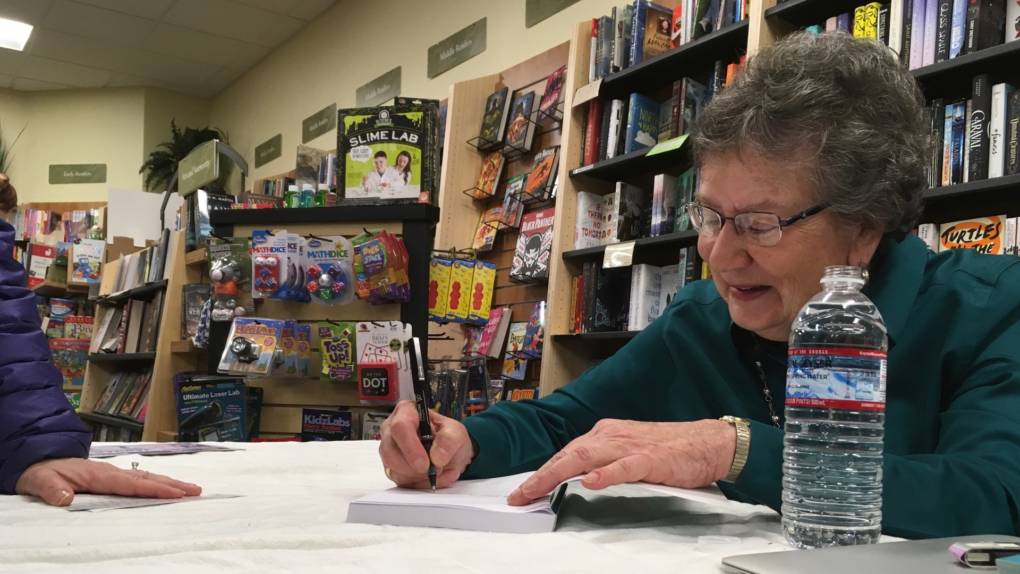
"caption": "Elisabeth Seaman signs copies of her book \u003ci>Conflict: The Unexpected Gift\u003c/i> at Books, Inc. in Mountain View.",
"description": "Elisabeth Seaman signs copies of her book \u003ci>Conflict: The Unexpected Gift\u003c/i> at Books, Inc. in Mountain View.",
"title": "RS29037_Photo Jan 23, 8 05 11 PM 2-qut",
"credit": "Rachael Myrow/KQED",
"status": "inherit",
"isLoading": false,
"fetchFailed": false
},
"news_11644648": {
"type": "attachments",
"id": "news_11644648",
"meta": {
"index": "attachments_1716263798",
"site": "news",
"id": "11644648",
"found": true
},
"parent": 11644642,
"imgSizes": {
"small": {
"file": "https://ww2.kqed.org/app/uploads/sites/10/2018/01/subpoena_012618_final-520x520.jpg",
"width": 520,
"mimeType": "image/jpeg",
"height": 520
},
"twentyfourteen-full-width": {
"file": "https://ww2.kqed.org/app/uploads/sites/10/2018/01/subpoena_012618_final-1038x576.jpg",
"width": 1038,
"mimeType": "image/jpeg",
"height": 576
},
"thumbnail": {
"file": "https://ww2.kqed.org/app/uploads/sites/10/2018/01/subpoena_012618_final-160x160.jpg",
"width": 160,
"mimeType": "image/jpeg",
"height": 160
},
"fd-sm": {
"file": "https://ww2.kqed.org/app/uploads/sites/10/2018/01/subpoena_012618_final-960x960.jpg",
"width": 960,
"mimeType": "image/jpeg",
"height": 960
},
"post-thumbnail": {
"file": "https://ww2.kqed.org/app/uploads/sites/10/2018/01/subpoena_012618_final-672x372.jpg",
"width": 672,
"mimeType": "image/jpeg",
"height": 372
},
"xsmall": {
"file": "https://ww2.kqed.org/app/uploads/sites/10/2018/01/subpoena_012618_final-375x375.jpg",
"width": 375,
"mimeType": "image/jpeg",
"height": 375
},
"kqedFullSize": {
"file": "https://ww2.kqed.org/app/uploads/sites/10/2018/01/subpoena_012618_final.jpg",
"width": 1920,
"height": 1920
},
"large": {
"file": "https://ww2.kqed.org/app/uploads/sites/10/2018/01/subpoena_012618_final-1020x1020.jpg",
"width": 1020,
"mimeType": "image/jpeg",
"height": 1020
},
"xlarge": {
"file": "https://ww2.kqed.org/app/uploads/sites/10/2018/01/subpoena_012618_final-1180x1180.jpg",
"width": 1180,
"mimeType": "image/jpeg",
"height": 1180
},
"guest-author-50": {
"file": "https://ww2.kqed.org/app/uploads/sites/10/2018/01/subpoena_012618_final-50x50.jpg",
"width": 50,
"mimeType": "image/jpeg",
"height": 50
},
"guest-author-96": {
"file": "https://ww2.kqed.org/app/uploads/sites/10/2018/01/subpoena_012618_final-96x96.jpg",
"width": 96,
"mimeType": "image/jpeg",
"height": 96
},
"medium": {
"file": "https://ww2.kqed.org/app/uploads/sites/10/2018/01/subpoena_012618_final-800x800.jpg",
"width": 800,
"mimeType": "image/jpeg",
"height": 800
},
"guest-author-64": {
"file": "https://ww2.kqed.org/app/uploads/sites/10/2018/01/subpoena_012618_final-64x64.jpg",
"width": 64,
"mimeType": "image/jpeg",
"height": 64
},
"guest-author-32": {
"file": "https://ww2.kqed.org/app/uploads/sites/10/2018/01/subpoena_012618_final-32x32.jpg",
"width": 32,
"mimeType": "image/jpeg",
"height": 32
},
"fd-lrg": {
"file": "https://ww2.kqed.org/app/uploads/sites/10/2018/01/subpoena_012618_final-1920x1920.jpg",
"width": 1920,
"mimeType": "image/jpeg",
"height": 1920
},
"fd-med": {
"file": "https://ww2.kqed.org/app/uploads/sites/10/2018/01/subpoena_012618_final-1180x1180.jpg",
"width": 1180,
"mimeType": "image/jpeg",
"height": 1180
},
"full-width": {
"file": "https://ww2.kqed.org/app/uploads/sites/10/2018/01/subpoena_012618_final-1920x1920.jpg",
"width": 1920,
"mimeType": "image/jpeg",
"height": 1920
},
"detail": {
"file": "https://ww2.kqed.org/app/uploads/sites/10/2018/01/subpoena_012618_final-150x150.jpg",
"width": 150,
"mimeType": "image/jpeg",
"height": 150
},
"guest-author-128": {
"file": "https://ww2.kqed.org/app/uploads/sites/10/2018/01/subpoena_012618_final-128x128.jpg",
"width": 128,
"mimeType": "image/jpeg",
"height": 128
},
"xxsmall": {
"file": "https://ww2.kqed.org/app/uploads/sites/10/2018/01/subpoena_012618_final-240x240.jpg",
"width": 240,
"mimeType": "image/jpeg",
"height": 240
}
},
"publishDate": 1517001650,
"modified": 1517001669,
"caption": null,
"description": null,
"title": "subpoena_012618_final",
"credit": null,
"status": "inherit",
"isLoading": false,
"fetchFailed": false
},
"news_11644662": {
"type": "attachments",
"id": "news_11644662",
"meta": {
"index": "attachments_1716263798",
"site": "news",
"id": "11644662",
"found": true
},
"parent": 11644644,
"imgSizes": {
"small": {
"file": "https://ww2.kqed.org/app/uploads/sites/10/2018/01/manson-520x384.jpg",
"width": 520,
"mimeType": "image/jpeg",
"height": 384
},
"twentyfourteen-full-width": {
"file": "https://ww2.kqed.org/app/uploads/sites/10/2018/01/manson-1038x576.jpg",
"width": 1038,
"mimeType": "image/jpeg",
"height": 576
},
"thumbnail": {
"file": "https://ww2.kqed.org/app/uploads/sites/10/2018/01/manson-160x118.jpg",
"width": 160,
"mimeType": "image/jpeg",
"height": 118
},
"fd-sm": {
"file": "https://ww2.kqed.org/app/uploads/sites/10/2018/01/manson-960x710.jpg",
"width": 960,
"mimeType": "image/jpeg",
"height": 710
},
"post-thumbnail": {
"file": "https://ww2.kqed.org/app/uploads/sites/10/2018/01/manson-672x372.jpg",
"width": 672,
"mimeType": "image/jpeg",
"height": 372
},
"xsmall": {
"file": "https://ww2.kqed.org/app/uploads/sites/10/2018/01/manson-375x277.jpg",
"width": 375,
"mimeType": "image/jpeg",
"height": 277
},
"kqedFullSize": {
"file": "https://ww2.kqed.org/app/uploads/sites/10/2018/01/manson-e1517005885756.jpg",
"width": 1920,
"height": 1419
},
"large": {
"file": "https://ww2.kqed.org/app/uploads/sites/10/2018/01/manson-1020x754.jpg",
"width": 1020,
"mimeType": "image/jpeg",
"height": 754
},
"xlarge": {
"file": "https://ww2.kqed.org/app/uploads/sites/10/2018/01/manson-1180x872.jpg",
"width": 1180,
"mimeType": "image/jpeg",
"height": 872
},
"guest-author-50": {
"file": "https://ww2.kqed.org/app/uploads/sites/10/2018/01/manson-50x50.jpg",
"width": 50,
"mimeType": "image/jpeg",
"height": 50
},
"guest-author-96": {
"file": "https://ww2.kqed.org/app/uploads/sites/10/2018/01/manson-96x96.jpg",
"width": 96,
"mimeType": "image/jpeg",
"height": 96
},
"medium": {
"file": "https://ww2.kqed.org/app/uploads/sites/10/2018/01/manson-800x591.jpg",
"width": 800,
"mimeType": "image/jpeg",
"height": 591
},
"guest-author-64": {
"file": "https://ww2.kqed.org/app/uploads/sites/10/2018/01/manson-64x64.jpg",
"width": 64,
"mimeType": "image/jpeg",
"height": 64
},
"guest-author-32": {
"file": "https://ww2.kqed.org/app/uploads/sites/10/2018/01/manson-32x32.jpg",
"width": 32,
"mimeType": "image/jpeg",
"height": 32
},
"fd-lrg": {
"file": "https://ww2.kqed.org/app/uploads/sites/10/2018/01/manson-1920x1419.jpg",
"width": 1920,
"mimeType": "image/jpeg",
"height": 1419
},
"fd-med": {
"file": "https://ww2.kqed.org/app/uploads/sites/10/2018/01/manson-1180x872.jpg",
"width": 1180,
"mimeType": "image/jpeg",
"height": 872
},
"full-width": {
"file": "https://ww2.kqed.org/app/uploads/sites/10/2018/01/manson-1920x1419.jpg",
"width": 1920,
"mimeType": "image/jpeg",
"height": 1419
},
"detail": {
"file": "https://ww2.kqed.org/app/uploads/sites/10/2018/01/manson-150x150.jpg",
"width": 150,
"mimeType": "image/jpeg",
"height": 150
},
"guest-author-128": {
"file": "https://ww2.kqed.org/app/uploads/sites/10/2018/01/manson-128x128.jpg",
"width": 128,
"mimeType": "image/jpeg",
"height": 128
},
"xxsmall": {
"file": "https://ww2.kqed.org/app/uploads/sites/10/2018/01/manson-240x177.jpg",
"width": 240,
"mimeType": "image/jpeg",
"height": 177
}
},
"publishDate": 1517005862,
"modified": 1517015582,
"caption": "A portrait of Charles Manson, taken in Los Angeles on Aug. 14, 1970.",
"description": "A portrait of Charles Manson, taken in Los Angeles on August 14, 1970.",
"title": "Portrait of Charles Manson, the murderer",
"credit": null,
"status": "inherit",
"isLoading": false,
"fetchFailed": false
}
},
"audioPlayerReducer": {
"postId": "stream_live",
"isPaused": true,
"isPlaying": false,
"pfsActive": false,
"pledgeModalIsOpen": true,
"playerDrawerIsOpen": false,
"liveAudioPlayStartedAt": 0,
"liveAudioPlayContext": ""
},
"authorsReducer": {
"byline_news_11647347": {
"type": "authors",
"id": "byline_news_11647347",
"meta": {
"override": true
},
"slug": "byline_news_11647347",
"name": "\u003cstrong>Paul Elias\u003cbr />Associated Press\u003c/strong>",
"isLoading": false
},
"byline_news_11647139": {
"type": "authors",
"id": "byline_news_11647139",
"meta": {
"override": true
},
"slug": "byline_news_11647139",
"name": "Sophia Bollag",
"isLoading": false
},
"byline_news_11644921": {
"type": "authors",
"id": "byline_news_11644921",
"meta": {
"override": true
},
"slug": "byline_news_11644921",
"name": "Eric Tucker and Sadie Gurman\u003cbr>Associated Press",
"isLoading": false
},
"byline_news_11645007": {
"type": "authors",
"id": "byline_news_11645007",
"meta": {
"override": true
},
"slug": "byline_news_11645007",
"name": "\u003cstrong>\u003ca href=\"https://www.propublica.org/people/ac-thompson\">A.C. Thompson\u003c/a>\u003cbr>\u003ca href=\"https://www.propublica.org/\">ProPublica\u003c/a>\u003c/strong>",
"isLoading": false
},
"byline_news_11644862": {
"type": "authors",
"id": "byline_news_11644862",
"meta": {
"override": true
},
"slug": "byline_news_11644862",
"name": "\u003cstrong>Carolyn Thompson\u003cbr/>Associated Press\u003c/strong>",
"isLoading": false
},
"byline_news_11644860": {
"type": "authors",
"id": "byline_news_11644860",
"meta": {
"override": true
},
"slug": "byline_news_11644860",
"name": "\u003cstrong>Mark Sherman and Jessica Gresko\u003c/br> Associated Press\u003c/strong>",
"isLoading": false
},
"byline_news_11644644": {
"type": "authors",
"id": "byline_news_11644644",
"meta": {
"override": true
},
"slug": "byline_news_11644644",
"name": "Brian Melley\u003cbr/>Associated Press\u003c/br>",
"isLoading": false
},
"kqednewsstaffandwires": {
"type": "authors",
"id": "237",
"meta": {
"index": "authors_1716337520",
"id": "237",
"found": true
},
"name": "KQED News Staff and Wires",
"firstName": "KQED News Staff and Wires",
"lastName": null,
"slug": "kqednewsstaffandwires",
"email": "onlinenewsstaff@kqed.org",
"display_author_email": false,
"staff_mastheads": [],
"title": null,
"bio": null,
"avatar": "https://secure.gravatar.com/avatar/72295af8ebbfbd19a4948f5271285664?s=600&d=blank&r=g",
"twitter": null,
"facebook": null,
"instagram": null,
"linkedin": null,
"sites": [
{
"site": "arts",
"roles": [
"contributor"
]
},
{
"site": "news",
"roles": [
"contributor"
]
},
{
"site": "lowdown",
"roles": [
"author"
]
},
{
"site": "stateofhealth",
"roles": [
"contributor"
]
},
{
"site": "food",
"roles": [
"author"
]
}
],
"headData": {
"title": "KQED News Staff and Wires | KQED",
"description": null,
"ogImgSrc": "https://secure.gravatar.com/avatar/72295af8ebbfbd19a4948f5271285664?s=600&d=blank&r=g",
"twImgSrc": "https://secure.gravatar.com/avatar/72295af8ebbfbd19a4948f5271285664?s=600&d=blank&r=g"
},
"isLoading": false,
"link": "/author/kqednewsstaffandwires"
},
"rachael-myrow": {
"type": "authors",
"id": "251",
"meta": {
"index": "authors_1716337520",
"id": "251",
"found": true
},
"name": "Rachael Myrow",
"firstName": "Rachael",
"lastName": "Myrow",
"slug": "rachael-myrow",
"email": "rmyrow@kqed.org",
"display_author_email": true,
"staff_mastheads": [
"news"
],
"title": "Senior Editor of KQED's Silicon Valley News Desk",
"bio": "• I write and edit stories about how Silicon Valley power and policies shape everyday life in California. I’m also passionate about making Bay Area history and culture more accessible to a broad public. • I’ve been a journalist for most of my life, starting in high school with The Franklin Press in Los Angeles, where I grew up. While earning my first degree in English at UC Berkeley, I got my start in public radio at KALX-FM. After completing a second degree in journalism at Cal, I landed my first professional job at Marketplace, then moved on to KPCC (now LAist), and then KQED, where I hosted The California Report for more than seven years. • My reporting has appeared on NPR, The World, WBUR’s \u003ci>Here & Now\u003c/i>, and the BBC. I also guest host for KQED’s \u003ci>Forum\u003c/i>, as well as the Commonwealth Club in San Francisco. • I speak periodically on media, democracy and technology issues, and do voiceover work for documentaries and educational video projects. • Outside of the studio, you'll find me hiking Bay Area trails and whipping up Insta-ready meals in my kitchen. • I do not accept gifts, money, or favors from anyone connected to my reporting, I don't pay people for information, and I do not support or donate to political causes. • I strive to treat the people I report on with fairness, honesty, and respect. I also recognize there are often multiple sides to a story and work to verify information through multiple sources and documentation. If I get something wrong, I correct it.",
"avatar": "https://secure.gravatar.com/avatar/3ed8a3c5f26025e4a805ba634cda8cd764906b97438a6d9ce216b044e340da4e?s=600&d=blank&r=g",
"twitter": "rachaelmyrow",
"bluesky": null,
"facebook": null,
"instagram": null,
"linkedin": "https://www.linkedin.com/in/rachaelmyrow/",
"sites": [
{
"site": "arts",
"roles": [
"administrator"
]
},
{
"site": "news",
"roles": [
"edit_others_posts",
"editor"
]
},
{
"site": "futureofyou",
"roles": [
"editor"
]
},
{
"site": "bayareabites",
"roles": [
"editor"
]
},
{
"site": "stateofhealth",
"roles": [
"editor"
]
},
{
"site": "science",
"roles": [
"editor"
]
},
{
"site": "food",
"roles": [
"editor"
]
},
{
"site": "forum",
"roles": [
"editor"
]
},
{
"site": "liveblog",
"roles": [
"author"
]
}
],
"headData": {
"title": "Rachael Myrow | KQED",
"description": "Senior Editor of KQED's Silicon Valley News Desk",
"ogImgSrc": "https://secure.gravatar.com/avatar/3ed8a3c5f26025e4a805ba634cda8cd764906b97438a6d9ce216b044e340da4e?s=600&d=blank&r=g",
"twImgSrc": "https://secure.gravatar.com/avatar/3ed8a3c5f26025e4a805ba634cda8cd764906b97438a6d9ce216b044e340da4e?s=600&d=blank&r=g"
},
"isLoading": false,
"link": "/author/rachael-myrow"
},
"markfiore": {
"type": "authors",
"id": "3236",
"meta": {
"index": "authors_1716337520",
"id": "3236",
"found": true
},
"name": "Mark Fiore",
"firstName": "Mark",
"lastName": "Fiore",
"slug": "markfiore",
"email": "mark@markfiore.com",
"display_author_email": false,
"staff_mastheads": [
"news"
],
"title": "KQED News Cartoonist",
"bio": "\u003ca href=\"http://www.MarkFiore.com\">MarkFiore.com\u003c/a> | \u003ca href=\"https://twitter.com/markfiore\">Follow on Twitter\u003c/a> | \u003ca href=\"https://www.facebook.com/pages/Mark-Fiore-Animated-Political-Cartoons/94451707396?ref=bookmarks\">Facebook\u003c/a> | \u003ca href=\"mailto:mark@markfiore.com\">email\u003c/a>\r\n\r\nPulitzer Prize-winner, Mark Fiore, who the Wall Street Journal has called “the undisputed guru of the form,” creates animated political cartoons in San Francisco, where his work has been featured regularly on the San Francisco Chronicle’s web site, SFGate.com. His work has appeared on Newsweek.com, Slate.com, CBSNews.com, MotherJones.com, DailyKos.com and NPR’s web site. Fiore’s political animation has appeared on CNN, Frontline, Bill Moyers Journal, Salon.com and cable and broadcast outlets across the globe.\r\n\r\nBeginning his professional life by drawing traditional political cartoons for newspapers, Fiore’s work appeared in publications ranging from the Washington Post to the Los Angeles Times. In the late 1990s, he began to experiment with animating political cartoons and, after a short stint at the San Jose Mercury News as their staff cartoonist, Fiore devoted all his energies to animation.\r\nGrowing up in California, Fiore also spent a good portion of his life in the backwoods of Idaho. It was this combination that shaped him politically. Mark majored in political science at Colorado College, where, in a perfect send-off for a cartoonist, he received his diploma in 1991 as commencement speaker Dick Cheney smiled approvingly.\r\nMark Fiore was awarded the Pulitzer Prize for political cartooning in 2010, a Robert F. Kennedy Journalism Award in 2004 and has twice received an Online Journalism Award for commentary from the Online News Association (2002, 2008). Fiore has received two awards for his work in new media from the National Cartoonists Society (2001, 2002), and in 2006 received The James Madison Freedom of Information Award from The Society of Professional Journalists.",
"avatar": "https://secure.gravatar.com/avatar/fc4e2a612b15b67bad0c6f0e1db4ca9b?s=600&d=blank&r=g",
"twitter": "MarkFiore",
"facebook": null,
"instagram": "https://www.instagram.com/markfiore/?hl=en",
"linkedin": null,
"sites": [
{
"site": "arts",
"roles": [
"contributor"
]
},
{
"site": "news",
"roles": [
"editor"
]
},
{
"site": "futureofyou",
"roles": [
"editor"
]
},
{
"site": "science",
"roles": [
"editor"
]
}
],
"headData": {
"title": "Mark Fiore | KQED",
"description": "KQED News Cartoonist",
"ogImgSrc": "https://secure.gravatar.com/avatar/fc4e2a612b15b67bad0c6f0e1db4ca9b?s=600&d=blank&r=g",
"twImgSrc": "https://secure.gravatar.com/avatar/fc4e2a612b15b67bad0c6f0e1db4ca9b?s=600&d=blank&r=g"
},
"isLoading": false,
"link": "/author/markfiore"
},
"parcuni": {
"type": "authors",
"id": "11368",
"meta": {
"index": "authors_1716337520",
"id": "11368",
"found": true
},
"name": "Peter Arcuni",
"firstName": "Peter",
"lastName": "Arcuni",
"slug": "parcuni",
"email": "parcuni@KQED.org",
"display_author_email": false,
"staff_mastheads": [
"science"
],
"title": "Reporter",
"bio": "Peter reports radio and online stories for \u003cem>KQED Science\u003c/em>. His work has also appeared on the \u003cem>The California Report\u003c/em> morning show and \u003cem>KQED News\u003c/em>. His production credits include \u003cem>The California Report, The California Report Magazine\u003c/em> and KQED's local news podcast \u003cem>The Bay\u003c/em>. Other credits include NPR's \u003cem>All Things Considered\u003c/em>, WNYC's \u003cem>Science Friday\u003c/em>, WBUR's \u003cem>Here & Now\u003c/em>, WIRED and SFGate. Peter graduated from Brown University and earned a master's degree in journalism from Stanford. He's covered everything from homelessness to wildfires, health, the environment, arts and Thanksgiving in San Quentin prison. In other lives, he played rock n roll music and studied neuroscience. You can email him at: parcuni@kqed.org",
"avatar": "https://secure.gravatar.com/avatar/d5032f6f27199d478af34ad2e1d98732?s=600&d=blank&r=g",
"twitter": "peterarcuni",
"facebook": null,
"instagram": null,
"linkedin": null,
"sites": [
{
"site": "news",
"roles": [
"editor"
]
},
{
"site": "science",
"roles": [
"editor"
]
}
],
"headData": {
"title": "Peter Arcuni | KQED",
"description": "Reporter",
"ogImgSrc": "https://secure.gravatar.com/avatar/d5032f6f27199d478af34ad2e1d98732?s=600&d=blank&r=g",
"twImgSrc": "https://secure.gravatar.com/avatar/d5032f6f27199d478af34ad2e1d98732?s=600&d=blank&r=g"
},
"isLoading": false,
"link": "/author/parcuni"
}
},
"pagesReducer": {
"news_category_law-and-justice": {
"type": "terms",
"id": "news_6188",
"meta": {
"index": "terms_1716263798",
"site": "news",
"id": "6188",
"score": 13.558331
},
"featImg": null,
"name": "Law and Justice",
"description": null,
"taxonomy": "category",
"headData": {
"twImgId": null,
"twTitle": null,
"ogTitle": null,
"ogImgId": null,
"twDescription": null,
"description": null,
"title": "Law and Justice Archives | KQED News",
"ogDescription": null
},
"ttid": 6212,
"slug": "law-and-justice",
"isLoading": false,
"title": "Law and Justice",
"pageMeta": {
"site": "news",
"WpPageTemplate": "page-topic-editorial",
"currentPage": 273
},
"blocks": [
{
"blockName": "kqed/post-list",
"attrs": {
"layout": "cardArticle2",
"query": "posts/news?category=law-and-justice",
"seeMore": false,
"paginated": true,
"page": 273
}
},
{
"blockName": "kqed/ad"
}
]
}
},
"pfsSessionReducer": {},
"postsReducer": {
"stream_live": {
"type": "live",
"id": "stream_live",
"audioUrl": "https://streams.kqed.org/kqedradio",
"title": "Live Stream",
"excerpt": "Live Stream information currently unavailable.",
"link": "/radio",
"featImg": "",
"label": {
"name": "KQED Live",
"link": "/"
}
},
"stream_kqedNewscast": {
"type": "posts",
"id": "stream_kqedNewscast",
"audioUrl": "https://www.kqed.org/.stream/anon/radio/RDnews/newscast.mp3?_=1",
"title": "KQED Newscast",
"featImg": "",
"label": {
"name": "88.5 FM",
"link": "/"
}
},
"news_11642302": {
"type": "posts",
"id": "news_11642302",
"meta": {
"index": "posts_1716263798",
"site": "news",
"id": "11642302",
"score": null,
"sort": [
1517521201000
]
},
"guestAuthors": [],
"slug": "new-app-tracks-crime-and-emergencies-near-you",
"title": "This App Tracks Crime, Emergencies Near You. But What About Privacy?",
"publishDate": 1517521201,
"format": "audio",
"headTitle": "This App Tracks Crime, Emergencies Near You. But What About Privacy? | KQED",
"labelTerm": {
"term": 72,
"site": "news"
},
"content": "\u003cp>You wake to the sound of sirens. Red and blue lights flash through your window shades. You fumble in the dark for your mobile phone; the screen shows it’s just after 3 a.m. After a few minutes of lying in bed, panic starts to set in. Should I get up and leave or stay put? Do I start the car or run to the neighbor’s house? In that moment you have no idea what to do.\u003c/p>\n\u003cp>It’s this type of scenario the smartphone app \u003ca href=\"http://www.citizen.com/\" target=\"_blank\" rel=\"noopener\">Citizen\u003c/a> is trying to address with its new crime tracker. The app debuted in San Francisco in September. Think of it as police scanner, neighborhood watch, Yelp and Twitter all rolled into one.\u003c/p>\n\u003cp>When you launch the app it brings up a city map. Your location is marked with a blue dot. Any emergency incidents unfolding across the city are represented as red dots.\u003c/p>\n\u003cfigure id=\"attachment_11642918\" class=\"wp-caption aligncenter\" style=\"max-width: 640px\">\u003cimg loading=\"lazy\" decoding=\"async\" class=\"size-full wp-image-11642918\" src=\"https://ww2.kqed.org/news/wp-content/uploads/sites/10/2018/01/RS28924_Citizen-Map-3-qut.jpg\" alt=\"Citizen app's San Francisco crime map.\" width=\"640\" height=\"851\" srcset=\"https://cdn.kqed.org/wp-content/uploads/sites/10/2018/01/RS28924_Citizen-Map-3-qut.jpg 640w, https://cdn.kqed.org/wp-content/uploads/sites/10/2018/01/RS28924_Citizen-Map-3-qut-160x213.jpg 160w, https://cdn.kqed.org/wp-content/uploads/sites/10/2018/01/RS28924_Citizen-Map-3-qut-240x319.jpg 240w, https://cdn.kqed.org/wp-content/uploads/sites/10/2018/01/RS28924_Citizen-Map-3-qut-375x499.jpg 375w, https://cdn.kqed.org/wp-content/uploads/sites/10/2018/01/RS28924_Citizen-Map-3-qut-520x691.jpg 520w\" sizes=\"(max-width: 640px) 100vw, 640px\">\u003cfigcaption class=\"wp-caption-text\">Citizen’s interactive crime map displays recent incidents in San Francisco. \u003ccite>(Peter Arcuni/KQED)\u003c/cite>\u003c/figcaption>\u003c/figure>\n\u003cp>On a recent morning in San Francisco, these red dot incidents included the following:\u003c/p>\n\u003cul>\n\u003cli>Three men fleeing in stolen Chevy\u003c/li>\n\u003cli>Man carrying gun in waistband\u003c/li>\n\u003cli>Coyote lunging at children, dogs\u003c/li>\n\u003cli>Chihuahua hit by car\u003c/li>\n\u003cli>Naked man near garbage can\u003c/li>\n\u003c/ul>\n\u003cp>Tapping on a red dot brings up a timeline with updates like “Officers are on scene” or “Suspect wearing orange hoodie.” You can also set the app to alert you when an incident occurs within a quarter-mile of your location.\u003c/p>\n\u003cp>[ad fullwidth]\u003c/p>\n\u003cp>“It’s a hyperlocal, real-time source of everything that could affect your safety happening at that moment,” says Lea Artz, head of operations for Citizen. “So when you see sirens racing by, or you hear a helicopter flying by overhead, you’ll get an alert, and from there you can make a safe and informed decision about where you move.”\u003c/p>\n\u003cp>Citizen says it has amassed roughly 250,000 users in San Francisco and New York, the other city where it provides service.\u003c/p>\n\u003cp>The company hires trained technicians to monitor emergency dispatch calls — the kind of call you’d hear from a police scanner — and translate them into plain English for users.\u003c/p>\n\u003cp>“Instead of getting some police jargon and radio codes that probably don’t make sense to you, we’re giving you the information the way that you understand it the best,” Artz says.\u003c/p>\n\u003cp>Each call, or incident, is then tagged with a location for mapping.\u003c/p>\n\u003cp>Artz says the idea is to give people the public safety information that’s out there because, for the most part, it’s inaccessible.\u003c/p>\n\u003cp>“Something that would affect the route you took to work or where you sent your kids at night [that] wasn’t public knowledge to you,” she says.\u003c/p>\n\u003cp>Artz gives an example of an alert that Citizen sent to over 6,000 users in New York on Halloween, cautioning them to stay out of Lower Manhattan, where a man driving a pickup truck sped into a crowd of people, killing eight.\u003c/p>\n\u003cp>Another feature of the app allows users to livestream their own photos, videos and comments from the scene. The content might include videos of emergency crews arriving or locals texting about what they can see from their window. The company’s \u003ca href=\"https://twitter.com/citizenapp?lang=en\" target=\"_blank\" rel=\"noopener\">Twitter feed\u003c/a> features some of the more urgent content generated from the app.\u003c/p>\n\u003cfigure id=\"attachment_11642928\" class=\"wp-caption aligncenter\" style=\"max-width: 450px\">\u003cimg loading=\"lazy\" decoding=\"async\" class=\"wp-image-11642928\" src=\"https://ww2.kqed.org/news/wp-content/uploads/sites/10/2018/01/RS28926_IMG_1743-qut.jpg\" alt=\"\" width=\"450\" height=\"798\" srcset=\"https://cdn.kqed.org/wp-content/uploads/sites/10/2018/01/RS28926_IMG_1743-qut.jpg 640w, https://cdn.kqed.org/wp-content/uploads/sites/10/2018/01/RS28926_IMG_1743-qut-160x284.jpg 160w, https://cdn.kqed.org/wp-content/uploads/sites/10/2018/01/RS28926_IMG_1743-qut-240x426.jpg 240w, https://cdn.kqed.org/wp-content/uploads/sites/10/2018/01/RS28926_IMG_1743-qut-375x666.jpg 375w, https://cdn.kqed.org/wp-content/uploads/sites/10/2018/01/RS28926_IMG_1743-qut-520x923.jpg 520w\" sizes=\"(max-width: 450px) 100vw, 450px\">\u003cfigcaption class=\"wp-caption-text\">Users share video and comments about a reported incident of a man who was shot in the leg near a BART station. (Peter Arcuni/KQED)\u003c/figcaption>\u003c/figure>\n\u003cp>According to Artz, the company envisions that content created by users will help inform local newsrooms and law enforcement, in addition to the public.\u003c/p>\n\u003cp>“The ultimate goal is to increase transparency,” Artz says.\u003c/p>\n\u003cp>But some tech bloggers have raised \u003ca href=\"https://techcrunch.com/2017/09/19/citizen-app-crime-sequoia-san-francisco-12-million-series-a/\" target=\"_blank\" rel=\"noopener\">concerns\u003c/a> about the potential Citizen has to spread misinformation or violate the privacy of crime victims. Some critics also worry the app could encourage users to flock to the scene of an emergency instead of running for safety in the other direction.\u003c/p>\n\u003cp>Some of the \u003ca href=\"https://www.washingtonpost.com/news/true-crime/wp/2016/11/04/vigilante-phone-app-alerts-new-york-users-to-crime-but-police-not-thrilled/?utm_term=.c7e1677596ab\" target=\"_blank\" rel=\"noopener\">backlash\u003c/a> stems from the app’s original name: Vigilante. The prototype debuted in New York in late 2016 but was pulled from app stores within weeks over safety concerns. It \u003ca href=\"https://medium.com/@Citizen_App/introducing-citizen-a8d2f3fabf03\" target=\"_blank\" rel=\"noopener\">relaunched\u003c/a> last year as Citizen.\u003c/p>\n\u003cp>A \u003ca href=\"https://medium.com/@Citizen_App/introducing-citizen-a8d2f3fabf03\" target=\"_blank\" rel=\"noopener\">company statement\u003c/a> said the app had refocused its mission on public safety. But some of the messaging portraying Citizen as a crimefighting app has persisted. A recent web ad depicts a fictional scene in which app users help police track a suspected kidnapper through the streets of San Francisco.\u003c/p>\n\u003cp>\u003c!-- iframe plugin v.4.3 wordpress.org/plugins/iframe/ -->\u003cbr>\n\u003ciframe loading=\"lazy\" src=\"https://player.vimeo.com/video/234537138\" width=\"800\" height=\"360\" frameborder=\"0\" scrolling=\"yes\" class=\"iframe-class\">\u003c/iframe>\u003c/p>\n\u003cp>SFPD spokesman Officer Robert Rueca says a big concern is that the raw information the company is drawing from is fluid. He says information coming through police scanners is by nature incomplete and subject to change.\u003c/p>\n\u003cp>“There’s a lot of times that calls are put out there, and it may appear to be one thing, but it ends up being something completely different,” Rueca says.\u003c/p>\n\u003cp>According to Rueca, information about the location of an incident or the relative threat to public safety can change rapidly once police arrive on scene. A lot of the follow-up communication occurs on private channels like cellphones or in person.\u003c/p>\n\u003cp>As for scanner information, Rueca says, “it’s just the tip of the iceberg.”\u003c/p>\n\u003cfigure id=\"attachment_11647552\" class=\"wp-caption aligncenter\" style=\"max-width: 800px\">\u003cimg loading=\"lazy\" decoding=\"async\" class=\"size-medium wp-image-11647552\" src=\"https://ww2.kqed.org/news/wp-content/uploads/sites/10/2018/01/SBShootingPoliceLine-800x518.jpg\" alt=\"One expert says a host of legal issues could arise if users take the app as a license to interfere with crime scenes.\" width=\"800\" height=\"518\" srcset=\"https://cdn.kqed.org/wp-content/uploads/sites/10/2018/01/SBShootingPoliceLine-800x518.jpg 800w, https://cdn.kqed.org/wp-content/uploads/sites/10/2018/01/SBShootingPoliceLine-160x104.jpg 160w, https://cdn.kqed.org/wp-content/uploads/sites/10/2018/01/SBShootingPoliceLine-1020x661.jpg 1020w, https://cdn.kqed.org/wp-content/uploads/sites/10/2018/01/SBShootingPoliceLine.jpg 1920w, https://cdn.kqed.org/wp-content/uploads/sites/10/2018/01/SBShootingPoliceLine-1180x765.jpg 1180w, https://cdn.kqed.org/wp-content/uploads/sites/10/2018/01/SBShootingPoliceLine-960x622.jpg 960w, https://cdn.kqed.org/wp-content/uploads/sites/10/2018/01/SBShootingPoliceLine-240x156.jpg 240w, https://cdn.kqed.org/wp-content/uploads/sites/10/2018/01/SBShootingPoliceLine-375x243.jpg 375w, https://cdn.kqed.org/wp-content/uploads/sites/10/2018/01/SBShootingPoliceLine-520x337.jpg 520w\" sizes=\"(max-width: 800px) 100vw, 800px\">\u003cfigcaption class=\"wp-caption-text\">One expert says a host of legal issues could arise if users take the app as a license to interfere with crime scenes. \u003ccite>(Sean M. Haffey/Getty Images)\u003c/cite>\u003c/figcaption>\u003c/figure>\n\u003cp>Rueca cautions people against relying on a third-party app for decision-making about their personal safety. Instead, he advises they use official channels from police and fire departments, which have made efforts to push more safety alerts to the public via Twitter and Facebook.\u003c/p>\n\u003cp>James Wheaton teaches journalism law at UC Berkeley and says there’s nothing legally stopping Citizen from sharing emergency communications that go out over public airwaves. The same goes for enabling users to post content from a crime scene.\u003c/p>\n\u003cp>“The general rule is if you’re out in public and you are in a place that you have a perfect right to be, you’re allowed to take a photograph or video,” Wheaton says. “So you do have the right to record what is happening.”\u003c/p>\n\u003cp>But according to Wheaton, a host of legal issues could arise if users take the app as a license to interfere with crime scenes.\u003c/p>\n\u003cp>“That would illustrate the worst possible outcome here, which is you take a bunch of untrained people and have them start acting as not just the eyes and ears, but suddenly the arm itself of the police,” he says.\u003c/p>\n\u003cp>What’s unclear, he says, is whether a video from the app could be used as probable cause for police in pursuing a suspect or making an arrest. There are also some questions about the use of app content as evidence in court and how the source of that content would be vetted.\u003c/p>\n\u003cp>But Wheaton says the transparency an app like Citizen offers can be a good thing, given past instances of \u003ca href=\"http://www.motherjones.com/politics/2016/06/sfpd-shootings-george-gascon/\" target=\"_blank\" rel=\"noopener\">police misconduct\u003c/a>. But he warns users to “use common sense, don’t get in the way, and don’t push it too far.”\u003c/p>\n\u003cp>While Citizen has no official relationship with police departments, Artz says the company welcomes their input.\u003c/p>\n\u003cp>[ad floatright]\u003c/p>\n\u003cp>The Citizen app is free for users in San Francisco and New York, and the company has plans to expand to other major cities in 2018.\u003c/p>\n\n",
"blocks": [],
"excerpt": "What if you took a police scanner, Twitter and a neighborhood watch group, and combined them on your smartphone? That’s a bit like what the app Citizen is doing.",
"status": "publish",
"parent": 0,
"modified": 1721113858,
"stats": {
"hasAudio": false,
"hasVideo": true,
"hasChartOrMap": false,
"iframeSrcs": [],
"hasGoogleForm": false,
"hasGallery": false,
"hasHearkenModule": false,
"hasPolis": false,
"paragraphCount": 35,
"wordCount": 1280
},
"headData": {
"title": "This App Tracks Crime, Emergencies Near You. But What About Privacy? | KQED",
"description": "What if you took a police scanner, Twitter and a neighborhood watch group, and combined them on your smartphone? That’s a bit like what the app Citizen is doing.",
"ogTitle": "",
"ogDescription": "",
"ogImgId": "",
"twTitle": "",
"twDescription": "",
"twImgId": "",
"schema": {
"@context": "https://schema.org",
"@type": "NewsArticle",
"headline": "This App Tracks Crime, Emergencies Near You. But What About Privacy?",
"datePublished": "2018-02-01T13:40:01-08:00",
"dateModified": "2024-07-16T00:10:58-07:00",
"image": "https://cdn.kqed.org/wp-content/uploads/2020/02/KQED-OG-Image@1x.png",
"isAccessibleForFree": "True",
"publisher": {
"@type": "NewsMediaOrganization",
"@id": "https://www.kqed.org/#organization",
"name": "KQED",
"logo": "https://cdn.kqed.org/wp-content/uploads/2020/02/KQED-OG-Image@1x.png",
"url": "https://www.kqed.org",
"sameAs": [
"https://www.facebook.com/KQED",
"https://twitter.com/KQED",
"https://www.instagram.com/kqed/",
"https://www.tiktok.com/@kqedofficial",
"https://www.linkedin.com/company/kqed",
"https://www.youtube.com/channel/UCeC0IOo7i1P_61zVUWbJ4nw"
]
}
}
},
"audioUrl": "https://www.kqed.org/.stream/anon/radio/tcr/2018/02/CitizenAppArcuni180201.mp3",
"sticky": false,
"path": "/news/11642302/new-app-tracks-crime-and-emergencies-near-you",
"audioDuration": 230000,
"audioTrackLength": null,
"parsedContent": [
{
"type": "contentString",
"content": "\u003cdiv class=\"post-body\">\u003cp>\u003cp>You wake to the sound of sirens. Red and blue lights flash through your window shades. You fumble in the dark for your mobile phone; the screen shows it’s just after 3 a.m. After a few minutes of lying in bed, panic starts to set in. Should I get up and leave or stay put? Do I start the car or run to the neighbor’s house? In that moment you have no idea what to do.\u003c/p>\n\u003cp>It’s this type of scenario the smartphone app \u003ca href=\"http://www.citizen.com/\" target=\"_blank\" rel=\"noopener\">Citizen\u003c/a> is trying to address with its new crime tracker. The app debuted in San Francisco in September. Think of it as police scanner, neighborhood watch, Yelp and Twitter all rolled into one.\u003c/p>\n\u003cp>When you launch the app it brings up a city map. Your location is marked with a blue dot. Any emergency incidents unfolding across the city are represented as red dots.\u003c/p>\n\u003cfigure id=\"attachment_11642918\" class=\"wp-caption aligncenter\" style=\"max-width: 640px\">\u003cimg loading=\"lazy\" decoding=\"async\" class=\"size-full wp-image-11642918\" src=\"https://ww2.kqed.org/news/wp-content/uploads/sites/10/2018/01/RS28924_Citizen-Map-3-qut.jpg\" alt=\"Citizen app's San Francisco crime map.\" width=\"640\" height=\"851\" srcset=\"https://cdn.kqed.org/wp-content/uploads/sites/10/2018/01/RS28924_Citizen-Map-3-qut.jpg 640w, https://cdn.kqed.org/wp-content/uploads/sites/10/2018/01/RS28924_Citizen-Map-3-qut-160x213.jpg 160w, https://cdn.kqed.org/wp-content/uploads/sites/10/2018/01/RS28924_Citizen-Map-3-qut-240x319.jpg 240w, https://cdn.kqed.org/wp-content/uploads/sites/10/2018/01/RS28924_Citizen-Map-3-qut-375x499.jpg 375w, https://cdn.kqed.org/wp-content/uploads/sites/10/2018/01/RS28924_Citizen-Map-3-qut-520x691.jpg 520w\" sizes=\"(max-width: 640px) 100vw, 640px\">\u003cfigcaption class=\"wp-caption-text\">Citizen’s interactive crime map displays recent incidents in San Francisco. \u003ccite>(Peter Arcuni/KQED)\u003c/cite>\u003c/figcaption>\u003c/figure>\n\u003cp>On a recent morning in San Francisco, these red dot incidents included the following:\u003c/p>\n\u003cul>\n\u003cli>Three men fleeing in stolen Chevy\u003c/li>\n\u003cli>Man carrying gun in waistband\u003c/li>\n\u003cli>Coyote lunging at children, dogs\u003c/li>\n\u003cli>Chihuahua hit by car\u003c/li>\n\u003cli>Naked man near garbage can\u003c/li>\n\u003c/ul>\n\u003cp>Tapping on a red dot brings up a timeline with updates like “Officers are on scene” or “Suspect wearing orange hoodie.” You can also set the app to alert you when an incident occurs within a quarter-mile of your location.\u003c/p>\n\u003cp>\u003c/p>\u003c/div>",
"attributes": {
"named": {},
"numeric": []
}
},
{
"type": "component",
"content": "",
"name": "ad",
"attributes": {
"named": {
"label": "fullwidth"
},
"numeric": [
"fullwidth"
]
}
},
{
"type": "contentString",
"content": "\u003cdiv class=\"post-body\">\u003cp>\u003c/p>\n\u003cp>“It’s a hyperlocal, real-time source of everything that could affect your safety happening at that moment,” says Lea Artz, head of operations for Citizen. “So when you see sirens racing by, or you hear a helicopter flying by overhead, you’ll get an alert, and from there you can make a safe and informed decision about where you move.”\u003c/p>\n\u003cp>Citizen says it has amassed roughly 250,000 users in San Francisco and New York, the other city where it provides service.\u003c/p>\n\u003cp>The company hires trained technicians to monitor emergency dispatch calls — the kind of call you’d hear from a police scanner — and translate them into plain English for users.\u003c/p>\n\u003cp>“Instead of getting some police jargon and radio codes that probably don’t make sense to you, we’re giving you the information the way that you understand it the best,” Artz says.\u003c/p>\n\u003cp>Each call, or incident, is then tagged with a location for mapping.\u003c/p>\n\u003cp>Artz says the idea is to give people the public safety information that’s out there because, for the most part, it’s inaccessible.\u003c/p>\n\u003cp>“Something that would affect the route you took to work or where you sent your kids at night [that] wasn’t public knowledge to you,” she says.\u003c/p>\n\u003cp>Artz gives an example of an alert that Citizen sent to over 6,000 users in New York on Halloween, cautioning them to stay out of Lower Manhattan, where a man driving a pickup truck sped into a crowd of people, killing eight.\u003c/p>\n\u003cp>Another feature of the app allows users to livestream their own photos, videos and comments from the scene. The content might include videos of emergency crews arriving or locals texting about what they can see from their window. The company’s \u003ca href=\"https://twitter.com/citizenapp?lang=en\" target=\"_blank\" rel=\"noopener\">Twitter feed\u003c/a> features some of the more urgent content generated from the app.\u003c/p>\n\u003cfigure id=\"attachment_11642928\" class=\"wp-caption aligncenter\" style=\"max-width: 450px\">\u003cimg loading=\"lazy\" decoding=\"async\" class=\"wp-image-11642928\" src=\"https://ww2.kqed.org/news/wp-content/uploads/sites/10/2018/01/RS28926_IMG_1743-qut.jpg\" alt=\"\" width=\"450\" height=\"798\" srcset=\"https://cdn.kqed.org/wp-content/uploads/sites/10/2018/01/RS28926_IMG_1743-qut.jpg 640w, https://cdn.kqed.org/wp-content/uploads/sites/10/2018/01/RS28926_IMG_1743-qut-160x284.jpg 160w, https://cdn.kqed.org/wp-content/uploads/sites/10/2018/01/RS28926_IMG_1743-qut-240x426.jpg 240w, https://cdn.kqed.org/wp-content/uploads/sites/10/2018/01/RS28926_IMG_1743-qut-375x666.jpg 375w, https://cdn.kqed.org/wp-content/uploads/sites/10/2018/01/RS28926_IMG_1743-qut-520x923.jpg 520w\" sizes=\"(max-width: 450px) 100vw, 450px\">\u003cfigcaption class=\"wp-caption-text\">Users share video and comments about a reported incident of a man who was shot in the leg near a BART station. (Peter Arcuni/KQED)\u003c/figcaption>\u003c/figure>\n\u003cp>According to Artz, the company envisions that content created by users will help inform local newsrooms and law enforcement, in addition to the public.\u003c/p>\n\u003cp>“The ultimate goal is to increase transparency,” Artz says.\u003c/p>\n\u003cp>But some tech bloggers have raised \u003ca href=\"https://techcrunch.com/2017/09/19/citizen-app-crime-sequoia-san-francisco-12-million-series-a/\" target=\"_blank\" rel=\"noopener\">concerns\u003c/a> about the potential Citizen has to spread misinformation or violate the privacy of crime victims. Some critics also worry the app could encourage users to flock to the scene of an emergency instead of running for safety in the other direction.\u003c/p>\n\u003cp>Some of the \u003ca href=\"https://www.washingtonpost.com/news/true-crime/wp/2016/11/04/vigilante-phone-app-alerts-new-york-users-to-crime-but-police-not-thrilled/?utm_term=.c7e1677596ab\" target=\"_blank\" rel=\"noopener\">backlash\u003c/a> stems from the app’s original name: Vigilante. The prototype debuted in New York in late 2016 but was pulled from app stores within weeks over safety concerns. It \u003ca href=\"https://medium.com/@Citizen_App/introducing-citizen-a8d2f3fabf03\" target=\"_blank\" rel=\"noopener\">relaunched\u003c/a> last year as Citizen.\u003c/p>\n\u003cp>A \u003ca href=\"https://medium.com/@Citizen_App/introducing-citizen-a8d2f3fabf03\" target=\"_blank\" rel=\"noopener\">company statement\u003c/a> said the app had refocused its mission on public safety. But some of the messaging portraying Citizen as a crimefighting app has persisted. A recent web ad depicts a fictional scene in which app users help police track a suspected kidnapper through the streets of San Francisco.\u003c/p>\n\u003cp>\u003c!-- iframe plugin v.4.3 wordpress.org/plugins/iframe/ -->\u003cbr>\n\u003ciframe loading=\"lazy\" src=\"https://player.vimeo.com/video/234537138\" width=\"800\" height=\"360\" frameborder=\"0\" scrolling=\"yes\" class=\"iframe-class\">\u003c/iframe>\u003c/p>\n\u003cp>SFPD spokesman Officer Robert Rueca says a big concern is that the raw information the company is drawing from is fluid. He says information coming through police scanners is by nature incomplete and subject to change.\u003c/p>\n\u003cp>“There’s a lot of times that calls are put out there, and it may appear to be one thing, but it ends up being something completely different,” Rueca says.\u003c/p>\n\u003cp>According to Rueca, information about the location of an incident or the relative threat to public safety can change rapidly once police arrive on scene. A lot of the follow-up communication occurs on private channels like cellphones or in person.\u003c/p>\n\u003cp>As for scanner information, Rueca says, “it’s just the tip of the iceberg.”\u003c/p>\n\u003cfigure id=\"attachment_11647552\" class=\"wp-caption aligncenter\" style=\"max-width: 800px\">\u003cimg loading=\"lazy\" decoding=\"async\" class=\"size-medium wp-image-11647552\" src=\"https://ww2.kqed.org/news/wp-content/uploads/sites/10/2018/01/SBShootingPoliceLine-800x518.jpg\" alt=\"One expert says a host of legal issues could arise if users take the app as a license to interfere with crime scenes.\" width=\"800\" height=\"518\" srcset=\"https://cdn.kqed.org/wp-content/uploads/sites/10/2018/01/SBShootingPoliceLine-800x518.jpg 800w, https://cdn.kqed.org/wp-content/uploads/sites/10/2018/01/SBShootingPoliceLine-160x104.jpg 160w, https://cdn.kqed.org/wp-content/uploads/sites/10/2018/01/SBShootingPoliceLine-1020x661.jpg 1020w, https://cdn.kqed.org/wp-content/uploads/sites/10/2018/01/SBShootingPoliceLine.jpg 1920w, https://cdn.kqed.org/wp-content/uploads/sites/10/2018/01/SBShootingPoliceLine-1180x765.jpg 1180w, https://cdn.kqed.org/wp-content/uploads/sites/10/2018/01/SBShootingPoliceLine-960x622.jpg 960w, https://cdn.kqed.org/wp-content/uploads/sites/10/2018/01/SBShootingPoliceLine-240x156.jpg 240w, https://cdn.kqed.org/wp-content/uploads/sites/10/2018/01/SBShootingPoliceLine-375x243.jpg 375w, https://cdn.kqed.org/wp-content/uploads/sites/10/2018/01/SBShootingPoliceLine-520x337.jpg 520w\" sizes=\"(max-width: 800px) 100vw, 800px\">\u003cfigcaption class=\"wp-caption-text\">One expert says a host of legal issues could arise if users take the app as a license to interfere with crime scenes. \u003ccite>(Sean M. Haffey/Getty Images)\u003c/cite>\u003c/figcaption>\u003c/figure>\n\u003cp>Rueca cautions people against relying on a third-party app for decision-making about their personal safety. Instead, he advises they use official channels from police and fire departments, which have made efforts to push more safety alerts to the public via Twitter and Facebook.\u003c/p>\n\u003cp>James Wheaton teaches journalism law at UC Berkeley and says there’s nothing legally stopping Citizen from sharing emergency communications that go out over public airwaves. The same goes for enabling users to post content from a crime scene.\u003c/p>\n\u003cp>“The general rule is if you’re out in public and you are in a place that you have a perfect right to be, you’re allowed to take a photograph or video,” Wheaton says. “So you do have the right to record what is happening.”\u003c/p>\n\u003cp>But according to Wheaton, a host of legal issues could arise if users take the app as a license to interfere with crime scenes.\u003c/p>\n\u003cp>“That would illustrate the worst possible outcome here, which is you take a bunch of untrained people and have them start acting as not just the eyes and ears, but suddenly the arm itself of the police,” he says.\u003c/p>\n\u003cp>What’s unclear, he says, is whether a video from the app could be used as probable cause for police in pursuing a suspect or making an arrest. There are also some questions about the use of app content as evidence in court and how the source of that content would be vetted.\u003c/p>\n\u003cp>But Wheaton says the transparency an app like Citizen offers can be a good thing, given past instances of \u003ca href=\"http://www.motherjones.com/politics/2016/06/sfpd-shootings-george-gascon/\" target=\"_blank\" rel=\"noopener\">police misconduct\u003c/a>. But he warns users to “use common sense, don’t get in the way, and don’t push it too far.”\u003c/p>\n\u003cp>While Citizen has no official relationship with police departments, Artz says the company welcomes their input.\u003c/p>\n\u003cp>\u003c/p>\u003c/div>",
"attributes": {
"named": {},
"numeric": []
}
},
{
"type": "component",
"content": "",
"name": "ad",
"attributes": {
"named": {
"label": "floatright"
},
"numeric": [
"floatright"
]
}
},
{
"type": "contentString",
"content": "\u003cdiv class=\"post-body\">\u003cp>\u003c/p>\n\u003cp>The Citizen app is free for users in San Francisco and New York, and the company has plans to expand to other major cities in 2018.\u003c/p>\n\n\u003c/div>\u003c/p>",
"attributes": {
"named": {},
"numeric": []
}
}
],
"link": "/news/11642302/new-app-tracks-crime-and-emergencies-near-you",
"authors": [
"11368"
],
"programs": [
"news_6944",
"news_72"
],
"categories": [
"news_6188",
"news_8",
"news_248"
],
"tags": [
"news_17626",
"news_116",
"news_1859",
"news_22456",
"news_1631"
],
"featImg": "news_11643034",
"label": "news_72"
},
"news_11647412": {
"type": "posts",
"id": "news_11647412",
"meta": {
"index": "posts_1716263798",
"site": "news",
"id": "11647412",
"score": null,
"sort": [
1517448763000
]
},
"parent": 0,
"labelTerm": {
"site": "news",
"term": 72
},
"blocks": [],
"publishDate": 1517448763,
"format": "standard",
"disqusTitle": "New ICE Directive Formalizes Policy of Making Courthouse Arrests",
"title": "New ICE Directive Formalizes Policy of Making Courthouse Arrests",
"headTitle": "The California Report | KQED News",
"content": "\u003cp>Federal immigration authorities formalized a policy Wednesday to send deportation agents to federal, state and local courthouses to make arrests, dismissing complaints from judges and advocacy groups that it instills fear among crime victims, witnesses and family members.\u003c/p>\n\u003cp>The two-page \u003ca href=\"https://www.ice.gov/sites/default/files/documents/Document/2018/ciEnforcementActionsCourthouses.pdf\" target=\"_blank\" rel=\"noopener\">directive\u003c/a> from U.S. Immigration and Customs Enforcement said it will enter courthouses only for specific targets, such as convicted criminals, gang members, public safety threats and immigrants who have been previously deported or ordered to leave. Family, friends and witnesses won't be picked up for deportation, according to the directive, but ICE leaves a caveat for \"special circumstances.\"\u003c/p>\n\u003cp>[contextly_sidebar id=\"AiMD2df9UWAc3NjwS4AT3iVPgKlwN5pW\"]\u003c/p>\n\u003cp>The policy, signed by ICE Acting Director Thomas Homan, says immigration agents should generally avoid arrests in noncriminal areas of the court, like family court and small claims, unless a supervisor approves.\u003c/p>\n\u003cp>ICE -- in a jab at \"sanctuary cities\" that limit their work with immigration authorities -- said \"increasing unwillingness of some jurisdictions to cooperate with ICE in the safe and orderly transfer of targeted aliens inside their prisons and jails has necessitated additional at-large arrests.\"\u003c/p>\n\u003cp>[ad fullwidth]\u003c/p>\n\u003cp>Immigration agents made courtroom arrests under the Obama administration, but the pace appears to have picked up under President Trump, whose administration has seen a roughly 40 percent surge in arrests overall and eliminated directives that prioritized arresting immigrants who have criminal records and are in the U.S. without authorization.\u003c/p>\n\u003cp>Last March, California Supreme Court Chief Justice Tani Cantil-Sakauye \u003ca href=\"https://ww2.kqed.org/news/2017/03/31/states-chief-justice-doubles-down-on-criticism-of-immigration-enforcement-in-courthouses/\" target=\"_blank\" rel=\"noopener\">asked ICE\u003c/a> to stay out of the state's courts, writing, \"Courthouses should not be used as bait in the necessary enforcement of our country's immigration laws.\"\u003c/p>\n\u003cp>[contextly_sidebar id=\"1Xb9efTQxVNNTjw2xBWLwaIAZ8DamyrS\"]\u003c/p>\n\u003cp>Cantil-Sakauye expressed cautious optimism about the new directive.\u003c/p>\n\u003cp>\"If followed correctly, this written directive is a good start,\" she said in a written statement. \"It’s essential that we protect the integrity of our state court justice system and protect the people who use it.\"\u003c/p>\n\u003cp>Washington state Supreme Court Chief Justice Mary E. Fairhurst wrote last year that ICE's presence was \"deeply troubling because they impede the fundamental mission of our courts, which is to ensure due process and access for everyone, regardless of their immigration status.\"\u003c/p>\n\u003cp>Sarah Mehta, a human rights researcher with the American Civil Liberties Union, said the new policy is useful for those seeking to understand ICE's self-imposed limits. But she added that it may have come too late to allay fears among those who feel ICE may target them.\u003c/p>\n\u003cp>\"A lot of the damage has been done over the last year,\" she said.\u003c/p>\n\u003cp>In a statement issued Wednesday, San Francisco District Attorney George Gascón criticized civil immigration arrests at courthouses. The city's policies minimizing cooperation with federal immigration enforcement have made it a target for the Trump administration's campaign against so-called sanctuary cities.\u003c/p>\n\u003cp>[contextly_sidebar id=\"jYp3gDP1Hh478GXnpkW3oIEvHXslHel3\"]\u003c/p>\n\u003cp>\"I know it to be a fundamental truth that our neighborhoods are safer when people from all communities can work with law enforcement and come to our courthouses without fear that their immigration status will be used against them,\" Gascón said. \"Any policy that supports immigration agents making arrests in our courthouses serves as a deterrent to participation.\"\u003c/p>\n\u003cp>ICE reaffirmed that a 2014 policy to avoid deportation arrests at \"\u003ca href=\"https://www.ice.gov/ero/enforcement/sensitive-loc\" target=\"_blank\" rel=\"noopener\">sensitive locations\u003c/a>,\" including schools, day-care centers, hospitals, places of worship, funerals, weddings, rallies and public demonstrations, is still in place. Courthouses have never been part of that list.\u003c/p>\n\u003cp>Homan, ICE's acting director, has said metal detectors at courthouse entrances provide added safety for officers seeking to make arrests there.\u003c/p>\n\u003cp>\"We're not going to do it in the courtroom but to me it's safer,\" Homan said in an interview in November. \"It makes sense to arrest a criminal in a criminal courthouse.\"\u003c/p>\n\u003cp>\u003c/p>\n\u003cp>\u003cem>This post contains reporting by The Associated Press\u003c/em>\u003c/p>\n\n",
"disqusIdentifier": "11647412 https://ww2.kqed.org/news/?p=11647412",
"disqusUrl": "https://ww2.kqed.org/news/2018/01/31/new-ice-directive-formalizes-policy-of-making-courthouse-arrests/",
"stats": {
"hasVideo": false,
"hasChartOrMap": false,
"hasAudio": false,
"hasPolis": false,
"wordCount": 639,
"hasGoogleForm": false,
"hasGallery": false,
"hasHearkenModule": false,
"iframeSrcs": [],
"paragraphCount": 22
},
"modified": 1517453743,
"excerpt": "Agency says policy is in part a response to 'sanctuary cities' that limit cooperation with federal immigration authorities.",
"headData": {
"twImgId": "",
"twTitle": "",
"ogTitle": "",
"ogImgId": "",
"twDescription": "",
"description": "Agency says policy is in part a response to 'sanctuary cities' that limit cooperation with federal immigration authorities.",
"title": "New ICE Directive Formalizes Policy of Making Courthouse Arrests | KQED",
"ogDescription": "",
"schema": {
"@context": "https://schema.org",
"@type": "NewsArticle",
"headline": "New ICE Directive Formalizes Policy of Making Courthouse Arrests",
"datePublished": "2018-01-31T17:32:43-08:00",
"dateModified": "2018-01-31T18:55:43-08:00",
"image": "https://cdn.kqed.org/wp-content/uploads/2020/02/KQED-OG-Image@1x.png",
"isAccessibleForFree": "True",
"publisher": {
"@type": "NewsMediaOrganization",
"@id": "https://www.kqed.org/#organization",
"name": "KQED",
"logo": "https://cdn.kqed.org/wp-content/uploads/2020/02/KQED-OG-Image@1x.png",
"url": "https://www.kqed.org",
"sameAs": [
"https://www.facebook.com/KQED",
"https://twitter.com/KQED",
"https://www.instagram.com/kqed/",
"https://www.tiktok.com/@kqedofficial",
"https://www.linkedin.com/company/kqed",
"https://www.youtube.com/channel/UCeC0IOo7i1P_61zVUWbJ4nw"
]
}
}
},
"guestAuthors": [],
"slug": "new-ice-directive-formalizes-policy-of-making-courthouse-arrests",
"status": "publish",
"path": "/news/11647412/new-ice-directive-formalizes-policy-of-making-courthouse-arrests",
"audioTrackLength": null,
"parsedContent": [
{
"type": "contentString",
"content": "\u003cdiv class=\"post-body\">\u003cp>\u003cp>Federal immigration authorities formalized a policy Wednesday to send deportation agents to federal, state and local courthouses to make arrests, dismissing complaints from judges and advocacy groups that it instills fear among crime victims, witnesses and family members.\u003c/p>\n\u003cp>The two-page \u003ca href=\"https://www.ice.gov/sites/default/files/documents/Document/2018/ciEnforcementActionsCourthouses.pdf\" target=\"_blank\" rel=\"noopener\">directive\u003c/a> from U.S. Immigration and Customs Enforcement said it will enter courthouses only for specific targets, such as convicted criminals, gang members, public safety threats and immigrants who have been previously deported or ordered to leave. Family, friends and witnesses won't be picked up for deportation, according to the directive, but ICE leaves a caveat for \"special circumstances.\"\u003c/p>\n\u003cp>\u003c/p>\u003cp>\u003c/p>\u003cp>\u003c/p>\n\u003cp>The policy, signed by ICE Acting Director Thomas Homan, says immigration agents should generally avoid arrests in noncriminal areas of the court, like family court and small claims, unless a supervisor approves.\u003c/p>\n\u003cp>ICE -- in a jab at \"sanctuary cities\" that limit their work with immigration authorities -- said \"increasing unwillingness of some jurisdictions to cooperate with ICE in the safe and orderly transfer of targeted aliens inside their prisons and jails has necessitated additional at-large arrests.\"\u003c/p>\n\u003cp>\u003c/p>\u003c/div>",
"attributes": {
"named": {},
"numeric": []
}
},
{
"type": "component",
"content": "",
"name": "ad",
"attributes": {
"named": {
"label": "fullwidth"
},
"numeric": [
"fullwidth"
]
}
},
{
"type": "contentString",
"content": "\u003cdiv class=\"post-body\">\u003cp>\u003c/p>\n\u003cp>Immigration agents made courtroom arrests under the Obama administration, but the pace appears to have picked up under President Trump, whose administration has seen a roughly 40 percent surge in arrests overall and eliminated directives that prioritized arresting immigrants who have criminal records and are in the U.S. without authorization.\u003c/p>\n\u003cp>Last March, California Supreme Court Chief Justice Tani Cantil-Sakauye \u003ca href=\"https://ww2.kqed.org/news/2017/03/31/states-chief-justice-doubles-down-on-criticism-of-immigration-enforcement-in-courthouses/\" target=\"_blank\" rel=\"noopener\">asked ICE\u003c/a> to stay out of the state's courts, writing, \"Courthouses should not be used as bait in the necessary enforcement of our country's immigration laws.\"\u003c/p>\n\u003cp>\u003c/p>\u003cp>\u003c/p>\u003cp>\u003c/p>\n\u003cp>Cantil-Sakauye expressed cautious optimism about the new directive.\u003c/p>\n\u003cp>\"If followed correctly, this written directive is a good start,\" she said in a written statement. \"It’s essential that we protect the integrity of our state court justice system and protect the people who use it.\"\u003c/p>\n\u003cp>Washington state Supreme Court Chief Justice Mary E. Fairhurst wrote last year that ICE's presence was \"deeply troubling because they impede the fundamental mission of our courts, which is to ensure due process and access for everyone, regardless of their immigration status.\"\u003c/p>\n\u003cp>Sarah Mehta, a human rights researcher with the American Civil Liberties Union, said the new policy is useful for those seeking to understand ICE's self-imposed limits. But she added that it may have come too late to allay fears among those who feel ICE may target them.\u003c/p>\n\u003cp>\"A lot of the damage has been done over the last year,\" she said.\u003c/p>\n\u003cp>In a statement issued Wednesday, San Francisco District Attorney George Gascón criticized civil immigration arrests at courthouses. The city's policies minimizing cooperation with federal immigration enforcement have made it a target for the Trump administration's campaign against so-called sanctuary cities.\u003c/p>\n\u003cp>\u003c/p>\u003cp>\u003c/p>\u003cp>\u003c/p>\n\u003cp>\"I know it to be a fundamental truth that our neighborhoods are safer when people from all communities can work with law enforcement and come to our courthouses without fear that their immigration status will be used against them,\" Gascón said. \"Any policy that supports immigration agents making arrests in our courthouses serves as a deterrent to participation.\"\u003c/p>\n\u003cp>ICE reaffirmed that a 2014 policy to avoid deportation arrests at \"\u003ca href=\"https://www.ice.gov/ero/enforcement/sensitive-loc\" target=\"_blank\" rel=\"noopener\">sensitive locations\u003c/a>,\" including schools, day-care centers, hospitals, places of worship, funerals, weddings, rallies and public demonstrations, is still in place. Courthouses have never been part of that list.\u003c/p>\n\u003cp>Homan, ICE's acting director, has said metal detectors at courthouse entrances provide added safety for officers seeking to make arrests there.\u003c/p>\n\u003cp>\"We're not going to do it in the courtroom but to me it's safer,\" Homan said in an interview in November. \"It makes sense to arrest a criminal in a criminal courthouse.\"\u003c/p>\n\u003cp>\u003c/p>\n\u003cp>\u003cem>This post contains reporting by The Associated Press\u003c/em>\u003c/p>\n\n\u003c/div>\u003c/p>",
"attributes": {
"named": {},
"numeric": []
}
}
],
"link": "/news/11647412/new-ice-directive-formalizes-policy-of-making-courthouse-arrests",
"authors": [
"237"
],
"programs": [
"news_6944",
"news_72"
],
"categories": [
"news_1169",
"news_6188",
"news_8"
],
"tags": [
"news_17825",
"news_19542",
"news_1135",
"news_17286",
"news_17041",
"news_20529"
],
"featImg": "news_11647421",
"label": "news_72"
},
"news_11647347": {
"type": "posts",
"id": "news_11647347",
"meta": {
"index": "posts_1716263798",
"site": "news",
"id": "11647347",
"score": null,
"sort": [
1517437830000
]
},
"parent": 0,
"labelTerm": {},
"blocks": [],
"publishDate": 1517437830,
"format": "standard",
"disqusTitle": "San Francisco Plans to Wipe Out Thousands of Pot Convictions",
"title": "San Francisco Plans to Wipe Out Thousands of Pot Convictions",
"headTitle": "The California Report | KQED News",
"content": "\u003cp>San Francisco's district attorney announced Wednesday that city prosecutors will toss out or reduce thousands of criminal convictions for marijuana dating back decades, a move allowed under a 2016 ballot measure legalizing recreational use in California.\u003c/p>\n\u003cp>District Attorney George Gascón said his office will dismiss nearly 3,000 misdemeanor cases and review nearly 5,000 felony cases for possible action.\u003c/p>\n\u003cp>Proposition 64 legalized the recreational use of marijuana. It also allowed people convicted of marijuana charges to petition courts to toss out the cases or reduce penalties.\u003c/p>\n\u003cp>But Gascón says that process can be time-consuming and costly, so prosecutors in the district attorney's office plan to review and wipe out eligible cases en masse. Some people with convictions may not know they are eligible, Gascón said.\u003c/p>\n\u003cp>[audio src=\"https://www.kqed.org/.stream/anon/radio/RDnews/2018/01/2wayGasconPotConvictions.mp3\" Image=\"https://ww2.kqed.org/news/wp-content/uploads/sites/10/2016/08/prison-cell-1920-800x527.jpg\" Title=\"San Francisco Plans to Wipe Out Thousands of Pot Convictions\" program=\"KQED News\"]\u003c/p>\n\u003cp>\"A misdemeanor or felony conviction can have significant implications for employment, housing and other benefit,\" Gascón said. He said prosecutors will review cases from 1975 through passage of Proposition 64 in November 2016.\u003c/p>\n\u003cp>[ad fullwidth]\u003c/p>\n\u003cp>Gascón said 23 petitions for dismissal or reduction have been filed in San Francisco since passage of Proposition 64.\u003c/p>\n\u003cp>As of September 2017, around 5,000 people had applied for a change to their records, according to state data. That's a fraction of the people who experts estimate are eligible.\u003c/p>\n\u003cp>Laura Thomas, deputy state director for the pro-marijuana organization Drug Policy Alliance, estimated more than 100,000 people are eligible to have their records changed.\u003c/p>\n\u003cp>Assemblyman Rob Bonta, a Democrat from Oakland, introduced legislation on Jan. 9 that would require county courts to automatically expunge eligible records.\u003c/p>\n\u003cp>Recreational marijuana became legal in California last year, and on Jan. 1 it became legal for licensed dispensaries to sell it to non-medical patients.\u003c/p>\n\u003cp>\u003c/p>\n\u003cp>The U.S. Justice Department announced last week it's halting an Obama-era policy to take a hands-off approach toward states that have legalized marijuana, still illegal under federal law. That could lead to increased prosecutions of marijuana sellers and growers, although it's unclear how aggressive federal attorneys will be. More than half of states have legalized or decriminalized the drug and lawmakers in those states pledged forcefully to defend their policies.\u003c/p>\n\n",
"disqusIdentifier": "11647347 https://ww2.kqed.org/news/?p=11647347",
"disqusUrl": "https://ww2.kqed.org/news/2018/01/31/san-francisco-plans-to-wipe-out-thousands-of-pot-convictions/",
"stats": {
"hasVideo": false,
"hasChartOrMap": false,
"hasAudio": true,
"hasPolis": false,
"wordCount": 419,
"hasGoogleForm": false,
"hasGallery": false,
"hasHearkenModule": false,
"iframeSrcs": [],
"paragraphCount": 13
},
"modified": 1517534279,
"excerpt": "District Attorney George Gascón said his office will dismiss nearly 3,000 misdemeanor cases and review nearly 5,000 felony cases for possible action.",
"headData": {
"twImgId": "",
"twTitle": "",
"ogTitle": "",
"ogImgId": "",
"twDescription": "",
"description": "District Attorney George Gascón said his office will dismiss nearly 3,000 misdemeanor cases and review nearly 5,000 felony cases for possible action.",
"title": "San Francisco Plans to Wipe Out Thousands of Pot Convictions | KQED",
"ogDescription": "",
"schema": {
"@context": "https://schema.org",
"@type": "NewsArticle",
"headline": "San Francisco Plans to Wipe Out Thousands of Pot Convictions",
"datePublished": "2018-01-31T14:30:30-08:00",
"dateModified": "2018-02-01T17:17:59-08:00",
"image": "https://cdn.kqed.org/wp-content/uploads/2020/02/KQED-OG-Image@1x.png",
"isAccessibleForFree": "True",
"publisher": {
"@type": "NewsMediaOrganization",
"@id": "https://www.kqed.org/#organization",
"name": "KQED",
"logo": "https://cdn.kqed.org/wp-content/uploads/2020/02/KQED-OG-Image@1x.png",
"url": "https://www.kqed.org",
"sameAs": [
"https://www.facebook.com/KQED",
"https://twitter.com/KQED",
"https://www.instagram.com/kqed/",
"https://www.tiktok.com/@kqedofficial",
"https://www.linkedin.com/company/kqed",
"https://www.youtube.com/channel/UCeC0IOo7i1P_61zVUWbJ4nw"
]
}
}
},
"guestAuthors": [],
"slug": "san-francisco-plans-to-wipe-out-thousands-of-pot-convictions",
"status": "publish",
"audioUrl": "https://www.kqed.org/.stream/anon/radio/RDnews/2018/01/2wayGasconPotConvictions.mp3",
"nprByline": "\u003cstrong>Paul Elias\u003cbr />Associated Press\u003c/strong>",
"source": "Associated Press",
"path": "/news/11647347/san-francisco-plans-to-wipe-out-thousands-of-pot-convictions",
"audioDuration": 227000,
"audioTrackLength": null,
"parsedContent": [
{
"type": "contentString",
"content": "\u003cdiv class=\"post-body\">\u003cp>\u003cp>San Francisco's district attorney announced Wednesday that city prosecutors will toss out or reduce thousands of criminal convictions for marijuana dating back decades, a move allowed under a 2016 ballot measure legalizing recreational use in California.\u003c/p>\n\u003cp>District Attorney George Gascón said his office will dismiss nearly 3,000 misdemeanor cases and review nearly 5,000 felony cases for possible action.\u003c/p>\n\u003cp>Proposition 64 legalized the recreational use of marijuana. It also allowed people convicted of marijuana charges to petition courts to toss out the cases or reduce penalties.\u003c/p>\n\u003cp>But Gascón says that process can be time-consuming and costly, so prosecutors in the district attorney's office plan to review and wipe out eligible cases en masse. Some people with convictions may not know they are eligible, Gascón said.\u003c/p>\n\u003cp>\u003c/p>\u003c/div>",
"attributes": {
"named": {},
"numeric": []
}
},
{
"type": "component",
"content": "",
"name": "audio",
"attributes": {
"named": {
"src": "https://www.kqed.org/.stream/anon/radio/RDnews/2018/01/2wayGasconPotConvictions.mp3",
"image": "https://ww2.kqed.org/news/wp-content/uploads/sites/10/2016/08/prison-cell-1920-800x527.jpg",
"title": "San Francisco Plans to Wipe Out Thousands of Pot Convictions",
"program": "KQED News",
"label": ""
},
"numeric": []
}
},
{
"type": "contentString",
"content": "\u003cdiv class=\"post-body\">\u003cp>\u003c/p>\n\u003cp>\"A misdemeanor or felony conviction can have significant implications for employment, housing and other benefit,\" Gascón said. He said prosecutors will review cases from 1975 through passage of Proposition 64 in November 2016.\u003c/p>\n\u003cp>\u003c/p>\u003c/div>",
"attributes": {
"named": {},
"numeric": []
}
},
{
"type": "component",
"content": "",
"name": "ad",
"attributes": {
"named": {
"label": "fullwidth"
},
"numeric": [
"fullwidth"
]
}
},
{
"type": "contentString",
"content": "\u003cdiv class=\"post-body\">\u003cp>\u003c/p>\n\u003cp>Gascón said 23 petitions for dismissal or reduction have been filed in San Francisco since passage of Proposition 64.\u003c/p>\n\u003cp>As of September 2017, around 5,000 people had applied for a change to their records, according to state data. That's a fraction of the people who experts estimate are eligible.\u003c/p>\n\u003cp>Laura Thomas, deputy state director for the pro-marijuana organization Drug Policy Alliance, estimated more than 100,000 people are eligible to have their records changed.\u003c/p>\n\u003cp>Assemblyman Rob Bonta, a Democrat from Oakland, introduced legislation on Jan. 9 that would require county courts to automatically expunge eligible records.\u003c/p>\n\u003cp>Recreational marijuana became legal in California last year, and on Jan. 1 it became legal for licensed dispensaries to sell it to non-medical patients.\u003c/p>\n\u003cp>\u003c/p>\n\u003cp>The U.S. Justice Department announced last week it's halting an Obama-era policy to take a hands-off approach toward states that have legalized marijuana, still illegal under federal law. That could lead to increased prosecutions of marijuana sellers and growers, although it's unclear how aggressive federal attorneys will be. More than half of states have legalized or decriminalized the drug and lawmakers in those states pledged forcefully to defend their policies.\u003c/p>\n\n\u003c/div>\u003c/p>",
"attributes": {
"named": {},
"numeric": []
}
}
],
"link": "/news/11647347/san-francisco-plans-to-wipe-out-thousands-of-pot-convictions",
"authors": [
"byline_news_11647347"
],
"programs": [
"news_6944",
"news_72"
],
"categories": [
"news_6188",
"news_8"
],
"tags": [
"news_546",
"news_102",
"news_19895"
],
"featImg": "news_11647348",
"label": "source_news_11647347"
},
"news_11647325": {
"type": "posts",
"id": "news_11647325",
"meta": {
"index": "posts_1716263798",
"site": "news",
"id": "11647325",
"score": null,
"sort": [
1517437614000
]
},
"guestAuthors": [],
"slug": "the-dreamer-in-chief",
"title": "The Dreamer-in-Chief",
"publishDate": 1517437614,
"format": "standard",
"headTitle": "The Dreamer-in-Chief | KQED",
"labelTerm": {
"term": 18515,
"site": "news"
},
"content": "\u003cp>In his \u003ca href=\"http://bit.ly/fioredreamers\">State of the Union speech Tuesday night\u003c/a>, President Trump blurred the line between MS-13 gang members and DREAMers.\u003c/p>\n\u003cp>Saying, “many of these gang members took advantage of glaring loopholes in our laws to enter the country as unaccompanied alien minors,” Trump then went on to explain his immigration plan.\u003c/p>\n\u003cp>California Sen. Kamala Harris accused the president of being “irresponsible.”\u003c/p>\n\u003cp>https://twitter.com/KamalaHarris/status/958570595360395264\u003c/p>\n\u003cp>Sen. Harris brought DACA recipient Denea Joseph as her guest to the State of the Union. Joseph was brought from Belize to California illegally at the age of seven. \u003ca href=\"https://ww2.kqed.org/news/2018/01/31/this-daca-recipient-was-at-the-state-of-the-union-heres-what-she-thought/\" rel=\"noopener\" target=\"_blank\">Here’s what she thought\u003c/a>.\u003c/p>\n\u003cp>[ad fullwidth]\u003c/p>\n\u003cp>\u003c/p>\n\u003cp>Research from the \u003ca href=\"http://startupsusa.org/fortune500/\">Center for American Entrepreneurship\u003c/a> showed that 43% of Fortune 500 companies in 2017 were “founded or co-founded by an immigrant or the child of an immigrant.”\u003c/p>\n\n",
"blocks": [],
"excerpt": "In his #SOTU speech last night, President Trump blurred the line between MS-13 gang members and DREAMers. ",
"status": "publish",
"parent": 0,
"modified": 1727476235,
"stats": {
"hasAudio": false,
"hasVideo": false,
"hasChartOrMap": false,
"iframeSrcs": [],
"hasGoogleForm": false,
"hasGallery": false,
"hasHearkenModule": false,
"hasPolis": false,
"paragraphCount": 7,
"wordCount": 141
},
"headData": {
"title": "The Dreamer-in-Chief | KQED",
"description": "In his #SOTU speech last night, President Trump blurred the line between MS-13 gang members and DREAMers. ",
"ogTitle": "",
"ogDescription": "",
"ogImgId": "",
"twTitle": "",
"twDescription": "",
"twImgId": "",
"schema": {
"@context": "https://schema.org",
"@type": "NewsArticle",
"headline": "The Dreamer-in-Chief",
"datePublished": "2018-01-31T14:26:54-08:00",
"dateModified": "2024-09-27T15:30:35-07:00",
"image": "https://cdn.kqed.org/wp-content/uploads/2020/02/KQED-OG-Image@1x.png",
"isAccessibleForFree": "True",
"publisher": {
"@type": "NewsMediaOrganization",
"@id": "https://www.kqed.org/#organization",
"name": "KQED",
"logo": "https://cdn.kqed.org/wp-content/uploads/2020/02/KQED-OG-Image@1x.png",
"url": "https://www.kqed.org",
"sameAs": [
"https://www.facebook.com/KQED",
"https://twitter.com/KQED",
"https://www.instagram.com/kqed/",
"https://www.tiktok.com/@kqedofficial",
"https://www.linkedin.com/company/kqed",
"https://www.youtube.com/channel/UCeC0IOo7i1P_61zVUWbJ4nw"
]
}
}
},
"sticky": false,
"path": "/news/11647325/the-dreamer-in-chief",
"audioTrackLength": null,
"parsedContent": [
{
"type": "contentString",
"content": "\u003cdiv class=\"post-body\">\u003cp>\u003cp>In his \u003ca href=\"http://bit.ly/fioredreamers\">State of the Union speech Tuesday night\u003c/a>, President Trump blurred the line between MS-13 gang members and DREAMers.\u003c/p>\n\u003cp>Saying, “many of these gang members took advantage of glaring loopholes in our laws to enter the country as unaccompanied alien minors,” Trump then went on to explain his immigration plan.\u003c/p>\n\u003cp>California Sen. Kamala Harris accused the president of being “irresponsible.”\u003c/p>\u003c/p>\u003c/div>",
"attributes": {
"named": {},
"numeric": []
}
},
{
"type": "component",
"content": "",
"name": "singleTwitterStatus",
"attributes": {
"named": {
"id": "958570595360395264"
},
"numeric": []
}
},
{
"type": "contentString",
"content": "\u003cdiv class=\"post-body\">\u003cp>\n\u003cp>Sen. Harris brought DACA recipient Denea Joseph as her guest to the State of the Union. Joseph was brought from Belize to California illegally at the age of seven. \u003ca href=\"https://ww2.kqed.org/news/2018/01/31/this-daca-recipient-was-at-the-state-of-the-union-heres-what-she-thought/\" rel=\"noopener\" target=\"_blank\">Here’s what she thought\u003c/a>.\u003c/p>\n\u003cp>\u003c/p>\u003c/div>",
"attributes": {
"named": {},
"numeric": []
}
},
{
"type": "component",
"content": "",
"name": "ad",
"attributes": {
"named": {
"label": "fullwidth"
},
"numeric": [
"fullwidth"
]
}
},
{
"type": "contentString",
"content": "\u003cdiv class=\"post-body\">\u003cp>\u003c/p>\n\u003cp>\u003c/p>\n\u003cp>Research from the \u003ca href=\"http://startupsusa.org/fortune500/\">Center for American Entrepreneurship\u003c/a> showed that 43% of Fortune 500 companies in 2017 were “founded or co-founded by an immigrant or the child of an immigrant.”\u003c/p>\n\n\u003c/div>\u003c/p>",
"attributes": {
"named": {},
"numeric": []
}
}
],
"link": "/news/11647325/the-dreamer-in-chief",
"authors": [
"3236"
],
"series": [
"news_18515"
],
"categories": [
"news_1169",
"news_6188",
"news_8",
"news_13"
],
"tags": [
"news_20226",
"news_1323",
"news_20415",
"news_20150",
"news_61",
"news_20949",
"news_716"
],
"featImg": "news_11647326",
"label": "news_18515"
},
"news_11647139": {
"type": "posts",
"id": "news_11647139",
"meta": {
"index": "posts_1716263798",
"site": "news",
"id": "11647139",
"score": null,
"sort": [
1517354791000
]
},
"parent": 0,
"labelTerm": {},
"blocks": [],
"publishDate": 1517354791,
"format": "image",
"disqusTitle": "California May Up Its Rehab Efforts to Keep Ex-inmates From Returning to Prison",
"title": "California May Up Its Rehab Efforts to Keep Ex-inmates From Returning to Prison",
"headTitle": "The California Report | KQED News",
"content": "\u003cp>Gov. Jerry Brown wants to add millions in new spending on programs to help former inmates stay out of jail—a proposal generating bipartisan praise because of concern they are returning to prison in large numbers. But some say it still isn't enough.\u003c/p>\n\u003cp>The proposed $50 million would expand job training for prisoners and assist them in finding jobs once they are released, such as training them to become firefighters.\u003c/p>\n\u003cp>The governor’s budget plan also includes $106 million for an existing incentive program that rewards counties for reducing recidivism.\u003c/p>\n\u003cp>Many supporters say California must invest more to ensure the state’s criminal justice overhaul—which reduced state prison overcrowding by transferring low-level offenders to county jails and local supervision—achieves its goal of keeping ex-inmates from returning to prison.\u003c/p>\n\u003cp>“The old way of locking people up and throwing away the key clearly hasn’t worked. It’s just led to a lot of costs but not a lot of results,” said Assemblyman Phil Ting, a San Francisco Democrat who chairs the Assembly’s budget committee. But he wants to see more money spent on efforts to prevent people who’ve served their time from committing crimes again, although he declined to give a specific amount.\u003c/p>\n\u003cp>[ad fullwidth]\u003c/p>\n\u003cp>[contextly_sidebar id=\"Ay62FJygo1DXjDEm0sTB26Fx7h751URL\"]\u003c/p>\n\u003cp>“What we would love to see this year is perhaps a longer-term investment that may actually help reduce the population because they’re not recidivating anymore,” he said. “It’s an area that we’ve talked a lot about, but I don’t think that we’ve done enough or taken a harder look at what’s working and what’s not working.”\u003c/p>\n\u003cp>Perhaps the most troubling evidence of what’s not working: Of some 36,000 \u003ca href=\"http://www.cdcr.ca.gov/Adult_Research_Branch/Research_Documents/2017-Outcome-Evaluation-Report.pdf\">state\u003c/a>\u003ca href=\"http://www.cdcr.ca.gov/Adult_Research_Branch/Research_Documents/2017-Outcome-Evaluation-Report.pdf\"> inmates\u003c/a> released in the most recent year for which state data are available, 46 percent were convicted of crimes again within three years.\u003c/p>\n\u003cp>“That’s a very miserable number. It indicates that the efforts, as currently constituted, are not being as successful as they need to be,” said Assemblyman Tom Lackey, a Palmdale Republican. He said he was happy to see the governor proposing new spending on anti-recidivism efforts, but plans to introduce legislation to audit rehabilitation programs to determine which are successful.\u003c/p>\n\u003cfigure id=\"attachment_11647152\" class=\"wp-caption aligncenter\" style=\"max-width: 800px\">\u003cimg class=\"size-medium wp-image-11647152\" src=\"https://ww2.kqed.org/news/wp-content/uploads/sites/10/2018/01/InmateFirefighters-800x531.jpg\" alt=\"Inmates have worked fighting many recent wildfires in California. \" width=\"800\" height=\"531\" srcset=\"https://ww2.kqed.org/app/uploads/sites/10/2018/01/InmateFirefighters-800x531.jpg 800w, https://ww2.kqed.org/app/uploads/sites/10/2018/01/InmateFirefighters-160x106.jpg 160w, https://ww2.kqed.org/app/uploads/sites/10/2018/01/InmateFirefighters-1020x677.jpg 1020w, https://ww2.kqed.org/app/uploads/sites/10/2018/01/InmateFirefighters.jpg 1920w, https://ww2.kqed.org/app/uploads/sites/10/2018/01/InmateFirefighters-1180x784.jpg 1180w, https://ww2.kqed.org/app/uploads/sites/10/2018/01/InmateFirefighters-960x638.jpg 960w, https://ww2.kqed.org/app/uploads/sites/10/2018/01/InmateFirefighters-240x159.jpg 240w, https://ww2.kqed.org/app/uploads/sites/10/2018/01/InmateFirefighters-375x249.jpg 375w, https://ww2.kqed.org/app/uploads/sites/10/2018/01/InmateFirefighters-520x345.jpg 520w\" sizes=\"(max-width: 800px) 100vw, 800px\">\u003cfigcaption class=\"wp-caption-text\">Inmates have worked fighting many recent wildfires in California. \u003ccite>(California Department of Corrections and Rehabilitation)\u003c/cite>\u003c/figcaption>\u003c/figure>\n\u003cp>Experts say it’s difficult to directly compare recidivism rates among states, but California’s rate is considered high, said Mia Bird, a research fellow at the nonpartisan Public Policy Institute of California. California’s state prison population is about 130,000. The state’s incarceration rate had been higher than the national average in the past, but it has \u003ca href=\"http://www.ppic.org/wp-content/uploads/r-118mlr.pdf\">fallen sharply\u003c/a>: Last year California had 334 state inmates for every 100,000 residents.\u003c/p>\n\u003cp>Part of that dramatic decline was driven by a policy known as realignment, which after 2011 assigned the responsibility for new offenders determined to be less serious from state prisons to local jails or back into the community under supervision. Lawmakers made that major switch in 2011 after federal courts ruled California prisons were too overcrowded to provide inmates adequate health care.\u003c/p>\n\u003cp>Supporters promoted realignment as a way to keep former inmates from reoffending by shifting more responsibility to county officials, who theoretically would understand better than the state what programs their communities need.\u003c/p>\n\u003cp>But a recent \u003ca href=\"http://www.ppic.org/wp-content/uploads/r_1217mbr.pdf\">study\u003c/a> by Bird and her colleagues found realignment had mixed effects.\u003c/p>\n\u003cp>[contextly_sidebar id=\"t5aJeUpXsipBafy1hAPPPX4NVLzeb14M\"]\u003c/p>\n\u003cp>“Recidivism rates didn’t change much after realignment, so everyone can breathe a sigh of relief that they didn’t go up dramatically,” Bird said. But she acknowledged that recidivism levels are still high and have been for a long time. “In the short run, we might need to spend a bit more money in order to have some long-run gains.”\u003c/p>\n\u003cp>After realignment kicked in, voters approved two initiatives to further lower incarceration rates by reducing punishment for low-level offenders: Proposition 47 in 2014 and \u003ca href=\"https://calmatters.org/articles/proposition-57-criminal-sentencing/\">Proposition 57\u003c/a> in 2016.\u003c/p>\n\u003cp>But neither realignment nor the other changes have resulted in the crime reductions or savings supporters promised, said Sacramento County District Attorney Anne Marie Schubert.\u003c/p>\n\u003cp>Proposition 47, which lessened penalties for lower-level crimes, including some types of theft and illegal drug use, “wreaked havoc” in California, she said, citing what she described as “rampant” and underreported retail theft as evidence the punishments under the law are too lenient to deter crime.\u003c/p>\n\u003cp>And although realignment successfully reduced the state prison population, it also placed new strain on counties. They’ve received several billion dollars to cover the increased costs to house and supervise more people, but critics say it still isn’t enough to fund needed rehabilitative services.\u003c/p>\n\u003cp>“We need more resources,” Schubert said. “It’s not a cheap process to help get people back on track, but we have to be willing to invest.”\u003c/p>\n\u003cp>\u003cimg class=\"alignright size-full wp-image-11647147\" src=\"https://ww2.kqed.org/news/wp-content/uploads/sites/10/2018/01/RECIDIVISM-graphic.png\" alt=\"\" width=\"550\" height=\"819\" srcset=\"https://ww2.kqed.org/app/uploads/sites/10/2018/01/RECIDIVISM-graphic.png 550w, https://ww2.kqed.org/app/uploads/sites/10/2018/01/RECIDIVISM-graphic-160x238.png 160w, https://ww2.kqed.org/app/uploads/sites/10/2018/01/RECIDIVISM-graphic-240x357.png 240w, https://ww2.kqed.org/app/uploads/sites/10/2018/01/RECIDIVISM-graphic-375x558.png 375w, https://ww2.kqed.org/app/uploads/sites/10/2018/01/RECIDIVISM-graphic-520x774.png 520w\" sizes=\"(max-width: 550px) 100vw, 550px\">\u003c/p>\n\u003cp>Brown proposes to spend about $12 billion—9 percent of the state’s general fund—for the Department of Corrections and Rehabilitation in the fiscal year that begins in July.\u003c/p>\n\u003cp>The budget includes more than $130 million to fix roofs, remove mold and update other aspects of aging infrastructure.\u003c/p>\n\u003cp>Although it’s important for prison facilities to be maintained, money could be better spent on services for former inmates after they leave prison, said John Bauters of Californians for Safety and Justice, a group that advocates for criminal justice reform. The governor’s budget doesn’t make any “dramatic” changes to money spent on rehabilitation programs for inmates, which need to be matched by programs to help people when they re-enter society, Bauters said.\u003c/p>\n\u003cp>“We’ve got so much money that is being spent right now on prison programs and the reality is that if we actually invest in proven prevention methods and rehabilitative programs, we won’t have the same need to spend that kind of money in the future,” he said.\u003c/p>\n\u003cp>Assemblyman Reggie Jones-Sawyer, who chairs the Assembly Public Safety Committee, also is advocating greater accountability—saying he’ll request a review of rehabilitation programs to ensure the state is investing in ones that work. The Los Angeles Democrat praised the investment in community incentives to lower recidivism rates, saying “I think it’s definitely going to be one of his legacy pieces.”\u003c/p>\n\u003cp>[contextly_sidebar id=\"YiAh5GAFkpZSz5lGEbraS4TXSwFdkZNR\"]\u003c/p>\n\u003cp>Prison reform has been a key goal of Brown’s throughout his current term as governor. He championed realignment and Proposition 57, which expands the portion of inmates eligible for parole.\u003c/p>\n\u003cp>“He’s been telling me for years that he really, really wanted to work on the overcrowding in our prisons,” Jones-Sawyer said. “He really felt for California to have one of the highest incarceration rates in the country, it really bothered him.”\u003c/p>\n\u003cp>Some have criticized Brown’s approach to policies as too soft on crime. Sen. Jeff Stone blames realignment and other policy changes for what he characterizes as high crime rates in the state. “We are letting too many people out of jail and we aren’t putting enough people in jail or prison,” the Temecula Republican said. “We’re not holding people accountable for their crimes.”\u003c/p>\n\u003cp>Between now and June, Brown and Democrats who run the Legislature will negotiate a final budget deal. Although the state is expecting a \u003ca href=\"https://calmatters.org/articles/california-sitting-surplus-dont-expect-refund/\">$6 billion surplus\u003c/a> this year, Brown has repeated his usual caution to Democratic lawmakers, who typically push for more spending, to save much of that money for a future recession.\u003c/p>\n\u003cp>But Ting says he sees a key opportunity this year to invest in efforts to stop recidivism. It’s Brown’s final year in office and therefore his last chance to solidify the criminal justice policy changes he oversaw.\u003c/p>\n\u003cp>“Our hope is that we can find significant common ground in this area,” Ting said. “We want to ensure that every individual who’s in the system, we’re doing everything possible to work with them so they don’t come back.”\u003c/p>\n\u003cp>[ad floatright]\u003c/p>\n\u003cp>\u003cem>Sophia Bollag is a contributing writer to \u003c/em>\u003ca href=\"http://calmatters.org\">\u003cem>CALmatters.org\u003c/em>\u003c/a>\u003cem>, a nonprofit, nonpartisan media venture explaining California policies and politics.\u003c/em>\u003c/p>\n\n",
"disqusIdentifier": "11647139 https://ww2.kqed.org/news/?p=11647139",
"disqusUrl": "https://ww2.kqed.org/news/2018/01/30/california-may-up-its-rehab-efforts-to-keep-ex-inmates-from-returning-to-prison/",
"stats": {
"hasVideo": false,
"hasChartOrMap": false,
"hasAudio": false,
"hasPolis": false,
"wordCount": 1434,
"hasGoogleForm": false,
"hasGallery": false,
"hasHearkenModule": false,
"iframeSrcs": [],
"paragraphCount": 36
},
"modified": 1517361071,
"excerpt": "Gov. Jerry Brown wants to add millions in new spending on programs to help former inmates stay out of jail. But some say it still isn’t enough.",
"headData": {
"twImgId": "",
"twTitle": "",
"ogTitle": "",
"ogImgId": "",
"twDescription": "",
"description": "Gov. Jerry Brown wants to add millions in new spending on programs to help former inmates stay out of jail. But some say it still isn’t enough.",
"title": "California May Up Its Rehab Efforts to Keep Ex-inmates From Returning to Prison | KQED",
"ogDescription": "",
"schema": {
"@context": "https://schema.org",
"@type": "NewsArticle",
"headline": "California May Up Its Rehab Efforts to Keep Ex-inmates From Returning to Prison",
"datePublished": "2018-01-30T15:26:31-08:00",
"dateModified": "2018-01-30T17:11:11-08:00",
"image": "https://cdn.kqed.org/wp-content/uploads/2020/02/KQED-OG-Image@1x.png",
"isAccessibleForFree": "True",
"publisher": {
"@type": "NewsMediaOrganization",
"@id": "https://www.kqed.org/#organization",
"name": "KQED",
"logo": "https://cdn.kqed.org/wp-content/uploads/2020/02/KQED-OG-Image@1x.png",
"url": "https://www.kqed.org",
"sameAs": [
"https://www.facebook.com/KQED",
"https://twitter.com/KQED",
"https://www.instagram.com/kqed/",
"https://www.tiktok.com/@kqedofficial",
"https://www.linkedin.com/company/kqed",
"https://www.youtube.com/channel/UCeC0IOo7i1P_61zVUWbJ4nw"
]
}
}
},
"guestAuthors": [],
"slug": "california-may-up-its-rehab-efforts-to-keep-ex-inmates-from-returning-to-prison",
"status": "publish",
"sourceUrl": "https://calmatters.org/",
"nprByline": "Sophia Bollag",
"source": "CALmatters",
"path": "/news/11647139/california-may-up-its-rehab-efforts-to-keep-ex-inmates-from-returning-to-prison",
"audioTrackLength": null,
"parsedContent": [
{
"type": "contentString",
"content": "\u003cdiv class=\"post-body\">\u003cp>\u003cp>Gov. Jerry Brown wants to add millions in new spending on programs to help former inmates stay out of jail—a proposal generating bipartisan praise because of concern they are returning to prison in large numbers. But some say it still isn't enough.\u003c/p>\n\u003cp>The proposed $50 million would expand job training for prisoners and assist them in finding jobs once they are released, such as training them to become firefighters.\u003c/p>\n\u003cp>The governor’s budget plan also includes $106 million for an existing incentive program that rewards counties for reducing recidivism.\u003c/p>\n\u003cp>Many supporters say California must invest more to ensure the state’s criminal justice overhaul—which reduced state prison overcrowding by transferring low-level offenders to county jails and local supervision—achieves its goal of keeping ex-inmates from returning to prison.\u003c/p>\n\u003cp>“The old way of locking people up and throwing away the key clearly hasn’t worked. It’s just led to a lot of costs but not a lot of results,” said Assemblyman Phil Ting, a San Francisco Democrat who chairs the Assembly’s budget committee. But he wants to see more money spent on efforts to prevent people who’ve served their time from committing crimes again, although he declined to give a specific amount.\u003c/p>\n\u003cp>\u003c/p>\u003c/div>",
"attributes": {
"named": {},
"numeric": []
}
},
{
"type": "component",
"content": "",
"name": "ad",
"attributes": {
"named": {
"label": "fullwidth"
},
"numeric": [
"fullwidth"
]
}
},
{
"type": "contentString",
"content": "\u003cdiv class=\"post-body\">\u003cp>\u003c/p>\n\u003cp>\u003c/p>\u003cp>\u003c/p>\u003cp>\u003c/p>\n\u003cp>“What we would love to see this year is perhaps a longer-term investment that may actually help reduce the population because they’re not recidivating anymore,” he said. “It’s an area that we’ve talked a lot about, but I don’t think that we’ve done enough or taken a harder look at what’s working and what’s not working.”\u003c/p>\n\u003cp>Perhaps the most troubling evidence of what’s not working: Of some 36,000 \u003ca href=\"http://www.cdcr.ca.gov/Adult_Research_Branch/Research_Documents/2017-Outcome-Evaluation-Report.pdf\">state\u003c/a>\u003ca href=\"http://www.cdcr.ca.gov/Adult_Research_Branch/Research_Documents/2017-Outcome-Evaluation-Report.pdf\"> inmates\u003c/a> released in the most recent year for which state data are available, 46 percent were convicted of crimes again within three years.\u003c/p>\n\u003cp>“That’s a very miserable number. It indicates that the efforts, as currently constituted, are not being as successful as they need to be,” said Assemblyman Tom Lackey, a Palmdale Republican. He said he was happy to see the governor proposing new spending on anti-recidivism efforts, but plans to introduce legislation to audit rehabilitation programs to determine which are successful.\u003c/p>\n\u003cfigure id=\"attachment_11647152\" class=\"wp-caption aligncenter\" style=\"max-width: 800px\">\u003cimg class=\"size-medium wp-image-11647152\" src=\"https://ww2.kqed.org/news/wp-content/uploads/sites/10/2018/01/InmateFirefighters-800x531.jpg\" alt=\"Inmates have worked fighting many recent wildfires in California. \" width=\"800\" height=\"531\" srcset=\"https://ww2.kqed.org/app/uploads/sites/10/2018/01/InmateFirefighters-800x531.jpg 800w, https://ww2.kqed.org/app/uploads/sites/10/2018/01/InmateFirefighters-160x106.jpg 160w, https://ww2.kqed.org/app/uploads/sites/10/2018/01/InmateFirefighters-1020x677.jpg 1020w, https://ww2.kqed.org/app/uploads/sites/10/2018/01/InmateFirefighters.jpg 1920w, https://ww2.kqed.org/app/uploads/sites/10/2018/01/InmateFirefighters-1180x784.jpg 1180w, https://ww2.kqed.org/app/uploads/sites/10/2018/01/InmateFirefighters-960x638.jpg 960w, https://ww2.kqed.org/app/uploads/sites/10/2018/01/InmateFirefighters-240x159.jpg 240w, https://ww2.kqed.org/app/uploads/sites/10/2018/01/InmateFirefighters-375x249.jpg 375w, https://ww2.kqed.org/app/uploads/sites/10/2018/01/InmateFirefighters-520x345.jpg 520w\" sizes=\"(max-width: 800px) 100vw, 800px\">\u003cfigcaption class=\"wp-caption-text\">Inmates have worked fighting many recent wildfires in California. \u003ccite>(California Department of Corrections and Rehabilitation)\u003c/cite>\u003c/figcaption>\u003c/figure>\n\u003cp>Experts say it’s difficult to directly compare recidivism rates among states, but California’s rate is considered high, said Mia Bird, a research fellow at the nonpartisan Public Policy Institute of California. California’s state prison population is about 130,000. The state’s incarceration rate had been higher than the national average in the past, but it has \u003ca href=\"http://www.ppic.org/wp-content/uploads/r-118mlr.pdf\">fallen sharply\u003c/a>: Last year California had 334 state inmates for every 100,000 residents.\u003c/p>\n\u003cp>Part of that dramatic decline was driven by a policy known as realignment, which after 2011 assigned the responsibility for new offenders determined to be less serious from state prisons to local jails or back into the community under supervision. Lawmakers made that major switch in 2011 after federal courts ruled California prisons were too overcrowded to provide inmates adequate health care.\u003c/p>\n\u003cp>Supporters promoted realignment as a way to keep former inmates from reoffending by shifting more responsibility to county officials, who theoretically would understand better than the state what programs their communities need.\u003c/p>\n\u003cp>But a recent \u003ca href=\"http://www.ppic.org/wp-content/uploads/r_1217mbr.pdf\">study\u003c/a> by Bird and her colleagues found realignment had mixed effects.\u003c/p>\n\u003cp>\u003c/p>\u003cp>\u003c/p>\u003cp>\u003c/p>\n\u003cp>“Recidivism rates didn’t change much after realignment, so everyone can breathe a sigh of relief that they didn’t go up dramatically,” Bird said. But she acknowledged that recidivism levels are still high and have been for a long time. “In the short run, we might need to spend a bit more money in order to have some long-run gains.”\u003c/p>\n\u003cp>After realignment kicked in, voters approved two initiatives to further lower incarceration rates by reducing punishment for low-level offenders: Proposition 47 in 2014 and \u003ca href=\"https://calmatters.org/articles/proposition-57-criminal-sentencing/\">Proposition 57\u003c/a> in 2016.\u003c/p>\n\u003cp>But neither realignment nor the other changes have resulted in the crime reductions or savings supporters promised, said Sacramento County District Attorney Anne Marie Schubert.\u003c/p>\n\u003cp>Proposition 47, which lessened penalties for lower-level crimes, including some types of theft and illegal drug use, “wreaked havoc” in California, she said, citing what she described as “rampant” and underreported retail theft as evidence the punishments under the law are too lenient to deter crime.\u003c/p>\n\u003cp>And although realignment successfully reduced the state prison population, it also placed new strain on counties. They’ve received several billion dollars to cover the increased costs to house and supervise more people, but critics say it still isn’t enough to fund needed rehabilitative services.\u003c/p>\n\u003cp>“We need more resources,” Schubert said. “It’s not a cheap process to help get people back on track, but we have to be willing to invest.”\u003c/p>\n\u003cp>\u003cimg class=\"alignright size-full wp-image-11647147\" src=\"https://ww2.kqed.org/news/wp-content/uploads/sites/10/2018/01/RECIDIVISM-graphic.png\" alt=\"\" width=\"550\" height=\"819\" srcset=\"https://ww2.kqed.org/app/uploads/sites/10/2018/01/RECIDIVISM-graphic.png 550w, https://ww2.kqed.org/app/uploads/sites/10/2018/01/RECIDIVISM-graphic-160x238.png 160w, https://ww2.kqed.org/app/uploads/sites/10/2018/01/RECIDIVISM-graphic-240x357.png 240w, https://ww2.kqed.org/app/uploads/sites/10/2018/01/RECIDIVISM-graphic-375x558.png 375w, https://ww2.kqed.org/app/uploads/sites/10/2018/01/RECIDIVISM-graphic-520x774.png 520w\" sizes=\"(max-width: 550px) 100vw, 550px\">\u003c/p>\n\u003cp>Brown proposes to spend about $12 billion—9 percent of the state’s general fund—for the Department of Corrections and Rehabilitation in the fiscal year that begins in July.\u003c/p>\n\u003cp>The budget includes more than $130 million to fix roofs, remove mold and update other aspects of aging infrastructure.\u003c/p>\n\u003cp>Although it’s important for prison facilities to be maintained, money could be better spent on services for former inmates after they leave prison, said John Bauters of Californians for Safety and Justice, a group that advocates for criminal justice reform. The governor’s budget doesn’t make any “dramatic” changes to money spent on rehabilitation programs for inmates, which need to be matched by programs to help people when they re-enter society, Bauters said.\u003c/p>\n\u003cp>“We’ve got so much money that is being spent right now on prison programs and the reality is that if we actually invest in proven prevention methods and rehabilitative programs, we won’t have the same need to spend that kind of money in the future,” he said.\u003c/p>\n\u003cp>Assemblyman Reggie Jones-Sawyer, who chairs the Assembly Public Safety Committee, also is advocating greater accountability—saying he’ll request a review of rehabilitation programs to ensure the state is investing in ones that work. The Los Angeles Democrat praised the investment in community incentives to lower recidivism rates, saying “I think it’s definitely going to be one of his legacy pieces.”\u003c/p>\n\u003cp>\u003c/p>\u003cp>\u003c/p>\u003cp>\u003c/p>\n\u003cp>Prison reform has been a key goal of Brown’s throughout his current term as governor. He championed realignment and Proposition 57, which expands the portion of inmates eligible for parole.\u003c/p>\n\u003cp>“He’s been telling me for years that he really, really wanted to work on the overcrowding in our prisons,” Jones-Sawyer said. “He really felt for California to have one of the highest incarceration rates in the country, it really bothered him.”\u003c/p>\n\u003cp>Some have criticized Brown’s approach to policies as too soft on crime. Sen. Jeff Stone blames realignment and other policy changes for what he characterizes as high crime rates in the state. “We are letting too many people out of jail and we aren’t putting enough people in jail or prison,” the Temecula Republican said. “We’re not holding people accountable for their crimes.”\u003c/p>\n\u003cp>Between now and June, Brown and Democrats who run the Legislature will negotiate a final budget deal. Although the state is expecting a \u003ca href=\"https://calmatters.org/articles/california-sitting-surplus-dont-expect-refund/\">$6 billion surplus\u003c/a> this year, Brown has repeated his usual caution to Democratic lawmakers, who typically push for more spending, to save much of that money for a future recession.\u003c/p>\n\u003cp>But Ting says he sees a key opportunity this year to invest in efforts to stop recidivism. It’s Brown’s final year in office and therefore his last chance to solidify the criminal justice policy changes he oversaw.\u003c/p>\n\u003cp>“Our hope is that we can find significant common ground in this area,” Ting said. “We want to ensure that every individual who’s in the system, we’re doing everything possible to work with them so they don’t come back.”\u003c/p>\n\u003cp>\u003c/p>\u003c/div>",
"attributes": {
"named": {},
"numeric": []
}
},
{
"type": "component",
"content": "",
"name": "ad",
"attributes": {
"named": {
"label": "floatright"
},
"numeric": [
"floatright"
]
}
},
{
"type": "contentString",
"content": "\u003cdiv class=\"post-body\">\u003cp>\u003c/p>\n\u003cp>\u003cem>Sophia Bollag is a contributing writer to \u003c/em>\u003ca href=\"http://calmatters.org\">\u003cem>CALmatters.org\u003c/em>\u003c/a>\u003cem>, a nonprofit, nonpartisan media venture explaining California policies and politics.\u003c/em>\u003c/p>\n\n\u003c/div>\u003c/p>",
"attributes": {
"named": {},
"numeric": []
}
}
],
"link": "/news/11647139/california-may-up-its-rehab-efforts-to-keep-ex-inmates-from-returning-to-prison",
"authors": [
"byline_news_11647139"
],
"programs": [
"news_6944",
"news_72"
],
"categories": [
"news_6188",
"news_8",
"news_13"
],
"tags": [
"news_17725",
"news_30",
"news_1471",
"news_765",
"news_17286"
],
"affiliates": [
"news_18481"
],
"featImg": "news_11647143",
"label": "source_news_11647139"
},
"news_11644921": {
"type": "posts",
"id": "news_11644921",
"meta": {
"index": "posts_1716263798",
"site": "news",
"id": "11644921",
"score": null,
"sort": [
1517270462000
]
},
"guestAuthors": [],
"slug": "fbi-deputy-director-stepping-down-ahead-of-planned-retirement",
"title": "FBI Deputy Director Stepping Down Ahead of Planned Retirement",
"publishDate": 1517270462,
"format": "standard",
"headTitle": "FBI Deputy Director Stepping Down Ahead of Planned Retirement | KQED",
"labelTerm": {
"term": 72,
"site": "news"
},
"content": "\u003cp>FBI Deputy Director Andrew McCabe, a target of frequent and aggressive criticism by President Donald Trump, abruptly stepped down from his position Monday ahead of his planned retirement this spring.\u003c/p>\n\u003cp>A 22-year veteran of the FBI, McCabe has been publicly and repeatedly lambasted over the past year by Trump, who has accused him of bias because of his wife’s political connections and an FBI investigation that produced no criminal charges against Hillary Clinton.\u003c/p>\n\u003cp>McCabe, who has held a number of FBI leadership roles and been heavily involved in investigations into major crimes including the 2013 Boston Marathon bombing, becomes eligible for retirement in a matter of weeks. FBI staff learned Monday that McCabe was leaving the bureau’s No. 2 post effective immediately, according to people who spoke only on condition of anonymity to discuss an internal personnel move. He is expected to retire with full pension benefits.\u003c/p>\n\u003cp>The departure comes as FBI Director Christopher Wray makes changes to his senior leadership team, replacing two other top aides last week. Such changes are not unusual when a new director takes charge, but they are notable amid Trump’s public pressure on Wray to get rid of officials who were confidants of James Comey, whom he fired as FBI director last May.\u003c/p>\n\u003cp>[contextly_sidebar id=”6TmV2cHwXuFN1XKmHAwiiI7YHNLptMGV”]\u003c/p>\n\u003cp>In a message Monday to FBI employees, Wray said McCabe would be retiring on March 18 and denied that the move stemmed from political pressure.\u003c/p>\n\u003cp>[ad fullwidth]\u003c/p>\n\u003cp>“I will not be swayed by political or other pressure in my decision-making,” Wray wrote.\u003c/p>\n\u003cp>The exit comes amid multiple ongoing investigations, including a Justice Department watchdog probe into the actions of McCabe and other top FBI officials during the Clinton email probe. In addition, special counsel Robert Mueller is investigating whether the Trump campaign improperly coordinated with Russia during the 2016 presidential election and whether Trump sought to obstruct the inquiry by, among other actions, firing Comey.\u003c/p>\n\u003cp>McCabe has been repeatedly assailed by Trump since the fall of 2016, when it was revealed that his wife had accepted campaign contributions from the political action committee of then-Virginia Gov. Terry McAuliffe, a Democrat and close Clinton ally, during a failed state Senate run. That episode is among the decisions under review by the Justice Department’s inspector general, which is expected to complete its report soon.\u003c/p>\n\u003cp>The FBI has said McCabe received the necessary ethics approval, and that at the time of the contributions, he was not in a supervisory role on the Clinton email investigation. But that has not stopped Trump and Republicans in Congress from repeatedly asserting that McCabe, and other FBI officials, are partisan law enforcement officials harboring a bias against him.\u003c/p>\n\u003cp>Responding to December news reports that McCabe would retire, the president wrote: “How can FBI Deputy Director Andrew McCabe, the man in charge, along with leakin’ James Comey, of the Phony Hillary Clinton investigation (including her 33,000 illegally deleted emails) be given $700,000 for wife’s campaign by Clinton Puppets during investigation?”\u003c/p>\n\u003cp>https://twitter.com/realdonaldtrump/status/944665687292817415\u003c/p>\n\u003cp>https://twitter.com/realDonaldTrump/status/889792764363276288\u003c/p>\n\u003cp>Another of the president’s tweets from last year said: “Why didn’t A.G. Sessions replace Acting FBI Director Andrew McCabe, a Comey friend who was in charge of Clinton investigation,” referring to Attorney General Jeff Sessions.\u003c/p>\n\u003cp>White House spokeswoman Sarah Huckabee Sanders told reporters Monday that Trump was not part of the decision-making process but that he stood by his criticism of McCabe. Amid the tensions, Wray and Deputy Attorney General Rod Rosenstein traveled to the White House Monday to meet with chief of staff John Kelly, according to a senior White House official who was not authorized to discuss the meeting publicly and requested anonymity.\u003c/p>\n\u003cp>The FBI’s No. 3 official, David Bowdich, has been named acting deputy director.\u003c/p>\n\u003cp>Though McCabe has pushed back against White House narratives that Comey was not well-liked within the bureau, and that an ongoing FBI investigation into Trump campaign ties to Russia was not a significant matter for the FBI, he has not publicly discussed in detail his interactions with Trump or shared any personal observations of the president.\u003c/p>\n\u003cp>That could change upon his departure from the FBI. Comey, for instance, after his firing authorized a close friend to share with reporters details of his own encounters with the president that he said troubled him. And former CIA Director John Brennan and James Clapper, the retired director of national intelligence, have been outspoken about their own views of Trump.\u003c/p>\n\u003cp>[contextly_sidebar id=”C5F8HDS0LVAvO0GIqrWRmPcvWchjpAU7″]\u003c/p>\n\u003cp>McCabe became deputy director in 2016 following earlier jobs running the FBI’s Washington field office and serving as head of its national security branch. A Duke University-educated lawyer, he joined the FBI in 1996 and worked on organized crime in New York.\u003c/p>\n\u003cp>He took over as acting director following Trump’s May 9 firing of Comey, and was among the officials interviewed for the position, which ultimately went to Wray, a former Justice Department official. The Washington Post reported last week that Trump asked McCabe whom he had voted for in the presidential election. Trump has said he does not recall asking that question.\u003c/p>\n\u003cp>McCabe’s defenders call him a thoughtful, intelligent and committed career agent.\u003c/p>\n\u003cp>“FBI Deputy Director Andrew McCabe is, and has been, a dedicated public servant who has served this country well,” former Attorney General Eric Holder tweeted Monday. “Bogus attacks on the FBI and DOJ to distract attention from a legitimate criminal inquiry does long term, unnecessary damage to these foundations of our government.”\u003c/p>\n\u003cp>Two days after Comey’s firing, McCabe appeared at a congressional hearing and contradicted a White House assertion that Comey had lost the support of FB rank-and-file. He declared, “I can tell you that the majority, the vast majority of FBI employees, enjoyed a deep and positive connection to Director Comey.”\u003c/p>\n\u003cp>In one of the more dramatic exchanges of the day, he was asked whether the Trump-Russia investigation was a small matter in relation to the other work the FBI is conducting.\u003c/p>\n\u003cp>“Sir,” he told Sen. Angus King of Maine, “we consider it to be a highly significant investigation.”\u003c/p>\n\u003cp>\u003cem>Associated Press writers Zeke Miller and Jill Colvin contributed to this report.\u003c/em>\u003c/p>\n\u003cp>[ad floatright]\u003c/p>\n\u003cp>\u003cem>This post has been updated.\u003c/em>\u003c/p>\n\n",
"blocks": [],
"excerpt": "FBI Deputy Director Andrew McCabe has been a frequent target of criticism from President Trump.",
"status": "publish",
"parent": 0,
"modified": 1721113999,
"stats": {
"hasAudio": false,
"hasVideo": false,
"hasChartOrMap": false,
"iframeSrcs": [],
"hasGoogleForm": false,
"hasGallery": false,
"hasHearkenModule": false,
"hasPolis": false,
"paragraphCount": 28,
"wordCount": 1083
},
"headData": {
"title": "FBI Deputy Director Stepping Down Ahead of Planned Retirement | KQED",
"description": "FBI Deputy Director Andrew McCabe has been a frequent target of criticism from President Trump.",
"ogTitle": "",
"ogDescription": "",
"ogImgId": "",
"twTitle": "",
"twDescription": "",
"twImgId": "",
"schema": {
"@context": "https://schema.org",
"@type": "NewsArticle",
"headline": "FBI Deputy Director Stepping Down Ahead of Planned Retirement",
"datePublished": "2018-01-29T16:01:02-08:00",
"dateModified": "2024-07-16T00:13:19-07:00",
"image": "https://cdn.kqed.org/wp-content/uploads/2020/02/KQED-OG-Image@1x.png",
"isAccessibleForFree": "True",
"publisher": {
"@type": "NewsMediaOrganization",
"@id": "https://www.kqed.org/#organization",
"name": "KQED",
"logo": "https://cdn.kqed.org/wp-content/uploads/2020/02/KQED-OG-Image@1x.png",
"url": "https://www.kqed.org",
"sameAs": [
"https://www.facebook.com/KQED",
"https://twitter.com/KQED",
"https://www.instagram.com/kqed/",
"https://www.tiktok.com/@kqedofficial",
"https://www.linkedin.com/company/kqed",
"https://www.youtube.com/channel/UCeC0IOo7i1P_61zVUWbJ4nw"
]
}
}
},
"sticky": false,
"nprByline": "Eric Tucker and Sadie Gurman\u003cbr>Associated Press",
"path": "/news/11644921/fbi-deputy-director-stepping-down-ahead-of-planned-retirement",
"audioTrackLength": null,
"parsedContent": [
{
"type": "contentString",
"content": "\u003cdiv class=\"post-body\">\u003cp>\u003cp>FBI Deputy Director Andrew McCabe, a target of frequent and aggressive criticism by President Donald Trump, abruptly stepped down from his position Monday ahead of his planned retirement this spring.\u003c/p>\n\u003cp>A 22-year veteran of the FBI, McCabe has been publicly and repeatedly lambasted over the past year by Trump, who has accused him of bias because of his wife’s political connections and an FBI investigation that produced no criminal charges against Hillary Clinton.\u003c/p>\n\u003cp>McCabe, who has held a number of FBI leadership roles and been heavily involved in investigations into major crimes including the 2013 Boston Marathon bombing, becomes eligible for retirement in a matter of weeks. FBI staff learned Monday that McCabe was leaving the bureau’s No. 2 post effective immediately, according to people who spoke only on condition of anonymity to discuss an internal personnel move. He is expected to retire with full pension benefits.\u003c/p>\n\u003cp>The departure comes as FBI Director Christopher Wray makes changes to his senior leadership team, replacing two other top aides last week. Such changes are not unusual when a new director takes charge, but they are notable amid Trump’s public pressure on Wray to get rid of officials who were confidants of James Comey, whom he fired as FBI director last May.\u003c/p>\n\u003cp>\u003c/p>\u003cp>\u003c/p>\u003cp>\u003c/p>\n\u003cp>In a message Monday to FBI employees, Wray said McCabe would be retiring on March 18 and denied that the move stemmed from political pressure.\u003c/p>\n\u003cp>\u003c/p>\u003c/div>",
"attributes": {
"named": {},
"numeric": []
}
},
{
"type": "component",
"content": "",
"name": "ad",
"attributes": {
"named": {
"label": "fullwidth"
},
"numeric": [
"fullwidth"
]
}
},
{
"type": "contentString",
"content": "\u003cdiv class=\"post-body\">\u003cp>\u003c/p>\n\u003cp>“I will not be swayed by political or other pressure in my decision-making,” Wray wrote.\u003c/p>\n\u003cp>The exit comes amid multiple ongoing investigations, including a Justice Department watchdog probe into the actions of McCabe and other top FBI officials during the Clinton email probe. In addition, special counsel Robert Mueller is investigating whether the Trump campaign improperly coordinated with Russia during the 2016 presidential election and whether Trump sought to obstruct the inquiry by, among other actions, firing Comey.\u003c/p>\n\u003cp>McCabe has been repeatedly assailed by Trump since the fall of 2016, when it was revealed that his wife had accepted campaign contributions from the political action committee of then-Virginia Gov. Terry McAuliffe, a Democrat and close Clinton ally, during a failed state Senate run. That episode is among the decisions under review by the Justice Department’s inspector general, which is expected to complete its report soon.\u003c/p>\n\u003cp>The FBI has said McCabe received the necessary ethics approval, and that at the time of the contributions, he was not in a supervisory role on the Clinton email investigation. But that has not stopped Trump and Republicans in Congress from repeatedly asserting that McCabe, and other FBI officials, are partisan law enforcement officials harboring a bias against him.\u003c/p>\n\u003cp>Responding to December news reports that McCabe would retire, the president wrote: “How can FBI Deputy Director Andrew McCabe, the man in charge, along with leakin’ James Comey, of the Phony Hillary Clinton investigation (including her 33,000 illegally deleted emails) be given $700,000 for wife’s campaign by Clinton Puppets during investigation?”\u003c/p>\u003c/p>\u003c/div>",
"attributes": {
"named": {},
"numeric": []
}
},
{
"type": "component",
"content": "",
"name": "singleTwitterStatus",
"attributes": {
"named": {
"id": "944665687292817415"
},
"numeric": []
}
},
{
"type": "contentString",
"content": "\u003cdiv class=\"post-body\">\u003cp>\u003c/p>\u003c/div>",
"attributes": {
"named": {},
"numeric": []
}
},
{
"type": "component",
"content": "",
"name": "singleTwitterStatus",
"attributes": {
"named": {
"id": "889792764363276288"
},
"numeric": []
}
},
{
"type": "contentString",
"content": "\u003cdiv class=\"post-body\">\u003cp>\n\u003cp>Another of the president’s tweets from last year said: “Why didn’t A.G. Sessions replace Acting FBI Director Andrew McCabe, a Comey friend who was in charge of Clinton investigation,” referring to Attorney General Jeff Sessions.\u003c/p>\n\u003cp>White House spokeswoman Sarah Huckabee Sanders told reporters Monday that Trump was not part of the decision-making process but that he stood by his criticism of McCabe. Amid the tensions, Wray and Deputy Attorney General Rod Rosenstein traveled to the White House Monday to meet with chief of staff John Kelly, according to a senior White House official who was not authorized to discuss the meeting publicly and requested anonymity.\u003c/p>\n\u003cp>The FBI’s No. 3 official, David Bowdich, has been named acting deputy director.\u003c/p>\n\u003cp>Though McCabe has pushed back against White House narratives that Comey was not well-liked within the bureau, and that an ongoing FBI investigation into Trump campaign ties to Russia was not a significant matter for the FBI, he has not publicly discussed in detail his interactions with Trump or shared any personal observations of the president.\u003c/p>\n\u003cp>That could change upon his departure from the FBI. Comey, for instance, after his firing authorized a close friend to share with reporters details of his own encounters with the president that he said troubled him. And former CIA Director John Brennan and James Clapper, the retired director of national intelligence, have been outspoken about their own views of Trump.\u003c/p>\n\u003cp>\u003c/p>\u003cp>\u003c/p>\u003cp>\u003c/p>\n\u003cp>McCabe became deputy director in 2016 following earlier jobs running the FBI’s Washington field office and serving as head of its national security branch. A Duke University-educated lawyer, he joined the FBI in 1996 and worked on organized crime in New York.\u003c/p>\n\u003cp>He took over as acting director following Trump’s May 9 firing of Comey, and was among the officials interviewed for the position, which ultimately went to Wray, a former Justice Department official. The Washington Post reported last week that Trump asked McCabe whom he had voted for in the presidential election. Trump has said he does not recall asking that question.\u003c/p>\n\u003cp>McCabe’s defenders call him a thoughtful, intelligent and committed career agent.\u003c/p>\n\u003cp>“FBI Deputy Director Andrew McCabe is, and has been, a dedicated public servant who has served this country well,” former Attorney General Eric Holder tweeted Monday. “Bogus attacks on the FBI and DOJ to distract attention from a legitimate criminal inquiry does long term, unnecessary damage to these foundations of our government.”\u003c/p>\n\u003cp>Two days after Comey’s firing, McCabe appeared at a congressional hearing and contradicted a White House assertion that Comey had lost the support of FB rank-and-file. He declared, “I can tell you that the majority, the vast majority of FBI employees, enjoyed a deep and positive connection to Director Comey.”\u003c/p>\n\u003cp>In one of the more dramatic exchanges of the day, he was asked whether the Trump-Russia investigation was a small matter in relation to the other work the FBI is conducting.\u003c/p>\n\u003cp>“Sir,” he told Sen. Angus King of Maine, “we consider it to be a highly significant investigation.”\u003c/p>\n\u003cp>\u003cem>Associated Press writers Zeke Miller and Jill Colvin contributed to this report.\u003c/em>\u003c/p>\n\u003cp>\u003c/p>\u003c/div>",
"attributes": {
"named": {},
"numeric": []
}
},
{
"type": "component",
"content": "",
"name": "ad",
"attributes": {
"named": {
"label": "floatright"
},
"numeric": [
"floatright"
]
}
},
{
"type": "contentString",
"content": "\u003cdiv class=\"post-body\">\u003cp>\u003c/p>\n\u003cp>\u003cem>This post has been updated.\u003c/em>\u003c/p>\n\n\u003c/div>\u003c/p>",
"attributes": {
"named": {},
"numeric": []
}
}
],
"link": "/news/11644921/fbi-deputy-director-stepping-down-ahead-of-planned-retirement",
"authors": [
"byline_news_11644921"
],
"programs": [
"news_6944",
"news_72"
],
"categories": [
"news_6188",
"news_8",
"news_13"
],
"tags": [
"news_1323",
"news_425",
"news_17968",
"news_21120"
],
"featImg": "news_11644922",
"label": "news_72"
},
"news_11645007": {
"type": "posts",
"id": "news_11645007",
"meta": {
"index": "posts_1716263798",
"site": "news",
"id": "11645007",
"score": null,
"sort": [
1517266437000
]
},
"parent": 0,
"labelTerm": {},
"blocks": [],
"publishDate": 1517266437,
"format": "standard",
"disqusTitle": "California Murder Suspect Said to Have Trained With Extremist Hate Group",
"title": "California Murder Suspect Said to Have Trained With Extremist Hate Group",
"headTitle": "The California Report | KQED News",
"content": "\u003cp>The California man accused of killing a 19-year-old University of Pennsylvania student earlier this month is an avowed neo-Nazi and a member of one of the most notorious extremist groups in the country, according to three people with knowledge of the man’s recent activities.\u003c/p>\n\u003cp>The man, Samuel Woodward, has been charged in Orange County with \u003ca href=\"https://ww2.kqed.org/news/2018/01/18/investigators-determining-whether-murder-in-orange-county-was-a-hate-crime/\" target=\"_blank\" rel=\"noopener\">murdering Blaze Bernstein\u003c/a>, who went missing in early January while visiting his family over winter break. Prosecutors allege that Woodward stabbed Bernstein more than 20 times before burying his body in an Orange County park where it was eventually discovered. The two men had attended high school together.\u003c/p>\n\u003cp>Woodward, 20, is set to be arraigned on Feb. 2 and has not yet entered a plea. Orange County prosecutors say they are examining the possibility that the killing was a hate crime — Bernstein was Jewish and openly gay — and some recent news reports have suggested that the alleged killer might hold far-right or even white supremacist political beliefs.\u003c/p>\n\u003cp>[contextly_sidebar id=\"mw56xNvI2KIIZ5XRubWnPAeYnkQQV2GG\"]\u003c/p>\n\u003cp>Now, three people with detailed knowledge of Woodward’s recent past have been able to shed more light on the young man’s extremist activities. They said Woodward was a member of the Atomwaffen Division, an armed Fascist group with the ultimate aim of overthrowing the U.S. government through the use of terrorism and guerrilla warfare.\u003c/p>\n\u003cp>[ad fullwidth]\u003c/p>\n\u003cp>The organization, which celebrates Hitler and Charles Manson, has been tied to four other murders and an elaborate bomb plot over the past eight months. Experts who study right-wing extremist movements believe Atomwaffen’s commitment to violence has made it one of the more dangerous groups to emerge from the new wave of white supremacists.\u003c/p>\n\u003cp>Two of the three people who described Woodward’s affiliations are friends of his; the other is a former member of Atomwaffen Division.\u003c/p>\n\u003cp>ProPublica’s revelations about Woodward’s background add a new element to a murder case that has attracted considerable local and national news coverage. But they also raise fresh concerns about groups like Atomwaffen Division, shadowy outfits of uncertain size that appear capable of genuine harm.\u003c/p>\n\u003cp>Woodward joined the organization in early 2016 and later traveled to Texas to attend Atomwaffen meetings and a three-day training camp, which involved instruction in firearms, hand-to-hand combat, camping and survival skills, the former member said. ProPublica has obtained photographs of Woodward at an outdoor Atomwaffen meeting in the scrubby Texas countryside. One of the photos depicts Woodward and other members making straight-armed Nazi salutes while wearing skull masks. In other pictures, Woodward is unmasked and easily identifiable.\u003c/p>\n\u003cp>[contextly_sidebar id=\"g2r8o9kpPajwq0fh0EvwgQCk0sAr4reV\"]\u003c/p>\n\u003cp>The young man is proficient with both handguns and assault rifles, according to one person who participated in the Texas training and watched him shoot. That person also said that Woodward helped organize a number of Atomwaffen members in California.\u003c/p>\n\u003cp>Social media posts and chat logs shared by Woodward’s friends show that he openly described himself as a “National Socialist” or Nazi. He “was as anti-Semitic as you can get,” according to one acquaintance.\u003c/p>\n\u003cp>ProPublica contacted Orange County prosecutors regarding Woodward’s alleged neo-Nazi activities. Michelle Van Der Linden, a spokesperson for the District Attorney’s Office, said she couldn’t comment directly on the case, but said the investigation is ongoing, with detectives exploring all possible leads.\u003c/p>\n\u003cp>Woodward told police Bernstein had tried to kiss him while they were in the park, according to a sealed affidavit obtained by the Orange County Register.\u003c/p>\n\u003cp>Woodward’s defense lawyer, Edward Munoz, did not immediately respond to a request for comment.\u003c/p>\n\u003cp>On Wednesday, Bernstein’s parents spoke to reporters about the loss of their son, but said they were not interested in talking about any information they had on the investigation of his death.\u003c/p>\n\u003cp>The Los Angeles Times quoted his mother, Jeanne Pepper Bernstein, as saying she had worried during her son’s life that he might be a target -- because he was small, and Jewish, and gay.\u003c/p>\n\u003cp>“I was concerned sending him out into the big world,” she said. “But at some point you have to let go and they leave the nest and fly. I couldn’t protect him from everything.”\u003c/p>\n\u003cp>Atomwaffen started in 2015 and is estimated to have about 80 members scattered around the country in small cells; the former member said the group’s ranks have grown since the lethal and chaotic “Unite the Right” rally last summer in Charlottesville, Virginia.\u003c/p>\n\u003cp>[contextly_sidebar id=\"GKRwKi9MkBNWzqVjySBVdROaZ8ursjRq\"]\u003c/p>\n\u003cp>While many of the new white extremist groups have consciously avoided using Nazi imagery, Atomwaffen has done the opposite. The name can mean “Atomic Weapons” in German, and the organization embraces Third Reich iconography, including swastikas, the Totenkopf, or death’s head insignia, and SS lightning bolts. The group frequently produces YouTube videos featuring masked Atomwaffen members hiking through the backcountry and firing weapons. They’ve also \u003ca href=\"https://pewtube.com/user/GeneralFrancoPepe/3M9j8WC\">filmed themselves\u003c/a> burning the U.S. Constitution and setting fire to the American flag at an Atomwaffen “Doomsday Hatecamp.”\u003c/p>\n\u003cp>Atomwaffen’s biggest inspiration seems to be James Mason, a long-time fascist who belonged to the American Nazi Party and later, during the 1970s, joined a more militant offshoot. During the 1980s, Mason published a newsletter called SIEGE, in which he eschewed political activism in favor of creating a new fascist regime through murder, small “lone wolf” terror attacks, and all-out war against the government. Mason also struck up a friendship with the late Charles Manson, who has become another hero for Atomwaffen.\u003c/p>\n\u003cp>[contextly_sidebar id=\"BzJPrrj14PpA8zUDeObv1Fx0PT2Nc7ou\"]\u003c/p>\n\u003cp>The organization first gained a measure of national attention in May of last year, when 18-year-old Devon Arthurs, one of Atomwaffen’s founding members, was charged in state court in Tampa, Florida, with murdering two of his roommates, Andrew Oneschuk, 18, and Jeremy Himmelman, 22. Both victims were Atomwaffen loyalists.\u003c/p>\n\u003cp>The murders allegedly occurred after Arthurs traded Nazism for radical Islam. When police took Arthurs into custody, according to news accounts based on police reports, he claimed he had shot his former comrades because they had taunted him about his Muslim faith and plotted violent attacks to further their fascist agenda. Arthurs \u003ca href=\"http://www.miamiherald.com/news/local/article156164119.html\">told investigators\u003c/a> he killed Oneschuk and Himmelman “because they want to build a Fourth Reich.”\u003c/p>\n\u003cp>While Arthurs initially confessed to the killings, he has pleaded not guilty and the case is ongoing. In early January, a judge ordered a psychiatrist to determine whether Arthurs is mentally competent to stand trial.\u003c/p>\n\u003cp>[contextly_sidebar id=\"W4OAtwxikfJP9RnVPbN24C6QtufS3Q45\"]\u003c/p>\n\u003cp>When law enforcement searched the apartment in Tampa, Florida, where Arthurs and the others lived, they found firearms, a framed photograph of Oklahoma City bomber Timothy McVeigh, rifles, ammunition, and a cooler full of a highly volatile explosive called HMTD. Investigators also discovered radioactive material in the home.\u003c/p>\n\u003cp>The bomb-making material belonged to a fourth roommate, Atomwaffen leader Brandon Russell, a Florida National Guardsman. Arthurs told authorities that Russell had been planning to blow up a nuclear power plant near Miami. Earlier this month Russell pleaded guilty in federal district court in Tampa to illegal possession of explosives and was sentenced to five years in federal prison.\u003c/p>\n\u003cp>Atomwaffen surfaced again in connection with a double homicide in Reston, Virginia, in December 2017. A 17-year-old neo-Nazi allegedly shot to death his girlfriend’s parents, Buckley Kuhn-Fricker and Scott Fricker, who had urged their daughter to break up with him. The accused, who shot himself as well but survived and remains hospitalized, was charged as a juvenile in state court in Virginia with two counts of homicide.\u003c/p>\n\u003cp>The 17-year-old was a big fan of Atomwaffen and James Mason, \u003ca href=\"https://www.huffingtonpost.com/entry/nicholas-giampa-neo-nazi-teenager-murder-girlfriends-parents-virginia_us_5a4d0797e4b0b0e5a7aa4780\">according to reporting by the Huffington Post\u003c/a>, which examined his social media trail.\u003c/p>\n\u003cp>The former Atomwaffen member in contact with ProPublica said that the teen was more than a fan: He was in direct communication with the group.\u003c/p>\n\u003cp>“Their rhetoric is some of the most extreme we have seen,” said Joanna Mendelson, a senior researcher at the Anti-Defamation League’s Center on Extremism. The group, she said, views itself as the radical vanguard of the white supremacist movement, the front-line soldiers of an imminent race war.\u003c/p>\n\u003cp>\u003cem>ProPublica is a Pulitzer Prize-winning investigative newsroom. Sign up for their \u003ca href=\"http://www.propublica.org/forms/newsletter_daily_email\">newsletter\u003c/a>\u003c/em>.\u003c/p>\n\u003cp>\u003cem>This post includes reporting from:\u003c/em>\u003c/p>\n\u003cp>\u003cem>Ali Winston, a reporting fellow with the Investigative Fund. Follow him on Twitter \u003ca href=\"https://twitter.com/awinston\" target=\"_blank\" rel=\"noopener\">@awinston\u003c/a>.\u003c/em>\u003c/p>\n\u003cp>\u003cem>Jake Hanrahan, a freelance journalist and filmmaker based in the United Kingdom. Follow him on Twitter \u003ca href=\"https://twitter.com/jake_hanrahan\" target=\"_blank\" rel=\"noopener\">@jake_hanrahan\u003c/a>.\u003c/em>\u003c/p>\n\u003cp>[ad floatright]\u003c/p>\n\u003cp>\u003ca href=\"http://pixel.propublica.org/pixel.js\">http://pixel.propublica.org/pixel.js\u003c/a>\u003c/p>\n\n",
"disqusIdentifier": "11645007 https://ww2.kqed.org/news/?p=11645007",
"disqusUrl": "https://ww2.kqed.org/news/2018/01/29/california-murder-suspect-said-to-have-trained-with-extremist-hate-group/",
"stats": {
"hasVideo": false,
"hasChartOrMap": false,
"hasAudio": false,
"hasPolis": false,
"wordCount": 1464,
"hasGoogleForm": false,
"hasGallery": false,
"hasHearkenModule": false,
"iframeSrcs": [],
"paragraphCount": 39
},
"modified": 1517272060,
"excerpt": "Samuel Woodward, accused of killing a 19-year-old student earlier this month, is an avowed neo-Nazi and a member of one of the most notorious extremist groups in the U.S., say three people with knowledge of his activities.",
"headData": {
"twImgId": "",
"twTitle": "",
"ogTitle": "",
"ogImgId": "",
"twDescription": "",
"description": "Samuel Woodward, accused of killing a 19-year-old student earlier this month, is an avowed neo-Nazi and a member of one of the most notorious extremist groups in the U.S., say three people with knowledge of his activities.",
"title": "California Murder Suspect Said to Have Trained With Extremist Hate Group | KQED",
"ogDescription": "",
"schema": {
"@context": "https://schema.org",
"@type": "NewsArticle",
"headline": "California Murder Suspect Said to Have Trained With Extremist Hate Group",
"datePublished": "2018-01-29T14:53:57-08:00",
"dateModified": "2018-01-29T16:27:40-08:00",
"image": "https://cdn.kqed.org/wp-content/uploads/2020/02/KQED-OG-Image@1x.png",
"isAccessibleForFree": "True",
"publisher": {
"@type": "NewsMediaOrganization",
"@id": "https://www.kqed.org/#organization",
"name": "KQED",
"logo": "https://cdn.kqed.org/wp-content/uploads/2020/02/KQED-OG-Image@1x.png",
"url": "https://www.kqed.org",
"sameAs": [
"https://www.facebook.com/KQED",
"https://twitter.com/KQED",
"https://www.instagram.com/kqed/",
"https://www.tiktok.com/@kqedofficial",
"https://www.linkedin.com/company/kqed",
"https://www.youtube.com/channel/UCeC0IOo7i1P_61zVUWbJ4nw"
]
}
}
},
"guestAuthors": [],
"slug": "california-murder-suspect-said-to-have-trained-with-extremist-hate-group",
"status": "publish",
"sourceUrl": "https://www.propublica.org/",
"nprByline": "\u003cstrong>\u003ca href=\"https://www.propublica.org/people/ac-thompson\">A.C. Thompson\u003c/a>\u003cbr>\u003ca href=\"https://www.propublica.org/\">ProPublica\u003c/a>\u003c/strong>",
"source": "ProPublica",
"path": "/news/11645007/california-murder-suspect-said-to-have-trained-with-extremist-hate-group",
"audioTrackLength": null,
"parsedContent": [
{
"type": "contentString",
"content": "\u003cdiv class=\"post-body\">\u003cp>\u003cp>The California man accused of killing a 19-year-old University of Pennsylvania student earlier this month is an avowed neo-Nazi and a member of one of the most notorious extremist groups in the country, according to three people with knowledge of the man’s recent activities.\u003c/p>\n\u003cp>The man, Samuel Woodward, has been charged in Orange County with \u003ca href=\"https://ww2.kqed.org/news/2018/01/18/investigators-determining-whether-murder-in-orange-county-was-a-hate-crime/\" target=\"_blank\" rel=\"noopener\">murdering Blaze Bernstein\u003c/a>, who went missing in early January while visiting his family over winter break. Prosecutors allege that Woodward stabbed Bernstein more than 20 times before burying his body in an Orange County park where it was eventually discovered. The two men had attended high school together.\u003c/p>\n\u003cp>Woodward, 20, is set to be arraigned on Feb. 2 and has not yet entered a plea. Orange County prosecutors say they are examining the possibility that the killing was a hate crime — Bernstein was Jewish and openly gay — and some recent news reports have suggested that the alleged killer might hold far-right or even white supremacist political beliefs.\u003c/p>\n\u003cp>\u003c/p>\u003cp>\u003c/p>\u003cp>\u003c/p>\n\u003cp>Now, three people with detailed knowledge of Woodward’s recent past have been able to shed more light on the young man’s extremist activities. They said Woodward was a member of the Atomwaffen Division, an armed Fascist group with the ultimate aim of overthrowing the U.S. government through the use of terrorism and guerrilla warfare.\u003c/p>\n\u003cp>\u003c/p>\u003c/div>",
"attributes": {
"named": {},
"numeric": []
}
},
{
"type": "component",
"content": "",
"name": "ad",
"attributes": {
"named": {
"label": "fullwidth"
},
"numeric": [
"fullwidth"
]
}
},
{
"type": "contentString",
"content": "\u003cdiv class=\"post-body\">\u003cp>\u003c/p>\n\u003cp>The organization, which celebrates Hitler and Charles Manson, has been tied to four other murders and an elaborate bomb plot over the past eight months. Experts who study right-wing extremist movements believe Atomwaffen’s commitment to violence has made it one of the more dangerous groups to emerge from the new wave of white supremacists.\u003c/p>\n\u003cp>Two of the three people who described Woodward’s affiliations are friends of his; the other is a former member of Atomwaffen Division.\u003c/p>\n\u003cp>ProPublica’s revelations about Woodward’s background add a new element to a murder case that has attracted considerable local and national news coverage. But they also raise fresh concerns about groups like Atomwaffen Division, shadowy outfits of uncertain size that appear capable of genuine harm.\u003c/p>\n\u003cp>Woodward joined the organization in early 2016 and later traveled to Texas to attend Atomwaffen meetings and a three-day training camp, which involved instruction in firearms, hand-to-hand combat, camping and survival skills, the former member said. ProPublica has obtained photographs of Woodward at an outdoor Atomwaffen meeting in the scrubby Texas countryside. One of the photos depicts Woodward and other members making straight-armed Nazi salutes while wearing skull masks. In other pictures, Woodward is unmasked and easily identifiable.\u003c/p>\n\u003cp>\u003c/p>\u003cp>\u003c/p>\u003cp>\u003c/p>\n\u003cp>The young man is proficient with both handguns and assault rifles, according to one person who participated in the Texas training and watched him shoot. That person also said that Woodward helped organize a number of Atomwaffen members in California.\u003c/p>\n\u003cp>Social media posts and chat logs shared by Woodward’s friends show that he openly described himself as a “National Socialist” or Nazi. He “was as anti-Semitic as you can get,” according to one acquaintance.\u003c/p>\n\u003cp>ProPublica contacted Orange County prosecutors regarding Woodward’s alleged neo-Nazi activities. Michelle Van Der Linden, a spokesperson for the District Attorney’s Office, said she couldn’t comment directly on the case, but said the investigation is ongoing, with detectives exploring all possible leads.\u003c/p>\n\u003cp>Woodward told police Bernstein had tried to kiss him while they were in the park, according to a sealed affidavit obtained by the Orange County Register.\u003c/p>\n\u003cp>Woodward’s defense lawyer, Edward Munoz, did not immediately respond to a request for comment.\u003c/p>\n\u003cp>On Wednesday, Bernstein’s parents spoke to reporters about the loss of their son, but said they were not interested in talking about any information they had on the investigation of his death.\u003c/p>\n\u003cp>The Los Angeles Times quoted his mother, Jeanne Pepper Bernstein, as saying she had worried during her son’s life that he might be a target -- because he was small, and Jewish, and gay.\u003c/p>\n\u003cp>“I was concerned sending him out into the big world,” she said. “But at some point you have to let go and they leave the nest and fly. I couldn’t protect him from everything.”\u003c/p>\n\u003cp>Atomwaffen started in 2015 and is estimated to have about 80 members scattered around the country in small cells; the former member said the group’s ranks have grown since the lethal and chaotic “Unite the Right” rally last summer in Charlottesville, Virginia.\u003c/p>\n\u003cp>\u003c/p>\u003cp>\u003c/p>\u003cp>\u003c/p>\n\u003cp>While many of the new white extremist groups have consciously avoided using Nazi imagery, Atomwaffen has done the opposite. The name can mean “Atomic Weapons” in German, and the organization embraces Third Reich iconography, including swastikas, the Totenkopf, or death’s head insignia, and SS lightning bolts. The group frequently produces YouTube videos featuring masked Atomwaffen members hiking through the backcountry and firing weapons. They’ve also \u003ca href=\"https://pewtube.com/user/GeneralFrancoPepe/3M9j8WC\">filmed themselves\u003c/a> burning the U.S. Constitution and setting fire to the American flag at an Atomwaffen “Doomsday Hatecamp.”\u003c/p>\n\u003cp>Atomwaffen’s biggest inspiration seems to be James Mason, a long-time fascist who belonged to the American Nazi Party and later, during the 1970s, joined a more militant offshoot. During the 1980s, Mason published a newsletter called SIEGE, in which he eschewed political activism in favor of creating a new fascist regime through murder, small “lone wolf” terror attacks, and all-out war against the government. Mason also struck up a friendship with the late Charles Manson, who has become another hero for Atomwaffen.\u003c/p>\n\u003cp>\u003c/p>\u003cp>\u003c/p>\u003cp>\u003c/p>\n\u003cp>The organization first gained a measure of national attention in May of last year, when 18-year-old Devon Arthurs, one of Atomwaffen’s founding members, was charged in state court in Tampa, Florida, with murdering two of his roommates, Andrew Oneschuk, 18, and Jeremy Himmelman, 22. Both victims were Atomwaffen loyalists.\u003c/p>\n\u003cp>The murders allegedly occurred after Arthurs traded Nazism for radical Islam. When police took Arthurs into custody, according to news accounts based on police reports, he claimed he had shot his former comrades because they had taunted him about his Muslim faith and plotted violent attacks to further their fascist agenda. Arthurs \u003ca href=\"http://www.miamiherald.com/news/local/article156164119.html\">told investigators\u003c/a> he killed Oneschuk and Himmelman “because they want to build a Fourth Reich.”\u003c/p>\n\u003cp>While Arthurs initially confessed to the killings, he has pleaded not guilty and the case is ongoing. In early January, a judge ordered a psychiatrist to determine whether Arthurs is mentally competent to stand trial.\u003c/p>\n\u003cp>\u003c/p>\u003cp>\u003c/p>\u003cp>\u003c/p>\n\u003cp>When law enforcement searched the apartment in Tampa, Florida, where Arthurs and the others lived, they found firearms, a framed photograph of Oklahoma City bomber Timothy McVeigh, rifles, ammunition, and a cooler full of a highly volatile explosive called HMTD. Investigators also discovered radioactive material in the home.\u003c/p>\n\u003cp>The bomb-making material belonged to a fourth roommate, Atomwaffen leader Brandon Russell, a Florida National Guardsman. Arthurs told authorities that Russell had been planning to blow up a nuclear power plant near Miami. Earlier this month Russell pleaded guilty in federal district court in Tampa to illegal possession of explosives and was sentenced to five years in federal prison.\u003c/p>\n\u003cp>Atomwaffen surfaced again in connection with a double homicide in Reston, Virginia, in December 2017. A 17-year-old neo-Nazi allegedly shot to death his girlfriend’s parents, Buckley Kuhn-Fricker and Scott Fricker, who had urged their daughter to break up with him. The accused, who shot himself as well but survived and remains hospitalized, was charged as a juvenile in state court in Virginia with two counts of homicide.\u003c/p>\n\u003cp>The 17-year-old was a big fan of Atomwaffen and James Mason, \u003ca href=\"https://www.huffingtonpost.com/entry/nicholas-giampa-neo-nazi-teenager-murder-girlfriends-parents-virginia_us_5a4d0797e4b0b0e5a7aa4780\">according to reporting by the Huffington Post\u003c/a>, which examined his social media trail.\u003c/p>\n\u003cp>The former Atomwaffen member in contact with ProPublica said that the teen was more than a fan: He was in direct communication with the group.\u003c/p>\n\u003cp>“Their rhetoric is some of the most extreme we have seen,” said Joanna Mendelson, a senior researcher at the Anti-Defamation League’s Center on Extremism. The group, she said, views itself as the radical vanguard of the white supremacist movement, the front-line soldiers of an imminent race war.\u003c/p>\n\u003cp>\u003cem>ProPublica is a Pulitzer Prize-winning investigative newsroom. Sign up for their \u003ca href=\"http://www.propublica.org/forms/newsletter_daily_email\">newsletter\u003c/a>\u003c/em>.\u003c/p>\n\u003cp>\u003cem>This post includes reporting from:\u003c/em>\u003c/p>\n\u003cp>\u003cem>Ali Winston, a reporting fellow with the Investigative Fund. Follow him on Twitter \u003ca href=\"https://twitter.com/awinston\" target=\"_blank\" rel=\"noopener\">@awinston\u003c/a>.\u003c/em>\u003c/p>\n\u003cp>\u003cem>Jake Hanrahan, a freelance journalist and filmmaker based in the United Kingdom. Follow him on Twitter \u003ca href=\"https://twitter.com/jake_hanrahan\" target=\"_blank\" rel=\"noopener\">@jake_hanrahan\u003c/a>.\u003c/em>\u003c/p>\n\u003cp>\u003c/p>\u003c/div>",
"attributes": {
"named": {},
"numeric": []
}
},
{
"type": "component",
"content": "",
"name": "ad",
"attributes": {
"named": {
"label": "floatright"
},
"numeric": [
"floatright"
]
}
},
{
"type": "contentString",
"content": "\u003cdiv class=\"post-body\">\u003cp>\u003c/p>\n\u003cp>\u003ca href=\"http://pixel.propublica.org/pixel.js\">http://pixel.propublica.org/pixel.js\u003c/a>\u003c/p>\n\n\u003c/div>\u003c/p>",
"attributes": {
"named": {},
"numeric": []
}
}
],
"link": "/news/11645007/california-murder-suspect-said-to-have-trained-with-extremist-hate-group",
"authors": [
"byline_news_11645007"
],
"programs": [
"news_6944",
"news_72"
],
"categories": [
"news_6188",
"news_8"
],
"tags": [
"news_21505",
"news_17286",
"news_21528",
"news_21025"
],
"affiliates": [
"news_22473"
],
"featImg": "news_11645014",
"label": "source_news_11645007"
},
"news_11644862": {
"type": "posts",
"id": "news_11644862",
"meta": {
"index": "posts_1716263798",
"site": "news",
"id": "11644862",
"score": null,
"sort": [
1517183692000
]
},
"parent": 0,
"labelTerm": {},
"blocks": [],
"publishDate": 1517183692,
"format": "standard",
"disqusTitle": "California Child Abuse Case Revives Home-School Regulation Debate",
"title": "California Child Abuse Case Revives Home-School Regulation Debate",
"headTitle": "The California Report | KQED News",
"content": "\u003cp>Just over a week after California officials found 13 malnourished siblings allegedly \u003ca href=\"https://ww2.kqed.org/news/2018/01/16/couple-arrested-after-children-found-shackled-to-their-beds-in-california-home/\" target=\"_blank\" rel=\"noopener\">held captive\u003c/a> and apparently not missed by schools because they were being home-schooled, home-schooling advocates say they are bracing for calls for stricter oversight of the practice.\u003c/p>\n\u003cp>The advocates say they were horrified by accusations that the children's parents kept them shackled in a filthy home in the Southern California city of Ferris, and some said they support mandatory medical visits or regular academic assessments of home-schooled children.\u003c/p>\n\u003cp>But others contend moves to step up home-schooling controls in the name of exposing child abuse earlier could lead to overregulation and intrusion that punishes parents.\u003c/p>\n\u003cp>\"Right now the biggest threat is that lawmakers might make a decision based on the emotion of the moment, rather than looking at the empirical evidence,\" said Scott Woodruff, senior counsel with the Virginia-based Home School Legal Defense Association. He said national organizations that track risk factors for child abuse, including the U.S. Commission to Eliminate Child Neglect and Fatalities, don't list home-schooling among them.\u003c/p>\n\u003cfigure id=\"attachment_11642756\" class=\"wp-caption aligncenter\" style=\"max-width: 800px\">\u003ca href=\"https://ww2.kqed.org/news/wp-content/uploads/sites/10/2018/01/GettyImages-906683240-e1516306672402.jpg\">\u003cimg class=\"size-medium wp-image-11642756\" src=\"https://ww2.kqed.org/news/wp-content/uploads/sites/10/2018/01/GettyImages-906683240-800x532.jpg\" alt=\"Riverside County District Attorney Michael Hestrin speaks during a press conference in Riverside on a couple who held their 13 malnourished children captive in a suburban home. David Allen Turpin and Louise Anna Turpin were charged with multiple counts of torture and child abuse.\" width=\"800\" height=\"532\">\u003c/a>\u003cfigcaption class=\"wp-caption-text\">Riverside County District Attorney Michael Hestrin speaks during a press conference in Riverside on a couple who held their 13 malnourished children captive in a suburban home. David Allen Turpin and Louise Anna Turpin were charged with multiple counts of torture and child abuse. \u003ccite>(Frederic J. Brown/AFP/Getty Images)\u003c/cite>\u003c/figcaption>\u003c/figure>\n\u003cp>One California lawmaker has floated the idea of requiring annual walk-throughs of home schools by state or county officials because of the case of the 13 siblings and \"a number of legislators have expressed interest in doing something,\" the HomeSchool Association of California said in a statement.\u003c/p>\n\u003cp>[ad fullwidth]\u003c/p>\n\u003cp>\"We can't prevent evil,\" the association said, \"and trying to prevent it by taking away the freedom of law-abiding people is not a price our society should pay.\"\u003c/p>\n\u003cp>In Watertown, Connecticut, Chemay Morales-James home-schools her 4- and 6-year-old children because she wasn't comfortable with her local school options and says she worries that \"things are going to change now.\"\u003c/p>\n\u003cp>She rejected the notion that home-schooling hurts children's socialization and said many home-schooled children, like hers, spend most of their time out and about in their communities.\u003c/p>\n\u003cp>\"I'm hoping this is one of those things where it's hot for the moment and then it dies down,\" Morales-James said.\u003c/p>\n\u003cp>Disputes over the right level of home-schooling regulation have simmered for years as the number of home-schooled children in the U.S. skyrocketed from about 15,000 in the 1970s to about 2 million today.\u003c/p>\n\u003cp>The practice was first driven largely by families' preferences to include religious teaching at home along with standard education. It gained wider acceptance as parents dissatisfied with their neighborhood schools turned to it to customize their children's education and nurture family bonds.\u003c/p>\n\u003cp>[contextly_sidebar id=\"oyhUb8EEYNQoGgZdgwEXg4qdu6Ks25Kl\"]\u003c/p>\n\u003cp>In the absence of federal guidelines, levels of oversight vary widely by state. Alaska and Idaho have virtually no regulations, while New York and Pennsylvania families must submit annual instruction plans to the district, administer standardized tests taken by public school students statewide and provide academic progress reports.\u003c/p>\n\u003cp>California treats home schools like other private schools and requires them to register. Private schools are subject to annual fire inspections, but no agency regulates or oversees them.\u003c/p>\n\u003cp>The Massachusetts-based Coalition for Responsible Home Education lobbies for mandatory medical visits or academic assessments that would ensure home-schooled children are seen by someone trained to recognize abuse. Less than half of U.S. states now require academic assessments, the Education Commission of the States said in a 2015 report on home-school regulations.\u003c/p>\n\u003cp>\"There's no better way to isolate your child if you are an abusive parent than to home-school,\" said Rachel Coleman, executive director of the coalition, which maintains a database of home-school abuse cases.\u003c/p>\n\u003cp>In recent years, the trend in state laws has been toward loosening government oversight of home-schooling, said Joseph Murray, a Vanderbilt University education professor who has researched home-schooling. West Virginia, for example, in 2016 reduced the number of annual assessments parents must submit to the district, and Arkansas eliminated an academic assessment requirement in 2015.\u003c/p>\n\u003cp>\"There are states now where you don't really have to do anything. You don't even have to notify anybody that you're home-schooling,\" Murphy said.\u003c/p>\n\u003cp>Recent efforts to put more controls on home-schooling at the state legislative level have largely failed.\u003c/p>\n\u003cp>Senate leaders declined to consider a 2017 Kentucky bill introduced after an 8-year-old home-schooled girl was tortured by her father and his live-in girlfriend that would have barred families with histories of child abuse from home-schooling.\u003c/p>\n\u003cp>After two home-schooled children were found dead in a Detroit freezer, a 2015 Michigan bill would have required documented meetings with a teacher, doctor or clergy. The bill stalled in a legislative committee.\u003c/p>\n\u003cp>In Iowa, a bill requiring quarterly checks of home-school students was introduced in 2017 after a home-schooled teen starved to death. It, too, remained in committee.\u003c/p>\n\u003cp>And in Kansas, a grandmother unsuccessfully pleaded for stricter home-school control in 2015 after her 7-year-old home-schooled grandson was starved and killed by his father, who fed his body to pigs.\u003c/p>\n\u003cp>In the California case, authorities have said the 13 children of David and Louise Turpin — ranging in age from 2 and 29 — who were rescued Jan. 14 from a home that looked well-kept on the outside but where authorities say they were kept chained to beds for months and so malnourished their growth was stunted. The parents have pleaded not guilty to torture, abuse and other charges.\u003c/p>\n\u003cfigure id=\"attachment_11642435\" class=\"wp-caption aligncenter\" style=\"max-width: 800px\">\u003ca href=\"https://ww2.kqed.org/news/wp-content/uploads/sites/10/2018/01/L1024398.jpeg\">\u003cimg class=\"size-medium wp-image-11642435\" src=\"https://ww2.kqed.org/news/wp-content/uploads/sites/10/2018/01/L1024398-800x530.jpeg\" alt=\"The home of David and Louise Turpin where they allegedly kept their 13 children captive on an otherwise ordinary-looking suburban street in Perris, a bedroom community of 76,000 in Riverside County, 70 miles east of Los Angeles.\" width=\"800\" height=\"530\" srcset=\"https://ww2.kqed.org/app/uploads/sites/10/2018/01/L1024398-800x530.jpeg 800w, https://ww2.kqed.org/app/uploads/sites/10/2018/01/L1024398-160x106.jpeg 160w, https://ww2.kqed.org/app/uploads/sites/10/2018/01/L1024398-1020x676.jpeg 1020w, https://ww2.kqed.org/app/uploads/sites/10/2018/01/L1024398-1180x782.jpeg 1180w, https://ww2.kqed.org/app/uploads/sites/10/2018/01/L1024398-960x636.jpeg 960w, https://ww2.kqed.org/app/uploads/sites/10/2018/01/L1024398-240x159.jpeg 240w, https://ww2.kqed.org/app/uploads/sites/10/2018/01/L1024398-375x249.jpeg 375w, https://ww2.kqed.org/app/uploads/sites/10/2018/01/L1024398-520x345.jpeg 520w, https://ww2.kqed.org/app/uploads/sites/10/2018/01/L1024398.jpeg 1183w\" sizes=\"(max-width: 800px) 100vw, 800px\">\u003c/a>\u003cfigcaption class=\"wp-caption-text\">The home of David and Louise Turpin where they allegedly kept their 13 children captive on an otherwise ordinary-looking suburban street in Perris, a bedroom community of 76,000 in Riverside County, 70 miles east of Los Angeles. \u003ccite>(Marcus Teply)\u003c/cite>\u003c/figcaption>\u003c/figure>\n\u003cp>State Assemblyman Jose Medina, a Democrat who represents the area, said he is \"extremely concerned about the lack of oversight the state of California currently has in monitoring private and home schools.\" He said he is considering proposing legislation mandating an annual walk-through of home-schooling residences \"to ascertain the safety and well-being of the students.\"\u003c/p>\n\u003cp>Morales-James, the Connecticut mother, said part of her decision with her husband to home-school her children came about because she is of Puerto Rican descent and her husband is a black Trinidadian. They feared their kids could face racism and marginalization. She was concerned that regulations could lead to more restrictions that would threaten her home-schooling option.\u003c/p>\n\u003cp>Alarmed by some of the anti-home-schooling commentary in recent days, Morales-James noted traditional schools have had their share of abuse scandals.\u003c/p>\n\u003cp>\"Do we have to shut down public or private schools or increase regulations?\" she asked. \"I don't think I've ever seen a huge debate over that.\"\u003c/p>\n\u003cp>[ad floatright]\u003c/p>\n\u003cp>\u003cem>Associated Press writer Michael Melia contributed from Hartford, Connecticut.\u003c/em>\u003c/p>\n\n",
"disqusIdentifier": "11644862 https://ww2.kqed.org/news/?p=11644862",
"disqusUrl": "https://ww2.kqed.org/news/2018/01/28/california-child-abuse-case-revives-home-school-regulation-debate/",
"stats": {
"hasVideo": false,
"hasChartOrMap": false,
"hasAudio": false,
"hasPolis": false,
"wordCount": 1183,
"hasGoogleForm": false,
"hasGallery": false,
"hasHearkenModule": false,
"iframeSrcs": [],
"paragraphCount": 31
},
"modified": 1517183692,
"excerpt": "Some in California want to increase regulation of home schooling after a Riverside couple was arrested for allegedly torturing their 13 children whom they home-schooled.",
"headData": {
"twImgId": "",
"twTitle": "",
"ogTitle": "",
"ogImgId": "",
"twDescription": "",
"description": "Some in California want to increase regulation of home schooling after a Riverside couple was arrested for allegedly torturing their 13 children whom they home-schooled.",
"title": "California Child Abuse Case Revives Home-School Regulation Debate | KQED",
"ogDescription": "",
"schema": {
"@context": "https://schema.org",
"@type": "NewsArticle",
"headline": "California Child Abuse Case Revives Home-School Regulation Debate",
"datePublished": "2018-01-28T15:54:52-08:00",
"dateModified": "2018-01-28T15:54:52-08:00",
"image": "https://cdn.kqed.org/wp-content/uploads/2020/02/KQED-OG-Image@1x.png",
"isAccessibleForFree": "True",
"publisher": {
"@type": "NewsMediaOrganization",
"@id": "https://www.kqed.org/#organization",
"name": "KQED",
"logo": "https://cdn.kqed.org/wp-content/uploads/2020/02/KQED-OG-Image@1x.png",
"url": "https://www.kqed.org",
"sameAs": [
"https://www.facebook.com/KQED",
"https://twitter.com/KQED",
"https://www.instagram.com/kqed/",
"https://www.tiktok.com/@kqedofficial",
"https://www.linkedin.com/company/kqed",
"https://www.youtube.com/channel/UCeC0IOo7i1P_61zVUWbJ4nw"
]
}
}
},
"guestAuthors": [],
"slug": "california-child-abuse-case-revives-home-school-regulation-debate",
"status": "publish",
"nprByline": "\u003cstrong>Carolyn Thompson\u003cbr/>Associated Press\u003c/strong>",
"source": "Associated Press",
"path": "/news/11644862/california-child-abuse-case-revives-home-school-regulation-debate",
"audioTrackLength": null,
"parsedContent": [
{
"type": "contentString",
"content": "\u003cdiv class=\"post-body\">\u003cp>\u003cp>Just over a week after California officials found 13 malnourished siblings allegedly \u003ca href=\"https://ww2.kqed.org/news/2018/01/16/couple-arrested-after-children-found-shackled-to-their-beds-in-california-home/\" target=\"_blank\" rel=\"noopener\">held captive\u003c/a> and apparently not missed by schools because they were being home-schooled, home-schooling advocates say they are bracing for calls for stricter oversight of the practice.\u003c/p>\n\u003cp>The advocates say they were horrified by accusations that the children's parents kept them shackled in a filthy home in the Southern California city of Ferris, and some said they support mandatory medical visits or regular academic assessments of home-schooled children.\u003c/p>\n\u003cp>But others contend moves to step up home-schooling controls in the name of exposing child abuse earlier could lead to overregulation and intrusion that punishes parents.\u003c/p>\n\u003cp>\"Right now the biggest threat is that lawmakers might make a decision based on the emotion of the moment, rather than looking at the empirical evidence,\" said Scott Woodruff, senior counsel with the Virginia-based Home School Legal Defense Association. He said national organizations that track risk factors for child abuse, including the U.S. Commission to Eliminate Child Neglect and Fatalities, don't list home-schooling among them.\u003c/p>\n\u003cfigure id=\"attachment_11642756\" class=\"wp-caption aligncenter\" style=\"max-width: 800px\">\u003ca href=\"https://ww2.kqed.org/news/wp-content/uploads/sites/10/2018/01/GettyImages-906683240-e1516306672402.jpg\">\u003cimg class=\"size-medium wp-image-11642756\" src=\"https://ww2.kqed.org/news/wp-content/uploads/sites/10/2018/01/GettyImages-906683240-800x532.jpg\" alt=\"Riverside County District Attorney Michael Hestrin speaks during a press conference in Riverside on a couple who held their 13 malnourished children captive in a suburban home. David Allen Turpin and Louise Anna Turpin were charged with multiple counts of torture and child abuse.\" width=\"800\" height=\"532\">\u003c/a>\u003cfigcaption class=\"wp-caption-text\">Riverside County District Attorney Michael Hestrin speaks during a press conference in Riverside on a couple who held their 13 malnourished children captive in a suburban home. David Allen Turpin and Louise Anna Turpin were charged with multiple counts of torture and child abuse. \u003ccite>(Frederic J. Brown/AFP/Getty Images)\u003c/cite>\u003c/figcaption>\u003c/figure>\n\u003cp>One California lawmaker has floated the idea of requiring annual walk-throughs of home schools by state or county officials because of the case of the 13 siblings and \"a number of legislators have expressed interest in doing something,\" the HomeSchool Association of California said in a statement.\u003c/p>\n\u003cp>\u003c/p>\u003c/div>",
"attributes": {
"named": {},
"numeric": []
}
},
{
"type": "component",
"content": "",
"name": "ad",
"attributes": {
"named": {
"label": "fullwidth"
},
"numeric": [
"fullwidth"
]
}
},
{
"type": "contentString",
"content": "\u003cdiv class=\"post-body\">\u003cp>\u003c/p>\n\u003cp>\"We can't prevent evil,\" the association said, \"and trying to prevent it by taking away the freedom of law-abiding people is not a price our society should pay.\"\u003c/p>\n\u003cp>In Watertown, Connecticut, Chemay Morales-James home-schools her 4- and 6-year-old children because she wasn't comfortable with her local school options and says she worries that \"things are going to change now.\"\u003c/p>\n\u003cp>She rejected the notion that home-schooling hurts children's socialization and said many home-schooled children, like hers, spend most of their time out and about in their communities.\u003c/p>\n\u003cp>\"I'm hoping this is one of those things where it's hot for the moment and then it dies down,\" Morales-James said.\u003c/p>\n\u003cp>Disputes over the right level of home-schooling regulation have simmered for years as the number of home-schooled children in the U.S. skyrocketed from about 15,000 in the 1970s to about 2 million today.\u003c/p>\n\u003cp>The practice was first driven largely by families' preferences to include religious teaching at home along with standard education. It gained wider acceptance as parents dissatisfied with their neighborhood schools turned to it to customize their children's education and nurture family bonds.\u003c/p>\n\u003cp>\u003c/p>\u003cp>\u003c/p>\u003cp>\u003c/p>\n\u003cp>In the absence of federal guidelines, levels of oversight vary widely by state. Alaska and Idaho have virtually no regulations, while New York and Pennsylvania families must submit annual instruction plans to the district, administer standardized tests taken by public school students statewide and provide academic progress reports.\u003c/p>\n\u003cp>California treats home schools like other private schools and requires them to register. Private schools are subject to annual fire inspections, but no agency regulates or oversees them.\u003c/p>\n\u003cp>The Massachusetts-based Coalition for Responsible Home Education lobbies for mandatory medical visits or academic assessments that would ensure home-schooled children are seen by someone trained to recognize abuse. Less than half of U.S. states now require academic assessments, the Education Commission of the States said in a 2015 report on home-school regulations.\u003c/p>\n\u003cp>\"There's no better way to isolate your child if you are an abusive parent than to home-school,\" said Rachel Coleman, executive director of the coalition, which maintains a database of home-school abuse cases.\u003c/p>\n\u003cp>In recent years, the trend in state laws has been toward loosening government oversight of home-schooling, said Joseph Murray, a Vanderbilt University education professor who has researched home-schooling. West Virginia, for example, in 2016 reduced the number of annual assessments parents must submit to the district, and Arkansas eliminated an academic assessment requirement in 2015.\u003c/p>\n\u003cp>\"There are states now where you don't really have to do anything. You don't even have to notify anybody that you're home-schooling,\" Murphy said.\u003c/p>\n\u003cp>Recent efforts to put more controls on home-schooling at the state legislative level have largely failed.\u003c/p>\n\u003cp>Senate leaders declined to consider a 2017 Kentucky bill introduced after an 8-year-old home-schooled girl was tortured by her father and his live-in girlfriend that would have barred families with histories of child abuse from home-schooling.\u003c/p>\n\u003cp>After two home-schooled children were found dead in a Detroit freezer, a 2015 Michigan bill would have required documented meetings with a teacher, doctor or clergy. The bill stalled in a legislative committee.\u003c/p>\n\u003cp>In Iowa, a bill requiring quarterly checks of home-school students was introduced in 2017 after a home-schooled teen starved to death. It, too, remained in committee.\u003c/p>\n\u003cp>And in Kansas, a grandmother unsuccessfully pleaded for stricter home-school control in 2015 after her 7-year-old home-schooled grandson was starved and killed by his father, who fed his body to pigs.\u003c/p>\n\u003cp>In the California case, authorities have said the 13 children of David and Louise Turpin — ranging in age from 2 and 29 — who were rescued Jan. 14 from a home that looked well-kept on the outside but where authorities say they were kept chained to beds for months and so malnourished their growth was stunted. The parents have pleaded not guilty to torture, abuse and other charges.\u003c/p>\n\u003cfigure id=\"attachment_11642435\" class=\"wp-caption aligncenter\" style=\"max-width: 800px\">\u003ca href=\"https://ww2.kqed.org/news/wp-content/uploads/sites/10/2018/01/L1024398.jpeg\">\u003cimg class=\"size-medium wp-image-11642435\" src=\"https://ww2.kqed.org/news/wp-content/uploads/sites/10/2018/01/L1024398-800x530.jpeg\" alt=\"The home of David and Louise Turpin where they allegedly kept their 13 children captive on an otherwise ordinary-looking suburban street in Perris, a bedroom community of 76,000 in Riverside County, 70 miles east of Los Angeles.\" width=\"800\" height=\"530\" srcset=\"https://ww2.kqed.org/app/uploads/sites/10/2018/01/L1024398-800x530.jpeg 800w, https://ww2.kqed.org/app/uploads/sites/10/2018/01/L1024398-160x106.jpeg 160w, https://ww2.kqed.org/app/uploads/sites/10/2018/01/L1024398-1020x676.jpeg 1020w, https://ww2.kqed.org/app/uploads/sites/10/2018/01/L1024398-1180x782.jpeg 1180w, https://ww2.kqed.org/app/uploads/sites/10/2018/01/L1024398-960x636.jpeg 960w, https://ww2.kqed.org/app/uploads/sites/10/2018/01/L1024398-240x159.jpeg 240w, https://ww2.kqed.org/app/uploads/sites/10/2018/01/L1024398-375x249.jpeg 375w, https://ww2.kqed.org/app/uploads/sites/10/2018/01/L1024398-520x345.jpeg 520w, https://ww2.kqed.org/app/uploads/sites/10/2018/01/L1024398.jpeg 1183w\" sizes=\"(max-width: 800px) 100vw, 800px\">\u003c/a>\u003cfigcaption class=\"wp-caption-text\">The home of David and Louise Turpin where they allegedly kept their 13 children captive on an otherwise ordinary-looking suburban street in Perris, a bedroom community of 76,000 in Riverside County, 70 miles east of Los Angeles. \u003ccite>(Marcus Teply)\u003c/cite>\u003c/figcaption>\u003c/figure>\n\u003cp>State Assemblyman Jose Medina, a Democrat who represents the area, said he is \"extremely concerned about the lack of oversight the state of California currently has in monitoring private and home schools.\" He said he is considering proposing legislation mandating an annual walk-through of home-schooling residences \"to ascertain the safety and well-being of the students.\"\u003c/p>\n\u003cp>Morales-James, the Connecticut mother, said part of her decision with her husband to home-school her children came about because she is of Puerto Rican descent and her husband is a black Trinidadian. They feared their kids could face racism and marginalization. She was concerned that regulations could lead to more restrictions that would threaten her home-schooling option.\u003c/p>\n\u003cp>Alarmed by some of the anti-home-schooling commentary in recent days, Morales-James noted traditional schools have had their share of abuse scandals.\u003c/p>\n\u003cp>\"Do we have to shut down public or private schools or increase regulations?\" she asked. \"I don't think I've ever seen a huge debate over that.\"\u003c/p>\n\u003cp>\u003c/p>\u003c/div>",
"attributes": {
"named": {},
"numeric": []
}
},
{
"type": "component",
"content": "",
"name": "ad",
"attributes": {
"named": {
"label": "floatright"
},
"numeric": [
"floatright"
]
}
},
{
"type": "contentString",
"content": "\u003cdiv class=\"post-body\">\u003cp>\u003c/p>\n\u003cp>\u003cem>Associated Press writer Michael Melia contributed from Hartford, Connecticut.\u003c/em>\u003c/p>\n\n\u003c/div>\u003c/p>",
"attributes": {
"named": {},
"numeric": []
}
}
],
"link": "/news/11644862/california-child-abuse-case-revives-home-school-regulation-debate",
"authors": [
"byline_news_11644862"
],
"programs": [
"news_72"
],
"categories": [
"news_18540",
"news_6188",
"news_8"
],
"tags": [
"news_17286"
],
"featImg": "news_11644870",
"label": "source_news_11644862"
},
"news_11644860": {
"type": "posts",
"id": "news_11644860",
"meta": {
"index": "posts_1716263798",
"site": "news",
"id": "11644860",
"score": null,
"sort": [
1517182206000
]
},
"parent": 0,
"labelTerm": {},
"blocks": [],
"publishDate": 1517182206,
"format": "standard",
"disqusTitle": "Justice Ginsburg Signals Her Intent to Work for Years More",
"title": "Justice Ginsburg Signals Her Intent to Work for Years More",
"headTitle": "News Fix | KQED News",
"content": "\u003cp>In different circumstances, Justice Ruth Bader Ginsburg might be on a valedictory tour in her final months on the Supreme Court. But in the era of Donald Trump, the 84-year-old Ginsburg is packing her schedule and sending signals she intends to keep her seat on the bench for years.\u003c/p>\n\u003cp>The eldest Supreme Court justice has produced two of the court's four signed opinions so far this term. Outside court, she's the subject of a new documentary that includes video of her working out. And she has hired law clerks to take her through June 2020, just four months before the next presidential election.\u003c/p>\n\u003cp>Soaking in her late-in-life emergence as a liberal icon, she's using the court's monthlong break to embark on a speaking tour that is taking her from the Sundance Film Festival in Utah to law schools and synagogues on the East Coast. One talk will have her in Rhode Island on Tuesday, meaning she won't attend the president's State of the Union speech that night in Washington.\u003c/p>\n\u003cp>She has a standard response for interviewers who ask how long she intends to serve. She will stay as long as she can go \"full steam,\" she says, and she sees as her model John Paul Stevens, who stepped down as a justice in 2010 at age 90.\u003c/p>\n\u003cp>\"I think that Justice Ginsburg has made clear that she has no intention of retiring. I am sure she wants to stay on the court until the end of the Trump presidency if she can,\" said Erwin Chemerinsky, the dean of the law school at the University of California, Berkeley, and a liberal who called on Ginsburg to retire in 2014, when Barack Obama was president and Democrats controlled the Senate.\u003c/p>\n\u003cp>[ad fullwidth]\u003c/p>\n\u003cp>But Chemerinsky noted, \"No one can know whether she will be on the court on Jan. 20, 2021, if Trump serves one term, let alone Jan. 20, 2025, if he is re-elected.\"\u003c/p>\n\u003cp>Ginsburg doesn't talk about Trump in public anymore, not since she criticized him in interviews with The Associated Press and other media outlets before the 2016 election. The comments prompted Trump to tweet that \"Her mind is shot - resign!\" She later apologized.\u003c/p>\n\u003cfigure id=\"attachment_11644867\" class=\"wp-caption aligncenter\" style=\"max-width: 800px\">\u003cimg class=\"size-medium wp-image-11644867\" src=\"https://ww2.kqed.org/news/wp-content/uploads/sites/10/2018/01/GettyImages-691165166-800x541.jpg\" alt=\"Justice Ruth Bader Ginsburg in the front row of the U.S. Supreme Court group portrait shortly after Justice Gorsuch had joined in 2017.\" width=\"800\" height=\"541\" srcset=\"https://ww2.kqed.org/app/uploads/sites/10/2018/01/GettyImages-691165166-800x541.jpg 800w, https://ww2.kqed.org/app/uploads/sites/10/2018/01/GettyImages-691165166-160x108.jpg 160w, https://ww2.kqed.org/app/uploads/sites/10/2018/01/GettyImages-691165166-1020x690.jpg 1020w, https://ww2.kqed.org/app/uploads/sites/10/2018/01/GettyImages-691165166-1920x1298.jpg 1920w, https://ww2.kqed.org/app/uploads/sites/10/2018/01/GettyImages-691165166-1180x798.jpg 1180w, https://ww2.kqed.org/app/uploads/sites/10/2018/01/GettyImages-691165166-960x649.jpg 960w, https://ww2.kqed.org/app/uploads/sites/10/2018/01/GettyImages-691165166-240x162.jpg 240w, https://ww2.kqed.org/app/uploads/sites/10/2018/01/GettyImages-691165166-375x254.jpg 375w, https://ww2.kqed.org/app/uploads/sites/10/2018/01/GettyImages-691165166-520x352.jpg 520w\" sizes=\"(max-width: 800px) 100vw, 800px\">\u003cfigcaption class=\"wp-caption-text\">Justice Ruth Bader Ginsburg in the front row of the U.S. Supreme Court group portrait shortly after Justice Gorsuch had joined in 2017. \u003ccite>(Alex Wong/Getty Images)\u003c/cite>\u003c/figcaption>\u003c/figure>\n\u003cp>For Ginsburg, who declined to comment for this story, this year marks the 25th anniversary of her nomination by President Bill Clinton and her confirmation as the second woman on the court.\u003c/p>\n\u003cp>As Ginsburg and most Americans anticipated Hillary Clinton's election win in 2016, she didn't commit to retiring but suggested she would give the first female president the chance to replace \"a flaming feminist litigator,\" as Ginsburg has wryly described herself.\u003c/p>\n\u003cp>When her husband, Martin Ginsburg, died in 2010, Ginsburg said she did not think much about stepping down. If anything, since Stevens' retirement, she has become more outspoken and visible as the leader of the court's liberal wing.\u003c/p>\n\u003cp>Two childhood friends from New York City say \"Kiki,\" the nickname they still use for Ginsburg, has kept the same busy schedule for years.\u003c/p>\n\u003cp>\"I don't think she's slowing down. That's for sure,\" said Ann Kittner, a friend since their days at James Madison High School. Harryette Helsel, who has known Ginsburg since kindergarten, said she has joked with Ginsburg: \"We're retired. Why are you working so hard?\" They both laughed.\u003c/p>\n\u003cp>Helsel pointed to Ginsburg's workout routine, which has been in the spotlight in recent years. Ginsburg started working out with a trainer in 1999 after being treated for colorectal cancer. She does an hour twice a week.\u003c/p>\n\u003cp>A book on the workout by her trainer, with a foreword by Ginsburg, came out last year. \"RBG,\" a documentary about the justice that premiered at Sundance, includes video of her doing pushups and throwing a weighted ball, among other exercises. While pulling on a resistance band, she tells her trainer: \"This is light.\"\u003c/p>\n\u003cp>That video may surprise visitors to the court, who can be struck by how slowly Ginsburg moves, her head often bowed, when the court session ends for the day and justices leave the bench in full view of the audience. Justices Samuel Alito and Elena Kagan have taken to waiting until Ginsburg exits because she otherwise would be left by herself as she makes her way to the justices' robing room.\u003c/p>\n\u003cp>But she has walked at a deliberate pace for years. Once, after remaining seated well after the other justices had departed, she explained that she had accidentally kicked off a shoe during the arguments and couldn't locate it with her feet.\u003c/p>\n\u003cp>Ginsburg usually grips a handrail to go down the few steps from the bench in the courtroom. But there was no railing for her to grab on a November day when she followed a director's instructions through several takes and climbed the steps in front of the courthouse for a scene in \"On the Basis of Sex,\" a movie about Ginsburg's rise in the legal profession that is due out this year.\u003c/p>\n\u003cp>Ginsburg's friend, Ann Claire Williams, a newly retired federal appeals court judge, said sometimes people get the wrong idea from Ginsburg's small stature and think she is frail.\u003c/p>\n\u003cp>\"She is so spry,\" said Williams, adding that Ginsburg's mind is also sharp and her recall on cases \"extraordinary.\"\u003c/p>\n\u003cp>Trump remarked during the campaign that he might get to name four justices while president. But conservatives hoping to lock in a majority on the court during Trump's presidency would be happy for now with just one more vacancy. They are focused not on Ginsburg but on the prospect that Justice Anthony Kennedy might retire this year. Kennedy, too, has hired law clerks for next term, a possible hint he plans on staying. The Above the Law blog first reported on Ginsburg's and Kennedy's clerk hirings.\u003c/p>\n\u003cp>Ginsburg's decision to stay on past Obama's time in the White House upset progressives because they feared — and conservatives now hope — a more conservative justice might replace her.\u003c/p>\n\u003cp>\"The assumption was she can't go till she's 87, but maybe she will,\" said Curt Levey, president of the conservative Committee for Justice.\u003c/p>\n\u003cp>She has been counted out before, wrongly.\u003c/p>\n\u003cp>When Ginsburg had a second cancer surgery, for pancreatic cancer in 2009, Sen. Jim Bunning, R-Ky., inelegantly forecast that she would die within a year. He later apologized.\u003c/p>\n\u003cp>In a speech just over a year later, Ginsburg said, \"I am pleased to report that, contrary to Sen. Bunning's prediction, I am alive and in good health.\"\u003c/p>\n\u003cp>[ad floatright]\u003c/p>\n\u003cp>Bunning died last year.\u003c/p>\n\n",
"disqusIdentifier": "11644860 https://ww2.kqed.org/news/?p=11644860",
"disqusUrl": "https://ww2.kqed.org/news/2018/01/28/justice-ginsburg-signals-her-intent-to-work-for-years-more/",
"stats": {
"hasVideo": false,
"hasChartOrMap": false,
"hasAudio": false,
"hasPolis": false,
"wordCount": 1138,
"hasGoogleForm": false,
"hasGallery": false,
"hasHearkenModule": false,
"iframeSrcs": [],
"paragraphCount": 28
},
"modified": 1517276813,
"excerpt": "Justice Ruth Bader Ginsburg is packing her schedule and sending signals she intends to keep her seat on the bench for years.",
"headData": {
"twImgId": "",
"twTitle": "",
"ogTitle": "",
"ogImgId": "",
"twDescription": "",
"description": "Justice Ruth Bader Ginsburg is packing her schedule and sending signals she intends to keep her seat on the bench for years.",
"title": "Justice Ginsburg Signals Her Intent to Work for Years More | KQED",
"ogDescription": "",
"schema": {
"@context": "https://schema.org",
"@type": "NewsArticle",
"headline": "Justice Ginsburg Signals Her Intent to Work for Years More",
"datePublished": "2018-01-28T15:30:06-08:00",
"dateModified": "2018-01-29T17:46:53-08:00",
"image": "https://cdn.kqed.org/wp-content/uploads/2020/02/KQED-OG-Image@1x.png",
"isAccessibleForFree": "True",
"publisher": {
"@type": "NewsMediaOrganization",
"@id": "https://www.kqed.org/#organization",
"name": "KQED",
"logo": "https://cdn.kqed.org/wp-content/uploads/2020/02/KQED-OG-Image@1x.png",
"url": "https://www.kqed.org",
"sameAs": [
"https://www.facebook.com/KQED",
"https://twitter.com/KQED",
"https://www.instagram.com/kqed/",
"https://www.tiktok.com/@kqedofficial",
"https://www.linkedin.com/company/kqed",
"https://www.youtube.com/channel/UCeC0IOo7i1P_61zVUWbJ4nw"
]
}
}
},
"guestAuthors": [],
"slug": "justice-ginsburg-signals-her-intent-to-work-for-years-more",
"status": "publish",
"nprByline": "\u003cstrong>Mark Sherman and Jessica Gresko\u003c/br> Associated Press\u003c/strong>",
"source": "Associated Press",
"path": "/news/11644860/justice-ginsburg-signals-her-intent-to-work-for-years-more",
"audioTrackLength": null,
"parsedContent": [
{
"type": "contentString",
"content": "\u003cdiv class=\"post-body\">\u003cp>\u003cp>In different circumstances, Justice Ruth Bader Ginsburg might be on a valedictory tour in her final months on the Supreme Court. But in the era of Donald Trump, the 84-year-old Ginsburg is packing her schedule and sending signals she intends to keep her seat on the bench for years.\u003c/p>\n\u003cp>The eldest Supreme Court justice has produced two of the court's four signed opinions so far this term. Outside court, she's the subject of a new documentary that includes video of her working out. And she has hired law clerks to take her through June 2020, just four months before the next presidential election.\u003c/p>\n\u003cp>Soaking in her late-in-life emergence as a liberal icon, she's using the court's monthlong break to embark on a speaking tour that is taking her from the Sundance Film Festival in Utah to law schools and synagogues on the East Coast. One talk will have her in Rhode Island on Tuesday, meaning she won't attend the president's State of the Union speech that night in Washington.\u003c/p>\n\u003cp>She has a standard response for interviewers who ask how long she intends to serve. She will stay as long as she can go \"full steam,\" she says, and she sees as her model John Paul Stevens, who stepped down as a justice in 2010 at age 90.\u003c/p>\n\u003cp>\"I think that Justice Ginsburg has made clear that she has no intention of retiring. I am sure she wants to stay on the court until the end of the Trump presidency if she can,\" said Erwin Chemerinsky, the dean of the law school at the University of California, Berkeley, and a liberal who called on Ginsburg to retire in 2014, when Barack Obama was president and Democrats controlled the Senate.\u003c/p>\n\u003cp>\u003c/p>\u003c/div>",
"attributes": {
"named": {},
"numeric": []
}
},
{
"type": "component",
"content": "",
"name": "ad",
"attributes": {
"named": {
"label": "fullwidth"
},
"numeric": [
"fullwidth"
]
}
},
{
"type": "contentString",
"content": "\u003cdiv class=\"post-body\">\u003cp>\u003c/p>\n\u003cp>But Chemerinsky noted, \"No one can know whether she will be on the court on Jan. 20, 2021, if Trump serves one term, let alone Jan. 20, 2025, if he is re-elected.\"\u003c/p>\n\u003cp>Ginsburg doesn't talk about Trump in public anymore, not since she criticized him in interviews with The Associated Press and other media outlets before the 2016 election. The comments prompted Trump to tweet that \"Her mind is shot - resign!\" She later apologized.\u003c/p>\n\u003cfigure id=\"attachment_11644867\" class=\"wp-caption aligncenter\" style=\"max-width: 800px\">\u003cimg class=\"size-medium wp-image-11644867\" src=\"https://ww2.kqed.org/news/wp-content/uploads/sites/10/2018/01/GettyImages-691165166-800x541.jpg\" alt=\"Justice Ruth Bader Ginsburg in the front row of the U.S. Supreme Court group portrait shortly after Justice Gorsuch had joined in 2017.\" width=\"800\" height=\"541\" srcset=\"https://ww2.kqed.org/app/uploads/sites/10/2018/01/GettyImages-691165166-800x541.jpg 800w, https://ww2.kqed.org/app/uploads/sites/10/2018/01/GettyImages-691165166-160x108.jpg 160w, https://ww2.kqed.org/app/uploads/sites/10/2018/01/GettyImages-691165166-1020x690.jpg 1020w, https://ww2.kqed.org/app/uploads/sites/10/2018/01/GettyImages-691165166-1920x1298.jpg 1920w, https://ww2.kqed.org/app/uploads/sites/10/2018/01/GettyImages-691165166-1180x798.jpg 1180w, https://ww2.kqed.org/app/uploads/sites/10/2018/01/GettyImages-691165166-960x649.jpg 960w, https://ww2.kqed.org/app/uploads/sites/10/2018/01/GettyImages-691165166-240x162.jpg 240w, https://ww2.kqed.org/app/uploads/sites/10/2018/01/GettyImages-691165166-375x254.jpg 375w, https://ww2.kqed.org/app/uploads/sites/10/2018/01/GettyImages-691165166-520x352.jpg 520w\" sizes=\"(max-width: 800px) 100vw, 800px\">\u003cfigcaption class=\"wp-caption-text\">Justice Ruth Bader Ginsburg in the front row of the U.S. Supreme Court group portrait shortly after Justice Gorsuch had joined in 2017. \u003ccite>(Alex Wong/Getty Images)\u003c/cite>\u003c/figcaption>\u003c/figure>\n\u003cp>For Ginsburg, who declined to comment for this story, this year marks the 25th anniversary of her nomination by President Bill Clinton and her confirmation as the second woman on the court.\u003c/p>\n\u003cp>As Ginsburg and most Americans anticipated Hillary Clinton's election win in 2016, she didn't commit to retiring but suggested she would give the first female president the chance to replace \"a flaming feminist litigator,\" as Ginsburg has wryly described herself.\u003c/p>\n\u003cp>When her husband, Martin Ginsburg, died in 2010, Ginsburg said she did not think much about stepping down. If anything, since Stevens' retirement, she has become more outspoken and visible as the leader of the court's liberal wing.\u003c/p>\n\u003cp>Two childhood friends from New York City say \"Kiki,\" the nickname they still use for Ginsburg, has kept the same busy schedule for years.\u003c/p>\n\u003cp>\"I don't think she's slowing down. That's for sure,\" said Ann Kittner, a friend since their days at James Madison High School. Harryette Helsel, who has known Ginsburg since kindergarten, said she has joked with Ginsburg: \"We're retired. Why are you working so hard?\" They both laughed.\u003c/p>\n\u003cp>Helsel pointed to Ginsburg's workout routine, which has been in the spotlight in recent years. Ginsburg started working out with a trainer in 1999 after being treated for colorectal cancer. She does an hour twice a week.\u003c/p>\n\u003cp>A book on the workout by her trainer, with a foreword by Ginsburg, came out last year. \"RBG,\" a documentary about the justice that premiered at Sundance, includes video of her doing pushups and throwing a weighted ball, among other exercises. While pulling on a resistance band, she tells her trainer: \"This is light.\"\u003c/p>\n\u003cp>That video may surprise visitors to the court, who can be struck by how slowly Ginsburg moves, her head often bowed, when the court session ends for the day and justices leave the bench in full view of the audience. Justices Samuel Alito and Elena Kagan have taken to waiting until Ginsburg exits because she otherwise would be left by herself as she makes her way to the justices' robing room.\u003c/p>\n\u003cp>But she has walked at a deliberate pace for years. Once, after remaining seated well after the other justices had departed, she explained that she had accidentally kicked off a shoe during the arguments and couldn't locate it with her feet.\u003c/p>\n\u003cp>Ginsburg usually grips a handrail to go down the few steps from the bench in the courtroom. But there was no railing for her to grab on a November day when she followed a director's instructions through several takes and climbed the steps in front of the courthouse for a scene in \"On the Basis of Sex,\" a movie about Ginsburg's rise in the legal profession that is due out this year.\u003c/p>\n\u003cp>Ginsburg's friend, Ann Claire Williams, a newly retired federal appeals court judge, said sometimes people get the wrong idea from Ginsburg's small stature and think she is frail.\u003c/p>\n\u003cp>\"She is so spry,\" said Williams, adding that Ginsburg's mind is also sharp and her recall on cases \"extraordinary.\"\u003c/p>\n\u003cp>Trump remarked during the campaign that he might get to name four justices while president. But conservatives hoping to lock in a majority on the court during Trump's presidency would be happy for now with just one more vacancy. They are focused not on Ginsburg but on the prospect that Justice Anthony Kennedy might retire this year. Kennedy, too, has hired law clerks for next term, a possible hint he plans on staying. The Above the Law blog first reported on Ginsburg's and Kennedy's clerk hirings.\u003c/p>\n\u003cp>Ginsburg's decision to stay on past Obama's time in the White House upset progressives because they feared — and conservatives now hope — a more conservative justice might replace her.\u003c/p>\n\u003cp>\"The assumption was she can't go till she's 87, but maybe she will,\" said Curt Levey, president of the conservative Committee for Justice.\u003c/p>\n\u003cp>She has been counted out before, wrongly.\u003c/p>\n\u003cp>When Ginsburg had a second cancer surgery, for pancreatic cancer in 2009, Sen. Jim Bunning, R-Ky., inelegantly forecast that she would die within a year. He later apologized.\u003c/p>\n\u003cp>In a speech just over a year later, Ginsburg said, \"I am pleased to report that, contrary to Sen. Bunning's prediction, I am alive and in good health.\"\u003c/p>\n\u003cp>\u003c/p>\u003c/div>",
"attributes": {
"named": {},
"numeric": []
}
},
{
"type": "component",
"content": "",
"name": "ad",
"attributes": {
"named": {
"label": "floatright"
},
"numeric": [
"floatright"
]
}
},
{
"type": "contentString",
"content": "\u003cdiv class=\"post-body\">\u003cp>\u003c/p>\n\u003cp>Bunning died last year.\u003c/p>\n\n\u003c/div>\u003c/p>",
"attributes": {
"named": {},
"numeric": []
}
}
],
"link": "/news/11644860/justice-ginsburg-signals-her-intent-to-work-for-years-more",
"authors": [
"byline_news_11644860"
],
"programs": [
"news_6944"
],
"categories": [
"news_6188",
"news_8"
],
"tags": [
"news_22467",
"news_932"
],
"featImg": "news_11644861",
"label": "source_news_11644860"
},
"news_11644545": {
"type": "posts",
"id": "news_11644545",
"meta": {
"index": "posts_1716263798",
"site": "news",
"id": "11644545",
"score": null,
"sort": [
1517076048000
]
},
"parent": 0,
"labelTerm": {
"site": "news",
"term": 6944
},
"blocks": [],
"publishDate": 1517076048,
"format": "audio",
"disqusTitle": "The Holocaust Survivor Who Made Resolving Conflict Her Life's Work",
"title": "The Holocaust Survivor Who Made Resolving Conflict Her Life's Work",
"headTitle": "News Fix | KQED News",
"content": "\u003cp>On this International Holocaust Remembrance Day, let's take a moment to appreciate one local Holocaust survivor in Mountain View who’s made it her life’s mission to help people resolve conflicts.\u003c/p>\n\u003cp>Elisabeth Seaman, née Rosenthal, was born in 1938 in Rotterdam to German refugees fleeing the Nazis. After the Germans invaded Holland, they sent Seaman’s family to a concentration camp, Bergen-Belsen.\u003c/p>\n\u003cp>Her father died just months before World War II ended. She was six years old. After the war, together with her mother, Seaman embarked on a peripatetic childhood, moving to London, then El Salvador, and finally the San Francisco Bay Area, where she studied at UC Berkeley.\u003c/p>\n\u003cp>Seaman says her mother’s attitude about the Holocaust and its aftermath helped frame the experience for her. \"My mother figured that she had to go on with life, and if she went around being angry and holding grudges, that wasn’t going to be very helpful.\"\u003c/p>\n\u003cp>Seaman adds, \"Not that she condoned anything of what was going on. She certainly condemned the actions. But I also learned that people are basically good. When you think of a baby -- when they’re born, they’re wonderful, they’re new, they’ve got tremendous potential. Then things change them during their lives, and they may turn out to do cruel and terrible things.”\u003c/p>\n\u003cfigure id=\"attachment_11644654\" class=\"wp-caption aligncenter\" style=\"max-width: 800px\">\u003cimg class=\"size-medium wp-image-11644654\" src=\"https://ww2.kqed.org/news/wp-content/uploads/sites/10/2018/01/RS29036_MGRER-passport-photos-2-qut-800x594.jpg\" alt=\"Passport photos of Maria Rosenthal and her daughter Elisabeth, circa 1946.\" width=\"800\" height=\"594\" srcset=\"https://ww2.kqed.org/app/uploads/sites/10/2018/01/RS29036_MGRER-passport-photos-2-qut-800x594.jpg 800w, https://ww2.kqed.org/app/uploads/sites/10/2018/01/RS29036_MGRER-passport-photos-2-qut-160x119.jpg 160w, https://ww2.kqed.org/app/uploads/sites/10/2018/01/RS29036_MGRER-passport-photos-2-qut-1020x758.jpg 1020w, https://ww2.kqed.org/app/uploads/sites/10/2018/01/RS29036_MGRER-passport-photos-2-qut.jpg 1920w, https://ww2.kqed.org/app/uploads/sites/10/2018/01/RS29036_MGRER-passport-photos-2-qut-1180x876.jpg 1180w, https://ww2.kqed.org/app/uploads/sites/10/2018/01/RS29036_MGRER-passport-photos-2-qut-960x713.jpg 960w, https://ww2.kqed.org/app/uploads/sites/10/2018/01/RS29036_MGRER-passport-photos-2-qut-240x178.jpg 240w, https://ww2.kqed.org/app/uploads/sites/10/2018/01/RS29036_MGRER-passport-photos-2-qut-375x279.jpg 375w, https://ww2.kqed.org/app/uploads/sites/10/2018/01/RS29036_MGRER-passport-photos-2-qut-520x386.jpg 520w\" sizes=\"(max-width: 800px) 100vw, 800px\">\u003cfigcaption class=\"wp-caption-text\">Passport photos of Maria Rosenthal and her daughter Elisabeth, circa 1946. \u003ccite>(Courtesy of Elisabeth Seaman)\u003c/cite>\u003c/figcaption>\u003c/figure>\n\u003cp>That early experience would eventually lead Seaman to a three-decade career in professional mediation, and a personal commitment to helping resolve conflict before they develop into catastrophes. “I’ve always been interested in any thing that can help make peace between people. I took to [mediation] like a duck takes to water.”\u003c/p>\n\u003cp>[ad fullwidth]\u003c/p>\n\u003cp>Among other things, she's co-authored a book called, \u003ca href=\"https://www.conflictresolution-thebook.com/\" target=\"_blank\" rel=\"noopener\">\u003ci>Conflict: The Unexpected Gift\u003c/i>\u003c/a>. She says, \"It’s our firm conviction that a set of practices designed and intended to help people become more skillful at resolving conflicts is one way we can nudge the world, one strengthened relationship at a time, towards solving the growing number of problems that result from breakdowns in interpersonal relationships.\"\u003c/p>\n\u003cp>Seaman says conflict resolution involves a few basic principles that can be surprisingly tough to put into practice.\u003c/p>\n\u003cp>For starters, we all need to listen better\u003ci>. \"\u003c/i>When people think they’re listening to somebody, they’re not, really. Usually, they’re just thinking about ‘What’s the next thing I’m going to talk about?’ or ‘How I’m going to respond,’ and don’t really take in what the other person is saying.\"\u003c/p>\n\u003cp>Two people observing the same set of \"facts\" perceive them differently, through the filter of their particular life experiences and unconscious biases. You can offset or reduce conflict by checking in with the other person, summarizing what you think you understand about their perspective, and then asking if you got it right.\u003c/p>\n\u003cfigure id=\"attachment_11644656\" class=\"wp-caption aligncenter\" style=\"max-width: 640px\">\u003cimg class=\"size-full wp-image-11644656\" src=\"https://ww2.kqed.org/news/wp-content/uploads/sites/10/2018/01/RS29035_IMG_0836-2.jpg\" alt=\"Four generations of Elisabeth Seaman's family, three of which survived the Holocaust, pose for a photo in 1959. \" width=\"640\" height=\"413\" srcset=\"https://ww2.kqed.org/app/uploads/sites/10/2018/01/RS29035_IMG_0836-2.jpg 640w, https://ww2.kqed.org/app/uploads/sites/10/2018/01/RS29035_IMG_0836-2-160x103.jpg 160w, https://ww2.kqed.org/app/uploads/sites/10/2018/01/RS29035_IMG_0836-2-240x155.jpg 240w, https://ww2.kqed.org/app/uploads/sites/10/2018/01/RS29035_IMG_0836-2-375x242.jpg 375w, https://ww2.kqed.org/app/uploads/sites/10/2018/01/RS29035_IMG_0836-2-520x336.jpg 520w\" sizes=\"(max-width: 640px) 100vw, 640px\">\u003cfigcaption class=\"wp-caption-text\">Four generations of Elisabeth Seaman's family, three of which survived the Holocaust, pose for a photo in 1959. \u003ccite>(Courtesy of Elisabeth Seaman)\u003c/cite>\u003c/figcaption>\u003c/figure>\n\u003cp>The other big challenge: taking responsibility when our actions harm others, starting with a genuine apology. Not \"‘Oh, I’m so sorry you feel badly about this.’ But rather, ‘I’m really sorry that whatever I did hurt you.’\"\u003c/p>\n\u003cp>These exercises in humility construct a bridge, provide an invitation for the other person to do the same; ultimately, to find common ground. I ask if she's encountered incorrigible narcissists, but Seaman says she steers clear of labeling people, or \"limiting what the possibilities are for them.\"\u003c/p>\n\u003cp>International negotiators use these same skills, Seaman notes, to solve far more complicated problems than the ones that afflict our families and neighborhoods.\u003c/p>\n\u003cp>\"The aim is to help people resolve things, two at a time. And then hopefully, each of those people can go on to help others,\" Seaman says.\u003c/p>\n\u003cp>\u003c/p>\n\u003cp>It's tempting to argue that, in this era of political polarization, many of us don’t want to find common ground with obnoxious family members, neighbors, Facebook friends, or politicians. But try saying that to someone who's survived as much as Elisabeth Seaman has.\u003c/p>\n\n",
"disqusIdentifier": "11644545 https://ww2.kqed.org/news/?p=11644545",
"disqusUrl": "https://ww2.kqed.org/news/2018/01/27/the-holocaust-survivor-who-made-resolving-conflict-her-lifes-work/",
"stats": {
"hasVideo": false,
"hasChartOrMap": false,
"hasAudio": false,
"hasPolis": false,
"wordCount": 733,
"hasGoogleForm": false,
"hasGallery": false,
"hasHearkenModule": false,
"iframeSrcs": [],
"paragraphCount": 17
},
"modified": 1548215998,
"excerpt": "How and why Elisabeth Seaman is helping improve the way people relate to each other one conflict at a time. ",
"headData": {
"twImgId": "",
"twTitle": "",
"ogTitle": "",
"ogImgId": "",
"twDescription": "",
"description": "How and why Elisabeth Seaman is helping improve the way people relate to each other one conflict at a time. ",
"title": "The Holocaust Survivor Who Made Resolving Conflict Her Life's Work | KQED",
"ogDescription": "",
"schema": {
"@context": "https://schema.org",
"@type": "NewsArticle",
"headline": "The Holocaust Survivor Who Made Resolving Conflict Her Life's Work",
"datePublished": "2018-01-27T10:00:48-08:00",
"dateModified": "2019-01-22T19:59:58-08:00",
"image": "https://cdn.kqed.org/wp-content/uploads/2020/02/KQED-OG-Image@1x.png",
"isAccessibleForFree": "True",
"publisher": {
"@type": "NewsMediaOrganization",
"@id": "https://www.kqed.org/#organization",
"name": "KQED",
"logo": "https://cdn.kqed.org/wp-content/uploads/2020/02/KQED-OG-Image@1x.png",
"url": "https://www.kqed.org",
"sameAs": [
"https://www.facebook.com/KQED",
"https://twitter.com/KQED",
"https://www.instagram.com/kqed/",
"https://www.tiktok.com/@kqedofficial",
"https://www.linkedin.com/company/kqed",
"https://www.youtube.com/channel/UCeC0IOo7i1P_61zVUWbJ4nw"
]
}
}
},
"guestAuthors": [],
"slug": "the-holocaust-survivor-who-made-resolving-conflict-her-lifes-work",
"status": "publish",
"audioUrl": "https://ww2.kqed.org/news/wp-content/uploads/sites/10/2018/01/9-35-AM-Newscast_1080067_2018-01-27T09-37-44.000.mp3",
"audioTrackLength": 108,
"path": "/news/11644545/the-holocaust-survivor-who-made-resolving-conflict-her-lifes-work",
"parsedContent": [
{
"type": "contentString",
"content": "\u003cdiv class=\"post-body\">\u003cp>\u003cp>On this International Holocaust Remembrance Day, let's take a moment to appreciate one local Holocaust survivor in Mountain View who’s made it her life’s mission to help people resolve conflicts.\u003c/p>\n\u003cp>Elisabeth Seaman, née Rosenthal, was born in 1938 in Rotterdam to German refugees fleeing the Nazis. After the Germans invaded Holland, they sent Seaman’s family to a concentration camp, Bergen-Belsen.\u003c/p>\n\u003cp>Her father died just months before World War II ended. She was six years old. After the war, together with her mother, Seaman embarked on a peripatetic childhood, moving to London, then El Salvador, and finally the San Francisco Bay Area, where she studied at UC Berkeley.\u003c/p>\n\u003cp>Seaman says her mother’s attitude about the Holocaust and its aftermath helped frame the experience for her. \"My mother figured that she had to go on with life, and if she went around being angry and holding grudges, that wasn’t going to be very helpful.\"\u003c/p>\n\u003cp>Seaman adds, \"Not that she condoned anything of what was going on. She certainly condemned the actions. But I also learned that people are basically good. When you think of a baby -- when they’re born, they’re wonderful, they’re new, they’ve got tremendous potential. Then things change them during their lives, and they may turn out to do cruel and terrible things.”\u003c/p>\n\u003cfigure id=\"attachment_11644654\" class=\"wp-caption aligncenter\" style=\"max-width: 800px\">\u003cimg class=\"size-medium wp-image-11644654\" src=\"https://ww2.kqed.org/news/wp-content/uploads/sites/10/2018/01/RS29036_MGRER-passport-photos-2-qut-800x594.jpg\" alt=\"Passport photos of Maria Rosenthal and her daughter Elisabeth, circa 1946.\" width=\"800\" height=\"594\" srcset=\"https://ww2.kqed.org/app/uploads/sites/10/2018/01/RS29036_MGRER-passport-photos-2-qut-800x594.jpg 800w, https://ww2.kqed.org/app/uploads/sites/10/2018/01/RS29036_MGRER-passport-photos-2-qut-160x119.jpg 160w, https://ww2.kqed.org/app/uploads/sites/10/2018/01/RS29036_MGRER-passport-photos-2-qut-1020x758.jpg 1020w, https://ww2.kqed.org/app/uploads/sites/10/2018/01/RS29036_MGRER-passport-photos-2-qut.jpg 1920w, https://ww2.kqed.org/app/uploads/sites/10/2018/01/RS29036_MGRER-passport-photos-2-qut-1180x876.jpg 1180w, https://ww2.kqed.org/app/uploads/sites/10/2018/01/RS29036_MGRER-passport-photos-2-qut-960x713.jpg 960w, https://ww2.kqed.org/app/uploads/sites/10/2018/01/RS29036_MGRER-passport-photos-2-qut-240x178.jpg 240w, https://ww2.kqed.org/app/uploads/sites/10/2018/01/RS29036_MGRER-passport-photos-2-qut-375x279.jpg 375w, https://ww2.kqed.org/app/uploads/sites/10/2018/01/RS29036_MGRER-passport-photos-2-qut-520x386.jpg 520w\" sizes=\"(max-width: 800px) 100vw, 800px\">\u003cfigcaption class=\"wp-caption-text\">Passport photos of Maria Rosenthal and her daughter Elisabeth, circa 1946. \u003ccite>(Courtesy of Elisabeth Seaman)\u003c/cite>\u003c/figcaption>\u003c/figure>\n\u003cp>That early experience would eventually lead Seaman to a three-decade career in professional mediation, and a personal commitment to helping resolve conflict before they develop into catastrophes. “I’ve always been interested in any thing that can help make peace between people. I took to [mediation] like a duck takes to water.”\u003c/p>\n\u003cp>\u003c/p>\u003c/div>",
"attributes": {
"named": {},
"numeric": []
}
},
{
"type": "component",
"content": "",
"name": "ad",
"attributes": {
"named": {
"label": "fullwidth"
},
"numeric": [
"fullwidth"
]
}
},
{
"type": "contentString",
"content": "\u003cdiv class=\"post-body\">\u003cp>\u003c/p>\n\u003cp>Among other things, she's co-authored a book called, \u003ca href=\"https://www.conflictresolution-thebook.com/\" target=\"_blank\" rel=\"noopener\">\u003ci>Conflict: The Unexpected Gift\u003c/i>\u003c/a>. She says, \"It’s our firm conviction that a set of practices designed and intended to help people become more skillful at resolving conflicts is one way we can nudge the world, one strengthened relationship at a time, towards solving the growing number of problems that result from breakdowns in interpersonal relationships.\"\u003c/p>\n\u003cp>Seaman says conflict resolution involves a few basic principles that can be surprisingly tough to put into practice.\u003c/p>\n\u003cp>For starters, we all need to listen better\u003ci>. \"\u003c/i>When people think they’re listening to somebody, they’re not, really. Usually, they’re just thinking about ‘What’s the next thing I’m going to talk about?’ or ‘How I’m going to respond,’ and don’t really take in what the other person is saying.\"\u003c/p>\n\u003cp>Two people observing the same set of \"facts\" perceive them differently, through the filter of their particular life experiences and unconscious biases. You can offset or reduce conflict by checking in with the other person, summarizing what you think you understand about their perspective, and then asking if you got it right.\u003c/p>\n\u003cfigure id=\"attachment_11644656\" class=\"wp-caption aligncenter\" style=\"max-width: 640px\">\u003cimg class=\"size-full wp-image-11644656\" src=\"https://ww2.kqed.org/news/wp-content/uploads/sites/10/2018/01/RS29035_IMG_0836-2.jpg\" alt=\"Four generations of Elisabeth Seaman's family, three of which survived the Holocaust, pose for a photo in 1959. \" width=\"640\" height=\"413\" srcset=\"https://ww2.kqed.org/app/uploads/sites/10/2018/01/RS29035_IMG_0836-2.jpg 640w, https://ww2.kqed.org/app/uploads/sites/10/2018/01/RS29035_IMG_0836-2-160x103.jpg 160w, https://ww2.kqed.org/app/uploads/sites/10/2018/01/RS29035_IMG_0836-2-240x155.jpg 240w, https://ww2.kqed.org/app/uploads/sites/10/2018/01/RS29035_IMG_0836-2-375x242.jpg 375w, https://ww2.kqed.org/app/uploads/sites/10/2018/01/RS29035_IMG_0836-2-520x336.jpg 520w\" sizes=\"(max-width: 640px) 100vw, 640px\">\u003cfigcaption class=\"wp-caption-text\">Four generations of Elisabeth Seaman's family, three of which survived the Holocaust, pose for a photo in 1959. \u003ccite>(Courtesy of Elisabeth Seaman)\u003c/cite>\u003c/figcaption>\u003c/figure>\n\u003cp>The other big challenge: taking responsibility when our actions harm others, starting with a genuine apology. Not \"‘Oh, I’m so sorry you feel badly about this.’ But rather, ‘I’m really sorry that whatever I did hurt you.’\"\u003c/p>\n\u003cp>These exercises in humility construct a bridge, provide an invitation for the other person to do the same; ultimately, to find common ground. I ask if she's encountered incorrigible narcissists, but Seaman says she steers clear of labeling people, or \"limiting what the possibilities are for them.\"\u003c/p>\n\u003cp>International negotiators use these same skills, Seaman notes, to solve far more complicated problems than the ones that afflict our families and neighborhoods.\u003c/p>\n\u003cp>\"The aim is to help people resolve things, two at a time. And then hopefully, each of those people can go on to help others,\" Seaman says.\u003c/p>\n\u003cp>\u003c/p>\n\u003cp>It's tempting to argue that, in this era of political polarization, many of us don’t want to find common ground with obnoxious family members, neighbors, Facebook friends, or politicians. But try saying that to someone who's survived as much as Elisabeth Seaman has.\u003c/p>\n\n\u003c/div>\u003c/p>",
"attributes": {
"named": {},
"numeric": []
}
}
],
"link": "/news/11644545/the-holocaust-survivor-who-made-resolving-conflict-her-lifes-work",
"authors": [
"251"
],
"programs": [
"news_6944"
],
"categories": [
"news_223",
"news_1169",
"news_6188",
"news_8"
],
"tags": [
"news_20484",
"news_638",
"news_236"
],
"featImg": "news_11644653",
"label": "news_6944"
},
"news_11644642": {
"type": "posts",
"id": "news_11644642",
"meta": {
"index": "posts_1716263798",
"site": "news",
"id": "11644642",
"score": null,
"sort": [
1517006592000
]
},
"guestAuthors": [],
"slug": "sessions-subpoena-threat",
"title": "Sessions' Subpoena Threat",
"publishDate": 1517006592,
"format": "standard",
"headTitle": "Sessions’ Subpoena Threat | KQED",
"labelTerm": {
"term": 18515,
"site": "news"
},
"content": "\u003cp>The U.S. Department of Justice demanded records and \u003ca href=\"http://bit.ly/marksubpoena\">threatened to subpoena sanctuary cities\u003c/a>, with Attorney General Jeff Sessions issuing a statement saying “enough is enough.”\u003c/p>\n\u003cp>The Justice Department issued letters to 23 different jurisdictions this week, requesting (under threat of subpoena) documents relating to local “sanctuary city” policies.\u003c/p>\n\u003cp>California officials received nine of the letters, with San Francisco Mayor Mark Farrell receiving a letter on his first day on the job.\u003c/p>\n\u003cp>[ad fullwidth]\u003c/p>\u003cp>\u003c/p>\n",
"blocks": [],
"excerpt": "The U.S. Department of Justice demanded records and threatened to subpoena sanctuary cities this week, with Attorney General Jeff Sessions issuing a statement saying \"enough is enough.\"\r\n",
"status": "publish",
"parent": 0,
"modified": 1721110046,
"stats": {
"hasAudio": false,
"hasVideo": false,
"hasChartOrMap": false,
"iframeSrcs": [],
"hasGoogleForm": false,
"hasGallery": false,
"hasHearkenModule": false,
"hasPolis": false,
"paragraphCount": 5,
"wordCount": 78
},
"headData": {
"title": "Sessions' Subpoena Threat | KQED",
"description": "The U.S. Department of Justice demanded records and threatened to subpoena sanctuary cities this week, with Attorney General Jeff Sessions issuing a statement saying "enough is enough."\r\n",
"ogTitle": "",
"ogDescription": "",
"ogImgId": "",
"twTitle": "",
"twDescription": "",
"twImgId": "",
"schema": {
"@context": "https://schema.org",
"@type": "NewsArticle",
"headline": "Sessions' Subpoena Threat",
"datePublished": "2018-01-26T14:43:12-08:00",
"dateModified": "2024-07-15T23:07:26-07:00",
"image": "https://cdn.kqed.org/wp-content/uploads/2020/02/KQED-OG-Image@1x.png",
"isAccessibleForFree": "True",
"publisher": {
"@type": "NewsMediaOrganization",
"@id": "https://www.kqed.org/#organization",
"name": "KQED",
"logo": "https://cdn.kqed.org/wp-content/uploads/2020/02/KQED-OG-Image@1x.png",
"url": "https://www.kqed.org",
"sameAs": [
"https://www.facebook.com/KQED",
"https://twitter.com/KQED",
"https://www.instagram.com/kqed/",
"https://www.tiktok.com/@kqedofficial",
"https://www.linkedin.com/company/kqed",
"https://www.youtube.com/channel/UCeC0IOo7i1P_61zVUWbJ4nw"
]
}
}
},
"sticky": false,
"path": "/news/11644642/sessions-subpoena-threat",
"audioTrackLength": null,
"parsedContent": [
{
"type": "contentString",
"content": "\u003cdiv class=\"post-body\">\u003cp>\u003cp>The U.S. Department of Justice demanded records and \u003ca href=\"http://bit.ly/marksubpoena\">threatened to subpoena sanctuary cities\u003c/a>, with Attorney General Jeff Sessions issuing a statement saying “enough is enough.”\u003c/p>\n\u003cp>The Justice Department issued letters to 23 different jurisdictions this week, requesting (under threat of subpoena) documents relating to local “sanctuary city” policies.\u003c/p>\n\u003cp>California officials received nine of the letters, with San Francisco Mayor Mark Farrell receiving a letter on his first day on the job.\u003c/p>\n\u003cp>\u003c/p>\u003c/div>",
"attributes": {
"named": {},
"numeric": []
}
},
{
"type": "component",
"content": "",
"name": "ad",
"attributes": {
"named": {
"label": "fullwidth"
},
"numeric": [
"fullwidth"
]
}
},
{
"type": "contentString",
"content": "\u003cdiv class=\"post-body\">\u003cp>\u003c/p>\u003cp>\u003c/p>\n\u003c/div>\u003c/p>",
"attributes": {
"named": {},
"numeric": []
}
}
],
"link": "/news/11644642/sessions-subpoena-threat",
"authors": [
"3236"
],
"series": [
"news_18515"
],
"categories": [
"news_1169",
"news_6188",
"news_8",
"news_13"
],
"tags": [
"news_20150",
"news_20377",
"news_2240",
"news_20949",
"news_17968",
"news_20445",
"news_18775",
"news_20058"
],
"featImg": "news_11644648",
"label": "news_18515"
},
"news_11644644": {
"type": "posts",
"id": "news_11644644",
"meta": {
"index": "posts_1716263798",
"site": "news",
"id": "11644644",
"score": null,
"sort": [
1517006069000
]
},
"parent": 0,
"labelTerm": {
"site": "news",
"term": 72
},
"blocks": [],
"publishDate": 1517006069,
"format": "standard",
"disqusTitle": "Judge to Pick Battlefield City for Fight Over Charles Manson's Body",
"title": "Judge to Pick Battlefield City for Fight Over Charles Manson's Body",
"headTitle": "The California Report | KQED News",
"content": "\u003cp>Charles Manson orchestrated murders in his adopted hometown of Los Angeles, served time in a state prison in Corcoran and died in a hospital in Bakersfield.\u003c/p>\n\u003cp>The legal battle for his body or possessions could land in any of three California counties where those cities are located as friends and purported kin wage a court fight Friday that includes nasty accusations about profiteering off the death of the cult leader.\u003c/p>\n\u003cp>At least three parties have staked claims to collect Manson's body from the Kern County morgue two months after he died and take control of any assets, which could include potentially lucrative rights to the use of his image and songs he wrote and any other property.\u003c/p>\n\u003cp>\"It's a circus show,\" said a frustrated Ben Gurecki, one of two pen pals who hold dueling wills allegedly signed by Manson. \"It's despicable that I'm still sitting here 60 days later and I can't get my friend cremated.\"\u003c/p>\n\u003cp>But first, a Los Angeles Superior Court judge must decide which court takes up the separate issues of Manson's remains and his estate.\u003c/p>\n\u003cp>[ad fullwidth]\u003c/p>\n\u003cp>[contextly_sidebar id=\"fRpcXNTjQnAJCbtthWH69mXsqN1N6Gwz\"]\u003c/p>\n\u003cp>A Florida man, Jason Freeman, claims he's a grandson and the rightful heir and that the killer left no will. He has been challenged in Los Angeles by Michael Channels, another pen pal and collector of Manson memorabilia, who holds a will bearing what appears to be Manson's signature and names him as executor and sole beneficiary.\u003c/p>\n\u003cp>Gurecki, who like Channels also sells Manson mementos to fans of so-called murderabilia, has filed a will with the Kern County Coroner's Office bearing Manson's purported signature. It names Gurecki as executor and leaves everything to his \"one living child,\" Matthew Lentz, a Los Angeles musician. Lentz and Gurecki have yet to file the will in court.\u003c/p>\n\u003cp>The Kern County coroner, who has held Manson's body since he died on Nov. 19, is asking Judge David Cowan to transfer the case regarding Manson's remains to that county, where a hearing is scheduled Wednesday.\u003c/p>\n\u003cp>Cowan will also decide what forum is the correct place to decide who controls Manson's estate. Channels originally tried to file the will in Kern County, but it got rejected. He then filed it in Kings County, where Manson was incarcerated for years.\u003c/p>\n\u003cp>Freeman's lawyer, Alan Davis, wants the estate litigated in Los Angeles because that's where Manson lived before his convictions in the 1969 killings of pregnant actress Sharon Tate and eight other people.\u003c/p>\n\u003cp>While the one previous hearing focused largely on procedure, the parties have lobbed insults and jabs outside court.\u003c/p>\n\u003cp>Channels said Lentz is a fraud and that Gurecki forged Manson's signature on the will he allegedly received in the mail in January 2017.\u003c/p>\n\u003cp>[contextly_sidebar id=\"F5NZpx7uKtp3R1ZR9zxPqOAXS7C4E8Vh\"]\u003c/p>\n\u003cp>Gurecki said the will that Channels holds was written by Channels and given to Manson to autograph during a prison visit. It was dated the same way Channels stamped Manson memorabilia he peddled.\u003c/p>\n\u003cp>A spokesman for Lentz, Mike Smith, said he fears Channels and Freeman plan to profit off the body of Manson, possibly selling photos of the body to a tabloid.\u003c/p>\n\u003cp>\"We're going to expose both of them as charlatans,\" Smith said.\u003c/p>\n\u003cp>Both wills could have significant problems of their own.\u003c/p>\n\u003cp>Deputy Kern County Counsel Bryan Walters said the will Channels holds is partly illegible and appears to contain his own signature as one of two witnesses, which puts its validity into question because he's the beneficiary. Channels' signature as a witness also appears to be dated four days before Manson's signature.\u003c/p>\n\u003cp>\"It's almost like 'Back to the Future,' \" Walters said. \"I think that story is probably going to unravel pretty quickly in court.\"\u003c/p>\n\u003cp>The will naming Lentz as sole heir lacks a required signature from a second witness.\u003c/p>\n\u003cp>Lentz could face a more significant hurdle beyond having to prove a genetic link to Manson. Because he was adopted, he can't make a claim to his biological father's estate under California law, said Davis, Freeman's attorney.\u003c/p>\n\u003cp>\u003c/p>\n\u003cp>\"I don't think he's got a leg to stand on,\" Davis said.\u003c/p>\n\n",
"disqusIdentifier": "11644644 https://ww2.kqed.org/news/?p=11644644",
"disqusUrl": "https://ww2.kqed.org/news/2018/01/26/judge-to-pick-battlefield-city-for-fight-over-charles-mansons-body/",
"stats": {
"hasVideo": false,
"hasChartOrMap": false,
"hasAudio": false,
"hasPolis": false,
"wordCount": 699,
"hasGoogleForm": false,
"hasGallery": false,
"hasHearkenModule": false,
"iframeSrcs": [],
"paragraphCount": 25
},
"modified": 1517016014,
"excerpt": "At least three parties have staked claims to collect Manson's body from the Kern County morgue two months after he died and take control of any of his assets.",
"headData": {
"twImgId": "",
"twTitle": "",
"ogTitle": "",
"ogImgId": "",
"twDescription": "",
"description": "At least three parties have staked claims to collect Manson's body from the Kern County morgue two months after he died and take control of any of his assets.",
"title": "Judge to Pick Battlefield City for Fight Over Charles Manson's Body | KQED",
"ogDescription": "",
"schema": {
"@context": "https://schema.org",
"@type": "NewsArticle",
"headline": "Judge to Pick Battlefield City for Fight Over Charles Manson's Body",
"datePublished": "2018-01-26T14:34:29-08:00",
"dateModified": "2018-01-26T17:20:14-08:00",
"image": "https://cdn.kqed.org/wp-content/uploads/2020/02/KQED-OG-Image@1x.png",
"isAccessibleForFree": "True",
"publisher": {
"@type": "NewsMediaOrganization",
"@id": "https://www.kqed.org/#organization",
"name": "KQED",
"logo": "https://cdn.kqed.org/wp-content/uploads/2020/02/KQED-OG-Image@1x.png",
"url": "https://www.kqed.org",
"sameAs": [
"https://www.facebook.com/KQED",
"https://twitter.com/KQED",
"https://www.instagram.com/kqed/",
"https://www.tiktok.com/@kqedofficial",
"https://www.linkedin.com/company/kqed",
"https://www.youtube.com/channel/UCeC0IOo7i1P_61zVUWbJ4nw"
]
}
}
},
"guestAuthors": [],
"slug": "judge-to-pick-battlefield-city-for-fight-over-charles-mansons-body",
"status": "publish",
"nprByline": "Brian Melley\u003cbr/>Associated Press\u003c/br>",
"path": "/news/11644644/judge-to-pick-battlefield-city-for-fight-over-charles-mansons-body",
"audioTrackLength": null,
"parsedContent": [
{
"type": "contentString",
"content": "\u003cdiv class=\"post-body\">\u003cp>\u003cp>Charles Manson orchestrated murders in his adopted hometown of Los Angeles, served time in a state prison in Corcoran and died in a hospital in Bakersfield.\u003c/p>\n\u003cp>The legal battle for his body or possessions could land in any of three California counties where those cities are located as friends and purported kin wage a court fight Friday that includes nasty accusations about profiteering off the death of the cult leader.\u003c/p>\n\u003cp>At least three parties have staked claims to collect Manson's body from the Kern County morgue two months after he died and take control of any assets, which could include potentially lucrative rights to the use of his image and songs he wrote and any other property.\u003c/p>\n\u003cp>\"It's a circus show,\" said a frustrated Ben Gurecki, one of two pen pals who hold dueling wills allegedly signed by Manson. \"It's despicable that I'm still sitting here 60 days later and I can't get my friend cremated.\"\u003c/p>\n\u003cp>But first, a Los Angeles Superior Court judge must decide which court takes up the separate issues of Manson's remains and his estate.\u003c/p>\n\u003cp>\u003c/p>\u003c/div>",
"attributes": {
"named": {},
"numeric": []
}
},
{
"type": "component",
"content": "",
"name": "ad",
"attributes": {
"named": {
"label": "fullwidth"
},
"numeric": [
"fullwidth"
]
}
},
{
"type": "contentString",
"content": "\u003cdiv class=\"post-body\">\u003cp>\u003c/p>\n\u003cp>\u003c/p>\u003cp>\u003c/p>\u003cp>\u003c/p>\n\u003cp>A Florida man, Jason Freeman, claims he's a grandson and the rightful heir and that the killer left no will. He has been challenged in Los Angeles by Michael Channels, another pen pal and collector of Manson memorabilia, who holds a will bearing what appears to be Manson's signature and names him as executor and sole beneficiary.\u003c/p>\n\u003cp>Gurecki, who like Channels also sells Manson mementos to fans of so-called murderabilia, has filed a will with the Kern County Coroner's Office bearing Manson's purported signature. It names Gurecki as executor and leaves everything to his \"one living child,\" Matthew Lentz, a Los Angeles musician. Lentz and Gurecki have yet to file the will in court.\u003c/p>\n\u003cp>The Kern County coroner, who has held Manson's body since he died on Nov. 19, is asking Judge David Cowan to transfer the case regarding Manson's remains to that county, where a hearing is scheduled Wednesday.\u003c/p>\n\u003cp>Cowan will also decide what forum is the correct place to decide who controls Manson's estate. Channels originally tried to file the will in Kern County, but it got rejected. He then filed it in Kings County, where Manson was incarcerated for years.\u003c/p>\n\u003cp>Freeman's lawyer, Alan Davis, wants the estate litigated in Los Angeles because that's where Manson lived before his convictions in the 1969 killings of pregnant actress Sharon Tate and eight other people.\u003c/p>\n\u003cp>While the one previous hearing focused largely on procedure, the parties have lobbed insults and jabs outside court.\u003c/p>\n\u003cp>Channels said Lentz is a fraud and that Gurecki forged Manson's signature on the will he allegedly received in the mail in January 2017.\u003c/p>\n\u003cp>\u003c/p>\u003cp>\u003c/p>\u003cp>\u003c/p>\n\u003cp>Gurecki said the will that Channels holds was written by Channels and given to Manson to autograph during a prison visit. It was dated the same way Channels stamped Manson memorabilia he peddled.\u003c/p>\n\u003cp>A spokesman for Lentz, Mike Smith, said he fears Channels and Freeman plan to profit off the body of Manson, possibly selling photos of the body to a tabloid.\u003c/p>\n\u003cp>\"We're going to expose both of them as charlatans,\" Smith said.\u003c/p>\n\u003cp>Both wills could have significant problems of their own.\u003c/p>\n\u003cp>Deputy Kern County Counsel Bryan Walters said the will Channels holds is partly illegible and appears to contain his own signature as one of two witnesses, which puts its validity into question because he's the beneficiary. Channels' signature as a witness also appears to be dated four days before Manson's signature.\u003c/p>\n\u003cp>\"It's almost like 'Back to the Future,' \" Walters said. \"I think that story is probably going to unravel pretty quickly in court.\"\u003c/p>\n\u003cp>The will naming Lentz as sole heir lacks a required signature from a second witness.\u003c/p>\n\u003cp>Lentz could face a more significant hurdle beyond having to prove a genetic link to Manson. Because he was adopted, he can't make a claim to his biological father's estate under California law, said Davis, Freeman's attorney.\u003c/p>\n\u003cp>\u003c/p>\n\u003cp>\"I don't think he's got a leg to stand on,\" Davis said.\u003c/p>\n\n\u003c/div>\u003c/p>",
"attributes": {
"named": {},
"numeric": []
}
}
],
"link": "/news/11644644/judge-to-pick-battlefield-city-for-fight-over-charles-mansons-body",
"authors": [
"byline_news_11644644"
],
"programs": [
"news_72"
],
"categories": [
"news_6188",
"news_8"
],
"tags": [
"news_20360",
"news_17286"
],
"featImg": "news_11644662",
"label": "news_72"
}
},
"podcastsReducer": {
"isFetching": false,
"fetchFailed": false,
"hasFetched": false,
"podcasts": {}
},
"radioProgramsReducer": {
"isFetching": false,
"fetchFailed": false,
"hasFetched": false,
"radioPrograms": {}
},
"radioSearchSegmentsReducer": {},
"programsReducer": {
"all-things-considered": {
"id": "all-things-considered",
"title": "All Things Considered",
"info": "Every weekday, \u003cem>All Things Considered\u003c/em> hosts Robert Siegel, Audie Cornish, Ari Shapiro, and Kelly McEvers present the program's trademark mix of news, interviews, commentaries, reviews, and offbeat features. Michel Martin hosts on the weekends.",
"airtime": "MON-FRI 1pm-2pm, 4:30pm-6:30pm\u003cbr />SAT-SUN 5pm-6pm",
"imageSrc": "https://cdn.kqed.org/wp-content/uploads/2024/04/All-Things-Considered-Podcast-Tile-360x360-1.jpg",
"officialWebsiteLink": "https://www.npr.org/programs/all-things-considered/",
"meta": {
"site": "news",
"source": "npr"
},
"link": "/radio/program/all-things-considered"
},
"american-suburb-podcast": {
"id": "american-suburb-podcast",
"title": "American Suburb: The Podcast",
"tagline": "The flip side of gentrification, told through one town",
"info": "Gentrification is changing cities across America, forcing people from neighborhoods they have long called home. Call them the displaced. Now those priced out of the Bay Area are looking for a better life in an unlikely place. American Suburb follows this migration to one California town along the Delta, 45 miles from San Francisco. But is this once sleepy suburb ready for them?",
"imageSrc": "https://cdn.kqed.org/wp-content/uploads/2024/04/American-Suburb-Podcast-Tile-703x703-1.jpg",
"officialWebsiteLink": "/news/series/american-suburb-podcast",
"meta": {
"site": "news",
"source": "kqed",
"order": 19
},
"link": "/news/series/american-suburb-podcast/",
"subscribe": {
"npr": "https://rpb3r.app.goo.gl/RBrW",
"apple": "https://itunes.apple.com/WebObjects/MZStore.woa/wa/viewPodcast?mt=2&id=1287748328",
"tuneIn": "https://tunein.com/radio/American-Suburb-p1086805/",
"rss": "https://ww2.kqed.org/news/series/american-suburb-podcast/feed/podcast",
"google": "https://podcasts.google.com/feed/aHR0cHM6Ly9mZWVkcy5tZWdhcGhvbmUuZm0vS1FJTkMzMDExODgxNjA5"
}
},
"baycurious": {
"id": "baycurious",
"title": "Bay Curious",
"tagline": "Exploring the Bay Area, one question at a time",
"info": "KQED’s new podcast, Bay Curious, gets to the bottom of the mysteries — both profound and peculiar — that give the Bay Area its unique identity. And we’ll do it with your help! You ask the questions. You decide what Bay Curious investigates. And you join us on the journey to find the answers.",
"imageSrc": "https://cdn.kqed.org/wp-content/uploads/2024/04/Bay-Curious-Podcast-Tile-703x703-1.jpg",
"imageAlt": "KQED Bay Curious",
"officialWebsiteLink": "/news/series/baycurious",
"meta": {
"site": "news",
"source": "kqed",
"order": 3
},
"link": "/podcasts/baycurious",
"subscribe": {
"apple": "https://podcasts.apple.com/us/podcast/bay-curious/id1172473406",
"npr": "https://www.npr.org/podcasts/500557090/bay-curious",
"rss": "https://ww2.kqed.org/news/category/bay-curious-podcast/feed/podcast",
"amazon": "https://music.amazon.com/podcasts/9a90d476-aa04-455d-9a4c-0871ed6216d4/bay-curious",
"stitcher": "https://www.stitcher.com/podcast/kqed/bay-curious",
"spotify": "https://open.spotify.com/show/6O76IdmhixfijmhTZLIJ8k"
}
},
"bbc-world-service": {
"id": "bbc-world-service",
"title": "BBC World Service",
"info": "The day's top stories from BBC News compiled twice daily in the week, once at weekends.",
"airtime": "MON-FRI 9pm-10pm, TUE-FRI 1am-2am",
"imageSrc": "https://cdn.kqed.org/wp-content/uploads/2024/04/BBC-World-Service-Podcast-Tile-360x360-1.jpg",
"officialWebsiteLink": "https://www.bbc.co.uk/sounds/play/live:bbc_world_service",
"meta": {
"site": "news",
"source": "BBC World Service"
},
"link": "/radio/program/bbc-world-service",
"subscribe": {
"apple": "https://itunes.apple.com/us/podcast/global-news-podcast/id135067274?mt=2",
"tuneIn": "https://tunein.com/radio/BBC-World-Service-p455581/",
"rss": "https://podcasts.files.bbci.co.uk/p02nq0gn.rss"
}
},
"californiareport": {
"id": "californiareport",
"title": "The California Report",
"tagline": "California, day by day",
"info": "KQED’s statewide radio news program providing daily coverage of issues, trends and public policy decisions.",
"imageSrc": "https://cdn.kqed.org/wp-content/uploads/2024/04/The-California-Report-Podcast-Tile-703x703-1.jpg",
"imageAlt": "KQED The California Report",
"officialWebsiteLink": "/californiareport",
"meta": {
"site": "news",
"source": "kqed",
"order": 8
},
"link": "/californiareport",
"subscribe": {
"apple": "https://podcasts.apple.com/us/podcast/kqeds-the-california-report/id79681292",
"amazon": "https://music.amazon.com/podcasts/26099305-72af-4542-9dde-ac1807fe36d5/kqed-s-the-california-report",
"npr": "https://www.npr.org/podcasts/432285393/the-california-report",
"stitcher": "https://www.stitcher.com/podcast/kqedfm-kqeds-the-california-report-podcast-8838",
"rss": "https://ww2.kqed.org/news/tag/tcram/feed/podcast"
}
},
"californiareportmagazine": {
"id": "californiareportmagazine",
"title": "The California Report Magazine",
"tagline": "Your state, your stories",
"info": "Every week, The California Report Magazine takes you on a road trip for the ears: to visit the places and meet the people who make California unique. The in-depth storytelling podcast from the California Report.",
"airtime": "FRI 4:30pm-5pm, 6:30pm-7pm, 11pm-11:30pm",
"imageSrc": "https://cdn.kqed.org/wp-content/uploads/2024/04/The-California-Report-Magazine-Podcast-Tile-703x703-1.jpg",
"imageAlt": "KQED The California Report Magazine",
"officialWebsiteLink": "/californiareportmagazine",
"meta": {
"site": "news",
"source": "kqed",
"order": 10
},
"link": "/californiareportmagazine",
"subscribe": {
"apple": "https://podcasts.apple.com/us/podcast/the-california-report-magazine/id1314750545",
"google": "https://podcasts.google.com/feed/aHR0cHM6Ly9mZWVkcy5tZWdhcGhvbmUuZm0vS1FJTkM3NjkwNjk1OTAz",
"npr": "https://www.npr.org/podcasts/564733126/the-california-report-magazine",
"stitcher": "https://www.stitcher.com/podcast/kqed/the-california-report-magazine",
"rss": "https://ww2.kqed.org/news/tag/tcrmag/feed/podcast"
}
},
"city-arts": {
"id": "city-arts",
"title": "City Arts & Lectures",
"info": "A one-hour radio program to hear celebrated writers, artists and thinkers address contemporary ideas and values, often discussing the creative process. Please note: tapes or transcripts are not available",
"imageSrc": "https://ww2.kqed.org/radio/wp-content/uploads/sites/50/2018/05/cityartsandlecture-300x300.jpg",
"officialWebsiteLink": "https://www.cityarts.net/",
"airtime": "SUN 1pm-2pm, TUE 10pm, WED 1am",
"meta": {
"site": "news",
"source": "City Arts & Lectures"
},
"link": "https://www.cityarts.net",
"subscribe": {
"tuneIn": "https://tunein.com/radio/City-Arts-and-Lectures-p692/",
"rss": "https://www.cityarts.net/feed/"
}
},
"closealltabs": {
"id": "closealltabs",
"title": "Close All Tabs",
"tagline": "Your irreverent guide to the trends redefining our world",
"info": "Close All Tabs breaks down how digital culture shapes our world through thoughtful insights and irreverent humor.",
"imageSrc": "https://cdn.kqed.org/wp-content/uploads/2025/02/CAT_2_Tile-scaled.jpg",
"imageAlt": "KQED Close All Tabs",
"officialWebsiteLink": "/podcasts/closealltabs",
"meta": {
"site": "news",
"source": "kqed",
"order": 1
},
"link": "/podcasts/closealltabs",
"subscribe": {
"apple": "https://podcasts.apple.com/us/podcast/close-all-tabs/id214663465",
"rss": "https://feeds.megaphone.fm/KQINC6993880386",
"amazon": "https://music.amazon.com/podcasts/92d9d4ac-67a3-4eed-b10a-fb45d45b1ef2/close-all-tabs",
"spotify": "https://open.spotify.com/show/6LAJFHnGK1pYXYzv6SIol6?si=deb0cae19813417c"
}
},
"code-switch-life-kit": {
"id": "code-switch-life-kit",
"title": "Code Switch / Life Kit",
"info": "\u003cem>Code Switch\u003c/em>, which listeners will hear in the first part of the hour, has fearless and much-needed conversations about race. Hosted by journalists of color, the show tackles the subject of race head-on, exploring how it impacts every part of society — from politics and pop culture to history, sports and more.\u003cbr />\u003cbr />\u003cem>Life Kit\u003c/em>, which will be in the second part of the hour, guides you through spaces and feelings no one prepares you for — from finances to mental health, from workplace microaggressions to imposter syndrome, from relationships to parenting. The show features experts with real world experience and shares their knowledge. Because everyone needs a little help being human.\u003cbr />\u003cbr />\u003ca href=\"https://www.npr.org/podcasts/510312/codeswitch\">\u003cem>Code Switch\u003c/em> offical site and podcast\u003c/a>\u003cbr />\u003ca href=\"https://www.npr.org/lifekit\">\u003cem>Life Kit\u003c/em> offical site and podcast\u003c/a>\u003cbr />",
"airtime": "SUN 9pm-10pm",
"imageSrc": "https://cdn.kqed.org/wp-content/uploads/2024/04/Code-Switch-Life-Kit-Podcast-Tile-360x360-1.jpg",
"meta": {
"site": "radio",
"source": "npr"
},
"link": "/radio/program/code-switch-life-kit",
"subscribe": {
"apple": "https://podcasts.apple.com/podcast/1112190608?mt=2&at=11l79Y&ct=nprdirectory",
"google": "https://podcasts.google.com/feed/aHR0cHM6Ly93d3cubnByLm9yZy9yc3MvcG9kY2FzdC5waHA_aWQ9NTEwMzEy",
"spotify": "https://open.spotify.com/show/3bExJ9JQpkwNhoHvaIIuyV",
"rss": "https://feeds.npr.org/510312/podcast.xml"
}
},
"commonwealth-club": {
"id": "commonwealth-club",
"title": "Commonwealth Club of California Podcast",
"info": "The Commonwealth Club of California is the nation's oldest and largest public affairs forum. As a non-partisan forum, The Club brings to the public airwaves diverse viewpoints on important topics. The Club's weekly radio broadcast - the oldest in the U.S., dating back to 1924 - is carried across the nation on public radio stations and is now podcasting. Our website archive features audio of our recent programs, as well as selected speeches from our long and distinguished history. This podcast feed is usually updated twice a week and is always un-edited.",
"airtime": "THU 10pm, FRI 1am",
"imageSrc": "https://cdn.kqed.org/wp-content/uploads/2024/04/Commonwealth-Club-Podcast-Tile-360x360-1.jpg",
"officialWebsiteLink": "https://www.commonwealthclub.org/podcasts",
"meta": {
"site": "news",
"source": "Commonwealth Club of California"
},
"link": "/radio/program/commonwealth-club",
"subscribe": {
"apple": "https://itunes.apple.com/us/podcast/commonwealth-club-of-california-podcast/id976334034?mt=2",
"google": "https://podcasts.google.com/feed/aHR0cDovL3d3dy5jb21tb253ZWFsdGhjbHViLm9yZy9hdWRpby9wb2RjYXN0L3dlZWtseS54bWw",
"tuneIn": "https://tunein.com/radio/Commonwealth-Club-of-California-p1060/"
}
},
"forum": {
"id": "forum",
"title": "Forum",
"tagline": "The conversation starts here",
"info": "KQED’s live call-in program discussing local, state, national and international issues, as well as in-depth interviews.",
"airtime": "MON-FRI 9am-11am, 10pm-11pm",
"imageSrc": "https://cdn.kqed.org/wp-content/uploads/2024/04/Forum-Podcast-Tile-703x703-1.jpg",
"imageAlt": "KQED Forum with Mina Kim and Alexis Madrigal",
"officialWebsiteLink": "/forum",
"meta": {
"site": "news",
"source": "kqed",
"order": 9
},
"link": "/forum",
"subscribe": {
"apple": "https://podcasts.apple.com/us/podcast/kqeds-forum/id73329719",
"google": "https://podcasts.google.com/feed/aHR0cHM6Ly9mZWVkcy5tZWdhcGhvbmUuZm0vS1FJTkM5NTU3MzgxNjMz",
"npr": "https://www.npr.org/podcasts/432307980/forum",
"stitcher": "https://www.stitcher.com/podcast/kqedfm-kqeds-forum-podcast",
"rss": "https://feeds.megaphone.fm/KQINC9557381633"
}
},
"freakonomics-radio": {
"id": "freakonomics-radio",
"title": "Freakonomics Radio",
"info": "Freakonomics Radio is a one-hour award-winning podcast and public-radio project hosted by Stephen Dubner, with co-author Steve Levitt as a regular guest. It is produced in partnership with WNYC.",
"imageSrc": "https://ww2.kqed.org/news/wp-content/uploads/sites/10/2018/05/freakonomicsRadio.png",
"officialWebsiteLink": "http://freakonomics.com/",
"airtime": "SUN 1am-2am, SAT 3pm-4pm",
"meta": {
"site": "radio",
"source": "WNYC"
},
"link": "/radio/program/freakonomics-radio",
"subscribe": {
"npr": "https://rpb3r.app.goo.gl/4s8b",
"apple": "https://itunes.apple.com/us/podcast/freakonomics-radio/id354668519",
"tuneIn": "https://tunein.com/podcasts/WNYC-Podcasts/Freakonomics-Radio-p272293/",
"rss": "https://feeds.feedburner.com/freakonomicsradio"
}
},
"fresh-air": {
"id": "fresh-air",
"title": "Fresh Air",
"info": "Hosted by Terry Gross, \u003cem>Fresh Air from WHYY\u003c/em> is the Peabody Award-winning weekday magazine of contemporary arts and issues. One of public radio's most popular programs, Fresh Air features intimate conversations with today's biggest luminaries.",
"airtime": "MON-FRI 7pm-8pm",
"imageSrc": "https://cdn.kqed.org/wp-content/uploads/2024/04/Fresh-Air-Podcast-Tile-360x360-1.jpg",
"officialWebsiteLink": "https://www.npr.org/programs/fresh-air/",
"meta": {
"site": "radio",
"source": "npr"
},
"link": "/radio/program/fresh-air",
"subscribe": {
"npr": "https://rpb3r.app.goo.gl/4s8b",
"apple": "https://itunes.apple.com/WebObjects/MZStore.woa/wa/viewPodcast?s=143441&mt=2&id=214089682&at=11l79Y&ct=nprdirectory",
"tuneIn": "https://tunein.com/radio/Fresh-Air-p17/",
"rss": "https://feeds.npr.org/381444908/podcast.xml"
}
},
"here-and-now": {
"id": "here-and-now",
"title": "Here & Now",
"info": "A live production of NPR and WBUR Boston, in collaboration with stations across the country, Here & Now reflects the fluid world of news as it's happening in the middle of the day, with timely, in-depth news, interviews and conversation. Hosted by Robin Young, Jeremy Hobson and Tonya Mosley.",
"airtime": "MON-THU 11am-12pm",
"imageSrc": "https://cdn.kqed.org/wp-content/uploads/2024/04/Here-And-Now-Podcast-Tile-360x360-1.jpg",
"officialWebsiteLink": "http://www.wbur.org/hereandnow",
"meta": {
"site": "news",
"source": "npr"
},
"link": "/radio/program/here-and-now",
"subsdcribe": {
"apple": "https://itunes.apple.com/WebObjects/MZStore.woa/wa/viewPodcast?mt=2&id=426698661",
"tuneIn": "https://tunein.com/radio/Here--Now-p211/",
"rss": "https://feeds.npr.org/510051/podcast.xml"
}
},
"hidden-brain": {
"id": "hidden-brain",
"title": "Hidden Brain",
"info": "Shankar Vedantam uses science and storytelling to reveal the unconscious patterns that drive human behavior, shape our choices and direct our relationships.",
"imageSrc": "https://ww2.kqed.org/radio/wp-content/uploads/sites/50/2018/05/hiddenbrain.jpg",
"officialWebsiteLink": "https://www.npr.org/series/423302056/hidden-brain",
"airtime": "SUN 7pm-8pm",
"meta": {
"site": "news",
"source": "NPR"
},
"link": "/radio/program/hidden-brain",
"subscribe": {
"apple": "https://itunes.apple.com/us/podcast/hidden-brain/id1028908750?mt=2",
"tuneIn": "https://tunein.com/podcasts/Science-Podcasts/Hidden-Brain-p787503/",
"rss": "https://feeds.npr.org/510308/podcast.xml"
}
},
"how-i-built-this": {
"id": "how-i-built-this",
"title": "How I Built This with Guy Raz",
"info": "Guy Raz dives into the stories behind some of the world's best known companies. How I Built This weaves a narrative journey about innovators, entrepreneurs and idealists—and the movements they built.",
"imageSrc": "https://ww2.kqed.org/news/wp-content/uploads/sites/10/2018/05/howIBuiltThis.png",
"officialWebsiteLink": "https://www.npr.org/podcasts/510313/how-i-built-this",
"airtime": "SUN 7:30pm-8pm",
"meta": {
"site": "news",
"source": "npr"
},
"link": "/radio/program/how-i-built-this",
"subscribe": {
"npr": "https://rpb3r.app.goo.gl/3zxy",
"apple": "https://itunes.apple.com/us/podcast/how-i-built-this-with-guy-raz/id1150510297?mt=2",
"tuneIn": "https://tunein.com/podcasts/Arts--Culture-Podcasts/How-I-Built-This-p910896/",
"rss": "https://feeds.npr.org/510313/podcast.xml"
}
},
"hyphenacion": {
"id": "hyphenacion",
"title": "Hyphenación",
"tagline": "Where conversation and cultura meet",
"info": "What kind of no sabo word is Hyphenación? For us, it’s about living within a hyphenation. Like being a third-gen Mexican-American from the Texas border now living that Bay Area Chicano life. Like Xorje! Each week we bring together a couple of hyphenated Latinos to talk all about personal life choices: family, careers, relationships, belonging … everything is on the table. ",
"imageSrc": "https://cdn.kqed.org/wp-content/uploads/2025/03/Hyphenacion_FinalAssets_PodcastTile.png",
"imageAlt": "KQED Hyphenación",
"officialWebsiteLink": "/podcasts/hyphenacion",
"meta": {
"site": "news",
"source": "kqed",
"order": 15
},
"link": "/podcasts/hyphenacion",
"subscribe": {
"apple": "https://podcasts.apple.com/us/podcast/hyphenaci%C3%B3n/id1191591838",
"spotify": "https://open.spotify.com/show/2p3Fifq96nw9BPcmFdIq0o?si=39209f7b25774f38",
"youtube": "https://www.youtube.com/c/kqedarts",
"amazon": "https://music.amazon.com/podcasts/6c3dd23c-93fb-4aab-97ba-1725fa6315f1/hyphenaci%C3%B3n",
"rss": "https://feeds.megaphone.fm/KQINC2275451163"
}
},
"jerrybrown": {
"id": "jerrybrown",
"title": "The Political Mind of Jerry Brown",
"tagline": "Lessons from a lifetime in politics",
"info": "The Political Mind of Jerry Brown brings listeners the wisdom of the former Governor, Mayor, and presidential candidate. Scott Shafer interviewed Brown for more than 40 hours, covering the former governor's life and half-century in the political game – and Brown has some lessons he'd like to share. ",
"imageSrc": "https://cdn.kqed.org/wp-content/uploads/2024/04/The-Political-Mind-of-Jerry-Brown-Podcast-Tile-703x703-1.jpg",
"imageAlt": "KQED The Political Mind of Jerry Brown",
"officialWebsiteLink": "/podcasts/jerrybrown",
"meta": {
"site": "news",
"source": "kqed",
"order": 18
},
"link": "/podcasts/jerrybrown",
"subscribe": {
"npr": "https://www.npr.org/podcasts/790253322/the-political-mind-of-jerry-brown",
"apple": "https://itunes.apple.com/us/podcast/id1492194549",
"rss": "https://ww2.kqed.org/news/series/jerrybrown/feed/podcast/",
"tuneIn": "http://tun.in/pjGcK",
"stitcher": "https://www.stitcher.com/podcast/kqed/the-political-mind-of-jerry-brown",
"spotify": "https://open.spotify.com/show/54C1dmuyFyKMFttY6X2j6r?si=K8SgRCoISNK6ZbjpXrX5-w",
"amazon": "https://music.amazon.com/podcasts/44420f75-3b0e-4301-ab3b-16da6b09e543/the-political-mind-of-jerry-brown"
}
},
"latino-usa": {
"id": "latino-usa",
"title": "Latino USA",
"airtime": "MON 1am-2am, SUN 6pm-7pm",
"info": "Latino USA, the radio journal of news and culture, is the only national, English-language radio program produced from a Latino perspective.",
"imageSrc": "https://ww2.kqed.org/radio/wp-content/uploads/sites/50/2018/04/latinoUsa.jpg",
"officialWebsiteLink": "http://latinousa.org/",
"meta": {
"site": "news",
"source": "npr"
},
"link": "/radio/program/latino-usa",
"subscribe": {
"npr": "https://rpb3r.app.goo.gl/xtTd",
"apple": "https://itunes.apple.com/WebObjects/MZStore.woa/wa/viewPodcast?s=143441&mt=2&id=79681317&at=11l79Y&ct=nprdirectory",
"tuneIn": "https://tunein.com/radio/Latino-USA-p621/",
"rss": "https://feeds.npr.org/510016/podcast.xml"
}
},
"marketplace": {
"id": "marketplace",
"title": "Marketplace",
"info": "Our flagship program, helmed by Kai Ryssdal, examines what the day in money delivered, through stories, conversations, newsworthy numbers and more. Updated Monday through Friday at about 3:30 p.m. PT.",
"airtime": "MON-FRI 4pm-4:30pm, MON-WED 6:30pm-7pm",
"imageSrc": "https://cdn.kqed.org/wp-content/uploads/2024/04/Marketplace-Podcast-Tile-360x360-1.jpg",
"officialWebsiteLink": "https://www.marketplace.org/",
"meta": {
"site": "news",
"source": "American Public Media"
},
"link": "/radio/program/marketplace",
"subscribe": {
"apple": "https://itunes.apple.com/WebObjects/MZStore.woa/wa/viewPodcast?s=143441&mt=2&id=201853034&at=11l79Y&ct=nprdirectory",
"tuneIn": "https://tunein.com/radio/APM-Marketplace-p88/",
"rss": "https://feeds.publicradio.org/public_feeds/marketplace-pm/rss/rss"
}
},
"masters-of-scale": {
"id": "masters-of-scale",
"title": "Masters of Scale",
"info": "Masters of Scale is an original podcast in which LinkedIn co-founder and Greylock Partner Reid Hoffman sets out to describe and prove theories that explain how great entrepreneurs take their companies from zero to a gazillion in ingenious fashion.",
"airtime": "Every other Wednesday June 12 through October 16 at 8pm (repeats Thursdays at 2am)",
"imageSrc": "https://cdn.kqed.org/wp-content/uploads/2024/04/Masters-of-Scale-Podcast-Tile-360x360-1.jpg",
"officialWebsiteLink": "https://mastersofscale.com/",
"meta": {
"site": "radio",
"source": "WaitWhat"
},
"link": "/radio/program/masters-of-scale",
"subscribe": {
"apple": "http://mastersofscale.app.link/",
"rss": "https://rss.art19.com/masters-of-scale"
}
},
"mindshift": {
"id": "mindshift",
"title": "MindShift",
"tagline": "A podcast about the future of learning and how we raise our kids",
"info": "The MindShift podcast explores the innovations in education that are shaping how kids learn. Hosts Ki Sung and Katrina Schwartz introduce listeners to educators, researchers, parents and students who are developing effective ways to improve how kids learn. We cover topics like how fed-up administrators are developing surprising tactics to deal with classroom disruptions; how listening to podcasts are helping kids develop reading skills; the consequences of overparenting; and why interdisciplinary learning can engage students on all ends of the traditional achievement spectrum. This podcast is part of the MindShift education site, a division of KQED News. KQED is an NPR/PBS member station based in San Francisco. You can also visit the MindShift website for episodes and supplemental blog posts or tweet us \u003ca href=\"https://twitter.com/MindShiftKQED\">@MindShiftKQED\u003c/a> or visit us at \u003ca href=\"/mindshift\">MindShift.KQED.org\u003c/a>",
"imageSrc": "https://cdn.kqed.org/wp-content/uploads/2024/04/Mindshift-Podcast-Tile-703x703-1.jpg",
"imageAlt": "KQED MindShift: How We Will Learn",
"officialWebsiteLink": "/mindshift/",
"meta": {
"site": "news",
"source": "kqed",
"order": 12
},
"link": "/podcasts/mindshift",
"subscribe": {
"apple": "https://podcasts.apple.com/us/podcast/mindshift-podcast/id1078765985",
"google": "https://podcasts.google.com/feed/aHR0cHM6Ly9mZWVkcy5tZWdhcGhvbmUuZm0vS1FJTkM1NzY0NjAwNDI5",
"npr": "https://www.npr.org/podcasts/464615685/mind-shift-podcast",
"stitcher": "https://www.stitcher.com/podcast/kqed/stories-teachers-share",
"spotify": "https://open.spotify.com/show/0MxSpNYZKNprFLCl7eEtyx"
}
},
"morning-edition": {
"id": "morning-edition",
"title": "Morning Edition",
"info": "\u003cem>Morning Edition\u003c/em> takes listeners around the country and the world with multi-faceted stories and commentaries every weekday. Hosts Steve Inskeep, David Greene and Rachel Martin bring you the latest breaking news and features to prepare you for the day.",
"airtime": "MON-FRI 3am-9am",
"imageSrc": "https://cdn.kqed.org/wp-content/uploads/2024/04/Morning-Edition-Podcast-Tile-360x360-1.jpg",
"officialWebsiteLink": "https://www.npr.org/programs/morning-edition/",
"meta": {
"site": "news",
"source": "npr"
},
"link": "/radio/program/morning-edition"
},
"onourwatch": {
"id": "onourwatch",
"title": "On Our Watch",
"tagline": "Deeply-reported investigative journalism",
"info": "For decades, the process for how police police themselves has been inconsistent – if not opaque. In some states, like California, these proceedings were completely hidden. After a new police transparency law unsealed scores of internal affairs files, our reporters set out to examine these cases and the shadow world of police discipline. On Our Watch brings listeners into the rooms where officers are questioned and witnesses are interrogated to find out who this system is really protecting. Is it the officers, or the public they've sworn to serve?",
"imageSrc": "https://cdn.kqed.org/wp-content/uploads/2024/04/On-Our-Watch-Podcast-Tile-703x703-1.jpg",
"imageAlt": "On Our Watch from NPR and KQED",
"officialWebsiteLink": "/podcasts/onourwatch",
"meta": {
"site": "news",
"source": "kqed",
"order": 11
},
"link": "/podcasts/onourwatch",
"subscribe": {
"apple": "https://podcasts.apple.com/podcast/id1567098962",
"google": "https://podcasts.google.com/feed/aHR0cHM6Ly9mZWVkcy5ucHIub3JnLzUxMDM2MC9wb2RjYXN0LnhtbD9zYz1nb29nbGVwb2RjYXN0cw",
"npr": "https://rpb3r.app.goo.gl/onourwatch",
"spotify": "https://open.spotify.com/show/0OLWoyizopu6tY1XiuX70x",
"tuneIn": "https://tunein.com/radio/On-Our-Watch-p1436229/",
"stitcher": "https://www.stitcher.com/show/on-our-watch",
"rss": "https://feeds.npr.org/510360/podcast.xml"
}
},
"on-the-media": {
"id": "on-the-media",
"title": "On The Media",
"info": "Our weekly podcast explores how the media 'sausage' is made, casts an incisive eye on fluctuations in the marketplace of ideas, and examines threats to the freedom of information and expression in America and abroad. For one hour a week, the show tries to lift the veil from the process of \"making media,\" especially news media, because it's through that lens that we see the world and the world sees us",
"airtime": "SUN 2pm-3pm, MON 12am-1am",
"imageSrc": "https://ww2.kqed.org/radio/wp-content/uploads/sites/50/2018/04/onTheMedia.png",
"officialWebsiteLink": "https://www.wnycstudios.org/shows/otm",
"meta": {
"site": "news",
"source": "wnyc"
},
"link": "/radio/program/on-the-media",
"subscribe": {
"apple": "https://itunes.apple.com/us/podcast/on-the-media/id73330715?mt=2",
"tuneIn": "https://tunein.com/radio/On-the-Media-p69/",
"rss": "http://feeds.wnyc.org/onthemedia"
}
},
"pbs-newshour": {
"id": "pbs-newshour",
"title": "PBS NewsHour",
"info": "Analysis, background reports and updates from the PBS NewsHour putting today's news in context.",
"airtime": "MON-FRI 3pm-4pm",
"imageSrc": "https://cdn.kqed.org/wp-content/uploads/2024/04/PBS-News-Hour-Podcast-Tile-360x360-1.jpg",
"officialWebsiteLink": "https://www.pbs.org/newshour/",
"meta": {
"site": "news",
"source": "pbs"
},
"link": "/radio/program/pbs-newshour",
"subscribe": {
"apple": "https://itunes.apple.com/us/podcast/pbs-newshour-full-show/id394432287?mt=2",
"tuneIn": "https://tunein.com/radio/PBS-NewsHour---Full-Show-p425698/",
"rss": "https://www.pbs.org/newshour/feeds/rss/podcasts/show"
}
},
"perspectives": {
"id": "perspectives",
"title": "Perspectives",
"tagline": "KQED's series of daily listener commentaries since 1991",
"info": "KQED's series of daily listener commentaries since 1991.",
"imageSrc": "https://cdn.kqed.org/wp-content/uploads/2025/01/Perspectives_Tile_Final.jpg",
"imageAlt": "KQED Perspectives",
"officialWebsiteLink": "/perspectives/",
"meta": {
"site": "radio",
"source": "kqed",
"order": 14
},
"link": "/perspectives",
"subscribe": {
"apple": "https://podcasts.apple.com/us/podcast/id73801135",
"npr": "https://www.npr.org/podcasts/432309616/perspectives",
"rss": "https://ww2.kqed.org/perspectives/category/perspectives/feed/",
"google": "https://podcasts.google.com/feed/aHR0cHM6Ly93dzIua3FlZC5vcmcvcGVyc3BlY3RpdmVzL2NhdGVnb3J5L3BlcnNwZWN0aXZlcy9mZWVkLw"
}
},
"planet-money": {
"id": "planet-money",
"title": "Planet Money",
"info": "The economy explained. Imagine you could call up a friend and say, Meet me at the bar and tell me what's going on with the economy. Now imagine that's actually a fun evening.",
"airtime": "SUN 3pm-4pm",
"imageSrc": "https://ww2.kqed.org/radio/wp-content/uploads/sites/50/2018/04/planetmoney.jpg",
"officialWebsiteLink": "https://www.npr.org/sections/money/",
"meta": {
"site": "news",
"source": "npr"
},
"link": "/radio/program/planet-money",
"subscribe": {
"npr": "https://rpb3r.app.goo.gl/M4f5",
"apple": "https://itunes.apple.com/us/podcast/planet-money/id290783428?mt=2",
"tuneIn": "https://tunein.com/podcasts/Business--Economics-Podcasts/Planet-Money-p164680/",
"rss": "https://feeds.npr.org/510289/podcast.xml"
}
},
"politicalbreakdown": {
"id": "politicalbreakdown",
"title": "Political Breakdown",
"tagline": "Politics from a personal perspective",
"info": "Political Breakdown is a new series that explores the political intersection of California and the nation. Each week hosts Scott Shafer and Marisa Lagos are joined with a new special guest to unpack politics -- with personality — and offer an insider’s glimpse at how politics happens.",
"airtime": "THU 6:30pm-7pm",
"imageSrc": "https://cdn.kqed.org/wp-content/uploads/2024/04/Political-Breakdown-2024-Podcast-Tile-703x703-1.jpg",
"imageAlt": "KQED Political Breakdown",
"officialWebsiteLink": "/podcasts/politicalbreakdown",
"meta": {
"site": "radio",
"source": "kqed",
"order": 5
},
"link": "/podcasts/politicalbreakdown",
"subscribe": {
"apple": "https://podcasts.apple.com/us/podcast/political-breakdown/id1327641087",
"amazon": "https://music.amazon.com/podcasts/e0c2d153-ad36-4c8d-901d-f1da6a724824/political-breakdown",
"npr": "https://www.npr.org/podcasts/572155894/political-breakdown",
"stitcher": "https://www.stitcher.com/podcast/kqed/political-breakdown",
"spotify": "https://open.spotify.com/show/07RVyIjIdk2WDuVehvBMoN",
"rss": "https://ww2.kqed.org/news/tag/political-breakdown/feed/podcast"
}
},
"possible": {
"id": "possible",
"title": "Possible",
"info": "Possible is hosted by entrepreneur Reid Hoffman and writer Aria Finger. Together in Possible, Hoffman and Finger lead enlightening discussions about building a brighter collective future. The show features interviews with visionary guests like Trevor Noah, Sam Altman and Janette Sadik-Khan. Possible paints an optimistic portrait of the world we can create through science, policy, business, art and our shared humanity. It asks: What if everything goes right for once? How can we get there? Each episode also includes a short fiction story generated by advanced AI GPT-4, serving as a thought-provoking springboard to speculate how humanity could leverage technology for good.",
"airtime": "SUN 2pm",
"imageSrc": "https://cdn.kqed.org/wp-content/uploads/2024/04/Possible-Podcast-Tile-360x360-1.jpg",
"officialWebsiteLink": "https://www.possible.fm/",
"meta": {
"site": "news",
"source": "Possible"
},
"link": "/radio/program/possible",
"subscribe": {
"apple": "https://podcasts.apple.com/us/podcast/possible/id1677184070",
"spotify": "https://open.spotify.com/show/730YpdUSNlMyPQwNnyjp4k"
}
},
"pri-the-world": {
"id": "pri-the-world",
"title": "PRI's The World: Latest Edition",
"info": "Each weekday, host Marco Werman and his team of producers bring you the world's most interesting stories in an hour of radio that reminds us just how small our planet really is.",
"airtime": "MON-FRI 2pm-3pm",
"imageSrc": "https://cdn.kqed.org/wp-content/uploads/2024/04/The-World-Podcast-Tile-360x360-1.jpg",
"officialWebsiteLink": "https://www.pri.org/programs/the-world",
"meta": {
"site": "news",
"source": "PRI"
},
"link": "/radio/program/pri-the-world",
"subscribe": {
"apple": "https://itunes.apple.com/us/podcast/pris-the-world-latest-edition/id278196007?mt=2",
"tuneIn": "https://tunein.com/podcasts/News--Politics-Podcasts/PRIs-The-World-p24/",
"rss": "http://feeds.feedburner.com/pri/theworld"
}
},
"radiolab": {
"id": "radiolab",
"title": "Radiolab",
"info": "A two-time Peabody Award-winner, Radiolab is an investigation told through sounds and stories, and centered around one big idea. In the Radiolab world, information sounds like music and science and culture collide. Hosted by Jad Abumrad and Robert Krulwich, the show is designed for listeners who demand skepticism, but appreciate wonder. WNYC Studios is the producer of other leading podcasts including Freakonomics Radio, Death, Sex & Money, On the Media and many more.",
"airtime": "SUN 12am-1am, SAT 2pm-3pm",
"imageSrc": "https://ww2.kqed.org/radio/wp-content/uploads/sites/50/2018/04/radiolab1400.png",
"officialWebsiteLink": "https://www.wnycstudios.org/shows/radiolab/",
"meta": {
"site": "science",
"source": "WNYC"
},
"link": "/radio/program/radiolab",
"subscribe": {
"apple": "https://itunes.apple.com/us/podcast/radiolab/id152249110?mt=2",
"tuneIn": "https://tunein.com/radio/RadioLab-p68032/",
"rss": "https://feeds.wnyc.org/radiolab"
}
},
"reveal": {
"id": "reveal",
"title": "Reveal",
"info": "Created by The Center for Investigative Reporting and PRX, Reveal is public radios first one-hour weekly radio show and podcast dedicated to investigative reporting. Credible, fact based and without a partisan agenda, Reveal combines the power and artistry of driveway moment storytelling with data-rich reporting on critically important issues. The result is stories that inform and inspire, arming our listeners with information to right injustices, hold the powerful accountable and improve lives.Reveal is hosted by Al Letson and showcases the award-winning work of CIR and newsrooms large and small across the nation. In a radio and podcast market crowded with choices, Reveal focuses on important and often surprising stories that illuminate the world for our listeners.",
"airtime": "SAT 4pm-5pm",
"imageSrc": "https://ww2.kqed.org/radio/wp-content/uploads/sites/50/2018/04/reveal300px.png",
"officialWebsiteLink": "https://www.revealnews.org/episodes/",
"meta": {
"site": "news",
"source": "npr"
},
"link": "/radio/program/reveal",
"subscribe": {
"apple": "https://itunes.apple.com/us/podcast/reveal/id886009669",
"tuneIn": "https://tunein.com/radio/Reveal-p679597/",
"rss": "http://feeds.revealradio.org/revealpodcast"
}
},
"rightnowish": {
"id": "rightnowish",
"title": "Rightnowish",
"tagline": "Art is where you find it",
"info": "Rightnowish digs into life in the Bay Area right now… ish. Journalist Pendarvis Harshaw takes us to galleries painted on the sides of liquor stores in West Oakland. We'll dance in warehouses in the Bayview, make smoothies with kids in South Berkeley, and listen to classical music in a 1984 Cutlass Supreme in Richmond. Every week, Pen talks to movers and shakers about how the Bay Area shapes what they create, and how they shape the place we call home.",
"imageSrc": "https://cdn.kqed.org/wp-content/uploads/2024/04/Rightnowish-Podcast-Tile-500x500-1.jpg",
"imageAlt": "KQED Rightnowish with Pendarvis Harshaw",
"officialWebsiteLink": "/podcasts/rightnowish",
"meta": {
"site": "arts",
"source": "kqed",
"order": 16
},
"link": "/podcasts/rightnowish",
"subscribe": {
"npr": "https://www.npr.org/podcasts/721590300/rightnowish",
"rss": "https://ww2.kqed.org/arts/programs/rightnowish/feed/podcast",
"apple": "https://podcasts.apple.com/us/podcast/rightnowish/id1482187648",
"stitcher": "https://www.stitcher.com/podcast/kqed/rightnowish",
"google": "https://podcasts.google.com/feed/aHR0cHM6Ly9mZWVkcy5tZWdhcGhvbmUuZm0vS1FJTkMxMjU5MTY3NDc4",
"spotify": "https://open.spotify.com/show/7kEJuafTzTVan7B78ttz1I"
}
},
"science-friday": {
"id": "science-friday",
"title": "Science Friday",
"info": "Science Friday is a weekly science talk show, broadcast live over public radio stations nationwide. Each week, the show focuses on science topics that are in the news and tries to bring an educated, balanced discussion to bear on the scientific issues at hand. Panels of expert guests join host Ira Flatow, a veteran science journalist, to discuss science and to take questions from listeners during the call-in portion of the program.",
"airtime": "FRI 11am-1pm",
"imageSrc": "https://cdn.kqed.org/wp-content/uploads/2024/04/Science-Friday-Podcast-Tile-360x360-1.jpg",
"officialWebsiteLink": "https://www.wnycstudios.org/shows/science-friday",
"meta": {
"site": "news",
"source": "npr"
},
"link": "/radio/program/science-friday",
"subscribe": {
"apple": "https://itunes.apple.com/WebObjects/MZStore.woa/wa/viewPodcast?s=143441&mt=2&id=73329284&at=11l79Y&ct=nprdirectory",
"tuneIn": "https://tunein.com/radio/Science-Friday-p394/",
"rss": "http://feeds.wnyc.org/science-friday"
}
},
"snap-judgment": {
"id": "snap-judgment",
"title": "Snap Judgment",
"tagline": "Real stories with killer beats",
"info": "The Snap Judgment radio show and podcast mixes real stories with killer beats to produce cinematic, dramatic radio. Snap's musical brand of storytelling dares listeners to see the world through the eyes of another. This is storytelling... with a BEAT!! Snap first aired on public radio stations nationwide in July 2010. Today, Snap Judgment airs on over 450 public radio stations and is brought to the airwaves by KQED & PRX.",
"airtime": "SAT 1pm-2pm, 9pm-10pm",
"imageSrc": "https://cdn.kqed.org/wp-content/uploads/2024/05/Snap-Judgment-Podcast-Tile-703x703-1.jpg",
"imageAlt": "KQED Snap Judgment",
"officialWebsiteLink": "https://snapjudgment.org",
"meta": {
"site": "arts",
"source": "kqed",
"order": 4
},
"link": "https://snapjudgment.org",
"subscribe": {
"apple": "https://podcasts.apple.com/us/podcast/snap-judgment/id283657561",
"npr": "https://www.npr.org/podcasts/449018144/snap-judgment",
"stitcher": "https://www.pandora.com/podcast/snap-judgment/PC:241?source=stitcher-sunset",
"spotify": "https://open.spotify.com/show/3Cct7ZWmxHNAtLgBTqjC5v",
"rss": "https://snap.feed.snapjudgment.org/"
}
},
"soldout": {
"id": "soldout",
"title": "SOLD OUT: Rethinking Housing in America",
"tagline": "A new future for housing",
"info": "Sold Out: Rethinking Housing in America",
"imageSrc": "https://cdn.kqed.org/wp-content/uploads/2024/04/Sold-Out-Podcast-Tile-703x703-1.jpg",
"imageAlt": "KQED Sold Out: Rethinking Housing in America",
"officialWebsiteLink": "/podcasts/soldout",
"meta": {
"site": "news",
"source": "kqed",
"order": 13
},
"link": "/podcasts/soldout",
"subscribe": {
"npr": "https://www.npr.org/podcasts/911586047/s-o-l-d-o-u-t-a-new-future-for-housing",
"apple": "https://podcasts.apple.com/us/podcast/introducing-sold-out-rethinking-housing-in-america/id1531354937",
"rss": "https://feeds.megaphone.fm/soldout",
"spotify": "https://open.spotify.com/show/38dTBSk2ISFoPiyYNoKn1X",
"stitcher": "https://www.stitcher.com/podcast/kqed/sold-out-rethinking-housing-in-america",
"tunein": "https://tunein.com/radio/SOLD-OUT-Rethinking-Housing-in-America-p1365871/"
}
},
"spooked": {
"id": "spooked",
"title": "Spooked",
"tagline": "True-life supernatural stories",
"info": "",
"imageSrc": "https://cdn.kqed.org/wp-content/uploads/2024/10/Spooked-Podcast-Tile-703x703-1.jpg",
"imageAlt": "KQED Spooked",
"officialWebsiteLink": "https://spookedpodcast.org/",
"meta": {
"site": "news",
"source": "kqed",
"order": 7
},
"link": "https://spookedpodcast.org/",
"subscribe": {
"apple": "https://podcasts.apple.com/us/podcast/spooked/id1279361017",
"npr": "https://www.npr.org/podcasts/549547848/snap-judgment-presents-spooked",
"spotify": "https://open.spotify.com/show/76571Rfl3m7PLJQZKQIGCT",
"rss": "https://feeds.simplecast.com/TBotaapn"
}
},
"tech-nation": {
"id": "tech-nation",
"title": "Tech Nation Radio Podcast",
"info": "Tech Nation is a weekly public radio program, hosted by Dr. Moira Gunn. Founded in 1993, it has grown from a simple interview show to a multi-faceted production, featuring conversations with noted technology and science leaders, and a weekly science and technology-related commentary.",
"airtime": "FRI 10pm",
"imageSrc": "https://cdn.kqed.org/wp-content/uploads/2024/04/Tech-Nation-Radio-Podcast-Tile-360x360-1.jpg",
"officialWebsiteLink": "http://technation.podomatic.com/",
"meta": {
"site": "science",
"source": "Tech Nation Media"
},
"link": "/radio/program/tech-nation",
"subscribe": {
"rss": "https://technation.podomatic.com/rss2.xml"
}
},
"ted-radio-hour": {
"id": "ted-radio-hour",
"title": "TED Radio Hour",
"info": "The TED Radio Hour is a journey through fascinating ideas, astonishing inventions, fresh approaches to old problems, and new ways to think and create.",
"airtime": "SUN 3pm-4pm, SAT 10pm-11pm",
"imageSrc": "https://ww2.kqed.org/radio/wp-content/uploads/sites/50/2018/04/tedRadioHour.jpg",
"officialWebsiteLink": "https://www.npr.org/programs/ted-radio-hour/?showDate=2018-06-22",
"meta": {
"site": "news",
"source": "npr"
},
"link": "/radio/program/ted-radio-hour",
"subscribe": {
"npr": "https://rpb3r.app.goo.gl/8vsS",
"apple": "https://itunes.apple.com/WebObjects/MZStore.woa/wa/viewPodcast?s=143441&mt=2&id=523121474&at=11l79Y&ct=nprdirectory",
"tuneIn": "https://tunein.com/radio/TED-Radio-Hour-p418021/",
"rss": "https://feeds.npr.org/510298/podcast.xml"
}
},
"thebay": {
"id": "thebay",
"title": "The Bay",
"tagline": "Local news to keep you rooted",
"info": "Host Devin Katayama walks you through the biggest story of the day with reporters and newsmakers.",
"imageSrc": "https://cdn.kqed.org/wp-content/uploads/2024/04/The-Bay-Podcast-Tile-703x703-1.jpg",
"imageAlt": "KQED The Bay",
"officialWebsiteLink": "/podcasts/thebay",
"meta": {
"site": "radio",
"source": "kqed",
"order": 2
},
"link": "/podcasts/thebay",
"subscribe": {
"apple": "https://podcasts.apple.com/us/podcast/the-bay/id1350043452",
"amazon": "https://music.amazon.com/podcasts/d800ea4c-7a2c-42f2-b861-edaf78a5db0b/the-bay",
"npr": "https://www.npr.org/podcasts/586725995/the-bay",
"stitcher": "https://www.stitcher.com/podcast/kqed/the-bay",
"spotify": "https://open.spotify.com/show/4BIKBKIujizLHlIlBNaAqQ",
"rss": "https://feeds.megaphone.fm/KQINC8259786327"
}
},
"thelatest": {
"id": "thelatest",
"title": "The Latest",
"tagline": "Trusted local news in real time",
"info": "",
"imageSrc": "https://cdn.kqed.org/wp-content/uploads/2025/05/The-Latest-2025-Podcast-Tile-703x703-1.jpg",
"imageAlt": "KQED The Latest",
"officialWebsiteLink": "/thelatest",
"meta": {
"site": "news",
"source": "kqed",
"order": 6
},
"link": "/thelatest",
"subscribe": {
"apple": "https://podcasts.apple.com/us/podcast/the-latest-from-kqed/id1197721799",
"npr": "https://www.npr.org/podcasts/1257949365/the-latest-from-k-q-e-d",
"spotify": "https://open.spotify.com/show/5KIIXMgM9GTi5AepwOYvIZ?si=bd3053fec7244dba",
"rss": "https://feeds.megaphone.fm/KQINC9137121918"
}
},
"theleap": {
"id": "theleap",
"title": "The Leap",
"tagline": "What if you closed your eyes, and jumped?",
"info": "Stories about people making dramatic, risky changes, told by award-winning public radio reporter Judy Campbell.",
"imageSrc": "https://cdn.kqed.org/wp-content/uploads/2024/04/The-Leap-Podcast-Tile-703x703-1.jpg",
"imageAlt": "KQED The Leap",
"officialWebsiteLink": "/podcasts/theleap",
"meta": {
"site": "news",
"source": "kqed",
"order": 17
},
"link": "/podcasts/theleap",
"subscribe": {
"apple": "https://podcasts.apple.com/us/podcast/the-leap/id1046668171",
"npr": "https://www.npr.org/podcasts/447248267/the-leap",
"stitcher": "https://www.stitcher.com/podcast/kqed/the-leap",
"spotify": "https://open.spotify.com/show/3sSlVHHzU0ytLwuGs1SD1U",
"rss": "https://ww2.kqed.org/news/programs/the-leap/feed/podcast"
}
},
"the-moth-radio-hour": {
"id": "the-moth-radio-hour",
"title": "The Moth Radio Hour",
"info": "Since its launch in 1997, The Moth has presented thousands of true stories, told live and without notes, to standing-room-only crowds worldwide. Moth storytellers stand alone, under a spotlight, with only a microphone and a roomful of strangers. The storyteller and the audience embark on a high-wire act of shared experience which is both terrifying and exhilarating. Since 2008, The Moth podcast has featured many of our favorite stories told live on Moth stages around the country. For information on all of our programs and live events, visit themoth.org.",
"airtime": "SAT 8pm-9pm and SUN 11am-12pm",
"imageSrc": "https://ww2.kqed.org/radio/wp-content/uploads/sites/50/2018/04/theMoth.jpg",
"officialWebsiteLink": "https://themoth.org/",
"meta": {
"site": "arts",
"source": "prx"
},
"link": "/radio/program/the-moth-radio-hour",
"subscribe": {
"apple": "https://itunes.apple.com/us/podcast/the-moth-podcast/id275699983?mt=2",
"tuneIn": "https://tunein.com/radio/The-Moth-p273888/",
"rss": "http://feeds.themoth.org/themothpodcast"
}
},
"the-new-yorker-radio-hour": {
"id": "the-new-yorker-radio-hour",
"title": "The New Yorker Radio Hour",
"info": "The New Yorker Radio Hour is a weekly program presented by the magazine's editor, David Remnick, and produced by WNYC Studios and The New Yorker. Each episode features a diverse mix of interviews, profiles, storytelling, and an occasional burst of humor inspired by the magazine, and shaped by its writers, artists, and editors. This isn't a radio version of a magazine, but something all its own, reflecting the rich possibilities of audio storytelling and conversation. Theme music for the show was composed and performed by Merrill Garbus of tUnE-YArDs.",
"airtime": "SAT 10am-11am",
"imageSrc": "https://cdn.kqed.org/wp-content/uploads/2024/04/The-New-Yorker-Podcast-Tile-360x360-1.jpg",
"officialWebsiteLink": "https://www.wnycstudios.org/shows/tnyradiohour",
"meta": {
"site": "arts",
"source": "WNYC"
},
"link": "/radio/program/the-new-yorker-radio-hour",
"subscribe": {
"apple": "https://itunes.apple.com/us/podcast/id1050430296",
"tuneIn": "https://tunein.com/podcasts/WNYC-Podcasts/New-Yorker-Radio-Hour-p803804/",
"rss": "https://feeds.feedburner.com/newyorkerradiohour"
}
},
"the-sam-sanders-show": {
"id": "the-sam-sanders-show",
"title": "The Sam Sanders Show",
"info": "One of public radio's most dynamic voices, Sam Sanders helped launch The NPR Politics Podcast and hosted NPR's hit show It's Been A Minute. Now, the award-winning host returns with something brand new, The Sam Sanders Show. Every week, Sam Sanders and friends dig into the culture that shapes our lives: what's driving the biggest trends, how artists really think, and even the memes you can't stop scrolling past. Sam is beloved for his way of unpacking the world and bringing you up close to fresh currents and engaging conversations. The Sam Sanders Show is smart, funny and always a good time.",
"airtime": "FRI 12-1pm AND SAT 11am-12pm",
"imageSrc": "https://cdn.kqed.org/wp-content/uploads/2025/11/The-Sam-Sanders-Show-Podcast-Tile-400x400-1.jpg",
"officialWebsiteLink": "https://www.kcrw.com/shows/the-sam-sanders-show/latest",
"meta": {
"site": "arts",
"source": "KCRW"
},
"link": "https://www.kcrw.com/shows/the-sam-sanders-show/latest",
"subscribe": {
"rss": "https://feed.cdnstream1.com/zjb/feed/download/ac/28/59/ac28594c-e1d0-4231-8728-61865cdc80e8.xml"
}
},
"the-splendid-table": {
"id": "the-splendid-table",
"title": "The Splendid Table",
"info": "\u003cem>The Splendid Table\u003c/em> hosts our nation's conversations about cooking, sustainability and food culture.",
"imageSrc": "https://cdn.kqed.org/wp-content/uploads/2024/04/The-Splendid-Table-Podcast-Tile-360x360-1.jpg",
"officialWebsiteLink": "https://www.splendidtable.org/",
"airtime": "SUN 10-11 pm",
"meta": {
"site": "radio",
"source": "npr"
},
"link": "/radio/program/the-splendid-table"
},
"this-american-life": {
"id": "this-american-life",
"title": "This American Life",
"info": "This American Life is a weekly public radio show, heard by 2.2 million people on more than 500 stations. Another 2.5 million people download the weekly podcast. It is hosted by Ira Glass, produced in collaboration with Chicago Public Media, delivered to stations by PRX The Public Radio Exchange, and has won all of the major broadcasting awards.",
"airtime": "SAT 12pm-1pm, 7pm-8pm",
"imageSrc": "https://ww2.kqed.org/radio/wp-content/uploads/sites/50/2018/04/thisAmericanLife.png",
"officialWebsiteLink": "https://www.thisamericanlife.org/",
"meta": {
"site": "news",
"source": "wbez"
},
"link": "/radio/program/this-american-life",
"subscribe": {
"apple": "https://itunes.apple.com/WebObjects/MZStore.woa/wa/viewPodcast?s=143441&mt=2&id=201671138&at=11l79Y&ct=nprdirectory",
"rss": "https://www.thisamericanlife.org/podcast/rss.xml"
}
},
"tinydeskradio": {
"id": "tinydeskradio",
"title": "Tiny Desk Radio",
"info": "We're bringing the best of Tiny Desk to the airwaves, only on public radio.",
"airtime": "SUN 8pm and SAT 9pm",
"imageSrc": "https://cdn.kqed.org/wp-content/uploads/2025/04/300x300-For-Member-Station-Logo-Tiny-Desk-Radio-@2x.png",
"officialWebsiteLink": "https://www.npr.org/series/g-s1-52030/tiny-desk-radio",
"meta": {
"site": "news",
"source": "npr"
},
"link": "/radio/program/tinydeskradio",
"subscribe": {
"rss": "https://feeds.npr.org/g-s1-52030/rss.xml"
}
},
"wait-wait-dont-tell-me": {
"id": "wait-wait-dont-tell-me",
"title": "Wait Wait... Don't Tell Me!",
"info": "Peter Sagal and Bill Kurtis host the weekly NPR News quiz show alongside some of the best and brightest news and entertainment personalities.",
"airtime": "SUN 10am-11am, SAT 11am-12pm, SAT 6pm-7pm",
"imageSrc": "https://cdn.kqed.org/wp-content/uploads/2024/04/Wait-Wait-Podcast-Tile-300x300-1.jpg",
"officialWebsiteLink": "https://www.npr.org/programs/wait-wait-dont-tell-me/",
"meta": {
"site": "news",
"source": "npr"
},
"link": "/radio/program/wait-wait-dont-tell-me",
"subscribe": {
"npr": "https://rpb3r.app.goo.gl/Xogv",
"apple": "https://itunes.apple.com/WebObjects/MZStore.woa/wa/viewPodcast?s=143441&mt=2&id=121493804&at=11l79Y&ct=nprdirectory",
"tuneIn": "https://tunein.com/radio/Wait-Wait-Dont-Tell-Me-p46/",
"rss": "https://feeds.npr.org/344098539/podcast.xml"
}
},
"weekend-edition-saturday": {
"id": "weekend-edition-saturday",
"title": "Weekend Edition Saturday",
"info": "Weekend Edition Saturday wraps up the week's news and offers a mix of analysis and features on a wide range of topics, including arts, sports, entertainment, and human interest stories. The two-hour program is hosted by NPR's Peabody Award-winning Scott Simon.",
"airtime": "SAT 5am-10am",
"imageSrc": "https://cdn.kqed.org/wp-content/uploads/2024/04/Weekend-Edition-Podcast-Tile-360x360-1.jpg",
"officialWebsiteLink": "https://www.npr.org/programs/weekend-edition-saturday/",
"meta": {
"site": "news",
"source": "npr"
},
"link": "/radio/program/weekend-edition-saturday"
},
"weekend-edition-sunday": {
"id": "weekend-edition-sunday",
"title": "Weekend Edition Sunday",
"info": "Weekend Edition Sunday features interviews with newsmakers, artists, scientists, politicians, musicians, writers, theologians and historians. The program has covered news events from Nelson Mandela's 1990 release from a South African prison to the capture of Saddam Hussein.",
"airtime": "SUN 5am-10am",
"imageSrc": "https://cdn.kqed.org/wp-content/uploads/2024/04/Weekend-Edition-Podcast-Tile-360x360-1.jpg",
"officialWebsiteLink": "https://www.npr.org/programs/weekend-edition-sunday/",
"meta": {
"site": "news",
"source": "npr"
},
"link": "/radio/program/weekend-edition-sunday"
}
},
"racesReducer": {},
"racesGenElectionReducer": {},
"racesGenElection2026Reducer": {},
"radioSchedulesReducer": {},
"listsReducer": {
"posts/news?category=law-and-justice": {
"isFetching": false,
"latestQuery": {
"from": 3264,
"size": 12
},
"vitalsOnly": false,
"totalRequested": 12,
"isLoading": false,
"isLoadingMore": true,
"total": {
"value": 6232,
"relation": "eq"
},
"items": [
"news_11642302",
"news_11647412",
"news_11647347",
"news_11647325",
"news_11647139",
"news_11644921",
"news_11645007",
"news_11644862",
"news_11644860",
"news_11644545",
"news_11644642",
"news_11644644"
],
"complete": true
}
},
"recallGuideReducer": {
"intros": {},
"policy": {},
"candidates": {}
},
"savedArticleReducer": {
"articles": [],
"status": {}
},
"newslettersReducer": {
"isFetching": false,
"fetchFailed": false,
"hasFetched": false,
"newsletters": {},
"isSubscribing": false,
"isUnsubscribing": false,
"subscribedNewsletters": {}
},
"termsReducer": {
"about": {
"name": "About",
"type": "terms",
"id": "about",
"slug": "about",
"link": "/about",
"taxonomy": "site"
},
"arts": {
"name": "Arts & Culture",
"grouping": [
"arts",
"pop",
"trulyca"
],
"description": "KQED Arts provides daily in-depth coverage of the Bay Area's music, art, film, performing arts, literature and arts news, as well as cultural commentary and criticism.",
"type": "terms",
"id": "arts",
"slug": "arts",
"link": "/arts",
"taxonomy": "site"
},
"artschool": {
"name": "Art School",
"parent": "arts",
"type": "terms",
"id": "artschool",
"slug": "artschool",
"link": "/artschool",
"taxonomy": "site"
},
"bayareabites": {
"name": "KQED food",
"grouping": [
"food",
"bayareabites",
"checkplease"
],
"parent": "food",
"type": "terms",
"id": "bayareabites",
"slug": "bayareabites",
"link": "/food",
"taxonomy": "site"
},
"bayareahiphop": {
"name": "Bay Area Hiphop",
"type": "terms",
"id": "bayareahiphop",
"slug": "bayareahiphop",
"link": "/bayareahiphop",
"taxonomy": "site"
},
"campaign21": {
"name": "Campaign 21",
"type": "terms",
"id": "campaign21",
"slug": "campaign21",
"link": "/campaign21",
"taxonomy": "site"
},
"careers": {
"name": "Careers",
"type": "terms",
"id": "careers",
"slug": "careers",
"link": "/careers",
"taxonomy": "site"
},
"checkplease": {
"name": "KQED food",
"grouping": [
"food",
"bayareabites",
"checkplease"
],
"parent": "food",
"type": "terms",
"id": "checkplease",
"slug": "checkplease",
"link": "/food",
"taxonomy": "site"
},
"education": {
"name": "Education",
"grouping": [
"education"
],
"type": "terms",
"id": "education",
"slug": "education",
"link": "/education",
"taxonomy": "site"
},
"elections": {
"name": "Elections",
"type": "terms",
"id": "elections",
"slug": "elections",
"link": "/elections",
"taxonomy": "site"
},
"events": {
"name": "Events",
"type": "terms",
"id": "events",
"slug": "events",
"link": "/events",
"taxonomy": "site"
},
"event": {
"name": "Event",
"alias": "events",
"type": "terms",
"id": "event",
"slug": "event",
"link": "/event",
"taxonomy": "site"
},
"filmschoolshorts": {
"name": "Film School Shorts",
"type": "terms",
"id": "filmschoolshorts",
"slug": "filmschoolshorts",
"link": "/filmschoolshorts",
"taxonomy": "site"
},
"food": {
"name": "KQED food",
"grouping": [
"food",
"bayareabites",
"checkplease"
],
"type": "terms",
"id": "food",
"slug": "food",
"link": "/food",
"taxonomy": "site"
},
"forum": {
"name": "Forum",
"relatedContentQuery": "posts/forum?",
"parent": "news",
"type": "terms",
"id": "forum",
"slug": "forum",
"link": "/forum",
"taxonomy": "site"
},
"futureofyou": {
"name": "Future of You",
"grouping": [
"science",
"futureofyou"
],
"parent": "science",
"type": "terms",
"id": "futureofyou",
"slug": "futureofyou",
"link": "/futureofyou",
"taxonomy": "site"
},
"jpepinheart": {
"name": "KQED food",
"relatedContentQuery": "posts/food,bayareabites,checkplease",
"parent": "food",
"type": "terms",
"id": "jpepinheart",
"slug": "jpepinheart",
"link": "/food",
"taxonomy": "site"
},
"liveblog": {
"name": "Live Blog",
"type": "terms",
"id": "liveblog",
"slug": "liveblog",
"link": "/liveblog",
"taxonomy": "site"
},
"livetv": {
"name": "Live TV",
"parent": "tv",
"type": "terms",
"id": "livetv",
"slug": "livetv",
"link": "/livetv",
"taxonomy": "site"
},
"lowdown": {
"name": "The Lowdown",
"relatedContentQuery": "posts/lowdown?",
"parent": "news",
"type": "terms",
"id": "lowdown",
"slug": "lowdown",
"link": "/lowdown",
"taxonomy": "site"
},
"mindshift": {
"name": "Mindshift",
"parent": "news",
"description": "MindShift explores the future of education by highlighting the innovative – and sometimes counterintuitive – ways educators and parents are helping all children succeed.",
"type": "terms",
"id": "mindshift",
"slug": "mindshift",
"link": "/mindshift",
"taxonomy": "site"
},
"news": {
"name": "News",
"grouping": [
"news",
"forum"
],
"type": "terms",
"id": "news",
"slug": "news",
"link": "/news",
"taxonomy": "site"
},
"newsletters": {
"name": "newsletters",
"type": "terms",
"id": "newsletters",
"slug": "newsletters",
"link": "/newsletters",
"taxonomy": "site"
},
"perspectives": {
"name": "Perspectives",
"parent": "radio",
"type": "terms",
"id": "perspectives",
"slug": "perspectives",
"link": "/perspectives",
"taxonomy": "site"
},
"podcasts": {
"name": "Podcasts",
"type": "terms",
"id": "podcasts",
"slug": "podcasts",
"link": "/podcasts",
"taxonomy": "site"
},
"pop": {
"name": "Pop",
"parent": "arts",
"type": "terms",
"id": "pop",
"slug": "pop",
"link": "/pop",
"taxonomy": "site"
},
"pressroom": {
"name": "Pressroom",
"type": "terms",
"id": "pressroom",
"slug": "pressroom",
"link": "/pressroom",
"taxonomy": "site"
},
"quest": {
"name": "Quest",
"parent": "science",
"type": "terms",
"id": "quest",
"slug": "quest",
"link": "/quest",
"taxonomy": "site"
},
"radio": {
"name": "Radio",
"grouping": [
"forum",
"perspectives"
],
"description": "Listen to KQED Public Radio – home of Forum and The California Report – on 88.5 FM in San Francisco, 89.3 FM in Sacramento, 88.3 FM in Santa Rosa and 88.1 FM in Martinez.",
"type": "terms",
"id": "radio",
"slug": "radio",
"link": "/radio",
"taxonomy": "site"
},
"root": {
"name": "KQED",
"image": "https://ww2.kqed.org/app/uploads/2020/02/KQED-OG-Image@1x.png",
"imageWidth": 1200,
"imageHeight": 630,
"headData": {
"title": "KQED | News, Radio, Podcasts, TV | Public Media for Northern California",
"description": "KQED provides public radio, television, and independent reporting on issues that matter to the Bay Area. We’re the NPR and PBS member station for Northern California."
},
"type": "terms",
"id": "root",
"slug": "root",
"link": "/root",
"taxonomy": "site"
},
"science": {
"name": "Science",
"grouping": [
"science",
"futureofyou"
],
"description": "KQED Science brings you award-winning science and environment coverage from the Bay Area and beyond.",
"type": "terms",
"id": "science",
"slug": "science",
"link": "/science",
"taxonomy": "site"
},
"stateofhealth": {
"name": "State of Health",
"parent": "science",
"type": "terms",
"id": "stateofhealth",
"slug": "stateofhealth",
"link": "/stateofhealth",
"taxonomy": "site"
},
"support": {
"name": "Support",
"type": "terms",
"id": "support",
"slug": "support",
"link": "/support",
"taxonomy": "site"
},
"thedolist": {
"name": "The Do List",
"parent": "arts",
"type": "terms",
"id": "thedolist",
"slug": "thedolist",
"link": "/thedolist",
"taxonomy": "site"
},
"trulyca": {
"name": "Truly CA",
"grouping": [
"arts",
"pop",
"trulyca"
],
"parent": "arts",
"type": "terms",
"id": "trulyca",
"slug": "trulyca",
"link": "/trulyca",
"taxonomy": "site"
},
"tv": {
"name": "TV",
"type": "terms",
"id": "tv",
"slug": "tv",
"link": "/tv",
"taxonomy": "site"
},
"voterguide": {
"name": "Voter Guide",
"parent": "elections",
"alias": "elections",
"type": "terms",
"id": "voterguide",
"slug": "voterguide",
"link": "/voterguide",
"taxonomy": "site"
},
"guiaelectoral": {
"name": "Guia Electoral",
"parent": "elections",
"alias": "elections",
"type": "terms",
"id": "guiaelectoral",
"slug": "guiaelectoral",
"link": "/guiaelectoral",
"taxonomy": "site"
},
"news_category_law-and-justice": {
"isLoading": true
},
"news_6188": {
"type": "terms",
"id": "news_6188",
"meta": {
"index": "terms_1716263798",
"site": "news",
"id": "6188",
"found": true
},
"relationships": {},
"featImg": null,
"name": "Law and Justice",
"description": null,
"taxonomy": "category",
"headData": {
"twImgId": null,
"twTitle": null,
"ogTitle": null,
"ogImgId": null,
"twDescription": null,
"description": null,
"title": "Law and Justice Archives | KQED News",
"ogDescription": null
},
"ttid": 6212,
"slug": "law-and-justice",
"isLoading": false,
"link": "/news/category/law-and-justice"
},
"source_news_11647347": {
"type": "terms",
"id": "source_news_11647347",
"meta": {
"override": true
},
"name": "Associated Press",
"isLoading": false
},
"source_news_11647139": {
"type": "terms",
"id": "source_news_11647139",
"meta": {
"override": true
},
"name": "CALmatters",
"link": "https://calmatters.org/",
"isLoading": false
},
"source_news_11645007": {
"type": "terms",
"id": "source_news_11645007",
"meta": {
"override": true
},
"name": "ProPublica",
"link": "https://www.propublica.org/",
"isLoading": false
},
"source_news_11644862": {
"type": "terms",
"id": "source_news_11644862",
"meta": {
"override": true
},
"name": "Associated Press",
"isLoading": false
},
"source_news_11644860": {
"type": "terms",
"id": "source_news_11644860",
"meta": {
"override": true
},
"name": "Associated Press",
"isLoading": false
},
"news_6944": {
"type": "terms",
"id": "news_6944",
"meta": {
"index": "terms_1716263798",
"site": "news",
"id": "6944",
"found": true
},
"relationships": {},
"featImg": "https://ww2.kqed.org/app/uploads/sites/10/2014/10/News-Fix-Logo-Web-Banners-04.png",
"name": "News Fix",
"description": null,
"taxonomy": "program",
"headData": {
"twImgId": null,
"twTitle": null,
"ogTitle": null,
"ogImgId": null,
"twDescription": null,
"description": "The News Fix is a daily news podcast from KQED that breaks down the latest headlines and provides in-depth analysis of the stories that matter to the Bay Area.",
"title": "News Fix - Daily Dose of Bay Area News | KQED",
"ogDescription": null
},
"ttid": 6968,
"slug": "news-fix",
"isLoading": false,
"link": "/news/program/news-fix"
},
"news_72": {
"type": "terms",
"id": "news_72",
"meta": {
"index": "terms_1716263798",
"site": "news",
"id": "72",
"found": true
},
"relationships": {},
"featImg": "https://ww2.kqed.org/app/uploads/sites/10/2014/10/TCR-2-Logo-Web-Banners-03.png",
"name": "The California Report",
"description": null,
"taxonomy": "program",
"headData": {
"twImgId": null,
"twTitle": null,
"ogTitle": null,
"ogImgId": null,
"twDescription": null,
"description": null,
"title": "The California Report Archives | KQED News",
"ogDescription": null
},
"ttid": 6969,
"slug": "the-california-report",
"isLoading": false,
"link": "/news/program/the-california-report"
},
"news_8": {
"type": "terms",
"id": "news_8",
"meta": {
"index": "terms_1716263798",
"site": "news",
"id": "8",
"found": true
},
"relationships": {},
"featImg": null,
"name": "News",
"description": null,
"taxonomy": "category",
"headData": {
"twImgId": null,
"twTitle": null,
"ogTitle": null,
"ogImgId": null,
"twDescription": null,
"description": null,
"title": "News Archives | KQED News",
"ogDescription": null
},
"ttid": 8,
"slug": "news",
"isLoading": false,
"link": "/news/category/news"
},
"news_248": {
"type": "terms",
"id": "news_248",
"meta": {
"index": "terms_1716263798",
"site": "news",
"id": "248",
"found": true
},
"relationships": {},
"featImg": null,
"name": "Technology",
"description": null,
"taxonomy": "category",
"headData": {
"twImgId": null,
"twTitle": null,
"ogTitle": null,
"ogImgId": null,
"twDescription": null,
"description": null,
"title": "Technology Archives | KQED News",
"ogDescription": null
},
"ttid": 256,
"slug": "technology",
"isLoading": false,
"link": "/news/category/technology"
},
"news_17626": {
"type": "terms",
"id": "news_17626",
"meta": {
"index": "terms_1716263798",
"site": "news",
"id": "17626",
"found": true
},
"relationships": {},
"featImg": null,
"name": "crime",
"description": null,
"taxonomy": "tag",
"headData": {
"twImgId": null,
"twTitle": null,
"ogTitle": null,
"ogImgId": null,
"twDescription": null,
"description": null,
"title": "crime Archives | KQED News",
"ogDescription": null
},
"ttid": 17660,
"slug": "crime",
"isLoading": false,
"link": "/news/tag/crime"
},
"news_116": {
"type": "terms",
"id": "news_116",
"meta": {
"index": "terms_1716263798",
"site": "news",
"id": "116",
"found": true
},
"relationships": {},
"featImg": null,
"name": "police",
"description": null,
"taxonomy": "tag",
"headData": {
"twImgId": null,
"twTitle": null,
"ogTitle": null,
"ogImgId": null,
"twDescription": null,
"description": null,
"title": "police Archives | KQED News",
"ogDescription": null
},
"ttid": 120,
"slug": "police",
"isLoading": false,
"link": "/news/tag/police"
},
"news_1859": {
"type": "terms",
"id": "news_1859",
"meta": {
"index": "terms_1716263798",
"site": "news",
"id": "1859",
"found": true
},
"relationships": {},
"featImg": null,
"name": "privacy",
"description": null,
"taxonomy": "tag",
"headData": {
"twImgId": null,
"twTitle": null,
"ogTitle": null,
"ogImgId": null,
"twDescription": null,
"description": null,
"title": "privacy Archives | KQED News",
"ogDescription": null
},
"ttid": 1874,
"slug": "privacy",
"isLoading": false,
"link": "/news/tag/privacy"
},
"news_22456": {
"type": "terms",
"id": "news_22456",
"meta": {
"index": "terms_1716263798",
"site": "news",
"id": "22456",
"found": true
},
"relationships": {},
"featImg": null,
"name": "public safety",
"description": null,
"taxonomy": "tag",
"headData": {
"twImgId": null,
"twTitle": null,
"ogTitle": null,
"ogImgId": null,
"twDescription": null,
"description": null,
"title": "public safety Archives | KQED News",
"ogDescription": null
},
"ttid": 22473,
"slug": "public-safety",
"isLoading": false,
"link": "/news/tag/public-safety"
},
"news_1631": {
"type": "terms",
"id": "news_1631",
"meta": {
"index": "terms_1716263798",
"site": "news",
"id": "1631",
"found": true
},
"relationships": {},
"name": "Technology",
"slug": "technology",
"taxonomy": "tag",
"description": null,
"featImg": null,
"headData": {
"title": "Technology | KQED News",
"description": null,
"ogTitle": null,
"ogDescription": null,
"ogImgId": null,
"twTitle": null,
"twDescription": null,
"twImgId": null
},
"ttid": 1643,
"isLoading": false,
"link": "/news/tag/technology"
},
"news_1169": {
"type": "terms",
"id": "news_1169",
"meta": {
"index": "terms_1716263798",
"site": "news",
"id": "1169",
"found": true
},
"relationships": {},
"featImg": null,
"name": "Immigration",
"description": null,
"taxonomy": "category",
"headData": {
"twImgId": null,
"twTitle": null,
"ogTitle": null,
"ogImgId": null,
"twDescription": null,
"description": null,
"title": "Immigration Archives | KQED News",
"ogDescription": null
},
"ttid": 1180,
"slug": "immigration",
"isLoading": false,
"link": "/news/category/immigration"
},
"news_17825": {
"type": "terms",
"id": "news_17825",
"meta": {
"index": "terms_1716263798",
"site": "news",
"id": "17825",
"found": true
},
"relationships": {},
"featImg": null,
"name": "courts",
"description": null,
"taxonomy": "tag",
"headData": {
"twImgId": null,
"twTitle": null,
"ogTitle": null,
"ogImgId": null,
"twDescription": null,
"description": null,
"title": "courts Archives | KQED News",
"ogDescription": null
},
"ttid": 17859,
"slug": "courts",
"isLoading": false,
"link": "/news/tag/courts"
},
"news_19542": {
"type": "terms",
"id": "news_19542",
"meta": {
"index": "terms_1716263798",
"site": "news",
"id": "19542",
"found": true
},
"relationships": {},
"featImg": null,
"name": "featured",
"description": null,
"taxonomy": "tag",
"headData": {
"twImgId": null,
"twTitle": null,
"ogTitle": null,
"ogImgId": null,
"twDescription": null,
"description": null,
"title": "featured Archives | KQED News",
"ogDescription": null
},
"ttid": 19559,
"slug": "featured",
"isLoading": false,
"link": "/news/tag/featured"
},
"news_1135": {
"type": "terms",
"id": "news_1135",
"meta": {
"index": "terms_1716263798",
"site": "news",
"id": "1135",
"found": true
},
"relationships": {},
"featImg": null,
"name": "Tani Cantil-Sakauye",
"description": null,
"taxonomy": "tag",
"headData": {
"twImgId": null,
"twTitle": null,
"ogTitle": null,
"ogImgId": null,
"twDescription": null,
"description": null,
"title": "Tani Cantil-Sakauye Archives | KQED News",
"ogDescription": null
},
"ttid": 1146,
"slug": "tani-cantil-sakauye",
"isLoading": false,
"link": "/news/tag/tani-cantil-sakauye"
},
"news_17286": {
"type": "terms",
"id": "news_17286",
"meta": {
"index": "terms_1716263798",
"site": "news",
"id": "17286",
"found": true
},
"relationships": {},
"featImg": null,
"name": "tcr",
"description": null,
"taxonomy": "tag",
"headData": {
"twImgId": null,
"twTitle": null,
"ogTitle": null,
"ogImgId": null,
"twDescription": null,
"description": null,
"title": "tcr Archives | KQED News",
"ogDescription": null
},
"ttid": 17318,
"slug": "tcr",
"isLoading": false,
"link": "/news/tag/tcr"
},
"news_17041": {
"type": "terms",
"id": "news_17041",
"meta": {
"index": "terms_1716263798",
"site": "news",
"id": "17041",
"found": true
},
"relationships": {},
"featImg": null,
"name": "the-california-report-featured",
"description": null,
"taxonomy": "tag",
"headData": {
"twImgId": null,
"twTitle": null,
"ogTitle": null,
"ogImgId": null,
"twDescription": null,
"description": null,
"title": "the-california-report-featured Archives | KQED News",
"ogDescription": null
},
"ttid": 17067,
"slug": "the-california-report-featured",
"isLoading": false,
"link": "/news/tag/the-california-report-featured"
},
"news_20529": {
"type": "terms",
"id": "news_20529",
"meta": {
"index": "terms_1716263798",
"site": "news",
"id": "20529",
"found": true
},
"relationships": {},
"featImg": null,
"name": "U.S. Immigration and Customs Enforcement",
"description": null,
"taxonomy": "tag",
"headData": {
"twImgId": null,
"twTitle": null,
"ogTitle": null,
"ogImgId": null,
"twDescription": null,
"description": null,
"title": "U.S. Immigration and Customs Enforcement Archives | KQED News",
"ogDescription": null
},
"ttid": 20546,
"slug": "u-s-immigration-and-customs-enforcement",
"isLoading": false,
"link": "/news/tag/u-s-immigration-and-customs-enforcement"
},
"news_546": {
"type": "terms",
"id": "news_546",
"meta": {
"index": "terms_1716263798",
"site": "news",
"id": "546",
"found": true
},
"relationships": {},
"featImg": null,
"name": "George Gascon",
"description": null,
"taxonomy": "tag",
"headData": {
"twImgId": null,
"twTitle": null,
"ogTitle": null,
"ogImgId": null,
"twDescription": null,
"description": null,
"title": "George Gascon Archives | KQED News",
"ogDescription": null
},
"ttid": 555,
"slug": "george-gascon",
"isLoading": false,
"link": "/news/tag/george-gascon"
},
"news_102": {
"type": "terms",
"id": "news_102",
"meta": {
"index": "terms_1716263798",
"site": "news",
"id": "102",
"found": true
},
"relationships": {},
"featImg": null,
"name": "marijuana",
"description": null,
"taxonomy": "tag",
"headData": {
"twImgId": null,
"twTitle": null,
"ogTitle": null,
"ogImgId": null,
"twDescription": null,
"description": null,
"title": "marijuana Archives | KQED News",
"ogDescription": null
},
"ttid": 106,
"slug": "marijuana",
"isLoading": false,
"link": "/news/tag/marijuana"
},
"news_19895": {
"type": "terms",
"id": "news_19895",
"meta": {
"index": "terms_1716263798",
"site": "news",
"id": "19895",
"found": true
},
"relationships": {},
"featImg": null,
"name": "Proposition 64",
"description": null,
"taxonomy": "tag",
"headData": {
"twImgId": null,
"twTitle": null,
"ogTitle": null,
"ogImgId": null,
"twDescription": null,
"description": null,
"title": "Proposition 64 Archives | KQED News",
"ogDescription": null
},
"ttid": 19912,
"slug": "proposition-64",
"isLoading": false,
"link": "/news/tag/proposition-64"
},
"news_18515": {
"type": "terms",
"id": "news_18515",
"meta": {
"index": "terms_1716263798",
"site": "news",
"id": "18515",
"found": true
},
"relationships": {},
"featImg": "https://ww2.kqed.org/app/uploads/sites/10/2015/09/DrawnBayHeader.jpg",
"name": "Mark Fiore: Drawn to the Bay",
"description": "\"Mark Fiore: Drawn to the Bay\" is a look at the Bay Area through the eyes of a longtime local cartoonist. Sometimes current, sometimes quirky, always interesting and engaging, you can find Drawn to the Bay here and on KQED’s Facebook, Twitter and Instagram feeds Monday through Friday. Mark Fiore is a Pulitzer Prize-winning political animator and cartoonist who hatched in California before the Intertubes were even invented.\r\n",
"taxonomy": "series",
"headData": {
"twImgId": null,
"twTitle": null,
"ogTitle": null,
"ogImgId": null,
"twDescription": null,
"description": "\"Mark Fiore: Drawn to the Bay\" is a look at the Bay Area through the eyes of a longtime local cartoonist. Sometimes current, sometimes quirky, always interesting and engaging, you can find Drawn to the Bay here and on KQED’s Facebook, Twitter and Instagram feeds Monday through Friday. Mark Fiore is a Pulitzer Prize-winning political animator and cartoonist who hatched in California before the Intertubes were even invented.",
"title": "Mark Fiore: Drawn to the Bay Archives | KQED News",
"ogDescription": null
},
"ttid": 18549,
"slug": "mark-fiore-drawn-to-the-bay",
"isLoading": false,
"link": "/news/series/mark-fiore-drawn-to-the-bay"
},
"news_13": {
"type": "terms",
"id": "news_13",
"meta": {
"index": "terms_1716263798",
"site": "news",
"id": "13",
"found": true
},
"relationships": {},
"name": "Politics",
"slug": "politics",
"taxonomy": "category",
"description": null,
"featImg": null,
"headData": {
"title": "Politics | KQED News",
"description": null,
"ogTitle": null,
"ogDescription": null,
"ogImgId": null,
"twTitle": null,
"twDescription": null,
"twImgId": null
},
"ttid": 13,
"isLoading": false,
"link": "/news/category/politics"
},
"news_20226": {
"type": "terms",
"id": "news_20226",
"meta": {
"index": "terms_1716263798",
"site": "news",
"id": "20226",
"found": true
},
"relationships": {},
"featImg": null,
"name": "DACA",
"description": null,
"taxonomy": "tag",
"headData": {
"twImgId": null,
"twTitle": null,
"ogTitle": null,
"ogImgId": null,
"twDescription": null,
"description": null,
"title": "DACA Archives | KQED News",
"ogDescription": null
},
"ttid": 20243,
"slug": "daca",
"isLoading": false,
"link": "/news/tag/daca"
},
"news_1323": {
"type": "terms",
"id": "news_1323",
"meta": {
"index": "terms_1716263798",
"site": "news",
"id": "1323",
"found": true
},
"relationships": {},
"featImg": null,
"name": "Donald Trump",
"description": null,
"taxonomy": "tag",
"headData": {
"twImgId": null,
"twTitle": null,
"ogTitle": null,
"ogImgId": null,
"twDescription": null,
"description": null,
"title": "Donald Trump Archives | KQED News",
"ogDescription": null
},
"ttid": 1335,
"slug": "donald-trump",
"isLoading": false,
"link": "/news/tag/donald-trump"
},
"news_20415": {
"type": "terms",
"id": "news_20415",
"meta": {
"index": "terms_1716263798",
"site": "news",
"id": "20415",
"found": true
},
"relationships": {},
"featImg": null,
"name": "dreamers",
"description": null,
"taxonomy": "tag",
"headData": {
"twImgId": null,
"twTitle": null,
"ogTitle": null,
"ogImgId": null,
"twDescription": null,
"description": null,
"title": "dreamers Archives | KQED News",
"ogDescription": null
},
"ttid": 20432,
"slug": "dreamers",
"isLoading": false,
"link": "/news/tag/dreamers"
},
"news_20150": {
"type": "terms",
"id": "news_20150",
"meta": {
"index": "terms_1716263798",
"site": "news",
"id": "20150",
"found": true
},
"relationships": {},
"featImg": null,
"name": "exclude",
"description": null,
"taxonomy": "tag",
"headData": {
"twImgId": null,
"twTitle": null,
"ogTitle": null,
"ogImgId": null,
"twDescription": null,
"description": null,
"title": "exclude Archives | KQED News",
"ogDescription": null
},
"ttid": 20167,
"slug": "exclude",
"isLoading": false,
"link": "/news/tag/exclude"
},
"news_61": {
"type": "terms",
"id": "news_61",
"meta": {
"index": "terms_1716263798",
"site": "news",
"id": "61",
"found": true
},
"relationships": {},
"name": "Kamala Harris",
"slug": "kamala-harris",
"taxonomy": "tag",
"description": "Browse all our stories on Vice President Kamala Harris, including archive coverage of her accomplishments — and controversies — during her time in Bay Area and California politics before 2020.\r\n\r\nThe Oakland-born, Berkeley-raised Harris was San Francisco district attorney from 2004–10, California attorney general from 2011–17 and United States senator for California from 2017–21. In 2020, she became the first woman, the first Black woman and the first South Asian woman to be elected to vice president.",
"featImg": null,
"headData": {
"title": "Kamala Harris Archives | KQED News",
"description": "Browse all our stories on Vice President Kamala Harris, including archive coverage of her accomplishments — and controversies — during her time in Bay Area and California politics before 2020. The Oakland-born, Berkeley-raised Harris was San Francisco district attorney from 2004–10, California attorney general from 2011–17 and United States senator for California from 2017–21. In 2020, she became the first woman, the first Black woman and the first South Asian woman to be elected to vice president.",
"ogTitle": null,
"ogDescription": null,
"ogImgId": null,
"twTitle": null,
"twDescription": null,
"twImgId": null
},
"ttid": 62,
"isLoading": false,
"link": "/news/tag/kamala-harris"
},
"news_20949": {
"type": "terms",
"id": "news_20949",
"meta": {
"index": "terms_1716263798",
"site": "news",
"id": "20949",
"found": true
},
"relationships": {},
"featImg": null,
"name": "mark-fiore-drawn-to-the-bay-featured",
"description": null,
"taxonomy": "tag",
"headData": {
"twImgId": null,
"twTitle": null,
"ogTitle": null,
"ogImgId": null,
"twDescription": null,
"description": null,
"title": "mark-fiore-drawn-to-the-bay-featured Archives | KQED News",
"ogDescription": null
},
"ttid": 20966,
"slug": "mark-fiore-drawn-to-the-bay-featured",
"isLoading": false,
"link": "/news/tag/mark-fiore-drawn-to-the-bay-featured"
},
"news_716": {
"type": "terms",
"id": "news_716",
"meta": {
"index": "terms_1716263798",
"site": "news",
"id": "716",
"found": true
},
"relationships": {},
"featImg": null,
"name": "State of the Union",
"description": null,
"taxonomy": "tag",
"headData": {
"twImgId": null,
"twTitle": null,
"ogTitle": null,
"ogImgId": null,
"twDescription": null,
"description": null,
"title": "State of the Union Archives | KQED News",
"ogDescription": null
},
"ttid": 725,
"slug": "state-of-the-union",
"isLoading": false,
"link": "/news/tag/state-of-the-union"
},
"news_17725": {
"type": "terms",
"id": "news_17725",
"meta": {
"index": "terms_1716263798",
"site": "news",
"id": "17725",
"found": true
},
"relationships": {},
"featImg": null,
"name": "criminal justice",
"description": null,
"taxonomy": "tag",
"headData": {
"twImgId": null,
"twTitle": null,
"ogTitle": null,
"ogImgId": null,
"twDescription": null,
"description": null,
"title": "criminal justice Archives | KQED News",
"ogDescription": null
},
"ttid": 17759,
"slug": "criminal-justice",
"isLoading": false,
"link": "/news/tag/criminal-justice"
},
"news_30": {
"type": "terms",
"id": "news_30",
"meta": {
"index": "terms_1716263798",
"site": "news",
"id": "30",
"found": true
},
"relationships": {},
"featImg": null,
"name": "Jerry Brown",
"description": null,
"taxonomy": "tag",
"headData": {
"twImgId": null,
"twTitle": null,
"ogTitle": null,
"ogImgId": null,
"twDescription": null,
"description": null,
"title": "Jerry Brown Archives | KQED News",
"ogDescription": null
},
"ttid": 30,
"slug": "jerry-brown",
"isLoading": false,
"link": "/news/tag/jerry-brown"
},
"news_1471": {
"type": "terms",
"id": "news_1471",
"meta": {
"index": "terms_1716263798",
"site": "news",
"id": "1471",
"found": true
},
"relationships": {},
"featImg": null,
"name": "prisons",
"description": null,
"taxonomy": "tag",
"headData": {
"twImgId": null,
"twTitle": null,
"ogTitle": null,
"ogImgId": null,
"twDescription": null,
"description": null,
"title": "prisons Archives | KQED News",
"ogDescription": null
},
"ttid": 1483,
"slug": "prisons",
"isLoading": false,
"link": "/news/tag/prisons"
},
"news_765": {
"type": "terms",
"id": "news_765",
"meta": {
"index": "terms_1716263798",
"site": "news",
"id": "765",
"found": true
},
"relationships": {},
"featImg": null,
"name": "realignment",
"description": null,
"taxonomy": "tag",
"headData": {
"twImgId": null,
"twTitle": null,
"ogTitle": null,
"ogImgId": null,
"twDescription": null,
"description": null,
"title": "realignment Archives | KQED News",
"ogDescription": null
},
"ttid": 774,
"slug": "realignment",
"isLoading": false,
"link": "/news/tag/realignment"
},
"news_18481": {
"type": "terms",
"id": "news_18481",
"meta": {
"index": "terms_1716263798",
"site": "news",
"id": "18481",
"found": true
},
"relationships": {},
"featImg": null,
"name": "CALmatters",
"description": null,
"taxonomy": "affiliate",
"headData": {
"twImgId": null,
"twTitle": null,
"ogTitle": null,
"ogImgId": null,
"twDescription": null,
"description": null,
"title": "CALmatters Archives | KQED Arts",
"ogDescription": null
},
"ttid": 18515,
"slug": "calmatters",
"isLoading": false,
"link": "/news/affiliate/calmatters"
},
"news_425": {
"type": "terms",
"id": "news_425",
"meta": {
"index": "terms_1716263798",
"site": "news",
"id": "425",
"found": true
},
"relationships": {},
"featImg": null,
"name": "FBI",
"description": null,
"taxonomy": "tag",
"headData": {
"twImgId": null,
"twTitle": null,
"ogTitle": null,
"ogImgId": null,
"twDescription": null,
"description": null,
"title": "FBI Archives | KQED News",
"ogDescription": null
},
"ttid": 434,
"slug": "fbi",
"isLoading": false,
"link": "/news/tag/fbi"
},
"news_17968": {
"type": "terms",
"id": "news_17968",
"meta": {
"index": "terms_1716263798",
"site": "news",
"id": "17968",
"found": true
},
"relationships": {},
"name": "Politics",
"slug": "politics",
"taxonomy": "tag",
"description": null,
"featImg": null,
"headData": {
"title": "Politics | KQED News",
"description": null,
"ogTitle": null,
"ogDescription": null,
"ogImgId": null,
"twTitle": null,
"twDescription": null,
"twImgId": null
},
"ttid": 18002,
"isLoading": false,
"link": "/news/tag/politics"
},
"news_21120": {
"type": "terms",
"id": "news_21120",
"meta": {
"index": "terms_1716263798",
"site": "news",
"id": "21120",
"found": true
},
"relationships": {},
"featImg": null,
"name": "Russia investigation",
"description": null,
"taxonomy": "tag",
"headData": {
"twImgId": null,
"twTitle": null,
"ogTitle": null,
"ogImgId": null,
"twDescription": null,
"description": null,
"title": "Russia investigation Archives | KQED News",
"ogDescription": null
},
"ttid": 21137,
"slug": "russia-investigation",
"isLoading": false,
"link": "/news/tag/russia-investigation"
},
"news_21505": {
"type": "terms",
"id": "news_21505",
"meta": {
"index": "terms_1716263798",
"site": "news",
"id": "21505",
"found": true
},
"relationships": {},
"featImg": null,
"name": "Neo-Nazi",
"description": null,
"taxonomy": "tag",
"headData": {
"twImgId": null,
"twTitle": null,
"ogTitle": null,
"ogImgId": null,
"twDescription": null,
"description": null,
"title": "Neo-Nazi Archives | KQED News",
"ogDescription": null
},
"ttid": 21522,
"slug": "neo-nazi",
"isLoading": false,
"link": "/news/tag/neo-nazi"
},
"news_21025": {
"type": "terms",
"id": "news_21025",
"meta": {
"index": "terms_1716263798",
"site": "news",
"id": "21025",
"found": true
},
"relationships": {},
"featImg": null,
"name": "white supremacy",
"description": null,
"taxonomy": "tag",
"headData": {
"twImgId": null,
"twTitle": null,
"ogTitle": null,
"ogImgId": null,
"twDescription": null,
"description": null,
"title": "white supremacy Archives | KQED News",
"ogDescription": null
},
"ttid": 21042,
"slug": "white-supremacy",
"isLoading": false,
"link": "/news/tag/white-supremacy"
},
"news_22473": {
"type": "terms",
"id": "news_22473",
"meta": {
"index": "terms_1716263798",
"site": "news",
"id": "22473",
"found": true
},
"relationships": {},
"featImg": null,
"name": "ProPublica",
"description": null,
"taxonomy": "affiliate",
"headData": {
"twImgId": null,
"twTitle": null,
"ogTitle": null,
"ogImgId": null,
"twDescription": null,
"description": null,
"title": "ProPublica Archives | KQED Arts",
"ogDescription": null
},
"ttid": 22490,
"slug": "propublica",
"isLoading": false,
"link": "/news/affiliate/propublica"
},
"news_18540": {
"type": "terms",
"id": "news_18540",
"meta": {
"index": "terms_1716263798",
"site": "news",
"id": "18540",
"found": true
},
"relationships": {},
"featImg": null,
"name": "Education",
"description": null,
"taxonomy": "category",
"headData": {
"twImgId": null,
"twTitle": null,
"ogTitle": null,
"ogImgId": null,
"twDescription": null,
"description": null,
"title": "Education Archives | KQED News",
"ogDescription": null
},
"ttid": 2595,
"slug": "education",
"isLoading": false,
"link": "/news/category/education"
},
"news_22467": {
"type": "terms",
"id": "news_22467",
"meta": {
"index": "terms_1716263798",
"site": "news",
"id": "22467",
"found": true
},
"relationships": {},
"featImg": null,
"name": "Ruth Bader Ginsburg",
"description": null,
"taxonomy": "tag",
"headData": {
"twImgId": null,
"twTitle": null,
"ogTitle": null,
"ogImgId": null,
"twDescription": null,
"description": null,
"title": "Ruth Bader Ginsburg Archives | KQED News",
"ogDescription": null
},
"ttid": 22484,
"slug": "ruth-bader-ginsburg",
"isLoading": false,
"link": "/news/tag/ruth-bader-ginsburg"
},
"news_932": {
"type": "terms",
"id": "news_932",
"meta": {
"index": "terms_1716263798",
"site": "news",
"id": "932",
"found": true
},
"relationships": {},
"featImg": null,
"name": "supreme court",
"description": null,
"taxonomy": "tag",
"headData": {
"twImgId": null,
"twTitle": null,
"ogTitle": null,
"ogImgId": null,
"twDescription": null,
"description": null,
"title": "supreme court Archives | KQED News",
"ogDescription": null
},
"ttid": 942,
"slug": "supreme-court",
"isLoading": false,
"link": "/news/tag/supreme-court"
},
"news_223": {
"type": "terms",
"id": "news_223",
"meta": {
"index": "terms_1716263798",
"site": "news",
"id": "223",
"found": true
},
"relationships": {},
"featImg": null,
"name": "Arts and Culture",
"description": null,
"taxonomy": "category",
"headData": {
"twImgId": null,
"twTitle": null,
"ogTitle": null,
"ogImgId": null,
"twDescription": null,
"description": null,
"title": "Arts and Culture Archives | KQED News",
"ogDescription": null
},
"ttid": 231,
"slug": "arts-and-culture",
"isLoading": false,
"link": "/news/category/arts-and-culture"
},
"news_20484": {
"type": "terms",
"id": "news_20484",
"meta": {
"index": "terms_1716263798",
"site": "news",
"id": "20484",
"found": true
},
"relationships": {},
"featImg": null,
"name": "Holocaust",
"description": null,
"taxonomy": "tag",
"headData": {
"twImgId": null,
"twTitle": null,
"ogTitle": null,
"ogImgId": null,
"twDescription": null,
"description": null,
"title": "Holocaust Archives | KQED News",
"ogDescription": null
},
"ttid": 20501,
"slug": "holocaust",
"isLoading": false,
"link": "/news/tag/holocaust"
},
"news_638": {
"type": "terms",
"id": "news_638",
"meta": {
"index": "terms_1716263798",
"site": "news",
"id": "638",
"found": true
},
"relationships": {},
"featImg": null,
"name": "Mountain View",
"description": null,
"taxonomy": "tag",
"headData": {
"twImgId": null,
"twTitle": null,
"ogTitle": null,
"ogImgId": null,
"twDescription": null,
"description": null,
"title": "Mountain View Archives | KQED News",
"ogDescription": null
},
"ttid": 647,
"slug": "mountain-view",
"isLoading": false,
"link": "/news/tag/mountain-view"
},
"news_236": {
"type": "terms",
"id": "news_236",
"meta": {
"index": "terms_1716263798",
"site": "news",
"id": "236",
"found": true
},
"relationships": {},
"featImg": null,
"name": "World War II",
"description": null,
"taxonomy": "tag",
"headData": {
"twImgId": null,
"twTitle": null,
"ogTitle": null,
"ogImgId": null,
"twDescription": null,
"description": null,
"title": "World War II Archives | KQED News",
"ogDescription": null
},
"ttid": 244,
"slug": "world-war-ii",
"isLoading": false,
"link": "/news/tag/world-war-ii"
},
"news_20377": {
"type": "terms",
"id": "news_20377",
"meta": {
"index": "terms_1716263798",
"site": "news",
"id": "20377",
"found": true
},
"relationships": {},
"featImg": null,
"name": "jeff sessions",
"description": null,
"taxonomy": "tag",
"headData": {
"twImgId": null,
"twTitle": null,
"ogTitle": null,
"ogImgId": null,
"twDescription": null,
"description": null,
"title": "jeff sessions Archives | KQED News",
"ogDescription": null
},
"ttid": 20394,
"slug": "jeff-sessions",
"isLoading": false,
"link": "/news/tag/jeff-sessions"
},
"news_2240": {
"type": "terms",
"id": "news_2240",
"meta": {
"index": "terms_1716263798",
"site": "news",
"id": "2240",
"found": true
},
"relationships": {},
"featImg": null,
"name": "Justice Department",
"description": null,
"taxonomy": "tag",
"headData": {
"twImgId": null,
"twTitle": null,
"ogTitle": null,
"ogImgId": null,
"twDescription": null,
"description": null,
"title": "Justice Department Archives | KQED News",
"ogDescription": null
},
"ttid": 2255,
"slug": "justice-department",
"isLoading": false,
"link": "/news/tag/justice-department"
},
"news_20445": {
"type": "terms",
"id": "news_20445",
"meta": {
"index": "terms_1716263798",
"site": "news",
"id": "20445",
"found": true
},
"relationships": {},
"featImg": null,
"name": "Sanctuary Cities",
"description": null,
"taxonomy": "tag",
"headData": {
"twImgId": null,
"twTitle": null,
"ogTitle": null,
"ogImgId": null,
"twDescription": null,
"description": null,
"title": "Sanctuary Cities Archives | KQED News",
"ogDescription": null
},
"ttid": 20462,
"slug": "sanctuary-cities",
"isLoading": false,
"link": "/news/tag/sanctuary-cities"
},
"news_18775": {
"type": "terms",
"id": "news_18775",
"meta": {
"index": "terms_1716263798",
"site": "news",
"id": "18775",
"found": true
},
"relationships": {},
"featImg": null,
"name": "sanctuary city",
"description": null,
"taxonomy": "tag",
"headData": {
"twImgId": null,
"twTitle": null,
"ogTitle": null,
"ogImgId": null,
"twDescription": null,
"description": null,
"title": "sanctuary city Archives | KQED News",
"ogDescription": null
},
"ttid": 18792,
"slug": "sanctuary-city",
"isLoading": false,
"link": "/news/tag/sanctuary-city"
},
"news_20058": {
"type": "terms",
"id": "news_20058",
"meta": {
"index": "terms_1716263798",
"site": "news",
"id": "20058",
"found": true
},
"relationships": {},
"featImg": null,
"name": "U.S. Department of Justice",
"description": null,
"taxonomy": "tag",
"headData": {
"twImgId": null,
"twTitle": null,
"ogTitle": null,
"ogImgId": null,
"twDescription": null,
"description": null,
"title": "U.S. Department of Justice Archives | KQED News",
"ogDescription": null
},
"ttid": 20075,
"slug": "u-s-department-of-justice",
"isLoading": false,
"link": "/news/tag/u-s-department-of-justice"
},
"news_20360": {
"type": "terms",
"id": "news_20360",
"meta": {
"index": "terms_1716263798",
"site": "news",
"id": "20360",
"found": true
},
"relationships": {},
"featImg": null,
"name": "Charles Manson",
"description": null,
"taxonomy": "tag",
"headData": {
"twImgId": null,
"twTitle": null,
"ogTitle": null,
"ogImgId": null,
"twDescription": null,
"description": null,
"title": "Charles Manson Archives | KQED News",
"ogDescription": null
},
"ttid": 20377,
"slug": "charles-manson",
"isLoading": false,
"link": "/news/tag/charles-manson"
}
},
"userPermissionsReducer": {
"wpLoggedIn": false
},
"eventsReducer": {},
"fssReducer": {},
"tvDailyScheduleReducer": {},
"tvWeeklyScheduleReducer": {},
"tvPrimetimeScheduleReducer": {},
"tvMonthlyScheduleReducer": {},
"userAccountReducer": {
"user": {
"email": null,
"emailStatus": "EMAIL_UNVALIDATED",
"loggedStatus": "LOGGED_OUT",
"loggingChecked": false,
"articles": [],
"firstName": null,
"lastName": null,
"phoneNumber": null,
"fetchingMembership": false,
"membershipError": false,
"memberships": [
{
"id": null,
"startDate": null,
"firstName": null,
"lastName": null,
"familyNumber": null,
"memberNumber": null,
"memberSince": null,
"expirationDate": null,
"pfsEligible": false,
"isSustaining": false,
"membershipLevel": "Prospect",
"membershipStatus": "Non Member",
"lastGiftDate": null,
"renewalDate": null,
"lastDonationAmount": null
}
]
},
"authModal": {
"isOpen": false,
"view": "LANDING_VIEW"
},
"error": null
},
"youthMediaReducer": {},
"checkPleaseReducer": {
"filterData": {
"region": {
"key": "Restaurant Region",
"filters": [
"Any Region"
]
},
"cuisine": {
"key": "Restaurant Cuisine",
"filters": [
"Any Cuisine"
]
}
},
"restaurantDataById": {},
"restaurantIdsSorted": [],
"error": null
},
"userAgentReducer": {
"userAgent": "Mozilla/5.0 AppleWebKit/537.36 (KHTML, like Gecko; compatible; ClaudeBot/1.0; +claudebot@anthropic.com)",
"isBot": true
},
"requestOutcomesReducer": {
"notFound": []
}
}