window.__IS_SSR__=true
window.__INITIAL_STATE__={
"attachmentsReducer": {
"audio_0": {
"type": "attachments",
"id": "audio_0",
"imgSizes": {
"kqedFullSize": {
"file": "https://ww2.kqed.org/news/wp-content/themes/KQED-unified/img/audio_bgs/background0.jpg"
}
}
},
"audio_1": {
"type": "attachments",
"id": "audio_1",
"imgSizes": {
"kqedFullSize": {
"file": "https://ww2.kqed.org/news/wp-content/themes/KQED-unified/img/audio_bgs/background1.jpg"
}
}
},
"audio_2": {
"type": "attachments",
"id": "audio_2",
"imgSizes": {
"kqedFullSize": {
"file": "https://ww2.kqed.org/news/wp-content/themes/KQED-unified/img/audio_bgs/background2.jpg"
}
}
},
"audio_3": {
"type": "attachments",
"id": "audio_3",
"imgSizes": {
"kqedFullSize": {
"file": "https://ww2.kqed.org/news/wp-content/themes/KQED-unified/img/audio_bgs/background3.jpg"
}
}
},
"audio_4": {
"type": "attachments",
"id": "audio_4",
"imgSizes": {
"kqedFullSize": {
"file": "https://ww2.kqed.org/news/wp-content/themes/KQED-unified/img/audio_bgs/background4.jpg"
}
}
},
"placeholder": {
"type": "attachments",
"id": "placeholder",
"imgSizes": {
"thumbnail": {
"file": "https://cdn.kqed.org/wp-content/uploads/2024/12/KQED-Default-Image-816638274-2000x1333-1-160x107.jpg",
"width": 160,
"height": 107,
"mimeType": "image/jpeg"
},
"medium": {
"file": "https://cdn.kqed.org/wp-content/uploads/2024/12/KQED-Default-Image-816638274-2000x1333-1-800x533.jpg",
"width": 800,
"height": 533,
"mimeType": "image/jpeg"
},
"medium_large": {
"file": "https://cdn.kqed.org/wp-content/uploads/2024/12/KQED-Default-Image-816638274-2000x1333-1-768x512.jpg",
"width": 768,
"height": 512,
"mimeType": "image/jpeg"
},
"large": {
"file": "https://cdn.kqed.org/wp-content/uploads/2024/12/KQED-Default-Image-816638274-2000x1333-1-1020x680.jpg",
"width": 1020,
"height": 680,
"mimeType": "image/jpeg"
},
"1536x1536": {
"file": "https://cdn.kqed.org/wp-content/uploads/2024/12/KQED-Default-Image-816638274-2000x1333-1-1536x1024.jpg",
"width": 1536,
"height": 1024,
"mimeType": "image/jpeg"
},
"fd-lrg": {
"file": "https://cdn.kqed.org/wp-content/uploads/2024/12/KQED-Default-Image-816638274-2000x1333-1-1536x1024.jpg",
"width": 1536,
"height": 1024,
"mimeType": "image/jpeg"
},
"fd-med": {
"file": "https://cdn.kqed.org/wp-content/uploads/2024/12/KQED-Default-Image-816638274-2000x1333-1-1020x680.jpg",
"width": 1020,
"height": 680,
"mimeType": "image/jpeg"
},
"fd-sm": {
"file": "https://cdn.kqed.org/wp-content/uploads/2024/12/KQED-Default-Image-816638274-2000x1333-1-800x533.jpg",
"width": 800,
"height": 533,
"mimeType": "image/jpeg"
},
"post-thumbnail": {
"file": "https://cdn.kqed.org/wp-content/uploads/2024/12/KQED-Default-Image-816638274-2000x1333-1-672x372.jpg",
"width": 672,
"height": 372,
"mimeType": "image/jpeg"
},
"twentyfourteen-full-width": {
"file": "https://cdn.kqed.org/wp-content/uploads/2024/12/KQED-Default-Image-816638274-2000x1333-1-1038x576.jpg",
"width": 1038,
"height": 576,
"mimeType": "image/jpeg"
},
"xxsmall": {
"file": "https://cdn.kqed.org/wp-content/uploads/2024/12/KQED-Default-Image-816638274-2000x1333-1-160x107.jpg",
"width": 160,
"height": 107,
"mimeType": "image/jpeg"
},
"xsmall": {
"file": "https://cdn.kqed.org/wp-content/uploads/2024/12/KQED-Default-Image-816638274-2000x1333-1-672x372.jpg",
"width": 672,
"height": 372,
"mimeType": "image/jpeg"
},
"small": {
"file": "https://cdn.kqed.org/wp-content/uploads/2024/12/KQED-Default-Image-816638274-2000x1333-1-672x372.jpg",
"width": 672,
"height": 372,
"mimeType": "image/jpeg"
},
"xlarge": {
"file": "https://cdn.kqed.org/wp-content/uploads/2024/12/KQED-Default-Image-816638274-2000x1333-1-1020x680.jpg",
"width": 1020,
"height": 680,
"mimeType": "image/jpeg"
},
"full-width": {
"file": "https://cdn.kqed.org/wp-content/uploads/2024/12/KQED-Default-Image-816638274-2000x1333-1-1920x1280.jpg",
"width": 1920,
"height": 1280,
"mimeType": "image/jpeg"
},
"guest-author-32": {
"file": "https://cdn.kqed.org/wp-content/uploads/2025/01/KQED-Default-Image-816638274-1333x1333-1-160x160.jpg",
"width": 32,
"height": 32,
"mimeType": "image/jpeg"
},
"guest-author-50": {
"file": "https://cdn.kqed.org/wp-content/uploads/2025/01/KQED-Default-Image-816638274-1333x1333-1-160x160.jpg",
"width": 50,
"height": 50,
"mimeType": "image/jpeg"
},
"guest-author-64": {
"file": "https://cdn.kqed.org/wp-content/uploads/2025/01/KQED-Default-Image-816638274-1333x1333-1-160x160.jpg",
"width": 64,
"height": 64,
"mimeType": "image/jpeg"
},
"guest-author-96": {
"file": "https://cdn.kqed.org/wp-content/uploads/2025/01/KQED-Default-Image-816638274-1333x1333-1-160x160.jpg",
"width": 96,
"height": 96,
"mimeType": "image/jpeg"
},
"guest-author-128": {
"file": "https://cdn.kqed.org/wp-content/uploads/2025/01/KQED-Default-Image-816638274-1333x1333-1-160x160.jpg",
"width": 128,
"height": 128,
"mimeType": "image/jpeg"
},
"detail": {
"file": "https://cdn.kqed.org/wp-content/uploads/2025/01/KQED-Default-Image-816638274-1333x1333-1-160x160.jpg",
"width": 160,
"height": 160,
"mimeType": "image/jpeg"
},
"kqedFullSize": {
"file": "https://cdn.kqed.org/wp-content/uploads/2024/12/KQED-Default-Image-816638274-2000x1333-1.jpg",
"width": 2000,
"height": 1333
}
}
},
"news_12083334": {
"type": "attachments",
"id": "news_12083334",
"meta": {
"index": "attachments_1716263798",
"site": "news",
"id": "12083334",
"found": true
},
"title": "20260511-YICKWOCOMMEMORATION-JY-08-KQED",
"publishDate": 1778615577,
"status": "inherit",
"parent": 0,
"modified": 1778618421,
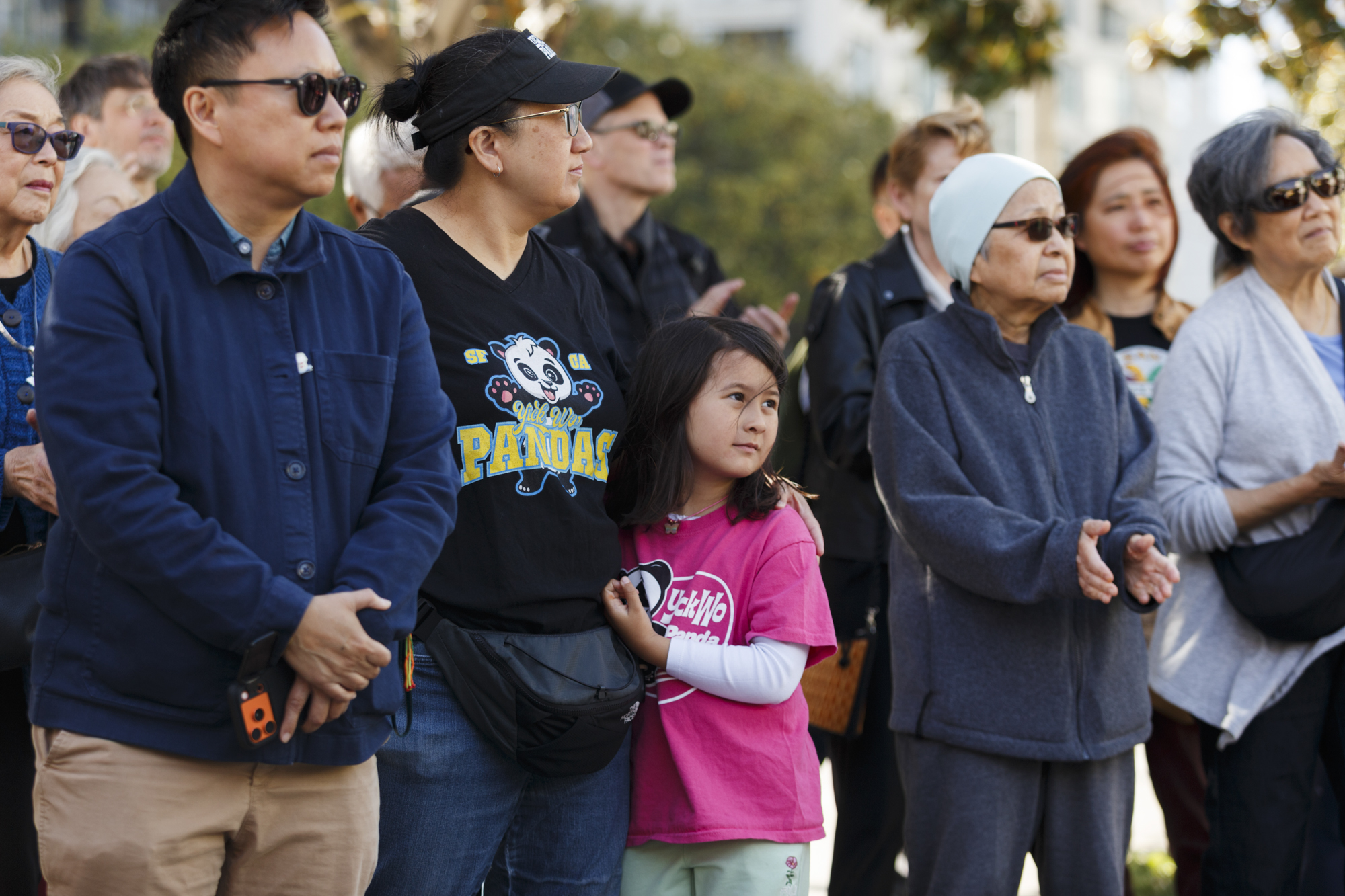
"caption": "Yick Wo Alternative Elementary School student Lizzy Alexander, center, hugs her mom Ranee Kwong as they attend a press conference at the parking lot on 3rd and Harrison streets in San Francisco on Monday, May 11, 2026. Officials and community members gathered to commemorate the 140th anniversary of landmark Supreme Court case Yick Wo v. Hopkins, which established that the 14th amendment applied to all, even non-citizens. ",
"credit": "Juliana Yamada for KQED",
"altTag": null,
"description": null,
"imgSizes": {
"thumbnail": {
"file": "https://cdn.kqed.org/wp-content/uploads/sites/10/2026/05/20260511-YICKWOCOMMEMORATION-JY-08-KQED-160x107.jpg",
"width": 160,
"height": 107,
"mimeType": "image/jpeg"
},
"1536x1536": {
"file": "https://cdn.kqed.org/wp-content/uploads/sites/10/2026/05/20260511-YICKWOCOMMEMORATION-JY-08-KQED-1536x1024.jpg",
"width": 1536,
"height": 1024,
"mimeType": "image/jpeg"
},
"post-thumbnail": {
"file": "https://cdn.kqed.org/wp-content/uploads/sites/10/2026/05/20260511-YICKWOCOMMEMORATION-JY-08-KQED-672x372.jpg",
"width": 672,
"height": 372,
"mimeType": "image/jpeg"
},
"twentyfourteen-full-width": {
"file": "https://cdn.kqed.org/wp-content/uploads/sites/10/2026/05/20260511-YICKWOCOMMEMORATION-JY-08-KQED-1038x576.jpg",
"width": 1038,
"height": 576,
"mimeType": "image/jpeg"
},
"npr-cds-wide": {
"file": "https://cdn.kqed.org/wp-content/uploads/sites/10/2026/05/20260511-YICKWOCOMMEMORATION-JY-08-KQED-1200x675.jpg",
"width": 1200,
"height": 675,
"mimeType": "image/jpeg"
},
"npr-cds-square": {
"file": "https://cdn.kqed.org/wp-content/uploads/sites/10/2026/05/20260511-YICKWOCOMMEMORATION-JY-08-KQED-600x600.jpg",
"width": 600,
"height": 600,
"mimeType": "image/jpeg"
},
"kqedFullSize": {
"file": "https://cdn.kqed.org/wp-content/uploads/sites/10/2026/05/20260511-YICKWOCOMMEMORATION-JY-08-KQED.jpg",
"width": 2000,
"height": 1333
}
},
"isLoading": false,
"fetchFailed": false
},
"news_12083235": {
"type": "attachments",
"id": "news_12083235",
"meta": {
"index": "attachments_1716263798",
"site": "news",
"id": "12083235",
"found": true
},
"title": "Elon Musk v. OpenAI Trial Continues In California",
"publishDate": 1778545779,
"status": "inherit",
"parent": 12083224,
"modified": 1778546322,
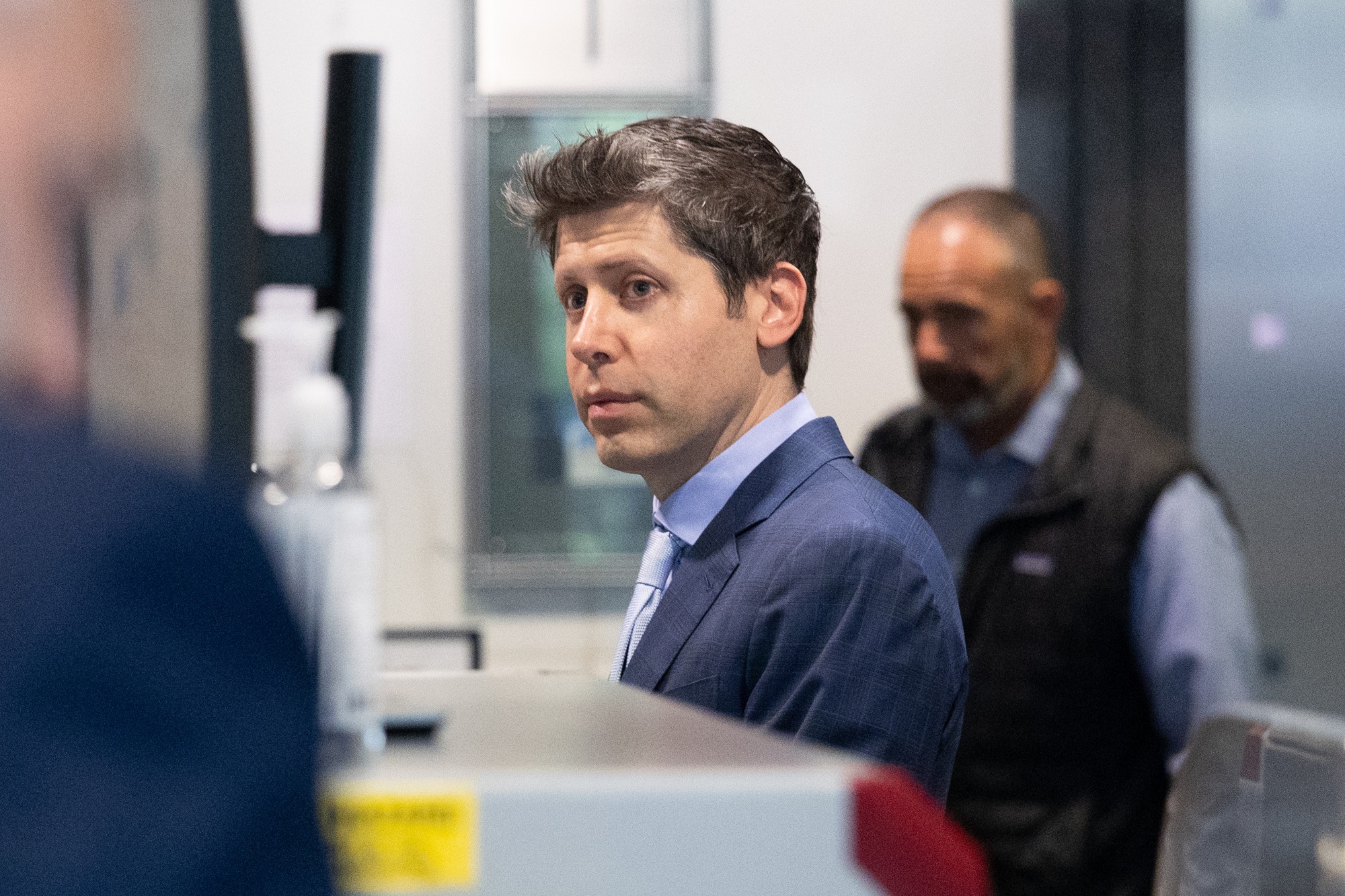
"caption": "OpenAI CEO Sam Altman arrives at the Ronald V. Dellums Federal Building on April 30, 2026, in Oakland, California. Elon Musk invested in OpenAI early on, believing it would be a nonprofit, but is now suing OpenAI and its CEO, Sam Altman, for allegedly deceiving him by developing OpenAI into a for-profit company. ",
"credit": "Benjamin Fanjoy/Getty Images",
"altTag": null,
"description": null,
"imgSizes": {
"thumbnail": {
"file": "https://cdn.kqed.org/wp-content/uploads/sites/10/2026/05/SamAltmanGetty-160x107.jpg",
"width": 160,
"height": 107,
"mimeType": "image/jpeg"
},
"1536x1536": {
"file": "https://cdn.kqed.org/wp-content/uploads/sites/10/2026/05/SamAltmanGetty-1536x1024.jpg",
"width": 1536,
"height": 1024,
"mimeType": "image/jpeg"
},
"post-thumbnail": {
"file": "https://cdn.kqed.org/wp-content/uploads/sites/10/2026/05/SamAltmanGetty-672x372.jpg",
"width": 672,
"height": 372,
"mimeType": "image/jpeg"
},
"twentyfourteen-full-width": {
"file": "https://cdn.kqed.org/wp-content/uploads/sites/10/2026/05/SamAltmanGetty-1038x576.jpg",
"width": 1038,
"height": 576,
"mimeType": "image/jpeg"
},
"npr-cds-wide": {
"file": "https://cdn.kqed.org/wp-content/uploads/sites/10/2026/05/SamAltmanGetty-1200x675.jpg",
"width": 1200,
"height": 675,
"mimeType": "image/jpeg"
},
"npr-cds-square": {
"file": "https://cdn.kqed.org/wp-content/uploads/sites/10/2026/05/SamAltmanGetty-600x600.jpg",
"width": 600,
"height": 600,
"mimeType": "image/jpeg"
},
"kqedFullSize": {
"file": "https://cdn.kqed.org/wp-content/uploads/sites/10/2026/05/SamAltmanGetty.jpg",
"width": 2000,
"height": 1333
}
},
"isLoading": false,
"fetchFailed": false
},
"news_12083176": {
"type": "attachments",
"id": "news_12083176",
"meta": {
"index": "attachments_1716263798",
"site": "news",
"id": "12083176",
"found": true
},
"title": "260511-SCCMETA-KQED-1-KQED",
"publishDate": 1778532794,
"status": "inherit",
"parent": 0,
"modified": 1778539963,
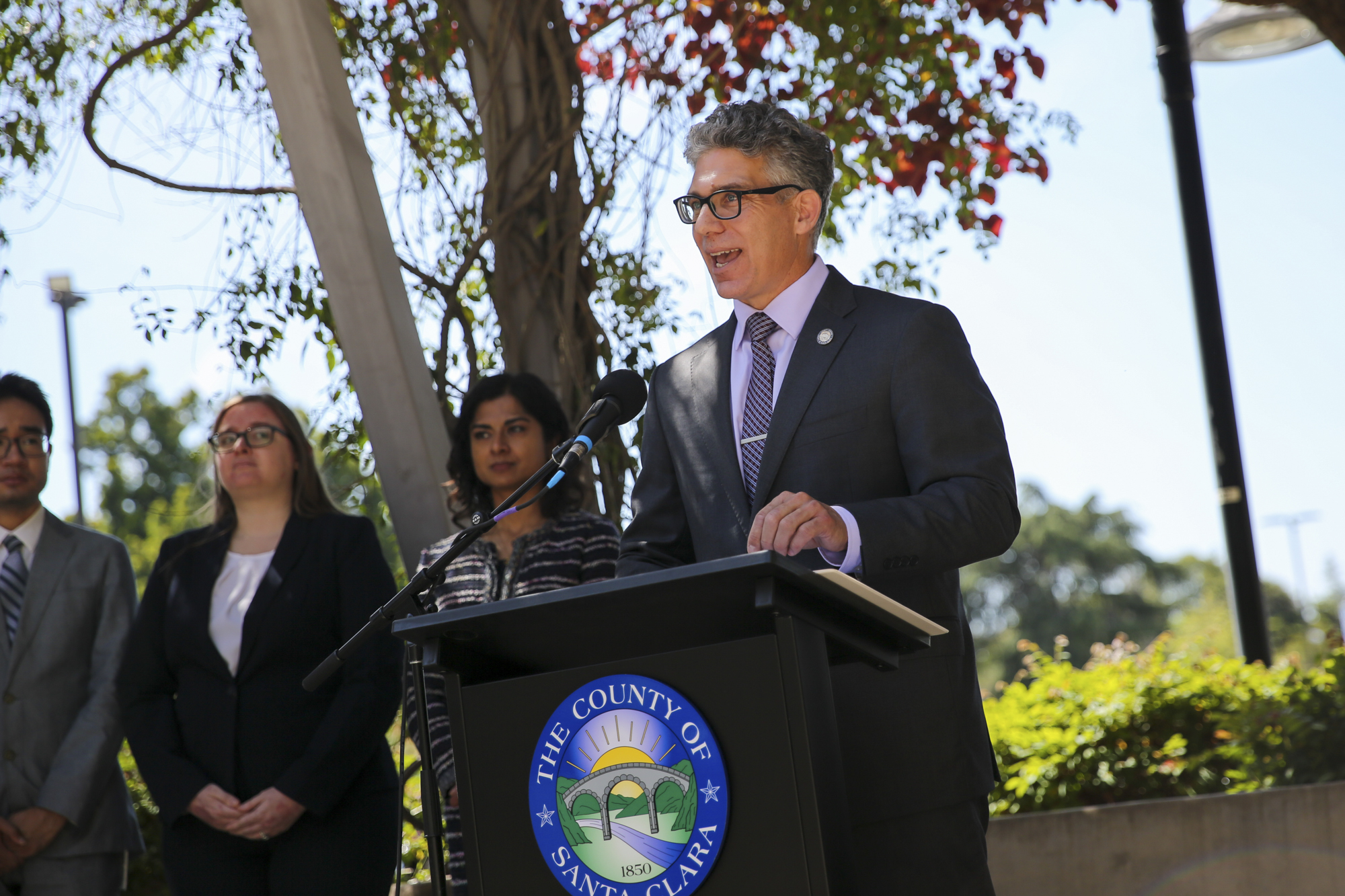
"caption": "Santa Clara County’s lead attorney, Tony LoPresti, shares details about a civil lawsuit the county filed against Meta over scam ads on Monday, May 11, 2026, during a press conference in San José.",
"credit": "Joseph Geha/KQED",
"altTag": null,
"description": null,
"imgSizes": {
"thumbnail": {
"file": "https://cdn.kqed.org/wp-content/uploads/sites/10/2026/05/260511-SCCMETA-KQED-1-KQED-160x107.jpg",
"width": 160,
"height": 107,
"mimeType": "image/jpeg"
},
"1536x1536": {
"file": "https://cdn.kqed.org/wp-content/uploads/sites/10/2026/05/260511-SCCMETA-KQED-1-KQED-1536x1024.jpg",
"width": 1536,
"height": 1024,
"mimeType": "image/jpeg"
},
"post-thumbnail": {
"file": "https://cdn.kqed.org/wp-content/uploads/sites/10/2026/05/260511-SCCMETA-KQED-1-KQED-672x372.jpg",
"width": 672,
"height": 372,
"mimeType": "image/jpeg"
},
"twentyfourteen-full-width": {
"file": "https://cdn.kqed.org/wp-content/uploads/sites/10/2026/05/260511-SCCMETA-KQED-1-KQED-1038x576.jpg",
"width": 1038,
"height": 576,
"mimeType": "image/jpeg"
},
"npr-cds-wide": {
"file": "https://cdn.kqed.org/wp-content/uploads/sites/10/2026/05/260511-SCCMETA-KQED-1-KQED-1200x675.jpg",
"width": 1200,
"height": 675,
"mimeType": "image/jpeg"
},
"npr-cds-square": {
"file": "https://cdn.kqed.org/wp-content/uploads/sites/10/2026/05/260511-SCCMETA-KQED-1-KQED-600x600.jpg",
"width": 600,
"height": 600,
"mimeType": "image/jpeg"
},
"kqedFullSize": {
"file": "https://cdn.kqed.org/wp-content/uploads/sites/10/2026/05/260511-SCCMETA-KQED-1-KQED.jpg",
"width": 2000,
"height": 1333
}
},
"isLoading": false,
"fetchFailed": false
},
"news_12046905": {
"type": "attachments",
"id": "news_12046905",
"meta": {
"index": "attachments_1716263798",
"site": "news",
"id": "12046905",
"found": true
},
"title": "250702-JOSEPHHUFFAKERTRIAL-11-BL-KQED",
"publishDate": 1751492718,
"status": "inherit",
"parent": 12082387,
"modified": 1778086875,
"caption": "Police vehicles are parked in a lot at the Rohnert Park Police Station in Rohnert Park on July 2, 2025.",
"credit": "Beth LaBerge/KQED",
"altTag": null,
"description": null,
"imgSizes": {
"thumbnail": {
"file": "https://cdn.kqed.org/wp-content/uploads/sites/10/2025/07/250702-JOSEPHHUFFAKERTRIAL-11-BL-KQED-160x107.jpg",
"width": 160,
"height": 107,
"mimeType": "image/jpeg"
},
"1536x1536": {
"file": "https://cdn.kqed.org/wp-content/uploads/sites/10/2025/07/250702-JOSEPHHUFFAKERTRIAL-11-BL-KQED-1536x1024.jpg",
"width": 1536,
"height": 1024,
"mimeType": "image/jpeg"
},
"post-thumbnail": {
"file": "https://cdn.kqed.org/wp-content/uploads/sites/10/2025/07/250702-JOSEPHHUFFAKERTRIAL-11-BL-KQED-672x372.jpg",
"width": 672,
"height": 372,
"mimeType": "image/jpeg"
},
"twentyfourteen-full-width": {
"file": "https://cdn.kqed.org/wp-content/uploads/sites/10/2025/07/250702-JOSEPHHUFFAKERTRIAL-11-BL-KQED-1038x576.jpg",
"width": 1038,
"height": 576,
"mimeType": "image/jpeg"
},
"kqedFullSize": {
"file": "https://cdn.kqed.org/wp-content/uploads/sites/10/2025/07/250702-JOSEPHHUFFAKERTRIAL-11-BL-KQED.jpg",
"width": 2000,
"height": 1333
}
},
"isLoading": false,
"fetchFailed": false
},
"news_12010374": {
"type": "attachments",
"id": "news_12010374",
"meta": {
"index": "attachments_1716263798",
"site": "news",
"id": "12010374",
"found": true
},
"title": "US-PALESTINIANS-ISRAEL-CONFLICT",
"publishDate": 1729529558,
"status": "inherit",
"parent": 12010363,
"modified": 1777579705,
"caption": "Pro-Palestinian demonstrators blocked San Francisco's Golden Gate Bridge on April 15, 2024, completely halting traffic for hours as part of a coordinated day of action against Israel's war in Gaza.",
"credit": "Paul Kuroda/AFP via Getty Images",
"altTag": null,
"description": null,
"imgSizes": {
"medium": {
"file": "https://cdn.kqed.org/wp-content/uploads/sites/10/2024/10/GGBridgeProtestAprilGetty-800x549.jpg",
"width": 800,
"height": 549,
"mimeType": "image/jpeg"
},
"large": {
"file": "https://cdn.kqed.org/wp-content/uploads/sites/10/2024/10/GGBridgeProtestAprilGetty-1020x700.jpg",
"width": 1020,
"height": 700,
"mimeType": "image/jpeg"
},
"thumbnail": {
"file": "https://cdn.kqed.org/wp-content/uploads/sites/10/2024/10/GGBridgeProtestAprilGetty-160x110.jpg",
"width": 160,
"height": 110,
"mimeType": "image/jpeg"
},
"1536x1536": {
"file": "https://cdn.kqed.org/wp-content/uploads/sites/10/2024/10/GGBridgeProtestAprilGetty-1536x1054.jpg",
"width": 1536,
"height": 1054,
"mimeType": "image/jpeg"
},
"post-thumbnail": {
"file": "https://cdn.kqed.org/wp-content/uploads/sites/10/2024/10/GGBridgeProtestAprilGetty-672x372.jpg",
"width": 672,
"height": 372,
"mimeType": "image/jpeg"
},
"twentyfourteen-full-width": {
"file": "https://cdn.kqed.org/wp-content/uploads/sites/10/2024/10/GGBridgeProtestAprilGetty-1038x576.jpg",
"width": 1038,
"height": 576,
"mimeType": "image/jpeg"
},
"full-width": {
"file": "https://cdn.kqed.org/wp-content/uploads/sites/10/2024/10/GGBridgeProtestAprilGetty-1920x1317.jpg",
"width": 1920,
"height": 1317,
"mimeType": "image/jpeg"
},
"kqedFullSize": {
"file": "https://cdn.kqed.org/wp-content/uploads/sites/10/2024/10/GGBridgeProtestAprilGetty.jpg",
"width": 2000,
"height": 1372
}
},
"isLoading": false,
"fetchFailed": false
},
"news_12081681": {
"type": "attachments",
"id": "news_12081681",
"meta": {
"index": "attachments_1716263798",
"site": "news",
"id": "12081681",
"found": true
},
"title": "260428-MUSK-ALTMAN-VB-03-KQED-1",
"publishDate": 1777416108,
"status": "inherit",
"parent": 12081603,
"modified": 1777508469,
"caption": "Representing Microsoft, Russell Coan (left) speaks as Elon Musk watches in the trial in which Elon Musk claims that Sam Altman and OpenAI abandoned their founding promise to develop AI for the benefit of humanity, rather than solely for profit, in Oakland on April 28, 2026.",
"credit": "Vicki Behringer for KQED",
"altTag": null,
"description": null,
"imgSizes": {
"thumbnail": {
"file": "https://cdn.kqed.org/wp-content/uploads/sites/10/2026/04/260428-MUSK-ALTMAN-VB-03-KQED-1-160x90.jpg",
"width": 160,
"height": 90,
"mimeType": "image/jpeg"
},
"1536x1536": {
"file": "https://cdn.kqed.org/wp-content/uploads/sites/10/2026/04/260428-MUSK-ALTMAN-VB-03-KQED-1-1536x864.jpg",
"width": 1536,
"height": 864,
"mimeType": "image/jpeg"
},
"post-thumbnail": {
"file": "https://cdn.kqed.org/wp-content/uploads/sites/10/2026/04/260428-MUSK-ALTMAN-VB-03-KQED-1-672x372.jpg",
"width": 672,
"height": 372,
"mimeType": "image/jpeg"
},
"twentyfourteen-full-width": {
"file": "https://cdn.kqed.org/wp-content/uploads/sites/10/2026/04/260428-MUSK-ALTMAN-VB-03-KQED-1-1038x576.jpg",
"width": 1038,
"height": 576,
"mimeType": "image/jpeg"
},
"npr-cds-wide": {
"file": "https://cdn.kqed.org/wp-content/uploads/sites/10/2026/04/260428-MUSK-ALTMAN-VB-03-KQED-1-1200x675.jpg",
"width": 1200,
"height": 675,
"mimeType": "image/jpeg"
},
"npr-cds-square": {
"file": "https://cdn.kqed.org/wp-content/uploads/sites/10/2026/04/260428-MUSK-ALTMAN-VB-03-KQED-1-600x600.jpg",
"width": 600,
"height": 600,
"mimeType": "image/jpeg"
},
"kqedFullSize": {
"file": "https://cdn.kqed.org/wp-content/uploads/sites/10/2026/04/260428-MUSK-ALTMAN-VB-03-KQED-1.jpg",
"width": 2000,
"height": 1125
}
},
"isLoading": false,
"fetchFailed": false
},
"news_12081747": {
"type": "attachments",
"id": "news_12081747",
"meta": {
"index": "attachments_1716263798",
"site": "news",
"id": "12081747",
"found": true
},
"title": "260429-CIF Trans Athletes-01-KQED",
"publishDate": 1777480821,
"status": "inherit",
"parent": 12088215,
"modified": 1782847753,
"caption": "Lily, left, and her father, Trevor Norcross, attend a meeting of the California Interscholastic Federation's executive committee in Oakland on April 24, 2026. ",
"credit": "Desmond Meagley/KQED",
"altTag": null,
"description": null,
"imgSizes": {
"thumbnail": {
"file": "https://cdn.kqed.org/wp-content/uploads/sites/10/2026/04/260429-CIF-Trans-Athletes-01-KQED-160x120.jpg",
"width": 160,
"height": 120,
"mimeType": "image/jpeg"
},
"1536x1536": {
"file": "https://cdn.kqed.org/wp-content/uploads/sites/10/2026/04/260429-CIF-Trans-Athletes-01-KQED-1536x1157.jpg",
"width": 1536,
"height": 1157,
"mimeType": "image/jpeg"
},
"post-thumbnail": {
"file": "https://cdn.kqed.org/wp-content/uploads/sites/10/2026/04/260429-CIF-Trans-Athletes-01-KQED-672x372.jpg",
"width": 672,
"height": 372,
"mimeType": "image/jpeg"
},
"twentyfourteen-full-width": {
"file": "https://cdn.kqed.org/wp-content/uploads/sites/10/2026/04/260429-CIF-Trans-Athletes-01-KQED-1038x576.jpg",
"width": 1038,
"height": 576,
"mimeType": "image/jpeg"
},
"npr-cds-wide": {
"file": "https://cdn.kqed.org/wp-content/uploads/sites/10/2026/04/260429-CIF-Trans-Athletes-01-KQED-1200x675.jpg",
"width": 1200,
"height": 675,
"mimeType": "image/jpeg"
},
"npr-cds-square": {
"file": "https://cdn.kqed.org/wp-content/uploads/sites/10/2026/04/260429-CIF-Trans-Athletes-01-KQED-600x600.jpg",
"width": 600,
"height": 600,
"mimeType": "image/jpeg"
},
"kqedFullSize": {
"file": "https://cdn.kqed.org/wp-content/uploads/sites/10/2026/04/260429-CIF-Trans-Athletes-01-KQED.jpg",
"width": 2000,
"height": 1506
}
},
"isLoading": false,
"fetchFailed": false
},
"news_12081639": {
"type": "attachments",
"id": "news_12081639",
"meta": {
"index": "attachments_1716263798",
"site": "news",
"id": "12081639",
"found": true
},
"title": "260428-MUSK ALTMAN-VB-02-KQED",
"publishDate": 1777410140,
"status": "inherit",
"parent": 12081603,
"modified": 1777422271,
"caption": "Elon Musk (left) takes the stand in the trial in which Elon Musk claims that Sam Altman and OpenAI abandoned their founding promise to develop AI for the benefit of humanity, rather than solely for profit, in Oakland on April 28, 2026.",
"credit": "Vicki Behringer for KQED",
"altTag": null,
"description": null,
"imgSizes": {
"thumbnail": {
"file": "https://cdn.kqed.org/wp-content/uploads/sites/10/2026/04/260428-MUSK-ALTMAN-VB-02-KQED-160x90.jpg",
"width": 160,
"height": 90,
"mimeType": "image/jpeg"
},
"1536x1536": {
"file": "https://cdn.kqed.org/wp-content/uploads/sites/10/2026/04/260428-MUSK-ALTMAN-VB-02-KQED-1536x864.jpg",
"width": 1536,
"height": 864,
"mimeType": "image/jpeg"
},
"post-thumbnail": {
"file": "https://cdn.kqed.org/wp-content/uploads/sites/10/2026/04/260428-MUSK-ALTMAN-VB-02-KQED-672x372.jpg",
"width": 672,
"height": 372,
"mimeType": "image/jpeg"
},
"twentyfourteen-full-width": {
"file": "https://cdn.kqed.org/wp-content/uploads/sites/10/2026/04/260428-MUSK-ALTMAN-VB-02-KQED-1038x576.jpg",
"width": 1038,
"height": 576,
"mimeType": "image/jpeg"
},
"npr-cds-wide": {
"file": "https://cdn.kqed.org/wp-content/uploads/sites/10/2026/04/260428-MUSK-ALTMAN-VB-02-KQED-1200x675.jpg",
"width": 1200,
"height": 675,
"mimeType": "image/jpeg"
},
"npr-cds-square": {
"file": "https://cdn.kqed.org/wp-content/uploads/sites/10/2026/04/260428-MUSK-ALTMAN-VB-02-KQED-600x600.jpg",
"width": 600,
"height": 600,
"mimeType": "image/jpeg"
},
"kqedFullSize": {
"file": "https://cdn.kqed.org/wp-content/uploads/sites/10/2026/04/260428-MUSK-ALTMAN-VB-02-KQED.jpg",
"width": 2000,
"height": 1125
}
},
"isLoading": false,
"fetchFailed": false
},
"news_12081524": {
"type": "attachments",
"id": "news_12081524",
"meta": {
"index": "attachments_1716263798",
"site": "news",
"id": "12081524",
"found": true
},
"title": "APTOPIX Trump White House Correspondents Dinner",
"publishDate": 1777321779,
"status": "inherit",
"parent": 12081521,
"modified": 1777321894,
"caption": "Attendees and hotel workers evacuate after an incident at the Washington Hilton during the White House Correspondents Dinner, on Saturday, April 25, 2026, in Washington.",
"credit": "Mark Schiefelbein/AP Photo",
"altTag": null,
"description": null,
"imgSizes": {
"thumbnail": {
"file": "https://cdn.kqed.org/wp-content/uploads/sites/10/2026/04/WHCDAP1-160x107.jpg",
"width": 160,
"height": 107,
"mimeType": "image/jpeg"
},
"1536x1536": {
"file": "https://cdn.kqed.org/wp-content/uploads/sites/10/2026/04/WHCDAP1-1536x1024.jpg",
"width": 1536,
"height": 1024,
"mimeType": "image/jpeg"
},
"post-thumbnail": {
"file": "https://cdn.kqed.org/wp-content/uploads/sites/10/2026/04/WHCDAP1-672x372.jpg",
"width": 672,
"height": 372,
"mimeType": "image/jpeg"
},
"twentyfourteen-full-width": {
"file": "https://cdn.kqed.org/wp-content/uploads/sites/10/2026/04/WHCDAP1-1038x576.jpg",
"width": 1038,
"height": 576,
"mimeType": "image/jpeg"
},
"npr-cds-wide": {
"file": "https://cdn.kqed.org/wp-content/uploads/sites/10/2026/04/WHCDAP1-1200x675.jpg",
"width": 1200,
"height": 675,
"mimeType": "image/jpeg"
},
"npr-cds-square": {
"file": "https://cdn.kqed.org/wp-content/uploads/sites/10/2026/04/WHCDAP1-600x600.jpg",
"width": 600,
"height": 600,
"mimeType": "image/jpeg"
},
"kqedFullSize": {
"file": "https://cdn.kqed.org/wp-content/uploads/sites/10/2026/04/WHCDAP1.jpg",
"width": 2000,
"height": 1333
}
},
"isLoading": false,
"fetchFailed": false
},
"news_12080929": {
"type": "attachments",
"id": "news_12080929",
"meta": {
"index": "attachments_1716263798",
"site": "news",
"id": "12080929",
"found": true
},
"title": "260422-ALTMANMUSK-MD-01-KQED",
"publishDate": 1776885164,
"status": "inherit",
"parent": 0,
"modified": 1776885551,
"caption": "Once allies in what they called a mission to develop AI safely for humanity, Elon Musk and Sam Altman will let a federal judge and jury decide what that promise was worth. The trial is slated to begin April 27, 2026.",
"credit": "Left: Chip Somodevilla/Getty Images; Right: Fabrice Coffrini/AFP via Getty Images",
"altTag": null,
"description": null,
"imgSizes": {
"thumbnail": {
"file": "https://cdn.kqed.org/wp-content/uploads/sites/10/2026/04/260422-ALTMANMUSK-MD-01-KQED-160x107.jpg",
"width": 160,
"height": 107,
"mimeType": "image/jpeg"
},
"1536x1536": {
"file": "https://cdn.kqed.org/wp-content/uploads/sites/10/2026/04/260422-ALTMANMUSK-MD-01-KQED-1536x1025.jpg",
"width": 1536,
"height": 1025,
"mimeType": "image/jpeg"
},
"post-thumbnail": {
"file": "https://cdn.kqed.org/wp-content/uploads/sites/10/2026/04/260422-ALTMANMUSK-MD-01-KQED-672x372.jpg",
"width": 672,
"height": 372,
"mimeType": "image/jpeg"
},
"twentyfourteen-full-width": {
"file": "https://cdn.kqed.org/wp-content/uploads/sites/10/2026/04/260422-ALTMANMUSK-MD-01-KQED-1038x576.jpg",
"width": 1038,
"height": 576,
"mimeType": "image/jpeg"
},
"npr-cds-wide": {
"file": "https://cdn.kqed.org/wp-content/uploads/sites/10/2026/04/260422-ALTMANMUSK-MD-01-KQED-1200x675.jpg",
"width": 1200,
"height": 675,
"mimeType": "image/jpeg"
},
"npr-cds-square": {
"file": "https://cdn.kqed.org/wp-content/uploads/sites/10/2026/04/260422-ALTMANMUSK-MD-01-KQED-600x600.jpg",
"width": 600,
"height": 600,
"mimeType": "image/jpeg"
},
"kqedFullSize": {
"file": "https://cdn.kqed.org/wp-content/uploads/sites/10/2026/04/260422-ALTMANMUSK-MD-01-KQED.jpg",
"width": 2000,
"height": 1334
}
},
"isLoading": false,
"fetchFailed": false
},
"news_12060987": {
"type": "attachments",
"id": "news_12060987",
"meta": {
"index": "attachments_1716263798",
"site": "news",
"id": "12060987",
"found": true
},
"title": "ICE at Court",
"publishDate": 1761141188,
"status": "inherit",
"parent": 12060986,
"modified": 1776991855,
"caption": "The rule being considered on Friday comes as immigration arrests rise at state courts, discouraging victims, witnesses, and others from showing up, according to lawyers and advocates.",
"credit": "Carlin Stiehl/Los Angeles Times via Getty Images",
"altTag": null,
"description": null,
"imgSizes": {
"medium": {
"file": "https://cdn.kqed.org/wp-content/uploads/sites/10/2025/10/GettyImages-2216992312-2000x1334.jpg",
"width": 2000,
"height": 1334,
"mimeType": "image/jpeg"
},
"large": {
"file": "https://cdn.kqed.org/wp-content/uploads/sites/10/2025/10/GettyImages-2216992312-2000x1334.jpg",
"width": 2000,
"height": 1334,
"mimeType": "image/jpeg"
},
"thumbnail": {
"file": "https://cdn.kqed.org/wp-content/uploads/sites/10/2025/10/GettyImages-2216992312-160x107.jpg",
"width": 160,
"height": 107,
"mimeType": "image/jpeg"
},
"1536x1536": {
"file": "https://cdn.kqed.org/wp-content/uploads/sites/10/2025/10/GettyImages-2216992312-1536x1025.jpg",
"width": 1536,
"height": 1025,
"mimeType": "image/jpeg"
},
"2048x2048": {
"file": "https://cdn.kqed.org/wp-content/uploads/sites/10/2025/10/GettyImages-2216992312-2048x1366.jpg",
"width": 2048,
"height": 1366,
"mimeType": "image/jpeg"
},
"post-thumbnail": {
"file": "https://cdn.kqed.org/wp-content/uploads/sites/10/2025/10/GettyImages-2216992312-672x372.jpg",
"width": 672,
"height": 372,
"mimeType": "image/jpeg"
},
"twentyfourteen-full-width": {
"file": "https://cdn.kqed.org/wp-content/uploads/sites/10/2025/10/GettyImages-2216992312-1038x576.jpg",
"width": 1038,
"height": 576,
"mimeType": "image/jpeg"
},
"full-width": {
"file": "https://cdn.kqed.org/wp-content/uploads/sites/10/2025/10/GettyImages-2216992312-2000x1334.jpg",
"width": 2000,
"height": 1334,
"mimeType": "image/jpeg"
},
"kqedFullSize": {
"file": "https://cdn.kqed.org/wp-content/uploads/sites/10/2025/10/GettyImages-2216992312-scaled-e1761161311555.jpg",
"width": 2000,
"height": 1334
}
},
"isLoading": false,
"fetchFailed": false
},
"news_12081199": {
"type": "attachments",
"id": "news_12081199",
"meta": {
"index": "attachments_1716263798",
"site": "news",
"id": "12081199",
"found": true
},
"title": "IMG_7154",
"publishDate": 1776984021,
"status": "inherit",
"parent": 0,
"modified": 1776985914,
"caption": "Alameda County Public Defenders, wearing black, stand on the steps of the Alameda County Courthouse in downtown Oakland on April 23, 2026. ",
"credit": "Eliza Peppel/KQED",
"altTag": null,
"description": null,
"imgSizes": {
"medium": {
"file": "https://cdn.kqed.org/wp-content/uploads/sites/10/2026/04/IMG_7154-2000x1500.jpeg",
"width": 2000,
"height": 1500,
"mimeType": "image/jpeg"
},
"large": {
"file": "https://cdn.kqed.org/wp-content/uploads/sites/10/2026/04/IMG_7154-2000x1500.jpeg",
"width": 2000,
"height": 1500,
"mimeType": "image/jpeg"
},
"thumbnail": {
"file": "https://cdn.kqed.org/wp-content/uploads/sites/10/2026/04/IMG_7154-160x120.jpeg",
"width": 160,
"height": 120,
"mimeType": "image/jpeg"
},
"1536x1536": {
"file": "https://cdn.kqed.org/wp-content/uploads/sites/10/2026/04/IMG_7154-1536x1152.jpeg",
"width": 1536,
"height": 1152,
"mimeType": "image/jpeg"
},
"2048x2048": {
"file": "https://cdn.kqed.org/wp-content/uploads/sites/10/2026/04/IMG_7154-2048x1536.jpeg",
"width": 2048,
"height": 1536,
"mimeType": "image/jpeg"
},
"post-thumbnail": {
"file": "https://cdn.kqed.org/wp-content/uploads/sites/10/2026/04/IMG_7154-672x372.jpeg",
"width": 672,
"height": 372,
"mimeType": "image/jpeg"
},
"twentyfourteen-full-width": {
"file": "https://cdn.kqed.org/wp-content/uploads/sites/10/2026/04/IMG_7154-1038x576.jpeg",
"width": 1038,
"height": 576,
"mimeType": "image/jpeg"
},
"full-width": {
"file": "https://cdn.kqed.org/wp-content/uploads/sites/10/2026/04/IMG_7154-2000x1500.jpeg",
"width": 2000,
"height": 1500,
"mimeType": "image/jpeg"
},
"npr-cds-wide": {
"file": "https://cdn.kqed.org/wp-content/uploads/sites/10/2026/04/IMG_7154-1200x675.jpeg",
"width": 1200,
"height": 675,
"mimeType": "image/jpeg"
},
"npr-cds-square": {
"file": "https://cdn.kqed.org/wp-content/uploads/sites/10/2026/04/IMG_7154-600x600.jpeg",
"width": 600,
"height": 600,
"mimeType": "image/jpeg"
},
"kqedFullSize": {
"file": "https://cdn.kqed.org/wp-content/uploads/sites/10/2026/04/IMG_7154-scaled-e1776985240474.jpeg",
"width": 2000,
"height": 1500
}
},
"isLoading": false,
"fetchFailed": false
}
},
"audioPlayerReducer": {
"postId": "stream_live",
"isPaused": true,
"isPlaying": false,
"pfsActive": false,
"pledgeModalIsOpen": true,
"playerDrawerIsOpen": false,
"liveAudioPlayStartedAt": 0,
"liveAudioPlayContext": ""
},
"authorsReducer": {
"byline_news_12081521": {
"type": "authors",
"id": "byline_news_12081521",
"meta": {
"override": true
},
"slug": "byline_news_12081521",
"name": "Eric Tucker, Michael Kunzelman and Alanna Durkin Richer, Associated Press",
"isLoading": false
},
"rachael-myrow": {
"type": "authors",
"id": "251",
"meta": {
"index": "authors_1716337520",
"id": "251",
"found": true
},
"name": "Rachael Myrow",
"firstName": "Rachael",
"lastName": "Myrow",
"slug": "rachael-myrow",
"email": "rmyrow@kqed.org",
"display_author_email": true,
"staff_mastheads": [
"news"
],
"title": "Senior Editor of KQED's Silicon Valley News Desk",
"bio": "• I write and edit stories about how Silicon Valley power and policies shape everyday life in California. I’m also passionate about making Bay Area history and culture more accessible to a broad public. • I’ve been a journalist for most of my life, starting in high school with The Franklin Press in Los Angeles, where I grew up. While earning my first degree in English at UC Berkeley, I got my start in public radio at KALX-FM. After completing a second degree in journalism at Cal, I landed my first professional job at Marketplace, then moved on to KPCC (now LAist), and then KQED, where I hosted The California Report for more than seven years. • My reporting has appeared on NPR, The World, WBUR’s \u003ci>Here & Now\u003c/i>, and the BBC. I also guest host for KQED’s \u003ci>Forum\u003c/i>, as well as the Commonwealth Club in San Francisco. • I speak periodically on media, democracy and technology issues, and do voiceover work for documentaries and educational video projects. • Outside of the studio, you'll find me hiking Bay Area trails and whipping up Insta-ready meals in my kitchen. • I do not accept gifts, money, or favors from anyone connected to my reporting, I don't pay people for information, and I do not support or donate to political causes. • I strive to treat the people I report on with fairness, honesty, and respect. I also recognize there are often multiple sides to a story and work to verify information through multiple sources and documentation. If I get something wrong, I correct it.",
"avatar": "https://secure.gravatar.com/avatar/3ed8a3c5f26025e4a805ba634cda8cd764906b97438a6d9ce216b044e340da4e?s=600&d=blank&r=g",
"twitter": "rachaelmyrow",
"bluesky": null,
"facebook": null,
"instagram": null,
"linkedin": "https://www.linkedin.com/in/rachaelmyrow/",
"sites": [
{
"site": "arts",
"roles": [
"administrator"
]
},
{
"site": "news",
"roles": [
"edit_others_posts",
"editor"
]
},
{
"site": "futureofyou",
"roles": [
"editor"
]
},
{
"site": "bayareabites",
"roles": [
"editor"
]
},
{
"site": "stateofhealth",
"roles": [
"editor"
]
},
{
"site": "science",
"roles": [
"editor"
]
},
{
"site": "food",
"roles": [
"editor"
]
},
{
"site": "forum",
"roles": [
"editor"
]
},
{
"site": "liveblog",
"roles": [
"author"
]
}
],
"headData": {
"title": "Rachael Myrow | KQED",
"description": "Senior Editor of KQED's Silicon Valley News Desk",
"ogImgSrc": "https://secure.gravatar.com/avatar/3ed8a3c5f26025e4a805ba634cda8cd764906b97438a6d9ce216b044e340da4e?s=600&d=blank&r=g",
"twImgSrc": "https://secure.gravatar.com/avatar/3ed8a3c5f26025e4a805ba634cda8cd764906b97438a6d9ce216b044e340da4e?s=600&d=blank&r=g"
},
"isLoading": false,
"link": "/author/rachael-myrow"
},
"clei": {
"type": "authors",
"id": "8617",
"meta": {
"index": "authors_1716337520",
"id": "8617",
"found": true
},
"name": "Cecilia Lei",
"firstName": "Cecilia",
"lastName": "Lei",
"slug": "clei",
"email": "clei@KQED.org",
"display_author_email": false,
"staff_mastheads": [],
"title": "KQED Contributor",
"bio": "Cecilia Lei is an on-call host and producer for KQED News and Podcasts. Previously, she was the executive producer and host of the San Francisco Chronicle's daily news podcast, 'Fifth and Mission'. Cecilia is a graduate of UC Berkeley’s Graduate School of Journalism and the former president of the Asian American Journalists Association San Francisco Bay Area chapter.",
"avatar": "https://secure.gravatar.com/avatar/e3a76b2dc2f3909307069a6040ca5baa74612590c1d837c8bff44fbe2294ed41?s=600&d=blank&r=g",
"twitter": null,
"bluesky": null,
"facebook": null,
"instagram": null,
"linkedin": null,
"sites": [
{
"site": "arts",
"roles": [
"contributor"
]
},
{
"site": "news",
"roles": [
"read_private_posts",
"editor"
]
},
{
"site": "about",
"roles": [
"editor"
]
}
],
"headData": {
"title": "Cecilia Lei | KQED",
"description": "KQED Contributor",
"ogImgSrc": "https://secure.gravatar.com/avatar/e3a76b2dc2f3909307069a6040ca5baa74612590c1d837c8bff44fbe2294ed41?s=600&d=blank&r=g",
"twImgSrc": "https://secure.gravatar.com/avatar/e3a76b2dc2f3909307069a6040ca5baa74612590c1d837c8bff44fbe2294ed41?s=600&d=blank&r=g"
},
"isLoading": false,
"link": "/author/clei"
},
"fjhabvala": {
"type": "authors",
"id": "8659",
"meta": {
"index": "authors_1716337520",
"id": "8659",
"found": true
},
"name": "Farida Jhabvala Romero",
"firstName": "Farida",
"lastName": "Jhabvala Romero",
"slug": "fjhabvala",
"email": "fjhabvala@kqed.org",
"display_author_email": true,
"staff_mastheads": [
"news"
],
"title": "KQED Contributor",
"bio": "Farida Jhabvala Romero is a Labor Correspondent for KQED. She previously covered immigration. Farida was \u003ca href=\"https://www.ccnma.org/2022-most-influential-latina-journalists\">named\u003c/a> one of the 10 Most Influential Latina Journalists in California in 2022 by the California Chicano News Media Association. Her work has won awards from the Society of Professional Journalists (Northern California), as well as a national and regional Edward M. Murrow Award for the collaborative reporting projects “Dangerous Air” and “Graying California.” Before joining KQED, Farida worked as a producer at Radio Bilingüe, a national public radio network. Farida earned her master’s degree in journalism from Stanford University.",
"avatar": "https://secure.gravatar.com/avatar/f9f022d4e2609741874222a1e9d41f48fea74011aa7c615eef91d9a50c944ebe?s=600&d=blank&r=g",
"twitter": "FaridaJhabvala",
"bluesky": null,
"facebook": null,
"instagram": null,
"linkedin": "https://www.linkedin.com/in/faridajhabvala/",
"sites": [
{
"site": "news",
"roles": [
"editor"
]
},
{
"site": "stateofhealth",
"roles": [
"author"
]
},
{
"site": "liveblog",
"roles": [
"author"
]
}
],
"headData": {
"title": "Farida Jhabvala Romero | KQED",
"description": "KQED Contributor",
"ogImgSrc": "https://secure.gravatar.com/avatar/f9f022d4e2609741874222a1e9d41f48fea74011aa7c615eef91d9a50c944ebe?s=600&d=blank&r=g",
"twImgSrc": "https://secure.gravatar.com/avatar/f9f022d4e2609741874222a1e9d41f48fea74011aa7c615eef91d9a50c944ebe?s=600&d=blank&r=g"
},
"isLoading": false,
"link": "/author/fjhabvala"
},
"slewis": {
"type": "authors",
"id": "8676",
"meta": {
"index": "authors_1716337520",
"id": "8676",
"found": true
},
"name": "Sukey Lewis",
"firstName": "Sukey",
"lastName": "Lewis",
"slug": "slewis",
"email": "slewis@kqed.org",
"display_author_email": true,
"staff_mastheads": [
"news"
],
"title": "KQED Contributor",
"bio": "Sukey Lewis is a criminal justice reporter and host of \u003cem>On Our Watch\u003c/em>, a new podcast from NPR and KQED about the shadow world of police discipline. In 2018, she co-founded the California Reporting Project, a coalition of newsrooms across the state focused on obtaining previously sealed internal affairs records from law enforcement. In addition to her reporting on police accountability, Sukey has investigated the bail bonds industry, California's wildfires and the high cost of prison phone calls. Sukey earned a master's degree in journalism from the University of California at Berkeley. Send news tips to slewis@kqed.org.",
"avatar": "https://secure.gravatar.com/avatar/03fd6b21024f99d8b0a1966654586de7?s=600&d=blank&r=g",
"twitter": "SukeyLewis",
"facebook": null,
"instagram": null,
"linkedin": null,
"sites": [
{
"site": "news",
"roles": [
"author",
"edit_others_posts"
]
}
],
"headData": {
"title": "Sukey Lewis | KQED",
"description": "KQED Contributor",
"ogImgSrc": "https://secure.gravatar.com/avatar/03fd6b21024f99d8b0a1966654586de7?s=600&d=blank&r=g",
"twImgSrc": "https://secure.gravatar.com/avatar/03fd6b21024f99d8b0a1966654586de7?s=600&d=blank&r=g"
},
"isLoading": false,
"link": "/author/slewis"
},
"jlara": {
"type": "authors",
"id": "11761",
"meta": {
"index": "authors_1716337520",
"id": "11761",
"found": true
},
"name": "Juan Carlos Lara",
"firstName": "Juan Carlos",
"lastName": "Lara",
"slug": "jlara",
"email": "jlara@kqed.org",
"display_author_email": false,
"staff_mastheads": [],
"title": "KQED Contributor",
"bio": null,
"avatar": "https://secure.gravatar.com/avatar/19e2052b9b05657c5ff2af2121846e9c?s=600&d=blank&r=g",
"twitter": null,
"facebook": null,
"instagram": null,
"linkedin": null,
"sites": [
{
"site": "arts",
"roles": [
"editor"
]
},
{
"site": "news",
"roles": [
"editor"
]
},
{
"site": "forum",
"roles": [
"editor"
]
},
{
"site": "liveblog",
"roles": [
"contributor"
]
}
],
"headData": {
"title": "Juan Carlos Lara | KQED",
"description": "KQED Contributor",
"ogImgSrc": "https://secure.gravatar.com/avatar/19e2052b9b05657c5ff2af2121846e9c?s=600&d=blank&r=g",
"twImgSrc": "https://secure.gravatar.com/avatar/19e2052b9b05657c5ff2af2121846e9c?s=600&d=blank&r=g"
},
"isLoading": false,
"link": "/author/jlara"
},
"jgeha": {
"type": "authors",
"id": "11906",
"meta": {
"index": "authors_1716337520",
"id": "11906",
"found": true
},
"name": "Joseph Geha",
"firstName": "Joseph",
"lastName": "Geha",
"slug": "jgeha",
"email": "jgeha@kqed.org",
"display_author_email": false,
"staff_mastheads": [
"news",
"science"
],
"title": "KQED Contributor",
"bio": null,
"avatar": "https://secure.gravatar.com/avatar/ea84d2b6dd93d6369d453edf19dd583f117cd1759d2d9c9c92f9de77017354fe?s=600&d=blank&r=g",
"twitter": null,
"bluesky": null,
"facebook": null,
"instagram": null,
"linkedin": null,
"sites": [
{
"site": "news",
"roles": [
"editor"
]
},
{
"site": "liveblog",
"roles": [
"author"
]
}
],
"headData": {
"title": "Joseph Geha | KQED",
"description": "KQED Contributor",
"ogImgSrc": "https://secure.gravatar.com/avatar/ea84d2b6dd93d6369d453edf19dd583f117cd1759d2d9c9c92f9de77017354fe?s=600&d=blank&r=g",
"twImgSrc": "https://secure.gravatar.com/avatar/ea84d2b6dd93d6369d453edf19dd583f117cd1759d2d9c9c92f9de77017354fe?s=600&d=blank&r=g"
},
"isLoading": false,
"link": "/author/jgeha"
},
"kdebenedetti": {
"type": "authors",
"id": "11913",
"meta": {
"index": "authors_1716337520",
"id": "11913",
"found": true
},
"name": "Katie DeBenedetti",
"firstName": "Katie",
"lastName": "DeBenedetti",
"slug": "kdebenedetti",
"email": "kdebenedetti@kqed.org",
"display_author_email": false,
"staff_mastheads": [
"news",
"science"
],
"title": "KQED Contributor",
"bio": "Katie DeBenedetti is a digital reporter covering daily news for the Express Desk. Prior to joining KQED as a culture reporting intern in January 2024, she covered education and city government for the Napa Valley Register.",
"avatar": "https://secure.gravatar.com/avatar/6e31073cb8f7e4214ab03f42771d0f45?s=600&d=blank&r=g",
"twitter": null,
"facebook": null,
"instagram": null,
"linkedin": null,
"sites": [
{
"site": "news",
"roles": [
"author"
]
},
{
"site": "science",
"roles": [
"author"
]
},
{
"site": "liveblog",
"roles": [
"author"
]
}
],
"headData": {
"title": "Katie DeBenedetti | KQED",
"description": "KQED Contributor",
"ogImgSrc": "https://secure.gravatar.com/avatar/6e31073cb8f7e4214ab03f42771d0f45?s=600&d=blank&r=g",
"twImgSrc": "https://secure.gravatar.com/avatar/6e31073cb8f7e4214ab03f42771d0f45?s=600&d=blank&r=g"
},
"isLoading": false,
"link": "/author/kdebenedetti"
},
"epeppel": {
"type": "authors",
"id": "11989",
"meta": {
"index": "authors_1716337520",
"id": "11989",
"found": true
},
"name": "Eliza Peppel",
"firstName": "Eliza",
"lastName": "Peppel",
"slug": "epeppel",
"email": "epeppel@kqed.org",
"display_author_email": false,
"staff_mastheads": [],
"title": null,
"bio": "Eliza is an award-winning journalist living in Oakland. She was previously a reporting fellow at KALW, where she reported daily news and long-form radio features. Eliza studied journalism at Fordham University in The Bronx during the COVID-19 pandemic. She grew up mainly in California and spent a few childhood years in Aix en Provence, France.",
"avatar": "https://secure.gravatar.com/avatar/20d9e17a06ee787c11052e6096319dd583b6376233d02383dab5eaeb874d5f56?s=600&d=blank&r=g",
"twitter": null,
"bluesky": null,
"facebook": null,
"instagram": null,
"linkedin": null,
"sites": [
{
"site": "news",
"roles": [
"subscriber"
]
},
{
"site": "science",
"roles": [
"subscriber"
]
}
],
"headData": {
"title": "Eliza Peppel | KQED",
"description": null,
"ogImgSrc": "https://secure.gravatar.com/avatar/20d9e17a06ee787c11052e6096319dd583b6376233d02383dab5eaeb874d5f56?s=600&d=blank&r=g",
"twImgSrc": "https://secure.gravatar.com/avatar/20d9e17a06ee787c11052e6096319dd583b6376233d02383dab5eaeb874d5f56?s=600&d=blank&r=g"
},
"isLoading": false,
"link": "/author/epeppel"
},
"dmeagley": {
"type": "authors",
"id": "12002",
"meta": {
"index": "authors_1716337520",
"id": "12002",
"found": true
},
"name": "Desmond Meagley",
"firstName": "Desmond",
"lastName": "Meagley",
"slug": "dmeagley",
"email": "dmeagley@kqed.org",
"display_author_email": false,
"staff_mastheads": [],
"title": "KQED Contributor",
"bio": null,
"avatar": "https://secure.gravatar.com/avatar/16f71d550a6f42fe4d2195a89ee3ac21649feb17ca382d5cd0ad019d930a00ae?s=600&d=blank&r=g",
"twitter": null,
"bluesky": null,
"facebook": null,
"instagram": null,
"linkedin": null,
"sites": [
{
"site": "news",
"roles": [
"author"
]
}
],
"headData": {
"title": "Desmond Meagley | KQED",
"description": "KQED Contributor",
"ogImgSrc": "https://secure.gravatar.com/avatar/16f71d550a6f42fe4d2195a89ee3ac21649feb17ca382d5cd0ad019d930a00ae?s=600&d=blank&r=g",
"twImgSrc": "https://secure.gravatar.com/avatar/16f71d550a6f42fe4d2195a89ee3ac21649feb17ca382d5cd0ad019d930a00ae?s=600&d=blank&r=g"
},
"isLoading": false,
"link": "/author/dmeagley"
}
},
"pagesReducer": {
"news_category_law-and-justice": {
"type": "terms",
"id": "news_6188",
"meta": {
"index": "terms_1716263798",
"site": "news",
"id": "6188",
"score": 13.556663
},
"featImg": null,
"name": "Law and Justice",
"description": null,
"taxonomy": "category",
"headData": {
"twImgId": null,
"twTitle": null,
"ogTitle": null,
"ogImgId": null,
"twDescription": null,
"description": null,
"title": "Law and Justice Archives | KQED News",
"ogDescription": null
},
"ttid": 6212,
"slug": "law-and-justice",
"isLoading": false,
"title": "Law and Justice",
"pageMeta": {
"site": "news",
"WpPageTemplate": "page-topic-editorial",
"currentPage": 14
},
"blocks": [
{
"blockName": "kqed/post-list",
"attrs": {
"layout": "cardArticle2",
"query": "posts/news?category=law-and-justice",
"seeMore": false,
"paginated": true,
"page": 14
}
},
{
"blockName": "kqed/ad"
}
]
}
},
"pfsSessionReducer": {},
"postsReducer": {
"stream_live": {
"type": "live",
"id": "stream_live",
"audioUrl": "https://hls.kqed.org/hls/kqed_app/playlist.m3u8",
"title": "Live Stream",
"excerpt": "Live Stream information currently unavailable.",
"link": "/radio",
"featImg": "",
"label": {
"name": "KQED Live",
"link": "/"
}
},
"stream_kqedNewscast": {
"type": "posts",
"id": "stream_kqedNewscast",
"audioUrl": "https://www.kqed.org/.stream/anon/radio/RDnews/newscast.mp3?_=1",
"title": "KQED Newscast",
"featImg": "",
"label": {
"name": "88.5 FM",
"link": "/"
}
},
"news_12083091": {
"type": "posts",
"id": "news_12083091",
"meta": {
"index": "posts_1716263798",
"site": "news",
"id": "12083091",
"score": null,
"sort": [
1778616891000
]
},
"guestAuthors": [],
"slug": "he-won-equal-protections-for-all-san-francisco-residents-want-to-tell-his-story",
"title": "Chinese Laundrymen Won Equal Protections for All. San Francisco Wants to Tell Their Story",
"publishDate": 1778616891,
"format": "standard",
"headTitle": "Chinese Laundrymen Won Equal Protections for All. San Francisco Wants to Tell Their Story | KQED",
"labelTerm": {
"site": "news"
},
"content": "\u003cp>For many, the lot on the corner of Third and Harrison streets in \u003ca href=\"https://www.kqed.org/news/tag/san-francisco\">San Francisco\u003c/a> is just a place to park before heading to a Giants game or an event downtown.\u003c/p>\n\u003cp>On Monday, around 50 people gathered at the unremarkable concrete patch in the South of Market neighborhood for a different reason: to commemorate the 140th anniversary of \u003cem>Yick Wo v. Hopkins, \u003c/em>a late 19th-century \u003ca href=\"https://www.kqed.org/news/12050233/how-a-chinese-laundryman-shaped-us-civil-rights-from-san-francisco\">landmark U.S. Supreme Court decision\u003c/a>.\u003c/p>\n\u003cp>The crowd included longtime Asian American activists, Chinatown organizers, San Francisco City Attorney David Chiu and Supervisors Connie Chan, Chyanne Chen, Matt Dorsey, Rafael Mandelman and Danny Sauter.\u003c/p>\n\u003cp>[ad fullwidth]\u003c/p>\n\u003cp>“So often, we think about the times that San Francisco has done something … that has changed the country and the world,” said Dorsey, who represents the district where the lot is located. “We always think about 20th-century [contributions], but the reality is that it started in the 19th century with the Chinese American community in San Francisco.”\u003c/p>\n\u003cp>The site was once home to Yick Wo, a laundry business that was owned and operated by a Chinese immigrant named Lee Yick from 1864 to 1886. It was one of over 200 Chinese-owned laundries scattered across San Francisco, but this one holds particular significance: it was at the center of a consequential ruling that established that the 14th Amendment’s due process and equal protection clauses apply to all — even noncitizens.\u003c/p>\n\u003cfigure id=\"attachment_12083335\" class=\"wp-caption aligncenter\" style=\"max-width: 2000px\">\u003cimg loading=\"lazy\" decoding=\"async\" class=\"wp-image-12083335 size-full\" src=\"https://cdn.kqed.org/wp-content/uploads/sites/10/2026/05/20260511-YICKWOCOMMEMORATION-JY-15-KQED.jpg\" alt=\"\" width=\"2000\" height=\"1333\" srcset=\"https://cdn.kqed.org/wp-content/uploads/sites/10/2026/05/20260511-YICKWOCOMMEMORATION-JY-15-KQED.jpg 2000w, https://cdn.kqed.org/wp-content/uploads/sites/10/2026/05/20260511-YICKWOCOMMEMORATION-JY-15-KQED-160x107.jpg 160w, https://cdn.kqed.org/wp-content/uploads/sites/10/2026/05/20260511-YICKWOCOMMEMORATION-JY-15-KQED-1536x1024.jpg 1536w\" sizes=\"auto, (max-width: 2000px) 100vw, 2000px\">\u003cfigcaption class=\"wp-caption-text\">Historian and Chinese Historical Society board member David Lei attends a press conference at the parking lot on Third and Harrison streets to commemorate the 140th anniversary of the landmark Supreme Court case Yick Wo v. Hopkins in San Francisco on Monday, May 11, 2026. \u003ccite>(Juliana Yamada for KQED)\u003c/cite>\u003c/figcaption>\u003c/figure>\n\u003cp>David Lei, a local Chinese American community historian, said he has always believed the lot deserved substantial recognition. He tried to champion that effort over the past 15 years by speaking about Yick Wo’s history, but it was\u003ca href=\"https://www.kqed.org/news/12050233/how-a-chinese-laundryman-shaped-us-civil-rights-from-san-francisco\"> last year’s spotlight on the case\u003c/a> from KQED, as the Trump administration ramped up its \u003ca href=\"https://www.kqed.org/news/12077496/trumps-mass-deportations-could-cost-the-bay-area-67-billion-a-year-report-says\">massive deportation campaign\u003c/a> — often \u003ca href=\"https://www.kqed.org/news/12082287/trump-closes-san-franciscos-immigration-court-for-good\">without regard to immigrants’ rights\u003c/a> \u003ca href=\"https://www.kqed.org/news/12082287/trump-closes-san-franciscos-immigration-court-for-good\">to\u003c/a> a fair hearing — that the history began to resonate.\u003c/p>\n\u003cp>“I kind of [read] between the lines and it seemed like David was saying, ‘Oh, a little help here, please!’” said Karen Kai, a lawyer and board member of San Francisco Heritage, a nonprofit organization that helps preserve landmarks in the city. She helped kickstart an effort, along with other groups, including the Chinese Historical Society of America, to launch a campaign to establish a permanent marker at the site.\u003c/p>\n\u003cp>Doing so, they said, would help educate the public about a historical case that most people have never heard of outside of the legal community or people who study Asian American history. But this could soon change.[aside postID=news_12050233 hero='https://cdn.kqed.org/wp-content/uploads/sites/10/2025/08/250812-YICK-WO-ARCHIVAL-06-KQED.jpg']The Supreme Court decision arrived while an intense anti-Chinese crackdown was taking place in San Francisco during the late 1800s. Chinese immigrants were routinely subjected to mob violence, their homes and businesses were often destroyed, and they faced legal discrimination by city officials, which made it difficult for them to earn their livelihoods.\u003c/p>\n\u003cp>Though Chinese immigrants were initially welcomed during the Gold Rush, they eventually became reviled as their population numbers grew, and their roles in the industrial workforce expanded. In addition to working as miners and railroad laborers, Chinese immigrants quickly met a demand that others were not eager to fill: laundry service. They eventually dominated the industry throughout the rest of the 19th century — much to the dismay of city residents and leaders.\u003c/p>\n\u003cp>Discriminatory city ordinances were often passed to make operating businesses, like laundries, difficult for Chinese immigrants. One notorious law in particular was passed in 1880, which required permits for wooden laundries. It was a move that targeted most Chinese-owned businesses; though they met other regulations, almost every Chinese laundry owner was denied a permit, while white owners were approved.\u003c/p>\n\u003cp>In an extraordinary act of defiance, Yick, the laundry’s owner, continued operating his business anyway. He refused to pay the fine and was arrested. He and another fellow Chinese laundryman, Wo Lee, sued the city.\u003c/p>\n\u003cp>With the financial support of an influential community coalition called the Chinese Consolidated Benevolent Association, also known as the Chinese Six Companies, as well as other powerful groups in San Francisco Chinatown, they hired top white lawyers to fight their case. Eventually, it made its way to the Supreme Court.\u003c/p>\n\u003cfigure id=\"attachment_12083330\" class=\"wp-caption aligncenter\" style=\"max-width: 2000px\">\u003cimg loading=\"lazy\" decoding=\"async\" class=\"wp-image-12083330 size-full\" src=\"https://cdn.kqed.org/wp-content/uploads/sites/10/2026/05/20260511-YICKWOCOMMEMORATION-JY-04-KQED.jpg\" alt=\"\" width=\"2000\" height=\"1333\" srcset=\"https://cdn.kqed.org/wp-content/uploads/sites/10/2026/05/20260511-YICKWOCOMMEMORATION-JY-04-KQED.jpg 2000w, https://cdn.kqed.org/wp-content/uploads/sites/10/2026/05/20260511-YICKWOCOMMEMORATION-JY-04-KQED-160x107.jpg 160w, https://cdn.kqed.org/wp-content/uploads/sites/10/2026/05/20260511-YICKWOCOMMEMORATION-JY-04-KQED-1536x1024.jpg 1536w\" sizes=\"auto, (max-width: 2000px) 100vw, 2000px\">\u003cfigcaption class=\"wp-caption-text\">District 11 Supervisor Chyanne Chen, Historian and Chinese Historical Society board member David Lei, District 3 Supervisor Danny Sauter, and City Attorney David Chiu attend a press conference at the parking lot on Third and Harrison streets to commemorate the 140th anniversary of the landmark Supreme Court case Yick Wo v. Hopkins in San Francisco on Monday, May 11, 2026. \u003ccite>(Juliana Yamada for KQED)\u003c/cite>\u003c/figcaption>\u003c/figure>\n\u003cp>In a unanimous 1886 ruling in favor of the Chinese laundrymen, the court declared that even if a law appears to be race-neutral, “if it is applied and administered by public authority with an evil eye and an unequal hand,” then it violates the equal protection clause of the 14th Amendment.\u003c/p>\n\u003cp>And critically, the ruling said its protections “extend to all \u003cem>persons\u003c/em> within the territorial jurisdiction of the United States, without regard to differences of race, of color, or of nationality.”\u003c/p>\n\u003cp>Legal experts have said that \u003cem>Yick Wo\u003c/em> \u003cem>v. Hopkins \u003c/em>has been cited in “countless” ways, and provided the foundation for subsequent civil rights challenges that have shaped the modern-day legal system, including interracial marriage, school desegregation, voting rights and disability discrimination.\u003c/p>\n\u003cp>Chiu said he remembers reading the case as a law student and told the crowd that he’s parked at the lot each year to attend the Chinese New Year parade, without any idea that it was the site of Yick Wo\u003cem>.\u003c/em>\u003c/p>\n\u003cfigure id=\"attachment_12083331\" class=\"wp-caption aligncenter\" style=\"max-width: 2000px\">\u003cimg loading=\"lazy\" decoding=\"async\" class=\"size-full wp-image-12083331\" src=\"https://cdn.kqed.org/wp-content/uploads/sites/10/2026/05/20260511-YICKWOCOMMEMORATION-JY-05-KQED.jpg\" alt=\"\" width=\"2000\" height=\"1333\" srcset=\"https://cdn.kqed.org/wp-content/uploads/sites/10/2026/05/20260511-YICKWOCOMMEMORATION-JY-05-KQED.jpg 2000w, https://cdn.kqed.org/wp-content/uploads/sites/10/2026/05/20260511-YICKWOCOMMEMORATION-JY-05-KQED-160x107.jpg 160w, https://cdn.kqed.org/wp-content/uploads/sites/10/2026/05/20260511-YICKWOCOMMEMORATION-JY-05-KQED-1536x1024.jpg 1536w\" sizes=\"auto, (max-width: 2000px) 100vw, 2000px\">\u003cfigcaption class=\"wp-caption-text\">City Attorney David Chiu speaks during a press conference at the parking lot on Third and Harrison streets to commemorate the 140th anniversary of the landmark Supreme Court case Yick Wo v. Hopkins in San Francisco on Monday, May 11, 2026. \u003ccite>(Juliana Yamada for KQED)\u003c/cite>\u003c/figcaption>\u003c/figure>\n\u003cp>He reminded attendees that the case was just one of many brought forward by early Chinese immigrants — including \u003ca href=\"https://www.kqed.org/news/12078171/as-supreme-court-weighs-birthright-citizenship-sf-advocates-are-ready-to-stand-up\">Wong Kim Ark\u003c/a>, whose case established birthright citizenship in the U.S.\u003c/p>\n\u003cp>The Trump administration is currently looking to overturn it, and Chiu’s office is helping to fight that effort at the Supreme Court.\u003c/p>\n\u003cp>Chiu said placing a permanent marker at the parking lot is not just about preserving important American history.\u003c/p>\n\u003cfigure id=\"attachment_12083333\" class=\"wp-caption aligncenter\" style=\"max-width: 2000px\">\u003cimg loading=\"lazy\" decoding=\"async\" class=\"wp-image-12083333 size-full\" src=\"https://cdn.kqed.org/wp-content/uploads/sites/10/2026/05/20260511-YICKWOCOMMEMORATION-JY-07-KQED.jpg\" alt=\"\" width=\"2000\" height=\"1333\" srcset=\"https://cdn.kqed.org/wp-content/uploads/sites/10/2026/05/20260511-YICKWOCOMMEMORATION-JY-07-KQED.jpg 2000w, https://cdn.kqed.org/wp-content/uploads/sites/10/2026/05/20260511-YICKWOCOMMEMORATION-JY-07-KQED-160x107.jpg 160w, https://cdn.kqed.org/wp-content/uploads/sites/10/2026/05/20260511-YICKWOCOMMEMORATION-JY-07-KQED-1536x1024.jpg 1536w\" sizes=\"auto, (max-width: 2000px) 100vw, 2000px\">\u003cfigcaption class=\"wp-caption-text\">Michael Christman of San Francisco Heritage holds a print of the landmark Supreme Court case Yick Wo v. Hopkins during a press conference at the parking lot on Third and Harrison streets to commemorate the case’s 140th anniversary in San Francisco on Monday, May 11, 2026. \u003ccite>(Juliana Yamada for KQED)\u003c/cite>\u003c/figcaption>\u003c/figure>\n\u003cp>“This is a moment in time where we will remember, and we will continue to fight for our constitutional rights.”\u003c/p>\n\u003cp>For Lei, this galvanizing moment has been a long time in the making. He said he hopes to see a mural at the lot.\u003c/p>\n\u003cp>“I think people walk by plaques, but if you put in art with messaging, very impactful art … then it’ll bring a lot more attention.”\u003c/p>\n\u003cfigure id=\"attachment_12083332\" class=\"wp-caption aligncenter\" style=\"max-width: 2000px\">\u003cimg loading=\"lazy\" decoding=\"async\" class=\"wp-image-12083332 size-full\" src=\"https://cdn.kqed.org/wp-content/uploads/sites/10/2026/05/20260511-YICKWOCOMMEMORATION-JY-06-KQED.jpg\" alt=\"\" width=\"2000\" height=\"1333\" srcset=\"https://cdn.kqed.org/wp-content/uploads/sites/10/2026/05/20260511-YICKWOCOMMEMORATION-JY-06-KQED.jpg 2000w, https://cdn.kqed.org/wp-content/uploads/sites/10/2026/05/20260511-YICKWOCOMMEMORATION-JY-06-KQED-160x107.jpg 160w, https://cdn.kqed.org/wp-content/uploads/sites/10/2026/05/20260511-YICKWOCOMMEMORATION-JY-06-KQED-1536x1024.jpg 1536w\" sizes=\"auto, (max-width: 2000px) 100vw, 2000px\">\u003cfigcaption class=\"wp-caption-text\">San Francisco Heritage Vice Chair Karen Kai speaks to a crowd of community members and media at the parking lot on Third and Harrison streets to commemorate the 140th anniversary of the landmark Supreme Court case Yick Wo v. Hopkins in San Francisco on Monday, May 11, 2026. \u003ccite>(Juliana Yamada for KQED)\u003c/cite>\u003c/figcaption>\u003c/figure>\n\u003cp>Until that decision is made, SF Heritage and other partner advocates will start gathering community input to narrow down options to present to the city. It will be a process that requires fundraising, political will, and, certainly, red tape.\u003c/p>\n\u003cp>Kai said she felt energized by the intergenerational gathering and the growing momentum to recognize how early Chinese immigrants shaped constitutional protections that now benefit everyone in the country.\u003c/p>\n\u003cp>She said the commemoration honored their courage — and underscored the power of collective action: “We’re going to go for it. We’re just going to run with it now.”\u003c/p>\n\u003cp>[ad floatright]\u003c/p>\n",
"blocks": [],
"excerpt": "A U.S. Supreme Court ruling in 1886 became a landmark civil rights case because it extended equal protection to noncitizens.",
"status": "publish",
"parent": 0,
"modified": 1778621257,
"stats": {
"hasAudio": false,
"hasVideo": false,
"hasChartOrMap": false,
"iframeSrcs": [],
"hasGoogleForm": false,
"hasGallery": false,
"hasHearkenModule": false,
"hasPolis": false,
"paragraphCount": 27,
"wordCount": 1414
},
"headData": {
"title": "Chinese Laundrymen Won Equal Protections for All. San Francisco Wants to Tell Their Story | KQED",
"description": "A U.S. Supreme Court ruling in 1886 became a landmark civil rights case because it extended equal protection to noncitizens.",
"ogTitle": "",
"ogDescription": "",
"ogImgId": "",
"twTitle": "",
"twDescription": "",
"twImgId": "",
"schema": {
"@context": "https://schema.org",
"@type": "NewsArticle",
"headline": "Chinese Laundrymen Won Equal Protections for All. San Francisco Wants to Tell Their Story",
"datePublished": "2026-05-12T13:14:51-07:00",
"dateModified": "2026-05-12T14:27:37-07:00",
"image": "https://cdn.kqed.org/wp-content/uploads/2020/02/KQED-OG-Image@1x.png",
"isAccessibleForFree": "True",
"publisher": {
"@type": "NewsMediaOrganization",
"@id": "https://www.kqed.org/#organization",
"name": "KQED",
"logo": "https://cdn.kqed.org/wp-content/uploads/2020/02/KQED-OG-Image@1x.png",
"url": "https://www.kqed.org",
"sameAs": [
"https://www.facebook.com/KQED",
"https://twitter.com/KQED",
"https://www.instagram.com/kqed/",
"https://www.tiktok.com/@kqedofficial",
"https://www.linkedin.com/company/kqed",
"https://www.youtube.com/channel/UCeC0IOo7i1P_61zVUWbJ4nw"
]
}
}
},
"primaryCategory": {
"termId": 28250,
"slug": "local",
"name": "Local"
},
"sticky": false,
"nprStoryId": "kqed-12083091",
"templateType": "standard",
"featuredImageType": "standard",
"excludeFromSiteSearch": "Include",
"articleAge": "0",
"path": "/news/12083091/he-won-equal-protections-for-all-san-francisco-residents-want-to-tell-his-story",
"audioTrackLength": null,
"parsedContent": [
{
"type": "contentString",
"content": "\u003cdiv class=\"post-body\">\u003cp>\u003cp>For many, the lot on the corner of Third and Harrison streets in \u003ca href=\"https://www.kqed.org/news/tag/san-francisco\">San Francisco\u003c/a> is just a place to park before heading to a Giants game or an event downtown.\u003c/p>\n\u003cp>On Monday, around 50 people gathered at the unremarkable concrete patch in the South of Market neighborhood for a different reason: to commemorate the 140th anniversary of \u003cem>Yick Wo v. Hopkins, \u003c/em>a late 19th-century \u003ca href=\"https://www.kqed.org/news/12050233/how-a-chinese-laundryman-shaped-us-civil-rights-from-san-francisco\">landmark U.S. Supreme Court decision\u003c/a>.\u003c/p>\n\u003cp>The crowd included longtime Asian American activists, Chinatown organizers, San Francisco City Attorney David Chiu and Supervisors Connie Chan, Chyanne Chen, Matt Dorsey, Rafael Mandelman and Danny Sauter.\u003c/p>\n\u003cp>\u003c/p>\u003c/div>",
"attributes": {
"named": {},
"numeric": []
}
},
{
"type": "component",
"content": "",
"name": "ad",
"attributes": {
"named": {
"label": "fullwidth"
},
"numeric": [
"fullwidth"
]
}
},
{
"type": "contentString",
"content": "\u003cdiv class=\"post-body\">\u003cp>\u003c/p>\n\u003cp>“So often, we think about the times that San Francisco has done something … that has changed the country and the world,” said Dorsey, who represents the district where the lot is located. “We always think about 20th-century [contributions], but the reality is that it started in the 19th century with the Chinese American community in San Francisco.”\u003c/p>\n\u003cp>The site was once home to Yick Wo, a laundry business that was owned and operated by a Chinese immigrant named Lee Yick from 1864 to 1886. It was one of over 200 Chinese-owned laundries scattered across San Francisco, but this one holds particular significance: it was at the center of a consequential ruling that established that the 14th Amendment’s due process and equal protection clauses apply to all — even noncitizens.\u003c/p>\n\u003cfigure id=\"attachment_12083335\" class=\"wp-caption aligncenter\" style=\"max-width: 2000px\">\u003cimg loading=\"lazy\" decoding=\"async\" class=\"wp-image-12083335 size-full\" src=\"https://cdn.kqed.org/wp-content/uploads/sites/10/2026/05/20260511-YICKWOCOMMEMORATION-JY-15-KQED.jpg\" alt=\"\" width=\"2000\" height=\"1333\" srcset=\"https://cdn.kqed.org/wp-content/uploads/sites/10/2026/05/20260511-YICKWOCOMMEMORATION-JY-15-KQED.jpg 2000w, https://cdn.kqed.org/wp-content/uploads/sites/10/2026/05/20260511-YICKWOCOMMEMORATION-JY-15-KQED-160x107.jpg 160w, https://cdn.kqed.org/wp-content/uploads/sites/10/2026/05/20260511-YICKWOCOMMEMORATION-JY-15-KQED-1536x1024.jpg 1536w\" sizes=\"auto, (max-width: 2000px) 100vw, 2000px\">\u003cfigcaption class=\"wp-caption-text\">Historian and Chinese Historical Society board member David Lei attends a press conference at the parking lot on Third and Harrison streets to commemorate the 140th anniversary of the landmark Supreme Court case Yick Wo v. Hopkins in San Francisco on Monday, May 11, 2026. \u003ccite>(Juliana Yamada for KQED)\u003c/cite>\u003c/figcaption>\u003c/figure>\n\u003cp>David Lei, a local Chinese American community historian, said he has always believed the lot deserved substantial recognition. He tried to champion that effort over the past 15 years by speaking about Yick Wo’s history, but it was\u003ca href=\"https://www.kqed.org/news/12050233/how-a-chinese-laundryman-shaped-us-civil-rights-from-san-francisco\"> last year’s spotlight on the case\u003c/a> from KQED, as the Trump administration ramped up its \u003ca href=\"https://www.kqed.org/news/12077496/trumps-mass-deportations-could-cost-the-bay-area-67-billion-a-year-report-says\">massive deportation campaign\u003c/a> — often \u003ca href=\"https://www.kqed.org/news/12082287/trump-closes-san-franciscos-immigration-court-for-good\">without regard to immigrants’ rights\u003c/a> \u003ca href=\"https://www.kqed.org/news/12082287/trump-closes-san-franciscos-immigration-court-for-good\">to\u003c/a> a fair hearing — that the history began to resonate.\u003c/p>\n\u003cp>“I kind of [read] between the lines and it seemed like David was saying, ‘Oh, a little help here, please!’” said Karen Kai, a lawyer and board member of San Francisco Heritage, a nonprofit organization that helps preserve landmarks in the city. She helped kickstart an effort, along with other groups, including the Chinese Historical Society of America, to launch a campaign to establish a permanent marker at the site.\u003c/p>\n\u003cp>Doing so, they said, would help educate the public about a historical case that most people have never heard of outside of the legal community or people who study Asian American history. But this could soon change.\u003c/p>\u003c/div>",
"attributes": {
"named": {},
"numeric": []
}
},
{
"type": "component",
"content": "",
"name": "aside",
"attributes": {
"named": {
"postid": "news_12050233",
"hero": "https://cdn.kqed.org/wp-content/uploads/sites/10/2025/08/250812-YICK-WO-ARCHIVAL-06-KQED.jpg",
"label": ""
},
"numeric": []
}
},
{
"type": "contentString",
"content": "\u003cdiv class=\"post-body\">\u003cp>The Supreme Court decision arrived while an intense anti-Chinese crackdown was taking place in San Francisco during the late 1800s. Chinese immigrants were routinely subjected to mob violence, their homes and businesses were often destroyed, and they faced legal discrimination by city officials, which made it difficult for them to earn their livelihoods.\u003c/p>\n\u003cp>Though Chinese immigrants were initially welcomed during the Gold Rush, they eventually became reviled as their population numbers grew, and their roles in the industrial workforce expanded. In addition to working as miners and railroad laborers, Chinese immigrants quickly met a demand that others were not eager to fill: laundry service. They eventually dominated the industry throughout the rest of the 19th century — much to the dismay of city residents and leaders.\u003c/p>\n\u003cp>Discriminatory city ordinances were often passed to make operating businesses, like laundries, difficult for Chinese immigrants. One notorious law in particular was passed in 1880, which required permits for wooden laundries. It was a move that targeted most Chinese-owned businesses; though they met other regulations, almost every Chinese laundry owner was denied a permit, while white owners were approved.\u003c/p>\n\u003cp>In an extraordinary act of defiance, Yick, the laundry’s owner, continued operating his business anyway. He refused to pay the fine and was arrested. He and another fellow Chinese laundryman, Wo Lee, sued the city.\u003c/p>\n\u003cp>With the financial support of an influential community coalition called the Chinese Consolidated Benevolent Association, also known as the Chinese Six Companies, as well as other powerful groups in San Francisco Chinatown, they hired top white lawyers to fight their case. Eventually, it made its way to the Supreme Court.\u003c/p>\n\u003cfigure id=\"attachment_12083330\" class=\"wp-caption aligncenter\" style=\"max-width: 2000px\">\u003cimg loading=\"lazy\" decoding=\"async\" class=\"wp-image-12083330 size-full\" src=\"https://cdn.kqed.org/wp-content/uploads/sites/10/2026/05/20260511-YICKWOCOMMEMORATION-JY-04-KQED.jpg\" alt=\"\" width=\"2000\" height=\"1333\" srcset=\"https://cdn.kqed.org/wp-content/uploads/sites/10/2026/05/20260511-YICKWOCOMMEMORATION-JY-04-KQED.jpg 2000w, https://cdn.kqed.org/wp-content/uploads/sites/10/2026/05/20260511-YICKWOCOMMEMORATION-JY-04-KQED-160x107.jpg 160w, https://cdn.kqed.org/wp-content/uploads/sites/10/2026/05/20260511-YICKWOCOMMEMORATION-JY-04-KQED-1536x1024.jpg 1536w\" sizes=\"auto, (max-width: 2000px) 100vw, 2000px\">\u003cfigcaption class=\"wp-caption-text\">District 11 Supervisor Chyanne Chen, Historian and Chinese Historical Society board member David Lei, District 3 Supervisor Danny Sauter, and City Attorney David Chiu attend a press conference at the parking lot on Third and Harrison streets to commemorate the 140th anniversary of the landmark Supreme Court case Yick Wo v. Hopkins in San Francisco on Monday, May 11, 2026. \u003ccite>(Juliana Yamada for KQED)\u003c/cite>\u003c/figcaption>\u003c/figure>\n\u003cp>In a unanimous 1886 ruling in favor of the Chinese laundrymen, the court declared that even if a law appears to be race-neutral, “if it is applied and administered by public authority with an evil eye and an unequal hand,” then it violates the equal protection clause of the 14th Amendment.\u003c/p>\n\u003cp>And critically, the ruling said its protections “extend to all \u003cem>persons\u003c/em> within the territorial jurisdiction of the United States, without regard to differences of race, of color, or of nationality.”\u003c/p>\n\u003cp>Legal experts have said that \u003cem>Yick Wo\u003c/em> \u003cem>v. Hopkins \u003c/em>has been cited in “countless” ways, and provided the foundation for subsequent civil rights challenges that have shaped the modern-day legal system, including interracial marriage, school desegregation, voting rights and disability discrimination.\u003c/p>\n\u003cp>Chiu said he remembers reading the case as a law student and told the crowd that he’s parked at the lot each year to attend the Chinese New Year parade, without any idea that it was the site of Yick Wo\u003cem>.\u003c/em>\u003c/p>\n\u003cfigure id=\"attachment_12083331\" class=\"wp-caption aligncenter\" style=\"max-width: 2000px\">\u003cimg loading=\"lazy\" decoding=\"async\" class=\"size-full wp-image-12083331\" src=\"https://cdn.kqed.org/wp-content/uploads/sites/10/2026/05/20260511-YICKWOCOMMEMORATION-JY-05-KQED.jpg\" alt=\"\" width=\"2000\" height=\"1333\" srcset=\"https://cdn.kqed.org/wp-content/uploads/sites/10/2026/05/20260511-YICKWOCOMMEMORATION-JY-05-KQED.jpg 2000w, https://cdn.kqed.org/wp-content/uploads/sites/10/2026/05/20260511-YICKWOCOMMEMORATION-JY-05-KQED-160x107.jpg 160w, https://cdn.kqed.org/wp-content/uploads/sites/10/2026/05/20260511-YICKWOCOMMEMORATION-JY-05-KQED-1536x1024.jpg 1536w\" sizes=\"auto, (max-width: 2000px) 100vw, 2000px\">\u003cfigcaption class=\"wp-caption-text\">City Attorney David Chiu speaks during a press conference at the parking lot on Third and Harrison streets to commemorate the 140th anniversary of the landmark Supreme Court case Yick Wo v. Hopkins in San Francisco on Monday, May 11, 2026. \u003ccite>(Juliana Yamada for KQED)\u003c/cite>\u003c/figcaption>\u003c/figure>\n\u003cp>He reminded attendees that the case was just one of many brought forward by early Chinese immigrants — including \u003ca href=\"https://www.kqed.org/news/12078171/as-supreme-court-weighs-birthright-citizenship-sf-advocates-are-ready-to-stand-up\">Wong Kim Ark\u003c/a>, whose case established birthright citizenship in the U.S.\u003c/p>\n\u003cp>The Trump administration is currently looking to overturn it, and Chiu’s office is helping to fight that effort at the Supreme Court.\u003c/p>\n\u003cp>Chiu said placing a permanent marker at the parking lot is not just about preserving important American history.\u003c/p>\n\u003cfigure id=\"attachment_12083333\" class=\"wp-caption aligncenter\" style=\"max-width: 2000px\">\u003cimg loading=\"lazy\" decoding=\"async\" class=\"wp-image-12083333 size-full\" src=\"https://cdn.kqed.org/wp-content/uploads/sites/10/2026/05/20260511-YICKWOCOMMEMORATION-JY-07-KQED.jpg\" alt=\"\" width=\"2000\" height=\"1333\" srcset=\"https://cdn.kqed.org/wp-content/uploads/sites/10/2026/05/20260511-YICKWOCOMMEMORATION-JY-07-KQED.jpg 2000w, https://cdn.kqed.org/wp-content/uploads/sites/10/2026/05/20260511-YICKWOCOMMEMORATION-JY-07-KQED-160x107.jpg 160w, https://cdn.kqed.org/wp-content/uploads/sites/10/2026/05/20260511-YICKWOCOMMEMORATION-JY-07-KQED-1536x1024.jpg 1536w\" sizes=\"auto, (max-width: 2000px) 100vw, 2000px\">\u003cfigcaption class=\"wp-caption-text\">Michael Christman of San Francisco Heritage holds a print of the landmark Supreme Court case Yick Wo v. Hopkins during a press conference at the parking lot on Third and Harrison streets to commemorate the case’s 140th anniversary in San Francisco on Monday, May 11, 2026. \u003ccite>(Juliana Yamada for KQED)\u003c/cite>\u003c/figcaption>\u003c/figure>\n\u003cp>“This is a moment in time where we will remember, and we will continue to fight for our constitutional rights.”\u003c/p>\n\u003cp>For Lei, this galvanizing moment has been a long time in the making. He said he hopes to see a mural at the lot.\u003c/p>\n\u003cp>“I think people walk by plaques, but if you put in art with messaging, very impactful art … then it’ll bring a lot more attention.”\u003c/p>\n\u003cfigure id=\"attachment_12083332\" class=\"wp-caption aligncenter\" style=\"max-width: 2000px\">\u003cimg loading=\"lazy\" decoding=\"async\" class=\"wp-image-12083332 size-full\" src=\"https://cdn.kqed.org/wp-content/uploads/sites/10/2026/05/20260511-YICKWOCOMMEMORATION-JY-06-KQED.jpg\" alt=\"\" width=\"2000\" height=\"1333\" srcset=\"https://cdn.kqed.org/wp-content/uploads/sites/10/2026/05/20260511-YICKWOCOMMEMORATION-JY-06-KQED.jpg 2000w, https://cdn.kqed.org/wp-content/uploads/sites/10/2026/05/20260511-YICKWOCOMMEMORATION-JY-06-KQED-160x107.jpg 160w, https://cdn.kqed.org/wp-content/uploads/sites/10/2026/05/20260511-YICKWOCOMMEMORATION-JY-06-KQED-1536x1024.jpg 1536w\" sizes=\"auto, (max-width: 2000px) 100vw, 2000px\">\u003cfigcaption class=\"wp-caption-text\">San Francisco Heritage Vice Chair Karen Kai speaks to a crowd of community members and media at the parking lot on Third and Harrison streets to commemorate the 140th anniversary of the landmark Supreme Court case Yick Wo v. Hopkins in San Francisco on Monday, May 11, 2026. \u003ccite>(Juliana Yamada for KQED)\u003c/cite>\u003c/figcaption>\u003c/figure>\n\u003cp>Until that decision is made, SF Heritage and other partner advocates will start gathering community input to narrow down options to present to the city. It will be a process that requires fundraising, political will, and, certainly, red tape.\u003c/p>\n\u003cp>Kai said she felt energized by the intergenerational gathering and the growing momentum to recognize how early Chinese immigrants shaped constitutional protections that now benefit everyone in the country.\u003c/p>\n\u003cp>She said the commemoration honored their courage — and underscored the power of collective action: “We’re going to go for it. We’re just going to run with it now.”\u003c/p>\n\u003cp>\u003c/p>\u003c/div>",
"attributes": {
"named": {},
"numeric": []
}
},
{
"type": "component",
"content": "",
"name": "ad",
"attributes": {
"named": {
"label": "floatright"
},
"numeric": [
"floatright"
]
}
},
{
"type": "contentString",
"content": "\u003cdiv class=\"post-body\">\u003cp>\u003c/p>\n\u003c/div>\u003c/p>",
"attributes": {
"named": {},
"numeric": []
}
}
],
"link": "/news/12083091/he-won-equal-protections-for-all-san-francisco-residents-want-to-tell-his-story",
"authors": [
"8617"
],
"categories": [
"news_1169",
"news_6188",
"news_28250",
"news_8"
],
"tags": [
"news_4750",
"news_27626",
"news_20579",
"news_20202",
"news_19954",
"news_38",
"news_30076",
"news_6544"
],
"featImg": "news_12083334",
"label": "news"
},
"news_12083224": {
"type": "posts",
"id": "news_12083224",
"meta": {
"index": "posts_1716263798",
"site": "news",
"id": "12083224",
"score": null,
"sort": [
1778546112000
]
},
"guestAuthors": [],
"slug": "former-openai-exec-calls-decision-to-remove-sam-altman-a-hail-mary-during-musk-trial",
"title": "Former OpenAI Exec Calls Decision to Remove Sam Altman a ‘Hail Mary’ During Musk Trial",
"publishDate": 1778546112,
"format": "standard",
"headTitle": "Former OpenAI Exec Calls Decision to Remove Sam Altman a ‘Hail Mary’ During Musk Trial | KQED",
"labelTerm": {
"site": "news"
},
"content": "\u003cp>Microsoft’s CEO and another major player took the stand on Monday in \u003ca href=\"https://www.kqed.org/news/tag/oakland\">Oakland\u003c/a>, testifying in the blockbuster trial between OpenAI co-founders Elon Musk and Sam Altman.\u003c/p>\n\u003cp>Ahead of Altman’s testimony, Musk’s attorney Steven Molo questioned Microsoft CEO Satya Nadella and Ilya Sutskever, a top OpenAI computer scientist who departed the company in 2024. Sutskever discussed his role in orchestrating Altman’s brief ouster in 2023.\u003c/p>\n\u003cp>Over five days in November 2023, Altman was removed and reinstated from his post, after a coalition of board members raised concerns that he had not been “consistently candid in his communications” and cited a breakdown of trust.\u003c/p>\n\u003cp>[ad fullwidth]\u003c/p>\n\u003cp>Whether Altman and other executives have maintained OpenAI’s initial stated mission — to develop AI safely and for the “benefit of humanity” — is critical to Musk’s suit, which claims that leaders breached their duty to its nonprofit mission by building a for-profit company on top of it. Musk also alleged that the company unfairly benefited at his expense.\u003c/p>\n\u003cp>Musk also alleges that Microsoft, which is OpenAI’s largest financial backer and until this week held the exclusive rights to license and sell its technology, aided and abetted that breach of trust.\u003c/p>\n\u003cp>Molo questioned Nadella about Microsoft’s motive to invest in OpenAI — a $13 billion input that Nadella said is expected to see a return of about $92 billion, “if it works out.”\u003c/p>\n\u003cfigure id=\"attachment_12081686\" class=\"wp-caption aligncenter\" style=\"max-width: 2000px\">\u003cimg loading=\"lazy\" decoding=\"async\" class=\"wp-image-12081686 size-full\" src=\"https://cdn.kqed.org/wp-content/uploads/sites/10/2026/04/260428-MUSK-ALTMAN-VB-04-KQED.jpg\" alt=\"\" width=\"2000\" height=\"1125\" srcset=\"https://cdn.kqed.org/wp-content/uploads/sites/10/2026/04/260428-MUSK-ALTMAN-VB-04-KQED.jpg 2000w, https://cdn.kqed.org/wp-content/uploads/sites/10/2026/04/260428-MUSK-ALTMAN-VB-04-KQED-160x90.jpg 160w, https://cdn.kqed.org/wp-content/uploads/sites/10/2026/04/260428-MUSK-ALTMAN-VB-04-KQED-1536x864.jpg 1536w, https://cdn.kqed.org/wp-content/uploads/sites/10/2026/04/260428-MUSK-ALTMAN-VB-04-KQED-1200x675.jpg 1200w\" sizes=\"auto, (max-width: 2000px) 100vw, 2000px\">\u003cfigcaption class=\"wp-caption-text\">Steve Molo, Elon Musk’s attorney, presents opening statements in the trial in which Elon Musk (center-right) claims that Sam Altman (right) and OpenAI abandoned their founding promise to develop AI for the benefit of humanity, rather than solely for profit, in Oakland, on April 28, 2026. \u003ccite>(Vicki Behringer for KQED)\u003c/cite>\u003c/figcaption>\u003c/figure>\n\u003cp>Musk’s attorney pointed out Nadella’s fiduciary duty to maximize profit, and referenced a series of texts between him and Altman that appeared to show Nadella pushing for an earlier rollout of the paid version of ChatGPT.\u003c/p>\n\u003cp>“When chatGPT paid?” Nadella wrote in the message.\u003c/p>\n\u003cp>Altman said that there was “Not enough compute to make it a good consumer experience,” to which Nadella said, “The sooner the better.”\u003c/p>\n\u003cp>Nadella said that the reason Microsoft invested was that OpenAI was pursuing a for-profit model, but he said, “If the pie became larger, the nonprofit would benefit as well.”[aside postID=news_12081916 hero='https://cdn.kqed.org/wp-content/uploads/sites/10/2026/04/AP26118555622828-2000x1333.jpg']Molo asked Nadella if he was aware that, for a period of time, OpenAI’s nonprofit did not have any employees.\u003c/p>\n\u003cp>“I am not,” Nadella said.\u003c/p>\n\u003cp>Molo also questioned Nadella about Microsoft’s role during Altman’s brief ouster. At the time, Nadella announced that he would hire Altman, along with OpenAI’s third co-founder and current president, Greg Brockman, as well as other allies, to head up a new AI team at Microsoft.\u003c/p>\n\u003cp>Nadella said that he “had ideas about how Sam [Altman] and the other employees could join Microsoft if they were not reinstated.”\u003c/p>\n\u003cp>“If people were going to leave OpenAI, I wanted them to come to Microsoft,” he said.\u003c/p>\n\u003cp>Molo asked Nadella if he knew why Altman had been removed, to which Nadella said he was never given an “explicit answer.”\u003c/p>\n\u003cp>“Did the thought occur to you … the board might issue a public statement about why they fired Altman?” Molo said.\u003c/p>\n\u003cp>Nadella said during that period — referred to as “The Blip” by many OpenAI employees — he was focused on ensuring continuity for customers.\u003c/p>\n\u003cp>“It goes back to me wanting to communicate to customers that they can count on us,” he said. “Come Monday, that doesn’t just disappear.”\u003c/p>\n\u003cfigure id=\"attachment_12082325\" class=\"wp-caption aligncenter\" style=\"max-width: 2000px\">\u003cimg loading=\"lazy\" decoding=\"async\" class=\"wp-image-12082325 size-full\" src=\"https://cdn.kqed.org/wp-content/uploads/sites/10/2026/05/260504-MUSK-ALTMAN-VB-03-KQED.jpg\" alt=\"\" width=\"2000\" height=\"1125\" srcset=\"https://cdn.kqed.org/wp-content/uploads/sites/10/2026/05/260504-MUSK-ALTMAN-VB-03-KQED.jpg 2000w, https://cdn.kqed.org/wp-content/uploads/sites/10/2026/05/260504-MUSK-ALTMAN-VB-03-KQED-160x90.jpg 160w, https://cdn.kqed.org/wp-content/uploads/sites/10/2026/05/260504-MUSK-ALTMAN-VB-03-KQED-1536x864.jpg 1536w, https://cdn.kqed.org/wp-content/uploads/sites/10/2026/05/260504-MUSK-ALTMAN-VB-03-KQED-1200x675.jpg 1200w\" sizes=\"auto, (max-width: 2000px) 100vw, 2000px\">\u003cfigcaption class=\"wp-caption-text\">OpenAI CEO Sam Altman watches as OpenAI President Greg Brockman testifies in the trial in which Elon Musk claims that Altman and OpenAI abandoned their founding promise to develop AI for the benefit of humanity, rather than solely for profit, in Oakland, on May 4, 2026. \u003ccite>(Vicki Behringer for KQED)\u003c/cite>\u003c/figcaption>\u003c/figure>\n\u003cp>Sutskever, who took the stand after Nadella, described Altman’s removal differently. He said it was a “Hail Mary” to save OpenAI, which had become an environment that was “not conducive” to the technology’s safety.\u003c/p>\n\u003cp>“I felt a great deal of ownership of OpenAI,” he said. “I felt like I created this company. I simply cared for it, and I didn’t want it to be destroyed.”\u003c/p>\n\u003cp>Sutskever, who helped lead the ouster, had compiled a more than 50-page record of Altman’s “consistent pattern of lying,” including misrepresenting facts, safety protocols and company information to the board and executives.\u003c/p>\n\u003cp>Sutskever maintained that he had worked on a team that aimed to focus on long-term risks as more powerful AI was built.\u003c/p>\n\u003cp>“The goal of the super alignment is to do the research in advance, such that humanity will have the technological means to make it controlled and safe,” he said.\u003c/p>\n\u003cp>The team was disbanded days after he departed the company, in May 2024.\u003c/p>\n\u003cp>\u003c/p>\n",
"blocks": [],
"excerpt": "The testimonies on Monday centered on Sam Altman’s brief 2023 ousting from OpenAI, as allegations mounted against the tech giant’s conduct and Microsoft’s motives in backing the AI company.",
"status": "publish",
"parent": 0,
"modified": 1778547375,
"stats": {
"hasAudio": false,
"hasVideo": false,
"hasChartOrMap": false,
"iframeSrcs": [],
"hasGoogleForm": false,
"hasGallery": false,
"hasHearkenModule": false,
"hasPolis": false,
"paragraphCount": 26,
"wordCount": 890
},
"headData": {
"title": "Former OpenAI Exec Calls Decision to Remove Sam Altman a ‘Hail Mary’ During Musk Trial | KQED",
"description": "The testimonies on Monday centered on Sam Altman’s brief 2023 ousting from OpenAI, as allegations mounted against the tech giant’s conduct and Microsoft’s motives in backing the AI company.",
"ogTitle": "",
"ogDescription": "",
"ogImgId": "",
"twTitle": "",
"twDescription": "",
"twImgId": "",
"schema": {
"@context": "https://schema.org",
"@type": "NewsArticle",
"headline": "Former OpenAI Exec Calls Decision to Remove Sam Altman a ‘Hail Mary’ During Musk Trial",
"datePublished": "2026-05-11T17:35:12-07:00",
"dateModified": "2026-05-11T17:56:15-07:00",
"image": "https://cdn.kqed.org/wp-content/uploads/2020/02/KQED-OG-Image@1x.png",
"isAccessibleForFree": "True",
"publisher": {
"@type": "NewsMediaOrganization",
"@id": "https://www.kqed.org/#organization",
"name": "KQED",
"logo": "https://cdn.kqed.org/wp-content/uploads/2020/02/KQED-OG-Image@1x.png",
"url": "https://www.kqed.org",
"sameAs": [
"https://www.facebook.com/KQED",
"https://twitter.com/KQED",
"https://www.instagram.com/kqed/",
"https://www.tiktok.com/@kqedofficial",
"https://www.linkedin.com/company/kqed",
"https://www.youtube.com/channel/UCeC0IOo7i1P_61zVUWbJ4nw"
]
}
}
},
"primaryCategory": {
"termId": 248,
"slug": "technology",
"name": "Technology"
},
"sticky": false,
"nprStoryId": "kqed-12083224",
"templateType": "standard",
"featuredImageType": "standard",
"excludeFromSiteSearch": "Include",
"articleAge": "0",
"path": "/news/12083224/former-openai-exec-calls-decision-to-remove-sam-altman-a-hail-mary-during-musk-trial",
"audioTrackLength": null,
"parsedContent": [
{
"type": "contentString",
"content": "\u003cdiv class=\"post-body\">\u003cp>\u003cp>Microsoft’s CEO and another major player took the stand on Monday in \u003ca href=\"https://www.kqed.org/news/tag/oakland\">Oakland\u003c/a>, testifying in the blockbuster trial between OpenAI co-founders Elon Musk and Sam Altman.\u003c/p>\n\u003cp>Ahead of Altman’s testimony, Musk’s attorney Steven Molo questioned Microsoft CEO Satya Nadella and Ilya Sutskever, a top OpenAI computer scientist who departed the company in 2024. Sutskever discussed his role in orchestrating Altman’s brief ouster in 2023.\u003c/p>\n\u003cp>Over five days in November 2023, Altman was removed and reinstated from his post, after a coalition of board members raised concerns that he had not been “consistently candid in his communications” and cited a breakdown of trust.\u003c/p>\n\u003cp>\u003c/p>\u003c/div>",
"attributes": {
"named": {},
"numeric": []
}
},
{
"type": "component",
"content": "",
"name": "ad",
"attributes": {
"named": {
"label": "fullwidth"
},
"numeric": [
"fullwidth"
]
}
},
{
"type": "contentString",
"content": "\u003cdiv class=\"post-body\">\u003cp>\u003c/p>\n\u003cp>Whether Altman and other executives have maintained OpenAI’s initial stated mission — to develop AI safely and for the “benefit of humanity” — is critical to Musk’s suit, which claims that leaders breached their duty to its nonprofit mission by building a for-profit company on top of it. Musk also alleged that the company unfairly benefited at his expense.\u003c/p>\n\u003cp>Musk also alleges that Microsoft, which is OpenAI’s largest financial backer and until this week held the exclusive rights to license and sell its technology, aided and abetted that breach of trust.\u003c/p>\n\u003cp>Molo questioned Nadella about Microsoft’s motive to invest in OpenAI — a $13 billion input that Nadella said is expected to see a return of about $92 billion, “if it works out.”\u003c/p>\n\u003cfigure id=\"attachment_12081686\" class=\"wp-caption aligncenter\" style=\"max-width: 2000px\">\u003cimg loading=\"lazy\" decoding=\"async\" class=\"wp-image-12081686 size-full\" src=\"https://cdn.kqed.org/wp-content/uploads/sites/10/2026/04/260428-MUSK-ALTMAN-VB-04-KQED.jpg\" alt=\"\" width=\"2000\" height=\"1125\" srcset=\"https://cdn.kqed.org/wp-content/uploads/sites/10/2026/04/260428-MUSK-ALTMAN-VB-04-KQED.jpg 2000w, https://cdn.kqed.org/wp-content/uploads/sites/10/2026/04/260428-MUSK-ALTMAN-VB-04-KQED-160x90.jpg 160w, https://cdn.kqed.org/wp-content/uploads/sites/10/2026/04/260428-MUSK-ALTMAN-VB-04-KQED-1536x864.jpg 1536w, https://cdn.kqed.org/wp-content/uploads/sites/10/2026/04/260428-MUSK-ALTMAN-VB-04-KQED-1200x675.jpg 1200w\" sizes=\"auto, (max-width: 2000px) 100vw, 2000px\">\u003cfigcaption class=\"wp-caption-text\">Steve Molo, Elon Musk’s attorney, presents opening statements in the trial in which Elon Musk (center-right) claims that Sam Altman (right) and OpenAI abandoned their founding promise to develop AI for the benefit of humanity, rather than solely for profit, in Oakland, on April 28, 2026. \u003ccite>(Vicki Behringer for KQED)\u003c/cite>\u003c/figcaption>\u003c/figure>\n\u003cp>Musk’s attorney pointed out Nadella’s fiduciary duty to maximize profit, and referenced a series of texts between him and Altman that appeared to show Nadella pushing for an earlier rollout of the paid version of ChatGPT.\u003c/p>\n\u003cp>“When chatGPT paid?” Nadella wrote in the message.\u003c/p>\n\u003cp>Altman said that there was “Not enough compute to make it a good consumer experience,” to which Nadella said, “The sooner the better.”\u003c/p>\n\u003cp>Nadella said that the reason Microsoft invested was that OpenAI was pursuing a for-profit model, but he said, “If the pie became larger, the nonprofit would benefit as well.”\u003c/p>\u003c/div>",
"attributes": {
"named": {},
"numeric": []
}
},
{
"type": "component",
"content": "",
"name": "aside",
"attributes": {
"named": {
"postid": "news_12081916",
"hero": "https://cdn.kqed.org/wp-content/uploads/sites/10/2026/04/AP26118555622828-2000x1333.jpg",
"label": ""
},
"numeric": []
}
},
{
"type": "contentString",
"content": "\u003cdiv class=\"post-body\">\u003cp>Molo asked Nadella if he was aware that, for a period of time, OpenAI’s nonprofit did not have any employees.\u003c/p>\n\u003cp>“I am not,” Nadella said.\u003c/p>\n\u003cp>Molo also questioned Nadella about Microsoft’s role during Altman’s brief ouster. At the time, Nadella announced that he would hire Altman, along with OpenAI’s third co-founder and current president, Greg Brockman, as well as other allies, to head up a new AI team at Microsoft.\u003c/p>\n\u003cp>Nadella said that he “had ideas about how Sam [Altman] and the other employees could join Microsoft if they were not reinstated.”\u003c/p>\n\u003cp>“If people were going to leave OpenAI, I wanted them to come to Microsoft,” he said.\u003c/p>\n\u003cp>Molo asked Nadella if he knew why Altman had been removed, to which Nadella said he was never given an “explicit answer.”\u003c/p>\n\u003cp>“Did the thought occur to you … the board might issue a public statement about why they fired Altman?” Molo said.\u003c/p>\n\u003cp>Nadella said during that period — referred to as “The Blip” by many OpenAI employees — he was focused on ensuring continuity for customers.\u003c/p>\n\u003cp>“It goes back to me wanting to communicate to customers that they can count on us,” he said. “Come Monday, that doesn’t just disappear.”\u003c/p>\n\u003cfigure id=\"attachment_12082325\" class=\"wp-caption aligncenter\" style=\"max-width: 2000px\">\u003cimg loading=\"lazy\" decoding=\"async\" class=\"wp-image-12082325 size-full\" src=\"https://cdn.kqed.org/wp-content/uploads/sites/10/2026/05/260504-MUSK-ALTMAN-VB-03-KQED.jpg\" alt=\"\" width=\"2000\" height=\"1125\" srcset=\"https://cdn.kqed.org/wp-content/uploads/sites/10/2026/05/260504-MUSK-ALTMAN-VB-03-KQED.jpg 2000w, https://cdn.kqed.org/wp-content/uploads/sites/10/2026/05/260504-MUSK-ALTMAN-VB-03-KQED-160x90.jpg 160w, https://cdn.kqed.org/wp-content/uploads/sites/10/2026/05/260504-MUSK-ALTMAN-VB-03-KQED-1536x864.jpg 1536w, https://cdn.kqed.org/wp-content/uploads/sites/10/2026/05/260504-MUSK-ALTMAN-VB-03-KQED-1200x675.jpg 1200w\" sizes=\"auto, (max-width: 2000px) 100vw, 2000px\">\u003cfigcaption class=\"wp-caption-text\">OpenAI CEO Sam Altman watches as OpenAI President Greg Brockman testifies in the trial in which Elon Musk claims that Altman and OpenAI abandoned their founding promise to develop AI for the benefit of humanity, rather than solely for profit, in Oakland, on May 4, 2026. \u003ccite>(Vicki Behringer for KQED)\u003c/cite>\u003c/figcaption>\u003c/figure>\n\u003cp>Sutskever, who took the stand after Nadella, described Altman’s removal differently. He said it was a “Hail Mary” to save OpenAI, which had become an environment that was “not conducive” to the technology’s safety.\u003c/p>\n\u003cp>“I felt a great deal of ownership of OpenAI,” he said. “I felt like I created this company. I simply cared for it, and I didn’t want it to be destroyed.”\u003c/p>\n\u003cp>Sutskever, who helped lead the ouster, had compiled a more than 50-page record of Altman’s “consistent pattern of lying,” including misrepresenting facts, safety protocols and company information to the board and executives.\u003c/p>\n\u003cp>Sutskever maintained that he had worked on a team that aimed to focus on long-term risks as more powerful AI was built.\u003c/p>\n\u003cp>“The goal of the super alignment is to do the research in advance, such that humanity will have the technological means to make it controlled and safe,” he said.\u003c/p>\n\u003cp>The team was disbanded days after he departed the company, in May 2024.\u003c/p>\n\u003cp>\u003c/p>\n\u003c/div>\u003c/p>",
"attributes": {
"named": {},
"numeric": []
}
}
],
"link": "/news/12083224/former-openai-exec-calls-decision-to-remove-sam-altman-a-hail-mary-during-musk-trial",
"authors": [
"11913",
"251"
],
"categories": [
"news_31795",
"news_6188",
"news_28250",
"news_8",
"news_248"
],
"tags": [
"news_34755",
"news_1386",
"news_32668",
"news_3897",
"news_27626",
"news_19954",
"news_21891",
"news_34054",
"news_33542",
"news_33543",
"news_34586",
"news_1631"
],
"featImg": "news_12083235",
"label": "news"
},
"news_12083109": {
"type": "posts",
"id": "news_12083109",
"meta": {
"index": "posts_1716263798",
"site": "news",
"id": "12083109",
"score": null,
"sort": [
1778538436000
]
},
"guestAuthors": [],
"slug": "santa-clara-county-takes-on-meta-scam-ads-in-lawsuit",
"title": "Santa Clara County Takes on Meta Scam Ads in Lawsuit",
"publishDate": 1778538436,
"format": "standard",
"headTitle": "Santa Clara County Takes on Meta Scam Ads in Lawsuit | KQED",
"labelTerm": {
"site": "news"
},
"content": "\u003cp>\u003ca href=\"https://www.kqed.org/news/tag/santa-clara-county\">Santa Clara County\u003c/a> is suing Meta, the parent company of Facebook and Instagram, alleging the company is enabling and profiting from billions of scam advertisements circulating on its sites.\u003c/p>\n\u003cp>The civil lawsuit, filed Monday in Santa Clara County Superior Court, claims Menlo Park-based Meta’s social media platforms carry around 15 billion scam ads daily, hurting seniors, families and small businesses, among its 3.5 billion users.\u003c/p>\n\u003cp>County officials said the suit, filed on behalf of all California residents, is the first of its kind to be brought in the state and the first such action by any local civil prosecutor in the nation.\u003c/p>\n\u003cp>[ad fullwidth]\u003c/p>\n\u003cp>County Counsel Tony LoPresti said the company earns an estimated $7 billion in annual revenue from “fraudulent or otherwise prohibited advertisements” alone, in some cases by allegedly charging scammers a premium to post the ads.\u003c/p>\n\u003cp>“Meta might be a massive power broker in Silicon Valley and throughout the world, but Meta is not a company above the law,” LoPresti said during a press conference on Monday morning announcing the legal action.\u003c/p>\n\u003cp>He said with billions of scam ads on the platform, the types of scams run the gamut, including cryptocurrency scams, people impersonating celebrities or military personnel asking for money, or advertising “miracle cures to incurable diseases.”\u003c/p>\n\u003cfigure id=\"attachment_12036125\" class=\"wp-caption aligncenter\" style=\"max-width: 2000px\">\u003cimg loading=\"lazy\" decoding=\"async\" class=\"size-full wp-image-12036125\" src=\"https://cdn.kqed.org/wp-content/uploads/sites/10/2025/04/MetaGetty2.jpg\" alt=\"\" width=\"2000\" height=\"1333\" srcset=\"https://cdn.kqed.org/wp-content/uploads/sites/10/2025/04/MetaGetty2.jpg 2000w, https://cdn.kqed.org/wp-content/uploads/sites/10/2025/04/MetaGetty2-800x533.jpg 800w, https://cdn.kqed.org/wp-content/uploads/sites/10/2025/04/MetaGetty2-1020x680.jpg 1020w, https://cdn.kqed.org/wp-content/uploads/sites/10/2025/04/MetaGetty2-160x107.jpg 160w, https://cdn.kqed.org/wp-content/uploads/sites/10/2025/04/MetaGetty2-1536x1024.jpg 1536w, https://cdn.kqed.org/wp-content/uploads/sites/10/2025/04/MetaGetty2-1920x1280.jpg 1920w\" sizes=\"auto, (max-width: 2000px) 100vw, 2000px\">\u003cfigcaption class=\"wp-caption-text\">The Meta, Facebook, Instagram, WhatsApp, Messenger and Threads logos are screened on a mobile phone on Jan. 25, 2025. \u003ccite>(Beata Zawrzel/NurPhoto via Getty Images)\u003c/cite>\u003c/figcaption>\u003c/figure>\n\u003cp>“As civil prosecutors in Silicon Valley, we can’t allow a company as influential as Meta to continue perpetrating a scheme of this magnitude to deceive and victimize consumers,” he said.\u003c/p>\n\u003cp>The complaint claims Meta is violating false advertising and unfair competition laws, and asks a judge to order an injunction to stop the alleged practices. It also seeks monetary restitution and asks for civil penalties to be levied against Meta, some of which could be turned over to the county to be used for further consumer protection litigation.\u003c/p>\n\u003cp>The lawsuit rests heavily on internal leaked documents that were first reported by \u003ca href=\"https://www.reuters.com/investigations/meta-is-earning-fortune-deluge-fraudulent-ads-documents-show-2025-11-06/\">Reuters\u003c/a> last fall. A May 2025 company internal presentation estimated that “Meta was involved in one third of all successful Internet scams in the U.S.,” the lawsuit said.\u003c/p>\n\u003cp>The county said Meta has contributed to more than $2.5 billion in losses for Californians in 2024, with seniors hit hardest. “Californians over 60 lost more than $800 million, and nationwide, older adults reported losses more than four times the average,” the county said in a statement.[aside postID=news_12082693 hero='https://cdn.kqed.org/wp-content/uploads/sites/10/2026/05/CellebriteGetty.jpg']A Meta spokesperson, in an emailed statement on Monday, said the company will fight the lawsuit. The legal action and the reporting it is largely based on distorts the company’s motives and ignores the “full range” of work done to combat scams, the statement said.\u003c/p>\n\u003cp>“We aggressively fight scams on and off our platforms because they’re not good for us or the people and businesses that rely on our services. We removed over 159 million scam ads last year alone, launched new tools to protect people and partnered with law enforcement around the globe to disrupt these criminals,” the statement said.\u003c/p>\n\u003cp>LoPresti said in an interview that the company frequently touts the work it does against scams, while it is simultaneously “putting handcuffs on the fraud prevention teams” it employs.\u003c/p>\n\u003cp>“What our complaint alleges is that they have told those fraud prevention teams that they can’t do anything that actually impacts revenue by more than 0.15% of Meta’s total overall revenue,” LoPresti said. “So essentially what they’re saying is, ‘You can do your work, we want to brag about it, but we’re gonna make sure it doesn’t impact our bottom line too much.’”\u003c/p>\n\u003cp>The lawsuit alleges Meta also facilitates scam advertising “by promoting and providing special protections to supposedly ‘vetted’ business partners that make no secret of offering services to support scam advertisers.”\u003c/p>\n\u003cp>Meta’s own systems flag advertisements that are likely scams, but “instead of stopping those ads, the company charges scammers a premium price to run them, a practice that both facilitates and monetizes deception,” the county statement said.\u003c/p>\n\u003cfigure id=\"attachment_11951943\" class=\"wp-caption aligncenter\" style=\"max-width: 1920px\">\u003cimg loading=\"lazy\" decoding=\"async\" class=\"wp-image-11951943 size-full\" src=\"https://cdn.kqed.org/wp-content/uploads/sites/10/2023/06/060123-Meta-Facebook-Instagram-AP-JC-KQED.jpg\" alt=\"The Meta booth at the Game Developers Conference 2023 in San Francisco.\" width=\"1920\" height=\"1280\" srcset=\"https://cdn.kqed.org/wp-content/uploads/sites/10/2023/06/060123-Meta-Facebook-Instagram-AP-JC-KQED.jpg 1920w, https://cdn.kqed.org/wp-content/uploads/sites/10/2023/06/060123-Meta-Facebook-Instagram-AP-JC-KQED-800x533.jpg 800w, https://cdn.kqed.org/wp-content/uploads/sites/10/2023/06/060123-Meta-Facebook-Instagram-AP-JC-KQED-1020x680.jpg 1020w, https://cdn.kqed.org/wp-content/uploads/sites/10/2023/06/060123-Meta-Facebook-Instagram-AP-JC-KQED-160x107.jpg 160w, https://cdn.kqed.org/wp-content/uploads/sites/10/2023/06/060123-Meta-Facebook-Instagram-AP-JC-KQED-1536x1024.jpg 1536w\" sizes=\"auto, (max-width: 1920px) 100vw, 1920px\">\u003cfigcaption class=\"wp-caption-text\">Santa Clara County is suing Facebook’s parent company, Meta, on behalf of all California residents over harmful scam advertisements on the company’s social media platforms. \u003ccite>(Jeff Chiu/AP Photo)\u003c/cite>\u003c/figcaption>\u003c/figure>\n\u003cp>Meta deliberately targets the most vulnerable people with scam ads, the suit said, and those who have clicked on illegitimate ads before will be shown more of them.\u003c/p>\n\u003cp>“Essentially, it’s like a bully finding the weak kid on the playground and making sure that they’re getting all of the attention,” LoPresti said. “The elderly, folks of color, low-income folks are disproportionately impacted by this kind of conduct. And that’s something that we believe really has to stop.”\u003c/p>\n\u003cp>Meta has faced a wave of litigation in recent years, including for allegedly employing addictive features that lead to mental health challenges, for not protecting young people and for using copyrighted material to train artificial intelligence models without permission.\u003c/p>\n\u003cp>LoPresti said his office is “excited to litigate” the case and expects to be able to hold Meta accountable for its actions.\u003c/p>\n\u003cp>“We can’t sit idly by when we know good and well that a tech giant is swindling the public to hit a revenue target,” LoPresti said. “Tech might be the lifeblood of Silicon Valley. And we benefit from it, and we celebrate that. But we can’t allow poison into that bloodstream.”\u003c/p>\n\u003cp>\u003c/p>\n",
"blocks": [],
"excerpt": "Santa Clara County is suing Facebook's parent company, Meta, on behalf of all California residents over harmful scam advertisements on the company’s social media platforms. ",
"status": "publish",
"parent": 0,
"modified": 1778540778,
"stats": {
"hasAudio": false,
"hasVideo": false,
"hasChartOrMap": false,
"iframeSrcs": [],
"hasGoogleForm": false,
"hasGallery": false,
"hasHearkenModule": false,
"hasPolis": false,
"paragraphCount": 22,
"wordCount": 986
},
"headData": {
"title": "Santa Clara County Takes on Meta Scam Ads in Lawsuit | KQED",
"description": "Santa Clara County is suing Facebook's parent company, Meta, on behalf of all California residents over harmful scam advertisements on the company’s social media platforms. ",
"ogTitle": "",
"ogDescription": "",
"ogImgId": "",
"twTitle": "",
"twDescription": "",
"twImgId": "",
"schema": {
"@context": "https://schema.org",
"@type": "NewsArticle",
"headline": "Santa Clara County Takes on Meta Scam Ads in Lawsuit",
"datePublished": "2026-05-11T15:27:16-07:00",
"dateModified": "2026-05-11T16:06:18-07:00",
"image": "https://cdn.kqed.org/wp-content/uploads/2020/02/KQED-OG-Image@1x.png",
"isAccessibleForFree": "True",
"publisher": {
"@type": "NewsMediaOrganization",
"@id": "https://www.kqed.org/#organization",
"name": "KQED",
"logo": "https://cdn.kqed.org/wp-content/uploads/2020/02/KQED-OG-Image@1x.png",
"url": "https://www.kqed.org",
"sameAs": [
"https://www.facebook.com/KQED",
"https://twitter.com/KQED",
"https://www.instagram.com/kqed/",
"https://www.tiktok.com/@kqedofficial",
"https://www.linkedin.com/company/kqed",
"https://www.youtube.com/channel/UCeC0IOo7i1P_61zVUWbJ4nw"
]
}
}
},
"primaryCategory": {
"termId": 248,
"slug": "technology",
"name": "Technology"
},
"sticky": false,
"nprStoryId": "kqed-12083109",
"templateType": "standard",
"featuredImageType": "standard",
"excludeFromSiteSearch": "Include",
"articleAge": "0",
"path": "/news/12083109/santa-clara-county-takes-on-meta-scam-ads-in-lawsuit",
"audioTrackLength": null,
"parsedContent": [
{
"type": "contentString",
"content": "\u003cdiv class=\"post-body\">\u003cp>\u003cp>\u003ca href=\"https://www.kqed.org/news/tag/santa-clara-county\">Santa Clara County\u003c/a> is suing Meta, the parent company of Facebook and Instagram, alleging the company is enabling and profiting from billions of scam advertisements circulating on its sites.\u003c/p>\n\u003cp>The civil lawsuit, filed Monday in Santa Clara County Superior Court, claims Menlo Park-based Meta’s social media platforms carry around 15 billion scam ads daily, hurting seniors, families and small businesses, among its 3.5 billion users.\u003c/p>\n\u003cp>County officials said the suit, filed on behalf of all California residents, is the first of its kind to be brought in the state and the first such action by any local civil prosecutor in the nation.\u003c/p>\n\u003cp>\u003c/p>\u003c/div>",
"attributes": {
"named": {},
"numeric": []
}
},
{
"type": "component",
"content": "",
"name": "ad",
"attributes": {
"named": {
"label": "fullwidth"
},
"numeric": [
"fullwidth"
]
}
},
{
"type": "contentString",
"content": "\u003cdiv class=\"post-body\">\u003cp>\u003c/p>\n\u003cp>County Counsel Tony LoPresti said the company earns an estimated $7 billion in annual revenue from “fraudulent or otherwise prohibited advertisements” alone, in some cases by allegedly charging scammers a premium to post the ads.\u003c/p>\n\u003cp>“Meta might be a massive power broker in Silicon Valley and throughout the world, but Meta is not a company above the law,” LoPresti said during a press conference on Monday morning announcing the legal action.\u003c/p>\n\u003cp>He said with billions of scam ads on the platform, the types of scams run the gamut, including cryptocurrency scams, people impersonating celebrities or military personnel asking for money, or advertising “miracle cures to incurable diseases.”\u003c/p>\n\u003cfigure id=\"attachment_12036125\" class=\"wp-caption aligncenter\" style=\"max-width: 2000px\">\u003cimg loading=\"lazy\" decoding=\"async\" class=\"size-full wp-image-12036125\" src=\"https://cdn.kqed.org/wp-content/uploads/sites/10/2025/04/MetaGetty2.jpg\" alt=\"\" width=\"2000\" height=\"1333\" srcset=\"https://cdn.kqed.org/wp-content/uploads/sites/10/2025/04/MetaGetty2.jpg 2000w, https://cdn.kqed.org/wp-content/uploads/sites/10/2025/04/MetaGetty2-800x533.jpg 800w, https://cdn.kqed.org/wp-content/uploads/sites/10/2025/04/MetaGetty2-1020x680.jpg 1020w, https://cdn.kqed.org/wp-content/uploads/sites/10/2025/04/MetaGetty2-160x107.jpg 160w, https://cdn.kqed.org/wp-content/uploads/sites/10/2025/04/MetaGetty2-1536x1024.jpg 1536w, https://cdn.kqed.org/wp-content/uploads/sites/10/2025/04/MetaGetty2-1920x1280.jpg 1920w\" sizes=\"auto, (max-width: 2000px) 100vw, 2000px\">\u003cfigcaption class=\"wp-caption-text\">The Meta, Facebook, Instagram, WhatsApp, Messenger and Threads logos are screened on a mobile phone on Jan. 25, 2025. \u003ccite>(Beata Zawrzel/NurPhoto via Getty Images)\u003c/cite>\u003c/figcaption>\u003c/figure>\n\u003cp>“As civil prosecutors in Silicon Valley, we can’t allow a company as influential as Meta to continue perpetrating a scheme of this magnitude to deceive and victimize consumers,” he said.\u003c/p>\n\u003cp>The complaint claims Meta is violating false advertising and unfair competition laws, and asks a judge to order an injunction to stop the alleged practices. It also seeks monetary restitution and asks for civil penalties to be levied against Meta, some of which could be turned over to the county to be used for further consumer protection litigation.\u003c/p>\n\u003cp>The lawsuit rests heavily on internal leaked documents that were first reported by \u003ca href=\"https://www.reuters.com/investigations/meta-is-earning-fortune-deluge-fraudulent-ads-documents-show-2025-11-06/\">Reuters\u003c/a> last fall. A May 2025 company internal presentation estimated that “Meta was involved in one third of all successful Internet scams in the U.S.,” the lawsuit said.\u003c/p>\n\u003cp>The county said Meta has contributed to more than $2.5 billion in losses for Californians in 2024, with seniors hit hardest. “Californians over 60 lost more than $800 million, and nationwide, older adults reported losses more than four times the average,” the county said in a statement.\u003c/p>\u003c/div>",
"attributes": {
"named": {},
"numeric": []
}
},
{
"type": "component",
"content": "",
"name": "aside",
"attributes": {
"named": {
"postid": "news_12082693",
"hero": "https://cdn.kqed.org/wp-content/uploads/sites/10/2026/05/CellebriteGetty.jpg",
"label": ""
},
"numeric": []
}
},
{
"type": "contentString",
"content": "\u003cdiv class=\"post-body\">\u003cp>A Meta spokesperson, in an emailed statement on Monday, said the company will fight the lawsuit. The legal action and the reporting it is largely based on distorts the company’s motives and ignores the “full range” of work done to combat scams, the statement said.\u003c/p>\n\u003cp>“We aggressively fight scams on and off our platforms because they’re not good for us or the people and businesses that rely on our services. We removed over 159 million scam ads last year alone, launched new tools to protect people and partnered with law enforcement around the globe to disrupt these criminals,” the statement said.\u003c/p>\n\u003cp>LoPresti said in an interview that the company frequently touts the work it does against scams, while it is simultaneously “putting handcuffs on the fraud prevention teams” it employs.\u003c/p>\n\u003cp>“What our complaint alleges is that they have told those fraud prevention teams that they can’t do anything that actually impacts revenue by more than 0.15% of Meta’s total overall revenue,” LoPresti said. “So essentially what they’re saying is, ‘You can do your work, we want to brag about it, but we’re gonna make sure it doesn’t impact our bottom line too much.’”\u003c/p>\n\u003cp>The lawsuit alleges Meta also facilitates scam advertising “by promoting and providing special protections to supposedly ‘vetted’ business partners that make no secret of offering services to support scam advertisers.”\u003c/p>\n\u003cp>Meta’s own systems flag advertisements that are likely scams, but “instead of stopping those ads, the company charges scammers a premium price to run them, a practice that both facilitates and monetizes deception,” the county statement said.\u003c/p>\n\u003cfigure id=\"attachment_11951943\" class=\"wp-caption aligncenter\" style=\"max-width: 1920px\">\u003cimg loading=\"lazy\" decoding=\"async\" class=\"wp-image-11951943 size-full\" src=\"https://cdn.kqed.org/wp-content/uploads/sites/10/2023/06/060123-Meta-Facebook-Instagram-AP-JC-KQED.jpg\" alt=\"The Meta booth at the Game Developers Conference 2023 in San Francisco.\" width=\"1920\" height=\"1280\" srcset=\"https://cdn.kqed.org/wp-content/uploads/sites/10/2023/06/060123-Meta-Facebook-Instagram-AP-JC-KQED.jpg 1920w, https://cdn.kqed.org/wp-content/uploads/sites/10/2023/06/060123-Meta-Facebook-Instagram-AP-JC-KQED-800x533.jpg 800w, https://cdn.kqed.org/wp-content/uploads/sites/10/2023/06/060123-Meta-Facebook-Instagram-AP-JC-KQED-1020x680.jpg 1020w, https://cdn.kqed.org/wp-content/uploads/sites/10/2023/06/060123-Meta-Facebook-Instagram-AP-JC-KQED-160x107.jpg 160w, https://cdn.kqed.org/wp-content/uploads/sites/10/2023/06/060123-Meta-Facebook-Instagram-AP-JC-KQED-1536x1024.jpg 1536w\" sizes=\"auto, (max-width: 1920px) 100vw, 1920px\">\u003cfigcaption class=\"wp-caption-text\">Santa Clara County is suing Facebook’s parent company, Meta, on behalf of all California residents over harmful scam advertisements on the company’s social media platforms. \u003ccite>(Jeff Chiu/AP Photo)\u003c/cite>\u003c/figcaption>\u003c/figure>\n\u003cp>Meta deliberately targets the most vulnerable people with scam ads, the suit said, and those who have clicked on illegitimate ads before will be shown more of them.\u003c/p>\n\u003cp>“Essentially, it’s like a bully finding the weak kid on the playground and making sure that they’re getting all of the attention,” LoPresti said. “The elderly, folks of color, low-income folks are disproportionately impacted by this kind of conduct. And that’s something that we believe really has to stop.”\u003c/p>\n\u003cp>Meta has faced a wave of litigation in recent years, including for allegedly employing addictive features that lead to mental health challenges, for not protecting young people and for using copyrighted material to train artificial intelligence models without permission.\u003c/p>\n\u003cp>LoPresti said his office is “excited to litigate” the case and expects to be able to hold Meta accountable for its actions.\u003c/p>\n\u003cp>“We can’t sit idly by when we know good and well that a tech giant is swindling the public to hit a revenue target,” LoPresti said. “Tech might be the lifeblood of Silicon Valley. And we benefit from it, and we celebrate that. But we can’t allow poison into that bloodstream.”\u003c/p>\n\u003cp>\u003c/p>\n\u003c/div>\u003c/p>",
"attributes": {
"named": {},
"numeric": []
}
}
],
"link": "/news/12083109/santa-clara-county-takes-on-meta-scam-ads-in-lawsuit",
"authors": [
"11906"
],
"categories": [
"news_6188",
"news_8",
"news_248"
],
"tags": [
"news_21267",
"news_249",
"news_21719",
"news_21891",
"news_250",
"news_30214",
"news_18188",
"news_4308",
"news_34586",
"news_1089",
"news_1631"
],
"featImg": "news_12083176",
"label": "news"
},
"news_12070600": {
"type": "posts",
"id": "news_12070600",
"meta": {
"index": "posts_1716263798",
"site": "news",
"id": "12070600",
"score": null,
"sort": [
1778117895000
]
},
"guestAuthors": [],
"slug": "former-bay-area-officers-sentenced-in-scheme-to-steal-weed-during-traffic-stops",
"title": "Former Bay Area Officers Sentenced in Scheme to Steal Weed During Traffic Stops",
"publishDate": 1778117895,
"format": "standard",
"headTitle": "Former Bay Area Officers Sentenced in Scheme to Steal Weed During Traffic Stops | KQED",
"labelTerm": {
"site": "news"
},
"content": "\u003cp>Two former Rohnert Park police officers were sentenced Wednesday to federal prison for their involvement in a scheme to \u003ca href=\"https://www.kqed.org/news/12082387/former-rohnert-park-officers-who-stole-marijuana-face-federal-sentencing\">steal and resell marijuana\u003c/a> from people they pulled over along Highway 101.\u003c/p>\n\u003cp>Former Officer Joseph Huffaker was sentenced to 20 months in federal custody. His partner and former Sgt. Brendon Jacy Tatum was sentenced to 30 months. Both sentences are to be followed by three years of supervised release.\u003c/p>\n\u003cp>\u003cspan style=\"font-weight: 400;\">KQED first reported eight years ago on allegations from \u003c/span>\u003ca href=\"https://www.kqed.org/news/11673412/highway-robbery-drivers-allege-rohnert-park-police-illegally-seized-cannabis-cash\">\u003cspan style=\"font-weight: 400;\">drivers who came forward\u003c/span>\u003c/a>\u003cspan style=\"font-weight: 400;\"> to say that officers from Rohnert Park had stolen marijuana from them during traffic stops along Highway 101. Even after Wednesday’s sentencing, \u003c/span>\u003ca href=\"https://www.kqed.org/news/12082387/former-rohnert-park-officers-who-stole-marijuana-face-federal-sentencing\">\u003cspan style=\"font-weight: 400;\">broader questions remain\u003c/span>\u003c/a>\u003cspan style=\"font-weight: 400;\"> in the scandal that exposed failures in Northern California law enforcement during the final years of marijuana prohibition.\u003c/span>\u003c/p>\n\u003cp>[ad fullwidth]\u003c/p>\n\u003cp>“These guys committed a lot of crimes,” said Huedell Freeman, one of Tatum’s victims. “They’re only being taken to account on a few of them.”\u003c/p>\n\u003cp>Shortly after a \u003ca href=\"https://www.kqed.org/news/11889861/ex-rohnert-park-cops-indicted-on-federal-extortion-conspiracy-charges-linked-to-marijuana-seizures\">federal grand jury indicted\u003c/a> the two officers in 2021, Tatum pleaded guilty and agreed to cooperate. Huffaker fought the charges but was \u003ca href=\"https://www.kqed.org/news/12046733/trial-begins-for-ex-rohnert-park-officer-accused-of-seizing-marijuana-from-drivers\">convicted by a federal jury\u003c/a> last summer of six counts, including conspiracy, extortion, falsifying records and impersonating a federal officer.\u003c/p>\n\u003cp>Huffaker’s attorney declined to comment on whether he will appeal.\u003c/p>\n\u003cp>He was initially set for sentencing in April, but in an unusual move, Judge Maxine M. Chesney delayed it to coincide with Tatum’s sentencing. Chesney wanted to consider the penalties for the two codefendants in tandem to account for their relative culpability.\u003c/p>\n\u003cfigure id=\"attachment_12047324\" class=\"wp-caption aligncenter\" style=\"max-width: 2000px\">\u003cimg loading=\"lazy\" decoding=\"async\" class=\"size-full wp-image-12047324\" src=\"https://cdn.kqed.org/wp-content/uploads/sites/10/2025/07/JHuffakerTrial4.jpg\" alt=\"\" width=\"2000\" height=\"1333\" srcset=\"https://cdn.kqed.org/wp-content/uploads/sites/10/2025/07/JHuffakerTrial4.jpg 2000w, https://cdn.kqed.org/wp-content/uploads/sites/10/2025/07/JHuffakerTrial4-160x107.jpg 160w, https://cdn.kqed.org/wp-content/uploads/sites/10/2025/07/JHuffakerTrial4-1536x1024.jpg 1536w\" sizes=\"auto, (max-width: 2000px) 100vw, 2000px\">\u003cfigcaption class=\"wp-caption-text\">Former Rohnert Park police officer Joseph Huffaker (right) during his trial in San Francisco federal court on July 7, 2025. \u003ccite>(Vicki Behringer for KQED)\u003c/cite>\u003c/figcaption>\u003c/figure>\n\u003cp>This was to Huffaker’s benefit. Prosecutors had sought 62 months in prison for Huffaker initially, but last week downgraded that ask to 40 months in recognition of Tatum’s larger role in the scheme. The government asked the judge to sentence Tatum to 46 months in prison and three years of supervised release. Attorneys for both men asked for home confinement.\u003c/p>\n\u003cp>Tatum’s role as “the heavy in this case” is undisputed, the judge said at last month’s hearing. Tatum testified at trial that he stole hundreds of pounds of cannabis over dozens of traffic stops between 2014 and 2016, raking in about $500,000. It was only in late 2017 — on the eve of recreational marijuana legalization — that Tatum said he cut Huffaker in on the scheme.\u003c/p>\n\u003cp>“It does happen that you cooperate down,” said Tom Rybarczyk, a former federal prosecutor who is now with Kelley Drye & Warren.\u003c/p>\n\u003cp>Chesney said she does not think it is a “good idea” for the government to make these kinds of deals. But she said that was not Tatum’s fault, and he deserved consideration for cooperating.\u003cbr>\nShe also said that Huffaker should not be penalized for exercising his right to trial.\u003c/p>\n\u003cp>“At least there’s some accountability,” said Zeke Flatten, another victim of the scheme.[aside postID=news_12082387 hero='https://cdn.kqed.org/wp-content/uploads/sites/10/2025/07/JHuffakerTrial6.jpg']Huffaker and Tatum both addressed the judge directly and apologized to the victims for their involvement.\u003c/p>\n\u003cp>“I sincerely regret the decisions and actions I have made that brought me here today,” Huffaker wrote in a letter to the judge. “8 [sic] years ago, I should have made a different choice, but I didn’t, and I am owning up to that.”\u003c/p>\n\u003cp>“As a police officer for 14 years, I took an oath to protect and serve, but I broke that oath,” Tatum wrote. “I made the selfish and criminal decision to steal marijuana from people I arrested and profit from it. I did it because I was being greedy, living beyond my means, and trying to build a life that looked better than the one I came from.”\u003c/p>\n\u003cp>\u003cspan style=\"font-weight: 400;\">Freeman said the remorse Tatum expressed felt genuine, but he added that Huffaker has never acknowledged his role in things or taken accountability for his actions. \u003c/span>\u003c/p>\n\u003cp>Tatum will have to pay $20,000 in restitution to Barron Lutz, $278,145.70 in restitution to the IRS, and forfeit $198,854.30 to the government. Huffaker \u003cspan style=\"font-weight: 400;\">will have to pay \u003c/span>$20,000 in restitution to Lutz and a $600 special assessment.\u003c/p>\n\u003cp>Freeman said the remorse Tatum expressed felt genuine, but that Huffaker has never acknowledged his role in things or taken accountability for his actions.\u003c/p>\n\u003cp>Tatum’s defense attorney, Stuart Hanlon, asked the judge to take into account the difficulties that his client experienced early on. Tatum was raised by a single mother and never acknowledged by his biological father, a football player for the Oakland Raiders, according to court filings.\u003c/p>\n\u003cp>“It could sound like you’re being tear-jerky, but I think it had a huge effect on him,” Hanlon said.\u003c/p>\n\u003cp>In 2005, when he was 22 years old, \u003ca href=\"https://www.sfgate.com/bayarea/article/ROHNERT-PARK-Police-shoot-kill-Santa-Rosa-man-2702266.php\">Tatum shot and killed a person\u003c/a> in the line of duty. It was found to be self-defense, but Hanlon said it affected the young officer who was just eight months out of the police academy.\u003c/p>\n\u003cp>Chesney said this behavior by Tatum was not an isolated incident of someone acting out, but a “calculated decision to make money.”\u003c/p>\n\u003cfigure id=\"attachment_12047328\" class=\"wp-caption aligncenter\" style=\"max-width: 2000px\">\u003cimg loading=\"lazy\" decoding=\"async\" class=\"wp-image-12047328 size-full\" src=\"https://cdn.kqed.org/wp-content/uploads/sites/10/2025/07/JHuffakerTrial8.jpg\" alt=\"\" width=\"2000\" height=\"1847\" srcset=\"https://cdn.kqed.org/wp-content/uploads/sites/10/2025/07/JHuffakerTrial8.jpg 2000w, https://cdn.kqed.org/wp-content/uploads/sites/10/2025/07/JHuffakerTrial8-160x148.jpg 160w, https://cdn.kqed.org/wp-content/uploads/sites/10/2025/07/JHuffakerTrial8-1536x1418.jpg 1536w\" sizes=\"auto, (max-width: 2000px) 100vw, 2000px\">\u003cfigcaption class=\"wp-caption-text\">Former Rohnert Park Police Sgt. Brendon Jacy Tatum, who worked with Joseph Huffaker, takes the stand in San Francisco federal court on July 7, 2025. \u003ccite>(Vicki Behringer for KQED)\u003c/cite>\u003c/figcaption>\u003c/figure>\n\u003cp>Thanks to the yearslong delays in this case, Tatum has also had an unusual opportunity to prove his rehabilitation, Hanlon said. His probation officer recommended that Tatum receive just 24 months in prison in light of these mitigating factors.\u003c/p>\n\u003cp>“I am proud that Mr. Tatum is my last client,” Hanlon said.\u003c/p>\n\u003cp>Hanlon, who is retiring after the case, said Tatum has been rehabilitated and asked what it would serve to send him to prison.\u003c/p>\n\u003cp>But Tatum’s record as an officer is not unblemished. While serving as an officer in 2014, Tatum was found to have violated a \u003ca href=\"https://www.kqed.org/news/11702984/federal-jury-rohnert-park-police-violated-couples-constitutional-rights\">couple’s Fourth Amendment rights\u003c/a> when he entered the back door of their home without a warrant and with his gun drawn. He was also placed on the Sonoma County district attorney’s so-called Brady list of officers with credibility issues due to shifting testimony \u003ca href=\"https://www.kqed.org/news/11701249/ex-cops-credibility-is-key-question-in-federal-suit-against-rohnert-park\">dating back to 2015\u003c/a>.\u003c/p>\n\u003cp>In 2024, while awaiting sentencing, Tatum was \u003ca href=\"https://www.kqed.org/news/12022803/exclusive-ex-rohnert-park-cop-faces-few-consequences-illegal-cannabis-grow\">busted by Sonoma County Code Enforcement\u003c/a> for renting out his barn for a large black market marijuana grow in a clear violation of the terms of his pretrial release. Prosecutors did not mention this violation in their sentencing memorandum, and the judge did not address it.\u003c/p>\n\u003cp>The judge said likely no one would be happy with her decisions, but “I did not come to any of these decisions lightly.”\u003c/p>\n\u003cp>“Any time for a police officer in custody is actually a significant amount of time,” Rybarczyk said. “ People in custody do not like police officers.”\u003c/p>\n\u003cp>Chesney said she was sensitive to the safety concerns for the former officers and recommended that the Bureau of Prisons place Tatum and Huffaker in minimum security prison camps.\u003c/p>\n\u003cp>Chesney granted Hanlon’s request to let Tatum remain out of custody until Jan. 11, 2027, after this year’s fire season, in light of his job with Cal Fire and the U.S. Forest Service. Huffaker is set to surrender on Sep. 15.\u003c/p>\n\u003cp>[ad floatright]\u003c/p>\n",
"blocks": [],
"excerpt": "Two former Rohnert Park police officers, Joseph Huffaker and Brendon Jacy Tatum, were sentenced to federal prison for stealing and reselling marijuana during Highway 101 traffic stops in a Northern California corruption case.",
"status": "publish",
"parent": 0,
"modified": 1778173857,
"stats": {
"hasAudio": false,
"hasVideo": false,
"hasChartOrMap": false,
"iframeSrcs": [],
"hasGoogleForm": false,
"hasGallery": false,
"hasHearkenModule": false,
"hasPolis": false,
"paragraphCount": 32,
"wordCount": 1273
},
"headData": {
"title": "Former Bay Area Officers Sentenced in Scheme to Steal Weed During Traffic Stops | KQED",
"description": "Two former Rohnert Park police officers, Joseph Huffaker and Brendon Jacy Tatum, were sentenced to federal prison for stealing and reselling marijuana during Highway 101 traffic stops in a Northern California corruption case.",
"ogTitle": "",
"ogDescription": "",
"ogImgId": "",
"twTitle": "",
"twDescription": "",
"twImgId": "",
"schema": {
"@context": "https://schema.org",
"@type": "NewsArticle",
"headline": "Former Bay Area Officers Sentenced in Scheme to Steal Weed During Traffic Stops",
"datePublished": "2026-05-06T18:38:15-07:00",
"dateModified": "2026-05-07T10:10:57-07:00",
"image": "https://cdn.kqed.org/wp-content/uploads/2020/02/KQED-OG-Image@1x.png",
"isAccessibleForFree": "True",
"publisher": {
"@type": "NewsMediaOrganization",
"@id": "https://www.kqed.org/#organization",
"name": "KQED",
"logo": "https://cdn.kqed.org/wp-content/uploads/2020/02/KQED-OG-Image@1x.png",
"url": "https://www.kqed.org",
"sameAs": [
"https://www.facebook.com/KQED",
"https://twitter.com/KQED",
"https://www.instagram.com/kqed/",
"https://www.tiktok.com/@kqedofficial",
"https://www.linkedin.com/company/kqed",
"https://www.youtube.com/channel/UCeC0IOo7i1P_61zVUWbJ4nw"
]
}
}
},
"primaryCategory": {
"termId": 34167,
"slug": "criminal-justice",
"name": "Criminal Justice"
},
"sticky": false,
"nprStoryId": "kqed-12070600",
"templateType": "standard",
"featuredImageType": "standard",
"excludeFromSiteSearch": "Include",
"articleAge": "0",
"path": "/news/12070600/former-bay-area-officers-sentenced-in-scheme-to-steal-weed-during-traffic-stops",
"audioTrackLength": null,
"parsedContent": [
{
"type": "contentString",
"content": "\u003cdiv class=\"post-body\">\u003cp>\u003cp>Two former Rohnert Park police officers were sentenced Wednesday to federal prison for their involvement in a scheme to \u003ca href=\"https://www.kqed.org/news/12082387/former-rohnert-park-officers-who-stole-marijuana-face-federal-sentencing\">steal and resell marijuana\u003c/a> from people they pulled over along Highway 101.\u003c/p>\n\u003cp>Former Officer Joseph Huffaker was sentenced to 20 months in federal custody. His partner and former Sgt. Brendon Jacy Tatum was sentenced to 30 months. Both sentences are to be followed by three years of supervised release.\u003c/p>\n\u003cp>\u003cspan style=\"font-weight: 400;\">KQED first reported eight years ago on allegations from \u003c/span>\u003ca href=\"https://www.kqed.org/news/11673412/highway-robbery-drivers-allege-rohnert-park-police-illegally-seized-cannabis-cash\">\u003cspan style=\"font-weight: 400;\">drivers who came forward\u003c/span>\u003c/a>\u003cspan style=\"font-weight: 400;\"> to say that officers from Rohnert Park had stolen marijuana from them during traffic stops along Highway 101. Even after Wednesday’s sentencing, \u003c/span>\u003ca href=\"https://www.kqed.org/news/12082387/former-rohnert-park-officers-who-stole-marijuana-face-federal-sentencing\">\u003cspan style=\"font-weight: 400;\">broader questions remain\u003c/span>\u003c/a>\u003cspan style=\"font-weight: 400;\"> in the scandal that exposed failures in Northern California law enforcement during the final years of marijuana prohibition.\u003c/span>\u003c/p>\n\u003cp>\u003c/p>\u003c/div>",
"attributes": {
"named": {},
"numeric": []
}
},
{
"type": "component",
"content": "",
"name": "ad",
"attributes": {
"named": {
"label": "fullwidth"
},
"numeric": [
"fullwidth"
]
}
},
{
"type": "contentString",
"content": "\u003cdiv class=\"post-body\">\u003cp>\u003c/p>\n\u003cp>“These guys committed a lot of crimes,” said Huedell Freeman, one of Tatum’s victims. “They’re only being taken to account on a few of them.”\u003c/p>\n\u003cp>Shortly after a \u003ca href=\"https://www.kqed.org/news/11889861/ex-rohnert-park-cops-indicted-on-federal-extortion-conspiracy-charges-linked-to-marijuana-seizures\">federal grand jury indicted\u003c/a> the two officers in 2021, Tatum pleaded guilty and agreed to cooperate. Huffaker fought the charges but was \u003ca href=\"https://www.kqed.org/news/12046733/trial-begins-for-ex-rohnert-park-officer-accused-of-seizing-marijuana-from-drivers\">convicted by a federal jury\u003c/a> last summer of six counts, including conspiracy, extortion, falsifying records and impersonating a federal officer.\u003c/p>\n\u003cp>Huffaker’s attorney declined to comment on whether he will appeal.\u003c/p>\n\u003cp>He was initially set for sentencing in April, but in an unusual move, Judge Maxine M. Chesney delayed it to coincide with Tatum’s sentencing. Chesney wanted to consider the penalties for the two codefendants in tandem to account for their relative culpability.\u003c/p>\n\u003cfigure id=\"attachment_12047324\" class=\"wp-caption aligncenter\" style=\"max-width: 2000px\">\u003cimg loading=\"lazy\" decoding=\"async\" class=\"size-full wp-image-12047324\" src=\"https://cdn.kqed.org/wp-content/uploads/sites/10/2025/07/JHuffakerTrial4.jpg\" alt=\"\" width=\"2000\" height=\"1333\" srcset=\"https://cdn.kqed.org/wp-content/uploads/sites/10/2025/07/JHuffakerTrial4.jpg 2000w, https://cdn.kqed.org/wp-content/uploads/sites/10/2025/07/JHuffakerTrial4-160x107.jpg 160w, https://cdn.kqed.org/wp-content/uploads/sites/10/2025/07/JHuffakerTrial4-1536x1024.jpg 1536w\" sizes=\"auto, (max-width: 2000px) 100vw, 2000px\">\u003cfigcaption class=\"wp-caption-text\">Former Rohnert Park police officer Joseph Huffaker (right) during his trial in San Francisco federal court on July 7, 2025. \u003ccite>(Vicki Behringer for KQED)\u003c/cite>\u003c/figcaption>\u003c/figure>\n\u003cp>This was to Huffaker’s benefit. Prosecutors had sought 62 months in prison for Huffaker initially, but last week downgraded that ask to 40 months in recognition of Tatum’s larger role in the scheme. The government asked the judge to sentence Tatum to 46 months in prison and three years of supervised release. Attorneys for both men asked for home confinement.\u003c/p>\n\u003cp>Tatum’s role as “the heavy in this case” is undisputed, the judge said at last month’s hearing. Tatum testified at trial that he stole hundreds of pounds of cannabis over dozens of traffic stops between 2014 and 2016, raking in about $500,000. It was only in late 2017 — on the eve of recreational marijuana legalization — that Tatum said he cut Huffaker in on the scheme.\u003c/p>\n\u003cp>“It does happen that you cooperate down,” said Tom Rybarczyk, a former federal prosecutor who is now with Kelley Drye & Warren.\u003c/p>\n\u003cp>Chesney said she does not think it is a “good idea” for the government to make these kinds of deals. But she said that was not Tatum’s fault, and he deserved consideration for cooperating.\u003cbr>\nShe also said that Huffaker should not be penalized for exercising his right to trial.\u003c/p>\n\u003cp>“At least there’s some accountability,” said Zeke Flatten, another victim of the scheme.\u003c/p>\u003c/div>",
"attributes": {
"named": {},
"numeric": []
}
},
{
"type": "component",
"content": "",
"name": "aside",
"attributes": {
"named": {
"postid": "news_12082387",
"hero": "https://cdn.kqed.org/wp-content/uploads/sites/10/2025/07/JHuffakerTrial6.jpg",
"label": ""
},
"numeric": []
}
},
{
"type": "contentString",
"content": "\u003cdiv class=\"post-body\">\u003cp>Huffaker and Tatum both addressed the judge directly and apologized to the victims for their involvement.\u003c/p>\n\u003cp>“I sincerely regret the decisions and actions I have made that brought me here today,” Huffaker wrote in a letter to the judge. “8 [sic] years ago, I should have made a different choice, but I didn’t, and I am owning up to that.”\u003c/p>\n\u003cp>“As a police officer for 14 years, I took an oath to protect and serve, but I broke that oath,” Tatum wrote. “I made the selfish and criminal decision to steal marijuana from people I arrested and profit from it. I did it because I was being greedy, living beyond my means, and trying to build a life that looked better than the one I came from.”\u003c/p>\n\u003cp>\u003cspan style=\"font-weight: 400;\">Freeman said the remorse Tatum expressed felt genuine, but he added that Huffaker has never acknowledged his role in things or taken accountability for his actions. \u003c/span>\u003c/p>\n\u003cp>Tatum will have to pay $20,000 in restitution to Barron Lutz, $278,145.70 in restitution to the IRS, and forfeit $198,854.30 to the government. Huffaker \u003cspan style=\"font-weight: 400;\">will have to pay \u003c/span>$20,000 in restitution to Lutz and a $600 special assessment.\u003c/p>\n\u003cp>Freeman said the remorse Tatum expressed felt genuine, but that Huffaker has never acknowledged his role in things or taken accountability for his actions.\u003c/p>\n\u003cp>Tatum’s defense attorney, Stuart Hanlon, asked the judge to take into account the difficulties that his client experienced early on. Tatum was raised by a single mother and never acknowledged by his biological father, a football player for the Oakland Raiders, according to court filings.\u003c/p>\n\u003cp>“It could sound like you’re being tear-jerky, but I think it had a huge effect on him,” Hanlon said.\u003c/p>\n\u003cp>In 2005, when he was 22 years old, \u003ca href=\"https://www.sfgate.com/bayarea/article/ROHNERT-PARK-Police-shoot-kill-Santa-Rosa-man-2702266.php\">Tatum shot and killed a person\u003c/a> in the line of duty. It was found to be self-defense, but Hanlon said it affected the young officer who was just eight months out of the police academy.\u003c/p>\n\u003cp>Chesney said this behavior by Tatum was not an isolated incident of someone acting out, but a “calculated decision to make money.”\u003c/p>\n\u003cfigure id=\"attachment_12047328\" class=\"wp-caption aligncenter\" style=\"max-width: 2000px\">\u003cimg loading=\"lazy\" decoding=\"async\" class=\"wp-image-12047328 size-full\" src=\"https://cdn.kqed.org/wp-content/uploads/sites/10/2025/07/JHuffakerTrial8.jpg\" alt=\"\" width=\"2000\" height=\"1847\" srcset=\"https://cdn.kqed.org/wp-content/uploads/sites/10/2025/07/JHuffakerTrial8.jpg 2000w, https://cdn.kqed.org/wp-content/uploads/sites/10/2025/07/JHuffakerTrial8-160x148.jpg 160w, https://cdn.kqed.org/wp-content/uploads/sites/10/2025/07/JHuffakerTrial8-1536x1418.jpg 1536w\" sizes=\"auto, (max-width: 2000px) 100vw, 2000px\">\u003cfigcaption class=\"wp-caption-text\">Former Rohnert Park Police Sgt. Brendon Jacy Tatum, who worked with Joseph Huffaker, takes the stand in San Francisco federal court on July 7, 2025. \u003ccite>(Vicki Behringer for KQED)\u003c/cite>\u003c/figcaption>\u003c/figure>\n\u003cp>Thanks to the yearslong delays in this case, Tatum has also had an unusual opportunity to prove his rehabilitation, Hanlon said. His probation officer recommended that Tatum receive just 24 months in prison in light of these mitigating factors.\u003c/p>\n\u003cp>“I am proud that Mr. Tatum is my last client,” Hanlon said.\u003c/p>\n\u003cp>Hanlon, who is retiring after the case, said Tatum has been rehabilitated and asked what it would serve to send him to prison.\u003c/p>\n\u003cp>But Tatum’s record as an officer is not unblemished. While serving as an officer in 2014, Tatum was found to have violated a \u003ca href=\"https://www.kqed.org/news/11702984/federal-jury-rohnert-park-police-violated-couples-constitutional-rights\">couple’s Fourth Amendment rights\u003c/a> when he entered the back door of their home without a warrant and with his gun drawn. He was also placed on the Sonoma County district attorney’s so-called Brady list of officers with credibility issues due to shifting testimony \u003ca href=\"https://www.kqed.org/news/11701249/ex-cops-credibility-is-key-question-in-federal-suit-against-rohnert-park\">dating back to 2015\u003c/a>.\u003c/p>\n\u003cp>In 2024, while awaiting sentencing, Tatum was \u003ca href=\"https://www.kqed.org/news/12022803/exclusive-ex-rohnert-park-cop-faces-few-consequences-illegal-cannabis-grow\">busted by Sonoma County Code Enforcement\u003c/a> for renting out his barn for a large black market marijuana grow in a clear violation of the terms of his pretrial release. Prosecutors did not mention this violation in their sentencing memorandum, and the judge did not address it.\u003c/p>\n\u003cp>The judge said likely no one would be happy with her decisions, but “I did not come to any of these decisions lightly.”\u003c/p>\n\u003cp>“Any time for a police officer in custody is actually a significant amount of time,” Rybarczyk said. “ People in custody do not like police officers.”\u003c/p>\n\u003cp>Chesney said she was sensitive to the safety concerns for the former officers and recommended that the Bureau of Prisons place Tatum and Huffaker in minimum security prison camps.\u003c/p>\n\u003cp>Chesney granted Hanlon’s request to let Tatum remain out of custody until Jan. 11, 2027, after this year’s fire season, in light of his job with Cal Fire and the U.S. Forest Service. Huffaker is set to surrender on Sep. 15.\u003c/p>\n\u003cp>\u003c/p>\u003c/div>",
"attributes": {
"named": {},
"numeric": []
}
},
{
"type": "component",
"content": "",
"name": "ad",
"attributes": {
"named": {
"label": "floatright"
},
"numeric": [
"floatright"
]
}
},
{
"type": "contentString",
"content": "\u003cdiv class=\"post-body\">\u003cp>\u003c/p>\n\u003c/div>\u003c/p>",
"attributes": {
"named": {},
"numeric": []
}
}
],
"link": "/news/12070600/former-bay-area-officers-sentenced-in-scheme-to-steal-weed-during-traffic-stops",
"authors": [
"8676"
],
"categories": [
"news_34167",
"news_6188",
"news_8"
],
"tags": [
"news_1386",
"news_17725",
"news_19954",
"news_116",
"news_28780",
"news_5026"
],
"featImg": "news_12046905",
"label": "news"
},
"news_12081802": {
"type": "posts",
"id": "news_12081802",
"meta": {
"index": "posts_1716263798",
"site": "news",
"id": "12081802",
"score": null,
"sort": [
1777572444000
]
},
"guestAuthors": [],
"slug": "search-of-golden-gate-bridge-protesters-social-media-was-illegal-attorneys-argue",
"title": "Search of Golden Gate Bridge Protesters’ Social Media Was Illegal, Attorneys Argue",
"publishDate": 1777572444,
"format": "standard",
"headTitle": "Search of Golden Gate Bridge Protesters’ Social Media Was Illegal, Attorneys Argue | KQED",
"labelTerm": {
"site": "news"
},
"content": "\u003cp>As seven pro-Palestinian activists who blocked the \u003ca href=\"https://www.kqed.org/news/tag/golden-gate-bridge\">Golden Gate Bridge\u003c/a> two years ago prepare for felony trial, their attorneys are raising First Amendment concerns about a wide-ranging search of their social media activity.\u003c/p>\n\u003cp>The California Highway Patrol’s search warrant identified Facebook and Instagram accounts they believe belong to the defendants and sought three months of records from parent company Meta, including private messages, contact lists, liked posts, passwords and financial information. Defense attorneys aiming to block the data that was handed over from being used in court argue that the warrant was unconstitutionally broad.\u003c/p>\n\u003cp>“You can’t just say, ‘I’m looking for evidence of any crime,’” attorney Shaffy Moeel said. “You have to actually have a very particularized, specified thing that you’re looking for if you’re going to ask a judge to sign off on a warrant like this. And so what they got from Meta is hundreds of gigs of data related to what we think is absolutely First Amendment-protected activity.”\u003c/p>\n\u003cp>[ad fullwidth]\u003c/p>\n\u003cp>Moeel filed a motion to suppress that evidence in court \u003ca href=\"https://www.kqed.org/news/12011165/felony-charges-against-golden-gate-bridge-protesters-can-go-to-trial-judge-rules\">ahead of trial\u003c/a>, where defendants face maximum sentences of 14 or 15 years in prison for charges including felony conspiracy, false imprisonment and trespassing to interfere with a business.\u003c/p>\n\u003cp>Some of the requested information, such as content from accounts the defendants allegedly interacted with, has no relevance to the question of whether the protesters conspired to block traffic, Moeel argued in the motion. Instead, she told KQED, authorities were looking to build “a map of political association.”\u003c/p>\n\u003cp>“You have the district attorney using law enforcement and the court to get data from people, Americans, regarding their political association, what accounts they’re liking, what accounts they’re reposting, what comments they’re posting related to accounts that might have a political message on it,” Moeel said.\u003c/p>\n\u003cfigure id=\"attachment_12031870\" class=\"wp-caption aligncenter\" style=\"max-width: 2000px\">\u003cimg loading=\"lazy\" decoding=\"async\" class=\"size-full wp-image-12031870\" src=\"https://cdn.kqed.org/wp-content/uploads/sites/10/2025/03/GettyImages-1246387515-scaled-e1742325160899.jpg\" alt=\"\" width=\"2000\" height=\"1334\">\u003cfigcaption class=\"wp-caption-text\">The exterior of the Phillip Burton Federal Building and U.S. Courthouse in San Francisco, California, on Jan. 20, 2019. \u003ccite>(Patrick T. Fallon/AFP via Getty Images)\u003c/cite>\u003c/figcaption>\u003c/figure>\n\u003cp>The San Francisco district attorney’s office declined to comment.\u003c/p>\n\u003cp>A CHP analyst looked into Instagram accounts that “supported one another with spreading knowledge of events” as part of the agency’s assessment of protests, according to a CHP officer’s affidavit for the warrant.\u003c/p>\n\u003cp>Among the list were accounts for some of the groups most consistently responsible for planning pro-Palestinian protests in the Bay Area in recent years, including local chapters for the Palestinian Youth Movement, Jewish Voice for Peace and the Arab Resource and Organizing Center.\u003c/p>\n\u003cp>The CHP declined to comment, citing the pending case.\u003c/p>\n\u003cp>Meta said in a statement that the company pushes back or refuses requests that are illegal. It did not do so in this case.\u003c/p>\n\u003cp>The trial comes more than two years after protesters\u003ca href=\"https://www.kqed.org/news/11975859/golden-gate-bridge-blocked-by-activists-calling-for-cease-fire-in-gaza\"> blocked vehicle lanes\u003c/a> for hours on the Golden Gate Bridge as part of a broader day of demonstrations against U.S. economic support for Israel amid its war in Gaza. In Oakland, protesters also blocked lanes on Interstate 880.\u003c/p>\n\u003cp>Jury selection and opening statements are expected in the coming weeks, Moeel said.[aside postID=news_12080402 hero='https://cdn.kqed.org/wp-content/uploads/sites/10/2026/04/041526_CHADASHBY_9485-KQED.jpg']The defendants had previously hoped to avoid trial altogether and convince a judge to downgrade the felony charges to misdemeanors, but two judges ruled against them, most recently in March.\u003c/p>\n\u003cp>“Historically, San Francisco has had other protests where they’ve blocked bridges for environmental justice or to raise awareness regarding \u003ca href=\"https://www.youtube.com/watch?v=hvKAIPOBWlY\">disparities in providing AIDS treatment\u003c/a>,” Moeel said. “And so, I think this is a part of San Francisco history, and the district attorney here in this case took the unprecedented step of charging felony conspiracy to commit misdemeanor crimes.”\u003c/p>\n\u003cp>Along with those two demonstrations, which occurred in 1996 and 1989 respectively, protesters have also flocked to the Golden Gate Bridge more recently. The environmental justice protest, which involved actor Woody Harrelson, is \u003ca href=\"https://www.goldengate.org/bridge/history-research/moments-events/key-dates/#1990s\">listed among key dates \u003c/a>on the Golden Gate Bridge, Highway and Transportation District’s website.\u003c/p>\n\u003cp>Anti-war protesters were also arrested on the bridge in 2002, though only one was charged with a felony for assaulting an officer, according to \u003ca href=\"https://www.sfgate.com/bayarea/article/Anti-war-rally-ties-up-bridge-Cops-stop-traffic-2818029.php\">SFGate.\u003c/a> In 2020, \u003ca href=\"https://www.kqed.org/news/11823356/day-8-of-protests-around-the-bay-taking-a-knee-for-change-and-a-march-across-the-golden-gate-bridge\">thousands marched\u003c/a> across the bridge as part of the wave of Black Lives Matter protests without incident.\u003c/p>\n\u003cp>The defendants in this case note that their action two years ago was seemingly the first time the bridge district filed a restitution claim against protesters, originally set at $163,000 in lost toll revenue.\u003c/p>\n\u003cp>When lawyers for the defendants first argued that the felony charges should be reduced, Judge Brendan P. Conroy said he would have considered the motion more seriously because the defendants seemed well-intentioned, but\u003ca href=\"https://www.kqed.org/news/12011165/felony-charges-against-golden-gate-bridge-protesters-can-go-to-trial-judge-rules\"> the considerable restitution\u003c/a> amount stopped him.\u003c/p>\n\u003cp>After the bridge district \u003ca href=\"https://www.kqed.org/news/12063531/golden-gate-bridge-agency-drops-163k-restitution-claim-against-pro-palestinian-protesters\">withdrew its restitution claim\u003c/a> last year, attorneys tried again, but again a separate judge denied the motion, which defense attorneys called disappointing.\u003c/p>\n\u003cp>\u003c/p>\n",
"blocks": [],
"excerpt": "As seven pro-Palestinian protesters who blocked the bridge two years ago prepare for felony trial, their attorneys are raising First Amendment concerns about the CHP search warrant.",
"status": "publish",
"parent": 0,
"modified": 1777580042,
"stats": {
"hasAudio": false,
"hasVideo": false,
"hasChartOrMap": false,
"iframeSrcs": [],
"hasGoogleForm": false,
"hasGallery": false,
"hasHearkenModule": false,
"hasPolis": false,
"paragraphCount": 21,
"wordCount": 847
},
"headData": {
"title": "Search of Golden Gate Bridge Protesters’ Social Media Was Illegal, Attorneys Argue | KQED",
"description": "As seven pro-Palestinian protesters who blocked the bridge two years ago prepare for felony trial, their attorneys are raising First Amendment concerns about the CHP search warrant.",
"ogTitle": "",
"ogDescription": "",
"ogImgId": "",
"twTitle": "",
"twDescription": "",
"twImgId": "",
"schema": {
"@context": "https://schema.org",
"@type": "NewsArticle",
"headline": "Search of Golden Gate Bridge Protesters’ Social Media Was Illegal, Attorneys Argue",
"datePublished": "2026-04-30T11:07:24-07:00",
"dateModified": "2026-04-30T13:14:02-07:00",
"image": "https://cdn.kqed.org/wp-content/uploads/2020/02/KQED-OG-Image@1x.png",
"isAccessibleForFree": "True",
"publisher": {
"@type": "NewsMediaOrganization",
"@id": "https://www.kqed.org/#organization",
"name": "KQED",
"logo": "https://cdn.kqed.org/wp-content/uploads/2020/02/KQED-OG-Image@1x.png",
"url": "https://www.kqed.org",
"sameAs": [
"https://www.facebook.com/KQED",
"https://twitter.com/KQED",
"https://www.instagram.com/kqed/",
"https://www.tiktok.com/@kqedofficial",
"https://www.linkedin.com/company/kqed",
"https://www.youtube.com/channel/UCeC0IOo7i1P_61zVUWbJ4nw"
]
}
}
},
"primaryCategory": {
"termId": 13,
"slug": "politics",
"name": "Politics"
},
"sticky": false,
"nprStoryId": "kqed-12081802",
"templateType": "standard",
"featuredImageType": "standard",
"excludeFromSiteSearch": "Include",
"articleAge": "0",
"path": "/news/12081802/search-of-golden-gate-bridge-protesters-social-media-was-illegal-attorneys-argue",
"audioTrackLength": null,
"parsedContent": [
{
"type": "contentString",
"content": "\u003cdiv class=\"post-body\">\u003cp>\u003cp>As seven pro-Palestinian activists who blocked the \u003ca href=\"https://www.kqed.org/news/tag/golden-gate-bridge\">Golden Gate Bridge\u003c/a> two years ago prepare for felony trial, their attorneys are raising First Amendment concerns about a wide-ranging search of their social media activity.\u003c/p>\n\u003cp>The California Highway Patrol’s search warrant identified Facebook and Instagram accounts they believe belong to the defendants and sought three months of records from parent company Meta, including private messages, contact lists, liked posts, passwords and financial information. Defense attorneys aiming to block the data that was handed over from being used in court argue that the warrant was unconstitutionally broad.\u003c/p>\n\u003cp>“You can’t just say, ‘I’m looking for evidence of any crime,’” attorney Shaffy Moeel said. “You have to actually have a very particularized, specified thing that you’re looking for if you’re going to ask a judge to sign off on a warrant like this. And so what they got from Meta is hundreds of gigs of data related to what we think is absolutely First Amendment-protected activity.”\u003c/p>\n\u003cp>\u003c/p>\u003c/div>",
"attributes": {
"named": {},
"numeric": []
}
},
{
"type": "component",
"content": "",
"name": "ad",
"attributes": {
"named": {
"label": "fullwidth"
},
"numeric": [
"fullwidth"
]
}
},
{
"type": "contentString",
"content": "\u003cdiv class=\"post-body\">\u003cp>\u003c/p>\n\u003cp>Moeel filed a motion to suppress that evidence in court \u003ca href=\"https://www.kqed.org/news/12011165/felony-charges-against-golden-gate-bridge-protesters-can-go-to-trial-judge-rules\">ahead of trial\u003c/a>, where defendants face maximum sentences of 14 or 15 years in prison for charges including felony conspiracy, false imprisonment and trespassing to interfere with a business.\u003c/p>\n\u003cp>Some of the requested information, such as content from accounts the defendants allegedly interacted with, has no relevance to the question of whether the protesters conspired to block traffic, Moeel argued in the motion. Instead, she told KQED, authorities were looking to build “a map of political association.”\u003c/p>\n\u003cp>“You have the district attorney using law enforcement and the court to get data from people, Americans, regarding their political association, what accounts they’re liking, what accounts they’re reposting, what comments they’re posting related to accounts that might have a political message on it,” Moeel said.\u003c/p>\n\u003cfigure id=\"attachment_12031870\" class=\"wp-caption aligncenter\" style=\"max-width: 2000px\">\u003cimg loading=\"lazy\" decoding=\"async\" class=\"size-full wp-image-12031870\" src=\"https://cdn.kqed.org/wp-content/uploads/sites/10/2025/03/GettyImages-1246387515-scaled-e1742325160899.jpg\" alt=\"\" width=\"2000\" height=\"1334\">\u003cfigcaption class=\"wp-caption-text\">The exterior of the Phillip Burton Federal Building and U.S. Courthouse in San Francisco, California, on Jan. 20, 2019. \u003ccite>(Patrick T. Fallon/AFP via Getty Images)\u003c/cite>\u003c/figcaption>\u003c/figure>\n\u003cp>The San Francisco district attorney’s office declined to comment.\u003c/p>\n\u003cp>A CHP analyst looked into Instagram accounts that “supported one another with spreading knowledge of events” as part of the agency’s assessment of protests, according to a CHP officer’s affidavit for the warrant.\u003c/p>\n\u003cp>Among the list were accounts for some of the groups most consistently responsible for planning pro-Palestinian protests in the Bay Area in recent years, including local chapters for the Palestinian Youth Movement, Jewish Voice for Peace and the Arab Resource and Organizing Center.\u003c/p>\n\u003cp>The CHP declined to comment, citing the pending case.\u003c/p>\n\u003cp>Meta said in a statement that the company pushes back or refuses requests that are illegal. It did not do so in this case.\u003c/p>\n\u003cp>The trial comes more than two years after protesters\u003ca href=\"https://www.kqed.org/news/11975859/golden-gate-bridge-blocked-by-activists-calling-for-cease-fire-in-gaza\"> blocked vehicle lanes\u003c/a> for hours on the Golden Gate Bridge as part of a broader day of demonstrations against U.S. economic support for Israel amid its war in Gaza. In Oakland, protesters also blocked lanes on Interstate 880.\u003c/p>\n\u003cp>Jury selection and opening statements are expected in the coming weeks, Moeel said.\u003c/p>\u003c/div>",
"attributes": {
"named": {},
"numeric": []
}
},
{
"type": "component",
"content": "",
"name": "aside",
"attributes": {
"named": {
"postid": "news_12080402",
"hero": "https://cdn.kqed.org/wp-content/uploads/sites/10/2026/04/041526_CHADASHBY_9485-KQED.jpg",
"label": ""
},
"numeric": []
}
},
{
"type": "contentString",
"content": "\u003cdiv class=\"post-body\">\u003cp>The defendants had previously hoped to avoid trial altogether and convince a judge to downgrade the felony charges to misdemeanors, but two judges ruled against them, most recently in March.\u003c/p>\n\u003cp>“Historically, San Francisco has had other protests where they’ve blocked bridges for environmental justice or to raise awareness regarding \u003ca href=\"https://www.youtube.com/watch?v=hvKAIPOBWlY\">disparities in providing AIDS treatment\u003c/a>,” Moeel said. “And so, I think this is a part of San Francisco history, and the district attorney here in this case took the unprecedented step of charging felony conspiracy to commit misdemeanor crimes.”\u003c/p>\n\u003cp>Along with those two demonstrations, which occurred in 1996 and 1989 respectively, protesters have also flocked to the Golden Gate Bridge more recently. The environmental justice protest, which involved actor Woody Harrelson, is \u003ca href=\"https://www.goldengate.org/bridge/history-research/moments-events/key-dates/#1990s\">listed among key dates \u003c/a>on the Golden Gate Bridge, Highway and Transportation District’s website.\u003c/p>\n\u003cp>Anti-war protesters were also arrested on the bridge in 2002, though only one was charged with a felony for assaulting an officer, according to \u003ca href=\"https://www.sfgate.com/bayarea/article/Anti-war-rally-ties-up-bridge-Cops-stop-traffic-2818029.php\">SFGate.\u003c/a> In 2020, \u003ca href=\"https://www.kqed.org/news/11823356/day-8-of-protests-around-the-bay-taking-a-knee-for-change-and-a-march-across-the-golden-gate-bridge\">thousands marched\u003c/a> across the bridge as part of the wave of Black Lives Matter protests without incident.\u003c/p>\n\u003cp>The defendants in this case note that their action two years ago was seemingly the first time the bridge district filed a restitution claim against protesters, originally set at $163,000 in lost toll revenue.\u003c/p>\n\u003cp>When lawyers for the defendants first argued that the felony charges should be reduced, Judge Brendan P. Conroy said he would have considered the motion more seriously because the defendants seemed well-intentioned, but\u003ca href=\"https://www.kqed.org/news/12011165/felony-charges-against-golden-gate-bridge-protesters-can-go-to-trial-judge-rules\"> the considerable restitution\u003c/a> amount stopped him.\u003c/p>\n\u003cp>After the bridge district \u003ca href=\"https://www.kqed.org/news/12063531/golden-gate-bridge-agency-drops-163k-restitution-claim-against-pro-palestinian-protesters\">withdrew its restitution claim\u003c/a> last year, attorneys tried again, but again a separate judge denied the motion, which defense attorneys called disappointing.\u003c/p>\n\u003cp>\u003c/p>\n\u003c/div>\u003c/p>",
"attributes": {
"named": {},
"numeric": []
}
}
],
"link": "/news/12081802/search-of-golden-gate-bridge-protesters-social-media-was-illegal-attorneys-argue",
"authors": [
"11761"
],
"categories": [
"news_34167",
"news_6188",
"news_8",
"news_13"
],
"tags": [
"news_17725",
"news_6631",
"news_1276",
"news_33333",
"news_33440",
"news_17968",
"news_33647"
],
"featImg": "news_12010374",
"label": "news"
},
"news_12081798": {
"type": "posts",
"id": "news_12081798",
"meta": {
"index": "posts_1716263798",
"site": "news",
"id": "12081798",
"score": null,
"sort": [
1777507270000
]
},
"guestAuthors": [],
"slug": "elon-musk-says-sam-altman-tricked-him-into-funding-openai",
"title": "Elon Musk Says Sam Altman Tricked Him Into Funding OpenAI",
"publishDate": 1777507270,
"format": "standard",
"headTitle": "Elon Musk Says Sam Altman Tricked Him Into Funding OpenAI | KQED",
"labelTerm": {
"site": "news"
},
"content": "\u003cp>During the second day of the \u003ca href=\"https://www.kqed.org/news/12081603/elon-musk-takes-aim-at-openai-as-trial-begins-its-not-ok-to-steal-a-charity\">landmark trial between Sam Altman and Elon Musk\u003c/a>, the Tesla founder told the Oakland courthouse that he was a “fool” to fund OpenAI through its early years.\u003c/p>\n\u003cp>Testifying in the lawsuit he brought against Altman, which claims the company’s creators betrayed their mission for profits, Musk suggested Wednesday that Altman and cofounder Greg Brockman wanted to “have your cake and eat it too.”\u003c/p>\n\u003cp>“If you go nonprofit, you’ve got a sort of moral high ground,” he testified.\u003c/p>\n\u003cp>Musk’s testimony tells one version of founding OpenAI: that he, fearing the dangers of artificial intelligence, pursued its development with the goal of benefiting the common good, alongside, he thought, like-minded collaborators. But behind the scenes, those cofounders engaged in a “long con” to profit at his expense.\u003c/p>\n\u003cp>[ad fullwidth]\u003c/p>\n\u003cp>“What they really wanted was a for-profit, where they could make as much money as possible,” Musk said later.\u003c/p>\n\u003cp>Whether the jury believes him will be integral to the decision they’re tasked with making, as they determine whether OpenAI breached charitable trust and engaged in unjust enrichment as it evolved from a nonprofit organization to its current $730 billion iteration.\u003c/p>\n\u003cp>Under cross-examination, Altman’s attorney, William Savitt, questioned Musk’s story and credibility as an altruistic benefactor. He pointed to an email Musk sent to Altman in 2015, which said it would be “probably better” if OpenAI operated as a for-profit company with a parallel nonprofit.\u003c/p>\n\u003cfigure id=\"attachment_12081637\" class=\"wp-caption aligncenter\" style=\"max-width: 2000px\">\u003cimg loading=\"lazy\" decoding=\"async\" class=\"size-full wp-image-12081637\" src=\"https://cdn.kqed.org/wp-content/uploads/sites/10/2026/04/260428-MUSK-ALTMAN-VB-01-KQED.jpg\" alt=\"\" width=\"2000\" height=\"1125\" srcset=\"https://cdn.kqed.org/wp-content/uploads/sites/10/2026/04/260428-MUSK-ALTMAN-VB-01-KQED.jpg 2000w, https://cdn.kqed.org/wp-content/uploads/sites/10/2026/04/260428-MUSK-ALTMAN-VB-01-KQED-160x90.jpg 160w, https://cdn.kqed.org/wp-content/uploads/sites/10/2026/04/260428-MUSK-ALTMAN-VB-01-KQED-1536x864.jpg 1536w, https://cdn.kqed.org/wp-content/uploads/sites/10/2026/04/260428-MUSK-ALTMAN-VB-01-KQED-1200x675.jpg 1200w\" sizes=\"auto, (max-width: 2000px) 100vw, 2000px\">\u003cfigcaption class=\"wp-caption-text\">OpenAI’s lead counsel, William Savitt, presents opening statements in the trial in which Elon Musk claims that Sam Altman and OpenAI abandoned their founding promise to develop AI for the benefit of humanity, rather than solely for profit, in Oakland on April 28, 2026. \u003ccite>(Vicki Behringer for KQED)\u003c/cite>\u003c/figcaption>\u003c/figure>\n\u003cp>In another email sent to colleagues at his neurotechnology company, Neuralink, Musk said that Google’s AI development was moving very fast, and that he was concerned OpenAI was not on the path to catch up.\u003c/p>\n\u003cp>“Setting it up as a nonprofit might, in hindsight, have been the wrong move,” Musk wrote. “Sense of urgency is not as high.”\u003c/p>\n\u003cp>Savitt asked if, in 2017, Musk suggested at a party that OpenAI should create a for-profit. He said it was just after the company’s AI model had beaten \u003cem>Defense of the Ancients, \u003c/em>a battle video game, which was a pivotal moment in the development process.\u003c/p>\n\u003cp>Musk said he didn’t remember giving instructions to create a for-profit at the time.\u003c/p>\n\u003cp>“This was nine years ago,” he said.[aside postID=news_12081603 hero='https://cdn.kqed.org/wp-content/uploads/sites/10/2026/04/260428-MUSK-ALTMAN-VB-02-KQED.jpg']Savitt said Tuesday that in 2017, OpenAI executives, including Musk, were in the midst of conversations about whether and how to transition the company to a for-profit structure.\u003c/p>\n\u003cp>According to OpenAI’s court filings, as early as summer 2017, Musk had insisted on holding a majority equity stake in any for-profit entity, serving as CEO and controlling its board of directors.\u003c/p>\n\u003cp>Pressed by Savitt about what Musk meant by “expressing what you said about control,” the Tesla founder and billionaire said: “I try to be as literal as possible.”\u003c/p>\n\u003cp>In the fall of 2017, Brockman and Ilya Sutskever, another top OpenAI executive, emailed Musk with concerns about the for-profit structure he proposed. Shortly thereafter, discussions over the structure collapsed, and Musk stopped making significant quarterly funding contributions, OpenAI alleges.\u003c/p>\n\u003cp>He left the company less than six months later.\u003c/p>\n\u003cp>Savitt framed the breakdown and Musk’s exit as a result of his not getting control of the for-profit, and the other executives’ focus on maintaining its philanthropic mission. He suggested that Musk tried to pressure them to accept his terms by pausing the majority of his financial backing.\u003c/p>\n\u003cp>“You knew that would create financial pressure for the organization,” Savitt said.\u003c/p>\n\u003cfigure id=\"attachment_12081686\" class=\"wp-caption aligncenter\" style=\"max-width: 2000px\">\u003cimg loading=\"lazy\" decoding=\"async\" class=\"size-full wp-image-12081686\" src=\"https://cdn.kqed.org/wp-content/uploads/sites/10/2026/04/260428-MUSK-ALTMAN-VB-04-KQED.jpg\" alt=\"\" width=\"2000\" height=\"1125\" srcset=\"https://cdn.kqed.org/wp-content/uploads/sites/10/2026/04/260428-MUSK-ALTMAN-VB-04-KQED.jpg 2000w, https://cdn.kqed.org/wp-content/uploads/sites/10/2026/04/260428-MUSK-ALTMAN-VB-04-KQED-160x90.jpg 160w, https://cdn.kqed.org/wp-content/uploads/sites/10/2026/04/260428-MUSK-ALTMAN-VB-04-KQED-1536x864.jpg 1536w, https://cdn.kqed.org/wp-content/uploads/sites/10/2026/04/260428-MUSK-ALTMAN-VB-04-KQED-1200x675.jpg 1200w\" sizes=\"auto, (max-width: 2000px) 100vw, 2000px\">\u003cfigcaption class=\"wp-caption-text\">Steve Molo, Elon Musk’s attorney, presents opening statements in the trial in which Elon Musk (center-right) claims that Sam Altman (right) and OpenAI abandoned their founding promise to develop AI for the benefit of humanity, rather than solely for profit, in Oakland on April 28, 2026. \u003ccite>(Vicki Behringer for KQED)\u003c/cite>\u003c/figcaption>\u003c/figure>\n\u003cp>Musk denied that was his intention. Instead, he alleged that Altman convinced Brockman and the others to go against his proposal, and that their concern over his desire for control was disingenuous.\u003c/p>\n\u003cp>“I’m not going to fund something if I don’t have confidence in the people,” he said.\u003c/p>\n\u003cp>When asked whether he proposed that OpenAI be folded into Tesla, Musk said: “There were a lot of ideas that were brainstormed at the time.”\u003c/p>\n\u003cp>In an email, he wrote that doing so would be the “only path that could even hope to hold a candle to Google.”\u003c/p>\n\u003cp>Musk said he left OpenAI in February 2018 because he was focused on Tesla’s survival, and believed that OpenAI intended to continue operating as a nonprofit.\u003c/p>\n\u003cp>Savitt also laid out a series of exchanges between Musk and Altman, in which the OpenAI CEO kept him apprised of the company’s corporate structure. He said in March 2018, Musk responded to an email that noted the creation of a for-profit entity of OpenAI with “OK by me,” and was sent a term sheet for OpenAI LP that summer.[aside postID=news_12081290 hero='https://cdn.kqed.org/wp-content/uploads/sites/10/2026/04/260422-ALTMANMUSK-MD-01-KQED.jpg']Savitt also said Altman emailed Musk a draft of the company’s public announcement of its for-profit arm in March 2019, and texted him asking if he had time to talk about Microsoft’s plan to invest in OpenAI. Musk never responded to that text, according to Savitt.\u003c/p>\n\u003cp>Musk said he was busy with his other companies in 2018, and while he was aware that it had added a for-profit entity, he hadn’t lost complete faith in the company. While he’d suspended quarterly $5 million funding contributions prior to his departure, he continued to make some contributions until 2020.\u003c/p>\n\u003cp>He said that he’d gone from enthusiastically supportive to uncertain about OpenAI’s mission, but that he’d fully suspended his contributions when he felt that the company was “deliberately not a nonprofit.”\u003c/p>\n\u003cp>When asked why he waited until 2024 to bring the suit, Musk said that’s when he determined OpenAI breached charitable trust.\u003c/p>\n\u003cp>“Thinking that someone might steal your car is not the same as [if] someone has stolen your car,” Musk said. He said after enlisting his attorney, Alex Spiro, to investigate, he heard from him in 2023 that “the car had been stolen.”\u003c/p>\n\u003cp>“I would have sued sooner if I thought the charity had been stolen sooner,” Musk continued.\u003c/p>\n\u003cp>The trial and Musk’s testimony are expected to continue on Thursday.\u003c/p>\n\u003cp>[ad floatright]\u003c/p>\n",
"blocks": [],
"excerpt": "On the second day of a trial pitting the Tesla founder against OpenAI, Elon Musk said he was a “fool” to support the company behind ChatGPT during its early years.",
"status": "publish",
"parent": 0,
"modified": 1777509912,
"stats": {
"hasAudio": false,
"hasVideo": false,
"hasChartOrMap": false,
"iframeSrcs": [],
"hasGoogleForm": false,
"hasGallery": false,
"hasHearkenModule": false,
"hasPolis": false,
"paragraphCount": 32,
"wordCount": 1208
},
"headData": {
"title": "Elon Musk Says Sam Altman Tricked Him Into Funding OpenAI | KQED",
"description": "On the second day of a trial pitting the Tesla founder against OpenAI, Elon Musk said he was a “fool” to support the company behind ChatGPT during its early years.",
"ogTitle": "",
"ogDescription": "",
"ogImgId": "",
"twTitle": "",
"twDescription": "",
"twImgId": "",
"schema": {
"@context": "https://schema.org",
"@type": "NewsArticle",
"headline": "Elon Musk Says Sam Altman Tricked Him Into Funding OpenAI",
"datePublished": "2026-04-29T17:01:10-07:00",
"dateModified": "2026-04-29T17:45:12-07:00",
"image": "https://cdn.kqed.org/wp-content/uploads/2020/02/KQED-OG-Image@1x.png",
"isAccessibleForFree": "True",
"publisher": {
"@type": "NewsMediaOrganization",
"@id": "https://www.kqed.org/#organization",
"name": "KQED",
"logo": "https://cdn.kqed.org/wp-content/uploads/2020/02/KQED-OG-Image@1x.png",
"url": "https://www.kqed.org",
"sameAs": [
"https://www.facebook.com/KQED",
"https://twitter.com/KQED",
"https://www.instagram.com/kqed/",
"https://www.tiktok.com/@kqedofficial",
"https://www.linkedin.com/company/kqed",
"https://www.youtube.com/channel/UCeC0IOo7i1P_61zVUWbJ4nw"
]
}
}
},
"primaryCategory": {
"termId": 248,
"slug": "technology",
"name": "Technology"
},
"sticky": false,
"nprStoryId": "kqed-12081798",
"templateType": "standard",
"featuredImageType": "standard",
"excludeFromSiteSearch": "Include",
"articleAge": "0",
"path": "/news/12081798/elon-musk-says-sam-altman-tricked-him-into-funding-openai",
"audioTrackLength": null,
"parsedContent": [
{
"type": "contentString",
"content": "\u003cdiv class=\"post-body\">\u003cp>\u003cp>During the second day of the \u003ca href=\"https://www.kqed.org/news/12081603/elon-musk-takes-aim-at-openai-as-trial-begins-its-not-ok-to-steal-a-charity\">landmark trial between Sam Altman and Elon Musk\u003c/a>, the Tesla founder told the Oakland courthouse that he was a “fool” to fund OpenAI through its early years.\u003c/p>\n\u003cp>Testifying in the lawsuit he brought against Altman, which claims the company’s creators betrayed their mission for profits, Musk suggested Wednesday that Altman and cofounder Greg Brockman wanted to “have your cake and eat it too.”\u003c/p>\n\u003cp>“If you go nonprofit, you’ve got a sort of moral high ground,” he testified.\u003c/p>\n\u003cp>Musk’s testimony tells one version of founding OpenAI: that he, fearing the dangers of artificial intelligence, pursued its development with the goal of benefiting the common good, alongside, he thought, like-minded collaborators. But behind the scenes, those cofounders engaged in a “long con” to profit at his expense.\u003c/p>\n\u003cp>\u003c/p>\u003c/div>",
"attributes": {
"named": {},
"numeric": []
}
},
{
"type": "component",
"content": "",
"name": "ad",
"attributes": {
"named": {
"label": "fullwidth"
},
"numeric": [
"fullwidth"
]
}
},
{
"type": "contentString",
"content": "\u003cdiv class=\"post-body\">\u003cp>\u003c/p>\n\u003cp>“What they really wanted was a for-profit, where they could make as much money as possible,” Musk said later.\u003c/p>\n\u003cp>Whether the jury believes him will be integral to the decision they’re tasked with making, as they determine whether OpenAI breached charitable trust and engaged in unjust enrichment as it evolved from a nonprofit organization to its current $730 billion iteration.\u003c/p>\n\u003cp>Under cross-examination, Altman’s attorney, William Savitt, questioned Musk’s story and credibility as an altruistic benefactor. He pointed to an email Musk sent to Altman in 2015, which said it would be “probably better” if OpenAI operated as a for-profit company with a parallel nonprofit.\u003c/p>\n\u003cfigure id=\"attachment_12081637\" class=\"wp-caption aligncenter\" style=\"max-width: 2000px\">\u003cimg loading=\"lazy\" decoding=\"async\" class=\"size-full wp-image-12081637\" src=\"https://cdn.kqed.org/wp-content/uploads/sites/10/2026/04/260428-MUSK-ALTMAN-VB-01-KQED.jpg\" alt=\"\" width=\"2000\" height=\"1125\" srcset=\"https://cdn.kqed.org/wp-content/uploads/sites/10/2026/04/260428-MUSK-ALTMAN-VB-01-KQED.jpg 2000w, https://cdn.kqed.org/wp-content/uploads/sites/10/2026/04/260428-MUSK-ALTMAN-VB-01-KQED-160x90.jpg 160w, https://cdn.kqed.org/wp-content/uploads/sites/10/2026/04/260428-MUSK-ALTMAN-VB-01-KQED-1536x864.jpg 1536w, https://cdn.kqed.org/wp-content/uploads/sites/10/2026/04/260428-MUSK-ALTMAN-VB-01-KQED-1200x675.jpg 1200w\" sizes=\"auto, (max-width: 2000px) 100vw, 2000px\">\u003cfigcaption class=\"wp-caption-text\">OpenAI’s lead counsel, William Savitt, presents opening statements in the trial in which Elon Musk claims that Sam Altman and OpenAI abandoned their founding promise to develop AI for the benefit of humanity, rather than solely for profit, in Oakland on April 28, 2026. \u003ccite>(Vicki Behringer for KQED)\u003c/cite>\u003c/figcaption>\u003c/figure>\n\u003cp>In another email sent to colleagues at his neurotechnology company, Neuralink, Musk said that Google’s AI development was moving very fast, and that he was concerned OpenAI was not on the path to catch up.\u003c/p>\n\u003cp>“Setting it up as a nonprofit might, in hindsight, have been the wrong move,” Musk wrote. “Sense of urgency is not as high.”\u003c/p>\n\u003cp>Savitt asked if, in 2017, Musk suggested at a party that OpenAI should create a for-profit. He said it was just after the company’s AI model had beaten \u003cem>Defense of the Ancients, \u003c/em>a battle video game, which was a pivotal moment in the development process.\u003c/p>\n\u003cp>Musk said he didn’t remember giving instructions to create a for-profit at the time.\u003c/p>\n\u003cp>“This was nine years ago,” he said.\u003c/p>\u003c/div>",
"attributes": {
"named": {},
"numeric": []
}
},
{
"type": "component",
"content": "",
"name": "aside",
"attributes": {
"named": {
"postid": "news_12081603",
"hero": "https://cdn.kqed.org/wp-content/uploads/sites/10/2026/04/260428-MUSK-ALTMAN-VB-02-KQED.jpg",
"label": ""
},
"numeric": []
}
},
{
"type": "contentString",
"content": "\u003cdiv class=\"post-body\">\u003cp>Savitt said Tuesday that in 2017, OpenAI executives, including Musk, were in the midst of conversations about whether and how to transition the company to a for-profit structure.\u003c/p>\n\u003cp>According to OpenAI’s court filings, as early as summer 2017, Musk had insisted on holding a majority equity stake in any for-profit entity, serving as CEO and controlling its board of directors.\u003c/p>\n\u003cp>Pressed by Savitt about what Musk meant by “expressing what you said about control,” the Tesla founder and billionaire said: “I try to be as literal as possible.”\u003c/p>\n\u003cp>In the fall of 2017, Brockman and Ilya Sutskever, another top OpenAI executive, emailed Musk with concerns about the for-profit structure he proposed. Shortly thereafter, discussions over the structure collapsed, and Musk stopped making significant quarterly funding contributions, OpenAI alleges.\u003c/p>\n\u003cp>He left the company less than six months later.\u003c/p>\n\u003cp>Savitt framed the breakdown and Musk’s exit as a result of his not getting control of the for-profit, and the other executives’ focus on maintaining its philanthropic mission. He suggested that Musk tried to pressure them to accept his terms by pausing the majority of his financial backing.\u003c/p>\n\u003cp>“You knew that would create financial pressure for the organization,” Savitt said.\u003c/p>\n\u003cfigure id=\"attachment_12081686\" class=\"wp-caption aligncenter\" style=\"max-width: 2000px\">\u003cimg loading=\"lazy\" decoding=\"async\" class=\"size-full wp-image-12081686\" src=\"https://cdn.kqed.org/wp-content/uploads/sites/10/2026/04/260428-MUSK-ALTMAN-VB-04-KQED.jpg\" alt=\"\" width=\"2000\" height=\"1125\" srcset=\"https://cdn.kqed.org/wp-content/uploads/sites/10/2026/04/260428-MUSK-ALTMAN-VB-04-KQED.jpg 2000w, https://cdn.kqed.org/wp-content/uploads/sites/10/2026/04/260428-MUSK-ALTMAN-VB-04-KQED-160x90.jpg 160w, https://cdn.kqed.org/wp-content/uploads/sites/10/2026/04/260428-MUSK-ALTMAN-VB-04-KQED-1536x864.jpg 1536w, https://cdn.kqed.org/wp-content/uploads/sites/10/2026/04/260428-MUSK-ALTMAN-VB-04-KQED-1200x675.jpg 1200w\" sizes=\"auto, (max-width: 2000px) 100vw, 2000px\">\u003cfigcaption class=\"wp-caption-text\">Steve Molo, Elon Musk’s attorney, presents opening statements in the trial in which Elon Musk (center-right) claims that Sam Altman (right) and OpenAI abandoned their founding promise to develop AI for the benefit of humanity, rather than solely for profit, in Oakland on April 28, 2026. \u003ccite>(Vicki Behringer for KQED)\u003c/cite>\u003c/figcaption>\u003c/figure>\n\u003cp>Musk denied that was his intention. Instead, he alleged that Altman convinced Brockman and the others to go against his proposal, and that their concern over his desire for control was disingenuous.\u003c/p>\n\u003cp>“I’m not going to fund something if I don’t have confidence in the people,” he said.\u003c/p>\n\u003cp>When asked whether he proposed that OpenAI be folded into Tesla, Musk said: “There were a lot of ideas that were brainstormed at the time.”\u003c/p>\n\u003cp>In an email, he wrote that doing so would be the “only path that could even hope to hold a candle to Google.”\u003c/p>\n\u003cp>Musk said he left OpenAI in February 2018 because he was focused on Tesla’s survival, and believed that OpenAI intended to continue operating as a nonprofit.\u003c/p>\n\u003cp>Savitt also laid out a series of exchanges between Musk and Altman, in which the OpenAI CEO kept him apprised of the company’s corporate structure. He said in March 2018, Musk responded to an email that noted the creation of a for-profit entity of OpenAI with “OK by me,” and was sent a term sheet for OpenAI LP that summer.\u003c/p>\u003c/div>",
"attributes": {
"named": {},
"numeric": []
}
},
{
"type": "component",
"content": "",
"name": "aside",
"attributes": {
"named": {
"postid": "news_12081290",
"hero": "https://cdn.kqed.org/wp-content/uploads/sites/10/2026/04/260422-ALTMANMUSK-MD-01-KQED.jpg",
"label": ""
},
"numeric": []
}
},
{
"type": "contentString",
"content": "\u003cdiv class=\"post-body\">\u003cp>Savitt also said Altman emailed Musk a draft of the company’s public announcement of its for-profit arm in March 2019, and texted him asking if he had time to talk about Microsoft’s plan to invest in OpenAI. Musk never responded to that text, according to Savitt.\u003c/p>\n\u003cp>Musk said he was busy with his other companies in 2018, and while he was aware that it had added a for-profit entity, he hadn’t lost complete faith in the company. While he’d suspended quarterly $5 million funding contributions prior to his departure, he continued to make some contributions until 2020.\u003c/p>\n\u003cp>He said that he’d gone from enthusiastically supportive to uncertain about OpenAI’s mission, but that he’d fully suspended his contributions when he felt that the company was “deliberately not a nonprofit.”\u003c/p>\n\u003cp>When asked why he waited until 2024 to bring the suit, Musk said that’s when he determined OpenAI breached charitable trust.\u003c/p>\n\u003cp>“Thinking that someone might steal your car is not the same as [if] someone has stolen your car,” Musk said. He said after enlisting his attorney, Alex Spiro, to investigate, he heard from him in 2023 that “the car had been stolen.”\u003c/p>\n\u003cp>“I would have sued sooner if I thought the charity had been stolen sooner,” Musk continued.\u003c/p>\n\u003cp>The trial and Musk’s testimony are expected to continue on Thursday.\u003c/p>\n\u003cp>\u003c/p>\u003c/div>",
"attributes": {
"named": {},
"numeric": []
}
},
{
"type": "component",
"content": "",
"name": "ad",
"attributes": {
"named": {
"label": "floatright"
},
"numeric": [
"floatright"
]
}
},
{
"type": "contentString",
"content": "\u003cdiv class=\"post-body\">\u003cp>\u003c/p>\n\u003c/div>\u003c/p>",
"attributes": {
"named": {},
"numeric": []
}
}
],
"link": "/news/12081798/elon-musk-says-sam-altman-tricked-him-into-funding-openai",
"authors": [
"11913",
"251"
],
"categories": [
"news_31795",
"news_6188",
"news_8",
"news_248"
],
"tags": [
"news_34755",
"news_32668",
"news_3897",
"news_27626",
"news_19954",
"news_21891",
"news_34054",
"news_33542",
"news_33543",
"news_34586",
"news_1631",
"news_57"
],
"featImg": "news_12081681",
"label": "news"
},
"news_12081357": {
"type": "posts",
"id": "news_12081357",
"meta": {
"index": "posts_1716263798",
"site": "news",
"id": "12081357",
"score": null,
"sort": [
1777481812000
]
},
"guestAuthors": [],
"slug": "they-picked-on-the-wrong-kid-how-families-are-speaking-up-for-trans-athletes",
"title": "‘They Picked on the Wrong Kid’: California Families Speak Up for Trans Athletes",
"publishDate": 1777481812,
"format": "standard",
"headTitle": "‘They Picked on the Wrong Kid’: California Families Speak Up for Trans Athletes | KQED",
"labelTerm": {
"site": "news"
},
"content": "\u003cp>It was last August when \u003ca href=\"https://www.kqed.org/news/12069570/california-advocates-fearful-as-supreme-court-weighs-bans-of-trans-student-athletes\">Trevor Norcross\u003c/a> first made the trip from San Luis Obispo County to Sacramento for the California Interscholastic Federation’s executive committee meeting.\u003c/p>\n\u003cp>During a heated public comment period, dominated by those who were opposed to transgender girls’ participation on sports teams that align with their gender identity, he stood up and spoke.\u003c/p>\n\u003cp>“I started coming to the CIF meetings by myself when I saw that the anti-trans crowd was showing up unopposed,” Norcross told KQED. “I just wanted to be on record that we’re here, we care, and we matter.”\u003c/p>\n\u003cp>Two years earlier, his daughter Lily had come out as transgender just before she entered high school. She joined the track team in her first year and found great joy in competing as a sprinter and long jumper during her first two seasons. But after the Trump administration reentered the White House in 2025, the Norcross family said, it seemed to open the door to a slew of outwardly hateful rhetoric.\u003c/p>\n\u003cp>[ad fullwidth]\u003c/p>\n\u003cp>In their small coastal community of Arroyo Grande, Lily became a target.\u003c/p>\n\u003cp>She said she’s been stalked by a local politician running for state Assembly, targeted by a local church group’s campaign against transgender high school athletes, and is widely known to be “example No. 3” in a U.S. Department of Justice lawsuit filed \u003ca href=\"https://www.kqed.org/news/12047432/us-sues-california-over-its-refusal-to-ban-transgender-athletes-from-girls-sports\">against the California Department of Education and CIF\u003c/a>. The Trump administration’s suit alleges California officials violated Title IX by refusing to sign a resolution agreeing to comply with a federal push to ban transgender athletes from girls’ sports.\u003c/p>\n\u003cp>“I have had people try to dox me. I’ve had people stalk me. I’ve had people threaten to murder me,” Lily told KQED. “I have people just walk up to me and call me slurs during school. Anything that you could imagine, I have dealt with.”\u003c/p>\n\u003cfigure id=\"attachment_12003275\" class=\"wp-caption aligncenter\" style=\"max-width: 2000px\">\u003cimg loading=\"lazy\" decoding=\"async\" class=\"wp-image-12003275 size-full\" src=\"https://cdn.kqed.org/wp-content/uploads/sites/10/2024/09/USDeptofJusticeGetty.jpg\" alt=\"\" width=\"2000\" height=\"1333\" srcset=\"https://cdn.kqed.org/wp-content/uploads/sites/10/2024/09/USDeptofJusticeGetty.jpg 2000w, https://cdn.kqed.org/wp-content/uploads/sites/10/2024/09/USDeptofJusticeGetty-800x533.jpg 800w, https://cdn.kqed.org/wp-content/uploads/sites/10/2024/09/USDeptofJusticeGetty-1020x680.jpg 1020w, https://cdn.kqed.org/wp-content/uploads/sites/10/2024/09/USDeptofJusticeGetty-160x107.jpg 160w, https://cdn.kqed.org/wp-content/uploads/sites/10/2024/09/USDeptofJusticeGetty-1536x1024.jpg 1536w, https://cdn.kqed.org/wp-content/uploads/sites/10/2024/09/USDeptofJusticeGetty-1920x1280.jpg 1920w\" sizes=\"auto, (max-width: 2000px) 100vw, 2000px\">\u003cfigcaption class=\"wp-caption-text\">The U.S. Department of Justice. \u003ccite>(J. David Ake/Getty Images)\u003c/cite>\u003c/figcaption>\u003c/figure>\n\u003cp>Norcross soon discovered that their family’s experience was not unique. Looking through notes from CIF meetings, he found that they had become rife with anti-transgender sentiment. At the first meeting where Norcross spoke, nine people followed him — all opposing teens like Lily being able to participate on school teams that match their gender identity, according to meeting minutes.\u003c/p>\n\u003cp>Since that August meeting in Sacramento, Norcross has attended every one the executive committee has held, plus larger Federated Council meetings, which are rarer and bring together representatives from across the state.\u003c/p>\n\u003cp>At first, he’d show up alone. But over time, Norcross, families of other trans athletes and local advocacy groups have built up a coalition that’s transformed the CIF meeting room.\u003c/p>\n\u003cp>At last week’s executive committee meeting in Oakland, the room was filled wall to wall with transgender rights supporters.\u003c/p>\n\u003cp>“We had 50 people there, and all the speaking slots,” said Arne Johnson, a lead organizer for the Bay Area-based activist group Rainbow Families Action. “We got to take the room ourselves. It was like the first time we got to engage with CIF without feeling gross and having to scrape off some bad feelings after the conversations.”\u003c/p>\n\u003cp>Rainbow Families Action first sent its own representatives to a CIF meeting in October, months after the high school sports governing body \u003ca href=\"https://www.kqed.org/news/12041770/california-tweaks-trans-athlete-rules-after-trump-threatens-to-halt-federal-funding\">piloted new rules\u003c/a> ahead of the state track and field championships that increased the number of girls who could qualify for the finals in events where a transgender athlete was competing.[aside postID=news_12071407 hero='https://cdn.kqed.org/wp-content/uploads/sites/10/2024/11/241120-TransgenderAthletes-01-1020x680.jpg']There, they met Norcross. During the public comment period, he spoke in support of Lily again.\u003c/p>\n\u003cp>“His speech was very moving,” Johnson said. “It just was kind of one of those moments when you suddenly see where you need to be. We just were like, ‘This can’t ever happen again. Trevor can’t come to one of these things by himself.’”\u003c/p>\n\u003cp>Since then, Rainbow Families Action has sent representatives to every CIF meeting, growing their coalition from about a dozen representatives.\u003c/p>\n\u003cp>The group in Oakland included parents, transgender students, a grandmother, multiple clergy members and activists from different trans rights groups.\u003c/p>\n\u003cp>“We’re gaining our momentum,” Norcross said. “The other side came at us hot and heavy, and they intentionally used degrading language on purpose because they want us to be afraid. They want us not to speak out, and we refuse.”\u003c/p>\n\u003cp>Next, he said, he is advocating to meet with Gov. Gavin Newsom, who made headlines last year after he \u003ca href=\"https://www.kqed.org/news/12061591/after-criticism-newsom-urges-clearer-rules-for-trans-girls-in-sports\">called it “deeply unfair”\u003c/a> for transgender athletes to compete in girls sports.\u003c/p>\n\u003cp>Norcross said Newsom has met with activists who oppose transgender athletes’ inclusion and should offer parents like him the same opportunity.\u003c/p>\n\u003cp>In addition to the lack of research proving that trans girls have a biological advantage, Norcross said, “there are all kinds of advantages people have.”\u003c/p>\n\u003cp>“If you can afford a private coach, you’ve got an advantage. One of the things I want to talk to Governor Newsom about is he, like me, is left-handed. He played baseball. Isn’t being left-handed an advantage when you’re playing baseball?” Norcross said.\u003c/p>\n\u003cp>“Entering puberty earlier than others is an advantage. Your birthday, based on cutoffs, is an advantage,” he said. “There’s more research that needs to be done to say if you can statistically prove that those are bigger advantages than being a transgender athlete.”\u003c/p>\n\u003cp>In the meantime, he and Rainbow Families Action plan to continue making their presence known at CIF meetings statewide.\u003c/p>\n\u003cp>“They picked on the wrong kid, and they picked on the wrong family,” Norcross said. They “platformed us, and we will fight back.”\u003c/p>\n\u003cp>\u003c/p>\n",
"blocks": [],
"excerpt": "Public comments at CIF meetings were once dominated by those opposed to transgender students’ participation in girls' sports. A coalition of families and advocates is pushing back.",
"status": "publish",
"parent": 0,
"modified": 1783375338,
"stats": {
"hasAudio": false,
"hasVideo": false,
"hasChartOrMap": false,
"iframeSrcs": [],
"hasGoogleForm": false,
"hasGallery": false,
"hasHearkenModule": false,
"hasPolis": false,
"paragraphCount": 26,
"wordCount": 1015
},
"headData": {
"title": "‘They Picked on the Wrong Kid’: California Families Speak Up for Trans Athletes | KQED",
"description": "Public comments at CIF meetings were once dominated by those opposed to transgender students’ participation in girls' sports. A coalition of families and advocates is pushing back.",
"ogTitle": "",
"ogDescription": "",
"ogImgId": "",
"twTitle": "",
"twDescription": "",
"twImgId": "",
"schema": {
"@context": "https://schema.org",
"@type": "NewsArticle",
"headline": "‘They Picked on the Wrong Kid’: California Families Speak Up for Trans Athletes",
"datePublished": "2026-04-29T09:56:52-07:00",
"dateModified": "2026-07-06T15:02:18-07:00",
"image": "https://cdn.kqed.org/wp-content/uploads/2020/02/KQED-OG-Image@1x.png",
"isAccessibleForFree": "True",
"publisher": {
"@type": "NewsMediaOrganization",
"@id": "https://www.kqed.org/#organization",
"name": "KQED",
"logo": "https://cdn.kqed.org/wp-content/uploads/2020/02/KQED-OG-Image@1x.png",
"url": "https://www.kqed.org",
"sameAs": [
"https://www.facebook.com/KQED",
"https://twitter.com/KQED",
"https://www.instagram.com/kqed/",
"https://www.tiktok.com/@kqedofficial",
"https://www.linkedin.com/company/kqed",
"https://www.youtube.com/channel/UCeC0IOo7i1P_61zVUWbJ4nw"
]
}
}
},
"primaryCategory": {
"termId": 10,
"slug": "sports",
"name": "Sports"
},
"sticky": false,
"nprStoryId": "kqed-12081357",
"templateType": "standard",
"featuredImageType": "standard",
"excludeFromSiteSearch": "Include",
"showOnAuthorArchivePages": "Yes",
"articleAge": "0",
"path": "/news/12081357/they-picked-on-the-wrong-kid-how-families-are-speaking-up-for-trans-athletes",
"audioTrackLength": null,
"parsedContent": [
{
"type": "contentString",
"content": "\u003cdiv class=\"post-body\">\u003cp>\u003cp>It was last August when \u003ca href=\"https://www.kqed.org/news/12069570/california-advocates-fearful-as-supreme-court-weighs-bans-of-trans-student-athletes\">Trevor Norcross\u003c/a> first made the trip from San Luis Obispo County to Sacramento for the California Interscholastic Federation’s executive committee meeting.\u003c/p>\n\u003cp>During a heated public comment period, dominated by those who were opposed to transgender girls’ participation on sports teams that align with their gender identity, he stood up and spoke.\u003c/p>\n\u003cp>“I started coming to the CIF meetings by myself when I saw that the anti-trans crowd was showing up unopposed,” Norcross told KQED. “I just wanted to be on record that we’re here, we care, and we matter.”\u003c/p>\n\u003cp>Two years earlier, his daughter Lily had come out as transgender just before she entered high school. She joined the track team in her first year and found great joy in competing as a sprinter and long jumper during her first two seasons. But after the Trump administration reentered the White House in 2025, the Norcross family said, it seemed to open the door to a slew of outwardly hateful rhetoric.\u003c/p>\n\u003cp>\u003c/p>\u003c/div>",
"attributes": {
"named": {},
"numeric": []
}
},
{
"type": "component",
"content": "",
"name": "ad",
"attributes": {
"named": {
"label": "fullwidth"
},
"numeric": [
"fullwidth"
]
}
},
{
"type": "contentString",
"content": "\u003cdiv class=\"post-body\">\u003cp>\u003c/p>\n\u003cp>In their small coastal community of Arroyo Grande, Lily became a target.\u003c/p>\n\u003cp>She said she’s been stalked by a local politician running for state Assembly, targeted by a local church group’s campaign against transgender high school athletes, and is widely known to be “example No. 3” in a U.S. Department of Justice lawsuit filed \u003ca href=\"https://www.kqed.org/news/12047432/us-sues-california-over-its-refusal-to-ban-transgender-athletes-from-girls-sports\">against the California Department of Education and CIF\u003c/a>. The Trump administration’s suit alleges California officials violated Title IX by refusing to sign a resolution agreeing to comply with a federal push to ban transgender athletes from girls’ sports.\u003c/p>\n\u003cp>“I have had people try to dox me. I’ve had people stalk me. I’ve had people threaten to murder me,” Lily told KQED. “I have people just walk up to me and call me slurs during school. Anything that you could imagine, I have dealt with.”\u003c/p>\n\u003cfigure id=\"attachment_12003275\" class=\"wp-caption aligncenter\" style=\"max-width: 2000px\">\u003cimg loading=\"lazy\" decoding=\"async\" class=\"wp-image-12003275 size-full\" src=\"https://cdn.kqed.org/wp-content/uploads/sites/10/2024/09/USDeptofJusticeGetty.jpg\" alt=\"\" width=\"2000\" height=\"1333\" srcset=\"https://cdn.kqed.org/wp-content/uploads/sites/10/2024/09/USDeptofJusticeGetty.jpg 2000w, https://cdn.kqed.org/wp-content/uploads/sites/10/2024/09/USDeptofJusticeGetty-800x533.jpg 800w, https://cdn.kqed.org/wp-content/uploads/sites/10/2024/09/USDeptofJusticeGetty-1020x680.jpg 1020w, https://cdn.kqed.org/wp-content/uploads/sites/10/2024/09/USDeptofJusticeGetty-160x107.jpg 160w, https://cdn.kqed.org/wp-content/uploads/sites/10/2024/09/USDeptofJusticeGetty-1536x1024.jpg 1536w, https://cdn.kqed.org/wp-content/uploads/sites/10/2024/09/USDeptofJusticeGetty-1920x1280.jpg 1920w\" sizes=\"auto, (max-width: 2000px) 100vw, 2000px\">\u003cfigcaption class=\"wp-caption-text\">The U.S. Department of Justice. \u003ccite>(J. David Ake/Getty Images)\u003c/cite>\u003c/figcaption>\u003c/figure>\n\u003cp>Norcross soon discovered that their family’s experience was not unique. Looking through notes from CIF meetings, he found that they had become rife with anti-transgender sentiment. At the first meeting where Norcross spoke, nine people followed him — all opposing teens like Lily being able to participate on school teams that match their gender identity, according to meeting minutes.\u003c/p>\n\u003cp>Since that August meeting in Sacramento, Norcross has attended every one the executive committee has held, plus larger Federated Council meetings, which are rarer and bring together representatives from across the state.\u003c/p>\n\u003cp>At first, he’d show up alone. But over time, Norcross, families of other trans athletes and local advocacy groups have built up a coalition that’s transformed the CIF meeting room.\u003c/p>\n\u003cp>At last week’s executive committee meeting in Oakland, the room was filled wall to wall with transgender rights supporters.\u003c/p>\n\u003cp>“We had 50 people there, and all the speaking slots,” said Arne Johnson, a lead organizer for the Bay Area-based activist group Rainbow Families Action. “We got to take the room ourselves. It was like the first time we got to engage with CIF without feeling gross and having to scrape off some bad feelings after the conversations.”\u003c/p>\n\u003cp>Rainbow Families Action first sent its own representatives to a CIF meeting in October, months after the high school sports governing body \u003ca href=\"https://www.kqed.org/news/12041770/california-tweaks-trans-athlete-rules-after-trump-threatens-to-halt-federal-funding\">piloted new rules\u003c/a> ahead of the state track and field championships that increased the number of girls who could qualify for the finals in events where a transgender athlete was competing.\u003c/p>\u003c/div>",
"attributes": {
"named": {},
"numeric": []
}
},
{
"type": "component",
"content": "",
"name": "aside",
"attributes": {
"named": {
"postid": "news_12071407",
"hero": "https://cdn.kqed.org/wp-content/uploads/sites/10/2024/11/241120-TransgenderAthletes-01-1020x680.jpg",
"label": ""
},
"numeric": []
}
},
{
"type": "contentString",
"content": "\u003cdiv class=\"post-body\">\u003cp>There, they met Norcross. During the public comment period, he spoke in support of Lily again.\u003c/p>\n\u003cp>“His speech was very moving,” Johnson said. “It just was kind of one of those moments when you suddenly see where you need to be. We just were like, ‘This can’t ever happen again. Trevor can’t come to one of these things by himself.’”\u003c/p>\n\u003cp>Since then, Rainbow Families Action has sent representatives to every CIF meeting, growing their coalition from about a dozen representatives.\u003c/p>\n\u003cp>The group in Oakland included parents, transgender students, a grandmother, multiple clergy members and activists from different trans rights groups.\u003c/p>\n\u003cp>“We’re gaining our momentum,” Norcross said. “The other side came at us hot and heavy, and they intentionally used degrading language on purpose because they want us to be afraid. They want us not to speak out, and we refuse.”\u003c/p>\n\u003cp>Next, he said, he is advocating to meet with Gov. Gavin Newsom, who made headlines last year after he \u003ca href=\"https://www.kqed.org/news/12061591/after-criticism-newsom-urges-clearer-rules-for-trans-girls-in-sports\">called it “deeply unfair”\u003c/a> for transgender athletes to compete in girls sports.\u003c/p>\n\u003cp>Norcross said Newsom has met with activists who oppose transgender athletes’ inclusion and should offer parents like him the same opportunity.\u003c/p>\n\u003cp>In addition to the lack of research proving that trans girls have a biological advantage, Norcross said, “there are all kinds of advantages people have.”\u003c/p>\n\u003cp>“If you can afford a private coach, you’ve got an advantage. One of the things I want to talk to Governor Newsom about is he, like me, is left-handed. He played baseball. Isn’t being left-handed an advantage when you’re playing baseball?” Norcross said.\u003c/p>\n\u003cp>“Entering puberty earlier than others is an advantage. Your birthday, based on cutoffs, is an advantage,” he said. “There’s more research that needs to be done to say if you can statistically prove that those are bigger advantages than being a transgender athlete.”\u003c/p>\n\u003cp>In the meantime, he and Rainbow Families Action plan to continue making their presence known at CIF meetings statewide.\u003c/p>\n\u003cp>“They picked on the wrong kid, and they picked on the wrong family,” Norcross said. They “platformed us, and we will fight back.”\u003c/p>\n\u003cp>\u003c/p>\n\u003c/div>\u003c/p>",
"attributes": {
"named": {},
"numeric": []
}
}
],
"link": "/news/12081357/they-picked-on-the-wrong-kid-how-families-are-speaking-up-for-trans-athletes",
"authors": [
"11913",
"12002"
],
"categories": [
"news_31795",
"news_18540",
"news_6188",
"news_8",
"news_13",
"news_10"
],
"tags": [
"news_18538",
"news_25612",
"news_4750",
"news_20228",
"news_1323",
"news_20013",
"news_17911",
"news_21891",
"news_20004",
"news_19345",
"news_17968",
"news_1405",
"news_5711",
"news_34078",
"news_35615",
"news_2486",
"news_35628",
"news_25293"
],
"featImg": "news_12081747",
"label": "news"
},
"news_12081603": {
"type": "posts",
"id": "news_12081603",
"meta": {
"index": "posts_1716263798",
"site": "news",
"id": "12081603",
"score": null,
"sort": [
1777421165000
]
},
"guestAuthors": [],
"slug": "elon-musk-takes-aim-at-openai-as-trial-begins-its-not-ok-to-steal-a-charity",
"title": "Elon Musk Takes Aim at OpenAI as Trial Begins: ‘It’s Not OK to Steal a Charity’",
"publishDate": 1777421165,
"format": "standard",
"headTitle": "Elon Musk Takes Aim at OpenAI as Trial Begins: ‘It’s Not OK to Steal a Charity’ | KQED",
"labelTerm": {
"site": "news"
},
"content": "\u003cp>In a federal courtroom in Oakland on Tuesday, attorneys for tech elites Sam Altman and Elon Musk set the stage for a \u003ca href=\"https://www.kqed.org/news/12081290/how-to-unscramble-an-omelet-in-silicon-valley-the-musk-v-altman-trial-that-will-try\">landmark case to determine whether OpenAI\u003c/a>, one of the most powerful artificial intelligence companies in the world, was founded on a lie.\u003c/p>\n\u003cp>At issue is whether the company’s stated mission — to lead AI development to benefit the common good — was authentic or a deceptive pitch designed to attract talent and investment. \u003ca href=\"https://www.kqed.org/forum/2010101912956/its-elon-musks-world-were-just-living-in-it\">Musk\u003c/a> alleges that co-founders Altman and Greg Brockman, who remains Altman’s second-in-command, participated in a “long con” to enrich themselves at his expense, after the three co-founded OpenAI as a nonprofit in 2015.\u003c/p>\n\u003cp>“They’re going to make this lawsuit very complicated, but it’s very simple,” Musk said of OpenAI on the stand on Tuesday afternoon. “It’s not OK to steal a charity.”\u003c/p>\n\u003cp>[ad fullwidth]\u003c/p>\n\u003cp>He departed the company after a falling out and \u003ca href=\"https://www.courtlistener.com/docket/69013420/musk-v-altman/\">sued the company\u003c/a> in 2024, alleging that OpenAI had breached charitable trust by restructuring as a for-profit company, now valued at more than $800 billion.\u003c/p>\n\u003cp>But Altman’s attorneys called the Tesla CEO’s behavior “a tale of two Musks,” shifting from pushing for OpenAI to become a for-profit company under his control, to caring about its nonprofit status only after launching competitor xAI in 2023. They argue OpenAI’s decision to adopt a for-profit structure was integral to its survival.\u003c/p>\n\u003cp>“We’re here because Mr. Musk didn’t get his way,” William Savitt, Altman’s lead attorney, said Tuesday. “And because he’s a competitor, he’ll do anything he can to attack OpenAI.”\u003c/p>\n\u003cfigure id=\"attachment_12081686\" class=\"wp-caption aligncenter\" style=\"max-width: 2000px\">\u003cimg loading=\"lazy\" decoding=\"async\" class=\"size-full wp-image-12081686\" src=\"https://cdn.kqed.org/wp-content/uploads/sites/10/2026/04/260428-MUSK-ALTMAN-VB-04-KQED.jpg\" alt=\"\" width=\"2000\" height=\"1125\" srcset=\"https://cdn.kqed.org/wp-content/uploads/sites/10/2026/04/260428-MUSK-ALTMAN-VB-04-KQED.jpg 2000w, https://cdn.kqed.org/wp-content/uploads/sites/10/2026/04/260428-MUSK-ALTMAN-VB-04-KQED-160x90.jpg 160w, https://cdn.kqed.org/wp-content/uploads/sites/10/2026/04/260428-MUSK-ALTMAN-VB-04-KQED-1536x864.jpg 1536w, https://cdn.kqed.org/wp-content/uploads/sites/10/2026/04/260428-MUSK-ALTMAN-VB-04-KQED-1200x675.jpg 1200w\" sizes=\"auto, (max-width: 2000px) 100vw, 2000px\">\u003cfigcaption class=\"wp-caption-text\">Steve Molo, Elon Musk’s attorney, presents opening statements in the trial in which Elon Musk (center-right) claims that Sam Altman (right) and OpenAI abandoned their founding promise to develop AI for the benefit of humanity, rather than solely for profit, in Oakland on April 28, 2026. \u003ccite>(Vicki Behringer for KQED)\u003c/cite>\u003c/figcaption>\u003c/figure>\n\u003cp>Steven Molo, Musk’s counsel, told the jury that when Musk, Altman and Brockman set out to found an AI nonprofit, their goals were to develop the technology safely and for the \u003ca href=\"https://www.kqed.org/news/12034916/about-benefiting-humanity-calls-grow-for-openai-to-make-good-on-its-promises\">benefit of humanity\u003c/a>.\u003c/p>\n\u003cp>“It wasn’t a technology to get rich,” he said.\u003c/p>\n\u003cp>After operating as a strict nonprofit for years, OpenAI added a for-profit arm in 2019, which executives said was necessary to obtain the funding needed to develop artificial general intelligence — a more advanced AI technology that surpasses human intelligence, according to court filings.\u003c/p>\n\u003cp>In early conversations about how the for-profit entity would work, Molo said, the structure was likened to a museum gift shop whose revenue funds the institution’s galleries and operations. Brockman and Altman reassured Musk that they were still committed to the nonprofit structure, he said.\u003c/p>\n\u003cp>But behind the scenes, Molo alleges that the other co-founders had more lucrative desires.[aside postID=news_12081290 hero='https://cdn.kqed.org/wp-content/uploads/sites/10/2026/04/260422-ALTMANMUSK-MD-01-KQED.jpg']In court filings, he cited a journal in which Brockman wrote that “it would be nice to be making the billions … we’ve been thinking that maybe we should just flip to a for-profit. making the money for us sounds great and all.”\u003c/p>\n\u003cp>Brockman also wrote that he and another top OpenAI executive, Ilya Sutskever, “cannot say that we are committed to the non-profit. don’t wanna say that we’re committed. If three months later we’re doing B-Corp [a certification for for-profit corporations with social and environmental missions], then it was a lie.”\u003c/p>\n\u003cp>Years later, after Musk had departed OpenAI, the company was “no longer operating for the good of humanity,” Molo said.\u003c/p>\n\u003cp>“The museum store sold the Picassos,” he said.\u003c/p>\n\u003cp>Musk’s lawsuit claims OpenAI breached charitable trust and alleges unjust enrichment, which means that one party unfairly benefits at the expense of another. He also accuses Microsoft, which is the company’s largest financial backer and until this week held the exclusive rights to license and sell its technology, of aiding and abetting OpenAI’s breach of charitable trust.\u003c/p>\n\u003cp>OpenAI’s defense, meanwhile, alleges that Musk’s suit is less motivated by a desire to do good than it is by vengeance for his former colleagues, whose company is now eyeing an initial public offering valued at up to $1 trillion.\u003c/p>\n\u003cp>“Musk sat on his claims for years,” Savitt said. “He knew everything that was happening when it was happening. My clients had the nerve to go out and succeed without him.”\u003c/p>\n\u003cp>He also pointed out that Musk launched xAI a year before bringing the lawsuit, which would make OpenAI his competitor.\u003c/p>\n\u003cfigure id=\"attachment_12081681\" class=\"wp-caption aligncenter\" style=\"max-width: 2000px\">\u003cimg loading=\"lazy\" decoding=\"async\" class=\"size-full wp-image-12081681\" src=\"https://cdn.kqed.org/wp-content/uploads/sites/10/2026/04/260428-MUSK-ALTMAN-VB-03-KQED-1.jpg\" alt=\"\" width=\"2000\" height=\"1125\" srcset=\"https://cdn.kqed.org/wp-content/uploads/sites/10/2026/04/260428-MUSK-ALTMAN-VB-03-KQED-1.jpg 2000w, https://cdn.kqed.org/wp-content/uploads/sites/10/2026/04/260428-MUSK-ALTMAN-VB-03-KQED-1-160x90.jpg 160w, https://cdn.kqed.org/wp-content/uploads/sites/10/2026/04/260428-MUSK-ALTMAN-VB-03-KQED-1-1536x864.jpg 1536w, https://cdn.kqed.org/wp-content/uploads/sites/10/2026/04/260428-MUSK-ALTMAN-VB-03-KQED-1-1200x675.jpg 1200w\" sizes=\"auto, (max-width: 2000px) 100vw, 2000px\">\u003cfigcaption class=\"wp-caption-text\">Representing Microsoft, Russell Coan (left) speaks as Elon Musk watches in the trial in which Elon Musk claims that Sam Altman and OpenAI abandoned their founding promise to develop AI for the benefit of humanity, rather than solely for profit, in Oakland on April 28, 2026. \u003ccite>(Vicki Behringer for KQED)\u003c/cite>\u003c/figcaption>\u003c/figure>\n\u003cp>Savitt pointed to moments early in OpenAI’s development, when Musk suggested that it would be “probably better” for the company to operate as a “standard C corp[oration] with a parallel nonprofit.” He initially promised to cover the balance of the funding it needed, but reneged when he didn’t get to control the company, Savitt told the jury.\u003c/p>\n\u003cp>Musk was in the middle of the conversations about pivoting from a nonprofit, Savitt said. As early as the summer of 2017, he insisted on holding a majority equity stake in any for-profit entity, as well as controlling its board of directors and serving as CEO, according to OpenAI’s court filings.\u003c/p>\n\u003cp>In the fall of that year, after Brockman and Sutskever emailed Musk with concerns about the for-profit structure he proposed, the discussions collapsed, OpenAI alleges. After that, Musk stopped making significant quarterly funding contributions, and he left the company less than six months later.\u003c/p>\n\u003cp>Around that time, Brockman and Altman moved to pursue a for-profit arm — a decision their attorneys say they told Musk about prior to his departure from the board.[aside postID=news_12079896 hero='https://cdn.kqed.org/wp-content/uploads/sites/10/2026/04/Daniel-Moreno-Gama-AP.jpg']Savitt said in court that Musk had given the company less than 4% of the funding he’d promised. While OpenAI had gotten contributions from other donors, he said, those “kept the lights on, but it wasn’t nearly enough to stay on the cutting edge.”\u003c/p>\n\u003cp>“They needed to get the money from somewhere, or else the project collapsed,” he said, alleging that donors weren’t willing to make the billion-dollar contributions that OpenAI needed without an expectation of return.\u003c/p>\n\u003cp>Since OpenAI established its first for-profit subsidiary, which capped investor returns at 100 times their investment, its business has exploded. It’s now a public benefit corporation, required to consider its mission statement but not necessarily to prioritize it.\u003c/p>\n\u003cp>Over the years, its mission statement has been changed several times. In 2023, according to the nonprofit parent organization’s \u003ca href=\"https://cdn.theconversation.com/static_files/files/4099/2023-IRS990-OpenAI.pdf?1770819990\">IRS disclosure form\u003c/a>, it sought to build AI that “safely benefits humanity, unconstrained by a need to generate financial return.” But last year, \u003ca href=\"https://app.candid.org/profile/9571629/openai-81-0861541?activeTab=7\">that same form\u003c/a> included a shorter mission statement — one that removed the word “safely” and any mention of finances, Tufts University business professor Alnoor Ebrahim \u003ca href=\"https://theconversation.com/openai-has-deleted-the-word-safely-from-its-mission-and-its-new-structure-is-a-test-for-whether-ai-serves-society-or-shareholders-274467\">wrote in \u003cem>The Conversation\u003c/em>\u003c/a>, an academic news outlet.\u003c/p>\n\u003cp>Former OpenAI employees have left and started a competitor, Anthropic, citing concerns over safety and the company’s direction. In 2023, OpenAI executives and board members, including Sutskever, staged a coup to briefly oust Altman as CEO. They said there’d been a breakdown in trust between him and the board, and that Altman engaged in a pattern of deception and wasn’t “consistently candid in his communications.”\u003c/p>\n\u003cp>Whether Altman’s and OpenAI’s pitch to develop their technology for the benefit of the world is an example of that deception is part of what jurors will aim to root out in the current trial.\u003c/p>\n\u003cp>“I didn’t want to pave the road to hell with good intentions,” Musk said on the stand on Tuesday afternoon. “If you have somebody who’s not trustworthy in charge of AI, I think that’s very dangerous for the whole world.”\u003c/p>\n\u003cp>[ad floatright]\u003c/p>\n",
"blocks": [],
"excerpt": "In a federal courtroom in Oakland, attorneys for tech elites Sam Altman and Elon Musk painted very different pictures of the early years of OpenAI and its mission to benefit the common good.",
"status": "publish",
"parent": 0,
"modified": 1777482966,
"stats": {
"hasAudio": false,
"hasVideo": false,
"hasChartOrMap": false,
"iframeSrcs": [],
"hasGoogleForm": false,
"hasGallery": false,
"hasHearkenModule": false,
"hasPolis": false,
"paragraphCount": 30,
"wordCount": 1473
},
"headData": {
"title": "Elon Musk Takes Aim at OpenAI as Trial Begins: ‘It’s Not OK to Steal a Charity’ | KQED",
"description": "In a federal courtroom in Oakland, attorneys for tech elites Sam Altman and Elon Musk painted very different pictures of the early years of OpenAI and its mission to benefit the common good.",
"ogTitle": "",
"ogDescription": "",
"ogImgId": "",
"twTitle": "",
"twDescription": "",
"twImgId": "",
"schema": {
"@context": "https://schema.org",
"@type": "NewsArticle",
"headline": "Elon Musk Takes Aim at OpenAI as Trial Begins: ‘It’s Not OK to Steal a Charity’",
"datePublished": "2026-04-28T17:06:05-07:00",
"dateModified": "2026-04-29T10:16:06-07:00",
"image": "https://cdn.kqed.org/wp-content/uploads/2020/02/KQED-OG-Image@1x.png",
"isAccessibleForFree": "True",
"publisher": {
"@type": "NewsMediaOrganization",
"@id": "https://www.kqed.org/#organization",
"name": "KQED",
"logo": "https://cdn.kqed.org/wp-content/uploads/2020/02/KQED-OG-Image@1x.png",
"url": "https://www.kqed.org",
"sameAs": [
"https://www.facebook.com/KQED",
"https://twitter.com/KQED",
"https://www.instagram.com/kqed/",
"https://www.tiktok.com/@kqedofficial",
"https://www.linkedin.com/company/kqed",
"https://www.youtube.com/channel/UCeC0IOo7i1P_61zVUWbJ4nw"
]
}
}
},
"primaryCategory": {
"termId": 248,
"slug": "technology",
"name": "Technology"
},
"audioUrl": "https://traffic.omny.fm/d/clips/0af137ef-751e-4b19-a055-aaef00d2d578/87fdd794-f90e-4280-920f-ab89016e8062/3ac84f6e-ca1f-4213-bd14-b43a01848097/audio.mp3",
"sticky": false,
"nprStoryId": "kqed-12081603",
"templateType": "standard",
"featuredImageType": "standard",
"excludeFromSiteSearch": "Include",
"articleAge": "0",
"path": "/news/12081603/elon-musk-takes-aim-at-openai-as-trial-begins-its-not-ok-to-steal-a-charity",
"audioTrackLength": null,
"parsedContent": [
{
"type": "contentString",
"content": "\u003cdiv class=\"post-body\">\u003cp>\u003cp>In a federal courtroom in Oakland on Tuesday, attorneys for tech elites Sam Altman and Elon Musk set the stage for a \u003ca href=\"https://www.kqed.org/news/12081290/how-to-unscramble-an-omelet-in-silicon-valley-the-musk-v-altman-trial-that-will-try\">landmark case to determine whether OpenAI\u003c/a>, one of the most powerful artificial intelligence companies in the world, was founded on a lie.\u003c/p>\n\u003cp>At issue is whether the company’s stated mission — to lead AI development to benefit the common good — was authentic or a deceptive pitch designed to attract talent and investment. \u003ca href=\"https://www.kqed.org/forum/2010101912956/its-elon-musks-world-were-just-living-in-it\">Musk\u003c/a> alleges that co-founders Altman and Greg Brockman, who remains Altman’s second-in-command, participated in a “long con” to enrich themselves at his expense, after the three co-founded OpenAI as a nonprofit in 2015.\u003c/p>\n\u003cp>“They’re going to make this lawsuit very complicated, but it’s very simple,” Musk said of OpenAI on the stand on Tuesday afternoon. “It’s not OK to steal a charity.”\u003c/p>\n\u003cp>\u003c/p>\u003c/div>",
"attributes": {
"named": {},
"numeric": []
}
},
{
"type": "component",
"content": "",
"name": "ad",
"attributes": {
"named": {
"label": "fullwidth"
},
"numeric": [
"fullwidth"
]
}
},
{
"type": "contentString",
"content": "\u003cdiv class=\"post-body\">\u003cp>\u003c/p>\n\u003cp>He departed the company after a falling out and \u003ca href=\"https://www.courtlistener.com/docket/69013420/musk-v-altman/\">sued the company\u003c/a> in 2024, alleging that OpenAI had breached charitable trust by restructuring as a for-profit company, now valued at more than $800 billion.\u003c/p>\n\u003cp>But Altman’s attorneys called the Tesla CEO’s behavior “a tale of two Musks,” shifting from pushing for OpenAI to become a for-profit company under his control, to caring about its nonprofit status only after launching competitor xAI in 2023. They argue OpenAI’s decision to adopt a for-profit structure was integral to its survival.\u003c/p>\n\u003cp>“We’re here because Mr. Musk didn’t get his way,” William Savitt, Altman’s lead attorney, said Tuesday. “And because he’s a competitor, he’ll do anything he can to attack OpenAI.”\u003c/p>\n\u003cfigure id=\"attachment_12081686\" class=\"wp-caption aligncenter\" style=\"max-width: 2000px\">\u003cimg loading=\"lazy\" decoding=\"async\" class=\"size-full wp-image-12081686\" src=\"https://cdn.kqed.org/wp-content/uploads/sites/10/2026/04/260428-MUSK-ALTMAN-VB-04-KQED.jpg\" alt=\"\" width=\"2000\" height=\"1125\" srcset=\"https://cdn.kqed.org/wp-content/uploads/sites/10/2026/04/260428-MUSK-ALTMAN-VB-04-KQED.jpg 2000w, https://cdn.kqed.org/wp-content/uploads/sites/10/2026/04/260428-MUSK-ALTMAN-VB-04-KQED-160x90.jpg 160w, https://cdn.kqed.org/wp-content/uploads/sites/10/2026/04/260428-MUSK-ALTMAN-VB-04-KQED-1536x864.jpg 1536w, https://cdn.kqed.org/wp-content/uploads/sites/10/2026/04/260428-MUSK-ALTMAN-VB-04-KQED-1200x675.jpg 1200w\" sizes=\"auto, (max-width: 2000px) 100vw, 2000px\">\u003cfigcaption class=\"wp-caption-text\">Steve Molo, Elon Musk’s attorney, presents opening statements in the trial in which Elon Musk (center-right) claims that Sam Altman (right) and OpenAI abandoned their founding promise to develop AI for the benefit of humanity, rather than solely for profit, in Oakland on April 28, 2026. \u003ccite>(Vicki Behringer for KQED)\u003c/cite>\u003c/figcaption>\u003c/figure>\n\u003cp>Steven Molo, Musk’s counsel, told the jury that when Musk, Altman and Brockman set out to found an AI nonprofit, their goals were to develop the technology safely and for the \u003ca href=\"https://www.kqed.org/news/12034916/about-benefiting-humanity-calls-grow-for-openai-to-make-good-on-its-promises\">benefit of humanity\u003c/a>.\u003c/p>\n\u003cp>“It wasn’t a technology to get rich,” he said.\u003c/p>\n\u003cp>After operating as a strict nonprofit for years, OpenAI added a for-profit arm in 2019, which executives said was necessary to obtain the funding needed to develop artificial general intelligence — a more advanced AI technology that surpasses human intelligence, according to court filings.\u003c/p>\n\u003cp>In early conversations about how the for-profit entity would work, Molo said, the structure was likened to a museum gift shop whose revenue funds the institution’s galleries and operations. Brockman and Altman reassured Musk that they were still committed to the nonprofit structure, he said.\u003c/p>\n\u003cp>But behind the scenes, Molo alleges that the other co-founders had more lucrative desires.\u003c/p>\u003c/div>",
"attributes": {
"named": {},
"numeric": []
}
},
{
"type": "component",
"content": "",
"name": "aside",
"attributes": {
"named": {
"postid": "news_12081290",
"hero": "https://cdn.kqed.org/wp-content/uploads/sites/10/2026/04/260422-ALTMANMUSK-MD-01-KQED.jpg",
"label": ""
},
"numeric": []
}
},
{
"type": "contentString",
"content": "\u003cdiv class=\"post-body\">\u003cp>In court filings, he cited a journal in which Brockman wrote that “it would be nice to be making the billions … we’ve been thinking that maybe we should just flip to a for-profit. making the money for us sounds great and all.”\u003c/p>\n\u003cp>Brockman also wrote that he and another top OpenAI executive, Ilya Sutskever, “cannot say that we are committed to the non-profit. don’t wanna say that we’re committed. If three months later we’re doing B-Corp [a certification for for-profit corporations with social and environmental missions], then it was a lie.”\u003c/p>\n\u003cp>Years later, after Musk had departed OpenAI, the company was “no longer operating for the good of humanity,” Molo said.\u003c/p>\n\u003cp>“The museum store sold the Picassos,” he said.\u003c/p>\n\u003cp>Musk’s lawsuit claims OpenAI breached charitable trust and alleges unjust enrichment, which means that one party unfairly benefits at the expense of another. He also accuses Microsoft, which is the company’s largest financial backer and until this week held the exclusive rights to license and sell its technology, of aiding and abetting OpenAI’s breach of charitable trust.\u003c/p>\n\u003cp>OpenAI’s defense, meanwhile, alleges that Musk’s suit is less motivated by a desire to do good than it is by vengeance for his former colleagues, whose company is now eyeing an initial public offering valued at up to $1 trillion.\u003c/p>\n\u003cp>“Musk sat on his claims for years,” Savitt said. “He knew everything that was happening when it was happening. My clients had the nerve to go out and succeed without him.”\u003c/p>\n\u003cp>He also pointed out that Musk launched xAI a year before bringing the lawsuit, which would make OpenAI his competitor.\u003c/p>\n\u003cfigure id=\"attachment_12081681\" class=\"wp-caption aligncenter\" style=\"max-width: 2000px\">\u003cimg loading=\"lazy\" decoding=\"async\" class=\"size-full wp-image-12081681\" src=\"https://cdn.kqed.org/wp-content/uploads/sites/10/2026/04/260428-MUSK-ALTMAN-VB-03-KQED-1.jpg\" alt=\"\" width=\"2000\" height=\"1125\" srcset=\"https://cdn.kqed.org/wp-content/uploads/sites/10/2026/04/260428-MUSK-ALTMAN-VB-03-KQED-1.jpg 2000w, https://cdn.kqed.org/wp-content/uploads/sites/10/2026/04/260428-MUSK-ALTMAN-VB-03-KQED-1-160x90.jpg 160w, https://cdn.kqed.org/wp-content/uploads/sites/10/2026/04/260428-MUSK-ALTMAN-VB-03-KQED-1-1536x864.jpg 1536w, https://cdn.kqed.org/wp-content/uploads/sites/10/2026/04/260428-MUSK-ALTMAN-VB-03-KQED-1-1200x675.jpg 1200w\" sizes=\"auto, (max-width: 2000px) 100vw, 2000px\">\u003cfigcaption class=\"wp-caption-text\">Representing Microsoft, Russell Coan (left) speaks as Elon Musk watches in the trial in which Elon Musk claims that Sam Altman and OpenAI abandoned their founding promise to develop AI for the benefit of humanity, rather than solely for profit, in Oakland on April 28, 2026. \u003ccite>(Vicki Behringer for KQED)\u003c/cite>\u003c/figcaption>\u003c/figure>\n\u003cp>Savitt pointed to moments early in OpenAI’s development, when Musk suggested that it would be “probably better” for the company to operate as a “standard C corp[oration] with a parallel nonprofit.” He initially promised to cover the balance of the funding it needed, but reneged when he didn’t get to control the company, Savitt told the jury.\u003c/p>\n\u003cp>Musk was in the middle of the conversations about pivoting from a nonprofit, Savitt said. As early as the summer of 2017, he insisted on holding a majority equity stake in any for-profit entity, as well as controlling its board of directors and serving as CEO, according to OpenAI’s court filings.\u003c/p>\n\u003cp>In the fall of that year, after Brockman and Sutskever emailed Musk with concerns about the for-profit structure he proposed, the discussions collapsed, OpenAI alleges. After that, Musk stopped making significant quarterly funding contributions, and he left the company less than six months later.\u003c/p>\n\u003cp>Around that time, Brockman and Altman moved to pursue a for-profit arm — a decision their attorneys say they told Musk about prior to his departure from the board.\u003c/p>\u003c/div>",
"attributes": {
"named": {},
"numeric": []
}
},
{
"type": "component",
"content": "",
"name": "aside",
"attributes": {
"named": {
"postid": "news_12079896",
"hero": "https://cdn.kqed.org/wp-content/uploads/sites/10/2026/04/Daniel-Moreno-Gama-AP.jpg",
"label": ""
},
"numeric": []
}
},
{
"type": "contentString",
"content": "\u003cdiv class=\"post-body\">\u003cp>Savitt said in court that Musk had given the company less than 4% of the funding he’d promised. While OpenAI had gotten contributions from other donors, he said, those “kept the lights on, but it wasn’t nearly enough to stay on the cutting edge.”\u003c/p>\n\u003cp>“They needed to get the money from somewhere, or else the project collapsed,” he said, alleging that donors weren’t willing to make the billion-dollar contributions that OpenAI needed without an expectation of return.\u003c/p>\n\u003cp>Since OpenAI established its first for-profit subsidiary, which capped investor returns at 100 times their investment, its business has exploded. It’s now a public benefit corporation, required to consider its mission statement but not necessarily to prioritize it.\u003c/p>\n\u003cp>Over the years, its mission statement has been changed several times. In 2023, according to the nonprofit parent organization’s \u003ca href=\"https://cdn.theconversation.com/static_files/files/4099/2023-IRS990-OpenAI.pdf?1770819990\">IRS disclosure form\u003c/a>, it sought to build AI that “safely benefits humanity, unconstrained by a need to generate financial return.” But last year, \u003ca href=\"https://app.candid.org/profile/9571629/openai-81-0861541?activeTab=7\">that same form\u003c/a> included a shorter mission statement — one that removed the word “safely” and any mention of finances, Tufts University business professor Alnoor Ebrahim \u003ca href=\"https://theconversation.com/openai-has-deleted-the-word-safely-from-its-mission-and-its-new-structure-is-a-test-for-whether-ai-serves-society-or-shareholders-274467\">wrote in \u003cem>The Conversation\u003c/em>\u003c/a>, an academic news outlet.\u003c/p>\n\u003cp>Former OpenAI employees have left and started a competitor, Anthropic, citing concerns over safety and the company’s direction. In 2023, OpenAI executives and board members, including Sutskever, staged a coup to briefly oust Altman as CEO. They said there’d been a breakdown in trust between him and the board, and that Altman engaged in a pattern of deception and wasn’t “consistently candid in his communications.”\u003c/p>\n\u003cp>Whether Altman’s and OpenAI’s pitch to develop their technology for the benefit of the world is an example of that deception is part of what jurors will aim to root out in the current trial.\u003c/p>\n\u003cp>“I didn’t want to pave the road to hell with good intentions,” Musk said on the stand on Tuesday afternoon. “If you have somebody who’s not trustworthy in charge of AI, I think that’s very dangerous for the whole world.”\u003c/p>\n\u003cp>\u003c/p>\u003c/div>",
"attributes": {
"named": {},
"numeric": []
}
},
{
"type": "component",
"content": "",
"name": "ad",
"attributes": {
"named": {
"label": "floatright"
},
"numeric": [
"floatright"
]
}
},
{
"type": "contentString",
"content": "\u003cdiv class=\"post-body\">\u003cp>\u003c/p>\n\u003c/div>\u003c/p>",
"attributes": {
"named": {},
"numeric": []
}
}
],
"link": "/news/12081603/elon-musk-takes-aim-at-openai-as-trial-begins-its-not-ok-to-steal-a-charity",
"authors": [
"11913",
"251"
],
"categories": [
"news_6188",
"news_28250",
"news_8",
"news_248"
],
"tags": [
"news_34755",
"news_32668",
"news_18352",
"news_3897",
"news_27626",
"news_19954",
"news_34054",
"news_33542",
"news_33543",
"news_34586",
"news_1631"
],
"featImg": "news_12081639",
"label": "news"
},
"news_12081521": {
"type": "posts",
"id": "news_12081521",
"meta": {
"index": "posts_1716263798",
"site": "news",
"id": "12081521",
"score": null,
"sort": [
1777322052000
]
},
"guestAuthors": [],
"slug": "california-man-charged-with-attempted-assassination-of-trump-in-dc-dinner-shooting",
"title": "California Man Charged With Attempted Assassination of Trump in DC Dinner Shooting",
"publishDate": 1777322052,
"format": "standard",
"headTitle": "California Man Charged With Attempted Assassination of Trump in DC Dinner Shooting | KQED",
"labelTerm": {
"site": "news"
},
"content": "\u003cp>The man who authorities say tried to \u003ca href=\"https://apnews.com/article/white-house-correspondents-dinner-trump-first-amendment-a0a2446832e8596e66c6fccb8426c8aa\">storm the White House Correspondents’ Association dinner\u003c/a> with guns and knives was charged Monday with the attempted assassination of President Donald Trump as federal authorities suggested an attack that disrupted one of Washington’s glitziest events had been planned for at least several weeks.\u003c/p>\n\u003cp>\u003ca href=\"https://apnews.com/article/trump-correspondents-dinner-shooter-cole-tomas-allen-ea98b14e839217985bd7cf5ab169fb65\">Cole Tomas Allen\u003c/a> appeared in court Monday to face federal charges after the chaotic encounter Saturday that resulted in shots being fired, Trump being hurried off the stage unharmed and guests ducking for cover underneath their tables. He was ordered to remain jailed pending additional court hearings, and faces up to life in prison if convicted of the assassination count alone.\u003c/p>\n\u003cp>\u003ca href=\"https://storage.courtlistener.com/recap/gov.uscourts.dcd.291781/gov.uscourts.dcd.291781.1.1.pdf\">An FBI affidavit filed in the case\u003c/a> reveals additional details about the planning behind the assault, with authorities alleging that Allen on April 6 reserved a room for himself at the Washington hotel where the event would be held weeks later under its typical tight security. He traveled by train cross-country from California last week, checking himself into the Washington Hilton one day before the dinner with a room reserved through the weekend.\u003c/p>\n\u003cp>[ad fullwidth]\u003c/p>\n\u003cp>The event had barely begun when officials say the 31-year-old Torrance, California, man, armed with a shotgun and pistol, tried to race past a security barricade near the cavernous ballroom holding hundreds of journalists and their guests, prompting an exchange of gunfire with Secret Service agents tasked with safeguarding the event.\u003c/p>\n\u003cp>“Violence has no place in civic life,” acting Attorney General Todd Blanche said at a news conference. “We will ensure accountability is swift and certain.”\u003c/p>\n\u003cp>Allen was injured but was not shot. A Secret Service officer was shot but was wearing a bullet-resistant vest and survived, officials say. The Justice Department charged Allen with two additional firearms counts, including discharging a weapon during a crime of violence, but the affidavit does not directly say that Allen was responsible for shooting the officer.\u003c/p>\n\u003ch2>Suspect’s email sheds light on motive\u003c/h2>\n\u003cp>The shooting resulted in the cancellation of the dinner, the first Trump had attended as president.\u003c/p>\n\u003cp>White House press secretary Karoline Leavitt on Monday said the night was supposed to be one of joy but instead was “hijacked by a crazed anti-Trump individual who traveled across the country to assassinate the president and as many administration officials as possible.”\u003c/p>\n\u003cp>Allen invoked his constitutional right to remain silent after his arrest, but authorities say an email he sent to family members and a former employer helps shed light on a motive.\u003c/p>\n\u003cfigure id=\"attachment_12081525\" class=\"wp-caption aligncenter\" style=\"max-width: 2000px\">\u003cimg loading=\"lazy\" decoding=\"async\" class=\"size-full wp-image-12081525\" src=\"https://cdn.kqed.org/wp-content/uploads/sites/10/2026/04/WHCDAP2.jpg\" alt=\"\" width=\"2000\" height=\"1333\" srcset=\"https://cdn.kqed.org/wp-content/uploads/sites/10/2026/04/WHCDAP2.jpg 2000w, https://cdn.kqed.org/wp-content/uploads/sites/10/2026/04/WHCDAP2-160x107.jpg 160w, https://cdn.kqed.org/wp-content/uploads/sites/10/2026/04/WHCDAP2-1536x1024.jpg 1536w\" sizes=\"auto, (max-width: 2000px) 100vw, 2000px\">\u003cfigcaption class=\"wp-caption-text\">Acting Attorney General Todd Blanche, with U.S. Attorney Jeanine Pirro, left, and FBI Director Kash Patel, right, speaks during a news conference at the Department of Justice, on Monday, April 27, 2026, in Washington, following the initial appearance in federal court of the suspected White House Correspondents Dinner gunman, Cole Tomas Allen of Torrance, California. \u003ccite>(Manuel Balce Ceneta/AP Photo)\u003c/cite>\u003c/figcaption>\u003c/figure>\n\u003cp>In the message, a copy of which was included in the affidavit, Allen referred to himself as a “Friendly Federal Assassin,” alluded obliquely to grievances over a range of Trump administration actions. The rambling text moves between confession, grievance and farewell, with Allen apologizing to family members, co-workers and even strangers he feared could be caught in the violence while at the same time seeking to explain the attack.\u003c/p>\n\u003cp>A magistrate judge granted a prosecutor’s request to keep Allen locked up pending additional hearings, including a detention hearing set for Thursday.\u003c/p>\n\u003cp>Allen did not speak at length during the quick appearance, as is customary, though one of his lawyers, Texira Abe, noted that he has no criminal record.\u003c/p>\n\u003cp>“He also is presumed innocent at this time,” she said.[aside postID=news_12078913 hero='https://ww2.kqed.org/app/uploads/sites/10/2023/09/GettyImages-1697759766-1020x665.jpg']\u003cem>The Associated Press\u003c/em> called multiple phone numbers listed for Allen and relatives in public records, and there was no answer when a reporter knocked on the door of his home.\u003c/p>\n\u003cp>Records reveal that Allen is a highly educated tutor and amateur video game developer. A social media profile for a man with the same name and a photo that appears to match that of the suspect show he worked part-time for the last six years at a company that offers admissions counseling and test preparation services to aspiring college students.\u003c/p>\n\u003cp>Voter registration records from California lists Allen’s home address as his parent’s house on a tree-lined street in one of the most historic neighborhoods in Torrance, a city within the Los Angeles metro area. No one answered the door Sunday when an Associated Press reporter knocked. By the afternoon, several people who appeared to be law enforcement agents were canvassing the neighborhood, with one wearing an FBI sweatshirt.\u003c/p>\n\u003cp>A yard sign displayed at the family home supported a local candidate for judge who was endorsed by the Los Angeles County Democratic Party. Federal campaign finance records show Cole Allen contributed $25 to a Democratic Party political action committee in support of Kamala Harris for president in 2024 and listed his employer as C2 Education.\u003c/p>\n\u003cp>He earned a bachelor’s degree in 2017 in mechanical engineering from the California Institute of Technology in Pasadena, according to his profile on the social networking site LinkedIn. The small university is academically prestigious with a very low acceptance rate. He also listed his involvement there in a campus group that battled with Nerf guns and a Christian student fellowship.\u003c/p>\n\u003cp>Allen’s profile photo on LinkedIn shows him wearing a cap and gown when graduating with a master’s degree in computer science from California State University, Dominguez Hills. The photo appears to have been taken May 2025.\u003c/p>\n\u003cp>\u003cem>Associated Press writers Gary Fields and Collin Binkley contributed to this report.\u003c/em>\u003c/p>\n\u003cp>\u003c/p>\n",
"blocks": [],
"excerpt": "The man who authorities said tried to storm the White House Correspondents’ Association dinner with guns and knives has been charged with the attempted assassination of President Donald Trump. ",
"status": "publish",
"parent": 0,
"modified": 1777322052,
"stats": {
"hasAudio": false,
"hasVideo": false,
"hasChartOrMap": false,
"iframeSrcs": [],
"hasGoogleForm": false,
"hasGallery": false,
"hasHearkenModule": false,
"hasPolis": false,
"paragraphCount": 21,
"wordCount": 983
},
"headData": {
"title": "California Man Charged With Attempted Assassination of Trump in DC Dinner Shooting | KQED",
"description": "The man who authorities said tried to storm the White House Correspondents’ Association dinner with guns and knives has been charged with the attempted assassination of President Donald Trump. ",
"ogTitle": "",
"ogDescription": "",
"ogImgId": "",
"twTitle": "",
"twDescription": "",
"twImgId": "",
"schema": {
"@context": "https://schema.org",
"@type": "NewsArticle",
"headline": "California Man Charged With Attempted Assassination of Trump in DC Dinner Shooting",
"datePublished": "2026-04-27T13:34:12-07:00",
"dateModified": "2026-04-27T13:34:12-07:00",
"image": "https://cdn.kqed.org/wp-content/uploads/2020/02/KQED-OG-Image@1x.png",
"isAccessibleForFree": "True",
"publisher": {
"@type": "NewsMediaOrganization",
"@id": "https://www.kqed.org/#organization",
"name": "KQED",
"logo": "https://cdn.kqed.org/wp-content/uploads/2020/02/KQED-OG-Image@1x.png",
"url": "https://www.kqed.org",
"sameAs": [
"https://www.facebook.com/KQED",
"https://twitter.com/KQED",
"https://www.instagram.com/kqed/",
"https://www.tiktok.com/@kqedofficial",
"https://www.linkedin.com/company/kqed",
"https://www.youtube.com/channel/UCeC0IOo7i1P_61zVUWbJ4nw"
]
}
}
},
"primaryCategory": {
"termId": 34167,
"slug": "criminal-justice",
"name": "Criminal Justice"
},
"sticky": false,
"nprByline": "Eric Tucker, Michael Kunzelman and Alanna Durkin Richer, Associated Press",
"nprStoryId": "kqed-12081521",
"templateType": "standard",
"featuredImageType": "standard",
"excludeFromSiteSearch": "Include",
"showOnAuthorArchivePages": "No",
"articleAge": "0",
"path": "/news/12081521/california-man-charged-with-attempted-assassination-of-trump-in-dc-dinner-shooting",
"audioTrackLength": null,
"parsedContent": [
{
"type": "contentString",
"content": "\u003cdiv class=\"post-body\">\u003cp>\u003cp>The man who authorities say tried to \u003ca href=\"https://apnews.com/article/white-house-correspondents-dinner-trump-first-amendment-a0a2446832e8596e66c6fccb8426c8aa\">storm the White House Correspondents’ Association dinner\u003c/a> with guns and knives was charged Monday with the attempted assassination of President Donald Trump as federal authorities suggested an attack that disrupted one of Washington’s glitziest events had been planned for at least several weeks.\u003c/p>\n\u003cp>\u003ca href=\"https://apnews.com/article/trump-correspondents-dinner-shooter-cole-tomas-allen-ea98b14e839217985bd7cf5ab169fb65\">Cole Tomas Allen\u003c/a> appeared in court Monday to face federal charges after the chaotic encounter Saturday that resulted in shots being fired, Trump being hurried off the stage unharmed and guests ducking for cover underneath their tables. He was ordered to remain jailed pending additional court hearings, and faces up to life in prison if convicted of the assassination count alone.\u003c/p>\n\u003cp>\u003ca href=\"https://storage.courtlistener.com/recap/gov.uscourts.dcd.291781/gov.uscourts.dcd.291781.1.1.pdf\">An FBI affidavit filed in the case\u003c/a> reveals additional details about the planning behind the assault, with authorities alleging that Allen on April 6 reserved a room for himself at the Washington hotel where the event would be held weeks later under its typical tight security. He traveled by train cross-country from California last week, checking himself into the Washington Hilton one day before the dinner with a room reserved through the weekend.\u003c/p>\n\u003cp>\u003c/p>\u003c/div>",
"attributes": {
"named": {},
"numeric": []
}
},
{
"type": "component",
"content": "",
"name": "ad",
"attributes": {
"named": {
"label": "fullwidth"
},
"numeric": [
"fullwidth"
]
}
},
{
"type": "contentString",
"content": "\u003cdiv class=\"post-body\">\u003cp>\u003c/p>\n\u003cp>The event had barely begun when officials say the 31-year-old Torrance, California, man, armed with a shotgun and pistol, tried to race past a security barricade near the cavernous ballroom holding hundreds of journalists and their guests, prompting an exchange of gunfire with Secret Service agents tasked with safeguarding the event.\u003c/p>\n\u003cp>“Violence has no place in civic life,” acting Attorney General Todd Blanche said at a news conference. “We will ensure accountability is swift and certain.”\u003c/p>\n\u003cp>Allen was injured but was not shot. A Secret Service officer was shot but was wearing a bullet-resistant vest and survived, officials say. The Justice Department charged Allen with two additional firearms counts, including discharging a weapon during a crime of violence, but the affidavit does not directly say that Allen was responsible for shooting the officer.\u003c/p>\n\u003ch2>Suspect’s email sheds light on motive\u003c/h2>\n\u003cp>The shooting resulted in the cancellation of the dinner, the first Trump had attended as president.\u003c/p>\n\u003cp>White House press secretary Karoline Leavitt on Monday said the night was supposed to be one of joy but instead was “hijacked by a crazed anti-Trump individual who traveled across the country to assassinate the president and as many administration officials as possible.”\u003c/p>\n\u003cp>Allen invoked his constitutional right to remain silent after his arrest, but authorities say an email he sent to family members and a former employer helps shed light on a motive.\u003c/p>\n\u003cfigure id=\"attachment_12081525\" class=\"wp-caption aligncenter\" style=\"max-width: 2000px\">\u003cimg loading=\"lazy\" decoding=\"async\" class=\"size-full wp-image-12081525\" src=\"https://cdn.kqed.org/wp-content/uploads/sites/10/2026/04/WHCDAP2.jpg\" alt=\"\" width=\"2000\" height=\"1333\" srcset=\"https://cdn.kqed.org/wp-content/uploads/sites/10/2026/04/WHCDAP2.jpg 2000w, https://cdn.kqed.org/wp-content/uploads/sites/10/2026/04/WHCDAP2-160x107.jpg 160w, https://cdn.kqed.org/wp-content/uploads/sites/10/2026/04/WHCDAP2-1536x1024.jpg 1536w\" sizes=\"auto, (max-width: 2000px) 100vw, 2000px\">\u003cfigcaption class=\"wp-caption-text\">Acting Attorney General Todd Blanche, with U.S. Attorney Jeanine Pirro, left, and FBI Director Kash Patel, right, speaks during a news conference at the Department of Justice, on Monday, April 27, 2026, in Washington, following the initial appearance in federal court of the suspected White House Correspondents Dinner gunman, Cole Tomas Allen of Torrance, California. \u003ccite>(Manuel Balce Ceneta/AP Photo)\u003c/cite>\u003c/figcaption>\u003c/figure>\n\u003cp>In the message, a copy of which was included in the affidavit, Allen referred to himself as a “Friendly Federal Assassin,” alluded obliquely to grievances over a range of Trump administration actions. The rambling text moves between confession, grievance and farewell, with Allen apologizing to family members, co-workers and even strangers he feared could be caught in the violence while at the same time seeking to explain the attack.\u003c/p>\n\u003cp>A magistrate judge granted a prosecutor’s request to keep Allen locked up pending additional hearings, including a detention hearing set for Thursday.\u003c/p>\n\u003cp>Allen did not speak at length during the quick appearance, as is customary, though one of his lawyers, Texira Abe, noted that he has no criminal record.\u003c/p>\n\u003cp>“He also is presumed innocent at this time,” she said.\u003c/p>\u003c/div>",
"attributes": {
"named": {},
"numeric": []
}
},
{
"type": "component",
"content": "",
"name": "aside",
"attributes": {
"named": {
"postid": "news_12078913",
"hero": "https://ww2.kqed.org/app/uploads/sites/10/2023/09/GettyImages-1697759766-1020x665.jpg",
"label": ""
},
"numeric": []
}
},
{
"type": "contentString",
"content": "\u003cdiv class=\"post-body\">\u003cp>\u003cem>The Associated Press\u003c/em> called multiple phone numbers listed for Allen and relatives in public records, and there was no answer when a reporter knocked on the door of his home.\u003c/p>\n\u003cp>Records reveal that Allen is a highly educated tutor and amateur video game developer. A social media profile for a man with the same name and a photo that appears to match that of the suspect show he worked part-time for the last six years at a company that offers admissions counseling and test preparation services to aspiring college students.\u003c/p>\n\u003cp>Voter registration records from California lists Allen’s home address as his parent’s house on a tree-lined street in one of the most historic neighborhoods in Torrance, a city within the Los Angeles metro area. No one answered the door Sunday when an Associated Press reporter knocked. By the afternoon, several people who appeared to be law enforcement agents were canvassing the neighborhood, with one wearing an FBI sweatshirt.\u003c/p>\n\u003cp>A yard sign displayed at the family home supported a local candidate for judge who was endorsed by the Los Angeles County Democratic Party. Federal campaign finance records show Cole Allen contributed $25 to a Democratic Party political action committee in support of Kamala Harris for president in 2024 and listed his employer as C2 Education.\u003c/p>\n\u003cp>He earned a bachelor’s degree in 2017 in mechanical engineering from the California Institute of Technology in Pasadena, according to his profile on the social networking site LinkedIn. The small university is academically prestigious with a very low acceptance rate. He also listed his involvement there in a campus group that battled with Nerf guns and a Christian student fellowship.\u003c/p>\n\u003cp>Allen’s profile photo on LinkedIn shows him wearing a cap and gown when graduating with a master’s degree in computer science from California State University, Dominguez Hills. The photo appears to have been taken May 2025.\u003c/p>\n\u003cp>\u003cem>Associated Press writers Gary Fields and Collin Binkley contributed to this report.\u003c/em>\u003c/p>\n\u003cp>\u003c/p>\n\u003c/div>\u003c/p>",
"attributes": {
"named": {},
"numeric": []
}
}
],
"link": "/news/12081521/california-man-charged-with-attempted-assassination-of-trump-in-dc-dinner-shooting",
"authors": [
"byline_news_12081521"
],
"categories": [
"news_31795",
"news_34167",
"news_6188",
"news_8",
"news_13"
],
"tags": [
"news_18538",
"news_17725",
"news_1323",
"news_35784",
"news_17968",
"news_1322"
],
"featImg": "news_12081524",
"label": "news"
},
"news_12081290": {
"type": "posts",
"id": "news_12081290",
"meta": {
"index": "posts_1716263798",
"site": "news",
"id": "12081290",
"score": null,
"sort": [
1777287633000
]
},
"guestAuthors": [],
"slug": "how-to-unscramble-an-omelet-in-silicon-valley-the-musk-v-altman-trial-that-will-try",
"title": "How to Unscramble an Omelet in Silicon Valley: The Musk v. Altman Trial That Will Try",
"publishDate": 1777287633,
"format": "standard",
"headTitle": "How to Unscramble an Omelet in Silicon Valley: The Musk v. Altman Trial That Will Try | KQED",
"labelTerm": {
"site": "news"
},
"content": "\u003cp>Starting Monday in Oakland, a federal judge will consider \u003ca href=\"https://www.kqed.org/forum/2010101912956/its-elon-musks-world-were-just-living-in-it\">Elon Musk\u003c/a>’s claim that Sam Altman and OpenAI abandoned their founding promise to develop AI for the \u003ca href=\"https://www.kqed.org/news/12034916/about-benefiting-humanity-calls-grow-for-openai-to-make-good-on-its-promises\">benefit of humanity\u003c/a>, rather than solely for profit. At stake is not just $134 billion in potential damages, but whether it matters, legally speaking, that one of the most powerful AI companies in the world was built on a lie.\u003c/p>\n\u003cp>Musk and Altman co-founded OpenAI in 2015 as a nonprofit research lab, along with Greg Brockman, an AI researcher and entrepreneur, and others prominent in the field, but Musk left the company after a bitter falling out in 2018.\u003c/p>\n\u003cp>The following year, OpenAI established its first for-profit subsidiary, with investor returns capped at 100 times their investment. This structure would eventually evolve into the nearly trillion-dollar public benefit corporation OpenAI became in 2025. A public benefit corporation is essentially a for-profit company with a mission statement it’s legally required to consider, but not necessarily to prioritize.\u003c/p>\n\u003cp>[ad fullwidth]\u003c/p>\n\u003cp>This\u003ca href=\"https://www.courtlistener.com/docket/69013420/musk-v-altman/\"> lawsuit\u003c/a>, filed in 2024, originally alleged that Altman and Brockman ran a ‘long con,’ conspiring to enrich themselves at Musk’s expense.\u003c/p>\n\u003cp>On the eve of trial, in a move OpenAI called “evasive,” Musk’s lawyers voluntarily dismissed those personal fraud claims. What proceeds to trial today are two claims that go beyond Musk’s personal grievance: unjust enrichment and breach of charitable trust — essentially, the argument that OpenAI betrayed, not just Musk, but the public it promised to serve.\u003c/p>\n\u003cp>OpenAI argues Musk was fully aware the research lab needed to evolve beyond its nonprofit structure, because he participated in those early discussions, and even proposed folding OpenAI into Tesla. Now, OpenAI’s lawyers argue, Musk is disingenuously trying to use the courts to kneecap the most prominent rival to his own weaker and more controversial AI venture, xAI.\u003c/p>\n\u003cfigure id=\"attachment_12075430\" class=\"wp-caption aligncenter\" style=\"max-width: 2000px\">\u003cimg loading=\"lazy\" decoding=\"async\" class=\"size-full wp-image-12075430\" src=\"https://cdn.kqed.org/wp-content/uploads/sites/10/2026/03/260304-Elon-Musk-Trial-03-KQED.jpg\" alt=\"\" width=\"2000\" height=\"1333\" srcset=\"https://cdn.kqed.org/wp-content/uploads/sites/10/2026/03/260304-Elon-Musk-Trial-03-KQED.jpg 2000w, https://cdn.kqed.org/wp-content/uploads/sites/10/2026/03/260304-Elon-Musk-Trial-03-KQED-160x107.jpg 160w, https://cdn.kqed.org/wp-content/uploads/sites/10/2026/03/260304-Elon-Musk-Trial-03-KQED-1536x1024.jpg 1536w\" sizes=\"auto, (max-width: 2000px) 100vw, 2000px\">\u003cfigcaption class=\"wp-caption-text\">A courtroom sketch depicts Elon Musk on the stand on March 4, 2026. \u003ccite>(Vicki Behringer for KQED)\u003c/cite>\u003c/figcaption>\u003c/figure>\n\u003cp>“Motivated by jealousy, regret for walking away from OpenAI and a desire to derail a competing AI company, Elon has spent years harassing OpenAI through baseless lawsuits and public attacks,” the company\u003ca href=\"https://openai.com/index/openai-elon-musk/\"> posted\u003c/a> on its website, where it also offers a\u003ca href=\"https://openai.com/index/elon-musk-wanted-an-openai-for-profit/\"> timeline\u003c/a> that Musk v. Altman et al case watchers will find helpful as they follow what promises to be a barnburner of a trial.\u003c/p>\n\u003cp>\u003ca href=\"https://www.courtlistener.com/docket/69013420/musk-v-altman/?page=3\">Hundreds of court filings\u003c/a> provide a dishy treasure trove of private communications worthy of a telenovela, including some juicy excerpts from Brockman’s personal journal.\u003c/p>\n\u003cp>He writes about Musk, “it’d be wrong to steal the nonprofit from him. … that’d be pretty morally bankrupt. and he’s really not an idiot.”[aside postID=news_12072425 hero='https://cdn.kqed.org/wp-content/uploads/sites/10/2024/05/AP24134775174210-1020x680.jpg']Also, “Financially, what will take me to $1B?”\u003c/p>\n\u003cp>But without a doubt, it is the beef between Musk and Altman that will dominate this show. “They really do not like each other. That part is not fake,” said Charlie Bullock, a senior research fellow at the nonprofit Institute for Law and AI who advises state and federal policy makers on AI governance topics.\u003c/p>\n\u003cp>This trial promises to put on lurid public display a mini-universe of incestuous business relationships between men famous for rewriting rules rather than following them.\u003c/p>\n\u003cp>Personal spite between Musk and Altman aside, Bullock said, “We’re going to learn a lot over the course of this case and from the conclusion of this case about whether the legal system can meaningfully constrain frontier AI labs.”\u003c/p>\n\u003cp>This trial, Bullock told KQED, is “sort of the fallback option” in the absence of other checks on bad behavior in the AI space, such as federal regulation.\u003c/p>\n\u003cp>There is, for instance, a well-established law in California about nonprofits, for-profits, and how transitions between the two should be regulated. Whether and how it applies in this case is up to U.S. District Judge Yvonne Gonzalez Rogers in Oakland to determine over the next month.\u003c/p>\n\u003ch2>OpenAI is like nothing that’s come before\u003c/h2>\n\u003cp>Jill Horwitz, a law professor at Northwestern University and faculty director of the Lowell Milken Center for Philanthropy and Nonprofits at UCLA Law, likens OpenAI’s unique structure to “An enormous tail on a tiny dog.”\u003c/p>\n\u003cp>“The tail is the operating company, which is what everybody thinks of as being OpenAI, and the dog is the nonprofit, and it’s tiny. And it remains to be seen whether that board can be independent enough, because there’s such overlap between the nonprofit board and the for-profit board,” Horwitz said.\u003c/p>\n\u003cfigure id=\"attachment_12054564\" class=\"wp-caption aligncenter\" style=\"max-width: 2000px\">\u003cimg loading=\"lazy\" decoding=\"async\" class=\"wp-image-12054564 size-full\" src=\"https://cdn.kqed.org/wp-content/uploads/sites/10/2025/09/Sam-Altman_chatpgt.jpg\" alt=\"\" width=\"2000\" height=\"1333\" srcset=\"https://cdn.kqed.org/wp-content/uploads/sites/10/2025/09/Sam-Altman_chatpgt.jpg 2000w, https://cdn.kqed.org/wp-content/uploads/sites/10/2025/09/Sam-Altman_chatpgt-160x107.jpg 160w, https://cdn.kqed.org/wp-content/uploads/sites/10/2025/09/Sam-Altman_chatpgt-1536x1024.jpg 1536w\" sizes=\"auto, (max-width: 2000px) 100vw, 2000px\">\u003cfigcaption class=\"wp-caption-text\">Samuel Altman, CEO of OpenAI, testifies before the Senate Judiciary Subcommittee on Privacy, Technology and the Law on May 16, 2023, in Washington, D.C. \u003ccite>(Win McNamee/Getty Images)\u003c/cite>\u003c/figcaption>\u003c/figure>\n\u003cp>“It’s a weird structure. OpenAI isn’t one company. OpenAI is an interconnected group of companies. But it all is supposed to be advancing the nonprofit purpose,” Horwitz told KQED.\u003c/p>\n\u003cp>In 2018, even as OpenAI was privately contemplating the for-profit restructuring, it voluntarily adopted a new charter that restated and even strengthened its commitment to the public mission articulated at its founding.\u003c/p>\n\u003cp>In part, this had to do with the pressure Altman and OpenAI felt to attract top AI researchers, many of whom are concerned about the ethics of unleashing world-changing software on the rest of us. In 2024, 13 current and former OpenAI and Google DeepMind employees took the extraordinary step of publishing an \u003ca href=\"https://righttowarn.ai\">open letter\u003c/a> titled “Right to Warn,” calling out their own industry, and asking for protection if they warned the public.[aside postID=news_12079267 hero='https://cdn.kqed.org/wp-content/uploads/sites/10/2026/04/Hegseth-Side-by-Side-c.jpg']“We are hopeful that these risks can be adequately mitigated with sufficient guidance from the scientific community, policymakers, and the public. However, AI companies have strong financial incentives to avoid effective oversight, and we do not believe bespoke structures of corporate governance are sufficient to change this.”\u003c/p>\n\u003cp>To this day, it remains unclear whether Altman’s talk about benefiting humanity was anything more than a savvy sales pitch designed to attract top AI talent and allay the concerns of \u003ca href=\"https://www.kqed.org/news/11976097/california-lawmakers-take-on-ai-regulation-with-a-host-of-bills\">federal regulators\u003c/a>. This is one of the key questions trial watchers will be most keen to see answered.\u003c/p>\n\u003cp>“It’s quite typical for scientific research organizations to do all the hard work of the research before their IP is sold to a for-profit company for practical purposes,” said Rose Chan Loui, founding executive director of the Lowell Milken Center for Philanthropy and Nonprofits at UCLA Law.\u003c/p>\n\u003cp>What makes OpenAI unusual, Chan Loui said, is how explicitly and repeatedly the AI developer bound itself to promising its AI would be developed safely and for the benefit of all of humanity. “When they opened up to investment and formed the subsidiary, they recommitted to that purpose. They tied themselves even more tightly.”\u003c/p>\n\u003cp>Anthropic, founded by former OpenAI employees who left over concerns about the company’s direction, has cultivated a reputation as the more safety-conscious, ethically serious player in the AI race, the light gray hat to OpenAI’s dark gray one. Anthropic chose to incorporate as a public benefit corporation from the beginning, rather than a nonprofit, because a public benefit corporation has far more legal flexibility. “Anthropic may be behaving in a way that the public thinks is more charitable, but its legal duties to do so are a lot lower than OpenAI’s,” Horwitz said.\u003c/p>\n\u003ch2>But is Musk the right party to bring this suit?\u003c/h2>\n\u003cp>For legal eagles following this case, it’s curious that Musk is the plaintiff, rather than California’s attorney general, who is the primary legal guardian of charitable assets in the state, where most of OpenAI’s assets are located. But in 2025, Attorney General Rob Bonta negotiated a binding \u003ca href=\"https://oag.ca.gov/system/files/attachments/press-docs/Final%20Executed%20MOU%20Between%20OpenAI%20and%20California%20AG%20re%20Notice%20of%20Conditions%20of%20Non-Objection%20%2810.27.2025%29%20%28Signed%20by%20OpenAI%29%20%28Signed%20by%20CA%20DOJ%29.pdf\">memorandum of understanding\u003c/a> with OpenAI. The AG in Delaware, where OpenAI is incorporated, issued a parallel statement of non-objection.\u003c/p>\n\u003cp>A coalition of more than 30 California foundations and nonprofit organizations, including the San Francisco Foundation and TechEquity, \u003ca href=\"https://www.sff.org/Offsite-Media/Charitable-coalition-letter-on-OpenAI-conversion-1-29-25.pdf\">urged Bonta\u003c/a> to take immediate legal action to protect OpenAI’s charitable assets, arguing his office had both the authority and the responsibility to do so.\u003c/p>\n\u003cfigure id=\"attachment_12063671\" class=\"wp-caption aligncenter\" style=\"max-width: 2000px\">\u003cimg loading=\"lazy\" decoding=\"async\" class=\"size-full wp-image-12063671\" src=\"https://cdn.kqed.org/wp-content/uploads/sites/10/2025/11/RobBontaAP.jpg\" alt=\"\" width=\"2000\" height=\"1333\" srcset=\"https://cdn.kqed.org/wp-content/uploads/sites/10/2025/11/RobBontaAP.jpg 2000w, https://cdn.kqed.org/wp-content/uploads/sites/10/2025/11/RobBontaAP-160x107.jpg 160w, https://cdn.kqed.org/wp-content/uploads/sites/10/2025/11/RobBontaAP-1536x1024.jpg 1536w\" sizes=\"auto, (max-width: 2000px) 100vw, 2000px\">\u003cfigcaption class=\"wp-caption-text\">California Attorney General Rob Bonta speaks to reporters as Arizona Attorney General Kris Mayes, left, and Oregon Attorney General Dan Rayfield, right, listen outside the Supreme Court on Wednesday, Nov. 5, 2025, in Washington, D.C. \u003ccite>(Mark Schiefelbein/AP Photo)\u003c/cite>\u003c/figcaption>\u003c/figure>\n\u003cp>\u003ca href=\"https://www.kqed.org/news/12034916/about-benefiting-humanity-calls-grow-for-openai-to-make-good-on-its-promises\">More than 50 organizations\u003c/a> also petitioned Bonta to halt OpenAI’s for-profit conversion until he calculated the full market value of OpenAI’s nonprofit assets, estimated at the time at up to $300 billion, and directed OpenAI to transfer that value to independent nonprofit entities.\u003c/p>\n\u003cp>“It’s not too late for the Attorney General to revisit his agreement with OpenAI,” wrote Catherine Bracy, founder and CEO of TechEquity, an Oakland-based tech accountability organization. “The evidence this trial unearths, especially how OpenAI violated its original charitable mission in pursuit of profit, will likely leave him no choice.”\u003c/p>\n\u003cp>Chan Loui is among those scratching her head over a basic question: why does Musk get to bring this case at all? “He’s a competitor,” she said.\u003c/p>\n\u003cp>A personal fraud claim, that Altman lied to him to get his money, might have given Musk the clearest standing as an injured party. But Musk voluntarily dismissed those claims late last week. What remains rests almost entirely on a public interest argument, one that California’s attorney general, not a billionaire with a rival AI company of his own, would typically make. [aside postID=news_12079896 hero='https://cdn.kqed.org/wp-content/uploads/sites/10/2026/04/Daniel-Moreno-Gama-AP.jpg']Chan Loui worries about what it would mean if Judge Gonzalez Rogers effectively threw out that hard-won agreement between the attorneys general and OpenAI, essentially substituting a billionaire rival’s lawsuit for the state’s own regulatory process, whatever its deficiencies.\u003c/p>\n\u003cp>“You don’t want just anyone, any donor to complain,” Chan Loui said. “We have all this litigation against charities.” She said she sympathizes with those who want OpenAI to recommit as fully as possible to its original ethos, but she worries about what legal precedents this case could set for everybody else.\u003c/p>\n\u003cp>What’s not in dispute is that this trial will be a riveting spectacle for Silicon Valley, which will be watching this case with a mix of curiosity and fear. Judge Gonzalez Rogers has already proven \u003ca href=\"https://oag.ca.gov/news/press-releases/attorney-general-bonta-epic-v-apple-decision-win-california-law-protecting\">she will rule\u003c/a> against powerful tech companies when she determines the law demands it.\u003c/p>\n\u003cp>Also, the documents already unsealed suggest that what gets said in that Oakland courtroom may reveal a lot more about how Silicon Valley’s AI elite actually operates than anything previously said or posted in public.\u003c/p>\n\u003cp>“How much is OpenAI worth? Most of \u003ca href=\"https://www.reuters.com/business/openai-lays-groundwork-juggernaut-ipo-up-1-trillion-valuation-2025-10-29/\">$1 trillion\u003c/a>?” Bullock said. “There are ways that you could unscramble this omelet, but it would be extremely difficult, and it would be a massive headache for everyone involved.” He anticipates that whoever ends up on the losing end of this case will appeal.\u003c/p>\n\u003cp>[ad floatright]\u003c/p>\n",
"blocks": [],
"excerpt": "Two Silicon Valley titans, Elon Musk and Sam Altman, face off in court starting Monday in a case that claims Altman and others enriched themselves by allegedly betraying OpenAI’s founding mission.",
"status": "publish",
"parent": 0,
"modified": 1777313556,
"stats": {
"hasAudio": false,
"hasVideo": false,
"hasChartOrMap": false,
"iframeSrcs": [],
"hasGoogleForm": false,
"hasGallery": false,
"hasHearkenModule": false,
"hasPolis": false,
"paragraphCount": 35,
"wordCount": 1943
},
"headData": {
"title": "How to Unscramble an Omelet in Silicon Valley: The Musk v. Altman Trial That Will Try | KQED",
"description": "Two Silicon Valley titans, Elon Musk and Sam Altman, face off in court starting Monday in a case that claims Altman and others enriched themselves by allegedly betraying OpenAI’s founding mission.",
"ogTitle": "",
"ogDescription": "",
"ogImgId": "",
"twTitle": "",
"twDescription": "",
"twImgId": "",
"schema": {
"@context": "https://schema.org",
"@type": "NewsArticle",
"headline": "How to Unscramble an Omelet in Silicon Valley: The Musk v. Altman Trial That Will Try",
"datePublished": "2026-04-27T04:00:33-07:00",
"dateModified": "2026-04-27T11:12:36-07:00",
"image": "https://cdn.kqed.org/wp-content/uploads/2020/02/KQED-OG-Image@1x.png",
"isAccessibleForFree": "True",
"publisher": {
"@type": "NewsMediaOrganization",
"@id": "https://www.kqed.org/#organization",
"name": "KQED",
"logo": "https://cdn.kqed.org/wp-content/uploads/2020/02/KQED-OG-Image@1x.png",
"url": "https://www.kqed.org",
"sameAs": [
"https://www.facebook.com/KQED",
"https://twitter.com/KQED",
"https://www.instagram.com/kqed/",
"https://www.tiktok.com/@kqedofficial",
"https://www.linkedin.com/company/kqed",
"https://www.youtube.com/channel/UCeC0IOo7i1P_61zVUWbJ4nw"
]
}
}
},
"primaryCategory": {
"termId": 6188,
"slug": "law-and-justice",
"name": "Law and Justice"
},
"audioUrl": "https://traffic.omny.fm/d/clips/0af137ef-751e-4b19-a055-aaef00d2d578/ffca7e9f-6831-41c5-bcaf-aaef00f5a073/a372dc1c-fe90-423e-b5c6-b439011129f7/audio.mp3",
"sticky": false,
"nprStoryId": "kqed-12081290",
"templateType": "standard",
"featuredImageType": "standard",
"excludeFromSiteSearch": "Include",
"articleAge": "0",
"path": "/news/12081290/how-to-unscramble-an-omelet-in-silicon-valley-the-musk-v-altman-trial-that-will-try",
"audioTrackLength": null,
"parsedContent": [
{
"type": "contentString",
"content": "\u003cdiv class=\"post-body\">\u003cp>\u003cp>Starting Monday in Oakland, a federal judge will consider \u003ca href=\"https://www.kqed.org/forum/2010101912956/its-elon-musks-world-were-just-living-in-it\">Elon Musk\u003c/a>’s claim that Sam Altman and OpenAI abandoned their founding promise to develop AI for the \u003ca href=\"https://www.kqed.org/news/12034916/about-benefiting-humanity-calls-grow-for-openai-to-make-good-on-its-promises\">benefit of humanity\u003c/a>, rather than solely for profit. At stake is not just $134 billion in potential damages, but whether it matters, legally speaking, that one of the most powerful AI companies in the world was built on a lie.\u003c/p>\n\u003cp>Musk and Altman co-founded OpenAI in 2015 as a nonprofit research lab, along with Greg Brockman, an AI researcher and entrepreneur, and others prominent in the field, but Musk left the company after a bitter falling out in 2018.\u003c/p>\n\u003cp>The following year, OpenAI established its first for-profit subsidiary, with investor returns capped at 100 times their investment. This structure would eventually evolve into the nearly trillion-dollar public benefit corporation OpenAI became in 2025. A public benefit corporation is essentially a for-profit company with a mission statement it’s legally required to consider, but not necessarily to prioritize.\u003c/p>\n\u003cp>\u003c/p>\u003c/div>",
"attributes": {
"named": {},
"numeric": []
}
},
{
"type": "component",
"content": "",
"name": "ad",
"attributes": {
"named": {
"label": "fullwidth"
},
"numeric": [
"fullwidth"
]
}
},
{
"type": "contentString",
"content": "\u003cdiv class=\"post-body\">\u003cp>\u003c/p>\n\u003cp>This\u003ca href=\"https://www.courtlistener.com/docket/69013420/musk-v-altman/\"> lawsuit\u003c/a>, filed in 2024, originally alleged that Altman and Brockman ran a ‘long con,’ conspiring to enrich themselves at Musk’s expense.\u003c/p>\n\u003cp>On the eve of trial, in a move OpenAI called “evasive,” Musk’s lawyers voluntarily dismissed those personal fraud claims. What proceeds to trial today are two claims that go beyond Musk’s personal grievance: unjust enrichment and breach of charitable trust — essentially, the argument that OpenAI betrayed, not just Musk, but the public it promised to serve.\u003c/p>\n\u003cp>OpenAI argues Musk was fully aware the research lab needed to evolve beyond its nonprofit structure, because he participated in those early discussions, and even proposed folding OpenAI into Tesla. Now, OpenAI’s lawyers argue, Musk is disingenuously trying to use the courts to kneecap the most prominent rival to his own weaker and more controversial AI venture, xAI.\u003c/p>\n\u003cfigure id=\"attachment_12075430\" class=\"wp-caption aligncenter\" style=\"max-width: 2000px\">\u003cimg loading=\"lazy\" decoding=\"async\" class=\"size-full wp-image-12075430\" src=\"https://cdn.kqed.org/wp-content/uploads/sites/10/2026/03/260304-Elon-Musk-Trial-03-KQED.jpg\" alt=\"\" width=\"2000\" height=\"1333\" srcset=\"https://cdn.kqed.org/wp-content/uploads/sites/10/2026/03/260304-Elon-Musk-Trial-03-KQED.jpg 2000w, https://cdn.kqed.org/wp-content/uploads/sites/10/2026/03/260304-Elon-Musk-Trial-03-KQED-160x107.jpg 160w, https://cdn.kqed.org/wp-content/uploads/sites/10/2026/03/260304-Elon-Musk-Trial-03-KQED-1536x1024.jpg 1536w\" sizes=\"auto, (max-width: 2000px) 100vw, 2000px\">\u003cfigcaption class=\"wp-caption-text\">A courtroom sketch depicts Elon Musk on the stand on March 4, 2026. \u003ccite>(Vicki Behringer for KQED)\u003c/cite>\u003c/figcaption>\u003c/figure>\n\u003cp>“Motivated by jealousy, regret for walking away from OpenAI and a desire to derail a competing AI company, Elon has spent years harassing OpenAI through baseless lawsuits and public attacks,” the company\u003ca href=\"https://openai.com/index/openai-elon-musk/\"> posted\u003c/a> on its website, where it also offers a\u003ca href=\"https://openai.com/index/elon-musk-wanted-an-openai-for-profit/\"> timeline\u003c/a> that Musk v. Altman et al case watchers will find helpful as they follow what promises to be a barnburner of a trial.\u003c/p>\n\u003cp>\u003ca href=\"https://www.courtlistener.com/docket/69013420/musk-v-altman/?page=3\">Hundreds of court filings\u003c/a> provide a dishy treasure trove of private communications worthy of a telenovela, including some juicy excerpts from Brockman’s personal journal.\u003c/p>\n\u003cp>He writes about Musk, “it’d be wrong to steal the nonprofit from him. … that’d be pretty morally bankrupt. and he’s really not an idiot.”\u003c/p>\u003c/div>",
"attributes": {
"named": {},
"numeric": []
}
},
{
"type": "component",
"content": "",
"name": "aside",
"attributes": {
"named": {
"postid": "news_12072425",
"hero": "https://cdn.kqed.org/wp-content/uploads/sites/10/2024/05/AP24134775174210-1020x680.jpg",
"label": ""
},
"numeric": []
}
},
{
"type": "contentString",
"content": "\u003cdiv class=\"post-body\">\u003cp>Also, “Financially, what will take me to $1B?”\u003c/p>\n\u003cp>But without a doubt, it is the beef between Musk and Altman that will dominate this show. “They really do not like each other. That part is not fake,” said Charlie Bullock, a senior research fellow at the nonprofit Institute for Law and AI who advises state and federal policy makers on AI governance topics.\u003c/p>\n\u003cp>This trial promises to put on lurid public display a mini-universe of incestuous business relationships between men famous for rewriting rules rather than following them.\u003c/p>\n\u003cp>Personal spite between Musk and Altman aside, Bullock said, “We’re going to learn a lot over the course of this case and from the conclusion of this case about whether the legal system can meaningfully constrain frontier AI labs.”\u003c/p>\n\u003cp>This trial, Bullock told KQED, is “sort of the fallback option” in the absence of other checks on bad behavior in the AI space, such as federal regulation.\u003c/p>\n\u003cp>There is, for instance, a well-established law in California about nonprofits, for-profits, and how transitions between the two should be regulated. Whether and how it applies in this case is up to U.S. District Judge Yvonne Gonzalez Rogers in Oakland to determine over the next month.\u003c/p>\n\u003ch2>OpenAI is like nothing that’s come before\u003c/h2>\n\u003cp>Jill Horwitz, a law professor at Northwestern University and faculty director of the Lowell Milken Center for Philanthropy and Nonprofits at UCLA Law, likens OpenAI’s unique structure to “An enormous tail on a tiny dog.”\u003c/p>\n\u003cp>“The tail is the operating company, which is what everybody thinks of as being OpenAI, and the dog is the nonprofit, and it’s tiny. And it remains to be seen whether that board can be independent enough, because there’s such overlap between the nonprofit board and the for-profit board,” Horwitz said.\u003c/p>\n\u003cfigure id=\"attachment_12054564\" class=\"wp-caption aligncenter\" style=\"max-width: 2000px\">\u003cimg loading=\"lazy\" decoding=\"async\" class=\"wp-image-12054564 size-full\" src=\"https://cdn.kqed.org/wp-content/uploads/sites/10/2025/09/Sam-Altman_chatpgt.jpg\" alt=\"\" width=\"2000\" height=\"1333\" srcset=\"https://cdn.kqed.org/wp-content/uploads/sites/10/2025/09/Sam-Altman_chatpgt.jpg 2000w, https://cdn.kqed.org/wp-content/uploads/sites/10/2025/09/Sam-Altman_chatpgt-160x107.jpg 160w, https://cdn.kqed.org/wp-content/uploads/sites/10/2025/09/Sam-Altman_chatpgt-1536x1024.jpg 1536w\" sizes=\"auto, (max-width: 2000px) 100vw, 2000px\">\u003cfigcaption class=\"wp-caption-text\">Samuel Altman, CEO of OpenAI, testifies before the Senate Judiciary Subcommittee on Privacy, Technology and the Law on May 16, 2023, in Washington, D.C. \u003ccite>(Win McNamee/Getty Images)\u003c/cite>\u003c/figcaption>\u003c/figure>\n\u003cp>“It’s a weird structure. OpenAI isn’t one company. OpenAI is an interconnected group of companies. But it all is supposed to be advancing the nonprofit purpose,” Horwitz told KQED.\u003c/p>\n\u003cp>In 2018, even as OpenAI was privately contemplating the for-profit restructuring, it voluntarily adopted a new charter that restated and even strengthened its commitment to the public mission articulated at its founding.\u003c/p>\n\u003cp>In part, this had to do with the pressure Altman and OpenAI felt to attract top AI researchers, many of whom are concerned about the ethics of unleashing world-changing software on the rest of us. In 2024, 13 current and former OpenAI and Google DeepMind employees took the extraordinary step of publishing an \u003ca href=\"https://righttowarn.ai\">open letter\u003c/a> titled “Right to Warn,” calling out their own industry, and asking for protection if they warned the public.\u003c/p>\u003c/div>",
"attributes": {
"named": {},
"numeric": []
}
},
{
"type": "component",
"content": "",
"name": "aside",
"attributes": {
"named": {
"postid": "news_12079267",
"hero": "https://cdn.kqed.org/wp-content/uploads/sites/10/2026/04/Hegseth-Side-by-Side-c.jpg",
"label": ""
},
"numeric": []
}
},
{
"type": "contentString",
"content": "\u003cdiv class=\"post-body\">\u003cp>“We are hopeful that these risks can be adequately mitigated with sufficient guidance from the scientific community, policymakers, and the public. However, AI companies have strong financial incentives to avoid effective oversight, and we do not believe bespoke structures of corporate governance are sufficient to change this.”\u003c/p>\n\u003cp>To this day, it remains unclear whether Altman’s talk about benefiting humanity was anything more than a savvy sales pitch designed to attract top AI talent and allay the concerns of \u003ca href=\"https://www.kqed.org/news/11976097/california-lawmakers-take-on-ai-regulation-with-a-host-of-bills\">federal regulators\u003c/a>. This is one of the key questions trial watchers will be most keen to see answered.\u003c/p>\n\u003cp>“It’s quite typical for scientific research organizations to do all the hard work of the research before their IP is sold to a for-profit company for practical purposes,” said Rose Chan Loui, founding executive director of the Lowell Milken Center for Philanthropy and Nonprofits at UCLA Law.\u003c/p>\n\u003cp>What makes OpenAI unusual, Chan Loui said, is how explicitly and repeatedly the AI developer bound itself to promising its AI would be developed safely and for the benefit of all of humanity. “When they opened up to investment and formed the subsidiary, they recommitted to that purpose. They tied themselves even more tightly.”\u003c/p>\n\u003cp>Anthropic, founded by former OpenAI employees who left over concerns about the company’s direction, has cultivated a reputation as the more safety-conscious, ethically serious player in the AI race, the light gray hat to OpenAI’s dark gray one. Anthropic chose to incorporate as a public benefit corporation from the beginning, rather than a nonprofit, because a public benefit corporation has far more legal flexibility. “Anthropic may be behaving in a way that the public thinks is more charitable, but its legal duties to do so are a lot lower than OpenAI’s,” Horwitz said.\u003c/p>\n\u003ch2>But is Musk the right party to bring this suit?\u003c/h2>\n\u003cp>For legal eagles following this case, it’s curious that Musk is the plaintiff, rather than California’s attorney general, who is the primary legal guardian of charitable assets in the state, where most of OpenAI’s assets are located. But in 2025, Attorney General Rob Bonta negotiated a binding \u003ca href=\"https://oag.ca.gov/system/files/attachments/press-docs/Final%20Executed%20MOU%20Between%20OpenAI%20and%20California%20AG%20re%20Notice%20of%20Conditions%20of%20Non-Objection%20%2810.27.2025%29%20%28Signed%20by%20OpenAI%29%20%28Signed%20by%20CA%20DOJ%29.pdf\">memorandum of understanding\u003c/a> with OpenAI. The AG in Delaware, where OpenAI is incorporated, issued a parallel statement of non-objection.\u003c/p>\n\u003cp>A coalition of more than 30 California foundations and nonprofit organizations, including the San Francisco Foundation and TechEquity, \u003ca href=\"https://www.sff.org/Offsite-Media/Charitable-coalition-letter-on-OpenAI-conversion-1-29-25.pdf\">urged Bonta\u003c/a> to take immediate legal action to protect OpenAI’s charitable assets, arguing his office had both the authority and the responsibility to do so.\u003c/p>\n\u003cfigure id=\"attachment_12063671\" class=\"wp-caption aligncenter\" style=\"max-width: 2000px\">\u003cimg loading=\"lazy\" decoding=\"async\" class=\"size-full wp-image-12063671\" src=\"https://cdn.kqed.org/wp-content/uploads/sites/10/2025/11/RobBontaAP.jpg\" alt=\"\" width=\"2000\" height=\"1333\" srcset=\"https://cdn.kqed.org/wp-content/uploads/sites/10/2025/11/RobBontaAP.jpg 2000w, https://cdn.kqed.org/wp-content/uploads/sites/10/2025/11/RobBontaAP-160x107.jpg 160w, https://cdn.kqed.org/wp-content/uploads/sites/10/2025/11/RobBontaAP-1536x1024.jpg 1536w\" sizes=\"auto, (max-width: 2000px) 100vw, 2000px\">\u003cfigcaption class=\"wp-caption-text\">California Attorney General Rob Bonta speaks to reporters as Arizona Attorney General Kris Mayes, left, and Oregon Attorney General Dan Rayfield, right, listen outside the Supreme Court on Wednesday, Nov. 5, 2025, in Washington, D.C. \u003ccite>(Mark Schiefelbein/AP Photo)\u003c/cite>\u003c/figcaption>\u003c/figure>\n\u003cp>\u003ca href=\"https://www.kqed.org/news/12034916/about-benefiting-humanity-calls-grow-for-openai-to-make-good-on-its-promises\">More than 50 organizations\u003c/a> also petitioned Bonta to halt OpenAI’s for-profit conversion until he calculated the full market value of OpenAI’s nonprofit assets, estimated at the time at up to $300 billion, and directed OpenAI to transfer that value to independent nonprofit entities.\u003c/p>\n\u003cp>“It’s not too late for the Attorney General to revisit his agreement with OpenAI,” wrote Catherine Bracy, founder and CEO of TechEquity, an Oakland-based tech accountability organization. “The evidence this trial unearths, especially how OpenAI violated its original charitable mission in pursuit of profit, will likely leave him no choice.”\u003c/p>\n\u003cp>Chan Loui is among those scratching her head over a basic question: why does Musk get to bring this case at all? “He’s a competitor,” she said.\u003c/p>\n\u003cp>A personal fraud claim, that Altman lied to him to get his money, might have given Musk the clearest standing as an injured party. But Musk voluntarily dismissed those claims late last week. What remains rests almost entirely on a public interest argument, one that California’s attorney general, not a billionaire with a rival AI company of his own, would typically make. \u003c/p>\u003c/div>",
"attributes": {
"named": {},
"numeric": []
}
},
{
"type": "component",
"content": "",
"name": "aside",
"attributes": {
"named": {
"postid": "news_12079896",
"hero": "https://cdn.kqed.org/wp-content/uploads/sites/10/2026/04/Daniel-Moreno-Gama-AP.jpg",
"label": ""
},
"numeric": []
}
},
{
"type": "contentString",
"content": "\u003cdiv class=\"post-body\">\u003cp>Chan Loui worries about what it would mean if Judge Gonzalez Rogers effectively threw out that hard-won agreement between the attorneys general and OpenAI, essentially substituting a billionaire rival’s lawsuit for the state’s own regulatory process, whatever its deficiencies.\u003c/p>\n\u003cp>“You don’t want just anyone, any donor to complain,” Chan Loui said. “We have all this litigation against charities.” She said she sympathizes with those who want OpenAI to recommit as fully as possible to its original ethos, but she worries about what legal precedents this case could set for everybody else.\u003c/p>\n\u003cp>What’s not in dispute is that this trial will be a riveting spectacle for Silicon Valley, which will be watching this case with a mix of curiosity and fear. Judge Gonzalez Rogers has already proven \u003ca href=\"https://oag.ca.gov/news/press-releases/attorney-general-bonta-epic-v-apple-decision-win-california-law-protecting\">she will rule\u003c/a> against powerful tech companies when she determines the law demands it.\u003c/p>\n\u003cp>Also, the documents already unsealed suggest that what gets said in that Oakland courtroom may reveal a lot more about how Silicon Valley’s AI elite actually operates than anything previously said or posted in public.\u003c/p>\n\u003cp>“How much is OpenAI worth? Most of \u003ca href=\"https://www.reuters.com/business/openai-lays-groundwork-juggernaut-ipo-up-1-trillion-valuation-2025-10-29/\">$1 trillion\u003c/a>?” Bullock said. “There are ways that you could unscramble this omelet, but it would be extremely difficult, and it would be a massive headache for everyone involved.” He anticipates that whoever ends up on the losing end of this case will appeal.\u003c/p>\n\u003cp>\u003c/p>\u003c/div>",
"attributes": {
"named": {},
"numeric": []
}
},
{
"type": "component",
"content": "",
"name": "ad",
"attributes": {
"named": {
"label": "floatright"
},
"numeric": [
"floatright"
]
}
},
{
"type": "contentString",
"content": "\u003cdiv class=\"post-body\">\u003cp>\u003c/p>\n\u003c/div>\u003c/p>",
"attributes": {
"named": {},
"numeric": []
}
}
],
"link": "/news/12081290/how-to-unscramble-an-omelet-in-silicon-valley-the-musk-v-altman-trial-that-will-try",
"authors": [
"251"
],
"categories": [
"news_6188",
"news_8",
"news_248"
],
"tags": [
"news_34755",
"news_1386",
"news_18538",
"news_3897",
"news_27626",
"news_23052",
"news_19954",
"news_34054",
"news_33542",
"news_33543",
"news_38",
"news_34586",
"news_1631"
],
"featImg": "news_12080929",
"label": "news"
},
"news_12081173": {
"type": "posts",
"id": "news_12081173",
"meta": {
"index": "posts_1716263798",
"site": "news",
"id": "12081173",
"score": null,
"sort": [
1777035644000
]
},
"guestAuthors": [],
"slug": "california-courts-could-soon-begin-tracking-ice-arrests-at-their-facilities",
"title": "California Courts Will Begin Tracking ICE Arrests at Their Facilities",
"publishDate": 1777035644,
"format": "standard",
"headTitle": "California Courts Will Begin Tracking ICE Arrests at Their Facilities | KQED",
"labelTerm": {
"site": "news"
},
"content": "\u003cp>California’s trial courts will have to collect and report data on civil arrests at their facilities, including those by federal immigration agents, under \u003ca href=\"https://www.kqed.org/news/12080832/tracking-ice-arrests-inside-california-courts\">a rule approved Friday\u003c/a> by the state’s judicial policymaking body.\u003c/p>\n\u003cp>The new requirement by the Judicial Council of California comes in response to an unprecedented rise in detentions by U.S. Immigration and Customs Enforcement officers \u003ca href=\"https://www.kqed.org/news/12071732/california-chief-justice-steps-up-monitoring-of-immigration-arrests-at-courthouses\">at superior courts across California’s judicial system\u003c/a>, the nation’s largest. Attorneys, judges and public safety advocates have criticized the practice.\u003c/p>\n\u003cp>“Our court users have expressed concern and hesitation about coming to court. That concern has been amplified by additional visits to the Oroville courthouse by federal officers,” Sharif Elmallah, the court executive officer of the Superior Court of Butte County, told the council of mostly judges and attorneys Friday. “We know that when individuals fear potential arrest and enforcement actions, many will choose not to appear, even when required to by court order.”\u003c/p>\n\u003cp>[ad fullwidth]\u003c/p>\n\u003cp>Elmallah said immigration enforcement officers apprehended several people who had cases before the court in Oroville on a single day in July. The agents have kept operating at the court, he added, including as recently as Wednesday of this week.\u003c/p>\n\u003cp>Victims of crimes such as domestic violence, sexual abuse and wage theft, advocates say, are declining to seek relief in court out of fear of encountering immigration enforcement there, hurting people’s access to justice.\u003c/p>\n\u003cp>“Making courthouses a focus of immigration enforcement hinders, rather than helps, the administration of justice by deterring witnesses and victims from coming forward and discouraging individuals from asserting their rights,” California Supreme Court Chief Justice Patricia Guerrero said in earlier \u003ca href=\"https://newsroom.courts.ca.gov/news/california-chief-justice-issues-statement-immigration-enforcement-california-courthouses\">statements\u003c/a>.\u003c/p>\n\u003cfigure id=\"attachment_11737489\" class=\"wp-caption aligncenter\" style=\"max-width: 1920px\">\u003cimg loading=\"lazy\" decoding=\"async\" class=\"size-full wp-image-11737489\" src=\"https://cdn.kqed.org/wp-content/uploads/sites/10/2019/04/ghost-ship-trial-2.jpg\" alt=\"The Alameda County Superior Courthouse, pictured on April 2, 2019.\" width=\"1920\" height=\"1281\" srcset=\"https://cdn.kqed.org/wp-content/uploads/sites/10/2019/04/ghost-ship-trial-2.jpg 1920w, https://cdn.kqed.org/wp-content/uploads/sites/10/2019/04/ghost-ship-trial-2-160x107.jpg 160w, https://cdn.kqed.org/wp-content/uploads/sites/10/2019/04/ghost-ship-trial-2-800x534.jpg 800w, https://cdn.kqed.org/wp-content/uploads/sites/10/2019/04/ghost-ship-trial-2-1020x681.jpg 1020w, https://cdn.kqed.org/wp-content/uploads/sites/10/2019/04/ghost-ship-trial-2-1200x801.jpg 1200w\" sizes=\"auto, (max-width: 1920px) 100vw, 1920px\">\u003cfigcaption class=\"wp-caption-text\">The Alameda County Superior Courthouse in Oakland, seen on April 2, 2019. \u003ccite>(Stephanie Lister/KQED)\u003c/cite>\u003c/figcaption>\u003c/figure>\n\u003cp>California \u003ca href=\"https://leginfo.legislature.ca.gov/faces/billTextClient.xhtml?bill_id=201920200AB668\">already prohibits\u003c/a> arrests related to immigration offenses and other civil law violations at court buildings, except when the enforcement agency has a written order signed by a judge, known as a judicial warrant. But immigrant advocates, public defenders and others say the state law lacks teeth, arguing that ICE has flouted it without any repercussions so far.\u003c/p>\n\u003cp>Meanwhile, a bill working its way through the state Legislature aims to strengthen the ban on courthouse civil arrests and expand protections for people going to and from courts.\u003c/p>\n\u003cp>Under the Judicial Council’s separate new rule, the state’s 58 trial courts starting in June will be required to track and report whether officers identified themselves, presented a warrant or took an individual into custody, as well as the date and location of each incident.\u003c/p>\n\u003cp>While the move will help state officials understand the scope of the issue, it won’t protect people’s fundamental right to access the courts, said Tina Rosales-Torres, a policy advocate with the Western Center on Law and Poverty who estimates that ICE has conducted hundreds of arrests at California courts since January 2025, when President Donald Trump took office.\u003c/p>\n\u003cp>“That’s a good first step. It is good to have data. I do not think it is sufficient to meet the crisis that we are in,” she said.\u003c/p>\n\u003cp>“So it is going to be helpful to kind of see at least a snippet of what is happening,” Rosales-Torres added. “But then what? The Judicial Council hasn’t proposed a solution, and data is only as effective as we use it.”\u003c/p>\n\u003cp>Immigration arrests at California courthouses used to be rare, reserved for cases involving national security or other significant threats. As recently as 2021, during the first year of the Biden administration, top ICE officials \u003ca href=\"https://www.ice.gov/sites/default/files/documents/ciEnforcementActionsCourthouses.pdf\">recognized\u003c/a> that routinely apprehending people in or near courts would spread fear and hurt the fair administration of justice.[aside postID=news_12080871 hero='https://cdn.kqed.org/wp-content/uploads/sites/10/2026/04/20251028_Immigrant-Mass-_Hernandez-7_qed.jpg']Since last year, as authorities moved to fulfill Trump’s mass deportation promises, federal officers have approached and handcuffed at least dozens of people at court hallways, exits and parking lots in Alameda, Fresno, Los Angeles, Sacramento and other counties. In San Bernardino, \u003ca href=\"https://abc7.com/post/advocates-raise-alarm-federal-arrests-rancho-cucamonga-courthouse/18863326/\">TV cameras filmed\u003c/a> agents in black vests restraining several men at the Rancho Cucamonga court parking lot in a single day this month.\u003c/p>\n\u003cp>Some attorneys now warn clients they could see immigration enforcement in court.\u003c/p>\n\u003cp>Witnesses are failing to show up, and others are opting out of fighting legitimate cases, said Kate Chatfield, executive director of the California Public Defenders Association. She and Alameda County Public Defender Brendon Woods wrote an \u003ca href=\"https://capitolweekly.net/ice-raids-in-our-courts-must-stop-now/\">opinion piece\u003c/a> condemning ICE’s presence in state courts after the agency \u003ca href=\"https://www.kqed.org/news/12057368/unprecedented-ice-arrest-inside-oakland-courthouse-draws-backlash\">arrested a man\u003c/a> leaving a court hearing in Oakland in September.\u003c/p>\n\u003cp>“It’s a foundational element of democracy to have a functioning court system,” Chatfield said. “And when people are afraid to go to court for whatever reason, you’ve really denied justice to an entire segment of our residents.”\u003c/p>\n\u003cp>SB 873, the bill that would strengthen California’s ban on civil arrests at courthouses, would also authorize the attorney general and those who are arrested to sue over violations. People would be entitled to damages of $10,000. The bill, by state Sen. Eloise Gómez Reyes, D–San Bernardino, is supported by the California Public Defenders Association, the Western Center on Law and Poverty and other groups.\u003c/p>\n\u003cp>It is part of a larger pushback in California against a surge in immigration enforcement netting more people without criminal convictions in cities’ public areas, parking lots of stores like Home Depot and at routine immigration check-ins. \u003ca href=\"https://leginfo.legislature.ca.gov/faces/billNavClient.xhtml?bill_id=202520260SB1103\">SB 1103\u003c/a>, for instance, would require big-box home improvement retailers to report ICE enforcement activity at their facilities.\u003c/p>\n\u003cp>Other states, such as New York, also prohibit the civil arrests of people at courthouses or those traveling to and from such facilities unless an officer has a judicial warrant. The Trump administration challenged New York’s law last year, but a federal judge dismissed the lawsuit.\u003c/p>\n\u003cp>\u003c/p>\n",
"blocks": [],
"excerpt": "The rule approved Friday comes as immigration arrests have risen at state courts, discouraging victims, witnesses and others from showing up, according to lawyers and advocates.",
"status": "publish",
"parent": 0,
"modified": 1777062314,
"stats": {
"hasAudio": false,
"hasVideo": false,
"hasChartOrMap": false,
"iframeSrcs": [],
"hasGoogleForm": false,
"hasGallery": false,
"hasHearkenModule": false,
"hasPolis": false,
"paragraphCount": 21,
"wordCount": 1014
},
"headData": {
"title": "California Courts Will Begin Tracking ICE Arrests at Their Facilities | KQED",
"description": "The rule approved Friday comes as immigration arrests have risen at state courts, discouraging victims, witnesses and others from showing up, according to lawyers and advocates.",
"ogTitle": "",
"ogDescription": "",
"ogImgId": "",
"twTitle": "",
"twDescription": "",
"twImgId": "",
"schema": {
"@context": "https://schema.org",
"@type": "NewsArticle",
"headline": "California Courts Will Begin Tracking ICE Arrests at Their Facilities",
"datePublished": "2026-04-24T06:00:44-07:00",
"dateModified": "2026-04-24T13:25:14-07:00",
"image": "https://cdn.kqed.org/wp-content/uploads/2020/02/KQED-OG-Image@1x.png",
"isAccessibleForFree": "True",
"publisher": {
"@type": "NewsMediaOrganization",
"@id": "https://www.kqed.org/#organization",
"name": "KQED",
"logo": "https://cdn.kqed.org/wp-content/uploads/2020/02/KQED-OG-Image@1x.png",
"url": "https://www.kqed.org",
"sameAs": [
"https://www.facebook.com/KQED",
"https://twitter.com/KQED",
"https://www.instagram.com/kqed/",
"https://www.tiktok.com/@kqedofficial",
"https://www.linkedin.com/company/kqed",
"https://www.youtube.com/channel/UCeC0IOo7i1P_61zVUWbJ4nw"
]
}
}
},
"primaryCategory": {
"termId": 1169,
"slug": "immigration",
"name": "Immigration"
},
"sticky": false,
"nprStoryId": "kqed-12081173",
"templateType": "standard",
"featuredImageType": "standard",
"excludeFromSiteSearch": "Include",
"articleAge": "0",
"path": "/news/12081173/california-courts-could-soon-begin-tracking-ice-arrests-at-their-facilities",
"audioTrackLength": null,
"parsedContent": [
{
"type": "contentString",
"content": "\u003cdiv class=\"post-body\">\u003cp>\u003cp>California’s trial courts will have to collect and report data on civil arrests at their facilities, including those by federal immigration agents, under \u003ca href=\"https://www.kqed.org/news/12080832/tracking-ice-arrests-inside-california-courts\">a rule approved Friday\u003c/a> by the state’s judicial policymaking body.\u003c/p>\n\u003cp>The new requirement by the Judicial Council of California comes in response to an unprecedented rise in detentions by U.S. Immigration and Customs Enforcement officers \u003ca href=\"https://www.kqed.org/news/12071732/california-chief-justice-steps-up-monitoring-of-immigration-arrests-at-courthouses\">at superior courts across California’s judicial system\u003c/a>, the nation’s largest. Attorneys, judges and public safety advocates have criticized the practice.\u003c/p>\n\u003cp>“Our court users have expressed concern and hesitation about coming to court. That concern has been amplified by additional visits to the Oroville courthouse by federal officers,” Sharif Elmallah, the court executive officer of the Superior Court of Butte County, told the council of mostly judges and attorneys Friday. “We know that when individuals fear potential arrest and enforcement actions, many will choose not to appear, even when required to by court order.”\u003c/p>\n\u003cp>\u003c/p>\u003c/div>",
"attributes": {
"named": {},
"numeric": []
}
},
{
"type": "component",
"content": "",
"name": "ad",
"attributes": {
"named": {
"label": "fullwidth"
},
"numeric": [
"fullwidth"
]
}
},
{
"type": "contentString",
"content": "\u003cdiv class=\"post-body\">\u003cp>\u003c/p>\n\u003cp>Elmallah said immigration enforcement officers apprehended several people who had cases before the court in Oroville on a single day in July. The agents have kept operating at the court, he added, including as recently as Wednesday of this week.\u003c/p>\n\u003cp>Victims of crimes such as domestic violence, sexual abuse and wage theft, advocates say, are declining to seek relief in court out of fear of encountering immigration enforcement there, hurting people’s access to justice.\u003c/p>\n\u003cp>“Making courthouses a focus of immigration enforcement hinders, rather than helps, the administration of justice by deterring witnesses and victims from coming forward and discouraging individuals from asserting their rights,” California Supreme Court Chief Justice Patricia Guerrero said in earlier \u003ca href=\"https://newsroom.courts.ca.gov/news/california-chief-justice-issues-statement-immigration-enforcement-california-courthouses\">statements\u003c/a>.\u003c/p>\n\u003cfigure id=\"attachment_11737489\" class=\"wp-caption aligncenter\" style=\"max-width: 1920px\">\u003cimg loading=\"lazy\" decoding=\"async\" class=\"size-full wp-image-11737489\" src=\"https://cdn.kqed.org/wp-content/uploads/sites/10/2019/04/ghost-ship-trial-2.jpg\" alt=\"The Alameda County Superior Courthouse, pictured on April 2, 2019.\" width=\"1920\" height=\"1281\" srcset=\"https://cdn.kqed.org/wp-content/uploads/sites/10/2019/04/ghost-ship-trial-2.jpg 1920w, https://cdn.kqed.org/wp-content/uploads/sites/10/2019/04/ghost-ship-trial-2-160x107.jpg 160w, https://cdn.kqed.org/wp-content/uploads/sites/10/2019/04/ghost-ship-trial-2-800x534.jpg 800w, https://cdn.kqed.org/wp-content/uploads/sites/10/2019/04/ghost-ship-trial-2-1020x681.jpg 1020w, https://cdn.kqed.org/wp-content/uploads/sites/10/2019/04/ghost-ship-trial-2-1200x801.jpg 1200w\" sizes=\"auto, (max-width: 1920px) 100vw, 1920px\">\u003cfigcaption class=\"wp-caption-text\">The Alameda County Superior Courthouse in Oakland, seen on April 2, 2019. \u003ccite>(Stephanie Lister/KQED)\u003c/cite>\u003c/figcaption>\u003c/figure>\n\u003cp>California \u003ca href=\"https://leginfo.legislature.ca.gov/faces/billTextClient.xhtml?bill_id=201920200AB668\">already prohibits\u003c/a> arrests related to immigration offenses and other civil law violations at court buildings, except when the enforcement agency has a written order signed by a judge, known as a judicial warrant. But immigrant advocates, public defenders and others say the state law lacks teeth, arguing that ICE has flouted it without any repercussions so far.\u003c/p>\n\u003cp>Meanwhile, a bill working its way through the state Legislature aims to strengthen the ban on courthouse civil arrests and expand protections for people going to and from courts.\u003c/p>\n\u003cp>Under the Judicial Council’s separate new rule, the state’s 58 trial courts starting in June will be required to track and report whether officers identified themselves, presented a warrant or took an individual into custody, as well as the date and location of each incident.\u003c/p>\n\u003cp>While the move will help state officials understand the scope of the issue, it won’t protect people’s fundamental right to access the courts, said Tina Rosales-Torres, a policy advocate with the Western Center on Law and Poverty who estimates that ICE has conducted hundreds of arrests at California courts since January 2025, when President Donald Trump took office.\u003c/p>\n\u003cp>“That’s a good first step. It is good to have data. I do not think it is sufficient to meet the crisis that we are in,” she said.\u003c/p>\n\u003cp>“So it is going to be helpful to kind of see at least a snippet of what is happening,” Rosales-Torres added. “But then what? The Judicial Council hasn’t proposed a solution, and data is only as effective as we use it.”\u003c/p>\n\u003cp>Immigration arrests at California courthouses used to be rare, reserved for cases involving national security or other significant threats. As recently as 2021, during the first year of the Biden administration, top ICE officials \u003ca href=\"https://www.ice.gov/sites/default/files/documents/ciEnforcementActionsCourthouses.pdf\">recognized\u003c/a> that routinely apprehending people in or near courts would spread fear and hurt the fair administration of justice.\u003c/p>\u003c/div>",
"attributes": {
"named": {},
"numeric": []
}
},
{
"type": "component",
"content": "",
"name": "aside",
"attributes": {
"named": {
"postid": "news_12080871",
"hero": "https://cdn.kqed.org/wp-content/uploads/sites/10/2026/04/20251028_Immigrant-Mass-_Hernandez-7_qed.jpg",
"label": ""
},
"numeric": []
}
},
{
"type": "contentString",
"content": "\u003cdiv class=\"post-body\">\u003cp>Since last year, as authorities moved to fulfill Trump’s mass deportation promises, federal officers have approached and handcuffed at least dozens of people at court hallways, exits and parking lots in Alameda, Fresno, Los Angeles, Sacramento and other counties. In San Bernardino, \u003ca href=\"https://abc7.com/post/advocates-raise-alarm-federal-arrests-rancho-cucamonga-courthouse/18863326/\">TV cameras filmed\u003c/a> agents in black vests restraining several men at the Rancho Cucamonga court parking lot in a single day this month.\u003c/p>\n\u003cp>Some attorneys now warn clients they could see immigration enforcement in court.\u003c/p>\n\u003cp>Witnesses are failing to show up, and others are opting out of fighting legitimate cases, said Kate Chatfield, executive director of the California Public Defenders Association. She and Alameda County Public Defender Brendon Woods wrote an \u003ca href=\"https://capitolweekly.net/ice-raids-in-our-courts-must-stop-now/\">opinion piece\u003c/a> condemning ICE’s presence in state courts after the agency \u003ca href=\"https://www.kqed.org/news/12057368/unprecedented-ice-arrest-inside-oakland-courthouse-draws-backlash\">arrested a man\u003c/a> leaving a court hearing in Oakland in September.\u003c/p>\n\u003cp>“It’s a foundational element of democracy to have a functioning court system,” Chatfield said. “And when people are afraid to go to court for whatever reason, you’ve really denied justice to an entire segment of our residents.”\u003c/p>\n\u003cp>SB 873, the bill that would strengthen California’s ban on civil arrests at courthouses, would also authorize the attorney general and those who are arrested to sue over violations. People would be entitled to damages of $10,000. The bill, by state Sen. Eloise Gómez Reyes, D–San Bernardino, is supported by the California Public Defenders Association, the Western Center on Law and Poverty and other groups.\u003c/p>\n\u003cp>It is part of a larger pushback in California against a surge in immigration enforcement netting more people without criminal convictions in cities’ public areas, parking lots of stores like Home Depot and at routine immigration check-ins. \u003ca href=\"https://leginfo.legislature.ca.gov/faces/billNavClient.xhtml?bill_id=202520260SB1103\">SB 1103\u003c/a>, for instance, would require big-box home improvement retailers to report ICE enforcement activity at their facilities.\u003c/p>\n\u003cp>Other states, such as New York, also prohibit the civil arrests of people at courthouses or those traveling to and from such facilities unless an officer has a judicial warrant. The Trump administration challenged New York’s law last year, but a federal judge dismissed the lawsuit.\u003c/p>\n\u003cp>\u003c/p>\n\u003c/div>\u003c/p>",
"attributes": {
"named": {},
"numeric": []
}
}
],
"link": "/news/12081173/california-courts-could-soon-begin-tracking-ice-arrests-at-their-facilities",
"authors": [
"8659"
],
"categories": [
"news_31795",
"news_1169",
"news_6188",
"news_8"
],
"tags": [
"news_1386",
"news_18538",
"news_4750",
"news_36299",
"news_36298",
"news_20579",
"news_20202",
"news_6883",
"news_19954",
"news_20529"
],
"featImg": "news_12060987",
"label": "news"
},
"news_12081160": {
"type": "posts",
"id": "news_12081160",
"meta": {
"index": "posts_1716263798",
"site": "news",
"id": "12081160",
"score": null,
"sort": [
1776985332000
]
},
"guestAuthors": [],
"slug": "alameda-county-public-defender-right-to-counsel-is-dead",
"title": "Alameda County Public Defender: ‘Right to Counsel Is Dead’",
"publishDate": 1776985332,
"format": "standard",
"headTitle": "Alameda County Public Defender: ‘Right to Counsel Is Dead’ | KQED",
"labelTerm": {
"site": "news"
},
"content": "\u003cp>Public defenders across \u003ca href=\"https://www.kqed.org/news/tag/california\">California\u003c/a> wore all black on Thursday to call attention to what they said is a chronic underfunding of their service.\u003c/p>\n\u003cp>Standing on the steps of the Alameda Courthouse, the county’s top public defender, Brendon Woods, called the current lack of resources for public defenders “a constitutional crisis.”\u003c/p>\n\u003cp>“When a judge is able to dictate what our workload should be as public defenders, in my mind, the right to counsel is effectively dead,” Woods said.\u003c/p>\n\u003cp>[ad fullwidth]\u003c/p>\n\u003cp>Attorneys gathered on the steps of the Alameda Courthouse dressed in all black, holding signs depicting a torn image of Clarence Earl Gideon, a man accused of felony breaking and entering in Florida state court in 1961.\u003c/p>\n\u003cp>After being denied legal counsel and being forced to represent himself, Gideon’s appeal made it to the Supreme Court, solidifying a defendant’s right to be provided a lawyer if they can’t afford one in state felony cases.\u003c/p>\n\u003cp>The right to counsel is protected in the Sixth Amendment of the U.S. Constitution.\u003c/p>\n\u003cp>Since 2023, the public defender’s office reported a 44% increase in new felony files in 2025 — from 3,266 to 4,708.[aside postID=news_12077413 hero='https://cdn.kqed.org/wp-content/uploads/sites/10/2025/02/250224-SFPD-POLICE-COMMISSIONER-PROTEST-MD-23-1020x680.jpg']Across the Bay Area, public defenders have reported that the number of criminal cases filed has been steadily rising, while their offices’ budgets have not.\u003c/p>\n\u003cp>Tensions came to a head in San Francisco last month when Public Defender Mano Raju was \u003ca href=\"https://www.kqed.org/news/12075775/san-francisco-public-defender-faces-contempt-charges-after-refusing-new-cases\">held in contempt of court\u003c/a> after refusing to take on new cases one day a week starting last May, citing understaffing and a lack of adequate resources to provide due process. Raju is facing a fine of $26,000 and plans to appeal.\u003c/p>\n\u003cp>Raju’s office highlighted a recent study linking excessive workloads with a violation of court ethics.\u003c/p>\n\u003cp>Woods said he asked the Alameda County Board of Supervisors for more lawyers, investigators and support staff. According to the 2023 National Public Defense Workload Study, Alameda County Superior Court would need to add an additional 104 attorneys to meet the study’s staffing benchmarks.\u003c/p>\n\u003cp>“Our clients are suffering more, and nobody seems to be listening,” Alameda Chief Assistant Public Defender Aundrea Brown said on Thursday, dressed in all black. “It’s not an ‘us versus them’. If they suffer, we all suffer.”\u003c/p>\n\u003cp>Courts in other California cities are experiencing similar strains, including Los Angeles, San Diego and Sacramento.\u003c/p>\n\u003cp>\u003c/p>\n",
"blocks": [],
"excerpt": "As friction between public defenders and the courts increases throughout the Bay Area, attorneys called attention to staffing and funding issues. ",
"status": "publish",
"parent": 0,
"modified": 1776986812,
"stats": {
"hasAudio": false,
"hasVideo": false,
"hasChartOrMap": false,
"iframeSrcs": [],
"hasGoogleForm": false,
"hasGallery": false,
"hasHearkenModule": false,
"hasPolis": false,
"paragraphCount": 14,
"wordCount": 438
},
"headData": {
"title": "Alameda County Public Defender: ‘Right to Counsel Is Dead’ | KQED",
"description": "As friction between public defenders and the courts increases throughout the Bay Area, attorneys called attention to staffing and funding issues. ",
"ogTitle": "",
"ogDescription": "",
"ogImgId": "",
"twTitle": "",
"twDescription": "",
"twImgId": "",
"schema": {
"@context": "https://schema.org",
"@type": "NewsArticle",
"headline": "Alameda County Public Defender: ‘Right to Counsel Is Dead’",
"datePublished": "2026-04-23T16:02:12-07:00",
"dateModified": "2026-04-23T16:26:52-07:00",
"image": "https://cdn.kqed.org/wp-content/uploads/2020/02/KQED-OG-Image@1x.png",
"isAccessibleForFree": "True",
"publisher": {
"@type": "NewsMediaOrganization",
"@id": "https://www.kqed.org/#organization",
"name": "KQED",
"logo": "https://cdn.kqed.org/wp-content/uploads/2020/02/KQED-OG-Image@1x.png",
"url": "https://www.kqed.org",
"sameAs": [
"https://www.facebook.com/KQED",
"https://twitter.com/KQED",
"https://www.instagram.com/kqed/",
"https://www.tiktok.com/@kqedofficial",
"https://www.linkedin.com/company/kqed",
"https://www.youtube.com/channel/UCeC0IOo7i1P_61zVUWbJ4nw"
]
}
}
},
"primaryCategory": {
"termId": 34551,
"slug": "labor",
"name": "Labor"
},
"sticky": false,
"nprStoryId": "kqed-12081160",
"templateType": "standard",
"featuredImageType": "standard",
"excludeFromSiteSearch": "Include",
"articleAge": "0",
"path": "/news/12081160/alameda-county-public-defender-right-to-counsel-is-dead",
"audioTrackLength": null,
"parsedContent": [
{
"type": "contentString",
"content": "\u003cdiv class=\"post-body\">\u003cp>\u003cp>Public defenders across \u003ca href=\"https://www.kqed.org/news/tag/california\">California\u003c/a> wore all black on Thursday to call attention to what they said is a chronic underfunding of their service.\u003c/p>\n\u003cp>Standing on the steps of the Alameda Courthouse, the county’s top public defender, Brendon Woods, called the current lack of resources for public defenders “a constitutional crisis.”\u003c/p>\n\u003cp>“When a judge is able to dictate what our workload should be as public defenders, in my mind, the right to counsel is effectively dead,” Woods said.\u003c/p>\n\u003cp>\u003c/p>\u003c/div>",
"attributes": {
"named": {},
"numeric": []
}
},
{
"type": "component",
"content": "",
"name": "ad",
"attributes": {
"named": {
"label": "fullwidth"
},
"numeric": [
"fullwidth"
]
}
},
{
"type": "contentString",
"content": "\u003cdiv class=\"post-body\">\u003cp>\u003c/p>\n\u003cp>Attorneys gathered on the steps of the Alameda Courthouse dressed in all black, holding signs depicting a torn image of Clarence Earl Gideon, a man accused of felony breaking and entering in Florida state court in 1961.\u003c/p>\n\u003cp>After being denied legal counsel and being forced to represent himself, Gideon’s appeal made it to the Supreme Court, solidifying a defendant’s right to be provided a lawyer if they can’t afford one in state felony cases.\u003c/p>\n\u003cp>The right to counsel is protected in the Sixth Amendment of the U.S. Constitution.\u003c/p>\n\u003cp>Since 2023, the public defender’s office reported a 44% increase in new felony files in 2025 — from 3,266 to 4,708.\u003c/p>\u003c/div>",
"attributes": {
"named": {},
"numeric": []
}
},
{
"type": "component",
"content": "",
"name": "aside",
"attributes": {
"named": {
"postid": "news_12077413",
"hero": "https://cdn.kqed.org/wp-content/uploads/sites/10/2025/02/250224-SFPD-POLICE-COMMISSIONER-PROTEST-MD-23-1020x680.jpg",
"label": ""
},
"numeric": []
}
},
{
"type": "contentString",
"content": "\u003cdiv class=\"post-body\">\u003cp>Across the Bay Area, public defenders have reported that the number of criminal cases filed has been steadily rising, while their offices’ budgets have not.\u003c/p>\n\u003cp>Tensions came to a head in San Francisco last month when Public Defender Mano Raju was \u003ca href=\"https://www.kqed.org/news/12075775/san-francisco-public-defender-faces-contempt-charges-after-refusing-new-cases\">held in contempt of court\u003c/a> after refusing to take on new cases one day a week starting last May, citing understaffing and a lack of adequate resources to provide due process. Raju is facing a fine of $26,000 and plans to appeal.\u003c/p>\n\u003cp>Raju’s office highlighted a recent study linking excessive workloads with a violation of court ethics.\u003c/p>\n\u003cp>Woods said he asked the Alameda County Board of Supervisors for more lawyers, investigators and support staff. According to the 2023 National Public Defense Workload Study, Alameda County Superior Court would need to add an additional 104 attorneys to meet the study’s staffing benchmarks.\u003c/p>\n\u003cp>“Our clients are suffering more, and nobody seems to be listening,” Alameda Chief Assistant Public Defender Aundrea Brown said on Thursday, dressed in all black. “It’s not an ‘us versus them’. If they suffer, we all suffer.”\u003c/p>\n\u003cp>Courts in other California cities are experiencing similar strains, including Los Angeles, San Diego and Sacramento.\u003c/p>\n\u003cp>\u003c/p>\n\u003c/div>\u003c/p>",
"attributes": {
"named": {},
"numeric": []
}
}
],
"link": "/news/12081160/alameda-county-public-defender-right-to-counsel-is-dead",
"authors": [
"11989"
],
"categories": [
"news_34551",
"news_6188",
"news_28250",
"news_8"
],
"tags": [
"news_260",
"news_19904",
"news_19954",
"news_34054",
"news_745",
"news_38",
"news_959",
"news_25891"
],
"featImg": "news_12081199",
"label": "news"
}
},
"podcastsReducer": {
"isFetching": false,
"fetchFailed": false,
"hasFetched": false,
"podcasts": {}
},
"radioProgramsReducer": {
"isFetching": false,
"fetchFailed": false,
"hasFetched": false,
"radioPrograms": {}
},
"radioSearchSegmentsReducer": {},
"programsReducer": {
"all-things-considered": {
"id": "all-things-considered",
"title": "All Things Considered",
"info": "Every weekday, \u003cem>All Things Considered\u003c/em> hosts Robert Siegel, Audie Cornish, Ari Shapiro, and Kelly McEvers present the program's trademark mix of news, interviews, commentaries, reviews, and offbeat features. Michel Martin hosts on the weekends.",
"airtime": "MON-FRI 1pm-2pm, 4:30pm-6:30pm\u003cbr />SAT-SUN 5pm-6pm",
"imageSrc": "https://cdn.kqed.org/wp-content/uploads/2024/04/All-Things-Considered-Podcast-Tile-360x360-1.jpg",
"officialWebsiteLink": "https://www.npr.org/programs/all-things-considered/",
"meta": {
"site": "news",
"source": "npr"
},
"link": "/radio/program/all-things-considered"
},
"american-suburb-podcast": {
"id": "american-suburb-podcast",
"title": "American Suburb: The Podcast",
"tagline": "The flip side of gentrification, told through one town",
"info": "Gentrification is changing cities across America, forcing people from neighborhoods they have long called home. Call them the displaced. Now those priced out of the Bay Area are looking for a better life in an unlikely place. American Suburb follows this migration to one California town along the Delta, 45 miles from San Francisco. But is this once sleepy suburb ready for them?",
"imageSrc": "https://cdn.kqed.org/wp-content/uploads/2024/04/American-Suburb-Podcast-Tile-703x703-1.jpg",
"officialWebsiteLink": "/news/series/american-suburb-podcast",
"meta": {
"site": "news",
"source": "kqed",
"order": 19
},
"link": "/news/series/american-suburb-podcast/",
"subscribe": {
"npr": "https://rpb3r.app.goo.gl/RBrW",
"apple": "https://itunes.apple.com/WebObjects/MZStore.woa/wa/viewPodcast?mt=2&id=1287748328",
"tuneIn": "https://tunein.com/radio/American-Suburb-p1086805/",
"rss": "https://ww2.kqed.org/news/series/american-suburb-podcast/feed/podcast",
"google": "https://podcasts.google.com/feed/aHR0cHM6Ly9mZWVkcy5tZWdhcGhvbmUuZm0vS1FJTkMzMDExODgxNjA5"
}
},
"baycurious": {
"id": "baycurious",
"title": "Bay Curious",
"tagline": "Exploring the Bay Area, one question at a time",
"info": "KQED’s new podcast, Bay Curious, gets to the bottom of the mysteries — both profound and peculiar — that give the Bay Area its unique identity. And we’ll do it with your help! You ask the questions. You decide what Bay Curious investigates. And you join us on the journey to find the answers.",
"imageSrc": "https://cdn.kqed.org/wp-content/uploads/2024/04/Bay-Curious-Podcast-Tile-703x703-1.jpg",
"imageAlt": "KQED Bay Curious",
"officialWebsiteLink": "/news/series/baycurious",
"meta": {
"site": "news",
"source": "kqed",
"order": 3
},
"link": "/podcasts/baycurious",
"subscribe": {
"apple": "https://podcasts.apple.com/us/podcast/bay-curious/id1172473406",
"npr": "https://www.npr.org/podcasts/500557090/bay-curious",
"rss": "https://ww2.kqed.org/news/category/bay-curious-podcast/feed/podcast",
"amazon": "https://music.amazon.com/podcasts/9a90d476-aa04-455d-9a4c-0871ed6216d4/bay-curious",
"stitcher": "https://www.stitcher.com/podcast/kqed/bay-curious",
"spotify": "https://open.spotify.com/show/6O76IdmhixfijmhTZLIJ8k"
}
},
"bbc-world-service": {
"id": "bbc-world-service",
"title": "BBC World Service",
"info": "The day's top stories from BBC News compiled twice daily in the week, once at weekends.",
"airtime": "MON-FRI 9pm-10pm, TUE-FRI 1am-2am",
"imageSrc": "https://cdn.kqed.org/wp-content/uploads/2024/04/BBC-World-Service-Podcast-Tile-360x360-1.jpg",
"officialWebsiteLink": "https://www.bbc.co.uk/sounds/play/live:bbc_world_service",
"meta": {
"site": "news",
"source": "BBC World Service"
},
"link": "/radio/program/bbc-world-service",
"subscribe": {
"apple": "https://itunes.apple.com/us/podcast/global-news-podcast/id135067274?mt=2",
"tuneIn": "https://tunein.com/radio/BBC-World-Service-p455581/",
"rss": "https://podcasts.files.bbci.co.uk/p02nq0gn.rss"
}
},
"californiareport": {
"id": "californiareport",
"title": "The California Report",
"tagline": "California, day by day",
"info": "KQED’s statewide radio news program providing daily coverage of issues, trends and public policy decisions.",
"imageSrc": "https://cdn.kqed.org/wp-content/uploads/2024/04/The-California-Report-Podcast-Tile-703x703-1.jpg",
"imageAlt": "KQED The California Report",
"officialWebsiteLink": "/californiareport",
"meta": {
"site": "news",
"source": "kqed",
"order": 8
},
"link": "/californiareport",
"subscribe": {
"apple": "https://podcasts.apple.com/us/podcast/kqeds-the-california-report/id79681292",
"amazon": "https://music.amazon.com/podcasts/26099305-72af-4542-9dde-ac1807fe36d5/kqed-s-the-california-report",
"npr": "https://www.npr.org/podcasts/432285393/the-california-report",
"stitcher": "https://www.stitcher.com/podcast/kqedfm-kqeds-the-california-report-podcast-8838",
"rss": "https://ww2.kqed.org/news/tag/tcram/feed/podcast"
}
},
"californiareportmagazine": {
"id": "californiareportmagazine",
"title": "The California Report Magazine",
"tagline": "Your state, your stories",
"info": "Every week, The California Report Magazine takes you on a road trip for the ears: to visit the places and meet the people who make California unique. The in-depth storytelling podcast from the California Report.",
"airtime": "FRI 4:30pm-5pm, 6:30pm-7pm, 11pm-11:30pm",
"imageSrc": "https://cdn.kqed.org/wp-content/uploads/2024/04/The-California-Report-Magazine-Podcast-Tile-703x703-1.jpg",
"imageAlt": "KQED The California Report Magazine",
"officialWebsiteLink": "/californiareportmagazine",
"meta": {
"site": "news",
"source": "kqed",
"order": 10
},
"link": "/californiareportmagazine",
"subscribe": {
"apple": "https://podcasts.apple.com/us/podcast/the-california-report-magazine/id1314750545",
"google": "https://podcasts.google.com/feed/aHR0cHM6Ly9mZWVkcy5tZWdhcGhvbmUuZm0vS1FJTkM3NjkwNjk1OTAz",
"npr": "https://www.npr.org/podcasts/564733126/the-california-report-magazine",
"stitcher": "https://www.stitcher.com/podcast/kqed/the-california-report-magazine",
"rss": "https://ww2.kqed.org/news/tag/tcrmag/feed/podcast"
}
},
"city-arts": {
"id": "city-arts",
"title": "City Arts & Lectures",
"info": "A one-hour radio program to hear celebrated writers, artists and thinkers address contemporary ideas and values, often discussing the creative process. Please note: tapes or transcripts are not available",
"imageSrc": "https://ww2.kqed.org/radio/wp-content/uploads/sites/50/2018/05/cityartsandlecture-300x300.jpg",
"officialWebsiteLink": "https://www.cityarts.net/",
"airtime": "SUN 1pm-2pm, TUE 10pm, WED 1am",
"meta": {
"site": "news",
"source": "City Arts & Lectures"
},
"link": "https://www.cityarts.net",
"subscribe": {
"tuneIn": "https://tunein.com/radio/City-Arts-and-Lectures-p692/",
"rss": "https://www.cityarts.net/feed/"
}
},
"closealltabs": {
"id": "closealltabs",
"title": "Close All Tabs",
"tagline": "Your irreverent guide to the trends redefining our world",
"info": "Close All Tabs breaks down how digital culture shapes our world through thoughtful insights and irreverent humor.",
"imageSrc": "https://cdn.kqed.org/wp-content/uploads/2025/02/CAT_2_Tile-scaled.jpg",
"imageAlt": "KQED Close All Tabs",
"officialWebsiteLink": "/podcasts/closealltabs",
"meta": {
"site": "news",
"source": "kqed",
"order": 1
},
"link": "/podcasts/closealltabs",
"subscribe": {
"apple": "https://podcasts.apple.com/us/podcast/close-all-tabs/id214663465",
"rss": "https://feeds.megaphone.fm/KQINC6993880386",
"amazon": "https://music.amazon.com/podcasts/92d9d4ac-67a3-4eed-b10a-fb45d45b1ef2/close-all-tabs",
"spotify": "https://open.spotify.com/show/6LAJFHnGK1pYXYzv6SIol6?si=deb0cae19813417c"
}
},
"code-switch-life-kit": {
"id": "code-switch-life-kit",
"title": "Code Switch / Life Kit",
"info": "\u003cem>Code Switch\u003c/em>, which listeners will hear in the first part of the hour, has fearless and much-needed conversations about race. Hosted by journalists of color, the show tackles the subject of race head-on, exploring how it impacts every part of society — from politics and pop culture to history, sports and more.\u003cbr />\u003cbr />\u003cem>Life Kit\u003c/em>, which will be in the second part of the hour, guides you through spaces and feelings no one prepares you for — from finances to mental health, from workplace microaggressions to imposter syndrome, from relationships to parenting. The show features experts with real world experience and shares their knowledge. Because everyone needs a little help being human.\u003cbr />\u003cbr />\u003ca href=\"https://www.npr.org/podcasts/510312/codeswitch\">\u003cem>Code Switch\u003c/em> offical site and podcast\u003c/a>\u003cbr />\u003ca href=\"https://www.npr.org/lifekit\">\u003cem>Life Kit\u003c/em> offical site and podcast\u003c/a>\u003cbr />",
"airtime": "SUN 9pm-10pm",
"imageSrc": "https://cdn.kqed.org/wp-content/uploads/2024/04/Code-Switch-Life-Kit-Podcast-Tile-360x360-1.jpg",
"meta": {
"site": "radio",
"source": "npr"
},
"link": "/radio/program/code-switch-life-kit",
"subscribe": {
"apple": "https://podcasts.apple.com/podcast/1112190608?mt=2&at=11l79Y&ct=nprdirectory",
"google": "https://podcasts.google.com/feed/aHR0cHM6Ly93d3cubnByLm9yZy9yc3MvcG9kY2FzdC5waHA_aWQ9NTEwMzEy",
"spotify": "https://open.spotify.com/show/3bExJ9JQpkwNhoHvaIIuyV",
"rss": "https://feeds.npr.org/510312/podcast.xml"
}
},
"commonwealth-club": {
"id": "commonwealth-club",
"title": "Commonwealth Club of California Podcast",
"info": "The Commonwealth Club of California is the nation's oldest and largest public affairs forum. As a non-partisan forum, The Club brings to the public airwaves diverse viewpoints on important topics. The Club's weekly radio broadcast - the oldest in the U.S., dating back to 1924 - is carried across the nation on public radio stations and is now podcasting. Our website archive features audio of our recent programs, as well as selected speeches from our long and distinguished history. This podcast feed is usually updated twice a week and is always un-edited.",
"airtime": "THU 10pm, FRI 1am",
"imageSrc": "https://cdn.kqed.org/wp-content/uploads/2024/04/Commonwealth-Club-Podcast-Tile-360x360-1.jpg",
"officialWebsiteLink": "https://www.commonwealthclub.org/podcasts",
"meta": {
"site": "news",
"source": "Commonwealth Club of California"
},
"link": "/radio/program/commonwealth-club",
"subscribe": {
"apple": "https://itunes.apple.com/us/podcast/commonwealth-club-of-california-podcast/id976334034?mt=2",
"google": "https://podcasts.google.com/feed/aHR0cDovL3d3dy5jb21tb253ZWFsdGhjbHViLm9yZy9hdWRpby9wb2RjYXN0L3dlZWtseS54bWw",
"tuneIn": "https://tunein.com/radio/Commonwealth-Club-of-California-p1060/"
}
},
"forum": {
"id": "forum",
"title": "Forum",
"tagline": "The conversation starts here",
"info": "KQED’s live call-in program discussing local, state, national and international issues, as well as in-depth interviews.",
"airtime": "MON-FRI 9am-11am, 10pm-11pm",
"imageSrc": "https://cdn.kqed.org/wp-content/uploads/2024/04/Forum-Podcast-Tile-703x703-1.jpg",
"imageAlt": "KQED Forum with Mina Kim and Alexis Madrigal",
"officialWebsiteLink": "/forum",
"meta": {
"site": "news",
"source": "kqed",
"order": 9
},
"link": "/forum",
"subscribe": {
"apple": "https://podcasts.apple.com/us/podcast/kqeds-forum/id73329719",
"google": "https://podcasts.google.com/feed/aHR0cHM6Ly9mZWVkcy5tZWdhcGhvbmUuZm0vS1FJTkM5NTU3MzgxNjMz",
"npr": "https://www.npr.org/podcasts/432307980/forum",
"stitcher": "https://www.stitcher.com/podcast/kqedfm-kqeds-forum-podcast",
"rss": "https://feeds.megaphone.fm/KQINC9557381633"
}
},
"freakonomics-radio": {
"id": "freakonomics-radio",
"title": "Freakonomics Radio",
"info": "Freakonomics Radio is a one-hour award-winning podcast and public-radio project hosted by Stephen Dubner, with co-author Steve Levitt as a regular guest. It is produced in partnership with WNYC.",
"imageSrc": "https://ww2.kqed.org/news/wp-content/uploads/sites/10/2018/05/freakonomicsRadio.png",
"officialWebsiteLink": "http://freakonomics.com/",
"airtime": "SUN 1am-2am, SAT 3pm-4pm",
"meta": {
"site": "radio",
"source": "WNYC"
},
"link": "/radio/program/freakonomics-radio",
"subscribe": {
"npr": "https://rpb3r.app.goo.gl/4s8b",
"apple": "https://itunes.apple.com/us/podcast/freakonomics-radio/id354668519",
"tuneIn": "https://tunein.com/podcasts/WNYC-Podcasts/Freakonomics-Radio-p272293/",
"rss": "https://feeds.feedburner.com/freakonomicsradio"
}
},
"fresh-air": {
"id": "fresh-air",
"title": "Fresh Air",
"info": "Hosted by Terry Gross, \u003cem>Fresh Air from WHYY\u003c/em> is the Peabody Award-winning weekday magazine of contemporary arts and issues. One of public radio's most popular programs, Fresh Air features intimate conversations with today's biggest luminaries.",
"airtime": "MON-FRI 7pm-8pm",
"imageSrc": "https://cdn.kqed.org/wp-content/uploads/2024/04/Fresh-Air-Podcast-Tile-360x360-1.jpg",
"officialWebsiteLink": "https://www.npr.org/programs/fresh-air/",
"meta": {
"site": "radio",
"source": "npr"
},
"link": "/radio/program/fresh-air",
"subscribe": {
"npr": "https://rpb3r.app.goo.gl/4s8b",
"apple": "https://itunes.apple.com/WebObjects/MZStore.woa/wa/viewPodcast?s=143441&mt=2&id=214089682&at=11l79Y&ct=nprdirectory",
"tuneIn": "https://tunein.com/radio/Fresh-Air-p17/",
"rss": "https://feeds.npr.org/381444908/podcast.xml"
}
},
"here-and-now": {
"id": "here-and-now",
"title": "Here & Now",
"info": "A live production of NPR and WBUR Boston, in collaboration with stations across the country, Here & Now reflects the fluid world of news as it's happening in the middle of the day, with timely, in-depth news, interviews and conversation. Hosted by Robin Young, Jeremy Hobson and Tonya Mosley.",
"airtime": "MON-THU 11am-12pm",
"imageSrc": "https://cdn.kqed.org/wp-content/uploads/2024/04/Here-And-Now-Podcast-Tile-360x360-1.jpg",
"officialWebsiteLink": "http://www.wbur.org/hereandnow",
"meta": {
"site": "news",
"source": "npr"
},
"link": "/radio/program/here-and-now",
"subsdcribe": {
"apple": "https://itunes.apple.com/WebObjects/MZStore.woa/wa/viewPodcast?mt=2&id=426698661",
"tuneIn": "https://tunein.com/radio/Here--Now-p211/",
"rss": "https://feeds.npr.org/510051/podcast.xml"
}
},
"hidden-brain": {
"id": "hidden-brain",
"title": "Hidden Brain",
"info": "Shankar Vedantam uses science and storytelling to reveal the unconscious patterns that drive human behavior, shape our choices and direct our relationships.",
"imageSrc": "https://ww2.kqed.org/radio/wp-content/uploads/sites/50/2018/05/hiddenbrain.jpg",
"officialWebsiteLink": "https://www.npr.org/series/423302056/hidden-brain",
"airtime": "SUN 7pm-8pm",
"meta": {
"site": "news",
"source": "NPR"
},
"link": "/radio/program/hidden-brain",
"subscribe": {
"apple": "https://itunes.apple.com/us/podcast/hidden-brain/id1028908750?mt=2",
"tuneIn": "https://tunein.com/podcasts/Science-Podcasts/Hidden-Brain-p787503/",
"rss": "https://feeds.npr.org/510308/podcast.xml"
}
},
"how-i-built-this": {
"id": "how-i-built-this",
"title": "How I Built This with Guy Raz",
"info": "Guy Raz dives into the stories behind some of the world's best known companies. How I Built This weaves a narrative journey about innovators, entrepreneurs and idealists—and the movements they built.",
"imageSrc": "https://ww2.kqed.org/news/wp-content/uploads/sites/10/2018/05/howIBuiltThis.png",
"officialWebsiteLink": "https://www.npr.org/podcasts/510313/how-i-built-this",
"airtime": "SUN 7:30pm-8pm",
"meta": {
"site": "news",
"source": "npr"
},
"link": "/radio/program/how-i-built-this",
"subscribe": {
"npr": "https://rpb3r.app.goo.gl/3zxy",
"apple": "https://itunes.apple.com/us/podcast/how-i-built-this-with-guy-raz/id1150510297?mt=2",
"tuneIn": "https://tunein.com/podcasts/Arts--Culture-Podcasts/How-I-Built-This-p910896/",
"rss": "https://feeds.npr.org/510313/podcast.xml"
}
},
"hyphenacion": {
"id": "hyphenacion",
"title": "Hyphenación",
"tagline": "Where conversation and cultura meet",
"info": "What kind of no sabo word is Hyphenación? For us, it’s about living within a hyphenation. Like being a third-gen Mexican-American from the Texas border now living that Bay Area Chicano life. Like Xorje! Each week we bring together a couple of hyphenated Latinos to talk all about personal life choices: family, careers, relationships, belonging … everything is on the table. ",
"imageSrc": "https://cdn.kqed.org/wp-content/uploads/2025/03/Hyphenacion_FinalAssets_PodcastTile.png",
"imageAlt": "KQED Hyphenación",
"officialWebsiteLink": "/podcasts/hyphenacion",
"meta": {
"site": "news",
"source": "kqed",
"order": 15
},
"link": "/podcasts/hyphenacion",
"subscribe": {
"apple": "https://podcasts.apple.com/us/podcast/hyphenaci%C3%B3n/id1191591838",
"spotify": "https://open.spotify.com/show/2p3Fifq96nw9BPcmFdIq0o?si=39209f7b25774f38",
"youtube": "https://www.youtube.com/c/kqedarts",
"amazon": "https://music.amazon.com/podcasts/6c3dd23c-93fb-4aab-97ba-1725fa6315f1/hyphenaci%C3%B3n",
"rss": "https://feeds.megaphone.fm/KQINC2275451163"
}
},
"jerrybrown": {
"id": "jerrybrown",
"title": "The Political Mind of Jerry Brown",
"tagline": "Lessons from a lifetime in politics",
"info": "The Political Mind of Jerry Brown brings listeners the wisdom of the former Governor, Mayor, and presidential candidate. Scott Shafer interviewed Brown for more than 40 hours, covering the former governor's life and half-century in the political game – and Brown has some lessons he'd like to share. ",
"imageSrc": "https://cdn.kqed.org/wp-content/uploads/2024/04/The-Political-Mind-of-Jerry-Brown-Podcast-Tile-703x703-1.jpg",
"imageAlt": "KQED The Political Mind of Jerry Brown",
"officialWebsiteLink": "/podcasts/jerrybrown",
"meta": {
"site": "news",
"source": "kqed",
"order": 18
},
"link": "/podcasts/jerrybrown",
"subscribe": {
"npr": "https://www.npr.org/podcasts/790253322/the-political-mind-of-jerry-brown",
"apple": "https://itunes.apple.com/us/podcast/id1492194549",
"rss": "https://ww2.kqed.org/news/series/jerrybrown/feed/podcast/",
"tuneIn": "http://tun.in/pjGcK",
"stitcher": "https://www.stitcher.com/podcast/kqed/the-political-mind-of-jerry-brown",
"spotify": "https://open.spotify.com/show/54C1dmuyFyKMFttY6X2j6r?si=K8SgRCoISNK6ZbjpXrX5-w",
"amazon": "https://music.amazon.com/podcasts/44420f75-3b0e-4301-ab3b-16da6b09e543/the-political-mind-of-jerry-brown"
}
},
"latino-usa": {
"id": "latino-usa",
"title": "Latino USA",
"airtime": "MON 1am-2am, SUN 6pm-7pm",
"info": "Latino USA, the radio journal of news and culture, is the only national, English-language radio program produced from a Latino perspective.",
"imageSrc": "https://ww2.kqed.org/radio/wp-content/uploads/sites/50/2018/04/latinoUsa.jpg",
"officialWebsiteLink": "http://latinousa.org/",
"meta": {
"site": "news",
"source": "npr"
},
"link": "/radio/program/latino-usa",
"subscribe": {
"npr": "https://rpb3r.app.goo.gl/xtTd",
"apple": "https://itunes.apple.com/WebObjects/MZStore.woa/wa/viewPodcast?s=143441&mt=2&id=79681317&at=11l79Y&ct=nprdirectory",
"tuneIn": "https://tunein.com/radio/Latino-USA-p621/",
"rss": "https://feeds.npr.org/510016/podcast.xml"
}
},
"marketplace": {
"id": "marketplace",
"title": "Marketplace",
"info": "Our flagship program, helmed by Kai Ryssdal, examines what the day in money delivered, through stories, conversations, newsworthy numbers and more. Updated Monday through Friday at about 3:30 p.m. PT.",
"airtime": "MON-FRI 4pm-4:30pm, MON-WED 6:30pm-7pm",
"imageSrc": "https://cdn.kqed.org/wp-content/uploads/2024/04/Marketplace-Podcast-Tile-360x360-1.jpg",
"officialWebsiteLink": "https://www.marketplace.org/",
"meta": {
"site": "news",
"source": "American Public Media"
},
"link": "/radio/program/marketplace",
"subscribe": {
"apple": "https://itunes.apple.com/WebObjects/MZStore.woa/wa/viewPodcast?s=143441&mt=2&id=201853034&at=11l79Y&ct=nprdirectory",
"tuneIn": "https://tunein.com/radio/APM-Marketplace-p88/",
"rss": "https://feeds.publicradio.org/public_feeds/marketplace-pm/rss/rss"
}
},
"masters-of-scale": {
"id": "masters-of-scale",
"title": "Masters of Scale",
"info": "Masters of Scale is an original podcast in which LinkedIn co-founder and Greylock Partner Reid Hoffman sets out to describe and prove theories that explain how great entrepreneurs take their companies from zero to a gazillion in ingenious fashion.",
"airtime": "Every other Wednesday June 12 through October 16 at 8pm (repeats Thursdays at 2am)",
"imageSrc": "https://cdn.kqed.org/wp-content/uploads/2024/04/Masters-of-Scale-Podcast-Tile-360x360-1.jpg",
"officialWebsiteLink": "https://mastersofscale.com/",
"meta": {
"site": "radio",
"source": "WaitWhat"
},
"link": "/radio/program/masters-of-scale",
"subscribe": {
"apple": "http://mastersofscale.app.link/",
"rss": "https://rss.art19.com/masters-of-scale"
}
},
"mindshift": {
"id": "mindshift",
"title": "MindShift",
"tagline": "A podcast about the future of learning and how we raise our kids",
"info": "The MindShift podcast explores the innovations in education that are shaping how kids learn. Hosts Ki Sung and Katrina Schwartz introduce listeners to educators, researchers, parents and students who are developing effective ways to improve how kids learn. We cover topics like how fed-up administrators are developing surprising tactics to deal with classroom disruptions; how listening to podcasts are helping kids develop reading skills; the consequences of overparenting; and why interdisciplinary learning can engage students on all ends of the traditional achievement spectrum. This podcast is part of the MindShift education site, a division of KQED News. KQED is an NPR/PBS member station based in San Francisco. You can also visit the MindShift website for episodes and supplemental blog posts or tweet us \u003ca href=\"https://twitter.com/MindShiftKQED\">@MindShiftKQED\u003c/a> or visit us at \u003ca href=\"/mindshift\">MindShift.KQED.org\u003c/a>",
"imageSrc": "https://cdn.kqed.org/wp-content/uploads/2024/04/Mindshift-Podcast-Tile-703x703-1.jpg",
"imageAlt": "KQED MindShift: How We Will Learn",
"officialWebsiteLink": "/mindshift/",
"meta": {
"site": "news",
"source": "kqed",
"order": 12
},
"link": "/podcasts/mindshift",
"subscribe": {
"apple": "https://podcasts.apple.com/us/podcast/mindshift-podcast/id1078765985",
"google": "https://podcasts.google.com/feed/aHR0cHM6Ly9mZWVkcy5tZWdhcGhvbmUuZm0vS1FJTkM1NzY0NjAwNDI5",
"npr": "https://www.npr.org/podcasts/464615685/mind-shift-podcast",
"stitcher": "https://www.stitcher.com/podcast/kqed/stories-teachers-share",
"spotify": "https://open.spotify.com/show/0MxSpNYZKNprFLCl7eEtyx"
}
},
"morning-edition": {
"id": "morning-edition",
"title": "Morning Edition",
"info": "\u003cem>Morning Edition\u003c/em> takes listeners around the country and the world with multi-faceted stories and commentaries every weekday. Hosts Steve Inskeep, David Greene and Rachel Martin bring you the latest breaking news and features to prepare you for the day.",
"airtime": "MON-FRI 3am-9am",
"imageSrc": "https://cdn.kqed.org/wp-content/uploads/2024/04/Morning-Edition-Podcast-Tile-360x360-1.jpg",
"officialWebsiteLink": "https://www.npr.org/programs/morning-edition/",
"meta": {
"site": "news",
"source": "npr"
},
"link": "/radio/program/morning-edition"
},
"onourwatch": {
"id": "onourwatch",
"title": "On Our Watch",
"tagline": "Deeply-reported investigative journalism",
"info": "For decades, the process for how police police themselves has been inconsistent – if not opaque. In some states, like California, these proceedings were completely hidden. After a new police transparency law unsealed scores of internal affairs files, our reporters set out to examine these cases and the shadow world of police discipline. On Our Watch brings listeners into the rooms where officers are questioned and witnesses are interrogated to find out who this system is really protecting. Is it the officers, or the public they've sworn to serve?",
"imageSrc": "https://cdn.kqed.org/wp-content/uploads/2024/04/On-Our-Watch-Podcast-Tile-703x703-1.jpg",
"imageAlt": "On Our Watch from NPR and KQED",
"officialWebsiteLink": "/podcasts/onourwatch",
"meta": {
"site": "news",
"source": "kqed",
"order": 11
},
"link": "/podcasts/onourwatch",
"subscribe": {
"apple": "https://podcasts.apple.com/podcast/id1567098962",
"google": "https://podcasts.google.com/feed/aHR0cHM6Ly9mZWVkcy5ucHIub3JnLzUxMDM2MC9wb2RjYXN0LnhtbD9zYz1nb29nbGVwb2RjYXN0cw",
"npr": "https://rpb3r.app.goo.gl/onourwatch",
"spotify": "https://open.spotify.com/show/0OLWoyizopu6tY1XiuX70x",
"tuneIn": "https://tunein.com/radio/On-Our-Watch-p1436229/",
"stitcher": "https://www.stitcher.com/show/on-our-watch",
"rss": "https://feeds.npr.org/510360/podcast.xml"
}
},
"on-the-media": {
"id": "on-the-media",
"title": "On The Media",
"info": "Our weekly podcast explores how the media 'sausage' is made, casts an incisive eye on fluctuations in the marketplace of ideas, and examines threats to the freedom of information and expression in America and abroad. For one hour a week, the show tries to lift the veil from the process of \"making media,\" especially news media, because it's through that lens that we see the world and the world sees us",
"airtime": "SUN 2pm-3pm, MON 12am-1am",
"imageSrc": "https://ww2.kqed.org/radio/wp-content/uploads/sites/50/2018/04/onTheMedia.png",
"officialWebsiteLink": "https://www.wnycstudios.org/shows/otm",
"meta": {
"site": "news",
"source": "wnyc"
},
"link": "/radio/program/on-the-media",
"subscribe": {
"apple": "https://itunes.apple.com/us/podcast/on-the-media/id73330715?mt=2",
"tuneIn": "https://tunein.com/radio/On-the-Media-p69/",
"rss": "http://feeds.wnyc.org/onthemedia"
}
},
"pbs-newshour": {
"id": "pbs-newshour",
"title": "PBS NewsHour",
"info": "Analysis, background reports and updates from the PBS NewsHour putting today's news in context.",
"airtime": "MON-FRI 3pm-4pm",
"imageSrc": "https://cdn.kqed.org/wp-content/uploads/2024/04/PBS-News-Hour-Podcast-Tile-360x360-1.jpg",
"officialWebsiteLink": "https://www.pbs.org/newshour/",
"meta": {
"site": "news",
"source": "pbs"
},
"link": "/radio/program/pbs-newshour",
"subscribe": {
"apple": "https://itunes.apple.com/us/podcast/pbs-newshour-full-show/id394432287?mt=2",
"tuneIn": "https://tunein.com/radio/PBS-NewsHour---Full-Show-p425698/",
"rss": "https://www.pbs.org/newshour/feeds/rss/podcasts/show"
}
},
"perspectives": {
"id": "perspectives",
"title": "Perspectives",
"tagline": "KQED's series of daily listener commentaries since 1991",
"info": "KQED's series of daily listener commentaries since 1991.",
"imageSrc": "https://cdn.kqed.org/wp-content/uploads/2025/01/Perspectives_Tile_Final.jpg",
"imageAlt": "KQED Perspectives",
"officialWebsiteLink": "/perspectives/",
"meta": {
"site": "radio",
"source": "kqed",
"order": 14
},
"link": "/perspectives",
"subscribe": {
"apple": "https://podcasts.apple.com/us/podcast/id73801135",
"npr": "https://www.npr.org/podcasts/432309616/perspectives",
"rss": "https://ww2.kqed.org/perspectives/category/perspectives/feed/",
"google": "https://podcasts.google.com/feed/aHR0cHM6Ly93dzIua3FlZC5vcmcvcGVyc3BlY3RpdmVzL2NhdGVnb3J5L3BlcnNwZWN0aXZlcy9mZWVkLw"
}
},
"planet-money": {
"id": "planet-money",
"title": "Planet Money",
"info": "The economy explained. Imagine you could call up a friend and say, Meet me at the bar and tell me what's going on with the economy. Now imagine that's actually a fun evening.",
"airtime": "SUN 3pm-4pm",
"imageSrc": "https://ww2.kqed.org/radio/wp-content/uploads/sites/50/2018/04/planetmoney.jpg",
"officialWebsiteLink": "https://www.npr.org/sections/money/",
"meta": {
"site": "news",
"source": "npr"
},
"link": "/radio/program/planet-money",
"subscribe": {
"npr": "https://rpb3r.app.goo.gl/M4f5",
"apple": "https://itunes.apple.com/us/podcast/planet-money/id290783428?mt=2",
"tuneIn": "https://tunein.com/podcasts/Business--Economics-Podcasts/Planet-Money-p164680/",
"rss": "https://feeds.npr.org/510289/podcast.xml"
}
},
"politicalbreakdown": {
"id": "politicalbreakdown",
"title": "Political Breakdown",
"tagline": "Politics from a personal perspective",
"info": "Political Breakdown is a new series that explores the political intersection of California and the nation. Each week hosts Scott Shafer and Marisa Lagos are joined with a new special guest to unpack politics -- with personality — and offer an insider’s glimpse at how politics happens.",
"airtime": "THU 6:30pm-7pm",
"imageSrc": "https://cdn.kqed.org/wp-content/uploads/2024/04/Political-Breakdown-2024-Podcast-Tile-703x703-1.jpg",
"imageAlt": "KQED Political Breakdown",
"officialWebsiteLink": "/podcasts/politicalbreakdown",
"meta": {
"site": "radio",
"source": "kqed",
"order": 5
},
"link": "/podcasts/politicalbreakdown",
"subscribe": {
"apple": "https://podcasts.apple.com/us/podcast/political-breakdown/id1327641087",
"amazon": "https://music.amazon.com/podcasts/e0c2d153-ad36-4c8d-901d-f1da6a724824/political-breakdown",
"npr": "https://www.npr.org/podcasts/572155894/political-breakdown",
"stitcher": "https://www.stitcher.com/podcast/kqed/political-breakdown",
"spotify": "https://open.spotify.com/show/07RVyIjIdk2WDuVehvBMoN",
"rss": "https://ww2.kqed.org/news/tag/political-breakdown/feed/podcast"
}
},
"possible": {
"id": "possible",
"title": "Possible",
"info": "Possible is hosted by entrepreneur Reid Hoffman and writer Aria Finger. Together in Possible, Hoffman and Finger lead enlightening discussions about building a brighter collective future. The show features interviews with visionary guests like Trevor Noah, Sam Altman and Janette Sadik-Khan. Possible paints an optimistic portrait of the world we can create through science, policy, business, art and our shared humanity. It asks: What if everything goes right for once? How can we get there? Each episode also includes a short fiction story generated by advanced AI GPT-4, serving as a thought-provoking springboard to speculate how humanity could leverage technology for good.",
"airtime": "SUN 2pm",
"imageSrc": "https://cdn.kqed.org/wp-content/uploads/2024/04/Possible-Podcast-Tile-360x360-1.jpg",
"officialWebsiteLink": "https://www.possible.fm/",
"meta": {
"site": "news",
"source": "Possible"
},
"link": "/radio/program/possible",
"subscribe": {
"apple": "https://podcasts.apple.com/us/podcast/possible/id1677184070",
"spotify": "https://open.spotify.com/show/730YpdUSNlMyPQwNnyjp4k"
}
},
"pri-the-world": {
"id": "pri-the-world",
"title": "PRI's The World: Latest Edition",
"info": "Each weekday, host Marco Werman and his team of producers bring you the world's most interesting stories in an hour of radio that reminds us just how small our planet really is.",
"airtime": "MON-FRI 2pm-3pm",
"imageSrc": "https://cdn.kqed.org/wp-content/uploads/2024/04/The-World-Podcast-Tile-360x360-1.jpg",
"officialWebsiteLink": "https://www.pri.org/programs/the-world",
"meta": {
"site": "news",
"source": "PRI"
},
"link": "/radio/program/pri-the-world",
"subscribe": {
"apple": "https://itunes.apple.com/us/podcast/pris-the-world-latest-edition/id278196007?mt=2",
"tuneIn": "https://tunein.com/podcasts/News--Politics-Podcasts/PRIs-The-World-p24/",
"rss": "http://feeds.feedburner.com/pri/theworld"
}
},
"radiolab": {
"id": "radiolab",
"title": "Radiolab",
"info": "A two-time Peabody Award-winner, Radiolab is an investigation told through sounds and stories, and centered around one big idea. In the Radiolab world, information sounds like music and science and culture collide. Hosted by Jad Abumrad and Robert Krulwich, the show is designed for listeners who demand skepticism, but appreciate wonder. WNYC Studios is the producer of other leading podcasts including Freakonomics Radio, Death, Sex & Money, On the Media and many more.",
"airtime": "SUN 12am-1am, SAT 2pm-3pm",
"imageSrc": "https://ww2.kqed.org/radio/wp-content/uploads/sites/50/2018/04/radiolab1400.png",
"officialWebsiteLink": "https://www.wnycstudios.org/shows/radiolab/",
"meta": {
"site": "science",
"source": "WNYC"
},
"link": "/radio/program/radiolab",
"subscribe": {
"apple": "https://itunes.apple.com/us/podcast/radiolab/id152249110?mt=2",
"tuneIn": "https://tunein.com/radio/RadioLab-p68032/",
"rss": "https://feeds.wnyc.org/radiolab"
}
},
"reveal": {
"id": "reveal",
"title": "Reveal",
"info": "Created by The Center for Investigative Reporting and PRX, Reveal is public radios first one-hour weekly radio show and podcast dedicated to investigative reporting. Credible, fact based and without a partisan agenda, Reveal combines the power and artistry of driveway moment storytelling with data-rich reporting on critically important issues. The result is stories that inform and inspire, arming our listeners with information to right injustices, hold the powerful accountable and improve lives.Reveal is hosted by Al Letson and showcases the award-winning work of CIR and newsrooms large and small across the nation. In a radio and podcast market crowded with choices, Reveal focuses on important and often surprising stories that illuminate the world for our listeners.",
"airtime": "SAT 4pm-5pm",
"imageSrc": "https://ww2.kqed.org/radio/wp-content/uploads/sites/50/2018/04/reveal300px.png",
"officialWebsiteLink": "https://www.revealnews.org/episodes/",
"meta": {
"site": "news",
"source": "npr"
},
"link": "/radio/program/reveal",
"subscribe": {
"apple": "https://itunes.apple.com/us/podcast/reveal/id886009669",
"tuneIn": "https://tunein.com/radio/Reveal-p679597/",
"rss": "http://feeds.revealradio.org/revealpodcast"
}
},
"rightnowish": {
"id": "rightnowish",
"title": "Rightnowish",
"tagline": "Art is where you find it",
"info": "Rightnowish digs into life in the Bay Area right now… ish. Journalist Pendarvis Harshaw takes us to galleries painted on the sides of liquor stores in West Oakland. We'll dance in warehouses in the Bayview, make smoothies with kids in South Berkeley, and listen to classical music in a 1984 Cutlass Supreme in Richmond. Every week, Pen talks to movers and shakers about how the Bay Area shapes what they create, and how they shape the place we call home.",
"imageSrc": "https://cdn.kqed.org/wp-content/uploads/2024/04/Rightnowish-Podcast-Tile-500x500-1.jpg",
"imageAlt": "KQED Rightnowish with Pendarvis Harshaw",
"officialWebsiteLink": "/podcasts/rightnowish",
"meta": {
"site": "arts",
"source": "kqed",
"order": 16
},
"link": "/podcasts/rightnowish",
"subscribe": {
"npr": "https://www.npr.org/podcasts/721590300/rightnowish",
"rss": "https://ww2.kqed.org/arts/programs/rightnowish/feed/podcast",
"apple": "https://podcasts.apple.com/us/podcast/rightnowish/id1482187648",
"stitcher": "https://www.stitcher.com/podcast/kqed/rightnowish",
"google": "https://podcasts.google.com/feed/aHR0cHM6Ly9mZWVkcy5tZWdhcGhvbmUuZm0vS1FJTkMxMjU5MTY3NDc4",
"spotify": "https://open.spotify.com/show/7kEJuafTzTVan7B78ttz1I"
}
},
"science-friday": {
"id": "science-friday",
"title": "Science Friday",
"info": "Science Friday is a weekly science talk show, broadcast live over public radio stations nationwide. Each week, the show focuses on science topics that are in the news and tries to bring an educated, balanced discussion to bear on the scientific issues at hand. Panels of expert guests join host Ira Flatow, a veteran science journalist, to discuss science and to take questions from listeners during the call-in portion of the program.",
"airtime": "FRI 11am-1pm",
"imageSrc": "https://cdn.kqed.org/wp-content/uploads/2024/04/Science-Friday-Podcast-Tile-360x360-1.jpg",
"officialWebsiteLink": "https://www.wnycstudios.org/shows/science-friday",
"meta": {
"site": "news",
"source": "npr"
},
"link": "/radio/program/science-friday",
"subscribe": {
"apple": "https://itunes.apple.com/WebObjects/MZStore.woa/wa/viewPodcast?s=143441&mt=2&id=73329284&at=11l79Y&ct=nprdirectory",
"tuneIn": "https://tunein.com/radio/Science-Friday-p394/",
"rss": "http://feeds.wnyc.org/science-friday"
}
},
"snap-judgment": {
"id": "snap-judgment",
"title": "Snap Judgment",
"tagline": "Real stories with killer beats",
"info": "The Snap Judgment radio show and podcast mixes real stories with killer beats to produce cinematic, dramatic radio. Snap's musical brand of storytelling dares listeners to see the world through the eyes of another. This is storytelling... with a BEAT!! Snap first aired on public radio stations nationwide in July 2010. Today, Snap Judgment airs on over 450 public radio stations and is brought to the airwaves by KQED & PRX.",
"airtime": "SAT 1pm-2pm, 9pm-10pm",
"imageSrc": "https://cdn.kqed.org/wp-content/uploads/2024/05/Snap-Judgment-Podcast-Tile-703x703-1.jpg",
"imageAlt": "KQED Snap Judgment",
"officialWebsiteLink": "https://snapjudgment.org",
"meta": {
"site": "arts",
"source": "kqed",
"order": 4
},
"link": "https://snapjudgment.org",
"subscribe": {
"apple": "https://podcasts.apple.com/us/podcast/snap-judgment/id283657561",
"npr": "https://www.npr.org/podcasts/449018144/snap-judgment",
"stitcher": "https://www.pandora.com/podcast/snap-judgment/PC:241?source=stitcher-sunset",
"spotify": "https://open.spotify.com/show/3Cct7ZWmxHNAtLgBTqjC5v",
"rss": "https://snap.feed.snapjudgment.org/"
}
},
"soldout": {
"id": "soldout",
"title": "SOLD OUT: Rethinking Housing in America",
"tagline": "A new future for housing",
"info": "Sold Out: Rethinking Housing in America",
"imageSrc": "https://cdn.kqed.org/wp-content/uploads/2024/04/Sold-Out-Podcast-Tile-703x703-1.jpg",
"imageAlt": "KQED Sold Out: Rethinking Housing in America",
"officialWebsiteLink": "/podcasts/soldout",
"meta": {
"site": "news",
"source": "kqed",
"order": 13
},
"link": "/podcasts/soldout",
"subscribe": {
"npr": "https://www.npr.org/podcasts/911586047/s-o-l-d-o-u-t-a-new-future-for-housing",
"apple": "https://podcasts.apple.com/us/podcast/introducing-sold-out-rethinking-housing-in-america/id1531354937",
"rss": "https://feeds.megaphone.fm/soldout",
"spotify": "https://open.spotify.com/show/38dTBSk2ISFoPiyYNoKn1X",
"stitcher": "https://www.stitcher.com/podcast/kqed/sold-out-rethinking-housing-in-america",
"tunein": "https://tunein.com/radio/SOLD-OUT-Rethinking-Housing-in-America-p1365871/"
}
},
"spooked": {
"id": "spooked",
"title": "Spooked",
"tagline": "True-life supernatural stories",
"info": "",
"imageSrc": "https://cdn.kqed.org/wp-content/uploads/2024/10/Spooked-Podcast-Tile-703x703-1.jpg",
"imageAlt": "KQED Spooked",
"officialWebsiteLink": "https://spookedpodcast.org/",
"meta": {
"site": "news",
"source": "kqed",
"order": 7
},
"link": "https://spookedpodcast.org/",
"subscribe": {
"apple": "https://podcasts.apple.com/us/podcast/spooked/id1279361017",
"npr": "https://www.npr.org/podcasts/549547848/snap-judgment-presents-spooked",
"spotify": "https://open.spotify.com/show/76571Rfl3m7PLJQZKQIGCT",
"rss": "https://feeds.simplecast.com/TBotaapn"
}
},
"tech-nation": {
"id": "tech-nation",
"title": "Tech Nation Radio Podcast",
"info": "Tech Nation is a weekly public radio program, hosted by Dr. Moira Gunn. Founded in 1993, it has grown from a simple interview show to a multi-faceted production, featuring conversations with noted technology and science leaders, and a weekly science and technology-related commentary.",
"airtime": "FRI 10pm",
"imageSrc": "https://cdn.kqed.org/wp-content/uploads/2024/04/Tech-Nation-Radio-Podcast-Tile-360x360-1.jpg",
"officialWebsiteLink": "http://technation.podomatic.com/",
"meta": {
"site": "science",
"source": "Tech Nation Media"
},
"link": "/radio/program/tech-nation",
"subscribe": {
"rss": "https://technation.podomatic.com/rss2.xml"
}
},
"ted-radio-hour": {
"id": "ted-radio-hour",
"title": "TED Radio Hour",
"info": "The TED Radio Hour is a journey through fascinating ideas, astonishing inventions, fresh approaches to old problems, and new ways to think and create.",
"airtime": "SUN 3pm-4pm, SAT 10pm-11pm",
"imageSrc": "https://ww2.kqed.org/radio/wp-content/uploads/sites/50/2018/04/tedRadioHour.jpg",
"officialWebsiteLink": "https://www.npr.org/programs/ted-radio-hour/?showDate=2018-06-22",
"meta": {
"site": "news",
"source": "npr"
},
"link": "/radio/program/ted-radio-hour",
"subscribe": {
"npr": "https://rpb3r.app.goo.gl/8vsS",
"apple": "https://itunes.apple.com/WebObjects/MZStore.woa/wa/viewPodcast?s=143441&mt=2&id=523121474&at=11l79Y&ct=nprdirectory",
"tuneIn": "https://tunein.com/radio/TED-Radio-Hour-p418021/",
"rss": "https://feeds.npr.org/510298/podcast.xml"
}
},
"thebay": {
"id": "thebay",
"title": "The Bay",
"tagline": "Local news to keep you rooted",
"info": "Host Devin Katayama walks you through the biggest story of the day with reporters and newsmakers.",
"imageSrc": "https://cdn.kqed.org/wp-content/uploads/2024/04/The-Bay-Podcast-Tile-703x703-1.jpg",
"imageAlt": "KQED The Bay",
"officialWebsiteLink": "/podcasts/thebay",
"meta": {
"site": "radio",
"source": "kqed",
"order": 2
},
"link": "/podcasts/thebay",
"subscribe": {
"apple": "https://podcasts.apple.com/us/podcast/the-bay/id1350043452",
"amazon": "https://music.amazon.com/podcasts/d800ea4c-7a2c-42f2-b861-edaf78a5db0b/the-bay",
"npr": "https://www.npr.org/podcasts/586725995/the-bay",
"stitcher": "https://www.stitcher.com/podcast/kqed/the-bay",
"spotify": "https://open.spotify.com/show/4BIKBKIujizLHlIlBNaAqQ",
"rss": "https://feeds.megaphone.fm/KQINC8259786327"
}
},
"thelatest": {
"id": "thelatest",
"title": "The Latest",
"tagline": "Trusted local news in real time",
"info": "",
"imageSrc": "https://cdn.kqed.org/wp-content/uploads/2025/05/The-Latest-2025-Podcast-Tile-703x703-1.jpg",
"imageAlt": "KQED The Latest",
"officialWebsiteLink": "/thelatest",
"meta": {
"site": "news",
"source": "kqed",
"order": 6
},
"link": "/thelatest",
"subscribe": {
"apple": "https://podcasts.apple.com/us/podcast/the-latest-from-kqed/id1197721799",
"npr": "https://www.npr.org/podcasts/1257949365/the-latest-from-k-q-e-d",
"spotify": "https://open.spotify.com/show/5KIIXMgM9GTi5AepwOYvIZ?si=bd3053fec7244dba",
"rss": "https://feeds.megaphone.fm/KQINC9137121918"
}
},
"theleap": {
"id": "theleap",
"title": "The Leap",
"tagline": "What if you closed your eyes, and jumped?",
"info": "Stories about people making dramatic, risky changes, told by award-winning public radio reporter Judy Campbell.",
"imageSrc": "https://cdn.kqed.org/wp-content/uploads/2024/04/The-Leap-Podcast-Tile-703x703-1.jpg",
"imageAlt": "KQED The Leap",
"officialWebsiteLink": "/podcasts/theleap",
"meta": {
"site": "news",
"source": "kqed",
"order": 17
},
"link": "/podcasts/theleap",
"subscribe": {
"apple": "https://podcasts.apple.com/us/podcast/the-leap/id1046668171",
"npr": "https://www.npr.org/podcasts/447248267/the-leap",
"stitcher": "https://www.stitcher.com/podcast/kqed/the-leap",
"spotify": "https://open.spotify.com/show/3sSlVHHzU0ytLwuGs1SD1U",
"rss": "https://ww2.kqed.org/news/programs/the-leap/feed/podcast"
}
},
"the-moth-radio-hour": {
"id": "the-moth-radio-hour",
"title": "The Moth Radio Hour",
"info": "Since its launch in 1997, The Moth has presented thousands of true stories, told live and without notes, to standing-room-only crowds worldwide. Moth storytellers stand alone, under a spotlight, with only a microphone and a roomful of strangers. The storyteller and the audience embark on a high-wire act of shared experience which is both terrifying and exhilarating. Since 2008, The Moth podcast has featured many of our favorite stories told live on Moth stages around the country. For information on all of our programs and live events, visit themoth.org.",
"airtime": "SAT 8pm-9pm and SUN 11am-12pm",
"imageSrc": "https://ww2.kqed.org/radio/wp-content/uploads/sites/50/2018/04/theMoth.jpg",
"officialWebsiteLink": "https://themoth.org/",
"meta": {
"site": "arts",
"source": "prx"
},
"link": "/radio/program/the-moth-radio-hour",
"subscribe": {
"apple": "https://itunes.apple.com/us/podcast/the-moth-podcast/id275699983?mt=2",
"tuneIn": "https://tunein.com/radio/The-Moth-p273888/",
"rss": "http://feeds.themoth.org/themothpodcast"
}
},
"the-new-yorker-radio-hour": {
"id": "the-new-yorker-radio-hour",
"title": "The New Yorker Radio Hour",
"info": "The New Yorker Radio Hour is a weekly program presented by the magazine's editor, David Remnick, and produced by WNYC Studios and The New Yorker. Each episode features a diverse mix of interviews, profiles, storytelling, and an occasional burst of humor inspired by the magazine, and shaped by its writers, artists, and editors. This isn't a radio version of a magazine, but something all its own, reflecting the rich possibilities of audio storytelling and conversation. Theme music for the show was composed and performed by Merrill Garbus of tUnE-YArDs.",
"airtime": "SAT 10am-11am",
"imageSrc": "https://cdn.kqed.org/wp-content/uploads/2024/04/The-New-Yorker-Podcast-Tile-360x360-1.jpg",
"officialWebsiteLink": "https://www.wnycstudios.org/shows/tnyradiohour",
"meta": {
"site": "arts",
"source": "WNYC"
},
"link": "/radio/program/the-new-yorker-radio-hour",
"subscribe": {
"apple": "https://itunes.apple.com/us/podcast/id1050430296",
"tuneIn": "https://tunein.com/podcasts/WNYC-Podcasts/New-Yorker-Radio-Hour-p803804/",
"rss": "https://feeds.feedburner.com/newyorkerradiohour"
}
},
"the-sam-sanders-show": {
"id": "the-sam-sanders-show",
"title": "The Sam Sanders Show",
"info": "One of public radio's most dynamic voices, Sam Sanders helped launch The NPR Politics Podcast and hosted NPR's hit show It's Been A Minute. Now, the award-winning host returns with something brand new, The Sam Sanders Show. Every week, Sam Sanders and friends dig into the culture that shapes our lives: what's driving the biggest trends, how artists really think, and even the memes you can't stop scrolling past. Sam is beloved for his way of unpacking the world and bringing you up close to fresh currents and engaging conversations. The Sam Sanders Show is smart, funny and always a good time.",
"airtime": "FRI 12-1pm AND SAT 11am-12pm",
"imageSrc": "https://cdn.kqed.org/wp-content/uploads/2025/11/The-Sam-Sanders-Show-Podcast-Tile-400x400-1.jpg",
"officialWebsiteLink": "https://www.kcrw.com/shows/the-sam-sanders-show/latest",
"meta": {
"site": "arts",
"source": "KCRW"
},
"link": "https://www.kcrw.com/shows/the-sam-sanders-show/latest",
"subscribe": {
"rss": "https://feed.cdnstream1.com/zjb/feed/download/ac/28/59/ac28594c-e1d0-4231-8728-61865cdc80e8.xml"
}
},
"the-splendid-table": {
"id": "the-splendid-table",
"title": "The Splendid Table",
"info": "\u003cem>The Splendid Table\u003c/em> hosts our nation's conversations about cooking, sustainability and food culture.",
"imageSrc": "https://cdn.kqed.org/wp-content/uploads/2024/04/The-Splendid-Table-Podcast-Tile-360x360-1.jpg",
"officialWebsiteLink": "https://www.splendidtable.org/",
"airtime": "SUN 10-11 pm",
"meta": {
"site": "radio",
"source": "npr"
},
"link": "/radio/program/the-splendid-table"
},
"this-american-life": {
"id": "this-american-life",
"title": "This American Life",
"info": "This American Life is a weekly public radio show, heard by 2.2 million people on more than 500 stations. Another 2.5 million people download the weekly podcast. It is hosted by Ira Glass, produced in collaboration with Chicago Public Media, delivered to stations by PRX The Public Radio Exchange, and has won all of the major broadcasting awards.",
"airtime": "SAT 12pm-1pm, 7pm-8pm",
"imageSrc": "https://ww2.kqed.org/radio/wp-content/uploads/sites/50/2018/04/thisAmericanLife.png",
"officialWebsiteLink": "https://www.thisamericanlife.org/",
"meta": {
"site": "news",
"source": "wbez"
},
"link": "/radio/program/this-american-life",
"subscribe": {
"apple": "https://itunes.apple.com/WebObjects/MZStore.woa/wa/viewPodcast?s=143441&mt=2&id=201671138&at=11l79Y&ct=nprdirectory",
"rss": "https://www.thisamericanlife.org/podcast/rss.xml"
}
},
"tinydeskradio": {
"id": "tinydeskradio",
"title": "Tiny Desk Radio",
"info": "We're bringing the best of Tiny Desk to the airwaves, only on public radio.",
"airtime": "SUN 8pm and SAT 9pm",
"imageSrc": "https://cdn.kqed.org/wp-content/uploads/2025/04/300x300-For-Member-Station-Logo-Tiny-Desk-Radio-@2x.png",
"officialWebsiteLink": "https://www.npr.org/series/g-s1-52030/tiny-desk-radio",
"meta": {
"site": "news",
"source": "npr"
},
"link": "/radio/program/tinydeskradio",
"subscribe": {
"rss": "https://feeds.npr.org/g-s1-52030/rss.xml"
}
},
"wait-wait-dont-tell-me": {
"id": "wait-wait-dont-tell-me",
"title": "Wait Wait... Don't Tell Me!",
"info": "Peter Sagal and Bill Kurtis host the weekly NPR News quiz show alongside some of the best and brightest news and entertainment personalities.",
"airtime": "SUN 10am-11am, SAT 11am-12pm, SAT 6pm-7pm",
"imageSrc": "https://cdn.kqed.org/wp-content/uploads/2024/04/Wait-Wait-Podcast-Tile-300x300-1.jpg",
"officialWebsiteLink": "https://www.npr.org/programs/wait-wait-dont-tell-me/",
"meta": {
"site": "news",
"source": "npr"
},
"link": "/radio/program/wait-wait-dont-tell-me",
"subscribe": {
"npr": "https://rpb3r.app.goo.gl/Xogv",
"apple": "https://itunes.apple.com/WebObjects/MZStore.woa/wa/viewPodcast?s=143441&mt=2&id=121493804&at=11l79Y&ct=nprdirectory",
"tuneIn": "https://tunein.com/radio/Wait-Wait-Dont-Tell-Me-p46/",
"rss": "https://feeds.npr.org/344098539/podcast.xml"
}
},
"weekend-edition-saturday": {
"id": "weekend-edition-saturday",
"title": "Weekend Edition Saturday",
"info": "Weekend Edition Saturday wraps up the week's news and offers a mix of analysis and features on a wide range of topics, including arts, sports, entertainment, and human interest stories. The two-hour program is hosted by NPR's Peabody Award-winning Scott Simon.",
"airtime": "SAT 5am-10am",
"imageSrc": "https://cdn.kqed.org/wp-content/uploads/2024/04/Weekend-Edition-Podcast-Tile-360x360-1.jpg",
"officialWebsiteLink": "https://www.npr.org/programs/weekend-edition-saturday/",
"meta": {
"site": "news",
"source": "npr"
},
"link": "/radio/program/weekend-edition-saturday"
},
"weekend-edition-sunday": {
"id": "weekend-edition-sunday",
"title": "Weekend Edition Sunday",
"info": "Weekend Edition Sunday features interviews with newsmakers, artists, scientists, politicians, musicians, writers, theologians and historians. The program has covered news events from Nelson Mandela's 1990 release from a South African prison to the capture of Saddam Hussein.",
"airtime": "SUN 5am-10am",
"imageSrc": "https://cdn.kqed.org/wp-content/uploads/2024/04/Weekend-Edition-Podcast-Tile-360x360-1.jpg",
"officialWebsiteLink": "https://www.npr.org/programs/weekend-edition-sunday/",
"meta": {
"site": "news",
"source": "npr"
},
"link": "/radio/program/weekend-edition-sunday"
}
},
"racesReducer": {},
"racesGenElectionReducer": {},
"racesGenElection2026Reducer": {},
"racesGeneralEl2026Reducer": {},
"radioSchedulesReducer": {},
"listsReducer": {
"posts/news?category=law-and-justice": {
"isFetching": false,
"latestQuery": {
"from": 156,
"size": 12
},
"vitalsOnly": false,
"totalRequested": 12,
"isLoading": false,
"isLoadingMore": true,
"total": {
"value": 6292,
"relation": "eq"
},
"items": [
"news_12083091",
"news_12083224",
"news_12083109",
"news_12070600",
"news_12081802",
"news_12081798",
"news_12081357",
"news_12081603",
"news_12081521",
"news_12081290",
"news_12081173",
"news_12081160"
],
"complete": true
}
},
"recallGuideReducer": {
"intros": {},
"policy": {},
"candidates": {}
},
"savedArticleReducer": {
"articles": [],
"status": {}
},
"newslettersReducer": {
"isFetching": false,
"fetchFailed": false,
"hasFetched": false,
"newsletters": {},
"isSubscribing": false,
"isUnsubscribing": false,
"subscribedNewsletters": {}
},
"termsReducer": {
"about": {
"name": "About",
"type": "terms",
"id": "about",
"slug": "about",
"link": "/about",
"taxonomy": "site"
},
"arts": {
"name": "Arts & Culture",
"grouping": [
"arts",
"pop",
"trulyca"
],
"description": "KQED Arts provides daily in-depth coverage of the Bay Area's music, art, film, performing arts, literature and arts news, as well as cultural commentary and criticism.",
"type": "terms",
"id": "arts",
"slug": "arts",
"link": "/arts",
"taxonomy": "site"
},
"artschool": {
"name": "Art School",
"parent": "arts",
"type": "terms",
"id": "artschool",
"slug": "artschool",
"link": "/artschool",
"taxonomy": "site"
},
"bayareabites": {
"name": "KQED food",
"grouping": [
"food",
"bayareabites",
"checkplease"
],
"parent": "food",
"type": "terms",
"id": "bayareabites",
"slug": "bayareabites",
"link": "/food",
"taxonomy": "site"
},
"bayareahiphop": {
"name": "Bay Area Hiphop",
"type": "terms",
"id": "bayareahiphop",
"slug": "bayareahiphop",
"link": "/bayareahiphop",
"taxonomy": "site"
},
"campaign21": {
"name": "Campaign 21",
"type": "terms",
"id": "campaign21",
"slug": "campaign21",
"link": "/campaign21",
"taxonomy": "site"
},
"careers": {
"name": "Careers",
"type": "terms",
"id": "careers",
"slug": "careers",
"link": "/careers",
"taxonomy": "site"
},
"checkplease": {
"name": "KQED food",
"grouping": [
"food",
"bayareabites",
"checkplease"
],
"parent": "food",
"type": "terms",
"id": "checkplease",
"slug": "checkplease",
"link": "/food",
"taxonomy": "site"
},
"education": {
"name": "Education",
"grouping": [
"education"
],
"type": "terms",
"id": "education",
"slug": "education",
"link": "/education",
"taxonomy": "site"
},
"elections": {
"name": "Elections",
"type": "terms",
"id": "elections",
"slug": "elections",
"link": "/elections",
"taxonomy": "site"
},
"events": {
"name": "Events",
"type": "terms",
"id": "events",
"slug": "events",
"link": "/events",
"taxonomy": "site"
},
"event": {
"name": "Event",
"alias": "events",
"type": "terms",
"id": "event",
"slug": "event",
"link": "/event",
"taxonomy": "site"
},
"filmschoolshorts": {
"name": "Film School Shorts",
"type": "terms",
"id": "filmschoolshorts",
"slug": "filmschoolshorts",
"link": "/filmschoolshorts",
"taxonomy": "site"
},
"food": {
"name": "KQED food",
"grouping": [
"food",
"bayareabites",
"checkplease"
],
"type": "terms",
"id": "food",
"slug": "food",
"link": "/food",
"taxonomy": "site"
},
"forum": {
"name": "Forum",
"relatedContentQuery": "posts/forum?",
"parent": "news",
"type": "terms",
"id": "forum",
"slug": "forum",
"link": "/forum",
"taxonomy": "site"
},
"futureofyou": {
"name": "Future of You",
"grouping": [
"science",
"futureofyou"
],
"parent": "science",
"type": "terms",
"id": "futureofyou",
"slug": "futureofyou",
"link": "/futureofyou",
"taxonomy": "site"
},
"jpepinheart": {
"name": "KQED food",
"relatedContentQuery": "posts/food,bayareabites,checkplease",
"parent": "food",
"type": "terms",
"id": "jpepinheart",
"slug": "jpepinheart",
"link": "/food",
"taxonomy": "site"
},
"liveblog": {
"name": "Live Blog",
"type": "terms",
"id": "liveblog",
"slug": "liveblog",
"link": "/liveblog",
"taxonomy": "site"
},
"livetv": {
"name": "Live TV",
"parent": "tv",
"type": "terms",
"id": "livetv",
"slug": "livetv",
"link": "/livetv",
"taxonomy": "site"
},
"lowdown": {
"name": "The Lowdown",
"relatedContentQuery": "posts/lowdown?",
"parent": "news",
"type": "terms",
"id": "lowdown",
"slug": "lowdown",
"link": "/lowdown",
"taxonomy": "site"
},
"mindshift": {
"name": "Mindshift",
"parent": "news",
"description": "MindShift explores the future of education by highlighting the innovative – and sometimes counterintuitive – ways educators and parents are helping all children succeed.",
"type": "terms",
"id": "mindshift",
"slug": "mindshift",
"link": "/mindshift",
"taxonomy": "site"
},
"news": {
"name": "News",
"grouping": [
"news",
"forum"
],
"type": "terms",
"id": "news",
"slug": "news",
"link": "/news",
"taxonomy": "site"
},
"newsletters": {
"name": "newsletters",
"type": "terms",
"id": "newsletters",
"slug": "newsletters",
"link": "/newsletters",
"taxonomy": "site"
},
"perspectives": {
"name": "Perspectives",
"parent": "radio",
"type": "terms",
"id": "perspectives",
"slug": "perspectives",
"link": "/perspectives",
"taxonomy": "site"
},
"podcasts": {
"name": "Podcasts",
"type": "terms",
"id": "podcasts",
"slug": "podcasts",
"link": "/podcasts",
"taxonomy": "site"
},
"pop": {
"name": "Pop",
"parent": "arts",
"type": "terms",
"id": "pop",
"slug": "pop",
"link": "/pop",
"taxonomy": "site"
},
"pressroom": {
"name": "Pressroom",
"type": "terms",
"id": "pressroom",
"slug": "pressroom",
"link": "/pressroom",
"taxonomy": "site"
},
"quest": {
"name": "Quest",
"parent": "science",
"type": "terms",
"id": "quest",
"slug": "quest",
"link": "/quest",
"taxonomy": "site"
},
"radio": {
"name": "Radio",
"grouping": [
"forum",
"perspectives"
],
"description": "Listen to KQED Public Radio – home of Forum and The California Report – on 88.5 FM in San Francisco, 89.3 FM in Sacramento, 88.3 FM in Santa Rosa and 88.1 FM in Martinez.",
"type": "terms",
"id": "radio",
"slug": "radio",
"link": "/radio",
"taxonomy": "site"
},
"root": {
"name": "KQED",
"image": "https://ww2.kqed.org/app/uploads/2020/02/KQED-OG-Image@1x.png",
"imageWidth": 1200,
"imageHeight": 630,
"headData": {
"title": "KQED | News, Radio, Podcasts, TV | Public Media for Northern California",
"description": "KQED provides public radio, television, and independent reporting on issues that matter to the Bay Area. We’re the NPR and PBS member station for Northern California."
},
"type": "terms",
"id": "root",
"slug": "root",
"link": "/root",
"taxonomy": "site"
},
"science": {
"name": "Science",
"grouping": [
"science",
"futureofyou"
],
"description": "KQED Science brings you award-winning science and environment coverage from the Bay Area and beyond.",
"type": "terms",
"id": "science",
"slug": "science",
"link": "/science",
"taxonomy": "site"
},
"stateofhealth": {
"name": "State of Health",
"parent": "science",
"type": "terms",
"id": "stateofhealth",
"slug": "stateofhealth",
"link": "/stateofhealth",
"taxonomy": "site"
},
"support": {
"name": "Support",
"type": "terms",
"id": "support",
"slug": "support",
"link": "/support",
"taxonomy": "site"
},
"thedolist": {
"name": "The Do List",
"parent": "arts",
"type": "terms",
"id": "thedolist",
"slug": "thedolist",
"link": "/thedolist",
"taxonomy": "site"
},
"trulyca": {
"name": "Truly CA",
"grouping": [
"arts",
"pop",
"trulyca"
],
"parent": "arts",
"type": "terms",
"id": "trulyca",
"slug": "trulyca",
"link": "/trulyca",
"taxonomy": "site"
},
"tv": {
"name": "TV",
"type": "terms",
"id": "tv",
"slug": "tv",
"link": "/tv",
"taxonomy": "site"
},
"voterguide": {
"name": "Voter Guide",
"parent": "elections",
"alias": "elections",
"type": "terms",
"id": "voterguide",
"slug": "voterguide",
"link": "/voterguide",
"taxonomy": "site"
},
"guiaelectoral": {
"name": "Guia Electoral",
"parent": "elections",
"alias": "elections",
"type": "terms",
"id": "guiaelectoral",
"slug": "guiaelectoral",
"link": "/guiaelectoral",
"taxonomy": "site"
},
"news_category_law-and-justice": {
"isLoading": true
},
"news_6188": {
"type": "terms",
"id": "news_6188",
"meta": {
"index": "terms_1716263798",
"site": "news",
"id": "6188",
"found": true
},
"relationships": {},
"featImg": null,
"name": "Law and Justice",
"description": null,
"taxonomy": "category",
"headData": {
"twImgId": null,
"twTitle": null,
"ogTitle": null,
"ogImgId": null,
"twDescription": null,
"description": null,
"title": "Law and Justice Archives | KQED News",
"ogDescription": null
},
"ttid": 6212,
"slug": "law-and-justice",
"isLoading": false,
"link": "/news/category/law-and-justice"
},
"news_1169": {
"type": "terms",
"id": "news_1169",
"meta": {
"index": "terms_1716263798",
"site": "news",
"id": "1169",
"found": true
},
"relationships": {},
"featImg": null,
"name": "Immigration",
"description": null,
"taxonomy": "category",
"headData": {
"twImgId": null,
"twTitle": null,
"ogTitle": null,
"ogImgId": null,
"twDescription": null,
"description": null,
"title": "Immigration Archives | KQED News",
"ogDescription": null
},
"ttid": 1180,
"slug": "immigration",
"isLoading": false,
"link": "/news/category/immigration"
},
"news_28250": {
"type": "terms",
"id": "news_28250",
"meta": {
"index": "terms_1716263798",
"site": "news",
"id": "28250",
"found": true
},
"relationships": {},
"featImg": null,
"name": "Local",
"description": null,
"taxonomy": "category",
"headData": {
"twImgId": null,
"twTitle": null,
"ogTitle": null,
"ogImgId": null,
"twDescription": null,
"description": null,
"title": "Local Archives | KQED News",
"ogDescription": null
},
"ttid": 28267,
"slug": "local",
"isLoading": false,
"link": "/news/category/local"
},
"news_8": {
"type": "terms",
"id": "news_8",
"meta": {
"index": "terms_1716263798",
"site": "news",
"id": "8",
"found": true
},
"relationships": {},
"featImg": null,
"name": "News",
"description": null,
"taxonomy": "category",
"headData": {
"twImgId": null,
"twTitle": null,
"ogTitle": null,
"ogImgId": null,
"twDescription": null,
"description": null,
"title": "News Archives | KQED News",
"ogDescription": null
},
"ttid": 8,
"slug": "news",
"isLoading": false,
"link": "/news/category/news"
},
"news_4750": {
"type": "terms",
"id": "news_4750",
"meta": {
"index": "terms_1716263798",
"site": "news",
"id": "4750",
"found": true
},
"relationships": {},
"featImg": null,
"name": "civil rights",
"description": null,
"taxonomy": "tag",
"headData": {
"twImgId": null,
"twTitle": null,
"ogTitle": null,
"ogImgId": null,
"twDescription": null,
"description": null,
"title": "civil rights Archives | KQED News",
"ogDescription": null
},
"ttid": 4769,
"slug": "civil-rights",
"isLoading": false,
"link": "/news/tag/civil-rights"
},
"news_27626": {
"type": "terms",
"id": "news_27626",
"meta": {
"index": "terms_1716263798",
"site": "news",
"id": "27626",
"found": true
},
"relationships": {},
"featImg": null,
"name": "featured-news",
"description": null,
"taxonomy": "tag",
"headData": {
"twImgId": null,
"twTitle": null,
"ogTitle": null,
"ogImgId": null,
"twDescription": null,
"description": null,
"title": "featured-news Archives | KQED News",
"ogDescription": null
},
"ttid": 27643,
"slug": "featured-news",
"isLoading": false,
"link": "/news/tag/featured-news"
},
"news_20579": {
"type": "terms",
"id": "news_20579",
"meta": {
"index": "terms_1716263798",
"site": "news",
"id": "20579",
"found": true
},
"relationships": {},
"featImg": null,
"name": "immigrant rights",
"description": null,
"taxonomy": "tag",
"headData": {
"twImgId": null,
"twTitle": null,
"ogTitle": null,
"ogImgId": null,
"twDescription": null,
"description": null,
"title": "immigrant rights Archives | KQED News",
"ogDescription": null
},
"ttid": 20596,
"slug": "immigrant-rights",
"isLoading": false,
"link": "/news/tag/immigrant-rights"
},
"news_20202": {
"type": "terms",
"id": "news_20202",
"meta": {
"index": "terms_1716263798",
"site": "news",
"id": "20202",
"found": true
},
"relationships": {},
"featImg": null,
"name": "immigration",
"description": null,
"taxonomy": "tag",
"headData": {
"twImgId": null,
"twTitle": null,
"ogTitle": null,
"ogImgId": null,
"twDescription": null,
"description": null,
"title": "immigration Archives | KQED News",
"ogDescription": null
},
"ttid": 20219,
"slug": "immigration",
"isLoading": false,
"link": "/news/tag/immigration"
},
"news_19954": {
"type": "terms",
"id": "news_19954",
"meta": {
"index": "terms_1716263798",
"site": "news",
"id": "19954",
"found": true
},
"relationships": {},
"featImg": null,
"name": "Law and Justice",
"description": null,
"taxonomy": "tag",
"headData": {
"twImgId": null,
"twTitle": null,
"ogTitle": null,
"ogImgId": null,
"twDescription": null,
"description": null,
"title": "Law and Justice Archives | KQED News",
"ogDescription": null
},
"ttid": 19971,
"slug": "law-and-justice",
"isLoading": false,
"link": "/news/tag/law-and-justice"
},
"news_38": {
"type": "terms",
"id": "news_38",
"meta": {
"index": "terms_1716263798",
"site": "news",
"id": "38",
"found": true
},
"relationships": {},
"featImg": null,
"name": "San Francisco",
"description": null,
"taxonomy": "tag",
"headData": {
"twImgId": null,
"twTitle": null,
"ogTitle": null,
"ogImgId": null,
"twDescription": null,
"description": null,
"title": "San Francisco Archives | KQED News",
"ogDescription": null
},
"ttid": 58,
"slug": "san-francisco",
"isLoading": false,
"link": "/news/tag/san-francisco"
},
"news_30076": {
"type": "terms",
"id": "news_30076",
"meta": {
"index": "terms_1716263798",
"site": "news",
"id": "30076",
"found": true
},
"relationships": {},
"featImg": null,
"name": "San Francisco Chinatown",
"description": null,
"taxonomy": "tag",
"headData": {
"twImgId": null,
"twTitle": null,
"ogTitle": null,
"ogImgId": null,
"twDescription": null,
"description": null,
"title": "San Francisco Chinatown Archives | KQED News",
"ogDescription": null
},
"ttid": 30093,
"slug": "san-francisco-chinatown",
"isLoading": false,
"link": "/news/tag/san-francisco-chinatown"
},
"news_6544": {
"type": "terms",
"id": "news_6544",
"meta": {
"index": "terms_1716263798",
"site": "news",
"id": "6544",
"found": true
},
"relationships": {},
"featImg": null,
"name": "SOMA",
"description": null,
"taxonomy": "tag",
"headData": {
"twImgId": null,
"twTitle": null,
"ogTitle": null,
"ogImgId": null,
"twDescription": null,
"description": null,
"title": "SOMA Archives | KQED News",
"ogDescription": null
},
"ttid": 6568,
"slug": "soma",
"isLoading": false,
"link": "/news/tag/soma"
},
"news_33748": {
"type": "terms",
"id": "news_33748",
"meta": {
"index": "terms_1716263798",
"site": "news",
"id": "33748",
"found": true
},
"relationships": {},
"featImg": null,
"name": "Immigration",
"description": null,
"taxonomy": "interest",
"headData": {
"twImgId": null,
"twTitle": null,
"ogTitle": null,
"ogImgId": null,
"twDescription": null,
"description": null,
"title": "Immigration Archives | KQED News",
"ogDescription": null
},
"ttid": 33765,
"slug": "immigration",
"isLoading": false,
"link": "/news/interest/immigration"
},
"news_33733": {
"type": "terms",
"id": "news_33733",
"meta": {
"index": "terms_1716263798",
"site": "news",
"id": "33733",
"found": true
},
"relationships": {},
"featImg": null,
"name": "News",
"description": null,
"taxonomy": "interest",
"headData": {
"twImgId": null,
"twTitle": null,
"ogTitle": null,
"ogImgId": null,
"twDescription": null,
"description": null,
"title": "News Archives | KQED News",
"ogDescription": null
},
"ttid": 33750,
"slug": "news",
"isLoading": false,
"link": "/news/interest/news"
},
"news_33729": {
"type": "terms",
"id": "news_33729",
"meta": {
"index": "terms_1716263798",
"site": "news",
"id": "33729",
"found": true
},
"relationships": {},
"featImg": null,
"name": "San Francisco",
"description": null,
"taxonomy": "interest",
"headData": {
"twImgId": null,
"twTitle": null,
"ogTitle": null,
"ogImgId": null,
"twDescription": null,
"description": null,
"title": "San Francisco Archives | KQED News",
"ogDescription": null
},
"ttid": 33746,
"slug": "san-francisco",
"isLoading": false,
"link": "/news/interest/san-francisco"
},
"news_31795": {
"type": "terms",
"id": "news_31795",
"meta": {
"index": "terms_1716263798",
"site": "news",
"id": "31795",
"found": true
},
"relationships": {},
"featImg": null,
"name": "California",
"description": null,
"taxonomy": "category",
"headData": {
"twImgId": null,
"twTitle": null,
"ogTitle": null,
"ogImgId": null,
"twDescription": null,
"description": null,
"title": "California Archives | KQED News",
"ogDescription": null
},
"ttid": 31812,
"slug": "california",
"isLoading": false,
"link": "/news/category/california"
},
"news_248": {
"type": "terms",
"id": "news_248",
"meta": {
"index": "terms_1716263798",
"site": "news",
"id": "248",
"found": true
},
"relationships": {},
"featImg": null,
"name": "Technology",
"description": null,
"taxonomy": "category",
"headData": {
"twImgId": null,
"twTitle": null,
"ogTitle": null,
"ogImgId": null,
"twDescription": null,
"description": null,
"title": "Technology Archives | KQED News",
"ogDescription": null
},
"ttid": 256,
"slug": "technology",
"isLoading": false,
"link": "/news/category/technology"
},
"news_34755": {
"type": "terms",
"id": "news_34755",
"meta": {
"index": "terms_1716263798",
"site": "news",
"id": "34755",
"found": true
},
"relationships": {},
"name": "artificial intelligence",
"slug": "artificial-intelligence",
"taxonomy": "tag",
"description": null,
"featImg": null,
"headData": {
"title": "artificial intelligence | KQED News",
"description": null,
"ogTitle": null,
"ogDescription": null,
"ogImgId": null,
"twTitle": null,
"twDescription": null,
"twImgId": null
},
"ttid": 34772,
"isLoading": false,
"link": "/news/tag/artificial-intelligence"
},
"news_1386": {
"type": "terms",
"id": "news_1386",
"meta": {
"index": "terms_1716263798",
"site": "news",
"id": "1386",
"found": true
},
"relationships": {},
"featImg": null,
"name": "Bay Area",
"description": null,
"taxonomy": "tag",
"headData": {
"twImgId": null,
"twTitle": null,
"ogTitle": null,
"ogImgId": null,
"twDescription": null,
"description": null,
"title": "Bay Area Archives | KQED News",
"ogDescription": null
},
"ttid": 1398,
"slug": "bay-area",
"isLoading": false,
"link": "/news/tag/bay-area"
},
"news_32668": {
"type": "terms",
"id": "news_32668",
"meta": {
"index": "terms_1716263798",
"site": "news",
"id": "32668",
"found": true
},
"relationships": {},
"featImg": null,
"name": "ChatGPT",
"description": null,
"taxonomy": "tag",
"headData": {
"twImgId": null,
"twTitle": null,
"ogTitle": null,
"ogImgId": null,
"twDescription": null,
"description": null,
"title": "ChatGPT Archives | KQED News",
"ogDescription": null
},
"ttid": 32685,
"slug": "chatgpt",
"isLoading": false,
"link": "/news/tag/chatgpt"
},
"news_3897": {
"type": "terms",
"id": "news_3897",
"meta": {
"index": "terms_1716263798",
"site": "news",
"id": "3897",
"found": true
},
"relationships": {},
"featImg": null,
"name": "Elon Musk",
"description": null,
"taxonomy": "tag",
"headData": {
"twImgId": null,
"twTitle": null,
"ogTitle": null,
"ogImgId": null,
"twDescription": null,
"description": null,
"title": "Elon Musk Archives | KQED News",
"ogDescription": null
},
"ttid": 3916,
"slug": "elon-musk",
"isLoading": false,
"link": "/news/tag/elon-musk"
},
"news_21891": {
"type": "terms",
"id": "news_21891",
"meta": {
"index": "terms_1716263798",
"site": "news",
"id": "21891",
"found": true
},
"relationships": {},
"featImg": null,
"name": "lawsuits",
"description": null,
"taxonomy": "tag",
"headData": {
"twImgId": null,
"twTitle": null,
"ogTitle": null,
"ogImgId": null,
"twDescription": null,
"description": null,
"title": "lawsuits Archives | KQED News",
"ogDescription": null
},
"ttid": 21908,
"slug": "lawsuits",
"isLoading": false,
"link": "/news/tag/lawsuits"
},
"news_34054": {
"type": "terms",
"id": "news_34054",
"meta": {
"index": "terms_1716263798",
"site": "news",
"id": "34054",
"found": true
},
"relationships": {},
"featImg": null,
"name": "oakland",
"description": null,
"taxonomy": "tag",
"headData": {
"twImgId": null,
"twTitle": null,
"ogTitle": null,
"ogImgId": null,
"twDescription": null,
"description": null,
"title": "oakland Archives | KQED News",
"ogDescription": null
},
"ttid": 34071,
"slug": "oakland",
"isLoading": false,
"link": "/news/tag/oakland"
},
"news_33542": {
"type": "terms",
"id": "news_33542",
"meta": {
"index": "terms_1716263798",
"site": "news",
"id": "33542",
"found": true
},
"relationships": {},
"featImg": null,
"name": "OpenAI",
"description": null,
"taxonomy": "tag",
"headData": {
"twImgId": null,
"twTitle": null,
"ogTitle": null,
"ogImgId": null,
"twDescription": null,
"description": null,
"title": "OpenAI Archives | KQED News",
"ogDescription": null
},
"ttid": 33559,
"slug": "openai",
"isLoading": false,
"link": "/news/tag/openai"
},
"news_33543": {
"type": "terms",
"id": "news_33543",
"meta": {
"index": "terms_1716263798",
"site": "news",
"id": "33543",
"found": true
},
"relationships": {},
"name": "Sam Altman",
"slug": "sam-altman",
"taxonomy": "tag",
"description": null,
"featImg": null,
"headData": {
"title": "Sam Altman | KQED News",
"description": null,
"ogTitle": null,
"ogDescription": null,
"ogImgId": null,
"twTitle": null,
"twDescription": null,
"twImgId": null,
"metaRobotsNoIndex": "noindex"
},
"ttid": 33560,
"isLoading": false,
"link": "/news/tag/sam-altman"
},
"news_34586": {
"type": "terms",
"id": "news_34586",
"meta": {
"index": "terms_1716263798",
"site": "news",
"id": "34586",
"found": true
},
"relationships": {},
"name": "Silicon Valley",
"slug": "silicon-valley",
"taxonomy": "tag",
"description": null,
"featImg": null,
"headData": {
"title": "Silicon Valley | KQED News",
"description": null,
"ogTitle": null,
"ogDescription": null,
"ogImgId": null,
"twTitle": null,
"twDescription": null,
"twImgId": null
},
"ttid": 34603,
"isLoading": false,
"link": "/news/tag/silicon-valley"
},
"news_1631": {
"type": "terms",
"id": "news_1631",
"meta": {
"index": "terms_1716263798",
"site": "news",
"id": "1631",
"found": true
},
"relationships": {},
"name": "Technology",
"slug": "technology",
"taxonomy": "tag",
"description": null,
"featImg": null,
"headData": {
"title": "Technology | KQED News",
"description": null,
"ogTitle": null,
"ogDescription": null,
"ogImgId": null,
"twTitle": null,
"twDescription": null,
"twImgId": null
},
"ttid": 1643,
"isLoading": false,
"link": "/news/tag/technology"
},
"news_33730": {
"type": "terms",
"id": "news_33730",
"meta": {
"index": "terms_1716263798",
"site": "news",
"id": "33730",
"found": true
},
"relationships": {},
"featImg": null,
"name": "Oakland",
"description": null,
"taxonomy": "interest",
"headData": {
"twImgId": null,
"twTitle": null,
"ogTitle": null,
"ogImgId": null,
"twDescription": null,
"description": null,
"title": "Oakland Archives | KQED News",
"ogDescription": null
},
"ttid": 33747,
"slug": "oakland",
"isLoading": false,
"link": "/news/interest/oakland"
},
"news_33732": {
"type": "terms",
"id": "news_33732",
"meta": {
"index": "terms_1716263798",
"site": "news",
"id": "33732",
"found": true
},
"relationships": {},
"featImg": null,
"name": "Technology",
"description": null,
"taxonomy": "interest",
"headData": {
"twImgId": null,
"twTitle": null,
"ogTitle": null,
"ogImgId": null,
"twDescription": null,
"description": null,
"title": "Technology Archives | KQED News",
"ogDescription": null
},
"ttid": 33749,
"slug": "technology",
"isLoading": false,
"link": "/news/interest/technology"
},
"news_21267": {
"type": "terms",
"id": "news_21267",
"meta": {
"index": "terms_1716263798",
"site": "news",
"id": "21267",
"found": true
},
"relationships": {},
"featImg": null,
"name": "Advertising",
"description": null,
"taxonomy": "tag",
"headData": {
"twImgId": null,
"twTitle": null,
"ogTitle": null,
"ogImgId": null,
"twDescription": null,
"description": null,
"title": "Advertising Archives | KQED News",
"ogDescription": null
},
"ttid": 21284,
"slug": "advertising",
"isLoading": false,
"link": "/news/tag/advertising"
},
"news_249": {
"type": "terms",
"id": "news_249",
"meta": {
"index": "terms_1716263798",
"site": "news",
"id": "249",
"found": true
},
"relationships": {},
"featImg": null,
"name": "Facebook",
"description": null,
"taxonomy": "tag",
"headData": {
"twImgId": null,
"twTitle": null,
"ogTitle": null,
"ogImgId": null,
"twDescription": null,
"description": null,
"title": "Facebook Archives | KQED News",
"ogDescription": null
},
"ttid": 257,
"slug": "facebook",
"isLoading": false,
"link": "/news/tag/facebook"
},
"news_21719": {
"type": "terms",
"id": "news_21719",
"meta": {
"index": "terms_1716263798",
"site": "news",
"id": "21719",
"found": true
},
"relationships": {},
"featImg": null,
"name": "Facebook ads",
"description": null,
"taxonomy": "tag",
"headData": {
"twImgId": null,
"twTitle": null,
"ogTitle": null,
"ogImgId": null,
"twDescription": null,
"description": null,
"title": "Facebook ads Archives | KQED News",
"ogDescription": null
},
"ttid": 21736,
"slug": "facebook-ads",
"isLoading": false,
"link": "/news/tag/facebook-ads"
},
"news_250": {
"type": "terms",
"id": "news_250",
"meta": {
"index": "terms_1716263798",
"site": "news",
"id": "250",
"found": true
},
"relationships": {},
"featImg": null,
"name": "Mark Zuckerberg",
"description": null,
"taxonomy": "tag",
"headData": {
"twImgId": null,
"twTitle": null,
"ogTitle": null,
"ogImgId": null,
"twDescription": null,
"description": null,
"title": "Mark Zuckerberg Archives | KQED News",
"ogDescription": null
},
"ttid": 258,
"slug": "mark-zuckerberg",
"isLoading": false,
"link": "/news/tag/mark-zuckerberg"
},
"news_30214": {
"type": "terms",
"id": "news_30214",
"meta": {
"index": "terms_1716263798",
"site": "news",
"id": "30214",
"found": true
},
"relationships": {},
"featImg": null,
"name": "Meta",
"description": null,
"taxonomy": "tag",
"headData": {
"twImgId": null,
"twTitle": null,
"ogTitle": null,
"ogImgId": null,
"twDescription": null,
"description": null,
"title": "Meta Archives | KQED News",
"ogDescription": null
},
"ttid": 30231,
"slug": "meta",
"isLoading": false,
"link": "/news/tag/meta"
},
"news_18188": {
"type": "terms",
"id": "news_18188",
"meta": {
"index": "terms_1716263798",
"site": "news",
"id": "18188",
"found": true
},
"relationships": {},
"featImg": null,
"name": "Santa Clara County",
"description": null,
"taxonomy": "tag",
"headData": {
"twImgId": null,
"twTitle": null,
"ogTitle": null,
"ogImgId": null,
"twDescription": null,
"description": null,
"title": "Santa Clara County Archives | KQED News",
"ogDescription": null
},
"ttid": 18222,
"slug": "santa-clara-county",
"isLoading": false,
"link": "/news/tag/santa-clara-county"
},
"news_4308": {
"type": "terms",
"id": "news_4308",
"meta": {
"index": "terms_1716263798",
"site": "news",
"id": "4308",
"found": true
},
"relationships": {},
"featImg": null,
"name": "scam",
"description": null,
"taxonomy": "tag",
"headData": {
"twImgId": null,
"twTitle": null,
"ogTitle": null,
"ogImgId": null,
"twDescription": null,
"description": null,
"title": "scam Archives | KQED News",
"ogDescription": null
},
"ttid": 4327,
"slug": "scam",
"isLoading": false,
"link": "/news/tag/scam"
},
"news_1089": {
"type": "terms",
"id": "news_1089",
"meta": {
"index": "terms_1716263798",
"site": "news",
"id": "1089",
"found": true
},
"relationships": {},
"featImg": null,
"name": "social media",
"description": null,
"taxonomy": "tag",
"headData": {
"twImgId": null,
"twTitle": null,
"ogTitle": null,
"ogImgId": null,
"twDescription": null,
"description": null,
"title": "social media Archives | KQED News",
"ogDescription": null
},
"ttid": 1100,
"slug": "social-media",
"isLoading": false,
"link": "/news/tag/social-media"
},
"news_33731": {
"type": "terms",
"id": "news_33731",
"meta": {
"index": "terms_1716263798",
"site": "news",
"id": "33731",
"found": true
},
"relationships": {},
"featImg": null,
"name": "South Bay",
"description": null,
"taxonomy": "interest",
"headData": {
"twImgId": null,
"twTitle": null,
"ogTitle": null,
"ogImgId": null,
"twDescription": null,
"description": null,
"title": "South Bay Archives | KQED News",
"ogDescription": null
},
"ttid": 33748,
"slug": "south-bay",
"isLoading": false,
"link": "/news/interest/south-bay"
},
"news_34167": {
"type": "terms",
"id": "news_34167",
"meta": {
"index": "terms_1716263798",
"site": "news",
"id": "34167",
"found": true
},
"relationships": {},
"name": "Criminal Justice",
"slug": "criminal-justice",
"taxonomy": "category",
"description": null,
"featImg": null,
"headData": {
"title": "Criminal Justice Archives | KQED News",
"description": null,
"ogTitle": null,
"ogDescription": null,
"ogImgId": null,
"twTitle": null,
"twDescription": null,
"twImgId": null
},
"ttid": 34184,
"isLoading": false,
"link": "/news/category/criminal-justice"
},
"news_17725": {
"type": "terms",
"id": "news_17725",
"meta": {
"index": "terms_1716263798",
"site": "news",
"id": "17725",
"found": true
},
"relationships": {},
"featImg": null,
"name": "criminal justice",
"description": null,
"taxonomy": "tag",
"headData": {
"twImgId": null,
"twTitle": null,
"ogTitle": null,
"ogImgId": null,
"twDescription": null,
"description": null,
"title": "criminal justice Archives | KQED News",
"ogDescription": null
},
"ttid": 17759,
"slug": "criminal-justice",
"isLoading": false,
"link": "/news/tag/criminal-justice"
},
"news_116": {
"type": "terms",
"id": "news_116",
"meta": {
"index": "terms_1716263798",
"site": "news",
"id": "116",
"found": true
},
"relationships": {},
"featImg": null,
"name": "police",
"description": null,
"taxonomy": "tag",
"headData": {
"twImgId": null,
"twTitle": null,
"ogTitle": null,
"ogImgId": null,
"twDescription": null,
"description": null,
"title": "police Archives | KQED News",
"ogDescription": null
},
"ttid": 120,
"slug": "police",
"isLoading": false,
"link": "/news/tag/police"
},
"news_28780": {
"type": "terms",
"id": "news_28780",
"meta": {
"index": "terms_1716263798",
"site": "news",
"id": "28780",
"found": true
},
"relationships": {},
"featImg": null,
"name": "police accountability",
"description": null,
"taxonomy": "tag",
"headData": {
"twImgId": null,
"twTitle": null,
"ogTitle": null,
"ogImgId": null,
"twDescription": null,
"description": null,
"title": "police accountability Archives | KQED News",
"ogDescription": null
},
"ttid": 28797,
"slug": "police-accountability",
"isLoading": false,
"link": "/news/tag/police-accountability"
},
"news_5026": {
"type": "terms",
"id": "news_5026",
"meta": {
"index": "terms_1716263798",
"site": "news",
"id": "5026",
"found": true
},
"relationships": {},
"featImg": null,
"name": "Rohnert Park",
"description": null,
"taxonomy": "tag",
"headData": {
"twImgId": null,
"twTitle": null,
"ogTitle": null,
"ogImgId": null,
"twDescription": null,
"description": null,
"title": "Rohnert Park Archives | KQED News",
"ogDescription": null
},
"ttid": 5045,
"slug": "rohnert-park",
"isLoading": false,
"link": "/news/tag/rohnert-park"
},
"news_33745": {
"type": "terms",
"id": "news_33745",
"meta": {
"index": "terms_1716263798",
"site": "news",
"id": "33745",
"found": true
},
"relationships": {},
"featImg": null,
"name": "Criminal Justice",
"description": null,
"taxonomy": "interest",
"headData": {
"twImgId": null,
"twTitle": null,
"ogTitle": null,
"ogImgId": null,
"twDescription": null,
"description": null,
"title": "Criminal Justice Archives | KQED News",
"ogDescription": null
},
"ttid": 33762,
"slug": "criminal-justice",
"isLoading": false,
"link": "/news/interest/criminal-justice"
},
"news_33741": {
"type": "terms",
"id": "news_33741",
"meta": {
"index": "terms_1716263798",
"site": "news",
"id": "33741",
"found": true
},
"relationships": {},
"featImg": null,
"name": "East Bay",
"description": null,
"taxonomy": "interest",
"headData": {
"twImgId": null,
"twTitle": null,
"ogTitle": null,
"ogImgId": null,
"twDescription": null,
"description": null,
"title": "East Bay Archives | KQED News",
"ogDescription": null
},
"ttid": 33758,
"slug": "east-bay",
"isLoading": false,
"link": "/news/interest/east-bay"
},
"news_13": {
"type": "terms",
"id": "news_13",
"meta": {
"index": "terms_1716263798",
"site": "news",
"id": "13",
"found": true
},
"relationships": {},
"name": "Politics",
"slug": "politics",
"taxonomy": "category",
"description": null,
"featImg": null,
"headData": {
"title": "Politics | KQED News",
"description": null,
"ogTitle": null,
"ogDescription": null,
"ogImgId": null,
"twTitle": null,
"twDescription": null,
"twImgId": null
},
"ttid": 13,
"isLoading": false,
"link": "/news/category/politics"
},
"news_6631": {
"type": "terms",
"id": "news_6631",
"meta": {
"index": "terms_1716263798",
"site": "news",
"id": "6631",
"found": true
},
"relationships": {},
"featImg": null,
"name": "Gaza",
"description": null,
"taxonomy": "tag",
"headData": {
"twImgId": null,
"twTitle": null,
"ogTitle": null,
"ogImgId": null,
"twDescription": null,
"description": null,
"title": "Gaza Archives | KQED News",
"ogDescription": null
},
"ttid": 6655,
"slug": "gaza",
"isLoading": false,
"link": "/news/tag/gaza"
},
"news_1276": {
"type": "terms",
"id": "news_1276",
"meta": {
"index": "terms_1716263798",
"site": "news",
"id": "1276",
"found": true
},
"relationships": {},
"featImg": null,
"name": "Golden Gate Bridge",
"description": null,
"taxonomy": "tag",
"headData": {
"twImgId": null,
"twTitle": null,
"ogTitle": null,
"ogImgId": null,
"twDescription": null,
"description": null,
"title": "Golden Gate Bridge Archives | KQED News",
"ogDescription": null
},
"ttid": 1288,
"slug": "golden-gate-bridge",
"isLoading": false,
"link": "/news/tag/golden-gate-bridge"
},
"news_33333": {
"type": "terms",
"id": "news_33333",
"meta": {
"index": "terms_1716263798",
"site": "news",
"id": "33333",
"found": true
},
"relationships": {},
"featImg": null,
"name": "Israel-Hamas War",
"description": null,
"taxonomy": "tag",
"headData": {
"twImgId": null,
"twTitle": null,
"ogTitle": null,
"ogImgId": null,
"twDescription": null,
"description": null,
"title": "Israel-Hamas War Archives | KQED News",
"ogDescription": null
},
"ttid": 33350,
"slug": "israel-hamas-war",
"isLoading": false,
"link": "/news/tag/israel-hamas-war"
},
"news_33440": {
"type": "terms",
"id": "news_33440",
"meta": {
"index": "terms_1716263798",
"site": "news",
"id": "33440",
"found": true
},
"relationships": {},
"featImg": null,
"name": "Palestinians",
"description": null,
"taxonomy": "tag",
"headData": {
"twImgId": null,
"twTitle": null,
"ogTitle": null,
"ogImgId": null,
"twDescription": null,
"description": null,
"title": "Palestinians Archives | KQED News",
"ogDescription": null
},
"ttid": 33457,
"slug": "palestinians",
"isLoading": false,
"link": "/news/tag/palestinians"
},
"news_17968": {
"type": "terms",
"id": "news_17968",
"meta": {
"index": "terms_1716263798",
"site": "news",
"id": "17968",
"found": true
},
"relationships": {},
"name": "Politics",
"slug": "politics",
"taxonomy": "tag",
"description": null,
"featImg": null,
"headData": {
"title": "Politics | KQED News",
"description": null,
"ogTitle": null,
"ogDescription": null,
"ogImgId": null,
"twTitle": null,
"twDescription": null,
"twImgId": null
},
"ttid": 18002,
"isLoading": false,
"link": "/news/tag/politics"
},
"news_33647": {
"type": "terms",
"id": "news_33647",
"meta": {
"index": "terms_1716263798",
"site": "news",
"id": "33647",
"found": true
},
"relationships": {},
"featImg": null,
"name": "pro-palestinian protest",
"description": null,
"taxonomy": "tag",
"headData": {
"twImgId": null,
"twTitle": null,
"ogTitle": null,
"ogImgId": null,
"twDescription": null,
"description": null,
"title": "pro-palestinian protest Archives | KQED News",
"ogDescription": null
},
"ttid": 33664,
"slug": "pro-palestinian-protest",
"isLoading": false,
"link": "/news/tag/pro-palestinian-protest"
},
"news_57": {
"type": "terms",
"id": "news_57",
"meta": {
"index": "terms_1716263798",
"site": "news",
"id": "57",
"found": true
},
"relationships": {},
"featImg": null,
"name": "Tesla",
"description": null,
"taxonomy": "tag",
"headData": {
"twImgId": null,
"twTitle": null,
"ogTitle": null,
"ogImgId": null,
"twDescription": null,
"description": null,
"title": "Tesla Archives | KQED News",
"ogDescription": null
},
"ttid": 57,
"slug": "tesla",
"isLoading": false,
"link": "/news/tag/tesla"
},
"news_18540": {
"type": "terms",
"id": "news_18540",
"meta": {
"index": "terms_1716263798",
"site": "news",
"id": "18540",
"found": true
},
"relationships": {},
"featImg": null,
"name": "Education",
"description": null,
"taxonomy": "category",
"headData": {
"twImgId": null,
"twTitle": null,
"ogTitle": null,
"ogImgId": null,
"twDescription": null,
"description": null,
"title": "Education Archives | KQED News",
"ogDescription": null
},
"ttid": 2595,
"slug": "education",
"isLoading": false,
"link": "/news/category/education"
},
"news_10": {
"type": "terms",
"id": "news_10",
"meta": {
"index": "terms_1716263798",
"site": "news",
"id": "10",
"found": true
},
"relationships": {},
"featImg": null,
"name": "Sports",
"description": null,
"taxonomy": "category",
"headData": {
"twImgId": null,
"twTitle": null,
"ogTitle": null,
"ogImgId": null,
"twDescription": null,
"description": null,
"title": "Sports Archives | KQED News",
"ogDescription": null
},
"ttid": 10,
"slug": "sports",
"isLoading": false,
"link": "/news/category/sports"
},
"news_18538": {
"type": "terms",
"id": "news_18538",
"meta": {
"index": "terms_1716263798",
"site": "news",
"id": "18538",
"found": true
},
"relationships": {},
"featImg": null,
"name": "California",
"description": null,
"taxonomy": "tag",
"headData": {
"twImgId": null,
"twTitle": null,
"ogTitle": null,
"ogImgId": null,
"twDescription": null,
"description": null,
"title": "California Archives | KQED News",
"ogDescription": null
},
"ttid": 31,
"slug": "california",
"isLoading": false,
"link": "/news/tag/california"
},
"news_25612": {
"type": "terms",
"id": "news_25612",
"meta": {
"index": "terms_1716263798",
"site": "news",
"id": "25612",
"found": true
},
"relationships": {},
"featImg": null,
"name": "California Department of Education",
"description": null,
"taxonomy": "tag",
"headData": {
"twImgId": null,
"twTitle": null,
"ogTitle": null,
"ogImgId": null,
"twDescription": null,
"description": null,
"title": "California Department of Education Archives | KQED News",
"ogDescription": null
},
"ttid": 25629,
"slug": "california-department-of-education",
"isLoading": false,
"link": "/news/tag/california-department-of-education"
},
"news_20228": {
"type": "terms",
"id": "news_20228",
"meta": {
"index": "terms_1716263798",
"site": "news",
"id": "20228",
"found": true
},
"relationships": {},
"featImg": null,
"name": "discrimination",
"description": null,
"taxonomy": "tag",
"headData": {
"twImgId": null,
"twTitle": null,
"ogTitle": null,
"ogImgId": null,
"twDescription": null,
"description": null,
"title": "discrimination Archives | KQED News",
"ogDescription": null
},
"ttid": 20245,
"slug": "discrimination",
"isLoading": false,
"link": "/news/tag/discrimination"
},
"news_1323": {
"type": "terms",
"id": "news_1323",
"meta": {
"index": "terms_1716263798",
"site": "news",
"id": "1323",
"found": true
},
"relationships": {},
"featImg": null,
"name": "Donald Trump",
"description": null,
"taxonomy": "tag",
"headData": {
"twImgId": null,
"twTitle": null,
"ogTitle": null,
"ogImgId": null,
"twDescription": null,
"description": null,
"title": "Donald Trump Archives | KQED News",
"ogDescription": null
},
"ttid": 1335,
"slug": "donald-trump",
"isLoading": false,
"link": "/news/tag/donald-trump"
},
"news_20013": {
"type": "terms",
"id": "news_20013",
"meta": {
"index": "terms_1716263798",
"site": "news",
"id": "20013",
"found": true
},
"relationships": {},
"featImg": null,
"name": "education",
"description": null,
"taxonomy": "tag",
"headData": {
"twImgId": null,
"twTitle": null,
"ogTitle": null,
"ogImgId": null,
"twDescription": null,
"description": null,
"title": "education Archives | KQED News",
"ogDescription": null
},
"ttid": 20030,
"slug": "education",
"isLoading": false,
"link": "/news/tag/education"
},
"news_17911": {
"type": "terms",
"id": "news_17911",
"meta": {
"index": "terms_1716263798",
"site": "news",
"id": "17911",
"found": true
},
"relationships": {},
"featImg": null,
"name": "gender discrimination",
"description": null,
"taxonomy": "tag",
"headData": {
"twImgId": null,
"twTitle": null,
"ogTitle": null,
"ogImgId": null,
"twDescription": null,
"description": null,
"title": "gender discrimination Archives | KQED News",
"ogDescription": null
},
"ttid": 17945,
"slug": "gender-discrimination",
"isLoading": false,
"link": "/news/tag/gender-discrimination"
},
"news_20004": {
"type": "terms",
"id": "news_20004",
"meta": {
"index": "terms_1716263798",
"site": "news",
"id": "20004",
"found": true
},
"relationships": {},
"featImg": null,
"name": "LGBTQ",
"description": null,
"taxonomy": "tag",
"headData": {
"twImgId": null,
"twTitle": null,
"ogTitle": null,
"ogImgId": null,
"twDescription": null,
"description": null,
"title": "LGBTQ Archives | KQED News",
"ogDescription": null
},
"ttid": 20021,
"slug": "lgbtq",
"isLoading": false,
"link": "/news/tag/lgbtq"
},
"news_19345": {
"type": "terms",
"id": "news_19345",
"meta": {
"index": "terms_1716263798",
"site": "news",
"id": "19345",
"found": true
},
"relationships": {},
"featImg": null,
"name": "LGBTQ rights",
"description": null,
"taxonomy": "tag",
"headData": {
"twImgId": null,
"twTitle": null,
"ogTitle": null,
"ogImgId": null,
"twDescription": null,
"description": null,
"title": "LGBTQ rights Archives | KQED News",
"ogDescription": null
},
"ttid": 19362,
"slug": "lgbtq-rights",
"isLoading": false,
"link": "/news/tag/lgbtq-rights"
},
"news_1405": {
"type": "terms",
"id": "news_1405",
"meta": {
"index": "terms_1716263798",
"site": "news",
"id": "1405",
"found": true
},
"relationships": {},
"featImg": null,
"name": "San Jose State",
"description": null,
"taxonomy": "tag",
"headData": {
"twImgId": null,
"twTitle": null,
"ogTitle": null,
"ogImgId": null,
"twDescription": null,
"description": null,
"title": "San Jose State Archives | KQED News",
"ogDescription": null
},
"ttid": 1417,
"slug": "san-jose-state",
"isLoading": false,
"link": "/news/tag/san-jose-state"
},
"news_5711": {
"type": "terms",
"id": "news_5711",
"meta": {
"index": "terms_1716263798",
"site": "news",
"id": "5711",
"found": true
},
"relationships": {},
"featImg": null,
"name": "San Jose State University",
"description": null,
"taxonomy": "tag",
"headData": {
"twImgId": null,
"twTitle": null,
"ogTitle": null,
"ogImgId": null,
"twDescription": null,
"description": null,
"title": "San Jose State University Archives | KQED News",
"ogDescription": null
},
"ttid": 5735,
"slug": "san-jose-state-university",
"isLoading": false,
"link": "/news/tag/san-jose-state-university"
},
"news_34078": {
"type": "terms",
"id": "news_34078",
"meta": {
"index": "terms_1716263798",
"site": "news",
"id": "34078",
"found": true
},
"relationships": {},
"featImg": null,
"name": "sports",
"description": null,
"taxonomy": "tag",
"headData": {
"twImgId": null,
"twTitle": null,
"ogTitle": null,
"ogImgId": null,
"twDescription": null,
"description": null,
"title": "sports Archives | KQED News",
"ogDescription": null
},
"ttid": 34095,
"slug": "sports",
"isLoading": false,
"link": "/news/tag/sports"
},
"news_35615": {
"type": "terms",
"id": "news_35615",
"meta": {
"index": "terms_1716263798",
"site": "news",
"id": "35615",
"found": true
},
"relationships": {},
"name": "trans athletes",
"slug": "trans-athletes",
"taxonomy": "tag",
"description": null,
"featImg": null,
"headData": {
"title": "trans athletes | KQED News",
"description": null,
"ogTitle": null,
"ogDescription": null,
"ogImgId": null,
"twTitle": null,
"twDescription": null,
"twImgId": null
},
"ttid": 35632,
"isLoading": false,
"link": "/news/tag/trans-athletes"
},
"news_2486": {
"type": "terms",
"id": "news_2486",
"meta": {
"index": "terms_1716263798",
"site": "news",
"id": "2486",
"found": true
},
"relationships": {},
"featImg": null,
"name": "transgender",
"description": null,
"taxonomy": "tag",
"headData": {
"twImgId": null,
"twTitle": null,
"ogTitle": null,
"ogImgId": null,
"twDescription": null,
"description": null,
"title": "transgender Archives | KQED News",
"ogDescription": null
},
"ttid": 2501,
"slug": "transgender",
"isLoading": false,
"link": "/news/tag/transgender"
},
"news_35628": {
"type": "terms",
"id": "news_35628",
"meta": {
"index": "terms_1716263798",
"site": "news",
"id": "35628",
"found": true
},
"relationships": {},
"name": "transgender rights",
"slug": "transgender-rights",
"taxonomy": "tag",
"description": null,
"featImg": null,
"headData": {
"title": "transgender rights | KQED News",
"description": null,
"ogTitle": null,
"ogDescription": null,
"ogImgId": null,
"twTitle": null,
"twDescription": null,
"twImgId": null
},
"ttid": 35645,
"isLoading": false,
"link": "/news/tag/transgender-rights"
},
"news_25293": {
"type": "terms",
"id": "news_25293",
"meta": {
"index": "terms_1716263798",
"site": "news",
"id": "25293",
"found": true
},
"relationships": {},
"featImg": null,
"name": "women's sports",
"description": null,
"taxonomy": "tag",
"headData": {
"twImgId": null,
"twTitle": null,
"ogTitle": null,
"ogImgId": null,
"twDescription": null,
"description": null,
"title": "women's sports Archives | KQED News",
"ogDescription": null
},
"ttid": 25310,
"slug": "womens-sports",
"isLoading": false,
"link": "/news/tag/womens-sports"
},
"news_33738": {
"type": "terms",
"id": "news_33738",
"meta": {
"index": "terms_1716263798",
"site": "news",
"id": "33738",
"found": true
},
"relationships": {},
"featImg": null,
"name": "California",
"description": null,
"taxonomy": "interest",
"headData": {
"twImgId": null,
"twTitle": null,
"ogTitle": null,
"ogImgId": null,
"twDescription": null,
"description": null,
"title": "California Archives | KQED News",
"ogDescription": null
},
"ttid": 33755,
"slug": "california",
"isLoading": false,
"link": "/news/interest/california"
},
"news_33734": {
"type": "terms",
"id": "news_33734",
"meta": {
"index": "terms_1716263798",
"site": "news",
"id": "33734",
"found": true
},
"relationships": {},
"featImg": null,
"name": "Local Politics",
"description": null,
"taxonomy": "interest",
"headData": {
"twImgId": null,
"twTitle": null,
"ogTitle": null,
"ogImgId": null,
"twDescription": null,
"description": null,
"title": "Local Politics Archives | KQED News",
"ogDescription": null
},
"ttid": 33751,
"slug": "local-politics",
"isLoading": false,
"link": "/news/interest/local-politics"
},
"news_18352": {
"type": "terms",
"id": "news_18352",
"meta": {
"index": "terms_1716263798",
"site": "news",
"id": "18352",
"found": true
},
"relationships": {},
"featImg": null,
"name": "East Bay",
"description": null,
"taxonomy": "tag",
"headData": {
"twImgId": null,
"twTitle": null,
"ogTitle": null,
"ogImgId": null,
"twDescription": null,
"description": null,
"title": "East Bay Archives | KQED News",
"ogDescription": null
},
"ttid": 18386,
"slug": "east-bay",
"isLoading": false,
"link": "/news/tag/east-bay"
},
"news_35784": {
"type": "terms",
"id": "news_35784",
"meta": {
"index": "terms_1716263798",
"site": "news",
"id": "35784",
"found": true
},
"relationships": {},
"name": "gun violence",
"slug": "gun-violence",
"taxonomy": "tag",
"description": null,
"featImg": null,
"headData": {
"title": "gun violence | KQED News",
"description": null,
"ogTitle": null,
"ogDescription": null,
"ogImgId": null,
"twTitle": null,
"twDescription": null,
"twImgId": null
},
"ttid": 35801,
"isLoading": false,
"link": "/news/tag/gun-violence"
},
"news_1322": {
"type": "terms",
"id": "news_1322",
"meta": {
"index": "terms_1716263798",
"site": "news",
"id": "1322",
"found": true
},
"relationships": {},
"name": "White House Correspondents Dinner",
"slug": "white-house-correspondents-dinner",
"taxonomy": "tag",
"description": null,
"featImg": null,
"headData": {
"title": "White House Correspondents Dinner | KQED News",
"description": null,
"ogTitle": null,
"ogDescription": null,
"ogImgId": null,
"twTitle": null,
"twDescription": null,
"twImgId": null,
"metaRobotsNoIndex": "noindex"
},
"ttid": 1334,
"isLoading": false,
"link": "/news/tag/white-house-correspondents-dinner"
},
"news_23052": {
"type": "terms",
"id": "news_23052",
"meta": {
"index": "terms_1716263798",
"site": "news",
"id": "23052",
"found": true
},
"relationships": {},
"featImg": null,
"name": "fraud",
"description": null,
"taxonomy": "tag",
"headData": {
"twImgId": null,
"twTitle": null,
"ogTitle": null,
"ogImgId": null,
"twDescription": null,
"description": null,
"title": "fraud Archives | KQED News",
"ogDescription": null
},
"ttid": 23069,
"slug": "fraud",
"isLoading": false,
"link": "/news/tag/fraud"
},
"news_36299": {
"type": "terms",
"id": "news_36299",
"meta": {
"index": "terms_1716263798",
"site": "news",
"id": "36299",
"found": true
},
"relationships": {},
"name": "courthouse arrests",
"slug": "courthouse-arrests",
"taxonomy": "tag",
"description": null,
"featImg": null,
"headData": {
"title": "courthouse arrests | KQED News",
"description": null,
"ogTitle": null,
"ogDescription": null,
"ogImgId": null,
"twTitle": null,
"twDescription": null,
"twImgId": null
},
"ttid": 36316,
"isLoading": false,
"link": "/news/tag/courthouse-arrests"
},
"news_36298": {
"type": "terms",
"id": "news_36298",
"meta": {
"index": "terms_1716263798",
"site": "news",
"id": "36298",
"found": true
},
"relationships": {},
"name": "ICE arrests",
"slug": "ice-arrests",
"taxonomy": "tag",
"description": null,
"featImg": null,
"headData": {
"title": "ICE arrests | KQED News",
"description": null,
"ogTitle": null,
"ogDescription": null,
"ogImgId": null,
"twTitle": null,
"twDescription": null,
"twImgId": null
},
"ttid": 36315,
"isLoading": false,
"link": "/news/tag/ice-arrests"
},
"news_6883": {
"type": "terms",
"id": "news_6883",
"meta": {
"index": "terms_1716263798",
"site": "news",
"id": "6883",
"found": true
},
"relationships": {},
"featImg": null,
"name": "immigration courts",
"description": null,
"taxonomy": "tag",
"headData": {
"twImgId": null,
"twTitle": null,
"ogTitle": null,
"ogImgId": null,
"twDescription": null,
"description": null,
"title": "immigration courts Archives | KQED News",
"ogDescription": null
},
"ttid": 6907,
"slug": "immigration-courts",
"isLoading": false,
"link": "/news/tag/immigration-courts"
},
"news_20529": {
"type": "terms",
"id": "news_20529",
"meta": {
"index": "terms_1716263798",
"site": "news",
"id": "20529",
"found": true
},
"relationships": {},
"featImg": null,
"name": "U.S. Immigration and Customs Enforcement",
"description": null,
"taxonomy": "tag",
"headData": {
"twImgId": null,
"twTitle": null,
"ogTitle": null,
"ogImgId": null,
"twDescription": null,
"description": null,
"title": "U.S. Immigration and Customs Enforcement Archives | KQED News",
"ogDescription": null
},
"ttid": 20546,
"slug": "u-s-immigration-and-customs-enforcement",
"isLoading": false,
"link": "/news/tag/u-s-immigration-and-customs-enforcement"
},
"news_34551": {
"type": "terms",
"id": "news_34551",
"meta": {
"index": "terms_1716263798",
"site": "news",
"id": "34551",
"found": true
},
"relationships": {},
"name": "Labor",
"slug": "labor",
"taxonomy": "category",
"description": "We examine worker safety, workplace regulation, employment trends and union organizing.",
"featImg": null,
"headData": {
"title": "Labor | KQED News",
"description": "We examine worker safety, workplace regulation, employment trends and union organizing.",
"ogTitle": null,
"ogDescription": null,
"ogImgId": null,
"twTitle": null,
"twDescription": null,
"twImgId": null
},
"ttid": 34568,
"isLoading": false,
"link": "/news/category/labor"
},
"news_260": {
"type": "terms",
"id": "news_260",
"meta": {
"index": "terms_1716263798",
"site": "news",
"id": "260",
"found": true
},
"relationships": {},
"featImg": null,
"name": "Alameda County",
"description": null,
"taxonomy": "tag",
"headData": {
"twImgId": null,
"twTitle": null,
"ogTitle": null,
"ogImgId": null,
"twDescription": null,
"description": null,
"title": "Alameda County Archives | KQED News",
"ogDescription": null
},
"ttid": 268,
"slug": "alameda-county",
"isLoading": false,
"link": "/news/tag/alameda-county"
},
"news_19904": {
"type": "terms",
"id": "news_19904",
"meta": {
"index": "terms_1716263798",
"site": "news",
"id": "19904",
"found": true
},
"relationships": {},
"name": "Labor",
"slug": "labor",
"taxonomy": "tag",
"description": null,
"featImg": null,
"headData": {
"title": "Labor | KQED News",
"description": null,
"ogTitle": null,
"ogDescription": null,
"ogImgId": null,
"twTitle": null,
"twDescription": null,
"twImgId": null
},
"ttid": 19921,
"isLoading": false,
"link": "/news/tag/labor"
},
"news_745": {
"type": "terms",
"id": "news_745",
"meta": {
"index": "terms_1716263798",
"site": "news",
"id": "745",
"found": true
},
"relationships": {},
"featImg": null,
"name": "protests",
"description": null,
"taxonomy": "tag",
"headData": {
"twImgId": null,
"twTitle": null,
"ogTitle": null,
"ogImgId": null,
"twDescription": null,
"description": null,
"title": "protests Archives | KQED News",
"ogDescription": null
},
"ttid": 754,
"slug": "protests",
"isLoading": false,
"link": "/news/tag/protests"
},
"news_959": {
"type": "terms",
"id": "news_959",
"meta": {
"index": "terms_1716263798",
"site": "news",
"id": "959",
"found": true
},
"relationships": {},
"featImg": null,
"name": "San Francisco Public Defender",
"description": null,
"taxonomy": "tag",
"headData": {
"twImgId": null,
"twTitle": null,
"ogTitle": null,
"ogImgId": null,
"twDescription": null,
"description": null,
"title": "San Francisco Public Defender Archives | KQED News",
"ogDescription": null
},
"ttid": 969,
"slug": "san-francisco-public-defender",
"isLoading": false,
"link": "/news/tag/san-francisco-public-defender"
},
"news_25891": {
"type": "terms",
"id": "news_25891",
"meta": {
"index": "terms_1716263798",
"site": "news",
"id": "25891",
"found": true
},
"relationships": {},
"name": "San Francisco Public Defender’s Office",
"slug": "san-francisco-public-defenders-office",
"taxonomy": "tag",
"description": null,
"featImg": null,
"headData": {
"title": "San Francisco Public Defender’s Office | KQED News",
"description": null,
"ogTitle": null,
"ogDescription": null,
"ogImgId": null,
"twTitle": null,
"twDescription": null,
"twImgId": null,
"metaRobotsNoIndex": "noindex"
},
"ttid": 25908,
"isLoading": false,
"link": "/news/tag/san-francisco-public-defenders-office"
}
},
"userPermissionsReducer": {
"wpLoggedIn": false
},
"eventsReducer": {},
"fssReducer": {},
"tvDailyScheduleReducer": {},
"tvWeeklyScheduleReducer": {},
"tvPrimetimeScheduleReducer": {},
"tvMonthlyScheduleReducer": {},
"userAccountReducer": {
"user": {
"email": null,
"emailStatus": "EMAIL_UNVALIDATED",
"loggedStatus": "LOGGED_OUT",
"loggingChecked": false,
"articles": [],
"firstName": null,
"lastName": null,
"phoneNumber": null,
"fetchingMembership": false,
"membershipError": false,
"memberships": [
{
"id": null,
"startDate": null,
"firstName": null,
"lastName": null,
"familyNumber": null,
"memberNumber": null,
"memberSince": null,
"expirationDate": null,
"pfsEligible": false,
"isSustaining": false,
"membershipLevel": "Prospect",
"membershipStatus": "Non Member",
"lastGiftDate": null,
"renewalDate": null,
"lastDonationAmount": null
}
]
},
"authModal": {
"isOpen": false,
"view": "LANDING_VIEW"
},
"error": null
},
"youthMediaReducer": {},
"checkPleaseReducer": {
"filterData": {
"region": {
"key": "Restaurant Region",
"filters": [
"Any Region"
]
},
"cuisine": {
"key": "Restaurant Cuisine",
"filters": [
"Any Cuisine"
]
}
},
"restaurantDataById": {},
"restaurantIdsSorted": [],
"error": null
},
"userAgentReducer": {
"userAgent": "Mozilla/5.0 AppleWebKit/537.36 (KHTML, like Gecko; compatible; ClaudeBot/1.0; +claudebot@anthropic.com)",
"isBot": true
},
"requestOutcomesReducer": {
"notFound": []
},
"navPromosReducer": {
"isFetching": false,
"fetchFailed": false,
"hasFetched": true,
"promos": {
"news": {},
"podcasts-radio": {},
"video-tv": {},
"events": {},
"support": {
"name": "Shop exclusive Bay Area offers",
"link": "https://shop.kqed.org/",
"imageURL": "https://cdn.kqed.org/wp-content/uploads/2026/11/Nav-Support-KQED-Marketplace@2x-e29b8111.png",
"description": "100% of net proceeds go to support KQED’s mission."
}
}
}
}